S.Amdt. 2514Senate109th Congress (2005-2007)2nd degree
To propose a substitute.
Sponsored by 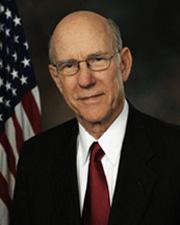 Sen. Pat Roberts (R-KS)
Sen. Pat Roberts (R-KS)Submitted November 10, 2005
Legislative Activity
Stay on top of the latest movement without scrolling through every action
Floor
Latest Action
Senate amendment submitted
November 10, 2005
View full timeline
Floor
Senate amendment submitted
November 10, 2005
Floor
Senate amendment agreed to: Amendment SA 2514 as modified agreed to in Senate by Unanimous Consent.
November 10, 2005
Floor
Senate amendment proposed (on the floor): Amendment SA 2514 proposed by Senator Roberts to Amendment SA 2507.
November 10, 2005
Floor
Amendment SA 2514 proposed by Senator Roberts to Amendment SA 2507. (consideration: CR S12653-12655, S12661; text: CR S12653-12654) To propose a substitute.
November 10, 2005
Floor
Amendment SA 2514 as modified agreed to in Senate by Unanimous Consent. (text as modified: CR S12661)
November 10, 2005
Text
Proposed
NATIONAL DEFENSE AUTHORIZATION ACT FOR FISCAL YEAR 2006--Continued

Amendment No. 2507

Mr. KERRY. Mr. President, sometime later today when we dispose of a
few of the next amendments, Senator Levin, on behalf of leadership and
a group of Senators on our side of the aisle--and we hope others might
join in--will be submitting an amendment with respect to the issue of
Iraq. I am pleased to join in that with them. I look forward to
participating in that debate at that time. I have come to the Senate at
this moment to introduce an amendment that lays out what, in my
judgment, represents a comprehensive and new strategy that is essential
for the President to implement in order to successfully complete the
mission in Iraq, as well as to bring our troops home in a reasonable
timeframe.

At a news conference a week ago I referred to this in a speech I gave
recently. I left Iraq departing on a C-130 from Mosul, together with
Senator Warner and Senator Stevens. The three Senators and the staff,
all of us, were gathered in this cavernous C-130. In the middle of the
cargo hold was a simple aluminum coffin with a small American flag
draped over it. We were bringing another American soldier home to his
family and to his resting place.
The starkness of the coffin in the center of that hold, and the
silence--except for the din of the engines; believe me, there was a
kind of silence notwithstanding--was a real-time, cold reminder of the
consequences of decisions for which all of us as Senators bear
responsibility.
As we enter a make-or-break 6-month period in Iraq, that long journey
of that soldier and 2,000-plus more of them remind us, all of us, about
our responsibilities with respect to the troops in Iraq. It underscores
the need to help this administration take steps that will bring our
troops home within a reasonable timeframe from an Iraq that is not
permanently torn by conflict.
Some say we should not ask tough questions because we are at war. I
say, no. A time of war, that is precisely when you have to ask the
hardest questions of all. It is essential, if we want to correct our
course and do what is right for our troops, that instead of repeating
the same mistakes over and over again, we ask those questions. No
matter what the President says, asking tough questions is not
pessimism. It is patriotism. We have a responsibility to our troops and
our country and our conscience to be honest about where we should go
from here.
There is a way forward that gives us the best chance to both salvage
a difficult situation in Iraq and to save American and Iraqi lives.
With so much at stake, we all have a responsibility to follow the best
way forward.
No. 1, we cannot pull out precipitously, as many argue and call for,
but also we cannot merely promise to stay as long as it takes. The
promise simply to stay as long as it takes, in fact, exacerbates the
situation. It is not a policy. To undermine the insurgency we must,
instead, simultaneously pursue a political settlement that gives Sunnis
a real stake in the future of Iraq, while at the same time reducing the
sense of American occupation. That means a phased withdrawal of
American troops as we meet a series of military and political
benchmarks, starting, I have said, with a reduction of 20,000 troops
over the holidays as we meet the first benchmark--the completion of the
December elections.
Earlier today, my good friend, the Senator from Arizona, Mr. McCain,
made a speech in which he mischaracterized my plan to bring our troops
home within a reasonable timeframe and to succeed in Iraq. He
mischaracterized how one arrived at 20,000 troops. The fact is, that is
a benchmark. It is a benchmark set by this administration itself. The
fact is, most of last year, during which time the administration says
we have adequate troops to do the job, we had about 138,000 troops in
Iraq. The fact is, for the purposes of the constitutional referendum
and for the purposes of the election, the administration upped the
number of troops in order to guarantee security for the purpose of
those two events.
I have said specifically that when those two events are completed
successfully, and with the increased numbers of Iraqis trained, there
is no excuse for not being in a position to go from the current 161,000
down to the 138,000, where we were before, where our generals told us
we had enough troops to do the job. That figure is set not by any
arbitrary standard but by the accomplishment of the specific benchmark.
It is also critical that we send this signal to the Iraqi people that
we do not desire a permanent occupation and that Iraqis themselves must
fight for Iraq. History shows again and again that guns alone do not
end an insurgency, and guns alone, particularly, will not end this
insurgency. The real struggle in Iraq is not what the President has
described again and again as the war on terror as we know it against
al-Qaida. The real struggle in Iraq is Sunni versus Shiite. It is a
struggle that has gone on for years with oppressor and oppressed, and
it will only be settled by a political solution. No political solution
can be achieved when the antagonists can rely on indefinite large-scale
presence of occupying American combat troops.
The reality is our military presence in vast and visible numbers has
become part of the problem, not just the solution. Our own generals are
telling us this in open hearings of the Senate. Our generals understand
this well. GEN George Casey, our top military commander in Iraq,
recently told Congress that our large military presence ``feeds the
notion of occupation'' and ``extends the amount of time that it will
take for Iraqi security forces to become self-reliant,'' and Richard
Nixon's Secretary of Defense, Melvin Laird, breaking a 30-year silence,
writes:

Our presence is what feeds the insurgency, and our gradual
withdrawal would feed the confidence and the ability of
average Iraqis to stand up to the insurgency.

It comes down to this: An open-ended declaration ``to stay as long as
it takes,'' lets Iraqi factions maneuver for their own political
advantage by making us stay as long as they want. It becomes an excuse
for billions of American tax dollars to be sent to Iraq and siphoned
off into the coffers of cronyism and corruption.
When I was last in Iraq, at a dinner put on by the Ambassador and
others with the Minister of Defense--the Minister of Interior, the
Prime Minister, and others--we sat and listened while they told us
themselves of the corruption that has been taking place in the
disbursement of American taxpayer funds.
This administration needs to pay attention to that corruption. The
administration must also use all of the leverage in America's arsenal--
our diplomacy, the presence of our troops, our reconstruction money,
all of the diplomacy--in order to convince the Shiites and the Kurds to
address the legitimate Sunni concerns about regional autonomy and oil
revenues and to make Sunnis accept the reality that they will no longer
dominate Iraq. We cannot and we should not do this alone.
The administration must immediately call a conference of Iraq's
neighbors: Britain, Turkey, other key NATO allies, and Russia. The
absence of legitimate international effort with respect to this is,
frankly, absolutely extraordinary. I am not alone in calling for that.
Republicans, colleagues on the other side of the aisle, Senator Hagel,
others, have talked about the need for an international leverage in
order to help resolve this issue. Together we have to implement a
collective strategy to bring the parties in Iraq to a sustainable
political compromise that also includes mutual security guarantees
among Iraqis. To maximize our diplomacy, the President should appoint a
special envoy to bolster Ambassador Khalilzad's commendable efforts.
To enlist the support of Iraqi Sunni neighbors, we should commit to a
new

[[Page S12653]]

regional security structure. I have heard from countless numbers of
members of government in the region that the old security arrangement
that existed prior to the invasion of Iraq has, in fact, been altered
by that invasion. And today there are great uncertainties with respect
to the Gulf States--Kuwait, Saudi Arabia, and obviously uncertainties
with the saber rattling of Iran and the problems with Syria. We ought
to be committing our efforts to create a new regional security
structure that will include improved security assistance programs,
joint exercises, and provide a greater confidence to the region about
long-term strategy.
To show Iraqi Sunnis the benefits of participating in the political
process, we should press these countries to set up a reconstruction
fund specifically for the majority Sunni areas. The absence of specific
economic transformation remains the heart of one of the reasons for
people to move toward insurgency rather than the governance process. We
need to also jump-start our lagging reconstruction efforts by providing
necessary civilian personnel to do the job, standing up civil-military
reconstruction teams throughout the country, streamlining the
disbursement of funds to the provinces, expanding job creation
programs, and strengthening the capacity of government ministries.
Prime Minister Blair, a few weeks ago, suggested that different
countries actually adopt a ministry. I know in the Ministry of Finance
there are precious few U.S. personnel helping that finance ministry to
be able to do the job of administering payrolls and managing the budget
of the country. It is unbelievable that at a time when our troops are
making such a valiant effort to provide for this transformation we are
absent the kind of diplomatic and civilian personnel necessary to make
those things happen.
On the military side, we must make it clear now that we do not want
permanent military bases in Iraq. We still have not done that. In the
absence of doing that, we lend credence to the notion of occupation and
of long-term designs on oil, on land, or other designs. Those lend
themselves to the recruitment process.
The administration must immediately give Congress and the American
people a detailed plan for the transfer of military and police
responsibilities on a sector-by-sector basis to Iraqis so the majority
of our combat forces can be withdrawn--ideally as a target by the end
of next year.
Simultaneously, the President needs to put the training of Iraqi
security forces on a 6-month wartime footing and ensure that the Iraqi
government has the budget to deploy them. The administration should
accept the long-standing efforts and offers of Egypt, Jordan, France,
and Germany to do more training. They should prod the new Iraqi
government to ask for a multinational force to help protect Iraq's
borders until a capable national Army is formed. And that force, if
sanctioned by the United Nations, could attract participation by Iraq's
neighbors and countries like India, and it would be a critical step in
stemming the tide of insurgents and money into Iraq, especially from
Syria.

Finally, we must alter the deployment of American troops themselves.
I believe deeply that special operations obviously need to continue.
They must continue in order to pursue specific intelligence needs and
in order to ferret out those jihadist and other hard-core insurgents
that we have in Tehran. But the vast majority of our troops could
easily move to a rear guard, garrison kind of status in order to
provide security backup. You do not need to send the young Americans on
search-and-destroy mission that invite alienation and deepen the risks
they face.
If the President were to do this, then the Iraqis would far more
rapidly, according to our own generals, begin to assume the
responsibilities which we are asking them to and which they need to and
which, in the end, are the only way to be successful.
If the President refuses to move in this course, ultimately it is our
responsibility, the U.S. Congress, to debate and ultimately help to put
this policy in the right direction. If we take these steps, there is,
frankly, no reason that within 12 to 15 months we couldn't be able to
take on a new role--a role as an ally, not an occupier. And only then
will we have provided our troops with what they really deserve, which
is leadership equal to our soldiers' sacrifice.
I yield the floor.
The PRESIDING OFFICER (Mr. Vitter). The Senator from Virginia.
Mr. WARNER. Mr. President, in consultation with the ranking member,
we are anxious to move now to further debate on the Kerry amendment.
For that purpose, if we could get an estimate of the amount of time
that might be required and we could proceed to the second-degree
amendment.
Could the Senator advise the managers how quickly we could proceed
with the resolution of your amendment, first and second degree to be
offered by Senators Roberts and Rockefeller, short debate on that, and
such final debate as needed on the underlying amendment, and move to a
vote?
The PRESIDING OFFICER. The Senator from Massachusetts is recognized.
Mr. KERRY. Mr. President, I would like to help the distinguished
manager move the process as rapidly as possible. Senator Rockefeller
has just pulled me aside. I will spend a few minutes with him now in
the cloakroom, and we will try to report back as fast as we can. I hope
we can dispose of it. If we were to proceed under a quorum call until
then, it would be helpful.
The PRESIDING OFFICER. The Senator from Michigan is recognized.
Mr. LEVIN. Mr. President, to help clarify the situation: Is it the
proposal that there be two amendments voted on?
Mr. WARNER. Mr. President, that is correct, I say to my distinguished
colleague. The proposal, eventually is that you will have some sort of
a----
Mr. KERRY. My understanding is we are talking about a second-degree
amendment; is that correct?
Mr. WARNER. That is correct, but then, as we have with others, if it
is desired by the three principals here, to do it in a side-by-side
fashion. There is a parliamentary means to do that.
Mr. KERRY. Mr. President, if I could have a chance to work with
Senator Rockefeller, we may just have one vote.
Mr. LEVIN. That would be better.
Mr. WARNER. Fine. In that event, I suggest the absence of a quorum.
The PRESIDING OFFICER. The clerk will call the roll.
The assistant legislative clerk proceeded to call the roll.
Mr. KERRY. Mr. President, I ask unanimous consent that the order for
the quorum call be rescinded.
The PRESIDING OFFICER. Without objection, it is so ordered.
Mr. KERRY. Mr. President, I ask unanimous consent that I be able to
reserve the time on my amendment, but that we set the amendment aside
and proceed immediately to the second-degree amendment of Senator
Roberts and Senator Rockefeller.
The PRESIDING OFFICER. Is there objection?
Hearing none, it is so ordered.
The Senator from Kansas.

Amendment No. 2514 To Amendment No. 2507

Mr. ROBERTS. Mr. President, I rise to offer a second-degree
amendment, along with the vice chairman of the Senate Select Committee
on Intelligence, Senator Rockefeller, in regard to reporting language
for certain intelligence activities.
The PRESIDING OFFICER. The clerk will report.
The assistant legislative clerk read as follows:

The Senator from Kansas [Mr. Roberts], for himself and Mr.
Rockefeller, proposes an amendment numbered 2514 to amendment
No. 2507.

Mr. ROBERTS. Mr. President, I ask unanimous consent that the reading
of the amendment be dispensed with.
The PRESIDING OFFICER. Without objection it is so ordered.
The amendment is as follows:

(Purpose: To require a report on alleged clandestine detention
facilities for individuals captured in the global war on terrorism)

In lieu of the language proposed to be inserted, insert the
following:

SEC. __. REPORT ON ALLEGED CLANDESTINE DETENTION FACILITIES
FOR INDIVIDUALS CAPTURED IN THE GLOBAL WAR ON
TERRORISM.

(a) In General.--The President shall ensure that the United
States Government continues to comply with the authorization,
reporting, and notification requirements of title V of the
National Security Act of 1947 (50 U.S.C. 413 et seq.).
(b) Director of National Intelligence Report.--

[[Page S12654]]

(1) Report required.--Not later than 60 days after the date
of the enactment of this Act, the Director of National
Intelligence shall provide to the members of the Select
Committee on Intelligence of the Senate and the Permanent
Select Committee on Intelligence of the House of
Representatives a detailed report setting forth the nature
and cost of, and otherwise providing a full accounting on,
any clandestine prison or detention facility currently or
formerly operated by the United States Government, regardless
of location, where detainees in the global war on terrorism
are or were being held.
(2) Elements.--The report required by paragraph (1) shall
set forth, for each prison or facility, if any, covered by
such report, the following:
(A) The location and size of such prison or facility.
(B) If such prison or facility is no longer being operated
by the United States Government, the disposition of such
prison or facility.
(C) The number of detainees currently held or formerly
held, as the case may be, at such prison or facility.
(D) Any plans for the ultimate disposition of any detainees
currently held at such prison or facility.
(E) A description of the interrogation procedures used or
formerly used on detainees at such prison or facility.
(3) Form of report.--The report required by paragraph (1)
shall be submitted in classified form.

Mr. ROBERTS. Mr. President, the Senate did create the Select
Committee on Intelligence as a unique means to provide oversight of our
sensitive activities in regard to intelligence. I agree with Senator
Kerry that more information will improve our ability to conduct the
oversight we need to do on intelligence.
Senator Rockefeller and Senator Warner and myself, however, believe
this intelligence oversight function should remain focused in the
Select Committee on Intelligence, as intended by S. Res. 400, the
legislation that actually created the Intelligence Committee back in
1976.
I can assure my colleagues that the membership of the Senate
Intelligence Committee is designed to include significant crossover
membership from the various national security committees. For example,
I am one of the several Armed Services Committee members currently on
the Intelligence Committee, including Senator Warner and Senator Levin.
That construct was intentionally created by the Senate to address
situations just like this.
Transparency is important and open government is critical, but in
certain circumstances sensitive information must be handled in a proper
way. That is exactly why we created the Committee on Intelligence. This
amendment strikes the appropriate balance between the Senate's needs
for transparency and the need to handle sensitive information
appropriately.
Accordingly, I urge my colleagues to support this amendment.
The PRESIDING OFFICER. The Senator from Delaware is recognized.
Mr. BIDEN. Mr. President, will the chairman yield for a question?
Mr. ROBERTS. Certainly.
Mr. BIDEN. Mr. President, I have no debate or disagreement about what
the Senator said. I was wondering whether the chairman and the cochair,
the Democratic chair, would object to--maybe this is not the
appropriate place to do it--a second-degree amendment, or an additional
amendment, whatever form it would take, that would require not the
intelligence community but the State Department to report to the
Foreign Relations Committee on the status of their judgment as to
whether we are in compliance with international treaties--their view on
that matter.
I don't want to be the skunk at the family picnic. I am not trying to
cause any difficulty. But it seems to me that such an approach would
not in any way fly in the face of the intelligence community reporting
to the Intelligence Committee. The Senator is right--historically, the
various committees, including the Foreign Relations Committee, have
been represented on the Intelligence Committee. I have no argument with
that. I wonder whether any of my friends could respond to that concern
I have raised.
The PRESIDING OFFICER. The Senator from Kansas.
Mr. ROBERTS. Reclaiming my time, let me say to the Senator, he is
welcome to the picnic any time he wants to come. I believe we have
resolved this matter in response to the original amendment regarding
this subject. Senator Kerry and Senator Rockefeller and Senator Warner
and I have crafted a second-degree amendment that will be accepted by
Senator Kerry. I recognize the unique concern in regard to the Senator
from Delaware. I would hope we could dispense with this first and then
enter into a discussion as to the merits of the Senator's concern.
Mr. BIDEN. Parliamentary inquiry: If we dispense with the second-
degree amendment, is there any ability to further amend this
legislation? This is a substitute or a second degree?
Mr. ROBERTS. This is a second-degree amendment, I inform my
colleague.
The PRESIDING OFFICER. The second degree is drafted as a substitute,
if it is adopted.
Mr. BIDEN. If it is adopted, and I am not saying I will, but will the
Senator from Delaware have an opportunity to amend the substitute?
The PRESIDING OFFICER. No.
Mr. LEVIN. Will the Senator yield for a question?
The PRESIDING OFFICER. The Senator from Kansas has the floor.
Mr. ROBERTS. I would simply say that my colleague would have ample
opportunity to offer an amendment in its own standing, and this
carefully crafted compromise should receive priority attention.
I yield to the distinguished Senator from Massachusetts.
The PRESIDING OFFICER. The Senator from Massachusetts.
Mr. KERRY. Mr. President, we can solve this if we do the following:
First, the amendment of the Senator from Delaware, which is a good
amendment, is outside of the jurisdiction of the Intelligence
Committee. It is not something that involves the Intelligence
Committee. It is really a separate judgment. My suggestion would be,
since we are trying to dispense with this fairly expeditiously, if we
were to modify now the amendment simply to say that it is not a
substitute but, rather, only a second degree, immediately upon
disposition of that second degree, I could accept the second degree of
the Senator from Delaware, at which point we could have a vote on the
final amendment, as amended. Would that be satisfactory?
Mr. WARNER. Mr. President, we would need to examine the second-degree
amendment by the distinguished Senator.
Mr. KERRY. Could we have an agreement now that we would modify the
amendment as submitted so that it is a second degree, not a substitute,
but simply a second degree?
Mr. WARNER. Mr. President, I would defer to the distinguished
chairman of the Intelligence Committee.
Mr. ROBERTS. As I have indicated or as has been indicated by the
distinguished chairman, the subject matter before us now pertains to
the jurisdiction of the Intelligence Committee. The amendment, as I
understand it, of the Senator from Delaware does not. I would rather go
ahead with the agreed-upon method, and then we could take a look at the
amendment and handle that separately.
Mr. KERRY. We would simply modify the title ``substitute.'' We are
not changing any of the substance of what we have agreed on, nor will
it change the procedure which we are going to follow. This amendment,
with respect to the Intelligence Committee, will be disposed of
separately, freestanding now. But if we don't change the title of the
substitute, then the Senator from Delaware is closed out, and we don't
have the right to amend it. This is a technicality.
The PRESIDING OFFICER. The Senator from Virginia.
Mr. WARNER. Mr. President, I believe that we are dealing with an
important unknown; that is, the content of what the distinguished
Senator from Delaware wishes to put on. May I make this suggestion,
without any prejudice to this colloquy and honest effort to resolve it,
if we were just to lay aside the Kerry amendment, go to another
amendment, and then at such time as there is reconciliation of
viewpoints, I think we could then perfect his amendment to whatever is
needed and proceed.
Mr. KERRY. Before we do that, I suggest the absence of a quorum.
The PRESIDING OFFICER. The clerk will call the roll.
The assistant legislative clerk proceeded to call the roll.

[[Page S12655]]

Mr. WARNER. Mr. President, I ask unanimous consent that the order for
the quorum call be rescinded.
The PRESIDING OFFICER. Without objection, it is so ordered.
Mr. WARNER. The group that is working on the Kerry amendment, with
the proposed Roberts-Rockefeller second degree, is working diligently,
but it is important that we continue on the bill. At this time, I ask
unanimous consent that the amendment by the Senator from Massachusetts
be laid aside and that the Senator from South Carolina be recognized
for the purpose of offering an amendment.
The PRESIDING OFFICER. Is there objection?
Mr. KERRY. Reserving the right to object.
The PRESIDING OFFICER. The Senator from Massachusetts.
Mr. KERRY. Is it my understanding that upon the disposition of the
next amendment, this will be the pending business?
Mr. WARNER. That can easily be arranged.
Mr. KERRY. Can we have that?
Mr. WARNER. I so ask.
The PRESIDING OFFICER. That will be the order pending further action
of the body.
Mr. WARNER. I yield the floor.
The PRESIDING OFFICER. The Senator from South Carolina is recognized.

Amendment No. 2515

Mr. GRAHAM. Mr. President, I call up amendment No. 2515 which is at
the desk.
The PRESIDING OFFICER. The clerk will report.
The assistant legislative clerk read as follows:

The Senator from South Carolina [Mr. Graham], for himself,
Mr. Kyl, and Mr. Chambliss, proposes an amendment numbered
2515.

Mr. GRAHAM. Mr. President, I ask unanimous consent that the reading
of the amendment be dispensed with.
The PRESIDING OFFICER. Without objection, it is so ordered.
The amendment is as follows:

(Purpose: Relating to the review of the status of detainees of the
United States Government)

At the end of subtitle G of title X, add the following:

SEC. __. REVIEW OF STATUS OF DETAINEES.

(a) Submittal of Procedures for Status Review of Detainees
at Guantanamo Bay, Cuba.--Not later than 180 days after the
date of the enactment of this Act, the Secretary of Defense
shall submit to the congressional defense committees, and to
the Committees on the Judiciary of the Senate and the House
of Representatives, a report setting forth the procedures of
the Combatant Status Review Tribunals and the noticed
Administrative Review Boards in operation at Guantanamo Bay,
Cuba, for determining the status of the detainees held at
Guantanamo Bay.
(b) Procedures.--The procedures submitted to Congress
pursuant to subsection (a) shall, with respect to proceedings
beginning after the date of the submittal of such procedures
under that subsection, ensure that--
(1) in making a determination of status of any detainee
under such procedures, a Combatant Status Review Tribunal or
Administrative Review Board may not consider statements
derived from persons that, as determined by such Tribunal or
Board, by the preponderance of the evidence, were obtained
with undue coercion; and
(2) the Designated Civilian Official shall be an officer of
the United States Government whose appointment to office was
made by the President, by and with the advice and consent of
the Senate.
(c) Report on Modification of Procedures.--The Secretary of
Defense shall submit to the committees of Congress referred
to in subsection (a) a report on any modification of the
procedures submitted under subsection (a) not later than 30
days before the date on which such modifications go into
effect.
(d) Judicial Review of Detention of Enemy Combatants.--
(1) In general.--Section 2241 of title 28, United States
Code, is amended by adding at the end the following:
``(e) No court, justice, or judge shall have jurisdiction
to hear or consider an application for a writ of habeas
corpus filed by or on behalf of an alien outside the United
States (as that term is defined in section 101(a)(38) of the
Immigration and Naturalization Act (8 U.S.C. 1101(a)(38)) who
is detained by the Department of Defense at Guantanamo Bay,
Cuba.''.
(2) Certain decisions.--
(A) In general.--Subject to subparagraphs (B), (C), and
(D), the United States Court of Appeals for the District of
Columbia Circuit shall have exclusive jurisdiction to
determine the validity of any decision of a Designated
Civilian Official described in subsection (b)(2) that an
alien is properly detained as an enemy combatant.
(B) Limitation on claims.--The jurisdiction of the United
States Court of Appeals for the District of Columbia Circuit
under this paragraph shall be limited to claims brought by or
on behalf of an alien--
(i) who is, at the time a request for review by such court
is filed, detained by the Department of Defense at Guantanamo
Bay, Cuba; and
(ii) for whom a Combatant Status Review Tribunal has been
conducted, pursuant to applicable procedures specified by the
Secretary of Defense.
(C) Scope of review.--The jurisdiction of the United States
Court of Appeals for the District of Columbia Circuit on any
claims with respect to an alien under this paragraph shall be
limited to the consideration of whether the status
determination of the Combatant Status Review Tribunal with
regard to such alien was consistent with the procedures and
standards specified by the Secretary of Defense for Combatant
Status Review Tribunals.
(D) Termination on release from custody.--The jurisdiction
of the United States Court of Appeals for the District of
Columbia Circuit with respect to the claims of an alien under
this paragraph shall cease upon the release of such alien
from the custody of the Department of Defense.
(3) Effective date.--The amendment made by paragraph (1)
shall apply to any application or other action that is
pending on or after the date of the enactment of this Act.
Paragraph (2) shall apply with respect to any claim regarding
a decision covered by that paragraph that is pending on or
after such date.

Mr. GRAHAM. Mr. President, will you notify me when I have used 15
minutes of the time?
The PRESIDING OFFICER. The Chair will so notify the Senator.
Mr. GRAHAM. Mr. President, this whole debate we are having now with
Senator Kerry, what we did with Senator McCain's amendment earlier, and
what I am trying to do, is a healthy debate about where we are going as
a nation, how we prosecute the war on terror, and what kind of value
set we are going to adopt.
One thing we need to understand as a nation and we need to understand
in the Senate, in my opinion, is that the attack of 9/11 was an act of
war. It was not a criminal enterprise. That is an important statement
to make. Every Senator needs to understand in their own mind: Was 9/11
and were those who planned it and those who blew up the people in
Jordan yesterday common criminals or are these people engaged in acts
of terrorism and war? Let it be said clearly, in my opinion, that the
United States is at war with al-Qaida and associate groups, and we have
been since 9/11.
When a country such as the United States is at war, we have a rich
tradition of following the law of armed conflict, of living up to the
Geneva Conventions and all other international treaties that regulate
the conduct of war. We have a moral imperative as a nation not to lose
our way in fighting this war. Using tactics of one's enemy is no excuse
in defeating one's enemy.
It is clear to me from Abu Ghraib backward, forward, and other things
we know about that at times we have lost our way in fighting this war.
What we are trying to do in a series of amendments is recapture the
moral high ground and provide guidance to our troops. That is why
Senator McCain's amendment, which I cosponsored, is so important, and
it passed by voice vote.
The McCain amendment requires standardization of interrogation
techniques when it comes to people in our charge, not as criminal
defendants but as enemy combatants, people detained on the battlefield,
POWs. It requires the Army Field Manual, not the United States Code, to
be changed in a way to give our troops the guidance they need as to
what is in bounds and out of bounds when it comes to interrogating
prisoners. It is important that we get good information. It is equally
important that we not lose our value set in obtaining that information.
Senator McCain has two things in his amendment that we desperately
need. It standardizes interrogation techniques for the military,
dealing with people who are part of this war, our enemies, and it also
makes a statement to every other agency in the Government that you are
going to treat people humanely if they are captured under your charge
as part of fighting this war.
Guantanamo Bay is a place we have designated to take people off the
battlefield and hold them, and the determinations that go on at
Guantanamo Bay fall into two categories. Some can be prosecuted for
violations of the law of war, not criminal violations in

[[Page S12656]]

terms of domestic criminal law but violations in terms of the law of
war. Enemy combatants are being held at Guantanamo Bay like POWs were
held in the past. What we have done at Guantanamo Bay is we have set up
a procedure that will allow every suspected enemy combatant to be
brought to Guantanamo Bay and given due process in terms of whether
they should be classified as an enemy combatant.
The Geneva Conventions in article V state that if there is a doubt
about one's status, the host country, the person who is in charge of
the person, the suspected enemy person, that host country will have a
competent tribunal to determine the status.
What is going on at Guantanamo Bay is called the Combat Status Review
Tribunal, which is the Geneva Conventions protections on steroids. It
is a process of determining who an enemy combatant is that not only
applies with the Geneva Conventions and then some, it also is being
modeled based on the O'Connor opinion in Hamdi, a Supreme Court case,
where she suggested that Army regulation 190-8, sections 1 through 6,
of 1997, would be the proper guide in detaining people as enemy
prisoners, enemy combatants. That regulation is ``Enemy Prisoners of
War, Retained Personnel, Civilian Internees, and other Detainees.'' We
have taken her guidance. We have the Army regulation 190-8, and we have
created an enemy combat status review that goes well beyond the Geneva
Conventions requirements to detain someone as an enemy combatant.
The McCain amendment says if you are an enemy combatant, we will
treat you humanely, even though you may be part of the most inhuman
group the world has ever known. Senator McCain is right. How we treat
detainees in our charge once they are captured is about us, but their
legal status is about them. Once they choose to become part of a
terrorist organization in an irregular force that blows up people at a
wedding, then their legal status is about them and their conduct.
I want to make sure we follow the law of armed conflict, that we
comply with the spirit of the Geneva Conventions, that we do it right
because we are a country that believes in doing it right. I believe the
Congress needs to get involved. We have been AWOL.
I have enjoyed working with Senator Levin and my Democratic
colleagues, Senator Warner, Senator McCain, and others to get the
Congress involved. Here is what we have done. The Congress is now
setting interrogation standards that have long been overdue and
neglected. The Congress is now setting a humane treatment standard that
will serve us well in the international community. The Congress,
through my amendment, is now getting involved in the enemy combatant
detention process.
People worry about taking folks to Guantanamo Bay and never hearing
from them again. I can assure you they can be heard from. They are
being heard from. They are being inspected in terms of their treatment
by the International Red Cross. I have been to Guantanamo Bay twice. If
you worry about what is going on at Guantanamo Bay, go down there
yourself. The press has access to Guantanamo Bay. The International Red
Cross has access to Guantanamo Bay. My amendment gets Congress in the
ball game.
My amendment requires that Combat Status Review Tribunal regulations
have to come to the Senate and the House for our review. Congress now
is looking over the shoulder of what is going on there.
My amendment requires that the person sitting at the top of the
pyramid who makes the decision to release or detain has to be confirmed
by the Senate so they will be accountable to us.
My amendment prohibits the use of undue coerced statements to detain
somebody as an enemy combatant.
If you are a POW in a war, you are there until the war is over. An
enemy combatant falls into that same category, and we are going to make
sure they get due process accorded under international law and then
some, and the Congress is going to watch what happens. The Congress is
going to be involved, and we are going to take a stand. We are going to
help straighten out this legal mess we are in.
But there is another problem. For those who want to treat people in
our charge humanely, sign me up. For those who want to get Congress
involved in making sure we have standardized interrogation techniques
so our own troops won't get into trouble, sign me up. For those who
want to give enemy combatants due process in accordance with the Geneva
Conventions, and then some, sign me up. For those who want to turn an
enemy combatant into a criminal defendant in U.S. court and give that
person the same rights as a U.S. citizen to go into Federal court,
count me out. Never in the history of the law of armed conflict has an
enemy combatant, irregular combatant, or POW been given access to
civilian court systems to question military authority and control,
except here.
What has happened at Guantanamo Bay that we need to fix? I know what
we need to fix in terms of the way we have treated prisoners. We are
doing it. We are getting it right. We are making up for our past sins.
My request to this body is, let's not go too far and create problems
that will come back to haunt us. We are at war; we are not fighting the
Mafia. We are fighting an enemy desirous of taking us down as a nation.
The Supreme Court decided that the Guantanamo Bay activity was part
of the United States, not in its territory so much as under its
control. The Supreme Court has been shouting to us in Congress: Get
involved.
Habeas corpus rights have been given to Guantanamo Bay detainees
because the location is under control of the United States, and
Congress has been silent on how to treat these people. The Supreme
Court has looked at section 2241, the habeas statute, and they are
saying to us: Since you haven't spoken, we are going to confer habeas
rights until you act.
Justice O'Connor said that we will under habeas give due process to
enemy combatants, but if you were smart, you would have a process like
Army regulation 190-8, and that would be more than enough. Well, we are
smart.
Here is what has happened. If you want to give a Guantanamo Bay
detainee habeas corpus rights as a U.S. citizen, not only have you
changed the law of armed conflict like no one else in the history of
the world, I think you are undermining our national security because
the habeas petitions are flowing out of that place like crazy. There
are 500-some people down there, and there are 160 habeas corpus
petitions in Federal courts throughout the United States. Three hundred
of them have lawyers in Federal court and more to follow. We cannot run
the place.
They are not entitled to this status. They are not criminal
defendants. And here is what they are doing in our courtrooms:
A Canadian detainee who threw a grenade that killed an army medic in
a firefight and who came from a family of longstanding al-Qaida ties
moved for preliminary injunction forbidding interrogation of him or
engaging in cruel, inhumane, or degrading treatment of him. It was a
motion to a Federal judge to regulate his interrogation in military
prison.
Another example. A Kuwaiti detainee sought a court order that would
provide dictionaries in contradiction of Gitmo's force protection
policy and that their counsel be given high-speed Internet access at
their lodging on the base and be allowed to use classified DOD
telecommunications facilities, all on the theory that otherwise their
right to counsel is unduly burdened.
This is one of my favorites. There was a motion by a high-level al-
Qaida detainee complaining about base security procedures, speed of
mail delivery, and he is seeking an order that he be transferred to the
least onerous conditions at Gitmo and asking the court to order that
Gitmo allow him to keep any books and reading materials sent to him and
to report to the court on his opportunities for exercise,
communication, recreation, and worship.
Can you imagine Nazi prisoners suing us about their reading material?
Two medical malpractice claims have come out of this.
Here is another great one. There was an emergency motion seeking a
court order requiring Gitmo to set aside its normal security policies
and show detainees DVDs that are purported to be family videos.
Where does this stop? It is never going to stop.

[[Page S12657]]

Let me tell you what it is doing. Here is a quote from one of the
lawyers representing these detainees in Federal court:

We have over one hundred lawyers now from big and small
firms working to represent these detainees. Every time an
attorney goes down there, it makes it that much harder for
the U.S. military to do what they're doing. You can't run an
interrogation . . . with attorneys. What are they going to do
now that we're getting court orders to get more lawyers down
there?

Know what. The people at Gitmo are asking that same question: What
are we going to do? It is impossible to interrogate people with this
much court intervention. We are undermining the role Gitmo plays in
helping our own national security. No POW enemy combatant in the
history of the world has been given Federal court unlimited access as
an American citizen.
Here is what I propose we do: that we take the procedures that are in
place far beyond what the Geneva Conventions require, that we make the
reforms my amendment suggests where Congress is now involved in
oversight, and we do one other thing, we allow a detainee to go to
Federal court, not anywhere and everywhere, but to one place, the
Circuit Court of Appeals for the District of Columbia where they can
challenge what the military has done to them in terms of their status.
That is a right beyond what any enemy combatant POW has ever had in
history. That will make sure two things happen: My amendment will make
sure Congress will supervise what goes on and will be notified about
what happens at Gitmo. They will be able to hold people off the
battlefield as enemy combatants; they will have a process recognized by
the Geneva Conventions and then some; and they will also have a right
to go to Federal court to challenge their status to make sure we did it
right.
If we will do these things together, then we can be proud as a
nation. They all need to be done together. We need to make sure
standardized interrogation techniques exist for the benefit of our own
troops in the Army Field Manual to create clarity out of chaos. We need
to make a statement as a nation that no matter who you are or where you
are, if you are in our charge, you are going to be treated humanely.
Shaikh Mohammed, the mastermind of 9/11, is somewhere in our care. He
is not a criminal defendant. He is a warrior, the planner of 9/11. It
is not a decision we should have to make to try him or let him go. We
keep him off the battlefield as we have kept every other POW and enemy
combatant off the battlefield. We get good intelligence from him and we
treat him humanely. Let us not turn this war into a crime. It would be
a crime to do so.
I think I have presented what I believe to be as balanced an approach
as I know how without giving up our right to defend ourselves. To the
human rights activists out there, God bless you. You have helped us in
many ways. We are going to make the statements you want us to make
about treating people humanely. We are going to have standardized
interrogation techniques. Congress is going to provide oversight and we
are going to let the courts provide oversight. But in the name of human
rights, we are not going to let this jail run amok. We are not going to
create a status in international military law that has never been
granted before. Of all the people in the world who should enjoy the
rights of an American citizen in Federal court, the people at
Guantanamo Bay are the last we should confer that status on. We did not
do it for the Nazis. We should not do it for these people.
I reserve the remainder of my time.
The PRESIDING OFFICER (Mr. Coleman). Who yields time?
Mr. LEVIN. I yield 10 minutes to the Senator from New Mexico.
The PRESIDING OFFICER. The Senator from New Mexico.
Mr. BINGAMAN. Mr. President, I thank my colleague from Michigan. I
rise to speak in opposition to this amendment as currently drafted.
After the Senate deals with this amendment, I will offer a second-
degree amendment to remove the problematic language that I believe is
included. First, I commend Senator Graham for taking on the issue of
treatment of these prisoners in Guantanamo. He did work with Senator
Levin, myself, and others, I am sure, to try to improve the procedures
for processing prisoners at Guantanamo. We agreed upon some language.
We included that language. He proposed it and it was included in the
Defense appropriations bill. That was agreed to. Unfortunately, here he
has taken that language and he has modified it. He has added to it. His
additions are a terrible mistake.
His amendment now also contains a provision that strips aliens at
Guantanamo of any right to seek habeas corpus in our Federal courts.
The right to file a petition challenging the legality of a prisoner's
detention was specifically recognized by our Supreme Court in the Rasul
case. Considering that many prisoners have been held there for over 3
years, that the administration has argued they can be held there
indefinitely, it would be a major mistake for us to remove the very
limited judicial review the Supreme Court has recognized that these
prisoners still have.
The writ of habeas corpus, which is what his amendment would
eliminate, which is in essence a right to petition the court to review
the legality of one's detention by the Government, is at the core of
civil rights in this country. It came originally from the Magna Carta.
Our Founding Fathers wrote this into our own Constitution. In the first
article of the Constitution, in Section 9, it says:

The privilege of the Writ of Habeas Corpus shall not be
suspended, unless when in Cases of Rebellion and Invasion the
public Safety may require it.

Our Founding Fathers wanted to ensure that the Government could not
simply imprison people at will and that there was judicial review that
would be available as a check on that executive power.
When the executive branch detains or imprisons a person within the
jurisdiction of the United States--and that is all we are talking about
here, detaining someone within the jurisdiction of the United States--
the Government, upon the issuance of a writ by a court, must show cause
why that person is being detained. This right is enshrined in our own
Constitution. It would be a terrible mistake for us to suspend that
right as an amendment on a Thursday afternoon to the Defense
authorization bill.
This is an extremely serious issue. There have been no hearings on
this issue in the Judiciary Committee. I see the chairman of the
Judiciary Committee on the Senate floor this afternoon. If we are going
to seriously consider suspending the privilege of habeas corpus, of
filing a petition for habeas corpus, the Judiciary Committee should be
the committee that considers that type of a proposal and has hearings
on it.
There have been no hearings in the Armed Services Committee. It would
be a terrible mistake for us to do this sort of as a by-the-way kind of
amendment on a Thursday afternoon as we are preparing to leave for the
weekend.
Through our history, Congress has suspended the ``great writ,'' as it
has been called in Anglo jurisprudence for centuries now, only on very
few occasions. Abraham Lincoln suspended the writ during the Civil War
in order to imprison suspected southern supporters. During the Second
World War, President Roosevelt unilaterally suspended the writ in order
to imprison more than 70,000 Japanese Americans in prison camps. This
Congress has since gone on record indicating its regret at that action
taken by this Government.
Today, the executive branch has once again asserted extraordinary
powers. The President has argued that he has the authority to
indefinitely imprison anyone, whether a citizen or noncitizen, that he
deems to be an enemy combatant, and the judicial review of such
decisions is not needed or appropriate.
It is in times such as these that our Founding Fathers envisioned
that habeas corpus would be preserved. According to the Wall Street
Journal article earlier this year, an estimated 70 percent of
individuals held at Guantanamo were wrongfully imprisoned. BG Jay Hood
was quoted as saying in that article: Sometimes we just did not get the
right folks.
This is not the time Congress should suspend the writ and grant the
executive branch additional unchecked authority.
The administration has gone to great lengths to avoid the legal
restraints

[[Page S12658]]

that normally would apply under our legal system. They have argued that
the laws of war are not applicable because we are fighting a new type
of enemy. They have argued the criminal laws are not applicable because
we are fighting a war. The administration position is that there is a
rights-free zone where the President has complete authority to detain
and hold individuals indefinitely.
Within this framework, the administration argues that the prohibition
on torture is an unnecessary barrier. They argue that the Geneva
Conventions are outdated, that constitutional rights do not exist for
this group of individuals. In essence, they argue that the rights of
these prisoners, if any, are at the discretion of the President.
According to press reports, in deciding where they wanted to hold
suspected terrorists, the administration has gone to enormous lengths
to avoid putting them some place where they would be under the
jurisdiction of our courts. They considered Soviet-era detention
centers in Eastern Europe, secret facilities in Thailand, Egypt,
Jordan, and Zambia. They finally settled on putting them at Guantanamo
in Cuba because, as the Secretary of Defense said, it was the least
worst place. It also had the advantage, they thought, of giving them a
plausible argument that they were outside the reach of the U.S. courts
on the theory that since this was Cuban territory, if these prisoners
had objections or problems they could always seek redress from the
Cuban Government. That was the argument our own Department of Justice
made in our courts.
Of course, the Supreme Court disagreed in the Rasul case and held
that Guantanamo prisoners do have the right to challenge the basis of
their detention in U.S. Federal court.
As I understand it, the number of prisoners facing trial today is
about 10. That is 10 out of the 500 prisoners who are being held there.
The rest are being held without charges. There is no prospect for them
being charged in the near future that I am aware of.
The President and the administration in this country have a
credibility problem with regard to our detention policies. The
administration says one thing regarding its position on torture. We
appear to do something different. We all watched as the President
toured Latin America last week and reassured our allies at every stop
that, in fact, it is not the policy of our Government to engage in
torture. We are on the defensive on an issue that should not be an
issue in this country.
We can effectively combat terrorism without resorting to these types
of techniques, and we can do so in a manner consistent with American
values. Our Nation's longstanding commitment to the respect of law, to
the rule of law, and basic human rights is founded on a set of values
that distinguishes us from terrorists and it is important that we keep
those principles and those values intact as we pursue this war on
terrorism.
This is not the time to back away from the basic principles this
country was founded on. Considering the ambiguity that exists with
regard to the legal status of so-called enemy combatants and the
revelations that have come out regarding secret prisoners, irregular
rendition, torture and abuse, I believe it would be a tragic mistake to
further limit the ability of our courts to provide the minimal judicial
review that has been afforded thus far. The world has come to doubt our
Government's commitment to the rule of law as a result of many of the
actions I have recounted. Let us not provide an additional basis for
those doubts by stripping our Federal courts of the right to consider
petitions for habeas corpus.
I urge that this amendment be defeated. If appropriate, after
consideration of this amendment, I have an alternative amendment which
would enact the first three sections of Senator Graham's amendment as
we passed them on the appropriations bill but would delete the portion
that strips the Federal courts of jurisdiction.
The PRESIDING OFFICER. The Senator's time has expired.
Mr. BINGAMAN. I yield the floor.
The PRESIDING OFFICER. Who yields time?
Mr. LEVIN. Mr. President, I yield 10 minutes to the Senator from
Pennsylvania.
The PRESIDING OFFICER. The Senator from Pennsylvania.
Mr. SPECTER. Mr. President, I thank the Senator from Michigan for
yielding me 10 minutes.
The issues presented by the Graham amendment are very important, and
I commend Senator Graham for taking the initiative in offering this
amendment. This is an issue which this Senator has been wrestling with
for some time.
Shortly after 9/11, on February 13, Senator Durbin and I introduced
legislation which would have dealt with the military commission
procedures. This is pursuant to the provisions of article I, section 8,
clauses 10 and 11 of the Constitution, which confers upon the Congress
the power ``To define and punish . . . Offenses against the Law of
Nations; . . . make Rules concerning Captures on Land and Water.''
Early this year, after becoming chairman of the Judiciary Committee,
in collaboration with the distinguished ranking member, Senator Leahy,
we took up this issue.
We held a hearing on June 15 this year, which I had sought
continually in 2002, 2003, and 2004. I believe this was the first
hearing to deal with these issues. In line with that effort, I traveled
to Guantanamo Bay in mid-August. I had the expectation of having a
hearing and making progress to really come to grips with the complex
issues which are involved here.
These issues are very difficult. When you talk about detainees and
their status as an enemy combatant, you first wrestle with the problem
of what evidence is there. It is very hard to quantify any of the
evidence. You talk about competent evidence, which we are familiar with
in a courtroom--here there is none. Hearsay is permitted, but it is
impossible to put your hands on what the hearsay is. There are some
suggestions that on the battlefield somebody who is known and trusted
to our forces would just identify: You, you, and you are enemy
combatants; and it would stick. These detainees are then held for the
duration.
There is no doubt that these detainees are the worst of the worst.
That is the way they have been characterized. We are facing very
difficult problems with these terrorists. Some of them have been
released, and they have gone back to Afghanistan or gone back to Iraq,
so we are fighting them all over again. It is a very difficult problem.
Finally, the Supreme Court of the United States came down with three
decisions in June of 2004, which were a patchwork, really a crazy
quilt, of decisions. Now you have the Supreme Court of the United
States again undertaking jurisdiction in the Hamdan case, which
challenges the Presidential authority to set up the commissions. It
does so on the ground that the Geneva Convention says that there must
be a tribunal who makes the determination of enemy combatant status.
The question raised in the circuit court--this opinion got a lot of
notoriety because Chief Justice Roberts, then Judge Roberts of the
circuit court, was on the panel--dealt with the issue as to whether
there had to be a tribunal. That is what the district court said. The
circuit court overruled the district court's ruling that the President
was not a tribunal. Although it is hard to fashion the President as a
tribunal, I do realize that the President has to act to protect the
country.
These are the kind of weighty problems which we have not sorted
through, quite frankly. I have discussed this matter with the Senator
from South Carolina. He is on the Judiciary Committee and participated
in the hearing which we held. He took a good bit of what we had found
and worked with it in the Armed Services Committee. That is the way it
should be. But when you undertake to remove habeas corpus, you better
know where you are, and you better have a comprehensive plan and a
comprehensive way of dealing with the issue which deals with evidence
and which deals with the right of counsel.
Detainees do not have the right to counsel. I can understand why the
Department of Defense does not want to give detainees the right of
counsel. But we have not come up with an answer as to how the detainees
ought to be handled. The detainees are reviewed only once a year. We
have submitted draft legislation to the Department of Defense, as we
worked on this issue in

[[Page S12659]]

June, July, August, and through the fall. A number of the suggestions
which we made were incorporated by the Department of Defense. I think
they have been moving in the right direction. They have changed the
commission so that the presiding judge is no longer a fact finder or
juror, but functions more like a judge. Changes in the Classified
Information Act have occurred.
But until we can sort through these issues and find a comprehensive
approach which deals with them--and we should be doing that--the
Judiciary Committee will still be wrestling with these problems. But it
is well known that we have been busy since we took up this issue with a
June 15 hearing. In July we had the nomination of Roberts, and we had
the nomination of Miers, and now we have the nomination of Alito. We
have had so many matters: class actions, bankruptcy and asbestos and
judicial nominations, that we have not been able to come to grips with
all of the issues.
Candidly, it is very hard to deal with the Department of Defense on
these matters. When we were in Guantanamo on August 1, we took up an
issue that the New York Times had publicized, on August 1, where three
officers had said that the trials were rigged by the military. We
sought information from the Department of Defense on an inspector
general's report and on an internal investigation. There was delay
after delay after delay, as we tried to find out what was going on. It
was very difficult. This is sort of a pattern, where the Department of
Defense wants to do it their way and is very resistant to congressional
inquiries and to congressional oversight.
While it is a collateral matter, it bears on some of the work by the
Judiciary Committee on Able Danger. There we have, notwithstanding
commitments by the Department of Defense, not been able to get
important information.
I see the Presiding Officer edging forward. Is my time about to
expire?
The PRESIDING OFFICER. The Senator has 2 minutes remaining.
Mr. SPECTER. I thank the Chair. But I am not prepared, at this stage,
to support legislation which calls for removal of habeas corpus. The
issues on detainees and military commissions have been pending since 9/
11 of 2001. Until the Judiciary Committee held a hearing in June 15 of
2005, nothing had been done by Congress. The Supreme Court finally took
the bull by the horns and came down with the three decisions in June of
2004 because the Congress had not acted. It didn't know what to do. It
didn't know quite how to approach it. And perhaps it was too hot to
handle. But the Congress frequently is inactive in the face of
assertions by the executive of the need to defer to Presidential power.
But I believe that the habeas corpus provisions which are now in effect
need to be maintained.

While the three decisions by the Supreme Court in June of 2004 did
not answer the problem, they did get us started. Their movement in the
Hamdan case is again significant. My own thinking, as chairman of the
Judiciary Committee, is to try to find answers to these complex issues.
When the Senator from South Carolina decries the numerous habeas
corpus appeals, I know what that means. I was a district attorney of a
big city, 30,000 cases a year, with a lot of convictions and a lot of
habeas corpus matters. The Federal Government can handle the habeas
corpus provision. But I read in the revised statute that there are
going to be appeals.
The PRESIDING OFFICER. The time of the Senator has expired.
Mr. SPECTER. I ask for an additional 2 minutes.
Mr. LEVIN. I yield those 2 minutes.
Mr. SPECTER. When I read in the bill of the Senator from South
Carolina about appeals to the court of appeals of the District of
Columbia from detainee status, that opens up a brand new Pandora's box.
You have existing procedures under habeas corpus which we currently
understand, but if you provide for a new jurisdiction for the circuit
court of appeals for detainees' appeals than that could make it worse.
I think this probably requires a lot more analysis. We have an able
Senator from South Carolina who sits on both Judiciary and Armed
Services. We are going to continue to work on it, but I do not think
this amendment is the answer.
I thank the Senator from Michigan for yielding me the time and I
yield the floor.
The PRESIDING OFFICER. Who yields time?
Mr. GRAHAM. How much time do I have remaining?
The PRESIDING OFFICER. The Senator has 12\1/2\ minutes.
Mr. GRAHAM. I yield 6 minutes to my colleague from Arizona.
The PRESIDING OFFICER. The Senator from Arizona.
Mr. KYL. Mr. President, let's go back to the fundamentals of what
actually happened and what the amendment of the Senator from South
Carolina would actually do. The Congress did not create laws to deal
with terrorists, primary to the beginning of the war on terrorism.
Questions arose as to the executive branch's treatment of these
terrorists in detention. Absent congressional direction, the U.S.
Supreme Court had to interpret an existing statute, section 2241. It
held that, since Congress had not expressed any intention outside of
section 2241 in interpreting that section, the courts had jurisdiction
to consider habeas corpus petitions regarding the status of these
detainees. That is all that the Court has held.
As Justice Scalia said in his dissent, ``the petitioners do not argue
that the Constitution independently requires jurisdiction here.'' So
let's be plain, that the Great Writ does not apply to terrorists. No
one argued in the Rasul case that the Constitution required habeas
corpus petitions. It was, rather, a matter of statutory interpretation.
As the Justice said:

Accordingly, the case turns on the words of section 2241.

How did the Court in the majority opinion treat that?

Considering that section 2241 draws no distinction between
Americans and aliens held in Federal custody, there is little
reason to think that Congress intended it not to apply . . .

The bottom line is that the Congress has, on numerous occasions,
statutorily limited the writ of habeas corpus to American citizens. In
1996, when the courts were plugged up with habeas petitions, Congress
passed a substantial revision of the habeas corpus laws, reducing this
backlog of habeas petitions in Federal court from U.S. citizens. We
have the statutory jurisdiction to write whatever kinds of laws we
want. We clearly have the statutory jurisdiction to say it does not
apply to foreign terrorists. And nothing in the Rasul case says
otherwise.
So let's be very clear about this Great Writ. It does not apply to
terrorists, and it should not apply to terrorists, and nothing in this
amendment goes any further than to say it applies to U.S. citizens. It
does not apply to terrorists.
Another argument is that we should not suspend the writ of habeas
corpus. We are not suspending the writ of habeas corpus. It does not
apply. The only reason the Court in Rasul said the Court had
jurisdiction to consider it is because the language in 2241 was not
explicit enough to exclude the aliens, the terrorists who were detained
at Guantanamo Bay from asserting that jurisdiction.
Third, our chairman, Senator Specter, has said we need a
comprehensive way to deal with the prisoner claims. And he is
absolutely correct about that. And this amendment provides such a
mechanism.
What Senator Specter says is: I'm not sure that we should be granting
a circuit court of appeals review right.
That's a pretty good right, I would say. That's what this amendment
does. Either we are arguing we are not giving these detainees enough
rights or we are giving them too many rights, but let's get one or the
other here. I think what we are doing is granting a substantial right
to appeal the issue of status when, first of all, it is determined by
the CSRT procedures in the military tribunals at Guantanamo Bay and
then there is an automatic right to appeal this, not just to a Federal
court but to the U.S. court of appeals, on the record. That is a
substantial right.
But what we have gotten rid of are these hundreds of habeas petitions
that will be clogging the Federal courts. We have already seen them
making medical malpractice claims against the doctors, saying they want
one kind of food as opposed to another kind of food and so on. It is
going to get like it did

[[Page S12660]]

with prisoners. One of the real-life cases that came out of Arizona
that we tried to take care of in 1996 law is a prisoner said: I want
chunky peanut butter, I don't want creamy peanut butter. And that was
the habeas petition. You have a right to question food in a habeas
petition. Do we want our Federal courts clogged with terrorists making
these kind of petitions? No.
As a result, what Senator Graham has done here is very sensible, to
say there is going to be a military tribunal to determine status. By
the way, it is reviewed every single year. When that status is first
determined, there is an automatic right to appeal to the U.S. Court of
Appeals for the District of Columbia. But the writ of habeas corpus,
which has never been intended to apply to prisoners of war, much less
terrorists, does not apply in this case.
We are not going to clog up the courts with habeas corpus petitions.
You can have an automatic right to the circuit court of appeals.
It gets us back to the point that Senator Graham made in the
beginning. Let us recognize that we are not dealing with criminal
defendants. We are dealing with people who have committed acts of war
against the United States. They certainly should not be accorded
greater privileges than U.S. citizens or prisoners of war.
A final point: There has been a suggestion by some that this would
somehow undercut the McCain antitorture amendments. I think Senator
Graham laid that to rest. But make it crystal clear. Under McCain,
there is not private right of action. They are enforced by the
constitutional requirement that the President take care that the laws
be executed. The Graham amendment does not take away the right of
action to enforce McCain because there is no right of action to enforce
McCain in the McCain amendments.
This is a very good amendment. It gets us back to the basics of what
kind of folks these terrorists are. It grants them substantial rights
to contest their status but not the right to clog up Federal courts.
Mr. LEVIN. Mr. President, I yield 2 minutes to the Senator from
Vermont.
Mr. LEAHY. Mr. President, I am always concerned that when they speak
of terrorism we are constantly adding new things to our laws to show
how we are opposed to terrorists. Maybe it would be easier to just to
pass a resolution 100 to 0 saying we are all opposed to terrorists. Of
course, we are.
I also remember when it was written and attributed to Benjamin
Franklin at a time when he and other Founders of this great Nation
faced the hangman's noose. Had they failed in their efforts to create a
democracy instead of trade, their liberties for security deserve
neither.
We should go very slowly when we want to make changes on the great
rift.
The distinguished chairman of the Judiciary Committee is absolutely
right. We should oppose this amendment.
We made a major change in the habeas corpus laws a few years ago when
we were looking at that to see how that works.
This is not the time nor the place nor the bill to willy-nilly--that
is really what it is--make this change in the habeas corpus law. There
are just too many things going on--whether it is the reports in the
press about us using secret prisons that had been abandoned by the old
Soviet Union following criticism of every President, Republican or
Democrat, in my lifetime, that we are now using that, to questions that
are raised and appropriately raised about Guantanamo.
I have heard it said here that the Red Cross has available to them
all prisoners, that the press has available to them all prisoners--we
have found that isn't so--and prisoners are spirited out in the middle
of the night to these secret prisons.
Let us stand as a country that believes in the rule of law.
I hope we stand with the senior Senator from Pennsylvania in opposing
this amendment.
The PRESIDING OFFICER. Who yields time?
Mr. WARNER. Mr. President, if the Senator from South Carolina would
defer to the managers, I would like to address the Senate in connection
with a unanimous consent request. My understanding is that it has been
cleared on both sides.
I ask unanimous consent that it now be in order for Senator Graham to
offer a perfecting second-degree amendment. I further ask unanimous
consent that at 4:30 the Senate proceed to a vote in relation to the
Graham second-degree amendment; further, that following that vote
Senator Bingaman be recognized and it be in order for him to offer a
motion to strike; further, that the Senate proceed immediately to a
vote on the motion to strike.
Finally, I ask unanimous consent that if the motion to strike is
agreed to, it be in order for Senator Graham to offer a further
amendment.
The PRESIDING OFFICER. Is there objection?
Mr. LEVIN. Reserving the right to object.
Mr. BINGAMAN. Mr. President, I would like to ask a question for
clarification. I anticipated offering a second-degree amendment, for
which I understood I would be entitled to 30 minutes equally divided. I
want to make sure I have a right to argue that amendment and have my 30
minutes of debate on my second-degree amendment before we wind up
agreeing to a 4:30 vote.
Mr. WARNER. Mr. President, would the Senator be willing to amend this
by saying that the time remaining between now and 4:30 be equally
divided between himself and Senator Graham? Would that serve your
purpose?
Mr. BINGAMAN. That will be an acceptable result.
Mr. LEVIN. Mr. President, reserving the right to object, we have not
seen the perfecting amendment of the Senator from South Carolina. I
have not seen the perfecting language. Reserving the right to object,
what is the purpose of that, if I may inquire?
The PRESIDING OFFICER. Is there objection?
Mr. LEVIN. I have no objection.
Mr. WARNER. There are no objections that I know of, Mr. President.
The PRESIDING OFFICER. Without objection, it is so ordered.
There will be 20 minutes divided on each side. Who yields time? The
Senator from South Carolina is recognized.
Mr. GRAHAM. I defer to my colleague from New Mexico.
The PRESIDING OFFICER. The Senator from New Mexico.
Mr. BINGAMAN. Mr. President, let me speak very briefly. I wanted to
clarify a couple of points. The Senator from South Carolina has
indicated that instead of people having a right to challenge the
legality of their detention through a writ of habeas corpus, we are
going to give them the right to challenge the legality of their
detention in the Court of Appeals for the District of Columbia. That is
not what his amendment says. His amendment says the Court of Appeals
for the District of Colombia shall have a limited scope of review. The
jurisdiction of the U.S. Court of Appeals for the District of Columbia
on any claims with respect to an alien under this paragraph shall be
limited to consideration of whether the determination of the combatant
status review tribunal regarding such alien was consistent with such
procedures and standards as specified by the Secretary of Defense.
The very limited scope of review that he would provide to the court
of appeals would just say you can look to see whether they, in fact,
followed their own procedures--the procedures set out by the Secretary
of Defense--not whether the status, or whether the detention of that
individual is legal. That is the question that the writ of habeas
corpus gets to--a question of whether, in fact, a person is being
legally held by the government.
To say that we are going to give the Court of Appeals for the
District of Columbia authority to look at whether the Department of
Defense followed their own procedures does not, in fact, solve that
problem.
I think that is clearly a clarification that needs to be understood
by everyone.
The other point that I would make is it does not matter, frankly,
what people put in these petitions. I heard my colleagues--both the
Senator from South Carolina and then the Senator from Arizona--say we
have these outrageous requests being made that they didn't like the
peanut butter, they don't like the television they are having to watch.
It doesn't make any difference what they put in these petitions. The
writ of habeas corpus which

[[Page S12661]]

the Senator from South Carolina would have us eliminate as to these
individuals is a procedure which says the court can determine whether
you are legally being held, not whether you are given the right peanut
butter, not whether you are being allowed to see the right DVDs, and
there is no obligation of the court to grant any of these petitions.
There is no obligation of the court to hold hearings on any of these
petitions.
All we are saying is if a court receives a petition from an
individual who is being held prisoner and determines that there is a
problem or a potential problem, that court does have authority to go
ahead and issue an order which is a writ saying bring that individual
here and justify the imprisonment of this individual.
This is the bedrock of our constitutional system. This is the bedrock
of our legal system which goes back long before the Founders even wrote
the Constitution. It would be a very tragic mistake for us, on a
Thursday afternoon, in an amendment to the Defense authorization bill,
to dispense with this for this or any group of individuals.
I urge my colleagues to resist the amendment, as I did before. If the
amendment is defeated, the second-degree amendment which I would offer
contains the first three sections of the amendment that the Senator
from South Carolina has offered. That is the portion of the amendment
which we agreed to for the Defense appropriations bill and that is the
part which is appropriate for us to enact again as part of this bill,
if the Senate desires to do so.
I yield the floor.
The PRESIDING OFFICER. The Senator from Massachusetts.
Mr. KERRY. Mr. President, I wanted to ask the Senator from South
Carolina if he would object to a unanimous consent that we allow
Senator Rockefeller and Senator Roberts to take 5 minutes to introduce
a modification, and then to stack the votes and have the vote on that
amendment prior to his on the unanimous consent order.
The PRESIDING OFFICER. Is there objection?
Mr. LEVIN. Mr. President, reserving the right to object, it is
essential that the amount of time between now and 4:30 be used on the
debate on the Graham amendment. That would detract, I am afraid, from
that amount of time.
Mr. KERRY. It would be difficult. I think it would take 5 minutes to
handle what we have to do.
Mr. LEVIN. I would ask unanimous consent--and I ask everyone to pay
attention to this--that any time taken to comply with that request be
added on at 4:30 so that the vote would be at 4:35 or 4:40, depending
upon whether this insert would take 5 or 10 minutes to that
modification.
The PRESIDING OFFICER. Is there objection?
Mr. LEVIN. Is the Presiding Officer's question, Is there objection?
The PRESIDING OFFICER. To the unanimous consent for 5 minutes, or
such time as may be consumed.
Mr. KERRY. The order would be that Senator Rockefeller and Senator
Roberts would introduce the modification on his amendment, at which
point the debate would conclude with respect to the Kerry amendment. We
would vote on the Kerry amendment prior to the Graham amendment, and
then subsequently his unanimous consent request, as propounded, already
would stand.
Mr. WARNER. Mr. President, I have to at this time object.
I suggest the absence of a quorum so we can hopefully resolve this.
The PRESIDING OFFICER. The clerk will call the roll.
The legislative clerk proceeded to call the roll.
Mr. WARNER. Mr. President, I ask unanimous consent that the order for
the quorum call be rescinded.
The PRESIDING OFFICER. Without objection, it is so ordered.
Mr. WARNER. Mr. President, I appreciate the patience of all of our
colleagues, wherever they may be. We are continuing to make
considerable progress. That progress will hopefully lead to final
passage tonight.
Consistent with those objectives, I ask unanimous consent that the
Roberts amendment now be modified with the changes that are at the
desk; provided further that the amendment be agreed to. I further ask
consent that no later than the hour of 4:45, the Senate proceed to
votes in relation to the following amendments: the Kerry amendment, as
amended; Lautenberg No. 2478, as modified with the changes at the desk;
Graham amendment 2516; the Bingaman motion to strike is under the
previous order; conference report to accompany the foreign operations
bill; further, that no second degrees be in order to the Kerry or
Lautenberg amendments prior to the vote; and that there be 2 minutes
equally divided before the votes, with the Lautenberg amendment getting
8 minutes equally divided before the vote. I further ask that after the
first vote, all subsequent votes be 10 minutes.
Mr. LEVIN. Reserving the right to object--I don't intend to object--I
ask a parliamentary inquiry as to whether there is anything in this
unanimous consent agreement which would preclude the offering of
additional second-degree amendments to the Graham amendment should the
Graham amendment 2516 be agreed to and should the Bingaman motion to
strike be defeated.
The PRESIDING OFFICER. Depending on how the amendment is drafted, a
further second-degree amendment could be in order.
Mr. LEVIN. Or amendments.
The PRESIDING OFFICER. Or amendments.
Mr. LEVIN. I thank the Presiding Officer.
Mr. WARNER. I hear no further comment or objection.
The PRESIDING OFFICER. Is there objection?
Without objection, it is so ordered.
The amendment (No. 2514), as modified, was agreed to as follows:

In lieu of the matter proposed to be inserted, insert the
following:

SEC. __. REPORT ON ALLEGED CLANDESTINE DETENTION FACILITIES
FOR INDIVIDUALS CAPTURED IN THE GLOBAL WAR ON
TERRORISM.

(a) In General.--The President shall ensure that the United
States Government continues to comply with the authorization,
reporting, and notification requirements of title V of the
National Security Act of 1947 (50 U.S.C. 413 et seq.).
(b) Director of National Intelligence Report.--
(1) Report required.--Not later than 60 days after the date
of the enactment of this Act, the Director of National
Intelligence shall provide to the members of the Select
Committee on Intelligence of the Senate and the Permanent
Select Committee on Intelligence of the House of
Representatives a detailed report setting forth the nature
and cost of, and otherwise providing a full accounting on,
any clandestine prison or detention facility currently or
formerly operated by the United States Government, regardless
of location, where detainees in the global war on terrorism
are or were being held.
(2) Elements.--The report required by paragraph (1) shall
set forth, for each prison or facility, if any, covered by
such report, the following:
(A) The location and size of such prison or facility.
(B) If such prison or facility is no longer being operated
by the United States Government, the disposition of such
prison or facility.
(C) The number of detainees currently held or formerly
held, as the case may be, at such prison or facility.
(D) Any plans for the ultimate disposition of any detainees
currently held at such prison or facility.
(E) A description of the interrogation procedures used or
formerly used on detainees at such prison or facility, and a
determination, in coordination with other appropriate
officials, on whether such procedures are or were in
compliance with United States obligations under the Geneva
Conventions and the Convention Against Torture.
(3) Form of report.--The report required by paragraph (1)
shall be submitted in classified form.

The amendment (No. 2478), as modified, is as follows:

On page 286, strike lines 1 through 3, and insert the
following:

SEC. 1072. IMPROVEMENTS OF INTERNAL SECURITY ACT OF 1950.

(a) Prohibition on Holding of Security Clearance After
Certain Violations on Handling of Classified Information.--
(1) Prohibition.--Section 4 of the Internal Security Act of
1950 (50 U.S.C. 783) is amended by adding at the end the
following new subsection:
``(B) No person, including individuals in the executive
branch and Members of Congress and their staffs, who
knowingly violates a law or regulation regarding the handling
of classified information in a manner that could have a
significant adverse impact on the national security of the
United States, including the knowing disclosure of the
identity of a covert agent of the Central Intelligence Agency
or the existence of classified programs or operations, the
disclosure

[[Page S12662]]

of which could have such an impact, to a person not
authorized to receive such information, shall be permitted to
hold a security clearance for, or obtain access to,
classified information.''.
(2) Applicability.--Subsection (f) of section 4 of the
Internal Security Act of 1950, as added by paragraph (1),
shall apply to any individual holding a security clearance on
or after the date of the enactment of this Act with respect
to any knowing violation of law or regulation described in
such subsection, regardless of whether such violation occurs
before, on, or after that date.
(b) Clarification of Authority To Issue Security
Regulations and Orders.--

Mr. BINGAMAN. Mr. President, could I clarify, how long is this
discussion going to take because I know this is set for 4:45.
Mr. ROBERTS. Five minutes.
Mr. WARNER. Mr. President, I see that the Senator from Kansas says 5
minutes, and the Senator from Massachusetts is indicating some time to
help our colleague.
Mr. BINGAMAN. Mr. President, the concern is, we still need a few
minutes to complete the debate on the Graham amendment and my second
degree. I would hate to see that time all used up while they are
discussing this other amendment.
The PRESIDING OFFICER. Consistent with the previous agreement,
Senators Bingaman and Graham would each have 15 minutes, and they may
yield that time to others.
The Senator from West Virginia.
Mr. ROCKEFELLER. Mr. President, it is my understanding, from the
colloquy we had around the desk of the chairman of the Armed Services
Committee, in order to expedite the whole process, we would lead with
the Kerry amendment, and we would then proceed onward. I thought that
was the agreement.
Mr. WARNER. Mr. President, I can only say to my colleague, having
been a part of this, we seemed to reach a consensus. Staffs on both
sides compiled this UC request, which my understanding is it was
cleared, subject to clarification by the Senator from Michigan, and it
was a concluded matter.
The PRESIDING OFFICER. The Senator from Massachusetts.
Mr. KERRY. Mr. President, I do not think we need to get hung up on
this at all. I think the unanimous consent request was absolutely
correct in the order it proceeded. We simply now have to agree that
Senators Rockefeller and Roberts would have a total of 5 minutes
between them, and subsequently Senator Graham and Senator Bingaman
would follow with their 15 minutes, approximately, and the votes would
follow immediately thereafter.
The PRESIDING OFFICER. Without objection, it is so ordered.
Mr. WARNER. Mr. President, do I understand now that the Presiding
Officer has ruled that the UC is in place that I so stated?
The PRESIDING OFFICER. It is.
Mr. WARNER. I thank the Chair.
I yield the floor.
The PRESIDING OFFICER. The Senator from West Virginia.
Mr. ROCKEFELLER. I thank the Presiding Officer.

Amendment No. 2507

Mr. President, I support the objective of the underlying amendment
proposed by Senator Kerry and others, those others being the minority
leader and Senator Biden.
The information required by the Kerry amendment is essential if we
are to ensure that the U.S. intelligence community is carrying out its
intelligence collection mission against a dangerous and nefarious
terrorist enemy.
In fact, earlier this year, I took to the Senate floor during the
consideration of the emergency supplemental appropriations bill and
offered a sense-of-the-Senate amendment calling for such an
investigation in the Intelligence Committee. The amendment was ruled
out of order by the Chair.
The reason I raise this point is that the Intelligence Committee is
the only committee in the Senate with the expertise and the
jurisdictional responsibility for overseeing the Central Intelligence
Agency and the other agencies comprising the U.S. intelligence
community. The Kerry amendment, as amended, correctly points out that
all members of the Intelligence Committee must have answers to key
questions concerning alleged clandestine detention facilities. We need
the information so we can ensure that the intelligence activities of
this Nation are both effective and lawful. The Senate Intelligence
Committee was established 30 years ago to carry out precisely this type
of matter.
I wish to commend, once again, the Senator from Massachusetts, Mr.
Kerry, and the cosponsors for offering this amendment. I am pleased
that the second-degree amendment has been agreed to.
I thank my colleagues. I hope we can adopt this amendment on the
floor because I believe it is a good piece of legislation that John
Kerry has put forward.
Mr. President, I yield the floor.
The PRESIDING OFFICER. The Senator from Massachusetts.
Mr. KERRY. Mr. President, I will just take 1 minute.
I thank Senator Rockefeller and Senator Roberts for their cooperation
in this effort and Senator Warner and Senator Levin for helping to
proceed down the road here. We are happy to accept the modification, a
modification that I think appropriately keeps the jurisdiction within
the Intelligence Committee, but at the same time it also appropriately
makes certain that the Senate will have the information necessary to be
able to provide accountability with respect to these activities.
So I thank my colleagues and look forward to the vote. I hope my
colleagues will overwhelmingly embrace this amendment.
I thank Senator Bingaman and Senator Graham for their courtesy.
Mr. President, I yield back any time we have.

Amendment No. 2515

The PRESIDING OFFICER. The Senator from New Mexico and the Senator
from South Carolina each have 12\1/2\ minutes under their control.
The Senator from New Mexico.
Mr. BINGAMAN. Mr. President, I yield 5 minutes to the Senator from
Michigan.
The PRESIDING OFFICER. The Senator from Michigan.
Mr. LEVIN. Mr. President, I thank the Senator from New Mexico.
I do not see the Senator from South Carolina on the floor, and I
wanted to propound a question to him. So I will wait until he returns.
Mr. President, I wonder if the Senator from South Carolina might make
himself available to answer an inquiry by the Senator from Michigan.
Mr. GRAHAM. I say to the Senator, I would be glad to, if I could just
wrap up my thoughts. But do you want to do that now? What would you
like to do?
Mr. LEVIN. Mr. President, I wonder if the Senator from New Mexico,
then, would like to proceed with his time and then yield to me in a few
minutes? And then I could propound that question at a later moment.
Mr. GRAHAM. Shall I go first?
Mr. BINGAMAN. Go right ahead.
The PRESIDING OFFICER. The Senator from South Carolina.
Mr. GRAHAM. Mr. President, how much time do I have?
The PRESIDING OFFICER. Twelve and a half minutes.
Mr. GRAHAM. Twelve and a half minutes.
Mr. President, one thing I have not done in this whole process is be
willy-nilly about this amendment or about this issue. I am deeply
concerned as a Senator that we have lost the moral high ground in the
war, that we have confused our own troops, that our interrogation
techniques have been out of bounds. That is why I support Senator
McCain and other Members of this body--90 to 9--to get it right,
because we have to maintain the moral high ground.
We did not have hearings about that because we do not need hearings.
We know that our interrogation techniques have been confusing and
sometimes unacceptable. We know it is time for America to say to the
world that no matter what agency is involved or where the person is,
they are going to be treated humanely. We know that.
I have been dealing with this for a year. I have worked with Senator
Specter. I have been trying to find some way to get a grip on the legal
aspects of this war, as well as the moral aspects of this war. And
before I got here--I am still an active member of the Reserves. I have
been a judge advocate in the Air Force most of my adult life.
Senator Leahy mentioned something: Let's be a nation of the rule of

[[Page S12663]]

law. I applaud that. The question is, What is the law here? What is the
rule of law when you are at war? The rule of law when you are at war is
the law of armed conflict. When we were attacked on 9/11, we went to
war, ladies and gentlemen. We are not fighting a criminal enterprise.
The rule of law in the law of armed conflict says that POWs and enemy
combatants and irregular combatants will be detained within the
guidelines of the Geneva Conventions. An enemy combatant is not
entitled to Geneva Conventions protection because they do not wear a
uniform, they do not fight for a nation. But an enemy combatant is
entitled to certain things. We as Americans say you are entitled to be
treated humanely, interrogated humanely, and you are entitled to due
process to be kept off the battlefield. But you are what you are. You
are someone who took up arms against our country. Never in the history
of the rule of law of armed conflict has an enemy combatant, POW,
person who is trying to kill U.S. troops, been given the right to sue
those same troops for their medical care, for their exercise programs,
or for their reading materials.
Do you want to be the Senator who has changed 200 years of law? Do
you want to be the Senator who is changing the law of armed conflict to
say that an enemy combatant--someone caught on the battlefield, engaged
in hostilities against this country--is not a person in a war but a
criminal and given the same rights as every other American citizen? Do
you want to be the Senator who changes 200 years of that? I do not want
to be. This is not complicated. One thing is for sure, this is not
complicated. No POW in the history of this country has ever been
allowed to sue our own troops in Federal court. Does it matter? The
habeas corpus writ that is being exercised does not come from the
Constitution. This is not a constitutional right that an enemy
combatant has under our law. This is an interpretation of a statute we
passed, 2241.
The question is, 4 years after 9/11, do we want to change our law and
give a terrorist, an al-Qaida member, the ability to sue our own troops
in Federal court, all over the country, for anything and everything? I
do not. I want to treat them humanely. I want to get good information.
And I want to prosecute them within the rule of law. But I do not want
to do something that is absurd and is going to hurt our national
security; that is, allowing a terrorist the ability to go to Federal
court and sue our own troops, who are fighting for our freedom, as if
they were an American citizen.

Do you know why the Nazis did not get to do that when we had them in
our charge? Because that is not the law. It has never been the law. We
caught six German saboteurs sneaking into this country, trying to blow
up part of America. They were tried. Where? In a military commission, a
military tribunal, not in a civilian court. We had German POWs who
tried to come into Federal court, and our court said: As a member of an
armed force, organized against the United States, you are not entitled
to a constitutional right of habeas corpus.
Do you want to give these terrorists habeas corpus rights just like
an average, everyday American citizen or a common criminal to sue our
own troops? Well, if you do, vote against my amendment. If you want to
get back to where we have been for 200 years, then you need to support
me.
This is not complicated. We need to do more than one thing at a time.
We need to have interrogation techniques we can be proud of. We need
the McCain amendment. We need to standardize interrogation techniques
so we do not lose the moral high ground. We need to make a statement
that we are going to treat everybody humanely. Enemy combatant, POW--no
matter who you are--we are going to treat you humanely.
The Congress does not need to give the executive branch a blank check
on how to run this war. My amendment requires the executive branch to
report to us about what they are doing at Guantanamo Bay. It requires
the Senate to confirm the person in charge of releasing or retaining
these enemy combats. My amendment gives them every right the Geneva
Conventions afford an enemy combatant, and then some. It gives them an
adversarial proceeding at Guantanamo Bay, where they can challenge
their status. We go further. It gives them a right to go to the
District Court of Appeals of the District of Columbia--something never
done in the history of warfare--because we want to let the world know
we are going to go out of our way to get it right.
But, ladies and gentlemen, if we do not rein in prisoner abuse, we
are going to lose the war. But if we do not rein in legal abuse by
prisoners, we are going to undermine our ability to protect ourselves.
I am making one simple request of this body: Do not give the
terrorists, the enemy combatants, the people who blow up folks at
weddings, who fly airplanes into the Twin Towers, the ability to sue
our own troops all over the country for any and everything. Give them
due process. Treat them humanely. Try them under the rule of law. But
let's not change 200 years of the law of armed conflict.
Your vote today matters. Your vote today matters. We are going to
make history one way or the other.
Does the Senate, honestly to God, want to give terror suspects the
same rights as American citizens based on a statute we pass? That is
what is at stake here. Our troops are counting on us.
They are being taken all over the country, and here is what is going
on according to some of the people involved in these habeas petitions:

We have over one hundred lawyers now from big and small
firms working to represent these detainees. Every time an
attorney goes down there, it makes it that much harder for
the U.S. military to do what they're doing. You can't run an
interrogation . . . with attorneys. What are they going to do
now that we're getting court orders to get more lawyers down
there?

Civilian judges cannot run this war. This is about the rule of law.
The rule of law protects people in armed combat. This is about changing
our law to give terror suspects rights of U.S. citizens.
Shame on us if we do that.
I reserve the remainder of my time.
The PRESIDING OFFICER. Who yields time?
Mr. BINGAMAN. How much time remains, Mr. President?
The PRESIDING OFFICER. The Senator from New Mexico has 11\1/2\
minutes.
Mr. BINGAMAN. And how much on the side of the proponent?
The PRESIDING OFFICER. Four minutes.
Mr. BINGAMAN. I yield 5 minutes to the Senator from Michigan.
Mr. LEVIN. I thank my friend from New Mexico. I wonder if I could
inquire of the Senator from South Carolina, I agree with much of what
he said, and I congratulate him for trying to get some rules and
regulations into these proceedings. I believe that is important. But if
the habeas corpus proceedings were added to the Senator's amendment--
they were not part of the Senator's amendment to begin with, and I
think all of us shared the original amendment of the Senator from South
Carolina, but then the court-stripping provisions were added relative
to habeas corpus. That is where we are getting into very precipitous
trouble.
Given the language of the new amendment of the Senator from South
Carolina, if one of these enemy combatants is sentenced to death, there
would be no appeal; is that correct?
Mr. GRAHAM. No, sir. That is not correct.
Mr. LEVIN. Let me read the language of the Senator's amendment.
Mr. GRAHAM. The military commissions would be the sentencing body,
not the CSRTs. I know this is a bit complicated, but the CSRT provision
doesn't try people. It determines whether they are enemy combatants.
Mr. LEVIN. If I could read this, because I only have a few minutes,
on page 3 of the amendment, Judicial Review:
United States Code is amended by saying no court, justice, or judge
shall have jurisdiction to hear or consider an application for writ of
habeas corpus filed by or on behalf of an alien outside the United
States who is detained at Guantanamo Bay.
Is it not accurate to say that no court of the United States could
review a conviction which even resulted in a death sentence for one of
these people down at Guantanamo and that that is inconsistent with the
decision of the Supreme Court in re Quirin?

[[Page S12664]]

Mr. GRAHAM. No, sir. That is not accurate. This says that no illegal,
no foreign alien who is being detained as an enemy combatant can file a
writ of habeas corpus. The reason for that being said is because that
has been the law for 200 years. We didn't let German prisoners file
writs. Under the Roosevelt administration, these six people were
captured. They were tried. Four were executed. A writ of habeas corpus
was not available to them. It should not have been available to them.
The reason we have a military system and we have a civilian system is
because we understand the military is a unique body. We don't try our
own people in civilian court. We try them in military court. It has
been the history of the law of armed conflict that when you have
somebody tried for a violation of law of armed conflict, you don't go
to Federal court. You go to a military commission or a military court.
That is what happened in World War II. That is what will happen to
these people, if they are tried.
Mr. LEVIN. Let me read from the opinion in the Hamdan case to see if
the Senator would agree with it. Ex parte Quirin, in which captured
German saboteurs challenged the lawfulness of the military commission
before which they were to be tried, provides a compelling historical
precedent for the power of civilian courts to entertain challenges that
seek to interrupt the processes of military commissions. The Supreme
Court ruled against the petitioners in Quirin but only after
considering their arguments on the merits.
What the language of the Senator's amendment does--and I hope it is
inadvertent--the Senator eliminates court review of the sentences of
enemy combatants before these commissions. I understand that he
provides a mechanism to review the status of those enemy combatants.
That is fine. He sends them all to court. That creates the kind of
problem which the Senator from Pennsylvania talked about. But he goes
way beyond that. The Senator's language goes way beyond saying that we
are substituting court review for habeas corpus relative to status
determinations. The Senator's amendment eliminates habeas corpus on all
issues for enemy combatants at Guantanamo. That would be a clear repeal
of the decision in Quirin and would also do one other thing.
In the Rasul case, which has been already decided by the Supreme
Court, the Supreme Court concluded that Federal courts have
jurisdiction to determine the legality of the executive's potentially
indefinite detention of individuals who claim to be wholly innocent of
wrongdoing. This decision of the Supreme Court would be reversed if we
adopted this language.
Finally, in the moment I have remaining, there is pending a decision
at the Supreme Court which would be retroactively prohibited. The
Supreme Court has agreed to hear a case recently, about a week ago, in
the case of Hamdan v. Rumsfeld to decide whether military commissions
established by the President--
The PRESIDING OFFICER. The Senator's time has expired.
Mr. BINGAMAN. I yield whatever time the Senator needs.
Mr. LEVIN. In the Hamdan case, the Supreme Court, a few days ago,
agreed to determine the legality of the military commissions
established by the President to try enemy combatants and about whether
detainees at Guantanamo are entitled to protections under the Geneva
Conventions. That case would be wiped out under the language which is
retroactive in the Senator's amendment. The Supreme Court, although
they have agreed to hear the case, would be stymied in hearing a case
they have agreed to hear. This goes way beyond the question of whether
we are substituting. I have no great problem in substituting the court
review for habeas corpus relative to those determinations of status. I
think that is a fair substitute because at least then there is a court
review. But this goes way beyond that, because this amendment
eliminates habeas corpus for all issues which might be raised by
detainees, including a conviction which leads to a death sentence that
violates Quirin.

It is inconsistent with what the Supreme Court did in the case which
I already referred to. It would eliminate the jurisdiction already
accepted by the Supreme Court in Hamdan.
I urge that we not adopt this amendment. It is far too broad. Senator
Specter's argument that the Judiciary Committee should have an
opportunity to look at this is an argument to which we ought to listen.
Although I disagree with the Senator's modified amendment, I do want
to commend Senator Graham because he has at least undertaken to tackle
a very difficult issue which this body should tackle.
The PRESIDING OFFICER. The Senator from South Carolina.
Mr. GRAHAM. To my good friend Senator Levin, we fundamentally
disagree. There is a principle at stake here that is as old as war
itself. Writs of habeas corpus have never been given to enemy
combatants or POWs. They have never been allowed access to the Federal
court to challenge their enemy combatant status tribunal which is new
and different, beyond the Geneva Conventions. The German prisoners were
tried by a military commission. Four of them were executed. They were
not allowed to go into Federal court under writ of habeas corpus
because the Constitution does not confer the right of a writ to a
foreign alien involved in combat activities against the United States.
The only reason we are talking about this is, the Court is inviting us:
As the Senate, do you want al-Qaida members, under 2241, to have the
writ of habeas corpus. The military commissions are set up to try these
people. My amendment talks about the procedure of keeping them off the
battlefield, allows them due process rights beyond Geneva Conventions
article 5, allows them now to go to a district court and the Court of
Appeals for the District of Columbia beyond what the Geneva Conventions
ever envisioned. The military commissions are totally different. No one
has been tried yet.
Here is the one thing I can tell you for sure as a military lawyer. A
POW or an enemy combatant facing law of armed conflict charges has not
been given the right of habeas corpus for 200 years because our own
people in our own military facing court-martials, who could be
sentenced to death, do not have the right of habeas corpus. It is about
military law. I am not changing anything. I am getting us back to what
we have done for 200 years.
If you want to give terrorists habeas corpus rights as if they were
American citizens, that they are not part of an outfit trying to wage
war on us, fine, vote against me. If you think they are common
criminals like American citizens, vote against me. I will be the first
to say that if these were criminals, we wouldn't treat them this way.
These are not criminals. These are people caught on the battlefield as
the Nazis were caught on the battlefield. They need to be held
accountable. They need to be treated humanely. Does this body want to
be the first Senate in the history of the United States to confer
rights on a POW and an enemy combatant to sue the troops who are trying
to protect us? There are 160 cases down there. There are going to be
300 cases. They are going to ruin the ability to get intelligence
because we in the Senate haven't acted, and we need to act.
How are we going to act? Are we going to act in the best tradition of
the United States in accordance with the rule of law, or are we going
to give terrorist suspects, al-Qaida members, the right to sue our own
troops in Federal court? If you want that, vote against me. If you
think that is absurd, vote with me.
Mr. LEVIN. Does the Senator from South Carolina want to give those
same terrorists due process, for heaven's sake? Of course, he does. He
gets up on the floor and says he wants to provide due process. I say--
Mr. GRAHAM. May I respond?
Mr. LEVIN. I want an opportunity here. He is on the right track in
doing it. The question is whether there will be an appeal. If there is
a conviction of those alleged terrorists for committing a war crime, is
there any appeal under this language in the amendment? I am afraid
there is not. I don't think it is the intention of the amendment,
because the Senator says, of course, there is going to be appeal. The
trouble is, the language of the amendment, by its own specific terms,
says: No court, justice, or judge shall have jurisdiction to hear or
consider an application for a writ of habeas corpus filed by somebody
at Guantanamo. That is the problem here. There would be no appeal.

[[Page S12665]]

Although the Senator makes a plea for due process for these same
terrorists, he would eliminate the appeal of a conviction that led to a
capital offense, the death penalty, for these same terrorists. I hope
that is not his intent, but it would be the first time that that would
ever happen, that we would purport, as the Senate, to strip the court
of habeas corpus opportunity to review that kind of a conviction. Since
ex parte Quirin, we have never done that.
Mr. GRAHAM. May I answer that? I say to the Senator, with all due
respect, that is dead wrong. Military commissions that will be trying
the people designated by the President, subject to be tried at
Guantanamo Bay for violation of the law of armed conflict, do get
appeals. They get more appeal rights than the people who were tried as
German saboteurs under military commissions. They get a lawyer. They
get the right to confront witnesses against them. They get the right to
call witnesses. The military commissions are different than the CSRTs.
There is a process in the military commissions for people to have every
right under the Geneva Conventions and then some, to have more rights
than the German saboteurs. The German saboteurs did not have habeas
corpus rights. They had an appeal right within the military commission
system, as the al-Qaida members do. To say that you can be tried at
Guantanamo Bay for a war crime and not have an appeal is not true. It
is like we did with the saboteurs. To say that people at Guantanamo Bay
should have habeas corpus rights is doing something no one has ever had
in the law of armed conflict, Nazi or otherwise.
Mr. LEVIN. My final question, to what court would the conviction of a
detainee at Guantanamo for a capital offense subject to death, to what
court would that appeal lie, if this language of the Senator is
adopted? It is a very specific question, to what court?
Mr. GRAHAM. Under the military commission model, there is an appeal
to a three-judge panel of civilians appointed to hear appeals. In the
military commission model, under World War II, they didn't get that.
There is an appeal process for civilian review of the trial of enemy
combatants detained at Guantanamo Bay. My amendment doesn't affect
that. It doesn't change that at all. My amendment prevents the use of
habeas rights for POWs and enemy combatants, something we have never
given in the history of the law of armed conflict to people in the
military system because we don't want civilian judges coming in here
and running the war. I am trying to get us back where we have always
been. This is not complicated, but it is very important.
The PRESIDING OFFICER. The time of the Senator from South Carolina
has expired.
Mr. LEVIN. If we are getting back to where we have always been, we
don't need this amendment. The Senator just answered my question by not
answering it. I asked him what court would an appeal of a death
sentence be appealed to? His answer was, a three-judge panel. That
three-judge panel is appointed by the Secretary of Defense. I asked
specifically to what court would a death sentence be appealed, if this
language is adopted. I read the language as to how broad it is. It
eliminates explicitly any appeal: No court, justice, or judge shall
have jurisdiction to hear or consider an application for writ of habeas
corpus, and that is the way an appeal goes to a court from one of these
people. It is eliminated. We strip courts of the right to hear a habeas
corpus petition on a death sentence.
I agree with what the Senator started out to do with his amendment.
He was on the right track. But this language goes way beyond it. That
is why the chairman of the Judiciary Committee, Senator Specter, and
the ranking member of the Judiciary Committee, Senator Leahy, oppose
this amendment.
Mr. GRAHAM. Mr. President, I want to end with this thought. Never in
the history of military commissions where we have tried enemy
combatants and spies have they appealed those convictions to Federal
court. Never.
The PRESIDING OFFICER. The Senator from New Mexico.
Mr. BINGAMAN. Mr. President, how much time remains?
The PRESIDING OFFICER. The Senator has 1 minute remaining.
Mr. BINGAMAN. Mr. President, let me use the final minute of this
debate to clarify for my colleagues what we are doing here. There are
four parts to the amendment that the Senator from South Carolina has
offered. There are parts A, B, C, and D. Parts A, B, and C are
perfectly acceptable and provisions that I support and Senator Levin
supports. They were worked out. They were added to the Defense
appropriations bill.
The first deals with procedures for status review of detainees. The
second sets out what those procedures would generally provide. The
third is a report on modification of procedures that would be made to
the Congress.
It is the last part, this section D, judicial review, that is such a
terrible mistake, in my opinion. It has us, on a Thursday afternoon as
part of a debate on a Defense authorization bill, making a very major
change that is within the jurisdiction of the Judiciary Committee. The
Judiciary Committee should be considering any effort by the Congress to
limit or prohibit or suspend the writ of habeas corpus. We should not
be trying to do that sort of ``oh, by the way, let's do this.''
The PRESIDING OFFICER. All time has expired.
Mr. BINGAMAN. I urge the defeat of the Graham amendment. Assuming it
is defeated, I will not have to offer a second-degree amendment. If it
is adopted, I will offer a second-degree amendment to retain the first
three portions.
Mr. President, I yield the floor.
Mr. GRAHAM. I ask unanimous consent to add Senator Cornyn as a
cosponsor to the amendment.
The PRESIDING OFFICER. Without objection, it is so ordered.

Amendment No. 2507, as Amended

The PRESIDING OFFICER. Under the previous order, the question is on
the Kerry amendment, as amended.
Mr. WARNER. Mr. President, have the yeas and nays been ordered?
The PRESIDING OFFICER. They have not.
Mr. WARNER. Mr. President, I ask for the yeas and nays.
The PRESIDING OFFICER. Is there a sufficient second?
There appears to be a sufficient second.
The question is on agreeing to the amendment. The clerk will call the
roll.
The assistant legislative clerk called the roll.
Mr. McCONNELL. The following Senators were necessarily absent: the
Senator from Tennessee (Mr. Alexander), the Senator from New Mexico
(Mr. Domenici), the Senator from Wyoming (Mr. Enzi), the Senator from
Nebraska (Mr. Hagel), the Senator from Indiana (Mr. Lugar), the Senator
from Pennsylvania (Mr. Santorum), and the Senator from Wyoming (Mr.
Thomas).
Further, if present and voting, the Senator from Tennessee (Mr.
Alexander) would have voted ``yea.''
Mr. DURBIN. I announce that the Senator from New Jersey (Mr. Corzine)
and the Senator from Hawaii (Mr. Inouye) are necessarily absent.
The PRESIDING OFFICER (Mr. Cornyn). Are there any other Senators in
the Chamber desiring to vote?
The result was announced--yeas 82, nays 9, as follows:

[Rollcall Vote No. 318 Leg.]

YEAS--82

Akaka
Allard
Allen
Baucus
Bayh
Bennett
Biden
Bingaman
Bond
Boxer
Brownback
Bunning
Burns
Byrd
Cantwell
Carper
Chafee
Clinton
Coburn
Cochran
Coleman
Collins
Conrad
Cornyn
Craig
Crapo
Dayton
DeWine
Dodd
Dole
Dorgan
Durbin
Ensign
Feingold
Feinstein
Frist
Graham
Grassley
Gregg
Harkin
Hatch
Hutchison
Inhofe
Jeffords
Johnson
Kennedy
Kerry
Kohl
Landrieu
Lautenberg
Leahy
Levin
Lieberman
Lincoln
Lott
McCain
McConnell
Mikulski
Murkowski
Murray
Nelson (FL)
Nelson (NE)
Obama
Pryor
Reed
Reid
Roberts
Rockefeller
Salazar
Sarbanes
Schumer
Shelby
Smith
Snowe
Specter
Stabenow
Sununu
Talent
Thune
Voinovich
Warner
Wyden

NAYS--9

Burr
Chambliss
DeMint
Isakson
Kyl
Martinez
Sessions
Stevens
Vitter

[[Page S12666]]

NOT VOTING--9

Alexander
Corzine
Domenici
Enzi
Hagel
Inouye
Lugar
Santorum
Thomas
The amendment (No. 2507), as amended, was agreed to.
Mr. WARNER. Mr. President, I move to reconsider the vote.
Mr. BINGAMAN. I move to lay that motion on the table.
The motion to lay on the table was agreed to.
Mr. WARNER. Mr. President, I ask for the regular order.
The PRESIDING OFFICER. There is now 8 minutes equally divided on the
Lautenberg amendment.
Mr. WARNER. Mr. President, I see the distinguished Senator from New
Jersey.
The PRESIDING OFFICER. The Senator from New Jersey.

Amendment No. 2478, As Modified

Mr. LAUTENBERG. Mr. President, this modified version of my amendment
contains several good suggestions from the managers of this bill,
Senator Warner and Senator Levin. My underlying amendment stands for a
very simple proposition: Those who knowingly compromise significant
classified information should not continue to hold a security clearance
and they should be denied further access to classified information. The
modification to the amendment makes clear that it applies to Members of
the Congress and to their staffs as well.
My amendment is similar to one offered by our Democratic leader,
Senator Reid, in July. Some of our colleagues reacted to Senator Reid's
amendment by expressing their concern that it was an open-ended
standard. In deference to these concerns, I have added the ``knowing''
standard; in other words, if someone reveals information knowingly. I
am pleased to see my colleagues find this version acceptable.
Senator Warner and I served in World War II. We had an expression
then. It said: ``Loose lips sink ships.'' Everybody was participating
in protecting ourselves from revealing information to the enemy.
Exposing our secrets was a grave offense then and it is a grave offense
now.
No one is above this law and no one has a right to keep their
security clearance if they knowingly reveal our secrets. Anybody in
Government, whether the White House or the Congress or a Government
employee, should have to live by the same standards as other hard-
working Federal employees. The Los Angeles Times recently reported that
an intelligence analyst lost his clearance because he faxed his resume
using a commercial machine. A Defense Department employee had her
clearance suspended because a jilted boyfriend called her office and
said she was unreliable. An Army officer had his clearance revoked over
$67 in personal calls charged to a military cell phone. There should
not be a double standard for anybody.
I want to be clear with my colleagues. This amendment has nothing to
do with criminal behavior. That is taken care of in other statutes. It
merely governs under what circumstances someone should lose their
security clearance for improper behavior. Given recent developments of
which we are all aware, this is a necessary amendment. We need to make
sure those who are careless with national security information are
denied continued access to top-secret information. Anyone who leaks
classified information should not continue to have a security
clearance. I am sure across the country people would agree with that.
If you are giving out information you should not reveal in the first
place, why should you have access to that same type information on a
continuing basis?
I urge my colleagues to support this amendment.
The PRESIDING OFFICER. The Senator from Virginia.
Mr. WARNER. Mr. President, I worked on the amendment with the
distinguished Senator from New Jersey. I have done so in consultation
with my leadership and the leadership of the Intelligence Committee.
I would like to make this offer to my good friend. We have a rapidly
moving bill. We have a number of amendments yet to vote on tonight. The
leadership may well be addressing the Senate, the majority leader and
Democratic leader, about this bill.
Is it at all possible that we can voice vote this amendment? I urge
my colleague to do so.
Mr. LAUTENBERG. I want to be cooperative, but I do want to make sure
it is clearly understood that we are all supporting--or those who are
supporting this amendment. I would like it clearly on the record.
Perhaps a 10-minute vote?
Mr. WARNER. Suppose we had a voice vote and you determined from the
resounding ayes if it meets your specifications?
Mr. LAUTENBERG. If I were sitting in that chair, I would probably say
yes, but I am not sitting in that chair.
I ask that we have a rollcall vote.
Mr. STEVENS. I will be glad to have you occupy the Chair right now,
as President pro tempore.
Mr. LAUTENBERG. If we continue to talk about it, we will have lost
the opportunity to move the bill along. This was the understanding that
we had, for a rollcall vote. Forgive me, my colleagues, but like
everybody else I want to have a rollcall vote.
Mr. STEVENS. Will the Senator take a division vote? A standing vote?
A division of the Senate, a standing vote? All those in favor stand?

Mr. LAUTENBERG. No.
Mr. WARNER. Mr. President, I say to my good friend, we have worked
with you in a most cooperative way.
I would like to have the attention of my good friend. We have worked
with you in a most cooperative way. What I am trying to do is
convenience a number of Members who have commitments tonight. I once
more ask if you will not accept this on a voice vote.
Mr. LAUTENBERG. I don't want to be obstinate. If we could now declare
the time that this session will end, perhaps we can then look at a
standing vote. Other than that, if I agree to move my amendment along
and find out that we still continue to drag on--will all the other
amendments be subjected to voice votes?
Mr. WARNER. I will ask all.
Mr. STEVENS. Where there is no objection, yes.
Mr. WARNER. If there is no objection.
So once again I ask my colleague if we could voice vote this
amendment?
Mr. STEVENS. How about a unanimous consent request?
Mr. LAUTENBERG. I have the yeas and nays on this.
Mr. KENNEDY. What is the parliamentary situation? Will the Senator
yield? Will the Senator yield for a brief question?
Mr. WARNER. Yes.
Mr. KENNEDY. As I understand the rules, if you get a standing
division and the Chair calls it and you are the author of the amendment
and you are not satisfied, you can still ask for the yeas and nays, am
I not correct?
Mr. WARNER. I think the Senator is correct in his interpretation of
the rules.
Mr. KENNEDY. So you can say you want a voice vote and if you are not
satisfied, you can ask for the yeas and nays. Can you get a standing
division if you are not satisfied? You can still get the yeas and nays,
am I not correct?
Mr. WARNER. The Senator is correct. Can we have a standing division?
Mr. LAUTENBERG. If that is the situation, I am going to cooperate.
Mr. WARNER. Will the Presiding Officer arrange for a division vote?
May we have order in the Chamber.
The PRESIDING OFFICER. A division is requested.
All those in favor of the amendment, stand and remain standing until
counted. The ayes will be seated and the nays will rise.
On a division, the amendment (No. 2478), as modified, was agreed to.
Mr. REID. Mr. President, I move to reconsider the vote.
Mr. WARNER. I move to lay that motion on the table.
The motion to lay on the table was agreed to.

Amendment No. 2516

The PRESIDING OFFICER. The next amendment to be considered is the
Graham amendment.
Mr. GRAHAM. Mr. President, I call up my amendment which is at the
desk.
The PRESIDING OFFICER. The clerk will report.
The legislative clerk read as follows:

The Senator from South Carolina [Mr. Graham], for himself,
Mr. Kyl, and Mr. Chambliss proposes an amendment numbered
2516.

[[Page S12667]]

Mr. GRAHAM. Mr. President, I ask unanimous consent that reading of
the amendment be dispensed with.
The PRESIDING OFFICER. Without objection, it is so ordered.
The amendment is as follows:

(Purpose: Relating to the review of the status of detainees of the
United States Government)

Strike all after the word SEC.

__. REVIEW OF STATUS OF DETAINEES.

(a) Submittal of Procedures for Status Review of Detainees
at Guantanamo Bay, Cuba.--Not later than 180 days after the
date of the enactment of this Act, the Secretary of Defense
shall submit to the congressional defense committees, and to
the Committees on the Judiciary of the Senate and the House
of Representatives, a report setting forth the procedures of
the Combatant Status Review Tribunals and the noticed
Administrative Review Boards in operation at Guantanamo Bay,
Cuba, for determining the status of the detainees held at
Guantanamo Bay.
(b) Procedures.--The procedures submitted to Congress
pursuant to subsection (a) shall, with respect to proceedings
beginning after the date of the submittal of such procedures
under that subsection, ensure that--
(1) in making a determination of status of any detainee
under such procedures, a Combatant Status Review Tribunal or
Administrative Review Board may not consider statements
derived from persons that, as determined by such Tribunal or
Board, by the preponderance of the evidence, were obtained
with undue coercion; and
(2) the Designated Civilian Official shall be an officer of
the United States Government whose appointment to office was
made by the President, by and with the advice and consent of
the Senate.
(c) Report on Modification of Procedures.--The Secretary of
Defense shall submit to the committees of Congress referred
to in subsection (a) a report on any modification of the
procedures submitted under subsection (a) not later than 30
days before the date on which such modifications go into
effect.
(d) Judicial Review of Detention of Enemy Combatants.--
(1) In general.--Section 2241 of title 28, United States
Code, is amended by adding at the end the following:
``(e) No court, justice, or judge shall have jurisdiction
to hear or consider an application for a writ of habeas
corpus filed by or on behalf of an alien outside the United
States (as that term is defined in section 101(a)(38) of the
Immigration and Naturalization Act (8 U.S.C. 1101(a)(38)) who
is detained by the Department of Defense at Guantanamo Bay,
Cuba.''.
(2) Certain decisions.--
(A) In general.--Subject to subparagraphs (B), (C), and
(D), the United States Court of Appeals for the District of
Columbia Circuit shall have exclusive jurisdiction to
determine the validity of any decision of a Designated
Civilian Official described in subsection (b)(2) that an
alien is properly detained as an enemy combatant.
(B) Limitation on claims.--The jurisdiction of the United
States Court of Appeals for the District of Columbia Circuit
under this paragraph shall be limited to claims brought by or
on behalf of an alien--
(i) who is, at the time a request for review by such court
is filed, detained by the Department of Defense at Guantanamo
Bay, Cuba; and
(ii) for whom a Combatant Status Review Tribunal has been
conducted, pursuant to applicable procedures specified by the
Secretary of Defense.
(C) Scope of review.--The jurisdiction of the United States
Court of Appeals for the District of Columbia Circuit on any
claims with respect to an alien under this paragraph shall be
limited to the consideration of whether the status
determination of the Combatant Status Review Tribunal with
regard to such alien was consistent with the procedures and
standards specified by the Secretary of Defense for Combatant
Status Review Tribunals.
(D) Termination on release from custody.--The jurisdiction
of the United States Court of Appeals for the District of
Columbia Circuit with respect to the claims of an alien under
this paragraph shall cease upon the release of such alien
from the custody of the Department of Defense.
(3) Effective date.--The amendment made by paragraph (1)
shall apply to any application or other action that is
pending on or after the date of the enactment of this Act.
Paragraph (2) shall apply with respect to any claim regarding
a decision covered by that paragraph that is pending on or
after such date.
This section shall become effective 1 day after enactment.

Mr. WARNER. Mr. President, I ask for the yeas and nays.
The PRESIDING OFFICER. Is there a sufficient second?
There is a sufficient second.
The yeas and nays were ordered.
The PRESIDING OFFICER. The question is on agreeing to the amendment.
Debate is equally divided on the amendment. Is there further debate?
Mr. BINGAMAN. Mr. President, let me speak briefly in opposition to
this amendment.
This amendment contains a provision that I think is a very major
mistake. It essentially denies all courts anywhere the right to
consider any petition from any prisoner being held at Guantanamo Bay.
In my view, it is contrary to the way the court decisions have come
down already. It is an extraordinary step for this Congress to be
taking as an amendment to the Defense bill. This is an issue that
should be dealt with in the Judiciary Committee. Senator Specter has
spoken against the amendment. Senator Levin has spoken against the
amendment. Senator Leahy has spoken against the amendment. It is
something that requires hearings. It is a very important issue, and we
should not be dealing with it here on a late evening on Thursday as
part of this authorization bill.
The PRESIDING OFFICER. The Senator's time has expired.
The Senator from South Carolina.
Mr. GRAHAM. Mr. President, we need to standardize our interrogation
techniques because we have lost our way. We need to make a statement we
are not going to treat people poorly during our charge. For 200 years
in the law of armed conflict, no nation has given an enemy combatant, a
terrorist, al-Qaida member the ability to go into every Federal court
in the United States and sue the people who are fighting the war for
us. There are 160 habeas corpus petitions being filed against
Guantanamo Bay detention.
Let me read what one of them is saying, a motion by a high-level al-
Qaida detainee complaining about basic security procedures: Speed of
mail delivery, medical treatment, seek an order to be transferred to
the least onerous condition at Gitmo, and asking the court to order
Gitmo to allow him to keep any books and reading material sent to him,
and report to the court on his opportunities for exercise,
communication, recreation, and worship.
The Nazis couldn't go to a Federal court when we had them in our
charge as prisoners of war. Never in the history of armed conflict has
this been allowed.
Let us stand up for our troops in a reasonable way, protect them from
abuses, and protect them from the court suits filed by the people they
are fighting.
The PRESIDING OFFICER. The question is on agreeing to the amendment.
The yeas and nays have been ordered. The clerk will call the roll.
The legislative clerk called the roll.
Mr. McCONNELL. The following Senators were necessarily absent: the
Senator from Tennessee (Mr. Alexander), the Senator from New Mexico
(Mr. Domenici), the Senator from Wyoming (Mr. Enzi), the Senator from
Nebraska (Mr. Hagel), the Senator from Indiana (Mr. Lugar), the Senator
from Pennsylvania (Mr. Santorum), and the Senator from Wyoming (Mr.
Thomas).
Further, if present and voting, the Senator from Tennessee (Mr.
Alexander) would have voted ``yea.''
Mr. DURBIN. I announce that the Senator from New Jersey (Mr. Corzine)
and the Senator from Hawaii (Mr. Inouye) are necessarily absent.
The PRESIDING OFFICER. Are there any other Senators in the Chamber
desiring to vote?
The result was announced--yeas 49, nays 42, as follows:

[Rollcall Vote No. 319 Leg.]

YEAS--49

Allard
Allen
Bennett
Bond
Brownback
Bunning
Burns
Burr
Chambliss
Coburn
Cochran
Coleman
Collins
Conrad
Cornyn
Craig
Crapo
DeMint
DeWine
Dole
Ensign
Frist
Graham
Grassley
Gregg
Hatch
Hutchison
Inhofe
Isakson
Kyl
Landrieu
Lieberman
Lott
Martinez
McCain
McConnell
Murkowski
Nelson (NE)
Roberts
Sessions
Shelby
Snowe
Stevens
Talent
Thune
Vitter
Voinovich
Warner
Wyden

NAYS--42

Akaka
Baucus
Bayh
Biden
Bingaman
Boxer
Byrd
Cantwell
Carper
Chafee
Clinton
Dayton
Dodd
Dorgan
Durbin
Feingold
Feinstein
Harkin
Jeffords
Johnson
Kennedy
Kerry
Kohl
Lautenberg
Leahy
Levin
Lincoln
Mikulski
Murray
Nelson (FL)
Obama
Pryor
Reed
Reid
Rockefeller
Salazar

[[Page S12668]]

Sarbanes
Schumer
Smith
Specter
Stabenow
Sununu

NOT VOTING--9

Alexander
Corzine
Domenici
Enzi
Hagel
Inouye
Lugar
Santorum
Thomas
The amendment (No. 2516) was agreed to.
Mr. WARNER. I move to reconsider the vote.
Mr. CRAIG. I move to lay that motion on the table.
The motion to lay on the table was agreed to.
Mr. BINGAMAN. Mr. President, I do not intend to call for a vote on my
amendment at this time. We can proceed to the next item on the
unanimous consent request.
Mr. WARNER. For clarification, does the Senator formally withdraw his
amendment?
Mr. BINGAMAN. That is correct. I will not offer the amendment at this
time so we can proceed to the remainder of the votes that are
scheduled.
Mr. KENNEDY. Parliamentary inquiry: The Senator is not withdrawing
his amendment permanently. Are you withdrawing your amendment
permanently?
Mr. BINGAMAN. Mr. President, as I understand the unanimous consent
agreement we have entered into, it is still possible to file second-
degree amendments and to propose second-degree amendments to the Graham
amendment even after we take the series of votes that are scheduled
tonight. And it is not my intent to go to a vote on my amendment at
this time so we can proceed to the remainder of the votes.
Mr. KENNEDY. I thank the Senator.
Mr. WARNER. Regular order. Has the Chair ruled on his request to
withdraw the amendment?
The PRESIDING OFFICER. The amendment was never offered.
Mr. WARNER. I thank the Chair for the clarification.

____________________