To increase the amount appropriated to carry out under the Community Services Block Grant Act.
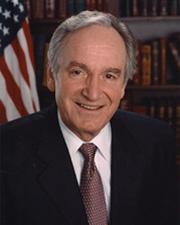 Sen. Tom Harkin (D-IA)
Legislative Activity
Stay on top of the latest movement without scrolling through every action
Senate amendment submitted
November 18, 2005
View full timeline
Senate amendment submitted
November 18, 2005
Senate amendment not agreed to: Amendment SA 2672 not agreed to in Senate by Yea-Nay Vote. 46 - 50. Record Vote Number: 348.
November 18, 2005
Roll call votes on amendments in Senate: Amendment SA 2672 not agreed to in Senate by Yea-Nay Vote. 46 - 50. Record Vote Number: 348.
November 18, 2005
Senate amendment proposed (on the floor): Amendment SA 2672 proposed by Senator Harkin.
November 18, 2005
Amendment SA 2672 proposed by Senator Harkin. (consideration: CR S13285-13287; text: CR S13285) To increase the amount appropriated to carry out under the Community Services Block Grant Act.
November 18, 2005
Amendment SA 2672 not agreed to in Senate by Yea-Nay Vote. 46 - 50. Record Vote Number: 348.
November 18, 2005
Votes
1 roll call on this amendment
Text
Proposed
MAKING FURTHER CONTINUING APPROPRIATIONS FOR FISCAL YEAR 2006

Mr. FRIST. I now ask unanimous consent the Senate begin consideration
of H.J. Res. 72, which is at the desk.
The PRESIDING OFFICER (Mr. Isakson). Is there objection?
The Senator from Louisiana.
Ms. LANDRIEU. Mr. President, I am reserving the right to object, to
speak with the leader for a moment about a situation that is developing
at home and one of which he is certainly aware.
I understand that the motion that has been put forward would allow
the Congress to go home for approximately 30 days and to come back in
the middle of December to finish our business. I wanted to ask the
leader if it is his intention when we come back to press forward for
the supplemental bill that the senior Senator from Mississippi, Senator
Cochran, and others have been working on for relief for the gulf coast.
It is a very important piece of legislation, and many people,
individuals and businesses, large and small, have been waiting for some
direct, significant funding. I wanted to ask the leader from Tennessee
what his intentions are when we get back, at least as he can press the
Senate and press our colleagues in the House to move that piece of
legislation.
Mr. FRIST. Mr. President, the issues the distinguished Senator from
Louisiana comments on and mentions are something we take very seriously
here. As she well knows, my personal commitment, the commitment of
leadership on both sides of the aisle, is to address the issues. We
have worked very hard, both in a personal sense and in an institutional
sense. With regard to the latter, we passed 21 separate pieces of
legislation that have responded to many of the immediate needs. I well
recognize these needs are ongoing. We are going to need to stay on top
of them, which I pledge and leadership pledges to continue to do.

[[Page S13284]]

We will be coming back in December, depending on the outcome of
today, in all likelihood, and we will continue to address these very
important issues. Several issues we will be addressing over the course
of the day as well.
Ms. LANDRIEU. I ask the leader, if I could, please, I understand, I
want the leader to know, we have passed 21 pieces of legislation. I
take him at his word. It has been very hard to follow as these things
have moved so quickly, in some cases, and not so quickly in others. But
I want to make a point and ask the leader that. Because we pass
legislation does not necessarily mean it has been effective. Sometimes
Congress has a way of passing legislation, but that is not any
guarantee it is actually working.
As the Senator from Tennessee knows, the members of the Louisiana
delegation, joined at times by members of the Mississippi delegation,
have consistently said that money given to FEMA is not making its way
to the hands of people in businesses. As the leader knows, the housing
money has been very difficult for people to get. Shelter has been very
difficult to get, housing has been very difficult to get. Many of our
businesses that have applied for loans that are authorized have not yet
received a response from FEMA or the Small Business Administration.
For the record, I say it is not the quantity of legislation but the
quality of legislation, and that is why this supplemental Senator
Cochran has been crafting is so important. We think this may be the
first major piece of legislation that actually gets money into the
hands of people who can do something with it other than having it sit
in bank accounts while people are suffering and trying to get their
lives back together.
I understand the Senator from Tennessee is aware of these great
needs. He himself has been down to our State, and we are appreciative
of that. But that is the point. If I could get a comment about the
importance of the supplemental, that would be of some comfort to the
people of the gulf coast.
Mr. FRIST. Mr. President, I obviously am committed not only to what
is in the supplemental, but I think we need to make it very clear to
our colleagues and to the people in Louisiana, Mississippi, and
Alabama, where I have personally visited very early on and have visited
after that again and again, that in terms of responsiveness, we have
been responsive in many ways. When I say 21 pieces of legislation,
people say, What does that mean? Let me give examples. In terms of
things that have been enacted or cleared for the President, we have
passed the emergency supplemental, No. 1, which was $10.5 billion in
Public Law 10961. We passed another emergency supplemental for $51.8
billion. We passed a Katrina short-term tax relief bill for $6.1
billion; flood insurance borrowing authority, H.R. 3669, for $2
billion; the TANF disaster relief bill for $.3 billion; the unemployed
insurance provisions for $.16 billion. We passed a bill for
redistribution of campus student aid, another bill for Pell grant
relief, another bill for the Community Disaster Loan Act, for a total
of $70.9 billion.
Those are the things that have passed the Senate and the House. If
you look at the things passed by the Senate, there are another nine
bills for $9 billion: the Deficit Reduction Act, Sarbanes housing
amendment, the Snowe small business amendment, the Katrina education
reimbursement bill, the Baucus economic development amendment, the Byrd
unemployment HHS IG amendment, the Harkin legal services amendment--all
of which have been passed by the Senate, this body.
I want my colleagues and the American people to understand we are
acting and we are moving. We have a lot more to do, which I think is
the importance of the supplemental. The distinguished chairman, who is
here on the floor, knows we are focused on it and there is going to
need to be more assistance there in order to renew and rebuild and
respond. This body understands the importance. We are absolutely
committed to that continued support for our appropriate renewal.
The PRESIDING OFFICER. The Senator from Louisiana.
Ms. LANDRIEU. The Senator has been very patient. I realize we have to
move forward. But if he would grant me a few more questions--one or
two.
I understand those pieces and those packages, because of course we
are following them very carefully. But I want the record to reflect
that this morning, as we break, there was $70.9 billion appropriated
and $30 billion is still sitting in a bank somewhere in a FEMA account.
So we have allocated $40 billion. I would judge from the controversies
and reports that much of that money was squandered in many ways that we
know, and used in an inefficient manner. But I would call to the
attention of the leader that we have not passed an emergency education
bill which would cover tuition for children, 370,000 children who are
today displaced from the school they were in the week before Katrina
and Rita. Those 370,000 children have not yet received word from this
Congress if their tuition will be covered. That is not done yet.
We have not passed a comprehensive health care piece that allows
people with no job, no home, no school, and no church to think that
they could show up at a hospital over the holidays and get their health
care covered. That has not passed yet.
We have not passed any loans to our governments in Louisiana that
would allow them to operate and pay for police and fire over the
holidays because the loan package we passed was inoperable because they
cannot pay the money back in 3 years.
So for the record, we have no real health care relief, no significant
elementary and secondary care relief, our universities are teetering on
bankruptcy and closure, and our medical schools are having
difficulty. The dean of LSU Medical School took a job out of our State.
It was announced this week. I don't blame him for leaving because he
doesn't see any help on the way. It is one of the great medical schools
in the country.

Finally, FEMA--to pour salt on the wound, to make sure we were all
having just the very best Thanksgiving we could possibly have--
announced that they are going to make us homeless for the holiday and
has announced that on December 1, everyone who is in a shelter or a
hotel in the country--they do not have an accurate number, so they do
not know how many, and if they do not know how many, how are they
planning to help them? But believe me, there are thousands who are now
going to be put on the streets and will be homeless for the holidays.
I just tell my colleagues as respectfully as I can that when we are
sitting around our tables--and I will be at a different table, and many
people from Louisiana will not be at the table which they usually are
to have Thanksgiving dinner. I will be at a different table, Senator
Lott will be at a different table, and perhaps Senator Cochran will be
at a different table. But as we sit around our tables, there will be
thousands and hundreds of thousands of families who have no table to
pull up to. They are in shelters, they are on the street, and they are
crowded into apartments that they can barely afford with no hope and no
plan.
I will say it for the last time. We are not dealing with a regular
hurricane. We are dealing with an unprecedented natural disaster caused
by the collapse of a Federal levee system that was not invested in, not
maintained, and not funded. It is a disaster for the region and for the
Nation. I cannot say this more emphatically or more passionately. I
have tried to be a team player. We have tried to be cooperative. We
have tried every strategy. We are running out of strategies.
I want my colleagues to know that while I will allow this resolution
to go forward today, if we do not come back in December and pass a
robust supplemental that reflects the values of this body--not what
Mary Landrieu wants in it, not what Louisiana thinks it deserves,
although we think we are entitled to say what we deserve--that reflects
the values of the men and women who serve in this body whom I know so
well from having worked with them, if we don't have a supplemental and
if we don't get some action on our levee system so people can have
confidence to come back, and a few other emergency items that we need,
we will not be going home for Christmas.
We are going home for Thanksgiving, but we will not be going home for
Christmas until the people of the gulf coast understand they have a
home they can go to, if not this Christmas, some Christmas soon.
The PRESIDING OFFICER. Is there objection?

[[Page S13285]]

Without objection, it is so ordered.
The clerk will report the resolution by title.
The legislative clerk read as follows:

A joint resolution (H.J. Res. 72) making further continuing
appropriations for the fiscal year 2006, and for other
purposes.

There being no objection, the Senate proceeded to consider the joint
resolution.

Amendment No. 2672

Mr. HARKIN. Mr. President, I call up my amendment, which is at the
desk.
The PRESIDING OFFICER. The clerk will report.
The legislative clerk read as follows:

The Senator from Iowa [Mr. Harkin], for himself, Mr.
Jeffords, Mr. Kennedy, Mr. Bingaman, Ms. Mikulski, Ms.
Stabenow, Mr. Lautenberg, Mr. Rockefeller, Mr. Akaka, Mr.
Kerry, Mr. Pryor, Mr. Carper, Mr. Kohl, and Mr. Leahy,
proposes an amendment numbered 2672.

Mr. HARKIN. Mr. President, I ask unanimous consent that reading of
the amendment be dispensed with.
The PRESIDING OFFICER. Without objection, it is so ordered.
The amendment is as follows:

(Purpose: To increase the amount appropriated to carry out under the
Community Services Block Grant Act)

At the end of the resolution, insert the following:

SEC. 2. COMMUNITY SERVICES BLOCK GRANT ACT.

Notwithstanding section 101 of Public Law 109-77, for the
period beginning on October 1, 2005 and ending on December
17, 2005, the amount appropriated under that Public Law to
carry out the Community Services Block Grant Act shall be
based on a rate for operations that is not less than the rate
for operations for activities carried out under such Act for
fiscal year 2005.

Mr. HARKIN. Mr. President, I understand that under the order, I will
be recognized for 20 minutes.
The PRESIDING OFFICER. That is correct.
Mr. HARKIN. I might reserve a little bit of time. I may have other
colleagues who will come over to speak.
Just to refresh memories, when this continuing resolution was passed
at the end of September, I came on the floor and offered an amendment
that would have kept whole the Community Services Block Grant program.
That is a program that administers the LIHEAP program, administers a
lot of Head Start programs, Even Start programs, Older Americans Act
programs, elderly transportation programs, emergency shelter programs,
weatherization assistance--you get the idea. Most of the programs
really help a lot of poor people in this country. Last year's level was
$636.8 million.
The amendment I offered in September would have kept the funding of
the Community Services Block Grant program at that level. You might say
that was a continuing resolution. A continuing resolution keeps things
at last year's level. Therein lies the problem.
The House sent us a continuing resolution that said: We will continue
programs at last year's level or at the level of the House budget,
whichever is less. The House budget cut the Community Services Block
Grants Program down to less than $320 million. They cut it in half.
That is the level it was in 1986.
I said in September that it was unfair for poor people to have to
have theirs cut right away down to that level because winter was coming
and you need the heating energy assistance and things like that.
At that time, at the end of September, there was a lot of talk. We
couldn't accept this amendment because the House had gone out. As long
as the House was out and if we changed the continuing resolution, that
meant the entire House of Representatives would have to come back to
Washington, DC, and do something about this. I said at the time on the
floor, big deal. They came back for a lot of other things; they could
come back for this, too.
Obviously, my arguments did not prevail. The amendment was defeated;
whereupon, however, the chairman of the Appropriations Defense
Subcommittee, the Senator from Alaska, Mr. Stevens, said that he was
going to take my amendment that continues the community services block
grants at last year's level and put it on the Defense appropriations
bill, which he did and for which I commended him. We all thought that
the Defense appropriations bill would zing through here right away.
Fine.
Here we are. It is November 18, and the Defense appropriations bill
has not been passed--and we don't know when; probably next month, I
suppose, before the end of the year.
We have another continuing resolution. The continuing resolution
expires today at midnight. We know that. The continuing resolution is
the same. It is at either last year's level or the House budget level,
whichever is less. That means the Community Services Block Grant
program is still cut down to the level it was in 1986.
The amendment I am offering today basically says--it is the same
amendment, basically--for the purposes of this continuing resolution,
the community services block grant shall be based on the rate that it
was last year, which is $636.6 million.
On November 8, barely a week and a half ago, 58 Senators from both
sides of the aisle cosigned a letter saying we want to keep the
Community Services Block Grant Program at the Senate level, at last
year's level. That is what we did in our bill, and 58 Senators a week
and a half ago signed this letter to keep it at the same level. Yet
today we are going to pass a continuing resolution that cuts it in
half. This continuing resolution is until December 18.
There is another unique feature about the Community Services Block
Grant Program that I wish to bring to the Senate's attention. Unlike a
lot of programs, such as education, for example, wherein the money goes
out basically next summer, if we use that language--the lower of the
House level--it doesn't mean a lot because the money is not going to go
out until next summer, and we probably will fix this prior to going
home for Christmas. I think. I don't know. We have had CRs going into
January and into February. That is not unusual around here.
So we have a continuing resolution before us today that says until
December 18, and we think it will be done by then. It may not be. I
don't know how many people around here would like to bet a dollar to a
dime on that one. Maybe yes; maybe no; get it done by December 18. It
could go into next year.
Here we have a situation, unlike education, where the money goes out
next summer, and we will fix it before then, certainly. The Community
Services Block Grant program goes out quarterly. Every quarter, the
money goes out and is used. That means right now we are about 7 weeks
into this quarter, and the entire nationwide Community Services Block
Grant program has been operating at the level of $320 million. That is
bad enough. If we extend that another month, it could be disastrous, or
another 2 months, because it is not like they can draw down some money
somewhere and say: We are going to get it next year, we will make up
for it. They can't just go to the bank and borrow the money. They do
not have it. If they don't have the money for weatherization or for
Head Start programs or for low-income energy assistance programs, they
just do not do it.
We have had vote after vote here when Members supported the Low-
Income Energy Heating Assistance Program. It is vitally needed. But if
you do not have the people to administer the program and get the goods
and hire the people to administer it, what good does it do? That is
what the Community Services Block Grant program does.
You may hear talk that the Community Services Block Grant program is
just one part of the picture because there are State and local
governments that help. That is true. There are private charities that
help. That is true. That is the good thing about this program--it
brings a lot of different stakeholders into play. But there is the
anchor, there is the anchor of the money. If that is not there, they do
not even have the people to go out and do anything.
I ask Senators to think about this. Here is a program that is widely
supported; 58 Senators signed a letter a week and a half ago. We passed
it in our Labor, Health and Human Services Appropriations Subcommittee
when it was on the floor at last year's level, $636.8 million. No one
talked against that. It just passed. We all supported it. As a matter
of fact, if I am not mistaken, I think it was later supported by the
House, even though their numbers were less. The conference report

[[Page S13286]]

that was rejected by the House at least had this high figure in it.
So we find ourselves in an odd situation with another continuing
resolution in the dead of winter when the homeless need a lot of help,
when poor people are put to the extreme in terms of buying enough food,
energy to heat their homes, get clothes for their kids, finding enough
money for rent, going to food banks when the food stamps run out.

Any Senator here who has been to the food banks in their State knows
that the food bank demand is up over what it has been in the past
because food stamps are running out about the third week of the month,
and poor families are going to the food banks to get food. I say to any
Senator, go to your food bank--any State, I don't care which State it
is--go to your food banks, food pantries, and ask them whether the
demand for food is up over what it was last year or just a few months
ago. That is the program administered by the Community Services Block
Grant program.
The argument that was made in September is we could not do this
because the House would have to come back, and they cannot do it, la-
de-da, and all that stuff. Well, the House is in session today--they
may be in session tomorrow, I don't know. But they are in session
today. We could pass this amendment; say, no, the one program we are
going to exempt from the 50-percent cut of the House of Representatives
is Community Services Block Grant program. Send it back to the House,
let them bring it up and pass it and send it to the President. The
argument that we could not do it because of the time pressures does not
hold any longer.
This is just a matter of simple justice. If this were a program that
could make up the money later on next year, it would be different. This
is now. People need help now for housing, for rental assistance, food
banks, heating energy assistance, Head Start, foster grandparents,
rental assistance.
One of the things the Community Services Block Grant program does for
people includes if they are evicted and they need someplace to stay.
Think of the single mother with two or three children. The husband has
left her and gone off someplace. They have been in an apartment, maybe
there has been an illness in the family for which they are not
covered--who knows what kind of calamities could have hit--and they
find themselves evicted. They can go to the local community action
agency in their area. One of the things they will do is they will find
them a place to live. They will give them rental assistance to get them
established and a place to live. That is what this program does. What I
just described happens 10 times a day in 1,000 cities across America--
100,000 times a day.
I hope we can pass this amendment. It is very simple and
straightforward. Leave the Community Services Block Grant program at
last year's level. We have all said that is where we want it. We need
to get that money out there. The House is in session. They can pass it
and send it to the President.
How much time remains?
The PRESIDING OFFICER. The Senator has 6 minutes 14 seconds.
Mr. HARKIN. I reserve the remainder of my time.
The PRESIDING OFFICER. The Senator from Iowa be advised that the time
continues to run.
Mr. HARKIN. How much time total?
The PRESIDING OFFICER. Five minutes sixteen seconds. The Senator was
originally yielded 20 minutes, and the Senator has used 14 minutes.
Mr. HARKIN. How much time on the other side?
The PRESIDING OFFICER. There is no time on the other side.
Mr. HARKIN. Parliamentary inquiry: I understand I had 20 minutes to
speak and there is no time on the other side to speak on this
amendment?
The PRESIDING OFFICER. The Senator is correct.
Mr. HARKIN. There are a couple of other points.
The amendment is a straight failure. Senators understand it. But I
will point out, because of a quirk in the law, there are some States
that are cut more than others.
Here is what that means. This gets a little complicated, but I think
the States that are going to be voting need to know this. If the total
funding for a fiscal year is less than $345 million, then no State
shall receive less than one-fourth of 1 percent. Now, last year, since
we cut it back to $320.6 million, that means there are 13 States--
Alaska, Delaware, Hawaii, Idaho, Maine, Montana, Nevada, New Hampshire,
North Dakota, South Dakota, Utah, Vermont, and Wyoming--that are not
cut by 50 percent; they are cut by 75 percent. Because of a quirk in
the law, 13 of our smallest States have a 75-percent cut. That is what
they are operating at right now in those States.
I say to the Senators from those States, this may not be knowledge to
a lot of Members. I happen to know about this program because I am on
both the committees that administer it, but this is a program that
helps the poorest in our country.
I anticipate there may be some other reasons people do not want to
vote for this, but as long as 58 Senators signed the letter a week and
a half ago, as long as the House is in session, it seems to me we could
vote on this and let the House do it.
As I said, this is the dead of winter. We were told at the end of
September that the Defense appropriations bill would be acted upon.
This amendment was included. But it has not been acted on. We are now
told we have a continuing resolution until December 18, but will we
really act on it by December 18? As I said, who can bet on that around
here?
These are the poorest of our poor people. Can't we at least say we
are going to hold them a little bit harmless in this? It is not that we
are holding them harmless, we are holding them at last year's level,
which means it is cut a little bit simply because of the cost-of-living
increase. But to be cut 50 percent, and in 13 States to be cut by 75
percent, is grossly unfair.
Let's do the moral thing. Let's do the right thing. This is a very
small matter, a small thing to do, to pass this amendment and send it
to the House and have them pass it on.
I ask unanimous consent to have printed in the Record the letter I
discussed.
There being no objection, the material was ordered to be printed in
the Record, as follows:

U.S. Senate,

Washington, DC, November 9, 2005.
Hon. Arlen Specter,
Chairman, Senate Subcommittee on Labor, HHS, Education,
Appropriations, Washington, DC.
Hon. Tom Harkin,
Ranking Member, Senate Subcommittee on Labor, HHS, Education,
Appropriations, Washington, DC.
Dear Senators Specter and Harkin: We applaud the Senate
Labor, Health and Human Services, and Education
Appropriations Subcommittees (Labor HHS) for restoring
funding to the Community Services Block Grant (CSBG). In the
face of budget constraints and competing priorities, we urge
you to uphold the Senate funding level of $637 million in
negotiations with the House on H.R. 3010, the Labor-HHS
Appropriations bill.
As you know, CSBG helps to strengthen communities by
helping low-income individuals and families to become self-
sufficient. Nearly one-fourth of Americans living in poverty
receive services from CSBG grantees located in 90 percent of
the nation's counties. Please enable these entities to
continue their vital assistance to families and communities.
We urge you to insist on the Senate positions in CSBG, $637
million, during final negotiations on H.R. 3010. Thank you
for your continued efforts on this issue.
Sincerely,
Charles E. Grassley, Orrin G. Hatch, Olympia J. Snowe,
Rick Santorum, Christopher J. Dodd, Edward M. Kennedy,
Max Baucus, Jeff Bingaman, Jim Bunning, Lamar
Alexander, Richard Burr, Mike DeWine, George Allen,
Conrad Burns, Lincoln D. Chafee, Norm Coleman, Susan M.
Collins, Hillary Rodham Clinton, Kent Conrad, James M.
Jeffords, John F. Kerry, Blanche L. Lincoln, Barbara A.
Mikulski, Jack Reed, John D. Rockefeller, Charles
Schumer, James M. Talent, John Thune, George V.
Voinovich, John W. Warner, Mark Dayton.

[[Page S13287]]

Richard J. Durbin, Joseph R. Biden, Jr, Barbara Boxer,
Maria Cantwell, Thomas R. Carper, Jon S. Corzine, Byron
L. Dorgan, Dianne Feinstein, Frank R. Lautenberg,
Joseph I. Lieberman, E. Benjamin Nelson, Barack Obama,
Ken Salazar, Debbie Stabenow, Russell D. Feingold, Tim
Johnson, Patrick J. Leahy, Carl Levin, Bill Nelson,
Mark Pryor, Paul S. Sarbanes.

Mr. HARKIN. I yield back the remainder of my time and ask for the
yeas and nays.
The PRESIDING OFFICER. The Senator yields back the remainder of his
time.
Is there a sufficient second?
There is a sufficient second.
The question is on agreeing to the amendment of the Senator from
Iowa.
The clerk will call the roll.
The legislative clerk called the roll.
Mr. McCONNELL. The following Senator was necessarily absent: the
Senator from Oregon (Mr. Smith).
Mr. DURBIN. I announce that the Senator from New Jersey (Mr.
Corzine), the Senator from Hawaii (Mr. Inouye), and the Senator from
Michigan (Ms. Stabenow) are necessarily absent.
I further announce that, if present and voting, the Senator from
Michigan (Ms. Stabenow) would vote ``yea.''
The PRESIDING OFFICER. Are there any other Senators in the Chamber
desiring to vote?
The result was announced--yeas 46, nays 50, as follows:

[Rollcall Vote No. 348 Leg.]

YEAS--46

Akaka
Baucus
Bayh
Biden
Bingaman
Boxer
Byrd
Cantwell
Carper
Chafee
Clinton
Collins
Conrad
Dayton
Dodd
Dorgan
Durbin
Feingold
Feinstein
Harkin
Jeffords
Johnson
Kennedy
Kerry
Kohl
Landrieu
Lautenberg
Leahy
Levin
Lieberman
Lincoln
Mikulski
Murray
Nelson (FL)
Nelson (NE)
Obama
Pryor
Reed
Reid
Rockefeller
Salazar
Sarbanes
Schumer
Snowe
Specter
Wyden

NAYS--50

Alexander
Allard
Allen
Bennett
Bond
Brownback
Bunning
Burns
Burr
Chambliss
Coburn
Cochran
Coleman
Cornyn
Craig
Crapo
DeMint
DeWine
Dole
Domenici
Ensign
Enzi
Frist
Graham
Grassley
Gregg
Hagel
Hatch
Hutchison
Inhofe
Isakson
Kyl
Lott
Lugar
Martinez
McCain
McConnell
Murkowski
Roberts
Santorum
Sessions
Shelby
Stevens
Sununu
Talent
Thomas
Thune
Vitter
Voinovich
Warner

NOT VOTING--4

Corzine
Inouye
Smith
Stabenow
The amendment (No. 2672) was rejected.
Mr. COCHRAN. Mr. President, I move to reconsider the vote by which
the amendment was not agreed to.
Mr. McCONNELL. I move to lay that motion on the table.
The motion to lay on the table was agreed to.
The PRESIDING OFFICER. The question is on the third reading and
passage of the joint resolution.
The joint resolution was ordered to a third reading and was read the
third time.
The PRESIDING OFFICER. The Senator from Louisiana.
Ms. LANDRIEU. Mr. President, is this the continuing resolution?
The PRESIDING OFFICER. The Senator is correct.
Ms. LANDRIEU. Mr. President, earlier this morning we had a colloquy
that expressed concerns.
The PRESIDING OFFICER. The Senator will be advised that all time for
debate has expired.
Ms. LANDRIEU. Mr. President, I ask unanimous consent for 30 seconds.
The PRESIDING OFFICER. Without objection, it is so ordered.
Ms. LANDRIEU. Mr. President, we had a colloquy this morning with the
leader about the need to do more for the victims of Hurricanes Katrina
and Rita. I am not going to ask for a record vote, and I am not going
to delay the debate, but I do want to be recorded as voting ``no'' if
we have a voice vote. It is very important to let people in this
country know that our work is not yet finished. While we are breaking
for the holidays, there will be many people who have no holiday table
to go home to. Members of this body have worked very hard. I respect
the work that each has done. We have worked in a bipartisan way to
address some issues of health care, education, and housing. But just
because we have done our job doesn't mean the same thing is actually
happening on the other side of the Capitol.
There are still more issues that we need to find solutions for. We
need to find a solution for the health care crisis along the gulf coast
due to the hurricanes and subsequent levee breeches. We need to find a
solution for the massive housing shortage throughout the States that
Katrina and Rita whipped through. We need to find a solution for the
small businesses that have been devastated and the thousands of people
who have been left jobless. And we need to find a solution to building
Category 5 levees and providing plenty of storm and flood protection
which also means restoring our vital coastal wetlands, as they are our
first line of defense. Without this protection, all our other efforts
will be for naught.
We need solutions, Mr. President. We need real answers, because it is
unsettling to know that while we go home to have Thanksgiving with our
families, my constituents still have real problems and real needs. And
so I thank you, Mr. President, for this time and for allowing me to
note for the record, that I am voting no to this continuing resolution
because our job is not finished, and these vital concerns are not
settled.
The PRESIDING OFFICER. The joint resolution having been read the
third time, the question is, Shall it pass?
The joint resolution (H. J. Res. 72) was passed.
Mr. ENSIGN. Mr. President, I move to reconsider the vote and to lay
that motion on the table.
The motion to lay on the table was agreed to.
The PRESIDING OFFICER. The majority leader is recognized.

____________________