To prohibit funds from being used for television broadcasting to Cuba.
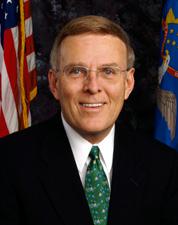 Sen. Byron L. Dorgan (D-ND)
Legislative Activity
Stay on top of the latest movement without scrolling through every action
Roll call votes on amendments in Senate: Motion to table amendment SA 284 agreed to in Senate by Yea-Nay Vote. 65 - 35. Record Vote Number: 85.
April 6, 2005
View full timeline
Roll call votes on amendments in Senate: Motion to table amendment SA 284 agreed to in Senate by Yea-Nay Vote. 65 - 35. Record Vote Number: 85.
April 6, 2005
Considered by Senate. (consideration: CR S3240, S3241-3243, S3243-3248)
April 6, 2005
Motion to table amendment SA 284 agreed to in Senate by Yea-Nay Vote. 65 - 35. Record Vote Number: 85.
April 6, 2005
Senate amendment submitted
April 5, 2005
Senate amendment proposed (on the floor): Amendment SA 284 proposed by Senator Dorgan.
April 5, 2005
Amendment SA 284 proposed by Senator Dorgan. (consideration: CR S3191-3192; text: CR S3191) To prohibit funds from being used for television broadcasting to Cuba.
April 5, 2005
Votes
1 roll call on this amendment
Text
Proposed
FOREIGN AFFAIRS AUTHORIZATION ACT, FISCAL YEARS 2006 AND 2007--
Continued

Amendment No. 278

The PRESIDING OFFICER. Under the previous order, there is now 2
minutes evenly divided relating to a vote on amendment No. 278, the
Boxer amendment. The Senate will be in order.
The Senator from California.
Mrs. BOXER. Mr. President, I hope my colleagues will support the
Boxer-Snowe amendment. It is very important to make sure women around
the world are given the health care they deserve. Since 1973, the Helms
amendment has been in place. That means no American funds can ever be
used for anything to do with abortion. But the global gag rule which we
are trying to overturn goes much further. It says nonprofit
organizations overseas cannot use their own money to help a

[[Page S3190]]

woman by giving her options, by giving her a referral. It even says a
nongovernmental organization would lose all their USAID funding if they
advocated to change a very restrictive law in their own country. This
is clearly unconstitutional if it were applied here in America.
With our men and women dying around the world for freedom, I do not
think we should say there should be no freedom of speech in these
countries. We overturned this law many times. I hope we will do it
again.
I yield the floor.
The PRESIDING OFFICER. The Senator from Kansas.
Mr. BROWNBACK. Mr. President, I thank my colleagues. This is well-
plowed ground. We have been around this issue since 1984, with Ronald
Reagan putting this policy in place. The Boxer amendment overturns that
policy. This is about taxpayer funding of abortion overseas.
We can separate the issue of abortion here altogether and say we are
not going to talk about that, but this is taxpayer dollars used to
support organizations supporting abortion overseas. We talk about
different semantics. That is what it does. I urge my colleagues to vote
against this amendment. Clearly, 70-plus percent of the American public
would be against that. Let's work on foreign policy issues and funding
of things on which we have great unity, not ones on which we are
divided.
I respectfully urge a vote against the amendment of my colleague,
Senator Boxer.
The PRESIDING OFFICER. All time has expired.
Mrs. BOXER. I ask for the yeas and nays.
The PRESIDING OFFICER. Is there a sufficient second? There is a
sufficient second. The question is on agreeing to the amendment. The
clerk will call the roll.
The legislative clerk called the roll.
Mr. McCONNELL. The following Senator was necessarily absent: the
Senator from Colorado (Mr. Allard).
Mr. DURBIN. I announce that the Senator from Massachusetts (Mr.
Kennedy), is necessarily absent.
The PRESIDING OFFICER. Are there any other Senators in the Chamber
desiring to vote?
The yeas and nays resulted--yeas 52, nays 46, as follows:

[Rollcall Vote No. 83 Leg.]

YEAS--52

Akaka
Baucus
Bayh
Biden
Bingaman
Boxer
Byrd
Cantwell
Carper
Chafee
Clinton
Collins
Conrad
Corzine
Dayton
Dodd
Dorgan
Durbin
Feingold
Feinstein
Harkin
Inouye
Jeffords
Johnson
Kerry
Kohl
Landrieu
Lautenberg
Leahy
Levin
Lieberman
Lincoln
Mikulski
Murkowski
Murray
Nelson (FL)
Nelson (NE)
Obama
Pryor
Reed
Reid
Rockefeller
Salazar
Sarbanes
Schumer
Smith
Snowe
Specter
Stabenow
Stevens
Warner
Wyden

NAYS--46

Alexander
Allen
Bennett
Bond
Brownback
Bunning
Burns
Burr
Chambliss
Coburn
Cochran
Coleman
Cornyn
Craig
Crapo
DeMint
DeWine
Dole
Domenici
Ensign
Enzi
Frist
Graham
Grassley
Gregg
Hagel
Hatch
Hutchison
Inhofe
Isakson
Kyl
Lott
Lugar
Martinez
McCain
McConnell
Roberts
Santorum
Sessions
Shelby
Sununu
Talent
Thomas
Thune
Vitter
Voinovich

NOT VOTING--2

Allard
Kennedy

The amendment (No. 278) was agreed to.
Mrs. BOXER. I move to reconsider the vote.
Mr. DODD. I move to lay that motion on the table.
The motion to lay on the table was agreed to.
The PRESIDING OFFICER. The Senator from Connecticut.
Mr. DODD. Mr. President, I ask unanimous consent to lay aside the
pending amendment.
The PRESIDING OFFICER. Is there objection?
Without objection, it is so ordered.

Amendment No. 283

Mr. DODD. Mr. President, I send an amendment to the desk.
The PRESIDING OFFICER. The clerk will report the amendment.
The legislative clerk read as follows:

The Senator from Connecticut [Mr. Dodd] proposes an
amendment numbered 283.

Mr. DODD. Mr. President, I ask unanimous consent that reading of the
amendment be dispensed with.
The PRESIDING OFFICER. Without objection, it is so ordered.
The amendment is as follows:

(Purpose: To Express the Sense of the Senate concerning recent
provocation actions by the Peoples Republic of China and for other
purposes)

At the appropriate place in the bill add the following new
section:

SEC.  .

(a) Findings.--
(1) During most of last four years relations between the
United States and the People's Republic of China have been
relatively stable;
(2) The recently released 2004 State Department Country
Report on Human Rights continues to characterize China's
human rights as poor;
(3) Bilateral economic and trade relations are important
components of the United States/Chinese relationship,
(4) China's growing international economic and political
influence has implications for the United States competitive
position and for maintaining a strong domestic industrial
base;
(5) Taiwan remains an extremely sensitive and complex
bilateral issue between the U.S. and the Peoples Republic of
China;
(6) The U.S. decision to establish diplomatic relations
with the People's Republic of China in 1979 was based upon
the premise that the future of Taiwan would be determined
solely by peaceful means and in a manner that was mutually
satisfactory;
(7) The Taiwan Relations Act makes clear that peace and
stability in the region are in the political, security and
economic interests of the United States;
(8) The United States has consistently urged restraint by
both China and Taiwan with respect to their actions and
declarations; and
(9) The anti-succession law adopted by the Chinese National
People's Congress on March 14, 2005 targeted at Taiwan's
independence advocates was a provocative action which has
altered the status quo in the region.
(b) Sense of Congress.--It is the sense of the Congress
that--
1. China's anti-succession law is destabilizing to regional
peace and stability, and is therefore of grave concern to the
United States;
2. The United States Government should employ all
diplomatic means to encourage the repeal of that law so the
regional stability can be restored;
3. The United States Government should continue to speak
out with respect to China's human rights practices and
advocate the release from detention of all political and
human rights activists;
4. The United States Government should more effectively
promote United States economic and trade interests by
insisting that the People's Republic of China lives up to its
international trade obligations to respect and safeguard U.S.
intellectual property rights and cease artificially pegging
its currency exchange rates; and
5. The United States Government should undertake a
comprehensive review of the implications of China's growing
international economic and political influence that are
byproducts of its expanding network of trade agreements, its
aggressive shipbuilding programs, its efforts to cement
scientific and technological cooperation arrangements, and
secure additional oil and gas contracts; and should determine
what steps should be taken to safeguard the U.S. industrial
base and maintain and enhance United States economic
competitiveness and political interests.

Mr. DODD. Mr. President, it is not my intention to debate the
amendment at this moment, but I wanted to get in the queue. I will
defer any debate on the amendment until a later time.
The PRESIDING OFFICER. The Senator from Indiana.
Mr. LUGAR. Mr. President, I ask unanimous consent that the pending
amendments be laid aside.
The PRESIDING OFFICER. Without objection, it is so ordered.
Mr. LUGAR. Mr. President, we have been attempting to arrange for a
vote on the Lugar amendment. Senator Biden would like to debate that
amendment, as I understand it. It may be that an arrangement can be
made for a conclusion of debate tonight and a vote certain tomorrow
morning. But for the moment, I suggest the absence of a quorum.
The PRESIDING OFFICER. The clerk will call the roll.
The legislative clerk proceeded to call the roll.
Mr. DORGAN. Mr. President, I ask unanimous consent that the order for
the quorum call be rescinded.
The PRESIDING OFFICER. Without objection, it is so ordered.

[[Page S3191]]

Amendment No. 284

Mr. DORGAN. Mr. President, I send an amendment to the desk on behalf
of myself and Senator Wyden and ask for its immediate consideration.
The PRESIDING OFFICER. The clerk will report.
The legislative clerk read as follows:

The Senator from North Dakota [Mr. Dorgan], for himself and
Mr. Wyden, proposes an amendment numbered 284.

Mr. DORGAN. Mr. President, I ask unanimous consent that reading of
the amendment be dispensed with.
The PRESIDING OFFICER. Without objection, it is so ordered.
The amendment is as follows:

(Purpose: To prohibit funds from being used for television broadcasting
to Cuba)

On page 16, strike lines 13 through 21 and insert the
following:
(1) International broadcasting operations.--For
``International Broadcasting Operations,'' $620,050,000 for
the fiscal year 2006 and such sums as may be necessary for
the fiscal year 2007.
(2) Broadcasting capital improvements.--For ``Broadcasting
Capital Improvements,'' $10,893,000 for the fiscal year 2006
and such sums as may be necessary for the fiscal year 2007.
(3) Prohibition on television broadcasting to cuba.--None
of the amounts appropriated pursuant to the authorization of
appropriations in paragraph (1) or (2) may be used to provide
television broadcasting to Cuba.

Mr. DORGAN. Mr. President, I visited with Senator Lugar and Senator
Biden and indicated, on behalf of myself and Senator Wyden, I would
offer the amendment. We would be prepared to discuss it in the morning,
but we will be happy to have it set aside for other business on this
legislation. I want to say also it is not our intention in any way to
delay this legislation. It is a very important amendment to us and I
think to the Senate. But when we come back tomorrow to spend some time
talking about it, we will not necessarily take very much time, and we
will hope for favorable consideration by the full Senate.
The PRESIDING OFFICER. The Senator from Oregon.
Mr. WYDEN. Mr. President, very briefly, I thank Senator Lugar and
Senator Biden, in particular, for working this arrangement out with
Senator Dorgan and me. We think this is a waste of money. We are
anxious to talk about it tomorrow after folks have had a chance,
overnight, to look at it.
I thank the Presiding Officer for the chance to make these brief
remarks.
Mr. LUGAR. Mr. President I suggest the absence of a quorum.
The PRESIDING OFFICER. The clerk will call the roll.
The legislative clerk proceeded to call the roll.
Mr. DORGAN. Mr. President, I ask unanimous consent that the order for
the quorum call be rescinded.
The PRESIDING OFFICER. Without objection, it is so ordered.
Mr. DORGAN. Mr. President, it appears there are a couple of minutes
before we move on. I will debate the amendment, along with my
colleague, Senator Wyden, more extensively in the morning. I will not
take a lot of time. But as long as the floor was available, I wanted to
indicate that the amendment we just laid down deals with TV Marti.
We fund broadcasts into Cuba on something called Radio Marti which
are very effective. The Cuban people listen to Radio Marti. Of course,
they can listen to Miami radio stations as well. But we also fund
something called TV Marti, and we have done it for years. The
Government of Cuba, of Fidel Castro, jams the signals. We have Fat
Albert, an aerostat balloon up there thousands of feet in the air, and
the American taxpayer is paying for a fancy studio down on the ground.
And up through this cable to Fat Albert we actually send signals into
Cuba, television signals that the Cuban people can't see.
Traditionally, they have been broadcast from 3 to 8 in the morning, and
they are systematically jammed.
We have been spending about $10 to $12 million a year, and we have
been doing it for years. We have spent almost $200 million doing it.
Now the President wants to double the funding. There is something
called waste, fraud, and abuse. I am not exactly sure where this fits,
but it is one of the three. It fits with something else called
stupidity.
We ought not continue to pay to send television signals to a country
that can't receive them or television signals to people who can't see
them because the Government is jamming them. Let me say that the Acting
Director of the International Broadcasting Bureau, Mr. Brian Coniff,
testified before the House Subcommittee on International Operations and
Human Rights.
He said: Transmission to China has been consistently jammed by the
Cuban Government. The American official said that. This transmission of
television signals has been systematically jammed by the Cuban
Government. We don't have any official evidence that the audience has
increased due to broadcast schedule change. They did have some
anecdotal evidence that just a smattering of Cubans would be able to
spot the signal that we broadcast into Cuba. Before the Castro
government caught the signal and jammed it, they would get a minute or
two. So that is a sighting. That is a Cuban who was able to see the
signal of TV Marti. They finally stopped measuring that because the
audience was so miniscule as to be almost zero.
Finally their argument was, the same official says: TV Marti, though
jammed, is well positioned to be an important instrument of U.S.
foreign policy should a crisis occur on the island.
So there we are. We have big, old Fat Albert up there, an aerostat
balloon sending signals to the Cuban people they can't see. We spend
$10, $12 million a year on something we don't have. And now the
President says we should double that. And do you know how we are going
to do it? A balloon isn't enough and a balloon causes problems because
the balloon got off of its aerostat mooring and went over the
Everglades, and we had people on grappling hooks and ladders trying to
tame the balloon that was broadcasting signals into Cuba. So now they
want to buy an airplane.
If this were a television show, it would be a comedy. Now they want
to buy an airplane for $8 million to send signals into Cuba that they
can't receive. All of this would be funny were it not for the fact that
this is paid for by American taxpayers. If ever there was a case of
waste, fraud, and abuse in government spending, it is this.

It is not partisan. There is no Democratic waste or Republican waste.
There is just plain old waste. It seems to me when you see something
that doesn't work, isn't needed, shouldn't be done and doesn't function
at all, maybe it is time for all of us to say: This we can get rid of.
This is not the largest amendment offered this year. It is roughly
$20, $21 million. But it saves money; $21 million is a lot of money in
my hometown. It saves the taxpayers money and stops doing something
that has always been completely ineffective.
We broadcast in Radio Marti. That is effective. The Cubans listen to
it. They can listen to commercial stations from Miami for that matter.
But Television Marti has never worked because the Castro government
systematically jams it. So we send signals no one can receive.
This amendment, I hope, should be simple enough. I know there will be
some who may have an apoplectic seizure about my offering this
amendment because there are a couple of States where the Cuban vote is
very important and there are some in the Cuban community who think we
are doing something very important and very worthy if we send signals
from this country that can't be seen by the Cuban people. That escapes
some notion of mine that would represent logical thinking. But
nonetheless there may be some who will feel that way.
We will have a broader discussion of this tomorrow. I support many of
the broadcasting programs we have. Many have been very effective. But
this is pure, solid, thoughtless waste. It is time for this Congress to
take a stand to shut this spending down.
I yield the floor and suggest the absence of a quorum.
The PRESIDING OFFICER. The clerk will call the roll.
The legislative clerk proceeded to call the roll.
Mr. LUGAR. Mr. President, I ask unanimous consent that the order for
the quorum call be rescinded.
The PRESIDING OFFICER. Without objection, it is so ordered.
The Senator from Indiana.
Mr. LUGAR. Mr. President, I ask unanimous consent that Senator Biden

[[Page S3192]]

be recognized in order to offer a substitute amendment to the language
proposed to be stricken; provided further that there be 30 minutes
equally divided for debate this evening; provided further that at 10
a.m. tomorrow, the Senate proceed to a vote in relation to the Biden
amendment, with no amendments in order to the Biden amendment prior to
the vote.
The PRESIDING OFFICER. Without objection, it is so ordered.
Mr. LUGAR. I thank the Chair.
The PRESIDING OFFICER. The Senator from Delaware.

Amendment No. 286

Mr. BIDEN. Mr. President, I send an amendment to the Lugar amendment
to the desk and ask for its immediate consideration.
The PRESIDING OFFICER. The clerk will report.
The legislative clerk read as follows:

The Senator from Delaware [Mr. Biden] proposes an amendment
numbered 286 in lieu of the language proposed to be stricken
by amendment No. 266.

Mr. BIDEN. Mr. President, I ask unanimous consent that the reading of
the amendment be dispensed with.
The PRESIDING OFFICER. Without objection, it is so ordered.
The amendment is as follows:

(Purpose: To provide a second degree amendment related to the United
States share of assessment for United Nations Peacekeeping operations)

In lieu of the matter proposed to be stricken, insert the
following:
``Section 404(b)(2)(B) of the Foreign Relations
Authorization Act, Fiscal Years 1994 and 1995 (P.L. 103-236)
is amended by adding at the end the following:
``(v) For assessments made during calendar years 2005,
2006, and 2007, 27.1 percent.''

Mr. BIDEN. Mr. President, I will be very brief. The amendment I have
sent to the desk does a simple thing. It maintains the current cap on
the amount that the United States contributes to the United Nations
peacekeeping missions. It keeps it at 27.1 percent for the next 2
years.
For those who may be watching, they may wonder what that is all
about. When a peacekeeping mission gets sent overseas, authorized by
the United Nations, the countries in question have a prior assessment
as to how much they are going to pay, usually based on the size of
their countries and the size of their economies, and it has been agreed
to by us that the appropriate figure for the United States to chip in
is 27.1 percent. So if it costs $1 million for peacekeeping, our share
would be $271,000, and so on.
Let me briefly explain the history of the law and what this does to
the Lugar amendment.
In 1994, Congress unilaterally limited what we would pay for the
peacekeeping endeavors of the United Nations. We said we will no longer
pay any more than 25 percent. I believe at the time we were paying 31
percent. That is what the previous administrations had agreed to. That
is what the U.N. was assessing us, 31 percent. We said in 1994: No, no,
we are not going to pay any more than 25 percent.
What happened was, we never negotiated that rate with the United
Nations. We unilaterally stated that. We did not go back to the U.N.
and say: Look, we want to reconfigure how much we are paying. We want
to go down from 31 percent, which we had been paying, to 25 percent. It
never occurred, and the U.N. continued to bill us at 31 percent. So if
a peacekeeping mission was $1 million--and none are as cheap as $1
million--we were getting billed $310,000 and we only agreed to pay
$250,000. So we were in arrears of $60,000.
The bill that my former colleague Jesse Helms and I did in the late
1990s to clear up what the United States allegedly owed--everybody used
to call it dues, but it was more than dues. This peacekeeping is part
of what people euphemistically refer to as dues. The accumulated
obligation that we owed to the United Nations, although somewhat in
dispute, was a little over $1 billion.
Senator Helms, and many others, when he was chairman of the
committee, argued that we should not be paying any of this; we did not
owe any of these arrears. Senator Helms, after conferring with his
trusted aide who has passed away, the Staff Director for the Foreign
Relations Committee, Admiral Bud Nance, when he realized a lot of this
was owed to some of our friends such as Great Britain, Europe, and
others, he said I did not realize that; OK, we should pay that amount
we owe. But in the process Senator Helms, Senator Lugar, myself, and
many others also thought there should be reforms that should take place
in the United Nations. In addition to settling this arrears question,
we wrote a much larger bill that required some changes and commitments
on the part of the United Nations as well. In the process of doing
that, Senator Helms agreed and the Helms-Biden legislation said we
would only pay at 25 percent.
The Ambassador to the United Nations at the time was Richard
Holbrooke. Richard Holbrooke, who was in negotiation with the United
Nations to try to get them to agree that we would only pay 25 percent
and that they would agree with that beyond us unilaterally asserting
it, worked out an agreement that said the United Nations agreed we
would only pay 27 percent. I know what I am talking about sounds
arcane, but it is real money. Senator Helms and I said: OK, close
enough. And we agreed to amend the Helms-Biden law to let these
arrearage payments flow.
What we never did was repeal the underlying law that was passed in
the Congress, signed by the President in 1994, that said we would pay
no more than 25 percent. The underlying law in 1994 was never repealed.
In 2002, because these arrearages are running up again, the
difference between 25 percent and what the U.N. thought we owed and
what we had been paying at the 27 percent, we put in a provision in the
law, a 3-year amendment that amended the 1994 law putting a ceiling on
our payments at 27, not 25, percent through the year 2004.
Last year, we came up against this issue again, and the
Appropriations Committee, because we were unable to get our bill
passed, extended the 27-percent number through calendar year 2005. So
if nothing else is done now, the 1994 law kicks back in, and our
maximum payment drops from 27 percent to 25 percent, and we are back in
the same old tangle of building up arrearages of whatever the 2-percent
difference would be every year that we thought we solved initially. So
we need to address this issue. We do not want to get into this fight
again.
The U.N. peacekeepers perform critical functions in the area of
conflict and instability around the world. They monitor cease-fires,
human rights conditions, clearing minefields, disarming combatants,
providing humanitarian assistance, and organizing and observing
elections, which all costs money.
The U.N. peacekeeping missions have become increasingly critical in
the past year as authorizing missions that support U.S. policy
objectives for stabilization in Burundi, Haiti, and other places, as
well as an operation to Sudan which will begin to deploy in the
upcoming weeks.
Through missions such as these, the United States contributes to
international peace and stability while sharing the cost of doing so
with other nations. Therefore, it is my view that we need to continue
to pay our U.N. peacekeeping bill, the one negotiated by Holbrooke,
particularly at this point in time when we are asking for and need U.N.
cooperation on issues such as democracy building in Iraq, post-tsunami
disaster relief in Indonesia, and other areas.
I remind my colleagues, and I am in no way being critical of my
chairman, the bill we reported out of the Foreign Relations Committee
corrected the problem. It said we are lifting the 25-percent cap passed
in 1994, and we are doing it permanently. What the chairman of the
committee is doing is introducing an amendment saying: I guess, on
second thought, I do not like that idea very much. I want to now go
back and amend what passed 18 to 0 and say we are going back to the 25-
percent level.
I know that is complicated for all the Members, but the bottom line
is my amendment does what the President's budget request proposed. I
want to do it permanently, but the President said keep it at 27 percent
for another 2 years. That is what the President requested. That is what
I am attempting to amend the Lugar amendment with. If I prevail, the
President's position prevails. We no longer go in arrearages, and we
put off another 2 years reckoning with the underlying problem.

[[Page S3193]]

I see my colleague from Maryland is in the Chamber. With the
permission of the Senator from Indiana, I would be happy to yield to
him on this point. There is a time agreement. I do not know how much of
my time I have used, but I am sure we could accommodate the Senator for
the time he wants.
The PRESIDING OFFICER. The Senator from Maryland.
Mr. SARBANES. Mr. President, I will be brief. I rise in very strong
support of the amendment offered by the distinguished Senator from
Delaware. I do it out of respect for his past efforts in addressing
this issue, along with Senator Helms. I have to confess that, at the
time, I thought we should pay all of our arrearages without those
conditions. We had a very difficult situation in the U.N., but in the
end, the situation was negotiated out and an agreement was reached on
the 27 percent. So as long as we pay that amount, we are not falling
into arrears.
If we drop the 27 percent down to 25 percent, as I understand the
amendment of the chairman of the committee would do, we immediately
throw ourselves back into a situation where we start building up
arrears. In effect, we end up going back on an agreement that was
reached after very intense negotiations with the U.N., as I recall, led
by Ambassador Holbrooke at the time.
Interestingly enough, the current administration, the Bush
administration, as I understand it, is supportive of the position that
the Senator from Delaware is offering with this amendment. This
amendment is consistent with what the administration has sought in
terms of extending the 27-percent cap.
Now, the bill as it came out of the committee extended that cap
permanently. This amendment would extend it for 2 years. I understand
that is the administration's position. Given all of that and the
importance of this, I would hope that the chairman of the committee
would find it within his reasonable judgment to accept this amendment.
I do not think we ought to be having an intense division over this
because it seems to me it makes extraordinarily good sense to do this
amendment. Earlier, we imposed a unilateral cap. It did not work. We
had very complicated relationships. We were able to work that out. We
were able to pay off our arrears.
Our influence is going to be diminished in any international body if
we are sitting at the table and our representative is in a position
where the United States is in arrears to these very institutions that
we helped to found and establish and to make a success over the years.

In fact, we are going to commemorate the 60th anniversary of the
founding of the United Nations this year. So it seems to me that is a
very sensible amendment. It does pull back a bit from what was in the
committee-reported bill, from a permanent 27 percent cap to a 2-year
extension, which conforms to the administration's position. But to go
down to 25 percent, as the underlying amendment proposes, would simply
recreate all of the difficulties we previously encountered and
previously went through.
In a sense, I appeal to the chairman of the committee to see the
wisdom in the amendment offered by the Senator from Delaware as a very
reasonable, positive, and constructive way in which to address this
issue.
So I very much hope he will find it possible to accept the amendment
of the Senator from Delaware as we proceed in trying to move this bill
through the Senate.
Mr. BIDEN. Will the Senator yield briefly?
The PRESIDING OFFICER (Mr. Thune). The time of the Senator from
Delaware has expired.
Mr. BIDEN. I thank the Chair.
The PRESIDING OFFICER. The Senator from Indiana.
Mr. LUGAR. Mr. President, as the distinguished Senators from Delaware
and Maryland pointed out, and certainly Senator Biden was very heavily
involved in the Helms-Biden legislation of 1999, that legislation which
came after considerable argument in the committee and in the Senate,
perhaps in the country, about what our fair share ought to be, the
Helms-Biden decision was that the U.S. share of peacekeeping duties
would decline to 25 percent of the world total. That still remains the
law and important goal of U.S. policy toward the United Nations, at
least for many Senators.
Expression has been made tonight that perhaps our Nation ought to be
more generous, and that could very well be the result of negotiations
with the United Nations, but the intent, at least, of the amendment
that I offered earlier in the day would strike section 401, which
established a permanent cap of 27.1 percent. Senator Biden's substitute
changes that permanent idea to a 2-year cap of 27.1 so that perhaps
pragmatically there is some room and time to come to some agreement
either up or down from that point.
I simply observe that this issue, long before Senator Helms and
Senator Biden reached a bipartisan compromise in 1999, exercised strong
feelings on both sides of the aisle. I appreciate very much the
sentiment of the Senators who wish to preserve the 27.1 cap. As I
pointed out earlier in the day, I believe that we ought to pay our
dues.
Furthermore, I believe the United States has obligations of a
humanitarian sort, quite apart from the pragmatic aspects of
peacekeeping, which are important. Nevertheless, my hope had been that
by in essence setting aside the issue out of this bill that we would
give the U.S. negotiators the most leverage possible to obtain whatever
our goals and objectives may be. I think there may be some ambivalence
as to what those goals are. It may be ambivalence of a generous sort;
namely, given all of the problems occurring in the world, we may wish
to take on more. On the other hand, I would observe, as certain other
Senators have, that the United Nations is in the process now of a great
deal of reform thinking.
The Secretary General, Kofi Annan, has suggested very substantial
reforms. We are about to have a hearing on the nominee for our
country's representative at the United Nations, John Bolton. I am
certain many Senators on the committee will question Secretary Bolton
on his ideas about reform and how he could be effective in bringing
about a stronger United Nations and what the correct presence ought to
be and what the correct leadership ought to be. Peacekeeping ought to
be a part of that negotiation.
I would further observe that in the coming weeks Congress will have
further opportunities to work with President Bush and his
administration to craft the most effective means of reducing the U.S.
share of assessments or increasing them, as may be our preference. I
believe this is an issue in which further consultation with the
executive branch is desirable.
For the moment, I appreciate that Senators will continue to have
strong feelings about the United Nations generally, as well as our
degree of participation financially and otherwise. That has been the
nature of several debates over the years, and each time one of our
authorization bills comes to the floor, this issue arises in one form
or another. Nevertheless, I will oppose the Biden amendment with the
recognition that, as a substitute, if it is adopted, it will be
language that I hope at least goes to final passage of this
legislation.
If the Senator's substitute is not adopted, then he has assured me
that by voice vote we will adopt the amendment I offered earlier on and
proceed on to other considerations.
I hope the Senate will adopt my point of view because I believe it
offers more latitude for our administration and offers, perhaps, a more
constructive avenue for reform of the United Nations and perhaps some
leverage for both. In any event, I appreciate the sincerity of the
debate, the importance of the issue, the recognition of the history of
this debate over several years of time, and at least the resolve that
tonight is the point at which I think we must make a decision.
Mr. BIDEN. I realize I have no more time. I ask unanimous consent for
2 additional minutes off the time of the Senator from Indiana.
Mr. LUGAR. I am happy to yield the Senator 2 minutes of my time.
The PRESIDING OFFICER. Without objection, it is so ordered.
Mr. BIDEN. Mr. President, very briefly, necessarily, the
administration has not asked for any latitude. The administration is
quite clear. They came up and said there is nothing we are trying to
negotiate on 27 percent for dues. They didn't ask for that. Speaking to
the Secretary of State, I asked her

[[Page S3194]]

about Assistant Secretary Bolton, nominee for the United Nations post.
She assured me he shares the administration's view. The
administration's view was sent to me in writing. It said we ask you to
extend for 2 more years at the 27-percent number. There may be
negotiation in the future. But as recently as an hour ago--although
this was not the subject matter, in my discussions with the Secretary
of State--no reference was made by me to anyone in the administration
that they were desirous of having a stronger negotiation in hand by
keeping this at 25 percent.
So it may turn out to be that. The administration's statement says--
this is Executive Office of the President, Office of Management and
Budget, date April 5, 2005:

Section 401 makes permanent the 27.1 percent United Nations
peacekeeping rate, which is not consistent with the
Administration's request for a two year extension.

So they are asking for a 2-year extension. They didn't want to make
it permanent, but they asked for 2 years. That is the only point I want
to make.
Mr. SARBANES. What does the Senator's amendment do?
Mr. BIDEN. My amendment does exactly what the administration asks. I
thank the Senator for the additional 2 minutes.
Parliamentary inquiry: Tomorrow the vote is set for 10, and I believe
the Senator from Delaware will have 2 or 3 minutes before the vote?
I thank my colleague. I yield the floor. I see our friends are on the
floor to debate another substantive issue, and I thank the Chair.
The PRESIDING OFFICER. The Senator from Indiana.
Mr. LUGAR. I will conclude at least my portion of the debate by
saying I recognize the Senator from Delaware does visit and works
carefully with our administration. I appreciate that. I think it is
important that America present as united a voice and face to the world
as we can. I would just observe, pragmatically, that the administration
in my judgment would like to have some latitude on an issue that has
divided the Senate as well as the country for some time.
I don't think this is a monumental subject. I think it is one that,
clearly, constructive people can resolve. My hope is we can simply
strike the peacekeeping issue from the bill so that latitude is
available for whatever reform, reconstruction, and debate the
administration reformers may wish to have at the U.N. in the coming
months.
Having said this, I appreciate Senators staying with this debate. We
understand another will be on the way and there will be a short debate
on this issue at 10 o'clock or thereabouts tomorrow, and then a vote on
that issue before we retire to see the distinguished leader from
Ukraine.
I yield back my time.
Mr. FEINGOLD. Mr. President, I wish to express my support for S. 600,
the State Department and Foreign Assistance Authorization bill. I
commend Chairman Lugar and Senator Biden for their efforts to make the
authorizing role of the Senate Foreign Relations Committee real again,
and to thank all of my colleagues on the committee for their hard work
on this bill, which represents a strong bipartisan consensus in favor
of energetic, engaged diplomacy.
I am especially pleased that this bill contains a number of
provisions that I authored, including a provision emphasizing the
importance of supporting press freedom in Ethiopia. Many of my
colleagues may be aware of the Government of Ethiopia's recent
troubling decision to expel representatives of the National Democratic
Institute, the International Republican Institute, and the
International Foundation for Election Systems from the country in the
lead-up to the May elections. But I suspect fewer people know about the
Ethiopian Government's well-established pattern of suppressing the
independent press. According to the Committee to Protect Journalists,
``in the run-up to 2005 elections, the ruling Ethiopian People's
Revolutionary Democratic Front came under increasing criticism from
local journalists and international media organizations for its
antagonism toward the country's private press. Authorities continued to
imprison journalists for their reporting and to intimidate others into
silence on sensitive issues, such as government infighting and
Ethiopia's tense relations with its neighbors. Throughout 2004, local
journalists and international press freedom groups petitioned the
Ethiopian government to revise a repressive press bill, with little
success.'' The United States-Ethiopian relationship is an important and
complex one. American support for a truly free press should be a part
of it.
This bill also contains a provision I authored encouraging a more
focused effort to combat impunity and build judicial capacity in the
Democratic Republic of the Congo, Burundi, Rwanda, and Uganda. In the
eastern part of the DRC, government troops and rebel fighters have
raped tens of thousands of women and girls, but fewer than a dozen
perpetrators have been prosecuted. The brutality of these crimes and
the staggering scale of the problem, which has gripped the region for
years without attracting adequate international attention, demand
justice. Similarly, impunity for brutal crimes against civilians is the
norm in Burundi. But if Burundi's peace process is to deliver lasting
stability and bring an end to the horrifying violence that keeps
families afraid to sleep in their homes at night, the international
community must work to help create a strong and independent judiciary
in the country. Rwanda continues to struggle with the backlog of
serious cases relating to the 2004 genocide, and in Northern Uganda,
civilians are too often trapped between the thugs of the Lords
Resistance Army and a military presence that has not proven able or
willing to provide security or justice. These problems are moral
outrages, but they are also destabilizing factors. Over the long run,
reasserting the rule of law in Central Africa must be a part of ending
the cycle of conflict in the region, and creating space for peaceful
development.

This bill also contains authorizing language for the administration's
Global Peace Operations Initiative based on language that I authored
for the African Contingency Operations Training and Assistance program,
or ACOTA, which is subsumed in the Global Peace Operations Initiative.
This language will ensure that Congress and the administration have a
shared set of understandings about the nature of this program and about
criteria for participation as we move forward with this effort to
strengthen global capacity to share the burden of difficult
peacekeeping missions. By clearly stating that human rights standards
and democratic governance are important factors in determining
eligibility for participation, and by explicitly calling for outreach
to civil society in participating countries, this language can help
build confidence in this important program and avoid the mistakes of
past military assistance initiatives.
I know that the administration and colleagues on both sides of the
aisle share my conviction that the global fight against HIV/AIDS is one
of the most important and urgent issues of our time. This bill contains
an amendment that I offered that supports efforts to provide treatment
to the millions infected with HIV, by requiring full transparency
regarding the price of the HIV/AIDS drugs being purchased with U.S.
assistance under the auspices of the President's Emergency Plan for
AIDS Relief, or PEPFAR. Last year, the GAO found that PEPFAR is
purchasing antiretroviral drugs that differ in price by as much as $328
per person per year from corresponding generic drugs. Shining a light
on what is being accomplished with US taxpayer dollars will help us all
to determine if there are responsible ways to stretch those dollars
further to save more lives. My provision does not require that any
specific drugs--be they generic or brand name--be purchased. It simply
requires reporting on what is purchased and on how much it costs. I
have asked Ambassador Tobias in the past directly about his support for
this kind of transparency, and he has assured me that he absolutely
supports transparency. I firmly believe that this kind of transparency
is in everyone's interest, protecting taxpayers and supporting AIDS
relief efforts.
The bill also contains a provision I authored related to Indonesia.
This provision simply requires the administration to report to Congress
on the status of the ongoing investigation of the murder of American
citizens that occurred on August 31, 2002 in Timika,

[[Page S3195]]

Indonesia, before releasing funds for certain military assistance
programs for Indonesia in 2006. As my colleagues know, for the past two
years Congress has supported language restricting Indonesia's access to
certain, very narrowly defined types of military assistance, pending a
determination that the Indonesian Government and military are fully
cooperating with the FBI in the investigation of the murder of American
citizens that occurred on August 31, 2002 in Timika, Indonesia.
Secretary Rice has made such a determination for the current fiscal
year, but this issue is by no means resolved. The FBI considers this an
ongoing investigation, and the FBI has not exonerated anyone. A number
of questions remain unanswered, and clearly other conspirators were
involved.

Most importantly, I believe that resolution of this case means that
efforts are made to hold those responsible for the ambush accountable
for their actions in a court of law. But even the one individual
indicted by the U.S. remains at large, and has been neither indicted
nor arrested by Indonesian authorities. It is important to keep
Congress apprised of ongoing cooperation in this ongoing investigation,
as this case tells us a great deal about the context in which our
bilateral relationship is moving forward. I look forward to receiving
this report, and I certainly hope that it will contain positive news
that will reinforce the United States-Indonesian bilateral
relationship.
This bill also contains the text of several important measures that I
have cosponsored and strongly support. The Global Pathogen Surveillance
Act, which will help strengthen international capacity to cope with the
threats of biological terrorism and infectious disease, has been turned
into a title in this bill, and I commend Senator Biden for his
excellent work on this issue. Similarly, the Protection of Vulnerable
Populations during Humanitarian Emergencies Act is also reflected in
this larger authorization bill. This provision will help place the U.S.
Government on a firmer footing to address the special vulnerabilities
of women and children confronted by humanitarian crisis. Once again, I
commend Senators Biden and Lugar for their efforts on this issue.
This bill is not perfect. Reflecting the administration's budget
request, this bill cuts the Development Assistance, Child Survival, and
International Organizations and Programs accounts in order to
dramatically increase the budget of the Office of Transition
Initiatives. But the administration acknowledges that OTI will not
actually administer this new money. The reasoning behind this request
is to give the administration more flexibility with four very different
countries--Haiti, Sudan, Afghanistan, and Ethiopia. While I am
sympathetic to the need for flexibility in these important countries, I
am also alarmed at essentially putting the entire foreign aid budget
for these countries in an account that does not operate under the rules
and restrictions that apply to other types of foreign assistance. I am
also concerned about the likely consequences for OTI itself, which has
never handled a budget of more than $50 million and was always intended
to be a small, highly flexible, very special entity. I urge my
colleagues to consider these provisions carefully and to oppose this
blank check approach to foreign assistance.
Overall this bill is a vitally important step toward placing the
congressional role in foreign policy on a more serious footing. When we
consider the stakes in world affairs; when we consider the potential
for the developing world's vast youthful populations to grow into
allies rather than resentful enemies, when we consider the potential
for increased international cooperation in fighting terrorism, we can
see that our constituents and future generations stand to gain a great
deal from getting foreign policy right. At the very least, we need to
start by taking these issues seriously, authorizing important
activities and programs, and giving important initiatives the support
they deserve.
The PRESIDING OFFICER. The clerk will call the roll.
The assistant legislative clerk proceeded to call the roll.
Mr. KYL. Mr. President, I ask unanimous consent the order for the
quorum call be rescinded.
The PRESIDING OFFICER. Without objection, it is so ordered.

____________________