S.Amdt. 2957
What it does: Adds TITLE III--SENATE OFFICE OF PUBLIC INTEGRITY at the end of the bill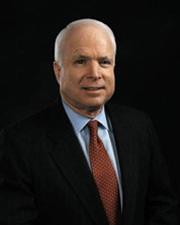 Sen. John McCain (R-AZ)
What it changes
1 change to S. 2349 · shown in the bill's text
Adds TITLE III--SENATE OFFICE OF PUBLIC INTEGRITY at the end of the bill
Adds a titleIn S. 2349 · Placed on Calendar Senate
Except as otherwise provided in this Act, this Act shall take effect on the date of enactment of this Act.
Inserted: TITLE III--SENATE OFFICE OF PUBLIC INTEGRITY
Inserted: SEC. 311. ESTABLISHMENT OF SENATE OFFICE OF PUBLIC INTEGRITY.
Inserted: There is established, as an office within the Senate, the Senate Office of Public Integrity (referred to in this title as the "Office").
Inserted: SEC. 312. DIRECTOR.
Inserted: (a) Appointment of Director.--
Inserted: (1) In general.--The Office shall be headed by a Director who shall be appointed by the President Pro Tempore of the Senate upon the joint recommendation of the majority leader of the Senate and the minority leader of the Senate. The selection and appointment of the Director shall be without regard to political affiliation and solely on the basis of fitness to perform the duties of the Office.
Inserted: (2) Qualifications.--The Director shall possess demonstrated integrity, independence, and public credibility and shall have training or experience in law enforcement, the judiciary, civil or criminal litigation, or as a member of a Federal, State, or local ethics enforcement agency.
Inserted: (b) Vacancy.--A vacancy in the directorship shall be filled in the manner in which the original appointment was made.
Inserted: (c) Term of Office.--The Director shall serve for a term of 5 years and may be reappointed.
Inserted: (d) Removal.--
Inserted: (1) Authority.--The Director may be removed by the President Pro Tempore of the Senate upon the joint recommendation of the Senate majority and minority leaders for--
Inserted: (A) disability that substantially prevents the Director from carrying out the duties of the Director;
Show 65 more inserted paragraphsShow less
Inserted: (B) inefficiency;
Inserted: (C) neglect of duty; or
Inserted: (D) malfeasance, including a felony or conduct involving moral turpitude.
Inserted: (2) Statement of reasons.--In removing the Director, a statement of the reasons for removal shall be provided in writing to the Director.
Inserted: (e) Compensation.--The Director shall be compensated at the annual rate of basic pay prescribed for level V of the Executive Schedule under section 5316 of title 5, United States Code.
Inserted: SEC. 313. DUTIES AND POWERS OF THE OFFICE.
Inserted: (a) Duties.--The Office is authorized--
Inserted: (1) to investigate any alleged violation by a Member, officer, or employee of the Senate, of any rule or other standard of conduct applicable to the conduct of such Member, officer, or employee under applicable Senate rules in the performance of his duties or the discharge of his responsibilities;
Inserted: (2) to present a case of probable ethics violations to the Select Committee on Ethics of the Senate;
Inserted: (3) to make recommendations to the Select Committee on Ethics of the Senate that it report to the appropriate Federal or State authorities any substantial evidence of a violation by a Member, officer, or employee of the Senate of any law applicable to the performance of his duties or the discharge of his responsibilities, which may have been disclosed in an investigation by the Office; and
Inserted: (4) subject to review by the Select Committee on Ethics to approve, or deny approval, of trips as provided for in paragraph 2(f) of rule XXXV of the Standing Rules of the Senate.
Inserted: (b) Powers.--
Inserted: (1) Obtaining information.--Upon request of the Office, the head of any agency or instrumentality of the Government shall furnish information deemed necessary by the Director to enable the Office to carry out its duties.
Inserted: (2) Referrals to the department of justice.--Whenever the Director has reason to believe that a violation of law may have occurred, he shall refer that matter to the Select Committee on Ethics with a recommendation as to whether the matter should be referred to the Department of Justice or other appropriate authority for investigation or other action.
Inserted: SEC. 314. INVESTIGATIONS AND INTERACTION WITH THE SENATE SELECT COMMITTEE ON ETHICS.
Inserted: (a) Initiation of Enforcement Matters.--
Inserted: (1) In general.--An investigation may be initiated by the filing of a complaint with the Office by a Member of Congress or an outside complainant, or by the Office on its own initiative, based on any information in its possession. The Director shall not accept a complaint concerning a Member of Congress within 60 days of an election involving such Member.
Inserted: (2) Filed complaint.--
Inserted: (A) Timing.--In the case of a complaint that is filed, the Director shall within 30 days make an initial determination as to whether the complaint should be dismissed or whether there are sufficient grounds to conduct an investigation. The subject of the complaint shall be provided by the Director with an opportunity during the 30-day period to challenge the complaint.
Inserted: (B) Dismissal.--The Director may dismiss a complaint if the Director determines--
Inserted: (i) the complaint fails to state a violation;
Inserted: (ii) there is a lack of credible evidence of a violation; or
Inserted: (iii) the violation is inadvertent, technical, or otherwise of a de minimis nature.
Inserted: (C) Referral.--In any case where the Director decides to dismiss a complaint, the Director may refer the case to the Select Committee on Ethics of the Senate under paragraph (3) to determine if the complaint is frivolous.
Inserted: (3) Frivolous complaints.--If the Select Committee on Ethics of the Senate determines that a complaint is frivolous, the committee may notify the Director not to accept any future complaint filed by that same person and the complainant may be required to pay for the costs of the Office resulting from such complaint. The Director may refer the matter to the Department of Justice to collect such costs.
Inserted: (4) Preliminary determination.--For any investigation conducted by the Office at its own initiative, the Director shall make a preliminary determination of whether there are sufficient grounds to conduct an investigation. Before making that determination, the subject of the investigation shall be provided by the Director with an opportunity to submit information to the Director that there are not sufficient grounds to conduct an investigation.
Inserted: (5) Notice to committee.--Whenever the Director determines that there are sufficient grounds to conduct an investigation--
Inserted: (A) the Director shall notify the Select Committee on Ethics of the Senate of this determination; and
Inserted: (B) the committee may overrule the determination of the Director if, within 10 legislative days--
Inserted: (i) the committee by an affirmative, roll-call vote of two-thirds of the full committee votes to overrule the determination of the Director;
Inserted: (ii) the committee issues a public report on the matter; and
Inserted: (iii) the vote of each member of the committee on such roll-call vote is included in the report.
Inserted: (b) Conducting Investigations.--
Inserted: (1) In general.--If the Director determines that there are sufficient grounds to conduct an investigation and his determination is not overruled under subsection (a)(5), the Director shall conduct an investigation to determine if probable cause exists that a violation occurred.
Inserted: (2) Authority.--As part of an investigation, the Director may--
Inserted: (A) administer oaths;
Inserted: (B) issue subpoenas;
Inserted: (C) compel the attendance of witnesses and the production of papers, books, accounts, documents, and testimony; and
Inserted: (D) himself, or by delegation to Office staff, take the deposition of witnesses.
Inserted: (3) Refusal to obey.--If a person disobeys or refuses to comply with a subpoena, or if a witness refuses to testify to a matter, he may be held in contempt of Congress.
Inserted: (4) Enforcement.--If the Director determines that the Director is limited in the Director's ability to obtain documents, testimony, and other information needed as part of an investigation because of potential constitutional, statutory, or rules restrictions, or due to lack of compliance, the Director may refer the matter to the Select Committee on Ethics of the Senate for consideration and appropriate action by the committee. The committee shall promptly act on a request under this paragraph.
Inserted: (c) Presentation of Case to Senate Select Committee on Ethics.--
Inserted: (1) Notice to committees.--If the Director determines, upon conclusion of an investigation, that probable cause exists that an ethics violation has occurred, the Director shall notify the Select Committee on Ethics of the Senate of this determination.
Inserted: (2) Committee decision.--The Select Committee on Ethics may overrule the determination of the Director if, within 30 legislative days--
Inserted: (A) the committee by an affirmative, roll-call vote of two-thirds of the full committee votes to overrule the determination of the Director;
Inserted: (B) the committee issues a public report on the matter; and
Inserted: (C) the vote of each member of the committee on such roll-call vote is included in the report.
Inserted: (3) Determination and ruling.--
Inserted: (A) Referral.--If the Director determines there is probable cause that an ethics violation has occurred and the Director's determination is not overruled, the Director shall present the case and evidence to the Select Committee on Ethics of the Senate to hear and make a determination pursuant to its rules.
Inserted: (B) Final decision.--The Select Committee on Ethics shall vote upon whether the individual who is the subject of the investigation has violated any rules or other standards of conduct applicable to that individual in his official capacity. Such votes shall be a roll-call vote of the full committee, a quorum being present. The committee shall issue a public report which shall include the vote of each member of the committee on such roll-call vote.
Inserted: (d) Sanctions.--Whenever the Select Committee on Ethics of the Senate finds that an ethics violation has occurred, the Director shall recommend appropriate sanctions to the committee and whether a matter should be referred to the Department of Justice for investigation.
Inserted: SEC. 315. PROCEDURAL RULES.
Inserted: (a) Prohibition of Certain Investigations.--No investigation shall be undertaken by the Office of any alleged violation of a law, rule, regulation, or standard of conduct not in effect at the time of the alleged violation.
Inserted: (b) Disclosure.--Information or testimony received, or the contents of a complaint or the fact of its filing, or recommendations made by the Director to the committee, may be publicly disclosed by the Director or by the staff of the Office only if authorized by the Select Committee on Ethics of the Senate.
Inserted: SEC. 316. SOPI EMPLOYEES UNDER THE CONGRESSIONAL ACCOUNTABILITY ACT.
Inserted: Section 101 of the Congressional Accountability Act of 1995 (2 U.S.C. 3) is amended--
Inserted: (1) in paragraph (3)--
Inserted: (A) in subparagraph (H), by striking "or";
Inserted: (B) in subparagraph (I), by striking the period and inserting "; or"; and
Inserted: (C) by adding at the end the following:
Inserted: "(J) the Office of Public Integrity."; and
Inserted: (2) in paragraph (9), by striking "and the Office of Technology Assessment" and inserting "the Office of Technology Assessment, and the Senate Office of Public Integrity".
Inserted: SEC. 317. EFFECTIVE DATE.
Inserted: (a) In General.--Except as provided by subsection (b), this title shall take effect on January 1, 2007.
Inserted: (b) Exception.--Section 312 shall take effect upon the date of enactment of this Act.
Original wording
At the end of the bill, add the following:
Read automatically from the Congressional Record. Check the original before relying on it.
As printed
SA 2957. Mr. McCAIN (for himself, Ms. Collins, Mr. Lieberman, and Mr. Obama) submitted an amendment intended to be proposed by him to the bill S. 2349, to provide greater transparency in the legislative process; which was ordered to lie on the table; as follows:
At the end of the bill, add the following:
TITLE III--SENATE OFFICE OF PUBLIC INTEGRITY
SEC. 311. ESTABLISHMENT OF SENATE OFFICE OF PUBLIC INTEGRITY.
There is established, as an office within the Senate, the Senate Office of Public Integrity (referred to in this title as the “Office”).
SEC. 312. DIRECTOR.
(a) Appointment of Director.--
(1) In general.--The Office shall be headed by a Director who shall be appointed by the President Pro Tempore of the Senate upon the joint recommendation of the majority leader of the Senate and the minority leader of the Senate. The selection and appointment of the Director shall be without regard to political affiliation and solely on the basis of fitness to perform the duties of the Office.
(2) Qualifications.--The Director shall possess demonstrated integrity, independence, and public credibility and shall have training or experience in law enforcement, the judiciary, civil or criminal litigation, or as a member of a Federal, State, or local ethics enforcement agency.
(b) Vacancy.--A vacancy in the directorship shall be filled in the manner in which the original appointment was made.
(c) Term of Office.--The Director shall serve for a term of 5 years and may be reappointed.
(d) Removal.--
(1) Authority.--The Director may be removed by the President Pro Tempore of the Senate upon the joint recommendation of the Senate majority and minority leaders for--
(A) disability that substantially prevents the Director from carrying out the duties of the Director;
(B) inefficiency;
(C) neglect of duty; or
(D) malfeasance, including a felony or conduct involving moral turpitude.
(2) Statement of reasons.--In removing the Director, a statement of the reasons for removal shall be provided in writing to the Director.
(e) Compensation.--The Director shall be compensated at the annual rate of basic pay prescribed for level V of the Executive Schedule under section 5316 of title 5, United States Code.
SEC. 313. DUTIES AND POWERS OF THE OFFICE.
(a) Duties.--The Office is authorized--
(1) to investigate any alleged violation by a Member, officer, or employee of the Senate, of any rule or other standard of conduct applicable to the conduct of such Member, officer, or employee under applicable Senate rules in the performance of his duties or the discharge of his responsibilities;
(2) to present a case of probable ethics violations to the Select Committee on Ethics of the Senate;
(3) to make recommendations to the Select Committee on Ethics of the Senate that it report to the appropriate Federal or State authorities any substantial evidence of a violation by a Member, officer, or employee of the Senate of any law applicable to the performance of his duties or the discharge of his responsibilities, which may have been disclosed in an investigation by the Office; and
(4) subject to review by the Select Committee on Ethics to approve, or deny approval, of trips as provided for in paragraph 2(f) of rule XXXV of the Standing Rules of the Senate.
(b) Powers.--
(1) Obtaining information.--Upon request of the Office, the head of any agency or instrumentality of the Government shall furnish information deemed necessary by the Director to enable the Office to carry out its duties.
(2) Referrals to the department of justice.--Whenever the Director has reason to believe that a violation of law may have occurred, he shall refer that matter to the Select Committee on Ethics with a recommendation as to whether the matter should be referred to the Department of Justice or other appropriate authority for investigation or other action.
SEC. 314. INVESTIGATIONS AND INTERACTION WITH THE SENATE SELECT COMMITTEE ON ETHICS.
(a) Initiation of Enforcement Matters.--
(1) In general.--An investigation may be initiated by the filing of a complaint with the Office by a Member of Congress or an outside complainant, or by the Office on its own initiative, based on any information in its possession. The Director shall not accept a complaint concerning a Member of Congress within 60 days of an election involving such Member.
(2) Filed complaint.--
(A) Timing.--In the case of a complaint that is filed, the Director shall within 30 days make an initial determination as to whether the complaint should be dismissed or whether there are sufficient grounds to conduct an investigation. The subject of the complaint shall be provided by the Director with an opportunity during the 30-day period to challenge the complaint.
(B) Dismissal.--The Director may dismiss a complaint if the Director determines--
(i) the complaint fails to state a violation;
(ii) there is a lack of credible evidence of a violation; or
(iii) the violation is inadvertent, technical, or otherwise of a de minimis nature.
(C) Referral.--In any case where the Director decides to dismiss a complaint, the Director may refer the case to the Select Committee on Ethics of the Senate under paragraph (3) to determine if the complaint is frivolous.
(3) Frivolous complaints.--If the Select Committee on Ethics of the Senate determines that a complaint is frivolous, the committee may notify the Director not to accept any future complaint filed by that same person and the complainant may be required to pay for the costs of the Office resulting from such complaint. The Director may refer the matter to the Department of Justice to collect such costs.
(4) Preliminary determination.--For any investigation conducted by the Office at its own initiative, the Director shall make a preliminary determination of whether there are sufficient grounds to conduct an investigation. Before making that determination, the subject of the investigation shall be provided by the Director with an opportunity to submit information to the Director that there are not sufficient grounds to conduct an investigation.
(5) Notice to committee.--Whenever the Director determines that there are sufficient grounds to conduct an investigation--
(A) the Director shall notify the Select Committee on Ethics of the Senate of this determination; and
(B) the committee may overrule the determination of the Director if, within 10 legislative days--
(i) the committee by an affirmative, roll-call vote of two-thirds of the full committee votes to overrule the determination of the Director;
(ii) the committee issues a public report on the matter; and
(iii) the vote of each member of the committee on such roll-call vote is included in the report.
(b) Conducting Investigations.--
(1) In general.--If the Director determines that there are sufficient grounds to conduct an investigation and his determination is not overruled under subsection (a)(5), the Director shall conduct an investigation to determine if probable cause exists that a violation occurred.
(2) Authority.--As part of an investigation, the Director may--
(A) administer oaths;
(B) issue subpoenas;
(C) compel the attendance of witnesses and the production of papers, books, accounts, documents, and testimony; and
(D) himself, or by delegation to Office staff, take the deposition of witnesses.
(3) Refusal to obey.--If a person disobeys or refuses to comply with a subpoena, or if a witness refuses to testify to a matter, he may be held in contempt of Congress.
(4) Enforcement.--If the Director determines that the Director is limited in the Director's ability to obtain documents, testimony, and other information needed as part of an investigation because of potential constitutional, statutory, or rules restrictions, or due to lack of compliance, the Director may refer the matter to the Select Committee on Ethics of the Senate for consideration and appropriate action by the committee. The committee shall promptly act on a request under this paragraph.
(c) Presentation of Case to Senate Select Committee on Ethics.--
(1) Notice to committees.--If the Director determines, upon conclusion of an investigation, that probable cause exists that an ethics violation has occurred, the Director shall notify the Select Committee on Ethics of the Senate of this determination.
(2) Committee decision.--The Select Committee on Ethics may overrule the determination of the Director if, within 30 legislative days--
(A) the committee by an affirmative, roll-call vote of two-thirds of the full committee votes to overrule the determination of the Director;
(B) the committee issues a public report on the matter; and
(C) the vote of each member of the committee on such roll-call vote is included in the report.
(3) Determination and ruling.--
(A) Referral.--If the Director determines there is probable cause that an ethics violation has occurred and the Director's determination is not overruled, the Director shall present the case and evidence to the Select Committee on Ethics of the Senate to hear and make a determination pursuant to its rules.
(B) Final decision.--The Select Committee on Ethics shall vote upon whether the individual who is the subject of the investigation has violated any rules or other standards of conduct applicable to that individual in his official capacity. Such votes shall be a roll-call vote of the full committee, a quorum being present. The committee shall issue a public report which shall include the vote of each member of the committee on such roll-call vote.
(d) Sanctions.--Whenever the Select Committee on Ethics of the Senate finds that an ethics violation has occurred, the Director shall recommend appropriate sanctions to the committee and whether a matter should be referred to the Department of Justice for investigation.
SEC. 315. PROCEDURAL RULES.
(a) Prohibition of Certain Investigations.--No investigation shall be undertaken by the Office of any alleged violation of a law, rule, regulation, or standard of conduct not in effect at the time of the alleged violation.
(b) Disclosure.--Information or testimony received, or the contents of a complaint or the fact of its filing, or recommendations made by the Director to the committee, may be publicly disclosed by the Director or by the staff of the Office only if authorized by the Select Committee on Ethics of the Senate.
SEC. 316. SOPI EMPLOYEES UNDER THE CONGRESSIONAL ACCOUNTABILITY ACT.
Section 101 of the Congressional Accountability Act of 1995 (2 U.S.C. 3) is amended--
(1) in paragraph (3)--
(A) in subparagraph (H), by striking “or”;
(B) in subparagraph (I), by striking the period and inserting “; or”; and
(C) by adding at the end the following:
“(J) the Office of Public Integrity.”; and
(2) in paragraph (9), by striking “and the Office of Technology Assessment” and inserting “the Office of Technology Assessment, and the Senate Office of Public Integrity”.
SEC. 317. EFFECTIVE DATE.
(a) In General.--Except as provided by subsection (b), this title shall take effect on January 1, 2007.
(b) Exception.--Section 312 shall take effect upon the date of enactment of this Act.
Legislative Activity
Stay on top of the latest movement without scrolling through every action
Senate amendment submitted
March 8, 2006