S.Amdt. 2985
What it does: Adds SEC. 114. REFORM OF CONSIDERATION OF APPROPRIATIONS BILLS IN THE SENATE on page 16, between lines 3 and 4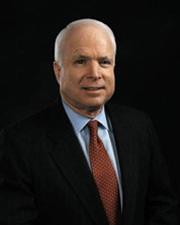 Sen. John McCain (R-AZ)
What it changes
1 change to S. 2349
Adds SEC. 114. REFORM OF CONSIDERATION OF APPROPRIATIONS BILLS IN THE SENATE on page 16, between lines 3 and 4
Adds a sectionPrinted pageInserted: SEC. 114. REFORM OF CONSIDERATION OF APPROPRIATIONS BILLS IN THE SENATE.
Inserted: Rule XVI of the Standing Rules of the Senate is amended by adding at the end the following:
Inserted: "9. (a) On a point of order made by any Senator:
Inserted: "(1) No new or general legislation nor any unauthorized appropriation may be included in any general appropriation bill.
Inserted: "(2) No amendment may be received to any general appropriation bill the effect of which will be to add an unauthorized appropriation to the bill.
Inserted: "(3) No unauthorized appropriation may be included in any amendment between the Houses, or any amendment thereto, in relation to a general appropriation bill.
Inserted: "(b)(1) If a point of order under subparagraph (a)(1) against a Senate bill or amendment is sustained--
Inserted: "(A) the new or general legislation or unauthorized appropriation shall be struck from the bill or amendment; and
Inserted: "(B) any modification of total amounts appropriated necessary to reflect the deletion of the matter struck from the bill or amendment, as directed by the chairman of the Committee on the Budget, shall be made and the allocation of discretionary budgetary resources allocated under section 302(a)(2) of the Congressional Budget Act of 1974 (2 U.S.C. 633(a)(2)) shall be reduced accordingly.
Inserted: "(2) If a point of order under subparagraph (a)(1) against an Act of the House of Representatives is sustained when the Senate is not considering an amendment in the nature of a substitute, then an amendment to the House bill is deemed to have been adopted that--
Inserted: "(A) strikes the new or general legislation or unauthorized appropriation from the bill; and
Inserted: "(B) modifies, if necessary and as directed by the chairman of the Committee on the Budget, the total amounts appropriated by the bill to reflect the deletion of the matter struck from the bill and reduces the allocation of discretionary budgetary resources allocated under section 302(a)(2) of the Congressional Budget Act of 1974 (2 U.S.C. 633(a)(2)) accordingly.
Show 35 more inserted paragraphsShow less
Inserted: "(c) If the point of order against an amendment under subparagraph (a)(2) is sustained, then the amendment shall be out of order and may not be considered.
Inserted: "(d)(1) If a point of order under subparagraph (a)(3) against a Senate amendment is sustained, then--
Inserted: "(A) the unauthorized appropriation shall be struck from the amendment;
Inserted: "(B) any modification of total amounts appropriated, as directed by the chairman of the Committee on the Budget, necessary to reflect the deletion of the matter struck from the amendment shall be made and the allocation of discretionary budgetary resources allocated under section 302(a)(2) of the Congressional Budget Act of 1974 (2 U.S.C. 633(a)(2)) shall be reduced accordingly; and
Inserted: "(C) after all other points of order under this paragraph have been disposed of, the Senate shall proceed to consider the amendment as so modified.
Inserted: "(2) If a point of order under subparagraph (a)(3) against a House of Representatives amendment is sustained, then--
Inserted: "(A) an amendment to the House amendment is deemed to have been adopted that--
Inserted: "(i) strikes the new or general legislation or unauthorized appropriation from the House amendment; and
Inserted: "(ii) modifies, if necessary and as directed by the chairman of the Committee on the Budget, the total amounts appropriated by the bill to reflect the deletion of the matter struck from the House amendment and reduces the allocation of discretionary budgetary resources allocated under section 302(a)(2) of the Congressional Budget Act of 1974 (2 U.S.C. 633(a)(2)) accordingly; and
Inserted: "(B) after all other points of order under this paragraph have been disposed of, the Senate shall proceed to consider the question of whether to concur with further amendment.
Inserted: "(e) The disposition of a point of order made under any other paragraph of this rule, or under any other Standing Rule of the Senate, that is not sustained, or is waived, does not preclude, or affect, a point of order made under subparagraph (a) with respect to the same matter.
Inserted: "(f) A point of order under subparagraph (a) may be waived only by a motion agreed to by the affirmative vote of three-fifths of the Senators duly chosen and sworn. If an appeal is taken from the ruling of the Presiding Officer with respect to such a point of order, the ruling of the Presiding Officer shall be sustained absent an affirmative vote of three-fifths of the Senators duly chosen and sworn.
Inserted: "(g) Notwithstanding any other rule of the Senate, it shall be in order for a Senator to raise a single point of order that several provisions of a general appropriation bill or an amendment between the Houses on a general appropriation bill violate subparagraph (a). The Presiding Officer may sustain the point of order as to some or all of the provisions against which the Senator raised the point of order. If the Presiding Officer so sustains the point of order as to some or all of the provisions against which the Senator raised the point of order, then only those provisions against which the Presiding Officer sustains the point of order shall be deemed stricken pursuant to this paragraph. Before the Presiding Officer rules on such a point of order, any Senator may move to waive such a point of order, in accordance with subparagraph (f), as it applies to some or all of the provisions against which the point of order was raised. Such a motion to waive is amendable in accordance with the rules and precedents of the Senate. After the Presiding Officer rules on such a point of order, any Senator may appeal the ruling of the Presiding Officer on such a point of order as it applies to some or all of the provisions on which the Presiding Officer ruled.
Inserted: "(h) For purposes of this paragraph:
Inserted: "(1) The term 'new or general legislation' has the meaning given that term when it is used in paragraph 2 of this rule.
Inserted: "(2) The term 'new matter' means matter not committed to conference by either House of Congress.
Inserted: "(3)(A) The term 'unauthorized appropriation' means an appropriation--
Inserted: "(i) not specifically authorized by law or Treaty stipulation (unless the appropriation has been specifically authorized by an Act or resolution previously passed by the Senate during the same session or proposed in pursuance of an estimate submitted in accordance with law); or
Inserted: "(ii) the amount of which exceeds the amount specifically authorized by law or Treaty stipulation (or specifically authorized by an Act or resolution previously passed by the Senate during the same session or proposed in pursuance of an estimate submitted in accordance with law) to be appropriated.
Inserted: "(B) An appropriation is not specifically authorized if it is restricted or directed to, or authorized to be obligated or expended for the benefit of, an identifiable person, program, project, entity, or jurisdiction by earmarking or other specification, whether by name or description, in a manner that is so restricted, directed, or authorized that it applies only to a single identifiable person, program, project, entity, or jurisdiction, unless the identifiable person, program, project, entity, or jurisdiction to which the restriction, direction, or authorization applies is described or otherwise clearly identified in a law or Treaty stipulation (or an Act or resolution previously passed by the Senate during the same session or in the estimate submitted in accordance with law) that specifically provides for the restriction, direction, or authorization of appropriation for such person, program, project, entity, or jurisdiction.
Inserted: "10. (a) On a point of order made by any Senator, no new or general legislation, nor any unauthorized appropriation, new matter, or nongermane matter may be included in any conference report on a general appropriation bill.
Inserted: "(b) If the point of order against a conference report under subparagraph (a) is sustained--
Inserted: "(1) the new or general legislation, unauthorized appropriation, new matter, or nongermane matter in such conference report shall be deemed to have been struck;
Inserted: "(2) any modification of total amounts appropriated, as directed by the chairman of the Committee on the Budget, necessary to reflect the deletion of the matter struck shall be deemed to have been made and the allocation of discretionary budgetary resources allocated under section 302(a)(2) of the Congressional Budget Act of 1974 (2 U.S.C. 633(a)(2)) shall be deemed to be reduced accordingly;
Inserted: "(3) when all other points of order under this paragraph have been disposed of--
Inserted: "(A) the Senate shall proceed to consider the question of whether the Senate should recede from its amendment to the House bill, or its disagreement to the amendment of the House, and concur with a further amendment, which further amendment shall consist of only that portion of the conference report not deemed to have been struck (together with any modification of total amounts appropriated and reduction in the allocation of discretionary budgetary resources allocated under section 302(a)(2) of the Congressional Budget Act of 1974 (2 U.S.C. 633(a)(2)) deemed to have been made);
Inserted: "(B) the question shall be debatable; and
Inserted: "(C) no further amendment shall be in order; and
Inserted: "(4) if the Senate agrees to the amendment, then the bill and the Senate amendment thereto shall be returned to the House for its concurrence in the amendment of the Senate.
Inserted: "(c) The disposition of a point of order made under any other paragraph of this rule, or under any other Standing Rule of the Senate, that is not sustained, or is waived, does not preclude, or affect, a point of order made under subparagraph (a) with respect to the same matter.
Inserted: "(d) A point of order under subparagraph (a) may be waived only by a motion agreed to by the affirmative vote of three-fifths of the Senators duly chosen and sworn. If an appeal is taken from the ruling of the Presiding Officer with respect to such a point of order, the ruling of the Presiding Officer shall be sustained absent an affirmative vote of three-fifths of the Senators duly chosen and sworn.
Inserted: "(e) Notwithstanding any other rule of the Senate, it shall be in order for a Senator to raise a single point of order that several provisions of a conference report on a general appropriation bill violate subparagraph (a). The Presiding Officer may sustain the point of order as to some or all of the provisions against which the Senator raised the point of order. If the Presiding Officer so sustains the point of order as to some or all of the provisions against which the Senator raised the point of order, then only those provisions against which the Presiding Officer sustains the point of order shall be deemed stricken pursuant to this paragraph. Before the Presiding Officer rules on such a point of order, any Senator may move to waive such a point of order, in accordance with subparagraph (d), as it applies to some or all of the provisions against which the point of order was raised. Such a motion to waive is amendable in accordance with the rules and precedents of the Senate. After the Presiding Officer rules on such a point of order, any Senator may appeal the ruling of the Presiding Officer on such a point of order as it applies to some or all of the provisions on which the Presiding Officer ruled.
Inserted: "(f) For purposes of this paragraph:
Inserted: "(1) The terms 'new or general legislation', 'new matter', and 'unauthorized appropriation' have the same meaning as in paragraph 9.
Inserted: "(2) The term 'nongermane matter' has the same meaning as in Rule XXII and under the precedents attendant thereto, as of the beginning of the 109th Congress.".
Original wording
On page 16, between lines 3 and 4, insert the following:
Read automatically from the Congressional Record. Check the original before relying on it.
As printed
SA 2985. Mr. McCAIN (for himself, Mr. Coburn, Mr. DeMint, Mr. Ensign, Mr. Graham, and Mr. Sununu) submitted an amendment intended to be proposed by him to the bill S. 2349, to provide greater transparency in the legislative process; which was ordered to lie on the table; as follows:
On page 16, between lines 3 and 4, insert the following:
SEC. 114. REFORM OF CONSIDERATION OF APPROPRIATIONS BILLS IN THE SENATE.
Rule XVI of the Standing Rules of the Senate is amended by adding at the end the following:
“9. (a) On a point of order made by any Senator:
“(1) No new or general legislation nor any unauthorized appropriation may be included in any general appropriation bill.
“(2) No amendment may be received to any general appropriation bill the effect of which will be to add an unauthorized appropriation to the bill.
“(3) No unauthorized appropriation may be included in any amendment between the Houses, or any amendment thereto, in relation to a general appropriation bill.
“(b)(1) If a point of order under subparagraph (a)(1) against a Senate bill or amendment is sustained--
“(A) the new or general legislation or unauthorized appropriation shall be struck from the bill or amendment; and
“(B) any modification of total amounts appropriated necessary to reflect the deletion of the matter struck from the bill or amendment, as directed by the chairman of the Committee on the Budget, shall be made and the allocation of discretionary budgetary resources allocated under section 302(a)(2) of the Congressional Budget Act of 1974 (2 U.S.C. 633(a)(2)) shall be reduced accordingly.
“(2) If a point of order under subparagraph (a)(1) against an Act of the House of Representatives is sustained when the Senate is not considering an amendment in the nature of a substitute, then an amendment to the House bill is deemed to have been adopted that--
“(A) strikes the new or general legislation or unauthorized appropriation from the bill; and
“(B) modifies, if necessary and as directed by the chairman of the Committee on the Budget, the total amounts appropriated by the bill to reflect the deletion of the matter struck from the bill and reduces the allocation of discretionary budgetary resources allocated under section 302(a)(2) of the Congressional Budget Act of 1974 (2 U.S.C. 633(a)(2)) accordingly.
“(c) If the point of order against an amendment under subparagraph (a)(2) is sustained, then the amendment shall be out of order and may not be considered.
“(d)(1) If a point of order under subparagraph (a)(3) against a Senate amendment is sustained, then--
“(A) the unauthorized appropriation shall be struck from the amendment;
“(B) any modification of total amounts appropriated, as directed by the chairman of the Committee on the Budget, necessary to reflect the deletion of the matter struck from the amendment shall be made and the allocation of discretionary budgetary resources allocated under section 302(a)(2) of the Congressional Budget Act of 1974 (2 U.S.C. 633(a)(2)) shall be reduced accordingly; and
“(C) after all other points of order under this paragraph have been disposed of, the Senate shall proceed to consider the amendment as so modified.
“(2) If a point of order under subparagraph (a)(3) against a House of Representatives amendment is sustained, then--
“(A) an amendment to the House amendment is deemed to have been adopted that--
“(i) strikes the new or general legislation or unauthorized appropriation from the House amendment; and
“(ii) modifies, if necessary and as directed by the chairman of the Committee on the Budget, the total amounts appropriated by the bill to reflect the deletion of the matter struck from the House amendment and reduces the allocation of discretionary budgetary resources allocated under section 302(a)(2) of the Congressional Budget Act of 1974 (2 U.S.C. 633(a)(2)) accordingly; and
“(B) after all other points of order under this paragraph have been disposed of, the Senate shall proceed to consider the question of whether to concur with further amendment.
“(e) The disposition of a point of order made under any other paragraph of this rule, or under any other Standing Rule of the Senate, that is not sustained, or is waived, does not preclude, or affect, a point of order made under subparagraph (a) with respect to the same matter.
“(f) A point of order under subparagraph (a) may be waived only by a motion agreed to by the affirmative vote of three-fifths of the Senators duly chosen and sworn. If an appeal is taken from the ruling of the Presiding Officer with respect to such a point of order, the ruling of the Presiding Officer shall be sustained absent an affirmative vote of three-fifths of the Senators duly chosen and sworn.
“(g) Notwithstanding any other rule of the Senate, it shall be in order for a Senator to raise a single point of order that several provisions of a general appropriation bill or an amendment between the Houses on a general appropriation bill violate subparagraph (a). The Presiding Officer may sustain the point of order as to some or all of the provisions against which the Senator raised the point of order. If the Presiding Officer so sustains the point of order as to some or all of the provisions against which the Senator raised the point of order, then only those provisions against which the Presiding Officer sustains the point of order shall be deemed stricken pursuant to this paragraph. Before the Presiding Officer rules on such a point of order, any Senator may move to waive such a point of order, in accordance with subparagraph (f), as it applies to some or all of the provisions against which the point of order was raised. Such a motion to waive is amendable in accordance with the rules and precedents of the Senate. After the Presiding Officer rules on such a point of order, any Senator may appeal the ruling of the Presiding Officer on such a point of order as it applies to some or all of the provisions on which the Presiding Officer ruled.
“(h) For purposes of this paragraph:
“(1) The term ‘new or general legislation' has the meaning given that term when it is used in paragraph 2 of this rule.
“(2) The term ‘new matter' means matter not committed to conference by either House of Congress.
“(3)(A) The term ‘unauthorized appropriation' means an appropriation--
“(i) not specifically authorized by law or Treaty stipulation (unless the appropriation has been specifically authorized by an Act or resolution previously passed by the Senate during the same session or proposed in pursuance of an estimate submitted in accordance with law); or
“(ii) the amount of which exceeds the amount specifically authorized by law or Treaty stipulation (or specifically authorized by an Act or resolution previously passed by the Senate during the same session or proposed in pursuance of an estimate submitted in accordance with law) to be appropriated.
“(B) An appropriation is not specifically authorized if it is restricted or directed to, or authorized to be obligated or expended for the benefit of, an identifiable person, program, project, entity, or jurisdiction by earmarking or other specification, whether by name or description, in a manner that is so restricted, directed, or authorized that it applies only to a single identifiable person, program, project, entity, or jurisdiction, unless the identifiable person, program, project, entity, or jurisdiction to which the restriction, direction, or authorization applies is described or otherwise clearly identified in a law or Treaty stipulation (or an Act or resolution previously passed by the Senate during the same session or in the estimate submitted in accordance with law) that specifically provides for the restriction, direction, or authorization of appropriation for such person, program, project, entity, or jurisdiction.
“10. (a) On a point of order made by any Senator, no new or general legislation, nor any unauthorized appropriation, new matter, or nongermane matter may be included in any conference report on a general appropriation bill.
“(b) If the point of order against a conference report under subparagraph (a) is sustained--
“(1) the new or general legislation, unauthorized appropriation, new matter, or nongermane matter in such conference report shall be deemed to have been struck;
“(2) any modification of total amounts appropriated, as directed by the chairman of the Committee on the Budget, necessary to reflect the deletion of the matter struck shall be deemed to have been made and the allocation of discretionary budgetary resources allocated under section 302(a)(2) of the Congressional Budget Act of 1974 (2 U.S.C. 633(a)(2)) shall be deemed to be reduced accordingly;
“(3) when all other points of order under this paragraph have been disposed of--
“(A) the Senate shall proceed to consider the question of whether the Senate should recede from its amendment to the House bill, or its disagreement to the amendment of the House, and concur with a further amendment, which further amendment shall consist of only that portion of the conference report not deemed to have been struck (together with any modification of total amounts appropriated and reduction in the allocation of discretionary budgetary resources allocated under section 302(a)(2) of the Congressional Budget Act of 1974 (2 U.S.C. 633(a)(2)) deemed to have been made);
“(B) the question shall be debatable; and
“(C) no further amendment shall be in order; and
“(4) if the Senate agrees to the amendment, then the bill and the Senate amendment thereto shall be returned to the House for its concurrence in the amendment of the Senate.
“(c) The disposition of a point of order made under any other paragraph of this rule, or under any other Standing Rule of the Senate, that is not sustained, or is waived, does not preclude, or affect, a point of order made under subparagraph (a) with respect to the same matter.
“(d) A point of order under subparagraph (a) may be waived only by a motion agreed to by the affirmative vote of three-fifths of the Senators duly chosen and sworn. If an appeal is taken from the ruling of the Presiding Officer with respect to such a point of order, the ruling of the Presiding Officer shall be sustained absent an affirmative vote of three-fifths of the Senators duly chosen and sworn.
“(e) Notwithstanding any other rule of the Senate, it shall be in order for a Senator to raise a single point of order that several provisions of a conference report on a general appropriation bill violate subparagraph (a). The Presiding Officer may sustain the point of order as to some or all of the provisions against which the Senator raised the point of order. If the Presiding Officer so sustains the point of order as to some or all of the provisions against which the Senator raised the point of order, then only those provisions against which the Presiding Officer sustains the point of order shall be deemed stricken pursuant to this paragraph. Before the Presiding Officer rules on such a point of order, any Senator may move to waive such a point of order, in accordance with subparagraph (d), as it applies to some or all of the provisions against which the point of order was raised. Such a motion to waive is amendable in accordance with the rules and precedents of the Senate. After the Presiding Officer rules on such a point of order, any Senator may appeal the ruling of the Presiding Officer on such a point of order as it applies to some or all of the provisions on which the Presiding Officer ruled.
“(f) For purposes of this paragraph:
“(1) The terms ‘new or general legislation', ‘new matter', and ‘unauthorized appropriation' have the same meaning as in paragraph 9.
“(2) The term ‘nongermane matter' has the same meaning as in Rule XXII and under the precedents attendant thereto, as of the beginning of the 109th Congress.”.
Legislative Activity
Stay on top of the latest movement without scrolling through every action
Senate amendment submitted
March 9, 2006