To restore the discretionary budget for the Department of Agriculture with an offset achieved by closing corporate tax loopholes.
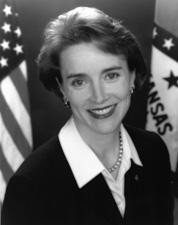 Sen. Blanche L. Lincoln (D-AR)
Legislative Activity
Stay on top of the latest movement without scrolling through every action
Senate amendment not agreed to: Amendment SA 3106 not agreed to in Senate by Yea-Nay Vote. 48 - 52. Record Vote Number: 66.
March 16, 2006
View full timeline
Senate amendment not agreed to: Amendment SA 3106 not agreed to in Senate by Yea-Nay Vote. 48 - 52. Record Vote Number: 66.
March 16, 2006
Roll call votes on amendments in Senate: Amendment SA 3106 not agreed to in Senate by Yea-Nay Vote. 48 - 52. Record Vote Number: 66.
March 16, 2006
Senate amendment proposed (on the floor): Amendment SA 3106 proposed by Senator Lincoln.
March 16, 2006
Amendment SA 3106 proposed by Senator Lincoln. (consideration: CR S2249, S2249-2250, S2260; text: CR S2250) To restore the discretionary budget for the Department of Agriculture with an offset achieved by closing corporate tax loopholes.
March 16, 2006
Amendment SA 3106 not agreed to in Senate by Yea-Nay Vote. 48 - 52. Record Vote Number: 66.
March 16, 2006
Senate amendment submitted
March 15, 2006
Votes
1 roll call on this amendment
Text
Proposed
CONGRESSIONAL BUDGET FOR THE UNITED STATES GOVERNMENT FOR FISCAL YEAR
2007--Continued

Amendment No. 3133

The PRESIDING OFFICER. Under the previous order, the Senate will
resume consideration of S. Con. Res. 83.
Under the previous order, the vote now occurs on the Conrad amendment
No. 3133.
Mr. SANTORUM. I ask for the yeas and nays.
The PRESIDING OFFICER. Is there a sufficient second?
There appears to be a sufficient second.
The question is on agreeing to amendment No. 3133.
The clerk will call the roll.
The legislative clerk called the roll.
Mr. McCONNELL. The following Senator was necessarily absent: the
Senator from Ohio (Mr. Voinovich).
The PRESIDING OFFICER. Are there any other Senators in the Chamber
desiring to vote?
The result was announced--yeas 44, nays 55, as follows:

[Rollcall Vote No. 55 Leg.]

YEAS--44

Akaka
Baucus
Bayh
Biden
Bingaman
Boxer
Byrd
Cantwell
Carper
Clinton
Conrad
Dayton
Dodd
Dorgan
Durbin
Feingold
Feinstein
Harkin
Inouye
Jeffords
Johnson
Kennedy
Kerry
Kohl
Landrieu
Lautenberg
Leahy
Levin
Lieberman
Lincoln
Menendez
Mikulski
Murray
Nelson (FL)
Obama
Pryor
Reed
Reid
Rockefeller
Salazar
Sarbanes
Schumer
Stabenow
Wyden

NAYS--55

Alexander
Allard
Allen
Bennett
Bond
Brownback
Bunning
Burns
Burr
Chafee
Chambliss
Coburn
Cochran
Coleman
Collins
Cornyn
Craig
Crapo
DeMint
DeWine
Dole
Domenici
Ensign
Enzi
Frist
Graham
Grassley
Gregg
Hagel
Hatch
Hutchison
Inhofe
Isakson
Kyl
Lott
Lugar
Martinez
McCain
McConnell
Murkowski
Nelson (NE)
Roberts
Santorum
Sessions
Shelby
Smith
Snowe
Specter
Stevens
Sununu
Talent
Thomas
Thune
Vitter
Warner

NOT VOTING--1

Voinovich

The amendment (No. 3133) was rejected.

Vote on Amendent No. 3114

The PRESIDING OFFICER. The question now is on agreeing to the Burr
amendment No. 3114.
Mr. BURR. Mr. President, I ask for the yeas and nays.
The PRESIDING OFFICER. Is there a sufficient second?
There is a sufficient second.
The clerk will call the roll.
The bill clerk called the roll.
The result was announced--yeas 99, nays 1, as follows:

[Rollcall Vote No. 56 Leg.]

YEAS--99

Akaka
Alexander
Allard
Allen
Baucus
Bayh
Bennett
Biden
Bingaman
Bond
Boxer
Brownback
Bunning
Burns
Burr
Cantwell
Carper
Chafee
Chambliss
Clinton
Coburn
Cochran
Coleman
Collins
Conrad
Cornyn
Craig
Crapo
Dayton
DeMint
DeWine
Dodd
Dole
Domenici
Dorgan
Durbin
Ensign
Enzi
Feingold
Feinstein
Frist
Graham
Grassley
Gregg
Hagel
Harkin
Hatch
Hutchison
Inhofe
Inouye
Isakson
Jeffords
Johnson
Kennedy
Kerry
Kohl
Kyl
Landrieu
Lautenberg
Leahy
Levin
Lieberman
Lincoln
Lott
Lugar
Martinez
McCain
McConnell
Menendez
Mikulski
Murkowski
Murray
Nelson (FL)
Nelson (NE)
Obama
Pryor
Reed
Reid
Roberts
Rockefeller
Salazar
Santorum
Sarbanes
Schumer
Sessions
Shelby
Smith
Snowe
Specter
Stabenow
Stevens
Sununu
Talent
Thomas
Thune
Vitter
Voinovich
Warner
Wyden

NAYS--1

Byrd

The amendment (No. 3114) was agreed to.
Mr. GREGG. I move to reconsider the vote, and I move to lay that
motion on the table.
The motion to lay on the table was agreed to.
The PRESIDING OFFICER (Mr. Graham). The time until 1:30 p.m. shall be
equally divided.
Mr. GREGG. Mr. President, at this point, we are going to begin the
amending process again. The sequence on our side will be Senator
Cornyn, Senator Vitter, then I understand we go to Senator Stabenow and
Senator Akaka.
Mr. CONRAD. Mr. President, on our side it is Senator Stabenow,
Senator Akaka, Senator Lincoln. I should intercede, Senator Vitter will
be paired with Senator Landrieu on an amendment for Louisiana.
Mr. GREGG. We will do Senator Cornyn and then Senator Vitter, and
then I presume we will go to Senator Stabenow and then Senator Akaka,
then Senator Collins, then Senator Lincoln; right?
Mr. CONRAD. Very well.
Mr. GREGG. I yield Senator Cornyn 5 minutes.
The PRESIDING OFFICER. The Senator from Texas is recognized for 5
minutes.

Amendment No. 3100

Mr. CORNYN. Mr. President, I call up amendment No. 3100 and ask for
its immediate consideration.
The PRESIDING OFFICER. The clerk will report.
The legislative clerk read as follows:

The Senator from Texas [Mr. Cornyn], for himself, and Mr.
Graham, proposes an amendment numbered 3100.

Mr. CORNYN. Mr. President, I ask unanimous consent that the reading
of the amendment be dispensed with.
The PRESIDING OFFICER. Without objection, it is so ordered.
The amendment is as follows:

(Purpose: To provide for reconciliation instructions to the Committee
on Finance to reduce mandatory spending)

On page 4, line 15, decrease the amount by $1,279,625,000.
On page 4, line 17, decrease the amount by $1,340,125,000.
On page 4, line 19, decrease the amount by $1,403,250,000.
On page 4, line 21, decrease the amount by $1,469,500,000.
On page 5, line 6, decrease the amount by $1,279,625,000.
On page 5, line 8, decrease the amount by $1,340,125,000.
On page 5, line 10, decrease the amount by $1,403,250,000.
On page 5, line 12, decrease the amount by $1,469,500,000.
On page 5, line 21, decrease the amount by $1,279,625,000.
On page 5, line 23, decrease the amount by $1,340,125,000.
On page 5, line 25, decrease the amount by $1,403,250,000.
On page 6, line 2, increase the amount by $1,469,500,000.
On page 6, line 10, decrease the amount by $1,279,625,000.
On page 6, line 12, decrease the amount by $2,619,750,000.
On page 6, line 14, decrease the amount by $4,023,000,000.
On page 6, line 16, decrease the amount by $5,492,500,000.
On page 6, line 24, decrease the amount by $1,279,625,000.
On page 7, line 2, decrease the amount by $2,619,750,000.
On page 7, line 4, decrease the amount by $4,023,000,000.
On page 7, line 6, decrease the amount by $5,492,500,000.
On page 21, line 3, decrease the amount by $1,250,000,000.
On page 21, line 4, decrease the amount by $1,250,000,000.
On page 21, line 7, decrease the amount by $1,250,000,000.

[[Page S2242]]

On page 21, line 8, decrease the amount by $1,250,000,000.
On page 21, line 11, decrease the amount by $1,250,000,000.
On page 21, line 12, decrease the amount by $1,250,000,000.
On page 21, line 15, decrease the amount by $1,250,000,000.
On page 21, line 16, decrease the amount by $1,250,000,000.
On page 27, line 3, decrease the amount by $29,625,000.
On page 27, line 4, decrease the amount by $29,625,000.
On page 27, line 7, decrease the amount by $90,125,000.
On page 27, line 8, decrease the amount by $90,125,000.
On page 27, line 11, decrease the amount by $153,250,000.
On page 27, line 12, decrease the amount by $153,250,000.
On page 27, line 15, decrease the amount by $219,500,000.
On page 27, line 16, decrease the amount by $219,500,000.
On page 29, strike lines 14 through 19, and insert the
following:
(a) Spending Reconciliation Instructions.--In the Senate,
by May 16, 2006, the committees named in this section shall
submit their recommendations to the Committee on the Budget
of the Senate. After receiving those recommendations, the
Committee on the Budget shall report to the Senate a
reconciliation bill carrying out all such recommendations
without any substantive revision.
(b) Committee on Energy and Natural Resources.--The Senate
Committee on Energy and Natural Resources shall report
changes in laws within its jurisdiction sufficient to reduce
budget authority and outlays by $0 in fiscal year 2007, and
$3,000,000,000 for the period of fiscal years 2007 through
2011.
(c) Committee on Finance.--The Senate Committee on Finance
shall report changes in laws within its jurisdiction
sufficient to reduce budget authority and outlays by $0 in
fiscal year 2007 and $10,000,000,000 for the period of fiscal
years 2007 through 2011.

Mr. CORNYN. Mr. President, I further ask unanimous consent that
Senator Graham of South Carolina be added as a cosponsor.
The PRESIDING OFFICER. Without objection, it is so ordered.
Mr. CORNYN. Mr. President, last year, Congress made some real
progress in getting a handle on mandatory spending by passing the
Deficit Reduction Act. The Deficit Reduction Act will reduce mandatory
spending by nearly $100 billion over the next decade, and it is the
first time Congress has taken a hard look at how to find savings and
reduce the budget deficit on the mandatory spending side since 1997.
The Deficit Reduction Act is a good first step. My amendment builds
on the savings of the Deficit Reduction Act. My amendment lowers the
Federal budget deficit, lowers the Federal debt, and does not increase
taxes on the American people.
Today, the Federal budget, as we all know, is heavily weighted in
favor of mandatory spending--entitlement spending, so to speak. As
people live longer and the baby boom generation retires, that spending
will increase and eat up a larger and larger share of our budget.
Just in Medicare and Medicaid alone, in the last 5 years, we have
seen a 22-percent increase in entitlement spending for those two
programs. And if we don't do something in the next 30 years about
entitlement spending, we won't have a dime of revenue to pay for other
items that are important, such as defense, education, NIH research, and
payments to health care providers to reimbursement under Medicare and
Medicaid.
My amendment directs the Senate Finance Committee to find $10 billion
in additional savings over the next 5 years. One proposal for the
Finance Committee to consider under this amendment would be to repeal
the stabilization fund included in the Medicare Modernization Act. Let
me explain what that is.
This is essentially a bonus provision to preferred provider
organizations--insurance companies, in other words--over and above the
regular Medicare share to encourage them to participate in the Medicare
Program. There simply is no reason to increase the Federal subsidy for
these insurance companies over and above regular Medicare payments. We
should eliminate that bonus and use that money, which is not necessary,
to pay down the debt by $7 billion.
There are other good areas I believe for the Finance Committee to
find the $10 billion this amendment would require. The problem is this:
If we don't do something about the autopilot our budget is on when it
comes to the mandatory side of spending, we have only ourselves to
blame because no one is at the wheel, and I am afraid the plane will
crash all too soon. We are feeling the squeeze already. The
appropriators, I know, are trying to squeeze more and more out of the
discretionary spending portion of the budget because as the mandatory
and entitlement side rose, there was less and less flexibility for
spending on important programs that represent America's priorities
under the discretionary portion of the budget.

So I encourage my colleagues to support this amendment. It is one
that can be done without detracting from current Medicare spending, but
eliminates this bonus provision, this additional cash or Federal
subsidy that is provided for under the law that could be saved and be
put to more constructive use, showing that we are serious about fiscal
responsibility and paying down the debt.
I yield back the remaining time.
Mr. GREGG. Mr. President, I rise to support this amendment. I think
it is an excellent idea and hopefully it will be successful.
Stabilization money is certainly available. It is walking-around money.
We don't need to have it sitting there, and we should use it for
reducing the deficit.
The PRESIDING OFFICER. The Senator from North Dakota.
Mr. CONRAD. Mr. President, this is a difficult matter for this
Senator because I have proposed many times to my colleagues doing away
with the stabilization fund. So this amendment puts me in a quandary to
the extent that if we can assure that with this amendment we would
eliminate the stabilization fund, I would be with the Senator.
The problem we face here is, No. 1, the stabilization fund is $6.2
billion, it is not $10 billion. No. 2, because of the way the budget
resolution works, we cannot direct the Finance Committee on how to make
the reduction. I wish we could, but we cannot.
What we would be doing, in effect, by the Senator's amendment is
telling the Finance Committee to cut $10 billion out of Medicare. They
could do that in any number of ways without affecting the stabilization
fund at all. In fact, colleagues may recall last year the Senate told
the Finance Committee to take out the stabilization fund. I call it the
slush fund. I think it is an absolute waste of money. I absolutely
agree with the Senator on that point. But we all know at the end of the
process, the stabilization fund was left intact because the way the
budget process works, we give an instruction about how much finances to
cut, but we cannot tell them how to do it.
So I want my colleagues to know that is the circumstance we face with
this amendment. I thank the Senator for the good faith of his
amendment.
Mr. GREGG. Mr. President, I yield 5 minutes to the Senator from
Louisiana.

Amendment No. 3025

Mr. VITTER. Mr. President, I rise in support of my filed amendment
No. 3025. I will not formally call it up because some revisions to it
are still being worked on in conjunction with my colleague from
Louisiana, Senator Landrieu, and many other leaders in the Senate. But
I will speak on this very important topic, and it has to do with
meeting in a positive and responsible way our ongoing needs throughout
all the coastal areas--not just Louisiana--for hurricane protection and
other coastal needs.
Obviously, we have faced many challenges since Hurricanes Katrina and
Rita. This is a responsible way to help meet those needs and to help
future coastal needs of all coastal States and to do it in a way that
we can afford and that we can build into the budget. Rather than having
to come back here every 2 months, every 3 months for additional
appropriations, wouldn't it be far better to have a stable revenue
source that can help us meet these needs directly? The biggest part of
that stable revenue source is royalty share, getting our fair share of
what we produce off our coasts in terms of offshore oil and gas.
This amendment is a first vital step in that direction because it
would look to excess revenue, not anything built into the budget right
now, but excess revenue in three areas to use for those vital purposes,
not just for Louisiana

[[Page S2243]]

but for coastal needs and coastal States in general.
What are these three areas I am talking about? The first would be
offshore energy production, future revenues that aren't built into the
budget now. The second would be the Federal share of ANWR energy
production, should we pass that and say yes to that in the near future.
Of course, ANWR is the Alaska National Wildlife Refuge. The third would
be DTV revenue that comes in above the current projections for those
spectrum auctions.
Again, this is a vital first step that can get us on this path to
self-sufficiency, to taking care of these crucial needs without
constantly having to come here and look for direct Federal
appropriations. We continue to work to perfect this amendment No. 3025
so it can gain support.

Amendment No. 3078

I formally call up amendment No. 3078, which is a separate amendment.
The PRESIDING OFFICER. The clerk will report.
The assistant legislative clerk read as follows:

The Senator from Louisiana [Mr. Vitter] proposes an
amendment numbered 3078.

Mr. VITTER. Mr. President, I ask unanimous consent that further
reading of the amendment be dispensed with.
The PRESIDING OFFICER. Without objection, it is so ordered.
The amendment is as follows:

(Purpose: To establish a reserve fund to prevent catastrophic loss)

On page 43, between lines 22 and 23, insert the following:

SEC. 313. RESERVE FUND TO PREVENT CATASTROPHIC LOSS.

If--
(1) the Committee on Environment and Public Works of the
Senate reports a bill or joint resolution, or if an amendment
is offered thereto, or if a conference report is submitted
thereon, that increases investment in measures designed to
prevent catastrophic flood and hurricane damage in coastal
areas such that--
(A) the measures, when completed, will likely decrease
future expenditures from the Disaster Relief Fund;
(B) the increases do not exceed $10,000,000,000; and
(C) the measures are certified by the President as likely
to prevent loss of life and property; and
(2) that Committee is within its allocation as provided
under section 302(a) of the Congressional Budget Act of 1974
(2 U.S.C. 633(a));

the Chairperson of the Committee on Budget of the Senate may
make the appropriate adjustments in the allocations and
aggregates to the extent that such legislation would not
increase the deficit for the fiscal year 2007 and for the
period of fiscal years 2007 through 2011.

Mr. VITTER. Mr. President, very quickly, this is a separate amendment
that would give us flexibility in the context of the budget to account
for future levy and hurricane protection projects should the
Environment and Public Works Committee pass out a bill that authorizes
these important projects. It builds flexibility into the budget through
a reserve fund without busting the budget, without doing any harm to
the budget numbers and the overall caps. I look forward to my
colleagues' support of this flexibility.
I yield the remainder of my time.
Mr. CONRAD. Mr. President, I thank the two Senators from Louisiana,
especially Senator Landrieu, for working with her colleague Senator
Vitter on this important amendment for their home State that has
obviously been so badly damaged by Hurricane Katrina. I thank Senator
Landrieu and Senator Vitter for working together in a bipartisan way to
begin to rebuild additional resources as their State has been so hard
hit.
I yield 5 minutes to the Senator from Louisiana.
Ms. LANDRIEU. Mr. President, I thank the Senator. He and the Senator
from New Hampshire have done a fine job leading us through this budget.
It is a tough instrument, of course, to negotiate.
Senator Vitter and I are pleased to come to the floor to speak about
three particular amendments that will be offered later in the day. One
that will be discussed in more detail is a small business amendment. He
and I serve together on the Small Business Committee. It has become
apparent to us there are many issues regarding the slowness in which
the applications our small businesses are putting in but not getting
their due checks based on the current law fast enough to get them
reestablished. So we will be offering an amendment on a small business
issue which I will be cosponsoring with him later.
These two issues we are speaking about this morning on levees are an
authorization for an additional $10 billion through the committee
Senator Vitter serves on to try to get the authorization levels up. Mr.
President, as you know, because you just visited our great State, any
number of levy projects throughout all of south Louisiana, from
southwest to southeast, from the metropolitan area of New Orleans to
the metropolitan area of Thibodaux, Houma, Lake Charles, and rural
areas of Cameron and Vermilion Parish, all are short of the levy
systems they need to protect themselves and are short of money to our
coastal restoration efforts that serve as the first barrier against
storms such as Rita and Katrina.
So the second amendment I hope our colleagues will consider is a $10
billion authorization increase in one of the committees Senator Vitter
serves on, EPW. A critical third amendment we will discuss later when
the details are worked out is a gulf coast recovery fund. That fund
will take some additional revenues flowing into the Treasury from
additional offshore oil and gas revenues, not specified to any
particular place in the gulf, but of course the ANWR revenues and some
others that may be coming in if this resolution passes, to support
direct funding, coastal impact assistance to the Gulf Coast States:
Texas, Mississippi, Alabama, and Louisiana. The Gulf Coast States that
serve as America's only energy coast have been devastated by these two
storms. Some smart investments now will save us billions of dollars
down the road.
Of course, we say from Louisiana and the gulf coast, if it weren't
for our Gulf Coast States, we wouldn't even be able to access the great
mineral revenues off our shores, right off the southern shore of the
United States. So I am pleased to join with my colleague and work
through the better part of today on these three amendments.
Then at an additional time later on, with the leadership's go-ahead,
we will also hopefully be discussing a defense amendment very important
to the Barksdale Air Force Base in Shreveport.
I thank my colleagues for their generosity, and I yield back the
remainder of my time.
Mr. CONRAD. Mr. President, I very much thank the Senator.
I see the Senator from Michigan is on the floor. Would the Senator
from Michigan be prepared to present her amendment?
Ms. STABENOW. Yes.
Mr. CONRAD. I yield 3 minutes--is that sufficient time?
Ms. STABENOW. Yes.
Mr. CONRAD. I yield 3 minutes to the Senator from Michigan, and then
next on our side will be Senator Akaka, and then I think Senator
Collins is in line, and then Senator Lincoln.
Senator Stabenow.
The PRESIDING OFFICER. The Senator is recognized.
Ms. STABENOW. Thank you, Senator Conrad. Again, thank you for your
leadership on the Budget Committee.
Mr. CONRAD. Mr. President, will the Senator yield?
Ms. STABENOW. Yes.
Mr. CONRAD. Mr. President, if it is agreeable to the chairman, I have
a report I am supposed to do at the luncheon that is going on. If I
could give the time at this point to people, would that be appropriate?
Mr. GREGG. I would suggest that we reach a unanimous consent
agreement that on the list you identified, everybody be granted 5
minutes.
Mr. CONRAD. Could we do 4 minutes? Because we have a bit of a time
constraint, could we do 4 minutes?
Ms. STABENOW. If I might ask, are we asking for 2 minutes per side?
Mr. CONRAD. No. It would be 4 minutes for each of the Senators.
Mr. GREGG. And that will come off your time when the Democratic
Members make offers, and when we make offers, it will come off of our
time.
Mr. CONRAD. Very well.
The PRESIDING OFFICER. Without objection, it is so ordered.

Amendment No. 3141

Ms. STABENOW. Mr. President, I send an amendment to the desk and ask
for its immediate consideration.

[[Page S2244]]

The PRESIDING OFFICER. The clerk will report.
The legislative clerk read as follows:

The Senator from Michigan [Ms. Stabenow] proposes an
amendment numbered 3141.

Ms. STABENOW. Mr. President, I ask unanimous consent that the reading
of the amendment be dispensed with.
The PRESIDING OFFICER. Without objection, it is so ordered.
The amendment is as follows:

(Purpose: To provide an assured stream of funding for veteran's health
care that will take into account the annual changes in the veterans'
population and inflation to be paid for by restoring the pre-2001 top
rate for income over $1 million, closing corporate tax loopholes and
delaying tax cuts for the wealthy)

On page 3, line 13, increase the amount by $6,900,000,000.
On page 3, line 15, increase the amount by $16,500,000,000.
On page 3, line 17, increase the amount by $22,200,000,000.
On page 3, line 19, increase the amount by $27,000,000,000.
On page 3, line 21, increase the amount by $31,600,000,000.
On page 4, line 1, increase the amount by $6,900,000,000.
On page 4, line 2, increase the amount by $16,500,000,000.
On page 4, line 3, increase the amount by $22,200,000,000.
On page 4, line 4, increase the amount by $27,000,000,000.
On page 4, line 6, increase the amount by $31,600,000,000.
On page 4, line 13, increase the amount by $6,900,000,000.
On page 4, line 15, increase the amount by $16,500,000,000.
On page 4, line 17, increase the amount by $22,200,000,000.
On page 4, line 19, increase the amount by $27,000,000,000.
On page 4, line 21, increase the amount by $31,600,000,000.
On page 5, line 4, increase the amount by $6,900,000,000.
On page 5, line 6, increase the amount by $16,500,000,000.
On page 5, line 8, increase the amount by $22,200,000,000.
On page 5, line 10, increase the amount by $27,000,000,000.
On page 5, line 12, increase the amount by $31,600,000,000.
On page 23, line 24, increase the amount by $6,900,000,000.
On page 23, line 25, increase the amount by $6,900,000,000.
On page 24, line 3, increase the amount by $16,500,000,000.
On page 24, line 4, increase the amount by $16,500,000,000.
On page 24, line 7, increase the amount by $22,200,000,000.
On page 24, line 8, increase the amount by $22,200,000,000.
On page 24, line 11, increase the amount by
$27,000,000,000.
On page 24, line 12, increase the amount by
$27,000,000,000.
On page 24, line 15, increase the amount by
$31,600,000,000.
On page 24, line 16, increase the amount by
$31,600,000,000.

Ms. STABENOW. Mr. President, I rise today to offer an amendment to
make veterans health care funding assured and mandatory.
Real security means supporting our troops abroad and making sure they
have the body armor and the equipment they need, but it also means
supporting them when they come home. It means giving our current and
our future veterans the health care they need and deserve.
The amendment I am offering today provides full funding for veterans
medical care to ensure that the VA has the resources necessary to
provide quality health care in a timely manner to our Nation's sick and
disabled veterans.
The problem we face today is that resources for veterans health care
are falling behind demand, and we know this because every year we are
trying to address the shortfall.
In 1993, there were about 2.5 million veterans in the VA health care
system. Today there are more than 7 million veterans enrolled in the
system, over half of whom receive care on a regular basis.
Despite the 160-percent increase in patients over the last decade,
the VA has received an average of only a 5-percent increase in
appropriations during this administration. Some of my colleagues will
say this amendment isn't necessary because there have been funding
increases over the last several years. They also say we do not need to
create another entitlement program. Over the last 2 years, we have seen
a 500-percent increase in the number of veterans seeking care from the
VA who have been serving in Iraq and serving in Afghanistan. But the
administration's budget projects that the VA will treat 109,191
veterans next year, and this falls over 35,000 veterans short of the
number of Iraq and Afghanistan veterans the VA currently treats. So we
see a 500-percent increase in the number of veterans coming home after
serving us bravely in Iraq and Afghanistan, and yet their budget
assumes that there are 35,000 fewer--fewer than last year--fewer Iraq
and Afghanistan veterans we are going to treat next year. These numbers
do not make sense.
Last year's budget is also a case study on why we need to have
assured funding for VA health care. In total, Congress provided an
additional $3 billion for veterans health care because the
administration grossly miscalculated the need for veterans health care.
We need to finally move this into a category where every year those
veterans coming home who need health care will know that the dollars
are there based on their eligibility, based on their service, based on
their need--not based on a debate on the floor in the Congress about
how much we are willing to spend to address their health care needs.
This should not be a year-to-year debate and commitment; this should be
an assured commitment that the dollars will be there. Just as they are
for Medicare, for Medicaid, our veterans ought to know that every year,
their funding for critical health care services will be assured.
Today's soldiers are tomorrow's veterans. America has made a promise
to these brave men and women to provide them with the care they need--
not based on a debate on how much we want to spend or calculations year
to year on the numbers that folks think may or may not seek care. This
ought to be about making sure that every one of our brave men and women
coming home, whether it is from the current wars or whether it is our
World War II vets or any other war or conflict in which our soldiers
have been serving--when they need health care as veterans, we will
fulfill our promises to make sure it is there for them.
I urge my colleagues to support this very important amendment,
supported by all of the major veterans organizations in this country.
It is time to get this done and get it done right.
I yield the floor.
The PRESIDING OFFICER. The Senator from Hawaii.

Amendment No. 3071

Mr. AKAKA. Mr. President, I ask that the pending amendment be set
aside, and I call up my amendment, No. 3071, and ask for its
consideration.
The PRESIDING OFFICER. Without objection, it is so ordered. The clerk
will report.
The assistant legislative clerk read as follows:

The Senator from Hawaii [Mr. Akaka], for himself, Mrs.
Clinton, Mr. Kennedy, Mr. Bingaman, Mr. Menendez, Mr. Kerry,
Mr. Lieberman, Mr. Dodd, Ms. Cantwell, Mr. Schumer, Ms.
Landrieu, Ms. Mikulski, Mr. Salazar, Mrs. Lincoln, Mr.
Durbin, and Mr. Kohl, proposes an amendment numbered 3071.

Mr. AKAKA. I ask unanimous consent that the reading of the amendment
be dispensed with.
The PRESIDING OFFICER. Without objection, it is so ordered.
The amendment is as follows:

(Purpose: To increase funding for Title I grants and reduce debt by
closing corporate tax loopholes)

On page 3, line 13, increase the amount by $180,000,000.
On page 3, line 15, increase the amount by $4,860,000,000.
On page 3, line 17, increase the amount by $840,000,000.
On page 3, line 19, increase the amount by $120,000,000.
On page 4, line 1, increase the amount by $180,000,000.
On page 4, line 2, increase the amount by $4,860,000,000.
On page 4, line 3, increase the amount by $840,000,000.
On page 4, line 4, increase the amount by $120,000,000.
On page 4, line 13, increase the amount by $3,000,000,000.
On page 5, line 4, increase the amount by $90,000,000.
On page 5, line 6, increase the amount by $2,430,000,000.
On page 5, line 8, increase the amount by $420,000,000.
On page 5, line 10, increase the amount by $60,000,000.
On page 5, line 19, increase the amount by $90,000,000.
On page 5, line 21, increase the amount by $2,430,000,000.
On page 5, line 23, increase the amount by $420,000,000.

[[Page S2245]]

On page 5, line 25, increase the amount by $60,000,000.
On page 6, line 8, decrease the amount by $90,000,000.
On page 6, line 10, decrease the amount by $2,520,000,000.
On page 6, line 12, decrease the amount by $2,940,000,000.
On page 6, line 14, decrease the amount by $3,000,000,000.
On page 6, line 16, decrease the amount by $3,000,000,000.
On page 6, line 22, decrease the amount by $90,000,000.
On page 6, line 24, decrease the amount by $2,520,000,000.
On page 7, line 2, decrease the amount by $2,940,000,000.
On page 7, line 4, decrease the amount by $3,000,000,000.
On page 7, line 6, decrease the amount by $3,000,000,000.
On page 18, line 24, increase the amount by $3,000,000,000.
On page 18, line 25, increase the amount by $90,000,000.
On page 19, line 4, increase the amount by $2,430,000,000.
On page 19, line 8, increase the amount by $420,000,000.
On page 19, line 12, increase the amount by $60,000,000.
On page 53, line 1, increase the amount by $3,000,000,000.
On page 53, line 2, increase the amount by $90,000,000.

Mr. AKAKA. Mr. President, I thank the managers of this bill for
accommodating this amendment. I am very grateful.
I rise with Senators Clinton, Kennedy, Bingaman, Dodd, Menendez,
Kerry, Lieberman, Cantwell, Schumer, Landrieu, Mikulski, Salazar,
Lincoln, Durbin, and Kohl to offer an amendment to the FY 2007 Budget
Resolution to restore Title I funding within the No Child Left Behind
Act. Certainly, NCLB has come under fire as schools across the country
struggle to comply with its requirements, particularly for higher
student test scores and teacher qualifications. My colleagues and I
have gone on record several times about what we need to do to change
the NCLB, to respond to the urgent concerns and needs in all of our
communities, including those in my state of Hawaii.
However, today, we are not talking about deficiencies in the Act, but
a shortfall in its funding, and about misplaced budget priorities. This
budget resolution is similar to the President's budget in its stated
priorities. It has debt-financed tax cuts that largely benefit the
well-off and special interests. It presents a five year plan, which
does not recognize the significant negative impact on revenues that tax
cuts will have beyond the next five years. It proposes $14 billion in
net mandatory spending cuts. It also omits war costs beyond 2007. We
somewhat improved the measure by increasing veterans and defense
funding, even if I do not fully agree with the budget gimmick that was
used to offset these increases.
However, if we pass this budget as is, we fail our students and
teachers once again by underfunding education. The President's FY 2007
budget proposed the largest cut to federal education funding in the
Education Department's 26-year history, a $2.1 billion reduction. As
approved by the Budget Committee, the budget resolution did not do much
better, including the same total amount for discretionary spending,
with no guarantee that education would be increased. We must not
underfund an area that represents the future of this country. As we
debate the need to remain competitive in the world, and worry about
other countries overtaking us in producing scientists, engineers, and
professionals in other areas important to our industries and national
security, we cannot let education take the hit.
The Title I funding shortfall, the amount below authorized levels, is
$12.3 billion for FY 2007. This increases the cumulative Title I
shortfall since NCLB's enactment to $43.7 billion. Actual funding has
barely increased since 2002, which continued to grow the gap between
authorized and actual funding. The rightful amount in FY 2007 for Title
I, as authorized, should be $25 billion. This budget resolution puts
the amount at $12.7 billion.
Mr. President, we are being realistic with our amendment, given our
current budgetary climate. We are asking for a modest, responsible
increase of almost $3 billion, which is what the President's initial
budget requests sought to do. Let me underscore that point--our
amendment would do what the President said he wanted to do in previous
years, which is to secure an additional $4 billion in funding--$1
billion annually--since FY 2004. Actual increases since then add up to
just over $1 billion. In addition, the amendment is fully offset by
closing abusive corporate tax loopholes.
If we don't pass our amendment, Mr. President, 3.7 million students
will not be served by the Title I program. A total of 29 states stand
to lose Title I funding, according to the Department of Education,
including Alabama, Arizona, Arkansas, California, Colorado,
Connecticut, Idaho, Indiana, Iowa, Kansas, Kentucky, Louisiana, Maine,
Massachusetts, Michigan, Minnesota, Mississippi, Missouri, Montana,
Nebraska, New Jersey, New Mexico, Oklahoma, Pennsylvania, Texas, Utah,
Virginia, Washington, and Wisconsin.
Another 7 states will be level-funded, including Alaska, Delaware,
New Hampshire, North Dakota, South Dakota, Vermont, and Wyoming.
The remaining states that gain overall funding will still have many
districts--maybe even a majority of those districts--lose funding. In
addition, we must not forget history--even if states would gain this
year, they likely lost in a previous year. My state of Hawaii is in
this last category, for example, having received $47.5 million in FY
2005, and more than a million dollars less in FY 2006 including across-
the-board cuts, at about $46.4 million.
To extend this last point further, many states will have cuts a
second year in a row, and some would be cut for four or even five years
in a row. Twenty-nine states will receive less Title I money than they
did two years ago in FY 2005: Alaska, Arkansas, California,
Connecticut, Delaware, Hawaii, Iowa, Kentucky, Maine, Massachusetts,
Michigan, Minnesota, Missouri, Montana, Nebraska, New Hampshire, New
Jersey, New York, North Dakota, Oklahoma, Rhode Island, Texas, Utah,
Vermont, Virginia, Washington, West Virginia, Wisconsin, and Wyoming.
Fifteen states will receive less Title I money than they did three
years ago in FY 2004: California, Connecticut, Iowa, Kansas, Maine,
Massachusetts, Montana, New Jersey, New Mexico, New York, North Dakota,
Oklahoma, Oregon, Wisconsin, and Wyoming.
Nine states will receive less Title I money than they did 4 years ago
in FY 2003: Connecticut, Kansas, Maine, Massachusetts, Minnesota,
Missouri, Montana, New Jersey, and North Dakota.
Three states will receive less Title I money than they did 5 years
ago in FY 2002, which is less than they got before NCLB: Connecticut,
Massachusetts, Minnesota.
The District of Columbia will receive less money than it did in FY
2004 or FY 2005.
The Northern Mariana Islands will receive less Title I money in FY
2007 than it had received in any of the years since the NCLB's
enactment.
Let me remind my colleagues who we are hurting by failing to
adequately fund Title I. This comprehensive education program focuses
help on disadvantaged children--those from lower-income families. Title
I helps these students meet state and local academic standards, with
scientifically-proven instructional support, in basic subjects such as
reading, language arts, and mathematics. Title I provides support
through guidance, health, nutrition, and social services. It also
provides resources for comprehensive school-wide planning, professional
development, curriculum development, parental involvement, and
acquisition of instructional materials and equipment. Now some may say
that federal assistance does not help all schools, only Title I
schools, but that is not true--the statewide accountability system
required under Title I applies to all public schools. So this program,
this central piece of the NCLB, works to meet urgent needs in all of
public education.
Students, school faculty and staff, parents, and education
administrators have been trying, mightily in some cases, to meet the
challenges posed by NCLB and raise student academic achievement. We
need to do this--to ensure that our citizens have the knowledge and
skills they need to succeed when they leave school and enter the
workforce or other pursuits. However, this is very difficult to do if
they lack adequate funding.
I can give you concrete examples of how our schools are suffering
that I

[[Page S2246]]

just heard of this week, when I met with a representative of Hawaii's
PTSA, our affiliate of national PTA. Some students in Hawaii are having
bread and water for lunch. Why? Because the schools don't have enough
resources to ensure that parents know how to apply for reduced and free
lunch. Parents who have raised funds to install air conditioners in hot
classrooms, to allow students and teachers to concentrate on learning,
cannot do so because the education system cannot afford the additional
electricity costs. Students are not receiving extra help through
tutoring in reading and math because funds are needed for other
services that are deemed essential. Hawaii's schools are suffering
because they need a greater infusion of resources, and we need to help
them from the federal level, as we said we would when we approved the
NCLB.
Our schools will continue working to serve our kids and achieving the
biggest bang for the buck, which is what education has been forced to
do all along. I know this to my core, because I know what it's like to
be in the shoes of those in education. I spent nearly two decades in
education. I taught in several of Hawaii's elementary, middle, and high
schools. Public and private. In the classroom, in music rooms, and in
labs. In administration--as a vice principal and a principal. As a
representative of Hawaii's principals to a national organization. And
as a statewide administrator for the Hawaii Department of Education for
the Model Cities program. I know what it's like to stretch the
education dollar. However, we must stop being behind the curve with
education funding.
Education funding must be a given, not just a goal. Our Title I
amendment goes partway toward making that happen, and I urge my
colleagues to support it.
The American Federation of Teachers, National Education Association,
Council of State School Officers, and other education organizations
support this increase for Title I. I ask unanimous consent that letters
of support from the AFT and NEA be printed in the Record.
There being no objection, the material was ordered to be printed in
the Record, as follows:

American Federation of Teachers,

Washington, DC, March 15, 2006.
Office of the Hon. Daniel K. Akaka,
Hart Senate Office Building,
Washington, DC.
Dear Senator Akaka: On behalf of the more than 1.3 million
members of the American Federation of Teachers (AFT), I am
writing in support of your Title I amendment to the fiscal
year (FY) 2007 budget resolution.
Knowing that the goals of the No Child Left Behind Act
(NCLB) could only be achieved with accountability and
dedicated resources, Congress set a funding authorization for
the program each year.
In the three years following NCLB's passage, K-12 education
programs received average annual increases of $5 billion.
However, this steady growth has stalled, as witnessed in the
past two appropriations bills (FY 2005 and FY 06). Currently,
the gap between authorized and appropriated funds for Title I
from FY 02 through FY 06 is $40.3 billion. In addition, the
president's budget provides no increase this year for Title
I. Given inflation, this would amount to a cut in many
districts. It would have a devastating effect on schools that
educate large numbers of poor and minority students.
It would also exacerbate a problem that has occurred over
the past few years as a result of chronic underfunding. The
U.S. Education Department projects that 29 states will lose
Title I funding and seven states will be level-funded in FY
07 if the president's budget request is enacted. The
remaining states, those that gain funding overall, will see
many of their individual school districts--possibly most of
them--lose funding. Also, any gains will not make up for
funding shortfalls since NCLB's enactment.
Your amendment seeks a relatively modest increase to help
us move a step closer toward fully funding Title I. President
Bush has acknowledged the need to increase Title I funding by
$1 billion in FY 2004 and FY 2005, although actual increases
over the past four years have amounted to much less.
At a time when schools and teachers are working hard to
meet the requirements of NCLB, this amendment will be a boost
for students, teachers, and school districts nationwide.
Ensuring that all children have highly qualified teachers and
that struggling schools have the tools to improve can't be
done on the cheap. Research indicates that recruiting highly
qualified teachers for hard-to-staff schools requires
improving the physical plant, providing up-to-date textbooks
and other learning resources, implementing proven curricula,
attracting and retaining exemplary administrative staff and
providing professional development and financial resources
for teachers.
The AFT applauds you and your colleagues for making
education a top priority in this budget. Securing these
resources for the upcoming school year is critical to our
collective efforts to support and improve our nation's public
schools.
Sincerely,
Kristor W. Cowan,
Director, Legislation Department.
____

National Education Association,

Washington, DC, March 16, 2006.
U.S. Senate,
Washington, DC
Dear Senator: On behalf of the National Education
Association's (NEA) 2.8 million members, we would like to
express our support for an amendment to be offered by Senator
Akaka (D-HI) to the proposed fy07 budget resolution that
would allow for an increase of $3 billion for Title I. This
amendment would build on the important foundation offered by
the just-passed Specter-Harkin amendment, which would
replenish key education and health programs recently cut.
The Administration has called Title I the cornerstone of No
Child Left Behind. The program provides invaluable funds to
help close achievement gaps and maximize student learning. It
funds supplemental programs to enable educationally
disadvantaged students, particularly those attending schools
in high-poverty areas, to meet challenging academic
standards. It also pays the salaries of teachers and
paraprofessionals, funds pre-K, after-school, and summer
school programs, and provides for professional development
for teachers and paraprofessionals.
Unfortunately, Title I continues to be significantly
underfunded, denying too many eligible students the full
services they need to succeed. The budget proposal before the
Senate would shortchange Title I by $12.3 billion below the
amount authorized in the No Child Left Behind Act. If enacted
as proposed, the budget will reduce Title I funding for 29
states and will flat-fund seven additional states. As a
result, the budget would deny essential Title I services to
some 3.7 million children.
The Akaka amendment would allow for a relatively modest $3
billion increase for Title I, offset by closing abusive
corporate tax loopholes. In so doing, it would allow for an
important step in the right direction for this critical
program.
Again, we urge your support for this important amendment.
Sincerely,
Diane Shust,
Director of Government Relations.
Randall Moody,
Manager of Federal Policy and Politics.

Mr. AKAKA. Mr. President, I ask for the yeas and nays.
The PRESIDING OFFICER. Is there a sufficient second? There is not a
sufficient second.
Mr. AKAKA. Mr. President, I yield my time.
The PRESIDING OFFICER. The Senator from Maine.

Amendment No. 3066

Ms. COLLINS. Mr. President, I call up amendment No. 3066, which is at
the desk.
The PRESIDING OFFICER. The clerk will report.
The assistant legislative clerk read as follows:

The Senator from Maine [Ms. Collins], for herself and Mr.
Lieberman, Mr. DeWine, Ms. Snowe, Mr. Kennedy, and Mr.
Menendez, proposes an amendment numbered 3066.

Ms. COLLINS. I ask unanimous consent that the reading of the
amendment be dispensed with.
The PRESIDING OFFICER. Without objection, it is so ordered.
The amendment is as follows:

(Purpose: To ensure that first responder and state and local government
grant programs key to our Nation's homeland security are funded at no
less than FY 2006 levels and to provide increases for port security,
first responder programs, rail/transit security, and National Response
Plan Training, offset by discretionary spending reductions)

On page 16, line 21, increase the amount by $4,000,000.
On page 16, line 22, increase the amount by $3,000,000.
On page 17, line 1, increase the amount by $1,000,000.
On page 17, line 22, increase the amount by $488,000,000.
On page 17, line 23, increase the amount by $164,000,000.
On page 18, line 3, increase the amount by $227,000,000.
On page 18, line 7, increase the amount by $75,000,000.
On page 18, line 11, increase the amount by $22,000,000.
On page 24, line 24, increase the amount by $494,000,000.
On page 24, line 25, increase the amount by $171,000,000.
On page 25, line 4, increase the amount by $158,000,000.
On page 25, line 8, increase the amount by $146,000,000.
On page 25, line 12, increase the amount by $19,000,000.

[[Page S2247]]

On page 27, line 23, decrease the amount by $986,000,000.
On page 27, line 24, decrease the amount by $338,000,000.
On page 28, line 2, decrease the amount by $386,000,000.
On page 28, line 5, decrease the amount by $221,000,000.
On page 28, line 8, decrease the amount by $41,000,000.

Ms. COLLINS. Mr. President, I ask unanimous consent that the
amendment, which is cosponsored by my colleague from Connecticut,
Senator Lieberman--we would like to add as additional cosponsors
Senators DeWine, Snowe, Kennedy, and Menendez.
The PRESIDING OFFICER. Without objection, it is so ordered.
Mr. LIEBERMAN. Mr. President, I rise today to speak on behalf of an
amendment offered by Senator Collins and myself to the Fiscal Year 2007
budget resolution to strengthen our homeland security efforts--
particularly the ability of first responders to prevent, prepare for,
respond to, and recover from terrorist attacks or catastrophic natural
disasters.
I have also filed an amendment that would increase the President's
Government-wide homeland security budget by $8 billion--an amount still
far below what the experts tell us we need to be as safe as we should
be. I think the Nation would be best served by a healthier investment
in homeland security, but I am happy to join with Senator Collins to
offer this smaller $986 million proposal as a way to ensure support for
first responders; rail, transit, port and cargo security, Coast Guard
research and development, and assorted other programs.
September 11, 2001, changed our lives forever. We face new and
dangerous threats from our enemies that we must be prepared to deal
with. Furthermore, the Federa1 response to Hurricane Katrina proved
beyond a shadow of a doubt that we are still a Nation unprepared for
catastrophe. Yet, the Bush administration seems to have turned its back
on the lessons of September 11, 2001, and of August 29, 2005, the day
Hurricane Katrina made landfall. And this budget resolution, which
largely reflects the President's budget proposal, does nothing to
indicate otherwise.
We know our first responders lack the training, equipment, and
frequently the manpower they need to do their jobs. Most don't even
have the basic capability to communicate with one another across
jurisdictional and service lines, and Hurricane Katrina demonstrated
that sometimes during a major catastrophe they can't communicate at
all.
Yet, the President's fiscal year 2007 budget proposal eliminates a
number of first responder programs and cuts others, leaving those on
the frontlines of the war against terror or on the frontlines of a
hurricane, struggling to make due with less. Our amendment would add
$860 million to restore and expand first responder programs.
We would restore $400 million for the Law Enforcement Terrorist
Prevention Program, which the administration would totally eliminate;
$251 million for the FIRE grants, which provide training and equipment
to firefighters; $110 million to restore the SAFER Act, which helps
recruit, hire and train local firefighters and which the administration
would eliminate; $30 million for the Metropolitan Medical Response
System which helps prepare local health officials for mass casualties;
and $15 million for emergency preparedness grants. We would also add
$67 million to the primary homeland security grants for States.
After first responders, port security would get the second highest
amount of funding under our amendment--for a total of $427 million for
port security. Perhaps one of the unintended consequences of the Dubai
Ports World fracas was that it underscored the need for better port
security. Ninety-five percent of all our trade flows through our ports,
and a terrorist event at one could cause economic havoc. Security
experts have also warned that WMD would most likely be smuggled into
the country in a shipping container.
Our amendment would commit to strengthening port security by
reallocating funding for the Targeted Infrastructure Protection Program
to ensure a dedicated $300 million for port security grants. Another $2
million would be set aside to audit the grants to ensure the money is
being used properly and efficiently.
Furthermore, we would provide $20 million for additional staff for
the C-TPAT program--which permits expedited shipping for known
companies that increase their shipping security. Currently, there are
just 80 people responsible for overseeing 10,000 applications to the
program. We would include $105 million for cutting-edge imaging
inspection equipment for better cargo security and $4 million the
administration cut from the Coast Guard's R&D program.
Because we know our rail and transit system is wide open, vulnerable,
and appealing to terrorists, and because the President's budget
eliminates rail and transit grants, we would dedicate $200 million
specifically for rail and transit security grants, just as we did for
port security grants. Fourteen million Americans ride mass transit each
weekday, more than 16 times the number of daily trips taken by
Americans on domestic airlines. Let's not fail to learn the lessons of
attacks on the London, Madrid, Moscow, Tokyo, and Israeli rail and
transit systems.
Our enemies are ruthless and choose their own battlefields in the
communities where we live and work. Nature, too, can be ruthless and
will strike in unpredictable ways year after year. We must have first
responders who are trained and equipped not just to prepare for and
respond to catastrophes but to work to prevent them, as well. We worked
with a real sense of urgency after September 11, 2001, to secure our
Nation. We must summon that same sense of urgency now to close the
security gaps that remain. I wish there was a cheap way to do that. But
there isn't. It takes money--more money than the administration's
budget offers and more money than the majority's budget resolution
we're debating this week offers. I urge my colleagues to support these
modest proposals so that we can make additional headway toward our goal
of being better able to prevent, prepare for, respond to, and recover
from the terrorist attacks and natural disasters that are sure to come.
Ms. COLLINS. Mr. President, the Collins-Lieberman amendment would
provide $986 million to help prevent terrorist attacks and to enable us
to respond more effectively if one does occur. It enjoys the support of
a wide range of first responder groups, representing our police and our
firefighters.
Our amendment has two components. First, it restores funding to the
fiscal year 2006 levels for key grant programs that assist first
responders, as well as State and local governments. These are such
programs as the Law Enforcement Terrorism Prevention Program, the
Metropolitan Medical Response System, emergency management performance
grants, the FIRE Act, and SAFER programs.
As this chart prepared by the Congressional Research Service
indicates, the aggregate difference between the fiscal year 2006
appropriated amount and the proposed budget request for this year is
$395 million. Our amendment ensures that none of the programs listed on
this chart would be funded at any less than the level that was
appropriated for fiscal year 2006.
Last year, for example, Congress appropriated $550 million for the
State Homeland Security Grant Program, a key source of assistance to
State and local governments and first responders. This level, I point
out, was only half of the fiscal year 2005 enacted level. Communities
use these funds for first responder preparation activities such as
emergency planning, risk assessments, mutual aid agreements, equipment,
training, and exercises.
It is important to realize that the biggest single expenditure of
these funds is the purchase of interoperable communications equipment.
Therefore, a vote for our amendment is a vote to increase funding for
interoperable communications equipment for first responders.
Under the Collins-Lieberman amendment, we would also provide an
additional $150 million for the State Homeland Security Grant Program
to create a better national response system that will operate more
smoothly at the Federal, State, and local level. Our committee's
investigation into the preparedness for and response to Hurricane
Katrina clearly demonstrated inadequate response and deficiencies in
our ability to respond effectively to the

[[Page S2248]]

catastrophic events. This is not the time to reduce the Federal
Government's commitment to national preparedness.
The budget also shortchanges first responders in other programs, such
as the FIRE Act and the SAFER grants. We would take care of that as
well as the Law Enforcement Terrorism Prevention Program, one of the
programs that focuses on preventing terrorist attacks.
Another important aspect of the Collins-Lieberman amendment deals
with port security grants. Unfortunately, the administration's budget
does not dedicate a separate funding stream for port security. Instead,
it folds port security in with all other transportation and critical
infrastructure, thus providing no assurance at all that any money will
be provided to strengthen the security of our ports. The estimates are,
from the ports administrators, that we need to have $400 million for
port security grant funding. Because of budget constraints we don't go
that far, but we do include dedicated funding, $300 million in port
security grant funding. We have proposed an increase to move the
funding level to meeting the identified needs and to help us improve
the security of our ports.
There are so many needs, but we have worked very hard to keep the
cost of our amendment down. It is fully offset. I hope our colleagues
will support this proposal. It also provides funding for a number of
other critical infrastructure needs, such as our Nation's rail and
transit systems.
I urge my colleagues to support this amendment and send a message to
our first responders that they are a top priority. The additional
funding provided by the Collins-Lieberman amendment is an investment we
simply must make to strengthen our ability to prevent, detect, and if
necessary respond to attacks on our homeland.
I urge support for the amendment, and I yield the remainder of my
time.
The PRESIDING OFFICER. The Senator from Arkansas.
Mrs. LINCOLN. Mr. President, I compliment our colleague from Maine
for her conscientious efforts, as well as her fiscally responsible
efforts. I ask unanimous consent to add my name to her list of
cosponsors and again tell her how much we appreciate all of the many
issues that have landed in her lap this year and what an incredible job
she has done, working with Senator Lieberman to address those. I ask
unanimous consent to add my name as a cosponsor, please.
The PRESIDING OFFICER. Without objection, it is so ordered.

Amendment No. 3047

Mrs. LINCOLN. Mr. President, I call up amendment No. 3047.
The PRESIDING OFFICER. The clerk will report.
The assistant legislative clerk read as follows:

The Senator from Arkansas [Mrs. Lincoln], for herself, Mr.
Durbin, and Mrs. Clinton, proposes an amendment numbered
3047.

Mrs. LINCOLN. I ask unanimous consent that the reading of the
amendment be dispensed with.
The PRESIDING OFFICER. Without objection, it is so ordered.
The amendment is as follows:

To provide $7.8 billion over two years to fund refundable tax credits
targeted to small businesses with up to 100 employees so that they may
help purchase group health insurance for their low-wage workers, paid
for by closing corporate tax loopholes)

On page 3, line 13, increase the amount by $4,500,000,000.
On page 3, line 15, increase the amount by $3,300,000,000.
On page 4, line 1, increase the amount by $4,500,000,000.
On page 4, line 2, increase the amount by $3,300,000,000.
On page 4, line 13, increase the amount by $4,500,000,000.
On page 4, line 15, increase the amount by $3,300,000,000.
On page 5, line 4, increase the amount by $4,500,000,000.
On page 5, line 6, increase the amount by $3,300,000,000.
On page 19, line 24, increase the amount by $4,500,000,000.
On page 19, line 25, increase the amount by $4,500,000,000.
On page 20, line 3, increase the amount by $3,300,000,000.
On page 20, line 4, increase the amount by $3,300,000,000.

Mrs. LINCOLN. Mr. President, I cannot imagine that the rest of my
colleagues in this body are not hearing the same thing I hear, as I
travel back each week to Arkansas, from my constituents. Always in the
top three issues they bring up in the most passionate of ways happens
to be how in the world are we in this Nation going to deal with the
number of uninsured in this country, particularly in the small business
arena?
Those Americans who are working hard, those trying to provide for
their families, those keeping the framework and the foundation of our
small communities together, those working in small businesses, how are
we going to do a better job in this body in helping to provide health
insurance for those who are uninsured and their families?
I rise today with my good friend Senator Durbin to propose an
amendment to the budget resolution to provide $7.8 billion over 2 years
to fund refundable tax credits targeted to small businesses with up to
100 employees so they may help purchase group health insurance for
their low-wage workers.
I ask unanimous consent to add Senators Clinton, Kohl, and Cantwell
as cosponsors of my amendment, and to take this opportunity as well to
note that our amendment is endorsed by the National Association of
Business Owners and the Small Business Majority.
The PRESIDING OFFICER. Without objection, it is so ordered.
Mrs. LINCOLN. Mr. President, my amendment would dedicate funding to
help small businesses that are struggling to provide health insurance
to their employees, and would do so in a way that is fiscally
responsible. My amendment is completely offset by closing corporate tax
loopholes that have been agreed upon by the Finance Committee as well
as by this entire body, the Senate. These are ways in which we can make
fiscally responsible decisions in closing loopholes that exist and pay
for something that is absolutely vital to working families.
Unfortunately, the budget resolution before us doesn't specify either
an amount to promote expanding health insurance coverage for employees
of small businesses or a way to pay for it, which leads me to believe--
as do other Americans out there listening to this debate--that this is
simply a priority for us.
We cannot continue to act as if this issue doesn't exist. The
President has mentioned it year upon year in his State of the Union
Addresses, and yet we are seeing increases by the millions of
individuals who are finding themselves uninsured. There are nearly 46
million Americans currently without health insurance, including 456,000
Arkansans in my home State of Arkansas. Twenty percent of working-age
adults are uninsured. These are people who are working and playing by
the rules to provide for their families. This number is so alarming to
me that addressing this problem should be a national priority.
Those who lack health insurance don't get access to timely and
appropriate health care. They have less access to important screenings
and state-of-the-art technology and prescription drugs. Working
families need our help with this problem--and they need it now.
Senator Durbin and I have a bill to help small businesses afford
health insurance, and a refundable tax credit to employers as an
integral part of our proposal. Our responsible tax credit is targeted
to help those who need it the most.
Low-wage workers and small businesses are significantly more likely
to be uninsured than high-wage workers, and firms with a high
proportion of low-wage workers are much less likely to offer insurance.
Our tax credits are targeted to the firms and employees who need the
most incentives to purchase health insurance coverage. Our tax credit
goes to the employer because small employers believe offering health
insurance has a positive impact on recruitment, retention, employees'
attitude, performance, and health status.
The budget resolution fails to address this huge problem in our
country. The budget is a blueprint, and it should clearly represent
America's working families' needs and priorities. It is supposed to
reflect what our choices will be when it comes time to spending the tax
dollars of this country. This amendment is about priorities.
We must make a priority this growing number of uninsured in our
country. They are working families, playing by the rules, trying
desperately to contribute to their great Nation. One of

[[Page S2249]]

the things we can do is provide the employers the incentive they need
to provide the kind of health insurance working families can use and
need.
The underlying proposal Senator Durbin and I have offered presents
working families' ability to have the similar kind of health insurance
that I and all of the Federal employees here have access to. What
greater opportunity to provide greater choice at a lower cost. This is
the tool that can make that happen. Providing a tax incentive to small
businesses to be able to purchase and assist their employees--their
low-wage workers--with the ability to engage in the insurance market
and provide the ability to mitigate against their health care and their
health care costs is absolutely essential, not just for the quality of
life of working Americans but also think of what it does for our
economy.
We have a great opportunity in this budget to set priorities that are
important to the working families of this country. I urge my
colleagues, let us come together and do something for our small
businesses and working families--and do something now.
I ask my colleagues to support our amendment and look forward to the
opportunity we have to do something about the escalating costs of
health care and what it means to working families in this Nation.
I request the yeas and nays on my amendment.
The PRESIDING OFFICER. Is there a sufficient second?
At the moment there is not a sufficient second.
Mr. CONRAD. Mr. President, we will have no trouble getting a
sufficient second.
Perhaps we could give a second to the yeas and nays asked for by the
Senator from Arkansas at this time. There now appears to be a
sufficient second.
The PRESIDING OFFICER. There is now a sufficient second.
The yeas and nays were ordered.
Mr. CONRAD. Mr. President, I ask the Parliamentarian if he could give
us a breakdown on the time remaining between now and 1:30.
The PRESIDING OFFICER. The majority has 24 minutes 32 seconds, the
minority has 15 minutes 6 seconds.
Mr. CONRAD. Mr. President, we have calls out to two other offices of
Members who indicated an interest in offering amendments in this time
period.
As we have heard from the Parliamentarian, we only have 15 minutes
left on our side. When we put in a quorum call, that time will be
charged equally. I alert those Senators whose offices have been called
that time is rapidly running through the hourglass. I hope very much
those who have been called and who have asked for time will come. Time
is rapidly evaporating.
I thank the Chair. I yield the floor.
I suggest the absence of a quorum.
The PRESIDING OFFICER. The clerk will call the roll.
The assistant legislative clerk proceeded to call the roll.
Mr. CONRAD. Mr. President, I ask unanimous consent that the order for
the quorum call be dispensed with.
The PRESIDING OFFICER. Without objection, it is so ordered.
Mr. CONRAD. Mr. President, I yield 2 additional minutes to the
Senator from Arkansas.
The PRESIDING OFFICER. The Senator from Arkansas is recognized.

Amendment No. 3106

Mrs. LINCOLN. Mr. President, I thank my colleague.
I come to the floor today to offer an amendment on behalf of rural
America. If there is anything that has been consistent in this
administration's budget, it has been that there has been more asked
from rural America in terms of the burden of cuts that have happened
and a disproportionate share of the labor-intensive ideas of how we are
going to deal with incredible spending.
I offer this amendment on behalf of rural America. I thank Senators
Salazar, Pryor, Harkin, and Kohl for joining me in this effort.
I am pleased to ask unanimous consent to add Senators Durbin and
Schumer as cosponsors.
The PRESIDING OFFICER. Without objection, it is so ordered.
Mrs. LINCOLN. Mr. President, our amendment would restore
approximately $2 billion in discretionary cuts proposed for programs
administered by the U.S. Department of Agriculture in fiscal year 2007.
To pay for these investments in rural America, our amendment would
raise the discretionary cap by $2 billion and offset these expenditures
by closing corporate tax loopholes which have passed the Senate on
numerous occasions.
The proposed discretionary cuts for USDA impact a variety of
conservation, rural development, nutrition, and forestry programs that
are vitally important to our communities across this great Nation.
Mr. President, you and all other Members of this Senate have rural
areas in your States and know the difficult times they are going
through. They do not have the tax base. They may not have the corporate
citizens in those areas that help them build this economy. These
programs are vital to them in terms of developing the kind of economy
they want and can have. They are not asking to be a major metropolitan
area. They are simply asking to be the best they can possibly be.
The discretionary spending would decline $208 million in fiscal year
2007 in conservation. Rural development would see a decline of $421
million less than in fiscal year 2007, and research would see a 14.6
percent reduction from the fiscal year 2006 appropriations.
I ask all of my colleagues, whether you represent a major
metropolitan area or rural America, you know the fabric of this country
depends on all of us. Please do not ask for a disproportionate share of
rural America, and do not devastate the incredible advances they have
already been able to make. Let us help them grow with the rest of
America in their great effort.
I urge my colleagues to support me in the WIC Program, the nutrition
program, the conservation program, and all of the others that rural
America depends on.

Amendment No. 3136, As Modified

Mr. CONRAD. Mr. President I call up an amendment at the desk. It is a
substitute on the energy amendment I offered earlier. I ask unanimous
consent to modify my previous amendment.
The PRESIDING OFFICER. Without objection, it is so ordered.
The amendment is so modified.
The amendment (No. 3136), as modified, is as follows:

(Purpose: To provide a reserve fund for bold energy legislation that is
deficit neutral)

At the appropriate place, insert the following:

``SEC.  . DEFICIT-NEUTRAL RESERVE FUND FOR ENERGY
LEGISLATION.

The Chairman of the Senate Committee on the Budget may
revise the allocations, aggregates, and other appropriate
levels and limits in this resolution for a bill or joint
resolution, or an amendment thereto or conference report
thereon, that would reduce our nation's dependence on foreign
sources of energy, expand production and use of alternative
fuels and alternative fuel vehicles, promote renewable energy
development, improve electricity transmission, encourage
responsible development of domestic oil and natural gas
resources, and reward conservation and efficiency, by the
amounts provided in such legislation for that purpose,
provided that such legislation would not increase the deficit
in fiscal year 2007 or over the total of the period of fiscal
years 2007 through 2011, and provided that the committee or
committees of jurisdiction are within their 302(a)
allocations.

Mr. CONRAD. I thank the Chair.
I ask the Parliamentarian to give us an update on the time.
The PRESIDING OFFICER. The majority has 22 minutes 30 seconds, the
minority has 9 minutes 5 seconds.
Mr. CONRAD. Mr. President, I suggest the absence of a quorum.
The PRESIDING OFFICER. The clerk will call the roll.
The assistant legislative clerk proceeded to call the roll.
Mrs. LINCOLN. Mr. President, I ask unanimous consent that the order
for the quorum call be rescinded.
The PRESIDING OFFICER. Without objection, it is so ordered.

amendment no. 3106

Mrs. LINCOLN. Mr. President, I call up my amendment numbered 3106
which I described to my colleagues.
The PRESIDING OFFICER. The clerk will report.
The assistant legislative clerk read as follows:

The Senator from Arkansas [Mrs. Lincoln], for herself, Mr.
Salazar, Mr. Pryor, Mr. Harkin, and Mr. Kohl, proposes an
amendment numbered 3106.

Mrs. LINCOLN. I ask unanimous consent the reading of the amendment be
dispensed with.
The PRESIDING OFFICER. Without objection, it is so ordered.
The amendment is as follows:

[[Page S2250]]

(Purpose: To restore the discretionary budget for the Department of
Agriculture with an offset achieved by closing corporate tax loopholes)

On page 3, line 13, increase the amount by $1,177,000,000.
On page 3, line 15, increase the amount by $439,000,000.
On page 3, line 17, increase the amount by $221,000,000.
On page 3, line 19, increase the amount by $107,000,000.
On page 3, line 21, increase the amount by $57,000,000.
On page 4, line 1, increase the amount by $1,177,000,000.
On page 4, line 2, increase the amount by $439,000,000.
On page 4, line 3, increase the amount by $221,000,000.
On page 4, line 4, increase the amount by $107,000,000.
On page 4, line 6, increase the amount by $57,000,000.
On page 4, line 13, increase the amount by $2,029,000,000.
On page 5, line 4, increase the amount by $1,177,000,000.
On page 5, line 6, increase the amount by $439,000,000.
On page 5, line 8, increase the amount by $221,000,000.
On page 5, line 10, increase the amount by $107,000,000.
On page 5, line 12, increase the amount by $57,000,000.
On page 13, line 21, increase the amount by $916,000,000.
On page 13, line 22, increase the amount by $540,000,000.
On page 14, line 1, increase the amount by $220,000,000.
On page 14, line 5, increase the amount by $101,000,000.
On page 14, line 9, increase the amount by $37,000,000.
On page 14, line 13, increase the amount by $18,000,000.
On page 14, line 21, increase the amount by $384,000,000.
On page 14, line 22, increase the amount by $295,000,000.
On page 15, line 1, increase the amount by $67,000,000.
On page 15, line 5, increase the amount by $17,000,000.
On page 15, line 9, increase the amount by $3,000,000.
On page 15, line 21, increase the amount by $95,000,000.
On page 15, line 22, increase the amount by $71,000,000.
On page 16, line 1, increase the amount by $22,000,000.
On page 17, line 22, increase the amount by $296,000,000.
On page 17, line 23, increase the amount by $12,000,000.
On page 18, line 3, increase the amount by $79,000,000.
On page 18, line 7, increase the amount by $96,000,000.
On page 18, line 11, increase the amount by $63,000,000.
On page 18, line 15, increase the amount by $35,000,000.
On page 19, line 24, increase the amount by $104,000,000.
On page 19, line 25, increase the amount by $93,000,000.
On page 20, line 4, increase the amount by $11,000,000.
On page 21, line 24, increase the amount by $234,000,000.
On page 21, line 25, increase the amount by $166,000,000.
On page 22, line 4, increase the amount by $40,000,000.
On page 22, line 8, increase the amount by $8,000,000.
On page 22, line 12, increase the amount by $4,000,000.
On page 22, line 16, increase the amount by $3,000,000.
On page 53, line 1, increase the amount by $2,029,000,000.
On page 53, line 2, increase the amount by $1,177,000,000.

Mrs. LINCOLN. I appreciate my colleagues' attention on this and
encourage their support in supporting rural America.
I suggest the absence of a quorum.
The PRESIDING OFFICER (Mr. Vitter). The clerk will call the roll.
The assistant legislative clerk proceeded to call the roll.
Mr. GREGG. Mr. President, I ask unanimous consent that the order for
the quorum call be rescinded.
The PRESIDING OFFICER. Without objection, it is so ordered.

Amendments Nos. 3078, 3041, 3134, 3045, 3123, and 3136, as Modified

Mr. GREGG. I ask unanimous consent the following amendments be agreed
to en bloc: Amendment 3078, Senator Vitter and Senator Landrieu;
amendment 3041, Senator Baucus; amendment 3134, Senators Snowe, Vitter
and Kerry; amendment 3045, Senator Lautenberg; amendment 3123, Senator
Coleman; amendment 3136, as modified, Senator Conrad.
The PRESIDING OFFICER. Without objection, it is so ordered.
The amendment (No. 3078) was agreed to.
The amendments were agreed to, as follows:

amendment no. 3041

(Purpose: To provide funding for an Internet Crimes Against Children
task force in Montana)

On page 24, line 24, increase the amount by ``$250,000''.
On page 24, line 25, increase the amount by ``$250,000''.
On page 27, line 23, decrease the amount by ``$250,000''.
On page 27, line 24, decrease the amount by ``$250,000''.

AMENDMENT NO. 3134

(Purpose: To prevent an increase in interest rates paid by disaster
victims, and to increase funding for the SBA's Microloans, Small
Business Development Centers, HUBZones, and other small business
development programs, and to offset the cost through a reduction in
funds under function 920)

On page 15, line 21, increase the amount by $130,000,000.
On page 15, line 22, increase the amount by $92,000,000.
On page 16, line 1, increase the amount by $30,000,000.
On page 16, line 5, increase the amount by $7,000,000.
On page 16, line 9, increase the amount by $1,000,000.
On page 27, line 23, decrease the amount by $130,000,000.
On page 27, line 24, decrease the amount by $92,000,000.
On page 28, line 2, decrease the amount by $30,000,000.
On page 28, line 5, decrease the amount by $7,000,000.
On page 28, line 8, decrease the amount by $1,000,000.

AMENDMENT NO. 3045

(Purpose: To Add $8 million to Function 300 (Environment and Natural
Resources) for Highlands Land Acquisition. Fully offset with Function
920)

On page 13, line 21, increase the amount by $8,000,000.
On page 13, line 22, increase the amount by $2,000,000.
On page 14, line 1, increase the amount by $2,000,000.
On page 14, line 5, increase the amount by $2,000,000.
On page 14, line 9, increase the amount by $1,000,000.
On page 14, line 13, increase the amount by $1,000,000.
On page 27, line 23, decrease the amount by $8,000,000.
On page 27, line 24, decrease the amount by $2,000,000.
On page 28, line 2, decrease the amount by $2,000,000.
On page 28, line 5, decrease the amount by $2,000,000.
On page 28, line 8, decrease the amount by $1,000,000.
On page 28, line 11, decrease the amount by $1,000,000.

amendment no. 3123

(Purpose: To increase funding to fully fund the Clean Coal Power
Initiative)

On page 12, line 21, increase the amount by $200,000,000.
On page 12, line 22, increase the amount by $200,000,000.
On page 27, line 23, decrease the amount by $200,000,000.
On page 27, line 24, increase the amount by $200,000,000.

The amendment (No. 3136), as modified, was agreed to.
Mr. KERRY. Mr. President, I am deeply disappointed that this budget
resolution assumes deep cuts and unprecedented fees for the Small
Business Administration, the SBA. The administration's request of $624
million is insufficient to meet the needs of small businesses in this
country that need access to capital, counseling, and Federal contracts.
By the SBA's own calculation, the request is $18 million less than what
was available to the Agency last year when congressional initiatives
and disaster supplementals are excluded. If this budget is adopted, the
Agency will have been cut more than 37 percent since 2001. In context,
that means it will have suffered the largest cuts of all 24 Federal
agencies.
To address this shortfall, I introduced S.A. 3072 to increase SBA's
fiscal year 2007 budget of $624 million by $151 million, for a total of
$775 million. The amendment would have paid for this increased spending
by closing abusive corporate tax loopholes and would, among other
things, have prevented the administration from increasing the cost of
disaster loans, from imposing a new fee on SBA's largest loan and
venture capital programs, from eliminating the SBA's microloan
programs, and from weakening business assistance to women, minorities,
veterans, Native Americans, and those trying to cut through redtape to
contract with the Federal Government.
This budget resolution comes after 5 years of drastic budget cuts
which have

[[Page S2251]]

eroded SBA's core programs and left the Agency with one of the worst
morale problems in the Federal Government. SBA's largest lending
program, the 7(a) program, is now more expensive than ever for small
business borrowers and lenders, and the administration is proposing to
add new ``administrative fees'' for larger 7(a) loans, 504 loans, and
SBIC or venture capital deals. These fees are the first time the SBA
has attempted to pass along administrative costs to lenders and small
business borrowers, but the administration is pushing for them because
they will generate $7 million in savings. We are told that some 7(a)
borrowers will pay $625 more per loan, some 504 borrowers will pay
$1,625 per loan, and the majority of companies that get an SBIC
investment will pay $45,000 more. This is in addition to the excessive
fees these small business borrowers already pay to cover the loan
subsidy cost. This would set a bad precedent. To prevent the
administration from imposing a new fee on small business borrowers, my
amendment provided $7 million to the SBA's budget for next year to
offset this proposal.
Deep budget cuts for SBA have also meant less transparency and
accountability when it comes to the oversight of small business
contracting. After pressure from our Committee on Small Business and
Entrepreneurship, the SBA hired additional procurement center
representatives, PCRs--the Government officials responsible for
monitoring the bundling of large contracts and for helping small
businesses cut through redtape to compete for Federal contracts--now
bringing the number of PCRs nationwide up to 58. But many of these are
not full-time PCRs. To avoid further reports of contracting abuses,
large businesses receiving small business contracts, and Federal
agencies missing their small business goals, my amendment provided $10
million for 100 additional PCRs to ensure robust contracting oversight
throughout the Nation.
For the fifth year in a row, this budget continues on the path of
providing unrealistic funding by cutting critical programs, such as the
Small Business Development Centers or SBDCs, Women's Business Centers
and SCORE, forcing SBA's counseling partners to spend fewer hours with
clients because the Federal matching grant isn't keeping pace with
inflation or demand. Despite the budget's failure to account for
inflation costs, these programs continue to play an integral role in
helping entrepreneurs from underrepresented communities. These cuts,
when combined with 5 years of budget cuts for the SBA as a whole, would
leave the SBA ill-prepared to meet the demands of the growing
entrepreneurial sector. I strongly oppose flat funding these resources
for small businesses and so proposed an additional $23 million in my
amendment to bring Small Business Development Centers from the outdated
$87.1 funding level to $110 million, proposed $4.95 million to bring
SCORE funding to $7 million, and $4.7 million to bring the Women's
Business Centers to a level of $16.5 million.
All of this pales in comparison to the mismanagement of the response
to recovery of the gulf coast region. The SBA's disaster loan program,
essential to the recovery of business owners, homeowners, and renters
after a disaster, almost ran out of money twice in February. Instead of
getting their fiscal house in order like every American family must do,
the President now proposes to raise the cost of disaster loans and no
longer guarantee our most vulnerable borrowers fixed interest rates.
Although they could still have up to 30 years to pay off a loan, if
they don't pay it off in 5 years, the interest rate will go up. Instead
of telling us how this will help disaster victims, we are told this
will save the SBA an estimated $41 million. We should not be saving
money on the backs of disaster victims. Instead, we should help them to
rebuild their homes and businesses. To prevent raising disaster loan
interest rates, my amendment provided $41 million to the SBA's budget
for next year.
The $151 million in my amendment would have provided real money to
our appropriators and to small business programs in desperate need of
funding. Unfortunately, this amendment did not garner bipartisan
support. While I am disappointed with this outcome, I am pleased that
we were able to work out a bipartisan compromise with Senator Snowe,
the chair of the Small Business Committee. Our compromise, S.A. 3134,
would increase the SBA fiscal year 2007 budget by $130 million, and
although it would not add any additional funds to the budget
resolution, it is a bipartisan effort to address many of the issues
that my amendment 3072 attempted to address. There is bipartisan
support for the 7(j) technical assistance program and the HUBZONE
Program, which Senator Bond from Missouri worked hard to put in place
and I joined with him in cosponsoring it when he was chairman for SBDCs
and SCORE and Women's Business Centers; for the Microloan Program and
microloan technical assistance, both of which the President has tried
to eliminate for several years now. We all support U.S. Export
Assistance Centers and Veterans Business Development, Small Business
Innovation Research, and Small Business Technology Transfer Program.
While I would have liked to have seen higher funding levels for the
PRIME and New Markets Venture Capital Program, I am glad that our
amendment reflects continued funding for these vital programs. We made
a strong bipartisan statement that minority lending numbers must be
increased, with about $1 million more toward Native-American outreach.
And we agreed to reject the proposals to raise the cost of disaster
loans and to impose a new fee on the lending and venture capital
programs. Overall, amendment 3134 is sending an important signal to all
that there is broad bipartisan support to increase funding for these
vital small business programs.
Mr. President, I thank my colleagues, Senators Landrieu, Lieberman,
Levin, Nelson of Florida, Vitter, and Coleman for joining us to
cosponsor this amendment, the entire Senate for agreeing to the
amendment, and Senators Conrad and Gregg for their help in putting
together a more realistic budget for small businesses.
Mr. GREGG. I suggest the absence of a quorum.
The PRESIDING OFFICER. The clerk will call the roll.
The assistant legislative clerk proceeded to call the roll.
Mr. CONRAD. Mr. President, I ask unanimous consent that the order for
the quorum call be rescinded.
The PRESIDING OFFICER. Without objection, it is so ordered.
Mr. CONRAD. Mr. President, could we get an update on the time
situation?
The PRESIDING OFFICER. Certainly. The minority has 2 minutes
remaining.
Mr. CONRAD. Two minutes?
The PRESIDING OFFICER. Correct. The majority has 16 minutes
remaining.
Mr. CONRAD. I ask the chairman, could I get 2 additional minutes to
give to Senator Kerry?
Mr. GREGG. Sure.
Mr. CONRAD. The chairman, once again, is gracious to provide another
2 minutes. I ask unanimous consent for 2 minutes from his time to our
time and I give 4 minutes to the Senator from Massachusetts.
The PRESIDING OFFICER. The Senator from Massachusetts is recognized.
Mr. KERRY. Mr. President, I am grateful to both of the managers and
appreciate the courtesy.

Amendment No. 3143

Mr. President, I have an amendment which I send to the desk and ask
for its appropriate consideration in the line of votes, as we decide on
that later.
The PRESIDING OFFICER. The clerk will report the amendment.
The legislative clerk read as follows:

The Senator from Massachusetts [Mr. Kerry] proposes an
amendment numbered 3143.

Mr. KERRY. Mr. President, I ask unanimous consent that reading of the
amendment be dispensed with.
The PRESIDING OFFICER. Without objection, it is so ordered.
The amendment is as follows:

(Purpose: To eliminate increased fees and co-payments for retired
military healthcare)

On page 3, line 13, increase the amount by $592,000,000.
On page 3, line 15, increase the amount by $1,619,000,000.
On page 3, line 17, increase the amount by $2,188,000,000.
On page 3, line 19, increase the amount by $2,685,000,000.
On page 3, line 21, increase the amount by $3,271,000,000.

[[Page S2252]]

On page 4, line 1, increase the amount by $592,000,000.
On page 4, line 2, increase the amount by $1,619,000,000.
On page 4, line 3, increase the amount by $2,188,000,000.
On page 4, line 4, increase the amount by $2,685,000,000.
On page 4, line 6, increase the amount by $3,271,000,000.
On page 4, line 13, increase the amount by $735,000,000.
On page 4, line 15, increase the amount by $1,862,000,000.
On page 4, line 17, increase the amount by $2,322,000,000.
On page 4, line 19, increase the amount by $2,816,000,000.
On page 4, line 21, increase the amount by $3,424,000,000.
On page 5, line 4, increase the amount by $592,000,000.
On page 5, line 6, increase the amount by $1,619,000,000.
On page 5, line 8, increase the amount by $2,188,000,000.
On page 5, line 10, increase the amount by $2,685,000,000.
On page 5, line 12, increase the amount by $3,271,000,000.
On page 9, line 20, increase the amount by $735,000,000.
On page 9, line 21, increase the amount by $592,000,000.
On page 9, line 24, increase the amount by $1,862,000,000.
On page 9, line 25, increase the amount by $1,619,000,000.
On page 10, line 3, increase the amount by $2,322,000,000.
On page 10, line 4, increase the amount by $2,188,000,000.
On page 10, line 7, increase the amount by $2,816,000,000.
On page 10, line 8, increase the amount by $2,685,000,000.
On page 10, line 11, increase the amount by $3,424,000,000.
On page 10, line 12, increase the amount by $3,271,000,000.

Mr. KERRY. Mr. President, the President's budget proposal includes a
concept to increase TRICARE--this is the DOD, Department of Defense,
health care program--fees and copayments for military retirees under
the age of 65 and for their dependents.
All of us recognize there is this spiraling cost to health care. I
understand that. And it affects everything we are doing in the country.
The Department of Defense is, needless to say, no different. It has
those increases. But the answer is not found in tripling the fees for
retired officers, doubling them for senior enlisted retirees, and
demanding more from every military retiree under the age of 65 who uses
the health care system, when you look at the other costs that are
already going up for all of those folks.
Most importantly, there are a series of better ways that have been
recommended to bring down the cost of health care for those retirees.
So you do not have to go immediately to fees and copayments in order to
solve the problem of the increase in costs.
In successive budget requests, the Bush administration has asked for
increased fees and copayments for veterans health care, which is
increasingly shifting the burden of that care from some veterans on to
others, and it is driving some veterans out of the system altogether,
which is, obviously, not fair.
My amendment will restore the funding for TRICARE so that military
retirees are not saddled with these increased costs and fees. We pay
for it by closing a number of tax loopholes. I think by doing so, we
keep faith with people who have served our country for 20 years or
more.
They did not ask to change the terms of their commitment to the
military when things got tough, and I do not think we should be
ignoring and changing our commitment to them now.
Mr. President, I yield back such time as may remain.
I suggest the absence of a quorum.
The PRESIDING OFFICER. The clerk will call the roll.
The legislative clerk proceeded to call the roll.
Mr. GREGG. Mr. President, I ask unanimous consent that the order for
the quorum call be rescinded.
The PRESIDING OFFICER. Without objection, it is so ordered.
Mr. GREGG. Mr. President, we are 10 minutes away from the big show,
which may go on for a long time. It may be a big, long show. In any
event, I want to alert Members we are going to go to 10-minute votes.
We are going to be holding the 10-minute votes as strictly as possible.
The first vote will, obviously, not be 10 minutes. And we are going to
start voting at 1:30. We have pending so many amendments that we could
be here well into the evening. Cooperation is needed if people do not
want to be here well into tomorrow morning.
With that, Mr. President, I yield the floor and suggest the absence
of a quorum.
The PRESIDING OFFICER. The clerk will call the roll.
The legislative clerk proceeded to call the roll.
Mr. GREGG. Mr. President, I ask unanimous consent that the order for
the quorum call be rescinded.
The PRESIDING OFFICER. Without objection, it is so ordered.
Mr. GREGG. Mr. President, I yield 5 minutes to the Senator from
Nebraska.
The PRESIDING OFFICER. The Senator from Nebraska is recognized.
Mr. HAGEL. Mr. President, thank you. And I thank the distinguished
chairman of the Budget Committee.

Amendment No. 3127

Mr. President, I call up amendment No. 3127 and ask for its immediate
consideration.
The PRESIDING OFFICER. The clerk will report.
The legislative clerk read as follows:

The Senator from Nebraska [Mr. Hagel] proposes an amendment
numbered 3127.

Mr. HAGEL. Mr. President, I ask unanimous consent that reading of the
amendment be dispensed with.
The PRESIDING OFFICER. Without objection, it is so ordered.
The amendment is as follows:

(Purpose: To establish a reserve fund for a Comprehensive Entitlement
Reform Commission)

At the end of title III, insert the following:

SEC. ___. RESERVE FUND FOR A COMPREHENSIVE ENTITLEMENT REFORM
COMMISSION.

If--
(1) the Committee on Finance of the Senate reports a bill
or joint resolution, or if an amendment is offered thereto or
if a conference report is submitted thereon, that establishes
a Comprehensive Entitlement Reform Commission for the purpose
of conducting a comprehensive review of the Social Security,
Medicare, and Medicaid programs and making recommendations to
sustain the solvency and stability of these programs for
future generations; and
(2) that committee is within its allocation as provided
under section 302(a) of the Congressional Budget Act of 1974;
the chairman of the Committee on the Budget may make the
appropriate adjustments in allocations and aggregates to the
extent that such legislation would not increase the deficit
for fiscal year 2007 and the period of fiscal years 2007
through 2011.

Mr. HAGEL. Mr. President, I ask unanimous consent that Senators
Isakson and Chambliss be added as cosponsors.
The PRESIDING OFFICER. Without objection, it is so ordered.
Mr. HAGEL. Mr. President, last October, I introduced legislation, S.
1889, to create a bipartisan entitlement reform commission. Senator
Isakson cosponsored my legislation, and Representative John Tanner
joined me in introducing this legislation in the House of
Representatives.
In January, the President called on Congress to create such a
commission in his State of the Union Address. The amendment I am
offering today responds to the President's request.
My amendment establishes a reserve fund that would allow Congress to
pass legislation later this year forming a bipartisan entitlement
reform commission. This bipartisan commission would review America's
three major entitlement programs--Social Security, Medicare, and
Medicaid--and make comprehensive recommendations on how to stabilize
and keep solvent these programs for future generations.
The entitlement course that we are currently on is unsustainable.
Social Security, Medicare, and Medicaid have been vital components for
millions of Americans as they have found a happier retirement. However,
over the next 75 years, these three programs represent a $42 trillion
unfunded mandate for the American taxpayer.
The Social Security trust fund faces a $4 trillion unfunded
commitment and will pay out more money than it takes in beginning
around 2017. The fund will be exhausted by 2041. The Medicare Part A
trust fund--hospital insurance--faces an almost $9 trillion unfunded
commitment and will be exhausted by 2020.
Where is the money to pay for these commitments going to come from?
We must deal with these challenges today while we still have time and
constructive options. To leave future generations burdened with paying
for huge

[[Page S2253]]

entitlement commitments when they will be competing in a far more
competitive world than exists today would be dangerously irresponsible.
This is not a Republican or a Democratic problem. This affects us
all. Most significantly, it affects the most vulnerable in our society.
Creating this commission will start us down the road to dealing with
this problem and will protect the next generation from facing Draconian
choices in their future.
Mr. President, I urge my colleagues to vote for this amendment today.
Mr. President, I ask for the yeas and nays.
The PRESIDING OFFICER. Is there a sufficient second?
There is a sufficient second.
The yeas and nays were ordered.
Mr. HAGEL. Mr. President, I yield the floor.
The PRESIDING OFFICER. The Senator from North Dakota is recognized.
Mr. CONRAD. Mr. President, I assume I have no time remaining.
The PRESIDING OFFICER. That is correct. The remainder of the time is
controlled by the Senator from New Hampshire.
Mr. CONRAD. Mr. President, may I ask the Senator from New Hampshire
for 2 minutes so I might offer an amendment.
Mr. GREGG. Mr. President, I yield the Senator from North Dakota 2
minutes.
The PRESIDING OFFICER. The Senator from North Dakota is recognized.
Mr. CONRAD. Mr. President, I thank the chairman again for his
courtesy.

Amendment No. 3148

Mr. President, I want to say to the Senator from Nebraska that while
on this side we agree that we have long-term challenges, very deep
long-term challenges, with the fiscal health of the country, we believe
the amendment the Senator from Nebraska has offered is too narrow in
scope.
Mr. President, for that reason, I send an amendment to the desk to be
considered at the same time as the amendment offered by the Senator
from Nebraska. Basically, the difference is this: We think everything
ought to be on the table. We think everything ought to be on the table,
not just entitlements but domestic discretionary spending, the revenue
side of the equation, that all ought to be considered.
The PRESIDING OFFICER. Will the Senator briefly allow the clerk to
formally report.
Mr. CONRAD. I will be happy to.
The legislative clerk read as follows:

The Senator from North Dakota [Mr. Conrad] proposes an
amendment numbered 3148.

The amendment is as follows:

(Purpose: To create a deficit-neutral reserve fund for addressing the
long term fiscal challenges facing our nation, by creating a bipartisan
commission or process to consider all parts of the budget, with
everything on the table for discussion)

SEC. __. RESERVE FUND FOR ADDRESSING THE LONG-TERM FISCAL
CHALLENGES FACING THE NATION.

The Chairman of the Committee on the Budget of the Senate
may revise the allocations, aggregates, and other appropriate
levels and limits in this resolution for a bill or joint
resolution, or an amendment thereto or a conference report
thereon, that would provide for the bipartisan leadership of
the House and Senate to work with the President to establish
a commission (or other mutually agreeable process) to address
the long-term fiscal challenges facing the nation, provided
that such commission or process--
(1) Addresses these long-term fiscal challenges in a manner
in which both political parties are represented equally, and
(2) Considers all parts of the budget by putting everything
on the table for discussion

provided that such legislation would not increase the deficit
for fiscal year 2007 and the period of fiscal years 2007 to
2011.

The PRESIDING OFFICER. The Senator may continue.
Mr. CONRAD. I thank the Chair.
Mr. President, I ask unanimous consent to have a letter printed in
the Record from AARP in opposition to the Hagel amendment, indicating
they agree that the Hagel amendment is too narrow in scope, and that we
ought to have a broader look at all of the problems facing our fiscal
future, not just focus on one part.
There being no objection, the material was ordered to be printed in
the Record, as follows:

AARP,

March 16, 2006.
Hon. Kent Conrad,
Ranking Minority Member, Budget Committee, Washington, DC.
Dear Senator Conrad: The Senate will shortly consider an
amendment regarding a narrowly focused commission to address
the long-term challenges facing Social Security, Medicare and
Medicaid. AARP agrees that we must confront the challenges
and opportunities posed by the aging of the baby boom
generation, but a commission focused primarily on the fiscal
impact of our critical health and income security programs
overlooks the important role they play in the lives of
millions of Americans of all ages.
Commissions have been most effective in laying out policy
options when they have been balanced, established without
preconditions, given a mandate to address the underlying
causes of problems, and provided all sides with an
opportunity to be heard. A commission to address our long-
term fiscal challenges has merit provided it examines the
full scope of our budgetary policy, including the revenue
needed to ensure the health and income security of all
Americans.
Most important to AARP and its 36 million members, the
commission must recognize that ultimately the solutions must
be about people. A commission's recommendations should put us
on a path to secure the future ability of Social Security,
Medicare and Medicaid to continue to provide a foundation for
the health and retirement security of all generations as well
as guide the way to sound long-term budget policies.
The current amendment offered by Senator Hagel does not
meet all of these criteria. Therefore, AARP cannot support
this amendment.
Sincerely,

David P. Sloane,

Senior Managing Director,
Government Relations & Advocacy.

Mr. CONRAD. Mr. President, I yield the floor and suggest the absence
of a quorum.
The PRESIDING OFFICER. The clerk will call the roll.
The legislative clerk proceeded to call the roll.
Mr. GREGG. Mr. President, I ask unanimous consent that the order for
the quorum call be rescinded.
The PRESIDING OFFICER. Without objection, it is so ordered.
Mr. GREGG. Mr. President, just for the edification of our colleagues
because it is going to get a little confusing around here with all the
amendments we have, we are going to begin the amendment voting process
with the amendment of Senator Lieberman on homeland security. That will
be followed by Senator Clinton's amendment, followed by Senator
Specter's amendment on education, followed by the amendment of Senator
Reed of Rhode Island on LIHEAP, followed by Senator Lautenberg's
amendment on TSA fees, followed by Senator Sarbanes's amendment on
function 300, followed by Senator Dorgan's amendment on tribal issues,
followed by Senator Cornyn's amendment on reconciliation, followed by
Senator Stabenow's amendment on veterans, followed by Senator Akaka's
amendment on title I, followed by Senator Collins's amendment on
homeland security, followed by Senator Lincoln's amendment on small
business--oh, we are stopping at Senator Collins's amendment, and then
we are going to order the next group of amendments.
So that is the basic concept.
Mr. CONRAD. Might we put in a quorum call? We have a little bit of a
glitch.
Mr. GREGG. Yes.
Mr. CONRAD. Mr. President, I suggest the absence of a quorum.
The PRESIDING OFFICER. The clerk will call the roll.
The legislative clerk proceeded to call the roll.
Mr. GREGG. Mr. President, I ask unanimous consent that the order for
the quorum call be rescinded.
The PRESIDING OFFICER. Without objection, it is so ordered.
Mr. GREGG. Mr. President, I wish to amend the prior list of how we
will proceed with votes. We will begin with Senator Reed and his LIHEAP
amendment. We will follow that with Senator Clinton on health care,
followed by Senator Specter, and then we will go to Senator Lieberman.
Then the list will continue as outlined in the prior discussion.
The PRESIDING OFFICER. Without objection, it is so ordered.
Mr. GREGG. I ask unanimous consent that for the amendments which are
pending, there be 2 minutes equally divided prior to each vote.
The PRESIDING OFFICER. Without objection, it is so ordered.
Mr. GREGG. Mr. President, I further ask unanimous consent that no
second degrees be in order, with the exception of the Clinton amendment
which might be subject to a second degree or further side by side.
The PRESIDING OFFICER. Without objection, it is so ordered.

[[Page S2254]]

The Senator from Rhode Island is recognized for 1 minute.

Amendment No. 3074

Mr. REED. Mr. President, this amendment would raise the allocation
for LIHEAP to the statutorily authorized $5.1 billion. It recognizes
the fact that energy prices have been going up and that we are likely
not to see a mild winter again next year; that we can expect right now
to need more resources. Just a few weeks ago, we were on the floor of
the Senate trying to raise the emergency funding for LIHEAP because of
the intersection of cold temperatures and the increased cost of fuel.
If we do pass this amendment, it will increase the allocation of
resources not just to the cold States but to the warm States. This will
provide significant resources for those States such as Alabama,
Louisiana, and Nevada that need the assistance in the summertime for
air-conditioning.
I urge my colleagues to pass my amendment. We know it is going to be
a problem next year. The funds in the President's budget are
insufficient. We have to stand up and make sure we take care of the
vulnerable people.
The PRESIDING OFFICER. The Senator from New Hampshire.
Mr. GREGG. Mr. President, we made a very strong commitment to LIHEAP
a few weeks ago. We passed an additional billion dollars on the Senate
floor. In other vehicles, we have passed even more money for LIHEAP.
This amendment does not fund LIHEAP because nothing in this bill is
binding on the Appropriations Committee. What it does do, however, is
raise the cap by $1 billion and raise taxes by $1 billion. It will be
up to the Appropriations Committee to decide whether they are going to
fund LIHEAP at this year's level or next year's level or last year's
level. The history is pretty strong. LIHEAP gets well funded around
here and you can pretty much presume that the Appropriations Committee
will do that. But they will do it within the cap, and that is the way
it should be. Therefore, I hope Members will reject this amendment
because it is basically a tax-and-spend amendment.
I ask unanimous consent that the yeas and nays be deemed to have been
ordered on all amendments that are proceeding here.
Mr. CONRAD. No objection.
The PRESIDING OFFICER. Without objection, it is so ordered.
Is there a sufficient second?
There is a sufficient second. The yeas and nays are ordered.
Mr. GREGG. I ask unanimous consent that seconds be deemed to have
been approved for all the yeas and nays for the balance of the
amendments.
The PRESIDING OFFICER. Without objection, it is so ordered.
The question is on agreeing to amendment No. 3074.
The clerk will call the roll.
The legislative clerk called the roll.
The result was announced--yeas 51, nays 49, as follows:

[Rollcall Vote No. 57 Leg.]

YEAS--51

Akaka
Baucus
Bayh
Biden
Bingaman
Boxer
Byrd
Cantwell
Carper
Chafee
Clinton
Coleman
Collins
Conrad
Dayton
DeWine
Dodd
Dorgan
Durbin
Feingold
Feinstein
Harkin
Inouye
Jeffords
Johnson
Kennedy
Kerry
Kohl
Landrieu
Lautenberg
Leahy
Levin
Lieberman
Lincoln
Menendez
Mikulski
Murray
Nelson (FL)
Nelson (NE)
Obama
Pryor
Reed
Reid
Rockefeller
Salazar
Sarbanes
Schumer
Snowe
Specter
Stabenow
Wyden

NAYS--49

Alexander
Allard
Allen
Bennett
Bond
Brownback
Bunning
Burns
Burr
Chambliss
Coburn
Cochran
Cornyn
Craig
Crapo
DeMint
Dole
Domenici
Ensign
Enzi
Frist
Graham
Grassley
Gregg
Hagel
Hatch
Hutchison
Inhofe
Isakson
Kyl
Lott
Lugar
Martinez
McCain
McConnell
Murkowski
Roberts
Santorum
Sessions
Shelby
Smith
Stevens
Sununu
Talent
Thomas
Thune
Vitter
Voinovich
Warner
The amendment (No. 3074) was agreed to.
Mr. GREGG. I move to reconsider the vote.
Mr. CONRAD. I move to lay that motion on the table.
The motion to lay on the table was agreed to.
The PRESIDING OFFICER. The Democratic leader is recognized.
Mr. REID. Mr. President, I suggest the absence of a quorum.
The PRESIDING OFFICER. The clerk will call the roll.
The bill clerk proceeded to call the roll.
Mr. REID. Mr. President, I ask unanimous consent that the order for
the quorum call be rescinded.
The PRESIDING OFFICER. Without objection, it is so ordered.

Amendment No. 3115 Withdrawn

Mr. REID. Mr. President, I hope this sets a good example for the 40-
odd amendments we have left. I ask unanimous consent that the Reid-
Clinton amendment be withdrawn, and the Ensign amendment--it has not
been filed yet, I believe--will not be offered.
The PRESIDING OFFICER. Without objection, it is so ordered.
Mr. GREGG. Mr. President, we will now go to the Specter amendment.
Senator Specter and those in opposition had not expected this amendment
to come up so quickly. I hate to slow the voting down.
I suggest the absence of a quorum.
The PRESIDING OFFICER. The clerk will call the roll.
The bill clerk proceeded to call the roll.
Mr. CONRAD. Mr. President, I ask unanimous consent that the order for
the quorum call be rescinded.
The PRESIDING OFFICER. Without objection, it is so ordered.
Mr. CONRAD. Mr. President, if we could ask our colleagues, we know
the list that has been put in, and if colleagues who have amendments
about to be considered will be closely attentive to what is happening
here so we don't have dead time, that would be very helpful to the
process.
After this amendment, next is the Lieberman amendment. So we alert
Senator Lieberman and his staff. Then we will have the Lautenberg
amendment. If those Senators can be ready to go.
Mr. GREGG. Mr. President, I see the cosponsor of the amendment is on
the Senate floor. Would he like to take the time allocated to him?
Mr. HARKIN. We have 30 seconds?
Mr. GREGG. The Senator has a minute. Proponents of the amendment have
a minute.

Amendment No. 3048

The PRESIDING OFFICER. Under the previous order, there will now be 1
minute on each side on the Specter-Harkin amendment No. 3048, on which
the yeas and nays have been ordered.
Who seeks recognition? The Senator from Pennsylvania.
Mr. SPECTER. Mr. President, Senator Harkin and I have submitted this
amendment, joined by 27 cosponsors, which would add $7 billion to the
fund for education, health, and workers' safety. This account has been
decimated since fiscal year 2005 with a loss of some $15.7 billion when
we consider the cuts and the failure to have an inflationary increase.
Health and education are the two major capital assets of the country.
We have gone beyond the fat, beyond the muscle, beyond the bone, and
into the marrow. This funding will help us a little, not really enough.
We ask our colleagues to support it.
I yield to Senator Harkin.
Mr. HARKIN. Mr. President, I thank my colleague for his great
leadership in the areas of health and education, especially medical
research. This amendment only takes us back to 2005. That is all it
does. It sets the level back to where it was in 2005. It is a very
modest proposal.
I hope we can have a strong vote on this amendment to get the money
we need for Pell grants, for NIH, for the Centers for Disease Control--
all the programs that are so necessary to our country.
Ms. MIKULSKI. Mr. President, I rise in support of this amendment to
provide an additional $7 billion for critical health, education,
training and low-income programs. This budget has all the wrong
priorities. Instead of easing the burden on middle-class families and
helping to curb the costs of education and health care, President Bush
and the Republicans want to cut funding for these programs by more than
$4 billion and spend billions on tax breaks for multimillionaires. This
amendment would restore cuts to some of the most vital programs in our
country programs like No Child Left Behind, Pell

[[Page S2255]]

grants, NIH, and nursing education. It is my job as a U.S. Senator to
look out for the day-to-day needs of Marylanders and the long-term
needs of the Nation, and this amendment takes us closer to both of
these goals.
Our middle-class families are stressed and stretched. Families in my
State of Maryland are worried--they are worried about their jobs, they
are terrified of losing their health care, and they don't know how they
are going to afford to send their kids to college. Families are looking
for help and President Bush doesn't offer them much hope. His budget
would freeze the maximum Pell grant at $4,050 for the fourth year in a
row. Twenty years ago, Pell grants covered 80 percent of average costs
at 4-year public colleges. Now, they cover only 40 percent. If Pell
grants remain the same for another year, many students will be forced
to take out more student loans and some won't be able to go to school
at all. Our students are graduating with so much debt, it is like their
first mortgage. The average undergraduate student debt from college
loans is almost $19,000. College is part of the American dream; it
shouldn't be part of the American financial nightmare.
We need to do more to help middle-class families afford college. We
need to immediately increase the maximum Pell Grant to $4,500 and
double it over the next 6 years. We need to make sure student loans are
affordable. And we need a bigger tuition tax credit for the families
stuck in the middle who aren't eligible for Pell grants but still can't
afford college.
America needs a public school system that works. I support the goals
of No Child Left Behind: a good teacher in every classroom, making sure
every student is proficient in math and reading, and fighting against
the soft bigotry of low expectations. But to do that, schools need help
from the Federal Government. Schools need resources for smaller
classes, teacher training, and meeting special needs--like bilingual
education or special education. Yet the Republican budget doesn't give
schools the funds to do the job. It falls $15.4 billion short of what
we promised for No Child Left Behind. It shortchanges schools and
shortchanges our children. That is wrong.
I have heard from teachers and parents from all over Maryland. They
are worried about how they are going to meet all the requirements in No
Child Left Behind. They all tell me that they are worried about whether
their school will make the grade--especially in this time of budget
cuts and budget crunches.
No Child Left Behind placed the burden on schools to improve. I know
the teachers and school officials are doing their best to turn
struggling schools around. But they can't do it alone. They need
encouragement, support, and resources. That is why this amendment is so
important. We must make sure no child is left out of the budget.
NIH is a jewel in the Nation's crown. As the Senator from Maryland, I
am proud that NIH is in my home State. The investments we are making in
biomedical research today have the potential to pay priceless returns
for people across this country. That is why I strongly supported the
bipartisan doubling of the NIH budget over 5 years to $27 billion. This
goal was met in 2003, but our work is not done. We must continue to
invest in biomedical research and support continued increases of the
NIH budget, so that the research that scientists are doing will
continue to help people live longer, healthier lives.
The Republican budget level funds the NIH at $28.3 billion, which is
$62 million less than in fiscal year 2005. As a result, the total
number of NIH-funded research project grants would drop by 642, or 2
percent, below last year's level. The budget would cut funding for 18
of the 19 institutes. Funding for the National Cancer Institute would
drop by $40 million, and funding for the National Heart, Lung, and
Blood Institute would drop by $21 million. Over the years, the American
people have invested in NIH. It is paying off in improved prevention,
diagnosis, and treatments for diseases. We must continue to invest in
biomedical research.
Today, our Nation faces a shortage of nearly 500,000 nurses. As our
population continues to grow and age, the need for nurses will continue
to increase. The Department of Labor reported in the Winter 2005-2006
Occupational Outlook Quarterly that America's demand for new and
replacement RN's will grow by 29 percent between 2004 and 2014, to 1.2
million, in order to accommodate growing patient needs and to replace
retiring nurses. Yet the Republican budget funds nursing workforce
development programs at last year's level of $150 million. Congress
must do more to address this crisis.
I am proud to cosponsor this amendment and I urge my colleagues to
vote for it. These additional funds are crucial for so many important
programs that change lives and save lives. I will keep fighting so that
these programs get the funds they need and to ensure that Americans
have health care at any age, public schools we can depend on, and
access to higher education.
The PRESIDING OFFICER. The Senator's time has expired.
Who yields time in opposition?
Mr. GREGG. I yield back the time.
The PRESIDING OFFICER. All time has been yielded back. The question
is on agreeing to amendment No. 3048. The yeas and nays have been
ordered. The clerk will call the roll.
This will be a 10-minute vote.
The bill clerk called the roll.
The result was announced--yeas 73, nays 27, as follows:

[Rollcall Vote No. 58 Leg.]

YEAS--73

Akaka
Alexander
Baucus
Bayh
Bennett
Biden
Bingaman
Boxer
Burns
Byrd
Cantwell
Carper
Chafee
Clinton
Cochran
Coleman
Collins
Conrad
Dayton
DeWine
Dodd
Dole
Domenici
Dorgan
Durbin
Feingold
Feinstein
Frist
Grassley
Hagel
Harkin
Hatch
Hutchison
Inouye
Jeffords
Johnson
Kennedy
Kerry
Kohl
Landrieu
Lautenberg
Leahy
Levin
Lieberman
Lincoln
Lott
Lugar
Menendez
Mikulski
Murkowski
Murray
Nelson (FL)
Nelson (NE)
Obama
Pryor
Reed
Reid
Roberts
Rockefeller
Salazar
Santorum
Sarbanes
Schumer
Smith
Snowe
Specter
Stabenow
Stevens
Talent
Thune
Voinovich
Warner
Wyden

NAYS--27

Allard
Allen
Bond
Brownback
Bunning
Burr
Chambliss
Coburn
Cornyn
Craig
Crapo
DeMint
Ensign
Enzi
Graham
Gregg
Inhofe
Isakson
Kyl
Martinez
McCain
McConnell
Sessions
Shelby
Sununu
Thomas
Vitter
The amendment (No. 3048) was agreed to.
Mr. REID. Mr. President, I spoke to the distinguished majority leader
just a few minutes ago, and we have lots and lots of amendments. We
hope we would stick to 10 minutes. On my side, if Senators aren't here
in 10 minutes, I hope it would be a fair, equal punishment that if
people aren't here in 10 minutes, the vote should be closed. Everyone
knows what the rules are. People have things to do. It is not fair to
the Senators. People come straggling in after 16, 17, 18 minutes, and
it is not fair. So I would hope that we have 10-minute votes. We have
lots of votes to do.
Mr. FRIST. Mr. President, I also wish to agree with the Democratic
leader and express a request. We are going to have a long day here. We
have a lot of votes lined up, and we have a lot of votes to follow that
as well. So let's follow the managers' lead, and we are going to leave
it to their discretion. Right now, we have instructed them to cut off
those votes. With that, no complaints. People have to stick close to
the floor.

Amendment No. 3034

The PRESIDING OFFICER (Mr. Sununu). Under the previous order, the
next amendment is the Lieberman amendment No. 3034 on which the yeas
and nays have been ordered and for which there will be 2 minutes evenly
divided for debate.
The Senator from North Dakota.
Mr. CONRAD. Mr. President, could I just alert colleagues, we have now
done a vote count. We have over 60 votes pending. We can only do three
votes an hour. That would take us 20 hours. I urge colleagues--there
are other vehicles coming. We have had a lot of votes already on this
budget resolution. We have a lot more votes scheduled. I would urge
colleagues to come to us and remove some of their amendments from
consideration.
I thank the Chair.

[[Page S2256]]

The PRESIDING OFFICER. On amendment No. 3034, the Senator from
Connecticut is recognized for 1 minute.
Mr. LIEBERMAN. Mr. President, I ask unanimous consent that Senator
Durbin be added as a cosponsor of this amendment.
The PRESIDING OFFICER. Without objection, it is so ordered.
Mr. LIEBERMAN. Mr. President, I have said that the budget before us,
when it comes to our homeland security, is shortsighted and short-
funded. But I wish to go beyond that, so working with my staff we
reached out to experts in the various areas that constitute our
homeland security in a time of terrorism. This is the result: a
comprehensive proposal that would add $8 billion to our homeland
security. It is, in fact, what is necessary to protect the American
people at a time of terrorism and from natural disasters like Katrina.
The money will go to first responders, port security, rail transit
security, FEMA, bioterrorism, chemical security, and aviation security,
and the Coast Guard.
For real homeland security, I urge my colleagues to support this
amendment.
The PRESIDING OFFICER. The Senator's time has expired.
Who yields time in opposition? The Senator from New Hampshire.
Mr. GREGG. Mr. President, we have increased the funding for national
defense by $30 billion in this bill in the core budget. We have
increased it by $40 billion in the ancillary budget which funds
alongside the core budget, putting it up to $90 billion. We have
increased border and port security funding by $4 billion, and we
already have in the pipeline something like $5 billion of unspent money
for first responders and something like $3.5 billion for
interoperability. This amendment is not needed, and it is a tax-and-
spend amendment.
The PRESIDING OFFICER. All time having been yielded back, the
question is on agreeing to amendment No. 3034.
The clerk will call the roll.
The legislative clerk called the roll.
Mr. McCONNELL. The following Senators were necessarily absent: the
Senator from Virginia (Mr. Allen), the Senator from Rhode Island (Mr.
Chafee), and the Senator from Mississippi (Mr. Lott).
Mr. DURBIN. I announce that the Senator from Montana (Mr. Baucus) is
necessarily absent.
The PRESIDING OFFICER. Are there any other Senators in the Chamber
desiring to vote?
The result was announced--yeas 43, nays 53, as follows:

[Rollcall Vote No. 59 Leg.]

YEAS--43

Akaka
Bayh
Biden
Bingaman
Boxer
Byrd
Cantwell
Carper
Clinton
Conrad
Dayton
Dodd
Dorgan
Durbin
Feingold
Feinstein
Harkin
Inouye
Jeffords
Johnson
Kennedy
Kerry
Kohl
Landrieu
Lautenberg
Leahy
Levin
Lieberman
Lincoln
Menendez
Mikulski
Murray
Nelson (FL)
Obama
Pryor
Reed
Reid
Rockefeller
Salazar
Sarbanes
Schumer
Stabenow
Wyden

NAYS--53

Alexander
Allard
Bennett
Bond
Brownback
Bunning
Burns
Burr
Chambliss
Coburn
Cochran
Coleman
Collins
Cornyn
Craig
Crapo
DeMint
DeWine
Dole
Domenici
Ensign
Enzi
Frist
Graham
Grassley
Gregg
Hagel
Hatch
Hutchison
Inhofe
Isakson
Kyl
Lugar
Martinez
McCain
McConnell
Murkowski
Nelson (NE)
Roberts
Santorum
Sessions
Shelby
Smith
Snowe
Specter
Stevens
Sununu
Talent
Thomas
Thune
Vitter
Voinovich
Warner

NOT VOTING--4

Allen
Baucus
Chafee
Lott
The amendment (No. 3034) was rejected.
Mr. GREGG. Mr. President, I move to reconsider the vote and I move to
lay that motion on the table.
The motion to lay on the table was agreed to.

Amendment No. 3137

The PRESIDING OFFICER. Under the previous order, the next amendment
is the Lautenberg amendment on which the yeas and nays have been
ordered. There will be 2 minutes evenly divided. The Senator from New
Jersey is recognized for 1 minute.
Mr. LAUTENBERG. Mr. President, my amendment is now being considered.
The vote is simple: If you vote yes, you support my amendment to strike
this unfair tax increase from the budget. However, if you vote no on
this, you are saying to the average family that they should pay more
taxes. So the vote is yes. We want to strike this unfair tax increase
from the budget.
The average family of four traveling round-trip on nonstop flights
will pay $40 in security taxes under the President's budget proposal.
The traveling public is already overtaxed. They pay nearly 20 percent
in total Federal taxes on every airline ticket.
To make matters worse, this tax increase will hit families the
hardest--families and loved ones traveling to be together, whether
during holidays or emergencies.
The proper vote for the families of America is a yes vote. I urge my
colleagues to support my amendment and eliminate the Bush airline
passenger tax increase.
The PRESIDING OFFICER. The time of the Senator has expired. Who seeks
time in opposition?
Mr. GREGG. We are willing to accept this amendment. I ask unanimous
consent the yeas and nays be vitiated and the amendment be agreed to.
The PRESIDING OFFICER. Without objection, the yeas and nays are
vitiated and the amendment is agreed to.
The amendment (No. 3137) was agreed to.

Amendment No. 3103

The PRESIDING OFFICER. Under the previous order, the next amendment
is No. 3103, the Sarbanes amendment, on which the yeas and nays have
been ordered and on which there will be 2 minutes evenly divided.
The Senator from Maryland.
Mr. SARBANES. Mr. President, this amendment raises the function 300
back to baseline. I have a letter here. I ask unanimous consent to have
it printed in the Record. It is from a number of the leading
environmental organizations.
There being no objection, the material was ordered to be printed in
the Record, as follows:

March 16, 2006.
Dear Senator: On behalf of our millions of members and
supporters, we write to urge you to vote for the amendment to
the budget resolution proposed by Senator Sarbanes. It will
provide $31.1 billion for environmental protection and
restoration in function 300 of the Fiscal Year 2007 budget.
This amendment will restore funding in function 300 to the
baseline level taken from Fiscal Year 2006 and stop the
proposed back slide in environmental protection. The
environment is not only important for public health, but it
is also a critical asset to the nation providing
recreational, cultural, economic, and ecological capital to
our society.
The cuts proposed in the Senate budget resolution would
undermine the progress that has been made on protecting our
natural resources. Funding for drinking water and clean water
infrastructure has been cut to dangerous levels; clean up of
toxic sites around the country will continue to slow down;
species and land preservation for future generations will
struggle forward; the condition of our national parks would
continue to deteriorate; our ocean resources would linger on
the brink of collapse; and farmers and ranchers seeking
assistance to improve environmental quality will be turned
away.
Unfortunately, the federal government in the past several
years has not provided the support that these resources need
to protect local communities and the natural ecosystems. In
addition, past budget resolutions have proposed Arctic
drilling--an old, tired idea that would further devastate the
environment--as a way to pay for other important programs.
Though on paper there have been increases in funding for the
environment, inflation has outstripped those increases
leading to cut backs in critical environmental programs.
Adjusted for inflation the cuts have amounted to almost $2
billion in the past two years. We ask that you stop this
trend and reinvigorate the federal government's role as a
leader in investing in our country by providing at least
$31.1 billion for environmental protection and restoration in
the Fiscal Year 2007 budget.
Sincerely,
Cindy Shogan, Executive Director, Alaska Wilderness
League; S. Elizabeth Birnbaum, Vice President for
Government Affairs, American Rivers; Mary Beth Beetham,
Director of Legislative Affairs, Defenders of Wildlife;
Marty Hayden, Vice President for Policy and
Legislation, Earthjustice; Brock Evans, President,
Endangered Species Coalition; Sara Zdeb, Legislative
Director, Friends of the Earth; Betsy Loyless, Vice
President for Policy, National Audubon Society; Karen
Steuer,

[[Page S2257]]

Vice President, National Environmental Trust; Blake
Selzer, Legislative Director, National Parks
Conservation Association; Heather Taylor, Deputy
Legislative Director, Natural Resources Defense
Council; Michele Boyd, Legislative Director, Public
Citizen; Anna Aurilio, Legislative Director, U.S. PIRG;
Linda Lance, Vice President Public Policy, The
Wilderness Society.

Mr. SARBANES. I will quote one paragraph:

The cuts proposed in the Senate budget resolution would
undermine the progress that has been made on protecting our
natural resources. Funding for drinking water and clean water
infrastructure has been cut to dangerous levels; clean up of
toxic sites around the country will continue to slow down;
species and land preservation for future generations will
struggle forward; the condition of our national parks would
continue to deteriorate; our ocean resources would linger on
the brink of collapse; and farmers and ranchers seeking
assistance to improve environmental quality will be turned
away.

Don't let these things happen. Support this amendment.
The PRESIDING OFFICER. Who yields time in opposition?
The Senator from Oklahoma.
Mr. INHOFE. Mr. President, let me say to my friend Senator Sarbanes,
there is no stronger supporter of our State revolving funds than I am,
as chairman of the Environment and Public Works Committee. But I wish
to say this is a $2.9 billion tax increase. There are ways of doing it
by eliminating some unnecessary programs.
Regarding the portion also affecting the Corps of Engineers, I
understand they are underfunded at this time and we are working right
now in our committee to see what we can do to come up with some money
by striking some of the less important, less necessary programs.
I urge my colleagues to vote against the Sarbanes amendment.
The PRESIDING OFFICER. All time having been yielded, the question is
on agreeing to the amendment. The yeas and nays have been ordered.
Under the previous order, this will be again a 10-minute vote.
The clerk will call the roll.
The bill clerk called the roll.
Mr. McCONNELL. The following Senator was necessarily absent: the
Senator from Idaho (Mr. Craig).
Mr. DURBIN. I announce that the Senator from Louisiana (Ms. Landrieu)
and the Senator from Michigan (Mr. Levin) are necessarily absent.
The PRESIDING OFFICER. Are there any other Senators in the Chamber
desiring to vote?
The result was announced--yeas 48, nays 49, as follows:

[Rollcall Vote No. 60 Leg.]

YEAS--48

Akaka
Baucus
Bayh
Biden
Bingaman
Boxer
Byrd
Cantwell
Carper
Chafee
Clinton
Collins
Conrad
Dayton
DeWine
Dodd
Dorgan
Durbin
Feingold
Feinstein
Harkin
Inouye
Jeffords
Johnson
Kennedy
Kerry
Kohl
Lautenberg
Leahy
Lieberman
Lincoln
Menendez
Mikulski
Murray
Nelson (FL)
Nelson (NE)
Obama
Pryor
Reed
Reid
Rockefeller
Salazar
Sarbanes
Schumer
Snowe
Stabenow
Warner
Wyden

NAYS--49

Alexander
Allard
Allen
Bennett
Bond
Brownback
Bunning
Burns
Burr
Chambliss
Coburn
Cochran
Coleman
Cornyn
Crapo
DeMint
Dole
Domenici
Ensign
Enzi
Frist
Graham
Grassley
Gregg
Hagel
Hatch
Hutchison
Inhofe
Isakson
Kyl
Lott
Lugar
Martinez
McCain
McConnell
Murkowski
Roberts
Santorum
Sessions
Shelby
Smith
Specter
Stevens
Sununu
Talent
Thomas
Thune
Vitter
Voinovich

NOT VOTING--3

Craig
Landrieu
Levin
The amendment (No. 3103) was rejected.
Mr. GREGG. Mr. President, I move to reconsider the vote, and I move
to lay that motion on the table.
The motion to lay on the table was agreed to.

Amendment No. 3102

The PRESIDING OFFICER. Under the previous order, the next amendment
is the Dorgan amendment No. 3102. The yeas and nays have been ordered.
There will be 2 minutes equally divided.
Mr. CONRAD. Mr. President, can I alert colleagues again? We have
colleagues who are missing votes. They are missing votes because of the
time deadline. We have had Democrats missing votes and we have had
Republicans missing votes. We don't want you to miss votes. We want you
to make votes but at the same time we have to stay on schedule.
The PRESIDING OFFICER. Who yields time?
Mr. DORGAN. Mr. President, I will be very brief.
This is an amendment which I offered last year. It adds $1 billion to
the account dealing with American Indians.
All of us in this Chamber know there are neighbors among us in this
country who live in Third World communities. We have a bona fide
Federal crisis in health care, education, and housing on Indian
reservations. We have a trust responsibility for the health care of
American Indians.
Did you know we also have a responsibility for Federal prisoners'
health care? We spend twice as much per person for the health care of
Federal prisoners as we do to meet our trust responsibility for the
health care of American Indians.
We all know we underfund these accounts. This adds $1 billion to a
multitude of Indian accounts dealing with health care, housing, and
education. It is funded by closing some tax loopholes.
I hope this Senate will decide this is the right set of priorities.
Mr. GREGG. Mr. President, this amendment doesn't guarantee that any
money goes to the tribal authorities. All it does is raise the cap by
$1 billion--increases taxes by $1 billion. It is entirely up to the
Appropriations Committee how they spend money. We have no control over
that. The practical effect of this amendment is simply tax and spend.
The PRESIDING OFFICER. The question is on agreeing to the amendment.
Under the previous order, the yeas and nays have been ordered. Under
the previous order, this will be a 10-minute vote.
The clerk will call the roll.
The assistant legislative clerk called the roll.
Mr. DURBIN. I announce that the Senator from Minnesota (Mr. Dayton)
and the Senator from Hawaii (Mr. Inouye) are necessarily absent.
The result was announced--yeas 42, nays 56, as follows:

[Rollcall Vote No. 61 Leg.]

YEAS--42

Akaka
Baucus
Bayh
Biden
Bingaman
Boxer
Byrd
Cantwell
Clinton
Conrad
Dodd
Dorgan
Durbin
Feingold
Feinstein
Harkin
Jeffords
Johnson
Kennedy
Kerry
Kohl
Landrieu
Lautenberg
Leahy
Levin
Lieberman
Lincoln
Menendez
Mikulski
Murray
Nelson (FL)
Nelson (NE)
Obama
Pryor
Reed
Reid
Rockefeller
Salazar
Sarbanes
Schumer
Stabenow
Wyden

NAYS--56

Alexander
Allard
Allen
Bennett
Bond
Brownback
Bunning
Burns
Burr
Carper
Chafee
Chambliss
Coburn
Cochran
Coleman
Collins
Cornyn
Craig
Crapo
DeMint
DeWine
Dole
Domenici
Ensign
Enzi
Frist
Graham
Grassley
Gregg
Hagel
Hatch
Hutchison
Inhofe
Isakson
Kyl
Lott
Lugar
Martinez
McCain
McConnell
Murkowski
Roberts
Santorum
Sessions
Shelby
Smith
Snowe
Specter
Stevens
Sununu
Talent
Thomas
Thune
Vitter
Voinovich
Warner

NOT VOTING--2

Dayton
Inouye

The amendment (No. 3102) was rejected.
Mr. GREGG. I move to reconsider the vote.
Mr. REID. I move to lay that motion on the table.
The motion to lay on the table was agreed to.

Amendment No. 3100

The PRESIDING OFFICER. There is now 2 minutes equally divided prior
to voting on the Cornyn amendment.
Mr. CORNYN. Mr. President, my amendment directs the Senate Committee
on Finance to find $10 billion in additional savings out of the
Medicare Program and builds on the work done in the Deficit Reduction
Act where we

[[Page S2258]]

reduced the rate of growth for mandatory spending by nearly $100
billion over the next decade.
As all Members know, there is increasing pressure on discretionary
spending on important priorities because of the growth of Medicare,
Social Security, and Medicaid. Medicare and Medicaid alone grew by 22
percent over the last 5 years. This will allow the Committee on Finance
to take the stabilization fund, for example, that is used to supplement
payments to preferred provider organizations which participate in the
Medicare Program, which is available to be recouped to help pay down
some of the debt in the amount of $10 billion, as well as other sources
of revenue that they can gain out of the Medicare Program.
I ask my colleagues to vote ``aye.''
Mr. CONRAD. I yield the time to the ranking member on the Finance
Committee, Senator Baucus.
Mr. BAUCUS. Mr. President, colleagues, this is deja vu all over
again. This is the reconciliation cut bill of $11 billion which barely
passed the House all over again. It is added on, on top of that again.
That was a net $11 billion cut for Medicare and Medicaid in the
jurisdiction of the Committee on Finance, and this is $11 billion yet
on top of that. That will come out of you know whose hides. You know
how unpopular that will be back home.
This is not the way to cut entitlement spending or put a limit on it.
The better way is an all-encompassing way when everyone is in it
together, not directed to the Committee on Finance jurisdiction which
will cut more out of Medicaid, cut more spending out of Medicare.
I strongly urge my colleagues, just remember, this is deja vu all
over again. It is a repeat of what happened last year. That was
extremely unpopular.
The PRESIDING OFFICER. The question is on agreeing to the amendment.
The yeas and nays have been ordered.
The clerk will call the roll.
The assistant journal clerk called the roll.
The result was announced--yeas 43, nays 57, as follows:

[Rollcall Vote No. 62 Leg.]

YEAS--43

Alexander
Allard
Allen
Bennett
Bond
Brownback
Bunning
Burns
Burr
Chambliss
Coburn
Cochran
Cornyn
Craig
Crapo
DeMint
Dole
Domenici
Ensign
Enzi
Frist
Graham
Grassley
Gregg
Hagel
Hatch
Inhofe
Isakson
Kyl
Lott
McCain
McConnell
Nelson (NE)
Roberts
Santorum
Sessions
Shelby
Sununu
Talent
Thune
Vitter
Voinovich
Warner

NAYS--57

Akaka
Baucus
Bayh
Biden
Bingaman
Boxer
Byrd
Cantwell
Carper
Chafee
Clinton
Coleman
Collins
Conrad
Dayton
DeWine
Dodd
Dorgan
Durbin
Feingold
Feinstein
Harkin
Hutchison
Inouye
Jeffords
Johnson
Kennedy
Kerry
Kohl
Landrieu
Lautenberg
Leahy
Levin
Lieberman
Lincoln
Lugar
Martinez
Menendez
Mikulski
Murkowski
Murray
Nelson (FL)
Obama
Pryor
Reed
Reid
Rockefeller
Salazar
Sarbanes
Schumer
Smith
Snowe
Specter
Stabenow
Stevens
Thomas
Wyden
The amendment (No. 3100) was rejected.
Mr. GREGG. I move to reconsider the vote and move to lay that motion
on the table.
The motion to lay on the table was agreed to.

Change of Vote

Mr. STEVENS. Mr. President, on vote No. 62, I am recorded as ``yea.''
I intended to vote ``nay.'' I ask unanimous consent to change my vote.
It will not change the outcome of the vote.
The PRESIDING OFFICER. Without objection, it is so ordered.
(The foregoing tally has been changed to reflect the above order.)
The PRESIDING OFFICER. The Senator from New Hampshire.

Amendment No. 3112 Withdrawn

Mr. GREGG. Mr. President, with the approval of Senator Landrieu, I
ask unanimous consent that her amendment No. 3112 be withdrawn.
The PRESIDING OFFICER. Without objection, it is so ordered.
Mr. GREGG. Mr. President, for the edification of our colleagues, when
we complete the Collins amendment, the next five amendments after
that--we have pending the Stabenow, Akaka, and Collins amendments--and
the next five amendments after that will be the Lincoln amendment No.
3047; Grassley, an unnumbered amendment; Inhofe, No. 3093, I believe;
Lincoln, No. 3106; Kerry, No. 3143.
We are now on to Senator Stabenow.

Amendment No. 3141

The PRESIDING OFFICER. There is 2 minutes equally divided on the
amendment.
Who yields time?
The Senator from Michigan.
Ms. STABENOW. Mr. President, my amendment is about guaranteeing that
every veteran in America has the health care they were promised and
they deserve. Over the last 2 years, we have seen a 500-percent
increase in the number of veterans seeking care from the VA who served
in Iraq and Afghanistan alone. But this budget falls over 35,000
veterans short of the number of Iraq and Afghanistan veterans whom the
VA currently treats. And remarkably, the President's budget projects
fewer vets will seek mental health care, which is absolutely incorrect.
If you believe, as I do, the men and women who have fought for our
country should not have to fight every day, every year, for the health
care they need, I urge you to vote yes on this amendment.
The PRESIDING OFFICER. The Senator from Idaho.
Mr. CRAIG. Mr. President, I will be brief, but it is important I have
the attention of my colleagues.
Yesterday, with the Burns amendment, we increased veterans funding
over last year by 14 percent, so we have already increased veterans
spending by 14 percent. The Senator from Michigan wishes now to
increase it by 36 percent. That is 104 billion new dollars over a 5-
year period. And it is taxed for. At least she has the courtesy of
offering something that is paid for.
But even the Veterans Administration, with the Burns amendment, by
their best guesstimation--and I use the word ``guesstimation''--would
suggest that veterans' care next year will grow by less than 2 percent.
There is absolutely no justification for increasing veterans health
care budgets by a grand total of 36 percent in 1 year.
This Senate has been progressively generous to America's veterans, as
we should be. It is now one of the most rapidly growing health care
budgets in our country, with the Burns amendment, not the Stabenow
amendment. Please vote no on the Stabenow amendment.
The PRESIDING OFFICER. The Senator's time has expired.
The question is on agreeing to the amendment. The yeas and nays have
been ordered. The clerk will call the roll.
The assistant legislative clerk called the roll.
The result was announced--yeas 46, nays 54, as follows:

[Rollcall Vote No. 63 Leg.]

YEAS--46

Akaka
Baucus
Bayh
Biden
Bingaman
Boxer
Byrd
Cantwell
Carper
Clinton
Conrad
Dayton
Dodd
Dorgan
Durbin
Feingold
Feinstein
Harkin
Inouye
Jeffords
Johnson
Kennedy
Kerry
Kohl
Landrieu
Lautenberg
Leahy
Levin
Lieberman
Lincoln
Menendez
Mikulski
Murray
Nelson (FL)
Obama
Pryor
Reed
Reid
Rockefeller
Salazar
Sarbanes
Schumer
Snowe
Specter
Stabenow
Wyden

NAYS--54

Alexander
Allard
Allen
Bennett
Bond
Brownback
Bunning
Burns
Burr
Chafee
Chambliss
Coburn
Cochran
Coleman
Collins
Cornyn
Craig
Crapo
DeMint
DeWine
Dole
Domenici
Ensign
Enzi
Frist
Graham
Grassley
Gregg
Hagel
Hatch
Hutchison
Inhofe
Isakson
Kyl
Lott
Lugar
Martinez
McCain
McConnell
Murkowski
Nelson (NE)
Roberts
Santorum
Sessions
Shelby
Smith
Stevens
Sununu
Talent
Thomas
Thune
Vitter
Voinovich
Warner
The amendment (No. 3141) was rejected.
Mr. GREGG. I move to reconsider the vote.
Mr. FRIST. I move to lay that motion on the table.

[[Page S2259]]

The motion to lay on the table was agreed to.

Change of Vote

Ms. LANDRIEU. Mr. President, I ask unanimous consent to change my
vote on amendment No. 3141, which we just voted on prior to this,
offered by Senator Stabenow. I voted ``nay.'' I wish to change it to
``yea.'' It doesn't change the outcome of the vote.
The PRESIDING OFFICER. Without objection, it is so ordered.
(The foregoing tally has been changed to reflect the above order.)

Amendment No. 3071

The PRESIDING OFFICER. There will now be 2 minutes equally divided
prior to a vote on the Akaka amendment.
Who yields time?
Mr. CONRAD. I yield time to the Senator.
Mr. AKAKA. Mr. President, I ask unanimous consent that Senators Boxer
and Johnson be added as cosponsors of my amendment.
The PRESIDING OFFICER. Without objection, it is so ordered.
Mr. AKAKA. Mr. President, this amendment restores $3 billion to title
I in No Child Left Behind educational programs. The amendment was
offered because this budget resolution underfunds title I by more than
$12 billion. You should know that a $3 billion increase would bring
title I up to what the President requested since fiscal year 2004.
Without this increase, 29 States could lose title I funding, and
another 7 States would be level funded.
Vote aye on the amendment.
The PRESIDING OFFICER. Who yields time? The Senator from Wyoming.
Mr. ENZI. Mr. President, this amendment increases funding by $3
billion and will be offset by closing tax loopholes, which means
raising taxes, which would require a separate effort, anyway. The
resolution we have before us already provides $12.7 billion in 2007 for
grants to local education agencies, the largest component of No Child
Left Behind. That represents a 45-percent increase from 2001.
The Federal investment in education will have grown by $12.2 billion,
or 29 percent, since fiscal year 2001. In addition, the resolution
provides an additional $1.5 billion for funding for function 500, which
includes No Child Left Behind, and those funds can be used for that.
Education is and should be one of our highest priorities, but this
amendment is paid for by increasing taxes and busts the discretionary
spending cap. I ask that you vote no.
The PRESIDING OFFICER. The question is on agreeing to the amendment.
The yeas and nays have been ordered.
The clerk will call the roll.
The assistant journal clerk called the roll.
The result was announced--yeas 49, nays 51, as follows:

[Rollcall Vote No. 64 Leg.]

YEAS--49

Akaka
Baucus
Bayh
Biden
Bingaman
Boxer
Byrd
Cantwell
Carper
Chafee
Clinton
Collins
Conrad
Dayton
DeWine
Dodd
Dorgan
Durbin
Feingold
Feinstein
Harkin
Inouye
Jeffords
Johnson
Kennedy
Kerry
Kohl
Landrieu
Lautenberg
Leahy
Levin
Lieberman
Lincoln
Menendez
Mikulski
Murray
Nelson (FL)
Nelson (NE)
Obama
Pryor
Reed
Reid
Rockefeller
Salazar
Sarbanes
Schumer
Snowe
Stabenow
Wyden

NAYS--51

Alexander
Allard
Allen
Bennett
Bond
Brownback
Bunning
Burns
Burr
Chambliss
Coburn
Cochran
Coleman
Cornyn
Craig
Crapo
DeMint
Dole
Domenici
Ensign
Enzi
Frist
Graham
Grassley
Gregg
Hagel
Hatch
Hutchison
Inhofe
Isakson
Kyl
Lott
Lugar
Martinez
McCain
McConnell
Murkowski
Roberts
Santorum
Sessions
Shelby
Smith
Specter
Stevens
Sununu
Talent
Thomas
Thune
Vitter
Voinovich
Warner
The amendment (No. 3071) was rejected.
Mr. GREGG. Mr. President, I move to reconsider the vote.
Mr. BOND. I move to lay that motion on the table.
The motion to lay on the table was agreed to.
Mr. GREGG. Mr. President, we are waiting for Senator Conrad. For the
moment, we will have to skip over Senator Collins. I understand we are
hopefully going to have an understanding relative to the next two
amendments, which will be the Grassley and Lincoln amendments.
That brings us to Senator Inhofe. We will come back to Senators
Collins, Grassley, and Lincoln after this Inhofe vote.

Amendment No. 3093

The PRESIDING OFFICER (Mr. Chafee). The clerk will report the Inhofe
amendment.
The bill clerk read as follows:

The Senator from Oklahoma [Mr. Inhofe] proposes an
amendment numbered 3093.

Mr. INHOFE. Mr. President, I ask unanimous consent that the reading
of the amendment be dispensed with.
The PRESIDING OFFICER. Without objection, it is so ordered.
The amendment is as follows:

At the appropriate place insert the following:

SEC.  . TO CONTROL DISCRETIONARY SPENDING

``Beginning with fiscal year 2007 and thereafter, all non-
defense, non-trust-fund, discretionary spending shall not
exceed the previous fiscal year's levels, for purposes of the
congressional budget process (Section 302 et al of the
Congressional Budget Act of 1974), without a 2/3 vote of
Members duly chosen and sworn.''

Mr. INHOFE. Mr. President, how much time is divided on this
amendment? I didn't get that.
The PRESIDING OFFICER. There is 1 minute for each side.
Mr. INHOFE. Mr. President, this is kind of a litmus test amendment.
We have had it up a couple times before. We do intend to pick up votes
each time. It is an amendment to get into some of the big spending we
do around here. With the exception of trust votes and national defense,
it says that any vote on appropriations that exceeds the previous year
has to have a two-thirds majority.
This amendment is endorsed by a number of groups, including the
American Conservative Union, Christian Coalition, and other groups. It
will be a scored vote. It is a very significant vote. I think it is
really the only meaningful vote to do something about curbing spending
that we will have the entire day.
I reserve the remainder of my time.
The PRESIDING OFFICER. Who yields time?
Mr. CONRAD. Mr. President, this is truly a sweeping amendment. I hope
colleagues are listening. This amendment seeks to lock in the current
level of discretionary spending, not just for this year but
permanently. I hope colleagues are listening. This seeks to lock in the
current level of spending for homeland security, for veterans health,
for NIH, not just for 1 year but permanently because it would take 67
votes to increase it.
I hope my colleagues will reject this amendment. This is an amendment
which goes against every democratic impulse of this body.
The PRESIDING OFFICER. The Senator from New Hampshire.
Mr. GREGG. Mr. President, I ask unanimous consent that on the five
amendments we have put in order, the yeas and nays be deemed to have
been granted, along with the seconds of those yeas and nays.
The PRESIDING OFFICER. Is there objection to that being in order?
Without objection, it is so ordered.
Is there a sufficient second?
There is a sufficient second.
The yeas and nays were ordered.
The PRESIDING OFFICER. The question is on agreeing to amendment No.
3093. The clerk will call the roll.
The bill clerk called the roll.
Mr. McCONNELL. The following Senators were necessarily absent: the
Senator from New Mexico (Mr. Domenici), the Senator from Mississippi
(Mr. Lott), and the Senator from Arkansas (Ms. Murkowski).
The PRESIDING OFFICER. Are there any other Senators in the Chamber
desiring to vote?
The result was announced--yeas 35, nays 62, as follows:

[Rollcall Vote No. 65 Leg.]

YEAS--35

Allard
Allen
Brownback
Bunning
Burns
Burr
Chambliss
Coburn
Cornyn
Craig
Crapo
DeMint
Dole
Ensign
Enzi
Frist
Graham
Grassley

[[Page S2260]]

Gregg
Hagel
Hatch
Hutchison
Inhofe
Isakson
Kyl
Martinez
McCain
McConnell
Nelson (NE)
Santorum
Sessions
Sununu
Thomas
Thune
Vitter

NAYS--62

Akaka
Alexander
Baucus
Bayh
Bennett
Biden
Bingaman
Bond
Boxer
Byrd
Cantwell
Carper
Chafee
Clinton
Cochran
Coleman
Collins
Conrad
Dayton
DeWine
Dodd
Dorgan
Durbin
Feingold
Feinstein
Harkin
Inouye
Jeffords
Johnson
Kennedy
Kerry
Kohl
Landrieu
Lautenberg
Leahy
Levin
Lieberman
Lincoln
Lugar
Menendez
Mikulski
Murray
Nelson (FL)
Obama
Pryor
Reed
Reid
Roberts
Rockefeller
Salazar
Sarbanes
Schumer
Shelby
Smith
Snowe
Specter
Stabenow
Stevens
Talent
Voinovich
Warner
Wyden

NOT VOTING--3

Domenici
Lott
Murkowski
The amendment (No. 3093) was rejected.
Mr. GREGG. Mr. President, I move to reconsider the vote.
Mr. CONRAD. Mr. President, I move to lay that motion on the table.
The PRESIDING OFFICER. Without objection, it is so ordered.
The Senator from Louisiana is recognized.

Amendment No. 3064

Mr. GREGG. Mr. President, I ask unanimous consent that the yeas and
nays be vitiated on the Collins amendment No. 3064, and I ask unanimous
consent that it be agreed to.
The PRESIDING OFFICER. Without objection, it is so ordered. Without
objection, the amendment is agreed to.
The amendment (No. 3064) was agreed to.

Amendments Nos. 3148, 3127, and 3047 Withdrawn

Mr. CONRAD. Mr. President, I am prepared to withdraw my amendment No.
3148 and Senator Hagel is also prepared to have his amendment No. 3127
withdrawn. We are also prepared to withdraw Lincoln amendment No. 3047.
We have managed to work out an understanding on all of these matters,
so I ask unanimous consent to have those amendments withdrawn.
The PRESIDING OFFICER. Without objection, it is so ordered.
Mr. CONRAD. Mr. President, it is also our understanding that Senator
Grassley would not offer his amendment that was the matching amendment
to the Lincoln amendment that has now been withdrawn.
Mr. GREGG. Under the previous agreement, Mr. President, we are now
going to turn to the Lincoln amendment No. 3106, followed by the Kerry
amendment No. 4103, followed by the DeMint amendment No. 3087.

Amendment No. 3106

The PRESIDING OFFICER. There is now 2 minutes of debate equally
divided.
Mrs. LINCOLN. Mr. President, in this administration's budget, time
and time again rural America has been asked to give disproportionately,
whether it is to deficit reduction, the war in Iraq, or anything else.
Quite frankly, I think it is important for us to look seriously at the
priorities of this budget but, more importantly, to look at rural
America and what it means to the fabric of this country.
There are cuts in this budget to supplemental nutrition programs for
women, infants, and children. USDA's rural housing program is cut by
$259 million, resource conservation and development council, world
business enterprise grant, telemedicine, State and private forestry
programs, cooperative agriculture and food safety research units--all
of these issues are critical to rural America. They don't have the
corporate tax base or corporate citizenry out there that is going to
support them.
If we want the way of life in this country to be maintained with both
the fabric of this country being built by our urban areas and our rural
areas, it is essential that we support the people and the working
families in those areas.
I ask my colleagues to look at conservation, WIC, all of these
programs and how important they are in your State.
Mr. CHAMBLISS. Mr. President, I regrettably rise in opposition to
this amendment. The Senator from Arkansas and I normally agree on every
issue involving agriculture. Philosophically, I am with her. But the
problem is it raises the cap a little over $2 billion. It is simply not
paid for. The things she is seeking to add money for such as research,
nutrition, various rural development programs, all are great programs,
but the time to handle that is in the appropriations process, not in
the budget process. This means we would either have to raise taxes or
increase the deficit, and now is not the time to have that debate. I
think it should be in the appropriations process. I urge a ``no'' vote.
The PRESIDING OFFICER. All time has expired. The question is on
agreeing to amendment No. 3106.
The yeas and nays have been ordered.
The clerk will call the roll.
The legislative clerk called the roll.
The result was announced--yeas 48, nays 52, as follows:

[Rollcall Vote No. 66 Leg.]

YEAS--48

Akaka
Baucus
Bayh
Biden
Bingaman
Boxer
Burns
Byrd
Cantwell
Carper
Clinton
Collins
Conrad
Dayton
Dodd
Dorgan
Durbin
Feingold
Feinstein
Harkin
Inouye
Jeffords
Johnson
Kennedy
Kerry
Kohl
Landrieu
Lautenberg
Leahy
Levin
Lieberman
Lincoln
Menendez
Mikulski
Murray
Nelson (FL)
Nelson (NE)
Obama
Pryor
Reed
Reid
Rockefeller
Salazar
Sarbanes
Schumer
Snowe
Stabenow
Wyden

NAYS--52

Alexander
Allard
Allen
Bennett
Bond
Brownback
Bunning
Burr
Chafee
Chambliss
Coburn
Cochran
Coleman
Cornyn
Craig
Crapo
DeMint
DeWine
Dole
Domenici
Ensign
Enzi
Frist
Graham
Grassley
Gregg
Hagel
Hatch
Hutchison
Inhofe
Isakson
Kyl
Lott
Lugar
Martinez
McCain
McConnell
Murkowski
Roberts
Santorum
Sessions
Shelby
Smith
Specter
Stevens
Sununu
Talent
Thomas
Thune
Vitter
Voinovich
Warner
The amendment (No. 3106) was rejected.
The PRESIDING OFFICER. The Senator from Massachusetts.

Amendment No. 3143, As Modified

Mr. KERRY. Mr. President, I ask unanimous consent my modification be
accepted at the desk.
The PRESIDING OFFICER. Without objection, the amendment is so
modified.
The amendment, as modified, is as follows:

(Purpose: To prevent the imposition of excessive TRICARE fees and co-
pays on military retirees)

On page 3, line 13, increase the amount by $592,000,000.
On page 3, line 15, increase the amount by $1,619,000,000.
On page 3, line 17, increase the amount by $2,188,000,000.
On page 3, line 19, increase the amount by $2,685,000,000.
On page 3, line 21, increase the amount by $3,271,000,000.
On page 4, line 1, increase the amount by $592,000,000.
On page 4, line 2, increase the amount by $1,619,000,000.
On page 4, line 3, increase the amount by $2,188,000,000.
On page 4, line 4, increase the amount by $2,685,000,000.
On page 4, line 6, increase the amount by $3,271,000,000.
On page 4, line 13, increase the amount by $ 735,000,000.
On page 4, line 15, increase the amount by $1,862,000,000.
On page 4, line 17, increase the amount by $2,322,000,000.
On page 4, line 19, increase the amount by $2,816,000,000.
On page 4, line 21, increase the amount by $3,424,000,000.
On page 5, line 4, increase the amount by $592,000,000.
On page 5, line 6, increase the amount by $1,619,000,000.
On page 5, line 8, increase the amount by $2,188,000,000.
On page 5, line 10, increase the amount by $2,685,000,000.
On page 5, line 12, increase the amount by $3,271,000,000.
On page 9, line 20, increase the amount by $735,000,000.
On page 9, line 21, increase the amount by $592,000,000.
On page 9, line 24, increase the amount by $1,862,000,000.
On page 9, line 25, increase the amount by $1,619,000,000.
On page 10, line 3, increase the amount by $2,322,000,000.
On page 10, line 4, increase the amount by $2,188,000,000.

[[Page S2261]]

On page 10, line 7, increase the amount by $2,816,000,000.
On page 10, line 8, increase the amount by $2,685,000,000.
On page 10, line 11, increase the amount by $3,424,000,000.
On page 10, line 12, increase the amount by $3,271,000,000.
On page 53, line 1, increase the amount by $735,000,000.
On page 53, line 2, increase the amount by $592,000,000.
On page 53, line 4, increase the amount by $1,862,000,000.
On page 53, line 7, increase the amount by $2,322,000,000.
Mr. KERRY. Mr. President, the Bush budget triples the fees for
officers who are retired under the age of 65 who put in their 20 years
of service, and doubles the fees and copays for senior enlisted folks,
again, after their 20 years of service to the country.
There are several other ways to cover the costs of increased health
care under TRICARE. We could stimulate the use of lower cost mail-order
pharmacies. We could negotiate with drug manufacturers who secure
discounts under TRICARE, which we don't do. You don't have to take it
out of the hide of the retirees themselves.
We pay for this. It is paid for by closing a number of tax loopholes
and it is fully paid for so we do not have to raise copays on retirees
who put in 20 years of service in uniform.
The PRESIDING OFFICER. The Senator from Alabama.
Mr. SESSIONS. Mr. President, I thank the Senator from Massachusetts
for highlighting an issue that is important to the Armed Services
Committee, the authorizing committee. A lot of work is already going on
to deal with this problem. The Chairman of the Joint Chiefs, Peter
Pace, said rising health care costs are the No. 1 issue when he spoke
to our committee.
This amendment would cost $10.4 billion over 5 years and result in an
increase in taxes by that amount. The authorizing committee does need
to focus on it and is focusing on this issue.
I ask the amendment be defeated.
The PRESIDING OFFICER. The question is on agreeing to the amendment,
as modified. The yeas and nays have been ordered. The clerk will call
the roll.
The bill clerk called the roll.
Mr. McCONNELL. The following Senator was necessarily absent: the
Senator from Montana (Mr. Burns).
The PRESIDING OFFICER. Are there any other Senators in the Chamber
desiring to vote?
The result was announced--yeas 46, nays 53, as follows:
The result was announced--yeas 46, nays 53, as follows:

[Rollcall Vote No. 67 Leg.]

YEAS--46

Akaka
Baucus
Bayh
Biden
Bingaman
Boxer
Byrd
Cantwell
Chafee
Clinton
Conrad
Dayton
DeWine
Dodd
Dorgan
Durbin
Feingold
Feinstein
Harkin
Inouye
Jeffords
Johnson
Kennedy
Kerry
Kohl
Landrieu
Lautenberg
Leahy
Levin
Lieberman
Lincoln
Menendez
Mikulski
Murray
Nelson (FL)
Nelson (NE)
Obama
Pryor
Reed
Reid
Rockefeller
Salazar
Sarbanes
Schumer
Stabenow
Wyden

NAYS--53

Alexander
Allard
Allen
Bennett
Bond
Brownback
Bunning
Burr
Carper
Chambliss
Coburn
Cochran
Coleman
Collins
Cornyn
Craig
Crapo
DeMint
Dole
Domenici
Ensign
Enzi
Frist
Graham
Grassley
Gregg
Hagel
Hatch
Hutchison
Inhofe
Isakson
Kyl
Lott
Lugar
Martinez
McCain
McConnell
Murkowski
Roberts
Santorum
Sessions
Shelby
Smith
Snowe
Specter
Stevens
Sununu
Talent
Thomas
Thune
Vitter
Voinovich
Warner

NOT VOTING--1

Burns

The amendment (No. 3143), as modified, was rejected.
Mr. GREGG. Mr. President, I move to reconsider the vote, and I move
to lay that motion on the table.
The motion to lay on the table was agreed to.
Mr. CONRAD. Mr. President, we have made significant progress in
reducing the number of amendments. This is the good news--really
dramatic progress. The bad news is, with the amendments that are still
pending we will be here until 2 o'clock in the morning.
It is in the hands of Members of this body. If everybody sticks to
their guns and insists on their amendments, we are going to be here
until 2 o'clock in the morning.
I ask colleagues to please show some forbearance. We have other
vehicles that are coming--the appropriations bills--and other
opportunities to make Members' views known.
Mr. GREGG. Mr. President, I appreciate the especially hard work of
the Senator from North Dakota in reducing the number of amendments. I
just wish we had been a little more successful because we will be here
until 2 o'clock in the morning at the rate we are going.

Amendments Nos. 3144, 3085, 3140, 3139, 3053, 3079, 3083, 3033; 3052,
as modified, 3154, and 3059, En Bloc

Mr. GREGG. Mr. President, in an effort to try to move things along, I
ask unanimous consent that the following amendments be considered and
agreed to en bloc, and the motions to reconsider be laid upon the
table:
Senator Obama's amendment No. 3144; Senator Ensign, amendment No.
3085; Senator Levin, amendment No. 3140; Senator Landrieu, amendment
No. 3139; Senator Lincoln, amendment No. 3053; Senator DeWine,
amendment No. 3079; Senator DeWine, amendment No. 3083; Senator DeWine,
amendment No. 3033; Senator Santorum, amendment No. 3052, as modified;
Senator Leahy, amendment No. 3154; and Senator Baucus, amendment No.
3059.
Mr. CONRAD. Mr. President, reserving the right to object, we don't
have on our list the amendment of the Senator from Pennsylvania.
I am told that is OK. That has been cleared on both sides.
Mr. COBURN. I object.
Mr. GREGG. Mr. President, I renew my unanimous consent request
reflecting all those amendments which have been read except for
amendment No. 3052 of Mr. Santorum.
The PRESIDING OFFICER. Is there objection?
Without objection, it is so ordered.
Objection, the amendments are agreed to.
The amendments were agreed to as follows:

AMENDMENT NO. 3144

(Purpose: To provide a $40 million increase in FY 2007 for the Homeless
Veterans Reintegration Program and to improve job services for hard-to-
place veterans)

On page 23, line 24, increase the amount by $40,000,000.
On page 23, line 25, increase the amount by $5,000,000.
On page 24, line 4, increase the amount by $25,000,000.
On page 24, line 8, increase the amount by $6,000,000.
On page 24, line 12, increase the amount by $3,000,000.
On page 24, line 16, increase the amount by $1,000,000.
On page 27, line 23, decrease the amount by $40,000,000.
On page 27, line 24, decrease the amount by $5,000,000.
On page 28, line 2, decrease the amount by $25,000,000.
On page 28, line 5, decrease the amount by $6,000,000.

On page 28, line 8, decrease the amount by $3,000,000.

On page 28, line 11, decrease the amount by $1,000,000.

AMENDMENT NO. 3085

(Purpose: To provide funding to hire an additional 500 Border Patrol
Agents; fully funding the promise Congress made to the American people
to hire 2,000 new agents in FY2007 as authorized by the National
Intelligence Reform Act of 2004 and as recommended by the 9/11
Commission)

On page 24, line 24, increase the amount by $153,000,000.
On page 24, line 25, increase the amount by $122,400,000.
On page 25, line 4, increase the amount by $15,300,000.
On page 25, line 8, increase the amount by $15,300,000.
On page 10, line 20, decrease the amount by $153,000,000.
On page 10, line 21, decrease the amount by $122,400,000.
On page 10, line 25, decrease the amount by $15,300,000.
On page 11, line 4, decrease the amount by $15,300,000.

AMENDMENT NO. 3140

(Purpose: To provide funds to establish additional Northern Border Air
Wings, offset through reductions in Function 920)

On page 24, line 24, increase the amount by $6,000,000.
On page 24, line 25, increase the amount by $4,000,000.
On page 25, line 4, increase the amount by $2,000,000.
On page 27, line 23, decrease the amount by $6,000,000.

[[Page S2262]]

On page 27, line 24, decrease the amount by $4,000,000.
On page 28, line 2, decrease the amount by $2,000,000.

AMENDMENT NO. 3139

(Purpose: To provide funding for maintaining a robust long range bomber
force including 94 B-52 aircraft)

On page 9, line 20, increase the amount by $77,000,000.
On page 9, line 21, increase the amount by $43,000,000.
On page 9, line 24, increase the amount by $239,000,000.
On page 9, line 25, increase the amount by $188,000,000.
On page 10, line 3, increase the amount by $270,000,000.
On page 10, line 4, increase the amount by $238,000,000.
On page 10, line 7, increase the amount by $217,000,000.
On page 10, line 8, increase the amount by $240,000,000.
On page 10, line 11, increase the amount by $263,000,000.
On page 10, line 12, increase the amount by $246,000,000.
On page 10, line 20, decrease the amount by $77,000,000.
On page 10, line 21, decrease the amount by $43,000,000.
On page 10, line 24, decrease the amount by $239,000,000.
On page 10, line 25, decrease the amount by $188,000,000.
On page 11, line 3, decrease the amount by $270,000,000.
On page 11, line 4, decrease the amount by $238,000,000.
On page 11, line 7, decrease the amount by $217,000,000.
On page 11, line 8, decrease the amount by $240,000,000.
On page 11, line 11, decrease the amount by $263,000,000.
On page 11, line 12, decrease the amount by $246,000,000.

AMENDMENT NO. 3053

(Purpose: To provide for restoring funding for the portion of the COPS
program devoted to countering methamphetamine, offset by a reduction to
Function 920 (Allowances)

On page 24, line 24, increase the amount by $23,000,000.
On page 24, line 25, increase the amount by $3,000,000.
On page 25, line 3, increase the amount by $23,000,000.
On page 25, line 4, increase the amount by $9,000,000.
On page 25, line 7, increase the amount by $23,000,000.
On page 25, line 8, increase the amount by $15,000,000.
On page 25, line 11, increase the amount by $23,000,000.
On page 25, line 12, increase the amount by $20,000,000.
On page 25, line 15, increase the amount by $23,000,000.
On page 25, line 16, increase the amount by $23,000,000.
On page 27, line 23, decrease the amount by $23,000,000.
On page 27, line 24, decrease the amount by $3,000,000.
On page 28, line 1, decrease the amount by $23,000,000.
On page 28, line 2, decrease the amount by $9,000,000.
On page 28, line 4, decrease the amount by $23,000,000.
On page 28, line 5, decrease the amount by $15,000,000.
On page 28, line 7, decrease the amount by $23,000,000.
On page 28, line 8, decrease the amount by $20,000,000.
On page 28, line 10, decrease the amount by $23,000,000.
On page 28, line 11, decrease the amount by $23,000,000.

amendment no. 3079

(Purpose: To increase funding for Child Survival and Maternal Health
Programs)

On page 10, line 20, increase the amount by $77,000,000.
On page 10, line 21, increase the amount by $77,000,000.
On page 27, line 23, decrease the amount by $77,000,000.
On page 27, line 24, decrease the amount by $77,000,000.

amendment no. 3083

(Purpose: To increase funding for the Children's Hospitals Graduate
Medical Education Program under the Public Health Service Act for
fiscal year 2007)

On page 19, line 24, increase the amount by $198,000,000.
On page 19, line 25, increase the amount by $198,000,000.
On page 27, line 23, decrease the amount by $198,000,000.
On page 27, line 24, decrease the amount by $198,000,000.

amendment no. 3033

(Purpose: To increase funding for NASA aeronautics programs by
$179,000,000 in fiscal year 2007, with an offset)

On page 11, line 21, increase the amount by $179,000,000.
On page 11, line 22, increase the amount by $179,000,000.
On page 27, line 23, decrease the amount by $179,000,000.
On page 27, line 24, decrease the amount by $179,000,000.

amendment no. 3154

(Purpose: To fund grants for bullet proof vests for local law
enforcement agencies at the full authorized level)

On page 24, line 24, increase the amount by $41,000,000.
On page 24, line 25, increase the amount by $5,000,000.
On page 25, line 4, increase the amount by $11,000,000.
On page 25, line 8, increase the amount by $10,000,000.
On page 25, line 12, increase the amount by $8,000,000.
On page 25, line 16, increase the amount by $6,000,000.
On page 27, line 23, decrease the amount by $41,000,000.
On page 27, line 24, decrease the amount by $5,000,000.
On page 28, line 2, decrease the amount by $11,000,000.
On page 28, line 5, decrease the amount by $10,000,000.
On page 28, line 8, decrease the amount by $8,000,000.
On page 28, line 11, decrease the amount by $6,000,000.

amendment no. 3059

(Purpose: To improve America's economic competitiveness)

At the end of section 309, insert the following:
(d) Finance.--If--
(1) the Committee on Finance of the Senate reports a bill
or joint resolution, or if an amendment is offered thereto,
or if a conference report is submitted thereon, that--
(A) improves America's trade competitiveness or
enforcement; or
(B) fosters health care information technology or pay-for-
performance; and
(2) that committee is within its allocation as provided
under section 302(a) of the Congressional Budget Act of 1974;
the chairman of the Committee on the Budget may make the
appropriate adjustments in allocations and aggregates to the
extent that such legislation would not increase the deficit
for fiscal year 2007 and for the period of fiscal years 2007
through 2011.

Amendments Nos 3155 and 3156

Mr. GREGG. Mr. President, I ask unanimous consent that the following
two amendments which have not been filed be considered and agreed to en
bloc, and the motions to reconsider be laid upon the table:
Senator Salazar on PILT, and Senator Stabenow on borders.
The PRESIDING OFFICER. Is there objection? Without objection, it is
so ordered.
The amendments were agreed to, as follows:

amendment no. 3155

(Purpose: To fully fund the Payment in Lieu of Taxes (PILT) program.
Adds $152 million to Function 800 (General Government) for PILT)

On page 25, line 24, increase the amount by $152,000,000.
On page 25, line 25, increase the amount by $152,000,000.
On page 27, line 23, decrease the amount by $152,000,000.
On page 27, line 24, decrease the amount by $152,000,000.

amendment no. 3156

(Purpose: To protect the American People from terrorist attacks and
threats to public health by collecting a fee for inspection exclusively
of international trash shipments at the U.S. border generating $45
million in receipts. The fee will help defray the cost of increasing
the number and quality of inspections of these potentially dangerous
shipments at the border. The fee for inspection service will be
implemented to be fully compliant with the General Agreement on Tariffs
and Trade and other applicable trade agreements)

On page 24, line 24, decrease the amount by $45,000,000.
On page 24, line 25, decrease the amount by $45,000,000.
On page 25, line 3, decrease the amount by $45,000,000.
On page 25, line 4, decrease the amount by $45,000,000.
On page 25, line 7, decrease the amount by $45,000,000.
On page 25, line 8, decrease the amount by $45,000,000.
On page 25, line 11, decrease the amount by $45,000,000.
On page 25, line 12, decrease the amount by $45,000,000.
On page 25, line 15, decrease the amount by $45,000,000.
On page 25, line 16, decrease the amount by $45,000,000.
On page 27, line 23, increase the amount by $45,000,000.
On page 27, line 24, increase the amount by $45,000,000.
On page 28, line 1, increase the amount by $45,000,000.
On page 28, line 2, increase the amount by $45,000,000.
On page 28, line 4, increase the amount by $45,000,000.
On page 28, line 5, increase the amount by $45,000,000.

[[Page S2263]]

On page 28, line 7, increase the amount by $45,000,000.
On page 28, line 8, increase the amount by $45,000,000.
On page 28, line 10, increase the amount by $45,000,000.
On page 28, line 11, increase the amount by $45,000,000.

Amendment No. 3087, as modified

Mr. GREGG. Mr. President, I now believe that we are on the amendment
by Senator DeMint.
The PRESIDING OFFICER. The Senator from South Carolina.

Amendment No. 3087, as Modified

Mr. DeMINT. Mr. President, I have a modified amendment that I would
like to send to the desk
The PRESIDING OFFICER. The clerk will report.
The assistant legislative clerk read as follows:
The Senator from South Carolina [Mr. DeMint] proposes an amendment
numbered 3087, as modified.
Mr. DeMINT. Mr. President, I ask unanimous consent that reading of
the amendment be dispensed with.
The PRESIDING OFFICER. Without objection, it is so ordered.
The amendment is as follows:
At the appropriate place, insert the following:

SEC. __. RESERVE FUND FOR SOCIAL SECURITY REFORM.

If the Committee on Finance of the Senate reports a bill or
joint resolution, or an amendment is offered thereto, or a
conference report is submitted thereon, that provides changes
to the Federal Old Age, Survivors, and Disability Insurance
Benefits Program established under title II of the Social
Security Act (42 U.S.C. 401 et seq.), by--
(1) requiring that the Federal Old Age and Survivors Trust
Fund and the Federal Disability Insurance Trust Fund are used
to finance expenditures to provide retirement and disability
income of future beneficiaries of such program;
(2) ensuring that there is no change to current law
scheduled benefits for individuals born before January 1,
1950;
(3) providing the option to voluntarily obtain legally
binding ownership of at least some portion of each
participant's benefits; and
(4) ensuring that the funds made available to finance such
legislation do not exceed the amounts of the Chief Actuary of
the Social Security Administration's intermediate actuarial
estimates of the Federal Old Age and Survivors Trust Fund and
the Federal Disability Insurance Trust Fund, as published in
the most recent report of the Board of Trustees of such Trust
Funds,
the chairman of the Committee on the Budget of the Senate may
make the appropriate adjustments in allocations and
aggregates to the extent that such legislation would not
increase the deficit for fiscal year 2007 and for the period
of fiscal years 2007 through 2011.

Mr. DeMINT. Mr. President, the amendment I have sent to the desk adds
a reserve fund to the budget resolution for Social Security that would
allow Congress to begin saving Social Security surpluses for future
Social Security recipients.
If the Finance Committee does not report back, then nothing happens.
The amendment does nothing to change Social Security--no privatization,
no stock market investment, and it does not add to the deficit.
The amendment only creates a budget mechanism to allow Congress to
consider ways to begin saving the Social Security surplus.
I suspect most Members of this body, Republican and Democrat, are on
record on the Senate floor or in a campaign saying that it is wrong to
spend the Social Security surplus on other Government programs.
While we don't yet agree on how to fix Social Security, every Member
and I believe every American knows that it is wrong to continue to
spend Social Security taxes on other Government programs.
This amendment would open the door to consider ways to stop spending
Social Security money.
I ask for the yeas and nays.
The PRESIDING OFFICER. Is there a sufficient second?
There is a sufficient second.
Mr. CONRAD. Mr. President, I yield the time on this side to the
Senator from Montana.
Mr. BAUCUS. Mr. President my colleagues are not being fooled. This is
privatization of Social Security. Turn to page 29, paragraph 3. It so
provides.
We have already gone down the road on privatization of Social
Security.
The so-called surplus that the Senator referred to is just to
privatize Social Security.
The American public said no to privatizing Social Security. The
President has realized that it is a bad idea. The Congress should
realize it. It is a bad idea. The AARP sure knows it is a bad idea. I
have a letter from the AARP. Let me read from it. They say:

AARP strongly opposes this attempt to resurrect a proposal
that the American public has soundly rejected.

This is privatization of Social Security, pure and simple. The Senate
should reject it as the American people have rejected it.
I ask unanimous consent that the letter be printed in the Record.
There being no objection, the material was ordered to be printed in
the Record, as follows:

AARP

Washington, DC, March 16, 2006.
Hon. Harry Reid,
Minority Leader, Capitol Office Building,
Washington, DC.
Dear Senator Reid: The Senate will vote on an amendment to
S. Con. Res. 83 offered by Senator DeMint to use annual
Social Security surpluses to create private accounts. AARP
strongly opposes this attempt to resurrect a proposal that
the American public has soundly rejected.
AARP believes this proposal has serious consequences for
our nation's overall fiscal health and Social Security's
long-term outlook. Ostensibly designed to ``stop the raid on
the surplus'', the proposal would still result in the
Treasury Department receiving the money to spend on its
needs, but the federal deficit and debt would increase by
over $700 billion over the next ten years. Our nation cannot
afford this unnecessary increase in its already large federal
debt, and we should not ask future generations to pay for the
added cost.
Social Security faces a long-term financial shortfall that
we should address in a timely manner, but private accounts do
nothing to address long-term solvency. AARP believes it is
time to put aside polarizing ideas that do not work and get
serious about securing Social Security so future generations
can count on these important benefits.
Sincerely,
David P. Sloane,
Senior Managing Director, Government Relations & Advocacy.

The PRESIDING OFFICER. The question is on agreeing to the amendment.
The yeas and nays have been ordered, and the clerk will call the roll.
The legislative clerk called the roll.
Mr. McCONNELL. The following Senator was necessarily absent: the
Senator from Ohio (Mr. Voinovich).
The PRESIDING OFFICER. Are there any other Senators in the Chamber
desiring to vote?
The result was announced--yeas 46, nays 53, as follows:

[Rollcall Vote No. 68 Leg.]

YEAS--46

Alexander
Allard
Allen
Bennett
Bond
Brownback
Bunning
Burr
Chambliss
Coburn
Cochran
Coleman
Cornyn
Craig
Crapo
DeMint
DeWine
Dole
Ensign
Enzi
Frist
Graham
Grassley
Gregg
Hagel
Hatch
Hutchison
Inhofe
Isakson
Kyl
Lott
Martinez
McCain
McConnell
Murkowski
Roberts
Santorum
Sessions
Shelby
Specter
Stevens
Sununu
Thomas
Thune
Vitter
Warner

NAYS--53

Akaka
Baucus
Bayh
Biden
Bingaman
Boxer
Burns
Byrd
Cantwell
Carper
Chafee
Clinton
Collins
Conrad
Dayton
Dodd
Domenici
Dorgan
Durbin
Feingold
Feinstein
Harkin
Inouye
Jeffords
Johnson
Kennedy
Kerry
Kohl
Landrieu
Lautenberg
Leahy
Levin
Lieberman
Lincoln
Lugar
Menendez
Mikulski
Murray
Nelson (FL)
Nelson (NE)
Obama
Pryor
Reed
Reid
Rockefeller
Salazar
Sarbanes
Schumer
Smith
Snowe
Stabenow
Talent
Wyden

NOT VOTING--1

Voinovich

The amendment (No. 3087), as modified, was rejected.
Mr. GREGG. I move to reconsider the vote, and I move to lay that
motion on the table.
The motion to lay on the table was agreed to.
Mr. GREGG. I understand the Senator from Nebraska will offer an
amendment.

Amendment No. 3116 Withdrawn

Mr. NELSON of Nebraska. Mr. President, many of our colleagues would
be surprised to learn, as I was, that some agencies are skimming off
the top a portion of some of the congressional appropriations and
keeping money in that agency without authorization.
This amendment is simple. It says if it has been determined that a
constituency warrants a direct appropriation,

[[Page S2264]]

one that has gone through the scrutinizing process and is supported by
the House, Senate, and signed into law, that constituency should
receive the full amount. Bureaucrats at the agencies, who are not the
fourth branch of Government, should not be unilaterally determining
that some sort of surcharge should be charged against these projects.
It amounts to a tax on our constituents, and it usurps the authority of
Congress by circumventing the legislative process and giving nameless,
faceless bureaucrats the authority to alter legislation after it has
been signed into law.
We have every right to expect that what we appropriate will be 100
percent provided when we determine that is the way it is, unless we
determine otherwise. And in the situation where our constituents
determine that the full amount of the earmark is not needed and turns
back some of the funding to the government--this amendment says that
instead of going to bureaucrats in the agencies to spend as they wish--
it should instead go towards deficit reduction.

I am withdrawing my amendment at this time for the sake of time. But
we will all see this amendment again because I will bring it back.
Mr. GREGG. We turn to the Senator from Minnesota.

Amendment No. 3097

Mr. DAYTON. Mr. President, I call up amendment numbered 3097 and I
ask for its immediate consideration.
The PRESIDING OFFICER. The clerk will report.
The legislative clerk read as follows:

The Senator from Minnesota [Mr. Dayton], for himself, Mr.
Dodd, Ms. Mikulski, Mr. Durbin, Mr. Schumer, Mr. Menendez,
and Mrs. Clinton, proposes an amendment numbered 3097.

Mr. DAYTON. Mr. President, I ask unanimous consent the reading of the
amendment be dispensed with.
The PRESIDING OFFICER. Without objection, it is so ordered.
The amendment is as follows:

(Purpose: To provide mandatory funding to fully fund the Individuals
with Disabilities Education Act (IDEA) Part B grants to states; paid
for by closing corporate tax loopholes)

On page 3, line 13, increase the amount by $230,000,000.
On page 3, line 15, increase the amount by $7,591,000,000.
On page 3, line 17, increase the amount by $3,450,000,000.
On page 3, line 19, increase the amount by $230,000,000.
On page 4, line 1, increase the amount by $230,000,000.
On page 4, line 2, increase the amount by $7,591,000,000.
On page 4, line 3, increase the amount by $3,450,000,000.
On page 4, line 4, increase the amount by $230,000,000.
On page 4, line 13, increase the amount by $11,501,000,000.
On page 5, line 4, increase the amount by $230,000,000.
On page 5, line 6, increase the amount by $7,591,000,000.
On page 5, line 8, increase the amount by $3,450,000,000.
On page 5, line 10, increase the amount by $230,000,000.
On page 18, line 24, increase the amount by
$11,501,000,000.
On page 18, line 25, increase the amount by $230,000,000.
On page 19, line 4, increase the amount by $7,591,000,000.
On page 19, line 8, increase the amount by $3,450,000,000.
On page 19, line 12, increase the amount by $230,000,000.

Mr. DAYTON. I ask unanimous consent Senators Menendez and Clinton be
added as cosponsors of this amendment.
The PRESIDING OFFICER. Without objection, it is so ordered.
Mr. DAYTON. Mr. President, this amendment is a unique concept. It
says the Senate will fulfill a 29-year-old commitment to fund 40
percent of the costs of special education. I appreciate the amendment
of the Senator from Rhode Island, Mr. Chafee, which was adopted by the
Senate to bring us to 20 percent, which is half of that goal. That is
an improvement.
But if we were to say the Defense Department was half funded, or
national security or homeland security were half funded, we would find
a reason to immediately increase that funding. So I respectfully submit
that closing tax loopholes for corporations that are not paying taxes
now and providing that money for special education for our students
across this country is a worthy goal.
I urge adoption of the amendment. I will accept a voice vote.
The PRESIDING OFFICER (Mr. DeMint). The Senator from New Hampshire.
Mr. GREGG. Mr. President, I yield back time in opposition and ask
that we proceed to the vote.
The PRESIDING OFFICER. The question is on agreeing to the amendment.
The amendment (No. 3097) was rejected.
Mr. GREGG. Mr. President, I ask unanimous consent that if the yeas
and nays were ordered on that amendment they would be vitiated.
The PRESIDING OFFICER. The yeas and nays were not ordered.
Mr. GREGG. Good.
Mr. President, we will now turn to the Boxer amendment, No. 3105;
followed by the Bingaman amendment, No. 3121; followed by the Nelson
amendment, No. 3001; followed by the Feinstein amendment, No. 3067;
followed by the Stabenow amendment, No. 3118; followed by the Santorum
amendment, No. 3052; followed by the Domenici amendment, No. 3128. And
we reserve the right to offer an amendment after the Nelson amendment
but before the Feinstein amendment relative to the same topic as the
Nelson amendment.
The PRESIDING OFFICER. The Senator from California.

Amendment No. 3105

Mrs. BOXER. Mr. President, I call up amendment No. 3105 and ask for
its immediate consideration.
The PRESIDING OFFICER. The clerk will report.
The legislative clerk read as follows:

The Senator from California [Mrs. Boxer] proposes an
amendment numbered 3105.

The amendment is as follows:

(Purpose: To increase funding for the 21st Century Community Learning
Center program; paid for by rolling back tax cuts for those with
incomes over $1 million)

On page 3, line 13, increase the amount by $15,000,000.
On page 3, line 15, increase the amount by $435,000,000.
On page 3, line 17, increase the amount by $225,000,000.
On page 3, line 19, increase the amount by $75,000,000.
On page 4, line 1, increase the amount by $15,000,000.
On page 4, line 2, increase the amount by $435,000,000.
On page 4, line 3, increase the amount by $225,000,000.
On page 4, line 4, increase the amount by $75,000,000.
On page 4, line 13, increase the amount by $750,000,000.
On page 5, line 4, increase the amount by $15,000,000.
On page 5, line 6, increase the amount by $ 435,000,000.
On page 5, line 8, increase the amount by $225,000,000.
On page 5, line 10, increase the amount by $75,000,000.
On page 18, line 24, increase the amount by $750,000,000.
On page 18, line 25, increase the amount by $15,000,000.
On page 19, line 4, increase the amount by $435,000,000.
On page 19, line 8, increase the amount by $225,000,000.
On page 19, line 12, increase the amount by $75,000,000.
On page 53, line 1, increase the amount by $750,000,000.
On page 53, line 2, increase the amount by $15,000,000.

Mrs. BOXER. Mr. President, I call this amendment the ``Gucci
afterschool amendment'' because we are asking millionaires to give up
one Gucci jacket or $2,000 out of their $114,000 tax cut they are going
to get in 2007 so we can offer 716,000 additional children an
afterschool program.
This amendment begins to fulfill the promise this President and this
Congress made to our children. It will mean a big difference in every
Senator's children's lives. In other words, I am looking at Senators
all across this country. Every one of their States will see an increase
of eligible children: in Alaska, 3,000 more children; in Florida,
33,000 more; in Indiana, 9,000 more; in Maine, 3,000 more--and it goes
on--in New Hampshire, 3,000 more; in Ohio, 20,000 more; in
Pennsylvania, 27,000 more; in Texas, 68,000 more.
The PRESIDING OFFICER. The Senator's time has expired.
Mrs. BOXER. So I think the people earning $1 million can give up a
Gucci jacket to send more children to afterschool. I urge an ``aye''
vote.
The PRESIDING OFFICER. The Senator from New Hampshire.
Mr. GREGG. Mr. President, first, we have already approved an extra $7
billion for these accounts here this

[[Page S2265]]

evening. In addition, in the budget we brought forward, we added $1.5
billion for these accounts.
This amendment is very much in the tradition of tax and spend. As the
Senator from California openly admits, she wants to raise taxes
significantly to pay for this new spending. But we have already
committed significant dollars into these accounts, and I do not think
it is necessary. So I hope we vote this amendment down.
Mr. President, I ask for the yeas and nays.
The PRESIDING OFFICER. Is there a sufficient second?
There appears to be a sufficient second.
The question is on agreeing to the amendment.
The clerk will call the roll.
The assistant legislative clerk called the roll.
The result was announced--yeas 43, nays 57, as follows:

[Rollcall Vote No. 69 Leg.]

YEAS--43

Akaka
Bayh
Biden
Bingaman
Boxer
Byrd
Cantwell
Clinton
Conrad
Dayton
Dodd
Dorgan
Durbin
Feingold
Feinstein
Harkin
Inouye
Jeffords
Johnson
Kennedy
Kerry
Kohl
Landrieu
Lautenberg
Leahy
Levin
Lieberman
Lincoln
Menendez
Mikulski
Murray
Nelson (FL)
Obama
Pryor
Reed
Reid
Rockefeller
Salazar
Sarbanes
Schumer
Snowe
Stabenow
Wyden

NAYS--57

Alexander
Allard
Allen
Baucus
Bennett
Bond
Brownback
Bunning
Burns
Burr
Carper
Chafee
Chambliss
Coburn
Cochran
Coleman
Collins
Cornyn
Craig
Crapo
DeMint
DeWine
Dole
Domenici
Ensign
Enzi
Frist
Graham
Grassley
Gregg
Hagel
Hatch
Hutchison
Inhofe
Isakson
Kyl
Lott
Lugar
Martinez
McCain
McConnell
Murkowski
Nelson (NE)
Roberts
Santorum
Sessions
Shelby
Smith
Specter
Stevens
Sununu
Talent
Thomas
Thune
Vitter
Voinovich
Warner
The amendment (No. 3105) was rejected.
Mr. GREGG. I move to reconsider the vote and to lay that motion on
the table.
The motion to lay on the table was agreed to.

Amendment No. 3121

The PRESIDING OFFICER. The Senator from New Mexico.
Mr. BINGAMAN. Mr. President, this amendment is one Senator Smith and
I are offering to delete section 406 from the budget resolution.
Section 406 does for direct spending legislation exactly what the
Senate determined not to do with discretionary spending about an hour
and a half ago on the Inhofe amendment. It says that for any bill that
contains direct spending, a 60-vote point of order can be raised
against it. That includes the Defense bill, the farm bill, a tremendous
number of bills that we try to pass through the Senate every year. I
urge my colleagues to support this amendment and delete that section
from the budget resolution.
I yield the rest of my time to Senator Smith.
The PRESIDING OFFICER. The Senator from Oregon.
Mr. SMITH. Mr. President, with reluctance I rise in opposition to
this particular provision, but my reluctance vanishes when I consider
the programs this would automatically affect--not just Social Security,
Medicaid, and Medicare but the farm program, county payments, Indian
water rights, all the things that are dealt with under entitlements. I
think we need to deal with those eventually as Republicans and
Democrats and as Americans. We should not do it on the basis of this
particular formula.
The PRESIDING OFFICER. Has the Senator from New Mexico offered the
amendment?
Mr. BINGAMAN. Mr. President, I do offer the amendment.
The PRESIDING OFFICER. The clerk will report.
The assistant legislative clerk read as follows:

The Senator from New Mexico [Mr. Bingaman], for himself and
Mr. Smith, proposes an amendment numbered 3121.

The amendment is as follows:

(Purpose: To strike the direct spending limitation)

Strike section 406.

The PRESIDING OFFICER. The Senator from New Hampshire.
Mr. GREGG. Mr. President, the characterization of this amendment has
been totally inaccurate. In fact, I haven't heard as inaccurate a
characterization of an amendment today, and we have heard a lot of talk
today. This amendment doesn't do what was just represented. What this
amendment does is, it says that for any 2-year period the trustees of
the Medicare trust fund tell us that over 45 percent of the cost of
Medicare or another entitlement--but it would probably be Medicare--is
coming out of the general fund. Remember, Medicare is supposed to be an
insurance fund; this is part A. Then at that point, there is an
opportunity to raise a point of order against new entitlement spending.
It specifically excludes Social Security.
The fact is, this is a point of order which will probably not come
into play for many years, but it is an attempt to address what is a
looming problem, which is that Medicare is taking more and more assets
out of the general fund rather than being paid through the insurance
process. It is good budget discipline.
Mr. CONRAD. I ask for the yeas and nays.
The PRESIDING OFFICER. Is there a sufficient second?
There appears to be a sufficient second.
The question is on agreeing to amendment No. 3121. The clerk will
call the roll.
The assistant journal clerk called the roll.
The result was announced--yeas 50, nays 50, as follows:

[Rollcall Vote No. 70 Leg.]

YEAS--50

Akaka
Baucus
Bayh
Biden
Bingaman
Boxer
Byrd
Cantwell
Carper
Chafee
Clinton
Collins
Conrad
Dayton
DeWine
Dodd
Dorgan
Durbin
Feingold
Feinstein
Harkin
Inouye
Jeffords
Johnson
Kennedy
Kerry
Kohl
Landrieu
Lautenberg
Leahy
Levin
Lieberman
Lincoln
Menendez
Mikulski
Murray
Nelson (FL)
Obama
Pryor
Reed
Reid
Rockefeller
Salazar
Sarbanes
Schumer
Smith
Snowe
Specter
Stabenow
Wyden

NAYS--50

Alexander
Allard
Allen
Bennett
Bond
Brownback
Bunning
Burns
Burr
Chambliss
Coburn
Cochran
Coleman
Cornyn
Craig
Crapo
DeMint
Dole
Domenici
Ensign
Enzi
Frist
Graham
Grassley
Gregg
Hagel
Hatch
Hutchison
Inhofe
Isakson
Kyl
Lott
Lugar
Martinez
McCain
McConnell
Murkowski
Nelson (NE)
Roberts
Santorum
Sessions
Shelby
Stevens
Sununu
Talent
Thomas
Thune
Vitter
Voinovich
Warner
The amendment (No. 3121) was rejected.
Mr. GREGG. Mr. President, I move to reconsider the vote.
Mr. McCONNELL. I move to lay that motion on the table.
The motion to lay on the table was agreed to.
The PRESIDING OFFICER. The Senator from Florida is recognized.
Mr. NELSON of Florida. It is my understanding that by unanimous
consent my amendment is next in order.
The PRESIDING OFFICER. The Senator is correct.
Mr. NELSON of Florida. Do I need to call up amendment No. 3001?
The PRESIDING OFFICER. The Senator does.

Amendment No. 3001

Mr. NELSON of Florida. Mr. President, I call up amendment No. 3001.
The PRESIDING OFFICER. The clerk will report.
The assistant legislative clerk read as follows:

The Senator from Florida [Mr. Nelson] proposes an amendment
numbered 3001.

Mr. NELSON of Florida. Mr. President, I ask unanimous consent that
further reading of the amendment be dispensed with.
The PRESIDING OFFICER. Without objection, it is so ordered.
The amendment is as follows:

(Purpose: To provide funds ensuring Survivor Benefit Plan annuities are
not reduced by the amount of dependency and indemnity compensation that
military families receive, and to provide funds for ``paid-up'' SBP,
offset by closing abusive corporate tax loopholes)

On page 3, line 13, increase the amount by $975,000,000.

[[Page S2266]]

On page 3, line 15, increase the amount by $1,037,000,000.
On page 3, line 17, increase the amount by $792,000,000.
On page 3, line 19, increase the amount by $826,000,000.
On page 3, line 21, increase the amount by $861,000,000.
On page 4, line 1, increase the amount by $975,000,000.
On page 4, line 2, increase the amount by $1,037,000,000.
On page 4, line 3, increase the amount by $792,000,000.
On page 4, line 4, increase the amount by $826,000,000.
On page 4, line 6, increase the amount by $861,000,000.
On page 4, line 13, increase the amount by $975,000,000.
On page 4, line 15, increase the amount by $1,037,000,000.
On page 4, line 17, increase the amount by $792,000,000.
On page 4, line 19, increase the amount by $826,000,000.
On page 4, line 21, increase the amount by $861,000,000.
On page 5, line 4, increase the amount by $975,000,000.
On page 5, line 6, increase the amount by $1,037,000,000.
On page 5, line 8, increase the amount by $792,000,000.
On page 5, line 10, increase the amount by $826,000,000.
On page 5, line 12, increase the amount by $861,000,000.
On page 9, line 20, increase the amount by $975,000,000.
On page 9, line 21, increase the amount by $975,000,000.
On page 9, line 24, increase the amount by $1,037,000,000.
On page 9, line 25, increase the amount by $1,037,000,000.
On page 10, line 3, increase the amount by $792,000,000.
On page 10, line 4, increase the amount by $792,000,000.
On page 10, line 7, increase the amount by $826,000,000.
On page 10, line 8, increase the amount by $826,000,000.
On page 10, line 11, increase the amount by $861,000,000.
On page 10, line 12, increase the amount by $861,000,000.

Mr. NELSON of Florida. Mr. President, am I allocated 1 minute?
The PRESIDING OFFICER. The Senator is correct.
Mr. NELSON of Florida. Mr. President, this is the widows or orphans
amendment. You have already voted on this, 92 to 6, last fall. It is
eliminating the offset between two different programs taking care of
widows and orphans. It is a cost of war, just as providing equipment
and ammunition. It is a cost of war to take care of our widows or
orphans.
On the one hand, the service member pays for taking care of the
survivors in the survivors benefit plan. On the other hand, the
Veterans Department takes care of the dependents indemnity
compensation. But those two are offset in current law. This eliminates
the offset. I urge you to support the widows and the orphans.
Mr. GREGG. Mr. President, would the Senator agree to a voice vote?
Mr. NELSON of Florida. The Senator will agree to a voice vote as long
as it passes favorably. I expect the Senator is being advised that
since the Senate is on record with a 92-to-6 vote, there will be a
voice vote.
Mr. GREGG. Why don't we do a voice vote.
Mr. NELSON of Florida. That is acceptable to me.
The PRESIDING OFFICER. The question is on agreeing to the amendment
of the Senator from Florida.
The amendment (No. 3001) was agreed to.
Mr. NELSON of Florida. Mr. President, I move to reconsider the vote.
Mr. GREGG. I move to lay that motion on the table.
The PRESIDING OFFICER. The Senator from Michigan is recognized.

Amendment No. 3164

Ms. STABENOW. Mr. President, I send an amendment to the desk.
The PRESIDING OFFICER. The clerk will report.
The assistant legislative clerk read as follows:

The Senator from Michigan [Ms. Stabenow] proposes an
amendment numbered 3164.

Ms. STABENOW. Mr. President, I ask unanimous consent that further
reading of the amendment be dispensed with.
The PRESIDING OFFICER. Without objection, it is so ordered.
The amendment is as follows:

(Purpose: To establish a reserve fund to allow for deficit-neutral
legislation that would provide seniors with a prescription drug benefit
option that is affordable, user-friendly, and administered directly by
the Secretary of Health and Human Services)

At the end of title III, insert the following:

SEC. ___. RESERVE FUND TO ALLOW FOR DEFICIT-NEUTRAL
LEGISLATION THAT WOULD PROVIDE SENIORS WITH A
PRESCRIPTION DRUG BENEFIT OPTION THAT IS
AFFORDABLE, USER-FRIENDLY, AND ADMINISTERED
DIRECTLY BY THE SECRETARY OF HEALTH AND HUMAN
SERVICES.

The Chairman of the Committee on the Budget of the Senate
may revise the allocations, aggregates, and other appropriate
levels and limits in this resolution for a bill or joint
resolution, or an amendment thereto or conference report
thereon, that would--
(1) provide all Medicare beneficiaries with a Medicare-
administered prescription drug plan option, while preserving
the private prescription drug plan options;
(2) ensure that Medicare beneficiaries pay the lowest
possible prescription drug prices by directing the Secretary
of Health and Human Services to negotiate with pharmaceutical
manufacturers with respect to the purchase price of covered
part D drugs on behalf of beneficiaries enrolled in the
Medicare-administered prescription drug plan;
(3) improve the part D standard prescription drug benefit;
and
(4) guarantee that Medicare beneficiaries receive the FDA-
approved drugs they need by preventing prescription drug
plans and MA-PD plans from ending coverage of drugs, or
imposing restrictions or limitations on coverage of drugs,
that were covered when the beneficiary enrolled in the plan
until the beneficiary has the opportunity to switch plans,
with an exception to such guarantee for brand name drugs for
which there is a generic drug approved under section 505(j)
of the Food and Drug Cosmetic Act that is placed on the
market during the period in which the guarantee applies;
by the amount provided in such measure for those purposes,
provided that such legislation would not increase the deficit
for the period of fiscal years 2007 through 2011.

Ms. STABENOW. Mr. President, this amendment would create a deficit-
neutral reserve fund to provide seniors with the one prescription drug
choice that they want, which they don't currently have, and that is an
affordable prescription drug benefit administered directly through
Medicare.
As you know, the current system has a lot of headaches right now.
There are a lot of private plans--over 70 in Michigan--and there has
been mass confusion. A lot of folks are actually paying more for drugs
under this Part D program than they were before.
My amendment would give our seniors a new option, a Medicare-
guaranteed option. Seniors today can get their Part A and Part B
benefits either through a private plan or a traditional Medicare
benefit plan. But they don't have that choice for their medicine. This
would give them that choice. It would also direct the Secretary of HHS
to negotiate drug prices on behalf of seniors choosing to get their
medicines through Medicare.
This amendment simply gives seniors and disabled persons the real
choice they want, which is a Medicare prescription drug benefit, where
you go to Medicare and you can sign up and you know the copay and the
premium. You go to the pharmacy and get your medicine. I ask for your
support.
Mr. GRASSLEY. Mr. President, it is beyond my understanding when the
argument is made that this program is too confusing because there are
too many plans, and then you add yet another plan. That is what this
amendment does. They say there is too much confusion and there are too
many plans, and they want to add another plan.
This amendment is going to destroy the competitive incentives and
replace them with a Government-controlled regime. It puts the
Government into the full-time business of setting drug prices and
determining what drugs are covered. Strong competition has led to lower
costs. The average premium is $25. That is 20 percent less than we
expected.
This amendment would result in higher premiums. This amendment would
also have a drug safety issue with it. This amendment would force plans
to keep unsafe drugs in the formulary because what is on at the first
of the year has to stay on through the whole year. So if Vioxx was on
in January 2004 and was found unsafe in September 2004, it would still
have to be on the formulary for another 3 months.
This is a Government-run plan. It increases costs and has price
controls and unsafe drugs. This is just not a good amendment.
The PRESIDING OFFICER (Mr. Chafee). The Senator's time has expired.
The question is on agreeing to amendment No. 3164.

[[Page S2267]]

Ms. STABENOW. I ask for the yeas and nays.
The PRESIDING OFFICER. Is there a sufficient second?
There appears to be a sufficient second.
The clerk will call the roll.
The assistant legislative clerk called the roll.
Mr. McCONNELL. The following Senator was necessarily absent: the
Senator from Utah (Mr. Bennett).
The PRESIDING OFFICER. Are there any other Senators in the Chamber
desiring to vote?
The result was announced--yeas 39, nays 60, as follows:

[Rollcall Vote No. 71 Leg.]

YEAS--39

Akaka
Bayh
Biden
Bingaman
Boxer
Byrd
Cantwell
Clinton
Conrad
Dayton
Dodd
Dorgan
Durbin
Feingold
Feinstein
Harkin
Inouye
Johnson
Kennedy
Kerry
Kohl
Lautenberg
Leahy
Levin
Lieberman
Lincoln
Mikulski
Murray
Nelson (FL)
Obama
Pryor
Reed
Reid
Rockefeller
Salazar
Sarbanes
Schumer
Stabenow
Wyden

NAYS--60

Alexander
Allard
Allen
Baucus
Bond
Brownback
Bunning
Burns
Burr
Carper
Chafee
Chambliss
Coburn
Cochran
Coleman
Collins
Cornyn
Craig
Crapo
DeMint
DeWine
Dole
Domenici
Ensign
Enzi
Frist
Graham
Grassley
Gregg
Hagel
Hatch
Hutchison
Inhofe
Isakson
Jeffords
Kyl
Landrieu
Lott
Lugar
Martinez
McCain
McConnell
Menendez
Murkowski
Nelson (NE)
Roberts
Santorum
Sessions
Shelby
Smith
Snowe
Specter
Stevens
Sununu
Talent
Thomas
Thune
Vitter
Voinovich
Warner

NOT VOTING--1

Bennett

The amendment (No. 3164) was rejected.
Mr. GREGG. Mr. President, I move to reconsider the vote.
Mr. CONRAD. Mr. President, I move to lay that motion on the table.
The motion to lay on the table was agreed to.
Mr. GREGG. Mr. President, at this point we are going to go to Senator
Akaka.
Mr. CONRAD. Mr. President, if we could ask colleagues' indulgence for
a few more minutes here, we are very close. We have made enormous
progress in the last 20 minutes, 30 minutes. We are very close. If we
could have colleagues' indulgence for a few more minutes, we could
rapidly come to conclusion.
The PRESIDING OFFICER. The Senator from Hawaii is recognized.

Amendment No. 3044

Mr. AKAKA. Mr. President, I call up amendment No. 3044 and ask for
its immediate consideration.
The PRESIDING OFFICER. The clerk will report.
The assistant legislative clerk read as follows:

The Senator from Hawaii [Mr. Akaka], for himself and Mr.
Inouye, proposes an amendment numbered 3044.

Mr. AKAKA. Mr. President, I ask unanimous consent that the reading of
the amendment be dispensed with.
The PRESIDING OFFICER. Without objection, it is so ordered.
The amendment is as follows:
On page 3, line 13, increase the amount by $70,000,000.
On page 3, line 15, increase the amount by $80,000,000.
On page 3, line 17, increase the amount by $70,000,000.
On page 3, line 19, increase the amount by $50,000,000.
On page 3, line 21, increase the amount by $40,000,000.
On page 4, line 1, increase the amount by $70,000,000.
On page 4, line 2, increase the amount by $80,000,000.
On page 4, line 3, increase the amount by $70,000,000.
On page 4, line 4, increase the amount by $50,000,000.
On page 4, line 6, increase the amount by. $40,000,000.
On page 4, line 13, increase the amount by $70,000,000.
On page 4, line 15, increase the amount by $80,000,000.
On page 4, line 17, increase the amount by $70,000,000.
On page 4, line 19, increase the amount by $50,000,000.
On page 4, line 21, increase the amount by $40,000,000.
On page 5, line 4, increase the amount by $70,000,000.
On page 5, line 6, increase the amount by $80,000,000.
On page 5, line 8, increase the amount by $70,000,000.
On page 5, line 10, increase the amount by $50,000,000.
On page 5, line 12, increase the amount by $40,000,000.
On page 23, line 24, increase the amount by $70,000,000.
On page 23, line 25, increase the amount by $70,000,000.
On page 24, line 3, increase the amount by $80,000,000.
On page 24, line 4, increase the amount by $80,000,000.
On page 24, line 7, increase the amount by $70,000,000.
On page 24, line 8, increase the amount by $70,000,000.
On page 24, line 11, increase the amount by $50,000,000.
On page 24, line 12, increase the amount by $50,000,000.
On page 24, line 15, increase the amount by $40,000,000.
On page 24, line 16, increase the amount by $40,000,000.

Mr. AKAKA. Mr. President, my amendment would provide nonservice-
connected pensions to Filipino veterans of World War II. In 1941,
President Roosevelt issued an Executive order which called into the
order of the Armed Forces of the United States all organized military
forces of the Commonwealth of the Philippines. These veterans fought
alongside American troops and were commanded by General MacArthur.
There was no question when they were fighting that they would be
treated the same as American troops. Congress betrayed these veterans
by enacting the Rescission Act which deemed the service of soldiers of
the Commonwealth Army of the Philippines not to be service in the
United States military. This was after they already served with the
U.S. military. These veterans have been waiting for 60 years to have
their benefits reinstated. It is time that the United States fulfill
its responsibility to these veterans.
I yield back my time.
Mr. GREGG. Mr. President, I believe we can go to a voice vote.
The PRESIDING OFFICER. The question is on agreeing to amendment No.
3044.
Mr. LEAHY. Mr. President, I suggest the absence of a quorum.
The PRESIDING OFFICER. The clerk will call the roll.
The assistant legislative clerk proceeded to call the roll.
Mr. LEAHY. Mr. President, I ask unanimous consent that the order for
the quorum call be rescinded.
The PRESIDING OFFICER. Without objection, it is so ordered.
The PRESIDING OFFICER. The question is on agreeing to amendment No.
3044.
The amendment (No. 3044) was rejected.

Amendment No. 3052

Mr. SANTORUM. Mr. President, I call up amendment No. 3052 and ask for
its immediate consideration.
The PRESIDING OFFICER. The clerk will report.
The assistant legislative clerk read as follows:

The Senator from Pennsylvania [Mr. Santorum], for himself,
Mr. Durbin, Mr. Dayton, Ms. Stabenow, Mrs. Clinton, Mrs.
Boxer, Mr. Sarbanes and Mr. Kerry, proposes an amendment
numbered 3052.

Mr. SANTORUM. Mr. President, I ask unanimous consent that the reading
of the amendment be dispensed with.
The PRESIDING OFFICER. Without objection, it is so ordered.
The amendment is as follows:

(Purpose: To continue providing 33 percent of the Global Fund's revenue
and to contribute an additional $566,000,000 to the Global Fund for
fiscal year 2007 to support grant renewals and new proposals to support
international HIV/AIDS, tuberculosis, and malaria programs)

On page 10, line 20, increase the amount by $566,000,000.
On page 10, line 21, increase the amount by $566,000,000.
On page 27, line 23, decrease the amount by $566,000,000.
On page 27, line 24, decrease the amount by $566,000,000.
At the appropriate place, insert the following:

SEC. __. UNITED STATES RESPONSE TO GLOBAL HIV/AIDS,
TUBERCULOSIS, AND MALARIA.

Congress makes the following findings:
(1) The HIV/AIDS pandemic has reached staggering
proportions. Over 40,000,000 people are living with HIV/AIDS
worldwide, and 5,000,000 more people become infected each
year. HIV/AIDS is estimated to kill 3,000,000 men, women, and
children each year.

[[Page S2268]]

(2) The United States was the first, and remains the
largest, contributor to the Global Fund to Fight AIDS,
Tuberculosis and Malaria (referred to in this section as the
``Global Fund'').
(3) The Presidential Administration of George W. Bush
(referred to in this section as the ``Administration'') has
supported legislative language that links United States
contributions to the Global Fund to the contributions of
other donors, permitting the United States to provide 33
percent of all donations, which would match contributions on
a 1-to-2 basis.
(4) As of the date of the approval of this Resolution,
Congress has provided \1/3\ of all donations to the Global
Fund since its inception.
(5) The Global Fund currently estimates that during fiscal
year 2007, it will renew $1,600,000,000 worth of effective
programs that are already operating on the ground, and the
Administration and Global Fund Board have said that renewals
of existing grants should receive priority funding.
(6) The Global Fund estimates that during fiscal year 2007,
it could award $1,000,000,000 in funding to proposals
submitted for Round 6.
(7) For fiscal year 2007, the President has requested
$300,000,000 for the United States contribution to the Global
Fund.
(8) The Global Fund is an important component of the United
States efforts to combat AIDS, tuberculosis, and malaria, and
supports approximately 350 projects in 130 countries.
(9) Through a mid-year review process, Congress and the
Administration will assess contributions to date and
anticipated contributions to the Global Fund, and ensure that
United States contributions, at year end, are at the
appropriate 1-to-2 ratio.
(10) Congress and the Administration will monitor
contributions to the Global Fund to ensure that United States
contributions do not exceed \1/3\ of the Global Fund's
revenues.
(11) The United States will need to contribute $566,000,000
more than the President's fiscal year 2007 request for the
Global Fund to--
(A) fund \1/3\ of renewals during fiscal year 2007;
(B) support at least 1 new round of proposals in fiscal
year 2007; and
(C) maintain the 1-to-2 funding ratio.

Mr. DURBIN. Mr. President, Senator Santorum and I come to the floor
today to offer our amendment to increase funding for global AIDS by
$566 million, raising the U.S. contribution to the Global Fund to Fight
AIDS, TB, and Malaria for fiscal year 2007 to $866 million. This
amendment would raise the U.S. contribution to the fight against global
AIDS to $4.8 billion in total for bilateral and multilateral programs
combined.
This money is desperately needed.
This year we mark the 25 anniversary of the discovery of AIDS.
A generation has been born and come of age since then.
Twenty-five years ago, the Centers for Disease Control published what
turned out to be one of the first descriptions of acquired immune
deficiency syndrome in a short article in a weekly report. That article
described five cases of pneumonia. It stated that these five cases
``suggest the possibility of a cellular-immune dysfunction.''
AIDS did not yet have a name, but it had an identity.
In the quarter century since those first cases were diagnosed,
roughly 70 million people have been infected with HIV.
More than 22 million have died.
More than 12 million children in Africa alone have been orphaned.
Last year, 3 million people died, and 5 million people were newly
infected.
Every 60 seconds, there are five more deaths from AIDS and nine more
infections.
Over the next decade, an estimated 50 million more people will
contract HIV.
Those numbers are devastating.
But the trajectory of destruction that AIDS has followed over the
last quarter century can be changed. It is changing. In the last
decade, new research and new international efforts have begun to alter
that deadly equation.
Antiretrovirals mean that an HIV/AIDS diagnosis is no longer a death
sentence, if one can get access to the drugs. Successful programs in
Africa and elsewhere have convinced doubters that you can administer
ARVs under extremely difficult circumstances. Effective prevention
strategies in countries such as Uganda offer hope that the epidemic's
relentless spread can be slowed.
But millions who are infected receive no treatment, and tens of
millions more remain at risk.
The United States is a world leader in the battle against global
AIDS. And the Global Fund to Fight AIDS, TB, and Malaria is one of the
most effective and widest reaching weapons in our arsenal.
The amendment that Senator Santorum and I are offering today seeks to
ensure that we maintain that leadership and maintain the extraordinary
leveraging potential of our contribution.
For every dollar that the United States has provided to the Global
Fund, the rest of the world has contributed two more.
The U.S. Leadership Against HIV/AIDS, Tuberculosis, and Malaria Act
of 2003 linked U.S. contributions to the fund to those of other
contributors.
We believe that the United States must live up to the commitment we
have made to reach our one-third match. We also believe that it is very
much in our interests to do so.
As Secretary of State Condoleezza Rice has stated, ``HIV/AIDS is not
only a human tragedy of enormous magnitude; it is also a threat to the
stability of entire countries and to entire regions of the world.''
I strongly support fully funding the President's request for
bilateral HIV/AIDS programs. These programs are vitally important.
The Global Fund is a complement to our other HIV/AIDS programs, not a
competitor with them. The Global Fund offers unique leveraging
opportunities. It also expands our reach, well beyond PEPFAR focus
countries, thus giving our assistance breadth and depth. The Global
Fund reaches 130 countries around the world. It provides one-quarter of
all donor HIV/AIDS spending, two-thirds of all donor TB spending, and
half of all donor spending on malaria.
As of December 2005, the Global Fund was providing voluntary
counseling and testing to 3.9 million people. The Global Fund is
currently supporting community outreach efforts to 7 million people. It
is providing antiretrovirals--ARVs--for 384,000 people.
The fund has also provided 7.7 million bed nets to prevent malaria
and treated 1 million cases of TB through directly observed therapy.
Malaria and TB kill 3 million people a year. There are proven, cost-
effective solutions to prevent and treat these diseases, and the Global
Fund helps provide them.
The President's request included $300 million for the Global Fund.
But this level of funding falls far short.
It falls short of our previous contributions, it falls short of our
commitment, and it falls far short of the actual need.
First, $300 million is less than what the United States has
contributed to the Global Fund last year, and the year before that.
Last year, the United States provided $550 million. To cut that level
almost in half would have a devastating effect.
As the AIDS crisis grows ever greater, our funding should be
increasing, not decreasing.
Second, funding at that level will either fall well short of the one-
to-two match from the international community or, even worse, will
encourage other donors to lowball their own contributions.
Just as our generosity has been matched by the rest of the world, the
reverse may also be true.
Third, the President's request falls far short of what is needed.
This year, the fund estimates that it will need $1.6 billion just to
renew current grants. That would require a $533 million contribution
from the United States. This figure is based on the assumption that
about one in six grants will not be renewed, as part of the fund's
screening mechanism. The programs that will be renewed are already on
the ground, providing care and treatment. Three hundred million dollars
will not come close to funding renewals of proven, lifesaving programs.
That is where we must begin, with $533 million for renewals.
However, the need for expanded prevention, care, and treatment of
these terrible diseases does not stay stable: it grows.
Our potential to help also increases, through proven interventions
and demonstrated best practices and through the elimination of programs
that do not meet standards of effectiveness or honesty.
The Global Fund must not remain static in the face of an expanding
epidemic: it must grow to meet it.
Therefore, Senator Santorum and I believe that the United States must

[[Page S2269]]

also make a one third contribution to a new round of grants, at $333
million.
That would mean a total contribution of $866 million for the Global
Fund from the United States.
On average, every $100 million contribution to the Global Fund will
generate the following results: The Fund can provide 630,000 bed nets
to fight malaria; it can deliver 150,000 treatments for malaria; it can
provide 80,000 highly-effective DOTS treatments for TB; it can supply
370,000 people with HIV tests; and it can provide 11,000 people with
lifesaving AIDS treatment.
Lives hang in the balance. We must not shortchange this vital
program, which dramatically extends the reach of U.S. foreign
assistance.
Our amendment offsets the $566 million increase in global AIDS funds
with the 920 function, administrative allowances. This offset asks
appropriators to find $566 million in savings across all budget
functions.
We do not believe that this money should come at the expense of other
international humanitarian programs.
Out of a discretionary budget of $873 billion, I don't think $566
million is too much to ask in the global fight against these diseases.
Senator Santorum and I will be working together through the
appropriations process to make sure we find these savings.
We believe it is important to set the U.S. mark now for the Global
Fund at $866 million.
This sends a clear signal to other donors that they need to step up
their contributions to match this U.S. level.
I know there are many budgetary pressures, but this is literally a
matter of life and death.
Twenty-five years ago, doctors first began to diagnose AIDS cases,
but they could do almost nothing to save people. Then they began using
AZT, which could slow the disease and, 10 years ago, ARVs, which could
give people their lives back.
Sadly, for the first 10, even 20 years of this pandemic, the response
of the international community to the tragedy unfolding before them was
dreadfully slow.
Jan Eliasson, President of the U.N. General Assembly, has rightly
declared that our slow response marks a scar ``on the conscience of our
generation.''
Eliasson continues, ``We cannot turn back the clock. We must ensure
that, when historians look at the way the world responded to HIV and
AIDS, they see that 2006 was the year when the international community
finally stepped up to the mark the year when . . . the world began to
`keep the promise.' ''
In 25 years we have made enormous strides, and yet the disease has
moved faster.
I urge you to join me in supporting this amendment to ensure that the
Global Fund to Fight AIDS, TB, and Malaria can both renew ongoing,
proven programs and expand its lifesaving efforts.
Mr. SANTORUM. Mr. President, this amendment adds $566 million for the
Global AIDS Fund. This is a fund that historically the United States
has participated at one-third funding level. It is an encouragement and
incentive for the rest of the world to contribute to end the scourge of
HIV/AIDS, particularly on the continent of Africa. To be able to meet
that requirement for this funding year required an additional $566
million above the President's request of $300 million. That will fund
85 percent of the renewals that are coming due this year, in addition
to round six of new funding for this initiative by the Global Fund.
This is a commitment that the United States has made. We have been a
leader on this. We need to continue to lead in an area that does cry
out for humanitarian support and compassion by the people of the United
States.
The PRESIDING OFFICER. Who yields time in opposition?
Mr. SANTORUM. Mr. President, I ask unanimous consent that all time be
yielded back.
The PRESIDING OFFICER. Without objection, it is so ordered.
The question is on agreeing to amendment No. 3052.
The amendment (No. 3052) was agreed to.
Mr. DURBIN. Mr. President, I move to reconsider the vote.
Mrs. CLINTON. I move to lay that motion on the table.
The motion to lay on the table was agreed to.
The PRESIDING OFFICER. The Senator from New Hampshire.

Amendments Nos. 3111, 3110, 3057, 3067, 3147, 3089, En Bloc

Mr. GREGG. Mr. President, we have a series of amendments we wish to
agree to at this time. I ask unanimous consent that the following
amendments be considered and agreed to en bloc, and that the motions to
reconsider be laid upon the table: Dodd amendment No. 3111, Hutchison
amendment No. 3110, Kohl amendment No. 3057, Feinstein amendment No.
3067, Clinton amendment No. 3147, Salazar amendment No. 3089.
The PRESIDING OFFICER. Is there objection?
Mr. CONRAD. No objection on this side.
The PRESIDING OFFICER. Without objection, it is so ordered.
The amendments were agreed to, as follows:

AMENDMENT NO. 3111

(Purpose: To establish a reserve fund for the FIRE and SAFER programs)

At the end of title III, insert the following:

SEC. __. RESERVE FUND FOR THE FIRE AND SAFER PROGRAMS.

If a bill or joint resolution is offered, or an amendment
is offered thereto, or a conference report is submitted
thereon, that provides firefighters and fire departments with
critical resources under the Assistance to Firefighters Grant
and the Staffing for Adequate Fire and Emergency Response
Firefighters Grant, the Chairman of the Committee on Budget
shall adjust the revenue aggregates and other appropriate
aggregates, levels, and limits in their resolution to reflect
such legislation to the extent that such legislation would
not increase the deficit for fiscal year 2007 and for the
period of fiscal years 2007 through 2011.

amendment no. 3110

(Purpose: To provide a reserve fund to ensure that physicians will
receive an appropriate reimbursement rate under Medicare instead of a
scheduled cut which would threaten the adequate provision of care for
seniors and disabled citizens)

``Sec.   . Reserve Fund for Physician Payment Increase
under Medicare. If--
(1) the Committee on Finance Reports a bill, or if an
amendment is offered thereto, or if a conference report is
submitted thereon, that has the effect of increasing the
reimbursement rate for physician services under Section
1848(d) of the Social Security Act; and
(2) that committee is within its allocation as provided
under section 102(a) of the Congressional Budget Act of 1974;
the chairman of the Committee on the Budget of the Senate may
make the appropriate adjustments in allocations and
aggregates to the extent that such legislation would not
increase the deficit for fiscal year 2007 and for the period
of fiscal years 2007 through 2011.

AMENDMENT NO. 3057

(Purpose: To restore $380 million to juvenile justice programs funded
by the Department of Justice, offset by a reduction to Function 920
(Allowances))

On page 24, line 24, increase the amount by $380,000,000.
On page 24, line 25, increase the amount by $46,000,000.
On page 25, line 4, increase the amount by $106,000,000.
On page 25, line 8, increase the amount by $95,000,000.
On page 25, line 12, increase the amount by $76,000,000.
On page 25, line 16, increase the amount by $57,000,000.
On page 27, line 23, decrease the amount by $380,000,000.
On page 27, line 24, decrease the amount by $46,000,000.
On page 28, line 2, decrease the amount by $106,000,000.
On page 28, line 5, decrease the amount by $95,000,000.
On page 28, line 8, decrease the amount by $76,000,000.
On page 28, line 11, decrease the amount by $57,000,000.

AMENDMENT NO. 3067

(Purpose: To provide $390,000,000 in fiscal year 2007 for cancer
funding in the National Institutes of Health, the Centers for Disease
Control and Prevention, and the Health Resources and Services
Administration paid for by closing corporate tax loopholes)

On page 3, line 13, increase the amount by $111,000,000.
On page 3, line 15, increase the amount by $199,000,000.
On page 3, line 17, increase the amount by $55,000,000.
On page 3, line 19, increase the amount by $12,000,000.
On page 3, line 21, increase the amount by $3,000,000.
On page 4, line 1, increase the amount by $111,000,000.
On page 4, line 2, increase the amount by $199,000,000.
On page 4, line 3, increase the amount by $55,000,000.
On page 4, line 4, increase the amount by $12,000,000.

[[Page S2270]]

On page 4, line 6, increase the amount by $3,000,000.
On page 4, line 13, increase the amount by $390,000,000.
On page 5, line 4, increase the amount by $111,000,000.
On age 5, line 6, increase the amount by $199,000,000.
On page 5, line 8, increase the amount by $55,000,000.
On page 5, line 10, increase the amount by $12,000,000.
On age 5, line 12, increase the amount by $3,000,000.
On page 19, line 24, increase the amount by $390,000,000.
On page 19, line 25, increase the amount by $111,000,000.
On page 20, line 4, increase the amount by $199,000,000.
On page 20, line 8, increase the amount by $55,000,000.
On page 20, line 12, increase the amount by $12,000,000.
On page 20, line 16, increase the amount by $3,000,000.
On page 53, line 1, increase the amount by $390,000,000.
On page 53, line 2, increase the amount by $111,000,000.

amendment no. 3147

(Purpose: To restore funding for the Alzheimer's Association 24/7
Contact Center (under Training, Research and Discretationary Programs),
Alzheimer's Disease Demonstration Grants, Preventive Health Services,
Home-Delivered Nutrition Services, Congregate Nutrition Services, the
Nutrition Services Incentive Program, the National Family Caregiver
Support Program, and the Long Term Care Ombudsmen Program in the
Administration on Aging, fully offset through closing corporate tax
loopholes)

On page 3, line 13, increase the amount by $26,000,000.
On page 3, line 15, increase the amount by 13,000,000.
On page 3, line 17, increase the amount by $1,000,000.
On page 4, line 1, increase the amount by $26,000,000.
On page 4, line 2, increase the amount by $13,000,000.
On page 4, line 3, increase the amount by $1,000,000.
On page 4, line 13, increase the amount by $41,000,000.
On page 5, line 4, increase the amount by $26,000,000.
On page 5, line 6, increase the amount by $13,000,000.
On page 5, line 8, increase the amount by $1,000,000.
On page 18, line 24, increase the amount by $41,000,000.
On page 18, line 25, increase the amount by $26,000,000.
On page 19, line 4, increase the amount by $13,000,000.
On page 19, line 8, increase the amount by $1,000,000.
On page 53, line 1, increase the amount by $41,000,000.
On page 53, line 2, increase the amount by $26,000,000.

AMENDMENT NO. 3089

(Purpose: Restore $100 million to the Land and Water Conservation Fund
Stateside Grant Program. Paid for by closing corporate tax loopholes)

On page 3, line 13, increase the amount by $25,000,000.
On page 3, line 15, increase the amount by $30,000,000.
On page 3, line 17, increase the amount by $30,000,000.
On page 3, line 19, increase the amount by $10,000,000.
On page 3, line 21, increase the amount by $5,000,000.
On page 4, line 1, increase the amount by $25,000,000.
On page 4, line 2, increase the amount by $30,000,000.
On page 4, line 3, increase the amount by $30,000,000.
On page 4, line 4, increase the amount by $10,000,000.
On page 4, line 6, increase the amount by $5,000,000.
On page 4, line 13, increase the amount by $100,000,000.
On page 5, line 4, increase the amount by $25,000,000.
On page 5, line 6, increase the amount by $30,000,000.
On page 5, line 8, increase the amount by $30,000,000.
On page 5, line 10, increase the amount by $10,000,000.
On page 5, line 12, increase the amount by $5,000,000.
On page 13, line 21, increase the amount by $100,000,000.
On page 13, line 22, increase the amount by $25,000,000.
On page 14, line 1, increase the amount by $30,000,000.
On page 14, line 5, increase the amount by $30,000,000.
On page 14, line 9, increase the amount by $10,000,000.
On page 14, line 13, increase the amount by $5,000,000.
On page 53, line 1, increase the amount by $100,000,000.
On page 53, line 2, increase the amount by $25,000,000.

amendment no. 3111

Mr. DODD. Mr. President, I rise to discuss S.A. 3111 to the fiscal
year 2007 budget resolution which I sponsored with my colleague,
Senator DeWine. This amendment, which helps our Nation's firefighters
perform their critical duties more safely, was adopted by unanimous
consent. I thank the Chairman of the Budget Committee, Senator Gregg,
and the committee's ranking member, Senator Conrad, both for their work
on the budget resolution and for their consideration of this important
issue.
I would imagine that this amendment, which creates a special reserve
fund to pay for the assistance to firefighters grants, is not the way
that everyone would choose first to provide critical resources to the
FIRE Act and SAFER Act grants. However, this amendment does demonstrate
the commitment of the Senate to increase conditionally funding for our
firefighters in a manner consistent with the need to be fiscally
responsible.
Clearly, the need for these grants is irrefutable. Across our
country, fire departments are in desperate need of obtaining updated
equipment and more expensive firefighter training--two activities that
are crucial to ensuring that firefighters can carry out their expanded
responsibilities safely and effectively in this post-9/11 world.
In fiscal year 2002, there were over 19,000 FIRE grant applications
seeking almost $2 billion in support for eligible activities. In fiscal
year 2005, there were over 27,000 FIRE grant applications seeking over
$4 billion for such activities. The manmade and natural hazards that
firefighters are expected to face today have strapped the ability of
municipalities and States to provide for their needs. Therefore, it is
imperative that the Federal Government expand its commitment to support
our firefighters.
I think that very few people who are not firefighters stop and think
about how much we ask of our firefighters in today's world. They still
perform their traditional duties of extinguishing fires, delivering
emergency medical services, and ensuring that fire codes are inspected.
However, many firefighters have also taken on new homeland security
responsibilities that include responding to and handling hazardous
biological and radiological agents.
According to a national needs assessment study of the U.S. Fire
Service published in December 2002, most fire departments lack the
necessary resources and training to properly handle terrorist attacks
and large-scale emergencies.
More specifically, the study found that, first, using local
personnel, only 11 percent of fire departments can handle a rescue with
emergency medical services at a structural collapse of a building with
50 occupants. Nearly half of all fire departments consider such an
incident beyond their scope. Second, using local personnel, only 13
percent of fire departments say that they can handle a hazardous
material incident involving chemical and/or biological agents with 10
injuries. Only 21 percent have a written agreement to direct the use of
nonlocal resources to handle the situation. Third, an estimated 40
percent of fire department personnel involved in hazardous material
response lack formal training in those duties. And finally, the study
found an estimated 60 to 75 percent of fire departments do not have
enough fire stations to achieve widely used response-time guidelines.
Many fire departments are often stretched so thin that they cannot
respond to fires with sufficient personnel to initiate an interior
attack on a structural fire safely.

Moreover, the need for additional firefighters--both paid and
volunteer--on our Nation's streets is great. According to National Fire
Protection Association standards, a minimum of four firefighters is
required to initiate an interior attack on a house fire. The study goes
on to conclude that 73 percent of fire departments serving populations
between 10,000 and 25,000 lack such personnel, 82 percent of
departments serving populations between 25,000 and 50,000, 76 percent
of departments serving populations between 50,000 and 100,000, 56
percent of departments serving populations between 100,000 and 250,000,
41 percent of departments serving populations between 250,000 and
500,000 people, 40 percent of departments serving populations between
500,000 and 1 million people, and

[[Page S2271]]

zero percent of departments serving populations at least 1 million
people.
Over the past 5 years, FIRE and SAFER grants have been highly
successful in enabling fire departments to acquire the resources they
demand and hire the people they need. Over $3 billion in assistance as
been provided to well over 20,000 fire departments in all 50 States
thus far. Yet the job of ensuring that all communities receive the
assistance they need and deserve is far from done.
America's firefighters are always the first ones in and the last ones
out. They risk their own lives to save the lives of others. They stare
danger in the face every single day because they know they have a duty
to fulfill. We must recognize their contribution to our domestic safety
to see to it that they have the necessary equipment and personnel they
demand in order to perform their critical duties safely.
I look forward to working with Senator DeWine and my colleagues
during the appropriations season to help ensure that the maximum amount
of aid is delivered to all of our firefighters.
Mr. KOHL. Mr. President, I have offered an amendment to the budget
resolution with Senator Biden to significantly restore funding for
juvenile justice programs. Our amendment will increase funding for
these programs funded by the Department of Justice by adding $380
million to the Office of Juvenile Justice and Delinquency Prevention--
OJJDP--budget. The amendment accomplishes this by raising the
functional total for the justice allocation by $380 million offset in
function 920--which gives the Appropriations Committee the flexibility
to design the exact offsets.
Let me briefly illustrate why we must put money back into these
programs. Following the administration's lead, the Senate Budget
Committee allocated $176 million to the OJJDP budget, which is about
$167 million less than what we appropriated last year and $380 million
less than the fiscal year 2002 appropriation. I am particularly
disturbed that the Senate budget resolution assumes complete
elimination of the Juvenile Accountability Block Grant Program--JABG--
which received a little less than $50 million last year. JABG provides
funding for intervention programs that address the urgent needs of
juveniles who have had run-ins with the law. Positive intervention and
treatment at this early stage of delinquency can prevent further
violent behavior and steer a young person in the right direction before
it's too late.
That said, the Budget Committee seems to feel that the JABG program
is ineffective. An example from my homestate of Wisconsin proves
otherwise. Using Federal dollars from the JABG program, the Southern
Oaks Girls School, a juvenile detention center outside of Racine, WI,
built a new mental health wing to provide much-needed counseling
services for the girl inmates. The administrator of this school cites a
56-percent drop in violent behavior since the new mental services have
been offered. This is just one example of JABG's many successes--a
record that supports keeping JABG alive and well-funded.
The same is true of title V Local Delinquency Prevention Program, the
only Federal program solely dedicated to juvenile crime prevention.
Title V programs include preschool and parent training programs, youth
mentoring, afterschool activities, tutoring, truancy reduction,
substance abuse prevention and gang prevention outreach. Nonetheless,
the Senate budget assumes a 50-percent cut to title--V penny pinching
now that will cost us dearly in the future. According to many experts
in the field, every dollar spent on prevention saves $3 or $4 in costs
attributable to juvenile crime. And who can put a dollar value on the
hundreds, even thousands of young lives turned from crime and into
productive work and community life by the juvenile crime prevention
programs supported by title V?
The downward spiral of juvenile justice funding is a disturbing
budget trend with ugly real world implications. Juvenile crime is an
ongoing challenge and it is not a problem that is going to solve
itself. Boosting funding for successful juvenile justice programs is
the first step in addressing this challenge. Just a few short years ago
in fiscal year 2002, juvenile justice programs received $556 million.
Of that amount, more than $94 million went to the title V program and
nearly $250 million was dedicated to JABG. We need to restore these
initiatives to those robust levels and our amendment will do just that
by adding $380 million to the OJJDP budget for juvenile justice
programs.
We have a choice in this Congress of where we want to invest our
money. We can choose to address the roots of crime and invest in our
children by preventing a life of criminal behavior. We can choose to
intervene in a positive manner to work with those teens that have
fallen through the cracks and have had a few scrapes with the law--we
can turn many of those kids around. I urge my colleagues to make the
right choice this year and support our amendment which will increase
funding for juvenile justice programs. We can and must do better.

Amendments Nos. 3167, 3168, and 3169 En Bloc

Mr. GREGG. Mr. President, I ask unanimous consent that the following
amendments which have not been filed be considered en bloc, and that
the motions to reconsider be laid upon the table: Senator Brownback on
a commission on accountability and review of Federal agencies, Senator
Baucus on high intensity drug trafficking, and Senator Graham relative
to the Port of Charleston.
Mr. CONRAD. No objection.
The PRESIDING OFFICER. Without objection, it is so ordered.
The amendments were agreed to, as follows:

AMENDMENT NO. 3167

(Purpose: To establish a reserve fund for a Commission for
Accountability and Review of Federal Agencies)

At the end of title III, insert the following:

SEC. __. RESERVE FUND A COMMISSION FOR ACCOUNTABILITY AND
REVIEW OF FEDERAL AGENCIES.

If--
(1) the Homeland Security and Governmental Affairs
Committee of the Senate reports a bill or joint resolution,
or an amendment is offered thereto or a conferecne report is
submitted thereon, that creates a Commission for the review
of the performances of Federal agencies, with the purpose of
recommending legislation to realign or eliminate programs or
agenices that are wasteful, duplicative, inefficient,
outdated, irrelevant, or failed; and
(2) the committee is within its allocation as provided
under section 302(a) of the Congressional Budget Act of 1974;

the chairman of the Committee on Budget may make the
appropriate adjustments in allocations and aggregates to the
extent that such legislation would not increase the deficit
for fiscal year 2007 and for the period of fiscal years 2007
through 2011.

AMENDMENT NO. 3168

(Purpose: To expand funding for the High Intensity Drug Trafficking
Area (HIDTA) Program, offset through reductions in Function 920. To
ensure that HIDTA funding remains in ONDCP)

On page 24, line 24, increase the amount by $19,000,000.
On page 24, line 25, increase the amount by $5,000,000.
On page 25, line 4, increase the amount by $11,000,000.
On page 25, line 8, increase the amount by $2,000,000.
On page 25, line 12, increase the amount by $1,000,000.
On page 27, line 23, decrease the amount by $19,000,000.
On page 27, line 24, decrease the amount by $5,000,000.
On page 28, line 2, decrease the amount by $11,000,000.
On page 28, line 5, decrease the amount by $2,000,000.
On page 28, line 8, decrease the amount by $1,000,000.

Amendment NO. 3169

(Purpose: To restore funding for a pilot project in the Port of
Charleston that coordinates over 50 State and local law enforcement
agencies to prevent and detect acts of terrorism and criminal activity)

On page 24, line 24, increase the amount by $27,000,000.
On page 24, line 25, increase the amount by $21,600,000.
On page 25, line 4, increase the amount by $2,700,000.
On page 25, line 8, increase the amount by $2,700,000.
On page 27, line 23, decrease the amount by $27,000,000.
On page 27, line 24, decrease the amount by $21,600,000.
On page 28, line 2, decrease the amount by $2,700,000.
On page 28, line 5, decrease the amount by $2,700,000.

Mr. GREGG. Mr. President, at this point we are ready to go to the
Vitter amendment. Is the Senator from North Dakota ready?
Mr. CONRAD. No, we are not. We have people looking at that amendment.
Could we go to Senator Domenici's amendment?

[[Page S2272]]

Mr. GREGG. Mr. President, I suggest the absence of a quorum.
The PRESIDING OFFICER. The clerk will call the roll.
The assistant Journal clerk proceeded to call the roll.
Mr. GREGG. Mr. President, I ask unanimous consent that the order for
the quorum call be rescinded.
The PRESIDING OFFICER. Without objection, it is so ordered.
Mr. GREGG. Mr. President, I know Senator Vitter wants to be heard on
his amendment and Senator Domenici wants to be heard on his amendment.
There was a prior order that said Senator Domenici would occur after
Senator Santorum--not an order but sort of a collegial understanding--
so we will go to Senator Domenici, then Senator Vitter.
The PRESIDING OFFICER. The Senator from New Mexico.

Amendment No. 3128

Mr. DOMENICI. Mr. President, last year the Senate by an overwhelming
majority--74 Senators voted to support the Energy Policy Act. A number
of programs, projects, and activities within that act were not
contained in the President's budget.
What this does, it supports an energy reserve fund paid for by ANWR
receipts. In other words, ANWR is in the bill, and we allocate part of
the receipts in a reserve fund to the Secretary of Energy to pay for
various projects that were already voted on by the Congress that we
thought were good projects. Therefore, this would fund $150 million a
year for 5 years from the ANWR receipts.
I think we should do it. I urge the Senate to adopt this. It is a
good way to use the funds, an appropriate way, and I believe it would
add to the validity of our Energy Policy Act and make those things
happen more quickly.
I yield the floor.
Mr. DURBIN. Mr. President, I rise in opposition to the amendment by
the Senator from New Mexico. This is a debate we have been through over
and over again. There are some who believe that drilling for oil in the
Arctic National Wildlife Refuge is the answer to America's energy
challenge. This amendment says the proceeds from that drilling will
fund all the other energy policies in our Nation.
This makes no sense whatsoever. There is no possible way that in the
next fiscal year, even if we approved the drilling in ANWR, there will
be proceeds that can be contributed to the Energy Policy Act funding.
Yesterday, this body had a chance to vote for real money to fund the
Energy Policy Act when Senator Bingaman offered the amendment, and it
was defeated by opposition from the other side of the aisle.
I rise in opposition to this amendment. This is no way to fund energy
policy, and ANWR is not the answer to our energy prayers.
The PRESIDING OFFICER. The clerk will report the amendment.
The assistant journal clerk read as follows:

The Senator from New Mexico [Mr. Domenici] proposes an
amendment numbered 3128.

Mr. DOMENICI. I ask unanimous consent that the reading of the
amendment be dispensed with.
The PRESIDING OFFICER. Without objection, it is so ordered.
The amendment is as follows:

(Purpose: To provide funding for implementing the Energy Policy Act of
2005 from ANWR)

On page 4, line 17, increase the amount by $151,593,000.
On page 4, line 19, increase the amount by $156,269,000.
On page 4, line 21, increase the amount by $162,937,000.
On page 5, line 8, increase the amount by $69,093,000.
On page 5, line 10, increase the amount by $133,769,000.
On page 5, line 12, increase the amount by $155,437,000.
On page 5, line 23, decrease the amount by $69,093,000.
On page 5, line 25, decrease the amount by $133,769,000.
On page 6, line 2, decrease the amount by $155,437,000.
On page 6, line 12, increase the amount by $69,093,000.
On page 6, line 14, increase the amount by $202,862,000.
On page 6, line 16, increase the amount by $358,299,000.
On page 7, line 2, increase the amount by $69,093,000.
On page 7, line 4, increase the amount by $202,862,000.
On page 7, line 6, increase the amount by $358,299,000.
On page 13, line 4, increase the amount by $150,000,000.
On page 13, line 5, increase the amount by $67,500,000.
On page 13, line 8, increase the amount by $150,000,000.
On page 13, line 9, increase the amount by $127,500,000.
On page 13, line 12, increase the amount by $150,000,000.
On page 13, line 13, increase the amount by $142,500,000.
On page 41, strike lines 8 through 11 and insert the
following:

``ate may make the adjustments described in subsections (b)
and (c).
(b) Adjustment for Implementation of Energy Policy Act of
2005.--If the Committee on Appropriations of the Senate
reports a bill or joint resolution, or if an amendment is
offered thereto or a conference report is submitted thereon
that makes available a portion of the receipts resulting from
enactment of the legislation described in subsection (a) for
programs to implement the Energy Policy Act of 2005 (Public
Law 109-58), the chairman of the Committee on the Budget may
revise committee allocations for that committee and other
appropriate budgetary aggregates and allocations of new
budget authority and outlays by the amount provided by that
measure for that purpose, but the adjustment may not exceed
$150,000,000 in new budget authority in each of fiscal years
2009 through 2011.
(c) Adjustment for the Land and Water Conservation Fund
Programs and Additional Land Conservation Programs.--If the
Committee on Appro-* * *

The PRESIDING OFFICER. All time has expired.
Mr. CONRAD. Mr. President, I ask for the yeas and nays.
The PRESIDING OFFICER. Is there a sufficient second? There is a
sufficient second.
The question is on agreeing to the amendment.
The clerk will call the roll.
The legislative clerk called the roll.
The result was announced--yeas 51, nays 49, as follows:

[Rollcall Vote No. 72 Leg.]

YEAS--51

Akaka
Alexander
Allard
Allen
Bennett
Bond
Brownback
Bunning
Burns
Burr
Chambliss
Coburn
Cochran
Cornyn
Craig
Crapo
DeMint
Dole
Domenici
Enzi
Frist
Graham
Grassley
Gregg
Hagel
Hatch
Hutchison
Inhofe
Inouye
Isakson
Kyl
Landrieu
Lott
Lugar
Martinez
McCain
McConnell
Murkowski
Roberts
Santorum
Sessions
Shelby
Specter
Stevens
Sununu
Talent
Thomas
Thune
Vitter
Voinovich
Warner

NAYS--49

Baucus
Bayh
Biden
Bingaman
Boxer
Byrd
Cantwell
Carper
Chafee
Clinton
Coleman
Collins
Conrad
Dayton
DeWine
Dodd
Dorgan
Durbin
Ensign
Feingold
Feinstein
Harkin
Jeffords
Johnson
Kennedy
Kerry
Kohl
Lautenberg
Leahy
Levin
Lieberman
Lincoln
Menendez
Mikulski
Murray
Nelson (FL)
Nelson (NE)
Obama
Pryor
Reed
Reid
Rockefeller
Salazar
Sarbanes
Schumer
Smith
Snowe
Stabenow
Wyden
The amendment (No. 3128) was agreed to.
Mr. GREGG. Mr. President, I move to reconsider the vote, and I move
to lay that motion on the table.
The motion to lay on the table was agreed to.
Mr. GREGG. Mr. President, I yield to the Senator from Louisiana.
The PRESIDING OFFICER. The Senator from Louisiana.

Amendment No. 3165

Mr. VITTER. Mr. President, I send an amendment to the desk.
The PRESIDING OFFICER. The clerk will report.
The senior assistant journal clerk read as follows:

The Senator from Louisiana [Mr. Vitter] proposes an
amendment numbered 3165.

Mr. VITTER. Mr. President, I ask unanimous consent that reading of
the amendment be dispensed with.
The PRESIDING OFFICER. Without objection, it is so ordered.
The amendment is as follows:

(Purpose: to create a Reserve Fund for Gulf Coast, Protection,
Reconstruction and Recovery Fund)

On page 43, after line 22, add the following:
If--
(1) the Committee on Commerce, Science, and Transportation
of the Senate or the Committee on Energy and Natural
Resources of the Senate, or both Committees, reports a bill
or joint resolution, or if an amendment is offered thereto,
or if a conference report is submitted thereon, that creates
a Gulf Coast

[[Page S2273]]

Protection, Reconstruction and Recovery Fund to provide
assistance to coastal states for coastal conservation,
mitigation and resource protection activities, or other
purposes, based on the allocation formula provided in Section
31 of the Outer Continental Shelf Lands Act that is funded
$10 billion from the following sources or any combination of
funds thereof--
(A) Receipts deposited into the Digital Television
Transition and Public Safety Fund that exceed estimates of
the Congressional Budget Office for the Deficit Reduction Act
of 2005 at the time of enactment;
(B) Receipts (including bonus bids, rents, royalties, and
payments associated with royalties in kind) from the Arctic
National Wildlife Refuge, if the Committee on Energy and
Natural Resources of the Senate reports a bill, and such
measure is enacted, to establish oil exploration and
production in the Arctic National Wildlife Refuge;
(C) Receipts equal to the amount of receipts received by
the United States government attributable to offshore energy
production (including bonus bids, rents, royalties, and
payments associated with royalties in kind) for each year
that exceed estimates of the Congressional Budget Office as
of March 16, 2006; and
(2) that committee is within its allocation as provided
under section 302(a) of the Congressional Budget Act of 1974;

the chairman of the Committee on the Budget of the Senate may
make the appropriate adjustments in allocations and
aggregates to the extent that such legislation would not
increase the deficit for fiscal year 2007 and for the period
of fiscal years 2007 through 2011.
Mr. CONRAD. Mr. President, I suggest the absence of a quorum.
The PRESIDING OFFICER. The clerk will call the roll.
The assistant journal clerk proceeded to call the roll.
Mr. GREGG. Mr. President, I ask unanimous consent that the order for
the quorum call be rescinded.
The PRESIDING OFFICER. Without objection, it is so ordered.
The PRESIDING OFFICER. The question is on agreeing to the amendment.
The amendment (No. 3165) was agreed to.
Mr. GREGG. Mr. President, I move to reconsider the vote.
Mr. CONRAD. I move to lay that motion on the table.
The motion to lay on the table was agreed to.

____________________