To require a study of debt held by foreigners.
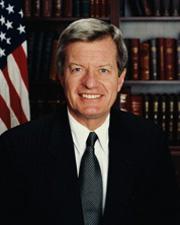 Sen. Max Baucus (D-MT)
Legislative Activity
Stay on top of the latest movement without scrolling through every action
Senate amendment not agreed to: Amendment SA 3131 not agreed to in Senate by Yea-Nay Vote. 44 - 55. Record Vote Number: 53.
March 16, 2006
View full timeline
Senate amendment not agreed to: Amendment SA 3131 not agreed to in Senate by Yea-Nay Vote. 44 - 55. Record Vote Number: 53.
March 16, 2006
Roll call votes on amendments in Senate: Amendment SA 3131 not agreed to in Senate by Yea-Nay Vote. 44 - 55. Record Vote Number: 53.
March 16, 2006
Considered by Senate. (consideration: CR S2236)
March 16, 2006
Amendment SA 3131 not agreed to in Senate by Yea-Nay Vote. 44 - 55. Record Vote Number: 53.
March 16, 2006
Senate amendment submitted
March 15, 2006
Senate amendment proposed (on the floor): Amendment SA 3131 proposed by Senator Baucus.
March 15, 2006
Amendment SA 3131 proposed by Senator Baucus. (consideration: CR S2193-2195; text: CR S2193) To require a study of debt held by foreigners.
March 15, 2006
Votes
1 roll call on this amendment
Text
Proposed
CONGRESSIONAL BUDGET FOR THE UNITED STATES GOVERNMENT FOR FISCAL YEAR
2007--Continued

Amendment No. 3056

The PRESIDING OFFICER. The next amendment is the Stabenow amendment
No. 3056. There is 2 minutes of debate equally divided on the
amendment.
The Senator from Michigan.
Ms. STABENOW. Mr. President, I hope my colleagues will join me in
beginning to fix the issue of connecting our radios, radio
interoperability. Last December, the 9/11 Commission gave us failing
grades in this area, as well as other areas. Back in November of 2003,
the White House Office of Management and Budget said there were
insufficient funds to do what needs to be done in terms of
communications interoperability. They said it would take at least $16
billion to do this right.
My amendment would provide $5 billion to jump-start what is happening
now. Our esteemed chairman of the Budget Committee has spoken about the
fact that there is $1 billion or $2 billion available now, but that
simply is not enough. That is not enough to do it as quickly as we need
to do this.
Right now, homeland security grants also in this budget are being
cut. We are seeing fewer police officers on the streets. We have not
done what we need to do regarding radios and communications, and this
simply is not good enough.
My amendment says we can do better, and it will provide a jump-start
to do so.
Mr. KOHL. Mr. President, I rise to express my appreciation to the
Senate for accepting the Kohl-Snowe- Stabenow-DeWine-Lieberman
amendment fully funding the Manufacturing Extension Partnership, MEP,
for fiscal year 2007 at $106 million. I am a longtime supporter of the
MEP program and believe manufacturing is crucial to the U.S. economy.
American manufacturers are a cornerstone of the American economy and
embody the best in American values. A healthy manufacturing sector is
key to better jobs, rising productivity, and higher standards of living
in the United States.
Small and medium-sized manufacturers face unprecedented challenges in
today's global economy. If it isn't China pirating our technologies and
promising a low-wage workforce, it is soaring heath care and energy
costs that cut into profits. Manufacturers today are seeking ways to
level the playing field.
One way to do that is through the MEP program. MEP offers resources
such as organized workshops and consulting projects to manufacturers;
these allow the manufacturers to streamline operations, integrate new
technologies, shorten production times and lower costs. In Wisconsin,
three of our largest corporations--John Deere, Harley-Davidson, and
Oshkosh Truck--are working with Wisconsin MEP centers to develop
domestic supply chains. I am proud to say that, thanks to MEP, these
companies found it more profitable to work with small and medium sized
Wisconsin firms than to look overseas for cheap labor.
You would be hard pressed to find another program that has produced
the results that MEP has. In fiscal year 2004, MEP clients reported
43,624 new or retained workers, sales of $4.532 billion, cost savings
of $721 million, and plant and equipment investments of $941 million.
The Senate, in accepting this amendment, clearly recognizes the
importance of manufacturing and the role it plays in our everyday
lives. Unfortunately, the same can not be said for the current
administration. The President's fiscal year 2007 budget request for MEP
was $46.3 million, a 56 percent decrease from the $106 million
appropriated for fiscal year 2006. Once again, it will be up to my
colleagues and I in Congress to see to it that MEP is fully funded for
fiscal year 2007. In an effort to invest in the future of
manufacturing, I worked with Senator Smith and Senator DeWine to
introduce the Manufacturing Technology Competitiveness Act of 2005
which would fund manufacturing related programs including MEP and the
Advanced Technology Program--for 3 years.
Manufacturing is an integral part of a web of inter-industry
relationships that create a stronger economy. Manufacturing sells goods
to other sectors in the economy and, in turn, buys products and
services from them. Manufacturing spurs demand for everything from raw
materials to intermediate components to software to financial, legal,
health, accounting, transportation, and other services in the course of
doing business.
The future of manufacturing in the United States will be largely
determined by how well small and medium-sized manufacturers cope with
the changes in today's global economy. To be successful, manufacturers
need state-of-the- art technologies to craft products more efficiently,
a skilled workforce to operate those technologies, and a commitment
from the government to provide the resources to allow manufacturers to
remain competitive.
At a time when economic recovery, supply chain reliability for
consumer and defense goods, and global competitiveness are national
priorities, I believe MEP continues to be a wise investment. I want to
thank the chairman and ranking member of the Budget Committee for
accepting this amendment and recognizing the importance of the MEP
program.
The PRESIDING OFFICER. The Senator's time has expired. The Senator
from Alaska.
Mr. STEVENS. Mr. President, the Stabenow amendment would pencil in $5
billion for interoperable radio equipment into the budget resolution
but provides no money for the first responders. But when the junior
Senator from Michigan has been given opportunity to vote for real money
for police and firefighters, she has repeatedly voted no. Not only has
she voted no, she actively worked to kill funding for the first
responders.
The Senate budget reconciliation bill last year included $1 billion
in hard dollars for grants to States and local governments for new
interoperable radio equipment. Michigan would have received a portion
of that money for its police and firefighters, but the Senator

[[Page S2175]]

from Michigan voted no. The conference report on the budget
reconciliation measure dedicated $1 billion for spectrum auction
proceeds for interoperable equipment for first responders. Again, the
Senator from Michigan voted no.
Fortunately, she lost that vote. The bill with $1 billion was signed
into law, and money is now being made available for important grants.
When the Defense appropriations conference report was considered last
December, I added another $1 billion for interoperable communications
equipment. That was long after Hurricane Katrina had revealed to all of
us the importance of communications equipment in a disaster. The
measure included another $1 billion for grants to high-risk cities,
such as Detroit. The Senator from Michigan helped filibuster that bill,
and then she supported efforts to strip money out of the measure and
led the charge against those funds and was successful in deleting the
money. You can't have it both ways. I oppose the Stabenow amendment.
Ms. STABENOW. Mr. President, I ask for the yeas and nays and also
simply indicate it is unfortunate to hear that kind of personal
inaccurate attack.
The PRESIDING OFFICER. Is there a sufficient second?
There appears to be a sufficient second.
The question is on agreeing to amendment No. 3056. The clerk will
call the roll.
Mr. McCONNELL. The following Senator was necessarily absent: the
Senator from Minnesota (Mr. Coleman).
Further, if present and voting, the Senator from Minnesota (Mr.
Coleman) would have voted ``nay.''
Mr. DURBIN. I announce that the Senator from Minnesota (Mr. Dayton)
is necessarily absent.
I further announce that, if present and voting, the Senator from
Minnesota (Mr. Dayton) would vote ``yea.''
The PRESIDING OFFICER. Are there any other Senators in the Chamber
desiring to vote?
The result was announced--yeas 43, nays 55, as follows:

[Rollcall Vote No. 45 Leg.]

YEAS--43

Akaka
Baucus
Bayh
Biden
Bingaman
Boxer
Byrd
Cantwell
Clinton
Conrad
Dodd
Dorgan
Durbin
Feingold
Feinstein
Harkin
Inouye
Jeffords
Johnson
Kennedy
Kerry
Kohl
Landrieu
Lautenberg
Leahy
Levin
Lieberman
Lincoln
Menendez
Mikulski
Murray
Nelson (FL)
Nelson (NE)
Obama
Pryor
Reed
Reid
Rockefeller
Salazar
Sarbanes
Schumer
Stabenow
Wyden

NAYS--55

Alexander
Allard
Allen
Bennett
Bond
Brownback
Bunning
Burns
Burr
Carper
Chafee
Chambliss
Coburn
Cochran
Collins
Cornyn
Craig
Crapo
DeMint
DeWine
Dole
Domenici
Ensign
Enzi
Frist
Graham
Grassley
Gregg
Hagel
Hatch
Hutchison
Inhofe
Isakson
Kyl
Lott
Lugar
Martinez
McCain
McConnell
Murkowski
Roberts
Santorum
Sessions
Shelby
Smith
Snowe
Specter
Stevens
Sununu
Talent
Thomas
Thune
Vitter
Voinovich
Warner

NOT VOTING--2

Coleman
Dayton

The amendment (No. 3056) was rejected.
Mr. GREGG. Mr. President, I move to reconsider the vote and I move to
lay that motion on the table.
The motion to lay on the table was agreed to.
Mr. GREGG. Mr. President, at this point I ask unanimous consent that
after we have completed the final vote in this group, which has been
ordered, which is the Santorum vote, we will then turn to an amendment
by Senator Conrad about avian flu and an amendment by Senator Burr on
avian flu. Prior to those two amendments, there will be 5 minutes for
Senator Conrad and 5 minutes for Senator Burr to speak before we go to
those votes.
The PRESIDING OFFICER. Is there objection? Without objection, it is
so ordered.
Mr. GREGG. Mr. President, I ask, as we proceed forward, that we deem
the yeas and nays to have been ordered on all the amendments that have
been pending.
The PRESIDING OFFICER. Without objection, it is so ordered.
Mr. GREGG. And all votes be 10 minutes in length.
The PRESIDING OFFICER. Without objection, it is so ordered.
Mr. CONRAD. Mr. President, might I urge our colleagues to try to help
us move through this. If we don't get cooperation, we are going to be
here until Saturday morning. If you lay out the number of amendments
that are pending here, we are going to be here until Saturday morning.
We urge colleagues, let's get these amendments done in 10 minutes.
Please, colleagues who have amendments that don't have to be offered
here, please withhold; otherwise, literally we are here until Saturday
morning.

Amendment No. 3061

The PRESIDING OFFICER. We have 2 minutes evenly divided prior to the
vote on the McConnell amendment.
The Senator from Texas.
Mrs. HUTCHISON. Mr. President, I ask you notify me at 30 seconds, so
I can turn the microphone over to Senator McConnell.
The PRESIDING OFFICER. The Senate will be in order.
Mrs. HUTCHISON. Mr. President, since 9/11, Congress and the
administration have done so much to secure our homeland, but the area
that we still must work on is port security. We have vulnerabilities
because we don't have enough coverage overseas with customs and border
agents. They need to be able to inspect the containers that will come
to America. Our officers working with the host governments need to
certify the contents of these containers at the point of origin.
The PRESIDING OFFICER. Thirty seconds.
Mrs. HUTCHISON. This will reduce our reliance on the foreign
governments' information that we may or may not be able to verify.
Mr. McCONNELL. Mr. President, we have had a lot of talk about the
security of our ports over the last few weeks, a lot of talk about
where the containers originate, what boats are to get here, and who
manages the ports but very little talk about who unloads the cargo.
What this amendment would also do is provide for background checks on
people working in our ports who are unloading the cargo. It makes no
sense to ignore the personnel and the quality of personnel in our ports
in the United States.
The PRESIDING OFFICER. The time of the Senator has expired. Who
yields time? The Senator from New Jersey.
Mr. MENENDEZ. Mr. President, I would like to speak for a minute in
opposition.
The PRESIDING OFFICER. The Senator is recognized.
Mr. MENENDEZ. I am pleased my Republican colleagues have joined my
call to strengthen security at our ports by offering this amendment to
increase port security funding by $978 million. Last week our
colleagues voted down in the Budget Committee, on party lines, my
amendment to increase port security funding by $965 million. So I am
glad our colleagues are about to vote for port security funding right
after they voted against it last week.
We know our ports are one of the weakest links in our Nation's
homeland security system, and it is crucial that this Nation act to
make them more secure before a terrorist attack, not after.
I applaud the increased funding for the Coast Guard in this
amendment. I would like this body to continue to work on how we
allocate the money this amendment provides, so we can increase the
number of containers that are actually scanned or inspected before they
enter the country. I hope we will have the opportunity to do so in
conference.
The PRESIDING OFFICER. The time of the Senator has expired.
The question is on agreeing to the amendment. The yeas and nays have
been ordered, and the clerk will call the roll.
The legislative clerk called the roll.
Mr. McCONNELL. The following Senator was necessarily absent: the
Senator from Minnesota (Mr. Coleman).
Further, if present and voting, the Senator from Minnesota (Mr.
Coleman) would have voted ``yea.''
Mr. DURBIN. I announce that the Senator from Minnesota (Mr. Dayton)
is necessarily absent.

[[Page S2176]]

I further announce that, if present and voting, the Senator from
Minnesota (Mr. Dayton) would vote ``yea.''
The PRESIDING OFFICER. Are there any other Senators in the Chamber
desiring to vote?
The result was announced--yeas 90, nays 8, as follows:

[Rollcall Vote No. 46 Leg.]

YEAS--90

Alexander
Allard
Allen
Bayh
Bennett
Biden
Bingaman
Bond
Boxer
Brownback
Bunning
Burns
Burr
Byrd
Cantwell
Carper
Chafee
Chambliss
Clinton
Coburn
Cochran
Collins
Cornyn
Craig
Crapo
DeMint
DeWine
Dole
Domenici
Dorgan
Durbin
Ensign
Enzi
Feingold
Feinstein
Frist
Graham
Grassley
Gregg
Hagel
Harkin
Hatch
Hutchison
Inhofe
Inouye
Isakson
Jeffords
Kennedy
Kerry
Kohl
Kyl
Landrieu
Lautenberg
Levin
Lieberman
Lincoln
Lott
Lugar
Martinez
McCain
McConnell
Menendez
Mikulski
Murkowski
Nelson (FL)
Nelson (NE)
Obama
Pryor
Reed
Roberts
Rockefeller
Salazar
Santorum
Sarbanes
Schumer
Sessions
Shelby
Smith
Snowe
Specter
Stabenow
Stevens
Sununu
Talent
Thomas
Thune
Vitter
Voinovich
Warner
Wyden

NAYS--8

Akaka
Baucus
Conrad
Dodd
Johnson
Leahy
Murray
Reid

NOT VOTING--2

Coleman
Dayton

The amendment (No. 3061) was agreed to.
Mr. GREGG. Mr. President, I move to reconsider the vote, and I move
to lay that motion on the table.
The motion to lay on the table was agreed to.
Mr. GREGG. Mr. President, will the Chair advise us as to how much
time that vote took?
The PRESIDING OFFICER. Sixteen minutes.
Mr. GREGG. We are going to be here a long time if we keep doing 10-
minute votes for 16 minutes. I have spoken with Senator Conrad. It is
my sense that we should start cutting these votes off. We have a whole
series of votes. The next one will take 10 minutes. We are going to
start to enforce that timeframe.
Mr. CONRAD. Mr. President, perhaps I can help put this in
perspective. We have 110 amendments pending, with more amendments
coming in every hour. We have just been called and asked to draft six
more amendments in the last hour.
I hope people understand where this is headed. If we are going to
have 16-minute votes and we are going to vote on another 110
amendments, we are going to be here until noon on Saturday. That is
where this is all headed.
If we don't start getting cooperation from Members here to not offer
amendments which they could offer somewhere else, and if we don't get
some cooperation from Members on having votes that really last 10
minutes, I assure you we are going to be here all day Friday--first of
all, late tomorrow night, we are going to be here all day Friday, we
are going to be here late Friday night, and we are going to be here at
noon on Saturday. Colleagues can choose. It is out of our control. We
don't control this. Colleagues can decide whether we are going to have
some reasonable outcome here or whether we will be here until Saturday
noon.

Amendment No. 3054

The PRESIDING OFFICER. There is 2 minutes equally divided prior to
the vote on the Menendez amendment.
The Senator from New Jersey.
Mr. MENENDEZ. Mr. President, I ask unanimous consent to add Senators
Kohl, Biden, Sarbanes, and Mikulski as cosponsors.
The PRESIDING OFFICER. Without objection, it is so ordered.
Mr. MENENDEZ. Mr. President, I am pleased that the Senate just voted
to concur with me that we need to spend about $1 billion on port
security. The difference between this amendment which we just passed
and the amendment we are about to vote on is that this is real money
that we paid for, and we direct the money in a more comprehensive way
to fund security operations at our ports.
This amendment puts us on the road to 100 percent scanning of
containers entering into this country by increasing the number of
inspectors abroad and funding the latest technology in our own ports.
I strongly believe we need to strengthen security. This will put us
on the road to increasing scanning, inspections, funding for port
security grants, and creating real security here at home.
I urge adoption of the amendment.
Mr. KOHL. Mr. President, I rise in support of the Menendez amendment
that increases funding for port security by $965 million. The amendment
is fully offset by closing $965 million in corporate tax loopholes and
would reduce the debt by an additional $965 million.
What the recent Dubai Ports World deal certainly has revealed is the
importance of port security and our apparent vulnerability. Each year,
10 million cargo containers enter our ports, and we inspect roughly 6
percent of them. That means only about 600,000 are seen by our security
officials, while the other 9.4 million are being handled exclusively by
the shippers, port operators, and others. When we consider the fact
that just one of the six ports whose operations would have taken over
by DP World is equipped with a working radiation-detection system, we
can begin to appreciate how crucial it is to address this issue.
In 2003, Admiral Collins of the U.S. Coast Guard testified that it
will cost $7 billion over the next 10 years to fully secure our ports.
We have not even come close to funding port security at that pace.
Though $7 billion may seem a daunting figure, suffering a catastrophic
terrorist attack at one of our major ports would cost exponentially
more. A recent war game conducted by Federal security agencies imagined
all 360 major ports shut down for 9 days--which would not be an
inconceivable step to take following a major terrorist attack upon a
U.S. port. Such a shutdown would cost our country $58 billion and that
doesn't even consider the direct physical costs of the attack itself.
Compared to this grim scenario, investing $7 billion now to secure our
ports is wise.
The Menendez amendment moves us closer towards achieving the goal of
100-percent scanning of all cargo containers which pass through our
ports. With $600 million dedicated to the port security grant program
administered by the Department of Homeland Security, $100 million for
new inspectors and security personnel, $100 million for research and
development to create better scanning technology, $105 million for
better radiation detection equipment, $10 million for deploying better
scanning technology abroad, and $50 million to assist developing
countries with cargo scanning, we will significantly improve port
security.
We can prevent a terrorist attack on our ports, but it will take
Federal resources and determination to do so. We all hope we are not
left in the wake of a terrorist attack that could have been prevented
had we only made the necessary investments to better fund port
security. Therefore, I urge my colleagues to support the Menendez
amendment which will reinvigorate and finance our commitment to secure
our ports.
Mr. INOUYE. Mr. President, I rise today in support of Senators
Menendez and Lautenberg's amendment to increase funding for port
security. As the cochairman of the Commerce Committee and a Senator
representing an island State, I place a particularly high priority on
port security, and I know first hand that it is not receiving the
resources that are necessary. Budgets are a reflection of priorities,
and our budget must place far greater emphasis on this critical
component of our national and economic security.
I feel compelled to remind this body that, since 2002, it has been
given a litany of opportunities to bolster port security resources, and
it has routinely rejected them.
As we consider this year's budget, I would like to recall the
discussion we had around this time in 2003. During the budget debate,
this body unanimously supported an amendment to provide $2 billion to
port security. Yet 3 weeks later, when the Senate considered the
supplemental appropriations legislation to address funding for the war
in Iraq and homeland security, the Senate rejected the amendment that
would have provided immediately the actual money for port security
funding.

[[Page S2177]]

It was a lesson in cynicism that I have not forgotten.
Given the recent attention to the Nation's lingering, significant
port security inadequacies, it is my hope that the Senate will have the
wisdom to choose a different course this time around.
If there is one silver lining to the Dubai Ports World debacle, it is
that the country is now paying close attention to port and cargo
security. The heartland is learning what the coasts have known for many
years: our national economy and physical security depend on strong port
security. They are now familiar with the statistic that 95 percent of
the Nation's cargo comes through the ports, and that very little of
that cargo is inspected. The American public now knows that more needs
to be done.
Maritime commerce is essential to the American economy. Many of our
Nation's manufacturers and retailers depend on on-time delivery, and
any disruption to the flow of commerce could have disastrous
consequences for American businesses and the economy as a whole.
Despite this fact, the administration still fails to make port
security a top priority. It has consistently submitted inadequate
funding requests and has routinely missed critical security deadlines
that were required by law. In fact, the Department of Homeland
Security, DHS, only recently submitted its National Maritime
Transportation Security Plan. The report was due in April 2005.
Given the administration's poor record on port security and its poor
judgment on the Dubai Ports World deal, I am left wondering what it
will take for this administration to take port security seriously.
It was Congress that put a halt to the Dubai Ports World takeover,
and it will have to be Congress that provides the port security funding
that the administration's budget lacks. The amendment put forward by
Senators Menendez and Lautenberg calls for a funding level that is a
far better reflection of port security's importance to the country.
While it will not solve all of the current inadequacies, it will bring
us far closer to what will be required.
Several other Members will be introducing amendments that enhance
resources for transportation security, and while I would prefer
specific offsets, I applaud their focus on port security and strongly
support them. Our committee has held numerous oversight hearings in the
area of transportation security, and we recognize that much more needs
to be done. The latest Department of Homeland Security inspector
general's report indicated that the DHS has made considerable
improvements in the administration of the port security grant program.
It is beginning to deliver the funding the way Congress intended,
consistent with the Maritime Transportation Security Act, MTSA. Now, we
must dedicate more substantial resources to this effort.
While increased funding is a critical step, we must not lose sight of
the long-term security improvements that will be necessary for port
security. In November, the Senate Commerce Committee unanimously
approved the Transportation Security Improvement Act, S. 1052, which
addresses a litany of security shortcomings across all modes of
transportation. Specifically, title V of our bill tackles port and
cargo security inadequacies. It improves the examination of cargo
before it reaches our shores, ensures the resumption of commerce in the
event of an attack, and takes greater advantage of coordinated,
interagency port security efforts.
Of course, I would like to see passage of our full bill, but at a
minimum, I urge the Senate to take up title V of our bill and pass it
as soon as possible. Our approach has broad bipartisan support, and it
will improve security while maintaining the jurisdiction and
transportation expertise of the Commerce Committee. The time is right
to pass these needed security improvements, and I am hopeful that the
Senate will take up our measure as soon as possible.
In the meantime, I urge my colleagues to support this important and
timely amendment.
The PRESIDING OFFICER. The Senator from Texas.
Mrs. HUTCHISON. Mr. President, I hope our colleagues will not vote
for the amendment.
The Senate just voted overwhelmingly to put almost $1 billion into
port security. That is the right thing to do, but the right way to pay
for it is out of the 920 account. To make this a priority, let us do it
right. The Menendez amendment would increase taxes to pay for port
security. We do not need to do that. What we should do is the right
thing--provide more inspectors and make sure our ports are secure, and
do it the right way with real money that is already there.
The PRESIDING OFFICER (Mr. Coburn). The question is on agreeing to
the amendment. The yeas and nays have been ordered, and the clerk will
call the roll.
The bill clerk proceeded to call the roll.
Mr. McCONNELL. The following Senator was necessarily absent: the
Senator from Minnesota (Mr. Coleman).
Further, if present and voting, the Senator from Minnesota (Mr.
Coleman) would have voted ``nay.''
Mr. DURBIN. I announce that the Senator from Delaware (Mr. Biden) and
the Senator from Minnesota (Mr. Dayton) are necessarily absent.
I further announce that if present and voting, the Senator from
Minnesota (Mr. Dayton) would vote ``yea.''
The PRESIDING OFFICER. Are there any other Senators in the Chamber
desiring to vote?
The result was announced--yeas 43, nays 53, as follows:

[Rollcall Vote No. 47 Leg.]

YEAS--43

Akaka
Baucus
Bayh
Bingaman
Boxer
Byrd
Cantwell
Carper
Clinton
Conrad
Dodd
Dorgan
Durbin
Feingold
Feinstein
Harkin
Inouye
Jeffords
Johnson
Kennedy
Kerry
Kohl
Landrieu
Lautenberg
Leahy
Levin
Lieberman
Lincoln
Menendez
Mikulski
Murray
Nelson (FL)
Nelson (NE)
Obama
Pryor
Reed
Reid
Rockefeller
Salazar
Sarbanes
Schumer
Stabenow
Wyden

NAYS--53

Alexander
Allard
Allen
Bennett
Bond
Brownback
Bunning
Burns
Burr
Chafee
Chambliss
Coburn
Cochran
Collins
Cornyn
Craig
Crapo
DeMint
DeWine
Dole
Domenici
Ensign
Enzi
Frist
Graham
Grassley
Gregg
Hagel
Hatch
Hutchison
Inhofe
Isakson
Kyl
Lott
Lugar
Martinez
McCain
McConnell
Murkowski
Roberts
Santorum
Sessions
Shelby
Smith
Snowe
Stevens
Sununu
Talent
Thomas
Thune
Vitter
Voinovich
Warner

NOT VOTING--4

Biden
Coleman
Dayton
Specter
The amendment (No. 3054) was rejected.
Mr. GREGG. I move to reconsider the vote.
Mr. BURNS. I move to lay that motion on the table.
The motion to lay on the table was agreed to.

Amendment No. 3018

Mr. GREGG. I ask unanimous consent the yeas and nays be vitiated on
the Chambliss amendment numbered 3018.
The PRESIDING OFFICER. Without objection, it is so ordered.
Mr. GREGG. I ask unanimous consent the amendment be agreed to.
Mr. CONRAD. We have no objection.
The PRESIDING OFFICER. The question is on agreeing to the amendment
No. 3018.
The amendment (No. 3018) was agreed to.

Amendment No. 3073

Mr. GREGG. The next amendment is the amendment of Senator Grassley.
The PRESIDING OFFICER. There is 2 minutes equally divided.
Mr. CONRAD. Senator Grassley's amendment is the next order in the
queue.
Mr. GREGG. I will speak to Senator Grassley's amendment.
What Senator Grassley is suggesting is we give the Secretary of
Health and Human Services the authority to extend the signup time for
senior citizens, and if we extend such signup times, there will be no
penalty against the senior citizens.
It is an excellent amendment. I hope it will be supported.
The PRESIDING OFFICER. Who yields time to speak in opposition?

[[Page S2178]]

Mr. CONRAD. I yield time to the Senator from Florida.
Mr. NELSON of Florida. Mr. President, the question is, do you want to
help the program or do you want to help the people? Members have all
heard from their senior citizens. They are confused, they are
bewildered, and in some cases frightened about this deadline coming up.
They want some additional time. They are confused with this
multiplicity of plans.
Senator Grassley's amendment would only give discretion to the
Secretary of HHS. They have already testified they do not want to
extend the program.
Members are going to have an opportunity to vote on the amendment
that follows that will actually extend the deadline for the rest of the
year, 2006.
Mr. GRASSLEY. Mr. President, is there any time left on my side?
The PRESIDING OFFICER. Twenty-three seconds.
The Senator from Iowa is recognized for 23 seconds.
Mr. GRASSLEY. Mr. President, what the Secretary said was that this
was a decision by the Congress. We are involved in that decision, a
decision today to give the Secretary authority to do it if it needs to
be done, and do it not until it needs to be done, rather than sending a
signal that you can procrastinate again for another 6 months.
The PRESIDING OFFICER. All time has expired.
The question is on agreeing to the amendment. The yeas and nays have
been previously ordered. The clerk will call the roll.
The legislative clerk called the roll.
Mr. McCONNELL. The following Senator was necessarily absent: the
Senator from Minnesota (Mr. Coleman).
Further, if present and voting, the Senator from Minnesota (Mr.
Coleman) would have voted ``yea.''
Mr. DURBIN. I announce that the Senator from Minnesota (Mr. Dayton)
is necessarily absent.
I further announce that, if present and voting, the Senator from
Minnesota (Mr. Dayton) would vote ``nay.''
The PRESIDING OFFICER. Are there any other Senators in the Chamber
desiring to vote?
The result was announced--yeas 76, nays 22, as follows:

[Rollcall Vote No. 48 Leg.]

YEAS--76

Alexander
Allard
Allen
Bayh
Bennett
Biden
Bingaman
Bond
Boxer
Brownback
Bunning
Burns
Burr
Byrd
Cantwell
Carper
Chambliss
Coburn
Cochran
Cornyn
Craig
Crapo
DeMint
Dodd
Dole
Domenici
Dorgan
Durbin
Enzi
Feinstein
Frist
Graham
Grassley
Gregg
Hagel
Hatch
Hutchison
Inhofe
Inouye
Isakson
Johnson
Kerry
Kohl
Kyl
Levin
Lieberman
Lott
Lugar
Martinez
McConnell
Menendez
Mikulski
Murkowski
Murray
Nelson (NE)
Pryor
Roberts
Rockefeller
Salazar
Santorum
Sarbanes
Schumer
Sessions
Shelby
Smith
Specter
Stabenow
Stevens
Sununu
Talent
Thomas
Thune
Vitter
Voinovich
Warner
Wyden

NAYS--22

Akaka
Baucus
Chafee
Clinton
Collins
Conrad
DeWine
Ensign
Feingold
Harkin
Jeffords
Kennedy
Landrieu
Lautenberg
Leahy
Lincoln
McCain
Nelson (FL)
Obama
Reed
Reid
Snowe

NOT VOTING--2

Coleman
Dayton

The amendment (No. 3073) was agreed to.
Mr. GREGG. I move to reconsider the vote and to lay that motion on
the table.
The motion to lay on the table was agreed to.

Amendment No. 3009

The PRESIDING OFFICER. The Nelson amendment No. 3009 is now under
consideration with 2 minutes equally divided.
The Senator from Florida is recognized.
Mr. NELSON of Florida. Mr. President, this amendment is what Senators
have been hearing from their senior citizens. They want to extend the
deadline. My amendment would put it in law that the deadline is
extended. Why be for a program instead of being for the people? They
are confused. They need more time. They are bewildered and, in some
cases, knowing that that 1 percent-a-month penalty is hanging over
their heads, they are frightened. They are also frightened if they
choose the wrong program, then find out they can't get the prescription
drugs they need for their quality of life. I urge Members to vote for
the amendment.
The PRESIDING OFFICER. The Senator from Iowa is recognized for 1
minute.
Mr. GRASSLEY. The Nelson amendment is the wrong idea at the wrong
time. The amendment doesn't even provide the resources for enrolling
people afterwards. We did in the amendment just adopted. How are we
going to get people to enroll if the administration doesn't have the
resources to do it? It is too early to make a decision, when we don't
have final enrollment numbers yet. Right now enrollment is going very
well. A quarter of a million people sign up every week. Many who are
calling for delay in the enrollment deadline didn't support the
legislation 2 or 3 years ago. They have admitted that. They have been
encouraging citizens not to enroll. Extending the deadline until the
end of the year is a cynical attempt to tell seniors not to enroll this
year. The other side says May 15 is an arbitrary deadline. Americans
live with deadlines every day.
The PRESIDING OFFICER. The question is on agreeing to amendment No.
3009.
The yeas and nays have been ordered. The clerk will call the roll.
The assistant legislative clerk called the roll.
Mr. McCONNELL. The following Senator was necessarily absent: the
Senator from Minnesota (Mr. Coleman).
Further, if present and voting, the Senator from Minnesota (Mr.
Coleman) would have voted ``yea.''
Mr. DURBIN. I announce that the Senator from Minnesota (Mr. Dayton)
is necessarily absent.
I further announce that, if present and voting, the Senator from
Minnesota (Mr. Dayton) would vote ``yea.''
The result was announced--yeas 49, nays 49, as follows:

[Rollcall Vote No. 49 Leg.]

YEAS--49

Akaka
Baucus
Bayh
Biden
Bingaman
Boxer
Byrd
Cantwell
Carper
Chafee
Clinton
Collins
Conrad
DeWine
Dodd
Dorgan
Durbin
Feingold
Feinstein
Harkin
Inouye
Jeffords
Johnson
Kennedy
Kerry
Kohl
Landrieu
Lautenberg
Leahy
Levin
Lieberman
Lincoln
Menendez
Mikulski
Murray
Nelson (FL)
Nelson (NE)
Obama
Pryor
Reed
Reid
Rockefeller
Salazar
Sarbanes
Schumer
Snowe
Specter
Stabenow
Wyden

NAYS--49

Alexander
Allard
Allen
Bennett
Bond
Brownback
Bunning
Burns
Burr
Chambliss
Coburn
Cochran
Cornyn
Craig
Crapo
DeMint
Dole
Domenici
Ensign
Enzi
Frist
Graham
Grassley
Gregg
Hagel
Hatch
Hutchison
Inhofe
Isakson
Kyl
Lott
Lugar
Martinez
McCain
McConnell
Murkowski
Roberts
Santorum
Sessions
Shelby
Smith
Stevens
Sununu
Talent
Thomas
Thune
Vitter
Voinovich
Warner

NOT VOTING--2

Coleman
Dayton

The amendment (No. 3009) was rejected.
Mr. FRIST. Mr. President, I move to reconsider the vote.
Mr. GRASSLEY. I move to lay that motion on the table.
The motion to lay on the table was agreed to.
The PRESIDING OFFICER. The Senator from New Hampshire is recognized.
Mr. GREGG. Mr. President, I simply note that the way this is working,
these are 10-minute votes. We have been reasonably generous by letting
them go to 12 minutes, but we are not letting them go past 12 minutes.
I believe I speak for Senator Conrad. We are going to insist on getting
these votes done. We are on to the next amendment.

Amendment No. 3004

The PRESIDING OFFICER. The Senate will now consider the Snowe-Wyden
amendment.
Ms. SNOWE. Mr. President, the amendment which Senator Wyden and I are
offering will address the high cost

[[Page S2179]]

of our Medicare prescription drug benefit. It does this not by price
setting or mandating a drug formulary, but by providing our drug plans
with the resource of the HHS Secretary. Since Medicare is paying 75
percent of a beneficiary's drug costs from $250 up to $2,250 in
spending, and the cost of this benefit over the next ten years is
estimated to exceed $700 billion, it is simply common sense that the
Secretary should be able to assist when the plans need help.
Our amendment states two circumstances in which the Secretary must
participate in drug price negotiation. If the Secretary needs to
provide a drug plan due to lack of competition, he must negotiate
competitive prices for his own ``fallback'' plan. And just as
reasonable, if a drug plan requests his assistance in negotiations,
then he should be responsive to that need.
The Congressional Budget Office has told us that when a drug lacks
competition, a manufacturer may not negotiate in good faith. So when a
plan calls for help in this circumstance, the Secretary shouldn't be
forced to be unresponsive. As CBO has described, the savings could be
substantial. For example, if 29 million beneficiaries enroll in Part D,
and 1 in 4 used a single source ``blockbuster'' drug such as a lipid-
lowering drug costing $250 per month, the annual cost for that single
product would exceed $21 billion. If the Secretary could help plans
raise the discount on such a drug by just 10 percent, the annual
savings would amount to $2.18 billion. This illustrates how in this
special situation, the role of the Secretary could be vital.
Let me be clear--this amendment does not allow price-setting. The
language is clear: ``the Secretary may not require a particular
formulary or institute a price structure for the reimbursement of Part
D drugs.''
The AMA, the AARP, and many other are advocating for this authority,
because they want to protect our seniors access to drugs as much as we
do. I urge my colleagues to join us in assuring we keep our promise to
our seniors.
The PRESIDING OFFICER. The Senator's time has expired.
The Senator from Iowa is recognized.
Mr. GRASSLEY. Mr. President, one of the things on this issue that is
so misleading is the impression that this legislation does not allow
Medicare to negotiate. The opposite is true.
This legislation requires negotiation. That is what the plans are
doing all the time to drive down the price of drugs--what it does to
drive down the price of the premium way below what we thought it would
be. Again, everything is backward when they talk about this. In the
real world, there are choices. Wherever you want to go for any consumer
products, those stores negotiate prices to get good prices. It is just
a way to get the job done. Statistics that have come in on this show
that competition is driving down the price of drugs--the 25 leading
drugs--by 35 percent on average this ought to show that this process is
working.
The PRESIDING OFFICER. All time has expired. The yeas and nays have
been ordered.
The question is on agreeing to the amendment of the Senator from
Maine.
The clerk will call the roll.
The assistant morning business clerk called the roll.
Mr. McCONNELL. The following Senator was necessarily absent: the
Senator from Minnesota (Mr. Coleman).
Further, if present and voting, the Senator from Minnesota (Mr.
Coleman) would have voted ``no.''
Mr. DURBIN. I announce that the Senator from Minnesota (Mr. Dayton)
is necessarily absent.
I further announce that if present and voting, the Senator from
Minnesota (Mr. Dayton) would vote ``yea.''
The PRESIDING OFFICER. Are there any other Senators in the Chamber
desiring to vote?
The result was announced--yeas 54, nays 44, as follows:

[Rollcall Vote No. 50 Leg.]

YEAS--54

Akaka
Bayh
Biden
Bingaman
Boxer
Byrd
Cantwell
Carper
Chafee
Clinton
Collins
Conrad
DeWine
Dodd
Dorgan
Durbin
Feingold
Feinstein
Graham
Harkin
Hutchison
Inouye
Jeffords
Johnson
Kennedy
Kerry
Kohl
Landrieu
Lautenberg
Leahy
Levin
Lieberman
Lincoln
McCain
Menendez
Mikulski
Murkowski
Murray
Nelson (FL)
Obama
Pryor
Reed
Reid
Rockefeller
Salazar
Sarbanes
Schumer
Shelby
Smith
Snowe
Specter
Stabenow
Stevens
Wyden

NAYS--44

Alexander
Allard
Allen
Baucus
Bennett
Bond
Brownback
Bunning
Burns
Burr
Chambliss
Coburn
Cochran
Cornyn
Craig
Crapo
DeMint
Dole
Domenici
Ensign
Enzi
Frist
Grassley
Gregg
Hagel
Hatch
Inhofe
Isakson
Kyl
Lott
Lugar
Martinez
McConnell
Nelson (NE)
Roberts
Santorum
Sessions
Sununu
Talent
Thomas
Thune
Vitter
Voinovich
Warner

NOT VOTING--2

Coleman
Dayton

The amendment (No. 3004) was agreed to.
Mr. OBAMA. I move to reconsider the vote, and I move to lay that
motion on the table.
The motion to lay on the table was agreed to.

Amendment No. 3086

The PRESIDING OFFICER. Under the previous order, the Byrd amendment
will be considered next, with 2 minutes equally divided for debate.
The Senator from West Virginia is recognized.
Mr. BYRD. I thank the Chair. Mr. President, I ask unanimous consent
that Senator Schumer be added as a cosponsor to my amendment.
The PRESIDING OFFICER. Without objection, it is so ordered.
Mr. BYRD. Mr. President, once again the White House has proposed a
level of funding for Amtrak that will result in bankruptcy for the
company, endangering rail service in every region of the Nation.
Two amendments have been offered to increase Amtrak's funding to a
level of $1.45 billion. My amendment, which is fully paid for, would
provide the additional funds necessary for the Appropriations Committee
to approve $1.45 billion for Amtrak.
The amendment offered by the distinguished Senator from Pennsylvania
pretends to pay for the increase by cutting something called function
920 allowances. It assumes deeper cuts for education, for low-income
home energy assistance, for border and port security, and for our
troops.
I urge Members to show support--real support--for Amtrak by voting
for my amendment.
The PRESIDING OFFICER. The Senator's time has expired.
Who seeks time? The Senator from New Hampshire.
Mr. GREGG. Mr. President, I must rise in opposition to this amendment
as it would exceed the caps and would end up raising taxes. We are
going to have an amendment that follows this amendment which makes a
commitment to Amtrak, which does it under the caps, therefore, sets the
priorities correctly, and that is the proper way to do this.
I yield back the remainder of my time.
The PRESIDING OFFICER. The question is on agreeing to amendment No.
3086. Under the previous order, the yeas and nays have been ordered.
The clerk will call the roll.
The assistant legislative clerk called the roll.
Mr. McCONNELL. The following Senator was necessarily absent: the
Senator from Minnesota (Mr. Coleman).
Further, if present and voting, the Senator from Minnesota (Mr.
Coleman) would have voted ``no.''
Mr. DURBIN. I announce that the Senator from Minnesota (Mr. Dayton)
and the Senator from Maryland (Ms. Mikulski) are necessarily absent.
I further announce that, if present and voting, the Senator from
Minnesota (Mr. Dayton) would vote ``yea.''
The result was announced--yeas 44, nays 53, as follows:

[Rollcall Vote No. 51 Leg.]

YEAS--44

Akaka
Baucus
Bayh
Biden
Bingaman
Boxer
Byrd
Cantwell
Carper
Chafee
Clinton
Conrad
Dodd
Dorgan
Durbin
Feingold
Feinstein
Harkin
Inouye
Jeffords
Johnson
Kennedy
Kerry
Kohl
Landrieu
Lautenberg
Leahy
Levin
Lieberman
Lincoln
Menendez
Murray
Nelson (FL)
Nelson (NE)
Obama
Pryor
Reed
Reid

[[Page S2180]]

Rockefeller
Salazar
Sarbanes
Schumer
Stabenow
Wyden

NAYS--53

Alexander
Allard
Allen
Bennett
Bond
Brownback
Bunning
Burns
Burr
Chambliss
Coburn
Cochran
Collins
Cornyn
Craig
Crapo
DeMint
DeWine
Dole
Domenici
Ensign
Enzi
Frist
Graham
Grassley
Gregg
Hagel
Hatch
Hutchison
Inhofe
Isakson
Kyl
Lott
Lugar
Martinez
McCain
McConnell
Murkowski
Roberts
Santorum
Sessions
Shelby
Smith
Snowe
Specter
Stevens
Sununu
Talent
Thomas
Thune
Vitter
Voinovich
Warner

NOT VOTING--3

Coleman
Dayton
Mikulski
The amendment (No. 3086) was rejected.
Mr. GREGG. Mr. President, I move to reconsider the vote.
Mr. SANTORUM. Mr. President, I move to lay that motion on the table.
The motion to lay on the table was agreed to.

Amendment No. 3015

The PRESIDING OFFICER. Under the previous order, the Santorum
amendment will now be considered with 2 minutes equally divided for
debate on the amendment. The Senator from Pennsylvania is recognized.
Mr. SANTORUM. Mr. President, this amendment does what the Byrd
amendment does, except it doesn't raises taxes. It offsets the money
from the 920 account. I would encourage Members to let their voices be
heard in support of Amtrak funding to make sure that the Appropriations
Committee understands that this is a continuing priority for the United
States, and I ask for a ``yea'' vote.
The PRESIDING OFFICER. Who rises in opposition?
Mr. LAUTENBERG. Mr. President, we are talking about a proposal that
has no funding for it. You reach into the 920 barrel and there is
nothing there, you can't come up with any money. But in the process,
the Senator from Pennsylvania did acknowledge that the President's
budget is way off line because now we are talking about $1.5 billion;
whereas, otherwise, it is $500 million less. So while this bill is
imperfect we do want to see Amtrak supported, and I hope that we will
be able to resolve it in the appropriations process to get it to where
it needs to be. But this amendment is not going to do it. It is half a
loaf and, at this point, we have little choice.
The PRESIDING OFFICER. The time of the Senator has expired.
The question is on agreeing to amendment No. 3015. Under the previous
order, the yeas and nays have been ordered.
The clerk will call the roll.
The assistant journal clerk called the roll.
Mr. McCONNELL. The following Senator was necessarily absent: the
Senator from Minnesota (Mr. Coleman).
Further, if present and voting, the Senator from Minnesota (Mr.
Coleman) would have voted ``yea.''
Mr. DURBIN. I announce that the Senator from Minnesota (Mr. Dayton)
is necessarily absent.
I further announce that, if present and voting, the Senator from
Minnesota (Mr. Dayton) would vote ``nay.''
The result was announced--yeas 39, nays 59, as follows:

[Rollcall Vote No. 52 Leg.]

YEAS--39

Allen
Baucus
Bayh
Bond
Burns
Burr
Byrd
Carper
Chafee
Cochran
Collins
DeWine
Dole
Domenici
Dorgan
Feingold
Frist
Hagel
Hatch
Hutchison
Jeffords
Johnson
Kohl
Landrieu
Lieberman
Lott
Lugar
Mikulski
Murkowski
Nelson (NE)
Rockefeller
Santorum
Sarbanes
Smith
Snowe
Specter
Stevens
Talent
Warner

NAYS--59

Akaka
Alexander
Allard
Bennett
Biden
Bingaman
Boxer
Brownback
Bunning
Cantwell
Chambliss
Clinton
Coburn
Conrad
Cornyn
Craig
Crapo
DeMint
Dodd
Durbin
Ensign
Enzi
Feinstein
Graham
Grassley
Gregg
Harkin
Inhofe
Inouye
Isakson
Kennedy
Kerry
Kyl
Lautenberg
Leahy
Levin
Lincoln
Martinez
McCain
McConnell
Menendez
Murray
Nelson (FL)
Obama
Pryor
Reed
Reid
Roberts
Salazar
Schumer
Sessions
Shelby
Stabenow
Sununu
Thomas
Thune
Vitter
Voinovich
Wyden

NOT VOTING--2

Coleman
Dayton

The amendment (No. 3015) was rejected.
Mr. FRIST. Mr. President, I move to reconsider the vote, and I move
to lay that motion on the table.
The motion to lay on the table was agreed to.
Mr. FRIST. Mr. President, for the information of our colleagues, that
was the last rollcall vote for today. We will begin voting tomorrow
morning, most probably on the two avian flu amendments which we were
discussing during the vote, at approximately 10:30.
The managers are here, and we will continue to discuss it in terms of
the timing and the exact schedule for tomorrow.
There are no more rollcall votes tonight, and we will begin voting
around 10:30 tomorrow.
The more formal vote-arama, which unfortunately has become
institutionalized, would be tomorrow afternoon. We will have more
announcements about that.
Mr. CONRAD. Mr. President, I hope colleagues understand that for this
budget cycle we have lost time to a number of extraneous events which
could not be helped. But it means we have less time than we have had in
previous years.
I hope my colleagues understand that we have put the debt limit
discussion in the middle of this.
We have had a number of other events, such as the joint session.
As a result, we have less time for amendments.
I beg the indulgence of colleagues in understanding that now the only
way we can finish is if we have very tight time agreements tomorrow,
and if we exercise discipline among ourselves in terms of the number of
amendments that we offer. That is the only conceivable way we can
finish by tomorrow night.
I urge colleagues to think very carefully about amendments which they
might want to offer.
Mr. SARBANES. Mr. President, will the Senator yield?
Mr. CONRAD. Yes, I would be happy to yield.
Mr. SARBANES. Mr. President, would the Senator agree with me that it
is very fitting that the debt limit discussion should be inserted right
in the middle of discussion of the budget resolution since this budget
resolution will add very substantially to the deficit and drive the
debt up even further, requiring this vote that is going to come to
raise the debt ceiling? What is the amount by which the debt ceiling
will be raised?
Mr. CONRAD. The debt limit request will be to raise the debt by
nearly $800 billion--$781 billion.
Mr. SARBANES. It underscores the deeper hole that these budgets are
driving us to over the last 5 years, does it not?
Mr. CONRAD. The Senator makes a very good point. It is an indication
that we keep adding debt on top of debt. Of course, this budget will
add $3 trillion to the debt--more than $3 trillion over the next 5
years.
I think it is further confirmation that we are off track in terms of
the fiscal policy of this country, and not a little off track--way off
track.
The PRESIDING OFFICER. The Senator from Georgia is recognized.
Mr. CHAMBLISS. Mr. President, I ask unanimous consent that the
following Senators be added as cosponsors to amendment No. 3018:
Senators Grassley, DeWine, Burns, Coburn, and Vitter.
The PRESIDING OFFICER. Without objection, it is so ordered.
The minority leader is recognized.

Amendment No. 3115

Mr. REID. Mr. President, I send an amendment to the desk.
The PRESIDING OFFICER. The clerk will report.
The assistant legislative clerk read as follows:

The Senator from Nevada [Mr. Reid], for himself and Mrs.
Clinton, proposes an amendment numbered 3115.

Mr. REID. Mr. President, I ask unanimous consent that reading of the
amendment be dispensed with.
The PRESIDING OFFICER. Without objection, it is so ordered.
The amendment is as follows:

[[Page S2181]]

(Purpose: To increase funding in FY 2007 by $347 million to restore
funding or provide increased funding over FY 2006 for programs and
policies that support the delivery of contraceptive services and
medically accurate information in order to reduce the number of
unintended pregnancies, including Title X of the Public Health Service
Act, and to restore funding or provide increased funding over FY 2006
for programs that help women have healthy pregnancies and healthy
children, including the Child Care Development Block Grant, Maternal
and Child Health Block Grant, Healthy Start, and the Special
Supplemental Nutrition Program for Women Infants and Children paid for
by closing corporate tax loopholes)

On page 3, line 13, increase the amount by $225,000,000.
On page 3, line 15, increase the amount by $84,000,000.
On page 3, line 17, increase the amount by $23,000,000.
On page 3, line 19, increase the amount by $10,000,000.
On page 3, line 21, increase the amount by $2,000,000.
On page 4, line 1, increase the amount by $225,000,000.
On page 4, line 2, increase the amount by $84,000,000.
On page 4, line 3, increase the amount by $23,000,000.
On page 4, line 4, increase the amount by $10,000,000.
On page 4, line 6, increase the amount by $2,000,000.
On page 4, line 13, increase the amount by $347,000,000.
On page 5, line 4, increase the amount by $225,000,000.
On page 5, line 6, increase the amount by $84,000,000.
On page 5, line 8, increase the amount by $23,000,000.
On page 5, line 10, increase the amount by $10,000,000.
On page 5, line 12, increase the amount by $2,000,000.
On page 19, line 24, increase the amount by $124,000,000.
On page 19, line 25, increase the amount by $27,000,000.
On page 20, line 4, increase the amount by $61,000,000.
On page 20, line 8, increase the amount by $21,000,000.
On page 20, line 12, increase the amount by $10,000,000.
On page 20, line 16, increase the amount by $2,000,000.
On page 21, line 24, increase the amount by $223,000,000.
On page 21, line 25, increase the amount by $198,000,000.
On page 22, line 4, increase the amount by $ 23,000,000.
On page 22, line 8, increase the amount by $2,000,000.
On page 53, line 1, increase the amount by $347,000,000.
On page 53, line 2, increase the amount by $225,000,000.
Mr. REID. Mr. President, this amendment was offered on behalf of the
Senator from Nevada and the Senator from New York, Senator Clinton.
One of the most heated debates of recent years has been on the issue
of abortion. People on both sides of the issue feel very strongly. They
have argued, they have demonstrated, and they have protested with
emotion and passion.
The approval last week of a South Dakota law banning virtually all
abortions has only intensified the already strong feelings on both
sides of this issue.
The issue is not going to go away very soon. And I doubt that one
side will be able to suddenly convince the other to drop its deeply
held beliefs.
But there is a need--and an opportunity--for us to find common
ground.
Today, I am joining with Senator Clinton to propose an amendment that
offers not only common ground but common sense.
Whether you are pro-life or pro-choice, Democrat or Republican, our
amendment advances two key goals which we should all share:
No. 1, reducing the number of unintended pregnancies and the
resulting abortions,
No. 2, helping women have healthy pregnancies and healthy children.
Our amendment will make sure that there is money available in the
budget to enact policy to support these important goals.
I repeat--reducing the number of unintended pregnancies and resulting
abortions and helping women have healthy pregnancies and healthy
children.
Specifically, our amendment would allow us to increase funding for
the National Family Planning Program, title X. It would pass the Equity
in Prescription Insurance and Contraceptive Coverage Act so that we may
end insurance discrimination against women.
I might add that the distinguished Senator from Maine, Ms. Snowe, has
worked on this for many years.
Our amendment would improve awareness and understanding of emergency
contraception, and our amendment would improve teen pregnancy
prevention programs.
This amendment would also restore cuts and provide funding for
crucial programs that support pregnant women and their children.
The United States has among the highest rates of unintended
pregnancies of all industrialized nations. Half of all pregnancies in
the United States are unintended.
And about half of those pregnancies end in abortions.
It doesn't have to be this way. Most of these unintended
pregnancies--and the resulting abortions--can be prevented.
One of the most important steps we can take to prevent unintended
pregnancies is ensuring that American women have access to affordable,
effective contraception.
Our amendment helps make family planning service more accessible to
low-income women. It improves awareness and understanding of emergency
contraception, a poorly understood yet highly effective form of
contraception. It promotes teen pregnancy prevention programs, and it
would end insurance discrimination against women.
These are just some of the simple but necessary steps we can and
should take to prevent unintended pregnancies and reduce abortions.
It is difficult for me to understand why many of the same people who
support an outright ban on abortion also oppose making contraception
more accessible--particularly for low-income women who are more likely
to have unplanned pregnancies. For example, a recent analysis by the
non-partisan Guttmacher Institute revealed that South Dakota is one of
the most difficult states for low income women to obtain
contraceptives.
Reducing the number of unintended pregnancies--and the resulting
abortions--should be a goal we can all share.
In addition to supporting programs that will reduce the number of
unintended pregnancies, our amendment will restore cuts and provide
much needed funds for programs that provide critical support for
pregnant women and their children.
Our amendment says that while we should do everything we can do to
prevent unintended pregnancies in the first place, we should also fund
programs that support women who choose to carry their pregnancies to
term and raise healthy children.
This includes funding for programs that: provide health care for
pregnant women and their children, reduce infant mortality, provide
child care assistance for low-income families, and provide nutritional
assistance for pregnant women and children.
Our amendment gives Americans on both sides of the abortion debate
the opportunity to join in the common goals of preventing unintended
pregnancies, reducing abortions and supporting pregnant women and their
children.
I hope my colleagues will agree to this amendment. It is important.
It is important for America, and it is important for the women in
America.
I want to make sure that the Senator from New York has ample time.
How much time do we have remaining?
The PRESIDING OFFICER. Five minutes.
Mr. REID. Mr. President, I ask unanimous consent that my statement be
on leader time.
The PRESIDING OFFICER. Without objection, it is so ordered.
Mrs. CLINTON. Mr. President, I thank the Democratic leader, the
Senator from Nevada, for his leadership on this issue. We have come
together to present this Prevention First amendment because we believe
deeply that we can do better than we are doing in our country when it
comes to preventing unintended pregnancy and helping to support mothers
and children.
The United States has one of the highest rates of unintended
pregnancies in the industrialized world. Half of all pregnancies in our
country are unintended. Nearly half of those end in abortion. In order
to decrease the number of unintended pregnancies, and to decrease the
number of abortions, we must make contraception

[[Page S2182]]

more accessible and more affordable. The Prevention First amendment
ensures that we dedicate adequate funding for these programs, while at
the same time the amendment provides for dedicating funding to mothers
and children so children will be as healthy as possible.
This amendment sends a clear message: Women who need access to
contraception to prevent unintended pregnancies will have that help. At
the same time, women who are pregnant and want to have a healthy child
will also have the support they need. Our amendment provides $100
million to programs that reduce unintended pregnancy and $247 million
to programs that support and protect women and babies.
The $100 million prevention program does four basic things. First, it
increases the funds for title X, the Nation's only program solely
dedicated to family planning. Title X provides high quality preventive
health care and contraception to low-income individuals who may
otherwise lack access to supplement care. Every year, title X services
prevent approximately 1 million unintended pregnancies. But despite its
proven success, this administration has continuously cut its funding.
Second, this amendment ends the current practice where some insurance
companies refuse to provide coverage for contraception even though they
cover other prescription drugs. Lack of coverage for contraception
results in women of reproductive age paying 68 percent more in out-of-
pocket costs for health care services than men of the same age. Our
amendment remedies this disparity by requiring private health care
plans that cover prescription drugs to also cover FDA-approved
prescription contraceptions and related medical services. In our own
State of New York, contraceptive equity is already the law and it
should provide a real role model for the Nation. If insurance companies
can cover drugs such as Viagra, they can certainly cover prescription
contraception.
Third, this amendment improves public awareness of emergency
contraception. Emergency contraception, also known as Plan B, is one of
the most misunderstood drugs around. Some have tried to deliberately
mislead its purpose. Emergency contraception prevents pregnancy. It
does not interrupt or end a pregnancy. The most recent research
estimates that emergency contraception could have prevented 51,000
abortions per year. Further, a study from the Journal of the American
Medical Association confirms that easier access to emergency
contraception does not increase sexual risk taking or greater
transmission of sexually transmitted diseases.
Fourth, our amendment provides funding for programs dedicated to
decreasing the teen pregnancy rate. To date, 34 percent of young women
become pregnant at least once before they reach the age of 20. That
results in 820,000 teen pregnancies a year. Eight in 10, or 80 percent,
of those pregnancies are unintended.
This amendment funds proven programs that will help reduce the rate
of teen pregnancy by improving decisionmaking, improving access to
education and information.
In addition to strengthening pregnancy prevention programs, our
amendment also increases support for low-income mothers trying to raise
healthy children. Our message in this amendment to the women of this
country is clear: We will support you in your effort to prevent
unintended pregnancy and we will support you in your decision to have a
child.
Our amendment provides funding for programs such as the childcare and
development block grant that help families afford safe quality day
care; programs such as the maternal and child health block grant that
ensure women have healthy pregnancies. Healthy Start and WIC Programs
focus on providing nutrition for pregnant women and their infants.
I hope we could unite behind a common goal of preventing unintended
pregnancies, reducing abortions, and supporting women and children's
health. We hope our colleagues and the White House will work with us to
put prevention first. A vote in support of this amendment is a vote to
support healthy families.
I urge our colleagues to pass the Clinton-Reid amendment.
I yield the floor.
Mr. GRASSLEY. Mr. President, in a debate earlier today, the senior
Senator from North Dakota responded to my challenge to point out a new
corporate loophole closer that is not included in the tax relief
reconciliation conference.
The ranking Democratic member of the Budget Committee discussed a
proposal developed by the Finance Committee Democratic staff that would
repeal ``deferral'' for controlled foreign corporations doing business
in tax haven countries.
I share the senior Senator from North Dakota's concerns about the
ability of large corporations to manipulate the Tax Code to shift large
amounts of profits offshore. But this provision isn't the right way to
address those concerns. It is both overbroad and inadequate.
It is overbroad because it would harm the competitiveness of U.S.
multinationals by repealing deferral for holding company structures
that allow them to efficiently allocate active foreign-generated
resources among their foreign operations without incurring U.S. tax on
entirely foreign transactions.
It is inadequate because it applies only to subsidiaries in black-
listed countries. Companies that use tax havens for abusive purposes
could easily avoid this rule by locating in a low-tax country that is
not on the list, like Ireland, where we have read press reports that
companies are shifting huge profits. Treasury would have authority to
add countries to the list, but does anyone think Ireland, with whom we
have a tax treaty, would be added to a black list?
The way to deal with those cases is through effective transfer
pricing policy and enforcement, not by curtailing deferral.
This proposal was included in the Democratic alternative to the
Finance Committee bipartisan tax relief plan. When we considered the
House tax relief reconciliation bill, the Democratic alternative was
defeated.
Even if the tax haven proposal were viable in the Senate, it would
yield only a fraction of the revenue needed to offset the cumulative
effect of the many Democratic amendments to increase spending.
The effect of using such proposals, which aren't viable in the
Senate, even if successful, would be to drive down the tax relief
number.
The result of a lower net tax relief number is that we would lack the
necessary tax relief in the budget to accommodate tax relief proposals
supported on both sides of the aisle.
Mr. KENNEDY. Mr. President, yesterday I offered an amendment to the
budget resolution with the Senator from Maine and the Senator from New
Jersey that would have increased funding for several education and
training programs and raised the maximum Pell grant to $4,500.
Regrettably, by a vote of 50-to-50, the amendment was not adopted. More
than 100 educational organizations supported the Kennedy-Collins-
Menendez amendment, and yesterday, I submitted to the Record several of
the support letters we received from these organizations.
I ask unanimous consent to have printed in the Record additional
letters from the American Association of Community Colleges, the
National Council for Community and Education Partnerships, the National
Association for College Admission Counseling, the National Association
of State Directors of Career Technical Education Consortium, and the
National Education Association.
There being no objection, the material was ordered to be printed in
the Record, as follows:

National Education Association,

Washington, DC, March 14, 2006.
Hon. Edward M. Kennedy,
U.S. Senate,
Washington, DC.
Dear Senator Kennedy: As a follow-up to our letter this
morning urging support for the critical Specter-Harkin
amendment to the budget resolution, we would also like to
encourage your support for the Kennedy-Collins-Menendez
amendment, which would add $6.3 billion targeted to higher
education programs.
Improving access to postsecondary education is essential to
ensuring a well-educated workforce that is competitive for
the 21st century. Unfortunately, too many lower-income
families are finding higher education out of reach as costs
become prohibitive.

[[Page S2183]]

The Kennedy-Collins-Menendez amendment will help open the
doors of opportunity for students, workers, and families,
including by securing resources for an increase in the
maximum Pell Grant award and restoration of programs slated
for elimination in the proposed budget such as Career and
Technical Education, TRIO, and GEAR-UP.
The Specter-Harkin amendment will provide the foundation
for restoring education funds cut in the past two years. The
Kennedy-Collins-Menendez amendment builds on this foundation
by targeting additional resources to expand postsecondary
opportunities. We urge your support for both of these
important amendments.
Sincerely,
Diane Shust,
Director of Government Relations.
Randall Moody,
Manager of Federal Policy and Politics.
____

National Council for Community

and Education Partnerships,

Washington, DC, March 13, 2006.
Hon. Edward Kennedy,
U.S. Senate,
Washington, DC.
Hon. Robert Menendez,
U.S. Senate,
Washington, DC.
Dear Senators Kennedy and Menendez: On behalf of the
National Council for Community and Education Partnerships
(NCCEP), a national nonprofit organization dedicated to
increasing higher education opportunities for low-income
students, our corporate and foundation partners, and the
millions of students and families we serve, I write to
enthusiastically support the Menendez-Kennedy Amendment.
One principal program we work with is the Gaining Early
Awareness for Undergraduate Programs (GEAR UP), which is
currently providing 1.5 million low-income students in 47
states. GEAR UP helps provide students with the tools
necessary to set high academic aspirations, capitalize on
higher education options, and become better academically
prepared for the rigors of higher education.
While we are sympathetic to the fiscal challenges that
accompany the upcoming FY 2007 appropriations cycle, our
long-term economic vitality as a nation will depend on our
ability to produce an increasing number of college graduates
to remain competitive in business, science, technology and
other fields that demand a high quality education. In the
global marketplace, it is clear that if left unabated, the
educational disparities between high-income and low-income
families will have negative consequences that will resonate
throughout the American economy for decades to come.
These challenges can be overcome if we continue to focus on
increasing higher education opportunities for underserved
students. One study suggests that if we can raise minority
student participation in higher education to equal that of
non-minority students, over $300 billion would be added in
gross national product and tax revenues alone. The continued
federal investment in GEAR UP can and will go a long way to
ensuring the fiscal and social health of our nation, our
communities, and our families.
While the recent focus on strengthening America's
competitiveness is welcome in the national dialogue, our
colleagues and constituents believe very strongly that
funding new initiatives at the expense of proven programs
such as GEAR UP, is at best counterproductive, and at worst,
a broken commitment to low-income students and families
nationwide.
Through the creation of GEAR UP partnerships between
families, community-based organizations, businesses, schools,
and institutions of higher education, we are able to have a
far greater impact than working in isolation. By working
together towards common goals, we are ensuring that students
stay in school, raise their academic and career aspirations,
succeed in challenging courses, and receive quality
counseling as they prepare for higher education. Researchers
at the Pennsylvania State University as well as the national
program evaluation (administered by the U.S. Department of
Education) have concluded that GEAR UP students are making
significant academic gains in reading and math, two critical
components for college success. In addition, GEAR UP students
and families report that their academic ambitions and
awareness of higher education options have improved
significantly as a result of the program. All of this comes
at a small investment of less than $300 per student annually.
Simply stated, GEAR UP is a cost-effective solution to
raising the academic skills and aspirations of an entire
generation of students that may otherwise be left behind.
The Menendez-Kennedy Amendment recognizes that as a nation
we have made a compact with our students that should not be
broken. We promised students and families that if they set
high educational goals, worked hard, and persevered through a
challenging course of study, that our nation would provide
them with the basic resources necessary to assist them along
the pathway to a college degree. With the proposed cuts to
GEAR UP and other critical programs that empower students and
families to succeed, we will break this promise, risk turning
our back on our students, and place the dream of a college
degree out of the reach of low-income and working families.
Speaking for the students and families we serve, I thank
you for the extraordinary leadership you have demonstrated
through the Menendez-Kennedy Amendment. If I can be of any
assistance, please do not hesitate to contact me.
Sincerely,
Hector Garza,
President.
____

National Association for

College Admission Counseling,

Alexandria, VA, March 14, 2006.
Senator,
U.S. Senate,
Washington, DC.
Dear Senator: On behalf of more than 20,000 high school
counselors and college admission officers that are members of
the National Association for College Admission Counseling and
its state/regional affiliates, I write to urge your support
for two amendments that will save college access programs
targeted for elimination in the fiscal 2007 budget proposal
as drafted by the Senate Budget Committee and proposed by the
Administration.
Specifically we ask you to support the Harkin-Specter
amendment, which would restore cuts to education programs by
increasing funding for functions 500, 550, and 600 by $7
billion.
In addition, we ask you to support the Kennedy-Collins-
Menendez amendment, which would increase the Pell grant
maximum award to $4,500. The Pell grant has been far outpaced
by inflation, diminishing the purchasing power of Pell and
leaving hundreds of thousands of students without sufficient
financial resources to attend college.
We believe that the United States needs an investment in
education and college access now. Your support of these two
amendments is crucial to the education of our nation's youth.
Sincerely,
Joyce Smith,
Executive Director.
____

March 14, 2006.
Hon. Edward Kennedy,
Member, U.S. Senate,
Washington, DC.
Dear Senator Kennedy: On behalf of the National Association
of State Directors of Career Technical Education Consortium,
we support the $6.3 billion amendment being offered by
Senators Kennedy, Menendez and Collins to restore funding to
student aid programs, career technical education, and job
training programs, as well as to increase the Pell Grant to
$4,500.
Specifically, NASDCTEc strongly supports the restoration of
funding for the Carl D. Perkins Vocational and Technical
Education Act. The Perkins funds are essential in providing
Americans the opportunity to gain the academic and technical
skills necessary to succeed in the workplace and
postsecondary education. This funding will ensure that we
have a highly skilled and educated workforce, ready to meet
the demands of an everchanging global economy.
A cut or elimination to the Perkins program would force
schools, training programs, and community colleges to
eliminate critical programs that are working well in
communities throughout the country. Supporting the Kennedy/
Menendez/Collins amendment will make certain that students
are provided with rigorous and relevant academics as well as
ensure the efforts to build a skilled and competitive
American workforce are achieved.
Thank you for your time, and I hope that you will consider
supporting this amendment. We believe this amendment will
help open doors of opportunity for students, workers and
families. If NASDCTEc can be of any assistance to you during
the appropriations debate, please do not hesitate to contact
Nichole Jackson, Director of Government Relations.
Sincerely,
Kimberly A. Green,
Executive Director.
____

American Association

of Community Colleges,

Washington, DC, March 13, 2006.
Hon. Robert Menendez,
U.S. Senate,
Washington, DC.
Hon. Edward M. Kennedy,
U.S. Senate,
Washington, DC.
Dear Senators Menendez and Kennedy: On behalf of the
American Association of Community Colleges (AACC) and the
1,158 community colleges it represents, I would like to
express our strong support for your student aid and job
training amendment to the FY 2007 Budget Resolution. This
amendment increases the federal investment in programs that
enable millions of Americans to pursue postsecondary
education and training.
As a strong proponent of federal student aid, AACC supports
a $450 increase in the maximum Pell Grant. The centerpiece of
federal student aid, the Pell Grant program is essential to
providing access to higher education for low-income students.
The program currently serves more than five million students
annually, the vast majority of whom come from families with
incomes below $20,000 per year. Pell Grants enable
approximately two million community college students to
enroll each year by helping with tuition, books and
equipment, and living expenses. However, the power of the
Pell Grant

[[Page S2184]]

is declining, since the maximum award has remained frozen
while student expenses have risen. A $450 increase in the
maximum Pell Grant would provide significant help to needy
college students.
An increased federal investment in programs such as TRIO
and GEAR UP that help prepare low-income, first-generation
students for college is critical. Without additional
resources thousands of middle school and high school students
from disadvantaged backgrounds may never realize their
postsecondary dreams. And with America's increasingly diverse
population, this could have serious consequences for our
economic future.
We also applaud your continued support for vocational
education programs under the Carl D. Perkins Vocational and
Technical Education Act. The Perkins Basic State Grant is
essential for community college innovation in occupational
education curricula. Funds support a wide range of
activities, including integrating vocational and academic
instruction; helping students meet challenging academic and
vocational standards; training first responders; developing
cutting edge curricula; and strengthening links between
institutions and businesses.
Thank you for offering this critical amendment. We look
forward to working with you as the FY 2007 budget process
continues.
Sincerely,
George R. Boggs,
President and CEO.

Mrs. LINCOLN. Mr. President, I rise today in support of amendment No.
3048 proposed by Senators Specter and Harkin to restore funding for the
Labor, Health and Human Services and Education appropriations bill to
fiscal year 2005 levels.
This amendment would restore funding to many important programs,
including one that is quite important to Arkansas as well as our
Nation--the Geriatric Health Professions program. Title VII funding for
geriatrics training is the only Federal program that specifically
develops academic geriatricians at a time when more are needed. The
fiscal year 2006 Labor-HHS bill eliminated several programs, including
this program.
Geriatric health professions programs support geriatric education
centers, faculty fellowships, and Academic Career Awards. The academic
career award programs support the career development of geriatricians
in junior faculty positions who are committed to teaching geriatrics in
medical schools across the country. Geriatric Training programs train
health professionals who plan to teach geriatric medicine, geriatric
dentistry, or geriatric behavioral or mental health. Geriatric
Education Centers train health professionals, faculty, students, and
practitioners in diagnosis, treatment, disease prevention, disability,
and other health problems of the aged.
In 2005, Geriatric Education Centers alone reported delivery of low-
cost professional geriatric training interventions to over 50,000
health care providers who collectively reported over 8.6 million
patient encounters and enhanced quality of care provided to older
adults.
Since 2000, the Arkansas Geriatric Education Center has trained and
educated 10,340 health professionals, most of whom practice in rural
areas, and has awarded over 54,000 hours of continuing education. The
center had been funded through a grant from the Bureau of Health
Professions, Health Resources and Services Administration.
Yet at the end of 2005 all funding for title VII geriatric health
professions programs was eliminated from the 2006 Federal budget. The
elimination of this program runs counter to recommendations from the
1,200 delegates to the 2005 White House Conference on Aging where
enhancing the geriatric workforce ranked as 2 of the top 10 list of
recommendations. Furthermore, it ignores the well documented shortage
of geriatricians and specialized care needs of the older portion of the
baby boomer population. Congress must renew its commitment to geriatric
health professions training if the nation is to avert a crisis in
access to geriatric care for older Americans.
The elimination of title VII funding for geriatric health professions
training programs is a grave threat to the health of geriatric
medicine. As the number of new physicians going into geriatrics
declines and those already in the field approach retirement age,
incentives rather than cuts are needed in programs that enhance the
training of health professionals in geriatrics. Eliminating these funds
will result in decreased access for the growing number of older
patients in our country in need of the specialized care provided by
geriatric healthcare professionals.
I urge my colleagues to support this important amendment which would
restore funding to the geriatric health professions program, among
other programs critical to the health of our Nation.

Vote Explanation

Mr. BIDEN. Mr. President, during consideration of the Menendez
amendment, No. 3054, I was unavoidably detained in a meeting off the
Senate floor and missed the vote. As a cosponsor of the amendment to
provide funding for port security, I would have voted ``aye.''
The PRESIDING OFFICER. The Senator from New Hampshire.
Mr. GREGG. I ask consent at 1:30 p.m. on Thursday, March 16, 2006,
all time under the act expire.
The PRESIDING OFFICER. Without objection, it is so ordered.

INCREASING THE STATUTORY LIMIT ON THE PUBLIC DEBT

Mr. FRIST. Mr. President, I ask unanimous consent the Committee on
Finance be discharged from further consideration of H.J. Res. 47, the
debt limit extension; provided further that the Senate immediately
proceed to its consideration with 1 hour of general debate under the
control of the chairman or his designee; 2 hours of general debate
under the control of the ranking member or his designee; and the only
amendment in order be the following: Baucus, study on foreign
investment, 20 minutes equally divided.
I further ask consent that following the use or yielding back of time
on the bill and amendment, the resolution be set aside; provided
further on Thursday, prior to the first votes on the budget, the Senate
proceed to a vote in relation to the Baucus amendment, and following
the disposition of the amendment, the joint resolution be read the
third time and the Senate proceed to the vote on passage of the joint
resolution, with no intervening action or debate.
I also ask all time consumed during this bill count against the time
limit under the budget resolution.
The PRESIDING OFFICER. Without objection, it is so ordered.
The committee is discharged from further consideration of H.J. Res.
47, which the clerk will now report.
The legislative clerk read as follows:

A joint resolution (H.J. Res. 47) increasing the statutory
limit on the public debt.

Mr. GREGG. I ask unanimous consent the Senate resume consideration of
the budget resolution at 9 a.m. tomorrow; provided further that the
time from 9:30 to 10:30 be equally divided between the chairman and the
ranking member; I further ask at 10:30 a.m. the Senate proceed to the
votes in relationship to the following items: the Baucus amendment to
the debt limit, the passage of the debt limit, the Conrad avian flu
amendment, the Burr avian flu amendment.
I further ask consent that following these votes the Senate resume
debate on the budget resolution until 1:30, with the time equally
divided.
The PRESIDING OFFICER. Without objection, it is so ordered.
Mr. GREGG. The understanding here is that working with Senator
Conrad, we are going to line up a series of amendments which will be
brought forward. We hope the Members will work with us. The time will
be limited on these amendments for debate, but we will certainly try to
accommodate the membership.
The PRESIDING OFFICER. The Senator from North Dakota.
Mr. CONRAD. Mr. President, it is important for colleagues to know
what we are doing. We are going to go to vote-arama starting at 1:30
tomorrow afternoon. Prior to that time, we are going to have some time
for additional amendments until the votes at 10:30. As the chairman has
indicated, at 10:30 we will have votes on the debt limit. We will then
have votes on the avian flu amendments that were put off from this
evening. After those votes are concluded, we will go back to amendments
until 1:30.
Now, what does that mean? That means we have very restricted time
tomorrow morning. We have very restricted time after the votes
tomorrow, until 1:30 for additional amendments. The only way people are
going to get time is if they take very short time agreements. That is
the only alternative we have.
Again, I explain to my colleagues, I apologize, but the fact is, our
time for

[[Page S2185]]

budget discussion has been dramatically reduced this year because of
extraneous events. It is just a fact. The debt limit was put into this,
the joint session, these series of meetings that are important
bipartisan meetings at the White House. The chairman would agree that
we have had probably the most difficult time managing this budget
because there is so much less time available this year.
I ask for colleagues to understand if they want time they are going
to have to take very short time agreements tomorrow; otherwise, they
will be in a vote-arama.
Again, I thank my colleagues for the great cooperation so many have
shown throughout the day.
Mr. President, I suggest the absence of a quorum.
The PRESIDING OFFICER. The clerk will call the roll.
The legislative clerk proceeded to call the roll.
Mr. CONRAD. Mr. President, I ask unanimous consent that the order for
the quorum call be rescinded.
The PRESIDING OFFICER. Without objection, it is so ordered.
Mr. CONRAD. Mr. President, first of all, I thank the Chair.
Mr. President, we are now on the subject of raising the debt limit of
our country by $781 billion. This is after we have already had, during
this administration, repeated increases in the debt limit over and over
and over again--during the first 5 years of this administration,
raising the debt limit $3 trillion.
I have used this slide to make the point that I believe the debt is
the threat. So much of the writing and so much of the commentary is
about the deficit. But the deficit is going up much more slowly--even
though it is at record levels--than the debt.
This year, they estimate the deficit will be $371 billion, but the
debt will increase by $654 billion. When are we going to get serious
about what is happening to our country? We are plunging deeper and
deeper into debt, and increasingly, it is financed by foreigners.
I have to say, I have never been more concerned about the future
fiscal strength of our Nation than I am today because we just seem to
be in total denial. We seem to be so disconnected from reality. We keep
on spending. We keep on cutting taxes. We keep running up the debt.
When the President came into office, here is what he told us. He
said:

My budget pays down a record amount of national debt.

He said:

We will pay off $2 trillion of debt over the next decade.
That will be the largest debt reduction of any country, ever.

Then he went on to say something that I believe:

Future generations shouldn't be forced to pay back money
that we have borrowed. We owe this kind of responsibility to
our children and [our] grandchildren.

That is what the President said. He was going to have maximum paydown
of the debt.
Well, that is not what happened. The President was wrong. Not only
has there not been any paydown of debt, the debt has skyrocketed, as
this chart shows.
The debt, at the end of the first year of this President's first
term, was $5.8 trillion. The debt, at the end of this year, is going to
be $8.6 trillion--$8.6 trillion--at the end of this fiscal year. If we
adopt the budget that is before us, we will pile on another more than
$3 trillion of debt over the next 5 years, winding up with a debt of
$11.8 trillion.
Now, here is what has happened already during this administration.
From 1998 to 2001, we added no debt. In fact, we were paying down
debt. Those were the ending years of the Clinton administration's time.
In 2002, under the President's policies, we added $450 billion to the
debt limit. In 2003, we added $984 billion to the debt limit. In 2004,
we added $800 billion to the debt limit. In 2006, now they are out here
wanting to add another almost $800 billion to the debt limit.
These are not just numbers on a page. These are not just bars on a
graph. These are not just charts. These are debts of our country that
have to be paid back.
What is perhaps most stunning is the degree to which this debt is
being increasingly financed by foreigners--foreign central banks,
foreign investors.
I use this chart to make the point. It shows the pictures of 42
Presidents. These 42 Presidents took 224 years to run up $1 trillion of
external debt--U.S. debt held by foreigners. This President has more
than doubled that amount--much more than doubled that amount--in just 5
years.
The result of all this is we now owe Japan $668 billion. We owe China
$260 billion. We owe the United Kingdom over $240 billion. We owe the
Caribbean banking centers almost $100 billion. These numbers change
from time to time because of money flows. South Korea, we owe over $60
billion.
So what. What does it matter that foreigners now hold almost half of
U.S. debt? What difference does it make if we owe Japan $670 or $680
billion? So what.
Well, the ``so what'' is, when you owe somebody money, you have a
different relationship to them than when they owe you money. We have
gone from being the biggest creditor nation in the world--more
countries owing us more money than any other country in the world--to
now being the biggest debtor nation. We owe more money than any other
country in the world, and by a big amount.
I just had representatives of the American automobile industry come
to see me. They said: We have to get tough on Japan because they are
manipulating their currency for advantage in selling their automobiles.
I said: Do you have any idea how much money we owe the Japanese?
They said: No. We have no idea.
I said: Well, we owe them over $660 billion.
How are we going to get tough with somebody we owe $660 billion?
Earlier I had a group of business leaders come to me and tell me: We
have to get tough with China because they are manipulating their
currency for advantage in international markets. I asked them: How much
do you think we owe the Chinese? They did not know. I told them we owe
them over $250 billion.
How are we going to get tough with China when we owe them all this
money? What would we do if all of a sudden they did not show up to buy
our debt because now every time we have an auction, most of it is going
to foreign entities. That is how we are floating this boat. We are
mortgaging the future. That is what we are doing. Does that make
America stronger or does that make America weaker?
A number of weeks ago, the President had a small group of us over--
Senators--to talk about energy. He reminded us that in his State of the
Union Address he said America is addicted to oil. And he turned to me
and said: That's pretty good for a guy from oil country to say that,
don't you think?
And I said: Yes, I do, Mr. President. But I tell you, not only are we
addicted to oil, we are also addicted to foreign capital. We are
addicted to borrowing from countries all over the world.
This creates a vulnerability for our Nation because if these folks
decide they are not going to keep lending us money, what would we have
to do to attract the capital to finance these massive deficits, this
massive debt? We would have to raise interest rates. That is what we
would have to do, and perhaps precipitously. Then all these mortgages
that are out here that are interest-only mortgages, all these mortgages
that are adjustable rate mortgages, all these car loans, all these
student loans, all these business loans, all these corporate
financings--all of it--would go up, and go up sharply.
That is the great risk that is being run. It is a danger to our
country. The Chairman of the Federal Reserve Board has said this is an
unsustainable course. The Comptroller General of the United States has
told us it is an unsustainable course. The head of the Congressional
Budget Office has told us it is an unsustainable course. But we keep
right on keeping on. There is no change. And sometimes you wonder: Does
anybody care? Does anybody have the faintest notion of where this all
heads?
Before us is a budget for the next 5 years, put before us by the
President of the United States, and now passed by the Budget Committee
in the Senate. Those who brought the budget before us say it is going
to reduce the deficit. They show these red bars on this chart, and they
say those red bars are getting smaller, the deficit is going down. Boy,

[[Page S2186]]

how I wish that were true. How I wish that were true. But it is not
true.
This is what is really happening. They have left out things. They
have left out war costs past 2007. They have understated the war cost
in 2007 in addition to that. But the chairman, to his great credit, has
added far beyond what the White House suggested in terms of war costs
for 2007. He has made at least a serious effort to cover the war costs
in 2007. There is no money past 2007.

There is no money past this year to fix the alternative minimum tax.
Over the next 10 years, it costs a trillion dollars to fix. There is no
money here past 2006. You put that back in, and then you put back into
the calculation the money they are taking from the Social Security
trust fund. Every year, they take from Social Security to pay other
bills. It all has to be paid back. None of it is in the deficit
calculation, but it all gets added to the debt.
When you add it all back, what you find is that when they say the
deficit is going to go up $359 billion for fiscal year 2007, starting
October 1, the debt is going up $680 billion; and the next year, the
debt will go up $656 billion; and the next year, $635 billion; and the
next year, $622 billion. And in 2011, it is going to go up $662
billion. And they are telling us everything is getting better? It is
not getting better. It is getting a whole lot worse. That is the truth.
They have come tonight and asked us to raise the debt limit of this
country another $781 billion. Over the next 5 years, they want to run
up the debt by another $3.5 trillion. So at the end of that period, we
have $11.8 trillion in debt. That is before the baby boomers retire.
People may not know the exact numbers, but the American people have a
lot of common sense. You can kind of reality test. We can't pay our
bills now. We are nowhere close to paying our bills. And we are
borrowing money from countries all over the world. We are borrowing
money from the Caribbean banking centers. Anybody listening to me doing
their banking down in the Caribbean? We owe them almost $100 billion.
I know we use so many numbers when we talk about a budget. A lot of
people tune it out and say: I can't follow all the numbers. Just follow
one number: The debt of our country has doubled. The debt of our
country has doubled in this 10-year period. The first 5 years of the
Bush administration and the next 5 where they are proposing the
budgets, they are going to have doubled the debt of our country before
the baby boomers retire. And almost half of this debt has been financed
by foreigners. When we have a bond auction now, much more than half of
it is being bought by foreigners. We are digging a hole that is so
deep, it will take years to get out.
We just had this Dubai Ports deal. Everybody gets upset about the
United Arab Emirates buying the terminals in six of our major ports. I
thought it was unwise. But that is the logical conclusion to this
fiscal policy and this trade policy. Because while we are running up
the debt on the budget side by $600 billion a year and running trade
deficits of more than $700 billion a year and we are financing it by
borrowing from abroad, guess what. Foreigners are up to their gills in
dollars. They are loaded to the gills with dollars. And what are they
going to do with them? They are going to buy American assets.
Look at what has already happened to our ports. The vast majority are
owned by foreign interests now. You might as well just put up a big
for-sale sign on America and say: Come and get it, because we have not
been able to restrain our spending and our appetite for debt and our
unwillingness to tax ourselves to pay our bills. So what is the result?
The result is runaway debt, increasingly financed by foreigners, and at
the same time these trade deficits, which have the exact same effect,
putting more and more dollars in the hands of more and more foreign
entities. They have to do something with them. They can sit on them.
They can hold them in their banks. They can invest them in U.S. stocks
and bonds, which they are increasingly doing. And they can also just
buy hard assets here.
We wonder about the Dubai Ports deal. Get ready. There are going to
be a whole lot more deals like that coming because the world is awash
in dollars, and we are buying much more than we are selling to
foreigners. At the same time in our own budget, we are spending much
more than we are taking in. As a result, we have to borrow, borrow,
borrow.
The Comptroller General of the United States is the man who is given
the responsibility to advise the Congress on the fiscal condition of
the country. Here is what he said before the Senate Budget Committee:

Continuing on this unsustainable fiscal path will gradually
erode, if not suddenly damage, our economy, our standard of
living, and ultimately our national security.

It is that simple. It is that important.
Tonight we are going to make another fateful decision. Unfortunately,
there is no alternative. We are going to have to pass this increase in
the debt limit because the money has to be paid back. We have already
borrowed it. We have already spent it. It is gone. Now the only
question is, Are we going to pay the bill? There is no option. There is
no alternative. If the United States failed to pay its debt, the value
of our currency would plummet, interest rates would skyrocket, and our
economy would tank. That is the hard fact.
This should be a wake-up call for every Member of the Senate, every
Member of Congress, and a wake-up call for the President of the United
States. The question is, Are we staying on this course to keep running
up the debt, debt on top of debt, increasingly financed by foreigners,
or are we going to change course? I hope with every fiber in my being
that we change course because if we fail to do so, we will weaken the
country immeasurably. We will threaten not only our economic security
but our national security.
I thank the Chair, yield the floor, and suggest the absence of a
quorum.
The PRESIDING OFFICER. The clerk will call the roll.
The legislative clerk proceeded to call the roll.
Ms. STABENOW. Mr. President, I ask unanimous consent that the order
for the quorum call be rescinded.
The PRESIDING OFFICER. Without objection, it is so ordered.
Who yields time?
Mr. CONRAD. Mr. President, how much time does the Senator require?
Ms. STABENOW. No more than 10 minutes.
Mr. CONRAD. I am happy to yield 10 minutes to the Senator from
Michigan.
The PRESIDING OFFICER. The Senator from Michigan is recognized for 10
minutes.
Ms. STABENOW. Mr. President, I thank my distinguished ranking member
from North Dakota, who does such an outstanding job every single day,
speaking about the real values and priorities of the American people. I
commend him for his leadership.
I rise today to express grave concern about this historic increase
that is before us in America's national debt. Today, we owe
$8,270,260,017,805.93, and counting, on the national debt. That is a
long string of debt that isn't going to go away--over $8.2 trillion. In
fact, it continues to grow. Just last month, we paid $21 billion in
interest alone. Earlier today, I offered an amendment for $5 billion to
make sure that the radios in this country are connected, interoperable,
so they can communicate in case of a terrorist attack or a national
disaster or other emergency. This was turned down by the body as being
too much.
Yet we spent $21 billion last month in interest alone on the national
debt. The legislation before us allows this administration to continue
to rack up another $800 billion on the Nation's credit card. That means
we are allowing the debt to exceed $8.9 trillion. That is unbelievable.
That is trillion with a capital ``T.''
Tragically, 5 years ago, we were sitting on top of the largest
surplus in the Nation's history. The year I came into the Senate as a
member of the Budget Committee, we were debating what to do with the
largest surplus in the Nation's history, $5.6 trillion. At that time,
the Senator from North Dakota suggested--and I supported it--a strategy
that would divide that surplus into thirds: one-third for strategic tax
cuts in order to grow the economy; one-third for investment in our
people, education, health care, science, research, law enforcement,
those kinds of things; and one-third to go to paying down the liability
we know is coming with Social Security. We would not be debating that
gap in Social Security funding

[[Page S2187]]

on down the road if we had in fact used that strategy. But that is not
what happened.
Instead, all of that was put into a supply-side tax cut geared only
to the wealthiest Americans, and leaving everybody else to pick up the
tab. Deficits have spiraled out of control since that time.
The budget we are debating only makes the national debt worse. It
increases another $4 trillion in debt over the next 10 years. That is
the budget resolution that is in front of us. That doesn't reflect our
values. As Americans, we want our children and grandchildren to do
better than we did. It is not about leaving them debt; it is about
creating opportunity and about leaving them good jobs, and health care,
and air they can breathe, and water they can drink, and a strong
national security so they are safe.
Unfortunately, because of our soaring national debt, our children and
grandchildren are going to have to pay our bills. I find that simply
outrageous. In essence, we are going to max out on the Nation's credit
card and then send the monthly bill to our children.
As most people know, this is a tough time for the people of Michigan.
Anybody who has read the newspaper lately knows that companies such as
Delphi and General Motors and Ford are struggling. Due to problems such
as unfair trade practices, we are literally losing our manufacturing
base in this country, coupled with the fact that we need to
fundamentally change the way we fund health care in order to get health
care costs off the back of business so they can be more competitive in
a global economy.
Manufacturing has been the key to building a solid middle class and
creating a way of life that is extraordinary for Americans. If we lose
our manufacturing industries, such as automobiles, we are going to lose
our middle class in this country and lose our way of life.
You might wonder what do unfair trade practices have to do with the
increasing national debt. The answer is: A lot. That is because many
foreign countries own our national debt. That means we have to borrow
from other countries to pay our bills. And we are borrowing more and
more from foreign countries in recent years.
Unfortunately, many of those countries that own our debt also refuse
to follow the international trade rules. They cheat. They want to be a
part of the international community, but they don't follow the rules.
In fact, China and Japan own approximately half of all of our foreign
debt. At the same time, they continue to take our patents and to
manipulate their currencies so their products cost less, in violation
of international law.

This hurts our manufacturing sector because it makes it easier for
them to sell their products in America and tougher for American
businesses to export our products to their countries.
For example, a $20,000 car imported from Japan has an unfair subsidy
of as much as $7,000 over a U.S. automobile. At the same time, U.S.
exports to China face a $7,000 tax. This cost advantage directly
subsidized over 1.7 million cars and trucks exported to the U.S. last
year, as well as every component imported by Japanese manufacturers for
use in their U.S. assembly plants.
China has been pegging its currency and is responsible for producing
a $12 billion market of counterfeit auto parts, which has cost us the
equivalent of 200,000 jobs in America--many in Michigan.
We should be getting tough with China and Japan on these trade
violations that are costing Americans their jobs and threatening our
middle-class way of life in this country. They are illegal. We should
insist that they stop. But our Government is weak-kneed because we have
borrowed so much money from them. There is a connection between the
budget deficit and our trade deficit, both of which are out of control.
When I look at what families in Michigan are having to go through,
men and women who have worked hard all their lives and have paid into a
pension, and they may not have it now, and their cost of health care is
going up, or maybe they won't have it anymore and they may be losing
their jobs, and their dreams for sending their kids to college are
going away, the American dream that says you can buy a house and have a
good home and dream big dreams, and maybe in Michigan you can buy a
cottage up north and a snowmobile, and you make sure you can live a
good life and care for your families--those dreams are going away for
too many people. Part of the reason is because of unfair trade
practices. We don't have a level playing field. We do not make sure
other countries are following the rules. They are cheating and they are
getting away with it.
When we look at what is happening, we see that China and Japan own
half of our foreign debt. They are the same people who are not
following the rules and are costing us jobs. There is a direct
connection between what is happening here in terms of raising this debt
limit and what is happening in my home State of Michigan in terms of
jobs, and the fight we have right now to keep our way of life. There is
a better way than what is before us now.
I yield the floor.
The PRESIDING OFFICER. The Senator from North Dakota is recognized.
Mr. CONRAD. Mr. President, I thank the Senator from Michigan, who is
such an exceptionally valuable member of the Budget Committee. She has
been one of the strongest voices on the question of what are the
priorities of the budget. Also she is a very strong voice for fiscal
responsibility, recognizing that if we want to spend money, we have to
pay for it. The Senator from Michigan has been a great leader on the
Senate Budget Committee. I thank her so much for her contribution
during the year, and again on the debate on the budget resolution this
year.
While we are waiting for the chairman of the Finance Committee, who
is being called off the floor momentarily, I want to remind colleagues
of the circumstance we face tomorrow. If there are staffs listening or
Members listening, we are still getting requests as though we had a lot
of time left. We simply do not.
Tomorrow we are going to start at 9. We are going to be handling
amendments that are in the queue until 10:30. At 10:30, we will start
voting on amendments and we will vote on the debt matter and amendments
to the debt resolution. When those have been dispensed with, we will
then go back to the consideration of amendments until 1:30.
At 1:30, all time has been deemed to have been used up in the budget
resolution debate. We will start a series of votes every 10 minutes.
Right now, with the number of amendments pending, we now have 65 votes
pending on this side alone. We know we can do 3 amendments an hour. If
everybody sticks to their amendments, that is 22 hours of straight
voting. That is just the amendments on our side. The other side has
another 15 amendments. That is 80, so that is 27 hours of voting.

That is the situation we face. It is in the hands of the Members. Are
people going to show restraint or are people going to insist on every
amendment to be offered and voted on? I hope very much that we can
convince colleagues to take very short time agreements tomorrow. I will
not agree to any time agreement over 10 minutes tomorrow, period. Let
me make that very clear. I hope we can get time agreements as short as
5 minutes before we get into vote-arama. When we get into vote-arama,
understand that there will be 1 minute on a side.
So, again, I hope colleagues understand the circumstance we face. We
have lost a tremendous amount of time to extraneous events--a joint
session, meetings at the White House, and the debt limit debate put in
the middle of this discussion. So that is the reality we face.
Last year, Lula Davis has just informed me, we started voting at 1:17
in the afternoon, and we voted until roughly 10 o'clock at night. Some
of those votes were held every 5 minutes, and we handled over 20
amendments during that period. I think one can see if we have to try to
do 80 amendments, we are going to be here a very long time.
With that, I thank the Chair and yield the floor.
Is the Senator from Oklahoma seeking recognition?
Mr. COBURN. I am.
The PRESIDING OFFICER (Mr. DeMint). The Senator from Oklahoma is
recognized.
Mr. COBURN. Mr. President, I don't want to be offensive in any way. I
listened to two talks about where we are,

[[Page S2188]]

and I agree with where we are financially. But there are some facts
that are left out of the story. There is no question that spending has
increased. There is no question the debt is going up. But who is
responsible for it? We can talk about it. First, we had a recession,
and then 9/11 came, and there were rosy projections we all knew for
certain weren't right. But to turn around and blame our debt on the
President of the United States is not only in error, it is not
factually correct, and it also tends to shun the responsibility we have
as a body.
The President cannot sign any bill we don't pass. This President
became President in early 2001, at which time the Republicans weren't
in control of the Senate. There was a divided--in 2002, that is, and
there was a divided control. But during all that period of time, the
bills that went to the President were voted on by Congress; both the
House and the Senate passed bills. I also note that those people who
have been so earnestly talking about our debt limit, which I plan on
attacking aggressively--there is some credibility there with the talk.
This last year they voted for over $700 billion in new spending. So
if, in fact, you want to control the spending and you don't want the
debt limit to go up, you can't continue to vote for unlimited spending
increases.
There is no question that we have increased revenues that are not
what they probably could be if we ran the Government much more
efficiently, but the very fact that we would have people who claim they
are appalled at the debt limit and then every time we cast a vote for
an increase of spending that is not paid for or not offset in another
way adds directly to that debt limit.
The responsibility lies in the Congress for the spending. It is not
the executive branch. As a matter of fact, we have sent multiple bills,
and if you look at the votes on the multiple bills that have come
through this body, they are not just a majority vote, they are a
supermajority and many times unanimous. So to claim and lay that on the
executive branch when, in fact, it is our responsibility belies the
truth.
The facts that the Senator from North Dakota outlined are very
accurate in terms of where we are. Here is one of the most important
facts. The increase in debt per Americans since 2001 is over $8,000.
The increase in the annual earnings per American workers since 2001 is
less than $4,000. We are about to become the first generation of
Americans to leave the next generation worse off. But as long as we are
finger pointing and saying it is somebody else's problem, we are not
going to solve the problem.
We had an opportunity this past year in which we slowed down the
growth of Medicaid by $4.8 billion a year and over a 5-year period.
That total cumulative cost is $38.8 billion. That is the savings for 5
years. But the earmarks alone that this body passed last year were $64
billion.
I am highly concerned about the debt limit, and it is doubtful that I
will be voting to extend the debt limit, but I certainly am not going
to stand here and let people claim that it is the executive branch's
responsibility. It is not. It is ours, and we failed. We have failed
our grandchildren, we have failed our children, we have failed the
people who are paying taxes today in this country. We would rather get
reelected by doling out earmarks and pork than solve the real long-term
problems of our country, and we can see that very easily when we look
at earmarks related to the size of the Federal Government.
There is a cause-and-effect relationship. As a matter of fact,
tomorrow morning we are having a hearing on earmarks in the Federal
Financial Management Subcommittee, the oversight Committee on Homeland
Security. What you see is that in 1994, there were 4,000 earmarks and
about $4 billion. Last year, there were 15,877 earmarks, and the total
spending by the Federal Government was over $2.6 trillion. There is a
correlation. It is that we don't want to do the hard work of making the
hard decisions.
So when we have $64 billion in earmarks in 1 year and we can't get
the hard savings of $4.8 billion in just slowing the growth of Medicaid
from 8 percent to 7.9 percent, and we barely pass that, what we have is
a refusal to do our duty.
The points the Senator from North Dakota made in terms of his
financial analysis were all accurate. You can't dispute it. He points
out very accurately the double standard on accounting gimmicks that the
Congress is using.
It is my hope that tomorrow we will be able to discuss this more. I
know the chairman of the Finance Committee would like to have the
floor, and at this time I yield the floor.
The PRESIDING OFFICER. The Senator from Iowa.
Mr. GRASSLEY. Mr. President, the issue of the increase in the debt
limit has come before the Senate as an agreement between the two
leaders, and as the committee of jurisdiction, as chairman of the
Finance Committee, I speak in support of House Joint Resolution 47, a
bill that increases the Federal debt limit. I support this increase
because it is necessary to preserve the full faith and credit of the
Government. Without an increase in the debt limit, our Government will
face a choice that we should not make and we would not want to make: a
choice between breaking the law by exceeding the statutory debt limit
or breaking faith with the public by defaulting on our debt. I hope
everyone would agree that neither choice is acceptable.
To understand why we are here today seeking to increase the debt
limit, it is necessary to explain a few points about the Federal debt.
Under current law, there is a statutory limit on the amount of debt
that can be issued by the Federal Government. This limit, which now
stands at $8.184 trillion, applies to virtually all the debt issued by
the Government. There is only one debt limit, but there are, in fact,
two types of debt within that figure: debt held by the public--meaning
you and I as private citizens buying Government bonds, owning Treasury
bills--and then, of course, on the other hand, the debt held by various
Government trust funds. An example would be the surplus that is
invested in the Social Security surplus payroll that is not being paid
out for benefits, being invested in Government debt with that debt owed
to the trust fund with the interest accumulating to the trust fund.

The amount of Federal debt held by the public is determined by the
Government's annual cash flow. When total spending exceeds total taxes,
the Government has a budget deficit. To finance this deficit, the
Government borrows from the public by selling debt, such as Treasury
bills, Treasury notes, and Treasury bonds. We will hear a lot of
criticism that President Bush's tax cuts are responsible for our rising
public debt, but the facts show otherwise.
When President Bush took office in 2001, the Federal debt limit was
$5.95 trillion, almost $6 trillion. The debt limit was increased to
$6.4 trillion in 2002, $7.3 trillion in 2003, and now the present $8.1
trillion in 2005.
Assuming we increase the debt limit today, it will be $8.965
trillion. Thus, the Federal debt limit will have increased by $3.015
trillion since President Bush took office in 2001.
However, the tax cuts that have been enacted since 2001 total roughly
$900 billion through the end of the most recent fiscal year. That
includes interest costs as well. Thus, the President's tax cuts account
for about 30 percent of the increase in the Federal debt. The rest of
this increase in the public debt is due to the recession, the war in
Iraq, and the increased spending on homeland security, also related to
the war on terror.
In addition to the debt held by the public, the Federal debt limit
also applies, as I said before, to the debt held by various Government
trust funds, such as Social Security and Medicare. Whenever a trust
fund program collects more than it spends, the surplus is invested in
special issue Treasury securities. These special securities count
toward the debt limit. However, it is important to understand that the
amount of debt held by the trust funds does not reflect the
Government's unfunded obligations.
For example, the Treasury Department reports that the total amount of
Federal debt held by all the trust fund programs is about $3.5
trillion. However, the Social Security and Medicare trustees report
that the unfunded obligation of Social Security and Medicare is more
than $81 trillion.

[[Page S2189]]

Given these facts, it should be obvious to everyone that the Federal
debt provides a misleading and inaccurate picture of the Government's
future liabilities. Efforts to use the statutory debt limit to control
Government debt and deficits cannot succeed because it ignores the
long-term budget problems.
Indeed, even former Federal Reserve Chairman Greenspan has suggested
the debt limit has outlived its usefulness and should be replaced with
a more accurate and useful alternative. I would welcome the opportunity
to work with my colleagues to develop such an alternative. It may never
happen, but it ought to happen. This is not quite a very intellectual
way to decide what the Government is doing in a fiscal way because,
quite obviously, every day Congress is appropriating money and every
day we are spending money and every day if that exceeds the taxes that
are coming in and we get to the debt limit, the debt is going to
increase or is going to shut down the Government.
As a Republican, that was part of our strategy during the Clinton
administration. But let me tell you, it didn't work. It didn't work
because it wasn't good policy, and it ended up not being very good
politics. I hope we do not have an extended debate and a lot of breast
beating about the issue of increasing the national debt because, quite
frankly, if we spend and we spend up to that limit, we are not going to
shut down the Government, if we learned the lesson, as I hope I learned
the lesson, and we move on. It ought to be very pro forma.
There will be a lot of debate about it, a lot of political points
trying to be made, but the point is we have to keep the business of
Government going. I would relish the opportunities to have those days
when we paid down $550 billion on the national debt during the fiscal
years of, I think, 1997, 1998, 1999, and 2000, I believe it was. It was
about $558 billion I believe that we paid down on the national debt. I
am glad we did. But now we have the war on terror, we had 3,000
Americans killed in New York City because of terrorist attacks, and we
are fighting a war to make sure terrorism doesn't happen again, at
least on the soil in the United States of America.
The No. 1 obligation of our Government under the Constitution is for
the national defense. Protecting our people from further terrorist
attacks is very basic to it. We voted, in a bipartisan way, to send men
and women to the battlefield in Afghanistan and Iraq, and if we do
that, we have an obligation to appropriate the money to give them the
tools to do the job when they put their life on the line for our
freedom and our liberty and to make sure that 3,000 Americans don't get
killed again. These all create situations wherein we have annual debt
or annual deficits, and you increase the national debt on a cumulative
basis when you do that. So there will probably be almost 50 votes,
maybe, against this resolution when we vote on it tomorrow. I would ask
the people who vote against it, do you want to shut down Government? Or
if you don't want to shut down Government, you don't want to increase
the national debt, why did you vote for the money we spent that brings
us to the point of a necessity of increasing the national debt? We
should pass this resolution for the sound operation of our Government.
Shutting down Government, we found out, ended up costing the taxpayers
more than if Government had operated.

There are a lot of conservatives listening who see a conservative
like Chuck Grassley saying that, and they say: Grassley, what planet
did you come from? If we shut down Government, you ought to save money.
But we didn't end up saving money. So you learn from history, or you
are destined to repeat it. That is why this ought to pass unanimously.
It won't, but it ought to.
I yield the floor.
The PRESIDING OFFICER. The Senator from Montana.
Mr. BAUCUS. Mr. President, I yield 15 minutes to the Senator from New
Jersey.
Mr. LAUTENBERG. Mr. President, I thank the Senator from Montana and
commend him for his hard work on matters financial in the Senate and in
our country. Fiscal responsibility is the watchword for the Senator
from Montana, and I am grateful for his leadership. At the same time, I
say to the distinguished Senator from Iowa, the chairman of the Finance
Committee, he is someone who also works very hard to make us a
responsible nation, and I respect him. Although we differ on things,
the fact is that I listen carefully to what the Senator from Iowa has
to say. He has a position of great responsibility, the chairman of one
of the most important committees in the Senate, and carries that
responsibility honorably; again, if I may say, at times wrongfully, but
it is in the eyes of the beholder. But I know the Senator from Iowa
understands that if there is any criticism of his views, it is not
personal and has nothing to do with his credibility or his honor.
I listened very carefully to what the Senator from Iowa talked about.
He talked about shutting down Government and he talked about providing
security for our people, protecting them, making sure their lives
continue in safety. But I don't get it. I have to tell you this: I
don't get it. Because when issues came up such as when we needed more
money for port security, we said no. When it came up that we needed
more money for the Department of Homeland Security, we said: Well, we
will give you some but not all you need. When it came to providing some
developmental funds for technology that would help us examine
containers coming into our ports, we were unwilling to do it.
So now what we hear is the lament that says: How can we shut down our
Government? Well, we can avoid shutting it down by not extending tax
cuts to the wealthiest among us, people who make millions and don't
need any help. I meet these people, and they say: Yes, we don't need
it, but what the heck, if it is there, we are going to take it.
But when you think about the outcome of this profligate spending we
are seeing here and our deficit going through the roof--I heard one of
our good friends from the other side talk about reducing our annual
deficits. Well, they could be reduced a trifling amount, but if you
look at the debt, that debt increases, that clock is ticking.
We have here an example of a credit card, and our credit card is
running kind of over the limit. Right now, we are carrying an $8.2
trillion credit debt. That means if you borrow on credit, you have to
pay it off. President Bush and his colleagues, the Republican Congress,
are encouraging burdening our children and our grandchildren under a
mountain of debt.
A lot of what we do around here is hidden in complicated budget
rhetoric, but to put matters simply, this debt extension bill will
increase President Bush's credit limit, the one he has established, by
$781 billion. It will encourage this Republican Congress--they are the
majority--to charge another $781 billion on our Nation's credit card.
Most Americans with credit cards know that you have to play by the
credit card company's rules. People understand when they run up big
bills they will be responsible to eventually pay up. Few people run up
a giant credit card bill and then leave it for their children to pay.
But that is what the Bush administration is doing, running up credit,
and their kids will have to pay the bill.

Since President Bush took office, he has already increased the total
Federal debt by 46 percent. He has added $2.5 trillion to the debt
future generations will have to pay. So I say enough is enough. The
President and the majority in the Congress have been far too reckless
for far too long with our Nation's credit card. We see who the managers
are of the legislation we considering here: the Republican majority.
And they want to extend his credit limit. I say no way.
In my view, it is time to limit the credit. It is what most parents
would do. What would you do as a parent if you had a kid, a child who
was running up bills on your credit card, just running them up, higher
and higher and higher, and you know you can't pay them off? So what
would you do? Pat him on the head and say: Go spend more? No, you
wouldn't do that at all. What you would do is cut up his credit card.
And this is what we are going to do: cut up his credit card right here
and now.
America can do better, leave a better legacy for our grandchildren
and their children. Our consciences scream out

[[Page S2190]]

just as a family would at home: We are buried in debt; why do you want
to add more to it? The response would be: Mom and dad, why do you do
this to us? We have college debt from our years at the university. We
have less reliability, less reliance on pension funds. They are not
guaranteed anymore. We have less expectation that we can hold our jobs
based on foreign competition, jobs that used to be done here in
Washington, DC, and in my home State of New Jersey and States across
this country, jobs that were held, and they were good-paying jobs. Now
they come with an accent from India. There is nothing wrong with the
accent, but there is something wrong with the place. Why should we be
transferring decent jobs Americans can do and do well to India? Why?
Because we pay maybe a tenth of what it costs us here. If someone makes
$500 a week here, and in India they make 50 bucks, they will be feeling
pretty good. So the result is that we are lowering living standards for
Americans across this country, and these jobs will not be replaced.
I know something about balancing budgets. I ran a big company, a very
large company; it now has 40,000 employees. We started with nothing. We
worked hard. But we always balanced our budget. We had 42 years in a
row with growth on the profit at 10 percent every year over the
previous year, the longest record of any company in American history.
That is the company I ran; it is called ADP, Automatic Data Processing.
I was the founder.
Here in the Senate, I was the senior Democrat on the Budget
Committee. We produced during those years the first balanced budget in
30 years. We did such a good job that when President Bush, President
George W. Bush, took the oath of office, he was presented with the
rosiest financial picture of any President ever in the history of our
country. We had budget surpluses as far as the eye could see. In 2000,
we had a budget surplus--surplus--and that is in the year 2000, 5 years
ago, going on 6 years ago, we had a budget surplus of $236 billion. In
2001, when President Bush came into office, he had a surplus of $128
billion. We were ready to pay off our national debt by the end of his
term. We were in the middle of the longest economic expansion in the
history of our country. But the Republicans plunged blindly and
recklessly into massive tax breaks, not for the middle class or poor,
lower level income among us, but the wealthy, the special interests--
tax breaks that will cost $3.4 trillion if they are extended over the
next decade. A third of that amount, more than $1 trillion, will go to
the wealthiest of the wealthy, the top 1 percent.
This is what the Bush tax cuts will mean. If you make $1 million a
year, you get an average tax cut of $136,000. That helps everybody out
every year, I guess, if you need that. But if you make less than
$20,000 a year, you get 19 bucks--$19 if you make $20,000 a year. Is
that helping the people who are struggling with two jobs often, trying
to balance their family obligations with their need to earn an income,
having a babysitter intercede while dad comes home from work and mom
doesn't yet go to hers? That is what is happening to a lot of people
making $20,000 a year with two children in this society of ours--a $19
tax break. Don't spend it all in one place.
And to what end? The only thing President Bush and the Republican
majority have accomplished is a doubling of our Nation's debt. If we
continue on this path, our national debt will be $12 trillion by 2011.
Tomorrow we are going to vote on whether President Bush should be
able to charge up another $781 billion on our credit card, the
citizens' credit card, the national credit card. That is $781 billion
more of debt. I hear from people I talk to who work for a living with
kids in college, they are worried about their personal debt they have
to have to get along, so we want to make their job twice as tough by
adding more of the national debt on their shoulders. Would a bank keep
extending the line of credit for a customer who didn't have a plan to
pay his bills? Of course not. That is why I say to my colleagues that
we should say to the American people: We really do stand for fiscal
responsibility, and we really do want to reduce our deficit, and we
really do want to cut back on that debt so we can look our children and
grandchildren squarely in the face and say: We didn't add to your woes,
we added to your opportunities.
So I urge my colleagues to tell the people the truth out there. Don't
cover it up with arcane language. Let us put a stop to this reckless
credit binge. Let's make President Bush's credit card useless and put
our country back on the road to fiscal responsibility.
I yield the floor.
Mr. KERRY. Mr. President, about 16 months ago, we debated an $800
billion increase in the debt limit. At the time, this was the Bush
administration's third request to increase the debt limit for a grand
total of $2.2 trillion. During this debate, I discussed how in less
than four-years, a 20-year $5.6 trillion budget surplus was turned into
a $2.4 trillion deficit. I thought at the time the fiscal outlook could
not get much worse and the budget situation would have to improve.
Unfortunately, I was wrong. Since the last debate on increasing the
debt ceiling, the administration has not submitted budgets that would
put us on a path towards deficit reduction. As part of last year's
budget resolution, Congress passed legislation that would reduce
spending by almost $40 billion. Many of these cuts will impact those
that have the least. Now Congress is in the process of wrapping up a
$70 billion tax bill. When you combine the spending and the tax bill,
the numbers do not add up to put us on a path towards deficit
reduction. The combined total increases the deficit and increases the
debt.
The Bush administration's budget for fiscal year 2007 includes more
of the same and the fiscal situation even gets worse. The
administration estimates that the deficit for 2006 will be $423
billion, the largest in history. The projected surplus of $5.6 trillion
that this administration inherited will now turn into a $3.3 trillion
deficit, a reversal of $8.9 trillion.
The repeated pattern of deficits and irresponsible budgets
necessitate another increase in the debt limit. Today we have before us
an increase of $781 billion, which will bring the total to $3 trillion
under this administration's watch. If the President's budget is
adopted, the debt is expected to reach $8.6 trillion at the end of this
year. Under this budget, with alternative minimum tax reform and
ongoing war costs added in, the debt will explode to $12 trillion by
2011.
We cannot continue on this unsustainable path. Yesterday, Senator
Conrad offered an amendment to the budget resolution to restore the
original pay-as-you-go-rule that led us on a path to a balanced budget,
projected surpluses, and expectations of paying down the debt. These
pay-go rules simply require new mandatory spending and new tax cuts to
be offset. The current pay-go rule has a glaring loophole. Tax and
spending increases that are provided in the budget resolution are
exempted. This rule does not promote fiscal responsibility. A prime
example of this is the tax and spending reconciliation instructions
included in last year's budget resolution. These bills will increase
the deficit by $30 billion.
Repeatedly, efforts to restore pay-go have been defeated and these
efforts were defeated once again yesterday. In the context of today's
debate, I do not know how anyone could oppose an amendment to restore
these rules. Without strong pay-go rules, we will be back here in a
year debating another increase in the debt limit.
We have a fundamental obligation to restore fiscal responsibility
rather than merely voting to raise the debt limit as if there was an
endless credit card at the expense of the American people. Americans
struggle every day to balance their own budgets. Across this country, I
have heard how families struggle to keep up with the rising costs of
health care, tuition, and gasoline. Median household income has
declined by $1,669 or 3.6 percent after inflation. Americans are
sitting around their kitchen tables trying to figure out how to pay
their bills. They do not have a magic credit card with no limit.
Congress should play by the same rules.
We need to be responsible and think about future generations. We made
tough choices during the 1990s in order to dig ourselves out of a hole,
and now we are back in an even deeper hole. We need to face the
consequences. The interest payments on the debt alone are

[[Page S2191]]

staggering and depriving of us choices that we need to make for the
long term investment of our country. This debt will affect our children
and grandchildren. Each individual's share of the public debt is over
$16,000 and a family of four's share is a staggering $64,533.
The interest on the debt for this year alone is over $220 billion and
according to the administration's budget it will grow to $322 billion
in 2011. Just think of how this money could be put to better use. It
could be used to help uninsured Americans with the rising cost of
health care. We cannot afford expensive interest payments and ever-
increasing debt with the retirement of the baby boomers on the horizon.
Not only is the amount of debt a problem, I am also concerned about
the amount of debt that is foreign held, almost $2.2 trillion. Japan
holds the most, $685 billion. China holds $258 billion. Even the
Caribbean banking centers hold $111 billion. Over 51 percent of the
public debt is held by foreign investors.
Sixty percent of the foreign debt is held by official foreign
investors. It is dangerous for our Government and our standard of
living to be dependent on foreign capital. If foreign investors decided
to stop financing our borrowing habits, it could have a spiraling
impact on our economy. If those investors began to withdraw their
capital, our financial markets would plummet and interest rates would
climb. This would filter down to American families. Homes, education,
and cars would become more expensive.
Debt is more than a financial liability it--weakens our security, our
diplomacy, and our trade policy. The negligence of our borrow and spend
policies leaves us vulnerable to the priorities of foreign creditors.
How do you go to a country that holds so much of your debt while your
economy is closely linked to theirs and make an argument about nuclear
proliferation, human rights, democratization, or other issues that are
of importance and great consequence to our country?
We need to make economic opportunity and fiscal responsibility a
common goal. We need to live by rules that give the debt limit meaning.
I will not support a borrow and spend economic policy that has no
limits. There are better alternatives.
Mr. SARBANES. Mr. President, I am deeply troubled by the pending
legislation, which would raise the Federal debt limit by $781 billion.
The fact that we are considering this legislation illustrates how
deeply the policies of this administration have plunged us into
deficits and debt. This President has supported, and continues to
support, tax cuts for the wealthiest Americans, which are not paid for
and which will continue to run up deficits and debt as far as the eye
can see. I am very concerned that if the President continues to pursue
this reckless fiscal policy, our Nation's long-term economic strength
will be seriously compromised.
Despite the fact that the President signed into law legislation
increasing the debt limit less than a year and a half ago, the Treasury
Department has now informed us that it will need to borrow even more to
keep the Government functioning. The legislation we are considering
today would allow Federal debt to grow to $8.965 trillion, truly a
staggering sum.
When President Bush took office, he promised that his fiscal policies
would include ``maximum possible debt retirement.'' At that time, the
Congressional Budget Office was projecting that our net debt to the
public would decline to $36 billion by 2008, when this President leaves
office. Now, instead of achieving ``maximum possible debt retirement,''
the President is asking for historically high debt increases. In fact,
the CBO is now projecting that publicly held debt will rise to nearly
$5.5 trillion in 2008--almost 40 percent of our GDP. Gross Federal
debt, which includes our commitments to Social Security and Medicare,
will be $9.6 trillion by the time this President leaves office.
You do not need a very long memory to recall that a few short years
ago, under President Clinton, we made some very hard choices on taxes
and spending--restraining spending and raising some taxes, primarily on
upper-income people--and we were able to turn around the Nation's
fiscal status and begin to pay down our debt.
When President Bush took office in 2001, the statutory debt limit
stood at $5.95 trillion and had not been raised since 1997. The
administration is now asking for the fourth increase in the debt limit
since this President took office. The limit was raised by $450 billion
in 2002, by $984 billion in 2003, and by $800 billion in 2004. Now the
President is asking for an increase of $781 billion--for a total
increase of more than $3 trillion since 2001.
These figures demonstrate how seriously our economic situation has
deteriorated under this administration. Let me just emphasize that
point with one further example. When the President took office, he
inherited a 10-year surplus estimated at $5.6 trillion. Now, when you
factor in some of the costs we know are coming, such as the continuing
costs of the war in Iraq and the cost of reforming the alternative
minimum tax, plus the cost of some of the President's proposals, such
as making his tax cuts permanent and continuing his defense buildup,
the projections are for a $3.5 trillion deficit over the next 10 years,
a reversal of $9.1 trillion. That is a seismic shift in our position.
Much of this shift is a direct result of the reckless fiscal policies
pursued by the President during his first term and his singular focus
on providing tax cuts for the wealthiest Americans, even at a time of
war. And the President is seeking to increase our debt burden by
permanently extending many of these tax cuts, utterly ignoring the fact
that these massive tax cuts for the rich have led to budget deficits so
large that they could jeopardize our future economic strength.
In part, my concern for our economic future stems from a change in
international economic position of the United States. Two decades ago,
the United States was a creditor nation internationally, by about 10
percent of our GDP. Now, because of the deterioration of our position
over those intervening two decades, we are a debtor nation, to the tune
of almost 25 percent of our GDP. At the end of fiscal year 2001, 31
percent of the outstanding Federal Government debt was held by foreign
lenders. Over the succeeding 4 years, borrowing from abroad accounted
for more than 80 percent of the increase in our Government debt.
The international financial position of the United States reminds me
of Tennessee Williams's Blanche DuBois in ``A Streetcar Named Desire,''
who said: ``I have always depended on the kindness of strangers.'' That
is what has happened to the United States in the international economic
scene. We have deteriorated into a debtor status so that we are now
dependent upon the kindness of strangers. That is not where the world's
leading power should find itself.
This dramatic change in our economic situation comes at a time when
the United States is facing a demographic tidal wave as the baby boom
generation approaches retirement. When President Bush first took
office, that retirement was almost a decade away. But time has run out.
The first of the baby boomers will begin to retire in 2008, on this
President's watch. Unfortunately, rather than prepare for the
obligations we know are coming, this President has squandered every
opportunity to save for the future.
Moreover, his policy of deficit-financed tax cuts makes us less able
to make needed investments today. Every increase in the Government's
debt means we are siphoning off resources that could be used for other
purposes simply to pay the interest on that debt. Net interest payments
on our debt are expected to consume more than $1 trillion over the next
5 years. Instead of making investments in education, in health care, in
transportation, we are paying billions of dollars in interest costs
that would not have existed in the absence of the reckless fiscal
policy of this administration.
Not only do these policies jeopardize our current and future economic
strength, they place a tremendous burden on our children and
grandchildren who will have to pay off this debt. By cutting taxes for
the wealthiest, the President is really raising taxes on everyone,
including our children and grandchildren, by leaving them with the
responsibility for paying off this enormous debt.
It is unfortunate that this administration has demonstrated such a
single-minded focus on cutting taxes, regardless of the very serious
change in

[[Page S2192]]

our economic situation and our country's current and future needs. The
fact that the President is calling for permanent tax cuts at the same
time the Congress is being asked to add almost $800 billion to the
Federal debt ceiling is beyond reckless--it places in jeopardy our
future economic strength and the economic security of all Americans.
The PRESIDING OFFICER. The Senator from Montana.
Mr. BAUCUS. Mr. President, I yield myself as much time as I consume.
Thomas Jefferson once wrote:

It is incumbent on every generation to pay its own debt as
it goes.

That is what today's debate is about. Will this generation pay its
own debt as it goes or will this generation choose to shift the burden
of paying for our consumption to our children and our grandchildren?
Will this generation take responsibility for its own appetites or will
this generation rob from the mouths of our children and our
grandchildren?
This question defines the very line between responsibility and
irresponsibility.
Today we debate legislation to memorialize the shifting of that
burden to our children. Today we debate raising the Government's
borrowing by $781 billion. That is more than three-quarters of a
trillion dollars for 1 year. This follows on the heels of an increase
of $800 billion in November of 2004, less than 1\1/2\ years ago. That
followed an increase of $984 billion in May of 2003, less than 1\1/2\
years before that. That followed an increase of $450 billion in June of
2002, less than a year before that.
This is the fourth time we have had to raise the debt ceiling in the
5 years of this administration. In contrast, prior to that the
Government did not need to raise the debt ceiling for about 5 years.
Moreover, as this chart shows, the cumulative increase during the 5
years of this administration has been a mammoth $3 trillion. That is
the definition of irresponsibility.
Look at this chart. In 2002 the debt limit increase is $450 billion;
2003, $984 billion; 2004, $800 billion; 2006, $781 billion. That totals
over $3 trillion; that is a $3 trillion increase in just over the last
5 years.
Look back at our history. What about American history prior to 5
years ago? The debt of the United States did not hit $3 trillion until
1990, a full 200 years after this country was founded. Now we have
accumulated $3 trillion in new debt in just 5 years. That is the
definition of irresponsibility.
This debt increase will be the fourth largest debt increase in the
history of our country. This chart shows the size of debt increases. As
you can see from this chart, the record for a debt ceiling increase was
$984 billion. That was in 2003. We can see it on the chart. The second
highest record was $915 billion. That occurred in November of 1990.
That is this big spike. The third largest increase was in 2004 when we
raised the debt ceiling by $800 billion. That is not far from today's
request, which is to increase it by $781 billion.
During the time this administration has been in office--let's look at
it from a little different perspective--the debt has gone up by about
$10,000 for every man, woman, and child in America. Consider that.
During the time this administration has been in office, the national
debt has gone up by $10,000 for every man, woman, and child in America.
For a family of four, that is an increase of $40,000 over the last 4
years. That is more than most Americans pay for a car.
It is bad enough we have accumulated so much new debt during the 5
years of this administration, but there is a big difference between the
debt increase during this period and the debt before. Before, most of
the debt purchased from the U.S. Treasury was purchased by U.S.
citizens and institutions.
Let me repeat that. Up to 4 years ago, most debt was purchased by
Americans and American institutions. At least the interest we paid on
that debt, therefore, was paid to Americans. The wealth stayed in our
country. That was up until about 4 years ago.
It has changed. That is no longer the case. During the 1-year
period--get this. You will be stunned by this next fact. During the 1-
year period between December 2004 and December 2005, foreigners
purchased 96 percent of the new debt held by the public. Almost all of
the debt purchased in that 1-year period, December 2004 to December
2005, was purchased by foreigners, almost all of it; 96 percent of it
in 1 year, the last year.
Foreign citizens, foreign banks, foreign central banks, and other
foreign institutions bought this debt. Not Americans, foreigners. The
amount of public debt held by foreigners has doubled during the time
that this administration has been in office; that is, just last year
almost all of it. But when you add it with the prior years, now it has
doubled since this administration has been in office. The interest on
that debt is being siphoned out of our country. The foreigners buy the
debt and the interest on that debt. Where does it go? The interest goes
to those who own the debt--not Americans, people overseas.
What is the consequence of that? That makes us less wealthy and it
means the standard of living of our children and grandchildren will be
lower than it ought to be. That is the definition of irresponsibility.

The problem is not confined to our future standard of living. The
problem is also today. Some of the foreign holdings of debt are in the
hands of foreign central banks. Japan holds two-thirds of a trillion
dollars of U.S. debt. China holds over a quarter of a trillion dollars
of U.S. debt. Undoubtedly, the governments of these two countries hold
a substantial portion of that debt. These large holdings of Treasury
debts by foreign central banks are a risk to our homeland security and
our economic security.
Does anybody ask why is that? Suppose the President of the United
States thinks another country is jeopardizing American security.
Suppose--it could happen--the President would like to tell that country
that America would take action against it if it did not eliminate the
threat to America. But if that country's central bank held a large
amount of our Treasury debt, that country could threaten to sell it
quickly. That sale would drive up U.S. interest rates and cause the
dollar to fall. That could cause a recession in America. I am not
saying a foreign central bank would do that off the top, but it would
hint it might. It doesn't have to sell it all off, just a little bit.
But that clearly shifts the power over to that central bank from the
United States. As a result, the President might have to back down
because of threats or insinuations, and so America would therefore be
at a greater risk.
In the same vein, suppose the United States is involved in a trade
dispute with a foreign country. It happens. If that foreign country's
central bank held a lot of our debt, that country could threaten to
sell that debt and force America to back down from its position on a
trade dispute. America could be weaker in trade as a result. You could,
obviously, apply that to almost any situation--not just trade or
security but a whole host of areas where the United States has an
interest with certain countries overseas.
At a recent Council on Foreign Relations event, Stephen Roach of
Morgan Stanley put the risk in concrete terms. He said:

For a country that is more dependent on foreign capital
than any country has ever been in the history of the world--
for us to try to dictate the terms on which that capital is
provided telling Dubai, for example, you know, ``You can't
buy our port facilities but keep on buying our Treasurys;''
and you keep telling China basically the same thing, I really
worry about the potentially dangerous path our elected
leaders are taking us down.

The bottom line is simple. These massive increases in debt harm
America. They are the very definition of irresponsibility.
How did we get to this point? The Federal budget deficits drive up
our debt, and these deficits have been huge during this administration.
When this administration took office we were running large budget
surpluses. Do you remember those days, not too many years ago? A $5.6
trillion surplus over the next 10 years was the projection back before
the year 2000.
In fiscal year 2000, the last year of the previous administration, we
ran a surplus of $236 billion just for that 1 year. We ran a surplus of
$86 billion even without counting Social Security. By fiscal year 2001,
the surplus, counting Social Security, had dropped to

[[Page S2193]]

$128 billion, down from $236 billion in the prior year.
Then the tide of red ink began to flow. In fiscal year 2002 the
Government ran a deficit of $158 billion. The following year, fiscal
2003, the Government ran a budget deficit of $375 billion. That was an
all-time record just as recently as 2003. Think what happened a few
years since. That record lasted just 1 year. The next fiscal year,
2004, the Government set a new record by running a deficit of $413
billion. The following year, fiscal year 2005, the Government ran a
deficit of $319 billion. That was not a record, but it was still larger
than the deficits run in any year before this administration took
office.
In the current year, the deficit will go up again. The administration
predicts the deficit will rise to $423 billion. This will represent yet
another all-time record.
The fiscal policy of this administration has been the most
irresponsible in the Nation's history. This fiscal policy has generated
huge budget deficits, and in turn these deficits have contributed to
massive increases in Federal debt. We clearly need to change course.
Let us, therefore, return to the advice that Thomas Jefferson gave
us. I repeat:

It is incumbent on every generation to pay its own debt as
it goes.

Let us return to a fiscal policy that could be defined as
responsible.

Amendment No. 3131

Mr. President, I am now going to speak a little bit on an amendment I
am offering on which we will vote, I suppose, tomorrow. I send that
amendment to the desk.
The PRESIDING OFFICER. The clerk will report.
The assistant legislative clerk read as follows:

The Senator from Montana [Mr. Baucus] proposes an amendment
numbered 3131.

Mr. BAUCUS. I ask unanimous consent the reading of the amendment be
dispensed with.
The PRESIDING OFFICER. Without objection, it is so ordered.
The amendment is as follows:

(Purpose: To require a study of debt held by foreigners)

At the end of the joint resolution, insert the following:
``Sec. _ STUDY.--(a) The Secretary of the Treasury, in
consultation with the Board of Governors of the Federal
Reserve System and other appropriate agencies of the United
States Government, shall conduct a study to examine the
economic effects of the holding of United States' publicly-
held debt by foreign governments, foreign central banks,
other foreign institutions, and foreign individuals.
(b) The Secretary shall transmit that study to the Congress
within 180 days of the date of enactment of this legislation.
(c) The study shall provide an analysis of:
``(1) for each year from 1980 to the present, the amount
and term of foreign-owned debt held by the public, broken
down by foreign governments, foreign central banks, other
foreign institutions, and foreign individuals, and expressed
in nominal terms and as a percentage of the total amount of
publicly-held debt in each year;
``(2) the economic effects that the increased foreign
ownership of United States' publicly-held debt has on
``(A) long-term interest rates in the United States,
``(B) global average interest rates,
``(C) the value of the United States dollar,
``(D) United States capital market liquidity,
``(E) the cost of private capital in the United States,
``(F) the generation of employment in the United States
through foreign affiliates, and
``(G) the growth in real gross domestic product of the
United States;
``(3) (A) for each year from 1980 to the present, the
effect of foreign debt on the United States income account,
``(B) the predicted effect over the next 20 years, and
``(C) the effect of the deteriorating income account on the
overall United States current account deficit;``(4) the
ability of the Department of the Treasury to track purchases
of publicly held debt in secondary and tertiary markets, or,
if this ability does not exist, the implications of that
inability for fiscal policy, monetary policy, and the
predictability of capital markets;
``(5) the effect that foreign ownership of United States'
publicly-held debt has or could have on United States trade
policy:
``(6) whether the level of United States debt owned by
China may adversely affect the ability of the United States
to negotiate with China regarding currency manipulation by
China;
``(7) the effect of the increase of foreign holdings of
United States debt held by the public on national security;
and
``(8) the implicit tax burden that results from foreign
ownership of United States debt held by the public, defined
as the per capita amount that a United States Federal income
taxpayer would pay in annual Federal income taxes to fully
service such foreign debt during each of fiscal years 2006
through 2010.''

Mr. BAUCUS. Mr. President, this amendment is quite simple. It directs
the Treasury Department to study and report on the increase of foreign
holdings of U.S. debt and what the consequences of that debt are for
America. We all know that debts can add up. We all know that paying
just the minimum payment on a credit card balance leads to years of
payments and a much larger total of payments in the end. Most American
families know that.
As a result, we urge and sometimes require credit card companies and
car companies to disclose to customers how long they will be paying
those minimum payments. We require them to say how much the full
balance will be when the consumer has paid off the loan. It is pretty
basic stuff.
This amendment is a lot like that. This amendment asks the Treasury
Department to spell out the implications of our debt to foreigners.
This amendment asks the Treasury to investigate what the full cost will
be in higher interest rates, in the value of a dollar, in lower
economic growth, in lessened power to negotiate trade agreements, and
in diminished national security. We should let taxpayers know--that is
our employers, the people we work for--how big the payment really is.
This amendment will help get the answers.
The Treasury is authorized to issue debt totaling a little more than
$8 trillion. Last year's budget resolution generated an increase of
$781 billion more, and that has led to the joint resolution before us
today. This will be the fourth largest debt limit increase in our
Nation's history.
So the question needs to be asked: Who is loaning us this money? Some
of it is internal, like borrowing from Social Security. Much of it is
borrowed from American citizens and businesses. Now there is also an
especially worrisome trend, a trend worrisome not only to me and my
constituents in the State of Montana but also taxpayers across the
country. That is the amount of U.S. Treasury bonds held by foreigners.
Five years ago, foreigners held about $1.1 trillion. Today that
number has doubled to $2.2 trillion. Japan holds about two-thirds of a
trillion dollars; China holds a quarter of a trillion dollars. So the
questions that inevitably follow are, first, how long can we continue
to borrow more money? Second, what are the implications to our foreign
policy as foreigners increase their holdings of U.S. debt? And, third,
what share of America's taxes are being used just to pay interest on
debt?
These are some of the issues we should debate today. These are some
of the issues addressed in my amendment.
Every business has limits on the amount it can borrow. Banks say to
businesses: Sorry, this is your loan limit. Financial institutions
limit the amount that any individual or family may borrow. Every credit
card has a maximum balance.
As a business or a family increases its debt, lending institutions
begin to monitor the situation. Creditors even increase the interest
rate charged on the debt.
At some point, America will face this economic reality. We cannot
continue to accelerate our borrowing and ignore the consequences of
increasing foreign held debt.
As one conservative economist put it last year in the National
Review: ``Growing nervousness in the bond market may be signaling an
end to the free lunch Americans have enjoyed for the last 3 years, in
which time foreigners have essentially financed our budget deficit.''
Indeed, we cannot count on that free lunch forever.
So I am offering a simple amendment. It directs the Treasury
Department to coordinate with appropriate Government agencies to study
and report on the increase of foreign holdings of U.S. debt. The
amendment asks Treasury to study any associated national security
implications. The amendment also asks the Treasury Department to assess
how this increase in foreign investment of our federal debt affects our
trade policy.

[[Page S2194]]

Do we want to put ourselves in the potentially precarious position of
engaging in diplomacy with our Nation's creditors? What happens if
those foreign central banks and foreign investors suddenly started
selling their holdings of U.S. securities? Interest rates could rise
dramatically. A recession could result.
I bet that American manufacturers would like to know the answer to
some of these questions. Next month, the Treasury Department is
expected to rule on whether China is deliberately manipulating its
currency in an effort to gain an unfair trade advantage. American
businesses are awaiting this decision. But they would also like to know
how any action on that decision might be affected by the level of our
foreign debt.
Five years ago, foreigners held about $1.1 trillion in U.S. debt.
Today that number has doubled to $2.2 trillion.
Last year, Federal debt held by the public increased by $297 billion.
And the amount of public Federal debt held by foreign investors
increased by $286 billion.
I have said it before and I will say it again: It is a riveting
statistic. Foreign investors financed 96 percent of our Federal debt
last year. Almost all of it last year was financed by foreigners--not
by Americans but by foreigners.
We need to understand this change. This study will provide important
information on this topic.
The answers to these questions will help us to evaluate foreign
purchases of American assets. The data thus far is quite startling.
According to a report from the nonpartisan Congressional Research
Service, in 1995, net foreign investment in America was about 1.2
percent of our economic output. In 2005, net foreign investment was
roughly 6 percent of GDP. That's an increase of 400 percent in just 10
years.
And we have just learned that our current account deficit for 2005
was the largest ever: $805 billion. As a percent of the economy, it was
also a record, at 6.4 percent.
That type of increase reflects the attractiveness of our national
economy to foreign investors. But I think that we need to better
understand what this means for our economy and our national security.
Both sides of the Capitol, and many of our constituents, have spent a
great deal of time over the last few weeks debating the effect of
purchases or control of critical American infrastructure assets by
foreign entities. It is time that we get all the facts out on the
table. And this study will surely aid in this effort.
And this amendment asks Treasury to evaluate how the increase of
foreign-held debt affects taxpayers. Last year, Americans paid about
$85 billion in interest payments on this foreign debt alone. This year,
in 2006, that amount will likely increase to about $100 billion. And it
will increase again in 2007.
That is again the amount in interest payments on foreign debt alone,
$85 billion last year. This year, in 2006, that amount will likely
increase to $100 billion. And it will increase again next year in 2007.
Since we collect about $2.5 billion a day from income taxes, this
year taxpayers will be working and paying taxes for almost 2 months
just to pay off those interest payments on foreign debt. Think of that.
Let me say that again.
Since we collect about $2.5 billion a day from income taxes, this
year taxpayers will be working and paying taxes for almost 2 months
just to pay off those interest payments on foreign debt. That is not
paying off the principal. That is just paying the interest. Americans
will pay 2 months of taxes to service the debt we owe to foreigners.
I urge my colleagues to join me in supporting this amendment. We
simply ask for more information, more disclosure, and more transparency
relating to our federal debt. As guardians of the Federal budget, we
should not be afraid to confront the facts and deal with them
accordingly.
Consumers should know the full cost of buying that car when they sign
on the dotted line. Well, today, on behalf of the American taxpayer,
the Senate is being asked to sign on the dotted line for the borrowing
that the Government has done. The American people deserve full
disclosure of the consequences.
I yield the floor and suggest the absence of a quorum.
The PRESIDING OFFICER. The clerk will call the roll.
The legislative clerk proceeded to call the roll.
Mr. BAUCUS. Mr. President, I ask unanimous consent that the order for
the quorum call be dispensed with.
The PRESIDING OFFICER. Without objection, it is so ordered.
Mr. BAUCUS. Mr. President, nearly 50 years ago I, like the rest of
the world, was mesmerized by a small metal sphere, no bigger than a
basketball, no heavier than I or most of us.
Hurtling through space at the speed of sound--I don't think it was
faster than that, it goes about 18,000 miles an hour--this steel ball
was Sputnik, the world's first satellite to circle the earth--in 98
minutes flat. It was a technological feat of the Soviet Union. Nikita
Krushchev, the Soviet leader, had been intent on proving the Soviet
Union's scientific superiority. He proved it that day in October 1957.
News of Sputnik caught Americans off guard. We had been convinced of
our own superiority, but here was undeniable evidence that others were
leading the way. And of all people, it was the Soviet Union.
Now we could only follow. We had been lulled into a slumber by past
successes and had awoken to a harsh reality.
Other shocking Soviet achievements followed. In 1959, Luna 2 became
the first space probe to hit the moon. In 1961, Soviet cosmonaut Yuri
Gagarin became the first person to orbit the Earth.
But it was Sputnik that ultimately galvanized our great Nation. We
came together to rediscover ourselves as a nation of thinkers,
inventors, and dreamers. The shock of Sputnik caused us to not lower
our expectations, but to raise them. Sputnik caused us to not ask less
of ourselves but to demand more.
Four years after Sputnik, President Kennedy summoned the spirit of
America to banish the ghost of Sputnik. Content to follow no longer, he
set the highest goal imaginable. He declared:

We choose to go to the moon. We choose to go to the moon in
this decade and do the other things, not because they are
easy, but because they are hard, because that goal will serve
to organize and measure the best of our energies and skills,
because that challenge is one that we are willing to accept,
one we are unwilling to postpone, and one which we intend to
Win . . .

Eight years later, American astronauts Neil Armstrong, Edwin ``Buzz''
Aldrin and Michael Collins landed on the Moon. Armstrong became the
first man to walk on the Moon.
America never looked back. To this day, America is peerless in space
technology.
Today, America faces a challenge no less daunting than the Soviet-
American space race. We face no rival state. We face no organized
military menace.
Instead, we face a world more integrated, more interdependent, and
more intensely competitive than ever in our history. We face an economy
with fewer second chances. Smaller margins for error.
In this new world, it is our challenge to succeed, and to leave our
children and grandchildren an economy that is better than the one we
inherited from our parents; an economy not laden with debt but bursting
with opportunity; an economy whose workers are increasingly productive,
and whose finances are prudent; an economy that plants the seeds of
innovation and education today, knowing that generations far in the
future will harvest their bounty.
Our challenge is to create an economy in which universal health care
coverage is its greatest asset, not its heaviest burden.
The records it sets will not be for trade and budget deficits, or
interest paid to foreign lenders, but for prosperity, productivity and
progress.
Its workers and companies will look to foreign shores with hope and
ambition, not fear and trepidation.
It is an economy where the strong are just and the wealthy are
generous. It is an economy where the weak are secure and the struggling
are given a hand.
This challenge is far greater than that which America faced in 1957.
To prevail, we must demand more creativity. We must summon more
ambition. We must harness more resources.
Yet we do not have a Sputnik moment that captivates us and calls us
to

[[Page S2195]]

action. No single moment crystallizes the urgency of action and the
imperative of success. Today, we are still in August 1957--still
complacent, still sure of our superiority.
What will be our ``Sputnik moment?''
Will our Sputnik moment come when our trade deficits break
unimaginable records, and our foreign debt exceeds that of any modern
industrial economy?
No, that moment has already passed.
Will our Sputnik moment come after we neglect our basic research
programs for three decades, while our competitors pour funds into
research and development and lure our labs to their shores?
No, that moment has already passed.
Will our Sputnik moment come when 45 million Americans have no health
insurance, while those who are so lucky must pay more to receive less?
No, that moment too has come to pass.
Perhaps our Sputnik moment will come when China becomes the world's
largest economy. That may be just 10 or 20 years away.
Perhaps our Sputnik moment will come when our foreign debt reaches
such levels that each year, 2 percent of our Nation's income will go to
paying interest on these loans. That may be fewer than 5 years away.
Let us not wait for our generation's Sputnik. Let us awaken from our
complacency before we are shaken from it.
We must not act out of fear. But we must not fear to act.
Most of all, we must act as a nation for the good of the entire
Nation. As President Kennedy said of his vision 40 years ago: ``In a
very real sense, it will not be one man going to the moon . . . it will
be an entire nation. For all of us must work to put him there . . .''
We must all work to improve our Nation's competitiveness, and I am
working to do my part at every opportunity.
This week, I will introduce a number of amendments to the budget
resolution that strengthen our economy at its very foundation and steel
its every pillar.
These amendments will strengthen our ability to educate our children,
so that they may enter the workforce filled with confidence and
innovative ideas.
These amendments will foster innovative energy research that will
make our children's world cleaner, safer, and more secure.
These amendments will restore our commitment to basic research and
development, a commitment that has served us well in the past and will
serve us well in the future.
These amendments will embrace technology to expand our access to
quality healthcare, while making it more affordable, efficient, and
accurate.
These amendments will help grow our nation's pool of savings, which
can foster investment. Investment that makes our economy more
productive and innovative.
Taken together, I hope that these amendments will create an economy
that moves our Nation forward, and makes sure that no one is left
behind.
I hope my colleagues will join me in supporting them. I think they
are very important. I think they are critical and, frankly, I think if
we don't pass these and similar amendments, we are passing on to our
children and grandchildren an immense disservice.
I thank the Chair for listening.
I suggest the absence of a quorum.
The PRESIDING OFFICER. The clerk will call the roll.
The legislative clerk proceeded to call the roll.
Mr. COBURN. Mr. President, I cannot help but make a few comments on
the speech we just heard, noting the fact that over $500 billion in new
spending was offered, of which over half was voted for by the ranking
member on the Committee on Finance last year--new spending unpaid for--
and has the audacity to talk about the President getting us into this
fix.
I mentioned earlier, this Senate and the House, the Congress, got us
into this fix. The bills start in the House, they come to the Senate,
and the irresponsible spending that has gone on has been a compilation
of many factors. But most of it rests upon the Members of the Senate
who refuse to make the hard choices in terms of spending.
I also note during last year's appropriations cycle, I offered
amendments that were called sunshine amendments to make sure we knew
what was in the bills we were voting on. I also note that the ranking
member voted against those both times they were offered.
It is disingenuous to claim lack of responsibility. It is all of our
responsibility. The Nation does not want to hear Congress pointing
fingers. They want a solution to the problem. That solution comes
through by restraining the discretionary accounts, rather than offering
another $200 billion or $300 billion this year of new spending that is
unpaid for. It also comes through working the hard issues of changing
the entitlement programs of Medicare, Medicaid, and reforming Social
Security, like the President of this body has led on in the past.
The record should be clear that actions speak much louder than words.
The actions of the ranking member of the Committee on Finance do not
match up to the words that were just spoken. The responsibility lies on
all. All are guilty of not doing what is in the best long-term
interests of this country. That is what has to change.
We can play the political games. We can point fingers. But the fact
is, I take responsibility for that, and every other Member of that
Senate who has been here since 2001 should, September 11, 2001, when
the economy failed, went through the tank. Since then we have been
trying to build back this economy.
Quite frankly, the economy is in the greatest shape it has ever been
in, in terms of growth, productivity, jobs. What we do need to address
and will address in the future is changing health care overall so
people can have access to affordable health care.
Mr. COBURN. Mr. President, I ask unanimous consent that the order for
the quorum call be rescinded.
The PRESIDING OFFICER. Without objection, it is so ordered.

____________________