To make certain aliens ineligible for conditional nonimmigrant work authorization and status.
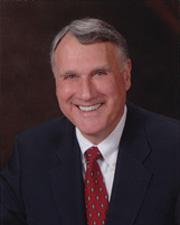 Sen. Jon Kyl (R-AZ)
Legislative Activity
Stay on top of the latest movement without scrolling through every action
Considered by Senate. (consideration: CR S3348)
April 7, 2006
View full timeline
Considered by Senate. (consideration: CR S3348)
April 7, 2006
Considered by Senate. (consideration: CR S3167)
April 6, 2006
Considered by Senate. (consideration: CR S2850, S2856-2863)
April 5, 2006
Roll call votes on amendments in Senate: Motion to table amendment SA 3206 rejected in Senate by Yea-Nay. 0 - 99. Record Vote Number: 87.
April 4, 2006
Considered by Senate. (consideration: CR S2763, S2785-2791)
April 4, 2006
Motion to table amendment SA 3206 rejected in Senate by Yea-Nay. 0 - 99. Record Vote Number: 87.
April 4, 2006
Considered by Senate. (consideration: CR S2699)
April 3, 2006
Considered by Senate. (consideration: CR S2681)
March 31, 2006
Senate amendment submitted
March 30, 2006
Senate amendment proposed (on the floor): Amendment SA 3206 proposed by Senator Kyl to Amendment SA 3192.
March 30, 2006
Amendment SA 3206 proposed by Senator Kyl to Amendment SA 3192. (consideration: CR S2584-2585, S2590-2594; text: CR S2584-2585) To make certain aliens ineligible for conditional nonimmigrant work authorization and status.
March 30, 2006
Votes
1 roll call on this amendment
Amendments
1 amendmentOffered to this amendment
Amendments
1 amendmentOffered to this amendment
Text
Proposed
SECURING AMERICA'S BORDERS ACT

The PRESIDING OFFICER. Under the previous order, the Senate will
resume consideration of S. 2454, which the clerk will report.
The assistant legislative clerk read as follows:

A bill (S. 2454) to amend the Immigration and Nationality
Act to provide for comprehensive reform, and for other
purposes.

The PRESIDING OFFICER. The Senator from New Hampshire.
Mr. GREGG. Madam President, I understand that the Senator from
Georgia and the Senator from Louisiana wish to speak. I also wish to
speak, and I see the Democratic floor leader is here. I spoke with the
Senator from Massachusetts, and he said he wasn't speaking at this
time. I was wondering if we could maybe get a time agreement so that we
can get an order, if that is all right with the Democratic floor
manager.
The PRESIDING OFFICER. The Senator from Vermont.
Mr. LEAHY. Madam President, what is the parliamentary situation now?
I am just asking the question.
The PRESIDING OFFICER. Under the previous order, the time until 12
p.m. will be equally divided between the two leaders or their
designees.
Mr. GREGG. Madam President, I would just suggest that since the
Senator from Georgia is here and the Senator from Louisiana is here and
I am here and I know the Senator from Vermont is here, since he is the
floor leader, he would probably want to proceed. Do you have a
statement you are proceeding with, I presume?
Mr. LEAHY. Madam President, I would tell my good friend from my
neighboring State of New Hampshire, I do have a statement. It is not
very long; it is probably 7 or 8 minutes. But I would like to say, just
to frame the issue, the distinguished chairman of the committee,
Senator Specter, and I spoke on the floor yesterday on this. This is a
major issue. I will want to speak. I do not intend to hold the floor
very long.

Mr. KENNEDY. Will the Senator be good enough to yield? I will be glad
to wait for 45 minutes or an hour. I will seek recognition at that
time. After the Senator from Vermont speaks, we have some other
speakers, but I think we can wait.
Mr. GREGG. I ask unanimous consent that the Senator from Vermont be
recognized for as much time as he may desire and then the Senator from
Georgia be recognized for 15 minutes, the Senator from Louisiana for 15
minutes, and then I be recognized for 15 minutes, and that will get us
to approximately the 45 minutes the Senator was talking about.
Mr. KENNEDY. Then would the Senator from Illinois be recognized for
15 minutes and I will follow the Senator from Illinois?
Mr. GREGG. That sounds reasonable to me.
The PRESIDING OFFICER. Is there objection? Without objection, it is
so ordered.
Mr. GREGG. I yield the floor. I thank the Senator from Vermont and
the Senator from Massachusetts.
Mr. LEAHY. Madam President, I thank the Senator from New Hampshire.
As usual, he found us a roadmap and it worked well.
Madam President, let me just briefly suggest the absence of a quorum.
I am going to take us out of the quorum in about 1 minute.
I suggest the absence of a quorum.
The PRESIDING OFFICER. The clerk will call the roll.
The assistant legislative clerk proceeded to call the roll.
Mr. LEAHY. Madam President, I ask unanimous consent that the order
for the quorum call be rescinded.
The PRESIDING OFFICER. Without objection, it is so ordered.
Mr. LEAHY. Madam President, we are going to have a major debate on
immigration. That is a good thing, both for the country and for the
Senate. I note, however, in the Judiciary Committee, we have had a
major amount of debate and long markups. The distinguished chairman of
the committee, Senator Specter, and I have tried to make sure we had
full hearings.
The distinguished senior Senator from Massachusetts, Mr. Kennedy, is
on the floor. As I said last night, he has spent more time on this than
any of the rest of us. He has been in the Senate longer. He has been a
leader in the area of immigration.
When we began the debate, Chairman Specter and I followed the opening
statement of the Republican leader with a discussion of how the
Judiciary Committee, in a truly bipartisan manner, worked successfully
to meet the deadline set by the Senate's Republican leadership. I
understood that the majority leader had committed to turn to the
committee bill if we were able to meet that deadline. I heard our
chairman reiterate that same thing on the floor again yesterday. We did
it, we completed that difficult task. We did it by working together,
Republicans and Democrats, something that should be done more often
around here.

[[Page S2554]]

Under the steady leadership of the chairman and Senator Kennedy, and
with the hard work and dedication of so many members of the committee,
we worked through the long hours and numerous amendments and
accomplished what had seemed to be the impossible. Our staffs worked
throughout the St. Patrick's Day recess. As I said last night, I got e-
mails from them at 11 o'clock and 12 o'clock at night and then again
very early in the morning. I knew how hard they were working on this--
the staffs of all the Senators involved. Then the Judiciary Committee
sent a resounding message approving a bill by a bipartisan vote of 12
to 6.
What was interesting about that is none of the amendments on the
critical issues passed on a party-line vote. They were by strong
bipartisan votes. Let me tell you what our committee did.
We have a bill that is strong on enforcement. In some ways, it is
stronger than the bill passed by the House. It is tough on employer
enforcement. It is tough on traffickers--and it should be. It is
stronger than the bill introduced by the senior Senator from Tennessee,
who started from the same place as the committee bill but did not
include some of the enforcement measures added by amendment during
committee consideration nor any of the other improvements we made. For
example, neither of those other bills included a provision, added by
the committee at the urging of Senator Feinstein, to make tunneling
under our borders a Federal crime. The committee bill adds new criminal
penalties for evading immigration officers, and it added manslaughter
to the definition of aggravated felony.
Finally, on Monday morning of this week, the committee adopted a
Feinstein amendment to add 12,000 new Border Patrol agents--2,400 each
year for the next 5 years.
Our committee bill is enforcement-plus. It starts with strong
enforcement provisions and border security, but it is also
comprehensive in its balance. It confronts the problem of 12 million
undocumented immigrants who live in the shadows. It values work. It
respects human dignity and includes guest worker provisions supported
by both business and labor. It includes a way to pay fines and earn
citizenship that has the support of religious organizations and leading
Hispanic organizations.
Yesterday, Senator Kennedy and Senator Durbin and Senator Harkin made
excellent, persuasive statements in favor of the committee bill.
Senators Domenici and Martinez also spoke of their personal journeys.
These were very real and meaningful statements. They reminded us all
that we are a country of immigrants. I thank them for speaking in terms
favorable to the comprehensive approach we have adopted. Listening
to them makes me think how proud my immigrant grandparents would be.
They immigrated from Italy to Vermont. They would be proud to hear this
debate, and to see their grandson speaking on the floor of the Senate.

I look forward to working with Chairman Specter in a bipartisan way
to pass the committee bill. The chairman and I have been able to move
our committee from being a confrontational committee to one that works
in a bipartisan fashion. I commend him for that. I commend all members
of the committee for that.
What we have done is, by working that way, we have provided a
realistic and reasonable system for immigration. The bill protects
America's borders, it strengthens enforcement, and most important, it
remains true to the best of American values.
The committee bill wisely dropped controversial provisions which
would have exposed those who provide humanitarian relief or medical
care or shelter or counseling or other basic services to undocumented
aliens. Under the earlier bill, they would have faced possible
prosecution under felony alien-smuggling provisions of the criminal
law--a reminder that in a nation such as ours, with such a great heart
and soul as a nation, we also have a moral and humanitarian
responsibility to people. We should not make felons of those who carry
out the responsibility of feeding the hungry, clothing the naked, and
sheltering those who need shelter.
I thank so many in the relief and religious communities, the faith
community, for speaking out on this matter. Even in my own faith, I was
so pleased to see some of the leaders speak out so strongly.
The criminal provisions should be focused on the smugglers, not on
the children of aliens or those who help them. Focus it on the
smugglers, those who traffic in human misery and sometimes bring about
the death of those they smuggle. Under the committee bill, that is what
we did.
The committee also voted down a measure that would criminalize mere
presence in an undocumented status in the United States. I was a
prosecutor. I know how unworkable that would have been. Illegal status
is currently a civil offense with very serious consequences. One of the
most serious, of course, is it includes deportation. But if you then
criminalize that status, it is punitive, it is wrong, it is totally
unworkable and goes against the history of our Nation. It would have
led to further harsh consequences. It would have trapped people in
permanent underclass status. It would have put bars in front of the
American dream.
These criminalization measures, which were included in the House-
passed bill supported by congressional Republicans and which were
reflected in the majority leader's bill, have understandably sparked
nationwide protest. In the view of many, it is anti-immigrant and
inconsistent with America's values and history. The committee bill,
while tough in enforcement and on the smugglers, is smarter and fairer.
I ask Senators to look at the peaceful demonstrations across this
country. Listen to the people who are speaking out. A half-million
people went out in a peaceful demonstration in Los Angeles. That is
nearly the population of my State. That was just one demonstration
among many.
Opponents of a fair, comprehensive approach are quick to claim that
anything but the most punitive provision is amnesty. They are wrong.
This is not an amnesty bill. An editorial in yesterday's New York Times
entitled ``It Isn't Amnesty'' makes the point that painting the word
``deer'' on a cow and taking it into the woods does not make the cow a
deer. As I said yesterday, in Vermont, especially during deer season,
we Vermonters know the difference between a deer and a cow. Sometimes
we wish the tourists did.
Our committee bill should not be falsely labeled. Our bill is more
properly called what it is: a smart, tough bill.
We know we need a comprehensive solution to a national problem. We
need a fair, realistic, and reasonable system that includes both tough
enforcement and immigration reform provisions. All Senators,
Republicans and Democrats, should be able to agree with these
principles. The bill reported by the Judiciary Committee is that bill.
I am glad to hear that President Bush is again speaking about the
need for a path to citizenship and the need for a comprehensive bill. I
hope, as we now proceed through the sixth year in office, that the
Bush-Cheney administration will finally send a legislative proposal to
Congress on these matters. They have stated their support. Let them
also bring forward what they believe is appropriate legislation. We did
not want to wait any longer in our committee. We did the hard work, and
produced a bipartisan bill.
We did the hard work, and we wrote a tough, smart, comprehensive
bill. The Judiciary Committee's debate has produced a bill that I
believe would make my immigrant grandparents proud, and my maternal
great-grandparents proud. It is worthy of our support.
This is a body which should reflect the conscience of our great
Nation. There are only 100 of us. We are enormously privileged to
represent 295 million Americans. Let us speak to the conscience of all
of us and the humanity of all of us. Let us pass this bill. It is not
just from the managers' point of view, from a political point of view;
it has the support of the labor unions, business groups, leading
Hispanic organizations, and many from our religious communities. They
are asking the Senate to do its part. Let's adopt the committee bill so
we can bring hard-working people out of the shadows and end the
permanent underclass status of so many who have contributed so much.

[[Page S2555]]

Let us protect our security and our borders, but support the American
dream that attracted my grandparents and the American dream that
attracted so many, and allow this bill to become a reality. We are a
good, brave, and wonderful country. Let us demonstrate it.
I yield the floor.
The PRESIDING OFFICER (Mr. Ensign). The Senator from Georgia.
Mr. ISAKSON. Mr. President, in 1903, Andrew Bengsten boarded a ship
and left Sweden, the son of Isak Bengsten. He landed on Ellis Island
and took the last name Isakson, which is the Scandinavian tradition, to
take the father's first name and add ``son'' to it. In 1916, he had a
son named Ed, and in 1926 he became a naturalized citizen.
He went to West Texas as a laborer, and later on to Atlanta, GA as a
carpenter. In 1944, his son Ed and Ed's wife Julia had a son, who by
the grace of God is me. No one in this body has any greater respect or
admiration for this great country and our process of legal immigration
than I.
As we approach the most important debate this Senate will encounter
in this session, it is important that it be a debate of dignity and a
debate of substance and a debate where we learned the lessons of the
past and make sure that immigration in the future holds the same
promise it held for my grandfather 103 years ago.
I have filed an amendment at the clerk's desk, which at the
appropriate time in the debate I will offer, which to me is the key as
to whether we proceed on whatever the final product this Senate may
adopt may be. It is a point that has been missed by many and avoided by
some but we must focus on and we must accomplish. It is an amendment
that very simply says no provision of any act we pass which contains a
guest worker program will go into effect until, first, the Secretary of
Homeland Security has certified to the President and to this Congress
that our borders are reasonably secure.
I want to tell you why that is important. It is important because 20
years ago, in 1986, a great President, Ronald Reagan, and this Congress
adopted a program that gave legal status to 3 million illegal aliens in
the United States. We did so in the hopes of clearing up the problem.
Instead, what we created was an attractive reason for more to come
illegally in hopes of gaining the same status. Today, 20 years later,
we have estimates of 11 million to 13 million Americans who came
exactly that way--over the border illegally in hopes of that same
promise that happened in 1986.
Were we to pass in this body this year a bill granting status that
does not require, first, security on the border, then we will create
the same attractiveness we did 20 years ago. The result will be the
same, and the legacy to another Congress and the problems in our social
services system in our great country will be great. It is important
that whatever security requirements we place in this legislation--and
there should be many--be funded and be in place before any other
provision takes place.
Second, it is important to understand that enforcing the border is
something we can do. Before I introduced border security legislation a
few weeks ago, I traveled to the United States border with Mexico. I
went to San Diego and Tijuana, met with our border agents who are
having remarkable success now because of technology and, of course,
because of improved numbers.
I went to Fort Huachuca in Arizona where the one and only unmanned
aerial surveillance vehicle, the Predator, has a 150-mile stretch of
the United States-Mexican border secure because we have eyes in the sky
24 hours a day, 7 days a week.
For $400 million, we can deploy a fleet of 26 of those unmanned
Predator aircraft to have eyes in the sky 24/7 along the entire 2,000-
mile border. That will have a tripling effect on our manpower because
it allows us through technology to identify those who are coming and
where they are, to position the agents we have to intercept them and
turn them around. It will send the signal that no longer are we going
to look the other way but instead we are going to focus on those who
are trying to come here illegally and be smuggled, and shut the door so
they will apply legally to come to this country the right way, as so
many American guests have and some citizens have, to ultimately become
naturalized.
This place we all call home and the rest of the world calls America
is a very special place. Our problem isn't that people are trying to
break out of this great country; they are all trying to break into this
great country. We owe it to our country and our future and to the
legacy of our children to assure that the path to this country is legal
and operable, and that it isn't done illegally and involve smuggling.
While often many of us talk about the Southwest border, it should
also be true on the border with Canada as well, and it should be true
at our ports.
Whatever we do in this 2 weeks of debate, it must ultimately be
predicated on, first, securing the border of the United States, whether
it be on the north or on the South. We must have fortitude in this
Senate to pass the appropriations necessary to fund the programs to
secure those borders. Rhetoric is cheap. Enforcement on our borders can
be expensive. But it must be essential.
The distinguished Senator from New Hampshire, who is on the floor,
has been an absolute leader to the appropriations and the budget
process in focusing like a laser beam on seeing to it that we authorize
and ultimately appropriate the funds to do exactly that in terms of
manpower. I will join him in that as well as those who put the funds up
for the unmanned aerial vehicle surveillance and the ground sensors for
tunneling and other technology we have.
It is a matter of us developing a resolve to secure the borders of
the United States of America. We must not demonize anybody. First, we
must secure the borders which the American people expect us to secure.
I come from a great State, the State of Georgia, a State that is a
major agricultural producer in this country, a State where there are
many migrant laborers. I am well aware of what the green industry, the
agricultural industry and the construction industry workforce, is made
up of. We owe it to those industries to see to it that we have a legal
path to come to this country and to work and appreciate America, that
no longer will there be smuggling of illegal aliens across our border,
but instead we have as a country a legal path for people to come and an
illegal door that is shut because we have stopped turning and looking
the other way.
I look forward to this debate. I appreciate the promise of this
country, because were it not for our legal immigration process I would
not be here today. But I will fight as hard as I can to see to it that
whatever passes this Senate requires first and foremost the securing of
our borders before the extension to guest workers or any status be
granted. If we do not, we will have recreated the problem we created in
1967. We will deal not with just 3 million illegals coming but millions
and millions and millions more, all because we looked the other way at
a time when we needed to focus like a laser beam.
The people of this country are looking to us to secure our borders
for the homeland and for immigration. We must secure them first before
we do anything else.
A comprehensive bill is possible, and I have no problem with
addressing comprehensive reform. But those reforms that involve guest
workers must only be implemented after the certification by the
Secretary of Homeland Security that our borders are secure. For failure
to do so is to pass on to another generation of Americans a compounded
problem.
I yield the floor.
The PRESIDING OFFICER. The Senator from Louisiana.
Mr. VITTER. Mr. President, I too rise to strongly support the general
thrust of the President's border security bill. As the essential first
step in this great challenge, we must take strong, meaningful action--
not just talk but action to prove that we can and will secure our
borders and return to the rule of law with regard to our immigration
system.
I too rise as a descendent of immigrants to this country, and I am
very proud of that. Both sets of my grandparents--on my mom's side and
on my dad's side--came from France. They came first into New York but
very soon thereafter to Louisiana where there are

[[Page S2556]]

many other French immigrants, and they settled.
What is so unique about this debate is that here in the Senate, every
Senator rises and begins with a similar sort of story. We are all the
descendants of immigrants. That is what makes America so magical and so
unique. For a young country, we are an immigrant country, and we
celebrate that. But we also want to preserve that.
To me, that comes down to two fundamental traditions in this
country--the two fundamental reasons I am supporting the Frist border
security bill--and that focus as a first step in this great debate is
one tradition, the tradition of immigration, but it is a proud, strong
tradition of legal immigration throughout the history of our country,
at least until recently.
The other great tradition which I will base my vote on is the very
important tradition--in fact, one of the leading reasons so many
people, including my grandparents, came to this country--of the rule of
law which forms the basis of so much of what we do.
Let me talk briefly about those two traditions.
First, the rule of law: It is at the heart of our entire system. It
is at the heart of what is attractive to millions upon millions of
people from every country around the world to become Americans,
including my family. Law is at the center of our democratic traditions.
Without proper law enforcement, written laws mean nothing. Failure to
enforce certain laws, including our immigration laws, gives people the
impression that the Federal Government will fail to enforce other laws.
That tradition of the rule of law and enforcement is an essential
component to comprehensive immigration reform.
A recent poll conducted by the Washington Post and ABC News found
that the huge majority of Americans agrees with what I am saying. Four
in five Americans think the Government is not doing enough to prevent
illegal immigration, with three in five saying they strongly hold that
view.
The same poll found that 56 percent of Americans believe illegal
immigrants have done more to hurt the country than to help it, while
only 37 percent believe illegal immigrants help the country. But the
key is the illegal nature of that activity--not our proud tradition of
legal immigration.
Of course, this issue of the rule of law and the explosion of illegal
immigration also has a very important national security component,
particularly since September 11. Adequate border security and
enforcement of our immigration laws was an issue on September 11. It
goes directly to the terrorist attacks. It goes directly to our war on
terror.
In its report, the 9/11 Commission itself found weaknesses in
immigration enforcement could have facilitated those terrorist acts.
The Commission stated:

. . . our investigation showed that two systematic
weaknesses came together in our border system's inability to
contribute to an effective defense against the September 11
attacks: A lack of well-developed counterterrorism measures
as part of border security, and an immigration system not
able to deliver on its basic commitments, much less support
counterterrorism.

Other studies have shown that 15 of the 19 September 11 hijackers,
including Mohammed Atta, should have been denied visas. At least three
of them overstayed their visas. Clearly, lax enforcement was an
important part, sadly, of that tragedy.
There are also other issues within the country related to illegal
immigration--not our proud tradition of legal immigration but illegal
immigration.
First, it is very important to say we are talking about millions upon
millions of people, 11 to 13 million by most estimates, even more by
some. It is important to say the great majority of those people are not
dangerous criminals. However, some percentage of those folks do
contribute enormously to our criminal issues in this country. A GAO
report issued in April of 2005 says the number of criminal aliens
incarcerated in the United States increased by 15 percent from 2001 to
2004. Those aliens constitute about 27 percent of all Federal
prisoners. That is a cost to the Federal Government of about $1.2
billion a year. That specific year was 2004. It is an enormous cost to
our country. Again, a small percentage of those balloon the costs to
society.
Violent gangs, composed mostly of criminal aliens such as the El
Salvadoran-based MS-13, have been a very important and dangerous part
of the criminal problem and violent crime in this country. Last March,
ICE agents deported 37 criminal aliens rounded up in the Washington, DC
area, two of whom had ties to MS-13. MS-13 has spread across the
country. Over 2,000 members are in northern Virginia alone.
For all of these reasons, real enforcement must come first in our
meeting this challenge. It must come first because we need to get
control of our borders. We need to get control of the serious
repercussions this illegal problem has in our country, including on the
criminal side. To do this, we must prove to the American people we are
not just going to talk about it as window dressing to what is
tantamount to an amnesty program. We are going to do it. We are going
to put the resources behind it. We are going to deploy those unmanned
aerial vehicles. We are going to do what is next in terms of manpower
enforcement and other resources at the border.
I am a fairly typical American when it comes to this issue. I have
heard this enforcement talk in Washington for the last couple of years.
I don't believe most of it. Quite frankly, we have never been true to
it. We have never been serious about it. We have never turned the
corner on this issue before.
I believe it is our solemn duty and responsibility in terms of
addressing this issue in a comprehensive way to first not only pass
border security and significant enforcement measures, but to put them
in practice, to fund them, to get agents on the border, to do whatever
it takes to turn the corner on this issue and prove to the American
people, prove to me and so many millions of others, we are serious
about enforcement.
There is another reason I believe we must start with enforcement, as
the Frist measure does. It is because any measure that is tantamount to
amnesty sends exactly the wrong message as we try to get our hands
around this problem. We are a nation that believes in upholding the
rule of law. We must reestablish respect for our laws, including border
security and interior security. But provisions which are tantamount to
amnesty send exactly the opposite message. It sends the message that
you can break the law and over time you will basically be rewarded for
doing so.
These are not just theoretical or commonsense arguments. These are
arguments that are borne out by history, as Senator Isakson, the
previous speaker, pointed out.
The last amnesty type of program enacted by this Congress was in
1986. There have been many studies about the effects of that since
then. Across the board they show that act of basically granting amnesty
to a class of illegal aliens in this country dramatically worsened the
problem. It did nothing to solve the problem. In 1992, for instance, 6
years after the last illegal alien agricultural worker amnesty passed
in 1986, the Commission on Agricultural Workers issued a report to
Congress that studied the effects of that 1986 agriculture worker
amnesty. They made a number of findings and recommendations. First, the
Commission found that the number of workers amnestied under the bill
had been severely underestimated. I fear many of the estimates we are
talking about here today are underestimated.

Second, the Commission found the agriculture worker amnesty only
exacerbated existing problems.

Six years after AIRC was signed into law the problems
within the system of agricultural labor continue to exist . .
. In most areas, an increasing number of newly arriving,
unauthorized workers compete for available jobs, reducing the
number of work hours available to all harvest workers and
contributing to lower annual earnings . . .

Third, the Commission stated that a guest worker amnesty program
should not be the basis for future immigration policy. The Commission
went on to say the only way to have a structured and stable market was
to increase enforcement of our immigration laws, certainly including
strong employer sanctions.
So we have experience to guide us. We have concrete history to learn
by. Why do we believe doing the same thing as we did in 1986, only on a
much greater scale, is going to yield different results?

[[Page S2557]]

The Frist bill is not perfect, but it is a good and an appropriate
start. And start we must on the enforcement side of the equation to
prove we can get real, get tough, get serious about enforcement as
never before. Because, quite frankly, we have never, ever, in the
history of this modern problem proven that we will be serious, that we
will have the political will, that we will devote the manpower and
other resources necessary to turn the corner on this issue.
I urge all of my colleagues to start here where there is consensus,
where we can come together around commonsense, meaningful, and
appropriate enforcement actions as the important first step in
addressing this very important challenge.
The Senate is having a very important and responsible debate on this
issue. It is crucial in this debate that we be respectful of each other
and of everyone involved in this issue and not demonize any part of
society. That applies equally to those who believe we must start with
enforcement as it does to people illegally in this country.
No one in this Senate, I believe, is anti-immigration. Everyone is a
product of a strong and proud history of immigration in this country.
But until recently it was a strong and proud history of legal
immigration. I truly believe what most threatens that strong and proud
history and the support in this country for that foundation of our
society is the fact that illegal immigration has subsumed that
tradition.
If we want to continue to cherish that tradition, if we want to
continue to have respect for all members of our society, no matter how
they look or appear, we must get back to that important tradition of
legal immigration. We must get back to the rule of law so we can defend
that strong tradition and get hold of this very serious challenge our
country faces.
I yield back the remainder of my time.
The PRESIDING OFFICER. The Senator from New Hampshire.
Mr. GREGG. Mr. President, obviously the issue before the Senate is a
critical issue--how we maintain the atmosphere of this Nation, which is
basically the essence of our definition of a culture, which is that we
are a society which invites people from around the world to participate
in our society. It was the reason we went with the motto, E pluribus
unum: from many, one. How we maintain that atmosphere, that way of life
which has given us so much energy as a nation, that has given so many
people the opportunity to pursue the American dream, is what this
debate is all about.
Whatever we do, we do not want to, in my opinion, chill that great
tradition which is the engine for our strength as a nation. People come
here seeking a better life, and as a result they energize society to be
even more productive, successful, and stronger.
We are, as has been mentioned by most of the speakers today, most all
of us immigrants. Certainly everyone in the Senate since the departure
of the great Senator Ben Nighthorse Campbell falls into that category.
The issue, in my opinion, breaks into two obvious parts. The first is
how you secure the border. The second is how you deal with the fact
there is a large number of people in this country who are here
illegally today and that there is a large number of people who wish to
come to this country for the purposes of earning a living, and that
they will come into this country however they can--and if it is
illegal, they will come here illegally--and how we would change that
atmosphere.
On the first issue, which has been discussed and which is the purpose
of the bill before the Senate, the bill filed by the Senate majority
leader, this is very resolvable. We can secure our borders. That has
been said by everyone. And we should. We must. We cannot as a culture
survive if we do not have borders which are secure, if we do not know
who is coming into the country, if we do not know who is coming here.
If we have large numbers of people who are coming into this Nation
illegally, it undermines us as a nation of laws.

There is no question but this can be resolved. It does not take a lot
of new law to do that, to be very honest. We can pretty well control
who is coming into this country. I want to get into the specifics of
how we do that because I have the good fortune to chair the
subcommittee which has jurisdiction over the borders in the
appropriations area. I will talk about what we need there. Before I do
that, I also want to address this issue of amnesty and guest worker and
how we deal with the folks who are here and who are here illegally.
Let's assume for the moment we are able to secure the southern
border, which I think we can. It might take 2 or 3 years, but I am
absolutely sure we can do that, so that the vast majority of the people
coming across our southern borders will come across in some manner
which is legal, for a purpose which is not to harm us. That is a little
more difficult to do on the northern border. We do not have the human
wave coming across the northern border. The northern border is probably
more of a terrorist threat to us, actually, in many ways, but it does
not have the human wave issue that we see on the southern border.
The question becomes, how do you deal with the folks who are already
here illegally? There is this term, we cannot give them amnesty;
amnesty is wrong. Well, as a practical matter, they already have
amnesty. Our system is not able to deal with these individuals unless
they become criminals, unless they commit an act which violates our law
in an open way, commit a felony, do something that is clearly a
transgression to our society. But if they are here working, as most of
them are, trying to support themselves or their families or their
families back home, for all intents and purposes they already have
amnesty because we are not doing anything about it and we do not have
the capacity to do anything about it. That is a straw dog, to be very
honest, this argument of amnesty.
The bigger question, more fundamental question, is how do you set up
a system which allows these people to come out from behind the bushes
where they have to hide, so they are not taken advantage of, so they
can be even more productive in their role here in the United States,
and do it in a way that does not basically affront our sensibilities as
a nation of laws, and especially address the issue of citizenship.
There are a lot of ways to do that. There are a lot of ideas being
put forward to do that. I happen to think the essence of the question
is how you deal with the issue of citizenship. If you are here
illegally, getting citizenship should be probably not attainable, but
certainly there should be a way to allow you to still participate in
our society so you do not have to hide.
That assumes, however, you have effectively set up a border
enforcement mechanism which works because, as the point was made by the
Senator from Louisiana, you cannot move to any sort of effort to try to
redress or address the issue of people who are here illegally unless
you have more control of the borders because you simply will create an
incentive for more people to come in illegally.
But let's remember that if we were able to solve the problem of the
people who are here illegally and who are working and who seek nothing
more than to be working, if we were able to give them some sort of
status that would allow them to participate as workers in this country
in a public way, so they were able to participate in systems such as
paying into the health care system, paying into retirement systems, I
think we might actually be moving toward a more constructive result
than what we have today, which is essentially a large number of people
who we know are here and we just turn our eyes to the fact they are
here illegally. They are going to continue to stay here and work here.
We certainly are not going to remove them because we have no way to
remove 10, 11 million people, however many people there are, except for
those people who commit criminal acts.
So I think the debate is misfocused in some ways when the word
``amnesty'' becomes the hot button nomenclature versus the more
substantive question: What you do with people who are already here and
basically have the capacity to be here, and they already have amnesty,
for all intents and purposes, because we are not going to do anything
about them so long as they act legally in the context of their jobs
because we do not have the capacity to remove 11 million people, and
our society would not be able to absorb it.
But getting into the issue I wish to talk about today, which is the
specifics

[[Page S2558]]

of the Border Patrol question and how you upgrade the Border Patrol,
the bill before us authorizes an additional 1,400 Border Patrol agents
over the next few years and authorizes more beds for detention. It
authorizes more technology for the purposes of guarding the border.
That is all well and good. I strongly support those authorization
efforts.
But the bottom line is, the rubber does not meet the road with the
authorization bill. The rubber meets the road with when we spend the
money, which is with the appropriations bill. The problem we have, very
simply, is we are not committing resources in this area to the level we
need to accomplish what is already on the books in the way of obtaining
security along the border.
Security along the border basically breaks down to three basic
components: First, how many agents, how many feet on the ground do you
have down there? Second, how many beds do you have, so when you find
people who are coming across illegally, you can actually control where
they are going, so you are not basically catching and releasing but you
can actually hold these people and send them back? And third, what
technologies are necessary in order to, first, monitor the border, and
secondly, evaluate people who are coming into our country as to whether
they are coming here to participate in our society in a positive way or
whether they are coming here to do us harm?
In all four of those categories--three categories with a couple
subcategories--we simply have not been able to put the resources in
that are necessary to get where we want to go. This does not mean we
have not tried. In fact, in the last 2 years, we have increased the
number of Border Patrol agents by 1,500. That is almost 1,300 more than
the administration asked for. We added over 2,000 beds to detention. We
have significantly increased the funding for the surveillance and
technology area, especially in the area of US-VISIT, which is the
program which is essentially going to try to, through technology, be
able to evaluate people as they come into the country legally and know
whether they are people whom we want to have visit us or whether they
are people who may be here to do us harm.
But that has not generated the results we need. I wish to go through
a few statistics which are, unfortunately, rather stark but should be
talked about because you are not going to get resolution around here
unless you talk about them.
The first is the issue of border agents. We have been increasing the
number of our border agents rather significantly over the last couple
years, as I just mentioned, but we also know we need to increase them
even further in order to hit what is the goal. With 20,000 agents on
the border, we can accomplish what we need to do relative to boots on
the ground. That means we have to increase--by 1,500, 2,000, 2,000 in
each of the next few years--the number of agents we put on the ground,
the number of agents in the system.

The problem is very simple: One is a dollar issue, which should be
able to be resolved but, secondly, it is an issue of being able to
hire. It takes 30,000 applications, approximately, in order to hire
1,000 agents. It is very difficult to find the people we need--it is
that simple--because of the language requirements and because of the
educational requirements and because of the demands of the job. So it
is not only an issue of money, it is an issue of hiring up. And that is
a big problem for us.
A second problem we have is that the technology situation is dire,
especially in the area of aircraft, where we are essentially
functioning with a fleet of aircraft which has long outlived its
purposes.
The average life of the P-3s we have in the air should be 20 years,
but the average life of the P-3s that are actually flying is 40 years.
I want to show you a picture of the problem we have with the P-3s,
which basically is the backbone of our air surveillance. This is a
crack in the bathtub fitting of a P-3. As a result, last year, we had
11,000 hours of P-3 flight, but this year alone we have had to reduce
the P-3 flights by over 1,000 hours because we have had to retrofit
these planes. Why? Because they are 40 years old or older, and they
should have flown for 20 years.
We have the same problem in our helicopter fleet, where the average
life is supposed to be 15 years for our helicopters. We are flying
helicopters which have average lives of 30 years.
The same is true of our Beech King air fleet, where the average life
is supposed to be 20 years, and they are well over 30 years.
These are problems of resources which need to be addressed. I will
talk in a second as to how they should be addressed.
The third issue in the area of surveillance--we have heard about the
Predator, which is the unarmed, in this case, air surveillance system
along the border. This is a great breakthrough for us. We do not have
to build a fence along the southern border. Building a fence would be
the exact wrong message to send, in my opinion. There are certain
sections where there are heavily populated communities where you are
going to have to have some fencing, but the vast majority of the border
does not require fencing, should not have fencing. It is the wrong
image for us as a nation. And with technology, we can do a lot.
One of the keys to technology is the Predator. But we only have one
Predator. We need 18 in order to effectively do the border. So, again,
it is an issue of resources, putting resources in this area.
In the area of beds, we know the States are absorbing a huge amount
of the costs of basically taking care of the illegal aliens who have
been arrested. We know we do not yet have the beds necessary to be able
to even hold the non-Mexican arrests, which are the people we are most
concerned about from a terrorist standpoint. We need to add a lot of
new beds. We need to be creative about this--not just having physical
buildings; we need to figure out ways to use swing beds. We need to
figure out ways to use closed military facilities, maybe tents, tent
capabilities. But we need to put more resources in this area, although
this Congress has attempted to do it by adding over 2,000 beds in the
last few years.
So we have serious resource issues. Well, how do we address this
issue? There will be a supplemental coming through here in a few days--
in a week--which is the supplemental to fight the war on terror. Now,
it seems to me that probably one of the core elements of fighting the
war on terror is making sure your borders are secure.
I would hope within the limit of that supplemental we would be able
to fund the capital needs or at least make the first downpayment on the
major capital needs I have just outlined in the border areas,
specifically: the aircraft, replace those P-3 aircraft, buy more
Predators, replace the helicopters, make sure the cars these agents
drive can go out in the field day after day and still work well so we
can move the agents out into the field, make the capital investments in
the buildings necessary in order to take care of these people.
Mr. President, I ask unanimous consent for 2 additional minutes.
The PRESIDING OFFICER. Without objection, it is so ordered.
Mr. GREGG. That is something we should do now. It is something we
should do in the context of national defense, and it should be done as
part of the supplemental.
The bigger problem we have is that when the Homeland Security bill
hits this floor, we are going to have to figure out a way to pay for
this. The administration has proposed we increase fees on air
transportation. Well, air transportation fees do not necessarily line
up with Border Patrol needs. In fact, the Border Patrol needs are not
affected by air transportation fees. Air transportation fees fund
things such as TSA. So it is unlikely that fee is going to occur. But
if we do not do it, we are going to have a $1.6 billion hole in the
Homeland Security budget. We cannot afford that. We need those extra
dollars. So we will have to come up with a way to do that. I am making
my commitment to do that.
But the reason I wanted to speak today was to make it clear we can,
with additional resources, accomplish the first step to border security
and to good immigration policy, which is border security, which allows
us to know who is coming into this country. It is a very doable thing.
All it takes is resources. I believe we should have, as a Congress, the
wherewithal and the willingness to commit those resources.
The PRESIDING OFFICER. The Senator from Illinois.

[[Page S2559]]

Mr. DURBIN. Mr. President, first, I commend Senators McCain and
Kennedy, who are on the Senate floor. They have really pointed the way
for a positive resolution of a problem we have faced for generations in
America.
The immigration system in our country is seriously broken, and we
know it. It is obvious, as we look at the number of undocumented people
in America and as we consider, those of us in this line of work, all of
the families who come to us with problems with the current system.
There is so much unfairness, so much injustice. We can do better as a
nation, a nation of immigrants.
Now the Senate will face a very clear and stark choice. Senator Frist
brings to the floor an alternative. His is an alternative that focuses
on enforcement.
Well, Senator Frist is not alone in believing we need to be better at
enforcing the laws of our country. In fact, Senator Frist's bill and
the bill I support--the one that came from the Senate Judiciary
Committee, supported by Senator Specter, the chairman of the committee,
inspired by Senators McCain and Kennedy in major part--is a bill which
also focuses on enforcement.
Both bills double the size of the Border Patrol by adding 12,000 new
agents. Both bills strengthen interior enforcement of immigration laws
by adding 5,000 new immigration investigators. Both bills would take
advantage of new technology to create a ``virtual fence'' at the
border. Both bills would improve border controls by expanding entry-
exit tracking. Both bills require the construction of new vehicle
barriers and new permanent highway checkpoints near the border. The
list goes on and on. The bills are the same when it comes to
enforcement at our broken borders, as it should be.
But what the Frist bill does beyond that is what is clearly
unacceptable, from my point of view, and was unacceptable in the Senate
Judiciary Committee. The Frist bill continues the provision that was
started in the House of Representatives which criminalizes those who
are here in undocumented status and those who help them. That is where
this bill, the Frist bill, crosses the line. That is why it is
unacceptable. This concept was rejected in the Senate Judiciary
Committee and should be rejected on the floor of the U.S. Senate.
Think about it for a moment. Are we serious that we are going to
charge 12 million people with the crime that Senator Frist would create
in his provision? Are we saying to people who are here in the United
States under a myriad of different circumstances that they are going to
be treated as criminals amongst us?
To what end? To arrest them, to apprehend them, to prosecute them, to
incarcerate them? Of course, we can't do that. With 12 million people,
it can't be done.
But by branding them as criminals at the outset, it is a guarantee
they will never come out of the shadows. They will stay lurking as part
of our culture, part of our economy in illegal status indefinitely.
Criminalizing them is not the answer.
Sadly, the bill goes even further. In the instance of undocumented
people amongst us, it would subject them to a misdemeanor subject to 6
months in jail, but it goes much further for the Good Samaritans who
assist them. That is the most outrageous element of the Frist bill. It
is harsh. It is not American.
Consider this for a moment. If a priest counsels a mother that she
should remain in the United States with her children who happen to have
been born here and are American citizens, that priest can be found
guilty of an aggravated felony for having counseled her to stay in the
United States. In the city of Chicago, which I am proud to represent,
we have a domestic violence shelter, Mujeres Latinas en Accion. It is
in a section known as Little Village. It is primarily a Mexican section
of our city. Some are citizens; some are not. This domestic violence
shelter brings in battered mothers and their children to protect them
from their abusive, drunken husbands while they call the police
department. The social workers who are standing at the door protecting
those mothers and children would be subject to being charged with a
felony under the Frist provisions. A nurse who offers to a mother at a
medical clinic the advice that she should bring her child back, without
checking to make certain she is not undocumented, could be charged with
a felony. Is that where we are headed? Is that the kind of America we
want to live in? I don't think so.
The Senate Judiciary Committee rejected that. Why Senator Frist
continues to offer it, I don't know. I don't think it is consistent
with the goal we all share. The goal we share is in repairing the
system, better enforcement at the borders, better enforcement when it
comes to employment so we will know if employers are exploiting the
undocumented. That is part of real enforcement that will lead to
fairness and justice in the way we deal with immigration.
There's another problem with the majority leader's bill. It would do
nothing to address the situation of 12 million undocumented immigrants
who currently live in our country. We need tougher enforcement, but in
the Judiciary Committee bill we acknowledge something that the majority
leader's bill does not: A strategy that focuses on enforcement only is
doomed to failure.
Beyond that, the McCain-Kennedy bill, which is an inspired piece of
legislation, would offer a chance for immigrants who work hard and play
by the rules to earn their way to citizenship over the course of many
years. This is not an amnesty. Amnesty says we forgive you. The McCain-
Kennedy bill does not say that. The McCain-Kennedy bill says: If you
are here undocumented for a variety of reasons, if you are here without
legal status, there is a path you can follow. It is a long path, a
demanding path, but at the end, you could end up in a legal position or
have a chance. That is the best approach for us to use.
Let me tell you exactly what the McCain-Kennedy provisions would
require in this path to legalization. It is not a free ride. It is not
a get-out-of-jail-free card. Let me tell you what you would have to do
during the course of an 11-year commitment on your part to finally
reach citizenship: a clean criminal record, employment since before
January 2004, remaining continuously employed during this period,
paying approximately $2,000 in fines and fees, passing a security
background check, passing a medical examination, learning English,
learning U.S. history and government, and paying all back taxes. If you
have complied with all of those requirements, you will go to the back
of the line behind all applicants currently waiting for green cards.
That is not an amnesty; that is a demanding process which will test the
undocumented as to whether they really want to be part of America on a
legal and permanent basis.
All of us understand--those of us who are the sons and daughters of
immigrants--that the people who come to these shores bring a special
quality. David Brooks of the New York Times has an article which I ask
unanimous consent to print in the Record.
There being no objection, the material was ordered to be printed in
the Record, as follows:

Immigrants To Be Proud of

(By David Brooks)

Everybody says the Republicans are split on immigration.
The law-and-order types want to close the border. The free-
market types want plentiful labor. But today I want to talk
to the social conservatives, because it's you folks who are
really going to swing this debate.
I'd like to get you to believe what Senator Sam Brownback
of Kansas believes: that a balanced immigration bill is
consistent with conservative values. I'd like to try to
persuade the evangelical leaders in the tall grass to stop
hiding on this issue.
My first argument is that the exclusionists are wrong when
they say the current wave of immigration is tearing our
social fabric. The facts show that the recent rise in
immigration hasn't been accompanied by social breakdown, but
by social repair. As immigration has surged, violent crime
has fallen by 57 percent. Teen pregnancies and abortion rates
have declined by a third. Teenagers are having fewer sexual
partners and losing their virginity later. Teen suicide rates
have dropped. The divorce rate for young people is on the way
down.
Over the past decade we've seen the beginnings of a moral
revival, and some of the most important work has been done by
Catholic and evangelical immigrant churches, by faith-based
organizations like the Rev. Luis Cortes's Nueva Esperanza, by
Hispanic mothers and fathers monitoring their kids. The anti-
immigration crowd says this country is under assault. But if
that's so, we're under assault by people who love their
children.

[[Page S2560]]

My second argument is that the immigrants themselves are
like a booster shot of traditional morality injected into the
body politic. Immigrants work hard. They build community
groups. They have traditional ideas about family structure,
and they work heroically to make them a reality.
This is evident in everything from divorce rates (which are
low, given immigrants' socioeconomic status) to their
fertility rates (which are high) and even the way they shop.
Hispanics and Hispanic immigrants have less money than
average Americans, but they spend what they have on their
families, usually in wholesome ways. According to Simmons
Research, Hispanics are 57 percent more likely than average
Americans to have purchased children's furniture in the past
year. Mexican-Americans spend 93 percent more on children's
music.
According to the government's Consumer Expenditure Survey,
Hispanics spend more on gifts, on average, than other
Americans. They're more likely to support their parents
financially. They're more likely to have big family dinners
at home.
This isn't alien behavior. It's admirable behavior, the
antidote to the excessive individualism that social
conservatives decry.
My third argument is that good values lead to success, and
that immigrants' long-term contributions more than compensate
for the short-term strains they cause. There's no use denying
the strains immigration imposes on schools, hospitals and
wage levels in some markets (but economists are sharply
divided on this).
So over the long haul, today's immigrants succeed. By the
second generation, most immigrant families are middle class
and paying taxes that more than make up for the costs of the
first generation. By the third generation, 90 percent speak
English fluently and 50 percent marry non-Latinos.
My fourth argument is that government should be at least as
virtuous as the immigrants themselves. Right now (as under
Bill Frist's legislation), government pushes immigrants into
a chaotic underground world. The Judiciary Committee's bill,
which Senator Brownback supports, would tighten the borders;
but it would also reward virtue. Immigrants who worked hard,
paid fines, paid their taxes, stayed out of trouble and
waited their turn would have a chance to become citizens.
This isn't government enabling vice; it's government at its
best, encouraging middle-class morality.
Social conservatives, let me ask you to consider one final
thing. Women who have recently arrived from Mexico have
bigger, healthier babies than more affluent non-Hispanic
white natives. That's because strong family and social
networks support these pregnant women, reminding them what to
eat and do. But the longer they stay, and the more
assimilated they become, the more bad habits they acquire and
the more problems their subsequent babies have.
Please ask yourself this: As we contemplate America's moral
fiber, do the real threats come from immigrants, or are some
people merely blaming them for sins that are already here?

Mr. DURBIN. Mr. Brooks' message was addressed primarily to
Republicans and conservatives, but he spells out for all who read it
what these immigrant people bring to America. My mother came to these
shores in 1911 at the age of 2. Her mother, my grandmother, brought her
from Lithuania with her brother and sister. They made to it East St.
Louis, IL, where my grandfather worked in a steel mill. My mom dropped
out of school after the eighth grade, which was not unusual in her
time, got married, and a few years later became a naturalized citizen.
Her son is now the 47th Senator from the State of Illinois. Those
stories can be told over and over.
Think of the courage of the people who came here, starting with my
family and others, the courage to leave behind your village, your
church, your language, your relatives, your friends, to come to a
country you have never seen before with a language you didn't speak to
try to make a better life. So many of us are so blessed to be here from
the start, but others fight night and day for the chance to come. They
don't just bring another body to be counted; they bring a spirit. It is
a spirit of hard work and determination, creativity, entrepreneurship.
It is a spirit of family values that we should treasure. Mr. Brooks
says as much in his article.
This is a positive force in the development of America, and it always
has been. We should look at this as a positive opportunity for America
to be a stronger nation, a nation that grows in the right direction
with the right people and the right values.
The Frist bill is the wrong approach. Criminalizing those who are
here, charging those who help them with felonies for simply providing
humanitarian assistance is wrong. It is far better for us to take the
more constructive and comprehensive approach of the Specter bill that
was reported by the Senate Judiciary Committee.
I reserve the remainder of my time.
The PRESIDING OFFICER. The Senator from Arizona.
Mr. McCAIN. Mr. President, I ask unanimous consent, with the
agreement of the Senator from Massachusetts, to use his time and an
additional 5 minutes, if necessary.
The PRESIDING OFFICER. Without objection, it is so ordered.
Mr. McCAIN. First, I thank my friend from Massachusetts for allowing
me this time. Working with him on this issue has been an experience
that I believe will result in benefit to the country. I appreciate the
effort we have made together.
As we know, the Senate is beginning debate on a very important and
complex subject that is among the most difficult and divisive we face.
Our Nation's immigration system is broken. Without comprehensive
immigration reform, our Nation's security will remain vulnerable. That
is why we must act.
I begin by commending Chairman Specter and the members of the
Judiciary Committee for the considerable effort they have taken to
report a comprehensive immigration reform measure that could be
considered during this debate. While I am not in agreement with each
and every provision, it is a great starting point for the debate.
Those of us from border States witness every day the impact illegal
immigration is having on our friends and neighbors, our county and city
services, our economy, and our environment. We deal with the
degradation of our lands and the demands imposed on our hospitals and
other public resources. Our current system doesn't protect us from
people who want to harm us. It doesn't meet the needs of our economy.
It leaves too many people vulnerable to exploitation and abuse.
Throughout this debate, we will be reminded that immigration is a
national security issue, and it is. It is also a matter of life and
death for many living along the border. We have hundreds of people
flowing across our borders every day, an estimated 11 million to 12
million people living in the shadows in every State in our country.
While we believe the majority are hard-working people contributing to
our economy and society, we can also assume there are some people who
want to do us harm hiding among the millions who have come here only in
search of better lives for themselves and their families. We need new
policies that will allow us to concentrate our resources on finding
those who have come here for purposes more dangerous than finding a
job.
Last year, when Senators Kennedy, Brownback, Lieberman, Graham,
Martinez, Obama, Salazar, and I worked together to develop a sensible,
bipartisan and comprehensive immigration reform measure, first and
foremost among our priorities was to ensure our bill included strong
border security and enforcement provisions. We need to ensure that the
Department of Homeland Security has the resources it needs to secure
our borders to the greatest extent possible. These include manpower,
vehicles, and detention facilities for those apprehended. But we also
need to take a 21st century approach to this 21st century problem. We
need to create virtual barriers as well through the use of unmanned
aerial vehicles, ground sensors, cameras, vehicle barriers, advanced
communications systems, and the most up-to-date security technologies
available to us.
The border security provisions under the leader's bill and the
Judiciary Committee's bill provide sound proposals to promote strong
enforcement and should be part of any final bill. However, I do not
believe the Senate should or will pass an enforcement-only bill. Our
experiences with our current immigration system have proven that
outdated or unrealistic laws will never be fully enforceable
regardless of every conceivable border security improvement we make.
Despite an increase in Border Patrol agents from 3,600 to 10,000,
despite quintupling the Border Patrol budget, despite the employment of
new technologies and tactics, all to enforce current immigration laws,
illegal immigration drastically increased during the 1990s. While
strengthening border security is an essential component of national
security, it must also be accompanied by immigration reforms.

[[Page S2561]]

We have seen time and again that as long as there are jobs available
in this country for people who live in poverty and hopelessness in
other countries, these people will risk their lives to cross our
borders no matter how formidable the barriers, and most will be
successful. Our reforms need to reflect the reality and help us
separate economic immigrants from security risks. We need to establish
a temporary worker program that permits workers from other countries to
the extent they are needed to fill jobs that would otherwise go
unfilled.
We need workers in this country. There are certain jobs Americans are
simply not willing to do. For example, today in California and Arizona,
food is rotting on the vine and lettuce is dying in the fields because
farmers can't find workers to harvest their crops. At the same time,
resorts in my own State of Arizona cannot open to capacity because
there are not enough workers to clean the rooms. Restaurants are
locking their doors because there is no one to serve the food or clear
the dishes. We are facing a situation whereby the U.S. population does
not provide the workers businesses desperately need, yet the demand for
their services and products continues. The current immigration system
does not adequately and lawfully address this problem. As long as this
situation exists without a legal path for essential workers to enter
the country, we will have desperate people illegally crossing our
borders and living in the shadows of our towns, cities, and rural
communities. That is not acceptable, particularly when we are fighting
a war on terror.
The vast majority of individuals attempting to cross our borders do
not intend to harm our country. They are coming to meet our demand for
labor and earn money to feed their families. By the Border Patrol's own
estimates, 99 percent of those apprehended coming across the border are
doing so for work. However, the Border Patrol is overwhelmed by these
individuals. They cannot possibly apprehend every crosser being
smuggled in, no matter how many resources we provide. That is why any
immigration legislation that passes Congress must establish a legal
channel for workers to enter the United States after they have passed
background checks and have secured employment. Then we can free up
Federal officials to focus on those individuals intending to do harm
through drug smuggling, human trafficking, and terrorism.
In addition to a temporary worker program for future immigrants, we
have to address the fact that 11 to 12 million people are living in the
United States illegally, most of them employed, many whose children
were born here and are, therefore, American citizens. Our economy has
come to depend on people whose existence in our country is furtive,
whose whereabouts and activities in many cases are unknown.
I have listened to and understand the concerns of those who simply
advocate sealing our borders and rounding up and deporting undocumented
workers currently in residence here.
Easier said than done. I have yet to hear a single proponent of this
point of view offer one realistic proposal for locating, apprehending,
and returning to their countries of origin over 11 million people. How
do we do that? The columnist George Will quite accurately observed that
it would take 200,000 buses extending along a 1,700 mile long line to
deport 11 million people. That's assuming we had the resources to
locate and apprehend all 11 million, or even half that number, which we
don't have and, we all know, won't ever have. And even if we could
exponentially increase the money and manpower dedicated to finding and
arresting undocumented workers in this country, and inventing some
deportation scheme on a scale that exceeds all reality, we would, by
removing these people from their jobs, damage the American economy.
Instead, what we have allowed to be in effect is a de facto amnesty,
where, for all practical purposes, a permanent underclass of people
live within our borders illegally, fearfully, subserviently, vulnerable
to abuse and exploitation. Most of these people aren't going anywhere.
No matter how much we improve border security. No matter the penalties
we impose on their employers. No matter how seriously they are
threatened with punishment. We won't find most of them. We won't find
most of their employers. There are jobs here that Americans aren't
accepting, that people in other countries who have no future there will
eagerly accept. They will find their way to those jobs, and employers
who can't fill them any other way will employ them.
And what of those we do apprehend? Do they have children who were
born here? What shall we do with these Americans--and they are
Americans by virtue of their birth here--when we deport their parents?
Shall we build a lot of new orphanages? Find adoptive parents for them?
Deny their citizenship and ship them back, too? No, Mr. President,
we'll do none of these things. We'll simply continue our de facto
amnesty program. Because we all know, we aren't going to find and
deport so many millions and suffer the dislocation and agonizing moral
dilemmas that such an impossible task would engender. So let's be
honest about that, shall we?
The opponents of our attempt to address undocumented workers in this
country decry as amnesty our proposal to bring them out from their
shadows and into compliance with our laws amnesty. No, Mr. President,
it is not. Amnesty is, as I observed, for all practical purposes what
exists today. We can pretend otherwise, but that doesn't make it so.
Amnesty is simply declaring people who entered the country illegally
citizens of the United States, and imposing no other requirements on
them. That is not what we do, Mr. President.
Under the provisions of our legislation, undocumented workers will
have incentives to declare their existence and comply with our laws.
They may apply for a worker visa. They would be subjected to background
checks. They must pay a substantial fine, pay their back taxes, learn
English, and enroll in civic education, remain employed here for six
years, and then, at the end of those six years, go to the back of the
line to apply for legal permanent resident (LPR) status. I believe most
undocumented workers will accept these requirements in order to escape
the fear, uncertainty and vulnerability to exploitation they currently
endure. And while those who have come here to do us harm won't come out
of hiding to accept these conditions, we will at least be spared the
Herculean task of finding and sorting through millions of people who
came here simply to earn a living.
What are our opponent's alternatives? Raid and shutter businesses in
every city and state in the country? Clog our courts with millions of
immigration cases? Offer illegal immigrants the not too appealing
opportunity to ``report to deport?'' We propose a better solution that
is consistent with our country's tradition of being a nation of laws
and a nation of immigrants.

Mr. President, we are aware of the burdens illegal immigrants impose
on our cities and counties and States. Those burdens, which are a
Federal responsibility, must be addressed. And we need also to face
honestly the moral consequences of our current failed immigration
system.
As I mentioned previously, immigration reform is a matter of life and
death for some. At this moment, someone may be dying in the Arizona
desert. According to border patrol statistics, 330 people died in
fiscal year 2004, and that figure increased by 43 percent--to 472
deaths--in 2005. As temperatures in the deserts get higher and the
desperation more tangible, we can only expect the death tolls to
increase further this fiscal year.
In October of 2003, the Arizona Republic ran a story entitled ``205
Migrants Die Hard, Lonely Deaths.'' I would like to read an excerpt
from that story:

[In 2003] the bodies of 205 undocumented immigrants were
found in Arizona. Official notations of their deaths are
sketchy, contained in hundreds of pages of government
reports.
Beyond the official facts, there are sometimes little
details, glimpses, of the people who died.
Maria Hernandez Perez was No. 93. She was almost 2. She had
thick brown hair and eyes the color of chocolate.
Kelia Velazquez-Gonzalez, 16, carried a Bible in her
backpack. She was No. 109.
In some cases, stories of heroism or loyalty or love
survive.
Like the Border Patrol agent who performed cardiopulmonary
resuscitation on a dead man, hoping for a miracle. Or the
group

[[Page S2562]]

of migrants who, with law officers and paramedics, helped
carry their dead companion out of the desert. Or the husband
who sat with his dead wife through the night.
Other stories are almost entirely lost in the desolate
stretches that separate the United States and Mexico.
Within weeks, the heat makes mummies out of men. Animals
carry off their bones and belongings. Many say their last
words to an empty sky.
John Doe, No. 143, died with a rosary encircling his neck.
His eyes were wide open.

I am hopeful that at the end of this debate in the weeks ahead, we
can show the American people that we addressed a serious and urgent
problem with sound judgment, honesty, common sense and compassion.
There are over 11 million people in this country illegally. They
harvest our crops, tend our gardens, work in our restaurants, care for
our children, clean our homes. They came as others before them came, to
grasp the lowest rung of the American ladder of opportunity, to work
the jobs others won't, and by virtue of their own industry and desire,
to rise and build better lives for their families and a better America.
That is our history, Mr. President. We are not a tribe. We are not an
ethnic conclave. We are a Nation of immigrants, and that distinction
has been essential to our greatness.
Yes, in this post 9/11 era, America must enforce its borders. There
are people who wish to come here to do us harm, and we must vigilantly
guard against them, spend whatever it takes, devote as much manpower to
the task as necessary. But we must also find some way to separate those
who have come here for the same reasons every immigrant has come here
from those who are driven here by their hate for us and our ideals. We
must concentrate our resources on the latter and persuade the former to
come out from the shadows. We won't be able to persuade them if all we
offer is a guarded escort back to the place of hopelessness and
injustice that they had fled.
Why not say to those undocumented workers who are working the jobs
that the rest of us refuse, come out from the shadows, earn your
citizenship in this country? You broke the law to come here, so you
must go to the back of the line, pay a fine, stay employed, learn our
language, pay your taxes, obey our laws, and earn the right to be an
American. Riayen Tejada immigrated to New York from the Dominican
Republic. He came with two dreams, he said, to become an American
citizen and to serve in the United States Marine Corps. He willingly
accepted the obligations of American citizenship before he possessed
all the rights of an American. Staff Sergeant Tejada, from Washington
Heights by way of the Dominican Republic, the father of two young
daughters, died in an ambush in Baghdad on May 14, 2004. He had never
fulfilled his first dream to become a naturalized American citizen. But
he loved this country so much that he gave his life to defend her.
Right now, at this very moment, there are fighting for us in Iraq and
Afghanistan soldiers who are not yet American citizens but who have
dreamed that dream, and have risked their lives to defend it. They
should make us proud, not selfish, to be Americans.
They came to grasp the lowest rung of the ladder, and they intend to
rise. Let them rise. Let them rise. Let us take care to protect our
country from harm, but let us not mistake the strengths of our
greatness for weaknesses. We are blessed, bountiful, beautiful
America--the land of hope and opportunity--the land of the immigrant's
dreams. Long may she remain so.
Mr. President, I yield the floor and I suggest the absence of a
quorum.
The PRESIDING OFFICER (Mr. Graham). The clerk will call the roll.
The assistant legislative clerk proceeded to call the roll.
Mr. SPECTER. Mr. President, I ask unanimous consent that the order
for the quorum call be rescinded.
The PRESIDING OFFICER. Without objection, it is so ordered.

Amendment No. 3192

Mr. SPECTER. Mr. President, yesterday Senator Frist spoke about his
bill and I spoke about the committee bill. We said that today, after
there had been speeches, at approximately noon, I would propose an
amendment that would be the committee bill.
I send an amendment to the desk and ask for its immediate
consideration.
The PRESIDING OFFICER. The clerk will report.
The assistant legislative clerk read as follows:

The Senator from Pennsylvania [Mr. Specter] proposes an
amendment numbered 3192.

Mr. SPECTER. Mr. President, I ask unanimous consent that further
reading of the amendment be dispensed with.
The PRESIDING OFFICER. Without objection, it is so ordered.
(The amendment is printed in today's Record under ``Text of
Amendments.'')
Mr. SPECTER. Mr. President, as noted, this amendment will put before
the Senate the bill which was passed out of the Judiciary Committee on
Monday. There is one modification. There is a title which remains as to
judicial review, and for procedural purposes, we have left the title in
as to judicial review. But it is my intention to modify that, depending
upon what the hearing discloses on Monday.
As is known, we worked under considerable time pressure. The leader
wanted a bill reported out on Monday. People came back from recess
early, and people were in town on Sunday night so we could start Monday
morning, which we did at 10 o'clock, and worked through until 1 p.m.,
and then from 2 p.m. until past 6 p.m.
The section on judicial review was not subject to debate because the
chairman's mark had a consolidation of the Federal circuit. We had
considerable debate about that, so we have scheduled a hearing for
Monday where we will take up those issues. Then in the course of floor
debate next week, we will modify that section, depending upon what we
hear and what we decide to do.
Mr. President, I ask that Senator Leahy, the distinguished ranking
member, be listed as the original cosponsor.
The PRESIDING OFFICER. Without objection, it is so ordered.
Mr. SPECTER. Mr. President, the schedule, as agreed to, will call for
continued debate. The majority leader, Senator Frist, will have an
amendment to offer involving the subject of deaths at the border. It is
anticipated that there will be a 3 o'clock vote on the Frist amendment
and that there will be an allocation and scheduling of time for debate
until 5 o'clock.
Yesterday I urged Senators to file their amendments, to make them
known to the ranking member, Senator Leahy, and myself, so we could
schedule debate. We have a prodigious task ahead of us. We are
scheduled for a 2-week recess beginning at the close of business a week
from tomorrow. It is going to be a daunting task to finish this bill on
that schedule, but we have undertaken daunting tasks before and
succeeded. That can be done only if we have cooperation from Members.
I ask Members who have amendments to consider at the outset time
agreements so we can move ahead. I give notice to my colleagues that in
order to complete this business, we are going to have to hold the
voting time to 15 minutes, plus the 5-minute leeway, but we are not
going to allow the votes to run 25 minutes, 30 minutes, 21 minutes. We
are going to move ahead under the rules of the Senate.
As I say, it is a prodigious job to get finished by next Thursday
night or on Friday. The temper of the Senate is to try to finish on a
Thursday late before a recess, but to do that we are going to have to
have a lot of cooperation to avoid a Friday session or, depending on
the will of the leader, a session beyond Friday into the weekend, if
necessary, to complete this bill.
I suggest the absence of a quorum.
The PRESIDING OFFICER. The clerk will call the roll.
The assistant legislative clerk proceeded to call the roll.
Mr. ALEXANDER. Mr. President, I ask unanimous consent that the order
for the quorum call be rescinded.
The PRESIDING OFFICER. Without objection, it is so ordered.
Mr. ALEXANDER. Mr. President, I understand the majority leader may be
coming soon and, if he does, I will suspend my remarks so he may be
recognized and hope that after he is recognized, I can continue with my
remarks.
This week, the Senate begins an overdue reform of our immigration
laws. The Chair has been in the middle of that and is making
contributions to it. Because nearly 10,000 illegal aliens cross the
United States border every day, more than 3 million a year, we

[[Page S2563]]

should start--start--with border security. But then, once we secure the
border and can uphold our limits on immigration, we should get quickly
back to the American tradition of creating a legal status for those
whom we welcome to temporarily work and study in the United States and
who, by doing so, enrich our diversity and spur our economy. But my
purpose today is to make sure we don't stop there, that we don't
overlook, as Paul Harvey might say, ``the rest of the story,'' the rest
of the immigration story; that is, helping prospective citizens who are
legally here become Americans.
Joined by Senators Cornyn, Isakson, Cochran, Santorum, Frist, and
McConnell, I have introduced S. 1815, the Strengthening American
Citizenship Act that is indispensable to any comprehensive immigration
bill. This legislation I plan to offer as an amendment at the
appropriate time during this debate would help legal immigrants who are
embarked on a path toward citizenship to learn our common language, to
learn our history, and to learn our way of government by the following
steps:
No. 1, providing them with $500 grants for English courses; No. 2,
allowing those who become fluent in English to apply for citizenship 1
year early; that is, after 4 years instead of 5; next, providing grants
to organizations to offer courses in American history and civics; next,
authorizing a new foundation to assist in these efforts; next,
codifying the oath of allegiance, which new citizens swear when they
are naturalized. It is an oath of allegiance that is very much like the
oath of allegiance George Washington and his officers took at Valley
Forge in 1778, about which I am going to have more to say.
In addition, our amendment would ask the Homeland Security
Department, working with the National Archivist and others in our
Government, to carry out a strategy to highlight the ceremonies, such
as the one the President attended this week, in which immigrants become
American citizens; finally, our amendment would establish an award to
recognize the contribution of outstanding new American citizens.
Harvard political scientist Samuel Huntington has written that most
of our politics is about conflicts among principles that unite us as a
country. More than any other subject we might discuss, this immigration
debate will involve the basic principles of what it means to become an
American. That is why we begin the debate with border security, not
because we are pro-immigrant or anti-immigrant. That is not what we are
talking about. We begin the debate with border security because as
Americans we believe in the principle of the rule of law.
It is hypocritical for us in the United States of America to preach
to the world about the rule of law, yet thumb our nose at the 12
million people who live here illegally. It is hypocritical and it is
dangerous to our security not to control our own borders.
There is no apology to be made for us as Americans insisting on the
principle of the rule of law, just as there should be no other
hesitancy about other principles, such as welcoming those who
temporarily work here and study here. So the principle of the rule of
law is not the only principle that is at stake in this debate. We
create a legal status for those from other countries whom we welcome to
temporarily study and work here because of the principle, first, of
equal opportunity, because we are a nation of immigrants; that is a
part of our character, and because we founded our economy upon the
principle of laissez faire. In other words, we are a free market
economy.
So there are three more principles we need to throw into the mix
along with the rule of law: equal opportunity, a nation of immigrants,
laissez faire.
We may be outsourcing jobs, but for years we have won our wars and
built our economy by ``insourcing'' brain power. Wernher von Braun and
his colleagues from Germany helped us in the space race against the
Soviets. Sixty percent of the American winners of Nobel Prizes in
physics are immigrants or children of immigrants. Sixty percent of the
postdoctoral students at our universities in America are foreign
students. There are 572,000 foreign students studying at colleges and
universities in the United States. While they are here, these students
and researchers from other countries help create a higher standard of
living for us Americans, and when they go home they export our values
better than any foreign aid ever has.

In addition, many of the workers our economy needs to grow come from
neighboring countries. I asked my staff to see if I could get an
estimate of how many visas we have on the books today for workers
coming to the United States from other countries. As best we can tell,
we have about 500,000 visas of different forms that may be issued each
year, of one kind or another, to unskilled and skilled people who come
to our country. Add that to the 572,000 foreign students who study in
our country and we have today a large number of people from other parts
of the world who are here, enriching our country and improving our
standard of living.
I ask unanimous consent that this list of visas for workers coming to
the United States from other countries each year be printed in the
Record following my remarks.
The PRESIDING OFFICER. Without objection, it is so ordered.
(See exhibit 1.)
Mr. ALEXANDER. Mr. President, these temporary students and workers
have helped us create an economy that last year produced 30 percent of
the world's wealth for us Americans alone, who constitute just 5
percent of the world's population. It makes no sense for us to have an
immigration system that makes it easy for unskilled workers to come
here illegally and harder for the brightest people to come here
legally. That is why it is my hope this comprehensive immigration bill
we are considering will have in it the ideas that would make it easier,
modestly easier, for a larger number of highly skilled people to come
here and help us create better jobs.
For example, there are two recommendations that were made in the
document called ``Rising Above the Gathering Storm,'' by the National
Academy of Sciences panel, headed by Norm Augustine. This was a set of
20 recommendations that was made to us in Congress by this
distinguished panel last summer in answer to our question: What should
we do to keep our advantage in science and technology so that our good-
paying jobs don't go to India and China?
They told us 20 things to do. Two of the things to do had to do with
making it easier for the most intelligent people in the world to work
and study and do research here. One of the ideas would be to give a
green card, a permanent residency card, to any student from overseas
who earns a doctorate in mathematics, engineering, technology, or the
physical sciences. Those persons could stay here and help improve our
standard of living.
For example, at the Oak Ridge National Laboratory in Tennessee, the
largest science laboratory in the United States of America, the
director, the assistant director, and the head of our United States
effort to recapture the lead in supercomputing in the world--those jobs
are all filled by people from other countries who have green cards, who
are here helping us improve our standard of living. So we are glad they
are here, and we should make it easier for such people to come.
Craig Barrett, the head of Intel, estimates if we were to adopt this
provision, that would mean perhaps 12,000 to 15,000 additional doctoral
students in math, engineering, technology, or physical sciences, once
they earn their degree, can stay in the United States.
The other provision was at one point in the Judiciary Committee mark.
It may still be there. But it takes the cap off some categories of
highly advanced people who have earned an advanced degree in science,
technology, engineering, and math. It is simply in our own interest to
do that. It continues a long tradition and is one more example of why
we already have a tradition of welcoming workers and students who
temporarily work here.
So we have at least four principles at play that I have talked about:
The rule of law, equal opportunity, laissez faire, and we have the
characteristic of our country being a nation of immigrants. But there
is another principle that I believe is the single most important
principle we have in this debate and it is the one that is engraved
above the chair of the Presiding Officer. It is the motto of this
country: E pluribus

[[Page S2564]]

unum. Our work will not be complete until we help prospective citizens
become Americans because our country's greatest accomplishment is based
upon that principle. That is, we have united people from many different
backgrounds into one nation based upon the belief in a few ideas,
rather than upon race, ancestry, or background.
Of all the principles we will be debating in these next 2 weeks, none
is more important than that one chosen as our national motto, the one
carved in stone above the desk, E pluribus unum: one from many.
We are not here dividing sides up on who is pro-immigrant and who is
anti-immigrant. We are here saying we have 5 important principles we
all believe in that unite us as Americans, from rule of law to equal
opportunity to E pluribus unum. We are trying to put those together in
a sensible way. That is what our politics is about. That is most of
what we do in the Senate and that is what the people expect us to do
today. Each year we welcome about 1 million permanent new legal
residents, many of whom go on to become citizens. I am now talking
about people who are legally in the United States of America.
To become an American is a significant accomplishment. First, you
must live in the United States as a legal permanent resident for 5
years. Next, you must learn to speak English, our common language.
Next, you must learn about our history and Government. Since we are
united by ideas rather than the color of our skin, one has to learn
these ideas to become a citizen. Next, you must swear an oath and
renounce the government of the country from which you came and then
swear allegiance to the United States of America.
Those are pretty strong words--renounce the government of the country
from which you came and swear allegiance to the country to which you
are going. Where does that come from? This is where it comes from. This
oath dates back to May 12, 1778, when General George Washington and the
general officers at Valley Forge signed an oath very similar to the one
taken by the 30 citizens the President swore in on Monday, the oath
that more than 500,000 new American citizens took last year in hundreds
of naturalization ceremonies all over America.

Here is a portion of the oath Washington and his general officers
swore:

I, George Washington, Commander in Chief of the armies of
the United States of America, do acknowledge the United
States of America to be Free, Independent, and Sovereign
states, and declare that the people thereof owe no allegiance
or obedience to George the Third, King of Great-Britain; and
I renounce, refuse and abjure any allegiance or obedience to
him; and I do swear that I will to the utmost of my power,
support, maintain and defend the said United States of
America. . . .

Those were remarkable words then. Those were remarkable words on
Monday, when those 30 new citizens stood up and said the same thing.
The language in the oath immigrants take today comes from that oath
in 1778. It says in effect: I may be proud of where I come from, but I
am prouder of where I am. In both the last session of Congress and in
this session, Senator Schumer and I introduced legislation, S. 1087, to
put the wording of the oath of allegiance derived from this into law,
giving it the same dignity as the Star Spangled Banner and the Pledge
of Allegiance.
Becoming an American is also a unique experience because it has
nothing to do with ancestry. America is an idea, not a race. We are
united by principles expressed in our founding documents, the very
principles we are debating in this immigration legislation, not by our
multiple ancestries.
Americans enjoy more rights than the citizens of any nation on the
face of the Earth and our Founders recognized, as every citizen and
prospective citizen must, that along with those rights come
responsibilities. The new citizens, like those who came before, must
appreciate this simple but fundamental truth: In a free society,
freedom and responsibility go hand in hand.
Some have suggested our diversity is what makes our country great.
To be sure, diversity is one of our great strengths, but diversity is
not our greatest strength. Jerusalem is diverse. The Balkans are
diverse. Iraq is diverse. The greatest accomplishment of the United
States of America is that we have molded that magnificent diversity
into one nation, based upon a set of common principles, language, and
traditions.
That is why the words above the desk of the Presiding Officer say one
from many, not many from one. And that is why a comprehensive
immigration bill is not complete unless we help prospective citizens
who are legally here become Americans.
We could look to Great Britain and France to remind us of how
fortunate we are to have had two centuries of practice helping new
citizens become Americans. Last August, when he announced a number of
measures regarding British citizenship, Prime Minister Tony Blair said:

People who want to be British citizens should share our
values and our way of life.

These new rules were spurred by the terrorist attack in London in
which four young men, three of whom were the British-born children of
Pakistani immigrants, bombed the London subway system.
France is facing a similar period of self-examination on integrating
immigrants and the children of immigrants following violent civil
unrest this last November.
According to the French Ambassador:

These teenagers feel alienated and discriminated against
both socially and economically. They don't want to assert
their difference. They want to be considered 100 percent
French.

It is hard to imagine becoming French or becoming British or becoming
Japanese or Chinese or German, for that matter. On the other hand, to
be a citizen of this country, one must become an American. We should be
wise enough to take a lesson from the difficulties of our friends
overseas and redouble our effort to help new citizens become Americans.
This is, of course, one more reason to control our borders--so that we
know who is coming from other countries and can help those who legally
choose to stay here to become Americans.
We Americans have always understood that perhaps the most important
limit on how many new citizens our country can successfully absorb
depends upon how many can be assimilated as Americans. Robert Putnam
has written in the book ``Bowling Alone'' how at the beginning of the
20th century, when America experienced an influx of foreigners about as
great in terms of percentages as that of today, the Nation took
seriously the issue of assimilation. It was during this time that civic
organizations such as the Boy Scouts and the Girl Scouts and the Rotary
Clubs were launched. Many industries had programs that taught English
and history to foreign workers. The most important agent of
assimilation was the common school, what we call today the public
school.
The late Albert Shanker, president of the American Federation of
Teachers, said the public school was created largely ``to teach
immigrant children reading, writing, and arithmetic--and what it means
to be an American.''
Yet today U.S. history is not as important a part of the school
curriculum as it once was. As a result, high school seniors score lower
on U.S. history than on any other subject. I have worked with Senators
Kennedy, Byrd, Reid, and a number of others to help put the teaching of
American History and civics back in its rightful place in our schools
so our children can grow up learning what it means to be an American.
But while we are teaching our children more about what it means to be
an American, we should also be stepping up efforts to help the 500,000
to 1 million permanent legal residents who are living legally among us
and who will this year become American citizens.
During these next 2 weeks, we should enact legislation to secure our
borders. That honors the principle of the rule of law. Then we should
create a legal status for the workers and the students we welcome here
to help increase our standard of living, as well as to support our
values. That honors the principle that we are a nation of immigrants,
that we believe in equal opportunity, and that we believe in a free
market, laissez faire. But we should not complete work on a
comprehensive immigration bill without remembering why we have placed
that three-word motto above the Presiding Officer's chair,

[[Page S2565]]

without remembering that our unity did not come without a lot of
effort, without noticing lessons from overseas that remind us that it
is more important today than ever to help prospective citizens become
Americans.
In the spring of 2002, 4 years ago, when Senator Fred Thompson
decided not to run for reelection, my job then was on the Harvard
faculty at the Kennedy School of Government. I was teaching a class I
created there called the American Character and America's Government.
Matt Sonnesyn, who is my senior policy adviser today, was my course
assistant at the time.
In that course, we looked at the kinds of issues that Senators might
deal with. I had no idea at the time that I might be a Senator. We
tried to identify the principles that each of the problems raised. In
other words, we recognized that since we are a nation united by
principles, we wanted to be able to understand the principles and have
a principled discussion when we got issues like school choice or
support for faith-based institutions.
Perhaps the issue that created the most discussion in our class that
semester was a question that was presented in this way: Should illegal
immigrants in the State of Illinois have State driver's licenses?
The President of Mexico, Vicente Fox, had come to Chicago and asked
the Illinois legislature to do that.
If one of my students had stood up and said: I have a pro-immigrant
or an anti-immigrant solution to this problem, that student would
probably have earned an F because I asked them to identify the
principles that this issue raised. This was a typical university class
of pretty smart students in an area where more of the students are to
the left, I would say. There were several refugees from the recent
Clinton administration, there were some international students, and
there were students from all over our country of many races and
backgrounds.
But the first issue this class raised when considering the question
of driver's licenses for illegal immigrants in Illinois was the
principle of the rule of law. Then we went right through the other
principles that I have just discussed today. And a little bit to my
surprise, this class came down very hard on the idea that, of all the
principles considered, the principle of rule of law required no
driver's licenses for people not legally here.

They came to that conclusion quickly. But they also came quickly to
the conclusion that in a country that always values equal opportunity,
laissez faire, and a nation of immigrants, that we should have clear
rules for welcoming people who are temporarily working here and
temporarily studying here, that there should be generous allotments for
that, that it was in our interest. They also spent a lot of time
talking about those three words above the Presiding Officer's chair,
about how can we help all those who were here legally to learn what it
is to be an American.
I was very impressed with the way our class 4 years ago at that
university dealt with the issue of immigration. It had a similar
problem to the one we are facing. They considered all the principles.
It was not considered to be a pro-immigration or anti-immigration
result. It was a discussion about principles in which we all agree,
which collide, and it was up to the students in that class to come to a
solution which was principled.
That is our job in this body. We need to let the American people know
that we honor each of the principles that we talk about today. We
should not step back one inch from honoring the principle of the rule
of law, but we shouldn't be hesitant for one minute to welcome those
who work here and study here because we also honor the principle of
equal opportunity, being a nation of immigrants and the free market
economy that we are.
I hope before we are through in these 3 weeks that we will do as the
students did 4 years ago and realize that above all, when we talk about
immigration, about people coming to this country, that what is
distinctive about America, what is our greatest accomplishment, is not
that we can figure out a way to create laws and virtual laws to control
our borders, not that we can come up with some mathematical number of
people who can work and study here, but what we have been able to do
that France has not done, that Great Britain has not done, that China
and Germany have not done--no country in the world has ever done the
way we have--is that we have taken people from all different
backgrounds and said we are the United States of America. And to become
an American you believe in ideals, and it doesn't matter where you come
from, what your race is, what your background is.
It is important that we keep that up front, that we honor our
diversity but more important that we can be proud of where we come from
but prouder where we are; that we honor the oath of allegiance that our
amendment will seek to make law, where George Washington and his
officers said we put aside where we came from--we may honor it, we may
be proud of where we may go to reunions and talk about it, but we are
Americans.
That is the most important subject for an immigration debate, and
this bill will not be complete without it.
I look forward to offering an amendment at the appropriate time that
adds to our discussion of helping prospective citizens become
Americans. This would be the only country in the world in which such an
amendment would have that kind of meaning.

Exhibit 1

VISAS FOR WORKERS COMING TO THE UNITED STATES (PER YEAR)
------------------------------------------------------------------------
Type of Visa                     Number per Year (cap)
------------------------------------------------------------------------
``Green Card'' or legal permanent           140,000
residency includes exceptional, skilled,
and unskilled workers (NOTE: a number of
these folks originally came to the U.S.
under H-1B or L, but then applied to
become permanent; see below).
H-2A (Temporary Ag Workers)...............  no cap, but averages only
30,000
H-2B (Temporary, non-skilled, non-ag)       66,000
landscaping, construction, etc.
H-1B (Professional Skilled Workers).......  65,000
L Visa (intercompany transfers) Executives  no cap, has grown to 123,000
and employees with specialized knowledge    in 2005
of a company's product (and their
families).
-----------------------------
------------------------------------------------------------------------
Note.--Due to lack of applicability to the illegal population, this
analysis does not include more obscure temporary visa categories, such
as foreign diplomats, religious workers, athletes, entertainers,
``treaty traders or investors,'' press, etc. All told, these
additional categories would total about 100,000 additional visas.

Mr. ALEXANDER. Mr. President, I ask unanimous consent that Senator
Frist and Senator McConnell be added as cosponsors to S. 1815, the
Strengthening American Citizenship Act.
The PRESIDING OFFICER. Without objection, it is so ordered.
Mr. ALEXANDER. Mr. President, I yield the floor and suggest the
absence of a quorum.
The PRESIDING OFFICER. The clerk will call the roll.
The legislative clerk proceeded to call the roll.
Mr. ALEXANDER. Mr. President, I ask unanimous consent that the order
for the quorum call be rescinded.
The PRESIDING OFFICER (Mr. Vitter). Without objection, it is so
ordered.
Mr. ALEXANDER. Mr. President, on behalf of the leader, I ask consent
that at 3 p.m. today, the Senate proceed to vote in relation to the
Frist amendment at the desk related to a study on deaths on the border;
provided further that no amendments be in order prior to that vote.
The PRESIDING OFFICER. Without objection, it is so ordered.
Mr. ALEXANDER. Mr. President, I ask unanimous consent that the time
before the vote be allocated as follows: the next 30 minutes beginning
at 1:20 be under the control of the Democratic leader or his designee;
the following 30 minutes be under the majority control; the next 30
minutes be under the control of the Democratic side; and finally that
the remaining time before the vote be equally divided between the two
sides.
The PRESIDING OFFICER. Without objection, it is so ordered.
Mr. ALEXANDER. Mr. President, I suggest the absence of a quorum.
The PRESIDING OFFICER. The clerk will call the roll.
The legislative clerk proceeded to call the roll.
Mrs. MURRAY. Mr. President, I ask unanimous consent that the order
for the quorum call be rescinded.
The PRESIDING OFFICER. Without objection, it is so ordered.
Mrs. MURRAY. Mr. President, the Senate is now engaged in a spirited
debate about reforming our immigration policy. I rise today to share my
perspectives and my priorities.

[[Page S2566]]

Let's remember, though, that this is not just about immigration; it
is about the type of country we want to be, what we stand for, and what
type of future we all want to build. It is easy to get caught up in the
specifics of one policy or another, but I encourage my colleagues to
not lose sight of the bigger picture. This debate touches nearly every
aspect of American life, from our economy to security, from our
classrooms to our workplaces.
I know there is a lot of pressure to do something about immigration,
especially in an election year, but if we do the wrong thing, it will
have a painful effect on millions of families, on our economy, and on
our future for generations to come. Let's take the time to do it right.
Perhaps the biggest mistake we could make is to think that addressing
enforcement alone will create the changes we want to see.
I approach this debate with a clear understanding of what is at
stake, frankly, with some skepticism that Congress can achieve this
delicate balance in a heated political environment. But I will keep
pushing for the right policies. These policies are based on my own
personal experiences, on people who have shared their life experiences
with me, and on the unique perspective Washington State provides.
Washington State does have a lot at stake in this debate over
immigration reform. I have led discussions around my State with key
stakeholders who have experiences in areas such as border security,
labor needs, agriculture, education, and housing that have all helped
form my perspective.

First of all, Washington State is a border State. We know the dangers
of an insecure border. For years, I have fought Federal policies that
steered critical resources away from the northern border to the
southern border. Year after year, I have fought budgets that were
biased against the needs at our northern border. My border communities
have struggled with inadequate staff, equipment, and facilities.
Tragically, it took the September 11 attacks to finally get the Federal
Government to listen to what we had been saying all along: you cannot
keep America secure if you shortchange the northern border.
Since then, we have made some progress. I have worked with Chairman
Gregg and others to secure the money to triple the number of agents
along our northern border. I helped to fund the northern border air
wing that is in my State to patrol our skies and to provide enforcement
and surveillance. I should note that we still need to extend their
patrol hours beyond just 40 hours a week.
We have made progress but not nearly enough. Just this week, we
learned that Federal investigators were able to smuggle parts for a
dirty bomb across the northern border into Washington State. That is
unacceptable.
As we have increased enforcement at the northern border, new
challenges have emerged. Federal agents are arresting more people for
smuggling and other crimes, but the Feds are just handing those
suspects over to local officials for holding and prosecution. As a
result, communities like Whatcom County on the foreign border are
struggling to deal with the huge new burden of Federal prosecutions.
Whatcom County is spending $2 million a year to process federally
initiated cases. Whatcom County is not being reimbursed, but
communities along the southern border are. That is not fair, and it is
something I am working to correct.
Washington State understands the importance of border security. I
believe any bill we pass has to treat the northern border fairly.
Our communities need help to combat the scourge of drugs and violence
that accompany rampant smuggling operations. We cannot wait until a
terrorist tries to move a dirty bomb across our northern border.
Washington State also has a great stake in how immigration reform
affects one of our largest industries--agriculture. We rely on
immigrants to harvest the crops that put food on our table and bring
our State billions of dollars a year in economic activity. Last week in
Moses Lake, WA, I heard personally from farmers and orcharders who had
to leave fruit on the trees last season because they could not get
enough help to pick it fast enough. This costs our farmers and our
entire State economy.
Already, many farmers have told me that the 2005 season was the worst
season they have had in trying to get the employees they needed. It is
estimated that 700,000 undocumented workers are living in Washington
State. That means Washington State has the highest per capita
concentration of undocumented workers of any State in the Nation. We
know how important laborers are for our economy.
Washington State public schools and universities are also impacted by
our Nation's immigration policies. I hope we can all agree the children
of immigrants deserve a decent education which builds our communities
and our economy.
For years, I have worked to increase educational opportunities for
all students living in this country. I am a proud supporter of the
Dream Act, which helps make higher education more accessible to the
children of immigrants. I have been proud to celebrate with young
students through the Latino Educational Achievement Project and other
organizations in my home State of Washington that break down barriers
to education. Our educational policies have to ensure that immigrants
and the children of immigrants are not denied the opportunity to share
in the American dream.
Housing is another area that is connected to our immigration policy.
Many communities in Washington State are struggling with the lack of
affordable housing. That can mean families are trapped living in unsafe
or substandard housing. We also have to address the housing challenges
in agricultural communities. For several years, I have been working on
a farmworker housing initiative to help address a tremendous shortage
of safe and affordable housing for the people who work on our farms.
All of these experiences--the northern border, agriculture,
education, labor needs, and housing--help inform me on my view on
immigration policy. I believe from that, that we need a holistic
approach.
Enforcement is important. Securing our borders is important, but if
we leave out things such as education and job training, if we ignore
the tools families need to rise above their circumstances and build a
better life, we will be missing the big picture and we will be throwing
away the ladders of success generations of Americans have relied on to
make their families and, subsequently, our country stronger.
Comprehensive immigration reform should do seven things: it should
improve enforcement; it should treat the northern border fairly; it
should include a guest worker plan which includes a path to
citizenship; it should provide a path forward so that people who are
here have an opportunity to become citizens and realize the American
dream; it should protect the rights of victims and refugees; it should
not turn into criminals those compassionate souls who care for their
wounds, teach their children, or feed their families; and finally, it
should provide the resources to help families rise above their
circumstances through education and training.
Let me take a minute to talk about each of these priorities.
First of all, we should improve our enforcement, and that means
providing personnel, equipment, facilities, and resources to enforce
our borders. In the wake of September 11, security at our borders and
enforcement of our immigration rules are now more critical than ever.
That is why I have pushed for years to hire more Border Patrol agents,
deploy more resources along the border, including the northern border
air wing, and to make sure we are using the latest technology to secure
our Nation's borders. We must continue to make investments in securing
our border and protecting ourselves from those who seek to do us harm.
Second, we have to treat the northern border fairly. We will not be
shortchanged as we have in the past. If we are going to secure our
borders, we cannot leave the northern border behind.
Third, immigration reform should include a guest worker plan to keep
our economy moving forward. We have tremendous labor needs in our
country, especially in labor-intensive fields such as agriculture. Our
economy cannot survive without access to the workers we need. A
responsible guest worker

[[Page S2567]]

program can help address our country's economic needs. As one farm
leader in my State put it, we need reform, but we cannot commit
economic suicide in the process.
I am cosponsor of the bipartisan AgJOBS bill which allows current
workers to retain citizenship and which would set up a guest worker
program that will really work. I hope we can follow a similar path. But
whatever we do, we can no longer tolerate a system that expects our
farmers to be experts in document verification. Our farmers should not
be turned into criminals.
One option is to provide a way to electronically verify someone's
identity. If we pursue that approach, we must not put a new financial
burden on our farmers who are just trying to follow the law and do the
right thing.
We have to establish a realistic system that allows employers to
legally hire the help they need. And agriculture is not the only sector
that would be affected by these proposals. It would also affect the
construction and hospitality industries as well.
Fourth, immigration reform should provide hope and a path forward for
a resident to be able to earn--earn--legal status.
Fifth, any legislation must protect the rights of victims and
refugees to access the courts. Over the years, we have worked to
protect victims and refugees, but if we enact an expedited removal
process, we could undo all that work and cause tremendous human pain.
We have worked very hard through the Violence Against Women Act to
protect victims no matter where they come from or what their legal
status is. The act allows victims of domestic violence to petition to
stay in the United States. We should keep those humane protections in
place.
Sixth, we should not make felons of those who seek to help the most
vulnerable. Churches and other support groups should not be threatened
with jail time for showing compassion toward anyone who needs help. It
is not the job of hospital workers or teachers or priests to enforce
our immigration laws, nor should it be. We should not block any
emergency room doors, any classroom, or any police station to the needs
of all of our residents.
Finally, we need to invest in the things that help immigrants and all
Americans rise above their circumstances. I am concerned that many
important issues are being left out of this debate we are now having.
As leaders, it is our duty to protect and foster the American dream for
all of our citizens as well as those on the path to citizenship.
We need to invest in primary and secondary education. All of our
children should have the opportunity to become more successful than
their parents. We need to invest in adult education and literacy
programs. Immigrants on the road to earned adjustment should have the
opportunity to improve themselves and learn the English language.
We also need to invest in workforce training. All of our citizens
should have the opportunity to increase their skills and earning power
and achieve a greater share of the American dream.
We need to invest in health care and secondary education if this path
to earned citizenship will truly allow all of our neighbors to
participate in the American dream, while also allowing our economy to
grow.
We are not talking about charity for someone else. We are talking
about investments that help every American family achieve their dreams.
Throughout our history, the United States has been a beacon of hope
for people throughout the world. That light shines as bright today as
it ever has. As we work here to reform our immigration policy, let's
make sure our actions reflect our security, our economy, and the
opportunity America has offered generations of immigrants. Let's take
the time to get this right. Our country's future depends on it.
Thank you, Mr. President. I yield the floor.
Mr. President, I suggest the absence of a quorum.
The PRESIDING OFFICER. The clerk will call the roll.
The legislative clerk proceeded to call the roll.
Mr. ALLARD. Mr. President, I ask unanimous consent that the order for
the quorum call be rescinded.
The PRESIDING OFFICER. Without objection, it is so ordered.
Mr. ALLARD. Mr. President, I ask unanimous consent to speak for 5
minutes under Republican time.
The PRESIDING OFFICER. Without objection, it is so ordered.
Mr. ALLARD. Mr. President, today, I intend to offer an amendment to
the immigration reform bill. This amendment aims to bolster our efforts
to stop the illegal flow of methamphetamine across our borders.
Colorado, as well as the Nation, must deal with the epidemic of
methamphetamine. In just 10 years, methamphetamine has become America's
worst drug problem, worse than marijuana, cocaine, or heroin.
In the Senate, we have passed comprehensive legislation to combat
methamphetamine. However, I believe this initiative can be improved by
concentrating our efforts to expedite an effective plan to tackle
methamphetamine that is smuggled across our borders.
Methamphetamine is a dangerous drug. The Mesa County Meth Task Force,
in my home State, notes that methamphetamine is highly addictive,
cheap, widely available, easier to make than LSD, and therefore more
attractive to users. The number of users is increasing, and more
methamphetamine is starting to come across our borders and into our
States.
Colorado has been particularly hard hit by methamphetamine
trafficking. Numerous local task forces, police departments, as well as
the Drug Enforcement Agency, report that the availability of crystal
methamphetamine has increased throughout Colorado. In recent years,
Colorado has seen a significant increase in the amount of
methamphetamine, cocaine, and marijuana being imported, stored, and
distributed in the area. The use and abuse of this drug has spread
because of the availability of high-quality imported methamphetamine.

According to the DEA, the Drug Enforcement Agency, over half of the
methamphetamine available in Colorado is manufactured abroad and
trafficked across our borders illegally. The Colorado Drug
Investigators Association agrees, stating that most of the
methamphetamine available in Colorado is produced abroad or comes from
large-scale laboratories in California. In recent years, the potency of
methamphetamine produced in other countries has risen dramatically.
The Department of Justice cites that domestic methamphetamine
production is decreasing. National Clandestine Laboratory Seizure
System numbers demonstrate that the number of reported methamphetamine
laboratory seizures is on the decline. In fact, Colorado lab seizures
from 2003 to 2004 fell by more than half.
However, methamphetamine availability within our borders is not
likely to decline because of increased production outside of U.S.
borders. Production abroad has offset recent declines in domestic
production. Foreign sources of methamphetamine appear to be increasing
domestic supplies.
According to estimates from the DEA, an alarming two-thirds of the
methamphetamine used in the United States comes from larger labs,
increasingly abroad, while only one-third of the methamphetamine
consumed in the country comes from the small laboratories.
The methamphetamine production abroad is dependent on a steady supply
of ingredients from other foreign sources. These producers are able to
secure large quantities of ephedrine or pseudoephedrine from sources in
other countries which export massive quantities of ephedrine and
pseudoephedrine and increase means of production. These foreign
laboratories are often termed as ``super labs.'' They are able to
produce more than 10 pounds a day of highly pure methamphetamine. These
labs then traffic their product into our country.
According to the National Drug Intelligence Center, the
transportation of methamphetamine from abroad is increasing, as
evidenced by increasing seizures along our borders. The amount of
methamphetamine seized at or between U.S. border ports of entry
increased more than 75 percent overall from 2002 to 2004. The sharp
increase in methamphetamine seizures at or between U.S. border ports of
entry reflects increased methamphetamine production abroad.
Methamphetamine has been a leading drug threat in Western States
since the

[[Page S2568]]

early 1990s. The studies from the Department of Justice show that the
trafficking and abuse of this drug have gradually expanded eastward
with time. Methamphetamine now impacts every region of the country and
is increasingly prevalent within the Northeast region. Without a
sensible and timely effort, methamphetamine trafficking will continue
to spread eastward and eventually encompass the entire United States.
Colorado is not just a hot spot for the distribution of
methamphetamine. Often drug traffickers pass through Colorado on their
way to other States. The majority of the methamphetamine that is
distributed outside the Rocky Mountain region is destined for States
generally to the north and east, such as Montana, the Dakotas,
Nebraska, and as far away as Illinois.
The trafficking of methamphetamine across our country threatens the
safety of communities. As distribution spreads, addiction will grow.
Methamphetamine addicts are increasingly involved in violent crimes.
The Mesa County Meth Task Force notes that methamphetamine-related
crime ranges from auto theft, burglary, to murder. Methamphetamine
users are unreasonable, erratic, and capable of causing great harm not
only to themselves but others. We simply must protect our families and
communities from violence.
We must recognize the immediacy of this issue and be able to curb the
flow of methamphetamine into the United States. It is important that we
protect U.S. borders to ensure national security and the safety of our
communities. Therefore, I propose that we speed up our efforts to curb
the flow of methamphetamine through our borders. We must have a formal
plan that outlines the diplomatic, law enforcement, and other
procedures the Federal Government will implement to reduce the amount
of methamphetamine being trafficked in the United States.
The main thrust of my amendment takes a swift approach to fulfilling
requirements for the international regulation of precursor chemicals as
outlined in the PATRIOT Act. We must press upon the Secretary of State,
the Attorney General, and the Secretary of the Department of Homeland
Security the immediate need for a firm plan of action. It is imperative
that such a plan include, at a minimum, a specific timeline to reduce
the inflow of methamphetamine into the United States.
There must be a tough standard for keeping excessive amounts of
pseudoephedrine products out of the hands of methamphetamine
traffickers. We must outline a specific plan to engage the top five
exporters of methamphetamine precursor chemicals, such as
pseudoephedrine, ephedrine, and phenylpropanolamine.
Also, we must be prepared to be able to address funding needs to
secure our borders, ports of entry, and other methamphetamine-
trafficking windows that are currently being exploited by drug
traffickers. These controls are critical to help law enforcement
officials eliminate the flow of methamphetamine into our communities.
This plan calls for a detailed funding request that outlines what, if
any, additional appropriations are needed to secure our borders.
My amendment requires the administration to deliver a plan within 90
days of the enactment of this act. This amendment also calls for a
Government Accountability Office report to ensure that our Government
is fulfilling its obligation to combat methamphetamine.
Our Nation has been hard hit by the illegal trafficking of
methamphetamine across U.S. soil. This is a national issue which is
growing at a rate that is outpacing our law enforcement officials.
Through our work on the Combat Meth Act, we have provided them with the
necessities to fight methamphetamine. Now we must be vigilant and
establish a responsive plan of action.

In conclusion, I thank State Representative Josh Penry and State
Senator Ken Kester from Colorado for working with me on this issue and
for their efforts to combat the horrific issue of methamphetamine in
Colorado.
I intend to offer this amendment later today. I ask my colleagues to
join me in my effort to stop the illegal trafficking of methamphetamine
and all dangerous drugs at the border.
The PRESIDING OFFICER. The Senator from Arizona.
Mr. KYL. Mr. President, there is an order of speaking locked in. I
believe I am entitled to speak in about 5 minutes. Is it appropriate
for me to begin at this point?
The PRESIDING OFFICER. Without objection, the Senator may proceed.
Mr. KYL. I thank the Chair.
I rise to address the starting point of any discussion of
comprehensive immigration reform, which is security at the border, and
then move on to the other significant security aspects of this issue. I
believe we need comprehensive immigration reform, which essentially
boils down to four things: security at the border; security in the
interior of the country, including at the workplace; a temporary worker
program to accommodate our employment needs; and a way to deal with the
people who are here illegally today. All of those issues need to be
addressed. Ideally they should be addressed at the same time, but
almost everyone agrees that the starting point is security at the
border. What I wish to do today is to describe some of the reasons why
it is so important for us to focus on that and then to discuss the
underlying legislation which significantly deals with that problem.
As a result of including provisions of the majority leader's bill and
provisions of the Cornyn-Kyl legislation in the Judiciary Committee's
base bill with respect to border security, we have a good start on
getting a handle on border security. It is only a start, and it takes
years to build out the fencing, to build up the Border Patrol, to add
the new aircraft, the UAVs, to install the sensors and cameras, to
build the detention space and all the other things that have to be done
in a mosaic to gain control of the border. This bill offers a good next
step in that regard.
I thank the chairman of the Budget Committee, Judd Gregg, who as
chairman of the subcommittee on Appropriations has ensured over the
last several months that there is additional funding available for more
Border Patrol agents, more infrastructure at the border and the like.
We have actually already started on this problem, but this legislation
takes the next step in a significant way.
There are a lot of things going on on the border right now that I
don't think Americans who are not from a border State would appreciate.
I wish to start by talking about those.
While it is true that part of the issue before us is the millions of
people who have crossed our borders illegally to come here to work,
that is only part of the story. Today the border is a violent, crime-
prone environmental disaster with people in jeopardy and even our
military suffering as a result of illegal immigration. Let me explain.
Because we have added more Border Patrol, we are beginning to contest
territory that the smugglers used to call their own. They are fighting
back. The U.S. Attorney from Arizona testified before my Terrorism and
Homeland Security Subcommittee about a month ago that assaults at the
border were up 108 percent over last year. Those assaults include not
just rock throwing, which bashes people's heads in, but also assaults
with weapons, including automatic weapons. I will get later the number
of people who have been killed as a result of these assaults. I don't
have that with me. But we have had people die in the line of duty
trying to protect our borders from this increased violence.
Now criminals are coming into our country by horrendous numbers. Last
year something like 150,000 criminals entered the country. These are
not petty criminals. These are murderers and rapists and child
molesters and drug dealers of the worst kind. Now about 10 percent--in
fact, somewhere even between 10 and 15 percent--of the people
apprehended at the border have significant criminal records.
Think about this for a moment: If the usual rule of thumb is that at
least three people are able to cross the border and do so successfully
for every one who is apprehended, think of the number of violent, vile
criminals who are entering our country because we have failed to secure
the border. This is a serious problem for the United States. It is
estimated now that in some places over half of the population of
prisons is illegal immigrants.

[[Page S2569]]

In addition to the crime that is occurring at the border and the
criminals coming across the border, it is also true that the people who
are illegally coming to the United States for a better life are prey to
the coyotes and other criminal elements. They are raped, robbed,
beaten, held hostage for ransom. They represent value that can be
collected from their relatives back home. They are mistreated in the
most horrible way. Many die because of the way they are being
transported or not transported. We are all aware of the increasing
number of deaths, most of which occur in my State and which were a
record number last year.
There is also huge environmental degradation. To look at the Arizona
desert from the air is to want to cry. Thousands of paths where
thousands--indeed, millions--of illegal immigrants have trod crisscross
the border. It was pristine, but it takes centuries for this very
fragile ecosystem to revive after it has been trampled. Vehicles coming
across by the hundreds, sometimes left behind because they get stuck in
the sand or ran out of gas, but the trails can be seen all over. Tons
and tons of trash left behind, fires started, vegetation trampled. It
is an ecological disaster.

I mentioned the military. Because the Barry Goldwater Gunnery Range
is located on the border with Mexico and is one of the largest areas
for our pilots to train regardless of the service, that area is of
great value to the United States for our defense preparedness. Two
years ago--I don't have the numbers from last year--there were
something like 400 to 500 missions that had to be aborted because
pilots had their planes gassed up, ready to go, with the bombs ready,
or maybe had even taken off, but when they got close to the range, the
radio call came back that there are illegal immigrants in the area.
Turn back. Don't drop your bombs. This is an area where strafing and
bombing occurs on a regular basis. The Marine Corps is responsible for
the western half of this gunnery range. They go out on a weekly basis
and try to clear the area of illegal immigrants. But frequently, after
they have cleared the area and radioed that it is OK for the mission to
come in, they find there is somebody there and they have to abort.
There were hundreds of flying hours that were lost 2 years ago and I am
sure last year as a result of this phenomenon. Military training is
being sacrificed.
The same thing is occurring on the proving ground, the Yuma proving
ground, which is a pathway for illegal immigration. The point is, there
are a lot of reasons to control our border beyond dealing with the
problem of illegal immigrants. That is a huge problem. With at least
half of the illegal immigrants coming through my State on an annual
basis, it represents particularly a huge problem for my State. But I
haven't mentioned one of the key elements, and that has to do with
securing our borders as a sovereign country, particularly in a time
where there is a potential terrorist threat. It is not hard to
transport contraband material across our border. The drug war is going
on full blast on our borders. Methamphetamine is not made or
manufactured so much in at least our State, and I understand other
States now, because it is easier to bring it across the border where it
is manufactured by the ton in Mexico and then brought over in
backpacks, one backpack of value anywhere from a quarter to a half
million dollars.
These kinds of things are coming across the border every day. If they
can come across, then so can a backpack full of material for a
radiological weapon, for example, or a biological weapon, and so can a
terrorist. We now have 165,000 other-than-Mexican illegal immigrants
apprehended. Remember the rule of thumb that for every one you
apprehend, perhaps at least three more are not apprehended. These are
people from countries other than Mexico. So when they are apprehended,
they can't be returned to Mexico as we do with Mexican citizens. They
have to be processed and put on an airplane back to their country of
origin. I was told by the Director of Homeland Security that there are
over 39,000 Chinese citizens in the United States, having come here
illegally, who need to be returned but that only a few hundred are
being returned every year. In other words, the problem is getting
bigger and bigger every year.
There are not enough detention spaces for all of these people. As a
result, they are released on their own recognizance. Do they show up
when they are asked to? No, of course not. These other-than-Mexican
illegal immigrants are caught and released, allowed to meld into our
society. A large number of them are criminals. Many of them come from
so-called countries of interest, meaning countries from which
terrorists come. Yet we can't hold them and return them because we
don't have the detention space to hold them and their countries won't
take them back quickly, if at all. Some countries won't even take them
back.
The Department of Homeland Security has announced a plan to end catch
and release, but that is only possible when we have the detention beds
to put them in, pending their departure. There is money in this bill
for that purpose, but not enough. The point is, it will take years.
I hope I am beginning to create some picture of the magnitude of this
problem beyond just the problem of illegal immigrants wishing to come
here for a better life. This issue is frequently portrayed as nothing
but that. It is far more than that, far more complicated, far more
dangerous, far more destructive. We have to get control of our borders.
If we don't, we are not a sovereign nation, we don't have control over
our own destiny, and there are threats to our existence far beyond
whatever problems illegal immigrants who want to work here may create.
There is another aspect of enforcement that has received far too
little attention. We talked about enforcement at the border but also
enforcement in the interior. Illegal immigrants know if they get a few
miles north of the border, they are home free. Border Patrol doesn't
even operate 60 miles north of the border for the most part. As a
result, there is no or very little enforcement in the interior of the
country. There may be the occasional border checkpoint, but they are
usually much closer to the border, the occasional Border Patrol officer
in an airport to try to discourage illegal immigrants from transporting
themselves by airline, which they have done for years, but very little
enforcement.
There is essentially no enforcement of the law against hiring illegal
immigrants, a law that was written several years ago which has
essentially never been enforced. The reason is because, A, it is not
enforceable and, B, we don't have the will to enforce it. Employers are
told they are supposed to check documents. The documents are all easily
forged. Everybody knows that. The employer has a good idea when he is
hiring the individual that that individual is an illegal immigrant,
probably can't speak English and clearly comes from another country.
And yet the employer can't do anything about it because the driver's
license or passport or Social Security card looks like the one you and
I have. The counterfeiters are very good at this.
So everybody pretends the law can be enforced when they know it
can't. The Government doesn't do anything about it, the employers don't
do anything about it. America sees that and Americans say: What happens
to a country that isn't enforcing its laws and apparently doesn't have
the will to do so? And, importantly, why should we believe that you in
the Senate can create a workable, comprehensive immigration program
with temporary workers and a way to deal with the illegal immigrants
who are here today? Why should we believe you will be able to do that
and enforce it when you haven't enforced the ones that are on the books
today?
We are all familiar with the 1986 amnesty, 3 million people, but then
we were going to enforce the law so it would never occur again. In
1996, once again, we provided for enforcement at the workplace, as I
described it. It didn't happen. It is kind of like Lucy and the
football. After about three times, Charlie Brown ought to start getting
the idea that when he goes up to kick the football, Lucy is going to
pull it away from him. That is the way the American people look at us.
They ask: When are you going to assure us this will be done?
I dare say neither the administration, the previous administration or
the current one, or the Congress has given the American people much to
peg confidence on.

[[Page S2570]]

The administrations have not asked for enough money. The Congress has
added money to the situation but has still not added enough. Our law
enforcement doesn't seem to be willing to go after the employers who
are clearly violating the law. Indeed, it would be hard because, in a
sense, they are being precluded from asking questions about the
documents that are given to them.
This all points the way toward the second and equally critical part
of the legislation we are going to have to deal with. If we don't
enforce the law in the interior, this whole exercise is a fraud, it is
a deceit, it will not work, and the American people will react very
negatively, I predict.
Now, it is relatively simple to make this work if we have the
willpower to do it. You have to have a verification system that is
pegged to a valid database, electronically verified and audited. The
Social Security system has numbers that are assigned to everybody, but
it is full of bad numbers today. It needs to be cleaned up. I believe
we will have an amendment that will provide for the cleaning up of the
database, for its maintenance in a proper way, and for an employer
verification system that depends upon a Social Security number being
typed in electronically and sent back to the headquarters in
Washington, or wherever it is, verifying whether the number is valid.
That is half of the situation. OK. The number you have just been
given is a valid Social Security number, it doesn't appear to be being
used by somebody else, it has been validly issued by somebody with the
name of John Doe, and the person standing in front of you claims to be
John Doe. How do you know it is John Doe? I can go to an employer and
rattle off a number and put it into the system, and he says: That is a
valid number; what is your name again? I happen to know the number
because I saw the card or asked my neighbor his name, or whatever the
situation. Well, you have to have a way of tying the person in front of
you to the number. This will also have that kind of system. They are
working right now on exactly what kind of number to attach to that to
make that work. Eventually, the REAL ID Act, which is based upon good
documents, will connect the individual standing before you to the
number, and therefore you will be able to validate identity in that
way.
This is somewhat costly. It will take some period of time to put into
place. Once it is put into place, it can operate efficiently. Employers
will be mandated to use it. But it will be easy to use. So we should
not be asking employers to be the cops here. It is an impossible job
for them. If the Government has determined in advance who is legally
employable and who is not, then the employer doesn't have to worry
about it. All he or she has to worry about is when the number
electronically comes back and it says ``valid,'' you are home free. If
it says ``invalid number,'' don't hire the person or you will be in big
trouble.
This legislation will provide a way to clear up any problems, so if
for some reason the number doesn't compute, and you say: That is really
me and that is my number, you can straighten that out. The bottom line
is that if we don't have a valid verification of employment, whether
the individual is verified as a citizen, a temporary worker, a green
card holder, or whatever the status is, if you are validly able to get
employed, great. If you are not, then you won't be employed. Unless we
have that kind of system, this entire thing breaks down.
In the legislation Senator Cornyn and I developed, this is a critical
component, and it answers one of the questions that is frequently
asked: How do you know people will eventually come out of the shadows
and participate in a temporary worker program--or seek a green card, in
any event--that they will eventually leave the United States in an
illegal status and will come back in a legal status? The answer is:
With a good validation of employment, verification of employment
eligibility system, nobody is going to be able to get a job illegally.
So within a couple of years, it is not going to be possible to be in
the United States, if you want to work, and be illegal. You are going
to have to get legal and come in on a temporary worker status, if that
is what you want to do. That is part of the answer as to what will
cause people to comply with the law. They are not going to be able to
get a job if they don't.
It is theoretically possible that an individual could go live with
somebody else and remain in the shadows; that possibility could exist.
Although, as the documents become better, it is going to become harder
to do anything, in terms of purchasing or bank transactions or driver's
licenses and the like, if you don't have valid documentation for your
status in the United States.
These are the two key things which we refer to when we talk about
enforcement of the law: securing the border and securing the interior,
including the workplace. These two factors must be a part of any
legislation we pass. The House focused only on the first part of that,
primarily. There are others who think we should do that first and wait
until we do the rest of the bill. I don't believe that is a good idea.
We need to try to do all of these things together. But I support the
idea that until these systems are locked in, until the American people
can see that we have been serious about it, that a year or two has gone
by and we have funded them and the administration is enforcing them,
some of the rights that attach under various bills should not finally
attach. In other words, let's make sure we are doing these things
before future rights to citizenship or something like that come into
play.

What do Americans think about this issue of illegal immigration, and
what would they support in terms of what I have been talking about?
This is according to a variety of surveys.
Time magazine, earlier this year, said 63 percent believe illegal
immigration is an extremely or very serious problem. Another one says
they see immigration first as a security problem, then an economic
issue, and finally a civil rights/humanitarian issue. Again, the Time
poll says they believe that illegal immigrants, overall, hurt the
economy, 64 to 26 percent.
In a Quinnipiac poll, in February, they opposed allowing illegal
immigrants to obtain driver's licenses, 72 to 25 percent.
In a New Models poll, 58 percent to 37 percent say they would like to
see military troops be used for border security.
The American people want serious action. I believe that illustrates
how concerned they are that we have not been able to control the
borders so far.
They favor a proposal to build a 2,000-mile security fence by a 51-
to-37 percent margin. That is a Fox News/Opinion Dynamics poll.
I don't think it is realistic to put a fence along the entire border.
What you need is troops on the ground and fences. You can put up a
fence, but if nobody checks it for 3 or 4 days, they can cut a hole in
it and come through. You have to have boots on the ground to control
the territory, as we have seen in Iraq. We are talking about
controlling our own territory. Fences are a key part of that, but so
are people--Border Patrol agents who can continually patrol and make
sure the fence is doing its job.
Again, from the Quinnipiac University poll in February of this year,
they support requiring proof of legal residency to obtain Government
benefits by an 84 percent to 14 percent margin.
There are other polls. Let me cite a couple. There is a Gallup poll
of March 27, just recently, where 80 percent of the public wants the
Federal Government to get tougher on illegal immigration; 62 percent
oppose making it easier for illegals to become citizens; 72 percent
don't even want illegals to be permitted to have driver's licenses.
A Time Magazine poll found that 75 percent favor ``major penalties''
on employers of illegal immigrants.
An NBC/Wall Street Journal poll: 59 percent oppose a guest worker
proposal.
I might say, there are different numbers on that. I think part of
that depends upon how you ask the question. Nonetheless, there is an
extreme amount of cynicism there.
An IQ Research poll done on March 10 found that 92 percent are saying
securing the U.S. border should be a top priority of the White House
and the Congress.
So the American people are pretty clear on this issue. They want us
to act, and they want us to act to enforce the law.

[[Page S2571]]

We are going to be talking about a lot of other things here soon.
The PRESIDING OFFICER. The time of the majority has expired.
Mr. KYL. Mr. President, I ask unanimous consent for another 2
minutes.
The PRESIDING OFFICER. Without objection, it is so ordered.
Mr. KYL. Mr. President, we will have more to say about a lot of other
aspects of the pending legislation and what we need to do. I wanted to
take this time at least to lay the groundwork for the discussion of why
it is important to enforce the law.
The final point I will say is this: We are, it is often said, a
nation of immigrants but a nation of laws. What do we mean by that? We
mean that when we go to an intersection and the light is green, what do
we know? We know we can drive on through because the people who have
the red light will obey the law. We do that with everything in our
society. We have contracts with each other that are very loose because
we have a rule of law that if anything goes wrong, we have a way of
resolving that legally. Everything we do, we do because of trust with
each other based upon the rule of law. That is the way it works in our
society. When everybody obeys the law, we can get along great. Once
people disobey the law, bad things happen. You need more and more laws
and enforcement, and you get into a situation like we are with illegal
immigration. That is why we have to get back to the rule of law. People
in America have to have confidence in their Government, in the
businesses, in their fellow citizens, and they will if they know
everybody is operating within the rule of law.
What happens if they begin to see that nobody appears to be adhering
to the law? Remember what Mayor Rudy Giuliani proved in New York City:
When little things begin to happen that are violations of law, soon it
is bigger and more and more, and pretty soon you have a lawless
society. If people understand that even the smallest things have to be
within the rule of law, then you have a much better society.
We have to get back to the rule of law with respect to our employment
practices, the internal operation in our country, and the security of
our borders for all the reasons I have indicated.
I look forward to discussing some of the other significant issues
relative to this entire issue. I hope we can agree that border security
and enforcement of the law at the workplace are critical elements of
any legislation we adopt.
Mr. President, I suggest the absence of a quorum.
The PRESIDING OFFICER. The clerk will call the roll.
The assistant legislative clerk proceeded to call the roll.
Mr. KYL. Mr. President, I ask unanimous consent that the order for
the quorum call be rescinded.
The PRESIDING OFFICER. Without objection, it is so ordered.
Mr. KYL. Mr. President, pending somebody else wishing to speak, I can
quote for the record about 3 statistics I think are meaningful with
respect to this debate.
I did not give a precise number on the number of illegal immigrants
who died last year while crossing the United States-Mexican border.
According to the most recent Border Patrol statistics, the number who
died in 2005 was 473. That is the highest number since the Border
Patrol began tracking such deaths since 1999.
Another statistic is that last year, the U.S. Border Patrol
apprehended 1.2 million illegal immigrants, which is roughly 1 person
every 30 seconds. According to the Pew Hispanic Center, the estimate is
that there are about 12 million illegal immigrants in the United States
today, and about 56 percent of them are Mexican citizens.
Another statistic: The busiest U.S. Border Patrol station right now
is the Yuma Border Patrol station. Last year, 138,460 immigrants were
caught coming through that station.
I see my colleague from California. The Senator from California was
very concerned about the lawlessness right near San Diego and the
environmental degradation, crime on both sides of the border, and
illegal immigration through there, as well as drug smuggling. As a
result, as we all know, a fence was constructed in that area.
It is interesting, the fence clearly helped to prevent crossings.
Right where the fence is, I am told, nobody has crossed illegally, and
in that sector, the number of people apprehended declined from a peak
in 1986 of 629,650--just in that one area, which is phenomenal to me;
that is astounding--from almost 630,000 just in the San Diego sector,
it is now down last year to 126,000 illegal immigrants were caught near
San Diego. That is still a lot of people. We can see the fencing in
that area has clearly had a significant impact.
There are other statistics, but if the Senator from California is
ready, I will withhold.
The PRESIDING OFFICER (Mr. Alexander). The Senator from California is
recognized.
Mrs. FEINSTEIN. Mr. President, shortly the Senate is going to be
confronted with a vote on two bills, one of them being the leader's
bill which deals with enforcement on the border, and the other the
Judiciary Committee bill which essentially incorporates provisions of
the McCain-Kennedy bill into a broad and comprehensive bill which will,
I believe, be before the Senate for discussion and amendment.
The bill approved by the Judiciary Committee is a bipartisan bill. It
had a 12-to-6 vote in the committee. It is the first step forward in a
very difficult and consequential process to address what has become one
of the most contentious issues in American life.
If this bill is approved by the full Senate, it will then have to go
to a conference committee and be reconciled against another bill,
namely the House bill, which is very onerous in many of its provisions.
The reconciliation of these two bills is going to be extraordinarily
difficult to achieve, and it remains uncertain whether any bill can be
enacted into law in this current congressional session.
Any legislation approved by Congress, I think, has to take into
consideration the reality of today's immigration world in America. It
is very different from the 1990s, it is very different from the 1980s,
and it is very different from the 1970s. There are very strongly held
views on both sides. Most, though, of what is attempted by Federal
agencies responsible for the administration of immigration services
today and responsible for the protection of our borders has more often
than not failed, and we have to deal with that failure.
Employer sanctions, which are the seed of current immigration laws,
have failed. Border control is spotty at best. Naturalization takes
years. Detention facilities are inadequate. And despite our attempts to
gain operational control of our border and to secure the interior of
the United States so that everyone plays by the rules, the Government
has essentially failed.
We now have 10 million to 12 million undocumented people living in
the United States. They have come here illegally. They live furtively.
Many of them have been here for 20 to 30 years. I know many. They own
their homes. They pay taxes. Their children were born in this country
and educated in this country. This is the only home they know. They
want to live by the law, but they have no way currently to live by the
law.
Employer sanctions, I mentioned, do not and, I believe, in our global
economy, will not work. That is evidenced by the fact that in 2004,
only 46 employers in the United States were criminally convicted for
employer sanctions out of 3,258 cases initiated.
I have watched in California. On the few occasions where immigration
officials have gone to agricultural worksites and arrested employers,
the public reaction has been entirely negative.
Both you and I know, Mr. President, that a law is only as good as the
ability to enforce it. There is virtually today no ability to enforce
employer sanctions in the United States of America. Therefore, a more
punitive immigration philosophy that is based and dependent upon
employer sanctions as working doesn't work and clearly creates a
situation whereby there is disorganized chaos in the immigration world.
Another reason for this is our borders are a sieve, porous through
and through. The Senator from Arizona correctly mentioned there are 14
miles on the California border with Mexico where there is a two-layer
fence. It is an immigration border control process

[[Page S2572]]

known as Operation Gatekeeper. It was very controversial when put into
play, but it works. And he is correct, immigrants coming in illegally
in that corridor have been deterred.

But what has happened is, it has simply pushed them east into
unfenced portions of the border, and those portions of the border where
the desert and the heat wreak considerable destruction upon anybody
crossing.
A concern with porous borders has also brought attention to a
classification of aliens known as ``other than Mexicans.'' In 2005,
Border Patrol agents apprehended 165,175 ``other than Mexicans'' at the
border, 155,000 of them on the southern border.
The concern here is that many of these people are increasingly from
terrorist-supporting countries, and that presents a real potential
national security threat to our country.
We continue to have a catch-and-release policy with respect to this
limited category of people, but we don't have sufficient detention
facilities. Consequently, they are released on their own recognizance
pending a hearing. They are expected to show up at the hearing. More
often than not, they do not show up. They simply disappear into the
fabric of America, gone for all time.
I can go on and on, but I think this gives an accurate view of what
has become an extraordinarily dysfunctional immigration system, and it
has also made me realize that while we need strong border enforcement,
it alone is not the only solution to the problem of illegal
immigration.
The House bill, which focuses only on enforcement and criminalization
of undocumented aliens, isn't the solution. We need to be much more
realistic and comprehensive.
I see the Democratic leader on the floor, and I would be happy to
cease and desist for the moment if he wishes to speak.
The PRESIDING OFFICER. The Democratic leader.
Mr. REID. Through the Chair, I know the Senator from California is a
member of the committee, and I certainly don't want to interrupt her
statement. I have a statement to give, and I need to do that sometime.
I am wondering how much longer the Senator is going to speak?
Mrs. FEINSTEIN. Probably about 15 minutes.
Mr. REID. What I will try to do is come back when the Senator has
finished her statement.
Mrs. FEINSTEIN. Mr. President, I thank the Senator very much. That is
very generous of him.
The PRESIDING OFFICER. The Senator from California.
Mrs. FEINSTEIN. Mr. President, the Senate Judiciary Committee passed
a bill, and I must tell you, I regret the way it was done. It was a
kind of forced march, hour after hour of amendments on a bill that is
very complicated, that I believe has actually come to the floor
somewhat prematurely. I don't believe there is yet a consensus in this
body, and I hope the debate that takes place can be a respectful debate
so Members will feel free to open their minds and then to change them
if the facts warrant that.
But this bill is a beginning. It seeks to address the overall problem
in a much more comprehensive and practical way.
First with regard to border enforcement. The bill doubles the number
of Border Patrol agents. It adds 12,000 over 5 years. Senator Kyl and I
had testimony in the Terrorism and Technology Subcommittee from the
head of Border Patrol that today there are 11,300 Border Patrol agents.
This more than doubles that number over the next 5 years.
It also would add an additional 2,500 new ports of entry inspectors
in this same period so that the ports of entry are strengthened and
legal immigration is able to be handled in a more prompt manner.
It criminalizes the act of constructing or financing a tunnel or
subterranean passage across an international border into the United
States. Most people don't know this, but this has become a real
problem. There are 40 such tunnels that have been built since 9/11, and
the great bulk of them are on the southern border. Large-scale
smuggling of drugs, weapons, and immigrants takes place today through
these tunnels.
I recently visited a tunnel running from San Diego to Tijuana, and I
was struck by the inordinate sophistication of the tunnel. It was a
half mile long. It went 60 to 80 feet deep, 8 feet tall. It had a
concrete floor. It was wired for electricity. It had drainage. At one
end, 300 pounds of marijuana were found, and at the other end, 300
pounds of marijuana.
What was interesting is that the California entry into the tunnel was
a very modern warehouse, a huge warehouse compartmented but empty and
kept empty for a year. You went into one office, and there was a hatch
in the floor. It looked much like the hatch which Saddam had secreted
himself in. But when you lifted that hatch and you looked underground,
you saw a very sophisticated tunnel. It went under other buildings all
the way across the double fence into Mexico and up in Mexico in a
building as well.
Today, interestingly enough, at this time, there is no law that makes
building or financing such a tunnel a crime. A provision in this bill
includes language from the Feinstein-Kyl Border Tunnel Prevention Act
which would make the building or financing of a cross-border tunnel a
crime punishable by up to 20 years.
This bill also authorizes additional unmanned aerial vehicles, modern
cameras, sensors, and other new technologies to allow the Department of
Homeland Security to work with the Department of Defense so the latter
can carry out surveillance activities at the border to prevent illegal
immigration. So this bill is very strong on border enforcement. But it
doesn't just leave it there, as the majority leader's bill does. It
says, that is only half the problem; you have to deal with the other
half of the problem, and there is the rub. That is the difficult part,
and that is the controversial part as well.

The bill we have from the Judiciary Committee seeks to remedy the
very real needs of our economy which, as much as we might want to,
cannot be ignored. Our global economy has changed the face of the
American workforce. I am not going to comment on whether this is good
or bad. In some cases, it is one or the other. In some cases, it is
mixed. But the fact of the matter is the needs are different and the
workforce is somewhat different.
Let me give you a large industry: Agriculture. There are about
1,600,000 workers in this country who work in agriculture. In my State,
there are 566,000. I would hazard an informed guess that half of the
566,000 are here in undocumented status. I have had farmer after
farmer, grower after grower tell me they cannot farm, they cannot grow
without this workforce. I didn't believe it, so I got in touch with
58--we have 58 counties--58 welfare departments and asked them to post
notices saying: Please, there are jobs in agriculture. Here is where to
come. Here is to what expect. Guess what. Not a single person responded
anywhere in the 58 counties of California.
That was pretty convincing evidence to me that Americans don't choose
to do this work. It is the undocumented workforce who has been the
mainstay of American agriculture, whether through the H-2A program
coming cyclically or whether it is through a large contingent of
undocumented workers who remain in this country year after year and do
this work.
Under this program--and this was an amendment that I made after
negotiations with Senator Craig who has been one of the Senate leaders
on the agriculture jobs program--and I was very pleased to negotiate
with him and very delighted to see that he really cared enough to spend
the day Monday in the Judiciary Committee. Between us, and with the
committee's help, we have worked out a program whereby an undocumented
worker could apply for a blue card if that worker could demonstrate
that he or she has worked in American agriculture for at least 150
workdays within the previous 2 years before December 31, 2005. After
receiving blue cards, individuals who have then worked an additional
period in American agriculture for 3 years, 150 workdays per year, or
100 workdays per year for 5 years, would be eligible for a green card.
Their spouses could work, and their children could remain in the
country with them.
What would be the result of this? The result is that American
agriculture

[[Page S2573]]

would have a stable base of employment which is legal, which has the
opportunity to bring people out of the shadows into the bright light of
day, assume additional responsibilities, grow in the process, and raise
their families. I think that is healthy for America, not unhealthy.
Also, we reform the current H-2A program, which is the agricultural
guest worker program, which employs, I would say around 30,000 people
and is used largely in the tobacco-producing States. The way this is
reformed is it makes it easier for an employer to apply for workers
through an attestation system, the paperwork is simpler, the housing
requirements are changed to make it easier. In general, the bill
updates the H-2A agricultural program.
Returning to the larger bill, I suppose the most contentious part is
what should happen to the 12 million people who are living here in the
shadows, undocumented. Many would say they are here illegally; they
ought to go back. Well, they are not going to go back. They are going
to remain living furtively, and they are going to remain in the
shadows. And most of them work.
The question before this body is: Does that make sound public policy
sense over a substantial period of time? These immigrants live
furtively. They are subject to work abuse, exploitation, threats, and
blackmail. This bill would provide them with an opportunity to come
into the light of day. But it wouldn't be easy for them. It is not an
amnesty. An amnesty is instant forgiveness with no conditions. There
are conditions on this. They must pay a fine of $2,000, they must learn
English, they must have paid all back taxes, and they must be evaluated
as neither a criminal or a national security threat to this Nation.
Also, they would not go in front of anybody in the line. There are
presently 3.3 million people waiting in other countries legally for
green cards, and those people should and will be processed first. It is
estimated it will take, believe it or not, up to 6 years to process 3.3
million. These workers, these undocumented 12 million would go at the
end of that line, and then one by one, they would come through that
line. If they have worked steadily for the 6-year period, if they can
show they have paid all back taxes, if they have avoided any criminal
convictions, if they have learned English in that time, they would be
granted a green card. Therefore, they come out of a furtive lifestyle,
hidden and in secret, living in fear that tomorrow they could or might
be deported.
Over the years in the Senate, one of the things that we can do is put
forward a private bill. If we see a family or an individual who we
believe is an exceptional circumstance, we can try and get a private
bill passed for them, and when we introduce the bill, their deportation
is stayed. It is very hard to get a private bill through. Many Members
don't do private bills. I met some of the families. I want to give you
three cases that I think are eloquent testimony to what is happening
amongst the 12 million.
Let me share with you a family. Their last name is Arreola. They live
in Porterville, CA. I have filed a private immigration relief bill for
them over 2 sessions. I didn't get the bill passed, but their
deportation has been stayed. Mr. and Mrs. Arreola came to the United
States from Mexico illegally in the 1980s to work in agriculture. They
have five children, two brought to the United States as toddlers, and
three born in the United States. They range from 8 years old today to
19, and they know no other home but this country.

Their eldest daughter, Nayely, is a bright, engaging student. I have
met her and talked with her. She is the embodiment of the American
dream and what can happen when we give children a chance to excel in a
loving, nurturing environment. She was the first in her family to
graduate from high school and the first to go to college. And on a full
scholarship. She goes to Fresno Pacific University. Mrs. Arreola works
as a produce packer and Mr. Arreola now has an appliance repair
business. They have no criminal background. They own their home. They
pay their taxes. For Nayely, this bill offers a glimmer of hope that
her family, once and for all, can come out of the shadows. They don't
have to have that daily fear of deportation. They have been here for 20
years. They are and will be legal, productive citizens.
One other example. Shigeru Yamada is a 21-year-old Japanese national
living in Chula Vista, CA. He is facing removal from this country due
to a tragic circumstance relating to the death of his mother. He
entered the United States with his mother and two sisters in 1992 at
the age of 10. He fled from an alcoholic father who had been physically
abusive to his mother, the children, and even his own parents.
Tragically, Shigeru's mother was killed in a car crash in 1995, and
he was orphaned at the age of 13. The death of his mother also served
to impede the process for him to legalize his status. He could not
legalize his status. At the time of her death, his family was living
legally in the United States. His mother had acquired a student visa
for herself and her children. Her death revoked his legal status in the
United States.
In addition, his mother was also engaged to an American citizen at
the time of her death. Had she survived, her son would have become an
American citizen through this marriage. Instead, today, he is an
illegal immigrant leading a model American life. He graduated with
honors from Eastlake High School in 2000. He has earned a number of
awards, including being named an ``Outstanding English Student'' his
freshman year. He is an All-American Scholar, and he is earning the
United States National Minority Leadership Award. He was vice president
of the associated student body his senior year of high school. He is
popular and he is trustworthy. He is an athlete. He was named the
``Most Inspirational Player of the Year'' in junior varsity baseball
and football as well as varsity football. After graduating, he
volunteered for 4 years to help coach the school's girl's softball
team.
Sending him back to Japan today would be an enormous hardship. He
doesn't speak the language. He is unaware of the Nation's cultural
trends. He is American, raised here, educated here. He is one who is
deserving, who would be helped by this legislation.
I see the minority leader, and I know he has a very busy agenda.
Regretfully, I have a little bit more, so I will finish up.
Let me give a third example of the type and character of individuals
that this bill would legalize. The Plascencias are Mexican nationals
living in San Bruno, CA. They are undocumented. They face removal from
the country due to the fact that they have received ineffective
assistance of counsel. They have four children, all born in this
country. The mother and father are subject to deportation; the children
are not. They arrived in this country in 1988, and they have worked
hard. Mrs. Plascencia studied English. She is now taking nursing
classes at the College of San Mateo. She worked for 4 years in the
oncology department of Kaiser Permanente Hospital, where she was a
medical assistance.
Mr. Plascencia works at Vince's Shellfish Market. During the last 13
years he has worked his way up from part-time employee to his current
supervisory position. He is now the foreman in charge of the packing
department.
The Plascencia family has struggled to become legal residents for
many years. Based on the advice of counsel, whom they were later forced
to fire for gross incompetence, they applied for asylum. The
application was denied, and they were placed in removal proceedings.
Their children--Christina, 13; Erika, 9; Alfredo, 7; and Daisy, 2--
are entitled to remain. Their eldest daughter, Christina, is enrolled
in Parkside Intermediate School in San Bruno, where she is an honor
student. Erika and Alfredo are enrolled in Belle Air Elementary School.
They are doing well. They have received praise from their teachers.
This family has worked hard to achieve the financial security their
children now enjoy. This includes a home they purchased 3 years ago in
San Bruno, CA. They own their car. They have medical insurance. And
they have paid their taxes.
It is very clear to me and I think to a majority of Americans that
this family has embraced the American dream and their continued
presence in our country would do much to enhance the

[[Page S2574]]

values we hold dear. So I believe that by presenting a pathway for the
12 million to become legal, this bill offers the only realistic option.
Think about it. How do you find 12 million people, and what do you do
when you find them, if you do? If brought across the border, they
return the next day. This is their home. This is their work. There are
no adequate facilities to detain them. And most, today, have become a
vital and necessary part of the American workforce--in agriculture, in
restaurants, in hotels, in landscaping, and throughout our economy.
We need to build a border infrastructure that is modern and
effective. We can do that. Operation Gatekeeper has shown irrefutably
we can, in fact, enforce our borders if we have the will to do so and
we are willing to spend the money to do so. But we also need to find an
orderly way to allow those people who are already here, who are
embedded in our communities and in our workforce, to be able to
continue to remain. This bill does that.
I know this is tough for everybody because I know emotions run high
and it is really hard to change your mind on this subject because there
are so many conflicting pressures. But we have an opportunity to chart
a new destiny for a lot of people. We have an opportunity to do
something which has a chance to work, which is real, which meets the
needs of real people out there, and which can stop the illegal infusion
through our borders in the future if we act wisely, well, and
effectively.
I yield the floor.
The PRESIDING OFFICER. The Democratic leader.
Mr. REID. Mr. President, a man--well, actually a boy--by the name of
Israel Goldfarb came to the United States from Russia with his parents.
He and his family were forced to leave Russia because of the pogroms
that were going on. The economic situation for the Goldfarb family was
chaotic, and no end was in sight for the problems the family faced. The
little boy came to America with his parents and found a home with his
parents in Minnesota, got an education, changed his name from Israel to
Earl, and eventually came to California, where he met his wife. She was
also of Lithuanian extraction. They married and had a very good life.
The best part of their life was their having one child. They had one
child from that union. The reason that is so meaningful to me is that
one child is my wife. My wife's father was a Russian immigrant, may he
rest in peace. Of course, he and his lovely wife are gone. But for me,
whenever I hear stories of immigrants and immigration, I think, but for
this great country that opened its arms to this Jewish immigrant
family, I wouldn't have had the opportunity to fall in love with my
wife, Landra, and have five children of whom we are very proud. So
immigration to me is more than just a word.
I am very happy that the Senate has started debate on immigration
reform. Last week, 8 days ago, I traveled to the border, the
California-Mexican border. It was an eye-opening trip, to say the
least. I was able to see firsthand the problems created by our broken
immigration laws. We need a serious strategy to address this crisis,
and that is an understatement.
I am always so impressed with public servants. Public servants are
more than Governors and Secretaries in the Cabinet and Senators. Public
servants are the people who work in these buildings here in Washington
and all over the country, these Federal offices. People who work in
these agencies we have created all over America, I saw them firsthand
in California a week ago Wednesday. Such dedication is hard for me to
comprehend. Every day, these men and women put their lives on the line
to enforce laws that we pass. I am very proud of the people who work on
our borders. Again, we need a serious strategy to address the crisis
that we have--and it is one.
Immigration reform is a matter of national security. We must know who
is crossing our borders, when they cross our borders, who is living and
working in our country. We need tough and smart enforcement at the
border and throughout the country. And we need realistic immigration
laws that bring immigrants out of the shadows, paying taxes, learning
English, and contributing to our communities.
I strongly support enforcement, but I also know that enforcement
alone cannot solve the problem. We have tried that. We tried it for the
last many decades. We have tripled the number of Border Patrol agents
over the last two decades. I am glad we have. I voted for every one of
them. We increased immigration enforcement in the budget 10 times over.
We need to do more, but during the same time we tripled the number of
border agents and increased our immigration enforcement budget 10 times
over, the probability of catching someone illegally crossing our
borders has fallen from 32 percent to 5 percent.
My recent visit to the border convinces me all the more that
enforcement alone is not the answer. I flew over miles of the border--
San Diego going into Arizona. As I said, I have talked at length with
the Border Patrol agents. They recognize better than anyone in this
Chamber that fences don't keep people out. Near San Diego, we have a
big metal fence. I don't know how tall it is, maybe 8 feet tall. And
then we put up another chain link fence--tall, maybe 9 or 10 feet tall.
The agents explained to me that people cut through, climb over, tunnel
under. They showed me the new fence, a big, thick, chain link fence.
They showed me the dents in the fence, the secondary fence, from people
throwing ladders up and hooking them and climbing up over these.

The PRESIDING OFFICER. The time of the Senator has expired.
Mr. REID. Mr. President, I will use leader time.
The PRESIDING OFFICER. Without objection, it is so ordered.
Mr. REID. Mr. President, the agents also showed me huge slingshots,
for lack of a better description, metal slingshots that shoot ball
bearings. These criminals who are trying to illegally bring people over
the walls have these huge slingshots, and they will get a ladder over
where the metal fence is, and they fire these and they do tremendous
damage to our Border Patrol agents. That is just one example. I saw
that famous tunnel. It was a third of a mile long; in some places 80
feet deep.
Half a million people come over our border, the Mexican border, every
year. The fact is, our economy depends on them. We simply cannot get
the situation under control until we acknowledge economic reality. To
be sure, we need more Border Patrol agents, and we should give them the
equipment and technology they need. We must shut down the flow of
illegal immigration, but we also need realistic and enforceable
immigration laws.
One crucial element of this strategy is to provide incentives for the
undocumented immigrants already in the country to step out of the
shadows. Today, there are more than 11 million undocumented people in
our country, and more are coming every day. From a national security
perspective, this is not acceptable. A sovereign government must know
the identity of people crossing its borders and living in its cities.
Of course, most of these 11 million people pose no threat, but those
who do--we must know who they are.
Most of these 11 million have been here for a long time. Most have
children and spouses who are U.S. citizens or permanent residents. Most
pay taxes on property and are active, valuable members of their
communities. Virtually all of them came here to work. But they are
living in hiding. If they are the victim of crime, they don't report it
because they are afraid to have contact with the police. They accept
abuse and low wages in the workplace. They live in fear every day that
they will be deported and separated from their families. They must have
incentives to come out of the shadows. It is unrealistic to think we
can round up these people and expel them.
As conservative columnist George Will recently wrote in the
Washington Post:

We are not going to take the draconian police measures
necessary to deport 11 million people. They would fill
200,000 buses in a caravan stretching bumper-to-dumper from
San Diego to Alaska.

That is farther than San Diego to Miami.
He writes:

And there are no plausible incentives to get the 11 million
people to board the buses.

Even if we could depart 11 million people, how would we? Do we want
to? It would cost billions of dollars. Some

[[Page S2575]]

sectors of the U.S. economy would literally shut down, and it would be
inconsistent with our core values as Americans.
There are two competing approaches to this issue. The House of
Representatives has passed a bill that represents one approach. The
Senate Judiciary Committee--and I compliment and applaud Senator
Specter, Senator Leahy, Senator Kennedy, and all the members of the
Judiciary Committee--reported out a bill that is bipartisan.
I believe the House bill is profoundly misguided. It purports to be a
border security bill, but it contains provisions that are not about
securing our borders at all. It makes criminals out of and demonizes a
lot of hard-working people who are just trying to provide for their
families. In my view, the House bill is mean-spirited and I really
believe un-American and it would not solve the problem.
In contrast, the Senate Judiciary Committee bill would take real
steps to restore order to our immigration system. It combines tough,
effective enforcement with smart reforms to the immigration laws. It
would strengthen our borders, crack down on employers who hire
illegally, and bring undocumented immigrants out of the shadows. It
would require them to learn English and pay taxes, have no criminal
record, have a job, and pay fines in order to work toward legalization.
And it is not amnesty. There is no free pass, no jumping to the front
of the line. It is a bipartisan bill. Half the Republicans on the
committee voted for it.
By shifting the flow of undocumented immigrants to legal channels and
creating a hard-earned path to citizenship for those already here, we
can finally focus on catching the criminals and terrorists who put our
Nation at risk. That makes more sense than spending precious law
enforcement resources trying to track down hard-working housekeepers,
dishwashers, and other people who have jobs.
As we weigh these competing proposals in the coming days, we must not
forget we are a nation founded on and built by immigrants.
My grandmother came from England. I talked to you about my in-laws--
Russia, Lithuania. My great-grandparents came here to pursue the
American dream. Let us honor that proud heritage and move forward on
the committee-reported bill. That is a step in the right direction.
The PRESIDING OFFICER (Mr. Thomas). The majority leader.

Amendment No. 3191 to Amendment No. 3192

Mr. FRIST. Mr. President, I call up my amendment which is at the
desk.
The PRESIDING OFFICER. The clerk will report.
The assistant legislative clerk read as follows:

The Senator from Tennessee [Mr. Frist] proposes an
amendment numbered 3191 to amendment No. 3192.

Mr. FRIST. Mr. President, I ask unanimous consent that reading of the
amendment be dispensed with.
The PRESIDING OFFICER. Without objection, it is so ordered.
The amendment is as follows:

(Purpose: To require the Commissioner of the Bureau of Customs and
Border Protection to collect statistics, and prepare reports describing
the statistics, relating to deaths occurring at the border between the
United States and Mexico)

At the appropriate place, insert the following:

SEC. __. DEATHS AT UNITED STATES-MEXICO BORDER.

(a) Collection of Statistics.--The Commissioner of the
Bureau of Customs and Border Protection shall collect
statistics relating to deaths occurring at the border between
the United States and Mexico, including--
(1) the causes of the deaths; and
(2) the total number of deaths.
(b) Report.--Not later than 1 year after the date of
enactment of this Act, and annually thereafter, the
Commissioner of the Bureau of Customs and Border Protection
shall submit to the Secretary a report that--
(1) analyzes trends with respect to the statistics
collected under subsection (a) during the preceding year; and
(2) recommends actions to reduce the deaths described in
subsection (a).

Mr. FRIST. Mr. President, the debate and discussion today has been
superb in terms of addressing the overall issue of border security and
immigration. It centers on the issue of security, of the economy
itself, social issues, and issues of compassion. The amendment I have
just proposed is an amendment that focuses on the latter; that is, the
issue of compassion.
Over the past decade more than 3,000 men, women, and children have
died along our borders. These deaths represent an immense humanitarian
tragedy, a tragedy that all too often is shuffled off into the corner.
While we have an obligation to protect our borders--and much of our
discussion over the last 24 hours has been on the absolute critical
importance of securing those borders--I think we have even a higher
obligation to protect and preserve the life of every person who sets
foot on American soil.
The people who die come here searching for a better life. They are
not bad people. There are people such as Matias Garcia.
Mr. Garcia was the oldest of five children. He left school at the age
of 8 to work in the fields. It is a story which is not too uncommon
today. Each year he would cross that border illegally, unfortunately,
coming into this country to enter California.
In the spring of 2003, he started crossing that border in May--one of
the hottest months of the summer. A coyote--a human smuggler--left him
with only 2 gallons of water. It wasn't enough. He became delirious,
lost touch with reality and collapsed on the ground, to die within
sight of the Arizona highway he had struggled to reach.
I commend the Customs and Border Protection's existing efforts to
save migrants. I know the men and the women of the Customs and Border
Protection agency put human life first, but we are failing today.
When I first started looking into this issue, I asked for the
statistics and the statistics simply were not available. I would have
to go to a local newspaper, call that newspaper along that border and
another newspaper to compile statistics.
We must better direct our efforts to understand why people die, where
they die and, most importantly, what we can do to reduce that death
toll.
I have already requested that the Government Accountability Office
report to us about this. But we cannot wait. We must begin to count
those deaths now to see what lies behind those deaths and to see what
we can do to mitigate that unnecessary loss of life. We must reduce the
death toll.
This amendment will do both of those things, and we must save all the
lives we can. I ask my colleagues to support this vital amendment. It
requires the CBP to begin compiling reports about the number of deaths
along the borders and their causes, and to also analyze those trends in
border deaths and suggest specific policies that might serve to reduce
them.
I ask my colleagues to support this critical amendment.
I ask for the yeas and nays.
The PRESIDING OFFICER. Is there a sufficient second?
There is a sufficient second.
The question is on agreeing to the amendment. The clerk will call the
roll.
The legislative clerk called the roll.
Mr. McCONNELL. The following Senator was necessarily absent: the
Senator from New Hampshire (Mr. Gregg).
Mr. DURBIN. I announce that the Senator from California (Mrs. Boxer),
the Senator from Florida (Mr. Nelson), and the Senator from West
Virginia (Mr. Rockefeller) are necessarily absent.
I further announce that the Senator from Iowa (Mr. Harkin) is absent
attending a funeral.
I also announce that the Senator from West Virginia (Mr. Byrd) is
absent due to a death in the family.
I further announce that, if present and voting, the Senator from Iowa
(Mr. Harkin) would vote ``yea.''
The PRESIDING OFFICER (Mr. Burns). Are there any other Senators in
the Chamber desiring to vote?
The result was announced--yeas 94, nays 0, as follows:

[Rollcall Vote No. 83 Leg.]

YEAS--94

Akaka
Alexander
Allard
Allen
Baucus
Bayh
Bennett
Biden
Bingaman
Bond
Brownback
Bunning
Burns
Burr
Cantwell
Carper
Chafee
Chambliss
Clinton
Coburn
Cochran
Coleman
Collins
Conrad
Cornyn
Craig
Crapo

[[Page S2576]]

Dayton
DeMint
DeWine
Dodd
Dole
Domenici
Dorgan
Durbin
Ensign
Enzi
Feingold
Feinstein
Frist
Graham
Grassley
Hagel
Hatch
Hutchison
Inhofe
Inouye
Isakson
Jeffords
Johnson
Kennedy
Kerry
Kohl
Kyl
Landrieu
Lautenberg
Leahy
Levin
Lieberman
Lincoln
Lott
Lugar
Martinez
McCain
McConnell
Menendez
Mikulski
Murkowski
Murray
Nelson (NE)
Obama
Pryor
Reed
Reid
Roberts
Salazar
Santorum
Sarbanes
Schumer
Sessions
Shelby
Smith
Snowe
Specter
Stabenow
Stevens
Sununu
Talent
Thomas
Thune
Vitter
Voinovich
Warner
Wyden

NOT VOTING--6

Boxer
Byrd
Gregg
Harkin
Nelson (FL)
Rockefeller
The amendment (No. 3191) was agreed to.
Mr. McCONNELL. Mr. President, I move to reconsider the vote.
Mr. CRAIG. I move to lay that motion on the table.
The motion to lay on the table was agreed to.
The PRESIDING OFFICER. The Senator from Kentucky.
Mr. McCONNELL. Mr. President, I ask unanimous consent that the
following Senators be recognized: Senator Martinez, for up to 3
minutes; Senator Craig, for up to 15 minutes; Senator Dorgan, for up to
20 minutes; Senator Lincoln, for 15 minutes, with a Republican speaker
between Senator Dorgan and Senator Lincoln; and that the majority
leader or his designee be recognized at 5 p.m.
The PRESIDING OFFICER. Is there objection?
Hearing none, it is so ordered.
The Senator from Florida.
Mr. MARTINEZ. Mr. President, I ask unanimous consent that I be
allowed to speak as in morning business for 2 minutes.
The PRESIDING OFFICER. Without objection, it is so ordered.
(The remarks of Mr. Martinez are printed in today's Record under
``Morning Business.'')
The PRESIDING OFFICER. The Senator from Idaho.
Mr. CRAIG. Mr. President, I come to the floor this afternoon to
participate in what I believe is a fundamentally important, if not
historical, debate about national security and border control and
immigration and local law enforcement, of a magnitude and an importance
that this country has not seen in a long while.
This afternoon, I want to focus on border control because border
control is synonymous with national security. If there is one
responsibility our Government has--it is, in fact, a constitutional
responsibility--it is that of national security.
It is crucial, for observers, citizens, listening in, watching,
trying to understand this debate--and oftentimes frustrated by it--to
understand that while there are many contentious issues that will be
discussed and debated over the course of the remainder of today and
tomorrow and next week--and that the news media may well focus on only
segments of it, attempting to dramatize it, attempting to suggest there
are great divisions amongst Members of the Senate and the Congress as a
whole, and the citizens as a whole--Congress will start and end with
legislation that serves, first and foremost, the national security
interests of our country.
The bill that is now before us includes provisions that are unique
and important and truly address those kinds of concerns that Americans
have been speaking out about ever since 9/11, ever since we were thrust
upon the issue of immigration and a reality that we had anywhere from 8
to 12 million foreign nationals, undocumented people within our
country, and that some of them, while but a few, were intent on doing
us harm, were intent on attacking our citizens and not here to work and
to benefit themselves and their families. So it is appropriate that we
start this discussion by looking at a critical element of national
security, and that is simply border control.
I must tell my colleagues, that is as difficult, if not more
difficult than attempting to address, understand, and identify some 11-
plus million undocumented foreign nationals who are now in our country.
Why? Because we have phenomenal borders. The United States has 7,458
miles of land borders and over 88,600 miles of tidal shoreline. We
cannot possibly build a fence that long, that high, and that deep
everywhere to accommodate with absolute surety that those borders are
impenetrable.
I grew up with this as a very common statement amongst most
Americans. When you read the history books and the government books of
my day, while I was in the sixth and seventh and eighth grade and in
high school and college, America was tremendously proud that it had
literally thousands and thousands of miles of northern border and
southern border that were unguarded, that we were a peaceful nation.
And the nation to our north, Canada, and the nation to our south,
Mexico, were peaceful nations. We didn't have to have guarded borders,
and we didn't guard them. It was not only impractical in that day, it
was simply unnecessary.
We realize the world has changed significantly and that clearly
establishing workable security policies that act in many ways as a
fence or a border must be called a virtual fence, a virtually
impenetrable border because it won't be just building the fence where
many propose it ought to be built. It goes well beyond that. It truly
is a policy that works, that allows, that identifies, that controls,
that shapes the relationship of our border so that while we want to
stop those who may do us harm and control those who want to cross the
border undetected, we must also recognize that we have to allow and we
must allow movement of innocent citizens and commercial traffic. That
is the nature of a border--to control, to shape, to clarify, to
identify those who move across our borders.
In the last 5 years, we have increased funding for border security by
60 percent. For those who say you have done nothing, you are just flat
wrong. This Congress, understanding from 9/11 to today the
responsibility of controlling our borders, has invested dramatically
the resources of the American taxpayer. We now have some 10,000 Border
Patrol agents along the southwestern border and 1,000 along our
northern border. Our border protection agents have removed more than
4.5 million people, of whom some 350,000 have criminal records. In
fiscal year 2005 alone, the U.S. Border Patrol apprehended 1.19 million
people attempting to enter our country illegally. Through the State
Criminal Alien Assistance Program, Congress has provided more than $4
billion to State and local governments to help with the cost of
incarcerating criminal aliens. It isn't just making sure the border is
impenetrable, but when they cross the border making sure that we at the
local level can bring about the kind of law enforcement that apprehends
at least the criminal element and incarcerates them and holds them for
future prosecution.
Last year's emergency supplemental funding bill contained an
amendment by Senator Robert Byrd and myself reprogramming funds from
other programs to make an immediate and substantial downpayment on
increasing Border Patrol as well as adding hundreds of other law
enforcement agents and nearly 2,000 more detention beds for illegal
immigrants the law requires to be held for criminal activity. We didn't
even have space, once arrested, once apprehended, to put the criminal
element or those we felt might be engaged in criminal activity.
However, even as we have increased border enforcement, net illegal
immigration continues to be estimated at 400,000 to 500,000 people a
year. We were all stunned last week at the report that undercover
Federal agents managed to smuggle radioactive material through security
checkpoints at the border. For all the billions we have invested, while
there is no question the border is tightening, it is still penetrable
in an illegal way.
Clearly, despite the resources we have poured into the border, and
with many successes, there is still much left to be done. The
legislation before us, incorporated in a much broader immigration
policy, is the kind of legislation that ought to go first, coupled with
a responsible national immigration policy.
Both bills before the Senate today contain numerous provisions aimed
at improving our border security. They will increase the number of
Federal officers policing our borders and improve their training. These
bills will clean up

[[Page S2577]]

Federal laws addressing criminal aliens, increasing the penalties for
alien smuggling and gang violence and illegal entry and reentry, and
expanding the definition of aggravated felony that is the basis for
removing aliens or denying them entry in the first place.

These bills support the President's decision to end the catch-and-
release program. Can you imagine, that is exactly what we have been
doing. You catch an undocumented worker, you file it, you release them.
Why? We didn't have the capacity to detain them and hold them, to
process them appropriately and make sure they were returned to the
other side of the border. Clearly, that is now in here, instead of
requiring detention of all aliens caught illegally across the border
until they could be formally removed. We couldn't handle that. Now we
are increasing the number of ports of entry and provide for improvement
of existing ports.
There is much more to improve border security in this legislation. I
thought I would refer to a few of the other areas of enforcement
policy. The bill authorizes 250 new Customs and border protection
officers, 200 new positions for investigative personnel to investigate
alien smuggling, and 250 additional port of entry inspectors annually
from fiscal 2007 to fiscal 2011. It also increases the number of
Customs enforcement inspectors by 200 in section 5203 of the
Intelligence Reform and Terrorism Prevention Act of 2004. It authorizes
2,400 additional Border Patrol agents annually for 6 years, adding an
additional 4,400 agents to the border over 6 years to the 10,000
already added by the Intelligence Reform and Terrorism Prevention Act
of 2004, for a total of 14,400 new Border Patrol agents by 2011.
If America says nothing is being done, then America, listen up: This
Congress is as committed as you are concerned about border control and
building that fence. But it will not be a steel and concrete fence
stretching from the Gulf of Mexico to the Gulf of California and the
west coast. It will be a virtual fence of electronics, of surveillance
flights, of the recognition of new ports and people, personnel, because
the other is, at best, impractical and, at worst, once done,
unworkable. That is why what we are doing now, many of us who have
studied and worked with this issue for a good number of years believe,
is the right approach.
Technical assistance and infrastructure: The bill authorizes such
sums as are necessary in the acquisition of unmanned aerial vehicles,
cameras, poles, sensors, and other kinds of technology to achieve
operational control of the borders and to construct all-weather roads
and add vehicles and vehicle barriers along the borders.
It requires the Department of Homeland Security to replace damaged
primary fencing and double- or triple-layered fencing in Arizona's
population centers and on the border, and to construct at least 200
miles of vehicle barriers and all-weather roads in areas that are known
transit points for illegals who traffic the border. Is this nothing?
This is a phenomenal, historic investment in building that virtual
fence that is necessary and appropriate at this time.
It is safe to say that nobody in Congress, House or Senate, believes
our job is done until we have acted to increase security for America's
citizens, knowing that those who cross the border cross it legally and
that those who cross are not a criminal element, are not putting our
citizens at risk. None of us believes our job will be done until the
border is closed but open to legal entry, open to those who have a
right to come across because we have so designated them, so recognized
them for the purpose they would come--to work in our economy to provide
for themselves and their families, to come here to work, to go home, to
someday become an American citizen if they choose and if they stand in
line and make the application and make the effort to become just that.
I have been very outspoken about agriculture and agriculture's need
for foreign national workers. American agriculture needs some 1.2
million workers annually. Many will be foreign nationals, as they have
been in the past. Without them, it is possible that we could collapse
American agriculture. If we cannot find the workforce for American
agriculture to come here to work, then American agriculture's
investment will go elsewhere to fill the supermarket shelves of our
country with the quality of plentiful food that American consumers have
grown and expect to be there. What American consumers have not
recognized is that over the last 20 years, most of that food has been
harvested by illegal foreign nationals.
Next week, I will talk in detail about changes in policy that are
embodied within this legislation to improve our immigration policy, to
recognize those who have come who deserve to be treated fairly. But
today, tomorrow, and clearly throughout the week, I hope Americans
understand that first and foremost our effort is to gain control of our
borders, to make them secure, to make Americans feel comfortable that
we have done our very best to take the thousands and thousands of miles
of border, both land and sea, and to secure them for the sake of our
Nation's security.
I yield the floor.
The PRESIDING OFFICER. The Senator from North Dakota.
Mr. DORGAN. Mr. President, some long while ago, I was on a helicopter
flying in Central America between Honduras, Nicaragua, and El Salvador,
in the mountains and jungles, with two other Members of Congress. We,
unfortunately, ran out of fuel. So we abruptly landed. It is a
universal rule that if you are in a flying machine and you run out of
gas, you will be landing soon and we did. We were there for 4 or 5
hours until someone found us and sent other helicopters in to get us
out.
The campesinos in the area had seen the helicopters landing and they
decided to walk up and see who we were. So 30, 40 campesinos came to
the helicopter that landed, and we talked with them. We had an
interpreter with us.
I visited with a young woman with her three children in tow. We
talked about her life. She had never met anybody from the United
States. I asked about her life and I said: What would you aspire to do
with your life? She said: I would like to come to the United States of
America. I said: Why would that be the case? She said: Well, that is
where there is opportunity--in the United States of America. This young
woman, in the jungles of Nicaragua and Honduras, saw opportunity in the
United States.
It is true that in much of the world, if you ask people what are your
aspirations, they would like to go to the United States. We are a
beacon of hope and opportunity. We have created a country that is quite
extraordinary--a country in which we have developed a broad middle
class. That middle class helped create jobs that paid well, that had
retirement and health benefits, raised families, built communities,
built churches, built schools, sent their kids to schools. What a
remarkable country.
At the start of the last century, leading all the way up to this
century, we had debates, which sometimes turned violent, about what are
the conditions of freedom, what are the rights in this country. People
died in the streets. James Fyler died. Not many remember his name. He
was shot 56 times. Do you know why James Fyler was shot 56 times? It
was because he believed that people who were going down into the coal
mines ought to have a better deal. He stood for coal miners, for the
right to form labor organizations and bargain collectively. He paid for
that with his life.
Franklin Delano Roosevelt, in the first third of the century, helped
write and signed the Fair Labor Standards Act, which created rights for
American workers. It changed the conditions of work in our country.
When Roosevelt died--there is the story that I have mentioned
previously on the floor of the Senate about the journalist covering his
funeral. As his body lie in state in the Capitol of the United States,
a long line of people formed to file past the body of the President. A
working man holding his cap, with tears in his eyes, stood in the line
a long while. The journalist came up to him and said: Did you know
President Roosevelt? And the working man said: No, I didn't, but he
knew me.
His point was that this was a President who stood with working men
and women. Who knows the working men and women today? Who stands with
them and for them today? Well, we

[[Page S2578]]

built a place that is quite extraordinary, and a lot of people want to
come to this place. Now, if you fast forward to 2006, we see a strategy
in this country with respect to trade, the outsourcing of American
jobs, and now with respect to immigration, of insourcing cheap labor.
I know this is a sensitive subject and a very difficult one for the
Congress and the American people. There are two elements of what is
being discussed by President Bush and by those in the Chamber of the
Senate. One deals with those who have come to this country illegally--
the 11 million or so--and the second deals with an add-on to that,
offered in unlimited quantity by President Bush and in the quantity of
400,000 workers per year by the underlying bill discussed in the
Senate, called guest workers.
I will talk a little about this. This chart shows the illegal
immigration over the past two decades. People don't like to use the
term, but you have to use that term. We have processes for immigration
here. Let me describe what that process is. We allow people, through H-
2A visas and H-2B visas--agriculture and non-agriculture work--to come
into this country legally. In addition, people immigrate to live here
permanently. In 2004, 175,000 people immigrated here legally from
Mexico. By comparison, last year, 1.1 million who attempted to come
into this country illegally were stopped at the border.
Last year, we understand--although we don't have hard numbers--in
addition to the 1.1 million who were stopped at the border, another
400,000 to 700,000 came across illegally, to add to this growing number
of illegal immigrants in this country.
My colleagues say--and I understand the comment--nobody is going to
round up 11 million or 12 million people and prosecute them and deport
them and all that. I understand that. We are going to discuss the
conditions of all of that, and that is important to do. I don't want
to, nor would any of my colleagues want to, diminish the worth, the
dignity of those who are part of this pool. They came here illegally,
but many have been here a long time. I understand that is a difficult
issue. But let me not talk about that.
Let me talk instead about the add-on by President Bush and by the
underlying bill in the Senate dealing with guest workers. I want to
talk about that because as we outsource American jobs through terrible
trade deals and because big American corporations want to find cheap
labor in China, Indonesia, Bangladesh, and Sri Lanka, as we outsource
those jobs and decide to insource cheap labor to take the jobs on the
bottom of the economic ladder here, the question ought to be asked: Mr.
President, who knows today's American workers--especially those at the
bottom of the economic ladder?
I know the folks at the top have had it real good for a long time.
They have an increasing share of America's income. But the folks at the
bottom have struggled, lost ground, lost jobs, lost retirement, lost
health care. Now this Congress is saying we want to change the status
of 11 million people who are here illegally and make them legal, No. 1;
No. 2, in addition to that, we want to have a guest worker program by
which 400,000 people who now are outside of this country are going to
be allowed in, in the next year, and that can increase 20 percent each
year. As this chart shows, that guest worker provision, in my judgment,
will likely lead to 4.6 million additional people coming into this
country who now live outside of the country.
What is the purpose of this? I don't think there is much question at
all. Why does the U.S. Chamber of Commerce and American business want
this? They want to bring in cheap labor. We have seen lots of examples
of this. Let me show a picture. This photograph shows immigrant workers
who were doing work in response to Hurricane Katrina. I will tell you
about this for a minute because I want to talk about motives and what
is happening with respect to this proposal for guest workers which is
of, by, and for American business that wants to import cheap labor.
On October 17 of last year, I chaired a Democratic Policy Committee
hearing to talk about contracting practices with respect to the
recovery effort due to Katrina. I heard from Al Knight and Mike Moran
from Louisiana. They run a small business in Louisiana. Al and Mike run
a New Orleans company. They were hired by a subcontractor of the
Halliburton Corporation to provide 75 qualified electricians to work on
a project they had begun at the naval air station in Belle Chasse, LA.
The Halliburton subcontractor very quickly replaced their 75 local
workers with workers from outside the region, many not trained as
electricians and not from that region. Here is what Al Knight said,
manager of the New Orleans company that lost that job, who had 75
workers who lost jobs:

Almost all of the workers were from out of State. Most did
not speak English. Few seemed to be qualified electricians.
According to the Halliburton subcontractor, they were being
paid two-thirds of our prevailing hourly wage, with no
benefits. At the time, they were living in small tents off
base.

Another person who testified had this picture of the living
conditions of immigrants being brought in at subpar wages to do this
work. That is at the root of much of this discussion with respect to
guest workers.
Five days after I held that hearing, the Washington Post ran an
article that pointed out that there was a raid and they found the
illegal workers down at that job site on a U.S. naval air base.
Look, I am not unsympathetic to people who want to work and come into
this country. But I am much more sympathetic, as an American, to those
people at the bottom fifth or the bottom fourth of the wage scale in
this country who are struggling to find good jobs, to hang onto those
jobs.
We are told by companies: We cannot find American workers to take
these jobs. Oh, really? I am telling you that there is a price at which
people will take those jobs. You just want to pay dirt poor wages. How?
Just bring in immigrants who work for lower level wages, and that way
you never have to raise the income by which you attract American
workers.
That, in my judgment, undercuts our economy, it disserves our
workers, and it sends a message when you ask the question: Who knows
American workers? Not this Congress, not this President. My hope is
that we will start understanding what we are doing here. We are talking
about American workers who all too often these days are seeing lost
jobs, lost wages, lost retirement programs, lost health care, and lost
opportunity. Now we are talking about a Congress that is talking not
just about the 11 million people who came here illegally but about a
Congress who says on top of that: Why don't we see if we can find a
way, a formula by which we can add 400,000 a year; and at the end of 6
years, you conceivably could have said we want 4.6 million more workers
who are now living in our country to come back to do this job. Is this
about good government, about good economics? Is this sensible? Is this
standing up for American workers? No.
I will tell you, it is about American businesses, big businesses who
run most of the agenda around here, who want to continue to have access
to a pipeline of cheap labor, because if you have cheap labor coming
in, you never, ever have to increase wages at the bottom.
It has been 8 years since this Congress has increased the minimum
wage for American workers--8 years. We have increased everything else--
tax breaks for wealthy Americans, opportunities for companies to move
jobs overseas. But we have not increased the minimum wage in 8 years.
That is unbelievable. It is unforgivable, just in terms of values.
Now, we have quotas in this country by which we allow people in. Some
don't like that. But the fact is, if tomorrow we had a new public
policy and said as a country, look, there are no restrictions, no more
quotas, no more immigration issues, whoever in this world wants to come
here, God bless you, come and stay. If we did that, we all know what
would happen. We share this small planet of ours with about 6.3 billion
people; half of them live on less than $2 a day. Half of them have
never made a phone call, and they don't have access to clean, potable
water. We simply cannot, as a country, having built what we built to
increase our standard of living, decide that we can be the sponge for
everybody everywhere who wants to come to our country. We cannot do
that.

[[Page S2579]]

As a result, we have immigration laws. Those immigration laws provide
opportunities for others to come to our country. Last year, for
example, our Southern border allowed 175,000 people to immigrate
legally. Second, through the processes of the visas that are issued for
agricultural workers and temporary, seasonal nonagricultural workers,
tens and tens of thousands more came across temporarily. That is the
way we have always done business.

I understand those who have come to this floor saying let's try to
find a way to address the status of the 11 million people who are
already here. I don't understand this Congress, this President saying:
Oh, by the way, we have this huge problem that has become a mushrooming
problem, so let's bring in 400,000 more workers each year, and let's
add to it by putting a formula in this bill that says we will have an
expansion of 20 percent more each year, if you reach the 400,000 in the
first quarter. I don't think that makes sense.
I understand all those who speak for immigrants, and I don't want to
do anything to diminish their value, their worth, their dignity. God
bless them all. But I also want to be here standing for American
workers who are struggling trying to find their footing, trying to find
a job.
There is no social program in this country, there is no social
program that we work on in this Congress, as important as a good job
that pays well because that allows everything else to be possible in a
family. A good job allows people to take care of their kids. It allows
people to do the things they want to do. There are fewer and fewer of
those kinds of jobs.
To suggest on top of dealing with the 11 million-plus guest worker
program to bring 400,000 a year in with a 20-percent expansion program
on top of that, I think it defies all common sense. This is clearly a
corporate strategy to keep wages low. It clearly will replace the jobs
of American workers.
Let me describe a study that was recently done. Professor George
Borjas of the John F. Kennedy School of Government did a study on the
impact from 1980 to 2000 on U.S. wages by ethnicity. What he said is
the kind of integration occurring with people taking substandard-wage
jobs--and incidentally, corporations have been wanting to do that
because if someone is illegal, they can pay them little or nothing.
They don't have a lot of leverage with the employer. What he said is it
has decreased income for the average American worker. It has decreased
income for the Hispanic workers more than anyone, talking about the
Hispanic workers who are part of the workforce legally, and it has
decreased income for African Americans, Whites, and Asian. But
Hispanics and African-Americans have been the hardest hit of all.
The fact is, with this illegal immigration and now on top of that,
hundreds of thousands of so-called guest workers on top of the visas
that already exist, there isn't any way to describe what this is going
to mean other than it is going to depress income for the lowest 20 to
40 percent of the American workers, and it is going to take jobs from
the lowest 20 to 40 percent of the American labor force.
I remember Ross Perot when he talked about NAFTA, the horrible trade
agreement that has dramatically injured our country. He was then
talking about American jobs going to Mexico. He called it that giant
sucking sound, that giant sucking sound, sucking American jobs to
Mexico. He was right about that. All the economists, all the hotshots
who got paid all the money on behalf of American businesses
particularly supporting NAFTA told us: Some jobs will go there. They
will be low-skilled, low-wage jobs.
Oh, I am sorry. We have some experience now. Mr. President, do you
know what those jobs are? The three biggest imports into this country
from Mexico are automobiles, automobile parts, and electronics, all of
them the product of high-skilled jobs but not high wages. They
displaced high-skilled, high-wage jobs in this country. Now that giant
sucking sound will be heard from the other direction. That giant
sucking sound will be sucking 400,000 immigrant workers into this
country each year at the bottom of the economic ladder to displace
workers in this country. I am not talking about the 11 million; I am
talking about 400,000 additional workers who will displace American
workers and continue to put downward pressure on wages.
I don't understand what the thinking is of people who decide that
they want to find a way to continue to diminish opportunities in our
country for our workers. I think of what a turnabout this has been for
this country in a century. There was a time when American workers were
valued, work was valued. No one stood quite as tall as those who had a
good job.
I am going to speak on this next week again, and I know others have
some time, but I do want to make one final point. I have not yet spoken
about the security on our borders. Senator Domenici and I introduced
legislation dealing with real border security, which I expect we will
talk about additionally. While I have talked about jobs and income and
immigration, the issue here is in addition to security, a country
targeted by terrorists has to have secure borders. A country that is
such a magnet for illegal immigration has to have secure borders. A
country that cares about its workers has to have secure borders. A
country that cares about the ability of a worker to find a job and have
a decent wage and have retirement benefits has to care about the
security of its borders. It is just that simple.
Mr. President, how much time do I have remaining?
The PRESIDING OFFICER. Time has expired.
Mr. DORGAN. I yield the floor.
The PRESIDING OFFICER. The Senator from Oklahoma.
Mr. INHOFE. Mr. President, before the Senator from North Dakota
leaves, I have been paying attention to his comments and feel strongly
that he has made very good points. I am going to zero in on areas he
did not cover. I suspect he will agree with many.
One point is there is an answer to stopping our perforated borders.
There is a means of doing it a lot cheaper than people have talked
about. And the other point is a requirement for English to be the
official language. It is a rather complicated subject, but those two
areas I think the Senator probably would agree with me, as I agree with
most of the remarks he has made.
First, Mr. President, for some reason, I have never been sure why it
is, but I have been invited to speak at more naturalization ceremonies
in my State of Oklahoma than any other Members, I believe. It is always
a very touching event for me because these people go through the
process, the legal process, of becoming a citizen of the United States,
as my grandparents had to do. They learned the language. They learned
more about the history of this country than the average person you will
run into on the streets of Washington, DC. And these people are so
proud.
I recall one guy. He is from Vietnam. His name is Thi Van Nguyen. He
is an outstanding young man, and he had worked hard to become a
citizen. I happened to be a speaker at his naturalization ceremony that
was taking place in one of the courthouses in Oklahoma.
After the ceremony was over, he went down and changed his name to
James Thi Nguyen, instead of Thi Van Nguyen, which was the highest
honor one can pay because here is a person who wanted to go through the
process of becoming a citizen the right way. It appears to me anything
short of a slap in the face to all these people who came here legally
and did it right.
I would like to mention a couple of areas I am going to be offering
in the way of amendments. One is what we call the National Border and
Neighborhood Watch Program or the BRAVE Force. There is an acronym for
everything. It stands for border regiment assisting in valuable
enforcement.
I think we have learned one thing that probably most of us knew
already. I draw from a background of having been a developer in south
Texas right on the Texas border. I have been there many times, and I
have been down there actually working and developing for some 35, 40
years.
It happens I am an aviator, so I would always fly my own plane down
there and land at Cameron County Airport. It is adjacent to the
immigration center. I would watch and see what was going on. Yes, we
are taking good care of those people.
I started getting interested in it. I said: What is the negative?
What are

[[Page S2580]]

these people facing should they be caught trying to come illegally over
the border? They go into the center. So I looked over at the center and
saw half were in brown jumpsuits and half were in orange jumpsuits. I
said: What is the reason for that?
They said: A football team brown versus the green and basketball and
other activities.
Probably the food--I went over and inspected it--is better than most
people would eat in their country.
I looked at that and thought: We aren't really offering much of a
disincentive for people to come in illegally.
This program we call the Brave Force Program recognizes that our
borders can be closed, our borders can be strong borders, and we can
stop people from coming in. I am sick and tired of people saying this
can't be done or it can only be done with a certain kind of fence.
There are areas with serious problems, but the answer is in numbers.
The minutemen demonstrated very clearly that if you have enough
people down there and take a 35-mile area, you can stop people from
coming across. I recognize the criticism of that program. I don't agree
with it. Certainly there is some authentic argument against it when
they say these people are not law enforcement people. They are not
trained that way.
I found out something after 9/11 when we were dealing with the TSA,
and that is that Federal law enforcement officers have a mandatory
retirement age of 57. Since I have worked with them before, I started
getting letters from them saying: Why can't we come in as sky marshals
and other positions? We, as an organization, would be willing to do it
just for cost, just to pay our expenses.
If we had an army down there, as my amendment calls for, these people
are available. It is virtually just for the cost of sustaining these
people while they are on watch. There would be an army of law
enforcement officers for each trained Border Patrol agent. Then we have
the neighborhood watch people who are volunteers and are not trained
properly, but they can help the second tier.
There would be three tiers. We would have the trained Border Patrol
people, then the retired law enforcement officers, and then, of course,
the neighborhood watch people. It is a numbers game that has been very
successful and has worked.
Civilian volunteers, much like the minutemen, would be able to report
to those who are in a higher level of training. I think this BRAVE
Force would be effective. You don't have to be a rocket scientist to
see we can do something on the border. It is just we have not been able
to do it.
Let me interject that as one of the high-ranking members of the
Senate Armed Services Committee, I certainly don't want to get sucked
into the point where we are going to have to use military people on
these borders when they are already overworked. The OPTEMPO of our
military right now is at an unacceptable rate. By ``military,'' I mean
our standing forces, as well as the Reserve components--the Guard and
Reserve. This wouldn't affect that. This would ensure we are not going
to have to further dilute our military.
That is one of the amendments I am going to offer. The second one has
to do with the English language. I know people get all exercised about
this issue. The language is taken almost verbatim from Peter King's
House Resolution 4408 by strengthening a very weak provision in the
Judiciary Committee bill that will be under consideration here, that
illegal immigrants currently in the United States must merely
``demonstrate an effort'' to learn English when applying for a green
card.
Anyone can demonstrate an effort to do anything. You don't have to do
anything to do that. So that is a meaningless phrase. There is no
requirement whatsoever. My amendment would require these immigrants to
learn our language by making English the official language of the
United States and making all official business of the United States
conducted in English, including publications, tax forms, information
material, and other items.
As a matter of fact, my amendment follows what at least 26 other
States already have at the State level. They have English as the
official language. Half the States already have that, and there is
nothing wrong with making that uniform throughout the United States.
Making English the official language would eliminate about $1 billion
to $2 billion annually that we spend on providing language assistance,
including Federal agencies and funds recipients, according to the
Office of Management and Budget.
Studies show that those who know English get better jobs, earn more
money, and are less likely to be uninsured. As a result, English
decreases Government dependency.
This will come as a shock to you, Mr. President, because they think--
and I do speak Spanish. I have worked for many years in areas--I was a
commercial pilot in some of the Latin American countries. I know the
language fairly well, so I can communicate. But I do know this: There
are a lot of immigrants in this country who support English as the
language.
In 1995, there was a poll--I talked about this once before on the
floor--by Luntz Research, and it said that more than 80 percent of
immigrants supported making English the official language.
Eighty percent. These are the ones who are supposed to be against it.
They are not against it, they are for it.
The need for official English appears in our newspapers every day--
injuries in the workplace, lawsuits over mistranslation in hospitals,
people who are unable to support their families--all because they can't
speak English. Making English the official language would also help
immigrants assimilate, which is vitally important to becoming an
American and preserving our rich heritage.
As my colleague, Senator Alexander, said yesterday--and I thought so
much of this, I got his quotes--he said:

Becoming an American--

This is very significant--

Becoming an American is also a unique accomplishment
because it has nothing to do with ancestry.

In other countries, it has to do with ancestry. My family came from
Germany, so we all come from different places.
He said:

America is an idea, not a race. We are united by principles
expressed in our founding documents--the very principles that
we are debating in this immigration legislation--not by our
multiple ancestries.

I am still quoting from Senator Alexander, who made this speech
yesterday, which is well researched and well thought out.

Some suggest that our diversity is what makes our country
great. To be sure, diversity is one of our strengths, but
diversity is not our greatest strength. Jerusalem is diverse.
The Balkans are diverse. Iraq is diverse. The greatest
accomplishment of the United States of America is that we
have molded that magnificent diversity into one Nation based
upon a set of common principles, language, and traditions.
That is why the words above the desk--

And the desks of many of us, including mine--

say ``One from many,'' not ``Many from one.''

Clearly, as Senator Alexander so eloquently stated, our Nation is
unique among the nations of the world in that we welcome people from
all countries and backgrounds to become Americans. By becoming
Americans, they are saying they want to adopt our laws and our way of
life, and this includes speaking English. It is very much like the case
I just cited to you of Thi Van Nguyen coming in so emotionally wrapped
up. It wasn't enough just to become a citizen of the United States, he
wanted to adopt my name.
Some of our colleagues as well as the people watching us may think
this amendment is unnecessary because they mistakenly think English is
our official language anyway, but it is not. I have received
constituent letters insisting that the Senate do something about
bilingual ballots, bilingual education, and driver's licenses in other
languages.
People in my State of Oklahoma are angry, and they have good reason
to be so. It seems there are those who object to immigrants learning a
single word of English. This is not an exaggeration. In the April 10,
2006, issue of The Nation magazine, an article called ``Strangers in
the Land'' seriously asks:

[[Page S2581]]

Why should linguistic competence be a factor--or acceptable
as an item for democratic debate--in determining citizenship?
As my comrade for a day in Los Angeles would attest, a
nonEnglish speaker in the United States not only can get and
hold down a job; she--

Or he--

can also turn out the vote. Why should a nonEnglish speaker
be allowed to mobilize for American democracy, not to join it
as a citizen?

Learning the language and learning something about American history
was something the ancestors of nearly everyone in this Chamber
accomplished as a matter of course. All of a sudden, everything is
changing, and we are told that it is unfair to expect today's
immigrants to do likewise. Yet if people are not encouraged to learn
English, they will be dependent upon translation services for the rest
of their lives. There is nothing wrong with using a translator. I have
done so on my trips to Africa quite often. But it is dangerous to rely
entirely upon the accuracy of any translator, especially in one's own
country. The competence of any given interpreter is all too often in
the eye of the beholder.
Judge Wayne Purdom told the National Law Review that once
interpreters are in place, the arguments have only begun:

Sometimes one interpreter is very critical of another's
translation--right in the middle of the courtroom--and they
will interrupt and contradict each other and say the other
person's translation is inaccurate.

We have seen it happen. We have documented cases. Even the
translation currently required at the polls has failed to accomplish
its intended purpose: helping people cast an informed ballot.
Consider the 2000 election: In one community in New York, the Chinese
bilingual ballot translated the ``Democratic'' label on all State races
as ``Republican,'' while ``Republican'' was translated to be
``Democrat.'' Consequently, we know the results.

In the 1983 case of People v. Diaz--and we have talked about this
before--a California court confessed, and I am quoting now from the
record:

We recognize that frequently there is no single word in a
foreign language which carries the identical meaning of a
single word in the English language. We examined four
different Spanish translations of the Miranda advisement at
issue.

That was the case going on at that time.

We discovered that none of these translations was
identical.

If governments do not agree on the proper Spanish translation of the
phrase ``You have the right to remain silent,'' how can they accurately
translate the context of legal documents? And the short answer is, they
cannot. But legal language is complex because it is meant to be exact.
Translation may muddy that precision.
I can see the day when someone will go to court claiming that the
Spanish translation of some piece of legislation has a different
meaning than the English version does. In the absence of an official
language, there would be no way to resolve that dispute.
For decades now, we have looked the other way while multilingual
mandate was piled upon multilingual mandate. State and local taxpayers
have shouldered much of the fiscal burden for our insistence upon
welfare forms in Spanish and school documents in Cantonese. Immigrants,
too, have suffered from this ``reign of multilingual micromanaging.''
The National Review just this week put the problem in a very vivid
perspective, and I will quote because I want this in the Record:

I was reading Li Shaomin's account of being held in China
over long months.

Some of us will remember that.

Li recounted how the Communist security thugs taunted him
and tried to break him. Taking his passport, they said,
``This will do you no good. You may have an American
passport, but you are not a real American, and never will be.
You were born in China, and you will always be Chinese.

Every bilingual ballot and every multilingual government document
sends this same message to immigrants: You are not a real American, and
you never will be. This is wrong.
Thankfully, America's Hispanic immigrants are turning out this vile
message that they need not bother to learn English.
Hispanic Magazine recently carried a story, ``The Next Generation of
Hispanic TV is in English.'' Allow me to read a paragraph from this
news story:

Most U.S. Latinos are bilingual, 54.7 percent, say Census
data, and consume media in both Spanish and English. The 2002
National Survey of Latinos by the Pew Hispanic Center found
that 46 percent of second-generation and 78 percent of third-
generation adult Hispanics speak mostly English.

The Pew Hispanic Center echoed these findings in 2004:

In one key segment of the Hispanic population--likely
voters in U.S. elections--the English language media is the
dominant source of news. More than half of Latino voters, 53
percent, get all of their news in English and 40 percent get
news from media in both languages, while only 6 percent of
likely voters get all their news in Spanish.

Statistics such as these are counter to what most people think. The
idea that 80 percent of the immigrants want English to be the official
language is really pretty incredible. Hispanics are learning English,
they are willing to learn English and support the idea that immigrants
should learn English. Only the groups which claim to represent the
Hispanic people seem to have a problem with the English language. Of
course, should Hispanic immigrants fail to learn English, these self-
styled Hispanic leaders will benefit from their ignorance.
John Miller of National Review told The Washington Post, correctly,
on May 28, 1998:

On the whole, there is an American national identity that
immigrants ought to be encouraged to assimilate into.

A recent Zogby poll confirmed that most Hispanic Americans still
agree with Mr. Miller. Eighty-four percent of Americans, including 77
percent of Hispanics, believe English should be the official language.
So there were two totally different polls taken at different times
coming to the same conclusions. We are not doing them any favors.
I think a lot of politicians are so afraid they are not going to get
the Hispanic vote in some of these highly populated Hispanic States,
and they are misinterpreting. To me, it is insulting to the Hispanic
community to say: You cannot be a real American unless you learn--just
by sitting on the side lines. I believe they are all capable of
learning it and they are able to do it and they are willing to do it.
The other polls have similar findings. Ninety-one percent of foreign-
born Latino immigrants agree that learning English is essential to
succeeding in the United States, according to a 2002 Kaiser Family
Foundation poll. A 2002 Carnegie/Public Agenda poll found that by more
than a 2-to-1 margin, immigrants themselves say the United States
should expect new immigrants to learn English. These are immigrants
saying that they expect to have to learn English.
My official English amendment is the only popular thing to do, the
right thing to do, and it is the fiscally necessary thing to do.
Multilingual government is not cheap, and translation is not free. This
Nation is at war with a relentless foe. Just as a family seeking to
reduce expenditures will reexamine its budget to look for needless
frills, so too must the U.S. Government.
I also wish to mention the two pictures I brought with me today. As
the old saying goes, a picture is worth a thousand words. There is
nothing I could say that would be more telling than these pictures,
taken of high school students in California raising the Mexican flag
above an upside down American flag. This is not only disgraceful, it is
disgusting and a slap in the face at everything for which this great
country stands. These students are living here enjoying the benefits of
the United States, not Mexico. But this is happening all over the
country, it is not just California. I believe this picture demonstrates
what I have been talking about--that we desperately need to seal our
borders and instill ways of helping immigrants know and love this
country and appreciate the sacrifices made for the liberties they would
be enjoying.
So there are two amendments that I have. One would go a long way to
securing the border. I know it will work; it has been demonstrated by
numbers. That is the name of the game. Secondly, making English the
official language of the United States of America, to do away with this
type of thing.
Over 2 years ago, on January 7, 2004, after President Bush's press
conference

[[Page S2582]]

on Fair and Secure Immigration Reform, I announced my principles
regarding immigration reform:
I would oppose any program that would shortcut the current
naturalization process;
I would oppose any program that rewards illegal aliens for their
illegal acts;
I would oppose any program that does not further address the porous
nature of our borders.
I remain true to those principles today. Let me elaborate.
I agree with the 1997 U.S. Commission on Immigration Reform which
stated that measured, legal immigration has lead to create one of the
world's greatest ``multiethnic nations.''
I also agree with the commission that immigrants who are
``Americanized'' help cultivate a shared commitment to ``liberty,
democracy and equal opportunity'' in our Nation.
However, I cannot stand idly by and watch this great Nation collapse
under the pressure of illegal immigration.
Roy Beck, executive director of Numbers USA, a nonprofit organization
dedicated to immigration reform, stated that:

A presence of 8 to 11 million illegal aliens in this
country is a sign that this country has lost control of its
borders and the ability to determine who is a member of this
national community . . . a country that has lost that ability
increasingly loses its ability to determine the rules of its
society--environmental protections, labor protections, health
protections, safety protections.

Beck goes on to say:

In fact, a country that cannot keep illegal immigration to
a low level quickly ceases to be a real country, or a real
community. Rather than being self-governed, such a country
begins to have its destiny largely determined by citizens of
other countries who manage to move in illegally.

Illegal immigrants continue to flood our borders and cause a myriad
of problems for our country and law-abiding citizens like you and me.
For example, according to the Center for Immigration Studies, CIS, a
nonprofit immigration reform organization, some of the most violent
criminals at-large today are illegal immigrants, not to mention the
terrorists who have illegally entered our country or overstayed their
visas.
I would like to share a personal story regarding illegal aliens who
commit crimes in the United States and then flee across the border to
Mexico.
Last May, my friend's son, Jeff Garrett, was tragically shot by an
illegal alien while Jeff was turkey hunting in Colorado.
Ater he shot Jeff, the alien fled to Mexico where he is hiding today.
I know this story is just one among many about police officers and
other innocent Americans murdered each year by illegal aliens who then
find safe harbor in Mexico.
We must prevent these criminals from coming across our borders.
Not only are illegal immigrants increasing by crossing the border in
droves, they are having ``anchor babies'' in rapid numbers.
These babies are helping the immigration population grow more rapidly
than the birth rate of American citizens.
In fact, the Census Bureau estimates that at the time of the 2000
Census, the illegal immigration population reached approximately 8
million.
Therefore, according to this estimate, the illegal-alien population
grew by almost half a million a year in the 1990s.
These numbers are derived from a draft report given to the House
Immigration Subcommittee by the INS that estimated the illegal
population was around 3.5 million in 1990.
In order for the illegal population to have reached 8 million by
2000, the net increase would be around 400,000 to 500,000 per year
during the 1990s.
According to CIS, based on numbers from the National Center for
Health Statistics, in 2002 there were about 8.4 million illegal aliens,
which represent about 3.3 percent of the total U.S. population.
That same year, there were about 383,000 babies born to illegal
aliens, which represented about 9.5 percent of all U.S. births in 2002.
Additionally, in the Spring 2005 issue of the American Physicians and
Surgeons Journal, Dr. Madeleine Pelner Cosman says:

American hospitals welcome anchor babies. Illegal alien
women come to the hospital in labor and drop their little
anchors, each of whom pulls its illegal alien mother, father,
and siblings into permanent residency simply by being born
within our borders.

Anchor babies are, and instantly qualify for public welfare aid.
Between--300,000 and 350,000 anchor babies annually become citizens
because of the fourteenth amendment to the U.S. Constitution:

All persons born or naturalized in the United States, and
subject to the jurisdiction thereof, are citizens of the
United States and the State wherein they reside.

Dr. Cosman continues:

In 2003 in Stockton, California, 70 percent of the 2,300
babies born in San Joaquin General Hospital's maternity ward
were anchor babies, and 45 percent of Stockton children under
age six are Latino (up from 30 percent in 1993). In 1994,
74,987 anchor babies in California hospital maternity units
cost $215 million and constituted 36 percent of all Medi-Cal
births. Now they account for substantially more than half.

These anchor babies are being used to enable their parents to skirt
the law, cross our borders, and bring in additional, illegal aliens.
Furthermore, as the law currently stands, by allowing these children
to be considered citizens, it is an incentive for more aliens to
illegally cross into our country.
I am very concerned about the cost these illegal immigrants have on
the U.S. economy.
Because illegal workers do not pay income taxes, it is estimated that
the Federal Government could be spending $35 billion a year in unpaid
taxes, according to Gear Stearns Asset Management.
This figure does not include additional costs spent on illegal
immigrants for welfare, healthcare, education, and imprisonment.
In fact, according to Americans for Immigration Control, a
nonpartisan, grassroots organization, the implications for these
illegal immigrants in the future could cost upwards of $1,500 per year
if these same illegal immigrants are granted amnesty because they would
suddenly have access to many social programs for which they are not
currently eligible.

This means the government could spend an additional $6 billion in
welfare expenditures alone.
Taxpayers also pay for illegal immigrant's healthcare.
According to the Oklahoma Health Care Authority, illegal immigrant
women living in my State gave birth to 2,600 babies in 2005. Delivery
of these children cost $6.5 million, or 83 percent of all Medicaid
money that is spent on healthcare for illegal immigrants in Oklahoma.
Taxpayers also pay every time an illegal alien visits an emergency
room; which they often use as their primary healthcare provider.
Federal prisons are also feeling the strain from illegal immigrants.
June 2003, criminal aliens comprised 34,456 of the prisoners held in
Federal prisons.
According to the Bureau of Justice Statistics, holding criminal
aliens in Federal prisons cost taxpayers $891 million in 2002.
In Oklahoma alone, the estimated annual operating expenditure for
Federal prisons was almost $12,000 per noncitizen inmate in 1999.
Additionally, elementary and secondary education is often one of the
most expensive programs funded by State and local governments.
A 1982 Supreme Court ruling entitles children of illegal immigrants
to taxpayer-funded government education.
Today, according to the Urban Institute, an estimated 1.1 million
school-aged children of illegal immigrants are living in our country.
The cost of educating these illegal students is almost $2 billion per
year and is projected to top $27 billion per year in the near future,
according to Americans for Immigration Control.
Considering the burden and risk of the current level of illegal
immigration, I firmly believe it is vital to secure our borders first,
before we address any other immigration issue.
What the Judiciary Committee voted out is amnesty; it allows
virtually anyone who is here illegally or who wants to come here to
apply for citizenship.
This is a reward for law-breakers. It is essentially an open flow for
immigration.
We have seen in the past that this approach does not work.

[[Page S2583]]

For instance, in 1986, the Immigration Reform and Control Act, IRCA,
granted amnesty for illegal immigrants already here in return for
strict prohibitions against future illegal entrants.
In place of promised outcomes, however, the number of illegal aliens
has more than tripled since IRCA was passed.
Another problem with the Judiciary Committee bill has to do with
college tuition for illegal aliens.
While current law allows States to determine whether or not they will
provide in-State tuition at colleges and universities for illegal
aliens, the Judiciary Committee bill includes a provision whereby the
Federal Government mandates that States provide in-State tuition for
illegal aliens.
This is unfair for the thousands of out-of-State students who must
pay higher tuition costs than illegal immigrants who have broken the
law and do not belong in our country.
Some say we don't necessarily need as many guest workers as the
Judiciary Committee bill allows.
For example, economist Philip Martin of the University of California
says that, when the ``Bracero'' program of the 1960s that brought in
seasonal Mexican laborers was discontinued in 1964, the California
tomato industry that had depended on these workers developed oblong
tomatoes that could be picked by a machine--increasing California's
tomato output five times more than what it was before the machines were
used.
In a recent Washington Post article, Robert Samuelson expresses his
view that with a massive guest worker program, we are importing
poverty.
Referring to guest workers, Samuelson says:

. . . they generally don't go home, assimilation is slow and
the ranks of the poor are constantly replenished. Since 1980
the number of Hispanics with incomes below the government's
poverty line (about $19,300 in 2004 for a family of four) has
risen 162%. Over the same period, the number of non-Hispanic
whites in poverty rose 3% and the number of blacks, 9.5%.

He continues:

What we have now--and would have with guest workers--is a
conscious policy of creating poverty in the United States
while relieving Mexico. By and large, this is a bad bargain
for the United States. It stresses local schools, hospitals
and housing; it feeds social tensions (the Minutemen have
witnessed this) . . .

As a matter of fact, according to the Pew Hispanic Center, the
illegal immigrants that are currently here only represent about 4.9
percent of the labor force; they represent 36 percent of insulation
workers, 28 percent of drywall installers, and 20 percent of cooks.
These illegal immigrants, while large in numbers, are not the
majority of the workforce.
I ask that we consider the Frist bill which, though not perfect,
would increase enforcement and border security.
I further ask that we not bring up the Judiciary Committee's amnesty
bill.
Mr. President, I yield the floor.
The PRESIDING OFFICER. The Senator from Arkansas.
Mrs. LINCOLN. Mr. President, I rise today to add my voice to this
debate on reforming our immigration system. While many of us here may
have our differences, I think one thing on which we all agree is that
the current system is broken and something must be done now if we are
ever to get this situation under control.
There does seem to be a consensus in this body, and I think it is
appropriate, that we absolutely must strengthen our borders. I
personally believe that securing our borders has to be a priority in
what we achieve in this legislation. Our borders have been porous for
years and we must take adequate steps to secure them, and we must do it
now.
This is a homeland security issue, first and foremost, but it is also
a good government issue. American taxpayers continue to see their tax
dollars spent on securing our borders without the results they deserve.
While traffic from areas where we have placed more enforcement has
decreased, border crossings in total have risen by 43 percent, despite
tripling patrol personnel. The cost of an arrest has increased from
1992, when it was $300, to the cost of $1,700 in 2002.
Americans cannot afford this type of performance from a security
standpoint or an economic standpoint. At a time when America is facing
its most serious threat and dealing with record deficits, having our
borders remaining unsecured as we spend more on them is simply
unacceptable. It is unacceptable to the American people in terms of
security and economics.
But securing our borders without dealing with the over 12 million
undocumented immigrants who are in this country is not the solution
either. One without the other is not going to achieve the results we
want in the cost-effective way we must do it.
Many in this body are probably somewhat unaware that my State of
Arkansas had the largest per-capita increase of its Hispanic population
of any State in the Nation during the last census. Arkansas has become
what is referred to as an emerging Hispanic community, with largely
first-generation immigrants. These immigrants have a dramatic impact on
our communities and on our economies. They are hard working, they are
active in the religious community, they are law abiding, and they are
putting their children through school. Whether they came here legally
or illegally, they are establishing roots and we cannot dispute that.
The majority of immigrants in my State came to the United States
because they wanted good work and a better way of life for their
families. A good number of them are educated and wanted to take
advantage of the opportunities afforded to them in the U.S. economy.
This is why a plan based on ripping these roots out of the ground and
deporting over 10 million people is simply not realistic.
First, we couldn't afford it. Second, I am not sure we could
implement it. And then think of what it would do to our economy.
While these people may have come here illegally, many of them have
been here long enough now to have become part of the fabric of our
communities. Removing them will break up families and it will hurt our
local economies.
I am not saying we should grant amnesty, and neither does the
amendment Senator Specter has offered. It is critical to know that
amnesty is not the answer. No reform should grant amnesty. Total and
immediate forgiveness for past crimes--these are not things we believe
in this country. The rule of law is critical. To do so would severely
undermine the rule of law in this country.
As I stated, it is impractical to believe, though, that we can simply
round up and deport all illegals in this country. It is also unlikely
we can coax illegals out of the shadows by offering them a limited
period to remain in this country before we eventually deport them. They
will continue to hide and move around in the same networks that have
protected them thus far.
I believe the solution is earned legalization, and that is why I have
supported the McCain-Kennedy bill and the similar bill that was passed
out of the committee, offered as a substitute by Senator Specter.
Some have characterized these bills as amnesty. Amnesty is a general
pardon for a previous crime. By contrast, this reform plan includes
serious consequences for those who remain in our country illegally.
Under the committee bill, an illegal immigrant faces an immediate
$1,000 fine, a security background check, application for a work visa,
and an 11-year path to citizenship. Most immigrants who apply for
citizenship now achieve that in 5 to 6 years. After staying
continuously employed for 6 years, paying all back taxes, learning
English--as my colleague from Oklahoma has expressed as being a very
important part of this--learning U.S. history and government, and
paying another $1,000 fine in application costs, the worker could then
apply for a green card and legalization.
That is not going to the front of the line, but it is going to the
end of the line after those who have already chosen a legal path to
begin with. Their green card application, as I said, will go to the
back of the line behind all the legal applicants who are waiting for
those green cards. Finally, this path is only available to the illegal
immigrants who were here before January of 2004.
This does not sound like amnesty to me. It sounds like a challenge
but a challenge that presents excellent rewards instead of the dire
consequences

[[Page S2584]]

we would suffer if we took an irrational reaction to this enormous
problem that is growing in our Nation.
The other path for an illegal immigrant would be to continue trying
to hide. But now, under increased enforcement measures and stiffer
penalties as we have seen that we would put into place under this bill,
I believe the majority of the people who have come here illegally but
came to make a better life for themselves, will emerge from those
shadows to become legal residents of their communities, to engage in
what we came here to seek, because we have provided for them a pathway
to become legal.
It comes at cost. It comes at great cost to them, both financially as
well as the time they have to spend to engage themselves in becoming
legal residents of this great Nation. But it is worth it to them and it
is worth it to us to set this issue straight, to begin to reform a
problem that is growing desperately out of control.
Many of them already pay local taxes in the communities where they
are. Some of them are paying into Medicare and Social Security with no
promise of receiving any of the benefits. But think how we could
strengthen those programs if we put them on a pathway to legalization.
We know who these 12 million undocumented workers are and we put them
into the system to strengthen Social Security and Medicare by assuring
that their withholdings are coming out and going into the system as
well.
I am reminded of an incident in my home State of Arkansas. Recently,
we saw law enforcement officials who were acting on a tip from an
informant. These were national law enforcement officials. They did not
contact the local law enforcement in our small communities there in
Arkansas, but the folks from Washington swooped into a poultry
processing plant and they arrested approximately 120 workers who were
carrying forged or illegal identification documents.
What occurred there does not make what those illegal immigrants did
right. It doesn't make it right at all. They were there illegally. They
were there with forged documents. Actually, it was a local U.S. citizen
in the community who had helped produce those documents for them. But I
want you for a moment to think about what occurred after these
Washington law enforcement officials swooped into a community without
notifying the local law enforcement and seized 120 workers.
Most of these workers were parents. They are parents who were not
allowed to call home to tell their children what was happening. We had
children who were left behind in the care of the Catholic Church, or
friends, or anybody who would take care of these children. Some of them
were as young as 12 months old--kids abandoned because the parents were
not allowed to call.
It was a sudden and brutal act and it separated families and left a
community divided. Not because people wanted to defend the illegals who
were there, the undocumented, or those who were there with false
documents, but because of the way it was handled. That is what we are
here to debate. Not that we differ about that. I don't think anybody in
this body wants amnesty. They don't. What they want to do is to make
sure we handle this issue in the right way.
I would imagine most of my colleagues in this body learned, as I did,
at an early age from their parents that there is a right way and a
wrong way to do everything. We have an opportunity to come together, to
figure out the right way that is consistent with the American values we
all hold dear, to figure out a solution to this enormous problem that
continues to grow. It reflects on who we are as Americans with respect
for the rule of law, making sure that people know they have to follow
the law and they have to act within the confines of the law, but with
the kind of encouragement that every human being should be allowed to
reach their potential.
You can pay those fines, you can take the initiative and learn
English and learn about this great country. You can get back at the end
of the line after having tried to break into the line in front and
still have the ability to reach that potential if you are willing to
pay for your mistakes. That is what this bill is about.

When I think of the calls for the arrest and the deportation of 10 to
20 million undocumented immigrants in this country, I think of that
frightful night in Arkansas where children and parents were severed in
an unruly way. Their families were destroyed. Children were left by
themselves without anyone to care for them because law enforcement had
not thought that out.
I think of that frightful night in Arkansas and then I see it
multiplied thousands of times across this country. That is not the
right way to handle this issue. As Americans, we can be smart. Yes, we
can be diligent and we can even be tough. But we can be tough in a way
that reflects the values of who we are and how this Nation was
created--by giving people opportunity and requiring responsibility.
We stand at a crossroads in this country. Over the last decade and a
half, the Latino population has expanded in every area of our country,
many of them coming here legally but some illegally. We are faced with
a decision that gets to the heart of what values we hold dear as
Americans. We have always said: If you work hard and you play by the
rules, there is a place for you in America to raise your children and
contribute to our great melting pot, to strengthen our communities, to
be a part of this great land.
We are faced now with what to do with some who have broken the rules
to come here but have since worked hard to provide for their families.
I hope the Senate will give this very difficult question the reasoned
and thorough debate it deserves, but that we will not forget the
balance, the very intricate balance of American values that brings out
the rule of law and the importance of the rule of law but also the
desire and the compassion we feel. That is what the American spirit is
all about.
I believe the Senate will agree to welcome those who came here
illegally if they are willing to show another American value, and that
is sacrifice. We all know a great deal about sacrifice as we see
incredible Americans, men and women in the Armed Forces and all over
this country, whether it is our emergency responders or others. If we
see those who have come here illegally showing that willingness to
exhibit that American value of sacrifice, then I think we as a body
will be able to produce something to welcome them into our great
society and our great Nation.
I urge my colleagues, as we continue in this debate, that we keep our
heads calm and our minds open.
I yield the floor.
I suggest the absence of a quorum.
The PRESIDING OFFICER. The clerk will call the roll.
The assistant legislative clerk proceeded to call the roll.
Mr. KYL. Mr. President, I ask unanimous consent that the order for
the quorum call be rescinded.
The PRESIDING OFFICER (Mr. Isakson). Without objection, it is so
ordered.

Amendment No. 3206 to Amendment No. 3192

Mr. KYL. Mr. President, I have an amendment at the desk.
The PRESIDING OFFICER. The clerk will report.
The legislative clerk read as follows:

The Senator from Arizona [Mr. Kyl], for himself and Mr.
Cornyn, proposes an amendment numbered 3206 to amendment No.
3192.

Mr. KYL. I ask unanimous consent the reading of the amendment be
dispensed with and that this be designated the Kyl-Cornyn amendment.
The PRESIDING OFFICER. Without objection, it is so ordered.
The amendment is as follows:

(Purpose: To make certain aliens ineligible for conditional
nonimmigrant work authorization and status)

On page 329, line 11, insert ``(other than subparagraph
(C)(i)(II) of such paragraph (9))'' after ``212(a)''.
On page 330, strike lines 10 through 15, and insert the
following:
``(3) Ineligibility.--An alien is ineligible for
conditional nonimmigrant work authorization and status under
this section if--
``(A) the alien is subject to a final order of removal
under section 217, 235, 238, or 240;
``(B) the alien failed to depart the United States during
the period of a voluntary departure order entered under
section 240B;
``(C) the Secretary of Homeland Security determines that--
``(i) the alien, having been convicted by a final judgment
of a serious crime, constitutes a danger to the community of
the United States;
``(ii) there are reasonable grounds for believing that the
alien has committed a serious crime outside the United States
prior to

[[Page S2585]]

the arrival of the alien in the United States; or
``(iii) there are reasonable grounds for regarding the
alien as a danger to the security of the United States;
``(D) the alien has been convicted of any felony or three
or more misdemeanors; or

Amendment No. 3207 to Amendment No. 3206

Mr. CORNYN. Mr. President, I send a second-degree amendment to the
desk.
The PRESIDING OFFICER. The clerk will report.
The legislative clerk read as follows:

The Senator from Texas [Mr. Cornyn] proposes an amendment
numbered 3207 to amendment No. 3206.

Mr. CORNYN. Mr. President, I ask unanimous consent the reading of the
amendment be dispensed with.
The PRESIDING OFFICER. Without objection, it is so ordered.
The amendment is as follows:

At the end of the amendment add the following:
This provision shall become effective 1 day after
enactment.

Mr. KYL. Mr. President, Senator Cornyn and I introduced this
amendment, which is very simple in its terms but we think very
important. The essence of it is to say that criminals should not
participate in the temporary worker program and path to citizenship
program that is allowed for under the bill that passed out of the
Judiciary Committee.
It seems rather elemental that whatever program we have for
immigrants to this country, that they be people who have worked hard
and played by the rules, as some people characterize it, that they be
hard-working people who, other than perhaps coming into the country
illegally, have been law-abiding citizens. That seems fairly elemental.
As a matter of fact, in the 1986 law that many have described as
amnesty and few think worked very well, there was a specific
prohibition of that law applying to people who had been convicted of a
felony or three misdemeanors. That is the exact term that our amendment
provides for. If you have been convicted of a felony or three
misdemeanors, you are not eligible to participate in this program.
In addition, if you have been ordered by a judge to depart the United
States and you have violated that court order, you would not be
permitted to participate in this program. Those are the two key points.
There is one other element to it, and that is having to do with prior
convictions of crimes and posing a threat to the United States. If the
Department of Homeland Security Secretary determines that you have been
convicted by final judgment of a serious crime and you constitute a
danger to the United States or that there are reasonable grounds to
believe you have committed a serious crime outside of the United States
before you arrived or that you are a danger to the security of the
United States, then you would not be able to participate in this
program either.
Now, as I said, this seems rather straightforward. Why would we allow
criminals to become citizens of the United States? Why, indeed? Why was
this provision left out of the underlying bill? Whatever the reasons,
it shouldn't have been. This amendment fixes that.
Why is it important? For one reason, we have an awful lot of
criminals that have either come into the United States or people who
have illegally entered the United States and then committed serious
crimes, serious enough that they have had to be imprisoned in U.S.
prisons. In fact, one of the exercises we go through every year around
here is to try to get Federal funding under SCAAP, which is called the
State Criminal Alien Assistance Program, SCAAP funding, to reimburse
States and local governments for housing illegal-immigrant prisoners.
In the past, we felt that since it is the responsibility of the
Federal Government to control the border and that has not been done,
that when one of these people commits a crime and is convicted of that
crime and imprisoned, the Federal Government ought to at least pay part
of the expenses. It has usually been in the neighborhood of a fourth to
a third of the expenses.
Part of what Senator Cornyn and I propose is that we would increase
the amount of Federal support for the State and local governments for
housing these criminal illegal immigrants.
How big is the problem? Of the 1.5 million State and Federal
prisoners in 2004, over 91,000 were foreign nationals. Think about
that: 91,000 criminals in prison were foreign nationals. About 57,000
in State prisons, about 34,000 in Federal prison.
The SCAAP funding gives us some idea of the number of these people.
As I said, it has paid roughly about a third of the expenses when we
spend about $600 million a year; unfortunately, last year we only
funded $305 million. Even if it were funded at $700 million, it would
represent about a third of State costs. That gives some idea of the
magnitude of expense associated with the housing of these illegal
immigrants.
With regard to the provision that deals with the so-called
absconders, people who went before a judge and the judge said, for
whatever reason, you must depart the United States, you are under court
order to leave, but they don't, they just meld back into society, the
Bureau of Immigration Customs Enforcement estimates that there are more
than 400,000 such absconders and 80,000 fugitive criminal aliens with
outstanding final orders of removal who are hiding in the United
States. These are people who have committed serious crimes. There is no
way that these people should be allowed to get on this path to
citizenship or participate in this worker program.
The Bureau of Immigration and Customs Enforcement estimated earlier
this month that the number of fugitive aliens in the United States is
about 465,000. Fugitives are foreign nationals who have been ordered
removed by a Federal immigration judge but failed to comply with the
order.
From March 1 through September 30, 2003, which is when ICE began
tracking fugitive apprehensions, there were 3,409 fugitives with final
orders of removal who were apprehended. In the same period, 2004, they
apprehended 7,239 fugitives with final orders of removal, which was an
increase of 112 percent over that period in 2003.
The point is that there are more and more criminal aliens coming to
the United States or people committing crimes while they are here or
people who are being given orders to depart and who are not doing so.
I noted before that between 10 and 15 percent of the apprehensions of
illegal immigrants today are people who have criminal records. And they
are serious criminal records. We are talking about murder, homicide,
kidnapping, drug offenses, rape, assaults, and the like. These are
serious criminals.
In Arizona, my own State--the most recent figures are about a year
old--almost one in six inmates is a Mexican citizen. I don't mean to
suggest by this that Mexican citizens are somehow more prone to be
committing crimes. I don't have the statistics for foreign nationals of
other countries. But the bottom line is, from only one foreign country,
we have almost one in six inmates in Arizona prisons of this one
foreign country. If you add the others, the number, obviously, will be
larger.
In March of 2005, Phoenix jails housed 1,200 criminal aliens who by
law should have been deported. And even when deportation is ordered,
according to a FOXNews report, about 60 percent of those orders are
ignored. So you still have a huge number of people who are unaccounted
for.

In Los Angeles, in that same period, 95 percent of all outstanding
homicide warrants and 60 percent of outstanding felony warrants were
for illegal aliens. This is according to a FOXNews report. Let me
repeat that statistic. If you want to know why we have offered this
amendment, in L.A., a year ago, 95 percent of all outstanding homicide
warrants and 60 percent of outstanding felony warrants were for illegal
aliens. That is an astounding figure.
So while it is true many people come to this country to work and
provide a better living for their families and the only crimes they
have committed are coming into the country illegally and using
fraudulent documents for employment and other purposes, it is also true
a large amount of crime is associated with this phenomenon of illegal
immigration.
One of the first things we should do when we talk about enforcement
of the law is to ensure we are not adding those criminals to the group
of people who would be authorized to participate in what is going to be
a very humane program of temporary worker, and for some a pathway to
citizenship.

[[Page S2586]]

Let me cite two other statistics, and then I would like to yield to
my colleague from Texas.
In September of 2004, of the 400,000-plus illegal immigrants who were
ordered to be deported, 80,000 had criminal records. Now we do not know
their whereabouts, including the countries from which they came. The
point here is that many were from countries that we call countries of
interest; that is to say, countries where terrorists come from. We know
there are tens of thousands of illegal immigrants today who are
apprehended coming from those countries and probably three times as
many who are not apprehended. So in addition to people who have
committed crimes in the United States, there is a significant
possibility some of these people pose the kind of threat this amendment
would go to as well.
Considering this group of so-called other than Mexicans, people who
cannot simply be repatriated to Mexico who have to be sent to their
home country, this number has increased dramatically. In 2000, the
number was only 28,598, although that is a lot of people. In 2004, it
was 65,000. In the first 8 months of 2005, that number grew to over
100,000. And we are told that the end result from last year, if my
recollection serves me correctly, was about 165,000.
So the bottom line is that, No. 1, there are illegal immigrants who
are criminals coming into this country. There are people who are
illegal immigrants who, once they get here, are committing serious
crimes. There are people who clearly could be suspected of being a
danger to the United States. And finally, there are close to half a
million people who have been ordered by a judge to leave the country
for one reason or another under our laws that constitutes a serious
enough offense that they are required to leave--who are absconders;
they have decided to ignore the court order--and have not done so.
These are not the kind of people we want to become U.S. citizens.
These are not the kind of people we want caring for our lawns or caring
for our children or doing any of the other work that has been discussed
here earlier today.
The bottom line is, there are plenty of people who can do those jobs.
We do not want to be adding to the problems of crime in this country by
accepting on an equal footing, with the other kinds of folks whom we
are happy to have here working with us on a temporary basis, known
criminals, people who should not be in this country under any
circumstances, certainly not under the generous provisions of the bill
before us. I hope when we have a chance to vote our colleagues will
agree that, whatever else, criminals should not be participating in
this program.
The PRESIDING OFFICER. The Senator from Texas.
Mr. CORNYN. Mr. President, this debate we are having on this
important legislation is critical to our Nation. It is long overdue. I
am glad we are finally talking about border security and immigration
reform in a comprehensive way.
I know, as a member of the Senate Judiciary Committee, our chairman,
Senator Specter, and the committee have worked very hard on this
legislation. There is a lot of the legislation that I think is very
good. For example, the border security component of the bill is very
strong. I am proud to say that a good chunk of that came from
legislation Senator Kyl and I have drafted and has been out there for a
year or more.
But I believe with all my heart that what has brought us to this day
and this debate on the Senate floor is because Americans are terribly
concerned that in a post-9/11 world, we simply do not have control of
our borders. And they believe--and I believe they are correct--it
exposes us to a danger and that the Federal Government has a primary
responsibility of making sure our security interests are protected. As
I said earlier today, border security is national security.
Now, how did we get here? I believe this is important because I do
not want people to get the wrong impression. We are a proud nation of
immigrants. All of us--no matter who we are, how we pronounce our last
name, where we were born--came from somewhere else. America has been
the net beneficiary of the fact that we have been that beacon of
freedom and opportunity which has attracted people from all around the
world. What distinguishes this country from the rest of the world is
that once you come to America, you become an American, not because of
the color of your skin or your religious affiliation or beliefs or the
country where you were born, you become an American because you believe
in the American ideal and you believe that everyone, no matter who they
are, is entitled to the opportunity to achieve their own American
dream. That is really one of the greatest legacies this Nation will
ever have.

But we are also a nation of laws. To me, the toughest part about this
legislation has been, how do we reconcile that vision--our American
values of a nation of immigrants--with this important notion and ideal
of a nation that also believes in the rule of law?
One of the reasons I so strongly support this amendment is that while
we are a welcoming nation and we open our arms to people who want to
come to America to achieve a better life--hopefully through legal
avenues of immigration--we know there are some who have not come here
through those legal avenues. What we are attempting to achieve in this
legislation is to create legal avenues of immigration into this
country.
Some people may decide they want to come here to become legal
permanent residents and citizens and become Americans. Others might
figure they want to come to this country on a temporary basis to work
and to earn a living so they can support their family, so that they
ultimately can return to their country of origin with the savings and
skills they have acquired while working in the United States. But in a
very real sense, these temporary workers do not intend to become
Americans. They do not intend to sever their relationship with their
country and their family and their culture.
The fact is, we need those legal workers here in the United States.
We ought to create--and I do support creating--a legal avenue for them
to come and work for a time and then to return to their country of
origin. The fact is, that serves America's national interests. It also
serves the national interest of those countries from whence they come.
Indeed, one of the components of that, which we will talk about more as
this debate continues, has to do with establishing a legal opportunity
for people to work for a while in the United States and then to go home
with savings and skills they have acquired here.
The reason that is important--and this should not be overlooked--is
that no country could sustain the permanent exodus of its hard-working
young people, which is what is happening to many countries south of our
border today. Those economies are handicapped dramatically because of
the massive immigration and permanent exodus of their young people to
this country.
What we ought to be about, not only in our national interest but as a
means of reaching out to those countries and enabling them to create
economic opportunity there at home, is a way for them to build their
own economy to create opportunity in their homeland.
While there are certainly people who will want to immigrate to the
United States permanently, there are many others who, if given the
opportunity to work for a while in the United States, would be more
than happy to maintain their ties to their country and their culture
and their family and return home and possibly to come back after a
period of time.
But I say all that by way of predicate to say that we have a right as
a sovereign nation not only to protect our own borders, we have an
obligation to make sure the American people are not exposed to
extraordinary danger that might occur if common criminals are given a
free ride, inadvertently, in this bill.
Now, I do not imagine for a minute the authors of this bill intended
that felons, persons who were guilty of three successive misdemeanors,
people who are under final orders of deportation or criminal
absconders--I do not actually believe the authors of this bill intended
to grant an amnesty or to forgive those crimes or to welcome those
people into the United States because I believe either these
individuals, by virtue of the crimes they have committed,

[[Page S2587]]

should not be accepted into the United States--and we certainly have a
right to control who comes and who does not come, and I think these
people have disqualified themselves by virtue of their criminal
activity--but there is also another segment of people, some 400,000
individuals, who have had their day in court, who have been ordered
deported because they have had their due process, and they simply have
failed to reappear so the law may be carried out. So they are what is
called an absconder. And 80,000 of those some 400,000 people are
criminal absconders, people guilty of felonies in the United States,
people who have, since they have come here, disqualified themselves by
virtue of their failure to comply with our law and no longer deserve to
be able to live in the United States.
So I believe it is very important to make those distinctions. We
ought to be able to distinguish between those individuals who have come
to the United States because they do not have any opportunity, they do
not have any hope of providing for their families where they live--we
are willing to find a way to provide them a way to work in a legal
system or, if they are willing to comply with the requirements of the
law, to exit the country and return in a legal way and work and live in
the United States, should they choose to do so and should they be
qualified--but surely we can all agree there are certain persons who,
by virtue of their misconduct, as evidenced by their unwillingness to
comply with our laws and exposing the American people to danger in the
process, that we ought to be able to protect the public safety and
distinguish between people who have violated the immigration laws and
those who have committed far more serious crimes or abused their rights
and had the opportunity to be heard and are under final orders of
deportation.
I will not go into any more detail other than just to say a few
things about this amendment that I gladly join.
One of the reasons I am concerned that under the Judiciary Committee
bill some people might perceive that what is granted is an amnesty is
because while there may be some definitional disputes about what
constitutes an amnesty, what I am confident of is that people will
agree that in 1986, we had an amnesty. And I am confident the vast
majority of people will agree with me, not only was it an amnesty, they
will agree with me, I believe, that it was a complete and total
failure. The tradeoff for the amnesty of 3 million people was to get
worksite verification and employer sanctions, yet the Federal
Government did not step up and provide that capacity. So what happened
is that 3 million now becomes 12 million today. One reason I am so
determined not to repeat the mistakes of 1986 is because I believe it
would be a magnet for further illegal immigration.

This amendment is sensible. It provides that criminals can't get a
green card, and those who have had their day in court and proven
themselves disqualified from further opportunity to immigrate to the
United States legally and become American citizens or permanent
residents should not be included in what some might regard as a
repetition of the amnesty that was issued in 1986.
It is with pleasure that I join Senator Kyl in cosponsoring this
amendment. We urge our colleagues to support us.
Mr. KYL. Mr. President, will the Senator yield for a couple
questions.
Mr. CORNYN. Certainly.
Mr. KYL. First, does our amendment criminalize anything that isn't
already criminalized?
Mr. CORNYN. Absolutely not. That has been one of the misconceptions
or perhaps straw men that have been hoisted out there because some
people have suggested we are trying to criminalize people who merely
want to come to this country for economic opportunity to provide for
their families. This does nothing of the kind. These are people who
have already been convicted of felonies in the United States or three
misdemeanors or have committed serious crimes out of the United States,
or that the Secretary of the Department of Homeland Security believes
are a safety risk to the American people.
Mr. KYL. So nothing in our amendment makes any new kind of conduct a
crime. It simply deals with people who have already committed crimes?
Mr. CORNYN. That is entirely correct.
The PRESIDING OFFICER. The Senator from Arizona.
Mr. KYL. Mr. President, I think that is a very important point. I
know there are many people who were concerned about the House bill.
Much of the marching that was done last week was against the House bill
on the grounds that it was creating new crimes and even felony crimes.
Nothing in either the legislation that Senator Cornyn and I have
introduced nor in this amendment creates any felony offense, nor does
this amendment create any misdemeanor offense. It simply says people
who have already committed crimes should not participate in this
program or who have violated a court order of removal.
There are millions of people who have come to the United States
illegally but who otherwise, other than perhaps using false documents,
have worked hard and abided by the rules. It is not in their interest
to violate our laws. Yet when the subject is discussed, it is easy to
roll all of the people up in one group and suggest that good and decent
people are no better than people who have committed crimes, and they
ought to all be treated the same. And some people have even said they
ought to all be made criminals and thrown out of the country.
While we may not like the fact that we have permitted people to come
into this country illegally, I believe it does a great injustice to
people to assume they are all alike and to bunch them up into the same
group. We need to extract out of this group of people who all of us
intend to try to treat in the most humane and responsible way we can,
however, the ultimate framework of a guest worker program or other
programs are developed, we need to separate that group of people from
those who have committed crimes, people whom we don't want to be here.
That is the purpose of our amendment. We have decided it is important
for us to distinguish between the people who do not deserve to be
automatically eliminated from consideration for whatever program is
going to be adopted here, those people who have actually committed
crimes and whom we would not want to bring into the country if we had a
choice in the initial instance, in other words, people who would be
admittable in the country, certainly people who would be deportable for
having committed these kinds of crimes. So clearly if they should not
be admitted into the country or they should have been deported for
committing certain kinds of crimes, it wouldn't make any sense to allow
them then to participate in a guest worker program or to put them on
the path to citizenship.
That is the essence of our amendment. Of all of the things we
disagree about--we understand there are many--we think it is important
to distinguish between that group of people who otherwise have been
law-abiding people and the group of people who have committed crimes.
And ironically, most often the crimes these people are in jail for are
committed against other immigrants, frequently illegal immigrants. They
rape them. They rob them. They beat them up. They hold them for ransom.
In all of the big cities in the Southwest, the largest number of crimes
are committed by illegal immigrants against primarily illegal
immigrants. So to help those who are otherwise innocent from being
further preyed upon, we need to remove from this country, not allow
them to participate in the program, to remove those people who would
continue to prey upon the innocent. That is what our amendment would
do.
I hope when it comes time to vote, our colleagues will recognize that
whatever other disagreements there are, these are the people who should
not be allowed to participate in the program.
The PRESIDING OFFICER. The Senator from Pennsylvania.
Mr. SPECTER. Mr. President, before commenting on the pending
amendment, I ask unanimous consent that Senator Hagel be added as a
cosponsor to the committee bill.
The PRESIDING OFFICER. Without objection, it is so ordered.
Mr. SPECTER. First, I thank Senator Kyl and Senator Cornyn for coming
to the floor to start the debate and

[[Page S2588]]

offer an amendment. We are trying to push ahead with this bill. It is
appreciated that they have come early. I am advised that the other side
of the aisle would not be prepared to vote on this amendment today or
tomorrow. What we are trying to do is to line up a series of votes for
Monday afternoon. I am advised that Senator Bingaman wishes to offer an
amendment to add resources to Border Patrol, and on the surface,
without final commitment, it looks as if it is an acceptable amendment.
We want to have an opportunity there. Senator Alexander has already
spoken about an amendment which has a number. It has not yet been
called up.
We are anxious to move ahead. It is always difficult getting started
on a bill, but it had been my hope that on a Thursday afternoon, when
we went to this bill yesterday, had opening statements and had a full
afternoon of discussion and extensive discussion today, that we would
have been prepared to have amendments and have some votes. Thursday is
supposed to be our late night. Maybe more accurately stated, our late
night, if we ever have a late night. Well, we are not going to have a
late night tonight because there is not a whole lot we are going to be
able to do.
I believe the thrust of the Kyl-Cornyn amendment is a good one.
If I may have the attention of Senators Kyl and Cornyn while I am
saying good things about them.
Mr. KYL. We are all ears.
Mr. SPECTER. I believe the thrust of the amendment is a good one. I
want to take a look to see what is meant by ``voluntary departure''
under 240B. But it looks to me when you want to exclude the criminal
class from being on the path for working in this country, the
citizenship path, that is desirable.
It is my hope we can move ahead and transact some business and hear
some amendments and hopefully move to votes at the earliest possible
time.
The PRESIDING OFFICER. The Senator from Tennessee.
Mr. ALEXANDER. Mr. President, I see Senator Bingaman. I will be brief
in my remarks because I assume he wants to speak. If I could say to the
chairman, who was here earlier, I hope very much we can begin to move
to votes. I spoke earlier today about an amendment which I filed which
is amendment No. 3193. It is filed at the desk. It already has the
cosponsorship of Senators Cornyn, Isakson, Cochran, and Santorum. I ask
unanimous consent that Senators McConnell and McCain be added as
cosponsors.
The PRESIDING OFFICER. Without objection, it is so ordered.
Mr. ALEXANDER. The majority leader, Senator Frist, is also a
cosponsor.
While I do understand and am disappointed by the fact that we are not
going to be moving to votes tonight, this is not a new idea that I have
made in my amendment. My first speech on the floor of the Senate in
2003 was about the importance of becoming American, how in our country
we are unique because we do not base our backgrounds on race or
ancestry but on a set of ideas, and how important it was for us to put
the teaching of American history back in its rightful place in our
schools so our children can grow up learning what it means to be an
American.
Senator Reid, the Democratic leader, joined me on that. Senator
Kennedy joined me and Senator Reid. He and I are working together to
create Presidential academies for students and teachers of American
history. We are trying to take the National Assessment of Educational
Progress and make sure that it includes another way of putting the
teaching of American history back in the right place in our curriculum.
The reason we do that is because our common schools were created to
help immigrant children learn the three Rs and what it means to be an
American. Because if you don't know the principles upon which our
country is based, it is difficult to become an American. We have this
advantage over other countries in the world who base their nationality
on race or on the color of their skin or their ancestry. We don't do
that. It is important to become an American by understanding the
principles of our country. We agree on that. It is those principles
that we debate here.
This is not a debate about who is pro or anti-immigrant. We are all
pro-immigration because that is an important part of our character. But
we have more than one principle at issue here. The first one is the
rule of law. We are all for the rule of law because people who come to
this country don't come to a country where we don't stop at stop signs
and we don't observe contracts and we don't follow the law. We follow
the law here or there are consequences. We have those principles. And
we have the principle of equal opportunity. And we have the principle
of a free market or laissez faire. We have the principle above the
President's desk of E Pluribus Unum. Our great achievement is that we
have taken this magnificent diversity and forged it into one country.
We are the United States of America, not the United Nations.
Therefore, the amendment that I had filed today and is ready to be
voted on tonight or tomorrow or Monday, whenever we are ready, ought
not to be very controversial. It is simply to help the half million to
a million people from other countries who are legally here and ready to
become citizens, to help them become Americans. It does that by
providing them with $500 grants so they can learn our common language.
It doesn't make them learn it; it helps them, if they want to learn it.
It says to those who become fluent in English that they may become
citizens in 4 years instead of 5. It doesn't penalize them. It gives
them rewards. It gives grants to organizations to help them learn our
history. It codifies the oath of allegiance George Washington and his
troops took and that millions of Americans have taken which basically
says I am not Scotch-Irish anymore, which my family was. I am an
American. I am proud of my Italian heritage, but I am proud to be
American. That has been our history.
Senator Schumer and I in two Congresses have introduced legislation
making that oath a law, not just some administrative dictum that
someone could mess around with, but put it right up there with the
Star-Spangled Banner, the National Anthem, and other great symbols of
America.
My amendment establishes a reward to recognize the contributions of
outstanding new citizens. It asks the Department of Homeland Security
and the National Archives to develop ways to dignify and celebrate
these wonderful ceremonies such as the one the President attended on
Monday where 30 people stood up and said: I have been here 5 years. I
have demonstrated good character. I have learned English, and I am
proud of where I came from. But I am prouder to be American. I swear
allegiance to this country, the same oath George Washington and the
officers took at Valley Forge in the year 1778 and which new citizens
have taken in this country ever since then.
We could talk about border security. It is important, and that is the
rule of law. We can solve that problem. We know how to do that. We can
agree on that. We can talk about how many guest workers we want. We
already authorize 500,000 or more work visas a year. Perhaps we need
more. We can figure that out. The distinguished Senator from New Mexico
and I have been working for a year with the National Academy of
Sciences to make certain that we in-source brainpower so we can keep
our jobs from going to China and India. I would like, through this
legislation, to make it easier for the brightest people in the world to
come here and help us create our high standard of living.
I mentioned earlier in the day that the top three jobs at the Oak
Ridge National Laboratory, our largest science lab in America, are held
by three foreigners with green cards from England, Canada, and India.
The Senator and I have worked together to recapture our advantage in
supercomputing in America so that America can be the leader in
computing. Who runs that program? It is a citizen of India who is
living here. Not only is there nothing wrong with that, but he is here
helping improve my standard of living and the next person's standard of
living.
I want our discussion to be a comprehensive discussion. I want us to
deal with border security. That is the rule of law. But I want us to
set rules for welcoming the people who temporarily work here and study
here, but I also want us to make sure we do the most

[[Page S2589]]

important thing and remember those three words up there in the Senate
Chamber, ``e pluribus unum.'' They are not there by accident. They mean
that we need to devote extra effort to making sure that those who come
here legally also become Americans. That is the real limit on the
number of new citizens who can come here--whether they can become a
part of our culture, a part of our country, and become Americans.
If we don't do that, we are nothing more than a united nations; we
are not the United States of America. I think there is broad agreement
in this body about that. That is why Senator Schumer and I introduced
the oath of allegiance bill. That is why myself and others are working
on helping to put American History back in our schools for children. I
am ready to vote on this amendment tonight or tomorrow, but I certainly
hope the chairman and the leaders on both sides of the aisle would
allow Senator Bingaman's amendment and my amendment and others to be
voted upon as soon as possible.
The American people are expecting us to deal with immigration. We are
here and we are ready to do it. Let's get on with it. It is time to
stop debating and start acting, and a good way to start would be to
help prospective citizens become Americans. That would finish a
comprehensive bill.
The PRESIDING OFFICER. The Senator from New Mexico is recognized.
Mr. BINGAMAN. Mr. President, I ask unanimous consent to lay aside the
pending amendments so that I may offer an amendment.
The PRESIDING OFFICER (Mr. Alexander). Is there objection?
Without objection, it is so ordered.

Amendment No. 3210 to Amendment No. 3192

Mr. BINGAMAN. I send an amendment to the desk to amendment No. 3192.
The PRESIDING OFFICER. The clerk will report.
The legislative clerk read as follows:

The Senator from New Mexico [Mr. Bingaman] proposes an
amendment numbered 3210 to amendment No. 3192.

Mr. BINGAMAN. I ask unanimous consent that further reading of the
amendment be dispensed with.
The PRESIDING OFFICER. Without objection, it is so ordered.
The amendment is as follows:

(Purpose: To provide financial aid to local law enforcement officials
along the Nation's borders, and for other purposes)

At the appropriate place, insert the following:

TITLE __--BORDER LAW ENFORCEMENT RELIEF ACT

SEC. _01. SHORT TITLE.

This title may be cited as the ``Border Law Enforcement
Relief Act of 2006''

SEC. _02. FINDINGS.

Congress finds the following:
(1) It is the obligation of the Federal Government of the
United States to adequately secure the Nation's borders and
prevent the flow of undocumented persons and illegal drugs
into the United States.
(2) Despite the fact that the United States Border Patrol
apprehends over 1,000,000 people each year trying to
illegally enter the United States, according to the
Congressional Research Service, the net growth in the number
of unauthorized aliens has increased by approximately 500,000
each year. The Southwest border accounts for approximately 94
percent of all migrant apprehensions each year. Currently,
there are an estimated 11,000,000 unauthorized aliens in the
United States.
(3) The border region is also a major corridor for the
shipment of drugs. According to the El Paso Intelligence
Center, 65 percent of the narcotics that are sold in the
markets of the United States enter the country through the
Southwest Border.
(4) Border communities continue to incur significant costs
due to the lack of adequate border security. A 2001 study by
the United States-Mexico Border Counties Coalition found that
law enforcement and criminal justice expenses associated with
illegal immigration exceed $89,000,000 annually for the
Southwest border counties.
(5) In August 2005, the States of New Mexico and Arizona
declared states of emergency in order to provide local law
enforcement immediate assistance in addressing criminal
activity along the Southwest border.
(6) While the Federal Government provides States and
localities assistance in covering costs related to the
detention of certain criminal aliens and the prosecution of
Federal drug cases, local law enforcement along the border
are provided no assistance in covering such expenses and must
use their limited resources to combat drug trafficking, human
smuggling, kidnappings, the destruction of private property,
and other border-related crimes.
(7) The United States shares 5,525 miles of border with
Canada and 1,989 miles with Mexico. Many of the local law
enforcement agencies located along the border are small,
rural departments charged with patrolling large areas of
land. Counties along the Southwest United States-Mexico
border are some of the poorest in the country and lack the
financial resources to cover the additional costs associated
with illegal immigration, drug trafficking, and other border-
related crimes.
(8) Federal assistance is required to help local law
enforcement operating along the border address the unique
challenges that arise as a result of their proximity to an
international border and the lack of overall border security
in the region

SEC. _03. BORDER RELIEF GRANT PROGRAM.

(a) Grants Authorized.--
(1) In general.--The Secretary is authorized to award
grants to an eligible law enforcement agency to provide
assistance to such agency to address--
(A) criminal activity that occurs in the jurisdiction of
such agency by virtue of such agency's proximity to the
United States border; and
(B) the impact of any lack of security along the United
States border.
(2) Duration.--Grants may be awarded under this subsection
during fiscal years 2007 through 2011.
(3) Competitive basis.--The Secretary shall award grants
under this subsection on a competitive basis, except that the
Secretary shall give priority to applications from any
eligible law enforcement agency serving a community--
(A) with a population of less than 50,000; and
(B) located no more than 100 miles from a United States
border with--
(i) Canada; or
(ii) Mexico.
(b) Use of Funds.--Grants awarded pursuant to subsection
(a) may only be used to provide additional resources for an
eligible law enforcement agency to address criminal activity
occurring along any such border, including--
(1) to obtain equipment;
(2) to hire additional personnel;
(3) to upgrade and maintain law enforcement technology;
(4) to cover operational costs, including overtime and
transportation costs; and
(5) such other resources as are available to assist that
agency.
(c) Application.--
(1) In general.--Each eligible law enforcement agency
seeking a grant under this section shall submit an
application to the Secretary at such time, in such manner,
and accompanied by such information as the Secretary may
reasonably require.
(2) Contents.--Each application submitted pursuant to
paragraph (1) shall--
(A) describe the activities for which assistance under this
section is sought; and
(B) provide such additional assurances as the Secretary
determines to be essential to ensure compliance with the
requirements of this section.
(d) Definitions.--For the purposes of this section:
(1) Eligible law enforcement agency.--The term ``eligible
law enforcement agency'' means a tribal, State, or local law
enforcement agency--
(A) located in a county no more than 100 miles from a
United States border with--
(i) Canada; or
(ii) Mexico; or
(B) located in a county more than 100 miles from any such
border, but where such county has been certified by the
Secretary as a High Impact Area.
(2) High impact area.--The term ``High Impact Area'' means
any county designated by the Secretary as such, taking into
consideration--
(A) whether local law enforcement agencies in that county
have the resources to protect the lives, property, safety, or
welfare of the residents of that county;
(B) the relationship between any lack of security along the
United States border and the rise, if any, of criminal
activity in that county; and
(C) any other unique challenges that local law enforcement
face due to a lack of security along the United States
border.
(3) Secretary.--The term ``Secretary'' means the Secretary
of the Department of Homeland Security.
(e) Authorization of Appropriations.--
(1) In general.--There are authorized to be appropriated
$50,000,000 for each of fiscal years 2007 through 2011 to
carry out the provisions of this section.
(2) Division of authorized funds.--Of the amounts
authorized under paragraph (1)--
(A) \2/3\ shall be set aside for eligible law enforcement
agencies located in the 6 States with the largest number of
undocumented alien apprehensions; and
(B) \1/3\ shall be set aside for areas designated as a High
Impact Area under subsection (d).
(f) Supplement Not Supplant.--Amounts appropriated for
grants under this section shall be used to supplement and not
supplant other State and local public funds obligated for the
purposes provided under this title.

SEC. _04. ENFORCEMENT OF FEDERAL IMMIGRATION LAW.

Nothing in this title shall be construed to authorize State
or local law enforcement agencies or their officers to
exercise Federal immigration law enforcement authority.

Mr. BINGAMAN. Mr. President, the purpose of this amendment is to
assist

[[Page S2590]]

border law enforcement agencies--that is, local law enforcement
agencies--in addressing border-related criminal activity.
Border law enforcement agencies incur significant expenses in dealing
with crimes, such as human smuggling, vehicle thefts, drug trafficking,
and the destruction of private property. These crimes occur and this
enforcement is required because of their proximity to the international
border and because of the failure of the Federal Government to
adequately secure that international border.
According to the study by the Border Counties Coalition, criminal
justice expenses related to immigration alone exceed $89 million a
year.
Mr. President, it is time that the Federal Government help these
border communities cover some of those costs. Specifically, this
amendment that I have offered, which is based on the bill I earlier
introduced entitled ``the Border Law Enforcement Relief Act of 2006,''
would establish a grant program within the Department of Homeland
Security to help local law enforcement situated along the northern and
southern borders to obtain the resources they need to secure our border
communities. It would authorize $50 million a year to help law
enforcement hire additional personnel, obtain necessary equipment,
cover overtime expenses of their personnel, and cover transportation
costs of their personnel.
Eligible applicants would include agencies serving communities within
100 miles of the U.S. border--the border with Mexico or with Canada--
and any other department located outside of that jurisdictional limit
if it is designated by the Secretary of Homeland Security as a high-
impact area. The designation would be made because that area is greatly
impacted by the flow of illegal immigration, drugs, and other such
problems.
Securing our Nation's borders is the responsibility of the Federal
Government. However, as we all know, the Federal Government has failed
to provide adequate security along our international borders. The
result is that local communities are having to pay for a variety of
costs, from health care to law enforcement. It is wrong to place this
additional burden on these local communities. They do not have the
resources to deal effectively with these increased burdens.
It is time that Congress recognizes the tremendous burden with which
local law enforcement agencies along our borders have been saddled. I
hope my colleagues will support this important measure.
I yield the floor.
The PRESIDING OFFICER. The Senator from Tennessee is recognized.

Amendment No. 3193

Mr. ALEXANDER. Mr. President, I ask unanimous consent that the
pending amendment be set aside and amendment No. 3193, which I filed at
the desk, be considered.
The PRESIDING OFFICER. The clerk will report.
The legislative clerk read as follows:

The Senator from Tennessee [Mr. Alexander] proposes an
amendment numbered 3193.

Mr. ALEXANDER. Mr. President, I ask unanimous consent that further
reading of the amendment be dispensed with.
The PRESIDING OFFICER. Without objection, it is so ordered.
(The amendment is printed in today's Record under ``Text of
Amendments.'')
Mr. ALEXANDER. Mr. President, I suggest the absence of a quorum.
The PRESIDING OFFICER. The clerk will call the roll.
The legislative clerk proceeded to call the roll.
Mr. KENNEDY. Mr. President, I ask unanimous consent that the order
for the quorum call be rescinded.
The PRESIDING OFFICER (Mr. Isakson). Without objection, it is so
ordered.

Amendment No. 3206

Mr. KENNEDY. Mr. President, a short while ago, Senators Kyl and
Cornyn offered an amendment. They claim that the committee bill would
allow criminals to become permanent residents under the committee bill,
and this is not correct.
The committee bill requires all applicants to undergo criminal and
security background checks, and all applicants must also show that they
have not committed any crimes that make them ineligible under our
immigration laws.
As many Senators know, Congress passed sweeping changes to our
immigration laws, and just about any crime makes one ineligible for a
green card. This includes aggravated felonies, crimes of violence, drug
crimes, crimes of moral turpitude, money laundering, murder, rape,
sexual abuse of a minor, drug trafficking, possession of explosives,
theft offenses, child pornography, forgery, counterfeiting, bribery,
perjury, and many others.
Anyone who has committed any of these crimes cannot--cannot--and will
not get a green card under the committee bill.
What the amendment does, though, is undermine the earned citizenship
program in the bill. Millions of Mexicans, Central Americans, Irish,
and nationals from other countries would be prevented from applying for
legal status not because of criminal crimes but status violations. The
goal of comprehensive immigration reform is to encourage illegal
workers to come out of the shadows, be screened, and be given work
permits, and if they are on the track to eventually being eligible for
citizenship, they have to earn it. This is not an amnesty program. No
one is forgiven. Anyone who wants to get on this path has to pay a
fine, demonstrate that they have a work record, also demonstrate that
they paid their taxes, and then get to the end of the line of those who
want to come to the United States, and for 11 years meet those
responsibilities.
That is one part of this legislation. This amendment that is offered
would end the possibility for earned legalization. That would be the
effect if this amendment is accepted.
If the proponents of the amendment are interested or concerned just
about crimes, other crimes being added to the list, we are ready to
talk with them, and we will try and engage them in a conversation and
see if that is their purpose. If their purpose is to undermine a key
element of the proposal, that would be unacceptable, and we will have
the opportunity to express our views with a vote in the Senate.
I suggest the absence of a quorum.
The PRESIDING OFFICER. The clerk will call the roll.
The assistant legislative clerk proceeded to call the roll.
Mr. KYL. Mr. President, I ask unanimous consent that the order for
the quorum call be rescinded.
The PRESIDING OFFICER. Without objection, it is so ordered.
Mr. KYL. Mr. President, there is one more thing I wanted to say this
evening about the amendment Senator Cornyn and I offered, an amendment
which provides that criminals cannot participate in the program that we
adopt here--whatever that program is--in terms of being temporary
workers or being put on the path of citizenship, or however this body
ultimately defines what happens to immigrants who have come here
illegally, or so-called future flow workers. I think almost everybody
can agree it shouldn't apply to criminals, or to people who have
violated a court order to depart the country.
I made the point earlier, and I want to reiterate it, that it is
important to separate out the group of people who have come here,
albeit illegally, to do hard work and not otherwise violate our laws,
except perhaps using fraudulent documents. Those people end up being
the primary targets of other illegal immigrants who commit heinous
crimes against them.

So one of the reasons for denying these criminals the right to
participate in the same program is to get them away from the people who
are most susceptible to being preyed upon.
We talked to chiefs of police, to sheriffs, to the Border Patrol, to
other law enforcement officials, and they have different statistics,
but by and large they all agree that predominantly the serious crime in
their communities, particularly large communities, is immigrant on
immigrant and it is mostly illegal immigrant. And the crimes that are
committed would just break your heart.
There are stories like this. Immigrants pay a couple of thousand
dollars, roughly $2,000 is the going price now, to a coyote to be
smuggled into Arizona from Mexico. They may have had to pay different
people along the way on the bus up to Altar, where they could then come
across, or wherever. But the fee is probably in the neighborhood of
$2,000.

[[Page S2591]]

Before they come across somebody comes and says it is now going to
cost you an additional $500 or, I am sorry, we can't do it. So they
have to somehow communicate to somebody else in their family or a
friend to come up with some more money.
They then attach themselves to the coyote who brings them across the
border. A lot of different things can happen. First of all, another
group vies for that group of illegal immigrants because they are all
worth money. We had a shootout on Interstate 10 between Tucson and
Phoenix involving two vehicles with illegal immigrants in them with two
different coyote gangs. They were having a shootout on the freeway, and
people were killed and injured, over who was going to control the load
of immigrants because that is value. You could hold the illegal
immigrants here in a safe house and tell them that until they come up
with another $1,000, let's say, they are going to be held hostage,
basically, or the coyote or his friends will call the police or Border
Patrol if they don't come up with the money.
Women are forced to commit improper acts. There are assaults, sexual
assaults. There is a great deal of crime perpetrated on these illegal
immigrants. If they have not been beaten or raped or robbed or held
ransom for more money, then what happens is they are waiting in the
safe house and the Phoenix Police Department shows up at the safe house
because they have gotten a call of a disturbance in a house.
It wasn't a disturbance at all. It was the coyote calling the Phoenix
police because he has another load coming in that night and he needs to
get rid of these people. He has gotten all he can out of them. He
sucked them dry. They don't have any more money. He has taken all they
have. They don't dare go to the police. Now he has called the police
and said there is a disturbance. They show up at the house and pick up
these illegal immigrants. If they are from Mexico they are put on a bus
back to Mexico.
That is what can happen to these people. These are the ones who do
not die in the desert and who are not abused some other way. We cannot
allow the criminal element here, people who have committed crimes, who
are criminals, to continue to prey on these people. It is one of the
reasons our amendment says that criminals cannot participate in this
program.
There is another reason. Citizenship in this country is a tremendous
privilege. Anyone who knows immigrants who have come here or who has
participated in a swearing-in ceremony knows how much legal immigrants
value this privilege. As I said before, my grandparents came here and
they were so proud of their American citizenship. They felt so
privileged to have been able to come here. It is not fair to them or
for the millions who are waiting in some country, waiting to come here
and who have to attest to their good character. They have abided by the
laws. They have committed no crimes. To then see somebody else who has
not only entered the country illegally but also in some other way has
committed crimes or has refused to depart after a judge's order, to
then be able to participate in a legal program allowing them to become
a temporary worker or be on a path to citizenship--what kind of a
signal does that send? It cheapens American citizenship. It cheapens
legal permanent residency.
It is wrong to simply say that because we have a hard time with the
amount of people who have come here illegally, we are not going to
differentiate among them in any way, we are just going to take them all
in and let them all get on this path to citizenship. That is wrong. I
do not think the American people will allow us to permit that kind of
individual to participate in this program.
That is what the underlying bill allows. There are a lot of things
wrong with this underlying bill. This is just one of them. But I hope
with each of these things that we point out, our colleagues will come
to realize that there is an answer here somewhere, but it is not every
provision of this bill. So, piece by piece, we will focus attention on
this bill to try to determine where we can make changes so at the end
of the day we have a good product--comprehensive immigration reform,
enforcement, and an opportunity for people our society needs to work
here on a temporary but legal basis.

If we can do that, we will have succeeded. But if we simply pass a
bill that has a tremendous number of flaws in it, we will have failed.
I hope we can correct this first flaw with the amendment that Senator
Cornyn and I have offered to at least ensure that criminals can't
participate in this program.
Mr. SESSIONS. Mr. President, will the Senator yield?
Mr. KYL. I yield the floor.
Mr. SESSIONS. Well, just for a question. I want to first say how much
I value the insights of the Senator from Arizona into this important
issue. On the Judiciary Committee he is one of the Senate's most
knowledgeable members on immigration issues, and one of the best
lawyers here. I think he has raised a very troubling point.
This is part of the legislation that is moving forward, for reasons I
am not quite sure of. But it does seem to have moved too fast, and it
has a lot of real problems--almost anybody would agree.
But this deal about crime is a very important issue. I have had the
sense that we may be seeing more criminality on the border. Sheriffs
from Arizona and Texas came up and told us about the rising crime rate,
the increased number of assaults on their people and Federal people.
I recall a recent trip I just took with the Armed Services Committee
to Europe. I met with General Jones, who has Africa. He talks about the
border areas that tend to be the areas that are the most dangerous.
Is the Senator concerned that we are creating areas in the country,
as a result of lack of enforcement around the borders, that are really
more dangerous than other parts of his State?
Mr. KYL. Mr. President, I would say to the Senator from Alabama, that
is exactly the case. I would cite two parts of the testimony before our
Subcommittee on Terrorism, Technology and Homeland Security.
We had the U.S. attorney for Arizona testify that just from last
year, the number of assaults at the border has gone up 108 percent. It
is not just on law enforcement officers, but a lot of the assaults are
perpetrated against them. I intended to get the statistics on the
number of homicides. But there are homicides and then there are an
awful lot of other kinds of assaults. The border, in many places, is
becoming a very violent place.
There is one good news element that was confirmed by the testimony
that was taken in the committee. The reason for this increased
violence, they said, was that the Border Patrol was actually improving
its ability to control territory. Territory that previously had been
the sole jurisdiction of the cartels and the coyotes was now being
contested by law enforcement. So naturally they were fighting back.
The bad news, of course, is they fight back with high-caliber
weapons. They are organized. It is a very dangerous place. As a result,
our officers are seeing assaults every day.
The other thing that this testimony confirmed was that it is not just
nice people coming across the border, it is over 10 percent who are
criminals. I mean, if you stop and think about it, if you have 600,000
people coming into the country illegally who are apprehended, so it is
maybe three times that many who are coming in who are not apprehended,
and over 10 percent of them are criminals, you are talking about tens
of thousands of people who have decided that this is a good way to get
into the United States, come in as an illegal immigrant. These are not
the kind of people we want in our country.
When you look at the type of crimes that the people who have been
apprehended have been accused of committing or have been convicted of
committing, it is homicides, it has been rapes, serious assaults, drug
crimes--serious crimes. So not only is the border becoming more
violent, but the people coming into the United States are an
increasingly criminal element, and they are continuing to commit crimes
in our cities, in particular against other illegal immigrants. That is
why we believe it is very important that at least one group that ought
not to be able to participate in whatever program we adopt is this
group of criminals. That is another reason our first effort should be
to get control of the border.

[[Page S2592]]

Forget the problem of people coming here to work. If for no other
reason, you want to keep the people from terrorist countries out, keep
out the people smuggling methamphetamine into the country, and keep
people with criminal records out of this country.
That is why many of us think the first thing we ought to do is get
control of the border.
I went on a little long in answering the question.
Mr. SESSIONS. That is good. I wanted to follow up because the Senator
mentioned methamphetamine. I had an opportunity today to meet with the
executive director of the Alabama District Attorneys Association.
Through Alabama laws and the Federal law we passed pseudoephedrine is
not so available now, from which methamphetamine is being made in the
United States. He just told me casually this morning, now all the
methamphetamine is coming in from Mexico.
You are on that border. Do you sense that there is a growing problem
with methamphetamine being brought in across the unsecure border?
Mr. KYL. I would say to the Senator from Alabama, this is what we
have been briefed. The President was at the border. He was briefed
likewise on this phenomenon. Sheriff Larry Dever from Cochise County,
Sheriff Ralph Ogden from Yuma County, they both told me this. The
chiefs of police in Tucson and Phoenix told me this, the Chief of the
Border Patrol in both the Tucson and Yuma sector, all of them agree
that methamphetamine is now the No. 1 drug coming across and, by the
way, also underneath--in some of these tunnels. We need to make that a
crime as well. It is not even a crime to dig a tunnel under the border.
But we have an amendment that hopefully will cure that. But now a
backpack of methamphetamine is said to be worth, by these law
enforcement officials I identified to you, to be worth between a
quarter of million and a half million dollars. You can take a poor,
illegal immigrant, many of them in a group, and put this backpack on
each of them and give them $10,000--more money than they have seen in a
long time--and say: You scoot across the border and you'll be met by
XYZ. That is a cheap way to get it across. They are not making it as
much in Arizona, in fact, anymore. It is all coming across the border,
as you pointed out.
Mr. SESSIONS. One more question because I think this is very
important for all of us here who strive to be responsible to the
citizens we serve, and that is, we have had some amendments, some of
which were accepted that I offered, that would increase bed space or
increase Border Patrol agents and that kind of thing to improve
enforcement. That is part of the bill that is before us. But I have
been here long enough to get a little bit dubious about some of these
things and learn the ropes around here.
One of the things that I have learned is, just because you put
something in an authorization bill, that you authorize a barrier, you
authorize more patrol officers, you authorize more detention space,
does not mean it will actually be created and done.
Mr. KYL. Mr. President, I say to the Senator from Alabama, I have to
summarize this answer because welling up in my chest is a big complaint
about the Congress, about the Clinton administration, about the Bush
administration. Let's be honest. Nobody has done their job completely
here.
We authorized.
Mr. SESSIONS. That is the committee you serve on, Judiciary, the
authorizing committee, and that I serve on.
Mr. KYL. That is right. Senator Feinstein and I got an amendment
passed in 1996 to double the number of Border Patrol agents. It passed
the Judiciary Committee, passed the Congress. It is an authorization.
Do you think that in 5 years we had double the Border Patrol agents?
No.
We couldn't get the administration to ask for enough funding in the
budget, and, of course, if it is not asked for, then Congress is loathe
to appropriate. So it took us about, as I recall, 7 years or maybe 8
years to get the number of agents doubled. We have succeeded in
doubling them and adding another 2,000 or 3,000 on top of that. But it
took far longer than it should have.
We have authorized SCAAP--the State Criminal Alien Assistance
Program--that reimburses the jails and prisons in your State, my State,
and other States for the criminal aliens housed in those prisons. The
program is authorized. This administration this year requested in the
budget exactly how much money for this program? Zero, nothing; same as
last year. Congress had to find the money. And we ended up
appropriating about $300 million, which is less than half of what we
should have. Had we done $700 million, we would have reimbursed the
States about one-third of their expenses. We only did $305 million, as
I recall.
Mr. SESSIONS. Isn't it a Federal responsibility?
Mr. McCAIN. Mr. President, regular order.
Mr. SESSIONS. Mr. President, I believe Senator Kyl has the floor. I
was asking a question.
The PRESIDING OFFICER (Mr. Allen). The Senator from Arizona, Senator
Kyl, has the floor and has yielded for a question.
Mr. KYL. Mr. President, the bottom line is that many things we have
authorized--additional Border Patrol agents, additional equipment,
additional aircraft, radar, UMVs, cameras--neither the President nor
the Congress over the years has seen fit to provide. We have gotten a
lot more in recent years than we have in the past. But the bottom line
is merely because we authorize something doesn't necessarily mean it is
going to be appropriated.
It is not just a matter of money. Sometimes it is a matter of
enforcing laws that we have on the books--such as the employers who
find it very difficult to differentiate fraudulent documents and,
therefore, they end up hiring illegal immigrants. But we don't enforce
that law. It is hard to blame the employer, but the Government isn't
trying to enforce it, either. Simply authorizing something doesn't
necessarily mean it will happen.
Mr. SESSIONS. Mr. President, I ask the Senator, isn't that in fact
what happened in 1986? We passed the amnesty bill, and the American
people were told this would be a one-time thing, it would solve this
problem, and we are going to have enforcement on the border. That was
promised. But, in fact, it never occurred. The monies were never
appropriated. The President never aggressively asked for the resources
necessary to make this occur, and we ended up not enforcing the law.
Mr. KYL. Mr. President, I say to the Senator, my perception is that
having passed the law, one reason people referred to it as amnesty is
because it was not enforced. There was a commitment to enforce it. I
don't know the reasons why it wasn't enforced, but in many respects it
was not.
The key thing we need to do here, since the American people are
skeptical of our ability and our commitment to enforce the laws, in
order to be able to adopt the guest worker program and deal with the
people who are here illegally and have a work program, in the future we
are going to have to demonstrate to them we have the ability and we
will make the commitment to enforce whatever law we end up adopting.
Mr. SESSIONS. I thank the Senator.
Mr. President, I wish to make a few comments.
I see Senator McCain. Maybe there is time he wants to use.
The PRESIDING OFFICER. Is the Senator from Alabama seeking
recognition?
Mr. SESSIONS. I seek recognition from the Chair.
The PRESIDING OFFICER. The Senator from Alabama is recognized.
Mr. SESSIONS. Mr. President, this is a very real concern Senator Kyl
and I have talked about. The concern is we are basically telling the
American people that in good faith we are going to recognize that
somehow we failed to follow the law, that we failed to enforce the law
and create a workable system. The last time in 1986 we said we had a
million people here illegally, and we admitted we were going to give
them amnesty, and that we were going to try to create a system in the
future that would not lead to these kinds of problems again.
What happened was 3 million people showed up--not 1 million--and they
claimed amnesty. We never enforced the borders. Here we are 20 years
later, and we have an estimated 11 million people, although I think one
of the survey firms in the country said there may be 20 million people
here. We will find out, I guess, when this passes.

[[Page S2593]]

But the question is, What will we do to ensure with this implied
promise we are making to the American people that won't happen again?
The truth is, President Carter, President Reagan, President Bush, the
former, President Clinton, and this President Bush have not come to the
Congress and said, Congress, we are not getting the job done on the
border. Give us more money and we will fix it. We have this problem. We
need a computer. The employers are telling us they can't ask the proper
questions because of this law or that law. The employment enforcement
is not working. Help us change the law, Congress, so we can create a
workable system. They never asked for it. They never did anything to
suggest that. The system has gotten completely out of control.

How do we know, when we pass this legislation and immediately provide
for the benefit of those who come illegally new rights and privileges
and a path that would lead them straight to citizenship, how do we know
we are not going to have the problem again?
That is all I am asking. I don't know how you can do it.
You could say, Well, this law won't take effect until we have a
border system that works. Is that the way we will do it? I am not sure.
But the American people have every right to be skeptical. They have
every right to be skeptical. They have a right to wonder if we are at
all serious about what we are saying here.
I was a Federal prosecutor for 15 years. That is what I have done the
biggest part of my professional life. I tell you it breaks my heart to
see a legal system so ineffective. What has been going on here is a
mockery of law.
Time and again we come back and we admit we haven't enforced the law.
What good is the law if it is not enforced, let me ask you. You can't
make everybody happy. You can't do everything for everybody.
I believe very strongly that this Nation is a nation of immigrants. I
am perfectly prepared to approve allowing quite an additional number of
people to come into this country legally. But in exchange for that, I
think we have to have the balancing act of a legal system that works so
we do not continue to see the large numbers of people coming in
illegally.
I will summarize again what I have said before. I think we can do it.
This is not that difficult. We increase border security, we use
barriers, we use the virtual fence concept, we use computer systems and
biometric identifiers, the United States VISIT Program, which needs to
be completed, and then we use enforcement in the workplace.
As C.J. Bonner--people who have followed this heard him speak out
before. He represents the Border Patrol agents. He said that absolutely
we can do this. It is not going to cost a fortune and it is not going
to break the Treasury of the United States, but it is going to cost
some money.
If we will step it up and do these things, we can create a tipping
point where people come into the country legally instead of illegally.
That is it.
Right now, they come illegally. Why? It is easier to come illegally,
that is why. People do what they are allowed to do.
I believe we can make this system better. I believe the legislation
that came out of committee moved far more aggressively to the amnesty
direction in the bill that Chairman Specter started out with.
The legislation that is pending before the Senate today does not
represent the settled opinion of the American people. Once they find
out about it, they will not be as happy as we would like them to be.
It is time to slow down, listen carefully to what is occurring, make
sure we have a plan in place that will guarantee enforcement on the
border, that will guarantee workplace enforcement and a plan that will
allow more people to come in a legal way, an effective way, using a
biometric identifier so they can come through the border and maybe go
back and forth every weekend if that works for them and create a system
by which this country can decide how many workers and what category we
need so that if we have a downturn in our economy, we are not driving
Americans out of work in large numbers. Those are things that a
rational country would do.
This legislation, as presently configured, does not do it.
I yield the floor.
The PRESIDING OFFICER. The Senator from Arizona.
Mr. McCAIN. I thank the Senator from Alabama. He is a man of passion
and commitment and willing to stay late no matter what to make his
points and advocate his positions. I always enjoy doing business with
the Senator.
I want to make one comment; that the President of the United States
today in Cancun made a very positive statement about what we are doing
in the Senate. I am very appreciative of his comments. He said that we
have to obviously put people at the back of the line that want to be
citizens, but he also felt very strongly that we needed a viable guest
worker program.
I am hoping over the weekend we can all think about our positions and
perhaps get into some associations so that we can resolve this issue
amongst everyone because it seems to have generated not only a lot of
attention but a lot of controversy as well, particularly in the media.
I know we are all trying to achieve the same goal of securing our
borders and at the same time resolving the issues of how people can
come here and work legally if they are both qualified and needed, and,
of course, addressing the issue of the 11 to 12 million people who are
already here, some of them coming yesterday, some of them here 50 or 60
years.
Ms. MIKULSKI. Mr. President, I have an amendment to fix a broken
bureaucracy and help noncitizens who are serving in our military become
citizens of the United States.
There are over 40,000 non-U.S. citizens serving in the U.S. military
today. Many want to become U.S. citizens but are caught up in red tape
and paperwork, bureaucratic run-arounds and backlogs. That is wrong--
many of these young people are on the front lines in Iraq, Afghanistan,
and throughout the world fighting terrorists. They are focused on
fighting the enemy; they shouldn't also have to fight the bureaucracy
just to become a citizen of the country they are fighting for. My
amendment makes sure that it is easier and quicker for non-U.S.
citizens serving in our military to become citizens.
This amendment is called the ``Kendell Frederick Citizenship Act of
2005.'' Why? Because Kendell Frederick's death in Iraq shows clearly
how broken our bureaucracy is, and why it is so important to pass this
bill. Kendell Frederick was an Army soldier from Maryland killed in
Iraq on October 19, 2005. He was 21 years old. Kendell was killed by a
roadside bomb on his way to be fingerprinted to become a U.S. citizen.
But he was also killed by the botched bureaucracy of the U.S.
Government: by their incompetence, by their indifference, by their
ineptitude. This is inexcusable.
Every military death in Iraq is a tragedy, but this one did not need
to happen. Kendell died in Iraq, fighting for America. Yet he wasn't
born in America, he was born in Trinidad. He came to this country when
he was 15 years old. As many who come to this country to pursue the
American dream, he was filled with hopes about his future in this
country. He got an education and graduated from Randallstown High
School in 2003. While in high school, he decided to join ROTC. After he
graduated from high school, he decided to join the Army with hopes that
he would be able to go back to school.
In the Army, Kendell was a generator mechanic assigned to a heavy
combat battalion. His job was to keep all of the generators running,
which kept his battalion running. Kendell wanted to become an American
citizen. Yet a series of bureaucratic screwups and unnecessary hurdles
prevented that--and cost him his life.
Kendell had been trying for over a year to become a U.S. citizen. He
started working on it when he joined the Army, while he was training
and learning how to become a soldier. Kendell sent his citizenship
application in and checked the wrong box. Specialist Frederick was busy
training for war, packing to go to Iraq, saying goodbye to his mother,
his brother, and his two sisters. All the while, he was also worrying
which box to check to become a U.S. citizen.
After that, Kendell's application was derailed by immigration three
times. First, after his mother checked the

[[Page S2594]]

correct box saying Kendell was in the military, Immigration sent the
application to the wrong office, not the office that handles military
applications.
Second, Immigration rejected the fingerprints he sent them, with no
explanation. Kendell had his fingerprints taken when he joined the
military. He had an FBI background check for the military. We have high
standards to be in the U.S. military. There was no reason Immigration
could not have used the fingerprints taken when he joined the military,
but they refused.
Third, and finally, Kendell was told to get his fingerprints retaken
in Maryland--but he was in Iraq fighting a war. His mother called 1-800
Immigration. That's supposed to be the HELP line. She told them: My boy
is in Baghdad, he can't come to Baltimore to get fingerprinted. She
would have loved for her son to come to Baltimore, but he was fighting
in a war, fighting for America. Immigration told Kendell's mom there
was nothing they could do. They were wrong. That was the wrong
information. They were no help.
On October 19, Specialist Kendell Frederick was traveling in a convoy
to a base to get fingerprinted. He did not usually go on convoys, but
that day he was in the convoy. Kendell Frederick was killed when a
roadside bomb struck that convoy. He was granted his United States
citizenship a week after he died. He was buried in Arlington National
Cemetery. Kendell was trying to do the right thing, yet he was given
wrong information. He got the run-a-round. His sergeant tried to help,
but he didn't know all the rules. It was not his job to know the
rules--he was fighting a war. Kendell's mother did the right thing: she
tried to cut through the bureaucracy, making phone calls, sending
letters. She was diligent and relentless. The system failed--again and
again. And a wonderful young man lost his life.
Kendell's mother, Michelle Murphy, could have just sat there. She
could have boiled in her rage, but, no, she wanted to do something with
her grief. When I spoke with her, she told me she didn't want any
mother to have to go through what she went through, what her son went
through. Service members and their mothers should not be worrying about
what box to check on a citizenship application, which of many addresses
is the right address to mail it to, or where to get fingerprints taken.
When a service member is fighting for America, mothers have enough to
worry about. Service members have enough to worry about.
This amendment makes it easier for military service members to become
citizens. The provisions of this amendment cut through the red tape.
First, it requires Citizenship and Immigration Services, CIS, to use
the fingerprints the military takes when a person enlists in the
military, so a service member doesn't have to keep getting new
fingerprints. Second, it requires the creation of a military
Citizenship Advocate to inform the service members about the
citizenship process and help with the application. Third, it requires
CIS to set up a customer service hotline dedicated to serving military
members and their families. Finally, it requires the Government
Accountability Office to conduct an investigation into what is wrong
with immigration services for our military.
No one should ever again have to go through what Kendell and his
mother went through. I am proud to stand here today with Senator
Kennedy to offer this amendment named after Kendell Frederick, just as
his mother asked me to do. The Kendell Frederick bill will make sure
that anyone in the military who wants to be a U.S. citizen will be able
to do so, quickly and easily. If you are willing to fight and die for
America, you should be able to become an American. I urge my colleagues
to join with me in passing this important amendment. Help the brave men
and women fighting for this country become the U.S. citizens they
deserve to be.
I suggest the absence of a quorum.
The PRESIDING OFFICER. The clerk will call the roll.
The legislative clerk proceeded to call the roll.
Mr. FRIST. Mr. President, I ask unanimous consent that the order for
the quorum call be rescinded.
The PRESIDING OFFICER. Without objection, it is so ordered.

____________________