To demonstrate respect for legal immigration by prohibiting the implementation of a new alien guest worker program until the Secretary of Homeland Security certifies to the President and the Congress that the borders of the United States are reasonably sealed and secured.
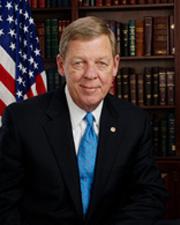 Sen. Johnny Isakson (R-GA)
Legislative Activity
Stay on top of the latest movement without scrolling through every action
Considered by Senate. (consideration: CR S3348)
April 7, 2006
View full timeline
Considered by Senate. (consideration: CR S3348)
April 7, 2006
Considered by Senate. (consideration: CR S3167)
April 6, 2006
Considered by Senate. (consideration: CR S2850)
April 5, 2006
Considered by Senate. (consideration: CR S2763)
April 4, 2006
Considered by Senate. (consideration: CR S2699)
April 3, 2006
Senate amendment submitted
March 31, 2006
Senate amendment proposed (on the floor): Amendment SA 3215 proposed by Senator Isakson to Amendment SA 3192.(consideration: CR S2685-2686; text: CR S2685)
March 31, 2006
Amendment SA 3215 proposed by Senator Isakson to Amendment SA 3192. (consideration: CR S2685-2686; text: CR S2685) To demonstrate respect for legal immigration by prohibiting the implementation of a new alien guest worker program until the Secretary of Homeland Security certifies to the President and the Congress that the borders of the United States are reasonably sealed and secured.
March 31, 2006
Text
Proposed
SECURING AMERICA'S BORDERS ACT

The PRESIDING OFFICER. Under the previous order, the Senate will
resume consideration of S. 2454, which the clerk will report.
The legislative clerk read as follows:

A bill (S. 2454) to amend the Immigration and Nationality
Act to provide for comprehensive reform, and for other
purposes.

Pending:

Specter/Leahy amendment No. 3192, in the nature of a
substitute.
Kyl/Cornyn amendment No. 3206 (to amendment No. 3192), to
make certain aliens ineligible for conditional nonimmigrant
work authorization and status.
Cornyn amendment No. 3207 (to amendment No. 3206) to
establish an enactment date.
Bingaman amendment No. 3210 (to amendment No. 3192), to
provide financial aid to local law enforcement officials
along the Nation's borders.
Alexander amendment No. 3193 (to amendment No. 3192), to
prescribe the binding oath or affirmation of renunciation and
allegiance required to the naturalized as a citizen of the
United States, to encourage and support the efforts of
prospective citizens of the United States to become citizens.

The PRESIDING OFFICER. The Senator from Alabama.
Mr. SESSIONS. Mr. President, I express my sincerest appreciation for
the leadership of Senator John Cornyn as we have attempted in the
Judiciary Committee--of which we are both members--to try and help
produce a bill that will actually work, that will allow legal
immigration to be formal, effective, and allow more people to come into
our country legally while ending the disarray which now exists. He is
so knowledgeable as a former justice on the Supreme Court of Texas and
former attorney general of Texas. He understands it so well, being a
Member from a State that deals with this in such a consistent and
continuous way. I thank the Senator for his excellent work.
One of the aspects that is most troubling to me about the process--as
it has gone along, I have become even more concerned about it--is that
it indicates a lack of serious thought about what we are going to do as
a nation to deal with those who are here illegally now. We know there
are a lot of good

[[Page S2682]]

people here. What are we going to do in the future?
Let me report how things went in the Judiciary Committee. We had the
Alito hearings, we had the Roberts hearings, we had the PATRIOT Act
debate, and we had the asbestos debate. We have been as busy as any
committee has ever been on a host of important issues facing our
country all year. It seems as if that is about all I do, and I am on
the Armed Services Committee at a time when we are a nation at war. We
have a lot of things going on, and we have worked very hard.
At the beginning of the process, I expressed concern asked that we
not rush the committee into something before it was ready. The majority
leader set this time for this bill to come to the floor, and he said he
expected us to complete a bill if we wanted a Judiciary Committee bill
to be the vehicle on the floor. So the committee tried to do it. But
there was not enough time. We did not give enough thought to it, in my
view. We met for 6 days in the Judiciary Committee attempting to mark
up Chairman Specter's immigration legislation, a mark that he put out
which is considerably better, in my view, then what is currently on the
floor. His was not acceptable in some ways, but it is better than the
one we produced. He put his mark out for debate in Committee.
We began to discuss it. We met on March 2, March 8, March 9, March
15, 16, and 27. Six days may sound like a lot in the committee process,
but this bill is 400 pages involving tremendous national issues which
many people feel strongly about and which deserve real discussion.
During the first day, we basically just talked about the bill. No
amendments were offered during the markup. During the next 3 days, we
talked about the enforcement provisions of the bill and simply accepted
by unanimous consent noncontroversial amendments to the first two
titles of the bill, two of the seven titles. We accepted some
amendments.
Then we get to day four. We did not have a single vote on any
amendment during those first four days of hearings. On the fifth day,
we once again in committee talked about how best to proceed. No
amendments were offered, and none were voted on.
During the 5 days, we did not vote on a single amendment. All the
controversial issues got pushed off to Monday. We are not normally here
on Monday, but we showed up on Monday because the leader said we had to
have a bill out Monday night or he would bring up his own bill.
During the morning session on Monday, we spent 3\1/2\ hours talking
about amendments on the enforcement provisions of the bill. We spent a
good bit of time on the enforcement provisions and made some progress.
I got optimistic to the point that I have said if we did just a few
more things, we could create an enforcement system that would work. So
we spent a little time on enforcement. But we are still now talking
about title II of the seven titles in the bill.

After lunch on Monday of this week, we met for another 3\1/2\ hours
and ran through the remaining five titles, five sections of the bill,
with little discussion and less understanding of what the amendments
were and what they amounted to. We voted on several amendments without
even having language to review. In only 3\1/2\ hours on Monday, we
voted on four amnesty provisions and increased the chairman's mark by
over 100 pages.
Let me make this clear. We spent 5 days talking about the enforcement
issues with little controversy there. In contrast, we spent 3\1/2\
hours passing out the massive amnesty provisions in the bill that is
now in the Senate that will attempt to legalize and put on an automatic
path, virtually, to citizenship.
We also passed legislation that increases the legal immigration in
our country by at least double--probably more than that--to 400,000 per
year, with little discussion of who and how that should be done. It
just was offered and passed.
I believe this Senate needs to slow down and think about where we
are. It is very important.
Members of this Senate have expressed deep concern that the border
has become a major gateway for terrorists to have access to the United
States. Senator Feinstein expressed that. Clearly, she is from
California. We are pleased to have three Senators--Senator Feinstein
from California, Senator Kyl from Arizona, and Senator Cornyn from
Texas--who live on the border and know about it and understand it in
many ways, far better than the rest of us. I share her concern and
believe it can only be remedied by focusing on fixing our immigration
system as a whole. It is something we can do. This is within our grasp
at this point, but we are not there yet.
Securing our borders and being able to keep track of the people who
come in and out of our country is essential to our security. We know
that countries without secure immigration policies are a natural fit
for bad actors who seek to live anonymously within their borders. A
country that does not protect its borders and does not know the
identity of those who come in and out of the country is laying out the
welcome mat for criminals and even terrorists.
I have visited a number of times with troops and other government
officials in Afghanistan. I have had the honor to meet with General
Jones, our commander in Europe, General Abizaid, our commander in
Central Command, and they have expressed exceedingly great concern to
me about unregulated border areas. They have emphasized that there are
a number of places around the globe, border areas of countries that are
not very effective countries, in which criminals can gather and nobody
does anything about it. It gets worse and worse, and terrorists nest
there. The most dramatic example of that, of course, is this very long
and very large border between Afghanistan and Pakistan, where many
think Osama bin Laden hides out today. Some ask why isn't it possible
for us to find him? It is a very large area. It is basically an area
that has not been controlled effectively by the Governments of Pakistan
or Afghanistan, and as a result, it is far more difficult.
I just came from there last week and had a briefing on this specific
area. If anyone heard the briefing I had, there would be a far greater
understanding of how difficult it is to control these areas.
A great nation like the United States has to do better. We cannot
allow that tendency to occur in our country. I believe we can say with
some integrity and honesty that tends to be what is happening here on
our border.
Last night, I had an exchange with Senator Kyl in the Senate, and he
talked about the increasing number of people who are involved in crime
on the Arizona-Mexico border. Many are not from Mexico. Many are from
further south, from other countries, who come into Mexico, but it is an
area in which they operate, move drugs, extort, carry people, and it is
not a healthy situation at all. It is something a great nation, if we
care about the people who want to live here and come into our country
legally, should be very concerned about.
The United States felt the sharp consequences of open borders and lax
enforcement when our ineffective immigration policies enabled 19
terrorists to obtain visas into the United States on September 11.
September 11 was not the only act of terrorism on U.S. soil, though,
that has resulted from poor immigration policies.
Let's talk about the Brooklyn subway plot. People may have forgotten
that. Gazi Ibrahim Abu Mezer was caught by the Border Patrol agents
three times while trying to illegally cross the Canadian border. After
a third apprehension, Canada would not take him back. Because the
United States suffers from a severe lack of detention space for illegal
aliens like Mezer, what happened to him? Canada would not take him
back. He was released into the country on bail with a promise that he
would show up for a hearing at which he would be deported. So he wants
to come to this country, he is apprehended for the third time, Canada
will not let him come back, and they release him on a promise that he
will show up for a hearing on whether he should be deported. It sounds
like, based on those facts, he probably was confident he would be.
While waiting for his hearing, Mezer busied himself by plotting to bomb
the Brooklyn subway.
Mohammad Salameh, one of the World Trade Center bombing
coconspirators in the first World Trade

[[Page S2683]]

Center bombing attempt in 1993--more than an attempt; an explosion that
did not bring down the building applied for a tourist visa to the
United States. Although Mohammad Salameh overcame the presumption that
he was required to overcome as a single male, young, and received a
visa, he overstayed the visa and remained illegally in the United
States. We passed amnesty. He applied then to be a permanent resident.
It was rejected. Somebody caught it somehow and saw something there.
What did he do? He applies for amnesty under the 1986 act, and they
reject it. So what does that mean? Was he sent home? No, he just simply
remained in the United States. Nobody bothered to come and look for
him. He continued living and working here because there was no
enforcement mechanism in place allowing authorities to detain and
remove rejected green card applicants.
Mahmud Abouhalima, a leader of the 1993 trade bombing, was legalized
as a part of the 1986 amnesty, also. It was only after he was legalized
that he was able to travel outside the United States. The trips he took
after being granted amnesty included several to Afghanistan and
Pakistan, where he received the training he used in the bombing.
Most people who seek to stay in our country are good and decent
people. They are not terrorists. We know that. But we have an
increasing number of criminals from around the world seeking to enter
this country, and we have the terrorist problem.
Abounalima took advantage of the amnesty. He got approved. Proper
background checks apparently were not conducted, and he then, as a
permanent legal resident, green card holder, was free to travel back
and forth around the world and go to Afghanistan and Pakistan. That is
where he got his training for the 1993 bombing.
The mastermind of the 1993 bombing was Ramzi Yousef. He did not waste
time applying for a visa to come to the United States. Upon his arrival
at JFK Airport, he simply applied for asylum, saying he was persecuted.
There was a lack of detention space while they were trying to determine
his status. They said to this man who illegally appeared at John F.
Kennedy Airport--You are here illegally; we will arrest you. And he
says: I claim asylum; I am here because I have been run out of my
country. So he is entitled, now, to a trial or a hearing on that. But
they cannot do it that day, and they do not have any place to put him,
so they release him. They parole him into the country until a hearing
can be held on his asylum claim. Yousef then used that time inside the
United States to plan the 1993 bombing of the World Trade Tower.

Not only have our amnesty, visa issuance, and asylum policies brought
terrorists into the United States, our programs have also served as a
conduit for criminals and terrorists.
Hesham Mohamed Hadayet, murdered two people at the El Al counter at
Los Angeles International Airport in July 2002. Less than a year after
9/11, Hadayet conducted that attack at the airport which resulted in
the murder of two people.
He received legal status through the diversity lottery visa in this
fashion: In 2002, Hadayet was a visa overstayer. He got a visa, came
here, but he stayed illegally beyond the time he was supposed to stay.
In his asylum claim, when they confronted him about it, he claimed that
he was entitled to asylum, too. That is a good thing to say because
that stops the works. So he claimed asylum. But a hearing was held, and
the determination was that he was not entitled to asylum. It was
rejected.
But with no mechanism, no will and no capacity to tell the truth, to
remove him, he just stayed in the United States with his wife. Then
Hadayet's wife won the diversity visa lottery. She got a green card and
she was able to get one for her husband. So both of them were
legalized. That is how he got into the country--not a way it should
have happened. Once his asylum had been rejected, he should have been
removed.
Now, we have been reading in the paper about Zacarias Moussaoui, who
just confessed, apparently, to his intent to participate in the
September 11 bombings in plane attacks in our country. He entered the
country under the visa waiver program, and he just confessed that he
was to fly a plane into the White House.
I would like to share a few more things about the ineffectiveness of
our system. Most of the people who come here are not criminals. Most of
the people who come here have legitimate reasons. They ought to wait
until we are able to check their records and verify they are an
appropriate person to come in our country. That is how the system is
supposed to work. But the truth is, we are seeing a larger number of
criminals coming in than we ever have before.
Criminals from other countries, and those who would commit crimes,
also use the immigration system against us.
On December of 2005, Secretary Chertoff, the Secretary of the
Department of Homeland Security, testified that the Border Patrol
encountered 1.1 million illegal aliens attempting to cross the
southwest border between the legitimate ports of entry illegally.
Just a few weeks ago, a Department of Homeland Security employee told
us that approximately 12 percent--12 percent--of the people apprehended
already had criminal records. That is 139,000 people. So for those they
apprehended, they did a background check on them, and they found that
12 percent of those had a criminal record already, totaling 139,000
people.
In 2004, the Department of Homeland Security deported over 88,000
criminal aliens. Those removals accounted for over 40 percent of the
people who were removed. Now, these are not simple immigration
violations. They are serious offenses: fraud, drugs, extortion, or
violence.
If we catch one criminal entering the country, each year, for every
criminal entering the country we do not catch--and some say that is
about correct--it is highly likely the United States received a net
gain, in 2004, of 51,000 criminals, none of whom should have been
allowed in the country if an appropriate system were operating.
A great nation does not have to accept everybody who wants to come.
No nation does--not everybody. So we set standards. One of the
standards is, people are not allowed in the country who have criminal
records or charges are pending against them.
Now, the numbers of criminal aliens in the country is startling, I
have to tell you. I wish it were not so, but I am just telling you what
the numbers are. Criminal aliens now constitute a large percent of all
the Federal prisoners in Federal prisons today. How many? What percent
would you suspect? I will have to tell you, it is an astounding 27
percent. Twenty-seven percent of the Federal prisoners today are
illegal aliens, criminal aliens.
In 2003, that means 44,000 criminal aliens were serving sentences in
Federal jails. This is just the Federal jails, which probably represent
10 percent of all the prisoners in the United States. I believe those
percentages could be even higher in State and local prisons. And I
understand in some States it may be even higher, like in California and
others.
An April of 2005 a GAO, Government Accountability Office, report
found that the number of criminal aliens incarcerated in the United
States increased 15 percent from 2001 to 2004. That is a steady and
substantial increase.
According to the Bureau of Prisons, the cost of incarcerating
criminal aliens totaled approximately $1.2 billion in 2004.
Now, again, I am not saying that we need to reject people and stop
immigration and never allow anybody into our country because we are
having an increasing number of people who attempt to come here who are
criminals. What I am saying is, we need to make our system work so we
can identify those people who have criminal histories and not allow
them in and allow the good and decent people in. Isn't that what it is
all about? It is a very important point.
Criminal aliens are also having a severely negative impact at the
State and local level. Recently, an ICE agent--those are the
immigration enforcement officers--in Alabama contacted me to tell me
there is an enormous, growing problem with aliens trafficking drugs
across north Alabama. Who would think that? He informed me that all of
the green card holders he arrests for criminal convictions for
trafficking dope were once illegal aliens but have been granted amnesty
somewhere along the way.

[[Page S2684]]

To quote him directly, he said--this is what he told me:

[It is] because they had no respect for the law when they
jumped the river, worked illegally, and used fake documents
with false names.

That is what he said. Who can say there is no truth to that? I think
there is some truth to that. Simply giving an illegal alien a green
card does not suddenly make that person a law-abiding citizen. We need
to make sure we have ascertained, when a person applies to come into
our country by visa, or to obtain a green card, that they are law-
abiding citizens who are going to contribute positively to our country.

I like to tell my friends in Texas the whole story about Alabama.
Perhaps Georgia has a spin on it. It probably has a little spin on it,
I say to the Presiding Officer. But the story was: If somebody got in
trouble with the law in Alabama, and you went to their house, they
would have ``GTT'' on the door. What did that stand for? ``Gone To
Texas.'' In the old days, they did not have many prisons, and basically
if you got out of town, that was fine.
I am wondering, sometimes, if people who are getting in trouble in
their home countries are not finding it easier than being arrested and
put in jail in their own country to just leave town. And if they leave
town, maybe the local police and constabularies are happy to have them
go and do not mind what happens to them. I am afraid some of that may
be occurring here. I suspect in the early days, Georgia sent their
people to Alabama, Mr. President. I don't know. Of course, your State
was founded--I will not get into that story.
The next story from Alabama ICE agents was surprising to me. In
December of last year, in the past few months, they arrested, in the
north Alabama area, a leader of the MS-13 street gang--that is
basically an El Salvadorian violent street gang--for possessing a
stolen firearm. ICE had to release the gang member from custody a
couple months later because the judge determined that he derived U.S.
citizenship from his father who received amnesty in the 1990s and was
naturalized when the gang member was 17. Normally, as a noncitizen,
being charged with this offense, he would be deported.
A few weeks ago, just 30 days after being released from custody, the
gang leader was again arrested, this time for firing eight rounds out
of a car at a rival gang member in the town of Pelham, AL. Because he
received citizenship through amnesty, Alabama will not see him
deported.
The guy the gang leader shot at is the area leader of the Brown Pride
13 street gang, which is another street gang. ICE tells me this gang
leader is also a once-illegal alien who received amnesty and a green
card.
Now, we want to give amnesty to the people who deserve it. But we
need to create a system that when we do that we have examined them to
make sure they are the kind of people who would make good citizens.
That is what we tell the American people we are going to do. That is
what we tell them we are going to do. We tell them this bill sets up a
lawful system for people to apply to immigrate to our country and that
before they are allowed to immigrate and become a citizen, get a
permanent status to stay here permanently, that we have checked them
out. I am saying to you, too often we fail to do that. It is a hollow
promise. ICE, in dealing with this gang leader, must wait for him to be
convicted of a crime for him to be arrested.
Unlike any of us, these Federal agents are in the trenches every day
working hard to enforce the law, of which most of us only hear about on
the news. As this ICE agent told me, he gets aggravated that people do
not realize that yet another amnesty or allowance for adjustment of
status will only ensure that the Government rubberstamps more criminals
into our country and allows them to receive green cards. He is worried
about that.
I think if we took care and did it right, that might not be the case.
I believe we can do it. But we have to be fully aware and take
intentional steps or his prediction will be correct. And based on what
he has seen in his experience, I have no doubt that he is somewhat
cynical about the willingness of our Congress to take the necessary
steps to make sure it does not happen.
Around the country we are seeing an increase in the number of illegal
criminal aliens who are being apprehended, some with access to critical
infrastructure and information pertaining to national security
interests.
Jerry Seper of the Washington Post has written about these issues for
some time. I have noted with some interest his accounts that
demonstrate the gaping holes in our immigration enforcement and
security policies. Let's share some examples of what he reported.
In May of 2004, John Torres, Deputy Director for Smuggling and Public
Safety, of ICE, the Immigration Service, testified before the House
Judiciary Committee that criminal organizations worldwide make over
$9.5 billion a year smuggling foreign nationals. This is his testimony
before the House Judiciary Committee, the Government official at ICE,
that these criminal organizations make over $9.5 billion a year
smuggling foreign nationals, illicit drugs, and weapons into the United
States.
This smuggling includes as many as 17,500 people forced to work as
prostitutes. We have heard about the sex slave prostitution problem. He
says it includes as many as 17,500 sweatshop laborers and domestic
servants. Mr. Torres testified that these well-established smuggling
and trafficking pipelines serve as conduits for illegal immigrants and
criminals seeking entry into the country. Many of these people are
easily exploited by terrorists and extremist organizations. It is these
people who will be granted amnesty under many of the proposals
currently pending on the floor. This is a prime example of why we must
focus on enforcement and border protection before anything else.
That is what the House decided to do. People say the House bill is
harsh. The House bill is not harsh in the sense that it simply examined
our enforcement procedures and found them totally lacking. They
concluded the most honest way to deal with the problem was to confront
border laxity and our enforcement mechanisms and get that under
control. Once we have done that, then we could go to the American
people with a plan to determine how many people will come in in the
future, how many people are here, and how to handle those people who
are here, many of them as fine and decent a people as anybody would
ever want to know, working hard every day, contributing to our country.
We do owe them fair and humane treatment. I will not support any bill
that does not give them that. But the House said, as a first step,
let's do that.
We spent most of our time in the Judiciary Committee marking up the
enforcement protections in the bill. But at the last day, this Monday,
we dumped in about 100 pages or more of this issue, the more serious
and complex issue of the people who are here, how to handle them, and
who to allow in in the future. That is why we are a bit rushed. As a
matter of fact, that bill was not even printed and received by the
committee members. We did not know what the language was until it was
finally printed Wednesday night at 8. Now they want us to pass this
legislation dealing with the historic challenges in immigration going
beyond improving enforcement to the entire philosophy and policy of our
Nation for many years to come. We are not ready to do that. Certainly
if we are, this bill is not the vehicle to do so.
Last year in an isolated incident in Virginia, ICE agents arrested
nine criminal aliens, six of whom had been previously convicted on
aggravated felony charges, including child molestation, drug
possession, and sexual assault. These aliens should have been deported
on conviction. That is what the law says. These aliens were identified
during an investigation that found they had attempted to obtain
immigration benefits through the CIS, the immigration services agency,
including work permits and permanent resident status. These are nine of
the estimated 85,000 criminal aliens walking our streets today.
Last March, ICE agents deported 37 criminal aliens rounded up in the
Washington area, two of whom had ties to MS-13, the Salvadoran gang
which operates within the region. This group of criminal aliens were
people convicted of theft, assault, burglary, sexual battery, and
malicious wounding. From the Washington area alone in

[[Page S2685]]

2004, ICE deported 819 criminal aliens. MS-13 has an estimated 2,000
members in northern Virginia alone. This is not your ordinary street
gang. It is a malicious, violent gang involving alien and weapons
smuggling, murder, robberies, burglaries, carjacking, extortion, rape,
and aggravated assault.
In May of 2005, ICE arrested 60 illegal aliens working as contract
employees at a dozen critical U.S. infrastructure sites nationwide,
including seven petrochemical refineries, very much potential targets,
three powerplants, a national air cargo facility, and a pipeline
company. What these things demonstrate, when I talk about Alabama or
northern Virginia, is that the system currently is not working. We can
make it work. It is not that hard. We are pretty close to getting
there. We have jumped 8 feet, but the ravine we need to jump across is
10 feet wide. Let's go the extra 2 feet. Let's get out there and create
a legitimate enforcement mechanism that will guarantee that we are as
open and friendly as we have always been to those who want to come to
this country but with a system that does not allow criminals to take
advantage of us, does not allow terrorists to take advantage of us. In
fact, this bill fails to prohibit the entry into our country of
criminals in an effective way. That is why Senator Kyl and Senator
Cornyn have offered their amendment dealing with this particular issue.
It absolutely needs to be a part of it. I was pleased that Senator
Cornyn talked about the similarity between the bill we are moving today
and the one we passed in 1986, which everybody agreed was amnesty.
Black's Law Dictionary even defines amnesty by referring to the 1986
bill in their definition. Everybody admitted in 1986, it was amnesty.
People have said we are not for amnesty. We have campaigned on it.
Virtually every Senator, every leader, even the President has said we
are not for amnesty. But anything you try to do, they say: That is not
amnesty.
Is it not an automatic path to a green card and citizenship? Why
isn't it automatic? Well, they have to pay $1,000. They have to pay
their income taxes. Don't you have to pay your income taxes? What is
this? You have to have a job. What do they come here for? To have a
job. And then only the most part-time job with the most minimal proof
would establish the work requirement. Basically it guarantees anybody
here a path to citizenship as long as they don't get convicted of a
felony. If you get convicted of a felony before you are deported today,
the chances are very good you can maneuver your way out on bail and
never be deported.
A good system would take a person directly from the incarceration
facility and move them directly out of the country. That is what we say
we are going to do, but we don't.

I have many more examples of situations in which we have not managed
our immigration system well. As a result, illegal aliens have been
caught working in nuclear plants and military bases in highly secret
and sensitive areas of our country. We can do better than that. We
absolutely can and we must do better than that.
I join with my colleagues Senators Kyl and Cornyn in saying: We
definitely need to fix this omission in the bill that came out of
committee that fails to properly deal with those who would come into
the country illegally who have a criminal record and who could be put
on a path to amnesty if we don't work it correctly.
I urge my colleagues, let's keep an open mind on the legislation.
Let's remember that our Nation has some of the finest people you could
ever want living and working here, but we need to deal with them fairly
and humanely. We don't need to build a barrier around our country if it
does not allow people to come here lawfully. We are a nation of
immigrants and we always will and should welcome immigrants into the
country, but we need to gain control of our borders. That includes
physical barriers, virtual fences, improved enforcement, additional
detention space, technology, and also workplace areas. If we eliminate
the magnet of the workplace, if we take firm, effective steps on the
border, we can reach that tipping point where people move from coming
illegally into our country and we don't know then whether they are
criminals. We move those people from the illegal path to entry into our
country to a legal path. Isn't that what we want? Isn't that what we
promised the American people time and again, when we have been asked
about it in our States and on interview programs? We have all said
that.
The legislation before us won't get us there. If we vote for that and
tell our people that it will do the job, I do not believe we will be
correct. Let's fix it. Let's improve it. Then we can make it work.
I yield the floor and suggest the absence of a quorum.
The PRESIDING OFFICER. The clerk will call the roll.
The assistant legislative clerk proceeded to call the roll.
Mr. ISAKSON. Mr. President, I ask unanimous consent that the order
for the quorum call be rescinded.
The PRESIDING OFFICER (Mr. Sessions). Without objection, it is so
ordered.
Mr. ISAKSON. Mr. President, I ask unanimous consent that the pending
amendments be temporarily set aside in order for me to call up
amendment No. 3215; provided further that at 4 p.m. on Monday, the
pending amendments be temporarily set aside and Senator Mikulski be
recognized in order to offer a first-degree amendment which is at the
desk.
The PRESIDING OFFICER. Without objection, it is so ordered.

Amendment No. 3215

Mr. ISAKSON. Mr. President, I call up amendment No. 3215 and ask for
its consideration.
The PRESIDING OFFICER. The clerk will report.
The assistant legislative clerk read as follows:

The Senator from Georgia [Mr. Isakson] proposes an
amendment numbered 3215.

The amendment is as follows:

(Purpose: To demonstrate respect for legal immigration by prohibiting
the implementation of a new alien guest worker program until the
Secretary of Homeland Security certifies to the President and the
Congress that the borders of the United States are reasonably sealed
and secured)

At the appropriate place, insert the following:

SEC. __. BORDER SECURITY CERTIFICATION.

Notwithstanding any other provision of law, beginning on
the date of the enactment of this Act, the Secretary may not
implement a new conditional nonimmigrant work authorization
program that grants legal status to any individual who
illegally enters or entered the United States, or any similar
or subsequent employment program that grants legal status to
any individual who illegally enters or entered the United
States until the Secretary provides written certification to
the President and the Congress that the borders of the United
States are reasonably sealed and secured.

Mr. ISAKSON. Mr. President, yesterday I took the floor to speak at
length about the legislation before us and to talk particularly about
the history of amnesty in the past dealing with immigration. I talked
about the dangerous step we would take if we created another
opportunity to attract even more to come here without first having
secured our borders. The amendment I have asked to be placed before the
Senate today accepts a very simple premise, and that is that we have
failed as a country to secure our borders. We continue to have those
coming here illegally to work because it is easier than coming here
legally. And until we stop that and shut that down, any program
granting status to an illegal person in this country should never be
implemented.
In the insurance industry, swimming pools are entitled an attractive
nuisance. In the business of immigration, American policy is an
attractive nuisance. We are attracting people to come here the wrong
way. We are not penalizing them for coming here the wrong way. And we
are now allowing people to come here the right way, a seamless system
that seems to work. So this amendment is merely a trigger. It says that
notwithstanding what programs we adopt in the Senate before final
passage, no program granting status to someone who is here illegally or
may come here illegally in the future will take effect until the
Secretary of Homeland Security has certified to the President of the
United States and to the Congress that our borders are reasonably
secure.
I am not going to take a lot of time, but I want to repeat something
I said yesterday: A month ago I took to the

[[Page S2686]]

border myself along with Senator Coleman.
We went to Tijuana and San Diego, Fort Huachuca in Arizona. We saw
firsthand the mechanisms that are available and being used today that
will secure our border. We also saw firsthand the huge holes because we
have neither funded the intelligence equipment and the eyes in the sky
nor put the manpower on the border.
I, for one, will hold myself responsible and will be a reminder to
this entire Senate that when we pass an appropriations act this year
for Homeland Security and enforcement of immigration and customs, if it
doesn't include the unmanned aerial vehicles we need on the border and
the agents we need to enforce immigration law, then we are turning our
back on a problem that began in 1986 and has continued until this day,
and that is the benign neglect of us to fund the necessary equipment,
manpower, and material to make the laws of this country work to allow
people to come here in the right way as easily as possible but with
accountability, and the people who come here the wrong way, to know
there is a consequence to pay.
Human nature is human nature. People will respond when they know what
the story is. Right now, they know the story is that it is easier to
get here by sneaking in. In this measure, we send a signal that there
will be no amnesty, no more free pass nor a continued flow of illegal
people coming into this country. Instead, there will be consequences
for ignoring the law, and there will be respect and appreciation for a
normal, rational immigration process to work, so that America's labor
needs are met, but America respects the borders between ourselves, the
nation of Canada and the nation of Mexico.
Mr. President, I yield the floor, and I suggest the absence of a
quorum.
The PRESIDING OFFICER (Mr. Isakson). The clerk will call the roll.
The assistant legislative clerk proceeded to call the roll.
Mr. SESSIONS. Mr. President, I ask unanimous consent that the order
for the quorum call be rescinded.
The PRESIDING OFFICER. Without objection, it is so ordered.
Mr. SESSIONS. Mr. President, I want to express my support for the
Senator's view that we need to certify that we have the enforcement
system working for the immigration system before we make these other
changes that allow people to be given amnesty or be given a right to
stay here in some lawful way.
The reason that is important is this: To boil it down in 1 minute
before I yield the floor, the reason that is important is that once we
pass the policies--the amnesty that is in this bill, or whatever
policies we eventually pass--to deal with new immigration for years to
come or to deal with those already here, that becomes law then. The
problem has been that no President whom I know of--Presidents Carter,
Reagan, Bush, Clinton, or Bush--has ever taken it as a personal
interest to ensure that what happens on our borders actually works. So
they have not asked for more money, more people or asked sufficiently
for technology for it to work. And the Congress, as the Senator said,
often doesn't fund it.
So what are we saying? Fundamentally, what happened in 1986, I
believe, was that amnesty was granted and the promise to create a legal
system in the future never developed. We have a very rightful
responsibility to make sure that doesn't happen again. I think that is
the intent of the Senator's amendment. I look forward to studying it,
and I thank him for offering it.
I yield the floor and suggest the absence of a quorum.
The PRESIDING OFFICER (Mr. Cornyn). The clerk will call the roll.
The assistant legislative clerk proceeded to call the roll.
Mr. LEAHY. Mr. President, I ask unanimous consent that the order for
the quorum call be rescinded.
The PRESIDING OFFICER. Without objection, it is so ordered.
Mr. LEAHY. Mr. President, I ask consent I be allowed to continue for
a few minutes as though in morning business.
The PRESIDING OFFICER. Without objection, it is so ordered.

____________________