S.Amdt. 4546Senate109th Congress (2005-2007)
To provide a complete substitute.
Sponsored by 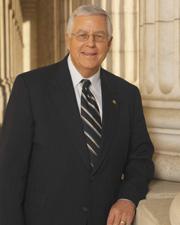 Sen. Michael B. Enzi (R-WY)
Submitted June 29, 2006
Legislative Activity
Stay on top of the latest movement without scrolling through every action
Floor
Latest Action
Senate amendment submitted
June 29, 2006
View full timeline
Floor
Senate amendment submitted
June 29, 2006
Floor
Senate amendment proposed (on the floor): Amendment SA 4546 proposed by Senator McConnell for Senator Enzi.
June 29, 2006
Floor
Senate amendment agreed to: Amendment SA 4546 agreed to in Senate by Unanimous Consent.
June 29, 2006
Floor
Amendment SA 4546 proposed by Senator McConnell for Senator Enzi. (consideration: CR S7181-7219; text: CR S7181-7218) To provide a complete substitute.
June 29, 2006
Floor
Amendment SA 4546 agreed to in Senate by Unanimous Consent.
June 29, 2006
Text
Submitted
SA 4546. Mr. McCONNELL (for Mr. Ensign) proposed an amendment to the
bill S. 1021, to reauthorize the Workforce Investment Act of 1998, and
for other purposes; as follows:
Strike all after the enacting clause and insert the
following:
SECTION 1. SHORT TITLE.
This Act may be cited as the ``Workforce Investment Act
Amendments of 2005''.
SEC. 2. TABLE OF CONTENTS.
The table of contents of this Act is as follows:
Sec. 1. Short title.
Sec. 2. Table of contents.
Sec. 3. References.
TITLE I--AMENDMENTS TO TITLE I OF THE WORKFORCE INVESTMENT ACT OF 1998
Subtitle A--Definitions
Sec. 101. Definitions.
Subtitle B--Statewide and Local Workforce Investment Systems
Sec. 111. Purpose.
Sec. 112. State workforce investment boards.
Sec. 113. State plan.
Sec. 114. Local workforce investment areas.
Sec. 115. Local workforce investment boards.
Sec. 116. Local plan.
Sec. 117. Establishment of one-stop delivery systems.
Sec. 118. Eligible providers of training services.
Sec. 119. Eligible providers of youth activities.
Sec. 120. Youth activities.
Sec. 121. Adult and dislocated worker employment and training
activities.
Sec. 122. Performance accountability system.
Sec. 123. Authorization of appropriations.
Subtitle C--Job Corps
Sec. 131. Job Corps.
Subtitle D--National Programs
Sec. 141. Native American programs.
Sec. 142. Migrant and seasonal farmworker programs.
Sec. 143. Veterans' workforce investment programs.
Sec. 144. Youth challenge grants.
Sec. 145. Technical assistance.
Sec. 146. Demonstration, pilot, multiservice, research, and multistate
projects.
Sec. 147. National dislocated worker grants.
Sec. 148. Authorization of appropriations for national activities.
Subtitle E--Administration
Sec. 151. Requirements and restrictions.
Sec. 152. Reports.
Sec. 153. Administrative provisions.
Sec. 154. Use of certain real property.
Sec. 155. General program requirements.
Subtitle F--Incentive Grants
Sec. 161. Incentive grants.
Subtitle G--Conforming Amendments
Sec. 171. Table of contents.
Sec. 172. Conforming amendments.
TITLE II--AMENDMENTS TO THE ADULT EDUCATION AND FAMILY LITERACY ACT
Sec. 201. Short title; purpose.
[[Page S6813]]
Sec. 202. Definitions.
Sec. 203. Authorization of appropriations.
Sec. 204. Home schools.
Sec. 205. Reservation of funds; grants to eligible agencies;
allotments.
Sec. 206. Performance accountability system.
Sec. 207. State administration.
Sec. 208. State distribution of funds; matching requirement.
Sec. 209. State leadership activities.
Sec. 210. State plan.
Sec. 211. Programs for corrections education and other
institutionalized individuals.
Sec. 212. Grants and contracts for eligible providers.
Sec. 213. Local application.
Sec. 214. Local administrative cost limits.
Sec. 215. Administrative provisions.
Sec. 216. National Institute for Literacy.
Sec. 217. National leadership activities.
Sec. 218. Integrated English literacy and civics education.
Sec. 219. Transition.
TITLE III--AMENDMENTS TO OTHER PROVISIONS OF LAW
Sec. 301. Wagner-Peyser Act.
TITLE IV--REHABILITATION ACT AMENDMENTS
Sec. 401. Short title.
Sec. 402. Technical amendments to table of contents.
Sec. 403. Purpose.
Sec. 404. Rehabilitation Services Administration
Sec. 405. Definitions.
Sec. 406. Administration of the Act.
Sec. 407. Reports.
Sec. 408. Carryover.
Subtitle A--Vocational Rehabilitation Services
Sec. 411. Declaration of policy; authorization of appropriations.
Sec. 412. State plans.
Sec. 413. Eligibility and individualized plan for employment.
Sec. 414. Vocational rehabilitation services.
Sec. 415. State rehabilitation council.
Sec. 416. Evaluation standards and performance indicators.
Sec. 417. Monitoring and review.
Sec. 418. State allotments.
Sec. 419. Reservation for expanded transition services.
Sec. 420. Client assistance program.
Sec. 421. Incentive grants.
Sec. 422. Vocational rehabilitation services grants.
Sec. 423. GAO studies.
Subtitle B--Research and Training
Sec. 431. Declaration of purpose.
Sec. 432. Authorization of appropriations.
Sec. 433. National Institute on Disability and Rehabilitation Research.
Sec. 434. Interagency committee.
Sec. 435. Research and other covered activities.
Sec. 436. Rehabilitation Research Advisory Council.
Sec. 437. Definition.
Subtitle C--Professional Development and Special Projects and
Demonstrations
Sec. 441. Training.
Sec. 442. Demonstration and training programs.
Sec. 443. Migrant and seasonal farmworkers.
Sec. 444. Recreational programs.
Subtitle D--National Council on Disability
Sec. 451. Authorization of appropriations.
Subtitle E--Rights and Advocacy
Sec. 461. Architectural and Transportation Barriers Compliance Board.
Sec. 462. Protection and advocacy of individual rights.
Subtitle F--Employment Opportunities for Individuals With Disabilities
Sec. 471. Projects with industry.
Sec. 472. Projects with industry authorization of appropriations.
Sec. 473. Services for individuals with significant disabilities
authorization of appropriations.
Subtitle G--Independent Living Services and Centers for Independent
Living
Sec. 481. State plan.
Sec. 482. Statewide Independent Living Council.
Sec. 483. Independent living services authorization of appropriations.
Sec. 484. Program authorization.
Sec. 485. Grants to centers for independent living in States in which
Federal funding exceeds State funding.
Sec. 486. Grants to centers for independent living in States in which
State funding equals or exceeds Federal funding.
Sec. 487. Standards and assurances for centers for independent living.
Sec. 488. Centers for independent living authorization of
appropriations.
Sec. 489. Independent living services for older individuals who are
blind.
Sec. 490. Program of grants.
Sec. 491. Independent living services for older individuals who are
blind authorization of appropriations.
Subtitle H--Miscellaneous
Sec. 495. Helen Keller National Center Act.
TITLE V--TRANSITION AND EFFECTIVE DATE
Sec. 501. Transition provisions.
Sec. 502. Effective date.
SEC. 3. REFERENCES.
Except as otherwise expressly provided, wherever in this
Act an amendment or repeal is expressed in terms of an
amendment to, or repeal of, a section or other provision, the
reference shall be considered to be made to a section or
other provision of the Workforce Investment Act of 1998 (29
U.S.C. 2801 et seq.).
TITLE I--AMENDMENTS TO TITLE I OF THE WORKFORCE INVESTMENT ACT OF 1998
Subtitle A--Definitions
SEC. 101. DEFINITIONS.
Section 101 (29 U.S.C. 2801) is amended--
(1) by redesignating paragraphs (1) through (4), (5)
through (16), (17), (18) through (41), and (42) through (53)
as paragraphs (2) through (5), (7) through (18), (20), (23)
through (46), and (48) through (59), respectively;
(2) by inserting before paragraph (2) (as redesignated by
paragraph (1)) the following:
``(1) Accrued expenditures.--The term `accrued
expenditures' means charges incurred by recipients of funds
under this title for a given period requiring the provision
of funds for--
``(A) goods or other tangible property received;
``(B) services performed by employees, contractors,
subgrantees, subcontractors, and other payees; and
``(C) other amounts becoming owed under programs assisted
under this title for which no current services or performance
is required, such as annuities, insurance claims, and other
benefit payments.'';
(3) in paragraph (2) (as redesignated by paragraph (1)), by
striking ``Except in sections 127 and 132,'' and inserting
``Except in section 132,'';
(4) by striking paragraph (5) (as redesignated by paragraph
(1)) and inserting the following:
``(5) Basic skills deficient.--The term `basic skills
deficient' means, with respect to an individual, that the
individual--
``(A) has English reading, writing, or computing skills at
or below the 8th grade level on a generally accepted
standardized test or a comparable score on a criterion-
referenced test; or
``(B) is unable to compute or solve problems, read, write,
or speak English at a level necessary to function on the job,
in the individual's family, or in society.'';
(5) by inserting after paragraph (5) (as redesignated by
paragraph (1)) the following:
``(6) Business intermediary.--The term `business
intermediary' means an entity that brings together various
stakeholders with an expertise in an industry or business
sector.'';
(6) in paragraph (9) (as redesignated by paragraph (1)), by
inserting ``, including a faith-based organization,'' after
``nonprofit organization'';
(7) in paragraph (10) (as redesignated by paragraph (1)),
in subparagraph (C), by striking ``for not less than 50
percent of the cost of the training.'' and inserting ``for--
``(i) a significant portion of the cost of training as
determined by the local board, taking into account the size
of the employer and such other factors as the local board
determines to be appropriate; and
``(ii) in the case of customized training (as defined in
subparagraphs (A) and (B)) with an employer in multiple local
areas in the State, a significant portion of the cost of the
training, as determined by the Governor, taking into account
the size of the employer and such other factors as the
Governor determines to be appropriate.'';
(8) in paragraph (11) (as redesignated by paragraph (1))--
(A) in subparagraph (A)(ii)(II), by striking ``section
134(c)'' and inserting ``section 121(e)'';
(B) in subparagraph (C), by striking ``or'' after the
semicolon;
(C) in subparagraph (D), by striking the period and
inserting ``; or''; and
(D) by adding at the end the following:
``(E)(i) is the spouse of a member of the Armed Forces on
active duty for a period of more than 30 days (as defined in
section 101(d)(2) of title 10, United States Code) who has
experienced a loss of employment as a direct result of
relocation to accommodate a permanent change in duty station
of such member; or
``(ii) is the spouse of a member of the Armed Forces on
active duty who meets the criteria described in paragraph
(12)(B).'';
(9) in paragraph (12)(A) (as redesignated by paragraph
(1))--
(A) by striking ``and'' after the semicolon and inserting
``or'';
(B) by striking ``(A)'' and inserting ``(A)(i)''; and
(C) by adding at the end the following:
``(ii) is the dependent spouse of a member of the Armed
Forces on active duty for a period of more than 30 days (as
defined in section 101(d)(2) of title 10, United States Code)
whose family income is significantly reduced because of a
deployment (as defined in section 991(b) of title 10, United
States Code, or pursuant to paragraph (4) of such section), a
call or order to active duty pursuant to a provision of law
referred to in section 101(a)(13)(B) of title 10, United
States Code, a permanent change of station, or the service-
connected (as defined in section 101(16) of title 38, United
States Code) death or disability of the member; and'';
(10) in paragraph (14)(A) (as redesignated by paragraph
(1)), by striking ``section 122(e)(3)'' and inserting
``section 122'';
(11) by inserting after paragraph (18) (as redesignated by
paragraph (1)) the following:
[[Page S6814]]
``(19) Hard-to-serve populations.--The term `hard-to-serve
populations' means populations of individuals who are hard to
serve, including displaced homemakers, low-income
individuals, Native Americans, individuals with disabilities,
older individuals, ex-offenders, homeless individuals,
individuals with limited English proficiency, individuals who
do not meet the definition of literacy in section 203,
individuals facing substantial cultural barriers, migrant and
seasonal farmworkers, individuals within 2 years of
exhausting lifetime eligibility under part A of title IV of
the Social Security Act (42 U.S.C. 601 et seq.), single
parents (including single pregnant women), and such other
groups as the Governor determines to be hard to serve.'';
(12) by inserting after paragraph (20) (as redesignated by
paragraph (1)) the following:
``(21) Integrated training program.--The term `integrated
training program' means a program that combines occupational
skills training with English language acquisition.
``(22) Institution of higher education.--The term
`institution of higher education' has the meaning given the
term in section 101(a), and subparagraphs (A) and (B) of
section 102(a)(1), of the Higher Education Act of 1965 (20
U.S.C. 1001(a), 1002(a)(1)).'';
(13) in paragraph (30) (as redesignated by paragraph (1))--
(A) by redesignating subparagraphs (D) through (F) as
subparagraphs (E) through (G), respectively; and
(B) by inserting after subparagraph (C) the following:
``(D) receives or is eligible to receive a free or reduced
price lunch under the Richard B. Russell National School
Lunch Act (42 U.S.C. 1751 et seq.);'';
(14) in paragraph (31) (as redesignated by paragraph (1)),
by inserting after ``fields of work'' the following: ``,
including occupations in computer science and technology and
other emerging high-skill occupations,'';
(15) in paragraph (35) (as redesignated by paragraph (1)),
by inserting ``, subject to section 121(b)(1)(C)'' after
``121(b)(1)'';
(16) by striking paragraph (38) (as redesignated by
paragraph (1)) and inserting the following:
``(38) Out-of-school youth.--The term `out-of-school youth'
means an out-of-school youth as defined in section
129(a)(1)(B).'';
(17) by inserting after paragraph (46) (as redesignated by
paragraph (1)) the following:
``(47) Self-sufficiency.--The term `self-sufficiency' means
self-sufficiency within the meaning of subsections
(a)(3)(A)(x) and (e)(1)(A)(xii) of section 134.'';
(18) in paragraph (49) (as redesignated by paragraph (1)),
by striking ``clause (iii) or (v) of section 136(b)(3)(A)''
and inserting ``section 136(b)(3)(A)(iii)'';
(19) in paragraph (58) (as redesignated by paragraph (1)),
by striking ``(or as described in section 129(c)(5))'' and
inserting ``(or as described in section 129(a)(2))''; and
(20) in paragraph (59) (as redesignated by paragraph (1)),
by striking ``established under section 117(h)'' and
inserting ``that may be established under section
117(h)(2)''.
Subtitle B--Statewide and Local Workforce Investment Systems
SEC. 111. PURPOSE.
Section 106 (29 U.S.C. 2811) is amended to read as follows:
``SEC. 106. PURPOSES.
``The purposes of this subtitle are the following:
``(1)(A) Primarily, to provide workforce investment
activities, through statewide and local workforce investment
systems, that increase the employment, retention, self-
sufficiency, and earnings of participants, and increase
occupational skill attainment by participants.
``(B) As a result of the provision of the activities, to
improve the quality of the workforce, reduce welfare
dependency, increase self-sufficiency, and enhance the
productivity and competitiveness of the Nation.
``(2) To enhance the workforce investment system of the
Nation by strengthening one-stop centers, providing for more
effective governance arrangements, promoting access to a more
comprehensive array of employment and training and related
services, establishing a targeted approach to serving youth,
improving performance accountability, and promoting State and
local flexibility.
``(3) To provide workforce investment activities in a
manner that promotes the informed choice of participants and
actively involves participants in decisions affecting their
participation in such activities.
``(4) To provide workforce investment systems that are
demand-driven and responsive to the needs of all employers,
including small employers.
``(5) To provide workforce investment systems that work in
all areas of the Nation, including urban and rural areas.
``(6) To allow flexibility to meet State, local, regional,
and individual workforce investment needs.
``(7) To recognize and reinforce the vital link between
economic development and workforce investment activities.
``(8) To provide for accurate data collection, reporting,
and performance measures that are not unduly burdensome.
``(9) To address the ongoing shortage of essential skills
in the United States workforce related to both manufacturing
and knowledge-based economies to ensure that the United
States remains competitive in the global economy.
``(10) To equip workers with higher skills and contribute
to lifelong education.
``(11) To eliminate training disincentives for hard-to-
serve populations and minority workers, including effectively
utilizing community programs, services, and agencies.
``(12) To educate limited English proficient individuals
about skills and language so the individuals are employable.
``(13) To increase the employment, retention and earnings
of individuals with disabilities.''.
SEC. 112. STATE WORKFORCE INVESTMENT BOARDS.
(a) Membership.--
(1) In general.--Section 111(b) (29 U.S.C. 2821(b)) is
amended--
(A) in paragraph (1), by striking subparagraph (C) and
inserting the following:
``(C) representatives appointed by the Governor, who--
``(i) are the lead State agency officials with
responsibility for the programs and activities that are
described in section 121(b) and carried out by one-stop
partners, except that--
``(I) in any case in which no lead State agency official
has responsibility for such a program or activity, the
representative shall be a representative in the State with
expertise relating to such program or activity; and
``(II) in the case of the programs authorized under title I
of the Rehabilitation Act of 1973 (29 U.S.C. 720 et seq.),
the representative shall be the director of the designated
State unit, as defined in section 7 of the Rehabilitation Act
of 1973 (29 U.S.C. 705);
``(ii) are the State agency officials responsible for
economic development;
``(iii) are representatives of business in the State,
including small businesses, who--
``(I) are owners of businesses, chief executive or
operating officers of businesses, or other business
executives or employers with optimum policymaking or hiring
authority;
``(II) represent businesses with employment opportunities
that reflect employment opportunities in the State; and
``(III) are appointed from among individuals nominated by
State business organizations, business trade associations,
and local boards;
``(iv) are chief elected officials (representing cities and
counties, where appropriate);
``(v) are representatives of labor organizations, who have
been nominated by State labor federations; and
``(vi) are such other State agency officials and other
representatives as the Governor may designate.''; and
(B) in paragraph (3), by striking ``paragraph (1)(C)(i)''
and inserting ``paragraph (1)(C)(iii)''.
(2) Conforming amendment.--Section 111(c) (29 U.S.C.
2821(c)) is amended by striking ``subsection (b)(1)(C)(i)''
and inserting ``subsection (b)(1)(C)(iii)''.
(b) Functions.--Section 111(d) (29 U.S.C. 2821(d)) is
amended--
(1) in paragraph (1), by striking ``development'' and
inserting ``development, implementation, and revision'';
(2) in paragraph (2)--
(A) by striking ``section 134(c)'' and inserting ``section
121(e)''; and
(B) in subparagraph (A), by inserting after ``section
121(b)'' the following: ``, including granting the authority
for the State employment service under the Wagner-Peyser Act
(29 U.S.C. 49 et seq.) to plan and coordinate employment and
training activities with local boards'';
(3) by striking paragraph (3) and inserting the following:
``(3) reviewing and providing comment on the State plans of
all one-stop partner programs, where applicable, in order to
provide effective strategic leadership in the development of
a high quality, comprehensive statewide workforce investment
system, including commenting at least once annually on the
measures taken pursuant to section 113(b)(3) of the Carl D.
Perkins Vocational and Technical Education Act of 1998 (20
U.S.C. 2323(b)(3)) and title II of this Act;'';
(4) by redesignating paragraphs (4) through (9) as
paragraphs (5) through (10), respectively;
(5) by inserting after paragraph (3) the following:
``(4) development and review of statewide policies
affecting the coordinated provision of services through the
one-stop delivery system described in section 121(e) within
the State, including--
``(A) the development of objective criteria and procedures
for use by local boards in assessing the effectiveness and
continuous improvement of one-stop centers under section
121(g);
``(B) the development of guidance for the allocation of
one-stop center infrastructure funds under section
121(h)(1)(B);
``(C) the development of--
``(i) statewide policies relating to the appropriate roles
and contributions of one-stop partner programs within the
one-stop delivery system, including approaches to
facilitating equitable and efficient cost allocation in the
one-stop delivery system;
``(ii) statewide strategies for providing effective
outreach to individuals, including hard-to-serve populations,
and employers who could benefit from services provided
through the one-stop delivery system;
``(iii) strategies for technology improvements to
facilitate access to services provided through the one-stop
delivery system,
[[Page S6815]]
in remote areas, and for individuals with disabilities, which
may be utilized throughout the State; and
``(iv) strategies for the effective coordination of
activities between the one-stop delivery system of the State
and the State employment service under the Wagner-Peyser Act
(29 U.S.C. 49 et seq.);
``(D) identification and dissemination of information on
best practices for effective operation of one-stop centers,
including use of innovative business outreach, partnerships,
and service delivery strategies, including for hard-to-serve
populations; and
``(E) conduct of such other matters as may promote
statewide objectives for, and enhance the performance of, the
one-stop delivery system;'';
(6) in paragraph (5) (as redesignated by paragraph (4)), by
inserting ``and the development of statewide criteria to be
used by chief elected officials for the appointment of local
boards consistent with section 117'' after ``section 116'';
(7) in paragraph (6) (as redesignated by paragraph (4)), by
striking ``sections 128(b)(3)(B) and 133(b)(3)(B)'' and
inserting ``sections 128(b)(3) and 133(b)(3)(B)'';
(8) in paragraph (9) (as redesignated by paragraph (4))--
(A) by striking ``employment statistics system'' and
inserting ``workforce and labor market information system'';
and
(B) by striking ``and'' after the semicolon;
(9) in paragraph (10) (as redesignated by paragraph (4))--
(A) by inserting ``section 136(i) and'' before ``section
503''; and
(B) by striking the period and inserting ``; and''; and
(10) by adding at the end the following:
``(11) increasing the availability of skills training,
employment opportunities, and career advancement, for hard-
to-serve populations.''.
(c) Alternative Entity.--Section 111(e) (29 U.S.C. 2821(e))
is amended--
(1) in paragraph (1), by striking ``For'' and inserting
``Subject to paragraph (3), for''; and
(2) by adding at the end the following:
``(3) Failure to meet performance measures.--If a State
fails to have performed successfully, as defined in section
116(a)(2), the Secretary may require the State to establish a
State board in accordance with subsections (a), (b), and (c)
in lieu of the alternative entity established under paragraph
(1).''.
(d) Conflict of Interest.--Section 111(f)(1) (29 U.S.C.
2821(f)(1)) is amended by inserting ``or participate in
action taken'' after ``vote''.
(e) Sunshine Provision.--Section 111(g) (29 U.S.C. 2821(g))
is amended--
(1) by inserting ``, and modifications to the State plan,''
before ``prior''; and
(2) by inserting ``, and modifications to the State plan''
after ``the plan''.
(f) Authority To Hire Staff.--Section 111 (29 U.S.C. 2821)
is amended by adding at the end the following:
``(h) Authority To Hire Staff.--
``(1) In general.--The State board may hire staff to assist
in carrying out the functions described in subsection (d)
using funds allocated under sections 127(b)(1)(C) and 132(b).
``(2) Limitation on rate.--Funds appropriated under this
title shall not be used to pay staff employed by the State
board, either as a direct cost or through any proration as an
indirect cost, at a rate in excess of the maximum rate
payable for a position at GS-15 of the General Schedule as in
effect on the date of enactment of the Workforce Investment
Act Amendments of 2005.''.
SEC. 113. STATE PLAN.
(a) Planning Cycle.--Section 112(a) (29 U.S.C. 2822(a)) is
amended--
(1) by inserting ``, or a State unified plan as described
in section 501,'' before ``that outlines'';
(2) by striking ``5-year strategy'' and inserting ``4-year
strategy''; and
(3) by adding at the end the following: ``At the end of the
first 2-year period of the 4-year State plan, the State board
shall review and, as needed, amend the 4-year State plan to
reflect labor market and economic conditions. In addition,
the State shall submit a modification to the State plan at
the end of the first 2-year period of the State plan, which
may include redesignation of local areas pursuant to section
116(a) and specification of the levels of performance under
sections 136 for the third and fourth years of the plan.''.
(b) Contents.--Section 112(b) (29 U.S.C. 2822(b)) is
amended--
(1) in paragraph (8)(A)--
(A) in clause (ix), by striking ``and'' after the
semicolon; and
(B) by adding at the end the following:
``(xi) programs authorized under title II of the Social
Security Act (42 U.S.C. 401 et seq.) (relating to Federal
old-age, survivors, and disability insurance benefits), title
XVI of such Act (42 U.S.C. 1381 et seq.) (relating to
supplemental security income), title XIX of such Act (42
U.S.C. 1396 et seq.) (relating to medicaid), and title XX of
such Act (42 U.S.C. 1397 et seq.) (relating to block grants
to States for social services), programs authorized under
title VII of the Rehabilitation Act of 1973 (29 U.S.C. 796 et
seq.), and programs carried out by State agencies relating to
mental retardation and developmental disabilities; and'';
(2) by striking paragraph (10) and inserting the following:
``(10) a description of how the State will use funds the
State received under this subtitle to leverage other Federal,
State, local, and private resources, in order to maximize the
effectiveness of such resources, expand resources for the
provision of education and training services, and expand the
participation of businesses, employees, and individuals in
the statewide workforce investment system, including a
description of incentives and technical assistance the State
will provide to local areas for such purposes;'';
(3) in paragraph (12)(A), by striking ``sections
128(b)(3)(B) and 133(b)(3)(B)'' and inserting ``sections
128(b)(3) and 133(b)(3)(B)'';
(4) in paragraph (14), by striking ``section 134(c)'' and
inserting ``section 121(e)'';
(5) in paragraph (15), by striking ``section 116(a)(5)''
and inserting ``section 116(a)(4)'';
(6) in paragraph (17)--
(A) in subparagraph (A)--
(i) in clause (iii)--
(I) by inserting ``local'' before ``customized training'';
and
(II) by striking ``and'' at the end;
(ii) in clause (iv), by striking ``(including displaced
homemakers),'' and all that follows through ``disabilities)''
and inserting ``, hard-to-serve populations, and individuals
training for nontraditional employment''; and
(iii) by adding after clause (iv) the following:
``(v) how the State will serve the employment and training
needs of individuals with disabilities, consistent with
section 188 and Executive Order 13217 (42 U.S.C. 12131 note;
relating to community-based alternatives for individuals with
disabilities), including the provision of outreach, intake,
the conduct of assessments, service delivery, the development
of adjustments to performance measures established under
section 136, and the training of staff; and''; and
(B) in subparagraph (B), by striking ``and'' at the end;
(7) in paragraph (18)(D)--
(A) by striking ``youth opportunity grants under section
169'' and inserting ``youth challenge grants authorized under
section 169 and other federally funded youth programs''; and
(B) by striking the period and inserting a semicolon; and
(8) by adding at the end the following:
``(19) a description of how the State will utilize
technology to facilitate access to services in remote areas,
which may be utilized throughout the State;
``(20) a description of the State strategy for coordinating
workforce investment activities and economic development
activities, and promoting entrepreneurial skills training and
microenterprise services;
``(21) a description of the State strategy and assistance
to be provided for ensuring regional cooperation within the
State and across State borders as appropriate;
``(22) a description of how the State will use funds the
State receives under this subtitle to--
``(A) implement innovative programs and strategies designed
to meet the needs of all businesses in the State, including
small businesses, which may include incumbent worker training
programs, sectoral and industry cluster strategies, regional
skills alliances, career ladder programs, utilization of
effective business intermediaries, and other business
services and strategies that better engage employers in
workforce investment activities and make the statewide
workforce investment system more relevant to the needs of
State and local businesses, consistent with the objectives of
this title; and
``(B) provide incentives and technical assistance to assist
local areas in more fully engaging all employers, including
small employers, in local workforce investment activities, to
make the workforce investment system more relevant to the
needs of area businesses, and to better coordinate workforce
investment and economic development efforts to contribute to
the economic well-being of the local area, as determined
appropriate by the local board;
``(23) a description of the State strategy--
``(A) for ensuring cooperation between transportation
providers, including public transportation providers, and
providers of workforce investment activities; and
``(B) for ensuring coordination among appropriate State
agencies and programs to make available skills training,
employment services and opportunities, and career advancement
activities, that will assist ex-offenders in reentering the
workforce;
``(24) a description of how the State will assist local
areas in assuring physical and programmatic accessibility for
individuals with disabilities at one-stop centers;
``(25) a description of the process and methodology that
will be used by the State board to--
``(A) review statewide policies and provide guidance on the
coordinated provision of services through the one-stop
delivery system described in section 121(e);
``(B) establish, in consultation with chief elected
officials and local boards, objective criteria and procedures
for use by local boards in periodically assessing the
effectiveness, physical and programmatic accessibility, and
continuous improvement of one-stop centers and the one-stop
delivery system as described in section 121(g); and
``(C) determine--
``(i) one-stop partner program contributions for the costs
of the infrastructure of one-stop centers under section
121(h)(2); and
``(ii) the formula for allocating the funds described in
section 121(h)(2) to local areas;
``(26) a description of the State strategy for ensuring
that activities carried out under this title are placing men
and women in jobs,
[[Page S6816]]
education, or training that lead to comparable pay; and
``(27) a description of the technical assistance available
to one-stop operators and providers of training services for
strategies to serve hard-to-serve populations and promote
placement in nontraditional employment.''.
(c) Modifications to Plan.--Section 112(d) (29 U.S.C.
2822(d)) is amended--
(1) by striking ``5-year period'' and inserting ``4-year
period''; and
(2) by adding at the end the following: ``In addition, the
State shall submit the modifications to the State plan
required under subsection (a), under circumstances prescribed
by the Secretary that are due to changes in Federal law that
significantly affect elements of the State plan.''.
SEC. 114. LOCAL WORKFORCE INVESTMENT AREAS.
(a) Designation of Areas.--
(1) Considerations.--Section 116(a)(1) (29 U.S.C.
2831(a)(1)) is amended--
(A) in subparagraph (A), by striking ``paragraphs (2), (3),
and (4)'' and inserting ``paragraphs (2) and (3)''; and
(B) in subparagraph (B), by adding at the end the
following:
``(vi) The extent to which such local areas will promote
maximum effectiveness in the administration and provision of
services.''.
(2) Automatic designation.--Section 116(a)(2) (29 U.S.C.
2831(a)(2)) is amended to read as follows:
``(2) Automatic designation.--
``(A) In general.--The Governor shall approve a request for
designation as a local area that is submitted prior to the
submission of the State plan, or of a modification to the
State plan relating to area designation, from any area that--
``(i) is a unit of general local government with a
population of 500,000 or more, except that after the initial
2-year period following such designation pursuant to this
clause that occurs after the date of enactment of the
Workforce Investment Act Amendments of 2005, the Governor
shall only be required to approve a request for designation
from such area if such area--
``(I) performed successfully; and
``(II) sustained fiscal integrity;
``(ii) was a local area under this title for the preceding
2-year period (prior to the date of approval), if such local
area--
``(I) performed successfully; and
``(II) sustained fiscal integrity;
``(iii) is served by a rural concentrated employment
program grant recipient, except that after the initial 2-year
period following any such designation under the initial State
plan submitted after the date of enactment of the Workforce
Investment Act Amendments of 2005, the Governor shall only be
required to approve a request for designation under this
clause for such area if such area--
``(I) performed successfully; and
``(II) sustained fiscal integrity; or
``(iv) was a local area under section 116(a)(2)(C) (as in
effect on the day before the date of enactment of the
Workforce Investment Act Amendments of 2005), except that
after the initial 2-year period following such designation
pursuant to this clause that occurs after that date of
enactment, the Governor shall only be required to approve a
request for designation under this clause for such area if
such area--
``(I) performed successfully; and
``(II) sustained fiscal integrity.
``(B) Definitions.--For purposes of this paragraph:
``(i) Performed successfully.--The term `performed
successfully', when used with respect to a local area, means
the local area performed at 80 percent or more of the
adjusted level of performance for core indicators of
performance described in section 136(b)(2)(A) for 2
consecutive years.
``(ii) Sustained fiscal integrity.--The term `sustained
fiscal integrity', used with respect to an area, means that
the Secretary has not made a formal determination during the
preceding 2-year period that either the grant recipient or
the administrative entity of the area misexpended funds
provided under this title due to willful disregard of the
requirements of the Act involved, gross negligence, or
failure to comply with accepted standards of
administration.''.
(3) Conforming amendments.--Section 116(a) (29 U.S.C.
2831(a)) is amended--
(A) by striking paragraph (3);
(B) by redesignating paragraphs (4) and (5) as paragraph
(3) and (4), respectively;
(C) in paragraph (3) (as redesignated by subparagraph
(B))--
(i) by striking ``(including temporary designation)''; and
(ii) by striking ``(v)'' and inserting ``(vi)''; and
(D) in paragraph (4) (as redesignated by subparagraph
(B))--
(i) by striking ``under paragraph (2) or (3)'' and
inserting ``under paragraph (2)''; and
(ii) by striking the second sentence.
(b) Single Local Area States.--Section 116(b) (29 U.S.C.
2831(b)) is amended to read as follows:
``(b) Single Local Area States.--
``(1) Continuation of previous designation.--
Notwithstanding subsection (a)(2), the Governor of any State
that was a single local area for purposes of this title as of
July 1, 2004, may continue to designate the State as a single
local area for purposes of this title if the Governor
identifies the State as a local area in the State plan under
section 112(b)(5).
``(2) Redesignation.--The Governor of a State not described
in paragraph (1) may designate the State as a single local
area if, prior to the submission of the State plan or
modification to such plan so designating the State, no local
area meeting the requirements for automatic designation under
subsection (a)(2) requests such designation as a separate
local area.
``(3) Effect on local plan.--In any case in which a State
is designated as a local area pursuant to this subsection,
the local plan prepared under section 118 for the area shall
be submitted to the Secretary for approval as part of the
State plan under section 112.''.
(c) Regional Planning.--Section 116(c) (29 U.S.C. 2831(c))
is amended--
(1) by striking paragraph (1) and inserting the following:
``(1) Planning.--
``(A) In general.--As part of the process for developing
the State plan, a State may require regional planning by
local boards for a designated region in the State. The State
may require the local boards for a designated region to
participate in a regional planning process that results in
the establishment of regional performance measures for
workforce investment activities authorized under this
subtitle. The State, after consultation with local boards and
chief elected officials, may require the local boards for the
designated region to prepare, submit, and obtain approval of
a single regional plan that incorporates local plans for each
of the local areas in the region, as required under section
118. The State may award regional incentive grants to the
designated regions that meet or exceed the regional
performance measures pursuant to section 134(a)(2)(B)(iii).
``(B) Technical assistance.--If the State requires regional
planning as provided in subparagraph (A), the State shall
provide technical assistance and labor market information to
such local areas in the designated regions to assist with
such regional planning and subsequent service delivery
efforts.'';
(2) in paragraph (2), by inserting ``information about the
skill requirements of existing and emerging industries and
industry clusters,'' after ``information about employment
opportunities and trends,''; and
(3) in paragraph (3), by adding at the end the following:
``Such services may be required to be coordinated with
regional economic development services and strategies.''.
SEC. 115. LOCAL WORKFORCE INVESTMENT BOARDS.
(a) Composition.--Section 117(b) (29 U.S.C. 2832(b)) is
amended--
(1) in paragraph (2)(A)--
(A) in clause (i), by striking subclause (II) and inserting
the following:
``(II) collectively, represent businesses with employment
opportunities that reflect the employment opportunities of
the local area, and include representatives of businesses
that are in high-growth and emerging industries, and
representatives of businesses, including small businesses, in
the local area; and'';
(B) by striking clause (ii) and inserting the following:
``(ii)(I) a superintendent representing the local school
districts involved or another high-level official from such
districts;
``(II) the president or highest ranking official of an
institution of higher education participating in the
workforce investment activities in the local area; and
``(III) an administrator of local entities providing adult
education and literacy activities in the local area;'';
(C) in clause (iv), by inserting ``, hard-to-serve
populations,'' after ``disabilities'';
(D) in clause (v), by striking ``and'' at the end; and
(E) by striking clause (vi) and inserting the following:
``(vi) a representative from the State employment service
under the Wagner-Peyser Act (29 U.S.C. 49 et seq.) who is
serving the local area; and
``(vii) if the local board does not establish or continue a
youth council, representatives with experience serving out-
of-school youth, particularly out-of-school youth facing
barriers to employment; and''; and
(2) by adding at the end the following:
``(6) Special rule.--In the case that there are multiple
school districts or institutions of higher education serving
a local area, the representatives described in subclause (I)
or (II) of paragraph (2)(A)(ii), respectively, shall be
appointed from among individuals nominated by regional or
local educational agencies, institutions, or organizations
representing such agencies or institutions.''.
(b) Authority of Board Members.--Section 117(b)(3) (29
U.S.C. 2832(b)(3)) is amended--
(1) in the heading, by inserting ``and representation''
after ``Authority''; and
(2) by adding at the end the following: ``The members of
the board shall represent diverse geographic sections within
the local area.''.
(c) Conforming Amendment.--Section 117(c)(1)(C) (29 U.S.C.
2832(c)(1)(C)) is amended by striking ``section
116(a)(2)(B)'' and inserting ``section 116(a)(2)(A)(iii)''.
(d) Functions.--Section 117(d) (29 U.S.C. 2832(d)) is
amended--
(1) in paragraph (1), insert after ``Governor'' the
following: ``, and shall develop jointly with the head of the
State employment service under the Wagner-Peyser Act (29
U.S.C. 49 et seq.) appropriate components of such plan to
maximize coordination, improve service delivery, and avoid
duplication of services'';
(2) in paragraph (2)--
(A) in subparagraph (B)--
(i) by inserting ``(except as provided in section 123(b))''
after ``basis''; and
[[Page S6817]]
(ii) by inserting ``(where appropriate)'' after ``youth
council''; and
(B) by adding at the end the following:
``(E) Consumer choice requirements.--Consistent with
sections 122 and paragraphs (3) and (4) of 134(d), the local
board shall work to ensure there are sufficient providers of
intensive services and training services serving the local
area in a manner that maximizes consumer choice, including
providers with expertise in assisting individuals with
disabilities.'';
(3) in paragraph (3)(B), by striking clause (ii) and
inserting the following:
``(ii) Staff.--
``(I) In general.--The local board may hire staff.
``(II) Limitation on rate.--Funds appropriated under this
title shall not be used to pay staff employed by the local
board, either as a direct cost or through any proration as an
indirect cost, at a rate in excess of the maximum rate
payable for a position at GS-15 of the General Schedule, as
in effect on the date of enactment of the Workforce
Investment Act Amendments of 2005.'';
(4) in paragraph (4), by inserting ``, and shall ensure the
appropriate use and management of the funds provided under
this subtitle for such programs, activities, and system''
after ``area'';
(5) in paragraph (6)--
(A) by striking ``Employment statistics system'' and
inserting ``Workforce and labor market information system'';
and
(B) by striking ``employment statistics system'' and
inserting ``workforce and labor market information system'';
(6) in paragraph (8)--
(A) by inserting ``, including small employers,'' after
``private sector employers''; and
(B) by striking the period and inserting ``, taking into
account the unique needs of small businesses.''; and
(7) by adding at the end the following:
``(9) Technology improvements.--The local board shall
develop strategies for technology improvements to facilitate
access to services, in remote areas, for services authorized
under this subtitle and carried out in the local area.''.
(e) Conforming Amendment.--Section 117(f)(2) (29 U.S.C.
2832(f)(2)) is amended by striking ``described in section
134(c)''.
(f) Conflict of Interest.--Section 117(g)(1) (29 U.S.C.
2832(g)(1)) is amended by inserting ``or participate in
action taken'' after ``vote''.
(g) Authority To Establish Councils and Elimination of
Requirement for Youth Councils.--Section 117(h) (29 U.S.C.
2832(h)) is amended to read as follows:
``(h) Councils.--The local board may establish or continue
councils to provide information and advice to assist the
local board in carrying out activities under this title. Such
councils may include--
``(1) a council composed of one-stop partners to advise the
local board on the operation of the one-stop delivery system
involved;
``(2) a youth council composed of experts and stakeholders
in youth programs to advise the local board on youth
activities; and
``(3) such other councils as the local board determines are
appropriate.''.
(h) Alternative Entity Provision.--Section 117(i)(1) (29
U.S.C. 2832(i)(1)) is amended--
(1) in the matter preceding subparagraph (A), by striking
``and paragraphs (1) and (2) of subsection (h),'';
(2) by striking subparagraph (B) and inserting the
following:
``(B) was in existence on August 7, 1998, pursuant to State
law; and'';
(3) by striking subparagraph (C); and
(4) by redesignating subparagraph (D) as subparagraph (C).
SEC. 116. LOCAL PLAN.
(a) Planning Cycle.--Section 118(a) (29 U.S.C. 2833(a)) is
amended--
(1) by striking ``5-year'' and inserting ``4-year''; and
(2) by adding at the end the following: ``At the end of the
first 2-year period of the 4-year plan, the local board shall
review and, as needed, amend the 4-year plan to reflect labor
market and economic conditions.''.
(b) Contents.--Section 118(b) (29 U.S.C. 2833(b)) is
amended--
(1) in paragraph (2)--
(A) in subparagraph (A), by striking ``and'' after the
semicolon;
(B) by striking subparagraph (B) and inserting the
following:
``(B) a description of how the local board will facilitate
access to services provided through the one-stop delivery
system involved, in remote areas, including facilitating
access through the use of technology; and''; and
(C) by adding at the end the following:
``(C) a description of how the local board will ensure
physical and programmatic accessibility for individuals with
disabilities at one-stop centers;'';
(2) in paragraph (9), by striking ``; and'' and inserting a
semicolon;
(3) by redesignating paragraph (10) as paragraph (16); and
(4) by inserting after paragraph (9) the following:
``(10) a description of how the local board will coordinate
workforce investment activities carried out in the local area
with economic development activities carried out in the local
area, and promote entrepreneurial skills training and
microenterprise services;
``(11) a description of the strategies and services that
will be initiated in the local area to more fully engage all
employers, including small employers, in workforce investment
activities, to make the workforce investment system more
relevant to the needs of area businesses, and to better
coordinate workforce investment and economic development
efforts, which may include the implementation of innovative
initiatives such as incumbent worker training programs,
sectoral and industry cluster strategies, regional skills
alliance initiatives, career ladder programs, utilization of
effective business intermediaries, and other business
services and strategies designed to meet the needs of area
employers and contribute to the economic well-being of the
local area, as determined appropriate by the local board,
consistent with the objectives of this title;
``(12) a description of how the local board will expand
access to education and training services for eligible
individuals who are in need of such services through--
``(A) the utilization of programs funded under this title;
and
``(B) the increased leveraging of resources other than
those provided under this title, including tax credits,
private sector-provided training, and other Federal, State,
local, and private funds that are brokered through the one-
stop centers for training services;
``(13) a description of how the local board will coordinate
workforce investment activities carried out in the local area
with the provision of transportation, including public
transportation, in the local area;
``(14) a description of plans for, assurances concerning,
and strategies for maximizing coordination of services
provided by the State employment service under the Wagner-
Peyser Act (29 U.S.C. 49 et seq.) and services provided in
the local area through the one-stop delivery system described
in section 121(e), to improve service delivery and avoid
duplication of services;
``(15) a description of how the local board will coordinate
workforce investment activities carried out in the local area
with other Federal, State, and local area education, job
training, and economic development programs and activities;
and''.
SEC. 117. ESTABLISHMENT OF ONE-STOP DELIVERY SYSTEMS.
(a) One-Stop Partners.--
(1) Required partners.--Section 121(b)(1) (29 U.S.C.
2841(b)(1)) is amended--
(A) by striking subparagraph (A) and inserting the
following:
``(A) Roles and responsibilities of one-stop partners.--
Each entity that carries out a program or activities
described in subparagraph (B) shall--
``(i) provide access through the one-stop delivery system
to the programs and activities carried out by the entity,
including making the core services described in section
134(d)(2) that are applicable to the program of the entity
available at the one-stop centers (in addition to any other
appropriate locations);
``(ii) use a portion of the funds available to the program
of the entity to maintain the one-stop delivery system,
including payment of the infrastructure costs of one-stop
centers in accordance with subsection (h);
``(iii) enter into a local memorandum of understanding with
the local board relating to the operation of the one-stop
system that meets the requirements of subsection (c);
``(iv) participate in the operation of the one-stop system
consistent with the terms of the memorandum of understanding,
the requirements of this title, and the requirements of the
Federal laws authorizing the programs carried out by the
entity; and
``(v) provide representation on the State board to the
extent provided under section 111.'';
(B) in subparagraph (B)--
(i) by striking clause (v);
(ii) by redesignating clauses (vi) through (xii) as clauses
(v) through (xi), respectively;
(iii) in clause (x) (as redesignated by clause (ii)), by
striking ``and'' at the end;
(iv) in clause (xi) (as redesignated by clause (ii)), by
striking the period and inserting ``; and''; and
(v) by adding at the end the following:
``(xii) programs authorized under part A of title IV of the
Social Security Act (42 U.S.C. 601 et seq.), subject to
subparagraph (C).''; and
(C) by adding at the end the following:
``(C) Determination by the governor.--
``(i) In general.--An entity that carries out programs
referred to in subparagraph (B)(xii) shall be included in the
one-stop partners for the local area, as a required partner,
for purposes of this title unless the Governor of the State
provides the notification described in clause (ii).
``(ii) Notification.--The notification referred to in
clause (i) is a notification that--
``(I) is made in writing of a determination by the Governor
not to include such entity in the one-stop partners described
in clause (i); and
``(II) is provided to the Secretary and the Secretary of
Health and Human Services.''.
(2) Additional partners.--
(A) In general.--Section 121(b)(2)(A) (29 U.S.C.
2841(b)(2)(A)) is amended to read as follows:
``(A) In general.--With the approval of the local board and
chief elected official, in addition to the entities described
in paragraph (1), other entities that carry out human
resource programs described in subparagraph (B) may be one-
stop partners and carry out the responsibilities described in
paragraph (1)(A).''.
[[Page S6818]]
(B) Additional partners.--Section 121(b)(2)(B) (29 U.S.C.
2841(b)(2)(B)) is amended by striking clauses (i) through
(iii) and inserting the following:
``(i) employment and training programs administered by the
Social Security Administration, including the Ticket to Work
and Self-Sufficiency program established under section 1148
of the Social Security Act (42 U.S.C. 1320b-19);
``(ii) employment and training programs carried out by the
Small Business Administration;
``(iii) programs authorized under section 6(d)(4) of the
Food Stamp Act of 1977 (7 U.S.C. 2015(d)(4));''.
(b) Local Memorandum of Understanding.--Section
121(c)(2)(A) (29 U.S.C. 2841(c)(2)(A)) is amended to read as
follows:
``(A) provisions describing--
``(i) the services to be provided through the one-stop
delivery system consistent with the requirements of this
section, including the manner in which the services will be
coordinated through such system;
``(ii) how the costs of such services and the operating
costs of such system will be funded, through cash and in-kind
contributions, to provide a stable and equitable funding
stream for ongoing one-stop system operations, including the
funding of the infrastructure costs of one-stop centers in
accordance with subsection (h);
``(iii) methods of referral of individuals between the one-
stop operator and the one-stop partners for appropriate
services and activities;
``(iv) methods to ensure the needs of hard-to-serve
populations are addressed in providing access to services
through the one-stop system; and
``(v) the duration of the memorandum of understanding and
the procedures for amending the memorandum during the term of
the memorandum, and assurances that such memorandum shall be
reviewed not less than once every 2-year period to ensure
appropriate funding and delivery of services; and''.
(c) Conforming Amendment.--Section 121(d)(2) (29 U.S.C.
2841(d)(2)) is amended by striking ``section 134(c)'' and
inserting ``section 121(e)''.
(d) Provision of Services.--
(1) Elimination of provisions concerning established
systems.--Section 121 (29 U.S.C. 2841) is amended by striking
subsection (e).
(2) Redesignation.--Subtitle B of title I is amended--
(A) in section 134 (29 U.S.C. 2864), by redesignating
subsection (c) as subsection (e); and
(B) by transferring that subsection (e) so that the
subsection appears after subsection (d) of section 121.
(3) One-stop delivery systems.--Paragraph (1) of section
121(e) (29 U.S.C. 2841(e)) (as redesignated by paragraph (2))
is amended--
(A) in subparagraph (A), by striking ``subsection (d)(2)''
and inserting ``section 134(d)(2)'';
(B) in subparagraph (B)--
(i) by striking ``subsection (d)'' and inserting ``section
134(d)'';
(ii) by striking ``individual training accounts'' and
inserting ``career scholarship accounts''; and
(iii) by striking ``subsection (d)(4)(G)'' and inserting
``section 134(d)(4)(G)'';
(C) in subparagraph (C), by striking ``subsection (e)'' and
inserting ``section 134(e)'';
(D) in subparagraph (D), by striking ``section 121(b)'' and
inserting ``subsection (b)''; and
(E) in subparagraph (E), by striking ``information
described in section 15'' and inserting ``data, information,
and analysis described in section 15(a)''.
(e) Continuous Improvement of One-Stop Centers.--Section
121 (29 U.S.C. 2841) is amended by adding at the end the
following:
``(g) Continuous Improvement of One-Stop Centers.--
``(1) In general.--The State board, in consultation with
chief local elected officials and local boards, shall
establish objective criteria and procedures for use by local
boards in periodically assessing the effectiveness, physical
and programmatic accessibility, and continuous improvement of
one-stop centers and the one-stop delivery system.
``(2) Criteria.--The procedures and criteria developed
under this subsection shall include minimum standards
relating to the scope and degree of service coordination
achieved by the one-stop delivery system with respect to the
programs administered by the one-stop partners at the one-
stop centers, consistent with the guidelines and guidance
provided by the Governor and by the State board, in
consultation with the chief elected official and local
boards, for such partners' participation under subsections
(h)(1)(B) and subsection (i), respectively, and such other
factors relating to the quality, accessibility, and
effectiveness of the one-stop delivery system as the State
board determines to be appropriate.
``(3) Local boards.--Consistent with the criteria developed
by the State, the local board may develop additional criteria
of higher standards to respond to local labor market and
demographic conditions and trends.
``(h) Funding of One-Stop Infrastructure.--
``(1) In general.--
``(A) Options for infrastructure funding.--
``(i) Local options.--The local board, chief elected
officials, and one-stop partners in a local area may choose
to fund the costs of the infrastructure of one-stop centers
through--
``(I) methods described in the local memorandum of
understanding, if, the local board, chief elected officials,
and one-stop partners agree to such methods; or
``(II) the State infrastructure funding mechanism described
in paragraph (2).
``(ii) Failure to reach agreement on funding methods.--If,
as of July 1, 2006, the local board, chief elected officials,
and one-stop partners in a local area fail to reach agreement
on methods of sufficient funding of the infrastructure costs
of one-stop centers, as determined by the local area, the
State infrastructure funding mechanism described in paragraph
(2) shall be applicable to such local area.
``(B) Guidance for infrastructure funding.--In addition to
carrying out the requirements relating to the State mechanism
for one-stop center infrastructure funding described in
paragraph (2), the Governor, after consultation with chief
local elected officials, local boards, and the State board,
and consistent with the guidelines provided by the State
board under subsection (i), shall provide--
``(i) guidelines for State administered one-stop partner
programs in determining such programs' contributions to and
participation in the one-stop delivery system, including
funding for the costs of infrastructure as defined in
paragraph (2)(D), negotiated pursuant to the local memorandum
of understanding under subsection (c); and
``(ii) guidance to assist local areas in identifying
equitable and stable alternative methods of funding of the
costs of the infrastructure of one-stop centers in local
areas.
``(2) State one-stop infrastructure funding.--
``(A) Partner contributions.--
``(i) In general.--Subject to clause (iii), a portion
determined under clause (ii) of the Federal funds provided to
the State and areas within the State under the Federal laws
authorizing the programs described in subsection (b)(1) and
administered by one-stop partners for a fiscal year shall be
provided to the Governor from such programs to assist in
paying the costs of infrastructure of one-stop centers in
those local areas of the State not funded under the option
described in paragraph (1)(A)(i)(I).
``(ii) Determination of governor.--
``(I) In general.--Subject to subclause (II) and clause
(iii), the Governor, after consultation with chief local
elected officials, local boards, and the State board, shall
determine the portion of funds to be provided under clause
(i) by each one-stop partner from each program described in
clause (i). In making such determination, the Governor shall
calculate the proportionate use of the one-stop centers for
the purpose of determining funding contributions pursuant to
clause (i)(II) or (ii) of paragraph (1)(A) by each partner,
and the costs of administration for purposes not related to
one-stop centers for each partner. The Governor shall exclude
from such determination the portion of funds and use of one-
stop centers attributable to the programs of one-stop
partners for those local areas of the State where the
infrastructure of one-stop centers is funded under the option
described in paragraph (1)(A)(i)(I).
``(II) Special rule.--In a State in which the State
constitution places policymaking authority that is
independent of the authority of the Governor in an entity or
official with respect to the funds provided for adult
education and literacy activities authorized under title II
and for postsecondary vocational and technical education
activities authorized under the Carl D. Perkins Vocational
and Technical Education Act of 1998 (20 U.S.C. 2301 et seq.),
or vocational rehabilitation services offered under the
Rehabilitation Act of 1973 (29 U.S.C. 701 et seq.), the
determination described in subclause (I) with respect to the
programs authorized under that title and those Acts shall be
made by the chief officer of the entity with such authority
in consultation with the Governor.
``(III) Appeal by one-stop partners.--The Governor shall
establish a procedure for the one-stop partner administering
a program described in subsection (b) to appeal a
determination regarding the portion of funds to be
contributed under this paragraph on the basis that such
determination is inconsistent with the criteria described in
the State plan or with the requirements of this paragraph.
Such procedure shall ensure prompt resolution of the appeal.
``(iii) Limitations.--
``(I) Provision from administrative funds.--The funds
provided under this paragraph by each one-stop partner shall
be provided only from funds available for the costs of
administration under the program administered by such
partner, and shall be subject to the program limitations with
respect to the portion of funds under such program that may
be used for administration.
``(II) Cap on required contributions.--
``(aa) WIA formula programs and employment service.--The
portion of funds required to be contributed under clause
(i)(II) or (ii) of paragraph (1)(A) by the programs
authorized under chapters 4 and 5 and under the Wagner-Peyser
Act (29 U.S.C. 49 et seq.) shall not be in excess of 3
percent of the amount of Federal funds provided to carry out
each such program in the State for a fiscal year.
``(bb) Other one-stop partners.--The portion of funds
required to be contributed under clause (i)(II) or (ii) of
paragraph (1)(A) by a one-stop partner from a program
described in subsection (b)(1) other than the
[[Page S6819]]
programs described under item (aa) shall not be in excess of
1\1/2\ percent of the amount of Federal funds provided to
carry out such program in the State for a fiscal year.
``(cc) Special rule.--Notwithstanding items (aa) and (bb),
an agreement, including a local memorandum of understanding,
entered into prior to the date of enactment of the Workforce
Investment Act Amendments of 2005 by an entity regarding
contributions under this title that permits the percentages
described in such items to be exceeded, may continue to be in
effect until terminated by the parties.
``(dd) Vocational rehabilitation.--Notwithstanding items
(aa) and (bb), an entity administering a program under title
I of the Rehabilitation Act of 1973 (29 U.S.C. 720 et seq.)
shall not be required to provide, for the purposes of this
paragraph, an amount in excess of--
``(AA) 0.75 percent of the amount provided for such program
in the State for the second program year that begins after
the date of enactment of the Workforce Investment Act
Amendments of 2005;
``(BB) 1.0 percent of the amount provided for such program
in the State for the third program year that begins after
such date;
``(CC) 1.25 percent of the amount provided for such program
in the State for the fourth program year that begins after
such date; and
``(DD) 1.5 percent of the amount provided for such program
in the State for the fifth and each succeeding program year
that begins after such date.
``(III) Federal direct spending programs.--An entity
administering a program funded with direct spending as
defined in section 250(c)(8) of the Balanced Budget and
Emergency Deficit Control Act of 1985 (2 U.S.C. 900(c)(8))
shall not be required to provide, for purposes of this
paragraph, an amount in excess of the amount determined to be
equivalent to the cost of the proportionate use of the one-
stop centers for such program in the State.
``(IV) Native american programs.--Native American programs
established under section 166 shall not be subject to the
provisions of this subsection or subsection (i). The method
for determining the appropriate portion of funds to be
provided by such Native American programs to pay for the
costs of infrastructure of a one-stop center shall be
determined as part of the development of the memorandum of
understanding under subsection (c) for the one-stop center
and shall be stated in the memorandum.
``(B) Allocation by governor.--From the funds provided
under subparagraph (A), the Governor shall allocate the funds
to local areas in accordance with the formula established
under subparagraph (C) for the purposes of assisting in
paying the costs of infrastructure of one-stop centers.
``(C) Allocation formula.--The State board shall develop a
formula to be used by the Governor to allocate the funds
provided under subparagraph (A) to local areas not funding
infrastructure costs under the option described in paragraph
(1)(A)(i)(I). The formula shall be based on factors including
the number of one-stop centers in a local area, the
population served by such centers, the services provided by
such centers, and other factors relating to the performance
of such centers that the State board determines are
appropriate.
``(D) Costs of infrastructure.--In this subsection, the
term `costs of infrastructure', used with respect to a one-
stop center, means the nonpersonnel costs that are necessary
for the general operation of the one-stop center, including
the rental costs of the facilities, the costs of utilities
and maintenance, equipment (including assessment-related
products and adaptive technology for individuals with
disabilities), and technology to facilitate remote access to
the one-stop center's strategic planning activities, and
common outreach activities.
``(i) Other Funds.--
``(1) In general.--Subject to the memorandum of
understanding described in subsection (c) for the one-stop
delivery system involved, in addition to the funds provided
to carry out subsection (h), a portion of funds made
available under Federal law authorizing the programs
described in subsection (b) and administered by one-stop
partners, or the noncash resources available under such
programs, shall be used to pay the additional costs relating
to the operation of the one-stop delivery system that are not
paid from the funds provided under subsection (h), as
determined in accordance with paragraph (2), to the extent
not inconsistent with the Federal law involved. Such costs
shall include the costs of the provision of core services
described in section 134(d)(2) applicable to each program and
may include common costs that are not paid from the funds
provided under subsection (h).
``(2) Determination and guidance.--The method for
determining the appropriate portion of funds and noncash
resources to be provided by each program under paragraph (1)
for a one-stop center shall be determined as part of the
development of the memorandum of understanding under
subsection (c) for the one-stop center and shall be stated in
the memorandum. The State board shall provide guidance to
facilitate the determination of an appropriate allocation of
the funds and noncash resources in local areas.''.
SEC. 118. ELIGIBLE PROVIDERS OF TRAINING SERVICES.
Section 122 (29 U.S.C. 2842) is amended to read as follows:
``SEC. 122. IDENTIFICATION OF ELIGIBLE PROVIDERS OF TRAINING
SERVICES.
``(a) Eligibility.--
``(1) In general.--The Governor, after consultation with
the State board, shall establish criteria and procedures
regarding the eligibility of providers of training services
described in section 134(d)(4) (referred to in this section
as `training services') to receive funds provided under
section 133(b) for the provision of training services.
``(2) Providers.--Subject to the provisions of this
section, to be eligible to receive the funds provided under
section 133(b) for the provision of training services, the
provider shall be--
``(A) a postsecondary educational institution that--
``(i) is eligible to receive Federal funds under title IV
of the Higher Education Act of 1965 (20 U.S.C. 1070 et seq.);
and
``(ii) provides a program that leads to an associate
degree, baccalaureate degree, or industry-recognized
certification;
``(B) an entity that carries out programs under the Act of
August 16, 1937 (commonly known as the `National
Apprenticeship Act'; 50 Stat. 664, chapter 663; 29 U.S.C. 50
et seq.); or
``(C) another public or private provider of a program of
training services.
``(3) Inclusion in list of eligible providers.--A provider
described in subparagraph (A) or (C) of paragraph (2) shall
comply with the criteria and procedures established under
this section to be included on the list of eligible providers
of training services described in subsection (d). A provider
described in paragraph (2)(B) shall be included on the list
of eligible providers of training services described in
subsection (d) for so long as the provider remains certified
by the Department of Labor to carry out the programs
described in paragraph (2)(B).
``(b) Criteria.--
``(1) In general.--The criteria established by the Governor
pursuant to subsection (a) shall take into account--
``(A) the performance of providers of training services
with respect to the performance measures and other matters
for which information is required under paragraph (2) and
other appropriate measures of performance outcomes for those
participants receiving training services under this subtitle
(taking into consideration the characteristics of the
population served and relevant economic conditions);
``(B) the need to ensure access to training services
throughout the State, including any rural areas;
``(C) the information such providers are required to report
to State agencies with respect to Federal and State programs
(other than the program carried out under this subtitle),
including one-stop partner programs;
``(D) the requirements for State licensing of providers of
training services, and the licensing status of each provider
of training services if applicable;
``(E) to the extent practicable, encouraging the use of
industry-recognized standards and certification;
``(F) the ability of the providers to offer programs that
lead to a degree or an industry-recognized certification;
``(G) the ability to provide training services to hard-to-
serve populations, including individuals with disabilities;
and
``(H) such other factors as the Governor determines are
appropriate to ensure--
``(i) the quality of services provided;
``(ii) the accountability of the providers;
``(iii) that the one-stop centers in the State will ensure
that such providers meet the needs of local employers and
participants;
``(iv) the informed choice of participants under chapter 5;
and
``(v) that the collection of information required is not
unduly burdensome or costly to providers.
``(2) Information.--The criteria established by the
Governor shall require that a provider of training services
submit appropriate, accurate, and timely information to the
State for purposes of carrying out subsection (d), with
respect to participants receiving training services under
this subtitle in the applicable program, including--
``(A) information on degrees and industry-recognized
certifications received by such participants;
``(B) information on costs of attendance for such
participants;
``(C) information on the program completion rate for such
participants; and
``(D) information on the performance of the provider with
respect to the performance measures described in section 136
for such participants (taking into consideration the
characteristics of the population served and relevant
economic conditions), which may include information
specifying the percentage of such participants who entered
unsubsidized employment in an occupation related to the
program.
``(3) Renewal.--The criteria established by the Governor
shall also provide for biennial review and renewal of
eligibility under this section for providers of training
services.
``(4) Local criteria.--A local board in the State may
establish criteria in addition to the criteria established by
the Governor, or may require higher levels of performance
than required under the criteria established by the Governor,
for purposes of determining the eligibility of providers of
training services to receive funds described in subsection
(a) to provide the services in the local area involved.
``(5) Information to establish initial eligibility.--
[[Page S6820]]
``(A) In general.--In an effort to provide the highest-
quality training services and responsiveness to new and
emerging industries, providers may seek initial eligibility
under this section as providers of training services. The
criteria established by the Governor shall require that a
provider who has not previously been an eligible provider of
training services under this section provide the information
described in subparagraph (B).
``(B) Information.--The provider shall provide verifiable
program-specific performance information supporting the
provider's ability to serve participants under this subtitle.
The information provided under this subparagraph may include
information on outcome measures such as job placement and
wage increases for individuals participating in the program,
information on business partnerships and other factors that
indicate high-quality training services, and information on
alignment with industries targeted for potential employment
opportunities.
``(C) Provision.--The provider shall provide the
information described in subparagraph (B) to the Governor and
the local boards in a manner that will permit the Governor
and the local boards to make a decision on inclusion of the
provider on the list of eligible providers described in
subsection (d).
``(c) Procedures.--The procedures established under
subsection (a) shall identify the application process for a
provider of training services to become eligible to receive
funds provided under section 133(b) for the provision of
training services, and identify the respective roles of the
State and local areas in receiving and reviewing the
applications and in making determinations of such eligibility
based on the criteria established under this section. The
procedures shall also establish a process for a provider of
training services to appeal a denial or termination of
eligibility under this section, that includes an opportunity
for a hearing and prescribes appropriate time limits to
ensure prompt resolution of the appeal.
``(d) Information To Assist Participants in Choosing
Providers.--In order to facilitate and assist participants in
choosing employment and training activities under chapter 5
and in choosing providers of training services, the Governor
shall ensure that an appropriate list of providers determined
to be eligible under this section in the State, accompanied
by appropriate information, is provided to the one-stop
delivery system in the State. The accompanying information
shall consist of information provided by providers described
in subparagraphs (A) and (C) of subsection (a)(2) in
accordance with subsection (b) (including information on
receipt of degrees and industry-recognized certifications,
and costs of attendance, for participants receiving training
services under this subtitle in applicable programs) and such
other information as the Secretary determines is appropriate.
The list and the accompanying information shall be made
available to such participants and to members of the public
through the one-stop delivery system in the State.
``(e) Enforcement.--
``(1) In general.--The criteria and procedures established
under this section shall provide the following:
``(A) Intentionally supplying inaccurate information.--Upon
a determination, by an individual or entity specified in the
criteria or procedures, that a provider of training services,
or individual providing information on behalf of the
provider, intentionally supplied inaccurate information under
this section, the eligibility of such provider to receive
funds under chapter 5 shall be terminated for a period of
time that is not less than 2 years.
``(B) Substantial violations.--Upon a determination, by an
individual or entity specified in the criteria or procedures,
that a provider of training services substantially violated
any requirement under this title, the eligibility of such
provider to receive funds under the program involved may be
terminated, or other appropriate action may be taken.
``(C) Repayment.--A provider of training services whose
eligibility is terminated under subparagraph (A) or (B) shall
be liable for the repayment of funds received under chapter 5
during a period of noncompliance described in such
subparagraph.
``(2) Construction.--Paragraph (1) shall be construed to
provide remedies and penalties that supplement, but do not
supplant, other civil and criminal remedies and penalties.
``(f) Agreements With Other States.--States may enter into
agreements, on a reciprocal basis, to permit eligible
providers of training services to accept career scholarship
accounts provided in another State.
``(g) Opportunity To Submit Comments.--In establishing
criteria, procedures, requirements for information, and the
list of eligible providers described in subsection (d), the
Governor shall provide an opportunity for interested members
of the public to make recommendations and submit comments
regarding such criteria, procedures, requirements for
information, and list.
``(h) Transition Period for Implementation.--The
requirements of this section shall be implemented not later
than December 31, 2006. In order to facilitate early
implementation of this section, the Governor may establish
transition procedures under which providers eligible to
provide training services under chapter 5 as such chapter was
in effect on the day before the date of enactment of the
Workforce Investment Act Amendments of 2005 may continue to
be eligible to provide such services until December 31, 2006,
or until such earlier date as the Governor determines to be
appropriate.
``(i) On-the-Job Training, Customized Training, or
Incumbent Worker Training Exception.--
``(1) In general.--Providers of on-the-job training,
customized training, or incumbent worker training shall not
be subject to the requirements of subsections (a) through
(h).
``(2) Collection and dissemination of information.--A one-
stop operator in a local area shall collect such performance
information from providers of on-the-job training, customized
training, and incumbent worker training as the Governor may
require, determine whether the providers meet such
performance criteria as the Governor may require, and
disseminate information identifying providers that meet the
criteria as eligible providers, and the performance
information, through the one-stop delivery system. Providers
determined to meet the criteria shall be considered to be
identified as eligible providers of training services.''.
SEC. 119. ELIGIBLE PROVIDERS OF YOUTH ACTIVITIES.
Section 123 (29 U.S.C. 2843) is amended to read as follows:
``SEC. 123. ELIGIBLE PROVIDERS OF YOUTH ACTIVITIES.
``(a) In General.--From the funds allocated under section
128(b) to a local area, the local board for such area shall
award grants or contracts on a competitive basis to providers
of youth activities identified based on the criteria in the
State plan described in section 112 and shall conduct
oversight with respect to such providers.
``(b) Exceptions.--A local board may award grants or
contracts on a sole-source basis if such board determines
there is an insufficient number of eligible providers of
youth activities in the local area involved (such as a rural
area) for grants and contracts to be awarded on a competitive
basis under subsection (a).''.
SEC. 120. YOUTH ACTIVITIES.
(a) State Allotments.--Section 127 (29 U.S.C. 2852) is
amended--
(1) in subsection (a)--
(A) in paragraph (1), by striking ``opportunity'' and
inserting ``challenge''; and
(B) in paragraph (2), by striking ``make allotments'' and
all that follows and inserting ``make allotments and grants,
and enter into contracts and cooperative agreements, in
accordance with subparagraphs (A)(iv), (B), and (C) of
subsection (b)(1).''; and
(2) by striking subsection (b) and inserting the following:
``(b) Allotment Among States.--
``(1) Youth activities.--
``(A) Youth challenge grants and youth activities for
farmworkers and native americans.--
``(i) In general.--For each fiscal year in which the amount
appropriated under section 137(a) exceeds $1,000,000,000, the
Secretary shall reserve a portion of the amount to provide
youth activities under section 167 (relating to migrant and
seasonal farmworker programs) and provide youth challenge
grants and other activities under section 169 (relating to
youth challenge grants).
``(ii) Portion.--The portion referred to in clause (i)
shall equal, for a fiscal year--
``(I) except as provided in subclause (II), the difference
obtained by subtracting $1,000,000,000 from the amount
appropriated under section 137(a) for the fiscal year; or
``(II) for any fiscal year in which the amount is
$1,250,000,000 or greater, $250,000,000.
``(iii) Youth activities for farmworkers.--For a fiscal
year described in clause (i), the Secretary shall reserve the
greater of $10,000,000 or 4 percent of the portion described
in clause (i) for a fiscal year to provide youth activities
under section 167. For a fiscal year not described in clause
(i), the Secretary shall reserve $10,000,000 of the amount
appropriated under section 137(a) to provide youth activities
under section 167.
``(iv) Youth activities for native americans.--From the
amount appropriated under section 137(a) for each fiscal year
that is not reserved under clause (i) or (iii), the Secretary
shall reserve not more than 1\1/2\ percent of such
appropriated amount to provide youth activities under section
166 (relating to Native Americans).
``(B) Outlying areas.--
``(i) In general.--From the amount appropriated under
section 137(a) for each fiscal year that is not reserved
under subparagraph (A), the Secretary shall reserve not more
than \1/4\ of 1 percent of the appropriated amount to provide
assistance to the outlying areas to carry out youth
activities and statewide workforce investment activities.
``(ii) Limitation for freely associated states.--
``(I) Competitive grants.--The Secretary shall use funds
described in clause (i) to award grants to Guam, American
Samoa, the Commonwealth of the Northern Mariana Islands, and
the Freely Associated States to carry out youth activities
and statewide workforce investment activities.
``(II) Award basis.--The Secretary shall award grants
pursuant to subclause (I) on a competitive basis and pursuant
to the recommendations of experts in the field of employment
and training, working through the Pacific Region Educational
Laboratory in Honolulu, Hawaii.
``(III) Assistance requirements.--Any Freely Associated
State that desires to receive assistance under this
subparagraph
[[Page S6821]]
shall submit an application to the Secretary and shall
include in the application for assistance--
``(aa) information demonstrating that the Freely Associated
State will meet all conditions that apply to States under
this title;
``(bb) an assurance that, notwithstanding any other
provision of this title, the Freely Associated State will use
such assistance only for the direct provision of services;
and
``(cc) such other information and assurances as the
Secretary may require.
``(IV) Administrative costs.--The Secretary may provide not
more than 5 percent of the funds made available for grants
under subclause (I) to pay the administrative costs of the
Pacific Region Educational Laboratory in Honolulu, Hawaii,
regarding activities assisted under this clause.
``(iii) Additional requirement.--The provisions of Public
Law 95-134, permitting the consolidation of grants by the
outlying areas, shall not apply to assistance provided to
those areas, including the Freely Associated States, under
this subparagraph.
``(C) States.--
``(i) In general.--From the remainder of the amount
appropriated under section 137(a) for a fiscal year that
exists after the Secretary determines the amounts to be
reserved under subparagraphs (A) and (B), the Secretary shall
allot to the States--
``(I) an amount of the remainder that is less than or equal
to the total amount that was allotted to States for fiscal
year 2005 under section 127(b)(1)(C) of this Act (as in
effect on the day before the date of enactment of the
Workforce Investment Act Amendments of 2005), in accordance
with the requirements of clause (ii) of such section
127(b)(1)(C); and
``(II) the amount of the remainder, if any, in excess of
the amount referred to in subclause (I), in accordance with
clause (ii).
``(ii) Formula.--Of the amount described in clause
(i)(II)--
``(I) 33\1/3\ percent shall be allotted on the basis of the
relative number of individuals in the civilian labor force
who are ages 16 through 21 in each State, compared to the
total number of individuals in the civilian labor force who
are ages 16 through 21 in all States;
``(II) 33\1/3\ percent shall be allotted on the basis of
the relative number of unemployed individuals in each State,
compared to the total number of unemployed individuals in all
States; and
``(III) 33\1/3\ percent shall be allotted on the basis of
the relative number of disadvantaged youth who are ages 16
through 21 in each State, compared to the total number of
disadvantaged youth who are ages 16 through 21 in all States.
``(iii) Minimum and maximum percentages.--
``(I) Minimum percentage.--The Secretary shall ensure that
no State shall receive an allotment percentage under this
subparagraph for a fiscal year that is less than 90 percent
of the allotment percentage of the State for the preceding
fiscal year.
``(II) Maximum percentage.--Subject to subclause (I), the
Secretary shall ensure that no State shall receive an
allotment percentage under this subparagraph for a fiscal
year that is more than 130 percent of the allotment
percentage of the State for the preceding fiscal year.
``(iv) Small state minimum allotment.--Subject to clause
(iii), the Secretary shall ensure that no State shall receive
an allotment under this subparagraph that is less than the
total of--
``(I) \3/10\ of 1 percent of $1,000,000,000 of the
remainder described in clause (i) for the fiscal year; and
``(II) if the remainder described in clause (i) for the
fiscal year exceeds $1,000,000,000, \2/5\ of 1 percent of the
excess.
``(2) Definitions.--For the purposes of paragraph (1):
``(A) Allotment percentage.--The term `allotment
percentage', used with respect to fiscal year 2006 or a
subsequent fiscal year, means a percentage of the remainder
described in paragraph (1)(C)(i) that is received by the
State involved through an allotment made under this
subsection for the fiscal year. The term, used with respect
to fiscal year 2005, means the percentage of the amounts
allotted to States under this chapter (as in effect on the
day before the date of enactment of the Workforce Investment
Act Amendments of 2005) that is received by the State
involved for fiscal year 2005.
``(B) Disadvantaged youth.--Subject to paragraph (3), the
term `disadvantaged youth' means an individual who is age 16
through 21 who received an income, or is a member of a family
that received a total family income, that, in relation to
family size, does not exceed the higher of--
``(i) the poverty line; or
``(ii) 70 percent of the lower living standard income
level.
``(C) Freely associated state.--The term `Freely Associated
State' means the Republic of the Marshall Islands, the
Federated States of Micronesia, and the Republic of Palau.
``(3) Special rule.--For purposes of the formula specified
in paragraph (1)(C), the Secretary shall, as appropriate and
to the extent practicable, exclude college students and
members of the Armed Forces from the determination of the
number of disadvantaged youth.''.
(b) Reallotment.--
(1) Amendment.--Section 127(c) (29 U.S.C. 2852(c)) is
amended--
(A) by striking paragraph (2) and inserting the following:
``(2) Amount.--The amount available for reallotment for a
program year is equal to the amount by which the unexpended
balance at the end of the program year prior to the program
year for which the determination is made exceeds 30 percent
of the total amount of funds available to the State under
this section during such prior program year (including
amounts allotted to the State in all prior program years that
remained available). For purposes of this paragraph, the
unexpended balance is the amount that is the difference
between--
``(A) the total amount of funds available to the State
under this section during the program year prior to the
program year for which the determination is made (including
amounts allotted to the State in all prior program years that
remained available); and
``(B) the accrued expenditures during such prior program
year.'';
(B) in paragraph (3)--
(i) by striking ``for the prior program year'' and
inserting ``for the program year for which the determination
is made''; and
(ii) by striking ``such prior program year'' and inserting
``such program year'';
(C) by striking paragraph (4) and inserting the following:
``(4) Eligibility.--For purposes of this subsection, an
eligible State means a State that does not have an amount
available for reallotment under paragraph (2) for the program
year for which the determination under paragraph (2) is
made.''; and
(D) in paragraph (5), by striking ``obligation'' and
inserting ``accrued expenditure''.
(2) Effective date.--The amendment made by paragraph (1)
shall take effect for the program year that begins after the
date of enactment of this Act.
(c) Within State Allocations.--
(1) Reservation for statewide activities.--Section 128(a)
(29 U.S.C. 2853(a)) is amended to read as follows:
``(a) Reservations for Statewide Activities.--
``(1) In general.--The Governor of a State shall reserve
not more than 15 percent of each of the amounts allotted to
the State under section 127(b)(1)(C) and paragraphs (1)(B)
and (2)(B) of section 132(b) for a fiscal year for statewide
workforce investment activities.
``(2) Use of funds.--Regardless of whether the reserved
amounts were allotted under section 127(b)(1)(C), or under
paragraph (1)(B) or (2)(B) of section 132(b), the Governor
may use the reserved amounts to carry out statewide
activities under section 129(b) or statewide employment and
training activities, for adults or dislocated workers, under
section 134(a).''.
(2) Within state allocation.--Section 128(b) (29 U.S.C.
2853(b)) is amended to read as follows:
``(b) Within State Allocations.--
``(1) In general.--Of the amount allotted to the State
under section 127(b)(1)(C) and not reserved under subsection
(a)(1)--
``(A) a portion equal to not less than 80 percent of such
amount shall be allocated by the Governor to local areas in
accordance with paragraph (2); and
``(B) a portion equal to not more than 20 percent of such
amount may be allocated by the Governor to local areas in
accordance with paragraph (3).
``(2) Established formula.--
``(A) In general.--Of the portion described in paragraph
(1)(A), the Governor shall allocate--
``(i) 33\1/3\ percent on the basis of the relative number
of individuals in the civilian labor force who are ages 16
through 21 in each local area, compared to the total number
of individuals in the civilian labor force who are ages 16
through 21 in all local areas in the State;
``(ii) 33\1/3\ percent on the basis of the relative number
of unemployed individuals in each local area, compared to the
total number of unemployed individuals in all local areas in
the State; and
``(iii) 33\1/3\ percent on the basis of the relative number
of disadvantaged youth who are ages 16 through 21 in each
local area, compared to the total number of disadvantaged
youth who are ages 16 through 21 in all local areas in the
State.
``(B) Minimum and maximum percentages.--
``(i) Minimum percentage.--The Governor shall ensure that
no local area shall receive an allocation percentage under
this paragraph for a fiscal year that is less than 90 percent
of the allocation percentage of the local area for the
preceding fiscal year.
``(ii) Maximum percentage.--Subject to clause (i), the
Governor shall ensure that no local area shall receive an
allocation percentage under this paragraph for a fiscal year
that is more than 130 percent of the allocation percentage of
the local area for the preceding fiscal year.
``(C) Definitions.--In this paragraph:
``(i) Allocation percentage.--The term `allocation
percentage', used with respect to fiscal year 2006 or a
subsequent fiscal year, means a percentage of the portion
described in paragraph (1)(A) that is received by the local
area involved through an allocation made under this paragraph
for the fiscal year. The term, used with respect to fiscal
year 2005, means the percentage of the amounts allocated to
local areas under this chapter (as in effect on the day
before the
[[Page S6822]]
date of enactment of the Workforce Investment Act Amendments
of 2005) that is received by the local area involved for
fiscal year 2005.
``(ii) Disadvantaged youth.--The term `disadvantaged youth'
means an individual who--
``(I) is age 16 through 21;
``(II) is not a college student or member of the Armed
Forces; and
``(III) received an income, or is a member of a family that
received a total family income, that, in relation to family
size, does not exceed the higher of--
``(aa) the poverty line; or
``(bb) 70 percent of the lower living standard income
level.
``(3) Youth discretionary allocation.--The Governor may
allocate the portion described in paragraph (1)(B) to local
areas where there are a significant number of eligible youth,
after consultation with the State board and local boards.
``(4) Local administrative cost limit.--
``(A) In general.--Of the amount allocated to a local area
under this subsection and section 133(b) for a fiscal year,
not more than 10 percent of the amount may be used by the
local board involved for the administrative costs of carrying
out local workforce investment activities under this chapter
or chapter 5.
``(B) Use of funds.--Funds made available for
administrative costs under subparagraph (A) may be used for
the administrative costs of any of the local workforce
investment activities described in this chapter or chapter 5,
regardless of whether the funds were allocated under this
subsection or section 133(b).''.
(3) Reallocation.--
(A) Amendment.--Section 128(c) (29 U.S.C. 2853(c)) is
amended--
(i) in paragraph (1), by striking ``paragraph (2)(A) or (3)
of'';
(ii) by striking paragraph (2) and inserting the following:
``(2) Amount.--The amount available for reallocation for a
program year is equal to the amount by which the unexpended
balance at the end of the program year prior to the program
year for which the determination is made exceeds 30 percent
of the total amount of funds available to the local area
under this section during such prior program year (including
amounts allocated to the local area in all prior program
years that remained available). For purposes of this
paragraph, the unexpended balance is the amount that is the
difference between--
``(A) the total amount of funds available to the local area
under this section during the program year prior to the
program year for which the determination is made (including
amounts allocated to the local area in all prior program
years that remained available); and
``(B) the accrued expenditures during such prior program
year.'';
(iii) by amending paragraph (3)--
(I) by striking ``subsection (b)(3)'' each place it appears
and inserting ``subsection (b)'';
(II) by striking ``for the prior program year'' the first
place it appears and inserting ``for the program year for
which the determination is made'';
(III) by striking ``such prior program year'' and inserting
``such program year''; and
(IV) by striking the last sentence; and
(iv) by striking paragraph (4) and inserting the following:
``(4) Eligibility.--For purposes of this subsection, an
eligible local area means a local area that does not have an
amount available for reallocation under paragraph (2) for the
program year for which the determination under paragraph (2)
is made.''.
(B) Effective date.--The amendments made by subparagraph
(A) shall take effect for the later of--
(i) the program year that begins after the date of
enactment of this Act; or
(ii) program year 2006.
(d) Youth Participant Eligibility.--Section 129(a) (29
U.S.C. 2854(a)) is amended to read as follows:
``(a) Youth Participant Eligibility.--
``(1) Eligibility.--
``(A) In general.--To be eligible to participate in
activities carried out under this chapter during any program
year an individual shall, at the time the eligibility
determination is made, be an out-of-school youth or an in-
school youth.
``(B) Out-of-school youth.--In this title the term `out-of-
school youth' means an individual who is--
``(i) not younger than age 16 nor older than age 21; and
``(ii) one of the following:
``(I) A school dropout.
``(II) A youth who is within the age for compulsory school
attendance, but has not attended school for at least 1 school
year calendar quarter.
``(III) A recipient of a secondary school diploma or its
equivalent who is--
``(aa) deficient in basic skills, including limited English
proficiency;
``(bb) a low-income individual; and
``(cc) not attending any school.
``(IV) Subject to the juvenile or adult justice system or
ordered by a court to an alternative school.
``(V) A low-income individual who is pregnant or parenting
and not attending any school.
``(VI) A youth who is not attending school or a youth
attending an alternative school, who is homeless, a runaway,
a foster child, a child eligible for assistance under section
477 of the Social Security Act (42 U.S.C. 677), or in an out-
of-home placement.
``(VII) A low-income individual who is not attending school
and requires additional assistance to enter or complete an
educational program or to secure or hold employment.
``(C) In-school youth.--In this section the term `in-school
youth' means an individual who is--
``(i) not younger than age 14 nor older than age 21;
``(ii) a low-income individual; and
``(iii) one or more of the following:
``(I) Deficient in basic literacy skills, including limited
English proficiency.
``(II) Homeless, a runaway, a foster child, a child
eligible for assistance under section 477 of the Social
Security Act (42 U.S.C. 677), or in an out-of-home placement.
``(III) Pregnant or parenting.
``(IV) An offender (other than an individual described in
subparagraph (B)(ii)(IV)).
``(V) An individual who requires additional assistance to
complete an educational program or to secure or hold
employment.
``(2) Exception.--Not more than 5 percent of the
individuals assisted under this section in each local area,
in the case of individuals for whom low income is a
requirement for eligibility under this section, may be
individuals who are not low income.
``(3) Limitations on activities for in-school youth.--
``(A) In general.--For any program year, not more than 60
percent of the funds available for statewide activities under
subsection (b), and not more than 60 percent of funds
available to local areas under subsection (c), may be used to
provide activities for in-school youth meeting the
requirements of paragraph (1)(B).
``(B) Exception.--A State that receives a minimum allotment
under section 127(b)(1) in accordance with section
127(b)(1)(C)(iv) or under section 132(b)(1) in accordance
with section 132(b)(1)(B)(iv)(II) may increase the percentage
described in subparagraph (A) for a local area in the State,
if--
``(i) after an analysis of the eligible youth population in
the local area, the State determines that the local area will
be unable to use at least 40 percent of the funds available
for activities under subsection (b) or (c) to serve out-of-
school youth due to a low number of out-of-school youth; and
``(ii)(I) the State submits to the Secretary, for the local
area, a request including a proposed increased percentage for
purposes of subparagraph (A), and the summary of the eligible
youth population analysis; and
``(II) the request is approved by the Secretary.
``(4) Consistency with compulsory school attendance laws.--
In providing assistance under this section to an individual
who is required to attend school under applicable State
compulsory school attendance laws, the priority in providing
such assistance shall be for the individual to attend school
regularly.''.
(e) Statewide Activities.--Section 129(b) (29 U.S.C.
2854(b)) is amended to read as follows:
``(b) Statewide Activities.--
``(1) In general.--Funds reserved by a Governor for a State
as described in sections 128(a) and 133(a)(1) shall be used,
regardless of whether the funds were allotted to the State
under section 127(b)(1)(C) or under paragraph (1)(B) or
(2)(B) of section 132(b) for statewide activities, which may
include--
``(A) conducting--
``(i) evaluations under section 136(e) of activities
authorized under this chapter and chapter 5 in coordination
with evaluations carried out by the Secretary under section
172;
``(ii) research; and
``(iii) demonstration projects;
``(B) providing incentive grants to local areas for
regional cooperation among local boards (including local
boards in a designated region as described in section
116(c)), for local coordination of activities carried out
under this title, and for performance by local areas as
described in section 136(i)(2);
``(C) providing technical assistance and capacity building
activities to local areas, one-stop operators, one-stop
partners, and eligible providers, including the development
and training of staff, the development of exemplary program
activities, the provision of technical assistance to local
areas that fail to meet local performance measures described
in section 136(c), and the provision of technology to
facilitate remote access to services provided through the
one-stop delivery system in the State;
``(D) operating a fiscal and management accountability
information system under section 136(f);
``(E) carrying out monitoring and oversight of activities
carried out under this chapter and chapter 5, which may
include a review comparing the services provided to male and
female youth;
``(F) providing additional assistance to local areas that
have high concentrations of eligible youth;
``(G) supporting the development of alternative programs
and other activities that enhance the choices available to
eligible youth and encourage such youth to reenter secondary
education, enroll in postsecondary education and advanced
training, and obtain career path employment;
``(H) supporting the provision of core services described
in section 134(d)(2) in the one-stop delivery system in the
State; and
``(I) supporting financial literacy, including--
[[Page S6823]]
``(i) supporting the ability to create household budgets,
initiate savings plans, and make strategic investment
decisions for education, retirement, home ownership, wealth
building, or other savings goals;
``(ii) supporting the ability to manage spending, credit,
and debt, including credit card debt, effectively;
``(iii) increasing awareness of the availability and
significance of credit reports and credit scores in obtaining
credit, the importance of their accuracy (and how to correct
inaccuracies), their effect on credit terms, and the effect
common financial decisions may have on credit scores;
``(iv) supporting the ability to ascertain fair and
favorable credit terms;
``(v) supporting the ability to avoid abusive, predatory,
or deceptive credit offers and financial products;
``(vi) supporting the ability to understand, evaluate, and
compare financial products, services, and opportunities;
``(vii) supporting the ability to understand resources that
are easily accessible and affordable, and that inform and
educate an investor as to the investor's rights and avenues
of recourse when the investor believes the investor's rights
have been violated by unprofessional conduct of market
intermediaries;
``(viii) increasing awareness of the particular financial
needs and financial transactions (such as the sending of
remittances) of consumers who are targeted in multilingual
financial literacy and education programs and improving the
development and distribution of multilingual financial
literacy and education materials;
``(ix) promoting bringing individuals who lack basic
banking services into the financial mainstream by opening and
maintaining accounts with financial institutions; and
``(x) improving financial literacy and education through
all other related skills, including personal finance and
related economic education, with the primary goal of programs
not simply to improve knowledge, but rather to improve
consumers' financial choices and outcomes.
``(2) Limitation.--Not more than 5 percent of the funds
allotted to a State under section 127(b)(1)(C) shall be used
by the State for administrative activities carried out under
this subsection or section 134(a).
``(3) Prohibition.--No funds described in this subsection
may be used to develop or implement education curricula for
school systems in the State.''.
(f) Local Elements and Requirements.--
(1) Program design.--Section 129(c)(1) (29 U.S.C.
2854(c)(1)) is amended--
(A) in the matter that precedes subparagraph (A), by
striking ``paragraph (2)(A) or (3), as appropriate, of'';
(B) in subparagraph (B), by inserting ``are directly linked
to 1 or more of the performance measures relating to this
chapter under section 136, and that'' after ``for each
participant that''; and
(C) in subparagraph (C)--
(i) by redesignating clauses (i) through (iv) as clauses
(ii) through (v), respectively;
(ii) by inserting before clause (ii) (as redesignated by
clause (i)) the following:
``(i) activities leading to the attainment of a secondary
school diploma or its equivalent, or another recognized
credential;'';
(iii) in clause (ii) (as redesignated by clause (i)), by
inserting ``and advanced training'' after ``opportunities'';
(iv) in clause (iii) (as redesignated by clause (i))--
(I) by inserting ``instruction based on State academic
content and student academic achievement standards
established under section 1111 of the Elementary and
Secondary Education Act of 1965 (20 U.S.C. 6311)'' after
``academic''; and
(II) by inserting ``that lead to the attainment of
recognized credentials'' after ``learning''; and
(v) by striking clause (v) (as redesignated by clause (i))
and inserting the following:
``(v) effective connections to all employers, including
small employers, in sectors of the local and regional labor
markets that are experiencing high growth in employment
opportunities.''.
(2) Program elements.--Section 129(c)(2) (29 U.S.C.
2854(c)(2)) is amended--
(A) in subparagraph (A), by striking ``secondary school,
including dropout prevention strategies'' and inserting ``the
requirements for a secondary school diploma or its recognized
equivalent (including recognized alternative standards for
individuals with disabilities) or for another recognized
credential, including dropout prevention strategies'';
(B) in subparagraph (B), by inserting ``, with a priority
on exposing youth to technology and nontraditional jobs''
before the semicolon;
(C) in subparagraph (F), by striking ``during nonschool
hours'';
(D) in subparagraph (I), by striking ``and'' at the end;
(E) in subparagraph (J), by striking the period at the end
and inserting a semicolon; and
(F) by adding at the end the following:
``(K) on-the-job training opportunities;
``(L) opportunities to acquire financial literacy skills;
``(M) entrepreneurial skills training and microenterprise
services; and
``(N) information about average wages for a range of jobs
available in the local area, including technology jobs.''.
(3) Additional requirements.--Section 129(c)(3)(A) (29
U.S.C. 2854(c)(3)(A)) is amended in the matter preceding
clause (i) by striking ``or applicant who meets the minimum
income criteria to be considered an eligible youth''.
(4) Priority and exceptions.--Section 129(c) (29 U.S.C.
2854(c)) is amended by striking paragraphs (4) and (5).
(5) Prohibitions and linkages.--Section 129(c) (29 U.S.C.
2854(c)), as amended by paragraph (4), is further amended--
(A) by redesignating paragraphs (6), (7), and (8) as
paragraphs (4), (5), and (6), respectively;
(B) in paragraph (4) (as redesignated by subparagraph
(A))--
(i) by striking subparagraph (B); and
(ii) by redesignating subparagraph (C) as subparagraph (B);
and
(C) in paragraph (5) (as redesignated by subparagraph (A)),
by striking ``youth councils'' and inserting ``local
boards''.
SEC. 121. ADULT AND DISLOCATED WORKER EMPLOYMENT AND TRAINING
ACTIVITIES.
(a) State Allotments.--
(1) Reservations.--Section 132(a)(2)(A) (29 U.S.C. 2862
(a)(2)(A)) is amended by striking ``national emergency
grants, other than under subsection (a)(4), (f), and (g)''
and inserting ``national dislocated worker grants, other than
under subparagraph (D) or (E) of subsection (a)(1),
subsection (e), and subsection (f)''.
(2) Allotment among states.--Section 132(b) (29 U.S.C.
2862(b)) is amended--
(A) in paragraph (1)(A)(ii), by striking ``section
127(b)(1)(B),'' and all that follows and inserting ``section
127(b)(1)(B).'';
(B) by striking paragraph (1)(B)(ii) and inserting the
following:
``(ii) Formula.--Subject to clauses (iii) and (iv), of the
remainder--
``(I) 40 percent shall be allotted on the basis of the
relative number of unemployed individuals in areas of
substantial unemployment in each State, compared to the total
number of unemployed individuals in areas of substantial
unemployment in all States;
``(II) 25 percent shall be allotted on the basis of the
relative number of individuals in the civilian labor force in
each State, compared to the total number of such individuals
in all States; and
``(III) 35 percent shall be allotted on the basis of the
relative number of disadvantaged adults in each State,
compared to the total number of disadvantaged adults in all
States, except as described in clause (iii).'';
(C) in paragraph (1)(B)--
(i) in clause (iii), by striking ``section 116(a)(2)(B)''
and inserting ``section 116(a)(2)(A)(iii)'';
(ii) in clause (iv)--
(I) in subclause (I)--
(aa) by striking ``Subject to subclause (IV), the'' and
inserting ``The''; and
(bb) by striking ``than the greater of'' and all that
follows and inserting ``than an amount based on 90 percent of
the allotment percentage of the State for the preceding
fiscal year.'';
(II) in subclause (II), by striking ``subclauses (I),
(III), and (IV)'' and inserting ``subclauses (I) and (III)'';
and
(III) by striking subclause (IV); and
(iii) in clause (v), by striking subclause (VI); and
(D) in paragraph (2)(A)(ii), by striking ``section
127(b)(1)(B)'' and all that follows and inserting ``section
127(b)(1)(B).''.
(3) Reallotment.--Section 132(c) (29 U.S.C. 2862(c)) is
amended--
(A) by striking paragraph (2) and inserting the following:
``(2) Amount.--The amount available for reallotment for a
program year for programs funded under subsection (b)(1)(B)
(relating to adult employment and training) and subsection
(b)(2)(B) (relating to dislocated worker employment and
training), respectively, is equal to the amount by which the
unexpended balance at the end of the program year prior to
the program year for which the determination is made exceeds
30 percent of the total amount of funds available to the
State under subsection (b)(1)(B) or (b)(2)(B), respectively,
during such prior program year (including amounts allotted to
the State in all prior program years under such provisions
that remained available). For purposes of this paragraph, the
unexpended balance is the amount that is the difference
between--
``(A) the total amount of funds available to the State
under subsection (b)(1)(B) or (b)(2)(B), respectively, during
the program year prior to the program year for which the
determination is made (including amounts allotted to the
State in all prior program years under such provisions that
remained available); and
``(B) the accrued expenditures from such total amount of
funds available under subsection (b)(1)(B) or (b)(2)(B),
respectively, during such prior program year.'';
(B) in paragraph (3)--
(i) by striking ``under this section for such activities
for the prior program year'' and inserting ``under subsection
(b)(1)(B) or (b)(2)(B), as appropriate, for the program year
for which the determination is made''; and
(ii) by striking ``under this section for such activities
for such prior program year'' and inserting ``under
subsection (b)(1)(B) or (b)(2)(B), as appropriate, for such
program year'';
(C) by striking paragraph (4) and inserting the following:
``(4) Eligibility.--For purposes of this subsection, an
eligible State means--
``(A) with respect to funds allotted under subsection
(b)(1)(B), a State that does not have an amount of such funds
available for
[[Page S6824]]
reallotment under paragraph (2) for the program year for
which the determination under paragraph (2) is made; and
``(B) with respect to funds allotted under subsection
(b)(2)(B), a State that does not have an amount of such funds
available for reallotment under paragraph (2) for the program
year for which the determination under paragraph (2) is
made.''; and
(D) in paragraph (5), by striking ``obligation'' and
inserting ``accrued expenditure''.
(4) Effective date.--The amendments made by paragraph (3)
shall take effect for the later of--
(A) the program year that begins after the date of
enactment of this Act; or
(B) program year 2006.
(b) Within State Allocations.--
(1) Allocation.--Section 133(b)(2)(A)(i) (29 U.S.C.
2863(b)(2)(A)(i)) is amended--
(A) in subclause (I), by striking ``33\1/3\ percent'' and
inserting ``40 percent'';
(B) in subclause (II), by striking ``33\1/3\ percent'' and
inserting ``25 percent''; and
(C) in subclause (III), by striking ``33\1/3\ percent'' and
inserting ``35 percent''.
(2) Transfer authority.--Section 133(b)(4) (29 U.S.C.
2863(b)(4)) is amended by striking ``20 percent'' each place
it appears and inserting ``100 percent''.
(3) Requirements.--Clauses (i) and (ii) of section
133(b)(5)(B) (29 U.S.C. 2863(b)(5)(B)) are amended by
striking ``section 134(c)'' and inserting ``section 121(e)''.
(4) Reallocation.--Section 133(c) (29 U.S.C. 2863(c)) is
amended--
(A) in paragraph (1), by inserting ``, and under subsection
(b)(2)(B) for dislocated worker employment and training
activities,'' after ``activities'';
(B) by striking paragraph (2) and inserting the following:
``(2) Amount.--The amount available for reallocation for a
program year for programs funded under paragraphs (2)(A) and
(3) of subsection (b) (relating to adult employment and
training) and subsection (b)(2)(B) (relating to dislocated
worker employment and training), respectively, is equal to
the amount by which the unexpended balance at the end of the
program year prior to the program year for which the
determination is made exceeds 30 percent of the total amount
of funds available to the local area under paragraphs (2)(A)
and (3) of subsection (b), or subsection (b)(2)(B),
respectively, during such prior program year (including
amounts allocated to the local area in all prior program
years under such provisions that remained available). For
purposes of this paragraph, the unexpended balance is the
amount that is the difference between--
``(A) the total amount of funds available to the local area
under paragraphs (2)(A) and (3) of subsection (b), or
subsection (b)(2)(B), respectively, during the program year
prior to the program year for which the determination is made
(including amounts allotted to the local area in all prior
program years under such provisions that remained available);
and
``(B) the accrued expenditures from such total amount of
funds available under paragraphs (2)(A) and (3) of subsection
(b), or subsection (b)(2)(B), respectively, during such prior
program year.'';
(C) by striking paragraph (3) and inserting the following:
``(3) Reallocation.--In making reallocations to eligible
local areas of amounts available pursuant to paragraph (2)
for a program year, the Governor shall allocate to each
eligible local area within the State--
``(A) with respect to amounts that are available for
reallocation under paragraph (2) that were allocated under
paragraphs (2)(A) or (3) of subsection (b), an amount based
on the relative amount allocated to such local area under
paragraphs (2)(A) or (3) of subsection (b), as appropriate,
for the program year for which the determination is made, as
compared to the total amount allocated to all eligible local
areas under paragraphs (2)(A) or (3) of subsection (b), as
appropriate, for such program year; and
``(B) with respect to amounts that are available for
reallocation under paragraph (2) that were allocated under
subsection (b)(2)(B), an amount based on the relative amount
allocated to such local area under subsection (b)(2)(B) for
the program year for which the determination is made, as
compared to the total amount allocated to all eligible local
areas under subsection (b)(2)(B) for such program year.'';
and
(D) by striking paragraph (4) and inserting the following:
``(4) Eligibility.--For purposes of this subsection, an
eligible local area means--
``(A) with respect to funds allocated under paragraphs
(2)(A) or (3) of subsection (b), a local area that does not
have an amount of such funds available for reallocation under
paragraph (2) for the program year for which the
determination under paragraph (2) is made; and
``(B) with respect to funds allocated under subsection
(b)(2)(B), a local area that does not have an amount of such
funds available for reallocation under paragraph (2) for the
program year for which the determination under paragraph (2)
is made.''.
(5) Effective date.--The amendments made by paragraph (3)
shall take effect for the later of--
(A) the program year that begins after the date of
enactment of this Act; or
(B) program year 2006.
(c) Use of Funds for Employment and Training Activities.--
(1) Statewide employment and training activities.--
(A) Statewide rapid response activities.--Section
134(a)(2)(A) (29 U.S.C. 2864(a)(2)(A)) is amended to read as
follows:
``(A) Statewide rapid response activities.--
``(i) In general.--A State shall carry out statewide rapid
response activities using funds reserved by a Governor for a
State under section 133(a)(2). Such activities shall
include--
``(I) provision of rapid response activities, carried out
in local areas by the State or by an entity designated by the
State, working in conjunction with the local boards and the
chief elected officials for the local areas; and
``(II) provision of additional assistance to local areas
that experience disasters, mass layoffs, or plant closings,
or other events that precipitate substantial increases in the
number of unemployed individuals, carried out in local areas
by the State, working in conjunction with the local boards
and the chief elected officials for the local areas.
``(ii) Use of unexpended funds.--Funds reserved under
section 133(a)(2) to carry out this subparagraph that remain
unexpended after the first program year for which such funds
were allotted may be used by the Governor to carry out
statewide activities authorized under subparagraph (B) and
paragraph (3)(A) in addition to activities under this
subparagraph.''.
(B) Statewide employment and training activities.--Section
134(a)(2) (29 U.S.C. 2864(a)(2)) is amended by striking
subparagraph (B) and inserting the following:
``(B) Statewide employment and training activities.--Funds
reserved by a Governor for a State under sections 128(a)(1)
and 133(a)(1) and not used under paragraph (1)(A) (regardless
of whether the funds were allotted to the States under
section 127(b)(1)(C) or paragraphs (1)(B) or (2)(B) of
section 132(b)) shall be used for statewide employment and
training activities, including--
``(i) disseminating--
``(I) the State list of eligible providers of training
services, including eligible providers of nontraditional
training services and eligible providers of apprenticeship
programs described in section 122(a)(2)(B);
``(II) information identifying eligible providers of on-
the-job training, customized training, and incumbent worker
training;
``(III) information on effective business outreach,
partnerships, and services;
``(IV) performance information and information on costs of
attendance, as described in subsections (d) and (i) of
section 122; and
``(V) information on physical and programmatic
accessibility for individuals with disabilities;
``(ii) conducting evaluations under section 136(e) of
activities authorized under this chapter and chapter 5 in
coordination with evaluations carried out by the Secretary
under section 172;
``(iii) providing incentive grants to local areas, in
accordance with section 136(i);
``(iv) developing strategies for ensuring that activities
carried out under this section are placing men and women in
jobs, education, and training that lead to comparable pay;
``(v) providing technical assistance and capacity building
to local areas, one-stop operators, one-stop partners, and
eligible providers, including the development and training of
staff, the development of exemplary program activities, and
the provision of technical assistance to local areas that
fail to meet local performance measures described in section
136(c), which may include the development and training of
staff to provide opportunities for hard-to-serve populations
to enter high-wage, high-skilled, and nontraditional
occupations;
``(vi) operating a fiscal and management accountability
system under section 136(f); and
``(vii) carrying out monitoring and oversight of activities
carried out under this chapter and chapter 4.''.
(C) Allowable statewide employment and training
activities.--Section 134(a)(3)(A) (29 U.S.C. 2864(a)(3)(A))
is amended to read as follows:
``(A) In general.--Funds reserved by a Governor for a State
under sections 128(a)(1) and 133(a)(1) and not used under
paragraph (1)(A) or (2)(B) (regardless of whether the funds
were allotted to the State under section 127(b)(1)(C) or
paragraph (1)(B) or (2)(B) of section 132(b)) may be used to
carry out additional statewide employment and training
activities, which may include--
``(i) implementing innovative programs and strategies
designed to meet the needs of all businesses in the State,
including small businesses, which may include incumbent
worker training programs, sectoral and industry cluster
strategies and partnerships, including regional skills
alliances, sectoral skills partnerships (in which
representatives of multiple employers for a specific industry
sector or group of related occupations, economic development
agencies, providers of training services described in
subsection (d)(4), labor federations, and other entities that
can provide needed supportive services tailored to the needs
of workers in that sector or group, for a local area or
region, identify gaps between the current and expected demand
and supply of labor and skills in that sector or group for
that area or region and develop a strategic skills gap action
plan), career ladder programs, micro-enterprise and
entrepreneurial training and support programs, utilization of
effective business intermediaries, activities to improve
linkages between the one-stop delivery system in the
[[Page S6825]]
State and all employers (including small employers) in the
State, and other business services and strategies that better
engage employers in workforce investment activities and make
the workforce investment system more relevant to the needs of
State and local businesses, consistent with the objectives of
this title;
``(ii) developing strategies for effectively serving hard-
to-serve populations and for coordinating programs and
services among one-stop partners;
``(iii) implementing innovative programs for displaced
homemakers, which for purposes of this clause may include an
individual who is receiving public assistance and is within 2
years of exhausting lifetime eligibility under part A of
title IV of the Social Security Act (42 U.S.C. 601 et seq.);
``(iv) implementing programs to increase the number of
individuals training for and placed in nontraditional
employment;
``(v) carrying out activities to facilitate remote access
to services, including training services described in
subsection (d)(4), provided through a one-stop delivery
system, including facilitating access through the use of
technology;
``(vi) supporting the provision of core services described
in subsection (d)(2) in the one-stop delivery system in the
State;
``(vii) coordinating with the child welfare system to
facilitate services for children in foster care and those who
are eligible for assistance under section 477 of the Social
Security Act (42 U.S.C. 677);
``(viii) activities--
``(I) to improve coordination between workforce investment
activities carried out within the State involved and economic
development activities, and to promote entrepreneurial skills
training and microenterprise services;
``(II) to improve coordination between employment and
training assistance, child support services, and assistance
provided by State and local agencies carrying out part D of
title IV of the Social Security Act (42 U.S.C. 651 et seq.);
``(III) to improve coordination between employment and
training assistance and cooperative extension programs
carried out by the Department of Agriculture;
``(IV) to improve coordination between employment and
training assistance and programs carried out in the local
area for individuals with disabilities, including programs
carried out by State agencies relating to mental retardation
and developmental disabilities, Statewide Independent Living
Councils established under section 705 of the Rehabilitation
Act of 1973 (29 U.S.C. 796d), and centers for independent
living defined in section 702 of the Rehabilitation Act of
1973 (29 U.S.C. 796a);
``(V) to develop and disseminate workforce and labor market
information;
``(VI) to improve coordination with the corrections system
to facilitate provision of training services and employment
opportunities that will assist ex-offenders in reentering the
workforce; and
``(VII) to promote financial literacy, including carrying
out activities described in section 129(b)(1)(I);
``(ix) conducting--
``(I) research; and
``(II) demonstration projects; and
``(x) adopting, calculating, or commissioning a minimum
self-sufficiency standard that specifies the income needs of
families, by family size, the number and ages of children in
the family, and sub-State geographical considerations.''.
(2) Required local employment and training activities.--
(A) Allocated funds.--Section 134(d)(1)(A) (29 U.S.C.
2864(d)(1)(A)) is amended--
(i) in clause (i), by striking ``described in subsection
(c)'';
(ii) in clause (iii), by striking ``and'' at the end;
(iii) in clause (iv), by striking the period and inserting
a semicolon; and
(iv) by adding at the end the following:
``(v) to designate a dedicated business liaison in the
local area who may be funded with funds provided under this
title or from other sources to establish and develop
relationships and networks with large and small employers and
their intermediaries; and
``(vi) in order to improve service delivery to avoid
duplication of services and enhance coordination of services,
to require the colocation of employment services provided
under the Wagner-Peyser Act (29 U.S.C. 49 et seq.) at the
one-stop centers.''.
(B) Core services.--Section 134(d)(2) (29 U.S.C.
2864(d)(2)) is amended--
(i) in the matter preceding subparagraph (A), by striking
``paragraph (1)(A)'' and inserting ``paragraph (1)'';
(ii) in subparagraph (C), by inserting ``(including
literacy, numeracy, and English language proficiency)'' after
``skill levels'';
(iii) by striking subparagraph (D) and inserting the
following:
``(D) labor exchange services, including--
``(i) job search and placement assistance and, in
appropriate cases, career counseling, including--
``(I) exposure to high wage, high skill jobs; and
``(II) nontraditional employment; and
``(ii) appropriate recruitment and other business services
for all employers, including small employers, in the local
area, which may include services described in this
subsection, including information and referral to specialized
business services not traditionally offered through the one-
stop delivery system;'';
(iv) in subparagraph (E)(iii)--
(I) by inserting ``, career ladders,'' after ``earnings'';
and
(II) by striking ``and'' at the end;
(v) in subparagraph (F)--
(I) by striking ``and program cost information''; and
(II) by striking ``described in section 123'';
(vi) by striking subparagraph (H) and inserting the
following:
``(H) provision of accurate information, in formats that
are usable and understandable to all one-stop center
customers, relating to the availability of supportive
services or assistance, including child care, child support,
medical or child health assistance under title XIX or XXI of
the Social Security Act (42 U.S.C. 1396 et seq. and 1397aa et
seq.), benefits under the Food Stamp Act of 1977 (7 U.S.C.
2011 et seq.), the earned income tax credit under section 32
of the Internal Revenue Code of 1986, and assistance under a
State program funded under part A of title IV of the Social
Security Act (42 U.S.C. 601 et seq.) and other supportive
services and transportation provided through funds made
available under such part, available in the local area, and
referral to such services or assistance as appropriate;'';
and
(vii) in subparagraph (J), by striking ``for--'' and all
that follows through ``(ii) programs'' and inserting ``for
programs''.
(C) Intensive services.--Section 134(d)(3) (29 U.S.C.
2864(d)(3)) is amended--
(i) by striking subparagraph (A) and inserting the
following:
``(A) In general.--
``(i) Eligibility.--Except as provided in clause (ii),
funds allocated to a local area for adults under paragraph
(2)(A) or (3), as appropriate, of section 133(b), and funds
allocated to the local area for dislocated workers under
section 133(b)(2)(B), shall be used to provide intensive
services to adults and dislocated workers, respectively--
``(I) who are unemployed and who, after an interview,
evaluation, or assessment, have been determined by a one-stop
operator or one-stop partner to be--
``(aa) unlikely or unable to obtain employment, that leads
to self-sufficiency or wages comparable to or higher than
previous employment, through core services described in
paragraph (2); and
``(bb) in need of intensive services to obtain employment
that leads to self-sufficiency or wages comparable to or
higher than previous employment; or
``(II) who are employed, but who, after an interview,
evaluation, or assessment are determined by a one-stop
operator or one-stop partner to be in need of intensive
services to obtain or retain employment that leads to self-
sufficiency.
``(ii) Special rule.--A new interview, evaluation, or
assessment of a participant is not required under clause (i)
if the one-stop operator or one-stop partner determines that
it is appropriate to use a recent assessment of the
participant conducted pursuant to another education or
training program.''; and
(ii) in subparagraph (C)--
(I) in clause (v), by striking ``for participants seeking
training services under paragraph (4)''; and
(II) by adding at the end the following:
``(vii) Internships and work experience.
``(viii) Literacy activities relating to basic work
readiness.
``(ix) Financial literacy services, such as activities
described in section 129(b)(1)(I).
``(x) Out-of-area job search assistance and relocation
assistance.
``(xi) English language acquisition and integrated training
programs.''.
(D) Training services.--Section 134(d)(4) (29 U.S.C.
2864(d)(4)) is amended--
(i) by striking subparagraph (A) and inserting the
following:
``(A) In general.--
``(i) Eligibility.--Except as provided in clause (ii),
funds allocated to a local area for adults under paragraph
(2)(A) or (3), as appropriate, of section 133(b), and funds
allocated to the local area for dislocated workers under
section 133(b)(2)(B), shall be used to provide training
services to adults and dislocated workers, respectively--
``(I) who, after an interview, evaluation, or assessment,
and case management, have been determined by a one-stop
operator or one-stop partner, as appropriate, to--
``(aa) be unlikely or unable to obtain or retain
employment, that leads to self-sufficiency or wages
comparable to or higher than previous employment, through the
intensive services described in paragraph (3);
``(bb) be in need of training services to obtain or retain
employment that leads to self-sufficiency or wages comparable
to or higher than previous employment; and
``(cc) have the skills and qualifications to successfully
participate in the selected program of training services;
``(II) who select programs of training services that are
directly linked to the employment opportunities in the local
area or region involved or in another area to which the
adults or dislocated workers are willing to commute or
relocate;
``(III) who meet the requirements of subparagraph (B); and
``(IV) who are determined to be eligible in accordance with
the priority system in effect under subparagraph (E).
``(ii) Special rule.--A new interview, evaluation, or
assessment of a participant is not required under clause (i)
if the one-stop operator or one-stop partner determines that
it is appropriate to use a recent assessment of
[[Page S6826]]
the participant conducted pursuant to another education or
training program.'';
(ii) in subparagraph (B)(i), by striking ``Except'' and
inserting ``Notwithstanding section 479B of the Higher
Education Act of 1965 (20 U.S.C. 1087uu) and except'';
(iii) in subparagraph (D)--
(I) in clause (viii), by striking ``and'' after the
semicolon;
(II) in clause (ix), by striking the period and inserting
``; and''; and
(III) by adding at the end the following:
``(x) English language acquisition and integrated training
programs.'';
(iv) in subparagraph (F)--
(I) in clause (ii), by striking ``referred to in subsection
(c), shall make available--'' and all that follows and
inserting ``shall make available a list of eligible providers
of training services, and accompanying information, in
accordance with section 122(d).'';
(II) in the heading of clause (iii), by striking
``Individual training accounts'' and inserting ``Career
scholarship accounts'';
(III) in clause (iii)--
(aa) by striking ``identifying information'' and inserting
``accompanying information'';
(bb) by striking ``clause (ii)(I)'' and inserting ``clause
(ii)''; and
(cc) by striking ``an individual training account'' and
inserting ``a career scholarship account''; and
(IV) by adding at the end the following:
``(iv) Coordination.--Each local board may, through one-
stop centers, coordinate career scholarship accounts with
other Federal, State, local, or private job training programs
or sources to assist the individual in obtaining training
services.''; and
(v) in subparagraph (G)--
(I) in the subparagraph heading, by striking ``individual
training accounts'' and inserting ``career scholarship
accounts'';
(II) in clause (i), by striking ``individual training
accounts'' and inserting ``career scholarship accounts'';
(III) in clause (ii)--
(aa) by striking ``an individual training account'' and
inserting ``a career scholarship account'';
(bb) in subclause (II), by striking ``individual training
accounts'' and inserting ``career scholarship accounts'';
(cc) in subclause (II) by striking ``or'' after the
semicolon;
(dd) in subclause (III), by striking ``special participant
populations that face multiple barriers to employment'' and
inserting ``hard-to-serve populations'';
(ee) in subclause (III), by striking the period and
inserting '``; or''; and
(ff) by adding at the end the following:
``(IV) the local board determines that it would be most
appropriate to award a contract to an institution of higher
education in order to facilitate the training of multiple
individuals in high-demand occupations, if such contract does
not limit customer choice.''; and
(IV) by striking clause (iv).
(3) Permissible activities.--Section 134(e) (29 U.S.C.
2864(e)) is amended--
(A) by striking the matter preceding paragraph (2) and
inserting the following:
``(e) Permissible Local Employment and Training
Activities.--
``(1) In general.--
``(A) Activities.--Funds allocated to a local area for
adults under paragraph (2)(A) or (3), as appropriate, of
section 133(b), and funds allocated to the local area for
dislocated workers under section 133(b)(2)(B), may be used to
provide, through the one-stop delivery system involved--
``(i) customized screening and referral of qualified
participants in training services described in subsection
(d)(4) to employers;
``(ii) customized employment-related services to employers
on a fee-for-service basis;
``(iii) customer support to enable members of hard-to-serve
populations, including individuals with disabilities, to
navigate among multiple services and activities for such
populations;
``(iv) technical assistance and capacity building for
serving individuals with disabilities in local areas, for
one-stop operators, one-stop partners, and eligible
providers, including the development and training of staff,
the provision of outreach, intake, assessments, and service
delivery, and the development of performance measures;
``(v) employment and training assistance provided in
coordination with child support enforcement activities of the
State and local agencies carrying out part D of title IV of
the Social Security Act (42 U.S.C. 651 et seq.);
``(vi) activities to improve coordination among employment
and training assistance, child support services, and
assistance provided by State and local agencies carrying out
part D of title IV of the Social Security Act (42 U.S.C. 651
et seq.);
``(vii) activities to improve coordination between
employment and training assistance and cooperative extension
programs carried out by the Department of Agriculture;
``(viii) activities to facilitate remote access to services
provided through a one-stop delivery system, including
facilitating access through the use of technology;
``(ix) activities--
``(I) to improve coordination between workforce investment
activities carried out within the local area involved and
economic development activities, and to promote
entrepreneurial skills training and microenterprise services;
and
``(II) to improve services and linkages between the local
workforce investment system including the local one-stop
delivery system, and all employers, including small employers
in the local area, through services described in this
section, including subparagraph (B);
``(x) training programs for displaced homemakers and for
individuals training for nontraditional occupations, in
conjunction with programs operated in the local area;
``(xi) using a portion of the funds allocated under section
133(b), activities to carry out business services and
strategies that meet the workforce investment needs of local
area employers, as determined by the local board, consistent
with the local plan under section 118, which services--
``(I) may be provided through effective business
intermediaries working in conjunction with the local board,
and may also be provided on a fee-for-service basis or
through the leveraging of economic development and other
resources as determined appropriate by the local board; and
``(II) may include--
``(aa) identifying and disseminating to business,
educators, and job seekers, information related to the
workforce, economic and community development needs, and
opportunities of the local economy;
``(bb) development and delivery of innovative workforce
investment services and strategies for area businesses, which
may include sectoral, industry cluster, regional skills
alliances, career ladder, skills upgrading, skill standard
development and certification, apprenticeship, and other
effective initiatives for meeting the workforce investment
needs of area employers and workers;
``(cc) participation in seminars and classes offered in
partnership with relevant organizations focusing on the
workforce-related needs of area employers and job seekers;
``(dd) training consulting, needs analysis, and brokering
services for area businesses, including the organization and
aggregation of training (which may be paid for with funds
other than those provided under this title), for individual
employers and coalitions of employers with similar interests,
products, or workforce needs;
``(ee) assistance to area employers in the aversion of
layoffs and in managing reductions in force in coordination
with rapid response activities;
``(ff) the marketing of business services offered under
this title, to appropriate area employers, including small
and mid-sized employers;
``(gg) information referral on concerns affecting local
employers; and
``(hh) other business services and strategies designed to
better engage employers in workforce investment activities
and to make the workforce investment system more relevant to
the workforce investment needs of area businesses, as
determined by the local board to be consistent with the
objectives of this title;
``(xii) activities to adjust the self-sufficiency standards
for local factors, or activities to adopt, calculate, or
commission a self-sufficiency standard that specifies the
income needs of families, by family size, the number and ages
of children in the family, and sub-State geographical
considerations; and
``(xiii) improved coordination between employment and
training assistance and programs carried out in the local
area for individuals with disabilities, including programs
carried out by State agencies relating to mental retardation
and developmental disabilities, Statewide Independent Living
Councils established under section 705 of the Rehabilitation
Act of 1973 (29 U.S.C. 796d), and centers for independent
living defined in section 702 of the Rehabilitation Act of
1973 (29 U.S.C. 796a).
``(B) Work support activities for low-wage workers.--
``(i) In general.--Funds allocated to a local area for
adults under paragraph (2)(A) or (3), as appropriate, of
section 133(b), and funds allocated to the local area for
dislocated workers under section 133(b)(2)(B), may be used to
provide, through the one-stop delivery system involved, work
support activities designed to assist low-wage workers in
retaining and enhancing employment. The one-stop partners
shall coordinate the appropriate programs and resources of
the partners with the activities and resources provided under
this subparagraph.
``(ii) Activities.--The activities described in clause (i)
may include the provision of activities described in this
section through the one-stop delivery system in a manner that
enhances the opportunities of such workers to participate in
the activities, such as the provision of activities described
in this section during nontraditional hours and the provision
of onsite child care while such activities are being
provided.''; and
(B) by adding at the end the following:
``(4) Incumbent worker training programs.--
``(A) In general.--The local board may use up to 10 percent
of the funds allocated to the local area involved under
section 133(b) to pay for the Federal share of the cost of
providing training through an incumbent worker training
program carried out in accordance with this paragraph. The
Governor or State board may make recommendations to the local
board regarding incumbent worker training with statewide
impact.
``(B) Training activities.--The training program for
incumbent workers carried out under this paragraph shall be
carried out by the local board in conjunction with the
employers or groups of employers of such workers for the
purpose of assisting such workers
[[Page S6827]]
in obtaining the skills necessary to retain employment or
avert layoffs.
``(C) Employer share required.--
``(i) In general.--Employers participating in the program
carried out under this paragraph shall be required to pay the
non-Federal share of the costs of providing the training to
incumbent workers of the employers. The local board shall
establish the non-Federal share of such costs, which may
include in-kind contributions. The non-Federal share shall
not be less than--
``(I) 10 percent of the costs, for employers with 50 or
fewer employees;
``(II) 25 percent of the costs, for employers with more
than 50 employees but fewer than 100 employees; and
``(III) 50 percent of the costs, for employers with 100 or
more employees.
``(ii) Calculation of employer share.--The non-Federal
share paid by such an employer may include the amount of the
wages paid by the employer to a worker while the worker is
attending a training program under this paragraph.''.
SEC. 122. PERFORMANCE ACCOUNTABILITY SYSTEM.
(a) State Performance Measures.--
(1) Indicators of performance.--Section 136(b)(2)(A) (29
U.S.C. 2871(b)(2)(A)) is amended--
(A) in clause (i)--
(i) in the matter preceding subclause (I), by striking
``and (for participants who are eligible youth age 19 through
21) for youth activities authorized under section 129'';
(ii) by striking subclause (III) and inserting the
following:
``(III) increases in earnings from unsubsidized employment;
and''; and
(iii) in subclause (IV), by striking ``, or by
participants'' and all that follows through ``unsubsidized
employment''; and
(B) by striking clause (ii) and inserting the following:
``(ii) Core indicators for eligible youth.--The core
indicators of performance for youth activities authorized
under section 129 shall consist of--
``(I) entry into employment, education or advanced
training, or military service;
``(II) school retention, and attainment of secondary school
diplomas or their recognized equivalents and of postsecondary
certificates; and
``(III) literacy or numeracy gains.''.
(2) Additional indicators.--Section 136(b)(2)(C) (29 U.S.C.
2871(b)(2)(C)) is amended to read as follows:
``(C) Additional indicators.--A State may identify in the
State plan additional indicators for workforce investment
activities under this subtitle, including indicators
identified in collaboration with State business and industry
associations, with employee representatives where applicable,
and with local boards, to measure the performance of the
workforce investment system in serving the workforce needs of
business and industry in the State.''.
(3) Levels of performance.--Section 136(b)(3)(A) (29 U.S.C.
2871(b)(3)(A)) is amended--
(A) in clause (iii)--
(i) in the heading, by striking ``for first 3 years'';
(ii) by striking ``and the customer satisfaction indicator
of performance, for the first 3'' and inserting ``described
in clauses (i) and (ii) of paragraph (2)(A) and the customer
satisfaction indicator of performance, for the first 2''; and
(iii) by inserting at the end the following: ``Agreements
on levels of performance for each of the core indicators of
performance for the third and fourth program years covered by
the State plan shall be reached prior to the beginning of the
third program year covered by the State plan, and
incorporated as a modification to the State plan.'';
(B) in clause (iv)--
(i) in the matter preceding subclause (I), by striking ``or
(v)'';
(ii) in subclause (II)--
(I) by striking ``taking into account'' and inserting ``and
shall ensure that the levels involved are adjusted, using
objective statistical methods, based on'';
(II) by inserting ``(such as differences in unemployment
rates and job losses or gains in particular industries)''
after ``economic conditions'';
(III) by inserting ``(such as indicators of poor work
history, lack of work experience, lack of educational or
occupational skills attainment, dislocation from high-wage
and benefit employment, low levels of literacy or English
proficiency, disability status, homelessness, ex-offender
status, and welfare dependency)'' after ``program''; and
(IV) by striking ``and'' at the end;
(iii) in subclause (III), by striking the period and
inserting ``; and''; and
(iv) by adding at the end the following:
``(IV) the extent to which the levels involved will assist
the State in meeting the national goals described in clause
(v).'';
(C) by striking clause (v) and inserting the following:
``(v) Establishment of national goals.--In order to promote
enhanced performance outcomes on the performance measures and
to facilitate the process of reaching agreements with the
States under clause (iii) and to measure systemwide
performance for the one-stop delivery systems of the States,
the Secretary shall establish long-term national goals for
the adjusted levels of performance for that systemwide
performance to be achieved by the programs assisted under
chapters 4 and 5 on the core indicators of performance
described in subparagraphs (A) and (B) of subsection (b)(2).
Such goals shall be established in accordance with the
Government Performance and Results Act of 1993 in
consultation with the States and other appropriate
parties.''; and
(D) in clause (vi)--
(i) by striking ``or (v)''; and
(ii) by striking ``with the representatives described in
subsection (i)'' and inserting ``with the States and other
interested parties''.
(b) Local Performance Measures.--Section 136(c)(3) (29
U.S.C. 2871(c)(3)) is amended--
(1) by striking ``shall take into account'' and inserting
``shall ensure that the levels involved are adjusted, using
objective statistical methods, based on'';
(2) by inserting ``characteristics (such as unemployment
rates and job losses or gains in particular industries)''
after ``economic''; and
(3) by inserting ``characteristics (such as indicators of
poor work history, lack of work experience, lack of
educational and occupational skills attainment, dislocation
from high-wage and benefit employment, low levels of literacy
or English proficiency, disability status, homelessness, ex-
offender status, and welfare dependency)'' after
``demographic''.
(c) Report.--Section 136(d) (29 U.S.C. 2871(d)) is
amended--
(1) in paragraph (1), by adding at the end the following:
``In the case of a State or local area that chooses to expend
funds for activities under subsection (a)(3)(A)(i) or
(e)(1)(A)(xi), respectively, of section 134, the report also
shall include the amount of such funds so expended and the
percentage that such funds are of the funds available for
activities under section 134.'';
(2) in paragraph (2)--
(A) in subparagraph (E)--
(i) by striking ``(excluding participants who received only
self-service and informational activities)''; and
(ii) by striking ``and'' after the semicolon;
(B) in subparagraph (F)--
(i) by inserting ``noncustodial parents with child support
obligations, homeless individuals,'' after ``displaced
homemakers,''; and
(ii) by striking the period and inserting a semicolon; and
(C) by adding at the end the following:
``(G) the number of participants who have received
services, other than followup services, authorized under this
title;
``(H) the number of participants who have received
services, other than followup services, authorized under this
title, in the form of core services described in section
134(d)(2), intensive services described in section 134(d)(3),
and training services described in section 134(d)(4),
respectively;
``(I) the number of participants who have received followup
services authorized under this title;
``(J) the cost per participant for services authorized
under this title; and
``(K) the amount of adult and dislocated worker funds spent
on--
``(i) core, intensive, and training services, respectively;
and
``(ii) services provided under subsection (a)(3)(A)(i) or
(e)(1)(A)(xi) of section 134, if applicable.''; and
(3) by adding at the end the following:
``(4) Data validation.--In preparing the reports described
in this subsection, the States shall establish procedures,
consistent with guidelines issued by the Secretary, to ensure
that the information contained in the reports is valid and
reliable.''.
(d) Evaluation of State Programs.--Section 136(e)(3) (29
U.S.C. 2871(e)(3)) is amended by inserting ``, including
information on promoting self-sufficiency and comparable pay
between men and women'' after ``employers''.
(e) Sanctions for State.--Section 136(g)(1)(B) (29 U.S.C.
2871(g)(1)(B)) is amended by striking ``If such failure
continues for a second consecutive year'' and inserting ``If
a State performs at less than 80 percent of the adjusted
level of performance for core indicators of performance
described in subsection (b)(2)(A) for 2 consecutive years''.
(f) Sanctions for Local Area.--Section 136(h)(2)(A) (29
U.S.C. 2871(h)(2)(A)) is amended--
(1) in the matter preceding clause (i), by striking ``If
such failure continues for a second consecutive year'' and
inserting ``If a local area performs at less than 80 percent
of the adjusted level of performance for core indicators of
performance described in subsection (b)(2)(A) for 2
consecutive years'';
(2) in clause (ii), by striking ``or'' after the semicolon;
(3) by redesignating clause (iii) as clause (iv); and
(4) by inserting after clause (ii) the following:
``(iii) redesignate the local area in accordance with
section 116(b)(2); or''.
(g) Incentive Grants.--Section 136(i) (29 U.S.C. 2871(i))
is amended to read as follows:
``(i) Incentive Grants for Local Areas.--
``(1) In general.--From funds reserved under sections
128(a) and 133(a)(1), the Governor involved shall award
incentive grants to local areas for performance described in
paragraph (2).
``(2) Basis.--The Governor shall award the grants on the
basis that the local areas--
``(A) have exceeded the performance measures established
under subsection (c)(2) relating to indicators described in
subsection (b)(3)(A)(iii); or
``(B) have--
[[Page S6828]]
``(i) met the performance measures established under
subsection (c)(2) relating to indicators described in
subsection (b)(3)(A)(iii); and
``(ii) demonstrated--
``(I) exemplary coordination of one-stop partner programs
described in section 121 with statewide economic development
or business needs;
``(II) exemplary performance in the one-stop partner
programs in the State in serving hard-to-serve populations;
or
``(III) effective--
``(aa) coordination of multiple systems for the one-stop
partner programs into a comprehensive workforce investment
system, including coordination of employment services under
the Wagner-Peyser Act (29 U.S.C. 49 et seq.) and core
services under section 134(d)(2);
``(bb) expansion of access to training through the one-stop
partner programs, including expansion of access through
increased leveraging of resources other than those provided
through programs under this title;
``(cc) implementation of coordination activities relating
to the one-stop partner programs, through agreements with
relevant regional or local agencies and offices, including
those responsible for programs under the Adult Education and
Family Literacy Act (20 U.S.C. 9201 et seq.) and the
Rehabilitation Act of 1973 (29 U.S.C. 701 et seq.);
``(dd) regional coordination relating to the one-stop
partner programs, with other local boards or local areas;
``(ee) alignment of management information systems to
integrate participant information across the one-stop partner
programs; or
``(ff) integration of performance information systems and
common measures for accountability across the one-stop
partner programs.
``(3) Use of funds.--The funds awarded to a local area
under this subsection may be used to carry out activities
authorized for local areas in programs carried out under this
title, the Adult Education and Family Literacy Act, and the
Rehabilitation Act of 1973 (referred to in this subsection as
`workforce and education programs'), and such innovative
projects or programs that increase coordination and enhance
service to participants in such programs, particularly hard-
to-serve populations, as may be approved by the Governor,
including--
``(A) activities that support business needs, especially
for incumbent workers and enhancing opportunities for
retention and advancement;
``(B) activities that support linkages between the
workforce and education programs, and secondary,
postsecondary, or career and technical education programs,
including activities under the Carl D. Perkins Vocational and
Technical Education Act of 1998 (20 U.S.C. 2301 et seq.), the
Adult Education and Family Literacy Act (20 U.S.C. 9201 et
seq.), and the Rehabilitation Act of 1973 (29 U.S.C. 701 et
seq.);
``(C) activities that support regional economic development
plans that support high-wage, high-skill, or high-demand
occupations leading to self-sufficiency;
``(D) activities that coordinate the workforce and
education programs with other Federal and State programs
related to the workforce and education programs;
``(E) activities that support the development of an
integrated performance information system that includes
common measures for one-stop partner programs described in
section 121;
``(F) activities that align management information systems
with integrated performance information across the one-stop
partner programs;
``(G) activities that support activities to improve
performance in workforce and education programs and program
coordination of workforce and education programs; or
``(H) activities that leverage additional training
resources, other than those provided through workforce and
education programs, for adults and youth.
``(4) Technical assistance.--The Governor shall reserve 4
percent of the funds available for grants under this
subsection to provide technical assistance to local areas--
``(A) to replicate best practices for workforce and
education programs;
``(B) to develop integrated performance information systems
for the one-stop partner programs;
``(C) to strengthen coordination between workforce and
education programs, and other education programs; or
``(D) to strengthen regional economic development.''.
(h) Use of Core Measures in Other Department of Labor
Programs.--Section 136 (29 U.S.C. 2871) is amended by adding
at the end the following:
``(j) Use of Core Indicators for Other Programs.--In
addition to the programs carried out under chapters 4 and 5,
and consistent with the requirements of the applicable
authorizing laws, the Secretary shall use the indicators of
performance described in subparagraphs (A) and (B) of
subsection (b)(2) to assess the effectiveness of the programs
described in clauses (i), (ii), and (vi) of section
121(b)(1)(B) that are carried out by the Secretary.''.
(i) Previous Definitions of Core Indicators.--Section 502
(29 U.S.C. 9272) is repealed.
SEC. 123. AUTHORIZATION OF APPROPRIATIONS.
(a) Youth Activities.--Section 137(a) (29 U.S.C. 2872(a))
is amended by striking ``such sums as may be necessary for
each of fiscal years 1999 through 2003'' and inserting ``such
sums as may be necessary for each of fiscal years 2006
through 2011''.
(b) Adult Employment and Training Activities.--Section
137(b) (29 U.S.C. 2872(b)) is amended by striking ``such sums
as may be necessary for each of fiscal years 1999 through
2003'' and inserting ``such sums as may be necessary for each
of fiscal years 2006 through 2011''.
(c) Dislocated Worker Employment and Training Activities.--
Section 137(c) (29 U.S.C. 2872(c)) is amended by striking
``such sums as may be necessary for each of fiscal years 1999
through 2003'' and inserting ``such sums as may be necessary
for each of fiscal years 2006 through 2011''.
Subtitle C--Job Corps
SEC. 131. JOB CORPS.
(a) Eligibility.--Section 144(3) (29 U.S.C. 2884(3)) is
amended by adding at the end the following:
``(F) A child eligible for assistance under section 477 of
the Social Security Act (42 U.S.C. 677).''.
(b) Implementation of Standards and Procedures.--Section
145(a)(3) (29 U.S.C. 2885(a)(3)) is amended--
(1) in subparagraph (B), by striking ``and'' after the
semicolon;
(2) in subparagraph (C), by striking the period and
inserting ``; and''; and
(3) by adding at the end the following:
``(D) child welfare agencies that are responsible for
children in foster care and children eligible for assistance
under section 477 of the Social Security Act (42 U.S.C.
677).''.
(c) Industry Councils.--Section 154(b) (29 U.S.C. 2894(b))
is amended--
(1) in paragraph (1)(A), by striking ``local and distant'';
and
(2) by adding at the end the following:
``(3) Employers outside of local area.--The industry
council may include, or otherwise provide for consultation
with, employers from outside the local area who are likely to
hire a significant number of enrollees from the Job Corps
center.
``(4) Special rule for single local area states.--In the
case of a single local area State designated under section
116(b), the industry council shall include a representative
of the State Board.''.
(d) Indicators of Performance.--Section 159 (29 U.S.C.
2899) is amended--
(1) in subsection (c)--
(A) by striking paragraph (1) and inserting the following:
``(1) Performance indicators.--The Secretary shall annually
establish expected levels of performance for Job Corps
centers and the Job Corps program relating to each of the
core indicators of performance for youth activities
identified in section 136(b)(2)(A)(ii).'';
(B) in paragraph (2), by striking ``measures'' each place
it appears and inserting ``indicators''; and
(C) in paragraph (3)--
(i) in the first sentence, by striking ``core performance
measures, as compared to the expected performance level for
each performance measure'' and inserting ``performance
indicators described in paragraph (1), as compared to the
expected level of performance established under paragraph (1)
for each performance measure''; and
(ii) in the second sentence, by striking ``measures'' each
place it appears and inserting ``indicators''; and
(2) in subsection (f)(2), in the first sentence, by
striking ``core performance measures'' and inserting
``indicators of performance''.
(e) Authorization of Appropriations.--Section 161 (29
U.S.C. 2901) is amended by striking ``1999 through 2003'' and
inserting ``2006 through 2011''.
Subtitle D--National Programs
SEC. 141. NATIVE AMERICAN PROGRAMS.
(a) Advisory Council.--Section 166(h)(4)(C) (29 U.S.C.
2911(h)(4)(C)) is amended to read as follows:
``(C) Duties.--The Council shall advise the Secretary on
the operation and administration of the programs assisted
under this section, including the selection of the individual
appointed as head of the unit established under paragraph
(1).''.
(b) Assistance to Unique Populations in Alaska and
Hawaii.--Section 166(j) (29 U.S.C. 2911(j)) is amended to
read as follows:
``(j) Assistance to Unique Populations in Alaska and
Hawaii.--
``(1) In general.--Notwithstanding any other provision of
law, the Secretary is authorized to provide assistance to the
Cook Inlet Tribal Council, Incorporated, and the University
of Hawaii at Maui, for the unique populations who reside in
Alaska or Hawaii, to improve job training and workforce
investment activities.
``(2) Authorization of appropriations.--There are
authorized to be appropriated to carry out this subsection
such sums as may be necessary for each of fiscal years 2006
through 2011.''.
(c) Performance Indicators.--Section 166 (29 U.S.C. 2911)
is amended by adding at the end the following:
``(k) Performance Indicators.--
``(1) Development of indicators.--The Secretary, in
consultation with the Native American Employment and Training
Council, shall develop a set of performance indicators and
standards which shall be applicable to programs under this
section.
[[Page S6829]]
``(2) Special considerations.--Such performance indicators
and standards shall take into account--
``(A) the purpose of this section as described in
subsection (a)(1);
``(B) the needs of the groups served by this section,
including the differences in needs among such groups in
various geographic service areas; and
``(C) the economic circumstances of the communities served,
including differences in circumstances among various
geographic service areas.''.
SEC. 142. MIGRANT AND SEASONAL FARMWORKER PROGRAMS.
Section 167 (29 U.S.C. 2912) is amended--
(1) in subsection (a), by striking ``2'' and inserting ``2
to 4'';
(2) in subsection (b), by inserting ``and deliver'' after
``administer'';
(3) in subsection (c)--
(A) in paragraph (1), by striking ``2-year'' and inserting
``4-year'';
(B) in paragraph (2)--
(i) in subparagraph (A)--
(I) by inserting ``describe the population to be served
and'' before ``identify''; and
(II) by inserting ``, including upgraded employment in
agriculture'' before the semicolon;
(ii) in subparagraph (B), by striking ``and'' at the end;
(iii) in subparagraph (C), by striking the period and
inserting a semicolon; and
(iv) by adding at the end the following:
``(D) describe the availability and accessibility of local
resources such as supportive services, services provided
through one-stop delivery systems, and education and training
services, and how the resources can be made available to the
population to be served; and
``(E) describe the plan for providing services under this
section, including strategies and systems for outreach, case
management, assessment, and delivery through one-stop
delivery systems.''; and
(C) by striking paragraph (4) and inserting the following:
``(4) Competition.--The competition for grants made and
contracts entered into under this section shall be conducted
every 2 to 4 years.'';
(4) in subsection (d), by striking ``include'' and all that
follows and inserting ``include outreach, employment,
training, educational assistance, literary assistance,
English language and literacy instruction, pesticide and
worker safety training, housing (including permanent
housing), supportive services, school dropout prevention
activities, followup services for those individuals placed in
employment, self-employment and related business or micro-
enterprise development or education as needed by eligible
individuals and as identified pursuant to the plan required
by subsection (c), customized career and technical education
in occupations that will lead to higher wages, enhanced
benefits, and long-term employment in agriculture or another
area, and technical assistance to improve coordination of
services and implement best practices relating to service
delivery through one-stop delivery systems.'';
(5) in subsection (f), by striking ``take into account the
economic circumstances and demographics of eligible migrant
and seasonal farmworkers.'' and inserting ``are adjusted
based on the economic and demographic barriers to employment
of eligible migrant and seasonal farmworkers.'';
(6) in subsection (g), by striking ``(enacted by the Single
Audit Act of 1984)'';
(7) in subsection (h)--
(A) by striking paragraph (1) and inserting the following:
``(1) Dependent.--The term `dependent', used with respect
to an eligible migrant or seasonal farmworker, means an
individual who--
``(A) was claimed as a dependent on the farmworker's
Federal income tax return for the previous year;
``(B) is the spouse of the farmworker; or
``(C) is able to establish--
``(i) a relationship as the farmworker's--
``(I) biological or legally adopted child, grandchild, or
great-grandchild;
``(II) foster child;
``(III) stepchild;
``(IV) brother, sister, half-brother, half-sister,
stepbrother, or stepsister;
``(V) parent, grandparent, or other direct ancestor (but
not foster parent);
``(VI) stepfather or stepmother;
``(VII) uncle or aunt;
``(VIII) niece or nephew; or
``(IX) father-in-law, mother-in-law, son-in-law, daughter-
in-law, brother-in-law, or sister-in-law; and
``(ii) the receipt of over half of the individual's total
support from the farmworker's family during the eligibility
determination period for the farmworker.''; and
(B) in paragraph (4)(A)--
(i) by striking ``disadvantaged person'' and inserting
``low-income individual''; and
(ii) by inserting ``and who faces multiple barriers to
self-sufficiency'' before the semicolon;
(8) by redesignating subsection (h) as subsection (i); and
(9) by inserting before subsection (i) the following:
``(h) Funding Allocation.--From the funds appropriated and
made available to carry out this section, the Secretary shall
reserve not more than 1 percent for discretionary purposes,
such as providing technical assistance to eligible
entities.''
SEC. 143. VETERANS' WORKFORCE INVESTMENT PROGRAMS.
Section 168(a)(3) (29 U.S.C. 2913(a)(3)) is amended--
(1) in subparagraph (A), by inserting ``, including
services provided by one-stop operators and one-stop
partners'' before the semicolon; and
(2) in subparagraph (C), by striking ``section 134(c)'' and
inserting ``section 121(e)''.
SEC. 144. YOUTH CHALLENGE GRANTS.
Section 169 (29 U.S.C. 2914) is amended to read as follows:
``SEC. 169. YOUTH CHALLENGE GRANTS.
``(a) In General.--Of the amounts reserved by the Secretary
under section 127(b)(1)(A) for a fiscal year--
``(1) the Secretary shall use not less than 80 percent to
award competitive grants under subsection (b); and
``(2) the Secretary may use not more than 20 percent to
award competitive grants under subsection (c).
``(b) Competitive Grants to States and Local Areas.--
``(1) Establishment.--From the funds described in
subsection (a)(1), the Secretary shall award competitive
grants to eligible entities to carry out activities
authorized under this subsection to assist eligible youth in
acquiring the skills, credentials, and employment experience
necessary to achieve the performance outcomes for youth
described in section 136.
``(2) Eligible entity.--In this subsection, the term
`eligible entity' means--
``(A) a State or consortium of States;
``(B) a local board or consortium of local boards;
``(C) a recipient of a grant under section 166 (relating to
Native American programs); or
``(D) a public or private entity (including a consortium of
such entities) with expertise in the provision of youth
activities, applying in partnership with a local board or
consortium of local boards.
``(3) Applications.--To be eligible to receive a grant
under this subsection, an eligible entity shall submit an
application to the Secretary at such time, in such manner,
and containing such information as the Secretary may require,
including--
``(A) a description of the activities the eligible entity
will provide to eligible youth under this subsection, and how
the eligible entity will collaborate with State and local
workforce investment systems established under this title in
the provision of such activities;
``(B) a description of the programs of demonstrated
effectiveness on which the provision of the activities under
subparagraph (A) are based, and a description of how such
activities will expand the base of knowledge relating to the
provision of activities for youth;
``(C) a description of the State, local, and private
resources that will be leveraged to provide the activities
described under subparagraph (A) in addition to funds
provided under this subsection, and a description of the
extent of the involvement of employers in the activities;
``(D) the levels of performance the eligible entity expects
to achieve with respect to the indicators of performance for
youth specified in section 136(b)(2)(A)(ii); and
``(E) except in the case of an application submitted by an
eligible entity described in paragraph (2)(C)--
``(i) an assurance that the State board of each State in
which the proposed activities are to be carried out had the
opportunity to review the application; and
``(ii) the comments, if any, of the affected State boards
on the application.
``(4) Factors for award.--
``(A) In general.--In awarding grants under this subsection
the Secretary shall consider--
``(i) the quality of the proposed activities;
``(ii) the goals to be achieved;
``(iii) the likelihood of successful implementation;
``(iv) the extent to which the proposed activities are
based on proven strategies or the extent to which the
proposed activities will expand the base of knowledge
relating to the provision of activities for eligible youth;
``(v) the extent of collaboration with the State and local
workforce investment systems in carrying out the proposed
activities;
``(vi) the extent of employer involvement in the proposed
activities;
``(vii) whether there are other Federal and non-Federal
funds available for similar activities to the proposed
activities, and the additional State, local, and private
resources that will be provided to carry out the proposed
activities;
``(viii) the quality of the proposed activities in meeting
the needs of the eligible youth to be served; and
``(ix) the extent to which the proposed activities will
expand on services provided under section 129.
``(B) Equitable geographic distribution.--In awarding
grants under this subsection the Secretary shall ensure an
equitable distribution of such grants across geographically
diverse areas.
``(5) Use of funds.--
``(A) In general.--An eligible entity that receives a grant
under this subsection shall use the grant funds to carry out
activities that are designed to assist eligible youth in
acquiring the skills, credentials, and employment experience
that are necessary to succeed in the labor market, including
the activities identified in section 129.
[[Page S6830]]
``(B) Activities.--The activities carried out pursuant to
subparagraph (A) may include the following:
``(i) Training and internships for out-of-school youth in
sectors of the economy experiencing, or projected to
experience, high growth.
``(ii) Dropout prevention activities for in-school youth.
``(iii) Activities designed to assist special youth
populations, such as court-involved youth and youth with
disabilities.
``(iv) Activities combining remediation of academic skills,
work readiness training, and work experience, and including
linkages to postsecondary education, apprenticeships, and
career-ladder employment.
``(v) Activities, including work experience, paid
internships, and entrepreneurial training, in areas where
there is a migration of youth out of the areas.
``(C) Participant eligibility.--Youth who are 14 years of
age through 21 years of age, as of the time the eligibility
determination is made, may be eligible to participate in
activities carried out under this subsection.
``(6) Grant period.--The Secretary shall make a grant under
this subsection for a period of 2 years and may renew the
grant, if the eligible entity has performed successfully, for
a period of not more than 3 succeeding years.
``(7) Matching funds required.--The Secretary shall require
that an eligible entity that receives a grant under this
subsection provide non-Federal matching funds in an amount to
be determined by the Secretary that is not less than 10
percent of the cost of activities carried out under the
grant. The Secretary may require that such non-Federal
matching funds be provided in cash resources, noncash
resources, or a combination of cash and noncash resources.
``(8) Evaluation.--The Secretary shall reserve not more
than 3 percent of the funds described in subsection (a)(1) to
provide technical assistance to, and conduct evaluations of
(using appropriate techniques as described in section
172(c)), the projects funded under this subsection.
``(c) Competitive First Jobs for Youth.--
``(1) Eligible entity.--In this subsection, the term
`eligible entity' means a consortium that--
``(A) shall include--
``(i)(I) a State board; or
``(II) a local board; and
``(ii) a consortium of businesses, including small
businesses;
``(B) may include 1 or more--
``(i) local educational agencies;
``(ii) institutions of higher education;
``(iii) business intermediaries;
``(iv) community-based organizations; or
``(v) entities carrying out programs under the Act of
August 16, 1937 (commonly known as the `National
Apprenticeship Act'; 50 Stat. 664, chapter 663; 29 U.S.C. 50
et seq.); and
``(C) submits an application under paragraph (3).
``(2) Authorization.--From the funds described in
subsection (a)(2), the Secretary may award grants to eligible
entities to provide activities that will assist youth in
preparing for, entering, and retaining employment.
``(3) Applications.--To be eligible to receive a grant
under this subsection, an entity shall submit an application
to the Secretary at such time, in such manner, and containing
such information as the Secretary may require, including--
``(A) a description of the area to be served, including
information demonstrating that the area has--
``(i) high unemployment among individuals ages 16 through
21;
``(ii) high unemployment among youth who are individuals
with disabilities; or
``(iii) high job loss;
``(B) a description of the proposed program, including
activities, compensation, and expected outcomes;
``(C) an assurance that the participating employers in the
proposed program are located in the area to be served, and a
demonstration of the commitment of the participating
employers to hire individuals who--
``(i) have successfully completed the program; or
``(ii) continue to work in the program;
``(D) demographic information about the targeted
populations to be served by the proposed program, including
information on gender, age, and race;
``(E) a description of how the proposed program will
address the barriers to employment of the targeted
populations;
``(F) a description of the manner in which the eligible
entity will evaluate the program; and
``(G) a description of the ability of the eligible entity
to carry out and expand the program after the expiration of
the grant period.
``(4) Equitable distribution to rural areas.--In awarding
grants under this subsection, the Secretary shall ensure an
equitable distribution of such grants to rural areas.
``(5) Use of funds.--
``(A) In general.--An eligible entity that receives a grant
under this subsection shall use the grant funds to carry
out--
``(i) activities that will assist youth in preparing for,
entering, and retaining employment, including the activities
described in section 129 for out-of-school youth (as defined
in section 129(a));
``(ii) activities designed to strengthen academic skills
that would assist--
``(I) in-school youth (as so defined) to be successful in
secondary school and continue such participants' education;
and
``(II) out-of-school youth (as so defined) to earn a high
school diploma or its recognized equivalent, or prepare for
postsecondary programs;
``(iii) activities designed to assist youth in economically
distressed areas;
``(iv) subsidized employment for not more than 9 months
that provides direct experience in a sector that has
opportunities for full-time employment;
``(v) career and academic advisement, activities to promote
financial literacy and the attainment of entrepreneurial
skills, and provision of labor market information on high-
skill, high-wage, and nontraditional occupations; and
``(vi) such other activities as the Secretary determines
are appropriate to ensure that youth entering the workforce
have the skills needed by employers.
``(B) Participant eligibility.--An individual who is not
younger than 16 years of age and not older than 21 years of
age, as of the time the eligibility determination is made,
who faces barriers to employment, including an individual who
is an individual with a disability, may be eligible to
participate in activities under this subsection.
``(6) Special rule.--An eligible entity that receives a
grant under this subsection shall coordinate activities with
the designated State agency (as defined in section 7 of the
Rehabilitation Act of 1973 (29 U.S.C. 705)) and other
appropriate State agencies in the State to be served.
``(7) Matching funds required.--The Secretary shall require
that an eligible entity that receives a grant under this
subsection provide non-Federal matching funds in an amount to
be determined by the Secretary that is not less than 10
percent of the cost of activities carried out with assistance
provided under the grant. The Secretary may require that such
non-Federal matching funds be provided in cash resources,
noncash resources, or a combination of cash and noncash
resources.
``(8) Evaluations.--The Secretary may require that an
eligible entity that receives a grant under this subsection
participate in an evaluation of activities carried out under
this subsection, including an evaluation using the techniques
described in section 172(c).''.
SEC. 145. TECHNICAL ASSISTANCE.
Section 170 (29 U.S.C. 2915) is amended--
(1) in subsection (a)(1), by--
(A) inserting ``the training of staff providing rapid
response services, the training of other staff of recipients
of funds under this title, the training of members of State
boards and local boards, peer review activities under this
title,'' after ``localities,''; and
(B) striking ``from carrying out activities'' and all that
follows through the period and inserting ``to implement the
amendments made by the Workforce Investment Act Amendments of
2005.'';
(2) in subsection (a)(2), by adding at the end the
following: ``The Secretary shall also hire staff qualified to
provide the assistance described in paragraph (1).'';
(3) in subsection (b)(2), by striking the last sentence and
inserting ``Such projects shall be administered by the
Employment and Training Administration.''; and
(4) by adding at the end the following:
``(c) Best Practices Coordination.--The Secretary shall--
``(1) establish a system through which States may share
information regarding best practices with regard to the
operation of workforce investment activities under this Act;
``(2) evaluate and disseminate information regarding best
practices and identify knowledge gaps; and
``(3) commission research under section 171(c) to address
knowledge gaps identified under paragraph (2).''.
SEC. 146. DEMONSTRATION, PILOT, MULTISERVICE, RESEARCH, AND
MULTISTATE PROJECTS.
(a) Demonstration and Pilot Projects.--Section 171(b) (29
U.S.C. 2916(b)) is amended--
(1) in paragraph (1)--
(A) by striking ``Under a'' and inserting ``Consistent with
the priorities specified in the'';
(B) by redesignating subparagraphs (F) through (H) as
subparagraphs (H) through (J), respectively;
(C) by striking subparagraphs (A) through (E) and inserting
the following:
``(A) projects that assist national employers in connecting
with the workforce investment system established under this
title in order to facilitate the recruitment and employment
of needed workers for career ladder jobs and to provide
information to such system on skills and occupations in
demand;
``(B) projects that promote the development of systems that
will improve the maximum effectiveness of programs carried
out under this title;
``(C) projects that focus on opportunities for employment
in industries and sectors of industries that are
experiencing, or are likely to experience, high rates of
growth and jobs with wages leading to self-sufficiency;
``(D) projects that focus on collaborations among local
boards, institutions of higher education, medical facilities,
and other community stakeholders, to promote opportunities
for dislocated workers to receive training and related
services for employment in the high-demand health care
sector;
[[Page S6831]]
``(E) projects that focus on career ladder advancement for
nursing care providers, including faculty education and
distance learning programs;
``(F) computerized, individualized, self-paced training
projects targeted to dislocated, disadvantaged, or incumbent
workers utilizing equipment and curriculum designed in
partnership with industries for employment in the operations,
repair, and maintenance of high-tech equipment that is used
in integrated systems technology;
``(G) projects carried out by States and local areas to
test innovative approaches to delivering employment-related
services;'';
(D) in subparagraph (I) (as redesignated by subparagraph
(B)), by striking ``and'' after the semicolon; and
(E) by striking subparagraph (J) (as redesignated by
subparagraph (B)), and inserting the following:
``(J) projects that provide retention grants, which shall--
``(i) be made to qualified job training programs offering
instruction, assessment, or professional coaching, upon
placement of a low-income individual trained by the program
involved in employment with an employer and retention of the
low-income individual in that employment with that employer
for a period of 1 year, if that employment provides the low-
income individual with an annual salary--
``(I) that is at least $10,000 more than the individual's
federally adjusted income for the previous year; and
``(II) that is not less than twice the poverty line
applicable to the individual; and
``(ii) be made taking into account the economic benefit
received by the Federal Government from the employment and
retention of the individual, including the economic benefit
from tax revenue and decreased public subsidies;
``(K) targeted innovation projects that improve access to
and delivery of employment and training services, with
emphasis given to projects that incorporate advanced
technologies to facilitate the connection of individuals to
the information and tools the individuals need to upgrade
skills;
``(L) projects that promote the use of distance learning,
enabling students to take courses through the use of media
technology such as videos, teleconferencing computers, and
the Internet; and
``(M) projects that provide comprehensive education and
training services, and support services, in coordination with
local boards, for populations in targeted high poverty areas
where the greatest barriers to employment exist, including
ex-offenders, out-of-school youth, and public assistance
recipient populations.''; and
(2) in paragraph (2)--
(A) by striking subparagraph (B); and
(B) by redesignating subparagraph (C) as subparagraph (B).
(b) Multiservice Projects.--Section 171(c)(2)(B) (29 U.S.C.
2916(c)(2)(B)) is amended to read as follows:
``(B) Studies and reports.--
``(i) Net impact studies and reports.--
``(I) In general.--The Secretary, in coordination with the
Secretary of Education, shall conduct studies to determine
the net impacts of, including best practices of, programs,
services, and activities carried out under this title.
``(II) Reports.--The Secretary shall prepare and
disseminate to the public reports containing the results of
the studies conducted under subclause (I).
``(ii) Study on resources available to assist out-of-school
youth.--The Secretary, in coordination with the Secretary of
Education, may conduct a study examining the resources
available at the Federal, State, and local levels to assist
out-of-school youth in obtaining the skills, credentials, and
work experience necessary to become successfully employed,
including the availability of funds provided through average
daily attendance and other methodologies used by States and
local areas to distribute funds.
``(iii) Study of industry-based certification and
credentials.--
``(I) In general.--The Secretary shall conduct a study
concerning the role and benefits of credentialing and
certification to businesses and workers in the economy and
the implications of certification to the services provided
through the workforce investment system. The study may
examine issues such as--
``(aa) the characteristics of successful credentialing and
certification systems that serve business and individual
needs;
``(bb) the relative proportions of certificates and
credentials attained with assistance from the public sector,
with private-sector training of new hires or incumbent
workers, and by individuals on their own initiative without
other assistance, respectively;
``(cc) the return on human capital investments from
occupational credentials and industry-based skill
certifications, including the extent to which acquisition of
such credentials or certificates enhances outcomes such as
entry into employment, retention, earnings (including the
number and amount of wage increases), career advancement, and
layoff aversion;
``(dd) the implications of the effects of skill
certifications and credentials to the types and delivery of
services provided through the workforce investment system;
``(ee) the role that Federal and State governments play in
fostering the development of and disseminating credentials
and skill standards; and
``(ff) the use of credentials by businesses to achieve
goals for workforce skill upgrading and greater operating
efficiency.
``(II) Report to congress.--The Secretary shall prepare and
submit to Congress a report containing the results of the
study conducted pursuant to subclause (I). Such report may
include any recommendations that the Secretary determines are
appropriate to include in such report relating to promoting
the acquisition of industry-based certification and
credentials, and the appropriate role of the Department of
Labor and the workforce investment system in supporting the
needs of business and individuals with respect to such
certification and credentials.
``(iv) Study of effectiveness of workforce investment
system in meeting business needs.--
``(I) In general.--Using funds available to carry out this
section jointly with funds available to the Secretary of
Commerce and Administrator of the Small Business
Administration, the Secretary, in coordination with the
Secretary of Commerce and the Administrator of the Small
Business Administration, may conduct a study of the
effectiveness of the workforce investment system in meeting
the needs of business, with particular attention to the needs
of small business, including in assisting workers to obtain
the skills needed to utilize emerging technologies. In
conducting the study, the Secretary, in coordination with
the Secretary of Commerce and the Administrator of the
Small Business Administration, may examine issues such
as--
``(aa) methods for identifying the workforce needs of
businesses and how the requirements of small businesses may
differ from larger establishments;
``(bb) business satisfaction with the workforce investment
system, with particular emphasis on the satisfaction of small
businesses;
``(cc) the extent to which business is engaged as a
collaborative partner in the workforce investment system,
including the extent of business involvement as members of
State boards and local boards, and the extent to which such
boards and one-stop centers effectively collaborate with
business and industry leaders in developing workforce
investment strategies, including strategies to identify high
growth opportunities;
``(dd) ways in which the workforce investment system
addresses changing skill needs of business that result from
changes in technology and work processes;
``(ee) promising practices for serving small businesses;
``(ff) the extent and manner in which the workforce
investment system uses technology to serve business and
individual needs, and how uses of technology could enhance
efficiency and effectiveness in providing services; and
``(gg) the extent to which various segments of the labor
force have access to and utilize technology to locate job
openings and apply for jobs, and characteristics of
individuals utilizing such technology (such as age, gender,
race or ethnicity, industry sector, and occupational groups).
``(II) Report to congress.--The Secretary shall prepare and
submit to Congress a report containing the results of the
study described in subclause (I). Such report may include any
recommendations the Secretary determines are appropriate to
include in such report, including ways to enhance the
effectiveness of the workforce investment system in meeting
the needs of business for skilled workers.''.
(c) Administration.--Section 171(d) (29 U.S.C. 2916(d)) is
amended by striking the last sentence and inserting the
following: ``Such projects shall be administered by the
Employment and Training Administration.''.
(d) Next Generation Technologies.--Section 171 (29 U.S.C.
2916) is amended by adding at the end the following:
``(e) Skill Certification Pilot Projects.--
``(1) Pilot projects.--In accordance with subsection (b)
and from funds appropriated pursuant to paragraph (10), the
Secretary shall establish and carry out not more than 10
pilot projects to establish a system of industry-validated
national certifications of skills, including--
``(A) not more than 8 national certifications of skills in
high-technology and high-growth industries, including
biotechnology, telecommunications, highly automated
manufacturing (including semiconductors), nanotechnology,
energy technology, and nursing; and
``(B) not more than 2 cross-disciplinary national
certifications of skills in homeland security technology.
``(2) Grants to eligible entities.--In carrying out the
pilot projects, the Secretary shall make grants to eligible
entities, for periods of not less than 36 months and not more
than 48 months, to carry out the authorized activities
described in paragraph (7) with respect to the certifications
described in paragraph (1). In awarding grants under this
subsection the Secretary shall take into consideration
awarding grants to eligible entities from diverse geographic
areas, including rural areas.
``(3) Eligible entities.--
``(A) Definition of eligible entity.--In this subsection
the term `eligible entity' means an entity that shall work in
conjunction with a local board and shall include as a
principal participant 1 or more of the following:
[[Page S6832]]
``(i) An educational institution, including a 2- or 4-year
college, or a technical or vocational school.
``(ii) An advanced technology education center.
``(iii) A local board.
``(iv) A representative of a business in a target industry
for the certification involved.
``(v) A representative of an industry association, labor
organization, or community development organization.
``(B) History of demonstrated capability required.--To be
eligible to receive a grant under this subsection, an
eligible entity shall have a history of demonstrated
capability for effective collaboration with industry on
workforce investment activities that is consistent with the
objectives of this title.
``(4) Applications.--To be eligible to receive a grant
under this subsection, an eligible entity shall submit an
application to the Secretary at such time, in such manner,
and containing such information as the Secretary may require.
``(5) Criteria.--The Secretary shall establish criteria,
consistent with paragraph (6), for awarding grants under this
subsection.
``(6) Priority.--In selecting eligible entities to receive
grants under this subsection, the Secretary shall give
priority to eligible entities that demonstrate the
availability of and ability to provide matching funds from
industry or nonprofit sources. Such matching funds may be
provided in cash or in kind.
``(7) Authorized activities.--
``(A) In general.--An eligible entity that receives a grant
under this subsection shall use the funds made available
through the grant--
``(i) to facilitate the establishment of certification
requirements for a certification described in paragraph (1)
for an industry;
``(ii) to develop and initiate a certification program that
includes preparatory courses, course materials, procedures,
and examinations, for the certification; and
``(iii) to collect and analyze data related to the program
at the program's completion, and to identify best practices
(consistent with paragraph (8)) that may be used by State and
local workforce investment boards in the future.
``(B) Basis for requirements.--The certification
requirements established under the grant shall be based on
applicable skill standards for the industry involved that
have been developed by or linked to national centers of
excellence under the National Science Foundation's Advanced
Technological Education Program. The requirements shall
require an individual to demonstrate an identifiable set of
competencies relevant to the industry in order to receive
certification. The requirements shall be designed to provide
evidence of a transferable skill set that allows flexibility
and mobility of workers within a high technology industry.
``(C) Relationship to training and education programs.--The
eligible entity shall ensure that--
``(i) a training and education program related to
competencies for the industry involved, that is flexible in
mode and timeframe for delivery and that meets the needs of
those seeking the certification, is offered; and
``(ii) the certification program is offered at the
completion of the training and education program.
``(D) Relationship to the associate degree.--The eligible
entity shall ensure that the certification program is
consistent with the requirements for a 2-year associate
degree.
``(E) Availability.--The eligible entity shall ensure that
the certification program is open to students pursuing
associate degrees, employed workers, and displaced workers.
``(8) Consultation.--The Secretary shall consult with the
Director of the National Science Foundation to ensure that
the pilot projects build on the expertise and information
about best practices gained through the implementation of the
National Science Foundation's Advanced Technological
Education Program.
``(9) Core components; guidelines; reports.--After
collecting and analyzing the data obtained from the pilot
programs, the Secretary shall--
``(A) establish the core components of a model high-
technology certification program;
``(B) establish guidelines to assure development of a
uniform set of standards and policies for such programs;
``(C) prepare and submit a report on the pilot projects to
the Committee on Health, Education, Labor, and Pensions of
the Senate and the Committee on Education and the Workforce
of the House of Representatives; and
``(D) make available to the public both the data and the
report.
``(10) Authorization of appropriations.--In addition to
amounts authorized to be appropriated under section 174(b),
there is authorized to be appropriated $30,000,000 for fiscal
year 2006 to carry out this subsection.''.
(e) Integrated Workforce Training Programs for Adults With
Limited English Proficiency.--Section 171 (29 U.S.C. 2916),
as amended by subsection (d), is further amended by adding at
the end the following:
``(f) Integrated Workforce Training Programs for Adults
With Limited English Proficiency.--
``(1) Definitions.--In this subsection:
``(A) Integrated workforce training.--The term `integrated
workforce training' means training that integrates
occupational skills training with language acquisition.
``(B) Secretary.--The term `Secretary' means the Secretary
of Labor in consultation with the Secretary of Education.
``(2) Demonstration project.--In accordance with subsection
(b) and from funds appropriated pursuant to paragraph (11),
the Secretary shall establish and implement a national
demonstration project designed to both analyze and provide
data on workforce training programs that integrate English
language acquisition and occupational training.
``(3) Grants.--
``(A) In general.--In carrying out the demonstration
project, the Secretary shall make not less than 10 grants, on
a competitive basis, to eligible entities to provide the
integrated workforce training programs. In awarding grants
under this subsection the Secretary shall take into
consideration awarding grants to eligible entities from
diverse geographic areas, including rural areas.
``(B) Periods.--The Secretary shall make the grants for
periods of not less than 24 months and not more than 48
months.
``(4) Eligible entities.--
``(A) In general.--To be eligible to receive a grant under
this subsection, an eligible entity shall work in conjunction
with a local board and shall include as a principal
participant 1 or more of the following:
``(i) An employer or employer association.
``(ii) A nonprofit provider of English language
instruction.
``(iii) A provider of occupational or skills training.
``(iv) A community-based organization.
``(v) An educational institution, including a 2- or 4-year
college, or a technical or vocational school.
``(vi) A labor organization.
``(vii) A local board.
``(B) Expertise.--To be eligible to receive a grant under
this subsection, an eligible entity shall have proven
expertise in--
``(i) serving individuals with limited English proficiency,
including individuals with lower levels of oral and written
English; and
``(ii) providing workforce programs with training and
English language instruction.
``(5) Applications.--
``(A) In general.--To be eligible to receive a grant under
this subsection, an eligible entity shall submit an
application to the Secretary at such time, in such manner,
and containing such information as the Secretary may require.
``(B) Contents.--Each application submitted under
subparagraph (A) shall--
``(i) contain information, including capability statements,
that demonstrates that the eligible entity has the expertise
described in paragraph (4)(B); and
``(ii) include an assurance that the program to be assisted
shall--
``(I) establish a generalized adult bilingual workforce
training and education model that integrates English language
acquisition and occupational training, and incorporates the
unique linguistic and cultural factors of the participants;
``(II) establish a framework by which the employer,
employee, and other relevant members of the eligible entity
can create a career development and training plan that
assists both the employer and the employee to meet their
long-term needs;
``(III) ensure that the framework established under
subclause (II) takes into consideration the knowledge,
skills, and abilities of the employee with respect to both
the current and economic conditions of the employer and
future labor market conditions relevant to the local area;
and
``(IV) establish identifiable measures so that the progress
of the employee and employer and the relative efficacy of the
program can be evaluated and best practices identified.
``(6) Criteria.--The Secretary shall establish criteria for
awarding grants under this subsection.
``(7) Integrated workforce training programs.--
``(A) Program components.--
``(i) Required components.--Each program that receives
funding under this subsection shall--
``(I) test an individual's English language proficiency
levels to assess oral and literacy gains from the beginning
and throughout program enrollment;
``(II) combine training specific to a particular occupation
or occupational cluster, with--
``(aa) English language instruction, such as instruction
through an English as a Second Language program, or an
English for Speakers of Other Languages program;
``(bb) basic skills instruction; and
``(cc) supportive services;
``(III) effectively integrate public and private sector
entities, including the local workforce investment system and
its functions, to achieve the goals of the program; and
``(IV) require matching or in-kind resources from private
and nonprofit entities.
``(ii) Permissible components.--The program may offer other
services, as necessary to promote successful participation
and completion, including work-based learning, substance
abuse treatment, and mental health services.
``(B) Goal.--Each program that receives funding under this
subsection shall be designed to prepare limited English
proficient
[[Page S6833]]
adults for, and place such adults in employment in, growing
industries with identifiable career ladder paths.
``(C) Program types.--In selecting programs to receive
funding under this subsection, the Secretary shall select
programs that meet 1 or more of the following criteria:
``(i) A program--
``(I) that serves unemployed, limited English proficient
individuals with significant work experience or substantial
education but persistently low wages;
``(II) that aims to prepare such individuals for, and place
such individuals in, higher paying employment, defined for
purposes of this subparagraph as employment that provides at
least 75 percent of the median wage in the local area; and
``(III) with funding that includes funds from private and
nonprofit entities.
``(ii) A program--
``(I) that serves limited English proficient individuals
with lower levels of oral and written fluency, who are
working but at persistently low wages;
``(II) that aims to prepare such individuals for, and place
such individuals in, higher paying employment, through
services provided at the worksite, or at a location central
to several work sites, during work hours; and
``(III) with funding that includes funds from private and
nonprofit entities.
``(iii) A program--
``(I) that serves unemployed, limited English proficient
individuals with lower levels of oral and written fluency,
who have little or no work experience;
``(II) that aims to prepare such individuals for, and place
such individuals in, employment through services that include
subsidized employment, in addition to the components required
in subparagraph (A)(i); and
``(III) with funding that includes funds from private and
nonprofit entities.
``(D) Program approaches.--In selecting programs to receive
funding under this subsection, the Secretary shall select
programs with different approaches to integrated workforce
training, in different contexts, in order to obtain
comparative data on multiple approaches to integrated
workforce training and English language instruction, to
ensure programs are tailored to characteristics of
individuals with varying skill levels, and to assess how
different curricula work for limited English proficient
populations. Such approaches may include--
``(i) bilingual programs in which the workplace language
component and the training are conducted in a combination of
an individual's native language and English;
``(ii) integrated workforce training programs that combine
basic skills, language instruction, and job specific skills
training; or
``(iii) sequential programs that provide a progression of
skills, language, and training to ensure success upon an
individual's completion of the program.
``(8) Evaluation by eligible entity.--Each eligible entity
that receives a grant under this subsection for a program
shall carry out a continuous program evaluation and an
evaluation specific to the last phase of the program
operations.
``(9) Evaluation by secretary.--
``(A) In general.--The Secretary shall conduct an
evaluation of program impacts of the programs funded under
the demonstration project, using an impact study with a
random assignment experimental design at each worksite at
which such a program is carried out.
``(B) Data collection and analysis.--The Secretary shall
collect and analyze the data from the demonstration project
to determine program effectiveness, including gains in
language proficiency, acquisition of skills, and job
advancement for program participants.
``(C) Report.--The Secretary shall prepare and submit to
the Committee on Health, Education, Labor, and Pensions of
the Senate and the Committee on Education and the Workforce
of the House of Representatives, and make available to the
public, a report on the demonstration project, including the
results of the evaluation.
``(10) Technical assistance.--The Secretary shall provide
technical assistance to recipients of grants under this
subsection throughout the grant periods.
``(11) Authorization of appropriations.--In addition to
amounts authorized to be appropriated under section 174(b),
there is authorized to be appropriated $10,000,000 for fiscal
year 2006 to carry out this subsection.''.
(f) Community-Based Job Training.--Section 171 (29 U.S.C.
2916), as amended by subsection (e), is further amended by
adding at the end the following:
``(g) Community-Based Job Training.--
``(1) Definitions.--In this subsection:
``(A) Community college.--The term `community college'
means--
``(i) an institution of higher education, as defined in
section 101 of the Higher Education Act of 1965 (20 U.S.C.
1001), that provides a 2-year degree that is acceptable for
full credit toward a bachelor's degree; or
``(ii) a tribally controlled college or university, as
defined in section 2 of the Tribally Controlled College or
University Assistance Act of 1978 (25 U.S.C. 1801).
``(B) Eligible entity.--The term `eligible entity' means a
community college, a consortium of community colleges, or a
consortium composed of a community college and 1 or more
institutions of higher education, that shall work with--
``(i) a local board;
``(ii) a business in the qualified industry or an industry
association in the qualified industry, as identified in the
application of the entity; and
``(iii) an economic development entity.
``(C) Institution of higher education.--Except as otherwise
provided in subparagraph (A)(i), the term `institution of
higher education' has the meaning given the term in section
101 of the Higher Education Act of 1965 (20 U.S.C. 1001) and
the meaning given the term `postsecondary vocational
institution' in section 102(a)(1)(B) of such Act (20 U.S.C.
1002(a)(1)(B)).
``(D) Qualified industry.--The term `qualified industry'
means an industry or economic sector that is projected to
experience significant growth, such as an industry or
economic sector that--
``(i) is projected to add substantial numbers of new jobs
to the regional economy;
``(ii) has or is projected to have significant impact on
the regional economy;
``(iii) impacts or is projected to impact the growth of
other industries or economic sectors in the regional economy;
``(iv) is being transformed by technology and innovation
requiring new knowledge or skill sets for workers;
``(v) is a new or emerging industry or economic sector that
is projected to grow; or
``(vi) requires high skills and has significant labor
shortages in the regional economy.
``(2) Demonstration project.--In addition to the
demonstration projects authorized under subsection (b), the
Secretary may establish and implement a national
demonstration project designed--
``(A) to develop local innovative solutions to the
workforce challenges facing high-growth, high-skill
industries with labor shortages; and
``(B) to increase employment opportunities for workers in
high-growth, high-demand occupations by establishing
partnerships among education entities, the State workforce
investment systems, and businesses in high-growth, high-skill
industries or sectors.
``(3) Grants.--In carrying out the national demonstration
project authorized under this subsection, the Secretary shall
award grants, on a competitive basis, for 2, 3, or 4 years,
in accordance with generally applicable Federal requirements,
to eligible entities to enable the eligible entities to carry
out activities authorized under this subsection.
``(4) Applications.--To be eligible to receive a grant
under this subsection, an eligible entity shall submit an
application to the Secretary at such time, in such manner,
and containing such information as the Secretary may require,
including--
``(A) a description of the eligible entity that will offer
training under the grant;
``(B) a justification of the need for discretionary funding
under the grant, including the need for external funds to
create a program to carry out the activities described in
paragraph (6);
``(C) an economic analysis of the local labor market to
identify--
``(i) high-growth, high-demand industries;
``(ii) the workforce issues faced by such industries; and
``(iii) potential participants in programs funded under
this subsection;
``(D) a description of the qualified industry for which the
training will occur, the availability of competencies on
which the training will be based, and how the grant will help
workers acquire the competencies and skills necessary for
employment;
``(E) a description of the involvement of the local board
and businesses, including small businesses, in the geographic
area where the proposed grant will be implemented;
``(F) performance measures for the grant, including
performance measures for the expected number of individuals
to be trained in a qualified industry, the employment and
retention rates for such individuals in a qualified industry,
and initial earnings and earnings increases for such
individuals;
``(G) a description of how the activities funded by the
grant will be coordinated with activities provided through
the one-stop center in the local area; and
``(H) a description of the local or private resources that
will--
``(i) support the activities carried out under this
subsection; and
``(ii) enable the entity to carry out and expand such
activities after the expiration of the grant.
``(5) Factors for award of grant.--
``(A) In general.--In awarding grants under this
subsection, the Secretary shall consider--
``(i) the extent of public and private collaboration,
including existing partnerships among qualified industries,
the eligible entity, and the public workforce investment
system;
``(ii) the extent to which the grant will provide job
seekers with high-quality training for employment in high-
growth, high-demand occupations;
``(iii) the extent to which the grant will expand the
eligible entity and local one-stop center's capacity to be
demand-driven and responsive to local economic needs;
``(iv) the extent to which local businesses commit to hire,
retain, or advance individuals who receive training through
the grant; and
``(v) the extent to which the eligible entity commits to
make any newly developed products, such as skill standards,
assessments, or
[[Page S6834]]
industry-recognized training curricula, available for
dissemination nationally.
``(B) Leveraging of resources.--In awarding grants under
this subsection, the Secretary shall also consider--
``(i) the extent to which local or private resources will
be made available to support the activities carried out under
this subsection, taking into account the resources of the
eligible entity and the entity's partners; and
``(ii) the ability of an eligible entity to continue to
carry out and expand such activities after the expiration of
the grant.
``(C) Distribution of grants.--In awarding grants under
this subsection, the Secretary shall ensure an equitable
distribution of such grants across diverse industries and
geographic areas.
``(6) Use of funds.--An eligible entity that receives a
grant under this subsection--
``(A) shall use the grant funds for--
``(i) the development by the community college that is a
part of the eligible entity in collaboration with other
partners identified in the application, and, if applicable,
other representatives of qualified industries, of rigorous
training and education programs leading to an industry-
recognized credential or degree and employment in the
qualified industry; and
``(ii) training of adults, incumbent workers, dislocated
workers, or out-of-school youth in the skills and
competencies needed to obtain or upgrade employment in a
qualified industry identified in the eligible entity's
application; and
``(B) may use the grant funds for--
``(i) disseminating information on training available for
high-growth, high-demand occupations in qualified industries
through the one-stop delivery system to prospective
participants, businesses, business intermediaries, and
community-based organizations in the region, including
training available through the grant;
``(ii) referring individuals trained under the grant for
employment in qualified industries;
``(iii) enhancing integration of community colleges,
training and education with businesses, and the one-stop
system to meet the training needs of qualified industries for
new and incumbent workers;
``(iv) providing training and relevant job skills to small
business owners or operators to facilitate small business
development in high-growth, high-skill industries; or
``(v) expanding or creating programs for distance, evening,
weekend, modular, or compressed learning opportunities that
provide training and relevant job skills for high-growth,
high-demand occupations.
``(7) Authority to require non-federal share.--The
Secretary may require that recipients of grants under this
subsection provide a non-Federal share, from either cash or
noncash resources, of the costs of activities carried out
under a grant awarded under this subsection.
``(8) Performance accountability and evaluation.--
``(A) Performance accountability.--The Secretary shall
require an eligible entity that receives a grant under this
subsection to submit an interim and final report to the
Secretary on the impact on business partners and employment
outcomes obtained by individuals receiving training under
this subsection using the performance measures identified in
the eligible entity's grant application.
``(B) Evaluation.--The Secretary shall require that an
eligible entity that receives a grant under this subsection
participate in an evaluation of activities carried out under
this subsection, including an evaluation using the techniques
described in section 172(c).''.
SEC. 147. NATIONAL DISLOCATED WORKER GRANTS.
(a) In General.--Section 173 (29 U.S.C. 2918) is amended--
(1) by striking the heading and inserting the following:
``SEC. 173. NATIONAL DISLOCATED WORKER GRANTS.'';
and
(2) in subsection (a)--
(A) by redesignating paragraphs (1) through (3) as
subparagraphs (A) through (C), respectively, and aligning the
margins of the subparagraphs with the margins of subparagraph
(A) of paragraph (4);
(B) by striking paragraph (4);
(C) by striking the matter preceding paragraph (1) and
inserting the following:
``(a) In General.--
``(1) Grants.--The Secretary is authorized to award
national dislocated worker grants--'';
(D) in paragraph (1)(A), by striking ``subsection (c)'' and
inserting ``subsection (b)'';
(E) in paragraph (1)(C), by striking ``and'' after the
semicolon; and
(F) by adding at the end the following:
``(D) to a State or entity (as defined in subsection
(b)(1)(B)) to carry out subsection (e), including providing
assistance to eligible individuals;
``(E) to a State or entity (as defined in subsection
(b)(1)(B)) to carry out subsection (f), including providing
assistance to eligible individuals;
``(F) to provide additional assistance to a State board or
local board where a higher than average demand for employment
and training activities for dislocated members of the Armed
Forces, or spouses, as described in section 101(11)(E), of
members of the Armed Forces, described in subsection
(b)(2)(A)(iv), exceeds State and local resources for
providing such services, and where such programs are to be
carried out in partnership with the Department of Defense and
Department of Veterans Affairs transition assistance
programs; and
``(G) to provide assistance to a State for statewide or
local use in order to--
``(i) address cases in which there have been worker
dislocations across multiple sectors, across multiple
businesses within a sector, or across multiple local areas,
and such workers remain dislocated;
``(ii) meet emerging economic development needs; and
``(iii) train eligible individuals who are dislocated
workers described in clause (i).
``(2) Decisions and obligations.--The Secretary shall issue
a final decision on an application for a national dislocated
worker grant under this subsection not later than 45 calendar
days after receipt of the application. The Secretary shall
issue a notice of obligation for such a grant not later than
10 days after the award of the grant.''.
(b) Administration and Additional Assistance.--Section 173
(29 U.S.C. 2918) is amended--
(1) by striking subsection (b);
(2) by redesignating subsections (c) through (g) as
subsections (b) through (f), respectively;
(3) in subsection (b) (as redesignated by paragraph (2))--
(A) in paragraph (1)(A), by striking ``subsection (a)(1)''
and inserting ``subsection (a)(1)(A)''; and
(B) in paragraph (2)--
(i) in subparagraph (A), in the matter preceding clause
(i), by striking ``national emergency grant awarded pursuant
to subsection (a)(1)'' and inserting ``national dislocated
worker grant awarded pursuant to subsection (a)(1)(A)''; and
(ii) in subparagraph (C), by striking ``national emergency
grants'' and inserting ``national dislocated worker grants'';
(4) in paragraphs (1), (2), and (3) of subsection (c) (as
redesignated by paragraph (3)), by striking ``subsection
(a)(2)'' and inserting ``subsection (a)(1)(B)'';
(5) by striking subsection (d) (as redesignated by
paragraph (2)) and inserting the following:
``(d) Additional Assistance.--
``(1) In general.--From the amount appropriated and made
available to carry out this section for any program year, the
Secretary shall use not more than $20,000,000 to make grants
to States to provide employment and training activities under
section 134, in accordance with subtitle B.
``(2) Eligible states.--The Secretary shall make a grant
under paragraph (1) to a State for a program year if--
``(A) the amount of the allotment that was made to the
State for the program year 2003 under the formula specified
in section 132(b)(1)(B) as such section was in effect on July
1, 2003, is greater than
``(B) the amount of the allotment that would be made to the
State for the program year under the formula specified in
section 132(b)(1)(B).
``(3) Amount of grants.--Subject to paragraph (1), the
amount of the grant made under paragraph (1) to a State for a
program year shall be based on the difference between--
``(A) the amount of the allotment that was made to the
State for the program year 2003 under the formula specified
in section 132(b)(1)(B) as such section was in effect on July
1, 2003; and
``(B) the amount of the allotment that would be made to the
State for the program year under the formula specified in
section 132(b)(1)(B).'';
(5) in subsection (e) (as redesignated by paragraph (2))--
(A) in paragraph (1), by striking ``paragraph (4)(A)'' and
inserting ``paragraph (1)(D)'';
(B) in paragraph (2), by striking ``subsection (g)'' and
inserting ``subsection (f)'';
(C) in paragraph (3)(B), by striking ``subsection
(a)(4)(A)'' and inserting ``subsection (a)(1)(D)'';
(D) in paragraph (4), by striking ``subsection (g)'' and
inserting ``subsection (f)'';
(E) in paragraph (5), by striking ``subsection (g)'' and
inserting ``subsection (f)''; and
(F) in paragraph (6)--
(i) by striking ``subsection (g)'' and inserting
``subsection (f)''; and
(ii) by striking ``subsection (c)(1)(B)'' and inserting
``subsection (b)(1)(B)''; and
(6) in subsection (f) (as redesignated by paragraph (2))--
(A) in paragraph (1)--
(i) by striking ``paragraph (4)(B)'' and inserting
``paragraph (1)(E)''; and
(ii) by striking ``subsection (f)(1)(A)'' and inserting
``subsection (e)(1)(A)''; and
(B) in paragraph (4)(B), by striking ``subsection
(a)(4)(B)'' and inserting ``subsection (a)(1)(E)''.
SEC. 148. AUTHORIZATION OF APPROPRIATIONS FOR NATIONAL
ACTIVITIES.
(a) In General.--Section 174(a)(1) (29 U.S.C. 2919(a)(1))
is amended by striking ``1999 through 2003'' and inserting
``2006 through 2011''.
(b) Reservations.--Section 174(b) (29 U.S.C. 2919(b)) is
amended to read as follows:
``(b) Technical Assistance; Demonstration and Pilot
Projects, Evaluations, Incentive Grants.--
``(1) In general.--Subject to paragraph (2), there are
authorized to be appropriated to
[[Page S6835]]
carry out sections 170 through 172 and section 503 such sums
as may be necessary for each of fiscal years 2006 through
2011.
``(2) Reservation.--Of the amount appropriated pursuant to
the authorization of appropriations under paragraph (1) for a
fiscal year, the Secretary shall, for each of the fiscal
years 2006 through 2011, reserve not less than 25 percent for
carrying out section 503.''.
(c) Assistance for Eligible Workers.--Section 174(c) (29
U.S.C. 2919(c)) is amended--
(1) in paragraphs (1)(A) and (2)(A), by striking
``subsection (a)(4)(A)'' and inserting ``subsection
(a)(1)(D)''; and
(2) in paragraphs (1)(B) and (2)(B), by striking
``subsection (a)(4)(B)'' and inserting ``subsection
(a)(1)(E)''.
Subtitle E--Administration
SEC. 151. REQUIREMENTS AND RESTRICTIONS.
Section 181(e) (29 U.S.C. 2931(e)) is amended by striking
``economic development activities,''.
SEC. 152. REPORTS.
Section 185(c) (29 U.S.C. 2935(c)) is amended--
(1) in paragraph (2), by striking ``and'' after the
semicolon;
(2) in paragraph (3), by striking the period and inserting
``; and''; and
(3) by adding at the end the following:
``(4) shall have the option to submit or disseminate
electronically any reports, records, plans, or any other data
that are required to be collected or disseminated under this
title.''.
SEC. 153. ADMINISTRATIVE PROVISIONS.
(a) Annual Report.--Section 189(d) (29 U.S.C. 2939(d)) is
amended--
(1) in paragraph (3), by striking ``and'' after the
semicolon;
(2) by redesignating paragraph (4) as paragraph (5); and
(3) by inserting after paragraph (3) the following:
``(4) the negotiated levels of performance of the States,
the States' requests for adjustments of such levels, and the
adjustments of such levels that are made; and''.
(b) Availability.--Section 189(g)(2) (29 U.S.C. 2939(g)(2))
is amended, in the first sentence--
(1) by striking ``Funds'' and inserting ``Except as
otherwise provided in this paragraph, funds''; and
(2) by striking ``each State receiving'' and inserting
``each recipient of''.
(c) General Waivers.--Section 189(i)(4) (29 U.S.C.
2939(i)(4)) is amended--
(1) in subparagraph (A)(i), by inserting ``the funding of
infrastructure costs for one-stop centers,'' after ``local
boards,'';
(2) in subparagraph (C), by striking ``90'' and inserting
``60''; and
(3) by adding at the end the following:
``(D) Expedited requests.--The Secretary shall expedite
requests for waivers of statutory or regulatory requirements
that have been approved for a State pursuant to subparagraph
(B), if the requirements of this paragraph have been
satisfied.
``(E) Special rule.--With respect to any State that has a
waiver under this paragraph relating to the transfer
authority under section 133(b)(4), and has the waiver in
effect on the date of enactment of the Workforce Investment
Act Amendments of 2005 or subsequently receives such a
waiver, the waiver shall continue to apply for so long as the
State meets or exceeds State performance measures relating to
the indicators described in section 136(b)(2)(A)(i).''.
SEC. 154. USE OF CERTAIN REAL PROPERTY.
Section 193 (29 U.S.C. 2943) is amended to read as follows:
``SEC. 193. TRANSFER OF FEDERAL EQUITY IN STATE EMPLOYMENT
SECURITY AGENCY REAL PROPERTY TO THE STATES.
``(a) Transfer of Federal Equity.--Notwithstanding any
other provision of law, any Federal equity acquired in real
property through grants to States awarded under title III of
the Social Security Act (42 U.S.C. 501 et seq.) or under the
Wagner-Peyser Act (29 U.S.C. 49 et seq.) is transferred to
the States that used the grants for the acquisition of such
equity. The portion of any real property that is attributable
to the Federal equity transferred under this section shall be
used to carry out activities authorized under title III of
the Social Security Act or the Wagner-Peyser Act. Any
disposition of such real property shall be carried out in
accordance with the procedures prescribed by the Secretary
and the portion of the proceeds from the disposition of such
real property that is attributable to the Federal equity
transferred under this section shall be used to carry out
activities authorized under title III of the Social Security
Act or the Wagner-Peyser Act.
``(b) Limitation on Use.--A State shall not use funds
awarded under title III of the Social Security Act or the
Wagner-Peyser Act to amortize the costs of real property that
is purchased by any State on or after the effective date of
this provision.''.
SEC. 155. GENERAL PROGRAM REQUIREMENTS.
Section 195 (29 U.S.C. 2945) is amended by adding at the
end the following:
``(14) Funds provided under this title shall not be used to
establish or operate stand-alone fee-for-service enterprises
that compete with private sector employment agencies (as
defined in section 701(c) of the Civil Rights Act of 1964 (42
U.S.C. 2000e(c))). For purposes of this paragraph, such an
enterprise does not include a one-stop service delivery
system described in section 121(e).''.
Subtitle F--Incentive Grants
SEC. 161. INCENTIVE GRANTS.
Section 503 (20 U.S.C. 9273) is amended--
(1) by striking subsection (a) and inserting the following:
``(a) In General.--
``(1) Timeline.--
``(A) Prior to july 1, 2006.--Prior to July 1, 2006, the
Secretary shall award a grant to each State in accordance
with the provisions of this section as this section was in
effect on July 1, 2003.
``(B) Beginning july 1, 2006.--Beginning on July 1, 2006,
the Secretary shall award incentive grants to States for
performance described in paragraph (2), to implement or
enhance innovative and coordinated programs as described in
paragraph (3), consistent with the statewide economic,
workforce, and educational interests of the State.
``(2) Basis.--The Secretary shall award the grants on the
basis that the States--
``(A) have exceeded the State performance measures
established under section 136(b), the performance measures
established under section 212(b) of the Adult Education and
Family Literacy Act (20 U.S.C. 9212(b)), and the State
performance measures established under section 113(b) of the
Carl D. Perkins Vocational and Technical Education Act of
1998 (20 U.S.C. 2323(b)); or
``(B) have--
``(i) met the State performance measures established under
section 136(b), the performance measures established under
section 212(b) of the Adult Education and Family Literacy
Act, and the State performance measures established under
section 113(b) of the Carl D. Perkins Vocational and
Technical Education Act of 1998; and
``(ii) demonstrated--
``(I) exemplary coordination of one-stop partner programs
described in section 121 with statewide economic development
or business needs;
``(II) exemplary performance in the one-stop partner
programs in the State in serving hard-to-serve populations;
or
``(III) effective--
``(aa) coordination of multiple systems for the one-stop
partner programs into a comprehensive workforce investment
system, including coordination of employment activities under
the Wagner-Peyser Act (29 U.S.C. 49 et seq.) and core
services under section 134(d)(2);
``(bb) expansion of access to training through the one-stop
partner programs, including expansion of access through
increased leveraging of resources other than those provided
through programs under title I;
``(cc) implementation of statewide coordination activities
relating to the one-stop partner programs, through agreements
with relevant State agencies and offices, including those
responsible for programs under the Adult Education and Family
Literacy Act (20 U.S.C. 9201 et seq.) and the Rehabilitation
Act of 1973 (29 U.S.C. 701 et seq.);
``(dd) statewide coordination relating to the one-stop
partner programs, through arrangements with local boards or
local areas;
``(ee) alignment of management information systems to
integrate participant information across the one-stop partner
programs; or
``(ff) integration of performance information systems and
common measures for accountability across the one-stop
partner programs.
``(3) Use of funds.--The funds awarded to a State under
this section may be used to carry out activities authorized
for States in programs carried out under title I, the Adult
Education and Family Literacy Act, and the Carl D. Perkins
Vocational and Technical Education Act of 1998 (20 U.S.C.
2301 et seq.) (referred to in this subsection as `workforce
and education programs'), including demonstration projects,
and innovative projects or programs that increase
coordination and enhance service to participants in such
programs, particularly hard-to-serve populations, including--
``(A) activities that support business needs, especially
for incumbent workers and enhancing opportunities for
retention and advancement;
``(B) activities that support linkages between the
workforce and education programs, and secondary,
postsecondary, or career and technical education programs,
including activities under the Carl D. Perkins Vocational and
Technical Education Act of 1998 (20 U.S.C. 2301 et seq.), the
Adult Education and Family Literacy Act (20 U.S.C. 9201 et
seq.), and the Rehabilitation Act of 1973 (29 U.S.C. 701 et
seq.);
``(C) activities that support statewide economic
development plans that support high-wage, high-skill, or
high-demand occupations leading to self-sufficiency;
``(D) activities that coordinate the workforce and
education programs with other Federal and State programs
related to the workforce and education programs;
``(E) activities that support the development of a
statewide integrated performance information system that
includes common measures for one-stop partner programs
described in section 121;
``(F) activities that align management information systems
with integrated performance information across the one-stop
partner programs; or
``(G) activities that support local workforce investment
boards or areas in improving performance in workforce and
education programs and program coordination of workforce and
education programs.
[[Page S6836]]
``(4) Waiver.--For States that have developed and
implemented a statewide integrated performance information
system with common measures, as described in paragraph
(3)(E), for the one-stop partner programs, the Secretary may
waive for the State such reporting requirements for the one-
stop partner programs as the Secretary has authority or
agreement to waive.
``(5) Technical assistance.--The Secretary shall reserve 4
percent of the funds available for grants under this section
to provide technical assistance to States--
``(A) to replicate best practices for workforce and
education programs;
``(B) to develop integrated performance information systems
for the one-stop partner programs;
``(C) to strengthen coordination between workforce and
education programs and other education programs; or
``(D) to strengthen economic development.
``(6) Definition.--As used in this subsection, the term
`hard-to-serve populations' has the meaning given the term in
section 101.'';
(2) in subsection (b)(2)--
(A) in the matter preceding subparagraph (A), by striking
``only'' and all that follows through ``assurances:'' and
inserting ``to ensure that the application contains, and to
determine the accuracy of, the following assurances:''; and
(B) by striking subparagraph (C) and inserting the
following:
``(C) the State meets the requirements of subparagraph (A)
or (B) of subsection (a)(2).''; and
(3) by striking subsection (d).
Subtitle G--Conforming Amendments
SEC. 171. TABLE OF CONTENTS.
Section 1(b) (29 U.S.C. 9201 note) is amended--
(1) by striking the item relating to section 106 and
inserting the following:
``Sec. 106. Purposes.'';
(2) by striking the item relating to section 123 and
inserting the following:
``Sec. 123. Eligible providers of youth activities.'';
(3) by striking the item relating to section 169 and
inserting the following:
``Sec. 169. Youth challenge grants.'';
(4) by striking the item relating to section 173 and
inserting the following:
``Sec. 173. National dislocated worker grants.'';
(5) by striking the item relating to section 193 and
inserting the following:
``Sec. 193. Transfer of Federal equity in State employment security
agency real property to the States.'';
(6) by inserting after the item relating to section 243 the
following:
``Sec. 244. Integrated English literacy and civics education.'';
and
(7) by striking the item relating to section 502.
SEC. 172. CONFORMING AMENDMENTS.
(a) Trade Act of 1974.--Section 235 of the Trade Act of
1974 (19 U.S.C. 2295) is amended by striking ``section 134(c)
of the Workforce Investment Act of 1998 (29 U.S.C. 2864(c))''
and inserting ``section 121(e) of the Workforce Investment
Act of 1998 (29 U.S.C. 2841(e))''.
(b) Adult Education and Family Literacy Act.--Section
212(b)(3)(A)(vi) of the Adult Education and Family Literacy
Act (20 U.S.C. 9212(b)(3)(A)(vi)) is amended by striking
``the representatives described in section 136(i)(1)'' and
inserting ``representatives of appropriate Federal agencies,
and representatives of States and political subdivisions,
business and industry, employees, eligible providers of
employment and training activities (as defined in section
101), educators, and participants (as defined in section
101), with expertise regarding workforce investment policies
and workforce investment activities (as defined in section
101)''.
(c) Older Americans Act of 1965.--
(1) Subparagraphs (H) and (O) of section 502(b)(1) of the
Older Americans Act of 1965 (42 U.S.C. 3056(b)(1)) are
amended by striking ``section 134(c) of the Workforce
Investment Act of 1998 (29 U.S.C. 2864(c))'' and inserting
``section 121(e) of the Workforce Investment Act of 1998 (29
U.S.C. 2841(e))''.
(2) Section 505(c)(1) of the Older Americans Act of 1965
(42 U.S.C. 3056c(c)(1)) is amended by striking ``section
134(c) of such Act (29 U.S.C. 2864(c))'' and inserting
``section 121(e) of such Act (29 U.S.C. 2841(e))''.
(3) Section 512(a) of the Older Americans Act of 1965 (42
U.S.C. 3056j(a)) is amended--
(A) by striking ``(B)(vi)'' and inserting ``(B)(v)''; and
(B) by striking ``section 134(c) of such Act (29 U.S.C.
2864(c))'' and inserting ``section 121(e) of such Act (29
U.S.C. 2841(e))''.
TITLE II--AMENDMENTS TO THE ADULT EDUCATION AND FAMILY LITERACY ACT
SEC. 201. SHORT TITLE; PURPOSE.
(a) Short Title.--This title may be cited as the ``Adult
Education and Family Literacy Act Amendments of 2005''.
(b) Purpose.--Section 202 of the Adult Education and Family
Literacy Act (20 U.S.C. 9201) is amended--
(1) in paragraph (2), by striking ``and'' after the
semicolon;
(2) in paragraph (3), by striking ``education.'' and
inserting ``education and in the transition to postsecondary
education; and''; and
(3) by adding at the end the following:
``(4) assist immigrants and other individuals with limited
English proficiency in improving their reading, writing,
speaking, and mathematics skills and acquiring an
understanding of the American free enterprise system,
individual freedom, and the responsibilities of
citizenship.''.
SEC. 202. DEFINITIONS.
Section 203 of the Adult Education and Family Literacy Act
(20 U.S.C. 9202) is amended--
(1) in paragraph (1)--
(A) in the matter preceding subparagraph (A), by striking
``services or instruction below the postsecondary level'' and
inserting ``academic instruction and education services below
the postsecondary level that increase an individual's ability
to read, write, and speak in English and perform
mathematics''; and
(B) by striking subparagraph (C)(i) and inserting the
following:
``(i) are basic skills deficient as defined in section
101;'';
(2) in paragraph (2), by striking ``activities described in
section 231(b)'' and inserting ``programs and services which
include reading, writing, speaking, or mathematics skills,
workplace literacy activities, family literacy activities,
English language acquisition activities, or other activities
necessary for the attainment of a secondary school diploma or
its State recognized equivalent'';
(3) in paragraph (5)--
(A) by inserting ``an organization that has demonstrated
effectiveness in providing adult education, that may
include'' after ``means'';
(B) in subparagraph (B), by striking ``of demonstrated
effectiveness'';
(C) in subparagraph (C), by striking ``of demonstrated
effectiveness''; and
(D) in subparagraph (I), by inserting ``or coalition''
after ``consortium'';
(4) in paragraph (6)--
(A) by striking ``literacy program'' and inserting
``language acquisition program'';
(B) by striking ``literacy program'' and inserting
``language acquisition program''; and
(C) by inserting ``reading, writing, and speaking'' after
``competence in'';
(5) by striking paragraph (10);
(6) by redesignating paragraphs (7) through (9) and (12)
through (18) as paragraphs (8) through (10) and (13) through
(19), respectively;
(7) by inserting after paragraph (6) the following:
``(7) Essential components of reading instruction.--The
term `essential components of reading instruction' has the
meaning given the term in section 1208 of the Elementary and
Secondary Education Act of 1965 (20 U.S.C. 6368).'';
(8) by inserting after paragraph (11) the following:
``(12) Limited english proficiency.--The term `limited
English proficiency', when used with respect to an
individual, means an adult or out-of-school youth who has
limited ability in speaking, reading, writing, or
understanding the English language, and--
``(A) whose native language is a language other than
English; or
``(B) who lives in a family or community environment where
a language other than English is the dominant language.'';
(9) by striking paragraph (15), as redesignated by
paragraph (6), and inserting the following:
``(15) Outlying area.--The term `outlying area' means the
United States Virgin Islands, Guam, American Samoa, and the
Commonwealth of the Northern Mariana Islands.''; and
(10) by striking paragraph (19), as redesignated by
paragraph (6), and inserting the following:
``(19) Workplace literacy program.--The term `workplace
literacy program' means an educational program designed to
improve the productivity of the workforce through the
improvement of literacy skills that is offered by an eligible
provider in collaboration with an employer or an employee
organization at a workplace, at an off-site location, or in a
simulated workplace environment.''.
SEC. 203. HOME SCHOOLS.
Section 204 of the Adult Education and Family Literacy Act
(20 U.S.C. 9203) is amended to read as follows:
``SEC. 204. HOME SCHOOLS.
``Nothing in this title shall be construed to affect home
schools, whether a home school is treated as a home school or
a private school under State law, or to compel a parent
engaged in home schooling to participate in an English
language acquisition program, family literacy services, or
adult education.''.
SEC. 204. AUTHORIZATION OF APPROPRIATIONS.
Section 205 of the Adult Education and Family Literacy Act
(20 U.S.C. 9204) is amended--
(1) by striking ``1999'' and inserting ``2006''; and
(2) by striking ``2003'' and inserting ``2011''.
SEC. 205. RESERVATION OF FUNDS; GRANTS TO ELIGIBLE AGENCIES;
ALLOTMENTS.
Section 211 of the Adult Education and Family Literacy Act
(20 U.S.C. 9211) is amended--
(1) by striking subsection (a) and inserting the following:
``(a) Reservation of Funds.--From the sum appropriated
under section 205 for a fiscal year, the Secretary--
``(1) shall reserve 1.5 percent to carry out section 242,
except that the amount so reserved shall not exceed
$10,000,000;
``(2) shall reserve 1.5 percent to carry out section 243
and subsection (f)(4), except that
[[Page S6837]]
the amount so reserved shall not exceed $8,000,000;
``(3) shall make available, to the Secretary of Labor, 1.72
percent for incentive grants under section 503; and
``(4) shall reserve 12 percent of the amount that remains
after reserving funds under paragraphs (1), (2) and (3) to
carry out section 244.'';
(2) in subsection (c)(2)--
(A) by inserting ``and the sole agency responsible for
administering or supervising policy for adult education and
literacy in the Republic of Palau'' after ``an initial
allotment under paragraph (1)'';
(B) by inserting ``or served by the agency for the Republic
of Palau'' after ``by the eligible agency''; and
(C) by striking ``States and outlying areas'' and inserting
``States, outlying areas, and the Republic of Palau'';
(3) in subsection (e)--
(A) in paragraph (1)--
(i) by striking ``the Republic of the Marshall Islands, the
Federated States of Micronesia, and''; and
(ii) by striking ``the Republic of the Marshall Islands,
the Federated States of Micronesia, or'' and inserting
``or''; and
(B) in paragraph (3)--
(i) by striking ``the Republic of the Marshall Islands, the
Federated States of Micronesia, and''; and
(ii) by striking ``2001'' and inserting ``2007'';
(4) by striking subsection (f) and inserting the following:
``(f) Hold-Harmless Provisions.--
``(1) In general.--Notwithstanding subsection (c) and
subject to paragraph (2), for fiscal year 2005 and each
succeeding fiscal year, no eligible agency shall receive an
allotment under this section that is less than 90 percent of
the allotment the eligible agency received for the preceding
fiscal year under this section.
``(2) 100 percent allotment.--Notwithstanding paragraphs
(1) and (2) of subsection (e), an eligible agency that
receives only an initial allotment under subsection (c)(1)
(and no additional allotment under subsection (c)(2)) shall
receive an allotment under this section that is equal to 100
percent of the initial allotment under subsection (c)(1).
``(3) Ratable reduction.--If for any fiscal year the amount
available for allotment under this subtitle is insufficient
to satisfy the provisions of paragraphs (1) and (2), the
Secretary shall ratably reduce the payments to all eligible
agencies, as necessary.
``(4) Additional assistance.--
``(A) In general.--From amounts reserved under subsection
(a)(2), the Secretary shall make grants to eligible agencies
described in subparagraph (B) to enable such agencies to
provide activities authorized under chapter 2.
``(B) Eligibility.--An eligible agency is eligible to
receive a grant under this paragraph for a fiscal year if the
amount of the allotment such agency receives under this
section for the fiscal year is less than the amount such
agency would have received for the fiscal year if the
allotment formula under this section as in effect on
September 30, 2003, were in effect for such year.
``(C) Amount of grant.--The amount of a grant made to an
eligible agency under this paragraph for a fiscal year shall
be the difference between--
``(i) the amount of the allotment such agency would have
received for the fiscal year if the allotment formula under
this section as in effect on September 30, 2003, were in
effect for such year; and
``(ii) the amount of the allotment such agency receives
under this section for the fiscal year.''; and
(5) by adding at the end the following:
``(h) Study and Report.--
``(1) Study.--The Comptroller General of the United States
shall conduct a study concerning the formula described in
this section and, in conducting the study, shall at a
minimum--
``(A) examine whether the formula results in a distribution
of funds that sufficiently serves the entire population of
individuals eligible for adult education and literacy
activities under this subtitle;
``(B) examine whether the data used to count qualified
adults, for purposes of the formula, accurately measure the
population of individuals eligible for the activities; and
``(C) develop recommendations for improving the formula so
that the formula results in a distribution of funds that
better serves that population and the data used to count
qualified adults accurately measure that population.
``(2) Report.--Not later than 3 years after the date of
enactment of the Workforce Investment Act Amendments of 2005,
the Comptroller General shall submit to Congress a report
containing the results of the study described in paragraph
(1).''.
SEC. 206. PERFORMANCE ACCOUNTABILITY SYSTEM.
Section 212 of the Adult Education and Family Literacy Act
(20 U.S.C. 9212) is amended--
(1) in subsection (b)--
(A) in paragraph (1)(A)(ii), by striking ``additional
indicators of performance (if any)'' and inserting ``the
employment performance indicators'';
(B) by striking paragraph (2) and inserting the following:
``(2) Indicators of performance.--
``(A) Core indicators of performance.--An eligible agency
shall identify in the State plan individual academic
performance indicators that include, at a minimum, the
following:
``(i) Measurable improvements in literacy skill levels in
reading, writing, and speaking the English language,
numeracy, problem solving, English language acquisition, and
other literacy skills.
``(ii) Placement in, retention in, or completion of,
postsecondary education or other training programs.
``(iii) Completion of a secondary school diploma, its
recognized equivalent, or a recognized alternative standard
for individuals with disabilities.
``(B) Employment performance indicators.--
``(i) In general.--An eligible agency shall identify in the
State plan individual participant employment performance
indicators that include, at a minimum, the following:
``(I) Entry into unsubsidized employment.
``(II) Retention in unsubsidized employment 6 months after
entry into the employment.
``(III) Increases in earnings from unsubsidized employment.
``(ii) Data collection.--The State workforce investment
board shall assist the eligible agency in obtaining and using
quarterly wage records to collect data for each of the
indicators described in clause (i), consistent with
applicable Federal and State privacy laws.
``(C) Indicators for workplace literacy programs.--Special
accountability measures may be negotiated for workplace
literacy programs.''; and
(C) in paragraph (3)--
(i) in subparagraph (A)--
(I) in clause (i)(II), by striking ``in performance'' and
inserting ``the agency's performance outcomes in an
objective, quantifiable, and measurable form'';
(II) in clause (ii), by striking ``3 program years'' and
inserting ``2 program years'';
(III) in clause (iii), by striking ``first 3 years'' and
inserting ``first 2 years'';
(IV) in clause (iii), by striking ``first 3 program years''
and inserting ``first 2 program years'';
(V) in clause (v), by striking ``4th and 5th'' and
inserting ``3rd and 4th'';
(VI) in clause (v), by striking ``to the fourth'' and
inserting ``to the third'';
(VII) in clause (v), by striking ``fourth and fifth'' and
inserting ``third and fourth''; and
(VIII) in clause (vi), by striking ``(II)'' and inserting
``(I)'';
(ii) in subparagraph (B)--
(I) by striking the heading and inserting ``Levels of
employment performance'';
(II) by striking ``may'' and inserting ``shall''; and
(III) by striking ``additional'' and inserting ``employment
performance''; and
(iii) by adding at the end the following:
``(C) Alternative assessment systems.--Eligible agencies
may approve the use of assessment systems that are not
commercially available standardized systems if such systems
meet the Standards for Educational and Psychological Testing
issued by the Joint Committee on Standards for Educational
and Psychological Testing of the American Educational
Research Association, the American Psychological Association,
and the National Council on Measurement in Education.'';
(2) in subsection (c)--
(A) in paragraph (1)--
(i) by inserting ``, the Governor, the State legislature,
and the State workforce investment board'' after
``Secretary''; and
(ii) by striking ``including'' and all that follows through
the period and inserting ``including the following:
``(A) Information on the levels of performance achieved by
the eligible agency with respect to the core indicators of
performance, and employment performance indicators.
``(B) Information on the number or percentage of qualifying
adults (as defined in section 211(d)) who are participants in
adult education programs under this subtitle and making
satisfactory progress toward 1 or more of each of the
following:
``(i) Core indicators of performance.
``(ii) Employment performance indicators.
``(iii) Other long-term objectives.
``(C) The number and type of each eligible provider that
receives funding under such grant.
``(D) The number of enrollees 16 to 18 years of age who
enrolled in adult education not later than 1 year after
participating in secondary school education.'';
(B) in paragraph (2)(A), by inserting ``eligible providers
and'' after ``available to''; and
(C) by adding at the end the following:
``(3) Data access.--The report made available under
paragraph (2) shall indicate which eligible agencies did not
have access to State unemployment insurance wage data in
measuring employment performance indicators.''; and
(3) by adding at the end the following:
``(d) Program Improvement.--
``(1) In general.--If the Secretary determines that an
eligible agency did not meet its adjusted levels of
performance for the core indicators of performance described
in subsection (b)(2)(A) for any program year, the eligible
agency shall--
``(A) work with the Secretary to develop and implement a
program improvement plan for the 2 program years succeeding
the program year in which the eligible agency did not meet
its adjusted levels of performance; and
``(B) revise its State plan under section 224, if
necessary, to reflect the changes agreed to in the program
improvement plan.
[[Page S6838]]
``(2) Further assistance.--If, after the period described
in paragraph (1)(A), the Secretary has provided technical
assistance to the eligible agency but determines that the
eligible agency did not meet its adjusted levels of
performance for the core indicators of performance described
in subsection (b)(2)(A), the Secretary may require the
eligible agency to make further revisions to the program
improvement plan described in paragraph (1). Such further
revisions shall be accompanied by further technical
assistance from the Secretary.''.
SEC. 207. STATE ADMINISTRATION.
Section 221(1) of the Adult Education and Family Literacy
Act (20 U.S.C. 9221(1)) is amended by striking ``and
implementation'' and inserting ``implementation, and
monitoring''.
SEC. 208. STATE DISTRIBUTION OF FUNDS; MATCHING REQUIREMENT.
Section 222 of the Adult Education and Family Literacy Act
(20 U.S.C. 9222) is amended--
(1) in subsection (a)--
(A) in paragraph (1)--
(i) by striking ``82.5'' the first place such term appears
and inserting ``80''; and
(ii) by striking ``the 82.5 percent'' and inserting ``such
amount'';
(B) in paragraph (2), by striking ``not more than 12.5
percent'' and inserting ``not more than 15 percent''; and
(C) in paragraph (3), by striking ``$65,000'' and inserting
``$75,000''; and
(2) in subsection (b)(1), by striking ``equal to'' and
inserting ``that is not less than''.
SEC. 209. STATE LEADERSHIP ACTIVITIES.
Section 223 of the Adult Education and Family Literacy Act
(20 U.S.C. 9223) is amended--
(1) in subsection (a)--
(A) in the matter preceding paragraph (1), by inserting
``to develop or enhance the adult education system of the
State or outlying area'' after ``activities'';
(B) in paragraph (1), by striking ``instruction
incorporating'' and all that follows through the period and
inserting ``instruction incorporating the essential
components of reading instruction and instruction provided by
volunteers or by personnel of a State or outlying area.'';
(C) in paragraph (2), by inserting ``, including
development and dissemination of instructional and
programmatic practices based on the most rigorous research
available and appropriate, including scientifically based
research that is available and appropriate, in reading,
writing, speaking, mathematics, English language acquisition
programs, distance learning, and staff training'' after
``activities'';
(D) in paragraph (5), by striking ``monitoring and'';
(E) by striking paragraph (6) and inserting the following:
``(6) The development and implementation of technology
applications, translation technology, or distance learning,
including professional development to support the use of
instructional technology.''; and
(F) by striking paragraph (7) through paragraph (11) and
inserting the following:
``(7) Coordination with--
``(A) other partners carrying out activities authorized
under this Act; and
``(B) existing support services, such as transportation,
child care, mental health services, and other assistance
designed to increase rates of enrollment in, and successful
completion of, adult education and literacy activities, for
adults enrolled in such activities.
``(8) Developing and disseminating curricula, including
curricula incorporating the essential components of reading
instruction as such components relate to adults.
``(9) The provision of assistance to eligible providers in
developing, implementing, and reporting measurable progress
in achieving the objectives of this subtitle.
``(10) The development and implementation of a system to
assist in the transition from adult basic education to
postsecondary education, including linkages with
postsecondary educational institutions.
``(11) Integration of literacy and English language
instruction with occupational skill training, and promoting
linkages with employers.
``(12) Activities to promote workplace literacy programs.
``(13) Activities to promote and complement local outreach
initiatives described in section 243(b)(3)(F).
``(14) In cooperation with efforts funded under sections
242 and 243, the development of curriculum frameworks and
rigorous content standards that--
``(A) specify what adult learners should know and be able
to do in the areas of reading and language arts, mathematics,
and English language acquisition; and
``(B) take into consideration the following:
``(i) State academic standards established under section
1111(b) of the Elementary and Secondary Education Act of
1965.
``(ii) The current adult skills and literacy assessments
used in the State or outlying area.
``(iii) The core indicators of performance established
under section 212(b)(2)(A).
``(iv) Standards and academic requirements for enrollment
in non-remedial, for-credit, courses in postsecondary
education institutions supported by the State or outlying
area.
``(v) Where appropriate, the basic and literacy skill
content of occupational and industry skill standards widely
used by business and industry in the State or outlying area.
``(15) In cooperation with efforts funded under sections
242 and 243, development and piloting of--
``(A) new assessment tools and strategies that--
``(i) are based on scientifically based research, where
available and appropriate; and
``(ii) identify the needs and capture the gains of students
at all levels, with particular emphasis on--
``(I) students at the lowest achievement level;
``(II) students who have limited English proficiency; and
``(III) adults with learning disabilities;
``(B) options for improving teacher quality and retention;
and
``(C) assistance in converting research into practice.
``(16) The development and implementation of programs and
services to meet the needs of adult learners with learning
disabilities or limited English proficiency.
``(17) Other activities of statewide significance that
promote the purpose of this title.''; and
(2) in subsection (c), by striking ``being State- or
outlying area-imposed'' and inserting ``being imposed by the
State or outlying area''.
SEC. 210. STATE PLAN.
Section 224 of the Adult Education and Family Literacy Act
(20 U.S.C. 9224) is amended--
(1) in subsection (a)--
(A) by striking the heading and inserting ``4-Year Plans'';
and
(B) in paragraph (1), by striking ``5'' and inserting
``4'';
(2) in subsection (b)--
(A) in paragraph (1), by inserting ``and the role of
provider and cooperating agencies in preparing the
assessment'' after ``serve'';
(B) by striking paragraph (2) and inserting the following:
``(2) a description of how the eligible agency will address
the adult education and literacy needs identified under
paragraph (1) in each workforce development area of the
State, using funds received under this subtitle, as well as
other Federal, State, or local funds received in partnership
with other agencies for the purpose of adult literacy as
applicable;'';
(C) in paragraph (3)--
(i) by inserting ``and measure'' after ``evaluate'';
(ii) by inserting ``and improvement'' after
``effectiveness''; and
(iii) by striking ``212'' and inserting ``212, including--
``(A) how the eligible agency will evaluate and measure
annually such effectiveness on a grant-by-grant basis; and
``(B) how the eligible agency--
``(i) will hold eligible providers accountable regarding
the progress of such providers in improving the academic
achievement of participants in adult education programs under
this subtitle and regarding the core indicators of
performance described in section 212(b)(2)(A); and
``(ii) will use technical assistance, sanctions, and
rewards (including allocation of grant funds based on
performance and termination of grant funds based on
performance)'';
(D) by redesignating paragraphs (5) through (12) as
paragraphs (6) through (13), respectively;
(E) by inserting after paragraph (4) the following:
``(5) a description of how the eligible agency will improve
teacher quality, the professional development of eligible
providers, and instruction;'';
(F) in paragraph (6) (as redesignated by subparagraph (D)),
by striking ``who'' and all that follows through the
semicolon and inserting ``that--
``(A) offers flexible schedules and coordinates with
necessary Federal, State, and local support services (such as
child care, transportation, mental health services, and case
management) to enable individuals, including individuals with
disabilities or individuals with other special needs, to
participate in adult education and literacy activities; and
``(B) attempts to coordinate with support services that are
not provided under this subtitle prior to using funds for
adult education and literacy activities provided under this
subtitle for support services;'';
(G) in paragraph (10) (as redesignated by subparagraph
(D)), by striking ``plan;'' and inserting ``plan, which
process--
``(A) shall include the State workforce investment board,
the Governor, State officials representing public schools,
community colleges, welfare agencies, agencies that provide
services to individuals with disabilities, other State
agencies that promote or operate adult education and literacy
activities, and direct providers of such adult literacy
services; and
``(B) may include consultation with the State agency for
higher education, institutions responsible for professional
development of adult education and literacy education program
instructors, institutions of higher education,
representatives of business and industry, refugee assistance
programs, and community-based organizations (as such term is
defined in section 101);'';
(H) in paragraph (11) (as redesignated by subparagraph
(D))--
(i) by inserting ``assess potential population needs and''
after ``will'';
(ii) in subparagraph (A), by striking ``students'' and
inserting ``individuals'';
[[Page S6839]]
(iii) in subparagraph (C), by striking ``and'' after the
semicolon; and
(iv) by adding at the end the following:
``(E) the unemployed; and
``(F) those individuals who are employed, but at levels
below self-sufficiency, as defined in section 101;'';
(I) in paragraph (12) (as redesignated by subparagraph
(D))--
(i) by inserting ``and how the plan submitted under this
subtitle is coordinated with the plan submitted by the State
under title I'' after ``eligible agency''; and
(ii) by striking ``and'' after the semicolon;
(J) in paragraph (13) (as redesignated by subparagraph
(D)), by striking ``231(c)(1).'' and inserting ``231(c)(1),
including--
``(A) how the State will build the capacity of
organizations that provide adult education and literacy
activities; and
``(B) how the State will increase the participation of
business and industry in adult education and literacy
activities;''; and
(K) by adding at the end the following:
``(14) a description of how the eligible agency will
consult with any State agency responsible for postsecondary
education to develop adult education programs and services
(including academic skill development and support services)
that prepare students to enter postsecondary education upon
the attainment of a secondary school diploma or its
recognized equivalent;
``(15) a description of how the eligible agency will
consult with the State agency responsible for workforce
development to develop adult education programs and services
that are designed to prepare students to enter the workforce;
and
``(16) a description of how the eligible agency will
improve the professional development of eligible providers of
adult education and literacy activities.'';
(3) in subsection (c), by adding at the end the following:
``At the end of the first 2-year period of the 4-year State
plan, the eligible agency shall review and, as needed, revise
the 4-year State plan.''; and
(4) in subsection (d)--
(A) in paragraph (1), by inserting ``, the chief State
school officer, the State officer responsible for
administering community and technical colleges, and the State
workforce investment board'' after ``Governor''; and
(B) in paragraph (2), by striking ``comments'' and all that
follows through the period and inserting ``comments regarding
the State plan by the Governor, the chief State school
officer, the State officer responsible for administering
community and technical colleges, and the State workforce
investment board, and any revision to the State plan, are
submitted to the Secretary.''.
SEC. 211. PROGRAMS FOR CORRECTIONS EDUCATION AND OTHER
INSTITUTIONALIZED INDIVIDUALS.
Section 225 of the Adult Education and Family Literacy Act
(20 U.S.C. 9225) is amended--
(1) in subsection (b)--
(A) in paragraph (1), by striking ``basic education'' and
inserting ``adult education and literacy activities'';
(B) in paragraph (2), by inserting ``and'' after the
semicolon;
(C) by striking paragraph (3); and
(D) by redesignating paragraph (4) as paragraph (3); and
(2) in subsection (d), by striking ``Definition of Criminal
Offender.--'' and inserting ``Definitions.--In this
section:''.
SEC. 212. GRANTS AND CONTRACTS FOR ELIGIBLE PROVIDERS.
Section 231 of the Adult Education and Family Literacy Act
(20 U.S.C. 9241) is amended--
(1) in subsection (b)--
(A) in paragraph (1), by striking ``workplace literacy
services'' and inserting ``workplace literacy programs''; and
(B) in paragraph (3), by striking ``literacy'' and
inserting ``language acquisition''; and
(2) in subsection (e)--
(A) in paragraph (1), by inserting ``to be achieved
annually on the core indicators of performance and employment
performance indicators described in section 212(b)(2)'' after
``outcomes'';
(B) by striking paragraph (3) and inserting the following:
``(3) the commitment of the eligible provider to be
responsive to local needs and to serve individuals in the
community who were identified by the assessment as most in
need of adult literacy services, including individuals who
are low-income, have minimal literacy skills, have learning
disabilities, or have limited English proficiency;'';
(C) in paragraph (4)(B), by striking ``, such as'' and all
that follows through the semicolon and inserting ``that
include the essential components of reading instruction;'';
(D) in paragraph (5), by striking ``research'' and
inserting ``the most rigorous research available, including
scientifically based research,'';
(E) in paragraph (9), by inserting ``education, job
training, and social service'' after ``other available'';
(F) in paragraph (10)--
(i) by inserting ``coordination with Federal, State, and
local'' after ``schedules and''; and
(ii) by striking ``and transportation'' and inserting ``,
transportation, mental health services, and case
management'';
(G) in paragraph (11)--
(i) by inserting ``measurable'' after ``report'';
(ii) by striking ``eligible agency'';
(iii) by inserting ``established by the eligible agency''
after ``performance measures''; and
(iv) by striking ``and'' after the semicolon;
(H) in paragraph (12), by striking ``literacy programs.''
and inserting ``language acquisition programs and civics
education programs;''; and
(I) by adding at the end the following:
``(13) the capacity of the eligible provider to produce
information on performance results, including enrollments and
measurable participant outcomes;
``(14) whether reading, writing, speaking, mathematics, and
English language acquisition instruction provided by the
eligible provider are based on the best practices derived
from the most rigorous research available and appropriate,
including scientifically based research that is available and
appropriate;
``(15) whether the eligible provider's applications of
technology and services to be provided are sufficient to
increase the amount and quality of learning and lead to
measurable learning gains within specified time periods; and
``(16) the capacity of the eligible provider to serve adult
learners with learning disabilities.''.
SEC. 213. LOCAL APPLICATION.
Section 232 of the Adult Education and Family Literacy Act
(20 U.S.C. 9242) is amended--
(1) in paragraph (1)--
(A) by inserting ``consistent with the requirements of this
subtitle'' after ``spent''; and
(B) by striking ``and'' after the semicolon;
(2) in paragraph (2), by striking the period at the end and
inserting ``; and''; and
(3) by adding at the end the following:
``(3) information that addresses each of the considerations
required under section 231(e).''.
SEC. 214. LOCAL ADMINISTRATIVE COST LIMITS.
Section 233 of the Adult Education and Family Literacy Act
(20 U.S.C. 9243) is amended--
(1) in subsection (a)(2)--
(A) by inserting ``and professional'' after ``personnel'';
and
(B) by inserting ``development of measurable goals in
reading, writing, and speaking the English language, and in
mathematical computation,'' after ``development,''; and
(2) in subsection (b)--
(A) by inserting ``and professional'' after ``personnel'';
and
(B) by inserting ``development of measurable goals in
reading, writing, and speaking the English language, and in
mathematical computation,'' after ``development,''.
SEC. 215. ADMINISTRATIVE PROVISIONS.
Section 241(b) of the Adult Education and Family Literacy
Act (20 U.S.C. 9251(b)) is amended--
(1) in paragraph (1)(A)--
(A) by striking ``adult education and literacy activities''
each place the term appears and inserting ``activities under
this subtitle''; and
(B) by striking ``was'' and inserting ``were''; and
(2) in paragraph (4)--
(A) by inserting ``not more than'' after ``this subsection
for''; and
(B) by striking ``only''.
SEC. 216. NATIONAL INSTITUTE FOR LITERACY.
Section 242 of the Adult Education and Family Literacy Act
(20 U.S.C. 9252) is amended--
(1) in subsection (a)--
(A) in paragraph (1), by striking ``literacy'' and
inserting ``effective literacy programs for children, youth,
adults, and families'';
(B) in paragraph (2), by inserting ``and disseminates
information on'' after ``coordinates''; and
(C) by striking paragraph (3)(A) and inserting the
following:
``(A) coordinating and participating in the Federal effort
to identify and disseminate information on literacy that is
derived from scientifically based research, or the most
rigorous research available, and effective programs that
serve children, youth, adults, and families; and'';
(2) by striking subsection (b)(3) and inserting the
following:
``(3) Recommendations.--The Interagency Group, in
consultation with the National Institute for Literacy
Advisory Board (in this section referred to as the `Board')
established under subsection (e), shall plan the goals of the
Institute and the implementation of any programs to achieve
the goals. The Board may also request a meeting of the
Interagency Group to discuss any recommendations the Board
may make.'';
(3) in subsection (c)--
(A) in paragraph (1)--
(i) in subparagraph (A)--
(I) by striking ``to establish'' and inserting ``to
maintain'';
(II) in clause (i), by striking ``phonemic awareness,
systematic phonics, fluency, and reading comprehension'' and
inserting ``the essential components of reading
instruction'';
(III) in clause (iii), by striking ``and'' after the
semicolon;
(IV) in clause (iv), by inserting ``and'' after the
semicolon; and
(V) by adding at the end the following:
``(v) a list of local adult education and literacy
programs;'';
(ii) in subparagraph (C)--
(I) by striking ``reliable and replicable research'' and
inserting ``reliable and replicable research as defined by
the Institute of Education Sciences''; and
[[Page S6840]]
(II) by striking ``especially with the Office of
Educational Research and Improvement in the Department of
Education,'';
(iii) in subparagraph (D), by striking ``phonemic
awareness, systematic phonics, fluency, and reading
comprehension based on'' and inserting ``the essential
components of reading instruction and'';
(iv) in subparagraph (H), by striking ``and'' after the
semicolon;
(v) in subparagraph (I), by striking the period at the end
and inserting a semicolon; and
(vi) by adding at the end the following:
``(J) to work cooperatively with the Department of
Education to assist States that are pursuing the
implementation of standards-based educational improvements
for adults through the dissemination of training, technical
assistance, and related support and through the development
and dissemination of related standards-based assessment
instruments; and
``(K) to identify scientifically based research where
available and appropriate, or the most rigorous research
available and appropriate, on the effectiveness of
instructional practices and organizational strategies
relating to literacy programs on the acquisition of skills in
reading, writing, English acquisition, and mathematics.'';
and
(B) by adding at the end the following:
``(3) Coordination.--In identifying the reliable and
replicable research the Institute will support, the Institute
shall use standards for research quality that are consistent
with those of the Institute of Education Sciences.'';
(4) in subsection (e)--
(A) in paragraph (1)(B)--
(i) in clause (i), by striking ``literacy programs'' and
inserting ``language acquisition programs'';
(ii) in clause (ii), by striking ``literacy programs'' and
inserting ``or have participated in or partnered with
workplace literacy programs'';
(iii) in clause (iv), by inserting ``, including adult
literacy research'' after ``research'';
(iv) in clause (vi), by striking ``and'' after the
semicolon;
(v) in clause (vii), by striking the period at the end and
inserting ``; and''; and
(vi) by adding at the end the following:
``(viii) institutions of higher education.'';
(B) in paragraph (2)--
(i) in subparagraph (B), by striking ``and'' after the
semicolon;
(ii) in subparagraph (C), by striking the period at the end
and inserting ``; and''; and
(iii) by adding at the end the following:
``(D) review the biennial report submitted to Congress
pursuant to subsection (k).''; and
(C) in paragraph (5), by striking the second sentence and
inserting the following: ``A recommendation of the Board may
be passed only by a majority of the Board's members present
at a meeting for which there is a quorum.''; and
(5) in subsection (k)--
(A) by striking ``Labor and Human Resources'' and inserting
``Health, Education, Labor, and Pensions''; and
(B) by striking ``The Institute shall submit a report
biennially to'' and inserting ``Not later than 1 year after
the date of enactment of the Adult Education and Family
Literacy Act Amendments of 2005, and biennially thereafter,
the Institute shall submit a report to''.
SEC. 217. NATIONAL LEADERSHIP ACTIVITIES.
Section 243 of the Adult Education and Family Literacy Act
(20 U.S.C. 9253) is amended to read as follows:
``SEC. 243. NATIONAL LEADERSHIP ACTIVITIES.
``(a) In General.--The Secretary shall establish and carry
out a program of national leadership activities to enhance
the quality of adult education and literacy programs
nationwide.
``(b) Permissive Activities.--The national leadership
activities described in subsection (a) may include the
following:
``(1) Technical assistance, including--
``(A) assistance provided to eligible providers in
developing and using performance measures for the improvement
of adult education and literacy activities, including family
literacy services;
``(B) assistance related to professional development
activities, and assistance for the purposes of developing,
improving, identifying, and disseminating the most successful
methods and techniques for providing adult education and
literacy activities, including family literacy services,
based on scientific evidence where available;
``(C) assistance in distance learning and promoting and
improving the use of technology in the classroom;
``(D) assistance in developing valid, measurable, and
reliable performance data, including data about employment
and employment outcome, and using performance information for
the improvement of adult education and literacy programs; and
``(E) assistance to help States, particularly low-
performing States, meet the requirements of section 212.
``(2) A program of grants, contracts, or cooperative
agreements awarded on a competitive basis to national,
regional, or local networks of private nonprofit
organizations, public libraries, or institutions of higher
education to build the capacity of such networks' members to
meet the performance requirements of eligible providers under
this title and involve adult learners in program improvement.
``(3) Funding national leadership activities that are not
described in paragraph (1), either directly or through
grants, contracts, or cooperative agreements awarded on a
competitive basis to or with postsecondary educational
institutions, public or private organizations or agencies, or
consortia of such institutions, organizations, or agencies,
such as--
``(A) developing, improving, and identifying the most
successful methods and techniques for addressing the
education needs of adults, including instructional practices
using the essential components of reading instruction based
on the work of the National Institute of Child Health and
Human Development;
``(B) increasing the effectiveness of, and improving the
quality of, adult education and literacy activities,
including family literacy services;
``(C) carrying out rigorous research, including
scientifically based research where appropriate, on national
literacy basic skill acquisition for adult learning,
including estimating the number of adults functioning at the
lowest levels of literacy proficiency;
``(D)(i) carrying out demonstration programs;
``(ii) disseminating best practices information, including
information regarding promising practices resulting from
federally funded demonstration programs; and
``(iii) developing and replicating best practices and
innovative programs, including--
``(I) the development of models for basic skill
certificates;
``(II) the identification of effective strategies for
working with adults with learning disabilities and with
adults with limited English proficiency;
``(III) integrated basic and workplace skills education
programs;
``(IV) coordinated literacy and employment services; and
``(V) postsecondary education transition programs;
``(E) providing for the conduct of an independent
evaluation and assessment of adult education and literacy
activities through studies and analyses conducted
independently through grants and contracts awarded on a
competitive basis, which evaluation and assessment shall
include descriptions of--
``(i) the effect of performance measures and other measures
of accountability on the delivery of adult education and
literacy activities, including family literacy services;
``(ii) the extent to which the adult education and literacy
activities, including family literacy services, increase the
literacy skills of adults (and of children, in the case of
family literacy services), lead the participants in such
activities to involvement in further education and training,
enhance the employment and earnings of such participants,
and, if applicable, lead to other positive outcomes, such as
reductions in recidivism in the case of prison-based adult
education and literacy activities;
``(iii) the extent to which the provision of support
services to adults enrolled in adult education and family
literacy programs increase the rate of enrollment in, and
successful completion of, such programs; and
``(iv) the extent to which different types of providers
measurably improve the skills of participants in adult
education and literacy programs;
``(F) supporting efforts aimed at capacity building of
programs at the State and local levels such as technical
assistance in program planning, assessment, evaluation, and
monitoring of activities carried out under this subtitle;
``(G) collecting data, such as data regarding the
improvement of both local and State data systems, through
technical assistance and development of model performance
data collection systems;
``(H) supporting the development of an entity that would
produce and distribute technology-based programs and
materials for adult education and literacy programs using an
interconnection system (as defined in section 397 of the
Communications Act of 1934 (47 U.S.C. 397)) and expand the
effective outreach and use of such programs and materials to
adult education eligible providers;
``(I) determining how participation in adult education and
literacy activities prepares individuals for entry into
postsecondary education and employment and, in the case of
prison-based services, has an effect on recidivism; and
``(J) other activities designed to enhance the quality of
adult education and literacy activities nationwide.''.
SEC. 218. INTEGRATED ENGLISH LITERACY AND CIVICS EDUCATION.
Chapter 4 of subtitle A of title II (29 U.S.C. 9251 et
seq.) is amended by adding at the end the following:
``SEC. 244. INTEGRATED ENGLISH LITERACY AND CIVICS EDUCATION.
``(a) In General.--From funds made available under section
211(a)(4) for each fiscal year, the Secretary shall award
grants to States, from allotments under subsection (b), for
integrated English literacy and civics education.
``(b) Allotment.--
``(1) In general.--Subject to paragraph (2), from amounts
made available under section 211(a)(4) for a fiscal year, the
Secretary shall allocate--
``(A) 65 percent to the States on the basis of a State's
need for integrated English literacy and civics education, as
determined by calculating each State's share of a 10-year
average of the data of the Office of Immigration Statistics
of the Department of Homeland Security for immigrants
admitted for
[[Page S6841]]
legal permanent residence for the 10 most recent years; and
``(B) 35 percent to the States on the basis of whether the
State experienced growth, as measured by the average of the 3
most recent years for which the data of the Office of
Immigration Statistics of the Department of Homeland Security
for immigrants admitted for legal permanent residence are
available.
``(2) Minimum.--No State shall receive an allotment under
paragraph (1) in an amount that is less than $60,000.''.
SEC. 219. TRANSITION.
The Secretary shall take such steps as the Secretary
determines to be appropriate to provide for the orderly
transition to the authority of the Adult Education and Family
Literacy Act (as amended by this title) from any authority
under provisions of the Adult Education and Family Literacy
Act (as such Act was in effect on the day before the date of
enactment of the Adult Education and Family Literacy Act
Amendments of 2005).
TITLE III--AMENDMENTS TO OTHER PROVISIONS OF LAW
SEC. 301. WAGNER-PEYSER ACT.
(a) Conforming Amendment.--Section 2(3) of the Wagner-
Peyser Act (29 U.S.C. 49a(3)) is amended by striking
``section 134(c)'' and inserting ``section 121(e)''.
(b) Colocation.--Section 3 of the Wagner-Peyser Act (29
U.S.C. 49b) is amended by adding at the end the following:
``(d) In order to avoid duplication of services and enhance
integration of services, employment services offices in each
State shall be colocated with one-stop centers established
under title I of the Workforce Investment Act of 1998 (29
U.S.C. 2801 et seq.).
``(e) The Secretary, in consultation with States, is
authorized to assist in the development of national
electronic tools that may be used to improve access to
workforce information for individuals through--
``(1) the one-stop delivery systems established under
section 121(e) of the Workforce Investment Act of 1998 (29
U.S.C. 2841(e)); and
``(2) such other delivery systems as the Secretary
determines to be appropriate.''.
(c) Workforce and Labor Market Information System.--Section
15 of the Wagner-Peyser Act (29 U.S.C. 49l-2) is amended--
(1) by striking the section heading and inserting the
following:
``SEC. 15. WORKFORCE AND LABOR MARKET INFORMATION SYSTEM.'';
(2) by striking ``employment statistics system'' each place
it appears and inserting ``workforce and labor market
information system'';
(3) in subsection (a)(1), by striking ``of employment
statistics'';
(4) in subsection (b)--
(A) in paragraph (1)--
(i) by striking ``The'' and inserting the following:
``(A) Structure.--The''; and
(ii) by adding at the end the following:
``(B) Grants or cooperative agreements.--
``(i) In general.--The Secretary shall carry out the
provisions of this section in a timely manner through grants
or cooperative agreements with States.
``(ii) Distribution of funds.--With regard to distributing
funds appropriated under subsection (g) (relating to
workforce and labor market information funding) for fiscal
years 2006 through 2011, the Secretary shall continue to
distribute the funds to States in the manner in which the
Secretary distributed funds to the States under this section
for fiscal years 1999 through 2003.''; and
(B) in paragraph (2)(E)--
(i) in clause (i), by adding ``and'' at the end;
(ii) in clause (ii), by striking ``; and'' and inserting a
period; and
(iii) by striking clause (iii);
(5) by striking subsections (c) and (d) and inserting the
following:
``(c) Two-Year Plan.--The Secretary, working through the
Commissioner of Labor Statistics, and in cooperation with the
States and with the assistance of the Assistant Secretary for
Employment and Training and heads of other appropriate
Federal agencies, shall prepare a 2-year plan which shall be
the mechanism for achieving cooperative management of the
nationwide workforce and labor market information system
described in subsection (a) and the statewide workforce and
labor market information systems that comprise the nationwide
system. The plan shall--
``(1) describe the steps the to be taken in the following 2
years to carry out the duties described in subsection (b)(2);
``(2) evaluate the performance of the system and recommend
needed improvements, with particular attention to the
improvements needed at the State and local levels; and
``(3) describe the involvement of States in the development
of the plan, through consultation between the Secretary and
representatives from State agencies in accordance with
subsection (d).
``(d) Coordination With the States.--The Secretary, working
though the Commissioner of Labor Statistics and in
coordination with the Assistant Secretary for Employment and
Training, shall formally consult at least twice annually with
representatives of each of the Federal regions of the
Department of Labor, elected (pursuant to a process
established by the Secretary) by and from the State workforce
and labor market information directors affiliated with the
State agencies that perform the duties described in
subsection (e)(2).'';
(6) in subsection (e)--
(A) in paragraph (1)(A), by striking ``annual plan'' and
inserting ``plan described in subsection (c)''; and
(B) in paragraph (2)--
(i) in subparagraph (G), by adding ``and'' at the end;
(ii) by striking subparagraph (H); and
(iii) by redesignating subparagraph (I) as subparagraph
(H); and
(7) in subsection (g), by striking ``1999 through 2004''
and inserting ``2006 through 2011''.
TITLE IV--REHABILITATION ACT AMENDMENTS
SEC. 401. SHORT TITLE.
This title may be cited as the ``Rehabilitation Act
Amendments of 2005''.
SEC. 402. TECHNICAL AMENDMENTS TO TABLE OF CONTENTS.
(a) Expanded Transition Services.--Section 1(b) of the
Rehabilitation Act of 1973 is amended by inserting after the
item relating to section 110 the following:
``Sec. 110A. Reservation for expanded transition services.''.
(b) Incentive Grants.--Section 1(b) of the Rehabilitation
Act of 1973 is amended by inserting after the item relating
to section 112 the following:
``Sec. 113. Incentive grants.''.
(c) Independent Living Services for Older Individuals Who
Are Blind.--Section 1(b) of the Rehabilitation Act of 1973 is
amended by striking the items relating to sections 752 and
753 and inserting the following:
``Sec. 752. Training and technical assistance.
``Sec. 753. Program of grants.
``Sec. 754. Authorization of appropriations.''.
SEC. 403. PURPOSE.
Section 2 of the Rehabilitation Act of 1973 (29 U.S.C. 701)
is amended--
(1) in subsection (a)--
(A) in paragraph (5), by striking ``and'' after the
semicolon;
(B) in paragraph (6), by striking the period at the end and
inserting ``; and''; and
(C) by adding at the end the following:
``(7)(A) a high proportion of youth who are individuals
with disabilities is leaving special education without being
employed or being enrolled in continuing education; and
``(B) there is a substantial need to support those youth as
the youth transition from school to postsecondary life.'';
and
(2) in subsection (b)--
(A) in paragraph (1)(F), by striking ``and'' after the
semicolon;
(B) in paragraph (2), by striking the period at the end and
inserting ``; and''; and
(C) by adding at the end the following:
``(3) to provide opportunities for employers and vocational
rehabilitation service providers to provide meaningful input
at all levels of government to ensure successful employment
of individuals with disabilities.''.
SEC. 404. REHABILITATION SERVICES ADMINISTRATION.
Section 3 of the Rehabilitation Act of 1973 (29 U.S.C. 702)
is amended--
(1) by redesignating subsection (b) as subsection (c); and
(2) by inserting after subsection (a) the following:
``(b) The Secretary shall ensure that--
``(1) the Rehabilitation Services Administration has
sufficient staff to provide oversight of, conduct auditing
of, and provide technical assistance to, the designated State
agencies funded under this Act; and
``(2) such staff include individuals who have training in
and experience with the provision of vocational
rehabilitation services.''.
SEC. 405. DEFINITIONS.
Section 7 of the Rehabilitation Act of 1973 (29 U.S.C. 705)
is amended--
(1) in paragraph (2)(B)--
(A) in the matter preceding clause (i), by inserting ``and
literacy services'' after ``supported employment''; and
(B) in clause (iii), by inserting ``and literacy skills''
after ``educational achievements'';
(2) by striking paragraphs (3) and (4) and inserting the
following:
``(3) Assistive technology definitions.--
``(A) Assistive technology.--The term `assistive
technology' has the meaning given such term in section 3 of
the Assistive Technology Act of 1998 (29 U.S.C. 3002).
``(B) Assistive technology device.--The term `assistive
technology device' has the meaning given such term in section
3 of the Assistive Technology Act of 1998, except that the
reference in such section to the term `individuals with
disabilities' shall be deemed to mean more than one
individual with a disability as defined in paragraph (20)(A).
``(C) Assistive technology service.--The term `assistive
technology service' has the meaning given such term in
section 3 of the Assistive Technology Act of 1998, except
that the reference in such section--
``(i) to the term `individual with a disability' shall be
deemed to mean an individual with a disability, as defined in
paragraph (20)(A); and
``(ii) to the term `individuals with disabilities' shall be
deemed to mean more than one such individual.'';
(3) by inserting after paragraph (6) the following:
``(7) Consumer organization.--The term `consumer
organization' means a membership organization, or disability
advocacy group, for which a majority of the members of the
board of directors of the organization or group are
individuals with disabilities or
[[Page S6842]]
family members of individuals with disabilities.'';
(4) in paragraph (17)--
(A) in subparagraph (C), by striking ``and'' after the
semicolon;
(B) in subparagraph (D), by striking the period at the end
and inserting ``; and''; and
(C) by adding at the end the following:
``(E)(i) facilitating transitions of--
``(I) youth who are individuals with significant
disabilities and have completed individualized education
programs under section 614(d) of the Individuals with
Disabilities Education Act (20 U.S.C. 1414(d)) to
postsecondary life, including employment; and
``(II) individuals with significant disabilities from
nursing homes and other institutions, including institutions
serving individuals with cognitive disabilities, to
community-based residences; and
``(ii) assisting individuals with significant disabilities
at risk of entering institutions to remain in the
community.'';
(5) by redesignating paragraphs (24) through (28), (29)
through (34), (35) through (37), and (38) through (39), as
paragraphs (25) through (29), (31) through (36), (38) through
(40), and (42) through (43), respectively;
(6) by inserting after paragraph (23) the following:
``(24) Literacy.--The term `literacy' has the meaning given
the term in section 203 of the Adult Education and Family
Literacy Act (20 U.S.C. 9202).'';
(7) by inserting after paragraph (29), as redesignated by
paragraph (5), the following:
``(30) Post-employment service.--The term `post-employment'
service means a service identified in section 103(a) that
is--
``(A) provided subsequent to the achievement of an
employment outcome; and
``(B) necessary for an individual to maintain, regain, or
advance in employment, consistent with the individual's
strengths, resources, priorities, concerns, abilities,
capabilities, interests, and informed choice.'';
(8) by inserting after paragraph (36), as redesignated by
paragraph (5), the following:
``(37) Student with a disability.--
``(A) In general.--The term `student with a disability'
means an individual with a disability who attends an
elementary school or secondary school and who--
``(i) is not younger than 16 years of age;
``(ii) is not older than 22 years of age;
``(iii) has been determined to be eligible under section
102(a) for assistance under title I; and
``(iv)(I) is eligible for, and receiving, special education
or related services under part B of the Individuals with
Disabilities Education Act (20 U.S.C. 1411 et seq.); or
``(II) is an individual with a disability, for purposes of
section 504.
``(B) Students with disabilities.--The term `students with
disabilities' means more than 1 student with a disability.'';
(9) in paragraph (38)(A)(ii), as redesignated by paragraph
(5), by striking ``paragraph (36)(C)'' and inserting
``paragraph (39)(C)''; and
(10) by inserting after paragraph (40), as redesignated by
paragraph (5), the following:
``(41) Transition services expansion year.--The term
`transition services expansion year' means--
``(A) the first fiscal year for which the amount
appropriated under section 100(b) exceeds the amount
appropriated under section 100(b) for fiscal year 2006 by not
less than $100,000,000; and
``(B) each fiscal year subsequent to that first fiscal
year.''.
SEC. 406. ADMINISTRATION OF THE ACT.
Section 12(a)(1) of the Rehabilitation Act of 1973 (29
U.S.C. 709(a)(1)) is amended--
(1) by inserting ``(A)'' after ``(1)''; and
(2) by adding at the end the following:
``(B) provide technical assistance to the designated State
units on developing successful partnerships with local and
multi-State businesses in an effort to employ individuals
with disabilities; and
``(C) provide technical assistance on developing self-
employment opportunities and outcomes for individuals with
disabilities;''.
SEC. 407. REPORTS.
Section 13 of the Rehabilitation Act of 1973 (29 U.S.C.
710) is amended by adding at the end the following:
``(d)(1)(A) The Commissioner shall ensure that the reports,
information, and data described in subparagraph (B) will be
posted in a timely manner on the website of the Department of
Education, in order to inform the public about the
administration and performance of programs in each State
under this Act.
``(B) The reports, information, and data referred to in
subparagraph (A) shall consist of--
``(i) reports submitted by a designated State unit under
this Act;
``(ii) accountability information (including State
performance information relating to evaluation standards and
performance indicators under section 106 and State
performance information relating to State performance
measures under section 136 of the Workforce Investment Act of
1998 (29 U.S.C. 2871)) submitted by a designated State unit
under this Act or submitted by a State to the Secretary of
Labor under subsection (d) of such section 136;
``(iii) data collected from each designated State unit
under this Act with the approval of the Office of Management
and Budget; and
``(iv) monitoring reports conducted under this Act.
``(C) The Commissioner shall maintain, and post on the
website, a listing of the reports, information, and data
required to be submitted by designated State units under this
Act.
``(D) The Commissioner shall post on the website, or
establish links on the website to, evaluations, studies, and
audits, including evaluations, studies, and audits conducted
by agencies of the Federal Government, concerning programs
carried out under this Act.
``(E) The Commissioner shall maintain on the website a list
of the designated State units and shall establish links on
the website to websites maintained by those units.
``(2) The Commissioner shall maintain public use read-only
access to the State and aggregated reports and analyzed data
filed and maintained on the Rehabilitation Services
Administration management information system or a similar
system maintained by the Department of Education.''.
SEC. 408. CARRYOVER.
Section 19 of the Rehabilitation Act of 1973 (29 U.S.C.
716) is amended--
(1) in subsection (a)(1)--
(A) by inserting ``(except for the client assistance
program funded under section 112)'' after ``any grant program
under part B of title I'';
(B) by striking ``, section 509 (except as provided in
section 509(b))'';
(C) by striking ``or C''; and
(D) by striking ``752(b)'' and inserting ``753(b)''; and
(2) by adding at the end the following:
``(c) Client Assistance Program; Protection and Advocacy of
Individual Rights.--
``(1) Appropriated amounts.--Notwithstanding any other
provision of law, any funds appropriated for a fiscal year to
carry out a grant program under section 112 or 509 (except as
provided in section 509(b)), including any funds reallotted
under such grant program, that are not obligated and expended
by recipients prior to the beginning of the succeeding fiscal
year shall remain available for obligation and expenditure by
such recipients during such succeeding fiscal year.
``(2) Program income.--Notwithstanding any other provision
of law, any amounts of program income received by recipients
under a grant program under section 112 or 509 in a fiscal
year that are not obligated and expended by recipients prior
to the beginning of the succeeding fiscal year, shall remain
available until expended.''.
Subtitle A--Vocational Rehabilitation Services
SEC. 411. DECLARATION OF POLICY; AUTHORIZATION OF
APPROPRIATIONS.
Section 100(b)(1) of the Rehabilitation Act of 1973 (29
U.S.C. 720(b)(1)) is amended by striking ``fiscal years 1999
through 2003'' and inserting ``fiscal years 2006 through
2011''.
SEC. 412. STATE PLANS.
(a) In General.--Section 101(a) of the Rehabilitation Act
of 1973 (29 U.S.C. 721(a)) is amended--
(1) in paragraph (2), by adding at the end the following:
``(D) State agency for reimbursement purposes.--A governing
body of an Indian tribe that receives a grant under section
121 shall be considered, for purposes of the cost
reimbursement provisions--
``(i) in section 222(d)(1) of the Social Security Act (42
U.S.C. 422(d)(1)), to be a State; and
``(ii) in subsections (d) and (e) of section 1615 of the
Social Security Act (42 U.S.C. 1382d), to be a State agency
described in subsection (d) of that section.'';
(2) in paragraph (6)(B), by striking ``to employ and
advance in employment'' and inserting ``to recruit, employ,
and advance in employment'';
(3) in paragraph (7)(A)(v), by striking subclause (I) and
inserting the following:
``(I) a system for the continuing education of
rehabilitation professionals and paraprofessionals within the
designated State unit, particularly with respect to
rehabilitation technology, including training implemented in
coordination with State programs carried out under section 4
of the Assistive Technology Act of 1998 (29 U.S.C. 3003);
and'';
(4) in paragraph (10)--
(A) in subparagraph (B), by striking ``annual reporting on
the eligible individuals receiving the services, on those
specific data elements described in section 136(d)(2) of the
Workforce Investment Act of 1998'' and inserting ``annual
reporting of information on eligible individuals receiving
the services that is needed to assess performance on the core
indicators of performance described in section
136(b)(2)(A)(i) of the Workforce Investment Act of 1998 (29
U.S.C. 2871(b)(2)(A)(i))'';
(B) in subparagraph (C), by striking clauses (iii) and (iv)
and inserting the following:
``(iii) the number of applicants and eligible recipients,
including the number of individuals with significant
disabilities, who exited the program carried out under this
title and the number of such individuals who achieved
employment outcomes after receiving vocational rehabilitation
services; and
``(iv) the number of individuals who received vocational
rehabilitation services who entered and retained employment
and the earnings of such individuals, as such entry,
retention, and earnings are defined for purposes of the core
indicators of performance described in section
136(b)(2)(A)(i) of the Workforce Investment Act of 1998 (29
U.S.C. 2871(b)(2)(A)(i)).''; and
(C) in subparagraph (E)(ii), by striking ``in meeting'' and
all that follows through the
[[Page S6843]]
period and inserting ``in meeting the standards and
indicators established pursuant to section 106.'';
(5) in paragraph (11)--
(A) by striking subparagraph (C) and inserting the
following:
``(C) Interagency cooperation with other agencies.--The
State plan shall include descriptions of interagency
cooperation with, and utilization of the services and
facilities of, Federal, State, and local agencies and
programs, including the State programs carried out under
section 4 of the Assistive Technology Act of 1998 (29 U.S.C.
3003), programs carried out by the Under Secretary for Rural
Development of the Department of Agriculture, and State use
contracting programs, to the extent that such agencies and
programs are not carrying out activities through the
statewide workforce investment system.'';
(B) by striking subparagraph (D)(ii) and inserting the
following:
``(ii) transition planning by personnel of the designated
State agency and the State educational agency that will
facilitate the development and completion of the
individualized education programs under section 614(d) of the
Individuals with Disabilities Education Act (20 U.S.C.
1414(d)) and, as appropriate, the development and completion
of the individualized plan for employment, in order to
achieve post-school employment outcomes of students with
disabilities;''; and
(C) by adding at the end the following:
``(G) Coordination with assistive technology programs.--The
State plan shall include an assurance that the designated
State unit, and the lead agency and implementing agency (if
any) designated by the Governor of the State under section 4
of the Assistive Technology Act of 1998 (29 U.S.C. 3003),
have developed working relationships and will enter into
agreements for the coordination of their activities,
including the referral of individuals with disabilities to
programs and activities described in that section.
``(H) Coordination with ticket to work and self-sufficiency
program.--The State plan shall include an assurance that the
designated State unit will coordinate activities with any
other State agency that is functioning as an employment
network under the Ticket to Work and Self-Sufficiency Program
established under section 1148 of the Social Security Act (42
U.S.C. 1320b-19).'';
(6) in paragraph (15)--
(A) in subparagraph (A)--
(i) in clause (i)--
(I) in subclause (II), by striking ``and'' after the
semicolon;
(II) in subclause (III), by inserting ``and'' after the
semicolon; and
(III) by adding at the end the following:
``(IV) for purposes of addressing needs in a transition
services expansion year, students with disabilities,
including their need for transition services;'';
(ii) by redesignating clauses (ii) and (iii) as clauses
(iii) and (iv), respectively; and
(iii) by inserting after clause (i) the following:
``(ii) include an assessment of the needs of individuals
with disabilities for transition services provided under this
Act, and coordinated with transition services provided under
the Individuals with Disabilities Education Act (20 U.S.C.
1400 et seq.), and an assessment as to whether the transition
services provided under those Acts meet the needs of
individuals with disabilities;''; and
(B) in subparagraph (D)--
(i) by redesignating clauses (iii), (iv), and (v) as
clauses (iv), (v), and (vi), respectively; and
(ii) by inserting after clause (ii) the following:
``(iii) for use in a transition services expansion year,
the methods to be used to improve and expand vocational
rehabilitation services for students with disabilities,
including the coordination of services designed to facilitate
the transition of such students from the receipt of
educational services in school to postsecondary life,
including the receipt of vocational rehabilitation services
under this title, postsecondary education, or employment;'';
(7) in paragraph (20)--
(A) by redesignating subparagraph (B) as subparagraph (C);
(B) by inserting after subparagraph (A) the following:
``(B) Information on assistance for beneficiaries of
assistance under title ii or xvi of the social security
act.--The State plan shall include an assurance that the
designated State agency will make available to individuals
entitled to benefits under title II or XVI of the Social
Security Act (42 U.S.C. 401 et seq., 1381 et seq.) on the
basis of a disability or blindness--
``(i) information on the availability of benefits and
medical assistance authorized under the State medicaid
program under title XIX of the Social Security Act (42 U.S.C.
1396 et seq.) or under the medicare program under title XVIII
of the Social Security Act (42 U.S.C. 1395 et seq.), and
medical assistance authorized under other federally funded
programs;
``(ii) information on the availability of assistance
through benefits planning and assistance programs authorized
under section 1149 of the Social Security Act (42 U.S.C.
1320b-20) and services provided by the State protection and
advocacy system and authorized under section 1150 of the
Social Security Act (42 U.S.C. 1320b-21); and
``(iii) in the case of individuals who are also eligible
for a ticket under the Ticket to Work and Self-Sufficiency
Program established under section 1148 of the Social Security
Act (42 U.S.C. 1320b-19), general information regarding the
options for using the ticket and information on how to
contact a program manager of the Ticket to Work and Self-
Sufficiency Program to obtain information on approved
employment networks, on providers for the benefits planning
and assistance programs described in subparagraph (B) in the
State, and on the services provided by the State protection
and advocacy system and described in subparagraph (B).''; and
(C) in subparagraph (C)(ii), as redesignated by
subparagraph (A)--
(i) in subclause (II), by inserting ``, to the maximum
extent possible,'' after ``point of contact''; and
(ii) in subclause (III), by striking ``or regain'' and
inserting ``regain, or advance in''; and
(8) by adding at the end the following:
``(25) Services for students with disabilities.--The State
plan for a transition services expansion year shall provide
an assurance satisfactory to the Commissioner that the
State--
``(A) has developed and shall implement, in each transition
services expansion year, strategies to address the needs
identified in the assessment described in paragraph (15), and
achieve the goals and priorities identified by the State, to
improve and expand vocational rehabilitation services for
students with disabilities on a statewide basis in accordance
with paragraph (15); and
``(B) in each transition services expansion year--
``(i) shall not use more than 5 percent of the funds
reserved under section 110A and available for this
subparagraph, to pay for administrative costs; and
``(ii) shall use the remaining funds to carry out programs
or activities designed to improve and expand vocational
rehabilitation services for students with disabilities,
through partnerships described in subparagraph (C), that--
``(I) facilitate the transition of the students with
disabilities from the receipt of educational services in
school, to the receipt of vocational rehabilitation services
under this title, including, at a minimum, those services
specified in the interagency agreement required in paragraph
(11)(D);
``(II) improve the achievement of post-school goals of
students with disabilities through the provision of
transition services, including improving the achievement
through participation (as appropriate when vocational goals
are discussed) in meetings regarding individualized education
programs developed under section 614 of the Individuals with
Disabilities Education Act (20 U.S.C. 1414);
``(III) provide vocational guidance, career exploration
services, and job search skills and strategies and technical
assistance to students with disabilities;
``(IV) support the provision of training and technical
assistance to local educational agency personnel responsible
for the planning and provision of services to students with
disabilities; and
``(V) support outreach activities to students with
disabilities who are eligible for, and need, services under
this title; and
``(C) in each transition services expansion year, shall
ensure that the funds described in subparagraph (B)(ii) are
awarded only to partnerships that--
``(i) shall include local vocational rehabilitation
services providers and local educational agencies; and
``(ii) may include (or may have linkages with)--
``(I) other agencies such as employment, social service,
and health organizations, that contribute funds for the
provision of vocational rehabilitation services described in
subparagraph (B)(ii) for eligible students with disabilities;
and
``(II) businesses and business-led intermediaries.''.
(b) Construction.--Section 101 of the Rehabilitation Act of
1973 (29 U.S.C. 721) is amended by adding at the end the
following:
``(c) Construction.--
``(1) Definitions.--In this subsection, the terms `child
with a disability', `free appropriate public education',
`related services', and `special education' have the meanings
given the terms in section 602 of the Individuals with
Disabilities Education Act (20 U.S.C. 1401).
``(2) Obligation to provide or pay for transition
services.--Nothing in this part shall be construed to reduce
the obligation of a local educational agency or any other
agency to provide or pay for any transition services that are
also considered special education or related services and
that are necessary for ensuring a free appropriate public
education to children with disabilities within the State
involved.''.
SEC. 413. ELIGIBILITY AND INDIVIDUALIZED PLAN FOR EMPLOYMENT.
Section 102 of the Rehabilitation Act of 1973 (29 U.S.C.
722) is amended--
(1) in subsection (b)--
(A) in paragraph (1)--
(i) in subparagraph (A), by striking the semicolon at the
end and inserting ``, including a listing of all the
community resources (including resources from consumer
organizations (including advocacy organizations)), to the
maximum extent possible, to assist in the development of such
individual's individualized plan for employment to enable the
individual to make informed and effective choices in
developing the individualized plan for employment;''; and
[[Page S6844]]
(ii) in subparagraph (D)--
(I) in clause (i), by striking ``and'' after the semicolon;
(II) in clause (ii), by striking the period at the end and
inserting a semicolon; and
(III) by adding at the end the following:
``(iii) for individuals entitled to benefits under title II
or XVI of the Social Security Act (42 U.S.C. 401 et seq.,
1381 et seq.) on the basis of a disability or blindness--
``(I) information on the availability of benefits and
medical assistance authorized under the State medicaid
program under title XIX of the Social Security Act (42 U.S.C.
1396 et seq.) or under the medicare program under title XVIII
of the Social Security Act (42 U.S.C. 1395 et seq.), and
medical assistance authorized under other federally funded
programs;
``(II) information on the availability of assistance
through benefits planning and assistance programs authorized
under section 1149 of the Social Security Act (42 U.S.C.
1320b-20) and services provided by the State protection and
advocacy system and authorized under section 1150 of the
Social Security Act (42 U.S.C. 1320b-21); and
``(III) in the case of individuals who are also eligible
for a ticket under the Ticket to Work and Self-Sufficiency
Program established under section 1148 of the Social Security
Act (42 U.S.C. 1320b-19), general information regarding the
options for using the ticket and information on how to
contact a program manager of the Ticket to Work and Self-
Sufficiency Program to obtain information on approved
employment networks, on providers for the benefits planning
and assistance programs described in subparagraph (B) in the
State, and on the services provided by the State protection
and advocacy system and described in subparagraph (B).'';
(B) in paragraph (2)(E)--
(i) in clause (i)(II), by striking ``and'' after the
semicolon;
(ii) in clause (ii), by striking the period at the end and
inserting ``; and''; and
(iii) by adding at the end the following:
``(iii) amended, as necessary, to include the post-
employment services and service providers that are necessary
for the individual to maintain, regain, or advance in
employment, consistent with the individual's strengths,
resources, priorities, concerns, abilities, capabilities,
interests, and informed choice.''; and
(C) in paragraph (3)--
(i) in subparagraph (B)(i)(I), by striking ``and personal
assistance services'' and all that follows and inserting
``mentoring services, and personal assistance services,
including training in the management of such services, and
referrals described in section 103(a)(3) to the device
reutilization programs and device demonstrations described in
subparagraphs (B) and (D) of section 4(e)(2) of the Assistive
Technology Act of 1998 (42 U.S.C. 3003(e)(2)) through
agreements developed under section 101(a)(11)(G); and'';
(ii) in subparagraph (F)(ii), by striking ``and'' after the
semicolon;
(iii) in subparagraph (G), by striking the period at the
end and inserting a semicolon; and
(iv) by adding at the end the following:
``(H) for a student with a disability, the description
specified--
``(i) in subparagraph (A), which may be a description of
the student's projected post-school employment outcome; and
``(ii) in subparagraph (B)(i), which shall include the
specific transition services (including, as appropriate, work
experience and mentoring activities) needed to achieve the
student's employment outcome or projected employment outcome;
and
``(I) for an individual who is receiving assistance from an
employment network under the Ticket to Work and Self-
Sufficiency Program established under section 1148 of the
Social Security Act (42 U.S.C. 1320b-19), a list of the
services that are listed in the individual work plan that the
individual developed with the employment network under
subsection (g) of that section.''; and
(2) in subsection (c)(7), by inserting ``that take into
consideration the informed choice of the individual'' after
``plan development''.
SEC. 414. VOCATIONAL REHABILITATION SERVICES.
Section 103 of the Rehabilitation Act of 1973 (29 U.S.C.
723) is amended--
(1) in subsection (a)--
(A) in paragraph (5), by inserting ``literacy services,''
after ``vocational adjustment services,'';
(B) by striking paragraph (15) and inserting the following:
``(15) transition services for students with disabilities,
that facilitate the transition from school to postsecondary
life (including employment through the achievement of the
employment outcome identified in the individualized plan for
employment), including, in a transition services expansion
year, services described in subclauses (I) through (III) of
section 101(a)(25)(B)(ii);'';
(C) in paragraph (17), by striking ``and'' after the
semicolon;
(D) in paragraph (18), by striking the period at the end
and inserting ``; and''; and
(E) by adding at the end the following:
``(19) mentoring services.''; and
(2) in subsection (b), by striking paragraph (6) and
inserting the following:
``(6)(A)(i) Consultation and technical assistance services
to assist State and local educational agencies in planning
for the transition of students with disabilities from school
to postsecondary life, including employment.
``(ii) In a transition services expansion year, training
and technical assistance described in section
101(a)(25)(B)(ii)(IV).
``(B) In a transition services expansion year, services for
groups of individuals with disabilities who meet the
requirements of clauses (i), (ii), and (iv) of section
7(37)(A), including services described in subclauses (I),
(II), (III), and (V) of section 101(a)(25)(B)(ii), to assist
in the transition from school to postsecondary life,
including employment.''.
SEC. 415. STATE REHABILITATION COUNCIL.
Section 105 of the Rehabilitation Act of 1973 (29 U.S.C.
725) is amended--
(1) in subsection (b)--
(A) in paragraph (1)(A)--
(i) by striking clause (ix) and inserting the following:
``(ix) in a State in which one or more projects provide
services under section 121, at least one representative of
the directors of the projects;'';
(ii) in clause (x), by striking the ``and'' after the
semicolon;
(iii) in clause (xi), by striking the period at the end and
inserting ``; and''; and
(iv) by adding at the end the following:
``(xii) the director of the State's comprehensive statewide
program of technology-related assistance funded under section
4 of the Assistive Technology Act of 1998 (29 U.S.C.
3003).''; and
(B) by striking paragraph (5) and inserting the following:
``(5) Chairperson.--The Council shall select a chairperson
from among the voting membership of the Council.''; and
(2) in subsection (c)(6), by inserting before the semicolon
the following: ``and with the activities of entities carrying
out programs under the Assistive Technology Act of 1998 (29
U.S.C. 3001 et seq.)''.
SEC. 416. EVALUATION STANDARDS AND PERFORMANCE INDICATORS.
Section 106 of the Rehabilitation Act of 1973 (29 U.S.C.
726) is amended--
(1) in subsection (a), by striking paragraph (1)(C) and all
that follows through paragraph (2) and inserting the
following:
``(2) Measures.--The standards and indicators shall include
outcome and related measures of program performance that
include measures of the program's performance with respect to
the transition from school to postsecondary life, including
employment, and achievement of the postsecondary vocational
goals, of students with disabilities served under the
program.''; and
(2) in subsection (b)(2)(B)(i), by striking ``, if
necessary'' and all that follows through the semicolon and
inserting ``, if the State has not improved its performance
to acceptable levels, as determined by the Commissioner,
direct the State to make further revisions to the plan to
improve performance, which may include revising the plan to
allocate a higher proportion of the State's resources (from
allotments made under section 110) for services to
individuals with disabilities if the State agency's spending
on such services is low in comparison to spending on such
services by comparable agencies in other States;''.
SEC. 417. MONITORING AND REVIEW.
Section 107(b)(1) of the Rehabilitation Act of 1973 (29
U.S.C. 727(b)(1)) is amended by inserting before the
semicolon the following: ``, including--
``(A) consulting with the Department of Labor, the Small
Business Administration, other appropriate Federal agencies,
and businesses or business-led intermediaries; and
``(B) based on information obtained through the
consultations, providing technical assistance that improves
that quality by enabling designated State units to develop
successful partnerships with local and multi-State businesses
in an effort to employ individuals with disabilities, and
technical assistance on developing self-employment
opportunities and improving employment outcomes for
individuals with disabilities''.
SEC. 418. STATE ALLOTMENTS.
Section 110 of the Rehabilitation Act of 1973 (29 U.S.C.
730) is amended--
(1) by striking subsection (b) and inserting the following:
``(b)(1) Not later than 45 days prior to the end of the
fiscal year, the Commissioner shall determine, after
reasonable opportunity for the submission to the Commissioner
of comments by the State agency administering or supervising
the program established under this title, that any amount
from the payment of an allotment to a State under section
111(a) for any fiscal year will not be utilized by such State
in carrying out the purposes of this title.
``(2)(A) As soon as practicable but not later than the end
of the fiscal year, the Commissioner shall reallot the amount
available under paragraph (1) to other States, consistent
with subparagraphs (B) and (C), for carrying out the purposes
of this title to the extent the Commissioner determines such
other State will be able to use such additional amount during
that fiscal year or the subsequent fiscal year for carrying
out such purposes.
``(B)(i) The Commissioner shall reallot a portion of the
amount available under paragraph (1) for a fiscal year to
each State whose allotment under subsection (a) for such
fiscal year is less than such State's allotment under
subsection (a) for the immediately preceding fiscal year
adjusted by the percentage change in the funds available for
subsection (a) from the immediately preceding fiscal year.
[[Page S6845]]
``(ii)(I) A State that is eligible to receive a reallotment
under clause (i) shall receive a portion for a fiscal year
from the amount available for reallotment under paragraph (1)
that is equal to the difference between--
``(aa) the amount such State was allotted under subsection
(a) for such fiscal year; and
``(bb) the amount such State was allotted under subsection
(a) for the immediately preceding fiscal year adjusted by the
percentage change in the funds available for subsection (a)
from the immediately preceding fiscal year.
``(II) If the amount available for reallotment under
paragraph (1) is insufficient to provide each State eligible
to receive a reallotment with the portion described in
subclause (I), the amount reallotted to each eligible State
shall be determined by the Commissioner.
``(C) If there are funds remaining after each State
eligible to receive a reallotment under subparagraph (B)(i)
receives the portion described in subparagraph (B)(ii), the
Commissioner shall reallot the remaining funds among the
States requesting a reallotment.
``(3) The Commissioner shall reallot an amount to a State
under this subsection only if the State will be able to make
sufficient payments from non-Federal sources to pay for the
non-Federal share of the cost of vocational rehabilitation
services under the State plan for the fiscal year for which
the amount was appropriated.
``(4) For the purposes of this part, any amount made
available to a State for any fiscal year pursuant to this
subsection shall be regarded as an increase of such State's
allotment (as determined under the preceding provisions of
this section) for such year.''; and
(2) by striking subsection (c)(2) and inserting the
following:
``(2)(A) In this paragraph:
``(i) The term `appropriated amount' means the amount
appropriated under section 100(b)(1) for allotment under this
section.
``(ii) The term `covered year' means a fiscal year--
``(I) that begins after September 30, 2005; and
``(II) for which the appropriated amount exceeds the total
of--
``(aa) the appropriated amount for the preceding fiscal
year; and
``(bb) 0.075 percent of the appropriated amount for the
preceding fiscal year.
``(B) For each covered year, the sum referred to in
paragraph (1) shall be, as determined by the Secretary--
``(i) not more than 1.5 percent of the appropriated amount
for the covered year; and
``(ii) not less than the total of the sum reserved under
this subsection for the preceding fiscal year and 0.1 percent
of the appropriated amount for the covered year, subject to
clause (i).
``(C) For each fiscal year that is not a covered year, the
sum referred to in paragraph (1) shall be, as determined by
the Secretary--
``(i) not more than 1.5 percent of the appropriated amount
for the fiscal year; and
``(ii) not less than the sum reserved under this subsection
for the preceding fiscal year, subject to clause (i).''.
SEC. 419. RESERVATION FOR EXPANDED TRANSITION SERVICES.
The Rehabilitation Act of 1973 is amended by inserting
after section 110 (29 U.S.C. 730) the following:
``SEC. 110A. RESERVATION FOR EXPANDED TRANSITION SERVICES.
``(a) Reservation.--From the State allotment under section
110 in a transition services expansion year, each State shall
reserve an amount calculated by the Commissioner under
subsection (b) to carry out programs and activities under
sections 101(a)(25)(B) and 103(b)(6).
``(b) Calculation.--The Commissioner shall calculate the
amount to be reserved for such programs and activities for a
fiscal year by each State by multiplying $50,000,000 by the
percentage determined by dividing--
``(1) the amount allotted to that State under section 110
for the prior fiscal year; by
``(2) the total amount allotted to all States under section
110 for that prior fiscal year.''.
SEC. 420. CLIENT ASSISTANCE PROGRAM.
Section 112 of the Rehabilitation Act of 1973 (29 U.S.C.
732) is amended--
(1) in subsection (a)--
(A) in the first sentence, by striking ``States'' and
inserting ``agencies designated under subsection (c)''; and
(B) in the second sentence, by striking ``State'' and
inserting ``State in which the program is located'';
(2) in subsection (b), by striking ``the State has in
effect not later than October 1, 1984, a client assistance
program which'' and inserting ``the State has designated
under subsection (c) an agency that'';
(3) in subsection (e)--
(A) in paragraph (1)--
(i) in subparagraph (A), by striking ``The Secretary'' and
all that follows through the period and inserting the
following: ``After reserving funds under subparagraphs (E)
and (F), the Secretary shall allot the remainder of the sums
appropriated for each fiscal year under this section among
the agencies designated under subsection (c) within the
States (referred to individually in this subsection as a
`designated agency') on the basis of relative population of
each State, except that no such agency shall receive less
than $50,000.'';
(ii) in subparagraph (B), by inserting ``the designated
agencies located in'' after ``each to'';
(iii) in subparagraph (D)(i)--
(I) by inserting ``the designated agencies located in''
after ``$100,000 for''; and
(II) by inserting ``the designated agencies located in''
after ``$45,000 for''; and
(iv) by adding at the end the following:
``(E)(i) For any fiscal year for which the amount
appropriated to carry out this section equals or exceeds
$13,000,000, the Secretary shall reserve funds appropriated
under this section to make a grant to the protection and
advocacy system serving the American Indian Consortium to
provide client assistance services in accordance with this
section. The amount of such a grant shall be the same amount
as is provided to a territory under subparagraph (B), as
increased under clauses (i) and (ii) of subparagraph (D).
``(ii) In this subparagraph:
``(I) The term `American Indian Consortium' has the meaning
given the term in section 102 of the Developmental
Disabilities Assistance and Bill of Rights Act of 2000 (42
U.S.C. 15002).
``(II) The term `protection and advocacy system' means a
protection and advocacy system established under subtitle C
of title I of the Developmental Disabilities Assistance and
Bill of Rights Act of 2000 (42 U.S.C. 15041 et seq.).
``(F) For any fiscal year for which the amount appropriated
to carry out this section equals or exceeds $14,000,000, the
Secretary shall reserve not less than 1.8 percent and not
more than 2.2 percent of such amount to provide a grant for
training and technical assistance for the programs
established under this section. Such training and technical
assistance shall be coordinated with activities provided
under section 509(c)(1)(A).''; and
(B) in paragraph (2)--
(i) by striking ``State'' each place such term appears and
inserting ``designated agency''; and
(ii) by striking ``States'' each place such term appears
and inserting ``designated agencies'';
(4) in subsection (f), by striking ``State'' and inserting
``agency designated under subsection (c)'';
(5) in subsection (g)(1), by striking ``State'' and
inserting ``State in which the program is located''; and
(6) in subsection (h), by striking ``fiscal years 1999
through 2003'' and inserting ``fiscal years 2006 through
2011''.
SEC. 421. INCENTIVE GRANTS.
Part B of title I of the Rehabilitation Act of 1973 (29
U.S.C. 730 et seq.) is amended by adding at the end the
following:
``SEC. 113. INCENTIVE GRANTS.
``(a) Authority.--The Commissioner is authorized to make
incentive grants to States that, based on the criteria
established under subsection (b)(1), demonstrate--
``(1) a high level of performance; or
``(2) a significantly improved level of performance in a
reporting period as compared to the previous reporting period
or periods.
``(b) Criteria.--
``(1) Establishment.--Not later than 180 days after the
date of enactment of this section, the Commissioner shall
establish, and publish in the Federal Register, criteria for
making grant awards under subsection (a).
``(2) Development and evaluation standards.--The criteria
established under paragraph (1) shall--
``(A) be developed with input from designated State
agencies and other vocational rehabilitation stakeholders,
including vocational rehabilitation consumers and consumer
organizations (including advocacy organizations); and
``(B) be based upon the evaluation standards and
performance indicators established under section 106 and
other performance-related measures that the Commissioner
determines to be appropriate.
``(c) Use of Funds.--A State that receives a grant under
subsection (a) shall use the grant funds for any approved
activities in the State's State plan submitted under section
101.
``(d) No Non-Federal Share Requirement.--The provisions of
sections 101(a)(3) and 111(a)(2) shall not apply to this
section.
``(e) Authorization of Appropriations.--There are
authorized to be appropriated to carry out this section such
sums as may be necessary for each of fiscal years 2006
through 2011.''.
SEC. 422. VOCATIONAL REHABILITATION SERVICES GRANTS.
Section 121 of the Rehabilitation Act of 1973 (29 U.S.C.
741) is amended--
(1) in subsection (a), in the first sentence, by inserting
``, consistent with such individuals' strengths, resources,
priorities, concerns, abilities, capabilities, interests, and
informed choice, so that such individuals may prepare for,
and engage in, gainful employment'' before the period at the
end; and
(2) in subsection (b)--
(A) in paragraph (1)--
(i) in subparagraph (B), by striking ``and'' after the
semicolon;
(ii) in subparagraph (C), by striking the period at the end
and inserting ``; and''; and
(iii) by adding at the end the following:
``(D) contains assurances that--
``(i) all decisions affecting eligibility for vocational
rehabilitation services, the nature and scope of available
services, and the provision of such services, will be made by
a representative of the tribal vocational rehabilitation
program; and
``(ii) such decisions will not be delegated to another
agency or individual.'';
[[Page S6846]]
(B) in paragraph (3), by striking the first sentence and
inserting the following: ``An application approved under this
part that complies with the program requirements set forth in
the regulations promulgated to carry out this part shall be
effective for 5 years and shall be renewed for additional 5-
year periods if the Commissioner determines that the grant
recipient demonstrated acceptable past performance and the
grant recipient submits a plan, including a proposed budget,
to the Commissioner that the Commissioner approves that
identifies future performance criteria, goals, and
objectives.''; and
(C) by striking paragraph (4) and inserting the following:
``(4) In allocating funds under this part, the Commissioner
shall give priority to paying the continuation costs of
projects in existence on the date of the allocation and may
provide for increases in funding for such projects that the
Commissioner determines to be necessary.''.
SEC. 423. GAO STUDIES.
(a) Study on Title I and Ticket to Work.--
(1) In general.--The Comptroller General of the United
States shall conduct a study on the interaction of programs
carried out under title I of the Rehabilitation Act of 1973
(29 U.S.C. 720 et seq.) with the Ticket to Work and Self-
Sufficiency Program established under section 1148 of the
Social Security Act (42 U.S.C. 1320b-19), including the
impact of the interaction on beneficiaries, community
rehabilitation programs (as defined in section 7 of the
Rehabilitation Act of 1973 (29 U.S.C. 705)), and State
vocational rehabilitation agencies.
(2) Conduct of study.--In conducting the study under
paragraph (1), the Comptroller General of the United States
shall consult with all types of participants in the Ticket to
Work and Self-Sufficiency Program, including the Social
Security Administration, the Rehabilitation Services
Administration, ticketholders, designated State agencies,
entities carrying out such community rehabilitation programs
(including employment networks and nonemployment networks),
protection and advocacy agencies, MAXIMUS, and organizations
representing the interests of ticketholders.
(3) Report to congress.--Not later than 18 months after the
date of enactment of this Act, the Comptroller General of the
United States shall submit the study conducted pursuant to
this subsection to the appropriate committees of Congress.
(b) Study on the Allotment Formula.--
(1) In general.--The Comptroller General of the United
States shall conduct a study on the relationship between the
State allotment formula under section 110 of the
Rehabilitation Act of 1973 (29 U.S.C. 730) and the ability
of States to provide vocational rehabilitation services in
accordance with the States' State plans under section 101
of such Act (29 U.S.C. 721).
(2) Conduct of study.--In conducting the study under
paragraph (1), the Comptroller General of the United States
shall consult with appropriate entities.
(3) Report to congress.--Not later than 12 months after the
date of enactment of this Act, the Comptroller General of the
United States shall submit the study conducted pursuant to
this subsection to the appropriate committees of Congress.
Subtitle B--Research and Training
SEC. 431. DECLARATION OF PURPOSE.
Section 200(3) of the Rehabilitation Act of 1973 (29 U.S.C.
760(3)) is amended by inserting ``, in a timely and efficient
manner,'' before ``through''.
SEC. 432. AUTHORIZATION OF APPROPRIATIONS.
Section 201 of the Rehabilitation Act of 1973 (29 U.S.C.
761) is amended--
(1) in subsection (a)--
(A) in paragraph (1), by striking ``fiscal years 1999
through 2003'' and inserting ``fiscal years 2006 through
2011''; and
(B) in paragraph (2), by striking ``fiscal years 1999
through 2003'' and inserting ``fiscal years 2006 through
2011''; and
(2) by adding at the end the following:
``(c) Of the sums appropriated under subsection (a)(1) for
a fiscal year, the Secretary may reserve not more than
$200,000 for activities related to convening a national
assistive technology summit under section 202(b)(6).''.
SEC. 433. NATIONAL INSTITUTE ON DISABILITY AND REHABILITATION
RESEARCH.
Section 202 of the Rehabilitation Act of 1973 (29 U.S.C.
762) is amended--
(1) in subsection (b)--
(A) in paragraph (6), by inserting before the semicolon the
following: ``, including convening a national assistive
technology summit, to be held at or in conjunction with a
national conference relating to assistive technology with
respect to all categories of disabilities''; and
(B) in paragraph (10), by striking ``and telecommuting''
and inserting ``, supported employment, and telecommuting'';
(2) in subsection (f)(1)--
(A) by striking ``Federal employees'' and inserting
``Department of Education employees''; and
(B) by adding at the end the following: ``The peer review
panel shall include a director of a designated State unit.
Such panel shall include a member of the covered school
community (for an activity resulting in educational materials
or a product to be used in a covered school), a member of the
business community (for an activity resulting in a product to
be used in an employment activity), an assistive technology
developer or manufacturer (for an activity relating to
assistive technology), or an accessible electronic and
information technology vendor or manufacturer (for an
activity relating to accessible electronic and information
technology).'';
(3) by redesignating subsections (i), (j), and (k) as
subsections (j), (k), and (l), respectively;
(4) by inserting after subsection (h) the following:
``(i)(1) The Director, with the assistance of the
Rehabilitation Research Advisory Council established under
section 205, shall determine if entities that receive
financial assistance under this title are complying with the
applicable requirements of this Act and achieving measurable
goals, described in section 204(d)(2), that are consistent
with the requirements of the programs under which the
entities received the financial assistance.
``(2) To assist the Director in carrying out the
responsibilities described in paragraph (1), the Director
shall require recipients of financial assistance under this
title to submit relevant information to evaluate program
outcomes with respect to the measurable goals described in
section 204(d)(2).''; and
(5) by adding at the end the following:
``(m)(1) Not later than December 31 of each year, the
Director shall prepare, and submit to the Secretary, the
Committee on Education and the Workforce of the House of
Representatives, and the Committee on Health, Education,
Labor, and Pensions of the Senate, a report on the activities
funded under this title.
``(2) Such report shall include--
``(A) a compilation and summary of the information provided
by recipients of financial assistance for such activities
under this title; and
``(B) a summary of the applications for financial
assistance received under this title and the progress of the
recipients of financial assistance in achieving the
measurable goals described in section 204(d)(2).
``(n)(1) If the Director determines that an entity that
receives financial assistance under this title fails to
comply with the applicable requirements of this Act, or to
make progress toward achieving the measurable goals described
in section 204(d)(2), with respect to the covered activities
involved, the Director shall assist the entity through
technical assistance or other means, within 90 days after
such determination, to develop a corrective action plan.
``(2) If the entity fails to develop and comply with a
corrective action plan described in paragraph (1) during a
fiscal year, the entity shall be subject to 1 of the
following corrective actions selected by the Director:
``(A) Partial or complete termination of financial
assistance for the covered activities, until the entity
develops and complies with such a plan.
``(B) Ineligibility to receive financial assistance for
such covered activities for the following year.
``(3) The Secretary shall establish appeals procedures for
entities described in paragraph (1) that the Secretary
determines fail to comply with the applicable requirements of
this Act, or to make progress toward achieving the measurable
goals.
``(4) As part of the annual report required under
subsection (m), the Director shall describe each action taken
by the Director under paragraph (1) or (2) and the outcomes
of such action.''.
SEC. 434. INTERAGENCY COMMITTEE.
Section 203 of the Rehabilitation Act of 1973 (29 U.S.C.
763) is amended--
(1) in subsection (a)(1), by striking ``and the Director of
the National Science Foundation'' and inserting ``the
Director of the National Science Foundation, the Secretary of
Commerce, and the Administrator of the Small Business
Administration''; and
(2) in subsection (b)(2)--
(A) in subparagraph (D), by striking ``and'' after the
semicolon;
(B) in subparagraph (E), by striking the period at the end
and inserting ``; and''; and
(C) by adding at the end the following:
``(F) conduct a study, on the assistive technology
industry, for which the Committee shall--
``(i) determine the number of individuals who use assistive
technology and the scope of the technologies they use;
``(ii) separately identify categories of assistive
technology companies by the disability group served, and the
type of product or service provided, categorized by--
``(I) size (small, medium, and large) of the companies;
``(II) capitalization of the companies;
``(III) region in which the companies are located; and
``(IV) products or services produced by the companies;
``(iii) compile aggregate data on revenues and unit sales
of such companies, including information on international
sales, for a recent reporting period, categorized by
institution or user type acquiring the products or services,
disability for which the products or services are used, and
industry segment for the companies;
``(iv) identify platform availability and usage, for those
products and services that are electronic and information
technology-related;
``(v) identify the types of clients of the companies, such
as Government, school, business, private payor, and
charitable clients, and funding sources for the clients; and
[[Page S6847]]
``(vi) specify geographic segments for the companies, to
determine whether there are significant distinctions in
industry opportunities on the basis of geography, other than
distinctions related to population.''.
SEC. 435. RESEARCH AND OTHER COVERED ACTIVITIES.
Section 204 of the Rehabilitation Act of 1973 (29 U.S.C.
764) is amended--
(1) in subsection (a)--
(A) in paragraph (2)(B)--
(i) in clause (vi), by striking ``and'' after the
semicolon;
(ii) in clause (vii), by striking the period at the end and
inserting ``; and''; and
(iii) by adding at the end the following:
``(viii) studies, analyses, and other activities affecting
employment outcomes, including self-employment and
telecommuting, of individuals with disabilities.''; and
(B) by adding at the end the following:
``(3) In carrying out this section, the Director shall
emphasize covered activities that are collaborations
between--
``(A) for-profit companies working in the assistive
technology, rehabilitative engineering, or information
technology fields; and
``(B) States or public or private agencies and
organizations.
``(4) In carrying out this section, the Director shall
emphasize covered activities that include plans for--
``(A) dissemination of educational materials, research
results, or findings, conclusions, and recommendations
resulting from covered activities; or
``(B) the commercialization of marketable products
resulting from the covered activities.'';
(2) in subsection (b)--
(A) in paragraph (1), by striking ``(18)'' each place it
appears and inserting ``(19)'';
(B) in paragraph (2)--
(i) in subparagraph (A)(i), by striking ``rehabilitation
services or'' and inserting ``rehabilitation services,
developers or providers of assistive technology devices,
assistive technology services, or information technology
devices or services, or providers of'';
(ii) in subparagraph (B)--
(I) in clause (i), by inserting ``improve the evaluation
process for determining the assistive technology needs of
individuals with disabilities,''after ``conditions,'';
(II) in clause (ii), by inserting ``and assistive
technology services'' before the semicolon; and
(III) in clause (iii), by inserting ``, assistive
technology services personnel,'' before ``and other'';
(iii) in subparagraph (C)--
(I) in clause (i), by inserting ``, including research on
assistive technology devices, assistive technology services,
and accessible electronic and information technology
devices'' before the semicolon; and
(II) in clause (iii), by inserting ``, including the use of
assistive technology devices and accessible electronic and
information technology devices in employment'' before the
semicolon;
(iv) in subparagraph (D), by inserting ``, including
training to provide knowledge about assistive technology
devices, assistive technology services, and accessible
electronic and information technology devices and services,''
after ``personnel''; and
(v) in subparagraph (G)(i), by inserting ``, assistive
technology-related, and accessible electronic and information
technology-related'' before ``courses'';
(C) in paragraph (3)--
(i) in subparagraph (D)(ii), by adding at the end the
following: ``Each such Center conducting an activity relating
to assistive technology or relating to accessible electronic
and information technology shall include in the committee an
assistive technology developer or manufacturer, or an
accessible electronic and information technology vendor or
manufacturer, respectively. Each such Center conducting an
activity resulting in educational materials or a product to
be used in a covered school, or resulting in a product to be
used in an employment activity, shall include in the
committee a member of the covered school community, or a
member of the business community, respectively.''; and
(ii) in subparagraph (G)(ii) by inserting ``the success of
any commercialized product researched or developed through
the Center,'' after ``disabilities,'';
(D) in paragraph (8), by inserting ``the Department of
Commerce, the Small Business Administration, the Department
of Labor,'' before ``other Federal agencies,'';
(E) in paragraph (13), in the matter preceding subparagraph
(A), by striking ``employment needs of individuals with
disabilities'' and inserting ``employment needs,
opportunities, and outcomes, including needs, opportunities,
and outcomes relating to self-employment, supported
employment, and telecommuting, of individuals with
disabilities, including older individuals with disabilities,
and students with disabilities who are transitioning from
school to postsecondary life, including employment''; and
(F) by adding at the end the following:
``(19) Research grants may be used to provide for research
and demonstration projects that--
``(A) explore methods and practices for promoting access to
electronic commerce activities for individuals with
disabilities; and
``(B) will--
``(i) ensure dissemination of research findings;
``(ii) provide encouragement and support for initiatives
and new approaches by companies engaged in electronic
commerce activities; and
``(iii) result in the establishment and maintenance of
close working relationships between the disability, research,
and business communities.'';
(3) in subsection (c)(2), by striking ``$500,000'' and
inserting ``$750,000''; and
(4) by adding at the end the following:
``(d)(1) In awarding grants, contracts, or other financial
assistance under this title, the Director shall award the
financial assistance on a competitive basis.
``(2)(A) To be eligible to receive financial assistance
described in paragraph (1) for a covered activity, an entity
shall submit an application to the Director at such time, in
such manner, and containing such information as the Director
may require.
``(B) The application shall include information
describing--
``(i) measurable goals, and a timeline and specific plan
for meeting the goals, that the applicant has set for
addressing priorities related to--
``(I) commercialization of a marketable product (including
a marketable curriculum or research) resulting from the
covered activity;
``(II) in the case of a covered activity relating to
technology, technology transfer;
``(III) in the case of research, dissemination of research
results to, as applicable, Government entities, individuals
with disabilities, covered schools, the business community,
the assistive technology community, and the accessible
electronic and information technology community; and
``(IV) other matters as required by the Director; and
``(ii) information describing how the applicant will
quantifiably measure the goals to determine whether the goals
have been accomplished.
``(3)(A) In the case of an application for financial
assistance under this title to carry out a covered activity
that results in the development of a marketable product, the
application shall also include a commercialization and
dissemination plan, containing commercialization and
marketing strategies for the product involved, and strategies
for disseminating information about the product. The
financial assistance shall not be used to carry out the
commercialization and marketing strategies.
``(B) In the case of any other application for financial
assistance to carry out a covered activity under this title,
the application shall also include a dissemination plan,
containing strategies for disseminating educational
materials, research results, or findings, conclusions, and
recommendations, resulting from the covered activity.''.
SEC. 436. REHABILITATION RESEARCH ADVISORY COUNCIL.
Section 205 of the Rehabilitation Act of 1973 (29 U.S.C.
765) is amended--
(1) in subsection (a), by inserting ``at least'' before
``12''; and
(2) in subsection (c), by inserting after ``rehabilitation
researchers,'' the following: ``the directors of community
rehabilitation programs, the business community (and shall
include a representative of the small business community)
that has experience with the system of vocational
rehabilitation services carried out under this Act and with
hiring individuals with disabilities, the community of
assistive technology developers and manufacturers, the
community of information technology vendors and
manufacturers, the community of entities carrying out
programs under the Assistive Technology Act of 1998 (29
U.S.C. 3001 et seq.), the community of covered school
professionals,''.
SEC. 437. DEFINITION.
Title II of the Rehabilitation Act of 1973 (29 U.S.C. 760
et seq.) is amended by adding at the end the following:
``SEC. 206. DEFINITION.
``In this title, the term `covered school' means an
elementary school or secondary school (as such terms are
defined in section 9101 of the Elementary and Secondary
Education Act of 1965 (20 U.S.C. 7801)) or an institution of
higher education.''.
Subtitle C--Professional Development and Special Projects and
Demonstrations
SEC. 441. TRAINING.
Section 302 of the Rehabilitation Act of 1973 (29 U.S.C.
772) is amended--
(1) in subsection (a)--
(A) in paragraph (1)--
(i) in subparagraph (F), by striking the ``and'' after the
semicolon;
(ii) in subparagraph (G), by striking the period at the end
and inserting ``; and''; and
(iii) by adding at the end the following:
``(H) personnel trained in providing assistive technology
services.''; and
(B) in paragraph (4)(B), by striking ``section 134(c)'' and
inserting ``section 121(e)'';
(2) in subsection (b)(1)(B)(i), by striking ``or
prosthetics and orthotics'' and inserting ``prosthetics and
orthotics, rehabilitation teaching for the blind, or
orientation and mobility instruction''; and
(3) in subsection (i), by striking ``fiscal years 1999
through 2003'' and inserting ``fiscal years 2006 through
2011''.
SEC. 442. DEMONSTRATION AND TRAINING PROGRAMS.
Section 303 of the Rehabilitation Act of 1973 (29 U.S.C.
773) is amended--
(1) in subsection (b)(5)(A)(i), by striking ``special
projects'' and inserting ``not less than 2 special
projects'';
(2) by redesignating subsections (c), (d), and (e) as
subsections (h), (i), and (j), respectively;
[[Page S6848]]
(3) by inserting after subsection (b) the following:
``(c) Demonstration Projects for Employment of Students
With Intellectual Disabilities or Mental Illness.--
``(1) Purpose.--The purpose of this subsection is to
support model demonstration projects to provide supported and
competitive employment experiences for students with
intellectual disabilities or students with mental illness,
and training for personnel that work with students described
in this paragraph, to enable the students to gain employment
skills and experience that will promote effective transitions
from school to postsecondary life, including employment.
``(2) Awards authorized.--
``(A) Competitive awards authorized.--The Commissioner may
award grants, contracts, and cooperative agreements, on a
competitive basis, to eligible organizations described in
paragraph (3), to enable the organizations to carry out
demonstration projects described in paragraph (1).
``(B) Duration.--The Commissioner shall award grants,
contracts, and cooperative agreements under this subsection
for periods of 3 to 5 years.
``(3) Eligible organizations.--To be eligible to receive a
grant, contract, or cooperative agreement under this
subsection, an organization shall--
``(A) have expertise in providing employment and support
services for individuals with intellectual disabilities or
individuals with mental illness;
``(B) have a proven track record in successfully running
supported employment programs;
``(C) provide employment services that are exclusively
integrated community-based supported employment services;
``(D) have expertise in creating natural supports for
employment;
``(E) have expertise in providing computer training for the
targeted population for the project involved; and
``(F) have experience operating mentoring programs for the
target population in middle and high schools for at least a
decade in diverse communities throughout the Nation.
``(4) Applications.--Each organization desiring to receive
a grant, contract, or cooperative agreement under this
subsection shall submit an application to the Commissioner at
such time, in such manner, and including such information as
the Commissioner may require. Each application shall
include--
``(A) a description of how the organization plans to carry
out the activities authorized in this subsection through a
demonstration project;
``(B) a description of how the organization will evaluate
the project;
``(C) a description of how the organization will
disseminate information about the activities and the impact
of the activities on the lives of students served by the
project; and
``(D) a description of how the organization will coordinate
activities with any other relevant service providers in the
locality where the organization is based, including federally
supported independent living centers.
``(5) Authorized activities.--An organization that receives
a grant, contract, or cooperative agreement under this
subsection shall use the funds made available through the
grant, contract, or cooperative agreement to carry out 1 or
more of the following activities for individuals, ages 14
through 21, who are students with intellectual disabilities
or students with mental illness:
``(A) Providing supported and competitive employment
experiences.--The development of innovative and effective
supported and competitive employment experiences after
school, on weekends, and in the summer, utilizing natural
supports that lead to competitive high-paying jobs.
``(B) Providing training to school and transition
personnel.--The development and deployment of experts to work
with transition programs (including personnel working with
students on transition) so that personnel from the programs
develop skills needed to train students with intellectual
disabilities or students with mental illness to be successful
in competitive employment in a range of settings, including
office settings. The training shall include training for the
personnel in providing instruction to students in computer
skills, office skills, interview etiquette, and appropriate
social behavior required for successful long-term employment
in professional environments.
``(6) Authorization of appropriations.--There are
authorized to be appropriated to carry out this subsection
$5,000,000 for fiscal year 2006 and such sums as may be
necessary for fiscal years 2007 through 2011.
``(d) Demonstration Project for Employment of Individuals
who are Deaf and Low Functioning.--
``(1) Purpose.--The purpose of this subsection is to
support a model demonstration project to provide training and
employment and support services for individuals who are deaf
and low functioning to enable them to gain employment skills
that will allow them to become employed and economically
self-sufficient.
``(2) Definition.--
``(A) In general.--In this subsection, the term `individual
who is deaf and low functioning' means an individual who has
been deaf from birth or very early childhood, reads at or
below the second grade level, has little or no intelligible
speech, and lacks a secondary school diploma or its
recognized equivalent.
``(B) Secondary disabilities.--Such term may include an
individual with a secondary disability.
``(3) Grants authorized.--
``(A) Competitive grants authorized.--The Commissioner may
award grants to State agencies, other public agencies or
organizations, or not-for-profit organizations with expertise
in providing training and employment and support services for
individuals who are deaf and low functioning to support model
demonstration projects.
``(B) Duration.--Grants under this subsection shall be
awarded for a period not to exceed 5 years.
``(4) Authorized activities.--
``(A) Developing a comprehensive training program.--Each
grant recipient under this subsection shall develop an
innovative, comprehensive training program for individuals
who are deaf and low functioning that can be implemented at
multiple training locations through such means as distance
learning and use of advanced technology, as appropriate. Such
training program shall be developed to maximize the potential
for replication of the program by other training providers.
``(B) Implementation.--Each grant recipient under this
subsection shall implement the comprehensive training program
developed under subparagraph (A) as soon as feasible. Such
training shall provide instruction on the job and the social
skills necessary for successful long-term employment of
individuals who are deaf and low functioning.
``(C) Establishing a post-training program of employment
and support services.--Each grant recipient under this
subsection shall implement employment and support services to
assist individuals who complete the training program under
subparagraph (A) in securing employment and transitioning to
the workplace, for a period of not less than 90 days
subsequent to placement in the employment.
``(5) Applications.--Each entity desiring to receive a
grant under this subsection for a model demonstration project
shall submit an application to the Commissioner at such time,
in such manner, and accompanied by such information as the
Commissioner may require including--
``(A) a description of how the applicant plans to address
the activities authorized under this subsection;
``(B) a description of the evaluation plan to be used in
the model demonstration project;
``(C) a description of how the applicant will disseminate
information about the training program developed and the
results of the project; and
``(D) a description of how the entity will coordinate
activities with any other relevant service providers or
entities providing training and employment and support
services for individuals who are deaf and low functioning.
``(6) Mandated evaluation and dissemination activities.--
``(A) Annual report.--Not later than 2 years after the date
on which a grant under this subsection is awarded and
annually thereafter, the grant recipient shall submit to the
Commissioner a report containing information on--
``(i) the number of individuals who are participating in
the demonstration project funded under this subsection;
``(ii) the employment and other skills being taught in the
project;
``(iii) the number of individuals participating in the
project that are placed in employment;
``(iv) the job sites in which those individuals are placed
and the type of jobs the individuals are placed in; and
``(v) the number of individuals who have dropped out of the
project and the reasons for their terminating participation
in the project.
``(B) Evaluation of the project.--Each grant recipient
under this subsection shall implement the evaluation plan
approved in its application for determining the results of
the project within the timeframe specified in, and following
the provisions of, the approved application.
``(C) Participant evaluation process; final evaluation.--In
the final year of the project, the grant recipient will
prepare and submit to the Commissioner a final evaluation
report of the results of the model demonstration project
containing--
``(i) information on--
``(I) the number of individuals who participated in the
demonstration project;
``(II) the number of those individuals that are placed in
employment;
``(III) the job sites in which those individuals were
placed and the type of jobs the individuals were placed in;
``(IV) the number of those individuals who have dropped out
of the project and the reasons for their terminating
participation in the project; and
``(V) the number of those individuals who participated in
the project and who remain employed as of 2 months prior to
the date on which the final report is submitted to the
Commissioner;
``(ii) a written analysis of the project, including both
the strengths and weaknesses of the project, to assist other
entities in replicating the training program developed
through the project; and
``(iii) such other information as the Commissioner
determines appropriate.
``(D) Dissemination.--Not later than 5 years after the date
on which a grant is awarded under this subsection, the
evaluation report containing results of activities
[[Page S6849]]
funded by such grant shall be disseminated to designated
State agencies, school systems providing instruction to
students who are individuals who are deaf and low
functioning, supported employment providers, postsecondary
vocational training programs, employers, the Social Security
Administration, and other interested parties.
``(7) Authorization of appropriations.--There are
authorized to be appropriated to carry out this subsection,
$5,000,000 for fiscal year 2006 and such sums as may be
necessary for each of fiscal years 2007 through 2011.
``(e) Training and Technical Assistance Center To Promote
High-Quality Employment Outcomes for Individuals Receiving
Services from Designated State Agencies.--
``(1) In general.--The Commissioner shall award a grant,
contract, or cooperative agreement to an entity to support a
training and technical assistance program that--
``(A) responds to State-specific information requests
concerning high-quality employment outcomes, from designated
State agencies funded under title I, including--
``(i) requests for information on the expansion of self-
employment, business ownership, and business development
opportunities, and other types of entrepreneurial employment
opportunities for individuals with disabilities;
``(ii) requests for information on the expansion and
improvement of transition services to facilitate the
transition of students with disabilities from school to
postsecondary life, including employment;
``(iii) requests for examples of policies, practices,
procedures, or regulations, that have enhanced or may enhance
access to funding for assistive technology devices and
assistive technology services for individuals with
disabilities;
``(iv) requests for information on effective approaches to
enhance informed choice and a consumer-directed State
vocational rehabilitation system;
``(v) requests for assistance developing corrective action
plans;
``(vi) requests for assistance in developing and
implementing effective data collection and reporting systems
that measure the outcomes of the vocational rehabilitation
services, and preparing reports for the Commissioner as
described in section 106(b)(1); and
``(vii) requests for information on effective approaches
that enhance employment outcomes for individuals with
disabilities, including conducting outreach and forming
partnerships with business and industry; and
``(B) provides State-specific, regional, and national
training and technical assistance concerning vocational
rehabilitation services and related information to designated
State agencies, including--
``(i) facilitating onsite and electronic information
sharing using state-of-the-art Internet technologies such as
real-time online discussions, multipoint video conferencing,
and web-based audio/video broadcasts, on emerging topics that
affect vocational rehabilitation programs authorized under
title I;
``(ii) enabling the designated State agencies to coordinate
training and data collection efforts with one-stop centers
established under section 121(e) of the Workforce Investment
Act of 1998 (29 U.S.C. 2841(e));
``(iii) enabling the designated State agencies to provide
information on how the vocational rehabilitation programs
authorized under title I can provide technical assistance to
the one-stop centers on making programs offered through the
centers physically and programmatically accessible to
individuals with disabilities;
``(iv) sharing evidence-based and promising practices among
the vocational rehabilitation programs;
``(v) maintaining an accessible website that includes links
to--
``(I) the vocational rehabilitation programs;
``(II) appropriate Federal departments and agencies, and
private associations;
``(III) State assistive technology device and assistive
technology service demonstration programs, device loan
programs, device reutilization programs, alternative
financing systems, or State financing activities, operated
through, or independently of, comprehensive statewide
programs of technology-related assistance carried out under
section 4 of the Assistive Technology Act of 1998 (29 U.S.C.
3003), telework programs, and other programs that provide
sources of funding for assistive technology devices; and
``(IV) various programs, including programs with tax
credits, available to employers for hiring or accommodating
employees who are individuals with disabilities;
``(vi) enhancing employment outcomes for individuals with
mental illness and individuals with cognitive disabilities;
``(vii) convening experts from the vocational
rehabilitation programs to discuss and make recommendations
with regard to the employment of individuals with
disabilities and national emerging issues of importance to
individuals with vocational rehabilitation needs;
``(viii) enabling the designated State agencies to provide
practical information on effective approaches for business
and industry to use in employing individuals with
disabilities, including provision of reasonable
accommodations;
``(ix) providing information on other emerging issues
concerning the delivery of publicly funded employment and
training services and supports to assist individuals with
disabilities to enter the workforce, achieve improved
employment outcomes, and become economically self-sufficient;
and
``(x) carrying out such other activities as the
Commissioner may require.
``(2) Eligible entities.--To be eligible to receive a
grant, contract, or cooperative agreement under this
subsection, an entity shall have (or agree to award a grant
or contract to an entity that has)--
``(A) experience and expertise in administering vocational
rehabilitation services;
``(B) documented experience with and knowledge about self-
employment, business ownership, business development, and
other types of entrepreneurial employment opportunities and
outcomes for individuals with disabilities, providing
transition services for students with disabilities, and
assistive technology; and
``(C) the expertise necessary to identify the additional
data elements needed to provide comprehensive reporting of
activities and outcomes of the vocational rehabilitation
programs authorized under title I, and experience in
utilizing data to provide annual reports.
``(3) Collaboration.--In developing and providing training
and technical assistance under this subsection, a recipient
of a grant, contract, or cooperative agreement under this
subsection shall collaborate with other organizations, in
particular--
``(A) agencies carrying out vocational rehabilitation
programs under title I and national organizations
representing such programs;
``(B) organizations representing individuals with
disabilities;
``(C) organizations representing State officials and
agencies engaged in the delivery of assistive technology;
``(D) relevant employees from Federal departments and
agencies, other than the Department of Education;
``(E) representatives of businesses;
``(F) individuals with disabilities who use assistive
technology and understand the barriers to the acquisition of
such technology and assistive technology services; and
``(G) family members, guardians, advocates, and authorized
representatives of such individuals.
``(f) Access to Telework.--
``(1) Definition of telework.--In this subsection, the term
`telework' means work from home and other telework sites with
the assistance of a computer and with reasonable
accommodations, including the necessary equipment to
facilitate successful work from home and other telework
sites.
``(2) Authorization of program.--The Commissioner is
authorized to make grants to States and governing bodies of
Indian tribes located on Federal and State reservations (and
consortia of such governing bodies) to pay for the Federal
share of the cost of establishing or expanding a telework
program.
``(3) Application.--A State or Indian tribe that desires to
receive a grant under this subsection shall submit an
application to the Commissioner at such time, in such manner,
and containing such information as the Commissioner may
require.
``(4) Use of funds.--
``(A) In general.--A State or Indian tribe that receives a
grant under this subsection shall establish or expand a
telework program that shall provide assistance through loans
or other alternative financing mechanisms to individuals with
disabilities. The State or Indian tribe shall provide the
assistance through the program to enable such individuals to
purchase computers or other equipment, including adaptive
equipment, to facilitate access to employment and enhance
employment outcomes by providing the individual with the
opportunity--
``(i) to work from home or other telework sites so that
such individuals are able to telework; or
``(ii) to become self-employed on a full-time or part-time
basis from home or other telework sites.
``(B) Development of telework opportunities and business
plans.--A State or Indian tribe that receives a grant under
this subsection may use not more than 10 percent of the grant
award to develop telework opportunities with employers and
assist in the development of business plans for individuals
with disabilities interested in self-employment, before such
individuals apply for assistance through the telework
program.
``(C) Self employment.--A State or Indian tribe that
receives a grant under this subsection shall enter into
cooperative agreements with small business development
centers for the development of business plans as described in
section 103(a)(13) for individuals described in subparagraph
(B), and provide assurances that the State or Indian tribe
will, through plans to achieve self-support, vocational
rehabilitation services, or other means, identify ways for
the individuals described in subparagraph (B) to pay for the
development of business plans, before such individuals apply
for assistance through the telework program.
``(D) Definitions.--In this paragraph:
``(i) Plan to achieve self-support.--The term `plan to
achieve self-support' means a plan described in sections
416.1180 through 416.1182 of title 20, Code of Federal
Regulations (or any corresponding similar regulation or
ruling).
``(ii) Small business development center.--The term `small
business development center' means a center established under
section 21 of the Small Business Act (15 U.S.C. 648).
``(5) Federal share.--The Federal share of the cost of
establishing or expanding a
[[Page S6850]]
telework program under this section shall be 90 percent of
the cost.
``(6) Existing grant recipients.--An entity that receives a
grant under the Access to Telework Fund Program under
subsection (b) for a fiscal year may use the funds made
available through that grant for that fiscal year in
accordance with this subsection rather than subsection (b).
``(7) Annual report.--
``(A) In general.--A State or Indian tribe that receives a
grant under this subsection shall prepare and submit an
annual report to the Commissioner.
``(B) Contents.--The report under subparagraph (A) shall
include the following:
``(i) Information on the characteristics of each individual
with a disability that receives assistance through a loan or
other alternative financing mechanism under the program,
including information about the individual such as the
following:
``(I) Age.
``(II) Employment status at the time of application for
assistance through a loan or other alternative financing
mechanism under this subsection.
``(III) Whether the individual attempted to secure
financial support from other sources to enable the individual
to telework and, if so, a description of such sources.
``(IV) Whether the individual is working and, if so,
whether the individual teleworks, the occupation in which the
individual is working, the hourly salary the individual
receives, and the hourly salary of the individual prior to
receiving assistance through a loan or other alternative
financing mechanism under the program.
``(V) Whether the individual has repaid assistance from the
loan or other alternative financing mechanism received under
the program, is in repayment status, is delinquent on
repayments, or has defaulted on the assistance from the loan
or other alternative financing mechanism.
``(ii) An analysis of the individuals with disabilities
that have benefited from the program.
``(iii) Any other information that the Commissioner may
require.
``(g) Grants for Disability Career Pathways Program.--
``(1) Definitions.--In this subsection:
``(A) Center for independent living.--The term `center for
independent living' means a center for independent living
funded under subtitle C of title VII.
``(B) Covered institution.--The term `covered institution'
means--
``(i) a secondary school; and
``(ii) in the discretion of the eligible consortium
involved, an institution of higher education.
``(C) Eligible consortium.--The term `eligible consortium'
means a consortium described in paragraph (3)(A).
``(D) Secondary school.--The term `secondary school' has
the meaning given the term in section 9101 of the Elementary
and Secondary Education Act of 1965 (20 U.S.C. 7801).
``(2) Purpose of program.--The Commissioner may establish a
Disability Career Pathways program, through which the
Commissioner may make grants, for periods of not more than 5
years, to institutions of higher education that establish
eligible consortia, to enable the consortia to develop and
carry out training and education related to disability
studies and leadership development. The consortia shall
provide the training and education for the purpose of
providing career pathways for students at a covered
institution, in fields pertinent to individuals with
disabilities, and particularly pertinent to the employment of
individuals with disabilities.
``(3) Application.--To be eligible to receive a grant under
this subsection on behalf of a consortium, an institution of
higher education shall submit an application to the
Commissioner at such time, in such manner, and containing
such information as the Commissioner may require, including
information demonstrating--
``(A) that the institution of higher education has
established a consortium of members that represent--
``(i) the institution of higher education;
``(ii) a community college;
``(iii) a secondary school;
``(iv) a center for independent living;
``(v) a designated State agency;
``(vi) a one-stop center established under section 121(e)
of the Workforce Investment Act of 1998 (29 U.S.C. 2841(e));
and
``(vii) the local business community;
``(B) the collaborative working relationships between the
institution of higher education and the other members of the
consortium, and describing the activities that each member
shall undertake; and
``(C) the capacity and expertise of the institution of
higher education--
``(i) to coordinate training and education related to
disability studies and leadership development with
educational institutions and disability-related
organizations; and
``(ii) to conduct such training and education effectively.
``(4) Distribution of grants.--In making grants under this
subsection, the Commissioner shall ensure that the grants
shall be distributed for a geographically diverse set of
eligible consortia throughout all regions.
``(5) Mandatory uses of funds.--An institution of higher
education that receives a grant under this subsection on
behalf of a consortium shall ensure that the consortium shall
use the grant funds to--
``(A) encourage interest in, enhance awareness and
understanding of, and provide educational opportunities in,
disability-related fields, and encourage leadership
development among students served by a covered institution,
including such students who are individuals with
disabilities;
``(B) enable the students at a covered institution to gain
practical skills and identify work experience opportunities,
including opportunities developed by the consortium in
conjunction with the private sector, that benefit individuals
with disabilities;
``(C) develop postsecondary school career pathways leading
to gainful employment, the attainment of an associate or
baccalaureate degree, or the completion of further coursework
or a further degree, in a disability-related field;
``(D) offer credit-bearing, college-level coursework in a
disability-related field to qualified students served by a
covered institution; and
``(E) ensure faculty and staff employed by the members of
the consortium are available to--
``(i) students at a covered institution for educational and
career advising; and
``(ii) teachers and staff of a covered institution for
disability-related training.
``(6) Permissible uses of funds.--An institution of higher
education that receives a grant under this subsection on
behalf of a consortium may permit the consortium to use the
grant funds to develop or adapt disabilities studies
curricula, including curricula with distance learning
opportunities, for use at covered institutions, to encourage
students served by such covered institutions to enter careers
in disability-related fields.
``(7) Consultation.--The consortium shall consult with
appropriate agencies that serve or assist individuals with
disabilities, and the parents, family members, guardians,
advocates, or authorized representatives of the individuals,
located in the jurisdiction served by the consortium,
concerning the program of education and training carried out
by the consortium.
``(8) Reviews.--
``(A) Advisory committee.--For an institution of higher
education to be eligible to receive a grant under this
subsection on behalf of a consortium, the consortium shall
have an advisory committee that consists of members that
represent the interests of individuals with disabilities,
including--
``(i) a professional in the field of vocational
rehabilitation;
``(ii) an individual with a disability or a family member
of such an individual; and
``(iii) a representative of each type of entity or
community represented on the consortium.
``(B) Quarterly reviews.--The advisory committee shall meet
at least once during each calendar quarter to conduct a
review of the program of education and training carried out
by the consortium. The committee shall directly advise the
governing board of the institution of higher education in the
consortium about the views and recommendations of the
advisory committee resulting from the review.
``(9) Accountability.--Every 2 years, the Commissioner
shall--
``(A) using information collected from the reviews required
in paragraph (8), assess the effectiveness of the Disability
Career Pathways program carried out under this subsection,
including assessing how many individuals were served by each
eligible consortium and how many of those individuals
received postsecondary education, or entered into employment,
in a disability-related field; and
``(B) prepare and submit to Congress a report containing
the results of the assessments described in subparagraph
(A).''; and
(4) in subsection (j), as redesignated by paragraph (2)--
(A) by striking ``There'' and inserting the following:
``(1) In general.--There'';
(B) in paragraph (1), as designated by subparagraph (A)--
(i) by striking ``this section'' and inserting ``this
section (other than subsections (c) and (d))''; and
(ii) by striking ``fiscal years 1999 through 2003'' and
inserting ``fiscal years 2006 through 2011''; and
(C) by adding at the end the following:
``(2) Reservations.--Of the sums appropriated under
paragraph (1) for a fiscal year, the Secretary may reserve--
``(A) not more than $500,000 to carry out subsection (e);
``(B) not more than $5,000,000 to carry out subsection (f);
and
``(C) not more than $5,000,000 to carry out subsection
(g).''.
SEC. 443. MIGRANT AND SEASONAL FARMWORKERS.
Section 304(b) of the Rehabilitation Act of 1973 (29 U.S.C.
774(b)) is amended by striking ``fiscal years 1999 through
2003'' and inserting ``fiscal years 2006 through 2011''.
SEC. 444. RECREATIONAL PROGRAMS.
Section 305 of the Rehabilitation Act of 1973 (29 U.S.C.
775) is amended--
(1) in subsection (a)(1)(B), by striking ``construction of
facilities for aquatic rehabilitation therapy,''; and
(2) in subsection (b), by striking ``fiscal years 1999
through 2003'' and inserting ``fiscal years 2006 through
2011''.
Subtitle D--National Council on Disability
SEC. 451. AUTHORIZATION OF APPROPRIATIONS.
Section 405 of the Rehabilitation Act of 1973 (29 U.S.C.
785) is amended by striking ``fiscal years 1999 through
2003'' and inserting ``fiscal years 2006 through 2011''.
[[Page S6851]]
Subtitle E--Rights and Advocacy
SEC. 461. ARCHITECTURAL AND TRANSPORTATION BARRIERS
COMPLIANCE BOARD.
Section 502(j) of the Rehabilitation Act of 1973 (29 U.S.C.
792(j)) is amended by striking ``fiscal years 1999 through
2003'' and inserting ``fiscal years 2006 through 2011''.
SEC. 462. PROTECTION AND ADVOCACY OF INDIVIDUAL RIGHTS.
Section 509 of the Rehabilitation Act of 1973 (29 U.S.C.
794e) is amended--
(1) in subsection (c)(1)(A), by inserting ``a grant for''
after ``to provide'';
(2) in subsection (g)(2), by striking ``was paid'' and
inserting ``was paid, except that program income generated
from the amount paid to an eligible system shall remain
available to such system until expended'';
(3) in subsection (l), by striking ``fiscal years 1999
through 2003'' and inserting ``fiscal years 2006 through
2011'';
(4) by redesignating subsections (l) and (m) as subsections
(m) and (n), respectively; and
(5) by inserting after subsection (k) the following:
``(l) System Authority.--For purposes of serving persons
eligible for services under this section, an eligible system
shall have the same general authorities, including access to
records, as the system is afforded under subtitle C of title
I of the Developmental Disabilities Assistance and Bill of
Rights Act of 2000 (29 U.S.C. 796c et seq.), as determined by
the Commissioner.''.
Subtitle F--Employment Opportunities for Individuals With Disabilities
SEC. 471. PROJECTS WITH INDUSTRY.
Section 611(a) of the Rehabilitation Act of 1973 (29 U.S.C.
795(a)) is amended--
(1) in paragraph (1), by inserting ``, locally and
nationally'' before the period at the end; and
(2) in paragraph (2)--
(A) in the matter preceding subparagraph (A), by inserting
``local and national'' before ``Projects With Industry''; and
(B) in subparagraph (A)--
(i) in clause (iii), by striking ``and'' after the
semicolon;
(ii) in clause (iv), by inserting ``and'' after the
semicolon; and
(iii) by adding at the end the following:
``(v) coordinate activities with the Job Corps center
industry councils established under section 154 of the
Workforce Investment Act of 1998 (29 U.S.C. 2894);''.
SEC. 472. PROJECTS WITH INDUSTRY AUTHORIZATION OF
APPROPRIATIONS.
Section 612 of the Rehabilitation Act of 1973 (29 U.S.C.
795a) is amended by striking ``fiscal years 1999 through
2003'' and inserting ``fiscal years 2006 through 2011''.
SEC. 473. SERVICES FOR INDIVIDUALS WITH SIGNIFICANT
DISABILITIES AUTHORIZATION OF APPROPRIATIONS.
Section 628 of the Rehabilitation Act of 1973 (29 U.S.C.
795n) is amended by striking ``fiscal years 1999 through
2003'' and inserting ``fiscal years 2006 through 2011''.
Subtitle G--Independent Living Services and Centers for Independent
Living
SEC. 481. STATE PLAN.
Section 704 of the Rehabilitation Act of 1973 (29 U.S.C.
796c) is amended by adding at the end the following:
``(o) Promoting Full Access to Community Life.--
``(1) In general.--The plan shall describe how the State
will provide independent living services that promote full
access to community life for individuals with significant
disabilities.
``(2) Services.--The services shall include, as
appropriate--
``(A) facilitating transitions of--
``(i) youth who are individuals with significant
disabilities and have completed individualized education
programs under section 614(d) of the Individuals with
Disabilities Education Act (20 U.S.C. 1414(d)) to
postsecondary life, including employment; and
``(ii) individuals with significant disabilities from
nursing homes and other institutions, including institutions
serving individuals with cognitive disabilities, to
community-based residences;
``(B) assisting individuals with significant disabilities
at risk of entering institutions to remain in the community;
and
``(C) promoting home ownership among individuals with
significant disabilities.''.
SEC. 482. STATEWIDE INDEPENDENT LIVING COUNCIL.
(a) Establishment.--Section 705(a) of the Rehabilitation
Act of 1973 (29 U.S.C. 796d(a)) is amended by striking the
second sentence and inserting the following: ``The Council
shall not be established as an entity within a State agency,
and shall not provide independent living services directly to
individuals with significant disabilities or manage such
services.''.
(b) Composition.--Section 705(b) of the Rehabilitation Act
of 1973 (29 U.S.C. 796d(b)) is amended--
(1) in paragraph (2), by striking subparagraph (C) and
inserting the following:
``(C) in a State in which 1 or more projects provide
services under section 121, not less than 1 representative of
the directors of the projects.''; and
(2) by striking paragraph (5) and inserting the following:
``(5) Chairperson.--The Council shall select a chairperson
from among the voting membership of the Council.''.
(c) Duties.--Section 705(c) of the Rehabilitation Act of
1973 (29 U.S.C. 796d(c)) is amended--
(1) by redesignating paragraphs (1) through (5) as
subparagraphs (A) through (E), respectively, and aligning the
margins of those subparagraphs with the margins of
subparagraph (E) of subsection (b)(3);
(2) by striking ``(c)'' and all that follows through
``shall--'' and inserting the following:
``(c) Functions.--
``(1) Duties.--The Council shall--''; and
(3) by adding at the end the following:
``(2) Authorities.--The Council may, consistent with the
State plan described in section 704, unless prohibited by
State law--
``(A) provide advice and assistance to the designated State
unit regarding the performance of its responsibilities under
this title;
``(B) facilitate the improvement and coordination of
services provided to individuals with disabilities by centers
for independent living, the designated State unit, other
Government agencies, and community organizations;
``(C) conduct resource development activities to obtain
funding from public and private resources to support the
activities described in this subsection or to support the
provision of independent living services by centers for
independent living; and
``(D) perform such other functions, consistent with the
purpose of this chapter and comparable to other functions
described in this subsection, as the Council determines to be
appropriate.''.
SEC. 483. INDEPENDENT LIVING SERVICES AUTHORIZATION OF
APPROPRIATIONS.
Section 714 of the Rehabilitation Act of 1973 (29 U.S.C.
796e-3) is amended by striking ``fiscal years 1999 through
2003'' and inserting ``fiscal years 2006 through 2011''.
SEC. 484. PROGRAM AUTHORIZATION.
Section 721 of the Rehabilitation Act of 1973 (29 U.S.C.
796f) is amended--
(1) by striking subsection (c) and inserting the following:
``(c) Allotments to States.--
``(1) Definitions.--In this subsection:
``(A) Additional appropriation.--The term `additional
appropriation' means the amount (if any) by which the
appropriation for a fiscal year exceeds the total of--
``(i) the amount reserved under subsection (b) for that
fiscal year; and
``(ii) the appropriation for fiscal year 2005.
``(B) Appropriation.--The term `appropriation' means the
amount appropriated to carry out this part.
``(C) Base appropriation.--The term `base appropriation'
means the portion of the appropriation for a fiscal year that
is equal to the lesser of--
``(i) an amount equal to 100 percent of the appropriation,
minus the amount reserved under subsection (b) for that
fiscal year; or
``(ii) the appropriation for fiscal year 2005.
``(2) Allotments to states from base appropriation.--After
the reservation required by subsection (b) has been made, the
Commissioner shall allot to each State whose State plan has
been approved under section 706 an amount that bears the same
ratio to the base appropriation as the amount the State
received under this subsection for fiscal year 2005 bears to
the total amount that all States received under this
subsection for fiscal year 2005.
``(3) Allotments to states of additional appropriation.--
From any additional appropriation for each fiscal year, the
Commissioner shall allot to each State whose State plan has
been approved under section 706 an amount equal to the sum
of--
``(A) an amount that bears the same ratio to 50 percent of
the additional appropriation as the population of the State
bears to the population of all States; and
``(B) \1/56\ of 50 percent of the additional
appropriation.''; and
(2) by adding at the end the following:
``(e) Carryover Authority.--Notwithstanding any other
provision of law--
``(1) any funds appropriated for a fiscal year to carry out
a grant program under section 722 or 723, that are not
obligated and expended by recipients prior to the beginning
of the succeeding fiscal year shall remain available for
obligation and expenditure by such recipients during that
succeeding fiscal year and the subsequent fiscal year; and
``(2) any amounts of program income received by recipients
under a grant program under section 722 or 723 in a fiscal
year, that are not obligated and expended by recipients prior
to the beginning of the succeeding fiscal year, shall remain
available for obligation and expenditure by such recipients
during that succeeding fiscal year and the subsequent fiscal
year.''.
SEC. 485. GRANTS TO CENTERS FOR INDEPENDENT LIVING IN STATES
IN WHICH FEDERAL FUNDING EXCEEDS STATE FUNDING.
Section 722(c) of the Rehabilitation Act of 1973 (29 U.S.C.
796f-1(c)) is amended--
(1) by striking ``grants'' and inserting ``grants for a
fiscal year''; and
(2) by striking ``by September 30, 1997'' and inserting
``for the preceding fiscal year''.
SEC. 486. GRANTS TO CENTERS FOR INDEPENDENT LIVING IN STATES
IN WHICH STATE FUNDING EQUALS OR EXCEEDS
FEDERAL FUNDING.
Section 723(c) of the Rehabilitation Act of 1973 (29 U.S.C.
796f-2(c)) is amended--
(1) by striking ``grants'' and inserting ``grants for a
fiscal year''; and
(2) by striking ``by September 30, 1997'' and inserting
``for the preceding fiscal year''.
[[Page S6852]]
SEC. 487. STANDARDS AND ASSURANCES FOR CENTERS FOR
INDEPENDENT LIVING.
Section 725(b) of the Rehabilitation Act of 1973 (29 U.S.C.
796f-4(b)) is amended by adding at the end the following:
``(8) Promoting full access to community life.--
``(A) In general.--The center shall provide independent
living services that promote full access to community life
for individuals with significant disabilities.
``(B) Services.--The services shall include, as
appropriate--
``(i) facilitating transitions of--
``(I) youth who are individuals with significant
disabilities and have completed individualized education
programs under section 614(d) of the Individuals with
Disabilities Education Act (20 U.S.C. 1414(d)) to
postsecondary life, including employment; and
``(II) individuals with significant disabilities from
nursing homes and other institutions, including institutions
serving individuals with cognitive disabilities, to
community-based residences;
``(ii) assisting individuals with significant disabilities
at risk of entering institutions to remain in the community;
and
``(iii) promoting home ownership among individuals with
significant disabilities.''.
SEC. 488. CENTERS FOR INDEPENDENT LIVING AUTHORIZATION OF
APPROPRIATIONS.
Section 727 of the Rehabilitation Act of 1973 (29 U.S.C.
796f-6) is amended by striking ``fiscal years 1999 through
2003'' and inserting ``fiscal years 2006 through 2011''.
SEC. 489. INDEPENDENT LIVING SERVICES FOR OLDER INDIVIDUALS
WHO ARE BLIND.
Chapter 2 of title VII of the Rehabilitation Act of 1973
(29 U.S.C. 796j et seq.) is amended--
(1) by redesignating sections 752 and 753 as sections 753
and 754, respectively; and
(2) by inserting after section 751 the following:
``SEC. 752. TRAINING AND TECHNICAL ASSISTANCE.
``(a) Grants; Contracts; Other Arrangements.--For any
fiscal year for which the funds appropriated to carry out
this chapter exceed the funds appropriated to carry out this
chapter for fiscal year 2005, the Commissioner shall first
reserve from such excess, to provide training and technical
assistance to designated State agencies for such fiscal year,
not less than 1.8 percent, and not more than 2 percent, of
the funds appropriated to carry out this chapter for the
fiscal year involved.
``(b) Allocation.--From the funds reserved under subsection
(a), the Commissioner shall make grants to, and enter into
contracts and other arrangements with, entities that
demonstrate expertise in the provision of services to older
individuals who are blind to provide training and technical
assistance with respect to planning, developing, conducting,
administering, and evaluating independent living programs for
older individuals who are blind.
``(c) Funding Priorities.--The Commissioner shall conduct a
survey of designated State agencies that receive grants under
section 753 regarding training and technical assistance needs
in order to determine funding priorities for grants,
contracts, and other arrangements under this section.
``(d) Review.--To be eligible to receive a grant or enter
into a contract or other arrangement under this section, an
entity shall submit an application to the Commissioner at
such time, in such manner, containing a proposal to provide
such training and technical assistance, and containing such
additional information as the Commissioner may require.
``(e) Prohibition on Combined Funds.--No funds reserved by
the Commissioner under this section may be combined with
funds appropriated under any other Act or part of this Act if
the purpose of combining funds is to make a single
discretionary grant or a single discretionary payment, unless
such reserved funds are separately identified in the
agreement for such grant or payment and are used for the
purposes of this chapter.''.
SEC. 490. PROGRAM OF GRANTS.
Section 753 of the Rehabilitation Act of 1973, as
redesignated by section 489, is amended--
(1) by striking subsection (h);
(2) by redesignating subsections (i) and (j) as subsections
(h) and (i), respectively;
(3) in subsection (b), by striking ``section 753'' and
inserting ``section 754'';
(4) in subsection (c)--
(A) in paragraph (1), by striking ``section 753'' and
inserting ``section 754''; and
(B) in paragraph (2)--
(i) by striking ``subsection (j)'' and inserting
``subsection (i)''; and
(ii) by striking ``subsection (i)'' and inserting
``subsection (h)'';
(5) in subsection (g), by inserting ``, or contracts
with,'' after ``grants to'';
(6) in subsection (h), as redesignated by paragraph (2)--
(A) in paragraph (1), by striking ``subsection (j)(4)'' and
inserting ``subsection (i)(4)''; and
(B) in paragraph (2)--
(i) in subparagraph (A)(vi), by adding ``and'' after the
semicolon;
(ii) in subparagraph (B)(ii)(III), by striking ``; and''
and inserting a period; and
(iii) by striking subparagraph (C); and
(7) in subsection (i), as redesignated by paragraph (2)--
(A) by striking paragraph (2) and inserting the following:
``(2) Minimum allotment.--
``(A) States.--In the case of any of the several States,
the District of Columbia, or the Commonwealth of Puerto Rico,
the amount referred to in paragraph (1)(A) for a fiscal year
is the greater of--
``(i) $350,000;
``(ii) an amount equal to the amount the State, the
District of Columbia, or the Commonwealth of Puerto Rico
received to carry out this chapter for fiscal year 2005; or
``(iii) an amount equal to \1/3\ of 1 percent of the amount
appropriated under section 754, and not reserved under
section 752, for the fiscal year and available for allotments
under subsection (a).
``(B) Certain territories.--In the case of Guam, American
Samoa, the United States Virgin Islands, or the Commonwealth
of the Northern Mariana Islands, the amount referred to in
paragraph (1)(A) for a fiscal year is $60,000.'';
(B) in paragraph (3)(A), by striking ``section 753'' and
inserting ``section 754, and not reserved under section
752,''; and
(C) in paragraph (4)(B)(i), by striking ``subsection (i)''
and inserting ``subsection (h)''.
SEC. 491. INDEPENDENT LIVING SERVICES FOR OLDER INDIVIDUALS
WHO ARE BLIND AUTHORIZATION OF APPROPRIATIONS.
Section 754 of the Rehabilitation Act of 1973, as
redesignated by section 489, is amended by striking ``fiscal
years 1999 through 2003'' and inserting ``fiscal years 2006
through 2011''.
Subtitle H--Miscellaneous
SEC. 495. HELEN KELLER NATIONAL CENTER ACT.
(a) General Authorization of Appropriations.--The first
sentence of section 205(a) of the Helen Keller National
Center Act (29 U.S.C. 1904(a)) is amended by striking ``1999
through 2003'' and inserting ``2006 through 2011''.
(b) Helen Keller National Center Federal Endowment Fund.--
The first sentence of section 208(h) of the Helen Keller
National Center Act (29 U.S.C. 1907(h)) is amended by
striking ``1999 through 2003'' and inserting ``2006 through
2011''.
TITLE V--TRANSITION AND EFFECTIVE DATE
SEC. 501. TRANSITION PROVISIONS.
The Secretary of Labor shall, at the discretion of the
Secretary, take such actions as the Secretary determines to
be appropriate to provide for the orderly implementation of
titles I and III of this Act. The Secretary of Education
shall, at the discretion of the Secretary, take such actions
as the Secretary determines to be appropriate to provide for
the orderly implementation of titles II and IV of this Act.
SEC. 502. EFFECTIVE DATE.
Except as otherwise provided in this Act, this Act and the
amendments made by this Act shall take effect on the date of
enactment of this Act
____________________