To make available from Research, Development, Test and Evaluation, Navy, up to $1,000,000 for an integrated, low-cost, low-power Multibeam Side Scan Sonar System for Unmanned Underwater Vehicle.
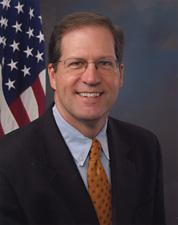 Sen. John E. Sununu (R-NH)
Legislative Activity
Stay on top of the latest movement without scrolling through every action
Senate amendment submitted
August 2, 2006
View full timeline
Senate amendment submitted
August 2, 2006
Senate amendment agreed to: Amendment SA 4829 agreed to in Senate by Unanimous Consent.
August 2, 2006
Senate amendment proposed (on the floor): Amendment SA 4829 proposed by Senator Stevens for Senator Sununu.
August 2, 2006
Amendment SA 4829 proposed by Senator Stevens for Senator Sununu. (consideration: CR S8600; text: CR S8600) To make available from Research, Development, Test and Evaluation, Navy, up to $1,000,000 for an integrated, low-cost, low-power Multibeam Side Scan Sonar System for Unmanned Underwater Vehicle.
August 2, 2006
Amendment SA 4829 agreed to in Senate by Unanimous Consent.
August 2, 2006
Text
Proposed
Amendment No. 4806

Mr. STEVENS. Mr. President, I ask the Chair lay before the Senate
amendment No. 4806.
The PRESIDING OFFICER (Mr. Coburn). The amendment is pending.
Mr. STEVENS. Mr. President, I raise a point of order that this
amendment violates rule XVI.
The PRESIDING OFFICER. The point of order is well taken, and the
amendment falls.

Amendment No. 4768

Mr. STEVENS. Mr. President, I ask the Chair lay before the Senate
amendment No. 4768.
The PRESIDING OFFICER. Without objection, the amendment is pending.
Mr. STEVENS. Mr. President, I similarly raise a point of order that
this amendment violates rule XVI.
The PRESIDING OFFICER. The point of order is well taken, and the
amendment falls.
Mr. STEVENS. Mr. President, we do have another managers' package. I
suggest the absence of a quorum.
The PRESIDING OFFICER. The clerk will call the roll.
The assistant legislative clerk proceeded to call the roll.
Mr. STEVENS. Mr. President, I ask unanimous consent the order for the
quorum call be rescinded.
The PRESIDING OFFICER. Without objection, it is so ordered.
Mr. STEVENS. Mr. President, again, I would alert Senators of the fact
that we have active staff on both sides of the aisle working on these
managers' packages. We urge Senators to come forward and discuss these
amendments with us. We would like to work out as many as we can.

Amendments Nos. 4803, 4779, 4766, and 4798, En Bloc

I have another managers' package ready now. I will read the
components of it:

Amendment No. 4803 for Senator Byrd regarding a biometrics
study, amendment No. 4779 for Senator Warner regarding
research and studies, amendment No. 4766 for Senator Inouye
regarding a military history exhibit; amendment No. 4798 for
Senator Isakson regarding environmental compliance.

I send these amendments to the desk. I ask unanimous consent they be
considered en bloc, adopted en bloc, and the motions to reconsider be
laid on the table.
The PRESIDING OFFICER. Is there objection?
Mr. INOUYE. No objection.
The PRESIDING OFFICER. Without objection, it is so ordered.
The amendments were agreed to, as follows:

amendment no. 4803

(Purpose: To require reports on the recommendations of the Defense
Science Board regarding the management of the biometrics program of the
Department of Defense)

At the end of title VIII, add the following:
Sec. 8109. (a) Interim Report on Management of Biometrics
Program.--Not later than September 8, 2006, the Secretary of
Defense shall submit to the congressional defense committees
an interim report on the management of the biometrics program
of the Department of Defense.
(b) Final Report.--Not later than October 15, 2006, the
Secretary shall submit to the congressional defense
committees a final report on the management of the biometrics
program of the Department of Defense.
(c) Report Elements.--Each report under this section shall
include, current as of the date of such report, the
following:
(1) A detailed description of the recommendations of the
Defense Science Board regarding the management of the
biometrics program of the Department of Defense.
(2) Such recommendations as the Defense Science Board
considers appropriate regarding changes of mission for the
existing biometrics support officers.

AMENDMENT NO. 4779

(Purpose: To make available from Operation and Maintenance, Defense-
Wide, an additional amount of up to $7,500,000 for the Joint
Advertising, Market Research and Studies program)

At the end of title VIII, add the following:
Sec. 8109. (a) Joint Advertising, Market Research and
Studies Program.--Of the amount appropriated or otherwise
made available by title II under the heading ``Operation and
Maintenance, Defense-Wide'', up to $7,500,000 may be
available for the Joint Advertising, Market Research and
Studies (JAMRS) program.
(b) Supplement Not Supplant.--The amount available under
subsection (a) for the program referred to in that subsection
is in addition to any other amounts available in this Act for
that program.

AMENDMENT NO. 4766

(Purpose: To make available from Operation and Maintenance, Army, up to
$500,000 for the United States Army Center of Military History to
support a traveling exhibit on military experience in World War II)

At the end of title VIII, add the following:
Sec. 8109. Of the amount appropriated or otherwise made
available by title II under the heading ``Operation and
Maintenance, Army'', up to $500,000 may be available for the
United States Army Center of Military History to support a
traveling exhibit on military experience in World War II.

AMENDMENT NO. 4798

(Purpose: To make available from Research, Development, Test and
Evaluation, Army, up to $1,000,000 for environmental management and
compliance information)

At the end of title VIII, add the following:
Sec. 8109. Of the amount appropriated or otherwise made
available by title IV under the heading ``Research,
Development, Test and Evaluation, Army'', up to $1,000,000
may be available for environmental management and compliance
information.

Mr. STEVENS. Mr. President, what is the pending amendment now, Mr.
President?

Amendment No. 4802

The PRESIDING OFFICER. The Kennedy amendment, No. 4802, is the
pending amendment.
Mr. STEVENS. The Kennedy amendment, yes. I suggest the absence of a
quorum.
The PRESIDING OFFICER. The clerk will call the roll.
The assistant legislative clerk proceeded to call the roll.
Mr. STEVENS. Mr. President, I ask unanimous consent the order for the
quorum call be rescinded.

[[Page S8600]]

The PRESIDING OFFICER. Without objection, it is so ordered.

Amendment No. 4762

Mr. STEVENS. Mr. President, I ask the Chair lay before the Senate
amendment No. 4762.
The PRESIDING OFFICER. Without objection, the amendment is pending.
Mr. STEVENS. This is the medical countermeasures procurement
amendment. Is that ready for clearance on both sides?
Mr. INOUYE. We have no objection.
Mr. STEVENS. I am informed there is no objection to this amendment. I
ask it be considered at this time and adopted.
The PRESIDING OFFICER. Is there objection? Without objection, the
amendment is agreed to.
The amendment (No. 4762) was agreed to.
Mr. STEVENS. Mr. President, I move to reconsider the vote.
Mr. INOUYE. I move to lay that motion on the table.
The motion to lay on the table was agreed to.
Mr. STEVENS. Mr. President, again, I suggest the absence of a quorum.
The PRESIDING OFFICER. The clerk will call the roll.
The assistant legislative clerk proceeded to call the roll.
Mr. STEVENS. Mr. President, I ask unanimous consent that the order
for the quorum call be dispensed with.
The PRESIDING OFFICER. Without objection, it is so ordered.

Amendments Nos. 4814, 4829, 4792, as modified, and 4783, as modified,
en bloc

Mr. STEVENS. Mr. President, I have another managers' package offered
by myself and Senator Inouye.
The first is amendment No. 4814 by Senator Bingaman regarding
adaptive optics; amendment No. 4829 by Senator Sununu regarding
unmanned underwater vehicles; amendment No. 4792, as modified, by
Senator Coleman regarding microelectronics; and amendment No. 4783, as
modified, by Senator Schumer regarding bandages.
These I believe have been cleared on both sides.
Mr. INOUYE. No objection.
Mr. STEVENS. Mr. President, I send this package to the desk and ask
unanimous consent that the amendments be considered en bloc, agreed to
en bloc, and the motion to reconsider be laid upon the table.
The PRESIDING OFFICER. Is there objection?
Mr. INOUYE. No objection.
The PRESIDING OFFICER. Without objection, it is so ordered.
The amendments were agreed to, as follows:

AMENDMENT NO. 4814

(Purpose: To make available from Research, Development, Test and
Evaluation, Air Force, up to $1,500,000 for Commercialization and
Industrialization of Adaptive Optics)

At the end of title VIII, add the following:
Sec. 8109. Of the amount appropriated or otherwise made
available by title IV under the heading ``Research,
Development, Test and Evaluation, Air Force'', up to
$1,500,000 may be available for Commercialization and
Industrialization of Adaptive Optics (PE #0602890F).

AMENDMENT NO. 4829

(Purpose: To make available from Research, Development, Test and
Evaluation, Navy, up to $1,000,000 for an integrated, low-cost, low-
power Multibeam Side Scan Sonar System for Unmanned Underwater
Vehicles)

At the end of title VIII, add the following:
Sec. 8109. Of the amount appropriated or otherwise made
available by title IV under the heading ``Research,
Development, Test and Evaluation, Navy'' up to $1,000,000 may
be available for an integrated, low-cost, low-power Multibeam
Side Scan Sonar System for Unmanned Underwater Vehicles
(UUVs).

amendment no. 4792, as modified

At the end of title VIII, add the following:
Sec. 8109. Of the amount appropriated or otherwise made
available by title III under the heading ``Procurement of
Ammunition, Air Force'', up to $5,000,000 may be available
for the procurement of Radiation Hardened Microelectronics
(HX5000).

AMENDMENT NO. 4783, as modified

(Purpose: To provide that up to $9,000,000 of the amount appropriated
or otherwise made available by chapter 2 of title IX for the Army for
operation and maintenance and up to $2,000,000 of the amount
appropriated or otherwise made available by such chapter for the Marine
Corps for operation and maintenance may be made available for the
procurement of hemostatic agents, including blood clotting bandages and
invasive hemostatic agents, for use by members of the Armed Forces in
the field)

On page 238, after line 24, add the following:
Sec. 9012. (a) Of the amount appropriated or otherwise made
available by chapter 2 of this title under the heading
``Operation and Maintenance, Army'', up to $9,000,000 may be
made available for the procurement of hemostatic agents,
including blood clotting bandages and invasive hemostatic
agents, for use by members of the Armed Forces in the field.
(b) Of the amount appropriated or otherwise made available
by such chapter under the heading ``Operation and
Maintenance, Marine Corps'', up to $2,000,000 may be made
available for the procurement of hemostatic agents and
invasive hemostatic agents, including blood clotting
bandages, for use by members of the Armed Forces in the
field.

Mr. INOUYE. Mr. President, I move to reconsider the vote.
Mr. STEVENS. I move to lay that motion on the table.
The motion to lay on the table was agreed to.
Mr. STEVENS. Mr. President, I announce to the Senate that we have
completed all the packages we can work on tonight. We urge Senators and
their staff to get together with us early in the morning. We will be
back in session at 9:30, and we hope we can continue to find ways to
agree to the amendments that can be worked out.
There is a series of amendments regarding the National Guard that we
wish to get to as quickly as possible tomorrow. I alert Senators and
staff that we are interested in working on the National Guard
amendments during the early part of the morning tomorrow, if it is at
all possible.
I suggest the absence of a quorum.
The PRESIDING OFFICER. The clerk will call the roll.
The assistant legislative clerk proceeded to call the roll.
Mr. STEVENS. Mr. President, I ask unanimous consent that the order
for the quorum call be dispensed with.
The PRESIDING OFFICER. Without objection, it is so ordered.
Mr. McCAIN. Mr. President, amendment No. 4838 would strike language
from the bill that states that certain projects in the committee report
``shall be considered to be authorized by law.''
Committee reports that accompany Senate bills and joint explanatory
statements that accompany conference reports are not law but, rather,
advisory documents. While some like to think otherwise, the Federal
agencies are under no legal requirement to follow verbatim the many
directives that are included in each and every committee report. And I
note that also applies to the hundreds of earmarks that are included in
committee reports and joint explanatory statements each year. Unless
provisions are included in enacted legislation, they do not have the
force of law. And this is not just my view.
Let me read from the April 1998 opinion of Supreme Court Justice
Scalia in United States, petitioner v. Estate of Francis J. Romani et
al.:

The Constitution sets forth the only manner in which the
Members of Congress have the power to impose their will upon
the country: by a bill that passes both Houses and is either
signed by the President or repassed by a supermajority after
his veto. Art. I, Sec. 7. Everything else the Members of
Congress do is either prelude or internal organization.

And just this past June, in Zedner v. United States, Scalia wrote:

I believe that the only language that constitutes ``a Law''
within the meaning of the Bicameralism and Presentment Clause
of Article I Sec. 7, and hence the only language adopted in a
fashion that entitles it to our attention, is the text of the
enacted statute.
It may seem that there is no harm in using committee
reports and other such sources when they are merely in accord
with the plain meaning of the Act. But this sort of
intellectual piling-on has addictive consequences. To begin
with, it accustoms us to believing that what is said by a
single person in a floor debate or by a committee report
represents the view of Congress as a whole--so that we
sometimes even will say (when referring to a floor statement
and committee report) that ``Congress has expressed'' thus-
and-so. . . . There is no basis either in law or in reality
for this naive belief Moreover, if legislative history is
relevant when it confirms the plain meaning of the statutory
text, it should also be relevant when it contradicts the
plain meaning, thus rendering what is plain ambiguous.

I fully understand a committee's interest in having an agency
consider the guidance it provides in its report language. But on
occasion, that interest can get carried away. I remember the
controversy that occurred a few years ago when a report included
language expressing extreme displeasure over the fact that an agency
had not followed to the letter certain prior year's

[[Page S8601]]

report language. The subsequent report, which accompanied the fiscal
year 2004 CJS appropriations bill, stated the following:

As in past years, the Committee expects NOAA and the
Department to adhere to the direction given in this section
of the Committee report, particularly language regarding
consultation with Congress, and to observe the reprogramming
procedures detailed in section 605 in the general provisions
of the accompanying bill. Unlike past years, however, the
Committee intends to enforce congressional direction
ruthlessly.

The reason I am referencing that report is to demonstrate the extent
to which committees can go in imposing report directives. I am not
trying to suggest the DOD appropriations report accompanying the
pending bill includes comparable threats, but I am concerned about a
line in the bill language that I believe should be eliminated because
it would have the effect of authorizing projects that are merely listed
in the report, thus giving provisions in the report the force of law.
Section 8042 of the bill states:

The Secretary of Defense, notwithstanding any other
provision of law, acting through the Office of Economic
Adjustment of the Department of Defense, may use funds made
available in this Act under the heading ``Operation and
Maintenance, Defense-Wide'' to make grants and supplement
other Federal funds in accordance with the guidance provided
in the report of the Committee on Appropriations of the
Senate accompanying this Act, and the projects specified in
such guidance shall be considered to be authorized by law.

Let me repeat the last phrase: ``and the projects specified in such
guidance shall be considered to be authorized by law.''
Mr. President, the projects referred to are not included in the
legislative language, and we should not be suggesting that it is
acceptable to authorize provisions by reference. In this particular
case, it would result in the authorization of about 30 projects. But
imagine what is next. I can envision the conference report of this or
another bill to include a line stating that all the projects in its
report ``shall be considered to be authorized by law.''
The language that allows certain projects to be ``considered
authorized by law'' is a dangerous precedent, and I believe it should
be eliminated.
I appreciate that the bill managers have agreed to accept this
amendment, and I trust that they will work to ensure that the final
conference agreement is free of language that would allow provisions in
the joint explanatory statement to have the force of law.
Mr. JOHNSON. Mr. President, recently the Senate Appropriations
Committee approved the fiscal year 2007 Defense appropriations bill. As
a member of the committee, I supported this measure, and it is now
being considered by the full Senate.
The bill provides $453.5 billion in new discretionary spending
authority for the Department of Defense. Included in this amount is $50
billion for contingency operations related to the global war on terror.
I have repeatedly called upon the Bush administration to be frank
with American taxpayers about funding levels for ongoing operations in
Iraq and Afghanistan. For far too long, the Bush administration has
relied upon emergency supplemental spending measures, as opposed to the
annual budget process, to fund our efforts in Iraq and Afghanistan. I
believe that is wrong.
In his budget proposal, President Bush finally submitted a $50
billion request for a bridge fund to support military efforts in
Afghanistan and Iraq for the coming fiscal year. The Senate
Appropriations Committee funded this request, but I remain concerned
that this level of funding will be insufficient, and once again
Congress will need to consider another emergency supplemental
appropriations bill.
Furthermore, President Bush's continued insistence on maintaining tax
breaks for the extremely wealthy has made it incredibly difficult to
fund important domestic spending programs. In fact, the President's
budget reduced funding for critical programs including No Child Left
Behind, the Perkins Career and Technical Education Program, and
firefighter assistance grants.
Consequently, Senate Appropriations Committee Chairman Thad Cochran
was forced to reduce defense spending by $9.1 billion to meet urgent
domestic spending needs. As a result, our servicemembers received a 2.2
percent across- the-board pay raise, a reduction of nearly 1 percent
from last year's level of 3.1 percent. In addition, the Bush budget
recommended funding for only 333,000 Army National Guard personnel,
well below the National Guard authorized end-strength of 350,000. This
proposal was opposed by the National Guard and Reserve, and I am
pleased that the Senate was able to provide sufficient funding to
support an Army National Guard end strength of 350,000 soldiers.
While some shortfalls remain in the bill, it is important to note
that it provides an additional $340 million for National Guard and
Reserve equipment above the President's request. The bill also provides
$735 million for body armor and personal protection equipment, as well
as $1.5 billion for the Joint Improvised Explosive Device Defeat
Organization.
Furthermore, I am pleased that the bill reported out by the Senate
Appropriations Committee provides funding for a number of important
South Dakota projects. Due to my seat on the Appropriations Committee,
the South Dakota School of Mines and Technology received funding to
develop a number of important defense related projects. Researchers at
the school will receive over $3.3 million to establish and staff a
nationally competitive polymer and composites processing laboratory in
South Dakota; they will work to develop new transparent armor for the
Army's Future Combat Systems; and the school will develop a control
system for laser powder deposition.
The South Dakota School of Mines and Technology is not the only
organization conducting critical defense-related research in South
Dakota. The Rosebud Sioux Tribe will receive $5 million to continue
their efforts to establish the Advanced Electronics Rosebud Integration
Center. The center will research, develop, test, and demonstrate
advanced electronics integration and fabrication technology on the
Rosebud Sioux Tribe reservation in South Dakota. In addition, funding
was provided to RPM & Associates to facilitate their efforts to use
LENS technology for aerospace applications. Likewise, the Batcheller
Consulting Group will move forward in developing innovative on-board
sensor systems to assess the wear-and-tear to military vehicles and
weapon systems.
Finally, the South Dakota National Guard will benefit from defense-
wide funding increases I championed. For example, the Senate
Appropriations Committee included nearly $35 million above the
President's request to meet the urgent needs of our National Guard and
Reserve. This funding will help procure additional M22 Automatic
Chemical Agent Alarms, Improved Chemical Agent Monitors, targeting pods
for F-16 aircraft, and helmet mounted cueing systems.
Mr. President, while I continue to have deep concerns about the
spending priorities of the Bush administration, I do believe that the
funding included in this bill will go a long way toward providing our
troops with the resources they need to defend our country.

____________________