To make available from Defense Health Program $19,000,000 for the Defense and Veterans Brain Injury Center.
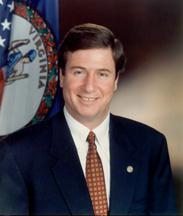 Sen. George Allen (R-VA)
Legislative Activity
Stay on top of the latest movement without scrolling through every action
Senate amendment agreed to: Amendment SA 4883 as modified agreed to in Senate by Unanimous Consent.
September 6, 2006
View full timeline
Senate amendment agreed to: Amendment SA 4883 as modified agreed to in Senate by Unanimous Consent.
September 6, 2006
Considered by Senate. (consideration: CR S8992, S9035)
September 6, 2006
Amendment SA 4883 as modified agreed to in Senate by Unanimous Consent.
September 6, 2006
Senate amendment submitted
September 5, 2006
Senate amendment proposed (on the floor): Amendment SA 4883 proposed by Senator Allen.(consideration: CR S8926-8929; text: CR H8926)
September 5, 2006
Amendment SA 4883 proposed by Senator Allen. (consideration: CR S8926-8929; text: CR H8926) To make available from Defense Health Program $19,000,000 for the Defense and Veterans Brain Injury Center.
September 5, 2006
Text
Proposed
BLUE DOG COALITION

The SPEAKER pro tempore. Pursuant to the previous order of the House,
the gentleman from Arkansas (Mr. Ross) is recognized for 45 minutes.
Mr. ROSS. Mr. Speaker, I rise this afternoon on behalf of the 37-
member strong, fiscally conservative, Democratic Blue Dog Coalition, a
group of conservative Democrats that are united with a common cause,
and that is, restoring common sense and fiscal discipline to our
Nation's government.
As we spend the next 45 minutes or so, Mr. Speaker, talking about the
fiscally conservative Democratic Blue Dog Coalition's 12-point plan for
meaningful budget reform, and as we talk about our plan for
accountability within our government, I would remind you, Mr. Speaker,
that you can e-mail us your comments or concerns at

[email protected]
. Again, Mr. Speaker, if you have any comments,
questions or concerns of us, you can e-mail us at

[email protected]
.
Mr. Speaker, the Federal debt is the largest this Nation has ever
seen, some $8.6 trillion. This Nation has had one of the largest
deficits year after year after year since 2001. I believe the American
people are ready for us to put an end to the partisan bickering and
clean up the mess in Washington to restore common sense and fiscal
discipline to our Nation's government.
The projected deficit for fiscal year 2007 is $350 billion, at least
that is what they tell us, but not true. The real deficit for fiscal
year 2007 is $545 billion. You see, when the people in this House, when
the Republican leadership tells us that the deficit that is projected
for fiscal year 2007 is $350 billion, that is counting the money they
are borrowing from the Social Security trust fund, with absolutely no
provision on how or when or where the money is going to come from to
pay that debt back.
I am starting to understand now why, when I first got to Congress in
2001 and I wrote that bill to tell the politicians in Washington to
keep their hands off the Social Security trust fund, I am beginning now
to understand why the Republican leadership refused to give us a
hearing or a vote on that legislation.
Last year, the deficit was about $300 billion. In fact, Mr. Speaker,
if you look with me here, you can see in 2004, we had the largest
deficit ever in our Nation's history, $413 billion; the second largest
deficit ever in our Nation's history in 2003, $378 billion. In 2005, it
was $318 billion, and for 2006, there was much to do made out of the
fact that they only had a deficit of $296 billion. Only $296 billion?
Mr. Speaker, that is an enormous debt. That is a lot of hot checks that
have been written by our Nation.
Let me put it in perspective. Those are the four largest deficits
ever in our Nation's history, the fiscal year 2007 deficit projected at
$350 billion, but let me put it in perspective. The total national debt
from 1789 until 2000 was $5.67 trillion, but by 2010 the total national
debt will have increased to $10.88 trillion. This is a doubling of the
211-year debt in just 10 years. Interest payments on this debt are one
of the fastest growing parts of the Federal budget.
It is called the debt tax, D-E-B-T, and that is one tax that cannot
be repealed, that cannot be cut until we get our Nation's fiscal house
in order and return to the days, like we saw under President Clinton
from 1998 through 2001, where for the first time in 40 years Democratic
or Republican, the Clinton administration gave us the first balanced
budget, gave us a surplus that in the past 5\1/2\ years has been
squandered by this administration and this Republican-led Congress.
Our Nation is borrowing $1 billion a day. We are sending $8 billion a
month to Iraq, $57 million a day to Afghanistan. We are borrowing $1
billion a day, and before we borrow $1 billion today and before the
current debt grows by another $1 billion today, our Nation is paying
$500 million on the debt we have already got in interest payments
alone.
America's priorities will continue to go unmet until we get our
Nation's fiscal house in order. Let me just make this point of what I
mean by that.
The red bar is the amount of money our Nation is spending on interest
not meeting America's priorities, not investing in education, homeland
security, veterans or our soldiers, simply paying interest on the
national debt. That is the red bar. You can see in contrast how much we
are spending of your tax money on education and on homeland security
and on veterans. The majority of the money is going to help pay
interest, not principal, not investing in education, homeland security,
veterans or soldiers, but paying interest on the debt we already got.
So America's priorities will continue to go unmet until we get our
Nation's fiscal house in order.
To help me explain this, and I will be coming back to talk more about
the Blue Dog Coalition's 12-point plan for a meaningful budget reform,
I will be talking about our package of accountability bills; but to
help set the stage, Mr. Speaker, and to put this in perspective, I
yield to my colleague and fellow Blue Dog member from Georgia (Mr.
Scott).
Mr. SCOTT of Georgia. Mr. Speaker, thank you very much. It is always
a pleasure to join you as we talk about the important issue of getting
our fiscal house in order.
Coming out of this recent election, the American people spoke and
they spoke boldly, and the one thing they said was they want a new
direction. A part of that new direction is to be fiscally responsible
and to make sure we are spending the taxpayers' money wisely.
I want to talk about several aspects of this today, one of which I
want to start off by talking about the aspect of our foreign borrowing.
That is one of the most dangerous areas in which we are moving.
As you well know, we now are borrowing more money from foreign
governments and foreign banks, foreign financial institutions. In the
last 5 years, we borrowed more money from foreign interests than we
borrowed in the whole history of this country up to 2001.
I want to make that clear because I know the American people are
sitting there and saying, is he saying what I think he is saying, that
since 1789, at the birth of this country, through all the way up to
2001, we have borrowed less money from foreign governments than we have
borrowed in the past 5 years? That is a dangerous situation for us to
be in. It is dangerous to the future of our country, and we must move
to correct that.

When we look at Japan, we are borrowing nearly $700 billion from
Japan. We are borrowing $368 billion from China, and we are borrowing
$117 billion from Taiwan. We are borrowing over $200 billion from the
OPEC nations. When you look at the Asian Basin and you look at the
Middle East, you also find another occurrence that is troubling, and it
presents some of the most unstable regimes and countries in our world
today. It is a terrible situation for us to be in.
At home, we must act more responsibly by making sure that we are

[[Page H8925]]

spending our money and putting our priorities where they count the
most. The American people are looking for help in terms of getting more
of this money into their pockets, being able to help them with critical
issues of education.
So, for a little bit today, I want to talk about what we are doing as
Democrats, and I thank God because this is the first time that I am
standing and you are standing in this floor on the House of
Representatives with this debate when we can say to the American people
as Democrats, thank you, thank you for giving Democrats an opportunity
to lead this Congress. We are grateful and we are humbled because we
understand the levity and the seriousness of this responsibility that
the American people have given us to lead. Nowhere is that more crucial
than in taking care of their money and taking care of our fiscal
responsibility and being responsible for it.
So I think it is very important that as we talk this afternoon about
this responsibility to let the American people know where we are going
to work quickly to make sure we are paying attention to their needs,
and one of the first places that we are going to start is to raise the
minimum wage.
Why is that important, people say, the minimum wage? It is more than
just a symbolic gesture. It is a timely gesture. We have had the
minimum wage since 1938. There has never been as long a period where we
have not adjusted the minimum wage as in the period since the last
raising of the minimum wage. So it is important for us to show the
American people, at least they will see, they are paying attention to
us. Yes, we will pay attention to the world; yes, we are very much
concerned about what is happening in the world; but we must immediately
send a message to the American people that we care about you. We care
about America first. That is why the importance of raising this minimum
wage is so important. It sends that message. The American people say,
oh, okay, I think they get it.
Mr. ROSS. Mr. Speaker, I believe an important message was sent on
election night, and that message was that the American people are ready
for us to put an end to the partisan bickering, to work together to
clean up the mess and to put people's interests above special
interests.
That is why I am real proud that in the first 100 hours under
Speaker-elect Pelosi, she has announced that in the first 100 hours we
will reinstitute PAYGO rules on the floor of the United States House of
Representatives. PAYGO means pay-as-you-go, and it is one of the 12
points for meaningful reform that the Blue Dog Coalition has put forth.
We are very grateful that she has included it in one of her objectives
to accomplish in the first 100 hours.
What PAYGO means is that if you have got a new Federal program you
want to fund or if you have got a tax for folks earning over $400,000 a
year that you want to cut, you have got to show us where you are going
to pay for it. You cannot just pass laws that cut revenue or increase
spending without showing where the money is going to come from, because
we know where it has been coming from. It has been coming from foreign
central banks and foreign investors, as the gentleman from Georgia so
eloquently pointed out.
This administration and this Congress in the past 5\1/2\ years have
borrowed more money from foreign central banks and foreign investors
than the previous 42 Presidents combined. Reinstituting the PAYGO rules
that were in place on the floor of this House when President Clinton
gave us the first balanced budget in about 40 years, every year from
1998 through 2001, PAYGO rules were in place; then they will be in
place again on the floor of this House, which is the first step toward
restoring fiscal discipline and common sense to our Nation's
government.
I yield back to the gentleman from Georgia.
Mr. SCOTT of Georgia. You are absolutely right, and it is so
important I think as we talk this afternoon that the American people
are well aware that they are in good shape with Democrats in control of
the Congress.
Let me go on from the minimum wage. I mean, that is important. We are
going to get that done and we are going to do it in a bipartisan way.
We will reach out to the Republicans. We will work with Republicans.
That is another thing that the American people want to see us do.

{time}  1430

I can't tell you the number of times on the campaign trail that
people will come up to me and say, Congressman Scott, for goodness
sake, can you all stop the bickering? Can you just get along? To
paraphrase our friend in California, can we just get along? And we are
going to do that.
So we find common ground on the minimum wage and quickly pass that.
Then we can find common ground, and let me just say something about the
minimum wage as we go forward so people will know. We are talking about
pay-as-you-go; we are talking about keeping financial and fiscal
responsibility in and making sure we are accountable. This minimum wage
is totally absorbed by the private sector, by the employment sector. We
are simply making the adjustment to give a due raise to go in line with
inflation and the other needs to bring the minimum wage up to the
standard that we have.
Mr. ROSS. Will the gentleman yield?
Mr. SCOTT of Georgia. Yes, I will.
Mr. ROSS. Just on the minimum wage aspect, let me just make a point
to that. If folks don't recognize the current Federal minimum wage of
what it means, let me tell you what it means. If you are working 40
hours a week, 52 weeks a year, never get sick and never take a single
day off of work for vacation, you earn $10,712 a year.
If we are serious as a Nation in moving people from welfare to work,
we have got to value their work and we have got to pay them a living
wage. And that is exactly what the gentleman from Georgia is talking
about doing; and I am so pleased that Speaker-elect Pelosi has included
that in her legislative agenda for the first 100 hours.
Mr. SCOTT of Georgia. And I will tell you why I am so pleased with
our leadership and Leader Pelosi and Steny Hoyer, Jim Clyburn, and all
of our great leaders. They have said that before this Congress gets
another raise in pay, we will raise the minimum wage for the American
people. That is leadership that the American people can be proud of.
As we move from the minimum wage, another area that we are going to
work on very quickly: we know the high cost of education, we know what
it costs for a young person to go to college. We have found a way in
which we can get common ground. The Democrats will lead the way in
cutting in half the interests that students will have to pay on their
student loans. That is the kind of tax cut for middle-class America
that is needed. It impacts everybody to have that. And we pay for it as
we go. We can afford that, because that money that is saved is
stimulated and goes right back into the economy. When you are able to
get money back to the consumers and to the American people, they are
able to use that money in every area; but it is recycled, it continues
to go back into the economy to help the greater productivity of this
country.
Mr. ROSS. I want to thank the gentleman for discussing some of the
legislative agenda items that we will see in the first 100 hours of the
new 110th Congress. And reforming Medicare part D is another one of
those that I am very excited about, where we are actually going to
allow our government to negotiate on behalf of 40 million seniors with
the big drug manufacturers to lower the cost of medicine, which
hopefully can help us to eliminate or reduce this doughnut hole and
continue to improve and make this benefit for America's seniors even
better.
But we are 37 members strong. We are the fiscally conservative Blue
Dog Coalition, Mr. Speaker, and I am pleased we are growing to 44
members with the 110th session of Congress beginning in January; and we
are all about restoring common sense and fiscal discipline to our
Nation's government. And, wow, does our country need a good dose of
that, does Congress need a good dose of that. You can look to the chart
here and find the answer is an overwhelming ``yes'' with a great big
exclamation mark at the end of it.
As you walk the Halls of Congress, Mr. Speaker, you will find this
Blue Dog Coalition poster as a welcome mat to the door of each of the
37 members

[[Page H8926]]

of the fiscally conservative Democratic Blue Dog Coalition to serve as
a daily reminder to all of us that walk the Halls of Congress that our
Nation and its spending habits are out of control. Today, the U.S.
National Debt, and these numbers change daily in the Halls of Congress
by the front door as a welcome mat to the members of the fiscally
conservative Democratic Blue Dog Coalition. But today, as we stand
here, the U.S. national debt is $8,643,173,864,324 and some change.
If you divide that enormous number that is very difficult for us to
get our arms wrapped around, if you take that number and you divide it
by every man, woman, and child, including those being born today here
in America, your share, each individual's share of the national debt is
$28,867. We refer to it in the Blue Dog Coalition as the debt tax, D-E-
B-T. And that is one tax that cannot go away, that cannot be cut, that
is stopping us from meeting America's priorities here at home. So that
is the reason we have written a 12-point plan for reform that will cure
our Nation's addiction to deficit spending, put us on a course toward a
balanced budget, and that will allow us to begin to invest in America
again.
We have got the cochair-elect of the Blue Dog Coalition with us
today, one of the members of the Blue Dog Coalition who has been around
for quite some time and has been a real leader in the group and I am
pleased to report that beginning with the 110th session of Congress
will become the cochair for administration for the Blue Dog Coalition,
and that is the gentleman from Florida, Mr. Allen Boyd.
Mr. BOYD. Mr. Speaker, I want to thank my colleague from Arkansas, my
fellow Blue Dog, Mr. Ross, and also Mr. Scott, for being here and
sharing in this hour to talk a little bit about the priorities of the
Blue Dog Coalition.
Mr. Speaker, we have a unique opportunity here before us that we
don't have a whole lot of time to grasp on to and do something with. It
is an opportunity that doesn't come along often, maybe once every
generation or so, in which the American people say to the United States
Congress and to the administration, We don't like the direction the
country is heading in, and we would like to put a new team in place and
head in a different direction. And, Mr. Speaker, many of us who serve
in the Halls of this Congress have not experienced this before, we have
not been here when this has happened. More than half of the Members of
this Congress were not here in 1994 when this happened before. So we
have a unique opportunity to change the way that this Congress operates
and to do some things that will help to keep America the greatest
country on the face of the Earth.
Mr. Speaker, we all recognize that we live in a very special place.
It is not perfect, but it beats the devil out of what is in second
place around the world. We have the greatest economy on the face of the
Earth; we have the political machine that has been put here over the
years that has never been equaled by man before. And with that, we
achieve a lot of political clout around the world, and with that comes
a lot of responsibility. But we have an underlying economic model, Mr.
Speaker, that has allowed us to become really the greatest country on
the face of the Earth, and for several years now we have eroded that
underlying economic model in a way as we begin and as we try to
address, and not very successfully, the issues that face our country.
It appears to me that over the last few years that many of the things
we did were to maintain power rather than to advance the American cause
and make life better for the American people.
We have a unique opportunity, Mr. Speaker, to tear down that wall
that exists in the middle of that aisle that has been built over the
last 8 or 10 or 12 years. The Blue Dogs want to do that. We want to
reach across that aisle as Democrats and take hands with some folks on
the Republican side who feel like we do, that we have to preserve that
economic model, we have to address these issues that are before us in
terms of spending problems and revenue problems, we have to address
them all in one context.
You can't come here to this floor and address the spending issue one
day without any regard for the revenue side, and then come the next day
and address the revenue side without any regard for the spending
priorities of this country. So that is what the Blue Dogs are all
about. We believe at the end of the day the revenues have to meet the
expenditures.
Now, we have some very difficult choices to make before us in the
next few months: how do we put this Congress and this country on a path
so that we will again come into a fiscal discipline situation where we
can see down the road that we are going to have a balanced budget. We
have a systemic deficit built in right now into our government
activities, and we are going to have to make some tough choices
relative to spending and relative to the revenue side, and I am honored
that the Blue Dogs are going to be leading the way to bring fiscal
sanity back to this government that we are so very proud of.
My friend from Georgia (Mr. Scott) has laid out the agenda items of
the first 100 hours, and those we agree with. We think they are items
that we heard the American people tell us during the campaign that we
need to get done. And we are going to do those things, and we are going
to do them in the context of balancing the budget in the long run.
One of the things that the Blue Dogs are going to really push for in
the first 100 legislative hours in the 100-hour agenda is to make sure
that we pass a PAYGO rule, a PAYGO rule that says that if you are going
to have a new program, you have got to find money to pay for it. And we
also want to put in place spending caps. We want these in statute. This
is what we did in 1997, Mr. Speaker, shortly after you came here a few
years ago that got us on the path to fiscal responsibility and fiscal
sanity.
So I am very proud to be a part of this group. This group wants to
reach across that aisle, tear down that wall that exists, work with the
folks on both sides of the aisle, because we all represent about
650,000 or 700,000 people, and those people have a right to be heard.
Those people from back in the country have a right to be heard, and we
ought to work that way. And I know the new leadership of this Congress
has committed that they will work in a bipartisan way, and we will have
a Speaker of the House, not the Speaker of a party.
Mr. Speaker, I want to thank you for the time, and I want to
especially thank my colleague, Mr. Ross, for putting this together.
Mr. ROSS. Mr. Speaker, I want to thank the gentleman from Florida who
has been elected cochair of the Blue Dog Coalition for the 110th
session of Congress for coming and sharing his thoughts with us.
Mr. Boyd, you are so right. The American people on election night
were telling us they want us to put an end to the partisan bickering,
to clean up the mess in Washington, to reach across that aisle and work
together, not as Democrats or Republicans, but as Americans. And put
America first again, put our families and children first again, and put
the people's interests above special interests. That is why I am so
proud that Speaker-elect Pelosi has announced that during the first 100
legislative hours we will see a meaningful ethics reform bill on the
floor of this House.
Some people, when they hear about the Blue Dog Coalition and the fact
that we are a group of fiscal conservative Democrats, a lot of people
all of a sudden just assume that it is a group of Southern Democrats.
Not true. This is not a regional group; this is a national group and a
national movement that stretches from Salt Lake City and Burbank,
California all the way to Long Island. And I am so pleased that one of
our longstanding members of the fiscally conservative Democratic Blue
Dog Coalition, the gentleman from Long Island, Steve Israel, is here
with us today; and I yield to him.

{time}  1445

Mr. ISRAEL. Mr. Speaker, I thank my very good friend from Arkansas
with whom I have served for 6 years. We were elected together in 2000,
and it has been my privilege to work with and under him in the Blue Dog
Coalition.
Mr. Speaker, one of the critical obligations we have as Members of
Congress, it does not matter whether you are a Blue Dog or Republican
or Democrat, one of the most critical obligations we have, in my view,
is keeping

[[Page H8927]]

our country strong and safe, making sure that our military continues to
be the strongest and greatest on earth; making sure that our children,
as they advance in years, inherit a military that is strong and a
country that is safe and secure. That is what we all think about. That
is the obligation that we all have.
But if we continue these unsustainable budget strategies on this
unsustainable budget path with $8 trillion debts and multibillion-
dollar annual deficits, we are undermining our military and we are
doing a disservice not only to our children but to the brave men and
women who count on us to ensure that we are appropriating the funds
adequate for them to fight the fight.
I have the great privilege of being on the Armed Services Committee,
which has jurisdiction for all military and national security issues.
We have a $500 billion national defense budget this year. We need to
continue providing our forces with the critical funds that they need
for force protection, for night vision goggles, for up-armored Humvees,
for Kevlar, for pay increases, for health benefits, for decent housing,
for education. We are going to continue to need to do that because the
world will continue to be a very dangerous place. We want to make sure
that our men and women have all of the resources that they need to
confront those dangers.
The problem is this: These unsustainable budgets, the lack of
balanced budgets, the lack of true prioritizing and the lack of true
bipartisanship is not going to provide our military with what they
need. Let me give an example.
At a recent Blue Dog meeting, I was very concerned to receive a
report from the GAO, and that report is eye-opening. It is jarring. It
should be a matter of concern to everybody who makes budget decisions.
According to that report, in 2005 Federal revenues as a percentage of
GDP were just over 20 percent; just over 20 percent of our gross
domestic product was Federal revenues. Federal revenues will be
flatlined all of the way through 2040. Federal revenues, now over 20
percent of our GDP, in the year 2040 Federal revenues will continue to
be just over 20 percent of our GDP. The problem is this: that Federal
spending is going to far exceed our Federal revenues. Last year, 2005,
Federal spending as a percent of GDP, might have been sustainable. But
by the year 2040, Federal spending as a percentage of GDP will be so
high, without the appropriate balanced budget controls, that this is
the condition that our kids will find themselves in. In the year 2040,
Federal revenues will be ample to pay for two functions in the Federal
Government: interest on debt and a little bit of Social Security.
Everything else will be in the gap between the money we have and the
money we need. That includes all defense spending. It includes the FBI.
It includes payments to farmers. It includes the CIA. It includes all
of our national security spending. That is what we are saying to our
children.
If we continue these unsustainable budgets, by the year 2040, Federal
revenues will only pay for interest on debt, credit card interest, and
a little bit of Social Security. They are either going to have to
cancel all other programs or tax themselves catastrophically to pay for
them. Now, that is not a value that any American sitting around their
kitchen table would agree to. That is not a work ethic that any of us
would agree to.
So how do we fix this problem? How are the Blue Dogs proposing that
we give our kids the ability to pay for the strongest military on
earth? It is very simple, not very complicated at all. The Blue Dogs
say balance our budgets. Don't spend if you don't have the resources to
spend. The Blue Dogs say impose fiscal discipline on this Congress and
on the administration. The Blue Dogs say prioritize, meet your critical
needs first, pay for a strong military, don't try to balance budgets on
the backs of people who are fighting on our fronts and then have them
report to us that they didn't have coagulant bandages in Iraq because
nobody paid for adequate amounts. Pay for those things first and watch
and measure your spending on other less important things. That is what
we are saying. But make sure at the end of the day the budget is
balanced.
Finally what the Blue Dogs are saying is this: We don't care whether
you are Democrat or Republican. We don't care whether you are from the
south shore of Long Island or from the deep South. It doesn't matter to
us. Work with us. Work with us. We will work with you.
The seat that I stand in front of here is three seats from the center
aisle of the Congress of the United States. Blue Dogs have demonstrated
time and time again our willingness to cross that aisle and work with
anyone who is as committed as we are to the values of a balanced budget
and a strong defense.
So as we go into the majority, which is a very sober responsibility,
and face the difficult choices to be made, we assert again our
willingness to cross that center aisle and forge partnerships with
Members on the other side of the aisle to do what is best for our
children: Pay for a strong defense, an excellent military, a well-
trained military, and do it as we balance our budgets. Give our
children the ability to be protected and pay for that protection at the
same time.
It is about simple, fundamental commonsense priorities, and few
organizations are as equipped and as expert to pursue those priorities
as the Blue Dog Coalition, which is why I have been so proud to be a
member.
Mr. ROSS. I thank the gentleman from Long Island for joining us on
the floor of the U.S. House of Representatives as we discuss the fiscal
conservative Democratic Blue Dog Coalition and our plans to restore
some commonsense and fiscal discipline to our government.

It begins with our 12-point reform plan for curing our Nation's
addiction to deficit spending.
Mr. Speaker, if you have questions, comments or concerns, you can e-
mail us at BlueD
[email protected]
.
Quickly, I want to go through some of the 12 points. In other words,
we are not here on the floor of the U.S. House of Representatives just
to beat up the Republican leadership or just talk about what has gone
wrong, we are here to offer up commonsense solutions to getting this
Nation out of debt.
Number one, require a balanced budget. Forty-nine States do. Holly
Ross does. Most Americans understand the concept of a balanced budget.
So number one, require a balanced budget as a nation.
Number two, don't let Congress buy on credit. That goes back to the
PAYGO rules, and we are very pleased that Speaker-elect Pelosi has
included in her legislative agenda for the first 100 hours
reinstituting PAYGO rules, rules that were in place on the floor of
this House from 1998 through 2001 when we had a balanced budget for the
first time in about 40 years. Pay as you go simply means if you want to
spend money on a project, show us where the money is coming from; don't
go to China and borrow it from them.
Number three, put a lid on spending, what is referred to as strict
spending caps to solve the growth of runaway government programs.
Number four, require agencies to put their fiscal house in order.
Mr. Speaker, did you realize that 18 of 24 major Federal agencies
can't produce a clean audit of their books? The Constitution clearly
gives Congress the authority to provide oversight, and all this
Republican-led Congress has been doing is rubber stamp after rubber
stamp after rubber stamp and continuing to give these agencies more
money when they can't account for the money they already get.
These are four of the basic principles of the 12-point plan that the
Blue Dog Coalition is offering up for meaningful budget reform.
I yield to the gentleman from Georgia (Mr. Scott).
Mr. SCOTT of Georgia. Mr. Speaker, it is very important that we put
this in context because as we move forward with pay as you go, we at
the same time must respond to the needs of the American people. But we
are doing so in a very fiscally responsible way. Check the minimum
wage, no Federal expenditure. It will be absorbed by the private
sector, and indeed stimulating that private sector to produce more.
The movement to bring down prescription drugs by having the Secretary
of Health and Human Services be able to negotiate using the bulk number
of 55 million recipients of

[[Page H8928]]

Medicare to be able to bring down the cost that accrues to us.
And just now with the release of the Iraq Study Group report, and Mr.
Israel and I share as cochairs of our Democratic group, as cochairs on
national security, that we have been examining these issues. He is
absolutely right. We must take better care of our military. The
American people are expecting our expenditures to go there. And one of
the great, I think, recommendations of this study group that is headed
by Mr. Hamilton and Mr. Baker that was just presented to the President
yesterday is the realization, number one, we have to make some changes
in this Iraqi situation because of the terrible drain that it is doing
to our military. If we don't correct that, surely the security of our
country goes down.
The other area that we talked about with regard to fiscal
responsibility is the matter of halving the interest rate that our
students pay on their student loans. That is money that goes back into
the economy and a savings to our middle-class families.
Now the other area that we are going to move on in our first 100
hours is to begin to deal forthrightly with our problem of energy, our
problem of energy dependence on the Middle East, that most volatile
region. We are making great strides. One of our first efforts is to
increase the incentives to go into renewable energy.
I just came back with a group of other Congressmen who are members of
the Agriculture Committee. We went to Brazil. The reason we went to
Brazil and South America, is because we realize here in this country we
don't have all of the answers. But I will tell you one thing, they are
doing something very special down in South America. We need to hurry up
and do it here.
For example, in Brazil, 85 percent of their new automobiles that they
are putting out in the market this year are flex fuels so that they
will be able to use ethanol as well as regular gasoline.
I asked the Minister of Industry in Argentina and Brazil this one
question about their trade relations with the Middle Eastern countries
and what percentage of their energy they were getting from abroad:
Argentina and Brazil, absolutely none. They are almost at the point of
being energy independent because they had the foresight to move on this
area.
I am so pleased with our leadership on the Democratic side to say
among our first efforts will be to increase at a rapid rate our
preparedness, our infrastructure, so that we can develop ethanol in
this country from the primary two sources that we have, granular corn
and soybeans, as well as cellulosic.
Mr. ISRAEL. If the gentleman would yield, this is such a critical
point. This is a national security area. And I know that the gentleman
understands that so well.
Mr. Speaker, last year the Department of Defense spent $10.6 billion
on basic energy costs. That is what it costs the military to fuel
itself. Of that, the Air Force spent $4.7 billion, about half on one
thing: fuel for its airplanes. With this $8 trillion debt, we have to
fund the defense budget. How do we do it? The gentlemen know well, we
borrow the money from China.
So here is what we are doing: We are borrowing money from China to
fund defense budgets to buy oil from the Persian Gulf to fuel our Air
Force to protect us from China and the Persian Gulf. This is not just
an energy policy, it is a national security vulnerability. We will
balance our budgets, have fiscal responsibility and pursue energy
independence so that we are safer and we are much better off in terms
of our budgets.
I thank the gentleman for yielding.
Mr. SCOTT of Georgia. Absolutely. Again, energy and becoming
independent is a reachable goal. It is a doable goal, and we can reach
that conclusion within a matter of a few years with the kind of
leadership we are putting forward.
I am proud to say we will be putting research grants into that to
spur our country to move very rapidly and develop that infrastructure.
Mr. ROSS. The gentleman raised an excellent point, and I am writing a
plan to put America on a path towards energy independence, something
Brazil will achieve this year. And the reason this is all so important,
and it relates to the debt and the deficit, is as a Nation we are
spending half a billion dollars a day paying interest on the debt we
have already got.

{time}  1500

America's priorities, including investing in alternative and
renewable fuels and bioenergies and clean coal technology and synthetic
fuels, will never happen. So it is time to get our Nation's fiscal
house in order.
Mr. Speaker, we will be back on the floor next Tuesday night or at
some Tuesday night in the future, whenever we see fit to come back as a
Congress, to talk more about the Blue Dogs 12-point plan for meaningful
budget reform, to restore common sense and fiscal discipline to our
Nation's government.
And until we see you again, Mr. Speaker, I will leave you with this
thought: everyone in America's share of the national debt: $28,867. The
debt tax, d-e-b-t. It is time, Mr. Speaker, we get our Nation's fiscal
house in order and pay down this debt and have a balanced budget in
this country once more.

____________________