To prohibit the United States Trade Representative from negotiating any future trade agreement that limits the Congress in its ability to restrict the operations or ownership of United States ports by a foreign country or person, and for other purposes.
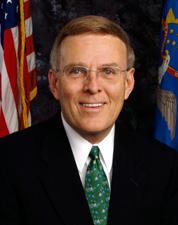 Sen. Byron L. Dorgan (D-ND)
Legislative Activity
Stay on top of the latest movement without scrolling through every action
Senate amendment submitted
September 12, 2006
View full timeline
Senate amendment submitted
September 12, 2006
Senate amendment proposed (on the floor): Amendment SA 4937 proposed by Senator Dorgan.(consideration: CR S9331-9332, S9346-9347; text: CR S9331)
September 12, 2006
Senate amendment agreed to: Amendment SA 4937 agreed to in Senate by Unanimous Consent.
September 12, 2006
Amendment SA 4937 proposed by Senator Dorgan. (consideration: CR S9331-9332, S9346-9347; text: CR S9331) To prohibit the United States Trade Representative from negotiating any future trade agreement that limits the Congress in its ability to restrict the operations or ownership of United States ports by a foreign country or person, and for other purposes.
September 12, 2006
Amendment SA 4937 agreed to in Senate by Unanimous Consent.
September 12, 2006
Text
Proposed
[Page S9327-S9335]
From the Congressional Record Online via GPO Access [wais.access.gpo.gov]
[DOCID:cr12se06-164]

SECURITY AND ACCOUNTABILITY FOR EVERY PORT ACT

The ACTING PRESIDENT pro tempore. Under the previous order, the
Senate will resume consideration of H.R. 4954, which the clerk will
report.
The assistant legislative clerk read as follows:

A bill (H.R. 4954) to improve maritime and cargo security
through enhanced layered defenses, and for other purposes.

Pending:

Stevens (for DeMint) amendment No. 4921, to establish a
unified national hazard alert system.

Mr. STEVENS. Mr. President, is the pending business the DeMint
amendment?
The ACTING PRESIDENT pro tempore. Yes, it is.
Mr. STEVENS. Mr. President, I suggest the absence of a quorum.
The ACTING PRESIDENT pro tempore. The clerk will call the roll.
The assistant legislative clerk proceeded to call the roll.
Mrs. MURRAY. Mr. President, I ask unanimous consent that the order
for the quorum call be rescinded.
The ACTING PRESIDENT pro tempore. Without objection, it is so
ordered.

Amendment No. 4929

Mrs. MURRAY. Mr. President, I ask unanimous consent that the pending
amendment be set aside, and I send an amendment to the desk.
The ACTING PRESIDENT pro tempore. Without objection, it is so
ordered. The clerk will report.
The assistant legislative clerk read as follows:

The Senator from Washington [Mrs. Murray] proposes an
amendment numbered 4929.

Mrs. MURRAY. Mr. President, I ask unanimous consent the reading of
the amendment be dispensed with.
The ACTING PRESIDENT pro tempore. Without objection, it is so
ordered.
The amendment is as follows:

amendment no. 4929

(Purpose: To extend the merchandise processing fees, and for other
purposes)

At the appropriate place, insert the following:

SEC. ____. COBRA FEES.

(a) Extension of Fees.--Subparagraphs (A) and (B)(i) of
section 13031(j)(3) of the Consolidated Omnibus Budget
Reconciliation Act of 1985 (19 U.S.C. 58c(j)(3)(A) and
(B)(i)) are amended by striking ``2014'' each place it
appears and inserting ``2015''.
(b) Use of Fees.--Paragraph (2) of section 13031(f) of such
Act (19 U.S.C. 58c(f)(2)) is amended by adding at the end the
following: ``The provisions of the first and second sentences
of this paragraph limiting the purposes for which amounts in
the Customs User Fee Account may be made available shall not
apply with respect to amounts in that Account during fiscal
year 2015.''.

Mrs. MURRAY. Mr. President, this morning the Senate is considering a
very important bill, the port security bill, which many Members have
come to the floor to talk about. I am proud to be an original sponsor
of this bill and have been working on it for a number of years; in
fact, since five years ago, after September 11, when I was the
Transportation Appropriations Subcommittee chair. At that time I began
to bring stakeholders together to talk about how we can make sure the
cargo containers that are coming into this country are secure. It is a
very complex issue. It is very difficult to do. We have a tremendous
balancing act of making sure that cargo containers are safe when they
come into our ports but also that we don't halt our economy as we move
forward with this initiative.
I have been very proud to work with a number of Senators in getting
us to this point, and I am hoping this bill will move forward in an
expeditious manner. Obviously, there will be a number of amendments
that come before us, and I look forward to working with other Senators
on both sides of the aisle to move them forward.
The bill that is now before the Senate has one major hole. The
original bill we have been working on with all of the committees
contained a funding source for this bill that some Members had some
concerns about. The original bill that we offered had tariff fees as
the funding source. The Finance Committee has objected to that. They
were concerned about that. I understand that concern. Because of that
objection, the bill that has come before us is an important bill, but
it lacks the ability to put in place a secure system. It is essentially
an empty shell without a funding source.
That is why I have sent to the desk right now an amendment we have
been working on together with a number of people to make sure this bill
is not just about rhetoric but actually has the funding behind it. If
we pass this bill without funding it, we will not have done our job.
The amendment I sent to the desk extends two existing Customs user fees
for 1 year to fund this bill. Those are fees that are collected today
that are going to expire, and all we are doing is extending the
collection for an additional year.
The fees we are extending are the merchandise processing fee and the
passenger conveyance fee. Extending those for just 1 year will produce
close to $2.5 billion in revenue and will importantly provide a
dedicated funding stream to pay for the new security initiatives
authorized in this bill. By voting for this amendment, this Senate will
put money behind the rhetoric of port security. This Senate will put
money behind the rhetoric. That is absolutely critical in today's
world.
I sit on the Appropriations Committee. I sit on the Department of
Homeland Security Appropriations Subcommittee. If we do not put a
dedicated source of funding behind this bill, we will simply put port
security in contention with all of the other functions of the
Department of Homeland Security. We will be looking at Coast Guard
money, FBI money, all of the important functions that we need to have
within this bill, and port security will be just another issue that
doesn't get funded. That is why this funding amendment is so absolutely
critical.
The funding for this amendment is going to be used to hire new
Customs and Border Protection officers. We can't just simply require
our Customs and border officials to do more. They are important
positions. Their eyes on the containers and their eyes on the tracking,
their eyes on the containers as they are loaded and secured is
absolutely critical. Without putting new Customs and Border Patrol
agents in place to do the functions we are asking for in this bill, we
simply will be sending an empty promise to America.
The funding also will improve the tracking and data collection of
every container coming into our ports. That is essential funding which
will make sure what we put into those containers is sealed, that
someone is watching to make sure they haven't been tampered with, that
no one has gotten into them, and that those containers have not gone
someplace they are not supposed to. Just putting a tracking seal on it
isn't going to make sure we know a container has not been tampered
with. We need the personnel in place to do

[[Page S9328]]

the tracking. That is an important item for funding in this bill. The
current bill doesn't have the funding for it. The amendment I am
offering will make sure we have eyes on those tracking systems.
The funding will also establish incentive programs for shippers who
voluntarily agree to these standards. That is the GreenLane section of
this bill that is very important to make sure we know we can reduce the
number of cargo containers coming into our ports that could produce a
danger for American citizens and for America's economy.
The funding will also establish protocols for the resumption of cargo
shipments after a disruptive incident. We put in place a system which
assures, should an incident occur on one of our ports, that we have a
resumption strategy in place so we know which cargo, which containers
can begin to move off of our ports in an expeditious manner. The reason
this is so important is if we don't have a protocol in place, it will
take weeks, if not months, to get that cargo moving again. That will
have a tremendous impact on our economy not just in our port cities but
throughout the Nation, as stores would not have any retail goods on
their shelves. The economic impact of that has been outlined in this
debate, but it would be devastating. We absolutely need to have a
protocol in place, and this funding stream will assure it is not just
empty rhetoric but actually a funding source.
Finally, the funding is important for authorizing and appropriating
money for a grant system for our ports, critical funding infrastructure
for gates, for fencing, for making sure people are in place to know who
is coming onto our ports--critical infrastructure that we have known is
lacking and needs a real funding stream, not just rhetoric saying we
are requiring it.
I am very pleased to bring this amendment to the Senate, and I hope
it is agreed to overwhelmingly because it is critical that we put in
place not just an authorizing bill to tell the American public we are
putting in place a port security bill but that we actually have the
funding so we can accomplish what I think everyone believes is an
important goal.
I have presented this amendment and ask for its consideration.
I yield the floor.
The ACTING PRESIDENT pro tempore. The Senator from Hawaii.
Mr. INOUYE. Mr. President, I ask the Senator from Washington I be
added as a cosponsor of her amendment.
The ACTING PRESIDENT pro tempore. Without objection, it is so
ordered.
Mr. INOUYE. I thank Senator Murray for her efforts to reconcile what
we believe to be the most glaring vulnerability of this bill--how to
pay for it.
As I noted in my opening statement, authorizing security programs for
our ports and supply chain is the first step. We also must provide the
actual funding to implement these new initiatives. While we have rushed
to debate this security bill this week as the country remembers those
who lost their lives 5 years ago, the Homeland Security Appropriations
Subcommittee is in conference struggling to find the necessary funds to
pay for existing programs. The security enhancements we are debating
this week provide our constituents no benefit if we do not give the
agencies we have tasked with these new responsibilities the necessary
funds to do their job.
Despite a vulnerable maritime system and a very real threat to the
physical and economic security of all Americans, the President has
provided little support to help secure our Nation's ports from
terrorist attacks. Even though the Congress has enacted two port
security laws, the White House has included limited port security
funding in their annual budget requests, proving their support for port
security has been all talk and no action.
In 2003, when the President's budget failed to provide a fraction of
the funding necessary for port security programs, Democrats offered an
amendment to the Budget Resolution to provide $1 billion per year for 2
years to help ports meet the new security mandates. The amendment
closely followed the Coast Guard's estimates on the immediate, first
year costs for ports to meet the mandates. The amendment received
unanimous approval in the Senate. During the conference committee's
consideration of the budget resolution, the Republican leadership
eliminated the provision.
Recognizing this inadequacy and lost opportunity to deliver funds to
the ports quickly, the Democrats offered an amendment to add $1 billion
to the 2003 supplemental again to help ports meet the new security
mandates. Despite unanimous approval in the Senate 3 weeks earlier,
when it came time to put the real dollars behind the budget commitment,
the amendment was opposed by the administration and defeated on the
Senate floor on a party-line vote.
Unfortunately, this year we saw history repeat itself. A Democratic
amendment offered by Senator Byrd to increase funds for port security
programs by $648 million was offered and agreed to by unanimous consent
during committee consideration of the fiscal year 2006 supplemental
appropriations bill. Yet again when it came time to put real dollars
behind their commitment to port security programs to make them a
reality, the additional funds were opposed by the administration and
were eliminated in conference.
If history is any guide, the additional funding provided by the
Senate in the fiscal year 2007 Department of Homeland Security
Appropriations bill is likely to be eliminated again during this
ongoing conference.
It has become evident that only by identifying a revenue source other
than appropriated funds to pay for the new initiatives authorized in
this Port Security Improvement Act can we truly overcome this cycle of
all talk and no action. And that is exactly what the Murray amendment
does.
The Murray amendment raises $2.5 billion by extending customs fees.
It goes a long way toward covering the costs for the $3.2 billion
authorized in this legislation. This is a tremendous step in the right
direction to pay for more than 78 percent of the authorized levels in
the underlying bill. I hope my colleagues will join with me in
supporting this amendment.
Mr. President, I suggest the absence of a quorum.
The ACTING PRESIDENT pro tempore. The clerk will call the roll.
The assistant legislative clerk proceeded to call the roll.
Mr. LOTT. Mr. President, I ask unanimous consent that the order for
the quorum call be dispensed with.
The PRESIDING OFFICER (Mr. Burr). Without objection, it is so
ordered.
Mr. LOTT. Mr. President, parliamentary inquiry: What is the pending
business?
The PRESIDING OFFICER. The pending business is the Murray amendment.
Mr. LOTT. I understand that other Senators may be coming to speak on
the amendment. But I wish to speak in general in support of the bill
itself.
Mr. President, yesterday, Monday, September 11, 2006, marked the
fifth anniversary of the terrorist attacks of our country, on September
11, 2001. It was an emotional day for all of us. There were feelings of
remembering the unity that it brought to all of us even here in this
institution after that dreadful day. It was a day of mourning and
sadness and a lot of mixed emotions. But I also think it reminded us
once again that the terrible threat we saw come to fruition on that
fateful day is still with us and we have more work to do.
I think it is important for those of us in Congress to point out that
we have done a lot to address the terrorist threat to try to make our
country safer from a variety of security vulnerabilities since then. I
don't think we talk enough about what we do. But I remember very well
the months after September 11, 2001, the fall of that year on into the
next year, for a period of weeks--yes, even months--when we worked
together. We put aside partisanship, we put aside political interests,
and we decided we were going to do what was right for our country. It
was a great time.
I note that the approval rating of the Congress during that period
went to the highest level it has ever been before or since. The people
liked it when they saw us working together and doing the right thing
for our country. Of course, I should note that it has probably fallen
steadily ever since then. But we have more to do.

[[Page S9329]]

I took the time last month to go to the west coast and look at ports,
to look at ships that come in and their cargo, how the targeting works,
how the random selection works, how the scanning works, how the
intermodule systems work. It is an incredible thing to see, all the
cargo coming into and going out of our west coast port--in fact, all of
our ports.
I represent ports that serve the Gulf of Mexico and, of course, we
have our very important east coast ports, too. It is a phenomenal thing
to see where good progress has been made, but more needs be done.
I do not know if it is fiscally possible or physically possible to
guarantee that our ports are secure. But we have done some, and we need
to do more.
I point out that we passed the Maritime Transportation Security Act
of 2002. This was major legislation. And I was very pleased we were
able to get it done. It has made a difference. It has a number of
provisions in it that have helped us to move toward more sophisticated
analysis of cargo shipment data; cooperative arrangements between
foreign ports and businesses involved; targeted deployment of
nonintrusive scanning and radiation detection equipment. Great progress
is being made in this area.
The next generation of these scanners is ready to come onto the
market. I took a look at how one of them works. It scans a container in
12 seconds. You can pick up something as small as a pistol snuggled
among the cargo. You can pick it out because I saw it. If I picked it
out, just about anybody can pick it out.
But that was a good piece of legislation. Now we have this next step,
the Port Security Act of 2006. I thank the chairman of the Homeland
Security and Governmental Affairs Committee, Senator Collins of Maine,
and her ranking member, Senator Lieberman. They deserve great credit
for having produced a good bill--and then they took it beyond that.
They worked with the Commerce, Science and Transportation Committee, on
which I serve, to address concerns of that committee and some of their
jurisdictional interests.
Then we had to go another step and work with the Finance Committee.
Good work has been done. It has been done by three different committees
and in a bipartisan way.
Now we have an opportunity to do something good and something that is
needed, but more is needed. There is no question about that.
This bill will improve security at our seaports by including waterway
salvage operations in port security plans. It calls for unannounced
inspections of port facilities to verify the effectiveness of facility
security plans.
I want to reemphasize I was a little surprised and impressed at what
I saw at the Ports of Seattle and Tacoma--the security operation, the
way the port officials work with Government officials and work with our
security officials, DEA and Customs, and all the rest of them where
there is a maze of entities that are involved. It seems to be working
pretty well, I say to the Senator from Washington State. I went out
there, frankly, not expecting much, and I was surprised and relatively
pleased.
Am I still concerned and nervous? When you look at the Port of
Seattle, as the Senator said on the floor, you have a city, two
stadiums right there in a pretty compact area. You have ships coming in
from all over the world at a steady stream. The risk of danger is
unsettling, to say the least.
We need to do more. This legislation provides additional direction on
the implementation of the Transportation Worker Identification Card
Program. We can do that. In fact, they have already done it in the
private sector. It is just the Government that is lagging behind.
It mandates the establishment of interagency operation centers to
coordinate the security activities of the many Federal, State and local
agencies.
I get a little nervous because I have dealt with this, too, where you
have a major event. I remember one time when we had a drug cargo coming
into my hometown. A pretty good fracas broke out about what was going
to be the lead agency and take the credit. Was it going to be the local
sheriff, was it going to be port authority, FBI, Customs or DEA?
Here is my answer: Who cares? Somebody needs to get the job done.
Quit squabbling over who is the lead agency or who gets the credit or
who gets the blame and make sure it is done seamlessly and effectively.
I think we do that with this bill.
This bill mandates the establishment of interagency operations
centers to coordinate the security activities of all these different
agencies.
It mandates the establishment of an exercise program to test
interagency cooperation.
It establishes a training program for ports and their workers.
It improves security in the international supply chain. That is what
a lot of people say: Wait a minute, once it gets to Seattle, it is too
late. Right. So what is happening at the port of embarcation? Who is
looking at the situation there?

The bill ensures that following any maritime transportation security
incident there will be an orderly resumption of cargo movement through
our ports. It authorizes the Container Security Initiative, which
examines containers at foreign ports prior to their shipment to the
United States. It authorizes the Customs-Trade Partnership Against
Terrorism Program to improve information sharing and cooperation
between the private sector and the Department of Homeland Security.
Everything I was concerned about, while I was looking at these ports
and ports in my hometown and gulf ports and other ports, I think this
legislation addresses or moves in the right direction.
Now, I admit, some of it will include pilot programs or we are going
to study this or that, and we waste so much money and so much time with
that sort of thing. But when you are talking about very sophisticated,
integrated, voluminous programs, like what is going on in our ports, a
little thought might be a good idea.
Now, my complaint would be, why did we not do that a year ago, two
years ago, three years ago? Well, sometimes the problem is us. We have
to legislate. We have to do something. It is not enough that we just
stand around and complain about our concerns, and then, when we have a
chance to do something, we cannot follow through.
So I urge the leaders of these committees to press forward. Do it
now. Let's not drag this out. There will be some good amendments that
will be offered. Probably we ought to take them. Some of them are
already being considered. Some of them have already been taken. There
will be some amendments, really, that are just grandstanding.
Hey, that is our right. We are Senators. But I would just say we need
to get this done. There is not a lot we can take credit for in terms of
security in this particular Congress. This would be good. And besides
that, I would hate to be the Senator who dragged this bill out or voted
against this bill when an incident occurs.
This is a plus for the institution. When you do the right thing for
the American people, there is plenty of credit to go around. Let's get
this legislation passed and let's do it now. We do not need to be
working on this at 6 o'clock Thursday night. We can finish this tonight
or tomorrow. And then let's move on because it is well considered. It
is bipartisan. There are some legitimate amendments. Let's take them
up. Let's deal with them, and then let's go to another subject.
But overall, I feel good about the work that has been done on this
bill, and I think we need to do more, and we need to do it very
quickly. This will be a step in that direction.
Mr. President, I yield the floor.
The PRESIDING OFFICER. The minority leader.
Mr. REID. Mr. President, first of all, I congratulate the individuals
responsible for bringing this bill to the floor. No one is more
responsible than the senior Senator from Washington, Mrs. Murray. She
has talked about this for years. This was a difficult bill because it
had multiple jurisdictions--the Homeland Security Committee, the
Finance Committee, and the Commerce Committee. The bill is here and I
am glad it is here. It is long overdue. But this is a small slice of
what we need to do to make America safe. We need to do much more. Five
years after 9/11,

[[Page S9330]]

America is not as safe as it could be and should be. In my opinion,
failures by this White House and inaction by this Republican-dominated
Congress have left our ports and borders vulnerable, our chemical
plants open to attack, our nuclear power facilities unsafe, our mass
transit systems unsecure, and our military stretched to levels not seen
since Vietnam. We need a new direction to keep America safe, and we
need it now.

Amendment No. 4936

(Purpose: To provide real national security, restore United States
leadership, and implement tough and smart policies to win the war on
terror)

Today, I intend to offer the Real Security Act of 2006 as an
amendment to the port security bill. The Real Security Act provides an
aggressive plan to make America safe. It takes nothing away from the
port security legislation before this body. It is based on the real
lessons of 9/11, more than 5 years ago, that occurred, lessons that for
too long have been ignored by this Congress. This Democratic amendment
would get serious about all facets of security--not only on port
security but also on rail, aviation, and mass transit.
My colleagues on the other side of the aisle talk tough about
national security. Today we will see if they are serious about taking
the required steps to actually keep America safe by joining with us in
supporting a tough and smart plan to protect our families.
This Real Security Act would, first of all, implement all 41
recommendations of the bipartisan 9/11 Commission.
In a report card last year, the 9/11 Commission gave Republicans in
Congress and the Bush administration D's and F's in implementing its
recommendations. The amendment would provide the adequate resources for
first responders, improve intelligence oversight and homeland security
funding, and improve our tracking of material that can be used in
nuclear weapons.
An additional section would equip our intelligence community to fight
against terrorists. With all the tough talk from this Republican
Congress about terrorism, it is striking, stunning to find that for the
first time in 27 years, this Congress did not authorize the
Intelligence bill for our intelligence community--the first time in 27
years. This year, again, there is no authorization, and we have 18 days
remaining in this session of Congress. This Real Security Act would, in
fact, adopt the Intelligence authorization bill that needs to be
passed.
Third, the amendment will secure not only our ports but our rails,
our airports, and our mass transit systems. In addition to that, it
would protect our chemical plants. And this is real money here to
protect our chemical plants, real money to protect our nuclear power
facilities. Our nuclear generating facilities--it is no secret--have
their independent security systems. Some have referred to them as
``rent-a-cop'' programs. What they do is put out the security of these
nuclear power facilities to the lowest bidder. We have to have standard
protection for our nuclear power facilities. That would be done with
this amendment which we are going to offer.
As I indicated, this legislation will do some good things, in section
3, that I have talked about.
Customs and Border Protection, which we talk about a lot--this would
actually give a half a billion dollars, $571 million, for necessary
expenses for border security, including for air asset replacement and
air operations facilities upgrade, the acquisition, lease, maintenance,
and operation of vehicles, construction, and radiation portal monitors
that Border Patrol tells us are absolutely essential, and they do not
have them after 5 years.
It would give $87 million to the U.S. Citizenship and Immigration
Services. As I have indicated, it would give an additional $55 million
for air cargo security, including cargo canine teams and inspectors. It
would give $250 million for aviation security, including--very
importantly--after all these years after 9/11, we still do not have
explosives monitoring equipment. The Coast Guard would be given $184
million--these are real dollars; these are not authorized dollars--for
necessary expenses for the Integrated Deepwater Systems Program. The
Coast Guard says this is essential. This section is important, as I
have indicated, for making our country safer.
The fourth provision of this amendment would focus resources on the
war on terror. Bin Laden's trail has gone cold, as we have seen in the
papers in recent days. The administration has taken its eye off the war
on terror and gotten our country bogged down in Iraq. This amendment
will change this by increasing substantially our special forces
operations to capture terrorists, to kill terrorists. It would improve
our relationships with the Muslim world so we can help stop recruitment
of new terrorists.
Fifth, the amendment would provide better, updated tools to bring
terrorists to justice. We have a sense of the Senate on FISA. As we
speak, there is good bipartisan work being done on domestic
surveillance. Senator Feinstein and others have worked on a bipartisan
basis. It is my understanding she has, on the Judiciary Committee, at
least two Republican Senators who will support her amendment. That is
important.
As to the Hamden decision, the Supreme Court said we need to do
something. And we do need to do something. Senators Levin and Warner
and others have worked on a bipartisan basis to do something about
that. It would bring terrorists and detainees in Guantanamo Bay and
other places to justice by listening to our military experts and
helping to create tough tribunals that will lock up terrorists while
respecting the Constitution and maintaining America's integrity. It is
important we do this.
Finally, this amendment would change the course in Iraq. Our
amendment would include the Levin-Reed resolution to move in a new
direction in Iraq. There would be a transition of the U.S. mission in
Iraq to counterterrorism, training, logistics, and force protection. No
immediate withdrawal, nothing like that. It would begin a phased
redeployment of U.S. forces from Iraq before the end of this year, as
called for by some of my colleagues on the other side of the aisle. We
would work with Iraqi leaders to disarm the militias and develop a
broad-based and sustainable political settlement, including amending
the Iraqi Constitution to achieve a fair sharing of power and
resources.
We would convene an international conference--which has been called
for by Senator Biden for years now, and others--and contact group to
support a political settlement in Iraq, preserve Iraq sovereignty.
It is very important that this amendment be adopted. We have talked a
lot about terrorism, homeland security, talked about doing something
about what is going on in Iraq and Afghanistan. This amendment would do
that. I would hope my colleagues on the other side of the aisle would
allow us to adopt this amendment. I believe it is essential. We have
waited too long. It needs to be done.
Mr. President, I ask unanimous consent that the amendment that is now
pending be laid aside.
The PRESIDING OFFICER. Is there objection?
Without objection, it is so ordered.
Mr. REID. Mr. President, I call up my amendment.
The PRESIDING OFFICER. The clerk will report the amendment.
The legislative clerk read as follows:

The Senator from Nevada [Mr. Reid] proposes an amendment
numbered 4936.

Mr. REID. Mr. President, I ask unanimous consent that reading of the
amendment be dispensed with.
The PRESIDING OFFICER. Without objection, it is so ordered.
(The amendment is printed in today's Record under ``Text of
Amendments.'')
Mr. REID. Mr. President, thank you very much.
I now yield the floor.
The PRESIDING OFFICER. The Senator from North Dakota.
Mr. DORGAN. Mr. President, I am going to offer an amendment. I will
ask that the pending amendment be set aside in a moment. I am not able
to debate my amendment at this point because there is a large group of
farmers who are in town to talk about disaster relief, and I am
expected to be with them at 11:30. I am going to offer the amendment,
go over and be a part of what they are doing, and then come back.
But before I offer this amendment, I want to say, just for a moment,
this morning the new trade deficit figures were released. The highest
trade deficit in America's history was announced

[[Page S9331]]

this morning: $68 billion. That is the highest trade deficit in our
history: $68 billion for 1 month.
This is the most incompetent, unbelievably dangerous trade strategy,
and yet all we get from anybody is this talk about free trade, free
trade, how wonderful it is. Well, this last month alone, we are up to
our necks in $68 billion of debt, the majority of which is held by the
Chinese and the Japanese. If this month's trade deficit does not
persuade some people to finally decide the current trade strategy is
not working, then I guess nothing ever will.
But let me just, from this 1 month, extrapolate what our yearly trade
deficit is with these various countries. We are running a trade deficit
at a $240 billion-a-year level with China. Our trade deficit with the
European Union is at a $140 billion-a-year level; OPEC, $120 billion a
year; Japan, $90 billion a year; Canada, $70 billion a year; Mexico,
$60 billion a year. It is unbelievable what is happening--$68 billion a
month in trade deficits.

Now, I understand there are a lot of people who vote for all these
trade agreements and think this is wonderful. This is not wonderful. It
is undermining this country's economy, it will injure our economic
future, and I think it will consign our children to an economic future
and opportunities that are much less than we have experienced. I would
expect and hope that one of these days this Congress and this President
will wake up and decide that this trade strategy isn't working. We are
choking on trade debt, moving millions of jobs overseas, and tens of
millions more are poised to go.
If this doesn't persuade people to decide to stand up for this
country's economic interests, I guess nothing ever will. At this point,
we need, on an emergency basis, the understanding that we should create
a fair trade commission in this country that leads us toward trade
balance, getting rid of deficits, and standing up for American jobs and
American interests. That hasn't been the case for a long time.
This morning's announcement simply underscores once again the
dramatic failure of this trade strategy, the failure of this Government
to stand up for this country's economic interests. I will talk about
that more later.

Amendment No. 4937

Mr. DORGAN. Mr. President, I send an amendment to the desk, and I ask
unanimous consent that the pending amendment be set aside.
The PRESIDING OFFICER. Without objection, it is so ordered.
The clerk will report.
The legislative clerk read as follows:

The Senator from North Dakota [Mr. Dorgan] proposes an
amendment numbered 4937.

Mr. DORGAN. Mr. President, I ask unanimous consent that reading of
the amendment be dispensed with.
The PRESIDING OFFICER. Without objection, it is so ordered.
The amendment is as follows:

(Purpose: To prohibit the United States Trade Representative from
negotiating any future trade agreement that limits the Congress in its
ability to restrict the operations or ownership of United States ports
by a foreign country or person, and for other purposes)

At the appropriate place, insert the following:

SEC. __. FOREIGN OWNERSHIP OF PORTS.

(a) In General.--On and after the date of the enactment of
this Act, the United States Trade Representative may not
negotiate any bilateral or multilateral trade agreement that
limits the Congress in its ability to restrict the operations
or ownership of United States ports by a foreign country or
person.
(b) Operations and Ownership.--For purposes of this
section, the term ``operations and ownership'' includes--
(1) operating and maintaining docks;
(2) loading and unloading vessels directly to or from land;
(3) handling marine cargo;
(4) operating and maintaining piers;
(5) ship cleaning;
(6) stevedoring;
(7) transferring cargo between vessels and trucks, trains,
pipelines, and wharves; and
(8) waterfront terminal operations.

Mr. DORGAN. Mr. President, this amendment is simple. It relates to
the issue of port security, which is the bill we are on. As you know,
earlier this year we had a substantial amount of controversy about port
security, at a time when the Bush administration gave the green light
for Dubai Ports World, which was a government-owned company in the
United Arab Emirates, to have the opportunity to take over management
of seaports in our country--in New York, New Jersey, Baltimore,
Philadelphia, New Orleans, and Miami, among others.
In February of this year, the Bush administration said that was fine
for a company called Dubai Ports World to take over the management of
these ports. It had been given official sanction to do so, and the
President indicated that if the Congress didn't like it, and if the
Congress passed legislation to do something about it, he would veto any
bill Congress might approve to block the agreement that would allow the
United Arab Emirates-owned company to manage American seaports.
Well, the UAE then indicated it was going to back away, and Dubai
Ports World has now moved to try to find a way to sell its interest to
others. My understanding is that it has not yet done so. But the
circumstances are that the Oman Free Trade Agreement, which will come
to the floor of the Senate this week we are told by the majority
leader, includes a provision--I will describe it in greater depth
later--that would prevent the Congress from interfering in any way with
a foreign company from Oman from managing our ports.
My amendment is very simple. It would say that trade officials would
be prohibited from agreeing to any trade agreement that would preclude
the Congress from blocking a takeover of U.S. port operations by
foreign companies. In recent trade agreements they have actually
included--which we have negotiated with other countries--the
opportunity for those countries and their companies to come in and run
America's ports.
When we are talking about port security, don't tell me about security
if we decide we are going to allow other countries, and companies owned
in many cases by countries, to take over the management of America's
ports. That is not port security and not, in my judgment, improving the
security interests of this country.
We went through this debate about Dubai Ports World and United Arab
Emirates. That issue is not resolved. It is being raised again in every
trade agreement that is being negotiated and is included in the one
with Oman that will be debated later this week. The majority leader
wishes to take up that trade agreement. I believe there is a 20-hour
requirement or debate provision with respect to that agreement.
I intend to talk at some length about what that agreement provides
with respect to this provision. The provision in this trade agreement
once again is that it is going to be just fine for foreign interests to
come in and provide management and many other functions at America's
seaports. Tell me how that will make this country more secure.
I don't think anybody can talk about security when at the same time,
in trade agreements, we are saying we want other countries, and
companies that are owned by these countries, in fact, to come in and
manage America's seaports. That is a recipe for disaster, in my
judgment.
I will speak more about it later. I wanted to at least lay the
amendment down and have the opportunity to be in line after lunch and
talk about this amendment at greater length.
I yield the floor.
Mr. GRASSLEY. Mr. President, everyone in this Chamber understands
that we are in a political season. And that means we are going to be
taking political votes. The amendment offered by the Senator from North
Dakota is indeed one of those votes.
Now, Senator Dorgan is a friend of mine. We have worked together on a
number of important issues. But let's face it. This amendment doesn't
really do anything. It creates the appearance of a problem and then
purports to resolve that illusory problem. So there really isn't any
point to the amendment. But we also know, that no Member wants to be
portrayed in a 3O-second television commercial as having voted against
U.S. ownership of port operations. So I recommend to my colleagues that
they support this do-nothing amendment.
Let me explain why this amendment doesn't really do anything. This
amendment says that after the date of enactment, the U.S. Trade
Representative may not negotiate any bilateral or multilateral trade
agreement that limits the Congress in its ability to restrict the
operations or ownership of

[[Page S9332]]

U.S. ports by a foreign country or person. But the fact is, our trade
agreements do not prevent Congress from legislating on any matter,
including ports.
First off, Congress can always override an international agreement by
passing subsequent legislation. That is an elementary principle of
constitutional law. Moreover, our standard implementing legislation for
trade agreements expressly states that if a provision of a trade
agreement is inconsistent with any provision of U.S. law, then that
provision in the trade agreement shall not have effect. In other words,
in the event of an inconsistency between a trade agreement and U.S.
law, Federal law prevails over the trade agreement. Yet this amendment
suggests that the U.S. Trade Representative can somehow transcend our
Constitution and Federal law by negotiating a trade agreement.
That is ridiculous. It is false. But as I said, we are in a political
season. So I suggest we accept this do-nothing amendment, recognizing
it for the political act that it is, and we move on. It is critical
that we move this important legislation through the Senate as soon as
possible and avoid getting bogged down in politics.
The PRESIDING OFFICER. The clerk will call the roll.
The legislative clerk proceeded to call the roll.
Mr. SCHUMER. Mr. President, I ask unanimous consent that the order
for the quorum call be rescinded.
The PRESIDING OFFICER. Without objection, it is so ordered.
Mr. SCHUMER. Mr. President, I ask unanimous consent to lay aside the
pending amendment, and I call up my amendment, which I believe is at
the desk, No. 4930.
The PRESIDING OFFICER. Without objection, the pending amendment is
set aside.
The clerk will report.
The legislative clerk read as follows:

The Senator from New York [Mr. Schumer] proposes an
amendment numbered 4930.

Mr. SCHUMER. Mr. President, I ask unanimous consent that reading of
the amendment be dispensed with.
The PRESIDING OFFICER. Without objection, it is so ordered.
The amendment is as follows:

(Purpose: To improve maritime container security by ensuring that
foreign ports participating in the Container Security Initiative scan
all containers shipped to the United States for nuclear and
radiological weapons before loading)

On page 5, between lines 20 and 21, insert the following:
(9) Integrated scanning system.--The term ``integrated
scanning system'' means a system for scanning containers with
the following elements:
(A) The container passes through a radiation detection
device.
(B) The container is scanned using gamma-ray, x-ray, or
another internal imaging system.
(C) The container is tagged and catalogued using an on-
container label, radio frequency identification, or global
positioning system tracking device.
(D) The images created by the scans required under
subparagraph (B) are reviewed and approved by the Secretary,
or the designee of the Secretary.
(E) Every radiation alarm is resolved according to
established Department procedures.
(F) The information collected is utilized to enhance the
Automated Targeting System or other relevant programs.
(G) The information is stored for later retrieval and
analysis.
On page 43, strike lines 11 through 14 and insert ``enter
into agreements with the governments of foreign countries
participating in the Container Security Initiative that
establish criteria and procedures for an integrated scanning
system and shall monitor oper-''.
On page 44, line 5, strike ``and''.
On page 44, line 9, strike the period at the end and insert
the following: ``; and''.
On page 44, between lines 9 and 10, insert the following:
(5) shall prohibit, beginning on October 1, 2008, the
shipment of any container from a foreign seaport designated
under Container Security Initiative to a port in the United
States unless the container has passed through an integrated
scanning system.
On page 60, strike lines 9 through 15.
On page 62, lines 7 and 8, strike ``As soon as practicable
and possible after the date of enactment of this Act'' and
insert ``Not later than October 1, 2010''

Mr. SCHUMER. Mr. President, I rise to talk about one of the most
critical gaps in our homeland security, and that is port security. This
week, everyone in my home State of New York--certainly there but also
everywhere in America--is asking if we are safer since 9/11. I have to
say, if you look at port security, the answer is an unfortunate no.
In this week of remembering the attacks on 9/11, I am pleased that
the critical issue of port security is under consideration by the
Senate. I think the Port Security Act of 2006 is a good start. I
commend my colleagues, and particularly my friend from Washington
State, who worked so long and hard on this issue. But I also want to be
sure the legislation we pass provides real teeth and resources for port
security.
The United States is the leading maritime trading Nation in the
world. At any given moment our seaports are full of container ships,
warships, cruise ships, and oil tankers. Every one of these ships is an
opportunity for terrorists to strike at our industry, our
infrastructure, and our lives. We know these enemies will wait
patiently and plan carefully in order to create maximum panic and
damage.
Our greatest risk is that a terrorist could easily smuggle a nuclear
weapon through our ports, God forbid, and bring it into the United
States. Once it gets out of the port, it will be gone, and we would not
know about it until it is too late.
Yet, unfortunately, our vulnerable seaports have long been neglected
by the administration. Programs to screen for nuclear materials are
delayed and delayed and delayed. I have been pushing amendments such as
this for years and, frankly, the administration, in lockstep with my
colleagues on the other side of the aisle, generally talks the talk,
but they do not walk the walk. They do not say we should not do
research to guard against nuclear weapons being smuggled into our
country, but then when it comes time to allocate resources to get it
done, when the need is $500 million, they might allocate $50 million or
$35 million. That is what has happened in years past. That is a
disgrace. That is letting our guard down.
Mr. President, we need to fight the war on terror overseas, no
question about that. But as any high school basketball coach will tell
you, to win a game--in this case, a war on terror--you need both a good
offense and a good defense. We have woefully neglected the defense. An
example is the spending by this administration, DHS, and by the Senate
and this Congress on port security.
By the end of this month, DHS will have provided $876 million in port
security grants since 9/11. This is a fraction of what we have spent on
aviation security, and it is far less than what is needed.
Maritime trade is booming. The Coast Guard estimates port owners will
need $7.2 billion over the next 10 years to bring ports in line with
Federal security requirements, and we need to give more funding and
more attention to vulnerable seaports. If we ever needed convincing
that this administration is asleep at the switch when it comes to port
security, turn back the clock a few months to the fiasco over Dubai
Ports World. That company, a government company from the United Arab
Emirates, was cleared to take over operations at more than 20 ports
along our eastern and gulf coasts without any serious review.
It was hard to believe. And then when the President learned there
wasn't serious review, he still said we don't need it. Now that shows a
profound and very disturbing unawareness of what we need for port
security.
The Dubai Ports World takeover almost snuck under the radar, after
getting scanty review from the CFIUS committee. There is only one bit
of good that came from this Dubai Ports World fiasco. It revealed how
little we had done to protect our ports and focused the Nation, and
hopefully this administration, on bolstering port security in the
United States and around the world.
I am inclined to support the Port Security Improvement Act of 2006,
but I am also very concerned that this bill does not go nearly far
enough toward securing our seaports and shipping vessels, especially
against the unspeakable danger of a nuclear weapon.
This is our great nightmare. God forbid--God forbid--a nuclear weapon
is shipped into this country and exploded. Nothing could be worse.
So instead of doing little baby steps, instead of saying this is a
10- or 15-year

[[Page S9333]]

project, why aren't we moving with alacrity to make ourselves safer
against the greater danger we could face?
I know my colleague from Connecticut, who has just walked in, has
been very active on this issue and has been very helpful to me when I
have offered amendments in this regard.
We need to do much more to guard against nuclear weapons being
smuggled into our country by sea, and we can't have any holes in our
defenses. Today I am offering two amendments that will strengthen port
security improvement in these key aspects.
The first amendment is the amendment that is pending, No. 4930. This
amendment secures our ports by screening all cargo containers that
reach our shores to make sure they do not contain a nuclear or
radiological weapon.
More than 9 million cargo containers enter the country through our
ports each year, and as we all know--it is sad, it is woeful--only 5
percent of these containers have been thoroughly screened by Customs
agents. That is nothing short of an outrage. It would truly be a
nightmare scenario if one of these unchecked containers had a nuclear
weapon smuggled in by a terrorist group.
The latest I heard from some on the other side is: We can't guard
against every single terrorist act. We don't have the resources or the
focus to do it.
I disagree. But even if one believed in that philosophy, one would
have to put nuclear weapons and the danger of them being smuggled into
this country at the very top of the list of dangers. So even if one's
view is we can't do everything, we certainly should do everything we
can to prevent this nightmare scenario.
Terrorists, unfortunately, could detonate a nuclear bomb in a port or
the bomb could be loaded on a truck or railcar and be sent anywhere in
our country or terrorists could combine radioactive material with
conventional explosives to make a so-called dirty bomb.
Any attack of this kind would cause unspeakable casualties,
destruction, and panic. We know our enemies are ruthless and determined
enough to plan this type of attack. Yet the administration has waited
years and years, and I have been trying to importune them to take
significant action on port security.
We know terrorists have tried to purchase nuclear materials on the
black market, and we know that any shipping container could be used as
a Trojan horse to smuggle deadly radioactive material into our country.
But this country has not stepped up to the plate to fund port security
at the levels that are necessary or to pass laws with real teeth.
This amendment will end this shocking state of affairs and make
America safer by requiring that within 4 years, every container coming
into the United States will pass an advanced nuclear detection system
known as integrated scanning.
Integrated scanning is used now. I have visited--and so has my
colleague; I visited, with my colleague from South Carolina, Lindsey
Graham, Hong Kong about 6 months ago. It is an amazing system. The
containers are not slowed down. They simply are required to drive
through a portal with two detection devices, each on a side, that do
two things: They first check for nuclear weapons and nuclear materials.
The only good news is--they are terrible and dangerous--they emit gamma
rays which pass through just about anything but lead. Even if they are
hidden in an engine block, the detection device works.
At the same time, because lead may cover them, there is a scanning
device that will reveal large chunks of lead. Once these trucks go
through the devices with these containers, we will know if they have
nuclear weapons or nuclear radiation, nuclear materials or,
alternatively, a significant enough amount of lead that could shield
those, and we could then inspect the container.
An integrated scanning system works. I have seen it with my own eyes.
I salute the firm of Hutchison Wampoa, the largest shipping company in
the world, for on their own instituting this system in the Port of Hong
Kong. They do the checks using nonintrusive imaging technology. Then it
is checked with a tracking device, as well as, of course, the nuclear
device. And if the checks don't match up, Customs inspectors know
something is wrong and can stop the container.
Isn't it a shame that China and Hong Kong have better port security
than we have in the United States? Integrated scanning for nuclear
weapons is a model of what it means to make a true commitment to port
security.
We don't need to study this any more. My amendment sets firm
deadlines for containers entering the United States to meet this mark.
If it is working in Hong Kong, there is no reason why America shouldn't
hold other ports that handle our commerce to the same high standard of
safety.

There are some critics who say this is an unrealistic deadline; let's
study it some more. It is working. It is there. It has been working for
a year without flaws. Why do we have to study it when the danger is so
great and the technology is there?
The Department of Homeland Security has wasted enough time securing
our ports. It is time for Congress to hold DHS accountable and time for
us to demand real security at our seaports.
Under this pending amendment, by October 2008, integrated scanning
must be used to check all containers that arrive on U.S. shores from
foreign ports participating in what is known as CSI, the Container
Security Initiative.
There are 40 ports in the CSI in 22 countries. U.S. Customs agents,
under the program, work directly to inspect containers bound for
America.
But it is not enough to extend integrated scanning only to the ports
in the voluntary CSI program. So my amendment also sets a deadline of
October 2010 for every single container entering the United States to
pass an integrated scan.
We have waited long enough for port security to receive the attention
it deserves. While the Department of Homeland Security drags its feet,
it is time to put our safety first by voting for a measure that will
actually stop nuclear weapons before they ever get near the United
States.
This does not cost the taxpayers a plug nickel. We simply require the
shipping companies to do it. When Senator Graham and I visited Hong
Kong--and Senator Coleman, who has been very interested in this issue,
will confirm it--they told us it costs about $8 to scan a container;
whereas, the cost of shipping that container from Hong Kong to the west
coast is $2,000. That is .2 percent.
Shipping companies will have to put these scanners in. They will then
have to pass along the costs to their customers. But I doubt the U.S.
consumer would see any increase, the amount is so small and competition
in the shipping industry is so large.
I support this amendment and urge bipartisan support so we can once
and for all say we are keeping our world safe.

Amendment No. 4938

I have another amendment which I am not going to ask to call up at
the desk right now because we don't have anyone on the other side, and
they haven't seen it yet. I don't think there will be any objection to
calling it up, but I am going to talk about it now, and then we can get
unanimous consent to call it up. It is amendment No. 4938. Let's talk
about that.
This is the Apollo project amendment. Here is what it does.
Forty-four years ago today, John Kennedy vowed to put a man on the
Moon by the end of the decade. That was a bold and visionary promise.
NASA succeeded with time to spare because it was backed by the full
extent of American resources and ingenuity. John Kennedy called for us
to do it, and we went forward and did it. It was a bold and visionary
promise.
Now it is time for Congress to make the same bold commitment to
homeland security. Too often since 9/11 we have said this has to be
done; here is $5 million when the job takes $100 million. As a result,
5 years after the attacks on our country, we are still far behind where
we need to be. We must stop shortchanging port security.
This amendment dedicates $500 million over the next 2 years in
competitive grants to public and private researchers who have
innovative and realistic ideas for nuclear detection devices that will
keep us ahead of our enemies. The funding is sorely needed.

[[Page S9334]]

We have to develop better portal monitoring devices. We need devices
that can be positioned on cranes. We need devices that can be placed
under water. In all of these areas, we need devices accurate and
effective enough to keep commerce moving smoothly.
The model Hong Kong uses will work for big ports, but it may not work
for small ports. In all these areas, we need the devices to be accurate
enough and effective enough not only to detect radiation but to not
have so many false positives that they interfere with commerce.
So many times in the past, this Congress has authorized
appropriations for port security. They are simply hollow promises and
do not go anywhere. This amendment is different. It makes a meaningful
and long-term commitment of a worthy goal of keeping our seaports safe.
Funding for the grant process will come from a port-related user fee
that will be a dedicated source of revenue. It is only fair to ask
those who will benefit most from port security improvements to
contribute to this task.
We have spent $18 billion on aviation security in the past 5 years.
Mr. President, $500 million is not too much to devote against the
horrifying threat of a nuclear attack on our soil. The first amendment
doesn't cost us any money. This amendment does. I imagine that is why
there is a temporary holdup on the other side to offering it.
The bottom line is the leaders of the 9/11 Commission called a
nuclear weapon being smuggled into this country ``the most urgent
threat to the American people.'' Congress has done far too little for
far too long in this area. We are running a marathon against a ruthless
enemy. We haven't taken any more than a few halting steps. We can no
longer afford to fail in securing our ports.
I ask my colleagues to support both amendments, when we have a chance
to vote on them, to strengthen this important bill.
Once again, she wasn't here earlier. I praise my colleague from
Washington for the good work she has done on this bill, a bill I am
strongly inclined to support.
Mr. President, I yield the floor.
The Senator from Connecticut.
Mr. LIEBERMAN. Mr. President, I rise to speak on the overall bill
before the Senate to express my strong support for it and to say I am
proud to be an original cosponsor of the Port Security Improvement Act
of 2006 and its predecessor, the GreenLane Cargo Act.
Seeing that the clock is reaching noon, I ask unanimous consent we
extend the time for the scheduled vote by 10 minutes.
The PRESIDING OFFICER. Without objection, it is so ordered.
Mr. LIEBERMAN. I thank the Chair. Mr. President, I rise to express my
support for the bill and say I am proud to be a cosponsor with Senator
Collins, Senator Murray, and Senator Coleman. This is a comprehensive,
bipartisan port security bill. I would also like to thank Senator
Stevens and Senator Inouye of the Commerce Committee, and Senator
Grassley and Senator Baucus of the Finance Committee, for their hard
work, leadership, and commitment to passing a port security bill this
Congress. This is really important. In the midst of a Congress and a
Capitol that has become all too reflexively and destructively--I might
say self-destructively--partisan, and that partisanship getting in the
way of us getting anything done, this is a bill on which members of our
Homeland Security Committee and the other relevant committees have
risen above partisanship and focused on a real threat to our security,
a terrorist threat that would come to us in containers moving through
our ports or in terrorist acts at our ports.

I know there will be many amendments offered this week. I hope we
will consider them in the fullness of debate that is part of the Senate
but that we always ask ourselves the question: Will this amendment
stand in the way of this bill passing and making it through conference
committee to be signed by the President? This is urgent and this bill
responds comprehensively to the urgent terrorist threat that we face.
Ninety-five percent of our international trade flows through our
ports. Prior to 9/11, the main goal was to move these millions of tons
through our ports efficiently, quickly, for reasons obviously of
commerce, jobs, and employment. Since 9/11, we have realized that we
need to bring security into the equation but without inflicting on
ourselves the precise economic harm that the terrorists intend to do to
us. This is a difficult but imperative balance we must achieve.
The 9/11 Commission report said that ``major vulnerabilities still
exist in cargo security,'' and that, since aviation security has been
significantly improved since 9/11, ``terrorists may turn their
attention to other modes. Opportunities to do harm are as great, or
greater, in maritime and surface transportation''--i.e. ports.
Just last month, RAND's Center for Terrorism Risk Management Policy
published a report entitled ``Considering the Effects of a Catastrophic
Terrorist Attack'' that considered the effects of a nuclear weapon
smuggled in a shipping container sent to the Port of Long Beach in
California and detonated on a pier. This is chilling.
But I remember that the 9/11 Commission, in its conclusions, said one
of the great shortcomings we had prior to 9/11 was a failure of
imagination. Imagination is usually thought to be a wonderful thing,
but what they meant by that is our inability to imagine how brutal,
inhumane, and murderous terrorists could be.
The potential short- and long-term effects of a nuclear weapon
smuggled in a shipping container sent to the Port of Long Beach and
detonated on a pier are devastating. The report estimated that up to
60,000 people might die instantly from the blast or radiation
poisoning, with 150,000 more exposed to hazardous levels of radiation.
The blast and fires could completely destroy both the Port of Long
Beach and the Port of Los Angeles and every ship in the port. As many
as 6 million people might have to be evacuated from the Los Angeles
area, and another 2 to 3 million people from the surrounding area might
have to relocate due to the fallout. Gasoline supplies would quickly
dry up because one-third of all the gas used on the west coast is
processed at the refineries of the Port of Long Beach.
Short-term costs for medical care, insurance claims, workers'
compensation, and evacuation and reconstruction could exceed $1
trillion. By comparison, the cost in similar categories resulting from
the attacks on America on September 11, 2001 were between $50 billion
and $100 billion. Besides damage to the United States, the attack would
cause economic effects that would ripple across the globe.
That is devastating and chilling. I hesitate to even speak it on the
floor of the Senate, and yet it is the world in which we live, and the
threat is real.
The unsettling fact is, we still have too little idea about the
contents of thousands of containers that are shipped into and across
the heart of America every day. It is strange to say, but perhaps the
controversy over the Dubai Ports World incident raised the collective
consciousness of the American people and Members of Congress to the
vulnerabilities that we face at our ports. Following that incident, the
Homeland Security and Governmental Affairs Committee marked up the
GreenLane bill, and later Senators Collins, Murray, and I started
working with the Senate Commerce and Finance Committees to craft the
comprehensive port security legislation that is before the Senate
today.
The Port Security Improvement Act of 2006 builds on these foundations
for homeland security by strengthening key port security programs by
providing both direction and much-needed resources. I would like to
focus my colleagues' attention on a few critically important parts of
the bill.
First, the bill moves us closer to the goal of inspecting all of the
containers entering the United States through our ports. The
legislation requires DHS to establish a pilot program to inspect 100
percent of all containers bound for the U.S. from three foreign ports
within 1 year and then report to Congress on how DHS can expand that
system.
There is legitimate concern that inspecting 100 percent of containers
would be so burdensome that it would bring commerce to a halt. However,
technology companies have been working for several years to build more
efficient inspection systems. The Port of Hong Kong is currently
testing an integrated inspection system to scan every

[[Page S9335]]

container entering the two largest terminals at that port, while the
research and development offices of DHS have begun work on developing
automated systems to analyze this data. We should move towards 100
percent inspection as fast as we can get there, understanding that we
can not afford to bring commerce to a halt. This legislation will
provide us critical information about how soon we can achieve this
goal.
Second, this bill authorizes comprehensive and robust port security
grant, training, and exercise programs, with a $400 million grant
program available to all ports. Third, this legislation requires DHS to
deploy both radiation detection and imaging equipment to improve our
ability to find dangerous goods and people being smuggled into the
United States.
DHS has committed to deploying radiation portal monitors at all of
our largest seaports by the end of 2007. Unfortunately, this
``solution'' is, in fact, only half of the equation. To provide real
port security, radiation detection equipment capable of detecting
unshielded radiological materials, as these portal monitors do, must be
paired with imaging equipment capable of detecting dense objects, like
shielding.
This legislation requires DHS to develop a strategy for deploying
both types of equipment, and the pilot program for screening 100
percent of containers at three ports similarly requires that both types
of equipment be used.
Fourth, this bill requires DHS to develop a strategic port and cargo
security plan, and it creates an Office of Cargo Security Policy in DHS
to ensure Federal, State, and local governments and the private sector
coordinate their policies.
Currently, the Coast Guard is responsible for the waterside security
of our ports. U.S. Customs and Border Protection regulates the flow of
commerce through our ports. The Transportation Security Administration
is responsible for overseeing the movement of cargo domestically. And
the Domestic Nuclear Detection Office has been working with the Defense
Department and the Department of Energy to strengthen our ability to
detect radiological materials anywhere in the country.
It is imperative that these agencies, offices, and departments are
working closely with each other, as well as State and local government
and the private sector to develop and coordinate port security policies
and programs.
Lastly, this bill requires DHS to develop a plan to deal with the
effects of a maritime security incident, including developing protocols
for resuming trade and identifying specific responsibilities for
different agencies.
This is critically important to ensuring the private sector and our
global partners have enough confidence in our system, so that we can
mitigate any economic disruption and foil a terrorist's plan to hurt
our economy.
Moving the Port Security Improvement Act of 2006 forward will take us
one giant step closer to where we ought to be by building a robust port
security regime, domestically and abroad, and provide the resources
necessary to protect the American people.
I look forward to continuing to work with Senators Collins, Stevens,
Inouye, Grassley and Baucus, and our colleagues in the House, to
finalizing meaningful port security legislation.
Yesterday was a day of remembrance and requiem. Today is a day to
resolve that we will do everything in our capacity to make sure that no
terrorist attack against our country and our people succeeds in the
future. That is the intention of this bill. I urge Members of the
Senate to adopt it by this week's end.
Mr. President, I yield the floor.
The PRESIDING OFFICER. Under the previous order, the hour of 12 p.m.
having arrived, the Senate will proceed to a vote on amendment No. 4921
offered by Senator DeMint, as amended.
Mrs. MURRAY. Mr. President, I ask for the yeas and nays.
The PRESIDING OFFICER. Is there a sufficient second? There appears to
be a sufficient second.
The question is on agreeing to the amendment. The clerk will call the
roll.
The legislative clerk called the roll.
Mr. McCONNELL. The following Senator was necessarily absent: the
Senator from Rhode Island (Mr. Chafee).
Mr. DURBIN. I announce that the Senator from Hawaii (Mr. Akaka), the
Senator from Indiana (Mr. Bayh), the Senator from Maryland (Ms.
Mikulski), and the Senator from Maryland (Mr. Sarbanes) are necessarily
absent.
The PRESIDING OFFICER. Are there any other Senators in the Chamber
desiring to vote?
The result was announced--yeas 95, nays 0, as follows:

[Rollcall Vote No. 240 Leg.]

YEAS--95

Alexander
Allard
Allen
Baucus
Bennett
Biden
Bingaman
Bond
Boxer
Brownback
Bunning
Burns
Burr
Byrd
Cantwell
Carper
Chambliss
Clinton
Coburn
Cochran
Coleman
Collins
Conrad
Cornyn
Craig
Crapo
Dayton
DeMint
DeWine
Dodd
Dole
Domenici
Dorgan
Durbin
Ensign
Enzi
Feingold
Feinstein
Frist
Graham
Grassley
Gregg
Hagel
Harkin
Hatch
Hutchison
Inhofe
Inouye
Isakson
Jeffords
Johnson
Kennedy
Kerry
Kohl
Kyl
Landrieu
Lautenberg
Leahy
Levin
Lieberman
Lincoln
Lott
Lugar
Martinez
McCain
McConnell
Menendez
Murkowski
Murray
Nelson (FL)
Nelson (NE)
Obama
Pryor
Reed
Reid
Roberts
Rockefeller
Salazar
Santorum
Schumer
Sessions
Shelby
Smith
Snowe
Specter
Stabenow
Stevens
Sununu
Talent
Thomas
Thune
Vitter
Voinovich
Warner
Wyden

NOT VOTING--5

Akaka
Bayh
Chafee
Mikulski
Sarbanes
The amendment (No. 4921) was agreed to.
The PRESIDING OFFICER. The Senator from Georgia is recognized.

____________________