To provide that the limitation on the number of Transportation Security Administration employees shall not apply after the date of enactment of this Act, and for other purposes.
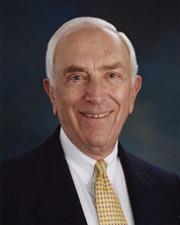 Sen. Frank R. Lautenberg (D-NJ)
Legislative Activity
Stay on top of the latest movement without scrolling through every action
Senate amendment submitted
September 12, 2006
View full timeline
Senate amendment submitted
September 12, 2006
Senate amendment agreed to: Amendment SA 4940 agreed to in Senate by Yea-Nay Vote. 85 - 12. Record Vote Number: 241.
September 12, 2006
Roll call votes on amendments in Senate: Amendment SA 4940 agreed to in Senate by Yea-Nay Vote. 85 - 12. Record Vote Number: 241.
September 12, 2006
Senate amendment proposed (on the floor): Amendment SA 4940 proposed by Senator Lautenberg.
September 12, 2006
Amendment SA 4940 proposed by Senator Lautenberg. (consideration: CR S9337-9339, S9348; text: CR S9337) To provide that the limitation on the number of Transportation Security Administration employees shall not apply after the date of enactment of this Act, and for other purposes.
September 12, 2006
Amendment SA 4940 agreed to in Senate by Yea-Nay Vote. 85 - 12. Record Vote Number: 241.
September 12, 2006
Votes
1 roll call on this amendment
Text
Proposed
[Page S9336-S9353]
From the Congressional Record Online via GPO Access [wais.access.gpo.gov]
[DOCID:cr12se06-167]

SECURITY AND ACCOUNTABILITY FOR EVERY PORT ACT--Continued

The PRESIDING OFFICER. The Senator from Hawaii is recognized.
Mr. INOUYE. Mr. President, I yield to the Senator from Colorado.

Amendment No. 4935

Mr. SALAZAR. Mr. President, I ask unanimous consent that the pending
amendment be set aside so I can call up amendment No. 4935.
The PRESIDING OFFICER. Without objection, it is so ordered.
The clerk will report.
The assistant legislative clerk read as follows:

The Senator from Colorado [Mr. Salazar], for himself, Mr.
Chambliss, Mr. Isakson, Mr. Pryor, and Ms. Cantwell, proposes
an amendment numbered 4935.

Mr. SALAZAR. Mr. President, I ask unanimous consent that reading of
the amendment be dispensed with.
The PRESIDING OFFICER. Without objection, it is so ordered.
The amendment is as follows:

(Purpose: To create a Rural Policing Institute as part of the Federal
Law Enforcement Training Center)

At the appropriate place, insert the following:

SEC. ___. RURAL POLICING INSTITUTE.

(a) In General.--There is established a Rural Policing
Institute, which shall be administered by the Office of State
and Local Training of the Federal Law Enforcement Training
Center (based in Glynco, Georgia), to--
(1) evaluate the needs of law enforcement agencies of units
of local government and tribal governments located in rural
areas;
(2) develop expert training programs designed to address
the needs of rural law enforcement agencies regarding
combating methamphetamine addiction and distribution,
domestic violence, law enforcement response related to school
shootings, and other topics identified in the evaluation
conducted under paragraph (1);
(3) provide the training programs described in paragraph
(2) to law enforcement agencies of units of local government
and tribal governments located in rural areas; and
(4) conduct outreach efforts to ensure that training
programs under the Rural Policing Institute reach law
enforcement officers of units of local government and tribal
governments located in rural areas.
(b) Curricula.--The training at the Rural Policing
Institute established under subsection (a) shall be
configured in a manner so as to not duplicate or displace any
law enforcement program of the Federal Law Enforcement
Training Center in existence on the date of enactment of this
Act.
(c) Definition.--In this section, the term ``rural'' means
area that is not located in a metropolitan statistical area,
as defined by the Office of Management and Budget.
(d) Authorization of Appropriations.--There are authorized
to be appropriated to carry out this section (including for
contracts, staff, and equipment)--
(1) $10,000,000 for fiscal year 2007; and
(2) $5,000,000 for each of fiscal years 2008 through 2012.

Mr. SALAZAR. Mr. President, I ask unanimous consent that Senator
Cantwell be added as a cosponsor to this amendment.
The PRESIDING OFFICER. Without objection, it is so ordered.
Mr. SALAZAR. Mr. President, I rise this afternoon to discuss my
amendment to create a rural policing institute within the Federal Law
Enforcement Training Center. I thank Senator Chambliss, Senator
Isakson, and Senator Pryor for cosponsoring this very important
legislation. Law enforcement matters should be nonpartisan, so I am
particularly pleased to see my friends from both Arkansas and Georgia
on this amendment.
I want to acknowledge the tremendous work done by the 800,000 State
and local law enforcement officials and first responders throughout our
Nation. They are at the forefront today of our efforts to make sure our
homeland is more secure. In Colorado alone, there are 14,000 of these
law enforcement officers. Too often, these heroes are on their own when
it comes to help from the Federal Government. This is especially true
when it comes to rural America. This is wrong because our law
enforcement officials and first responders are at the forefront of the
effort to not only protect our communities but to ensure our homeland
is secure.
Mr. President, along with some of my colleagues on the Senate floor,
I have often referred to these rural communities as ``the forgotten
America.'' Indeed, rural America is the backbone of our country, but it
is too often neglected by Washington and political figures who have
lost touch with the people in the heartland. Nowhere is this neglect
felt more acutely than in the small-town law enforcement agencies of my
State and of every State in the country. These are small communities
that have been confronted with decreased funding, with increased

[[Page S9337]]

homeland security responsibilities, and with the great toll of the meth
epidemic that is devastating rural America.
Many people don't realize that most American law enforcement agencies
serve rural communities or small towns in very large proportions.
Indeed, of the nearly 17,000 police agencies in the United States, 90
percent of them serve a population of under 25,000 people. And of
those, most of them operate with fewer than 50 sworn officers and, in
many cases, with 3, 4, or 5 officers.
I am well aware of the difficulties these small-town law enforcement
agencies face day to day. As attorney general in Colorado, I had the
honor of working with 14,000 of some of America's finest law
enforcement officers. Many of them are from rural Colorado--sheriffs
such as Jerry Martin, from Dolores County, and the other sheriffs in my
State. These people are always asked to do a lot more with a lot less.
Their pressure is great. The growing demands on rural law enforcement
and shrinking budgets have hit training programs particularly hard.
Many rural law enforcement agencies simply don't have the budget to
provide officers with adequate training. Furthermore, even those
agencies that can come up with the money cannot afford to take police
officers off the street to get additional training.
As attorney general and chairman of the Colorado Peace Officers
Standards and Training Board a few years ago, one of my proudest
accomplishment was working on a bipartisan basis to help establish a $1
million annual training fund for Colorado's 14,000 peace officers, with
the focus on the smaller law enforcement agencies in Colorado.
That is where our amendment on the floor today comes in. FLETC does a
fantastic job in training Federal, State, and local law enforcement in
our Nation. But FLETC doesn't have enough resources dedicated
specifically toward training rural law enforcement officers. The rural
policing institute would do the following:
First, evaluate the needs of rural and tribal law enforcement
agencies throughout our Nation, so that we know exactly what the
challenges are that we are facing in those rural communities.
Secondly, it would develop training programs designed to address the
needs of rural law enforcement agencies, with a focus on combating
meth, domestic violence, and school violence.
Third, it would export those training programs to rural and tribal
law enforcement agencies.
Fourth, it would conduct outreach to ensure that the training
programs reach rural law enforcement agencies.
As attorney general, I learned that a small investment in law
enforcement can pay great dividends.
Mr. President, when we look at 9/11 today and the fact that we are
all united in this effort to try to make America safer, and we look at
who it is within our country who ultimately will be out there to stop
the next attack on America, I would submit there is a very good chance
it is going to be the deputy sheriff in a small county somewhere in
America or a member of the police force in some small community making
sure that a water tank is not contaminated with some kind of biological
contamination or it is going to be somebody else who understands that
some kind of a network has come together to try to take the fertilizer
that our farmers use in rural America and make a bomb out of it. It is
going to be rural law enforcement that is going to make sure they are
going to help us prevent those kinds of attacks on America. When we
think about the 800,000 men and women in law enforcement across
America, they are on the frontlines, in terms of making sure we have a
more secure homeland.
I cannot think of a more important amendment than to establish a
rural police training institute under the auspices of FLETC, to ensure
that these 800,000 men and women have the right kind of training so
that through their eyes they can help us in our march and our efforts
to make America more secure. We have a long way to go. I hope our
colleagues will support this bipartisan amendment to establish a rural
police training institute.
I yield the floor.
The PRESIDING OFFICER. The Senator from New Jersey is recognized.

Amendment No. 4940

Mr. LAUTENBERG. Mr. President, I send an amendment to the desk, and I
ask unanimous consent that the pending amendment be laid aside.
The PRESIDING OFFICER. Without objection, it is so ordered.
The clerk will report.
The assistant legislative clerk read as follows:

The Senator from New Jersey [Mr. Lautenberg] proposes an
amendment numbered 4940.

Mr. LAUTENBERG. Mr. President, I ask unanimous consent that reading
of the amendment be dispensed with.
The PRESIDING OFFICER. Without objection, it is so ordered.
The amendment is as follows:

(Purpose: To provide that the limitation on the number of
Transportation Security Administration employees shall not apply after
the date of enactment of this Act, and for other purposes)

At the appropriate place, insert the following:

SEC. ------. CERTAIN TSA PERSONNEL LIMITATIONS NOT TO APPLY.

(a) In General.--Notwithstanding any provision of law to
the contrary, any statutory limitation on the number of
employees in the Transportation Security Administration,
before or after its transfer to the Department of Homeland
Security from the Department of Transportation, does not
apply after the date of enactment of this Act.
(b) Aviation Security.--Nothwithstanding any provision of
law imposing a limitation on the recruiting or hiring of
personnel into the Transportation Security Administration to
a maximum number of permanent positions, the Secretary of
Homeland Security shall recruit and hire such personnel into
the Administration as may be necessary--
(1) to provide appropriate levels of aviation security; and
(2) to accomplish that goal in such a manner that the
average aviation security-related delay experienced by
airline passengers is reduced to a level of less than 10
minutes.

Mr. LAUTENBERG. Mr. President, I wish to talk about the current
hiring limit on TSA screeners at our Nation's airports. That is what
this amendment deals with--to eliminate the current hiring. One can
ask: Why can't we just add more funding to TSA's budget and let them
hire the personnel they need?
Unfortunately, it is not that simple. Each year, in the Homeland
Security appropriations bill, the House Republican leaders tie the
hands of TSA officials by setting an arbitrary limit on the number of
screeners they can hire.
This cap has no basis in security. It is not what the security
experts at TSA want. This cap only undermines our security, while
forcing Americans to wait in longer security lines at airports.
This arbitrary cap currently restricts the TSA screener population to
45,000. Now, 45,000 is a large number, until you consider that 2
million people fly within the United States every day. In our
discussions with TSA officials, it is clear that we need more than
45,000 screeners.
Mr. President, we are at a point in time, I am told by the managers
of airports, particularly at Newark Liberty Airport, that we are likely
to be exceeding the gross travel numbers in aviation that were achieved
in the year 2000. So here we are with more people traveling, more
concern about terrorist invasions of our country and particularly in
aviation.
So why do we have this cap? Well, it is not for security, it is not
for efficiency. Believe it or not, it is based on ideology.
Conservatives in the House want this cap to limit the growth of a so-
called big Government workforce. But do you know what? The American
people want this workforce, and they want it fully staffed, as I do; we
should all want it fully staffed.
The result of this ill-advised cap is the shortage of screeners. We
witnessed this last month when British and U.S. authorities foiled a
plot to attack airliners headed to our shores using liquid explosives.
In the days following the British threat, DHS raised the security
alert level and overworked screeners at American airports. They had to
doublecheck bags, conduct random searches at gates, and help calm
anxious crowd fears. At Newark Liberty Airport in New Jersey, screeners
worked 12-hour shifts and 60-hour weeks for several weeks after the
London incident. There were reports of exhausted screeners falling
asleep at x-ray machines. One screener said that his colleagues ``can't
maintain these

[[Page S9338]]

12-hour days.'' Remember, this work is on your feet. You are mandated
to look at every little detail in front of you. It is exhausting work.
Overstretching this workforce puts the American people at risk, and
that is unacceptable.
Now, with my amendment, TSA will be able to hire enough well-trained,
alert screeners to give us the safety and efficiency we deserve. Since
9/11, long lines have been the rule rather than the exception at our
Nation's airports. Each year, 760 million people fly in the United
States, and by 2015, we will hit 1 billion passengers a year.
Anyone who has traveled by air in the last few years has seen this
congestion at airport security checkpoints. To give an example, this is
Orlando Florida International Airport. The lines are waiting to go
through security. We see the same thing throughout the country. This is
Denver, a very efficient airport, but one cannot get through security
in time enough, in many cases, to reach the flights. It is an
unacceptable condition. This is the international airport in Nashville,
TN--lines and lines. We see it wherever we travel in almost any part of
the country.
The Senate accepted an amendment I offered in July to the Homeland
Security appropriations bill to eliminate this arbitrary cap, but the
Republican majority in the House of Representatives wanted to remove my
amendment in the final bill that will be sent to the President. They
want to keep the 45,000-worker cap rather than letting TSA decide what
its workforce needs are. Security cannot be based on arbitrary numbers.
Conservative ideology must not trump commonsense security needs.
Americans stuck in long security lines at airports don't care about
ideology. They want to get through, and they want to get through on
time. The mission for our system to operate efficiently is to have no
longer than 10-minute waits, and we can only accomplish that if we have
the people and the equipment to review this baggage as it comes to
them.
The American people want to know that they and their families are
safe when they fly. This body needs to go on record on this issue so it
can scrap this limit once and for all. I hope my colleagues will look
carefully at this amendment. Listen, remember, it might be their family
who is on an airplane, it might be their friends who are on a
particular airplane, it might be anybody who is entitled to feel secure
when they are in an airplane. But judge it by one's personal attitude
and say this is a responsibility we have as Senators to want enough
people to assure security wherever we can get it. One way to do that is
to have enough of these screeners working these lines, fully awake,
able to handle their jobs, and reduce what we find is significant
growth in sick days among the screener population. There are a lot of
absences.
Perhaps we will hear: We have a 45,000-person limit, but we only have
43,000 people working. The problem is we will always have some
absentees. We will always have some job turnovers. These are not easy
jobs. So we are going to have a difference between the number hired and
the number at work at a given time. We should raise the limit so we
know we are increasing the likelihood that all of the places will be
covered, that the flying public will be able to get through their
security check within a 10-minute timeframe.
I urge my colleagues to support the amendment. I ask for the yeas and
nays.
The PRESIDING OFFICER. Is there a sufficient second?
There is not a sufficient second.
Mr. LAUTENBERG. How many do we need, Mr. President, for the yeas and
nays?
Mr. President, I suggest the absence of a quorum.
The PRESIDING OFFICER. The clerk will call the roll.
The assistant legislative clerk proceeded to call the roll.
Mr. STEVENS. Mr. President, I ask unanimous consent that the order
for the quorum call be rescinded.
The PRESIDING OFFICER. Without objection, it is so ordered.
Mr. STEVENS. Mr. President, I understand the Lautenberg amendment is
the pending amendment.
The PRESIDING OFFICER. The Senator is correct.
Mr. STEVENS. Mr. President, this would lift the TSA's current
screener cap of 45,000 persons. The cap is at 45,000, but currently the
resources available to TSA allow for only 43,000 screeners, and
currently there are only 41,000. The reason is there is such an
enormous turnover in screeners. They work for a small period of time
and then move on to other jobs.
We have enhanced screening technology and improved staffing models
that have helped maximize the workforce currently available. We have a
strong security system with minimal passenger line waits. They have
been reduced considerably.
I do believe the Lautenberg amendment is not necessary. The current
cap of 45,000 screeners helps us maintain the pressure on the TSA to
employ new screening technology. I personally met in a classified
briefing with the head of the TSA to discuss this problem last week. It
was classified because of some of the technology that is involved and
new models being pursued. One of the comments that was made to me was
that the cap really helps us maintain the pressure to secure the new
screening technology and reduce the redundancy in the workforce. The
workforce is only relevant to the extent the technology does not do the
job. We believe we should have more and quicker screening, and that is
going to be brought about by new technology. That is where we have put
our money this year.
Unless my friend wants to make any further comments, I intend to move
to table this amendment. I still have the floor. Does my friend wish to
have some time on the amendment?
Mr. LAUTENBERG. I wish to ask the Senator from Alaska a question, if
I might, in relation to his comments.
Is it not possible that with the increased passenger volume we are
seeing--and it is about to break the record held since the year 2000 in
terms of volume of people traveling--is the manager, the committee
chairman, aware of the fact that TSA has said that in order to have a
10-minute wait or less, they need more screeners than they have? They
need as many as 48,000.
Mr. STEVENS. I say to the Senator, in answer to the question, I
personally talked with the head of TSA. He told us they have never been
able to reach the cap yet because of unavailability of people to take
these jobs under the circumstances that they must be screened and
checked themselves before they are employed. The delay in getting the
clearances for screeners is one of those things that hold people up. It
is not the limited resources or the cap that is the problem; the
problem is getting people who will take these jobs who can fit through
the screening process they face before they become a screener.

As I said, the current cap is 45,000. There are 41,000 right now with
full-time employment and people trying to find more screeners. The
answer isn't to raise the cap; the answer is to keep the pressure on
the system so we use more technology, not more screeners. More
screeners is more delay. The technology processes these inspections
faster than individual screeners can.
Mr. LAUTENBERG. Mr. President, if I may ask the Senator from Alaska
another question, and that is, if we had a higher cap and were able to
persuade the management of TSA to search for a larger pool of people,
might we have more people available presently to serve? My experience
from my corporate life tells me that you never quite reach the level
you have. We see that in our staffing here.
I urge the Senator from Alaska to respond to whether the Senator
thinks we can improve our population of screeners who are readily
available if we search a little bit harder, train a little bit better,
reduce the fatigue factor which now occurs and causes so many sick
days, so many absences, and so much turnover because the job, at 60
hours a week, as many of our people are working, is a strain on them
and they just can't take it.
Mr. STEVENS. Mr. President, I say to my friend again that the
workforce right now is approximately 41,000 in number. The turnover
rate is enormous because they don't want to stay in these jobs. They
are not exactly the kind of full-time jobs some people want to pursue.
It is not a career.
The real problem is we already are capped at 45,000. There is room
for 4,000 more right now. They are looking for

[[Page S9339]]

them. But as we speak, there are more people leaving than we can add to
the force. The reason is the problems associated with this type of
activity. It is the screening, as we all know, as we go through these
lines and through the detection systems at the airports. The people who
have the jobs just don't like to stay on that kind of a job. We have
discussed how we get around it. I don't know, but increasing the number
will not solve the problem. Increasing the cap is what the Senator
wants to do. The concept of lifting that cap is not a solution. The
solution is to try to find some way to make the job more attractive,
maybe pay them more, whatever it takes.
The two limitations involved right now are the 45,000 cap and the
budget resources that are available now. We tried to increase that, but
we have not been able to get additional moneys yet for this purpose in
terms of the screeners.
The TSA budget resources currently, as I said, allow for only 43,000.
But still that is 2,000 more than are actually on duty right now, and
the cap is still 4,000 above that. They can go to a 10-percent increase
under the existing circumstance. Lifting the cap is not the answer is
what I tell my friend.
Mr. LAUTENBERG. I have so much respect for the Senator from Alaska.
He is on top of the issues of security, as well as aviation. But is the
Senator aware that many of the screeners are on military duty or
medical leave because of exhaustion? Shouldn't we try to improve the
pool of people from which we can choose? We have as much as 10 percent
of the workforce out at a time. If it is 10 percent of 48,000, that is
4,800. That is quite different from having a population that is short
on the job. We don't have enough time.
I can simply add that at Newark Airport, we are about 10 percent
short of the number we need, something over a thousand. We can't get
them. The recruiters can't search for them because they will be bumping
up against the cap. I think and I hope the Senator will reconsider. I
believe--and I throw this in for the Senator's consideration with my
question; that is, aren't we better off taking the limit off and trying
to find a way--we are talking about security of the people. The Senator
doesn't need any lecture from me. But aren't we better off knowing that
everybody who can make a connection can get through in 10 minutes,
thoroughly screened, and having a population that is equal to the
growing population of those who want to travel by air?
Mr. STEVENS. Mr. President, I understand the Senator from New Jersey.
He is really trying hard, and I am trying hard, to work on this
problem. Let me tell the Senator this: 37.5 percent of the screeners at
Dulles turned over last year; 37.5 percent left. The reason is they are
handling bags; they don't like the hours, as you mentioned; they work
hours in accordance with the shifts based on the number of flights, not
in terms of--it is not a steady workload is what I am saying. So they
might be there 10 hours, but they are working 6 of that 10 hours and
very hard in those 6 hours. The turnover rate is enormous.
I do think the difficulty is not in the cap; the difficulty is in the
money. We have to impress on our people in the appropriations process
to provide more money. We are trying to see if we can find some way to
justify higher salaries. In some places, the salaries are enormous for
small airports. In others where you deal with the numbers of passengers
at Dulles or New York airports or Los Angeles, those airports are
totally overworked, and the turnover in those big airports is enormous,
almost 40 percent a year. You have to consider the fact that these
replacements have to be cleared under the clearance process with regard
to security. They have to be cleared people; they cannot be people who
just walk in off the street. It takes months to clear one of them. You
can lift the cap all you want, but you are not going to get any more
than 45,000 in the next year.
Mr. President, let me tell my colleague this: We will just accept the
amendment because it won't make any difference in terms of the number
of screeners who are available. That is what my staff just told me. Why
am I arguing? Because no matter what the ceiling is, we won't have any
more screeners.
Mr. LAUTENBERG. Mr. President, is the Senator aware of the fact that
this was an amendment which was already there, it was already
conferenced and was dropped in conference? The Senator is certainly
aware of the process here. If you don't like it, accept it; it will die
of its own weight.
For the Senator's information, before the screeners were federalized,
the turnover rate was 400 percent and we were ignoring the risks we
were putting people under. That was a porous thing. You could walk
through there with almost anything.
What we want to do is get a stable workforce of screeners who have
passed the vetting, who work normal hours, who have--and by the way,
the Senator is absolutely right about the improvement in equipment so
the baggage lifting doesn't have to be as strenuous as it is.
So I would ask the Senator whether we can have a vote.
Mr. STEVENS. Have a vote on it?
Mr. LAUTENBERG. And when we meet with the House, let the conferees,
when the issue goes to conference, look at the issue and review what it
is that is keeping them from----
Mr. STEVENS. I will give you a vote and move to table. I will tell my
friend, this isn't a solution to the problem. The solution is in more
money and finding a way that we can get people who are cleared to take
the job and keep it. You can't put just anybody in there handling those
bags. If you get a terrorist in there, they could add something rather
than see whether there is something in the bags. So they all have to be
cleared. This ceiling is not an issue.
Mr. LAUTENBERG. Mr. President, if I may respond to say I am so
pleased that the Senator is asking for more money for screeners, and we
will try to convince the appropriators jointly to increase the funding
for those workers.
Mr. STEVENS. Will the Senator just let us take it to conference and
see what we can work out? I don't see that the number makes any
difference. The problem is the process and who is hired and what are
the restrictions and how much money is available, not the numbers. You
could put the number at 90,000 and we will still have 41,000 people
next year.
Mr. LAUTENBERG. Mr. President, we obviously don't agree. I ask for
the yeas and nays.
The PRESIDING OFFICER. The Senator from Alaska has the floor.
Mr. STEVENS. Mr. President, there is a series of meetings going on in
the Capitol right now pertaining to national defense issues, and I
would like to see----
Mr. LAUTENBERG. Mr. President, I note the absence of a quorum.
Mr. STEVENS. I still have the floor.
The PRESIDING OFFICER. The Senator from Alaska has the floor.
Mr. STEVENS. I want to work this out with my friend to have the time
for a vote that he wishes to have. Could we have this vote at 5
o'clock? Is that all right? We will ask for the yeas and nays with the
understanding that we will vote at 5 o'clock.
Mr. LAUTENBERG. I appreciate that.
Mr. STEVENS. I join him in requesting the yeas and nays and ask
unanimous consent that the vote take place at 5 o'clock.
The PRESIDING OFFICER. Is there a sufficient second? There is.
Without objection, the unanimous consent request is agreed to.

Amendment No. 4931

Mrs. HUTCHISON. Mr. President, I send an amendment to the desk,
amendment No. 4931, and ask for its immediate consideration.
The PRESIDING OFFICER. Without objection, it is so ordered. The
pending amendment is set aside.
The clerk will report the amendment.
The assistant legislative clerk read as follows:

The Senator from Texas [Mrs. Hutchison] proposes an
amendment numbered 4931.

Mrs. HUTCHISON. Mr. President, I ask unanimous consent that the
reading of the amendment be dispensed with.
The PRESIDING OFFICER. Without objection, it is so ordered.
The amendment is as follows:

(Purpose: To strengthen national security by adding an additional 275
Customs and Border Protection officers at United States ports)

On page 76, line 1, strike ``725'' and insert ``1000''.

[[Page S9340]]

On page 77, strike lines 17 through 21 and insert the
following:
``(A) $130,000,000 for fiscal year 2008.
``(B) $239,200,000 for fiscal year 2009.
``(C) $248,800,000 for fiscal year 2010.
``(D) $258,700,000 for fiscal year 2011.
``(E) $269,000,000 for fiscal year 2012.''.

Mrs. HUTCHISON. Mr. President, my amendment would increase the number
of U.S. Customs and Border Protection officers by 275. This would bring
the total of new U.S. Customs and Border Protection officers in this
bill to 1,000.
In my State of Texas, the Customs and Border Protection officers are
assigned in the Houston region are responsible for the seaports along
the Texas coast from Port Arthur to the Port of Corpus Christi. Some of
these officers are also assigned to Houston's George Bush
Intercontinental Airport. The CBP officers work at the Port of Houston
in the morning and leave the port in the afternoon to go work at the
Houston Intercontinental Airport. Sharing these U.S. Customs and Border
Protection officers between port duties and airport duties is
unacceptable.
With increased security demands being placed on our Nation's ports
and the desire to increase the number of containers inspected as they
enter the United States, local port officials have long expressed the
need for additional personnel in order to carry out the tasks that are
so critical to our Nation's economy. With an unprecedented 11 million
containers entering the United States annually, cargo doesn't stop when
there isn't a Customs agent there to inspect the incoming shipments.
What happens, of course, is that the cargo is not inspected. So I hope
we can pass my amendment.
I believe the Port Security Improvement Act of 2006 is a very good
bill, and I particularly commend the leaders of the respective Senate
committees for working together to bring all of the port security bills
that have been introduced in Congress into one comprehensive bill so
that we can address this issue.
In the last 5 years, we have significantly strengthened our national
defense. I think we saw yesterday that so many things have been done to
keep our country safe and secure, because yesterday, of course, was the
5-year anniversary of the attack of 9/11. We have engaged the enemy
before they have reached America since 9/11 of 2001. We have improved
our homeland security. We have passed the PATRIOT Act to give law
enforcement officials the tools they need and the resources necessary
to protect our Nation. We must remain vigilant in pursuing terrorists
who seek to harm our country. An integral aspect of our national
defense and our economy is the security of our ports.
Our Nation has more than 360 federally regulated, thriving ports, any
one of which could be a target for our enemies. One terrorist incident
at a U.S. port could impact an entire coast, and the financial impact
of closing one of these ports could be devastating.
Texas is home to 29 ports, including 4 of the 10 busiest in the
Nation. The Port of Houston is one of the most important ports in the
world. It ranks first in the United States in foreign waterborne
tonnage, second in total tonnage, and is the sixth largest in the
world. It is also home to one of the biggest petrochemical complexes in
the world. It is also part of our Nation's U.S. Strategic Petroleum
Reserve, the world's largest oil stockpile. Due to the volume of
hazardous materials, a terrorist attack in the Port of Houston would be
an enormous disaster. An attack in the Port of Houston could also
disrupt our Nation's energy supply, delivering a blow to our economy at
a time when we cannot afford such a disruption.
For years, I have worked with my colleagues on both sides of the
aisle for more stringent port security. In the 107th Congress, my
colleagues, Senators Feinstein, Kyl, Snowe, and I introduced the
Comprehensive Seaport and Container Security Act of 2002. This bill
called for container seals and tracking numbers for goods being shipped
to the United States. It also called for a plan to increase inspection
of merchandise at foreign facilities as well as for a shipment
profiling plan to track containers and shipments of merchandise
imported into the United States that could be a threat to security.
In the 107th Congress, we passed the Maritime Transportation Security
Act. This bipartisan bill was landmark legislation that closed a large
hole in our national security. I was an original cosponsor of this bill
as well. However, when it passed the Senate, I made the point of saying
the legislation only laid the foundation for port security and more
needed to be done.
The following year, I introduced the Intermodal Shipping Container
Security Act in both the 108th and 109th Congresses. This was
comprehensive legislation, and I am pleased that many of the key
provisions in that bill, such as the random inspection of containers,
the establishment of minimum standards and procedures for securing
containers in transit to the United States, and the implementation of
an improved container targeting system, have been incorporated into the
legislation before us today. I thank Chairman Stevens and Cochairman
Inouye for working with me in the Commerce Committee on these
provisions.
In addition, Senator Collins and Senator Lieberman have added so much
to make this bill even more powerful and more helpful in our overall
goal of securing the ports in our country.
This legislation calls for the Department of Homeland Security to
develop and implement a plan for random inspection of containers in
addition to any targeted or preshipment inspection. This significant
provision would require the Secretary of Homeland Security to develop
and implement a plan to conduct random searches of containers in
addition to any targeted or preshipment inspection of the containers as
required by law. This would allow the U.S. Customs inspectors to do
more at the point of embarkation with the random sampling of different
cargo that has been inspected.
Another important provision in this legislation is the establishment
of minimum standards for securing containers in transit to the United
States. The Secretary of Homeland Security is encouraged to promote and
establish those minimum standards for the security of containers moving
through the entire international supply chain. This is a key element
and I am hopeful the Secretary will take this action. We cannot inspect
every piece of cargo, or our international commerce as we know it today
would come to a grinding halt. However, if we have better technology,
such as a seal which is tamper-proof, we will know when the contents of
the cargo have been altered.
My amendment would add to the numbers of Customs and Border
Protection officers. A thousand new officers, when you have more than
360 federally regulated ports in this country, is not asking a lot.
We must do more. We must do more at the point of embarkation, the
point of origin, at the point where ships come into our U.S. waters,
and at the ports themselves. We need more inspectors to be authorized
in order to do that.
I am asking that my colleagues support my amendment to raise this
number to 1,000. We cannot afford, as we are passing this major
legislation, not to do it right, not to authorize everything we need
and give the Department of Homeland Security the tools they need to do
the job of securing our ports.
We have done a lot. We have passed maritime security laws since 2001,
since our country was attacked. But this bill adds to the measures that
we know are lacking in the system today. We are taking more steps every
week, every month, and every year to secure our country.
I thank Chairman Stevens and Cochairman Inouye, Chairman Collins and
Ranking Member Lieberman, Chairman Grassley and Ranking Member Baucus
for their leadership in this area. I appreciate that they have come
together. It is very difficult in this Congress, when more than one
committee has jurisdiction over a major part of the Government of this
country. In homeland security we find that the Commerce Committee and
the Homeland Security Committee do have overlapping jurisdiction.
This bill could have been brought down with in-fighting among the
committees, but it has not been brought down because of the leadership
of the committees on a bipartisan basis. I appreciate what we are doing
today. I urge my colleagues to support my amendment.
I ask for the yeas and nays.
The PRESIDING OFFICER (Mr. Coleman). Is there a sufficient second?

[[Page S9341]]

At this time there is not a sufficient second.
Ms. COLLINS. Mr. President, while we are awaiting representation on
the other side of the aisle in order to get the yeas and the nays, let
me respond to the Senator from Texas about her amendment.
First, let me acknowledge the work of the Senator from Texas on port
security issues over the past few years. Her amendment would increase
the minimum hiring of Customs and Border Protection officers in the
resource allocation model of the legislation before us from 725 to
1,000. As the Presiding Officer is aware, our bill requires the
Department to do a resource allocation model, really take a hard look
at how many CBP officers are needed at which port.
One reason we believed that was necessary was the experience of
Houston's ports and airports. The Senator from Texas has told me of the
problems that Houston has experienced, where CBP agents actually are
being transferred from the port to the airport to deal with incoming
flights and then are sent back to the port. Clearly that is a situation
that cries out for more agents so they do not have to be constantly
shifting back and forth from a busy port to a busy airport.
I think the Senator is correct that she has a real problem with
understaffing in the Houston seaport and airport and that we do need to
have more agents allocated. But I also want to point out to my
colleagues that we do specifically require the Department to do this
resource allocation plan. There may be some seaports or airports that
actually have more staff than they need. Those could be allocated to
busier seaports and airports. But clearly the situation in Houston
cries out for more agents so we do not have this constant choice of
where they should be.
I do support the amendment of the Senator. I will assist her in
gaining the yeas and nays when we have representation from the
Democratic side. I hope that will be shortly.
I also suggest that we stack the vote on the amendment of the Senator
at 5 o'clock, after the vote on the Lautenberg amendment, in order to
make it more convenient for our colleagues.
Once we get the yeas and nays, I will be making a unanimous consent
request that the vote occur immediately after the vote on the amendment
offered by the Senator from New Jersey, with 4 minutes of debate
equally divided prior to the vote. But I am withholding that unanimous
consent request until we have representation from the minority on the
floor.
The PRESIDING OFFICER. The Senator from Texas.
Mrs. HUTCHISON. Mr. President, while we are waiting, I would like to
respond to the Senator from Maine and thank her. She and I have had a
conversation about the situation at the Port of Houston. It is
particularly dire, in that it is such a busy port and one that has so
many unique features. I think the fact that she is supporting the
amendment will go a long way toward getting us to the point we need to
be.
I think her point is very well taken that giving the Secretary of
Homeland Security the capability to reallocate personnel within this
mandate that we are giving is also the right thing to do, just as we
should be allocating our resources for homeland security based on
terror threats, based on needs, not based on politics or anything else.
We need to secure our homeland, and we need to do it in a professional
way. I think this bill goes a long way in a very bipartisan spirit
toward giving our Department of Homeland Security the tools it needs to
do the job. I am very hopeful we will be able to agree to my amendment
and go forward to conference and send this bill to the President very
shortly.
The PRESIDING OFFICER. The Senator from Maine.
Ms. COLLINS. Mr. President, I think we are now ready to order the
yeas and nays.
Mrs. HUTCHISON. Mr. President, I ask for the yeas and nays on my
amendment No. 4931.
The PRESIDING OFFICER. Is there a sufficient second? There is a
sufficient second.
The yeas and nays were ordered.
Ms. COLLINS. We are still not ready for the timing on that, but we
have ordered the yeas and nays, and I hope we will be able to stack the
vote to occur immediately after the conclusion of the vote on the
amendment of the Senator from New Jersey.
Mrs. HUTCHISON. I suggest the absence of a quorum.
The PRESIDING OFFICER. The clerk will call the roll.
The assistant legislative clerk proceeded to call the roll.
Mrs. FEINSTEIN. I ask unanimous consent the order for the quorum call
be rescinded.
The PRESIDING OFFICER. Without objection, it is so ordered.
The Senator from California is recognized.
Mrs. FEINSTEIN. Mr. President, before I make my statement, which will
be on the Reid amendment, I would like to congratulate Senator Collins,
Senator Inouye, Senator Murray, and all of the Members who worked in
committee on this bill. Although one doesn't often tell tales of what
happened in a Democratic caucus, I would like to quote Senator Murray
in that caucus. She said, ``This bill will make a difference.''
I think that is a very dispositive, definitive, and positive
statement. So I would like to offer my congratulations to the chairman
of the committee and all who worked on it and thank them very much.

Amendment No. 4936

Mr. President, I would like to speak about this very long Reid
amendment which has been offered to be part of this bill. The
amendment, much like the Real Security Act introduced last week, is a
comprehensive package of ways to strengthen our national security
through improved intelligence, military, diplomatic, and homeland
security tools. But in particular I would like, as a member of both the
Judiciary Committee and the Intelligence Committee, to address the
issue of electronic surveillance to identify and prevent terrorist
attacks.
All Democrats support giving the President the tools he needs to find
the terrorists before they have a chance to strike us again. This
cannot be said too many times in too many ways. It is a fact, and I
have never heard anything to the contrary.
We also agree, though, that these intelligence tools, especially
electronic surveillance of telephone content--the content of a phone
call or wiretapping of a phone call--can and should be done in a way
that protects constitutional and privacy rights of all Americans,
because whatever is done here will go on for decades and because
whatever is done here will likely impact tens of thousands of persons
in the United States.
I am pleased that the minority leader has endorsed these concepts, as
they are the key pillars of legislation that Senator Specter and I have
introduced. That is the Foreign Intelligence Surveillance Improvement
and Enhancement Act. I thank the minority leader for ``Rule 14'ing'' my
bill, which now appears as the Feinstein-Specter bill as hotlined, S.
3877.
Tomorrow in Judiciary we will be marking up FISA bills. This same
bill but under a different bill number, namely S. 3001, will be subject
to markup along with the other bills. Senator Specter's Administration
bill, Senator DeWine's bill, and a bill by Senator Schumer will be
marked up tomorrow morning and Thursday morning.
My legislation, which is pretty simple and pretty limited, is aimed
at providing our intelligence agencies with more authority, more
resources, and more flexibility to conduct electronic surveillance. In
doing so, the legislation reaffirms that the Foreign Intelligence
Surveillance Act of 1978, or FISA, is the exclusive means for
conducting electronic surveillance to collect foreign intelligence in
the United States. I believe this is very important.
We have had hearings in Judiciary. The Attorney General has
testified. The head of the NSA program has testified. It is pretty
clear to me that this terrorist surveillance program can be fit into
the confines of the Foreign Intelligence Surveillance Act passed in
1978. What has to be done is a streamlining of the process leading up
to it and some revised provisions for emergency hot pursuit. So what I
have tried to do is take what the Attorney General has said to the
committee were obstructions to using FISA and solve those obstructions
but keep FISA because it is so important.

[[Page S9342]]

The legislation that I have introduced would recognize that further
changes are needed in this shadowy world of asymmetric terror. That is
why the legislation would give the executive branch the authority to
listen in to conversations between terrorists and their conspirators
inside and outside the United States.
At the same time, we preserve the cornerstone of FISA, and that is
that it is by warrant, that a Federal judge reviews and approves every
individual warrant request for content to ensure the Government is not
spying on innocent Americans.
I think it is useful to remind ourselves why this body wrote and
enacted FISA in the first place. In 1976 a committee headed by Frank
Church, which became known as the Church committee, provided a report
to the Select Committee to Study Government Operations with Respect to
Intelligence Activities.
There are three books just like this, on what went on in our Nation
prior to 1976. It is startling. I will get to it in a moment. But it
was the genesis for the 1978, very carefully considered Foreign
Intelligence Surveillance Act.
This committee reported--and please read it, Members--on a series of
excesses and abuses that had taken place in the intelligence community.
These included some of the worst civil rights violations our Government
has ever committed, such as the secret campaign to smear Dr. Martin
Luther King, Jr., and domestic targeting of Americans peacefully
advocating civil disobedience in areas such as civil rights and
opposition to the Vietnam war.
The Church committee found these abuses stemmed from a lack of
oversight and checks on Government power. Watch lists were established
on people whose views ranged from Joan Baez on the left to members of
the John Birch Society on the right.
The Church committee's report led not only to FISA but also to the
establishment of the Permanent Intelligence Committees in both Houses
of the Congress. It was a historic report.
So discussions today that the President has the authority to go
around FISA and doesn't need court approval should cause Members of
this great body serious concern. It was a surprise to almost every
Senator to learn last December that the President had authorized the
National Security Administration to electronically surveil U.S. persons
without following the law.
As a member of the Intelligence Committee, I have received many
briefings on the President's program. There are still some unanswered
questions, and the administration has a responsibility to provide
Congress with answers. But basically the Senate Intelligence Committee
has been briefed on the program in the main.
But from what I have learned to date, I am convinced of two things:
First, the work that NSA is doing is important to prevent terrorists
from attacking us again--and I support it. Second, the surveillance
that is done under the ``terrorist surveillance program'' can be done
under FISA's framework with some changes. As a member of the Judiciary
Committee, I participated in the hearings, and I thank my chairman,
Senator Specter, for holding these hearings.
The conclusion I draw from them, and from the briefings, is that
fairly modest changes can be made to FISA which would remove the
barriers standing in the NSA's way while also restoring the FISA Court
oversight that is necessary to protect a citizen's constitutional
right.
Let me briefly tell you what we have done.
We have expanded hot pursuit. Currently, the law states that during
specified ``emergency'' periods surveillance can proceed without a
warrant for 72 hours. At the recommendation of former FISA judges, we
have extended the time for hot pursuit to 7 days. So if something
happens and the NSA wants to immediately wiretap someone, they can,
provided they notify the Attorney General within 24 hours that it is
happening, and then go to the FISA Court.
Attorney General Gonzales testified to us that he personally has to
approve applications before they go to the FISA Court. That was a
problem. So we created additional flexibility to handle the increased
caseload by allowing the Attorney General to delegate this authority to
two Senate-confirmed officials: the Deputy Attorney General, and the
Assistant Attorney General for National Security.
Wartime authority: Currently, FISA provides the President with
authority to wiretap without a warrant for 15 days after a declaration
of war. That is a good thing, I believe.
Our bill would expand Presidential authority by allowing the
President to also order wiretaps without a warrant for 15 days
following a congressional authorization to use military force and a
terrorist attack on the United States.
Additional resources: The staff and court need additional resources,
and Members have expressed concern about a backlog of FISA
applications. We would authorize additional judges as necessary,
additional OIPR assistant United States attorneys as necessary, and
additional NSA and FBI staff as necessary, so that this problem would
be taken care of.
Then we clarify ``foreign to foreign.'' It has often been said that
in the 28 years since FISA was written changes in technology have made
the law outdated. Communications that start and end outside of the
United States but may switch through the United States--communications
that FISA never attempted to cover--are now regularly put before the
FISA Court.
General Alexander expressed his frustration that foreign-to-foreign
communications impede the FISA process.
This bill--which again has been ``Rule 14'd''--would explicitly
exempt these telephone calls and e-mails from FISA while preserving the
existing process for the appropriate handling of communications
involving a U.S. party that were inadvertently wiretapped.
We believe these provisions will go a long way. We also would mandate
that briefings on electronic surveillance conducted for foreign
intelligence purposes be given to the full Intelligence Committee of
both the House and the Senate, really to prevent what was happening,
which was the beginning of a major wiretapping program where only eight
Members of Congress knew very early on about the program, and therefore
there was virtually no congressional oversight that was meaningful in
any way, shape, or form.
In this bill is a two-page sense of the Senate beginning on page 313
of the Reid amendment and going through pages 314 and 315. Essentially,
it states up front that the U.S. Government should have the legal
authority to engage in electronic surveillance of any telephone
conversation in which one party is reasonably believed to be a member
or an agent of a terrorist organization.
It goes on to say that absent emergency or other appropriate
circumstances, domestic electronic surveillance should be subject to
judicial review in order to protect the privacy of law-abiding citizens
or Americans with no ties to terrorism.
I strongly support the Reid amendment. I support the Sense of the
Senate. And I look forward to being able to debate the bill which
Senator Reid has agreed to cosponsor, as well as Senator Specter--it is
a bipartisan bill--at the appropriate time when bills to change the
Foreign Intelligence Surveillance Act are before the body.
I thank the Chair. I yield the floor. Once again, I indicate my very
strong support for the bill before the U.S. Senate today.
Thank you, Mr. President.
Ms. COLLINS. Mr. President, I ask unanimous consent that a vote in
relation to the Hutchison amendment No. 4931 occur following the vote
on the Lautenberg amendment, No. 4940, with no second degrees in order
to either amendment prior to the votes, and 2 minutes of debate equally
divided between the managers or their designees before each vote, and
that this occur at 5 o'clock.
The PRESIDING OFFICER. Is there objection? Without objection, it is
so ordered.
Ms. COLLINS. Thank you, Mr. President. I suggest the absence of a
quorum.
The PRESIDING OFFICER. The clerk will call the roll.
The assistant legislative clerk proceeded to call the roll.
Mrs. MURRAY. Mr. President, I ask unanimous consent that the order
for the quorum call be rescinded.
The PRESIDING OFFICER. Without objection, it is so ordered.

[[Page S9343]]

Mrs. MURRAY. Mr. President, I ask unanimous consent to set aside the
pending amendment and call up the Murray amendment No. 4929.
The PRESIDING OFFICER. That is the pending amendment.
Mrs. MURRAY. Mr. President, is my amendment now pending?
The PRESIDING OFFICER. The amendment is already pending.

Amendment No. 4929

Mrs. MURRAY. Mr. President, I send a modification to the desk.
The PRESIDING OFFICER. Without objection, the amendment is so
modified.
The amendment (No. 4929), as modified, is as follows:

At the appropriate place, insert the following:

SEC. ____. COBRA FEES.

(a) Extension of Fees.--Subparagraphs (A) and (B)(i) of
section 13031(j)(3) of the Consolidated Omnibus Budget
Reconciliation Act of 1985 (19 U.S.C. 58c(j)(3)(A) and
(B)(i)) are amended by striking ``2014'' each place it
appears and inserting ``2015''.

Mrs. MURRAY. Mr. President, this is an agreed-upon modification to
the amendment I spoke to this morning regarding the funding for port
security.
As I said this morning, it makes sure that we have adequate resources
to implement the port security bill, and that is essential to its
success. We have worked out an agreement with Finance, and that
amendment is pending. I hope we can move quickly and agree to it.
The PRESIDING OFFICER. The Senator from Maine is recognized.
Ms. COLLINS. Mr. President, I rise in support of Senator Murray's
amendment. I commend her for offering it. Each year, U.S. Customs and
Border Protection collects more than $24 billion in Customs duties and
fees.
The amendment would extend the merchandise processing fee and
passenger conveyance fee for an additional year, and our hope is that
that money will then be targeted to pay for this bill. This makes
sense. In many ways, it is a user fee. It makes a great deal of sense.
It will help ensure that there is a dedicated funding source for the
security measures.
I point out again that the amendment has been cleared with the
Finance Committee. Senator Murray has worked hard with Senators
Grassley and Baucus to find the source of funding. I commend her for
her efforts. I fully support the amendment and I urge its adoption.
The PRESIDING OFFICER. The question is on agreeing to the amendment.
The amendment (No. 4929), as modified, was agreed to.
Ms. COLLINS. Mr. President, I move to reconsider the vote.
Mrs. MURRAY. I move to lay that motion on the table.
The motion to lay on the table was agreed to.
Mrs. MURRAY. Mr. President, I suggest the absence of a quorum.
The PRESIDING OFFICER. The clerk will call the roll.
The legislative clerk proceeded to call the roll.
Mr. REED. Mr. President, I ask unanimous consent that the order for
the quorum call be rescinded.
The PRESIDING OFFICER. Without objection, it is so ordered.

Amendment No. 4936

Mr. REED. Mr. President, I rise today to discuss Senator Harry Reid's
amendment, the Real Security Act. This is a comprehensive plan for
making our Nation safer and making true progress in the war on terror.
I would argue that despite continued upbeat assessments by the
President, there is growing evidence that we need to change course--not
cut and run, but change course, regroup, and reassess our progress in
Iraq, in the global war on terror, and in the area of homeland
security. I believe an evaluation would lead to the realization that
changes need to be made and that a step in the right direction would be
to implement measures that are included in Senator Reid's amendment.
I would like to focus on just a couple of aspects of Senator Harry
Reid's proposal, which is entitled the ``Real Security Act,'' those
dealing particularly with Afghanistan and Iraq.
Reports indicate that we may be losing ground in Afghanistan, the
initial proper focus of the war on terror. Afghanistan was the locale
of the Taliban. They were aiding and abetting al-Qaida and bin Laden,
and we, by unanimous approval of this Congress and the Senate, gave the
President the authority to launch offensive operations there. Those
operations were successful. But then, before the entire success was
secured, the focus of this administration turned away to a pre-
9/11 project: regime change in Iraq.
In the intervening years, we have lost ground in Afghanistan. The
Taliban has regrouped and rearmed, and this spring they mounted the
toughest resistance since 2001. Suicide attacks, which once were
unknown in Afghanistan, have more than doubled this year.
Almost 5 years after the U.S. invasion, only half the money pledged
by the international community to rebuild Afghanistan has been
delivered and effectively spent. As Afghanistan's Ambassador to the
United States has said:

We will not be able to stabilize the country if we don't
build up the domestic security forces and have development in
the countryside. Had we invested more in development, we
would have less security problems today.

I have traveled to Afghanistan on a number of occasions. One of the
problems we have is moving outside of Kabul, the capital, and creating
a governmental presence, an Afghani governmental presence, in the
countryside. We are trying vigorously to disrupt the production of
poppies and opium, but that is hard in a society in which that cash
crop is easy to move around, and it is quite lucrative. It is harder to
move around other agricultural staples because there are no roads and
irrigation is difficult.
If we had, as the Ambassador suggested, focused more resources and
attention more promptly on development, we might have a much more
benign climate in which to deal with a resurgent Taliban.
Without viable alternatives, there are scores of problems in
Afghanistan. Sixty percent of the country is still without electricity,
80 percent is without potable water, and the unemployment rate is 40
percent. These are features which tend to support angry, disappointed
young men, particularly, who are easy targets for those fanatics who
would try to sway them into attacking security forces of both the
Afghani Government and the United States. Without viable alternatives
in terms of jobs and economic progress, it is easy to see how some turn
to growing poppies, to providing support for this underground economy.
According to the United Nations, Afghanistan just produced a record
poppy crop, enough for 6,100 tons of opium--one-third more than the
world's demand for heroin. These harvests fund the Taliban fighters who
fuel the fighting in Afghanistan and terrorists around the world.

Section 301 of Senator Harry Reid's amendment calls for a long-term
commitment to Afghanistan, focusing on economic and developmental
assistance, along with security assistance. That is the right plan.
I have had the occasion to visit with our commanders in the field,
and we asked them about additional forces, and we asked them about
additional military hardware. They will say: We could use that, but I
can tell you something we know we need right now; that is, economic
development to give the people of Afghanistan confidence in their
Government and hope for the future. Confidence and hope is one of the
best anecdotes to the kind of regime the Taliban is trying to impose
again in Afghanistan.
Last night, as he addressed the Nation, President Bush stated:

The safety of America depends on the outcome of the battle
in the streets of Baghdad.

Two weeks ago in Salt Lake City, the President said:

America has a clear strategy to help the Iraqi people
protect their new freedom and build a democracy that can
govern itself and sustain itself and defend itself. . . . We
will stay the course.

Yesterday, the Government Accounting Office, in testimony before the
House Committee on Government Reform, provided a grim assessment of the
Iraq security situation. GAO found, in their words:

Since June 2003, the overall security conditions in Iraq
have deteriorated and grown more complex, as evidenced by
increased numbers of attacks and Sunni/Shia sectarian strife
which has grown since the February 2006 bombing in Samarra.
Attacks against

[[Page S9344]]

the coalition and its Iraqi partners reached an all-time high
during July 2006. The deteriorating conditions threaten the
progress of U.S. and international efforts to assist Iraq in
the political and economic areas.

A New York Times story yesterday entitled ``Deal on a Constitution
for Iraq is Teetering'' details how Shia and Sunnis failed once again
over the weekend to reach an agreement on changes to the Constitution
which would allow for a truly inclusive government.
Also yesterday, the Washington Post reported that on August 16, COL
Pete Devlin, the Marine Corps chief of intelligence in Iraq, filed a
classified report about Iraq's Al Anbar Province, which includes the
cities of Fallujah and Ramadi. This province borders Saudi Arabia and
Syria.
Colonel Devlin has been stationed in Iraq for 7 months and is
considered by his fellow officers to be one of the best who is
``careful and straightforward.'' An army officer in Iraq familiar with
the report says he considers it accurate. ``It is best characterized as
`realistic,' '' he said.
This report, while one of the first negative reports filed by a
military officer, echoes several years of pessimistic CIA assessments
of the province. The report is classified, so there are no direct
quotes; however, those who are familiar with the report state that the
assessment is dire. As the Washington Post summarized:

One Marine officer called it ``very pessimistic.'' Another
person familiar with the report said it describes Anbar as
beyond repair; a third said it includes that the United
States has lost in Anbar.

The document reportedly states that there are no functioning Iraqi
Government institutions in Anbar, leaving a vacuum that has been filled
by the insurgent group al-Qaida in Iraq, which has become the
province's most significant political force.
One Army officer summarized the situation in Anbar province with the
following:

We haven't been defeated militarily, but we have been
defeated politically--and that's where wars are won and lost.

I visited Fallujah in March 2005 with General Abizaid. At that time,
there was one State Department official there and no representatives
from other agencies. That State Department official was tired and
overworked. He was doing a remarkable job, both in terms of exposing
himself to dangers and working tirelessly to try to give a political
mentoring to the Iraqi authorities. He was desperate for assistance. At
that time, he said he didn't think there was another big fight in Iraq
unless the politics broke down and that it was a big year for politics.
Clearly, more civilian assistance was key. My first visit was in 2005.
I revisited the province this July. That same State Department official
was still there, still doing a remarkable job, and still weathering the
dangers and putting in the long hours to try to make a difference.
Sixteen months since my last visit, and he was still the only civilian
representative in Fallujah. He was even more tired. He said he believes
the Marines have accomplished all they can reasonably be expected to
accomplish. They are quickly running out of a mission. He felt it was
time to see if the Iraqi forces could perform without the Marines, if
the Iraqi Government could support their troops in the field and
whether sectarian divisions were so acute that they would prevent the
Iraqis from forging even minimal political cohesion. In his view, the
United States was currently in a holding pattern, delaying the
inevitable day when the Iraqis must step forward and, in the meantime,
our forces are suffering additional casualties.

These are the views of those on the ground in Fallujah, and they are
representative of a larger problem this administration has had since
the beginning of the war in Iraq. There was simply no postwar planning.
While this administration has been focused exclusively on our military
forces in Iraq, the reconstruction of the Iraqi infrastructure and
economy has been virtually ignored. Iraqi reconstruction funds have
been depleted with only a fraction of needed projects completed. The
ability of the United States to aid in ministerial capacity building is
hobbled by the lack of U.S. civilian experts in Iraq. In fact, because
of the shortage of appropriate civilian advisers, the military is
providing personnel on a case-by-case basis to help mentor civilian
ministries.
Clearly, the lack of emphasis on reconstruction is having a dire
effect on progress in Iraq. Tired of 3 years without adequate security
or services, Iraqi professionals are leaving the country. Those who
remain do not trust or feel invested in the new Government. Frustration
with services and lack of employment opportunities means angry young
men join militias instead of supporting their Government. Lieutenant
General Chiarelli, Commanding General of the Multi-National Corps of
Iraq, told me in July that unless we devote renewed attention and
additional resources to the economic reconstruction of Iraq and the
development of governmental capacity, the emergence of capable Iraqi
forces will not be decisive. We can train an Army, but unless we have
the ministries to support that Army, unless we have a police system and
a judicial system that can give individual Iraqis a sense of both
security and the hope of justice, simply having an Iraqi Army in the
field will not be decisive to the ultimate challenge of stabilizing
Iraq.
I, and many of my colleagues, have made it clear to the
administration that several steps can and should be taken immediately
to address this situation.
The administration should secure fulfillment of international pledges
to provide economic support to Iraq. We are spending billions and
billions of dollars a month. The American people cannot indefinitely
spend this kind of effort without support from our international
partners. We cannot meet all of the demands for reconstruction. In
fact, we should insist, and this Government should be effective, in
securing the already pledged funds, so that at least we have another
chance--and maybe we can do it right this time--to rebuild the
infrastructure of Iraq to a point at least that individual Iraqis feel
they will have a minimal amount of electricity, hopefully, more than
that; that they will feel secure in terms of access to health care and
to those things that give them the sense that their Government can
succeed, and they should risk, in some cases, their lives to make that
Government succeed. That is not the situation today in Iraq.
The administration should work with Iraqis to create a master list of
necessary reconstruction projects with estimated funding and timelines.
Funding for such projects should be a priority in the President's
budget. We invested a lot of money, and we made a lot of contractors
rich by building huge projects. General Chiarelli has been quoted
several times talking about a huge water project in Sadr City was a
model of engineering. There was only one problem: There was no
distribution system, so it became the largest and most expensive water
fountain in the world. He took his own resources, as a division
commander, took some PVC piping and at least got some water out into
the neighborhoods. That is the type of project that will make progress
in Iraq.
Time is running out. We have to refocus ourselves on these types of
efforts. We should assign these projects to the military, the Army
Corps of Engineers, USAID, and private contractors, but we have to make
sure that these private contractors are willing to go out and do the
work, not simply to bill for the work. We have examples where scores of
health clinics were supposedly built, and it has been discovered that
those health clinics have not been built, and those that have, the few,
are inadequate. In fact, I have seen films, videos of raw sewage in the
operating rooms of the supposedly new and improved health clinics.
The administration should work with the Iraqis to establish target
efforts to increase employment in order to provide young men an
alternative to joining the militia. One of the things that is being
done now on a neighborhood-by-neighborhood basis under the leadership
of General Chiarelli is, after securing the neighborhood, now we are
moving in, searching, taking out the weapons, trying to disrupt the
cells of terrorists and others but then putting people to work with
simple tasks, such as picking up trash and giving them some money,
giving them a sense of hope, and improving the environment in these
communities. We have to do more of that: putting people to work.

[[Page S9345]]

The administration should provide increased incentives and funding to
attract large numbers of volunteers from the Department of State,
Agriculture, Justice, and Commerce to serve in Iraq. The President is
fond of reminding the American people that we are a country at war. But
this is not an administration at war; it is a Department of Defense at
war. We are seeing soldiers and marines sent back to Iraq for the third
time and some for the fourth time. But where is the mobilization of all
of our power, our State Department experts, our agriculture experts,
our Justice Department experts? That is the great fight we are facing
today in Iraq. The military, through the loss of lives and through the
wounded of so many Americans, are buying this Government the time to
work with the Iraqi Government to build capacity, to build
infrastructure. But we are not using that time because, once again,
despite the President's claim that this is a Nation at war, this is not
an administration at war. And until we mobilize all of our resources,
we are not going to be able, I think successfully, to meet the
challenges of stabilizing Iraq.

Last year, the Secretary of State talked about provincial
reconstruction teams which would be spread throughout Iraq. So far, we
have not fully deployed sufficient numbers of these teams to do the
job. It made for a good speech line last fall. It hasn't happened yet,
and it is overdue.
Section E of Senator Reid's amendment calls for a new direction for
Iraq and expresses the sense of Congress that Iraq should work for an
inclusive government and disarm the militias, diffusing the sectarian
violence. These militias are becoming a critical and dangerous aspect
of the situation in Iraq, and unless the Iraqi Government is able to
deal with these militias successfully, the Iraqi Government will be
compromised and incapable of effectively governing their country.
Today, and for the last 2 days, we have been looking at a situation
where the Iraqi Assembly is debating whether they want to regionalize
the country--break it up. Shia representatives, led by Hakim and the
Badr organization, are pushing for a legislative approach that will
essentially provide the southern part of Iraq and the northern part of
Iraq with their autonomy, leaving the center autonomous but desperately
poor. It is raising the fears of the Sunni community. But the battle is
between not just Sunnis and Shias but within the Shias because, on the
other side, Moqtada al-Sadr and his militia are urging that the
regionalization plan be dropped. This is what is going on in Iraq. It
is not international terrorists plotting to attack us from there; it is
the sectarian struggle for power of who will run that country, and we
are caught in the middle of it.
That is why Senator Harry Reid's proposal is so sensible. It talks
about redeploying our forces, reinvesting again and is perhaps the last
chance we will get to provide the Government of Iraq with the tools and
the mentoring so that they can provide their people with basic services
and basic security.
I hope we can rally around and support this amendment because it
represents not only a strong policy for America but a smart policy for
America. I hope that when Senator Reid's proposal comes up for a vote,
it is supported. It is one thing to go around the country and make
speeches about staying the course, and it is something else to provide
the resources, to provide the support, to provide the relief for our
military that will give them a chance to succeed and give the Iraqis a
chance to succeed. So I urge passage, when it is called for a vote, of
the Harry Reid amendment.
Mr. President, I yield the floor.
Mr. BYRD. Mr. President, the Senate is now considering a long
overdue--a long overdue--authorization bill to address the security of
our ports--yes, our ports. I applaud the efforts of Senators Lieberman,
Stevens, Inouye, Murray, Collins, and many others for their steadfast
commitment to address this vulnerability.
The administration has let the issue of port security languish for
far too long--far too long. Oh, yes, the President has made a series of
speeches in recent days about the threat to the homeland and the great
desire and capabilities that al-Qaida possesses to attack us--yes, to
attack us, the United States. Yet when one reviews the President's
homeland security budget, gaping holes can be found in funding to
address known vulnerabilities. After 9/11, we learned that our first
responders could not communicate with one another. How about that. We
learned that our first responders could not communicate with one
another. How awful that was. The cost was lives, human lives.
It now appears that we have a similar problem in the White House,
where the administration's speech writers and its budget writers don't
communicate. They operate in alternate worlds--worlds far apart.
In his speech last Friday at Georgetown University, Homeland Security
Secretary Chertoff urged Congress to pass this port security
legislation. He said that passing the bill:

Would be not only a fitting tribute to the fifth
anniversary of 9/11, but would also be an important set of
tools that we can use in achieving the goal that we have set
for ourselves over the next couple of years.

Now, this is the very same rhetoric and, if I may say, it is the very
same hot air that we have been listening to and we have been hearing
for 5 years--5 years. Yes, we have been listening to it for 5 years,
the same rhetoric, the same hot air that is used for lifting balloons,
lifting balloons into the heavens.
The administration, time and time again, uses tough talk when it
comes to homeland security, but, sadly, that tough talk rarely is
followed up with real money, cash on the barrelhead.
This month the majority leadership is once again playing a clever
rhetorical game with homeland security. The port security bill that is
before the Senate authorizes $400 million for port security grants.
These grants would provide essential resources to our most vulnerable
ports for building fences, deploying cameras and sensors, training
security personnel, and for verifying the identity of the thousands of
port workers who access our ports every day.
The House-passed bill which authorized the same $400 million level
was adopted by a vote of 421 to 2. But, I ask my colleagues, where, oh
where is the $400 million? Where is it? Right now, the Senate and House
are conferencing the Homeland Security appropriations bill for fiscal
year 2007. The Senate-passed version of the bill includes an amendment
that I offered with the support of my illustrious, inimitable chairman,
Judd Gregg, which provides an additional $648 million for port
security. The amendment would appropriate the full $400 million
authorization for port security grants along with critical funds for
cargo container inspection equipment, for Coast Guard ships and planes,
and for increased cargo inspections at foreign and domestic ports. That
is real port security, but--oh, there is that conjunction here--but,
regrettably, the House majority has refused to make the $648 million
available to the conference. What a sad state of affairs.
Our citizens watching the Senate today are being led to believe that
this bill will secure our ports. Here it is:

H.R. 4954, an Act to Improve Maritime and Cargo Security
Through Enhanced Layered Defenses, and for other purposes.

They believe this bill will secure our ports. Here is the bill. It
doesn't weigh very much, but it means security for our ports. However,
it will be a charade if the port security funds are not appropriated.
How about that? Money. What does the Bible say about money? The love of
money, what does it say about it?
Did the White House step to the plate? How about it? ``Hey, Mr.
President--hello there, down at the White House.'' Did the White House
step up to the plate to address security risks at our ports? No. No.
One of the hardest words in the English language to say: No.
If the administration were really serious about port security, it
would have voiced support for the $400 million in the Senate bill for
security grants. Yet there was not one mention of port security in the
administration's letter--not one mention. It has been more than 3\1/2\
years since the Coast Guard estimated that the security cost at our
ports would be $5.4 billion.
Senator Collins, bless your heart, to date not a cent of that amount
has been funded despite the fact that U.S. seaports handled over 95
percent of U.S. overseas trade.

[[Page S9346]]

Last year, the Department of Homeland Security was able to fund only
24 percent of the critical projects requested by the port authorities.
These funds are critical, absolutely critical for ports to improve
communications, access control systems, and provide waterside security.
Where, oh where has the administration been? ``Where, oh where has my
little dog gone?'' Where has the administration been?
Of the $816 million the Congress appropriated since 9/11 for port
security, only $46 million was requested by the President. Did you get
that? Let me say it again. Of the $816 million the Congress
appropriated since 9/11 for port security, only $46 million was
requested by the President. There is an odd disconnect at the White
House when it comes to port security funding.
While I applaud the efforts of my colleagues today for moving this
authorization legislation forward, and hopefully to the President's
desk, authorizations of funding are not worth a hill of beans unless we
provide real money, real dollars to fund them. That funding is in
jeopardy. Why? That funding is in jeopardy due to an irresponsible
indifference from the White House and objections from the House
majority.
I challenge the White House--yes, come on now--I challenge the White
House and the majority, not only to talk the talk on port security but
also to walk the walk by supporting the funding that will actually make
us safer. Our ports are seriously vulnerable to a terrorist attack.
Potentially, thousands of American lives are at stake. Think about it.
If we are truly determined to tighten security at our ports, we should
send the Homeland Security appropriations bill to the President with
the $648 million to fund port security.
My amendment includes the funding to address many of the provisions
in this bill that are being debated today. In addition to port security
grant funding, my amendment includes $40 million to hire 354 additional
Customs and Border Protection officers to conduct cargo container
inspections at our seaports and $211 million to purchase additional
nonintrusive inspecting equipment for U.S. seaport and rail border
crossings.
There you have it. Currently, only 5 percent of the 11 million
containers entering the United States are physically inspected by
opening--take a look at it by opening the containers. Only 5 percent of
the 11 million containers entering the United States are physically
inspected by opening the containers.
The Coast Guard has only 34 inspectors to review security plans at
foreign ports. Of the 144 countries that conduct maritime trade with
the United States, the Coast Guard has assessed security at only 59.
I have to say that again. I have a duty to say that again. Of the 144
countries that conduct maritime trade with the United States, the Coast
Guard has assessed security at only 59--59 out of 144. At the current
rate of inspections, U.S. inspectors will visit countries that trade
with the United States only once every 4 years. Does that make you feel
safer? Think about that tonight when you are laying your head on the
pillow. Think about that.
My amendment includes $23 million to double the presence of
inspectors at foreign ports and increase security compliance checks at
domestic ports.
Finally, my amendment includes $184 million for Coast Guard deepwater
assets that are critical to securing our ports and surrounding
waterways. These funds will allow the Coast Guard to address an
immediate shortfall in boats and planes needed to patrol our ports and
adjacent waterways. The President and Members of Congress may applaud
each other and congratulate themselves for protecting lives with this
port security authorization bill, but the truth of the matter is that
this bill will do little to secure our ports if the President and those
same Members of Congress do not provide the money--there you go again--
the money to actually scan for dirty bombs, inspect containers, and
implement the security systems that are so desperately needed. What on
Earth is wrong?
Can we please stop playing these dangerous political games with
homeland security and actually come together to protect the precious
lives of people?
Unless we provide the funding authorized in this bill, we will be
playing fast and loose with the security of our people.
Hear me. Hear me now. I say it again.
Unless we provide the funding authorized in this bill, we will be
playing fast and loose with the security of our people.
I yield the floor.
Ms. COLLINS. Mr. President, I suggest the absence of a quorum.
The PRESIDING OFFICER. The clerk will call the roll.
The assistant legislative clerk proceeded to call the roll.
Mr. DORGAN. Mr. President, I ask unanimous consent that the order for
the quorum call be dispensed with.
The PRESIDING OFFICER (Mr. DeMint). Without objection, it is so
ordered.

Amendment No. 4937

Mr. DORGAN. Mr. President, I previously offered an amendment to the
pending bill. My understanding is it will likely be accepted. I did not
have a chance to speak at any length on the amendment. I want to do so
now. I recognize we have a vote in about 10 minutes. I will be mindful
of that.
The amendment which I offered says that our U.S. trade officials will
be prohibited from agreeing to any future trade agreement that would
preclude the Congress from blocking the takeover of a U.S. port
operation by a foreign company. I offered this amendment in the shadow
of this morning's announcement that our monthly trade deficit--get
this--was the highest in U.S. history. It was announced this morning--
$68 billion in 1 month.
If anyone needs additional information about the failure of our trade
strategy and the failure of this so-called ``free trade'' nonsense we
have been hearing around here, take a look at this morning's
announcement--$68 billion trade deficit in 1 month.
Mr. BYRD. Shame.
Mr. DORGAN. This is not money we owe to ourselves. That is money we
owe largely to Japan, and China, and other countries and will be repaid
someday with a lower standard of living in this country.
I offer this amendment dealing with trade as a backdrop to this
morning's announcement of the highest trade deficit in history, a trade
strategy fraught with error--and this is injuring this country.
Let me describe the need for this amendment.
You might recall that earlier this year it was announced that Dubai
Ports World was going to begin to manage a number of ports in this
country. Dubai Ports World, in February of this year, indicated that
they were going to manage ports in America in New York, New Jersey,
Baltimore, Philadelphia, New Orleans, Miami, and some others. Dubai
Ports World is a company that is operated by the United Arab Emirates.
In February of this year, the Bush administration gave the green
light to Dubai Ports World, a company owned by the United Arab
Emirates, to manage these American ports. The President said that he
felt it was fine for our ports to be managed by a company owned by the
United Arab Emirates.
In fact, when a firestorm erupted over this issue, here is what the
President said, brushing aside objections from Republicans and
Democrats alike. President Bush endorsed the takeover of shipping
operations in six major U.S. seaports by a state-owned business in the
United Arab Emirates. The President pledged to veto any bill Congress
might approve to block the agreement.
Even more than that, the head of Homeland Security, Mr. Michael
Chertoff, strangely enough said this: Homeland Security Secretary
Michael Chertoff reported yesterday that the proposed takeover of
terminal operations at five U.S. ports by Dubai Ports World would give
U.S. law enforcement a better handle on security at U.S. terminal
operations.
Here is a member of the Cabinet in this country saying that if we
turn our port management over to a foreign company, it will actually
improve security.
I don't know what he might have had for breakfast that morning, but I
am telling you it didn't agree with his thinking process. It is going
to improve security to turn the management of American ports over to a
company that is owned by the United Arab Emirates? I don't think so.

There was a firestorm of protest. The President said he would veto
any legislation that we would provide that

[[Page S9347]]

stopped this takeover of management of these American seaports. Despite
that, at some point, it was quite clear the Congress was going to say
to the President--Republicans and Democrats--we are sorry. It doesn't
matter what you threaten with respect to a veto, we will pass
legislation that prohibits this.
We believe the security of our seaports is best maintained by not
turning the management of our seaports over to a company owned by the
United Arab Emirates. Dubai Ports World, at some point, announced that
they were going to find another way to do this and sell their
interests. My understanding is that has not yet been done. But in any
event, the administration backed away.
However, the trade agreements that we are negotiating now include it.
Past agreements have included it. I don't intend to interrupt that with
this amendment. If I could, I would. But I don't have the votes to do
that.
But the trade agreements say this, including the Oman agreement,
which I am told will be brought to the floor of the Senate on Thursday
of this week. I intend to speak at some length on that agreement. I am
opposed to it. But it includes this provision, and other trade
agreements have included the same provision. U.S. port operations that
we couldn't block Oman from acquiring under the FTA, under our Free
Trade Agreement with Oman, we would be prohibited from blocking an
agreement that included landside aspects of foreign activities,
including operations and maintenance of docks, loading and unloading of
vessels, directly to or from land, marine cargo handling, ship
cleaning, et cetera. In point of fact, we are negotiating trade
agreements that include provisions which say we are not able to block a
foreign company owned by a foreign country from coming in and managing
our seaports.
That is what we are doing in trade agreements. Most of our trade
negotiators have been fundamentally incompetent from the start.
It was Will Rogers who said many decades ago that the United States
of America has never lost a war and never won a conference. He surely
must have been talking about our trade negotiators. They don't wear
uniforms so they do not remember whom they represent. I have often
threatened to buy them jerseys so they can look down and see whom they
represent--the good old U.S.A.--just like Olympic athletes represent
the U.S.A.
We negotiate trade agreements that we are told will strengthen this
country, and month after month and year after year we sink deeper into
this abyss of red ink, with now a $68 billion trade deficit in the last
month alone.
Is it surprising then that the same incompetence that has led to the
largest trade deficit in history--the same incompetence that lead to
that--led them to do this, to undermine the very debate we had in
February of this year about the management of American ports by a
United Arab Emirates-controlled company, Dubai Ports World?
Just as an aside, let me describe the incompetence. Let me describe
one example. I could give a hundred. Next year, according to a report,
we will be getting imports of Chinese cars into this country because
the country of China is now beginning a substantial automobile export
industry. They have announced they will begin exporting cars from China
to the United States next year. So we will be able to see Chinese cars
driving up and down the streets of America. Guess what. Our trade
negotiators agreed that when Chinese cars come into our country, we
will impose a 2.5-percent tariff on Chinese cars that come into the
United States.
We also agreed that any U.S. cars we could sell in China, they could
impose a 25-percent tariff.
A country with which we had a $200 billion trade deficit, we agreed
they could impose a tariff on automobiles 10 times higher than the
tariff we would impose.
Is that brain dead? It is where I come from. Is that incompetence? It
is incompetence in my hometown.
That doesn't represent our country's interests.
We come back to the point. I could give you a hundred examples
similar to that, where soft-headed foreign policy is masquerading as
trade policy.
We come back to the newest trade agreements, including Oman, which we
will have on the floor of the Senate next Thursday which includes this
provision. It is identical to provisions that are included in previous
agreements as well.
I say we ought to block this from ever occurring in any future free
trade agreement. This provision undermines the entire position that we
have taken with respect to deciding that it is not in our country's
security interests to have the United Arab Emirates engaged in the
management of our seaports.
For that reason, I believe we ought to pass the amendment I am
proposing, prohibiting this from happening in the future. I would like
to go back, frankly, and undo that which was done in previous trade
agreements.
There is a little thing that people outside of this congressional
system don't recognize very easily. It is called fast track. Fast track
sounds so innocuous--just fast track.
Fast track means Congress has decided to give up its opportunity,
which exists in the Constitution, to be engaged in trade activities so
that when a trade agreement comes to the Congress, this Congress has no
opportunity to review it with the understanding of wanting to amend it.
Fast track means we have put ourselves in the straight jacket and no
amendments.
That is why, when a trade agreement comes to the floor of the Senate
such as Oman--and there will be others. We are now negotiating nine
additional trade agreements with nine additional countries right now.
The House of Representatives announced they will take up two additional
trade agreements in November. When those agreements come to the floor
of the Senate, because the Congress, in its lack of wisdom, decided to
put itself in a straight jacket, no one can offer an amendment to strip
out this kind of provision of a trade agreement. It surely escapes my
line of reasoning why the Congress would want to decide to limit its
capability to improve a trade agreement, but it has.
Some will say, notwithstanding what trade agreements say,
notwithstanding all the other issues, the President can, for national
security reasons, decide to back an agreement such as this. Yes, that
is true.
It was this President who said: I agree that we ought to allow the
United Arab Emirates and Dubai Ports World to come in and manage
seaports. I agree that we should do that. We have already evaluated it.
It makes sense.
He is wrong about that, of course. His Secretary of Homeland Security
says not only does it make sense, but it will make America safer if we
have the management of America's seaports being done by a foreign
company through a foreign country.
That is the most absurd thing I ever heard. Yet in this country, in
this town, it passed with thoughtful debate. Again, it doesn't meet the
test of thoughtful debate in my hometown cafe.
I am offering this amendment. My understanding is it will likely be
accepted, for which I am very appreciative. I will speak more about the
general subject when we have the opportunity to talk about the free
trade agreement with the country of Oman. My understanding is it may be
this Thursday.
I yield the floor.
Ms. COLLINS. Mr. President, the amendment offered by Senator Dorgan
is a restriction on the U.S. Special Trade Representative's authority
in negotiations. As such, it is under the jurisdiction of the Senate
Finance Committee. However, it is my understanding that the chairman
and the ranking member of the Finance Committee have no objection to
acceptance of the amendment.
I urge acceptance of the amendment.
The PRESIDING OFFICER. Is there further debate on the amendment? If
not, the question is on agreeing to the amendment.
The amendment (No. 4957) was agreed to.
Mr. DORGAN. Mr. President, I suggest the absence of a quorum.
The PRESIDING OFFICER. The clerk will call the roll.
The assistant legislative clerk proceeded to call the roll.
Ms. COLLINS. Mr. President, I ask unanimous consent that the order
for the quorum call be rescinded.

[[Page S9348]]

The PRESIDING OFFICER. Without objection, it is so ordered.

Amendment No. 4940

The PRESIDING OFFICER. Under the previous order, there will now be 2
minutes of debate equally divided on the Lautenberg amendment.
Who yields time?
The Senator from Maine.
Ms. COLLINS. Mr. President, based on the debate that occurred
earlier, I believe the distinguished chairman of the Commerce Committee
has decided to accept this amendment and was willing to do it without a
rollcall vote. However, the distinguished Senator from New Jersey wants
a rollcall vote, so we are going to have a rollcall vote.
I do not know whether the Senator from New Jersey is on his way. I
see that he is in the Chamber, so I yield the floor to the Senator from
New Jersey.
The PRESIDING OFFICER. The Senator from New Jersey.
Mr. LAUTENBERG. Mr. President as we are now prepared to consider the
amendment, in the minute I have--which I assume is the time--I would
like to tell everybody that the purpose of this amendment is to ask
that we take the cap off the number of TSA screeners we can hire. The
cap is 45,000. We have had it in legislation before, but the House
insisted on the cap being continued. It is silly, when passenger volume
on airlines, as of this point in the year is almost at the alltime
high, and it is expected this year we will see the largest number of
airline passengers in the history of the country.
We have these constant reviews to protect ourselves from terrorist
attack from those who want to sabotage an airplane. So it is simple.
Just remove that cap. Remove it and let the TSA figure out what to do
with it.
The PRESIDING OFFICER. The Senator's time has expired.
All time has expired.
The question is on agreeing to the Lautenberg amendment. The yeas and
nays have been ordered. The clerk will call the roll.
The assistant legislative clerk called the roll.
Mr. McCONNELL. The following Senator was necessarily absent: the
Senator from Rhode Island (Mr. Chafee).
Mr. DURBIN. I announce that the Senator from Hawaii (Mr. Akaka), and
the Senator from Maryland (Ms. Mikulski) are necessarily absent.
The PRESIDING OFFICER. Are there any other Senators in the Chamber
desiring to vote?
The result was announced--yeas 85, nays 12, as follows:

[Rollcall Vote No. 241 Leg.]

YEAS--85

Alexander
Allard
Allen
Baucus
Bayh
Bennett
Biden
Bingaman
Bond
Boxer
Brownback
Bunning
Burns
Byrd
Cantwell
Carper
Chambliss
Clinton
Cochran
Coleman
Collins
Conrad
Cornyn
Dayton
DeMint
DeWine
Dodd
Dole
Domenici
Dorgan
Durbin
Feingold
Feinstein
Frist
Graham
Grassley
Hagel
Harkin
Hatch
Hutchison
Inhofe
Inouye
Isakson
Jeffords
Johnson
Kennedy
Kerry
Kohl
Kyl
Landrieu
Lautenberg
Leahy
Levin
Lieberman
Lincoln
Lugar
Martinez
McCain
McConnell
Menendez
Murkowski
Murray
Nelson (FL)
Nelson (NE)
Obama
Pryor
Reed
Reid
Roberts
Rockefeller
Salazar
Santorum
Sarbanes
Schumer
Sessions
Shelby
Smith
Snowe
Specter
Stabenow
Stevens
Talent
Vitter
Warner
Wyden

NAYS--12

Burr
Coburn
Craig
Crapo
Ensign
Enzi
Gregg
Lott
Sununu
Thomas
Thune
Voinovich

NOT VOTING--3

Akaka
Chafee
Mikulski
The amendment (No. 4940) was agreed to.
Mr. LAUTENBERG. I move to reconsider the vote, and I move to lay that
motion on the table.
The motion to lay on the table was agreed to.

Amendment No. 4931

The PRESIDING OFFICER. Under the previous order, there is 2 minutes
of debate equally divided on Hutchison amendment No. 4931.
Who yields time? The Senator from Texas is recognized.
Mrs. HUTCHISON. Mr. President, I ask unanimous consent to add
Senators Kyl and DeWine as cosponsors of the amendment.
The PRESIDING OFFICER. Without objection, it is so ordered.
Mrs. HUTCHISON. Mr. President, I urge my colleagues to support this
amendment. It increases the number of Customs and Border Protection
officers by 275 for a total of 1,000.
In my home State of Texas, where the Port of Houston is the sixth
largest port in the world, we have officers who have to leave the port
at noon and go out to the airport. Because of this, we don't have
enough officers to cover our ports.
This amendment will add just 275 officers for a total of 1,000 new
officers.
I think this is an amendment that is very important to add for the
overall security of our ports. I urge everyone to vote for it.
The PRESIDING OFFICER. The Senator's time has expired. Who yields
time?
Mrs. MURRAY. Mr. President, I yield back the time on the Democratic
side.
The PRESIDING OFFICER. All time having been yielded back, the
question is on agreeing to the amendment. The yeas and nays have been
ordered. The clerk will call the roll.
The legislative clerk called the roll.
Mr. McCONNELL. The following Senator was necessarily absent: the
Senator from Rhode Island (Mr. Chafee).
Mr. DURBIN. I announce that the Senator from Hawaii (Mr. Akaka), and
the Senator from Maryland (Ms. Mikulski) are necessarily absent.
The PRESIDING OFFICER. Are there any other Senators in the Chamber
desiring to vote?
The result was announced--yeas 97, nays 0, as follows:

[Rollcall Vote No. 242 Leg.]

YEAS--97

Alexander
Allard
Allen
Baucus
Bayh
Bennett
Biden
Bingaman
Bond
Boxer
Brownback
Bunning
Burns
Burr
Byrd
Cantwell
Carper
Chambliss
Clinton
Coburn
Cochran
Coleman
Collins
Conrad
Cornyn
Craig
Crapo
Dayton
DeMint
DeWine
Dodd
Dole
Domenici
Dorgan
Durbin
Ensign
Enzi
Feingold
Feinstein
Frist
Graham
Grassley
Gregg
Hagel
Harkin
Hatch
Hutchison
Inhofe
Inouye
Isakson
Jeffords
Johnson
Kennedy
Kerry
Kohl
Kyl
Landrieu
Lautenberg
Leahy
Levin
Lieberman
Lincoln
Lott
Lugar
Martinez
McCain
McConnell
Menendez
Murkowski
Murray
Nelson (FL)
Nelson (NE)
Obama
Pryor
Reed
Reid
Roberts
Rockefeller
Salazar
Santorum
Sarbanes
Schumer
Sessions
Shelby
Smith
Snowe
Specter
Stabenow
Stevens
Sununu
Talent
Thomas
Thune
Vitter
Voinovich
Warner
Wyden

NOT VOTING--3

Akaka
Chafee
Mikulski
The amendment (No. 4931) was agreed to.
Ms. COLLINS. Mr. President, I move to reconsider the vote, and I move
to lay that motion on the table.
The motion to lay on the table was agreed to.
Ms. COLLINS. Mr. President, I ask unanimous consent that when the
Senate resumes action on the bill on Wednesday, the time until 12:15 be
equally divided in the usual form and that at 12:15 the Senate proceed
to a vote in relation to the Reid amendment No. 4936, with no second
degrees in order prior to the vote.
Before the Chair rules, we anticipate a budget point of order against
this amendment, and therefore this vote is likely to be on the motion
to waive.
The PRESIDING OFFICER. Is there objection? Without objection, it is
so ordered.
Ms. COLLINS. Therefore, Mr. President, although we are going to
consider two more amendments tonight, there will be no more rollcall
votes tonight.

Amendment No. 4935

Mr. CHAMBLISS. Mr. President, I rise today to urge my colleagues to
support the amendment proposed by the Senator from Colorado, Mr.
Salazar. My colleague from Georgia, Senator Isakson, and I are
cosponsors and strong supporters of this measure which I believe
fulfills a great need in rural America.
The amendment creates a policing institute that would be administered
by the Office of the Federal Enforcement Training Center in Glynco, GA.

[[Page S9349]]

The creation of this office provides training for those who may not
currently have access to it because it sends folks who are going to
train our local law enforcement personnel directly into our rural
areas. Our local communities have fewer resources and fewer folks on
the payroll, so they really can't afford to do without men and women
who may be called away for an extended period of time to undergo
training.
There is no question--and I hear this whenever I travel around the
State--that our local law enforcement in rural areas are called upon
day in and day out in providing the nuts and bolts of criminal
investigations and law enforcement. In many areas, increased crime and
the scourge of methamphetamine drug trafficking have placed severe
pressures on rural law enforcement capabilities. If we're going to call
upon folks to do more, then we have to provide them with the resources
they need to carry out their duties--and as a strong supporter of the
criminal justice system this includes giving them access to the vital
training they need.
In addition, these dedicated and hard-working professionals are also
asked to prepare for different types of threats in our changing
security environment. This amendment will greatly assist in their
efforts.
I urge my colleagues to support this common sense, bipartisan
amendment.
I yield the floor.
Mr. ISAKSON. Mr. President, I rise today as a cosponsor of the
Salazar amendment--and I thank Senator Collins and Senator Murray for
agreeing to accept the Salazar amendment--which authorizes a new Rural
Policing Institute within the Office of State and Local Training at the
Federal Law Enforcement Training Center in Glynco, GA. I am joined on
my side by Senator Chambliss and others as cosponsors and very much
appreciate the acceptance of this important amendment.
Modeled after existing programs within the office, the rural policing
institute would evaluate the needs of local law enforcement located in
rural areas, and develop expert training programs designed to assist
law enforcement in training regarding combating methamphetamine
addiction and distribution, domestic violence, law enforcement response
related to school shootings, and other topics.
By having a program whereby we can send instructors to these police
departments rather then have them come to FLETC itself, we maximize our
training capabilities and ensure that these officers are able to
receive on the job training without reducing manpower.
This is a win-win for our law enforcement personnel, FLETC, and the
American taxpayer. I urge passage of the amendment.
Mr. INOUYE. Mr. President, the managers on this side unanimously
approve this measure and seek its support.
The PRESIDING OFFICER. Is there further debate on the amendment?
Ms. COLLINS. Mr. President, I am unclear whether the Salazar
amendment No. 4935 is actually pending.
I do support the amendment offered by the Senator from Colorado, and
the managers on this side are also pleased to recommend its acceptance.
Mr. President, I urge the adoption of the Salazar amendment.
The PRESIDING OFFICER. Is there further debate? If not, the question
is agreeing to the amendment.
The amendment (No. 4935) was agreed to.
Mr. SHELBY. Mr. President, I move to reconsider the vote.
Mr. SARBANES. I move to lay that motion on the table.
The motion to lay on the table was agreed to.

Amendment No. 4956

Mr. SHELBY. I send an amendment to the desk and ask for its immediate
consideration.
The PRESIDING OFFICER. The clerk will report.
The legislative clerk read as follows:

The Senator from Alabama [Mr. Shelby], for himself and Mr.
Sarbanes, proposes an amendment numbered 4956.

Mr. SHELBY. I ask unanimous consent that the reading of the amendment
be dispensed with.
The PRESIDING OFFICER. Without objection, it is so ordered.
(The amendment is printed in today's Record under ``Text of
Amendments.'')
Mr. SHELBY. Mr. President, I rise today to offer the amendment that
has just been referenced on behalf of myself and Senator Sarbanes to
the Port Security Improvement Act of 2006. This amendment is virtually
identical to the Public Transportation Terrorism Prevention Act that
the Banking Committee unanimously reported in November of 2005. In
fact, the Senate passed an almost identical bill in the 108th Congress.
I am hopeful that as we consider port security today, we can include
this critically important legislation designed to help address the
security vulnerabilities of our Nation's public transportation system.
The national dialog has appropriately been focused on aviation post-
9/11, and this week port security is at the top of this agenda here in
the Senate. In addition to these key areas, I believe it is imperative
that we make transit security a priority, too. We know full well from
the occurrences in Great Britain, India, and Spain that our buses, our
subways, and rail systems across the country are attractive targets for
terrorist attacks. The Public Transportation Terrorism Act before us
now is an appropriate first step to address widespread needs, and it
paves the way toward making transit safer for the traveling public.
The language in this amendment was carefully crafted and is a result
of several hearings on this topic, review of two comprehensive studies
by the American Public Transportation Association and the Government
Accountability Office, and negotiations with key industry leaders. This
amendment authorizes $3.5 billion in capital investment grants,
operation security assistance, and research. While this is short of the
$6 billion worth of needs identified by the industry, it is an
important and necessary first step.
I thank those who have worked hard over the course of several years
to produce a sound piece of legislation that will result in safer
public transportation systems, particularly my colleague on the Banking
Committee and former chairman, Senator Sarbanes, as well as the
chairman and ranking member of the Subcommittee on Housing and
Transportation, Senators Allard and Jack Reed. I also thank Chairman
Stevens and Senator Inouye with the Commerce Committee for their
steadfast support in this effort. In addition, I thank Chairman Collins
and Senator Lieberman with the Homeland Security Committee.
I ask unanimous consent that Senators Allard, Bennett, Schumer, and
Boxer be added as cosponsors of this amendment.
The PRESIDING OFFICER. Without objection, it is so ordered.
Mr. SHELBY. Mr. President, at the proper time I will urge adoption of
the amendment, but I think Senator Sarbanes wishes to speak.
The PRESIDING OFFICER. The Senator from Maryland.
Mr. SARBANES. Mr. President, I rise in very strong support of the
amendment offered by the able chairman of the Senate Banking, Housing,
and Urban Affairs Committee. While the need for improved security at
our Nation's ports is clearly evident, we must not forget the other
areas of our Nation's multimodal transportation network. The amendment
Chairman Shelby has offered would provide grants to our Nation's public
transportation systems to help protect the millions of riders who use
subway trains, commuter rail, and buses every single day.
This amendment is based on legislation that passed the Senate
unanimously in the 108th Congress and legislation that has been
reported out again by the Banking Committee in the 109th Congress. We
must not wait any longer to pass this needed legislation.
If there is any question as to whether transit is at risk, one need
only look at recent events. Less than 2 months ago, 7 coordinated bomb
blasts devastated commuter trains in Mumbai, India, leaving over 200
dead and 700 injured. Last year, the London subway system was the
target of a tragic attack that left 50 people dead, and in 2004, almost
200 people were killed when bombs exploded on commuter trains in
Madrid.
Here, this past May, the Department of Homeland Security issued a
specific warning to transit systems to remain alert against possible
terrorist attacks. The warning said that four people had been arrested
in separate incidents involving videotaping of European subway stations
and trains or similar activity, which the Department noted

[[Page S9350]]

provides ``indications of continued terrorist interest in mass transit
systems as targets.''
The threat is clear. In response, both the Federal Transit
Administration and the Department of Homeland Security have worked with
transit systems to identify steps that can be taken to help prevent and
mitigate attacks. In fact, the greatest challenge to securing our
Nation's transit systems is not a lack of knowledge of what to do, but
rather, a lack of resources with which to do it. In the words of the
Government Accountability Office, ``Obtaining sufficient funding is the
most significant challenge in making transit systems as safe and secure
as possible.''

In an editorial published shortly after the London subway bombings,
the Baltimore Sun stated that, ``Since September 11, 2001, the Federal
Government has spent $18 billion on aviation security. Transit systems,
which carry 16 times more passengers daily, have received about $250
million. That is a ridiculous imbalance.''
I commend Chairman Shelby and Senator Reed of Rhode Island and
Senator Allard of Colorado. We have all worked together on the Public
Transportation Terrorism Prevention Act. As I mentioned, this
legislation has now twice come out of the Banking Committee. It
authorizes, as the chairman mentioned, $3.5 billion over 3 years in
security grants for our Nation's public transportation systems. The
money will be available for projects designed to resist and deter
terrorist attacks, including surveillance technologies, tunnel
protection, chemical, biological, radiological and explosive detection
systems, perimeter protection, employee training, and other security
improvements.
Let me give one example of a critical need right here with respect to
Washington's Metro. Their greatest need is a backup operations control
center. This need was identified by the Federal Transit Administration
in its initial security assessment and then identified again by the
Department of Homeland Security in a subsequent security assessment.
This amendment would authorize the funding to make this and other
urgently needed security upgrades to transit systems around the
country.
We know transit systems are potential targets for terrorist attacks.
We know the vital role these systems play in our Nation's economic and
security infrastructure. I urge my colleagues to support this
amendment, which is designed to address the critical security needs of
America's transit systems.
I thank Chairman Collins and Senator Lieberman for their acceptance
of this amendment, and Senator Stevens and Senator Inouye. This is a
major step forward.
Mr. President, I would like to add as cosponsors on our side--I
didn't pick up all the names Chairman Shelby read, but I have Senator
Reed of Rhode Island, Senator Menendez of New Jersey, Senator Clinton
of New York, Senator Lieberman, Senator Boxer, and Senator Schumer.
Ms. STABENOW. If the Senator will yield, I ask to add my name as a
member of the committee.
Mr. SARBANES. And Senator Stabenow of Michigan.
The PRESIDING OFFICER. Without objection, it is so ordered.
Mr. SHELBY. I urge adoption of the amendment if there is no further
debate.
The PRESIDING OFFICER. Is there further debate?
Ms. COLLINS. I commend the Senators for their initiative. The
horrific terrorist attacks in London and Madrid demonstrate that
terrorists are willing and able to attack transit systems. Our systems
in the United States remain vulnerable.
Just today, the Homeland Security Committee held a hearing looking at
the next 5 years and what challenges face us. The witness, the deputy
commissioner for counterterrorism from New York City, specifically
pointed out the vulnerabilities of our transit systems and also the
inequities in funding. I believe the statistics he gave us were that
there was a ratio of 9:1 in the amount of money that had been spent on
aviation security versus other forms of transportation security. So I
think there is an imbalance. I believe this is a vulnerability and that
this amendment would allow for the authorization of significant
transportation security improvements. I am pleased to join my
colleagues in support of the amendment.
The PRESIDING OFFICER (Mr. Chambliss). Is there further debate? The
Senator from Hawaii.
Mr. INOUYE. Mr. President, the managers on this side are very pleased
to support this bipartisan amendment and urge its immediate adoption.
Mr. SHELBY. I urge adoption of the amendment.
The PRESIDING OFFICER. If there is no further debate, the question is
on agreeing to the amendment. The amendment (No. 4956) was agreed to.
Mr. SHELBY. Mr. President, I move to reconsider the vote.
Mr. SARBANES. I move to lay that motion on the table.
The motion to lay on the table was agreed to.
The PRESIDING OFFICER. The Senator from Michigan.
Ms. STABENOW. Mr. President, I commend my chairman and the ranking
member of the Banking Committee for all their hard work. This has been
a wonderful bipartisan effort, and I am pleased it is included in the
underlying bill. I commend the leadership of Senators Collins and
Murray on the underlying bill.
I wish to speak about a piece of security that is so critical for us
that I will be offering tomorrow, an amendment to provide our first
responders with the interoperable communications equipment they need to
effectively respond to emergencies. Whether it is port security, rail
security, whether it is our local police and firefighters, we know that
having radios that can actually talk to each other, actually work to be
able to actually communicate with the Department of Homeland Security
or the Department of Defense or be able to speak to our armed services
is absolutely critical.
We also know, in fact, right now that the system is not what it
should be.
I also want to thank Senators Lieberman, Levin, Schumer, Durbin and
Boxer for cosponsoring the amendment that will be offered tomorrow.
My amendment would finally give our first responders the resources
they needs to be able to quickly communicate and respond to a terrorist
attack or other kind of national emergency.
It would provide a dedicated source of funding for our communities by
creating a 5-year $5 billion grant program for interoperable
communications.
My amendment is based on the interoperability communications program
included in the bipartisan Lieberman- Collins bill, S. 1725, which
passed out of the Homeland Security and Governmental Affairs Committee
with strong bipartisan support. Unfortunately, this has languished on
the Senate floor for almost a year. There has to be a sense of urgency
about this issue and getting the resources to our local communities so
they, in fact, can respond.
My amendment authorizes, as I said, $5 billion in grants. It is
slightly more than the $3.3 billion in the Lieberman-Collins bill but
certainly very close in terms of our approach.
I think it is important to provide more funding in the early years so
that communications can finally address this issue and be able to do
what they need to do as quickly as possible.
Yesterday, we observed the 5-year anniversary of the 9/11 attacks. We
took time to remember the victims and their families and to recount the
events of that horrible day. Many of these victims were our brave
firefighters and police officers who gave their lives to save others.
Every day, first responders all across our country, and certainly in
my great State of Michigan, put their lives on the line to make our
communities safer, a job they do bravely and with honor. Now is time
for us in Congress to do our job and finally make sure they have the
resources and the equipment they need in coordinated national efforts
so they can respond and can communicate in case of a terrorist attack
or other national emergencies.
Almost 2 years after the attacks, the 9/11 Commission Report outlined
the numerous communications problems first responders had as they tried
to save lives. The report details the problems police officers and
firefighters in New York faced because they were on different radio
systems. Over 50 different public safety organizations from Maryland,
Virginia, and DC reported to

[[Page S9351]]

the Pentagon that they couldn't talk to each other.
This makes absolutely no sense. People running into buildings, into
the World Trade Center, into the Twin Towers, when they should have
been running out because they did not know what was happening. The
radios did not work.
The 9/11 Commission concluded that ``the inability to communicate was
a critical element at the World Trade Center, the Pentagon, and the
Somerset County, Pennsylvania, crash site, where multiple agencies and
multiple jurisdictions responded.''
They went on to say, ``The occurrence of this problem at three very
different sites is strong evidence that compatible and adequate
communications among public safety organizations at the local, State,
and Federal level remain an important problem.''
The 9/11 Commission published its final report in July of 2004, 2
years ago, that the men and women in the first responder community knew
the communications difficulties even before
9/11, 2001. Unfortunately, the Federal Government has not yet made a
substantial commitment to solve this problem. It has been 2 years since
the 9/11 Commission gave its report.
In fact, 10 commissioners gave Congress a failing grade, an F, for
not yet providing adequate radio spectrum for first responders and not
addressing the problem where our local communities are stretched too
thin and have too many urgent and competing priorities to effectively
and completely solve the problem by themselves.
We addressed the issue of the radio spectrum, in part, in the year
2006 budget reconciliation bill, which set a February 17, 2009,
handover date and providing $1 billion in funding for interoperable
communications for first responders in advance of the handover.
I support these positive steps. But now we have to build on that to
provide a guaranteed stream of funding to resolve this overall crisis
about radios not being connected, not being able to talk to each other.
The 9/11 Commission is not alone in the assessment of this critical
problem. In June of 2004, a U.S. Conference of Mayors survey found that
94 percent of our cities do not have interoperable capability between
the police departments, the fire departments, and emergency medical
services--unbelievable, 94 percent. And 60 percent of cities do not
have interoperable capability with the State emergency operations
systems.
This is unacceptable. There needs to be a sense of urgency about
changing that, and we have to be a major part of that solution.
The most startling finding was that 80 percent of our cities don't
have interoperable communications with the Department of Homeland
Security or the Department of Justice.
Imagine if there were a terrorist attack and 80 percent of our cities
did not have the capacity for interoperable communications with
Homeland Security.
This vulnerability was again exposed over 1 year ago with the
Hurricane Katrina disaster, where we know the New Orleans Police
Department and three nearby parishes were on different radio systems.
First responders were unable to communicate with each other as they
attempted to rescue people trapped in New Orleans.
When I visited the gulf, I was very proud of seeing Michigan people
there. I remember sitting for lunch outside the New Orleans Convention
Center with a young man from the Michigan Coast Guard on one side and a
young man from the Michigan National Guard on the other. I asked them:
Do you have radios? They said: Of course. I said: Can you talk to each
other on the radios? They said: No. How are you rescuing people? How
are you communicating when you are out on the beat? Hand signals, was
the response.
We can do better in 2006 than hand signals when we have a national
emergency or a terrorist attack. How many more disasters need to happen
before we fix this problem?
In May of 2006, Michael Chertoff, Secretary of Homeland Security,
said: ``The fact of the matter is we cannot effectively manage an
incident if we do not, and if we cannot, talk to one another.''
I couldn't agree more.
He went on to concede that it is still the case that too many
emergency responders are not able to talk to their counterparts, to
their own organizations or to their companion organizations, let alone
communicate with agencies in neighboring cities, counties or States
during a crisis.
On the fifth anniversary of the September 11 attacks, I believe it is
shameful that we have made so little progress on interoperable
communications.
It is unacceptable that there is not a sense of urgency about getting
this done now--frankly, about having not done it now. We should have
gotten it done 4 years ago, 3 years ago, 2 years ago, 1 year ago.
I believe that our constituents would be stunned to learn that the
Federal Government has not yet dedicated funding to specifically
address this problem.
How many times do we have to hear this is an issue? How many experts,
how many bipartisan reports before we do what we need to do urgently
and to the maximum extent that we can?
We know that the lack of interoperable communications for America's
first responders puts them and our communities in danger. Too many of
our police, fire and emergency medical services and transportation
officials cannot communicate with each other, and our local departments
are not able to link their communications with State and Federal
emergency response agencies--way too many.
Our first responders are making do with less and less each year which
makes no sense. And they should not have to choose between
communicating with each other and critical training and other means.
I think people would be shocked to know that there are fewer police
officers on our streets today than on 9/11/2001. In Michigan alone,
over 1,500 fewer police officers are on our streets because of cutbacks
in law enforcement funding. This makes no sense.
In the 5 years since the 9/11 attacks, one of the too many requests
for support that I receive every year from communities is for
interoperability communications equipment. Every time I meet with
police officers and firefighters and emergency responders and local
mayors, others who are leaders in their communities, the issue comes up
about the radios, about the lack of ability to communicate. I have done
everything I can to help. I have come to this floor many times urgently
requesting that we move forward in an aggressive way to address this
issue.
I am pleased to be able to put together specific grants to be able to
support individual communities, and that is a step in the right
direction. But what we need is a comprehensive national approach. We
need to make a commitment that we are not going to accept anymore any
community in this country not having the ability to talk to each other,
the neighboring communities, the folks at the State and the Federal
Government. That is intolerable.
This is the fourth time I have stood on the Senate floor and offered
an amendment to provide the dedicated stream of funding to address our
first responders' interoperable communication problems.
I am very hopeful that now will be the time that we come together
right after this fifth anniversary of 9/11 and agree that we are going
to turn that F, given by the 9/11 Commission, into an A, by finally
coming together and solving this problem so in case of whatever the
emergency is in the future, folks will not walk away and say part of
the reason we lost lives, part of the reason we couldn't respond was
because the radios didn't work. We have the ability to fix that in
relationship to this important bill. I hope we do.
I yield the floor.
Mr. President, I suggest the absence of a quorum.
Mrs. MURRAY. Mr. President, will the Senator withhold his request?
The PRESIDING OFFICER. Does the Senator withdraw his suggestion of
the absence of a quorum?
Mr. ISAKSON. I withdraw my suggestion of the absence of a quorum.
Mrs. MURRAY. Mr. President, I ask unanimous consent to add Senator
Clinton as a cosponsor to my amendment No. 4929.
The PRESIDING OFFICER. Without objection, it is so ordered.
Mrs. MURRAY. Mr. President, I ask unanimous consent to add Senator

[[Page S9352]]

Schumer as a cosponsor to the Dorgan amendment No. 4937.
The PRESIDING OFFICER. Without objection, it is so ordered.
Mrs. MURRAY. Thank you, Mr. President.
Mr. President, we are here on the floor of the Senate this evening
talking about the maritime cargo security bill. This is an extremely
important piece of legislation. I have been working on this issue since
September 11, 5 years ago, when I recognized, as did others, that we
have an extreme vulnerability in our port cargo container system when
it comes to our Nation's security.
We have been working since that time to put together legislation. I
commend Senator Collins and her staff, Senator Inouye, Senator Stevens,
the Finance Committee, and numerous Senators who have worked together
to get us to this point.
As I said earlier on the floor of the Senate, this measure is
extremely important. For the first time, when this bill is passed and
it goes to the President's desk, we will assure that every cargo
container coming into this country has a much higher level of security.
We also will put in place what is called the GreenLane bill, which will
allow an even higher point of security for companies that voluntarily
opt to make sure that when their cargo containers are loaded overseas,
they are secured, that we know what is in them, we know who is handling
them, and we know if they have been diverted. They will be tracked
across the ocean, and before they ever come into our ports we will know
that they are safe.
Those cargo containers with that higher level of scrutiny will then
move off of our ports in a much more efficient and quick manner,
leaving behind those containers that will still need to have a higher
degree of inspection.
Finally, our bill will make sure we have a way to resume cargo
handling quickly and efficiently should a terrible incident ever occur
at our ports.
This bill balances the need of making sure our ports and our
containers and the people who live and work around those containers, as
well as the cargo there, are secured. It balances that with the
important economic activity that occurs at ports across our country.
When this bill was brought to the floor of the Senate earlier last
week, it lacked one critical component, and that was a dedicated
funding stream. As I shared with my colleagues, I was deeply concerned
that if we did not fund this bill, we would leave an empty shell and an
empty promise to the people of America that we were securing our ports.
That is why today I was very happy the Senate agreed to my amendment
to have a funding stream and to put that into this bill to make sure,
as it moves forward, we will have the personnel we need to make sure
the regime we have put in place actually occurs, that we will have the
infrastructure that will be needed to make sure we can assure a secure
system of cargo containers this country relies on for its economic
activity.
That amendment was adopted, and with that I believe this bill is one
we can all be proud of. Within a few days, as we work through the rest
of the amendments, I, for one, will finally be able to sleep at night
knowing we have made a major move forward.
So there are still amendments to be brought forward to the Senate. I
know we are going to work our will through them. But I commend all of
our colleagues for stepping up to the plate on this important issue.
Mr. President, I ask unanimous consent to have printed in the Record
four editorials that talk about the need for funding.
There being no objection, the material was ordered to be printed in
the Record, as follows:

(From the Everett Herald, Sept. 10, 2006)

Fully Fund Murray's Bill on Port Security

Five years after terrorists seared feelings of
vulnerability deep into the American consciousness, much has
been done to improve our security. Airport security has been
enhanced by more than $20 billion in federal spending.
Locally, first responders are more capable of dealing
effectively with a disaster, natural or manmade.
But public safety leaders here and elsewhere worry about a
potential terrorism target they believe is still neglected:
our seaports. Only a tiny percentage of the approximately 10
million containers that enter our ports are inspected,
leaving gaping holes that terrorists could exploit with a
radioactive bomb or other weapon. And costs for many of the
physical upgrades in port security since Sept. 11, 2001, have
been borne by local ports rather than the federal government.
On Thursday, Congress sent a signal that it may be ready to
give port security the serious attention it needs. Senators
announced an agreement on bipartisan legislation that Sen.
Patty Murray (D-Wash.) introduced shortly after the 9/11
attacks and has been pushing ever since. It's expected to get
a floor vote this week, then go to a conference committee
that will iron out differences with a similar bill already
passed by the House.
What's still needed, though, is dedicated funding. Murray's
bill calls for $835 million annually for a program that will
create higher levels of cargo security, allow cargo to be
inspected and tracked from the time it leaves the factory
floor overseas, and implement a plan to resume trade quickly
after an attack to minimize its impact on the economy. `` The
bill also calls for $400 million in security grants to local
ports.
``I've been very clear with everyone that I can't support
another NCLB (No Child Left Behind) bill,'' Murray said
Friday, referring to the federal education bill that
educators complain was far heavier on mandates than money.
``We have to provide the funding or it will never be fully
implemented.''
The bill originally sought to use money from tariffs on
imported goods, but members of the Finance Committee
objected, arguing that if tariffs were lowered, funding would
dry up. Murray concedes that point, and said she'll offer an
amendment this week that would tap existing customs fees that
aren't related to duties.
A fully funded bill will mean a more secure Puget Sound,
which has major ports in Seattle and Tacoma and a growing
container operation at the Port of Everett. Ship activity in
Everett has increased roughly tenfold in the past two years,
and as, business continues to grow in Seattle and Tacoma,
even more figures to come north.
Five years after terrorists proved their desire to hurt us,
our ports remain a huge potential target. Congress mustn't
wait any longer to act.
____

In Our View--Secure Ports

(By Columbian editorial writers)

Five years after 9/11, Senate should take action on
Murray's GreenLane bill, because the horror of 9/11 was
orchestrated in the air, the logical immediate concern was in
air-travel security. But five years after 9/11 it is
frightening to see what little the United States has done to
enhance port security.
The intransigence and complacency is especially alarming in
Washington state, the nation's most trade-dependent state.
There's good news, though. Thanks largely to U.S. Sen.
Patty Murray, D-Washington, Congress is finally paying proper
attention to port security. Murray's GreenLane bill co-
authored with Sen. Susan Collins, R-Maine has been approved
by the House and passed by the Senate Homeland Security
Committee. Last Thursday, senators announced agreement on
port security legislation, and they are expected to vote on
the measure this week.
Even if approval is expedited and it should be this
congressional footdragging is inexcusable. We're glad Murray
has kept forcing Congress to pay attention. The GreenLane
offers five desperately needed components:
It would create tough new standards for inspecting and
approving all maritime cargo.
It offers the Greenlane option, a faster and even higher
level of security for companies that agree to have their
cargo tracked and monitored from the time it leaves a factory
overseas until it reaches the United States.
The bill offers a plan for quickly resuming maritime trade
after any incident, minimizing the economic impact of
terrorism.
Port security grants would allow ports to strengthen their
perimeter security.
The Department of Homeland Security would be held more
accountable for port security, in part by establishing an
Office of Cargo Security Policy.
Locally, Port of Vancouver Executive Director Larry Paulson
said Friday that he has been frustrated by the congressional
foot-dragging. But he is confident about his port's security.
``It's less of an issue here because the emphasis is on
containers, and we handle very few containers,'' Paulson
said. ``The greater concern for port security in our state is
in Seattle and Tacoma.''
In a speech Friday, Murray enlisted a RAND Center for
Terrorism and Risk Management Policy report that presented
this horrifying scenario: Terrorists put a 10-kiloton nuclear
bomb inside a cargo container and detonate it at the Port of
Long Beach, Calif. According to the report, up to 60,000
people would be killed instantly, 15,000 more would be
injured, 6 million people would flee the area and economic
losses would be about $1 trillion.
In Seattle and Tacoma, ports are close to downtowns and
Interstate 5. Imagine how enticing that is to an evil mind
that wants to kill Americans and cripple our economy.
Murray also pointed to the 2002 closure of several ports on
the West Coast. It cost the U.S. economy about $1 billion a
day. She said one study estimates that if all U.S. ports were
closed for nine days, it would cost the national economy
about $58 billion. Of course, the greater concern of port
security is preventing deaths and injuries. Five years

[[Page S9353]]

even five months is far too long. The Senate should expedite
passage and implementation of the GreenLane bill for
enhancing port security.
____

[From the Oregonian, Sept. 12, 2006]

Time To Land Tightened Port Security

A bill that addresses the vulnerability of U.S. shipping
fetches up in the Senate, but still needs to be brought to
shore
The most impressive thing about the port security
legislation that the Senate begins debating today isn't the
bill's boldness or its thoroughness. It's the five years it
took the bill to get to this point.
Talk about a slow boat from China.
Five years after what was supposed to be a new reality,
after constant warnings about the vulnerability of U.S. ports
that inspect only about 6 percent of incoming cargo
containers, the bill raises some new barriers against a
seagoing Sept. 11. Ports ``were extremely vulnerable,'' says
Sen. Patty Murray, D-Wash., who has been pushing the bill,
``on the fact that five years after 9/11 they've failed to
address homeland security issues.''
This bill may not entirely address those issues, but at
least it finally raises them.
It requires the Department of Homeland Security to set
minimum container security regulations, sets up an Office of
Cargo Security Policy to coordinate federal and local port
policy, and makes some federal money available.
Maybe most usefully, it sets up a ``Green Lane'' program to
swiftly move cargoes already inspected at their point of
departure. Most containers will still remain uninspected, but
sending already-checked containers through will, in Murray's
phrase, ``reduce the size of the haystack where we're trying
to find the needle.''.
Even after last week's: carefully negotiated deal among
three Senate committees, the bill faces serious hazards to
navigation. The Senate has rejected the House's way of
financing the programs, without completely agreeing on its
own. Sen. John McCain, R-Ariz., wants to attach to it a major
rail security program, an excellent idea by itself that could
send port security off the tracks.
In a Congress with minimal accomplishments and a swiftly
dwindling number of days to manage any, a bill with real
prospects can be a magnet to any idea that any legislator
wants to slip across, even if the weight of the additions
ends up sinking the bill.
Our strong feelings about getting serious about maritime
security may be basic strategic thinking, or may be mostly
slack-jawed astonishment at how long this process has taken.
It might even be the touchy sensitivity coming from living in
a city that not only includes a major port, but is named
after it.
There are legitimate points to debate about this bill, and
the Senate has two days to debate them.
Let's just hope Congress isn't still debating them next
year, which would make it six years after action should have
happened.
____

[From the Washington Post, Sept. 12, 2006]

Safe Ports

The brief session of Congress that just convened is
distinguished in part for what is absent from its agenda--
immigration and lobbying reform, for example. A notable
exception, though, is a serious bill that has just. emerged
from the Senate Commerce, Finance and Homeland Security
committees: the Port Security Improvement Act of 2006.
The bill contains several common-sense proposals It
requires the Department of Homeland Security to develop a
strategy to rapidly resume trade after an incident at one of
the nation's ports, in order to limit economic slowdown. It
codifies a number of good programs in law, including the
Container Security Initiative, which, if it operates
properly, will target suspect cargo for inspection in foreign
ports before it gets close to the United States. And it
establishes deadlines for Homeland Security to complete
critical infrastructure projects--including installing
radiation portal monitors in the nation's 22 biggest ports by
the end of next year.
Two things distinguish this moderate legislation from the
irresponsible rhetoric on port security that has marred
debates on the subject for years. First, it does not call for
100 percent of containers arriving at U.S. ports to be
individually inspected for all dangerous materials. The
``inspect all containers'' mantra is a red herring that
exploits Americans'' fears about what might slip through in
order to score political points, ignoring the fact that there
are much more cost- and time-effective ways of keeping
dangerous cargo out of the country.
To her credit, Sen. Susan Collins (R-Maine), one of the
bill's key sponsors, recognizes that the tithe and money it
would take to inspect all 11 million containers that come
into the country every year would be prohibitive with the
technology available today, and she has committed to vote
against it if such a provision is added. Instead, the bill
calls for a pilot program in which the feasibility of
individually inspecting all containers leaving three overseas
ports will be gauged, which should test promising next-
generation technologies without significantly slowing the
pace of trade to the United States.
Second, while providing five years of steady funding for
port security projects, the bill does not dedicate money for
port security in perpetuity. The initial costs of making
essential improvements such as buying radiation detectors,
putting up fencing around ports and coordinating inspection
procedures with ports overseas will require a fair amount of
steady start-up cash. But a half-decade of grants for
improving port security ought to be enough. After that, port
security should have to compete for federal money with other
worthy projects.
With those sensible checks in place, the Senate should pass
this bill.

Mrs. MURRAY. Again, I thank the Senate for working with us to put a
funding stream in this bill and to make this a real Maritime Cargo
Security Act.
Thank you, Mr. President. I yield the floor.
The PRESIDING OFFICER. The Senator from Maine.
Ms. COLLINS. Mr. President, I rise to commend the Senator from
Washington State for her dogged pursuit of a funding source for this
bill. I agree with her that it is so important we have dedicated
funding so the promise of this bill can become the reality.
Mr. President, I ask unanimous consent that I be added as a cosponsor
to Senator Murray's amendment No. 4929.
The PRESIDING OFFICER. Without objection, it is so ordered.
Ms. COLLINS. Again, I thank the Senator for her efforts. It has been
a real pleasure to work with her on this important bill.
Mr. President, I suggest the absence of a quorum.
The PRESIDING OFFICER. The clerk will call the roll.
The legislative clerk proceeded to call the roll.
Mr. FRIST. Mr. President, I ask unanimous consent that the order for
the quorum call be rescinded.
The PRESIDING OFFICER. Without objection, it is so ordered.
Mr. FRIST. Mr. President, we began consideration of the very
important port security bill on Thursday of last week, and earlier in
the week we addressed the Department of Defense appropriations bill. We
generally agreed as a body that we would address the security issues
first and foremost over the course of these 3 to 4 weeks, and this is
the second step in that process. We made reasonable progress on the
bill, but at this point it is not certain when we will finish the bill,
and the fact is, we have really a little over 2\1/2\ weeks left. We
have a lot to do, and therefore we need to keep business moving along.
We have been talking about a filing deadline and an amendment list,
but we have been unable to reach agreement on either of those.

Cloture Motion

Mr. FRIST. Mr. President, I will file a cloture motion tonight to
ensure that we do get a vote this week. We will continue to consult
with the managers on both sides, and if we can reach a reasonable
agreement to bring the bill to a finish on Thursday, then I believe we
should vitiate this particular vote. But since it is still uncertain
and we do have a lot of business to do, at this time I send a cloture
motion to the desk.
The PRESIDING OFFICER. The cloture motion having been presented under
rule XXII, the Chair directs the clerk to read the motion.
The legislative clerk read as follows:

Cloture Motion

We the undersigned Senators, in accordance with the
provisions of rule XXII of the Standing Rules of the Senate,
do hereby move to bring to a close debate on Calendar No.
432, H.R. 4954, a bill to improve maritime and cargo security
through enhanced layered defenses, and for other purposes.
Bill Frist, Susan M. Collins, David Vitter, Jon Kyl,
James Inhofe, Tom Coburn, Jim DeMint, Richard Burr,
Wayne Allard, Ted Stevens, Craig Thomas, Richard C.
Shelby, R.F. Bennett, Mike Crapo, Sam Brownback, Rick
Santorum, Larry E. Craig.

Mr. FRIST. Mr. President, I ask unanimous consent that the mandatory
quorum under rule XXII be waived.
The PRESIDING OFFICER. Without objection, it is so ordered.

____________________