S.Amdt. 5216Senate109th Congress (2005-2007)
To revise the description of a certain citation.
Sponsored by 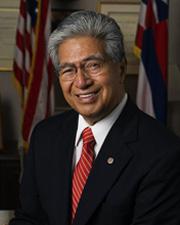 Sen. Daniel K. Akaka (D-HI)
Submitted December 6, 2006
Legislative Activity
Stay on top of the latest movement without scrolling through every action
Floor
Latest Action
Senate amendment submitted
December 6, 2006
View full timeline
Floor
Senate amendment submitted
December 6, 2006
Floor
Senate amendment agreed to: Amendment SA 5216 agreed to in Senate by Unanimous Consent.
December 6, 2006
Floor
Senate amendment proposed (on the floor): Amendment SA 5216 proposed by Senator Frist for Senator Akaka.
December 6, 2006
Floor
Amendment SA 5216 proposed by Senator Frist for Senator Akaka. (consideration: CR 12/7/2006 S11386; text: CR 12/7/2006 S11386) To revise the description of a certain citation.
December 6, 2006
Floor
Amendment SA 5216 agreed to in Senate by Unanimous Consent.
December 6, 2006
Text
Submitted
TEXT OF AMENDMENTS
SA 5212. Mr. ENSIGN (for Mr. Enzi (for himself and Mr. Kennedy)
proposed an amendment to the bill H.R. 6143, to amend title XXVI of the
Public Health Service Act to revise and extend the program for
providing life-saving care for those with HIV AIDS; as follows:
Strike all after the enacting clause and insert the
following:
SECTION 1. SHORT TITLE; TABLE OF CONTENTS.
(a) Short Title.--This Act may be cited as the ``Ryan White
HIV/AIDS Treatment Modernization Act of 2006''.
(b) Table of Contents.--The table of contents of this Act
is as follows:
Sec. 1. Short title; table of contents.
TITLE I--EMERGENCY RELIEF FOR ELIGIBLE AREAS
Sec. 101. Establishment of program; general eligibility for grants.
Sec. 102. Type and distribution of grants; formula grants.
Sec. 103. Type and distribution of grants; supplemental grants.
Sec. 104. Timeframe for obligation and expenditure of grant funds.
Sec. 105. Use of amounts.
Sec. 106. Additional amendments to part A.
Sec. 107. New program in part A; transitional grants for certain areas
ineligible under section 2601.
Sec. 108. Authorization of appropriations for part A.
TITLE II--CARE GRANTS
Sec. 201. General use of grants.
Sec. 202. AIDS Drug Assistance Program.
Sec. 203. Distribution of funds.
Sec. 204. Additional amendments to subpart I of part B.
Sec. 205. Supplemental grants on basis of demonstrated need.
Sec. 206. Emerging communities.
Sec. 207. Timeframe for obligation and expenditure of grant funds.
Sec. 208. Authorization of appropriations for subpart I of part B.
Sec. 209. Early diagnosis grant program.
Sec. 210. Certain partner notification programs; authorization of
appropriations.
TITLE III--EARLY INTERVENTION SERVICES
Sec. 301. Establishment of program; core medical services.
Sec. 302. Eligible entities; preferences; planning and development
grants.
Sec. 303. Authorization of appropriations.
Sec. 304. Confidentiality and informed consent.
Sec. 305. Provision of certain counseling services.
Sec. 306. General provisions.
TITLE IV--WOMEN, INFANTS, CHILDREN, AND YOUTH
Sec. 401. Women, infants, children, and youth.
Sec. 402. GAO Report.
TITLE V--GENERAL PROVISIONS
Sec. 501. General provisions.
[[Page S11350]]
TITLE VI--DEMONSTRATION AND TRAINING
Sec. 601. Demonstration and training.
Sec. 602. AIDS education and training centers.
Sec. 603. Codification of minority AIDS initiative.
TITLE VII--MISCELLANEOUS PROVISIONS
Sec. 701. Hepatitis; use of funds.
Sec. 702. Certain references.
Sec. 703. Repeal.
TITLE I--EMERGENCY RELIEF FOR ELIGIBLE AREAS
SEC. 101. ESTABLISHMENT OF PROGRAM; GENERAL ELIGIBILITY FOR
GRANTS.
(a) In General.--Section 2601 of the Public Health Service
Act (42 U.S.C. 300ff-11) is amended by striking subsections
(b) through (d) and inserting the following:
``(b) Continued Status as Eligible Area.--Notwithstanding
any other provision of this section, a metropolitan area that
is an eligible area for a fiscal year continues to be an
eligible area until the metropolitan area fails, for three
consecutive fiscal years--
``(1) to meet the requirements of subsection (a); and
``(2) to have a cumulative total of 3,000 or more living
cases of AIDS (reported to and confirmed by the Director of
the Centers for Disease Control and Prevention) as of
December 31 of the most recent calendar year for which such
data is available.
``(c) Boundaries.--For purposes of determining eligibility
under this part--
``(1) with respect to a metropolitan area that received
funding under this part in fiscal year 2006, the boundaries
of such metropolitan area shall be the boundaries that were
in effect for such area for fiscal year 1994; or
``(2) with respect to a metropolitan area that becomes
eligible to receive funding under this part in any fiscal
year after fiscal year 2006, the boundaries of such
metropolitan area shall be the boundaries that are in effect
for such area when such area initially receives funding under
this part.''.
(b) Technical and Conforming Amendments.--Section 2601(a)
of the Public Health Service Act (42 U.S.C. 300ff-11(a)) is
amended--
(1) by striking ``through (d)'' and inserting ``through
(c)''; and
(2) by inserting ``and confirmed by'' after ``reported
to''.
(c) Definition of Metropolitan Area.--Section 2607(2) of
the Public Health Service Act (42 U.S.C. 300ff-17(2)) is
amended--
(1) by striking ``area referred'' and inserting ``area that
is referred''; and
(2) by inserting before the period the following: ``, and
that has a population of 50,000 or more individuals''.
SEC. 102. TYPE AND DISTRIBUTION OF GRANTS; FORMULA GRANTS.
(a) Distribution Percentages.--Section 2603(a)(2) of the
Public Health Service Act (42 U.S.C. 300ff-13(a)(2)) is
amended--
(1) in the first sentence--
(A) by striking ``50 percent of the amount appropriated
under section 2677'' and inserting ``66\2/3\ percent of the
amount made available under section 2610(b) for carrying out
this subpart''; and
(B) by striking ``paragraph (3)'' and inserting
``paragraphs (3) and (4)''.
(2) by striking the last sentence.
(b) Distribution Based on Living Cases of HIV/AIDS.--
Section 2603(a)(3) of the Public Health Service Act (42
U.S.C. 300ff-13(a)(3)) is amended--
(1) in subparagraph (B), by striking ``estimated living
cases of acquired immune deficiency syndrome'' and inserting
``living cases of HIV/AIDS (reported to and confirmed by the
Director of the Centers for Disease Control and
Prevention)''; and
(2) by striking subparagraphs (C) through (E) and inserting
the following:
``(C) Living cases of hiv/aids.--
``(i) Requirement of names-based reporting.--Except as
provided in clause (ii), the number determined under this
subparagraph for an eligible area for a fiscal year for
purposes of subparagraph (B) is the number of living names-
based cases of HIV/AIDS that, as of December 31 of the most
recent calendar year for which such data is available, have
been reported to and confirmed by the Director of the Centers
for Disease Control and Prevention.
``(ii) Transition period; exemption regarding non-aids
cases.--For each of the fiscal years 2007 through 2009, an
eligible area is, subject to clauses (iii) through (v),
exempt from the requirement under clause (i) that living
names-based non-AIDS cases of HIV be reported unless--
``(I) a system was in operation as of December 31, 2005,
that provides sufficiently accurate and reliable names-based
reporting of such cases throughout the State in which the
area is located, subject to clause (viii); or
``(II) no later than the beginning of fiscal year 2008 or
2009, the Secretary, in consultation with the chief executive
of the State in which the area is located, determines that a
system has become operational in the State that provides
sufficiently accurate and reliable names-based reporting of
such cases throughout the State.
``(iii) Requirements for exemption for fiscal year 2007.--
For fiscal year 2007, an exemption under clause (ii) for an
eligible area applies only if, by October 1, 2006--
``(I)(aa) the State in which the area is located had
submitted to the Secretary a plan for making the transition
to sufficiently accurate and reliable names-based reporting
of living non-AIDS cases of HIV; or
``(bb) all statutory changes necessary to provide for
sufficiently accurate and reliable reporting of such cases
had been made; and
``(II) the State had agreed that, by April 1, 2008, the
State will begin accurate and reliable names-based reporting
of such cases, except that such agreement is not required to
provide that, as of such date, the system for such reporting
be fully sufficient with respect to accuracy and reliability
throughout the area.
``(iv) Requirement for exemption as of fiscal year 2008.--
For each of the fiscal years 2008 through 2010, an exemption
under clause (ii) for an eligible area applies only if, as of
April 1, 2008, the State in which the area is located is
substantially in compliance with the agreement under clause
(iii)(II).
``(v) Progress toward names-based reporting.--For fiscal
year 2009, the Secretary may terminate an exemption under
clause (ii) for an eligible area if the State in which the
area is located submitted a plan under clause (iii)(I)(aa)
and the Secretary determines that the State is not
substantially following the plan.
``(vi) Counting of cases in areas with exemptions.--
``(I) In general.--With respect to an eligible area that is
under a reporting system for living non-AIDS cases of HIV
that is not names-based (referred to in this subparagraph as
`code-based reporting'), the Secretary shall, for purposes of
this subparagraph, modify the number of such cases reported
for the eligible area in order to adjust for duplicative
reporting in and among systems that use code-based reporting.
``(II) Adjustment rate.--The adjustment rate under
subclause (I) for an eligible area shall be a reduction of 5
percent in the number of living non-AIDS cases of HIV
reported for the area.
``(vii) Multiple political jurisdictions.--With respect to
living non-AIDS cases of HIV, if an eligible area is not
entirely within one political jurisdiction and as a result is
subject to more than one reporting system for purposes of
this subparagraph:
``(I) Names-based reporting under clause (i) applies in a
jurisdictional portion of the area, or an exemption under
clause (ii) applies in such portion (subject to applicable
provisions of this subparagraph), according to whether names-
based reporting or code-based reporting is used in such
portion.
``(II) If under subclause (I) both names-based reporting
and code-based reporting apply in the area, the number of
code-based cases shall be reduced under clause (vi).
``(viii) List of eligible areas meeting standard regarding
december 31, 2005.--
``(I) In general.--If an eligible area or portion thereof
is in a State specified in subclause (II), the eligible area
or portion shall be considered to meet the standard described
in clause (ii)(I). No other eligible area or portion thereof
may be considered to meet such standard.
``(II) Relevant states.--For purposes of subclause (I), the
States specified in this subclause are the following: Alaska,
Alabama, Arkansas, Arizona, Colorado, Florida, Indiana, Iowa,
Idaho, Kansas, Louisiana, Michigan, Minnesota, Missouri,
Mississippi, North Carolina, North Dakota, Nebraska, New
Jersey, New Mexico, New York, Nevada, Ohio, Oklahoma, South
Carolina, South Dakota, Tennessee, Texas, Utah, Virginia,
Wisconsin, West Virginia, Wyoming, Guam, and the Virgin
Islands.
``(ix) Rules of construction regarding acceptance of
reports.--
``(I) Cases of aids.--With respect to an eligible area that
is subject to the requirement under clause (i) and is not in
compliance with the requirement for names-based reporting of
living non-AIDS cases of HIV, the Secretary shall,
notwithstanding such noncompliance, accept reports of living
cases of AIDS that are in accordance with such clause.
``(II) Applicability of exemption requirements.--The
provisions of clauses (ii) through (viii) may not be
construed as having any legal effect for fiscal year 2010 or
any subsequent fiscal year, and accordingly, the status of a
State for purposes of such clauses may not be considered
after fiscal year 2009.
``(x) Program for detecting inaccurate or fraudulent
counting.--The Secretary shall carry out a program to monitor
the reporting of names-based cases for purposes of this
subparagraph and to detect instances of inaccurate reporting,
including fraudulent reporting.''.
(c) Code-Based Areas; Limitation on Increase in Grant.--
Section 2603(a)(3) of the Public Health Service Act (42
U.S.C. 300ff-13(a)), as amended by subsection (b)(2) of this
section, is amended by adding at the end the following
subparagraph:
``(D) Code-based areas; limitation on increase in grant .--
``(i) In general.--For each of the fiscal years 2007
through 2009, if code-based reporting (within the meaning of
subparagraph (C)(vi)) applies in an eligible area or any
portion thereof as of the beginning of the fiscal year
involved, then notwithstanding any other provision of this
paragraph, the amount of the grant pursuant to this paragraph
for such area for such fiscal year may not--
``(I) for fiscal year 2007, exceed by more than 5 percent
the amount of the grant for the area that would have been
made pursuant to this paragraph and paragraph (4) for
[[Page S11351]]
fiscal year 2006 (as such paragraphs were in effect for such
fiscal year) if paragraph (2) (as so in effect) had been
applied by substituting `66\2/3\ percent' for `50 percent';
and
``(II) for each of the fiscal years 2008 and 2009, exceed
by more than 5 percent the amount of the grant pursuant to
this paragraph and paragraph (4) for the area for the
preceding fiscal year.
``(ii) Use of amounts involved.--For each of the fiscal
years 2007 through 2009, amounts available as a result of the
limitation under clause (i) shall be made available by the
Secretary as additional amounts for grants pursuant to
subsection (b) for the fiscal year involved, subject to
paragraph (4) and section 2610(d)(2).''.
(d) Hold Harmless.--Section 2603(a) of the Public Health
Service Act (42 U.S.C. 300ff-13(a)) is amended--
(1) in paragraph (3)(A)--
(A) in clause (ii), by striking the period at the end and
inserting a semicolon; and
(B) by inserting after and below clause (ii) the following:
``which product shall then, as applicable, be increased under
paragraph (4).''.
(2) by amending paragraph (4) to read as follows:
``(4) Increases in grant.--
``(A) In general.--For each eligible area that received a
grant pursuant to this subsection for fiscal year 2006, the
Secretary shall, for each of the fiscal years 2007 through
2009, increase the amount of the grant made pursuant to
paragraph (3) for the area to ensure that the amount of the
grant for the fiscal year involved is not less than the
following amount, as applicable to such fiscal year:
``(i) For fiscal year 2007, an amount equal to 95 percent
of the amount of the grant that would have been made pursuant
to paragraph (3) and this paragraph for fiscal year 2006 (as
such paragraphs were in effect for such fiscal year) if
paragraph (2) (as so in effect) had been applied by
substituting `66\2/3\ percent' for `50 percent'.
``(ii) For each of the fiscal years 2008 and 2009, an
amount equal to 100 percent of the amount of the grant made
pursuant to paragraph (3) and this paragraph for fiscal year
2007.
``(B) Source of funds for increase.--
``(i) In general.--From the amounts available for carrying
out the single program referred to in section 2609(d)(2)(C)
for a fiscal year (relating to supplemental grants), the
Secretary shall make available such amounts as may be
necessary to comply with subparagraph (A), subject to section
2610(d)(2).
``(ii) Pro rata reduction.--If the amounts referred to in
clause (i) for a fiscal year are insufficient to fully comply
with subparagraph (A) for the year, the Secretary, in order
to provide the additional funds necessary for such
compliance, shall reduce on a pro rata basis the amount of
each grant pursuant to this subsection for the fiscal year,
other than grants for eligible areas for which increases
under subparagraph (A) apply. A reduction under the preceding
sentence may not be made in an amount that would result in
the eligible area involved becoming eligible for such an
increase.
``(C) Limitation.--This paragraph may not be construed as
having any applicability after fiscal year 2009.''.
SEC. 103. TYPE AND DISTRIBUTION OF GRANTS; SUPPLEMENTAL
GRANTS.
Section 2603(b) of the Public Health Service Act (42 U.S.C.
300ff-13(b)) is amended--
(1) in paragraph (1)--
(A) in the matter preceding subparagraph (A), by striking
``Not later than'' and all that follows through ``the
Secretary shall'' and inserting the following: ``Subject to
subsection (a)(4)(B)(i) and section 2610(d), the Secretary
shall'';
(B) in subparagraph (B), by striking ``demonstrates the
severe need in such area'' and inserting ``demonstrates the
need in such area, on an objective and quantified basis,'';
(C) by striking subparagraph (F) and inserting the
following:
``(F) demonstrates the inclusiveness of affected
communities and individuals with HIV/AIDS;'';
(D) in subparagraph (G), by striking the period and
inserting ``; and''; and
(E) by adding at the end the following:
``(H) demonstrates the ability of the applicant to expend
funds efficiently by not having had, for the most recent
grant year under subsection (a) for which data is available,
more than 2 percent of grant funds under such subsection
canceled or covered by any waivers under subsection
(c)(3).''; and
(2) in paragraph (2)--
(A) in subparagraph (A), by striking ``severe need'' and
inserting ``demonstrated need'';
(B) by striking subparagraph (B) and inserting the
following:
``(B) Demonstrated need.--The factors considered by the
Secretary in determining whether an eligible area has a
demonstrated need for purposes of paragraph (1)(B) may
include any or all of the following:
``(i) The unmet need for such services, as determined under
section 2602(b)(4) or other community input process as
defined under section 2609(d)(1)(A).
``(ii) An increasing need for HIV/AIDS-related services,
including relative rates of increase in the number of cases
of HIV/AIDS.
``(iii) The relative rates of increase in the number of
cases of HIV/AIDS within new or emerging subpopulations.
``(iv) The current prevalence of HIV/AIDS.
``(v) Relevant factors related to the cost and complexity
of delivering health care to individuals with HIV/AIDS in the
eligible area.
``(vi) The impact of co-morbid factors, including co-
occurring conditions, determined relevant by the Secretary.
``(vii) The prevalence of homelessness.
``(viii) The prevalence of individuals described under
section 2602(b)(2)(M).
``(ix) The relevant factors that limit access to health
care, including geographic variation, adequacy of health
insurance coverage, and language barriers.
``(x) The impact of a decline in the amount received
pursuant to subsection (a) on services available to all
individuals with HIV/AIDS identified and eligible under this
title.''; and
(C) by striking subparagraphs (C) and (D) and inserting the
following:
``(C) Priority in making grants.--The Secretary shall
provide funds under this subsection to an eligible area to
address the decline or disruption of all EMA-provided
services related to the decline in the amounts received
pursuant to subsection (a) consistent with the grant award
for the eligible area for fiscal year 2006, to the extent
that the factor under subparagraph (B)(x) (relating to a
decline in funding) applies to the eligible area.''.
SEC. 104. TIMEFRAME FOR OBLIGATION AND EXPENDITURE OF GRANT
FUNDS.
Section 2603 of the Public Health Service Act (42 U.S.C.
300ff-13) is amended--
(1) by redesignating subsection (c) as subsection (d);
(2) by inserting after subsection (b) the following:
``(c) Timeframe for Obligation and Expenditure of Grant
Funds.--
``(1) Obligation by end of grant year.--Effective for
fiscal year 2007 and subsequent fiscal years, funds from a
grant award made pursuant to subsection (a) or (b) for a
fiscal year are available for obligation by the eligible area
involved through the end of the one-year period beginning on
the date in such fiscal year on which funds from the award
first become available to the area (referred to in this
subsection as the `grant year for the award'), except as
provided in paragraph (3)(A).
``(2) Supplemental grants; cancellation of unobligated
balance of grant award.--Effective for fiscal year 2007 and
subsequent fiscal years, if a grant award made pursuant to
subsection (b) for an eligible area for a fiscal year has an
unobligated balance as of the end of the grant year for the
award--
``(A) the Secretary shall cancel that unobligated balance
of the award, and shall require the eligible area to return
any amounts from such balance that have been disbursed to the
area; and
``(B) the funds involved shall be made available by the
Secretary as additional amounts for grants pursuant to
subsection (b) for the first fiscal year beginning after the
fiscal year in which the Secretary obtains the information
necessary for determining that the balance is required under
subparagraph (A) to be canceled, except that the availability
of the funds for such grants is subject to subsection (a)(4)
and section 2610(d)(2) as applied for such year.
``(3) Formula grants; cancellation of unobligated balance
of grant award; waiver permitting carryover.--
``(A) In general.--Effective for fiscal year 2007 and
subsequent fiscal years, if a grant award made pursuant to
subsection (a) for an eligible area for a fiscal year has an
unobligated balance as of the end of the grant year for the
award, the Secretary shall cancel that unobligated balance of
the award, and shall require the eligible area to return any
amounts from such balance that have been disbursed to the
area, unless--
``(i) before the end of the grant year, the chief elected
official of the area submits to the Secretary a written
application for a waiver of the cancellation, which
application includes a description of the purposes for which
the area intends to expend the funds involved; and
``(ii) the Secretary approves the waiver.
``(B) Expenditure by end of carryover year.--With respect
to a waiver under subparagraph (A) that is approved for a
balance that is unobligated as of the end of a grant year for
an award:
``(i) The unobligated funds are available for expenditure
by the eligible area involved for the one-year period
beginning upon the expiration of the grant year (referred to
in this subsection as the `carryover year').
``(ii) If the funds are not expended by the end of the
carryover year, the Secretary shall cancel that unexpended
balance of the award, and shall require the eligible area to
return any amounts from such balance that have been disbursed
to the area.
``(C) Use of cancelled balances.--In the case of any
balance of a grant award that is cancelled under subparagraph
(A) or (B)(ii), the grant funds involved shall be made
available by the Secretary as additional amounts for grants
pursuant to subsection (b) for the first fiscal year
beginning after the fiscal year in which the Secretary
obtains the information necessary for determining that the
balance is required under such subparagraph to be canceled,
except that the availability of the funds for such grants is
subject to subsection (a)(4) and section 2610(d)(2) as
applied for such year.
``(D) Corresponding reduction in future grant.--
``(i) In general.--In the case of an eligible area for
which a balance from a grant award
[[Page S11352]]
under subsection (a) is unobligated as of the end of the
grant year for the award--
``(I) the Secretary shall reduce, by the same amount as
such unobligated balance, the amount of the grant under such
subsection for the first fiscal year beginning after the
fiscal year in which the Secretary obtains the information
necessary for determining that such balance was unobligated
as of the end of the grant year (which requirement for a
reduction applies without regard to whether a waiver under
subparagraph (A) has been approved with respect to such
balance); and
``(II) the grant funds involved in such reduction shall be
made available by the Secretary as additional funds for
grants pursuant to subsection (b) for such first fiscal year,
subject to subsection (a)(4) and section 2610(d)(2);
except that this clause does not apply to the eligible area
if the amount of the unobligated balance was 2 percent or
less.
``(ii) Relation to increases in grant.--A reduction under
clause (i) for an eligible area for a fiscal year may not be
taken into account in applying subsection (a)(4) with respect
to the area for the subsequent fiscal year.''; and
(3) by adding at the end the following:
``(e) Report on the Awarding of Supplemental Funds.--Not
later than 45 days after the awarding of supplemental funds
under this section, the Secretary shall submit to Congress a
report concerning such funds. Such report shall include
information detailing--
``(1) the total amount of supplemental funds available
under this section for the year involved;
``(2) the amount of supplemental funds used in accordance
with the hold harmless provisions of subsection (a)(4);
``(3) the amount of supplemental funds disbursed pursuant
to subsection (b)(2)(C);
``(4) the disbursement of the remainder of the supplemental
funds after taking into account the uses described in
paragraphs (2) and (3); and
``(5) the rationale used for the amount of funds disbursed
as described under paragraphs (2), (3), and (4).''.
SEC. 105. USE OF AMOUNTS.
Section 2604 of the Public Health Service Act (42 U.S.C.
300ff-14) is amended to read as follows:
``SEC. 2604. USE OF AMOUNTS.
``(a) Requirements.--The Secretary may not make a grant
under section 2601(a) to the chief elected official of an
eligible area unless such political subdivision agrees that--
``(1) subject to paragraph (2), the allocation of funds and
services within the eligible area will be made in accordance
with the priorities established, pursuant to section
2602(b)(4)(C), by the HIV health services planning council
that serves such eligible area;
``(2) funds provided under section 2601 will be expended
only for--
``(A) core medical services described in subsection (c);
``(B) support services described in subsection (d); and
``(C) administrative expenses described in subsection (h);
and
``(3) the use of such funds will comply with the
requirements of this section.
``(b) Direct Financial Assistance to Appropriate
Entities.--
``(1) In general.--The chief elected official of an
eligible area shall use amounts from a grant under section
2601 to provide direct financial assistance to entities
described in paragraph (2) for the purpose of providing core
medical services and support services.
``(2) Appropriate entities.--Direct financial assistance
may be provided under paragraph (1) to public or nonprofit
private entities, or private for-profit entities if such
entities are the only available provider of quality HIV care
in the area.
``(c) Required Funding for Core Medical Services.--
``(1) In general.--With respect to a grant under section
2601 for an eligible area for a grant year, the chief elected
official of the area shall, of the portion of the grant
remaining after reserving amounts for purposes of paragraphs
(1) and (5)(B)(i) of subsection (h), use not less than 75
percent to provide core medical services that are needed in
the eligible area for individuals with HIV/AIDS who are
identified and eligible under this title (including services
regarding the co-occurring conditions of the individuals).
``(2) Waiver.--
``(A) In general.--The Secretary shall waive the
application of paragraph (1) with respect to a chief elected
official for a grant year if the Secretary determines that,
within the eligible area involved--
``(i) there are no waiting lists for AIDS Drug Assistance
Program services under section 2616; and
``(ii) core medical services are available to all
individuals with HIV/AIDS identified and eligible under this
title.
``(B) Notification of waiver status.--When informing the
chief elected official of an eligible area that a grant under
section 2601 is being made for the area for a grant year, the
Secretary shall inform the official whether a waiver under
subparagraph (A) is in effect for such year.
``(3) Core medical services.--For purposes of this
subsection, the term `core medical services', with respect to
an individual with HIV/AIDS (including the co-occurring
conditions of the individual), means the following services:
``(A) Outpatient and ambulatory health services.
``(B) AIDS Drug Assistance Program treatments in accordance
with section 2616.
``(C) AIDS pharmaceutical assistance.
``(D) Oral health care.
``(E) Early intervention services described in subsection
(e).
``(F) Health insurance premium and cost sharing assistance
for low-income individuals in accordance with section 2615.
``(G) Home health care.
``(H) Medical nutrition therapy.
``(I) Hospice services.
``(J) Home and community-based health services as defined
under section 2614(c).
``(K) Mental health services.
``(L) Substance abuse outpatient care.
``(M) Medical case management, including treatment
adherence services.
``(d) Support Services.--
``(1) In general.--For purposes of this section, the term
`support services' means services, subject to the approval of
the Secretary, that are needed for individuals with HIV/AIDS
to achieve their medical outcomes (such as respite care for
persons caring for individuals with HIV/AIDS, outreach
services, medical transportation, linguistic services, and
referrals for health care and support services).
``(2) Medical outcomes.--In this subsection, the term
`medical outcomes' means those outcomes affecting the HIV-
related clinical status of an individual with HIV/AIDS.
``(e) Early Intervention Services.--
``(1) In general.--For purposes of this section, the term
`early intervention services' means HIV/AIDS early
intervention services described in section 2651(e), with
follow-up referral provided for the purpose of facilitating
the access of individuals receiving the services to HIV-
related health services. The entities through which such
services may be provided under the grant include public
health departments, emergency rooms, substance abuse and
mental health treatment programs, detoxification centers,
detention facilities, clinics regarding sexually transmitted
diseases, homeless shelters, HIV/AIDS counseling and testing
sites, health care points of entry specified by eligible
areas, federally qualified health centers, and entities
described in section 2652(a) that constitute a point of
access to services by maintaining referral relationships.
``(2) Conditions.--With respect to an entity that proposes
to provide early intervention services under paragraph (1),
such paragraph shall apply only if the entity demonstrates to
the satisfaction of the chief elected official for the
eligible area involved that--
``(A) Federal, State, or local funds are otherwise
inadequate for the early intervention services the entity
proposes to provide; and
``(B) the entity will expend funds pursuant to such
paragraph to supplement and not supplant other funds
available to the entity for the provision of early
intervention services for the fiscal year involved.
``(f) Priority for Women, Infants, Children, and Youth.--
``(1) In general.--For the purpose of providing health and
support services to infants, children, youth, and women with
HIV/AIDS, including treatment measures to prevent the
perinatal transmission of HIV, the chief elected official of
an eligible area, in accordance with the established
priorities of the planning council, shall for each of such
populations in the eligible area use, from the grants made
for the area under section 2601(a) for a fiscal year, not
less than the percentage constituted by the ratio of the
population involved (infants, children, youth, or women in
such area) with HIV/AIDS to the general population in such
area of individuals with HIV/AIDS.
``(2) Waiver.--With respect to the population involved, the
Secretary may provide to the chief elected official of an
eligible area a waiver of the requirement of paragraph (1) if
such official demonstrates to the satisfaction of the
Secretary that the population is receiving HIV-related health
services through the State medicaid program under title XIX
of the Social Security Act, the State children's health
insurance program under title XXI of such Act, or other
Federal or State programs.
``(g) Requirement of Status as Medicaid Provider.--
``(1) Provision of service.--Subject to paragraph (2), the
Secretary may not make a grant under section 2601(a) for the
provision of services under this section in a State unless,
in the case of any such service that is available pursuant to
the State plan approved under title XIX of the Social
Security Act for the State--
``(A) the political subdivision involved will provide the
service directly, and the political subdivision has entered
into a participation agreement under the State plan and is
qualified to receive payments under such plan; or
``(B) the political subdivision will enter into an
agreement with a public or nonprofit private entity under
which the entity will provide the service, and the entity has
entered into such a participation agreement and is qualified
to receive such payments.
``(2) Waiver.--
``(A) In general.--In the case of an entity making an
agreement pursuant to paragraph (1)(B) regarding the
provision of services, the requirement established in such
paragraph shall be waived by the HIV health services planning
council for the eligible area if the entity does not, in
providing health care services, impose a charge or accept
reimbursement available from any third-party
[[Page S11353]]
payor, including reimbursement under any insurance policy or
under any Federal or State health benefits program.
``(B) Determination.--A determination by the HIV health
services planning council of whether an entity referred to in
subparagraph (A) meets the criteria for a waiver under such
subparagraph shall be made without regard to whether the
entity accepts voluntary donations for the purpose of
providing services to the public.
``(h) Administration.--
``(1) Limitation.--The chief elected official of an
eligible area shall not use in excess of 10 percent of
amounts received under a grant under this part for
administrative expenses.
``(2) Allocations by chief elected official.--In the case
of entities and subcontractors to which the chief elected
official of an eligible area allocates amounts received by
the official under a grant under this part, the official
shall ensure that, of the aggregate amount so allocated, the
total of the expenditures by such entities for administrative
expenses does not exceed 10 percent (without regard to
whether particular entities expend more than 10 percent for
such expenses).
``(3) Administrative activities.--For purposes of paragraph
(1), amounts may be used for administrative activities that
include--
``(A) routine grant administration and monitoring
activities, including the development of applications for
part A funds, the receipt and disbursal of program funds, the
development and establishment of reimbursement and accounting
systems, the development of a clinical quality management
program as described in paragraph (5), the preparation of
routine programmatic and financial reports, and compliance
with grant conditions and audit requirements; and
``(B) all activities associated with the grantee's contract
award procedures, including the activities carried out by the
HIV health services planning council as established under
section 2602(b), the development of requests for proposals,
contract proposal review activities, negotiation and awarding
of contracts, monitoring of contracts through telephone
consultation, written documentation or onsite visits,
reporting on contracts, and funding reallocation activities.
``(4) Subcontractor administrative activities.--For the
purposes of this subsection, subcontractor administrative
activities include--
``(A) usual and recognized overhead activities, including
established indirect rates for agencies;
``(B) management oversight of specific programs funded
under this title; and
``(C) other types of program support such as quality
assurance, quality control, and related activities.
``(5) Clinical quality management.--
``(A) Requirement.--The chief elected official of an
eligible area that receives a grant under this part shall
provide for the establishment of a clinical quality
management program to assess the extent to which HIV health
services provided to patients under the grant are consistent
with the most recent Public Health Service guidelines for the
treatment of HIV/AIDS and related opportunistic infection,
and as applicable, to develop strategies for ensuring that
such services are consistent with the guidelines for
improvement in the access to and quality of HIV health
services.
``(B) Use of funds.--
``(i) In general.--From amounts received under a grant
awarded under this subpart for a fiscal year, the chief
elected official of an eligible area may use for activities
associated with the clinical quality management program
required in subparagraph (A) not to exceed the lesser of--
``(I) 5 percent of amounts received under the grant; or
``(II) $3,000,000.
``(ii) Relation to limitation on administrative expenses.--
The costs of a clinical quality management program under
subparagraph (A) may not be considered administrative
expenses for purposes of the limitation established in
paragraph (1).
``(i) Construction.--A chief elected official may not use
amounts received under a grant awarded under this part to
purchase or improve land, or to purchase, construct, or
permanently improve (other than minor remodeling) any
building or other facility, or to make cash payments to
intended recipients of services.''.
SEC. 106. ADDITIONAL AMENDMENTS TO PART A.
(a) Reporting of Cases.--Section 2601(a) of the Public
Health Service Act (42 U.S.C. 300ff-11(a)) is amended by
striking ``for the most recent period'' and inserting
``during the most recent period''.
(b) Planning Council Representation.--Section 2602(b)(2)(G)
of the Public Health Service Act (42 U.S.C. 300ff-
12(b)(2)(G)) is amended by inserting ``, members of a
Federally recognized Indian tribe as represented in the
population, individuals co-infected with hepatitis B or C''
after ``disease''.
(c) Application for Grant.--
(1) Payer of last resort.--Section 2605(a)(6)(A) of the
Public Health Service Act (42 U.S.C. 300ff-15(a)(6)(A)) is
amended by inserting ``(except for a program administered by
or providing the services of the Indian Health Service)''
before the semicolon.
(2) Audits.--Section 2605(a) of the Public Health Service
Act (42 U.S.C. 300ff-15(a)) is amended--
(A) in paragraph (8), by striking ``and'' at the end;
(B) in paragraph (9), by striking the period and inserting
``; and''; and
(C) by adding at the end the following:
``(10) that the chief elected official will submit to the
lead State agency under section 2617(b)(4), audits,
consistent with Office of Management and Budget circular
A133, regarding funds expended in accordance with this part
every 2 years and shall include necessary client-based data
to compile unmet need calculations and Statewide coordinated
statements of need process.''.
(3) Coordination.--Section 2605(b) of the Public Health
Service Act (42 U.S.C. 300ff-15(b)) is amended--
(A) in paragraph (3), by striking ``and'' at the end;
(B) in paragraph (4), by striking the period and inserting
a semicolon; and
(C) by adding at the end the following:
``(5) the manner in which the expected expenditures are
related to the planning process for States that receive
funding under part B (including the planning process
described in section 2617(b)); and
``(6) the expected expenditures and how those expenditures
will improve overall client outcomes, as described under the
State plan under section 2617(b), and through additional
outcomes measures as identified by the HIV health services
planning council under section 2602(b).''.
SEC. 107. NEW PROGRAM IN PART A; TRANSITIONAL GRANTS FOR
CERTAIN AREAS INELIGIBLE UNDER SECTION 2601.
(a) In General.--Part A of title XXVI of the Public Health
Service Act (42 U.S.C. 300ff-11) is amended--
(1) by inserting after the part heading the following:
``Subpart I--General Grant Provisions''; and
(2) by adding at the end the following:
``Subpart II--Transitional Grants
``SEC. 2609. ESTABLISHMENT OF PROGRAM.
``(a) In General.--The Secretary, acting through the
Administrator of the Health Resources and Services
Administration, shall make grants for the purpose of
providing services described in section 2604 in transitional
areas, subject to the same provisions regarding the
allocation of grant funds as apply under subsection (c) of
such section.
``(b) Transitional Areas.--For purposes of this section,
the term `transitional area' means, subject to subsection
(c), a metropolitan area for which there has been reported to
and confirmed by the Director of the Centers for Disease
Control and Prevention a cumulative total of at least 1,000,
but fewer than 2,000, cases of AIDS during the most recent
period of 5 calendar years for which such data are available.
``(c) Certain Eligibility Rules.--
``(1) Fiscal year 2007.--With respect to grants under
subsection (a) for fiscal year 2007, a metropolitan area that
received funding under subpart I for fiscal year 2006 but
does not for fiscal year 2007 qualify under such subpart as
an eligible area and does not qualify under subsection (b) as
a transitional area shall, notwithstanding subsection (b), be
considered a transitional area.
``(2) Continued status as transitional area.--
``(A) In general.--Notwithstanding subsection (b), a
metropolitan area that is a transitional area for a fiscal
year continues, except as provided in subparagraph (B), to be
a transitional area until the metropolitan area fails, for
three consecutive fiscal years--
``(i) to qualify under such subsection as a transitional
area; and
``(ii) to have a cumulative total of 1,500 or more living
cases of AIDS (reported to and confirmed by the Director of
the Centers for Disease Control and Prevention) as of
December 31 of the most recent calendar year for which such
data is available.
``(B) Exception regarding status as eligible area.--
Subparagraph (A) does not apply for a fiscal year if the
metropolitan area involved qualifies under subpart I as an
eligible area.
``(d) Application of Certain Provisions of Subpart I.--
``(1) Administration; planning council.--
``(A) In general.--The provisions of section 2602 apply
with respect to a grant under subsection (a) for a
transitional area to the same extent and in the same manner
as such provisions apply with respect to a grant under
subpart I for an eligible area, except that, subject to
subparagraph (B), the chief elected official of the
transitional area may elect not to comply with the provisions
of section 2602(b) if the official provides documentation to
the Secretary that details the process used to obtain
community input (particularly from those with HIV) in the
transitional area for formulating the overall plan for
priority setting and allocating funds from the grant under
subsection (a).
``(B) Exception.--For each of the fiscal years 2007 through
2009, the exception described in subparagraph (A) does not
apply if the transitional area involved received funding
under subpart I for fiscal year 2006.
``(2) Type and distribution of grants; timeframe for
obligation and expenditure of grant funds.--
``(A) Formula grants; supplemental grants.--The provisions
of section 2603 apply with respect to grants under subsection
(a) to the same extent and in the same manner as such
provisions apply with respect to grants under subpart I,
subject to subparagraphs (B) and (C).
[[Page S11354]]
``(B) Formula grants; increase in grant.--For purposes of
subparagraph (A), section 2603(a)(4) does not apply.
``(C) Supplemental grants; single program with subpart i
program.--With respect to section 2603(b) as applied for
purposes of subparagraph (A):
``(i) The Secretary shall combine amounts available
pursuant to such subparagraph with amounts available for
carrying out section 2603(b) and shall administer the two
programs as a single program.
``(ii) In the single program, the Secretary has discretion
in allocating amounts between eligible areas under subpart I
and transitional areas under this section, subject to the
eligibility criteria that apply under such section, and
subject to section 2603(b)(2)(C) (relating to priority in
making grants).
``(iii) Pursuant to section 2603(b)(1), amounts for the
single program are subject to use under sections 2603(a)(4)
and 2610(d)(1).
``(3) Application; technical assistance; definitions.--The
provisions of sections 2605, 2606, and 2607 apply with
respect to grants under subsection (a) to the same extent and
in the same manner as such provisions apply with respect to
grants under subpart I.''.
(b) Conforming Amendments.--Subpart I of part A of title
XXVI of the Public Health Service Act, as designated by
subsection (a)(1) of this section, is amended by striking
``this part'' each place such term appears and inserting
``this subpart''.
SEC. 108. AUTHORIZATION OF APPROPRIATIONS FOR PART A.
Part A of title XXVI of the Public Health Service Act, as
amended by section 106(a), is amended by adding at the end
the following:
``Subpart III--General Provisions
``SEC. 2610. AUTHORIZATION OF APPROPRIATIONS.
``(a) In General.--For the purpose of carrying out this
part, there are authorized to be appropriated $604,000,000
for fiscal year 2007, $626,300,000 for fiscal year 2008, and
$649,500,000 for fiscal year 2009. Amounts appropriated under
the preceding sentence for a fiscal year are available for
obligation by the Secretary until the end of the second
succeeding fiscal year.
``(b) Reservation of Amounts.--
``(1) Fiscal year 2007.--Of the amount appropriated under
subsection (a) for fiscal year 2007, the Secretary shall
reserve--
``(A) $458,310,000 for grants under subpart I; and
``(B) $145,690,000 for grants under section 2609.
``(2) Subsequent fiscal years.--Of the amount appropriated
under subsection (a) for fiscal year 2008 and each subsequent
fiscal year--
``(A) the Secretary shall reserve an amount for grants
under subpart I; and
``(B) the Secretary shall reserve an amount for grants
under section 2609.
``(c) Transfer of Certain Amounts; Change in Status as
Eligible Area or Transitional Area.--Notwithstanding
subsection (b):
``(1) If a metropolitan area is an eligible area under
subpart I for a fiscal year, but for a subsequent fiscal year
ceases to be an eligible area by reason of section 2601(b)--
``(A)(i) the amount reserved under paragraph (1)(A) or
(2)(A) of subsection (b) of this section for the first such
subsequent year of not being an eligible area is deemed to be
reduced by an amount equal to the amount of the grant made
pursuant to section 2603(a) for the metropolitan area for the
preceding fiscal year; and
``(ii)(I) if the metropolitan area qualifies for such first
subsequent fiscal year as a transitional area under 2609, the
amount reserved under paragraph (1)(B) or (2)(B) of
subsection (b) for such fiscal year is deemed to be increased
by an amount equal to the amount of the reduction under
subparagraph (A) for such year; or
``(II) if the metropolitan area does not qualify for such
first subsequent fiscal year as a transitional area under
2609, an amount equal to the amount of such reduction is,
notwithstanding subsection (a), transferred and made
available for grants pursuant to section 2618(a)(1), in
addition to amounts available for such grants under section
2623; and
``(B) if a transfer under subparagraph (A)(ii)(II) is made
with respect to the metropolitan area for such first
subsequent fiscal year, then--
``(i) the amount reserved under paragraph (1)(A) or (2)(A)
of subsection (b) of this section for such year is deemed to
be reduced by an additional $500,000; and
``(ii) an amount equal to the amount of such additional
reduction is, notwithstanding subsection (a), transferred and
made available for grants pursuant to section 2618(a)(1), in
addition to amounts available for such grants under section
2623.
``(2) If a metropolitan area is a transitional area under
section 2609 for a fiscal year, but for a subsequent fiscal
year ceases to be a transitional area by reason of section
2609(c)(2) (and does not qualify for such subsequent fiscal
year as an eligible area under subpart I)--
``(A) the amount reserved under subsection (b)(2)(B) of
this section for the first such subsequent fiscal year of not
being a transitional area is deemed to be reduced by an
amount equal to the total of--
``(i) the amount of the grant that, pursuant to section
2603(a), was made under section 2609(d)(2)(A) for the
metropolitan area for the preceding fiscal year; and
``(ii) $500,000; and
``(B) an amount equal to the amount of the reduction under
subparagraph (A) for such year is, notwithstanding subsection
(a), transferred and made available for grants pursuant to
section 2618(a)(1), in addition to amounts available for such
grants under section 2623.
``(3) If a metropolitan area is a transitional area under
section 2609 for a fiscal year, but for a subsequent fiscal
year qualifies as an eligible area under subpart I--
``(A) the amount reserved under subsection (b)(2)(B) of
this section for the first such subsequent fiscal year of
becoming an eligible area is deemed to be reduced by an
amount equal to the amount of the grant that, pursuant to
section 2603(a), was made under section 2609(d)(2)(A) for the
metropolitan area for the preceding fiscal year; and
``(B) the amount reserved under subsection (b)(2)(A) for
such fiscal year is deemed to be increased by an amount equal
to the amount of the reduction under subparagraph (A) for
such year.
``(d) Certain Transfers; Allocations Between Programs Under
Subpart I.--With respect to paragraphs (1)(B)(i) and
(2)(A)(ii) of subsection (c), the Secretary shall administer
any reductions under such paragraphs for a fiscal year in
accordance with the following:
``(1) The reductions shall be made from amounts available
for the single program referred to in section 2609(d)(2)(C)
(relating to supplemental grants).
``(2) The reductions shall be made before the amounts
referred to in paragraph (1) are used for purposes of section
2603(a)(4).
``(3) If the amounts referred to in paragraph (1) are not
sufficient for making all the reductions, the reductions
shall be reduced until the total amount of the reductions
equals the total of the amounts referred to in such
paragraph.
``(e) Rules of Construction Regarding First Subsequent
Fiscal Year.--Paragraphs (1) and (2) of subsection (c) apply
with respect to each series of fiscal years during which a
metropolitan area is an eligible area under subpart I or a
transitional area under section 2609 for a fiscal year and
then for a subsequent fiscal year ceases to be such an area
by reason of section 2601(b) or 2609(c)(2), respectively,
rather than applying to a single such series. Paragraph (3)
of subsection (c) applies with respect to each series of
fiscal years during which a metropolitan area is a
transitional area under section 2609 for a fiscal year and
then for a subsequent fiscal year becomes an eligible area
under subpart I, rather than applying to a single such
series.''.
TITLE II--CARE GRANTS
SEC. 201. GENERAL USE OF GRANTS.
(a) In General.--Section 2612 of the Public Health Service
Act (42 U.S.C. 300ff-22) is amended to read as follows:
``SEC. 2612. GENERAL USE OF GRANTS.
``(a) In General.--A State may use amounts provided under
grants made under section 2611 for--
``(1) core medical services described in subsection (b);
``(2) support services described in subsection (c); and
``(3) administrative expenses described in section
2618(b)(3).
``(b) Required Funding for Core Medical Services.--
``(1) In general.--With respect to a grant under section
2611 for a State for a grant year, the State shall, of the
portion of the grant remaining after reserving amounts for
purposes of subparagraphs (A) and (E)(ii)(I) of section
2618(b)(3), use not less than 75 percent to provide core
medical services that are needed in the State for individuals
with HIV/AIDS who are identified and eligible under this
title (including services regarding the co-occurring
conditions of the individuals).
``(2) Waiver.--
``(A) In general.--The Secretary shall waive the
application of paragraph (1) with respect to a State for a
grant year if the Secretary determines that, within the
State--
``(i) there are no waiting lists for AIDS Drug Assistance
Program services under section 2616; and
``(ii) core medical services are available to all
individuals with HIV/AIDS identified and eligible under this
title.
``(B) Notification of waiver status.--When informing a
State that a grant under section 2611 is being made to the
State for a fiscal year, the Secretary shall inform the State
whether a waiver under subparagraph (A) is in effect for the
fiscal year.
``(3) Core medical services.--For purposes of this
subsection, the term `core medical services', with respect to
an individual infected with HIV/AIDS (including the co-
occurring conditions of the individual) means the following
services:
``(A) Outpatient and ambulatory health services.
``(B) AIDS Drug Assistance Program treatments in accordance
with section 2616.
``(C) AIDS pharmaceutical assistance.
``(D) Oral health care.
``(E) Early intervention services described in subsection
(d).
``(F) Health insurance premium and cost sharing assistance
for low-income individuals in accordance with section 2615.
``(G) Home health care.
``(H) Medical nutrition therapy.
``(I) Hospice services.
``(J) Home and community-based health services as defined
under section 2614(c).
[[Page S11355]]
``(K) Mental health services.
``(L) Substance abuse outpatient care.
``(M) Medical case management, including treatment
adherence services.
``(c) Support Services.--
``(1) In general.--For purposes of this subsection, the
term `support services' means services, subject to the
approval of the Secretary, that are needed for individuals
with HIV/AIDS to achieve their medical outcomes (such as
respite care for persons caring for individuals with HIV/
AIDS, outreach services, medical transportation, linguistic
services, and referrals for health care and support
services).
``(2) Definition of medical outcomes.--In this subsection,
the term `medical outcomes' means those outcomes affecting
the HIV-related clinical status of an individual with HIV/
AIDS.
``(d) Early Intervention Services.--
``(1) In general.--For purposes of this section, the term
`early intervention services' means HIV/AIDS early
intervention services described in section 2651(e), with
follow-up referral provided for the purpose of facilitating
the access of individuals receiving the services to HIV-
related health services. The entities through which such
services may be provided under the grant include public
health departments, emergency rooms, substance abuse and
mental health treatment programs, detoxification centers,
detention facilities, clinics regarding sexually transmitted
diseases, homeless shelters, HIV/AIDS counseling and testing
sites, health care points of entry specified by States,
federally qualified health centers, and entities described in
section 2652(a) that constitute a point of access to services
by maintaining referral relationships.
``(2) Conditions.--With respect to an entity that proposes
to provide early intervention services under paragraph (1),
such paragraph shall apply only if the entity demonstrates to
the satisfaction of the chief elected official for the State
involved that--
``(A) Federal, State, or local funds are otherwise
inadequate for the early intervention services the entity
proposes to provide; and
``(B) the entity will expend funds pursuant to such
subparagraph to supplement and not supplant other funds
available to the entity for the provision of early
intervention services for the fiscal year involved.
``(e) Priority for Women, Infants, Children, and Youth.--
``(1) In general.--For the purpose of providing health and
support services to infants, children, youth, and women with
HIV/AIDS, including treatment measures to prevent the
perinatal transmission of HIV, a State shall for each of such
populations in the eligible area use, from the grants made
for the area under section 2601(a) for a fiscal year, not
less than the percentage constituted by the ratio of the
population involved (infants, children, youth, or women in
such area) with HIV/AIDS to the general population in such
area of individuals with HIV/AIDS.
``(2) Waiver.--With respect to the population involved, the
Secretary may provide to a State a waiver of the requirement
of paragraph (1) if such State demonstrates to the
satisfaction of the Secretary that the population is
receiving HIV-related health services through the State
medicaid program under title XIX of the Social Security Act,
the State children's health insurance program under title XXI
of such Act, or other Federal or State programs.
``(f) Construction.--A State may not use amounts received
under a grant awarded under section 2611 to purchase or
improve land, or to purchase, construct, or permanently
improve (other than minor remodeling) any building or other
facility, or to make cash payments to intended recipients of
services.''.
(b) HIV Care Consortia.--Section 2613 of the Public Health
Service Act (42 U.S.C. 300ff-23) is amended--
(1) in subsection (a), in the matter preceding paragraph
(1)--
(A) by striking ``may use'' and inserting ``may, subject to
subsection (f), use''; and
(B) by striking ``section 2612(a)(1)'' and inserting
``section 2612(a)''; and
(2) by adding at the end the following subsection:
``(f) Allocation of Funds; Treatment as Support Services.--
For purposes of the requirement of section 2612(b)(1),
expenditures of grants under section 2611 for or through
consortia under this section are deemed to be support
services, not core medical services. The preceding sentence
may not be construed as having any legal effect on the
provisions of subsection (a) that relate to authorized
expenditures of the grant.''.
(c) Technical Amendments.--Part B of title XXVI of the
Public Health Service Act (42 U.S.C. 300ff-21 et seq.) is
amended--
(1) in section 2611--
(A) in subsection (a), by striking the subsection
designation and heading; and
(B) by striking subsection (b);
(2) in section 2614--
(A) in subsection (a), in the matter preceding paragraph
(1), by striking ``section 2612(a)(2)'' and inserting
``section 2612(b)(3)(J)''; and
(B) in subsection (c)(2)(B), by striking ``homemaker or'';
(3) in section 2615(a) by striking ``section 2612(a)(3)''
and inserting ``section 2612(b)(3)(F)''; and
(4) in section 2616(a) by striking ``section 2612(a)(5)''
and inserting ``section 2612(b)(3)(B)''.
SEC. 202. AIDS DRUG ASSISTANCE PROGRAM.
(a) Requirement of Minimum Drug List.--Section 2616 of the
Public Health Service Act (42 U.S.C. 300ff-26) is amended--
(1) in subsection (c), by striking paragraph (1) and
inserting the following:
``(1) ensure that the therapeutics included on the list of
classes of core antiretroviral therapeutics established by
the Secretary under subsection (e) are, at a minimum, the
treatments provided by the State pursuant to this section;'';
(2) by redesignating subsection (e) as subsection (f); and
(3) by inserting after subsection (d) the following:
``(e) List of Classes of Core Antiretroviral
Therapeutics.--For purposes of subsection (c)(1), the
Secretary shall develop and maintain a list of classes of
core antiretroviral therapeutics, which list shall be based
on the therapeutics included in the guidelines of the
Secretary known as the Clinical Practice Guidelines for Use
of HIV/AIDS Drugs, relating to drugs needed to manage
symptoms associated with HIV. The preceding sentence does not
affect the authority of the Secretary to modify such
Guidelines.''.
(b) Drug Rebate Program.--Section 2616 of the Public Health
Service Act, as amended by subsection (a)(2) of this section,
is amended by adding at the end the following:
``(g) Drug Rebate Program.--A State shall ensure that any
drug rebates received on drugs purchased from funds provided
pursuant to this section are applied to activities supported
under this subpart, with priority given to activities
described under this section.''.
SEC. 203. DISTRIBUTION OF FUNDS.
(a) Distribution Based on Living Cases of HIV/AIDS.--
(1) State distribution factor.--Section 2618(a)(2) of the
Public Health Service Act (42 U.S.C. 300ff-28(a)(2)) is
amended--
(A) in subparagraph (B), by striking ``estimated number of
living cases of acquired immune deficiency syndrome in the
eligible area involved'' and inserting ``number of living
cases of HIV/AIDS in the State involved''; and
(B) by amending subparagraph (D) to read as follows:
``(D) Living cases of hiv/aids.--
``(i) Requirement of names-based reporting.--Except as
provided in clause (ii), the number determined under this
subparagraph for a State for a fiscal year for purposes of
subparagraph (B) is the number of living names-based cases of
HIV/AIDS in the State that, as of December 31 of the most
recent calendar year for which such data is available, have
been reported to and confirmed by the Director of the Centers
for Disease Control and Prevention.
``(ii) Transition period; exemption regarding non-aids
cases.--For each of the fiscal years 2007 through 2009, a
State is, subject to clauses (iii) through (v), exempt from
the requirement under clause (i) that living non-AIDS names-
based cases of HIV be reported unless--
``(I) a system was in operation as of December 31, 2005,
that provides sufficiently accurate and reliable names-based
reporting of such cases throughout the State, subject to
clause (vii); or
``(II) no later than the beginning of fiscal year 2008 or
2009, the Secretary, after consultation with the chief
executive of the State, determines that a system has become
operational in the State that provides sufficiently accurate
and reliable names-based reporting of such cases throughout
the State.
``(iii) Requirements for exemption for fiscal year 2007.--
For fiscal year 2007, an exemption under clause (ii) for a
State applies only if, by October 1, 2006--
``(I)(aa) the State had submitted to the Secretary a plan
for making the transition to sufficiently accurate and
reliable names-based reporting of living non-AIDS cases of
HIV; or
``(bb) all statutory changes necessary to provide for
sufficiently accurate and reliable reporting of such cases
had been made; and
``(II) the State had agreed that, by April 1, 2008, the
State will begin accurate and reliable names-based reporting
of such cases, except that such agreement is not required to
provide that, as of such date, the system for such reporting
be fully sufficient with respect to accuracy and reliability
throughout the area.
``(iv) Requirement for exemption as of fiscal year 2008.--
For each of the fiscal years 2008 through 2010, an exemption
under clause (ii) for a State applies only if, as of April 1,
2008, the State is substantially in compliance with the
agreement under clause (iii)(II).
``(v) Progress toward names-based reporting.--For fiscal
year 2009, the Secretary may terminate an exemption under
clause (ii) for a State if the State submitted a plan under
clause (iii)(I)(aa) and the Secretary determines that the
State is not substantially following the plan.
``(vi) Counting of cases in areas with exemptions.--
``(I) In general.--With respect to a State that is under a
reporting system for living non-AIDS cases of HIV that is not
names-based (referred to in this subparagraph as `code-based
reporting'), the Secretary shall, for purposes of this
subparagraph, modify the number of such cases reported for
the State in order to adjust for duplicative reporting in and
among systems that use code-based reporting.
``(II) Adjustment rate.--The adjustment rate under
subclause (I) for a State shall be
[[Page S11356]]
a reduction of 5 percent in the number of living non-AIDS
cases of HIV reported for the State.
``(vii) List of states meeting standard regarding december
31, 2005.--
``(I) In general.--If a State is specified in subclause
(II), the State shall be considered to meet the standard
described in clause (ii)(I). No other State may be considered
to meet such standard.
``(II) Relevant states.--For purposes of subclause (I), the
States specified in this subclause are the following: Alaska,
Alabama, Arkansas, Arizona, Colorado, Florida, Indiana, Iowa,
Idaho, Kansas, Louisiana, Michigan, Minnesota, Missouri,
Mississippi, North Carolina, North Dakota, Nebraska, New
Jersey, New Mexico, New York, Nevada, Ohio, Oklahoma, South
Carolina, South Dakota, Tennessee, Texas, Utah, Virginia,
Wisconsin, West Virginia, Wyoming, Guam, and the Virgin
Islands.
``(viii) Rules of construction regarding acceptance of
reports.--
``(I) Cases of aids.--With respect to a State that is
subject to the requirement under clause (i) and is not in
compliance with the requirement for names-based reporting of
living non-AIDS cases of HIV, the Secretary shall,
notwithstanding such noncompliance, accept reports of living
cases of AIDS that are in accordance with such clause.
``(II) Applicability of exemption requirements.--The
provisions of clauses (ii) through (vii) may not be construed
as having any legal effect for fiscal year 2010 or any
subsequent fiscal year, and accordingly, the status of a
State for purposes of such clauses may not be considered
after fiscal year 2009.
``(ix) Program for detecting inaccurate or fraudulent
counting.--The Secretary shall carry out a program to monitor
the reporting of names-based cases for purposes of this
subparagraph and to detect instances of inaccurate reporting,
including fraudulent reporting.''.
(2) Non-ema distribution factor.--Section 2618(a)(2)(C) of
the Public Health Service Act (42 U.S.C. 300ff-28(a)(2)(C))
is amended--
(A) in clause (i), by striking ``estimated number of living
cases of acquired immune deficiency syndrome'' each place
such term appears and inserting ``number of living cases of
HIV/AIDS''; and
(B) in clause (ii), by amending such clause to read as
follows:
``(ii) a number equal to the sum of--
``(I) the total number of living cases of HIV/AIDS that are
within areas in such State that are eligible areas under
subpart I of part A for the fiscal year involved, which
individual number for an area is the number that applies
under section 2601 for the area for such fiscal year; and
``(II) the total number of such cases that are within areas
in such State that are transitional areas under section 2609
for such fiscal year, which individual number for an area is
the number that applies under such section for the fiscal
year.''.
(b) Formula Amendments Generally.--Section 2618(a)(2) of
the Public Health Service Act (42 U.S.C. 300ff-28(a)(2)) is
amended--
(1) in subparagraph (A)--
(A) by striking ``The amount referred to'' in the matter
preceding clause (i) and all that follows through the end of
clause (i) and inserting the following: ``For purposes of
paragraph (1), the amount referred to in this paragraph for a
State (including a territory) for a fiscal year is, subject
to subparagraphs (E) and (F)--
``(i) an amount equal to the amount made available under
section 2623 for the fiscal year involved for grants pursuant
to paragraph (1), subject to subparagraph (G); and''; and
(B) in clause (ii)--
(i) in subclause (I)--
(I) by striking ``.80'' and inserting ``0.75''; and
(II) by striking ``and'' at the end;
(ii) in subclause (II)--
(I) by inserting ``non-EMA'' after ``respective''; and
(II) by striking the period and inserting ``; and''; and
(iii) by adding at the end the following:
``(III) if the State does not for such fiscal year contain
any area that is an eligible area under subpart I of part A
or any area that is a transitional area under section 2609
(referred to in this subclause as a `no-EMA State'), the
product of 0.05 and the ratio of the number of cases that
applies for the State under subparagraph (D) to the sum of
the respective numbers of cases that so apply for all no-EMA
States.'';
(2) by striking subparagraphs (E) through (H);
(3) by inserting after subparagraph (D) the following
subparagraphs:
``(E) Code-based states; limitation on increase in grant.--
``(i) In general.--For each of the fiscal years 2007
through 2009, if code-based reporting (within the meaning of
subparagraph (D)(vi)) applies in a State as of the beginning
of the fiscal year involved, then notwithstanding any other
provision of this paragraph, the amount of the grant pursuant
to paragraph (1) for the State may not for the fiscal year
involved exceed by more than 5 percent the amount of the
grant pursuant to this paragraph for the State for the
preceding fiscal year, except that the limitation under this
clause may not result in a grant pursuant to paragraph (1)
for a fiscal year that is less than the minimum amount that
applies to the State under such paragraph for such fiscal
year.
``(ii) Use of amounts involved.--For each of the fiscal
years 2007 through 2009, amounts available as a result of the
limitation under clause (i) shall be made available by the
Secretary as additional amounts for grants pursuant to
section 2620, subject to subparagraph (H).''; and
(4) by redesignating subparagraph (I) as subparagraph (F).
(c) Separate ADAP Grants.--Section 2618(a)(2)(G) of the
Public Health Service Act (42 U.S.C. 300ff-28(a)(2)(G)), as
redesignated by subsection (b)(4) of this section, is
amended--
(1) in clause (i)--
(A) in the matter preceding subclause (I), by striking
``section 2677'' and inserting ``section 2623'';
(B) in subclause (II), by striking the period at the end
and inserting a semicolon; and
(C) by adding after and below subclause (II) the following:
``which product shall then, as applicable, be increased under
subparagraph (H).'';
(2) in clause (ii)--
(A) by striking subclauses (I) through (III) and inserting
the following:
``(I) In general.--From amounts made available under
subclause (V), the Secretary shall award supplemental grants
to States described in subclause (II) to enable such States
to purchase and distribute to eligible individuals under
section 2616(b) pharmaceutical therapeutics described under
subsections (c)(2) and (e) of such section.
``(II) Eligible states.--For purposes of subclause (I), a
State shall be an eligible State if the State did not have
unobligated funds subject to reallocation under section
2618(d) in the previous fiscal year and, in accordance with
criteria established by the Secretary, demonstrates a severe
need for a grant under this clause. For purposes of
determining severe need, the Secretary shall consider
eligibility standards, formulary composition, the number of
eligible individuals to whom a State is unable to provide
therapeutics described in section 2616(a), and an
unanticipated increase of eligible individuals with HIV/AIDS.
``(III) State requirements.--The Secretary may not make a
grant to a State under this clause unless the State agrees
that the State will make available (directly or through
donations of public or private entities) non-Federal
contributions toward the activities to be carried out under
the grant in an amount equal to $1 for each $4 of Federal
funds provided in the grant, except that the Secretary may
waive this subclause if the State has otherwise fully
complied with section 2617(d) with respect to the grant year
involved. The provisions of this subclause shall apply to
States that are not required to comply with such section
2617(d).''.
(B) in subclause (IV), by moving the subclause two ems to
the left;
(C) in subclause (V), by striking ``3 percent'' and
inserting ``5 percent''; and
(D) by striking subclause (VI); and
(3) by adding at the end the following clause:
``(iii) Code-based states; limitation on increase in
formula grant.--The limitation under subparagraph (E)(i)
applies to grants pursuant to clause (i) of this subparagraph
to the same extent and in the same manner as such limitation
applies to grants pursuant to paragraph (1), except that the
reference to minimum grants does not apply for purposes of
this clause. Amounts available as a result of the limitation
under the preceding sentence shall be made available by the
Secretary as additional amounts for grants under clause (ii)
of this subparagraph.''.
(d) Hold Harmless.--Section 2618(a)(2) of the Public Health
Service Act (42 U.S.C. 300ff-28(a)(2)), as amended by
subsection (b)(4) of this section, is amended by adding at
the end the following subparagraph:
``(H) Increase in formula grants.--
``(i) Assurance of amount.--
``(I) General rule.--For fiscal year 2007, the Secretary
shall ensure, subject to clauses (ii) through (iv), that the
total for a State of the grant pursuant to paragraph (1) and
the grant pursuant to subparagraph (G) is not less than 95
percent of such total for the State for fiscal year 2006.
``(II) Rule of construction.--With respect to the
application of subclause (I), the 95 percent requirement
under such subclause shall apply with respect to each grant
awarded under paragraph (1) and with respect to each grant
awarded under subparagraph (G).
``(ii) Fiscal year 2007.--For purposes of clause (i) as
applied for fiscal year 2007, the references in such clause
to subparagraph (G) are deemed to be references to
subparagraph (I) as such subparagraph was in effect for
fiscal year 2006.
``(iii) Fiscal years 2008 and 2009.--For each of the fiscal
years 2008 and 2009, the Secretary shall ensure that the
total for a State of the grant pursuant to paragraph (1) and
the grant pursuant to subparagraph (G) is not less than 100
percent of such total for the State for fiscal year 2007.
``(iv) Source of funds for increase.--
``(I) In general.--From the amount reserved under section
2623(b)(2) for a fiscal year, and from amounts available for
such section pursuant to subsection (d) of this section, the
Secretary shall make available such amounts as may be
necessary to comply with clause (i).
``(II) Pro rata reduction.--If the amounts referred to in
subclause (I) for a fiscal year are insufficient to fully
comply with clause (i) for the year, the Secretary, in order
to provide the additional funds necessary for such
compliance, shall reduce on a pro rata
[[Page S11357]]
basis the amount of each grant pursuant to paragraph (1) for
the fiscal year, other than grants for States for which
increases under clause (i) apply and other than States
described in paragraph (1)(A)(i)(I). A reduction under the
preceding sentence may not be made in an amount that would
result in the State involved becoming eligible for such an
increase.
``(v) Applicability.--This paragraph may not be construed
as having any applicability after fiscal year 2009.''.
(e) Administrative Expenses; Clinical Quality Management.--
Section 2618(b) of the Public Health Service Act (42 U.S.C.
300ff-28(b)) is amended--
(1) by redesignating paragraphs (2) through (7) as
paragraphs (1) through (6);
(2) in paragraph (2) (as so redesignated)--
(A) by striking ``paragraph (5)'' and inserting ``paragraph
(4)''; and
(B) by striking ``paragraph (6)'' and inserting ``paragraph
(5)'';
(3) in paragraph (3) (as so redesignated)--
(A) by amending subparagraph (A) to read as follows:
``(A) In general.--Subject to paragraph (4,) and except as
provided in paragraph (5), a State may not use more than 10
percent of amounts received under a grant awarded under
section 2611 for administration.'';
(B) by redesignating subparagraphs (B) and (C) as
subparagraphs (C) and (D), respectively;
(C) by inserting after subparagraph (A) the following:
``(B) Allocations.--In the case of entities and
subcontractors to which a State allocates amounts received by
the State under a grant under section 2611, the State shall
ensure that, of the aggregate amount so allocated, the total
of the expenditures by such entities for administrative
expenses does not exceed 10 percent (without regard to
whether particular entities expend more than 10 percent for
such expenses).'';
(D) in subparagraph (C) (as so redesignated), by inserting
before the period the following: ``, including a clinical
quality management program under subparagraph (E)''; and
(E) by adding at the end the following:
``(E) Clinical quality management.--
``(i) Requirement.--Each State that receives a grant under
section 2611 shall provide for the establishment of a
clinical quality management program to assess the extent to
which HIV health services provided to patients under the
grant are consistent with the most recent Public Health
Service guidelines for the treatment of HIV/AIDS and related
opportunistic infection, and as applicable, to develop
strategies for ensuring that such services are consistent
with the guidelines for improvement in the access to and
quality of HIV health services.
``(ii) Use of funds.--
``(I) In general.--From amounts received under a grant
awarded under section 2611 for a fiscal year, a State may use
for activities associated with the clinical quality
management program required in clause (i) not to exceed the
lesser of--
``(aa) 5 percent of amounts received under the grant; or
``(bb) $3,000,000.
``(II) Relation to limitation on administrative expenses.--
The costs of a clinical quality management program under
clause (i) may not be considered administrative expenses for
purposes of the limitation established in subparagraph
(A).'';
(4) in paragraph (4) (as so redesignated)--
(A) by striking ``paragraph (6)'' and inserting ``paragraph
(5)''; and
(B) by striking ``paragraphs (3) and (4)'' and inserting
``paragraphs (2) and (3)''; and
(5) in paragraph (5) (as so redesignated), by striking
``paragraphs (3)'' and all that follows through ``(5),'' and
inserting the following: ``paragraphs (2) and (3), may,
notwithstanding paragraphs (2) through (4),''.
(f) Reallocation for Supplemental Grants.--Section 2618(d)
of the Public Health Service Act (42 U.S.C. 300ff-28(d)) is
amended to read as follows:
``(d) Reallocation.--Any portion of a grant made to a State
under section 2611 for a fiscal year that has not been
obligated as described in subsection (c) ceases to be
available to the State and shall be made available by the
Secretary for grants under section 2620, in addition to
amounts made available for such grants under section
2623(b)(2).''.
(g) Definitions; Other Technical Amendments.--Section
2618(a) of the Public Health Service Act (42 U.S.C. 300ff-
28(a)) is amended--
(1) in paragraph (1), in the matter preceding subparagraph
(A), by striking ``section 2677'' and inserting ``section
2623'';
(2) in paragraph (1)(A)--
(A) in the matter preceding clause (i), by striking ``each
of the several States and the District of Columbia'' and
inserting ``each of the 50 States, the District of Columbia,
Guam, and the Virgin Islands (referred to in this paragraph
as a `covered State')''; and
(B) in clause (i)--
(i) in subclause (I), by striking ``State or District'' and
inserting ``covered State''; and
(ii) in subclause (II)--
(I) by striking ``State or District'' and inserting
``covered State''; and
(II) by inserting ``and'' after the semicolon; and
(3) in paragraph (1)(B), by striking ``each territory of
the United States, as defined in paragraph (3),'' and
inserting ``each territory other than Guam and the Virgin
Islands'';
(4) in paragraph (2)(C)(i), by striking ``or territory'';
and
(5) by striking paragraph (3).
SEC. 204. ADDITIONAL AMENDMENTS TO SUBPART I OF PART B.
(a) References to Part B.--Subpart I of part B of title
XXVI of the Public Health Service Act (42 U.S.C. 300ff-21 et
seq.) is amended by striking ``this part'' each place such
term appears and inserting ``section 2611''.
(b) Hepatitis.--Section 2614(a)(3) of the Public Health
Service Act (42 U.S.C. 300ff-24(a)(3)) is amended by
inserting ``, including specialty care and vaccinations for
hepatitis co-infection,'' after ``health services''.
(c) Application for Grant.--
(1) Coordination.--Section 2617(b) of the Public Health
Service Act (42 U.S.C. 300ff-27(b)) is amended--
(A) by redesignating paragraphs (4) through (6) as
paragraphs (5) through (7), respectively;
(B) by inserting after paragraph (3), the following:
``(4) the designation of a lead State agency that shall--
``(A) administer all assistance received under this part;
``(B) conduct the needs assessment and prepare the State
plan under paragraph (3);
``(C) prepare all applications for assistance under this
part;
``(D) receive notices with respect to programs under this
title;
``(E) every 2 years, collect and submit to the Secretary
all audits, consistent with Office of Management and Budget
circular A133, from grantees within the State, including
audits regarding funds expended in accordance with this part;
and
``(F) carry out any other duties determined appropriate by
the Secretary to facilitate the coordination of programs
under this title.'';
(C) in paragraph (5) (as so redesignated)--
(i) in subparagraph (E), by striking ``and'' at the end;
and
(ii) by inserting after subparagraph (F) the following:
``(G) includes key outcomes to be measured by all entities
in the State receiving assistance under this title; and'';
and
(D) in paragraph (7) (as so redesignated), in subparagraph
(A)--
(i) by striking ``paragraph (5)'' and inserting ``paragraph
(6)''; and
(ii) by striking ``paragraph (4)'' and inserting
``paragraph (5)''.
(2) Native american representation.--Section 2617(b)(6) of
the Public Health Service Act, as redesignated by paragraph
(1)(A) of this subsection, is amended by inserting before
``representatives of grantees'' the following: ``members of a
Federally recognized Indian tribe as represented in the
State,''.
(3) Payer of last resort.--Section 2617(b)(7)(F)(ii) of the
Public Health Service Act, as redesignated by paragraph
(1)(A) of this subsection, is amended by inserting before the
semicolon the following: ``(except for a program administered
by or providing the services of the Indian Health Service)''.
(d) Matching Funds; Applicability of Requirement.--Section
2617(d)(3) of the Public Health Service Act (42 U.S.C. 300ff-
27(d)(3)) is amended--
(1) in subparagraph (A), by striking ``acquired immune
deficiency syndrome'' and inserting ``HIV/AIDS''; and
(2) in subparagraph (C), by striking ``acquired immune
deficiency syndrome'' and inserting ``HIV/AIDS''.
SEC. 205. SUPPLEMENTAL GRANTS ON BASIS OF DEMONSTRATED NEED.
Subpart I of part B of title XXVI of the Public Health
Service Act (42 U.S.C. 300ff-21 et seq.) is amended--
(1) by redesignating section 2620 as section 2621; and
(2) by inserting after section 2619 the following:
``SEC. 2620. SUPPLEMENTAL GRANTS.
``(a) In General.--For the purpose of providing services
described in section 2612(a), the Secretary shall make grants
to States--
``(1) whose applications under section 2617 have
demonstrated the need in the State, on an objective and
quantified basis, for supplemental financial assistance to
provide such services; and
``(2) that did not, for the most recent grant year pursuant
to section 2618(a)(1) or 2618(a)(2)(G)(i) for which data is
available, have more than 2 percent of grant funds under such
sections canceled or covered by any waivers under section
2622(c).
``(b) Demonstrated Need.--The factors considered by the
Secretary in determining whether an eligible area has a
demonstrated need for purposes of subsection (a)(1) may
include any or all of the following:
``(1) The unmet need for such services, as determined under
section 2617(b).
``(2) An increasing need for HIV/AIDS-related services,
including relative rates of increase in the number of cases
of HIV/AIDS.
``(3) The relative rates of increase in the number of cases
of HIV/AIDS within new or emerging subpopulations.
``(4) The current prevalence of HIV/AIDS.
``(5) Relevant factors related to the cost and complexity
of delivering health care to individuals with HIV/AIDS in the
eligible area.
``(6) The impact of co-morbid factors, including co-
occurring conditions, determined relevant by the Secretary.
``(7) The prevalence of homelessness.
``(8) The prevalence of individuals described under section
2602(b)(2)(M).
[[Page S11358]]
``(9) The relevant factors that limit access to health
care, including geographic variation, adequacy of health
insurance coverage, and language barriers.
``(10) The impact of a decline in the amount received
pursuant to section 2618 on services available to all
individuals with HIV/AIDS identified and eligible under this
title.
``(c) Priority in Making Grants.--The Secretary shall
provide funds under this section to a State to address the
decline in services related to the decline in the amounts
received pursuant to section 2618 consistent with the grant
award to the State for fiscal year 2006, to the extent that
the factor under subsection (b)(10) (relating to a decline in
funding) applies to the State.
``(d) Report on the Awarding of Supplemental Funds.--Not
later than 45 days after the awarding of supplemental funds
under this section, the Secretary shall submit to Congress a
report concerning such funds. Such report shall include
information detailing--
``(1) the total amount of supplemental funds available
under this section for the year involved;
``(2) the amount of supplemental funds used in accordance
with the hold harmless provisions of section 2618(a)(2);
``(3) the amount of supplemental funds disbursed pursuant
to subsection (c);
``(4) the disbursement of the remainder of the supplemental
funds after taking into account the uses described in
paragraphs (2) and (3); and
``(5) the rationale used for the amount of funds disbursed
as described under paragraphs (2), (3), and (4).
``(e) Core Medical Services.--The provisions of section
2612(b) apply with respect to a grant under this section to
the same extent and in the same manner as such provisions
apply with respect to a grant made pursuant to section
2618(a)(1).
``(f) Applicability of Grant Authority.--The authority to
make grants under this section applies beginning with the
first fiscal year for which amounts are made available for
such grants under section 2623(b)(1).''.
SEC. 206. EMERGING COMMUNITIES.
Section 2621 of the Public Health Service Act, as
redesignated by section 205(1) of this Act, is amended--
(1) in the heading for the section, by striking
``SUPPLEMENTAL GRANTS'' and inserting ``EMERGING
COMMUNITIES'';
(2) in subsection (b)--
(A) in paragraph (2), by striking ``and'' at the end;
(B) by redesignating paragraph (3) as paragraph (4); and
(C) by inserting after paragraph (2) the following:
``(3) agree that the grant will be used to provide funds
directly to emerging communities in the State, separately
from other funds under this title that are provided by the
State to such communities; and''.
(3) by striking subsections (d) and (e) and inserting the
following:
``(d) Definitions of Emerging Community.--For purposes of
this section, the term `emerging community' means a
metropolitan area (as defined in section 2607) for which
there has been reported to and confirmed by the Director of
the Centers for Disease Control and Prevention a cumulative
total of at least 500, but fewer than 1,000, cases of AIDS
during the most recent period of 5 calendar years for which
such data are available.
``(e) Continued Status as Emerging Community.--
Notwithstanding any other provision of this section, a
metropolitan area that is an emerging community for a fiscal
year continues to be an emerging community until the
metropolitan area fails, for three consecutive fiscal years--
``(1) to meet the requirements of subsection (d); and
``(2) to have a cumulative total of 750 or more living
cases of AIDS (reported to and confirmed by the Director of
the Centers for Disease Control and Prevention) as of
December 31 of the most recent calendar year for which such
data is available.
``(f) Distribution.--The amount of a grant under subsection
(a) for a State for a fiscal year shall be an amount equal to
the product of--
``(1) the amount available under section 2623(b)(1) for the
fiscal year; and
``(2) a percentage equal to the ratio constituted by the
number of living cases of HIV/AIDS in emerging communities in
the State to the sum of the respective numbers of such cases
in such communities for all States.''.
SEC. 207. TIMEFRAME FOR OBLIGATION AND EXPENDITURE OF GRANT
FUNDS.
Subpart I of part B of title XXVI of the Public Health
Service Act (42 U.S.C. 300ff-21 et seq.), as amended by
section 205, is further amended by adding at the end the
following:
``SEC. 2622. TIMEFRAME FOR OBLIGATION AND EXPENDITURE OF
GRANT FUNDS.
``(a) Obligation by End of Grant Year.--Effective for
fiscal year 2007 and subsequent fiscal years, funds from a
grant award made to a State for a fiscal year pursuant to
section 2618(a)(1) or 2618(a)(2)(G), or under section 2620 or
2621, are available for obligation by the State through the
end of the one-year period beginning on the date in such
fiscal year on which funds from the award first become
available to the State (referred to in this section as the
`grant year for the award'), except as provided in subsection
(c)(1).
``(b) Supplemental Grants; Cancellation of Unobligated
Balance of Grant Award.--Effective for fiscal year 2007 and
subsequent fiscal years, if a grant award made to a State for
a fiscal year pursuant to section 2618(a)(2)(G)(ii), or under
section 2620 or 2621, has an unobligated balance as of the
end of the grant year for the award--
``(1) the Secretary shall cancel that unobligated balance
of the award, and shall require the State to return any
amounts from such balance that have been disbursed to the
State; and
``(2) the funds involved shall be made available by the
Secretary as additional amounts for grants pursuant to
section 2620 for the first fiscal year beginning after the
fiscal year in which the Secretary obtains the information
necessary for determining that the balance is required under
paragraph (1) to be canceled, except that the availability of
the funds for such grants is subject to section 2618(a)(2)(H)
as applied for such year.
``(c) Formula Grants; Cancellation of Unobligated Balance
of Grant Award; Waiver Permitting Carryover.--
``(1) In general.--Effective for fiscal year 2007 and
subsequent fiscal years, if a grant award made to a State for
a fiscal year pursuant to section 2618(a)(1) or
2618(a)(2)(G)(i) has an unobligated balance as of the end of
the grant year for the award, the Secretary shall cancel that
unobligated balance of the award, and shall require the State
to return any amounts from such balance that have been
disbursed to the State, unless--
``(A) before the end of the grant year, the State submits
to the Secretary a written application for a waiver of the
cancellation, which application includes a description of the
purposes for which the State intends to expend the funds
involved; and
``(B) the Secretary approves the waiver.
``(2) Expenditure by end of carryover year.--With respect
to a waiver under paragraph (1) that is approved for a
balance that is unobligated as of the end of a grant year for
an award:
``(A) The unobligated funds are available for expenditure
by the State involved for the one-year period beginning upon
the expiration of the grant year (referred to in this section
as the `carryover year').
``(B) If the funds are not expended by the end of the
carryover year, the Secretary shall cancel that unexpended
balance of the award, and shall require the State to return
any amounts from such balance that have been disbursed to the
State.
``(3) Use of cancelled balances.--In the case of any
balance of a grant award that is cancelled under paragraph
(1) or (2)(B), the grant funds involved shall be made
available by the Secretary as additional amounts for grants
under section 2620 for the first fiscal year beginning after
the fiscal year in which the Secretary obtains the
information necessary for determining that the balance is
required under such paragraph to be canceled, except that the
availability of the funds for such grants is subject to
section 2618(a)(2)(H) as applied for such year.
``(4) Corresponding reduction in future grant.--
``(A) In general.--In the case of a State for which a
balance from a grant award made pursuant to section
2618(a)(1) or 2618(a)(2)(G)(i) is unobligated as of the end
of the grant year for the award--
``(i) the Secretary shall reduce, by the same amount as
such unobligated balance, the amount of the grant under such
section for the first fiscal year beginning after the fiscal
year in which the Secretary obtains the information necessary
for determining that such balance was unobligated as of the
end of the grant year (which requirement for a reduction
applies without regard to whether a waiver under paragraph
(1) has been approved with respect to such balance); and
``(ii) the grant funds involved in such reduction shall be
made available by the Secretary as additional funds for
grants under section 2620 for such first fiscal year, subject
to section 2618(a)(2)(H);
except that this subparagraph does not apply to the State if
the amount of the unobligated balance was 2 percent or less.
``(B) Relation to increases in grant.--A reduction under
subparagraph (A) for a State for a fiscal year may not be
taken into account in applying section 2618(a)(2)(H) with
respect to the State for the subsequent fiscal year.
``(d) Treatment of Drug Rebates.--For purposes of this
section, funds that are drug rebates referred to in section
2616(g) may not be considered part of any grant award
referred to in subsection (a).''.
SEC. 208. AUTHORIZATION OF APPROPRIATIONS FOR SUBPART I OF
PART B.
Subpart I of part B of title XXVI of the Public Health
Service Act (42 U.S.C. 300ff-21 et seq.), as amended by
section 207, is further amended by adding at the end the
following:
``SEC. 2623. AUTHORIZATION OF APPROPRIATIONS.
``(a) In General.--For the purpose of carrying out this
subpart, there are authorized to be appropriated
$1,195,500,000 for fiscal year 2007, $1,239,500,000 for
fiscal year 2008, and $1,285,200,000 for fiscal year 2009.
Amounts appropriated under the preceding sentence for a
fiscal year are available for obligation by the Secretary
until the end of the second succeeding fiscal year.
``(b) Reservation of Amounts.--
``(1) Emerging communities.--Of the amount appropriated
under subsection (a) for a fiscal year, the Secretary shall
reserve $5,000,000 for grants under section 2621.
``(2) Supplemental grants.--
[[Page S11359]]
``(A) In general.--Of the amount appropriated under
subsection (a) for a fiscal year in excess of the 2006
adjusted amount, the Secretary shall reserve \1/3\ for grants
under section 2620, except that the availability of the
reserved funds for such grants is subject to section
2618(a)(2)(H) as applied for such year, and except that any
amount appropriated exclusively for carrying out section 2616
(and, accordingly, distributed under section 2618(a)(2)(G))
is not subject to this subparagraph.
``(B) 2006 adjusted amount.--For purposes of subparagraph
(A), the term `2006 adjusted amount' means the amount
appropriated for fiscal year 2006 under section 2677(b) (as
such section was in effect for such fiscal year), excluding
any amount appropriated for such year exclusively for
carrying out section 2616 (and, accordingly, distributed
under section 2618(a)(2)(I), as so in effect).''.
SEC. 209. EARLY DIAGNOSIS GRANT PROGRAM.
Section 2625 of the Public Health Service Act (42 U.S.C.
300ff-33) is amended to read as follows:
``SEC. 2625. EARLY DIAGNOSIS GRANT PROGRAM.
``(a) In General.--In the case of States whose laws or
regulations are in accordance with subsection (b), the
Secretary, acting through the Centers for Disease Control and
Prevention, shall make grants to such States for the purposes
described in subsection (c).
``(b) Description of Compliant States.--For purposes of
subsection (a), the laws or regulations of a State are in
accordance with this subsection if, under such laws or
regulations (including programs carried out pursuant to the
discretion of State officials), both of the policies
described in paragraph (1) are in effect, or both of the
policies described in paragraph (2) are in effect, as
follows:
``(1)(A) Voluntary opt-out testing of pregnant women.
``(B) Universal testing of newborns.
``(2)(A) Voluntary opt-out testing of clients at sexually
transmitted disease clinics.
``(B) Voluntary opt-out testing of clients at substance
abuse treatment centers.
The Secretary shall periodically ensure that the applicable
policies are being carried out and recertify compliance.
``(c) Use of Funds.--A State may use funds provided under
subsection (a) for HIV/AIDS testing (including rapid
testing), prevention counseling, treatment of newborns
exposed to HIV/AIDS, treatment of mothers infected with HIV/
AIDS, and costs associated with linking those diagnosed with
HIV/AIDS to care and treatment for HIV/AIDS.
``(d) Application.--A State that is eligible for the grant
under subsection (a) shall submit an application to the
Secretary, in such form, in such manner, and containing such
information as the Secretary may require.
``(e) Limitation on Amount of Grant.--A grant under
subsection (a) to a State for a fiscal year may not be made
in an amount exceeding $10,000,000.
``(f) Rule of Construction.--Nothing in this section shall
be construed to pre-empt State laws regarding HIV/AIDS
counseling and testing.
``(g) Definitions.--In this section:
``(1) The term `voluntary opt-out testing' means HIV/AIDS
testing--
``(A) that is administered to an individual seeking other
health care services; and
``(B) in which--
``(i) pre-test counseling is not required but the
individual is informed that the individual will receive an
HIV/AIDS test and the individual may opt out of such testing;
and
``(ii) for those individuals with a positive test result,
post-test counseling (including referrals for care) is
provided and confidentiality is protected.
``(2) The term `universal testing of newborns' means HIV/
AIDS testing that is administered within 48 hours of delivery
to--
``(A) all infants born in the State; or
``(B) all infants born in the State whose mother's HIV/AIDS
status is unknown at the time of delivery.
``(h) Authorization of Appropriations.--Of the funds
appropriated annually to the Centers for Disease Control and
Prevention for HIV/AIDS prevention activities, $30,000,000
shall be made available for each of the fiscal years 2007
through 2009 for grants under subsection (a), of which
$20,000,000 shall be made available for grants to States with
the policies described in subsection (b)(1), and $10,000,000
shall be made available for grants to States with the
policies described in subsection (b)(2). Funds provided under
this section are available until expended.''.
SEC. 210. CERTAIN PARTNER NOTIFICATION PROGRAMS;
AUTHORIZATION OF APPROPRIATIONS.
Section 2631(d) of the Public Health Service Act (42 U.S.C.
300ff-38(d)) is amended by striking ``there are'' and all
that follows and inserting the following: ``there is
authorized to be appropriated $10,000,000 for each of the
fiscal years 2007 through 2009.''.
TITLE III--EARLY INTERVENTION SERVICES
SEC. 301. ESTABLISHMENT OF PROGRAM; CORE MEDICAL SERVICES.
(a) In General.--Section 2651 of the Public Health Service
Act (42 U.S.C. 300ff-51) is amended to read as follows:
``SEC. 2651. ESTABLISHMENT OF A PROGRAM.
``(a) In General.--For the purposes described in subsection
(b), the Secretary, acting through the Administrator of the
Health Resources and Services Administration, may make grants
to public and nonprofit private entities specified in section
2652(a).
``(b) Requirements.--
``(1) In general.--The Secretary may not make a grant under
subsection (a) unless the applicant for the grant agrees to
expend the grant only for--
``(A) core medical services described in subsection (c);
``(B) support services described in subsection (d); and
``(C) administrative expenses as described in section
2664(g)(3).
``(2) Early intervention services.--An applicant for a
grant under subsection (a) shall expend not less than 50
percent of the amount received under the grant for the
services described in subparagraphs (B) through (E) of
subsection (e)(1) for individuals with HIV/AIDS.
``(c) Required Funding for Core Medical Services.--
``(1) In general.--With respect to a grant under subsection
(a) to an applicant for a fiscal year, the applicant shall,
of the portion of the grant remaining after reserving amounts
for purposes of paragraphs (3) and (5) of section 2664(g),
use not less than 75 percent to provide core medical services
that are needed in the area involved for individuals with
HIV/AIDS who are identified and eligible under this title
(including services regarding the co-occurring conditions of
the individuals).
``(2) Waiver.--
``(A) The Secretary shall waive the application of
paragraph (1) with respect to an applicant for a grant if the
Secretary determines that, within the service area of the
applicant--
``(i) there are no waiting lists for AIDS Drug Assistance
Program services under section 2616; and
``(ii) core medical services are available to all
individuals with HIV/AIDS identified and eligible under this
title.
``(B) Notification of waiver status.--When informing an
applicant that a grant under subsection (a) is being made for
a fiscal year, the Secretary shall inform the applicant
whether a waiver under subparagraph (A) is in effect for the
fiscal year.
``(3) Core medical services.--For purposes of this
subsection, the term `core medical services', with respect to
an individual with HIV/AIDS (including the co-occurring
conditions of the individual) means the following services:
``(A) Outpatient and ambulatory health services.
``(B) AIDS Drug Assistance Program treatments under section
2616.
``(C) AIDS pharmaceutical assistance.
``(D) Oral health care.
``(E) Early intervention services described in subsection
(e).
``(F) Health insurance premium and cost sharing assistance
for low-income individuals in accordance with section 2615.
``(G) Home health care.
``(H) Medical nutrition therapy.
``(I) Hospice services.
``(J) Home and community-based health services as defined
under section 2614(c).
``(K) Mental health services.
``(L) Substance abuse outpatient care.
``(M) Medical case management, including treatment
adherence services.
``(d) Support Services.--
``(1) In general.--For purposes of this section, the term
`support services' means services, subject to the approval of
the Secretary, that are needed for individuals with HIV/AIDS
to achieve their medical outcomes (such as respite care for
persons caring for individuals with HIV/AIDS, outreach
services, medical transportation, linguistic services, and
referrals for health care and support services).
``(2) Definition of medical outcomes.--In this section, the
term `medical outcomes' means those outcomes affecting the
HIV-related clinical status of an individual with HIV/AIDS.
``(e) Specification of Early Intervention Services.--
``(1) In general.--The early intervention services referred
to in this section are--
``(A) counseling individuals with respect to HIV/AIDS in
accordance with section 2662;
``(B) testing individuals with respect to HIV/AIDS,
including tests to confirm the presence of the disease, tests
to diagnose the extent of the deficiency in the immune
system, and tests to provide information on appropriate
therapeutic measures for preventing and treating the
deterioration of the immune system and for preventing and
treating conditions arising from HIV/AIDS;
``(C) referrals described in paragraph (2);
``(D) other clinical and diagnostic services regarding HIV/
AIDS, and periodic medical evaluations of individuals with
HIV/AIDS; and
``(E) providing the therapeutic measures described in
subparagraph (B).
``(2) Referrals.--The services referred to in paragraph
(1)(C) are referrals of individuals with HIV/AIDS to
appropriate providers of health and support services,
including, as appropriate--
``(A) to entities receiving amounts under part A or B for
the provision of such services;
``(B) to biomedical research facilities of institutions of
higher education that offer experimental treatment for such
disease, or to community-based organizations or other
entities that provide such treatment; or
``(C) to grantees under section 2671, in the case of a
pregnant woman.
``(3) Requirement of availability of all early intervention
services through each grantee.--
``(A) In general.--The Secretary may not make a grant under
subsection (a) unless the applicant for the grant agrees that
each of
[[Page S11360]]
the early intervention services specified in paragraph (2)
will be available through the grantee. With respect to
compliance with such agreement, such a grantee may expend the
grant to provide the early intervention services directly,
and may expend the grant to enter into agreements with public
or nonprofit private entities, or private for-profit entities
if such entities are the only available provider of quality
HIV care in the area, under which the entities provide the
services.
``(B) Other requirements.--Grantees described in--
``(i) subparagraphs (A), (D), (E), and (F) of section
2652(a)(1) shall use not less than 50 percent of the amount
of such a grant to provide the services described in
subparagraphs (A), (B), (D), and (E) of paragraph (1)
directly and on-site or at sites where other primary care
services are rendered; and
``(ii) subparagraphs (B) and (C) of section 2652(a)(1)
shall ensure the availability of early intervention services
through a system of linkages to community-based primary care
providers, and to establish mechanisms for the referrals
described in paragraph (1)(C), and for follow-up concerning
such referrals.''.
(b) Administrative Expenses; Clinical Quality Management
Program.--Section 2664(g) of the Public Health Service Act
(42 U.S.C. 300ff-64(g)) is amended--
(1) in paragraph (3), by amending the paragraph to read as
follows:
``(3) the applicant will not expend more than 10 percent of
the grant for administrative expenses with respect to the
grant, including planning and evaluation, except that the
costs of a clinical quality management program under
paragraph (5) may not be considered administrative expenses
for purposes of such limitation;''; and
(2) in paragraph (5), by inserting ``clinical'' before
``quality management''.
SEC. 302. ELIGIBLE ENTITIES; PREFERENCES; PLANNING AND
DEVELOPMENT GRANTS.
(a) Minimum Qualification of Grantees.--Section 2652(a) of
the Public Health Service Act (42 U.S.C. 300ff-52(a)) is
amended to read as follows:
``(a) Eligible Entities.--
``(1) In general.--The entities referred to in section
2651(a) are public entities and nonprofit private entities
that are--
``(A) federally-qualified health centers under section
1905(l)(2)(B) of the Social Security Act;
``(B) grantees under section 1001 (regarding family
planning) other than States;
``(C) comprehensive hemophilia diagnostic and treatment
centers;
``(D) rural health clinics;
``(E) health facilities operated by or pursuant to a
contract with the Indian Health Service;
``(F) community-based organizations, clinics, hospitals and
other health facilities that provide early intervention
services to those persons infected with HIV/AIDS through
intravenous drug use; or
``(G) nonprofit private entities that provide comprehensive
primary care services to populations at risk of HIV/AIDS,
including faith-based and community-based organizations.
``(2) Underserved populations.--Entities described in
paragraph (1) shall serve underserved populations which may
include minority populations and Native American populations,
ex-offenders, individuals with comorbidities including
hepatitis B or C, mental illness, or substance abuse, low-
income populations, inner city populations, and rural
populations.''.
(b) Preferences in Making Grants.--Section 2653 of the
Public Health Service Act (42 U.S.C. 300ff-53) is amended--
(1) in subsection (b)(1)--
(A) in subparagraph (A), by striking ``acquired immune
deficiency syndrome'' and inserting ``HIV/AIDS''; and
(B) in subparagraph (D), by inserting before the semicolon
the following: ``and the number of cases of individuals co-
infected with HIV/AIDS and hepatitis B or C''; and
(2) in subsection (d)(2), by striking ``special
consideration'' and inserting ``preference''.
(c) Planning and Development Grants.--Section 2654(c) of
the Public Health Service Act (42 U.S.C. 300ff-54(c)) is
amended--
(1) in paragraph (1)--
(A) in subparagraph (A), by striking ``HIV''; and
(B) in subparagraph (B), by striking ``HIV'' and inserting
``HIV/AIDS''; and
(2) in paragraph (3), by striking ``or underserved
communities'' and inserting ``areas or to underserved
populations''.
SEC. 303. AUTHORIZATION OF APPROPRIATIONS.
Section 2655 of the Public Health Service Act (42 U.S.C.
300ff-55) is amended by striking ``such sums'' and all that
follows through ``2005''and inserting ``, $218,600,000 for
fiscal year 2007, $226,700,000 for fiscal year 2008, and
$235,100,000 for fiscal year 2009''.
SEC. 304. CONFIDENTIALITY AND INFORMED CONSENT.
Section 2661 of the Public Health Service Act (42 U.S.C.
300ff-61) is amended to read as follows:
``SEC. 2661. CONFIDENTIALITY AND INFORMED CONSENT.
``(a) Confidentiality.--The Secretary may not make a grant
under this part unless, in the case of any entity applying
for a grant under section 2651, the entity agrees to ensure
that information regarding the receipt of early intervention
services pursuant to the grant is maintained confidentially
in a manner not inconsistent with applicable law.
``(b) Informed Consent.--The Secretary may not make a grant
under this part unless the applicant for the grant agrees
that, in testing an individual for HIV/AIDS, the applicant
will test an individual only after the individual confirms
that the decision of the individual with respect to
undergoing such testing is voluntarily made.''.
SEC. 305. PROVISION OF CERTAIN COUNSELING SERVICES.
Section 2662 of the Public Health Service Act (42 U.S.C.
300ff-62) is amended to read as follows:
``SEC. 2662. PROVISION OF CERTAIN COUNSELING SERVICES.
``(a) Counseling of Individuals With Negative Test
Results.--The Secretary may not make a grant under this part
unless the applicant for the grant agrees that, if the
results of testing conducted for HIV/AIDS indicate that an
individual does not have such condition, the applicant will
provide the individual information, including--
``(1) measures for prevention of, exposure to, and
transmission of HIV/AIDS, hepatitis B, hepatitis C, and other
sexually transmitted diseases;
``(2) the accuracy and reliability of results of testing
for HIV/AIDS, hepatitis B, and hepatitis C;
``(3) the significance of the results of such testing,
including the potential for developing AIDS, hepatitis B, or
hepatitis C;
``(4) the appropriateness of further counseling, testing,
and education of the individual regarding HIV/AIDS and other
sexually transmitted diseases;
``(5) if diagnosed with chronic hepatitis B or hepatitis C
co-infection, the potential of developing hepatitis-related
liver disease and its impact on HIV/AIDS; and
``(6) information regarding the availability of hepatitis B
vaccine and information about hepatitis treatments.
``(b) Counseling of Individuals With Positive Test
Results.--The Secretary may not make a grant under this part
unless the applicant for the grant agrees that, if the
results of testing for HIV/AIDS indicate that the individual
has such condition, the applicant will provide to the
individual appropriate counseling regarding the condition,
including--
``(1) information regarding--
``(A) measures for prevention of, exposure to, and
transmission of HIV/AIDS, hepatitis B, and hepatitis C;
``(B) the accuracy and reliability of results of testing
for HIV/AIDS, hepatitis B, and hepatitis C; and
``(C) the significance of the results of such testing,
including the potential for developing AIDS, hepatitis B, or
hepatitis C;
``(2) reviewing the appropriateness of further counseling,
testing, and education of the individual regarding HIV/AIDS
and other sexually transmitted diseases; and
``(3) providing counseling--
``(A) on the availability, through the applicant, of early
intervention services;
``(B) on the availability in the geographic area of
appropriate health care, mental health care, and social and
support services, including providing referrals for such
services, as appropriate;
``(C)(i) that explains the benefits of locating and
counseling any individual by whom the infected individual may
have been exposed to HIV/AIDS, hepatitis B, or hepatitis C
and any individual whom the infected individual may have
exposed to HIV/AIDS, hepatitis B, or hepatitis C; and
``(ii) that emphasizes it is the duty of infected
individuals to disclose their infected status to their sexual
partners and their partners in the sharing of hypodermic
needles; that provides advice to infected individuals on the
manner in which such disclosures can be made; and that
emphasizes that it is the continuing duty of the individuals
to avoid any behaviors that will expose others to HIV/AIDS,
hepatitis B, or hepatitis C; and
``(D) on the availability of the services of public health
authorities with respect to locating and counseling any
individual described in subparagraph (C);
``(4) if diagnosed with chronic hepatitis B or hepatitis C
co-infection, the potential of developing hepatitis-related
liver disease and its impact on HIV/AIDS; and
``(5) information regarding the availability of hepatitis B
vaccine.
``(c) Additional Requirements Regarding Appropriate
Counseling.--The Secretary may not make a grant under this
part unless the applicant for the grant agrees that, in
counseling individuals with respect to HIV/AIDS, the
applicant will ensure that the counseling is provided under
conditions appropriate to the needs of the individuals.
``(d) Counseling of Emergency Response Employees.--The
Secretary may not make a grant under this part to a State
unless the State agrees that, in counseling individuals with
respect to HIV/AIDS, the State will ensure that, in the case
of emergency response employees, the counseling is provided
to such employees under conditions appropriate to the needs
of the employees regarding the counseling.
``(e) Rule of Construction Regarding Counseling Without
Testing.--Agreements made pursuant to this section may not be
construed to prohibit any grantee under this part from
expending the grant for the purpose of providing counseling
services described in this section to an individual who does
not undergo testing for HIV/AIDS as a
[[Page S11361]]
result of the grantee or the individual determining that such
testing of the individual is not appropriate.''.
SEC. 306. GENERAL PROVISIONS.
(a) Applicability of Certain Requirements.--Section 2663 of
the Public Health Service Act (42 U.S.C. 300ff-63) is amended
by striking ``will, without'' and all that follows through
``be carried'' and inserting ``with funds appropriated
through this Act will be carried''.
(b) Additional Required Agreements.--Section 2664(a) of the
Public Health Service Act (42 U.S.C. 300ff-64(a)) is
amended--
(1) in paragraph (1)--
(A) in subparagraph (A), by striking ``and'' at the end;
(B) in subparagraph (B), by striking ``and'' at the end;
and
(C) by adding at the end the following:
``(C) information regarding how the expected expenditures
of the grant are related to the planning process for
localities funded under part A (including the planning
process described in section 2602) and for States funded
under part B (including the planning process described in
section 2617(b)); and
``(D) a specification of the expected expenditures and how
those expenditures will improve overall client outcomes, as
described in the State plan under section 2617(b);'';
(2) in paragraph (2), by striking the period and inserting
a semicolon; and
(3) by adding at the end the following:
``(3) the applicant agrees to provide additional
documentation to the Secretary regarding the process used to
obtain community input into the design and implementation of
activities related to such grant; and
``(4) the applicant agrees to submit, every 2 years, to the
lead State agency under section 2617(b)(4) audits, consistent
with Office of Management and Budget circular A133, regarding
funds expended in accordance with this title and shall
include necessary client level data to complete unmet need
calculations and Statewide coordinated statements of need
process.''.
(c) Payer of Last Resort.--Section 2664(f)(1)(A) of the
Public Health Service Act (42 U.S.C. 300ff-64(f)(1)(A)) is
amended by inserting ``(except for a program administered by
or providing the services of the Indian Health Service)''
before the semicolon.
TITLE IV--WOMEN, INFANTS, CHILDREN, AND YOUTH
SEC. 401. WOMEN, INFANTS, CHILDREN, AND YOUTH.
Part D of title XXVI of the Public Health Service Act (42
U.S.C. 300ff-71 et seq.) is amended to read as follows:
``PART D--WOMEN, INFANTS, CHILDREN, AND YOUTH
``SEC. 2671. GRANTS FOR COORDINATED SERVICES AND ACCESS TO
RESEARCH FOR WOMEN, INFANTS, CHILDREN, AND
YOUTH.
``(a) In General.--The Secretary, acting through the
Administrator of the Health Resources and Services
Administration, shall award grants to public and nonprofit
private entities (including a health facility operated by or
pursuant to a contract with the Indian Health Service) for
the purpose of providing family-centered care involving
outpatient or ambulatory care (directly or through contracts)
for women, infants, children, and youth with HIV/AIDS.
``(b) Additional Services for Patients and Families.--Funds
provided under grants awarded under subsection (a) may be
used for the following support services:
``(1) Family-centered care including case management.
``(2) Referrals for additional services including--
``(A) referrals for inpatient hospital services, treatment
for substance abuse, and mental health services; and
``(B) referrals for other social and support services, as
appropriate.
``(3) Additional services necessary to enable the patient
and the family to participate in the program established by
the applicant pursuant to such subsection including services
designed to recruit and retain youth with HIV.
``(4) The provision of information and education on
opportunities to participate in HIV/AIDS-related clinical
research.
``(c) Coordination With Other Entities.--A grant awarded
under subsection (a) may be made only if the applicant
provides an agreement that includes the following:
``(1) The applicant will coordinate activities under the
grant with other providers of health care services under this
Act, and under title V of the Social Security Act, including
programs promoting the reduction and elimination of risk of
HIV/AIDS for youth.
``(2) The applicant will participate in the statewide
coordinated statement of need under part B (where it has been
initiated by the public health agency responsible for
administering grants under part B) and in revisions of such
statement.
``(3) The applicant will every 2 years submit to the lead
State agency under section 2617(b)(4) audits regarding funds
expended in accordance with this title and shall include
necessary client-level data to complete unmet need
calculations and Statewide coordinated statements of need
process.
``(d) Administration; Application.--A grant may only be
awarded to an entity under subsection (a) if an application
for the grant is submitted to the Secretary and the
application is in such form, is made in such manner, and
contains such agreements, assurances, and information as the
Secretary determines to be necessary to carry out this
section. Such application shall include the following:
``(1) Information regarding how the expected expenditures
of the grant are related to the planning process for
localities funded under part A (including the planning
process outlined in section 2602) and for States funded under
part B (including the planning process outlined in section
2617(b)).
``(2) A specification of the expected expenditures and how
those expenditures will improve overall patient outcomes, as
outlined as part of the State plan (under section 2617(b)) or
through additional outcome measures.
``(e) Annual Review of Programs; Evaluations.--
``(1) Review regarding access to and participation in
programs.--With respect to a grant under subsection (a) for
an entity for a fiscal year, the Secretary shall, not later
than 180 days after the end of the fiscal year, provide for
the conduct and completion of a review of the operation
during the year of the program carried out under such
subsection by the entity. The purpose of such review shall be
the development of recommendations, as appropriate, for
improvements in the following:
``(A) Procedures used by the entity to allocate
opportunities and services under subsection (a) among
patients of the entity who are women, infants, children, or
youth.
``(B) Other procedures or policies of the entity regarding
the participation of such individuals in such program.
``(2) Evaluations.----The Secretary shall, directly or
through contracts with public and private entities, provide
for evaluations of programs carried out pursuant to
subsection (a).
``(f) Administrative Expenses.--
``(1) Limitation.--A grantee may not use more than 10
percent of amounts received under a grant awarded under this
section for administrative expenses.
``(2) Clinical quality management program.--A grantee under
this section shall implement a clinical quality management
program to assess the extent to which HIV health services
provided to patients under the grant are consistent with the
most recent Public Health Service guidelines for the
treatment of HIV/AIDS and related opportunistic infection,
and as applicable, to develop strategies for ensuring that
such services are consistent with the guidelines for
improvement in the access to and quality of HIV health
services.
``(g) Training and Technical Assistance.--From the amounts
appropriated under subsection (i) for a fiscal year, the
Secretary may use not more than 5 percent to provide,
directly or through contracts with public and private
entities (which may include grantees under subsection (a)),
training and technical assistance to assist applicants and
grantees under subsection (a) in complying with the
requirements of this section.
``(h) Definitions.--In this section:
``(1) Administrative expenses.--The term `administrative
expenses' means funds that are to be used by grantees for
grant management and monitoring activities, including costs
related to any staff or activity unrelated to services or
indirect costs.
``(2) Indirect costs.--The term `indirect costs' means
costs included in a Federally negotiated indirect rate.
``(3) Services.--The term `services' means--
``(A) services that are provided to clients to meet the
goals and objectives of the program under this section,
including the provision of professional, diagnostic, and
therapeutic services by a primary care provider or a referral
to and provision of specialty care; and
``(B) services that sustain program activity and contribute
to or help improve services under subparagraph (A).
``(i) Authorization of Appropriations.--For the purpose of
carrying out this section, there are authorized to be
appropriated, $71,800,000 for each of the fiscal years 2007
through 2009.''.
SEC. 402. GAO REPORT.
Not later than 24 months after the date of enactment of
this Act, the Comptroller General of the Government
Accountability Office shall conduct an evaluation, and submit
to Congress a report, concerning the funding provided for
under part D of title XXVI of the Public Health Service Act
to determine--
(1) how funds are used to provide the administrative
expenses, indirect costs, and services, as defined in section
2671(h) of such title, for individuals with HIV/AIDS;
(2) how funds are used to provide the administrative
expenses, indirect costs, and services, as defined in section
2671(h) of such title, to family members of women, infants,
children, and youth infected with HIV/AIDS;
(3) how funds are used to provide family-centered care
involving outpatient or ambulatory care authorized under
section 2671(a) of such title;
(4) how funds are used to provide additional services
authorized under section 2671(b) of such title; and
(5) how funds are used to help identify HIV-positive
pregnant women and their children who are exposed to HIV and
connect them with care that can improve their health and
prevent perinatal transmission.
[[Page S11362]]
TITLE V--GENERAL PROVISIONS
SEC. 501. GENERAL PROVISIONS.
Part E of title XXVI of the Public Health Service Act (42
U.S.C. 300ff-80 et seq.) is amended to read as follows:
``PART E--GENERAL PROVISIONS
``SEC. 2681. COORDINATION.
``(a) Requirement.--The Secretary shall ensure that the
Health Resources and Services Administration, the Centers for
Disease Control and Prevention, the Substance Abuse and
Mental Health Services Administration, and the Centers for
Medicare & Medicaid Services coordinate the planning,
funding, and implementation of Federal HIV programs
(including all minority AIDS initiatives of the Public Health
Service, including under section 2693) to enhance the
continuity of care and prevention services for individuals
with HIV/AIDS or those at risk of such disease. The Secretary
shall consult with other Federal agencies, including the
Department of Veterans Affairs, as needed and utilize
planning information submitted to such agencies by the States
and entities eligible for assistance under this title.
``(b) Report.--The Secretary shall biennially prepare and
submit to the appropriate committees of the Congress a report
concerning the coordination efforts at the Federal, State,
and local levels described in this section, including a
description of Federal barriers to HIV program integration
and a strategy for eliminating such barriers and enhancing
the continuity of care and prevention services for
individuals with HIV/AIDS or those at risk of such disease.
``(c) Integration by State.--As a condition of receipt of
funds under this title, a State shall provide assurances to
the Secretary that health support services funded under this
title will be integrated with other such services, that
programs will be coordinated with other available programs
(including Medicaid), and that the continuity of care and
prevention services of individuals with HIV/AIDS is enhanced.
``(d) Integration by Local or Private Entities.--As a
condition of receipt of funds under this title, a local
government or private nonprofit entity shall provide
assurances to the Secretary that services funded under this
title will be integrated with other such services, that
programs will be coordinated with other available programs
(including Medicaid), and that the continuity of care and
prevention services of individuals with HIV is enhanced.
``SEC. 2682. AUDITS.
``(a) In General.--For fiscal year 2009, and each
subsequent fiscal year, the Secretary may reduce the amounts
of grants under this title to a State or political
subdivision of a State for a fiscal year if, with respect to
such grants for the second preceding fiscal year, the State
or subdivision fails to prepare audits in accordance with the
procedures of section 7502 of title 31, United States Code.
The Secretary shall annually select representative samples of
such audits, prepare summaries of the selected audits, and
submit the summaries to the Congress.
``(b) Posting on the Internet.--All audits that the
Secretary receives from the State lead agency under section
2617(b)(4) shall be posted, in their entirety, on the
Internet website of the Health Resources and Services
Administration.
``SEC. 2683. PUBLIC HEALTH EMERGENCY.
``(a) In General.--In an emergency area and during an
emergency period, the Secretary shall have the authority to
waive such requirements of this title to improve the health
and safety of those receiving care under this title and the
general public, except that the Secretary may not expend more
than 5 percent of the funds allocated under this title for
sections 2620 and section 2603(b).
``(b) Emergency Area and Emergency Period.--In this
section:
``(1) Emergency area.--The term `emergency area' means a
geographic area in which there exists--
``(A) an emergency or disaster declared by the President
pursuant to the National Emergencies Act or the Robert T.
Stafford Disaster Relief and Emergency Assistance Act; or
``(B) a public health emergency declared by the Secretary
pursuant to section 319.
``(2) Emergency period.--The term `emergency period' means
the period in which there exists--
``(A) an emergency or disaster declared by the President
pursuant to the National Emergencies Act or the Robert T.
Stafford Disaster Relief and Emergency Assistance Act; or
``(B) a public health emergency declared by the Secretary
pursuant to section 319.
``(c) Unobligated Funds.--If funds under a grant under this
section are not expended for an emergency in the fiscal year
in which the emergency is declared, such funds shall be
returned to the Secretary for reallocation under sections
2603(b) and 2620.
``SEC. 2684. PROHIBITION ON PROMOTION OF CERTAIN ACTIVITIES.
``None of the funds appropriated under this title shall be
used to fund AIDS programs, or to develop materials, designed
to promote or encourage, directly, intravenous drug use or
sexual activity, whether homosexual or heterosexual. Funds
authorized under this title may be used to provide medical
treatment and support services for individuals with HIV.
``SEC. 2685. PRIVACY PROTECTIONS.
``(a) In General.--The Secretary shall ensure that any
information submitted to, or collected by, the Secretary
under this title excludes any personally identifiable
information.
``(b) Definition.--In this section, the term `personally
identifiable information' has the meaning given such term
under the regulations promulgated under section 264(c) of the
Health Insurance Portability and Accountability Act of 1996.
``SEC. 2686. GAO REPORT.
``The Comptroller General of the Government Accountability
Office shall biennially submit to the appropriate committees
of Congress a report that includes a description of Federal,
State, and local barriers to HIV program integration,
particularly for racial and ethnic minorities, including
activities carried out under subpart III of part F, and
recommendations for enhancing the continuity of care and the
provision of prevention services for individuals with HIV/
AIDS or those at risk for such disease. Such report shall
include a demonstration of the manner in which funds under
this subpart are being expended and to what extent the
services provided with such funds increase access to
prevention and care services for individuals with HIV/AIDS
and build stronger community linkages to address HIV
prevention and care for racial and ethnic minority
communities.
``SEC. 2687. SEVERITY OF NEED INDEX.
``(a) Development of Index.--Not later than September 30,
2008, the Secretary shall develop and submit to the
appropriate committees of Congress a severity of need index
in accordance with subsection (c).
``(b) Definition of Severity of Need Index.--In this
section, the term `severity of need index' means the index of
the relative needs of individuals within a State or area, as
identified by a number of different factors, and is a factor
or set of factors that is multiplied by the number of living
HIV/AIDS cases in a State or area, providing different
weights to those cases based on needs. Such factors or set of
factors may be different for different components of the
provisions under this title.
``(c) Requirements for Secretarial Submission.--When the
Secretary submits to the appropriate committees of Congress
the severity of need index under subsection (a), the
Secretary shall provide the following:
``(1) Methodology for and rationale behind developing the
severity of need index, including information related to the
field testing of the severity of need index.
``(2) An independent contractor analysis of activities
carried out under paragraph (1).
``(3) Information regarding the process by which the
Secretary received community input regarding the application
and development of the severity of need index.
``(d) Annual Reports.--If the Secretary fails to submit the
severity of need index under subsection (a) in either of
fiscal years 2007 or 2008, the Secretary shall prepare and
submit to the appropriate committees of Congress a report for
such fiscal year--
``(1) that updates progress toward having client level
data;
``(2) that updates the progress toward having a severity of
need index, including information related to the methodology
and process for obtaining community input; and
``(3) that, as applicable, states whether the Secretary
could develop a severity of need index before fiscal year
2009.
``SEC. 2688. DEFINITIONS.
``For purposes of this title:
``(1) AIDS.--The term `AIDS' means acquired immune
deficiency syndrome.
``(2) Co-occurring conditions.--The term `co-occurring
conditions' means one or more adverse health conditions in an
individual with HIV/AIDS, without regard to whether the
individual has AIDS and without regard to whether the
conditions arise from HIV.
``(3) Counseling.--The term `counseling' means such
counseling provided by an individual trained to provide such
counseling.
``(4) Family-centered care.--The term `family-centered
care' means the system of services described in this title
that is targeted specifically to the special needs of
infants, children, women and families. Family-centered care
shall be based on a partnership between parents,
professionals, and the community designed to ensure an
integrated, coordinated, culturally sensitive, and community-
based continuum of care for children, women, and families
with HIV/AIDS.
``(5) Families with hiv/aids.--The term `families with HIV/
AIDS' means families in which one or more members have HIV/
AIDS.
``(6) HIV.--The term `HIV' means infection with the human
immunodeficiency virus.
``(7) HIV/AIDS.--
``(A) In general.--The term `HIV/AIDS' means HIV, and
includes AIDS and any condition arising from AIDS.
``(B) Counting of cases.--The term `living cases of HIV/
AIDS', with respect to the counting of cases in a geographic
area during a period of time, means the sum of--
``(i) the number of living non-AIDS cases of HIV in the
area; and
``(ii) the number of living cases of AIDS in the area.
``(C) Non-aids cases.--The term `non-AIDS', with respect to
a case of HIV, means that the individual involved has HIV but
does not have AIDS.
``(8) Human immunodeficiency virus.--The term `human
immunodeficiency virus' means the etiologic agent for AIDS.
``(9) Official poverty line.--The term `official poverty
line' means the poverty line
[[Page S11363]]
established by the Director of the Office of Management and
Budget and revised by the Secretary in accordance with
section 673(2) of the Omnibus Budget Reconciliation Act of
1981.
``(10) Person.--The term `person' includes one or more
individuals, governments (including the Federal Government
and the governments of the States), governmental agencies,
political subdivisions, labor unions, partnerships,
associations, corporations, legal representatives, mutual
companies, joint-stock companies, trusts, unincorporated
organizations, receivers, trustees, and trustees in cases
under title 11, United States Code.
``(11) State.--
``(A) In general.--The term `State' means each of the 50
States, the District of Columbia, and each of the
territories.
``(B) Territories.--The term `territory' means each of
American Samoa, Guam, the Commonwealth of Puerto Rico, the
Commonwealth of the Northern Mariana Islands, the Virgin
Islands, the Republic of the Marshall Islands, the Federated
States of Micronesia, and Palau.
``(12) Youth with hiv.--The term `youth with HIV' means
individuals who are 13 through 24 years old and who have HIV/
AIDS.''.
TITLE VI--DEMONSTRATION AND TRAINING
SEC. 601. DEMONSTRATION AND TRAINING.
Subpart I of part F of title XXVI of the Public Health
Service Act (42 U.S.C. 300ff-101 et seq.) is amended to read
as follows:
``Subpart I--Special Projects of National Significance
``SEC. 2691. SPECIAL PROJECTS OF NATIONAL SIGNIFICANCE.
``(a) In General.--Of the amount appropriated under each of
parts A, B, C, and D for each fiscal year, the Secretary
shall use the greater of $20,000,000 or an amount equal to 3
percent of such amount appropriated under each such part, but
not to exceed $25,000,000, to administer special projects of
national significance to--
``(1) quickly respond to emerging needs of individuals
receiving assistance under this title; and
``(2) to fund special programs to develop a standard
electronic client information data system to improve the
ability of grantees under this title to report client-level
data to the Secretary.
``(b) Grants.--The Secretary shall award grants under
subsection (a) to entities eligible for funding under parts
A, B, C, and D based on--
``(1) whether the funding will promote obtaining client
level data as it relates to the creation of a severity of
need index, including funds to facilitate the purchase and
enhance the utilization of qualified health information
technology systems;
``(2) demonstrated ability to create and maintain a
qualified health information technology system;
``(3) the potential replicability of the proposed activity
in other similar localities or nationally;
``(4) the demonstrated reliability of the proposed
qualified health information technology system across a
variety of providers, geographic regions, and clients; and
``(5) the demonstrated ability to maintain a safe and
secure qualified health information system; or
``(6) newly emerging needs of individuals receiving
assistance under this title.
``(c) Coordination.--The Secretary may not make a grant
under this section unless the applicant submits evidence that
the proposed program is consistent with the statewide
coordinated statement of need, and the applicant agrees to
participate in the ongoing revision process of such statement
of need.
``(d) Privacy Protection.--The Secretary may not make a
grant under this section for the development of a qualified
health information technology system unless the applicant
provides assurances to the Secretary that the system will, at
a minimum, comply with the privacy regulations promulgated
under section 264(c) of the Health Insurance Portability and
Accountability Act of 1996.
``(e) Replication.--The Secretary shall make information
concerning successful models or programs developed under this
part available to grantees under this title for the purpose
of coordination, replication, and integration. To facilitate
efforts under this subsection, the Secretary may provide for
peer-based technical assistance for grantees funded under
this part.''.
SEC. 602. AIDS EDUCATION AND TRAINING CENTERS.
(a) Amendments Regarding Schools and Centers.--Section
2692(a)(2) of the Public Health Service Act (42 U.S.C. 300ff-
111(a)(2)) is amended--
(1) in subparagraph (A)--
(A) by inserting ``and Native Americans'' after ``minority
individuals''; and
(B) by striking ``and'' at the end;
(2) in subparagraph (B), by striking the period and
inserting ``; and''; and
(3) by adding at the end the following:
``(C) train or result in the training of health
professionals and allied health professionals to provide
treatment for hepatitis B or C co-infected individuals.''.
(b) Authorizations of Appropriations for Schools, Centers,
and Dental Programs.--Section 2692(c) of the Public Health
Service Act (42 U.S.C. 300ff--111(c)) is amended to read as
follows:
``(c) Authorization of Appropriations.--
``(1) Schools; centers.--For the purpose of awarding grants
under subsection (a), there is authorized to be appropriated
$34,700,000 for each of the fiscal years 2007 through 2009.
``(2) Dental schools.--For the purpose of awarding grants
under subsection (b), there is authorized to be appropriated
$13,000,000 for each of the fiscal years 2007 through
2009.''.
SEC. 603. CODIFICATION OF MINORITY AIDS INITIATIVE.
Part F of title XXVI of the Public Health Service Act (42
U.S.C. 300ff-101 et seq.) is amended by adding at the end the
following:
``Subpart III--Minority AIDS Initiative
``SEC. 2693. MINORITY AIDS INITIATIVE.
``(a) In General.--For the purpose of carrying out
activities under this section to evaluate and address the
disproportionate impact of HIV/AIDS on, and the disparities
in access, treatment, care, and outcomes for, racial and
ethnic minorities (including African Americans, Alaska
Natives, Latinos, American Indians, Asian Americans, Native
Hawaiians, and Pacific Islanders), there are authorized to be
appropriated $131,200,000 for fiscal year 2007, $135,100,000
for fiscal year 2008, and $139,100,000 for fiscal year 2009.
``(b) Certain Activities.--
``(1) In general.--In carrying out the purpose described in
subsection (a), the Secretary shall provide for--
``(A) emergency assistance under part A;
``(B) care grants under part B;
``(C) early intervention services under part C;
``(D) services through projects for HIV-related care under
part D; and
``(E) activities through education and training centers
under section 2692.
``(2) Allocations among activities.--Activities under
paragraph (1) shall be carried out by the Secretary in
accordance with the following:
``(A) For competitive, supplemental grants to improve HIV-
related health outcomes to reduce existing racial and ethnic
health disparities, the Secretary shall, of the amount
appropriated under subsection (a) for a fiscal year, reserve
the following, as applicable:
``(i) For fiscal year 2007, $43,800,000.
``(ii) For fiscal year 2008, $45,400,000.
``(iii) For fiscal year 2009, $47,100,000.
``(B) For competitive grants used for supplemental support
education and outreach services to increase the number of
eligible racial and ethnic minorities who have access to
treatment through the program under section 2616 for
therapeutics, the Secretary shall, of the amount appropriated
for a fiscal year under subsection (a), reserve the
following, as applicable:
``(i) For fiscal year 2007, $7,000,000.
``(ii) For fiscal year 2008, $7,300,000.
``(iii) For fiscal year 2009, $7,500,000.
``(C) For planning grants, capacity-building grants, and
services grants to health care providers who have a history
of providing culturally and linguistically appropriate care
and services to racial and ethnic minorities, the Secretary
shall, of the amount appropriated for a fiscal year under
subsection (a), reserve the following, as applicable:
``(i) For fiscal year 2007, $53,400,000.
``(ii) For fiscal year 2008, $55,400,000.
``(iii) For fiscal year 2009, $57,400,000.
``(D) For eliminating racial and ethnic disparities in the
delivery of comprehensive, culturally and linguistically
appropriate care services for HIV disease for women, infants,
children, and youth, the Secretary shall, of the amount
appropriated under subsection (a), reserve $18,500,000 for
each of the fiscal years 2007 through 2009.
``(E) For increasing the training capacity of centers to
expand the number of health care professionals with treatment
expertise and knowledge about the most appropriate standards
of HIV disease-related treatments and medical care for racial
and ethnic minority adults, adolescents, and children with
HIV disease, the Secretary shall, of the amount appropriated
under subsection (a), reserve $8,500,000 for each of the
fiscal years 2007 through 2009.
``(c) Consistency With Prior Program.--With respect to the
purpose described in subsection (a), the Secretary shall
carry out this section consistent with the activities carried
out under this title by the Secretary pursuant to the
Departments of Labor, Health and Human Services, and
Education, and Related Agencies Appropriations Act, 2002
(Public Law 107-116).''.
TITLE VII--MISCELLANEOUS PROVISIONS
SEC. 701. HEPATITIS; USE OF FUNDS.
Section 2667 of the Public Health Service Act (42 U.S.C.
300ff-67) is amended--
(1) in paragraph (2), by striking ``and'' at the end;
(2) in paragraph (3), by striking the period and inserting
``; and''; and
(3) by adding at the end the following:
``(4) shall provide information on the transmission and
prevention of hepatitis A, B, and C, including education
about the availability of hepatitis A and B vaccines and
assisting patients in identifying vaccination sites.''.
SEC. 702. CERTAIN REFERENCES.
Title XXVI of the Public Health Service Act (42 U.S.C.
300ff et seq.) is amended--
(1) by striking ``acquired immune deficiency syndrome''
each place such term appears, other than in section 2687(1)
(as added by section 501 of this Act), and inserting
``AIDS'';
(2) by striking ``such syndrome'' and inserting ``AIDS'';
and
(3) by striking ``HIV disease'' each place such term
appears and inserting ``HIV/AIDS''.
[[Page S11364]]
SEC. 703. REPEAL.
Effective on October 1, 2009, title XXVI of the Public
Health Service Act (42 U.S.C. 300ff et seq.) is repealed.
______
SA 5213. Mr. FRIST (for Mr. Inhofe (for himself, Mr. Chafee, and Mr.
Jeffords)) proposed an amendment to bill H.R. 4588, to reauthorize
grants for and require applied water supply research regarding the
water resources research and technology institutes established under
the Water Resources Research Act of 1984; as follows:
On page 2, strike line 6 and insert the following:
``(B) the exploration of new ideas that--
``(i) address water problems; or
``(ii) expand understanding of water and water-related
phenomena;
On page 3, line 24, strike ``and''.
On page 4, strike lines 1 and 2 and insert the following:
``(C) advances in water infrastructure and water quality
improvements; and
``(D) methods for identifying, and determining the
effectiveness of, treatment technologies and efficiencies.''.
On page 4, line 5, strike ``5'' and insert ``7.5''.
______
SA 5214. Mr. FRIST (for Mr. Inhofe (for himself, Mr. Jeffords, Mr.
Bond and Mr. Baucus)) proposed an amendment to bill S. 2735, to amend
the National Dam Safety Program Act to reauthorize the national dam
safety program, and for other purposes; as follows:
Strike all after the enacting clause and insert the
following:
SECTION 1. DAM SAFETY.
(a) Short Title.--This section may be cited as the ``Dam
Safety Act of 2006''.
(b) National Dam Inventory.--Section 6 of the National Dam
Safety Program Act (33 U.S.C. 467d) is amended to read as
follows:
``SEC. 6. NATIONAL DAM INVENTORY.
``The Secretary of the Army shall maintain and update
information on the inventory of dams in the United States.
Such inventory of dams shall include any available
information assessing each dam based on inspections completed
by either a Federal agency or a State dam safety agency.''.
(c) National Dam Safety Program.--
(1) Duties.--Section 8(b)(1) of the National Dam Safety
Program Act (33 U.S.C. 467f(b)(1)) is amended by striking
``and target dates to'' and inserting ``performance measures,
and target dates toward effectively administering this Act in
order to''.
(2) Assistance for state dam safety programs.--Section
8(e)(2)(A) of the National Dam Safety Program Act (33 U.S.C.
467f(e)(2)(A)) is amended--
(A) in the matter preceding clause (i), by striking
``substantially'';
(B) by redesignating clauses (iv) through (x) as clauses
(v) through (xi), respectively;
(C) by inserting after clause (iii) the following:
``(iv) the authority to require or perform periodic
evaluations of all dams and reservoirs to determine the
extent of the threat to human life and property in case of
failure;''; and
(D) in clause (vii) (as redesignated by subparagraph (B)),
by inserting ``install and monitor instrumentation,'' after
``remedial work,''.
(d) Authorization of Appropriations.--Section 13 of the
National Dam Safety Program Act (33 U.S.C. 467j) is amended--
(1) in subsection (a)(1), by striking ``$6,000,000 for each
of fiscal years 2003 through 2006'' and inserting
``$6,500,000 for fiscal year 2007, $7,100,000 for fiscal year
2008, $7,600,000 for fiscal year 2009, $8,300,000 for fiscal
year 2010, and $9,200,000 for fiscal year 2011'';
(2) in subsection (b), by striking ``$500,000 for each
fiscal year'' and inserting ``$650,000 for fiscal year 2007,
$700,000 for fiscal year 2008, $750,000 for fiscal year 2009,
$800,000 for fiscal year 2010, and $850,000 for fiscal year
2011'';
(3) in subsection (c), by striking ``$1,500,000 for each of
fiscal years 2003 through 2006'' and inserting ``$1,600,000
for fiscal year 2007, $1,700,000 for fiscal year 2008,
$1,800,000 for fiscal year 2009, $1,900,000 for fiscal year
2010, and $2,000,000 for fiscal year 2011'';
(4) in subsection (d), by striking ``$500,000 for each of
fiscal years 2003 through 2006'' and inserting ``$550,000 for
fiscal year 2007, $600,000 for fiscal year 2008, $650,000 for
fiscal year 2009, $700,000 for fiscal year 2010, and $750,000
for fiscal year 2011''; and
(5) in subsection (e), by striking ``$600,000 for each of
fiscal years 2003 through 2006'' and inserting ``$700,000 for
fiscal year 2007, $800,000 for fiscal year 2008, $900,000 for
fiscal year 2009, $1,000,000 for fiscal year 2010, and
$1,100,000 for fiscal year 2011''.
______
SA 5215. Mr. FRIST proposed an amendment to the concurrent resolution
H. Con. Res. 430, recognizing the accomplishments of the American
Council of Young Political Leaders for providing 40 years of
international exchange programs, increasing international dialogue, and
enhancing global understanding, and commemorating its 40th anniversary;
as follows:
On page 3, in the third whereas clause, strike ``during the
hostilities'' and insert ``following the massacre''.
______
SA 5216. Mr. FRIST (for Mr. Akaka) proposed an amendment to the bill
S. 1876, to provide that attorneys employed by the Department of
Justice shall be eligible for compensatory time off for travel under
section 5550b of title 5, United States Code; as follows:
In section 1, strike subsection (a) and insert the
following:
(a) In General.--Attorneys employed by the Department of
Justice (including assistant United States attorneys) shall
be eligible for compensatory time off for travel under
section 5550b of title 5, United States Code, without regard
to any provision of section 115 of the Departments of
Commerce, Justice, and State, the Judiciary, and Related
Agencies Appropriations Act, 2000 (as enacted into law by
section 1000(a)(1) of Public Law 106-113 and reenacted by
section 111 of the Department of Justice Appropriations Act,
2001 (as enacted into law by appendix B of Public Law 106-
553)).
______
SA 5217. Mr. FRIST (for Mr. Specter (for himself, Mr. Leahy, Mr.
Reid, Mr. Cornyn, and Mr. Durbin)) proposed an amendment to the bill
H.R. 1751, to amend title 18, United States Code, to protect judges,
prosecutors, witnesses, victims, and their family members, and for
other purposes; as follows:
Strike all after the enacting clause and insert the
following:
SECTION 1. SHORT TITLE.
This Act may be cited as the ``Court Security Improvement
Act of 2006''.
TITLE I--JUDICIAL SECURITY IMPROVEMENTS AND FUNDING
SEC. 101. JUDICIAL BRANCH SECURITY REQUIREMENTS.
(a) Ensuring Consultation With the Judiciary.--Section 566
of title 28, United States Code, is amended by adding at the
end the following:
``(i) The Director of the United States Marshals Service
shall consult with the Judicial Conference of the United
States on a continuing basis regarding the security
requirements for the judicial branch of the United States
Government, to ensure that the views of the Judicial
Conference regarding the security requirements for the
judicial branch of the Federal Government are taken into
account when determining staffing levels, setting priorities
for programs regarding judicial security, and allocating
judicial security resources. In this paragraph, the term
`judicial security' includes the security of buildings
housing the judiciary, the personal security of judicial
officers, the assessment of threats made to judicial
officers, and the protection of all other judicial personnel.
The United States Marshals Service retains final authority
regarding security requirements for the judicial branch of
the Federal Government.''.
(b) Conforming Amendment.--Section 331 of title 28, United
States Code, is amended by adding at the end the following:
``The Judicial Conference shall consult with the Director
of United States Marshals Service on a continuing basis
regarding the security requirements for the judicial branch
of the United States Government, to ensure that the views of
the Judicial Conference regarding the security requirements
for the judicial branch of the Federal Government are taken
into account when determining staffing levels, setting
priorities for programs regarding judicial security, and
allocating judicial security resources. In this paragraph,
the term `judicial security' includes the security of
buildings housing the judiciary, the personal security of
judicial officers, the assessment of threats made to judicial
officers, and the protection of all other judicial personnel.
The United States Marshals Service retains final authority
regarding security requirements for the judicial branch of
the Federal Government.''.
SEC. 102. PROTECTION OF FAMILY MEMBERS.
Section 105(b)(3) of the Ethics in Government Act of 1978
(5 U.S.C. App.) is amended--
(1) in subparagraph (A), by inserting ``or a family member
of that individual'' after ``that individual''; and
(2) in subparagraph (B)(i), by inserting ``or a family
member of that individual'' after ``the report''.
SEC. 103. FINANCIAL DISCLOSURE REPORTS.
(a) Extension of Authority.--Section 105(b)(3) of the
Ethics in Government Act of 1978 (5 U.S.C. App) is amended by
striking ``2005'' each place that term appears and inserting
``2009''.
(b) Report Contents.--Section 105(b)(3)(C) of the Ethics in
Government Act of 1978 (5 U.S.C. App) is amended--
(1) in clause (ii), by striking ``and'' at the end;
(2) in clause (iii), by striking the period at the end and
inserting a semicolon; and
(3) by adding at the end the following:
``(iv) the nature or type of information redacted;
``(v) what steps or procedures are in place to ensure that
sufficient information is available to litigants to determine
if there is a conflict of interest;
``(vi) principles used to guide implementation of redaction
authority; and
``(vii) any public complaints received in regards to
redaction.''.
[[Page S11365]]
SEC. 104. PROTECTION OF UNITED STATES TAX COURT.
(a) In General.--Section 566(a) of title 28, United States
Code, is amended by striking ``and the Court of International
Trade'' and inserting ``, the Court of International Trade,
and any other court, as provided by law''.
(b) Internal Revenue Code.--Section 7456(c) of the Internal
Revenue Code of 1986 (relating to incidental powers of the
Tax Court) is amended in the matter following paragraph (3),
by striking the period at the end, and inserting ``and may
otherwise provide for the security of the Tax Court,
including the personal protection of Tax Court judges, court
officers, witnesses, and other threatened person in the
interests of justice, where criminal intimidation impedes on
the functioning of the judicial process or any other official
proceeding.''.
SEC. 105. ADDITIONAL AMOUNTS FOR UNITED STATES MARSHALS
SERVICE TO PROTECT THE JUDICIARY.
In addition to any other amounts authorized to be
appropriated for the United States Marshals Service, there
are authorized to be appropriated for the United States
Marshals Service to protect the judiciary, $20,000,000 for
each of fiscal years 2006 through 2010 for--
(1) hiring entry-level deputy marshals for providing
judicial security;
(2) hiring senior-level deputy marshals for investigating
threats to the judiciary and providing protective details to
members of the judiciary and assistant United States
attorneys; and
(3) for the Office of Protective Intelligence, for hiring
senior-level deputy marshals, hiring program analysts, and
providing secure computer systems.
TITLE II--CRIMINAL LAW ENHANCEMENTS TO PROTECT JUDGES, FAMILY MEMBERS,
AND WITNESSES
SEC. 201. PROTECTIONS AGAINST MALICIOUS RECORDING OF
FICTITIOUS LIENS AGAINST FEDERAL JUDGES AND
FEDERAL LAW ENFORCEMENT OFFICERS.
(a) Offense.--Chapter 73 of title 18, United States Code,
is amended by adding at the end the following:
``SEC. 1521. RETALIATING AGAINST A FEDERAL JUDGE OR FEDERAL
LAW ENFORCEMENT OFFICER BY FALSE CLAIM OR
SLANDER OF TITLE.
``Whoever files, attempts to file, or conspires to file, in
any public record or in any private record which is generally
available to the public, any false lien or encumbrance
against the real or personal property of an individual
described in section 1114, on account of the performance of
official duties by that individual, knowing or having reason
to know that such lien or encumbrance is false or contains
any materially false, fictitious, or fraudulent statement or
representation, shall be fined under this title or imprisoned
for not more than 10 years, or both.''.
(b) Clerical Amendment.--The chapter analysis for chapter
73 of title 18, United States Code, is amended by adding at
the end the following new item:
``1521. Retaliating against a Federal judge or Federal law
enforcement officer by false claim or slander of
title.''.
SEC. 202. PROTECTION OF INDIVIDUALS PERFORMING CERTAIN
OFFICIAL DUTIES.
(a) Offense.--Chapter 7 of title 18, United States Code, is
amended by adding at the end the following:
``Sec. 118. Protection of individuals performing certain
official duties
``(a) In General.--Whoever knowingly makes restricted
personal information about a covered official, or a member of
the immediate family of that covered official, publicly
available--
``(1) with the intent to threaten, intimidate, or incite
the commission of a crime of violence against that covered
official, or a member of the immediate family of that covered
official; or
``(2) with the intent and knowledge that the restricted
personal information will be used to threaten, intimidate, or
facilitate the commission of a crime of violence against that
covered official, or a member of the immediate family of that
covered official,
shall be fined under this title, imprisoned not more than 5
years, or both.
``(b) Definitions.--In this section--
``(1) the term `restricted personal information' means,
with respect to an individual, the Social Security number,
the home address, home phone number, mobile phone number,
personal email, or home fax number of, and identifiable to,
that individual;
``(2) the term `covered official' means--
``(A) an individual designated in section 1114; or
``(B) a grand or petit juror, witness, or other officer in
or of, any court of the United States, or an officer who may
be serving at any examination or other proceeding before any
United States magistrate judge or other committing
magistrate;
``(3) the term `crime of violence' has the meaning given
the term in section 16; and
``(4) the term `immediate family' has the meaning given the
term in section 115(c)(2).''.
(b) Clerical Amendment.--The table of sections at the
beginning of chapter 7 of title 18, United States Code, is
amended by adding at the end the following new item:
``118. Protection of individuals performing certain
official duties.''.
SEC. 203. PROHIBITION OF POSSESSION OF DANGEROUS WEAPONS IN
FEDERAL COURT FACILITIES.
Section 930(e)(1) of title 18, United States Code, is
amended by inserting ``or other dangerous weapon'' after
``firearm''.
SEC. 204. CLARIFICATION OF VENUE FOR RETALIATION AGAINST A
WITNESS.
Section 1513 of title 18, United States Code, is amended by
adding at the end the following:
``(g) A prosecution under this section may be brought in
the district in which the official proceeding (whether
pending, about to be instituted, or completed) was intended
to be affected, or in which the conduct constituting the
alleged offense occurred.''.
SEC. 205. MODIFICATION OF TAMPERING WITH A WITNESS, VICTIM,
OR AN INFORMANT OFFENSE.
(a) Changes in Penalties.--Section 1512 of title 18, United
States Code, is amended--
(1) so that subparagraph (A) of subsection (a)(3) reads as
follows:
``(A) in the case of a killing, the punishment provided in
sections 1111 and 1112;'';
(2) in subsection (a)(3)--
(A) in the matter following clause (ii) of subparagraph (B)
by striking ``20 years'' and inserting ``30 years''; and
(B) in subparagraph (C), by striking ``10 years'' and
inserting ``20 years'';
(3) in subsection (b), by striking ``ten years'' and
inserting ``20 years''; and
(4) in subsection (d), by striking ``one year'' and
inserting ``3 years''.
SEC. 206. MODIFICATION OF RETALIATION OFFENSE.
Section 1513 of title 18, United States Code, is amended--
(1) in subsection (a)(1)(B)--
(A) by inserting a comma after ``probation''; and
(B) by striking the comma which immediately follows another
comma;
(2) in subsection (a)(2)(B), by striking ``20 years'' and
inserting ``30 years'';
(3) in subsection (b)--
(A) in paragraph (2)--
(i) by inserting a comma after ``probation''; and
(ii) by striking the comma which immediately follows
another comma; and
(B) in the matter following paragraph (2), by striking
``ten years'' and inserting ``20 years''; and
(4) by redesignating the second subsection (e) as
subsection (f).
SEC. 207. GENERAL MODIFICATIONS OF FEDERAL MURDER CRIME AND
RELATED CRIMES.
Section 1112(b) of title 18, United States Code, is
amended--
(1) by striking ``ten years'' and inserting ``20 years'';
and
(2) by striking ``six years'' and inserting ``10 years''.
TITLE III--PROTECTING STATE AND LOCAL JUDGES AND RELATED GRANT PROGRAMS
SEC. 301. GRANTS TO STATES TO PROTECT WITNESSES AND VICTIMS
OF CRIMES.
(a) In General.--Section 31702 of the Violent Crime Control
and Law Enforcement Act of 1994 (42 U.S.C. 13862) is
amended--
(1) in paragraph (3), by striking ``and'' at the end;
(2) in paragraph (4), by striking the period and inserting
``; and''; and
(3) by adding at the end the following:
``(5) by a State, unit of local government, or Indian tribe
to create and expand witness and victim protection programs
to prevent threats, intimidation, and retaliation against
victims of, and witnesses to, violent crimes.''.
(b) Authorization of Appropriations.--Section 31707 of the
Violent Crime Control and Law Enforcement Act of 1994 (42
U.S.C. 13867) is amended to read as follows:
``SEC. 31707. AUTHORIZATION OF APPROPRIATIONS.
``There are authorized to be appropriated $20,000,000 for
each of the fiscal years 2006 through 2010 to carry out this
subtitle.''.
SEC. 302. ELIGIBILITY OF STATE COURTS FOR CERTAIN FEDERAL
GRANTS.
(a) Correctional Options Grants.--Section 515 of the
Omnibus Crime Control and Safe Streets Act of 1968 (42 U.S.C.
3762a) is amended--
(1) in subsection (a)--
(A) in paragraph (2), by striking ``and'' at the end;
(B) in paragraph (3), by striking the period and inserting
``; and''; and
(C) by adding at the end the following:
``(4) grants to State courts to improve security for State
and local court systems.''; and
(2) in subsection (b), by inserting after the period the
following:
``Priority shall be given to State court applicants under
subsection (a)(4) that have the greatest demonstrated need to
provide security in order to administer justice.''.
(b) Allocations.--Section 516(a) of the Omnibus Crime
Control and Safe Streets Act of 1968 (42 U.S.C. 3762b) is
amended by--
(1) striking ``80'' and inserting ``70'';
(2) striking ``and 10'' and inserting ``10''; and
(3) inserting before the period the following: ``, and 10
percent for section 515(a)(4)''.
(c) State and Local Governments to Consider Courts.--The
Attorney General may require, as appropriate, that whenever a
State or unit of local government or Indian tribe applies for
a grant from the Department of Justice, the State, unit, or
tribe demonstrate that, in developing the application and
distributing funds, the State, unit, or tribe--
[[Page S11366]]
(1) considered the needs of the judicial branch of the
State, unit, or tribe, as the case may be;
(2) consulted with the chief judicial officer of the
highest court of the State, unit, or tribe, as the case may
be; and
(3) consulted with the chief law enforcement officer of the
law enforcement agency responsible for the security needs of
the judicial branch of the State, unit, or tribe, as the case
may be.
(d) Armor Vests.--Section 2501 of title I of the Omnibus
Crime Control and Safe Streets Act of 1968 (42 U.S.C. 3796ll)
is amended--
(1) in subsection (a), by inserting ``and State and local
court officers'' after ``tribal law enforcement officers'';
and
(2) in subsection (b), by inserting ``State or local
court,'' after ``government,''.
TITLE IV--LAW ENFORCEMENT OFFICERS
SEC. 401. AMENDMENTS TO LAW ENFORCEMENT OFFICER SAFETY
PROVISIONS OF TITLE 18.
(a) In General.--Section 926B of title 18, United States
Code, is amended by adding at the end the following:
``(f) For purposes of this section, a law enforcement
officer of the Amtrak Police Department or a law enforcement
or police officer of the executive branch of the Federal
Government qualifies as an employee of a governmental agency
who is authorized by law to engage in or supervise the
prevention, detection, investigation, or prosecution of, or
the incarceration of any person for, any violation of law,
and has statutory powers of arrest.''.
(b) Retired Law Enforcement Officers.--Section 926C of
title 18, United States Code, is amended--
(1) in subsection (c)--
(A) in paragraph (3)(A), by striking ``was regularly
employed as a law enforcement officer for an aggregate of 15
years or more'' and inserting ``served as a law enforcement
officer for an aggregate of 10 years or more'';
(B) by striking paragraphs (4) and (5) and inserting the
following:
``(4) during the most recent 12-month period, has met, at
the expense of the individual, the standards for
qualification in firearms training for active law enforcement
officers as set by the officer's former agency, the State in
which the officer resides or a law enforcement agency within
the State in which the officer resides;''; and
(C) by redesignating paragraphs (6) and (7) as paragraphs
(5) and (6), respectively;
(2) in subsection (d)--
(A) in paragraph (1), by striking ``to meet the standards
established by the agency for training and qualification for
active law enforcement officers to carry a firearm of the
same type as the concealed firearm; or'' and inserting ``to
meet the active duty standards for qualification in firearms
training as established by the agency to carry a firearm of
the same type as the concealed firearm or''; and
(B) in paragraph (2)(B), by striking ``otherwise found by
the State to meet the standards established by the State for
training and qualification for active law enforcement
officers to carry a firearm of the same type as the concealed
firearm.'' and inserting ``otherwise found by the State or a
certified firearms instructor that is qualified to conduct a
firearms qualification test for active duty officers within
that State to have met--
``(i) the active duty standards for qualification in
firearms training as established by the State to carry a
firearm of the same type as the concealed firearm; or
``(ii) if the State has not established such standards,
standards set by a law enforcement agency within that State
to carry a firearm of the same type as the concealed
firearm.''; and
(3) by adding at the end the following:
``(f) In this section, the term `service with a public
agency as a law enforcement officer' includes service as a
law enforcement officer of the Amtrak Police Department or as
a law enforcement or police officer of the executive branch
of the Federal Government.''.
SEC. 402. REPORT ON SECURITY OF FEDERAL PROSECUTORS.
(a) In General.--Not later than 90 days after the date of
enactment of this Act, the Attorney General shall submit to
the Committee on the Judiciary of the Senate and the
Committee on the Judiciary of the House of Representatives a
report on the security of assistant United States attorneys
and other Federal attorneys arising from the prosecution of
terrorists, violent criminal gangs, drug traffickers, gun
traffickers, white supremacists, those who commit fraud and
other white-collar offenses, and other criminal cases.
(b) Contents.--The report submitted under subsection (a)
shall describe each of the following:
(1) The number and nature of threats and assaults against
attorneys handling prosecutions described in subsection (a)
and the reporting requirements and methods.
(2) The security measures that are in place to protect the
attorneys who are handling prosecutions described in
subsection (a), including threat assessments, response
procedures, availability of security systems and other
devices, firearms licensing (deputations), and other measures
designed to protect the attorneys and their families.
(3) The firearms deputation policies of the Department of
Justice, including the number of attorneys deputized and the
time between receipt of threat and completion of the
deputation and training process.
(4) For each requirement, measure, or policy described in
paragraphs (1) through (3), when the requirement, measure, or
policy was developed and who was responsible for developing
and implementing the requirement, measure, or policy .
(5) The programs that are made available to the attorneys
for personal security training, including training relating
to limitations on public information disclosure, basic home
security, firearms handling and safety, family safety, mail
handling, counter-surveillance, and self-defense tactics.
(6) The measures that are taken to provide attorneys
handling prosecutions described in subsection (a) with secure
parking facilities, and how priorities for such facilities
are established--
(A) among Federal employees within the facility;
(B) among Department of Justice employees within the
facility; and
(C) among attorneys within the facility.
(7) The frequency attorneys handling prosecutions described
in subsection (a) are called upon to work beyond standard
work hours and the security measures provided to protect
attorneys at such times during travel between office and
available parking facilities.
(8) With respect to attorneys who are licensed under State
laws to carry firearms, the policy of the Department of
Justice as to--
(A) carrying the firearm between available parking and
office buildings;
(B) securing the weapon at the office buildings; and
(C) equipment and training provided to facilitate safe
storage at Department of Justice facilities.
(9) The offices in the Department of Justice that are
responsible for ensuring the security of attorneys handling
prosecutions described in subsection (a), the organization
and staffing of the offices, and the manner in which the
offices coordinate with offices in specific districts.
(10) The role, if any, that the United States Marshals
Service or any other Department of Justice component plays in
protecting, or providing security services or training for,
attorneys handling prosecutions described in subsection (a).
SEC. 403. GOVERNMENT ACCOUNTABILITY OFFICE STUDY OF QUALIFIED
ACTIVE AND RETIRED LAW ENFORCEMENT OFFICERS.
(a) In General.--Not later than 6 months after the date of
the enactment of this Act, the Comptroller General of the
United States shall begin a study of the number of active and
retired law enforcement officers carrying concealed firearms
pursuant to sections 926B and 926C of title 18, United States
Code.
(b) Contents.--The study shall determine and analyze the
following:
(1) The number of qualified law enforcement officers in
each State or any political subdivision thereof carrying a
concealed firearm under section 926B of title 18, United
States Code.
(2) The number of qualified retired law enforcement
officers in each State or any political subdivision thereof
carrying a concealed firearm under section 926C of title 18,
United States Code.
(3) The number of qualified retired law enforcement
officers with less than 15 years of service carrying a
concealed firearm.
(4) The number of qualified retired law enforcement
officers obtaining certification from a certified firearms
instructor that is qualified to conduct a firearms
qualification test for active duty officers within that State
to have met the active duty standards for qualification in
firearms training as established by the State or, if the
State has not established such standards, standards set by a
law enforcement agency for training and qualification for
active duty law enforcement officers within that State, to
carry a firearm of the same type as the concealed firearm.
The report shall also include detailed information on the
differences between the certification requirements set forth
by each State and each law enforcement agency within that
State authorized to issue certifications for concealed
weapons under sections 926B and 926C of title 18, United
States Code.
(5) A detailed analysis and comparison of the criteria used
in each State or any political subdivision thereof to
determine whether an individual is qualified to carry a
concealed weapon under section 926C(c)(5) of title 18, United
States Code.
(c) Opportunity for Public Comment.--The Comptroller
General shall provide an opportunity for public comment on
the proposed scope and methodology for the report required by
subsections (a) and (b), making such modifications in
response to such comments as he deems appropriate.
(d) Report.--Not later than 15 months after the date of the
enactment of this Act, the Comptroller General shall complete
the study under this section and submit a report to the
Committees on the Judiciary the Senate and the Committee on
the Judiciary of the House of Representatives regarding the
findings of the study.
TITLE V--MISCELLANEOUS PROVISIONS
SEC. 501. EXPANDED PROCUREMENT AUTHORITY FOR THE UNITED
STATES SENTENCING COMMISSION.
(a) In General.--Section 995 of title 28, United States
Code, is amended by adding at the end the following:
``(f) The Commission may--
``(1) use available funds to enter into contracts for the
acquisition of severable services for a period that begins in
1 fiscal year
[[Page S11367]]
and ends in the next fiscal year, to the same extent as
executive agencies may enter into such contracts under the
authority of section 303L of the Federal Property and
Administrative Services Act of 1949 (41 U.S.C. 253l);
``(2) enter into multi-year contracts for the acquisition
of property or services to the same extent as executive
agencies may enter into such contracts under the authority of
section 304B of the Federal Property and Administrative
Services Act of 1949 (41 U.S.C. 254c); and
``(3) make advance, partial, progress, or other payments
under contracts for property or services to the same extent
as executive agencies may make such payments under the
authority of section 305 of the Federal Property and
Administrative Services Act of 1949 (41 U.S.C. 255).''.
(b) Sunset.--The amendment made by subsection (a) shall
cease to have force and effect on September 30, 2010.
SEC. 502. BANKRUPTCY, MAGISTRATE, AND TERRITORIAL JUDGES LIFE
INSURANCE.
(a) In General.--Section 604(a)(5) of title 28, United
States Code, is amended by inserting after ``hold office
during good behavior,'' the following: ``bankruptcy judges
appointed under section 152 of this title, magistrate judges
appointed under section 631 of this title, and territorial
district court judges appointed under section 24 of the
Organic Act of Guam (48 U.S.C. 1424b), section 1(b) of the
Act of November 8, 1877 (48 U.S.C. 1821), or section 24(a) of
the Revised Organic Act of the Virgin Islands (48 U.S.C.
1614(a)),''.
(b) Effective Date.--The amendment made by subsection (a)
shall apply with respect to any payment made on or after the
first day of the first applicable pay period beginning on or
after the date of enactment of this Act.
SEC. 503. ASSIGNMENT OF JUDGES.
Section 296 of title 28, United States Code, is amended by
inserting at the end of the second undesignated paragraph the
following new sentence: ``However, a judge who has retired
from regular active service under section 371(b) of this
title, when designated and assigned to the court to which
such judge was appointed, shall have all the powers of a
judge of that court, including participation in appointment
of court officers and magistrates, rulemaking, governance,
and administrative matters.''.
SEC. 504. SENIOR JUDGE PARTICIPATION IN THE SELECTION OF
MAGITRATES.
Section 631(a) of title 28, United States Code, is amended
by striking ``Northern Mariana Islands'' the first place it
appears and inserting ``Northern Mariana Islands (including
any judge in regular active service and any judge who has
retired from regular active service under section 371(b) of
this title, when designated and assigned to the court to
which such judge was appointed)''.
SEC. 505. REAUTHORIZATION OF THE ETHICS IN GOVERNMENT ACT.
Section 405 of the Ethics in Government Act of 1978 (5
U.S.C. App.) is amended by striking ``2006'' and inserting
``2011''.
SEC. 506. ELDERLY NONVIOLENT OFFENDER PILOT PROGRAM.
(a) Program Established.--
(1) In general.--Notwithstanding section 3624 of title 18,
United States Code, or any other provision of law, the
Director of the Bureau of Prisons shall conduct a pilot
program to determine the effectiveness of removing each
eligible elderly offender from a Bureau of Prison facility
and placing such offender on home detention until the date on
which the term of imprisonment to which the offender was
sentenced expires.
(2) Timing of placement in home detention.--
(A) In general.--In carrying out the pilot program under
paragraph (1), the Director of the Bureau of Prisons shall--
(i) in the case of an offender who is determined to be an
eligible elderly offender on or before the date specified in
subparagraph (B), place such offender on home detention not
later than 180 days after the date of the enactment of this
Act; and
(ii) in the case of an offender who is determined to be an
eligible elderly offender after the date specified in
subparagraph (B) and before the date that is 3 years and 91
days after the date of the enactment of this Act, place such
offender on home detention not later than 90 days after the
date of such determination.
(B) Date specified.--For purposes of subparagraph (A), the
date specified in this subparagraph is the date that is 90
days after the date of the enactment of this Act.
(3) Violation of terms of home detention.--A violation by
an eligible elderly offender of the terms of the home
detention involved, including the commission of another
Federal, State, or local crime, shall result in the removal
of the offender from home detention and the return of the
offender to the form of custody in which the offender was
imprisoned immediately before placement on home detention
under paragraph (1).
(b) Scope of Pilot Program.--
(1) Participating designated facilities.--The pilot program
under subsection (a) shall be conducted through at least 1
Federal facility designated by the Director of the Bureau of
Prisons as appropriate for the pilot program.
(2) Duration.--The pilot program shall be conducted during
each of fiscal years 2007 and 2008.
(c) Program Evaluation.--
(1) In general.--The Director of the Bureau of Prisons
shall contract with an independent organization to monitor
and evaluate the progress of each eligible elderly offender
placed on home detention under subsection (a)(1) for the
period such offender is on home detention during the duration
described in subsection (b)(2).
(2) Annual report.--The organization described in paragraph
(1) shall annually submit to the Director and to Congress a
report on the pilot program under subsection (a)(1), which
shall include--
(A) an evaluation of the effectiveness of the pilot program
in providing a successful transition to eligible elderly
offenders from incarceration to the community, including data
relating to the recidivism rates for those offenders; and
(B) the cost savings to the Federal Government resulting
from the early removal of such offenders from incarceration.
(3) Program adjustments.--Upon review of the report
submitted under paragraph (2), the Director shall submit
recommendations to Congress for adjustments to the pilot
program, including, its expansion to additional facilities.
(d) Definitions.--In this section:
(1) Eligible elderly offender.--The term ``eligible elderly
offender'' means an offender in the custody of the Bureau of
Prisons who--
(A) is not less than 60 years of age;
(B) is serving a term of imprisonment after conviction for
an offense other than a crime of violence and has served the
greater of 10 years or \1/2\ of the term of imprisonment;
(C) has not been convicted in the past of any Federal or
State crime of violence;
(D) has not been determined by the Bureau of Prisons, on
the basis of information the Bureau uses to make custody
classifications, and in the sole discretion of the Bureau, to
have a history of violence;
(E) has not escaped, or attempted to escape, from the
Bureau of Prisons facility; and
(F) has not been determined by the Director, pursuant to
the disciplinary system of the Bureau of Prisons, to have
committed an infraction involving an act of violence.
(2) Home detention.--The term ``home detention'' has the
same meaning given the term in the Federal Sentencing
Guidelines, and includes detention in a nursing home or other
residential long-term care facility.
(3) Term of imprisonment.--The term ``term of
imprisonment'' includes multiple terms of imprisonment
ordered to run consecutively or concurrently, which shall be
treated as a single, aggregate term of imprisonment for
purposes of this section.
(e) Authorization of Appropriations.--There are authorized
to be appropriated to carry out this section $5,000,000 for
each of fiscal years 2007 and 2008.
______
SA 5218. Mr. FRIST (for Mr. Stevens) proposed an amendment to the
bill S. 2653, to direct the Federal Communications Commission to make
efforts to reduce telephone rates for Armed Forces personnel deployed
overseas; as follows:
At the appropriate place, insert the following:
SEC. PUBLIC SAFETY INTEROPERABLE COMMUNICATIONS GRANTS.
Pursuant to section 3006 of Public Law 109-171 (47 U.S.C.
309 note), the Assistant Secretary for Communications and
Information of the Department of Commerce, in consultation
with the Secretary of the Department of Homeland Security,
shall award no less than $1,000,000,000 for public safety
interoperable communications grants no later than September
30, 2007 subject to the receipt of qualified applications as
determined by the Assistant Secretary.
______
SA 5219. Mr. FRIST (for Mr. Enzi) proposed an amendment to the bill
H.R. 864, to provide for programs and activities with respect to the
prevention of underage drinking; as follows:
Strike all after the enacting clause and insert the
following:
SECTION 1. SHORT TITLE.
This Act may be cited as the ``Sober Truth on Preventing
Underage Drinking Act'' or the ``STOP Act''.
SEC. 2. AMENDMENT TO THE PUBLIC HEALTH SERVICE ACT.
Section 519B of the Public Health Service Act (42 U.S.C.
290bb-25b) is amended by striking subsections (a) through (f)
and inserting the following:
``(a) Definitions.--For purposes of this section:
``(1) The term `alcohol beverage industry' means the
brewers, vintners, distillers, importers, distributors, and
retail or online outlets that sell or serve beer, wine, and
distilled spirits.
``(2) The term `school-based prevention' means programs,
which are institutionalized, and run by staff members or
school-designated persons or organizations in any grade of
school, kindergarten through 12th grade.
``(3) The term `youth' means persons under the age of 21.
``(4) The term `IOM report' means the report released in
September 2003 by the National Research Council, Institute of
Medicine, and entitled `Reducing Underage Drinking: A
Collective Responsibility'.
``(b) Sense of Congress.--It is the sense of the Congress
that:
[[Page S11368]]
``(1) A multi-faceted effort is needed to more successfully
address the problem of underage drinking in the United
States. A coordinated approach to prevention, intervention,
treatment, enforcement, and research is key to making
progress. This Act recognizes the need for a focused national
effort, and addresses particulars of the Federal portion of
that effort, as well as Federal support for State activities.
``(2) The Secretary of Health and Human Services shall
continue to conduct research and collect data on the short
and long-range impact of alcohol use and abuse upon
adolescent brain development and other organ systems.
``(3) States and communities, including colleges and
universities, are encouraged to adopt comprehensive
prevention approaches, including--
``(A) evidence-based screening, programs and curricula;
``(B) brief intervention strategies;
``(C) consistent policy enforcement; and
``(D) environmental changes that limit underage access to
alcohol.
``(4) Public health groups, consumer groups, and the
alcohol beverage industry should continue and expand
evidence-based efforts to prevent and reduce underage
drinking.
``(5) The entertainment industries have a powerful impact
on youth, and they should use rating systems and marketing
codes to reduce the likelihood that underage audiences will
be exposed to movies, recordings, or television programs with
unsuitable alcohol content.
``(6) The National Collegiate Athletic Association, its
member colleges and universities, and athletic conferences
should affirm a commitment to a policy of discouraging
alcohol use among underage students and other young fans.
``(7) Alcohol is a unique product and should be regulated
differently than other products by the States and Federal
Government. States have primary authority to regulate alcohol
distribution and sale, and the Federal Government should
support and supplement these State efforts. States also have
a responsibility to fight youth access to alcohol and reduce
underage drinking. Continued State regulation and licensing
of the manufacture, importation, sale, distribution,
transportation and storage of alcoholic beverages are clearly
in the public interest and are critical to promoting
responsible consumption, preventing illegal access to alcohol
by persons under 21 years of age from commercial and non-
commercial sources, maintaining industry integrity and an
orderly marketplace, and furthering effective State tax
collection.
``(c) Interagency Coordinating Committee; Annual Report on
State Underage Drinking Prevention and Enforcement
Activities.--
``(1) Interagency coordinating committee on the prevention
of underage drinking.--
``(A) In general.--The Secretary, in collaboration with the
Federal officials specified in subparagraph (B), shall
formally establish and enhance the efforts of the interagency
coordinating committee, that began operating in 2004,
focusing on underage drinking (referred to in this subsection
as the `Committee').
``(B) Other agencies.--The officials referred to in
paragraph (1) are the Secretary of Education, the Attorney
General, the Secretary of Transportation, the Secretary of
the Treasury, the Secretary of Defense, the Surgeon General,
the Director of the Centers for Disease Control and
Prevention, the Director of the National Institute on Alcohol
Abuse and Alcoholism, the Administrator of the Substance
Abuse and Mental Health Services Administration, the Director
of the National Institute on Drug Abuse, the Assistant
Secretary for Children and Families, the Director of the
Office of National Drug Control Policy, the Administrator of
the National Highway Traffic Safety Administration, the
Administrator of the Office of Juvenile Justice and
Delinquency Prevention, the Chairman of the Federal Trade
Commission, and such other Federal officials as the Secretary
of Health and Human Services determines to be appropriate.
``(C) Chair.--The Secretary of Health and Human Services
shall serve as the chair of the Committee.
``(D) Duties.--The Committee shall guide policy and program
development across the Federal Government with respect to
underage drinking, provided, however, that nothing in this
section shall be construed as transferring regulatory or
program authority from an Agency to the Coordinating
Committee.
``(E) Consultations.--The Committee shall actively seek the
input of and shall consult with all appropriate and
interested parties, including States, public health research
and interest groups, foundations, and alcohol beverage
industry trade associations and companies.
``(F) Annual report.--
``(i) In general.--The Secretary, on behalf of the
Committee, shall annually submit to the Congress a report
that summarizes--
``(I) all programs and policies of Federal agencies
designed to prevent and reduce underage drinking;
``(II) the extent of progress in preventing and reducing
underage drinking nationally;
``(III) data that the Secretary shall collect with respect
to the information specified in clause (ii); and
``(IV) such other information regarding underage drinking
as the Secretary determines to be appropriate.
``(ii) Certain information.--The report under clause (i)
shall include information on the following:
``(I) Patterns and consequences of underage drinking as
reported in research and surveys such as, but not limited to
Monitoring the Future, Youth Risk Behavior Surveillance
System, the National Survey on Drug Use and Health, and the
Fatality Analysis Reporting System.
``(II) Measures of the availability of alcohol from
commercial and non-commercial sources to underage
populations.
``(III) Measures of the exposure of underage populations to
messages regarding alcohol in advertising and the
entertainment media as reported by the Federal Trade
Commission.
``(IV) Surveillance data, including information on the
onset and prevalence of underage drinking, consumption
patterns and the means of underage access. The Secretary
shall develop a plan to improve the collection, measurement
and consistency of reporting Federal underage alcohol data.
``(V) Any additional findings resulting from research
conducted or supported under subsection (f).
``(VI) Evidence-based best practices to prevent and reduce
underage drinking and provide treatment services to those
youth who need them.
``(2) Annual report on state underage drinking prevention
and enforcement activities.--
``(A) In general.--The Secretary shall, with input and
collaboration from other appropriate Federal agencies,
States, Indian tribes, territories, and public health,
consumer, and alcohol beverage industry groups, annually
issue a report on each State's performance in enacting,
enforcing, and creating laws, regulations, and programs to
prevent or reduce underage drinking.
``(B) State performance measures.--
``(i) In general.--The Secretary shall develop, in
consultation with the Committee, a set of measures to be used
in preparing the report on best practices.
``(ii) Categories.--In developing these measures, the
Secretary shall consider categories including, but not
limited to:
``(I) Whether or not the State has comprehensive anti-
underage drinking laws such as for the illegal sale,
purchase, attempt to purchase, consumption, or possession of
alcohol; illegal use of fraudulent ID; illegal furnishing or
obtaining of alcohol for an individual under 21 years; the
degree of strictness of the penalties for such offenses; and
the prevalence of the enforcement of each of these
infractions.
``(II) Whether or not the State has comprehensive liability
statutes pertaining to underage access to alcohol such as
dram shop, social host, and house party laws, and the
prevalence of enforcement of each of these laws.
``(III) Whether or not the State encourages and conducts
comprehensive enforcement efforts to prevent underage access
to alcohol at retail outlets, such as random compliance
checks and shoulder tap programs, and the number of
compliance checks within alcohol retail outlets measured
against the number of total alcohol retail outlets in each
State, and the result of such checks.
``(IV) Whether or not the State encourages training on the
proper selling and serving of alcohol for all sellers and
servers of alcohol as a condition of employment.
``(V) Whether or not the State has policies and regulations
with regard to direct sales to consumers and home delivery of
alcoholic beverages.
``(VI) Whether or not the State has programs or laws to
deter adults from purchasing alcohol for minors; and the
number of adults targeted by these programs.
``(VII) Whether or not the State has programs targeted to
youths, parents, and caregivers to deter underage drinking;
and the number of individuals served by these programs.
``(VIII) Whether or not the State has enacted graduated
drivers licenses and the extent of those provisions.
``(IX) The amount that the State invests, per youth capita,
on the prevention of underage drinking, further broken down
by the amount spent on--
``(aa) compliance check programs in retail outlets,
including providing technology to prevent and detect the use
of false identification by minors to make alcohol purchases;
``(bb) checkpoints and saturation patrols that include the
goal of reducing and deterring underage drinking;
``(cc) community-based, school-based, and higher-education-
based programs to prevent underage drinking;
``(dd) underage drinking prevention programs that target
youth within the juvenile justice and child welfare systems;
and
``(ee) other State efforts or programs as deemed
appropriate.
``(3) Authorization of appropriations.--There are
authorized to be appropriated to carry out this subsection
$1,000,000 for fiscal year 2007, and $1,000,000 for each of
the fiscal years 2008 through 2010.
``(d) National Media Campaign to Prevent Underage
Drinking.--
``(1) Scope of the campaign.--The Secretary shall continue
to fund and oversee the production, broadcasting, and
evaluation of the national adult-oriented media public
service campaign if the Secretary determines that such
campaign is effective in achieving the media campaign's
measurable objectives.
[[Page S11369]]
``(2) Report.--The Secretary shall provide a report to the
Congress annually detailing the production, broadcasting, and
evaluation of the campaign referred to in paragraph (1), and
to detail in the report the effectiveness of the campaign in
reducing underage drinking, the need for and likely
effectiveness of an expanded adult-oriented media campaign,
and the feasibility and the likely effectiveness of a
national youth-focused media campaign to combat underage
drinking.
``(3) Consultation requirement.--In carrying out the media
campaign, the Secretary shall direct the entity carrying out
the national adult-oriented media public service campaign to
consult with interested parties including both the alcohol
beverage industry and public health and consumer groups. The
progress of this consultative process is to be covered in the
report under paragraph (2).
``(4) Authorization of appropriations.--There are
authorized to be appropriated to carry out this subsection,
$1,000,000 for fiscal year 2007 and $1,000,000 for each of
the fiscal years 2008 through 2010.
``(e) Interventions.--
``(1) Community-based coalition enhancement grants to
prevent underage drinking.--
``(A) Authorization of program.--The Administrator of the
Substance Abuse and Mental Health Services Administration, in
consultation with the Director of the Office of National Drug
Control Policy, shall award, if the Administrator determines
that the Department of Health and Human Services is not
currently conducting activities that duplicate activities of
the type described in this subsection, `enhancement grants'
to eligible entities to design, test, evaluate and
disseminate effective strategies to maximize the
effectiveness of community-wide approaches to preventing and
reducing underage drinking. This subsection is subject to the
availability of appropriations.
``(B) Purposes.--The purposes of this paragraph are to--
``(i) prevent and reduce alcohol use among youth in
communities throughout the United States;
``(ii) strengthen collaboration among communities, the
Federal Government, and State, local, and tribal governments;
``(iii) enhance intergovernmental cooperation and
coordination on the issue of alcohol use among youth;
``(iv) serve as a catalyst for increased citizen
participation and greater collaboration among all sectors and
organizations of a community that first demonstrates a long-
term commitment to reducing alcohol use among youth;
``(v) disseminate to communities timely information
regarding state-of-the-art practices and initiatives that
have proven to be effective in preventing and reducing
alcohol use among youth; and
``(vi) enhance, not supplant, effective local community
initiatives for preventing and reducing alcohol use among
youth.
``(C) Application.--An eligible entity desiring an
enhancement grant under this paragraph shall submit an
application to the Administrator at such time, and in such
manner, and accompanied by such information as the
Administrator may require. Each application shall include--
``(i) a complete description of the entity's current
underage alcohol use prevention initiatives and how the grant
will appropriately enhance the focus on underage drinking
issues; or
``(ii) a complete description of the entity's current
initiatives, and how it will use this grant to enhance those
initiatives by adding a focus on underage drinking
prevention.
``(D) Uses of funds.--Each eligible entity that receives a
grant under this paragraph shall use the grant funds to carry
out the activities described in such entity's application
submitted pursuant to subparagraph (C). Grants under this
paragraph shall not exceed $50,000 per year and may not
exceed four years.
``(E) Supplement not supplant.--Grant funds provided under
this paragraph shall be used to supplement, not supplant,
Federal and non-Federal funds available for carrying out the
activities described in this paragraph.
``(F) Evaluation.--Grants under this paragraph shall be
subject to the same evaluation requirements and procedures as
the evaluation requirements and procedures imposed on
recipients of drug free community grants.
``(G) Definitions.--For purposes of this paragraph, the
term `eligible entity' means an organization that is
currently receiving or has received grant funds under the
Drug-Free Communities Act of 1997 (21 U.S.C. 1521 et seq.).
``(H) Administrative expenses.--Not more than 6 percent of
a grant under this paragraph may be expended for
administrative expenses.
``(I) Authorization of appropriations.--There are
authorized to be appropriated to carry out this paragraph
$5,000,000 for fiscal year 2007, and $5,000,000 for each of
the fiscal years 2008 through 2010.
``(2) Grants directed at preventing and reducing alcohol
abuse at institutions of higher education.--
``(A) Authorization of program.--The Secretary shall award
grants to eligible entities to enable the entities to prevent
and reduce the rate of underage alcohol consumption including
binge drinking among students at institutions of higher
education.
``(B) Applications.--An eligible entity that desires to
receive a grant under this paragraph shall submit an
application to the Secretary at such time, in such manner,
and accompanied by such information as the Secretary may
require. Each application shall include--
``(i) a description of how the eligible entity will work to
enhance an existing, or where none exists to build a,
statewide coalition;
``(ii) a description of how the eligible entity will target
underage students in the State;
``(iii) a description of how the eligible entity intends to
ensure that the statewide coalition is actually implementing
the purpose of this section and moving toward indicators
described in subparagraph (D);
``(iv) a list of the members of the statewide coalition or
interested parties involved in the work of the eligible
entity;
``(v) a description of how the eligible entity intends to
work with State agencies on substance abuse prevention and
education;
``(vi) the anticipated impact of funds provided under this
paragraph in preventing and reducing the rates of underage
alcohol use;
``(vii) outreach strategies, including ways in which the
eligible entity proposes to--
``(I) reach out to students and community stakeholders;
``(II) promote the purpose of this paragraph;
``(III) address the range of needs of the students and the
surrounding communities; and
``(IV) address community norms for underage students
regarding alcohol use; and
``(viii) such additional information as required by the
Secretary.
``(C) Uses of funds.--Each eligible entity that receives a
grant under this paragraph shall use the grant funds to carry
out the activities described in such entity's application
submitted pursuant to subparagraph (B).
``(D) Accountability.--On the date on which the Secretary
first publishes a notice in the Federal Register soliciting
applications for grants under this paragraph, the Secretary
shall include in the notice achievement indicators for the
program authorized under this paragraph. The achievement
indicators shall be designed--
``(i) to measure the impact that the statewide coalitions
assisted under this paragraph are having on the institutions
of higher education and the surrounding communities,
including changes in the number of incidents of any kind in
which students have abused alcohol or consumed alcohol while
under the age of 21 (including violations, physical assaults,
sexual assaults, reports of intimidation, disruptions of
school functions, disruptions of student studies, mental
health referrals, illnesses, or deaths);
``(ii) to measure the quality and accessibility of the
programs or information offered by the eligible entity; and
``(iii) to provide such other measures of program impact as
the Secretary determines appropriate.
``(E) Supplement not supplant.--Grant funds provided under
this paragraph shall be used to supplement, and not supplant,
Federal and non-Federal funds available for carrying out the
activities described in this paragraph.
``(F) Definitions.--For purposes of this paragraph:
``(i) Eligible entity.--The term `eligible entity' means a
State, institution of higher education, or nonprofit entity.
``(ii) Institution of higher education.--The term
`institution of higher education' has the meaning given the
term in section 101(a) of the Higher Education Act of 1965
(20 U.S.C. 1001(a)).
``(iii) Secretary.--The term `Secretary' means the
Secretary of Education.
``(iv) State.--The term `State' means each of the 50
States, the District of Columbia, and the Commonwealth of
Puerto Rico.
``(v) Statewide coalition.--The term `statewide coalition'
means a coalition that--
``(I) includes, but is not limited to--
``(aa) institutions of higher education within a State; and
``(bb) a nonprofit group, a community underage drinking
prevention coalition, or another substance abuse prevention
group within a State; and
``(II) works toward lowering the alcohol abuse rate by
targeting underage students at institutions of higher
education throughout the State and in the surrounding
communities.
``(vi) Surrounding community.--The term `surrounding
community' means the community--
``(I) that surrounds an institution of higher education
participating in a statewide coalition;
``(II) where the students from the institution of higher
education take part in the community; and
``(III) where students from the institution of higher
education live in off-campus housing.
``(G) Administrative expenses.--Not more than 5 percent of
a grant under this paragraph may be expended for
administrative expenses.
``(H) Authorization of appropriations.--There are
authorized to be appropriated to carry out this paragraph
$5,000,000 for fiscal year 2007, and $5,000,000 for each of
the fiscal years 2008 through 2010.
``(f) Additional Research.--
``(1) Additional research on underage drinking.--
``(A) In general.--The Secretary shall, subject to the
availability of appropriations,
[[Page S11370]]
collect data, and conduct or support research that is not
duplicative of research currently being conducted or
supported by the Department of Health and Human Services, on
underage drinking, with respect to the following:
``(i) Comprehensive community-based programs or strategies
and statewide systems to prevent and reduce underage
drinking, across the underage years from early childhood to
age 21, including programs funded and implemented by
government entities, public health interest groups and
foundations, and alcohol beverage companies and trade
associations.
``(ii) Annually obtain and report more precise information
than is currently collected on the scope of the underage
drinking problem and patterns of underage alcohol
consumption, including improved knowledge about the problem
and progress in preventing, reducing and treating underage
drinking; as well as information on the rate of exposure of
youth to advertising and other media messages encouraging and
discouraging alcohol consumption.
``(iii) Compiling information on the involvement of alcohol
in unnatural deaths of persons ages 12 to 20 in the United
States, including suicides, homicides, and unintentional
injuries such as falls, drownings, burns, poisonings, and
motor vehicle crash deaths.
``(B) Certain matters.--The Secretary shall carry out
activities toward the following objectives with respect to
underage drinking:
``(i) Obtaining new epidemiological data within the
national or targeted surveys that identify alcohol use and
attitudes about alcohol use during pre- and early
adolescence, including harm caused to self or others as a
result of adolescent alcohol use such as violence, date rape,
risky sexual behavior, and prenatal alcohol exposure.
``(ii) Developing or identifying successful clinical
treatments for youth with alcohol problems.
``(C) Peer review.--Research under subparagraph (A) shall
meet current Federal standards for scientific peer review.
``(2) Authorization of appropriations.--There are
authorized to be appropriated to carry out this subsection
$6,000,000 for fiscal year 2007, and $6,000,000 for each of
the fiscal years 2008 through 2010.''.
______
SA 5220. Mr. FRIST (for Mr. Stevens) proposed an amendment to the
bill H.R. 4075, to amend the Marine Mammal Protection Act of 1972 to
provide for better understanding and protection of marine mammals, and
for other purposes; as follows:
SECTION 1. SHORT TITLE.
This Act may be cited as the ``United States-Russia Polar
Bear Conservation and Management Act of 2006''.
SEC. 2. AMENDMENT OF MARINE MAMMAL PROTECTION ACT OF 1972.
(a) In General.--The Marine Mammal Protection Act of 1972
(16 U.S.C. 1361 et seq.) is amended by adding at the end
thereof the following:
``TITLE V--POLAR BEARS
``SEC. 501. DEFINITIONS.
``In this title:
``(1) Agreement.--The term ``Agreement'' means the
Agreement Between the Government of the United States of
America and the Government of the Russian Federation on the
Conservation and Management of the Alaska-Chukotka Polar Bear
Population, signed at Washington, D.C., on October 16, 2000.
``(2) Alaska nanuuq commission.--The term ``Alaska Nanuuq
Commission'' means the Alaska Native entity, in existence on
the date of enactment of the United States-Russia Polar Bear
Conservation and Management Act of 2006, that represents all
villages in the State of Alaska that engage in the annual
subsistence taking of polar bears from the Alaska-Chukotka
population and any successor entity.
``(3) Import.--The term ``import'' means to land on, bring
into, or introduce into, or attempt to land on, bring into,
or introduce into, any place subject to the jurisdiction of
the United States, without regard to whether the landing,
bringing, or introduction constitutes an importation within
the meaning of the customs laws of the United States.
``(4) Polar bear part or product.--The term ``part or
product of a polar bear'' means any polar bear part or
product, including the gall bile and gall bladder.
``(5) Secretary.--The term ``Secretary'' means the
Secretary of the Interior.
``(6) Taking.--The term ``taking'' has the meaning given
the term in the Agreement.
``(7) Commission.--The term ``Commission'' means the
commission established under article 8 of the Agreement.
``SEC. 502. PROHIBITIONS.
``(a) In General.--It is unlawful for any person who is
subject to the jurisdiction of the United States or any
person in waters or on lands under the jurisdiction of the
United States--
``(1) to take any polar bear in violation of the Agreement;
``(2) to take any polar bear in violation of the Agreement
or any annual taking limit or other restriction on the taking
of polar bears that is adopted by the Commission pursuant to
the Agreement;
``(3) to import, export, possess, transport, sell, receive,
acquire, or purchase, exchange, barter, or offer to sell,
purchase, exchange, or barter any polar bear, or any part or
product of a polar bear, that is taken in violation of
paragraph (2);
``(4) to import, export, sell, purchase, exchange, barter,
or offer to sell, purchase, exchange, or barter, any polar
bear gall bile or polar bear gall bladder;
``(5) to attempt to commit, solicit another person to
commit, or cause to be committed, any offense under this
subsection; or
``(6) to violate any regulation promulgated by the
Secretary to implement any of the prohibitions established in
this subsection.
``(b) Exceptions.--For the purpose of forensic testing or
any other law enforcement purpose, the Secretary, and Federal
law enforcement officials, and any State or local law
enforcement official authorized by the Secretary, may import
a polar bear or any part or product of a polar bear.
``SEC. 503. ADMINISTRATION.
``(a) In General.--The Secretary, acting through the
Director of the United States Fish and Wildlife Service,
shall do all things necessary and appropriate, including the
promulgation of regulations, to implement, enforce, and
administer the provisions of the Agreement on behalf of the
United States. The Secretary shall consult with the Secretary
of State and the Alaska Nanuuq Commission on matters
involving the implementation of the Agreement.
``(b) Utilization of Other Government Resources and
Authorities.--
``(1) Other government resources.--The Secretary may
utilize by agreement, with or without reimbursement, the
personnel, services, and facilities of any other Federal
agency, any State agency, or the Alaska Nanuuq Commission for
purposes of carrying out this title or the Agreement.
``(2) Other powers and authorities.--Any person authorized
by the Secretary under this subsection to enforce this title
or the Agreement shall have the authorities that are
enumerated in section 6(b) of the Lacey Act Amendments of
1981 (16 U.S.C. 3375(b)).
``(c) Ensuring Compliance.--
``(1) Title i authorities.--The Secretary may use
authorities granted under title I for enforcement, imposition
of penalties, and the seizure of cargo for violations under
this title, provided that any polar bear or any part or
product of a polar bear taken, imported, exported, possessed,
transported, sold, received, acquired, purchased, exchanged,
or bartered, or offered for sale, purchase, exchange, or
barter in violation of this title, shall be subject to
seizure and forfeiture to the United States without any
showing that may be required for assessment of a civil
penalty or for criminal prosecution under this Act.
``(2) Additional authorities.--Any gun, trap, net, or other
equipment used, and any vessel, aircraft, or other means of
transportation used, to aid in the violation or attempted
violation of this title shall be subject to seizure and
forfeiture under section 106.
``(d) Regulations.--
``(1) In general.--The Secretary shall promulgate such
regulations as are necessary to carry out this title and the
Agreement.
``(2) Ordinances and regulations.--If necessary to carry
out this title and the Agreement, and to improve compliance
with any annual taking limit or other restriction on taking
adopted by the Commission and implemented by the Secretary in
accordance with this title, the Secretary may promulgate
regulations that adopt any ordinance or regulation that
restricts the taking of polar bears for subsistence purposes
if the ordinance or regulation has been promulgated by the
Alaska Nanuuq Commission.
``SEC. 504. COOPERATIVE MANAGEMENT AGREEMENT; AUTHORITY TO
DELEGATE ENFORCEMENT AUTHORITY.
``(a) In General.--The Secretary, acting through the
Director of the United States Fish and Wildlife Service, may
share authority under this title for the management of the
taking of polar bears for subsistence purposes with the
Alaska Nanuuq Commission if such commission is eligible under
subsection (b).
``(b) Delegation.--To be eligible for the management
authority described in subsection (a), the Alaska Nanuuq
Commission shall--
``(1) enter into a cooperative agreement with the Secretary
under section 119 for the conservation of polar bears;
``(2) meaningfully monitor compliance with this title and
the Agreement by Alaska Natives; and
``(3) administer its co-management program for polar bears
in accordance with--
``(A) this title; and
``(B) the Agreement.
``SEC. 505. COMMISSION APPOINTMENTS; COMPENSATION, TRAVEL
EXPENSES, AND CLAIMS.
``(a) Appointment of U.S. Commissioners.--
``(1) Appointment.--The United States commissioners on the
Commission shall be appointed by the President, in accordance
with paragraph 2 of article 8 of the Agreement, after taking
into consideration the recommendations of--
``(A) the Secretary;
``(B) the Secretary of State; and
``(C) the Alaska Nanuuq Commission.
``(2) Qualifications.--With respect to the United States
commissioners appointed under this subsection, in accordance
with paragraph 2 of article 8 of the Agreement--
``(A) 1 United States commissioner shall be an official of
the Federal Government;
[[Page S11371]]
``(B) 1 United States commissioner shall be a
representative of the Native people of Alaska, and, in
particular, the Native people for whom polar bears are an
integral part of their culture; and
``(C) both commissioners shall be knowledgeable of, or have
expertise in, polar bears.
``(3) Service and term.--Each United States commissioner
shall serve--
``(A) at the pleasure of the President; and
``(B) for an initial 4-year term and such additional terms
as the President shall determine.
``(4) Vacancies.--
``(A) In general.--Any individual appointed to fill a
vacancy occurring before the expiration of any term of office
of a United States commissioner shall be appointed for the
remainder of that term.
``(B) Manner.--Any vacancy on the Commission shall be
filled in the same manner as the original appointment.
``(b) Alternate Commissioners.--
``(1) In general.--The Secretary, in consultation with the
Secretary of State and the Alaska Nanuuq Commission, shall
designate an alternate commissioner for each member of the
United States section.
``(2) Duties.--In the absence of a United States
commissioner, an alternate commissioner may exercise all
functions of the United States commissioner at any meetings
of the Commission or of the United States section.
``(3) Reappointment.--An alternate commissioner--
``(A) shall be eligible for reappointment by the President;
and
``(B) may attend all meetings of the United States section.
``(c) Duties.--The members of the United States section may
carry out the functions and responsibilities described in
article 8 of the Agreement in accordance with this title and
the Agreement.
``(d) Compensation and Expenses.--
``(1) Compensation.--A member of the United States section
shall serve without compensation.
``(2) Travel expenses.--A member of the United States
section shall be allowed travel expenses, including per diem
in lieu of subsistence, at rates authorized for an employee
of an agency under subchapter I of chapter 57 of title 5,
United States Code, while away from the home or regular place
of business of the member in the performance of the duties of
the United States-Russia Polar Bear Commission.
``(e) Agency Designation.--The United States section shall,
for the purpose of title 28, United States Code, relating to
claims against the United States and tort claims procedure,
be considered to be a Federal agency.
``SEC. 506. VOTES TAKEN BY THE UNITED STATES SECTION ON
MATTERS BEFORE THE COMMISSION.
``In accordance with paragraph 3 of article 8 of the
Agreement, the United States section, made up of
commissioners appointed by the President, shall vote on any
issue before the United States-Russia Polar Bear Commission
only if there is no disagreement between the United States
commissioners regarding the vote.
``SEC. 507. IMPLEMENTATION OF ACTIONS TAKEN BY THE
COMMISSION.
``(a) In General.--The Secretary shall take all necessary
actions to implement the decisions and determinations of the
Commission under paragraph 7 of article 8 of the Agreement.
``(b) Taking Limitation.--Not later than 60 days after the
date on which the Secretary receives notice of the
determination of the Commission of an annual taking limit, or
of the adoption by the Commission of other restriction on the
taking of polar bears for subsistence purposes, the Secretary
shall publish a notice in the Federal Register announcing the
determination or restriction.
``SEC. 508. APPLICATION WITH OTHER TITLES OF ACT.
``(a) In general.--The authority of the Secretary under
this title is in addition to, and shall not affect--
``(1) the authority of the Secretary under the other titles
of this Act or the Lacey Act Amendments of 1981 (16 U.S.C.
3371 et seq.) or the exemption for Alaskan natives under
section 101(b) of this Act as applied to other marine mammal
populations; or
``(2) the authorities provided under title II of this Act.
``(b) Certain Provisions Inapplicable.--The provisions of
titles I through IV of this Act do not apply with respect to
the implementation or administration of this title, except as
specified in section 503.
``SEC. 509. AUTHORIZATION OF APPROPRIATIONS.
``(a) In General.--There are authorized to be appropriated
to the Secretary to carry out the functions and
responsibilities of the Secretary under this title and the
Agreement $1,000,000 for each of fiscal years 2006 through
2010.
``(b) Commission.--There are authorized to be appropriated
to the Secretary to carry out functions and responsibilities
of the United States Section $150,000 for each of fiscal
years 2006 through 2010.
``(c) Alaskan Cooperative Management Program.--There are
authorized to be appropriated to the Secretary to carry out
this title and the Agreement in Alaska $150,000 for each of
fiscal years 2006 through 2010.''.
(b) Clerical Amendment.--The table of contents in the first
section of the Marine Mammal Protection Act of 1972 (16
U.S.C. 1361 et seq.) is amended by adding at the end the
following:
``TITLE V--POLAR BEARS
``Sec. 501. Definitions.
``Sec. 502. Prohibitions.
``Sec. 503. Administration.
``Sec. 504. Cooperative management agreement; authority to delegate
enforcement authority.
``Sec. 505. Commission appointments; compensation, travel expenses, and
claims.
``Sec. 506. Votes taken by the United States Section on matters before
the Commission.
``Sec. 507. Implementation of actions taken by the Commission.
``Sec. 508. Application with other titles of Act.
``Sec. 509. Authorization of appropriations.''.
(c) Treatment of Containers.--Section 107(d)(2) of the
Marine Mammal Protection Act of 1972 (16 U.S.C. 1377(d)(2))
is amended by striking ``vessel or other conveyance'' each
place it appears and inserting ``vessel, other conveyance, or
container''.
______
SA 5221. Mr. FRIST (for Mr. Stevens) proposed an amendment to the
bill H.R. 4075, to amend the Marine Mammal Protection Act of 1972 to
provide for better understanding and protection of marine mammals, and
for other purposes; as follows:
Amend the title so as to read ``An Act to amend the Marine
Mammal Protection Act of 1972 in order to implement the
Agreement on the Conservation and Management of the Alaska-
Chukotka Polar Bear Population.''.
______
SA 5222. Mr. WYDEN (for himself, Ms. Cantwell, Mr. Smith, and Mrs.
Murray) submitted an amendment intended to be proposed by him to the
bill H.R. 4388, to amend the Internal Revenue Code of 1986 to extend
certain expiring provisions, and for other purposes; which was ordered
to lie on the table; as follows:
At the appropriate place, insert the following:
SEC. __. FUNDING SOURCE FOR RURAL SCHOOLS AND COMMUNITIES
PAYMENTS.
(a) Rural Schools and Communities Trust Fund.--
(1) In general.--Subchapter A of chapter 98 of the Internal
Revenue Code of 1986 is amended by adding at the end the
following new section:
``SEC. 9511. RURAL SCHOOLS AND COMMUNITIES TRUST FUND.
``(a) Creation of Trust Fund.--There is established in the
Treasury of the United States a trust fund to be known as the
`Rural Schools and Communities Trust Fund', consisting of
such amounts as may be appropriated or credited to such Trust
Fund as provided in this section or section 9602(b).
``(b) Transfers to Trust Fund.--There are hereby
appropriated to the Rural Schools and Communities Trust Fund
amounts equivalent to the amounts estimated by the Secretary
by which Federal revenues are increased, before January 1,
2011, as a result of the provisions of section 3402(t).
``(c) Expenditures From Trust Fund.--Amounts in the Rural
Schools and Communities Trust Fund shall be available only
for--
``(1) payments to eligible States under section 102(a)(2)
of the Secure Rural Schools and Community Self-Determination
Act of 2000; and
``(2) payments to eligible counties under section 103(a)(2)
of the Secure Rural Schools and Community Self-Determination
Act of 2000.''.
(2) Conforming amendments.--
(A) Payments to states.--Paragraph (3) of section 102(b) of
the Secure Rural Schools and Community Self-Determination Act
of 2000 (Public Law 106-393; 16 U.S.C. 500 note) is amended
by striking ``out of any funds in the Treasury not otherwise
appropriated'' and inserting ``out of the Rural Schools and
Communities Trust Fund under section 9511 of the Internal
Revenue Code of 1986''.
(B) Payments to counties.--Paragraph (2) of section 103(b)
of the Secure Rural Schools and Community Self-Determination
Act of 2000 (Public Law 106-393; 16 U.S.C. 500 note) is
amended by striking ``out of any funds in the Treasury not
otherwise appropriated'' and inserting ``out of the Rural
Schools and Communities Trust Fund under section 9511 of the
Internal Revenue Code of 1986''.
(3) Clerical amendment.--The table of sections for
subchapter A of chapter 98 of the Internal Revenue Code of
1986 is amended by adding at the end the following new item:
``Sec. 9511. Rural Schools and Communities Trust Fund.''.
(4) Effective date.--The amendments made by this subsection
shall take effect on January 1, 2007.
(b) Imposition of Withholding on Certain Payments Made by
Government Entities.--
(1) Acceleration of effective date.--Section 511(b) of the
Tax Increase Prevention and Reconciliation Act of 2005 is
amended by striking ``December 31, 2010'' and inserting
``December 31, 2006''.
(2) Exclusion for payments to small businesses before
2011.--Paragraph (2) of section 3402(t) of the Internal
Revenue Code of 1986 is amended by striking ``and'' at the
[[Page S11372]]
end of subparagraph (H), by striking the period at the end of
subparagraph (I) and inserting ``, and'', and by adding at
the end the following :
``(J) made before January 1, 2011, to any business which
employed fewer than 50 employees during the preceding taxable
year.
For purposes of subparagraph (J), rules similar to the rules
of paragraphs (2)(A) and (6) of section 44(d) shall apply.''.
(3) Effective date.--The amendment made by this subsection
shall take effect as if included in the Tax Increase
Prevention and Reconciliation Act of 2005.
(c) Extension of Secure Rural Schools and Community Self-
Determination Act.--The Secure Rural Schools and Community
Act of 2000 (Public Law 106-393; 16 U.S.C. 500 note) is
amended--
(1) in sections 208 and 303, by striking ``2007'' both
places it appears and inserting ``2008''; and
(2) in sections 101(a), 102(b)(2), 103(b)(1), 203(a)(1),
207(a), 208, 303, and 401, by striking ``2006'' each place it
appears and inserting ``2007''.
______
SA 5223. Mr. FRIST (for Ms. Collins) proposed an amendment to the
bill S. 3821, to authorize certain athletes to be admitted temporarily
into the United States to compete or perform in an athletic league,
competition, or performance; as follows:
Strike all after the enacting clause and insert the
following:
SECTION 1. SHORT TITLE.
This Act may be cited as either the ``Creating
Opportunities for Minor League Professionals, Entertainers,
and Teams through Legal Entry Act of 2006'' or the ``COMPETE
Act of 2006''.
SEC. 2. NONIMMIGRANT ALIEN STATUS FOR CERTAIN ATHLETES.
(a) In General.--Section 214(c)(4)(A) of the Immigration
and Nationality Act (8 U.S.C. 1184(c)(4)(A)) is amended by
striking clauses (i) and (ii) and inserting the following:
``(i)(I) performs as an athlete, individually or as part of
a group or team, at an internationally recognized level of
performance;
``(II) is a professional athlete, as defined in section
204(i)(2);
``(III) performs as an athlete, or as a coach, as part of a
team or franchise that is located in the United States and a
member of a foreign league or association of 15 or more
amateur sports teams, if--
``(aa) the foreign league or association is the highest
level of amateur performance of that sport in the relevant
foreign country;
``(bb) participation in such league or association renders
players ineligible, whether on a temporary or permanent
basis, to earn a scholarship in, or participate in, that
sport at a college or university in the United States under
the rules of the National Collegiate Athletic Association;
and
``(cc) a significant number of the individuals who play in
such league or association are drafted by a major sports
league or a minor league affiliate of such a sports league;
or
``(IV) is a professional athlete or amateur athlete who
performs individually or as part of a group in a theatrical
ice skating production; and
``(ii) seeks to enter the United States temporarily and
solely for the purpose of performing--
``(I) as such an athlete with respect to a specific
athletic competition; or
``(II) in the case of an individual described in clause
(i)(IV), in a specific theatrical ice skating production or
tour.''.
(b) Limitation.--Section 214(c)(4) of the Immigration and
Nationality Act (8 U.S.C. 1184(c)(4)) is amended by adding at
the end the following:
``(F)(i) No nonimmigrant visa under section
101(a)(15)(P)(i)(a) shall be issued to any alien who is a
national of a country that is a state sponsor of
international terrorism unless the Secretary of State
determines, in consultation with the Secretary of Homeland
Security and the heads of other appropriate United States
agencies, that such alien does not pose a threat to the
safety, national security, or national interest of the United
States. In making a determination under this subparagraph,
the Secretary of State shall apply standards developed by the
Secretary of State, in consultation with the Secretary of
Homeland Security and the heads of other appropriate United
States agencies, that are applicable to the nationals of such
states.
``(ii) In this subparagraph, the term `state sponsor of
international terrorism' means any country the government of
which has been determined by the Secretary of State under any
of the laws specified in clause (iii) to have repeatedly
provided support for acts of international terrorism.
``(iii) The laws specified in this clause are the
following:
``(I) Section 6(j)(1)(A) of the Export Administration Act
of 1979 (50 U.S.C. App. 2405(j)(1)(A)) (or successor
statute).
``(II) Section 40(d) of the Arms Export Control Act (22
U.S.C. 2780(d)).
``(III) Section 620A(a) of the Foreign Assistance Act of
1961 (22 U.S.C. 2371(a)).''.
(c) Petitions for Multiple Aliens.--Section 214(c)(4) of
the Immigration and Nationality Act (8 U.S.C. 1184(c)(4)), as
amended by subsection (b), is further amended by adding at
the end the following:
``(G) The Secretary of Homeland Security shall permit a
petition under this subsection to seek classification of more
than 1 alien as a nonimmigrant under section
101(a)(15)(P)(i)(a).''.
(d) Relationship to Other Provisions of the Immigration and
Nationality Act.--Section 214(c)(4) of the Immigration and
Nationality Act (8 U.S.C. 1184(c)(4)), as amended by
subsections (b) and (c), is further amended by adding at the
end the following:
``(H) The Secretary of Homeland Security shall permit an
athlete, or the employer of an athlete, to seek admission to
the United States for such athlete under a provision of this
Act other than section 101(a)(15)(P)(i) if the athlete is
eligible under such other provision.''.
____________________