To amend title 18, United States Code, to protect judges, prosecutors, witnesses, victims, and their family members, and for other purposes.
What it does: Replaces the bill's text with a full substitute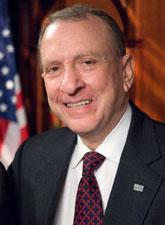 Sen. Arlen Specter (R-PA)
What it changes
1 change to H.R. 1751 · shown in the bill's text
Replaces the bill's text with a full substitute
Replaces the full textEverything after the enacting clauseIn H.R. 1751 · Referred in Senate
SECTION 1. SHORT TITLE.
This Act may be cited as the "
[struck: Secure Access to Justice and ]Court[struck: Protection ][inserted: Security Improvement ]Act of[struck: 2005][inserted: 2006]".Struck: SEC. 2. PENALTIES FOR INFLUENCING, IMPEDING, OR RETALIATING AGAINST JUDGES AND OTHER OFFICIALS BY THREATENING OR INJURING A FAMILY MEMBER.
Struck: Section 115 of title 18, United States Code, is amended--
Struck: (1) in each of subparagraphs (A) and (B) of subsection (a)(1), by inserting "federally funded public safety officer (as defined for the purposes of section 1123)" after "Federal law enforcement officer,";
Struck: (2) so that subsection (b) reads as follows:
Show 55 more struck paragraphsShow less
Struck: "(b)(1) Except as provided in paragraph (2), the punishment for an offense under this section is as follows:
Struck: "(A) The punishment for an assault in violation of this section is the same as that provided for a like offense under section 111.
Struck: "(B) The punishment for a kidnapping, attempted kidnapping, or conspiracy to kidnap in violation of this section is the same as provided for a like violation in section 1201.
Struck: "(C) The punishment for a murder, attempted murder, or conspiracy to murder in violation of this section is the same as provided for a like offense under section 1111, 1113, and 1117.
Struck: "(D) A threat made in violation of this section shall be punished by a fine under this title or imprisonment for not more than 10 years, or both.
Struck: "(2) If the victim of the offense under this section is an immediate family member of a United States judge, a Federal law enforcement officer (as defined for the purposes of section 1114) or of a federally funded public safety officer (as defined for the purposes of section 1123), in lieu of the punishments otherwise provided by paragraph (1), the punishments shall be as follows:
Struck: "(A) The punishment for an assault in violation of this section is as follows:
Struck: "(i) If the assault is a simple assault, a fine under this title or a term of imprisonment for not more than one year, or both.
Struck: "(ii) If the assault resulted in bodily injury (as defined in section 1365), a fine under this title and a term of imprisonment for not less than one year nor more than 10 years.
Struck: "(iii) If the assault resulted in substantial bodily injury (as defined in section 113), a fine under this title and a term of imprisonment for not less than 3 years nor more than 12 years.
Struck: "(iv) If the assault resulted in serious bodily injury (as defined in section 2119), a fine under this title and a term of imprisonment for not less than 10 years nor more than 30 years.
Struck: "(B) The punishment for a kidnapping, attempted kidnapping, or conspiracy to kidnap in violation of this section is a fine under this title and imprisonment for any term of years not less than 30, or for life.
Struck: "(C) The punishment for a murder, attempted murder, or conspiracy to murder in violation of this section is a fine under this title and imprisonment for any term of years not less than 30, or for life, or, if death results and the offender is prosecuted as a principal, the offender may be sentenced to death.
Struck: "(D) A threat made in violation of this section shall be punished by a fine under this title and imprisonment for not less than one year nor more than 10 years.
Struck: "(E) If a dangerous weapon was used during and in relation to the offense, the punishment shall include a term of imprisonment of 5 years in addition to that otherwise imposed under this paragraph.".
Struck: SEC. 3. PENALTIES FOR CERTAIN ASSAULTS.
Struck: (a) Inclusion of Federally Funded Public Safety Officers.--Section 111(a) of title 18, United States Code, is amended--
Struck: (1) in paragraph (1), by inserting "or a federally funded public safety officer (as defined in section 1123)" after "1114 of this title"; and
Struck: (2) in paragraph (2), by inserting "or a federally funded public safety officer (as defined in section 1123)" after "1114".
Struck: (b) Alternate Penalty Where Victim Is a United States Judge, a Federal Law Enforcement Officer, or Federally Funded Public Safety Officer.--Section 111 of title 18, United States Code, is amended by adding at the end the following:
Struck: "(c) Alternate Penalty Where Victim Is a United States Judge, a Federal Law Enforcement Officer, or Federally Funded Public Safety Officer.--(1) Except as provided in paragraph (2), if the offense is an assault and the victim of the offense under this section is a United States judge, a Federal law enforcement officer (as defined for the purposes of section 1114) or of a federally funded public safety officer (as defined for the purposes of section 1123), in lieu of the penalties otherwise set forth in this section, the offender shall be subject to a fine under this title and--
Struck: "(A) If the assault is a simple assault, a fine under this title or a term of imprisonment for not more than one year, or both.
Struck: "(B) if the assault resulted in bodily injury (as defined in section 1365), shall be imprisoned not less than one nor more than 10 years;
Struck: "(C) if the assault resulted in substantial bodily injury (as defined in section 113), shall be imprisoned not less than 3 nor more than 12 years; and
Struck: "(D) if the assault resulted in serious bodily injury (as defined in section 2119), shall be imprisoned not less than 10 nor more than 30 years.
Struck: "(2) If a dangerous weapon was used during and in relation to the offense, the punishment shall include a term of imprisonment of 5 years in addition to that otherwise imposed under this subsection.".
Struck: SEC. 4. PROTECTION OF FEDERALLY FUNDED PUBLIC SAFETY OFFICERS.
Struck: (a) Offense.--Chapter 51 of title 18, United States Code, is amended by adding at the end the following:
Struck: "Sec. 1123. Killing of federally funded public safety officers
Struck: "(a) Whoever kills, or attempts or conspires to kill, a federally funded public safety officer while that officer is engaged in official duties, or arising out of the performance of official duties, or kills a former federally funded public safety officer arising out of the performance of official duties, shall be punished by a fine under this title and imprisonment for any term of years not less than 30, or for life, or, if death results and the offender is prosecuted as a principal, may be sentenced to death.
Struck: "(b) As used in this section--
Struck: "(1) the term 'federally funded public safety officer' means a public safety officer for a public agency (including a court system, the National Guard of a State to the extent the personnel of that National Guard are not in Federal service, and the defense forces of a State authorized by section 109 of title 32) that receives Federal financial assistance, of an entity that is a State of the United States, the District of Columbia, the Commonwealth of Puerto Rico, the Virgin Islands of the United States, Guam, American Samoa, the Trust Territory of the Pacific Islands, the Commonwealth of the Northern Mariana Islands, or any territory or possession of the United States, an Indian tribe, or a unit of local government of that entity;
Struck: "(2) the term 'public safety officer' means an individual serving a public agency in an official capacity, as a judicial officer, as a law enforcement officer, as a firefighter, as a chaplain, or as a member of a rescue squad or ambulance crew;
Struck: "(3) the term 'judicial officer' means a judge or other officer or employee of a court, including prosecutors, court security, pretrial services officers, court reporters, and corrections, probation, and parole officers; and
Struck: "(4) the term 'firefighter' includes an individual serving as an official recognized or designated member of a legally organized volunteer fire department and an officially recognized or designated public employee member of a rescue squad or ambulance crew; and
Struck: "(5) the term 'law enforcement officer' means an individual involved in crime and juvenile delinquency control or reduction, or enforcement of the laws.".
Struck: (b) Clerical Amendment.--The table of sections at the beginning of chapter 51 of title 18, United States Code, is amended by adding at the end the following new item:
Struck: "1123. Killing of federally funded public safety officers.".
Struck: SEC. 5. GENERAL MODIFICATIONS OF FEDERAL MURDER CRIME AND RELATED CRIMES.
Struck: (a) Murder Amendments.--Section 1111 of title 18, United States Code, is amended in subsection (b), by inserting "not less than 30" after "any term of years".
Struck: (b) Manslaughter Amendments.--Section 1112(b) of title 18, United States Code, is amended--
Struck: (1) by striking "ten years" and inserting "20 years"; and
Struck: (2) by striking "six years" and inserting "10 years".
Struck: SEC. 6. MODIFICATION OF DEFINITION OF OFFENSE AND OF THE PENALTIES FOR, INFLUENCING OR INJURING OFFICER OR JUROR GENERALLY.
Struck: Section 1503 of title 18, United States Code, is amended--
Struck: (1) so that subsection (a) reads as follows:
Struck: "(a)(1) Whoever--
Struck: "(A) corruptly, or by threats of force or force, endeavors to influence, intimidate, or impede a juror or officer in a judicial proceeding in the discharge of that juror or officer's duty;
Struck: "(B) injures a juror or an officer in a judicial proceeding arising out of the performance of official duties as such juror or officer; or
Struck: "(C) corruptly, or by threats of force or force, obstructs, or impedes, or endeavors to influence, obstruct, or impede, the due administration of justice; or attempts or conspires to do so, shall be punished as provided in subsection (b).
Struck: "(2) As used in this section, the term 'juror or officer in a judicial proceeding' means a grand or petit juror, or other officer in or of any court of the United States, or an officer who may be serving at any examination or other proceeding before any United States magistrate judge or other committing magistrate."; and
Struck: (2) in subsection (b), by striking paragraphs (1) through (3) and inserting the following:
Struck: "(1) in the case of a killing, or an attempt or a conspiracy to kill, the punishment provided in section 1111, 1112, 1113, and 1117; and
Struck: "(2) in any other case, a fine under this title and imprisonment for not more than 30 years.".
Struck: SEC. 7. MODIFICATION OF TAMPERING WITH A WITNESS, VICTIM, OR AN INFORMANT OFFENSE.
Inserted: TITLE I--JUDICIAL SECURITY IMPROVEMENTS AND FUNDING
Inserted: SEC. 101. JUDICIAL BRANCH SECURITY REQUIREMENTS.
Inserted: (a) Ensuring Consultation With the Judiciary.--Section 566 of title 28, United States Code, is amended by adding at the end the following:
Inserted: "(i) The Director of the United States Marshals Service shall consult with the Judicial Conference of the United States on a continuing basis regarding the security requirements for the judicial branch of the United States Government, to ensure that the views of the Judicial Conference regarding the security requirements for the judicial branch of the Federal Government are taken into account when determining staffing levels, setting priorities for programs regarding judicial security, and allocating judicial security resources. In this paragraph, the term 'judicial security' includes the security of buildings housing the judiciary, the personal security of judicial officers, the assessment of threats made to judicial officers, and the protection of all other judicial personnel. The United States Marshals Service retains final authority regarding security requirements for the judicial branch of the Federal Government.".
Inserted: (b) Conforming Amendment.--Section 331 of title 28, United States Code, is amended by adding at the end the following:
Inserted: "The Judicial Conference shall consult with the Director of United States Marshals Service on a continuing basis regarding the security requirements for the judicial branch of the United States Government, to ensure that the views of the Judicial Conference regarding the security requirements for the judicial branch of the Federal Government are taken into account when determining staffing levels, setting priorities for programs regarding judicial security, and allocating judicial security resources. In this paragraph, the term 'judicial security' includes the security of buildings housing the judiciary, the personal security of judicial officers, the assessment of threats made to judicial officers, and the protection of all other judicial personnel. The United States Marshals Service retains final authority regarding security requirements for the judicial branch of the Federal Government.".
Inserted: SEC. 102. PROTECTION OF FAMILY MEMBERS.
Inserted: Section 105(b)(3) of the Ethics in Government Act of 1978 (5 U.S.C. App.) is amended--
Inserted: (1) in subparagraph (A), by inserting "or a family member of that individual" after "that individual"; and
Inserted: (2) in subparagraph (B)(i), by inserting "or a family member of that individual" after "the report".
Inserted: SEC. 103. FINANCIAL DISCLOSURE REPORTS.
Inserted: (a) Extension of Authority.--Section 105(b)(3) of the Ethics in Government Act of 1978 (5 U.S.C. App) is amended by striking "2005" each place that term appears and inserting "2009".
Show 44 more inserted paragraphsShow less
Inserted: (b) Report Contents.--Section 105(b)(3)(C) of the Ethics in Government Act of 1978 (5 U.S.C. App) is amended--
Inserted: (1) in clause (ii), by striking "and" at the end;
Inserted: (2) in clause (iii), by striking the period at the end and inserting a semicolon; and
Inserted: (3) by adding at the end the following:
Inserted: "(iv) the nature or type of information redacted;
Inserted: "(v) what steps or procedures are in place to ensure that sufficient information is available to litigants to determine if there is a conflict of interest;
Inserted: "(vi) principles used to guide implementation of redaction authority; and
Inserted: "(vii) any public complaints received in regards to redaction.".
Inserted: SEC. 104. PROTECTION OF UNITED STATES TAX COURT.
Inserted: (a) In General.--Section 566(a) of title 28, United States Code, is amended by striking "and the Court of International Trade" and inserting ", the Court of International Trade, and any other court, as provided by law".
Inserted: (b) Internal Revenue Code.--Section 7456(c) of the Internal Revenue Code of 1986 (relating to incidental powers of the Tax Court) is amended in the matter following paragraph (3), by striking the period at the end, and inserting "and may otherwise provide for the security of the Tax Court, including the personal protection of Tax Court judges, court officers, witnesses, and other threatened person in the interests of justice, where criminal intimidation impedes on the functioning of the judicial process or any other official proceeding.".
Inserted: SEC. 105. ADDITIONAL AMOUNTS FOR UNITED STATES MARSHALS SERVICE TO PROTECT THE JUDICIARY.
Inserted: In addition to any other amounts authorized to be appropriated for the United States Marshals Service, there are authorized to be appropriated for the United States Marshals Service to protect the judiciary, $20,000,000 for each of fiscal years 2006 through 2010 for--
Inserted: (1) hiring entry-level deputy marshals for providing judicial security;
Inserted: (2) hiring senior-level deputy marshals for investigating threats to the judiciary and providing protective details to members of the judiciary and assistant United States attorneys; and
Inserted: (3) for the Office of Protective Intelligence, for hiring senior-level deputy marshals, hiring program analysts, and providing secure computer systems.
Inserted: TITLE II--CRIMINAL LAW ENHANCEMENTS TO PROTECT JUDGES, FAMILY MEMBERS, AND WITNESSES
Inserted: SEC. 201. PROTECTIONS AGAINST MALICIOUS RECORDING OF FICTITIOUS LIENS AGAINST FEDERAL JUDGES AND FEDERAL LAW ENFORCEMENT OFFICERS.
Inserted: (a) Offense.--Chapter 73 of title 18, United States Code, is amended by adding at the end the following:
Inserted: "SEC. 1521. RETALIATING AGAINST A FEDERAL JUDGE OR FEDERAL LAW ENFORCEMENT OFFICER BY FALSE CLAIM OR SLANDER OF TITLE.
Inserted: "Whoever files, attempts to file, or conspires to file, in any public record or in any private record which is generally available to the public, any false lien or encumbrance against the real or personal property of an individual described in section 1114, on account of the performance of official duties by that individual, knowing or having reason to know that such lien or encumbrance is false or contains any materially false, fictitious, or fraudulent statement or representation, shall be fined under this title or imprisoned for not more than 10 years, or both.".
Inserted: (b) Clerical Amendment.--The chapter analysis for chapter 73 of title 18, United States Code, is amended by adding at the end the following new item:
Inserted: "1521. Retaliating against a Federal judge or Federal law enforcement officer by false claim or slander of title.".
Inserted: SEC. 202. PROTECTION OF INDIVIDUALS PERFORMING CERTAIN OFFICIAL DUTIES.
Inserted: (a) Offense.--Chapter 7 of title 18, United States Code, is amended by adding at the end the following:
Inserted: "Sec. 118. Protection of individuals performing certain official duties
Inserted: "(a) In General.--Whoever knowingly makes restricted personal information about a covered official, or a member of the immediate family of that covered official, publicly available--
Inserted: "(1) with the intent to threaten, intimidate, or incite the commission of a crime of violence against that covered official, or a member of the immediate family of that covered official; or
Inserted: "(2) with the intent and knowledge that the restricted personal information will be used to threaten, intimidate, or facilitate the commission of a crime of violence against that covered official, or a member of the immediate family of that covered official, shall be fined under this title, imprisoned not more than 5 years, or both.
Inserted: "(b) Definitions.--In this section--
Inserted: "(1) the term 'restricted personal information' means, with respect to an individual, the Social Security number, the home address, home phone number, mobile phone number, personal email, or home fax number of, and identifiable to, that individual;
Inserted: "(2) the term 'covered official' means--
Inserted: "(A) an individual designated in section 1114; or
Inserted: "(B) a grand or petit juror, witness, or other officer in or of, any court of the United States, or an officer who may be serving at any examination or other proceeding before any United States magistrate judge or other committing magistrate;
Inserted: "(3) the term 'crime of violence' has the meaning given the term in section 16; and
Inserted: "(4) the term 'immediate family' has the meaning given the term in section 115(c)(2).".
Inserted: (b) Clerical Amendment.--The table of sections at the beginning of chapter 7 of title 18, United States Code, is amended by adding at the end the following new item:
Inserted: "118. Protection of individuals performing certain official duties.".
Inserted: SEC. 203. PROHIBITION OF POSSESSION OF DANGEROUS WEAPONS IN FEDERAL COURT FACILITIES.
Inserted: Section 930(e)(1) of title 18, United States Code, is amended by inserting "or other dangerous weapon" after "firearm".
Inserted: SEC. 204. CLARIFICATION OF VENUE FOR RETALIATION AGAINST A WITNESS.
Inserted: Section 1513 of title 18, United States Code, is amended by adding at the end the following:
Inserted: "(g) A prosecution under this section may be brought in the district in which the official proceeding (whether pending, about to be instituted, or completed) was intended to be affected, or in which the conduct constituting the alleged offense occurred.".
Inserted: SEC. 205. MODIFICATION OF TAMPERING WITH A WITNESS, VICTIM, OR AN INFORMANT OFFENSE.
(a) Changes in Penalties.--Section 1512 of title 18, United States Code, is amended--
Struck: (1) in each of paragraphs (1) and (2) of subsection (a), insert "or conspires" after "attempts";
(
[struck: 2][inserted: 1]) so that subparagraph (A) of subsection (a)(3) reads as follows:"(A) in the case of a killing, the punishment provided in sections 1111 and 1112;";
(
[struck: 3][inserted: 2]) in subsection (a)(3)--(A) in the matter following clause (ii) of subparagraph (B) by striking "20 years" and inserting "30 years"
[struck: ]; and(B) in subparagraph (C), by striking "10 years" and inserting "20 years";
(
[struck: 4][inserted: 3]) in subsection (b), by striking "ten years" and inserting "[struck: 30][inserted: 20] years"; and(
[struck: 5][inserted: 4]) in subsection (d), by striking "one year" and inserting "[struck: 20][inserted: 3] years".SEC.
[struck: 8][inserted: 206]. MODIFICATION OF RETALIATION OFFENSE.Section 1513 of title 18, United States Code, is amended--
(1) in subsection (a)(1)
[struck: , by inserting "or conspires" after "attempts";][inserted: (B)--]Struck: (2) in subsection (a)(1)(B)--
(A) by inserting a comma after "probation"; and
(B) by striking the comma which immediately follows another comma;
(
[struck: 3][inserted: 2]) in subsection (a)(2)(B), by striking "20 years" and inserting "30 years";Struck: (4) in subsection (b), by striking "ten years" and inserting "30 years";
Struck: (5) in the first subsection (e), by striking "10 years" and inserting "30 years"; and
Struck: (6) by redesignating the second subsection (e) as subsection (f).
Struck: SEC. 9. INCLUSION OF INTIMIDATION AND RETALIATION AGAINST WITNESSES IN STATE PROSECUTIONS AS BASIS FOR FEDERAL PROSECUTION.
Show 19 more struck paragraphsShow less
Struck: Section 1952 of title 18, United States Code, is amended in subsection (b)(2), by inserting "intimidation of, or retaliation against, a witness, victim, juror, or informant," after "extortion, bribery,".
Struck: SEC. 10. CLARIFICATION OF VENUE FOR RETALIATION AGAINST A WITNESS.
Struck: Section 1513 of title 18, United States Code, is amended by adding at the end the following:
Struck: "(g) A prosecution under this section may be brought in the district in which the official proceeding (whether or not pending, about to be instituted or completed) was intended to be affected or was completed, or in which the conduct constituting the alleged offense occurred.".
Struck: SEC. 11. WITNESS PROTECTION GRANT PROGRAM.
Struck: Title I of the Omnibus Crime Control and Safe Streets Act of 1968 is amended by inserting after part BB (42 U.S.C. 3797j et seq.) the following new part:
Struck: "PART CC--WITNESS PROTECTION GRANTS
Struck: "SEC. 2811. PROGRAM AUTHORIZED.
Struck: "(a) In General.--From amounts made available to carry out this part, the Attorney General may make grants to States, units of local government, and Indian tribes to create and expand witness protection programs in order to prevent threats, intimidation, and retaliation against victims of, and witnesses to, crimes.
Struck: "(b) Uses of Funds.--Grants awarded under this part shall be--
Struck: "(1) distributed directly to the State, unit of local government, or Indian tribe; and
Struck: "(2) used for the creation and expansion of witness protection programs in the jurisdiction of the grantee.
Struck: "(c) Preferential Consideration.--In awarding grants under this part, the Attorney General may give preferential consideration, if feasible, to an application from a jurisdiction that--
Struck: "(1) has the greatest need for witness and victim protection programs;
Struck: "(2) has a serious violent crime problem in the jurisdiction;
Struck: "(3) has had, or is likely to have, instances of threats, intimidation, and retaliation against victims of, and witnesses to, crimes; and
Struck: "(4) shares an international border and faces a demonstrable threat from cross border crime and violence.
Struck: "(d) Authorization of Appropriations.--There are authorized to be appropriated to carry out this section $20,000,000 for each of fiscal years 2006 through 2010.".
Struck: SEC. 12. GRANTS TO STATES TO PROTECT WITNESSES AND VICTIMS OF CRIMES.
Inserted: (3) in subsection (b)--
Inserted: (A) in paragraph (2)--
Inserted: (i) by inserting a comma after "probation"; and
Inserted: (ii) by striking the comma which immediately follows another comma; and
Inserted: (B) in the matter following paragraph (2), by striking "ten years" and inserting "20 years"; and
Inserted: (4) by redesignating the second subsection (e) as subsection (f).
Inserted: SEC. 207. GENERAL MODIFICATIONS OF FEDERAL MURDER CRIME AND RELATED CRIMES.
Inserted: Section 1112(b) of title 18, United States Code, is amended--
Inserted: (1) by striking "ten years" and inserting "20 years"; and
Inserted: (2) by striking "six years" and inserting "10 years".
Inserted: TITLE III--PROTECTING STATE AND LOCAL JUDGES AND RELATED GRANT PROGRAMS
Inserted: SEC. 301. GRANTS TO STATES TO PROTECT WITNESSES AND VICTIMS OF CRIMES.
(a) In General.--Section 31702 of the Violent Crime Control and Law Enforcement Act of 1994 (42 U.S.C. 13862) is amended--
(1) in paragraph (3), by striking "and" at the end;
(2) in paragraph (4), by striking the period
[struck: at the end ]and inserting "; and"[struck: ]; and(3) by adding at the end the following:
"(5) [inserted: by a State, unit of local government, or Indian tribe ]to create and expand witness and victim protection programs to prevent threats, intimidation, and retaliation against victims of, and witnesses to, violent crimes.".
(b) Authorization of Appropriations.--Section 31707 of the Violent Crime Control and Law Enforcement Act of 1994 (42 U.S.C. 13867) is amended to read as follows:
"SEC. 31707. AUTHORIZATION OF APPROPRIATIONS.
"There are authorized to be appropriated $20,000,000 for each of the fiscal years 2006 through 2010 to carry out this subtitle.".
Struck: SEC. 13. JUDICIAL BRANCH SECURITY REQUIREMENTS.
Struck: (a) Ensuring Consultation and Coordination With the Administrative Office of the United States Courts.--Section 566 of title 28, United States Code, is amended by adding at the end the following:
Struck: "(i) The United States Marshals Service shall consult with the Administrative Office of the United States Courts on a continuing basis regarding the security requirements for the Judicial Branch, and inform the Administrative Office of the measures the Marshals Service intends to take to meet those requirements.".
Struck: (b) Conforming Amendment.--Section 604(a) of title 28, United States Code, is amended--
Show 22 more struck paragraphsShow less
Struck: (1) by redesignating existing paragraph (24) as paragraph (25);
Struck: (2) by striking "and" at the end of paragraph (23); and
Struck: (3) by inserting after paragraph (23) the following:
Struck: "(24) Consult with the United States Marshals Service on a continuing basis regarding the security requirements for the Judicial Branch; and".
Struck: SEC. 14. PROTECTIONS AGAINST MALICIOUS RECORDING OF FICTITIOUS LIENS AGAINST A FEDERAL EMPLOYEE.
Struck: (a) Offense.--Chapter 73 of title 18, United States Code, is amended by adding at the end the following:
Struck: "Sec. 1521. Retaliating against a Federal employee by false claim or slander of title "Whoever, with the intent to harass a person designated in section 1114 on account of the performance of official duties, files, in any public record or in any private record which is generally available to the public, any false lien or encumbrance against the real or personal property of that person, or attempts or conspires to do so, shall be fined under this title or imprisoned not more than 10 years, or both.".
Struck: (b) Clerical Amendment.--The table of sections at the beginning of chapter 73 of title 18, United States Code, is amended by adding at the end the following new item:
Struck: "1521. Retaliating against a Federal employee by false claim or slander of title.".
Struck: SEC. 15. PROHIBITION OF POSSESSION OF DANGEROUS WEAPONS IN FEDERAL COURT FACILITIES.
Struck: Section 930(e) of title 18, United States Code, is amended by inserting "or other dangerous weapon" after "firearm".
Struck: SEC. 16. REPEAL OF SUNSET PROVISION.
Struck: Section 105(b)(3) of the Ethics in Government Act of 1978 (5 U.S.C. App.) is amended by striking subparagraph (E).
Struck: SEC. 17. PROTECTION OF INDIVIDUALS PERFORMING CERTAIN FEDERAL AND OTHER FUNCTIONS.
Struck: (a) Offense.--Chapter 7 of title 18, United States Code, is amended by adding at the end the following:
Struck: "Sec. 117. Protection of individuals performing certain Federal and federally assisted functions
Struck: "(a) Whoever knowingly, and with intent to harm, intimidate, or retaliate against a covered official makes restricted personal information about that covered official publicly available through the Internet shall be fined under this title and imprisoned not more than 5 years, or both.
Struck: "(b) It is a defense to a prosecution under this section that the defendant is a provider of Internet services and did not knowingly participate in the offense.
Struck: "(c) As used in this section--
Struck: "(1) the term 'restricted personal information' means, with respect to an individual, the Social Security number, the home address, home phone number, mobile phone number, personal email, or home fax number of, and identifiable to, that individual; and
Struck: "(2) the term 'covered official' means--
Struck: "(A) an individual designated in section 1114;
Inserted: SEC. 302. ELIGIBILITY OF STATE COURTS FOR CERTAIN FEDERAL GRANTS.
[struck: "]([struck: B][inserted: a])[struck: a public safety officer (as that term is defined in section 1204 ][inserted: Correctional Options Grants.--Section 515 ]of the Omnibus Crime Control and Safe Streets Act of 1968[inserted: (42 U.S.C. 3762a])[struck: ; or][inserted: is amended--]Struck: "(C) a grand or petit juror, witness, or other officer in or of, any court of the United States, or an officer who may be serving at any examination or other proceeding before any United States magistrate judge or other committing magistrate.".
Struck: (b) Clerical Amendment.--The table of sections at the beginning of chapter 7 of title 18, United States Code, is amended by adding at the end the following new item:
Struck: "117. Protection of individuals performing certain Federal and federally assisted functions.".
Struck: SEC. 18. ELIGIBILITY OF COURTS TO APPLY DIRECTLY FOR LAW ENFORCEMENT DISCRETIONARY GRANTS AND REQUIREMENT THAT STATE AND LOCAL GOVERNMENTS CONSIDER COURTS WHEN APPLYING FOR GRANT FUNDS.
Show 13 more struck paragraphsShow less
Struck: (a) Courts Treated as Units of Local Governments for Purposes of Discretionary Grants.--Section 901 of the Omnibus Crime Control and Safe Streets Act of 1968 (42 U.S.C. 3791) is amended in subsection (a)(3)--
Struck: (1) by redesignating subparagraphs (C) and (D) as subparagraphs (D) and (E), respectively; and
Struck: (2) by inserting after subparagraph (B) the following new subparagraph:
Struck: "(C) the judicial branch of a State or of a unit of local government within the State or of an Indian tribe, for purposes of discretionary grants;".
Struck: (b) State and Local Governments to Consider Courts.--The Attorney General shall ensure that whenever a State or unit of local government or Indian tribe applies for a grant from the Department of Justice, the State, unit, or tribe demonstrate that, in developing the application and distributing funds, the State, unit, or tribe--
Struck: (1) considered the needs of the judicial branch of the State, unit, or tribe, as the case may be; and
Struck: (2) consulted with the chief judicial officer of the highest court of the State, unit, or tribe, as the case may be.
Struck: SEC. 19. REPORT ON SECURITY OF FEDERAL PROSECUTORS.
Struck: Not later than 90 days after the date of the enactment of this Act, the Attorney General shall submit to the Committee on the Judiciary of the House of Representatives and the Committee on the Judiciary of the Senate a report on the security of assistant United States attorneys and other Federal attorneys arising from the prosecution of terrorists, violent criminal gangs, drug traffickers, gun traffickers, white supremacists, and those who commit fraud and other white-collar offenses. The report shall describe each of the following:
Struck: (1) The number and nature of threats and assaults against attorneys handling those prosecutions and the reporting requirements and methods.
Struck: (2) The security measures that are in place to protect the attorneys who are handling those prosecutions, including measures such as threat assessments, response procedures, availability of security systems and other devices, firearms licensing (deputations), and other measures designed to protect the attorneys and their families.
Struck: (3) The Department of Justice's firearms deputation policies, including the number of attorneys deputized and the time between receipt of threat and completion of the deputation and training process.
Struck: (4) For each measure covered by paragraphs (1) through (3), when the report or measure was developed and who was responsible for developing and implementing the report or measure.
Inserted: (1) in subsection (a)--
Inserted: (A) in paragraph (2), by striking "and" at the end;
Inserted: (B) in paragraph (3), by striking the period and inserting "; and"; and
Inserted: (C) by adding at the end the following:
Inserted: "(4) grants to State courts to improve security for State and local court systems."; and
Inserted: (2) in subsection (b), by inserting after the period the following: "Priority shall be given to State court applicants under subsection (a)(4) that have the greatest demonstrated need to provide security in order to administer justice.".
Inserted: (b) Allocations.--Section 516(a) of the Omnibus Crime Control and Safe Streets Act of 1968 (42 U.S.C. 3762b) is amended by--
Inserted: (1) striking "80" and inserting "70";
Inserted: (2) striking "and 10" and inserting "10"; and
Inserted: (3) inserting before the period the following: ", and 10 percent for section 515(a)(4)".
Inserted: (c) State and Local Governments to Consider Courts.--The Attorney General may require, as appropriate, that whenever a State or unit of local government or Indian tribe applies for a grant from the Department of Justice, the State, unit, or tribe demonstrate that, in developing the application and distributing funds, the State, unit, or tribe--
Inserted: (1) considered the needs of the judicial branch of the State, unit, or tribe, as the case may be;
Show 29 more inserted paragraphsShow less
Inserted: (2) consulted with the chief judicial officer of the highest court of the State, unit, or tribe, as the case may be; and
Inserted: (3) consulted with the chief law enforcement officer of the law enforcement agency responsible for the security needs of the judicial branch of the State, unit, or tribe, as the case may be.
Inserted: (d) Armor Vests.--Section 2501 of title I of the Omnibus Crime Control and Safe Streets Act of 1968 (42 U.S.C. 3796ll) is amended--
Inserted: (1) in subsection (a), by inserting "and State and local court officers" after "tribal law enforcement officers"; and
Inserted: (2) in subsection (b), by inserting "State or local court," after "government,".
Inserted: TITLE IV--LAW ENFORCEMENT OFFICERS
Inserted: SEC. 401. AMENDMENTS TO LAW ENFORCEMENT OFFICER SAFETY PROVISIONS OF TITLE 18.
Inserted: (a) In General.--Section 926B of title 18, United States Code, is amended by adding at the end the following:
Inserted: "(f) For purposes of this section, a law enforcement officer of the Amtrak Police Department or a law enforcement or police officer of the executive branch of the Federal Government qualifies as an employee of a governmental agency who is authorized by law to engage in or supervise the prevention, detection, investigation, or prosecution of, or the incarceration of any person for, any violation of law, and has statutory powers of arrest.".
Inserted: (b) Retired Law Enforcement Officers.--Section 926C of title 18, United States Code, is amended--
Inserted: (1) in subsection (c)--
Inserted: (A) in paragraph (3)(A), by striking "was regularly employed as a law enforcement officer for an aggregate of 15 years or more" and inserting "served as a law enforcement officer for an aggregate of 10 years or more";
Inserted: (B) by striking paragraphs (4) and (5) and inserting the following:
Inserted: "(4) during the most recent 12-month period, has met, at the expense of the individual, the standards for qualification in firearms training for active law enforcement officers as set by the officer's former agency, the State in which the officer resides or a law enforcement agency within the State in which the officer resides;"; and
Inserted: (C) by redesignating paragraphs (6) and (7) as paragraphs (5) and (6), respectively;
Inserted: (2) in subsection (d)--
Inserted: (A) in paragraph (1), by striking "to meet the standards established by the agency for training and qualification for active law enforcement officers to carry a firearm of the same type as the concealed firearm; or" and inserting "to meet the active duty standards for qualification in firearms training as established by the agency to carry a firearm of the same type as the concealed firearm or"; and
Inserted: (B) in paragraph (2)(B), by striking "otherwise found by the State to meet the standards established by the State for training and qualification for active law enforcement officers to carry a firearm of the same type as the concealed firearm." and inserting "otherwise found by the State or a certified firearms instructor that is qualified to conduct a firearms qualification test for active duty officers within that State to have met--
Inserted: "(i) the active duty standards for qualification in firearms training as established by the State to carry a firearm of the same type as the concealed firearm; or
Inserted: "(ii) if the State has not established such standards, standards set by a law enforcement agency within that State to carry a firearm of the same type as the concealed firearm."; and
Inserted: (3) by adding at the end the following:
Inserted: "(f) In this section, the term 'service with a public agency as a law enforcement officer' includes service as a law enforcement officer of the Amtrak Police Department or as a law enforcement or police officer of the executive branch of the Federal Government.".
Inserted: SEC. 402. REPORT ON SECURITY OF FEDERAL PROSECUTORS.
Inserted: (a) In General.--Not later than 90 days after the date of enactment of this Act, the Attorney General shall submit to the Committee on the Judiciary of the Senate and the Committee on the Judiciary of the House of Representatives a report on the security of assistant United States attorneys and other Federal attorneys arising from the prosecution of terrorists, violent criminal gangs, drug traffickers, gun traffickers, white supremacists, those who commit fraud and other white-collar offenses, and other criminal cases.
Inserted: (b) Contents.--The report submitted under subsection (a) shall describe each of the following:
Inserted: (1) The number and nature of threats and assaults against attorneys handling prosecutions described in subsection (a) and the reporting requirements and methods.
Inserted: (2) The security measures that are in place to protect the attorneys who are handling prosecutions described in subsection (a), including threat assessments, response procedures, availability of security systems and other devices, firearms licensing (deputations), and other measures designed to protect the attorneys and their families.
Inserted: (3) The firearms deputation policies of the Department of Justice, including the number of attorneys deputized and the time between receipt of threat and completion of the deputation and training process.
Inserted: (4) For each requirement, measure, or policy described in paragraphs (1) through (3), when the requirement, measure, or policy was developed and who was responsible for developing and implementing the requirement, measure, or policy .
(5) The programs that are made available to the attorneys for personal security training, including training relating to limitations on public information disclosure, basic home security, firearms handling and safety, family safety, mail handling, counter-surveillance, and self-defense tactics.
(6) The measures that are taken to provide
[struck: the ]attorneys [inserted: handling prosecutions described in subsection (a) ]with secure parking facilities, and how priorities for such facilities are established--(A) among Federal employees within the facility;
(B) among Department of Justice employees within the facility; and
(C) among attorneys within the facility.
(7) The frequency
[struck: such ]attorneys [inserted: handling prosecutions described in subsection (a) ]are called upon to work beyond standard work hours and the security measures provided to protect attorneys at such times during travel between office and available parking facilities.(8) With respect to attorneys who are licensed under State laws to carry firearms, the
[struck: Department][inserted: policy] of[struck: Justice's policy ][inserted: the Department of Justice ]as to--(A) carrying the firearm between available parking and office buildings;
(B) securing the weapon at the office buildings; and
(C) equipment and training provided to facilitate safe storage at Department of Justice facilities.
(9) The offices in the Department of Justice that are responsible for ensuring the security of
[struck: the ]attorneys[inserted: handling prosecutions described in subsection (a)], the organization and staffing of the offices, and the manner in which the offices coordinate with offices in specific districts.(10) The role, if any, that the United States Marshals Service or any other Department of Justice component plays in protecting, or providing security services or training for,
[struck: the ]attorneys[inserted: handling prosecutions described in subsection (a)].Struck: SEC. 20. FLIGHT TO AVOID PROSECUTION FOR KILLING PEACE OFFICERS.
Struck: (a) Flight.--Chapter 49 of title 18, United States Code, is amended by adding at the end the following:
Struck: "Sec. 1075. Flight to avoid prosecution for killing peace officers "Whoever moves or travels in interstate or foreign commerce with intent to avoid prosecution, or custody or confinement after conviction, under the laws of the place from which he flees or under section 1114 or 1123, for a crime consisting of the killing, an attempted killing, or a conspiracy to kill, an individual involved in crime and juvenile delinquency control or reduction, or enforcement of the laws or for a crime punishable by section 1114 or 1123, shall be fined under this title and imprisoned, in addition to any other imprisonment for the underlying offense, for any term of years not less than 10.".
Struck: (b) Clerical Amendment.--The table of sections at the beginning of chapter 49 of title 18, United States Code, is amended by adding at the end the following new item:
Show 104 more struck paragraphsShow less
Struck: "1075. Flight to avoid prosecution for killing peace officers.".
Struck: SEC. 21. SPECIAL PENALTIES FOR MURDER, KIDNAPPING, AND RELATED CRIMES AGAINST FEDERAL JUDGES AND FEDERAL LAW ENFORCEMENT OFFICERS.
Struck: (a) Murder.--Section 1114 of title 18, United States Code, is amended--
Struck: (1) by inserting "(a)" before "Whoever"; and
Struck: (2) by adding at the end the following:
Struck: "(b) If the victim of a murder punishable under this section is a United States judge (as defined in section 115) or a Federal law enforcement officer (as defined in 115) the offender shall be punished by a fine under this title and imprisonment for any term of years not less than 30, or for life, or, if death results, may be sentenced to death.".
Struck: (b) Kidnapping.--Section 1201(a) of title 18, United States Code, is amended by adding at the end the following: "If the victim of the offense punishable under this subsection is a United States judge (as defined in section 115) or a Federal law enforcement officer (as defined in 115) the offender shall be punished by a fine under this title and imprisonment for any term of years not less than 30, or for life, or, if death results, may be sentenced to death.".
Struck: SEC. 22. MEDIA COVERAGE OF COURT PROCEEDINGS.
Struck: (a) Findings.--The Congress makes the following findings:
Struck: (1) The right of the people of the United States to freedom of speech, particularly as it relates to comment on governmental activities, as protected by the first amendment to the Constitution, cannot be meaningfully exercised without the ability of the public to obtain facts and information about the Government upon which to base their judgments regarding important issues and events. As the United States Supreme Court articulated in Craig v. Harney, 331 U.S. 367 (1947), "A trial is a public event. What transpires in the court room is public property.".
Struck: (2) The right of the people of the United States to a free press, with the ability to report on all aspects of the conduct of the business of government, as protected by the first amendment to the Constitution, cannot be meaningfully exercised without the ability of the news media to gather facts and information freely for dissemination to the public.
Struck: (3) The right of the people of the United States to petition the Government to redress grievances, particularly as it relates to the manner in which the Government exercises its legislative, executive, and judicial powers, as protected by the first amendment to the Constitution, cannot be meaningfully exercised without the availability to the public of information about how the affairs of government are being conducted. As the Supreme Court noted in Richmond Newspapers, Inc. v. Commonwealth of Virginia (1980), "People in an open society do not demand infallibility from their institutions, but it is difficult for them to accept what they are prohibited from observing.".
Struck: (4) In the twenty-first century, the people of the United States obtain information regarding judicial matters involving the Constitution, civil rights, and other important legal subjects principally through the print and electronic media. Television, in particular, provides a degree of public access to courtroom proceedings that more closely approximates the ideal of actual physical presence than newspaper coverage or still photography.
Struck: (5) Providing statutory authority for the courts of the United States to exercise their discretion in permitting televised coverage of courtroom proceedings would enhance significantly the access of the people to the Federal judiciary.
Struck: (6) Inasmuch as the first amendment to the Constitution prevents Congress from abridging the ability of the people to exercise their inherent rights to freedom of speech, to freedom of the press, and to petition the Government for a redress of grievances, it is good public policy for the Congress affirmatively to facilitate the ability of the people to exercise those rights.
Struck: (7) The granting of such authority would assist in the implementation of the constitutional guarantee of public trials in criminal cases, as provided by the sixth amendment to the Constitution. As the Supreme Court stated in In re Oliver (1948), "Whatever other benefits the guarantee to an accused that his trial be conducted in public may confer upon our society, the guarantee has always been recognized as a safeguard against any attempt to employ our courts as instruments of persecution. The knowledge that every criminal trial is subject to contemporaneous review in the forum of public opinion is an effective restraint on possible abuse of judicial power.".
Struck: (b) Authority of Presiding Judge to Allow Media Coverage of Court Proceedings.--
Struck: (1) Authority of appellate courts.--Notwithstanding any other provision of law, the presiding judge of an appellate court of the United States may, in his or her discretion, permit the photographing, electronic recording, broadcasting, or televising to the public of court proceedings over which that judge presides.
Struck: (2) Authority of district courts.--
Struck: (A) In general.--Notwithstanding any other provision of law, any presiding judge of a district court of the United States may, in his or her discretion, permit the photographing, electronic recording, broadcasting, or televising to the public of court proceedings over which that judge presides.
Struck: (B) Obscuring of witnesses and jurors.--(i) Upon the request of any witness (other than a party) or a juror in a trial proceeding, the court shall order the face and voice of the witness or juror (as the case may be) to be disguised or otherwise obscured in such manner as to render the witness or juror unrecognizable to the broadcast audience of the trial proceeding.
Struck: (ii) The presiding judge in a trial proceeding shall inform--
Struck: (I) each witness who is not a party that the witness has the right to request that his or her image and voice be obscured during the witness' testimony; and
Struck: (II) each juror that the juror has the right to request that his or her image be obscured during the trial proceeding.
Struck: (3) Advisory guidelines.--The Judicial Conference of the United States is authorized to promulgate advisory guidelines to which a presiding judge, in his or her discretion, may refer in making decisions with respect to the management and administration of photographing, recording, broadcasting, or televising described in paragraphs (1) and (2).
Struck: (c) Definitions.--In this section:
Struck: (1) Presiding judge.--The term "presiding judge" means the judge presiding over the court proceeding concerned. In proceedings in which more than one judge participates, the presiding judge shall be the senior active judge so participating or, in the case of a circuit court of appeals, the senior active circuit judge so participating, except that--
Struck: (A) in en banc sittings of any United States circuit court of appeals, the presiding judge shall be the chief judge of the circuit whenever the chief judge participates; and
Struck: (B) in en banc sittings of the Supreme Court of the United States, the presiding judge shall be the Chief Justice whenever the Chief Justice participates.
Struck: (2) Appellate court of the united states.--The term "appellate court of the United States" means any United States circuit court of appeals and the Supreme Court of the United States.
Struck: (d) Sunset.--The authority under subsection (b)(2) shall terminate on the date that is 3 years after the date of the enactment of this Act.
Struck: SEC. 23. FUNDING FOR STATE COURTS TO ASSESS AND ENHANCE COURT SECURITY AND EMERGENCY PREPAREDNESS.
Struck: (a) In General.--The Attorney General, through the Office of Justice Programs, shall make grants under this section to the highest State courts in States participating in the program, for the purpose of enabling such courts--
Struck: (1) to conduct assessments focused on the essential elements for effective courtroom safety and security planning; and
Struck: (2) to implement changes deemed necessary as a result of the assessments.
Struck: (b) Essential Elements.--As used in subsection (a)(1), the essential elements include, but are not limited to--
Struck: (1) operational security and standard operating procedures;
Struck: (2) facility security planning and self-audit surveys of court facilities;
Struck: (3) emergency preparedness and response and continuity of operations;
Struck: (4) disaster recovery and the essential elements of a plan;
Struck: (5) threat assessment;
Struck: (6) incident reporting;
Struck: (7) security equipment;
Struck: (8) developing resources and building partnerships; and
Struck: (9) new courthouse design.
Struck: (c) Applications.--To be eligible for a grant under this section, a highest State court shall submit to the Attorney General an application at such time, in such form, and including such information and assurances as the Attorney General shall require.
Struck: (d) Authorization of Appropriations.--There are authorized to be appropriated to carry out this section $20,000,000 for each of fiscal years 2006 through 2010.
Struck: SEC. 24. ADDITIONAL AMOUNTS FOR UNITED STATES MARSHALS SERVICE TO PROTECT THE JUDICIARY.
Struck: In addition to any other amounts authorized to be appropriated for the United States Marshals Service, there are authorized to be appropriated for the United States Marshals Service to protect the judiciary, $20,000,000 for each of fiscal years 2006 through 2010 for--
Struck: (1) hiring entry-level deputy marshals for providing judicial security;
Struck: (2) hiring senior-level deputy marshals for investigating threats to the judiciary and providing protective details to members of the judiciary and Assistant United States Attorneys; and
Struck: (3) for the Office of Protective Intelligence, for hiring senior-level deputy marshals, hiring program analysts, and providing secure computer systems.
Struck: SEC. 25. GRANTS TO STATES FOR THREAT ASSESSMENT DATABASES.
Struck: (a) In General.--The Attorney General, through the Office of Justice Programs, shall make grants under this section to the highest State courts in States participating in the program, for the purpose of enabling such courts to establish and maintain a threat assessment database described in subsection (b).
Struck: (b) Database.--For purposes of subsection (a), a threat assessment database is a database through which a State can--
Struck: (1) analyze trends and patterns in domestic terrorism and crime;
Struck: (2) project the probabilities that specific acts of domestic terrorism or crime will occur; and
Struck: (3) develop measures and procedures that can effectively reduce the probabilities that those acts will occur.
Struck: (c) Core Elements.--The Attorney General shall define a core set of data elements to be used by each database funded by this section so that the information in the database can be effectively shared with other States and with the Department of Justice.
Struck: (d) Authorization of Appropriations.--There are authorized to be appropriated to carry out this section such sums as may be necessary for each of fiscal years 2006 through 2009.
Struck: SEC. 26. GRANTS FOR YOUNG WITNESS ASSISTANCE.
Struck: (a) Definitions.--For purposes of this section:
Struck: (1) Director.--The term "Director" means the Director of the Bureau of Justice Assistance.
Struck: (2) Juvenile.--The term "juvenile" means an individual who is 17 years of age or younger.
Struck: (3) Young adult.--The term "young adult" means an individual who is between the ages of 18 and 21.
Struck: (4) State.--The term "State" means any State of the United States, the District of Columbia, the Commonwealth of Puerto Rico, the Virgin Islands, American Samoa, Guam, and the Northern Mariana Islands.
Struck: (b) Program Authorization.--The Director may make grants to State and local prosecutors and law enforcement agencies in support of juvenile and young adult witness assistance programs, including State and local prosecutors and law enforcement agencies that have existing juvenile and adult witness assistance programs.
Struck: (c) Eligibility.--To be eligible to receive a grant under this section, State and local prosecutors and law enforcement officials shall--
Struck: (1) submit an application to the Director in such form and containing such information as the Director may reasonably require; and
Struck: (2) give assurances that each applicant has developed, or is in the process of developing, a witness assistance program that specifically targets the unique needs of juvenile and young adult witnesses and their families.
Struck: (d) Use of Funds.--Grants made available under this section may be used--
Struck: (1) to assess the needs of juvenile and young adult witnesses;
Struck: (2) to develop appropriate program goals and objectives; and
Struck: (3) to develop and administer a variety of witness assistance services, which includes--
Struck: (A) counseling services to young witnesses dealing with trauma associated in witnessing a violent crime;
Struck: (B) pre- and post-trial assistance for the youth and their family;
Struck: (C) providing education services if the child is removed from or changes their school for safety concerns;
Struck: (D) support for young witnesses who are trying to leave a criminal gang and information to prevent initial gang recruitment.
Struck: (E) protective services for young witnesses and their families when a serious threat of harm from the perpetrators or their associates is made; and
Struck: (F) community outreach and school-based initiatives that stimulate and maintain public awareness and support.
Struck: (e) Reports.--
Struck: (1) Report.--State and local prosecutors and law enforcement agencies that receive funds under this section shall submit to the Director a report not later than May 1st of each year in which grants are made available under this section. Reports shall describe progress achieved in carrying out the purpose of this section.
Struck: (2) Report to congress.--The Director shall submit to Congress a report by July 1st of each year which contains a detailed statement regarding grant awards, activities of grant recipients, a compilation of statistical information submitted by applicants, and an evaluation of programs established under this section.
Struck: (f) Authorization of Appropriations.--There are authorized to be appropriated to carry out this section $3,000,000 for each of fiscal years 2006, 2007, and 2008.
Struck: SEC. 27. STATE AND LOCAL COURT ELIGIBILITY.
Struck: (a) Bureau Grants.--Section 302(c)(1) of title I of the Omnibus Crime Control and Safe Streets Act of 1968 (42 U.S.C. 3732(c)(1)) is amended by inserting "State and local courts," after "contracts with".
Struck: (b) Edward Bryne Grants.--
Struck: (1) Formula grants.--Section 501 of title I of the Omnibus Crime Control and Safe Streets Act of 1968 (42 U.S.C. 3751) is amended--
Struck: (A) in subsection (a), by striking "and units of local government" and inserting ", units of local government, and State and local courts"; and
Struck: (B) in subsection (b), by inserting ", State and local courts," after "use by States".
Struck: (2) Discretionary grants.--Section 510(a) of title I of the Omnibus Crime Control and Safe Streets Act of 1968 (42 U.S.C. 3760(a)) is amended by inserting ", State and local courts," after "private agencies,".
Struck: (c) Armor Vests.--Section 2501 of title I of the Omnibus Crime Control and Safe Streets Act of 1968 (3796ii) is amended--
Struck: (1) in subsection (a), by inserting "State and local court," after "local,"; and
Struck: (2) in subsection (b), by inserting "State and local court" after "government,".
Struck: (d) Child Abuse Prevention.--Section 105 of the Child Abuse Prevention and Treatment Act (42 U.S.C. 5106) is amended--
Struck: (1) in the section heading, by inserting "state and local courts," after "agencies";
Struck: (2) in subsection (a), by inserting "and State and local courts" after "such agencies or organizations)"; and
Struck: (3) in subsection (a)(1), by inserting "and State and local courts" after "organizations".
Struck: SEC. 28. AUTHORITY OF FEDERAL JUDGES AND PROSECUTORS TO CARRY FIREARMS.
Struck: (a) In General.--Chapter 203 of title 18, United States Code, is amended by inserting after section 3053 the following:
Struck: "Sec. 3054. Authority of Federal judges and prosecutors to carry firearms "Any justice of the United States or judge of the United States (as defined in section 451 of title 28), any judge of a court created under article I of the United States Constitution, any bankruptcy judge, any magistrate judge, any United States attorney, and any other officer or employee of the Department of Justice whose duties include representing the United States in a court of law, may carry firearms, subject to such regulations as the Attorney General shall prescribe. Such regulations shall provide for training and regular certification in the use of firearms and shall, with respect to justices, judges, bankruptcy judges, and magistrate judges, be prescribed after consultation with the Judicial Conference of the United States.".
Struck: (b) Clerical Amendment.--The table of sections for such chapter is amended by inserting after the item relating to section 3053 the following:
Struck: "3054. Authority of Federal judges and prosecutors to carry firearms.".
Struck: Passed the House of Representatives November 9, 2005.
Inserted: SEC. 403. GOVERNMENT ACCOUNTABILITY OFFICE STUDY OF QUALIFIED ACTIVE AND RETIRED LAW ENFORCEMENT OFFICERS.
Inserted: (a) In General.--Not later than 6 months after the date of the enactment of this Act, the Comptroller General of the United States shall begin a study of the number of active and retired law enforcement officers carrying concealed firearms pursuant to sections 926B and 926C of title 18, United States Code.
Inserted: (b) Contents.--The study shall determine and analyze the following:
Inserted: (1) The number of qualified law enforcement officers in each State or any political subdivision thereof carrying a concealed firearm under section 926B of title 18, United States Code.
Inserted: (2) The number of qualified retired law enforcement officers in each State or any political subdivision thereof carrying a concealed firearm under section 926C of title 18, United States Code.
Inserted: (3) The number of qualified retired law enforcement officers with less than 15 years of service carrying a concealed firearm.
Inserted: (4) The number of qualified retired law enforcement officers obtaining certification from a certified firearms instructor that is qualified to conduct a firearms qualification test for active duty officers within that State to have met the active duty standards for qualification in firearms training as established by the State or, if the State has not established such standards, standards set by a law enforcement agency for training and qualification for active duty law enforcement officers within that State, to carry a firearm of the same type as the concealed firearm. The report shall also include detailed information on the differences between the certification requirements set forth by each State and each law enforcement agency within that State authorized to issue certifications for concealed weapons under sections 926B and 926C of title 18, United States Code.
Inserted: (5) A detailed analysis and comparison of the criteria used in each State or any political subdivision thereof to determine whether an individual is qualified to carry a concealed weapon under section 926C(c)(5) of title 18, United States Code.
Inserted: (c) Opportunity for Public Comment.--The Comptroller General shall provide an opportunity for public comment on the proposed scope and methodology for the report required by subsections (a) and (b), making such modifications in response to such comments as he deems appropriate.
Inserted: (d) Report.--Not later than 15 months after the date of the enactment of this Act, the Comptroller General shall complete the study under this section and submit a report to the Committees on the Judiciary the Senate and the Committee on the Judiciary of the House of Representatives regarding the findings of the study.
Inserted: TITLE V--MISCELLANEOUS PROVISIONS
Inserted: SEC. 501. EXPANDED PROCUREMENT AUTHORITY FOR THE UNITED STATES SENTENCING COMMISSION.
Show 44 more inserted paragraphsShow less
Inserted: (a) In General.--Section 995 of title 28, United States Code, is amended by adding at the end the following:
Inserted: "(f) The Commission may--
Inserted: "(1) use available funds to enter into contracts for the acquisition of severable services for a period that begins in 1 fiscal year and ends in the next fiscal year, to the same extent as executive agencies may enter into such contracts under the authority of section 303L of the Federal Property and Administrative Services Act of 1949 (41 U.S.C. 253l);
Inserted: "(2) enter into multi-year contracts for the acquisition of property or services to the same extent as executive agencies may enter into such contracts under the authority of section 304B of the Federal Property and Administrative Services Act of 1949 (41 U.S.C. 254c); and
Inserted: "(3) make advance, partial, progress, or other payments under contracts for property or services to the same extent as executive agencies may make such payments under the authority of section 305 of the Federal Property and Administrative Services Act of 1949 (41 U.S.C. 255).".
Inserted: (b) Sunset.--The amendment made by subsection (a) shall cease to have force and effect on September 30, 2010.
Inserted: SEC. 502. BANKRUPTCY, MAGISTRATE, AND TERRITORIAL JUDGES LIFE INSURANCE.
Inserted: (a) In General.--Section 604(a)(5) of title 28, United States Code, is amended by inserting after "hold office during good behavior," the following: "bankruptcy judges appointed under section 152 of this title, magistrate judges appointed under section 631 of this title, and territorial district court judges appointed under section 24 of the Organic Act of Guam (48 U.S.C. 1424b), section 1(b) of the Act of November 8, 1877 (48 U.S.C. 1821), or section 24(a) of the Revised Organic Act of the Virgin Islands (48 U.S.C. 1614(a)),".
Inserted: (b) Effective Date.--The amendment made by subsection (a) shall apply with respect to any payment made on or after the first day of the first applicable pay period beginning on or after the date of enactment of this Act.
Inserted: SEC. 503. ASSIGNMENT OF JUDGES.
Inserted: Section 296 of title 28, United States Code, is amended by inserting at the end of the second undesignated paragraph the following new sentence: "However, a judge who has retired from regular active service under section 371(b) of this title, when designated and assigned to the court to which such judge was appointed, shall have all the powers of a judge of that court, including participation in appointment of court officers and magistrates, rulemaking, governance, and administrative matters.".
Inserted: SEC. 504. SENIOR JUDGE PARTICIPATION IN THE SELECTION OF MAGITRATES.
Inserted: Section 631(a) of title 28, United States Code, is amended by striking "Northern Mariana Islands" the first place it appears and inserting "Northern Mariana Islands (including any judge in regular active service and any judge who has retired from regular active service under section 371(b) of this title, when designated and assigned to the court to which such judge was appointed)".
Inserted: SEC. 505. REAUTHORIZATION OF THE ETHICS IN GOVERNMENT ACT.
Inserted: Section 405 of the Ethics in Government Act of 1978 (5 U.S.C. App.) is amended by striking "2006" and inserting "2011".
Inserted: SEC. 506. ELDERLY NONVIOLENT OFFENDER PILOT PROGRAM.
Inserted: (a) Program Established.--
Inserted: (1) In general.--Notwithstanding section 3624 of title 18, United States Code, or any other provision of law, the Director of the Bureau of Prisons shall conduct a pilot program to determine the effectiveness of removing each eligible elderly offender from a Bureau of Prison facility and placing such offender on home detention until the date on which the term of imprisonment to which the offender was sentenced expires.
Inserted: (2) Timing of placement in home detention.--
Inserted: (A) In general.--In carrying out the pilot program under paragraph (1), the Director of the Bureau of Prisons shall--
Inserted: (i) in the case of an offender who is determined to be an eligible elderly offender on or before the date specified in subparagraph (B), place such offender on home detention not later than 180 days after the date of the enactment of this Act; and
Inserted: (ii) in the case of an offender who is determined to be an eligible elderly offender after the date specified in subparagraph (B) and before the date that is 3 years and 91 days after the date of the enactment of this Act, place such offender on home detention not later than 90 days after the date of such determination.
Inserted: (B) Date specified.--For purposes of subparagraph (A), the date specified in this subparagraph is the date that is 90 days after the date of the enactment of this Act.
Inserted: (3) Violation of terms of home detention.--A violation by an eligible elderly offender of the terms of the home detention involved, including the commission of another Federal, State, or local crime, shall result in the removal of the offender from home detention and the return of the offender to the form of custody in which the offender was imprisoned immediately before placement on home detention under paragraph (1).
Inserted: (b) Scope of Pilot Program.--
Inserted: (1) Participating designated facilities.--The pilot program under subsection (a) shall be conducted through at least 1 Federal facility designated by the Director of the Bureau of Prisons as appropriate for the pilot program.
Inserted: (2) Duration.--The pilot program shall be conducted during each of fiscal years 2007 and 2008.
Inserted: (c) Program Evaluation.--
Inserted: (1) In general.--The Director of the Bureau of Prisons shall contract with an independent organization to monitor and evaluate the progress of each eligible elderly offender placed on home detention under subsection (a)(1) for the period such offender is on home detention during the duration described in subsection (b)(2).
Inserted: (2) Annual report.--The organization described in paragraph (1) shall annually submit to the Director and to Congress a report on the pilot program under subsection (a)(1), which shall include--
Inserted: (A) an evaluation of the effectiveness of the pilot program in providing a successful transition to eligible elderly offenders from incarceration to the community, including data relating to the recidivism rates for those offenders; and
Inserted: (B) the cost savings to the Federal Government resulting from the early removal of such offenders from incarceration.
Inserted: (3) Program adjustments.--Upon review of the report submitted under paragraph (2), the Director shall submit recommendations to Congress for adjustments to the pilot program, including, its expansion to additional facilities.
Inserted: (d) Definitions.--In this section:
Inserted: (1) Eligible elderly offender.--The term "eligible elderly offender" means an offender in the custody of the Bureau of Prisons who--
Inserted: (A) is not less than 60 years of age;
Inserted: (B) is serving a term of imprisonment after conviction for an offense other than a crime of violence and has served the greater of 10 years or \1/2\ of the term of imprisonment;
Inserted: (C) has not been convicted in the past of any Federal or State crime of violence;
Inserted: (D) has not been determined by the Bureau of Prisons, on the basis of information the Bureau uses to make custody classifications, and in the sole discretion of the Bureau, to have a history of violence;
Inserted: (E) has not escaped, or attempted to escape, from the Bureau of Prisons facility; and
Inserted: (F) has not been determined by the Director, pursuant to the disciplinary system of the Bureau of Prisons, to have committed an infraction involving an act of violence.
Inserted: (2) Home detention.--The term "home detention" has the same meaning given the term in the Federal Sentencing Guidelines, and includes detention in a nursing home or other residential long-term care facility.
Inserted: (3) Term of imprisonment.--The term "term of imprisonment" includes multiple terms of imprisonment ordered to run consecutively or concurrently, which shall be treated as a single, aggregate term of imprisonment for purposes of this section.
Inserted: (e) Authorization of Appropriations.--There are authorized to be appropriated to carry out this section $5,000,000 for each of fiscal years 2007 and 2008.
Original wording
Strike all after the enacting clause and insert the following:
Read automatically from the Congressional Record. Check the original before relying on it.
As printed
SA 5217. Mr. FRIST (for Mr. Specter (for himself, Mr. Leahy, Mr. Reid, Mr. Cornyn, and Mr. Durbin)) proposed an amendment to the bill H.R. 1751, to amend title 18, United States Code, to protect judges, prosecutors, witnesses, victims, and their family members, and for other purposes; as follows:
Strike all after the enacting clause and insert the following:
SECTION 1. SHORT TITLE.
This Act may be cited as the “Court Security Improvement Act of 2006”.
TITLE I--JUDICIAL SECURITY IMPROVEMENTS AND FUNDING
SEC. 101. JUDICIAL BRANCH SECURITY REQUIREMENTS.
(a) Ensuring Consultation With the Judiciary.--Section 566 of title 28, United States Code, is amended by adding at the end the following:
“(i) The Director of the United States Marshals Service shall consult with the Judicial Conference of the United States on a continuing basis regarding the security requirements for the judicial branch of the United States Government, to ensure that the views of the Judicial Conference regarding the security requirements for the judicial branch of the Federal Government are taken into account when determining staffing levels, setting priorities for programs regarding judicial security, and allocating judicial security resources. In this paragraph, the term ‘judicial security' includes the security of buildings housing the judiciary, the personal security of judicial officers, the assessment of threats made to judicial officers, and the protection of all other judicial personnel. The United States Marshals Service retains final authority regarding security requirements for the judicial branch of the Federal Government.”.
(b) Conforming Amendment.--Section 331 of title 28, United States Code, is amended by adding at the end the following:
“The Judicial Conference shall consult with the Director of United States Marshals Service on a continuing basis regarding the security requirements for the judicial branch of the United States Government, to ensure that the views of the Judicial Conference regarding the security requirements for the judicial branch of the Federal Government are taken into account when determining staffing levels, setting priorities for programs regarding judicial security, and allocating judicial security resources. In this paragraph, the term ‘judicial security' includes the security of buildings housing the judiciary, the personal security of judicial officers, the assessment of threats made to judicial officers, and the protection of all other judicial personnel. The United States Marshals Service retains final authority regarding security requirements for the judicial branch of the Federal Government.”.
SEC. 102. PROTECTION OF FAMILY MEMBERS.
Section 105(b)(3) of the Ethics in Government Act of 1978 (5 U.S.C. App.) is amended--
(1) in subparagraph (A), by inserting “or a family member of that individual” after “that individual”; and
(2) in subparagraph (B)(i), by inserting “or a family member of that individual” after “the report”.
SEC. 103. FINANCIAL DISCLOSURE REPORTS.
(a) Extension of Authority.--Section 105(b)(3) of the Ethics in Government Act of 1978 (5 U.S.C. App) is amended by striking “2005” each place that term appears and inserting “2009”.
(b) Report Contents.--Section 105(b)(3)(C) of the Ethics in Government Act of 1978 (5 U.S.C. App) is amended--
(1) in clause (ii), by striking “and” at the end;
(2) in clause (iii), by striking the period at the end and inserting a semicolon; and
(3) by adding at the end the following:
“(iv) the nature or type of information redacted;
“(v) what steps or procedures are in place to ensure that sufficient information is available to litigants to determine if there is a conflict of interest;
“(vi) principles used to guide implementation of redaction authority; and
“(vii) any public complaints received in regards to redaction.”.
SEC. 104. PROTECTION OF UNITED STATES TAX COURT.
(a) In General.--Section 566(a) of title 28, United States Code, is amended by striking “and the Court of International Trade” and inserting “, the Court of International Trade, and any other court, as provided by law”.
(b) Internal Revenue Code.--Section 7456(c) of the Internal Revenue Code of 1986 (relating to incidental powers of the Tax Court) is amended in the matter following paragraph (3), by striking the period at the end, and inserting “and may otherwise provide for the security of the Tax Court, including the personal protection of Tax Court judges, court officers, witnesses, and other threatened person in the interests of justice, where criminal intimidation impedes on the functioning of the judicial process or any other official proceeding.”.
SEC. 105. ADDITIONAL AMOUNTS FOR UNITED STATES MARSHALS SERVICE TO PROTECT THE JUDICIARY.
In addition to any other amounts authorized to be appropriated for the United States Marshals Service, there are authorized to be appropriated for the United States Marshals Service to protect the judiciary, $20,000,000 for each of fiscal years 2006 through 2010 for--
(1) hiring entry-level deputy marshals for providing judicial security;
(2) hiring senior-level deputy marshals for investigating threats to the judiciary and providing protective details to members of the judiciary and assistant United States attorneys; and
(3) for the Office of Protective Intelligence, for hiring senior-level deputy marshals, hiring program analysts, and providing secure computer systems.
TITLE II--CRIMINAL LAW ENHANCEMENTS TO PROTECT JUDGES, FAMILY MEMBERS, AND WITNESSES
SEC. 201. PROTECTIONS AGAINST MALICIOUS RECORDING OF FICTITIOUS LIENS AGAINST FEDERAL JUDGES AND FEDERAL LAW ENFORCEMENT OFFICERS.
(a) Offense.--Chapter 73 of title 18, United States Code, is amended by adding at the end the following:
“SEC. 1521. RETALIATING AGAINST A FEDERAL JUDGE OR FEDERAL LAW ENFORCEMENT OFFICER BY FALSE CLAIM OR SLANDER OF TITLE.
“Whoever files, attempts to file, or conspires to file, in any public record or in any private record which is generally available to the public, any false lien or encumbrance against the real or personal property of an individual described in section 1114, on account of the performance of official duties by that individual, knowing or having reason to know that such lien or encumbrance is false or contains any materially false, fictitious, or fraudulent statement or representation, shall be fined under this title or imprisoned for not more than 10 years, or both.”.
(b) Clerical Amendment.--The chapter analysis for chapter 73 of title 18, United States Code, is amended by adding at the end the following new item:
“1521. Retaliating against a Federal judge or Federal law enforcement officer by false claim or slander of title.”.
SEC. 202. PROTECTION OF INDIVIDUALS PERFORMING CERTAIN OFFICIAL DUTIES.
(a) Offense.--Chapter 7 of title 18, United States Code, is amended by adding at the end the following:
“Sec. 118. Protection of individuals performing certain
official duties
“(a) In General.--Whoever knowingly makes restricted personal information about a covered official, or a member of the immediate family of that covered official, publicly available--
“(1) with the intent to threaten, intimidate, or incite the commission of a crime of violence against that covered official, or a member of the immediate family of that covered official; or
“(2) with the intent and knowledge that the restricted personal information will be used to threaten, intimidate, or facilitate the commission of a crime of violence against that covered official, or a member of the immediate family of that covered official, shall be fined under this title, imprisoned not more than 5 years, or both.
“(b) Definitions.--In this section--
“(1) the term ‘restricted personal information' means, with respect to an individual, the Social Security number, the home address, home phone number, mobile phone number, personal email, or home fax number of, and identifiable to, that individual;
“(2) the term ‘covered official' means--
“(A) an individual designated in section 1114; or
“(B) a grand or petit juror, witness, or other officer in or of, any court of the United States, or an officer who may be serving at any examination or other proceeding before any United States magistrate judge or other committing magistrate;
“(3) the term ‘crime of violence' has the meaning given the term in section 16; and
“(4) the term ‘immediate family' has the meaning given the term in section 115(c)(2).”.
(b) Clerical Amendment.--The table of sections at the beginning of chapter 7 of title 18, United States Code, is amended by adding at the end the following new item:
“118. Protection of individuals performing certain official duties.”.
SEC. 203. PROHIBITION OF POSSESSION OF DANGEROUS WEAPONS IN FEDERAL COURT FACILITIES.
Section 930(e)(1) of title 18, United States Code, is amended by inserting “or other dangerous weapon” after “firearm”.
SEC. 204. CLARIFICATION OF VENUE FOR RETALIATION AGAINST A WITNESS.
Section 1513 of title 18, United States Code, is amended by adding at the end the following:
“(g) A prosecution under this section may be brought in the district in which the official proceeding (whether pending, about to be instituted, or completed) was intended to be affected, or in which the conduct constituting the alleged offense occurred.”.
SEC. 205. MODIFICATION OF TAMPERING WITH A WITNESS, VICTIM, OR AN INFORMANT OFFENSE.
(a) Changes in Penalties.--Section 1512 of title 18, United States Code, is amended--
(1) so that subparagraph (A) of subsection (a)(3) reads as follows:
“(A) in the case of a killing, the punishment provided in sections 1111 and 1112;”;
(2) in subsection (a)(3)--
(A) in the matter following clause (ii) of subparagraph (B) by striking “20 years” and inserting “30 years”; and
(B) in subparagraph (C), by striking “10 years” and inserting “20 years”;
(3) in subsection (b), by striking “ten years” and inserting “20 years”; and
(4) in subsection (d), by striking “one year” and inserting “3 years”.
SEC. 206. MODIFICATION OF RETALIATION OFFENSE.
Section 1513 of title 18, United States Code, is amended--
(1) in subsection (a)(1)(B)--
(A) by inserting a comma after “probation”; and
(B) by striking the comma which immediately follows another comma;
(2) in subsection (a)(2)(B), by striking “20 years” and inserting “30 years”;
(3) in subsection (b)--
(A) in paragraph (2)--
(i) by inserting a comma after “probation”; and
(ii) by striking the comma which immediately follows another comma; and
(B) in the matter following paragraph (2), by striking “ten years” and inserting “20 years”; and
(4) by redesignating the second subsection (e) as subsection (f).
SEC. 207. GENERAL MODIFICATIONS OF FEDERAL MURDER CRIME AND RELATED CRIMES.
Section 1112(b) of title 18, United States Code, is amended--
(1) by striking “ten years” and inserting “20 years”; and
(2) by striking “six years” and inserting “10 years”.
TITLE III--PROTECTING STATE AND LOCAL JUDGES AND RELATED GRANT PROGRAMS
SEC. 301. GRANTS TO STATES TO PROTECT WITNESSES AND VICTIMS OF CRIMES.
(a) In General.--Section 31702 of the Violent Crime Control and Law Enforcement Act of 1994 (42 U.S.C. 13862) is amended--
(1) in paragraph (3), by striking “and” at the end;
(2) in paragraph (4), by striking the period and inserting “; and”; and
(3) by adding at the end the following:
“(5) by a State, unit of local government, or Indian tribe to create and expand witness and victim protection programs to prevent threats, intimidation, and retaliation against victims of, and witnesses to, violent crimes.”.
(b) Authorization of Appropriations.--Section 31707 of the Violent Crime Control and Law Enforcement Act of 1994 (42 U.S.C. 13867) is amended to read as follows:
“SEC. 31707. AUTHORIZATION OF APPROPRIATIONS.
“There are authorized to be appropriated $20,000,000 for each of the fiscal years 2006 through 2010 to carry out this subtitle.”.
SEC. 302. ELIGIBILITY OF STATE COURTS FOR CERTAIN FEDERAL GRANTS.
(a) Correctional Options Grants.--Section 515 of the Omnibus Crime Control and Safe Streets Act of 1968 (42 U.S.C. 3762a) is amended--
(1) in subsection (a)--
(A) in paragraph (2), by striking “and” at the end;
(B) in paragraph (3), by striking the period and inserting “; and”; and
(C) by adding at the end the following:
“(4) grants to State courts to improve security for State and local court systems.”; and
(2) in subsection (b), by inserting after the period the following: “Priority shall be given to State court applicants under subsection (a)(4) that have the greatest demonstrated need to provide security in order to administer justice.”.
(b) Allocations.--Section 516(a) of the Omnibus Crime Control and Safe Streets Act of 1968 (42 U.S.C. 3762b) is amended by--
(1) striking “80” and inserting “70”;
(2) striking “and 10” and inserting “10”; and
(3) inserting before the period the following: “, and 10 percent for section 515(a)(4)”.
(c) State and Local Governments to Consider Courts.--The Attorney General may require, as appropriate, that whenever a State or unit of local government or Indian tribe applies for a grant from the Department of Justice, the State, unit, or tribe demonstrate that, in developing the application and distributing funds, the State, unit, or tribe--
(1) considered the needs of the judicial branch of the State, unit, or tribe, as the case may be;
(2) consulted with the chief judicial officer of the highest court of the State, unit, or tribe, as the case may be; and
(3) consulted with the chief law enforcement officer of the law enforcement agency responsible for the security needs of the judicial branch of the State, unit, or tribe, as the case may be.
(d) Armor Vests.--Section 2501 of title I of the Omnibus Crime Control and Safe Streets Act of 1968 (42 U.S.C. 3796ll) is amended--
(1) in subsection (a), by inserting “and State and local court officers” after “tribal law enforcement officers”; and
(2) in subsection (b), by inserting “State or local court,” after “government,”.
TITLE IV--LAW ENFORCEMENT OFFICERS
SEC. 401. AMENDMENTS TO LAW ENFORCEMENT OFFICER SAFETY PROVISIONS OF TITLE 18.
(a) In General.--Section 926B of title 18, United States Code, is amended by adding at the end the following:
“(f) For purposes of this section, a law enforcement officer of the Amtrak Police Department or a law enforcement or police officer of the executive branch of the Federal Government qualifies as an employee of a governmental agency who is authorized by law to engage in or supervise the prevention, detection, investigation, or prosecution of, or the incarceration of any person for, any violation of law, and has statutory powers of arrest.”.
(b) Retired Law Enforcement Officers.--Section 926C of title 18, United States Code, is amended--
(1) in subsection (c)--
(A) in paragraph (3)(A), by striking “was regularly employed as a law enforcement officer for an aggregate of 15 years or more” and inserting “served as a law enforcement officer for an aggregate of 10 years or more”;
(B) by striking paragraphs (4) and (5) and inserting the following:
“(4) during the most recent 12-month period, has met, at the expense of the individual, the standards for qualification in firearms training for active law enforcement officers as set by the officer's former agency, the State in which the officer resides or a law enforcement agency within the State in which the officer resides;”; and
(C) by redesignating paragraphs (6) and (7) as paragraphs (5) and (6), respectively;
(2) in subsection (d)--
(A) in paragraph (1), by striking “to meet the standards established by the agency for training and qualification for active law enforcement officers to carry a firearm of the same type as the concealed firearm; or” and inserting “to meet the active duty standards for qualification in firearms training as established by the agency to carry a firearm of the same type as the concealed firearm or”; and
(B) in paragraph (2)(B), by striking “otherwise found by the State to meet the standards established by the State for training and qualification for active law enforcement officers to carry a firearm of the same type as the concealed firearm.” and inserting “otherwise found by the State or a certified firearms instructor that is qualified to conduct a firearms qualification test for active duty officers within that State to have met--
“(i) the active duty standards for qualification in firearms training as established by the State to carry a firearm of the same type as the concealed firearm; or
“(ii) if the State has not established such standards, standards set by a law enforcement agency within that State to carry a firearm of the same type as the concealed firearm.”; and
(3) by adding at the end the following:
“(f) In this section, the term ‘service with a public agency as a law enforcement officer' includes service as a law enforcement officer of the Amtrak Police Department or as a law enforcement or police officer of the executive branch of the Federal Government.”.
SEC. 402. REPORT ON SECURITY OF FEDERAL PROSECUTORS.
(a) In General.--Not later than 90 days after the date of enactment of this Act, the Attorney General shall submit to the Committee on the Judiciary of the Senate and the Committee on the Judiciary of the House of Representatives a report on the security of assistant United States attorneys and other Federal attorneys arising from the prosecution of terrorists, violent criminal gangs, drug traffickers, gun traffickers, white supremacists, those who commit fraud and other white-collar offenses, and other criminal cases.
(b) Contents.--The report submitted under subsection (a) shall describe each of the following:
(1) The number and nature of threats and assaults against attorneys handling prosecutions described in subsection (a) and the reporting requirements and methods.
(2) The security measures that are in place to protect the attorneys who are handling prosecutions described in subsection (a), including threat assessments, response procedures, availability of security systems and other devices, firearms licensing (deputations), and other measures designed to protect the attorneys and their families.
(3) The firearms deputation policies of the Department of Justice, including the number of attorneys deputized and the time between receipt of threat and completion of the deputation and training process.
(4) For each requirement, measure, or policy described in paragraphs (1) through (3), when the requirement, measure, or policy was developed and who was responsible for developing and implementing the requirement, measure, or policy .
(5) The programs that are made available to the attorneys for personal security training, including training relating to limitations on public information disclosure, basic home security, firearms handling and safety, family safety, mail handling, counter-surveillance, and self-defense tactics.
(6) The measures that are taken to provide attorneys handling prosecutions described in subsection (a) with secure parking facilities, and how priorities for such facilities are established--
(A) among Federal employees within the facility;
(B) among Department of Justice employees within the facility; and
(C) among attorneys within the facility.
(7) The frequency attorneys handling prosecutions described in subsection (a) are called upon to work beyond standard work hours and the security measures provided to protect attorneys at such times during travel between office and available parking facilities.
(8) With respect to attorneys who are licensed under State laws to carry firearms, the policy of the Department of Justice as to--
(A) carrying the firearm between available parking and office buildings;
(B) securing the weapon at the office buildings; and
(C) equipment and training provided to facilitate safe storage at Department of Justice facilities.
(9) The offices in the Department of Justice that are responsible for ensuring the security of attorneys handling prosecutions described in subsection (a), the organization and staffing of the offices, and the manner in which the offices coordinate with offices in specific districts.
(10) The role, if any, that the United States Marshals Service or any other Department of Justice component plays in protecting, or providing security services or training for, attorneys handling prosecutions described in subsection (a).
SEC. 403. GOVERNMENT ACCOUNTABILITY OFFICE STUDY OF QUALIFIED ACTIVE AND RETIRED LAW ENFORCEMENT OFFICERS.
(a) In General.--Not later than 6 months after the date of the enactment of this Act, the Comptroller General of the United States shall begin a study of the number of active and retired law enforcement officers carrying concealed firearms pursuant to sections 926B and 926C of title 18, United States Code.
(b) Contents.--The study shall determine and analyze the following:
(1) The number of qualified law enforcement officers in each State or any political subdivision thereof carrying a concealed firearm under section 926B of title 18, United States Code.
(2) The number of qualified retired law enforcement officers in each State or any political subdivision thereof carrying a concealed firearm under section 926C of title 18, United States Code.
(3) The number of qualified retired law enforcement officers with less than 15 years of service carrying a concealed firearm.
(4) The number of qualified retired law enforcement officers obtaining certification from a certified firearms instructor that is qualified to conduct a firearms qualification test for active duty officers within that State to have met the active duty standards for qualification in firearms training as established by the State or, if the State has not established such standards, standards set by a law enforcement agency for training and qualification for active duty law enforcement officers within that State, to carry a firearm of the same type as the concealed firearm. The report shall also include detailed information on the differences between the certification requirements set forth by each State and each law enforcement agency within that State authorized to issue certifications for concealed weapons under sections 926B and 926C of title 18, United States Code.
(5) A detailed analysis and comparison of the criteria used in each State or any political subdivision thereof to determine whether an individual is qualified to carry a concealed weapon under section 926C(c)(5) of title 18, United States Code.
(c) Opportunity for Public Comment.--The Comptroller General shall provide an opportunity for public comment on the proposed scope and methodology for the report required by subsections (a) and (b), making such modifications in response to such comments as he deems appropriate.
(d) Report.--Not later than 15 months after the date of the enactment of this Act, the Comptroller General shall complete the study under this section and submit a report to the Committees on the Judiciary the Senate and the Committee on the Judiciary of the House of Representatives regarding the findings of the study.
TITLE V--MISCELLANEOUS PROVISIONS
SEC. 501. EXPANDED PROCUREMENT AUTHORITY FOR THE UNITED STATES SENTENCING COMMISSION.
(a) In General.--Section 995 of title 28, United States Code, is amended by adding at the end the following:
“(f) The Commission may--
“(1) use available funds to enter into contracts for the acquisition of severable services for a period that begins in 1 fiscal year and ends in the next fiscal year, to the same extent as executive agencies may enter into such contracts under the authority of section 303L of the Federal Property and Administrative Services Act of 1949 (41 U.S.C. 253l);
“(2) enter into multi-year contracts for the acquisition of property or services to the same extent as executive agencies may enter into such contracts under the authority of section 304B of the Federal Property and Administrative Services Act of 1949 (41 U.S.C. 254c); and
“(3) make advance, partial, progress, or other payments under contracts for property or services to the same extent as executive agencies may make such payments under the authority of section 305 of the Federal Property and Administrative Services Act of 1949 (41 U.S.C. 255).”.
(b) Sunset.--The amendment made by subsection (a) shall cease to have force and effect on September 30, 2010.
SEC. 502. BANKRUPTCY, MAGISTRATE, AND TERRITORIAL JUDGES LIFE INSURANCE.
(a) In General.--Section 604(a)(5) of title 28, United States Code, is amended by inserting after “hold office during good behavior,” the following: “bankruptcy judges appointed under section 152 of this title, magistrate judges appointed under section 631 of this title, and territorial district court judges appointed under section 24 of the Organic Act of Guam (48 U.S.C. 1424b), section 1(b) of the Act of November 8, 1877 (48 U.S.C. 1821), or section 24(a) of the Revised Organic Act of the Virgin Islands (48 U.S.C. 1614(a)),”.
(b) Effective Date.--The amendment made by subsection (a) shall apply with respect to any payment made on or after the first day of the first applicable pay period beginning on or after the date of enactment of this Act.
SEC. 503. ASSIGNMENT OF JUDGES.
Section 296 of title 28, United States Code, is amended by inserting at the end of the second undesignated paragraph the following new sentence: “However, a judge who has retired from regular active service under section 371(b) of this title, when designated and assigned to the court to which such judge was appointed, shall have all the powers of a judge of that court, including participation in appointment of court officers and magistrates, rulemaking, governance, and administrative matters.”.
SEC. 504. SENIOR JUDGE PARTICIPATION IN THE SELECTION OF MAGITRATES.
Section 631(a) of title 28, United States Code, is amended by striking “Northern Mariana Islands” the first place it appears and inserting “Northern Mariana Islands (including any judge in regular active service and any judge who has retired from regular active service under section 371(b) of this title, when designated and assigned to the court to which such judge was appointed)”.
SEC. 505. REAUTHORIZATION OF THE ETHICS IN GOVERNMENT ACT.
Section 405 of the Ethics in Government Act of 1978 (5 U.S.C. App.) is amended by striking “2006” and inserting “2011”.
SEC. 506. ELDERLY NONVIOLENT OFFENDER PILOT PROGRAM.
(a) Program Established.--
(1) In general.--Notwithstanding section 3624 of title 18, United States Code, or any other provision of law, the Director of the Bureau of Prisons shall conduct a pilot program to determine the effectiveness of removing each eligible elderly offender from a Bureau of Prison facility and placing such offender on home detention until the date on which the term of imprisonment to which the offender was sentenced expires.
(2) Timing of placement in home detention.--
(A) In general.--In carrying out the pilot program under paragraph (1), the Director of the Bureau of Prisons shall--
(i) in the case of an offender who is determined to be an eligible elderly offender on or before the date specified in subparagraph (B), place such offender on home detention not later than 180 days after the date of the enactment of this Act; and
(ii) in the case of an offender who is determined to be an eligible elderly offender after the date specified in subparagraph (B) and before the date that is 3 years and 91 days after the date of the enactment of this Act, place such offender on home detention not later than 90 days after the date of such determination.
(B) Date specified.--For purposes of subparagraph (A), the date specified in this subparagraph is the date that is 90 days after the date of the enactment of this Act.
(3) Violation of terms of home detention.--A violation by an eligible elderly offender of the terms of the home detention involved, including the commission of another Federal, State, or local crime, shall result in the removal of the offender from home detention and the return of the offender to the form of custody in which the offender was imprisoned immediately before placement on home detention under paragraph (1).
(b) Scope of Pilot Program.--
(1) Participating designated facilities.--The pilot program under subsection (a) shall be conducted through at least 1 Federal facility designated by the Director of the Bureau of Prisons as appropriate for the pilot program.
(2) Duration.--The pilot program shall be conducted during each of fiscal years 2007 and 2008.
(c) Program Evaluation.--
(1) In general.--The Director of the Bureau of Prisons shall contract with an independent organization to monitor and evaluate the progress of each eligible elderly offender placed on home detention under subsection (a)(1) for the period such offender is on home detention during the duration described in subsection (b)(2).
(2) Annual report.--The organization described in paragraph (1) shall annually submit to the Director and to Congress a report on the pilot program under subsection (a)(1), which shall include--
(A) an evaluation of the effectiveness of the pilot program in providing a successful transition to eligible elderly offenders from incarceration to the community, including data relating to the recidivism rates for those offenders; and
(B) the cost savings to the Federal Government resulting from the early removal of such offenders from incarceration.
(3) Program adjustments.--Upon review of the report submitted under paragraph (2), the Director shall submit recommendations to Congress for adjustments to the pilot program, including, its expansion to additional facilities.
(d) Definitions.--In this section:
(1) Eligible elderly offender.--The term “eligible elderly offender” means an offender in the custody of the Bureau of Prisons who--
(A) is not less than 60 years of age;
(B) is serving a term of imprisonment after conviction for an offense other than a crime of violence and has served the greater of 10 years or \1/2\ of the term of imprisonment;
(C) has not been convicted in the past of any Federal or State crime of violence;
(D) has not been determined by the Bureau of Prisons, on the basis of information the Bureau uses to make custody classifications, and in the sole discretion of the Bureau, to have a history of violence;
(E) has not escaped, or attempted to escape, from the Bureau of Prisons facility; and
(F) has not been determined by the Director, pursuant to the disciplinary system of the Bureau of Prisons, to have committed an infraction involving an act of violence.
(2) Home detention.--The term “home detention” has the same meaning given the term in the Federal Sentencing Guidelines, and includes detention in a nursing home or other residential long-term care facility.
(3) Term of imprisonment.--The term “term of imprisonment” includes multiple terms of imprisonment ordered to run consecutively or concurrently, which shall be treated as a single, aggregate term of imprisonment for purposes of this section.
(e) Authorization of Appropriations.--There are authorized to be appropriated to carry out this section $5,000,000 for each of fiscal years 2007 and 2008.
Legislative Activity
Stay on top of the latest movement without scrolling through every action
Senate amendment submitted
December 6, 2006
View full timeline
Senate amendment submitted
December 6, 2006
Senate amendment proposed (on the floor): Amendment SA 5217 proposed by Senator Frist for Senator Specter.(consideration: CR 12/7/2006 S11387)
December 6, 2006
Senate amendment agreed to: Amendment SA 5217 agreed to in Senate by Unanimous Consent.
December 6, 2006
Amendment SA 5217 proposed by Senator Frist for Senator Specter. (consideration: CR 12/7/2006 S11387) To amend title 18, United States Code, to protect judges, prosecutors, witnesses, victims, and their family members, and for other purposes.
December 6, 2006
Amendment SA 5217 agreed to in Senate by Unanimous Consent.
December 6, 2006