To require notice regarding the criteria for small business concerns to participate in Federally-funded projects.
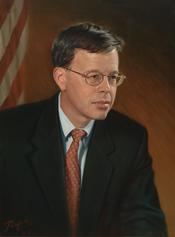 Sen. Jim Talent (R-MO)
Legislative Activity
Stay on top of the latest movement without scrolling through every action
Senate amendment submitted
May 9, 2005
View full timeline
Senate amendment submitted
May 9, 2005
Senate amendment agreed to: Amendment SA 600 agreed to in Senate by Yea-Nay Vote. 89 - 0. Record Vote Number: 116.
May 9, 2005
Roll call votes on amendments in Senate: Amendment SA 600 agreed to in Senate by Yea-Nay Vote. 89 - 0. Record Vote Number: 116.
May 9, 2005
Senate amendment proposed (on the floor): Amendment SA 600 proposed by Senator Talent to Amendment SA 567.
May 9, 2005
Amendment SA 600 proposed by Senator Talent to Amendment SA 567. (consideration: CR S4636-4637; text: CR S4636) To require notice regarding the criteria for small business concerns to participate in Federally-funded projects.
May 9, 2005
Amendment SA 600 agreed to in Senate by Yea-Nay Vote. 89 - 0. Record Vote Number: 116.
May 9, 2005
Votes
1 roll call on this amendment
Text
Proposed
TRANSPORTATION EQUITY ACT: A LEGACY FOR USERS

The ACTING PRESIDENT pro tempore. Under the previous order, the
Senate will resume consideration of H.R. 3, which the clerk will
report.
The assistant legislative clerk read as follows:

A bill (H.R. 3) to authorize funds for Federal-aid
highways, highway safety programs, and transit programs, and
for other purposes.

Pending:

Inhofe amendment No. 567, to provide a complete substitute.
Salazar amendment No. 581 (to amendment No. 567), to modify
the percentage of apportioned funds that may be used to
address needs relating to off-system bridges.

The ACTING PRESIDENT pro tempore. The Senator from Texas.
Mr. CORNYN. Mr. President, I ask unanimous consent to speak as in
morning business.
Mr. LEAHY. Reserving the right to object--I will not object--I ask
unanimous consent to follow the Senator from Texas as in morning
business.
The ACTING PRESIDENT pro tempore. Is there objection?
Mr. REID. Reserving the right to object, would the distinguished
Senator from Texas give us a general outline of how long he is going to
speak.

[[Page S4615]]

Mr. CORNYN. Mr. President, I think maybe 15 minutes.
Mr. REID. Just so we have a general idea. I ask unanimous consent
then that the normal 10-minute rule be waived for the distinguished
Senator from Texas and that he have up to 15 minutes to speak as in
morning business.
Mr. LEAHY. And that I then be recognized for the same amount of time.
The ACTING PRESIDENT pro tempore. The minority leader is reminded
there is no 10-minute rule.
Mr. REID. There is no 10-minute rule unless it is ordered.
The ACTING PRESIDENT pro tempore. That is correct.
Mr. REID. We have no morning business today?
The ACTING PRESIDENT pro tempore. That is correct.
Mr. REID. I amend my request to ask unanimous consent that the
Senator from Texas be recognized for 15 minutes and the Senator from
Vermont be recognized for 15 minutes.
The ACTING PRESIDENT pro tempore. Without objection, it is so
ordered.
The Senator from Texas.

Nomination of Priscilla Owen

Mr. CORNYN. Mr. President, 4 years ago, the President nominated Texas
Supreme Court Justice Priscilla Owen to serve on the United States
Court of Appeals for the Fifth Circuit. Justice Owen is an exceptional
jurist, a devoted public servant, and an extraordinary Texan. Yet after
4 years, she still awaits an up-or-down vote on the floor of the
Senate. Four years today and we are still waiting for a vote.
Although a bipartisan majority of the Senate stands ready to confirm
this outstanding nominee, a partisan minority obstructs the process and
refuses to allow that vote on her nomination. What is more, the
partisan minority now insists, for the first time in history, that she
must be supported by a supermajority of 60 Senators rather than the
constitutional standard and the Senate tradition of majority vote.
I know Justice Owen personally, having served with her on the Texas
Supreme Court for 3 years. She is a distinguished jurist and public
servant who has excelled at virtually everything she has set out to do.
She was a top graduate of Baylor Law School at the remarkable age of 23
and scored the top score on the Texas bar exam. She entered the legal
profession at a time when relatively few women did. After a
distinguished record in private practice, she reached the pinnacle of
the Texas bar, the Texas Supreme Court. In doing so, she was supported
by a larger percentage of Texans than any of her colleagues during her
last election, receiving around 84 percent of the vote, after enjoying
the endorsement of virtually every newspaper in Texas. She has been
honored as the Baylor Young Lawyer of the Year and the Baylor
University Outstanding Alumna.
Priscilla Owen enjoys significant bipartisan support. Three
Democratic judges on the Texas Supreme Court and a bipartisan group of
15 presidents of the State Bar of Texas support her nomination.
The Houston Chronicle, in September of 2000, called Owen ``[c]learly
academically gifted,'' stating that she ``has the proper balance of
judicial experience, solid legal scholarship and real-world know-how to
continue to be an asset on the high court.''
The Dallas Morning News wrote in support of Owen on September 24,
2002:

She has the brainpower, the experience and temperament to
serve ably on an appellate court.

The Washington Post wrote on July 24, 2002:

She should be confirmed. Justice Owen is indisputably well
qualified.

Lori Ploeger, Justice Owen's former law clerk, wrote in a letter to
Senator Leahy on June 27, 2002:

During my time with her, I developed a deep and abiding
respect for her abilities, her work ethic, and, most
importantly, her character. Justice Owen is a woman of
integrity who has profound respect for the rule of law and
our legal system. She takes her responsibilities seriously
and carries them out diligently and earnestly.

Ms. Ploeger continued:

Justice Owen is a role model for me and for other women
attorneys in Texas.

Mary O'Reilly, a lifetime member of the NAACP and a Democrat, in a
letter to Senator Dianne Feinstein, dated August 14, 2002, wrote:

I met Justice Owen in January of 1995, while working with
her on the Texas Supreme Court Gender Neutral Task Force . .
. I worked with Justice Owen on Family Law 2000, an important
state-wide effort initiated in part by Justice Owen . . . In
the almost eight years I have known Justice Owen, she has
always been refined, approachable, even-tempered and
intellectually honest.

Priscilla Owen is not just intellectually capable and legally
talented; she is also a fine human being with a big heart. The depth of
her humanity and compassion is revealed through her significant free
legal work and community activity.
Priscilla has spent much of her life devoting time and energy in
service of her community. She has worked to ensure that all citizens
are provided access to justice as the court's representative on the
Texas Supreme Court Mediation Task Force and to statewide committees,
as well as in her successful efforts to prompt the Texas legislature to
provide millions of dollars per year in legal services for the poor.
She was instrumental in organizing a group Ms. O'Reilly spoke of known
as Family Law 2000 which seeks to find ways to educate parents about
the effect divorce can have on children and seeks to lessen the
negative impacts it has on them. She also teaches Sunday school at St.
Barnabas Episcopal Mission in Austin, TX, where she is an active
member.
It is plain from these and so many other examples that Justice Owen
is a fine person and a distinguished leader in the legal community. One
would think that after 4 long years, she would be afforded the simple
justice of an up-or-down vote. I remain optimistic. While I know the
Democratic leader has offered a UC to consider the nomination of one of
the justices currently being filibustered, I don't see why that same
principle would not apply to all of the justices, and we would just say
that any nominee of any President, whether they be Republican or
Democrat, where a bipartisan majority stands ready to confirm them,
should receive that up-or-down vote on the Senate floor. I remain
hopeful the current 4-year violation of long-term Senate tradition, the
imposition of this new supermajority requirement, will be laid aside in
the interest of proceeding with the people's business, a job my
colleagues and I were elected to faithfully execute.
For more than 200 years, it was a job that we did indeed execute.
Senators from both sides exercised mutual restraint and did not abuse
the privilege of debate out of respect for two coequal branches of
government--the executive that has the constitutional right to choose
his or her nominees and an independent judiciary. Indeed, until 4 years
ago, colleagues on both sides of the aisle have consistently opposed
the use of the filibuster to prevent nominees from receiving an up-or-
down vote where they clearly had bipartisan majority support.
Senator Kennedy, the distinguished senior Senator from Massachusetts,
said in 1998:

Nominees deserve a vote. If our . . . colleagues don't like
them, vote against them. But don't just sit on them--that is
obstruction of justice.

And Senator Leahy, the distinguished ranking member of the Judiciary
Committee, who was just on the floor, said in 1998:

I have stated over and over again on the floor that I would
refuse to put an anonymous hold on any judge; that I would
object and fight against any filibuster on a judge, whether
it is somebody I opposed or supported; that I felt the Senate
should just do its duty.

I could not agree more with these comments made by Senator Leahy and
Senator Kennedy. But today we are doing a disservice to this fine
nominee in our failure to afford her that up-or-down vote that they
advocated a few short years ago. The new requirement this partisan
minority is now imposing, that nominees won't be confirmed without
support of 60 Senators, is, by their own admission, wholly
unprecedented in Senate history.
The reason for this is simple: The case for opposing this fine
nominee is so weak that using a double standard and changing the rules
is the only way they can defeat her nomination. What is more, they know
it, too.
Before her nomination got caught up in this partisan fight, the
ranking Democrat on the Judiciary Committee

[[Page S4616]]

predicted that Justice Owen would be swiftly confirmed. On the day of
the announcement of the first group of nominees, 4 years ago, including
Owen, he said he was ``encouraged'' and that ``I know them well enough
that I would assume they would all go right through.''
Notwithstanding the change of attitude by the partisan minority, this
gridlock is not really about Priscilla Owen, certainly not about
Priscilla Owen the person. Indeed, just a few weeks ago, the Democratic
leader announced that Senate Democrats would give Justice Owen an up-
or-down vote, albeit only if other nominees were defeated or withdrawn
or simply thrown overboard.
Obviously, this debate is not about principle. It is all about
politics. It is shameful. Any fair examination of Justice Owen's record
demonstrates how unconvincing the critics' arguments are.
For example, Justice Owen is accused of ruling against injured
workers, against those seeking relief from employment discrimination,
and other sympathetic parties on some occasions. Never mind, however,
that good judges such as Judge Owen do their best to follow the law
regardless of which party will win and which party will lose. Never
mind that many of her criticized rulings were unanimous or near
unanimous decisions of a nine-member Texas Supreme Court. Never mind
that many of these rulings simply followed Federal precedent authored
and agreed to by appointees of Presidents Carter and Clinton or by
other Federal judges unanimously confirmed by the Senate. Never mind
that judges often disagree, especially when the law is ambiguous and
requires careful and difficult interpretation.
The Democratic leader raised the frequent objection and that is
criticized Justice Owen for attempting to interpret and enforce a
popular Texas law requiring parental notification before a minor can
obtain an abortion. Her opponents allege that in one parental
notification case, then-Justice Alberto Gonzales accused her of
judicial activism. That charge is untrue. I read myself the opinions
again this weekend and the charge is simply untrue. Gonzales did not
accuse Owen of judicial activism. Not once did he say Justice Owen was
guilty of judicial activism. To the contrary, he never mentioned her
name or her opinion in the opinion the critics cite.
Furthermore, our current Attorney General has since testified under
oath that he never accused Owen of any such thing. What is more, the
author of the parental notification law in question supports Justice
Owen, as does the pro-choice Democratic law professor who was appointed
to the Texas Supreme Court's advisory committee to implement that law.
In other words, Owen simply did ``what good appellate judges do every
day. If this is activism, then any judicial interpretation of a
statute's terms is judicial activism.''
Mr. President, I ask unanimous consent this letter be printed in the
Record at the close of my remarks.
The ACTING PRESIDENT pro tempore. Without objection, it is so
ordered.
(See exhibit 1).
Mr. CORNYN. The American people know a controversial ruling when they
see one, be it the redefinition of a traditional institution such as
marriage, the expulsion of the Pledge of Allegiance, and other
expressions of faith from the public square, the elimination of the
``three strikes and you're out'' law, and other penalties for convicted
criminals, or the forced removal of military recruiters from college
campuses. Justice Owen's rulings fall nowhere near this standard or
category. There is a whole world of difference between struggling to
interpret the ambiguous expressions of a legislature and refusing to
obey a legislature's directives altogether.
It is clear Justice Owen deserves the broad bipartisan and
enthusiastic support she obviously enjoys across the political
spectrum. It is equally clear her opposition comes only from a narrow
band on the far left fringes of that political spectrum. If the Senate
were merely to observe 200 years of consistent Senate and
constitutional tradition dating back to our Founders, there would be no
question about her ability to be confirmed. She would be sitting on the
Fifth Circuit Court of Appeals.
Legal scholars across the political spectrum have long concluded what
we in this body know instinctively, and that is to change the rules of
confirmation as a partisan minority has done badly politicizes the
judiciary and hands over control of the judiciary to special interest
groups. One Professor Michael Gerhardt, who advises Senate Democrats on
judicial confirmation, has written that a supermajority requirement for
confirming judges would be ``problematic, because it creates a
presumption against confirmation, shifts the balance of power to the
Senate, and enhances the power of special interests.''
DC Circuit Judge Harry Edwards, a respected Carter appointee, has
written that the Constitution forbids the Senate from imposing a
supermajority rule for confirmation. After all, otherwise, ``the
Senate, acting unilaterally, could thereby increase its own power at
the expense of the President'' and ``essentially take over the
appointment process from the President.'' Judge Edwards thus concluded
that ``the framers never intended for the Congress to have such
unchecked authority to impose supermajority voting requirements that
fundamentally change the nature of our democratic process.''
Mr. President, I think I have about 5 more minutes of my remarks. I
ask unanimous consent that I be given an additional 5 minutes and the
Senator from Vermont be given the same.
Mr. LEAHY. I have no objection.
The ACTING PRESIDENT pro tempore. Without objection, it is so
ordered.
Mr. CORNYN. I thank the Chair. I thank the Senator from Vermont.
Georgetown Law Professor Mark Tushnet has written that ``the
Democrats' filibuster is a repudiation of a settled preconstitutional
understanding.'' He has also written, ``There's a difference between
the use of the filibuster to derail a nomination and the use of other
Senate rules--on scheduling, on not having a floor vote without prior
committee action, etc.--to do so. All those other rules can be
overridden by a majority of the Senate whereas the filibuster cannot be
overridden in that way. A majority of the Senate could ride herd on a
rogue Judiciary Committee chair who refused to hold a hearing on some
nominee; it can't do that with respect to a filibuster.''
Georgetown Law Professor Susan Bloch has condemned supermajority
voting requirements for confirmation, arguing that they would allow the
Senate to ``upset the carefully crafted rules concerning appointment of
both executive officials and judges and to unilaterally limit the power
the Constitution gives the President in the appointment process. This,
I believe, would allow the Senate to aggrandize its own rules and would
unconstitutionally distort the balance of powers established by the
Constitution.''
In summary, the record is clear. The Senate tradition has always been
majority vote, at least up until the last 4 years. The desire by some
to alter that Senate tradition has been roundly condemned by legal
experts across the political spectrum. And now the 100 Members of this
body have a decision to make. Do we accept this dramatic and dangerous
departure from 200 years of Senate precedent or do we work to restore
the tried and true Senate tradition and practice?
I know the majority leader and, indeed, the Democratic leader have
been working trying to find a way. I prefer, though, a way that would
allow our nominees, all nominees, whether they be Republican or
Democrat, to receive an up-or-down vote where a majority of the Senate
stands ready to confirm them. I believe we should choose collaboration
over contention any day of the week, if possible. But bipartisanship is
a two-way street. Both sides must agree to certain fundamental
principles and the most fundamental principle is fairness. Fairness
means the same rules apply, the same standards, whether the President
is a Republican or Democrat. But bipartisanship is difficult when long-
held understandings and the willingness to abide by basic agreements
and principles have unraveled so badly. When fairness falters,
bipartisanship, too, will fail.
So I ask my colleagues what are we to do when these basic principles,
commitments, and understandings have been so badly trampled upon? What
are

[[Page S4617]]

we to do when nominees are attacked for doing their jobs, when they are
attacked for following precedents adopted and agreed to by Presidents
Carter and Clinton, and when they are singled out for rulings agreed to
by a unanimous, or near unanimous court? What are we to do when these
nominees are demonized and caricatured beyond recognition, when they
are condemned as unqualified while at the same time they are deemed
unanimously well qualified by organizations Democrats used to revere?
What are we to do when Senate and constitutional traditions are
abandoned for the first time in more than two centuries, when both
sides once agreed nominees should never be blocked by filibuster and
then one side denies the existence of that very agreement, when their
interpretation of Senate tradition changes based on who is in the Oval
Office?
It is time to fix the broken judicial confirmation process. It is
time to end the blame game and fix the problem and move on. And it is
time to end the wasteful and unnecessary delay in the process of
selecting judges that hurts our justice system and harms all Americans.
Mr. President, I thank the Chair. I thank my colleague from Vermont
and yield the floor.

Exhibit 1

Southern Methodist University,

Dallas, TX, May 3, 2005.
Re Priscilla Owen

Senator John Cornyn,
Hart Senate Office Building,
Washington, DC.
Dear Senator Cornyn: I write in support of the nomination
of Priscilla Owen to the United States Court of Appeals for
the Fifth Circuit. I write as a law professor who specializes
in constitutional law. I write as a pro-choice Texan, who is
a political independent and has supported many Democratic
candidates. And I write as a citizen who does not want the
abortion issue to so dominate the political debate that good
and worthy judicial candidates are caught in its cross hairs,
no matter where they stand on the issue.
Justice Owen deserves to be appointed to the Fifth Circuit.
She is a very able jurist in every way that should matter.
She is intelligent, measured, and approaches her work with
integrity and energy. She is not a judicial activist. She
does not legislate from the bench. She does not invent the
law. Nothing in her opinions while on the Texas Supreme Court
could possibly lead to a contrary conclusion, including her
parental notification opinions. I suspect that Priscilla
Owen's nomination is being blocked because she is perceived
as being anti-choice on the abortion issue.
This perception stems, I believe, from a series of opinions
issued by the Texas Supreme Court in the summer of 2000
interpreting the Texas statute that requires parental
notification prior to a minor having an abortion. The statute
also provides for what is called a ``judicial bypass'' to
parental notification. Justice Owen wrote several concurring
and dissenting opinions during this time. She has been
criticized for displaying judicial activism and pursuing an
anti-choice agenda in these opinions. This criticism is
unfair for two reasons.
First, the Texas statute at issue in these cases contains
many undefined terms. Further, the statutory text is not
artfully drafted. I was a member of the Texas Supreme Court's
Advisory Committee that drafted rules in order to help judges
when issuing decisions under this parental notification
statute. My involvement in this process made it clear to me
that in drafting the parental notification statute, the Texas
Legislature ducked the hard work of defining essential terms
and placed on the Texas courts a real burden to explicate
these terms through case law.
Moreover, the statute's legislative history is not useful
because it provides help to all sides of the debate on
parental notification. Several members of the Texas
Legislature wanted a very strict parental notification law
that would permit only infrequent judicial bypass of this
notification requirement. But several members of the Texas
Legislature were on the other side of the political debate.
These members wanted no parental notification requirement,
and if one were imposed, they wanted courts to have the power
to bypass the notification requirement easily. The resulting
legislation was a product of compromise with a confusing
legislative history.
In her decisions in these cases, Justice Owen asserts that
the Texas Legislature wanted to make a strong statement
supporting parental rights. She is not wrong in making these
assertions. There is legislative history to support her.
Personally, I agree with the majority in these cases. But I
understand Justice Owen's position and legal reasoning. It is
based on sound and clear principles of statutory
construction. Her decisions do not demonstrate judicial
activism. She did what good appellate judges do every day.
She looked at the language of the statute, the legislative
history, and then decided how to interpret the statute to
obtain what she believed to be the legislative intent.
If this is activism, then any judicial interpretation of a
statute's terms is judicial activism. Justice Owen did not
invent the legislative history she used to reach her
conclusion, just as the majority did not invent their
legislative history. We ask our judges to make hard decisions
when we give them statutes to interpret that are not well
drafted. We cannot fault any of these judges who take on this
task so long as they do this work with rigor and integrity.
Justice Owen did exactly this.
Second, we must be mindful that the decisions for which she
is being criticized had to do with abortion law. I do not
know if Justice Owen is pro-choice or not, but it does not
matter to me. I am pro-choice as I stated before, but I would
not want anyone placed on the bench who would look at
abortion law decisions only through the lens of being pro-
choice. Few categories of judicial decisions are more
difficult than those dealing with abortion. A judge has to
consider the fact that the fetus is a potential human, and
this potential will be ended by an abortion. All judges,
including those who are pro-choice, must honor the spiritual
beauty that is potential human life and should grieve its
loss. But a judge has other important human values to
consider in abortion cases. A judge also has to consider
whether a woman's independence and rights may well be
unconstitutionally compromised by the arbitrary application
of the law. All this is further compounded when a minor is
involved who is contemplating an abortion. I want judges who
will make decisions in the abortion area with a heavy heart
and who, therefore, will make sure of the legal reasoning
that supports such decisions.
I think the members--all the members--of the Texas Supreme
Court did exact1y this when they reached their decisions in
the parental notification cases. I was particularly struck by
the eloquence of Justice Owen when she discussed the harm
that may come to a minor from having an abortion. She
recognized that the abortion decision may haunt a minor for
all her life, and her parents should be her primary guides
in making this decision. Surely, those of us who are pro-
choice have not come to a point where we would punish a
judge who considers such harm as an important part of
making a decision on parental notification, especially
when legislative history supports the fact that members of
the Texas Legislature wanted to protect the minor from
this harm. As a pro-choice woman, I applaud the
seriousness with which Justice Owen looked at this issue.
If I thought Justice Owen was an agenda-driven jurist I
would not support her nomination. Our founders gave us a
great gift in our system of checks and balances. The judicial
branch is part of that system, and it is imperative that it
be respected and seen as acting without bias or predilection,
especially since it is not elected. Any agenda-driven
jurist--no matter the issue--threatens the honor accorded the
courts by the American people. This is not Priscilla Owen. So
even though I suspect Justice Owen is more conservative than
I am and even though I disagree with some of her rulings,
this does not change the reality that she is an extremely
well-qualified nominee who should be confirmed.
It would be unfair to place Priscilla Owen in the same
category with other nominees who, in my opinion, are judicial
activists and who I do not support. Some of these other
nominees appear to want to dismantle programs and policies
based on a political or economic agenda not supported by
legal analysis or constitutional history. They appear to want
to push their views on the country while sitting on the
bench. Priscilla Owen should not be grouped with them.
Justice Owen possesses exceptional qualities that have made
and will make her a great judge. I strongly urge her
confirmation.
Sincerely,
Linda S. Eads,
Associate Professor of Law.

Mr. WYDEN addressed the Chair.
The ACTING PRESIDENT pro tempore. The Senator from Vermont is
recognized under unanimous consent.
Mr. LEAHY. Mr. President, I understand the Senator from Oregon wishes
to make a unanimous consent request.
Mr. WYDEN. Mr. President, I ask unanimous consent to speak in morning
business after the distinguished Senator from Vermont has completed his
remarks.
The ACTING PRESIDENT pro tempore. Is there objection?
Mr. CORNYN. Reserving the right to object, I would ask the Senator
through the Chair whether he would agree Senator Lott be recognized to
speak after the Senator from Oregon on the same basis. He also
apparently wishes to come to the floor and speak.
The ACTING PRESIDENT pro tempore. Would the Senator so modify his
request.
Mr. WYDEN. I would modify my request, Mr. President, that after the
distinguished Senator from Vermont has completed his remarks, I would
be next for 20 minutes, and the Senator from Mississippi, Mr. Lott,
would come after me.
The ACTING PRESIDENT pro tempore. Without objection, it is so
ordered. The Senator from Vermont.

[[Page S4618]]

Mr. LEAHY. Mr. President, could the Senate always be so agreeable in
moving things along, we in the country would be better off.
I listened to this discussion of nuclear option and judges and all
that. It may seem arcane. There is nothing in the Constitution that
says 50 votes or 40 votes or 60 votes or 80 votes. It is up to the
rules of the Senate. It is when the rules are either reviewed or
ignored that you have a problem. As I mentioned earlier today, when
President Clinton was in office, the Republicans used the rules to say
if one Republican, one objected, then you would not have a vote on the
nominee. 61 of President Clinton's nominees for judgeships were not
allowed to move because one Republican objected. Actually a couple
hundred of his executive nominations, by the same token, because one
Republican objected. So there they are requiring 100 votes to confirm
somebody.
So you wonder when you are talking about a tiny handful of judges--
and no President in history, from George Washington on, has ever gotten
all judges through the Senate--why there is so much attention on this.
I was thinking about it and I thought, you know, this all began about 4
years ago when we started talking about this. Four years ago things
were a lot different in this country. Let's look at the differences.
In the last 4 years--and maybe this is why they would rather talk
about judges instead of talking about what's going on--in the last 4
years under President Bush, unemployment has gone up 26 percent. During
this same time, this last 4 years, the price of gas has gone up 57
percent. You can hold hands with all the Saudi princes you want, but it
has still gone up. The number of uninsured in this country has gone up
10 percent. The budget deficit has gone up $50 billion. Actually,
President Bush inherited the largest budget surplus of any President in
the history of the United States. President Clinton had followed the
Reagan and Bush administrations, which tripled the national debt and
created huge deficits. President Clinton's administration not only
balanced the budget, but created a surplus, and started paying down the
debt. President Bush inherited the largest surplus of any President in
our whole history and he has turned it into the largest deficit.
Then there is the trade deficit. That has gone up 69 percent. I
mention these things that have gone up under the Bush Presidency.
Obviously they don't want to talk about it. It means the Saudis and the
Chinese, Japanese, Koreans, and others who are holding our debt thus
influence our foreign policy.
We will not just be holding hands with Saudi princes, we will
probably be holding hands with everybody from all these other
countries, too, so they do not call our IOUs.
During those 4 years, unemployment has gone up by 26 percent, the
price of gas has gone up by 57 percent, the number of uninsured
Americans has gone up by 10 percent, the budget deficit has increased
by $350 billion, and the trade deficit has gone up by 69 percent. But
there is one indicator that has shown improvement: the number of
judicial vacancies has dropped 48 percent.
So why are they complaining they are not getting enough judges?
During those 4 years of President Bush's Presidency, the number of
judicial vacancies has gone way down because we confirmed so many
judges. In fact, 4 years ago, the vacancy rate in our Federal courts
was nearly 10 percent, and now it is around 5 percent. Mr. President,
95 percent of the Federal judiciary is filled. Most people would
consider 95 percent a pretty good record.
I remember talking with President Bush 4 years ago. I said: You might
get 90, 95 percent of your judges through. He thought that was pretty
good. He wished he had a record like that when he owned a baseball
team.
Four years ago today, I went to the White House in a gesture of
cooperation to hear the President announce his first judicial
nominations. Some criticized me for going, but I said I wanted to help.
The President, during his campaign, said he wanted to be a uniter, not
a divider, and now was the time to do so, and I said I would help.
Unfortunately, that is not what President Bush had in mind. The
nominations he announced that spring day 4 years ago were largely
controversial, confrontational choices. Typically, when a President--
Republican or Democrat--selects nominations to the circuit courts, he
consults at length with home State Senators and the Senate leadership
to be sure those selected will be considered favorably by the Senate.
This President has not done that. In fact, President Clinton, his
predecessor, and his White House Counsel and staff were in regular
contact with the Republican leadership. Senator Hatch talked in his
book about how much President Clinton consulted with the Republicans.
Instead, here my Republican colleagues say: No, we do not want the
checks and balances of the Senate; we do not want an independent,
nonpartisan judiciary; we are going to put a Republican stamp on the
judiciary.
Remember, the Federal judiciary should not be Democratic or
Republican, it should be independent and free of political pressure.
They say: No, we cannot do that. We will break all the rules possible
and make sure that we get rid of checks and balances.
This effort by the Republicans also, of course, belies what has
happened. Back 4 years ago in June, with the change in the Senate, I
became chairman of the Senate Judiciary Committee. Even though it was
already June and the Republicans had been in charge since the beginning
of the year, there had not been a single judicial nomination hearing
held on President Bush's nominations. I inherited what seemed to be an
impossibly large number of 110 vacancies. There were so many because,
of course, there had been pocket filibusters of over 60 of President
Clinton's nominations. But we worked hard, and in 17 months we were
able to whittle that number down to 60 vacancies.
Incidentally, it is interesting that with the Republican majority,
look how the vacancies skyrocketed in the judiciary. The Democrats came
in and they shot down. Now, of course, they are heading back up under
Republican leadership.
It takes a lot of work to lower the number of vacancies. I held
hearings during recess periods and confirmed President Bush's nominees.
Senator Daschle and I received a deadly anthrax attack, so deadly that
people who touched the outside of the envelopes of letters addressed to
us that we were supposed to open were killed. They were murdered, and
we still held the hearings. We held hearings in the aftermath of the 9/
11 attacks when the airlines were shut down. We had a nominee volunteer
to drive from Mississippi to Washington to be included in a hearing I
was holding. We had the anthrax attacks, the PATRIOT Act, and all the
rest, and we kept on going, and in 17 months we confirmed 100 of
President Bush's judges.
The Republicans took nearly twice as long when they were in control
to confirm the same number of judges for President Bush. They say we
are the ones holding things up? They ought to be ashamed of themselves.
Maybe they ought to work as hard as we did to get them through. In
fact, when Congress adjourned last December, there were only 27
vacancies out of 875 Federal judgeships, the lowest number in over a
generation. In President Bush's first term, 204 judges were confirmed--
more than confirmed in either of President Clinton's two terms, more
than during the term of the President's father, more than in Ronald
Reagan's first term when he had a Republican Senate. We confirmed a
couple more nominees before we broke a week ago, and the distinguished
Democratic leader has suggested we bring up another one of President
Bush's nominees for a vote.
We have seen the talking points that have come out from the
Republicans. They say we are holding up Thomas Griffith. The record is
clear that I have--we have objected to him. After all, he did practice
law illegally for 4 years in one jurisdiction and practiced law
illegally in another jurisdiction, and the President wants to put him
on the second highest court in the land. We said that should be an
impediment. In any other administration, it would be an impediment.
They want to go forward with him. The record is equally clear that I do
not intend to support a filibuster of this nomination.
The distinguished Democratic leader said: Fine, bring him up. We will
give you a time agreement and vote on it. He will either be confirmed
or will not

[[Page S4619]]

be confirmed. If he is confirmed, it shows what the standards are of
this administration.

We can look at all the people turned down on the other side, but we
never heard this complaint. We are prepared to move forward on Mr.
Griffith's nomination despite the fact that the Republicans pocket
filibustered 61 of President Clinton's nominees, even though those
nominees included the current dean of Harvard Law School, a former
attorney general from Iowa, a former clerk to Chief Justice Rehnquist,
women, men, Hispanics, African Americans, and many others.
We heard talks about Judge Owen this afternoon. One of her opinions
was criticized by Alberto Gonzales when he served on the Texas Supreme
Court. However, we held a hearing for her, a very fair hearing. The
Senator from California, Mrs. Feinstein, conducted it. It was
acknowledged by both Republicans and Democrats as being totally fair.
She was voted down in the committee, and for the first time in history,
a nominee voted down in committee was resubmitted by the President.
This is not a time to be breaking the rules of the Senate. The rules
are there because we want a check and balance. That is all we are
saying. For example, a home State newspaper of one of the nominees
referred to a speech she gave recently that sounded as if it came from
an Islamic jihadist, a very activist judge, who believes that child
labor laws, minimum wage laws, even Social Security represent something
wrong in this country. I am not really sure that is the sort of person
we want on the bench making decisions about child labor laws, Social
Security, and minimum wage.
Let's forget this end justifies the means. Let the Senate be what it
always has been: A check and balance, whether it is a Democratic
President or Republican President, a real check and balance but an
honest one.
Do away with anonymous holds. I said that before. Do away with the
secret one-person filibuster. I know the distinguished Senator from
Oregon has spoken consistently that way, I believe from the very first
day he entered this great body. Do away with the anonymous holds. Do
away with those things, but follow the Senate rules. Do not violate the
rules. Do not let us, those who are supposed to judge the judges, break
our own laws and our own rules.
As I have noted, 4 years ago today, on May 9, 2001, I went to the
White House in a gesture of cooperation to hear the President announce
his first judicial nominations. Some criticized me for going, but I
wanted to indicate my willingness to work with the new President. After
all, during the campaign he had told the American people he wanted to
be a uniter, not a divider. He had lost the popular vote in a much-
disputed 2000 election, and the country was deeply divided. I hoped
that he would be a President who would understand the need to work
across the aisle and to bring people together and to consult with both
Democratic and Republican Senators. I thought that judicial
nominations, particularly those to the important circuit courts where
Republicans had prevented almost two dozen of President Clinton's
qualified and moderate nominees from being considered, would be a good
place to start.
Unfortunately, that was not what President Bush had in mind. The
nominations that President Bush announced that spring day, years ago,
were largely controversial, confrontational choices. Although I was
then the Ranking Democratic Member of the Senate Judiciary Committee,
and was soon to become the Committee's Chair, the White House had not
reached out to discuss any of these controversial nominees beforehand.
By and large, home-state Senators had not been consulted about the
nominees, nor had any sort of bipartisan, independent group of
attorneys or legal scholars. That was the President's choice and has,
unfortunately, remained his way of identifying and selecting nominees
to be lifetime judicial appointments to the federal bench. This White
House appears to rely on a tight circle of Federalist Society members,
Republican Party activists and law professors steeped in ideology. This
President has nominated what may be the most ideological-driven group
of nominees ever presented to the Senate at one time.
Typically, when a President selects nominations to the circuit
courts, he consults at length with home-state Senators and the Senate
leadership to ensure that those selected will be considered favorably
by the Senate and confirmed. That has not been the true with this
Administration. By way of example, I cannot recall a single occasion
during which this President picked up the phone to discuss these
judicial nominations during the entire four and a half years that he
has been President--not at the beginning of his Administration, not
during the 17 months that I chaired the Senate Judiciary Committee, and
not since.
That stands in sharp contrast to traditional practice dating back to
George Washington and, in particular, to the manner in which President
Clinton had worked with Senator Hatch when he was the Ranking Minority
Member of the Senate Judiciary Committee or its Chair. Not only were
President Clinton, his White House Counsel and his staff in regular
contact with Senator Hatch and his staff; with respect to the most
important nominations, the President and he had direct, meaningful
consultation. In his book, ``Square Peg,'' for example, Senator Hatch
wrote that he ``had several opportunities to talk privately with
President Clinton about a variety of issues, especially judicial
nominations.''
He described how, when the first Supreme Court vacancy arose during
the Clinton presidency in 1993, ``it was not a surprise when the
President called to talk about the appointment and what he was thinking
of doing.'' Senator Hatch went on to describe that the President was
thinking of nominating someone who would require a ``tough, political
battle'' but that he advised President Clinton to consider other
candidates.
According to his book, Senator Hatch suggested then-D.C. Circuit
Judge Ruth Bader Ginsburg, as well as then-First Circuit Judge Stephen
Breyer. They were nominated to fill the vacancies that arose on the
Supreme Court in 1993 and 1994. Both were approved by the Senate with
strong, bipartisan support. Justice Ginsburg was confirmed by a vote on
96-3. Justice Breyer was confirmed by a vote of 87-9.

That sort of consultation did not occur before this President's
initial nominations were made 4 years ago, and I am sorry it did not.
Sadly, this lack of consultation was not just the situation for these
first nominations, it has continued to this day. Senate Democrats have
not stopped trying to offer the advice called for by the Constitution
and have never stopped being available to help in the selection
process. Just a few weeks ago, on April 11, the Democratic Leader and I
wrote to the President offering to help with the more than two dozen
current judicial vacancies for which the President has not yet sent a
nomination to the Senate. We urged him to disavow the ``nuclear
option'' in favor of working with us to identify consensus judicial
candidates who could be confirmed easily and who would be fair,
impartial judges that would preserve the independence of the judiciary.
The number of current judicial vacancies without a nominee has since
risen to 29. It is now May, we are more than a third of the way through
the year, and the President has still sent only one new judicial
nomination to the Senate all year. Meanwhile almost a month has passed
and Senator Reid and I have yet to receive the courtesy of a reply to
our offer to help and to work together. Unilateralism has become their
standard operating practice, and abuse of power has become increasingly
common. Indeed, to this day I have yet to meet, talk to or even receive
a telephone call from the President's new White House Counsel. The go-
it-alone conduct of this Administration makes clear that this President
has little use of the Senate's role in the constitutional process of
selecting federal judges.
Under pressure from the White House, over the last 2 years, the
former Republican chairman of the Judiciary Committee led Senate
Republicans in breaking with longstanding precedent and Senate
tradition. With the Senate and the White House under control of the
same political party we have witnessed Committee rule after Committee
rule broken or misinterpreted away. The Framers of the Constitution

[[Page S4620]]

warned against the dangers of such factionalism, undermining the
structural separation of powers. Republicans in the Senate have utterly
failed to defend this institution's role as a check on the President in
the area of nominations. It surely weakens our constitutional design of
checks and balances.
As I have detailed elsewhere, the list of broken rules and precedents
is long--from the way that home-state Senators were treated, to the way
hearings were scheduled, to the way the Committee questionnaire was
unilaterally altered, to the way the Judiciary Committee's historic
protection of the minority by Committee Rule IV was repeatedly
violated. In the last Congress, the Republican majority of the
Judiciary Committee destroyed virtually every custom and courtesy that
had been used throughout Senate history to help create and enforce
cooperation and civility in the confirmation process.
We suffered through 3 years during which Republican staff stole
Democratic files off the Judiciary computers during what has been a
``by any means necessary'' approach. Their approach to our rules and
precedents follows their own partisan version of the Golden Rule, which
is that ``he with the gold, rules.'' That has not been helpful to the
process, the Senate or the country. It is as if those currently in
power believe that that they are above our constitutional checks and
balances and that they can reinterpret any treaty, law, rule, custom or
practice they do not like or they find inconvenient.
Some of these interpretations are so contrary to well-established
understandings that it is like we have fallen down the rabbit hole in
``Alice in Wonderland.'' I am reminded that the imperious Queen of
Hearts rebuked Alice for having insufficient imagination to believe
contradictory things, saying that some days she had believed six
impossible things before breakfast. I have seen things I thought
impossible on the Judiciary Committee during the last few years, things
impossible to square with the past practices of Committee and the
history of the Senate. Our Committee is entrusted by the Senate to help
determine whether judicial nominees will follow the law. It is
unfortunate that the Committee that judges the judges has not followed
its own rules but has bent or broken them to achieve a predetermined
result.
Under our Constitution, the Senate has an important role in the
selection of our judiciary. The brilliant design of our Founders
established that the first two branches of government would work
together to equip the third branch to serve as an independent arbiter
of justice. As columnist George Will once wrote:

A proper constitution distributes power among legislative,
executive and judicial institutions so that the will of the
majority can be measured, expressed in policy and, for the
protection of minorities, somewhat limited.

The structure of our Constitution and our own Senate rules of self-
governance are designed to protect minority rights and to encourage
consensus. Despite the razor-thin margin of recent elections, the
majority party is not acting in a measured way but in complete
disregard for the traditions of bipartisanship that are the hallmark of
the Senate. It has acted to ignore precedents and reinterpret
longstanding rules to its advantage. This practice of might makes right
is wrong.
Now the White House's hand-picked majority leader seems intent on
removing the one Senate protection left for the minority, the
protection of debate in accordance with the longstanding tradition of
the Senate and its Standing Rules. In order to remove the last
remaining vestige of protection for the minority, the Republican
majority is poised to break the Senate Rules and end the filibuster
with the votes of the barest of majorities. They seem intent on doing
this to force through the Senate this President's most controversial
and divisive judicial nominees.

As the Reverend Martin Luther King wrote in his famous Letter from a
Birmingham Jail: ``Let us consider a more concrete example of just and
unjust laws. An unjust law is a code that a numerical or power majority
group compels a minority group to obey but does not make binding on
itself. This is difference made legal. By the same token, a just law is
a code that a majority compels a minority to follow and that it is
willing to follow itself. This is sameness made legal.'' Fair process
is a fundamental component of the American system of law. If we cannot
have a fair process in these halls or in our courts, how will the
resulting decisions be viewed? If the rule of law is to mean anything
it must mean that it applies to all equally.
In the last Congress, I am sorry to report that the rule of law was
broken, spindled and mutilated to serve the interests of President
George W. Bush and his party. No man and no party should be above the
law. That has been one of the strengths of our democracy. Our country
was born in reaction to the autocracy and corruption of King George,
and we must not forget our roots as a nation of both law and liberty.
The best guarantee of liberty is the rule of law, meaning that the
decisions of government are not arbitrary and that rules are not
discretionary or enforced to help one side and then ignored to aid
another. James Madison, one of the Framers of our Constitution, warned
in Federalist Number 47 of the very danger that is threatening our
great nation, a threat to our freedoms from within:

[The] accumulation of all powers legislative, executive and
judiciary in the same hands . . . may justly be pronounced
the very definition of tyranny.

Our freedoms as Americans are the fruit of too much sacrifice to have
the rules broken in the United States Senate by a party colluding with
the White House to try to appoint loyalists to courts who have been
chosen with the hope that they will re-interpret precedents and
overturn the very laws that have protected our most fundamental rights
as Americans. The American people deserve better than we have seen with
the destruction of rule after rule by a majority willing to sacrifice
the role of the Senate as a check and balance in order to aid a
President determined to pack the federal courts.
How does the record of judicial confirmations for President George W.
Bush compare to administrations before his? Very well. In President
Bush's first term, the 204 judges confirmed were more than were
confirmed in either of President Clinton two terms, more than during
the term of this President's father, and more than in Ronald Reagan's
first term when he was being assisted by a Republican majority in the
Senate. With the four judges confirmed so far this year, the total
number of confirmations of this President's judicial nominees has risen
to 208. It would rise further and faster yet, if the White House would
only work with us to identify qualified, consensus nominees for the 29
current vacancies without a nominee. The President has sent only one
new nominee to the Senate so far this year, and it is already May. If
the President wanted to pick judges instead of fights, he could work
with us rather than divide us.
And what happened to those 11 nominees the President started us off
with 4 years ago? Considering the strong ideological bent of this
group, the President has been quite successful. One has been withdrawn
from consideration and 8 of the remaining 10 have been confirmed, 80
percent. The confirmations of Clinton circuit court nominees during his
second term, from 1997-2000, while a Republican Senate majority was in
control, were nowhere near as successful. Over those 4 years 35 of 51
Circuit Court nominees were confirmed, 69 percent.
If we looked at 1999 and 2000, the 106th Congress, the numbers are
even worse. Fewer than half of the President's circuit court nominees
were confirmed, 15 of 34. Outstanding and qualified nominees were never
allowed a hearing, a committee vote or Senate consideration of any
kind. These nominees include the current dean of the Harvard Law
School, a former attorney general from Iowa, a former clerk to Chief
Justice Rehnquist and many others--women, men, Hispanics, African
Americans, a wide variety of qualified nominees.
So on this anniversary, let us understand that 8 of the 10 nominees
we will hear complaints about have been confirmed.
With respect to the remaining two, I should note that in the years
that Republicans held the Senate majority and Senator Hatch was the
committee chair, Judge Terry Boyle was one of

[[Page S4621]]

the very few nominees he chose not to consider. Thus, Judge Boyle is
still before the Judiciary Committee. Senator Specter held a hearing on
that controversial nomination and the committee is still receiving
copies of Judge Boyle's unpublished opinions for its review.
The remaining nominee is one whose opinions were criticized by
Alberto Gonzales when he served on the Texas Supreme Court with her.
Indeed, many of her positions were too conservative and activist for
her conservative Republican colleagues on the Texas Supreme Court. When
I chaired the committee in 2002, in another gesture of good will, I
proceeded on a number of controversial nominations in spite of the
recent mistreatment of President Clinton's nominees. One of those
hearings was for Priscilla Owen.
I was not required to schedule that hearing. I could have followed
the example of my immediate predecessor and denied her consideration
before the committee. It would have been a much easier path than the
alternative I chose. Instead, I proceeded. Senator Feinstein conducted
the hearing in a fair manner. After the hearing, I then did something
else that my predecessor as Chair so often did not: I proceeded to have
the committee consider the nomination on its merits even though I knew
I would not support it. The committee debated the nomination fairly and
openly. Objections to her confirmation, based on her record as a
Justice on the Texas Supreme Court, were aired and honestly debated. A
vote was taken and instead of hiding behind anonymous holds or hidden
blue slips, Senators put themselves on the record. The result was that
the Owen nomination was rejected by a majority of the committee and not
recommended to the Senate.

Since that time much of what has happened has been unprecedented.
Despite the rejection of the nomination by the committee, the President
resubmitted the nomination the next year. I do not believe that had
ever been done before in our history. Then, on a party-line vote,
Republicans forced the nomination to the floor. It was debated
extensively and the Senate withheld its consent. After a series of
cloture votes, cloture was not agreed upon in accordance with the rules
of the Senate. Nonetheless, the President took further unprecedented
action in, again, resubmitting the nomination to the Senate. That
nomination is now pending, again, on the Senate Executive Calendar.
By any measure the President's first nominees were treated fairly.
Judge Parker, Judge Shedd, Judge Clement, Judge Cook, Judge Sutton,
Judge McConnell, Judge Gregory and Judge Roberts are each serving
lifetime appointments on important circuit courts. The first slate of
nominees has now all been accorded hearings. All but Judge Boyle have
been considered by the Judiciary Committee. All but one of those has
been confirmed.
This is no basis on which to break the rules of the Senate. This is
not justification to end the Senate's role as a check and balance on
the Executive. This is not reason for the majority to take the drastic
and irreversible step of ending protection of the minority through the
tradition of extended debate in the Senate.
The White House and the Senate Republican leadership's campaign for
``nuclear option'' seeks to end the role of the Senate serving as a
check on the Executive. But that is precisely what the Constitution
intends the Senate to provide. Supporters of an all-powerful Executive
have gone so far as to seek to inject an unconstitutional religious
test into the debate and to characterize those who oppose the most
extreme of the President's nominees as ``against people of faith'' and
to call for mass impeachments of judges and other measures to
intimidate the judiciary. Our independent judiciary is an essential
check on the political branches.
Pat Robertson says that he believes that federal judges are ``a more
serious threat to America than Al Qaeda and the September 11
terrorists'' and ``more serious than a few bearded terrorists who fly
into buildings'' and ``the worst threat America has faced in 400
years--worse than Nazi Germany, Japan and the Civil War.'' This is the
sort of incendiary rhetoric that is paving the way to the ``nuclear
option.'' It is wrong, it is destructive and it is short-sighted.
Chief Justice Rehnquist is right to refer to the federal judiciary as
the crown jewel of our system of government. It is an essential check
and balance, a critical source of protection of the rights of all
Americans, including our religious freedoms. In ``A Man For All
Seasons'' Sir Thomas More speaks about the rule of law and the need for
its protections. When his family confronts him and demands that he
break the law to get at the Devil, he replies:

What would you do? Cut a great road through the law to get
after the Devil? . . . And when the last law was down, and
the Devil turned 'round on you, where would you hide, Roper,
the laws all being flat?
This country is planted thick with laws, from coast to
coast, Man's laws, not God's! And if you cut them down . . .
do you really think you could stand upright in the winds that
would blow then?
Yes, I'd give the Devil benefit of law, for my own safety's
sake!

Our Federal judges are not the Devil and are not in the service of
the Devil. Democratic Senators are not the Devil and are seeking to
uphold the Senate as a check on the most extreme actions of the
Executive. I pray that Republican Senators will think about that and
reflect on the protections that our constitutional checks and balances
provide. I trust that they will honor the protections of the minority
that make this institution what it is. I hope that they will show the
courage to protect the Senate and the minority that the senior Senator
from Pennsylvania spoke about in his important statement a few weeks
ago.
Mr. President, I yield the floor.
The ACTING PRESIDENT pro tempore. The Senator from Oregon.
Mr. WYDEN. Mr. President, as the Senate resumes debating the nuclear
option for resolving the debate about judges, I would like to ask that
the Senate pursue a conventional option, the disappearing art of
bipartisanship. Rather than calling for breaking out the nuclear
weapons, I believe the Senate should call for breaking out some
bipartisanship, and I want to give an example this afternoon of what
the possibilities could be for real bipartisanship in this area of
judicial nominations.
When President Clinton was elected, even though I was a Member of the
House, I was the senior Democrat in my State. So I was faced with the
challenge then as a Member of the other body of working with two
Senators with close to 60 years of experience in the Senate--Mark
Hatfield and Bob Packwood. Both of them were extremely gracious in
their efforts to work with me.
I created a formal judicial selection committee. I gave Senators
Hatfield and Packwood representation on that committee. We worked
together in a bipartisan way and my first selection was confirmed
without controversy.
I continued that bipartisan selection committee when I was elected to
serve in the Senate. Three of my recommendations are now serving on the
Federal bench thanks, in great measure, to the bipartisan cooperation
of my friend and colleague Senator Gordon Smith.
After President Bush was elected in 2000, Senator Smith retained a
similar bipartisan judicial selection process, and I was pleased to be
able to assist him and the Bush administration in moving their nominee
through the process.
Now our bipartisanship has been put to the test. In fact, twice, both
with respect to myself and with respect to Senator Smith, we had
nominees who proved to be controversial to some Senators. In each case,
the Senator in the minority party upheld his commitments and shepherded
these individuals through the Senate. Doing tough bipartisan work at
the front end of the judicial selection process, neither Senator Smith
nor I were pulled into a partisan squabble later on as the process went
forward.
This is precisely the sort of bipartisan cooperation that is now
missing between the White House and the Senate, and what is needed is
more bipartisan conventional options for resolving this judicial debate
and fewer nuclear threats.
It seems to me, going nuclear will change the Senate in a very
dramatic way. I think it will make it harder, for example, to have
breakthroughs in health care such as Senator Hatch helped me achieve
when we passed the Health Care That Works for All Americans law. I
think it is going to make it

[[Page S4622]]

harder to have a bipartisan breakthrough to producing a new energy
policy. If ever there was a red, white and blue issue for our country,
it is getting a new bipartisan energy policy that would shake us free
of our dependence on foreign oil.
As I held open community meetings last week at home in Pendleton,
Irrigon, Monroe, Fossil, Tillamook, and throughout my home State, there
were no rallies and citizens calling for the use of a nuclear option.
There were an awful lot of people asking: What are you going to do
about health care costs that are going through the stratosphere? And I
talked to them about the efforts that I and Senator Hatch have put in
place.
They wanted to know about what is going to be done to deal with
crumbling roads. I see our friend from Oklahoma who would like to pull
together a bipartisan bill to deal with our country's infrastructure.
So folks were talking about health care, creating jobs and a fresh
energy policy. They know the only way the Senate is going to achieve
any of that is through bipartisanship.
I also see the distinguished chairman of the Judiciary Committee, my
friend Senator Specter. Today the Senate has a choice. Tomorrow or the
next day there may not be a choice. I hope my colleagues will choose
the conventional option we have been using in Oregon that Senator
Hatfield and Senator Packwood assisted me with and that Senator Gordon
Smith has assisted me with. I hope we will choose what I call the
Oregon conventional option and seek a renewed bipartisan commitment to
resolving this matter.
The ACTING PRESIDENT pro tempore. Under the previous order, the
Senator from Mississippi is to be recognized.
Mr. LOTT. Mr. President, parliamentary inquiry.
The ACTING PRESIDENT pro tempore. The Senator will state his inquiry.
Mr. LOTT. I have been in the cloakroom waiting for the opportunity to
speak on the highway bill and to speak on behalf of the commerce safety
portion of that highway bill. Are we now going to turn to the highway
legislation?
The ACTING PRESIDENT pro tempore. We are on the highway legislation.
We were under a unanimous consent request, with the Senator recognized
to speak next.
Mr. LOTT. Mr. President, I am pleased this afternoon to talk about
title VII of this very important Surface Transportation Improvement Act
of 2005. I remind my colleagues that the highway and transportation
legislation, TEA-21, that we passed back in 1998, effectively expired
September of 2003--not 2004 but 2003. We are now on the sixth extension
of this very important legislation. This week we need to complete
action on this very important bill.
It is about building decent highways and bridges and transit
authorities, but it is about more than that. If we do not have decent
infrastructure, if we do not have decent highways and bridges, if we do
not have transit capability, if we do not have border roads, we are not
going to have economic development. Most importantly, and that is why I
am here as the chairman of the Surface Transportation and Merchant
Maritime Subcommittee, safety provisions are not improved and extended.
We should care an awful lot about this.
The safety portion of the legislation was reported out of the
Commerce Committee, with the support of Chairman Ted Stevens and the
ranking Democrat, who is referred to in our committee as cochairman,
Senator Inouye. It is bipartisan, and I believe it is very strong
legislation.
I care about the safety portion of it, and maybe I care about the
safety provisions more than some people because I have had a family
tragedy myself that has affected my thinking on this. My father was
killed in an automobile accident, without a seatbelt, involving
alcohol, on a narrow, two-lane, hilly road. This section of this
legislation would affect all of that. It would give additional
incentives for States to do more to stop driving while under the
influence of alcohol. It would give incentives for people to use
seatbelts. It would improve our roads and bridges and widen our roads.
So this is personal with me, and I care an awful lot about it.
Before I get to that section of the legislation, I want to talk about
the broader perspective. When we look at history and at infrastructure
and the ancient Roman Empire, many would say it was their advanced
infrastructure and efficient highways that allowed them to build the
empire that they had. That highway system was critical to the expansion
and protection of their empire. It allowed rapid troop movement. It
facilitated trade. It enabled ease of movement for diplomats and
couriers. It provided rapid expansion of the Roman sphere of influence.
It afforded military protection from invaders and facilitated
communication between distant parts of the empire.
We do not want to replicate everything we saw in the Roman Empire,
but it also is interesting to note that that empire eventually went
away, and some people say it was partially attributable to the fact
that they quit building the infrastructure; they let the country start
decaying and the infrastructure go into disrepair. I think that is what
we are beginning to experience in America.
One of the reasons why we have been able to continue to grow, do
well, and move around this country is because of our infrastructure:
highways, bridges, railroads and ports and harbors. The whole package
is critical. It is what enables America to have our great system.
Whether people are from Maine, Mississippi, California, Virginia,
Florida or Washington, we have access to virtually all the same
products, and it is because of our infrastructure.
On September 11 and in the days immediately following, we saw that
our highways were absolutely critical to movement of goods and our
people and that we need to have a balanced and complete infrastructure
package. So it is time that we act. Our interstate system in America is
50 years old. States have been doing their part, but a lot of the
States are struggling with their budgets and a lot of the highway
departments have been living on these extensions. So we have lost an
opportunity. We have lost ground.
Thirty-two percent of our major roads are in poor or mediocre
condition, almost a third. Almost 30 percent of our Nation's bridges
are structurally deficient and obsolete. Quite frankly, I am afraid
where we are headed. If we do not do something about this, there will
be a loss of the jobs that would have been generated, and it would
contribute to the slowing down of our economy.
TEA-21 did an awful lot for our country, but it is time that we move
to the next step. The U.S. Department of Transportation has said that
for every $1 billion in Federal transportation infrastructure
investment, 47,500 jobs would be created. So just think about that when
looking at what is involved in this bill. We are talking about many
thousands of jobs being created. We need to have this 5-year extension.
In the general sense, I urge my colleagues to work together in a
bipartisan way and work with the administration to get this legislation
completed before this next extension expires.

The portion of the bill that I am directly responsible for is from
the Commerce Committee, and it is the safety provisions that would be
in the reauthorization. I will describe what is in this Safety
Improvement Act of 2005. It is a comprehensive reauthorization of many
of the Department of Transportation safety programs that we passed in
1998. It includes trucking and bus safety, highway and vehicle safety
and hazardous material safety. The bill also includes provisions to
protect consumers from fraud in the moving industry and to reauthorize
the boat safety and sport fishing programs. It is designed to improve
the safety of all of our constituents and its enactment will save lives
and reduce injuries.
Just last month, the Department of Transportation released
preliminary traffic fatality data for 2004. The good news is the
fatality rate on our highways is down slightly, but that data still
shows there is much to be done. The programs authorized in this bill
are authorized to do that.
Through the leadership of Chairman Stevens, we have met with all of
the interested parties in business, labor, safety advocates, as well as
State representatives. We made sure everybody had some input in the
drafting of this legislation.

[[Page S4623]]

We still have to make note of the almost 18,000, or 56 percent, of
the people who died last year in highway accidents were not wearing a
seatbelt. The quickest and most effective way of increasing safety is
to get people to wear their seatbelts. So we have included a program to
give States incentive grants to pass primary seatbelt enforcement laws.
Some people would like to turn this around and say if States do not
pass the seatbelt acts, we are going to take money away from them. That
sort of approach has been tried in the past. It did not work, and it
will not work now.
I believe in States such as mine, with an incentive to pass these
primary seatbelt laws, there is a good chance we would comply. But if
we are told we are going to be punished if we do not, the odds are we
will not. So we have drafted this in a way that I believe every State
will strive to have significant increases in their safety numbers and a
decline in the fatalities on their highways. So we will be supporting
this provision in our part of the highway bill.
The data also shows that alcohol is a factor in almost 40 percent of
all crashes. Funds are included for States to enforce drunk driving
laws and include incentives to toughen their laws. These safety
programs should have been authorized almost 2 years ago, but due to
disputes we have not been able to improve our safety provisions,
improve our safety incentives, and therefore some of the culpability
for the amount and severity of accidents and the deaths should be
placed at our doorsteps. We need to work with the States to ensure
these programs make sense and they are carried out effectively. We
should have funding levels that reflect the commitment that we are
making to highways and to safety on our highways.

I hope the Senate will pass this legislation this week and that
Congress will pass the final conference report this month so the States
do not miss the summer's construction season.
I again thank my colleagues on both sides of the aisle for working
with us to develop the safety provisions that will be included in the
substitute package I believe the chairman will offer.
The ACTING PRESIDENT pro tempore. The Senator from Oklahoma.
Mr. INHOFE. Mr. President, we are overdue getting on the highway
bill. We are preparing right now to offer a substitute amendment. We
are prepared to do that, but Senator Specter had said he wanted to
speak for a period of time as in morning business. He has been planning
to do that, and I will yield 15 minutes to him for that purpose.
The ACTING PRESIDENT pro tempore. Without objection, it is so
ordered.
Mr. BOND. Mr. President, will the chairman yield? Mr. Chairman, we
are ready. We are open to do business. There have been a great many
discussions about the highway title. We have people ready to take those
amendments who are ready to discuss those with our colleagues on the
other side of the aisle to see which ones we can accept. Is it my
understanding that we only have 3\1/2\ days to complete work on this
very complex bill that covers not only the EPW section but commerce,
finance, and the other sections? Is that correct?
Mr. INHOFE. That is my understanding. You remained here with me all
last week inviting Members to bring their amendments down. We said we
would be getting close. Who knows, we may even get a cloture vote, and
then at the last minute hysteria will set in. Now is the time to bring
them down and consider them.
Let me comment on the great work the chairman of the transportation
subcommittee, Senator Bond, has done. We need to get to it now. This is
probably very likely the most important single bill of this session.
Mr. BOND. I thank the chairman. I hope we can get on with it while
our colleague is speaking. I hope other Members and staff will come to
the floor and share their amendments and begin the discussion that is
going to have to move very quickly if we are to finish this bill this
week and stay on schedule to try to avoid another extension.
The ACTING PRESIDENT pro tempore. Under the previous order, the
Senator from Pennsylvania is recognized for 15 minutes.
Mr. SPECTER. Mr. President, I thank the Chair for the recognition,
but 15 minutes--if I could have the attention of the chairman of the
committee, my colleague, Senator Inhofe? Fifteen minutes is
insufficient. I had been seeking time since last week and had been
assured by the floor staff that I could have 45 minutes starting at
3:10.
I understand the importance of the highway bill. I am here to talk
about the constitutional or nuclear option in my capacity as chairman
of the Judiciary Committee. I know the highway bill is important, and I
have been pressing to bring it up, but the matter I wanted to speak on
is perhaps of greater importance.
I had asked for 45 minutes and thought I might do it in 25, but it
was reduced in a negotiating session with Senator Inhofe to 15, and I
cannot do it in 15. So I will be back another time.
I yield the floor.
The ACTING PRESIDENT pro tempore. The Senator from Oklahoma.
Mr. INHOFE. Mr. President, in a few minutes it is our intention to
bring up the substitute amendment, to have the pending amendment
withdrawn and bring up the substitute amendment. We are not quite ready
for that. We are waiting for a few things to be done in a few minutes.
I think it will be worked out, but the managers' amendment is going to
do a lot of things to offset some of the problems people had with the
bill. When that time comes, we want a chance to go over it in detail
and make this a reality.
The amendment is going to bring the total size of the bill up to $251
billion. This includes $199 billion for highways, $5.8 billion for
highway safety, and $46.6 billion for mass transit. This amendment
would add $6.8 billion in additional receipts to the highway account of
the highway trust fund, all of which are offset in the amendment--also,
thanks to the good work of Senator Grassley and Senator Baucus of the
Finance Committee. They have made a yeoman effort and have been able to
have us increase this highway funding and have it paid for.
Highway funding would increase by $8.9 billion over the EPW-reported
bill. That is the bill that came out of our committee. It includes a
5.1-percent increase in both apportioned and allocated programs. It
also increases the minimum rate of return to donor States to 91 percent
immediately. Right now, as you know, it is 90.5 percent. It would raise
it to 91 percent in 2006 through 2008. This increases the growth
ceilings so more States get to 92 percent more quickly.
In other words, we are to go to 91 percent immediately, and in 2006,
and then eventually all States will be at 92 percent in this period of
time.
The donee States, the ones that are actually getting back an amount
that is in excess of the amount that is paid in, they would have a
guaranteed minimum growth rate being increased from 10 percent to 15
percent every year. The average growth rate increases from just under
25 percent to almost 31 percent.
The amendment also includes firewalls to ensure the highway trust
fund dollars are spent on this Nation's transportation needs. There has
been a problem over a long period of time. People have been very
offended by the fact that these trust funds have been raided and
somehow these moneys are diverted to other causes. Senator Bond and I,
and I think the vast majority, and certainly 76 percent of this Senate,
agree that we should have firewalls; we should protect that money and
make sure it goes to highway spending.
Finally, the mass transit funding increased by $2.3 billion to $46.6
billion. This represents a dramatic increase in the transit share of
the bill from 18.18 percent under TEA-21--that is what it was when we
passed it 7 years ago--to 18.48 percent. The safety programs have
increased, which Senator Lott has talked about in the purview of his
committee. They have increased their funding over levels in S. 1072,
last year's bill, which was funded at $318 billion.
Last year, during consideration of the $318 billion Transportation
bill, the Senate voted 76 to 21 in favor of funding the highway bill at
$255 billion, in mass transit at $56 billion. This vote should be even
more of a resounding victory for adequate funding levels for
transportation, especially considering this bill is funded at a lower
level.

[[Page S4624]]

I remind my colleagues of the vote on the Talent amendment to this
budget resolution which received over 80 votes from Senators who voted
to support it.
This amendment gave flexibility to increase the funding for the bill
as long as it was offset, which is exactly what Senators Grassley and
Baucus have done in their portion of this amendment.
This is the amendment we do want to bring up. We are not quite ready
to seek unanimous consent to bring it up.
I ask Senator Bond, the subcommittee chairman, if he seeks
recognition now. Let me have him recognized. If he wants to yield to
Senator Inouye, he can do that.
The ACTING PRESIDENT pro tempore. The Senator from Missouri.
Mr. BOND. Mr. President, I was going to do what the chairman of the
full committee said, but I see our friend from Hawaii is here. We have
already had a discussion of the commerce title. I am happy to defer to
my colleague from Hawaii.
The ACTING PRESIDENT pro tempore. The Senator from Hawaii.
Mr. INOUYE. Mr. President, let me begin by thanking Surface
Transportation and Merchant Marine Subcommittee Chairman Trent Lott and
Commerce Committee Chairman Ted Stevens for their efforts to develop a
consensus, bipartisan bill to reauthorize highway safety and boating
safety programs under the Commerce Committee's jurisdiction.
Together, with the help of other members of our committee, including
Senators Mark Pryor, Jay Rockefeller, Conrad Burns, Byron Dorgan, Frank
Lautenberg, and Barbara Boxer, we have crafted legislation that
advances the safety of all motorists on our Nation's highways.
Our committee considered the Surface Transportation Safety
Improvement Act of 2005 on April 14 and reported this measure without
amendment.
Our national highway transportation network is a tremendous national
asset and a first-class system. It allows us the freedom to travel and
fosters economic growth. The benefits of mobility that our highways
provide, however, come with a staggering cost of injury, property
destruction, and death.
Recent safety trends indicate that the dangers of operating a vehicle
on this network are still disturbingly high. According to the National
Highway Traffic Safety Administration, highway fatalities and injuries
increased from 42,643 in 2003 to 42,800 in 2004. Large truck crash
fatalities increased by 3.7 percent from 4,986 in 2003 to 5,169 in
2004.
To put these numbers in context, the United States suffered more than
58,000 casualities during the entire Vietnam War. We are now losing
nearly 43,000 Americans on our highways every year.
As we consider ways to improve the infrastructure and operation of
our highways, we must do more to increase the safety of cars and
trucks, and their drivers.
The Commerce Committee's section of H.R. 3 incorporates many of the
administration's recommendations, and those of safety advocates,
regarding auto and truck safety, as well as the safety of hazardous
materials transportation. The bill also strengthens consumer
protections for those who entrust their belongings to a moving company,
and provides more robust, predictable funding for boating safety and
sport fish restoration programs.
We have been at loggerheads with the administration over the funding
levels needed to improve our transportation system for more than a
year. I am hopeful that these disagreements can be resolved so that we
may finalize this important safety bill this session. I support more
resources for all of our surface transportation programs and believe
that we should seek funding closer to the levels that a majority of
this chamber supported last year.
If we do provide additional funding, a pro-rata share should be
allocated to our Nation's transportation safety programs.
The Commerce Committee's titles of the highway bill have received
broad support by incorporating many initiatives proposed by the
administration, industry, and safety advocates. However, we are always
searching for ways to improve the bill and to reduce the risk of death
and injuries on our Nation's highways.
I encourage those who might have amendments to offer to the Commerce
Committee's titles to come forward so that we may work to incorporate
these requests, to the extent possible.
I urge my fellow Senators to support the significant safety
provisions contained within our section. The safety of the traveling
public depends on it.
Mr. President, I request unanimous consent to have printed in the
Record a document which summarizes each of the bill's key provisions.
There being no objection, the material was ordered to be printed in
the Record, as follows:

Summary of Commerce Committee Titles

Title 1--Motor Carrier Safety

Title 1 of our bill focuses on truck and bus safety. The
Federal Motor Carrier Safety Administration (FMCSA) is the
federal agency responsible for truck safety through strong
enforcement of safety regulations, targeting high-risk motor
carriers and commercial motor vehicle drivers. While much
progress has been made in motor carrier safety, accidents
involving large trucks remain a significant safety and
economic concern. To improve truck safety, our bill:
Reauthorizes the Motor Carrier Safety Assistance Program
(MCSAP) for the years 2006 through 2009 at an average annual
funding level of $200 million, more than double the
Transportation Equity Act (TEA 21) level, and consistent with
the Administration's proposal. Grants from this program are
distributed via formula to states to enforce motor carrier
safety rules and regulations.
Provides $20 million to modernize the Commercial Driver's
License Information System (CDLIS). This system is the
primary method for tracking the safety and qualification of
truck and bus drivers. The funding will be used to modernize
an outdated computer system and will help efforts to prevent
truckers from holding multiple driver's licenses.
Updates the medical program for commercial drivers in the
wake of several high-profile truck accidents that raised
concerns about the current process. The bill establishes a
Medical Review Board to recommend standards for the physical
examinations of commercial drivers and a registry for
qualified medical examiners. Medical examiners who perform
the exams are required to receive training to be listed on
the registry.
Replaces the current Single State Registration System
(SSRS) with a new system that requires truckers to register
in only one state, while preserving state revenues collected
through the current system.
Improves the maintenance and safety of intermodal chassis.
For many years, there has been a dispute about who should be
responsible for the safety of truck trailers, known as
intermodal chassis, that are owned by railroad and steamship
companies, but are hauled by truckers. The bill contains
provisions, agreed to by the trucking, railroad, and
steamship companies, that delineates responsibility for
safety among the various parties.
Requires the FMCSA to provide outreach and training to
ensure that states are properly enforcing operating authority
requirements for foreign commercial vehicles. It also
requires a study of whether current or future Canadian and
Mexican truck fleets that operate or are expected to operate
in the United States meet U.S. truck safety standards.

TITLE II--HIGHWAY AND VEHICULAR SAFETY

This title reauthorizes highway safety programs designed to
reduce deaths and injuries resulting from motor vehicle
crashes. These programs are administered by the National
Highway Traffic Safety Administration (NHTSA), which was
established by the Highway Safety Act of 1970. To improve
highway safety, our bill:
Provides $700 million a year in grants to states to
increase seat belt use and reduce drunk driving. Grants are
awarded to states that enact primary seat belt laws and enact
specific strategies to combat drunk driving.
Provides $24 million a year for national advertising
campaigns to increase seat belt use known as the ``Click-It-
Or-Ticket'' campaign, and to reduce drunk driving. These
advertising campaigns purchased at the national level are
complimented by states coordinating police enforcement at the
local level.
Provides substantial funding for NHTSA to conduct research
on reducing traffic deaths and injuries. States rely on this
research to target safety strategies in the most cost-
effective way.
Requires NHTSA to issue a rule by 2009 that requires
automobiles sold in the United States to have new stability
control technologies that reduce the likelihood of rollover
crashes, better door locks to reduce the likelihood of
passenger ejection in a rollover crash, and stronger roofs to
protect occupants in a rollover crash.
Requires NHTSA to issue a rule by 2008 that sets new safety
standards for automobiles sold in the United States to better
protect occupants in a side-impact crash.
Requires window stickers on new cars to display safety
``star'' ratings in a similar manner that gas mileage is
displayed on window stickers.

TITLE III--HAZARDOUS MATERIALS TRANSPORTATION SAFETY

Title III of our bill is designed to improve the safety and
security of the transportation

[[Page S4625]]

of hazardous materials. The hazardous materials (HAZMAT)
transportation safety programs, now administered by the
Pipeline and Hazardous Materials Safety Administration
(PHMSA), have gone unauthorized since 1998. In 2004, there
were 14,515 HAZMAT incidents, resulting in 8 deaths and 206
injuries and in the aftermath of recent HAZMAT accidents in
South Carolina and heightened security concerns in this new
era of global terrorism, reauthorization of these programs is
a Committee priority. Title III:
Reauthorizes the Department of Transportation's (DOT)
HAZMAT safety programs at $25 million in FY 2005, $29 million
in FY 2006, and $30 million for each fiscal year from FY
2007-2009.
Provides $21,800,000 annually for community HAZMAT planning
and training grants and allows states flexibility to use some
of their planning money for training programs as needed.
Additionally, the bill provides $4 million annually for
HAZMAT ``train the trainer'' grants, and allows these funds
to be used to train HAZMAT employees directly.
Requires Mexican and Canadian commercial motor vehicle
operators transporting HAZMAT in the U.S. to undergo a
background check similar to those for U.S. HAZMAT drivers.
Additionally, the bill improves current HAZMAT background
check procedures and requires a study on background check
capacity.
Increases civil penalties to up to $100,000 for HAZMAT
violations that result in severe injury or death and raises
the minimum penalties for violations related to training.
Authorizes $5 million for FY 2005-2009 for the Operation
Respond Emergency Information System to improve the real time
delivery of information about HAZMAT in transportation to
first responders.
Authorizes the Secretary of Transportation to establish a
program of random inspections to determine the extent to
which undeclared HAZMAT is transported in commerce through
U.S. points of entry. It also creates a HAZMAT research
cooperative through the National Academy of Sciences'
Transportation Research Board.
Streamlines federal responsibilities for ensuing the safety
of food shipments. Primary responsibility is transferred from
DOT to the Department of Health and Human Services (HHS)
which would set practices to be followed by shippers,
carriers, and others engaged in food transport. Highway and
railroad safety inspectors would be trained to spot threats
to food safety and to report possible contamination.

TITLE IV--HOUSEHOLD GOODS

The purpose of Title IV is to provide greater protection to
consumers entrusting their belongings to a moving company.
While most of movers operate reputable businesses, a small
number of ``rogue'' movers continue to defraud thousands of
consumers annually. The oversight of the interstate household
goods moving industry is the responsibility of the Federal
Motor Carrier Safety Administration (FMCSA). FMCSA is tasked
with issuing regulations, conducting oversight activities,
and taking enforcement actions on consumer complaints that
have averaged about 3,000 per year since 2001. Title IV:
Allows a state authority that enforces state consumer
protection laws and State Attorneys General to enforce
federal laws and regulations governing the transportation of
household goods in interstate commerce.
Authorizes a penalty, of not less than $10,000, for a
broker who provides an estimate to a shipper before entering
into an agreement with a carrier to move the shipper's goods.
A $10,000 penalty and up to a 24-month suspension of
registration are authorized also for failure to give up
possession of a shipper's household goods, and if convicted,
that person shall be fined or imprisoned for up to five
years.
Authorizes the Secretary of Transportation to register a
person to provide transportation of household goods only
after that person meets certain requirements. In addition,
the bill authorizes a penalty, of not less than $25,000, for
carriers and brokers who transport household goods but do not
register with DOT.
Codifies existing regulations that require a carrier to
give up possession of the household goods provided the
shipper pays the mover 100% of a binding estimate of the
charges or 110% of a non-binding estimate of the charges. The
bill permits a carrier to charge only a prorated amount for
the partial delivery of a shipment in the case of a lost or
damaged shipment, and limits the amount of impracticable
charges that must be paid upon delivery.
Establishes that a carrier is liable for the pre-determined
total value of goods shipped unless otherwise authorized by
the shipper. The current standard liability is at a rate of
60 cents per pound of a consumer's goods.
Directs the Secretary of Transportation to modify existing
regulations to require a carrier's or broker's website to
provide certain information. In addition, the Secretary would
be required to establish a system and database for complaints
and solicitation of State information regarding the number
and type of complaints about a carrier. The bill directs the
carrier to provide the shipper information about their
rights.

title v--aquatic resources trust fund reauthorization

Title V reauthorizes activities funded by two of the
Nation's most effective ``user-pay, user-benefit'' programs--
the Sport Fish Restoration Fund, administered by the Fish and
Wildlife Service, and the Recreational Boating Safety Fund,
administered by the U.S. Coast Guard. These programs
constitute the ``Wallop-Breaux'' program, which is funded
through the Aquatic Resources Trust Fund. This
reauthorization will allow continued funding of programs that
benefit boating safety, coastal wetland protection and
restoration and sportfish restoration, as well as Clean
Vessel Act grants that help to keep our waterways clean. The
title is supported by a large coalition of recreational and
boating groups, who are members of the American League of
Anglers and Boaters.
As our nation's coastal population and tourism industry
grows, these coastal programs are more popular than ever. But
boating safety is also vitally important. State programs are
nearly 100% funded through the Boating Safety fund, which
allows state law enforcement to perform boating safety
patrols, as well as train recreational boaters. The presence
of these law enforcement boats on the water not only benefits
recreational boaters, but also helps meet Coast Guard needs
and enforce port security. Title V:
Renames the Trust Fund the Sport Fish Restoration and
Boating Trust Fund, and eliminates the separate Boating
Safety Account.
Reauthorizes the Marine Sanitary Devices pump-out program,
the Boating Infrastructure Grant Program, and Outreach
programs.
Increases the Boating Safety Grants to a three-to-one
match, the same match as the Sport Fish Restoration grants.
Funds most of the programs on a percentage basis, which
provides both simplicity and fairness. Conforming changes to
the Internal Revenue Code will be included in the sections
offered by the Finance Committee.
Annual revenues to the Fund total approximately $500
million, but the amounts vary from year to year. Under the
new agreement, all programs will share in the rise and fall
of these revenues, less the $9 million set aside for
administration, and the $3 million set aside for multi-state
grants. Title V establishes the following funding shares for
the Trust Fund programs:
Sport Fish Restoration, 57% (including 15% for Boating
Access); Boating Safety Grants, 18.5%; Coastal Wetlands Act,
18.5%; Boating Infrastructure, 2.0%; Outreach, 2.0%; Clean
Vessel Act, 2.0%.
The growing popularity of recreational boating and fishing
has created safety, environmental, and access needs that have
been addressed successfully by the Recreational Boating
Safety and Sport Fish Restoration programs. The Trust Fund
program reauthorizations and funding adjustments contained in
Title V are important for the safety of boaters, the
continued enjoyment of fishermen, and improvement of our
coastal areas and waterways.

The ACTING PRESIDENT pro tempore. The Senator from Missouri.
Mr. BOND. Mr. President, I thank my colleague from Hawaii. I am
hoping we can get started on this bill as quickly as possible because
this time during this week has been set aside for the bill with all of
the titles--EPW, commerce, finance--and we have a very complex bill. We
need to work on these amendments right away.
There is discussion about holds on both sides. I hope if anybody has
a problem with the bill they will come down and work with us and not
hold up the bill because we cannot do our job and get this measure
passed if we are blocked from bringing it up by people phoning in their
holds.
I would like to have any Member who has a problem to talk to our
staffs, realize there are lots of things that many people want to
change, but that is what this whole process is about. We are trying to
craft a bill that has been reported out of several different
committees. Our highway title has been out there for 10 days, and
everyone has had a chance to work on it. We have cleared numerous
amendments on both sides of the aisle to take care of needs that
various Members have. We cannot get this bill completed if people phone
in holds and say: No, we are not going to let you go to the floor. It
is very important that Members come down. This is going to be a very
difficult bill.
Mr. LOTT. Will the Senator yield?
Mr. BOND. I am happy to yield.
Mr. LOTT. What is the present situation that would block the Senate
from moving forward with this legislation and amendments being offered?
Can't you just ask consent to go to the legislation?
Mr. BOND. My understanding from the cloakrooms is there are Members
who have phoned in their concerns about moving to it.
Mr. LOTT. Mr. President, if the Senator will further yield, who is
the cloakroom--is he a Senator? This is highway legislation that has
been held up for 2\1/2\ years that is causing people to get killed,
that is keeping us from creating jobs.
The Senator from Missouri and the Senator from Oklahoma and all other

[[Page S4626]]

Senators trying to manage this legislation have been very effective,
very helpful of everyone, very considerate, but it is time we get this
legislation going. The very idea that a Senator on Monday afternoon is
calling in here or hiding out in his office or calling from some
airport saying they object to us going to this legislation--I would
like for them to explain that to their constituents. The Senate has
been playing around long enough this year delaying everything, slow-
walking everything.
By the way, this is not partisan; it is on both sides. This
legislation is critical. It is time the Senate starts acting as a
Senate instead of a kindergarten. I hope the Senators will give the
consent this Senator from Missouri needs to get on this legislation and
get it out of here. If we do not, our constituents are going to know
who is the problem and why we are not getting this job done. It is time
we get some Senators by the nape of the neck and tell them to put up or
shut up because this legislation is critical. It is time to get it
done. We ought to be having votes on amendments this afternoon. The
very idea of Senators hiding in their offices saying, I am not ready,
or I don't want to come, or I object--get over here and legislate and
start acting like adults.
I thank the Senator from Missouri for yielding to me for that calm
expression of concern.
Mr. BOND. I certainly hope the Senator from Mississippi feels better.
I feel better because he has expressed my sentiments very clearly. We
have been waiting 2\1/3\ years to have this bill in the Senate, and we
have plenty to work on. I hope we are ready to move forward.
I will add to what the chairman of the EPW committee, my colleague
from Oklahoma, has said. Recognize that last year during the
consideration of the Transportation bill, the Senate voted 76 to 21 in
favor of funding the highway bill at $255 billion, mass transit at $56
billion. This vote was a strong signal that the Members of the Senate
believe we need to spend more dollars for safety, for our economy, for
jobs, for our long-term growth and future on highways.
We did adopt in this budget resolution the provision presented by my
colleague, Senator Talent, and the Senator from Michigan, to give the
Finance Committee the opportunity to increase funding for the bill as
long as it was properly offset, and 80 Senators voted in support of it.
That is exactly what the chairman and the ranking member, Senators
Grassley and Baucus, have done in their amendment.
I urge we support this amendment because we are still going to be
short of where we were last time. No one is going to be able to get,
for their particular areas of interest, their particular priorities,
the same amount of money that would have been available under $318
billion. This measure does increase the funding somewhat over the
figure written into the budget, but it is in pursuant to the provision
included in the transportation section of the highway bill that there
could be an add-on.
I hope people will see this is a critical time to move forward on
this measure. If there are people who have amendments, I hope they will
be ready to come forward.
I yield the floor.
The ACTING PRESIDENT pro tempore. The Senator from Oklahoma.
Mr. DURBIN. Will the Senator yield?
Mr. INHOFE. Yes, I yield for a question.
Mr. DURBIN. Just for a question.
I came to the Senate and heard Senator Lott. He was exasperated and
frustrated. He said Members were not offering amendments, so I came to
the Senate quickly to find out the extent of it.
Would the Senator from Oklahoma clarify, is it not true that we now
have, in effect, a new bill--about 1,000 pages, the substitute--that is
being copied now and being shared for the first time? Members who seek
to amend the bill should at least be given a chance to review this new
version of the bill so their amendments are in order.
Mr. INHOFE. I respond to the Senator from Illinois, I am not sure
what was shared with all the Democrats. I do know that Senator Jeffords
and Senator Baucus--we have been working together. They are the ranking
members of the subcommittee and whole committee. We have done this
jointly. This has been done all together. Whether that was shared with
all the Members, I have no way of knowing.
Mr. DURBIN. If the Senator will yield, I share the sentiment and
understand his frustration 3 years into this process still trying to
come up with a bill. I want to see this done as quickly as possible. I
will urge the staff that is now reviewing this new substitute
amendment--some are just seeing it for the first time--to move quickly
and to urge all colleagues on both sides, Democrats and Republicans, to
bring their amendments to the floor and let's get on with it.
I say to the Senator, I understand his feelings, and if it is in the
form of a question, does the Senator believe he is deserving of my
empathy?
Mr. INHOFE. I thank the Senator from Illinois.
I remind the Senator, as chairman of this committee I went first to
Illinois before going anywhere else to have a field hearing, which we
had in Chicago and went over some of the needs. They made it very clear
to me that there are needs in Illinois, and the Senators from Illinois
are very anxious to get this bill under consideration.
Again, the only frustration I have on amendments is that for 4 days
last week we talked about this, begging people to bring down
amendments.
The Senator from Illinois knows as well as I know what could very
well happen: we could get into a cloture situation where then we would
be out of time.
It seems as if it is the nature of the Senate that you just do not do
anything until you have to do it. Now you have to do it. So we want
them to come down. It is our hope now to get to the managers'
substitute. We are not in a position to quite do that yet; however, we
can certainly entertain amendments and have amendments discussed and
lined up. Then we can talk about the necessity of having this bill.
That is essentially what we are doing right now.
I can assure the Senator from Mississippi, his frustration is no
greater than mine because I will have people stop and talk to me about
amendments--fine, bring them down; let's discuss them--and they do not
show up. That is what we want to make sure happens.
I think the Senator from Illinois is right. We are on our sixth
extension now. We worked on this bill for 2 years prior to the time we
brought it to the floor last year. So this has been a 3-year process.
My concern is if we end up just getting another extension, we are not
going to get anything done that really needs to be done. If we are
concerned about doing something for donor States, we are not going to
do it with an extension because it is going to be the same thing as we
have been having under TEA-21 as of 7 years ago.
If our concern is about the Safety Corps, the Senator from
Mississippi is right. It is his committee that deals with the Safety
Corps programs. Certainly the State of Oklahoma is high on the list of
deaths on the highways. We have to get this done.
I suggest it is a matter of life and death that we get a bill because
if we operate off of extensions, we are not going to do anything to
improve safety on the highways. The Senator from Mississippi made that
very clear. We are not going to have any real streamlining of
environmental reviews. We have some good elements in this bill that are
going to be able to help us build roads faster with less money than we
could on an extension. If we are operating on an extension and do not
have a bill, we are not going to have any increase in our ability to
have innovative financing thereby giving the States more tools.
What we have tried to do in this bill is to give a lot more of the
power back to the States. It has been my belief, and I think shared by
most members of my committee, that the closer you get to home, the more
people are aware of their specific needs. There are a lot of people who
have some excellent ideas on innovative financing that the States are
going to be able to do. This is in the bill.
The Safe Routes to School Program--the Senator from Vermont is very
much interested in that. It is one that is handled in this bill.
However, if we go on an extension, extension No. 7, we are not going to
have the Safe Routes to School Program.
The States are considered to have uncertainty. We have come back from

[[Page S4627]]

about a 7-day recess. I talked to our people, our highway people, our
department of transportation in Oklahoma, and they cannot have any kind
of planning for any kind of certainty as to knowing what is going to
happen in the next year and the year after that and for the next five
years unless we pass this bill. They are begging, pleading: Why can't
you get this done because it has to be done in order for us to plan for
the future.
I am particularly concerned about this because as to bridges, for
example, in my State of Oklahoma, we are dead last in the Nation in
terms of the condition of our bridges. And we cannot get anything done
and plan for the future unless we get a bill.

There are a lot of people in a lot of States who are concerned about
the borders program. It is critical to the border States that are
dealing with the NAFTA traffic. This bill deals with that. With an
extension, it is not going to happen. If we do not do this bill, we
will have a delay in the establishment of this national commission to
explain new ways to fund transportation.
I can tell you we have not done it any differently than when Dwight
D. Eisenhower was President of the United States. He came along and
recognized a problem in our transportation system as a result of the
problem he had during World War II in moving troops and equipment
around. Looking at our transportation system, the first thing he did
when he became President of United States was to set up a National
Highway Program and get it started. We have been funding our roads and
our highways and our improvements and our bridges and infrastructure
the same as we did during the Eisenhower administration. The bill sets
up a national commission to go over some creative types of changes in
funding where we can do a better job.
Right now, we are looking at the consideration, shortly, of the
managers' amendment. If we do, it has been reported that even that
amount, which is higher than the amount that was reported out of my
committee, is going to do nothing more than just maintain what we have
today. It is not really going to provide anything new. So we need to
recognize that.
I have to say this, too. There are a lot of different philosophies
that are represented in this Chamber. I am one of the most conservative
Members. Yet there are some areas where conservatives do spend more
money, and one is in infrastructure, which is what we are supposed to
be doing here. We do not want to delay this national commission we set
up in this legislation. I believe it is time to make a change for the
better.
With the bill, we have increased the opportunity to address the
chokepoints for intermodal transportation. This is kind of interesting.
People do not realize this is not just a roads bill. This is an
intermodal bill that considers chokepoints between channels and
railroads and roads. We deal with that. It is an intermodal bill. A lot
of people are not aware of the fact that in my State of Oklahoma, we
are actually navigable. We have a navigation channel. This bill deals
with the chokepoints between rail, road, water, and other air
transportation.
And there is the firewall. If there is one thing that has bothered me
over the years I have been on this committee--I have been on this
committee for 11 years; and before that, in the other body, I was on
the Transportation Committee for 8 years, so that is 19 years. During
that time, when I have gone back to my State, the thing people are
offended by is that there are always raids on the highway trust fund.
People have their own programs, they may be good programs, but they
try to go in and get money out of the highway trust fund to support
those programs. We have seen this happen over and over again in
establishing policies in the Senate, that they highway fund it. How
should we fund it? Let's fund it with transportation funds.
I believe that is a moral issue.
When the American people go to the pump, they do not mind paying a
tax, but when they find out that tax is not going to highway
construction and highway improvements and highway maintenance and
intermodal transportation, they are understandably very nervous and
very offended.
We have the firewall protection of the highway trust fund to make
sure that these trust funds are not going to be vulnerable to raids in
order to pay for other programs. I know there are a lot of people who
feel they are not as excited about the way the formula was put
together. I would like to say something about that. This is
significant.
There are two ways to do a highway bill. I know one of the ways that
was a little more prevalent in the other body was to come up with
projects. You have 435 Members who have projects of significance.
Instead, we believe that decisions on the priority of expenditure of
transportation dollars should be made at the local level. In other
words, it is easy to come up here and pass something and go home and
say: Look what I got for you; I am bringing this home.
What we prefer is to have an equitable distribution of moneys that
come into the highway trust fund to go back to the States and then let
the States make these decisions. If there are States that don't want to
do this, that is fine. But in the State of Oklahoma, I can assure you
the closer to the people at home, the better the decisions. The people
in the eight transportation districts in my State of Oklahoma are far
better informed on the needs and priorities of where money should be
spent on transportation than they are here in Washington. There are a
lot of people who think that no decision is a good decision that is
made in Washington. I don't agree with that.
We have a different way of doing it than the other body. We have a
formula. Our formula takes everything into consideration. We are
talking about interstate lane miles; vehicle miles traveled on the
interstate; the contributions to the highway trust fund; the lane miles
and principal arteries, excluding the interstate VMT on principal
arteries; surface transportation programs; total lane miles--all these
things are considered--the Bridge Replacement and Rehabilitation
Program; we have rankings to see what is really nationwide that should
be attributed to this. Certainly, I am a little bit prejudiced, being
from Oklahoma where our bridges are in the worst shape of any of the 50
States. We are going to correct that, and we can correct that with this
bill.
We have congestion mitigation, air quality improvement programs, and
these are very significant. These are the things that come in under the
formula that goes out to the States. We have the Recreational Trails
Program. We know all about that. We take into consideration low-income
States. There are some States that are lower income States, and the
people are not really able to pay for quite as much as some other
States. We have low-population States, but they still have to have
roads. Consequently, that has to be a part of the formula. We have low
population density States. Some States have much higher fatalities than
other States. That tells you they need to do something. The SAFETEA
core program is in this base bill and will be continued. If we get
around to the managers' amendment, then we will have something in
there. Guaranteed minimum growth, you have to have some consideration
in there because there are States that are growing very rapidly. Some
States are on the other side.
We have donor States, donee States. These are things that are
considered. A lot of people realize we have many States, including my
State of Oklahoma, that are donor States. In other words, we don't get
back as much money as we send to Washington to go into the highway
trust fund. In TEA-21, we put in a minimum figure of 90.5 percent. In
the bill we had last year, it would bring all these donee States all
the way up to 95. That was good, but it took $318 billion over 6 years
to do that. We were not able to get it out of conference.
By the way, as the Senator from Missouri said, that bill passed the
Senate by 76 to 21. That gives you an idea. If we get the bill up here,
all we have to do is get by all these procedures, and we will pass a
bill. It will take into consideration all the things I mentioned. This
is not just a political table. In fact, politics didn't enter into it.
We don't have projects in this Senate bill. The House bill does. When
we go to conference, we are going to iron those things out, and we are
going to come out with a good bill. But you can't do that until you get
all the amendments in and get a vote.

[[Page S4628]]

I encourage Members to offer their amendments and to discuss the
highway bill. I know there are some Members who were requesting time
for that purpose.
I yield the floor and suggest the absence of a quorum.
The ACTING PRESIDENT pro tempore. The clerk will call the roll.
The bill clerk proceeded to call the roll.
Mr. KENNEDY. Mr. President, I ask unanimous consent that the order
for the quorum call be rescinded.
The ACTING PRESIDENT pro tempore. Without objection, it is so
ordered.
Mr. KENNEDY. Mr. President, I see the floor manager of the highway
bill.
Mr. INHOFE. Will the Senator yield for a question?
Mr. KENNEDY. I will.
Mr. INHOFE. It is my understanding you want to speak as in morning
business.
Mr. KENNEDY. Yes.
Mr. INHOFE. Can you hold it to, say, 25 minutes?
Mr. KENNEDY. Yes.
Mr. INHOFE. I further ask unanimous consent that the time you take be
the time, following you, given to Senator Specter, who is wanting to
have about that amount of time.
The ACTING PRESIDENT pro tempore. Without objection, it is so
ordered.
Mr. INHOFE. It is my understanding then that the Senator from
Massachusetts will go for 25 minutes. Then the Senator from
Pennsylvania will go for 25 minutes.
The ACTING PRESIDENT pro tempore. That was the Chair's understanding.
The Senator from Massachusetts.
Mr. KENNEDY. Mr. President, I thank the floor manager. This is very
important legislation, enormously important to my State as other
States. We need the kinds of investments in our roads and bridges to
ensure their safety and security and that they will continue to be the
vital avenues for an expanding and growing economy. I look forward to
working with the committee.

Iraq Supplemental

I appreciate having the opportunity to address the Senate on what I
anticipate will be the matter that will be before the Senate later this
evening and through tomorrow, and that is the Iraq supplemental
conference report. As I mentioned, I expect that it will be laid down
in the next few hours, and I expect there will be a final resolution of
this sometime tomorrow.
I welcome the opportunity to address some of the important provisions
that are included in the conference report and bring them to the
attention of our colleagues and to the American people.
I intend to support the Iraq spending bill. Although I disagree
strongly with some of the bill's provisions, these funds are clearly
needed for our troops. All of us support our troops. We obviously want
to do all we can to see that they have proper equipment, vehicles, and
everything else they need to protect their lives as they carry out
their missions. It is scandalous that the administration has kept
sending them into battle in Iraq without proper equipment. No soldier
should be sent into battle unprotected. No parent should have to go in
desperation to the local Wal-Mart to buy armor plates and mail them to
their sons and daughters serving in Iraq.
Our military is performing brilliantly under enormously difficult
circumstances, and we need to give them our support--not just from our
words but from our pockets, too. One aspect of this bill that I am
particularly proud of is the increased funding for humvees for our
troops on patrol in Iraq. The Bayh-Kennedy amendment adds additional
funds to keep production at increased levels. Some opponents claim that
the Army already had enough armed humvees and objected to any further
increase. But a front-page article in the New York Times, on April 25,
told us the troop side of the real need for more armor and the
difference it can make.

Company E, a Marine Corps unit based at Camp Pendleton, returned from
6 months in Ramadi last year, and its members were so frustrated with
this problem that they decided to tell their story. They did not have
enough armored vehicles. Thirteen of the twenty-one marines from
Company E who were killed in Iraq had been riding in humvees that
failed to protect them from bullets or bombs. They saw problems up
close.
A year ago, eight of them were killed when their humvees were
ambushed on the way to aid another unit under fire. The cargo section
of the humvee where the troops were riding did not even have hillbilly
armor to protect them from the blast. They were totally unprotected. As
one marine described the attack: All I saw was sandbags, blood, and
dead bodies. There was no protection in the back.
Captain Kelly Royer, Company E's unit commander, asked his superiors
when he would be getting more armored humvees. He was told that
additional armor had not been requested and that there were production
constraints.
Another marine says they complained about the shortages every day to
anybody we could. They told us they were listening, but we did not see
it.
These marines on the front line knew the armor meant the difference
between life and death, the difference between an essential mission and
a suicide mission. They were desperate to get more armor. Day after day
they saw the brutal consequences of the Pentagon's incompetence and
delay.
The lessons learned from the war in Iraq are said to help us in
future conflicts, but for all forces facing death every day, the future
was yesterday. In fact, the Marines are requesting funds for the coming
fiscal year to develop and produce new armored vehicles to avoid these
deadly threats.
The need is so clear that the request was submitted under the Marine
Corps Urgent Universal Needs Statement which was created to streamline
the acquisition process and get equipment to the field faster. They
have a plan to meet the future need, but what about the urgent need
today?
We do not have the luxury of time to wait for these new vehicles to
roll off a future assembly line. The need for armored humvees is now.
The hillbilly armor they scavenge for and add to their unprotected
humvees does not provide adequate protection.
The Army says of the new requirement approved this month, none of it
is designated for the Marine Corps. The Pentagon refuses to make this a
top priority. They continue to drag their feet.
In a report to Congress this month, the Government Accounting Office
describes month after month of mismanagement by the Pentagon in
supplying the armored humvees our troops urgently need to carry out
their missions and stay alive.
The GAO report found the Army still had no long-term plan to increase
the number of armored humvees. The war in Iraq has been going on for 2
full years. Our troops are under fire every day, and the Pentagon still
does not have a plan to protect them.
I have in my hand an April 2005 GAO report, ``Defense Logistics
Agency, Actions Needed to Improve Availability of Critical Items during
Current and Future Operations.'' On page 123, it states that there two
primary causes for the shortages of uparmored vehicles and add-on armor
kits. First, a decision was made to pace production rather than use the
maximum available capacity.
This is the General Accounting Office in their report of April of
this year.
Second, the funding allocations did not keep up with rapidly
increasing requirements.
That is the General Accounting Office about whether we need to have
more uparmored humvees and whether we have to give it a higher priority
and whether there is a need in Iraq today. Our troops are under fire
every day, and the Pentagon still does not have a plan to protect them.
In a briefing prepared by marines for Congress, they specifically
state, in their vehicle hardening strategy, that ``funding assistance
is required to achieve optimum levels of armor protection.''
The GAO report clearly points out that the Pentagon's bureaucratic
mentality infected its decisions. They tried to solve the problem in a
slow and gradual manner instead of solving it quickly. As the GAO
report states, there were two primary causes for the shortages:
``First, a decision was made to pace production.'' Translated into
layman's language, that means there

[[Page S4629]]

was not a sense of urgency by the Pentagon. That is what ``pace
production'' means. And then ``rather than use the maximum available
capacity'' means they didn't get off their tail and increase
production. And ``Second, funding allocations did not keep up with
rapidly increasing requirements.''

I am going to come to the statements by the responsible DOD officials
before the Armed Services Committee on which I serve.
It is equally obvious that in addition to the bureaucratic mentality
of the Pentagon, their cakewalk mentality is also a major part of the
problem. Week after week, month after month they refuse to believe that
the insurgency will continue. They want to believe it will soon be
over. They do not feel they need to waste dollars on armored humvees
that soon will not be needed in Iraq. So month after month, our troops
keep paying with their lives. The light the Pentagon sees at the end of
the tunnel turns out to be the blinding flash of another roadside bomb
exploding under another unprotected humvee in Iraq.
They cannot even get their story right. Armor Holdings, the company
that makes the armored humvee, told my office recently that its current
contract with the Army will actually mean sharp cutbacks in production.
Right now, they produce 550 armored humvees a month. Their contract
reduces that number to 239 in June, zero in July and then back to 40 in
August and 71 in September. The company is now negotiating for slightly
higher levels of production in June, July, and August, but it still
expects to decrease production to 71 by September.
What possible justification can there be for the Pentagon to slow
down current production so drastically in the months ahead when armored
humvees are so urgently needed? The Pentagon keeps saying: We will work
it out. On nine different occasions, we have asked the Pentagon for
their requirements for humvees, and nine times they have been wrong.
Nine times they have made their presentation before the Armed Services
Committee, and nine times they have been wrong in underestimating the
importance of needs, and American service men and women have been
paying with their lives.
This bill tells the Department of Defense that we will not let them
get it wrong for a tenth time. For the sake of our troops, Congress
acted and the Pentagon should not ignore it. The contract should be
amended immediately to obtain the maximum possible production of
armored humvees for the months ahead. Our troops are waiting for an
answer, and their lives depend on it.
Another important part of this bill will be the periodic report it
requires on the progress our forces are making in Iraq. Our military is
performing brilliantly under enormously difficult circumstances, but
they do not want, and the American people do not want, an open-ended
commitment. After all the blunders that took us into war, we need to be
certain that the President has a strategy for success.
The $5.7 billion in this bill for training Iraqi security forces is a
key element of a successful strategy to stabilize Iraq and withdraw
American forces. The report will provide the straight answer that we
have not had before about how many Iraqi security forces are adequately
trained and equipped.
We are obviously making progress, but it is far from clear how much.
The American people deserve an honest assessment that provides the
basic facts, but that is not what we have been given so far.
According to a GAO report in March, U.S. Government agencies do not
report reliable data on the extent to which Iraqi security forces are
trained and equipped. There it is, March: The General Accounting Office
says U.S. Government agencies do not report reliable data on the extent
to which the Iraqi security forces are trained and equipped.
The American people do not know the answer. When they do not know, it
means pretty clearly that they are not getting the kind of training and
priority they should, and the longer it takes to train them the longer
American servicemen are going to be over there risking their lives.
The report goes on to say that the Departments of State and Defense
no longer report on the extent to which Iraqi security forces are
equipped with their required weapons, vehicles, communications,
equipment, and body armor. Imagine that. According to the General
Accounting Office, the Departments of State and Defense no longer
report on the extent to which the Iraqi security forces are equipped
with their required weapons, vehicles, communications, equipment, and
body armor.
It is clear from the administration's own statements that they are
using the notorious fuzzy math tactic to avoid an honest appraisal.
On February 4, 2004, Secretary Rumsfeld said:

We have accelerated the training of Iraqi security forces,
now more than 200,000 strong.

A year later, on January 19, 2005, Secretary of State Condoleezza
Rice said:

We think the number right now is somewhere over 120,000.

On February 3, 2005, in response to questions from Senator Levin at a
Senate Armed Services Committee hearing, GEN Richard Myers, Chairman of
the Joint Chiefs of Staff, conceded that only 40,000 Iraqi security
forces are actually capable. He said:

48 deployable (battalions) around the country, equals about
40,000, which is a number that can go anywhere and do
anything.

Obviously, we need a better accounting of how much progress is being
made to train and equip effective Iraqi security forces.
The President's commitment to keep American troops in Iraq as long as
it takes and not a day longer is not enough for our soldiers and their
loved ones. They deserve a clearer indication of what lies ahead, and
so do the American people. I am encouraged that the administration is
finally being required by this bill to tell Congress how many U.S.
troops will be necessary in Iraq through the end of 2006. The American
people, and especially our men and women in uniform, and their
families, deserve to know how much real progress is being made in
training Iraqi troops and how long our forces will be in Iraq.
Hopefully, the administration will submit these reports in good faith
and not attempt to classify this vital information.
Those are two of the major provisions that I think require support
for this legislation. There was an additional provision that I support
that I will mention briefly, and then I will conclude in mentioning a
provision which I find very unacceptable, troublesome, and unworkable.
The provision that was added by Senator Mikulski, the H-2B visas for
seasonal workers, which I had the opportunity to join with her, remains
in this legislation, and it will make a great deal of difference. It
will be a lifeline for small family businesses in my State on Cape Cod
and many other firms that rely overwhelmingly on seasonal workers to
meet their heavy summer needs. Many use the programs year after year
because it is the only way to legally fill temporary and seasonal
positions when no American workers are available. Without this
amendment, they would be out of luck this summer, and many will be out
of business.
This is a short-term solution to the current visa crisis. The bill is
a 2-year fix, and without it many businesses will be forced to shut
their doors. I appreciate the support of our colleagues on this issue.
It will help many hard-working small businesses and industries across
the country.
Unfortunately, not all the immigration provisions included in the
bill have this kind of broad support. Included in the conference
agreement are the so-called REAL ID immigration provisions that are
highly controversial, harmful, and unnecessary. The Intelligence Reform
Act we approved overwhelmingly last year provides real border security
solutions. The so-called REAL ID bill added by the House to this
spending bill contains controversial provisions we rejected last year
and likely would have rejected again if we had had a chance to debate
them on the Senate floor. They are a false solution on border security,
and they serve no purpose except to push an anti-immigrant agenda. More
than ever we need to take the time to get border security reform right
as opposed to pushing through legislation to meet the demands of anti-
immigrant extremists. The stakes are simply too great.
In addition to the numerous substantive problems with the REAL ID,
the process through which they have

[[Page S4630]]

been forced into this conference report is flawed and unacceptable. The
Republican leadership in the House and Senate shut Democrats out of the
conference negotiations. Why? Because the House bill has controversial
provisions that have questionable support in the Senate and with the
American people. Strongarm tactics are offensive and do a great deal of
disservice to the important issues of our time. The White House too,
once rejected these provisions, yet, they now support them. What
important issues will the White House flip-flop on next?
Those who pushed through these REAL ID provisions continue to say
that loopholes exist in our immigration and asylum laws that are being
exploited by terrorists. They claim these provisions will close them.
In fact, they do nothing to improve national security and leave other
big issues unresolved.
They want us to believe that its changes will keep terrorists from
being granted asylum. But current immigration laws already bar persons
engaged in terrorist activity from asylum. Before they receive asylum,
all applicants must also undergo extensive security checks, covering
all terrorist and criminal databases at the Department of Homeland
Security, the FBI, and the CIA.
Asylum seekers will find no refuge. Battered women and victims of
stalking will be forced to divulge their addresses in order to get
driver's licenses, potentially endangering their lives. Many Americans
will have other problems with their driver's license. All legal
requirements, including labor laws, can now be waived to build a wall.
For the first time since the Civil War, habeas corpus will be
prohibited. The REAL ID provisions contain other broad and sweeping
changes to laws that go to the core of our national identity.
Each year, countless refugees are forced to leave their countries,
fleeing persecution. America has always been a haven for those
desperate for such protection. At the very beginning of our history,
the refugee Pilgrims seeking religious freedom landed on Plymouth Rock.
Ever since, we have welcomed refugees, and it has made us a better
Nation. Refugees represent the best of American values. They have stood
alone, at great personal cost, against hostile governments for
fundamental principles like freedom of speech and religion. We have a
responsibility to examine our asylum policies carefully, to see that
they are fair and just.
But, the REAL ID bill tramples this noble tradition and will be
devastating for legitimate asylum-seekers fleeing persecution. It will
make it more difficult for victims fleeing serious human rights abuses
to obtain asylum and safety, and could easily lead to their return to
their persecutors.
Another section of conference report contains a provision that would
complete the U.S.-Mexico border fence in San Diego. But it goes much
farther than that. It gives the Department of Homeland security
unprecedented and unchecked authority to waive all legal requirements
necessary to build such fences, not only in San Diego, but anywhere
else along our 2,000 mile border with Mexico and our 4,000 mile border
with Canada. Building such fences will cost hundreds of millions of
dollars, and they still will not stop illegal immigration. What we need
are safe and legal avenues for immigrants to come here and work, not
more walls.
A major additional problem in the REAL ID provisions is that it could
result in the deportation even of long-time legal permanent residents,
for lawful speech or associations that occurred 20 years ago or more.
It raises the burden of proof to nearly impossible levels in numerous
cases.
A person who made a donation to a humanitarian organization involved
in tsunami relief could be deported if the organization or any of its
affiliates was ever involved in violence. The burden would be on the
donor to prove by clear and convincing evidence that he knew nothing
about any of these activities. The spouse and children of a legal
permanent resident could also be deported too based on such an
accusation, because of their relationship to the donor.
The provision could be applied retroactively, so that a permanent
resident who had once supported the lawful, nonviolent work of the
African National Congress in South Africa, Sinn Fein in Northern
Ireland, the Northern Alliance in Afghanistan, or the Contras in
Nicaragua would be deportable. It would be no defense to show that the
only support was for lawful nonviolent activity. It would be no defense
to show that the United States itself supported some of these groups.
The driver's license provisions do not make us safer either. Let me
explain what these provisions really do. They repeal a section of the
Intelligence Reform Act which sets up a process for States and the
Federal Government to work together to establish Federal standards for
driver's licenses and identification cards. Progress is already being
made to implement these important measures, but this bill replaces them
with highly problematic and burdensome requirements. The National
Conference of State Legislatures says that these provisions are
``unworkable, unproven, costly mandates that compel States to enforce
Federal immigration policy rather than advance the paramount objective
of making State-issued identity documents more secure and verifiable.''
Indeed, it is a costly unfunded mandate on the States. The CBO
estimate on the implementation of the driver's license provisions is
$20 million over a 5-year period to reimburse States for complying with
the legislation. But, that is not all; the provisions require States to
participate in an interstate database that would share information at a
cost of $80 million over 3 years.
The driver's license provisions do nothing to address the threat of
terrorists or to address legitimate security concerns. It would not
have prevented a single 9/11 hijacker from obtaining a driver's
license, or a single terrorist from boarding a plane. All 13 hijackers
could have obtained licenses or IDs under this proposal, and foreign
terrorists can always use their passports to travel.
The result of these restrictive driver's license provisions will be
raised insurance rates, higher numbers of fatalities on America's
roadways, and an increased black market for false and fraudulent
documents. The REAL ID actually undercuts the original purpose of
traffic safety. It is better to have licensed, insured, and trained
drivers on our roads.
Preventing immigrants from obtaining driver's licenses undermines
national security by pushing people into the shadows and fueling the
black market for fraudulent identification documents.
The REAL ID provisions do nothing to combat the threat of terrorists
or to deal with legitimate security concerns. They have taken away
precious time that could have been used to address genuine pressing
issues.
Hundreds of organizations across the political spectrum continue to
oppose this legislation. A broad coalition of religious, immigrant,
human rights, civil liberties and state groups have expressed their own
strong opposition.
In these difficult times for our country, we know that the threat of
terrorism has not ended, and we must do all we can to enact genuine
measures to stop terrorists before they act, and to see that law
enforcement officials have the full support they need. The provisions
of the REAL ID bill in the conference report today will not improve
these efforts. They will not make us safer or prevent terrorism. They
are an invitation to gross abuses, and a false solution to national and
border security.
The REAL ID bill with its controversial provisions should have been
considered by the Senate through debate and discussion, not attached to
a critical piece of legislation needed by our troops.
I urge the Senate to get serious about immigration reform that will
make genuine improvements where they are needed, and not in the
piecemeal fashion that is contained in this report.
This bill also provides nearly $12 million to remedy a crisis in off-
site judicial security for our Federal judges. With this bill, we have
taken a small, but necessary step toward increasing security for the
distinguished men and women of our country who have been appointed to
the courts. In the wake of the recent murders of the husband and mother
of Federal Judge Joan Lefkow at her home in Chicago, and the courtroom
killings in Atlanta, it is clear we

[[Page S4631]]

must do more to enhance judicial security. This is a matter of the
highest urgency.
The tragic deaths of Judge Lefkow's family demonstrate that judges
may be safe inside the walls of our wellguarded courthouses, but they
are vulnerable to disgruntled litigants in other places, even in their
own homes. In, fact, security in the homes of judges has long been a
concern for the Judicial Conference, the principal decision-making
group for the Federal courts. Sadly, three judges had previously been
killed in their homes: Judge John Wood of Texas, in 1979; Judge Richard
Daronco of New York, in 1988; and Judge Robert Vance, of Alabama, in
1989.
The vast majority of threats are received from people who are angry
with the outcome of a case in court. In the 10 years since the first
world trade center bombing, the Federal judiciary has handled an
increasing number of ``high threat'' matters.
Judge Lefkow was the victim of an act of domestic terrorism stemming
from what should have been a routine civil matter. Matthew Hale, the
leader of a White Supremacist group known as the World Church of the
Creator, was convicted in April 2004 of soliciting an undercover FBI
informant to murder Judge Lefkow in retaliation for her ruling against
him in a trademark dispute. This example highlights the environment in
which our Federal judges toil every day.
The Marshals Service, underfunded and understaffed as it is,
struggles to keep up with security needs in the new high-risk age, but
there is no reason why our judges should continue to remain so
vulnerable 16 years after Judge Vance was killed in his home. We need
to stand up for an independent judiciary. We can do so by providing the
funds to make their homes safe.
There were provisions in this legislation to do that. It says
something about the nature of our dialog here when we have to provide
the kind of extraordinary additional security to judges because of the
nature of the political dialog. Words have consequences. Words have
results. Words have meanings. The idea that individuals in responsible
positions continue to threaten members of the judiciary too often can
result in serious consequences to those judicial members. We have
attempted to provide some additional security to protect those
individuals. The best protection would be for more restraint on the
part of those who talk about an independent judiciary.
Mr. President, I ask unanimous consent that an article dated April
25, 2005, from the New York Times be printed in the Record.
There being no objection, it was so ordered.
There being no objection, the material was ordered to be printed in
the Record, as follows:

[From the New York Times, Apr. 25, 2005]

Bloodied Marines Sound Off About Want of Armor and Men

(By Michael Moss)

On May 29, 2004, a station wagon that Iraqi insurgents had
packed with C-4 explosives blew up on a highway in Ramadi,
killing four American marines who died for lack of a few
inches of steel.
The four were returning to camp in an unarmored Humvee that
their unit had rigged with scrap metal, but the makeshift
shields rose only as high as their shoulders, photographs of
the Humvee show, and the shrapnel from the bomb shot over the
top. ``The steel was not high enough,'' said Staff Sgt. Jose
S. Valerio, their motor transport chief, who along with the
unit's commanding officers said the men would have lived had
their vehicle been properly armored. ``Most of the shrapnel
wounds were to their heads.''
Among those killed were Rafael Reynosa, a 28-year-old lance
corporal from Santa Ana, Calif., whose wife was expecting
twins, and Cody S. Calavan, a 19-year-old private first class
from Lake Stevens, Wash., who had the Marine Corps motto,
Semper Fidelis, tattooed across his back.
They were not the only losses for Company E during its six-
month stint last year in Ramadi. In all, more than one-third
of the unit's 185 troops were killed or wounded, the highest
casualty rate of any company in the war, Marine Corps
officials say.
In returning home, the leaders and Marine infantrymen have
chosen to break an institutional code of silence and tell
their story, one they say was punctuated not only by a lack
of armor, but also by a shortage of men and planning that
further hampered their efforts in battle, destroyed morale
and ruined the careers of some of their fiercest warriors.
The saga of Company E, part of a lionized battalion
nicknamed the Magnificent Bastards, is also one of fortitude
and ingenuity. The marines, based at Camp Pendleton in
southern California, had been asked to rid the provincial
capital of one of the most persistent insurgencies, and in
enduring 26 firefights, 90 mortar attacks and more than 90
homemade bombs, they shipped their dead home and powered
on. Their tour has become legendary among other Marine
units now serving in Iraq and facing some of the same
problems.
``As marines, we are always taught that we do more with
less,'' said Sgt. James S. King, a platoon sergeant who lost
his left leg when he was blown out of the Humvee that
Saturday afternoon last May. ``And get the job done no matter
what it takes.'' The experiences of Company E's marines,
pieced together through interviews at Camp Pendleton and by
phone, company records and dozens of photographs taken by the
marines, show they often did just that. The unit had less
than half the troops who are now doing its job in Ramadi, and
resorted to making dummy marines from cardboard cutouts and
camouflage shirts to place in observation posts on the
highway when it ran out of men. During one of its deadliest
firefights, it came up short on both vehicles and troops.
Marines who were stranded at their camp tried in vain to hot-
wire a dump truck to help rescue their falling brothers. That
day, 10 men in the unit died. Sergeant Valerio and others had
to scrounge for metal scraps to strengthen the Humvees they
inherited from the National Guard, which occupied Ramadi
before the marines arrived. Among other problems, the armor
the marines slapped together included heavier doors that
could not be latched, so they ``chicken winged it'' by
holding them shut with their arms as they traveled.
``We were sitting out in the open, an easy target for
everybody,'' Cpl. Toby G. Winn of Centerville, Tex., said of
the shortages. ``We complained about it every day, to anybody
we could. They told us they were listening, but we didn't see
it.'' The company leaders say it is impossible to know how
many lives may have been saved through better protection,
since the insurgents became adept at overcoming improved
defenses with more powerful weapons. Likewise, Pentagon
officials say they do not know how many of the more than
1,500 American troops who have died in the war had
insufficient protective gear. But while most of Company E's
work in fighting insurgents was on foot, the biggest danger
the men faced came in traveling to and from camp: 13 of the
21 men who were killed had been riding in Humvees that failed
to deflect bullets or bombs. Toward the end of their tour
when half of their fleet had become factory-armored, the
armor's worth became starkly clear. A car bomb that the
unit's commander, Capt. Kelly D. Royer, said was at least as
powerful as the one on May 29 showered a fully armored Humvee
with shrapnel, photographs show. The marines inside were left
nearly unscathed.
Captain Royer, from Orangevale, Calif., would not accompany
his troops home. He was removed from his post six days before
they began leaving Ramadi, accused by his superiors of being
dictatorial, records show. His defenders counter that his
commanding style was a necessary response to the extreme
circumstances of his unit's deployment.
Company E's experiences still resonate today both in Iraq,
where two more marines were killed last week in Ramadi by the
continuing insurgency, and in Washington, where Congress is
still struggling to solve the Humvee problem. Just on
Thursday, the Senate voted to spend an extra $213 million to
buy more fully armored Humvees. The Army's procurement
system, which also supplies the Marines, has come under
fierce criticism for underperforming in the war, and to this
day it has only one small contractor in Ohio armoring new
Humvees.
Marine Corps officials disclosed last month in
Congressional hearings that they were now going their own way
and had undertaken a crash program to equip all of their more
than 2,800 Humvees in Iraq with stronger armor. The effort
went into production in November and is to be completed at
the end of this year.
Defense Department officials acknowledged that Company E
lacked enough equipment and men, but said that those were
problems experienced by many troops when the insurgency
intensified last year, and that vigorous efforts had been
made to improve their circumstances.
Lt. Gen. James N. Mattis of Richland, Wash., who commanded
the First Marine Division to which Company E belongs, said he
had taken every possible step to support Company E. He added
that they had received more factory-armored Humvees than any
other unit in Iraq.
``We could not encase men in sufficiently strong armor to
deny any enemy success,'' General Mattis said. ``The tragic
loss of our men does not necessarily indicate failure--it is
war.''

trouble from the start

Company E's troubles began at Camp Pendleton when, just
seven days before the unit left for Iraq, it lost its first
commander. The captain who led them through training was
relieved for reasons his supervisor declined to discuss.
``That was like losing your quarterback on game day,'' said
First Sgt. Curtis E. Winfree.
In Kuwait, where the unit stopped over, an 18-year-old
private committed suicide in a chapel. Then en route to
Ramadi, they lost

[[Page S4632]]

the few armored plates they had earmarked for their vehicles
when the steel was borrowed by another unit that failed to
return it. Company E tracked the steel down and took it back.
Even at that, the armor was mostly just scrap and thin, and
they needed more for the unarmored Humvees they inherited
from the Florida National Guard.
``It was pitiful,'' said Capt. Chae J. Han, a member of a
Pentagon team that surveyed the Marine camps in Iraq last
year to document their condition. ``Everything was just
slapped on armor, just homemade, not armor that was given to
us through the normal logistical system.''
The report they produced was classified, but Captain Royer,
who took over command of the unit, and other Company E
marines say they had to build barriers at the camp--a former
junkyard--to block suicide drivers, improve the fencing and
move the toilets under a thick roof to avoid the insurgent
shelling. Even some maps they were given to plan raids were
several years old, showing farmland where in fact there were
homes, said a company intelligence expert, Cpl. Charles V.
Lauersdorf, who later went to work for the Defense
Intelligence Agency. There, he discovered up-to-date imagery
that had not found its way to the front lines.
Ramadi had been quiet under the National Guard, but the
Marines had orders to root out an insurgency that was using
the provincial capital as a way station to Falluja and
Baghdad, said Lt. Col. Paul J. Kennedy, who oversaw Company E
as the commander of its Second Battalion, Fourth Marine
Regiment. Before the company's first month was up, Lance Cpl.
William J. Wiscowiche of Victorville, Calif., lay dead on the
main highway as its first casualty. The Marine Corps issued a
statement saying only that he had died in action. But for
Company E, it was the first reality check on the constraints
that would mark their tour.

Sweeping for Bombs

A British officer had taught them to sweep the roads for
bombs by boxing off sections and fanning out troops into
adjoining neighborhoods in hopes of scaring away insurgents
poised to set off the bombs. ``We didn't have the time to do
that,'' said Sgt. Charles R. Sheldon of Solana Beach, Calif.
``We had to clear this long section of highway, and it
usually took us all day.'' Now and then a Humvee would speed
through equipped with an electronic device intended to block
detonation of makeshift bombs. The battalion, which had five
companies in its fold, had only a handful of the devices,
Colonel Kennedy said. Company E had none, even though
sweeping roads for bombs was one of its main duties. So many
of the marines, like Corporal Wiscowiche, had to rely on
their eyes. On duty on March 30, 2004, the 20-year-old lance
corporal did not spot the telltale three-inch wires sticking
out of the dust until he was a few feet away, the company's
leaders say. He died when the bomb was set off.
``We had just left the base,'' Corporal Winn said. ``He was
walking in the middle of the road, and all I remember is
hearing a big explosion and seeing a big cloud of smoke.''
The endless task of walking the highways for newly hidden
I.E.D.'s, or improvised explosive devices, ``was nerve
wracking,'' Corporal Winn said, and the company began using
binoculars and the scopes on their rifles to spot the bombs
after Corporal Wiscowiche was killed.
``Halfway through the deployment marines began getting good
at spotting little things,'' Sergeant Sheldon added. ``We had
marines riding down the road at 60 miles an hour, and they
would spot a copper filament sticking out of a block of
cement.'' General Mattis said troops in the area now have
hundreds of the electronic devices to foil the I.E.D.'s.
In parceling out Ramadi, the Marine Corps leadership gave
Company E more than 10 square miles to control, far more than
the battalion's other companies. Captain Royer said he had
informally asked for an extra platoon, or 44 marines, and had
been told the battalion was seeking an extra company. The
battalion's operations officer, Maj. John D. Harrill, said
the battalion had received sporadic assistance from the Army
and had given Company E extra help. General Mattis says he
could not pull marines from another part of Iraq because
``there were tough fights going on everywhere.''
Colonel Kennedy said Company E's area was less dense, but
the pressure it put on the marines came to a boil on April 6,
2004, when the company had to empty its camp--leaving the
cooks to guard the gates--to deal with three firefights.
Ten of its troops were killed that day, including eight who
died when the Humvee they were riding in was ambushed en
route to assist other marines under fire. That Humvee lacked
even the improvised steel on the back where most of the
marines sat, Company E leaders say.
``All I saw was sandbags, blood and dead bodies,'' Sergeant
Valerio said. ``There was no protection in the back.''
Captain Royer said more armor would not have even helped. The
insurgents had a .50-caliber machine gun that punched huge
holes through its windshield. Only a heavier combat vehicle
could have withstood the barrage, he said, but the unit had
none. Defense Department officials have said they favored
Humvees over tanks in Iraq because they were less imposing to
civilians. The Humvee that trailed behind that day, which did
have improvised armor, was hit with less powerful munitions,
and the marines riding in it survived by hunkering down.
``The rounds were pinging,'' Sergeant Sheldon said. ``Then in
a lull they returned fire and got out.''
Captain Royer said that he photographed the Humvees in
which his men died to show to any official who asked about
the condition of their armor, but that no one ever did.
Sergeant Valerio redoubled his effort to fortify the Humvees
by begging other branches of the military for scraps. ``How
am I going to leave those kids out there in those Humvees,''
he recalled asking himself.
The company of 185 marines had only two Humvees and three
trucks when it arrived, so just getting them into his shop
was a logistical chore, Sergeant Valerio said. He also
worried that the steel could come loose in a blast and become
deadly shrapnel. For the gunners who rode atop, Sergeant
Valerio stitched together bulletproof shoulder pads into
chaps to protect their legs.
``That guy was amazing,'' First Sgt. Bernard Coleman said.
``He was under a vehicle when a mortar landed, and he caught
some in the leg. When the mortar fire stopped, he went right
back to work.''

A Captain's Fate

Lt. Sean J. Schickel remembers Captain Royer asking a high-
ranking Marine Corps visitor whether the company would be
getting more factory-armored Humvees. The official said they
had not been requested and that there were production
constraints, Lieutenant Schickel said.
Recalls Captain Royer: ``I'm thinking we have our most
precious resource engaged in combat, and certainly the wealth
of our nation can provide young, selfless men with what they
need to accomplish their mission. That's an erudite way of
putting it. I have a much more guttural response that I won't
give you.'' Captain Royer was later relieved of command.
General Mattis and Colonel Kennedy declined to discuss the
matter. His first fitness report, issued on May 31, 2004,
after the company's deadliest firefights, concluded, ``He has
single-handedly reshaped a company in sore need of a leader;
succeeded in forming a cohesive fighting force that is
battle-tested and worthy.'' The second, on Sept. 1, 2004,
gave him opposite marks for leadership. ``He has been
described on numerous occasions as `dictatorial,' '' it said.
``There is no morale or motivation in his marines.'' His
defenders say he drove his troops as hard as he drove
himself, but was wrongly blamed for problems like armor.
``Captain Royer was a decent man that was used for a dirty
job and thrown away by his chain of command,'' Sergeant
Sheldon said.
Today, Captain Royer is at Camp Pendleton contesting his
fitness report, which could force him to retire. Company E is
awaiting deployment to Okinawa, Japan. Some members have
moved to other units, or are leaving the Marines altogether.
``I'm checking out,'' Corporal Winn said. ``When I started, I
wanted to make it my career. I've had enough.''

Mr. KENNEDY. Mr. President, I yield the remainder of my time.
Mr. INHOFE. Mr. President, I suggest the absence of a quorum.
The ACTING PRESIDENT pro tempore. The clerk will call the roll.
The bill clerk proceeded to call the roll.
Mr. SPECTER. Mr. President, I ask unanimous consent the order for the
quorum call be rescinded.
The ACTING PRESIDENT pro tempore. Without objection, it is so
ordered.
The Senator from Pennsylvania is recognized.
Mr. SPECTER. Mr. President, I ask unanimous consent that I may
proceed as in morning business for as much time as I may consume.
Mr. INHOFE. Reserving the right to object.
The ACTING PRESIDENT pro tempore. The Senator from Oklahoma.
Mr. INHOFE. Mr. President, a few minutes ago we had an agreement that
we would allow the Senator from Massachusetts to speak up to 25 minutes
as in morning business and that the Senator would follow him with the
same amount of time. That is what we would intend to do. We thought
that would be satisfactory to the Senator from Pennsylvania.
Mr. SPECTER. Mr. President, may I proceed then?
The ACTING PRESIDENT pro tempore. Is there objection?
Mr. INHOFE. I object, yes.
The ACTING PRESIDENT pro tempore. Objection is heard. The Senator is
recognized under the previous order to speak for 25 minutes.
Mr. INHOFE. That is correct.
The ACTING PRESIDENT pro tempore. As in morning business.

Judicial Nominations

Mr. SPECTER. Mr. President, I have sought recognition to urge my
colleagues to explore ways to avoid a Senate vote on the nuclear, or
constitutional, option. It is anticipated that we may vote this week or
this month to reduce from 60 to 51 the number of

[[Page S4633]]

votes to invoke cloture or cut off debate on judicial nominations. If
the Senate roll is called on that vote, it will be one of the most
important in the history of this institution.
The fact is that all or almost all Senators want to avoid the crisis.
I have repeatedly heard colleagues on both sides of the aisle say it is
a matter of saving face. But as yet we have not found the formula to do
so.
I suggest the way to work through the current impasse is to proceed
to bring to the floor circuit nominees, one by one, for up-or-down
votes. There are at least five and perhaps as many as seven pending
circuit nominees who could be confirmed or at least voted up or down.
If the straitjacket of party loyalty were removed by the Democrats,
even more might be confirmed.
As a starting point, it is important to acknowledge that both sides,
Democrats and Republicans, have been at fault. Both sides claim they
are victims and that their party's nominees have been treated worse
than the other's. Both sides cite endless statistics. I have heard so
many numbers spun in so many different ways that even my head is
spinning. I think even Benjamin Disraeli, the man who coined the
phrase, ``there are lies, damned lies, and statistics,'' would be
amazed at the creativity employed by both sides in contriving the
numbers in this debate.
The history of Senate practices has demonstrated that in the last 2
years of President Reagan's administration and through 4 years of the
administration of President George Herbert Walker Bush, the Democrats
slowed down the nomination process. When we Republicans won the 1994
elections and gained the Senate majority, we exacerbated the pattern of
delay and blocking nominees. Over the course of President Clinton's
presidency, the average number of days for the Senate to confirm
judicial nominees increased for district nominees as well as for
circuit nominees. That was followed by the filibuster of many qualified
judicial nominees by the Democrats following the 2002 elections. In an
unprecedented move, President Bush responded by making, for the first
time in the Nation's history, two recess appointments of nominees who
had been successfully filibustered by the Democrats. That impasse was
then broken when President Bush agreed to refrain from further recess
appointments.
Against this background of bitter and angry recriminations, with each
party serially trumping the other to get even, or to dominate, the
Senate now faces dual threats--one called the filibuster and the other
the constitutional or nuclear option, which rivals the United States-
Union of Soviet Socialist Republic confrontation of mutually assured
destruction. Both situations are accurately described by the acronym
MAD.
We Republicans are threatening to employ the option to require only a
majority vote to end filibusters. The Democrats are threatening to
retaliate by stopping the Senate agenda on all matters except national
security and homeland defense. Each ascribes to the other the
responsibility for blowing the place up. This gridlock occurs at a time
when we expect a U.S. Supreme Court vacancy within the next few months.
If the filibuster would leave an eight-person Court, we could expect
many 4-to-4 votes, since the Court now often decides cases with a 5-to-
4 vote. A Supreme Court tie vote would render the Court dysfunctional,
leaving in effect circuit court decisions with many splits among the
circuits. So the rule of law would be suspended on many major issues.
In moving in the Judiciary Committee to select nominees for floor
action, in my capacity as Chairman I have first selected William Myers
because two Democrats had voted in the 108th Congress not to filibuster
him, and one candidate for the Senate in 2004, since elected, made a
campaign statement that he would vote to end the Myers filibuster and
to confirm him. Adding those three votes to 55 Republicans, we were
within striking distance to reach 60 or more.
I carefully examined Myers' record. Noting that he had opposition
from some groups such as the Friends of the Earth and the Sierra Club,
it was nonetheless my conclusion that his environmental record was
satisfactory, or at least not a disqualifier, as detailed in my
statement at the Judiciary Committee executive session on March 17 of
this year. To be sure, critics could pick at the Myers record as they
could at any Senator's record, but overall Myers was, in my opinion,
worthy of confirmation.
I then set out to solicit others' views on Myers, including ranchers,
loggers, miners, and farmers. In those quarters I found a significant
enthusiasm for Myers' confirmation, so I urged those groups to have
their members contact Senators who might be swing votes. I then
followed up with personal talks to many of those Senators and found
several prospects to vote for cloture. Then the screws of party loyalty
were applied and tightened and the prospects for obtaining the
additional few votes to secure cloture vanished.
I am confident if the party pressure had not been applied, the Myers
filibuster would have ended and he would have been confirmed. That
result could still be obtained if the straitjacket of party loyalty
were removed on the Myers nomination.

Informally, but authoritatively, I have been told the Democrats will
not filibuster Thomas Griffith or Judge Terrence Boyle. Griffith is on
the calendar now awaiting floor action, and Boyle is on the next agenda
for committee action. Both could be confirmed by the end of this month.
There are no objections to three nominees from the State of Michigan
for the Sixth Circuit--Richard Griffin, David McKeague, and Susan Bakke
Neilson--but their confirmations are being held up because of
objections to a fourth nominee. I urge my Democratic colleagues to
confirm the three uncontested Michigan Sixth Circuit nominees and fight
out the remaining fourth vacancy and Michigan District Court vacancies
on another day. The Michigan Senators do make a valid point on the need
for consultation on the other Michigan vacancies, and that can be
accommodated.
In the exchange of offers and counteroffers between Senator Frist,
the majority leader, and Senator Harry Reid, the Democratic leader,
Democrats have made an offer to avoid a vote on the nuclear or
constitutional option by confirming one of the four filibustered
judges--Priscilla Owen, Janice Rogers Brown, William Pryor, or William
Myers--with a choice to be selected by Republicans. An offer to confirm
any one of those four nominees is in reality an explicit concession
that each is qualified for the court, and they are being held hostage
as pawns in a convoluted chess game which has spiraled out of control.
If the Democrats believe each is qualified, a deal for confirmation
for any one of them is repugnant to the basic democratic principle of
individual fair and equitable treatment and further violates Senators'
oath on the constitutional confirmation process. Such dealmaking would
further confirm public cynicism about what goes on in Washington behind
closed doors.
Instead, let the Senators consider each of the four without the
constraints of party line voting. Let us revert to the tried and tested
method of evaluating each nominee individually.
By memorandum dated April 7, I circulated an analysis of Texas
Supreme Court Justice Priscilla Owen's records demonstrating she was
not hostile to Roe v. Wade and that her decisions were based on solid
judicial precedence. No one has challenged that legal analysis.
Similarly, I distributed a memorandum containing an analysis of Judge
William Pryor's record since he has been sitting on the Eleventh
Circuit. It shows a pattern by Judge Pryor of concern to protect the
rights of those often overlooked in the legal system. Similarly, no one
has refuted that analysis.
California Supreme Court Justice Janice Rogers Brown has been
pilloried for her speeches. If political or judicial officials were
rejected for provocative or extreme ideas and speeches, none of us
would hold public office. The fact is, the harm to the Republic, at
worst, by confirmation of all pending circuit court nominees, is
infinitesimal compared to the harm to the Senate, whichever way the
vote would turn out, on the nuclear or constitutional option.
None of these circuit judges could make new law because all are bound
and each one has agreed on the record to follow U.S. Supreme Court
decisions. While it is frequently argued

[[Page S4634]]

that Supreme Court decisions are in many cases final because the
Supreme Court grants certiorari in so few cases, the circuit courts sit
in panels of three so that no one of these nominees could unilaterally
render an unjust decision since at least one other circuit judge on the
panel must concur.
While it would be naive to deny that ``quid pro quo'' and
``logrolling'' are not frequent congressional practices, those
approaches are not the best way to formulate public policy or make
governmental decisions. The Senate has a roadmap to avoid ``nuclear
winter'' in a principled way. Five of the controversial judges can be
brought up for up-or-down votes on this state of the record. The others
are entitled to individualized treatment on the filibuster issue. It
may be that the opponents of one or more of these judges may persuade a
majority of Senators that confirmation should be rejected. A group of
Republican moderates has, with some frequency, joined Democrats to
defeat a party-line vote. The President has been explicit in seeking
up-or-down votes as opposed to commitments on confirmations.
The Senate has arrived at this confrontation by exacerbation as each
side has ratcheted up the ante in delaying and denying confirmation to
the other party's Presidential nominees. A policy of consultation/
conciliation could diffuse the situation.
This has already been offered by the Democrats informally, signaling
their intentions not to filibuster Griffith or Boyle, and by offering
no objections to the three Michigan nominees. Likewise, it has been
reported that Senator Reid has privately told Republicans he does not
intend to block votes on any Supreme Court nominee except in extreme
cases. A public statement of confirmation with an amplification on what
constitutes ``extreme case'' could go a long way to diffusing the
situation.
Senator Schumer praised White House Counsel Gonzales during his
confirmation hearings for times in which now-Attorney General Gonzales
consulted with Senator Schumer on President Bush's judicial nominees
affecting the State of New York. On April 11 of this year, a nominee
pushed by Senator Schumer, Paul Crotty, was confirmed for the federal
court in New York. Both New Jersey Senators, Senators Torricelli and
Corzine, approved all five district court nominations for their State
in the 107th Congress. And in that Congress, Florida's Democratic
Senators, Bob Graham and Bill Nelson, appointed representatives to a
commission which recommended federal judges to President Bush.
President Bush recently nominated Minority Leader Harry Reid's pick for
the District Court for the District of Nevada.
So there have been some significant signs of consultation and
conciliation by the Republicans on choices by Democratic Senators.

I have reason to believe the President is considering consultation
with the Michigan Senators on some federal judicial vacancies in their
state and perhaps beyond.
One good turn deserves another. If one side realistically and
sincerely takes the high ground, there will be tremendous pressure on
the other side to follow suit. So far, the offers by both sides have
been public relations maneuvers to appear reasonable to avoid blame and
place it elsewhere. Meanwhile, the far left and far right are urging
each side to shun compromise. ``Pull the trigger,'' one side says.
``Filibuster forever,'' the other side retorts. Their approaches would
lead to extreme judges at each end of the political spectrum as control
of the Senate inevitably shifts from one party to another.
The Senate today stands on the edge of an abyss. Institutions such as
our Senate are immortal but not invulnerable. If we fail to step back
from the abyss, we will descend into a dark protracted era of divided
partisanship. But if we cease this aimless and endless game of
political chicken, we could restore the Senate to its rightful place as
the world's greatest deliberative body. That will require courage,
courage from each Senator, courage to think and act with independence.
Our immortal Senate is depending on that courage. Now the question
remains as to whether we have it.
Since the United States and the Union of Soviet Socialist Republics
avoided the nuclear confrontation in the Cold War by concessions and
confidence-building measures, why couldn't Senators do the same by
crossing the aisle in the spirit of compromise?
As a result of the time constraints, I have abbreviated the oral
presentation of this statement. I ask unanimous consent the full text
be printed at the conclusion of this statement, including my statement
which I now make that the text is necessarily repeated to a substantial
extent of what I have delivered orally, but it is included so that a
full text may be printed in the Record.
There being no objection, the material was ordered to be printed in
the Record, as follows:

Mr. SPECTER. Mr. President, I seek recognition to urge my
colleagues to explore ways to avoid a Senate vote on the
nuclear or constitutional option. It is anticipated that we
may vote this week or this month to reduce from 60 to 51 the
number of votes required to invoke cloture or cut off debate
on judicial nominations. If the Senate roll is called on that
vote, it will be one of the most important in the history of
this institution.
The fact is that all, or almost all, Senators want to avoid
the crisis. I have had many conversations with my Democratic
colleagues about the filibuster of judicial nominees. Many of
them have told me that they do not personally believe it is a
good idea to filibuster President Bush's judicial nominees.
They believe that this unprecedented use of the filibuster
does damage to this institution and to the prerogatives of
the President. Yet despite their concerns, they gave in to
party loyalty and voted repeatedly to filibuster Federal
judges in the last Congress.
Likewise, there are many Republicans in this body who
question the wisdom of the constitutional or nuclear option.
They recognize that such a step would be a serious blow to
the rights of the minority that have always distinguished
this body from the House of Representatives. Knowing that the
Senate is a body that depends upon collegiality and
compromise to pass even the smallest resolution, they worry
that the rule change will impair the ability of the
institution to function.
I have repeatedly heard colleagues on both sides of the
aisle say it is really a matter of saving ``face''; but, as
yet, we have not found the formula to do so. I suggest the
way to work through the current impasse is to proceed to
bring to the floor circuit nominees one by one for up or down
votes. There are at least five and perhaps as many as seven
pending circuit nominees who could be confirmed; or, at least
voted up or down. If the straightjacket of party loyalty were
removed, even more might be confirmed.
For the past 4 months since becoming Chairman of the
Judiciary Committee, my first priority has been to process
the nominees through committee to bring them to the floor. As
a starting point, it is important to acknowledge that both
sides, Democrats and Republicans, have been at fault. Both
sides claim that they are the victims and that their party's
nominees have been treated worse than the other's. Both sides
cite endless statistics. I have heard so many numbers spun so
many different ways that my head is spinning. I think even
Benjamin Disraeli, the man who coined the phrase, ``there are
lies, damned lies and statistics,'' would be amazed at the
creativity employed by both sides in contriving numbers in
this debate.
In 1987, upon gaining control of the Senate and the
Judiciary Committee, the Democrats denied hearings to seven
of President Reagan's circuit court nominees and denied floor
votes to two additional circuit court nominees. As a result,
the confirmation rate for Reagan's circuit nominees fell from
89 percent prior to the Democratic takeover to 65 percent
afterwards. While the confirmation rate decreased, the length
of time it took to confirm judges increased. From the Carter
administration through the first 6 years of the Reagan
administration, the length of the confirmation process for
both district and circuit court seats consistently hovered at
approximately 50 days. For Reagan's final Congress, however,
the number doubled to an average of 120 days for these
nominees to be confirmed.
The pattern of delay and denial continued through 4 years
of President George H.W. Bush's administration. President
Bush's lower court nominees waited, on average, 100 days to
be confirmed, which was about twice as long as had
historically been the case. The Democrats also denied
committee hearings for more nominees. President Carter had 10
nominees who did not receive hearings. For President Reagan,
the number was 30. In the Bush Sr. administration the number
jumped to 58.
When we Republicans won the 1994 election and gained the
Senate majority, we exacerbated the pattern of delaying and
blocking nominees. Over the course of President Clinton's
presidency, the average number of days for the Senate to
confirm judicial nominees increased even further to 192 days
for district court nominees and 262 days for circuit court
nominees. Through blue slips and holds, 60 of President
Clinton's nominees were blocked. When it became clear that
the Republican-controlled Senate would not allow the
nominations to move forward, President Clinton

[[Page S4635]]

withdrew 12 of those nominations and chose not to re-nominate
16.
After the 2002 elections, with control of the Senate
returning to Republicans, the Democrats resorted to the
filibuster on ten circuit court nominations, which was the
most extensive use of the tactic in the Nation's history. The
filibuster started with Miguel Estrada, one of the most
talented and competent appellate lawyers in the country. The
Democrats followed with filibusters against nine other
circuit court nominees. During the 108th Congress, there were
20 cloture motions on 10 nominations. All 20 failed.
To this unprecedented move, President Bush responded by
making, for the first time in the Nation's history, two
recess appointments of nominees who had been successfully
filibustered by the Democrats. That impasse was broken when
President Bush agreed to refrain from further recess
appointments.
Against this background of bitter and angry recriminations,
with each party serially trumping the other party to ``get
even'' or, really, to dominate, the Senate now faces dual
threats, one called the filibuster and the other the
constitutional or nuclear option, which rival the US/USSR
confrontation of mutually assured destruction. Both
situations are accurately described by the acronym ``MAD.''
We Republicans are threatening to employ the constitutional
or nuclear option to require only a majority vote to end
filibusters. The Democrats are threatening to retaliate by
obstructing the Senate on a host of matters. Each ascribes to
the other the responsibility for ``blowing the place up.''
The gridlock occurs at a time when we expect a United
States Supreme Court vacancy within the next few months. If a
filibuster would leave an 8 person court, we could expect
many 4 to 4 votes since the Court now often decides cases
with 5 to 4 votes. A Supreme Court tie vote would render the
Court dysfunctional, leaving in effect the circuit court
decision with many splits among the circuits, so the rule of
law would be suspended on many major issues.
In moving in the Judiciary Committee to select nominees for
floor action, I first selected William Myers because two
Democrats had voted in the 108th Congress not to filibuster
him, and one candidate for the Senate in 2004, since elected,
made a campaign statement that he would vote to end the Myers
filibuster and to confirm him. Adding those three votes to 55
Republicans, we were within striking distance to reach 60 or
more. I carefully examined Myers' record. Noting that he had
opposition from some groups such as Friends of the Earth and
the Sierra Club, it was my conclusion that his environmental
record was satisfactory, or at least not a disqualifier, as
detailed in my statement at the Judiciary Committee Executive
Session on March 17, 2005. To be sure, critics could pick at
his record as they could at any Senator's record; but overall
Mr. Myers was worthy of confirmation.
I then set out to solicit others' views on Myers, including
the ranchers, loggers, miners, and farmers. In those
quarters, where I found significant enthusiasm for the Myers
confirmation, I urged them to have their members contact
Senators who might be swing votes. I then followed up with
personal talks to many of those Senators and found several
prospects to vote for cloture. Then the screws of party
loyalty were applied and tightened, and the prospects for
obtaining the additional few votes to secure cloture
vanished. I am confident that if party pressure had not been
applied, the Myers filibuster would have ended and he would
have been confirmed. That result could still be obtained if
the straitjacket of party loyalty were removed on the Myers
nomination.
Informally, but authoritatively, I have been told that the
Democrats will not filibuster Thomas Griffith or Judge
Terrence Boyle. Griffith is on the Senate calendar awaiting
floor action, and Boyle is on the next agenda for committee
action. Both could be confirmed by mid-May.
There are no objections to three nominees from the State of
Michigan for the Sixth Circuit: Richard Griffin, David
McKeague and Susan Bakke Neilson; but their confirmations are
held up because of objections to a fourth nominee. I urge
my Democratic colleagues to confirm the three uncontested
Michigan Sixth Circuit nominees and fight out the Fourth
Circuit vacancy and Michigan district court vacancies on
another day. The Michigan Senators make a valid point on
the need for consultation on the other Michigan vacancies
and that can be accommodated.
In the exchange of offers and counteroffers between Sen.
Frist, majority leader and Sen. Harry Reid, the Democrat
leader, Democrats have made an offer to avoid a vote on the
nuclear or constitutional option by confirming one of the
four filibustered judges: Priscilla Owen, Janice Rogers
Brown, William Pryor, or William Myers with the choice to be
selected by Republicans.
An offer to confirm any one of the those four nominees is
an explicit concession that each is qualified for the court
and that they are being held hostage as pawns in a convoluted
chess game which has spiraled out of control. If the
Democrats really believe each is unqualified, a ``deal'' for
confirmation for anyone of them is repugnant to the basic
democratic principle of individual, fair, and equitable
treatment and violates Senators' oaths on the constitutional
confirmation process. Such ``deal-making'' confirms public
cynicism about what goes on behind Washington's closed doors.
Instead, let the Senate consider each of the four without
the constraints of party line voting. Let us revert to the
tried and tested method of evaluating each nominee
individually. By memorandum dated April 7, 2005, I circulated
an analysis of Texas Supreme Court Justice Priscilla Owen's
record demonstrating she was not hostile to Roe vs. Wade and
that her decisions were based on solid judicial precedent. No
one has challenged that legal analysis.
By memorandum dated January 12, 2005, I distributed an
analysis of decisions by Judge William Pryor that shows his
concern to protect the rights of those often overlooked in
the legal system. Similarly, no one has refuted that
analysis. California Supreme Court Justice Janice Rogers
Brown has been pilloried for her speeches. If political or
judicial officials were rejected by provocative/extreme ideas
in speeches, none of us would hold public office.
The fact is that the harm to the Republic, at worst, by the
confirmation of all pending circuit court nominees is
infinitesimal compared to the harm to the Senate, whichever
way the vote would turn out, on the nuclear or constitutional
option. None of these circuit judges could make new law
because all are bound, and each one agreed on the record, to
follow U.S. Supreme Court decisions. While it is frequently
argued that circuit court opinions are in many cases final
because the Supreme Court grants certiorari in so few cases,
circuit courts sit in panels of three so that no one of these
nominees can unilaterally render an unjust decision since at
least one other circuit judge on the panel must concur.
While it would be naive to deny that the ``quid pro quo''
and ``logrolling'' are not frequent congressional practices,
those approaches are not the best way to formulate public
policy or make governmental decisions. The Senate has a
roadmap to avoid ``nuclear winter'' in a principled way. Five
of the controversial judges can be brought up for up-or-down
votes on this state of the record. The others are entitled to
individualized treatment on the filibuster issue.
It may be that the opponents of one or more of these judges
may persuade a majority of Senators that confirmation should
be rejected. A group of Republican moderates has, with some
frequency, joined Democrats to defeat a party line vote.
The President has been explicit in seeking up-or-down
votes as opposed to commitments on confirmations.
The Senate has arrived at this ``confrontation by
exacerbation'' as each side ratcheted up the ante in delaying
and denying confirmation to the other party's Presidential
nominees. A policy of conciliation/consultation could diffuse
the situation. This has already been offered by the
Democrats, informally signaling their intentions not to
filibuster Griffith or Boyle. Likewise, it has been reported
that Senator Reid has privately told Republicans that he
doesn't intend to block votes on any Supreme Court nominees,
except in extreme cases. A public statement with an
amplification of what constitutes an ``extreme case'' could
go a long way.
Sen. Schumer praised White House Counsel Gonzales's
consultation with him on President Bush's judicial nominees.
On April 11, 2005, the President's nominee for the U.S.
District Court for the Southern District of New York, Paul
Crotty, supported by Senator Schumer, was confirmed. Both New
Jersey Senators, Bob Torricelli and Jon Corzine, approved all
five district court nominations for their state in the 107th
Congress. In the 107th Congress, Florida's Democratic
Senators, Bob Graham and Bill Nelson, appointed
representatives to a commission which recommended Federal
judges to President Bush.
President Bush recently nominated Minority Leader Harry
Reid's pick for the U.S. District Court for the District of
Nevada. I have reason to believe the President is considering
consultation with the Michigan Senators on some Federal
judicial vacancies in their State and perhaps beyond.
One good turn deserves another. If one side realistically
and sincerely takes the high ground, there will be tremendous
pressure on the other side to follow suit. So far, the offers
by both sides have been public relations maneuvers to appear
reasonable to avoid blame and place it elsewhere.
Meanwhile, the far left and the far right are urging each
side to shun compromise: pull the trigger; filibuster
forever. Their approaches would lead to extreme judges at
each end of the political spectrum as control of the Senate
inevitably shifts from one party to the other.
The Senate today stands on the edge of the abyss.
Institutions like the Senate are immortal but not
invulnerable. If we fail to step back from the abyss, we will
descend into a dark, protracted era of divisive partisanship.
But if we cease this aimless game of political chicken, we
can restore the Senate to its rightful place as the world's
greatest deliberative body. That will require courage.
Courage from each senator. Courage to think and act with
independence. Our immortal Senate is depending on our
courage. Do we have it?
Since the U.S. and USSR avoided a nuclear confrontation in
the Cold War by concessions and confidence-building measures,
why couldn't Senators do the same by crossing the aisle in
the spirit of compromise.
Mr. SPECTER. I suggest the absence of a quorum.

[[Page S4636]]

The ACTING PRESIDENT pro tempore. The clerk will call the roll.
The bill clerk proceeded to call the roll.
Mr. NELSON of Florida. I ask unanimous consent that the order for the
quorum call be rescinded.
The ACTING PRESIDENT pro tempore. Without objection, it is so
ordered.

Amendment No. 518, Withdrawn

Mr. NELSON of Florida. Mr. President, on behalf of Senator Salazar, I
ask unanimous consent that amendment No. 581 be withdrawn.
The ACTING PRESIDENT pro tempore. Without objection, it is so
ordered.
The Senator from Florida is recognized.
(The remarks of Mr. Nelson of Florida pertaining to the introduction
of S. 980 are located in today's Record under ``Statements on
Introduced Bills and Joint Resolutions.'')
Mr. NELSON of Florida. I yield the floor.
The ACTING PRESIDENT pro tempore. The Senator from Missouri.

Amendment No. 600 to Amendment No. 567

Mr. TALENT. Mr. President, I have an amendment at the desk.
The ACTING PRESIDENT pro tempore. The clerk will report.
The legislative clerk read as follows:

The Senator from Missouri [Mr. Talent], for himself, and
Mr. Dodd, proposes an amendment numbered 600 to amendment No.
567.

Mr. TALENT. Mr. President, I ask unanimous consent that the reading
of the amendment be dispensed with.
The ACTING PRESIDENT pro tempore. Without objection, it is so
ordered.
The amendment is as follows:

(Purpose: To require notice regarding the criteria for small business
concerns to participate in Federally funded projects)

At the end of subtitle H of title I, add the following:

SEC. 18__. NOTICE REGARDING PARTICIPATION OF SMALL BUSINESS
CONCERNS.

The Secretary of Transportation shall notify each State or
political subdivision of a State to which the Secretary of
Transportation awards a grant or other Federal funds of the
criteria for participation by a small business concern in any
program or project that is funded, in whole or in part, by
the Federal Government under section 155 of the Small
Business Reauthorization and Manufacturing Assistance Act of
2004 (15 U.S.C. 567g).

The ACTING PRESIDENT pro tempore. The Senator from Missouri is
recognized.
Mr. TALENT. Mr. President, I wish to take a few minutes to discuss
this amendment which I am offering with Senator Dodd. It has been
accepted by the managers on both sides, and I am grateful for that.
The amendment is the next step in lifting a very significant burden
off minority contractors around the country who want to do business
with the Government. Very simply, it would direct the Secretary of
Transportation to inform State and local governments that receive
Federal dollars through the highway bill of a new law, a law that
provides that minority contractors who have already been certified as
8(a) contractors under Federal law are automatically certified under
State law as minority contractors on any contract that is funded in
whole or in part by Federal dollars. Let me explain the background.
As Senators know, the 8(a) Program is one of the programs that small
businesses use to get certified as a minority contractor in doing
business with the Federal Government. State and local governments have
similar certifications for doing business as a minority contractor with
their governments. This has presented a serious obstacle for minority
small businesses that want to do business or take advantage of goals or
setaside programs because they have in the past been required to get
additional certifications at both the State and local levels after
already having been certified under the Federal Government's 8(a)
Program. As a result, countless small minority-owned businesses have
spent thousands and thousands of dollars and countless hours getting
certified at the State and local levels just to learn that the
contracting opportunity they originally sought was, by the time they
were certified, no longer open.
In short, getting multiple certifications at the State and local
levels after you have already done it at the Federal level is a time-
consuming, expensive, and unnecessary process that in the past has left
many highly qualified minority small business contractors shut out from
the competition of Government contracts. So last year, I added an
amendment on the JOBS bill that provides that section 8(a) contractors,
those who have already been certified on the Federal level, are
automatically certified as minority contractors in any State or local
program funded in whole or in part by Federal dollars.
I have already heard from small businesses from Missouri and around
the country. I am pleased to report this provision is saving minority
small business people thousands of dollars and many hours and a lot of
headaches. In many cases, it is making it possible for them to
participate in programs and projects that they would not have been able
to participate in in the past without maneuvering through the obstacles
of getting additional State or local certifications. Now we need to get
the word out about the new law.
So today, the amendment of Senator Dodd and myself directs the
Secretary of Transportation to inform State and local governments of
the new law that prohibits them from requiring federally certified 8(a)
minority firms from obtaining State and local certifications on any
State or local project that receives Federal funding.
This amendment is the natural followup to last year's law. It should
not cost money. It has the support of minority small business
associations around the country. I am pleased that it has majority and
minority support on the Senate floor, and I am very pleased that the
handlers on both sides of the aisle have accepted the amendment.
I thank the National Black Chamber of Commerce, the United States
Hispanic Chamber of Commerce, as well as the Hispanic Chamber of
Greater Kansas City, the Minority Business Council of St. Louis, and
the Hispanic Chamber of Metropolitan St. Louis for their continued
support in providing 8(a) contractors equal access to all projects
receiving Federal funding.
I also want to thank the Senator from Connecticut for his work and
effort on behalf of the amendment and his continued leadership on
behalf of small business issues. I urge the Senate to adopt the
amendment. I understand that the handlers are desirous of a rollcall
vote so I ask for the yeas and nays on the amendment.
The ACTING PRESIDENT pro tempore. Is there a sufficient second?
There appears to be a sufficient second.
The yeas and nays were ordered.
The ACTING PRESIDENT pro tempore. The minority leader.
Mr. REID. Mr. President, what was the request?
The ACTING PRESIDENT pro tempore. Ordering the yeas and nays.
Mr. TALENT. My understanding was that the handlers wanted the yeas
and nays on the amendment. I will withdraw the request if that is not
the case.
The ACTING PRESIDENT pro tempore. The Senator from Oklahoma.
Mr. INHOFE. I ask unanimous consent that at 5:30 this evening the
Senate proceed to a vote in relation to the Talent amendment, with the
time equally divided until the vote and no second-degree amendments in
order to the amendment prior to the vote.
The ACTING PRESIDENT pro tempore. Is there an objection?
Mr. REID. Reserving the right to object.
The ACTING PRESIDENT pro tempore. The minority leader.
Mr. REID. I have no problem voting on this Talent amendment. I am
disappointed that we have not been able to clear a resolution
expressing support for the withdrawal of troops from Georgia. The
President is there today. I am so glad he is visiting Georgia. I was
there with a bipartisan congressional delegation a few weeks ago, and I
repeat I am disappointed we could not do this while he is in country.
The leaders of Georgia would be so ecstatic if we could do this. In
Georgia, there are leftovers from the Soviet Union military bases that
are controlled by Russians, that are staffed by Russians. They will not
leave that little country of Georgia. We have to do what we can in
exerting influence to get Russia to pull their troops out of this
little country. I hope the majority will look this resolution over and
that

[[Page S4637]]

it can be approved in the immediate future. It would have tremendous
significance with our President being there at this present time.
So I have no objection to the request by my friend from Oklahoma.
The ACTING PRESIDENT pro tempore. The minority leader withdraws his
reservation.
Without objection, the unanimous consent request is agreed to.
The Senator from Missouri.
Mr. BOND. Mr. President, I rise to express my support for the effort
that my colleague from Missouri is making. When the Senator from
Missouri was in the House, he was chairman of the House Small Business
Committee when I was chairman of the Senate Small Business Committee.
We took great pride in the tremendous contribution that small business
made to our State, both in terms of the jobs they produced as well as
the tremendous boost that the small businesses were able to provide to
our productive sector.
Again, I commend the Senator from Missouri for the action he took
last year to make sure that these minority small business contractors
could be qualified. This will go a long way toward easing the procedure
to make sure that minority small business operations have a chance to
get in on the work of the highway bill. It is very important that we
move forward with our highway construction, and having the minority
small businesses providing jobs in their community and representing the
communities that will be served is a very worthy goal.
This small measure would have a big impact. So I urge the adoption of
this amendment.
I thank the Chair and yield the floor.
The ACTING PRESIDENT pro tempore. Who yields time?
Mr. INHOFE. I suggest the absence of a quorum.
The ACTING PRESIDENT pro tempore. The clerk will call the roll.
The legislative clerk proceeded to call the roll.
Mr. INHOFE. Mr. President, I ask unanimous consent the order for the
quorum call be rescinded.
The ACTING PRESIDENT pro tempore. Without objection, it is so
ordered.
All time has expired. The question is on agreeing to the amendment.
The yeas and nays have been ordered and the clerk will call the roll.
The legislative clerk called the roll.
Mr. McCONNELL. The following Senators were necessarily absent: the
Senator from Tennessee (Mr. Alexander), the Senator from Mississippi
(Mr. Cochran), the Senator from Wyoming (Mr. Enzi), the Senator from
Arizona (Mr. Kyl), the Senator from Arizona (Mr. McCain), and the
Senator from Alaska (Ms. Murkowski).
Mr. DURBIN. I announce that the Senator from Delaware (Mr. Biden),
the Senator from Minnesota (Mr. Dayton), the Senator from North Dakota
(Mr. Dorgan), the Senator from Iowa (Mr. Harkin), and the Senator from
Maryland (Mr. Sarbanes) are necessarily absent.
The PRESIDING OFFICER (Mr. Cornyn). Are there any other Senators in
the Chamber desiring to vote?
The result was announced--yeas 89, nays 0, as follows:

[Rollcall Vote No. 116 Leg.]

YEAS--89

Akaka
Allard
Allen
Baucus
Bayh
Bennett
Bingaman
Bond
Boxer
Brownback
Bunning
Burns
Burr
Byrd
Cantwell
Carper
Chafee
Chambliss
Clinton
Coburn
Coleman
Collins
Conrad
Cornyn
Corzine
Craig
Crapo
DeMint
DeWine
Dodd
Dole
Domenici
Durbin
Ensign
Feingold
Feinstein
Frist
Graham
Grassley
Gregg
Hagel
Hatch
Hutchison
Inhofe
Inouye
Isakson
Jeffords
Johnson
Kennedy
Kerry
Kohl
Landrieu
Lautenberg
Leahy
Levin
Lieberman
Lincoln
Lott
Lugar
Martinez
McConnell
Mikulski
Murray
Nelson (FL)
Nelson (NE)
Obama
Pryor
Reed
Reid
Roberts
Rockefeller
Salazar
Santorum
Schumer
Sessions
Shelby
Smith
Snowe
Specter
Stabenow
Stevens
Sununu
Talent
Thomas
Thune
Vitter
Voinovich
Warner
Wyden

NOT VOTING--11

Alexander
Biden
Cochran
Dayton
Dorgan
Enzi
Harkin
Kyl
McCain
Murkowski
Sarbanes
The amendment (No. 600) was agreed to.
The PRESIDING OFFICER. The Senator from Ohio.

____________________