To increase penalties for individuals who operate motor vehicles while intoxicated or under the influence of alcohol under aggravated circumstances.
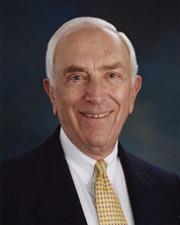 Sen. Frank R. Lautenberg (D-NJ)
Legislative Activity
Stay on top of the latest movement without scrolling through every action
Senate amendment agreed to: Amendment SA 619 as modified agreed to in Senate by Unanimous Consent.(text as modified: CR S5266-5267)
May 17, 2005
View full timeline
Senate amendment agreed to: Amendment SA 619 as modified agreed to in Senate by Unanimous Consent.(text as modified: CR S5266-5267)
May 17, 2005
Considered by Senate. (consideration: CR S5256, S5265-5267)
May 17, 2005
Amendment SA 619 as modified agreed to in Senate by Unanimous Consent. (text as modified: CR S5266-5267)
May 17, 2005
Senate amendment proposed (on the floor): Amendment SA 619 proposed by Senator Reid for Senator Lautenberg to Amendment SA 605.(consideration: CR S5199-5205; text: CR S5199-5200)
May 16, 2005
Amendment SA 619 proposed by Senator Reid for Senator Lautenberg to Amendment SA 605. (consideration: CR S5199-5205; text: CR S5199-5200) To increase penalties for individuals who operate motor vehicles while intoxicated or under the influence of alcohol under aggravated circumstances.
May 16, 2005
Senate amendment submitted
May 11, 2005
Text
Proposed
TRANSPORTATION EQUITY ACT: A LEGACY FOR USERS

The PRESIDENT pro tempore. Under the previous order, the Senate will
resume consideration of H.R. 3, which the clerk will report.
The assistant legislative clerk read as follows:

A bill (H.R. 3) to authorize funds for Federal-aid
highways, highway safety programs, and transit programs, and
for other purposes.

Pending:

Inhofe amendment No. 605, to provide a complete substitute.
Dorgan amendment No. 652 (to amendment No. 605), to provide
for the conduct of an investigation to determine whether
market manipulation is contributing to higher gasoline
prices.
Inhofe (for Ensign) amendment No. 636 (to amendment No.
605), to authorize the State of Nevada to continue
construction of the U.S.-95 Project in Las Vegas, Nevada.
Allen/Ensign amendment No. 611 (to amendment No. 605), to
modify the eligibility requirements for States to receive a
grant under section 405 of title 49, United States Code.
Schumer amendment No. 674 (to amendment No. 605), to
increase the transit pass and van pooling benefit to $200.
Sessions modified amendment No. 646 (to amendment No. 605),
to reduce funding for certain programs.

Recognition of the Majority Leader

The PRESIDENT pro tempore. The majority leader is recognized.

Schedule

Mr. FRIST. Mr. President, today we return to the consideration of the
highway bill. The managers are here to work through the remaining
amendments this afternoon, and we will have votes on at least one
amendment at 5:30, or sometime around 5:30. The specific time we will
state shortly but at around 5:30 today. We have an agreement for
finishing this bill tomorrow. Under the agreement, Senators may offer
amendments today from the limited list we agreed to last week. We do
hope most of these amendments will not require votes. There are a few
remaining amendments that will need rollcall votes prior to passage. I
once again thank the managers for their hard work, and I look forward
to finishing the bill tomorrow so we can get it to conference as soon
as possible.

Lebanon

Mr. President, in my leader remarks for the past week, I have come to
the Senate floor to briefly comment on a recent trip to the Middle
East. Over the April recess I had the privilege of traveling to Israel,
the West Bank, Jordan, Egypt, and Lebanon. In each of these stops, I
met with officials and community leaders. I also made a special point
of meeting with opposition leaders as well.
With each conversation, I learned more about the challenges facing
this complicated part of the world. I became convinced that despite the
deep differences that divide them, each party is committed to and wants
peace and prosperity. Each side knows that dialog is the only way
forward.
Nowhere has this been on more astonishing display than in Lebanon. As
we all witnessed, following the assassination of former Prime Minister
Rafik Hariri in February, hundreds of thousands of Lebanese citizens
took to the streets to peacefully protest foreign occupation and
interference. The images on television were remarkable. Central Beirut
was awash in this sea of flags of red, green, and white. Proudly
defiant citizens passed out roses to the soldiers who had been sent in
to contain them.
It was a triumphant moment for the Lebanese people and a turning
point in their country's history. Our delegation had the opportunity to
walk through Martyr Square, as that square is called, where, on March
14, there were hundreds of thousands of people who came forth to
express the will of the people.
Syrian military and intelligence personnel had been stationed in
Lebanon for decades and had consistently denied the Lebanese people the
sovereignty and territorial integrity deserved by all independent
nations. In addition, heavily armed militias, such as the Deborah
terrorist group, have operated with virtual impunity in Lebanon and

[[Page S5198]]

have been allowed to pursue their radical agenda.
The last few months have been times of turmoil and opportunity for
the Lebanese people. For the first time in decades, the Lebanese people
are free of the interference of the Syrian military.
However, it is still not clear that Syria is fully complying with the
United Nations Security Council Resolution 1559. Resolution 1559 calls
for the withdrawal of all foreign forces and intelligence personnel,
and the disarming of armed militias. Although Syria claims to have
removed all of its intelligence personnel from Lebanon, this has not
been confirmed. And groups such as Deborah refuse to disarm.
Resolution 1559 also calls for free and fair elections. Our first
meeting in Beirut was with members of the opposition. They represented
parties and religious sects--Christian, Druze, and Muslim. These
leaders were well versed in the requirements for a successfully
functioning democracy. In particular, they discussed the need to
restore accountability, to restore transparency, to secure an
independent judiciary, and to rebuild their economy so all Lebanese
people have a stake in the future. Their commitment to freedom, the
rule of law, and democratic governance was truly inspiring. They are
intensely aware of the importance of this historic opportunity to
secure a truly free democracy, and they were all united in holding
elections on time in late May. While I am hopeful, it remains to be
seen how their unity will hold once that new government is formed.
We then met with the Prime Minister, Prime Minister Najib Mikati. I
was greatly encouraged when he echoed many of the concerns that had
been expressed earlier in the day by leaders of the opposition. He
spoke of the need for an independent judiciary and respect for Lebanese
sovereignty. I agreed with his assessment that economic reform required
a strong private sector that is truly globally competitive.
He also expressed confidence that Syria had withdrawn all of its
intelligence agents and that the Lebanese people would soon see the
benefits of freedom from foreign occupation.
The Prime Minister also echoed the assurances of Parliamentary
Speaker Nabih Berri that free and fair elections would take place as
scheduled.
Finally, I had the opportunity to visit with participants in a
program called AMIDEAST. This program was established by our State
Department shortly after 9/11, seeking to rebuild a better
understanding of the United States by selecting young Lebanese students
to attend American schools and live with host families for a year. I
had the opportunity to meet with two students who will soon be in
Tennessee.
President Bush has rightly emphasized the importance of public
diplomacy in our efforts to spread freedom and democracy. My
interactions with the participants of AMIDEAST confirmed my belief that
more such programs are needed throughout the region. We need to make a
more concerted effort to reach out to the people of the Middle East,
especially the young, and demonstrate to them that they can achieve
their hopes and aspirations for peace and freedom.
My visit to Lebanon and the determination exhibited by the Lebanese
people in the past few months have been truly inspiring. I hope my
Senate colleagues will join me in continuing to support the Lebanese
people as they strive to achieve their dream of a free and prosperous
Lebanon.
Mr. President, I yield the floor.

Recognition of the Minority Leader

The PRESIDENT pro tempore. The Democratic leader is recognized.
Mr. REID. Thank you very much, Mr. President.

Wishing Senator Paul Sarbanes Well

Mr. REID. Mr. President, I would first like to say we have just
received word that Paul Sarbanes has been taken to the hospital. He was
attending the funeral of Chairman Rodino in New Jersey. We hope that
for him and Chris everything works out fine. But I think everyone who
is part of the Senate family should give their thoughts and prayers to
Paul Sarbanes, a wonderful human being. I am confident he will be OK,
but he is at a hospital now in New Jersey.

Judicial Nominations and the Nuclear Option

Mr. President, the majority leader stated the Senate will turn to the
subject of judicial nominations this week. We are ready for that. We
stand united against an outrageous abuse of power that would pack the
courts with out-of-the-mainstream judges.
The time has come for those Senators of the majority to decide where
they stand, whether they will abide by the rules of the Senate or break
the rules for the first time in 217 years--217 years--of American
history. Will they support the checks and balances established by the
Founding Fathers or vote to give the President unaccountable power to
pick lifetime judges?
I am confident and hopeful there will be six Republican Senators who
will be profiles of courage. I have had Senators come to me, even
today, Republican Senators, in personal conversations, telephone
conversations, today and over the weeks, who have said: We know you are
right. We know you are right. But we can't vote with you.
Boy, I will tell you, that is--I told my staff today, these
conversations have been some of the biggest disappointments I have ever
had in my political life. To have people say they know they are
breaking the rules, but they want to--I don't know all the reasons--
maybe so the President likes them or they think he likes them. I don't
know all the reasons. It is hard for me to intellectually understand,
emotionally understand how a Senator could say they know we are right
but they are willing to break the rules to change the rules. I believe
there must be at least six out there who are willing to stand up and
be, I repeat, profiles in courage.
While we are ready to debate this issue, I am deeply pained we need
to do so. The Senate in which I have spent the last 20 years of my life
is a body in which the rules are sacrosanct. We may choose to amend the
rules by a two-thirds vote. We may enter into unanimous consent
agreements to waive the rules. But never before in the history of the
Senate has a partisan majority sought to break the rules in order to
achieve momentary political advantage.
We know that the Parliamentarian has said--and it is a nonpartisan
office--this is the wrong way to go forward. I have had conversations
with the Parliamentarians myself. So I repeat, never in the history of
the Senate has a partisan majority sought to break the rules in order
to achieve momentary political advantage, because that is what it would
be. If this happens, it will be a short-term win for my colleagues on
the other side of the aisle but a long-term loss for the Senate and for
the American people.
I have worked so hard, Mr. President--I am not boasting about how
hard; we have all worked hard, but I have spent the majority of my time
in the last month on this issue. I have said privately and publicly
this is the most important issue I have ever worked on in my 40 years
in public service.
In an effort to avoid this confrontation and preserve constitutional
checks and balances, I have made every effort to be reasonable--every
effort. Here on the floor, I offered last Monday an up-or-down vote on
Thomas Griffith, a controversial nominee to the DC Circuit. Last
Thursday, I offered to have an up-or-down vote on three nominees to the
Sixth Circuit, two of whom were filibustered last year.
These are not judges we would choose, but we know the difference
between opposing bad nominees and blocking acceptable ones. In making
what I thought were good-faith offers, I asked the majority: Do you
want to confirm judges or do you want to provoke a fight? Regrettably,
all of my proposals have been rejected--all of my proposals. There were
certainly more than these, and I am not going to go through the
proposals I made privately. I have only talked about those I have made
separate from these offers.
I wrote to the majority leader last week and suggested two ways to
break the impasse. First, I made clear my previous offer to allow an
up-or-down vote on one of the most controversial nominees remaining on
the table.
Second, I suggested we consider changing the rules in accordance with
the rules--not too unique; if you want to change the rules, follow the
rules--if the majority leader were to put his

[[Page S5199]]

proposal in the form of a Senate resolution and allow it to be referred
to the Rules Committee.
I have spoken to Senator Dodd. In fact, he was here last week to
speak on this matter, but because of what was going on in the Chamber
he was unable to do that. Senator Dodd said he would do everything in
his power as ranking member to expedite this consideration.
Neither of these good-faith suggestions have been accepted, and I
guess it is clear why, I am sad to say. Republicans in the Senate
demand to have it all. A 95-percent confirmation rate is not good
enough. Votes on some of the most controversial nominees isn't good
enough. They are prepared to do whatever it takes to achieve total
victory.
Meanwhile, the White House appears to be pulling strings.
At a meeting I had in the White House, I asked the President: Mr.
President, you could avoid so much controversy in the Senate. We could
move forward on your agenda so much easier if you would intervene on
this so-called nuclear option and help us resolve it.
He said to me: I have nothing to do with that. That is all up to
you--not me but the Senate leaders--I am staying out of this.
Well, within hours after that, deputy White House Chief of Staff Carl
Rove was quoted as discouraging any middle ground, all or nothing. Then
Vice President Cheney gave a speech in which he said: All or nothing.
On Friday, the Washington Times--and this is really interesting for
those of us who love the Senate. On Friday, the Washington Times
reported that White House Press Secretary Scott McClellan ``flatly
rejected any talk of compromise that would confirm only some of the
President's blocked nominees.'' The White House is telling the Senate
how to operate? The Press Secretary of the President is telling the
Senate what to do and not to do? The White House, through their Press
Secretary, flatly rejects an offer of compromise. What has this body
come to?
It is disturbing that the White House is playing an aggressive role
to discourage compromise. Every high school student in America learns
about checks and balances. The Senate advice and consent role is one of
the most important checks on Executive power. The White House should
not be lobbying to change Senate rules in a way that would hand
dangerous new powers to the President over two separate branches--the
Congress and the judiciary.
Of course, the President would like the power to name anyone he wants
to lifetime seats on the Supreme Court and other Federal courts, but
that is not how America works. The Constitution doesn't give him that
power, and we should not cede that power to the executive branch.
As the majority leader admitted with Senator Byrd last week, there is
no constitutional right to an up-or-down vote on judicial nominees. If
there were, more than 60 of President Clinton's nominees had their
rights violated. In fact, the Senate has rejected hundreds of judicial
nominations over the years. Legal scholars say 20 percent of those
selected for the Supreme Court have not gone forward. Prior to 1917,
there was no way to stop the filibuster, and lots of judges simply
didn't come forward. So we have rejected hundreds of judicial
nominations over the years, some by an up-or-down vote, some by
filibuster, and some by simple inaction. In each case the Senate was
acting within its authority under the advice and consent clause of the
Constitution.
My friend, Senator Frist, says he wants a fairness rule, but a rule
allowing the President to ram extreme judges through the Senate is
unfair to the American people. Meanwhile, we need to get back to the
people's business and put people over partisanship. We were sent here
to govern, and right now we are not doing that. Gas prices are up,
families have lost health insurance, pension plans are unstable, to say
the least, and the situation in Iraq is grave. The Senate, literally,
is fiddling while Rome is burning.
Mr. President, I am going to continue to talk to the majority leader.
I am going to talk and talk and talk as much as I can to try to resolve
this issue. I know there are other efforts at compromise under
consideration. But unless cooler heads prevail, this confrontation will
be upon us later this week. If it comes to that vote, Democrats and
responsible Republicans--if it comes to that vote, Democrats in the
Senate and responsible Republicans in the Senate will vote to preserve
checks and balances and preserve the principle that the Senate rules
must not be broken.

Mr. President, the eyes of the Nation are upon us. There have been
few moments of truth like this one in the history of this great
institution. The American people will see whether the Senate passes
this historic test.
Would the Chair announce what the business is before the Senate?
The PRESIDENT pro tempore. The pending business is H.R. 3.
Mr. REID. There is no time for morning business this morning; is that
true?
The PRESIDENT pro tempore. There has been none requested.
Mr. INHOFE. Mr. President, we are at the point now where I believe we
are going to hear from a number of Members who have submitted
amendments and some who simply want to talk about the bill, some who
want to talk about the formulas. We have had some requests for time. It
is my understanding that we are going to have our vote at 5:30. It does
mean we have limited time between now and then. Let me just make a
comment or two about this and then ask--
Mr. REID. Would the Senator yield for a unanimous consent request?
Mr. INHOFE. Of course.
Mr. REID. Mr. President, I ask unanimous consent that amendments
numbered 638, 690, and 723 be removed from the list of first-degree
amendments to H.R. 3.
The PRESIDENT pro tempore. Is there objection? The Chair hears none,
and it is so ordered.

Amendment No. 619 to Amendment No. 605

Mr. REID. On behalf of Senator Lautenberg, I call up amendment No.
619.
The PRESIDENT pro tempore. Without objection, the pending amendment
is laid aside and the clerk will report.
The assistant legislative clerk read as follows:

The Senator from Nevada [Mr. Reid], for Mr. Lautenberg,
proposes an amendment numbered 619.

The amendment is as follows:

(Purpose: To increase penalties for individuals who operate motor
vehicles while intoxicated or under the influence of alcohol under
aggravated circumstances)

Strike section 1403 and insert the following:

SEC. 1403. INCREASED PENALTIES FOR HIGHER-RISK DRIVERS
DRIVING WHILE INTOXICATED OR DRIVING UNDER THE
INFLUENCE.

(a) In General.--Section 164 of title 23, United States
Code, is amended to read as follows:

``Sec. 164. Increased penalties for higher-risk drivers
driving while intoxicated or driving under the influence

``(a) Definitions.--In this section:
``(1) Blood alcohol concentration.--The term `blood alcohol
concentration' means grams of alcohol per 100 milliliters of
blood or the equivalent grams of alcohol per 210 liters of
breath.
``(2) Driving while intoxicated; driving under the
influence.--The terms `driving while intoxicated' and
`driving under the influence' mean driving or being in actual
physical control of a motor vehicle while having a blood
alcohol concentration above the permitted limit as
established by each State.
``(3) Higher-risk impaired driver law.--
``(A) In general.--The term `higher-risk impaired driver
law' means a State law that provides, as a minimum penalty,
that--
``(i) an individual described in subparagraph (B) shall--

``(I) receive a driver's license suspension;
``(II)(aa) have the motor vehicle driven at the time of
arrest impounded or immobilized for not less than 45 days;
and
``(bb) for the remainder of the license suspension period,
be required to install a certified alcohol ignition interlock
device on the vehicle;
``(III)(aa) be subject to an assessment by a certified
substance abuse official of the State that assesses the
degree of abuse of alcohol by the individual; and
``(bb) be assigned to a treatment program or impaired
driving education program, as determined by the assessment;
and
``(IV) be imprisoned for not less than 10 days, or have an
electronic monitoring device for not less than 100 days; and

``(ii) an individual who is convicted of driving while
intoxicated or driving under the influence with a blood
alcohol concentration level of 0.15 percent or greater
shall--

``(I) receive a driver's license suspension; and
``(II)(aa) be subject to an assessment by a certified
substance abuse official of the State that assesses the
degree of abuse of alcohol by the individual; and

[[Page S5200]]

``(bb) be assigned to a treatment program or impaired
driving education program, as determined by the assessment.

``(B) Covered individuals.--An individual referred to in
subparagraph (A)(i) is an individual who--
``(i) is convicted of a second or subsequent offense for
driving while intoxicated or driving under the influence
within a period of 10 consecutive years;
``(ii) is convicted of a driving-while-suspended offense,
if the suspension was the result of a conviction for driving
under the influence; or
``(iii) refuses a blood alcohol concentration test while
under arrest or investigation for involvement in a fatal or
serious injury crash.
``(4) License suspension.--The term `license suspension'
means, for a period of not less than 1 year--
``(A) the suspension of all driving privileges of an
individual for the duration of the suspension period; or
``(B) a combination of suspension of all driving privileges
of an individual for the first 45 days of the suspension
period, followed by reinstatement of limited driving
privileges requiring the individual to operate only motor
vehicles equipped with an ignition interlock system or other
device approved by the Secretary during the remainder of the
suspension period.
``(5) Motor vehicle.--
``(A) In general.--The term `motor vehicle' means a vehicle
driven or drawn by mechanical power and manufactured
primarily for use on public highways.
``(B) Exclusions.--The term `motor vehicle' does not
include--
``(i) a vehicle operated solely on a rail line; or
``(ii) a commercial vehicle.
``(b) Transfer of Funds.--
``(1) In general.--Except as provided in paragraph (2), on
October 1, 2008, and each October 1 thereafter, if a State
has not enacted or is not enforcing a higher-risk impaired
driver law, the Secretary shall transfer an amount equal to 3
percent of the funds apportioned to the State on that date
under paragraphs (1), (3), and (4) of section 104(b) to the
apportionment of the State under section 402 to be used in
accordance with section 402(a)(3) only to carry out impaired
driving programs.
``(2) Nationwide traffic safety campaigns.--The Secretary
shall--
``(A) reserve 25 percent of the funds that would otherwise
be transferred to States for a fiscal year under paragraph
(1); and
``(B) use the reserved funds to make law enforcement
grants, in connection with nationwide traffic safety
campaigns, to be used in accordance with section
402(a)(3).''.
(b) Conforming Amendment.--The analysis for subchapter I of
chapter 1 of title 23, United States Code, is amended by
striking the item relating to section 164 and inserting the
following:

``164. Increased penalties for higher-risk drivers driving while
intoxicated or driving under the influence.''.

Mr. INHOFE. Mr. President, as I was saying, we do have a lot of
people who want to be heard on this bill. I believe I have said several
times this could very well be the most significant vote we will have
this year. It is a vote that we actually had last year. Senator
Jeffords and I worked for 3 years on this bill, along with Senator Bond
and Senator Baucus. The four of us have been shepherding this bill. Now
it looks as if we are very close to getting a bill.
Last year, our bill was funded at $318 billion. It was passed on to
conference, and we lacked one signature of getting a conference report,
so it did not happen. As a result, we are operating on our sixth
extension. I know the occupant of the chair understands the
significance of this. It means all the reforms we have in here,
streamlining reforms, will not be a reality if we are not able to pass
a bill, if we have to operate on a seventh extension. It means we are
not going to have any help for the donee States. We will not have any
help for the sparsely populated States. We are not going to be able to
have the commission that is going to look into new ways of funding
highways. We started off back in the Eisenhower administration. Since
he started the national highways program, we have been funding them
essentially the same way ever since, but this bill appoints a
commission that is going to be creative and do a lot better job than we
have done before.
The formula--you always find someone objecting to the formula. It
takes into consideration about 10 different things: size of the State,
density of the State, the donor status of the State--things that are
very significant in order to be totally equitable. One of the factors
is the highway fatalities in the State on a per capita basis. That has
to tell you something. If one of the States has a lot more fatalities
on the highway, it means they have greater needs. My State of Oklahoma
has terrible bridges. We are ranked dead last. We were tied with the
State of Missouri, but I think we are now last. We want to correct
that. We want this bill. It is very important that we have this bill.
We are going to have our vote tomorrow, and we want to hear from anyone
down here.
I ask Senator Jeffords, did you want to make any comments at this
time?
Mr. JEFFORDS. No.
Mr. INHOFE. I don't see Senator Baucus. I ask Senator Bond, do you
want to make any comments?
Mr. BOND. No.
Mr. INHOFE. Senator Thomas.
The PRESIDENT pro tempore. The Senator from Wyoming is recognized.
Mr. THOMAS. I will not take long. I know there is lots for us to do,
but I wanted to come over to the floor and express my support for the
movement and the passage of the highway bill. I, first of all, wish to
thank the chairman and the ranking member for the work they have done.
Having been on that committee in years past, I know how difficult a
task it is and what a great job they have done.
We have been now some 5 or 6 years waiting to do what we really need
to do, clearly need to do. All of us have highway problems. All of us
have need for an infrastructure. It is certainly one of the things that
creates more jobs than almost anything we could possibly have. And the
transportation system is something we clearly need for the future. So I
guess I am a little disappointed that it has taken as long as it has
for us to move forward. But now we do have an opportunity to do that,
and certainly it is the time to do it. This bill has been reviewed by
almost everybody in the place. We don't need to spend a lot more time
talking about it. Certainly, there will be some amendments. However,
the House has passed a similar bill. I think we should stick to the
highway funding as it was set up in the budget, frankly, but that is an
issue that will be resolved in time.
So I just hope we can pass it here. I think these decisions as to how
the money is used should be made in the States, and we do not want a
bunch of decisions made here as to the details of transportation.
I will not take more time, but I do want to say that it is
discouraging and frustrating for us to take this long to move forward.
We have so many things out there we need to be doing. The Energy bill
is just as important as this, perhaps even more. We have laid it aside
and continue to wait. We need to be looking at the future both in the
highway bill and energy as to where we are going to be in 10 or 15
years and make some policy decisions with respect thereto.
One of the real problems, of course, with highway funding is that
all, practically all of the work that is done on highways is done by
contracting with our various State departments that handle highways.
When you do contracting, you have to have knowledge of the time ahead
as to what your financing is going to be because contracting is done in
the future.
So I hope we can get on with this bill. I think we need to be talking
about budgets. That is one of the things that is very important to us.
Energy is very important to us. I think we need to get over this idea
of stalling.
I noticed the minority leader has said we are talking about breaking
the rules. We are not breaking the rules. We are going to change the
rules so that we can move forward. I think it is time to stop the
chatter about that as well and move on to something that we can do.
So we need a bill. Extensions are no longer acceptable. Our State
DOTs cannot wait long periods of time. Our construction time in
Wyoming, for example, is very short during the summer.
So, Mr. President, I again thank the managers of this bill for moving
forward. Let's get it done.
I thank the Chair.
Mr. INHOFE. Mr. President, I thank the Senator from Wyoming for an
excellent point, and that point is we are on our sixth extension now.
Some extensions are 30-day extensions, some of them are 6-month
extensions, and you can't expect the contracting community out there to
be able to plan in an efficient way to spend the money to build the
highways, to build the

[[Page S5201]]

bridges, or repair the highways if they can't plan in advance. This
would give us 5 more years on a 6-year authorization. It is absolutely
imperative.
I say to my colleagues that we are now operating on the bill, so
whoever seeks recognition can get recognition as he or she desires.
The PRESIDENT pro tempore. Who yields time?
Mr. INHOFE. I don't believe we are yielding time.
The PRESIDENT pro tempore. Who seeks recognition?
The Senator from Hawaii.
Mr. AKAKA. Mr. President, I ask unanimous consent to speak as in
morning business for 15 minutes.
Mr. INHOFE. Reserving the right to object, I don't want to object,
but we have a short period of time until we have to go to the highway
bill vote. We have a long list of people who want to speak on the
highway bill. What I would ask of the Senator from Hawaii is that
instead of his speaking for 15 minutes, he go ahead and start, and if
anyone wants to seek recognition on the highway bill, they could do so.
The PRESIDENT pro tempore. Does the Senator withdraw his request?
Mr. AKAKA. Mr. President, I will not ask for time. I ask unanimous
consent to speak as in morning business.
The PRESIDENT pro tempore. Without objection, it is so ordered.
(The remarks of Mr. Akaka pertaining to the introduction of S. 1037
are located in today's Record under ``Statements on Introduced Bills
and Joint Resolutions.'')
The PRESIDENT pro tempore. The Senator from Oklahoma.
Mr. INHOFE. Mr. President, we have several requests to speak prior to
4 o'clock and then more prior to 5:30 on the highway bill which is the
regular order. So far, those speakers who want to speak in morning
business have been kind enough to say that they would not mind being
interrupted, if necessary, if someone came down to talk about the
highway bill. I appreciate that and remind my colleagues that we don't
have a lot of time between now and the vote at 5:30.
The PRESIDING OFFICER (Mr. Burr). The Senator from North Dakota.
Mr. DORGAN. Mr. President, I intend to introduce a bill and speak
about it briefly. I will do that with the proviso that if someone comes
and wishes to speak about their amendment on the highway bill, I will
be happy to relinquish the floor.
Is the Senator from Iowa wishing to speak on an amendment?
Mr. INHOFE. The Senator from Iowa, chairman of the Finance Committee,
has a title under this bill. If you don't mind, I am sure there will be
time.
Mr. DORGAN. I am happy to defer. I know this highway bill is
important to get passed as soon as possible. I am happy to yield the
floor and perhaps, following the Senator from Iowa, if there is an
opportunity, I will make my statement.
The PRESIDING OFFICER. The Senator from Iowa.
Mr. GRASSLEY. Mr. President, it should be quite obvious from
America's increasing dependence on foreign sources of oil that it has
now reached a very critical threshold which calls for immediate action.
This bill before us is part of our immediate action, as it has some
things in it to increase our availability of domestic supplies of
energy. Global oil prices and supplies remain beyond our reach, just as
surely as our own demand here at home will remain constant. Abroad, oil
prices and supplies are at best in a state of flux, very unpredictable.
At worst, you could say that things are beyond our control.
Our obvious goal in a lot of our energy legislation--some of it is
part of this bill and part of the debate we had 2 years ago on the
highway bill--is to get some of this under our control by having less
dependence upon foreign sources of oil.
In China, for instance, the competition for oil is unprecedented. So
determined is China to protect itself and its burgeoning growth against
global uncertainty, they have recently secured supplies from both
Canada and Venezuela and are actively seeking oil from producers upon
whom the United States has traditionally relied. Some experts suggest
that we have now reached our global supply limits, perhaps even that we
have exceeded them.
If they are correct--and of course we hope they are not--we face more
shortages and rising prices. The answer to these very real and vexing
questions about the global security of supply and price for America's
oil demands are far beyond this Senator and indeed even beyond this
legislation before the Senate.
However, I believe, with this amendment as part of the managers'
package, we will go a long way toward reducing our domestic dependence
upon oil dedicated to our transportation sector. We are gulping vast
amounts of imported oil in an increasingly futile attempt to quench our
thirsty addiction to petroleum. Today, our transportation sector
accounts for two-thirds of the total United States demand. This forces
us to import a whopping 60 percent of our petroleum needs.
I remember a time when we thought it was inconceivable America would
ever exceed even 50-percent reliance upon foreign oil. Yet, we have,
and then we exceeded even that, until here we are today at more than 60
percent. What can we do now to alleviate the problem? How can we do so
here at home?
The President pointed something out when he spoke last week about the
pressing needs to develop and implement comprehensive national energy
policy, and I think it bears repeating if only through paraphrasing.
President Bush indicated that technology would provide our Nation with
the means to reduce our demand for petroleum-based fuel, thus reducing
the high price of gasoline. The President also stressed we must embrace
domestic alternative fuels as a critical midstep on the pathway toward
hydrogen, which may well prove to be our ultimate fix. But the simple
fact remains that a sustainable, affordable hydrogen program is still
decades away. Transitioning America away from our entrenched dependency
on foreign petroleum fuels to cleaner, cheaper domestic alternatives is
occurring right now here at home. We should not be oblivious to it. I
agree with the President that these domestic alternatives need to be
embraced and encouraged. To that end, therefore, as chairman of the
Finance Committee, I have developed a proposal entitled the
``Volumetric Excise Tax Credit for Alternative Fuels.'' It would be
just like VEETC for ethanol and biodiesel that we passed last year,
only extended to alternative fuels. This proposal would help
significantly accomplish that goal of being less dependent upon foreign
sources of energy.
The VEETC proposal would provide for the expansion and modification
of the Volumetric Excise Tax Credit for Alternative Fuels. Our proposal
will expand last year's excise tax formula, as it relates to ethanol,
to include an excise tax credit for all domestic alternative fuels
which would displace imported petroleum. This is how it would work.
Some fuels, such as natural gas, presently pay a partially reduced rate
of excise tax into the highway trust fund.
However, because these motor vehicles exact the same amount of damage
to our roads and highways, my amendment would have them pay an
increased rate of Federal excise tax into the highway trust fund. With
this mechanism, the President's objective of displacing as much
imported oil as possible is met. As importantly, the increased excise
tax payments would go a long way toward increasing revenue into the
highway trust fund for the near term and well into the foreseeable
future.
This is not a new concept. Congress passed, and the President signed
into law, a similar provision last year providing the same treatment
for ethanol and biodiesel. In an effort to further encourage other
domestic alternative fuels, this new VEETC amendment that we will be
taking up which enjoys broad bipartisan support, it constitutes a
simple expansion on the part of the framers to include other
alternative fuels which displace imported petroleum-based fuels.
Adoption of the VEETC for alternative fuels would constitute a win-win.
It puts more money into the highway trust fund, while at the same time
promoting domestic sources of motor fuel.
I yield the floor.
The PRESIDING OFFICER. The Senator from North Dakota is recognized.
Mr. DORGAN. Mr. President, again, I seek permission to speak as in
morning business. I will relinquish the floor if somebody wishes to
speak about the highway bill.

[[Page S5202]]

The PRESIDING OFFICER. Without objection, it is so ordered.

Piracy and Counterfeiting by China

Mr. DORGAN. Mr. President, I am introducing some legislation today,
along with Senator Lindsey Graham from South Carolina to construct. It
deals with the issue of piracy or counterfeiting of goods by China. It
relates to the substantial loss of U.S. jobs, and $200 billion in harm
to the U.S. economy as a result of the piracy and counterfeiting that
is going on in China.
What is our Government's reaction to this problem? Our government's
reaction to date can be characterized as somewhere between looking
worried, a deep frown, or thumb-sucking. Essentially, it is doing
nothing to stand up for this country's economic interests.
Let me describe the problem. The U.S. Trade Representative has
concluded that: ``China has not resolved critical deficiencies in
intellectual property rights protection and enforcement and, as a
result, infringements remain at epidemic levels.''
In short, the Chinese are cheating, counterfeiting American goods and
robbing jobs from our country. Chinese fake goods coming into the
United States grew 47 percent last year. The Chinese government is not
doing anything about it. Investigations of counterfeiting in China, as
you see, have taken a nosedive. The vast majority of products in the
United States that are counterfeits or pirated are Chinese; 67 percent
of the counterfeit products in this country are Chinese counterfeit
products.
The question is, What are we going to do about it? Senator Lindsey
Graham and I are offering a sense of the Senate resolution--and we will
ask the Senate to vote on it at some point--calling for the immediate
launch of a WTO case against China for gross violation of U.S.
intellectual property rights.
On April 29, last month, the U.S. Trade Representative released a
report finding that China had broken its promises to crack down on this
piracy and counterfeiting. They have done nothing. They promised the
moon, and they have done nothing. The question is, Will this country
stand up for its own economic interests?
Mr. President, let me give you specific case that I think is
interesting. Time magazine wrote recently about a new car produced by
Chery, an automobile company in China--that's right, not Chevy, but
Chery the Chery Automobile Company.
A Chinese firm called the Chery Automobile Company has stolen
production-line blueprints for a new GM car called the Chevrolet Spark.
The Chery Automobile Company is going to be producing that car, which
they call the QQ, and they plan to sell five models, including an SUV,
in the United States. Chery has teamed up with the man who brought the
Subaru to America in the 1960s. Their plan is to import up to a quarter
of a million Cherys starting in 2007.
GM is now in court. General Motors filed an action alleging that
their production-line blueprints were stolen.
But it is not just that. It is so many different products. Take a
look at the products that all of us know--films, publishing, software,
electric equipment, automotive parts, on and on--have been
counterfeited and pirated. It means American lost jobs and a higher
trade deficit to the tune, we are told, of $200 billion in piracy and
counterfeiting.
Now, given that we had specific promises by China that they would
begin to crack down on this with respect to their entrance into the
World Trade Organization, and the fact we know they have done nothing--
our own U.S. Trade Ambassador says they have done nothing, that it is
``epidemic''--when will this country take action?

Winston Churchill once told a story of being taken to a carnival by
his parents. He was speaking to his adversary in the House of Commons,
and he told the story about seeing the sideshow's big canvas sign that
says, ``Come Inside and See the Boneless Wonder,'' a man apparently
born without bones. Winston Churchill said he was with his parents that
day; his parents thought it was too traumatic to take a young boy into
a carnival sideshow to see the boneless wonder. He never got to see it
until that day on the floor of the House of Commons. When he addressed
his adversary, he said, ``Finally, I see a boneless wonder.''
Boneless wonder is a good way to describe, in my judgment, those
involved in trade policy in this country, who fail to stand up for this
country's economic interests, who don't have the backbone to stand up
and say it is in our country's interests, in the interest of our jobs,
to take action against those who pirate or counterfeit American
intellectual property. I have talked often on the Senate floor about
trade with China and Japan and Korea and with Europe. There has been a
lack of spine on many fronts. In this case, I am speaking specifically
about counterfeiting and piracy by the Chinese, with whom we have the
largest trade deficit in history.
Now we see that the USTR says it is in epidemic proportions--piracy
and counterfeiting--and yet nothing is being done. The question is,
Will we do something? Will we finally have the nerve to say we want a
WTO case to be commenced against the Chinese?
This is a sense of the Senate resolution asking that the USTR
commence a WTO case against the Chinese. Again, it is not me who says
that the Chinese have cheated. The U.S. Trade Representative said
himself that: ``China has not resolved of the critical deficiencies in
intellectual property rights protection and enforcement and, as a
result, infringements remain at epidemic levels.''
That amounts to massive wholesale stealing going on. It affects this
country in a very detrimental way. Will we begin to finally take
action? I have mentioned before that part of our trade problem is due
to the incompetence of our trade negotiators. There is no other way to
describe it. In the bilateral trade negotiation that occurred with
China about 5 years ago, our negotiators agreed that China would impose
25-percent tariff on any American cars we tried to sell in China, and
we would impose only a 2.5-percent tariff on Chinese cars coming into
this country. That is fundamentally incompetent. I don't have any idea
who would have agreed to that, but it obviously pulls the rug out from
our country's interests.
Now, we hear that General Motors has filed an action against Chery
Automobile Company in China for producing a car called the QQ, which
General Motors says was stolen from the production blueprints of
General Motors for one of their vehicles. And cars like these are
headed to our market soon, where the floodgates are wide open.
It all comes around. Incompetent negotiators on our side, piracy and
counterfeiting on their side, and unwillingness on our side to stand up
for this country's economic interests; and meanwhile we watch the
exodus of American jobs and the sapping of our economic strength
because of trade rules, trade agreements, and the lack of enforcement
that represents a basic unfairness to the producers and workers in this
country.
So the question remains: When will our Government stand up for
American workers? When will our Government stand up for American
producers? I am talking about unfair trade, and about a Chinese
Government that does nothing about it. It is past the time--long past--
when our country should expect action. The citizens of our country
deserve a Government that does better for them in demanding fair trade.
So my colleague and I will introduce the resolution today. It is a
sense of the Senate resolution that calls for a WTO case to be filed by
our Trade Ambassador against China for gross violations of U.S.
intellectual property rights.
There are so many examples of piracy and counterfeiting that I will
not begin to chronicle them, but I will say this: I know that many U.S.
companies that are victimized by counterfeiting do complain mightily,
but they are also very nervous about an action being filed against this
kind of stealing and cheating. It is time for them to decide whether
they are interested in solving the problem or just complaining about
it. If they are interested in just complaining about being victims,
then they are going to ultimately be happy if the trade ambassador
continues to do nothing. But in my judgment, it is a disservice to our
country's interests at a time when we have the highest trade deficits
in history, at a time when we are trying to hang on to American jobs,
trying to stem the flow

[[Page S5203]]

of American jobs outside of our country that are moving abroad in
wholesale numbers. It is a disservice to our country's interests for us
not to stand up when we see unfair trade and take action against it.
That is why Senator Lindsey Graham and I have submitted this
resolution today. That is why I hope in the coming days and weeks we
will be able to have an opportunity for the Senate to express itself.
Does the Senate believe we ought to have our trade ambassador file an
action with the WTO, or does it not believe that? Does it believe this
is a serious problem, or does it think it is simply an annoyance?
I hope most Senators will agree with Senator Graham and myself that
this is a very serious problem and one that deserves an opportunity to
be corrected.
Mr. President, let me now take a moment to congratulate Senator
Inhofe and Senator Jeffords for their work on the highway bill. This is
business that has been around the Senate for over 2 years. Most all of
us wished--and I know no one more than the chairman and ranking
member--we had passed a highway bill a long while ago, but it has taken
some effort to get the kind of highway bill to the floor of the Senate
that they have been able to get here.
I very much appreciate their leadership. Is this bill perfect? No,
but it is an awfully good bill. Tomorrow, hopefully, when we finally
pass this legislation and get to conference, my hope is the conference
will have the wisdom to accept the Senate bill. There is a very big
difference between the Senate bill and the House bill. My thoughts go
with the chairman and ranking member and the conferees as they go to
conference because this is a very important piece of legislation, and I
compliment them.
Finally, all the papers warned us this will be some momentous week
with respect to the so-called nuclear option and other issues. Just as
I think all of us feel good about talking about a highway bill which is
important and which strengthens this country, I think all of us would
much prefer to be on the floor of the Senate talking about jobs, health
care, energy, and about all the other issues that are so important. My
hope is at the end of this week, we will get back to those issues as
well.
Mr. President, I yield the floor.
The PRESIDING OFFICER. The Senator from Oklahoma.
Mr. INHOFE. Mr. President, I thank the Senator from North Dakota for
his comments on the highway bill. It is very significant. It probably
could very well be the most significant bill we will be voting on this
year.
If I can get the attention of the Senator from North Dakota, I have
had occasion to give four 1-hour China speeches on the floor of this
Senate in response to the 2004 report to the Congress on the China
Economic and Security Commission. I do not know whether the Senator
from North Dakota has read that yet, but I am going to call that up
with a resolution to implement the recommendations.
This is far more serious than even some of the issues the Senator
from North Dakota mentioned in his excellent comments. If we look at
how China is now using up the resources we are depending upon, if we go
to any of the countries in Africa, such as Nigeria and the coast of
Guinea where they have huge reserves, we find the Chinese are building
huge stadiums, coliseums, and roads, and paying for it themselves to
get the corner on those markets we will be dependent upon at some time.
They are dealing with countries such as Iran and exchanging nuclear
technology.
I have been deeply concerned about the Chinese, not just in what they
have been able to do in terms of their nuclear capabilities, but also
their conventional capabilities. It was in 1998 that GEN John Jumper
came forth and said something that startled a lot of people, but we
knew it all the time, and that is the Russians are now making a strike
vehicle, an SU-30, that is better than our strike vehicles, the F-15
and F-16. And then we find out China has purchased, in one purchase,
240 of these vehicles. Their buildup of conventional forces and what
they are doing economically to this country is very disturbing to me.
It has to be addressed.

I hope the Senator from North Dakota will join us in trying to
implement the recommendations of this 2004 study--it was 4 years in the
making--of the security and economic problems we are facing today as a
result of the Chinese buildup.
Mr. DORGAN. Mr. President, if the Senator will yield for a question.
I agree with what Senator Inhofe has described with respect to the
Chinese, and I think he would agree neither of us is attempting to
paint the Chinese as an adversary. Our intention is to make China a
long-term friend of our country, but for that to happen, the Chinese
need to do the right thing on trade and security issues.
I have described today with respect to piracy and counterfeiting some
very troubling issues, and Senator Inhofe knows and I know and others
know there are some very serious and very troubling issues with respect
to international security. That is the movement of critical materials
and technology to the wrong parts of the world, the purchase of that
technology by the Chinese.
Our intention and our hope is to work with the Chinese. But I think a
country cannot sit back and say, whatever happens happens, whatever you
are doing, that is fine. You have to stand up to things you find
troubling. People take advantage of you if you let them take advantage
of you. The same thing is true of countries, whether it is trade or
international security. We have a responsibility to speak out with
respect to issues, whether it be the Chinese or others, when we think
they are an affront to our economic interests and our long-term
national interests.
I appreciate the comments of Senator Inhofe.
Mr. INHOFE. Mr. President, first, this Commission worked 4 years.
They studied it from a security and economic standpoint. It was
bipartisan and had every expert one can think of on the Commission.
They came out with some very strong recommendations. I would hope the
Senator from North Dakota and the Senator from South Carolina might
want to expand what they are doing after reading the recommendations.
Maybe we can join forces at a later date and have a resolution
recommending the adoption of the recommendations of this Commission.
Mr. President, again, we are on the highway bill. Senator Jeffords,
the ranking member of the EPW Committee, and I worked so well together
on this. I have to say before he makes his comments, there are a lot of
provisions in this bill that he likes better than I like, and there are
provisions I like better than he likes. That is what it is, that is how
we got to where we are today. It has been a great working relationship,
and I anticipate we are going to be successful in getting this bill
passed.
The PRESIDING OFFICER. The Senator from Vermont.
Mr. JEFFORDS. Mr. President, I thank the Senator for his kind words.
We are making progress. I know we are going to come out with a good
bill. I look forward to working with him.
Today we begin the third week of debate on this very important
legislation. The bill before us, the Safe, Accountable, Flexible, and
Efficient Transportation Equity Act of 2005, better known as the
highway bill, is important to the Nation.
Too many Americans are sitting in traffic. The Texas Transportation
Institute, which ranks U.S. cities on the severity of their congestion,
tells us in a recently released report that the average commuter in
Atlanta sits in traffic for 67 hours each year; Washington, DC, for 69
hours; San Francisco, 72 hours; in Los Angeles, the average commuter
sits in traffic for an astounding 93 hours each year. That is almost 4
days each year wasted while sitting behind the wheel in traffic.
I would hope we could move away from our reliance on cars and make
better use of public transit, but the reality is the number of cars on
the roads increases each year.
The bill before us will help cities in all of our States reduce
congestion by adding additional travel lanes, by building overpasses at
busy intersections, and using the best technology available to keep our
traffic moving.
We need this bill to make our roads safer. More than 42,000 Americans
will die in traffic accidents this year. The bill before us will help
States make

[[Page S5204]]

dangerous intersections and curves safer by putting up better warning
signs, by building guardrails, and by building center median dividers.
This bill will make our roads safer by helping States build wider
shoulders for disabled vehicles, by building rumble strips to slow down
traffic, and by building fences to discourage jaywalkers. This bill
will save lives.
Once again, I thank the chairman, Senator Inhofe, Senator Bond, and
Senator Baucus for all their efforts in moving this bill forward. And
while I am glad we expect to pass this bill tomorrow through the
Senate, I remind all of my Senate colleagues we still have a lot of
work to do ahead.
Mr. President, I yield the floor.
The PRESIDING OFFICER. The Senator from Oklahoma.
Mr. INHOFE. Mr. President, the Senator from Vermont brought up a very
interesting point when he said this bill will save lives. We have a
whole safety core in this bill. This was done in the Commerce
Committee's portion of the bill. That is why when we have a very
complicated formula, one of the factors in the formula is the fatality
rate on a per-capita basis of the States because that is one indicator
that there is a problem with surface transportation and a problem that
can be corrected with this bill.
We had called this bill the SAFETEA bill because it has the safety
provisions that will save lives. I can speak for my State of Oklahoma
and many others that more than half the States are above this average
in terms of fatalities. We need to do something about this. We cannot
do it if we extend it.
I do not think people realize that if we do not pass this bill by
tomorrow and get it to conference and back from conference prior to the
termination of this sixth extension--and that is May 31--then we will
have to get another extension. If we get another extension, we will be
doing the same thing we have done over the last 2 years with
extensions, and that is continue it as it was under the 7-year-old TEA-
21. There have been a lot of changes since then.
All those Senators representing donor States, such as my State of
Oklahoma--I can remember when Oklahoma would only get back 75 percent
of what they sent in, and now we have made improvements. The bill
passed 7 years ago, TEA-21, brought up the minimum to 90.5 percent. If
we had passed the bill we had last year at a higher funding level, that
would have been 95 percent.
In other words, every donor State or every State would get back 95
percent of what they sent in. That would be better than the 90.5 today.
At this reduced funded level, it will be about 92 percent.
The point is this: If we do not pass a bill, it is not going to
happen. We are not going to have any relief for the donor States. The
safety core program Senator Jeffords talked about--he is right, it is a
life-or-death issue. If we do not pass this bill, people are going to
die. People are going to die because we don't have any safety
provisions in the extension so none of those would be adopted.

We have streamlining provisions. I think we all hear stories about
how some of our antiquated rules, regulations, and statutes have made
it almost impossible to get roads built and have made them cost
something close to 15 percent more. We have streamlining provisions and
reviews of this process in the bill, but if we don't pass the bill we
will be operating under an extension, and that is not going to happen.
I mentioned earlier today this all started with President Eisenhower,
actually Major Eisenhower, back in World War II when he realized he was
unable to move troops and equipment around the United States to
prosecute World War II as well as he should have been able to. So when
he became President, he decided to have this National Highway System
and we passed this bill. We have been operating the same way since
then, almost 50 years now, raising money to pay for our infrastructure
in America the same as we did 50 years ago.
We have done two things. First, we are giving the States the ability
to be creative. I know a lot of people think no decision is a good
decision if it is made in Washington. I have learned, after having been
in State government and mayor of a city, that the closer you get to the
people, the better the decision is and the more accurate it is. We
recognize this. We allow the States not just to do things in general
but also to come up with creative funding mechanisms, where they
exercise the maximum of the private sector involvement in order to get
these problems resolved.
In this bill we hope to pass, we even have a national commission to
explore how to fund transportation in the future. This is something
that will not happen if it is an extension. So we need to have this.
That is why it is important.
We have the Safe Routes to School provision. I could probably name 20
different provisions of this very large bill, but this is one that
several Members had a great passion for. I know several Members in the
other body, as well as Senator Jeffords, were concerned about the Safe
Routes to School provision. This is something that will save young
people's lives, but if we do not do it and instead operate under an
extension, we will not have that provision in there.
Anyone who has been in business and who has watched and waited, knows
what you have to go through to get contracts, how you plan the
financing, and that when you get the labor pool and your resources, in
order to get the very most from them, you have to plan years in
advance. The problem with the extension is it could be a 2-month
extension or a 1-month extension or it could be 6 months. They are out
there trying to address serious problems such as we have in Oklahoma
with our bridges.
By the way, we have had several losses of life in my State of
Oklahoma--two in the fairly recent past--due to bridges crumbling and
killing people. So we need to correct this problem. We cannot do it
unless we pass the bill.
A lot of the States are complaining right now, the border States--
California, Arizona, Florida, Texas--about the fact that, because of
NAFTA, a lot of excess traffic is going through their States. We want
to do something about that and we are doing it. We have a borders
provision in this bill that gives them some of that relief. We will not
be able to do that if we do not pass the bill. It is not going to work
with an extension.
Right now we have chokepoints such as the canals we have in Oklahoma.
People do not realize they are navigable. I remember many years ago
when I was in the State senate, in order to try to get the point across
to people that we have a navigable channel that goes all the way to my
hometown of Tulsa, OK, or Catoosa, and in order to show this we managed
to take a World War II submarine, the USS Batfish, from Texas, in the
boneyard, and moved it all the way to Oklahoma, and it is sitting in
Muskogee to tell that story.
The point is, if we have channel traffic activity, we have railroads,
we have air, and we have surface, this provides chokepoints. We address
the chokepoints as a major part of this bill.
The last and maybe most important thing is we have firewalls. When a
person goes to the pump and pays Federal excise taxes when they buy a
gallon of fuel, that person expects that money will go to improving
highways and go to transportation. That is a no-brainer. That is what
is supposed to happen. That is what we told the people is going to
happen. But that is not what is happening. The insatiable appetite of
members of an elected body to spend somebody else's money is something
we have to deal with on a regular basis. So we have a trust fund and
people pay money into the trust fund, but every time they have a chance
to steal money out of the trust fund, they do.
What the Finance Committee tried to do, and I applaud them, they have
put this together so they cannot do this that easily. For example,
someone was complaining about the way this finance package is working.
They said we have this program where we have hybrid cars so we give
them financial advantages to encourage them so we can look out for the
environment and save money on fuel and not aggravate the already
existing energy shortage problem we have in America.

What do they do? They give them that money. But they take it out of
the trust fund. It has nothing to do with

[[Page S5205]]

that. This is environmental policy, economic policy, but it is paid for
by the trust fund. This is wrong.
In 1998, when President Clinton was President, he had a balanced
budget amendment. He was going to balance the budget. But a lot of that
money, $8 billion, was out of the trust fund to go toward the deficit.
At that time I voted against it. All my conservative friends said, You
want to do something about the deficit, don't you? But I said, Not on
the back of the highway trust fund.
The point I want to make is there have been raids on the trust fund,
and not just the highway trust fund but others. In this legislation we
hope to pass tomorrow, we have firewalls built in so they can no longer
raid the highway trust fund. If there is no other reason to pass this
bill, this would be enough of a reason.
There will have been some complaints concerning our approach. There
are two different basic approaches that one might take, putting
together something such as the allocation of money that goes to the
States. One is used in the other body. I served 8 years on the
Transportation Committee in the House of Representatives. I know how
that works over there. Frankly, it is more on projects than anything
else. Not that there is anything wrong with that, except it would seem
to me, and it seems to the majority of people in this body, better if
you allocate on formula an amount of money then that goes back to the
States and those States determine how to use it. In the State of
Oklahoma we have eight transport districts, eight transportation
commissioners. They sit down in a room. Certainly they know more about
the needs in Oklahoma than we know here in Washington, DC. So we
allocate the money in accordance with a lot of factors.
We have low-income States as a factor. If you are in a State such as
Wyoming or Montana that has a low population density, yet you have to
have roads to get across it, that is a consideration. If you have a
high fatality rate, as we mentioned before, that is a consideration. We
want to consider the number of interstate lane miles they have, the age
of those, the traffic on those--all these things are factors that are
in a formula. It might be politically a lot smarter to line up 60
Senators and say this is what we are going to do in your States and
forget about all the rest of them and just do projects. We could do
them. It is perfectly legal. We elected not to do that. We elected to
do it the hard way with a complicated formula, and by the way, that is
one nobody likes and that is probably a pretty good indication it is a
pretty good formula. There are things I don't like. There are areas
where I don't believe Oklahoma is being treated fairly. I am sure every
one of the 100 Senators in this body can say the same thing.
We are still waiting now. We will be having a vote. We are 2 hours
away from the vote. So we will wait for those to come down.

Amendment No. 706 to Amendment No. 605

On behalf of Senator Snowe, I ask unanimous consent to set aside the
pending amendment and call up amendment 706.
The PRESIDING OFFICER. Without objection, it is so ordered. The clerk
will report.
The bill clerk read as follows:

The Senator from Oklahoma [Mr. Inhofe], for Ms. Snowe,
proposes an amendment numbered 706 to amendment No. 605.

Mr. INHOFE. I ask unanimous consent the reading of the amendment be
dispensed with.
The PRESIDING OFFICER. Without objection, it is so ordered.
The amendment is as follows:

(Purpose: To specify which portions of Interstate Routes 95, 195, 295,
and 395 in the State of Maine are subject to certain vehicle weight
limiatins)

On page 410, between lines 7 and 8, insert the following:

SEC. 18__. VEHICLE WEIGHT LIMITATIONS IN MAINE.

Section 127(a) of title 23, United States Code, is
amended in the last sentence by striking ``respect to that
portion'' and all that follows through ``New Hampshire State
line,'' and inserting ``respect to Interstate Routes 95, 195,
295, and 395 in the State of Maine,''.

Mr. INHOFE. Mr. President, I observe Senator Snowe is en route and
unless someone else wants to gain access to the floor, I suggest the
absence of a quorum.
The PRESIDING OFFICER. The clerk will call the roll. The bill clerk
proceeded to call the roll.
Mr. WYDEN. Mr. President, I ask unanimous consent that the order for
the quorum call be rescinded.
The PRESIDING OFFICER. Without objection, it is so ordered.
Mr. WYDEN. I ask unanimous consent to speak for 10 minutes.
Mr. INHOFE. Let me reserve the right to object and ask the Senator if
he would amend his unanimous consent to speak for up to 10 minutes as
in morning business. However, if a Member comes with an amendment--
since the cutoff is 25 minutes away--the Senator agrees not to speak
for more than a couple of minutes.
Mr. WYDEN. I very much appreciate the work of the Senators from
Vermont and Oklahoma, and if we have a Senator, I will wrap up within a
couple minutes of time at that point.
The PRESIDING OFFICER. Without objection, it is so ordered.

Disclosure of CEO Pension Funds

Mr. WYDEN. Mr. President, this is a time when millions of our
families are walking on an economic tightrope. I will talk for a couple
of minutes about the double standard that applies with respect to the
pension rights of our workers. When we look at what is happening today
in America with the workers--for example, at United Airlines, we saw it
at Enron, as well--the pensions of our workers are in a free fall, but
the pensions of the executives, the CEOs, are safe and secure in a tidy
lockbox. I don't think that is right.
As a member of the Senate Finance Committee, I will do everything I
can to change it. I have been trying to figure out exactly how much
money the CEO of any major company is receiving in this country in his
or her pension package. This is a very difficult exercise. It is sort
of like trying to find a needle in multiple haystacks.
To begin the effort to try to figure out what these executives are
paid, I was first instructed to call the Department of Labor to obtain
a copy of a company's annual report of employee benefit plans. This is
what is called the form 5500. After I did that, I was told to contact
the U.S. Securities and Exchange Commission to get hold of the
company's 10(k) filing for the year in question.
Armed with these two documents, you then have to figure out the
amount of unfunded liability for all of the groups the company pays,
and then subtract that number from a line item in the 10(k) form. Even
when you go this route, what you have is, at best, a rough estimate
that requires a background in pension legislation, an intimate
knowledge of SEC requirements, and a degree in calculus.
It seems to me that American workers, at a time when they are seeing
their pensions shellacked--we saw it at Enron in Oregon where we had
workers who used to have close to $1 million, and their private pension
funds now have $3,000 or $4,000. They deserve better than to have to
try to figure out, through a bevy of forms and stock options, deferred
accounts, years of service calculations, equations--one form of paper
after another--they deserve better than to try to have to sort all that
out to see what the executives are making in their pensions while they
are seeing their pensions evaporate in front of their eyes.
Senator Kennedy has done very good work in terms of trying to sort
this out so as to determine when a company tries to unload their
responsibilities at a time of crisis.
The Senate Finance Committee, on a bipartisan basis, should do more.
What the Senate ought to be doing at a time when we are seeing our
workers suffer and their pensions disappear, the Senate ought to make
sure that shareholders and the public can find out exactly and
conveniently what these executives will be getting upon their
retirement.
I am proposing a bit of sunshine come into these executive pension
lockboxes. Let's do for the workers whose pensions are being offered up
for the CEOs, a bit of justice. Let's also do it for taxpayers because
with every company that the Pension Benefit Guaranty Corporation steps
in to rescue, the agency's deficit grows. From an estimated $23 billion
today, it is anticipated to grow to an expected $40 billion with the
takeover of additional airlines.

[[Page S5206]]

We are seeing our workers sacrifice. The question is, What are they
sacrificing for? Apparently, on the basis of the news in the last
couple of weeks, some of these workers are sacrificing in order to fund
the retirement packages for the CEOs. That is not my view of making
tough decisions together. That is not my view of coming together and
dealing with a tough problem in an equitable way. It is a double
standard.
If you ask the average person on the street if they knew, for
example, that the worker was going to be at risk with their pensions
while the enormous pension of the CEO was protected, those workers
wouldn't have any idea that was the case. They would say the same
rules apply to everyone.

We are seeing they don't. Look particularly at the pension
arrangement for the CEO at United. Three months before United Airlines
filed for bankruptcy in 2002, the company placed $4.5 million in a
special bankruptcy protected trust for the CEO. So right now we are
seeing the workers of United Airlines face the devastation of their
pensions literally disappearing. They look at this double standard. The
people at the top do not have to sweat it. That is not right. We ought
to have one set of pension rules for everyone in this country. It ought
to be based on disclosure and transparency.
As a member of the Senate Finance Committee I am going to do
everything I can in this session, on a bipartisan basis, to get this
passed.
I yield the floor.
Mr. JEFFORDS. Mr. President, I commend the Senator for his excellent
statement. I offer to work with the Senator to see if we can bring
about some action to take care of those problems.
I yield the floor.
Mr. INHOFE. I suggest the absence of a quorum.
The PRESIDING OFFICER. The clerk will call the roll.
The bill clerk proceeded to call the roll.
Mr. INHOFE. Mr. President, I ask unanimous consent that the order for
the quorum call be rescinded.
The PRESIDING OFFICER. Without objection, it is so ordered.
Mr. INHOFE. Mr. President, I ask unanimous consent, since we are
right to the 4 o'clock deadline, that the managers' amendment proposed
by myself and the ranking member be introduced at a time after 4
o'clock.
The PRESIDING OFFICER. Without objection, it is so ordered.
Mr. INHOFE. I yield the floor.
The PRESIDING OFFICER. The Senator from Vermont.
Mr. JEFFORDS. Mr. President, there are many people to thank in what
has been a long 3-year process.
First, Chairman Inhofe. It has been an honor and a privilege to work
with the Senator from Oklahoma. He has always been fair and
considerate, and I enjoy our friendship. We have a couple weeks,
possibly months, more to go to get this bill done. I look forward to
working with him.
Senator Bond also has been wonderful to work with. He brings spirit,
enthusiasm to all his work, and a lot of humor, and I appreciate our
close working relationship. He is a good friend.
Senator Baucus, my colleague on this side, is a very close friend and
has been a great addition to the team and this process. The Senator
from Montana is a true legislator. He knows how to get things done.
Without him, I don't think we would be as far as we are here today. It
is an honor to work with such an intelligent and fair-minded Senator.
There are many staff to acknowledge, also. I have always told my
staff director, Ken Connolly, that in order to succeed in his job, he
needed to hire a strong team and to hire staff smarter than me and him.
Well, in this case, it wasn't difficult. Anyway, let me run through a
few staff members who have helped the cause of moving this bill.
Senator Inhofe's staff: Ruth VanMark, Andrew Wheeler, James O'Keefe,
Nathan Richmond, Angie Giancarlo, Greg Murrill, John Shanahan, Marty
Hall, and others; Senator Bond's staff: Ellen Stein, John Stoody,
Heideh Shahmoradi; Senator Baucus's staff: Kathy Ruffalo returned to
the Senate just this past spring to help us complete this legislation.
She has been a fantastic addition to that team.
On my staff, there are many people to thank, including JoEllen Darcy,
Catharine Ransome, Margaret Wetherald, Chris Miller, and MaryFrancis
Repko.
However, there are four key people who need to be acknowledged and
thanked for bringing this bill to us today. Malia Somerville has been
the glue that kept our team together; Alison Taylor, the best chief
counsel of any committee in either body of Congress; J.C. Sandberg, the
only staffer who really knows what is in the bill, and the hardest
worker in the Senate; and Ken Connolly, my staff director, who has
built such a good team. To him I owe a great deal for the work that has
been done.
All of these staff members, I am sure, are looking forward to final
passage tomorrow. They are even more eager, I am sure, to go to
conference.
Mr. President, I yield the floor.
Mr. INHOFE. Mr. President, I also am going to thank staff. This was
not easy. We have endured 3 years now. Ruth VanMark has been with me 18
years and has all of the background in the other body in the
Transportation Committee. They will all be glad to get a good night's
sleep at some time. We go from here into conference.
I suggest that we be aware that our 4 o'clock deadline has passed
now. We have exempted the managers' amendment so it can be done at a
later time. We are now down from 173 amendments to 7, so we have 7 to
be voted on between now and tomorrow. At the conclusion of that, we
will then vote on final passage and send it to conference. I hope
leadership is working on both sides of the aisle to appointing
conferees and that we can get it to conference and get it back.
I keep responding that I believe we can do this within the May 31
deadline and avoid an extension. We can show that things can happen in
an expeditious way in the Senate, whether people believe it or not. If
we get this passed tomorrow, we would have time to do it, if we are
committed to making it a reality.
With that, I yield the floor.
The PRESIDING OFFICER. The Senator from Texas, Mrs. Hutchison, is
recognized.
Mrs. HUTCHISON. Mr. President, earlier this week, I offered an
amendment, which was passed unanimously, to eliminate the ability to
toll existing interstate highways. I did this because I believe in
using our tax dollars that we collect to support the Federal interstate
highway program. But we ought to do it fairly.
The majority of the highway system was designed in the 1950s to meet
the needs of the westward expansion of a rapidly growing nation. Today,
we face different needs. For example, new areas of population growth,
especially along the southern tier, require new infrastructure, and
also with the trade coming from NAFTA, we are seeing an even more
increasing load that adds to the transportation burdens of our border
regions.
Strong trade partnerships with Mexico and Canada have provided great
benefits for us, but the resulting traffic is damaging the highway
network in my State and others, such as Arizona and Michigan.
Most of the goods in our economy ride on our Nation's highways. In
large part, over the past 50 years, the Federal highway aid program has
assisted the States in producing one of the world's finest highway
networks.
To meet our needs, Congress must reauthorize surface transportation
programs this year. States are responsible for converting the resources
this legislation provides into infrastructure that allows traffic to
move efficiently, and we want and need to undertake that construction.
My major concern with the Federal highway program is that Texas has
been a donor State for 50 years, contributing billions to other States
to enable them to build their highway network. As a strong adherent of
a National Transportation Safety Board system, I understand that large
States, such as Texas, should assist smaller and rural States with
their transportation needs because we all profit from the comprehensive
highway network. What concerns me is the level of support Texas has
been forced to provide to other States.
In the late 1980s and early 1990s, Texas and other donor States
received

[[Page S5207]]

as little as 76-percent rate of return on what our taxpayers send to
Washington. With the 1998 bill, TEA-21, Texas's rate of return rose to
90.5 percent in the formula program.
This program produced real dollars. From 1994 to 2003, Texas
contributed $20 billion to the highway trust fund and received $18
billion in return. If not for other donor State Senators, such as the
chairman of the committee, the Senator from Oklahoma, and improving the
rate of return, Texas would have received only $15.8 billion. The
additional $2.4 billion has been critical for us to meet our
transportation needs. However, Texas has still given $2 billion to
other States over this period.
States such as Texas, California, Arizona, Colorado, and Michigan are
contributing more and more, and we are the States that need the most
new infrastructure to handle the greatest population growth. In
addition, most of the donor States are border States with unique needs
resulting from trade.
Texas has more than 300,000 highway miles, the most of any State in
our Nation. Texas highways are almost 10 percent of the national total.
Eighty percent of NAFTA traffic travels through my home State of Texas.
But while the entire Nation benefits from the resulting commerce, Texas
bears the brunt of maintenance and upkeep on our highways.
In 2003, more than 4 million trucks, hauling 18 billion pounds of
cargo, entered from Mexico through 24 commercial border-crossing
facilities. More than 3 million of those trucks, or 68 percent, entered
through Texas. In addition, 90 million personal vehicles from Mexico
also travel through the southwest border States.

The donor States are the fastest growing States in America and are
most responsible for the growth in the highway trust fund. Ironically,
the formula in this bill offers the least relief to the States where
cities are developing most rapidly.
In 1998, Texas accounted for 7 percent of the highway trust fund
receipts. In 2004, it rose to 9 percent, and during this bill, it may
top 10 percent. In other words, we are paying a larger and larger
share.
The formula in the bill reported out of committee created a floor
guaranteeing every State at least 110 percent of the total cash it
received under TEA-21. To limit costs, no State may receive more than a
certain percentage, 130 percent in year 1, of the TEA-21.
So even if a State's contribution to the trust fund grows in excess
of 130 percent, it hits the ceiling and it hits pretty fast on growing
States such as Texas, capping our funding.
Using cash as the measuring stick rather than the percentage a State
contributes to the trust fund ignores whether a State is growing or
shrinking, and it ignores whether it is giving more to the fund or
less. This methodology hurts our growing States, and it helps the donee
States which are contributing less to the trust fund.
For example, Pennsylvania's share of contributions during TEA-21 was
4.1 percent, but it is expected to contribute just 3.9 percent of the
trust fund during SAFETEA. It does not make sense to guarantee an
increase in cash when a State is contributing less.
The formula in the pending substitute is made worse. Not only does it
increase spending for the bill by $11 billion, it increases the floor
to 115 percent. So Pennsylvania is now guaranteed to receive 15 percent
more cash than it received from Washington in 1998, even though it is
contributing a smaller proportion of the trust fund. Superdonor States,
such as Texas, move up to an average return of only 91.3 percent.
While this is an improvement, it is not enough. The committee tells
me I should like this legislation because while total spending grows 30
percent, Texas will see a 37-percent dollar increase compared to 6
years ago. However, Texas's increase has little to do with the formula
and instead is the result of Texas buying more gas and paying more
taxes into the highway trust fund.
It is fair, if a State's contribution is growing faster than the
average, that it should receive higher than the average in return. This
bill does not give Texas the resources to adequately expand our
infrastructure at the rate the traffic is growing on the NAFTA corridor
of Mexico and around our fast-growing cities. If Texas received all of
the money that we contribute to the fund, this disparity would be
reduced.
I believe the ability to pay for highway project needs with their own
contribution exists for most States, with very few exceptions,
particularly in the West, and funding increases should be based on
growth and need rather than tradition.
I am not suggesting that we cut off aid to other States altogether,
but I do think we can reduce this disparity in the current donor-donee
system. It has been too large for too long and unfairly limits the
ability of States to benefit from their tax dollars.
We all want the Federal highway system to be good throughout our
Nation, and that may require some donor status, but donating almost 10
cents of every dollar is not necessary, and it is not fair.
I recognize the needs of donee States vary widely, but we have never
before created this special class of donor State to carry the heavier
load, and I hope we will not do it when this bill is finished.
At a minimum, we should all receive at least 92 percent in year 1
rather than having to wait until the final year to get to that level.
I have worked with the chairman for a long time trying to come up
with a formula that would help mitigate the border States' particular
needs because we are border corridors and most of us are growing
States. I have come up with a lot of alternatives. None of them have
been acceptable to the chairman and the ranking member of the
committee.
It is my hope that as this bill goes out of the Senate, which it
will, we will be able to work in conference for some more fair
allocation that is based on a State's needs, a State's taxing, and a
State's efforts. It is only fair that the States that are growing, that
are putting more money into the highway trust fund should get some
bonus for doing that to help them with the needs they have.
I think we have gone in the wrong direction, and I certainly hope we
will come much closer to a fair allocation. I am not saying there
should be 100 percent, but 91.3 percent is a mighty price for Texans to
pay when it is growing at such a fast rate and has the most highway
miles of any State in our Nation.
I look forward to working with the chairman and the ranking member as
this bill does sail out of here. I cannot possibly support it in this
current configuration. I still hold out hope that if we can come up to
the 92-cent level, we would be in a much better position to feel good
about this legislation, helping all of our States instead of just the
donee States. And I hope the door will still be open to helping all of
the States feel good about this effort.
I yield the floor.
The PRESIDING OFFICER. The Senator from Oklahoma.
Mr. INHOFE. Mr. President, I thank the senior Senator from Texas for
her comments. I know the depth of her interest and the passion she has
for doing everything she can for her State.
I have said several times on the floor of the Senate how difficult it
is to come up with formula approaches. It is difficult. It is a tough
thing to do. There are so many factors that go into it, such as the
interstate lane miles, miles traveled, principal arteries, cost to
repair and replace deficient highway bridges, weight nonattainment
maintenance areas, low-population States, donor States, donee States,
fast-growing States. Again, it would have been so much easier to do it
the way it has been done before and the way we have done it, actually,
in the other body just by making a political list, and when we get to
the 60 votes saying: All right, that is it, the other 40 of you guys,
it is your problem.
We try not to do that. There is not one State represented in this
Senate that cannot complain about some parts of the formula. We have
tried hard. When we passed the bill out of committee, starting in 2005
through 2009 in Texas, 90.5 percent was all the way to 2009, and then
it was 92 percent. Now in 2006, 2007, 2008 at 91 percent and going to
92 percent.
Of course, the Senator is right that Texas is a very large State, so
it represents very large amounts of money. But it is a half percent
more in each of those 3 years of 2006, 2007, 2008. We have

[[Page S5208]]

tried to do it. We tried to work with each one of the States.
As I say, I know her depth of interest. We spent many hours trying to
work out variances.
The problem we always have is nothing happens in a vacuum. If we take
care of a problem in Texas, then that aggravates a problem in
Pennsylvania.
So formulas are tough. They are tough to deal with politically. They
are tough to deal with rationally. I think we have tried to do the very
best we can. With that, I am glad to yield the floor.
Mrs. HUTCHISON. Mr. President, if the Senator will yield, I do
understand exactly what has happened to the bill. I do understand the
difficulty. The Senator is responsible for getting the number of votes
he has to have to get the bill out of the Senate, and my colleague has
those votes.
I do hope, in conference, he will look at the border corridor issue
which, when the bill came out of committee, was above the line, outside
the formula, and did give some of the help to these fast-growing border
States that have the NAFTA traffic coming in directly, which then fans
out to the rest of the country where it is dissipated. I hope my
colleague will take that into account.
I was the one who authored the border corridor idea. It really did
help when it was, as we discussed, above the line. I just hope, as you
do fix particular problems for other States--whether they be pass-
through States or other types of designations--you will look at the
border corridor issue, which would help both northern corridor States
such as Michigan and southern border States such as California,
Arizona, and Texas. It is still going to make us very big donor States,
but it would mitigate it, to a great extent, because that is where our
biggest problem is. We have three border corridors and two of them are
clogged completely, all the way through Texas. That is not helpful to
anyone.
I don't want to toll a highway that is already in place. We have
spoken on that. But I think we need to try to look at that issue in
conference--if you can do something that would mitigate that particular
problem.
Mr. INHOFE. It is a very reasonable request the Senator from Texas is
making. I observe we talked about this ``above the line/below the
line.'' We plowed this furrow several times. However, when you get in
conference, there are things that can be done. I can assure the Senator
the State of Texas will be well represented in conference. I am sure we
will hear proposals, and there will be some give and take in all areas.
Of course, we will be dealing with another whole body over there, so
it is hard to predict what will come out. But we will try to get to it
expeditiously and see that Texas--as I say, they will be well
represented. I think we all understand that.
We are now waiting. We are, as I said before, down to about seven
amendments. There could be a germaneness problem with some of them.
Some of them could be worked out. My guess is, other than the managers'
amendment, which Senator Jeffords and I will be propounding, there are
probably, realistically, maybe four votes that we will be having. That
is my guess what it will be. We have announced already we are going to
have one tonight at 5:30, which is just an hour and 6 minutes from now.
After that, we invite Senators to stay here and debate their
amendments. I think we probably will not have votes until tomorrow
morning. We can debate these amendments. I think by that time there may
be as many as three or four amendments that would be appropriate for us
to debate. Then we can get on to the final passage.
As it is right now, we have plenty of time tonight. We have another
hour and 5 minutes before the vote. I am sure Senator Jeffords joins me
in making this request: Members who are authors of these amendments,
they know who they are, come down. We are open for business. Come down
and debate your amendments.
I suggest the absence of a quorum.
The PRESIDING OFFICER. The clerk will call the roll.
The assistant bill clerk proceeded to call the roll.
Mr. INHOFE. Mr. President, I ask unanimous consent that the order for
the quorum call be rescinded.
The PRESIDING OFFICER. Without objection, it is so ordered.
Mr. INHOFE. Mr. President I will briefly talk about a provision in
the Commerce title of the highway bill. We have the Commerce title,
Banking, Finance, and EPW title. Section 7370 creates a hazardous
material cooperative research program. It authorizes $2 million a year
for each year, including 2006 through 2009, for hazardous material
transport research projects on topics that are ``not adequately
addressed by existing Federal private sector research programs.''
The section goes on to require that at least one of the studies
``provide an assessment of the need and feasibility of substituting
less lethal substances than toxic inhalation hazards in the
manufacturing process.''
I oppose the provision and hope it can be removed in conference. I
will be actively opposing it in conference to see it is removed. There
is no such language in the House portion.
The concept at the heart of this provision is called inherently safer
technology and it is not about transportation but a longstanding wish
of some of the environmental extremist communities. The EPW has spent
the last 4 years working on the issue of chemical security and this
issue of FIST has arisen several times in the context of the security
debate. The idea of inherently safer technology predates September 11.
It was around long before the tragedy of September 11. It has never
been about security. It has never been about transportation. It is a
concept that dates back more than a decade when the extremist
environmental community--Greenpeace and others--was seeking bans on
chlorine, the chemical used to purify our Nation's water. After
September 11 they decided to play upon the fears of the Nation and
repackage FIST as a solution to potential security problems. Now they
seek to repackage it again as a transportation issue, which it is not.
This issue is not about security. It is not about transportation. It
is about trying to find a research justification for giving the Federal
Government authority to mandate that a private company change its
manufacturing process or the chemicals they use. The study's parameters
reveal this intent when it states ``substituting less lethal substances
than toxic inhalation hazards in the manufacturing process.''
There are entire books written about the subject of FIST by various
groups, including current efforts by the Center for Chemical Process
Safety and the American Institute of Chemical Engineers to update their
1996 ``gold book'' on the subject. These are chemical process experts.
The Federal Government is not.
I do not believe mandatory FIST is good for our Nation's security.
Besides that, it is not a transportation issue. If it is something you
want to debate in the Senate as a freestanding bill, do it that way,
but do not sneak around behind and throw little a part into this bill
through the Commerce title that has nothing to do with transportation.
I mention this and anything else we find in the bill that perhaps we
have overlooked that has nothing to do with transportation, we will
make every effort to make sure it gets out when it is in conference.
I suggest the absence of a quorum.
The PRESIDING OFFICER. The clerk will call the roll.
The assistant legislative clerk proceeded to call the roll.
Mr. SCHUMER. Mr. President, I ask unanimous consent that the order
for the quorum call be rescinded.
The PRESIDING OFFICER. Without objection, it is so ordered.
Mr. SCHUMER. Mr. President, I will speak on another subject, but as
per an agreement with the Senator from Oklahoma, should someone else
come to the Senate floor and wish to speak on the subject of the bill
at hand, I will yield the floor.

Nuclear Option

Mr. President, I will change the subject to the subject on everyone's
mind other than the transportation bill, probably more on our minds
than just about anything else, and that is the upcoming nuclear option.
Right now, we are on the precipice of a constitutional crisis. We are
about to step into the abyss. I want to talk for a few minutes why we
are on that precipice and why we are looking into the abyss.

[[Page S5209]]

Let me first ask a fundamental question: What is the crisis that
calls for the undoing of two centuries of tradition? What is the crisis
that requires such an unprecedented parliamentary sleight of hand? What
is the crisis that calls for a response that is so controversial and
extreme that Senator Lott coined the term ``nuclear option'' to
describe it?
Is it that President Bush has had the terrible misfortune of having
only 95 percent of his judicial nominees confirmed? That is, 208 out of
218? It can't be that. Every President should have the luck of George
Bush and have so many nominees confirmed to the bench. I might also
add, in part because of this high confirmation rate, court vacancies at
the end of last session were at their lowest rate in 14 years. So it
can't be either vacancies on the bench or overwhelming rejection of the
President's nominees because neither is the fact.
Is it that the Constitution, as my strict constructionist friends
across the aisle like to argue, requires an up-or-down vote on every
judicial nominee? Is that the crisis? No, Senator Frist acknowledged as
much last week when he conceded, after a question from Senator Byrd,
that there was no such language in the Constitution.
In fact, it is a great irony that those on the other side of the
aisle who are seeking this nuclear option in the name of strict
construction are being activists, as they call it, because they are
expanding the Constitution, reading in their own views in the
Constitution when the very words do not exist.
It is my understanding that is what the Constitution-in-exile school
holds; that is, what the strict constructive school of Justice Scalia
holds. If the words are not in the Constitution, you do not read them
in.
Is the word ``filibuster'' in the Constitution? No. Are the words
``majority vote,'' ``up-or-down vote'' in the Constitution? Absolutely
not. That is not the crisis, either.
Let me ask again, Why are we on the brink of destroying what is good
in the Senate and destroying whatever is left of good will in the
Senate? Is it that the public, in high dudgeon, is demanding this
radical rule change? Are Republican Senators merely doing their jobs as
legislators, responding to a generalized public calling for the
abolition of the filibuster? Clearly not.
It is not the American people at large who are demanding detonation
of the nuclear option. Indeed, in poll after poll, first, people say
they do not know what it is when asked, and then when it is described
to them, the people have made clear they believe the filibuster is an
important check and balance to be preserved, not vaporized. Most
recently, for instance, according to a Time magazine poll, the American
people are against the nuclear option 59 to 28.

Nor is it rank-and-file Republicans who are clamoring for an end to
filibusters on judges. A Wall Street Journal poll showed 41 percent of
Republicans support giving the Democrats the right to keep the
filibuster going. They, like most Americans, are wondering, and rightly
so, why we are talking more about the nuclear option in the Senate than
about nuclear proliferation in North Korea.
Nor is it the business establishment--clearly, usually, a
conservative constituency--that is calling for a change in the rules.
To the contrary, the business community wants the Senate to get busy
addressing important issues they believe will get the economy back on
track. The Chamber of Commerce and many other business groups have
either publicly or privately stated their opposition to invoking the
nuclear option.
Is it the ``gray heads'' of the conservative movement who are calling
for this? No. By and large, elder statesmen from the conservative
movement are not demanding this radical move. Many, including such
leading figures as George Will and Ken Starr, have criticized the
nuclear option and urge restraint--so have Senators Armstrong and
McClure, hardly beacons of a liberal influence in this country or in
the Senate.
So if there is no constitutional requirement, and there is no vacancy
disaster, and there is no public clamoring for the extinguishing of the
minority rights to filibuster, why are we here? Why are we on the edge
of the abyss? Why are we--at least the majority--being motivated to
plunge this Senate, this city, and this country into a constitutional
crisis, into an end of what is ever left of comity in the Senate, which
is the body that has at least some comity left?
Well, let me tell you why I fear we are here. We are here, I fear,
because the nuclear option is being pushed largely by the radioactive
rhetoric of a small band of radicals who hold in their hands the
political fortunes of the President and a minority of sitting Senators
who would be President. The once conservative Republican Party has, I
believe, been hijacked by activist, radical, rightwing ideologues who
are exerting too much influence over Senators.
These ideologues have taken to intimidating and even threatening the
independent judiciary. They have, among other things, compared judges
to the KKK and claimed that the independent judiciary is worse than al-
Qaida. Unfortunately, these extreme groups are exerting
disproportionate influence on certain Senators from the other side
who--because of pure political pressure--are proceeding at pace with
the nuclear option.
There is, to be sure, much irony and hypocrisy in this dance. It is
particularly perverse that many of my colleagues purport to preserve
the principle of majority rule by doing the bidding of a distinct, but
politically powerful, minority.
Mr. VITTER. Will the Senator yield?
Mr. SCHUMER. I would like to finish my remarks, and then I would be
happy to yield to my colleague.
Mr. VITTER. OK, but I say to the Senator, I understood you had been
given the floor until someone came to the floor to speak on the highway
bill. About how much longer?
Mr. SCHUMER. I probably will need no more than 5 minutes, if that is
OK with my colleague.
Mr. VITTER. OK, that will be fine.
Mr. SCHUMER. I thank the Senator. I appreciate that very much.
It seems the only conservatives who are strongly in favor of the
nuclear option--who are pushing it--are some Senators who might wish to
run for President.
Now, to hear the tirades of those demanding the nuclear option is
spine tingling.
Conservative activist James Dobson compared the nine Supreme Court
Justices to the Ku Klux Klan's men in robes.
Pat Robertson said the threat posed by judges was ``more serious than
a few bearded terrorists who fly into buildings.''
Conservative lawyer-author Edwin Vieira said Justice Kennedy should
be impeached and invoked Joseph Stalin's murderous slogan, which he
said worked very well for him:

[W]henever he ran into difficulty: ``no man, no problem.''

Do we hear any denunciation of this inflammatory rhetoric? No.
Denunciations of heinous characterizations of independent judges? No.
Instead, Senators--some maybe with Presidential ambitions--are
kowtowing to these extremists. When the Democratic Party kowtowed to
extremists on the left, we paid the price. It is a lesson I think we
have learned. It is a lesson that ought to be learned by my colleagues
on the other side.
Now, let's try to examine the record. And this is the No. 1 point I
want to make. Look what conservatives are saying, conservatives not
running for President or running for office, but people whose
conservative credentials go unchallenged. These are not moderates.
These are not liberals. They are true conservatives, and a chorus of
their voices is speaking out against the nuclear option.

True conservatives, independent thinkers who are not under pressure
from the likes of Tony Perkins and Pat Robertson and others, have
eloquently made the case against the nuclear option. These
conservatives have two things in common: They were strongly in favor of
George Bush for President, and they are strongly against the nuclear
option.
Here are some of the names. Many leading conservative commentators
and thinkers are against it, such as George Will and Kenneth Starr.
Many former Republican Senators are against it, such as Senator
Armstrong, Senator McClure, Senator Wallop, Senator Simpson. Many
editorial boards

[[Page S5210]]

that endorsed George Bush for President are against it--the Dallas
Morning News.
I recognize that in these polarized times maybe the words of a
Democratic Senator from New York will have little sway across the
aisle, but what about the words of some icons and leaders of the
conservative movement?
I urge my colleagues who have not yet made up their minds and been
committed to the nuclear option to heed these words. Most of those who
have not made up their minds are far more moderate than the voices that
we listed here, but they should be listened to in this instance. It is
rare that you get so many conservatives--not in office, not under the
thumb of these extreme, small-numbered groups--but rarely do you get
such a chorus.
Here are the arguments of the conservatives. The conservatives
understand that destroying an important tradition of the Senate is not
conservative. Conservatism has a long tradition in American politics. I
agree with some of its tenets and disagree with many others. But true
advocates and students of that tradition recognize better than anyone
the violence that the nuclear option does to conservative principles.
Ken Starr said in one leading magazine:

It may prove to have the kind of long-term boomerang
effect, damage on the institution of the Senate, that
thoughtful Senators may come to regret.

How about former Senator Armstrong? He said this:

Having served in the majority and in the minority, I know
that it's worthwhile to have the minority empowered. As a
conservative, I think there is value to having a constraint
on the majority.

Let me repeat that: ``As a conservative, I think there is value to
having a constraint on the majority.''
Jim McClure and Malcolm Wallop:

It is disheartening to think that those entrusted with the
Senate's history and future would consider damaging it in
this manner.

Second, these conservatives realize that the Constitution, even in
expansive reading, let alone strict constructionism, does not support
the nuclear option.
In advocating for the nuclear option, Republicans in the Senate have
abandoned conservative principles for convenient propaganda. In doing
so, however, they are committing a level of intellectual hypocrisy that
we have not seen since Bush v. Gore. To make sure that strict
constructionist judges are placed on the bench, the nuclear advocates
are reading the Constitution so broadly and elastically that it would
make the most activist judge cringe. Do not take my word for it.
Mr. President, I know my colleague is getting ready to speak, and I
am almost finished. I appreciate his indulgence.
Here is what George Will said:

Some conservatives say the Constitution's framers ``knew
what supermajorities they wanted''--the Constitution requires
various supermajorities, for ratifying treaties, impeachment
convictions, etc.; therefore, other supermajority rules are
unconstitutional.

These are the words of George Will, not Chuck Schumer.

But it stands conservatism on its head to argue that what
the Constitution does not mandate is not permitted.
Some conservatives say there is a ``constitutional right''
to have an up-or-down vote on nominees. But in whom does this
right inhere: The nominees, the President? This is a perverse
contention, coming from conservatives eager to confirm judges
who will stop the promiscuous discovery by courts of spurious
constitutional rights.

That is George Will, not Chuck Schumer.
Here is what Stephen Moore, founder of the arch conservative Club for
Growth says:

Eviscerating the filibuster would violate the spirit of the
Constitution and endanger our rights as individuals against
excessive governmental power.

These conservatives also understand that no party lasts forever in
the majority and the nuclear option may come back to haunt Republicans.
For short-term political gain, Republican Senators are willing to trash
a tradition that will hurt themselves in the long run.
Former Senator Simpson recognizes this:

[T]here isn't a question in my mind that when the
Republicans go out of power and they, they're looking for
protection of minority rights, they're going to be alarmed
and saddened.

Finally, the conservatives also understand that once triggered, there
will be no stopping the continued erosion of the filibuster. The
legislative filibuster is also at great risk. Listen to former Senators
McClure and Wallop:

It is naive to think what is done to the judicial
filibuster will not be done to its legislative counterpart,
whether by a majority leader named Reid, or Clinton, or
Kennedy.

Here is David Hoppe, former chief of staff to Senator Lott:

That's the problem with the nuclear option, because it will
not stop there. The next step when somebody needs it will be
to get rid of the filibuster on legislative issues.

In conclusion, we are here. We are at a defining moment in the
world's greatest deliberative body. Now, this week, in the next few
weeks, will enough of my colleagues across the aisle act with courage
and conviction? Will enough of them resist the extremist entreaties of
a tiny but vocal minority who only want their way 100 percent of the
time, not 99, not 98, not 97? Will enough of them pay heed to the
arguments made by independent conservatives of their own party, whether
it is George Will or Bill Armstrong or Ken Starr or so many of the
others I mentioned?
Time is running out. Time is running out.
I yield the floor.
The PRESIDING OFFICER. The Senator from Louisiana.
Mr. VITTER. Mr. President, now that time has run out, I am excited to
be here to talk about the highway bill, important work of the American
people that we must get done this week. I am here to stand in strong
support of H.R. 3, the Safe, Accountable, Flexible, Efficient
Transportation Equity Act of 2005.
Last year, I traveled Louisiana extensively, campaigning all around
the State. I heard concerns expressed in every part of the State about
the importance of making sure that we in Louisiana get our fair share
of Federal highway funding. In the past, Louisiana was a donor State,
which means our State's taxpayers contributed more in gas tax revenue
than they got back from the Treasury in highway moneys. As one of the
newest members of the Environment and Public Works Committee, I worked
hard this year to ensure that we try to change this unfair state of
affairs. So Louisiana's rate of return will substantially increase
under the bill before us from about 90.5 cents for every dollar that we
send in Louisiana taxpayer money to the Federal Government to 95 cents
on the dollar. That is a huge jump. It is still not a dollar--we need
to go further--but it is a dramatic improvement.
This increase will provide my State with $2.9 billion over the next 5
years, funding that is critical to ensure that work continues on one of
my State's major corridors, I-49, as well as many other Louisiana
highway projects.
Providing additional funding for I-49 has been a goal of mine since
my days in the House of Representatives. Upon assuming my seat in the
Senate this January, I have continued to fight for those additional I-
49 dollars. That is why I initiated a letter in February to Chairman
Inhofe and Ranking Member Jeffords calling for them to support a
significant level of funding for the corridor improvement program in
the highway reauthorization bill. That letter was cosigned by five
colleagues.

As a member of the committee that produced that bill, I am also
pleased that we were able to agree on language that would redress a
serious transportation and safety issue for my State. You see,
Louisiana is the 22nd most populous State, yet it ranks third in the
Nation in the number of collisions at highway-railroad crossings and
fifth in the Nation in the number of railroad fatalities.
Along the 3,000 miles of tracks in Louisiana are over 6,000 rail
crossings, more than any other State except Illinois. So the bill we
crafted would provide $178 million for the elimination of hazards and
the installation of protective devices at railroad highway crossings.
I wanted to take this opportunity to thank my colleagues, in
particular those on the Environment and Public Works Committee, for
agreeing to the inclusion in the highway bill of three significant
amendments that I offered. I thank Chairman Inhofe for his work on
behalf of these amendments.
One of the amendments would ensure that emergency evacuation routes
are

[[Page S5211]]

emphasized as a program priority under the Multistate Corridor Program.
The second amendment I authored would channel additional dollars to
hurricane evacuation routes under the Federal Infrastructure
Performance and Maintenance Program. And the third will help local
officials complete much faster, and at much lower cost locally, a
highway project connecting the parishes of Houma and Thibodaux, LA. The
inclusion of these amendments in the managers' amendment will greatly
benefit Louisiana and other coastal States across the country that
experience frequent hurricanes.
As noted in the Times Picayune and other Louisiana newspapers, the
2004 evacuation of Louisiana due to Hurricane Ivan was disturbingly
slow and marked by traffic gridlock. Traffic was backed up for 26 hours
in Baton Rouge and 14 hours in New Orleans, while nearly 4,500 cars per
hour were crossing the Mississippi River on I-10 at the peak of
evacuation. Two of my amendments will provide additional funding for
evacuation routes such as I-49, La. 1, and La. 3127 during hurricanes
or other emergencies. Providing Federal resources to upgrade and
maintain evacuation routes throughout the State will certainly help
avoid the astounding gridlock and danger that occurred during the
evacuation of Hurricane Ivan.
The third amendment I offered will expand the scope of an existing
Federal highway project without increasing the cost-share burden on the
local community and State. Without my amendment, the areas of Houma and
Thibodaux, LA, would have had to come up with as much as $5 million
more money. This transportation project will establish a new north-
south evacuation route that is vitally important to residents of Houma
and Thibodaux and all of those areas in southeast Louisiana.
I thank, again, the full EPW Committee, the chairman, Mr. Inhofe, the
ranking member, Mr. Jeffords, the subcommittee chairman and the
subcommittee ranking member and all of the staff who have assisted on
this bill, particularly Andrew Wheeler and Ruth Van Mark. I call on my
colleagues to support the chairman and ranking member in their efforts
to shepherd this bill through the Senate and through important
conference committee negotiations.
Congress has been extending funding for Federal aid to highway
programs six times. The current extension is set to expire on May 31
this year, a little over 2 weeks away. We need to pass this bill. Then
we need to quickly go to conference with the House and resolve our
differences with the other Chamber before that important May 31
deadline.
That is when the current extension expires and funding for Federal
aid to highway programs will run out. I know that is a tall order, but
all of our States' transportation needs, our Nation's transportation
needs cannot wait any longer.
I yield the floor.
The PRESIDING OFFICER. The Senator from Oklahoma is recognized.
Mr. INHOFE. Mr. President, the Senator from Louisiana is being modest
because he has had a great deal of influence on the amendments. A
critical problem in Louisiana is beach erosion. He has persuaded our
committee, in an articulate way, to become much more aggressive in
solving that problem. We are a much better committee because of him. I
thank him for his hard work on the committee.
It is my understanding the senior Senator from Massachusetts wishes
to speak.
I yield the floor.
The PRESIDING OFFICER. The Senator from Massachusetts is recognized.

Judicial Nominations

Mr. KENNEDY. Mr. President, first, I commend my friend and colleague
from New York, Senator Schumer. I was listening to him when he
mentioned some of our former colleagues, all with whom I have served.
He mentioned Senator Armstrong, and he also mentioned Senator McClure,
and Senator Simpson, who was a good friend. I served with him on the
Judiciary Committee. He mentioned Senator Durenberger. An excellent
article was written by Senator Mathias last week. He mentioned Senator
Wallop, and the list goes on. They are seven or eight members of the
Senate who served in recent times and have a very good sense of the
institution's importance, the importance of the powers of this
institution and the relationship to the executive. They have a very
keen awareness of the advice and consent role and understand this is a
balance that both have responsibilities to fulfill. I think very deeply
that Members of the Senate who have strong views on these nominees
should not be muzzled, silenced, and they should not be gagged.
The point I might have missed from my friend from New York is the
restatement that 96 percent of this President's nominees have been
approved. That is always something that causes constant amazement, I
find, from people who call my office in Massachusetts inquiring about
my position. They find out that 96 percent of the President's nominees
have been approved and they wonder what this battle is all about. Then
when you tell them this was not a battle the Members of the Senate were
interested in, that it was as a result of the President sending back to
the Senate those who have previously been rejected and indicated that
they were going to add other individuals as well, such as the current
general counsel of the Defense Department, Mr. Haynes, who was the
architect of the whole torture and emasculation of the Geneva
Conventions--these are individuals who are far outside of the
mainstream of judicial thinking. I have had the chance to address many
of these issues in the markups of the Judiciary Committee in recent
times, particularly with regard to Mr. Pryor, who is from the State of
Alabama.
I took great pride in working with my colleague and friend from Iowa
on the Americans with Disabilities Act. We spent a good deal of time
negotiating that legislation. We had strong, bipartisan support at the
very end. And then to read Bill Pryor's assessment of what that act
said and his interpretation of it is completely antithetical to what
the legislation was about, the language that was clear and explicit,
and what the sense of the intent and the supporters of that legislation
were about. The list goes on. So we welcome this debate.
I agree with the Senator from New York that this is a monumental
decision. We are talking about changing the rules of the game in the
middle of the game. Americans may not understand completely all of the
parliamentary maneuvers here that are available in the Senate, but they
understand when you have an agreed set of rules, you don't change them
in the middle of the game, and I think they also understand that when
Members have strong views and believe nominees who are going to have
lifetime appointments to the Supreme Court--not 3\1/2\ years, such as
this President has in the remainder of his term, but a lifetime
commitment--those who have strong views ought to be able to speak to
those views and have a right to be heard.

Amendment No. 674

Mr. KENNEDY. Mr. President, on another matter, I rise in strong
support of Senator Schumer's amendment to raise the amount employers
can give workers tax free for mass transit commuter costs from the
current $105 a month to $200 a month.
In the face of high fuel costs and constant urban congestion, more
commuters using mass transit makes increasingly good sense, and the tax
benefit is an effective way to encourage it.
The current benefit of $105 a month is too low to cover most mass
transit costs in major metropolitan areas, and it is counter-productive
that current law provides a benefit almost twice that size for
parking--$200 a month.
I have here a diagram that indicates the commuter fees for the
different parts coming into Boston. Even from this distance, you can
look at them. For Fitchburg, $198; $181 for Lowell; $191 for
Gloucester; and the list goes on. From the South Shore, $198; from
Stoughton, $149; and $198 from Worcester.
This amendment is good transportation policy and good environmental
policy too. It is an energy policy that makes sense as workers see more
and more of their paychecks go up in smoke at the gas pump. It is an
energy policy that I hope we can all support.
In Massachusetts, the change will help nearly 200,000 commuters who
purchase monthly T-passes to commute by bus, subway or commuter rail to
work.

[[Page S5212]]

By increasing the commuter tax break to parity with the parking
benefit--$200 a month--the amendment will cover the cost of every
monthly T-pass sold in Massachusetts.
The highest monthly T-pass cost from Worcester, Middleborough/
Lakeville or Fitchburg is $198, and would be covered in full, as would
fares from Gloucester and Haverhill.
Commuters could have the full $181 cost of commuting from Lawrence or
Lowell covered or the $149 cost from Brockton.
By raising the cap to $200, the amendment will also encourage more
new employers to participate in the program. They will be able to give
an affordable benefit of much greater value to their employees.
And as more employers come into the program, we can cut down on
gridlock in Boston and other urban areas across the country.
In Boston, gridlock cost the average commuter 51 extra hours a year.
Congestion nationwide costs $63 billion a year in wasted productivity
and energy.
The amendment means more moms and dads will have more time to spend
with their children, instead of being stuck in traffic. And more
employees will get to work on time, meaning higher productivity.
We cannot afford to waste fuel like this anymore. Our dependence on
foreign oil is a national crisis. The amendment will help save some of
the 2.3 billion gallons of gas a year now being lost to unnecessary
congestion. This amendment will mean clearer air in our cities and less
wear and tear on our roads.
In so many ways, this is a smart amendment and a fair amendment, and
I urge our colleagues to support it.
I yield the floor.
Mr. INHOFE. Mr. President, I would like to give a progress report. We
are down to four or five amendments now. Many of them have been agreed
to or have been withdrawn. We don't have anyone at this moment who is
going to ask for a vote tonight. We had previously scheduled a vote at
5:30. We did not anticipate at that time that we would be getting the
cooperation we are getting from the Members who have worked things out.
So I announce on behalf of the leadership that we will not be having
the vote at 5:30 tonight.
Let me make a couple of comments. I know anxieties are high
concerning the so-called nuclear option, or what we call the
constitutional option. I hesitate to take up time. If anybody comes to
talk about the highway bill, we will stop and talk about the highway
bill.
If you stop and realize what we really want, what we have been asking
for is a vote. People are entitled to have a vote on the floor of this
Senate. They are nominees. You may not like the nominees of the
President for the circuit court positions, but certainly these people
at least deserve an up-or-down vote.
It is kind of interesting to see how the minority has changed its
mind from just a short period ago.
Senator Biden on March 19, 1997, said:

But I also respectfully suggest that everyone who is
nominated ought to have a shot, to have a hearing and to have
a shot to be heard on the floor and have a vote on the floor
. . . It is totally appropriate for Republicans to reject
every single nominee if they want to. That is within their
right. But it is not, I will respectfully request, Madam
President, appropriate not to have hearings on them, not to
bring them to the floor and not to allow a vote . . .

Senator Boxer on May 14, 1997, said:

According to the U.S. Constitution, the President
nominates, and the Senate shall provide advice and consent.
It is not the role of the Senate to obstruct the process and
prevent numbers of highly qualified nominees from even being
given the opportunity for a vote on the Senate floor.

Senator Daschle on October 5, 1999, said:

I find it simply baffling that a Senator would vote against
even voting on a judicial nomination . . . We have a
constitutional outlet for antipathy against a judicial
nominee--a vote against that nominee.

Senator Durbin on September 28, 1998, said:

I think that responsibility requires us to act in a timely
fashion on nominees sent before us. The reason I oppose
cloture is I would like to see that the Senate shall also be
held to the responsibility of acting in a timely fashion. If,
after 150 days languishing in a committee there is no report
on an individual, the name should come to the floor. If,
after 150 days languishing on the Executive Calendar that
name has not been called for a vote, it should be. Vote the
person up or down. They are qualified or they are not.

Senator Feinstein on September 16, 1999, said:

A nominee is entitled to a vote. Vote them up; vote them
down . . . What this does to a [nominee's] life is, it leaves
them in limbo . . . It is our job to confirm these judges. If
we don't like them, we can vote against them. That is the
honest thing to do. If there are things in their background,
in their abilities that don't pass muster, vote no.

On October 4, 1999, she said:

Our institutional integrity requires an up-or-down vote.

And on May 19, 1997, Senator Feinstein said:

Mr. President, the time has come to act on these
nominations. I'm not asking for a rubber stamp; let's hold
hearings on those nominees who haven't had them, and vote on
all of them, up or down, yes or no.

Senator Kennedy on January 28, 1998, said:

The Constitution is clear that only individuals acceptable
to both the President and the Senate should be confirmed. The
President and the Senate do not always agree. But we should
resolve these disagreements by voting on these nominees--yes
or no.

And on February 3, 1998:

We owe it to Americans across the country to give these
nominees a vote. If our Republican colleagues don't like
them, vote against them. But give them a vote.

Senator Kohl on August 21, 1999, said:

[T]here are many other deserving nominees out there. Let's
not play favorites. These nominees, who have to put their
lives on hold waiting for us to act, deserve an `up or down'
vote.

Senator Lautenberg on June 21, 1995, said:

Talking about the fairness of the system and how it is
equitable for a minority to restrict the majority view, why
can we not have a straight up-or-down vote on this without
threats of filibuster? When it was Robert Bork or John Tower
or Clarence Thomas, even though there was strong opposition,
many Senators opposed them. The fact is that the votes were
held here, up or down.

Senator Leahy on June 21, 1995, said:

When President Bush nominated Clarence Thomas to the U.S.
Supreme Court, I was the first member of the Senate to
declare my opposition to his nomination. I did not believe
that Clarence Thomas was qualified to serve on the Court.
Even with strong reservations, I felt that Judge Thomas
deserved an up-or-down vote.

On October 14, 1997:

I cannot recall a judicial nomination being successfully
filibustered. I do recall earlier this year when the
Republican Chairman of the Judiciary Committee and I noted
how improper it would be to filibuster a judicial nomination.

October 22, 1997:

I hope we might reach a point where we as a Senate will
accept our responsibility and vote people up or vote them
down. Bring the names here. If we want to vote against them,
vote against them.

June 18, 1998:

If we want to vote against somebody, vote against them. I
respect that. State your reasons. I respect that. But don't
hold up a qualified judicial nominee . . . I have stated over
and over again on this floor . . . that I would object and
fight against any filibuster on a judge, whether it is
somebody I opposed or supported; that I felt the Senate
should do its duty. If we don't like somebody the President
nominates, vote him or her down.

September 16, 1999:

I . . . do not want to see the Senate go down a path where
a minority of the Senate is determining a judge's fate on
votes of 41 . . . [D]uring the Republican administrations I
rarely ever voted against a nomination by either President
Reagan or President Bush. There were a couple I did. I also
took the floor on occasion filibusters to hold them up and
believe that we should have a vote up or down.

Again on September 16, 1999:

I do not want to get having to invoke cloture on judicial
nominations. I think it is a bad precedent.

October 1, 1999:

Nominees deserve to be treated with dignity and dispatch,
not delayed for 2 and 3 years. We are talking about people
going to the Federal judiciary, a third independent branch of
Government. They are entitled to dignity and respect. They
are not entitled atomically for us to vote aye, but they are
entitled to a vote, aye or nay.

October 3, 1999:

When we hold a nominee up by not allowing them a vote and
not taking any action one way or the other, we are . . .
doing a terrible disservice to the man or woman to whom we do
this.

March 7, 2000:

The Chief Justice of the United States Supreme Court said:
``The Senate is surely

[[Page S5213]]

under no obligation to confirm any particular nominee, but
after the necessary time for inquiry it should vote him up or
vote him down.'' Which is exactly what I would like.

October 11, 2000:

I have said on the floor, although we are different
parties, I have agreed with Gov. George Bush, who has said
that in the Senate a nominee ought to get a [floor] vote, up
or down, within 60 days.

Senator Levin on June 21, 1995, said:

The President is entitled to his nominee, if a majority of
the Senate consent.

Senator Lincoln at a press conference on September 14, 2000, said:

If we want people to respect their government again, then
government must act respectably. It's my hope that we'll take
the necessary steps to give these men and these women
especially the up or down vote that they deserve.

Senator Reid on March 7, 2000, said:

Once they get out of committee, let's bring them here and
vote up or down on them. . . . I think anybody who has to
wait 4 years deserves an up-or-down vote.
. . . If there is a Senator who believes there is a problem
with any judge, whether it is the one we are going to vote on
at 5 o'clock or the two we are going to vote on tomorrow, or
Thursday, they have every right to come to talk at whatever
length they want. But with Judge Paez, it has been 4 years.
There has been ample opportunity to talk about this man. He
has bipartisan support.

On June 9, 2001, in an interview on Evans, Novak, Hunt, and Shields
said:

[W]e should have up or down votes in the committee and on
the floor.

Senator Schumer on March 7, 2000, said:

The basic issue of holding up judgeships is the issue
before us, not the qualifications of judges, which we can
always debate. The problem is it takes so long for us to
debate those qualifications. It is an example of Government
not fulfilling its constitutional mandate because the
President nominates, and we are charged with voting on the
nominees.
. . . I also plead with my colleagues to move judges with
alacrity--vote them up or down. But this delay makes a
mockery of the Constitution, makes a mockery of the fact that
we are here working, and makes a mockery of the lives of very
sincere people who have put themselves forward to be judges
and then they hang out there in limbo.

These are people who are now saying they do not want to have a vote
on these nominees. We have nominees who have been waiting not for weeks
or months but for years. I believe some of these Senators who before
had a philosophy that everyone is entitled to a vote ought to turn
around and give the current nominees a vote. I have a great deal of
respect for these people, except I would like to have them express some
level of consistency.
The issue has become a bit clouded and confusing. When one talks
about the various polls, I suggest that one can word a question to get
almost any kind of answer one wants. When it gets down to the facts,
the Constitution says the President nominates and the Senate is either
to confirm or not confirm. It does not say anything about a mandatory
supermajority. It just says confirmed. That is a simple majority, Mr.
President.
Again, I invite Members to come to the Chamber. We are going to keep
the floor open. There will not be any votes tonight on the amendments.
We are down to about four amendments, although they should be debated
tonight if at all possible. We need to get the debates behind us so we
will be prepared to vote tomorrow morning.
I suggest the absence of a quorum.
The PRESIDING OFFICER. The clerk will call the roll.
The legislative clerk proceeded to call the roll.
Mr. INHOFE. Mr. President, I ask unanimous consent that the order for
the quorum call be rescinded.
The PRESIDING OFFICER. Without objection, it is so ordered.

Inaccurate Press Reports

Mr. INHOFE. Mr. President, while we are waiting for Members to come
down to the Senate floor to offer their amendments, to talk about their
amendments, and be prepared for votes tomorrow morning, I will share
with you that we have had a lot of erroneous reports concerning what is
going on in Iraq and in other sensitive areas of the world. Quite
frankly, I believe the greatest disservice that has been done to our
troops in Iraq has been by the press, by the press not giving an
accurate accounting as to what is really happening there.
I am a member of the Senate Armed Services Committee, and as such I
have taken on the responsibility of spending time in Iraq, Afghanistan,
Africa, and different places where terrorism may come due to the
squeeze in the Middle East. But as far as Iraq is concerned, I will
share a couple of experiences.
One was a couple days after the January 30 election. So many people
in the media were trying to say the election is not going to come off
on January 30, it is not going to happen; democracy is not going
prevail there; they are not going to be able to make the deadlines;
they are not going to be able to handle the elections and they are not
capable of doing it on their own; they do not have the security because
they would have to provide all the security for the elections. Yet a
few days after that, you might remember, of the three elements over
there, the Sunnis were the ones--not the Shiites or the Kurds--but the
Sunnis were the ones wanting to obstruct the elections--the most anti-
American of all the groups. Yet the day after the election, the two
primary Sunni leaders stood and said publicly that they were surprised
it went the way it did. They wanted to be in on this. They wanted to
participate. We know subsequent to that they have.

I remember testimonials by different people who had participated in
that election. One was a lady who said she could not read the ballot
because of the tears in her eyes. She couldn't see the ballot.
Another person told me through a translator that she was in there to
vote, and it occurred to her at the time they were voting that this was
not just the first time in 35 years of a bloody regime of Saddam
Hussein, but it was the first time in 7,000 years that they had an
opportunity for self-determination.
It is a huge thing happening over there. Who would ever have dreamed
at any time in the last 35 years that they would actually be
participating in a free election?
Now we have seen what has happened since then. Sure, the terrorists
over there who do not want this to happen are out there and they are
killing as many of the Iraqis as possible to try to obstruct this new
freedom that is coming their way.
The last time I was there, I decided it would be a good idea to spend
time in the Sunni triangle. That is where most of the hostilities are.
It was the Sunnis who were the ones holding out last, the ones who were
supporting Saddam Hussein. I recall going to Falluja, just a matter of
a few weeks ago, and in Falluja there was a general whose name was
Mahdi. He was the general, the commanding officer of the brigade. He
was the brigade commander for Saddam Hussein. He hated Americans and he
had the background to demonstrate how deeply that hatred went, the
murders and all these things going on.
Yet that general, after we moved the Marines into Falluja and they
started going door to door, and they were embedded with the Iraqis,
this general was so impressed with the Marines that he made a
statement. When they rotated the Marines out and said the Marines were
going to have to go into a rotation, they had become so close working
and fighting together that when they all got together before the
Marines left, he said they all cried. There was a general looking at me
saying: We cried because we didn't want the Marines to leave. He
renamed the security forces of Falluja the Iraqi Marines. He named them
after us.
While we were there in Tikrit, the home of Saddam Hussein, there was
an explosion. It was at a place they called a police station, but it
was a training area where they were training Iraqis for the security
forces. It killed 10 immediately and seriously injured 30 more so they
could not be trained. The families of these 40 individuals who were
either killed or were severely injured offered up another member of
each of their families to substitute for the one who was killed or the
one who was injured. It was the type of sacrifice you would never dream
possible a few years before--a few days before, really.
I remember going all over the Sunni triangle in a Blackhawk
helicopter, 100 feet off the ground. That is the only safe way to get
there. There are terrorists who have SAMs, surface-to-air missiles,
although some pretty crude.
Many American families who have sent care packages to the troops over
there--candy, cookies, these different

[[Page S5214]]

things--what they have done with these is repackage them and, as we
were going over the Sunni triangle and looked down at these small
villages, all the kids were out there and we threw them candy and
things like that, and they were waving American flags and cheering.
This is not the picture you get from the media.
I applaud the job our guys and gals have done over there, our troops.
Of course, many have lost their lives, but people don't stop to realize
how many more lives would have been lost if we had not been involved in
that area, offering that kind of freedom.
Now we see a lot of terrorists are going into other areas. One of the
good things I would announce that is going on right now is down in
Africa we are now in the process of assisting Africans in forming five
African brigades, and these African brigades, we will put them in a
position to help them train themselves so when something like this
erupts down there it will not be the Americans who have to do it.
I just wanted to take this time to applaud our troops for the great
job they are doing. I really believe, as great a disservice as the
press has provided, that the people of America know better. They are
showing they do know better.
I suggest the absence of a quorum.
The PRESIDING OFFICER. The clerk will call the roll.
The assistant legislative clerk proceeded to call the roll.
Mr. INHOFE. Mr. President, I ask unanimous consent that the order for
the quorum call be rescinded.
The PRESIDING OFFICER. Without objection, it is so ordered.

Amendment No. 761 to Amendment No. 605

Mr. INHOFE. Mr. President, I ask unanimous consent that the pending
amendment be laid aside for the consideration of the managers'
amendment.
The PRESIDING OFFICER. Without objection, it is so ordered.
The clerk will report.
The legislative clerk read as follows:

The Senator from Oklahoma [Mr. Inhofe], for himself and Mr.
Jeffords, proposes an amendment numbered 761.

Mr. INHOFE. Mr. President, I ask unanimous consent that further
reading of the amendment be dispensed with.
The PRESIDING OFFICER. Without objection, it is so ordered.
(The amendment is printed in today's Record under ``Text of
amendments.'')
Mr. INHOFE. Mr. President, I ask for adoption of the amendment.
The PRESIDING OFFICER. Without objection, it is so ordered.
The amendment (No. 761) was agreed to.
Mr. INHOFE. Mr. President, I yield the floor.
The PRESIDING OFFICER. The Senator from Colorado is recognized.
Mr. SALAZAR. Mr. President, I ask unanimous consent that I be allowed
to address the Senate as in morning business.
The PRESIDING OFFICER. Without objection, it is so ordered.

Tribute to Detective Donald Young

Mr. SALAZAR. Mr. President, it is with tremendous sadness that I rise
today to commemorate the life and work of Detective Donald ``Donnie''
Young of the Denver Police Department.
In the early morning hours of Sunday, May 8, Detective Young
tragically lost his life while working off-duty as a security guard at
a private party in Denver. Today, I join the people of Denver and my
home State of Colorado in mourning the loss of a dedicated public
servant, and a devoted husband and father.
Detective Young is remembered by his family, friends, and colleagues
as a man who was always willing to help others in need, whether by
hopping out of his truck on a broken foot to help a stranded driver out
of a snowdrift, lightening the mood with his unique sense of humor, or
working overtime to help protect women from the threat of domestic
violence, Donnie never failed to embody the selflessness and compassion
so common among his 850,000 brothers and sisters serving as law
enforcement officers in this country today.
It will come as no surprise to those men and women and anyone
familiar with their line of work that Donnie was also exceedingly
modest; it is consequently left to the rest of us to give the many
awards and honors he received over the course of his 12-year career in
law enforcement the attention they deserve. In recognition of the
bravery and dedication he displayed on countless occasions, Detective
Young received three of the Denver Police Department's four most
prestigious awards, including the medal of honor for his role in the
1994 rescue of two kidnapping victims.
Yesterday, more than 20,000 people gathered in our Nation's capital
to formally honor and remember Detective Young and other law
enforcement officers recently injured or slain in the line of duty.
This day was marked in part by a Senate resolution I had the privilege
of cosponsoring that recognizes May 15, 2005, as Peace Officers
Memorial Day, in honor of Federal, State, and local officers killed or
disabled while working to protect the public. Having served as Attorney
General for the State of Colorado, I know first-hand the sacrifices our
men and women in law enforcement make on a daily basis, and I am deeply
proud to have had the honor of serving in the same family as Detective
Young and others like him.
Today, I join my former brothers and sisters in the law enforcement
community--in Colorado and across the Nation--in grieving the loss of a
passionate and capable public servant, Detective Donald ``Donnie''
Young.
I thank the Chair. I yield the floor and suggest the absence of a
quorum.
The PRESIDING OFFICER. The clerk will call the roll. The legislative
clerk proceeded to call the roll.
Mr. INHOFE. Mr. President, I ask unanimous consent that the order for
the quorum call be rescinded.
The PRESIDING OFFICER. Without objection, it is so ordered.

amendment no. 652

Mr. INHOFE. Mr. President, I ask for the regular order with respect
to the Dorgan amendment, No. 652.
The PRESIDING OFFICER. The amendment is now pending.
Mr. INHOFE. Mr. President, I raise a point of order that the
amendment is not germane.
The PRESIDING OFFICER. The point of order is well taken and the
amendment falls.

amendments nos. 636 and 674 withdrawn

Mr. INHOFE. Mr. President, I ask unanimous consent the Ensign
amendment No. 636 and the Schumer amendment No. 674 be withdrawn.
The PRESIDING OFFICER. Without objection, it is so ordered.
Mr. WYDEN. Mr. President, I am very pleased to report that the Senate
transportation bill not only continues but also greatly expands a
program I authored in the TEA-21 law to promote smart growth
initiatives. When TEA-21 became law in 1998, this pilot program was the
first Federal program ever created to provide incentives to help States
and local governments pursue smart growth policies.
The good news is that the Senate transportation bill recognizes the
value of this groundbreaking program by providing a substantial funding
increase.
The original smart growth pilot program I authored, the
Transportation and Community and System Preservation Program, TCSP,
provided $25 million per year to investigate and address the
relationships between transportation projects, communities and the
environment. Under the SAFETEA bill now before the Senate, funding for
this program would nearly double to about $47 million per year.
The not so good news is that 7 years after Congress enacted the TCSP
program it remains the only Federal program to provide incentives for
smart growth. In the last 7 years, the problems of urban sprawl have
only gotten worse. Clearly more needs to be done.
Sprawl development not only hurts our citizens where they live and
breathe, it also hits them in their wallets. A number of studies have
come out that show the costs of sprawling growth are significantly
higher than more compact, managed growth patterns. These studies show
that taxpayers can save billions of dollars in public facility
construction and operation and maintenance costs by opting for growth
management.
Because of the major impacts federally funded transportation projects
can have, there is an appropriate role for the Federal Government in
ensuring these projects and the development they spawn are both
economically and environmentally sound.

[[Page S5215]]

That role should not be to embroil the Federal Government in land use
decisions that have historically been State and local issues. We do not
want Federal zoning.
Instead, the proper role for the Federal Government is to create
incentives to encourage and build on the State and local efforts to
address transportation and growth that are already underway. I am very
pleased that the Senate SAFETEA bill extends and expands the TCSP
program to help local communities grow in environmentally sustainable
ways by creating incentives for smart growth management.
The additional funding for TCSP in the Senate transportation bill is
a good start. But if we are going to improve both our Nation's
infrastructure and our quality of life, we need to do more at the
Federal level to provide incentives to support smart growth policies.
My home State of Oregon leads the Nation in developing innovative
approaches to manage our growth and to tie transportation policies in
to growth management. Our statewide land conservation and development
program requires each municipality to establish an urban growth
boundary to define both the areas where growth and development should
occur and those areas that should be protected from development. This
system keeps agricultural and forest lands in productive use and
preserves ``green corridors'' for hiking, biking and other recreational
uses that are located in or close to urban areas. Our transportation
planning and construction efforts reinforce these policies by not only
avoiding developing in environmentally sensitive areas but also by
helping make the areas where we want development to occur more
accessible.
Oregon recognizes that it is not enough to tell people where they can
not build. For our system to work, we have to make it easier to develop
the areas where we want growth to occur. And we do not just give lip
service to this principle. We actually put our money where our mouth is
to make sure the development we want occurs.
These policies make the State of Oregon, Metro, the city of Portland,
and other localities in our State ideal candidates to apply for funding
under the Transportation and Community and System Preservation Program.
I greatly appreciate the support of Chairman Inhofe, Chairman Bond
and Senators Jeffords and Baucus in working with me to increase funding
substantially for this important program in the bill. Thanks to their
efforts the bill now before the Senate will enable State and local
smart growth policies to merge more smoothly with our transportation
policies.
As Congress considers other Federal infrastructure programs, I will
be looking for ways to build on the success of TCSP. The TCSP model can
also be adapted for water, sewer and other federally funded
infrastructure to help save taxpayers money and support State and local
governments smart growth efforts. By following that approach, Congress
can provide our citizens with both better infrastructure and better
quality of life.
Mr. INHOFE. Mr. President, I suggest the absence of a quorum.
The PRESIDING OFFICER. The clerk will call the roll.
The assistant legislative clerk proceeded to call the roll.
Mr. FRIST. Mr. President, I ask unanimous consent the order for the
quorum call be rescinded.
The PRESIDING OFFICER. Without objection, it is so ordered.

____________________