S.Amdt. 868
What it does: Adds TITLE XV--ACTIONS TO ADDRESS GLOBAL CLIMATE at the end of the bill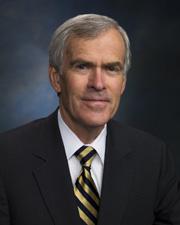 Sen. Jeff Bingaman (D-NM)
What it changes
1 change to H.R. 6 · shown in the bill's text
Adds TITLE XV--ACTIONS TO ADDRESS GLOBAL CLIMATE at the end of the bill
Adds a titleIn H.R. 6 · Placed on Calendar Senate
Passed the House of Representatives April 21, 2005.
Inserted: TITLE XV--ACTIONS TO ADDRESS GLOBAL CLIMATE
Inserted: SEC. 1501. SHORT TITLE.
Inserted: This title may be cited as the "Climate and Economy Insurance Act of 2005".
Inserted: Subtitle A--Domestic Programs SEC. 1511. PURPOSE.
Inserted: The purpose of this subtitle is to reduce greenhouse gas emissions intensity in the United States, beginning in calendar year 2010, through an emissions trading system designed to achieve emissions reductions at the lowest practicable cost to the United States.
Inserted: SEC. 1512. DEFINITIONS.
Inserted: In this subtitle:
Inserted: (1) Carbon dioxide equivalent.--The term "carbon dioxide equivalent" means--
Inserted: (A) for each covered fuel, the quantity of carbon dioxide that would be emitted into the atmosphere as a result of complete combustion of a certain quantity of the covered fuel, to be determined for the type of covered fuel by the Secretary; and
Inserted: (B) for each greenhouse gas (other than carbon dioxide) the quantity of carbon dioxide that would have an effect on global warming equal to the effect of a certain quantity of the greenhouse gas, as determined by the Secretary, taking into consideration global warming potentials.
Inserted: (2) Covered fuel.--The term "covered fuel" means--
Inserted: (A) coal;
Show 618 more inserted paragraphsShow less
Inserted: (B) petroleum products;
Inserted: (C) natural gas;
Inserted: (D) natural gas liquids; and
Inserted: (E) any other fuel derived from fossil hydrocarbons (including bitumen and kerogen).
Inserted: (3) Covered greenhouse gas emissions.--
Inserted: (A) In general.--The term "covered greenhouse gas emissions" means--
Inserted: (i) the carbon dioxide emissions from combustion of covered fuel carried out in the United States; and
Inserted: (ii) nonfuel-related greenhouse gas emissions in the United States, determined in accordance with section 1515(b)(2).
Inserted: (B) Units.--Quantities of covered greenhouse gas emissions shall be measured and expressed in units of metric tons of carbon dioxide equivalent.
Inserted: (4) Emissions intensity.--The term "emissions intensity" means, for any calendar year, the quotient obtained by dividing--
Inserted: (A) covered greenhouse gas emissions; by
Inserted: (B) the forecasted GDP for that calendar year.
Inserted: (5) Forecasted gdp.--The term "forecasted GDP" means the predicted amount of the gross domestic product of the United States, based on the most current projection used by the Energy Information Administration of the Department of Energy on the date on which the prediction is made.
Inserted: (6) Greenhouse gas.--The term "greenhouse gas" means--
Inserted: (A) carbon dioxide;
Inserted: (B) methane;
Inserted: (C) nitrous oxide;
Inserted: (D) hydrofluorocarbons;
Inserted: (E) perfluorocarbons; and
Inserted: (F) sulfur hexafluoride.
Inserted: (7) Initial allocation period.--The term "initial allocation period" means the period beginning January 1, 2010, and ending December 31, 2019.
Inserted: (8) Nonfuel regulated entity.--The term "nonfuel regulated entity" means--
Inserted: (A) the owner or operator of a facility that manufactures hydrofluorocarbons, perfluorocarbons, sulfur hexafluoride, or nitrous oxide;
Inserted: (B) an importer of hydrofluorocarbons, perfluorocarbons, sulfur hexafluoride, or nitrous oxide;
Inserted: (C) the owner or operator of a facility that emits nitrous oxide associated with the manufacture of adipic acid or nitric acid;
Inserted: (D) the owner or operator of a facility that produces cement or lime;
Inserted: (E) the owner or operator of an aluminum smelter;
Inserted: (F) the owner or operator of an underground coal mine that emitted more than 35,000,000 cubic feet of methane during 2004 or any subsequent calendar year; and
Inserted: (G) the owner or operator of facility that emits hydrofluorocarbon-23 as a byproduct of hydrochlorofluorocarbon-22 production.
Inserted: (9) Offset project.--The term "offset project" means any project to reduce or sequester, during the initial allocation period, any greenhouse gas emission that is not a covered greenhouse gas emission.
Inserted: (10) Petroleum product.--The term "petroleum product" means--
Inserted: (A) a refined petroleum product;
Inserted: (B) residual fuel oil;
Inserted: (C) petroleum coke; or
Inserted: (D) a liquefied petroleum gas.
Inserted: (11) Regulated entity.--The term "regulated entity" means--
Inserted: (A) a regulated fuel distributor; or
Inserted: (B) a nonfuel regulated entity.
Inserted: (12) Regulated fuel distributor.--The term "regulated fuel distributor" means--
Inserted: (A) the owner or operator of--
Inserted: (i) a natural gas pipeline;
Inserted: (ii) a petroleum refinery;
Inserted: (iii) a coal mine that produces more than 10,000 short tons during 2004 or any subsequent calendar year; or
Inserted: (iv) a natural gas processing plant;
Inserted: (B) an importer of--
Inserted: (i) petroleum products;
Inserted: (ii) coal;
Inserted: (iii) coke; or
Inserted: (iv) natural gas liquids; or
Inserted: (C) any other entity the Secretary determines under section 1515(b)(3)(A)(ii) to be subject to section 1515.
Inserted: (13) Safety valve price.--The term "safety valve price" means--
Inserted: (A) for 2010, $7 per metric ton of carbon dioxide equivalent; and
Inserted: (B) for each subsequent calendar year, the safety valve price established for the preceding calendar year increased by 5 percent, unless a different rate of increase is established for the calendar year under section 1521.
Inserted: (14) Secretary.--The term "Secretary" means the Secretary of Energy, unless the President designates another officer of the Executive Branch to carry out a function under this subtitle.
Inserted: (15) Subsequent allocation period.--The term "subsequent allocation period" means--
Inserted: (A) the 5-year period beginning January 1, 2020, and ending December 31, 2024; and
Inserted: (B) each subsequent 5-year period.
Inserted: SEC. 1513. QUANTITY OF ANNUAL GREENHOUSE GAS ALLOWANCES.
Inserted: (a) Initial Allocation Period.--
Inserted: (1) In general.--Not later than December 31, 2006, the Secretary shall--
Inserted: (A) make a projection with respect to emissions intensity for 2009, using--
Inserted: (i) the Energy Information Administration's most current projections of covered greenhouse gas emissions for 2009; and
Inserted: (ii) the forecasted GDP for 2009;
Inserted: (B) determine the emissions intensity target for 2010 by calculating a 2.4 percent reduction from the projected emissions intensity for 2009;
Inserted: (C) in accordance with paragraph (2), determine the emissions intensity target for each calendar year of the initial allocation period after 2010; and
Inserted: (D) in accordance with paragraph (3), issue the total number of allowances for each calendar year during the initial allocation period.
Inserted: (2) Emissions intensity targets after 2010.--For each calendar year during the initial allocation period after 2010, the emissions intensity target shall be the emissions intensity target established for the preceding calendar year reduced by 2.4 percent.
Inserted: (3) Total allowances.--For each calendar year during the initial allocation period, the quantity of allowances to be issued shall be equal to the product obtained by multiplying--
Inserted: (A) the emissions intensity target established for the calendar year; and
Inserted: (B) the forecasted GDP for the calendar year.
Inserted: (b) Subsequent Allocation Periods.--
Inserted: (1) In general.--Not later than the date that is 4 years before the beginning of each subsequent allocation period, the Secretary shall--
Inserted: (A) except as directed under section 1521, determine the emissions intensity target for each calendar year during that subsequent allocation period, in accordance with paragraph (2); and
Inserted: (B) issue the total number of allowances for each calendar year of the subsequent allocation period, in accordance with paragraph (3).
Inserted: (2) Emissions intensity targets.--For each calendar year during a subsequent allocation period, the emissions intensity target shall be the emissions intensity target established for the preceding calendar year reduced by 2.8 percent.
Inserted: (3) Total allowances.--For each calendar year during a subsequent allocation period, the quantity of allowances to be issued shall be equal to the product obtained by multiplying--
Inserted: (A) the emissions intensity target established for the calendar year; and
Inserted: (B) the forecasted GDP for the calendar year.
Inserted: (c) Administrative Requirements.--
Inserted: (1) Denomination.--Allowances issued by the Secretary under this section shall be denominated in units of metric tons of carbon dioxide equivalent.
Inserted: (2) Period of use.--An allowance issued by the Secretary under this section may be used during--
Inserted: (A) the calendar year for which the allowance is issued; or
Inserted: (B) any subsequent calendar year.
Inserted: (3) Serial numbers.--The Secretary shall--
Inserted: (A) assign a unique serial number to each allowance issued under this subtitle; and
Inserted: (B) retire the serial number of an allowance on the date on which the allowance is submitted under section 1515.
Inserted: (4) Nature of allowances.--An allowance shall not be considered to be a property right.
Inserted: SEC. 1514. ALLOCATION AND AUCTION OF GREENHOUSE GAS ALLOWANCES.
Inserted: (a) Allocation of Allowances.--
Inserted: (1) In general.--Not later than the date that is 3 years before the beginning of the initial allocation period, and each subsequent allocation period, the Secretary shall allocate for each calendar year during the allocation period a quantity of allowances in accordance with this subsection.
Inserted: (2) Quantity.--The total quantity of allowances available to be allocated for each calendar year of an allocation period shall be the product obtained by multiplying--
Inserted: (A) the total quantity of allowances issued for the calendar year under subsection (a)(3) or (b)(3) of section 1513; and
Inserted: (B) the allocation percentage for the calendar year under subsection (c).
Inserted: (3) Allowance allocation rulemaking.--
Inserted: (A) In general.--The Secretary shall establish, by rule, and submit to Congress procedures for allocating allowances to regulated entities and affected nonregulated entities for the initial allocation period.
Inserted: (B) Effective date.--A rule under subparagraph (A) shall take effect, unless disapproved under the congressional review procedures under section 1521(d), not later than 180 days after the date on which the rule is submitted to Congress.
Inserted: (C) Requirements.--
Inserted: (i) Initial allocation period.--The Secretary shall promulgate rules under subparagraph (A) for the initial allocation period not later than 18 months after the date of enactment of this Act.
Inserted: (ii) Subsequent allocation periods.--The Secretary shall promulgate rules under subparagraph (A) for each subsequent allocation period not later than __ months before the beginning of the period.
Inserted: (4) Distribution to regulated and nonregulated entities.--The procedures established under paragraph (3) shall--
Inserted: (A) provide for the allocation of allowances to regulated entities and affected nonregulated entities within each fossil-fuel sector (petroleum, natural gas, natural gas liquids, and coal) and to the sector consisting of nonfuel regulated entities based on the share of each sector of covered greenhouse gas emissions for the most recent year for which data are available;
Inserted: (B) prescribe criteria for the allocation of allowances to regulated entities within each sector and nonregulated affected entities using products produced in each sector based on the following factors:
Inserted: (i) Historical or updated greenhouse gas emissions.
Inserted: (ii) Mitigation of significant and disproportionate burdens.
Inserted: (iii) Avoiding windfalls.
Inserted: (iv) Administrative simplicity.
Inserted: (v) Mitigating barriers to entry; and
Inserted: (C) prescribe requirements for reporting by regulated entities and affected nonregulated entities of information necessary for allocation of allowances, including the forms and schedules for submission of reports.
Inserted: (5) Definition of affected nonregulated entity.--For purposes of this subsection, the term "affected nonregulated entity" means any entity, other than a regulated entity, that the Secretary determines is likely to sustain a significant and disproportionate economic burden by reason of the implementation of this title.
Inserted: (6) Distribution of allowances to organizations assisting workers.--The Secretary shall distribute 1 percent of the allowances available for allocation under this section in any calendar year to organizations (including recognized representatives of workers affected by programs under this subtitle) that provide retraining, educational support, or other assistance to workers affected by programs under this subtitle.
Inserted: (7) Cost of allowances.--The Secretary shall distribute allowances under this subsection at no cost to the recipient of the allowance.
Inserted: (b) Auction of Allowances.--
Inserted: (1) In general.--The Secretary shall establish, by rule, a procedure for the auction of a quantity of allowances during each calendar year in accordance with paragraph (2).
Inserted: (2) Base quantity.--The base quantity of allowances to be auctioned during a calendar year shall be the product obtained by multiplying--
Inserted: (A) the total number of allowances for the calendar year under subsection (a)(3) or (b)(3) of section 1513; and
Inserted: (B) the auction percentage for the calendar year under subsection (c).
Inserted: (3) Schedule.--The auction of allowances shall be held on the following schedule:
Inserted: (A) In 2007, the Secretary shall auction--
Inserted: (i) \1/2\ of the allowances available for auction for 2010; and
Inserted: (ii) \1/2\ of the allowances available for auction for 2011.
Inserted: (B) In 2008, the Secretary shall auction \1/2\ of the allowances available for auction for 2012.
Inserted: (C) In 2009, the Secretary shall auction \1/2\ of the allowances available for auction for 2013.
Inserted: (D) In 2010 and each subsequent calendar year, the Secretary shall auction--
Inserted: (i) \1/2\ of the allowances available for auction for that calendar year; and
Inserted: (ii) \1/2\ of the allowances available for auction for the calendar year that is 4 years after that calendar year.
Inserted: (4) Undistributed allowances.--In an auction held during any calendar year, the Secretary shall auction any allowance that was--
Inserted: (A) available for allocation under subsection (a) for the calendar year, but not distributed; or
Inserted: (B) available during the preceding calendar year for an offset or early reduction activity under section 1519 or 1520, but not distributed during that calendar year.
Inserted: (c) Available Percentages.--Except as directed under section 1521, the percentage of the total quantity of allowances for each calendar year to be available for allocation, auction, offset projects, and early reduction projects shall be determined in accordance with the following table:
Inserted: ----------------------------------------------------------------------------------------------------------------Percentage Available for Year Allocation Percentage Auction Percentage Percentage Available Early Reduction for Offset Allowances Allowances 2010-------91.0---------------------5.0-------------------------3----------------------1------------------------
Inserted: 2011 91.0 5.0 3 1 2012 91.0 5.0 3 1 2013 90.5 5.5 3 1 2014 90.0 6.0 3 1 2015 90.5 6.5 3 1 2016 89.0 7.0 3 1 2017 88.5 7.5 3 1 2018 88.0 8.0 3 1 2019 87.5 8.5 3 1 2020 and 87.0 10 3 __ thereaft er
Inserted: SEC. 1515. SUBMISSION OF ALLOWANCES.
Inserted: (a) Requirements.--
Inserted: (1) Regulated fuel distributors.--
Inserted: (A) In general.--For calendar year 2010 and each calendar year thereafter, each regulated fuel distributor shall submit to the Secretary a number of allowances equal to the carbon dioxide equivalent of the quantity of covered fuel, determined in accordance with subsection (b)(1), for the regulated fuel distributor.
Inserted: (B) Natural gas pipelines.--For calendar year 2010 and each calendar year thereafter, for any regulated fuel distributor that is a natural gas pipeline, each natural gas shipper on the pipeline shall submit to the owner or operator of the pipeline a number of allowances (or an equivalent payment of the safety valve price) equal to the carbon dioxide equivalent of the quantities of natural gas received by the pipeline from the shipper (excluding any amount received by the pipeline from the shipper at an interconnection of another pipeline).
Inserted: (2) Nonfuel regulated entities.--For 2010 and each calendar year thereafter, each nonfuel regulated entity shall submit to the Secretary a number of allowances equal to the carbon dioxide equivalent of the quantity of nonfuel-related greenhouse gas, determined in accordance with subsection (b)(2), for the nonfuel regulated entity.
Inserted: (b) Regulated Quantities.--
Inserted: (1) Covered fuels.--For purposes of subsection (a)(1), the quantity of covered fuel shall be equal to--
Inserted: (A) for a petroleum refinery located in the United States, the quantity of petroleum products refined, produced, or consumed at the refinery;
Inserted: (B) for a natural gas pipeline in the United States, the quantity of natural gas received by the pipeline for transport, excluding any natural gas received at an interconnection with another natural gas pipeline;
Inserted: (C) for a natural gas processing plant located in the United States, the quantity of natural gas liquids produced at the plant;
Inserted: (D) for a coal mine located in the United States, the quantity of coal produced at the mine; and
Inserted: (E) for an importer of coal, petroleum products, or natural gas liquids into the United States, the quantity of coal, petroleum products, or natural gas liquids imported into the United States.
Inserted: (2) Nonfuel-related greenhouse gases.--For purposes of subsection (a)(2), the quantity of nonfuel-related greenhouse gas shall be equal to--
Inserted: (A) for a manufacturer or importer of hydrofluorocarbons, perfluorocarbons, sulfur hexafluoride, or nitrous oxide, the quantity of hydrofluorocarbons, perfluorocarbons, sulfur hexafluoride, or nitrous oxide produced or imported by the manufacturer or importer;
Inserted: (B) for an underground coal mine, the quantity of methane emitted by the coal mine;
Inserted: (C) for a facility that manufactures adipic acid or nitric acid, the quantity of nitrous oxide emitted by the facility;
Inserted: (D) for a facility that produces cement or lime, the quantity of carbon dioxide emitted by the facility as a result of the calcination process;
Inserted: (E) for an aluminum smelter, the sum of--
Inserted: (i) the quantity of carbon dioxide emitted by the smelter; and
Inserted: (ii) the quantity of perfluorocarbons emitted by the smelter; and
Inserted: (F) for a facility that produces hydrochlorofluorocarbon-22, the quantity of hydrofluorocarbon-23 emitted by the facility.
Inserted: (3) Adjustments.--
Inserted: (A) Regulated fuel distributors.--
Inserted: (i) Modification.--The Secretary may modify, by rule, a quantity of covered fuels under paragraph (1) if the Secretary determines that the modification is necessary to ensure that--
Inserted: (I) allowances are submitted for all units of covered fuel; and
Inserted: (II) allowances are not submitted for the same quantity of covered fuel by more than 1 regulated fuel distributor.
Inserted: (ii) Extension.--The Secretary may extend, by rule, the requirement to submit allowances under subsection (a)(1) to an entity that is not a regulated fuel distributor if the Secretary determines that the extension is necessary to ensure that allowances are submitted for all covered fuels.
Inserted: (B) Nonfuel regulated entities.--The Secretary may modify, by rule, a quantity of nonfuel-related greenhouse gases under paragraph (2) if the Secretary determines the modification is necessary to ensure that allowances are not submitted for the same volume of nonfuel-related greenhouse gas by more than 1 regulated entity.
Inserted: (c) Deadline for Submission.--Any entity required to submit an allowance to the Secretary under this section shall submit the allowance not later than March 31 of the calendar year following the calendar year during which the allowance is required to be submitted.
Inserted: (d) Regulations.--The Secretary shall promulgate such regulations as the Secretary determines to be necessary or appropriate to--
Inserted: (1) identify and register each regulated entity that is required to submit an allowance under this section; and
Inserted: (2) require the submission of reports and otherwise obtain any information the Secretary determines to be necessary to calculate or verify the compliance of a regulated entity with any requirement under this section.
Inserted: (e) Exemption Authority for Non-fuel Regulated Entities.--
Inserted: (1) In general.--Except as provided in paragraph (2), the Secretary may exempt from the requirements of this subtitle an entity that emits, manufactures, or imports nonfuel-related greenhouse gases for any period during which the Secretary determines, after providing an opportunity for public comment, that measuring or estimating the quantity of greenhouse gases emitted, manufactured, or imported by the entity is not feasible.
Inserted: (2) Exclusion.--The Secretary may not exempt a regulated fuel distributor from the requirements of this subtitle under paragraph (1).
Inserted: (f) Retirement of Allowances.--
Inserted: (1) In general.--Any person or entity that is not subject to this subtitle may submit to the Secretary an allowance for retirement at any time.
Inserted: (2) Action by secretary.--On receipt of an allowance under paragraph (1), the Secretary--
Inserted: (A) shall accept the allowance; and
Inserted: (B) shall not allocate, auction, or otherwise reissue the allowance.
Inserted: SEC. 1516. SAFETY VALVE.
Inserted: The Secretary shall accept from a regulated entity a payment of the applicable safety valve price for a calendar year in lieu of submission of an allowance under section 1515 for that calendar year.
Inserted: SEC. 1517. ALLOWANCE TRADING SYSTEM.
Inserted: (a) In General.--The Secretary shall establish, by rule, a trading system under which allowances and credits may be sold, exchanged, purchased, or transferred by any person or entity.
Inserted: (b) Transparency.--
Inserted: (1) In general.--The trading system under subsection (a) shall include such provisions as the Secretary considers to be appropriate to--
Inserted: (A) facilitate price transparency and public participation in the market for allowances and credits; and
Inserted: (B) protect buyers and sellers of allowances and credits, and the public, from the adverse effects of collusion and other anticompetitive behaviors.
Inserted: (2) Authority to obtain information.--The Secretary may obtain any information the Secretary considers to be necessary to carry out this section from any person or entity that buys, sells, exchanges, or otherwise transfers an allowance or credit.
Inserted: SEC. 1518. CREDITS FOR GEOLOGIC SEQUESTRATION, FEEDSTOCKS, AND EXPORTS.
Inserted: (a) Establishment.--
Inserted: (1) In general.--The Secretary shall establish, by rule, a program under which the Secretary distributes credits to entities in accordance with this section.
Inserted: (2) Sequestration.--If the Secretary determines, based on information submitted under section 1522(c), that an entity has carried out long-term sequestration of carbon dioxide from the combustion of covered fuels in a geologic formation, the Secretary shall distribute to that entity, for 2010 and each subsequent calendar year, a quantity of credits equal to the quantity of carbon dioxide sequestered by the entity during that year, as determined by the Secretary.
Inserted: (3) Exporters of covered fuel.--If the Secretary determines that an entity has exported covered fuel, the Secretary shall distribute to that entity, for 2010 and each subsequent calendar year, a quantity of credits equal to the quantity of covered fuel exported by the entity during that year, measured in carbon dioxide equivalents.
Inserted: (4) Use of fuels as feedstocks.--If the Secretary determines that an entity has used a covered fuel as a feedstock so that the carbon dioxide associated with the covered fuel will not be emitted, the Secretary shall distribute to that entity, for 2010 and each subsequent calendar year, a quantity of credits equal to the quantity of covered fuel used as feedstock by the entity during that year, measured in carbon dioxide equivalents.
Inserted: (5) Non-carbon-dioxide greenhouse gases.--If the Secretary determines that an entity has destroyed hydrofluorocarbons, perfluorocarbons, sulfur hexafluoride, or nitrous oxide so that the hydrofluorocarbons, perfluorocarbons, sulfur hexafluoride, or nitrous oxide will not be emitted, the Secretary shall distribute to that entity, for 2010 and each subsequent calendar year, a quantity of credits equal to the quantity of hydrofluorocarbons, perfluorocarbons, sulfur hexafluoride, or nitrous oxide destroyed by the entity during that year, measured in carbon dioxide equivalents.
Inserted: (6) Other exporters.--If the Secretary determines that an entity has exported hydrofluorocarbons, perfluorocarbons, sulfur hexafluoride, or nitrous oxide, the Secretary shall distribute to that entity, for 2010 and each subsequent calendar year, a quantity of credits equal to the volume of hydrofluorocarbons, perfluorocarbons, sulfur hexafluoride, or nitrous oxide exported by the entity during that year, measured in carbon dioxide equivalents.
Inserted: (b) Nature of Credits.--A credit distributed by the Secretary under this section--
Inserted: (1) is tradable and bankable;
Inserted: (2) may be submitted by a regulated entity in lieu of an allowance under section 1515; and
Inserted: (3) is not a property right.
Inserted: SEC. 1519. OFFSET PROJECT PILOT PROGRAM.
Inserted: (a) Establishment.--The Secretary shall establish, by rule, a pilot program under which the Secretary distributes allowances to entities that carry out offset projects that meet the requirements of section 1522(c).
Inserted: (b) Available Allowances.--The total quantity of allowances distributed under subsection (a) may not exceed the product obtained by multiplying--
Inserted: (1) the total number of allowances issued for the calendar year under subsection (a)(3) or (b)(3) of section 1513; and
Inserted: (2) the percentage available for offset allowances for the calendar year under section 1514(c).
Inserted: (c) Ineligible Offset Projects.--An offset project shall not be eligible to receive an allowance under subsection (a) if the offset project--
Inserted: (1) is carried out in the United States; and
Inserted: (2) reduces or geologically sequesters covered greenhouse gas emissions.
Inserted: (d) International Offset Projects.--
Inserted: (1) In general.--The Secretary may distribute allowances under subsection (a) to an offset project carried out in a foreign country.
Inserted: (2) Foreign credits.--An allowance or credit issued by a foreign country for an offset project described in paragraph (1) shall not be submitted to meet a requirement under section 1515.
Inserted: SEC. 1520. EARLY REDUCTION ALLOWANCES.
Inserted: (a) Establishment.--The Secretary shall establish, by rule, a program under which the Secretary distributes to any entity that carries out a project to reduce or sequester greenhouse gas emissions before the initial allocation period a quantity of allowances that reflects the actual emissions reductions or net sequestration of the project, as determined by the Secretary.
Inserted: (b) Available Allowances.--The total quantity of allowances distributed under subsection (a) may not exceed the product obtained by multiplying--
Inserted: (1) the total number of allowances issued for the calendar year under subsection (a)(3) of section 1513; and
Inserted: (2) the percentage available for early reduction allowances for the calendar year under section 1514(c).
Inserted: (c) Eligibility.--The Secretary may distribute allowances for early reduction projects only to an entity that has reported the reduced or sequestered greenhouse gas emissions under--
Inserted: (1) the Voluntary Reporting of Greenhouse Gases Program of the Energy Information Administration under section 1605(b) of the Energy Policy Act of 1992 (42 U.S.C. 13385(b));
Inserted: (2) the Climate Leaders Program of the Environmental Protection Agency; or
Inserted: (3) a State-administered or privately-administered registry that includes early reduction actions not covered under the programs described in paragraphs (1) and (2).
Inserted: SEC. 1521. CONGRESSIONAL REVIEW.
Inserted: (a) Interagency Review.--
Inserted: (1) In general.--Not later than January 15, 2014, and every 5 years thereafter, the President shall establish an interagency group to review and make recommendations relating to--
Inserted: (A) each program under this subtitle; and
Inserted: (B) any similar program of a foreign country described in paragraph (2).
Inserted: (2) Countries to be reviewed.--An interagency group established under paragraph (1) shall review actions and programs relating to greenhouse gas emissions of--
Inserted: (A) each member country of the Organisation for Economic Co-operation and Development;
Inserted: (B) China;
Inserted: (C) India;
Inserted: (D) Brazil;
Inserted: (E) Mexico;
Inserted: (F) Russia; and
Inserted: (G) Ukraine.
Inserted: (3) Inclusions.--A review under paragraph (1) shall--
Inserted: (A) for the countries described in paragraph (2), analyze whether the countries that contribute at least 75 percent of aggregate greenhouse gas emissions have taken action that--
Inserted: (i) in the case of member countries of the Organisation for Economic Co-Operation and Development, is comparable to that of the United States; and
Inserted: (ii) in the case of China, India, Brazil, Mexico, Russia, and Ukraine, is significant, contemporaneous, and equitable compared to action taken by the United States;
Inserted: (B) analyze whether each of the 5 largest trading partners of the United States, as of the date on which the review is conducted, has taken action with respect to greenhouse gas emissions that is comparable to action taken by the United States;
Inserted: (C) analyze whether the programs established under this subtitle have contributed to an increase in electricity imports from Canada or Mexico; and
Inserted: (D) make recommendations with respect to whether--
Inserted: (i) the rate of reduction of emissions intensity under subsection (a)(2) or (b)(2) of section 1513 should be modified; and
Inserted: (ii) the rate of increase of the safety valve price should be modified.
Inserted: (4) Supplementary review elements.--A review under paragraph (1) may include an analysis of--
Inserted: (A) the feasibility of regulating owners or operators of entities that--
Inserted: (i) emit nonfuel-related greenhouse gases; and
Inserted: (ii) that are not subject to this subtitle;
Inserted: (B) whether the percentage of allowances for any calendar year that are auctioned under section 1514(c) should be modified.
Inserted: (5) National research council reports.--The President may request such reports from the National Research Council as the President determines to be necessary and appropriate to support the interagency review process under this subsection.
Inserted: (b) Report.--
Inserted: (1) In general.--Not later than January 15, 2015, and every 5 years thereafter, the President shall submit to the House of Representatives and the Senate a report describing any recommendation of the President with respect to changes in the programs under this subtitle.
Inserted: (2) Recommendations.--A recommendation under paragraph (1) shall take into consideration the results of the most recent interagency review under subsection (a).
Inserted: (c) Congressional Action.--
Inserted: (1) Consideration.--Not later than September 30 of any calendar year during which a report is to be submitted under subsection (b), the House of Representatives and the Senate may consider a joint resolution, in accordance with paragraph (2), that--
Inserted: (A) amends subsection (a)(2) or (b)(2) of section 1513;
Inserted: (B) modifies the safety valve price; or
Inserted: (C) modifies the percentage of allowances to be allocated under section 1514(c).
Inserted: (2) Requirements.--A joint resolution considered under paragraph (1) shall--
Inserted: (A) be introduced during the 45-day period beginning on the date on which a report is required to be submitted under subsection (b); and
Inserted: (B) after the resolving clause and "That", contain only 1 or more of the following:
Inserted: (i) ", effective beginning January 1, 2015, section 1513(a)(2) of the Climate and Economy Insurance Act of 2005 is amended by striking '2.4' and inserting '_____'.".
Inserted: (ii) ", effective beginning _____, section 1513(b)(2) of the Climate and Economy Insurance Act of 2005 is amended by striking '2.8' and inserting '_____'.".
Inserted: (iii) ", effective beginning _____, section 1512(13)(B) of the Climate and Economy Insurance Act of 2005 is amended by striking '5 percent' and inserting '___ percent'.".
Inserted: (iv) "the table under section 1514(c) of the Climate and Economy Insurance Act of 2005 is amended by striking the line relating to calendar year 2020 and thereafter and inserting the following:
Inserted: ----------------------------------------------------------------------------------------------------------------Percentage Available 'Year Allocation Percentage Auction Percentage Percentage Available for Early Reduction for Offset Allowances Allowances 2020 and thereafter--__----------------------__---------------------__---------------------__'."---------------
Inserted: (3) Applicable law.--Subsections (b) through (g) of section 802 of title 5, United States Code, shall apply to any joint resolution under this subsection.
Inserted: (d) Review of Allocation Rules.--
Inserted: (1) Effectiveness of allocation rule.--A rule prescribed under section 1514(a)(3)(A) shall not take effect if, not later than 180 days after the date on which the rule is submitted to Congress, a joint resolution described in paragraph (2) is enacted.
Inserted: (2) Requirements.--A joint resolution considered under paragraph (1) shall--
Inserted: (A) be introduced during the 45-day period beginning on the date on which a rule is required to be submitted under section 1514(a)(3); and
Inserted: (B) after the resolving clause, contain the following: "That the rule submitted by the Secretary of Energy on _____ under section 1514(a)(3) of the Climate and Economy Insurance Act of 2005 is disapproved.".
Inserted: (3) Applicable law.--Subsections (b) through (g) of section 802 of title 5, United States Code, shall apply to any joint resolution under this subsection.
Inserted: SEC. 1522. MONITORING AND REPORTING.
Inserted: (a) In General.--The Secretary shall require, by rule, that a regulated entity shall perform such monitoring and submit such reports as the Secretary determines to be necessary to carry out this subtitle.
Inserted: (b) Submission of Information.--The Secretary shall establish, by rule, any procedure the Secretary determines to be necessary to ensure the completeness, consistency, transparency, and accuracy of reports under subsection (a), including--
Inserted: (1) accounting and reporting standards for covered greenhouse gas emissions;
Inserted: (2) standardized methods of calculating covered greenhouse gas emissions in specific industries from other information the Secretary determines to be available and reliable, such as energy consumption data, materials consumption data, production data, or other relevant activity data;
Inserted: (3) if the Secretary determines that a method described in paragraph (2) is not feasible for a regulated entity, a standardized method of estimating covered greenhouse gas emissions of the regulated entity;
Inserted: (4) a method of avoiding double counting of covered greenhouse gas emissions;
Inserted: (5) a procedure to prevent a regulated entity from avoiding the requirements of this subtitle by--
Inserted: (A) reorganization into multiple entities; or
Inserted: (B) outsourcing the operations or activities of the regulated entity with respect to covered greenhouse gas emissions; and
Inserted: (6) a procedure for the verification of data relating to covered greenhouse gas emissions by--
Inserted: (A) regulated entities; and
Inserted: (B) independent verification organizations.
Inserted: (c) Determining Eligibility for Credits, Offset Allowances, and Early Reduction Allowances.--
Inserted: (1) In general.--An entity shall provide the Secretary with the information described in paragraph (2) in connection with any application to receive--
Inserted: (A) a credit under section 1518(a)(2);
Inserted: (B) an allowance under section 1519; or
Inserted: (C) an early reduction allowance under section 1520 (unless, and to the extent, the Secretary determines that providing such information is not feasible for the entity).
Inserted: (2) Required information.--
Inserted: (A) Greenhouse gas emissions reduction.--In the case of a greenhouse gas emissions reduction, the entity shall provide the Secretary with information verifying that, as determined by the Secretary--
Inserted: (i) the entity has achieved an actual reduction in greenhouse gas emissions--
Inserted: (I) relative to historic emissions levels of the entity; and
Inserted: (II) taking into consideration any increase in other greenhouse gas emissions of the entity; and
Inserted: (ii) if the reduction exceeds the net reduction of direct greenhouse gas emissions of the entity, the entity reported a reduction that was adjusted so as not to exceed the net reduction.
Inserted: (B) Greenhouse gas sequestration.--In the case of a greenhouse gas sequestration, the entity shall provide the Secretary with information verifying that, as determined by the Secretary, the entity has achieved actual increases in net sequestration, taking into account the total use of materials and energy by the entity in carrying out the sequestration.
Inserted: SEC. 1523. ENFORCEMENT.
Inserted: (a) Failure to Submit Allowances.--
Inserted: (1) Payment to secretary.--A regulated entity that fails to submit an allowance (or the safety valve price in lieu of an allowance) for a calendar year not later than March 31 of the following calendar year shall pay to the Secretary, for each allowance the regulated entity failed to submit, an amount equal to the product obtained by multiplying--
Inserted: (A) the safety valve price for that calendar year; and
Inserted: (B) 3.
Inserted: (2) Failure to pay.--A regulated entity that fails to make a payment to the Secretary under paragraph (1) by December 31 of the calendar year following the calendar year for which the payment is due shall be subject to subsection (b) or (c), or both.
Inserted: (b) Civil Enforcement.--
Inserted: (1) Penalty.--A person that the Secretary determines to be in violation of this subtitle shall be subject to a civil penalty of not more than $25,000 for each day during which the entity is in violation, in addition to any amount required under subsection (a)(1).
Inserted: (2) Injunction.--The Secretary may bring a civil action for a temporary or permanent injunction against any person described in paragraph (1).
Inserted: (c) Criminal Penalties.--A person that willfully fails to comply with this subtitle shall be subject to a fine under title 18, United States Code, or imprisonment for not to exceed 5 years, or both.
Inserted: SEC. 1524. JUDICIAL REVIEW.
Inserted: (a) In General.--Except as provided in subsection (b), section 336(b) of the Energy Policy and Conservation Act (42 U.S.C. 6306(b)) shall apply to a review of any rule issued under this subtitle in the same manner, and to the same extent, that that section applies to a rule issued under sections 323, 324, and 325 of that Act (42 U.S.C. 6293, 6294, 6295).
Inserted: (b) Exception.--A petition for review of a rule under this subtitle shall be filed in the United States Court of Appeals for the District of Columbia.
Inserted: SEC. 1525. ADMINISTRATIVE PROVISIONS.
Inserted: (a) Rules and Orders.--The Secretary may issue such rules and orders as the Secretary determines to be necessary or appropriate to carry out this subtitle.
Inserted: (b) Data.--
Inserted: (1) In general.--In carrying out this subtitle, the Secretary may use any authority provided under section 11 of the Energy Supply and Environmental Coordination Act of 1974 (15 U.S.C. 796).
Inserted: (2) Definition of energy information.--For the purposes of carrying out this subtitle, the definition of the term "energy information" under section 11 of the Energy Supply and Environmental Coordination Act of 1974 (15 U.S.C. 796) shall be considered to include any information the Secretary determines to be necessary or appropriate to carry out this subtitle.
Inserted: SEC. 1526. CLIMATE CHANGE ADAPTATION AND EARLY TECHNOLOGY DEPLOYMENT.
Inserted: (a) Trust Fund.--
Inserted: (1) Establishment.--There is established in the Treasury a trust fund, to be known as the "Climate Change Trust Fund" (referred to in this section as the "Trust Fund").
Inserted: (2) Deposits.--The Secretary shall deposit into the Trust Fund any funds received by the Secretary under section 1514(b) or 1516.
Inserted: (3) Maximum cumulative amount.--Not more than $50,000,000,000 may be deposited into the Trust Fund.
Inserted: (b) Distribution.--Beginning in fiscal year 2008, the Secretary shall transfer any funds deposited into the Trust Fund during the previous fiscal year as follows:
Inserted: (1) Climate change adaptation.--25 percent of the funds shall be transferred as follows:
Inserted: (A) Conservation of coastal wetlands.--
Inserted: (i) In general.--Subject to clause (ii), 13 percent shall be transferred to the Secretary of the Interior for purposes of making payments to producing states under section 31 of the Outer Continental Shelf Lands Act (43 U.S.C. 1356a) (as amended by section 371).
Inserted: (ii) Limitation.--Not more than 10 percent of the amounts received by a producing State or a coastal political subdivision during any fiscal year shall be used to carry out subparagraphs (C) and (E) of section 31(d)(1) of that Act (43 U.S.C. 1356a) (as amended by section 371).
Inserted: (B) Wildlife conservation.--12 percent shall be transferred to the wildlife conservation and restoration account within the Federal aid to wildlife restoration fund established under section 3 of the Pittman-Robertson Wildlife Restoration Act (16 U.S.C. 669b) (also known as the "Federal Aid in Wildlife Restoration Act").
Inserted: (2) Zero- or low-carbon energy technologies.--40 percent of the funds shall be transferred to the Secretary to carry out the zero- or low-carbon energy technologies program under subsection (c).
Inserted: (3) Advanced energy technologies incentive program.--25 percent of the funds shall be transferred as follows:
Inserted: (A) Advanced coal technologies.--20 percent shall be transferred to the Secretary to carry out the advanced coal and sequestration technologies program under subsection (d).
Inserted: (B) Cellulosic Biomass.--5 percent shall be transferred to the Secretary to carry out--
Inserted: (i) the cellulosic biomass ethanol and municipal solid waste loan guarantee program under section 212(c) of the Clean Air Act (as added by section 206);
Inserted: (ii) the cellulosic biomass ethanol conversion assistance program under section 212(f) of that Act (as added by section 206); and
Inserted: (iii) the fuel from cellulosic biomass program under subsection (e).
Inserted: (4) Advanced technology vehicles.--10 percent shall be transferred to the Secretary to carry out the advanced technology vehicles manufacturing incentive program under subsection (f).
Inserted: (c) Zero- or Low-Carbon Energy Technologies Deployment.--
Inserted: (1) Definitions.--In this subsection:
Inserted: (A) Energy savings.--The term "energy savings" means megawatt-hours of electricity or million British thermal units of natural gas saved by a product, in comparison to projected energy consumption under the energy efficiency standard applicable to the product.
Inserted: (B) High-efficiency consumer product.--The term "high-efficiency consumer product" means a covered product to which an energy conservation standard applies under section 325 of the Energy Policy and Conservation Act (42 U.S.C. 6295), if the energy efficiency of the product exceeds the energy efficiency required under the standard.
Inserted: (C) Zero- or low-carbon generation.--The term "zero- or low-carbon generation" means generation of electricity by an electric generation unit that--
Inserted: (i) emits no carbon dioxide into the atmosphere, or is fossil-fuel fired and emits into the atmosphere not more than 250 pounds of carbon dioxide per megawatt-hour (after adjustment for any carbon dioxide from the unit that is geologically sequestered); and
Inserted: (ii) was placed into commercial service after the date of enactment of this Act.
Inserted: (2) Financial incentives program.--During each fiscal year beginning on or after October 1, 2006, the Secretary shall competitively award financial incentives under this subsection in the following technology categories:
Inserted: (A) Production of electricity from new zero- or low-carbon generation.
Inserted: (B) Manufacture of high-efficiency consumer products.
Inserted: (3) Requirements.--
Inserted: (A) In general.--The Secretary shall make awards under this subsection to producers of new zero- or low-carbon generation and to manufacturers of high-efficiency consumer products--
Inserted: (i) in the case of producers of new zero- or low-carbon generation, based on the bid of each producer in terms of dollars per megawatt-hour of electricity generated; and
Inserted: (ii) in the case of manufacturers of high-efficiency consumer products, based on the bid of each manufacturer in terms of dollars per megawatt-hour or million British thermal units saved.
Inserted: (B) Acceptance of bids.--
Inserted: (i) In general.--In making awards under this subsection, the Secretary shall--
Inserted: (I) solicit bids for reverse auction from appropriate producers and manufacturers, as determined by the Secretary; and
Inserted: (II) award financial incentives to the producers and manufacturers that submit the lowest bids that meet the requirements established by the Secretary.
Inserted: (ii) Factors for conversion.--
Inserted: (I) In general.--For the purpose of assessing bids under clause (i), the Secretary shall specify a factor for converting megawatt-hours of electricity and million British thermal units of natural gas to common units.
Inserted: (II) Requirement.--The conversion factor shall be based on the relative greenhouse gas emission benefits of electricity and natural gas conservation.
Inserted: (C) Ineligible units.--A new unit for the generation of electricity that uses renewable energy resources shall not be eligible to receive an award under this subsection if the unit receives renewable energy credits under a Federal renewable portfolio standard.
Inserted: (4) Forms of awards.--
Inserted: (A) Zero- and low-carbon generators.--An award for zero- or low-carbon generation under this subsection shall be in the form of a contract to provide a production payment for each year during the first 10 years of commercial service of the generation unit in an amount equal to the product obtained by multiplying--
Inserted: (i) the amount bid by the producer of the zero- or low-carbon generation; and
Inserted: (ii) the megawatt-hours estimated to be generated by the zero- or low-carbon generation unit each year.
Inserted: (B) high-efficiency consumer products.--An award for a high-efficiency consumer product under this subsection shall be in the form of a lump sum payment in an amount equal to the product obtained by multiplying--
Inserted: (i) the amount bid by the manufacturer of the high-efficiency consumer product; and
Inserted: (ii) the energy savings during the projected useful life of the high-efficiency consumer product, not to exceed 10 years, as determined under rules issued by the Secretary.
Inserted: (d) Advanced Coal and Sequestration Technologies Program.--
Inserted: (1) Advanced coal technologies.--
Inserted: (A) Definition of advanced coal generation technology.--In this paragraph, the term "advanced coal generation technology" means integrated gasification combined cycle or other advanced coal-fueled power plant technologies that--
Inserted: (i) have a minimum of 50 percent coal heat input on an annual basis;
Inserted: (ii) provide a technical pathway for carbon capture and storage; and
Inserted: (iii) provide a technical pathway for co-production of a hydrogen slip-stream.
Inserted: (B) Deployment incentives.--
Inserted: (i) In general.--The Secretary shall use \1/2\ of the funds provided to carry out this subsection during each fiscal year to provide Federal financial incentives to facilitate the deployment of not more than 20 gigawatts of advanced coal generation technologies.
Inserted: (ii) Administration.--In providing incentives under clause (i), the Secretary shall--
Inserted: (I) provide appropriate incentives for regulated investor-owned utilities, municipal utilities, electric cooperatives, and independent power producers, as determined by the Secretary; and
Inserted: (II) ensure that a range of the domestic coal types is employed in the facilities that receive incentives under this subparagraph.
Inserted: (C) Funding priorities.--
Inserted: (i) Projects using certain coals.--In providing incentives under this paragraph, the Secretary shall set aside not less than 25 percent of any funds made available to carry out this paragraph for projects using lower rank coals, such as subbituminous coal and lignite.
Inserted: (ii) Sequestration activities.--After the Secretary has made awards for 2000 megawatts of capacity under this paragraph, the Secretary shall give priority to projects that will capture and sequester emissions of carbon dioxide, as determined by the Secretary.
Inserted: (D) Distribution of funds.--A project that receives an award under this paragraph may elect 1 of the following Federal financial incentives:
Inserted: (i) A loan guarantee under section 1403(b).
Inserted: (ii) A cost-sharing grant for not more than 50 percent of the cost of the project.
Inserted: (iii) Production payments of not more than 1.5 cents per kilowatt-hour of electric output during the first 10 years of commercial service of the project.
Inserted: (E) Limitation.--A project may not receive an award under this subsection if the project receives an award under subsection (c).
Inserted: (2) Sequestration.--
Inserted: (A) In general.--The Secretary shall use \1/2\ of the funds provided to carry out this subsection during each fiscal year for large-scale geologic carbon storage demonstration projects that use carbon dioxide captured from facilities for the generation of electricity using coal gasification or other advanced coal combustion processes, including facilities that receive assistance under paragraph (1).
Inserted: (B) Project capital and operating costs.--The Secretary shall provide assistance under this paragraph to reimburse the project owner for a percentage of the incremental project capital and operating costs of the project that are attributable to carbon capture and sequestration, as the Secretary determines to be appropriate.
Inserted: (e) Fuel from Cellulosic Biomass.--
Inserted: (1) In general.--The Secretary shall provide deployment incentives under this subsection to encourage a variety of projects to produce transportation fuels from cellulosic biomass, relying on different feedstocks in different regions of the United States.
Inserted: (2) Project eligibility.--Incentives under this paragraph shall be provided on a competitive basis to projects that produce fuels that--
Inserted: (A) meet United States fuel and emissions specifications;
Inserted: (B) help diversify domestic transportation energy supplies; and
Inserted: (C) improve or maintain air, water, soil, and habitat quality.
Inserted: (3) Incentives.--Incentives under this subsection may consist of--
Inserted: (A) additional loan guarantees under section 1403(b) for the construction of production facilities and supporting infrastructure; or
Inserted: (B) production payments through a reverse auction in accordance with paragraph (4).
Inserted: (4) Reverse auction.--
Inserted: (A) In general.--In providing incentives under this subsection, the Secretary shall--
Inserted: (i) prescribe rules under which producers of fuel from cellulosic biomass may bid for production payments under paragraph (3)(B); and
Inserted: (ii) solicit bids from producers of different classes of transportation fuel, as the Secretary determines to be appropriate.
Inserted: (B) Requirement.--The rules under subparagraph (A) shall require that incentives shall be provided to the producers that submit the lowest bid (in terms of cents per gallon) for each class of transportation fuel from which the Secretary solicits a bid.
Inserted: (f) Advanced Technology Vehicles Manufacturing Incentive Program.--
Inserted: (1) Definitions.--In this subsection:
Inserted: (A) Advanced lean burn technology motor vehicle.--The term "advanced lean burn technology motor vehicle" means a passenger automobile or a light truck with an internal combustion engine that--
Inserted: (i) is designed to operate primarily using more air than is necessary for complete combustion of the fuel;
Inserted: (ii) incorporates direct injection; and
Inserted: (iii) achieves at least 125 percent of the 2002 model year city fuel economy of vehicles in the same size class as the vehicle.
Inserted: (B) Advanced technology vehicle.--The term "advanced technology vehicle" means a light duty motor vehicle that--
Inserted: (i) is a hybrid motor vehicle or an advanced lean burn technology motor vehicle; and
Inserted: (ii) meets the following performance criteria:
Inserted: (I) Except as provided in paragraph (3)(A)(ii), the Tier II Bin 5 emission standard established in regulations prescribed by the Administrator of the Environmental Protection Agency under section 202(i) of the Clean Air Act (42 U.S.C. 7521(i)), or a lower numbered bin.
Inserted: (II) At least 125 percent of the base year city fuel economy for the weight class of the vehicle.
Inserted: (C) Engineering integration costs.--The term "engineering integration costs" includes the cost of engineering tasks relating to--
Inserted: (i) incorporating qualifying components into the design of advanced technology vehicles; and
Inserted: (ii) designing new tooling and equipment for production facilities that produce qualifying components or advanced technology vehicles.
Inserted: (D) Hybrid motor vehicle.--The term "hybrid motor vehicle" means a motor vehicle that draws propulsion energy from onboard sources of stored energy that are--
Inserted: (i) an internal combustion or heat engine using combustible fuel; and
Inserted: (ii) a rechargeable energy storage system.
Inserted: (E) Qualifying components.--The term "qualifying components" means components that the Secretary determines to be--
Inserted: (i) specially designed for advanced technology vehicles; and
Inserted: (ii) installed for the purpose of meeting the performance requirements of advanced technology vehicles.
Inserted: (2) Manufacturer facility conversion awards.--The Secretary shall provide facility conversion funding awards under this subsection to automobile manufacturers and component suppliers to pay 30 percent of the cost of--
Inserted: (A) re-equipping or expanding an existing manufacturing facility to produce--
Inserted: (i) qualifying advanced technology vehicles; or
Inserted: (ii) qualifying components; and
Inserted: (B) engineering integration of qualifying vehicles and qualifying components.
Inserted: (3) Period of availability.--
Inserted: (A) Phase i.--
Inserted: (i) In general.--An award under paragraph (2) shall apply to--
Inserted: (I) facilities and equipment placed in service before January 1, 2014; and
Inserted: (II) engineering integration costs incurred during the period beginning on the date of enactment of this Act and ending on December 31, 2013.
Inserted: (ii) Transition standard for light duty diesel-powered vehicles.--For purposes of making an award under clause (i), the term "advanced technology vehicle" includes a diesel-powered or diesel-hybrid light duty vehicle that--
Inserted: (I) has a weight greater than 6,000 pounds; and
Inserted: (II) meets the Tier II Bin 8 emission standard established in regulations prescribed by the Administrator of the Environmental Protection Agency under section 202(i) of the Clean Air Act (42 U.S.C. 7521(i)), or a lower numbered bin.
Inserted: (B) Phase ii.--If the Secretary determines under paragraph (4) that the program under this subsection has resulted in a substantial improvement in the ability of automobile manufacturers to produce light duty vehicles with improved fuel economy, the Secretary shall continue to make awards under paragraph (2) that shall apply to--
Inserted: (i) facilities and equipment placed in service before January 1, 2021; and
Inserted: (ii) engineering integration costs incurred during the period beginning on January 1, 2014, and ending on December 31, 2020.
Inserted: (4) Determination of improvement.--
Inserted: (A) In general.--Not later than January 1, 2013, the Secretary shall determine, after providing notice and an opportunity for public comment, whether the program under this subsection has resulted in a substantial improvement in the ability of automobile manufacturers to produce light duty vehicles with improved fuel economy.
Inserted: (B) Effect on manufacturers.--In preparing the determination under subparagraph (A), the Secretary shall enter into an agreement with the National Academy of Sciences to analyze the effect of the program under this subsection on automobile manufacturers.
Inserted: SEC. 1527. EFFECT OF SUBTITLE.
Inserted: Nothing in this subtitle affects the authority of Congress to limit, terminate, or change the value of an allowance or credit issued under this subtitle.
Inserted: Subtitle B--International Programs SEC. 1531. PURPOSES.
Inserted: The purposes of this subtitle are--
Inserted: (1) to strengthen the cooperation of the United States with developing countries in addressing critical energy needs and global climate change;
Inserted: (2) to promote sustainable economic development, increase access to modern energy services, reduce greenhouse gas emissions, and strengthen energy security and independence in developing countries through the deployment of clean energy technologies;
Inserted: (3) to facilitate the export of clean energy technologies to developing countries;
Inserted: (4) to reduce the trade deficit of the United States through the export of United States energy technologies and technological expertise;
Inserted: (5) to retain and create manufacturing and related service jobs in the United States;
Inserted: (6) to integrate the objectives described in paragraphs (1) through (5) in a manner consistent with interests of the United States, into the foreign policy of the United States;
Inserted: (7) to authorize funds for clean energy development activities in developing countries; and
Inserted: (8) to ensure that activities funded under part C of title VII of the Global Environmental Protection Assistance Act of 1989 (as added by section 1532) contribute to economic growth, poverty reduction, good governance, the rule of law, property rights, and environmental protection.
Inserted: SEC. 1532. CLEAN ENERGY TECHNOLOGY DEPLOYMENT IN DEVELOPING COUNTRIES.
Inserted: Title VII of the Global Environmental Protection Assistance Act of 1989 (Public Law 101-240; 103 Stat. 2521) is amended by adding at the end the following:
Inserted: "PART C--CLEAN ENERGY TECHNOLOGY DEPLOYMENT IN DEVELOPING COUNTRIES
Inserted: "SEC. 731. DEFINITIONS.
Inserted: "In this part:
Inserted: "(1) Clean energy technology.--The term 'clean energy technology' means an energy supply or end-use technology that, over its lifecycle and compared to a similar technology already in commercial use in any developing country--
Inserted: "(A) is reliable, affordable, economically viable, socially acceptable, and compatible with the needs and norms of the host country;
Inserted: "(B) results in--
Inserted: "(i) reduced emissions of greenhouse gases; or
Inserted: "(ii) increased geological sequestration; and
Inserted: "(C) may--
Inserted: "(i) substantially lower emissions of air pollutants; and
Inserted: "(ii) generate substantially smaller or less hazardous quantities of solid or liquid waste.
Inserted: "(2) Department.--The term 'Department' means the Department of State.
Inserted: "(3) Developing country.--
Inserted: "(A) In general.--The term 'developing country' means any country not listed in Annex I of the United Nations Framework Convention on Climate Change, done at New York on May 9, 1992.
Inserted: "(B) Inclusion.--The term 'developing country' may include a country with an economy in transition, as determined by the Secretary.
Inserted: "(4) Geological sequestration.--The term 'geological sequestration' means the capture and long-term storage in a geological formation of a greenhouse gas from an energy producing facility, which prevents the release of greenhouse gases into the atmosphere.
Inserted: "(5) Interagency working group.--The term 'Interagency Working Group' means the Interagency Working Group on Clean Energy Technology Exports established under section 732(b)(1)(A).
Inserted: "(6) Qualifying project.--The term 'qualifying project' means a project meeting the criteria established under section 735(b).
Inserted: "(7) Secretary.--The term 'Secretary' means the Secretary of State.
Inserted: "(8) Strategy.--The term 'Strategy' means the strategy established under section 733.
Inserted: "(9) Task force.--The term 'Task Force' means the Task Force on International Clean Energy Cooperation established under section 732(a).
Inserted: "(10) United states.--The term 'United States', when used in a geographical sense, means all of the States.
Inserted: "SEC. 732. ORGANIZATION.
Inserted: "(a) Task Force.--
Inserted: "(1) Establishment.--Not later than 90 days after the date of enactment of this part, the President shall establish a Task Force on International Clean Energy Cooperation.
Inserted: "(2) Composition.--The Task Force shall be composed of--
Inserted: "(A) the Secretary and the Secretary of Energy, who shall serve jointly as Co-Chairpersons; and
Inserted: "(B) representatives, appointed by the head of the respective Federal agency, of--
Inserted: "(i) the Department of Commerce;
Inserted: "(ii) the Department of the Treasury;
Inserted: "(iii) the Environmental Protection Agency;
Inserted: "(iv) the United States Agency for International Development;
Inserted: "(v) the Export-Import Bank;
Inserted: "(vi) the Overseas Private Investment Corporation;
Inserted: "(vii) the Trade and Development Agency;
Inserted: "(viii) the Small Business Administration;
Inserted: "(ix) the Office of United States Trade Representative; and
Inserted: "(x) other Federal agencies, as determined by the President.
Inserted: "(3) Duties.--
Inserted: "(A) Lead agency.--The Task Force shall act as the lead agency in the development and implementation of strategy under section 733.
Inserted: "(B) Coordination and implementation.--The Task Force shall support the coordination and implementation of programs under sections 1331, 1332, and 1608 of the Energy Policy Act of 1992 (42 U.S.C. 13361, 13362, 13387).
Inserted: "(4) Termination.--The Task Force, including any working group established by the Task Force, shall terminate on January 1, 2016.
Inserted: "(b) Working Groups.--
Inserted: "(1) Establishment.--The Task Force--
Inserted: "(A) shall establish an Interagency Working Group on Clean Energy Technology Exports; and
Inserted: "(B) may establish other working groups as necessary to carry out this part.
Inserted: "(2) Composition of interagency working group.--The Interagency Working Group shall be composed of--
Inserted: "(A) the Secretary of Energy, the Secretary of Commerce, and the Administrator of the United States Agency for International Development, who shall jointly serve as Co-Chairpersons; and
Inserted: "(B) other members, as determined by the Task Force.
Inserted: "(c) Interagency Center.--
Inserted: "(1) Establishment.--There is established an Interagency Center in the Office of International Energy Market Development of the Department of Energy.
Inserted: "(2) Duties.--The Interagency Center shall--
Inserted: "(A) assist the Interagency Working Group in carrying out this part; and
Inserted: "(B) perform such other duties as are determined to be appropriate by the Secretary of Energy.
Inserted: "SEC. 733. STRATEGY.
Inserted: "(a) Initial Strategy.--
Inserted: "(1) In general.--Not later than 1 year after the date of enactment of this part, the Task Force shall develop and submit to the President a Strategy to--
Inserted: "(A) support the development and implementation of programs and policies in developing countries to promote the adoption of clean energy technologies and energy efficiency technologies and strategies, with an emphasis on those developing countries that are expected to experience the most significant growth in energy production and use over the next 20 years;
Inserted: "(B) open and expand clean energy technology markets and facilitate the export of clean energy technology to developing countries, in a manner consistent with the subsidy codes of the World Trade Organization;
Inserted: "(C) integrate into the foreign policy objectives of the United States the promotion of--
Inserted: "(i) clean energy technology deployment and reduced greenhouse gas emissions in developing countries; and
Inserted: "(ii) clean energy technology exports;
Inserted: "(D) establish a pilot program that provides financial assistance for qualifying projects; and
Inserted: "(E) develop financial mechanisms and instruments (including securities that mitigate the political and foreign exchange risks of uses that are consistent with the foreign policy of the United States by combining the private sector market and government enhancements) that--
Inserted: "(i) are cost-effective; and
Inserted: "(ii) facilitate private capital investment in clean energy technology projects in developing countries.
Inserted: "(2) Transmission to congress.--On receiving the Strategy from the Task Force under paragraph (1), the President shall transmit to Congress the Strategy.
Inserted: "(b) Updates.--
Inserted: "(1) In general.--Not later than 2 years after the date of submission of the initial Strategy under subsection (a)(1), and every 2 years thereafter--
Inserted: "(A) the Task Force shall--
Inserted: "(i) review and update the Strategy; and
Inserted: "(ii) report the results of the review and update to the President; and
Inserted: "(B) the President shall submit to Congress a report on the Strategy.
Inserted: "(2) Inclusions.--The report shall include--
Inserted: "(A) the updated Strategy;
Inserted: "(B) a description of the assistance provided under this part;
Inserted: "(C) the results of the pilot projects carried out under this part, including a comparative analysis of the relative merits of each pilot project;
Inserted: "(D) the activities and progress reported by developing countries to the Department under section 736(b)(2); and
Inserted: "(E) the activities and progress reported towards meeting the goals established under section 736(b)(2).
Inserted: "(c) Content.--In developing, updating, and submitting a report on the Strategy, the Task Force shall--
Inserted: "(1) assess--
Inserted: "(A) energy trends, energy needs, and potential energy resource bases in developing countries; and
Inserted: "(B) the implications of the trends and needs for domestic and global economic and security interests;
Inserted: "(2) analyze technology, policy, and market opportunities for international development, demonstration, and deployment of clean energy technologies and strategies;
Inserted: "(3) examine relevant trade, tax, finance, international, and other policy issues to assess what policies, in the United States and in developing countries, would help open markets and improve clean energy technology exports of the United States in support of--
Inserted: "(A) enhancing energy innovation and cooperation, including energy sector and market reform, capacity building, and financing measures;
Inserted: "(B) improving energy end-use efficiency technologies (including buildings and facilities) and vehicle, industrial, and co-generation technology initiatives; and
Inserted: "(C) promoting energy supply technologies, including fossil, nuclear, and renewable technology initiatives;
Inserted: "(4) investigate issues associated with building capacity to deploy clean energy technology in developing countries, including--
Inserted: "(A) energy-sector reform;
Inserted: "(B) creation of open, transparent, and competitive markets for clean energy technologies;
Inserted: "(C) the availability of trained personnel to deploy and maintain clean energy technology; and
Inserted: "(D) demonstration and cost-buydown mechanisms to promote first adoption of clean energy technology;
Inserted: "(5) establish priorities for promoting the diffusion and adoption of clean energy technologies and strategies in developing countries, taking into account economic and security interests of the United States and opportunities for the export of technology of the United States;
Inserted: "(6) identify the means of integrating the priorities established under paragraph (5) into bilateral, multilateral, and assistance activities and commitments of the United States;
Inserted: "(7) establish methodologies for the measurement, monitoring, verification, and reporting under section 736(b)(2) of the greenhouse gas emission impacts of clean energy projects and policies in developing countries;
Inserted: "(8) establish a registry that is accessible to the public through electronic means (including through the Internet) in which information reported under section 736(b)(2) shall be collected;
Inserted: "(9) make recommendations to the heads of appropriate Federal agencies on ways to streamline Federal programs and policies to improve the role of the agencies in the international development, demonstration, and deployment of clean energy technology;
Inserted: "(10) make assessments and recommendations regarding the distinct technological, market, regional, and stakeholder challenges necessary to deploy clean energy technology;
Inserted: "(11) recommend conditions and criteria that will help ensure that funds provided by the United States promote sound energy policies in developing countries while simultaneously opening their markets and exporting clean energy technology of the United States;
Inserted: "(12) establish an advisory committee, composed of representatives of the private sector and other interested groups, on the export and deployment of clean energy technology;
Inserted: "(13) establish a coordinated mechanism for disseminating information to the private sector and the public on clean energy technologies and clean energy technology transfer opportunities; and
Inserted: "(14) monitor the progress of each Federal agency in promoting the purposes of this part, in accordance with--
Inserted: "(A) the 5-year strategic plan submitted to Congress in October 2002; and
Inserted: "(B) other applicable law.
Inserted: "(d) Ongoing Activities.--Existing activities and interagency management efforts underway by Task Force members shall be recognized as contributing to the initial Strategy.
Inserted: "SEC. 734. CLEAN ENERGY ASSISTANCE TO DEVELOPING COUNTRIES.
Inserted: "(a) In General.--Subject to section 736, the Secretary may provide assistance to developing countries for activities that are consistent with the priorities established in the Strategy.
Inserted: "(b) Assistance.--The assistance may be provided through--
Inserted: "(1) the Millennium Challenge Corporation established under section 604(a) of the Millennium Challenge Act of 2003 (22 U.S.C. 7703(a));
Inserted: "(2) the Global Village Energy Partnership; and
Inserted: "(3) other international assistance programs or activities of--
Inserted: "(A) the Department;
Inserted: "(B) the United States Agency for International Development; and
Inserted: "(C) other Federal agencies.
Inserted: "(c) Eligible Activities.--The activities supported under this section include--
Inserted: "(1) development of national action plans and policies to--
Inserted: "(A) facilitate the provision of clean energy services and the adoption of energy efficiency measures;
Inserted: "(B) identify linkages between the use of clean energy technologies and the provision of agricultural, transportation, water, health, educational, and other development-related services; and
Inserted: "(C) integrate the use of clean energy technologies into national strategies for economic growth, poverty reduction, and sustainable development;
Inserted: "(2) strengthening of public and private sector capacity to--
Inserted: "(A) assess clean energy needs and options;
Inserted: "(B) identify opportunities to reduce, avoid, or sequester greenhouse gas emissions;
Inserted: "(C) establish enabling policy frameworks;
Inserted: "(D) develop and access financing mechanisms; and
Inserted: "(E) monitor progress in implementing clean energy and greenhouse gas reduction strategies;
Inserted: "(3) enactment and implementation of market-favoring measures to promote commercial-based energy service provision and to improve the governance, efficiency, and financial performance of the energy sector; and
Inserted: "(4) development and use of innovative public and private mechanisms to catalyze and leverage financing for clean energy technologies, including use of the development credit authority of the United States Agency for International Development and credit enhancements through the Export-Import Bank and the Overseas Private Investment Corporation.
Inserted: "SEC. 735. PILOT PROGRAM FOR DEMONSTRATION PROJECTS.
Inserted: "(a) In General.--Not later than 2 years after the date of enactment of this part, the Secretary of Energy and the Administrator of the United States Agency for International Development, in consultation with the Secretary, shall, by regulation, establish a pilot program that provides financial assistance for qualifying projects consistent with the Strategy and the performance criteria established under section 736.
Inserted: "(b) Qualifying Projects.--To be qualified to receive assistance under this section, a project shall--
Inserted: "(1) be a project--
Inserted: "(A) to construct an energy production facility in a developing country for the production of energy to be consumed in the developing country; or
Inserted: "(B) to improve the efficiency of energy use in a developing country;
Inserted: "(2) be a project that--
Inserted: "(A) is submitted by a firm of the United States to the Secretary in accordance with procedures established by the Secretary by regulation;
Inserted: "(B) meets the requirements of section 1608(k) of the Energy Policy Act of 1992 (42 U.S.C. 13387(k));
Inserted: "(C) uses technology that has been successfully developed or deployed in the United States; and
Inserted: "(D) is selected by the Secretary without regard to the developing country in which the project is located, with notice of the selection published in the Federal Register; and
Inserted: "(3) when deployed, result in a greenhouse gas emission reduction (when compared to the technology that would otherwise be deployed) of at least--
Inserted: "(A) in the case of a unit or energy-efficiency measure placed in service during the period beginning on the date of enactment of this part and ending on December 31, 2009, 20 percentage points;
Inserted: "(B) in the case of a unit or energy-efficiency measure placed in service during the period beginning on January 1, 2010, and ending on December 31, 2019, 40 percentage points; and
Inserted: "(C) in the case of a unit or energy-efficiency measure placed in service after December 31, 2019, 60 percentage points.
Inserted: "(c) Financial Assistance.--
Inserted: "(1) In general.--For each qualifying project selected by the Secretary to participate in the pilot program, the Secretary shall make a loan or loan guarantee available for not more than 50 percent of the total cost of the project.
Inserted: "(2) Interest rate.--The interest rate on a loan made under this subsection shall be equal to the current average yield on outstanding obligations of the United States with remaining periods of maturity comparable to the maturity of the loan.
Inserted: "(3) Host country contribution.--To be eligible for a loan or loan guarantee for a project in a host country under this subsection, the host country shall--
Inserted: "(A) make at least a 10 percent contribution toward the total cost of the project; and
Inserted: "(B) verify to the Secretary (using the methodology established under section 733(c)(7)) the quantity of annual greenhouse gas emissions reduced, avoided, or sequestered as a result of the deployment of the project.
Inserted: "(4) Capacity building research.--
Inserted: "(A) In general.--A proposal made for a qualifying project may include a research component intended to build technological capacity within the host country.
Inserted: "(B) Research.--To be eligible for a loan or loan guarantee under this paragraph, the research shall--
Inserted: "(i) be related to the technology being deployed; and
Inserted: "(ii) involve--
Inserted: "(I) an institution in the host country; and
Inserted: "(II) a participant from the United States that is an industrial entity, an institution of higher education, or a National Laboratory.
Inserted: "(C) Host country contribution.--To be eligible for a loan or loan guarantee for research in a host country under this paragraph, the host country shall make at least a 50 percent contribution toward the total cost of the research.
Inserted: "(5) Grants.--
Inserted: "(A) In general.--The Secretary, in consultation with the Secretary of Energy and the Administrator of the United States Agency for International Development, may, at the request of the United States ambassador to a host country, make grants to help address and overcome specific, urgent, and unforeseen obstacles in the implementation of a qualifying project.
Inserted: "(B) Maximum amount.--The total amount of a grant made for a qualifying project under this paragraph may not exceed $1,000,000.
Inserted: "SEC. 736. PERFORMANCE CRITERIA FOR MAJOR ENERGY CONSUMERS.
Inserted: "(a) Identification of Major Energy Consumers.--Not later than 1 year after the date of enactment of this part, the Task Force shall identify those developing countries that, by virtue of present and projected energy consumption, represent the predominant share of energy use among developing countries.
Inserted: "(b) Performance Criteria.--As a condition of accepting assistance provided under sections 734 and 735, any developing country identified under subsection (a) shall--
Inserted: "(1) meet the eligibility criteria established under section 607 of the Millennium Challenge Act of 2003 (22 U.S.C. 7706), notwithstanding the eligibility of the developing country as a candidate country under section 606 of that Act (22 U.S.C. 7705); and
Inserted: "(2) agree to establish and report on progress in meeting specific goals for reduced energy-related greenhouse gas emissions and specific goals for--
Inserted: "(A) increased access to clean energy services among unserved and underserved populations;
Inserted: "(B) increased use of renewable energy resources;
Inserted: "(C) increased use of lower greenhouse gas-emitting fossil fuel-burning technologies;
Inserted: "(D) more efficient production and use of energy;
Inserted: "(E) greater reliance on advanced energy technologies;
Inserted: "(F) the sustainable use of traditional energy resources; or
Inserted: "(G) other goals for improving energy-related environmental performance, including the reduction or avoidance of local air and water quality and solid waste contaminants.
Inserted: "SEC. 737. AUTHORIZATION OF APPROPRIATIONS.
Inserted: "There are authorized to be appropriated such sums as are necessary to carry out this part for each of fiscal years 2006 through 2015.".
Original wording
At the end of the bill, add the following:
Read automatically from the Congressional Record. Check the original before relying on it.
As printed
SA 868. Mr. BINGAMAN submitted an amendment intended to be proposed by him to the bill H.R. 6, to ensure jobs for our future with secure, affordable, and reliable energy; which was ordered to lie on the table; as follows:
At the end of the bill, add the following:
TITLE XV--ACTIONS TO ADDRESS GLOBAL CLIMATE
SEC. 1501. SHORT TITLE.
This title may be cited as the “Climate and Economy Insurance Act of 2005”.
Subtitle A--Domestic Programs SEC. 1511. PURPOSE.
The purpose of this subtitle is to reduce greenhouse gas emissions intensity in the United States, beginning in calendar year 2010, through an emissions trading system designed to achieve emissions reductions at the lowest practicable cost to the United States.
SEC. 1512. DEFINITIONS.
In this subtitle:
(1) Carbon dioxide equivalent.--The term “carbon dioxide equivalent” means--
(A) for each covered fuel, the quantity of carbon dioxide that would be emitted into the atmosphere as a result of complete combustion of a certain quantity of the covered fuel, to be determined for the type of covered fuel by the Secretary; and
(B) for each greenhouse gas (other than carbon dioxide) the quantity of carbon dioxide that would have an effect on global warming equal to the effect of a certain quantity of the greenhouse gas, as determined by the Secretary, taking into consideration global warming potentials.
(2) Covered fuel.--The term “covered fuel” means--
(A) coal;
(B) petroleum products;
(C) natural gas;
(D) natural gas liquids; and
(E) any other fuel derived from fossil hydrocarbons (including bitumen and kerogen).
(3) Covered greenhouse gas emissions.--
(A) In general.--The term “covered greenhouse gas emissions” means--
(i) the carbon dioxide emissions from combustion of covered fuel carried out in the United States; and
(ii) nonfuel-related greenhouse gas emissions in the United States, determined in accordance with section 1515(b)(2).
(B) Units.--Quantities of covered greenhouse gas emissions shall be measured and expressed in units of metric tons of carbon dioxide equivalent.
(4) Emissions intensity.--The term “emissions intensity” means, for any calendar year, the quotient obtained by dividing--
(A) covered greenhouse gas emissions; by
(B) the forecasted GDP for that calendar year.
(5) Forecasted gdp.--The term “forecasted GDP” means the predicted amount of the gross domestic product of the United States, based on the most current projection used by the Energy Information Administration of the Department of Energy on the date on which the prediction is made.
(6) Greenhouse gas.--The term “greenhouse gas” means--
(A) carbon dioxide;
(B) methane;
(C) nitrous oxide;
(D) hydrofluorocarbons;
(E) perfluorocarbons; and
(F) sulfur hexafluoride.
(7) Initial allocation period.--The term “initial allocation period” means the period beginning January 1, 2010, and ending December 31, 2019.
(8) Nonfuel regulated entity.--The term “nonfuel regulated entity” means--
(A) the owner or operator of a facility that manufactures hydrofluorocarbons, perfluorocarbons, sulfur hexafluoride, or nitrous oxide;
(B) an importer of hydrofluorocarbons, perfluorocarbons, sulfur hexafluoride, or nitrous oxide;
(C) the owner or operator of a facility that emits nitrous oxide associated with the manufacture of adipic acid or nitric acid;
(D) the owner or operator of a facility that produces cement or lime;
(E) the owner or operator of an aluminum smelter;
(F) the owner or operator of an underground coal mine that emitted more than 35,000,000 cubic feet of methane during 2004 or any subsequent calendar year; and
(G) the owner or operator of facility that emits hydrofluorocarbon-23 as a byproduct of hydrochlorofluorocarbon-22 production.
(9) Offset project.--The term “offset project” means any project to reduce or sequester, during the initial allocation period, any greenhouse gas emission that is not a covered greenhouse gas emission.
(10) Petroleum product.--The term “petroleum product” means--
(A) a refined petroleum product;
(B) residual fuel oil;
(C) petroleum coke; or
(D) a liquefied petroleum gas.
(11) Regulated entity.--The term “regulated entity” means--
(A) a regulated fuel distributor; or
(B) a nonfuel regulated entity.
(12) Regulated fuel distributor.--The term “regulated fuel distributor” means--
(A) the owner or operator of--
(i) a natural gas pipeline;
(ii) a petroleum refinery;
(iii) a coal mine that produces more than 10,000 short tons during 2004 or any subsequent calendar year; or
(iv) a natural gas processing plant;
(B) an importer of--
(i) petroleum products;
(ii) coal;
(iii) coke; or
(iv) natural gas liquids; or
(C) any other entity the Secretary determines under section 1515(b)(3)(A)(ii) to be subject to section 1515.
(13) Safety valve price.--The term “safety valve price” means--
(A) for 2010, $7 per metric ton of carbon dioxide equivalent; and
(B) for each subsequent calendar year, the safety valve price established for the preceding calendar year increased by 5 percent, unless a different rate of increase is established for the calendar year under section 1521.
(14) Secretary.--The term “Secretary” means the Secretary of Energy, unless the President designates another officer of the Executive Branch to carry out a function under this subtitle.
(15) Subsequent allocation period.--The term “subsequent allocation period” means--
(A) the 5-year period beginning January 1, 2020, and ending December 31, 2024; and
(B) each subsequent 5-year period.
SEC. 1513. QUANTITY OF ANNUAL GREENHOUSE GAS ALLOWANCES.
(a) Initial Allocation Period.--
(1) In general.--Not later than December 31, 2006, the Secretary shall--
(A) make a projection with respect to emissions intensity for 2009, using--
(i) the Energy Information Administration's most current projections of covered greenhouse gas emissions for 2009; and
(ii) the forecasted GDP for 2009;
(B) determine the emissions intensity target for 2010 by calculating a 2.4 percent reduction from the projected emissions intensity for 2009;
(C) in accordance with paragraph (2), determine the emissions intensity target for each calendar year of the initial allocation period after 2010; and
(D) in accordance with paragraph (3), issue the total number of allowances for each calendar year during the initial allocation period.
(2) Emissions intensity targets after 2010.--For each calendar year during the initial allocation period after 2010, the emissions intensity target shall be the emissions intensity target established for the preceding calendar year reduced by 2.4 percent.
(3) Total allowances.--For each calendar year during the initial allocation period, the quantity of allowances to be issued shall be equal to the product obtained by multiplying--
(A) the emissions intensity target established for the calendar year; and
(B) the forecasted GDP for the calendar year.
(b) Subsequent Allocation Periods.--
(1) In general.--Not later than the date that is 4 years before the beginning of each subsequent allocation period, the Secretary shall--
(A) except as directed under section 1521, determine the emissions intensity target for each calendar year during that subsequent allocation period, in accordance with paragraph (2); and
(B) issue the total number of allowances for each calendar year of the subsequent allocation period, in accordance with paragraph (3).
(2) Emissions intensity targets.--For each calendar year during a subsequent allocation period, the emissions intensity target shall be the emissions intensity target established for the preceding calendar year reduced by 2.8 percent.
(3) Total allowances.--For each calendar year during a subsequent allocation period, the quantity of allowances to be issued shall be equal to the product obtained by multiplying--
(A) the emissions intensity target established for the calendar year; and
(B) the forecasted GDP for the calendar year.
(c) Administrative Requirements.--
(1) Denomination.--Allowances issued by the Secretary under this section shall be denominated in units of metric tons of carbon dioxide equivalent.
(2) Period of use.--An allowance issued by the Secretary under this section may be used during--
(A) the calendar year for which the allowance is issued; or
(B) any subsequent calendar year.
(3) Serial numbers.--The Secretary shall--
(A) assign a unique serial number to each allowance issued under this subtitle; and
(B) retire the serial number of an allowance on the date on which the allowance is submitted under section 1515.
(4) Nature of allowances.--An allowance shall not be considered to be a property right.
SEC. 1514. ALLOCATION AND AUCTION OF GREENHOUSE GAS ALLOWANCES.
(a) Allocation of Allowances.--
(1) In general.--Not later than the date that is 3 years before the beginning of the initial allocation period, and each subsequent allocation period, the Secretary shall allocate for each calendar year during the allocation period a quantity of allowances in accordance with this subsection.
(2) Quantity.--The total quantity of allowances available to be allocated for each calendar year of an allocation period shall be the product obtained by multiplying--
(A) the total quantity of allowances issued for the calendar year under subsection (a)(3) or (b)(3) of section 1513; and
(B) the allocation percentage for the calendar year under subsection (c).
(3) Allowance allocation rulemaking.--
(A) In general.--The Secretary shall establish, by rule, and submit to Congress procedures for allocating allowances to regulated entities and affected nonregulated entities for the initial allocation period.
(B) Effective date.--A rule under subparagraph (A) shall take effect, unless disapproved under the congressional review procedures under section 1521(d), not later than 180 days after the date on which the rule is submitted to Congress.
(C) Requirements.--
(i) Initial allocation period.--The Secretary shall promulgate rules under subparagraph (A) for the initial allocation period not later than 18 months after the date of enactment of this Act.
(ii) Subsequent allocation periods.--The Secretary shall promulgate rules under subparagraph (A) for each subsequent allocation period not later than __ months before the beginning of the period.
(4) Distribution to regulated and nonregulated entities.--The procedures established under paragraph (3) shall--
(A) provide for the allocation of allowances to regulated entities and affected nonregulated entities within each fossil-fuel sector (petroleum, natural gas, natural gas liquids, and coal) and to the sector consisting of nonfuel regulated entities based on the share of each sector of covered greenhouse gas emissions for the most recent year for which data are available;
(B) prescribe criteria for the allocation of allowances to regulated entities within each sector and nonregulated affected entities using products produced in each sector based on the following factors:
(i) Historical or updated greenhouse gas emissions.
(ii) Mitigation of significant and disproportionate burdens.
(iii) Avoiding windfalls.
(iv) Administrative simplicity.
(v) Mitigating barriers to entry; and
(C) prescribe requirements for reporting by regulated entities and affected nonregulated entities of information necessary for allocation of allowances, including the forms and schedules for submission of reports.
(5) Definition of affected nonregulated entity.--For purposes of this subsection, the term “affected nonregulated entity” means any entity, other than a regulated entity, that the Secretary determines is likely to sustain a significant and disproportionate economic burden by reason of the implementation of this title.
(6) Distribution of allowances to organizations assisting workers.--The Secretary shall distribute 1 percent of the allowances available for allocation under this section in any calendar year to organizations (including recognized representatives of workers affected by programs under this subtitle) that provide retraining, educational support, or other assistance to workers affected by programs under this subtitle.
(7) Cost of allowances.--The Secretary shall distribute allowances under this subsection at no cost to the recipient of the allowance.
(b) Auction of Allowances.--
(1) In general.--The Secretary shall establish, by rule, a procedure for the auction of a quantity of allowances during each calendar year in accordance with paragraph (2).
(2) Base quantity.--The base quantity of allowances to be auctioned during a calendar year shall be the product obtained by multiplying--
(A) the total number of allowances for the calendar year under subsection (a)(3) or (b)(3) of section 1513; and
(B) the auction percentage for the calendar year under subsection (c).
(3) Schedule.--The auction of allowances shall be held on the following schedule:
(A) In 2007, the Secretary shall auction--
(i) \1/2\ of the allowances available for auction for 2010; and
(ii) \1/2\ of the allowances available for auction for 2011.
(B) In 2008, the Secretary shall auction \1/2\ of the allowances available for auction for 2012.
(C) In 2009, the Secretary shall auction \1/2\ of the allowances available for auction for 2013.
(D) In 2010 and each subsequent calendar year, the Secretary shall auction--
(i) \1/2\ of the allowances available for auction for that calendar year; and
(ii) \1/2\ of the allowances available for auction for the calendar year that is 4 years after that calendar year.
(4) Undistributed allowances.--In an auction held during any calendar year, the Secretary shall auction any allowance that was--
(A) available for allocation under subsection (a) for the calendar year, but not distributed; or
(B) available during the preceding calendar year for an offset or early reduction activity under section 1519 or 1520, but not distributed during that calendar year.
(c) Available Percentages.--Except as directed under section 1521, the percentage of the total quantity of allowances for each calendar year to be available for allocation, auction, offset projects, and early reduction projects shall be determined in accordance with the following table:
----------------------------------------------------------------------------------------------------------------Percentage Available for Year Allocation Percentage Auction Percentage Percentage Available Early Reduction for Offset Allowances Allowances
----------------------------------------------------------------------------------------------------------------
2010-------91.0---------------------5.0-------------------------3----------------------1------------------------
----------------------------------------------------------------------------------------------------------------
2011 91.0 5.0 3 1
----------------------------------------------------------------------------------------------------------------
2012 91.0 5.0 3 1
----------------------------------------------------------------------------------------------------------------
2013 90.5 5.5 3 1
----------------------------------------------------------------------------------------------------------------
2014 90.0 6.0 3 1
----------------------------------------------------------------------------------------------------------------
2015 90.5 6.5 3 1
----------------------------------------------------------------------------------------------------------------
2016 89.0 7.0 3 1
----------------------------------------------------------------------------------------------------------------
2017 88.5 7.5 3 1
----------------------------------------------------------------------------------------------------------------
2018 88.0 8.0 3 1
----------------------------------------------------------------------------------------------------------------
2019 87.5 8.5 3 1
----------------------------------------------------------------------------------------------------------------
2020 and 87.0 10 3 __
thereaft
er
----------------------------------------------------------------------------------------------------------------
SEC. 1515. SUBMISSION OF ALLOWANCES.
(a) Requirements.--
(1) Regulated fuel distributors.--
(A) In general.--For calendar year 2010 and each calendar year thereafter, each regulated fuel distributor shall submit to the Secretary a number of allowances equal to the carbon dioxide equivalent of the quantity of covered fuel, determined in accordance with subsection (b)(1), for the regulated fuel distributor.
(B) Natural gas pipelines.--For calendar year 2010 and each calendar year thereafter, for any regulated fuel distributor that is a natural gas pipeline, each natural gas shipper on the pipeline shall submit to the owner or operator of the pipeline a number of allowances (or an equivalent payment of the safety valve price) equal to the carbon dioxide equivalent of the quantities of natural gas received by the pipeline from the shipper (excluding any amount received by the pipeline from the shipper at an interconnection of another pipeline).
(2) Nonfuel regulated entities.--For 2010 and each calendar year thereafter, each nonfuel regulated entity shall submit to the Secretary a number of allowances equal to the carbon dioxide equivalent of the quantity of nonfuel-related greenhouse gas, determined in accordance with subsection (b)(2), for the nonfuel regulated entity.
(b) Regulated Quantities.--
(1) Covered fuels.--For purposes of subsection (a)(1), the quantity of covered fuel shall be equal to--
(A) for a petroleum refinery located in the United States, the quantity of petroleum products refined, produced, or consumed at the refinery;
(B) for a natural gas pipeline in the United States, the quantity of natural gas received by the pipeline for transport, excluding any natural gas received at an interconnection with another natural gas pipeline;
(C) for a natural gas processing plant located in the United States, the quantity of natural gas liquids produced at the plant;
(D) for a coal mine located in the United States, the quantity of coal produced at the mine; and
(E) for an importer of coal, petroleum products, or natural gas liquids into the United States, the quantity of coal, petroleum products, or natural gas liquids imported into the United States.
(2) Nonfuel-related greenhouse gases.--For purposes of subsection (a)(2), the quantity of nonfuel-related greenhouse gas shall be equal to--
(A) for a manufacturer or importer of hydrofluorocarbons, perfluorocarbons, sulfur hexafluoride, or nitrous oxide, the quantity of hydrofluorocarbons, perfluorocarbons, sulfur hexafluoride, or nitrous oxide produced or imported by the manufacturer or importer;
(B) for an underground coal mine, the quantity of methane emitted by the coal mine;
(C) for a facility that manufactures adipic acid or nitric acid, the quantity of nitrous oxide emitted by the facility;
(D) for a facility that produces cement or lime, the quantity of carbon dioxide emitted by the facility as a result of the calcination process;
(E) for an aluminum smelter, the sum of--
(i) the quantity of carbon dioxide emitted by the smelter; and
(ii) the quantity of perfluorocarbons emitted by the smelter; and
(F) for a facility that produces hydrochlorofluorocarbon-22, the quantity of hydrofluorocarbon-23 emitted by the facility.
(3) Adjustments.--
(A) Regulated fuel distributors.--
(i) Modification.--The Secretary may modify, by rule, a quantity of covered fuels under paragraph (1) if the Secretary determines that the modification is necessary to ensure that--
(I) allowances are submitted for all units of covered fuel; and
(II) allowances are not submitted for the same quantity of covered fuel by more than 1 regulated fuel distributor.
(ii) Extension.--The Secretary may extend, by rule, the requirement to submit allowances under subsection (a)(1) to an entity that is not a regulated fuel distributor if the Secretary determines that the extension is necessary to ensure that allowances are submitted for all covered fuels.
(B) Nonfuel regulated entities.--The Secretary may modify, by rule, a quantity of nonfuel-related greenhouse gases under paragraph (2) if the Secretary determines the modification is necessary to ensure that allowances are not submitted for the same volume of nonfuel-related greenhouse gas by more than 1 regulated entity.
(c) Deadline for Submission.--Any entity required to submit an allowance to the Secretary under this section shall submit the allowance not later than March 31 of the calendar year following the calendar year during which the allowance is required to be submitted.
(d) Regulations.--The Secretary shall promulgate such regulations as the Secretary determines to be necessary or appropriate to--
(1) identify and register each regulated entity that is required to submit an allowance under this section; and
(2) require the submission of reports and otherwise obtain any information the Secretary determines to be necessary to calculate or verify the compliance of a regulated entity with any requirement under this section.
(e) Exemption Authority for Non-fuel Regulated Entities.--
(1) In general.--Except as provided in paragraph (2), the Secretary may exempt from the requirements of this subtitle an entity that emits, manufactures, or imports nonfuel-related greenhouse gases for any period during which the Secretary determines, after providing an opportunity for public comment, that measuring or estimating the quantity of greenhouse gases emitted, manufactured, or imported by the entity is not feasible.
(2) Exclusion.--The Secretary may not exempt a regulated fuel distributor from the requirements of this subtitle under paragraph (1).
(f) Retirement of Allowances.--
(1) In general.--Any person or entity that is not subject to this subtitle may submit to the Secretary an allowance for retirement at any time.
(2) Action by secretary.--On receipt of an allowance under paragraph (1), the Secretary--
(A) shall accept the allowance; and
(B) shall not allocate, auction, or otherwise reissue the allowance.
SEC. 1516. SAFETY VALVE.
The Secretary shall accept from a regulated entity a payment of the applicable safety valve price for a calendar year in lieu of submission of an allowance under section 1515 for that calendar year.
SEC. 1517. ALLOWANCE TRADING SYSTEM.
(a) In General.--The Secretary shall establish, by rule, a trading system under which allowances and credits may be sold, exchanged, purchased, or transferred by any person or entity.
(b) Transparency.--
(1) In general.--The trading system under subsection (a) shall include such provisions as the Secretary considers to be appropriate to--
(A) facilitate price transparency and public participation in the market for allowances and credits; and
(B) protect buyers and sellers of allowances and credits, and the public, from the adverse effects of collusion and other anticompetitive behaviors.
(2) Authority to obtain information.--The Secretary may obtain any information the Secretary considers to be necessary to carry out this section from any person or entity that buys, sells, exchanges, or otherwise transfers an allowance or credit.
SEC. 1518. CREDITS FOR GEOLOGIC SEQUESTRATION, FEEDSTOCKS, AND EXPORTS.
(a) Establishment.--
(1) In general.--The Secretary shall establish, by rule, a program under which the Secretary distributes credits to entities in accordance with this section.
(2) Sequestration.--If the Secretary determines, based on information submitted under section 1522(c), that an entity has carried out long-term sequestration of carbon dioxide from the combustion of covered fuels in a geologic formation, the Secretary shall distribute to that entity, for 2010 and each subsequent calendar year, a quantity of credits equal to the quantity of carbon dioxide sequestered by the entity during that year, as determined by the Secretary.
(3) Exporters of covered fuel.--If the Secretary determines that an entity has exported covered fuel, the Secretary shall distribute to that entity, for 2010 and each subsequent calendar year, a quantity of credits equal to the quantity of covered fuel exported by the entity during that year, measured in carbon dioxide equivalents.
(4) Use of fuels as feedstocks.--If the Secretary determines that an entity has used a covered fuel as a feedstock so that the carbon dioxide associated with the covered fuel will not be emitted, the Secretary shall distribute to that entity, for 2010 and each subsequent calendar year, a quantity of credits equal to the quantity of covered fuel used as feedstock by the entity during that year, measured in carbon dioxide equivalents.
(5) Non-carbon-dioxide greenhouse gases.--If the Secretary determines that an entity has destroyed hydrofluorocarbons, perfluorocarbons, sulfur hexafluoride, or nitrous oxide so that the hydrofluorocarbons, perfluorocarbons, sulfur hexafluoride, or nitrous oxide will not be emitted, the Secretary shall distribute to that entity, for 2010 and each subsequent calendar year, a quantity of credits equal to the quantity of hydrofluorocarbons, perfluorocarbons, sulfur hexafluoride, or nitrous oxide destroyed by the entity during that year, measured in carbon dioxide equivalents.
(6) Other exporters.--If the Secretary determines that an entity has exported hydrofluorocarbons, perfluorocarbons, sulfur hexafluoride, or nitrous oxide, the Secretary shall distribute to that entity, for 2010 and each subsequent calendar year, a quantity of credits equal to the volume of hydrofluorocarbons, perfluorocarbons, sulfur hexafluoride, or nitrous oxide exported by the entity during that year, measured in carbon dioxide equivalents.
(b) Nature of Credits.--A credit distributed by the Secretary under this section--
(1) is tradable and bankable;
(2) may be submitted by a regulated entity in lieu of an allowance under section 1515; and
(3) is not a property right.
SEC. 1519. OFFSET PROJECT PILOT PROGRAM.
(a) Establishment.--The Secretary shall establish, by rule, a pilot program under which the Secretary distributes allowances to entities that carry out offset projects that meet the requirements of section 1522(c).
(b) Available Allowances.--The total quantity of allowances distributed under subsection (a) may not exceed the product obtained by multiplying--
(1) the total number of allowances issued for the calendar year under subsection (a)(3) or (b)(3) of section 1513; and
(2) the percentage available for offset allowances for the calendar year under section 1514(c).
(c) Ineligible Offset Projects.--An offset project shall not be eligible to receive an allowance under subsection (a) if the offset project--
(1) is carried out in the United States; and
(2) reduces or geologically sequesters covered greenhouse gas emissions.
(d) International Offset Projects.--
(1) In general.--The Secretary may distribute allowances under subsection (a) to an offset project carried out in a foreign country.
(2) Foreign credits.--An allowance or credit issued by a foreign country for an offset project described in paragraph (1) shall not be submitted to meet a requirement under section 1515.
SEC. 1520. EARLY REDUCTION ALLOWANCES.
(a) Establishment.--The Secretary shall establish, by rule, a program under which the Secretary distributes to any entity that carries out a project to reduce or sequester greenhouse gas emissions before the initial allocation period a quantity of allowances that reflects the actual emissions reductions or net sequestration of the project, as determined by the Secretary.
(b) Available Allowances.--The total quantity of allowances distributed under subsection (a) may not exceed the product obtained by multiplying--
(1) the total number of allowances issued for the calendar year under subsection (a)(3) of section 1513; and
(2) the percentage available for early reduction allowances for the calendar year under section 1514(c).
(c) Eligibility.--The Secretary may distribute allowances for early reduction projects only to an entity that has reported the reduced or sequestered greenhouse gas emissions under--
(1) the Voluntary Reporting of Greenhouse Gases Program of the Energy Information Administration under section 1605(b) of the Energy Policy Act of 1992 (42 U.S.C. 13385(b));
(2) the Climate Leaders Program of the Environmental Protection Agency; or
(3) a State-administered or privately-administered registry that includes early reduction actions not covered under the programs described in paragraphs (1) and (2).
SEC. 1521. CONGRESSIONAL REVIEW.
(a) Interagency Review.--
(1) In general.--Not later than January 15, 2014, and every 5 years thereafter, the President shall establish an interagency group to review and make recommendations relating to--
(A) each program under this subtitle; and
(B) any similar program of a foreign country described in paragraph (2).
(2) Countries to be reviewed.--An interagency group established under paragraph (1) shall review actions and programs relating to greenhouse gas emissions of--
(A) each member country of the Organisation for Economic Co-operation and Development;
(B) China;
(C) India;
(D) Brazil;
(E) Mexico;
(F) Russia; and
(G) Ukraine.
(3) Inclusions.--A review under paragraph (1) shall--
(A) for the countries described in paragraph (2), analyze whether the countries that contribute at least 75 percent of aggregate greenhouse gas emissions have taken action that--
(i) in the case of member countries of the Organisation for Economic Co-Operation and Development, is comparable to that of the United States; and
(ii) in the case of China, India, Brazil, Mexico, Russia, and Ukraine, is significant, contemporaneous, and equitable compared to action taken by the United States;
(B) analyze whether each of the 5 largest trading partners of the United States, as of the date on which the review is conducted, has taken action with respect to greenhouse gas emissions that is comparable to action taken by the United States;
(C) analyze whether the programs established under this subtitle have contributed to an increase in electricity imports from Canada or Mexico; and
(D) make recommendations with respect to whether--
(i) the rate of reduction of emissions intensity under subsection (a)(2) or (b)(2) of section 1513 should be modified; and
(ii) the rate of increase of the safety valve price should be modified.
(4) Supplementary review elements.--A review under paragraph (1) may include an analysis of--
(A) the feasibility of regulating owners or operators of entities that--
(i) emit nonfuel-related greenhouse gases; and
(ii) that are not subject to this subtitle;
(B) whether the percentage of allowances for any calendar year that are auctioned under section 1514(c) should be modified.
(5) National research council reports.--The President may request such reports from the National Research Council as the President determines to be necessary and appropriate to support the interagency review process under this subsection.
(b) Report.--
(1) In general.--Not later than January 15, 2015, and every 5 years thereafter, the President shall submit to the House of Representatives and the Senate a report describing any recommendation of the President with respect to changes in the programs under this subtitle.
(2) Recommendations.--A recommendation under paragraph (1) shall take into consideration the results of the most recent interagency review under subsection (a).
(c) Congressional Action.--
(1) Consideration.--Not later than September 30 of any calendar year during which a report is to be submitted under subsection (b), the House of Representatives and the Senate may consider a joint resolution, in accordance with paragraph (2), that--
(A) amends subsection (a)(2) or (b)(2) of section 1513;
(B) modifies the safety valve price; or
(C) modifies the percentage of allowances to be allocated under section 1514(c).
(2) Requirements.--A joint resolution considered under paragraph (1) shall--
(A) be introduced during the 45-day period beginning on the date on which a report is required to be submitted under subsection (b); and
(B) after the resolving clause and “That”, contain only 1 or more of the following:
(i) “, effective beginning January 1, 2015, section 1513(a)(2) of the Climate and Economy Insurance Act of 2005 is amended by striking ‘2.4' and inserting ‘_____'.”.
(ii) “, effective beginning _____, section 1513(b)(2) of the Climate and Economy Insurance Act of 2005 is amended by striking ‘2.8' and inserting ‘_____'.”.
(iii) “, effective beginning _____, section 1512(13)(B) of the Climate and Economy Insurance Act of 2005 is amended by striking ‘5 percent' and inserting ‘___ percent'.”.
(iv) “the table under section 1514(c) of the Climate and Economy Insurance Act of 2005 is amended by striking the line relating to calendar year 2020 and thereafter and inserting the following:
----------------------------------------------------------------------------------------------------------------Percentage Available
‘Year Allocation Percentage Auction Percentage Percentage Available for Early Reduction for Offset Allowances Allowances
----------------------------------------------------------------------------------------------------------------
2020 and thereafter--__----------------------__---------------------__---------------------__'.”---------------
----------------------------------------------------------------------------------------------------------------
(3) Applicable law.--Subsections (b) through (g) of section 802 of title 5, United States Code, shall apply to any joint resolution under this subsection.
(d) Review of Allocation Rules.--
(1) Effectiveness of allocation rule.--A rule prescribed under section 1514(a)(3)(A) shall not take effect if, not later than 180 days after the date on which the rule is submitted to Congress, a joint resolution described in paragraph (2) is enacted.
(2) Requirements.--A joint resolution considered under paragraph (1) shall--
(A) be introduced during the 45-day period beginning on the date on which a rule is required to be submitted under section 1514(a)(3); and
(B) after the resolving clause, contain the following: “That the rule submitted by the Secretary of Energy on _____ under section 1514(a)(3) of the Climate and Economy Insurance Act of 2005 is disapproved.”.
(3) Applicable law.--Subsections (b) through (g) of section 802 of title 5, United States Code, shall apply to any joint resolution under this subsection.
SEC. 1522. MONITORING AND REPORTING.
(a) In General.--The Secretary shall require, by rule, that a regulated entity shall perform such monitoring and submit such reports as the Secretary determines to be necessary to carry out this subtitle.
(b) Submission of Information.--The Secretary shall establish, by rule, any procedure the Secretary determines to be necessary to ensure the completeness, consistency, transparency, and accuracy of reports under subsection (a), including--
(1) accounting and reporting standards for covered greenhouse gas emissions;
(2) standardized methods of calculating covered greenhouse gas emissions in specific industries from other information the Secretary determines to be available and reliable, such as energy consumption data, materials consumption data, production data, or other relevant activity data;
(3) if the Secretary determines that a method described in paragraph (2) is not feasible for a regulated entity, a standardized method of estimating covered greenhouse gas emissions of the regulated entity;
(4) a method of avoiding double counting of covered greenhouse gas emissions;
(5) a procedure to prevent a regulated entity from avoiding the requirements of this subtitle by--
(A) reorganization into multiple entities; or
(B) outsourcing the operations or activities of the regulated entity with respect to covered greenhouse gas emissions; and
(6) a procedure for the verification of data relating to covered greenhouse gas emissions by--
(A) regulated entities; and
(B) independent verification organizations.
(c) Determining Eligibility for Credits, Offset Allowances, and Early Reduction Allowances.--
(1) In general.--An entity shall provide the Secretary with the information described in paragraph (2) in connection with any application to receive--
(A) a credit under section 1518(a)(2);
(B) an allowance under section 1519; or
(C) an early reduction allowance under section 1520 (unless, and to the extent, the Secretary determines that providing such information is not feasible for the entity).
(2) Required information.--
(A) Greenhouse gas emissions reduction.--In the case of a greenhouse gas emissions reduction, the entity shall provide the Secretary with information verifying that, as determined by the Secretary--
(i) the entity has achieved an actual reduction in greenhouse gas emissions--
(I) relative to historic emissions levels of the entity; and
(II) taking into consideration any increase in other greenhouse gas emissions of the entity; and
(ii) if the reduction exceeds the net reduction of direct greenhouse gas emissions of the entity, the entity reported a reduction that was adjusted so as not to exceed the net reduction.
(B) Greenhouse gas sequestration.--In the case of a greenhouse gas sequestration, the entity shall provide the Secretary with information verifying that, as determined by the Secretary, the entity has achieved actual increases in net sequestration, taking into account the total use of materials and energy by the entity in carrying out the sequestration.
SEC. 1523. ENFORCEMENT.
(a) Failure to Submit Allowances.--
(1) Payment to secretary.--A regulated entity that fails to submit an allowance (or the safety valve price in lieu of an allowance) for a calendar year not later than March 31 of the following calendar year shall pay to the Secretary, for each allowance the regulated entity failed to submit, an amount equal to the product obtained by multiplying--
(A) the safety valve price for that calendar year; and
(B) 3.
(2) Failure to pay.--A regulated entity that fails to make a payment to the Secretary under paragraph (1) by December 31 of the calendar year following the calendar year for which the payment is due shall be subject to subsection (b) or (c), or both.
(b) Civil Enforcement.--
(1) Penalty.--A person that the Secretary determines to be in violation of this subtitle shall be subject to a civil penalty of not more than $25,000 for each day during which the entity is in violation, in addition to any amount required under subsection (a)(1).
(2) Injunction.--The Secretary may bring a civil action for a temporary or permanent injunction against any person described in paragraph (1).
(c) Criminal Penalties.--A person that willfully fails to comply with this subtitle shall be subject to a fine under title 18, United States Code, or imprisonment for not to exceed 5 years, or both.
SEC. 1524. JUDICIAL REVIEW.
(a) In General.--Except as provided in subsection (b), section 336(b) of the Energy Policy and Conservation Act (42 U.S.C. 6306(b)) shall apply to a review of any rule issued under this subtitle in the same manner, and to the same extent, that that section applies to a rule issued under sections 323, 324, and 325 of that Act (42 U.S.C. 6293, 6294, 6295).
(b) Exception.--A petition for review of a rule under this subtitle shall be filed in the United States Court of Appeals for the District of Columbia.
SEC. 1525. ADMINISTRATIVE PROVISIONS.
(a) Rules and Orders.--The Secretary may issue such rules and orders as the Secretary determines to be necessary or appropriate to carry out this subtitle.
(b) Data.--
(1) In general.--In carrying out this subtitle, the Secretary may use any authority provided under section 11 of the Energy Supply and Environmental Coordination Act of 1974 (15 U.S.C. 796).
(2) Definition of energy information.--For the purposes of carrying out this subtitle, the definition of the term “energy information” under section 11 of the Energy Supply and Environmental Coordination Act of 1974 (15 U.S.C. 796) shall be considered to include any information the Secretary determines to be necessary or appropriate to carry out this subtitle.
SEC. 1526. CLIMATE CHANGE ADAPTATION AND EARLY TECHNOLOGY DEPLOYMENT.
(a) Trust Fund.--
(1) Establishment.--There is established in the Treasury a trust fund, to be known as the “Climate Change Trust Fund” (referred to in this section as the “Trust Fund”).
(2) Deposits.--The Secretary shall deposit into the Trust Fund any funds received by the Secretary under section 1514(b) or 1516.
(3) Maximum cumulative amount.--Not more than $50,000,000,000 may be deposited into the Trust Fund.
(b) Distribution.--Beginning in fiscal year 2008, the Secretary shall transfer any funds deposited into the Trust Fund during the previous fiscal year as follows:
(1) Climate change adaptation.--25 percent of the funds shall be transferred as follows:
(A) Conservation of coastal wetlands.--
(i) In general.--Subject to clause (ii), 13 percent shall be transferred to the Secretary of the Interior for purposes of making payments to producing states under section 31 of the Outer Continental Shelf Lands Act (43 U.S.C. 1356a) (as amended by section 371).
(ii) Limitation.--Not more than 10 percent of the amounts received by a producing State or a coastal political subdivision during any fiscal year shall be used to carry out subparagraphs (C) and (E) of section 31(d)(1) of that Act (43 U.S.C. 1356a) (as amended by section 371).
(B) Wildlife conservation.--12 percent shall be transferred to the wildlife conservation and restoration account within the Federal aid to wildlife restoration fund established under section 3 of the Pittman-Robertson Wildlife Restoration Act (16 U.S.C. 669b) (also known as the “Federal Aid in Wildlife Restoration Act”).
(2) Zero- or low-carbon energy technologies.--40 percent of the funds shall be transferred to the Secretary to carry out the zero- or low-carbon energy technologies program under subsection (c).
(3) Advanced energy technologies incentive program.--25 percent of the funds shall be transferred as follows:
(A) Advanced coal technologies.--20 percent shall be transferred to the Secretary to carry out the advanced coal and sequestration technologies program under subsection (d).
(B) Cellulosic Biomass.--5 percent shall be transferred to the Secretary to carry out--
(i) the cellulosic biomass ethanol and municipal solid waste loan guarantee program under section 212(c) of the Clean Air Act (as added by section 206);
(ii) the cellulosic biomass ethanol conversion assistance program under section 212(f) of that Act (as added by section 206); and
(iii) the fuel from cellulosic biomass program under subsection (e).
(4) Advanced technology vehicles.--10 percent shall be transferred to the Secretary to carry out the advanced technology vehicles manufacturing incentive program under subsection (f).
(c) Zero- or Low-Carbon Energy Technologies Deployment.--
(1) Definitions.--In this subsection:
(A) Energy savings.--The term “energy savings” means megawatt-hours of electricity or million British thermal units of natural gas saved by a product, in comparison to projected energy consumption under the energy efficiency standard applicable to the product.
(B) High-efficiency consumer product.--The term “high-efficiency consumer product” means a covered product to which an energy conservation standard applies under section 325 of the Energy Policy and Conservation Act (42 U.S.C. 6295), if the energy efficiency of the product exceeds the energy efficiency required under the standard.
(C) Zero- or low-carbon generation.--The term “zero- or low-carbon generation” means generation of electricity by an electric generation unit that--
(i) emits no carbon dioxide into the atmosphere, or is fossil-fuel fired and emits into the atmosphere not more than 250 pounds of carbon dioxide per megawatt-hour (after adjustment for any carbon dioxide from the unit that is geologically sequestered); and
(ii) was placed into commercial service after the date of enactment of this Act.
(2) Financial incentives program.--During each fiscal year beginning on or after October 1, 2006, the Secretary shall competitively award financial incentives under this subsection in the following technology categories:
(A) Production of electricity from new zero- or low-carbon generation.
(B) Manufacture of high-efficiency consumer products.
(3) Requirements.--
(A) In general.--The Secretary shall make awards under this subsection to producers of new zero- or low-carbon generation and to manufacturers of high-efficiency consumer products--
(i) in the case of producers of new zero- or low-carbon generation, based on the bid of each producer in terms of dollars per megawatt-hour of electricity generated; and
(ii) in the case of manufacturers of high-efficiency consumer products, based on the bid of each manufacturer in terms of dollars per megawatt-hour or million British thermal units saved.
(B) Acceptance of bids.--
(i) In general.--In making awards under this subsection, the Secretary shall--
(I) solicit bids for reverse auction from appropriate producers and manufacturers, as determined by the Secretary; and
(II) award financial incentives to the producers and manufacturers that submit the lowest bids that meet the requirements established by the Secretary.
(ii) Factors for conversion.--
(I) In general.--For the purpose of assessing bids under clause (i), the Secretary shall specify a factor for converting megawatt-hours of electricity and million British thermal units of natural gas to common units.
(II) Requirement.--The conversion factor shall be based on the relative greenhouse gas emission benefits of electricity and natural gas conservation.
(C) Ineligible units.--A new unit for the generation of electricity that uses renewable energy resources shall not be eligible to receive an award under this subsection if the unit receives renewable energy credits under a Federal renewable portfolio standard.
(4) Forms of awards.--
(A) Zero- and low-carbon generators.--An award for zero- or low-carbon generation under this subsection shall be in the form of a contract to provide a production payment for each year during the first 10 years of commercial service of the generation unit in an amount equal to the product obtained by multiplying--
(i) the amount bid by the producer of the zero- or low-carbon generation; and
(ii) the megawatt-hours estimated to be generated by the zero- or low-carbon generation unit each year.
(B) high-efficiency consumer products.--An award for a high-efficiency consumer product under this subsection shall be in the form of a lump sum payment in an amount equal to the product obtained by multiplying--
(i) the amount bid by the manufacturer of the high-efficiency consumer product; and
(ii) the energy savings during the projected useful life of the high-efficiency consumer product, not to exceed 10 years, as determined under rules issued by the Secretary.
(d) Advanced Coal and Sequestration Technologies Program.--
(1) Advanced coal technologies.--
(A) Definition of advanced coal generation technology.--In this paragraph, the term “advanced coal generation technology” means integrated gasification combined cycle or other advanced coal-fueled power plant technologies that--
(i) have a minimum of 50 percent coal heat input on an annual basis;
(ii) provide a technical pathway for carbon capture and storage; and
(iii) provide a technical pathway for co-production of a hydrogen slip-stream.
(B) Deployment incentives.--
(i) In general.--The Secretary shall use \1/2\ of the funds provided to carry out this subsection during each fiscal year to provide Federal financial incentives to facilitate the deployment of not more than 20 gigawatts of advanced coal generation technologies.
(ii) Administration.--In providing incentives under clause (i), the Secretary shall--
(I) provide appropriate incentives for regulated investor-owned utilities, municipal utilities, electric cooperatives, and independent power producers, as determined by the Secretary; and
(II) ensure that a range of the domestic coal types is employed in the facilities that receive incentives under this subparagraph.
(C) Funding priorities.--
(i) Projects using certain coals.--In providing incentives under this paragraph, the Secretary shall set aside not less than 25 percent of any funds made available to carry out this paragraph for projects using lower rank coals, such as subbituminous coal and lignite.
(ii) Sequestration activities.--After the Secretary has made awards for 2000 megawatts of capacity under this paragraph, the Secretary shall give priority to projects that will capture and sequester emissions of carbon dioxide, as determined by the Secretary.
(D) Distribution of funds.--A project that receives an award under this paragraph may elect 1 of the following Federal financial incentives:
(i) A loan guarantee under section 1403(b).
(ii) A cost-sharing grant for not more than 50 percent of the cost of the project.
(iii) Production payments of not more than 1.5 cents per kilowatt-hour of electric output during the first 10 years of commercial service of the project.
(E) Limitation.--A project may not receive an award under this subsection if the project receives an award under subsection (c).
(2) Sequestration.--
(A) In general.--The Secretary shall use \1/2\ of the funds provided to carry out this subsection during each fiscal year for large-scale geologic carbon storage demonstration projects that use carbon dioxide captured from facilities for the generation of electricity using coal gasification or other advanced coal combustion processes, including facilities that receive assistance under paragraph (1).
(B) Project capital and operating costs.--The Secretary shall provide assistance under this paragraph to reimburse the project owner for a percentage of the incremental project capital and operating costs of the project that are attributable to carbon capture and sequestration, as the Secretary determines to be appropriate.
(e) Fuel from Cellulosic Biomass.--
(1) In general.--The Secretary shall provide deployment incentives under this subsection to encourage a variety of projects to produce transportation fuels from cellulosic biomass, relying on different feedstocks in different regions of the United States.
(2) Project eligibility.--Incentives under this paragraph shall be provided on a competitive basis to projects that produce fuels that--
(A) meet United States fuel and emissions specifications;
(B) help diversify domestic transportation energy supplies; and
(C) improve or maintain air, water, soil, and habitat quality.
(3) Incentives.--Incentives under this subsection may consist of--
(A) additional loan guarantees under section 1403(b) for the construction of production facilities and supporting infrastructure; or
(B) production payments through a reverse auction in accordance with paragraph (4).
(4) Reverse auction.--
(A) In general.--In providing incentives under this subsection, the Secretary shall--
(i) prescribe rules under which producers of fuel from cellulosic biomass may bid for production payments under paragraph (3)(B); and
(ii) solicit bids from producers of different classes of transportation fuel, as the Secretary determines to be appropriate.
(B) Requirement.--The rules under subparagraph (A) shall require that incentives shall be provided to the producers that submit the lowest bid (in terms of cents per gallon) for each class of transportation fuel from which the Secretary solicits a bid.
(f) Advanced Technology Vehicles Manufacturing Incentive Program.--
(1) Definitions.--In this subsection:
(A) Advanced lean burn technology motor vehicle.--The term “advanced lean burn technology motor vehicle” means a passenger automobile or a light truck with an internal combustion engine that--
(i) is designed to operate primarily using more air than is necessary for complete combustion of the fuel;
(ii) incorporates direct injection; and
(iii) achieves at least 125 percent of the 2002 model year city fuel economy of vehicles in the same size class as the vehicle.
(B) Advanced technology vehicle.--The term “advanced technology vehicle” means a light duty motor vehicle that--
(i) is a hybrid motor vehicle or an advanced lean burn technology motor vehicle; and
(ii) meets the following performance criteria:
(I) Except as provided in paragraph (3)(A)(ii), the Tier II Bin 5 emission standard established in regulations prescribed by the Administrator of the Environmental Protection Agency under section 202(i) of the Clean Air Act (42 U.S.C. 7521(i)), or a lower numbered bin.
(II) At least 125 percent of the base year city fuel economy for the weight class of the vehicle.
(C) Engineering integration costs.--The term “engineering integration costs” includes the cost of engineering tasks relating to--
(i) incorporating qualifying components into the design of advanced technology vehicles; and
(ii) designing new tooling and equipment for production facilities that produce qualifying components or advanced technology vehicles.
(D) Hybrid motor vehicle.--The term “hybrid motor vehicle” means a motor vehicle that draws propulsion energy from onboard sources of stored energy that are--
(i) an internal combustion or heat engine using combustible fuel; and
(ii) a rechargeable energy storage system.
(E) Qualifying components.--The term “qualifying components” means components that the Secretary determines to be--
(i) specially designed for advanced technology vehicles; and
(ii) installed for the purpose of meeting the performance requirements of advanced technology vehicles.
(2) Manufacturer facility conversion awards.--The Secretary shall provide facility conversion funding awards under this subsection to automobile manufacturers and component suppliers to pay 30 percent of the cost of--
(A) re-equipping or expanding an existing manufacturing facility to produce--
(i) qualifying advanced technology vehicles; or
(ii) qualifying components; and
(B) engineering integration of qualifying vehicles and qualifying components.
(3) Period of availability.--
(A) Phase i.--
(i) In general.--An award under paragraph (2) shall apply to--
(I) facilities and equipment placed in service before January 1, 2014; and
(II) engineering integration costs incurred during the period beginning on the date of enactment of this Act and ending on December 31, 2013.
(ii) Transition standard for light duty diesel-powered vehicles.--For purposes of making an award under clause (i), the term “advanced technology vehicle” includes a diesel-powered or diesel-hybrid light duty vehicle that--
(I) has a weight greater than 6,000 pounds; and
(II) meets the Tier II Bin 8 emission standard established in regulations prescribed by the Administrator of the Environmental Protection Agency under section 202(i) of the Clean Air Act (42 U.S.C. 7521(i)), or a lower numbered bin.
(B) Phase ii.--If the Secretary determines under paragraph (4) that the program under this subsection has resulted in a substantial improvement in the ability of automobile manufacturers to produce light duty vehicles with improved fuel economy, the Secretary shall continue to make awards under paragraph (2) that shall apply to--
(i) facilities and equipment placed in service before January 1, 2021; and
(ii) engineering integration costs incurred during the period beginning on January 1, 2014, and ending on December 31, 2020.
(4) Determination of improvement.--
(A) In general.--Not later than January 1, 2013, the Secretary shall determine, after providing notice and an opportunity for public comment, whether the program under this subsection has resulted in a substantial improvement in the ability of automobile manufacturers to produce light duty vehicles with improved fuel economy.
(B) Effect on manufacturers.--In preparing the determination under subparagraph (A), the Secretary shall enter into an agreement with the National Academy of Sciences to analyze the effect of the program under this subsection on automobile manufacturers.
SEC. 1527. EFFECT OF SUBTITLE.
Nothing in this subtitle affects the authority of Congress to limit, terminate, or change the value of an allowance or credit issued under this subtitle.
Subtitle B--International Programs SEC. 1531. PURPOSES.
The purposes of this subtitle are--
(1) to strengthen the cooperation of the United States with developing countries in addressing critical energy needs and global climate change;
(2) to promote sustainable economic development, increase access to modern energy services, reduce greenhouse gas emissions, and strengthen energy security and independence in developing countries through the deployment of clean energy technologies;
(3) to facilitate the export of clean energy technologies to developing countries;
(4) to reduce the trade deficit of the United States through the export of United States energy technologies and technological expertise;
(5) to retain and create manufacturing and related service jobs in the United States;
(6) to integrate the objectives described in paragraphs (1) through (5) in a manner consistent with interests of the United States, into the foreign policy of the United States;
(7) to authorize funds for clean energy development activities in developing countries; and
(8) to ensure that activities funded under part C of title VII of the Global Environmental Protection Assistance Act of 1989 (as added by section 1532) contribute to economic growth, poverty reduction, good governance, the rule of law, property rights, and environmental protection.
SEC. 1532. CLEAN ENERGY TECHNOLOGY DEPLOYMENT IN DEVELOPING COUNTRIES.
Title VII of the Global Environmental Protection Assistance Act of 1989 (Public Law 101-240; 103 Stat. 2521) is amended by adding at the end the following:
“PART C--CLEAN ENERGY TECHNOLOGY DEPLOYMENT IN DEVELOPING COUNTRIES
“SEC. 731. DEFINITIONS.
“In this part:
“(1) Clean energy technology.--The term ‘clean energy technology' means an energy supply or end-use technology that, over its lifecycle and compared to a similar technology already in commercial use in any developing country--
“(A) is reliable, affordable, economically viable, socially acceptable, and compatible with the needs and norms of the host country;
“(B) results in--
“(i) reduced emissions of greenhouse gases; or
“(ii) increased geological sequestration; and
“(C) may--
“(i) substantially lower emissions of air pollutants; and
“(ii) generate substantially smaller or less hazardous quantities of solid or liquid waste.
“(2) Department.--The term ‘Department' means the Department of State.
“(3) Developing country.--
“(A) In general.--The term ‘developing country' means any country not listed in Annex I of the United Nations Framework Convention on Climate Change, done at New York on May 9, 1992.
“(B) Inclusion.--The term ‘developing country' may include a country with an economy in transition, as determined by the Secretary.
“(4) Geological sequestration.--The term ‘geological sequestration' means the capture and long-term storage in a geological formation of a greenhouse gas from an energy producing facility, which prevents the release of greenhouse gases into the atmosphere.
“(5) Interagency working group.--The term ‘Interagency Working Group' means the Interagency Working Group on Clean Energy Technology Exports established under section 732(b)(1)(A).
“(6) Qualifying project.--The term ‘qualifying project' means a project meeting the criteria established under section 735(b).
“(7) Secretary.--The term ‘Secretary' means the Secretary of State.
“(8) Strategy.--The term ‘Strategy' means the strategy established under section 733.
“(9) Task force.--The term ‘Task Force' means the Task Force on International Clean Energy Cooperation established under section 732(a).
“(10) United states.--The term ‘United States', when used in a geographical sense, means all of the States.
“SEC. 732. ORGANIZATION.
“(a) Task Force.--
“(1) Establishment.--Not later than 90 days after the date of enactment of this part, the President shall establish a Task Force on International Clean Energy Cooperation.
“(2) Composition.--The Task Force shall be composed of--
“(A) the Secretary and the Secretary of Energy, who shall serve jointly as Co-Chairpersons; and
“(B) representatives, appointed by the head of the respective Federal agency, of--
“(i) the Department of Commerce;
“(ii) the Department of the Treasury;
“(iii) the Environmental Protection Agency;
“(iv) the United States Agency for International Development;
“(v) the Export-Import Bank;
“(vi) the Overseas Private Investment Corporation;
“(vii) the Trade and Development Agency;
“(viii) the Small Business Administration;
“(ix) the Office of United States Trade Representative; and
“(x) other Federal agencies, as determined by the President.
“(3) Duties.--
“(A) Lead agency.--The Task Force shall act as the lead agency in the development and implementation of strategy under section 733.
“(B) Coordination and implementation.--The Task Force shall support the coordination and implementation of programs under sections 1331, 1332, and 1608 of the Energy Policy Act of 1992 (42 U.S.C. 13361, 13362, 13387).
“(4) Termination.--The Task Force, including any working group established by the Task Force, shall terminate on January 1, 2016.
“(b) Working Groups.--
“(1) Establishment.--The Task Force--
“(A) shall establish an Interagency Working Group on Clean Energy Technology Exports; and
“(B) may establish other working groups as necessary to carry out this part.
“(2) Composition of interagency working group.--The Interagency Working Group shall be composed of--
“(A) the Secretary of Energy, the Secretary of Commerce, and the Administrator of the United States Agency for International Development, who shall jointly serve as Co-Chairpersons; and
“(B) other members, as determined by the Task Force.
“(c) Interagency Center.--
“(1) Establishment.--There is established an Interagency Center in the Office of International Energy Market Development of the Department of Energy.
“(2) Duties.--The Interagency Center shall--
“(A) assist the Interagency Working Group in carrying out this part; and
“(B) perform such other duties as are determined to be appropriate by the Secretary of Energy.
“SEC. 733. STRATEGY.
“(a) Initial Strategy.--
“(1) In general.--Not later than 1 year after the date of enactment of this part, the Task Force shall develop and submit to the President a Strategy to--
“(A) support the development and implementation of programs and policies in developing countries to promote the adoption of clean energy technologies and energy efficiency technologies and strategies, with an emphasis on those developing countries that are expected to experience the most significant growth in energy production and use over the next 20 years;
“(B) open and expand clean energy technology markets and facilitate the export of clean energy technology to developing countries, in a manner consistent with the subsidy codes of the World Trade Organization;
“(C) integrate into the foreign policy objectives of the United States the promotion of--
“(i) clean energy technology deployment and reduced greenhouse gas emissions in developing countries; and
“(ii) clean energy technology exports;
“(D) establish a pilot program that provides financial assistance for qualifying projects; and
“(E) develop financial mechanisms and instruments (including securities that mitigate the political and foreign exchange risks of uses that are consistent with the foreign policy of the United States by combining the private sector market and government enhancements) that--
“(i) are cost-effective; and
“(ii) facilitate private capital investment in clean energy technology projects in developing countries.
“(2) Transmission to congress.--On receiving the Strategy from the Task Force under paragraph (1), the President shall transmit to Congress the Strategy.
“(b) Updates.--
“(1) In general.--Not later than 2 years after the date of submission of the initial Strategy under subsection (a)(1), and every 2 years thereafter--
“(A) the Task Force shall--
“(i) review and update the Strategy; and
“(ii) report the results of the review and update to the President; and
“(B) the President shall submit to Congress a report on the Strategy.
“(2) Inclusions.--The report shall include--
“(A) the updated Strategy;
“(B) a description of the assistance provided under this part;
“(C) the results of the pilot projects carried out under this part, including a comparative analysis of the relative merits of each pilot project;
“(D) the activities and progress reported by developing countries to the Department under section 736(b)(2); and
“(E) the activities and progress reported towards meeting the goals established under section 736(b)(2).
“(c) Content.--In developing, updating, and submitting a report on the Strategy, the Task Force shall--
“(1) assess--
“(A) energy trends, energy needs, and potential energy resource bases in developing countries; and
“(B) the implications of the trends and needs for domestic and global economic and security interests;
“(2) analyze technology, policy, and market opportunities for international development, demonstration, and deployment of clean energy technologies and strategies;
“(3) examine relevant trade, tax, finance, international, and other policy issues to assess what policies, in the United States and in developing countries, would help open markets and improve clean energy technology exports of the United States in support of--
“(A) enhancing energy innovation and cooperation, including energy sector and market reform, capacity building, and financing measures;
“(B) improving energy end-use efficiency technologies (including buildings and facilities) and vehicle, industrial, and co-generation technology initiatives; and
“(C) promoting energy supply technologies, including fossil, nuclear, and renewable technology initiatives;
“(4) investigate issues associated with building capacity to deploy clean energy technology in developing countries, including--
“(A) energy-sector reform;
“(B) creation of open, transparent, and competitive markets for clean energy technologies;
“(C) the availability of trained personnel to deploy and maintain clean energy technology; and
“(D) demonstration and cost-buydown mechanisms to promote first adoption of clean energy technology;
“(5) establish priorities for promoting the diffusion and adoption of clean energy technologies and strategies in developing countries, taking into account economic and security interests of the United States and opportunities for the export of technology of the United States;
“(6) identify the means of integrating the priorities established under paragraph (5) into bilateral, multilateral, and assistance activities and commitments of the United States;
“(7) establish methodologies for the measurement, monitoring, verification, and reporting under section 736(b)(2) of the greenhouse gas emission impacts of clean energy projects and policies in developing countries;
“(8) establish a registry that is accessible to the public through electronic means (including through the Internet) in which information reported under section 736(b)(2) shall be collected;
“(9) make recommendations to the heads of appropriate Federal agencies on ways to streamline Federal programs and policies to improve the role of the agencies in the international development, demonstration, and deployment of clean energy technology;
“(10) make assessments and recommendations regarding the distinct technological, market, regional, and stakeholder challenges necessary to deploy clean energy technology;
“(11) recommend conditions and criteria that will help ensure that funds provided by the United States promote sound energy policies in developing countries while simultaneously opening their markets and exporting clean energy technology of the United States;
“(12) establish an advisory committee, composed of representatives of the private sector and other interested groups, on the export and deployment of clean energy technology;
“(13) establish a coordinated mechanism for disseminating information to the private sector and the public on clean energy technologies and clean energy technology transfer opportunities; and
“(14) monitor the progress of each Federal agency in promoting the purposes of this part, in accordance with--
“(A) the 5-year strategic plan submitted to Congress in October 2002; and
“(B) other applicable law.
“(d) Ongoing Activities.--Existing activities and interagency management efforts underway by Task Force members shall be recognized as contributing to the initial Strategy.
“SEC. 734. CLEAN ENERGY ASSISTANCE TO DEVELOPING COUNTRIES.
“(a) In General.--Subject to section 736, the Secretary may provide assistance to developing countries for activities that are consistent with the priorities established in the Strategy.
“(b) Assistance.--The assistance may be provided through--
“(1) the Millennium Challenge Corporation established under section 604(a) of the Millennium Challenge Act of 2003 (22 U.S.C. 7703(a));
“(2) the Global Village Energy Partnership; and
“(3) other international assistance programs or activities of--
“(A) the Department;
“(B) the United States Agency for International Development; and
“(C) other Federal agencies.
“(c) Eligible Activities.--The activities supported under this section include--
“(1) development of national action plans and policies to--
“(A) facilitate the provision of clean energy services and the adoption of energy efficiency measures;
“(B) identify linkages between the use of clean energy technologies and the provision of agricultural, transportation, water, health, educational, and other development-related services; and
“(C) integrate the use of clean energy technologies into national strategies for economic growth, poverty reduction, and sustainable development;
“(2) strengthening of public and private sector capacity to--
“(A) assess clean energy needs and options;
“(B) identify opportunities to reduce, avoid, or sequester greenhouse gas emissions;
“(C) establish enabling policy frameworks;
“(D) develop and access financing mechanisms; and
“(E) monitor progress in implementing clean energy and greenhouse gas reduction strategies;
“(3) enactment and implementation of market-favoring measures to promote commercial-based energy service provision and to improve the governance, efficiency, and financial performance of the energy sector; and
“(4) development and use of innovative public and private mechanisms to catalyze and leverage financing for clean energy technologies, including use of the development credit authority of the United States Agency for International Development and credit enhancements through the Export-Import Bank and the Overseas Private Investment Corporation.
“SEC. 735. PILOT PROGRAM FOR DEMONSTRATION PROJECTS.
“(a) In General.--Not later than 2 years after the date of enactment of this part, the Secretary of Energy and the Administrator of the United States Agency for International Development, in consultation with the Secretary, shall, by regulation, establish a pilot program that provides financial assistance for qualifying projects consistent with the Strategy and the performance criteria established under section 736.
“(b) Qualifying Projects.--To be qualified to receive assistance under this section, a project shall--
“(1) be a project--
“(A) to construct an energy production facility in a developing country for the production of energy to be consumed in the developing country; or
“(B) to improve the efficiency of energy use in a developing country;
“(2) be a project that--
“(A) is submitted by a firm of the United States to the Secretary in accordance with procedures established by the Secretary by regulation;
“(B) meets the requirements of section 1608(k) of the Energy Policy Act of 1992 (42 U.S.C. 13387(k));
“(C) uses technology that has been successfully developed or deployed in the United States; and
“(D) is selected by the Secretary without regard to the developing country in which the project is located, with notice of the selection published in the Federal Register; and
“(3) when deployed, result in a greenhouse gas emission reduction (when compared to the technology that would otherwise be deployed) of at least--
“(A) in the case of a unit or energy-efficiency measure placed in service during the period beginning on the date of enactment of this part and ending on December 31, 2009, 20 percentage points;
“(B) in the case of a unit or energy-efficiency measure placed in service during the period beginning on January 1, 2010, and ending on December 31, 2019, 40 percentage points; and
“(C) in the case of a unit or energy-efficiency measure placed in service after December 31, 2019, 60 percentage points.
“(c) Financial Assistance.--
“(1) In general.--For each qualifying project selected by the Secretary to participate in the pilot program, the Secretary shall make a loan or loan guarantee available for not more than 50 percent of the total cost of the project.
“(2) Interest rate.--The interest rate on a loan made under this subsection shall be equal to the current average yield on outstanding obligations of the United States with remaining periods of maturity comparable to the maturity of the loan.
“(3) Host country contribution.--To be eligible for a loan or loan guarantee for a project in a host country under this subsection, the host country shall--
“(A) make at least a 10 percent contribution toward the total cost of the project; and
“(B) verify to the Secretary (using the methodology established under section 733(c)(7)) the quantity of annual greenhouse gas emissions reduced, avoided, or sequestered as a result of the deployment of the project.
“(4) Capacity building research.--
“(A) In general.--A proposal made for a qualifying project may include a research component intended to build technological capacity within the host country.
“(B) Research.--To be eligible for a loan or loan guarantee under this paragraph, the research shall--
“(i) be related to the technology being deployed; and
“(ii) involve--
“(I) an institution in the host country; and
“(II) a participant from the United States that is an industrial entity, an institution of higher education, or a National Laboratory.
“(C) Host country contribution.--To be eligible for a loan or loan guarantee for research in a host country under this paragraph, the host country shall make at least a 50 percent contribution toward the total cost of the research.
“(5) Grants.--
“(A) In general.--The Secretary, in consultation with the Secretary of Energy and the Administrator of the United States Agency for International Development, may, at the request of the United States ambassador to a host country, make grants to help address and overcome specific, urgent, and unforeseen obstacles in the implementation of a qualifying project.
“(B) Maximum amount.--The total amount of a grant made for a qualifying project under this paragraph may not exceed $1,000,000.
“SEC. 736. PERFORMANCE CRITERIA FOR MAJOR ENERGY CONSUMERS.
“(a) Identification of Major Energy Consumers.--Not later than 1 year after the date of enactment of this part, the Task Force shall identify those developing countries that, by virtue of present and projected energy consumption, represent the predominant share of energy use among developing countries.
“(b) Performance Criteria.--As a condition of accepting assistance provided under sections 734 and 735, any developing country identified under subsection (a) shall--
“(1) meet the eligibility criteria established under section 607 of the Millennium Challenge Act of 2003 (22 U.S.C. 7706), notwithstanding the eligibility of the developing country as a candidate country under section 606 of that Act (22 U.S.C. 7705); and
“(2) agree to establish and report on progress in meeting specific goals for reduced energy-related greenhouse gas emissions and specific goals for--
“(A) increased access to clean energy services among unserved and underserved populations;
“(B) increased use of renewable energy resources;
“(C) increased use of lower greenhouse gas-emitting fossil fuel-burning technologies;
“(D) more efficient production and use of energy;
“(E) greater reliance on advanced energy technologies;
“(F) the sustainable use of traditional energy resources; or
“(G) other goals for improving energy-related environmental performance, including the reduction or avoidance of local air and water quality and solid waste contaminants.
“SEC. 737. AUTHORIZATION OF APPROPRIATIONS.
“There are authorized to be appropriated such sums as are necessary to carry out this part for each of fiscal years 2006 through 2015.”.
Legislative Activity
Stay on top of the latest movement without scrolling through every action
Senate amendment submitted
June 22, 2005