An amendment numbered 2 printed in Part B of House Report 110-744 to require the Secretary to complete and submit to Congress a report on the energy resources included in the Washington-Rochambeau Revolutionary Route National Historic Trail.
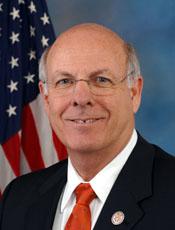 Rep. Stevan Pearce (R-NM)
Description
Amendment required the Secretary to complete and submit to Congress a report on the energy resources included in the Washington-Rochambeau Revolutionary Route National Historic Trail.
Legislative Activity
Stay on top of the latest movement without scrolling through every action
House amendment offered
July 10, 2008
View full timeline
House amendment offered
July 10, 2008
Roll call votes on amendments in House
July 10, 2008 • 2:49 PM
Amendment agreed to Committee of the Whole
July 10, 2008 • 2:49 PM
House amendment offered/reported by : Amendment (A002) offered by Mr. Pearce.(consideration: CR H6372-6373; text: CR H6372)
July 10, 2008 • 2:14 PM
House amendment agreed to: On agreeing to the Pearce amendment (A002) Agreed to by recorded vote: 424 - 0 (Roll no. 482).
July 10, 2008 • 2:49 PM
Amendment (A002) offered by Mr. Pearce. (consideration: CR H6372-6373; text: CR H6372)
July 10, 2008 • 2:14 PM
On agreeing to the Pearce amendment (A002) Agreed to by recorded vote: 424 - 0 (Roll no. 482).
July 10, 2008 • 2:49 PM
Votes
1 roll call on this amendment
Text
Offered
WASHINGTON-ROCHAMBEAU REVOLUTIONARY ROUTE NATIONAL HISTORIC TRAIL
                            DESIGNATION ACT

  The SPEAKER pro tempore. Pursuant to House Resolution 1317 and rule
XVIII, the Chair declares the House in the Committee of the Whole House
on the State of the Union for the consideration of the bill, H.R. 1286.

                              {time}  1314


                     In the Committee of the Whole

  Accordingly, the House resolved itself into the Committee of the
Whole House on the State of the Union for the consideration of the bill
(H.R. 1286) to amend the National Trails System Act to designate the
Washington-Rochambeau Revolutionary Route National Historic Trail, with
Mr. Ross in the chair.
  The Clerk read the title of the bill.
  The CHAIRMAN. Pursuant to the rule, the bill is considered read the
first time.

[[Page H6365]]

  The gentleman from West Virginia (Mr. Rahall) and the gentleman from
Utah (Mr. Bishop) each will control 30 minutes.
  The Chair recognizes the gentleman from West Virginia.
  Mr. RAHALL. Mr. Chairman, I yield myself such time as I may consume.
  Today, we are considering H.R. 1286, legislation introduced by our
colleague, Representative Maurice Hinchey of New York. I might also add
that it was some 9 years ago that the initial study on this legislation
was initiated by our colleague from Connecticut, Mr. John Larson, and I
wish to commend his leadership, as well as Mr. Hinchey's leadership on
the pending bill.
  The pending legislation will designate a National Historic Trail,
tracing the routes taken in 1781 by the armies of General George
Washington and French Count Rochambeau on their march from New England
to face the British Army at Yorktown, Virginia.
  The story of this trail is a fascinating piece of our history. The
French Army, after wintering in Newport, Rhode Island, marched
southwest in early July to join General Washington and his troops at
Phillipsburg, New York. On August 18, the soldiers, and their
provisions and armaments, started to slip away from Philipsburg.
  The troops and their supplies traveled 600 miles over a network of
strategic roads and waterways through New Jersey, Pennsylvania,
Delaware, Maryland, the future District of Columbia, and Virginia. They
reached Williamsburg in late September, 1781.
  With a French fleet in the Chesapeake, blocking British
reinforcements from New York or a sea escape for Cornwallis' troops,
Washington and Rochambeau laid siege to Cornwallis' army at Yorktown.
Three weeks later, on October 19, 1781, the British troops laid down
their arms.
  I would note that when we bring forth legislation of this nature,
concerns have been raised in some corridors regarding any potential
impacts on private property rights. I can assure this Committee that
most of this trail follows public roads or crosses public lands. While
the historic route does cross some private lands, the National Park
Service does not propose or anticipate any acquisition of private
lands.
  I would also point out that nothing in the National Trails System
circumvents the authority of the States over hunting and fishing.
However, to make this matter crystal clear, the rule governing debate
over the pending measure adopted an amendment which reads as follows.
Again, the rule governing debate over the pending measure adopted an
amendment which reads as follows:
  ``Nothing in this act shall be construed as affecting the authority,
jurisdiction, or responsibility of the several States to manage,
control, or regulate fish and resident wildlife under State law or
regulations, including the regulation of hunting, fishing, trapping,
and recreational shooting. Nothing in this act shall be construed as
limiting access for hunting, fishing, trapping, or recreational
shooting.''
  I would say this language covers all the bases. Nothing in the
pending measure in any way, shape, or form supercedes the authority of
the States over hunting, fishing, trapping, and shooting.
  This is essentially the same language this body adopted last April by
a vote of 416-5 during consideration of H.R. 2016, the National
Landscape Conservation System Act, per an amendment offered by the
gentleman from Pennsylvania (Mr. Altmire).
  I would close by noting that the trail designated by this bill
follows the recommendations of a National Park Service study, and the
Bush administration supports this legislation.
  I reserve the balance of my time.
  Mr. BISHOP of Utah. Mr. Chairman, I yield myself such time as I may
consume.
  Over the July 4th holiday, my wife and I rented the movie 1776. It's
one of my favorite ones. It has some historical accuracy, a lot of
historical inaccuracies, but it's a fun movie.
  In the exposition of that, to show John Adams's frustration at
Congress at that time, he was called down to vote on a motion by Josiah
Bartlett of New Hampshire, which is an effort that says that during the
hostilities in which they are in, they shall dissuade any kind of
dissipation, any extravagances, any gambling, or any horse racing. That
is when John Adams explodes and goes out on the street, with the
classic lines in his opening song, which says about Congress in 1776:
We piddle, twiddle, and resolve not one--I can't use a swear word here,
but it's in there--not one thing do we solve.
  Now, the issue at hand in 1776 in Philadelphia was independence. They
had already been fighting for a year. They had raised an army and
appointed George Washington to do battle. Yet, they still refused to
talk about the key sole issue of the day, which was independence.
Instead, they talked about everything else, every small, piddly idea
they could come up with, rather than coming to the core. And that was
John Adams's frustration with that.
  As I was watching that movie, I thought, Gee, that is exactly like
Congress today. We are doing the same thing.
  I have to admit that I have a sense of frustration with congressional
leadership. It's a 4-hour flight for me to come back here. Yet, every
week I have been coming back on that 4-hour flight to deal with non-
issues. We haven't dealt with homeland security, we haven't dealt with
the appropriations, we haven't dealt with energy issues.
  Instead, the key issue of this week is to federalize a trail that
already exists, that is controlled by local governments, and there is
absolutely nothing, nothing the Federal Government can do on this trail
that couldn't be accomplished by States and local governments through a
well-written interlocal cooperation agreement.
  The sponsor does not live in the area of this trail. It encompasses
nine States. Not all of the Members of Congress who are impacted either
in the trail area or abutting the trail area are cosponsors.
  The other side cannot even refute how many people understand or know
that this trail is going to be impacting their lives. The estimates we
have are less than 10 percent are understanding about this.
  Yet, the key issue is not necessarily the trail, because it's already
there. The key issue is who will be making decisions in the future
about this trail. If it were possible that everyone involved in this
particular trail was happy about it, they liked the idea, they wanted
it, but at some future date would like to make a decision about that
trail, by passing this bill, all of a sudden we change the process and
the place of that decision from localities back here to Washington.
  It's about power, it's about where do you actually make decisions in
America. It's about empowerment of individuals. This bill simply takes
the decision-making process away from localities and puts it back here
in Washington, where we have too many decision-making powers that we
are already avoiding as is.
  They did take one amendment of mine and they eviscerated it, an
amendment that dealt with second amendment rights, an amendment that
dealt with all second amendment rights. Yet, the issue at hand that is
now part of the underlying bill through a self-executing rule only
deals with hunting, not all second amendment rights, which was the goal
and the idea and what should have been in place, which simply means
that if I'm hunting, I'm okay on this trail. If I'm trying to protect
myself, I'm not. If a mugger tries to attack me, I cannot protect
myself unless first I'm trying to hunt the mugger. Or if a moose is
shot by me, I better shoot it in the posterior because if a moose is
charging me, no longer is that hunting, that is now self-defense, and
that is not allowed with the amendment that came in here.
  It is simply an absurdity of situations, and it's not an unrealistic
absurdity. Even the Washington Post did a recent article about serial
killers along the Appalachian Trail. It is not a false fear in there,
it's a realistic fear. It's a realistic fear that will be noted that
when the Democrats made this self-executing rule, they did not defend
all of the second amendment, only the so-called hunting rights, which
is not, not the purpose of the second amendment.
  But this is now simply the only bill that we will have of
significance today.

[[Page H6366]]

It's basically the crux of this entire week, which simply means
Democratic leaders don't want to address other issues. Specifically,
energy issues. There is no issue of comprehensive policy of what we
will be doing to address the energy crisis the Americans are facing.
The appropriations process has simply shut down over the potential of
doing that.
  So I fly back for 4 hours to come back here last week to talk about
banning pet monkeys from crossing State lines. The week before, about
the Chesapeake Bay. This week, I came back here so we could talk about
a trail.
  Mr. Chairman, in all due sincerity, this is nothing but legislative
filler. We are not dealing with the real issues that affect people or
should be affecting this Congress, we are dealing with the small stuff,
the triviality, the legislative minutia. This is like junk food, like
cotton candy. It's there. It's fluffy, it's airy. But it is not filling
and has no fiber. It gives the illusion of activity, but in essence we
are dealing with a cotton candy agenda.
  We have in essence a Democratic de facto filibuster against energy,
against ever talking about it in any way, shape, or form. Instead, we
have a trail. A trail that already exists, a trail that would be
federalized, a trail that encompasses more power back here in
Washington, instead of allowing people to help make decisions for
themselves.
  With that, Mr. Chairman, I will reserve the balance of my time.
  Mr. HINCHEY. Mr. Chairman, I yield myself such time as I may consume.
  Mr. Chairman, I want to illustrate the importance of this issue which
we are dealing with here today and an issue in which I rise in strong
support. It is a bipartisan effort to implement the National Park
Service's study that Congress mandated back in the 106th Congress. It's
an issue that has been pending for some time.
  The National Park Service study recommended that we designate as a
National Historic Trail this 600-mile route used by the allied armies
under General George Washington and French Count Rochambeau in their
epic march that led to the victory at Yorktown, Virginia, in 1781, and
the independence of the United States of America.
  The trail travels mostly along existing roads, throughways, and
publicly navigable waters from Rhode Island down to Yorktown, Virginia.
Designating the Washington-Rochambeau Revolutionary Route as a National
Historic Trail will help spur a greater understanding of our shared
history and will help illuminate the important battle of a young
country and its French allies against the rule of King George.
  I'd like to thank especially Chairmen Rahall and Grijalva for moving
this legislation through the hearing and markup process in the Natural
Resources Committee. I greatly appreciate their support and assistance
and that of their very capable staff.
  This designation is important because we have identified the scope of
resources that we need to more effectively commemorate this historic
event. In particular, I am thrilled that the expanded involvement of
the National Park Service to preserve and interpret the route will
highlight to Americans, young and old, our earliest struggles as a
country for our independent rule on behalf of all of the people of our
country.
  The designation also calls for the involvement of State and local
historic organizations interested in commemorating the heritage of the
American Revolution, with a particular focus on the States of
Connecticut, Delaware, Maryland, Massachusetts, New Jersey, New York,
Pennsylvania, Rhode Island, and Virginia. It was on the 16th of
December, 1999, that the Revolutionary War enthusiasts supporting a
National Historic Trail designation of the Washington-Rochambeau
Revolutionary Route organized themselves at the Washington headquarters
in Newburgh, New York.
  They advocated for the route essentially defined by the march taken
by the Continental Army of General George Washington and by the French
Army of Count Rochambeau on their way to their ultimate victory over
British forces under the command of Major General Charles Cornwallis in
Yorktown, Virginia, in 1781. The route also included the march of the
French Army in 1782 as it returned back north up to Boston.

                              {time}  1330

  In a 1999 interview with the historical magazine ``American
Heritage,'' renowned author David McCullough claimed that ``as you are
working on the Revolutionary War, as I am doing now, you realize what
the French did for us. We wouldn't have a country if it weren't for
them,'' David McCullough said. For that America will be forever
grateful for the army led by Rochambeau, and this trail will
significantly symbolize our appreciation and dedication to our shared
history.
  I would like to thank all of the Revolutionary War enthusiasts, the
National Park Service, and the many Members of Congress whose districts
particularly host the route who have cosponsored this legislation. All
of these participants helped make this designation possible. It is a
designation that will raise to a much greater level the quality of
heritage preservation all along the route by providing signage and
other commemorative work directed toward linking the Allied encampments
along the Revolutionary march with a self-guided auto route, auxiliary
hiking trails and appropriate historical signs.
  This commemorates one of the most significant events in the history
of the United States of America. It is our major victory in the
Revolutionary War, which led to the independence of our country, the
foundation of our Constitution, the creation of the Bill of Rights, and
the leadership that we have provided for the following centuries around
the world. I am very much in support of this bill. I hope that every
Member of this House of Representatives will vote for it.
  Mr. Chairman, I reserve the balance of my time.
  Mr. BISHOP of Utah. Mr. Chairman, I yield to the gentleman from
Illinois (Mr. Shimkus) such time as he may consume.
  (Mr. SHIMKUS asked and was given permission to revise and extend his
remarks.)
  Mr. SHIMKUS. Mr. Chairman, I come in support of the legislation. I
served, as many people know, in the United States Army for 5 years
actively, 23 in the Reserves, a West Point graduate, great respect for
George Washington, who established the fortifications there at West
Point, the longest active military installation in the country. Of
course, this constitutional Republic owes a great debt of gratitude to
the French, and it is unfortunate we have to use discussions on this to
come to the floor and exercise our rights of freedom and speech to talk
about a new Declaration of Independence. So with respect to the
chairman, I hope he will indulge me.
  When we talk about the day-to-day and we talk about around the Fourth
of July, America knows that we are held captive to imported crude oil
as energy and that we have to break away to become energy independent
and free. There are a lot of ways that we can do that, and I believe
there is a huge consensus in this Congress today. Unfortunately, that
consensus is not being allowed to be brought to the floor, and that is
why we have to use legislation like this to exercise our ability for
free speech to talk about pressing concerns.
  We all know the problem, and I have tried to change my debate and
discussion away from the basic partisan aspects to just the realities.
And the reality is when President Bush became president, the price of a
barrel of crude oil was $23. I highlight it here. I don't shy away from
that fact. When the Democrat majority came in, the price of a barrel of
crude oil was $58. Yesterday, I haven't checked the spot price today,
but yesterday's price was $140. And all I have said on this floor now
for about 12 weeks is that this trendline is bad, this trendline for
our economy, for our middle class, for our lower middle class, for
rural America, is not sustainable, and that we have to address this.
And we can. We can address it in a bipartisan manner on this floor.
There are a lot of things we can do.
  We have tried on this floor numerous times to bring alternative fuel
standards, the debate of using American coal, the largest recoverable
resource we have. We have the largest recoverable resource of coal as
any country in the world in coal. People don't understand that, but we
do. The Germans developed technology in World War II to

[[Page H6367]]

take coal and turn it into liquid fuel. Wouldn't that be helpful today
in the high energy prices, to be able to take something that we have a
lot of and turn it into liquid fuel to help us become more independent
from the importation of crude oil, especially from dangerous places
around the world, places that really don't like us and we really would
like to not have to be there.
  So when we talk about becoming energy independent, we would like to
say we are always going to need some, so we have got North American
allies, the Canadians, a great source of imported fossil fuels, Mexico,
a great supporter of fossil fuels. Using that, using our own coal
reserves and our other resources, we could become independent from
imported crude oil from other places.
  We are independent on energy for electricity. We produce in our
country the electricity we need. So we can be independent. We are not
independent on the energy we need in liquid fuel.
  One way we do this is with our great coal reserves. I am from
Illinois, 250 years worth of recoverable coal. You go to a coal mine,
you build a coal mine, American jobs. You operate the coal mine,
American jobs. You build a coal-to-liquid refinery, American jobs. You
operate that refinery, American jobs. You actually have a tax base
developed for our local schools.
  You build a pipeline from these refineries to maybe the local
airport. Four budget airlines are bankrupt. That means baggage
handlers, ticket takers, pilots, planes sitting idle because they can
no longer compete with the high aviation fuel. Well, you can make
aviation fuel from coal-to-liquid technology,
  The United States Air Force is the number one aviation fuel user in
the world. Every time this barrel of crude oil goes up $1, it costs us,
the taxpayers, $60 million just to pay the aviation jet fuel bill. They
are asking us to do this. If we want to become energy independent, as
we are speaking about the independence of our country, being free from
foreign oppression, being free from foreign influence, we have to
become energy independent.
  Another way to do this is the Outer Continental Shelf. Great
resources, billions of barrels of crude oil, trillions of cubic feet of
natural gas, just waiting to be explored and recovered. These areas
here in red are off limits by a dictate imposed by Federal legislators
25, 30 years ago, in a spending bill. We said in a spending bill you
can't go off the east coast. You can't go in the eastern Gulf. You
can't go on the west coast. It is off limits. So a way that we could
become more independent, energy independent, would be to use our vast
coal resources and to open up the Outer Continental Shelf. I have
another chart here I forgot to bring that talks about wind and solar.
  But the great thing about the Outer Continental Shelf is this: When
we allow industry to look for, find and recover this, it is my
understanding they have to pay us for that, and how they pay us is in
royalties. So if we are going to use money for solar and wind and
renewable energy, what a great place to get the pay-for.
  I got a lot of Blue Dogs, they have been fighting the battle on pay-
fors. What a great pay-for, to become energy independent by using the
available oil and gas reserves, bringing more supply to the market,
lowering the price.
  It is all gain. There is no disadvantage to using our coal resources
and creating jobs. There is no disadvantage to opening up the oil and
gas reserves off the Outer Continental Shelf. And really there is no
disadvantage into going into the Arctic National Wildlife Refuge, an
area the size of the State of South Carolina, a drilling platform the
size of Dulles Airport. To put it in perspective, take a football field
and put a postage stamp on there.
  When you hear people talk about the Arctic National Wildlife Refuge,
it is not like Woodland Park in my hometown of Collinsville, Illinois.
That might be a little bit disruptive if you are drilling. It is not
disruptive in an area the size of the State of South Carolina.
  So the frustration for me as a member of the Energy and Air Quality
Subcommittee and the Energy and Commerce Committee is we can't even
have this debate in the committee. If we could have this debate in the
committee, if we could move a bill and get it to the floor, we could
use that time to debate energy. But, unfortunately, we have to use this
time on a historic trail that helps us remember where we come from,
helps us remember our national heritage.
  We have obviously the portrait of the Marquis de Lafayette right here
in the Chamber. Remember when we have had trouble with our French
friends, they were here when we needed them and were instrumental to
this Republic, and we need to thank them. Anything we can do as a
history teacher to remember history and strengthen it for future
generations, I am for.
  I just hope what we want to do in the history, I hope we are willing
to do the same thing for future generations for energy independence.
And I challenge my friends to bring on the environmental restrictions.
We can meet them. But we have to have a whole portfolio. I am willing
to join you, if you all let me.
  With that, I would like to thank the ranking member for the time.
  Mr. HINCHEY. Mr. Chairman, I yield 3 minutes to the gentleman from
Connecticut (Mr. Murphy).
  Mr. MURPHY of Connecticut. I thank the gentleman from New York (Mr.
Hinchey).
  I came to the floor today to speak about the underlying legislation,
which is incredibly important to those of us who reside in Connecticut,
where 340 miles of this proposed route lies, more than in any other
State along this historic trail. But I can't sit here and not respond
to some of the comments from our friends from across the aisle.
  I appreciate this newfound interest in trying to make this country
independent of oil outside of our bounds, independent of energy sources
produced outside of the United States. The problem is that our friends
on the other aisle who controlled this House of Representatives for 12
years are too late to the game.
  It is a shame, a travesty, that we are sitting in this situation that
we are today, not only with gasoline in Connecticut, where I come from,
at $4.30 a gallon, but across this Nation families are being held
hostage by a product produced and priced outside of this country.
  We could have made different choices in this House if we had had
leadership on the Republican side of the aisle, who controlled it for
12 years in conjunction with a President who sat in the White House for
six of those years. We could have been in a very different place today.
But we are not.
  So, as Democrats, we are standing up, passing legislation to hold
OPEC accountable for price fixing; investing in renewable resources to
try to finally get this country off of that oil that we are far too
addicted to; and going after those who would try to price-gouge and
take advantage of the current economic situation. In all of those
situations there are veto threats from the President and far too few of
our friends from the other side of the aisle joining us. Now, there is
consistency there. For 12 years they neglected the growing energy
crisis, and now we don't have enough bipartisan cooperation across the
aisle.
  So I appreciate the fact that on a bill that is very important to
those of us in Connecticut, that we have a little bit of an opportunity
to talk about the crisis that is affecting American families. I just
wish that our friends on the Republican side of the aisle had been
doing a little bit more talking about this subject before we got here,
the new members of this class. I wish that we had been talking about
this 5 years ago and 10 years ago, and we wouldn't have to be talking
about it in such grave terms here today.
  Mr. Chairman, I want to talk just for one moment about how important
this underlying bill is going to be to us in Connecticut, for it is
important for us to celebrate our heritage. What makes us so great as a
Nation is that we celebrate it, we respect it and we pass it on to new
generations. And so when I look at that 340 miles of this historic
trail that is going to lie in Connecticut, I think great things about
what it is going to mean to have more resources and more Federal
recognition for the students and the children who will walk that trail,
who will visit the monuments and markers across it, and will have even
more reverence for the history that brings us here today.

[[Page H6368]]

                              {time}  1345

  Graves of French soldiers still sit in Waterbury, Connecticut; the
spot on which the Caleb Baldwin Tavern sat in Newtown.
  The CHAIRMAN. The time of the gentleman has expired.
  Mr. HINCHEY. I yield 1 additional minute, Mr. Chairman.
  Mr. MURPHY of Connecticut. I thank the gentleman from New York.
  A historic tavern in Newtown, Connecticut where General Rochambeau
and his troops made several stops continues to be talked about today as
an important part of the historic tradition of Western Connecticut.
  This is going to add to the historic legacy that of course makes us
what we are in New England, makes us so proud of our very unique role
in the making of this Nation. And what makes this Nation great is that
even in moments of trial like we have today, with families faced with
increasing costs of energy and health care and education, that we can
come together and propose solutions. I just think that it is too bad
that we didn't do something about this before this moment. I think it
is too bad that we have to come to this floor in such a crisis mode as
we do today. I wish our friends from across the aisle had done a little
bit more when they controlled this House. I think that would have done
a lot more to fulfill the legacy that we celebrate today than the
moment that we are in right now.
  Mr. BISHOP of Utah. I am pleased to yield to the gentleman from North
Carolina (Mr. Hayes) such time as he may consume.
  Mr. HAYES. I thank the gentleman from Utah for yielding.
  As we stand here today, I think this is a good bill. We all support
it. But as a segue into what the real issue for the American people and
people here in this Capitol building is today, how can you afford the
gas to drive or fly to go see the area that we are talking about today?
  Our friend just talked about what happened. Well, Congressman Shimkus
reminded us that during the 7\1/2\ years of the present administration,
gas prices went up but not anywhere nearly as dramatically as they have
in the 18 months since our friends across the aisle, the Democrat
majority, has controlled. But let me make a very strong and separate
point.
  Many friends on the Democrat side, including the chairman and others,
the person sponsoring the bill, these folks want to do what we, the
minority, want to do. And that is, all of the above. There have been
some neat things done by this House during my almost 10 years here.
  CAFE standards. I voted for that. Better mileage. That is important.
The American people have heard us, and they are working hard to
conserve. Price gouging. That is a piece of the puzzle. I voted for
that. Speculation. We have had hearings yesterday, today, tomorrow.
That is an interesting subject. I support that to the extent it affects
the issue before us today. But an attorney from a local university made
the point today that speculation adds liquidity to the market.
Excessive speculation causes problems. He hasn't told us where
excessive begins.
  But it is important that we look into every single issue that impacts
our constituents at home, and that is the price of gas. My friend from
West Virginia absolutely knows as well as anybody the importance of
utilizing our coal resources. Thank goodness for West Virginia, among
others, and their production of domestic energy resources.
  As you look at our future and our economy, which includes, among
other things, food prices, and you see what the incredibly outrageously
high price of gas has done to us, you have to come to the conclusion
and let those good people in both parties and on both sides of the
aisle have a simple, straightforward vote on whether we are going to
become more active in domestic energy resources.
  Domestic energy. We have a small group of people, and they apparently
have an unusual hold on the Democrat leadership. That group says no to
nukes, no to coal, no to tar sands, no to expansion of refineries. We
cannot afford and common sense does not allow for us to maintain that
position.
  I think it is extremely helpful that we are having a lengthy debate.
And, again, a lot of good points have been made, but I will refresh
everyone's institutional memory to the fact that this House,
Republicans and Democrats, in previous terms before we had a switch in
majority passed all of the legislation that we are talking about
bringing up again today, including exploration drilling in ANWR and off
the Outer Continental Shelf. However, our friends in the other body saw
fit not to send that to the President's desk.
  Well, the distinguished majority leader mentioned today how we should
use our reserves. I could support that if it comes to the floor. But I
am also on a letter, as many of you others are, telling the President
to release the moratorium. We cannot afford, Democrats, Republicans, or
anyone else, to leave our constituents hanging out to dry with
unbelievably high gas prices.
  So I support the minority leader's call for meaningful energy
legislation, including votes on nuclear, votes on drilling which the
American public has very clearly said, and at the same time I will
reemphasize what the majority and minority, regardless of who is in
that position, has said over and over again: Environmentally sound?
Absolutely. Safely? Without question.
  And again thanking you for the time, I wrap up by saying we, this
body, regardless of party, has been guilty in the past of using lowered
gas prices to conveniently forget how important independence and our
future energy needs are.
  So that is why I have a piece of legislation, and I would welcome any
and every one to join me on, that says every additional dollar of
revenue created by new leases will go to a trust fund that can only be
used for alternative sources of energy. Wind, waves, solar, everything
needs to be on the table, ethanol, methanol, biodiesel.
  Gentlemen, I support your bill. But, again, let's get ourselves
together and make sure that we get to vote on what the American people
and the majority of this Congress want, and that is lower energy
prices.
  The CHAIRMAN. The gentleman from West Virginia has 17\1/2\ minutes
remaining; the gentleman from Utah has 8\1/2\ minutes remaining.
  Mr. RAHALL. Mr. Chairman, I yield myself such time as I may consume.
  For some time now, the Democrats on this side have been watching our
colleagues on the other side of the aisle time after time on bill after
bill come to the floor and defend multinational oil conglomerates, and
now they claim to be the friends of coal as well.
  My colleague from Illinois (Mr. Shimkus) gave us a great presentation
on coal-to-liquids, as has been done a number of times, and there is
not much I can disagree with in his presentation about the coal-to-
liquids. But it is, and the fact of the matter is, that it is pure and
simple that it is the oil industry and their defenders here in the
Congress that have time and time again undermined the viability of a
true alternative fuels industry in this country. And let me back that
up by example.
  In the 1940s, the Synthetic Liquids Fuels Act passed the Congress and
appropriated over $80 million for research and production. By the
1950s, America was producing thousands of gallons of synthetic gasoline
a day at a test plant in Missouri. But the discovery of cheap oil
combined with a lobbying effort by the oil industry caused the
government to abandon its synthetic fuel research.
  Let's hark back to the 1970s and that oil crisis that we all faced
and the long gasoline lines. The Federal Government briefly pursued
synthetic fuel production. But once again, when the price of oil
receded, interest in coal-derived fuels faded. And here we are again,
with oil prices and talk of synthetic fuels both on the rise.
  The Congress has a duty, a responsibility to the American people to
do much more than simply coddle the oil industry and let history repeat
itself. We also need to do more to discourage foreign oil cartels from
temporarily manipulating oil prices for the sole purpose of destroying
a competitive domestic fuel source.
  And if my friends on the other side of the aisle were serious about
coal, they would be pressuring this White House to back away, the two
oil men in charge, to back away from its cozy relationship with those
cartels. Instead, they want to roll over and give Big Oil everything it
wants, no strings attached.

[[Page H6369]]

  Furthermore, the Republican-led Congress had 6 years under the Bush
administration to go about making meaningful contributions to clean
coal and coal-to-liquids fuels. If Republicans in Congress were truly
serious about producing the next generation of these technologies, then
we would already be seeing these technologies coming to light today and
the capabilities thereof.
  I would remind my colleagues on the other side of the aisle that in
2000, President Bush while running for office pledged to spend $2
billion over 10 years for a clean coal technology program, a program
that the Democrats initiated in the 1980s. He never made good on that
promise and allowed in only about half of the promised money while
claiming credit for the full pledge.
  During its tenure in leadership of the Congress, the Republican Party
did nothing to buck the President's low balling for clean coal
programs. Again and again, the President's party voted for his budgets
to cut funds for clean coal research.
  Now, if the other side were truly serious about supporting coal, they
would have added funding to clean coal budgets and they would have done
more to put coal on a more even footing with oil and gas. They did not,
and now we are seeing the consequences of high energy prices that
Americans are experiencing.
  So the fact of the matter is that the energy challenges that our
Nation faces demand more than rhetorical battles on the floor of this
body. Certainly our constituents would agree, and they are feeling the
energy pinch and deserve much better.
  We need to put our energies into finding common ground to achieve
real workable solutions to our energy problems. And towards that end,
we need to be working on our energy challenge from two ends at the same
time: The environmental end and the supply end. If we take that
approach, then we can build a viable coal-to-liquids industry.
  Unfortunately, too much of the talk in this body in recent weeks has
been focused only on supply, and not enough of it has considered the
environmental hurdles that we face.
  As worldwide pressure mounts to address carbon emissions, the coal-
to-liquids industry recognizes that to be economically successful, it
must also be environmentally successful. But this administration has
done nothing to help the coal industry address the environmental side
of this energy challenge. So we need to invest more in environmental
research and development, something that Democrats have been arguing
for, but that our Republican colleagues during their 12 years in
control of Congress have continually relegated to the back burners.
  By failing to lay the environmental foundations for coal's future,
this administration has opened the opportunity for foreign nations,
most notably China, to bolster their coal fuels industry, putting our
own Nation's future fuel production and economy at a disadvantage. This
administration has failed to invest in new emissions technologies,
technologies that we can use here and we can sell overseas; and, as a
result, we risk watching worldwide emissions grow unchecked as we
become more and more beholden to yet another set of foreign producers
for our fuel, with China at the very lead.
  So, Mr. Chairman, I say to my colleagues on the other side who keep
coming to the floor on bill after bill and speaking about the energy
crunch, which is indeed on the uppermost of every American's mind today
and the high price of gas, that we do need to address this in a
bipartisan way and in a way that uses all of our domestic sources of
energy and in a way that does not coddle one domestic energy fuel over
all others, especially when that energy fuel is trying for its own
competitive advantages to put other domestic sources of energy at a
disadvantage.
  I reserve the balance of my time.
  Mr. BISHOP of Utah. Mr. Chairman, I apologize for starting out here
with my old profession as a teacher coming out. But the gentleman from
Connecticut and a couple of others on this floor have said some things
that I think bear discussion simply as a review on the fundamentals of
how legislative government works around here.
  Outside in the hallway we have the distinguished Speakers. Most of
them are the most recent ones, but there are the four that I always
consider to be the four great speakers of this House, one of whom was
Thomas Bracken Reed, who is the one that transformed this House from a
minority body into a majority body. He is the one who determined, in
fact he said: If the tyranny of the majority is harsh, the tyranny of
the minority is unendurable. And he was the one who prohibited the
practice of calling a roll call and then not allowing people to say
``here''; therefore, not having a quorum to conduct business. He forced
the counting of a roll call, which made this from that time on a
majoritarian body.
  The problem we have over in the Senate is that has never been a
majoritarian body; it will always be a minority body. It takes 60 votes
to cut off the debate and move onward.

                              {time}  1400

  So even though today the Democrats have the leadership positions in
both the House and the Senate, I would never jump to the conclusion or
the inaccuracy of saying that the Democrats control Congress because
the Democrats will not control the Senate until they have at least 60
votes there. It is a minority body.
  In like manner, the conversation that Republicans controlled Congress
for 12 years and didn't do anything has the same problem because in
none of those 12 years did Republicans have 60 votes in the Senate.
And, therefore, a minority body was actually in control.
  We have had split government. We will probably always have some form
of split government in that respect. But to assume that because there
was leadership of both parties is not to assume the same basic core
that goes along with that factor. And, indeed, over the last 5 to 10 to
12 years, there has been a great deal of energy discussion from this
body, and when Republicans were in control of this body, there was a
great deal of legislation dealing with energy that was passed in this
body only to be prohibited from going through the entire process
because this majoritarian body could pass something that the minority-
controlled body on the other side could not do.
  I appreciate the distinguished chairman from West Virginia of our
committee speaking so passionately, especially about coal. I share that
passion. We have a great deal of coal in my State. The only difference
between the two is, unfortunately, the coal in the State of West
Virginia is on private property.
  I was so impressed when the chairman had a bill that dealt with
wilderness and the coal companies were there to advocate for wilderness
because it did not impact them. They were on private property.
  In the State of Utah and much of the West, we have the exact opposite
problem; the coal is found on public lands. And so I appreciate his
commitment to the concept of coal, and even though it may indeed be a
form of competition at some time in the future, I take his words as a
commitment to try to work forward to try and free up the coal in the
West that is on public lands so it can all be part of the energy
solution that we are looking for in this Nation.
  You know, we are talking about a bill that dealt with Washington.
Washington led the troops in an era where he simply was out of
ammunition. He had the opportunity of failing, but he did not allow it
to be so because the American spirit worked out the details and then
worked out the process so he overcame those competitions, those
difficulties. The United States today is in the same situation. We are
out of energy ammunition, and it is a significant problem for those who
are on fixed incomes, the poor and the middle class. If you are rich,
this energy problem which we face is merely an annoyance. If you are on
a fixed income or a limited income, or if you are poor or middle class,
then it becomes a significant life situation so that every dollar that
they no longer can spend, that they now have to spend to energy on
consumption, is a dollar that they can't spent on such luxuries as
Hamburger Helper.
  In this particular bill the Democrats accepted an amendment from one
of the great young Republican freshmen from Virginia, Mr. Wittman. It
is an amendment that is still part of this bill that aims to protect
energy production and transmission in this particular trail system. It
is a microcosm. It is

[[Page H6370]]

the appropriate thing to do. The real question then is why not? Why not
do this same thing not just in this trail bill, but throughout this
entire country so we can honor and protect to do that.
  Mr. Chairman, what we are dealing with now is simply the concept of
the future of where we are going. We can either find scapegoats or we
can find solutions. I think it is time that both sides of the aisle
look very carefully at trying to find solutions.
  With that, Mr. Chairman, I yield back the balance of my time.
  Mr. RAHALL. Mr. Chairman, I yield 3 minutes to the gentleman from New
York (Mr. Hinchey).
  Mr. HINCHEY. Mr. Chairman, I just want to emphasize how the Members
on this side of the aisle are completely dedicated to energy
independence and doing everything that is possible to achieve that
objective. We did much to try to achieve it during the 12 years that
our friends on the other side of the aisle held the majority. But they
were not interested at all in achieving that objective, or moving
forward in any significant way, not even in any real way.
  One of first things that we did when we achieved the majority here
last year was to pass a very substantial energy independence bill which
moves us strongly in that direction. Not as strongly as we would have
liked, but we had to be a little less ambitious about it because we
were threatened with vetoes as well as opposition from the other side
of the aisle.
  But what did we manage to achieve? We managed to achieve energy
efficiency for automobiles, the first time that had been done in more
than three decades. The first time that had been done in more than 30
years. We achieved a great increase in energy efficiency. We wanted to
make it more substantial. We wanted to go as high as 40 miles to a
gallon, but the President said he would veto anything like that.
  What else did we do? We moved towards creating tax incentives for the
creation and purchase of other means of energy independence such as
direct and indirect solar energy, and we are working very strong on
trying to achieve that, in spite of the fact that the White House has
said they are not in favor of it, they are opposed to that and would
veto that kind of legislation.
  They say that we are not in favor of drilling for our own oil off our
own coast. Well, the fact of the matter is that we are not opposed to
that at all. We recognize that we now have more than 150,000 wells
drilled on the land owned by the people of the United States of America
on public land, some of it here on dry land in the lower 48 States and
up in Alaska, and the rest of it offshore, mostly in the Gulf of
Mexico. That's what we understand. In addition to that, we have 68
million acres of land that has been also leased to these major oil
companies but because they do not apparently want to produce any more
energy because they realize that if they produce more, then the price
is going to go down, they are not drilling on those 68 million acres.
  So the fact of the matter is we are moving as aggressively as anyone
could, as intelligently as anyone could in the direction of trying to
achieve greater energy independence for our country.
  The Acting CHAIRMAN (Mr. Salazar). The gentleman's time has expired.
  Mr. RAHALL. I yield the gentleman an additional minute.
  Mr. HINCHEY. Recognizing that we possess probably less than 2 percent
of the known oil reserves in the world, we are doing everything we can
to use that small amount of oil reserves intelligently and reasonably
and in ways that are going to last our people for a long, long period
of time. And we are saying to the oil companies either use it or lose
it. If you are not going to use those 68 million acres of public land
on which you already have leases, then give them up and let us give
them to someone else. Let us lease them elsewhere. Let's have some
responsible people go down and drill those wells and produce the oil we
need which will drive down the price.
  So don't say that anybody over here is against drilling offshore. We
are very much in favor of it, and we know that they have the leases to
do it, and we are doing everything that we can to press them and
pressure them to live up to their obligations and responsibilities in
the leasing of the public lands that they now control.
  Mr. CASTLE. Mr. Chairman, I rise today in strong support of the
Washington-Rochambeau Revolutionary Route National Historic Trail
Designation Act (H.R. 1286), which would designate the 600-mile route
stretching from Rhode Island to Virginia traveled by Revolutionary War
General George Washington and French General Count Rochambeau as a
National Historic Trail, connecting the States of Rhode Island,
Connecticut, New York, New Jersey, Pennsylvania, Delaware, Maryland,
and Virginia. The creation of this Trail will celebrate the Franco-
American alliance and the victory of Generals Washington and Rochambeau
who faced seemingly insurmountable odds. Importantly, H.R. 1286 will
enable the National Park Service to support groups, projects, and
activities associated with the trail's preservation and interpretation.
  The Washington-Rochambeau Revolutionary Route National Historic Trail
Designation Act was introduced to ensure that this history, in all its
rich detail, is not forgotten. Although we often remember the victory
at Yorktown, too often we lose sight of the heroic efforts of two
nations, two armies, and two great men that made it possible. During
this historic period the armies marched to Wilmington, Delaware, where
the bankrupt Continental Army borrowed from Rochambeau to pay American
troops. This designation has the strong support of many state, local,
private, and public historic preservation groups and I urge my
colleagues on both sides of the aisle to support its passage.
  Mr. HOLT. Mr. Chairman, as a longtime cosponsor, I rise in support of
H.R. 1286, the Washington-Rochambeau Revolutionary Route National
Historic Trail Designation Act. Students of American history are
intimately familiar with the Battle of Yorktown, in which French and
American soldiers forced the surrender of British General Lord
Cornwallis, effectively handing victory of the Revolutionary War to the
American Colonies.
  However many Americans are less familiar with what preceded it--a
harrowing nine state, six hundred mile journey of more than 6,000
allied soldiers from Newport, Rhode Island, through my home state of
New Jersey to Yorktown, Virginia. Many historians identify this march
led by George Washington, General of the Continental Army and French
General Count Rochambeau along a network of roads, trails, and
waterways as critical to the American victory at Yorktown and the
eventual creation of the United States.
  In Philipsburg, New York on August 14, 1781, having learned that a
large fleet of French naval vessels was heading from the Caribbean Sea
to the Chesapeake Bay, Washington and Rochambeau discarded plans to
siege New York City and march to Southeastern Virginia, where another
celebrated Frenchman the Marquis de Lafayette and his 5,000 troops were
outmaneuvering Cornwallis, forcing his British troops to bunker down in
Yorktown. With little time to prepare, Washington and Rochambeau led
more than 6,300 American and French troops on a southward march to
Virginia.
  H.R. 1286 is an important piece of legislation that comes at a
critical time. Despite strong grassroots support from organizations
like the National Washington-Rochambeau Revolutionary Route
Association, and efforts at the state and local level, many historical
sites associated with the American Revolution will be lost to
development and suburban sprawl. This bill would designate the route as
a National Historic Trail, allowing the National Park Service to
preserve and link together sites along the trail. Moreover, this
designation would preserve this important piece of America's heritage
using existing roads and rights of way--without the federal acquisition
of private lands.
  Preservation of the Washington-Rochambeau route will allow American
citizens and visitors alike to gain a greater appreciation of the
magnitude and improbability of the American victory as well as the
important and often forgotten role our French allies played in securing
American independence. Americans need a sense of history and an
understanding of history now more than ever. This trail tells an
important story in American history, and I strongly urge my colleagues
to join me in supporting this legislation.
  Mr. COURTNEY. Mr. Chairman, I rise today in support of the
Washington-Rochambeau Revolutionary Route National Historic Trail
Designation Act, a wonderful piece of legislation which will preserve
both our country's rich history but also its unique environment.
  In the spring of 1781, French General Rochambeau and his army of
nearly 5,300 men embarked on an expedition from Newport, Rhode Island,
to Yorktown, Virginia, to aid General George Washington and the
Continental Army in the American Revolutionary War. After traveling
through Massachusetts, Rhode Island, and Connecticut, General
Rochambeau joined forces with General Washington in Philipsburg, New
York, forming a

[[Page H6371]]

Franco-American alliance. The Franco-American forces then traveled
through New Jersey, Pennsylvania, Delaware, Maryland, and Virginia,
eventually arriving at Yorktown. At Yorktown, General Washington and
the Continental Army, with the aid of General Rochambeau and his men,
secured a decisive victory against General Cornwallis, effectively
igniting a successful end to the American Revolutionary War and laying
the groundwork for the creation of our new Nation.
  Mr. Chairman, the Newport to Yorktown route that General Washington
and General Rochambeau led their forces through reflects an
indispensible piece of American history. Today, we have an opportunity
to preserve this historically and ecologically significant route by
passing the Washington-Rochambeau Revolutionary Route National Historic
Trail Designation Act. The legislation, introduced by my esteemed
colleague, Representative Maurice Hinchey, will amend the National
Trails System Act to designate the route as a national historic trail.
Under this legislation, the Washington-Rochambeau Revolutionary Route
National Historic Trail will preserve a corridor approximately 600
miles long, from Newport to Yorktown in nine States and the District of
Columbia. The Washington-Rochambeau Trail will include a section in my
district in eastern Connecticut.
  During General Rochambeau's journey to Yorktown, communities in
Connecticut served an invaluable role with ensuring the success of
General Rochambeau's mission, supplying necessary supplies to his
troops. In June of 1781, General Rochambeau and his men began their
march through Connecticut before joining forces with General Washington
in Philipsburg, New York. In eastern Connecticut, the army established
camps in Plainfield, Windham, and Bolton before arriving in Hartford.
On the return trip, in October 1782, the Franco-American force again
marched through the State after victory in Yorktown. In total, General
Rochambeau's army made 47 stops in the State between the journey to and
from Yorktown. The Washington-Rochambeau Trail will preserve these
sites and educate residents and visitors on the significance of this
piece of American history.
  Mr. Chairman, as urban sprawl continues to threaten the integrity of
this route, the passage of this legislation is needed now more than
ever. Many of Connecticut's avid historians and devout naturalists are
anxious to celebrate the bill's passage. As a cosponsor of this
legislation, I ask my colleagues to join me in voting in favor of the
Washington-Rochambeau Revolutionary Route National Historic Trail
Designation Act, to ensure this historic route is preserved for current
and future generations.
  Mr. RAHALL. Mr. Chairman, I yield back the balance of my time.
  The Acting CHAIRMAN. All time for general debate has expired.
  Pursuant to the rule, the amendment in the nature of a substitute
printed in the bill, modified by the amendment printed in part A of
House Report 110-744, shall be considered as an original bill for the
purpose of amendment under the 5-minute rule and shall be considered
read.
  The text of the amendment in the nature of a substitute, as amended,
is as follows:

                               H.R. 1286

       Be it enacted by the Senate and House of Representatives of
     the United States of America in Congress assembled,

     SECTION 1. SHORT TITLE.

       This Act may be cited as the ``Washington-Rochambeau
     Revolutionary Route National Historic Trail Designation
     Act''.

     SEC. 2. ADDITION TO NATIONAL SCENIC AND NATIONAL HISTORIC
                   TRAILS.

       Section 5(a) of the National Trails System Act (16 U.S.C.
     1244(a)) is amended by adding at the end the following:
       ``(__) Washington-Rochambeau Revolutionary Route National
     Historic Trail.--
       ``(A) In general.--The Washington-Rochambeau Revolutionary
     Route National Historic Trail, a corridor of approximately
     600 miles following the route taken by the armies of General
     George Washington and Count Rochambeau between Newport, Rhode
     Island, and Yorktown, Virginia, in 1781 and 1782, as
     generally depicted on the map titled `Washington-Rochambeau
     Revolutionary Route National Historic Trail', numbered T01/
     80,001, and dated June, 2007.
       ``(B) Map.--The map referred to in subparagraph (A) shall
     be on file and available for public inspection in the
     appropriate offices of the National Park Service.
       ``(C) Administration.--The trail shall be administered by
     the Secretary of the Interior, in consultation with--
       ``(i) other Federal, State, tribal, regional, and local
     agencies; and
       ``(ii) the private sector.
       ``(D) Land acquisition.--The United States shall not
     acquire for the trail any land or interest in land outside
     the exterior boundary of any federally-managed area without
     the consent of the owner of the land or interest in land.''.

     SEC. 3. ENERGY.

       Nothing in the amendment made by section 2 of this Act
     shall prohibit or hinder the development, production,
     conveyance, or transmission of energy.

     SEC. 4. HUNTING, FISHING, TRAPPING, AND RECREATIONAL
                   SHOOTING.

       Nothing in this Act shall be construed as affecting the
     authority, jurisdiction, or responsibility of the several
     States to manage, control, or regulate fish and resident
     wildlife under State law or regulations, including the
     regulation of hunting, fishing, trapping, and recreational
     shooting. Nothing in this Act shall be construed as limiting
     access for hunting, fishing, trapping, or recreational
     shooting.

  The Acting CHAIRMAN. No amendment to that amendment in the nature of
a substitute is in order except those printed in part B of the report.
Each amendment may be offered only in the order printed in the report;
by a Member designated in the report; shall be considered read; shall
be debatable for the time specified in the report, equally divided and
controlled by the proponent and an opponent of the amendment; shall not
be subject to amendment; and shall not be subject to a demand for
division of the question.


             Amendment No. 1 Offered by Mr. Bishop of Utah

  The Acting CHAIRMAN. It is now in order to consider amendment No. 1
printed in part B of House Report 110-744.
  Mr. BISHOP of Utah. Mr. Chairman, I have an amendment made in order
under the rule.
  The Acting CHAIRMAN. The Clerk will designate the amendment.
  The text of the amendment is as follows:

       Amendment No. 1 offered by Mr. Bishop of Utah:
       Strike the new subparagraph (D) added by the amendment in
     section 2, and insert the following:
       ``(D) Land acquisition.--The United States shall not
     acquire for the trail any land or interest in land--
       ``(i) outside the exterior boundary of any federally
     managed area without the consent of the owner of the land or
     interest in land; and
       ``(ii) acquired from a State or local government if that
     land was acquired by such government through eminent
     domain.''.

  The Acting CHAIRMAN. Pursuant to House Resolution 1317, the gentleman
from Utah (Mr. Bishop) and a Member opposed each will control 5
minutes.
  The Chair recognizes the gentleman from Utah.
  Mr. BISHOP of Utah. Mr. Chairman, while this legislation prohibits
the use of eminent domain by the Federal Government, it does not
prohibit State or local governments from doing the same thing, in
essence doing the same dirty work. So my amendment is very simple and
clear. It prohibits the Secretary of the Interior from accepting lands
from State and local governments that were acquired through eminent
domain to expand this particular trail.
  We are talking about George Washington and the Revolution. I think it
is fitting to remember how strongly George Washington felt about
ensuring private property and that his soldiers respected the property
of civilians, even if they were a Tory sympathizer. He gave orders that
forbid looting even though plunder was the norm of the time. And even
though his men were hungry and dressed in rags, it is remarkable that
in so desperate a situation with such a noble cause for which he was
fighting, he imposed on his side such a high standard of conduct and a
high respect of individual priority property rights.
  In our world, the post-Kelo decision world, we cannot allow our
constituents to fall victim to any abuse of power from any level of
government that disproportionately attacks them, sometimes even
disproportionately attacks those on the lowest level of our economic
scales.
  Mr. Chairman, I ask for a favorable vote to an amendment that simply
says that the Federal Government will not accept land that is taken by
eminent domain.
  I reserve the balance of my time.
  Mr. RAHALL. Mr. Chairman, I rise to speak on the amendment.
  The Acting CHAIRMAN. Without objection, the gentleman from West
Virginia is recognized for 5 minutes.
  There was no objection.
  Mr. RAHALL. Mr. Chairman, this amendment addresses a concern that is
truly far beyond the likely impact of this bill. The bill expressly
limits Federal condemnation of land for the trail which is all that
should concern us here and the National Park Service. This amendment
seems to be based on the assumption that the Federal Government in some
smoke-filled back

[[Page H6372]]

room conspiracy-type of mind-set is going to conspire with State or
local governments to have them condemn land and then turn it over to
the Federal government.
  First of all, I don't believe this happens often, if ever. We have
really reached an extreme level of detail here where we have to
legislate out to the far corners of what anybody might imagine might
some day happen. But for the sake of argument, let's say that a State
does decide to condemn land and pay the owner for his property. Such a
decision will be up to the State or local government acting in what
that unit of government believes to be the best interest of its
citizens. Whether the State or local government subsequently conveys
the land to the Federal Government is irrelevant.
  And I might add, just for the record, this is not a trail like the
Appalachian Trail which cuts across country and private property, it is
more a series of signs like those gray historic markers you see along
roads all over the country. Most of the route travels along public
highways and roads. No private landowner will be forced to let tourists
on their land, and the NPS anticipates no Federal acquisition at all.
  But nevertheless, in the spirit of bipartisan cooperation and all
that I have just said, we are willing to accept this amendment. We
think that it is unnecessary, but we are willing to accept it.
  I yield back the balance of my time.
  Mr. BISHOP of Utah. I yield back the balance of my time.
  The Acting CHAIRMAN. The question is on the amendment offered by the
gentleman from Utah (Mr. Bishop).
  The amendment was agreed to.


                 Amendment No. 2 Offered by Mr. Pearce

  The Acting CHAIRMAN. It is now in order to consider amendment No. 2
printed in part B of House Report 110-744.
  Mr. PEARCE. Mr. Chairman, I offer an amendment.
  The Acting CHAIRMAN. The Clerk will designate the amendment.
  The text of the amendment is as follows:

       Amendment No. 2 offered by Mr. Pearce:
       At the end of the bill, add the following:

     SEC. 4. ENERGY AND CONGRESSIONAL REVIEW.

       The Secretary of Interior, in consultation with the
     Secretary of Energy and private industry, shall complete and
     submit to the Committee on Natural Resources of the House of
     Representatives, the Committee on Energy and Natural
     Resources of the Senate, and Senators and Representatives
     from the States affected by the designation, a report using
     the best available data and regarding the energy resources
     available on the lands and waters included in the Washington-
     Rochambeau Revolutionary Route National Historic Trail. The
     report shall--
       (1) contain the best available description of the energy
     resources available on the land and report on the specific
     amount of energy withdrawn from possible development; and
       (2) identify barrels of oil, cubic feet of natural gas,
     megawatts of geothermal, wind and solar energy that could be
     commercially produced, annual available biomass for energy
     production, and any megawatts of hydropower resources
     available, including tidal, traditional dams, and in- stream
     flow turbines, and any impact on electricity transmission.

                              {time}  1415

  The Acting CHAIRMAN. Pursuant to House Resolution 1317, the gentleman
from New Mexico (Mr. Pearce) and a Member opposed each will control 5
minutes.
  The Chair recognizes the gentleman from New Mexico.
  Mr. PEARCE. Mr. Chairman, America is faced with an energy crisis
today, and solutions have not been forthcoming under the current
Speaker of the House or her leadership. The majority has failed in its
effort to take any meaningful action to increase the domestic supply of
energy for the American people. In a State like New Mexico, a very
moderate income State, probably $25 to $30,000 a year is the average
income, we find that the price of $4 gasoline is very difficult.
  Last week in a story in the Albuquerque Journal, Associated Press
talked about a young woman with cancer who was being treated almost 200
miles from her home. The family had to suspend visits by her young
children to visit her because of the price of gasoline. Each day we're
finding these sorts of impairments in our daily living while the
majority simply says, we're in favor of energy.
  I was listening with interest to the previous speaker, the gentleman
from New York, and I would invite him to sign on a letter that we will
be producing today that would go from the Speaker of the House to
mention to President Bush about those 68 million acres of land that are
not being used. Let's remove, first of all, the regulatory burdens that
are stopping that land from being used and produced. In Utah alone,
almost 1 million acres by one office which is 7 years overdue in
putting out the land management plan that would allow people to move
ahead.
  Those are some of the acres that are moved from production that our
friends talk about as if the greedy oil companies are sitting out here
purposefully withholding production knowing that at all-time record
highs, every company is producing every amount of oil and gas that they
can get to, and they simply kind of twist the facts around.
  So I would invite the gentleman to sign on to that letter indicating
his willingness to press the President of the United States to push the
BLM into getting these regulations out the door.
  I would also be interested to see if the majority would recognize
with us their failure in December by removing all shale oil from
production. With one simple sentence in a bill in December, the
majority removed almost 2 trillion barrels of shale oil from
production, and again it tells me that maybe we have words on the House
floor that differ from the words that are actually created in the
votes.
  I would also welcome our friends on the other side of the aisle to
change their votes on the wilderness areas that removed over 100,000
acres from production because wilderness stops all development of oil
and gas. And so again, I find some difference in the words that we hear
on the House floor and the words that are actually put into place by
law when we vote.
  Additionally, there is a moratorium that limits 85 percent. We're
told that the majority doesn't mind offshore production at all. Then go
with us, sign a letter, and let's start producing just around the area,
just in that spot where Cuba and China are drilling 47 miles off the
coast of Florida. We have prohibited it ourselves through a moratorium
in producing this oil and gas.
  So I would ask the leaders of the majority party to go with me and
sign on to this letter to take that one spot and let's allow American
oil companies to produce where we're allowing the Chinese to produce
within our Outer Continental Shelf area.
  My amendment today to this House bill 1286 simply says that as we
create this new trail system, we would like an accounting for all of
the energy assets that are going to be affected by this bill. It's a
very simple amendment.
  The majority has, in fact, got a statement in the bill that says
nothing will hinder, but too often we find that we do not know what has
been hindered and what has not been hindered. So our amendment is very
simple. Let's just get a report from the Secretary of Interior to tell
us exactly what the stakes are, which resources might be limited, which
might be hindered, and it's a very straightforward amendment.
  I would appreciate if the majority would understand the reasons for
this because we see every day that the American people are paying the
price for the majority's opinion on energy. The opinion is that $4
gasoline is not too high, that in fact $4 gasoline will cause maybe a
change within which we conduct our business; we ought to be converting
to other forms of energy. The problem is we don't have wind cars, we
don't have solar cars, we have no nuclear cars. America is on an oil
and gas economy. We drive oil and gas cars, and as long as we limit the
supply, we're going to drive the price higher.
  It's not American consumption. American consumption actually has
remained quite stable for the last 10 years. It's actually Chinese
consumption. It's consumption from those developing countries around
the globe that are pushing the price of oil higher.
  Now, I did note with interest the comments that the majority party
had done something for fuel efficiency. Actually, the majority party
did nothing for fuel efficiency.
  I ask for support for the amendment.
  Mr. RAHALL. Mr. Chairman, I rise to speak on the amendment.
  The Acting CHAIRMAN. Without objection, the gentleman from West
Virginia is recognized for 5 minutes.

[[Page H6373]]

  There was no objection.
  Mr. RAHALL. Mr. Chairman, in evaluating this amendment, I would ask
that Members first read section 3 of the underlying bill which states,
``Nothing in this Act shall prohibit or hinder the development,
production, conveyance, or transmission of energy.'' So by its own
terms, H.R. 1286 will have no impact whatsoever on energy production.
  The Pearce amendment would require the Secretary to assess the impact
this trail designation will have on energy production. In other words,
the Pearce amendment would require the Secretary to study impacts that
would never exist. That's similar to a requirement that the secretary
study the Tooth Fairy or the Easter Bunny. The bill says there will be
no impacts, so studying them is impossible. Such a report would read in
its entirety, ``We find no impacts on energy production because the
bill prohibits them.'' Period. The end.
  It is my hope that this amendment is simply a platform, and I think
the sponsor of it has already used it for that to restate some of their
talking points on energy production. It's my hope that no one could
ever seriously suggest assessing the energy resources that might lie
under George Washington's front lawn.
  The first part of this amendment is completely unnecessary because
the underlying language in the bill makes impacts on energy production
a non-issue. The second part of this amendment contemplates oil rigs
and wind farms in places that we would never allow them to be built.
  So once again, as with the previous amendment, this amendment is not
necessary. Therefore, I will not object to it.
  I yield back the balance of my time.
  The Acting CHAIRMAN. The question is on the amendment offered by the
gentleman from New Mexico (Mr. Pearce).
  The question was taken; and the Acting Chairman announced that the
ayes appeared to have it.


                             Recorded Vote

  Mr. RAHALL. Mr. Chairman, I demand a recorded vote.
  A recorded vote was ordered.
  The vote was taken by electronic device, and there were--ayes 424,
noes 0, not voting 15, as follows:

                             [Roll No. 482]

                               AYES--424

     Abercrombie
     Ackerman
     Aderholt
     Akin
     Alexander
     Allen
     Altmire
     Arcuri
     Baca
     Bachmann
     Bachus
     Baird
     Baldwin
     Barrett (SC)
     Barrow
     Bartlett (MD)
     Barton (TX)
     Bean
     Becerra
     Berkley
     Berman
     Berry
     Biggert
     Bilbray
     Bilirakis
     Bishop (GA)
     Bishop (NY)
     Bishop (UT)
     Blackburn
     Blumenauer
     Blunt
     Boehner
     Bonner
     Bono Mack
     Boozman
     Bordallo
     Boren
     Boucher
     Boustany
     Boyd (FL)
     Boyda (KS)
     Brady (PA)
     Brady (TX)
     Braley (IA)
     Broun (GA)
     Brown (SC)
     Brown, Corrine
     Buchanan
     Burgess
     Burton (IN)
     Butterfield
     Buyer
     Calvert
     Camp (MI)
     Campbell (CA)
     Cannon
     Cantor
     Capito
     Capps
     Capuano
     Cardoza
     Carnahan
     Carney
     Carson
     Carter
     Castle
     Castor
     Cazayoux
     Chabot
     Chandler
     Childers
     Christensen
     Clarke
     Clay
     Cleaver
     Clyburn
     Coble
     Cohen
     Cole (OK)
     Conaway
     Cooper
     Costa
     Costello
     Courtney
     Cramer
     Crenshaw
     Crowley
     Cubin
     Cuellar
     Culberson
     Cummings
     Davis (AL)
     Davis (CA)
     Davis (IL)
     Davis (KY)
     Davis, David
     Davis, Lincoln
     Davis, Tom
     Deal (GA)
     DeFazio
     DeGette
     Delahunt
     DeLauro
     Dent
     Diaz-Balart, L.
     Diaz-Balart, M.
     Dicks
     Dingell
     Doggett
     Donnelly
     Doolittle
     Doyle
     Drake
     Dreier
     Duncan
     Edwards (MD)
     Edwards (TX)
     Ehlers
     Ellison
     Ellsworth
     Emanuel
     Emerson
     Engel
     English (PA)
     Eshoo
     Etheridge
     Everett
     Fallin
     Farr
     Fattah
     Feeney
     Ferguson
     Filner
     Flake
     Forbes
     Fossella
     Foster
     Foxx
     Frank (MA)
     Franks (AZ)
     Gallegly
     Garrett (NJ)
     Gerlach
     Giffords
     Gilchrest
     Gillibrand
     Gingrey
     Gohmert
     Gonzalez
     Goode
     Goodlatte
     Gordon
     Granger
     Graves
     Green, Al
     Green, Gene
     Grijalva
     Gutierrez
     Hall (NY)
     Hall (TX)
     Hare
     Harman
     Hastings (FL)
     Hastings (WA)
     Hayes
     Heller
     Hensarling
     Herger
     Herseth Sandlin
     Higgins
     Hinchey
     Hinojosa
     Hirono
     Hobson
     Hodes
     Hoekstra
     Holden
     Holt
     Honda
     Hooley
     Hoyer
     Hunter
     Inglis (SC)
     Inslee
     Israel
     Issa
     Jackson (IL)
     Jackson-Lee (TX)
     Jefferson
     Johnson (GA)
     Johnson (IL)
     Johnson, E. B.
     Johnson, Sam
     Jones (NC)
     Jones (OH)
     Jordan
     Kagen
     Kanjorski
     Kaptur
     Keller
     Kennedy
     Kildee
     Kilpatrick
     Kind
     King (IA)
     King (NY)
     Kingston
     Kirk
     Klein (FL)
     Kline (MN)
     Knollenberg
     Kucinich
     Kuhl (NY)
     LaHood
     Lamborn
     Lampson
     Langevin
     Larsen (WA)
     Larson (CT)
     Latham
     LaTourette
     Latta
     Lee
     Levin
     Lewis (CA)
     Lewis (GA)
     Lewis (KY)
     Linder
     Lipinski
     LoBiondo
     Loebsack
     Lofgren, Zoe
     Lowey
     Lucas
     Lungren, Daniel E.
     Lynch
     Mack
     Mahoney (FL)
     Maloney (NY)
     Manzullo
     Markey
     Marshall
     Matheson
     Matsui
     McCarthy (CA)
     McCarthy (NY)
     McCaul (TX)
     McCollum (MN)
     McCotter
     McCrery
     McDermott
     McGovern
     McHenry
     McHugh
     McIntyre
     McKeon
     McMorris Rodgers
     McNerney
     McNulty
     Meek (FL)
     Meeks (NY)
     Melancon
     Mica
     Michaud
     Miller (FL)
     Miller (MI)
     Miller (NC)
     Miller, Gary
     Miller, George
     Mitchell
     Mollohan
     Moore (KS)
     Moore (WI)
     Moran (KS)
     Moran (VA)
     Murphy (CT)
     Murphy, Patrick
     Murphy, Tim
     Murtha
     Musgrave
     Myrick
     Nadler
     Napolitano
     Neal (MA)
     Neugebauer
     Norton
     Nunes
     Oberstar
     Obey
     Olver
     Ortiz
     Pallone
     Pascrell
     Pastor
     Paul
     Payne
     Pearce
     Pence
     Perlmutter
     Peterson (MN)
     Peterson (PA)
     Petri
     Pitts
     Platts
     Poe
     Pomeroy
     Porter
     Price (GA)
     Price (NC)
     Putnam
     Radanovich
     Rahall
     Ramstad
     Rangel
     Regula
     Rehberg
     Reichert
     Renzi
     Reyes
     Reynolds
     Richardson
     Rodriguez
     Rogers (AL)
     Rogers (KY)
     Rogers (MI)
     Rohrabacher
     Ros-Lehtinen
     Roskam
     Ross
     Rothman
     Roybal-Allard
     Royce
     Ruppersberger
     Ryan (OH)
     Ryan (WI)
     Salazar
     Sali
     Sanchez, Linda T.
     Sanchez, Loretta
     Sarbanes
     Saxton
     Scalise
     Schakowsky
     Schiff
     Schmidt
     Schwartz
     Scott (GA)
     Scott (VA)
     Sensenbrenner
     Serrano
     Sessions
     Sestak
     Shadegg
     Shays
     Shea-Porter
     Sherman
     Shimkus
     Shuler
     Shuster
     Simpson
     Sires
     Skelton
     Slaughter
     Smith (NE)
     Smith (NJ)
     Smith (TX)
     Smith (WA)
     Snyder
     Solis
     Souder
     Space
     Speier
     Spratt
     Stark
     Stearns
     Stupak
     Sullivan
     Sutton
     Tancredo
     Tanner
     Tauscher
     Taylor
     Terry
     Thompson (CA)
     Thompson (MS)
     Thornberry
     Tiahrt
     Tiberi
     Tierney
     Towns
     Tsongas
     Turner
     Udall (CO)
     Udall (NM)
     Upton
     Van Hollen
     Velazquez
     Visclosky
     Walberg
     Walden (OR)
     Walsh (NY)
     Walz (MN)
     Wamp
     Wasserman Schultz
     Waters
     Watson
     Watt
     Weiner
     Welch (VT)
     Weldon (FL)
     Weller
     Westmoreland
     Wexler
     Whitfield (KY)
     Wilson (NM)
     Wilson (OH)
     Wilson (SC)
     Wittman (VA)
     Wolf
     Woolsey
     Wu
     Yarmuth
     Young (AK)
     Young (FL)

                             NOT VOTING--15

     Andrews
     Boswell
     Brown-Waite, Ginny
     Conyers
     Faleomavaega
     Fortenberry
     Fortuno
     Frelinghuysen
     Hill
     Hulshof
     Marchant
     Pickering
     Pryce (OH)
     Rush
     Waxman

                              {time}  1449

  Messrs. YARMUTH, WITTMAN of Virginia, HOEKSTRA, HOYER, HODES,
McINTYRE, SOUDER and NADLER changed their vote from ``no'' to ``aye.''
  So the amendment was agreed to.
  The result of the vote was announced as above recorded.
  The Acting CHAIRMAN. The question is on the amendment in the nature
of a substitute, as amended.
  The amendment in the nature of a substitute, as amended, was agreed
to.
  The Acting CHAIRMAN. Under the rule, the Committee rises.
  Accordingly, the Committee rose; and the Speaker pro tempore (Mrs.
Tauscher) having assumed the chair, Mr. Salazar, Acting Chairman of the
Committee of the Whole House on the state of the Union, reported that
that Committee, having had under consideration the bill (H.R. 1286) to
amend the National Trails System Act to designate the Washington-
Rochambeau Revolutionary Route National Historic Trail, pursuant to
House Resolution 1317, he reported the bill back to the House with an
amendment adopted by the Committee of the Whole.
  The SPEAKER pro tempore. Under the rule, the previous question is
ordered.

                          ____________________