Washington-Rochambeau Revolutionary Route National Historic Trail Designation Act
Legislative Activity
Stay on top of the latest movement without scrolling through every action
Received in the Senate and Read twice and referred to the Committee on Energy and Natural Resources.
July 10, 2008
View full timeline
Introduced in House
March 1, 2007
Referred to the House Committee on Natural Resources.
March 1, 2007
Referred to the Subcommittee on National Parks, Forests and Public Lands.
March 5, 2007
Subcommittee on National Parks, Forests, and Public Lands Discharged.
June 25, 2008
Committee Consideration and Mark-up Session Held.
June 25, 2008
Ordered to be Reported (Amended) by Voice Vote.
June 25, 2008
Reported (Amended) by the Committee on Natural Resources. H. Rept. 110-736.
July 8, 2008
Placed on the Union Calendar, Calendar No. 467.
July 8, 2008
Rules Committee Resolution H. Res. 1317 Reported to House. Rule provides for consideration of H.R. 1286 with 1 hour of general debate. Previous question shall be considered as ordered without intervening motions except motion to recommit with or without instructions. Measure will be considered read. Specified amendments are in order. The rule waives all points of order against consideration of the bill except clauses 9 and 10 of rule XXI. The amendment in the nature of a substitute recommended by the Committee on Natural Resources now printed in the bill, modified by the amendment printed in part A of the report, shall be considered as an orginial bill for the purpose of amendment.
July 8, 2008 • 6:54 PM
Rule H. Res. 1317 passed House.
July 10, 2008 • 1:12 PM
Considered under the provisions of rule H. Res. 1317. (consideration: CR H6364-6373, H6374-6377)
July 10, 2008 • 1:12 PM
Rule provides for consideration of H.R. 1286 with 1 hour of general debate. Previous question shall be considered as ordered without intervening motions except motion to recommit with or without instructions. Measure will be considered read. Specified amendments are in order. The rule waives all points of order against consideration of the bill except clauses 9 and 10 of rule XXI. The amendment in the nature of a substitute recommended by the Committee on Natural Resources now printed in the bill, modified by the amendment printed in part A of the report, shall be considered as an orginial bill for the purpose of amendment.
July 10, 2008 • 1:12 PM
House resolved itself into the Committee of the Whole House on the state of the Union pursuant to H. Res. 1317 and Rule XVIII.
July 10, 2008 • 1:13 PM
The Speaker designated the Honorable Mike Ross to act as Chairman of the Committee.
July 10, 2008 • 1:13 PM
GENERAL DEBATE - The Committee of the Whole proceeded with one hour of general debate on H.R. 1286.
July 10, 2008 • 1:16 PM
DEBATE - Pursuant to the provisions of H.Res. 1317 the Committee of the Whole proceeded with ten minutes of debate on the Bishop (UT) amendment.
July 10, 2008 • 2:10 PM
DEBATE - Pursuant to the provisions of H.Res. 1317, the Committee of the Whole proceeded with ten minutes of debate on the Pearce amendment.
July 10, 2008 • 2:14 PM
The House rose from the Committee of the Whole House on the state of the Union to report H.R. 1286.
July 10, 2008 • 2:50 PM
The previous question was ordered pursuant to the rule. (consideration: CR H6373)
July 10, 2008 • 2:50 PM
The House adopted the amendment in the nature of a substitute as agreed to by the Committee of the Whole House on the state of the Union. (text: CR H6371)
July 10, 2008 • 2:52 PM
Ms. Fallin moved to recommit with instructions to Natural Resources. (consideration: CR H6374-6375; text: CR H6374)
July 10, 2008 • 2:52 PM
DEBATE - The House proceeded with ten minutes of debate on the Fallin motion to recommit H.R. 1286 pending reservation of a point of order. The instructions contained in the motion seek to report the same back to the House with an amendment to prohibit or hinder the development, production, conveyance, or transmission of energy.
July 10, 2008 • 2:54 PM
Mr. Rahall raised a point of order against the motion to recommit with instructions. Mr. Rahall stated that the provisions contained in the motion to recommit were not germane to the bill. Sustained by the Chair.
July 10, 2008 • 2:58 PM
Point of order sustained against the motion to recommit with instructions.
July 10, 2008 • 2:59 PM
Ms. Fallin moved to recommit with instructions to Natural Resources. (consideration: CR H6375; text: CR H6375)
July 10, 2008 • 3:01 PM
DEBATE - The House proceeded with ten minutes of debate on the Fallin motion to recommit H.R. 1286. The instructions contained in the motion seek to report the same back to the House with an amendment to state that relevant State and local laws shall govern lands within the trail with regards to possession or use of a weapon.
July 10, 2008 • 3:02 PM
The previous question on the motion to recommit with instructions was ordered without objection. (consideration: CR H6376)
July 10, 2008 • 3:09 PM
On motion to recommit with instructions Failed by the Yeas and Nays: 202 - 211 (Roll no. 483). (consideration: CR H6376)
July 10, 2008 • 3:29 PM
Passed/agreed to in House: On passage Passed by recorded vote: 345 - 69 (Roll No. 484).
July 10, 2008 • 3:37 PM
On passage Passed by recorded vote: 345 - 69 (Roll No. 484).
July 10, 2008 • 3:37 PM
Motion to reconsider laid on the table Agreed to without objection.
July 10, 2008 • 3:37 PM
The Clerk was authorized to correct section numbers, punctuation, and cross references, and to make other necessary technical and conforming corrections in the engrossment of H.R. 1286.
July 10, 2008 • 3:37 PM
Received in the Senate and Read twice and referred to the Committee on Energy and Natural Resources.
July 10, 2008
Voting History
3 votes recorded • Roll call available
HOUSE
Roll Call AvailableJuly 10, 2008 at 3:37 PM
On Passage
Majority required: 1/2 (50%)
345 - 69
HOUSE
Roll Call AvailableJuly 10, 2008 at 3:28 PM
On Motion to Recommit with Instructions
Majority required: 1/2 (50%)
202 - 211
HOUSE
Roll Call AvailableJuly 10, 2008 at 2:49 PM
On Agreeing to the Amendment
Majority required: 1/2 (50%)
424 - 0
Floor Debate
19 membersWhat members said about H.R. 1286 on the floor
 DAC
DAC DH
DH RB
RB NJRMDH+14
Floor Debate
19 membersWhat members said about H.R. 1286 on the floor
Madam Speaker, by direction of the Committee on Rules, I call up House Resolution 1317 and ask for its immediate consideration. Madam Speaker, for the purpose of debate only, I yield the customary 30…
Madam Speaker, by direction of the Committee on Rules, I call up House Resolution 1317 and ask for its immediate consideration.
Madam Speaker, for the purpose of debate only, I yield the customary 30 minutes to the gentleman from Washington (Mr. Hastings). All time yielded during the consideration of the rule is for debate only.
General Leave
Madam Speaker, I ask unanimous consent that all Members have 5 legislative days within which to revise and extend their remarks on House Resolution 1317.
Madam Speaker, I yield myself such time as I may consume.
Madam Speaker, House Resolution 1317 provides for consideration of H.R. 1286, the Washington-Rochambeau Revolutionary Route National Historic Trail Designation Act, under a structured rule.
The rule provides 1 hour of general debate equally divided and controlled by the chairman and ranking minority member of the Committee on Natural Resources.
The rule makes in order two germane Republican amendments that were submitted for consideration and are printed in the Rules Committee report.
The rule also provides for the adoption of a germane Rules Committee amendment printed in part A of the Rules Committee report to clarify that the bill does not in any way limit access for hunting, fishing, trapping, or recreational shooting along the trail.
The rule waives all points of order against consideration of the bill, except for clauses 9 and 10 of rule XXI.
And, finally, the rule provides for one motion to recommit, with or without instructions.
Madam Speaker, the bill before us today, H.R. 1286, amends the National Trails System Act to designate the Washington-Rochambeau Revolutionary Route National Historic Trail.
The trail extends approximately 600 miles, spanning nine States and the District of Columbia, tracing the routes taken by the armies under the command of General George Washington and French Count Rochambeau on their march from Newport, Rhode Island, to face the British forces under General Cornwallis at Yorktown, Virginia.
After meeting in Philipsburg, New York, the combined armies traveled through New Jersey, Pennsylvania, Delaware, Maryland, and the future District of Columbia before arriving in Virginia.
With a French fleet blocking the Chesapeake, barring British reinforcements from New York or a sea escape for Cornwallis' troops, the combined Continental and French armies' 3-week siege at Yorktown ended with General Cornwallis' surrender to General Washington on October 19, 1781.
Historians regard the Battle of Yorktown as one of the most decisive events in bringing an end to the American Revolution and the beginning of a new and independent Nation known as America.
H.R. 1286 is the carefully considered result of years of study by the National Park Service, which found that the trail is suitable and feasible for designation as a national historic trail.
I would add that H.R. 1286 includes specific language protecting private property rights, prohibiting the Federal Government from acquiring any land or interest in land without the consent of the owner.
In fact, the Park Service study found that ``no Federal acquisition of lands or interests in lands is proposed or anticipated.''
H.R. 1286 also states that nothing shall prohibit or hinder the development, conveyance, or transmission of energy along the trail.
Finally, there is a Rules Committee amendment to the bill that would clarify that Federal designation of the trail has no impact on State and local laws governing hunting, fishing, or trapping, or recreational shooting. This language is nearly identical to language that has already overwhelmingly passed the House of Representatives.
I would like to commend Chairman Rahall and Mr. Hinchey for bringing this widely supported legislation to the floor today so we can ensure that America's history is protected for future generations.
I reserve the balance of my time.
Madam Speaker, my good friend, my colleague from Washington State, has once again leveled a litany of accusations and, as usual, the rhetoric does not equate with the reality that we see.
Let's take the attacks one by one. There were a total of five amendments submitted to this rule, all by Republicans. Three amendments were submitted by Mr. Bishop of Utah, one by Mr. Flake of Arizona, and one by Mr. Pearce of New Mexico. Two amendments were made in order, Bishop No. 1 and Pearce No. 4. Two amendments were not germane to the bill and ruled out of order by the Parliamentarian, Bishop No. 3 and Flake No. 5. The subject matter contained in amendment No. 2 by Representative Bishop was already being addressed by a self-executing provision in the rule which was based on language previously adopted in this House by a vote of 416-5, rollcall vote 171, with all Republicans, including my good friend from Washington, voting in favor of the amendment.
Let me take this opportunity to clear up what must be a further misunderstanding on the part of my colleagues on the other side of the aisle.
Contrary to what my good friend, the gentleman from Washington, would have us believe, the amendment was not the modified Bishop amendment. And I can assure you that the Rules Committee did not hijack any portion of the amendment submitted by our good friend and former member of the Rules Committee, the gentleman from Utah (Mr. Bishop). The provision in the rule was based on language passed on April 9, 2008 during consideration of H.R. 2016, the National Landscape Conservation System Act, and it was done to address a concern that a number of Members had about the bill. The amendment was offered by Mr. Altmire of Pennsylvania, was adopted with an overwhelming rollcall vote, as I said before, with every Republican voting in favor of the amendment. If you don't take my word for it, I would be happy to share the Rules Committee report from that bill, which contains the text of the amendment. And I have copies of the section of the Congressional Record that contain the debate and the vote on the Altmire amendment.
I also want to point out that the self-executing language in the rule is not an unusual or unprecedented procedure. It was done numerous times when the other side was in the majority, as my good friend from California (Mr. Dreier) alluded to in committee testimony on Tuesday. It's a legitimate tool available to address concerns in a bill.
The amendment that we are self-executing is nearly identical to the Altmire language. The Rules Committee believes that this language improves the bill. And it is entirely reasonable to self-execute language with a track record of overwhelming bipartisan support in the House. Those Members who don't like the language are perfectly able to vote against the rule.
Now the question of gas prices. Certainly this is an important issue that has been addressed by this House a number of times. We have seen oil climb to record $145 a barrel, and we have also seen big oil companies continue to post record profits. Let's go over a few of the points that have happened in the past years.
The President signed into law legislation including landmark provisions to make cars and trucks more fuel efficient and to promote more affordable American biofuels. That all happened because we passed it in this House and provided leadership on this. The new fuel standards will reduce our oil consumption by 1.1 million barrels a day in 2020, one-half of the current U.S. imports from the Persian Gulf, and will save American families $700 to $1,000 per year at the pump.
The House also passed legislation to suspend the filling of the Strategic Petroleum Reserve. And just this week, the Speaker called on the President to unilaterally start releasing oil from the Strategic Petroleum Reserve in order to try and bring down the cost of oil on the world market, a very responsible proposal.
We have also voted to invest in home-grown American biofuels in the farm bill. We voted to provide tax incentives for renewable energies and energy efficiency and plug-in vehicles, and creating hundreds and thousands of green jobs. We further voted to reduce public transit fares for commuters pinched by the pump. We voted to crack down on oil price gouging, and in fact we're looking into more of that. We've directed the CFTC to use its full authority to curtail excessive speculation in the markets and other practices which may be distorting the energy market. In fact, the Ag Committee, as we speak, is meeting to look into this matter and plans another hearing tomorrow. We have voted to hold OPEC accountable for oil price fixing, and we have called on the repeal of subsidies to profit-rich Big Oil so we can invest in renewable energy futures.
Further, I think it's important for us, as Members, to look at who, in fact, is moving to block the lowering of our prices at the pump. A general blanket statement that we can make, that I have observed, is you put oil people in the White House and you can expect oil prices to go up. President Bush and Republicans have blocked virtually every step that we have tried to make to lower gas prices for the American people. Some of these steps have been:
Cracking down on oil price gouging, which was opposed by 140 Republicans the first time and 145 Republicans the second time, including all the Republican leadership.
The Democrats in the House proposed ``use it or lose it'' for oil companies holding permits and not drilling. There are 68 million acres that are available for lease right now and to be drilled upon. That use-it-or-lose-it provision that was sponsored by House Democrats was opposed by 176 Republicans.
The motion to hold OPEC accountable was opposed by 67 Republicans the first time and by 82 Republicans the second time, including most of the Republican leadership.
The proposal repealing subsidies to profit-rich oil companies and investing in renewable energy and energy efficiency was opposed by 174 Republicans, including every member of the Republican leadership.
Increasing Commodity Futures Trading Commission oversight authority to prevent manipulation of energy prices, which was in the farm bill, was opposed by 94 Republicans.
The Bush administration has vetoed or threatened to veto each and every one of these price control bills.
In addition, the Republicans have initially opposed suspending the Strategic Oil Petroleum Reserve. And while the President signed it into law, it was only after issuing veto threats.
The President vetoed the farm bill twice, which included the CFTC provisions and the historic investment in American biofuels.
I mention all these in the context of my good friend from Washington bringing up that Mr. Clinton vetoed in 1995 a bill that was put forward on energy. The Republican Party in this House is
still blaming President Clinton for problems 13 years after the fact when they have been in control of this House and the Presidency for the last 7\1/2\ years for the Presidency and almost 14 for this House before we took over in 2006. I think it's time for us to understand who truly has culpability with this energy crisis that is at hand today.
Madam Speaker, I reserve the balance of my time.
Madam Speaker, I would love to point out to the gentleman that there were a number of self-executing provisions put into bills while the current minority was in the majority in the 109th Congress. There were a total of 44 rules with self-executing provisions.
Let me read just a few examples of the self-executing rules that the Republicans did when they were in the majority just to show that this is not a unique practice:
H. Res. 75, the rule on H.R. 418, the REAL ID bill, self-executed major changes in the bill to gain votes on the bill and the rule.
H. Res. 151, the rule for an Iraq/Afghanistan/tsunami relief bill, self-executed the totally unrelated REAL ID bill to the supplemental after final passage.
H. Res. 248, a rule on the budget resolution conference report, self- executed a new budget point of order against appropriations bills in order to get the conservative Republicans to vote for the conference report.
H. Res. 258, a rule on the conference report on the Iraq/Afghanistan/ tsunami emergency supplemental, contained a self-executing provision that authorized the Judiciary Committee to file a supplemental report on an extremely controversial report that had grossly mischaracterized votes taking place in the Judiciary Committee markup.
H. Res. 351, one rule, provided for separate consideration of four OSHA bills, each under a closed rule, and then self-executed language for two of the bills adopting the committee-reported substitutes. The rule also had a self-executing provision that combined all four bills into one text after passage of each bill separately.
H. Res. 365, a State Department authorization rule, self-executed an amendment that struck a section of the bill.
H. Res. 369, the PATRIOT Act reauthorization rule, made in order an entirely new substitute as base text.
H. Res. 387, a China trade rights enforcement rule, self-executed a new text that was considered under a closed rule.
Madam Speaker, I would suggest that my colleagues doth protest too much.
I would reserve the balance of my time.
Madam Speaker, I would just like to observe once again that this Congress has approved and authorized 66 million acres for exploration and leasing throughout this country. Now, that may be hard for some folks to visualize that amount of property, so let's talk about it in something that people understand, the size of States.
Sixty-six million acres is virtually the size of New England, including New Jersey and Maryland and Delaware. That is the size of land that we have opened up to exploration. Can we do more? Possibly. Are there other alternatives? Absolutely. The Speaker this week proposed trying to bring down prices by opening up the Strategic Petroleum Reserve. That might actually bring down the cost of oil, and all we've gotten from the White House is a blanket ``absolutely not.''
Madam Speaker, there are a number of measures that this House has moved to try and bring down oil prices and bring relief to the American people. We started in our 6 for '06 with H.R. 6 that tried to bring down oil prices before it was ever even a crisis because we anticipated that this might be a problem. I would also suggest that it has been said that over 90 percent of the Bush-Cheney oil energy policy has been implemented by the prior 109th Congress and the Republican Congresses before that. Mr. Bush got 90 percent of what he wanted for American energy and we have this crisis. I submit to you what we need is a change at 1600 Pennsylvania Avenue to try and regain energy independence and with a change there we may just do that.
I will reserve the balance of my time.
We have no more speakers.
I am, Madam Speaker.
I would just like to clarify for my colleague from Washington. Once again, he sort of mischaracterized what is happening in the House of Representatives with regard to the work that we are doing to lower gas prices.
I would invite the gentleman to join me in the Ag Committee as I leave this chamber today and go to hearings that will be going on all afternoon in the Ag Committee to get to the bottom of the trading issues that might be leading to increased speculatory problems that are possibly causing increased gas prices and the hearings that we are going to have in the Ag Committee all day tomorrow with regard to the same subject. There are a number of us that will be working very hard the next 2 days to try and resolve to get to the bottom of this crisis.
Madam Speaker, I want to refer back to the bill at hand. We have gotten way far afield of what the topic was of discussion for this rule, and that is the National Trail System Act. That act was put in place 40 years ago to provide for the conservation of historic and culturally significant areas.
I think there is no more deserving historic designation than the one commemorating our Nation's struggle for independence. The bill that we are talking about deserves strong support by all Members of the floor. It's a good bill done by the Natural Resources Committee and chairman, Mr. Rahall, bringing it to the floor. I would urge that we support it heartily.
I urge a ``yes'' vote on the rule and on the previous question.
The material previously referred to by Mr. Hastings of Washington is as follows:
Amendment to H. Res. 1317 Offered by Mr. Hastings of Washington
At the end of the resolution, add the following:
Sec. 3. Immediately upon the adoption of this resolution
the House shall, without intervention of any point of order,
consider in the House the bill (H.R. 2208) to provide for a
standby loan program for certain coal-to-liquid projects. All
points of order against the bill are waived. The bill shall
be considered as read. The previous question shall be
considered as ordered on the bill and any amendment thereto
to final passage without intervening motion except: (1) one
hour of debate on the bill equally divided and controlled by
the chairman and ranking member of the Committee on Energy
and Commerce, and the chairman and ranking member of the
Committee on Science and Technology; and (2) an amendment in
the nature of a substitute if offered by Representative
Dingell of Michigan or his designee, which shall be
considered as read and shall be separately debatable for 40
minutes equally divided and controlled by the proponent and
an opponent; and (3) one motion to recommit with or without
instructions.
I yield back the balance of my time, and I move the previous question on the resolution.
Madam Speaker, I want to thank my good friend from California (Mr. Cardoza) for yielding me the customary 30 minutes, and I yield myself as much time as I may consume. (Mr. HASTINGS of Washington…
Madam Speaker, I want to thank my good friend from California (Mr. Cardoza) for yielding me the customary 30 minutes, and I yield myself as much time as I may consume.
(Mr. HASTINGS of Washington asked and was given permission to revise and extend his remarks.)
Madam Speaker, last week on July 4, our country celebrated its 232nd birthday, and this week the liberal majority in the House of Representatives marks the worst record in our country's entire history when it comes to allowing open debate, following the rules, treating each Member with respect, and acting in an honest way.
When control of the U.S. House changed a year ago last January, Democrat leaders promised, they promised, Madam Speaker, the American people that they would run the most open and honest House in history. They've not
kept that promise. In fact, they've done the exact opposite of what they promised the American people.
Democrats have passed, to date, 59 closed rules, rules that prevent every single Representative from even being allowed to offer an amendment on the House floor. There are no amendments, Madam Speaker, allowed under a closed rule, as you know. That means open deliberation is nonexistent, and the bill is just forced through the House.
These 59 closed rules are more than any Congress in the history of the United States, and every time we have a closed rule in the future, and we will, this liberal Congress will be setting a new record.
The rule that the House is currently debating allows only two amendments to be offered by just two Members of the House. It closes off any opportunity for the other 433 Representatives to come to the floor and offer an amendment to modify or improve this legislation.
Even more egregious is the fact that the Rules Committee set a deadline of 10 a.m. last Tuesday for Members to file amendments they may wish to offer on this bill. Yet, it wasn't until 4 hours later, 2 p.m. on Tuesday, that the actual bill and report were filed in the House.
But this pales in comparison to the Rules Committee action regarding an amendment that Mr. Bishop of Utah filed actually before the 10 a.m. Tuesday deadline.
Mr. Bishop's amendment was aimed at protecting the second amendment rights of Americans along the new 600-mile trail that this bill would create. Instead of allowing Mr. Bishop to offer his amendment on the House floor, the Democrat Rules Committee took Mr. Bishop's amendment, altered it, then automatically added it to the bill without ever, ever consulting Mr. Bishop. This is not only an offense to Mr. Bishop, it is a threat to every Member in the House.
Because Democrat leaders refuse to allow open debate under an open rule on the House floor, Members have only one way to get an amendment looked at, and that is for them to offer and submit an amendment to the Rules Committee for advance review.
But now, Madam Speaker, it appears that all Members must be aware that the Rules Committee may take, co-opt, edit or otherwise pilfer and steal their amendments and ideas. Sadly, Representatives of this House may need to get a copyright on their amendments before submitting them to the Rules Committee.
Now, Madam Speaker, to many across America this may seem like legislative inside baseball or petty parliamentary quarrels. But what this is really about is that the Democrat leaders are breaking their promise to the American people to run the most open and honest House in history. Instead, they are running the most closed and unfair House in our Nation's history.
Yet, Madam Speaker, these broken promises should not distract us from the even more pressing matter on which Democrat leaders have also broken their promise. It was on April 24, 2006, that then-Minority Leader Nancy Pelosi issued a press release claiming that the House Democrats ``have a commonsense plan to help bring down skyrocketing gas prices.''
Two weeks later, in May 2006, Nancy Pelosi said that the Democrats have ``real solutions'' that would ``lower the price at the pump.''
Nancy Pelosi has now been Speaker of the House for over 18 months, and this plan, this promised plan, is nowhere to be seen. Gas prices continue to set record highs, and this House has been and continues to be blocked from voting on legislation that would lower gas prices by producing more American-made energy.
Today, instead of voting on legislation to lower gas prices, the House is debating the bill to create a new 600-mile long scenic trail recognizing the Revolutionary War.
Speaker Pelosi and other liberal leaders who control this House may oppose drilling in Alaska or offshore, they may oppose more nuclear power, they may oppose hydropower dams, and they may oppose other ways of making more American-made energy--and holding these positions, of course, is their right as Members of this House--but they should not, Madam Speaker, have the right to block the House from even having a debate and a vote on this important issue.
Record gas prices are hurting Americans. It's hurting families. It's hurting seniors on fixed incomes. It's hurting college students. It's hurting small business owners and their enterprises. It's hurting schools who have to figure out how and what services to reduce to afford gasoline for their school buses. Yet these liberal leaders of this House refuse to allow an open debate on ideas to lower gas prices. They continue to block votes on drilling for oil in America that will increase supply and lower prices at the pump.
Madam Speaker, our Nation needs to invest in more nuclear power. We need to invest in more clean and renewable hydropower, as well as wind and solar energy, and we need to foster development of biofuels, hydrogen fuel cell technology, and the invention of other potential clean energy products.
Yet, Madam Speaker, we must recognize the fact that gasoline and diesel cannot be replaced overnight. New technologies and energy sources take time, sometimes years or decades to fully develop. Our economy is dependent on oil for Americans to get to work, for food to go from the farmer's field to the grocery store, to get kids to school safely and back home, to deliver the mail, to fly airplanes, to operate construction equipment, for police to patrol neighborhoods, and ambulances to transport patients.
The price of gas has an enormous impact on the lives of Americans and families in every town, in every county, in every State in this country.
Madam Speaker, I spent last week visiting school districts and small businesses throughout my central Washington district.
I listened to the heavy impacts that gas prices are having on my constituents in Yakima, Wenatchee, Cashmere, Moses Lake, Orondo, Richland, Union Gap and Pasco. Madam Speaker, the message I heard was loud and clear, that Americans are hurting because of high gas prices and this Congress needs to act. Americans can't afford a Congress that does nothing to increase the supply of American-made energy. If there is price gouging, Madam Speaker, it must be fully prosecuted. If speculators are trying to unfairly profit, we must stop them, also. And yet we must also tap into America's enormous oil and gas reserves.
We have the resources right here in this country that can increase the supply of oil and reduce the price of gasoline at the pump, but our Nation's deep reserves have been put off-limits. With the national price of gas well over $4 a gallon--and it's over $4.29 a gallon in my district--Americans can't afford this off-limits policy any longer.
Madam Speaker, consider this: Alaska's ANWR region contains an estimated 10.4 billion barrels of oil; that's more than twice the proven reserves in the State of Texas. The oceans off America's coastline contain 240 trillion cubic feet of natural gas and 86 billion barrels of oil. Federal lands contain an estimated 31 billion barrels of oil. Simple economics tells us that the way to combat rising prices due to high demand is to increase the supply, and obviously it is to tap into these known resources. Yet proposals to increase American oil and gas production have faced years of opposition. Drilling in a tiny portion of ANWR in Alaska, for example, has been blocked since President Bill Clinton vetoed a like proposal back in 1995, and we are now paying the price.
It's time to stop saying no to solutions and start saying yes, not only to drilling for gas and oil, but to all parts of the answer, as I mentioned this previously, so let me repeat what I said earlier.
We need to license and build more American refineries. We need to expand wind, solar, hydrogen fuel cells and other new energy sources, reduce fuel blend mandates that increase costs, and invest more in nuclear and hydropower.
Now, Madam Speaker, it's interesting, some say we shouldn't bother because all of this will take years to produce results. Yet these same people claim that the answer is new Federal mandates, government control of the kind of car you want to drive and how far you can drive it, and pinning everything on the hope that a new technology breakthrough will eliminate
our dependence on oil. But Madam Speaker, that, too, takes time. But more importantly, such a course of action is not the American way, and it's a dangerous gamble that puts our economy at serious risk. We need to increase the supply of oil to decrease the price of gasoline, it's as simple as that. And we need to do it here in America. The longer we postpone producing more oil here, the longer we will pay higher gas prices.
Americans are hurting, and yet there is not a single solitary piece of legislation that this House will consider this entire week that even remotely relates to producing more American-made energy and lowering gas prices.
Americans are feeling the pain, and the liberal leaders of the House simply are not listening. They not only do nothing to help, but they block every attempt made to bring legislation to the floor that would help lower gas prices.
So, Madam Speaker, once again, I will attempt this morning to bring energy legislation to the House floor for debate and vote. If my colleagues will join me in defeating the previous question, I will move to amend the rule to allow a debate and vote on legislation that will help produce more American-made energy. The House apparently has time to debate the creation of the 600-mile trail about the Revolutionary War, so let's make time for the House to vote on solutions to lower gas prices.
Madam Speaker, with that, I reserve the balance of my time.
Madam Speaker, my good friend from California mentioned CAFE standards as one solution to the problem. CAFE standards, by a law that was passed here, would not take place until 2020. We can drill and produce in ANWR before 2020.
My friend also said that I made a litany of accusations and that the facts don't match the rhetoric. Well, the fact is--and he didn't refute the fact--that we've had 59 closed rules, and that is unrefutable. And I also mentioned that there was not an energy bill on the floor of the House this week; that is also irrefutable.
Madam Speaker, I want to yield 4 minutes to a good friend from Utah, a former member of the Rules Committee, Mr. Bishop.
Madam Speaker, we acknowledge that there is a practice of self-executing rules. That's been done. Principally they are done, however, on technical grounds but admittedly they are done on substantive pieces of legislation. But the fact is already in this Congress there have been more self-executed amendments by this Democrat Rules Committee than there was in the entire last Congress. Already. And we still have 6 months to go before this session is over.
With that, Madam Speaker, I would like to yield 3 minutes to my friend from California, the gentleman from
the Sacramento area, the former attorney general, Mr. Lungren.
I yield the gentleman 2 additional minutes.
I yield the gentleman 1 additional minute.
Madam Speaker, how much time remains on both sides?
Madam Speaker, I am pleased to yield 2 minutes to the gentleman from Nebraska (Mr. Terry).
Madam Speaker, can I inquire of my friend from California if he has any more speakers, or he is prepared to close?
The gentleman is prepared to close if I close?
With that, Madam Speaker, I yield myself the balance of my time.
Madam Speaker, it's time for the House to debate ideas for lowering gas prices. By defeating the previous question, I will move to amend the rule to allow the House to consider a bill that will help produce more American-made energy, H.R. 2208, introduced by Mr. Boucher of Virginia and Mr. Shimkus of Illinois, the cosponsors of that bill.
Madam Speaker, I ask unanimous consent to have the text of the amendment and extraneous material inserted in the Record prior to the vote on the previous question.
Madam Speaker, this House is on a course to complete its work by early this afternoon. The only legislation the House is even considering is this bill to consider a 600-mile scenic trail about the Revolutionary War. Tomorrow, the House won't even be in session. The House was originally scheduled to be in session, working tomorrow, but that was canceled yesterday.
The Democrat leaders of this House are choosing to do nothing for a day and a half, today and tomorrow, that was scheduled, and of course, do nothing about gas prices. They decided to just stop working and go home early rather than vote on legislation to lower gas prices by producing more American-made energy.
The House needs to confront the skyrocketing price of gasoline. It shouldn't be clocking out early and calling it a week. It's time right now for Congress to act on gas prices.
So, once again, Madam Speaker, I am going to ask my colleagues to vote ``no'' on the previous question so that we can amend the rule to take up serious legislation, bipartisan legislation, to bring down gas prices at the pump.
With that, Madam Speaker, I yield back the balance of my time.
Madam Speaker, on that I demand the yeas and nays.
Mr. Chairman, I yield myself such time as I may consume. Over the July 4th holiday, my wife and I rented the movie 1776. It's one of my favorite ones. It has some historical accuracy, a lot of…
Mr. Chairman, I yield myself such time as I may consume.
Over the July 4th holiday, my wife and I rented the movie 1776. It's one of my favorite ones. It has some historical accuracy, a lot of historical inaccuracies, but it's a fun movie.
In the exposition of that, to show John Adams's frustration at Congress at that time, he was called down to vote on a motion by Josiah Bartlett of New Hampshire, which is an effort that says that during the hostilities in which they are in, they shall dissuade any kind of dissipation, any extravagances, any gambling, or any horse racing. That is when John Adams explodes and goes out on the street, with the classic lines in his opening song, which says about Congress in 1776: We piddle, twiddle, and resolve not one--I can't use a swear word here, but it's in there--not one thing do we solve.
Now, the issue at hand in 1776 in Philadelphia was independence. They had already been fighting for a year. They had raised an army and appointed George Washington to do battle. Yet, they still refused to talk about the key sole issue of the day, which was independence. Instead, they talked about everything else, every small, piddly idea they could come up with, rather than coming to the core. And that was John Adams's frustration with that.
As I was watching that movie, I thought, Gee, that is exactly like Congress today. We are doing the same thing.
I have to admit that I have a sense of frustration with congressional leadership. It's a 4-hour flight for me to come back here. Yet, every week I have been coming back on that 4-hour flight to deal with non- issues. We haven't dealt with homeland security, we haven't dealt with the appropriations, we haven't dealt with energy issues.
Instead, the key issue of this week is to federalize a trail that already exists, that is controlled by local governments, and there is absolutely nothing, nothing the Federal Government can do on this trail that couldn't be accomplished by States and local governments through a well-written interlocal cooperation agreement.
The sponsor does not live in the area of this trail. It encompasses nine States. Not all of the Members of Congress who are impacted either in the trail area or abutting the trail area are cosponsors.
The other side cannot even refute how many people understand or know that this trail is going to be impacting their lives. The estimates we have are less than 10 percent are understanding about this.
Yet, the key issue is not necessarily the trail, because it's already there. The key issue is who will be making decisions in the future about this trail. If it were possible that everyone involved in this particular trail was happy about it, they liked the idea, they wanted it, but at some future date would like to make a decision about that trail, by passing this bill, all of a sudden we change the process and the place of that decision from localities back here to Washington.
It's about power, it's about where do you actually make decisions in America. It's about empowerment of individuals. This bill simply takes the decision-making process away from localities and puts it back here in Washington, where we have too many decision-making powers that we are already avoiding as is.
They did take one amendment of mine and they eviscerated it, an amendment that dealt with second amendment rights, an amendment that dealt with all second amendment rights. Yet, the issue at hand that is now part of the underlying bill through a self-executing rule only deals with hunting, not all second amendment rights, which was the goal and the idea and what should have been in place, which simply means that if I'm hunting, I'm okay on this trail. If I'm trying to protect myself, I'm not. If a mugger tries to attack me, I cannot protect myself unless first I'm trying to hunt the mugger. Or if a moose is shot by me, I better shoot it in the posterior because if a moose is charging me, no longer is that hunting, that is now self-defense, and that is not allowed with the amendment that came in here.
It is simply an absurdity of situations, and it's not an unrealistic absurdity. Even the Washington Post did a recent article about serial killers along the Appalachian Trail. It is not a false fear in there, it's a realistic fear. It's a realistic fear that will be noted that when the Democrats made this self-executing rule, they did not defend all of the second amendment, only the so-called hunting rights, which is not, not the purpose of the second amendment.
But this is now simply the only bill that we will have of significance today.
It's basically the crux of this entire week, which simply means Democratic leaders don't want to address other issues. Specifically, energy issues. There is no issue of comprehensive policy of what we will be doing to address the energy crisis the Americans are facing. The appropriations process has simply shut down over the potential of doing that.
So I fly back for 4 hours to come back here last week to talk about banning pet monkeys from crossing State lines. The week before, about the Chesapeake Bay. This week, I came back here so we could talk about a trail.
Mr. Chairman, in all due sincerity, this is nothing but legislative filler. We are not dealing with the real issues that affect people or should be affecting this Congress, we are dealing with the small stuff, the triviality, the legislative minutia. This is like junk food, like cotton candy. It's there. It's fluffy, it's airy. But it is not filling and has no fiber. It gives the illusion of activity, but in essence we are dealing with a cotton candy agenda.
We have in essence a Democratic de facto filibuster against energy, against ever talking about it in any way, shape, or form. Instead, we have a trail. A trail that already exists, a trail that would be federalized, a trail that encompasses more power back here in Washington, instead of allowing people to help make decisions for themselves.
With that, Mr. Chairman, I will reserve the balance of my time.
Mr. Chairman, I yield to the gentleman from Illinois (Mr. Shimkus) such time as he may consume.
(Mr. SHIMKUS asked and was given permission to revise and extend his remarks.)
I am pleased to yield to the gentleman from North Carolina (Mr. Hayes) such time as he may consume.
Mr. Chairman, I apologize for starting out here with my old profession as a teacher coming out. But the gentleman from Connecticut and a couple of others on this floor have said some things that I think bear discussion simply as a review on the fundamentals of how legislative government works around here.
Outside in the hallway we have the distinguished Speakers. Most of them are the most recent ones, but there are the four that I always consider to be the four great speakers of this House, one of whom was Thomas Bracken Reed, who is the one that transformed this House from a minority body into a majority body. He is the one who determined, in fact he said: If the tyranny of the majority is harsh, the tyranny of the minority is unendurable. And he was the one who prohibited the practice of calling a roll call and then not allowing people to say ``here''; therefore, not having a quorum to conduct business. He forced the counting of a roll call, which made this from that time on a majoritarian body.
The problem we have over in the Senate is that has never been a majoritarian body; it will always be a minority body. It takes 60 votes to cut off the debate and move onward.
So even though today the Democrats have the leadership positions in both the House and the Senate, I would never jump to the conclusion or the inaccuracy of saying that the Democrats control Congress because the Democrats will not control the Senate until they have at least 60 votes there. It is a minority body.
In like manner, the conversation that Republicans controlled Congress for 12 years and didn't do anything has the same problem because in none of those 12 years did Republicans have 60 votes in the Senate. And, therefore, a minority body was actually in control.
We have had split government. We will probably always have some form of split government in that respect. But to assume that because there was leadership of both parties is not to assume the same basic core that goes along with that factor. And, indeed, over the last 5 to 10 to 12 years, there has been a great deal of energy discussion from this body, and when Republicans were in control of this body, there was a great deal of legislation dealing with energy that was passed in this body only to be prohibited from going through the entire process because this majoritarian body could pass something that the minority- controlled body on the other side could not do.
I appreciate the distinguished chairman from West Virginia of our committee speaking so passionately, especially about coal. I share that passion. We have a great deal of coal in my State. The only difference between the two is, unfortunately, the coal in the State of West Virginia is on private property.
I was so impressed when the chairman had a bill that dealt with wilderness and the coal companies were there to advocate for wilderness because it did not impact them. They were on private property.
In the State of Utah and much of the West, we have the exact opposite problem; the coal is found on public lands. And so I appreciate his commitment to the concept of coal, and even though it may indeed be a form of competition at some time in the future, I take his words as a commitment to try to work forward to try and free up the coal in the West that is on public lands so it can all be part of the energy solution that we are looking for in this Nation.
You know, we are talking about a bill that dealt with Washington. Washington led the troops in an era where he simply was out of ammunition. He had the opportunity of failing, but he did not allow it to be so because the American spirit worked out the details and then worked out the process so he overcame those competitions, those difficulties. The United States today is in the same situation. We are out of energy ammunition, and it is a significant problem for those who are on fixed incomes, the poor and the middle class. If you are rich, this energy problem which we face is merely an annoyance. If you are on a fixed income or a limited income, or if you are poor or middle class, then it becomes a significant life situation so that every dollar that they no longer can spend, that they now have to spend to energy on consumption, is a dollar that they can't spent on such luxuries as Hamburger Helper.
In this particular bill the Democrats accepted an amendment from one of the great young Republican freshmen from Virginia, Mr. Wittman. It is an amendment that is still part of this bill that aims to protect energy production and transmission in this particular trail system. It is a microcosm. It is
the appropriate thing to do. The real question then is why not? Why not do this same thing not just in this trail bill, but throughout this entire country so we can honor and protect to do that.
Mr. Chairman, what we are dealing with now is simply the concept of the future of where we are going. We can either find scapegoats or we can find solutions. I think it is time that both sides of the aisle look very carefully at trying to find solutions.
With that, Mr. Chairman, I yield back the balance of my time.
Mr. Chairman, I have an amendment made in order under the rule.
Mr. Chairman, while this legislation prohibits the use of eminent domain by the Federal Government, it does not prohibit State or local governments from doing the same thing, in essence doing the same dirty work. So my amendment is very simple and clear. It prohibits the Secretary of the Interior from accepting lands from State and local governments that were acquired through eminent domain to expand this particular trail.
We are talking about George Washington and the Revolution. I think it is fitting to remember how strongly George Washington felt about ensuring private property and that his soldiers respected the property of civilians, even if they were a Tory sympathizer. He gave orders that forbid looting even though plunder was the norm of the time. And even though his men were hungry and dressed in rags, it is remarkable that in so desperate a situation with such a noble cause for which he was fighting, he imposed on his side such a high standard of conduct and a high respect of individual priority property rights.
In our world, the post-Kelo decision world, we cannot allow our constituents to fall victim to any abuse of power from any level of government that disproportionately attacks them, sometimes even disproportionately attacks those on the lowest level of our economic scales.
Mr. Chairman, I ask for a favorable vote to an amendment that simply says that the Federal Government will not accept land that is taken by eminent domain.
I reserve the balance of my time.
Mr. Chairman, I yield myself such time as I may consume. Today, we are considering H.R. 1286, legislation introduced by our colleague, Representative Maurice Hinchey of New York. I might also add…
Mr. Chairman, I yield myself such time as I may consume.
Today, we are considering H.R. 1286, legislation introduced by our colleague, Representative Maurice Hinchey of New York. I might also add that it was some 9 years ago that the initial study on this legislation was initiated by our colleague from Connecticut, Mr. John Larson, and I wish to commend his leadership, as well as Mr. Hinchey's leadership on the pending bill.
The pending legislation will designate a National Historic Trail, tracing the routes taken in 1781 by the armies of General George Washington and French Count Rochambeau on their march from New England to face the British Army at Yorktown, Virginia.
The story of this trail is a fascinating piece of our history. The French Army, after wintering in Newport, Rhode Island, marched southwest in early July to join General Washington and his troops at Phillipsburg, New York. On August 18, the soldiers, and their provisions and armaments, started to slip away from Philipsburg.
The troops and their supplies traveled 600 miles over a network of strategic roads and waterways through New Jersey, Pennsylvania, Delaware, Maryland, the future District of Columbia, and Virginia. They reached Williamsburg in late September, 1781.
With a French fleet in the Chesapeake, blocking British reinforcements from New York or a sea escape for Cornwallis' troops, Washington and Rochambeau laid siege to Cornwallis' army at Yorktown. Three weeks later, on October 19, 1781, the British troops laid down their arms.
I would note that when we bring forth legislation of this nature, concerns have been raised in some corridors regarding any potential impacts on private property rights. I can assure this Committee that most of this trail follows public roads or crosses public lands. While the historic route does cross some private lands, the National Park Service does not propose or anticipate any acquisition of private lands.
I would also point out that nothing in the National Trails System circumvents the authority of the States over hunting and fishing. However, to make this matter crystal clear, the rule governing debate over the pending measure adopted an amendment which reads as follows. Again, the rule governing debate over the pending measure adopted an amendment which reads as follows:
``Nothing in this act shall be construed as affecting the authority, jurisdiction, or responsibility of the several States to manage, control, or regulate fish and resident wildlife under State law or regulations, including the regulation of hunting, fishing, trapping, and recreational shooting. Nothing in this act shall be construed as limiting access for hunting, fishing, trapping, or recreational shooting.''
I would say this language covers all the bases. Nothing in the pending measure in any way, shape, or form supercedes the authority of the States over hunting, fishing, trapping, and shooting.
This is essentially the same language this body adopted last April by a vote of 416-5 during consideration of H.R. 2016, the National Landscape Conservation System Act, per an amendment offered by the gentleman from Pennsylvania (Mr. Altmire).
I would close by noting that the trail designated by this bill follows the recommendations of a National Park Service study, and the Bush administration supports this legislation.
I reserve the balance of my time.
Mr. Chairman, I yield myself such time as I may consume.
For some time now, the Democrats on this side have been watching our colleagues on the other side of the aisle time after time on bill after bill come to the floor and defend multinational oil conglomerates, and now they claim to be the friends of coal as well.
My colleague from Illinois (Mr. Shimkus) gave us a great presentation on coal-to-liquids, as has been done a number of times, and there is not much I can disagree with in his presentation about the coal-to- liquids. But it is, and the fact of the matter is, that it is pure and simple that it is the oil industry and their defenders here in the Congress that have time and time again undermined the viability of a true alternative fuels industry in this country. And let me back that up by example.
In the 1940s, the Synthetic Liquids Fuels Act passed the Congress and appropriated over $80 million for research and production. By the 1950s, America was producing thousands of gallons of synthetic gasoline a day at a test plant in Missouri. But the discovery of cheap oil combined with a lobbying effort by the oil industry caused the government to abandon its synthetic fuel research.
Let's hark back to the 1970s and that oil crisis that we all faced and the long gasoline lines. The Federal Government briefly pursued synthetic fuel production. But once again, when the price of oil receded, interest in coal-derived fuels faded. And here we are again, with oil prices and talk of synthetic fuels both on the rise.
The Congress has a duty, a responsibility to the American people to do much more than simply coddle the oil industry and let history repeat itself. We also need to do more to discourage foreign oil cartels from temporarily manipulating oil prices for the sole purpose of destroying a competitive domestic fuel source.
And if my friends on the other side of the aisle were serious about coal, they would be pressuring this White House to back away, the two oil men in charge, to back away from its cozy relationship with those cartels. Instead, they want to roll over and give Big Oil everything it wants, no strings attached.
Furthermore, the Republican-led Congress had 6 years under the Bush administration to go about making meaningful contributions to clean coal and coal-to-liquids fuels. If Republicans in Congress were truly serious about producing the next generation of these technologies, then we would already be seeing these technologies coming to light today and the capabilities thereof.
I would remind my colleagues on the other side of the aisle that in 2000, President Bush while running for office pledged to spend $2 billion over 10 years for a clean coal technology program, a program that the Democrats initiated in the 1980s. He never made good on that promise and allowed in only about half of the promised money while claiming credit for the full pledge.
During its tenure in leadership of the Congress, the Republican Party did nothing to buck the President's low balling for clean coal programs. Again and again, the President's party voted for his budgets to cut funds for clean coal research.
Now, if the other side were truly serious about supporting coal, they would have added funding to clean coal budgets and they would have done more to put coal on a more even footing with oil and gas. They did not, and now we are seeing the consequences of high energy prices that Americans are experiencing.
So the fact of the matter is that the energy challenges that our Nation faces demand more than rhetorical battles on the floor of this body. Certainly our constituents would agree, and they are feeling the energy pinch and deserve much better.
We need to put our energies into finding common ground to achieve real workable solutions to our energy problems. And towards that end, we need to be working on our energy challenge from two ends at the same time: The environmental end and the supply end. If we take that approach, then we can build a viable coal-to-liquids industry.
Unfortunately, too much of the talk in this body in recent weeks has been focused only on supply, and not enough of it has considered the environmental hurdles that we face.
As worldwide pressure mounts to address carbon emissions, the coal- to-liquids industry recognizes that to be economically successful, it must also be environmentally successful. But this administration has done nothing to help the coal industry address the environmental side of this energy challenge. So we need to invest more in environmental research and development, something that Democrats have been arguing for, but that our Republican colleagues during their 12 years in control of Congress have continually relegated to the back burners.
By failing to lay the environmental foundations for coal's future, this administration has opened the opportunity for foreign nations, most notably China, to bolster their coal fuels industry, putting our own Nation's future fuel production and economy at a disadvantage. This administration has failed to invest in new emissions technologies, technologies that we can use here and we can sell overseas; and, as a result, we risk watching worldwide emissions grow unchecked as we become more and more beholden to yet another set of foreign producers for our fuel, with China at the very lead.
So, Mr. Chairman, I say to my colleagues on the other side who keep coming to the floor on bill after bill and speaking about the energy crunch, which is indeed on the uppermost of every American's mind today and the high price of gas, that we do need to address this in a bipartisan way and in a way that uses all of our domestic sources of energy and in a way that does not coddle one domestic energy fuel over all others, especially when that energy fuel is trying for its own competitive advantages to put other domestic sources of energy at a disadvantage.
I reserve the balance of my time.
Mr. Chairman, I yield 3 minutes to the gentleman from New York (Mr. Hinchey).
I yield the gentleman an additional minute.
Mr. Chairman, I yield back the balance of my time.
Mr. Chairman, I rise to speak on the amendment.
Mr. Chairman, this amendment addresses a concern that is truly far beyond the likely impact of this bill. The bill expressly limits Federal condemnation of land for the trail which is all that should concern us here and the National Park Service. This amendment seems to be based on the assumption that the Federal Government in some smoke-filled back
room conspiracy-type of mind-set is going to conspire with State or local governments to have them condemn land and then turn it over to the Federal government.
First of all, I don't believe this happens often, if ever. We have really reached an extreme level of detail here where we have to legislate out to the far corners of what anybody might imagine might some day happen. But for the sake of argument, let's say that a State does decide to condemn land and pay the owner for his property. Such a decision will be up to the State or local government acting in what that unit of government believes to be the best interest of its citizens. Whether the State or local government subsequently conveys the land to the Federal Government is irrelevant.
And I might add, just for the record, this is not a trail like the Appalachian Trail which cuts across country and private property, it is more a series of signs like those gray historic markers you see along roads all over the country. Most of the route travels along public highways and roads. No private landowner will be forced to let tourists on their land, and the NPS anticipates no Federal acquisition at all.
But nevertheless, in the spirit of bipartisan cooperation and all that I have just said, we are willing to accept this amendment. We think that it is unnecessary, but we are willing to accept it.
I yield back the balance of my time.
Mr. Chairman, in evaluating this amendment, I would ask that Members first read section 3 of the underlying bill which states, ``Nothing in this Act shall prohibit or hinder the development, production, conveyance, or transmission of energy.'' So by its own terms, H.R. 1286 will have no impact whatsoever on energy production.
The Pearce amendment would require the Secretary to assess the impact this trail designation will have on energy production. In other words, the Pearce amendment would require the Secretary to study impacts that would never exist. That's similar to a requirement that the secretary study the Tooth Fairy or the Easter Bunny. The bill says there will be no impacts, so studying them is impossible. Such a report would read in its entirety, ``We find no impacts on energy production because the bill prohibits them.'' Period. The end.
It is my hope that this amendment is simply a platform, and I think the sponsor of it has already used it for that to restate some of their talking points on energy production. It's my hope that no one could ever seriously suggest assessing the energy resources that might lie under George Washington's front lawn.
The first part of this amendment is completely unnecessary because the underlying language in the bill makes impacts on energy production a non-issue. The second part of this amendment contemplates oil rigs and wind farms in places that we would never allow them to be built.
So once again, as with the previous amendment, this amendment is not necessary. Therefore, I will not object to it.
I yield back the balance of my time.
Mr. Chairman, I demand a recorded vote.
Mr. Chairman, I yield myself such time as I may consume. Mr. Chairman, I want to illustrate the importance of this issue which we are dealing with here today and an issue in which I rise in strong…
Mr. Chairman, I yield myself such time as I may consume.
Mr. Chairman, I want to illustrate the importance of this issue which we are dealing with here today and an issue in which I rise in strong support. It is a bipartisan effort to implement the National Park Service's study that Congress mandated back in the 106th Congress. It's an issue that has been pending for some time.
The National Park Service study recommended that we designate as a National Historic Trail this 600-mile route used by the allied armies under General George Washington and French Count Rochambeau in their epic march that led to the victory at Yorktown, Virginia, in 1781, and the independence of the United States of America.
The trail travels mostly along existing roads, throughways, and publicly navigable waters from Rhode Island down to Yorktown, Virginia. Designating the Washington-Rochambeau Revolutionary Route as a National Historic Trail will help spur a greater understanding of our shared history and will help illuminate the important battle of a young country and its French allies against the rule of King George.
I'd like to thank especially Chairmen Rahall and Grijalva for moving this legislation through the hearing and markup process in the Natural Resources Committee. I greatly appreciate their support and assistance and that of their very capable staff.
This designation is important because we have identified the scope of resources that we need to more effectively commemorate this historic event. In particular, I am thrilled that the expanded involvement of the National Park Service to preserve and interpret the route will highlight to Americans, young and old, our earliest struggles as a country for our independent rule on behalf of all of the people of our country.
The designation also calls for the involvement of State and local historic organizations interested in commemorating the heritage of the American Revolution, with a particular focus on the States of Connecticut, Delaware, Maryland, Massachusetts, New Jersey, New York, Pennsylvania, Rhode Island, and Virginia. It was on the 16th of December, 1999, that the Revolutionary War enthusiasts supporting a National Historic Trail designation of the Washington-Rochambeau Revolutionary Route organized themselves at the Washington headquarters in Newburgh, New York.
They advocated for the route essentially defined by the march taken by the Continental Army of General George Washington and by the French Army of Count Rochambeau on their way to their ultimate victory over British forces under the command of Major General Charles Cornwallis in Yorktown, Virginia, in 1781. The route also included the march of the French Army in 1782 as it returned back north up to Boston.
In a 1999 interview with the historical magazine ``American Heritage,'' renowned author David McCullough claimed that ``as you are working on the Revolutionary War, as I am doing now, you realize what the French did for us. We wouldn't have a country if it weren't for them,'' David McCullough said. For that America will be forever grateful for the army led by Rochambeau, and this trail will significantly symbolize our appreciation and dedication to our shared history.
I would like to thank all of the Revolutionary War enthusiasts, the National Park Service, and the many Members of Congress whose districts particularly host the route who have cosponsored this legislation. All of these participants helped make this designation possible. It is a designation that will raise to a much greater level the quality of heritage preservation all along the route by providing signage and other commemorative work directed toward linking the Allied encampments along the Revolutionary march with a self-guided auto route, auxiliary hiking trails and appropriate historical signs.
This commemorates one of the most significant events in the history of the United States of America. It is our major victory in the Revolutionary War, which led to the independence of our country, the foundation of our Constitution, the creation of the Bill of Rights, and the leadership that we have provided for the following centuries around the world. I am very much in support of this bill. I hope that every Member of this House of Representatives will vote for it.
Mr. Chairman, I reserve the balance of my time.
Mr. Chairman, I yield 3 minutes to the gentleman from Connecticut (Mr. Murphy).
I yield 1 additional minute, Mr. Chairman.
Mr. Chairman, I just want to emphasize how the Members on this side of the aisle are completely dedicated to energy independence and doing everything that is possible to achieve that objective. We did much to try to achieve it during the 12 years that our friends on the other side of the aisle held the majority. But they were not interested at all in achieving that objective, or moving forward in any significant way, not even in any real way.
One of first things that we did when we achieved the majority here last year was to pass a very substantial energy independence bill which moves us strongly in that direction. Not as strongly as we would have liked, but we had to be a little less ambitious about it because we were threatened with vetoes as well as opposition from the other side of the aisle.
But what did we manage to achieve? We managed to achieve energy efficiency for automobiles, the first time that had been done in more than three decades. The first time that had been done in more than 30 years. We achieved a great increase in energy efficiency. We wanted to make it more substantial. We wanted to go as high as 40 miles to a gallon, but the President said he would veto anything like that.
What else did we do? We moved towards creating tax incentives for the creation and purchase of other means of energy independence such as direct and indirect solar energy, and we are working very strong on trying to achieve that, in spite of the fact that the White House has said they are not in favor of it, they are opposed to that and would veto that kind of legislation.
They say that we are not in favor of drilling for our own oil off our own coast. Well, the fact of the matter is that we are not opposed to that at all. We recognize that we now have more than 150,000 wells drilled on the land owned by the people of the United States of America on public land, some of it here on dry land in the lower 48 States and up in Alaska, and the rest of it offshore, mostly in the Gulf of Mexico. That's what we understand. In addition to that, we have 68 million acres of land that has been also leased to these major oil companies but because they do not apparently want to produce any more energy because they realize that if they produce more, then the price is going to go down, they are not drilling on those 68 million acres.
So the fact of the matter is we are moving as aggressively as anyone could, as intelligently as anyone could in the direction of trying to achieve greater energy independence for our country.
Recognizing that we possess probably less than 2 percent of the known oil reserves in the world, we are doing everything we can to use that small amount of oil reserves intelligently and reasonably and in ways that are going to last our people for a long, long period of time. And we are saying to the oil companies either use it or lose it. If you are not going to use those 68 million acres of public land on which you already have leases, then give them up and let us give them to someone else. Let us lease them elsewhere. Let's have some responsible people go down and drill those wells and produce the oil we need which will drive down the price.
So don't say that anybody over here is against drilling offshore. We are very much in favor of it, and we know that they have the leases to do it, and we are doing everything that we can to press them and pressure them to live up to their obligations and responsibilities in the leasing of the public lands that they now control.
Show 8 more
Mr. Chairman, I come in support of the legislation. I served, as many people know, in the United States Army for 5 years actively, 23 in the Reserves, a West Point graduate, great respect for George…
Mr. Chairman, I come in support of the legislation. I served, as many people know, in the United States Army for 5 years actively, 23 in the Reserves, a West Point graduate, great respect for George Washington, who established the fortifications there at West Point, the longest active military installation in the country. Of course, this constitutional Republic owes a great debt of gratitude to the French, and it is unfortunate we have to use discussions on this to come to the floor and exercise our rights of freedom and speech to talk about a new Declaration of Independence. So with respect to the chairman, I hope he will indulge me.
When we talk about the day-to-day and we talk about around the Fourth of July, America knows that we are held captive to imported crude oil as energy and that we have to break away to become energy independent and free. There are a lot of ways that we can do that, and I believe there is a huge consensus in this Congress today. Unfortunately, that consensus is not being allowed to be brought to the floor, and that is why we have to use legislation like this to exercise our ability for free speech to talk about pressing concerns.
We all know the problem, and I have tried to change my debate and discussion away from the basic partisan aspects to just the realities. And the reality is when President Bush became president, the price of a barrel of crude oil was $23. I highlight it here. I don't shy away from that fact. When the Democrat majority came in, the price of a barrel of crude oil was $58. Yesterday, I haven't checked the spot price today, but yesterday's price was $140. And all I have said on this floor now for about 12 weeks is that this trendline is bad, this trendline for our economy, for our middle class, for our lower middle class, for rural America, is not sustainable, and that we have to address this. And we can. We can address it in a bipartisan manner on this floor. There are a lot of things we can do.
We have tried on this floor numerous times to bring alternative fuel standards, the debate of using American coal, the largest recoverable resource we have. We have the largest recoverable resource of coal as any country in the world in coal. People don't understand that, but we do. The Germans developed technology in World War II to
take coal and turn it into liquid fuel. Wouldn't that be helpful today in the high energy prices, to be able to take something that we have a lot of and turn it into liquid fuel to help us become more independent from the importation of crude oil, especially from dangerous places around the world, places that really don't like us and we really would like to not have to be there.
So when we talk about becoming energy independent, we would like to say we are always going to need some, so we have got North American allies, the Canadians, a great source of imported fossil fuels, Mexico, a great supporter of fossil fuels. Using that, using our own coal reserves and our other resources, we could become independent from imported crude oil from other places.
We are independent on energy for electricity. We produce in our country the electricity we need. So we can be independent. We are not independent on the energy we need in liquid fuel.
One way we do this is with our great coal reserves. I am from Illinois, 250 years worth of recoverable coal. You go to a coal mine, you build a coal mine, American jobs. You operate the coal mine, American jobs. You build a coal-to-liquid refinery, American jobs. You operate that refinery, American jobs. You actually have a tax base developed for our local schools.
You build a pipeline from these refineries to maybe the local airport. Four budget airlines are bankrupt. That means baggage handlers, ticket takers, pilots, planes sitting idle because they can no longer compete with the high aviation fuel. Well, you can make aviation fuel from coal-to-liquid technology,
The United States Air Force is the number one aviation fuel user in the world. Every time this barrel of crude oil goes up $1, it costs us, the taxpayers, $60 million just to pay the aviation jet fuel bill. They are asking us to do this. If we want to become energy independent, as we are speaking about the independence of our country, being free from foreign oppression, being free from foreign influence, we have to become energy independent.
Another way to do this is the Outer Continental Shelf. Great resources, billions of barrels of crude oil, trillions of cubic feet of natural gas, just waiting to be explored and recovered. These areas here in red are off limits by a dictate imposed by Federal legislators 25, 30 years ago, in a spending bill. We said in a spending bill you can't go off the east coast. You can't go in the eastern Gulf. You can't go on the west coast. It is off limits. So a way that we could become more independent, energy independent, would be to use our vast coal resources and to open up the Outer Continental Shelf. I have another chart here I forgot to bring that talks about wind and solar.
But the great thing about the Outer Continental Shelf is this: When we allow industry to look for, find and recover this, it is my understanding they have to pay us for that, and how they pay us is in royalties. So if we are going to use money for solar and wind and renewable energy, what a great place to get the pay-for.
I got a lot of Blue Dogs, they have been fighting the battle on pay- fors. What a great pay-for, to become energy independent by using the available oil and gas reserves, bringing more supply to the market, lowering the price.
It is all gain. There is no disadvantage to using our coal resources and creating jobs. There is no disadvantage to opening up the oil and gas reserves off the Outer Continental Shelf. And really there is no disadvantage into going into the Arctic National Wildlife Refuge, an area the size of the State of South Carolina, a drilling platform the size of Dulles Airport. To put it in perspective, take a football field and put a postage stamp on there.
When you hear people talk about the Arctic National Wildlife Refuge, it is not like Woodland Park in my hometown of Collinsville, Illinois. That might be a little bit disruptive if you are drilling. It is not disruptive in an area the size of the State of South Carolina.
So the frustration for me as a member of the Energy and Air Quality Subcommittee and the Energy and Commerce Committee is we can't even have this debate in the committee. If we could have this debate in the committee, if we could move a bill and get it to the floor, we could use that time to debate energy. But, unfortunately, we have to use this time on a historic trail that helps us remember where we come from, helps us remember our national heritage.
We have obviously the portrait of the Marquis de Lafayette right here in the Chamber. Remember when we have had trouble with our French friends, they were here when we needed them and were instrumental to this Republic, and we need to thank them. Anything we can do as a history teacher to remember history and strengthen it for future generations, I am for.
I just hope what we want to do in the history, I hope we are willing to do the same thing for future generations for energy independence. And I challenge my friends to bring on the environmental restrictions. We can meet them. But we have to have a whole portfolio. I am willing to join you, if you all let me.
With that, I would like to thank the ranking member for the time.
Madam Speaker, I offer a motion to recommit. I am in its present form. Madam Speaker, America has slammed into an energy wall in the past 18 months, with gas prices escalating 70 percent since the…
Madam Speaker, I offer a motion to recommit.
I am in its present form.
Madam Speaker, America has slammed into an energy wall in the past 18 months, with gas prices escalating 70 percent since the beginning of the 110th Congress when the current Democratic leadership took control. Americans are now paying over $4 and change for a gallon of gasoline. This dire situation affects not only drivers, but ripples through all commerce of the United States, from the cost of food, to building materials, to tourism, to jobs, to health care, and in short, our economic security. Increased supply from our own American resources is one tool that we have in our tool box to help us get out of this mess.
This is a bipartisan solution, as demonstrated by Speaker Pelosi's recent request to President Bush to release oil from the Strategic Petroleum Reserve to help funnel more product to American refineries, and thus more gas to local gas stations.
While this is a small step in a positive direction, the Democratic- controlled House of Representatives has only compounded the problem of American energy supplies. The current leadership has scheduled and passed over a dozen bills from the Committee on Natural Resources alone restricting or potentially restricting energy development on the public lands of the United States. We also expect a package of over 60 more bills from the Senate before we adjourn, most of which will impact energy exploration and development on public lands.
The Democratic leadership of the House of Representatives has also failed to lift the congressional moratoria on the development of oil and natural gas resources from the Outer Continental Shelf. It has blocked access to over 1 million acres of uranium-rich lands in the southwestern United States, fuel which could be harnessed to produce clean, air-friendly nuclear energy. It has locked up oil shale and stopped energy transmission corridors across public lands. It has even tried to stop wind energy.
While this trail bill before us may seem like small potatoes, it is indicative of a larger problem. The more lands we place off-limits to multiple uses, including energy development, then the more we have to rely on others for our economic feedstock of energy.
This trail will affect lands and waters in more than nine States in very populous eastern areas and the mid-Atlantic region of America. At least, thanks to Congressman Pearce's amendment, we will know exactly what energy resources will be impacted by this designation. This is not true for all trails designated under the National Trails Act.
Currently, there are thousands of miles of trails affecting every region of the United States, and with the trend in legislative activity in this Congress, we can certainly expect many more in the near future.
This motion to recommit will ensure that we do not inadvertently cut off crucial energy supplies during the current crisis when we designate trails under the National Trails Act. It expands on language authored by Congressman Rob Wittman, now in section three of the bill, which was readily accepted by both Democrats and Republicans during the markup of H.R. 1286 in the Committee on Natural Resources just 2 weeks ago. What is good for the Washington-Rochambeau trail should be good for all trails, wherever located.
And, Madam Speaker, as I just mentioned, this House just voted unanimously on an amendment by Congressman Pearce for an energy assessment on this trail, so why should we prohibit or hinder the development, the production, the conveyance, or transmission of energy on any trail in the United States?
I ask for your support.
Madam Speaker, I yield back the balance of my time.
In its present form I am.
Madam Speaker, yesterday in The Washington Post, there was a full-page article and more about a young couple who were camping in the Appalachian Mountains back in 1981 who were both murdered by a gentleman who had a handgun, who was deranged, and came upon their campsite and murdered them both. He went away to prison for many years, was paroled, was out in the public, and then went back up into the Appalachian Mountains 28 years later to kill two more people with a handgun.
Madam Speaker, I have a motion to recommit that would ensure in this legislation that the rights of States and local governments, within the trails area designation, to regulate possession and carrying of firearms will be unharmed by this legislation.
This bill does provide that the trails designation shall not diminish the right of States to regulate hunting, but it is silent on issues including the clear right to carry firearms. Despite the recent Heller decision affirming our second amendment right, the National Park Service still refuses to allow State and local gun laws to govern, unlike the U.S. Forest Service and the Bureau of Land Management. This motion to recommit will secure full second amendment rights along the 600-mile trail.
The second amendment is a critical right. We must protect our constituents against consequences of this legislation that could harm that right.
I can think of no better spokesperson for the second amendment right than the Father of our Country, George Washington. George Washington said of firearms: ``The very atmosphere of firearms anywhere and everywhere restrains evil interference. They deserve a place of honor with all that's good.'' He also said: ``A free people ought to be armed.'' I can't say it better myself.
The National Park Service has regulations that limit hunting and the right to carry or possess firearms even in States and localities where it is legally permitted. These regulations harm wildlife and the environment because local wildlife management officials are impeded in their work. Before any attempt is made to restrict the rights of gun owners and the second amendment defenders, this motion to recommit protects their legal existing rights now and in the future.
I urge my colleagues to support this motion to recommit.
Madam Speaker, I yield back the balance of my time.
Madam Speaker, on that I demand the yeas and nays.
I appreciate the gentleman allowing me to get in the midst of this intramural squabble here on the Rules Committee. It seems like it was just the night before last that we came back to work…
I appreciate the gentleman allowing me to get in the midst of this intramural squabble here on the Rules Committee.
It seems like it was just the night before last that we came back to work this--well, it was just the night before last that we came back to work this week. And it seems like we just--well, we are just leaving. We came in the night before last to do business, we were here yesterday, we're here today, we're going to get out by, I guess, about 3 in the afternoon. Meanwhile, the people of the United States are suffering because we have no energy policy.
Now this political cartoon graphically states what it is. It says:
We demand you energy companies do something about high energy prices.
We can drill in ANWR.
Forget it.
How about offshore.
Are you crazy?
Clean coal.
Out of the question.
Nuclear power.
You're joking, right?
Don't just sit there, do something.
Well, that's what I'm asking this Congress to do. Don't just sit there, do something.
I thought that maybe what I believe is now called the Natural Resources Committee--it used to be called the Resources Committee--the Natural Resources Committee, I thought it had jurisdiction over ANWR. And I looked it up and it does. And I thought it had jurisdiction over offshore drilling. And I looked it up and it does. And I thought it had jurisdiction over coal on Federal lands. And I looked it up and it does. And I thought it had jurisdiction over tar sands and other kinds of resources, natural gas, offshore. And it does.
So what does it bring today? A bill that talks about a historic trail. We've waited 227 years to designate it as an historical trail. You would think we could wait a couple of more months and do something on energy.
Madam Speaker, I will not violate the rules of the House by asking for a show of hands in the galleries, because that would be out of order, but I suppose that if the people in the galleries were like the people in my two town halls last week, they would answer the same. When I asked them do you think we should drill in ANWR, about 75 to 80 percent said yes. When I asked them do you think we should start drilling offshore, about 75 to 80 percent said yes. When I asked them do you think we should lock up the greatest natural resource we have for energy in this country, coal--we're the Saudi Arabia of coal--they answered 75 to 80 percent no. Nuclear power. Over 50 percent are for it now. But this Congress does nothing about that. In fact, they have created self-fulfilling prophecies. They say, look, if we allow offshore drilling, it will take 10 years. Do you know why it would take 10 years?
They set up the formula for failure. They make it a reality that it will take 10 years because of all of the extensive environmental requirements, the continued legal challenges, and if you know how the system works, you can actually make a decision by not making a decision. If you can in court ensure that no decision is finally made, no one is going to make the capital investment.
Our friends on the other side say, well, wait a second, we've got the answer. All we're going to do is make them drill with the leases they already have.
Now let's think about this. The oil companies pay millions, billions of dollars for leases and they're not looking for it? The fact of the matter is just because you have a lease which is a tract of land on a map, a line on a map, doesn't mean there's oil there. Actually some of the Democrats on the other side of the aisle have said this. They've said, our leadership doesn't understand the reality of drilling oil. And so what do they leave us with? They leave us with a policy which says drive small cars and wait for the wind. The gentleman from California says look at all we've done. We've forced Americans to drive smaller cars. That's the solution. We're waiting for wind. We can wait for a long time.
I'm for solar energy. I'm for wind. I'm for all of the above. But the fact of the matter is we have to do something on the supply side. And here we have a bill out of the committee that has jurisdiction on this very matter, the one that would get us started, and it doesn't bring forth this. It has brought forth a mouse in comparison to what we need in terms of our energy. All the American people are asking for is some sense of reality. We cannot suspend the laws of economics.
The gentleman from California says look at all the price controls that we have adopted. I have to say, it was a Republican President, President Nixon, who tried to use price controls in the seventies. It didn't work. It didn't work. At some point in time we have to understand that what we have to do is increase supply.
And if we come to the floor with the committee of jurisdiction bringing us bills that have nothing to do with energy, what are the American people to say except that, Don't just sit there, do something. We are absolutely just sitting here and doing nothing. People back home are not waiting for 20 and 30 years. They're talking about what's happening now. It's not just the gas in their car. It is the cost of transportation embedded in everything. And it's going to get worse before it gets better.
This Congress should do something. It should act now. Act now. Maybe we could stay here longer than 2\1/2\ days to do something about energy for the American people who sent us here to do their work. Where's the 5-day workweek? Gone. Gone along with the opportunity to drill for oil and produce energy for the American people. Maybe they ought to pay attention to what's happening here on the floor of the House and insist that we do something. Drill here in the United States, not overseas. Produce here in the United States. Save America.
Announcement By the Speaker Pro Tempore
Mr. Chairman, I offer an amendment. Mr. Chairman, America is faced with an energy crisis today, and solutions have not been forthcoming under the current Speaker of the House or her leadership. The…
Mr. Chairman, I offer an amendment.
Mr. Chairman, America is faced with an energy crisis today, and solutions have not been forthcoming under the current Speaker of the House or her leadership. The majority has failed in its effort to take any meaningful action to increase the domestic supply of energy for the American people. In a State like New Mexico, a very moderate income State, probably $25 to $30,000 a year is the average income, we find that the price of $4 gasoline is very difficult.
Last week in a story in the Albuquerque Journal, Associated Press talked about a young woman with cancer who was being treated almost 200 miles from her home. The family had to suspend visits by her young children to visit her because of the price of gasoline. Each day we're finding these sorts of impairments in our daily living while the majority simply says, we're in favor of energy.
I was listening with interest to the previous speaker, the gentleman from New York, and I would invite him to sign on a letter that we will be producing today that would go from the Speaker of the House to mention to President Bush about those 68 million acres of land that are not being used. Let's remove, first of all, the regulatory burdens that are stopping that land from being used and produced. In Utah alone, almost 1 million acres by one office which is 7 years overdue in putting out the land management plan that would allow people to move ahead.
Those are some of the acres that are moved from production that our friends talk about as if the greedy oil companies are sitting out here purposefully withholding production knowing that at all-time record highs, every company is producing every amount of oil and gas that they can get to, and they simply kind of twist the facts around.
So I would invite the gentleman to sign on to that letter indicating his willingness to press the President of the United States to push the BLM into getting these regulations out the door.
I would also be interested to see if the majority would recognize with us their failure in December by removing all shale oil from production. With one simple sentence in a bill in December, the majority removed almost 2 trillion barrels of shale oil from production, and again it tells me that maybe we have words on the House floor that differ from the words that are actually created in the votes.
I would also welcome our friends on the other side of the aisle to change their votes on the wilderness areas that removed over 100,000 acres from production because wilderness stops all development of oil and gas. And so again, I find some difference in the words that we hear on the House floor and the words that are actually put into place by law when we vote.
Additionally, there is a moratorium that limits 85 percent. We're told that the majority doesn't mind offshore production at all. Then go with us, sign a letter, and let's start producing just around the area, just in that spot where Cuba and China are drilling 47 miles off the coast of Florida. We have prohibited it ourselves through a moratorium in producing this oil and gas.
So I would ask the leaders of the majority party to go with me and sign on to this letter to take that one spot and let's allow American oil companies to produce where we're allowing the Chinese to produce within our Outer Continental Shelf area.
My amendment today to this House bill 1286 simply says that as we create this new trail system, we would like an accounting for all of the energy assets that are going to be affected by this bill. It's a very simple amendment.
The majority has, in fact, got a statement in the bill that says nothing will hinder, but too often we find that we do not know what has been hindered and what has not been hindered. So our amendment is very simple. Let's just get a report from the Secretary of Interior to tell us exactly what the stakes are, which resources might be limited, which might be hindered, and it's a very straightforward amendment.
I would appreciate if the majority would understand the reasons for this because we see every day that the American people are paying the price for the majority's opinion on energy. The opinion is that $4 gasoline is not too high, that in fact $4 gasoline will cause maybe a change within which we conduct our business; we ought to be converting to other forms of energy. The problem is we don't have wind cars, we don't have solar cars, we have no nuclear cars. America is on an oil and gas economy. We drive oil and gas cars, and as long as we limit the supply, we're going to drive the price higher.
It's not American consumption. American consumption actually has remained quite stable for the last 10 years. It's actually Chinese consumption. It's consumption from those developing countries around the globe that are pushing the price of oil higher.
Now, I did note with interest the comments that the majority party had done something for fuel efficiency. Actually, the majority party did nothing for fuel efficiency.
I ask for support for the amendment.
I thank the gentleman from Utah for yielding. As we stand here today, I think this is a good bill. We all support it. But as a segue into what the real issue for the American people and people here…
I thank the gentleman from Utah for yielding.
As we stand here today, I think this is a good bill. We all support it. But as a segue into what the real issue for the American people and people here in this Capitol building is today, how can you afford the gas to drive or fly to go see the area that we are talking about today?
Our friend just talked about what happened. Well, Congressman Shimkus reminded us that during the 7\1/2\ years of the present administration, gas prices went up but not anywhere nearly as dramatically as they have in the 18 months since our friends across the aisle, the Democrat majority, has controlled. But let me make a very strong and separate point.
Many friends on the Democrat side, including the chairman and others, the person sponsoring the bill, these folks want to do what we, the minority, want to do. And that is, all of the above. There have been some neat things done by this House during my almost 10 years here.
CAFE standards. I voted for that. Better mileage. That is important. The American people have heard us, and they are working hard to conserve. Price gouging. That is a piece of the puzzle. I voted for that. Speculation. We have had hearings yesterday, today, tomorrow. That is an interesting subject. I support that to the extent it affects the issue before us today. But an attorney from a local university made the point today that speculation adds liquidity to the market. Excessive speculation causes problems. He hasn't told us where excessive begins.
But it is important that we look into every single issue that impacts our constituents at home, and that is the price of gas. My friend from West Virginia absolutely knows as well as anybody the importance of utilizing our coal resources. Thank goodness for West Virginia, among others, and their production of domestic energy resources.
As you look at our future and our economy, which includes, among other things, food prices, and you see what the incredibly outrageously high price of gas has done to us, you have to come to the conclusion and let those good people in both parties and on both sides of the aisle have a simple, straightforward vote on whether we are going to become more active in domestic energy resources.
Domestic energy. We have a small group of people, and they apparently have an unusual hold on the Democrat leadership. That group says no to nukes, no to coal, no to tar sands, no to expansion of refineries. We cannot afford and common sense does not allow for us to maintain that position.
I think it is extremely helpful that we are having a lengthy debate. And, again, a lot of good points have been made, but I will refresh everyone's institutional memory to the fact that this House, Republicans and Democrats, in previous terms before we had a switch in majority passed all of the legislation that we are talking about bringing up again today, including exploration drilling in ANWR and off the Outer Continental Shelf. However, our friends in the other body saw fit not to send that to the President's desk.
Well, the distinguished majority leader mentioned today how we should use our reserves. I could support that if it comes to the floor. But I am also on a letter, as many of you others are, telling the President to release the moratorium. We cannot afford, Democrats, Republicans, or anyone else, to leave our constituents hanging out to dry with unbelievably high gas prices.
So I support the minority leader's call for meaningful energy legislation, including votes on nuclear, votes on drilling which the American public has very clearly said, and at the same time I will reemphasize what the majority and minority, regardless of who is in that position, has said over and over again: Environmentally sound? Absolutely. Safely? Without question.
And again thanking you for the time, I wrap up by saying we, this body, regardless of party, has been guilty in the past of using lowered gas prices to conveniently forget how important independence and our future energy needs are.
So that is why I have a piece of legislation, and I would welcome any and every one to join me on, that says every additional dollar of revenue created by new leases will go to a trust fund that can only be used for alternative sources of energy. Wind, waves, solar, everything needs to be on the table, ethanol, methanol, biodiesel.
Gentlemen, I support your bill. But, again, let's get ourselves together and make sure that we get to vote on what the American people and the majority of this Congress want, and that is lower energy prices.
Madam Speaker, I thank the gentleman from Washington for yielding. Bill Veeck was an old baseball owner and entrepreneur who used to say, ``I don't ever break the rules, I just test their…
Madam Speaker, I thank the gentleman from Washington for yielding.
Bill Veeck was an old baseball owner and entrepreneur who used to say, ``I don't ever break the rules, I just test their elasticity.'' Apparently the Democrats on the Rules Committee are doing that same standard of testing the elasticity. When the time for amendments to the Rules Committee was closed, I did have one that was filed that dealt with second amendment issues, the only one that dealt with second amendment issues. After the filing was closed, apparently Democrat staff then took that amendment, without public hearing, without any Member input, they amended that to leave the most important part of second amendment protection on the floor, and then introduced it as a self-executing rule.
Self-executing rules were originally intended for technical amendments only to help the process along, but more and more we see the Democrat Rules Committee using substantive amendments now under self- executing processes.
Now, in the good old days, I tried to get Chairman Dreier to do that for me, but he always said I had to give him my first born son, and it still had to be technical. I am willing to give the gentleman from California my first born son--actually, he's out of college now, it won't help me at all, but I'm still willing to do it if that's what it takes now to meet the process. But I realize, you're not breaking the rules, you're just testing the elasticity.
There are groups out there that rank Congressmen. There's even a fantasy congressional league that's out there. They give us all points for how many bills we introduce, committee assignments, amendments that are passed. I've known the pain of having a fantasy baseball team where half of the members were on the DL.
So I'm asking the gentleman from California if he would have the courtesy of calling these groups and letting them know that this self- executing rule that is now part of the bill was actually mine so I could get those points. Not because of me, mind you. I'm just worried about my friends who have me as part of their fantasy congressional team because I know you're just testing the elasticity of it. In fact, it was suggested that sometime in the future we should start copyrighting our amendments before we actually give them to the Rules Committee staff.
This is not necessarily the first time this has ever happened, as the gentleman from California mentioned. There was another lands bill where I introduced an amendment with the same topic that once again was redrafted, this time refiled with a Democrat as the sponsor of it and it did pass this House and I was happy to vote for that because it was a good idea. It was my idea, but it was still a good idea. But I realize you're just testing the elasticity of it.
I'm not saying you're stealing, mind you. I am not saying anyone is stealing. But John Stockton has called and wondered if his NBA steal record still exists. The Patriot coaches are wondering why they're in trouble. The 1919 Black Sox want their title back. And Henderson has actually discussed it because he could have beat Ty Cobb's record years earlier had he had these same techniques in line. In fact, to be honest with you, I had a softball game last night that we won and we are now 9-1. And I'm wondering if the gentleman would actually do another self- executing rule to make us 10-0. That would actually do something for me. And since we're pulling stuff out of thin air without committee assignments, without floor discussion, I think it would fit within the concept.
Now don't get me wrong. I'm not saying that we're doing all the work and someone else is taking the credit. Because we're used to that. We work with the Senate all the time. We understand how that works. But if indeed we are becoming the Puff Daddy of legislative efforts in here, I would suggest that if the Rules Committee really wants to do something to further discussion and actually do something positive to make it worth the 4-hour flight we had to come back here for this particular bill, why don't you take my Americans for American Energy Act and do a self-executing rule to put that in. At least that would be a meaningful discussion that we would have on the floor of a meaningful bill and would make it worthwhile for us to come back here and finally start talking about something that is meaningful and useful for the American people.

I thank the gentleman from New York (Mr. Hinchey). I came to the floor today to speak about the underlying legislation, which is incredibly important to those of us who reside in Connecticut, where…
I thank the gentleman from New York (Mr. Hinchey).
I came to the floor today to speak about the underlying legislation, which is incredibly important to those of us who reside in Connecticut, where 340 miles of this proposed route lies, more than in any other State along this historic trail. But I can't sit here and not respond to some of the comments from our friends from across the aisle.
I appreciate this newfound interest in trying to make this country independent of oil outside of our bounds, independent of energy sources produced outside of the United States. The problem is that our friends on the other aisle who controlled this House of Representatives for 12 years are too late to the game.
It is a shame, a travesty, that we are sitting in this situation that we are today, not only with gasoline in Connecticut, where I come from, at $4.30 a gallon, but across this Nation families are being held hostage by a product produced and priced outside of this country.
We could have made different choices in this House if we had had leadership on the Republican side of the aisle, who controlled it for 12 years in conjunction with a President who sat in the White House for six of those years. We could have been in a very different place today. But we are not.
So, as Democrats, we are standing up, passing legislation to hold OPEC accountable for price fixing; investing in renewable resources to try to finally get this country off of that oil that we are far too addicted to; and going after those who would try to price-gouge and take advantage of the current economic situation. In all of those situations there are veto threats from the President and far too few of our friends from the other side of the aisle joining us. Now, there is consistency there. For 12 years they neglected the growing energy crisis, and now we don't have enough bipartisan cooperation across the aisle.
So I appreciate the fact that on a bill that is very important to those of us in Connecticut, that we have a little bit of an opportunity to talk about the crisis that is affecting American families. I just wish that our friends on the Republican side of the aisle had been doing a little bit more talking about this subject before we got here, the new members of this class. I wish that we had been talking about this 5 years ago and 10 years ago, and we wouldn't have to be talking about it in such grave terms here today.
Mr. Chairman, I want to talk just for one moment about how important this underlying bill is going to be to us in Connecticut, for it is important for us to celebrate our heritage. What makes us so great as a Nation is that we celebrate it, we respect it and we pass it on to new generations. And so when I look at that 340 miles of this historic trail that is going to lie in Connecticut, I think great things about what it is going to mean to have more resources and more Federal recognition for the students and the children who will walk that trail, who will visit the monuments and markers across it, and will have even more reverence for the history that brings us here today.
Graves of French soldiers still sit in Waterbury, Connecticut; the spot on which the Caleb Baldwin Tavern sat in Newtown.
I thank the gentleman from New York.
A historic tavern in Newtown, Connecticut where General Rochambeau and his troops made several stops continues to be talked about today as an important part of the historic tradition of Western Connecticut.
This is going to add to the historic legacy that of course makes us what we are in New England, makes us so proud of our very unique role in the making of this Nation. And what makes this Nation great is that even in moments of trial like we have today, with families faced with increasing costs of energy and health care and education, that we can come together and propose solutions. I just think that it is too bad that we didn't do something about this before this moment. I think it is too bad that we have to come to this floor in such a crisis mode as we do today. I wish our friends from across the aisle had done a little bit more when they controlled this House. I think that would have done a lot more to fulfill the legacy that we celebrate today than the moment that we are in right now.

Madam Speaker, I would like to submit for the Record the following concerns and suggestions regarding certain sections of S. 2284, the Senate version of the Flood Insurance Reform and Modernization…
Madam Speaker, I would like to submit for the Record the following concerns and suggestions regarding certain sections of S. 2284, the Senate version of the Flood Insurance Reform and Modernization Act. These specific concerns were expressed to me by officials from the town of Marana, Arizona. They relate to the potential adverse effects these sections could have on the Marana community. I urge my House and Senate colleagues to take all of these concerns into consideration while negotiating the final version of this bill.
The specific concerns relating to Section 6 are the reason I voted ``no'' on the Republican Motion To Instruct Conferees that was offered on the floor today.
The town of Marana's concerns are as follows:
1. Section 6, Reform of Premium Rate Structure: Much of
this Section seeks to disallow preFIRM (Flood Insurance Rate
Map) rates for second homes, repetitive loss structures,
substantially improved structures, commercial structures, and
others. However, the current language could have unintended,
adverse consequences. Of concern to Marana is Subsection
(g)(1), which states:
``(g) No Extension of Subsidy to New Policies or Lapsed
Policies.--The Director shall not provide flood insurance to
prospective insureds at rates less than those estimated under
subsection (a)(1), as required by paragraph (2) of that
subsection, for--(1) any property not insured by the flood
insurance program as of the date of enactment of the Flood
Insurance Reform and Modernization Act of 2008;'' . . .
We are concerned that Subsection (g)(1) would preclude the
writing of any new pre-FIRM policies after the enactment of
the legislation. This could negatively affect residences that
were built pre-FIRM but then placed into a floodplain by a
subsequent map change after the legislation is enacted.
2. Section 7, Mandatory Coverage Areas: The intent of this
Section appears to be the accurate portrayal of risk behind
man-made flood control structures. Subsection 107(b)(1) reads
as follows:
(1) include any area previously identified by the Director
as an area having special flood hazards under section 102 of
the Flood Disaster Protection Act of 1973 (42 U.S.C. 4012a);
This language would essentially require properties located
in areas that had once been designated as floodplain, but
since removed from the floodplain, to continue to carry
mandatory flood insurance. Marana would like to point out
that many Letters of Map Revision (LOMR) incorporate better
information (hydrology or topography) than was available when
the maps were originally created. These types of LOMRs do not
involve physical construction and therefore the areas removed
are not typically residual risk areas. Areas that are at a
residual risk after a LOMR from a physical change would be
accounted for in Subsection 107(b)(2), which reads as
follows:
(2) require the expansion of areas of special flood hazards
to include areas of residual risk, including areas that are
located behind levees, dams, and other man-made structures
We recommend this language be revised. It is problematic in
that it equates residual risk areas to Special Flood Hazard
Areas (SFHAs). SFHAs are high hazard areas requiring normal
flood insurance. Residual Risk areas typically require less
flood insurance or preferred risk policies. Also, the
language is not clear regarding man-made structures that are
distinct flood control structures.
The language could be revised as follows:
(2) define residual risk areas to include areas that are
located behind levees, dams, and other man-made flood control
structures
3. Section 8, Premium Adjustment: This section overrides
the practice of grandfathering original zone designations.
Grandfathering has been an important part of the National
Flood Insurance Program and has been used to help mitigate
the impact of zone changes when flood maps are revised.
Section 8 discredits floodplain management. Structures that
are compliant with the code and mapping in effect at the time
of their construction should be grandfathered and remain
compliant.
Show 10 more
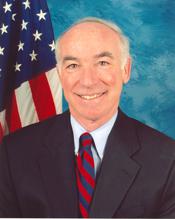
Mr. Chairman, I rise today in support of the Washington-Rochambeau Revolutionary Route National Historic Trail Designation Act, a wonderful piece of legislation which will preserve both our country's…
Mr. Chairman, I rise today in support of the Washington-Rochambeau Revolutionary Route National Historic Trail Designation Act, a wonderful piece of legislation which will preserve both our country's rich history but also its unique environment.
In the spring of 1781, French General Rochambeau and his army of nearly 5,300 men embarked on an expedition from Newport, Rhode Island, to Yorktown, Virginia, to aid General George Washington and the Continental Army in the American Revolutionary War. After traveling through Massachusetts, Rhode Island, and Connecticut, General Rochambeau joined forces with General Washington in Philipsburg, New York, forming a
Franco-American alliance. The Franco-American forces then traveled through New Jersey, Pennsylvania, Delaware, Maryland, and Virginia, eventually arriving at Yorktown. At Yorktown, General Washington and the Continental Army, with the aid of General Rochambeau and his men, secured a decisive victory against General Cornwallis, effectively igniting a successful end to the American Revolutionary War and laying the groundwork for the creation of our new Nation.
Mr. Chairman, the Newport to Yorktown route that General Washington and General Rochambeau led their forces through reflects an indispensible piece of American history. Today, we have an opportunity to preserve this historically and ecologically significant route by passing the Washington-Rochambeau Revolutionary Route National Historic Trail Designation Act. The legislation, introduced by my esteemed colleague, Representative Maurice Hinchey, will amend the National Trails System Act to designate the route as a national historic trail. Under this legislation, the Washington-Rochambeau Revolutionary Route National Historic Trail will preserve a corridor approximately 600 miles long, from Newport to Yorktown in nine States and the District of Columbia. The Washington-Rochambeau Trail will include a section in my district in eastern Connecticut.
During General Rochambeau's journey to Yorktown, communities in Connecticut served an invaluable role with ensuring the success of General Rochambeau's mission, supplying necessary supplies to his troops. In June of 1781, General Rochambeau and his men began their march through Connecticut before joining forces with General Washington in Philipsburg, New York. In eastern Connecticut, the army established camps in Plainfield, Windham, and Bolton before arriving in Hartford. On the return trip, in October 1782, the Franco-American force again marched through the State after victory in Yorktown. In total, General Rochambeau's army made 47 stops in the State between the journey to and from Yorktown. The Washington-Rochambeau Trail will preserve these sites and educate residents and visitors on the significance of this piece of American history.
Mr. Chairman, as urban sprawl continues to threaten the integrity of this route, the passage of this legislation is needed now more than ever. Many of Connecticut's avid historians and devout naturalists are anxious to celebrate the bill's passage. As a cosponsor of this legislation, I ask my colleagues to join me in voting in favor of the Washington-Rochambeau Revolutionary Route National Historic Trail Designation Act, to ensure this historic route is preserved for current and future generations.

Mr. Chairman, as a longtime cosponsor, I rise in support of H.R. 1286, the Washington-Rochambeau Revolutionary Route National Historic Trail Designation Act. Students of American history are…
Mr. Chairman, as a longtime cosponsor, I rise in support of H.R. 1286, the Washington-Rochambeau Revolutionary Route National Historic Trail Designation Act. Students of American history are intimately familiar with the Battle of Yorktown, in which French and American soldiers forced the surrender of British General Lord Cornwallis, effectively handing victory of the Revolutionary War to the American Colonies.
However many Americans are less familiar with what preceded it--a harrowing nine state, six hundred mile journey of more than 6,000 allied soldiers from Newport, Rhode Island, through my home state of New Jersey to Yorktown, Virginia. Many historians identify this march led by George Washington, General of the Continental Army and French General Count Rochambeau along a network of roads, trails, and waterways as critical to the American victory at Yorktown and the eventual creation of the United States.
In Philipsburg, New York on August 14, 1781, having learned that a large fleet of French naval vessels was heading from the Caribbean Sea to the Chesapeake Bay, Washington and Rochambeau discarded plans to siege New York City and march to Southeastern Virginia, where another celebrated Frenchman the Marquis de Lafayette and his 5,000 troops were outmaneuvering Cornwallis, forcing his British troops to bunker down in Yorktown. With little time to prepare, Washington and Rochambeau led more than 6,300 American and French troops on a southward march to Virginia.
H.R. 1286 is an important piece of legislation that comes at a critical time. Despite strong grassroots support from organizations like the National Washington-Rochambeau Revolutionary Route Association, and efforts at the state and local level, many historical sites associated with the American Revolution will be lost to development and suburban sprawl. This bill would designate the route as a National Historic Trail, allowing the National Park Service to preserve and link together sites along the trail. Moreover, this designation would preserve this important piece of America's heritage using existing roads and rights of way--without the federal acquisition of private lands.
Preservation of the Washington-Rochambeau route will allow American citizens and visitors alike to gain a greater appreciation of the magnitude and improbability of the American victory as well as the important and often forgotten role our French allies played in securing American independence. Americans need a sense of history and an understanding of history now more than ever. This trail tells an important story in American history, and I strongly urge my colleagues to join me in supporting this legislation.
Madam Speaker, I reserve a point of order. Madam Speaker, I insist on my point of order and raise a point of order that the motion to recommit contains nongermane instructions in violation of clause…
Madam Speaker, I reserve a point of order.
Madam Speaker, I insist on my point of order and raise a point of order that the motion to recommit contains nongermane instructions in violation of clause 7 of rule XVI. The instructions in the motion to recommit address an unrelated matter within the jurisdiction of a committee not represented in the underlying bill.
The second reason, the motion to recommit uses the word ``promptly,'' as we all know, which kills a bill.
And third, the motion to recommit is the exact language already in the bill. That language states ``nothing in the amendment made by section 2 of this act shall prohibit or hinder the development, production, conveyance, or transmission of energy,'' the exact repeat language of the motion to recommit.
Therefore, I insist on my point of order.
Madam Speaker, I rise to oppose the motion to recommit.
Madam Speaker, the form of the amendment, which calls on the House to promptly recommit the bill, as I know all Members realize, is a parliamentary tactic that kills the bill. That wording makes it perfectly clear that the motion is not about its subject. It is purely and simply another one of those ``gotcha'' votes.
A vote to recommit is a vote to kill this bill, which has the support of a long and bipartisan list of Members, a large and vocal constituency across eight districts and the District of Columbia, and the support of the Bush administration. Again, the current legislation as written has the support of the Bush administration. It has the support of the National Rifle Association.
To briefly address the substance of this issue, the bill before the House already reaffirms the right of gun owners and hunters by ensuring that current State management of fish and resident wildlife will remain unaffected by the bill. It should not be necessary to include this language because nothing in the bill would affect those State laws or regulations. Nevertheless, we have included this language already in the bill, which renders the motion before us wholly unnecessary.
The Trails Act has been around since 1968, and we have thousands of miles of trails all over the country, and all over the country hunting, fishing, trapping have flourished nonetheless. The bill already contains sufficient protections for gun owners. I repeat. The bill already contains sufficient protections for gun owners.
A vote to recommit is a vote to kill the bill. It's that simple, and I would urge all Members to vote ``no'' on this motion to recommit.
Madam Speaker, I yield back the balance of my time.
Parliamentary Inquiry
Madam Speaker, I demand a recorded vote.
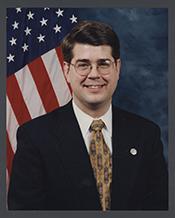
Thank you. I appreciate this opportunity. My friend from California, I'd like to clarify a little bit. The 66 million acres are land that hasn't been authorized by Congress. In fact, the efforts by…
Thank you. I appreciate this opportunity.
My friend from California, I'd like to clarify a little bit. The 66 million acres are land that hasn't been authorized by Congress. In fact, the efforts by my friends on that side of the aisle was to take away that 66 million acres of already leased land. So I think the public needs to be clear on that aspect.
Yes, some of the Bush plan on energy has been implemented. The part, conveniently, that has been left out of presenting to the President for signature is the part that increases supply. It's the lack of supply that is causing problems for American families today, with the price at the pumps.
I have had several meetings with constituents who have told me their stories about how the high price of gasoline is literally taking food off of their tables and making them to make decisions about what they are taking away from their family in order to be able to get to work and back.
Our reliance on foreign energy is destroying this country, and we have to become independent, folks. We use 20 million barrels a day. Twenty million barrels of oil per day, most of which is refined into fuel that we use in travels. Over 14 million of those 20 are imported today.
Let's look at what is on the foreign scene today with Iran sending missiles as a message to the United States and Israel about their might. Make no bones about it, my friends; the only reason they have missiles is because they get to sell oil. If we weren't reliant on foreign oil and we could get away from it with a comprehensive plan and, Mr. Cardoza, I'd love to work with anyone on your side of the aisle to come up with conservation alternative fuels and to be able to open up our offshore drilling in the gulf coast, Alaska, and use oil shale. If we put all of that together, we can be energy independent.

Mr. Chairman, I rise today in strong support of the Washington-Rochambeau Revolutionary Route National Historic Trail Designation Act (H.R. 1286), which would designate the 600-mile route stretching…
Mr. Chairman, I rise today in strong support of the Washington-Rochambeau Revolutionary Route National Historic Trail Designation Act (H.R. 1286), which would designate the 600-mile route stretching from Rhode Island to Virginia traveled by Revolutionary War General George Washington and French General Count Rochambeau as a National Historic Trail, connecting the States of Rhode Island, Connecticut, New York, New Jersey, Pennsylvania, Delaware, Maryland, and Virginia. The creation of this Trail will celebrate the Franco- American alliance and the victory of Generals Washington and Rochambeau who faced seemingly insurmountable odds. Importantly, H.R. 1286 will enable the National Park Service to support groups, projects, and activities associated with the trail's preservation and interpretation.
The Washington-Rochambeau Revolutionary Route National Historic Trail Designation Act was introduced to ensure that this history, in all its rich detail, is not forgotten. Although we often remember the victory at Yorktown, too often we lose sight of the heroic efforts of two nations, two armies, and two great men that made it possible. During this historic period the armies marched to Wilmington, Delaware, where the bankrupt Continental Army borrowed from Rochambeau to pay American troops. This designation has the strong support of many state, local, private, and public historic preservation groups and I urge my colleagues on both sides of the aisle to support its passage.
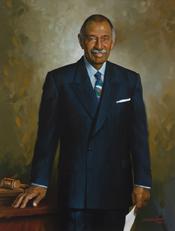
Madam Speaker, I took a leave of absence the afternoon of July 10, 2008, as I was attending to personal business. The following list describes how I would have voted had I been in attendance this…
Madam Speaker, I took a leave of absence the afternoon of July 10, 2008, as I was attending to personal business. The following list describes how I would have voted had I been in attendance this afternoon.
``Yea''--on Pearce (NM) amendment.
``Aye''--on Motion to Recommit H.R. 1286.
``Yea''--Final Passage H.R. 1286--Revolutionary Route National Historic Trail Designation Act.
``Yea''--Motion to Instruct Conferees on H.R. 1321--Flood Insurance Reform and Modernization Act of 2007.
Appointment of Conferees

Madam Speaker, I ask unanimous consent that the Clerk be authorized to make technical corrections in the engrossment of H.R. 1286, including corrections in spelling, punctuation, section and title…
Madam Speaker, I ask unanimous consent that the Clerk be authorized to make technical corrections in the engrossment of H.R. 1286, including corrections in spelling, punctuation, section and title numbering, cross-referencing, conforming amendments to the table of contents and short titles, and the insertion of appropriate headings.
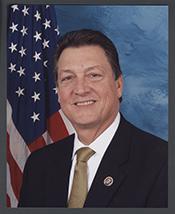
Parliamentary inquiry, Madam Speaker. Madam Speaker, if this motion to recommit did pass, could the bill not be sent back to the committee from which it came and brought back on the next legislative…
Parliamentary inquiry, Madam Speaker.
Madam Speaker, if this motion to recommit did pass, could the bill not be sent back to the committee from which it came and brought back on the next legislative day?
Thank you.
Madam Speaker, I ask unanimous consent that all Members may have 5 legislative days in which to revise and extend their remarks and include extraneous material on H.R. 1286.
Madam Speaker, I ask unanimous consent that all Members may have 5 legislative days in which to revise and extend their remarks and include extraneous material on H.R. 1286.
Madam Speaker, on that I demand the yeas and nays.
Madam Speaker, on that I demand the yeas and nays.
Bill Text
4 versions available
        [Congressional Bills 110th Congress]
[From the U.S. Government Printing Office]
[H.R. 1286 Referred in Senate (RFS)]

2d Session
H. R. 1286

_______________________________________________________________________

IN THE SENATE OF THE UNITED STATES

July 10 (legislative day, July 9), 2008

Received; read twice and referred to the Committee on Energy and
Natural Resources

_______________________________________________________________________

AN ACT

To amend the National Trails System Act to designate the Washington-
Rochambeau Revolutionary Route National Historic Trail.

Be it enacted by the Senate and House of Representatives of the
United States of America in Congress assembled,

SECTION 1. SHORT TITLE.

This Act may be cited as the ``Washington-Rochambeau Revolutionary
Route National Historic Trail Designation Act''.

SEC. 2. ADDITION TO NATIONAL SCENIC AND NATIONAL HISTORIC TRAILS.

Section 5(a) of the National Trails System Act (16 U.S.C. 1244(a))
is amended by adding at the end the following:
``(__) Washington-Rochambeau Revolutionary Route National Historic
Trail.--
``(A) In general.--The Washington-Rochambeau Revolutionary
Route National Historic Trail, a corridor of approximately 600
miles following the route taken by the armies of General George
Washington and Count Rochambeau between Newport, Rhode Island,
and Yorktown, Virginia, in 1781 and 1782, as generally depicted
on the map titled `Washington-Rochambeau Revolutionary Route
National Historic Trail', numbered T01/80,001, and dated June,
2007.
``(B) Map.--The map referred to in subparagraph (A) shall
be on file and available for public inspection in the
appropriate offices of the National Park Service.
``(C) Administration.--The trail shall be administered by
the Secretary of the Interior, in consultation with--
``(i) other Federal, State, tribal, regional, and
local agencies; and
``(ii) the private sector.
``(D) Land acquisition.--The United States shall not
acquire for the trail any land or interest in land--
``(i) outside the exterior boundary of any
federally managed area without the consent of the owner
of the land or interest in land; and
``(ii) acquired from a State or local government if
that land was acquired by such government through
eminent domain.''.

SEC. 3. ENERGY.

Nothing in the amendment made by section 2 of this Act shall
prohibit or hinder the development, production, conveyance, or
transmission of energy.

SEC. 4. HUNTING, FISHING, TRAPPING, AND RECREATIONAL SHOOTING.

Nothing in this Act shall be construed as affecting the authority,
jurisdiction, or responsibility of the several States to manage,
control, or regulate fish and resident wildlife under State law or
regulations, including the regulation of hunting, fishing, trapping,
and recreational shooting. Nothing in this Act shall be construed as
limiting access for hunting, fishing, trapping, or recreational
shooting.

SEC. 5. ENERGY AND CONGRESSIONAL REVIEW.

The Secretary of Interior, in consultation with the Secretary of
Energy and private industry, shall complete and submit to the Committee
on Natural Resources of the House of Representatives, the Committee on
Energy and Natural Resources of the Senate, and Senators and
Representatives from the States affected by the designation, a report
using the best available data and regarding the energy resources
available on the lands and waters included in the Washington-Rochambeau
Revolutionary Route National Historic Trail. The report shall--
(1) contain the best available description of the energy
resources available on the land and report on the specific
amount of energy withdrawn from possible development; and
(2) identify barrels of oil, cubic feet of natural gas,
megawatts of geothermal, wind and solar energy that could be
commercially produced, annual available biomass for energy
production, and any megawatts of hydropower resources
available, including tidal, traditional dams, and in- stream
flow turbines, and any impact on electricity transmission.

Passed the House of Representatives July 10, 2008.

Attest:

LORRAINE C. MILLER,

Clerk.