An amendment numbered 4 printed in House Report 110-807 to clarify that a plaintiff must show intent (malice or reckless indifference) to recover punitive damages.
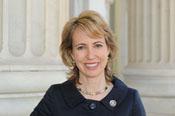 Rep. Gabrielle Giffords (D-AZ)
Description
Amendment clarified the legal standard for punitive damages as requiring malice or reckless indifference.
Legislative Activity
Stay on top of the latest movement without scrolling through every action
House amendment offered
July 31, 2008
View full timeline
House amendment offered
July 31, 2008
House amendment offered/reported by : Amendment (A004) offered by Ms. Giffords.(consideration: CR H7696-7697, H7700; text: CR H7696)
July 31, 2008 • 5:49 PM
House amendment agreed to: On agreeing to the Giffords amendment (A004) Agreed to by recorded vote: 397 - 29 (Roll no. 553).
July 31, 2008 • 6:44 PM
Roll call votes on amendments in House
July 31, 2008 • 6:44 PM
Amendment agreed to Committee of the Whole
July 31, 2008 • 6:44 PM
Amendment (A004) offered by Ms. Giffords. (consideration: CR H7696-7697, H7700; text: CR H7696)
July 31, 2008 • 5:49 PM
On agreeing to the Giffords amendment (A004) Agreed to by recorded vote: 397 - 29 (Roll no. 553).
July 31, 2008 • 6:44 PM
Votes
1 roll call on this amendment
Text
Offered
PAYCHECK FAIRNESS ACT

The SPEAKER pro tempore. Pursuant to House Resolution 1388 and rule
XVIII, the Chair declares the House in the Committee of the Whole House
on the state of the Union for the further consideration of the bill,
H.R. 1338.

{time}  1636

In the Committee of the Whole

Accordingly, the House resolved itself into the Committee of the
Whole House on the State of the Union for the further consideration of
the bill (H.R. 1338) to amend the Fair Labor Standards Act of 1938 to
provide more effective remedies to victims of discrimination in the
payment of wages on the basis of sex, and for other purposes, with Mr.
Capuano in the chair.
The Clerk read the title of the bill.
The CHAIRMAN. When the Committee of the Whole rose earlier today,
43\1/2\ minutes remain in general debate. The gentlewoman from
California (Ms. Linda T. Sanchez) has 23 minutes remaining. And the
gentleman from California (Mr. McKeon) has 20\1/2\ minutes remaining.
The Chair recognizes the gentlewoman from California.
Ms. LINDA T. SANCHEZ of California. Mr. Chairman, at this time I
would like to recognize a true champion of women in the House and the
author of the Paycheck Fairness Act, the gentlewoman from Connecticut
(Ms. Rosa DeLauro), for 6 minutes.
Ms. DeLAURO. I thank the gentlewoman for yielding.
I want to thank Chairman George Miller for his dedication to this
cause. We never could have come this far without his tenacious
leadership.
We are grateful, Chairman Miller.
Mr. Chairman, the Paycheck Fairness Act is about valuing the work
that women do in our society. One of our Nation's most enduring
principles, one of our greatest aspirations, has been ensuring equality
of opportunity for all. There is no more important American promise
that allows us to be a country of dreams and of success, and today we
can take another important step toward finally honoring that promise.
I want to thank Speaker Pelosi, whose leadership today continues to
build on the legacy of those who preceded us, those pioneers at Seneca
Falls as well as the women who blazed a path in the House of
Representatives, Jeanette Rankin, Mary Norton. Even President Kennedy's
Equal Pay Act grew out of the Commission on the Status of Women led by
Eleanor Roosevelt. Forty-five years later our Speaker has celebrated
that history by making this movement an absolute priority. Her message
has been clear: It is time to stand up for working women and their
families.
Well, Mr. Chairman, we can do that today by supporting the Paycheck
Fairness Act, reasserting the principle that women and men should be
paid the same when doing the same work and making it real by allowing
female employees to sue for compensatory and punitive damages. It does
so without imposing the arbitrary caps women face under title VII. It
protects employees from retaliation for sharing information with their
coworkers about their salary, with some exceptions. And it establishes
a grant initiative to provide negotiation skills training programs for
girls and women.
Some will have you believe that the wage gap for women is a myth,
that we already have laws in place to make discrimination on the basis
of gender illegal. But just because something is illegal does not mean
that it does not continue to happen. According to the Department of
Labor, women still earn only 77 percent of what men earn.
Opponents insist that this figure does not take into account
education and experience. But the truth is the gap barely closes among
women with college degrees. Recent research by the American Association
of University Women found that just one year after college graduation,
women earn only 80 percent of what their male counterparts earn. Ten
years after college graduation, women fall further behind, earning only
69 percent of what men earn. So what is the message? No matter how
advanced their degree or how hard they work, women will not be
compensated fairly.
The marketplace alone will not correct this injustice. We need a
solution in law, just as our country has done in the past to bring down
discriminatory barriers. Others will insist that we cannot open the
door for increased litigation, but in the light of day, it is clear
that the current system is rife with loopholes that have allowed
employers to avoid responsibility for discriminatory pay scales.
We all know Lilly Ledbetter's story. For so many years she was
shortchanged by her employer. And years later she was shortchanged
again by the Supreme Court ruling of 5-4 against her discrimination
claim, drastically limiting women's access to seek justice for pay
discrimination based on gender.
We have an obligation to ensure that this does not go on any longer,
and we must begin today by toughening remedies in the Equal Pay Act to
give America's working women the opportunity to fight against wage
discrimination and receive the paycheck they have earned. No one should
be forced to consider a trade-off between a full wage, a family life,
and a good job.

[[Page H7682]]

My colleagues on both sides of the aisle, we are so fortunate to come
to work every day in this extraordinary institution. We are blessed.
Different regions of the country we come from, different backgrounds,
and different experiences. We are men and we are women and we are paid
equally. Every woman in this country deserves the same. Every family
deserves to know that this institution will act today to make it real.
It is about ensuring that women who work hard and productively and
carry a full range of family responsibilities are paid at a rate they
are entitled.
I urge my colleagues to support the Paycheck Fairness Act. We should
not underestimate the power of a big idea whose time has come.
So many employers and companies do the right thing as a matter of
course, but passing this bill today says that this is now a matter of
right and wrong, that discrimination is unacceptable anywhere, and we
are all diminished when we fall short. But today we have a chance to
make all men and women whole and contribute to the richness of America.
In 1963 President Kennedy signed the Equal Pay Act, saying that it
would ``add to our laws another structure basic to democracy'' and
``affirm our determination that when women enter the labor force, they
will find equality in their pay envelope.''
Today we have another opportunity to make good on that promise. Those
days come only few times in our tenure in the United States Congress.
I have always been proud to serve in this institution, and I revere
those lawmakers before us who on previous days took a stand for health
care for the elderly or the Civil Rights Act or Family and Medical
Leave and made such an impact on people's lives. They changed people's
lives. That is the whole reason why we serve in this institution.
It is my hope today that the House of Representatives passes this law
and makes history for our country.

{time}  1645

Mr. McKEON. I am pleased to yield such time as she may consume to the
gentlelady from North Carolina (Ms. Foxx).
Ms. FOXX. I want to thank Ranking Member McKeon for his work on this
bill. I find it very interesting that our colleagues have such hubris
that they think we are going to solve all of the problems of the world
here in the Congress. I wish that it were so.
I worked all my life for equal rights for women, and I don't take a
back seat to anyone on this floor or in this body for that. But I want
to say that this bill is not going to solve the problem that we face in
terms of equal pay for equal work.
My colleagues have reviewed very well the existing law. They have
stated well why this bill is not needed. But I have to say that the
Democrats have been very clever in the way that they have named bills
here this year. The Free Choice Act, which takes away the choice of a
secret ballot for voting for unions, does exactly the opposite.
This bill, the Paycheck Fairness Act, will not do what the Democrats
purport that it will do. It will help trial lawyers. Those in charge of
the House of Representatives, I believe, are being controlled by trial
lawyers, union leaders, and radical environmentalists.
I think this bill will make it easier for trial lawyers to cash in.
It includes several steps that will make it more lucrative for trial
lawyers to pursue sex discrimination claims under the EPA. This may be
good for lawyers, but it will be costly for businesses and their
workers.
I agree, discrimination against anyone is wrong. No one who serves in
this House or who lives in this country wants to see that. But I want
to quote from an article by Carrie Lukas, and I will put the entire
article in the Record. The subtitle is: The Paycheck Fairness Act, and
the title is: Feminists Meddle with the Market. It's in National
Review.
``Today is a rare moment when Congress has the potential to
meaningfully address a real economic problem, rising energy prices,
with sensible legislation to allow more drilling to increase energy
supplies. So what has Congress slated for consideration this week? The
Paycheck Fairness Act, a bill that is the equivalent of throwing sand
into the wheels of our economic machine.''
She goes on to say, ``Of course, no congressional legislation would
be complete without a healthy serving of waste, and the Paycheck
Fairness Act doesn't disappoint. It would create a new grant program to
instruct women on salary negotiation tactics and require the Department
of Labor to train employers in strategies for eliminating pay
disparities. It seems almost quaint to ask, but where in the
Constitution is Congress granted the power to engage in this type of
activity? Taxpayers should be outraged that their money is being put to
such use.''
If we are really concerned about working women and wanting to see
them treated fairly, the Democrats in charge would bring up the
American Energy Act and let us vote to create more sources of energy,
thereby bringing down the cost of oil and gas and other forms of
energy. This would do a lot more to help working women than this bill
is going to do.

[From NRO Contributor July 30, 2008]

Feminists Meddle With the Market--the Paycheck Fairness Act

(By Carrie Lukas)

When an economic issue makes headlines, you can usually
count on Congress to respond, more often than not with an
over-reach that creates more problems than it solves (think
Sarbanes-Oxley or the recent housing bailout bill). Today is
a rare moment when Congress has the potential to meaningfully
address a real economic problem--rising energy prices--with
sensible legislation to allow more drilling to increase
energy supplies. So what has Congress slated for
consideration this week? The Paycheck Fairness Act, a bill
that is the equivalent of throwing sand into the wheels of
our economic machine.
Underlying the bill are the assumptions that our workplace
is systematically hostile to women and that existing laws
don't provide enough protection for women. As committee
chairman George Miller (D., Calif.) said when celebrating the
passage of the bill out of his committee: ``This is a
historic day in the fight for equal rights for women. If we
are serious about closing the gender pay gap, we must get
serious about punishing those who would otherwise scoff at
the weak sanctions under current law.''
The committee's press release, like essentially every
public statement supporting expanded ``equal pay'' laws,
cites the statistic that women earn just 77 percent of men's
earnings. This ``wage gap'' is considered proof that the work
world's deck is still stacked against women and government
needs to do more to make sure that everyone plays fair.
Yet a statistic that simply compares the wages of the
median full-time working man and the full-time working woman
tells us nothing about the existence (or lack thereof) of
systematic wage discrimination. Many factors contribute to
how much one earns, from occupation and area of specialty to
education and years of experience. Not surprisingly, once
those factors are taken into account, the wage gap shrinks.
Men tend to take jobs that are dirtier, more dangerous, and
distasteful than those performed by women. Overwhelmingly,
men are the ones working in our sewers, guarding our prisons,
laying concrete in the scorching sun, and catching and
gutting our fish. They work more graveyard shifts and longer
hours, in fact, the Department of Labor estimates that even
full-time working women spend about a half an hour less each
day on the job than men do. Women disproportionately work
indoors, in safe, climate controlled buildings, with regular,
or even flexible, hours. More people are interested in
working in libraries and school buildings than on the fishing
boats featured in Deadliest Catch, which is why physically
strenuous, dangerous jobs pay higher salaries.
Feminist activists tend to be frustrated with this
analysis, and the explanation that the market (not nefarious
men) is primarily responsible for women earning less. They
don't think it's fair that jobs that require an education,
like social work or teaching, are less valued in the
marketplace than positions in trucking and sanitation work
that require only characteristics like stamina and a high
tolerance for filth.
They've long championed policies, dubbed as ``comparable
worth,'' that would give government officials the power to
supersede the market to make sure that women's contributions
aren't undervalued. The Paycheck Fairness Act takes steps in
that direction. The Department of Labor would issue
``guidelines'' that compare the wages of different jobs to
give employers a sense of what is considered ``fair.'' The
guidelines may not have the force of law (yet) but certainly
would be a powerful specter hanging over employers seeking to
avoid costly litigation.
And employers would have additional reason to fear that
they would be targets for litigation if the Paycheck Fairness
Act becomes law. This bill would subject employers to
unlimited compensatory and punitive damages, even for
unintentional pay disparities, creating potential paydays
certain to inspire trial lawyers to action. The bill would
also strip employers of the ability to defend differences in
pay as based on factors other than sex, such as experience
and performance, leaving courts to dictate what constitutes a
legitimate pay structure.

[[Page H7683]]

Of course, no congressional legislation would be complete
without a healthy serving of waste, and the Paycheck Fairness
Act doesn't disappoint. It would create a new grant program
to instruct women on salary negotiation tactics and require
the Department of Labor to train employers in strategies for
eliminating pay disparities. It seems almost quaint to ask,
but where in the Constitution is Congress granted the power
to engage in this type of activity? Taxpayers should be
outraged that their money is being put to such use.
Federal law already outlaws sex discrimination. This
legislation would afford women few new protections against
actual sex discrimination, but would raise the cost of
employment and discourage workplace flexibility. It is
exactly what women--and the economy--don't need. If this is
what we can expect from the rest of this Congress, Americans
should hope for an early recess.

Ms. LINDA T. SANCHEZ of California. I would yield 2 minutes to a
distinguished Member of this body, the gentlewoman from California (Ms.
Woolsey).
Ms. WOOLSEY. As some of you may know, at one time I was a single
mother raising three small children. I was working full time, but I
still wasn't able to put food on the table, pay for doctors' visits,
and care for the other needs of my children all on my own because my
paycheck was for a 40-hour week but it did not cover our necessities.
To make ends meet, I was forced to turn to public assistance.
That was more than 35 years ago, but today there are still millions
of single mothers in our country who are struggling to provide for
their families, many while balancing full-time jobs. In fact, single
mothers are twice as likely as fathers to raise their children in
poverty.
Unfortunately, so long as women continue to receive pennies on the
dollar compared to their male counterparts, this statistic is unlikely
to change any time soon.
I want to thank my friend, Congresswoman DeLauro, for her work on
this issue, and I would like to remind all of you that the Paycheck
Fairness Act is about a lot more than fixing a couple of loopholes.
It's about strengthening families, combating poverty, and finally
recognizing that equal work deserves equal pay.
I am proud to be a cosponsor of this legislation, which will provide
the additional tools that we need to stamp out gender-based wage
discrimination once and for all.
Mr. McKEON. I reserve the balance of my time.
Ms. LINDA T. SANCHEZ of California. It gives me great pleasure to
yield 2 minutes to a champion of the working class and the Chair of the
Health, Employment, Labor, and Pension Subcommittee of Education and
Labor, the gentleman from New Jersey (Mr. Andrews).
(Mr. ANDREWS asked and was given permission to revise and extend his
remarks.)
Mr. ANDREWS. I would like to thank my friend from California for
yielding. This bill is for the woman who runs the office, who makes all
the important decisions, without whom the place couldn't function; who
one day comes in and discovers that a man, usually a man younger than
her, has been brought in and given a higher title, a higher pay, and
fewer responsibilities. And she goes to work and says, this isn't fair.
I'm doing a job that is actually more important than this other person
and getting paid less for it.
Now it's true that the statutes presently say you have to get equal
pay for equal work. But it's also true that the remedies are so limited
under existing law that many women can't get an attorney to represent
them in their case so it never gets brought.
The best idea in this bill is for the first time it gives robust and
full remedies to help that woman so that if she is able to prove her
claim that she is underpaid relative to the work that she is doing, she
will be fully and fairly compensated, and out of that compensation will
come the funds to get her the competent representation that she
deserves. The woman who's the office manager who doesn't make as much
as the executive vice president for administration.
Well, I will tell you, in my life, Mr. Chairman, I benefited from a
lot of women who are office managers that don't have fancy titles but
without whom institutions could not run. This bill is for that woman
and for her daughters so that they do not have the situation where they
are devalued, debased, degraded, and disrespected in the workplace.
It is long overdue that we vote ``yes'' on this bill, and I would
urge colleagues on both sides to do that.
Mr. McKEON. I yield such time as she may consume to the gentlelady
from North Carolina (Ms. Foxx).
Ms. FOXX. Thank you, Mr. McKeon. I want to continue with what I was
saying before. Republicans are deeply concerned about working families.
Every day we come to this Congress and we do everything that we can to
help those working families. We believe that if any worker is subject
to discrimination in the workplace because of their sex, or for any
other reason, that that discrimination should be rooted out and
punished accordingly. That is why current law protections are so
important. Again, we have outlined why those laws are adequate
currently.
We are also concerned about other workplace policies and proposals
that threaten workers' wages, flexibility, and freedom. However,
unfortunately, Democrats have once again stifled debate in the House
and blocked the minority from offering amendments that address the real
concerns of working women and families.
They have done the exact opposite of what they promised to do in
2006, make this the most open Congress ever, make this the most ethical
Congress ever, make this the fairest Congress ever. It has been just
the opposite of that.
Again, what we should be doing today is we should be debating how we
can bring down the price of gasoline and heating oil and all of those
things that are harming working Americans every day, but instead we are
dealing with bills that are going to do nothing but line the pockets of
trial lawyers and create what I call high-priced welfare, which are
high-priced bureaucratic jobs which don't really do anything to help
working men and women in this country, especially working women,
increase their pay.
We will be stifling businesses. It seems as though they hate business
and industry, and want to do everything that they can to shut it down
in this country. This bill will certainly help do that.
So I say we vote ``no'' on this bill because this bill doesn't do
what the title pretends it does, and in fact harms working women. What
we need to do is be doing something to bring down the price of energy.
Mr. GEORGE MILLER of California. It's a pleasure to yield 2 minutes
to a member of our committee, the gentlewoman from California (Ms.
Linda T. Sanchez).
Ms. LINDA T. SANCHEZ of California. I rise today in strong support of
the Paycheck Fairness Act, to protect the right of all Americans to
equal pay for equal work. I want to begin by thanking my colleague,
Representative DeLauro, for introducing this bill, and Chairman Miller
for steering it through committee and onto the floor. It is long
overdue.
After years of neglect under the former majority, this House has
boldly taken on the challenge of trying to solve longstanding economic
problems so that hardworking families can really achieve the American
Dream instead of just dreaming about the American Dream.
Women across America are still only paid 77 percent of what men are
paid. Does this mean that women are only 77 percent as valuable as
their male counterparts? Certainly not. It means there are,
unfortunately, still lingering remnants of an earlier time in our
history when women didn't have the same rights as men.
Though we have made great strides toward fair and equal treatment for
women in the workplace, our work is still not done. This bill continues
our progress by creating more opportunities for women and their
families. Nearly 7\1/2\ million of America's poverty-stricken children
live in female-headed households. This bill will help those families
rise out of poverty by ensuring the hard work of female-headed
households is rewarded equally and fairly.
Much has been said about this bill lining the pockets of trial
lawyers. Let's not lose focus of what this bill is about. It is saying
to women that if you have been wronged, if you have

[[Page H7684]]

been discriminated against, you will have a fair day in court.
So, for yourselves, your wives, your sisters, your daughters, and the
children of America, I urge my colleagues on both sides of the aisle to
vote ``yes'' on this important piece of legislation.
Mr. McKEON. How much time do we have left?
The CHAIRMAN. The gentleman from California (Mr. McKeon) has 15
minutes. The gentleman from California (Mr. George Miller) has 11\1/2\
minutes.
Mr. McKEON. I reserve the balance of my time.
Mr. GEORGE MILLER of California. It's a pleasure to yield 2 minutes
to the gentlewoman from California (Ms. Solis).
Ms. SOLIS. I thank our chairman from the Labor Committee. I want to
urge our Members here today to vote on this very important bill, H.R.
1338, the Paycheck Fairness Act. Our colleagues, Rosa DeLauro, and
others, have championed this bill for many years. But Rosa has really
dedicated herself to this movement. I am happy to be a cosponsor of
this bill. She understands, as we know and many woman know, that we
have to recognize that there are inequities that exist in our
communities, and especially among women and women of color.
Some of you may know that while women overall only receive 77 cents
on the dollar, Latinas only average 57 cents on that dollar, and
African American women only get 68 cents on the dollar.
Indeed, there are disparities that exist and continue. We have an
obligation here in this House to do the right thing.
Just today, this morning, Arnold Schwarzenegger, our Governor, cut
the payroll for many State employees. Many of them are women. They are
the earners for their households. They have to put food on the table.
Now they are going to be making Federal minimum wage, which is less
than what the State of California's minimum wage is. What an atrocity.
I am not going off message, I am just trying to strike home a point
that it's important to take care of all those that work in our society,
but particularly women because they are the ones that are mostly
discriminated against, and we have to cut that out.
Again, I want to wholeheartedly offer my support and have my
colleagues know that I stand first and foremost for pay equity for all
of us. I ask you to vote for H.R. 1338.

{time}  1700

Mr. McKEON. Mr. Chairman, let me yield myself such time as I may
consume.
I want to put it on the record that I like women. I have been married
almost 46 years, and we have three daughters and we have three sons,
and I would not want the daughters to be discriminated against, I would
not want my sons to be discriminated against.
I wish we could do something here that would end for all time all
discrimination. Unfortunately, I guess when there are people involved
in different things, some of them will tend to discriminate. That is
why the law was passed in 1963, to level all pay. I want to just on the
record make sure that everybody understands when we throw everybody
into a pot and then add up all of their salaries, we are not talking
about equal pay for equal jobs.
One of the things that we learned when we had the hearing last year,
when we are talking about actual people and actual jobs, is that many
women ended up going into, after graduating from college, many of them
go into teaching, many of them go into social work. Many men go into
jobs, some of them go into teaching. If they go into teaching, they are
hired, they make the same exact wage. If the men go into social work
and women go into social work, they make the same wage. But if a person
goes into banking at a level that pays higher or into law at a level
that pays higher, again, a woman going into law will make the same as a
man. But when they throw all of these jobs into the same pile, that is
where you get some differentiation in the pay.
Again, if we could just hold to equal pay, same job, same pay, I am
totally supportive of that. That is what the law says, and that is what
we should enforce. And the numbers that I quoted earlier, the pay is
almost exactly the same. Where there is some discrimination, we should
go after it, we should enforce the law. That is what I would encourage
us to do.
Mr. Chairman, I reserve the balance of my time.
Mr. GEORGE MILLER of California. Mr. Chairman, I yield 2 minutes to
the gentlewoman from California (Ms. Eshoo).
Ms. ESHOO. I thank the chairman for recognizing me.
First I want to pay tribute to a great, great Member of the House and
someone that we are so, so proud and grateful to, and that is
Congresswoman Rosa DeLauro. Your mother is proud, Rosa. We are all
proud. You have really paid for your keep here by making such a
contribution. And also to the great George Miller, who saw this
legislation through.
I want to make a couple of observations. My friend from California
just went through a whole discussion that really is not a part of this
bill, and it is all about comparable worth. That is not what is in this
bill.
I also want to make another observation. There are very few on the
other side that are coming to defend the case that is being made over
there.
Mr. McKEON. Will the gentlewoman yield?
Ms. ESHOO. No, because I don't have that much time.
Mr. McKEON. I would yield you more time.
Ms. ESHOO. My other observation is that the case being made by our
friends on the Republican side really states very fully that you are on
the wrong side of history. What this bill does is to give women the
tools that they need legally so that an employer can no longer
discriminate against them.
Have any of you heard of Lilly Ledbetter, of that case and what
happened to that woman?
Mr. McKEON. Will the gentlewoman yield?
Ms. ESHOO. No, I am not yielding. I told you, I don't have enough
time. I would like to be able to say everything that I want to say.
Mr. McKEON. I said I would be happy to yield you more time.
Ms. ESHOO. What this bill does is it says to employers today that you
cannot punish employees any longer who discuss or disclose salary
information with their coworkers. I think that is a pretty important
thing. This bill also says today that employers will have to give a
satisfactory explanation for paying a man more than a woman for the
same job, and that they are going to have to demonstrate that the
disparity is not sex-based, but job related.
So, today we are trying to even out the playing field. I think if my
mother were sitting up there, she would be applauding. I think that
mothers and daughters and fathers and grandparents and legislators and
people across the country today, the last day of the month, are saying
that the last now are going to come first, and we know in our society
that women have not come first. Today we are talking about the
waitress. We are talking about what Mr. Andrews talked about, and that
is the woman that heads up the office. We are talking about the Lilly
Ledbetters.
The CHAIRMAN. The time of the gentlewoman has expired.
Mr. GEORGE MILLER of California. I yield the gentlewoman an
additional 30 seconds.
Ms. ESHOO. So today I think that we are making the Union stronger and
better by recognizing that there have been disparities and by
recognizing the way we fix the disparities, and I salute those who have
been on this effort for a long, long time.
America, it is a good day, July 31st, 2008, in the House of
Representatives, thanks to Rosa DeLauro rewriting history, Chairman
Miller for pushing it the way he has, and thank God for the Speaker
that makes all of this possible, Nancy Pelosi.
I rise today to express my strong support for H.R. 1338, the Paycheck
Fairness Act and I salute Congresswoman DeLauro and Chairman Miller for
their important leadership to bring us to this day.
With the passage of the Paycheck Fairness Act the Congress will make
the Equal Pay Act a more effective tool in combating gender-based pay
discrimination.
Today, if an employer can name any factor that has determined an
employee's pay other than gender, they can defend unequal pay in

[[Page H7685]]

pay discrimination cases. The employer's reason doesn't even need to be
related to the job in question. Under H.R. 1338 employers will have to
give a satisfactory explanation for paying a man more than a woman for
the same job and they will have to demonstrate that the disparity is
not sex-based, but job related.
Employers will also now be barred from punishing employees who
discuss or disclose salary information with their co-workers.
Under current law women who have been discriminated against may only
recover back pay or in some cases double back pay. The Paycheck
Fairness Act will finally put gender-based discrimination on the same
level as other forms of wage discrimination by giving women the
opportunity to sue for compensatory and punitive damages.
The wage gap between men and women has narrowed since the passage of
the landmark Equal Pay Act in 1963, but according to the U.S. Census
Bureau, women still only make 77 cents for every dollar earned by a
man. it's time to close the gap and pass this law.
I'm very proud to support this bill and I urge a yes vote on the
underlying legislation.
Mr. McKEON. Mr. Chairman, I reserve my time.
Mr. GEORGE MILLER of California. I yield 2 minutes to the gentlewoman
from California (Ms. Lee).
Ms. LEE. Thank you, Mr. Chairman.
First let me thank Chairman Miller for his leadership and for being
such a strong supporter of pay equity and women's rights, not only
today or last year, but throughout his life. Thank you, Chairman
Miller.
Also, I just have to say to my colleague, Congresswoman DeLauro,
sometimes, oftentimes a lone voice in the wilderness, but today we pay
tribute to the women of America, thanks to Rosa DeLauro. Thank you so
much, Congresswoman DeLauro. You have been a champion for women and
working families since before your career here in Congress began. So we
salute you.
In 1963, and I know these statistics have been repeated earlier, but
I have to say them again because it is so important to remember where
we were, where we are and where we need to go, and that is what today
is about. In 1963, women who worked full time made about 59 cents on
average for every dollar earned by men. For every dollar earned by men
in 2006, women earned about 77 cents. The wage gap has narrowed by less
than half a cent per year. Clearly we have a long way to go.
The wage gap is most severe for women of color. It is absolutely
inexcusable that women, and especially minority women, earn a fraction
of what men earn from the same job. African American women earn just 63
cents on the dollar, and Latinos earn far worse at 57 cents. In my own
State of California, black women working full time year-round earn only
61 percent and Latinos 42 percent of the wages of white men. This is
outrageous.
The wide disparity begins at the start of a woman's work life and
grows wider as women age. In the long term, combined with a decrease in
pension income and Social Security benefits, which is what happens,
many women are at risk of falling into poverty as they get older,
because this disparity began when they first started working.
H.R. 1338 takes immediate steps to close the wage gap for all women
by amending and strengthening the Equal Pay Act so that it will be a
more effective tool in combating gender-based discrimination.
So let's help close that gap today. Let's stand up by making the
Paycheck Fairness Act the law of the land. This should have been the
law of the land many years ago. Many of us remember when we first
started working and how that male counterpart in our job was making
twice as much as we were making. I remember those days, and, as result
of that, many women now will have less in their Social Security and
their pensions.
Thank you, Congresswoman DeLauro; thank you, Chairman Miller, for
today.
Mr. McKEON. Mr. Chairman, I yield myself such time as I may consume.
Mr. Chairman, the gentlewoman that spoke earlier, a good friend of
mine from California, said that I gave a long description of equal pay
for equal job, and I thought that that is kind of what the debate was
about. People keep talking about wanting equal pay for equal job. They
want to have the same pay for the woman as for the man for the same
job.
Now, if we are just talking about we want just women paid the same as
men for whatever job, then that is kind of the figures being used. But
I think most of us know, we fly a lot, the pilot usually makes more
than the flight attendant. Whether the flight attendant is male or
female, they are paid the same. The pilot, whether he is male or
female, they are paid the same. But the pilot is not paid the same as
the flight attendant. We understand that, and I think that is probably
not what we are arguing about here, but it seems like that is the way
the debate is going.
I support equal pay for the same job, men, women. With this bill,
apparently the debate is equal pay for men and women, and I thought
that is what we were talking about, because that is what the debate is.
But as the gentlewoman said, that is not what this bill does.
Mr. Chairman, I reserve the balance of my time.
Mr. GEORGE MILLER of California. Mr. Chairman, I yield 2 minutes to
the gentlewoman from California (Mrs. Davis), a member of our
committee.
Mrs. DAVIS of California. Mr. Chairman, I rise today in support of
the Paycheck Fairness Act. I also want to applaud Congresswoman DeLauro
and Chairman Miller.
When I was growing up, women only had a few career options. You could
either be a teacher, a nurse, a secretary or a social worker, all very
noble and difficult professions, but which don't pay nearly enough,
mostly because a disproportionate number of women still do these jobs.
But when my granddaughter enters the workforce, she will be able to
work in any field she wants. So we have come a long way. But we still
have, as many have said, a long way to go.
The tragedy is that our daughters and granddaughters will do the same
jobs as men on a number of occasions in a number of fields, but will
only earn something like 77 percent of what their male colleagues earn
for the same work. So despite the progress that we have made over the
past four decades, many employers continue to overlook and occasionally
even intentionally ignore the contributions of their female employees.
It is about transparency. That is what we are talking about today, to
give women who traditionally have stood by and been hesitant about
taking full credit for their hard work the tools that they need to be
certain that they are recognized in the workforce for what they are
actually accomplishing.
Employers must recognize all of their employees for this important
work that they do and reward them with fair compensation.
Unfortunately, despite what we are hearing, it is not happening on its
own. Our daughters and our granddaughters need this legislation. I urge
my colleagues to support it.
Mr. McKEON. Mr. Chairman, I yield myself such time as I may consume.
Mr. Chairman, again, it sounds like we are talking equal pay for
equal work, and, again, I support that. I oppose discrimination. I
support equal pay for equal job.
If we are saying that nurses should make the same as doctors, if the
doctor is a female and the nurse is a male, should they make the some
money? Or if the doctor is a male and the nurse is a female, should
they make the same money? No. I think all nurses should make the same
money. Doctors should make the same money if they are doing the same
work. Not even all doctors make the same. Some surgeons make more than
others, depending on their specialty, depending on what they do.
We understand that in our economy what the work does decides on what
the pay is. I think if you take everybody working and divide up all of
their pay, and you have more women that are serving in occupations that
pay less, as my good friend just pointed out, women didn't have I guess
the same opportunities in the past as they do now, and so if you took
those figures and you had more women working in lower-paid fields, that
is how you get the 77 percent discrepancy.
But if you took all of the same jobs, added up what they are paid,
maybe 40 years ago, 50 years ago there was a lot more discrimination
than now, but I think now if you look across the field and equal pay
for equal job, you would

[[Page H7686]]

find there is, if anything, very little difference.

{time}  1715

Should it be no difference? You bet. And I think you would probably
find in some occupations you have women making more than men. And I
guess men should probably claim discrimination in that case, but I
don't think they should. I think the reason women are paid more is they
are probably worth more.
I reserve the balance of my time.
Mr. GEORGE MILLER of California. Could the Chair apprise how much
time I have remaining.
The CHAIRMAN. The gentleman from California has 3\1/2\ minutes.
Mr. GEORGE MILLER of California. I yield 1 minute to the gentlewoman
from the District of Columbia (Ms. Norton).
Ms. NORTON. I thank the chairman for the priority consideration given
this bill throughout, and Rosa DeLauro for her indefatigable
perseverance on this bill.
This bill has not been updated for 45 years, and yet we have seen the
transformation of the American workforce. It needs a 21st century
makeover. I wasn't there at the birth, but I was there when I chaired
the EEOC and worked with President Carter to bring the Equal Pay Act to
the EEOC. The whole point of doing that was to bring this, the first of
the great civil rights statutes, into line with title VII, which was
passed thereafter. We have never done that. This is the first time we
have done that, Mr. Chairman. That makes this an historic bill.
Seventy-five percent of women in the work force today have small
children. Women are backsliding now. They are stuck on 76 cents for
every male dollar. With the economy in the worst condition in a
generation, women need every tool, and it is not too much to ask that
they have the tool of equal rights.
Mr. McKEON. I am happy to yield at this time to the gentleman from
Georgia (Mr. Price), a member of the committee, such time as he may
consume.
Mr. PRICE of Georgia. I thank the gentleman.
Mr. Chairman, I have an amendment that I will offer to this piece of
legislation. I was going to attempt to refrain from further comment on
the legislation, but I think that some light needs to be shed on the
discussion that has been going on here.
Equal pay for equal work is the law of the land. It is the law of the
land. It has been for 45 years. What our friends on the other side want
to do, and some of them have been very candid in coming down to the
well and commenting about it, and that is to open up a huge opportunity
for one of their grand friends, group of friends, the trial lawyers.
Now, let's be honest about this. I have here the bill that we are
going to vote on, H.R. 1338, and you could go to any page but I will
just pick a couple.
Page 10, lines 17 and 18. Be liable for such compensatory damages or
punitive damages as may be appropriate.
Page 11, line 3. Except with respect to class actions.
Page 11, line 7. Any action brought to enforce.
Page 11, lines 13 and 14. In any action brought to recover the
liability prescribed.
Page 11, line 17. Including expert fees.
Page 11, line 23. Additional compensatory or punitive damages.
Page 12, lines 2 and 3. Or such compensatory or punitive damages as
appropriate.
Page 12, lines 6 and 7. Additional compensatory damages or punitive
damages.
Page 12, lines 18 and 19. In the case of a class action suit brought
to enforce section 60.
And it goes on and on and on.
Mr. Chairman, this issue isn't about equal pay for equal work. Equal
pay for equal work is the law of the land. There isn't a single
American Representative in this Chamber--I was going to say there
probably isn't a single American, but I won't speak for them. But there
is not a single Representative in this Chamber who believes that there
ought to be unequal pay for equal work. Nobody. That is not what we are
debating here.
We are debating whether this majority party, whether this Democrat
majority party is once again going to bring a bill to the floor and
reward their cronies in the trial bar. That is what it is. That is what
it is. Take a peek at the bill. Line after line and line. That is what
it is all about.
So for those of us who love our mothers and love our daughters and
love our sisters, and have grandmothers and great-grandmothers who were
remarkably successful in the work that they did, please don't be
misunderstood; we believe strongly in equal pay for equal work. We
believe strongly that this Nation stands on the principle of equal pay
for equal work.
What we don't believe is that the trial bar ought to be the ones
deciding what the pay ought to be in a private business. What we don't
believe is that the Federal Government ought to insert itself into
every single aspect of every single life of every single contract in
this Nation. Should we do that, then we will destroy the greatest
nation on the face of the earth.
Mr. Chairman, this bill isn't about equal pay for equal work. Equal
pay for equal work is the law of the land. We all support equal pay for
equal work.
Mr. GEORGE MILLER of California. I yield 1 minute to the gentlewoman
from New York (Mrs. Maloney).
Mrs. MALONEY of New York. Mr. Chairman, we talk about family values.
And the most important way that we can show that we value families is
to ensure that a woman earns a fair day's pay.
Most women work outside the home, including over 70 percent of all
mothers. Yet among full-time workers, women earn only 77 percent
compared to men. Unequal pay practices hurt not only women but their
entire families. The typical wife brings home about one-third of her
family's income.
The Paycheck Fairness Act will help prevent, regulate, and reduce
discrimination against women. It will prohibit employers from
retaliating against employees who share salary information with their
coworkers, as we saw in the Lilly Ledbetter case.
Women's work should be valued equally. This bill is an important step
towards gender equality. And I thank my colleagues, Rosa, George, and
many others, for their hard work on it.
Most women are in the labor force, including over 70 percent of all
mothers. Yet, women continue to earn less than men even if they have
similar educational levels and work in similar kinds of jobs.
A 2003 Government Accountability Office (GAO) study that I
commissioned showed that when occupation, marital status, job tenure,
industry, and race are accounted for, women still earn 80 cents for
every dollar men earn.
Research has found that women's choices cannot explain about 40
percent of the wage gap between men and women.
Pay discrimination hurts not only a working woman, but her entire
family--especially in the face of rising prices for basics, like food
and gasoline.
The typical wife brings home about a third of her family's total
income. Over the past three decades, only those families who have a
working wife have seen real increases in family income: Families
without a working wife have real incomes today that are nearly
identical to what they were over 35 years ago.
Congress passed the Equal Pay Act nearly half a century ago, yet
women still experience pay discrimination.
According to the National Committee on Pay Equity, working women
stand to lose $250,000 over the course of their career because of
unequal pay practices.
The Paycheck Fairness Act will prevent, regulate and reduce pay
discrimination for working women nationwide. It will help women become
better negotiators, enforce equal pay laws for federal contractors, and
require the Department of Labor to work with employers to eliminate pay
disparities.
As we saw in the Lilly Ledbetter case, if a woman doesn't know how
much her male colleagues earn, she cannot know that she is being
discriminated against.
The Paycheck Fairness Act will prohibit employers from retaliating
against employees who share salary information with their co-workers.
Women need to know the true value of the jobs that they do and this
is an important step towards gender parity.
I strongly urge you to vote yes on this bill.
Mr. McKEON. Mr. Chairman, I yield myself the balance of my time.
Someone on the other side said this bill isn't about equal pay for
equal work, but I know others have said it is about equal pay for equal
work. I have Mr. Hoyer's statement here, the majority leader, and he
began his statement saying equal pay for equal work. That is the
principle that we are talking about.

[[Page H7687]]

The Paycheck Fairness Act is a clever name. Who doesn't support
paycheck fairness? Unfortunately, that is not what this bill is
offering.
No, Mr. Chairman. If this bill becomes law, it will make the system
fundamentally unfair by putting the interests of the trial lawyers
above the interests of the workers.
As I mentioned earlier, we did try to offer an amendment. I don't
think it was totally out of line to think that we should maybe limit
the trial lawyers working on these cases to $2,000 an hour. But every
Democrat voted against that. And then they didn't let that amendment be
placed in order to discuss here on the floor. I am sorry that we
weren't able to do that.
This bill will expose family businesses to unlimited liability even
if there is no intentional discrimination. The Democrats' fig leaf
amendment doesn't change the fact that trial lawyers stand to receive a
big payday by lowering the bar on costly jury awards.
This bill will encourage class-action lawsuits, treating the EPA as a
litigation factory. This bill will make it harder for businesses to
defend against legal challenges, inviting unscrupulous trial lawyers. I
say unscrupulous; I have many good friends who are trial lawyers, and I
exclude them from that definition. But the unscrupulous ones will
pursue baseless claims.
Now we know what the bill would do. But what about what it fails to
do? It doesn't prohibit discrimination under the law. We did that 45
years ago, as Mr. Price so eloquently explained. It doesn't offer
working women new flexibility so that they can balance work and home.
Mrs. McMorris Rodgers had a bill earlier that she wanted to present
that she has never been given the chance to do so. But it would give
women the opportunity to take compensatory time, the same as government
workers can do now. If you work overtime, you can be paid time-and-a-
half in cash; but if you want to take that time in compensatory time,
we do not give people the opportunity to do that. We should do that.
It certainly doesn't do anything to bring down the price of gasoline,
which is the number one issue many working families are struggling with
today.
Mr. Chairman, this is a bad bill. I strongly urge my colleagues to
oppose it.
I yield back the balance of my time.
Mr. GEORGE MILLER of California. I yield to the gentlewoman from
California (Ms. Roybal-Allard) for a unanimous consent request.
(Ms. ROYBAL-ALLARD asked and was given permission to revise and
extend her remarks.)
Ms. ROYBAL-ALLARD. Mr. Chairman, I rise in strong support of the
Paycheck Fairness Act.
Forty-five years ago, Congress passed the Equal Pay Act to end wage
discrimination against women, who on average earned only 60 cents to
every dollar earned by men.
Since then, women have made extraordinary achievements, contributing
to the illusion women have indeed reached parity in the workplace.
That illusion is created by such events as the historic election of
the first woman Speaker of the House, and by increased numbers of women
heading Fortune 500 companies.
The reality is, however, that in spite of these achievements women
have not reached wage parity.
Pay inequality is perhaps the most glaring example of how women
continue to be discriminated against.
Despite enactment of the Equal Pay Act in 1963, today women doing the
same work earn only 77 cents to every dollar earned by their male
counterparts.
This unfairness often has devastating economic consequences to a
woman, especially upon retirement, when pensions and Social Security
benefits are based on her life earnings.
This disparity often costs a woman anywhere from $400,000 to $2
million in lifetime earnings, contributing to the disturbing fact that
today women make up 70 percent of older adults living in poverty.
I urge my colleagues to vote ``yes'' on the Paycheck Fairness Act
because it will close loopholes that often destroy the economic
security of women.
Mr. GEORGE MILLER of California. Mr. Chairman, we have come to the
end of a long debate, but let's get something very clear. This is all
about equal pay, and this is all about whether or not women are going
to receive equal pay. What this legislation does is recognize the
barriers that have been put up in front of women trying to enforce the
existing law.
It is rather interesting that the Secretary of Labor sent us a
letter, and in her random audits of businesses working with government
contractors she found systematic discrimination and she collected $51
million, and this is a record year, and it is the third record year in
a row because of systematic discrimination.
Now, everybody has come to the floor and said they are all against
this discrimination. Yes, we all are against that. Nobody is suggesting
that anybody isn't. But if you can't enforce your rights, then you
suffer the discrimination. Random audits, $51 million was denied to
these individuals. And these are just people working with government
contractors. Think what it is nationwide, and the people don't get a
random audit, they don't get the Secretary of Labor, they don't get the
Department of Labor. What they get is discrimination in their pay. That
is what they get.
Today, we are going to decide whether or not these women are going to
be able to collect the pay that is owed them, whether they are going to
be able to enforce the law that requires as a matter of national policy
and law the equal pay for women. That is the issue here. It is not
complicated. It is not complicated.
Study after study has determined that pay discrimination exists
whether you are in the workforce 10 years, whether you are starting out
in the workforce, no matter what your life experiences are. When they
control for all of that, there still is discriminatory pay against
women in the American workforce, and today this House is going to
change that.
Mr. LEVIN. Mr. Chairman, I rise in strong support of H.R. 1338, the
Paycheck Fairness Act.
In 1963, President Kennedy signed the Equal Pay Act into law in order
to promote workplace equality for women. Since then, women have made
great gains in workforce participation, compensation, and advancement,
but a significant wage gap still exists between women and men. Women
working full-time year-round earn on average 77 cents for every dollar
earned by a man. The wage gap is even wider in Michigan: On average,
women in Michigan are paid only 67 cents for every dollar earned by a
man.
Wage discrimination is not just a women's issue--it is a family
issue. With a majority of American households depending on two incomes
to make ends meet, the wage gap is more relevant than ever. The current
pay disparity may cost a woman anywhere from $400,000 to $2 million in
lifetime earnings relative to a man performing equivalent work. The
cost is often borne not just by an individual, but by all the members
of the household who rely on that income. Congress must respond to this
injustice.
The Paycheck Fairness Act updates and strengthens the Equal Pay Act
in light of more than 45 years of real-world experience. Courts have
interpreted the Equal Pay Act more narrowly than other employment
discrimination laws, counter to the intent of Congress. The Paycheck
Fairness Act clarifies that the factors used by employers to justify
wage disparities must be related to the employee's work or to the
business. The bill also redefines the standard for comparing employees'
compensation, reducing a frequently prohibitive burden of proof for
plaintiffs.
Data collection is key to tracking women's relative compensation in
the workplace, but the federal agencies charged with enforcing
employment discrimination laws have little information about wage
disparities. The Bush administration, furthermore, has halted or tried
to halt many efforts to collect data. The Paycheck Fairness Act ensures
that the Bureau of Labor Statistics will collect data on wage
disparities, and it requires the Equal Employment Opportunity
Commission to offer guidance in order to enhance enforcement of federal
law. These measures will help shed light on wage discrimination that
would otherwise go unseen.
This legislation takes vital steps toward realizing the goals
established 45 years ago in the Equal Pay Act. I urge my colleagues to
join me in supporting the bill.
Mr. DAVIS of Illinois. Mr. Chairman, the House of Representatives
passed H.R. 1338, the Paycheck Fairness Act, sponsored by
Representative Rosa L. DeLauro (D-CT). H.R. 1338 amends the Equal Pay
Act, one of the primary laws addressing pay discrimination. Since
becoming law, loopholes and weak remedies have made the Equal Pay Act
less effective in combating wage discrimination. The Paycheck Fairness
Act, strengthens and improves the effectiveness of the Equal Pay Act.

[[Page H7688]]

There should be little doubt that such improvements are necessary.
More than four decades after the enactment of the Equal Pay Act, women
still make only 77 cents for every dollar made by their male
counterparts, a wage disparity that cannot be explained by differences
in qualifications, education, skills, training, responsibility, or life
choices. Rather, in many cases, the pay differential has resulted from
unlawful sex discrimination.
The consequences of this discrimination are severe and predictable.
The pay disparity forces single-mother households and families
dependent on two wage earners to live on less than they rightfully
deserve, while simultaneously reducing women's retirement earnings. In
short, unfair pay disparities perpetuate women's economic dependence
and deprive them of economic opportunity and equal protection of the
laws.
The Paycheck Fairness Act provides for compensatory and punitive
damages only ``as appropriate,'' with no further limitation or
arbitrary cap being necessary. The modest provisions for compensatory
and punitive damages in the Paycheck Fairness Act bring remedies for
victims of sex-based wage discrimination in line with those available
for victims of wage discrimination based on race and national origin.
I want to take this opportunity to thank Chairman Miller, and
Subcommittee Chairwoman Woolsey and Congresswoman DeLauro for
championing this important wage discrimination legislation.
Mr. KUCINICH. Mr. Chairman, the Paycheck Fairness Act is an important
step in eliminating the gap that exists between the compensation of men
and women, a gap that has existed for decades and persists to this day
despite the gains made by women.
Among other things, the bill will close a loophole that some
employers exploit to avoid compensation discrimination lawsuits, and
will put gender discrimination on a par with other types of
discrimination.
Men and women are equally important to the health and vitality of the
American economy, and it is high time that compensation reflect this
fact.
Women who work full time continue to make roughly 25 percent less for
equal work and with equal qualifications to their male counterparts.
This means that a woman makes significantly less money based on one
single factor: Her sex. This is sexist, unconscionable and
discriminatory.
This discrimination impacts women in their struggle for economic
independence, and their ability to care for their families and
themselves. It continues to promote the backward thinking that
undervalues and devalues women in the United States and around the
world.
I support H.R. 1338 because I believe it moves us in a direction that
closes the discriminatory wage gap. It is long overdue.
I look forward to the day when everyone in the labor force is treated
equally.
I urge my colleagues to support this important bill.
Ms. SCHAKOWSKY. Mr. Chairman, I rise today in strong support of H.R.
1338, the Paycheck Fairness Act. I am an original cosponsor of this
bill because I believe it is time that we end gender discrimination in
the workplace.
The Paycheck Fairness Act addresses one of the most evident and
detrimental aspects of gender discrimination: Wage disparity. As we
know from the U.S. Census Bureau, women across the country earn, on
average, only 77 cents for every dollar a man receives for the same
work. That 23-cent difference can add up to between $400,000 and $2
million over a working lifetime. In Illinois, where the average working
woman earns 75 cents for every dollar earned by a man, the wage gap and
the cost to women are even larger.
In today's economy, wage discrimination hits women particularly hard,
whether they are the heads of households or the second or even third
wage earner in a family. With higher food, energy, health care,
transportation and housing costs, women are struggling to stretch every
dollar in order to meet their family's needs. Wage discrimination
unfairly shrinks those dollars, especially for women of color and self-
employed women who suffer from a higher-than-average wage gap. It
deprives women of dollars that they have earned but, because of the
paycheck gap, do not get.
While there are many economic arguments for H.R. 1338, there are
other considerations as well. I urge my colleagues to consider the
views of the American Psychological Association, which argues that wage
discrepancies create economic disadvantages that ``affect the
psychological and physical health of women and their families.'' As the
APA says, ``The link between depression and low-income women can be
attributed to increased stress caused by living in poverty, as well as
minimal social support. Additionally, low-income pregnant women receive
less prenatal care, and are more likely to deliver low-birth weight
babies.''
We should pass H.R. 1338 to ensure that women are fairly paid for
their work, not economically disadvantaged because of their gender. We
should pass H.R. 1338 because it will help families deal with the
current economic crisis. We should pass H.R. 1338 because it will have
positive health impacts for women and families. It is the right thing
to do, and I urge my colleagues to support it.
Mr. STARK. Mr. Chairman, there is no excuse for the wage gap that
still exists between men and women in today's workforce. Equalizing
wages will provide women with equal pay for equal work and improve the
standard of living for millions of American families. That is why I
rise today in strong support of H.R. 1338, the Paycheck Fairness Act.
The need for the reform of the Equal Pay Act (EPA) is obvious. More
than four decades after Congress enacted it, hard-working women still
earn only 77 cents for every dollar made by men. This is certainly an
improvement over the 58 cents women earned when the EPA was passed in
1963, but it is hardly enough. And it still will not be enough when the
day comes that women earn 99 cents for every dollar that a man earns.
``Equal'' is not a word that allows room for negotiation, and nothing
short of women being paid the same wages as men should be acceptable.
We are here today to vote for the Paycheck Fairness Act for the
fourth time since it was first introduced in 2005. That is three times
too many. We took jobs as Representatives of the House with the promise
to represent our constituents to the best of our ability. I don't see
how it is possible to do that when we neglect to ensure that something
as basic and fundamentally important as fair pay is granted to the
working women of our districts.
The Paycheck Fairness Act contains the tools necessary to achieve
EPA's goal. It will increase penalties for employers who pay different
wages to men and women for equal work, require employers to prove that
payment disparities among men and women are job related and consistent
with business necessity, and protect employees from retaliation after
sharing salary information.
In a country that prides itself on equality for all, it is
unconscionable that women who do the same work as men receive less pay.
I urge my colleagues to bring the ``fairness'' back into the workplace
by supporting the Paycheck Fairness Act.
Mr. CONYERS. Mr. Chairman, I rise today in support of H.R. 1338,
``The Paycheck Fairness Act.'' This legislation will help our Nation
take the final steps in its long journey towards ensuring that men and
women receive equal pay for equal work. The Congress first committed
itself to remedying the scourge of pay discrimination in 1963, when it
passed the Equal Pay Act. At that time, full-time working women were
paid on average 59 cents on the dollar earned by their male
counterparts. In the ensuring 43 years, the wage gap between men and
women has narrowed. In 2008, women earn about 77 percent of what men
earn. While this is a dramatic improvement, the 23 cent gap that exists
still exemplifies that gender discrimination is a real and contemporary
problem in our labor market.
H.R. 1338 would attack this problem in a comprehensive manner. It
builds on many of the innovative policies found in the original EPA and
adds provisions specifically crafted to address the realities of 21st
century offices. H.R. 1338 will:
Strengthen the EPA by making it unlawful for an employer to pay
unequal wages to men and women who have substantially similar jobs that
are performed under similar working conditions within the same physical
location of business. Under the original EPA, employers can justify
unequal pay if it is based on: Seniority; merit; quality or quantity of
production; or ``any factor other than sex.'' This legislation
clarifies the ``any factor other than sex'' defense, so that an
employer trying to justify paying a man more than a woman for the same
job must show that the disparity is not sex-based, is job related, and
is necessary for the business;
Prohibit employers from retaliating against employees who discuss or
disclose salary information with their co-workers. However, employees
such as HR personnel who have access to payroll information as part of
their job would not be protected if they disclose the salaries of other
workers;
Strengthen the remedies available to include punitive and
compensatory damages. Under the EPA currently, plaintiffs can only
recover back pay and in some cases double back pay. The damages would
not be capped;
Require the Department of Labor to improve outreach and training
efforts to work with employers in order to eliminate pay disparities;
Enhance the collection of information on women's and men's wages in
order to more fully explore the reasons for gender-based wage gap and
to assist employers in their efforts to rectify pay disparities; and
Create a new grant program to help strengthen the negotiation skills
of girls and women.

[[Page H7689]]

Mr. Chairman, I was shocked when I heard last year about the case of
Lilly Ledbetter, the Goodyear Tire plant employee who suffered from pay
discrimination for nearly two decades. After learning that she had been
victimized by her employer, she brought an Equal Employment Opportunity
Commission complaint against Goodyear. Unfortunately, a majority of our
anti-worker, pro-corporate Supreme Court denied her claim, ruling that
employees can only file a wage-discrimination complaint within 180 days
of a discriminatory payroll decision. Ms. Ledbetter, a clear victim of
discrimination, was left without recourse in a country founded on a
respect for the rule of law. For this, we should be ashamed.
Mr. Chairman, I believe that our courts are our last line of defense
when it comes to protecting the fundamental rights enshrined in our
Constitution and in our civil rights laws. With our marketplace and
court systems unwilling to correct obvious injustices, we need a
legislative solution that will ensure that the universal values of
fairness, respect, and decency continue to be a part of the American
workplace. To this end, I urge my colleagues to step up for ``equal pay
for equal work'' and pass H.R. 1388.
Ms. EDDIE BERNICE JOHNSON of Texas. Mr. Chairman, I rise today in
strong support of H.R. 1338, the Paycheck Fairness Act.
It has been 45 years since the passage of the landmark Equal Pay Act
of 1963, and while pay disparities have narrowed, a strong wage
disparity still exists. In fact, according to the U.S. Census Bureau
women still make only 77 cents on the dollar to their male
counterparts.
We cannot deny that this gender disparity exists, and it is essential
that we close the loopholes that allow it to continue. The Paycheck
Fairness Act helps close these loopholes by increasing enforcement and
accountability in cases of discrimination. This bill provides relief
for women who face retaliation for standing up for equal pay, and it
requires the Department of Labor to increase their effort to end pay
disparities.
This is not only a bill for women, but a bill for children and
families. For the millions of working mothers in America--many of whom
are heads of households--it offers financial stability. This wage
disparity is costing women between $400,000 and $2 million over a
lifetime.
Lower wages factor into long-term financial planning. Retirement and
Social Security is based on income. Retirement aged women today are far
less likely to receive a pension, and rely on Social Security benefits
to survive. The wage discrimination women are facing today will
continue to follow them well into retirement.
We cannot continue to simply accept this disparity, and the Paycheck
Fairness Act is a strong statement that this type of discrimination
will not be tolerated. I would like to thank Congresswoman DeLauro for
offering this important piece of legislation, and commend Chairman
Miller and the Democratic leadership for bringing this bill to the
floor.
Mr. DINGELL. Mr. Chairman, I rise today in strong support of H.R.
1338, the Paycheck Fairness Act. My dear friend and colleague,
Representative Rosa DeLauro, has worked for more than ten years on this
legislation to close the disparate pay gap between men and women. I
thank her for her tireless efforts.
President Kennedy signed the Equal Pay Act 45 years ago. I, like many
others, am left scratching my head, wondering why the wage gap has
narrowed by less than half a cent a year. Today, women earn only 77
cents for every dollar earned by men, compared with 59 cents on the
dollar in 1963. At this rate, it would take another 50 years to reach
parity between men and women. I am proud to be a cosponsor of H.R.
1338, which builds on the progress of the Equal Pay Act by improving
legal recourses for women who are being discriminated against in the
workplace, providing more effective remedies for claiming punitive and
compensatory damages--bringing them in line with those for race or
national origin discrimination, demanding from employers a business
justification for a gender-based pay difference, and prohibiting
employers from retaliating against employees who share salary
information with their co-workers.
As a husband, father of daughters and grandfather of granddaughters,
closing the pay gap is an issue I care deeply about. After cosponsoring
the Paycheck Fairness Act for nearly a decade, I am pleased to be
finally able to vote in favor of it here on the House Floor.
Over the years, I have studied the pay gap in depth. Representative
Carolyn Maloney and I have commissioned two Government Accountability
Office studies on the matter. The conclusion we have come to is sad and
disappointing, that even when controlling for all factors, women simply
lag behind men. This is most certainly not because women work less hard
than men--we know nothing could be further from the truth. Yet,
something is keeping women behind. This is why I am also a cosponsor of
the Equal Rights Amendment, which is a long overdue amendment to the
Constitution to finally give women the standing necessary to address
their grievances.
The pay gap is too often seen as a ``women's issue.'' In fact, this
is not a women's issue, it is a family issue. The simple fact of the
matter is that it often takes two incomes to make it in this country.
This is especially true during an economic downturn like we face today.
When women are not paid fairly, our families suffer.
I am proud to be here today voting in favor of the Paycheck Fairness
Act and sincerely hope this critically important legislation is signed
into law this year.
Ms. RICHARDSON. Mr. Chairman, I rise in strong support of H.R. 1338,
the Paycheck Fairness Act.
I would like to acknowledge our colleague, Representative Rosa
DeLauro (D-CT), for her leadership on this issue and for bringing this
bill to the Floor.
Kofi Anan once said ``When women thrive, all of society benefits, and
succeeding generations are given a better start in life.'' In a period
of tough economic times, this bill and this quote could not be timelier
or more relevant. Despite the passage of the Equal Pay Act in 1963
women still earn only 77 cents for every dollar that men earn. In a
society where women are increasingly the heads of households, pay
inequity harms not only the individual woman but her children and other
family members as well.
H.R. 1338 increases the penalties for gender discrimination, and puts
gender discrimination sanctions on equal footing with other forms of
wage discrimination, including those based on race, disability, or age.
The bill prohibits employers from retaliating against employees who
share salary information with their co-workers. The fact of the matter
is that, for every woman who comes forward and speaks out against pay
discrimination, there are scores of other woman who remain silent for
fear of retaliation. This legislation sends a strong message to women
that their elected officials recognize the discrepancy in pay and are
doing everything in their power to remedy pay discrimination.
In closing, I would like to quote Betty Friedan, world renowned
feminist and author of the book The Feminine Mystique: ``A girl should
not expect special privileges because of her sex but neither should she
adjust to prejudice and discrimination.'' There is no room in this
society for gender discrimination, which harms the greater community
because when we uplift one segment of society, we uplift our entire
society.
For all the single mothers, working mothers, and young women entering
the workforce, I lend my full support to H.R. 1338, the Paycheck
Fairness Act.
This is a sound piece of legislation, a critical piece of
legislation, and I encourage all of my colleagues to support H.R. 1338,
the Paycheck Fairness Act.
Mr. VAN HOLLEN. Mr. Chairman, I rise in strong support of the
Paycheck Fairness Act--for the basic promise of equality it upholds for
America's women and the faith it keeps with the best of who we are as a
nation.
The Equal Pay Act was passed in 1963 to enshrine into law the basic
principle of equal pay for equal work.
Forty-five years later, we are here today because American women
still only make $.77 cents for every dollar a male counterpart earns
when performing equal work. Worse, African-American women earn only
$.66 on the dollar, and Hispanic women a mere $.55.
This continued and persistent wage gap between men and women cannot
be explained by differences in education, qualifications or experience.
It is both unacceptable and un-American. And it must stop.
The Paycheck Fairness Act will move us towards our ultimate goal of
eliminating wage disparity in the United States by clarifying that any
employer's decision to pay a male employee more than a female employee
must not be based on gender, must be job-related and must be consistent
with business necessity. To avoid a repeat of the facts presented to
the Supreme Court in the Ledbetter v. Goodyear Tire and Rubber case,
this legislation also prohibits employers from retaliating against
employees who discuss or disclose salary information with co-workers.
And it strengthens the remedies made available to women who have been
subjected to gender-based wage discrimination.
Mr. Chairman, in closing, I want to recognize my good friend and
colleague Rosa DeLauro for her tireless leadership on this legislation.
We owe it to our mothers, wives, sisters and daughters to pass it
without delay.
Mr. LANGEVIN. Mr. Chairman, I rise in strong support of H.R. 1338,
the Paycheck Fairness Act, which would narrow the wage gap between men
and women. As a cosponsor of this bill, as well as a cosponsor in
previous Congressional sessions, I am pleased to see this legislation
finally debated on the House floor.

[[Page H7690]]

H.R. 1338 would strengthen the Equal Pay Act, which makes it unlawful
for an employer to pay unequal wages to men and women that have similar
jobs within the same establishment. The Paycheck Fairness Act would
allow women to sue for punitive damages, as well as compensatory
damages. Currently, women who seek compensation for unequal pay can
only recover back pay, or in some cases, double back pay. While this
bill would increase penalties for employers who pay different wages to
men and women for equal work, it also provides incentives such as
training programs for employers to eliminate pay disparities and grant
programs to help strengthen the negotiation skills of girls and women.
Some may argue that these changes are not necessary, but the numbers
speak for themselves. Despite greatly increased commitment to the labor
force over the past 45 years, women working full time make 77 cents for
every dollar earned by a man--less than a 20 percent increase since the
Equal Pay Act was signed into law in 1963. Even more troublesome,
African-American women earn 66 cents to the dollar and Latina women
earn 55 cents to the dollar. According to a Census Bureau study, male
high school graduates earned $13,000 more than female high school
graduates in 2006. Women with a bachelor's degree employed year-round
earned $53,201, while similarly educated men earned an average of
$76,749. This same study also noted that the pay difference between men
and women grows wider as they age.
Mr. Chairman, I urge my colleagues to support this bill so that women
like Lilly Ledbetter do not have to argue their case for equal pay all
the way to the Supreme Court, so that single mothers do not have to
worry whether or not they are being treated fairly by their employers
while they provide for their children, and so that daughters entering
college can reach their full potential when they graduate.
Finally, I would like to thank my friend Congresswoman DeLauro for
her many years of leadership on this issue, as well as inspiring women
of all ages across our country.
Mr. HONDA. Mr. Chairman, I rise today to speak in very strong support
of H.R. 1338, the Paycheck Fairness Act. The Equal Pay Act of 1963 was
a critical step forward in the ongoing struggle for equal rights for
women. The time has come to make common sense adjustments to the act in
order to make it more effective in fighting gender-based employment and
pay discrimination.
The American dream is undermined daily as women are denied equal pay
for their work. Improvement has come too slowly over the past 45 years,
with women's wages rising from 59 cents for every dollar earned by a
man in 1963 to 77 cents per every dollar earned by a man in 2008. This
gap is even worse for minority women, with Latinas earning 52 cents to
every dollar--the least of all racial and ethnic minorities as compared
to white men. The Paycheck Fairness Act will facilitate the achievement
of equal pay between the sexes.
A 2003 study by the U.S. Government Accountability Office found that
when all the key factors that influence earnings are controlled for--
demographic factors such as marital status, race, number and age of
children, and income, as well as work patterns such as years of work,
hours worked, and job tenure--there is a 23 percent pay gap between
women and men that cannot be explained or justified.
Women now comprise 59 percent of the work force, compared to about
one-third when the Equal Pay Act was first passed. All working people
deserve the same opportunities to succeed professionally and
personally. The Paycheck Fairness Act will solidify our commitment to
this equality and bring us closer to achieving the ideals put forth in
so long ago in the Equal Pay Act of 1963 by closing loopholes in the
law that have allowed employers to evade liability, providing tools to
improve outreach and training efforts to work with employers,
strengthening the negotiation skills of girls and women, and enhancing
the collection of information on women's and men's wages.
It is simply unacceptable that in the past 40 years the wage gap has
narrowed by less than 20 percent. We have the opportunity to aid
millions of American workers to achieve the American Dream, and so I am
proud to support H.R. 1338.
Mr. GENE GREEN of Texas. Mr. Chairman, as cosponsor of this
legislation for multiple Congresses, I rise in strong support and urge
my colleagues to join me in supporting the Paycheck Fairness Act.
This legislation would take meaningful steps to empower women to
negotiate for equal pay, to create strong incentives for employers to
follow the law, and to strengthen federal outreach and lenforcement
efforts.
According to the 2006 Census Bureau, women still earned only about 77
percent as much as men did. Women of color were worse off--African
American women made 66 cents on the dollar compared to the highest
earners, white men, while Hispanic women made only 55 cents. As a
result, according to the Institute of Women's Policy Research, working
women stand to lose anywhere between $400,000 and $2 million dollars
over the course of their career because of unequal pay practices. While
women's wages and educational attainment hve been rising, there is
still a sizeable gender wage gap. Only a portion of the difference in
pay can be explained by experience, education, or qualifications.
Using data collected by the Bureau of Labor Statistics and the Census
Bureau between 2004-2006, my own state of Texas ranked 7th in the
nation in gender based wage equity, with women earning on average 80.7
percent of what their male counterparts earned. Although this is
slightly better than the national average, it is obvious that there is
still work to be done. At the current rate of wage growth for men and
women in Texas, the National Committee on Pay Equity estimates that it
will take another 38 years before this wage gap is closed.
It is well past time for something be done to close the gender wage
gap so that men and women have the same opportunity to a decent working
wage. The original Equal Pay Act signed by President Kennedy 45 years
ago called for ``equal pay for equal work''. Although it has come a
long way, the fight for equal pay and treatment is still an ongoing
struggle.
The Paycheck Fairness Act would help address these conditions by
amending and strengthening the EPA, so that it will be a more effective
tool in combating gender-based pay discrimination. H.R. 1338 will close
numerous loopholes in the 45-year-old law that has enabled employers to
evade liability. It will also create a new grant program to help
strengthen the negotiation skills of girls and women.
Congress must pass this legislation to help ensure that this goal
becomes a reality, and I urge my colleagues to join me in supporting
H.R. 1338.
Mr. HARE. Mr. Chairman, I rise today in strong support of H.R. 1338,
the Paycheck Fairness Act of which I am a proud cosponsor.
Every April I participate in ``Equal Pay Day'' with my friend,
Representative Rosa DeLauro, and other colleagues. This is the time of
year when wages paid to American women ``catch up'' to the wages paid
to men from the previous year. In other words, because the average
woman earns less, she must work longer for the same amount of pay. The
legislation before us today addresses this unacceptable reality.
According to the U.S. Census Bureau, women only make 77 cents for
every dollar earned by a man. This wage disparity will end up costing
women anywhere from $400,000 to $2 million over a lifetime in lost
wages. Making matters worse, the wage gap grows wider as women age and
move through their careers, creating serious economic security
concerns.
The Paycheck Fairness Act will strengthen pay equity laws by closing
the loopholes that have allowed employers to avoid responsibility for
discriminatory pay, and help build economic and retirement security for
women.
It is in the best interest of all Americans to ensure that every
worker is treated fairly and I urge my colleagues to support this bill.
I commend Ms. DeLauro for introducing the legislation and for her
leadership on this issue over the past decade.
Ms. HIRONO. Mr. Chairman, I rise in strong support of H.R. 1338, the
Paycheck Fairness Act. This legislation is needed to strengthen the
Equal Pay Act of 1963. I thank Congresswoman Rosa DeLauro for
sponsoring this bill and fighting for its passage year after year and
Chairman George Miller for championing this bill through the committee
and on the House floor.
The Paycheck Fairness Act has garnered tremendous support from 230
cosponsors and over 200 national, state, and Iocal organizations. While
the Equal Pay Act was intended to prevent pay discrimination in the
workplace, 45 years after it was signed by President Kennedy, women,
and especially women of color, continue to take home significantly less
pay than men for the same work. Single women and female heads of
households fare the worst in the current system. These women earn less
than their male colleagues during their careers, which in turn
adversely affects their ability to save and accrue retirement benefits.
As a representative of the second Congressional district of Hawaii, I
have the great honor and responsibility of continuing the important
work of my predecessor, Patsy Takemoto Mink. Congresswoman Mink's
personal struggles as a woman in a culture dominated by men inspired
her to work tirelessly for equal rights for women and girls. She faced
obstacles in pursuing her education and career, but she was not
deterred--instead, she broke down barriers, becoming the first
Japanese-American woman admitted to the bar in Hawaii and the first
woman of color elected to national office in this country when she was
elected to the U.S. House of Representatives in 1964. Today, women
continue to break down barriers in the workplace, but they still
receive only a fraction of the pay men receive for the same work.

[[Page H7691]]

Although the Equal Pay Act of 1963 was passed to prevent pay
discrimination based on sex, the law clearly has not had the intended
result, even after 45 years. Women still make only 77 cents for every
dollar earned by men for equal work. This bill will strengthen
enforcement of the law, thereby fulfilling its intended purpose.
I strongly urge my colleagues to stand up for the right of women to
receive equal pay and support the Paycheck Fairness Act.
Mr. BACA. Mr. Chairman, I rise in support of H.R. 1338 and I want to
thank Congresswoman DeLauro for her leadership on this important bill.
She has fought for paycheck fairness for women during every Congress
for the past decade and should be commended for her tenacity.
We are a nation with a constitution and bill of rights.
It is sad to admit that in a country as prosperous as ours, women
only earn 77 cents to every dollar that men earn.
It's even worse for minority women: with African American women
earning 66 cents to the dollar of Latinas earning 55 cents to the
dollar.
This bill corrects this injustice by making it illegal for employers
to pay unequal wages to men and women who perform equal work.
In 1923, women's suffragist Alice Paul, wrote the Equal Rights
Amendment which would guarantee ``equal justice under law'' to all
citizens. I was proud to sponsor a bill that would honor Alice Paul
with a congressional Gold Medal for her heroic leadership in fighting
for the ERA and in working to achieve women's right to vote. My bill,
H.R. 406 passed the house with 406 cosponsors, a historic record of
support! While the ERA was never ratified, the Paycheck Fairness Act
brings us closer to achieving its intent.
Wage discrimination keeps women down and harms the overall economy.
It also represents the worst of America. We must confront
discrimination head on and ensure that all Americans, regardless of
gender, receive equal pay for equal work.
Mr. GEORGE MILLER of California. I yield back the balance of my time.
The CHAIRMAN. All time for general debate has expired.
Pursuant to the rule, the amendment in the nature of a substitute
printed in the bill shall be considered as an original bill for the
purpose of amendment under the 5-minute rule and shall be considered
read.
The text of the committee amendment is as follows:

H.R. 1338

Be it enacted by the Senate and House of Representatives of
the United States of America in Congress assembled,

SECTION 1. SHORT TITLE.

This Act may be cited as the ``Paycheck Fairness Act''.

SEC. 2. FINDINGS.

Congress finds the following:
(1) Women have entered the workforce in record numbers over
the past 50 years.
(2) Despite the enactment of the Equal Pay Act in 1963,
many women continue to earn significantly lower pay than men
for equal work. These pay disparities exist in both the
private and governmental sectors. In many instances, the pay
disparities can only be due to continued intentional
discrimination or the lingering effects of past
discrimination.
(3) The existence of such pay disparities--
(A) depresses the wages of working families who rely on the
wages of all members of the family to make ends meet;
(B) undermines women's retirement security, which is often
based on earnings while in the workforce;
(C) prevents the optimum utilization of available labor
resources;
(D) has been spread and perpetuated, through commerce and
the channels and instrumentalities of commerce, among the
workers of the several States;
(E) burdens commerce and the free flow of goods in
commerce;
(F) constitutes an unfair method of competition in
commerce;
(G) leads to labor disputes burdening and obstructing
commerce and the free flow of goods in commerce;
(H) interferes with the orderly and fair marketing of goods
in commerce; and
(I) in many instances, may deprive workers of equal
protection on the basis of sex in violation of the 5th and
14th amendments.
(4)(A) Artificial barriers to the elimination of
discrimination in the payment of wages on the basis of sex
continue to exist decades after the enactment of the Fair
Labor Standards Act of 1938 (29 U.S.C. 201 et seq.) and the
Civil Rights Act of 1964 (42 U.S.C. 2000a et seq.).
(B) These barriers have resulted, in significant part,
because the Equal Pay Act has not worked as Congress
originally intended. Improvements and modifications to the
law are necessary to ensure that the Act provides effective
protection to those subject to pay discrimination on the
basis of their sex.
(C) Elimination of such barriers would have positive
effects, including--
(i) providing a solution to problems in the economy created
by unfair pay disparities;
(ii) substantially reducing the number of working women
earning unfairly low wages, thereby reducing the dependence
on public assistance;
(iii) promoting stable families by enabling all family
members to earn a fair rate of pay;
(iv) remedying the effects of past discrimination on the
basis of sex and ensuring that in the future workers are
afforded equal protection on the basis of sex; and
(v) ensuring equal protection pursuant to Congress' power
to enforce the 5th and 14th amendments.
(5) The Department of Labor and the Equal Employment
Opportunity Commission have important and unique
responsibilities to help ensure that women receive equal pay
for equal work.
(6) The Department of Labor is responsible for--
(A) collecting and making publicly available information
about women's pay;
(B) ensuring that companies receiving Federal contracts
comply with anti-discrimination affirmative action
requirements of Executive Order 11246 (relating to equal
employment opportunity);
(C) disseminating information about women's rights in the
workplace;
(D) helping women who have been victims of pay
discrimination obtain a remedy; and
(E) being proactive in investigating and prosecuting equal
pay violations, especially systemic violations, and in
enforcing all of its mandates.
(7) The Equal Employment Opportunity Commission is the
primary enforcement agency for claims made under the Equal
Pay Act, and issues regulations and guidance on appropriate
interpretations of the law.
(8) With a stronger commitment by the Department of Labor
and the Equal Employment Opportunity Commission to their
responsibilities, increased information about the provisions
added by the Equal Pay Act of 1963, wage data, and more
effective remedies, women will be better able to recognize
and enforce their rights.
(9) Certain employers have already made great strides in
eradicating unfair pay disparities in the workplace and their
achievements should be recognized.

SEC. 3. ENHANCED ENFORCEMENT OF EQUAL PAY REQUIREMENTS.

(a) Bona-Fide Factor Defense and Modification of Same
Establishment Requirement.--Section 6(d)(1) of the Fair Labor
Standards Act of 1938 (29 U.S.C. 206(d)(1)) is amended--
(1) by striking ``No employer having'' and inserting ``(A)
No employer having'';
(2) by striking ``any other factor other than sex'' and
inserting ``a bona fide factor other than sex, such as
education, training, or experience''; and
(3) by inserting at the end the following:
``(B) The bona fide factor defense described in
subparagraph (A)(v) shall apply only if the employer
demonstrates that such factor (i) is not based upon or
derived from a sex-based differential in compensation; (ii)
is job-related with respect to the position in question; and
(iii) is consistent with business necessity. Such defense
shall not apply where the employee demonstrates that an
alternative employment practice exists that would serve the
same business purpose without producing such differential and
that the employer has refused to adopt such alternative
practice.
``(C) For purposes of subparagraph (A), employees shall be
deemed to work in the same establishment if the employees
work for the same employer at workplaces located in the same
county or similar political subdivision of a State. The
preceding sentence shall not be construed as limiting broader
applications of the term `establishment' consistent with
rules prescribed or guidance issued by the Equal Opportunity
Employment Commission.''.
(b) Application of Provisions.--Section 6(d)(1) of the Fair
Labor Standards Act of 1938 (29 U.S.C. 206(d)(1)) is further
amended by adding at the end the following: ``The provisions
of this subsection shall apply to applicants for employment
if such applicants, upon employment by the employer, would be
subject to any provisions of this section.''.
(c) Nonretaliation Provision.--Section 15 of the Fair Labor
Standards Act of 1938 (29 U.S.C. 215(a)(3)) is amended--
(1) in subsection (a)(3), by striking ``employee has
filed'' and all that follows and inserting ``employee--
``(A) has made a charge or filed any complaint or
instituted or caused to be instituted any investigation,
proceeding, hearing, or action under or related to this Act,
including an investigation conducted by the employer, or has
testified or is planning to testify or has assisted or
participated in any manner in any such investigation,
proceeding, hearing or action or in an investigation
conducted by the employer, or has served or is planning to
serve on an industry Committee; or
``(B) has inquired about, discussed or disclosed the wages
of the employee or another employee.''; and
(2) by adding at the end the following:
``(c) Subsection (a)(3)(B) shall not apply to instances in
which an employee who has access to the wage information of
other employees as a part of such employee's essential job
functions discloses the wages of such other employees to
individuals who do not otherwise have access to such
information, unless such disclosure is in response to a
complaint or charge or in furtherance of an investigation,
proceeding, hearing, or action under section 6(d) or an
investigation conducted by the employer. Nothing in this
subsection shall be construed to limit the rights of an
employee provided under any other provision of law.''.
(d) Enhanced Penalties.--Section 16(b) of the Fair Labor
Standards Act of 1938 (29 U.S.C. 216(b)) is amended--
(1) by inserting after the first sentence the following:
``Any employer who violates section 6(d)

[[Page H7692]]

shall additionally be liable for such compensatory damages or
punitive damages as may be appropriate, except that the
United States shall not be liable for punitive damages.'';
(2) in the sentence beginning ``An action to'', by striking
``either of the preceding sentences'' and inserting ``any of
the preceding sentences of this subsection'';
(3) in the sentence beginning ``No employees shall'', by
striking ``No employees'' and inserting ``Except with respect
to class actions brought to enforce section 6(d), no
employee'';
(4) by inserting after the sentence referred to in
paragraph (3), the following: ``Notwithstanding any other
provision of Federal law, any action brought to enforce
section 6(d) may be maintained as a class action as provided
by the Federal Rules of Civil Procedure.''; and
(5) in the sentence beginning ``The court in''--
(A) by striking ``in such action'' and inserting ``in any
action brought to recover the liability prescribed in any of
the preceding sentences of this subsection''; and
(B) by inserting before the period the following: ``,
including expert fees''.
(e) Action by Secretary.--Section 16(c) of the Fair Labor
Standards Act of 1938 (29 U.S.C. 216(c)) is amended--
(1) in the first sentence--
(A) by inserting ``or, in the case of a violation of
section 6(d), additional compensatory or punitive damages,''
before ``and the agreement''; and
(B) by inserting before the period the following: ``, or
such compensatory or punitive damages, as appropriate'';
(2) in the second sentence, by inserting before the period
the following: ``and, in the case of a violation of section
6(d), additional compensatory or punitive damages'';
(3) in the third sentence, by striking ``the first
sentence'' and inserting ``the first or second sentence'';
and
(4) in the last sentence--
(A) by striking ``commenced in the case'' and inserting
``commenced--
``(1) in the case'';
(B) by striking the period and inserting ``; or''; and
(C) by adding at the end the following:
``(2) in the case of a class action brought to enforce
section 6(d), on the date on which the individual becomes a
party plaintiff to the class action.''.

SEC. 4. TRAINING.

The Equal Employment Opportunity Commission and the Office
of Federal Contract Compliance Programs, subject to the
availability of funds appropriated under section 11, shall
provide training to Commission employees and affected
individuals and entities on matters involving discrimination
in the payment of wages.

SEC. 5. NEGOTIATION SKILLS TRAINING FOR GIRLS AND WOMEN.

(a) Program Authorized.--
(1) In general.--The Secretary of Labor, after consultation
with the Secretary of Education, is authorized to establish
and carry out a grant program.
(2) Grants.--In carrying out the program, the Secretary of
Labor may make grants on a competitive basis to eligible
entities, to carry out negotiation skills training programs
for girls and women.
(3) Eligible entities.--To be eligible to receive a grant
under this subsection, an entity shall be a public agency,
such as a State, a local government in a metropolitan
statistical area (as defined by the Office of Management and
Budget), a State educational agency, or a local educational
agency, a private nonprofit organization, or a community-
based organization.
(4) Application.--To be eligible to receive a grant under
this subsection, an entity shall submit an application to the
Secretary of Labor at such time, in such manner, and
containing such information as the Secretary of Labor may
require.
(5) Use of funds.--An entity that receives a grant under
this subsection shall use the funds made available through
the grant to carry out an effective negotiation skills
training program that empowers girls and women. The training
provided through the program shall help girls and women
strengthen their negotiation skills to allow the girls and
women to obtain higher salaries and rates of compensation
that are equal to those paid to similarly-situated male
employees.
(b) Incorporating Training Into Existing Programs.--The
Secretary of Labor and the Secretary of Education shall issue
regulations or policy guidance that provides for integrating
the negotiation skills training, to the extent practicable,
into programs authorized under--
(1) in the case of the Secretary of Education, the
Elementary and Secondary Education Act of 1965 (20 U.S.C.
6301 et seq.), the Carl D. Perkins Vocational and Technical
Education Act of 1998 (20 U.S.C. 2301 et seq.), the Higher
Education Act of 1965 (20 U.S.C. 1001 et seq.), and other
programs carried out by the Department of Education that the
Secretary of Education determines to be appropriate; and
(2) in the case of the Secretary of Labor, the Workforce
Investment Act of 1998 (29 U.S.C. 2801 et seq.), and other
programs carried out by the Department of Labor that the
Secretary of Labor determines to be appropriate.
(c) Report.--Not later than 1 year after the date of
enactment of this Act, and annually thereafter, the Secretary
of Labor and the Secretary of Education shall prepare and
submit to Congress a report describing the activities
conducted under this section and evaluating the effectiveness
of such activities in achieving the purposes of this Act.

SEC. 6. RESEARCH, EDUCATION, AND OUTREACH.

The Secretary of Labor shall conduct studies and provide
information to employers, labor organizations, and the
general public concerning the means available to eliminate
pay disparities between men and women, including--
(1) conducting and promoting research to develop the means
to correct expeditiously the conditions leading to the pay
disparities;
(2) publishing and otherwise making available to employers,
labor organizations, professional associations, educational
institutions, the media, and the general public the findings
resulting from studies and other materials, relating to
eliminating the pay disparities;
(3) sponsoring and assisting State and community
informational and educational programs;
(4) providing information to employers, labor
organizations, professional associations, and other
interested persons on the means of eliminating the pay
disparities;
(5) recognizing and promoting the achievements of
employers, labor organizations, and professional associations
that have worked to eliminate the pay disparities; and
(6) convening a national summit to discuss, and consider
approaches for rectifying, the pay disparities.

SEC. 7. ESTABLISHMENT OF THE NATIONAL AWARD FOR PAY EQUITY IN
THE WORKPLACE.

(a) In General.--There is established the Secretary of
Labor's National Award for Pay Equity in the Workplace, which
shall be awarded, as appropriate, to encourage proactive
efforts to comply with this Act.
(b) Criteria for Qualification.--The Secretary of Labor
shall set criteria for receipt of the award, including a
requirement that an employer has made substantial effort to
eliminate pay disparities between men and women, and deserves
special recognition as a consequence of such effort. The
secretary shall establish procedures for the application and
presentation of the award.
(c) Business.--In this section, the term ``employer''
includes--
(1)(A) a corporation, including a nonprofit corporation;
(B) a partnership;
(C) a professional association;
(D) a labor organization; and
(E) a business entity similar to an entity described in any
of subparagraphs (A) through (D);
(2) an entity carrying out an education referral program, a
training program, such as an apprenticeship or management
training program, or a similar program; and
(3) an entity carrying out a joint program, formed by a
combination of any entities described in paragraph (1) or
(2).

SEC. 8. COLLECTION OF PAY INFORMATION BY THE EQUAL EMPLOYMENT
OPPORTUNITY COMMISSION.

Section 709 of the Civil Rights Act of 1964 (42 U.S.C.
2000e-8) is amended by adding at the end the following:
``(f)(1) Not later than 18 months after the date of
enactment of this subsection, the Commission shall--
``(A) complete a survey of the data that is currently
available to the Federal Government relating to employee pay
information for use in the enforcement of Federal laws
prohibiting pay discrimination and, in consultation with
other relevant Federal agencies, identify additional data
collections that will enhance the enforcement of such laws;
and
``(B) based on the results of the survey and consultations
under subparagraph (A), issue regulations to provide for the
collection of pay information data from employers as
described by the sex, race, and national origin of employees.
``(2) In implementing paragraph (1), the Commission shall
have as its primary consideration the most effective and
efficient means for enhancing the enforcement of Federal laws
prohibiting pay discrimination. For this purpose, the
Commission shall consider factors including the imposition of
burdens on employers, the frequency of required reports
(including which employers should be required to prepare
reports), appropriate protections for maintaining data
confidentiality, and the most effective format for the data
collection reports.''.

SEC. 9. REINSTATEMENT OF PAY EQUITY PROGRAMS AND PAY EQUITY
DATA COLLECTION.

(a) Bureau of Labor Statistics Data Collection.--The
Commissioner of Labor Statistics shall continue to collect
data on women workers in the Current Employment Statistics
survey.
(b) Office of Federal Contract Compliance Programs
Initiatives.--The Director of the Office of Federal Contract
Compliance Programs shall ensure that employees of the
Office--
(1)(A) shall use the full range of investigatory tools at
the Office's disposal, including pay grade methodology;
(B) in considering evidence of possible compensation
discrimination--
(i) shall not limit its consideration to a small number of
types of evidence; and
(ii) shall not limit its evaluation of the evidence to a
small number of methods of evaluating the evidence; and
(C) shall not require a multiple regression analysis or
anecdotal evidence for a compensation discrimination case;
(2) for purposes of its investigative, compliance, and
enforcement activities, shall define ``similarly situated
employees'' in a way that is consistent with and not more
stringent than the definition provided in item 1 of
subsection A of section 10-III of the Equal Employment
Opportunity Commission Compliance Manual (2000), and shall
consider only factors that the Office's investigation reveals
were used in making compensation decisions; and
(3) shall reinstate the Equal Opportunity Survey, as
required by section 60-2.18 of title 41, Code of Federal
Regulations, designating not less than half of all
nonconstruction contractor establishments each year to
prepare and file

[[Page H7693]]

such survey, and shall review and utilize the responses to
such survey to identify contractor establishments for further
evaluation and for other enforcement purposes as appropriate.
(c) Department of Labor Distribution of Wage Discrimination
Information.--The Secretary of Labor shall make readily
available (in print, on the Department of Labor website, and
through any other forum that the Department may use to
distribute compensation discrimination information), accurate
information on compensation discrimination, including
statistics, explanations of employee rights, historical
analyses of such discrimination, instructions for employers
on compliance, and any other information that will assist the
public in understanding and addressing such discrimination.

SEC. 10. AUTHORIZATION OF APPROPRIATIONS.

There are authorized to be appropriated $15,000,000 to
carry out this Act.
The CHAIRMAN. No amendment to the committee amendment is in order
except those printed in House Report 110-807. Each amendment shall be
considered only in the order printed in the report; by a Member
designated in the report; shall be considered read; shall be debatable
for the time specified in the report, equally divided and controlled by
the proponent and an opponent of the amendment; shall not be subject to
amendment; and shall not be subject to a demand for division of the
question.

Amendment No. 1 Offered by Ms. Bean

The CHAIRMAN. It is now in order to consider amendment No. 1 printed
in House Report 110-807.
Ms. BEAN. Mr. Chairman, I have an amendment at the desk.
The CHAIRMAN. The Clerk will designate the amendment.
The text of the amendment is as follows:

Amendment No. 1 offered by Ms. Bean:
Page 8, line 23, strike ``(b) Application of Provisions''
and all that follows through page 9, line 4.
Page 9, line 5, strike ``(c)'' and insert ``(b)''.
Page 10, line 12, strike ``(d)'' and insert ``(c)''.
Page 11, line 18, strike ``(e)'' and insert ``(d)''.

The CHAIRMAN. Pursuant to House Resolution 1388, the gentlewoman from
Illinois (Ms. Bean) and a Member opposed will each control 5 minutes.
The Chair recognizes the gentlewoman from Illinois.
Ms. BEAN. Mr. Chairman, I rise today to offer an amendment to H.R.
1338, the Paycheck Fairness Act.
First, I would like to acknowledge the leadership of Congresswoman
Rosa DeLauro, Chairman Miller, and so many others in our Congress who
worked long and hard to address the issue of pay equity. Having worked
20 years in the private sector before coming to Congress, where I am
now uniquely guaranteed equal pay, along with all Members who are
Representatives, I understand the significance of this legislation
before us today.
The amendment I am offering would strike section 3(b) titled
Application of Provisions from the Underlying Bill. In doing so, this
amendment would prevent the expansion of the Equal Pay Act to include
job applicants.

{time}  1730

Under the current Equal Pay Act, only employees can raise a claim on
pay discrimination. However, the underlying bill, in its current form,
would, for the first time, allow job applicants to file suit, even if
they do not accept a position for pay discrimination under the act.
This is a significant expansion of the act, especially in the context
of a bill that is otherwise focused on strengthening existing rights
already provided to employees under the Equal Pay Act.
While in principle I oppose expanding the Equal Pay Act rights to
applicants, the very nature of extending these rights to applicants
leads to several practical complications. The bill is unclear on how to
deal with those complications.
For example, H.R. 1338 fails to clarify for employers how long they
would be liable to an applicant who is offered lower wages than an
individual subsequently hired. First, there is no certainty that that
initial offer is representative of what a negotiated final offer might
have been.
In addition, if an employer originally offers a job at, say, $10 an
hour, but raises the offer to $12 a few months later because she was
unable to find a qualified applicant, is the employer potentially
liable to every prior applicant of the opposite sex? How far back would
that liability extend?
Even more concerning is that without better defined rules for how
applicants would be covered under this act, employers might be
deterred, out of an abundance of caution, from raising the salary
offered for a job opening when they are unable to initially fill a
position.
For these reasons, and others, I believe this bill should be narrowed
to provide protections to employees, not applicants, in keeping with
the original structure of the Equal Pay Act.
It is important to note, if this provision is struck, applicants
would continue to have protections under title VII, which also protects
against discrimination. And if job applicants who are offered lower pay
than a male counterpart were to accept a job, they would be protected
by the underlying bill and eligible to file a claim for any pay
discrimination as an employee.
Mr. Chairman, I urge my colleagues to support my amendment, and if my
amendment is adopted, I urge them to support final passage of the
underlying bill.
I yield back the balance of my time.
Mr. McKEON. Mr. Chairman, I claim the Republican time to speak on the
amendment.
The CHAIRMAN. The gentleman from California is recognized for 5
minutes.
Mr. McKEON. I yield myself such time as I may consume.
I will not oppose the gentlelady's amendment, but I wish to make
clear, as with the other Democratic amendments to this bill that we are
likely to debate today, this amendment makes the most minor of
improvements to a fundamentally flawed bill. I will not oppose the
amendment, but its adoption does not change my strong opposition to the
underlying bill.
As I understand the gentlelady's amendment, it would strike from the
underlying bill a provision which would extend the Equal Pay Act to
cover not only employees, but even applicants for employment. I agree
that striking this provision is the right thing to do.
Under current law, and since 1963, the Equal Pay Act has required
that employers pay equal wages earned for equal work performed. It is
hard to imagine how the law was ever meant to cover the payment of
wages which have not yet been earned for work that has not yet been
done. Frankly, the provision should not have been included in the bill
in the first place, and I support its deletion.
That said, I stress again that this change is, at best, cosmetic and
too little too late to address the fundamental flaws in the underlying
bill. Put more simply, this amendment is the equivalent of putting
lipstick on a pig. At the end of the day, it doesn't change things
much.
You know where I got that from.
I will not oppose the amendment, but I remain opposed to the bill.
I yield back the balance of my time.
The CHAIRMAN. The question is on the amendment offered by the
gentlewoman from Illinois (Ms. Bean).
The amendment was agreed to.

Amendment No. 2 Offered by Mr. Price of Georgia

The CHAIRMAN. It is now in order to consider amendment No. 2 printed
in House Report 110-807.
Mr. PRICE of Georgia. Mr. Chairman, I have an amendment made in order
by the rule.
The CHAIRMAN. The Clerk will designate the amendment.
The text of the amendment is as follows:

Amendment No. 2 offered by Mr. Price of Georgia:
Page 12, after line 20, insert the following:
(f) Conditional Implementation.--
(1) Conditional effective date.--Subject to subparagraph
(3), this section and the amendments made by this section
shall become effective on the date that is 90 days after the
Secretary transmits to Congress the report required under
subparagraph (2).
(2) Study on recruitment and hiring of employees.--The
Secretary shall conduct a study to determine the effect of
the requirements of this section and the amendments made
under this section on the ability of employers to recruit and
hire employees irrespective of gender, and not later than 90
days after the date of enactment of this Act, shall transmit
to Congress a report containing the findings of such study.
(3) Determination by secretary.--This section and the
amendments made by this section shall not take effect if the
Secretary finds that the requirements of this section may
significantly hinder employers' recruitment and hiring of
employees irrespective of gender.''

The CHAIRMAN. Pursuant to House Resolution 1388, the gentleman from

[[Page H7694]]

Georgia (Mr. Price) and a Member opposed each will control 5 minutes.
The Chair recognizes the gentleman from Georgia.
Mr. PRICE of Georgia. Mr. Chairman, this amendment makes
implementation of the new wage discrimination provisions in this bill
contingent upon a study that demonstrates that these provisions do not
hinder recruiting and hiring.
Equal pay for equal work, as has been mentioned multiple times today,
is the law of the land. It is now and it has been since the passage of
the Equal Pay Act in 1963. And generally, businesses do a tremendous
job paying employees fairly, regardless of gender.
But the plan before the House today treats wage discrimination as
systemic. Consequently, the conclusion of the majority party is to take
this measure and turn power over to bureaucrats and to trial lawyers to
interject, distort and oversee how wages are determined through
lawsuits and regulations. If this happens, employment opportunities may
actually become more limited, and flexible job structures may become
more scarce or a thing of the past. In short, the very real problem
that this legislation attempts to correct may, in fact, exacerbate
others, very real challenges, already facing American workers.
With these reforms, there would be less incentive for employers to
offer a variety of working situations like flex time or more limited
travel if doing so puts an employer at risk of being sued, and this
bill would do that.
Such rigidity and limitations means increased expenses for employers.
Current and prospective workers then suffer through lower wages and
slower job creation, or simply fewer opportunities to meet individual
workers needs. Overall, it may prove to be a drag on the economy by
adding additional friction to labor markets.
This amendment calls on the Secretary of Labor to study the impact of
these new wage discrimination provisions on the ability of employers to
recruit and hire employees, regardless of gender.
A strong contention, I believe, can be made that these changes will
have a detrimental effect on labor markets, increased lawsuits,
unlimited damages may discourage hiring and perhaps further segregate
employment preferences for one gender in favor of another.
In order to determine this, the Secretary should have time to
quantify and evaluate the bill's impact on recruitment and hiring
decisions. This is information that everyone should want, I believe, in
this House, prior to voting on an implementation of this bill. If there
is no harm to job creation, then these provisions would go forward.
All that this amendment is asking is 90 days for the Secretary to
undertake an informed review. The impetus for this bill's passage
shouldn't rest on faulty comparisons of male and female median annual
earnings that do not take into account all sorts of things, such as
education or experience or occupation.
Mr. Chairman, equal pay for equal work is already the law of the
land. The revisions before us today are a departure from this standard,
and may radically alter how labor markets work through increased
litigation and regulation. If that happens, it is best for all of us to
have a clear understanding of its impact beforehand.
I urge adoption of the amendment.
I reserve the balance of my time.
Mr. GEORGE MILLER of California. Mr. Chairman, I rise in opposition
to the amendment.
The Acting CHAIRMAN. The gentleman from California is recognized for
5 minutes.
Mr. GEORGE MILLER of California. I yield 2 minutes to the gentleman
from New Jersey (Mr. Andrews).
Mr. ANDREWS. Mr. Chairman, I am opposed to this amendment because I
believe it gives veto power over this legislation to the Secretary of
Labor.
The premise of this amendment is we need to study more and let the
Secretary of Labor decide whether we need stronger legal protections
for women to earn equal pay for equal work. I don't think we need to
study it at all. I think the fact that women are earning 77 cents for
every dollar that a man earns is evidence of why we need this law.
I think the fact that 10 years out of college, when you adjust for
different family factors such as child rearing, that women are earning,
on the average, 12 percent less than men in similar professions shows
that we need this law.
I think the fact that studies have shown that women are shorted
millions of dollars, anywhere from $400,000 to $2 million over a
lifetime because of inadequate enforcement of the law for equal pay for
equal work, I think it makes it crystal clear that the idea of
subordinating our responsibility and giving the Secretary of Labor the
opportunity to subvert what we are doing here today is unjustified and
unwarranted.
So I would urge the defeat of this amendment because I believe it is
unnecessary, and I think it substitutes the judgment of the Secretary
of Labor for the judgment of the elected representatives of the people.
We should defeat this amendment, support this bill.
Mr. GEORGE MILLER of California. I yield 1 minute to the gentlewoman
from Ohio (Ms. Kaptur).
Ms. KAPTUR. I thank the distinguished chairman for yielding and rise
to oppose the amendment and in support of the Paycheck Fairness Act.
Today, this House moves America's working women into the 21st
century. And, in so doing, I believe it is important to place on the
record the story of our mother, Anastasia, who when she began work back
in the middle of the last century as a counter waitress as Liberty
Lunch on Broadway in Toledo, Ohio did not even earn the minimum wage.
That was made possible only by the Fair Labor Standards Act passed in
1938. But even when that Act passed, her boss would then cash her check
and deduct the increase from her, and pocket it himself.
I am privileged that I now, as a Congresswoman, came from a family
that did not spare its children the story of hardship and struggle that
still characterizes the lives of millions of women in our country
today. In passing this act, I do so in memory of our mother and
millions and millions of American women who ask only to be treated
fairly in the workplace and earn equal pay for equal work and get that
check.
It is a commentary on the struggle of working people everywhere that
it takes a Nation centuries to enact into law what is decent and right
on the merits. Today we do what is morally right and economically just.
Today we give America's working women a real dose of liberty.
Mr. Chairman, I thank you for yielding me time today, oppose this
amendment but strongly support this measure.
Mr. PRICE of Georgia. How much time remains, Mr. Chairman?
The CHAIRMAN. The gentleman from Georgia has 2 minutes. The gentleman
from California has 2\1/2\ minutes.
Mr. PRICE of Georgia. I will reserve.
Mr. GEORGE MILLER of California. I would just join in what my
colleagues have already said, that I don't think this needs further
study. And I think, certainly, the idea of basing whether or not this
law will be enacted on a single study by this Secretary of Labor within
90 days, when we have a decade of studies, very few that have been
challenged for their accuracy, that continues to tell us that, while
the situation has improved, we still have this huge disparity between
the pay of men and women for the same jobs, for the same
responsibilities.
And this legislation is designed to rid us of that disparity. It is
designed to rid us of that discrimination, and it is designed to give
women the tools that they need to go in and to enforce their rights.
And I would hope that we would support this legislation, that we would
reject this amendment.
I yield back the balance of my time.
Mr. PRICE of Georgia. I would just say to my friend from Ohio, who I
see is off the floor, but the egregious example that she gave, all of
us agree is wrong, and it is already illegal. It is not addressed with
this act. Equal pay for equal work is already the law of the land.
This amendment asks for a 90-day study by the Secretary to determine
whether there are adverse effects on hiring and recruitment of
employees. It is a simple amendment, commonsense amendment.
With that, I am pleased to yield to my friend from California for
such time as he may consume.

[[Page H7695]]

Mr. McKEON. I thank the gentleman for yielding.
I think that we have heard in this debate today, 70 percent, 77
percent, over and over and over and over. And when we had a hearing
last year, we had a lot of different figures that were given. It seems
to me that it is important to have an outside source look at this, and
I think the Secretary of Labor should do this study so that we don't do
more harm than good.
I think this is a good amendment. I thank the gentleman for offering
it, and I urge support of the amendment.
Mr. PRICE of Georgia. I thank the gentleman for his comments. I would
just say in closing that, in fact, there is evidence that, in fact, 70
cents on the dollar may not be an accurate figure. I don't know what
the accurate figure is. But I do know that there is disagreement about
what it is.
I would like to put into the Record an article from Independent
Women's forum talking about just that.
As such, I believe that a study is indeed appropriate. That is all
that the amendment does, requests a study, 90-day study, and then
report back and move forward if there is no evidence of difficulty in
hiring and recruitment.

A Bargain at 77 Cents to a Dollar

[From Independent Women's Forum, April 3, 2007]

(By Carrie L. Lukas)

Why are politicians again championing the Equal Rights
Amendment--newly minted as the Women's Equality Amendment--
when the speaker of the House, secretary of state and the
Democratic presidential front-runner are women, and when
women are making gains in education and the workforce? One
reason is that many claim women are systematically
discriminated against at work, as the existence of the so-
called wage gap proves.
Talking about wage discrimination against women is a
political mainstay. Last month, Sen. Hillary Clinton
expressed consternation that women continue to make ``just 77
cents for every dollar that a man makes'' and reintroduced
legislation, the Paycheck Fairness Act, that would give the
government more power to make ``an equal paycheck for equal
work'' a reality.
This statistic--probably the most frequently cited of the
Labor Department's data--is also its most misused.
Yes, the Labor Department regularly issues new data
comparing the median wage of women who work full time with
the median wage of men who work full-time, and women's
earnings bob at around three-quarters those of men. But this
statistic says little about women's compensation and the
influence of discrimination on men's and women's earnings.
All the relevant factors that affect pay--occupation,
experience, seniority, education and hours worked--are
ignored. This sound-bite statistic fails to take into account
the different roles that work tends to play in men's and
women's lives.
In truth, I'm the cause of the wage gap--I and hundreds of
thousands of women like me. I have a good education and have
worked full time for 10 years. Yet throughout my career, I've
made things other than money a priority. I chose to work in
the nonprofit world because I find it fulfilling. I sought
out a specialty and employer that seemed best suited to
balancing my work and family life. When I had my daughter, I
took time off and then opted to stay home full time and
telecommute. I'm not making as much money as I could, but I'm
compensated by having the best working arrangement I could
hope for.
Women make similar trade-offs all the time. Surveys have
shown for years that women tend to place a higher priority on
flexibility and personal fulfillment than do men, who focus
more on pay. Women tend to avoid jobs that require travel or
relocation, and they take more time off and spend fewer hours
in the office than men do. Men disproportionately take on the
dirtiest, most dangerous and depressing jobs.
When these kinds of differences are taken into account and
the comparison is truly between men and women in equivalent
roles, the wage gap shrinks. In his book ``Why Men Earn
More,'' Warren Farrell--a former board member of the National
Organization for Women in New York--identifies more than
three dozen professions in which women out-earn men
(including engineering management, aerospace engineering,
radiation therapy and speech-language pathology). Farrell
seeks to empower women with this information. Discrimination
certainly plays a role in some workplaces, but individual
preferences are the real root of the wage gap.
When women realize that it isn't systemic bias but the
choices they make that determine their earnings, they can
make better-informed decisions. Many women may not want to
follow the path toward higher pay--which often requires more
time on the road, more hours in the office or less
comfortable and less interesting work--but they're better off
not feeling like victims.
Government attempts to ``solve'' the problem of the wage
gap may in fact exacerbate some of the challenges women face,
particularly in balancing work and family. Clinton's
legislation would give Washington bureaucrats more power to
oversee how wages are determined, which might prompt
businesses to make employment options more rigid. Flexible
job structures such as the one I enjoy today would probably
become scarcer. Why would companies offer employees a variety
of work situations and compensation packages if doing so puts
them at risk of being sued?
Women hearing Clinton's pledge to solve their problems and
increase their pay should think hard about the choices they
have made. They should think about the women they know and
about their career paths. I bet they'll find that maximizing
pay hasn't always been the top priority. Eliminating the wage
gap may sound like a good campaign promise, but since the
wage gap mostly reflects individual differences in
priorities, it's a promise that we should hope a President
Hillary Clinton wouldn't try to keep.
Carrie Lukas is vice president for policy and economics at
the Independent Women's Forum and the author of ``The
Politically Incorrect Guide to Women, Sex, and Feminism.''
This article was first published in The Washington Post.
I encourage adoption of the amendment and yield back the balance of
my time.
The CHAIRMAN. The question is on the amendment offered by the
gentleman from Georgia (Mr. Price).
The question was taken; and the Chairman announced that the noes
appeared to have it.
Mr. PRICE of Georgia. Mr. Chairman, I demand a recorded vote.
The CHAIRMAN. Pursuant to clause 6 of rule XVIII, further proceedings
on the amendment offered by the gentleman from Georgia will be
postponed.

Amendment No. 3 Offered by Mr. Altmire

The CHAIRMAN. It is now in order to consider amendment No. 3 printed
in House Report 110-807.
Mr. ALTMIRE. Mr. Chairman, I have an amendment at the desk.
The CHAIRMAN. The Clerk will designate the amendment.
The text of the amendment is as follows:

Amendment No. 3 offered by Mr. Altmire:
Page 21, after line 3, insert the following:

SEC. 11. SMALL BUSINESS ASSISTANCE.

(a) Effective Date.--This Act and the amendments made by
this Act shall take effect on the date that is 6 months after
the date of enactment of this Act
(b) Technical Assistance Materials.--The Secretary of Labor
and the Commissioner of the Equal Employment Opportunity
Commission shall jointly develop technical assistance
material to assist small businesses in complying with the
requirements of this Act and the amendments made by this Act.
(c) Small Businesses.--A small business shall be exempt
from the provisions of this Act to the same extent that such
business is exempt from the requirements of the Fair Labor
Standards Act pursuant to section 3(s)(1)(A)(i) and (ii) of
such Act.
The CHAIRMAN. Pursuant to House Resolution, 1388, the gentleman from
Pennsylvania (Mr. Altmire) and a Member opposed each will control 5
minutes.
The Chair recognizes the gentleman from Pennsylvania.
Mr. ALTMIRE. I yield myself such time as I may consume.
My amendment serves to assist small businesses in implementing the
changes made by this bill. Small businesses are the backbone of our
economy, and we must ensure that this legislation does not place
additional undue burdens on the very entrepreneurs who continue to be
the main source of job growth in our communities.

{time}  1745

My amendment provides an additional 6 months for the implementation
of this Act for those small businesses, and the Department of Labor
will be responsible for educating small businesses about the law and
assisting them with compliance.
The goals of this bill are laudable, and my amendment only seeks to
guarantee that small businesses are not put at an unfair disadvantage
when complying with this law.
Through this amendment, we will give small businesses the time and
resources they need to adjust to the changes brought on by this bill.
I urge adoption of this amendment.
I reserve the balance of my time.
Mr. McKEON. Mr. Chairman, I claim the Republican time to speak in
opposition.
The CHAIRMAN. The gentleman from California is recognized for 5
minutes.
Mr. McKEON. I will not oppose the gentleman's amendment. As I
understand it, the gentleman's amendment

[[Page H7696]]

does two things: First, it provides a 6-month delay in the effective
date of the bill; and second, it directs the Department of Labor and
the Equal Employment Opportunity Commission to develop materials to
assist small businesses in complying with the law's new requirements.
I do not object to either of these provisions. Indeed, I have always
believed that we should do all we can, all that we should to assist
small businesses which are the backbone of our economy and the leading
source of job growth in our Nation.
Frankly, I would say that the gentleman's approach is a decidedly
second-best option. As we just heard in debate on the prior amendment,
I would support delaying implementation of the key provisions of this
bill until we have a full understanding of its impact on jobs and on
the recruiting and hiring of employees. If Members genuinely want to
make sure the businesses, particularly small businesses, are not
unfairly penalized by this legislation, they will, I hope, support the
amendment previously offered by my colleague, Mr. Price, which will do
just that.
I will also say there is a certain irony here. While the gentleman's
amendment purports to help small businesses, what it fails to do is
address fundamental flaws in the underlying bill, core issues which
leave me to strongly oppose this legislation today. As I have said
before and I expect I will say again before debate is concluded, the
underlying bill offers little to benefit working women and families
while threatening to wreck havoc on workers and employers by expanding
liability and encouraging costly lawsuits. Nothing in the gentleman's
amendment changes that simple fact.
I will not oppose the gentleman's amendment, but I would advise
Members to not kid themselves into thinking that compliance assistance
for small business in any real way addresses core failings in the
underlying bill. Whether this amendment is adopted or not, I remain
opposed to H.R. 1338 and urge my colleague to join me in voting ``no''
on final passage.
I yield back the balance of my time.
Mr. ALTIMRE. I yield the distinguished chairman of the committee as
much time as he may consume.
Mr. GEORGE MILLER of California. I won't take that long.
I just want to thank the gentleman for offering this amendment. We've
discussed it for some time, and your persistence has won out. And I
think it's a good amendment, and I would hope that the committee would
adopt it.
Mr. ALTIMRE. I thank the gentleman from California.
The CHAIRMAN. The question is on the amendment offered by the
gentleman from Pennsylvania (Mr. Altimre).
The question was taken; and the Chairman announced that the ayes
appeared to have it.
Mr. ALTIMRE. Mr. Chairman, I demand a recorded vote.
The CHAIRMAN. Pursuant to clause 6 of rule XVIII, further proceedings
on the amendment offered by the gentleman from Pennsylvania will be
postponed.

Amendment No. 4 Offered by Ms. Giffords

The CHAIRMAN. It is now in order to consider amendment No. 4 printed
in House Report 110-807.
Ms. GIFFORDS. Mr. Chairman, I have an amendment at the desk.
The CHAIRMAN. The Clerk will designate the amendment.
The text of the amendment is as follows:

Amendment No. 4 offered by Ms. Giffords:
Page 10, beginning on line 17, strike ``damages or'' and
insert ``damages, or, where the employee demonstrates that
the employer acted with malice or reckless indifference,''.

The CHAIRMAN. Pursuant to House Resolution 1388, the gentlewoman from
Arizona (Ms. Giffords) and a Member opposed each will control 5
minutes.
The Chair recognizes the gentlewoman from Arizona.
Ms. GIFFORDS. Mr. Chairman, I yield myself such time as I may
consume.
Mr. Chairman, as the President and CEO of my family's small tire
business, I know the challenges that small businesses face in America,
not just to thrive but truly to survive in a rapidly increasingly
global economy. Small businesses are truly the backbone of a strong and
vibrant community, and women are major economic contributors since we
constitute over 45 percent of small business employees.
That is why I strongly support H.R. 1338, the Paycheck Fairness Act,
because it recognizes women's valuable role in the workplace.
It is also important, though, to make sure this legislation is fair.
So today I'm offering an amendment that will clarify the legal standard
for punitive damages as requiring malice or reckless indifference. This
commonsense amendment means that businesses will not be subject to
punitive damages unless they act with malice or reckless intent. This
standard mirrors the burden that applies in other civil rights laws.
Today, as we close loopholes in the Equal Pay Act that have allowed
women to continue to be underpaid for equal work, we must do so fairly.
It is unacceptable for society to undervalue the work that women do and
underpay us for equal work. According to the United States Department
of Labor, American women are earning 74 cents for every dollar earned
by a man, taking women 16 months to earn what men earn in 1 calendar
year. This disparity is not just unfair, but it is also a major
economic concern for millions of hardworking American families.
Closing the wage gap will also have a long-term impact on women's
economic security especially during their retirement years. Women, of
course, are living longer. Men are living longer, too, but women longer
than men. Over time, lower wages translate into less income that counts
for calculating pension and Social Security benefits. Older women are
less likely than older men to receive pension income. And when they do,
they only receive one-half of the benefits that men do.
As a cosponsor of the Paycheck Fairness Act, I am proud to join with
229 of my colleagues in showing strong support for this legislation.
I urge the House to pass this amendment that has been endorsed by the
United States Chamber of Commerce. It is time that America, the land of
equal opportunity, recognize equal pay between men and women. I am
proud to be part of this historic effort.
I'm particularly proud that my mother is here in the gallery today to
witness this historic act of Congress.
So thank you, Congresswoman DeLauro, for your tireless effort over so
many years, and Chairman Miller as well, for continuing to fight for
the people that are truly underrepresented in so many ways.
Mr. Chairman, I reserve the balance of my time.
Mr. McKEON. Mr. Chairman, I claim the Republican time to speak on the
amendment.
The CHAIRMAN. The gentleman from California is recognized for 5
minutes.
Mr. McKEON. I yield myself such time as I may consume.
I will not oppose this amendment. I do want to make clear that as the
gentlelady spoke, the Chamber of Commerce supports her amendment, not
the bill. They are opposed, as I am, to the underlying bill. I want to
be clear that adoption or defeat will not change my position on the
underlying bill. The so-called Paycheck Fairness Act, which we're
debating today, has nothing to do with making paychecks fairer and
everything to do with lining the pockets of trial lawyers.
The gentlelady's amendment tinkers at the margins of just one of the
bill's fundamental flaws. Whether adopted or not, it does not change my
strong opposition or the Chamber of Commerce's strong opposition to the
underlying bill.
The gentlelady's amendment would appear to limit the circumstances in
which a plaintiff can recover punitive damages under the bill to those
situations where he or she can show that an employer acted with malice
or reckless indifference. First, let me point out that nowhere in the
Fair Labor Standards Act or Equal Pay Act is this standard of proof,
malice, or reckless indifference used. It's an entirely new concept to
this statute and one which will no doubt and to no one's great surprise
encourage extended litigation to determine its meaning in the context
of the Equal Pay Act.
Even more telling is what the gentlelady's amendment does not do. It
does not limit compensatory or punitive damages but still puts
employers

[[Page H7697]]

at risk for unlimited punitive and compensatory damage awards, remedies
far beyond those contained in title VII, nor does it require that the
plaintiff show the employer engaged in intentional discrimination.
Presumably now an employer can be slapped with a multimillion-dollar
punitive fine if a jury finds that he or she was indifferent, whatever
that means.
When all is said and done, the amendment does little, if anything, to
address the radical expansion of liability and the payback to trial
lawyers contained in the bill. I'm excited to see what lawyers will do
with that in front of a judge discussing indifference and how that
pertains to the law. The gentlelady's amendment provides the most
modest limitations of the bill's dramatic expansion of liability that
one could imagine.
Now some limitation may be better than none at all, but this fig leaf
does not come close to addressing core problems in the bill.
I will not oppose the amendment, but I remain strongly opposed to the
underlying bill.
I yield back the balance of my time.
Ms. GIFFORDS. Mr. Chairman, as I said earlier, I'm really proud that
one of my experiences that I bring to the United States Congress is
running a family tire and automotive company. There are not that many
Members of Congress that know what it's like to make a payroll, to know
what it's like to have laws imposed on them at the local, at the State,
at the Federal levels, and I think that that background is really
critical. That's one of the reasons that I am pleased that the United
States Chamber of Commerce has endorsed this amendment.
With that, I urge my colleagues on both sides of the aisle to join
with me in passing this amendment.
The Acting CHAIRMAN (Mr. Berry). The question is on the amendment
offered by the gentlewoman from Arizona (Ms. Giffords).
The question was taken; and the Acting Chairman announced that the
ayes appeared to have it.
Ms. GIFFORDS. Mr. Chairman, I demand a recorded vote.
The Acting CHAIRMAN. Pursuant to clause 6 of rule XVIII, further
proceedings on the amendment offered by the gentlewoman from Arizona
will be postponed.

Amendment No. 5 Offered by Mr. Cazayoux

The Acting CHAIRMAN. It is now in order to consider amendment No. 5
printed in House Report 110-807.
Mr. CAZAYOUX. Mr. Chairman, I have an amendment.
The Acting CHAIRMAN. The Clerk will designate the amendment.
The text of the amendment is as follows:

Amendment No. 5 offered by Mr. Cazayoux:
Page 21, after line 3, insert the following:

SEC. 11. RULE OF CONSTRUCTION.

Nothing in this Act, or in any amendments made by this Act,
shall affect the obligation of employers and employees to
fully comply with all applicable immigration laws, including
any penalties, fines, or other sanctions.

The Acting CHAIRMAN. Pursuant to the House Resolution 1388, the
gentleman from Louisiana (Mr. Cazayoux) and a Member opposed each will
control 5 minutes.
The Chair recognizes the gentleman from Louisiana.
Mr. CAZAYOUX. Mr. Chairman, I yield myself such time as I may
consume.
I would like to thank Congresswoman DeLauro for this thoughtful
legislation that is long overdue. It is imperative that hardworking
women be fairly compensated and that they are not being shortchanged by
longstanding practices. Far too long in this country many American
women have suffered pay inequities that have denied them the earnings
they deserve. In America, this is unacceptable, and this bill aims to
rectify those inequities.
However, as we seek to protect the legal rights of American workers,
we must also protect their rights from being abused by those who work
here illegally. The amendment I bring to the floor today serves to
ensure that nothing in this legislation or in any amendments to this
legislation will affect the obligations of employers and employees to
comply with immigration laws. That means that anyone found to be in
violation of our immigration laws, whether they are employers or
employees, will be subject to all fines and penalties imposed by those
laws regardless of the protections for all workers, male or female,
contained within this Act.
Again, I thank Chairwoman DeLauro as well as Chairman Miller for this
meaningful legislation, and I urge my colleagues to support this
amendment and the underlying bill.
I yield back the balance of my time.
Mr. McKEON. Mr. Chairman, I claim the Republican time in opposition.
The Acting CHAIRMAN. Without objection, the gentleman from California
is recognized for 5 minutes.
There was no objection.
Mr. McKEON. I yield myself such time as I may consume.
I will not oppose this amendment. I don't know that any Member of the
House would or could. It is simply a restatement of current law. I
strongly believe that every employer and every worker should comply
with our Nation's immigration laws. Indeed, I have long argued that our
immigration laws need to be strengthened, that we need to get serious
about reasserting control of our borders, enforcing the laws that are
on the books and enhancing those laws which are failing if we truly
want to secure our borders.

{time}  1800

No one is as committed to those goals as I am.
That said, that is a debate for another day, and not the issue
presented to us in this bill. We are not debating the question of
immigration reform, but rather, whether we should adopt a trial lawyer
bonanza under the guise of ``paycheck fairness.'' As I have said
before, this bill does nothing to promote fairness in pay, and
everything to invite costly, and often frivolous, litigation.
Whether the gentleman's amendment is adopted today or not, that fact
will not change. This is an ill-conceived bill, based on flawed and
demonstrably false economic theories, and sure to lead to unintended
consequences for workers and employers.
The gentleman's amendment is inoffensive, but it is not particularly
meaningful. I will not oppose the amendment, but it does not change my
strong opposition to the underlying bill, nor my intention to vote
``no'' on final passage.
I would like to address the gentlelady that spoke on the amendment
just before. When she concluded her statement, she commented on her
fact of having been a small businesswoman and running a family
business. I had the same experience for many years before I came here
to Congress. It's good to see other small businesspeople come to
Congress, and I appreciate her amendment that she presented.
And I also want to restate again the fact that, even though the
Chamber did support her amendment, that we're strongly opposed to the
underlying bill.
I yield back the balance of my time.
The Acting CHAIRMAN. The question is on the amendment offered by the
gentleman from Louisiana (Mr. Cazayoux).
The question was taken; and the Acting Chairman announced that the
ayes appeared to have it.
Mr. ANDREWS. Mr. Chairman, I demand a recorded vote.
The Acting CHAIRMAN. Pursuant to clause 6 of rule XVIII, further
proceedings on the amendment offered by the gentleman from Louisiana
will be postponed.

Amendment No. 6 Offered by Mr. Flake

The Acting CHAIRMAN (Mr. Pomeroy). It is now in order to consider
amendment No. 6 printed in House Report 110-807.
Mr. FLAKE. Mr. Chairman, I have an amendment at the desk.
The Acting CHAIRMAN. The Clerk will designate the amendment.
The text of the amendment is as follows:

Amendment No. 6 offered by Mr. Flake:
Page 21, line 2, strike ``There are'' and insert ``(a)
Authorization of Appropriations.--There are''.
Page 21, after line 3 insert the following:
(b) Prohibition on Earmarks.--None of the funds
appropriated pursuant to subsection (a) for purposes of the
grant program in section 5 of this Act may be used for a
Congressional earmark as defined in clause 9(d) of rule XXI
of the Rules of the House of Representatives.

The SPEAKER pro tempore. Pursuant to House Resolution 1388, the
gentleman from Arizona (Mr. Flake) and a Member opposed each will
control 5 minutes.

[[Page H7698]]

The Chair recognizes the gentleman from Arizona.
Mr. FLAKE. Mr. Chairman, this amendment is noncontroversial. I assume
it will be accepted by the other side. It's similar to an amendment
that was offered earlier this year on an unrelated bill.
The amendment simply seeks to ensure that the competitive grant
program established and authorized by this bill does not become a
vehicle to be earmarked later. I am not alleging that there are any
earmarks in this bill; there are not. There's simply a competitive
grant program established.
My fear is that later on that this grant--that is a competitive grant
and it was based on merit for those who apply--will be later earmarked,
as has happened in other legislation.
My amendment to H.R. 1338, The Paycheck Fairness Act is a common
sense amendment that would simply prohibit the earmarking of funds
authorized by this bill for a new grant program.
In section five of the legislation, a new grant program is created to
carry out programs to train girls and women in negotiating tactics.
This new grant program is explicitly authorized in the legislation to
make grants on a competitive basis to eligible entities. I offer this
amendment simply as a precaution in order to avoid future earmarking.
Earlier this year, a similar amendment was approved by the House of
Representatives during consideration of the Beach Act of 2007 by a vote
of 263 to 117.
When it comes to earmarking, the message is clear: just because
Congress hasn't earmarked an account or a grant program before doesn't
mean we won't in the future. My amendment makes no substantive change
to the grant program included in the legislation and is simply offered
as a safeguard against future earmarking.
Judging by the nearly four and a half billion dollars worth of
earmarks that have been reported out of the Committee on Appropriations
this summer, it appears that, even with all the talk of earmark reform
this year, it's business as usual.
Unfortunately, when it comes to earmarking, business as usual means
Congressional earmarks showing up in programs and accounts that never
used to have them.
The worst example of this is the Department of Homeland Security
appropriations bill.
Kept relatively earmark-free from its inception in order to keep
politics out of spending decisions, the earmarking truce was broken
when the 2008 omnibus spending bill contained 128 earmarks worth more
than $400 million in Homeland Security funding.
Included were 95 earmarks for the Pre-Disaster Mitigation Program, a
competitive grant program with a 70-page guidance document for grant
applicants that had not previously been earmarked.
If the Fiscal Year 2009 Homeland Security appropriations bill
approved by committee becomes law, then the earmarking of the Pre-
Disaster Mitigation Program will continue with nearly 25 million
dollars, or one third of the program funds, already having been spent
by Members earmarking funds for their own districts.
Emergency Operations Centers funding is another example of earmarks
encroaching into a previously non-earmarked program.
Created last year by Congress, fifteen million earmark-free dollars
were appropriated, to be awarded through a formula-based grant program
for the ``equipping, upgrading, and constructing of Emergency
Operations Centers.''
This year's Homeland Security appropriations bill proposes increasing
Emergency Operations Center funding to 35 million dollars--but also
would earmark nearly sixty percent of this funding by including 34
earmarks worth more than 21 million dollars.
Unfortunately, these examples of earmarking competitive programs are
not lone cases. Another example is a program funded through the
Department of Housing and Urban Development called the Economic
Development Initiative.
This program started in 1994 as a competitive program with strict
selection-based criteria to assist with low-income housing and
neighborhood development. Over time, the program became a prime target
for earmarkers and, by 2000, the competitive program was not funded and
the program was entirely made up of earmarks.
A similar story can be told about the Byrne Discretionary Grant
program. This program was established in 2006 as a competitive grant
program where awards are to be evaluated by a peer review system and
other review processes. Allegedly, the program has remained that way,
however, the agency that administers the program still calls it a
competitive program but the account was heavily earmarked last year and
it appears that earmarking has been adopted as the standard operating
practice.
In fact, should the Commerce Justice and Science Committee Report
approved by the Appropriations become law, there will be 280 earmarks
for the Byrne Discretionary Grant account, alone.
The message is clear: just because we haven't earmarked an account or
a grant program before doesn't mean we won't in the future.
With few opportunity this session to deal directly with the broken
earmarking process, the least we can do is explicitly prohibit earmarks
in programs or accounts that provide funding on a formula or
competitive basis.
I urge my colleagues to support this commonsense amendment.
With that, I would like to ask if this amendment will be accepted by
the other side and reserve the balance of my time.
The Acting CHAIRMAN. The gentleman from California is recognized for
5 minutes.
Mr. GEORGE MILLER of California. We have no problem with this
amendment. We agree with the gentleman. We think that these grants to
increase the negotiating skills of young women and girls, all women,
are very important. We would hope and we expect that they would be
given on merit by the Secretary under the provisions of the law. We
don't expect that they would be earmarked.
Mr. Flake has offered this language so that hopefully it would not be
earmarked, and that language hopefully will be respected by other
committees of the Congress, and we would accept the amendment.
I reserve the balance of my time.
Mr. FLAKE. Let me just comment and thank the majority for accepting
this and also thank the Rules Committee for making this amendment in
order. I've offered this same amendment on a number of authorization
bills over the past couple of months, and it has not been made in
order. So I appreciate the fact, and whatever influence the gentleman
from California had on the Rules Committee to make this important
amendment in order, I appreciate.
I yield back the balance of my time.
Mr. GEORGE MILLER of California. I yield back the balance of my time.
The Acting CHAIRMAN. The question is on the amendment offered by the
gentleman from Arizona (Mr. Flake).
The amendment was agreed to.

Announcement by the Acting Chairman

The Acting CHAIRMAN. Pursuant to clause 6 of rule XVIII, proceedings
will now resume on those amendments printed in House Report 110-807 on
which further proceedings were postponed, in the following order:
Amendment No. 2 by Mr. Price of Georgia.
Amendment No. 3 by Mr. Altmire of Pennsylvania.
Amendment No. 4 by Ms. Giffords of Arizona.
Amendment No. 5 by Mr. Cazayoux of Louisiana.
The first electronic vote will be conducted as a 15-minute vote.
Remaining electronic votes will be conducted as 2-minute votes.

Amendment No. 2 Offered by Mr. Price of Georgia

The Acting CHAIRMAN. The unfinished business is the demand for a
recorded vote on the amendment offered by the gentleman from Georgia
(Mr. Price) on which further proceedings were postponed and on which
the noes prevailed by voice vote.
The Clerk will redesignate the amendment.
The Clerk redesignated the amendment.

Recorded Vote

The Acting CHAIRMAN. A recorded vote has been demanded.
A recorded vote was ordered.
The vote was taken by electronic device, and there were--ayes 188,
noes 240, not voting 11, as follows:

[Roll No. 551]

AYES--188

Aderholt
Akin
Alexander
Bachmann
Bachus
Barrett (SC)
Bartlett (MD)
Barton (TX)
Biggert
Bilbray
Bilirakis
Bishop (UT)
Blackburn
Blunt
Boehner
Bonner
Bono Mack
Boozman
Boustany
Brady (TX)
Broun (GA)
Brown (SC)
Buchanan
Burgess
Burton (IN)
Buyer
Calvert
Camp (MI)
Campbell (CA)
Cantor
Capito
Carter
Castle
Chabot
Coble
Cole (OK)
Conaway
Crenshaw
Davis (KY)
Davis, David
Davis, Tom
Deal (GA)
Dent
Diaz-Balart, M.
Doolittle
Drake
Dreier
Duncan
Ehlers
Emerson
English (PA)

[[Page H7699]]

Everett
Fallin
Feeney
Ferguson
Flake
Forbes
Fortenberry
Fossella
Foxx
Franks (AZ)
Frelinghuysen
Gallegly
Garrett (NJ)
Gerlach
Gingrey
Gohmert
Goode
Goodlatte
Granger
Graves
Hall (TX)
Hastings (WA)
Hayes
Heller
Hensarling
Herger
Hobson
Hoekstra
Hunter
Inglis (SC)
Issa
Johnson (IL)
Johnson, Sam
Jones (NC)
Jordan
Keller
King (IA)
King (NY)
Kingston
Kirk
Kline (MN)
Knollenberg
Kuhl (NY)
LaHood
Lamborn
Latham
LaTourette
Latta
Lewis (CA)
Lewis (KY)
Linder
LoBiondo
Lucas
Lungren, Daniel E.
Mack
Manzullo
Marchant
McCarthy (CA)
McCaul (TX)
McCotter
McCrery
McHenry
McHugh
McKeon
McMorris Rodgers
Mica
Miller (FL)
Miller (MI)
Miller, Gary
Moran (KS)
Murphy, Tim
Musgrave
Myrick
Neugebauer
Nunes
Paul
Pearce
Pence
Peterson (PA)
Petri
Pickering
Pitts
Platts
Poe
Porter
Price (GA)
Pryce (OH)
Putnam
Radanovich
Ramstad
Regula
Rehberg
Reichert
Renzi
Reynolds
Rogers (AL)
Rogers (KY)
Rogers (MI)
Rohrabacher
Ros-Lehtinen
Roskam
Royce
Ryan (WI)
Sali
Saxton
Scalise
Schmidt
Sensenbrenner
Sessions
Shadegg
Shimkus
Shuster
Simpson
Smith (NE)
Smith (NJ)
Smith (TX)
Souder
Stearns
Sullivan
Tancredo
Terry
Thornberry
Tiahrt
Tiberi
Upton
Walberg
Walden (OR)
Walsh (NY)
Wamp
Weldon (FL)
Weller
Westmoreland
Whitfield (KY)
Wilson (SC)
Wittman (VA)
Wolf
Young (FL)

NOES--240

Abercrombie
Ackerman
Allen
Altmire
Andrews
Arcuri
Baca
Baird
Baldwin
Barrow
Bean
Becerra
Berkley
Berman
Berry
Bishop (GA)
Bishop (NY)
Blumenauer
Bordallo
Boren
Boswell
Boucher
Boyd (FL)
Boyda (KS)
Brady (PA)
Braley (IA)
Brown, Corrine
Butterfield
Capps
Capuano
Cardoza
Carnahan
Carney
Carson
Castor
Cazayoux
Chandler
Childers
Christensen
Clarke
Clay
Cleaver
Clyburn
Cohen
Conyers
Cooper
Costa
Costello
Courtney
Cramer
Crowley
Cuellar
Cummings
Davis (AL)
Davis (CA)
Davis (IL)
Davis, Lincoln
DeFazio
DeGette
Delahunt
DeLauro
Dicks
Dingell
Doggett
Donnelly
Doyle
Edwards (MD)
Edwards (TX)
Ellison
Ellsworth
Emanuel
Engel
Eshoo
Etheridge
Faleomavaega
Farr
Fattah
Filner
Foster
Frank (MA)
Giffords
Gilchrest
Gillibrand
Gonzalez
Gordon
Green, Al
Green, Gene
Grijalva
Gutierrez
Hall (NY)
Hare
Harman
Hastings (FL)
Herseth Sandlin
Higgins
Hill
Hinchey
Hinojosa
Hirono
Hodes
Holden
Holt
Honda
Hooley
Hoyer
Inslee
Israel
Jackson (IL)
Jackson-Lee (TX)
Jefferson
Johnson (GA)
Johnson, E. B.
Jones (OH)
Kagen
Kanjorski
Kaptur
Kennedy
Kildee
Kilpatrick
Kind
Klein (FL)
Kucinich
Lampson
Langevin
Larsen (WA)
Larson (CT)
Lee
Levin
Lewis (GA)
Lipinski
Loebsack
Lofgren, Zoe
Lowey
Lynch
Mahoney (FL)
Maloney (NY)
Markey
Marshall
Matheson
Matsui
McCarthy (NY)
McCollum (MN)
McDermott
McGovern
McIntyre
McNerney
McNulty
Meek (FL)
Meeks (NY)
Melancon
Michaud
Miller (NC)
Miller, George
Mitchell
Mollohan
Moore (KS)
Moore (WI)
Moran (VA)
Murphy (CT)
Murphy, Patrick
Murtha
Nadler
Napolitano
Neal (MA)
Norton
Oberstar
Obey
Olver
Ortiz
Pallone
Pascrell
Pastor
Payne
Perlmutter
Peterson (MN)
Pomeroy
Price (NC)
Rahall
Rangel
Reyes
Richardson
Rodriguez
Ross
Rothman
Roybal-Allard
Ruppersberger
Ryan (OH)
Salazar
Sanchez, Linda T.
Sanchez, Loretta
Sarbanes
Schakowsky
Schiff
Schwartz
Scott (GA)
Scott (VA)
Serrano
Sestak
Shays
Shea-Porter
Sherman
Shuler
Sires
Skelton
Slaughter
Smith (WA)
Snyder
Solis
Space
Speier
Spratt
Stark
Stupak
Sutton
Tanner
Tauscher
Taylor
Thompson (CA)
Thompson (MS)
Tierney
Towns
Tsongas
Udall (CO)
Udall (NM)
Van Hollen
Velazquez
Visclosky
Walz (MN)
Wasserman Schultz
Waters
Watson
Watt
Waxman
Weiner
Welch (VT)
Wexler
Wilson (OH)
Woolsey
Wu
Yarmuth

NOT VOTING--11

Brown-Waite, Ginny
Cannon
Cubin
Culberson
Diaz-Balart, L.
Fortuno
Hulshof
Rush
Turner
Wilson (NM)
Young (AK)

{time}  1835

Messrs. JACKSON of Illinois, HALL of New York, LYNCH, Ms. MOORE of
Wisconsin, Mrs. CAPPS, Mrs. JONES of Ohio, Mrs. McCARTHY of New York,
Ms. HARMAN, Messrs. SIRES, FRANK of Massachusetts, Ms. CASTOR, Messrs.
WATT, MARSHALL, Ms. SPEIER, Mr. KANJORSKI, Ms. RICHARDSON, Ms.
SCHWARTZ, Messrs. SESTAK, PASTOR, ABERCROMBIE, Mrs. LOWEY, and Mr.
MORAN of Virginia changed their vote from ``aye'' to ``no.''
Mr. WALBERG, Mrs. EMERSON, and Messrs. TIAHRT, SMITH of Texas, and
TANCREDO changed their vote from ``no'' to ``aye.''
So the amendment was rejected.
The result of the vote was announced as above recorded.

Amendment No. 3 Offered by Mr. Altmire

The Acting CHAIRMAN. The unfinished business is the demand for a
recorded vote on the amendment offered by the gentleman from
Pennsylvania (Mr. Altmire) on which further proceedings were postponed
and on which the ayes prevailed by voice vote.
The Clerk will redesignate the amendment.
The Clerk redesignated the amendment.

Recorded Vote

The Acting CHAIRMAN. A recorded vote has been demanded.
A recorded vote was ordered.
The Acting CHAIRMAN. This will be a 2-minute vote.
The vote was taken by electronic device, and there were--ayes 426,
noes 1, not voting 12, as follows:

[Roll No. 552]

AYES--426

Abercrombie
Ackerman
Aderholt
Akin
Alexander
Allen
Altmire
Andrews
Arcuri
Baca
Bachmann
Bachus
Baird
Baldwin
Barrett (SC)
Barrow
Bartlett (MD)
Barton (TX)
Bean
Becerra
Berkley
Berman
Berry
Biggert
Bilbray
Bilirakis
Bishop (GA)
Bishop (NY)
Bishop (UT)
Blackburn
Blumenauer
Blunt
Boehner
Bonner
Bono Mack
Boozman
Bordallo
Boren
Boswell
Boucher
Boustany
Boyd (FL)
Boyda (KS)
Brady (PA)
Brady (TX)
Braley (IA)
Broun (GA)
Brown (SC)
Brown, Corrine
Buchanan
Burgess
Burton (IN)
Butterfield
Buyer
Calvert
Camp (MI)
Campbell (CA)
Cantor
Capito
Capps
Capuano
Cardoza
Carnahan
Carney
Carson
Carter
Castle
Castor
Cazayoux
Chabot
Chandler
Childers
Christensen
Clarke
Clay
Cleaver
Clyburn
Coble
Cohen
Conaway
Conyers
Cooper
Costa
Costello
Courtney
Cramer
Crenshaw
Crowley
Cuellar
Culberson
Cummings
Davis (AL)
Davis (CA)
Davis (IL)
Davis (KY)
Davis, David
Davis, Lincoln
Davis, Tom
Deal (GA)
DeFazio
DeGette
Delahunt
DeLauro
Dent
Diaz-Balart, L.
Diaz-Balart, M.
Dicks
Dingell
Doggett
Donnelly
Doolittle
Doyle
Drake
Dreier
Duncan
Edwards (MD)
Edwards (TX)
Ehlers
Ellison
Ellsworth
Emanuel
Emerson
Engel
English (PA)
Eshoo
Etheridge
Everett
Faleomavaega
Fallin
Farr
Fattah
Feeney
Ferguson
Filner
Flake
Forbes
Fortenberry
Fossella
Foster
Foxx
Frank (MA)
Franks (AZ)
Frelinghuysen
Gallegly
Garrett (NJ)
Gerlach
Giffords
Gilchrest
Gillibrand
Gingrey
Gohmert
Gonzalez
Goode
Goodlatte
Gordon
Granger
Graves
Green, Al
Green, Gene
Grijalva
Gutierrez
Hall (NY)
Hall (TX)
Hare
Hastings (FL)
Hastings (WA)
Hayes
Heller
Hensarling
Herger
Herseth Sandlin
Higgins
Hill
Hinchey
Hinojosa
Hirono
Hobson
Hodes
Hoekstra
Holden
Holt
Honda
Hooley
Hoyer
Hunter
Inglis (SC)
Inslee
Israel
Issa
Jackson (IL)
Jackson-Lee (TX)
Jefferson
Johnson (IL)
Johnson, E. B.
Johnson, Sam
Jones (NC)
Jones (OH)
Jordan
Kagen
Kanjorski
Kaptur
Keller
Kennedy
Kildee
Kilpatrick
Kind
King (IA)
King (NY)
Kingston
Kirk
Klein (FL)
Kline (MN)
Knollenberg
Kucinich
Kuhl (NY)
LaHood
Lamborn
Lampson
Langevin
Larsen (WA)
Larson (CT)
Latham
LaTourette
Latta
Lee
Levin
Lewis (CA)
Lewis (GA)
Lewis (KY)
Linder
Lipinski
LoBiondo
Loebsack
Lofgren, Zoe
Lowey
Lucas
Lungren, Daniel E.
Lynch
Mack
Mahoney (FL)
Maloney (NY)
Manzullo
Marchant
Markey
Marshall
Matheson
Matsui
McCarthy (CA)
McCarthy (NY)
McCaul (TX)
McCollum (MN)
McCotter
McCrery
McDermott
McGovern
McHenry
McHugh
McIntyre
McKeon
McMorris Rodgers
McNerney
McNulty
Meek (FL)
Meeks (NY)
Melancon
Mica
Michaud
Miller (FL)
Miller (MI)
Miller (NC)
Miller, Gary
Miller, George
Mitchell
Mollohan
Moore (KS)
Moore (WI)
Moran (KS)
Moran (VA)
Murphy (CT)
Murphy, Patrick
Murphy, Tim
Murtha
Musgrave
Myrick
Nadler
Napolitano
Neal (MA)
Neugebauer
Norton
Nunes
Oberstar
Obey
Olver
Ortiz
Pallone
Pascrell
Pastor
Paul
Payne
Pearce
Pence
Perlmutter
Peterson (MN)

[[Page H7700]]

Peterson (PA)
Petri
Pickering
Pitts
Platts
Poe
Pomeroy
Porter
Price (GA)
Price (NC)
Pryce (OH)
Putnam
Radanovich
Rahall
Ramstad
Regula
Rehberg
Reichert
Renzi
Reyes
Reynolds
Richardson
Rodriguez
Rogers (AL)
Rogers (KY)
Rogers (MI)
Rohrabacher
Ros-Lehtinen
Roskam
Ross
Rothman
Roybal-Allard
Royce
Ruppersberger
Ryan (OH)
Ryan (WI)
Salazar
Sali
Sanchez, Linda T.
Sanchez, Loretta
Sarbanes
Saxton
Scalise
Schakowsky
Schiff
Schmidt
Schwartz
Scott (GA)
Scott (VA)
Sensenbrenner
Serrano
Sessions
Sestak
Shadegg
Shays
Shea-Porter
Sherman
Shimkus
Shuler
Shuster
Simpson
Sires
Skelton
Slaughter
Smith (NE)
Smith (NJ)
Smith (TX)
Smith (WA)
Snyder
Solis
Souder
Space
Speier
Spratt
Stark
Stearns
Stupak
Sullivan
Sutton
Tancredo
Tanner
Tauscher
Taylor
Terry
Thompson (CA)
Thompson (MS)
Thornberry
Tiahrt
Tiberi
Tierney
Towns
Tsongas
Udall (CO)
Udall (NM)
Upton
Van Hollen
Velazquez
Visclosky
Walberg
Walden (OR)
Walsh (NY)
Walz (MN)
Wamp
Wasserman Schultz
Waters
Watson
Watt
Waxman
Weiner
Welch (VT)
Weldon (FL)
Weller
Westmoreland
Wexler
Whitfield (KY)
Wilson (OH)
Wilson (SC)
Wittman (VA)
Wolf
Woolsey
Wu
Yarmuth
Young (FL)

NOES--1

Johnson (GA)

NOT VOTING--12

Brown-Waite, Ginny
Cannon
Cole (OK)
Cubin
Fortuno
Harman
Hulshof
Rangel
Rush
Turner
Wilson (NM)
Young (AK)

Announcement by the Acting Chairman

The Acting CHAIRMAN (during the vote). There is 1 minute remaining in
this vote.

{time}  1839

So the amendment was agreed to.
The result of the vote was announced as above recorded.

Amendment No. 4 Offered by Ms. Giffords

The Acting CHAIRMAN. The unfinished business is the demand for a
recorded vote on the amendment offered by the gentlewoman from Arizona
(Ms. Giffords) on which further proceedings were postponed and on which
the ayes prevailed by voice vote.
The Clerk will redesignate the amendment.
The Clerk redesignated the amendment.

Recorded Vote

The Acting CHAIRMAN. A recorded vote has been demanded.
A recorded vote was ordered.
The Acting CHAIRMAN. This will be a 2-minute vote.
The vote was taken by electronic device, and there were--ayes 397,
noes 29, not voting 13, as follows:

[Roll No. 553]

AYES--397

Ackerman
Aderholt
Akin
Alexander
Allen
Altmire
Andrews
Arcuri
Baca
Bachmann
Bachus
Baird
Baldwin
Barrett (SC)
Barrow
Bartlett (MD)
Barton (TX)
Bean
Becerra
Berkley
Berman
Berry
Biggert
Bilbray
Bilirakis
Bishop (GA)
Bishop (NY)
Bishop (UT)
Blackburn
Blumenauer
Blunt
Boehner
Bonner
Bono Mack
Boozman
Bordallo
Boren
Boswell
Boucher
Boustany
Boyd (FL)
Boyda (KS)
Brady (PA)
Brady (TX)
Braley (IA)
Broun (GA)
Brown (SC)
Brown, Corrine
Buchanan
Burgess
Burton (IN)
Butterfield
Buyer
Calvert
Camp (MI)
Campbell (CA)
Cantor
Capito
Capps
Capuano
Cardoza
Carnahan
Carney
Carson
Carter
Castle
Cazayoux
Chabot
Chandler
Childers
Christensen
Clarke
Cleaver
Coble
Cohen
Cole (OK)
Conaway
Conyers
Cooper
Costa
Costello
Courtney
Cramer
Crenshaw
Crowley
Cuellar
Culberson
Davis (AL)
Davis (CA)
Davis (KY)
Davis, David
Davis, Lincoln
Davis, Tom
Deal (GA)
DeFazio
DeGette
Delahunt
DeLauro
Dent
Diaz-Balart, L.
Diaz-Balart, M.
Dicks
Dingell
Doggett
Donnelly
Doolittle
Doyle
Drake
Dreier
Duncan
Edwards (MD)
Edwards (TX)
Ehlers
Ellison
Ellsworth
Emanuel
Emerson
Engel
English (PA)
Eshoo
Etheridge
Everett
Faleomavaega
Fallin
Farr
Feeney
Ferguson
Flake
Forbes
Fortenberry
Fossella
Foster
Foxx
Frank (MA)
Franks (AZ)
Frelinghuysen
Gallegly
Garrett (NJ)
Gerlach
Giffords
Gilchrest
Gillibrand
Gingrey
Gohmert
Gonzalez
Goode
Goodlatte
Gordon
Granger
Graves
Green, Al
Green, Gene
Hall (NY)
Hall (TX)
Hare
Harman
Hastings (FL)
Hastings (WA)
Hayes
Heller
Hensarling
Herger
Herseth Sandlin
Higgins
Hill
Hinchey
Hinojosa
Hirono
Hobson
Hodes
Hoekstra
Holden
Holt
Hooley
Hoyer
Hunter
Inglis (SC)
Inslee
Israel
Issa
Jackson (IL)
Jackson-Lee (TX)
Johnson (GA)
Johnson (IL)
Johnson, Sam
Jones (NC)
Jones (OH)
Jordan
Kagen
Kanjorski
Kaptur
Keller
Kennedy
Kildee
Kind
King (IA)
King (NY)
Kingston
Kirk
Klein (FL)
Kline (MN)
Knollenberg
Kuhl (NY)
LaHood
Lamborn
Lampson
Langevin
Larsen (WA)
Larson (CT)
Latham
Latta
Levin
Lewis (CA)
Lewis (KY)
Linder
Lipinski
LoBiondo
Loebsack
Lofgren, Zoe
Lowey
Lucas
Lungren, Daniel E.
Lynch
Mack
Mahoney (FL)
Maloney (NY)
Manzullo
Marchant
Markey
Marshall
Matheson
Matsui
McCarthy (CA)
McCarthy (NY)
McCaul (TX)
McCollum (MN)
McCotter
McCrery
McDermott
McHenry
McHugh
McIntyre
McKeon
McMorris Rodgers
McNerney
McNulty
Meek (FL)
Meeks (NY)
Melancon
Mica
Michaud
Miller (FL)
Miller (MI)
Miller (NC)
Miller, Gary
Miller, George
Mitchell
Mollohan
Moore (KS)
Moran (KS)
Moran (VA)
Murphy (CT)
Murphy, Patrick
Murphy, Tim
Murtha
Musgrave
Myrick
Nadler
Neal (MA)
Neugebauer
Nunes
Oberstar
Obey
Olver
Ortiz
Pallone
Pascrell
Paul
Pearce
Pence
Perlmutter
Peterson (MN)
Peterson (PA)
Petri
Pickering
Pitts
Platts
Poe
Pomeroy
Porter
Price (GA)
Price (NC)
Pryce (OH)
Putnam
Radanovich
Rahall
Ramstad
Rangel
Regula
Rehberg
Reichert
Renzi
Reyes
Reynolds
Richardson
Rodriguez
Rogers (AL)
Rogers (KY)
Rogers (MI)
Rohrabacher
Ros-Lehtinen
Roskam
Ross
Rothman
Royce
Ruppersberger
Ryan (OH)
Ryan (WI)
Salazar
Sali
Sanchez, Linda T.
Sanchez, Loretta
Sarbanes
Saxton
Scalise
Schakowsky
Schiff
Schmidt
Schwartz
Scott (GA)
Scott (VA)
Sensenbrenner
Sessions
Sestak
Shadegg
Shays
Shea-Porter
Sherman
Shimkus
Shuler
Shuster
Simpson
Sires
Skelton
Smith (NE)
Smith (NJ)
Smith (TX)
Smith (WA)
Snyder
Souder
Space
Speier
Spratt
Stearns
Stupak
Sullivan
Sutton
Tancredo
Tanner
Tauscher
Taylor
Terry
Thompson (CA)
Thornberry
Tiahrt
Tiberi
Tierney
Towns
Tsongas
Udall (CO)
Udall (NM)
Upton
Van Hollen
Visclosky
Walberg
Walden (OR)
Walsh (NY)
Walz (MN)
Wasserman Schultz
Watson
Watt
Waxman
Weiner
Welch (VT)
Weldon (FL)
Weller
Westmoreland
Wexler
Whitfield (KY)
Wilson (OH)
Wilson (SC)
Wittman (VA)
Wolf
Woolsey
Wu
Yarmuth
Young (FL)

NOES--29

Abercrombie
Clay
Clyburn
Cummings
Davis (IL)
Filner
Grijalva
Gutierrez
Honda
Jefferson
Johnson, E. B.
Kilpatrick
Kucinich
Lee
Lewis (GA)
McGovern
Moore (WI)
Napolitano
Norton
Pastor
Payne
Roybal-Allard
Serrano
Slaughter
Solis
Stark
Thompson (MS)
Velazquez
Waters

NOT VOTING--13

Brown-Waite, Ginny
Cannon
Castor
Cubin
Fattah
Fortuno
Hulshof
LaTourette
Rush
Turner
Wamp
Wilson (NM)
Young (AK)

Announcement by the Acting Chairman

The Acting CHAIRMAN (during the vote). There is 1 minute remaining in
this vote.

{time}  1844

Mr. CUMMINGS, Ms. WATERS and Ms. NORTON changed their vote from
``aye'' to ``no.''
So the amendment was agreed to.
The result of the vote was announced as above recorded.

Amendment No. 5 Offered by Mr. Cazayoux

The Acting CHAIRMAN. The unfinished business is the demand for a
recorded vote on the amendment offered by the gentleman from Louisiana
(Mr. Cazayoux) on which further proceedings were postponed and on which
the ayes prevailed by voice vote.
The Clerk will redesignate the amendment.
The Clerk redesignated the amendment.

Recorded Vote

The Acting CHAIRMAN. A recorded vote has been demanded.
A recorded vote was ordered.
The Acting CHAIRMAN. This will be a 2-minute vote.
The vote was taken by electronic device, and there were--ayes 410,
noes 16, answered ``present'' 1, not voting 12, as follows:

[[Page H7701]]

[Roll No. 554]

AYES--410

Abercrombie
Ackerman
Aderholt
Akin
Alexander
Allen
Altmire
Andrews
Arcuri
Baca
Bachmann
Bachus
Baird
Barrett (SC)
Bartlett (MD)
Barton (TX)
Bean
Becerra
Berkley
Berman
Berry
Biggert
Bilbray
Bilirakis
Bishop (GA)
Bishop (NY)
Bishop (UT)
Blackburn
Blumenauer
Blunt
Boehner
Bonner
Bono Mack
Boozman
Bordallo
Boren
Boswell
Boucher
Boustany
Boyd (FL)
Boyda (KS)
Brady (PA)
Brady (TX)
Braley (IA)
Broun (GA)
Brown (SC)
Brown, Corrine
Buchanan
Burgess
Burton (IN)
Butterfield
Buyer
Calvert
Camp (MI)
Campbell (CA)
Cantor
Capito
Capps
Capuano
Cardoza
Carnahan
Carney
Carson
Carter
Castle
Cazayoux
Chabot
Chandler
Childers
Christensen
Clay
Cleaver
Coble
Cohen
Cole (OK)
Conaway
Conyers
Cooper
Costa
Costello
Courtney
Cramer
Crenshaw
Crowley
Cuellar
Culberson
Cummings
Davis (AL)
Davis (CA)
Davis (KY)
Davis, David
Davis, Lincoln
Davis, Tom
Deal (GA)
DeFazio
DeGette
Delahunt
DeLauro
Dent
Diaz-Balart, L.
Diaz-Balart, M.
Dicks
Dingell
Doggett
Donnelly
Doolittle
Doyle
Drake
Dreier
Duncan
Edwards (TX)
Ehlers
Ellison
Ellsworth
Emanuel
Emerson
Engel
English (PA)
Eshoo
Etheridge
Everett
Faleomavaega
Fallin
Farr
Fattah
Feeney
Ferguson
Filner
Flake
Forbes
Fortenberry
Fossella
Foster
Foxx
Frank (MA)
Franks (AZ)
Frelinghuysen
Gallegly
Garrett (NJ)
Gerlach
Giffords
Gilchrest
Gillibrand
Gingrey
Gohmert
Gonzalez
Goode
Goodlatte
Gordon
Granger
Graves
Green, Al
Green, Gene
Hall (NY)
Hall (TX)
Hare
Harman
Hastings (FL)
Hastings (WA)
Hayes
Heller
Hensarling
Herger
Herseth Sandlin
Higgins
Hill
Hinchey
Hinojosa
Hobson
Hodes
Hoekstra
Holden
Holt
Hooley
Hoyer
Hunter
Inglis (SC)
Inslee
Israel
Issa
Jackson (IL)
Jackson-Lee (TX)
Jefferson
Johnson (GA)
Johnson (IL)
Johnson, E. B.
Johnson, Sam
Jones (NC)
Jones (OH)
Jordan
Kagen
Kanjorski
Kaptur
Keller
Kennedy
Kildee
Kilpatrick
Kind
King (IA)
King (NY)
Kingston
Kirk
Klein (FL)
Kline (MN)
Knollenberg
Kuhl (NY)
LaHood
Lamborn
Lampson
Langevin
Larsen (WA)
Larson (CT)
Latham
LaTourette
Latta
Levin
Lewis (CA)
Lewis (GA)
Lewis (KY)
Linder
Lipinski
LoBiondo
Loebsack
Lofgren, Zoe
Lowey
Lucas
Lungren, Daniel E.
Lynch
Mack
Mahoney (FL)
Maloney (NY)
Manzullo
Marchant
Markey
Marshall
Matheson
Matsui
McCarthy (CA)
McCarthy (NY)
McCaul (TX)
McCollum (MN)
McCotter
McCrery
McGovern
McHenry
McHugh
McIntyre
McKeon
McMorris Rodgers
McNerney
McNulty
Meek (FL)
Meeks (NY)
Melancon
Mica
Michaud
Miller (FL)
Miller (MI)
Miller (NC)
Miller, Gary
Miller, George
Mitchell
Mollohan
Moore (KS)
Moran (KS)
Moran (VA)
Murphy (CT)
Murphy, Patrick
Murphy, Tim
Murtha
Musgrave
Myrick
Nadler
Neal (MA)
Neugebauer
Norton
Nunes
Oberstar
Obey
Olver
Ortiz
Pallone
Pascrell
Pastor
Paul
Payne
Pearce
Pence
Perlmutter
Peterson (MN)
Petri
Pickering
Pitts
Platts
Poe
Pomeroy
Porter
Price (GA)
Price (NC)
Pryce (OH)
Putnam
Radanovich
Rahall
Ramstad
Rangel
Regula
Rehberg
Reichert
Renzi
Reyes
Reynolds
Richardson
Rodriguez
Rogers (AL)
Rogers (KY)
Rogers (MI)
Rohrabacher
Ros-Lehtinen
Roskam
Ross
Rothman
Roybal-Allard
Royce
Ruppersberger
Ryan (OH)
Ryan (WI)
Salazar
Sali
Sanchez, Linda T.
Sanchez, Loretta
Sarbanes
Saxton
Scalise
Schakowsky
Schiff
Schmidt
Schwartz
Scott (GA)
Scott (VA)
Sensenbrenner
Sessions
Sestak
Shadegg
Shays
Shea-Porter
Sherman
Shimkus
Shuler
Shuster
Simpson
Sires
Skelton
Slaughter
Smith (NE)
Smith (NJ)
Smith (TX)
Smith (WA)
Snyder
Souder
Space
Speier
Spratt
Stearns
Stupak
Sullivan
Sutton
Tancredo
Tanner
Tauscher
Taylor
Terry
Thompson (CA)
Thompson (MS)
Thornberry
Tiahrt
Tiberi
Tierney
Towns
Tsongas
Udall (CO)
Udall (NM)
Upton
Van Hollen
Velazquez
Visclosky
Walberg
Walden (OR)
Walsh (NY)
Walz (MN)
Wamp
Wasserman Schultz
Waters
Watson
Watt
Waxman
Weiner
Welch (VT)
Weldon (FL)
Weller
Westmoreland
Wexler
Whitfield (KY)
Wilson (OH)
Wilson (SC)
Wittman (VA)
Wolf
Woolsey
Wu
Yarmuth
Young (FL)

NOES--16

Baldwin
Clarke
Clyburn
Davis (IL)
Grijalva
Gutierrez
Hirono
Honda
Kucinich
Lee
McDermott
Moore (WI)
Napolitano
Serrano
Solis
Stark

ANSWERED ``PRESENT''--1

Edwards (MD)

NOT VOTING--12

Barrow
Brown-Waite, Ginny
Cannon
Castor
Cubin
Fortuno
Hulshof
Peterson (PA)
Rush
Turner
Wilson (NM)
Young (AK)

Announcement by the Acting Chairman

The Acting CHAIRMAN (during the vote). There is less than 1 minute
remaining in this vote.

{time}  1849

Mr. CHABOT changed his vote from ``no'' to ``aye.''
So the amendment was agreed to.
The result of the vote was announced as above recorded.
The Acting CHAIRMAN. The question is on the committee amendment in
the nature of a substitute, as amended.
The committee amendment in the nature of a substitute, as amended,
was agreed to.
The Acting CHAIRMAN. Under the rule, the Committee rises.
Accordingly, the Committee rose; and the Speaker pro tempore (Mr.
Weiner) having assumed the chair, Mr. Pomeroy, Acting Chairman of the
Committee of the Whole House on the state of the Union, reported that
that Committee, having had under consideration the bill (H.R. 1338) to
amend the Fair Labor Standards Act of 1938 to provide more effective
remedies to victims of discrimination in the payment of wages on the
basis of sex, and for other purposes, pursuant to House Resolution
1388, he reported the bill back to the House with an amendment adopted
by the Committee of the Whole.
The SPEAKER pro tempore. Under the rule, the previous question is
ordered.
Is a separate vote demanded on any amendment to the amendment
reported from the Committee of the Whole? If not, the question is on
the amendment.
The amendment was agreed to.
The SPEAKER pro tempore. The question is on the engrossment and third
reading of the bill.
The bill was ordered to be engrossed and read a third time, and was
read the third time.

Motion to Recommit

Mr. PRICE of Georgia. Mr. Speaker, I have a motion to recommit at the
desk.
The SPEAKER pro tempore. Is the gentleman opposed to the bill?
Mr. PRICE of Georgia. I am.
The SPEAKER pro tempore. The Clerk will report the motion to
recommit.
The Clerk read as follows:

Mr. Price of Georgia moves to recommit the bill, H.R. 1338,
to the Committee on Education and Labor with instructions to
report the bill back to the House promptly with the following
amendment:

Page 4, line 21, strike ``and''.
Page 4, line 24, strike the period and insert ``; and''.
Page 4, after line 24, insert the following:

(J) are exacerbated by the increase in the price of
gasoline to unprecedented levels since January 3, 2007, and
the failure of the Congress to enact meaningful reforms to
lower the price of gasoline at the pump, which has a greater
impact on the household budgets of those who earn less.

Page 11, line 15, strike ``and'';
Page 11, after line 15, insert the following:

(B) by inserting ``in an amount not to exceed $1,000 per
hour'' after ``a reasonable attorney's fee''; and

Page 11, line 16, strike ``(B)'' and insert ``(C)''.

The SPEAKER pro tempore. The gentleman from Georgia is recognized for
5 minutes.
Mr. PRICE of Georgia. Mr. Speaker, equal pay for equal work is
currently the law of the land, and it has been since the passage of the
Equal Pay Act of 1963. Generally, businesses do a tremendous job paying
employees fairly, regardless of gender. But the bill before the House
today treats wage discrimination as systemic, and is a boon for trial
lawyers. It also fails to address the very real challenges affecting
Americans' wages and the purchasing power of their paychecks. That is
why we Republicans are offering this motion to recommit, in order to
expose the errors of this Democrat majority.
The first half of this motion points out the simple fact wages are
being stretched thin by the price of gasoline, and this Democrat
majority has repeatedly failed to take action. The

[[Page H7702]]

high price of gasoline is squeezing family budgets, and no one is being
hit harder than working women and families. Yet, this Congress has yet
to cast a vote during this energy emergency to expand exploration and
production of American-made energy.
Republicans have a plan to increase production and open up access, to
provide tax credits to promote clean and reliable sources of energy,
and encourage conservation to ease the demand for gasoline. With this
productive plan, a positive plan to open up access, provide tax
credits, to promote clean and reliable sources of energy, and encourage
conservation to ease demand, roadblock after roadblock has been erected
in this Congress.
Exploration and development of the Outer Continental Shelf, deep sea
exploration. Rejected. New refining capacity on closed military bases.
Denied. Facilitating clean coal-to-liquid technologies. Absolutely not.
Reduce regulations in the number of boutique fuels. Not a chance. And
producing oil and gas resources in ANWR. Forget about it.
Of course, this doesn't come as a surprise to the American people or
this Congress. Most of our friends across the aisle have repeatedly
rejected efforts to expand domestic energy capacity. All you have to do
is take a look at the record, the facts.
Exploration and development of the Outer Continental Shelf, 83
percent of House Democrats have routinely opposed it. Facilitating
coal-to-liquid technologies, 78 percent of them rejected it. And
producing oil and gas resources in ANWR, 86 of percent of House
Democrats have fought the proposal time and time again.
But maybe, just maybe, if we naively believe long enough that
drilling it not necessary because all Americans need to do is inflate
our tires and get a tune-up, all of these problems will go away. But
they won't. And it's why the American people and Republicans are asking
for one vote up or down to increase the supply of American-made energy.
That is all our constituents ask and that is all we ask this Congress
before we adjourn. A vote.
If the Congress is not being responsible by addressing rising energy
prices, what are we doing today? Well, we are rewarding one of the
majority's favorite special interests, trial lawyers.
Mr. Speaker how much time remains?
The SPEAKER pro tempore. The gentleman has 1\3/4\ minutes remaining.
Mr. PRICE of Georgia. Thank you, Mr. Speaker.
As some have correctly described this bill, it's a boondoggle for
trial lawyers. They will be able to collect unlimited, unlimited
compensatory and punitive damages. This serves no legitimate purpose
and turns the Equal Pay Act into a lottery.
It's why the second half of this motion is a simple, commonsense
change that caps ``reasonable,'' as described in the bill, attorneys'
fees at $1,000 an hour. With a cap on attorneys' fees, it's the intent
that lawyers would take cases based on actual discrimination and
prevent lawsuit abuse.
Today's litigation system, unfortunately, does little to restrain the
filing of lawsuits. It's why lawsuits can result in millions of dollars
in lawyers' fees, yet plaintiffs end up with pennies on the dollar.
It's why tort costs consume approximately 2 percent, 2 percent of our
entire gross domestic product, and why 10 cents of every single dollar
spent on health care is attributed to the costs of liability and
defensive medicine. Over $200 billion a year.
A cap on attorneys' fees can ensure that victims of discrimination
are protected, yet not without financial gain. Without a cap, trial
lawyers will be able to interject, distort, and oversee how wages are
determined through litigation, and all this will end up doing is
increasing expenses for employers and harm current and prospective
workers through lower wages and slower job creation.
Let's adopt this motion to recommit. If it's not adopted, the record
will reflect that while this Congress stood by and did nothing to
address the price of gasoline at the pump, we had ample time to reward
trial lawyers.
I yield back.
Mr. GEORGE MILLER of California. I rise in opposition to the motion.
The SPEAKER pro tempore. The gentleman is recognized for 5 minutes.
Mr. GEORGE MILLER of California. You gotta love these guys. They've
argued all day that pay disparity doesn't exist in this country, in
spite of all the studies by governmental agencies, by their own
governmental agencies, the Department of Labor, the EEOC, and all the
rest, that a woman today can still make 77 cents on the dollar for
every dollar that a man earns. They've argued all day.
Now they've introduced a motion to recommit that accepts the fact of
the existence of these pay disparities. They want to argue that they're
exacerbated by high energy costs. We grant you that argument.
But then what do they want to do in their last act as they leave for
August break? They want to suggest that a woman who has been
discriminated against intentionally, unintentionally, discriminated
against in pay, paid 77 cents for every dollar, or 20 cents for every,
we don't know, that woman is going to have a cap on her attorneys'
fees.
They put it at $1,000 to get your blood rushing. But you know who
doesn't have a cap? The employer who discriminated against that woman
doesn't have a cap on their attorneys' fees. That employer doesn't have
a cap of $1,000. Is it $1,000 if it's a complicated case and that woman
needs two attorneys or three attorneys or four or five experts to prove
this discrimination?

{time}  1900

She has a cap on those. The employer needs five experts, no cap; five
attorneys, no cap.
Your last act of discrimination in denying discrimination is to make
sure that they can't recover the wages that are due them, and you ought
not to be able to do this. You ought not to be able to do that on the
floor of this House. You simply should not be able to do that.
This is about whether or not women will have the tools necessary to
get rid of the wage discrimination that costs them money every hour,
every week, every month and every year, and it follows them into their
retirement. You've heard it here today. It can cost them as much as $2
million in lost Social Security, in lost retirement benefits, in lost
wages. And now they want to suggest that those women who may lose $2
million have a cap on their ability to recover.
I hope Ms. Lilly Ledbetter is watching you guys, because now she
understands what your problem was.

Point of Order

Mr. PRICE of Georgia. I have a point of order, Mr. Speaker.
The SPEAKER pro tempore. The gentleman will state his point of order.
Mr. PRICE of Georgia. I know the gentleman is not interested in
talking about the substance of the motion to recommit. Should not the
comments be addressed----
Mr. GEORGE MILLER of California. Mr. Speaker, the subject of the
amendment is discrimination against women.
The SPEAKER pro tempore. The gentleman from California will suspend.
The gentleman from Georgia, for what purpose do you rise?
Mr. PRICE of Georgia. A point of order.
The SPEAKER pro tempore. The gentleman will state his point of order.
Mr. PRICE of Georgia. The gentleman's comments should be addressed to
the Chair.
The SPEAKER pro tempore. The gentleman is correct.
The gentleman from California is recognized.
Mr. GEORGE MILLER of California. I yield to the gentleman from New
Jersey.
Mr. ANDREWS. The purpose of this amendment is to kill this bill. It
says to the woman who makes 77 cents to drive a truck when a man makes
a dollar, wait your turn. It says to a woman who shortly out of college
makes 90 cents for every dollar a man who majored in the same thing
makes, wait your turn. It says to women who have lost $2 million
throughout the course of their working careers, wait your turn.
If you want our sisters and our mothers and our daughters to wait
their turn, vote for this motion to recommit. But if you believe, as we
do, that the time is now, vote down this motion to recommit, vote for
this bill, and vote

[[Page H7703]]

for justice for the working women of this country.
Mr. GEORGE MILLER of California. Mr. Speaker, there is no more time.
Time has run out. We have seen this discrimination documented time and
again in all different kinds of businesses, all different kinds of
occupations. It doesn't matter your education or your experience, this
discrimination exists, and we have the opportunity with this vote
tonight to put an end to it, to allow these women to enforce existing
law.
We don't change the law. We give them the right to enforce the law.
And if they don't have that right, they have no justice and the law
means nothing. That is why we continue to see tens of thousands of
cases of wage discrimination where women can't afford to go in and
recover the wages.
I ask my colleagues to vote down this motion to recommit and with
great pride vote for final passage of this legislation to end wage
discrimination, and with that vote to recognize the phenomenal work of
Rosa DeLauro in seeking out justice for women all across this country.
I yield back the balance of my time.

Parliamentary Inquiry

Mr. WESTMORELAND. Mr. Speaker, parliamentary inquiry.
The SPEAKER pro tempore. The gentleman will state his parliamentary
inquiry.
Mr. WESTMORELAND. Should this motion pass, it could be recommitted
back to the committee from which it came and brought forth on the next
legislative day?
The SPEAKER pro tempore. As the Chair has reaffirmed on November 15,
2007, at some subsequent time, the committee could meet and report back
the bill to the House.
Without objection, the previous question is ordered on the motion to
recommit.
There was no objection.
The SPEAKER pro tempore. The question is on the motion to recommit.
The question was taken; and the Speaker pro tempore announced that
the noes appeared to have it.

Recorded Vote

Mr. PRICE of Georgia. Mr. Speaker, I demand a recorded vote.
A recorded vote was ordered.
The SPEAKER pro tempore. Pursuant to clause 8 and clause 9 of rule
XX, this 15-minute vote on the motion to recommit will be followed by
5-minute votes on passage of the bill, if ordered, and the motion to
suspend on H.R. 6633.
The vote was taken by electronic device, and there were--ayes 189,
noes 236, not voting 9, as follows:

[Roll No. 555]

AYES--189

Aderholt
Akin
Alexander
Bachmann
Bachus
Barrett (SC)
Bartlett (MD)
Barton (TX)
Biggert
Bilbray
Bilirakis
Bishop (UT)
Blackburn
Blunt
Boehner
Bonner
Bono Mack
Boozman
Boustany
Brady (TX)
Broun (GA)
Brown (SC)
Buchanan
Burgess
Burton (IN)
Buyer
Calvert
Camp (MI)
Campbell (CA)
Cantor
Capito
Carter
Castle
Cazayoux
Chabot
Coble
Cole (OK)
Conaway
Crenshaw
Culberson
Davis (KY)
Davis, David
Davis, Tom
Deal (GA)
Dent
Diaz-Balart, L.
Diaz-Balart, M.
Drake
Dreier
Duncan
Ehlers
Emerson
English (PA)
Everett
Fallin
Feeney
Ferguson
Flake
Forbes
Fortenberry
Fossella
Foxx
Franks (AZ)
Frelinghuysen
Gallegly
Garrett (NJ)
Gerlach
Gilchrest
Gingrey
Gohmert
Goode
Goodlatte
Granger
Graves
Hall (TX)
Hastings (WA)
Hayes
Heller
Hensarling
Herger
Hobson
Hoekstra
Hunter
Inglis (SC)
Issa
Johnson, Sam
Jones (NC)
Jordan
Keller
King (IA)
King (NY)
Kingston
Kirk
Kline (MN)
Knollenberg
Kuhl (NY)
LaHood
Lamborn
Latham
LaTourette
Latta
Lewis (CA)
Lewis (KY)
Linder
LoBiondo
Lucas
Lungren, Daniel E.
Mack
Manzullo
Marchant
McCarthy (CA)
McCaul (TX)
McCotter
McCrery
McHenry
McHugh
McKeon
McMorris Rodgers
Mica
Miller (FL)
Miller (MI)
Miller, Gary
Moran (KS)
Murphy, Tim
Musgrave
Myrick
Neugebauer
Nunes
Paul
Pearce
Pence
Peterson (PA)
Petri
Pickering
Pitts
Platts
Porter
Price (GA)
Pryce (OH)
Putnam
Radanovich
Ramstad
Regula
Rehberg
Reichert
Renzi
Reynolds
Rogers (AL)
Rogers (KY)
Rogers (MI)
Rohrabacher
Ros-Lehtinen
Roskam
Royce
Ryan (WI)
Sali
Saxton
Scalise
Schmidt
Sensenbrenner
Sessions
Shadegg
Shimkus
Shuster
Simpson
Smith (NE)
Smith (NJ)
Smith (TX)
Souder
Stearns
Sullivan
Tancredo
Terry
Thornberry
Tiahrt
Tiberi
Upton
Walberg
Walden (OR)
Walsh (NY)
Wamp
Weldon (FL)
Weller
Westmoreland
Whitfield (KY)
Wilson (SC)
Wittman (VA)
Wolf
Young (FL)

NOES--236

Abercrombie
Ackerman
Allen
Altmire
Andrews
Arcuri
Baca
Baird
Baldwin
Barrow
Bean
Becerra
Berkley
Berman
Berry
Bishop (GA)
Bishop (NY)
Blumenauer
Boren
Boswell
Boucher
Boyd (FL)
Boyda (KS)
Brady (PA)
Braley (IA)
Brown, Corrine
Butterfield
Capps
Capuano
Cardoza
Carnahan
Carney
Carson
Castor
Chandler
Childers
Clarke
Clay
Cleaver
Clyburn
Cohen
Conyers
Cooper
Costa
Costello
Courtney
Cramer
Crowley
Cuellar
Cummings
Davis (AL)
Davis (CA)
Davis (IL)
Davis, Lincoln
DeFazio
DeGette
Delahunt
DeLauro
Dicks
Dingell
Doggett
Donnelly
Doolittle
Doyle
Edwards (MD)
Edwards (TX)
Ellison
Ellsworth
Emanuel
Engel
Eshoo
Etheridge
Farr
Fattah
Filner
Foster
Frank (MA)
Giffords
Gillibrand
Gonzalez
Gordon
Green, Al
Green, Gene
Grijalva
Gutierrez
Hall (NY)
Hare
Harman
Hastings (FL)
Herseth Sandlin
Higgins
Hill
Hinchey
Hinojosa
Hirono
Hodes
Holden
Holt
Honda
Hooley
Hoyer
Inslee
Israel
Jackson (IL)
Jackson-Lee (TX)
Jefferson
Johnson (GA)
Johnson (IL)
Johnson, E. B.
Jones (OH)
Kagen
Kanjorski
Kaptur
Kennedy
Kildee
Kind
Klein (FL)
Kucinich
Lampson
Langevin
Larsen (WA)
Larson (CT)
Lee
Levin
Lewis (GA)
Lipinski
Loebsack
Lofgren, Zoe
Lowey
Lynch
Mahoney (FL)
Maloney (NY)
Markey
Marshall
Matheson
Matsui
McCarthy (NY)
McCollum (MN)
McDermott
McGovern
McIntyre
McNerney
McNulty
Meek (FL)
Meeks (NY)
Melancon
Michaud
Miller (NC)
Miller, George
Mitchell
Mollohan
Moore (KS)
Moore (WI)
Moran (VA)
Murphy (CT)
Murphy, Patrick
Murtha
Nadler
Napolitano
Neal (MA)
Oberstar
Obey
Olver
Ortiz
Pallone
Pascrell
Pastor
Payne
Perlmutter
Peterson (MN)
Poe
Pomeroy
Price (NC)
Rahall
Rangel
Reyes
Richardson
Rodriguez
Ross
Rothman
Roybal-Allard
Ruppersberger
Ryan (OH)
Salazar
Sanchez, Linda T.
Sanchez, Loretta
Sarbanes
Schakowsky
Schiff
Schwartz
Scott (GA)
Scott (VA)
Serrano
Sestak
Shays
Shea-Porter
Sherman
Shuler
Sires
Skelton
Slaughter
Smith (WA)
Snyder
Solis
Space
Speier
Spratt
Stark
Stupak
Sutton
Tanner
Tauscher
Taylor
Thompson (CA)
Thompson (MS)
Tierney
Towns
Tsongas
Udall (CO)
Udall (NM)
Van Hollen
Velazquez
Visclosky
Walz (MN)
Wasserman Schultz
Waters
Watson
Watt
Waxman
Weiner
Welch (VT)
Wexler
Wilson (OH)
Woolsey
Wu
Yarmuth

NOT VOTING--9

Brown-Waite, Ginny
Cannon
Cubin
Hulshof
Kilpatrick
Rush
Turner
Wilson (NM)
Young (AK)

Announcement by the Speaker Pro Tempore

The SPEAKER pro tempore (during the vote). Members are reminded that
they have less than 2 minutes remaining on this vote.

{time}  1922

Messrs. HOYER and COHEN changed their vote from ``aye'' to ``no.''
So the motion to recommit was rejected.
The result of the vote was announced as above recorded.
(By unanimous consent, Mr. Hoyer was allowed to speak out of order.)

Legislative Program

Mr. HOYER. Ladies and gentlemen of the House, I know that all of you
are concerned about the schedule. There was some hope that we would be
able to get out late tonight. We have been unable to reach an accord on
unanimous consent on the adjournment resolution. As you know, the
Senate has not passed an adjournment resolution. As a result of that,
we will be here tomorrow. So we are going to proceed in the following
way: We will have no further votes tonight. I have discussed that with
the minority, and they are not going to be asking for votes on
amendments, and so we will be having no further votes tonight.
We will meet tomorrow at 9. We will be considering whatever
amendments and the Military Construction and Veterans bill, we will
vote on that. We will then have a rule on the adjournment resolution,
and that will be the balance of our business.
It is my hope, again, not knowing what might transpire during the
course

[[Page H7704]]

of the day, that we would be able to complete the business that will be
before us before 1 o'clock tomorrow, perhaps earlier, again, depending
upon how many votes we have and what action is taken on the floor. I
wanted all the Members to know that.
Mr. BLUNT. If the gentleman would yield.
Mr. HOYER. I yield to the Republican Whip.
Mr. BLUNT. If I heard the gentleman correctly; you said that there
would be no more votes tonight. But there will be one more vote
tonight.
Mr. HOYER. Exactly.
Mr. BLUNT. We will finish up this bill.
Mr. HOYER. There are two votes apparently left.
Mr. BLUNT. Two more votes tonight. And then we go to debate the
Military Construction-Veterans Affairs bill and all the amendments,
with no votes anticipated tonight.
Mr. HOYER. That is correct.
Mr. FRANK. Would the gentleman yield?
Mr. HOYER. I yield to my friend from Massachusetts.
Mr. FRANK. I have a minor correction to the leader. There will be no
more votes on the floor, but there will be five more votes in the
Committee of Financial Services so we can get it done. So please come
back.
Mr. HOYER. I thank the gentleman, not only for his announcement, but
for the hard work of he and his committee.

Announcement by the Speaker Pro Tempore

The SPEAKER pro tempore. Without objection, 5-minute voting will
resume.
There was no objection.
The SPEAKER pro tempore. The question is on the passage of the bill.
The question was taken; and the Speaker pro tempore announced that
the ayes appeared to have it.

Recorded Vote

Mr. ANDREWS. Mr. Speaker, I demand a recorded vote.
A recorded vote was ordered.
The SPEAKER pro tempore. This will be a 5-minute vote.
The vote was taken by electronic device, and there were--ayes 247,
noes 178, not voting 9, as follows:

[Roll No. 556]

AYES--247

Abercrombie
Ackerman
Allen
Altmire
Andrews
Arcuri
Baca
Baird
Baldwin
Barrow
Bean
Becerra
Berkley
Berman
Berry
Bishop (GA)
Bishop (NY)
Blumenauer
Boren
Boswell
Boucher
Boyd (FL)
Boyda (KS)
Brady (PA)
Braley (IA)
Brown, Corrine
Butterfield
Capps
Capuano
Cardoza
Carnahan
Carney
Carson
Castle
Castor
Cazayoux
Chandler
Childers
Clarke
Clay
Cleaver
Clyburn
Cohen
Conyers
Cooper
Costa
Costello
Courtney
Cramer
Crowley
Cuellar
Cummings
Davis (AL)
Davis (CA)
Davis (IL)
Davis, Lincoln
DeFazio
DeGette
Delahunt
DeLauro
Dent
Diaz-Balart, L.
Diaz-Balart, M.
Dicks
Dingell
Doggett
Donnelly
Doyle
Edwards (MD)
Edwards (TX)
Ellison
Ellsworth
Emanuel
Engel
English (PA)
Eshoo
Etheridge
Farr
Fattah
Filner
Foster
Frank (MA)
Gerlach
Giffords
Gilchrest
Gillibrand
Gonzalez
Gordon
Green, Al
Green, Gene
Grijalva
Gutierrez
Hall (NY)
Hare
Harman
Hastings (FL)
Hayes
Herseth Sandlin
Higgins
Hill
Hinchey
Hinojosa
Hirono
Hodes
Holden
Holt
Honda
Hooley
Hoyer
Inslee
Israel
Jackson (IL)
Jackson-Lee (TX)
Jefferson
Johnson (GA)
Johnson, E. B.
Jones (OH)
Kagen
Kanjorski
Kaptur
Kennedy
Kildee
Kind
Klein (FL)
Kucinich
Lampson
Langevin
Larsen (WA)
Larson (CT)
Lee
Levin
Lewis (GA)
Lipinski
Loebsack
Lofgren, Zoe
Lowey
Lynch
Mahoney (FL)
Maloney (NY)
Markey
Marshall
Matheson
Matsui
McCarthy (NY)
McCollum (MN)
McDermott
McGovern
McIntyre
McNerney
McNulty
Meek (FL)
Meeks (NY)
Melancon
Michaud
Miller (NC)
Miller, George
Mitchell
Mollohan
Moore (KS)
Moore (WI)
Moran (VA)
Murphy (CT)
Murphy, Patrick
Murtha
Nadler
Napolitano
Neal (MA)
Oberstar
Obey
Olver
Ortiz
Pallone
Pascrell
Pastor
Payne
Perlmutter
Peterson (MN)
Pomeroy
Porter
Price (NC)
Rahall
Ramstad
Rangel
Reichert
Reyes
Richardson
Rodriguez
Ros-Lehtinen
Ross
Rothman
Roybal-Allard
Ruppersberger
Ryan (OH)
Salazar
Sanchez, Linda T.
Sanchez, Loretta
Sarbanes
Schakowsky
Schiff
Schwartz
Scott (GA)
Scott (VA)
Serrano
Sestak
Shays
Shea-Porter
Sherman
Shuler
Sires
Skelton
Slaughter
Smith (NJ)
Smith (WA)
Snyder
Solis
Space
Speier
Spratt
Stark
Stupak
Sutton
Tanner
Tauscher
Taylor
Thompson (CA)
Thompson (MS)
Tierney
Towns
Tsongas
Udall (CO)
Udall (NM)
Van Hollen
Velazquez
Visclosky
Walz (MN)
Wasserman Schultz
Waters
Watson
Watt
Waxman
Weiner
Welch (VT)
Wexler
Wilson (OH)
Woolsey
Wu
Yarmuth

NOES--178

Aderholt
Akin
Alexander
Bachmann
Bachus
Barrett (SC)
Bartlett (MD)
Barton (TX)
Biggert
Bilbray
Bilirakis
Bishop (UT)
Blackburn
Blunt
Boehner
Bonner
Bono Mack
Boozman
Boustany
Brady (TX)
Broun (GA)
Brown (SC)
Buchanan
Burgess
Burton (IN)
Buyer
Calvert
Camp (MI)
Campbell (CA)
Cantor
Capito
Carter
Chabot
Coble
Cole (OK)
Conaway
Crenshaw
Culberson
Davis (KY)
Davis, David
Davis, Tom
Deal (GA)
Doolittle
Drake
Dreier
Duncan
Ehlers
Emerson
Everett
Fallin
Feeney
Ferguson
Flake
Forbes
Fortenberry
Fossella
Foxx
Franks (AZ)
Frelinghuysen
Gallegly
Garrett (NJ)
Gingrey
Gohmert
Goode
Goodlatte
Granger
Graves
Hall (TX)
Hastings (WA)
Heller
Hensarling
Herger
Hobson
Hoekstra
Hunter
Inglis (SC)
Issa
Johnson (IL)
Johnson, Sam
Jones (NC)
Jordan
Keller
King (IA)
King (NY)
Kingston
Kirk
Kline (MN)
Knollenberg
Kuhl (NY)
LaHood
Lamborn
Latham
LaTourette
Latta
Lewis (CA)
Lewis (KY)
Linder
LoBiondo
Lucas
Lungren, Daniel E.
Mack
Manzullo
Marchant
McCarthy (CA)
McCaul (TX)
McCotter
McCrery
McHenry
McHugh
McKeon
McMorris Rodgers
Mica
Miller (FL)
Miller (MI)
Miller, Gary
Moran (KS)
Murphy, Tim
Musgrave
Myrick
Neugebauer
Nunes
Paul
Pearce
Pence
Peterson (PA)
Petri
Pickering
Pitts
Platts
Poe
Price (GA)
Pryce (OH)
Putnam
Radanovich
Regula
Rehberg
Renzi
Reynolds
Rogers (AL)
Rogers (KY)
Rogers (MI)
Rohrabacher
Roskam
Royce
Ryan (WI)
Sali
Saxton
Scalise
Schmidt
Sensenbrenner
Sessions
Shadegg
Shimkus
Shuster
Simpson
Smith (NE)
Smith (TX)
Souder
Stearns
Sullivan
Tancredo
Terry
Thornberry
Tiahrt
Tiberi
Upton
Walberg
Walden (OR)
Walsh (NY)
Wamp
Weldon (FL)
Weller
Westmoreland
Whitfield (KY)
Wilson (SC)
Wittman (VA)
Wolf
Young (FL)

NOT VOTING--9

Brown-Waite, Ginny
Cannon
Cubin
Hulshof
Kilpatrick
Rush
Turner
Wilson (NM)
Young (AK)

{time}  1933

The SPEAKER pro tempore (Ms. Slaughter). On this vote--we're making
history here--the yeas are 247, the nays are 178. The bill is passed
and without objection the motion to reconsider is laid on the table.

____________________