Paycheck Fairness Act
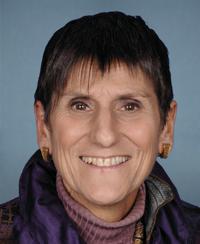 Rep. Rosa L. DeLauro (D-CT)
Legislative Activity
Stay on top of the latest movement without scrolling through every action
Received in the Senate and Read twice and referred to the Committee on Health, Education, Labor, and Pensions.
August 1, 2008
View full timeline
Introduced in House
March 6, 2007
Referred to the House Committee on Education and Labor.
March 6, 2007
Referred to the Subcommittee on Workforce Protections.
June 5, 2007
Sponsor introductory remarks on measure. (CR H6012)
June 6, 2007
Subcommittee on Workforce Protections Discharged.
July 24, 2008
Committee Consideration and Mark-up Session Held.
July 24, 2008
Ordered to be Reported Without Recommendation (Amended) by the Yeas and Nays: 26 - 17.
July 24, 2008
Reported (Amended) by the Committee on Education and Labor. H. Rept. 110-783.
July 28, 2008
Placed on the Union Calendar, Calendar No. 502.
July 28, 2008
Rules Committee Resolution H. Res. 1388 Reported to House. Rule provides for consideration of H.R. 1338 with 1 hour of general debate. Previous question shall be considered as ordered without intervening motions except motion to recommit with or without instructions. Measure will be considered read. Specified amendments are in order. All points of order against consideration of the bill are waived except those arising under clause 9 or 10 of rule XXI.
July 30, 2008 • 6:46 PM
Rule H. Res. 1388 passed House.
July 31, 2008 • 3:53 PM
Considered under the provisions of rule H. Res. 1388. (consideration: CR H7678-7681)
July 31, 2008 • 4:10 PM
Rule provides for consideration of H.R. 1338 with 1 hour of general debate. Previous question shall be considered as ordered without intervening motions except motion to recommit with or without instructions. Measure will be considered read. Specified amendments are in order. All points of order against consideration of the bill are waived except those arising under clause 9 or 10 of rule XXI.
July 31, 2008 • 4:10 PM
House resolved itself into the Committee of the Whole House on the state of the Union pursuant to H. Res. 1388 and Rule XVIII.
July 31, 2008 • 4:10 PM
The Speaker designated the Honorable Michael E. Capuano to act as Chairman of the Committee.
July 31, 2008 • 4:10 PM
GENERAL DEBATE - The Committee of the Whole proceeded with one hour of general debate on H.R. 1338.
July 31, 2008 • 4:10 PM
Committee of the Whole House on the state of the Union rises leaving H.R. 1338 as unfinished business.
July 31, 2008 • 4:36 PM
Considered as unfinished business. (consideration: CR H7681-7704)
July 31, 2008 • 4:38 PM
The House resolved into Committee of the Whole House on the state of the Union for further consideration.
July 31, 2008 • 4:38 PM
GENERAL DEBATE - The Committee of the Whole continued with general debate on H.R. 1338.
July 31, 2008 • 4:38 PM
DEBATE - Pursuant to the provisions of H. Res. 1388, the Committee of the Whole proceeded with ten minutes of debate on the Bean amendment.
July 31, 2008 • 5:29 PM
DEBATE - Pursuant to the provisions of H. Res. 1388, the Committee of the Whole proceeded with ten minutes of debate on the Price (GA) amendment.
July 31, 2008 • 5:34 PM
POSTPONED PROCEEDINGS - At the conclusion of debate on the Price (GA) amendment the Chair put the question on adoption of the amendment and by voice vote, announced that the noes had prevailed. Mr. Price (GA) demanded a recorded vote and pursuant to the rule, the Chair postponed further proceedings on the question of adoption of the amendment until a time to be announced.
July 31, 2008 • 5:44 PM
DEBATE - Pursuant to the provisions of H. Res. 1388, the Committee of the Whole proceeded with ten minutes of debate on the Altmire amendment.
July 31, 2008 • 5:44 PM
POSTPONED PROCEEDINGS - At the conclusion of debate on the Altmire amendment the Chair put the question on adoption of the amendment and by voice vote, announced that the ayes had prevailed. Mr. Altmire demanded a recorded vote and pursuant to the rule, the Chair postponed further proceedings on the question of adoption of the amendment until a time to be announced.
July 31, 2008 • 5:49 PM
DEBATE - Pursuant to the provisions of H. Res. 1388, the Committee of the Whole proceeded with ten minutes of debate on the Giffords amendment.
July 31, 2008 • 5:49 PM
POSTPONED PROCEEDINGS - At the conclusion of debate on the Giffords amendment the Chair put the question on adoption of the amendment and by voice vote, announced that the ayes had prevailed. Mr. Giffords demanded a recorded vote and pursuant to the rule, the Chair postponed further proceedings on the question of adoption of the amendment until a time to be announced.
July 31, 2008 • 5:56 PM
DEBATE - Pursuant to the provisions of H. Res. 1388, the Committee of the Whole proceeded with ten minutes of debate on the Cazayoux amendment.
July 31, 2008 • 5:57 PM
POSTPONED PROCEEDINGS - At the conclusion of debate on the Cazayoux amendment the Chair put the question on adoption of the amendment and by voice vote, announced that the ayes had prevailed. Mr. Andrews demanded a recorded vote and pursuant to the rule, the Chair postponed further proceedings on the question of adoption of the amendment until a time to be announced.
July 31, 2008 • 6:01 PM
DEBATE - Pursuant to the provisions of H. Res. 1388, the Committee of the Whole proceeded with ten minutes of debate on the Flake amendment.
July 31, 2008 • 6:03 PM
UNFINISHED BUSINESS - The Chair announced that the unfinished business was the question on adoption of amendments which had been debated earlier and on which further proceedings had been postponed.
July 31, 2008 • 6:05 PM
The House rose from the Committee of the Whole House on the state of the Union to report H.R. 1338.
July 31, 2008 • 6:50 PM
The House adopted the amendment in the nature of a substitute as agreed to by the Committee of the Whole House on the state of the Union. (text: CR H7691-7693)
July 31, 2008 • 6:51 PM
Mr. Price (GA) moved to recommit with instructions to Education and Labor. (consideration: CR H7701-7703; text: CR H7701)
July 31, 2008 • 6:51 PM
DEBATE - The House proceeded with 10 minutes of debate on the Price (GA) motion to recommit with instructions. The instructions contained in the motion seek to report the bill back to the House with an amendment.
July 31, 2008 • 6:51 PM
The previous question on the motion to recommit with instructions was ordered without objection. (consideration: CR H7703)
July 31, 2008 • 7:05 PM
On motion to recommit with instructions Failed by recorded vote: 189 - 236 (Roll no. 555).
July 31, 2008 • 7:22 PM
Passed/agreed to in House: On passage Passed by recorded vote: 247 - 178 (Roll no. 556).
July 31, 2008 • 7:33 PM
On passage Passed by recorded vote: 247 - 178 (Roll no. 556).
July 31, 2008 • 7:33 PM
Motion to reconsider laid on the table Agreed to without objection.
July 31, 2008 • 7:33 PM
The Clerk was authorized to correct section numbers, punctuation, and cross references, and to make other necessary technical and conforming corrections in the engrossment of H.R. 1338.
July 31, 2008 • 7:45 PM
Received in the Senate and Read twice and referred to the Committee on Health, Education, Labor, and Pensions.
August 1, 2008
Voting History
6 votes recorded • Roll call available
HOUSE
Roll Call AvailableJuly 31, 2008 at 7:33 PM
On Passage
Majority required: 1/2 (50%)
247 - 178
HOUSE
Roll Call AvailableJuly 31, 2008 at 7:22 PM
On Motion to Recommit with Instructions
Majority required: 1/2 (50%)
189 - 236
HOUSE
Roll Call AvailableJuly 31, 2008 at 6:49 PM
On Agreeing to the Amendment
Majority required: 1/2 (50%)
410 - 16
Show 3 more votes
HOUSE
Roll Call AvailableJuly 31, 2008 at 6:44 PM
On Agreeing to the Amendment
Majority required: 1/2 (50%)
397 - 29
HOUSE
Roll Call AvailableJuly 31, 2008 at 6:39 PM
On Agreeing to the Amendment
Majority required: 1/2 (50%)
426 - 1
HOUSE
Roll Call AvailableJuly 31, 2008 at 6:35 PM
On Agreeing to the Amendment
Majority required: 1/2 (50%)
188 - 240
Floor Debate
19 membersWhat members said about H.R. 1338 on the floor


 +14
+14
Floor Debate
19 membersWhat members said about H.R. 1338 on the floor
Mr. Speaker, by direction of the Committee on Rules, I call up House Resolution 1388 and ask for its immediate consideration. Mr. Speaker, for the purpose of debate only, I yield the customary 30…
I thank my friend, the Republican whip. On Monday, the House will meet in pro forma session at 11 a.m. On Tuesday, the House will meet at 10:30 a.m. for morning hour and 12 p.m. for legislative…
I want to thank Ranking Member McKeon for his work on this bill. I find it very interesting that our colleagues have such hubris that they think we are going to solve all of the problems of the world…
Mr. Speaker, I yield myself such time as I may consume. Mr. Speaker, I rise in opposition to this ill-considered and over- reaching legislation. Proponents of this bill claim it simply reverses a May…
Mr. Speaker, I yield to my friend from Maryland, the majority leader, to tell us about next week's schedule. I thank my friend for the information. On the first bill under a rule, the Military…
Show 8 more

Mr. Speaker, pursuant to House Resolution 579, I call up the bill (H.R. 2831) to amend title VII of the Civil Rights Act of 1964, the Age Discrimination in Employment Act of 1967, the Americans With…
I am pleased to yield such time as she may consume to the gentlelady from North Carolina (Ms. Foxx). I reserve the balance of my time. I yield such time as she may consume to the gentlelady from…
I thank my friend, the distinguished chairwoman, Ms. Slaughter, for the time. I wish her the best today, and all those who participate in this debate. I yield myself such time as I may consume. Mr.…
Mr. Chairman, I rise in opposition to the bill and I yield myself such time as I may consume. Discrimination in the workplace is wrong. Paying women lower wages for the same work is wrong. It's also…

Mr. Speaker, I thank the distinguished chairwoman of the Rules Committee. Her presence on the Rules Committee is evidence of the struggle, but yet the progress, and the reason why we stand here…
I thank the gentlewoman for yielding. I want to thank Chairman George Miller for his dedication to this cause. We never could have come this far without his tenacious leadership. We are grateful,…
I thank the gentlelady for yielding. I must say to my friend on the other side of the aisle, I believe it's never the wrong time to do the right thing, and this is the right thing. My friend mentions…
Mr. Speaker, I yield myself such time as I may consume. Mr. Speaker, Members of the House, in 1963 this Nation passed the Equal Pay Act, and it was passed to end discriminatory practices in paying…
Show 11 more

I thank the chairman for recognizing me. First I want to pay tribute to a great, great Member of the House and someone that we are so, so proud and grateful to, and that is Congresswoman Rosa…
Madam Speakear, I rise today to commemorate Equal Pay Day in order to address the need for equal pay for hardworking women across America. According to the United States Census Bureau, women are paid…
Mr. Speaker, I thank the gentleman for yielding. Mr. Speaker, the practical effect of this legislation is to do away with the statute of limitations in employment disputes. On May 29, 2007, the…
Mr. Chairman, I rise today in support of H.R. 1338, ``The Paycheck Fairness Act.'' This legislation will help our Nation take the final steps in its long journey towards ensuring that men and women…
Mr. Speaker, I rise in strong support of this rule. I commend Speaker Pelosi, the majority leader, Chairman Miller, and as well Chairman Slaughter and the entire Rules Committee, for bringing this…
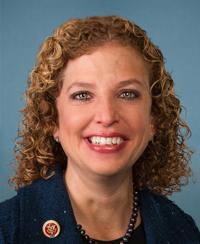
Mr. Speaker, I met Lilly Ledbetter during the House Judiciary Committee hearing last month. At that time, she explained how she was repeatedly harassed during her 20-year career at Goodyear. Lilly…
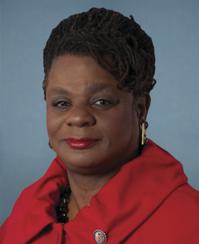
Madam Speaker, in 1963, when the Equal Pay Act was signed into law to grant the right to equal pay to women who worked full-time, year-round, women made 59 cents on average for every dollar earned by…

Mr. Speaker, I rise today in strong support of the principle of equal pay for equal work and the Lilly Ledbetter Fair Pay Act of 2007, H.R. 2831. On May 29, 2007, the Supreme Court issued a…

I thank the distinguished Chair of the Rules Committee for her leadership on this issue and for the time. I also want to thank Speaker Nancy Pelosi and Representative Rosa DeLauro for their…

I thank the chairman for yielding, and I rise in strong support of this legislation. Mr. Speaker, our friend, the ranking member of the full committee, just said that this bill repeals the statute of…
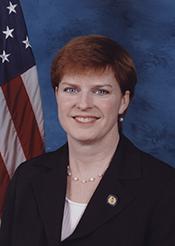
Mr. Chairman, I have an amendment at the desk. Mr. Chairman, I rise today to offer an amendment to H.R. 1338, the Paycheck Fairness Act. First, I would like to acknowledge the leadership of…
Bill Text
4 versions available
        [Congressional Bills 110th Congress]
[From the U.S. Government Printing Office]
[H.R. 1338 Referred in Senate (RFS)]

2d Session
H. R. 1338

_______________________________________________________________________

IN THE SENATE OF THE UNITED STATES

August 1, 2008

Received; read twice and referred to the Committee on Health,
Education, Labor, and Pensions

_______________________________________________________________________

AN ACT

To amend the Fair Labor Standards Act of 1938 to provide more effective
remedies to victims of discrimination in the payment of wages on the
basis of sex, and for other purposes.

Be it enacted by the Senate and House of Representatives of the
United States of America in Congress assembled,

SECTION 1. SHORT TITLE.

This Act may be cited as the ``Paycheck Fairness Act''.

SEC. 2. FINDINGS.

Congress finds the following:
(1) Women have entered the workforce in record numbers over
the past 50 years.
(2) Despite the enactment of the Equal Pay Act in 1963,
many women continue to earn significantly lower pay than men
for equal work. These pay disparities exist in both the private
and governmental sectors. In many instances, the pay
disparities can only be due to continued intentional
discrimination or the lingering effects of past discrimination.
(3) The existence of such pay disparities--
(A) depresses the wages of working families who
rely on the wages of all members of the family to make
ends meet;
(B) undermines women's retirement security, which
is often based on earnings while in the workforce;
(C) prevents the optimum utilization of available
labor resources;
(D) has been spread and perpetuated, through
commerce and the channels and instrumentalities of
commerce, among the workers of the several States;
(E) burdens commerce and the free flow of goods in
commerce;
(F) constitutes an unfair method of competition in
commerce;
(G) leads to labor disputes burdening and
obstructing commerce and the free flow of goods in
commerce;
(H) interferes with the orderly and fair marketing
of goods in commerce; and
(I) in many instances, may deprive workers of equal
protection on the basis of sex in violation of the 5th
and 14th amendments.
(4)(A) Artificial barriers to the elimination of
discrimination in the payment of wages on the basis of sex
continue to exist decades after the enactment of the Fair Labor
Standards Act of 1938 (29 U.S.C. 201 et seq.) and the Civil
Rights Act of 1964 (42 U.S.C. 2000a et seq.).
(B) These barriers have resulted, in significant part,
because the Equal Pay Act has not worked as Congress originally
intended. Improvements and modifications to the law are
necessary to ensure that the Act provides effective protection
to those subject to pay discrimination on the basis of their
sex.
(C) Elimination of such barriers would have positive
effects, including--
(i) providing a solution to problems in the economy
created by unfair pay disparities;
(ii) substantially reducing the number of working
women earning unfairly low wages, thereby reducing the
dependence on public assistance;
(iii) promoting stable families by enabling all
family members to earn a fair rate of pay;
(iv) remedying the effects of past discrimination
on the basis of sex and ensuring that in the future
workers are afforded equal protection on the basis of
sex; and
(v) ensuring equal protection pursuant to Congress'
power to enforce the 5th and 14th amendments.
(5) The Department of Labor and the Equal Employment
Opportunity Commission have important and unique
responsibilities to help ensure that women receive equal pay
for equal work.
(6) The Department of Labor is responsible for--
(A) collecting and making publicly available
information about women's pay;
(B) ensuring that companies receiving Federal
contracts comply with anti-discrimination affirmative
action requirements of Executive Order 11246 (relating
to equal employment opportunity);
(C) disseminating information about women's rights
in the workplace;
(D) helping women who have been victims of pay
discrimination obtain a remedy; and
(E) being proactive in investigating and
prosecuting equal pay violations, especially systemic
violations, and in enforcing all of its mandates.
(7) The Equal Employment Opportunity Commission is the
primary enforcement agency for claims made under the Equal Pay
Act, and issues regulations and guidance on appropriate
interpretations of the law.
(8) With a stronger commitment by the Department of Labor
and the Equal Employment Opportunity Commission to their
responsibilities, increased information about the provisions
added by the Equal Pay Act of 1963, wage data, and more
effective remedies, women will be better able to recognize and
enforce their rights.
(9) Certain employers have already made great strides in
eradicating unfair pay disparities in the workplace and their
achievements should be recognized.

SEC. 3. ENHANCED ENFORCEMENT OF EQUAL PAY REQUIREMENTS.

(a) Bona-Fide Factor Defense and Modification of Same Establishment
Requirement.--Section 6(d)(1) of the Fair Labor Standards Act of 1938
(29 U.S.C. 206(d)(1)) is amended--
(1) by striking ``No employer having'' and inserting ``(A)
No employer having'';
(2) by striking ``any other factor other than sex'' and
inserting ``a bona fide factor other than sex, such as
education, training, or experience''; and
(3) by inserting at the end the following:
``(B) The bona fide factor defense described in subparagraph (A)(v)
shall apply only if the employer demonstrates that such factor (i) is
not based upon or derived from a sex-based differential in
compensation; (ii) is job-related with respect to the position in
question; and (iii) is consistent with business necessity. Such defense
shall not apply where the employee demonstrates that an alternative
employment practice exists that would serve the same business purpose
without producing such differential and that the employer has refused
to adopt such alternative practice.
``(C) For purposes of subparagraph (A), employees shall be deemed
to work in the same establishment if the employees work for the same
employer at workplaces located in the same county or similar political
subdivision of a State. The preceding sentence shall not be construed
as limiting broader applications of the term `establishment' consistent
with rules prescribed or guidance issued by the Equal Opportunity
Employment Commission.''.
(b) Nonretaliation Provision.--Section 15 of the Fair Labor
Standards Act of 1938 (29 U.S.C. 215(a)(3)) is amended--
(1) in subsection (a)(3), by striking ``employee has
filed'' and all that follows and inserting ``employee--
``(A) has made a charge or filed any complaint or
instituted or caused to be instituted any
investigation, proceeding, hearing, or action under or
related to this Act, including an investigation
conducted by the employer, or has testified or is
planning to testify or has assisted or participated in
any manner in any such investigation, proceeding,
hearing or action or in an investigation conducted by
the employer, or has served or is planning to serve on
an industry Committee; or
``(B) has inquired about, discussed or disclosed
the wages of the employee or another employee.''; and
(2) by adding at the end the following:
``(c) Subsection (a)(3)(B) shall not apply to instances in which an
employee who has access to the wage information of other employees as a
part of such employee's essential job functions discloses the wages of
such other employees to individuals who do not otherwise have access to
such information, unless such disclosure is in response to a complaint
or charge or in furtherance of an investigation, proceeding, hearing,
or action under section 6(d) or an investigation conducted by the
employer. Nothing in this subsection shall be construed to limit the
rights of an employee provided under any other provision of law.''.
(c) Enhanced Penalties.--Section 16(b) of the Fair Labor Standards
Act of 1938 (29 U.S.C. 216(b)) is amended--
(1) by inserting after the first sentence the following:
``Any employer who violates section 6(d) shall additionally be
liable for such compensatory damages, or, where the employee
demonstrates that the employer acted with malice or reckless
indifference, punitive damages as may be appropriate, except
that the United States shall not be liable for punitive
damages.'';
(2) in the sentence beginning ``An action to'', by striking
``either of the preceding sentences'' and inserting ``any of
the preceding sentences of this subsection'';
(3) in the sentence beginning ``No employees shall'', by
striking ``No employees'' and inserting ``Except with respect
to class actions brought to enforce section 6(d), no
employee'';
(4) by inserting after the sentence referred to in
paragraph (3), the following: ``Notwithstanding any other
provision of Federal law, any action brought to enforce section
6(d) may be maintained as a class action as provided by the
Federal Rules of Civil Procedure.''; and
(5) in the sentence beginning ``The court in''--
(A) by striking ``in such action'' and inserting
``in any action brought to recover the liability
prescribed in any of the preceding sentences of this
subsection''; and
(B) by inserting before the period the following:
``, including expert fees''.
(d) Action by Secretary.--Section 16(c) of the Fair Labor Standards
Act of 1938 (29 U.S.C. 216(c)) is amended--
(1) in the first sentence--
(A) by inserting ``or, in the case of a violation
of section 6(d), additional compensatory or punitive
damages,'' before ``and the agreement''; and
(B) by inserting before the period the following:
``, or such compensatory or punitive damages, as
appropriate'';
(2) in the second sentence, by inserting before the period
the following: ``and, in the case of a violation of section
6(d), additional compensatory or punitive damages'';
(3) in the third sentence, by striking ``the first
sentence'' and inserting ``the first or second sentence''; and
(4) in the last sentence--
(A) by striking ``commenced in the case'' and
inserting ``commenced--
``(1) in the case'';
(B) by striking the period and inserting ``; or'';
and
(C) by adding at the end the following:
``(2) in the case of a class action brought to enforce
section 6(d), on the date on which the individual becomes a
party plaintiff to the class action.''.

SEC. 4. TRAINING.

The Equal Employment Opportunity Commission and the Office of
Federal Contract Compliance Programs, subject to the availability of
funds appropriated under section 11, shall provide training to
Commission employees and affected individuals and entities on matters
involving discrimination in the payment of wages.

SEC. 5. NEGOTIATION SKILLS TRAINING FOR GIRLS AND WOMEN.

(a) Program Authorized.--
(1) In general.--The Secretary of Labor, after consultation
with the Secretary of Education, is authorized to establish and
carry out a grant program.
(2) Grants.--In carrying out the program, the Secretary of
Labor may make grants on a competitive basis to eligible
entities, to carry out negotiation skills training programs for
girls and women.
(3) Eligible entities.--To be eligible to receive a grant
under this subsection, an entity shall be a public agency, such
as a State, a local government in a metropolitan statistical
area (as defined by the Office of Management and Budget), a
State educational agency, or a local educational agency, a
private nonprofit organization, or a community-based
organization.
(4) Application.--To be eligible to receive a grant under
this subsection, an entity shall submit an application to the
Secretary of Labor at such time, in such manner, and containing
such information as the Secretary of Labor may require.
(5) Use of funds.--An entity that receives a grant under
this subsection shall use the funds made available through the
grant to carry out an effective negotiation skills training
program that empowers girls and women. The training provided
through the program shall help girls and women strengthen their
negotiation skills to allow the girls and women to obtain
higher salaries and rates of compensation that are equal to
those paid to similarly-situated male employees.
(b) Incorporating Training Into Existing Programs.--The Secretary
of Labor and the Secretary of Education shall issue regulations or
policy guidance that provides for integrating the negotiation skills
training, to the extent practicable, into programs authorized under--
(1) in the case of the Secretary of Education, the
Elementary and Secondary Education Act of 1965 (20 U.S.C. 6301
et seq.), the Carl D. Perkins Vocational and Technical
Education Act of 1998 (20 U.S.C. 2301 et seq.), the Higher
Education Act of 1965 (20 U.S.C. 1001 et seq.), and other
programs carried out by the Department of Education that the
Secretary of Education determines to be appropriate; and
(2) in the case of the Secretary of Labor, the Workforce
Investment Act of 1998 (29 U.S.C. 2801 et seq.), and other
programs carried out by the Department of Labor that the
Secretary of Labor determines to be appropriate.
(c) Report.--Not later than 1 year after the date of enactment of
this Act, and annually thereafter, the Secretary of Labor and the
Secretary of Education shall prepare and submit to Congress a report
describing the activities conducted under this section and evaluating
the effectiveness of such activities in achieving the purposes of this
Act.

SEC. 6. RESEARCH, EDUCATION, AND OUTREACH.

The Secretary of Labor shall conduct studies and provide
information to employers, labor organizations, and the general public
concerning the means available to eliminate pay disparities between men
and women, including--
(1) conducting and promoting research to develop the means
to correct expeditiously the conditions leading to the pay
disparities;
(2) publishing and otherwise making available to employers,
labor organizations, professional associations, educational
institutions, the media, and the general public the findings
resulting from studies and other materials, relating to
eliminating the pay disparities;
(3) sponsoring and assisting State and community
informational and educational programs;
(4) providing information to employers, labor
organizations, professional associations, and other interested
persons on the means of eliminating the pay disparities;
(5) recognizing and promoting the achievements of
employers, labor organizations, and professional associations
that have worked to eliminate the pay disparities; and
(6) convening a national summit to discuss, and consider
approaches for rectifying, the pay disparities.

SEC. 7. ESTABLISHMENT OF THE NATIONAL AWARD FOR PAY EQUITY IN THE
WORKPLACE.

(a) In General.--There is established the Secretary of Labor's
National Award for Pay Equity in the Workplace, which shall be awarded,
as appropriate, to encourage proactive efforts to comply with this Act.
(b) Criteria for Qualification.--The Secretary of Labor shall set
criteria for receipt of the award, including a requirement that an
employer has made substantial effort to eliminate pay disparities
between men and women, and deserves special recognition as a
consequence of such effort. The secretary shall establish procedures
for the application and presentation of the award.
(c) Business.--In this section, the term ``employer'' includes--
(1)(A) a corporation, including a nonprofit corporation;
(B) a partnership;
(C) a professional association;
(D) a labor organization; and
(E) a business entity similar to an entity described in any
of subparagraphs (A) through (D);
(2) an entity carrying out an education referral program, a
training program, such as an apprenticeship or management
training program, or a similar program; and
(3) an entity carrying out a joint program, formed by a
combination of any entities described in paragraph (1) or (2).

SEC. 8. COLLECTION OF PAY INFORMATION BY THE EQUAL EMPLOYMENT
OPPORTUNITY COMMISSION.

Section 709 of the Civil Rights Act of 1964 (42 U.S.C. 2000e-8) is
amended by adding at the end the following:
``(f)(1) Not later than 18 months after the date of enactment of
this subsection, the Commission shall--
``(A) complete a survey of the data that is currently
available to the Federal Government relating to employee pay
information for use in the enforcement of Federal laws
prohibiting pay discrimination and, in consultation with other
relevant Federal agencies, identify additional data collections
that will enhance the enforcement of such laws; and
``(B) based on the results of the survey and consultations
under subparagraph (A), issue regulations to provide for the
collection of pay information data from employers as described
by the sex, race, and national origin of employees.
``(2) In implementing paragraph (1), the Commission shall have as
its primary consideration the most effective and efficient means for
enhancing the enforcement of Federal laws prohibiting pay
discrimination. For this purpose, the Commission shall consider factors
including the imposition of burdens on employers, the frequency of
required reports (including which employers should be required to
prepare reports), appropriate protections for maintaining data
confidentiality, and the most effective format for the data collection
reports.''.

SEC. 9. REINSTATEMENT OF PAY EQUITY PROGRAMS AND PAY EQUITY DATA
COLLECTION.

(a) Bureau of Labor Statistics Data Collection.--The Commissioner
of Labor Statistics shall continue to collect data on women workers in
the Current Employment Statistics survey.
(b) Office of Federal Contract Compliance Programs Initiatives.--
The Director of the Office of Federal Contract Compliance Programs
shall ensure that employees of the Office--
(1)(A) shall use the full range of investigatory tools at
the Office's disposal, including pay grade methodology;
(B) in considering evidence of possible compensation
discrimination--
(i) shall not limit its consideration to a small
number of types of evidence; and
(ii) shall not limit its evaluation of the evidence
to a small number of methods of evaluating the
evidence; and
(C) shall not require a multiple regression analysis or
anecdotal evidence for a compensation discrimination case;
(2) for purposes of its investigative, compliance, and
enforcement activities, shall define ``similarly situated
employees'' in a way that is consistent with and not more
stringent than the definition provided in item 1 of subsection
A of section 10-III of the Equal Employment Opportunity
Commission Compliance Manual (2000), and shall consider only
factors that the Office's investigation reveals were used in
making compensation decisions; and
(3) shall reinstate the Equal Opportunity Survey, as
required by section 60-2.18 of title 41, Code of Federal
Regulations, designating not less than half of all
nonconstruction contractor establishments each year to prepare
and file such survey, and shall review and utilize the
responses to such survey to identify contractor establishments
for further evaluation and for other enforcement purposes as
appropriate.
(c) Department of Labor Distribution of Wage Discrimination
Information.--The Secretary of Labor shall make readily available (in
print, on the Department of Labor website, and through any other forum
that the Department may use to distribute compensation discrimination
information), accurate information on compensation discrimination,
including statistics, explanations of employee rights, historical
analyses of such discrimination, instructions for employers on
compliance, and any other information that will assist the public in
understanding and addressing such discrimination.

SEC. 10. AUTHORIZATION OF APPROPRIATIONS.

(a) Authorization of Appropriations.--There are authorized to be
appropriated $15,000,000 to carry out this Act.
(b) Prohibition on Earmarks.--None of the funds appropriated
pursuant to subsection (a) for purposes of the grant program in section
5 of this Act may be used for a Congressional earmark as defined in
clause 9(d) of rule XXI of the Rules of the House of Representatives.

SEC. 11. SMALL BUSINESS ASSISTANCE.

(a) Effective Date.--This Act and the amendments made by this Act
shall take effect on the date that is 6 months after the date of
enactment of this Act.
(b) Technical Assistance Materials.--The Secretary of Labor and the
Commissioner of the Equal Employment Opportunity Commission shall
jointly develop technical assistance material to assist small
businesses in complying with the requirements of this Act and the
amendments made by this Act.
(c) Small Businesses.--A small business shall be exempt from the
provisions of this Act to the same extent that such business is exempt
from the requirements of the Fair Labor Standards Act pursuant to
section 3(s)(1)(A)(i) and (ii) of such Act.

SEC. 12. RULE OF CONSTRUCTION.

Nothing in this Act, or in any amendments made by this Act, shall
affect the obligation of employers and employees to fully comply with
all applicable immigration laws, including any penalties, fines, or
other sanctions.

Passed the House of Representatives July 31, 2008.

Attest:

LORRAINE C. MILLER,

Clerk.