An amendment numbered 1 printed in House Report 110-854 to clarify that funds issued under the National Capacity Environmental Education Grant Program may be used to address environmental justice issues that may arise in low income communities. The amendment also provides that funds may be used to develop and implement policy approaches to environmental education including specified topics.
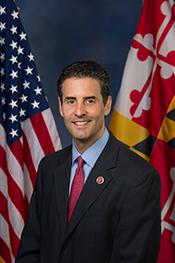 Rep. John P. Sarbanes (D-MD)
Description
Amendment clarified that funds issued under the National Capacity Environmental Education Grant Program may be used to address environmental justice issues that may arise in low income communities. The amendment also provided that funds may be used to develop and implement policy approaches to environmental education including specified topics.
Legislative Activity
Stay on top of the latest movement without scrolling through every action
House amendment offered
September 18, 2008
View full timeline
House amendment offered
September 18, 2008
Roll call votes on amendments in House
September 18, 2008 • 4:47 PM
House amendment agreed to: On agreeing to the Sarbanes amendment (A001) Agreed to by recorded vote: 383 - 23 (Roll no. 612).
September 18, 2008 • 4:47 PM
Amendment agreed to Committee of the Whole
September 18, 2008 • 4:47 PM
House amendment offered/reported by : Amendment (A001) offered by Mr. Sarbanes.(consideration: CR H8444-8445, H8447-8448; text: CR H8445)
September 18, 2008 • 3:55 PM
Amendment (A001) offered by Mr. Sarbanes. (consideration: CR H8444-8445, H8447-8448; text: CR H8445)
September 18, 2008 • 3:55 PM
On agreeing to the Sarbanes amendment (A001) Agreed to by recorded vote: 383 - 23 (Roll no. 612).
September 18, 2008 • 4:47 PM
Votes
1 roll call on this amendment
Text
Offered
NO CHILD LEFT INSIDE ACT OF 2008

The Committee resumed its sitting.
Mr. McKEON. Mr. Chairman, I am happy to at this time yield to the
gentlelady from North Carolina (Ms. Foxx) such time as she may consume.
Ms. FOXX. Mr. Chairman, I want to thank my colleague from California
for yielding me time.
He made a couple of comments earlier, I won't try to repeat
everything that he said, but he asked a question; he doesn't know why
we're here dealing with this bill that normally would be under
suspension and certainly wouldn't be a rule bill, but I agree that we
know why we're here: it's to fill time because the majority has so
little of consequence for us to deal with when we should be dealing
with consequential things such as the American Energy Act.
However, I want to also point out the fact that this bill is not
going to solve all of the problems of the world. It's not going to
create the alternative energies that we need. I read the Constitution.
I read it fairly frequently. Yesterday we celebrated Constitution Day.
And I have searched in vain for the word ``education'' there. Nowhere
did our Founding Fathers just think that the Congress of the United
States should be involved in education. That was an issue that they
thought best left to the States, and I think it is best left to the
States and is not something that we should be dealing with here in the
Congress.
Almost every day someone from the majority party comes to the floor
and decries the deficit that we're facing. Well, one of the reasons
that we're facing a terrible deficit is because the majority party is
involved in everything and many things it should not be involved in,
especially in education. That is something we should leave to the
States. If we did that and left the hardworking people's money at the
State level, we would be able to do a lot more than we're currently
doing.
But I want to point out the fact that we should be dealing with the
American Energy Act. We had a chance this week to do that, and we
refused. Bipartisan passage of the American Energy Act would
demonstrate to the world that America will no longer keep its rich
energy resources under lock and key as the Democrats want to do. Not
only will it help bring down the price of gasoline now, but it will
make needed investments in the alternative fuels that will power our
lives and our economy in the future.
Now as my colleague also mentioned earlier, there's been a very fine
survey done. Mr. Chairman, I would like to submit the entire survey for
the Record today. I want to just point out some of the things that came
out in the survey that my colleague had not pointed out.
This survey was launched in July by the Republicans on the Education
Committee. It was provided via the Caucus Web site and was sent to
education stakeholders all across the country. We asked those people to
give us their reactions and the impact on the high cost of energy to
the schools. Ninety percent of the people who responded indicated that
high gas prices are having an impact on schools in their community.
Ninety-six percent of these respondents demanded that Congress do more
to address the energy crisis.
``Nearly half of the respondents reported that high fuel costs have
forced schools in their community to cut field trips and after-school
activities; one-third of respondents reported that high costs forced
schools to limit bus routes, and nearly a quarter of respondents
reported that rising energy costs have led to higher school lunch
prices.''
We don't need to create more programs to encourage students to go on
field trips. They're not going to be able to go on field trips because
there's no

[[Page H8436]]

money to buy gas for the buses to take them on field trips.
This is just one of the most ridiculous things that we've been
talking about in this session of Congress.
``Since Democrats took control of Congress''--and I'm quoting again
from the survey--``in January 2007''--they took control of Congress,
and I think it's very important the American people know who's in
charge--``the energy crunch has been swift and severe. Gas prices have
risen from an average of $2.33 per gallon in the first days of the
Democrat majority to more than $3.75 per gallon today while diesel
prices--particularly important for school transportation purposes--have
risen from $2.44 a gallon to more than $4 per gallon today.''
Even the liberal New York Times has talked about the problem that the
schools are facing. We don't usually find ourselves agreeing with the
New York Times on issues, but they talked about the pain that schools
are feeling. ``As the cost of diesel fuel has soared well past what
many districts budgeted for last spring, school officials are
rethinking their transportation needs, making big-ticket spending cuts
and a host of surgical trims.''
They go on to quote, ``In a national survey of superintendents
released in July by the American Association of School Administrators,
99 percent said that rising fuel costs had forced across-the-board
cuts.'' This was the New York Times, September 5, 2008.
Here we are setting up programs, new programs, that cost a lot of
money in bureaucracy and administration to try to do something we could
do very, very easily by passing the American Energy Act.

{time}  1530

That's all within our power here to do, and here are some individual
comments in their own words from Americans who demand energy reform.
This is from Robert in Hamilton, Ohio: ``Yes, drill, build new
refineries, solar, nuclear and anything else to break the dependence on
foreign oil.''
That is exactly the position of Republican Members of this House. We
want to break our dependency on foreign oil and we can do this. We are
pro-American energy. Our colleagues, the Democrats, are anti-American
energy. They will not do things that help us increase the supply in
this country.
Here's another comment from Lori from Middletown, Ohio: ``I work at
(a local) Head Start program. Our families are struggling to get their
children to preschool. They must choose between gas in the car or food
in many cases.''
I listened to these platitudes by our colleagues across the aisle,
and frankly, they sound pretty hollow to me when we hear comments like
this. The American people are suffering. They are doing nothing.
Another comment from Reeves in Gastonia, North Carolina: ``The rising
cost of energy is impacting our school district in many ways: pupil
transportation, employee travel, staff development, cost of goods/
services, et cetera. It is getting increasingly difficult to reduce
costs and not have an impact on the instructional day.''
Again, the American people are hurting and the Democrats are turning
a deaf ear.
From Thomas from Joelton, Tennessee: ``We have to increase the supply
of domestic oil. When my family grew in size, I did not reduce the
amount of food provided to each member, I increased the supply.
Gasoline is the same way.''
The American people are very, very smart and the Democrats are
selling them short. They understand the issue. They understand that the
issue is supply and demand, and this report concludes:
``Education stakeholders overwhelmingly report they are being hurt by
the energy squeeze and demand that Congress do more. But instead of
doing more, rank-and-file Democrats voted overwhelmingly with their
leadership to kill a Republican measure that would have given schools
relief and continue to block a comprehensive plan to bring down fuel
prices. The House Republicans' `back-to-school' energy survey confirms
a New York Times report from earlier this month: `School officials are
rethinking their transportation needs, making big-ticket spending cuts
and a host of surgical trims.' How much longer will the Democrat-led
Congress wait to give them--and families, seniors, and small
businesses--the relief they are demanding from today's high energy
costs?''
It is time that the Democrats listened to the will of the American
people and provide an opportunity for us to provide more supply for the
American people and give relief to them.
I say to them again, you're either pro-American energy or you're
anti-American energy. So far, the position you've taken is anti-
American energy, and I don't believe that's where the American people
want you to be.

Strapped: Students and Schools Pay the Price for Democrats Failed
Energy Policies

summary and key findings

A survey launched in late July by House Republicans has
yielded some eye-opening results as the Democratic leadership
of the 110th Congress has refused to allow a vote on the
House Republicans' American Energy Act (H.R. 6566), which
aims to lower gas prices by increasing production of American
energy, encouraging more conservation and efficiency, and
promoting the use of more alternative and renewable fuels.
The survey--provided via the Education & Labor Committee
Republican caucus' website--was made available to education
stakeholders across the country, from parents and students to
teachers and administrators and sought their input on the
impact of today's high gas prices on schools, colleges, and
universities as the 2008-09 academic year begins. Key
findings of the survey follow:
90 percent of the survey's nearly 1,000 respondents
indicated that high gas prices are having an impact on
schools in their community.
96 percent of respondents demand that Congress do more to
address the energy crisis.
Nearly half of respondents reported that high fuel costs
have forced schools in their community to cut field trips and
after-school activities; one-third of respondents reported
that high costs forced schools to limit bus routes, and
nearly a quarter of respondents reported that rising energy
costs have led to higher school lunch prices.
In spite of these stark findings, the Democratic leadership
of the House has refused to schedule the American Energy Act
for a vote and defeated Republican proposals on June 4, June
26, and September 16, 2008 to assist schools feeling the
greatest impact from high energy costs. In fact, the
Democrat-led Education & Labor Committee has not even held a
single hearing on this issue.

schools feel the pain of high energy costs

American families, seniors, and small businesses are
hurting amid high gas prices and heating costs that are
poised to rise this fall and winter. But they are not alone.
As schools across the country settle into the 2008-09
academic year, they too are feeling the pain of today's
energy crunch. Indeed, from elementary and secondary schools
to community colleges and universities, schools at every
level are grappling with this crisis and making all-too-often
painful adjustments just to get themselves through the year.
Since Democrats took control of Congress in January 2007,
the energy crunch has been swift and severe. Gas prices have
risen from an average of $2.33 per gallon in the first days
of the Democratic Majority to more than $3.75 per gallon
today, while diesel prices--particularly important for school
transportation purposes--have risen from $2.44 per gallon to
more than $4.00 per gallon today.
Simply put, the surge in energy costs has been dramatic,
and the Majority has yet to offer the ``commonsense plan'' to
lower gas prices then-Minority Leader Nancy Pelosi (D-CA)
promised during the 2006 campaign season. Instead, the
Speaker and her colleagues in the Democratic leadership have
offered one ``no energy'' bill after another--proving
themselves more interested in votes to provide political
cover for vulnerable Democrats than they are in giving the
American people an ``all of the above'' energy strategy to
lower fuel costs. And all the while, families, seniors, small
businesses, and--yes--schools are left to pay the price . . .
literally.
Earlier this month, the New York Times put the pain schools
are feeling into perspective:
``As the cost of diesel fuel has soared well past what many
districts budgeted for last spring, school officials are
rethinking their transportation needs, making big-ticket
spending cuts and a host of surgical trims.
``Some districts are eliminating field trips and after-
school buses. Many are consolidating routes, causing some
students to walk farther to their stops and others to lose
their buses altogether. They are holding off on new teachers,
counselors and textbooks, and teaming with neighboring
districts for prekindergarten, special education and private
school transportation . . .
``In a national survey of superintendents released in July
by the American Association of School Administrators, 99
percent said that rising fuel costs had forced across-the-
board cuts.'' (New York Times, ``Fuel Prices Squeeze School
Districts,'' September 5, 2008)

[[Page H8437]]

house republicans launch innovative ``back-to-school energy survey''

To help understand the scope of this problem, House
Republicans launched a web-based initiative in late July
focused on how high energy prices are impacting schools all
across the nation. Housed at the Education & Labor
Committee's Republican website, this survey gathered input
from school officials, teachers, and families over a period
of six weeks to determine the extent of the energy crisis for
schools at all levels--input that Republicans hope will
provide both parties even more of an incentive to come
together in these final days of the 110th Congress and pass
an ``all of the above'' plan to increase American energy
production, encourage more efficiency and conservation, and
promote the use of alternative and renewable fuels. The
survey follows:
1. Are high gas prices having an impact on back-to-school
preparations in your community?
Yes, a very significant impact.
Yes, somewhat of an impact.
No, not much of an impact.
No, not at all.
2. If you answered ``yes'' above, how are your local
schools coping with high energy prices?
Limiting bus routes.
Cutting field trips/after-school activities.
Increasing school lunch prices.
Moving to a four (or fewer) day week.
Expanding online course offerings.
Other (please describe below).
3. Should Congress be doing more to lower gas prices and
promote long-term American energy independence?
Yes.
No.
No comment.
4. Additional comments:
5. Name:
6. E-mail (optional):
7. City, State:
8. May we share your story with others?

Overstretched Schools Want Action from Democratic Congress

The above-referenced New York Times article depicts the
types of problems being experienced nationwide. In fact,
according to the ``back-to-school'' energy survey, 90 percent
of all respondents indicated that high gas prices are having
an impact on schools in their community (72 percent
responding that gas prices are having ``a very significant
impact,'' with 18 percent responding that they are having
``somewhat of an impact''). The most common ramifications of
high fuel costs are cutting field trips and after-school
activities (provided by 48 percent of respondents), limiting
bus routes (33 percent), and increasing school lunch prices
(23 percent).
As a result, nearly every respondent to the survey (96
percent) indicated that Congress should be doing more to
lower gas prices and promote long-term American energy
independence. Congress, however, has not answered the call,
in spite of the fact that House Republicans unveiled the
comprehensive American Energy Act to lower fuel prices nearly
two months ago. Democrats also turned back a House Republican
effort to provide more funding to assist schools dealing with
high energy costs.

House Republican Proposals for Reform Defeated by Democratic Majority

As the recently-completed survey suggests, schools across
the country are feeling the pain from rising energy costs.
Even before the survey was launched, however, House
Republicans attempted to provide more assistance to those
schools feeling the greatest pain from today's energy crunch.
On June 4, 2008, the Democratic leadership scheduled for
House consideration the 21st Century Green High-Performing
Public School Facilities Act (H.R. 3021), a bill that takes
$20 billion in taxpayer dollars away from low-income students
and students with disabilities and creates a massive,
unproven school construction program run by bureaucrats in
Washington. During consideration of the legislation, Rep.
Cathy McMorris Rodgers (R-WA) offered a motion to recommit
proposal to allow schools that have seen their energy costs
rise by more than 50 percent since January 4, 2007--Rep.
Pelosi's first day as Speaker--to use funds under the bill to
help cover their energy expenditures. Unfortunately,
Democrats killed the proposal, leaving the schools to fend
for themselves. (Rollcall Vote 378, with 225 Democrats voting
against the proposal.)
On June 26, 2008, during consideration of the Saving Energy
Through Public Transportation Act (H.R. 6052), Democrats
blocked a Republican proposal to assist rural schools and
students. The measure--offered by Rep. Greg Walden (R-OR)--
would have required that in any area where school bus
services are being cut back because of high fuel prices, the
funds under the Democratic bill must be used to help restore
those services. Walden's proposal gave preference to rural
and suburban areas where school buses have to travel greater
distances to transport students. (Rollcall Vote 466, with 217
Democrats voting against the proposal.)
On September 16, 2008, Democrats turned back a bipartisan
plan--co-sponsored by 38 Democrats, 24 of whom inexplicably
voted against it--that would have aided schools suffering
from the effects of the energy crisis as well. During
consideration of the Democrats' so-called Comprehensive
American Energy Security and Consumer Protection Act (H.R.
6899), Rep. John Peterson (R-PA) offered a bipartisan plan he
originally authored with Rep. Neil Abercrombie (D-HI) to
begin taking steps toward lower gas prices and energy
independence. The plan, in part, would have enabled states to
enter into revenue-sharing agreements with the federal
government as part of increased energy production far off of
their coasts. Under the bipartisan plan, states would be
permitted to use revenues to increase funding to schools
feeling the impact of the energy crunch. But once again, the
Democratic Majority blocked the plan, depriving schools of
critical funding to help them cope with rising energy costs.
(Rollcall Vote 598, with 216 Democrats voting against the
proposal.)

In Their Own Words: Americans Demand Energy Reform

Following is a sampling of remarks left by respondents to
the ``back-to-school'' energy survey detailing exactly what
parents, teachers, and students are facing while the
Democratic Congress refuses to act on meaningful legislation
to bring down gas prices and other energy costs:
``Yes, drill, build new refineries, solar, nuclear and
anything else to break the dependence on foreign oil.''--
Robert from Hamilton, OH.
``I work at [a local] Head Start program. Our families are
struggling to get their children to pre-school. They must
choose between gas in the car or food in many cases.''--Lori
from Middletown, OH.
``The rising cost of energy is impacting our school
district in many ways: pupil transportation, employee travel,
staff development, cost of goods/services, etc. It is getting
increasingly difficult to reduce costs and not have an impact
on the instructional day.''--Reeves from Gastonia, NC.
``What are schools to do? The price of diesel, which most
school buses use, is even higher than the price of gasoline.
The option of passing or even sharing the cost of the fuel
increase with the consumers (parents) is not an option.
Levies are increasingly more difficult to pass. Field trips
and busing for athletics are either eliminated or the parents
are charged a fee to help offset the transportation cost.
Lengthening the school day and providing a 4-day week is
vehemently opposed by many parents who do not want to pay for
child care for that 5th weekday the child would not be in
school. Freezing wages and cutting back on insurance benefits
for teachers and support personnel deters people from
teaching at a time when the country desperately needs to be
focusing on Math, Science and Technology so its students are
better prepared for employment in our global economy . . . I
repeat--what are schools to do?''--Shari from Medway, OH.
``We cannot believe Congress went on vacation. We must have
a complete policy. Drill for oil, build new refineries, build
nuclear plants, and anything else that will work. Everything
is being affected, cost of groceries and all other goods.
Please help. Keep up the fight for us. We need an energy
policy.''--Ruth from Vacaville, CA.
``We have to increase the supply of domestic oil. When my
family grew in size, I did not reduce the amount food
provided to each member, I increased the supply. Gasoline is
the same way.''--Thomas from Joelton, TN.
``As an educator I am very concerned on the impact of
budget cuts for all students and staff operating in our
school system.''--Tessa from Waleska, GA.
``Being a rural community where most of the students come
to school on buses, high fuel prices cause a big problem.''--
Edward from Wapato, WA.
``The high price of fuel and energy costs [has]
significantly reduced the amount of funding we have for
educating our children to be competitive in a world class
economy.''--Pam from Medical Lake, WA.
``Every school child that I know has had their bus route
increased. My 6 year old is now on the bus for more than 2
hours a day.''--Claudia from Stevenson Ranch, CA.
``This year we may not be able to go on any field trips
because the school bus rates have gotten so expensive.
Families are having a tough time as it is. It is sad because
the kids are missing out on those experiences.''--Tar from
DeLand, FL.

Conclusion

Education stakeholders overwhelmingly report they are being
hurt by the energy squeeze and demand that Congress do more.
But instead of doing more, rank-and-file Democrats voted
overwhelmingly with their leadership to kill a Republican
measure that would have given schools relief and continue to
block a comprehensive plan to bring down fuel prices. The
House Republicans' ``back-to-school'' energy survey confirms
a New York Times report from earlier this month: ``School
officials are rethinking their transportation needs, making
big-ticket spending cuts and a host of surgical trims.'' How
much longer will the Democrat-led Congress wait to give
them--and families, seniors, and small businesses--the relief
they are demanding from today's high energy costs?

Mr. SARBANES. Mr. Speaker, I want to share with the gentlewoman that
I am and I know my party is pro-American energy. In fact, the more I
listen to testimony on the other side, the more convinced I am that
this legislation that we're debating right now is exactly what we need
to make sure that the advances with respect to energy technology are
there.
With respect to education stakeholders and their view of No Child
Left

[[Page H8438]]

Inside, this is a list of over 700 organizations nationally
representing 40 million members. Many of these organizations are
education organizations who understand how important it is for our
young people to get this sort of opportunity.
We can all agree, Democrats and Republicans, in this debate that
we've been having over energy for the last few weeks and months that
it's important for us to develop alternative sources of energy,
renewable sources of energy. To do that, of course, we're going to need
the scientists and the entrepreneurs who can make it happen, and they
are not going to land on a spaceship from outer space. We are going to
have to develop them right here, and the next generation is where we
are going to find those scientists and those entrepreneurs that are
going to make those sort of advances. But they are not going to be able
to do it if we don't put the resources behind the kind of environmental
education that this will provide.
And then just the last point I wanted to make is, yes, there are
field trips that will be funded by this, but a lot of what this has to
do is getting kids outside, and you don't have to take a bus from
inside of the classroom to outside of a classroom. You can walk. And a
lot of these young students are doing things right there in their own
backyard, right there around their school, right there in a stream
that's a quarter mile away, and they can use the walk. The idea is to
get them outside and experiencing the environment.
It is my pleasure now to yield 2 minutes to the gentlewoman from New
York (Ms. Clarke), a member of the Education and Labor Committee and
someone who brought a very important amendment regarding environmental
justice to this bill in the committee.
Ms. CLARKE. Mr. Chairman, today I rise in support of H.R. 3036, the
No Child Left Inside Act of 2008. The effects of global warming and
climate change, as evidenced by wildfires, tornadoes, hurricanes, and
floodings has been experienced by hundreds of thousands of Americans.
These things, coupled with the energy crisis, are calling out for
investment in renewable energy.
We must be ever cognizant that future generations will inherit a
myriad of complicated environmental challenges. By encouraging schools
to incorporate environmental education into their curriculum, H.R. 3036
will give future generations a solid understanding of environmental
issues and a knowledge base that will equip and empower them with the
tools needed to overcome the environmental problems that plague our
civil society and our environs.
I am pleased to have language from my bill, H.R. 5902, the GREEN Act,
incorporated into this bill. My bill's language would give schools the
option of integrating an environmental justice curriculum into their
own educational program.
Located in my congressional district, the Brooklyn Academy of Science
and the Environment provides an innovative example of how environmental
justice concepts can be used as an integrating context for learning.
Created through a partnership with the Brooklyn Botanic Gardens,
Prospect Park Alliance, and the New York City Department of Education,
this is one of New York City's first public environmental education
high schools.
In closing, I want to thank Congressman Sarbanes for being a champion
for America's scholars and for his consistent leadership on
environmental education and for including my bill, H.R. 5902, as part
of the No Child Left Inside Act of 2008, a bill that I believe will
greatly transform our Nation in the years to come.
Mr. McKEON. Mr. Chairman, I am happy to yield at this time 3 minutes
to the gentleman from Connecticut (Mr. Shays).
Mr. SHAYS. I thank the gentleman for yielding to me.
I am rising in support of H.R. 3036, the No Child Left Inside Act,
which would authorize a grant program to provide States the resources
to include environmental literacy education programs in their K-12
curriculum.
Protecting the environment is one of the most important jobs I have
as a Member of Congress. We simply will not have a world to live in if
we continue our neglectful ways.
It is imperative we instill the need for environmental responsibility
upon the next generation, and I can't think of a better place to foster
a sense of environmental stewardship than in the classroom.
Just this week, Congress finally debated a bill to begin reducing our
dependence on foreign oil and encouraging alternative energy solutions.
The repercussions of the debate we had this week will not be dealt with
by us, but rather, by our children. By ignoring our environmental and
energy crisis for so long, we have passed significant challenges on to
the next generation to find solutions. The time to invigorate our youth
to tackle these challenges is now.
I have heard from teachers and school administrators throughout
Connecticut's Fourth Congressional District, and from across the
country, who have felt a narrowing of school curricula in the wake of
No Child Left Behind's (NCLB) high stakes testing requirements. It
seems to me this bill should have been considered in the context of a
larger No Child Left Behind reauthorization. Unfortunately, the
majority has yet to bring comprehensive reform to the floor for
consideration, and I am hopeful these types of curricular enrichments
remain a priority as we work towards reauthorizing this critical bill.
In the absence of reauthorization efforts this Congress, I am pleased
we are providing the resources school districts need to enrich their
curricula and cultivate an awareness of environmental issues in our
public schools.
I support No Child Left Behind because it is forcing us to improve
and deal with gaps in our public education, but I realize there are
several improvements that need to be made in the reauthorization
process. I look forward to a reauthorization of this bill that
reevaluates priority curricula to ensure our students are not only
achieving in the areas of math, reading, and science, but are well-
prepared to engage in a 21st century, global society.
Mr. SARBANES. May I inquire as to whether the other side has any more
speakers?
Mr. McKEON. I will be concluding for our side, if we could inquire
how much time we have left.
The CHAIRMAN. The gentleman from California has 5\1/2\ minutes
remaining. The gentleman from Maryland has 12 minutes remaining.
Mr. SARBANES. Mr. Chairman, I will reserve my time to allow the
gentleman to close.
Mr. McKEON. Mr. Chairman, I yield myself the balance of my time.
One week before the 110th Congress is scheduled to adjourn, we are
devoting precious legislative hours to debating a noncontroversial bill
to extend a minuscule environmental education program for 1 year. I
think we all agree that environmental education is important now and
for future generations, and I want to commend the gentleman from
Maryland (Mr. Sarbanes) for the work that he's done on this bill. I
think, as he has eloquently stated, environmental education is very
important. But how we spend our time in this Chamber is a reflection of
our priorities, and today, our priorities are all wrong.
Chairman Miller and I work well together on the Education and Labor
Committee, and we often reach agreements before bills are brought to
the floor. On this bill, we worked together to resolve our differences,
and we agreed that while important, this bill was straightforward and
noncontroversial--most of our Members will vote for it--enough that it
should be considered on the suspension calendar. I believe that two-
thirds of this body would easily have supported the legislation, making
these hours of debate unnecessary.
For whatever reason, whether to mask their continued failure to offer
comprehensive energy solutions or simply to avoid a debate on the issue
altogether, the majority has opted to bring this bill to the floor
today under a rule. So let me just take a moment to reflect on H.R.
3036.
The Federal Government has a role to play in education. That role is
to provide support and assistance to ensure that all children are
provided a quality education. It is to support the academic achievement
of disadvantaged children, children with disabilities, and other at-
risk students who might otherwise be left behind. In pursuing these
goals, we must be careful

[[Page H8439]]

not to create too much bureaucracy nor too many Federal programs that
could undermine local control.
That's why I appreciate the efforts that were made to limit the scope
of this bill, extending an existing program at the EPA and
supplementing it with similar activities through the Department of
Education rather than establishing a massive new environmental
education bureaucracy as some had originally proposed.

{time}  1545

This is a reasonable bill, and at the end of the day, I will support
it. But, Mr. Chairman, if I had my choice, we would not be here
debating this legislation today. Although environmental education is
important, this Congress has a limited amount of time to challenge our
mammoth problems facing this Nation.
As of a few minutes ago, when we found we won't be in session
tomorrow, if we work all of next week, we will have 5 days left to
finish the work of this Congress. Instead of tinkering around the edges
of an existing environmental education program, we ought to be debating
comprehensive, all-of-the-above approaches to reform our Nation's
energy policy and put America on the path to energy independence.
Here we are, going into the last week of this Congress. We've been
here 2 years, we only have now 13 days of work scheduled for the last 5
months of this year--and that, after our Democrat leadership, during
the last election, said that we would be a harder working Congress, we
would be a more open Congress, we would be one that would follow
regular order, we would be open to the way this House was meant to
function.
At this point, we have not passed one spending bill. The spending
bills that were passed last year run out on September 30, the new year
starts October 1, and not one spending bill to continue to fund the
Government through the next year has yet been passed. We did pass one
on this floor, but not one has been passed through the whole process--
the House, the Senate, and been sent to the President's desk, not one
spending bill.
I guess the people throughout the country will be watching and seeing
what happens on October 1. Will the Government be shut down? I don't
know. I don't know how they plan to solve this problem. I just know
that at this point they have not brought one spending bill to
completion for the President to sign.
We have not finished our work on this committee on No Child Left
Behind. That was a very, very important piece of legislation. We worked
on it last year. We haven't talked about it for over a year now. And I
guess that's just going to be let go into next year, when a new
Congress will be here.
I am greatly disappointed, Mr. Chairman, with the work product of
this Congress. We had the ability. We had new leadership that came in
with lots of promises, lots of enthusiasm, lots of things that were
going to be done to make things better for the American public. The
most important issue facing us today is the energy issue. Every one of
us in America sees that every day when we fill our tanks or at least
drive by the gas stations and see how the price has gone up--or maybe
down a couple cents, depending, but it's a couple dollars more than it
was when the Republicans were in charge here a couple years ago.
We had the opportunity this year, even this week, to address an all-
of-the-above energy solution: More conservation, more alternative
fuels, more biomass, more wind, more solar--yes, and more oil, more
coal, more shale.
The CHAIRMAN. The time of the gentleman has expired.
Mr. SARBANES. Mr. Chairman, the desire to move forward with the
reauthorization of No Child Left Behind is one that certainly we shared
on this side of the aisle, and we are prepared to do that this year.
The problem is that the administration, for the last 2 years, sent
budgets which suggested there wasn't going to be the resources behind
that effort that needed to be there, and so we're where we are. But
that doesn't mean that we can't, as we're going to do with this bill,
begin to set the table for what can be a very comprehensive and
meaningful reauthorization of the Elementary and Secondary Education
Act next year. And what I'm so excited about is, if we put our stamp on
this bill today, we're going to be sending a very powerful message that
environmental education should be part and parcel of that
reauthorization next year.
I would like to thank, again, the members of the No Child Left Inside
Coalition, as I noted, over 700 organizations across the country
representing upwards of 40 million people. These are folks who just
want to see this happen. They understand how important it is to get our
children outdoors and into nature. I want to thank them for all the
work that they did to make this possible, to get this to the floor. It
would not be here without the work that they have done.
I want to close by noting some of the benefits of this. I've talked
about the contents of the bill, but I want to talk more generally about
the benefits that it offers.
Many of the witnesses that we heard from, many of the advocates who
are behind this bill are public health advocates. They're pointing to
epidemic levels, for example, of childhood obesity that we see now
across the country. Kids just aren't active. One of the benefits of
getting children outdoors, getting them engaged in environmental
activities is they start to become more active, and that is going to be
good for their health and the health of our Nation.
We've talked about the economic development benefits; that
environmental education spurs interests, it leads to children wanting
to go into science, into technology, and so forth. And so we are going
to be unleashing a tremendous economic potential if we put resources
into the No Child Left Inside Act.
It is a great way for kids to learn. There is all the evidence that
shows that when kids are outdoors, it activates all their senses, it
fully engages them, and their performance increases across the board
because of that experience. And of course it raises awareness in the
next generation of the environment and the need to preserve our
environment. The fact of the matter is that the only way we're going to
save our environment, the only way we're going to preserve treasures
like the Chesapeake Bay in the State of Maryland is if millions of
people develop good habits in dealing with the environment. That's what
we can impart to our young people, to the next generation.
Let me just finish with two articles, or anecdotes. The first is from
the Rochester, Minnesota Post-Bulletin. It's an article titled,
``Program urges kids to ditch couches for canoes.'' It talks about a
program that a woman named Sara Grover founded, Project Get Outdoors,
where she brings kids outside. She talks about a fifth grader on his
first camping trip. She said he was practically crying and he said,
``This is the best day of my entire life.'' There are a lot of good
days ahead for a lot of great kids if we get this legislation in place.
Just to put a punctuation mark on this notion of kids going into
science as a result of their experiences outdoors, I just got this e-
mail on my BlackBerry notifying me that a young man from my district
was named a finalist in the science competition for middle school
students. His project was, ``The Effectiveness of Limestone Aggregates
to Mitigate Acid-Mine Drainage.'' He came up with the idea for this
project while rafting and kayaking on the Cheat River in West Virginia.
This is what I'm talking about. This is what's going to happen if we
provide our children, our young people, the next generation with the
environmental education that they deserve and integrate it fully into
the instructional program in their schools.
That's why I'm supporting this bill. That's why I introduced it.
That's why the coalition of advocates that supports it is so excited
about it. I urge this House to pass H.R. 3036, the No Child Left Inside
Act.
Mrs. MALONEY of New York. Mr. Chairman, I rise in opposition to H.R.
6604, the Commodity Markets Transparent Accountability Act.
Before I outline my opposition to this legislation, I want to be
clear that I am seriously concerned about the cost of oil and the cost
Americans are paying at the pump. To this end, I have been proud to
support a series of other bills that this House has considered to

[[Page H8440]]

help bring down the cost Americans are paying at the pump as well as
efforts to create new alternative and renewable sources of energy. I
have been a long-term supporter of reforming the royalties the oil and
gas industry pays for the natural resources they extract from public
lands. Last year I was proud to stand with my colleagues as we, for the
first time in a generation, increased the fuel efficiency standards on
cars sold here in the United States. Just yesterday, I was pleased to
vote in favor of H.R. 6899, the Comprehensive American Energy Security
and Consumer Protection Act. The legislation is a bold step forward,
helping end our dependence on foreign oil and increase our national
security. It launches a clean renewable energy future that creates new
American jobs, expands domestic energy supply--including new offshore
drilling--and invents and builds more efficient vehicles, buildings,
homes, and infrastructure. It will lower costs to consumers and protect
the interests of taxpayers. It is a comprehensive strategy and the
product of bipartisan compromise.
I want to be clear that I am completely opposed to energy
manipulation, which is a crime, but what we are talking about here is
the role of legitimate investors in the commodities market. To that
end, my main concern with this legislation is that it would crack down
on legitimate trading practices, resulting in the loss of American
jobs.
Additionally, I am concerned that this legislation will significantly
reduce liquidity in the U.S. futures and derivatives markets and drive
trading overseas at a very precarious time for U.S. financial markets.
This legislation also could create legal uncertainty and could also
increase market disruption in the over-the-counter, OTC, markets.
Moving this trading overseas and creating legal uncertainties could
result in lost jobs here in the United States, especially for our
constituents who work in these markets. At a time we are fighting to
keep New York City and the United States as the financial capital of
the world, any measure that could cost our economy quality jobs without
providing any benefit in return is not a measure I can support.
Joining me in my skepticism that speculators have been able to
manipulate the oil market is what many may consider an unlikely source,
Paul Krugman of the New York Times.
In a May 12, 2008 column, titled ``The Oil Nonbubble'', Krugman
writes:
``The only way speculation can have a persistent effect on oil
prices, then, is if it leads to physical hoarding--an increase in
private inventories of black gunk. This actually happened in the late
1970s, when the effects of disrupted Iranian supply were amplified by
widespread panic stockpiling.
But it hasn't happened this time: all through the period of the
alleged bubble, inventories have remained at more or less normal
levels. This tells us that the rise in oil prices isn't the result of
runaway speculation; it's the result of fundamental factors, mainly the
growing difficulty of finding oil and the rapid growth of emerging
economies like China. The rise in oil prices these past few years had
to happen to keep demand growth from exceeding supply growth.''
To be clear, I stand ready to support legislation that will reduce
the cost Americans are paying at the pump, and I am fully in support of
efforts to create new, affordable and renewable energy options that
will move us towards energy independence. However, this legislation,
while certainly well intentioned, could potentially create more harm
than good and lead to the loss of American jobs.
Mrs. BACHMANN. Mr. Chairman, today, the House will consider H.R.
3036, the No Child Left Inside Act. I rise in strong opposition to this
legislation.
First of all, H.R. 3036 continues our Nation down the ill-fated road
of shifting control of school curricula away from the parents and
teachers and local school boards who best know what their children need
into the hands of Federal Government and its one-size-fits-all
approach. To best serve our children's educational needs, local school
boards need flexibility to target resources where they are needed
most--from school construction and class size reduction efforts to
higher teacher salaries and technology in the classroom. The needs of
individual school districts are dynamic and complex. They are not
homogenous and are most certainly not best understood by bureaucrats in
Washington.
I fervently believe that parents and teachers and local school boards
know best how to educate our children, and it is time for Congress to
stop removing them further and further from the equation. Congress must
move back down the path to control, accountability, and authority at a
local level for education. H.R. 3036 leads us away from this crucial
goal.
Furthermore, while I agree it is important to promote conservation
and environmental literacy, especially as America faces a crippling
energy crisis, I do not agree that public school is the place to do it.
H.R. 3036 would simply add another layer of bureaucracy and Federal
mandates to our Nation's already overburdened schools, displacing
important educational building blocks with questionable environmental
education programs. At a time when American test scores continue to lag
behind our global counterparts, can we honestly say that we need less
time for the fundamentals of reading, writing, arithmetic? Church
groups, scouting, extracurricular organizations, and the family promote
conservation, love of and respect for the outdoors, and environmental
messages daily. Let the teachers teach; let parents instill values.
Finally, let us not forget that Congress has already allotted funds
for environmental literacy through an Environmental Protection Agency,
EPA, grant program. Since 1992, that program has allocated over $40
million, or roughly $2.5 million per year. H.R. 3036 would spend an
additional $14 million to create an additional grant program
administered by a whole new executive branch agency, the Department of
Education. Can there be any question that this represents an expansion
of the Federal bureaucracy, a duplication of efforts, and a wholly
irresponsible distribution of taxpayer dollars?
The No Child Left Inside Act represents a step in the wrong
direction, adding the weight of increased Federal bureaucracy to an
already sinking educational outlook. Forcing local school districts to
direct scarce resources away from core curricula to serve a political
agenda will only further suppress the academic performance of America's
next generation. I urge my colleagues to oppose this legislation.
Mr. HONDA. Mr. Chairman, I rise today in support of the ``No Child
Left Inside Act,'' H.R. 3036.
The 21st century global economy increasingly requires scientific and
environmental literacy. Unfortunately, due to the narrowing of
curriculum under ``No Child Left Behind,'' schools are struggling to
offer a comprehensive curriculum inclusive of environmental education.
I applaud Representative Sarbanes for championing H.R. 3036, to help
ensure our students are prepared to make informed decisions that impact
our future, and I am proud to be a cosponsor of this important bill.
I share the gentleman from Maryland's passion for environmental
literacy and environmental education, which are also priorities in a
bill I introduced, H.R. 1728, the ``Global Warming Education Act.''
I believe that education is essential to ensuring that the public
understands both the short- and long-term environmental consequences of
dangers such as global warming.
In my bill, I sought to establish a grant program to create
educational materials, develop climate change curricula, and improve
the dissemination of scientific developments in the area of global
warming, along with providing practical learning opportunities for
people of all ages and from diverse backgrounds.
The ``No Child Left Inside Act'' will also establish grants to help
environmental education become more effective and widely practiced, and
it will provide professional development and training for teachers to
incorporate environmental education activities as part of school
curricula.
It is critical that America fosters an environmentally aware
citizenry equipped to make informed decisions that will ensure a secure
environment for our future generations.
This is why I urge my colleagues on both sides of the aisle to
recognize the importance of environmental education by supporting H.R.
3036.
Mr. VAN HOLLEN. Mr. Chairman, I rise today to support the No Child
Left Inside Act. I thank my colleague from Maryland, John Sarbanes, for
his efforts on this important initiative.
Mr. Chairman, our Nation faces great environmental challenges. We
need to combat global warming, curb pollution, and expand conservation
and energy efficiency. And to confront these challenges, we need to
ensure that students graduate from our schools with an understanding of
the environment. We need hands-on outdoor learning opportunities to
inspire students to enter science fields and develop innovative
solutions.
Today's bill extends the authorization for the National Environmental
Education Act and enhances the Environmental Education and Training
Program with teacher training and the opportunity for partnerships
between teachers and working professionals in environmental fields. It
also establishes the National Capacity Environmental Education Grant
Program to assist States and local education agencies as they work to
develop environmental literacy plans and student academic achievement
standards. It encourages partnerships between states, schools, and
institutes of higher education and creates and disseminates best
practices for environmental education programs.

[[Page H8441]]

No Child Left Inside will give our students the opportunity to
interact with and understand their environment. It will encourage their
interest in science and prepare them to solve 21st century
environmental challenges. I urge my colleagues to join me in voting for
this bill.
Mr. BRALEY of Iowa. Mr. Chairman, I rise in strong support of H.R.
3036, the No Child Left Inside Act. This legislation is vitally
important to better prepare our students for the environmental, energy
and natural resource challenges facing our country, and also for the
career opportunities these challenges open up.
Mr. Chairman, I am proud to represent Iowa's First Congressional
District. Our district is noted for its rolling farmlands of corn,
soybeans and other crops, our border on the Mississippi River, the
largest river in North America, and for the businesses that have come
to the Quad Cities, Dubuque, and the Cedar Valley. Our citizens have a
deep appreciation and respect for our natural resources and recognize
the important opportunities that are opening up in the fields of bio-
energy and other agriculture-based, renewable energy resources. That's
why I introduced the National Endowment for Workforce Education in
Renewables and Agriculture Act to help our community colleges support
the education and training of technicians in these areas. I was happy
to see this bill included in the 2008 Farm Bill which was signed into
Public Law.
I also recently toured the University of Dubuque's Environmental
Science Education center, a great example of college level
environmental education. This center provides college students with
State, regional, and national benefit through educating undergraduate-
and graduate-level students in the environmental sciences, and helping
to create the next generation of science professionals. The
Environmental Science Center allows the University to expand on its
proven record of educating national scientific leaders. The Center
specializes in hands-on, applied learning for current science teachers,
environmental agency personnel, undergraduate environmental science
majors, and education majors to teach the next generation of American
scientists.
I'm proud to represent a University that has taken a leading role in
educating the next generation of scientists and environmentalists, and
I'm pleased to support this bill because schools like the University of
Dubuque will benefit from the competitive grant program authorized in
this legislation. These grants would be awarded to higher education
institutions and would be used directly for the study of environmental
education. The University of Dubuque could use this grant program to
better improve their already succeeding Environmental Education Center.
In addition to higher education, we also need to ensure that our
next-generation of leaders have a basic understanding of the
environment and our natural resources, before they graduate from high
school. These are the students currently in our elementary and
secondary schools and the students who will be coming to our community
colleges and universities in the coming years. This legislation will
also provide learning opportunities for these students.
This bill authorizes much-needed resources to educate students at the
K-12 levels about the environment, energy and natural resources and to
help teachers, schools and school districts provide the best
experiences and instruction for their students. It would begin to
implement the recommendations of several reports by the National
Science Foundation, the National Environmental Education Advisory
Council, and the National Council for Science and the Environment to
enhance environmental education in our schools. And it would help
improve student achievement and enthusiasm for learning as several
studies have demonstrated.
Mr. Chairman, I rise in strong support of this legislation that will
improve environmental education for both K-12 students, and students in
our Nation's colleges and universities. I urge my colleagues to join me
in supporting this legislation.
Mr. HOYER. Mr. Chairman, I rise today in support of H.R. 3036, the No
Child Left Inside Act. This legislation, introduced by Representative
John Sarbanes, would provide sorely needed assistance to States,
elementary and secondary schools and others to help teach our children
about the environment and instill within them an appreciation and sense
of stewardship for our planet.
The case for extending and enhancing environmental education is quite
clear. Several recent studies indicate that students perform better in
science, reading, math and social studies, when environmental education
is integrated into the core curricula. Indeed, Hollywood Elementary
School, located in Maryland's 5th Congressional District, was part of
an intensive study by the State Education and Environment Roundtable
published in 1998 that documented how 40 schools in 12 States achieved
remarkable results by implementing an environmental education program.
The study also found that environmental education increased students'
enthusiasm for learning and enhanced their creative thinking skills.
Getting kids outdoors to exercise, play and experience their natural
world is also an important tool to prevent childhood obesity, reduce
attention deficit disorder, and address other related health problems.
Research shows that kids today are spending more than 6 hours a day
inside plugged in to electronics--but only minutes a day outdoors. That
could have serious consequences for our children's physical and mental
development.
Just as important, environmental education prepares children to be
responsible stewards and citizens. We face enormous environmental
challenges including global warming and pollution in the Chesapeake
Bay. To take on those challenges, the next generation needs a solid
understanding of environmental Science.
But even though environmental education is desperately needed, for
all of those reasons, our Nation has seen it go into decline. In recent
years, the overall level of federal support for environmental education
in both policy and funding has unfortunately been woefully inadequate.
The No Child Left Inside Act seeks to remedy this situation by
providing new support and funding for environmental education in the
Nation's public schools in three areas: teacher training, enhanced
programs, and the development and implementation of State environmental
literacy plans.
Specifically, this legislation reauthorizes the National
Environmental Education Act of 1990 and authorizes funding for the
Environmental Protection Agency's Environmental Education and Training
Program. It also creates a new National Capacity Environmental
Education Grant Program to be administered by the Department of
Education, awarding matched grant funds to local and State educational
agencies, colleges and universities, and nonprofit groups to develop
curricula, disseminate information about model programs, and increase
the number of environmental educators.
Our looming environmental problems demand a strong generation of
scientists, researchers, public servants, and citizens. By passing this
bill, we can help to build that generation and improve our children's
health and quality of life at the same time.
I commend Representative Sarbanes for introducing this measure and I
urge my colleagues to join with me in voting for the No Child Left
Inside Act.
Mr. GRIJALVA. Mr. Chairman, I wish to express my strong support of
H.R. 3036, the No Child Left Inside Act, and the opportunities it
provides students for a strong environmental education. I have been a
strong supporter of the No Child Left Inside Act. As a member of
Education and Labor and Chairman of the Subcommittee on National Parks,
this act represents an important confluence of my interests, and I am
happy to support this legislation. I attended the field hearing for
this legislation, and have taken a personal interest in its passage
through the many steps it has taken to the floor. Though I am unable to
participate in the vote on final passage today, I wish to make it clear
that I remain a steadfast proponent of the No Child Left Inside Act,
and am pleased with its consideration by the House today.
This act will promote environmental literacy and hands-on educational
experiences, while at the same time promoting core learning of critical
skills. These programs have also been linked to meaningful improvements
in student cooperation, conflict resolution, motivation to learn and
positive behavior. Additionally, these programs add to the
encouragement of a healthy and active lifestyle of outdoor recreation.
No Child Left Inside promotes environmental literacy where it is most
effective--in nature. This, in turn, promotes children's health,
increases their knowledge of the natural world, and encourages
students' interests in the lesson. NCLl provides educators with the
necessary skills to teach environmental education, and provides grants
for State and local agencies to acquire the needed capacity for
effective environmental education.
The benefits of this program have a measureable impact on students'
core curriculum--improving performance in science, math, reading and
social studies. The No Child Left Inside Act is important for our
environment, as it educates the next generation, who will inherit a
planet whose fragile habitats will increasingly need our help and
protection.
Mr. HARE. Mr. Chairman, I rise today in strong support of H.R. 3036,
the No Child Left Inside Act, introduced by my good friend and freshman
colleague, Representative John Sarbanes of Maryland.
Mr. Chairman, global warming is one of the greatest environmental
challenges facing our Nation today. But, as the impact of global
warming becomes more and more visible, our children are increasingly
disconnected from nature and the world around them.

[[Page H8442]]

Kids today spend less time playing outdoors than any previous
generation. The Kaiser Family Foundation found kids ages 8 to 18 spend
an average of 6\1/2\ hours a day glued to the TV, playing video games,
surfing the Internet, and talking on cell phones, leading to what has
been called a ``nature deficit disorder''.
The No Child Left Inside Act addresses critical environmental
challenges by strengthening and expanding environmental education in
the classroom. This bipartisan bill provides schools with more
resources and teacher training for environmental education.
Using environmental education in the classroom, we can transform
playgrounds and parks into learning laboratories and recapture the
interest and enthusiasm of students in the world around them.
Not only has environmental education raised test scores in math and
reading, but it has also inspired school age children to become future
stewards of the Earth.
Mr. Chairman, H.R. 3036 is an important step toward combating
childhood obesity, promoting an environmentally-conscious society and
improving the health of our planet.
I am proud to be a cosponsor of this bill, and I strongly urge my
colleagues to vote for the No Child Left Inside Act.
Mr. LANGEVIN. Mr. Chairman, I rise in strong support of H.R. 3036,
the No Child Left Inside Act, which would amend the Elementary and
Secondary Education Act of 1965 to promote the expansion and
development of environmental education in our classrooms from
kindergarten to grade 12.
Environmental education is so important for our students, especially
with the growing crisis facing our climate. Yet across the country,
these types of programs are facing cuts due to school budget woes. H.R.
3036 helps alleviate this problem by extending the National
Environmental Education Act through 2009 and strengthening the
Environmental Education Training program under current law. This
legislation also establishes the National Capacity Environmental
Education Grant Program, which would authorize the Secretary of
Education to award 1-3 year competitive grants to nonprofit
organizations, state educational agencies, local education agencies, or
institutions of higher education.
The No Child Left Inside Act will help our students see the real
world beyond the classroom and better prepare them for the 21st
century. I am proud that my home State of Rhode Island already stands
out in this area because of its steadfast commitment to protecting its
resources--the Narragansett Bay, beaches, parks and forests, lakes and
rivers, and other beloved spaces. Rhode Island has been ahead of the
curve in promoting renewable energy sources and conducting climate
change research. Now we must work to make sure this legacy is passed on
to future generations. Just as we have worked in our cities and towns
to preserve the environment, we must ensure that our national policies
build on these actions. With so many teachers and students already
involved, the No Child Left Inside Act will only boost our work in
Rhode Island.
I would like to thank my colleague, Congressman Sarbanes, for
introducing this bill, as well as my colleague and fellow Rhode
Islander, Senator Jack Reed, for introducing the companion bill.
Mr. Chairman, this bill has bipartisan support and both
environmental groups and schools are ready to implement these programs.
I encourage my colleagues to support this bill.
Mr. BLUMENAUER. Mr. Chairman, I rise in strong support of H.R. 3036,
the No Child Left Inside Act of 2008. This bipartisan legislation
extends the National Environmental Education Act through 2009 and
strengthens the Environment Education Training Program. It also
establishes a capacity building grant program to help States and school
districts expand environmental education.
Today's students are our future workforce and they must be quipped to
face the myriad of challenges that threaten our Nation. Our country
faces an energy crisis, air quality concerns, climate change, and
diminishing natural resources. It is vitally important that
environmental education become an integrated part of the curriculum,
and that our students be trained in the tools necessary for future
careers in green technology.
In my home State of Oregon, Portland State University has a renowned
sustainability program that has just been boosted by a $25 million
foundation challenge grant. PSU already partners with schools
throughout the community to teach children about environmental
sustainability. Because of today's legislation, schools across the
country will have similar opportunities as those students in Oregon to
learn the value of our resources and gain the skills necessary to be
key players in America's future green economy.
Mrs. McCARTHY of New York. Mr. Chairman, I rise today in full support
of passage of H.R. 3036, the No Child Left Inside Act.
I worked with Chairman Miller and Mr. Sarbanes, the sponsor of the
bill and a member of my subcommittee which has jurisdiction over
environmental education.
It is a pleasure to support the professional development of
environmental educators and expand the capacity of these teachers and
the States in which they work to bring environmental education to our
Nation's young people through this bill.
The No Child Left Inside Act seeks to improve the professional
development opportunities of our Nation's environmental educators. We
know that teachers make the difference in the educational experience of
young people and their educational outcomes. By creating professional
development opportunities that are meaningful and relevant for our
teachers, they in turn will make environmental education meaningful and
relevant for their students. These students evolve into the voting
citizens who will craft our Nation's future. The bill contributes to
ensuring a scientifically literate society through ensuring a more
scientifically literate teaching force.
The National Academies of Science recently released a report titled
``Public Participation in Environmental Assessment and Decision
Making.'' The first conclusion states that ``When done well, public
participation improves the quality and legitimacy of a decision and
builds the capacity of all involved to engage in the policy process. It
can lead to better results in terms of environmental quality and other
social objectives. It also can enhance trust and understanding among
parties. Achieving these results depends on using practices that
address difficulties that specific aspects of the context can
present.''
This is a description of democracy at work.
It is important to ensure that our society is scientifically literate
and therefore capable of not only understanding, but critically
assessing, scientific data and weighing the societal consequences of
these decisions. Science education is critical for the future of our
Nation. So many of the skills taught and utilized in science are used
and necessary for success in the global knowledge economy. We know that
students learn so much and may even be more inspired when presented
with opportunities outside the classroom and programs like these are
often what sparks a student's interest in science. H.R. 3036 has a role
here.
Beyond professional development, the bill contains a grant program to
make environmental education more effective and more widely practiced.
These grants will have local, regional, and national impact, and will
increase the number of young people who understand the importance of
the environment and our interaction with it. To keep American
competitive and number one, we must have a scientifically literate
society, and H.R. 3036 works to ensure this. I ask my colleagues to
join me in a yes vote on this bill.
Mr. HOLT. Mr. Chairman, I rise today in support of H.R. 3036, the No
Child Left Inside Act of 2008.
Today our Nation faces a number of pressing environmental issues,
including clean water, clean air, open space preservation, and the
looming threat of global warming. Addressing these problems will become
one of the dominant issues and challenges in the 21st century and our
workforce needs the knowledge and skills to understand and address
these complex environmental issues.
I would like to commend my colleague from Maryland, Representative
John Sarbanes, for his hard work on H.R. 3036, to expand and enhance
environmental education. This Federal investment in environmental
education will help prepare our Nation's youth as responsible citizens
who will value and protect America's resources and landscapes.
Environmental education is about more than just science; these programs
can be designed to have a positive effect in reading, math, and social
studies.
Environmental education is best understood by those who have had the
opportunity to touch it, breathe it, and live it. Where better to learn
about the importance of our national resources than in our Nation's
most special and protected places? Imagine seeing the effects of
climate change firsthand at Glacier National Park rather than learning
about it in the abstract in a classroom, or learning about the
ecosystems in Great Swamps National Wilderness Refuge in my home State
of New Jersey, or learning about the human genome project in
Yellowstone where crucial breakthroughs about DNA were made.
As a member of the Committee on Education and Labor, I had the
privilege of working on this legislation when it passed through our
committee. My colleague from Indiana, Representative Mark Souder, and I
successfully offered an amendment to H.R. 3036 which would allow
schools and local education agencies to partner with Federal agencies,
including national parks, when developing and administering their
environmental programs.
I would like to share a letter of support from one of my
constituents. John from Pennington,

[[Page H8443]]

New Jersey, wrote ``As parents of a 7-year-old, we see how positive is
the time he spends out back building his tree fort, or playing in
Curliss woods, or attending summer camp at the Watershed . . . and how
often his time before the TV seems deadening by contrast.''
I firmly support H.R. 3036, and I urge my colleagues to support it.
Mr. SARBANES. Madam Chairman, I yield back the balance of my time.
The Acting CHAIRMAN (Ms. DeGette). All time for general debate has
expired.
Pursuant to the rule, the amendment in the nature of a substitute
printed in the bill shall be considered as an original bill for the
purpose of amendment under the 5-minute rule and shall be considered
read.
The text of the committee amendment is as follows:

H.R. 3036

Be it enacted by the Senate and House of Representatives of
the United States of America in Congress assembled,

SECTION 1. SHORT TITLE.

This Act may be cited as the ``No Child Left Inside Act of
2008''.

SEC. 2. NATIONAL ENVIRONMENTAL EDUCATION ACT AMENDMENTS.

(a) Definitions.--Section 3 of the National Environmental
Education Act (20 U.S.C. 5502) is amended--
(1) in paragraph (12), by striking ``and'' at the end;
(2) in paragraph (13), by striking the period at the end
and inserting a semicolon; and
(3) by adding at the end the following:
``(14) `principles of scientific research' means principles
of research that--
``(A) apply rigorous, systematic, and objective methodology
to obtain reliable and valid knowledge relevant to education
activities and programs;
``(B) present findings and make claims that are appropriate
to, and supported by, the methods that have been employed;
and
``(C) include, appropriate to the research being
conducted--
``(i) use of systematic, empirical methods that draw on
observation or experiment;
``(ii) use of data analyses that are adequate to support
the general findings;
``(iii) reliance on measurements or observational methods
that provide reliable and generalizable findings;
``(iv) strong claims of causal relationships, only with
research designs that eliminate plausible completing
explanations for observed results, such as, but not limited
to, random-assignment experiments;
``(v) presentation of studies and methods in sufficient
detail and clarity to allow for replication or, at a minimum,
to offer the opportunity to build systematically on the
findings of the research;
``(vi) acceptance by a peer-reviewed journal or critique by
a panel of independent experts through a comparably rigorous,
objective, and scientific review; and
``(vii) consistency of findings across multiple studies or
sites to support the generality of results and conclusions;
``(15) `scientifically valid research' includes applied
research, basic research, and field-initiated research in
which the rationale, design, and interpretation are soundly
developed in accordance with principles of scientific
research;
``(16) `State' has the meaning given such term in section
9101 of the Elementary and Secondary Education Act of 1965;
and
``(17) `State educational agency' has the meaning given
such term in section 9101 of the Elementary and Secondary
Education Act of 1965.''.
(b) Environmental Education and Training Program.--Section
5 of the National Environmental Education Act (20 U.S.C.
5504) is amended--
(1) in subsection (b)--
(A) in paragraph (1)--
(i) by inserting ``creating opportunities for enhanced and
ongoing professional development and'' before ``classroom'';
and
(ii) by inserting ``(including integrating scientifically
valid research teaching methods and technology-based teaching
methods into the curriculum)'' after ``practices'';
(B) in paragraph (3)--
(i) by striking ``curriculum, including'' and inserting
``curriculum (including'';
(ii) by striking ``groups;'' and inserting ``groups)
which--''; and
(iii) by adding at the end the following:
``(A) are aligned with challenging State and local academic
content standards to the extent such standards exist; and
``(B) advance the teaching of interdisciplinary courses
that integrate the study of natural, social, and economic
systems and that include strong field components;'';
(C) in paragraph (7), by striking ``and forums;'' and
inserting ``forums, and bringing teachers into contact with
working professionals in environmental fields to expand such
teachers' subject matter knowledge of, and research in,
environmental issues;'';
(D) in paragraph (8), by striking ``; and'' and inserting
``, including environmental education distance learning
programs for teachers using curricula that are innovative,
content-based, and based on scientifically valid research
that is current as of the date of the program involved;'';
(E) by redesignating paragraph (9) as paragraph (13);
(F) by redesignating paragraphs (4) through (8) as
paragraphs (5) through (9), respectively;
(G) by inserting after paragraph (3) the following:
``(4) encouraging individuals traditionally under-
represented in environmental careers to pursue postsecondary
degrees in majors leading to such careers;''; and
(H) by inserting after paragraph (9) (as so redesignated)
the following:
``(10) establishment of programs to prepare teachers at a
school to provide environmental education professional
development to other teachers at the school and programs to
promote outdoor environmental education activities as part of
the regular school curriculum and schedule in order to
further the knowledge and development of teachers and
students;
``(11) summer workshops or institutes, including follow-up
training, for elementary and secondary school environmental
education teachers;
``(12) encouraging mid-career environmental professionals
to pursue careers in environmental education; and''; and
(2) in subsection (c)(1), by inserting ``, in consultation
with the Secretary,'' after ``Administrator''.
(c) Authorization.--Section 11(a) of the National
Environmental Education Act (20 U.S.C. 5510(a)) is amended by
striking ``Act'' and all that follows through the period at
the end and inserting ``Act, except for section 11,
$14,000,000 for fiscal year 2009.''.
(d) National Capacity Environmental Education Grant
Program; Accountability.--The National Environmental
Education Act (20 U.S.C. 5501 et seq.) is amended--
(1) by redesignating section 11 as section 13; and
(2) by inserting after section 10 the following:

``SEC. 11. NATIONAL CAPACITY ENVIRONMENTAL EDUCATION GRANT
PROGRAM.

``(a) Grants Authorized.--
``(1) In general.--The Secretary is authorized to award
grants, on a competitive basis, to nonprofit organizations,
State educational agencies, local educational agencies, or
institutions of higher education that have demonstrated
expertise and experience in the development of the
institutional, financial, intellectual, or policy resources
needed to help the field of environmental education become
more effective and widely practiced. Notwithstanding any
other provision of this section, a State educational agency,
a local educational agency, an institution of higher
education, or a not-for-profit organization may use funds
provided under this section to coordinate with any program or
unit operated by a Federal Natural Resource Management Agency
to carry out environmental education programs based on the
full range of the resources and mission of the Agency.
``(2) Duration.--The Secretary shall award each grant under
this section for a period of not less than 1 year and not
more than 3 years.
``(b) Use of Funds.--Grant funds made available under this
section shall be used for 1 or more of the following:
``(1) Developing and implementing challenging State
academic content standards, student academic achievement
standards, and State curriculum frameworks in environmental
education, including the need to balance conservation of the
environment with the development of the Nation's energy
resources.
``(2) Replicating or disseminating information about proven
and tested model environmental education programs that--
``(A) use the environment as an integrating theme or
content throughout the curriculum;
``(B) provide integrated, interdisciplinary instruction
about natural, social, and economic systems along with field
experience that provides students with opportunities to
directly experience nature in ways designed to improve
overall academic performance, self-esteem, personal
responsibility, community involvement, personal health
(including addressing child obesity issues), or their
understanding of nature;
``(C) provide integrated instruction on waste reduction,
reuse, recycling, and composting programs and, when possible,
promote such activities within the school; or
``(D) address issues of environmental justice, including
policies and methods for eliminating disparate enforcement of
environmental laws and regulations with respect to minority
and low-income communities, with particular attention to the
development of environmental justice curriculum at the middle
and high school level.
``(3) Developing and implementing new policy approaches to
advancing environmental education at the State and national
level.
``(4) Conducting studies of national significance that--
``(A) evaluate the effectiveness of teaching environmental
education as a separate subject, and as an integrating
concept or theme;
``(B) evaluate the effectiveness of using environmental
education in helping students improve their assessment scores
in mathematics, reading or language arts, science, and the
other core academic subjects; or
``(C) evaluate ways to coordinate activities under this Act
with existing Federal science teacher in-service training or
professional development programs.
``(5) Executing projects that advance widespread State and
local educational agency adoption and use of environmental
education content standards, including adoption and use of
such standards in textbook selection criteria.
``(6) Developing a State environmental literacy plan that
includes the following:
``(A) A description of how the State educational agency
will measure the environmental literacy of students,
including--
``(i) relevant State academic content standards and content
areas regarding environmental education, and courses or
subjects where environmental education instruction will take
place; and

[[Page H8444]]

``(ii) a description of the relationship of the plan to the
secondary school graduation requirements of the State.
``(B) A description of programs for professional
development for teachers to improve the teachers'--
``(i) environmental content knowledge;
``(ii) skill in teaching about environmental issues; and
``(iii) field-based pedagogical skills.
``(C) A description of how the State educational agency
will implement the plan, including securing funding and other
necessary support.
``(7) Developing evidence-based approaches to build
capacity to increase the number of elementary and secondary
environmental educators.
``(c) Applications.--Each nonprofit organization, State
educational agency, local educational agency, or institution
of higher education desiring a grant under this section shall
submit to the Secretary an application that contains a plan
to initiate, expand, or improve environmental education
programs in order to make progress toward meeting State
standards for environmental learning (to the extent such
standards exist) and environmental literacy and contains an
evaluation and accountability plan for activities assisted
under this section that includes rigorous objectives that
measure the impact of activities funded under this section.
``(d) Requirements.--
``(1) Annual report.--In order to continue receiving grant
funds under this section after the first year of a multi-year
grant under this section, the grantee shall submit to the
Secretary an annual report that--
``(A) describes the activities assisted under this section
that were conducted during the preceding year;
``(B) describes the results of the grantee's evaluation and
accountability plan; and
``(C) demonstrates that the grantee has undertaken
activities to accomplish at least one of the following:
``(i) Responsibly preparing children to understand and
address major challenges facing the United States, such as
increasing the supply of clean energy, climate change,
environmental health risks, and environmental disaster and
emergency preparedness.
``(ii) Supporting systemic education reform by
strengthening environmental education as an integral part of
the elementary school and secondary school curriculum.
``(iii) Helping ensure that all students meet challenging
State academic content and student academic achievement
standards in environmental learning.
``(iv) Supporting efforts to enable students to engage in
environmental education.
``(v) Leveraging and expanding private and public support
for environmental education partnerships at national, State,
and local levels.
``(vi) Awarding grants to initiate, expand, or improve
environmental education programs for elementary and secondary
students.
``(vii) Restoring and increasing field experiences as part
of the regular school curriculum and schedule in order to
improve students' overall academic performance, self-esteem,
personal responsibility, community involvement, personal
health (including addressing child obesity issues), and
understanding of nature.
``(2) Administrative expenses.--Not more than 5 percent of
the grant funds made available to a nonprofit organization,
State educational agency, local educational agency, or
institution of higher education under this section for any
fiscal year may be used for administrative expenses.
``(3) State environmental literacy plans.--
``(A) In general.--A State educational agency receiving a
grant under this section shall--
``(i) have a State environmental literacy plan that is
consistent with the requirements of subsection (b)(6) and
that is peer reviewed within the State by a panel composed of
experts in environmental education and representatives from
other related State agencies; or
``(ii) develop a State environmental literacy plan
described in subsection (b)(6) with funds made available
under this section prior to using the grant funds for any
other purpose.
``(B) Peer review.--If an environmental literacy plan
described in subparagraph (A)(i) has not been peer reviewed
within the State, the State educational agency,
notwithstanding subsection (b), shall use funds made
available under this section to complete such review, as
described in such subparagraph, prior to using the grant
funds for any other purpose.
``(C) Other grantees.--An applicant for a grant under this
section that is not a State educational agency and applies
for funding to be used for the purpose described in
subsection (b)(6) shall demonstrate in the application that
the applicant has consulted with the State educational agency
about such use of funds.
``(e) Administrative Provisions.--
``(1) Federal share.--The Federal share under this section
shall not exceed--
``(A) 90 percent of the total cost of a program assisted
under this section for the first year for which the program
receives assistance under this section;
``(B) 75 percent of such cost for the second; and
``(C) 50 percent of such cost for each subsequent such
year.
``(2) Report to congress.--Not later than one year after
enactment of this bill, the Secretary shall submit to the
Committee on Education and Labor of the House of
Representatives and the Committee on Health, Education,
Labor, and Pensions of the Senate a report that--
``(A) describes the programs assisted under this section;
``(B) documents the success of such programs in improving
national and State environmental education capacity; and
``(C) makes such recommendations as the Secretary
determines appropriate for the continuation and improvement
of the programs assisted under this section.
``(3) Availability of funds.--Amounts made available to the
Secretary to carry out this section shall remain available
until expended.
``(f) Supplement, Not Supplant.--Funds made available under
this section shall be used to supplement, and not supplant,
any other Federal, State, or local funds available for
environmental education activities.
``(g) Authorization of Appropriations.--There are
authorized to be appropriated to carry out this section such
sums as may be necessary for fiscal year 2009.

``SEC. 12. ACCOUNTABILITY.

``(a) Quality Indicators.--The Administrator, the
Secretary, and the Foundation each shall establish indicators
of program quality for the programs and activities funded
under this Act (other than fellowship awards funded under
section 7) that such official or entity administers.
``(b) Minimum Indicators.--Such indicators of program
quality, at a minimum, shall--
``(1) enhance understanding of the natural and built
environment;
``(2) foster a better appreciation of the interdisciplinary
nature of environmental issues and conditions;
``(3) increase achievement in related areas of national
interest, such as mathematics and science;
``(4) increase understanding of the benefits of exposure to
the natural environment;
``(5) improve understanding of how human and natural
systems interact together;
``(6) broaden awareness of environmental issues; and
``(7) include such other indicators as the Administrator,
Secretary, or Foundation may develop.
``(c) Report.--Each recipient receiving funds under this
Act, other than fellowship recipients under section 7, shall
report annually to the Administrator, the Secretary, or the
Foundation regarding progress made in meeting the minimum
indicators of program quality established under subsection
(b). The Administrator, the Secretary, and the Foundation
shall disseminate such information widely to the public
through electronic and other means.''.
(e) Restrictions on Federal Government and Use of Federal
Funds.--The National Environmental Education Act (20 U.S.C.
5501 et seq.), as amended by subsection (d), is further
amended by adding at the end the following:

``SEC. 14. RESTRICTIONS ON FEDERAL GOVERNMENT AND USE OF
FEDERAL FUNDS.

``(a) General Prohibition.--Nothing in this Act shall be
construed to authorize an officer or employee of the Federal
Government to mandate, direct, or control a State, local
educational agency, or school's curriculum, program of
instruction, specific instructional content, academic
achievement standards, assessments, or allocation of State or
local resources, or mandate a State or any subdivision
thereof to spend any funds or incur any costs not paid for
under this Act.
``(b) Prohibition on Endorsement of Curriculum.--No funds
provided to the Administrator or Secretary under this Act may
be used by the Agency or Department of Education to endorse,
approve, or sanction any curriculum designed to be used in an
elementary school or secondary school.
``(c) Prohibition on Requiring Federal Approval or
Certification of Standards.--No State shall be required to
have academic content or student academic achievement
standards approved or certified by the Federal Government, in
order to receive assistance under this Act.
``(d) Restrictions on Partisan Political Influence.--
``(1) In general.--In carrying out the activities described
in this Act, the Administrator and Secretary shall ensure
that such activities--
``(A) conform to high standards of quality, integrity, and
accuracy;
``(B) are objective, neutral, and nonideological and are
free of partisan political influence; and
``(C) do not advocate a particular political viewpoint.
``(2) Actions to implement and enforce.--The Administrator
and Secretary shall take such actions as are necessary to
ensure that the provisions of this section are vigorously
implemented and enforced.''.
(f) Conforming Amendment.--The table of contents in section
1(b) of the National Environmental Education Act (20 U.S.C.
5501 note) is amended by striking the item relating to
section 11 and inserting the following:

``Sec. 11. National capacity environmental education grant program.
``Sec. 12. Accountability.
``Sec. 13. Authorization.
``Sec. 14. Restrictions on Federal Government and use of Federal
funds.''.

The Acting CHAIRMAN. No amendment to the committee amendment is in
order except those printed in House Report 110-854. Each amendment
shall be considered only in the order printed in the report; by a
Member designated in the report; shall be considered read; shall be
debatable for the time specified in the report, equally divided and
controlled by the proponent and an opponent of the amendment; shall not
be subject to amendment; and shall not be subject to a demand for
division of the question.

Amendment No. 1 Offered by Mr. Sarbanes

The Acting CHAIRMAN. It is now in order to consider amendment No. 1
printed in House Report 110-854.

[[Page H8445]]

Mr. SARBANES. Madam Chairman, I have an amendment at the desk.
The Acting CHAIRMAN. Is the gentleman from Maryland the designee of
the gentleman from California (Mr. Miller)?
Mr. SARBANES. Yes, Madam Chairman.
The Acting CHAIRMAN. The Clerk will designate the amendment.
The text of the amendment is as follows:

Amendment No. 1 offered by Mr. Sarbanes:
Page 10, strike lines 1 through 8 and insert the following:
``(D) address issues of environmental justice, including
policies and methods for eliminating disparate enforcement of
environmental laws and regulations, including with respect to
low-income communities.
Page 10, strike lines 9 through 11 and insert the
following:
``(3) Developing and implementing new policy approaches to
environmental education, which shall include a discussion
of--
``(A) the benefits and costs to the environment and to
consumers regarding increasing  the  supply of energy
produced in the United States from--
``(i) oil and gas drilling;
``(ii) nuclear power;
``(iii) new coal technologies; and
``(iv) clean renewable and alternative sources of energy,
including wind,  solar, geothermal, hydropower,  and advanced
biofuels; and
``(B) the best strategies for reducing energy consumption
through  an enhanced emphasis on  efficiency and
conservation.

The Acting CHAIRMAN. Pursuant to House Resolution 1441, the gentleman
from Maryland (Mr. Sarbanes) and a Member opposed each will control 5
minutes.
The Chair recognizes the gentleman from Maryland.
Mr. SARBANES. Madam Chairman, this amendment would seek to strengthen
and improve the legislation in a number of ways.
First, it clarifies that funds that are issued under the National
Capacity Environmental Education Grant Program, which is the new
program that's being created here under the U.S. Department of
Education, that those funds can be used to address environmental
justice issues that may arise in low-income communities.
We heard earlier from Representative Clarke of New York, who has made
this issue a passion of hers and introduced the underlying amendment in
the mark-up at the committee level. This is an important additional
element for the bill.
Secondly, the amendment clarifies that funds used to develop and
implement new policy approaches to environmental education will include
a discussion of the benefits and the costs to the environment and to
consumers with respect to increasing the supply of energy produced in
the United States from a variety of sources.
This is, again, an important amendment. It signals, I think, that
good quality environmental education--almost by definition--is going to
focus the next generation on dealing with these very challenging issues
and what the proper balance needs to be between developing our energy
sources and conservation and other environmental issues, which is,
frankly, at the heart of much of the debate that we're having these
days. So this is also, I think, an important addition to the bill.
And thirdly, the amendment that we are proposing here provides that
the policy approaches developed under this bill must also include a
discussion of the best strategies for reducing energy consumption.
Again, any meaningful environmental education should include looking at
all of these various policy approaches.
With that, Madam Chairman, I reserve the balance of my time.
Mr. McKEON. Madam Chairman, I claim the time in opposition to the
amendment, although I will not oppose it.
The Acting CHAIRMAN. Without objection, the gentleman from California
is recognized for 5 minutes.
There was no objection.
Mr. McKEON. Madam Chairman, I yield myself such time as I may
consume.
I want to thank Chairman Miller for offering this amendment, and Mr.
Sarbanes for filling in.
This amendment clarifies that the Federal Government will not impose
an environmental justice curriculum on our Nation's schools. This issue
was debated during the committee consideration of the bill and it was
an issue on which there was disagreement between the majority and the
minority. I believe that the bill approved by our committee went too
far in this regard because it could have required State and local
officials to develop specific environmental justice curricula.
We have long believed that specific curricula--which is taught in
individual classrooms--is best determined at the local level. And while
this bill contains a broad prohibition on Federal curriculum
development, I believe it was necessary to clarify the environmental
justice language as well so that there would be no confusion as to what
the Federal Government is or is not demanding of our schools. Chairman
Miller worked closely with me to refine this language, and I want to
thank him for his willingness to do so.
This amendment also contains some interesting language that was added
earlier this week, presumably in response to efforts on our side of the
aisle to ensure this bill does not ignore critical energy issues.
Republicans proposed amendments to advance the understanding of the
environmental and economic benefits of clean coal and oil shale
production, energy production in the ANWR, and energy production on the
Outer Continental Shelf. We proposed amendments to advance the
understanding of the environmental and economic benefits of nuclear
power, and of American-made energy, and of the all-of-the-above energy
strategy, which would increase production, promote conservation, and
expand innovation. We think that each of these issues deserves a full
and open debate because an all-of-the-above energy strategy does not
ignore any aspect of energy reform.

{time}  1600

Although our amendments were not made in order, I was pleased to see
that the Miller amendment now includes language to ensure that
environmental education programs include a discussion of the costs and
benefits of oil and gas drilling, of nuclear power, of new coal
technologies, and of renewable energy sources. While this language is
not as strong and comprehensive as what the Republicans had offered, I
appreciate its inclusion nonetheless.
The truth is we need to be talking about energy more, not less. We
passed an energy bill earlier this week that won't increase energy
production. We passed an energy bill that puts American resources under
lock and key instead of opening them up to environmentally safe
production that will create jobs and that will bring down energy
prices. This sham of a bill that we passed raises taxes and stands to
drive consumer prices up, not down.
So I'm glad we're going to be talking to our children about the
benefits of American energy production. It's a conversation we should
be having here in Congress as well.
Once again, I want to thank Chairman Miller for working with me to
clarify the environmental justice aspect of this legislation, and I
look forward to supporting this amendment.
I reserve the balance of my time.
Mr. SARBANES. Does the gentleman have any additional speakers? I'm
prepared to yield back, and I would reserve the right to close.
Mr. McKEON. I yield back the balance of my time.
Mr. SARBANES. Madam Chairman, again, I would urge the passage of this
amendment.
I yield back the balance of my time.
The Acting CHAIRMAN. The question is on the amendment offered by the
gentleman from Maryland (Mr. Sarbanes).
The question was taken; and the Acting Chairman announced that the
ayes appeared to have it.
Mr. SARBANES. Madam Chairman, I demand a recorded vote.
The Acting CHAIRMAN. Pursuant to clause 6 of rule XVIII, further
proceedings on the amendment offered by the gentleman from Maryland
will be postponed.
The Acting CHAIRMAN. The Chair understands that amendments No. 2 and
3 will not be offered.

Amendment No. 4 Offered by Mr. Welch of Vermont

The Acting CHAIRMAN. It is now in order to consider amendment No. 4
printed in House Report 110-854.
Mr. WELCH of Vermont. Madam Chairman, I have an amendment at the desk
made in order under the rule.

[[Page H8446]]

The Acting CHAIRMAN. The Clerk will designate the amendment.
The text of the amendment is as follows:

Amendment No. 4 offered by Mr. Welch of Vermont:
Page 8, line 7, insert ``municipalities,'' after
``agencies,''.
Page 8, line 15, insert ``a municipality,'' after
``education,''.
Page 12, line 8, insert ``municipality,'' after ``Each''.

The Acting CHAIRMAN. Pursuant to House Resolution 1441, the gentleman
from Vermont (Mr. Welch) and a Member opposed each will control 5
minutes.
The Chair recognizes the gentleman from Vermont.
Mr. WELCH of Vermont. My amendment is quite simple.
It would add municipalities to the list of entities eligible for the
National Capacity Environmental Education Grant Program. Keep in mind,
anyone who is going to be successful has to go through a competitive
grant process.
The reason for that is the municipalities are the ones that at the
grassroots level oftentimes provide these services. Obviously, we all
live in towns or in cities, and this environmental education initiative
outlined in the legislation is being offered, in many cases, by small
towns in rural America and in large towns elsewhere. In fact, in
smaller towns, it's the local Parks and Recreation Department. That's a
subset, obviously, of the municipality and who is the ultimate intended
beneficiary of this opportunity. It's the Parks and Rec Department that
takes the lead in providing environmental education to our kids. This
amendment would allow those agencies to participate.
According to the National Park and Recreation Association, an entity
that has endorsed this amendment, municipal park systems are the best
and most logical partners for schools and for other educational
agencies across the country to develop effective environmental
education programs.
In my own State of Vermont, environmental education programs are
offered by almost every town during their summer programming. The
programs are great for the kids in helping them appreciate the
environment and the value of protecting it. The town of Colchester, for
instance, boasts four summer environmental education offerings.
Killington, Vermont did a survey, and it revealed that the majority of
citizens thinks their town should offer through parks and recreation
such an education program.
Such programs are committed to providing diverse, accessible and
effective environmental education at the grassroots. This amendment
will bolster these efforts by assuring properly trained staff and the
best materials. Tested instruction strategies are available for and are
integrated into environmental programming.
I ask my colleagues to support this amendment and the underlying
bill.
I reserve the balance of my time.
Mr. McKEON. Madam Chairman, I claim the time in opposition to the
amendment.
The Acting CHAIRMAN. The gentleman from California is recognized for
5 minutes.
Mr. McKEON. I yield myself such time as I may consume.
The bill before us is about environmental education. Specifically, it
is about teaching elementary and secondary students about the world in
which they live, about the natural resources of our great Nation and
about the stewardship of our environment and of our resources for the
future.
This legislation provides grants to State and local education
agencies, to institutions of higher education or to nonprofit
organizations. The resources are targeted to ensure they will directly
benefit students. This amendment, as I understand it, would make
``municipalities eligible for these grants as well.'' Unfortunately,
that term is not defined, leaving open to interpretation just exactly
how far we would be expanding this program.
Without a clear and narrow definition, this amendment could open up
the funding to any number of entities, including cities, townships,
districts or county governments, to name just a few. In other words,
this amendment opens the limited resources under the bill to
organizations that may or may not provide the direct services to
students that we're seeking.
I support local control and local partnerships. That's why I support
the Courtney amendment, which allows partnerships with State and local
park departments. Through that model, we provide grants directly to
educational organizations, which can then partner with the local
organizations we're talking about now that can enrich the environmental
education experience.
I understand what the gentleman is trying to accomplish with this
amendment, and I'd like to work with him to see if we can get there,
but at this time, I'm opposed to this amendment because it's not clear
enough about prioritizing funds for educational entities that provide
direct services to students. I know that the majority is working with
us to clarify the definition of ``municipality.''
As this bill moves forward, I look forward to working with them to
ensure we do not dilute the limited resources of this program away from
the students they're intended for.
I reserve the balance of my time.
Mr. WELCH of Vermont. I appreciate the concerns expressed by the
gentleman from California, but I think I can assure him that the
definition won't dilute the program, and there are two reasons.
One, the term ``municipality'' does have a legal definition. It's a
city, basically, or an entity as defined in the code of the applicable
State. In Vermont--and I think this is pretty much true around the
country--you have subdivisions. You have the Parks and Rec Department.
The point here is that it is the Parks and Rec Department that is
oftentimes doing this kind of work.
So what this amendment would do, I think, is it would achieve that
goal of local control and delivery at the most elemental and local of
levels, which I think is an objective that the gentleman from
California and I share.
The other thing that gives me some reassurance--and it may not quite
reach the level of assurance that the gentleman from California looks
to--is that the grants will be competitive, so there will be a process
that applicants have to go through, whether they're a municipality or
whether they're any other entity making an application. It will be
reviewed by an impartial authority. Let's certainly hope that's the
case. Then the merit-based decision will be that this application looks
like it's going to help a lot of kids and be effective, and it will be
granted on that basis, not on the name of the applicant or on that of
the particular entity.
So I really do appreciate the concerns that were offered. I have more
comfort with the constraints of the definition of ``municipality,''
apparently, than does my friend from California, but ultimately, the
backstop here is that independent review that is going to be the final
arbiter of who gets these competitive opportunities.
I reserve the balance of my time.
Mr. McKEON. I appreciate the gentleman. As I said, I appreciate his
amendment, and I appreciate his effort in this regard.
This points out, once again, to me that we have a large country with
435 congressional districts. Just within my congressional district, we
have cities; we have counties; we have towns; we have towns that really
don't have a government responsibility, but they're kind of granted
that, and that's just in my district. I haven't had the opportunity to
visit your district. I'm sure that in each of the 435 districts we
would find different ways that this would be treated, and that is my
concern is how we define that.
I think the gentleman's bill is directed towards students to help
students get the education of environmental studies that he would like
to see and that I support. The concern that I have again is that, if we
direct it as your amendment would, it may be directed away from
students. I think that this could be worked out. As we know, we are not
going to finish this up in this Congress anyway, so it will be
something that will carry over next year. Should we all happen by some
circumstance to win our elections, we'll be back here in a few months,
working on this again, but at this point, I would still have to oppose
the amendment, hoping that we could work this out in the future.
I reserve the balance of my time.
The Acting CHAIRMAN. The gentleman from California has the right to
close.

[[Page H8447]]

Mr. WELCH of Vermont. I yield back the balance of my time.
Mr. McKEON. I think I've said everything I needed to say.
I would yield back the balance of my time.
The Acting CHAIRMAN. The question is on the amendment offered by the
gentleman from Vermont (Mr. Welch).
The amendment was agreed to.

Amendment No. 5 Offered by Mr. Courtney

The Acting CHAIRMAN. It is now in order to consider amendment No. 5
printed in House Report 110-854.
Mr. COURTNEY. Madam Chairman, I have an amendment at the desk.
The Acting CHAIRMAN. The Clerk will designate the amendment.
The text of the amendment is as follows:

Page 12, line 19, after ``section.'' insert the following:
``Such application may describe how the applicant has
partnered, or intends to partner, with a State and local park
and recreation department.''.

The Acting CHAIRMAN. Pursuant to House Resolution 1441, the gentleman
from Connecticut (Mr. Courtney) and a Member opposed each will control
5 minutes.
The Chair recognizes the gentleman from Connecticut.
Mr. COURTNEY. Madam Chairman, this is the ultimate friendly amendment
to this very solid bill, on which I commend the gentleman from Maryland
for his leadership. Based on Mr. McKeon's positive comments earlier, I
should probably make this very short and sweet.
In a nutshell, what this amendment does is it encourages
organizations that apply for this environmental education grant program
to describe on their application for Federal grants how they have
partnered or how they intend to partner with a State or with a local
park and recreation department.
As was mentioned in the earlier colloquy, Park and Recreation
Departments all over the country already are very involved in
environmental education programs, and that certainly holds true also
for State park systems.
In Connecticut, we actually have a program, by coincidence, called
the No Child Left Inside Program, which was instituted in 2006 by the
Republican Governor of Connecticut, Jodi Rell, and by her outstanding
commissioner of the Department of Environmental Protection, which again
is following exactly the same mission that Mr. Sarbanes' bill is
following, to encourage children to get outside, to experience nature,
to learn about nature, and to hopefully stimulate an interest in
environmental science, which again, as has been said many times here
during the earlier debate, is an important way to make sure that we get
children engaged and involved in science, technology, engineering, and
math, which the education committee has spent many hours wrestling with
because we clearly have an educational system which is not producing
enough scientists and engineers to meet the workforce challenges of our
country.
The Connecticut program utilizes State park systems which, again, are
perfectly established right now to provide trained personnel,
transportation equipment and programs funding to again provide a very
solid and an enriching experience in nature. They work together with
school systems in a variety of programs.
The Appalachian Connection program, which again uses the Appalachian
Trail which goes through Connecticut, works collaboratively with school
systems to bring children out to the Appalachian Trail. It's just an
extraordinary part of Connecticut's environment.
In Bolton, Connecticut, they have the geography in October program.
In Preston, Connecticut, there is a recycling program, which again is
operated through the No Child Left Inside Program.
There are many examples of where working in collaboration between the
State's park system and local school boards has really, again, provided
a perfect model and an example of what this legislation seeks to
achieve.
The National Recreation and Park Association and local parks
departments all over the country have endorsed this amendment. It's a
``may'' not ``shall'' amendment, so it is purely voluntary in terms of
encouraging local school districts to participate.

{time}  1615

In conclusion, I just wanted to comment on some of the prior
discussion regarding the energy needs of this country and how come we
are taking up a bill like this.
In my State, where we have an active nuclear power plant that
provides 40 percent of the power of the State, we build nuclear
submarines in my district, if you talk to people in the industry, an
industry which in America has not built a nuclear reactor since 1973,
in fact the biggest challenge is not financing or national energy
policy, because we have over 20 new applications for new nuclear
reactors before the NRC today. If you talk to the people in the
industry, their biggest challenge is human capital, that the average
age of a nuclear engineer in this country is over age 55.
Because of that gap, which has existed because for a million
different reasons, if we are really serious about promoting nuclear
power as an avenue in the future, and with the cap and trade debate
that is looming on the horizon in the future I believe it is going to
be part our energy portfolio, the fact of the matter is we have to get
serious about getting kids engaged and involved in science and
engineering. And Mr. Sarbanes' legislation is all about that. It is
exactly focused on the real energy needs that we have in this country,
which is to create the scientists and engineers that are going to
provide the solutions in all of the above avenues.
Madam Chairman, with that, I reserve the balance of my time.
Mr. McKEON. Madam Chairman, I claim the time in opposition to the
amendment, although I will not oppose it.
The Acting CHAIRMAN. Without objection, the gentleman from California
is recognized for 5 minutes.
There was no objection.
Mr. McKEON. Madam Chairman, as I stated earlier, I support the
gentleman's amendment and commend him on it.
Madam Chairman, over the last several years, the National Park
Service has increasingly relied on partnerships with outside entities
to fulfill its mission and foster a shared sense of stewardship for our
environment and natural resources. In fact, a number of National Park
Service programs operate almost exclusively through partnerships.
One way the National Park Service is supporting environmental
education is through professional development opportunities for
teachers. These include helping teachers utilize park resources in the
classroom or preparing classes for a park visit. Most of these
workshops are accredited and can be taken for college credit, and are
structured to meet the needs of today's teacher--teaching to academic
content standards while making the material engaging and relevant.
Because of the existing commitment on the part of the National Park
Service to provide educational enrichment, the bill allows grantees to
enter into National Park Service partnerships as a means to increase
the knowledge and understanding of environmental education.
The Courtney amendment goes beyond this focus on the National Park
Service, by allowing grant applicants to discuss through the grant
application process how they have partnered, or intend to partner, with
a state and local park and recreation department.
I support this amendment because it maintains the current funding
structure--in which we provide grants to educational organizations--
while making clear that students can benefit from the creativity,
experience, and resources of local programs. These types of
partnerships could benefit students by enriching their environmental
education experience, and I thank the gentleman for offering this
amendment to clarify that these partnerships are permissible, and
welcome, under the legislation.
This amendment builds on the existing emphasis we have placed on
partnerships with the National Park Service, and I am happy to support
it.
Madam Chairman, I yield back the balance of my time.
Mr. COURTNEY. Madam Chairman, I yield back the balance of my time.
The Acting CHAIRMAN. The question is on the amendment offered by the
gentleman from Connecticut (Mr. Courtney).
The amendment was agreed to.

Amendment No. 1 Offered by Mr. Sarbanes

The Acting CHAIRMAN. Pursuant to clause 6 of rule XVIII, the
unfinished business is the demand for a recorded vote on amendment No.
1 printed in

[[Page H8448]]

House Report 110-854 by the gentleman from Maryland (Mr. Sarbanes) on
which further proceedings were postponed and on which the ayes
prevailed by voice vote.
The Clerk will redesignate the amendment.
The Clerk redesignated the amendment.

Recorded Vote

The Acting CHAIRMAN. A recorded vote has been demanded.
A recorded vote was ordered.
The vote was taken by electronic device, and there were--ayes 383,
noes 23, not voting 32, as follows:

[Roll No. 612]

AYES--383

Abercrombie
Ackerman
Alexander
Allen
Altmire
Andrews
Arcuri
Baca
Bachmann
Bachus
Baird
Baldwin
Barrett (SC)
Barrow
Bartlett (MD)
Barton (TX)
Bean
Becerra
Berkley
Berman
Berry
Bilbray
Bilirakis
Bishop (GA)
Bishop (NY)
Blackburn
Blumenauer
Blunt
Boehner
Bonner
Bono Mack
Boozman
Bordallo
Boren
Boswell
Boucher
Boustany
Boyd (FL)
Brady (PA)
Braley (IA)
Brown (SC)
Brown, Corrine
Brown-Waite, Ginny
Buchanan
Butterfield
Buyer
Calvert
Camp (MI)
Campbell (CA)
Capito
Capps
Capuano
Cardoza
Carnahan
Carney
Carson
Carter
Castle
Cazayoux
Chabot
Chandler
Childers
Christensen
Clarke
Clay
Cleaver
Clyburn
Coble
Cohen
Cole (OK)
Conyers
Cooper
Costa
Costello
Courtney
Crenshaw
Cuellar
Culberson
Cummings
Davis (AL)
Davis (CA)
Davis (IL)
Davis (KY)
Davis, David
Davis, Lincoln
Davis, Tom
DeFazio
DeGette
Delahunt
DeLauro
Dent
Diaz-Balart, L.
Diaz-Balart, M.
Dicks
Dingell
Doggett
Donnelly
Doyle
Drake
Edwards (MD)
Edwards (TX)
Ehlers
Ellison
Ellsworth
Emanuel
Emerson
Engel
English (PA)
Eshoo
Etheridge
Everett
Fallin
Farr
Fattah
Ferguson
Filner
Flake
Forbes
Fortenberry
Fossella
Foster
Frank (MA)
Franks (AZ)
Frelinghuysen
Gallegly
Garrett (NJ)
Gerlach
Giffords
Gilchrest
Gillibrand
Gohmert
Gonzalez
Goode
Goodlatte
Gordon
Granger
Graves
Green, Al
Green, Gene
Gutierrez
Hall (NY)
Hall (TX)
Hare
Harman
Hayes
Heller
Hensarling
Herger
Herseth Sandlin
Higgins
Hill
Hinchey
Hinojosa
Hirono
Hobson
Hodes
Holden
Holt
Honda
Hooley
Hoyer
Hunter
Inglis (SC)
Inslee
Israel
Jackson (IL)
Jefferson
Johnson (GA)
Johnson (IL)
Johnson, E. B.
Jones (NC)
Jordan
Kagen
Kanjorski
Kaptur
Keller
Kennedy
Kildee
Kilpatrick
Kind
King (IA)
Kirk
Klein (FL)
Kline (MN)
Knollenberg
Kucinich
Kuhl (NY)
LaHood
Lamborn
Langevin
Larsen (WA)
Larson (CT)
Latham
LaTourette
Latta
Lee
Levin
Lewis (CA)
Lewis (GA)
Linder
Lipinski
LoBiondo
Loebsack
Lofgren, Zoe
Lowey
Lucas
Lungren, Daniel E.
Lynch
Mack
Maloney (NY)
Markey
Marshall
Matheson
Matsui
McCarthy (CA)
McCarthy (NY)
McCaul (TX)
McCollum (MN)
McCotter
McCrery
McDermott
McGovern
McHenry
McHugh
McIntyre
McKeon
McMorris Rodgers
McNerney
McNulty
Meek (FL)
Meeks (NY)
Melancon
Mica
Michaud
Miller (MI)
Miller (NC)
Miller, George
Mitchell
Mollohan
Moore (KS)
Moore (WI)
Moran (VA)
Murphy (CT)
Murphy, Patrick
Murphy, Tim
Murtha
Musgrave
Myrick
Nadler
Napolitano
Neal (MA)
Neugebauer
Norton
Oberstar
Obey
Olver
Ortiz
Pallone
Pascrell
Pastor
Payne
Pearce
Perlmutter
Peterson (MN)
Petri
Pickering
Platts
Pomeroy
Porter
Price (GA)
Price (NC)
Putnam
Radanovich
Rahall
Ramstad
Rangel
Regula
Rehberg
Reichert
Renzi
Reyes
Reynolds
Richardson
Rodriguez
Rogers (AL)
Rogers (KY)
Rogers (MI)
Rohrabacher
Ros-Lehtinen
Roskam
Ross
Rothman
Roybal-Allard
Royce
Ruppersberger
Rush
Ryan (OH)
Ryan (WI)
Salazar
Sali
Sanchez, Linda T.
Sanchez, Loretta
Sarbanes
Saxton
Scalise
Schakowsky
Schiff
Schmidt
Schwartz
Scott (GA)
Scott (VA)
Sensenbrenner
Serrano
Sessions
Shadegg
Shays
Shea-Porter
Sherman
Shimkus
Shuler
Shuster
Simpson
Sires
Skelton
Slaughter
Smith (NE)
Smith (NJ)
Smith (TX)
Smith (WA)
Snyder
Solis
Souder
Space
Speier
Spratt
Stark
Stearns
Stupak
Sullivan
Sutton
Tanner
Tauscher
Taylor
Terry
Thompson (CA)
Thompson (MS)
Thornberry
Tiahrt
Tiberi
Tierney
Towns
Tsongas
Turner
Udall (NM)
Upton
Van Hollen
Velazquez
Visclosky
Walberg
Walden (OR)
Walsh (NY)
Walz (MN)
Wamp
Wasserman Schultz
Waters
Watson
Watt
Waxman
Weiner
Welch (VT)
Weller
Westmoreland
Wexler
Whitfield (KY)
Wilson (NM)
Wilson (OH)
Wilson (SC)
Wittman (VA)
Wolf
Woolsey
Yarmuth
Young (AK)
Young (FL)

NOES--23

Aderholt
Akin
Boyda (KS)
Broun (GA)
Burton (IN)
Cannon
Cantor
Conaway
Deal (GA)
Doolittle
Duncan
Foxx
Gingrey
Hoekstra
Johnson, Sam
Lewis (KY)
Manzullo
Miller (FL)
Miller, Gary
Moran (KS)
Paul
Tancredo
Weldon (FL)

NOT VOTING--32

Biggert
Bishop (UT)
Brady (TX)
Burgess
Castor
Cramer
Crowley
Cubin
Dreier
Faleomavaega
Feeney
Fortuno
Grijalva
Hastings (FL)
Hastings (WA)
Hulshof
Issa
Jackson-Lee (TX)
King (NY)
Kingston
Lampson
Mahoney (FL)
Marchant
Nunes
Pence
Peterson (PA)
Pitts
Poe
Pryce (OH)
Sestak
Udall (CO)
Wu

Announcement by the Acting Chairman

The Acting CHAIRMAN (during the vote). There is 1 minute remaining in
the vote.

{time}  1647

Messrs. CANTOR, MORAN of Kansas, ADERHOLT, MILLER of Florida,
MANZULLO, Mrs. BOYDA of Kansas, Messrs. GINGREY and BURTON of Indiana
changed their vote from ``aye'' to ``no.''
Messrs. TIAHRT, CAMPBELL of California, GOHMERT, FLAKE, BONNER, KING
of Iowa, WALBERG and ROHRABACHER changed their vote from ``no'' to
``aye.''
So the amendment was agreed to.
The result of the vote was announced as above recorded.
The Acting CHAIRMAN. The question is on the committee amendment in
the nature of a substitute, as amended.
The committee amendment in the nature of a substitute, as amended,
was agreed to.
The Acting CHAIRMAN. Under the rule, the Committee rises.
Accordingly, the Committee rose; and the Speaker pro tempore (Mr.
Weiner) having assumed the chair, Ms. DeGette, Acting Chairman of the
Committee of the Whole House on the State of the Union, reported that
that Committee, having had under consideration the bill (H.R. 3036) to
amend the Elementary and Secondary Education Act of 1965 regarding
environmental education, and for other purposes, pursuant to House
Resolution 1441, she reported the bill back to the House with an
amendment adopted by the Committee of the Whole.
The SPEAKER pro tempore. Under the rule, the previous question is
ordered.
Is a separate vote demanded on any amendment to the amendment
reported from the Committee of the Whole? If not, the question is on
the amendment.
The amendment was agreed to.
The SPEAKER pro tempore. The question is on the engrossment and third
reading of the bill.
The bill was ordered to be engrossed and read a third time, and was
read the third time.

Motion to Recommit offered by Mr. Price of Georgia

Mr. PRICE of Georgia. Mr. Speaker, I have a motion to recommit at the
desk.
The SPEAKER pro tempore. Is the gentleman opposed to the bill?
Mr. PRICE of Georgia. I am.
The SPEAKER pro tempore. The Clerk will report the motion to
recommit.
The Clerk read as follows:

Mr. Price of Georgia moves to recommit the bill H.R. 3036
to the Committee on Education and Labor with instructions to
report the same back to the House forthwith, with the
following amendments:
Page 20, after line 17, insert the following:
(f) Priorities for and Prohibitions on the Use of Federal
Funds.--The National Environmental Education Act (20 U.S.C.
5501 et seq.), as amended by subsections (d) and (e), is
further amended by adding at the end the following:

``SEC. 15. PRIORITIES FOR AND PROHIBITIONS ON THE USE OF
FEDERAL FUNDS.

``(a) Priority for Federal Funds.--In distributing funds
under this Act, priority shall be given to applications from
local educational agencies before funds are awarded to other
eligible applicants.
``(b) Prohibition on Lobbying.--No funds made available
under this Act may be made available to an organization,
defined to include any affiliated organization, that lobbies
or retains a lobbyist for the purpose of influencing a
Federal, State, or local governmental entity or officer,
including lobbyists

[[Page H8449]]

employed or retained to advocate against the production and
exploration of American energy.
``(c) Balanced Presentation of Information.--No funds made
available under this Act may be made available to an
organization, defined to include any affiliated organization,
that, in its information and publications (including paper,
electronic, web-based and any other format), fails to provide
a balanced presentation of environmental issues by providing
readers with the full spectrum of scholarly viewpoints on the
subjects examined.''.
Page 20, line 18, strike ``(f)'' and insert ``(g)''.
Page 20, in the matter following line 21, after the table
of contents item relating to section 14, insert the
following:

``Sec. 15. Priorities for and prohibitions on the use of Federal
funds.''.

Mr. SARBANES (during the reading). Mr. Speaker, I ask unanimous
consent to dispense with the reading.
The SPEAKER pro tempore. Is there objection to the request of the
gentleman from Maryland?
Mr. PRICE of Georgia. I object.
The SPEAKER pro tempore. Objection is heard.
The Clerk will continue to read.
The Clerk continued to read.
The SPEAKER pro tempore. The gentleman is recognized for 5 minutes.
Mr. PRICE of Georgia. Mr. Speaker, environmental education increases
awareness and knowledge about environmental issues while providing
needed skills to make informed decisions. When utilized appropriately,
it enhances critical thinking and problem solving but does so without
advocating a particular viewpoint or a course of action.
But the bill before the House today is establishing a framework that
could become ripe for abuse, with outside factions directing learning
in the classroom. It is why Republicans are offering this motion to
recommit in order to ensure there is no undue political influence in
the classroom while protecting the interest of taxpayers.
This motion to recommit is a commonsense package of safeguards aimed
at protecting taxpayers' wallets, limiting special interest influence,
and taking partisanship out of the classroom. Currently, none of those
safeguards are present in this bill.
The first safeguard ensures that priority funding goes to local
school districts first. Since 1992, more than 50 percent of
environmental education grants have gone to nonprofit organizations.
American taxpayers are paying for these programs, so it makes sense
that their dollars go to local schools and children before third
parties.
The second safeguard prohibits funding to any organization that
lobbies or retains a lobbyist, especially those special interests that
routinely advocate against more American-made energy for Americans. It
is no coincidence that the same groups and affiliates which are suing
to block oil and gas leases are also lobbying and receiving funds for
environmental education.
And the final safeguard makes certain that information in the
classroom is fair and balanced. Its aim is to ensure that classrooms
remain free of partisan or political influence and that science, not a
political or ideological agenda, is what students are taking away from
their learning experiences.
In committee I raised the point that certain organizations,
textbooks, and curricula have misinformed students by advocating
erroneous specific measures to address environmental problems. Even
worse, environmental information has been presented with unbalanced or
scientifically inaccurate data.
On this side of the aisle, Republicans do not want such uneven
portrayal. But there is a greater reason for offering this package of
reforms: Republicans do not want the very same radical special
interests that are directing energy policy in the United States to have
the same influence in our classrooms.
The high price of gasoline is squeezing family budgets. And this
Congress has yet to cast a vote during this energy crisis that truly
expands exploration and the production of American-made energy.
Republicans have a plan to increase domestic production, provide tax
credits to promote clean and reliable sources of energy, and encourage
conservation to ease demand for gasoline. But roadblock after roadblock
has been erected.
Mr. Speaker, it has been nearly 50 days since the Speaker and this
majority, the majority party, turned off the microphones, turned off
the cameras, and turned down the lights and silenced the will of the
American people on the House floor. Nearly 50 days since the good folks
across the aisle made it abundantly clear that election year special
interests are more important than the public interests.
Republicans are going to continue to champion for an all-of-the-above
energy solution. But this is a moment in which the House can make
certain that those who are writing our Nation's anti-energy policies
are not directing learning in the classroom as well.
Republicans want to hold these programs to the highest standards of
quality, accuracy and neutrality. This will only happen if funding is
going to schools first, special interests are not shaping the education
agenda, and there is a balanced presentation of information.
In conclusion, this motion to recommit is a trio of commonsense ideas
that keeps children at the forefront while maintaining high standards
for science in the classroom.
I urge my colleagues to adopt this forthwith motion to recommit.
I yield back the balance of my time.
Mr. SARBANES. Mr. Speaker, I rise in opposition to the motion.
The SPEAKER pro tempore. The gentleman from Maryland is recognized
for 5 minutes.
Mr. SARBANES. Mr. Speaker, there are two ways to effectively kill a
bill. One is to make a motion ``promptly,'' which would send it back to
committee. That is not what has happened here. This is a ``forthwith''
motion which brings it right back with the instructions that have been
put on it. But the other way to kill a bill is to put instructions on
it that essentially gut it and completely undermine what it is supposed
to do, and that is the nature of this particular motion to recommit.
I object to it on a number of grounds. First of all, the provision
relating to priority with respect to LEAs, there are a number of
eligible entities under this bill that can participate in the
competitive grant process, local education agencies, State educational
agencies, higher education institutions, nonprofits and so forth. They
all should be part of the same competitive bidding process to get these
dollars to try to fund environmental education.
Secondly, I object because this second provision that has to do with
lobbying in fact will end up having the effect that some of the very
organizations that are in the best position to provide good strong
environmental education to the next generation will be prohibited from
delivering. And as far as that goes, it means that A and B are
internally inconsistent because A would give a priority to the very
kind of organization that B seeks to prevent from getting these funds.
So it doesn't make sense on its face.
So I would urge very strongly that my colleagues oppose the motion to
recommit forthwith.
This is a good bill. It is an important bill. You don't have to take
my word for it. There are 750 organizations across the country that are
part of the No Child Left Inside Coalition. This is made up of public
health advocates, sportsmen, environmentalists, educators, all
recognizing the need to provide this critical education to the next
generation.
Mr. GEORGE MILLER of California. Will the gentleman yield?
Mr. SARBANES. I yield to the gentleman from California.
Mr. GEORGE MILLER of California. I thank the gentleman for yielding,
and I just want my colleagues to fully understand.
This is a bill that is designed for environmental education. I
understand the gentleman doesn't like the bill. He voted against it in
committee, one of the few Republicans that did. He doesn't like it.
They are disappointed because we passed comprehensive energy reform and
they have lost their energy debate.
But most importantly this: under this amendment, a school could not
get money for environmental education. The Governors Association could
not get money for environmental education, universities could not get
money for environmental education, so who the hell would get the money
for environmental education because

[[Page H8450]]

under this amendment the very organizations that are supposed to be
developing the program are prohibited because they hire lobbyists. Yes,
the Governors have a lobbyist; universities have a lobbyist; school
districts have lobbyists for the State or what have you. They are
immediately excluded.
So here we are again. The gentleman from Maryland has presented a
comprehensive bill, a well-thought-out bill that has incredible support
across the board by educational organizations and nonprofits and others
who want to engage and step up the environmental education in this
country. This amendment would absolutely prohibit these organizations
from participating.
I thank the gentleman for yielding.

{time}  1700

Mr. SARBANES. Just to reiterate, Mr. Speaker, I oppose this motion
vehemently. This bill will provide so many benefits to the next
generation, public health benefits by getting our kids outside and into
nature and active, economic development benefits because we're going to
be educating the next generation of scientists and entrepreneurs that
are going to make the difference when it comes to pursuing alternative
sources of fuel and renewable sources of fuel. It will engage kids in
learning, activate all their senses.
And finally, finally, it's going to raise awareness about the
environment. The only way we're going to save our environment, save
treasures like the Chesapeake Bay in Maryland is if millions of people
develop good habits when it comes to the environment. Our children are
the ones that are going to do it, but they can only do it if we provide
them with this educational support.
I urge my colleagues to vote against the motion to recommit.
I yield back.
The SPEAKER pro tempore. Without objection, the previous question is
ordered on the motion to recommit.
There was no objection.
The SPEAKER pro tempore. The question is on the motion to recommit.
The question was taken; and the Speaker pro tempore announced that
the noes appeared to have it.

Recorded Vote

Mr. PRICE of Georgia. Mr. Speaker, I demand a recorded vote.
A recorded vote was ordered.
The SPEAKER pro tempore. Pursuant to clause 8 and clause 9 of rule
XX, this 15-minute vote on the motion to recommit will be followed by
5-minute votes on passage of H.R. 3036, if ordered; and motion to
suspend the rules on H.R. 6460.
The vote was taken by electronic device, and there were--ayes 172,
noes 230, not voting 31, as follows:

[Roll No. 613]

AYES--172

Aderholt
Akin
Alexander
Bachmann
Bachus
Barrett (SC)
Bartlett (MD)
Barton (TX)
Bilbray
Bilirakis
Blackburn
Blunt
Boehner
Bonner
Bono Mack
Boozman
Boustany
Broun (GA)
Brown (SC)
Brown-Waite, Ginny
Buchanan
Burton (IN)
Buyer
Calvert
Camp (MI)
Campbell (CA)
Cannon
Cantor
Capito
Carter
Chabot
Coble
Cole (OK)
Conaway
Crenshaw
Culberson
Davis (KY)
Davis, David
Davis, Tom
Deal (GA)
Dent
Diaz-Balart, L.
Diaz-Balart, M.
Doolittle
Drake
Duncan
Ehlers
Emerson
English (PA)
Everett
Fallin
Feeney
Ferguson
Forbes
Fortenberry
Fossella
Foxx
Franks (AZ)
Frelinghuysen
Gallegly
Garrett (NJ)
Gerlach
Gingrey
Gohmert
Goode
Goodlatte
Granger
Graves
Hall (TX)
Hayes
Heller
Hensarling
Herger
Hobson
Hoekstra
Hunter
Inglis (SC)
Johnson, Sam
Jones (NC)
Jordan
Keller
King (IA)
Kirk
Kline (MN)
Knollenberg
Kuhl (NY)
LaHood
Lamborn
Latham
LaTourette
Latta
Lewis (CA)
Lewis (KY)
Linder
Lucas
Lungren, Daniel E.
Mack
Manzullo
McCarthy (CA)
McCaul (TX)
McCotter
McCrery
McHenry
McHugh
McKeon
McMorris Rodgers
Mica
Miller (FL)
Miller (MI)
Miller, Gary
Moran (KS)
Murphy, Tim
Musgrave
Myrick
Neugebauer
Paul
Pearce
Peterson (PA)
Petri
Pickering
Platts
Porter
Price (GA)
Putnam
Radanovich
Regula
Rehberg
Renzi
Reynolds
Rogers (AL)
Rogers (KY)
Rogers (MI)
Rohrabacher
Ros-Lehtinen
Roskam
Royce
Ryan (WI)
Sali
Saxton
Scalise
Schmidt
Sensenbrenner
Sessions
Shadegg
Shimkus
Shuster
Simpson
Smith (NE)
Smith (TX)
Souder
Stearns
Sullivan
Tancredo
Terry
Thornberry
Tiahrt
Tiberi
Turner
Upton
Walberg
Walden (OR)
Wamp
Weldon (FL)
Weller
Westmoreland
Whitfield (KY)
Wilson (NM)
Wilson (SC)
Wittman (VA)
Wolf
Young (AK)
Young (FL)

NOES--230

Abercrombie
Ackerman
Allen
Altmire
Andrews
Arcuri
Baca
Baird
Baldwin
Barrow
Bean
Becerra
Berkley
Berman
Berry
Bishop (GA)
Bishop (NY)
Blumenauer
Boren
Boswell
Boucher
Boyd (FL)
Boyda (KS)
Brady (PA)
Braley (IA)
Brown, Corrine
Butterfield
Capps
Capuano
Cardoza
Carnahan
Carney
Carson
Castle
Castor
Cazayoux
Chandler
Childers
Clarke
Clay
Cleaver
Clyburn
Cohen
Conyers
Cooper
Costa
Costello
Courtney
Cuellar
Cummings
Davis (AL)
Davis (CA)
Davis (IL)
Davis, Lincoln
DeFazio
DeGette
Delahunt
DeLauro
Dicks
Doggett
Donnelly
Doyle
Edwards (MD)
Edwards (TX)
Ellison
Ellsworth
Emanuel
Engel
Eshoo
Etheridge
Farr
Fattah
Filner
Foster
Frank (MA)
Giffords
Gilchrest
Gillibrand
Gonzalez
Gordon
Green, Al
Green, Gene
Gutierrez
Hall (NY)
Hare
Harman
Herseth Sandlin
Higgins
Hill
Hinchey
Hirono
Hodes
Holden
Holt
Honda
Hooley
Hoyer
Inslee
Israel
Jackson (IL)
Jefferson
Johnson (GA)
Johnson (IL)
Johnson, E. B.
Kagen
Kanjorski
Kaptur
Kennedy
Kildee
Kilpatrick
Kind
Klein (FL)
Kucinich
Langevin
Larsen (WA)
Larson (CT)
Lee
Levin
Lewis (GA)
Lipinski
LoBiondo
Loebsack
Lofgren, Zoe
Lowey
Lynch
Mahoney (FL)
Maloney (NY)
Marshall
Matheson
Matsui
McCarthy (NY)
McCollum (MN)
McDermott
McGovern
McIntyre
McNerney
McNulty
Meek (FL)
Meeks (NY)
Melancon
Michaud
Miller (NC)
Miller, George
Mitchell
Mollohan
Moore (KS)
Moore (WI)
Moran (VA)
Murphy (CT)
Murphy, Patrick
Murtha
Nadler
Napolitano
Neal (MA)
Oberstar
Obey
Olver
Ortiz
Pallone
Pascrell
Pastor
Payne
Perlmutter
Peterson (MN)
Pomeroy
Price (NC)
Rahall
Ramstad
Rangel
Reichert
Reyes
Richardson
Rodriguez
Ross
Rothman
Roybal-Allard
Ruppersberger
Rush
Salazar
Sanchez, Linda T.
Sanchez, Loretta
Sarbanes
Schakowsky
Schiff
Schwartz
Scott (GA)
Scott (VA)
Serrano
Shea-Porter
Sherman
Shuler
Sires
Skelton
Smith (NJ)
Smith (WA)
Snyder
Solis
Space
Speier
Spratt
Stark
Stupak
Sutton
Tanner
Tauscher
Taylor
Thompson (CA)
Thompson (MS)
Tierney
Towns
Tsongas
Udall (CO)
Udall (NM)
Van Hollen
Velazquez
Visclosky
Walsh (NY)
Walz (MN)
Wasserman Schultz
Waters
Watson
Watt
Waxman
Weiner
Welch (VT)
Wexler
Wilson (OH)
Woolsey
Wu
Yarmuth

NOT VOTING--31

Biggert
Bishop (UT)
Brady (TX)
Burgess
Cramer
Crowley
Cubin
Dingell
Dreier
Flake
Grijalva
Hastings (FL)
Hastings (WA)
Hinojosa
Hulshof
Issa
Jackson-Lee (TX)
King (NY)
Kingston
Lampson
Marchant
Markey
Nunes
Pence
Pitts
Poe
Pryce (OH)
Ryan (OH)
Sestak
Shays
Slaughter

Announcement by the Speaker Pro Tempore

The SPEAKER pro tempore (during the vote). Members are reminded there
are less than 2 minutes remaining on the vote.

{time}  1717

Mr. HALL of Texas changed his vote from ``no'' to ``aye.''
So the motion to recommit was rejected.
The result of the vote was announced as above recorded.
Stated against:
Mr. SHAYS. Mr. Speaker, on September 18, 2008, I missed one recorded
vote.
I take my voting responsibility very seriously. Had I been present, I
would have voted ``no'' on recorded vote No. 613.
Mr. HINOJOSA. Mr. Speaker, on rollcall No. 613, had I been present, I
would have voted ``no.''
The SPEAKER pro tempore. The question is on the passage of the bill.
The question was taken; and the Speaker pro tempore announced that
the ayes appeared to have it.
Mr. SARBANES. Mr. Speaker, on that I demand the yeas and nays.
The yeas and nays were ordered.
The SPEAKER pro tempore. This will be a 5-minute vote.
The vote was taken by electronic device, and there were--yeas 293,
nays 109, not voting 31, as follows:

[[Page H8451]]

[Roll No. 614]

YEAS--293

Abercrombie
Ackerman
Allen
Altmire
Andrews
Arcuri
Baca
Bachus
Baird
Baldwin
Barrow
Bean
Becerra
Berkley
Berman
Berry
Bilbray
Bilirakis
Bishop (GA)
Bishop (NY)
Blumenauer
Bono Mack
Boren
Boswell
Boucher
Boyd (FL)
Boyda (KS)
Brady (PA)
Braley (IA)
Brown, Corrine
Brown-Waite, Ginny
Buchanan
Butterfield
Buyer
Capito
Capps
Capuano
Cardoza
Carnahan
Carney
Carson
Castle
Castor
Cazayoux
Chandler
Childers
Clarke
Clay
Cleaver
Clyburn
Cohen
Conyers
Cooper
Costa
Costello
Courtney
Crenshaw
Cuellar
Cummings
Davis (AL)
Davis (CA)
Davis (IL)
Davis, Lincoln
Davis, Tom
DeFazio
DeGette
Delahunt
DeLauro
Dent
Diaz-Balart, L.
Diaz-Balart, M.
Dicks
Dingell
Doggett
Donnelly
Doyle
Edwards (MD)
Edwards (TX)
Ehlers
Ellison
Emanuel
Engel
English (PA)
Eshoo
Etheridge
Farr
Fattah
Ferguson
Filner
Fortenberry
Fossella
Foster
Frank (MA)
Frelinghuysen
Gerlach
Giffords
Gilchrest
Gillibrand
Gonzalez
Gordon
Graves
Green, Al
Green, Gene
Gutierrez
Hall (NY)
Hare
Harman
Hayes
Herseth Sandlin
Higgins
Hill
Hinchey
Hinojosa
Hirono
Hobson
Hodes
Holden
Holt
Honda
Hooley
Hoyer
Inslee
Israel
Jackson (IL)
Jefferson
Johnson (GA)
Johnson (IL)
Johnson, E. B.
Kagen
Kanjorski
Kaptur
Keller
Kennedy
Kildee
Kilpatrick
Kind
Kirk
Klein (FL)
Knollenberg
Kucinich
Kuhl (NY)
LaHood
Langevin
Larsen (WA)
Larson (CT)
Latham
LaTourette
Lee
Levin
Lewis (GA)
Lipinski
LoBiondo
Loebsack
Lofgren, Zoe
Lowey
Lynch
Mahoney (FL)
Maloney (NY)
Markey
Marshall
Matheson
Matsui
McCarthy (NY)
McCaul (TX)
McCollum (MN)
McDermott
McGovern
McHugh
McIntyre
McKeon
McNerney
McNulty
Meek (FL)
Meeks (NY)
Melancon
Michaud
Miller (MI)
Miller (NC)
Miller, George
Mitchell
Mollohan
Moore (KS)
Moore (WI)
Moran (VA)
Murphy (CT)
Murphy, Patrick
Murtha
Nadler
Napolitano
Neal (MA)
Oberstar
Obey
Olver
Ortiz
Pallone
Pascrell
Pastor
Payne
Pearce
Perlmutter
Peterson (MN)
Petri
Platts
Pomeroy
Porter
Price (NC)
Putnam
Rahall
Ramstad
Rangel
Regula
Reichert
Renzi
Reyes
Reynolds
Rodriguez
Rogers (AL)
Rogers (KY)
Ros-Lehtinen
Roskam
Ross
Rothman
Roybal-Allard
Ruppersberger
Rush
Ryan (OH)
Salazar
Sanchez, Linda T.
Sanchez, Loretta
Sarbanes
Schakowsky
Schiff
Schmidt
Schwartz
Scott (GA)
Scott (VA)
Serrano
Shays
Shea-Porter
Sherman
Shimkus
Shuler
Sires
Skelton
Slaughter
Smith (NJ)
Smith (WA)
Snyder
Solis
Souder
Space
Speier
Spratt
Stark
Stupak
Sutton
Tanner
Tauscher
Taylor
Terry
Thompson (CA)
Thompson (MS)
Tiberi
Tierney
Towns
Tsongas
Turner
Udall (CO)
Udall (NM)
Upton
Van Hollen
Velazquez
Visclosky
Walsh (NY)
Walz (MN)
Wamp
Wasserman Schultz
Waters
Watson
Watt
Waxman
Weiner
Welch (VT)
Weller
Wexler
Whitfield (KY)
Wilson (OH)
Wittman (VA)
Wolf
Woolsey
Wu
Yarmuth
Young (FL)

NAYS--109

Aderholt
Akin
Alexander
Bachmann
Barrett (SC)
Bartlett (MD)
Barton (TX)
Blackburn
Blunt
Boehner
Bonner
Boozman
Boustany
Broun (GA)
Brown (SC)
Burton (IN)
Calvert
Camp (MI)
Campbell (CA)
Cannon
Cantor
Carter
Chabot
Coble
Cole (OK)
Conaway
Culberson
Davis (KY)
Davis, David
Deal (GA)
Doolittle
Drake
Duncan
Ellsworth
Emerson
Fallin
Feeney
Forbes
Foxx
Franks (AZ)
Gallegly
Garrett (NJ)
Gingrey
Gohmert
Goode
Goodlatte
Granger
Hall (TX)
Heller
Hensarling
Herger
Hoekstra
Inglis (SC)
Johnson, Sam
Jones (NC)
Jordan
King (IA)
Kline (MN)
Lamborn
Latta
Lewis (CA)
Lewis (KY)
Linder
Lucas
Lungren, Daniel E.
Mack
Manzullo
McCarthy (CA)
McCotter
McHenry
Mica
Miller (FL)
Miller, Gary
Moran (KS)
Murphy, Tim
Musgrave
Myrick
Neugebauer
Paul
Peterson (PA)
Pickering
Price (GA)
Radanovich
Rehberg
Rogers (MI)
Rohrabacher
Royce
Ryan (WI)
Sali
Saxton
Scalise
Sensenbrenner
Sessions
Shadegg
Shuster
Simpson
Smith (NE)
Smith (TX)
Stearns
Sullivan
Tancredo
Thornberry
Tiahrt
Walberg
Weldon (FL)
Westmoreland
Wilson (NM)
Wilson (SC)
Young (AK)

NOT VOTING--31

Biggert
Bishop (UT)
Brady (TX)
Burgess
Cramer
Crowley
Cubin
Dreier
Everett
Flake
Grijalva
Hastings (FL)
Hastings (WA)
Hulshof
Hunter
Issa
Jackson-Lee (TX)
King (NY)
Kingston
Lampson
Marchant
McCrery
McMorris Rodgers
Nunes
Pence
Pitts
Poe
Pryce (OH)
Richardson
Sestak
Walden (OR)

Announcement by the Speaker Pro Tempore

The SPEAKER pro tempore (during the vote). Members are reminded there
are less than 2 minutes remaining in this vote.

{time}  1725

Mr. BROWN of South Carolina changed his vote from ``yea'' to ``nay.''
So the bill was passed.
The result of the vote was announced as above recorded.
The title of the bill was amended so as to read: ``A bill to
reauthorize and enhance the National Environmental Education Act, and
for other purposes.''.
A motion to reconsider was laid on the table.

____________________