No Child Left Inside Act of 2008
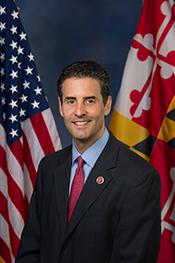 Rep. John P. Sarbanes (D-MD)
Legislative Activity
Stay on top of the latest movement without scrolling through every action
Read twice and referred to the Committee on Environment and Public Works.
October 2, 2008
View full timeline
Introduced in House
July 12, 2007
Referred to the House Committee on Education and Labor.
July 12, 2007
Committee Consideration and Mark-up Session Held.
June 18, 2008
Ordered to be Reported (Amended) by the Yeas and Nays: 37 - 8.
June 18, 2008
Reported (Amended) by the Committee on Education and Labor. H. Rept. 110-754.
July 10, 2008
Placed on the Union Calendar, Calendar No. 480.
July 10, 2008
Rules Committee Resolution H. Res. 1441 Reported to House. Rule provides for consideration of H.R. 3036 with 1 hour of general debate. Previous question shall be considered as ordered without intervening motions except motion to recommit with or without instructions. Measure will be considered read. Specified amendments are in order. The rule waives all points of order against consideration of the bill except clauses 9 and 10 of rule XXI. The rule provides that the amendment in the nature of a substitute recommended by the Committee on Education and Labor now printed in the bill shall be considered as an original bill for the purpose of amendment.
September 16, 2008 • 5:18 PM
Rule H. Res. 1441 passed House.
September 18, 2008 • 2:54 PM
Considered under the provisions of rule H. Res. 1441. (consideration: CR H8432-8435, H8435-8451)
September 18, 2008 • 2:56 PM
Rule provides for consideration of H.R. 3036 with 1 hour of general debate. Previous question shall be considered as ordered without intervening motions except motion to recommit with or without instructions. Measure will be considered read. Specified amendments are in order. The rule waives all points of order against consideration of the bill except clauses 9 and 10 of rule XXI. The rule provides that the amendment in the nature of a substitute recommended by the Committee on Education and Labor now printed in the bill shall be considered as an original bill for the purpose of amendment.
September 18, 2008 • 2:56 PM
House resolved itself into the Committee of the Whole House on the state of the Union pursuant to H. Res. 1441 and Rule XVIII.
September 18, 2008 • 2:57 PM
The Speaker designated the Honorable Mike Ross to act as Chairman of the Committee.
September 18, 2008 • 2:57 PM
GENERAL DEBATE - The Committee of the Whole proceeded with one hour of general debate on H.R. 3036.
September 18, 2008 • 2:57 PM
DEBATE - Pursuant to the provisions of H. Res. 1441, the Committee of the Whole proceeded with 10 minutes of debate on the Sarbanes amendment.
September 18, 2008 • 3:55 PM
POSTPONED PROCEEDINGS - At the conclusion of debate on the Sarbanes amendment, the Chair put the question on adoption of the amendment and by voice vote, announced that the ayes had prevailed. Mr. Sarbanes demanded a recorded vote and the Chair postponed further proceedings until later in the legislative day.
September 18, 2008 • 4:02 PM
DEBATE - Pursuant to the provisions of H. Res. 1441, the Committee of the Whole proceeded with 10 minutes of debate on the Welch (VT) amendment.
September 18, 2008 • 4:03 PM
DEBATE - Pursuant to the provisions of H. Res. 1441, the Committee of the Whole proceeded with 10 minutes of debate on the Courtney amendment.
September 18, 2008 • 4:12 PM
UNFINISHED BUSINESS - The Chair announced that the unfinished business was the question of adoption of amendments which had been debated earlier and on which further proceedings had been postponed.
September 18, 2008 • 4:18 PM
The House rose from the Committee of the Whole House on the state of the Union to report H.R. 3036.
September 18, 2008 • 4:47 PM
The previous question was ordered pursuant to the rule. (consideration: CR H8448)
September 18, 2008 • 4:48 PM
The House adopted the amendment in the nature of a substitute as agreed to by the Committee of the Whole House on the state of the Union. (text: CR H8443-8444)
September 18, 2008 • 4:48 PM
Mr. Price (GA) moved to recommit with instructions to Education and Labor. (consideration: CR H8448-8450; text: CR H8448-8449)
September 18, 2008 • 4:48 PM
DEBATE - The House proceeded with 10 minutes of debate on the Price (GA) motion to recommit with instructions. The instructions contained in the motion seek to report the same back to the House with amendments to set priorities for and prohibitions on the use of Federal funds.
September 18, 2008 • 4:49 PM
The previous question on the motion to recommit with instructions was ordered without objection. (consideration: CR H8450)
September 18, 2008 • 5:01 PM
On motion to recommit with instructions Failed by recorded vote: 172 - 230 (Roll no. 613).
September 18, 2008 • 5:18 PM
Passed/agreed to in House: On passage Passed by the Yeas and Nays: 293 - 109 (Roll no. 614).
September 18, 2008 • 5:25 PM
On passage Passed by the Yeas and Nays: 293 - 109 (Roll no. 614).
September 18, 2008 • 5:25 PM
Motion to reconsider laid on the table Agreed to without objection.
September 18, 2008 • 5:25 PM
The title of the measure was amended. Agreed to without objection.
September 18, 2008 • 5:25 PM
Received in the Senate.
September 22, 2008
Read twice and referred to the Committee on Environment and Public Works.
October 2, 2008
Voting History
3 votes recorded • Roll call available
HOUSE
Roll Call AvailableSeptember 18, 2008 at 5:25 PM
On Passage
Majority required: 1/2 (50%)
293 - 109
HOUSE
Roll Call AvailableSeptember 18, 2008 at 5:17 PM
On Motion to Recommit with Instructions
Majority required: 1/2 (50%)
172 - 230
HOUSE
Roll Call AvailableSeptember 18, 2008 at 4:47 PM
On Agreeing to the Amendment
Majority required: 1/2 (50%)
383 - 23
Floor Debate
22 membersWhat members said about H.R. 3036 on the floor


 +17
+17
Floor Debate
22 membersWhat members said about H.R. 3036 on the floor
Mr. Chairman, I want to thank my colleague from California for yielding me time. He made a couple of comments earlier, I won't try to repeat everything that he said, but he asked a question; he…
Mr. Chairman, I am happy to at this time yield to the gentlelady from North Carolina (Ms. Foxx) such time as she may consume. Mr. Chairman, I am happy to yield at this time 3 minutes to the gentleman…
Madam Speaker, by direction of the Committee on Rules, I call up House Resolution 1441 and ask for its immediate consideration. Madam Speaker, for the purpose of debate only, I yield the customary 30…
Mr. Speaker, I want to share with the gentlewoman that I am and I know my party is pro-American energy. In fact, the more I listen to testimony on the other side, the more convinced I am that this…
Mr. Chairman, it is my pleasure to rise today to speak in support of the No Child Left Inside Act of 2008 which I was privileged to sponsor and which really, I think, sets a new foundation for focus…
Show 8 more
Mr. Chairman, I yield myself such time as I may consume. Since 1990, the Federal Government's environmental education programs have been coordinated by the Environmental Protection Agency and have…
I would like to thank my good friend, the gentlewoman from Florida (Ms. Castor) for the time, and I yield myself such time as I may consume. Every day our Nation faces new and critical challenges on…
Madam Chairman, I have an amendment at the desk. Madam Chairman, this is the ultimate friendly amendment to this very solid bill, on which I commend the gentleman from Maryland for his leadership.…
Mr. Speaker, I have a motion to recommit at the desk. I am. I object. Mr. Speaker, environmental education increases awareness and knowledge about environmental issues while providing needed skills…
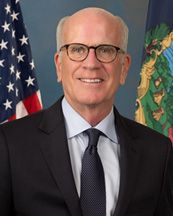
Madam Chairman, I have an amendment at the desk made in order under the rule. My amendment is quite simple. It would add municipalities to the list of entities eligible for the National Capacity…

Mr. Chairman, I rise in opposition to H.R. 6604, the Commodity Markets Transparent Accountability Act. Before I outline my opposition to this legislation, I want to be clear that I am seriously…
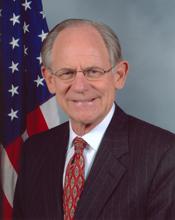
I thank the distinguished gentleman from California for yielding to me, and I do rise in support of H.R. 3036, the No Child Left Inside Act. This legislation builds upon a strong foundation of the…
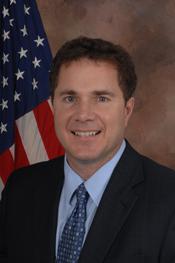
Mr. Chairman, I rise in strong support of H.R. 3036, the No Child Left Inside Act. This legislation is vitally important to better prepare our students for the environmental, energy and natural…
Show 11 more

Mr. Chairman, I rise today in support of H.R. 3036, the No Child Left Inside Act. This legislation, introduced by Representative John Sarbanes, would provide sorely needed assistance to States,…

Mr. Chairman, today, the House will consider H.R. 3036, the No Child Left Inside Act. I rise in strong opposition to this legislation. First of all, H.R. 3036 continues our Nation down the ill-fated…
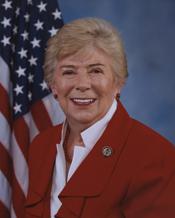
Mr. Chairman, I rise today in full support of passage of H.R. 3036, the No Child Left Inside Act. I worked with Chairman Miller and Mr. Sarbanes, the sponsor of the bill and a member of my…

I thank the gentleman for yielding to me. I am rising in support of H.R. 3036, the No Child Left Inside Act, which would authorize a grant program to provide States the resources to include…

Mr. Chairman, I rise today in support of H.R. 3036, the No Child Left Inside Act of 2008. Today our Nation faces a number of pressing environmental issues, including clean water, clean air, open…
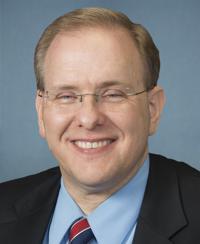
Mr. Chairman, I rise in strong support of H.R. 3036, the No Child Left Inside Act, which would amend the Elementary and Secondary Education Act of 1965 to promote the expansion and development of…
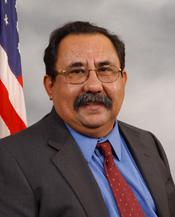
Mr. Chairman, I wish to express my strong support of H.R. 3036, the No Child Left Inside Act, and the opportunities it provides students for a strong environmental education. I have been a strong…
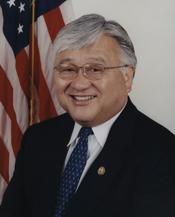
Mr. Chairman, I rise today in support of the ``No Child Left Inside Act,'' H.R. 3036. The 21st century global economy increasingly requires scientific and environmental literacy. Unfortunately, due…
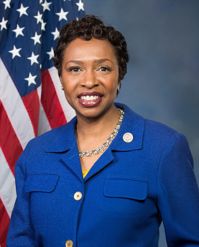
Mr. Chairman, today I rise in support of H.R. 3036, the No Child Left Inside Act of 2008. The effects of global warming and climate change, as evidenced by wildfires, tornadoes, hurricanes, and…
Mr. Chairman, I rise in support of this very well- thought-out piece of legislation. School districts across our country are struggling economically to pay their bills for their basics, to do the…
Mr. Chairman, I rise today in strong support of H.R. 3036, the No Child Left Inside Act, introduced by my good friend and freshman colleague, Representative John Sarbanes of Maryland. Mr. Chairman,…
Bill Text
4 versions available
        [Congressional Bills 110th Congress]
[From the U.S. Government Printing Office]
[H.R. 3036 Referred in Senate (RFS)]

2d Session
H. R. 3036

_______________________________________________________________________

IN THE SENATE OF THE UNITED STATES

September 22 (legislative day, September 17), 2008

Received

October 2 (legislative day, September 17), 2008

Read twice and referred to the Committee on Environment and Public
Works

_______________________________________________________________________

AN ACT

To reauthorize and enhance the National Environmental Education Act,
and for other purposes.

Be it enacted by the Senate and House of Representatives of the
United States of America in Congress assembled,

SECTION 1. SHORT TITLE.

This Act may be cited as the ``No Child Left Inside Act of 2008''.

SEC. 2. NATIONAL ENVIRONMENTAL EDUCATION ACT AMENDMENTS.

(a) Definitions.--Section 3 of the National Environmental Education
Act (20 U.S.C. 5502) is amended--
(1) in paragraph (12), by striking ``and'' at the end;
(2) in paragraph (13), by striking the period at the end
and inserting a semicolon; and
(3) by adding at the end the following:
``(14) `principles of scientific research' means principles
of research that--
``(A) apply rigorous, systematic, and objective
methodology to obtain reliable and valid knowledge
relevant to education activities and programs;
``(B) present findings and make claims that are
appropriate to, and supported by, the methods that have
been employed; and
``(C) include, appropriate to the research being
conducted--
``(i) use of systematic, empirical methods
that draw on observation or experiment;
``(ii) use of data analyses that are
adequate to support the general findings;
``(iii) reliance on measurements or
observational methods that provide reliable and
generalizable findings;
``(iv) strong claims of causal
relationships, only with research designs that
eliminate plausible completing explanations for
observed results, such as, but not limited to,
random-assignment experiments;
``(v) presentation of studies and methods
in sufficient detail and clarity to allow for
replication or, at a minimum, to offer the
opportunity to build systematically on the
findings of the research;
``(vi) acceptance by a peer-reviewed
journal or critique by a panel of independent
experts through a comparably rigorous,
objective, and scientific review; and
``(vii) consistency of findings across
multiple studies or sites to support the
generality of results and conclusions;
``(15) `scientifically valid research' includes applied
research, basic research, and field-initiated research in which
the rationale, design, and interpretation are soundly developed
in accordance with principles of scientific research;
``(16) `State' has the meaning given such term in section
9101 of the Elementary and Secondary Education Act of 1965; and
``(17) `State educational agency' has the meaning given
such term in section 9101 of the Elementary and Secondary
Education Act of 1965.''.
(b) Environmental Education and Training Program.--Section 5 of the
National Environmental Education Act (20 U.S.C. 5504) is amended--
(1) in subsection (b)--
(A) in paragraph (1)--
(i) by inserting ``creating opportunities
for enhanced and ongoing professional
development and'' before ``classroom''; and
(ii) by inserting ``(including integrating
scientifically valid research teaching methods
and technology-based teaching methods into the
curriculum)'' after ``practices'';
(B) in paragraph (3)--
(i) by striking ``curriculum, including''
and inserting ``curriculum (including'';
(ii) by striking ``groups;'' and inserting
``groups) which--''; and
(iii) by adding at the end the following:
``(A) are aligned with challenging State and local
academic content standards to the extent such standards
exist; and
``(B) advance the teaching of interdisciplinary
courses that integrate the study of natural, social,
and economic systems and that include strong field
components;'';
(C) in paragraph (7), by striking ``and forums;''
and inserting ``forums, and bringing teachers into
contact with working professionals in environmental
fields to expand such teachers' subject matter
knowledge of, and research in, environmental issues;'';
(D) in paragraph (8), by striking ``; and'' and
inserting ``, including environmental education
distance learning programs for teachers using curricula
that are innovative, content-based, and based on
scientifically valid research that is current as of the
date of the program involved;'';
(E) by redesignating paragraph (9) as paragraph
(13);
(F) by redesignating paragraphs (4) through (8) as
paragraphs (5) through (9), respectively;
(G) by inserting after paragraph (3) the following:
``(4) encouraging individuals traditionally under-
represented in environmental careers to pursue postsecondary
degrees in majors leading to such careers;''; and
(H) by inserting after paragraph (9) (as so
redesignated) the following:
``(10) establishment of programs to prepare teachers at a
school to provide environmental education professional
development to other teachers at the school and programs to
promote outdoor environmental education activities as part of
the regular school curriculum and schedule in order to further
the knowledge and development of teachers and students;
``(11) summer workshops or institutes, including follow-up
training, for elementary and secondary school environmental
education teachers;
``(12) encouraging mid-career environmental professionals
to pursue careers in environmental education; and''; and
(2) in subsection (c)(1), by inserting ``, in consultation
with the Secretary,'' after ``Administrator''.
(c) Authorization.--Section 11(a) of the National Environmental
Education Act (20 U.S.C. 5510(a)) is amended by striking ``Act'' and
all that follows through the period at the end and inserting ``Act,
except for section 11, $14,000,000 for fiscal year 2009.''.
(d) National Capacity Environmental Education Grant Program;
Accountability.--The National Environmental Education Act (20 U.S.C.
5501 et seq.) is amended--
(1) by redesignating section 11 as section 13; and
(2) by inserting after section 10 the following:

``SEC. 11. NATIONAL CAPACITY ENVIRONMENTAL EDUCATION GRANT PROGRAM.

``(a) Grants Authorized.--
``(1) In general.--The Secretary is authorized to award
grants, on a competitive basis, to nonprofit organizations,
State educational agencies, local educational agencies,
municipalities, or institutions of higher education that have
demonstrated expertise and experience in the development of the
institutional, financial, intellectual, or policy resources
needed to help the field of environmental education become more
effective and widely practiced. Notwithstanding any other
provision of this section, a State educational agency, a local
educational agency, an institution of higher education, a
municipality, or a not-for-profit organization may use funds
provided under this section to coordinate with any program or
unit operated by a Federal Natural Resource Management Agency
to carry out environmental education programs based on the full
range of the resources and mission of the Agency.
``(2) Duration.--The Secretary shall award each grant under
this section for a period of not less than 1 year and not more
than 3 years.
``(b) Use of Funds.--Grant funds made available under this section
shall be used for 1 or more of the following:
``(1) Developing and implementing challenging State
academic content standards, student academic achievement
standards, and State curriculum frameworks in environmental
education, including the need to balance conservation of the
environment with the development of the Nation's energy
resources.
``(2) Replicating or disseminating information about proven
and tested model environmental education programs that--
``(A) use the environment as an integrating theme
or content throughout the curriculum;
``(B) provide integrated, interdisciplinary
instruction about natural, social, and economic systems
along with field experience that provides students with
opportunities to directly experience nature in ways
designed to improve overall academic performance, self-
esteem, personal responsibility, community involvement,
personal health (including addressing child obesity
issues), or their understanding of nature;
``(C) provide integrated instruction on waste
reduction, reuse, recycling, and composting programs
and, when possible, promote such activities within the
school; or
``(D) address issues of environmental justice,
including policies and methods for eliminating
disparate enforcement of environmental laws and
regulations, including with respect to low-income
communities.
``(3) Developing and implementing new policy approaches to
environmental education, which shall include a discussion of--
``(A) the benefits and costs to the environment and
to consumers regarding increasing  the  supply of
energy produced in the United States from--
``(i) oil and gas drilling;
``(ii) nuclear power;
``(iii) new coal technologies; and
``(iv) clean renewable and alternative
sources of energy, including wind,  solar,
geothermal, hydropower,  and advanced biofuels;
and
``(B) the best strategies for reducing energy
consumption through  an enhanced emphasis on
efficiency and conservation.
``(4) Conducting studies of national significance that--
``(A) evaluate the effectiveness of teaching
environmental education as a separate subject, and as
an integrating concept or theme;
``(B) evaluate the effectiveness of using
environmental education in helping students improve
their assessment scores in mathematics, reading or
language arts, science, and the other core academic
subjects; or
``(C) evaluate ways to coordinate activities under
this Act with existing Federal science teacher in-
service training or professional development programs.
``(5) Executing projects that advance widespread State and
local educational agency adoption and use of environmental
education content standards, including adoption and use of such
standards in textbook selection criteria.
``(6) Developing a State environmental literacy plan that
includes the following:
``(A) A description of how the State educational
agency will measure the environmental literacy of
students, including--
``(i) relevant State academic content
standards and content areas regarding
environmental education, and courses or
subjects where environmental education
instruction will take place; and
``(ii) a description of the relationship of
the plan to the secondary school graduation
requirements of the State.
``(B) A description of programs for professional
development for teachers to improve the teachers'--
``(i) environmental content knowledge;
``(ii) skill in teaching about
environmental issues; and
``(iii) field-based pedagogical skills.
``(C) A description of how the State educational
agency will implement the plan, including securing
funding and other necessary support.
``(7) Developing evidence-based approaches to build
capacity to increase the number of elementary and secondary
environmental educators.
``(c) Applications.--Each municipality, nonprofit organization,
State educational agency, local educational agency, or institution of
higher education desiring a grant under this section shall submit to
the Secretary an application that contains a plan to initiate, expand,
or improve environmental education programs in order to make progress
toward meeting State standards for environmental learning (to the
extent such standards exist) and environmental literacy and contains an
evaluation and accountability plan for activities assisted under this
section that includes rigorous objectives that measure the impact of
activities funded under this section. Such application may describe how
the applicant has partnered, or intends to partner, with a State and
local park and recreation department.
``(d) Requirements.--
``(1) Annual report.--In order to continue receiving grant
funds under this section after the first year of a multi-year
grant under this section, the grantee shall submit to the
Secretary an annual report that--
``(A) describes the activities assisted under this
section that were conducted during the preceding year;
``(B) describes the results of the grantee's
evaluation and accountability plan; and
``(C) demonstrates that the grantee has undertaken
activities to accomplish at least one of the following:
``(i) Responsibly preparing children to
understand and address major challenges facing
the United States, such as increasing the
supply of clean energy, climate change,
environmental health risks, and environmental
disaster and emergency preparedness.
``(ii) Supporting systemic education reform
by strengthening environmental education as an
integral part of the elementary school and
secondary school curriculum.
``(iii) Helping ensure that all students
meet challenging State academic content and
student academic achievement standards in
environmental learning.
``(iv) Supporting efforts to enable
students to engage in environmental education.
``(v) Leveraging and expanding private and
public support for environmental education
partnerships at national, State, and local
levels.
``(vi) Awarding grants to initiate, expand,
or improve environmental education programs for
elementary and secondary students.
``(vii) Restoring and increasing field
experiences as part of the regular school
curriculum and schedule in order to improve
students' overall academic performance, self-
esteem, personal responsibility, community
involvement, personal health (including
addressing child obesity issues), and
understanding of nature.
``(2) Administrative expenses.--Not more than 5 percent of
the grant funds made available to a nonprofit organization,
State educational agency, local educational agency, or
institution of higher education under this section for any
fiscal year may be used for administrative expenses.
``(3) State environmental literacy plans.--
``(A) In general.--A State educational agency
receiving a grant under this section shall--
``(i) have a State environmental literacy
plan that is consistent with the requirements
of subsection (b)(6) and that is peer reviewed
within the State by a panel composed of experts
in environmental education and representatives
from other related State agencies; or
``(ii) develop a State environmental
literacy plan described in subsection (b)(6)
with funds made available under this section
prior to using the grant funds for any other
purpose.
``(B) Peer review.--If an environmental literacy
plan described in subparagraph (A)(i) has not been peer
reviewed within the State, the State educational
agency, notwithstanding subsection (b), shall use funds
made available under this section to complete such
review, as described in such subparagraph, prior to
using the grant funds for any other purpose.
``(C) Other grantees.--An applicant for a grant
under this section that is not a State educational
agency and applies for funding to be used for the
purpose described in subsection (b)(6) shall
demonstrate in the application that the applicant has
consulted with the State educational agency about such
use of funds.
``(e) Administrative Provisions.--
``(1) Federal share.--The Federal share under this section
shall not exceed--
``(A) 90 percent of the total cost of a program
assisted under this section for the first year for
which the program receives assistance under this
section;
``(B) 75 percent of such cost for the second; and
``(C) 50 percent of such cost for each subsequent
such year.
``(2) Report to congress.--Not later than one year after
enactment of this bill, the Secretary shall submit to the
Committee on Education and Labor of the House of
Representatives and the Committee on Health, Education, Labor,
and Pensions of the Senate a report that--
``(A) describes the programs assisted under this
section;
``(B) documents the success of such programs in
improving national and State environmental education
capacity; and
``(C) makes such recommendations as the Secretary
determines appropriate for the continuation and
improvement of the programs assisted under this
section.
``(3) Availability of funds.--Amounts made available to the
Secretary to carry out this section shall remain available
until expended.
``(f) Supplement, Not Supplant.--Funds made available under this
section shall be used to supplement, and not supplant, any other
Federal, State, or local funds available for environmental education
activities.
``(g) Authorization of Appropriations.--There are authorized to be
appropriated to carry out this section such sums as may be necessary
for fiscal year 2009.

``SEC. 12. ACCOUNTABILITY.

``(a) Quality Indicators.--The Administrator, the Secretary, and
the Foundation each shall establish indicators of program quality for
the programs and activities funded under this Act (other than
fellowship awards funded under section 7) that such official or entity
administers.
``(b) Minimum Indicators.--Such indicators of program quality, at a
minimum, shall--
``(1) enhance understanding of the natural and built
environment;
``(2) foster a better appreciation of the interdisciplinary
nature of environmental issues and conditions;
``(3) increase achievement in related areas of national
interest, such as mathematics and science;
``(4) increase understanding of the benefits of exposure to
the natural environment;
``(5) improve understanding of how human and natural
systems interact together;
``(6) broaden awareness of environmental issues; and
``(7) include such other indicators as the Administrator,
Secretary, or Foundation may develop.
``(c) Report.--Each recipient receiving funds under this Act, other
than fellowship recipients under section 7, shall report annually to
the Administrator, the Secretary, or the Foundation regarding progress
made in meeting the minimum indicators of program quality established
under subsection (b). The Administrator, the Secretary, and the
Foundation shall disseminate such information widely to the public
through electronic and other means.''.
(e) Restrictions on Federal Government and Use of Federal Funds.--
The National Environmental Education Act (20 U.S.C. 5501 et seq.), as
amended by subsection (d), is further amended by adding at the end the
following:

``SEC. 14. RESTRICTIONS ON FEDERAL GOVERNMENT AND USE OF FEDERAL FUNDS.

``(a) General Prohibition.--Nothing in this Act shall be construed
to authorize an officer or employee of the Federal Government to
mandate, direct, or control a State, local educational agency, or
school's curriculum, program of instruction, specific instructional
content, academic achievement standards, assessments, or allocation of
State or local resources, or mandate a State or any subdivision thereof
to spend any funds or incur any costs not paid for under this Act.
``(b) Prohibition on Endorsement of Curriculum.--No funds provided
to the Administrator or Secretary under this Act may be used by the
Agency or Department of Education to endorse, approve, or sanction any
curriculum designed to be used in an elementary school or secondary
school.
``(c) Prohibition on Requiring Federal Approval or Certification of
Standards.--No State shall be required to have academic content or
student academic achievement standards approved or certified by the
Federal Government, in order to receive assistance under this Act.
``(d) Restrictions on Partisan Political Influence.--
``(1) In general.--In carrying out the activities described
in this Act, the Administrator and Secretary shall ensure that
such activities--
``(A) conform to high standards of quality,
integrity, and accuracy;
``(B) are objective, neutral, and nonideological
and are free of partisan political influence; and
``(C) do not advocate a particular political
viewpoint.
``(2) Actions to implement and enforce.--The Administrator
and Secretary shall take such actions as are necessary to
ensure that the provisions of this section are vigorously
implemented and enforced.''.
(f) Conforming Amendment.--The table of contents in section 1(b) of
the National Environmental Education Act (20 U.S.C. 5501 note) is
amended by striking the item relating to section 11 and inserting the
following:

``Sec. 11. National capacity environmental education grant program.
``Sec. 12. Accountability.
``Sec. 13. Authorization.
``Sec. 14. Restrictions on Federal Government and use of Federal
funds.''.

Passed the House of Representatives September 18, 2008.

Attest:

LORRAINE C. MILLER,

Clerk.