An amendment numbered 1 printed in House Report 110-922 to require that any lending assistance provided under TARP or EISA to an insured depository institution shall report the amount of any increase and decrease in new lending attributed to the TARP and EISA assistance.
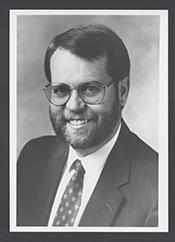 Rep. Steven C. LaTourette (R-OH)
Description
Amendment required that reports of condition filed by an insured depository institution which received an investment or other assistance under TARP shall, to the extent possible, report the amount of any increase and decrease in new lending attributable to the TARP investment or assistance.
Legislative Activity
Stay on top of the latest movement without scrolling through every action
Roll call votes on amendments in House
December 10, 2008 • 8:31 PM
View full timeline
Roll call votes on amendments in House
December 10, 2008 • 8:31 PM
Amendment agreed to by House: On agreeing to the LaTourette amendment (A001) Agreed to by recorded vote: 403 - 0, 1 Present (Roll no. 689).
December 10, 2008 • 8:31 PM
House amendment offered/reported by : Amendment (A001) offered by Mr. LaTourette.(consideration: CR H10932-10934; text: CR H10932)
December 10, 2008 • 7:54 PM
House amendment offered
December 10, 2008
House amendment agreed to: On agreeing to the LaTourette amendment (A001) Agreed to by recorded vote: 403 - 0, 1 Present (Roll no. 689).
December 10, 2008 • 8:31 PM
Amendment (A001) offered by Mr. LaTourette. (consideration: CR H10932-10934; text: CR H10932)
December 10, 2008 • 7:54 PM
The previous question was ordered on the amendment (A001) without objection. (consideration: CR H10934)
December 10, 2008 • 8:05 PM
On agreeing to the LaTourette amendment (A001) Agreed to by recorded vote: 403 - 0, 1 Present (Roll no. 689).
December 10, 2008 • 8:31 PM
Votes
1 roll call on this amendment
Text
Offered
AUTO INDUSTRY FINANCING AND RESTRUCTURING ACT

Mr. FRANK of Massachusetts. Mr. Speaker, pursuant to House Resolution
1534, I call up the bill (H.R. 7321) to authorize financial assistance
to eligible automobile manufacturers, and for other purposes, and ask
for its immediate consideration.
The Clerk read the title of the bill.
The text of the bill is as follows:

H.R. 7321

Be it enacted by the Senate and House of Representatives of
the United States of America in Congress assembled,

SECTION 1. SHORT TITLE; TABLE OF CONTENTS.

(a) Short Title.--This Act may be cited as the ``Auto
Industry Financing and Restructuring Act''.
(b) Table of Contents.--The table of contents for this Act
is as follows:

Sec. 1. Short title; table of contents.
Sec. 2. Findings and purposes.
Sec. 3. Presidential designation.
Sec. 4. Bridge financing.
Sec. 5. Restructuring progress assessment.
Sec. 6. Submission of plans.
Sec. 7. Financing for restructuring.
Sec. 8. Disapproval and call of loan.
Sec. 9. Allocation.
Sec. 10. Funding.
Sec. 11. Terms and conditions.
Sec. 12. Taxpayer protection.
Sec. 13. Oversight and audits.
Sec. 14. Automobile manufacturers' study on potential manufacturing of
transit vehicles.
Sec. 15. Reporting and monitoring.
Sec. 16. Report to Congress on lack of progress toward achieving an
acceptable negotiated plan.
Sec. 17. Submission of plan to Congress by the President's designee.
Sec. 18. Guarantee of leases of qualified transportation property.
Sec. 19. Coordination with other laws.
Sec. 20. Treatment of restructuring for purposes of applying
limitations on net operating loss carryforwards and
certain built-in losses.
Sec. 21. Emergency designation.

SEC. 2. FINDINGS AND PURPOSES.

(a) Findings.--The Congress finds the following:
(1) A combination of factors, including errors in the
business model of domestic automobile manufacturers, and
emergency economic circumstances, has prevented the domestic
automobile industry from securing credit from other sources,
and has led to the possibility of the failure of the domestic
automobile industry, which failure would have a systemic
adverse effect on the economy.
(2) Therefore, action in the form of financial aid to the
domestic automobile industry is necessary to stabilize the
economy.
(b) Purposes.--The purposes of this Act are--
(1) to immediately provide authority and facilities to
restore liquidity and stability to the domestic automobile
industry in the United States; and
(2) to ensure that such authority and such facilities are
used in a manner that--
(A) results in a viable and competitive domestic automobile
industry that minimizes adverse effects on the environment;
(B) enhances the ability and the capacity of the domestic
automobile industry to pursue the timely and aggressive
production of energy-efficient advanced technology vehicles;
(C) preserves and promotes the jobs of American workers
employed directly by the domestic automobile industry and in
related industries;
(D) safeguards the ability of the domestic automobile
industry to provide retirement and health care benefits for
the industry's retirees and their dependents; and
(E) stimulates manufacturing and sales of automobiles
produced by automobile manufacturers in the United States.

SEC. 3. PRESIDENTIAL DESIGNATION.

(a) Designation.--The President shall designate 1 or more
officers from the Executive Branch having appropriate
expertise in such areas as economic stabilization, financial
aid to commerce and industry, financial restructuring, energy
efficiency, and environmental protection (who shall
hereinafter in this Act be collectively referred to as the
``President's designee'') to carry out the purposes of this
Act, including the facilitation of restructuring necessary to
achieve the long-term financial viability of domestic
automobile manufacturers, who shall serve at the pleasure of
the President.
(b) Additional Persons.--The President or the President's
designee may also employ, appoint, or contract with
additional persons having such expertise as the President or
the President's designee believes will assist the Government
in carrying out the purposes of this Act.
(c) Participation by Other Agency Personnel.--Other Federal
agencies may provide, at the request of the President's
designee, staff on detail from such agencies for purposes of
carrying out this Act.

SEC. 4. BRIDGE FINANCING.

(a) In General.--The President's designee shall authorize
and direct the disbursement of bridge loans or enter into
commitments for lines of credit to each automobile
manufacturer that submitted a plan to the Congress on
December 2, 2008 (hereafter in this Act referred to as an
``eligible automobile manufacturer''), and has submitted a
request for such loan or commitment.
(b) Availability of Funds.--All funds that are available
pursuant to section 10 to provide bridge financing or
commitments for lines of credit to eligible automobile
manufacturers, after taking into account the reservation of
funds under section 10(a)(2), shall be used for the purposes
described in section 10(a). No new funds shall be available
to any eligible automobile manufacturer for the purposes of
this section after the date on which the President's designee
has approved restructuring plan under section 6 for such
eligible automobile manufacturer.
(c) Amount of Assistance.--The President's designee shall
authorize bridge loans or commitments for lines of credit to
each eligible automobile manufacturer in an amount that is
intended to facilitate the continued operations of the
eligible automobile manufacturer and to prevent the failure
of the eligible automobile manufacturer, consistent with the
plan submitted on December 2, 2008, and subject to available
funds.
(d) Allocation.--The President's designee shall authorize
the disbursements or commitments under this section in
accordance with the allocation priorities set forth in
subsections (a) and (b) of section 9.

SEC. 5. RESTRUCTURING PROGRESS ASSESSMENT.

(a) Establishment of Measures for Assessing Progress.--Not
later than January 1, 2009, the President's designee shall
determine appropriate measures for assessing the progress of
each eligible automobile manufacturer toward transforming the
plan submitted by such manufacturer to the Congress on
December 2, 2008, into the restructuring plan to be submitted
under section 6(b).
(b) Evaluation of Progress on Basis of Restructuring
Progress Assessment Measures.--
(1) In general.--The President's designee shall evaluate
the progress of each eligible automobile manufacturer toward
the development of a restructuring plan, on the basis of the
restructuring progress assessment measures established under
this section for such manufacturer.
(2) Timing.--Each evaluation required under paragraph (1)
for any eligible automobile manufacturer shall be conducted
at

[[Page H10909]]

the end of the 45-day period beginning on the date on which
the restructuring progress assessment measures were
established by the President's designee for such eligible
automobile manufacturer.

SEC. 6. SUBMISSION OF PLANS.

(a) Negotiated Plans.--
(1) Facilitation.--
(A) In general.--Beginning on the date of the enactment of
this Act, the President's designee shall seek to facilitate
agreement on any restructuring plan to achieve and sustain
the long-term viability, international competitiveness, and
energy efficiency of an eligible automobile manufacturer,
negotiated and agreed to by representatives of interested
parties (in this Act referred to as a ``negotiated plan'')
with respect to any eligible automobile manufacturer.
(B) Interested parties.--For purposes of this section, the
term ``interested party'' shall be construed broadly so as to
include all persons who have a direct financial interest in a
particular automobile manufacturer, including--
(i) employees and retirees of the eligible automobile
manufacturer;
(ii) trade unions;
(iii) creditors;
(iv) suppliers;
(v) automobile dealers; and
(vi) shareholders.
(2) Actions of the president's designee.--
(A) In general.--For the purpose of achieving a negotiated
plan, the President's designee may convene, chair, and
conduct formal and informal meetings, discussions, and
consultations, as appropriate, with interested parties of an
eligible automobile manufacturer.
(B) Clarification.--The Federal Advisory Committee Act
shall not apply with respect to any of the activities
conducted or taken by the President's designee pursuant to
this Act.
(b) Restructuring Plan.--Not later than March 31, 2009,
each eligible automobile manufacturer shall submit to the
President's designee a restructuring plan to achieve and
sustain the long-term viability, international
competitiveness, and energy efficiency of the eligible
automobile manufacturer (in this Act referred to as the
``restructuring plan'') in accordance with this section. The
President's designee shall approve the restructuring plan if
the President's designee determines that the plan will result
in--
(1) the repayment of all Government-provided financing,
consistent with the terms specified in section 11, or
otherwise agreed to;
(2) the ability--
(A) to comply with applicable fuel efficiency and emissions
requirements;
(B) to commence domestic manufacturing of advanced
technology vehicles, as described in section 136 of the
Energy Independence and Security Act of 2007 (Public Law 110-
140; 42 U.S.C. 17013); and
(C) to produce new and existing products and capacity, as
described in section 14;
(3) the achievement of a positive net present value, using
reasonable assumptions and taking into account all existing
and projected future costs, including repayment of any
financial assistance provided pursuant to this Act;
(4) efforts to rationalize costs, capitalization, and
capacity with respect to the manufacturing workforce,
suppliers, and dealerships of the eligible automobile
manufacturer;
(5) proposals to restructure existing debt, including,
where appropriate, the conversion of debt to equity, to
improve the ability of the eligible automobile manufacturer
to raise private capital; and
(6) a product mix and cost structure that is competitive in
the United States marketplace.
(c) Extension of Negotiations and Plan Deadline.--
Notwithstanding the time limitations in subsection (b), the
President's designee, upon making a determination that the
interested parties are negotiating in good faith, are making
significant progress, and that an additional period of time
would likely facilitate agreement on a negotiated plan, and
upon notification of the Congress, may extend for not longer
than 30 additional days the negotiation period under
subsection (b).

SEC. 7. FINANCING FOR RESTRUCTURING.

Upon approval by the President's designee of a
restructuring plan, the President's designee may provide
financial assistance to an eligible automobile manufacturer
to implement the restructuring plan.

SEC. 8. DISAPPROVAL AND CALL OF LOAN.

If the President's designee has not approved the
restructuring plan at the expiration of the period provided
in section 6 for submission and approval of the restructuring
plan, the President's designee shall call the loan or cancel
the commitment within 30 days, unless a restructuring plan is
approved within that period.

SEC. 9. ALLOCATION.

(a) Prioritizing Allocation.--The President's designee
shall prioritize allocation of the provision of financial
assistance under this Act to any eligible automobile
manufacturer, based on--
(1) the necessity of the financial assistance for the
continued operation of the eligible automobile manufacturer;
(2) the potential impact of the failure of the eligible
automobile manufacturer on the United States economy; and
(3) the ability to utilize the financial assistance
optimally to satisfy the operational and long-term
restructuring requirements of the eligible automobile
manufacturer.
(b) Order of Priority; Section 4.--For purposes of
allocating bridge loans or commitments pursuant to section 4,
the President's designee shall prioritize the considerations
set forth in subsection (a) in the following order: paragraph
(1), paragraph (2), and paragraph (3).
(c) Order of Priority; Section 7.--For purposes of
allocating financial assistance for restructuring pursuant to
section 7, the President's designee shall prioritize the
considerations set forth in subsection (a) in the following
order: paragraph (3), paragraph (2), and paragraph (1).

SEC. 10. FUNDING.

(a) Financial Assistance.--
(1) In general.--Such sums are appropriated as are
necessary for the purpose of providing funds to support up to
$14,000,000,000 in loans under this Act. The Secretary of
Energy shall make available to the President's designee
$7,010,000,000 of funds made available under section 129 of
division A of the Consolidated Security, Disaster Assistance,
and Continuing Appropriations Act, 2009, relating to funding
for the manufacture of advanced technology vehicles, which
shall reduce the appropriation under this paragraph.
(2) Reservation for certain purposes.--The Secretary of
Energy shall reserve $500,000,000 of the amounts made
available under paragraph (1) for purposes of section 136 of
the Energy Independence and Security Act of 2007 (Public Law
110-140; 42 U.S.C. 17013).
(3) Continuing application process.--No provision of this
section shall be construed as prohibiting or limiting the
Secretary of Energy from processing applications for loans
under section 136 of the Energy Independence and Security Act
of 2007.
(b) Authorization.--There are authorized to be appropriated
to the Secretary of Energy, sums as may be necessary for the
purpose of replenishing the funds made available to the
President's designee under subsection (a)(1).

SEC. 11. TERMS AND CONDITIONS.

(a) Duration.--The duration of any loan made under this Act
shall be 7 years, or such longer period as the President's
designee may determine with respect to such loan.
(b) Rate of Interest; Timing of Payments.--
(1) Rate of interest.--The annual rate of interest for a
loan under this Act shall be--
(A) 5 percent during the 5-year period beginning on the
date on which the President's designee disburses the loan;
and
(B) 9 percent after the end of the period described in
subparagraph (A).
(2) Timing of payments.--Payments of interest on loans
under this Act shall be made semiannually.
(c) No Prepayment Penalty.--A loan made under this Act
shall be prepayable without penalty at any time.
(d) Information Access.--As a condition for the receipt of
any financial assistance made under this Act, an eligible
automobile manufacturer shall agree--
(1) to allow the President's designee to examine any books,
papers, records, or other data of the eligible automobile
manufacturer, and those of any subsidiary, affiliate, or
entity holding an ownership interest of 50 percent or more of
such automobile manufacturer, that may be relevant to the
financial assistance, including compliance with the terms of
a loan or any conditions imposed under this Act; and
(2) to provide in a timely manner any information requested
by the President's designee, including requiring any officer
or employee of the eligible automobile manufacturer, any
subsidiary, affiliate, or entity referred to in paragraph (1)
with respect to such manufacturer, or any person having
possession, custody, or care of the reports and records
required under paragraph (1), to appear before the
President's designee at a time and place requested and to
provide such books, papers, records, or other data, as
requested, as may be relevant or material.
(e) Oversight of Transactions and Financial Condition.--
(1) Duty to inform.--During the period in which any loan
extended under this Act remains outstanding, the eligible
automobile manufacturer which received such loan shall
promptly inform the President's designee of--
(A) any asset sale, investment, contract, commitment, or
other transaction proposed to be entered into by such
eligible automobile manufacturer that has a value in excess
of $100,000,000; and
(B) any other material change in the financial condition of
such eligible automobile manufacturer.
(2) Authority of the president's designee.--During the
period in which any loan extended under this Act remains
outstanding, the President's designee may--
(A) review any asset sale, investment, contract,
commitment, or other transaction described in paragraph (1);
and
(B) prohibit the eligible automobile manufacturer which
received the loan from consummating any such proposed sale,
investment, contract, commitment, or other transaction, if
the President's designee determines that consummation of such
transaction would be inconsistent with or detrimental to the
long-term viability of the eligible automobile manufacturer.

[[Page H10910]]

(3) Procedures.--The President's designee may establish
procedures for conducting any review under this subsection.
(f) Consequences for Failure To Comply.--The terms of any
financial assistance made under this Act shall provide that
if--
(1) an evaluation by the President's designee under section
5(b) demonstrates that the eligible automobile manufacturer
which received the financial assistance has failed to make
adequate progress towards meeting the restructuring progress
assessment measures established by the President's designee
under section 5(a) with respect to such recipient;
(2) after March 31, 2009, the eligible automobile
manufacturer which received the financial assistance fails to
submit an acceptable restructuring plan under section 6(b),
or fails to comply with any conditions or requirement
applicable under this Act or applicable fuel efficiency and
emissions requirements; or
(3) after a restructuring plan of an eligible automobile
manufacturer has been approved by the President's designee,
the auto manufacturer fails to make adequate progress in the
implementation of the plan, as determined by the President's
designee,
the repayment of any loan may be accelerated to such earlier
date or dates as the President's designee may determine and
any other financial assistance may be cancelled by the
President's designee.

SEC. 12. TAXPAYER PROTECTION.

(a) Warrants.--
(1) In general.--The President's designee may not provide
any loan under this Act, unless the President's designee, or
such department or agency as is designated for such purpose
by the President, receives from the eligible automobile
manufacturer--
(A) in the case of an eligible automobile manufacturer, the
securities of which are traded on a national securities
exchange, a warrant giving the right to the President's
designee to receive nonvoting common stock or preferred stock
in such eligible automobile manufacturer, or voting stock,
with respect to which the President's designee agrees not to
exercise voting power, as the President's designee determines
appropriate; or
(B) in the case of an eligible automobile manufacturer
other than one described in subparagraph (A), a warrant for
common or preferred stock, or an instrument that is the
economic equivalent of such a warrant in the holding company
of the eligible automobile manufacturer, or any company that
controls a majority stake in the eligible automobile
manufacturer, as determined by the President's designee.
(2) Amount.--
(A) In general.--The warrants or instruments described in
paragraph (1) shall have a value equal to 20 percent of the
aggregate amount of all loans provided to the eligible
automobile manufacturer under this Act. Such warrants or
instruments shall entitle the Government to purchase--
(i) nonvoting common stock, up to a maximum amount of 20
percent of the issued and outstanding common stock of --

(I) the eligible automobile manufacturer; or
(II) in the case of an eligible automobile manufacturer,
the securities of which are not traded on a national
securities exchange, a holding company or company that
controls a majority of the stock thereof (in this section
referred to as the ``warrant common''); and

(ii) preferred stock having an aggregate liquidation
preference equal to 20 percent of such aggregate loan amount,
less the value of common stock available for purchase under
the warrant common (in this section referred to as the
``warrant preferred'').
(B) Common stock warrant price.--The exercise price on a
warrant or instrument described in paragraph (1) shall be--
(i) the 15-day moving average, as of December 2, 2008, of
the market price of the common stock of the eligible
automobile manufacturer which received any loan under this
Act; or
(ii) in the case of an eligible automobile manufacturer,
the securities of which are not traded on a national
securities exchange, the economic equivalent of the market
price described in clause (i), as determined by the
President's designee.
(C) Terms of preferred stock warrant.--
(i) In general.--The initial exercise price for the
preferred stock warrant shall be $0.01 per share or such
greater amount as the corporate charter may require as the
par value per share of the warrant preferred. The Government
shall have the right to immediately exercise the warrants.
(ii) Redemption.--The warrant preferred may be redeemed at
any time after exercise of the preferred stock warrant at 100
percent of its issue price, plus any accrued and unpaid
dividends.
(iii) Other terms and conditions.--Other terms and
conditions of the warrant preferred shall be determined by
the President's designee to protect the interests of
taxpayers.
(3) Application of other provisions of law.--Except as
otherwise provided in this section, the requirements for the
purchase of warrants under section 113(d)(2) of the Emergency
Economic Stabilization Act of 2008 (division A of Public Law
110-343) shall apply to any warrant or instrument described
in paragraph (1), including the antidilution protection
provisions therein.
(b) Executive Compensation and Corporate Governance.--
(1) In general.--During the period in which any financial
assistance under this Act remains outstanding, the eligible
automobile manufacturer which received such assistance shall
be subject to--
(A) the standards established by the President's designee
under paragraph (2); and
(B) the provisions of section 162(m)(5) of the Internal
Revenue Code of 1986, as applicable.
(2) Standards required.--The President's designee shall
require any eligible automobile manufacturer which received
any financial assistance under this Act to meet appropriate
standards for executive compensation and corporate
governance.
(3) Specific requirements.--The standards established under
paragraph (2) shall include--
(A) limits on compensation that exclude incentives for
senior executive officers of an eligible automobile
manufacturer which received assistance under this Act to take
unnecessary and excessive risks that threaten the value of
such manufacturer during the period that the loan is
outstanding;
(B) a provision for the recovery by such automobile
manufacturer of any bonus or incentive compensation paid to a
senior executive officer based on statements of earnings,
gains, or other criteria that are later found to be
materially inaccurate;
(C) a prohibition on such automobile manufacturer making
any golden parachute payment to a senior executive officer
during the period that the loan is outstanding;
(D) a prohibition on such automobile manufacturer paying or
accruing any bonus or incentive compensation during the
period that the loan is outstanding to the 25 most highly-
compensated employees; and
(E) a prohibition on any compensation plan that would
encourage manipulation of such automobile manufacturer's
reported earnings to enhance the compensation of any of its
employees.
(4) Divestiture.--During the period in which any financial
assistance provided under this Act to any eligible automobile
manufacturer is outstanding, the eligible automobile
manufacturer may not own or lease any private passenger
aircraft, or have any interest in such aircraft, except that
such eligible automobile manufacturer shall not be treated as
being in violation of this provision with respect to any
aircraft or interest in any aircraft that was owned or held
by the manufacturer immediately before receiving such
assistance, as long as the recipient demonstrates to the
satisfaction of the President's designee that all reasonable
steps are being taken to sell or divest such aircraft or
interest.
(5) Definitions.--For purposes of this subsection, the
following definitions shall apply:
(A) Senior executive officer.--The term ``senior executive
officer'' means an individual who is 1 of the top 5 most
highly paid executives of a public company, whose
compensation is required to be disclosed pursuant to the
Securities Exchange Act of 1934, and any regulations issued
thereunder, and non-public company counterparts.
(B) Golden parachute payment.--The term ``golden parachute
payment'' means any payment to a senior executive officer for
departure from a company for any reason, except for payments
for services performed or benefits accrued.
(c) Prohibition on Payment of Dividends.--Except with
respect to obligations owed pursuant to law to any
nonaffiliated party or any existing contract with any
nonaffiliated party in effect as of December 2, 2008, no
dividends or distributions of any kind, or the economic
equivalent thereof (as determined by the President's
designee), may be paid by any eligible automobile
manufacturer which receives financial assistance under this
Act, or any holding company or company that controls a
majority stake in the eligible automobile manufacturer, while
such financial assistance is outstanding.
(d) Other Interests Subordinated.--
(1) In general.--In the case of an eligible automobile
manufacturer which received a loan under this Act, to the
extent permitted by the terms of any obligation, liability,
or debt of the eligible automobile manufacturer in effect as
of December 2, 2008, any other obligation of such eligible
automobile manufacturer shall be subordinate to such loan,
and such loan shall be senior and prior to all obligations,
liabilities, and debts of the eligible automobile
manufacturer, and such eligible automobile manufacturer shall
provide to the Government, all available security and
collateral against which the loans under this Act shall be
secured.
(2) Applicability in certain cases.--In the case of an
eligible automobile manufacturer referred to in paragraph
(1), the securities of which are not traded on a national
securities exchange, a loan under this Act to the eligible
automobile manufacturer shall--
(A) be treated as a loan to any holding company of, or
company that controls a majority stake in, the eligible
automobile manufacturer; and
(B) be senior and prior to all obligations, liabilities,
and debts of any such holding company or company that
controls a majority stake in the eligible automobile
manufacturer.
(e) Additional Taxpayer Protections.--
(1) Discharge.--A discharge under title 11, United States
Code, shall not discharge an eligible automobile
manufacturer, or any successor in interest thereto, from any
debt for financial assistance received pursuant to this Act.

[[Page H10911]]

(2) Exemption.--Any financial assistance provided to an
eligible automobile manufacturer under this Act shall be
exempt from the automatic stay established by section 362 of
title 11, United States Code.
(3) Interested parties.--Notwithstanding any provision of
title 11, United States Code, any interest in property or
equity rights of the United States arising from financial
assistance provided to an eligible automobile manufacturer
under this Act shall remain unaffected by any plan of
reorganization, except as the United States may agree to in
writing.

SEC. 13. OVERSIGHT AND AUDITS.

(a) Comptroller General Oversight.--
(1) Scope of oversight.--The Comptroller General of the
United States shall conduct ongoing oversight of the
activities and performance of the President's designee.
(2) Conduct and administration of oversight.--
(A) GAO presence.--The President's designee shall provide
to the Comptroller General appropriate space and facilities
for purposes of this subsection.
(B) Access to records.--To the extent otherwise consistent
with law, the Comptroller General shall have access, upon
request, to any information, data, schedules, books,
accounts, financial records, reports, files, electronic
communications, or other papers, things, or property
belonging to or in use by the President's designee, at such
reasonable time as the Comptroller General may request. The
Comptroller General shall be afforded full facilities for
verifying transactions with the balances or securities held
by depositaries, fiscal agents, and custodians. The
Comptroller General may make and retain copies of such books,
accounts, and other records as the Comptroller General deems
appropriate.
(3) Reporting.--The Comptroller General shall submit
reports of findings under this section to Congress, regularly
and not less frequently than once every 60 days. The
Comptroller General may also submit special reports under
this subsection, as warranted by the findings of its
oversight activities.
(b) Special Inspector General.--It shall be the duty of the
Special Inspector General established under section 121 of
Public Law 110-343 to conduct, supervise, and coordinate
audits and investigations of the President's designee in
addition to the duties of the Special Inspector General under
such section and for such purposes. The Special Inspector
General shall also have the duties, responsibilities, and
authorities of inspectors general under the Inspector General
Act of 1978, including section 6 of such Act. In the event
that the Office of the Special Inspector General is
terminated, the Inspector General of the Department of the
Treasury shall assume the responsibilities of the Special
Inspector General under this subsection.
(c) Access to Records of Borrowers by GAO.--Notwithstanding
any other provision of law, during the period in which any
financial assistance provided under this Act is outstanding,
the Comptroller General of the United States shall have
access, upon request, to any information, data, schedules,
books, accounts, financial records, reports, files,
electronic communications, or other papers, things, or
property belonging to or in use by the eligible automobile
manufacturer, and any subsidiary, affiliate, or entity
holding an ownership interest of 50 percent or more of such
eligible automobile manufacturer (collectively referred to in
this section as ``related entities''), and to any officer,
director, or other agent or representative of the eligible
automobile manufacturer and its related entities, at such
reasonable times as the Comptroller General may request. The
Comptroller General may make and retain copies of such books,
accounts, and other records as the Comptroller General deems
appropriate.

SEC. 14. AUTOMOBILE MANUFACTURERS' STUDY ON POTENTIAL
MANUFACTURING OF TRANSIT VEHICLES.

(a) In General.--Each eligible automobile manufacturer
which receives financial assistance under this Act shall
conduct an analysis of potential uses of any excess
production capacity (especially those of former sport utility
vehicle producers) to make vehicles for sale to public
transit agencies, including--
(1) the current and projected demand for bus and rail cars
by American public transit agencies;
(2) the potential growth for both sales and supplies to
such agencies in the short, medium, and long term;
(3) a description of existing ``Buy America'' provisions,
and data provided by the Federal Transit Administration
regarding the use or request of waivers from such provisions;
and
(4) any recommendations as to whether such actions would
result in a business line that makes sense for the automobile
manufacturer.
(b) GAO Review and Report.--The Comptroller General of the
United States shall review the analyses conducted under this
section, and shall provide reports thereon to the Congress
and the President's designee.

SEC. 15. REPORTING AND MONITORING.

(a) Reporting on Consummation of Loans.--The President's
designee shall submit a report to the Congress on each bridge
loan made under section 4 not later than 5 days after the
date of the consummation of such loan.
(b) Reporting on Restructuring Progress Assessment
Measures.--The President's designee shall submit a report to
the Congress on the restructuring progress assessment
measures established for each manufacturer under section 5(a)
not later than 10 days after establishing the restructuring
progress assessment measures.
(c) Reporting on Evaluations.--The President's designee
shall submit a report to the Congress containing the detailed
findings and conclusions of the President's designee in
connection with the evaluation of an eligible automobile
manufacturer under section 5(b).
(d) Reporting on Consequences for Failure to Comply.--The
President's designee shall submit a report to the Congress on
the exercise of a right under section 11(f) to accelerate
indebtedness of an eligible automobile manufacturer under
this Act or to cancel any other financial assistance provided
to such eligible automobile manufacturer, and the facts and
circumstances on which such exercise was based, before the
end of the 10-day period beginning on the date of the
exercise of the right.
(e) Monitoring.--The President's designee shall monitor the
use of loan funds received by eligible automobile
manufacturers under this Act, and shall report to Congress
once every 90 days (beginning 30 days after the date of
enactment of this Act) on the progress of the ability of the
recipient of the loan to continue operations and proceed with
restructuring processes that restore the financial viability
of the recipient and promote environmental sustainability.

SEC. 16. REPORT TO CONGRESS ON LACK OF PROGRESS TOWARD
ACHIEVING AN ACCEPTABLE NEGOTIATED PLAN.

(a) Authority To Facilitate a Negotiated Plan.--At any such
time as the President's designee determines that action is
necessary to avoid disruption to the economy or to achieve a
negotiated plan, the President's designee shall submit to
Congress a report outlining any additional powers and
authorities necessary to facilitate the completion of a
negotiated plan required under section 6.
(b) Impediments to Achieving Negotiated Plans.--If the
President's designee determines, on the basis of an
evaluation by the President's designee of the progress being
made by an eligible automobile manufacturer toward meeting
the restructuring progress assessment measures established
under section 5, that adequate progress is not being made
toward achieving a negotiated plan by March 31, 2009, the
President's designee shall submit to Congress a report
detailing the impediments to achievement of a negotiated plan
by the eligible automobile manufacturer.

SEC. 17. SUBMISSION OF PLAN TO CONGRESS BY THE PRESIDENT'S
DESIGNEE.

Upon submission of a report pursuant to section 16(b), the
President's designee shall provide to Congress a plan that
represents the judgement of the President's designee as to
the steps necessary to achieve the long-term viability,
international competitiveness, and energy efficiency of the
eligible automobile manufacturer, consistent with the factors
set forth in section 6(b), including through a negotiated
plan, a plan to be implemented by legislation, or a
reorganization pursuant to chapter 11 of title 11, United
States Code.

SEC. 18. GUARANTEE OF LEASES OF QUALIFIED TRANSPORTATION
PROPERTY.

(a) Guarantee.--Upon the request of a lessee of qualified
transportation property, the President's designee shall serve
as a guarantor with respect to all obligations of such lessee
with respect to leases of such qualified transportation
property. Such guarantee shall be on such terms and
conditions as are determined by the President's designee, not
later than 14 days after the date of enactment of this
section.
(b) Recoupment of Payment of Claims.--
(1) In general.--Any claims under this section in excess of
collateral held for the benefit of the President's designee
shall be paid from the General Fund of the Treasury out of
funds not otherwise appropriated.
(2) Recoupment fee.--Subsequent to any payment made under
paragraph (1), the President's designee shall recoup amounts
paid under paragraph (1) by establishing a fee that is
sufficient to recoup the amount of the claim payment not
later than 3 years after the date of such claim payment from
any lessee or guarantor for whom the claim was paid or for
whom a guarantee was issued.
(c) Definitions.--For purposes of this section--
(1) the term ``qualified transportation property'' means
domestic property subject to a lease that was approved by the
Federal Transit Administration prior to January 1, 2006; and
(2) the term ``guarantor'' includes, without limitation,
any guarantor, surety, and payment undertaker.

SEC. 19. COORDINATION WITH OTHER LAWS.

(a) In General.--No provision of this Act may be construed
as altering, affecting, or superseding--
(1) the provisions of section 129 of division A of the
Consolidated Security, Disaster Assistance, and Continuing
Appropriations Act, 2009, relating to funding for the
manufacture of advanced technology vehicles;
(2) any existing authority to provide financial assistance
or liquidity for purposes of the day-to-day operations in the
ordinary course of business or research and development.
(b) Limitation.--Except to provide bridge financing or to
implement a restructuring

[[Page H10912]]

plan pursuant to this Act, no funds from the United States
Treasury may be used for the purpose of assisting an eligible
automobile manufacturer to achieve financial viability or
otherwise to avoid bankruptcy.
(c) Authorization of Fiscal Year 2009 Cost of Living Salary
Adjustment for Justices and Judges.--Pursuant to section 140
of Public Law 97-92, justices and judges of the United States
are authorized during fiscal year 2009 to receive a salary
adjustment in accordance with section 461 of title 28, United
States Code.
(d) Antitrust Provisions.--
(1) In general.--Subject to paragraphs (2) and (4), the
antitrust laws shall not apply to meetings, discussions, or
consultations among an eligible automobile manufacturer and
its interested parties for the purpose of achieving a
negotiated plan pursuant to section (6)(a)(2).
(2) Exclusions.--Paragraph (1) shall not apply with respect
to price-fixing, allocating a market between competitors,
monopolizing (or attempting to monopolize) a market, or
boycotting.
(3) Antitrust agency participation.--The Attorney General
of the United States and the Federal Trade Commission shall,
to the extent practicable, receive reasonable advance notice
of, and be permitted to participate in, each meeting,
discussion, or consultation described in paragraph (1).
(4) Preservation of enforcement authority.--Paragraph (1)
shall not be construed to preclude the Attorney General of
the United States or the Federal Trade Commission from
bringing an enforcement action under the antitrust laws for
injunctive relief.
(5) Sunset.--Paragraph (1) shall apply only with respect to
meetings, discussions, or consultations that occur within the
3-year period beginning on the date of the enactment of this
Act.
(6) Definition.--For purposes of this subsection, the term
``antitrust laws''--
(A) has the same meaning as in subsection (a) of the first
section of the Clayton Act (15 U.S.C. 12(a)), except that
such term includes section 5 of the Federal Trade Commission
Act (15 U.S.C. 45), to the extent that such section 5 applies
to unfair methods of competition; and
(B) includes any provision of State law that is similar to
the laws referred to in subparagraph (A).

SEC. 20. TREATMENT OF RESTRUCTURING FOR PURPOSES OF APPLYING
LIMITATIONS ON NET OPERATING LOSS CARRYFORWARDS
AND CERTAIN BUILT-IN LOSSES.

Section 382 of the Internal Revenue Code of 1986 shall not
apply in the case of an ownership change resulting from this
Act or pursuant to a restructuring plan approved under this
Act.

SEC. 21. EMERGENCY DESIGNATION.

Amounts provided by this Act are designated as an emergency
requirement and necessary to meet emergency needs pursuant to
section 204(a) of S. Con. Res. 21 (110th Congress), the
concurrent resolution on the budget for fiscal year 2008.

The SPEAKER pro tempore. Pursuant to House Resolution 1534, the bill
is considered read.
After 1 hour of debate on the bill, it shall be in order to consider
the amendment printed in House Report 110-922 if offered by the
gentleman from Ohio (Mr. LaTourette) or his designee, which shall be in
order without intervention of any point of order or demand for division
of the question, shall be considered read, and shall be debatable for
10 minutes, equally divided and controlled by the proponent and an
opponent.
The gentleman from Massachusetts (Mr. Frank) and the gentleman from
Alabama (Mr. Bachus) each will control 30 minutes.
The Chair recognizes the gentleman from Massachusetts.

General Leave

Mr. FRANK of Massachusetts. Mr. Speaker, at the outset I ask that all
Members have 5 legislative days within which to revise and extend their
remarks on this bill and include extraneous remarks and material
thereon.
The SPEAKER pro tempore. Is there objection to the request of the
gentleman from Massachusetts?
There was no objection.
Mr. FRANK of Massachusetts. Mr. Speaker, I yield myself such time as
I may consume.
Mr. Speaker, we consider this bill in a context, a context framed by
the report last Friday of a massive loss of jobs in the American
economy. This economy is in the worst shape that it has been in since
the Great Depression.
We are facing a double hit, a credit crisis brought on by a variety
of factors, but resulting now in a serious lack of confidence on the
part of investors and a deterioration in the physical parts of the
economy, which have combined to cause a serious, deep recession.
That is relevant because there have been suggestions that we could
afford to allow the three domestically owned auto companies to founder,
that there are other sources of automobiles, that they could be
required to declare bankruptcy, to, therefore, not pay suppliers, to
cut back substantially on money owed dealers, to reduce by large
amounts the workforce and the compensation of the workforce, to take
one of the major factors of the American economy and substantially
reduce its economic impact.
I think that would have been a mistake in any economic period, but to
contemplate the severity of that blow to our economic activity at this
time is to invite further deterioration of an economy that has already
deteriorated beyond what people expected and beyond what the American
people ought to have to tolerate.
The bill is a limited bill. It is the product of a compromise, the
terms of which were largely dictated by the President of the United
States. I am struck, Mr. Speaker, by the lack of confidence that has
been expressed on the Republican side of this House, not in the auto
industry, but in George Bush and the people he has and will appoint.
The amount of money here, $15 billion, is a loan. It is a loan far
more likely to be repaid than many of the much larger amounts that the
Bush administration and the Federal Reserve, working with them, have
advanced to Citigroup and AIG and the number of other entities.
It is $15 billion because the President said no new money, not even
money from the $700 billion troubled assets fund, the TARP. This
Congress voted a month or two ago, 2 months ago, to advance $25 billion
to the auto industry to promote innovation, which everyone agrees is
necessary. It wasn't just to the Big Three, it was to any applicant who
was going to use this money to try to innovate.
The President said, to our dismay, he would veto any legislation
trying to keep the auto industry out of bankruptcy that used any funds
other than that $25 billion that had already been voted for that
purpose. The Speaker, to her credit, resisted what I think was a strong
temptation to engage in a dispute with the President that would have
killed any effort to get legislation and instead, perhaps to his
surprise, she agreed with him and said we would live with that
constraint.
So the amount of money that is here is both in amount and, in short,
exactly what George Bush wanted. This is an amount of money that George
Bush told us we could make available.
We have made it available in a form that makes it overwhelmingly
likely that it will be repaid. It is a loan with the American
Government in a super senior position in terms of repayment and where
there were some potential problems with that because of clauses in
other agreements, heavy collateral.
So this $15 billion is very likely to be returned if the program
fails. That's the worst case.
We will have advanced $15 billion, we will get it back in 3 months
because disaster cannot be averted, but we are not willing to say that
disaster cannot be averted without trying.
What this bill then says is the President of the United States,
George Bush, shall designate an administration official to preside over
a process of hard negotiation with all of those who have a share in
this industry, the companies, of course, the bondholders, the workers,
the suppliers and the auto dealers, and make it clear to them that if
they are not willing and able to come together and reduce costs and put
in place a program that makes it possible to envision a future in which
more efficient cars are made and sold with a great likelihood of
success, then not only will there be no more money than the $15
billion, but the $15 billion will have to be repaid.
Well, apparently my Republican colleagues, again, do not think that
the Bush administration has within its ranks anyone capable, with all
the help that they have been given, of beginning that process. Some
have said, no, make them go bankrupt.
There is nothing about bankruptcy that cannot be accomplished within
the framework we have said except the ability to unilaterally say
``no'' to this or that class of people who are owed money. All of the
powers that you could accomplish in reorganization in a bankruptcy are
given here, and the enforcement power is that the money will be
withdrawn if this is not done and the entities will collapse.

[[Page H10913]]

We have provisions in here that make it impossible, if the Bush
administration and then the Obama administration coming after them, say
so to have money that was, in part, provided by the American taxpayer,
used to finance activity in other countries. That doesn't mean American
investors should never be in other countries. It does mean that
taxpayer dollars made available in these circumstances shouldn't go to
other countries. Then the question is, then, well, why the haste? We
are hastily reacting to very fast-moving events.
A month ago it did not appear that the car companies would be in such
dire straits. Car companies all over the world have been hurt by the
credit crisis. Automobiles are paid for by credit. As credit has
tightened up substantially, and as people have lost their jobs, there
has been a greater than anticipated fall off in auto sales. Of course,
the auto companies have made mistakes in the past, a lot of people in
the industry have, including consumers.
But we find that the rapid deterioration in the general economy, it
hasn't caused the problem for the automakers, but it has exacerbated
them and greatly shortened our time horizon.
This bill is intended to keep them from going bankrupt between now
and March 31. It does it in a way that will allow us to recapture the
money if that effort fails. It does express the belief that, done
properly, in conjunction with other things, things that could unstick
the credit market, funds that we hope will be made available under the
troubled assets program to auto dealers, who have a very real claim
here, and we will be pushing for a program that will include them and
funding be made available. Several Members of this House have spoken
out strongly in favor of doing that.
We believe it is possible, and likely, that as the economy gets
better, and as they continue the movements they have already made
towards cars that are likely to sell and be more energy efficient, that
we can survive this.
There are some Members who have consistently opposed any
intervention, but this administration sent over $100 billion to AIG.
Citigroup has been the recipient of very large amounts of money. I do
not understand how people can have not made any effort to undo the
administration's intervention with AIG, well over $100 billion, and
then try and stop about one-seventh of that sum as a loan to the auto
companies.
Yes, credit and finance are important, but the physical work done by
working class and middle-class Americans in auto companies, in car
dealerships, in the small businesses that are other suppliers,
cumulatively, are just as important. To give up now on the auto
industry would be to condemn the American economy at one of its most
vulnerable periods in our economic history to a degree of further hurt,
and the American people deserve better.

House of Representatives,

Committee on the Judiciary,

Washington, DC, December 10, 2008.
Hon. Barney Frank,
Chairman, Committee on Financial Services, House of
Representatives, Washington, DC.
Dear Chairman Frank: This is to memorialize the provisions
in H.R. 7321, the ``Auto Industry Financing and Restructuring
Act,'' that fall within the rule X jurisdiction of the
Committee on the Judiciary. In particular, there are several
provisions in section 12(d) and (e) that alter the normal
operation of the bankruptcy laws; section 19(c) provides the
annual cost-of-living salary adjustment for the federal
judiciary: and section 19(d) precludes private antitrust
suits regarding certain consultations between a covered
automaker and its employees, dealers, suppliers, and
creditors.
In agreeing to be discharged from further consideration of
the bill, in order that it may proceed without delay to the
House floor for consideration, the Judiciary Committee does
not waive any jurisdiction over subject matter contained in
this or similar legislation. We also reserve the right to
seek appointment of an appropriate number of conferees to any
House-Senate conference involving this important legislation,
and would ask your support if such a request is made.
I would appreciate your including this letter in the
Congressional Record during consideration of the bill on the
House floor. Thank you for your attention to this request,
and for the cooperative relationship between our two
committees.
Sincerely,
John Conyers, Jr.,
Chairman.

Mr. Speaker, I reserve the balance of my time.
Mr. BACHUS. Mr. Speaker, I yield myself such time as I may consume.
Mr. Speaker, we are here today because we all recognize the
importance of our domestic automobile industry. We understand that the
bankruptcy of either GM or Chrysler would have a cascading effect on
the other manufacturers. We understand that the suppliers, the auto
part manufacturers could fail. We also understand that dealerships are
at risk, millions of jobs, families in jeopardy.

{time}  1830

And even though we all want the industry to succeed, I cannot support
this plan because this plan is a plan to spend taxpayer money without
any real promise or ability to return the industry to profitability. In
my view, any aid for the automobile industry should be limited to
transitional assistance as a part of a fundamental restructuring plan
and should fully protect the taxpayer, and this legislation does not
meet that standard.
Some of the worst bills to come out of Congress are when we rush to
judgment, and I fear that is exactly what we are doing here. Members
have only had one or two hours to examine the text of this legislation.
It was a measure which was the product of a closed-door negotiation
between the Democratic Congress and the administration. It occurred
outside the normal legislative process and the watchful eyes of the
American people.
I see several glaring omissions or flaws in my cursory examination.
We are creating a new car czar to manage these three companies from
Washington; not a CEO, but a car czar.
Second, and this probably is the most troubling, this legislation
actually imposes new and expensive mandates on our automobile
companies. If they are in such bad shape that they need billions of
dollars of taxpayer help, and we acknowledge that they are in bad
shape, why are we imposing new, expensive mandates? This legislation,
for instance, mandates that the companies comply with State laws that
imposed inefficient and potentially excessive emissions standards
instead of the more reasonable Federal laws. That cries in the face of
logic under the circumstances.
Third, this legislation imposes Federal Government management on the
Big Three, the wisdom of Washington. It is clear that the management of
these companies have made mistakes, many mistakes, but a solution to
that to set up a command and control in Washington D.C. with a Federal
bureaucrat attempting to run the domestic automobile industry is
exactly the wrong solution.
Mr. Speaker, this is a bad process and it is a bad bill and one I
fear, as we have so often done with these bailouts, we will come to
regret. I urge a no vote.
Mr. FRANK of Massachusetts. Mr. Speaker, I yield myself 30 seconds to
note that I am surprised to hear my friend argue that the bankruptcy
courts have more automotive expertise and engineering and finance and
industrial policy expertise than is present in the whole Bush
administration. I think he is too pessimistic about that and too much
supportive of the bankruptcy process.
Second, I would also just recall the very thoughtful remark of our
colleague from Texas, Ms. Jackson-Lee, who noted that those who thought
bankruptcy was a disaster for mortgages appear to see it as a panacea
for automobiles. Many of us fail to see how that transformation took
place.
I yield 2 minutes to the gentlewoman from Detroit (Ms. Kilpatrick).
(Ms. KILPATRICK asked and was given permission to revise and extend
her remarks.)
Ms. KILPATRICK. Mr. Speaker, I first want to thank Chairman Barney
Frank and his entire Financial Services team and committee for the
outstanding work they have done with this very difficult situation for
the last month or so. Thank you, Barney, and for the full committee.
The Michigan delegation in a bipartisan way worked feverishly to make
this happen. Thank you very much.
America is at a crossroads, a crossroads on whether America will be a
first-rate country as we move through this century. Seventy years ago,
my grandfather, as well as hundreds of others, came to this part of the
country

[[Page H10914]]

from South Carolina to the midwest, to the manufacturing base of
America, the base that built the middle-class in this country. Without
the manufacturing, there would be no middle-class in America. Do we
want to forsake that today? I hope not.
The American automobile industry is the military equipment builders
of our country, from World War II and every war thereafter, building
the tanks, the ammunition, the body armor and the like. It will be a
mistake for us if we don't preserve this industry.
Three million-plus direct jobs with another 10 million from
insurance, health care, security. You name it, those are 13.6 million
Americans affected by this automobile industry. We must preserve it.
The middle class is dwindling as we speak. With all the problems
America has, this is not the time to kill, if you will, the only
manufacturing base we have left in our country. We already yielded the
electronics industry. We yielded the fabric and the garment industry.
Manufacturing is one of the tools that can keep our country alive. I
hope you will vote today and save this most vital industry.
I mentioned my grandfather. I am the next generation after that.
Because of the manufacturing industry, the automobile industry
specifically, we have been able to send generations of young people who
are now 40, 50, 60 years old to college, the manufacturing industry.
Vote for this bill. Don't do it wrong. Let's do it right.
Giving thanks to God, who is the power, force and director of my
life, I thank the Democratic Leadership and my colleagues in the
Michigan delegation for their continued hard work, objective analysis
and hard questions for both automobile manufacturers and taxpayers. As
an enthusiastic supporter of the automotive industry, I, along with the
unanimous agreement of the Michigan delegation, seek a balanced, fair
solution for American taxpayers, manufacturers, dealers, and suppliers
to the automobile industry. A large part of that solution is this bill,
crafted by Chairman Frank and Members of the House Financial Services
Committee on which I once served. This bill will provide $15 billion in
bridge loans to help struggling automakers survive while they prepare
plans to restructure their companies to build more competitive, fuel-
efficient, and technologically-advanced vehicles. This assistance will
not only help manufacturers, but it will help the workers, the dealers,
the suppliers and the 13 million jobs that are directly and indirectly
affected by the largest industry in our Nation--the automobile
industry.
In addition, this bill, which would amend current law, demands
taxpayer protections such as limits to executive compensation,
including a ban on so-called ``golden parachute'' payments, a
prohibition on dividend payments over the life of the loans, rigorous
independent oversight, and provisions for the government taking
warrants and allowing the taxpayer to profit in any upside of the
restructuring. This is a fair balance for both the manufacturers and
American taxpayers. If the Big Three were to collapse, there would be a
loss of personal income of close to $400 billion, with a combined loss
of tax receipts of $156 billion, over 3 years, according to the Center
for Automotive Research. With the interdependence of Mexico, Canada and
the United States because of the North American Free Trade Agreement
(NAFTA), this vastly underestimates the ultimate impact if the Big
Three were to go bankrupt.
With the recent loss of more than half a million jobs in one month,
in our Nation, Federal assistance to the automotive industry is needed
immediately for our economic, military, and energy security and safety.
A government-supported restructuring of the auto industry is urgently
needed for our economic, military and energy security. General Wesley
Clark recently wrote that ``some economists question the wisdom of
Washington's intervening to help the Big Three, arguing that the
automakers should pay the price for their own mistakes or that the
market will correct itself. But we must act: aiding the American
automobile industry is not only an economic imperative, but also a
national security imperative.''
This is an opportunity for Congress to do four things. One, it is an
opportunity to get our country to energy security or energy
independence. Two, it is a chance to ensure that, unlike our textile
and electronics industry, to preserve and protect our manufacturing
base, the last industry in which America still holds a slight but
precarious lead. Three, it can be a way in which we get the
manufacturers toward building the vehicles that Congress mandated that
they build. Four, we can preserve the jobs and businesses of dealers
and suppliers. In all of the discussions of saving the manufacturers,
there has been little, if any, discussion to save the thousands of
automobile dealers and suppliers to the automotive industry.
Congress has been advocating that our country become either energy
independent or have energy security. Indeed, President Richard Nixon
challenged that our Nation become independent on foreign oil in the
early 1970s. Although the automotive industry is in a crisis, this is
truly an opportunity to start a major reorganization and reprogramming
of the entire automotive industry. In less than 2 years, General Motors
will produce the first practical all-electric motor vehicle. This is a
welcome opportunity, and is a development that all Americans should
embrace. By being the first to produce a battery that can get hundreds
of miles per charge, the United States can be the first in this
manufacturing technology. This will create thousands of green jobs,
clean up the air, and make us less dependent on foreign sources of
fuel. This achievement is right around the corner, as GM is set to
bring the Chevy Volt to market in less than 2 years. In less than 10
years, these batteries and fuel cells can be, and should be, built in
the United States.
Second, we need to preserve the automotive industry as it is the base
of manufacturing in the United States. Second only to the strong faith
that Americans have in one another is the strength of our economy. Our
modern economy was built by companies like General Motors, Ford, and
Chrysler. These are the companies that essentially built this country
to victory in World War II and every military conflict we have had ever
since. These companies not only built the tanks, the Jeeps, the trucks
that support the women and men in our military, they often created the
technologies that allow us to have navigational systems in our cars,
brakes that last for thousands of miles, and protect our bodies in
accidents. We cannot afford to lose this innovative intellectual
property.
The auto industry has come to the rescue, once again, for our women
and men in the military. The Humvee, the Stryker, and the mine-
resistant ambush vehicles, and the like are built primarily in Michigan
but entirely in the United States. As General Wesley Clark said, ``the
lives of hundreds of soldiers and marines have been saved, and their
tasks made more achievable, by the efforts of the American automotive
industry. And unlike in World War II, America didn't have to divert
much civilian capacity to meet these military needs. Without a vigorous
automotive sector, those needs could not have been quickly met.'' Our
economy and our troops cannot survive the loss of the automotive
industry.
Third, the manufacturers know what is at stake today. It is not only
their individual survival, but whether our country suffers a recession
or a depression. We cannot afford, at this perilous time in our
economy, the shut down of any company. Any form of bankruptcy would
tear what little confidence consumers have in the auto industry to
shreds by decimating consumer demand and forcing thousands of suppliers
who need the cash flow from the auto manufacturers into immediate
default. This legislation would allow time and cash for the
manufacturers to make the necessary and needed change in their
vehicles, again mandated by Congress, for the long-term energy self-
sufficiency and environmental protection we seek. This legislation does
just that.
One in every 10 jobs in the United States is somehow linked to the
automotive industry. After the purchase of a home, the purchase of an
automobile is the largest purchase for the overwhelming majority of
America's consumers. Michigan, specifically my home city of Detroit,
has been the home of the automotive industry for decades. More than 13
million jobs are directly or indirectly rely on the automotive
industry. The losses of the automotive industry have been massive. In
2005, General Motors, which is headquartered in my Congressional
District, lost more than $5.6 billion on its North America operations
alone, with Ford losing $5.5 billion during the same period of time.
GM's share of the market, which used to be 36 percent in 1990, had
shrunk to 26 percent in 2005. Ford's 1990 share of the market, which
was 24 percent, was 17 percent 2 years ago. Production for Ford and GM
has dropped 26 percent since 1999.
In the wake of these losses, Michigan and our country have lost a
significant number of jobs. Both GM and Ford announced a series of
plant closings in North America, with an estimated loss of 60,000 jobs
through layoffs and early retirement buy-outs. According to the Bureau
of Labor Statistics, in 2005 the automotive industry lost a total of
215,000 jobs, and stated that ``industry employment is headed downward
and is not likely to recover for several years.'' This situation does
not get any better for those related industries supplying automobile
parts, providing insurance for automobiles, or selling vehicles
wholesale or retail.
While domestic manufacturers are not entirely blameless for these
losses, a significant factor has been the way in which China has

[[Page H10915]]

done business with the Big Three. One of the U.S./China Commission's
conclusions, to which I testified 2 years ago, was ``the many subsidies
provided by the Chinese government to the auto industry will quickly
distort the nature of the market. This will be true especially in the
United States, where markets are most open. The Chinese challenge to
the U.S. auto industry is a significant assault on American
manufacturing, and that assault is increasing in magnitude and in
pace.'' Are we willing to concede to other countries, perhaps China,
our manufacturing base?
Finally, I am worried about the health of automobile dealers and
suppliers, specifically ethnic minority automobile dealers and
suppliers. It is my understanding from experts in the field that up to
75 percent of ethnic minority new car dealers, if they do not receive
financial assistance within 60 days, will fail. In a meeting two weeks
ago with the Speaker and the House Democratic leadership, the
manufacturers estimated that more than 700 dealers are expected to
close their doors before the end of the year. In all of this discussion
about helping the manufacturers, it is only fair that some of this help
go directly to the ethnic minority dealers and suppliers who are the
backbone of their communities and of the automotive industry. Ethnic
dealers and suppliers are first generation dealers and suppliers and
simply do not have the economy of scale of their majority counterparts.
As we move forward with this legislation, it is my hope that we provide
immediate assistance to those who most need it--ethnic minority
automobile dealers and suppliers.
We face tough times. The automotive industry can succeed, with the
help of Congress, once again. The automotive industry has made
mistakes, and all of the manufacturers present will tell you that I
have worked with them to improve their product, outreach, and business
model. Here, in Washington, DC, it is often hard for legislators to
truly appreciate how difficult life is for the rest of America. In
Michigan, we face record foreclosures, unemployment and job loss from
manufacturing. We must save the automobile industry for the future of
not only the industry but for the state of Michigan and our country. We
must not repeat the mistakes we made in giving away our textile and
electronics industry to other countries. We must do all we can to
retain this vital segment of America.
Mr. BACHUS. Mr. Speaker, I ask unanimous consent that the gentleman
from Texas (Mr. Hensarling) control my time and that he be able to
yield time.
The SPEAKER pro tempore. Is there objection to the request of the
gentleman from Alabama?
There was no objection.
Mr. BACHUS. At this time I recognize the gentleman from Texas (Mr.
Paul) for 2 minutes.
(Mr. PAUL asked and was given permission to revise and extend his
remarks.)
Mr. PAUL. Mr. Speaker, I rise in opposition to this bill. It doesn't
make a whole lot of sense. But I am concerned that we are narrowed down
on a problem of the car industry, which is a significant problem, but
we are dealing with $15 billion here. But if you look at the grand
problem we have, it is much, much bigger, and it seems like we don't
pay much attention to it.
The problems that we are facing today and the problems that we have
been trying to solve in these last 6 months were predictable. It had
been building for a good many years. We can date it back to 1971. We
have had a financial bubble building, so there were many who predicted
that the climax would be exactly as we are witnessing.
But we don't seem to want to go back and find out how financial
bubbles form and why they burst. Instead, we just carry on doing the
same old thing and never look back. We spend more money, we run up more
debt, we print more money, and we think that is going to solve the
problem that was created by spending too much money, running up debt,
printing too much money. And here we are today, we are talking about
tinkering on the edges without dealing with the big problem.
The Federal Reserve has literally created over $2 trillion here in
the last several months, at least in obligations, and that is outside
the realm of the Congress. We don't even audit the Federal Reserve.
They create this money, and when the Fed Chairman comes before our
committee and we ask, well, where did you dispose of this $2 trillion
that you have created recently, he says well, it is not your business.
That is not necessary. Under the law, he doesn't even have to tell us.
So this is how out of control our problem is. Sure, there is a lot of
debt in the economy, and once a government or a corporation gets an
excessive amount of debt, it is never paid for. So, yes, we can
transfer the debt to others.
We are dealing with only finding victims. We cannot get rid of the
debt, whether it is our national debt or whether it is corporate debt,
but we have to put it on somebody else. We need to look at the cause of
these bubbles, and it has to do with monetary policy and the Federal
Reserve system.
Mr. Speaker, no one can deny that Congress bears much culpability for
the current condition of the United States auto industry, and therefore
Congress should act to help that industry. We should be repealing
costly regulations we have imposed on domestic auto manufactures.
Congress should also be considering legislation like H.R. 7273 and H.R.
7278, which reduces taxes on American consumers to make it easier for
them to purchase American automobiles.
Unfortunately, instead of repealing regulations and cutting taxes,
Congress is nationalizing the automakers by giving them access to $14
billion of taxpayer funds in return for giving the federal government
control over the management of these firms. Mr. Speaker, the federal
government has neither the competence nor the constitutional authority
to tell private companies, such as automakers, how to run their
businesses. Yet, the bailout proposal forces automobile manufacturers
to submit their business plans for the approval of a federal ``car
czar.'' This czar will not only have the authority to approve the
automakers' restructuring plan, but will also monitor implementation of
the plans. The czar will also be able to stop transactions that are
``inconsistent with the companies' long-term viability.'' Of course,
the czar has the sole authority to determine what transactions are
``inconsistent with the companies' long-term viability.''
I would have thought that failed experiments with central planning
and government control of business that wrought so much harm in the
last century would have taught my colleagues the folly of making
businesses obey politicians and bureaucrats instead of heeding the
wishes of consumers, employees, and stockholders.
The alternative proposal is less costly to the taxpayer; therefore I
will vote for it if offered as a motion to recommit. However, I am
troubled that the proposal endorses the notion that the federal
government should play both a financial and managerial role in
restoring the American automobile industry. Mr. Speaker, it is a shame
that we are not given a chance to vote for a true free-market approach;
instead we are asked to choose between two types of government
interference with the market.
Providing this $14 billion in loan guarantees will contribute to the
already fragile economy by increasing the federal debt and thus
creating either increased inflation or increased taxes. Mr. Speaker, I
ask my colleagues to consider how many businesses will not be started,
jobs will not be created, and consumer desires will remain unfulfilled
because the resources to start those business and create those jobs
were taken from the private sector for the auto bailout. I urge my
colleagues to reject this unconstitutional bill that will further the
growth of government and damage the American economy. Instead, Congress
should help the American auto industry, and all American business, by
cutting taxes and regulations.
Mr. FRANK of Massachusetts. Mr. Speaker, I now yield 3 minutes to the
dean of the House and a great expert over time on the auto industry,
the gentleman from Michigan (Mr. Dingell).
(Mr. DINGELL asked and was given permission to revise and extend his
remarks.)
Mr. DINGELL. Mr. Speaker, this is a bridge loan. Without this bridge,
we are going to fall into the deepest calamity this country has seen
since the Great Depression. I call on you to note that one in seven
jobs in this country is in the auto industry. Put these companies into
bankruptcy and you will bankrupt the entire industry, from the dealers
to the suppliers to the small businessmen who depend upon this. That is
how bad the situation is. All we ask is a chance to save the industry
and to save the millions of Americans

[[Page H10916]]

who work there and who contribute to the growth of this country.
I saw the Depression. I know what happened: people standing on the
corners without hope, somewhere around 33 percent of Americans without
jobs. That is where we are going back to if we don't do something about
this, and I don't want to hear any of my colleagues say, Dingell, we
didn't know what was going to happen. All we thought was if we put them
into bankruptcy, everything would be fine.
Well, it won't. Bankruptcy will simply take down every dealer, every
supplier and everybody who is in the auto industry, including the three
major companies, and it will destroy the industrial base of the United
States, what little remains.
I am here to tell you, this is too big a disaster for us to invite.
Imagine a nation with double digit unemployment. That is what we are
going to be talking about. And I ask you, how can you turn over $1.2
billion to the Wall Streeters who brought about this calamity when you
do nothing?
Invest in America. Support this legislation, which has been
brilliantly handled by the chairman of committee, to whom I express my
praise and my gratitude for his leadership, and I thank our Speaker for
what it is she has done in making this possible.
This bill is salvation. Vote against it and look forward to a
terrible calamity. Vote for it and give hope to millions of Americans
who desperately need it and who are now existing on the edge of both
terror, want, deprivation and worry of the most gross sort.
If you want to see other industries collapse, if you want to see what
is left of the housing industry die, if you want to see other
industries in this country suffer and hurt, vote against this bill.
That is what has happened.
I urge my colleagues, vote for this bill. It is hope. It is salvation
for this country. It is the future of this country. Yes, it is going to
cost more and we are going to have to do it. But, again, I remind you,
invest in America. Invest in the future of your people. Invest in the
future and the hopes and the dreams and the desires of Americans.
Without that, all I can say to you is a terrible disaster looms. Let
us at all costs prevent that. Let us at all costs see to it that we
protect the future, the hopes, the dreams of millions of hardworking
Americans, without whom there is no hope for this country.
Mr. Speaker, we are in the midst of the worst financial crisis since
the Great Depression. What is at stake today is nothing less than the
livelihoods of millions of American workers. They are counting on us
today to pass legislation that will give the domestic automakers the
loans they need to survive this financial crisis. If we fail to act we
will plunge this nation further into recession, add hundreds of
thousands to the employment rolls in a matter of weeks, and deliver a
crippling blow to the manufacturing sector from which it may never
recover. As it stated on the cover of a special edition of the Detroit
Free Press that was delivered to every Member's office, now is the time
for us to ``Invest in America.''
The legislation we are voting on has been described as offering a
``bridge loan'' to the domestic automakers. It is important to
recognize where this bridge will lead us, and the consequences that
will befall our nation if we fail to act. General Motors, Ford, and
Chrysler have made significant investments into new vehicle
technologies, such as plug-in hybrids and electric vehicles. If we
allow the automakers to continue to operate, and use the oversight
authority provided for in this bill to guide them quickly towards the
production of more fuel efficient vehicles, we can create the next
generation of green manufacturing jobs here in this country. If the Big
3 fail we will have ceded these jobs to our competitors in China, South
Korea, and Japan. These loans offer not just a bridge to solvency for
the Big 3, but a bridge to a more vibrant and productive economy for
all of us.
Protecting the economy was supposed to be the reason we acted to
rescue Wall Street and save failing financial institutions. According
to statistics released by the Board of Governors of the Federal Reserve
System, more than $650 billion has been lent to financial institutions
since the beginning of this financial crisis, and an additional $350
billion has been used to purchase private assets. This is in addition
to the more than $200 billion in TARP funds that the Treasury
Department has used to shore up financial institutions. It is
unconscionable that approximately $1.2 trillion has now been sent to
Wall Street, but there are those who would object to spending $15
billion to save 3 million blue collar jobs.
Before you cast your vote today, I would urge all of you to consider
what this country would look like without a domestic automobile
industry. Ask yourselves how many automobile dealerships or parts
suppliers operate in your District, and how many of them will be forced
to follow the Big 3 into bankruptcy. Imagine what a nation with double
digit employment rates will look like, and what burden that will place
on the states and on Federal Government. Ask yourselves why every other
industrialized country is taking steps to provide support for their own
automakers, and why they seem to place a higher value on good paying
middle class jobs than we do. I urge my colleagues to consider these
questions, and to support the legislation before us today.
Mr. HENSARLING. Mr. Speaker, I yield 2 minutes to a dear friend, a
great protector of our Constitution, one of the great champions of the
taxpayer, the gentleman from Florida, (Mr. Feeney).
Mr. FEENEY. Mr. Speaker, I thank my dear friend from Texas for
yielding. It is an enormous challenge to follow a distinguished
gentleman, the dean of the House from Michigan, who comes and asks us
to invest in America. Indeed, all of us feel passionately about the
investors and, more importantly, the workers, not just in Michigan, but
around the country, that are currently dependent on the automobile
industry in America.
But, as the gentleman from Michigan pleaded we ought to invest in
America, the truth of the matter is the reason we are here tonight is
that nobody in their right mind is willing to invest their own money in
a failed and antiquated model. So they are asking Congress to
confiscate money from taxpayers to make an investment.
That is what this is about. It is a short-term bailout so we can get
until March so that much, much more money will be spent bailing out
these failed and antiquated industries.
There are people in Florida hurting, not just in the automobile
industry. We have got automobile dealers and salespeople and parts
manufacturers. Our real estate industry is devastated, our time share
industry, our theme park industry, our hotels and motels and
restaurants.
But the truth of the matter is, micromanaging a business from
Washington is the supreme act of hubris. It will never work. No matter
how much the administration, no matter how much the Congress wants to
do the right thing, they will hurt us.
110 years ago, the United States Congress probably felt bad for
people that manufactured buggy whips and horse carriages. We could have
bailed them out. We could have created a buggy whip and horse carriage
czar. It would not have helped America move towards prosperity and
freedom. And, unfortunately, this is a terrible idea that will punish
taxpayers and just prolong the agony. I ask us to vote for freedom and
free markets and reject this bailout.

{time}  1845

Mr. FRANK of Massachusetts. Mr. Speaker, I think we've gotten an
imbalance of time here, so if it is all right with the gentleman from
Texas, I would reserve and defer to him for another speaker or two to
even out the time.
Mr. HENSARLING. Mr. Speaker, at this time I would yield 1 minute to
the gentlewoman from Michigan (Mrs. Miller.)
Mrs. MILLER of Michigan. Mr. Speaker, you know, after Hurricane
Katrina devastated the Gulf Coast, this Congress passed well over $133
billion of assistance to that region, and we did so because Americans
were hurting and they needed assistance. And we also did it because
that region was vital to our energy industry that plays such a critical
role in our national economy.
And I will also note that Americans, those taxpayers from my home
State of Michigan and across this great Nation, contributed to that
effort.
Now our industrial economy has been hit by a Category 5 economic
hurricane brought on by the meltdown in the financial industry. And
this has been a disaster which has hit my State hard, and people are
hurting all across America. Credit is simply not available to enough
consumers to keep the cash flow our automakers need and, because of
this, millions of jobs across this Nation are at risk. And I cannot
believe that this Congress will allow the backbone of our manufacturing
and industrial sector to be swept away, because

[[Page H10917]]

I believe that most Members will agree that America cannot be a great
Nation without a strong industrial base.
Think about the millions of Americans who are asking us to do the
right thing, and support this vital legislation.
Mr. FRANK of Massachusetts. I would continue to reserve.
Mr. HENSARLING. Mr. Speaker, at this time I would like to yield 2
minutes to the gentleman from Georgia, the incoming chairman of the
Republican Study Committee, Dr. Price.
Mr. PRICE of Georgia. Mr. Speaker, this is certainly a very serious
time and a remarkably challenging issue. The good news is that there
are positive solutions that are available.
We've been told that the bill before us tonight is a limited bill. I
would ask my colleagues, compared to what?
There are many reasons that one might oppose this bill and support
some positive, tried-and-true solutions, but I would suggest that the
most important issue upon which to oppose this bill is on Page 15,
under the authority of the car czar, which says that the President's
designee, or the car czar, may prohibit the eligible automobile
manufacturer which received the loan, from consummating any such
proposed sale, investment, contract, commitment or other transaction.
That means, Mr. Speaker, that one individual will have complete
authority and power over three private American automobile
manufacturers. That's a level of power in one individual, one
bureaucrat, that is inconsistent, I would suggest, Mr. Speaker, with
both American values and with American solutions.
Now, what's the solution? Well, it's a tried-and-true process that
thousands of companies, large and small, are able to go through, a
legal, a court-ordered, a court-approved reorganization and
restructuring. It allows all stakeholders to come to the table and make
concessions. It requires all stakeholders to come to the table and make
concessions, and that's what's going to be necessary to allow our
automobile manufacturers to get through this and come out on the other
end vibrant and vital entities in the American marketplace.
Mr. Speaker, I urge my colleagues to oppose this and to support a
positive, tried-and-true solution.
Mr. FRANK of Massachusetts. Mr. Speaker, I yield myself 30 seconds to
say that my friend from Georgia apparently doesn't trust the auto
companies to know what's in their own interest. He says that the
provision in our bill that gives the administrator the ability to
cancel a decision, which we have in there as protection against money
being sent overseas, is way too interventionist, and instead, they'd be
better off with bankruptcy. That's a choice they will be free to make
under this bill.
This bill doesn't force anybody to apply for the money. Any company
that thinks the provisions of this bill are too burdensome and too
interventionist retains the full authority to run to bankruptcy.
The SPEAKER pro tempore. The time of the gentleman has expired.
Mr. FRANK of Massachusetts. I will say this. I yield myself 15
seconds. They think bankruptcy is a lot less attractive than the
gentleman from Georgia. But understand, he says, protect the companies
from this intervention which keeps money from being sent overseas. Let
them go bankrupt.
None of them want to make that choice, but if they do, this bill
leaves them free to do it. It doesn't force them to take the money.
They still have the joys of bankruptcy which the gentleman from Georgia
explained to them.
I yield 2 minutes to the gentleman from Ohio (Mr. Kucinich).
Mr. KUCINICH. I would like to enter into the Record an article from
the Economic Policy Institute which says that the shutdown of one or
more U.S. automakers could eliminate up to 3.3 million U.S. jobs.

[From the Economic Policy Institute, Dec. 3, 2008]

When Giants Fall: Shutdown of one or more U.S. automakers could
eliminate up to 3.3 million U.S. jobs

(By Robert E. Scott)

The U.S. motor vehicle industry is one of the largest, most
complex and highly integrated sectors of the U.S. economy.
The bankruptcy of one or more of the U.S. automakers and a
collapse of the domestic auto assembly industry could
eliminate up to 3.3 million U.S. jobs within the next year.
The collapse of just one company, General Motors (GM), would
lead to an estimated reduction of 900,000 jobs. Using the
range of job-loss estimates, unemployment would rise by 3.0
to 8.9 percentage points in the nine hardest hit states in
the United States. Jobs losses would be widespread throughout
the U.S. economy. After the U.S. auto market recovers from
the current historic recession the U.S. trade deficit could
rise by at least $110 billion per year as imported vehicles
displace domestic brands, increasing the deficit by 16% and
putting additional downward pressure on the U.S. dollar and
living standards.
In addition to its finding that a bankruptcy-related
shutdown of the U.S. motor vehicle industry could cost up to
3.3 million U.S. jobs, this study finds:
The 900,000 to 3.3 million jobs lost nationwide would be
distributed among all 50 states and the District of Columbia,
with the biggest losers, in numeric terms: Michigan (112,500
to 407,300 jobs lost), California (84,500 to 305,900 jobs),
Ohio (60,500 to 219,100 jobs), Texas (55,200 to 200,000),
Illinois (42,800 to 154,900), Indiana (40,700 to 147,300),
and New York (39,900 to 144,600) (Table 2a).
The hardest-hit states, as a share of total state
employment, are: Michigan (up to 407,300 jobs, 8.9% of state
employment), Indiana (up to 147,300 jobs, 5.0% of
employment), Kentucky (up to 75,000 jobs, 4.2% of
employment), Alabama (up to 76,100 jobs, 4.0% of employment),
Tennessee (up to 106,400, 4.0% of employment), and Ohio (up
to 219,100 jobs, 4.0% of employment) (Table 2b).
Between 113,900 and 412,600 jobs would be lost in the motor
vehicle and parts industries alone. Other hard hit
manufacturing sectors include fabricated metal products (up
to 60,500 jobs lost), primary metals (up to 33,700 jobs
lost), plastic and rubber products (up to 23,600 jobs lost),
non-electrical machinery (up to 19,800 jobs lost) and
computer and electronic parts (up to 16,800 jobs lost) (Table
4).
Service industries would also experience massive job losses
including wholesale trade (up to 96,400 jobs lost), retail
trade (up to 86,600 jobs lost), transportation (up to 69,6500
jobs lost), finance and insurance (up to 30,300 jobs lost),
professional, scientific, and technical services (up to
76,300 jobs lost), and administrative support and temp help
services (up to 55,300 jobs lost) (Table 4).
Jobs in the auto industry are some of the best paid in the
economy, and when workers spend those wages they generate (on
average) about 1.7 additional jobs for each job supported in
the auto and related sectors. Thus, an auto industry shutdown
would eliminate between 576,700 and 2.1 million ``re-
spending'' jobs in the domestic economy (Table 4). These
would constitute the bulk of the jobs displaced by an auto
industry bankruptcy.
If the Big Three auto firms shut down, the U.S. trade
deficit would rise by $109.3 billion, a significant (15.6%)
increase in the U.S. goods and services trade deficit
relative to 2007 levels. This increase would substantially
exceed the combined U.S. goods trade deficit with Japan and
South Korea in 2007 ($95.7 billion), which was second only to
the U.S. deficit with China. Overall U.S. motor vehicle
exports would fall by 61%, total imports would rise by 21%,
and the U.S. auto trade deficit would rise from $123.5
billion to $232.8 billion (88%).
Conclusion
The bankruptcy of one or more U.S.-based automakers would
lead to the shutdown of significant portions of the U.S.
motor vehicle industry. This would, in turn, cause a wave of
plant closures and bankruptcies throughout the manufacturing
and services sectors of our economy. Under this scenario, as
many as an estimated 3.3 million U.S. jobs would be
eliminated, with thousands of jobs lost in every state.
Massive increases in unemployment would result. But this
would just be the first wave of consequences of an auto
industry bankruptcy. Massive job loss and community
disruption would result. Increased government payments and
tax losses alone would exceed $150 billion in the first three
years following bankruptcy of all three domestic auto
companies, according to Code et al. (2008).
An airline-style (Chapter 11) bankruptcy re-organization is
not an option for U.S.-based automakers. They have already
extensively restructured product lines and labor contracts.
Academic experts (Helper and MacDuffie 2008) and the industry
itself have put forth restructuring plans that include
independent oversight committees and regular performance
benchmarking tied to future funding. These plans provide the
foundation for a rebuilt, restructured domestic auto industry
that is ready to compete and deliver good, sustainable U.S.
jobs for the future. The alternative is simply too
destructive to contemplate.

We have to understand that the implications of the failure of this
legislation means that there are many industries across America that
are going to be adversely affected, including tens of thousands of jobs
in plastics, in rubber products, in primary metal, in fabricated metal
products, in machinery, in computer and electronic products, in
semiconductors, in wholesale trade and retail trade, in transportation,
in finance and insurance, in professional,

[[Page H10918]]

scientific and technical services, in companies and enterprises, in
administrative and support and waste management and remediation
services.
We're not just talking about some small boutique industry here. We're
talking about something that is vitally connected to the entire
American economy.
Now, we may have agreement about the management of the automotive
industry, but there shouldn't be any disagreement that the American
workers make a good product when they are able to make their product.
We have to have confidence in our Nation. We have to have confidence
in our ability to make things. We, as a Congress, should take a
proprietary interest in the fact that America can make cars and that we
can make steel and planes and that we can build ships. This is what
made our country great. We cannot maintain any credibility in the world
community if we see our automotive industry collapse. And steel will
not be far behind.
Sixty-seven years ago, when this Nation was attacked, the ability to
respond and defend America depended on the very industry which is
facing this Congress today begging for help. But they're not begging
for help for themselves. Think of millions of Americans who are
watching our deliberations asking, do we have any sense about what the
impact of the failure of this legislation would mean?
The SPEAKER pro tempore. The time of the gentleman has expired.
Mr. FRANK of Massachusetts. I yield the gentleman 30 seconds.
Mr. KUCINICH. We are expected to be able to see into the future.
People elect us to be able to hold in our hands their lives, their
jobs, their economic freedom. We cannot fail them in this moment. We
cannot let this industry go bankrupt. We cannot let America descend to
a second-rate power. We must be strong.
I will be introducing in the next Congress the National Industrial
Manufacturing Act, which is going to say that steel, automotive,
aerospace and shipping are deemed to be vital to our national defense.
And we need a whole new direction. Let's start today by showing we can
move towards economic recovery by saving our automotive industry.
Mr. HENSARLING. Mr. Speaker, at this time I am pleased to yield 2
minutes to the gentleman from Illinois (Mr. Roskam).
Mr. ROSKAM. Mr. Speaker, I want to applaud the gentleman from Ohio
(Mr. Kucinich) with his passion and his clarity really, but really want
to urge a little bit of caution. And I think the reason for caution was
on display today in the House Financial Services Committee on a
different issue. We had some hearings on some oversight as it relates
to the $700 billion bailout. And it was really, in my hearing, and
during the time that I was there and watching on television also, it
was really overwhelming to watch Members of Congress talking to members
of the administration and almost talking past one another, you know,
interpreting things differently, and I don't think that's what the
legislation meant and so forth and so on. And so here we are $700
billion later, and administration and Capitol Hill talking past one
another. And I think we're on the verge of doing that same thing here
if we're not careful, because I represent a district, the western
suburbs of Chicago, with a lot of auto supply manufacturers. But
there's no guarantee that that money that we're contemplating tonight
is going to get to the folks in my district. There's no guarantee that
the type of pressure that has been put on the auto manufacturers is
going to come to fruition and actually come up with something good.
What happened to the December 2 deadline? What happened to the
December 2 moratorium by which there was going to be a new declaration
and a new plan? And it has now been postponed now to the end of the
first quarter.
So clearly, there is an urgency here to work. Clearly, there is an
urgency to get something done. But heaven help us if we pass the same
type of statute that was enacted with such urgency only 2 months ago.
Mr. FRANK of Massachusetts. I would reserve again. We have got an
imbalance that we created.
Mr. HENSARLING. Mr. Speaker, may I inquire how much time remains on
both sides?
The SPEAKER pro tempore. The gentleman from Texas has 17 minutes
remaining. The gentleman from Massachusetts has 11\1/2\ minutes
remaining.
Mr. HENSARLING. In that case, Mr. Speaker, I am happy to yield 2
minutes to the distinguished ranking member of the Energy and Commerce
Committee, the gentleman from Texas (Mr. Barton).
(Mr. BARTON of Texas asked and was given permission to revise and
extend his remarks.)
Mr. BARTON of Texas. Mr. Speaker, I rise in support of this
legislation this evening. I think it's important that members of the
Republican Party in the House be for Main Street and the workers of
America as much as sometimes we are for Wall Street and the financiers
of America.
I have the privilege to represent over 2,500 GM assembly workers and
managers at the GM assembly plant in Arlington, Texas. They produce the
highest quality products, SUV, hybrids, pickups in the world. They
export a fair number of the products that they manufacture, and they
manufacture over 200,000 vehicles on an annual basis every year.
It would be an absolute shame if we either force these companies into
bankruptcy or watch them totally go out of business because they had
the misfortune to be in a business cycle where gasoline was $4 a gallon
and their product sale fell 40 percent on average in 1 year.
If I lost 40 percent of my votes in this last election in 2008, I
would not be coming back as a Member-elect of the next Congress.
If we can give the AIGs and the Wells Fargos and the J.P. Morgans of
the world, each of those individual companies, between 40 and $25
billion, in what amounts to some sort of a very unsecured loan, to be
generous about it, certainly we can give the American nameplate
automotive industry a $15 billion bridge loan that has a 5 percent
interest rate for, I believe, the first 5 years and then a 9 percent
interest rate after that; that has an automobile czar appointed by
President Bush to oversee the industry, and force them to be
accountable on any expenditure over $14 million.
I would ask for a ``yes'' vote on the bill.
Mr. FRANK of Massachusetts. I yield 1 minute to another long-time
distinguished expert in the field, the gentleman from Michigan (Mr.
Kildee).
Mr. KILDEE. Mr. Speaker, not many people were here back in 1979 when
this House and the Congress passed the loan guarantee for Chrysler. I
was a cosponsor of that bill, and we made over $300 million on that
loan. Before that vote, I was responsible for finding out how many
congressional districts were affected by Chrysler. I spent hours on the
phone looking at congressional district after congressional district.
My research didn't yield many, if any, congressional districts that
were not affected by the viability of Chrysler Corporation. Steel,
aluminum, glass, plastic and computer chips are obvious components in
today's cars.

{time}  1900

But it goes beyond that, Mr. Speaker. My Republican colleague at the
time, Congressman Jim Broyhill of North Carolina, asked me one day,
``Kildee, when are you people of Michigan getting back to work?''
I said, ``Jim, why do you ask?''
He said, ``Because my constituents in the carpet fiber manufacturing
industry are suffering.''
This goes beyond the automobile industry. It touches all of America.
What America drives drives America.
Mr. HENSARLING. Mr. Speaker, at this time, I'm happy to yield 1
minute to the gentleman from Arizona (Mr. Flake).
Mr. FLAKE. Mr. Speaker, nobody here in this institution wants to see
the auto industry go belly up. Some of us simply believe that the best
way to ensure the long-term viability of the auto industry is to allow
them to go into bankruptcy where they can reorganize in a way that will
make them viable in the long term.
This legislation simply represents the fatal conceit, the notion that
we in this institution can outguess the millions of decisions by
independent actors in the marketplace. We simply

[[Page H10919]]

can't. We know that. Yet think about it. This legislation appoints a
car czar. That sounds like the guy in East Germany in the 1970s who
came up with the infamous Trabant, or Trabbie, which is the European
version of the Edsel. How in the world can anybody in this institution
or elsewhere in government outguess the marketplace? We simply can't.
Mr. Speaker, let's allow this industry to go into bankruptcy and to
reorganize in a way that they will be viable in the long term.
Mr. FRANK of Massachusetts. Mr. Speaker, I reserve the balance of my
time.
Mr. HENSARLING. Mr. Speaker, may I inquire how much time remains on
both sides.
The SPEAKER pro tempore. The gentleman from Texas has 14 minutes
remaining. The gentleman from Massachusetts has 10\1/2\ minutes
remaining.
Mr. HENSARLING. Mr. Speaker, at this time, I am happy to yield 1\1/2\
minutes to the distinguished ranking member of the Armed Services
Committee, the gentleman from California (Mr. Hunter).
Mr. HUNTER. Mr. Speaker, I am reminded that in World War II and at
Willow Run, Michigan, I believe, Ford Motor Company made a bomber every
60 minutes for this country. Chrysler made tens of thousands of tanks.
General Motors developed engines for practically every type of war
machine that we utilized.
I would ask my colleagues to look at the need for this vote, after we
have the vote and in the ensuing months, to move into the real
requirement that is before the American people, and that is this: Right
now, we have a non-level playing field around the world. We agreed to a
GAT agreement many years ago after World War II in which we agreed to
allow other nations to subsidize their auto industries by rebating
their taxes, their VAT taxes, and by charging that same tax to American
cars coming into their countries.
That means that a $10,000 car coming out of Japan receives a rebate
from the Government of Japan to that car company for $1,500 if they'll
do one thing--sell the car in America. When the American car comes to
Japan, it receives a tax of $1,500 at the border for the American car
to be sold. That's why, of the 132 trading nations moving beyond the
auto industry, the United States has a deficit, a trade deficit, with
practically every country in the world, including those with higher
labor rates than the United States. So, as we apportion these jobs--
this burden--for industry and for labor, there is also a job for
government.
The SPEAKER pro tempore. The time of the gentleman has expired.
Mr. FRANK of Massachusetts. I yield the gentleman an additional 30
seconds.
Mr. HUNTER. That job for us is a job of leveling the playing field
and of reforming our trade policies so that free trade moves in both
directions. Right now, we have trade that is free in only one
direction, and that is for products coming into the United States.
I thank my colleagues, and I thank the gentleman.
Mr. FRANK of Massachusetts. Mr. Speaker, I will take 30 seconds to
say that my friend from Arizona says how can we assume that one
bureaucrat would know more than the marketplace. Well, it's not harder
to do that than to assume that one bankruptcy trustee would know more
than the marketplace. Bankruptcy is a suspension of the marketplace. I
am puzzled by this double standard here. Let's leave it to the market
by appointing a bankruptcy trustee--a total abnegation of the concept
of the market--and the appointment of a lawyer who is less likely, it
seems to me, to have the expertise than the whole Bush administration
might be able to find in industrial matters.
I yield 1 minute to the long-suffering and extremely patient
gentleman from Missouri (Mr. Clay).
(Mr. CLAY asked and was given permission to revise and extend his
remarks.)
Mr. CLAY. Let me say that I stand in support of the bridge loans to
the automobile companies. I speak today for workers. An overwhelming
majority of my constituents in the First District support the bridge
loans also. They, like me, do not want to see the Big 3 go bankrupt.
This would not be good for our economy at this time in our history.
If these companies are to go into bankruptcy, it would mean that
hundreds of smaller companies and suppliers would go into bankruptcy or
would be economically crippled. Millions of Americans have stock in
these auto companies, and I need not lecture on the further risk to
their investments that this would cause. The state of the economy has
already done enough damage to their investments, to pension fund
investments and to the investments of business and of organizations of
all kinds. The auto companies and the unions have agreements that will
bring them in line with Toyota's by 2012. Cut labor costs and industry
costs.
I urge the passage of the bill.
Mr. Speaker, I stand today in support of the bridge loans to the
automobile companies. I speak today for workers. An overwhelming
majority of my constitutents in the 1st Congressional District of the
State of Missouri, support the bridge loans also. They, like me, do not
see bankruptcy of the ``Big 3'' as a positive for workers or the
economy at this time in history.
Mr. Speaker, if these companies are to go into bankruptcy, it would
mean that hundreds of smaller companies, the suppliers, would go into
bankruptcy or be economically crippled.
Small businesses employ more workers in the United States than all
other employers combined. The failing of the big three auto makers
would put approximately 300,000 jobs at risk in the auto industry. The
associated industries, that supply and contract with the auto makers,
would then have in excess of 3 million workers at risk.
If the auto makers are to go into bankruptcy, the warranties on your
cars are at risk. This could result in families, already cash strapped,
having to pay repairs out of pocket expenses that were not a part of
their budgets and perhaps that requires shifting money from another
necessity to pay for the repairs.
Millions of Americans have stock in these auto companies. I need not
lecture on the further risks to their investments this would cause. The
state of the economy has already done enough damage to their
investments, pension fund investments, and the investments of
businesses and organizations of all kinds.
The auto companies and the unions have agreements that will bring
them in line with Toyotas' by 2012. They continue to work together to
cut labor costs and industry costs to insure the economic stability of
the auto industry.
I also understand that there are other credible arguments to the
contrary, but I can't agree that this is the time to consider them. Our
economy is too fragile to risk this kind of hit at this time in the
country's economic history.
We have used the tarp money to bail out banks and investment houses
and to insure that select securities are properly backed. I voted
against this approach in previous votes. I believe that we need to
concentrate more on putting money in the hands of consumers through the
creation of jobs and the maintaining of jobs that do exist. This
legislation directly targets the workers. We do not need to have an
economy with healthy institutions and securities and consumers with no
money to purchase goods or invest.
I am speaking to both parties on the floor. We won't solve these
economic problems confronting us working for separate results. And I do
know that no Member of this floor wants to see this economy crash. I do
understand that we have some differences of opinion in the methods that
Government has to employ to inject life into the economy. We can work
on them after the first of the year. Roll up your sleeves and come back
in January ready to find the best solutions.
Join me in supporting this package today. This is only a stopgap
measure, but a necessary one. We cannot afford the risk of the
alternatives.
Mr. HENSARLING. Mr. Speaker, at this time, I yield myself 3 minutes.
No one in this Chamber wants to see the Big 3 automakers fail. No
one. The loss of these automakers would be a tragic circumstance for
our economy. There is no doubt. Mr. Speaker, I ask the question that I
asked of the chairman of the Big 3 automakers, and that is:
Name me three industries that are not hurting in this economy that
could not be helped, sustained and made more profitable by the infusion
of $15 billion?
Stone cold silence at the witness table.
Mr. Speaker, everyone in every industry is hurting in this economy.
Why the automakers? Why not the airlines?

[[Page H10920]]

Why not the home builders? Why not the restaurants and the hotels? They
do not have a monopoly on economic misery. If our purpose here today is
to preserve jobs, I'm wondering why the money is not destined for the
small businesses of America.
This year, a half a million small businesses that are employing an
average of 10 workers will fail. Small business is the job engine of
America, not just the small businesses that may be attached to the
automakers in the industry but all small businesses.
Jacksonville Industries in my district in Jacksonville, Texas.
Kenneth Framing in Athens, Texas. Now, I suspect nobody in this Chamber
has heard the names of those businesses, but we've all heard the names
of the Big 3 automakers, and we know that they've had the ability to
spend $50 million to lobby this Congress this year. I don't deny them
their first amendment opportunities to petition the Congress for the
redress of their grievances.
But, Mr. Speaker, are they getting the money and small business isn't
getting the money merely because we have not heard the names of the
small businesses and because they're working hard to put food on their
tables to sustain their families and because they don't have $50
million to spend on lobbying expenses?
I think there must be a better way. Indeed, it would be one thing if
we knew for a fact that this money somehow would solve the problem, but
we don't. Independent analysts in the auto industry tell us, if demand
does not pick up for the domestic auto industry, $15 billion, $35
billion, $75 billion, and $105 billion will not solve the problem. It
will not solve the problem.
The SPEAKER pro tempore. The time of the gentleman has expired.
Mr. HENSARLING. Mr. Speaker, I yield myself an additional minute.
Everybody agrees that the auto industry needs to reorganize, but the
question that is before this body is: Is it going to reorganize at the
risk of investors or is it going to reorganize at the risk of the poor,
beleaguered taxpayer? Is it going to take voluntary capital from
investors at risk or involuntary capital from taxpayers that is placed
at risk?
The taxpayer can take no more. We are seeing the largest nominal
deficit in the history of our Nation. The unfunded obligations of the
average American family are over $400,000. Bailout mania has had
thousands of dollars of obligations to them. We want the Big 3 to
survive, but they've got to get down their labor costs. They've got to
convince the American consumer that their products are worthy of their
investment. They must reorganize, but another bailout at the taxpayer
expense is not the answer, particularly when small business does not
enjoy the same benefit.
This bill should be voted down.
Mr. FRANK of Massachusetts. I yield 1 minute to a member of the
committee, to the Chair of the Subcommittee on Financial Institutions
and Consumer Credit, the gentlewoman from New York (Mrs. Maloney).
Mrs. MALONEY of New York. I thank the gentleman for yielding and for
his leadership in bringing this important legislation to the body
tonight.
I rise in strong support of the bridge loan of $15 billion to three
of the largest manufacturers in America.
In response to my good friend on the other side of the aisle, if
you're concerned about saving small businesses, there are literally
thousands of small businesses that are associated with the auto
industry in our country.
I would like to put in the Record a report that my office and I
worked on that shows the ripple effect of the loss of these jobs in
America. Over 3 million jobs are either directly or indirectly
associated with the auto industry--one in seven manufacturing jobs,
many small businesses, the auto dealers, the suppliers. This is a major
employer in America.
Last month, we lost over 533,000 jobs. Unemployment is at 6.7
percent. If this industry fails, the unemployment rate will jump to,
roughly, 8.3 percent. Our fragile economy is in a crisis. We can not
afford to lose these jobs. Other countries support their auto
industries. We should, too.

The Ripple Effect: Why Failure of the Big 3 Is Not an Option

The Auto Industry Employs One in Ten Manufacturing Jobs

The domestic vehicle manufacturing industry, including the
numerous companies that manufacture parts and technologies to
supply American automakers, represents over 10 percent of the
nation's manufacturing employment. A major contraction or
collapse of the domestic auto industry could have multiple
adverse affects on the economy, especially by driving up
unemployment. Serious jobs losses in the industry would also
have negative spillover effects for the manufacturers that
supply everything from tires to cutting edge advanced
technology such as advanced batteries for hybrid vehicles.
These spillover effects would harm future innovation in the
United States broadly, not just in the auto sector. Finally,
over 10 percent of U.S. exports are motor vehicles or parts,
and an additional 39 percent of exports are from capital
goods sectors such as industrial machinery that depend in
part on supplying domestic automakers. For this reason, a
major failure of U.S. automakers will have an immediate and
severe negative effect on our trade deficit, and will make
any future progress on improving our trade balance far more
difficult.

Approximately 2 million workers build or sell vehicles made by the
detroit three

Chart I shows a breakdown of the estimated employment that
depends directly on the Detroit Three, based on data from the
Department of Commerce. The production supply chain alone
relies on almost 1.5 million workers, far more than the
quarter million workers who are directly employed by the
automakers. This is because most of the workers who produce a
car work for outside suppliers who manufacture vehicle parts
and components. In addition, vehicle parts suppliers must
themselves draw on producers of other supplies and services,
ranging from steel to machine tools. The Commerce
Department's Bureau of Economic Analysis estimates that each
job in auto assembly and parts production directly supports
2.4 additional jobs in the economy through its supply chain
purchases.
Once the car is produced, it is sold and serviced through
auto dealerships that employ over a million workers,
approximately half of which sell Detroit Three cars. In
total, almost two million workers are directly employed in
the production and sale of Detroit vehicles. Only 12 percent
of these jobs are in the Detroit automakers themselves, but
all of them could potentially be threatened by an automaker
shutdown.

Multiple Studies Estimate Job Losses of 2.5 Million or More from a
Major Automaker Contraction

The two million workers connected to the Detroit Three
indirectly support many other jobs. Job loss among auto
workers would reduce spending in their communities, leading
to further job losses in retail and other sectors. At a time
of general recession, the job and consumer expenditure losses
created by a major auto industry contraction will not be made
up from other sources.
The exact number of jobs supported by this spending is
difficult to estimate. However, it is clear that numerous
additional jobs would be at risk. Three separate studies--
from Mark Zandi of the economic analysis firm Moody's
Economy.com, the Center for Automotive Research, and the
Economic Policy Institute--have estimated that a major
disruption to the auto industry would lead to job losses of
at least 2.5 million and possibly as much as 3 million jobs.
This implies that a major contraction or collapse of the
domestic auto industry could singlehandedly drive the
unemployment rate from its current level of 6.7 percent to
8.3 percent, even as job losses in other sectors continue.

The Current Financial Automaker Crisis Is Exacerbated By the Credit
Crisis

The magnitude of these losses were driven by the
combination of a massive spike in crude oil and gasoline
prices during 2006-07, followed by the credit crisis and
recession that has begun over the past year. The credit
crisis has led to a sharp cutoff in financing for auto loans,
and the general impact of the recession has led to record
drops in consumer spending. Chart 2 shows the combination of
these two factors has devastated North American vehicle sales
for all manufacturers. Total vehicle sales in November 2008
were down 37 percent from one year ago. Once recovery has
begun from the credit crisis and the recession, it is likely
that automaker earnings and sales will begin to show a
recovery as well.

American Automakers Have Already Made Major Progress on Needed
Restructuring

In 1990, MIT researchers estimated that Toyota and other
Japanese ``lean manufacturers'' were twice as efficient as
the U.S. ``Big Three'', and could manufacture a car in one-
half the time required by American firms. Today, the most
recent data finds that U.S. manufacturers have ``nearly
erased the productivity deficit against their Japanese-based
competitors.'' General Motors has increased its productivity
15 consecutive years, and now requires 32.3 hours to
manufacture a car, as opposed to 30.7 hours for industry
leader Toyota--a productivity gap of only about 5 percent.
Chrysler has now tied Toyota in productivity.
GM and other Detroit manufacturers have also made major
recent investments in improving fuel efficiency, to avoid a
repeat of sales declines associated with rising gas prices.
General Motor's 2008 model line has more vehicles with 30 or
more miles per gallon than any other manufacturer, and the

[[Page H10921]]

company plans the introduction of 16 new hybrid vehicles by
2010.

Auto Worker Pay and Benefits Have Already Been Slashed To Competitive
Levels

A major reason for cost difference between Detroit and
Japanese automakers is that U.S. firms must assume additional
pension and retiree health costs not faced by foreign
manufacturers. However, in 2005 and 2007 the United Auto
Workers (UAW) made major concessions in pay and benefits. The
new contract slashed starting salaries at auto plants by 50
percent, to about $14 per hour. Current UAW workers also
sacrificed all wage increases from 2006 through the end of
the contract in 2011. Most important of all, the new contract
established a health care trust fund that cut retiree pension
and health benefits significantly. For example, the new
contract will cut GM's total legacy pension and health
benefits from $7 billion to approximately $1 billion
beginning in 2010, and cuts Ford's legacy-related costs from
$16 to $3 per current labor hour.
The frequently cited figure that UAW autoworkers make over
$70 per hour is inaccurate, and is based on representing the
full fixed costs of retiree health and benefits as part of
labor costs for the current, much smaller auto-maker
workforce. In fact, the most highly paid UAW worker at a
Detroit Three automaker, a skilled trades worker with
seniority, earns about $33 per hour. The new labor agreement
cuts full labor costs, including all current and legacy
benefit costs, to $53 per hour for U.S. automakers, as
compared to $49 per hour at non-unionized Honda and Toyota
assembly plants.

Standard Bankruptcy Is Not a Viable Solution for Troubled Automakers

Companies in bankruptcy restructuring are dependent on
external financing to continue operation. In the current
credit crisis, it is highly unlikely that private sector
external financing will be forthcoming for GM or other auto-
makers that enter bankruptcy. Without private sector
financing, a standard Chapter 11 process could quickly result
in a movement to Chapter 7 liquidation, potentially resulting
in the large-scale job losses outlined above.
It is also important to note that the bankruptcy process is
designed to pay off creditors, not to protect the public
interest. During the bankruptcy process, firm management
would be unable to undertake major new initiatives to improve
technology, fuel efficiency, or productivity, since their
attention would be engaged by legal conflicts over finances.
Finally, consumers are unlikely to purchase automobiles from
a bankrupt manufacturer, due to concerns over warranties and
service.

A Conditional Bridge Loan from the Federal Government Is the Right Step

The American auto industry is under tremendous financial
pressure from a unique set of economic circumstances. If one
or more auto manufacturers go out of business at this time,
then the total costs to society will be far greater than the
loan that has been requested from government. The study by
the Center for Automotive Research found that a 50 percent
contraction in Detroit automaker employment would cause
government to lose $50 billion in the first year and $108
billion over three years due to combined declines in tax
receipts and increases in transfer payments.
Bridge financing would be crucial in helping these
companies past the current credit and economic crisis, until
recent improvements in productivity and fuel efficiency pay
off. Any bridge financing should be accompanied by strict
oversight and conditions for investment in continued progress
in improving efficiency, as well as further stakeholder
concessions.

Mr. HENSARLING. Mr. Speaker, may I again inquire as to how much time
is remaining on both sides, please.
The SPEAKER pro tempore. The gentleman from Texas has 8\1/2\ minutes
remaining. The gentleman from Massachusetts has 7\1/2\ minutes
remaining.
Mr. HENSARLING. Mr. Speaker, we are prepared to close. I would like
to inquire of the distinguished chairman of the Financial Services
Committee: I don't know if the gentleman has other speakers.
Mr. FRANK of Massachusetts. Well, I am personally prepared to close.
I would not be allowed to, so I have several more speakers.
Mr. HENSARLING. In that case, Mr. Speaker, I would like to reserve
the balance of my time.
Mr. FRANK of Massachusetts. I now yield 2 minutes to the gentleman
from Michigan, who has been, as I can personally testify, the most
ardent advocate in responding to this automobile crisis, Mr. Levin.
Mr. LEVIN. Thank you very much, Mr. Frank, for your being a pillar of
commitment and of intelligence.
I want to ask a question, but before I do that, I just want to say:
We hear from the minority that they don't want the domestic industry to
collapse, but then they give all of the reasons why they'll do nothing
to help it from collapsing. They talk about the power, as Mr. Frank has
said, of someone appointed by the President, and give it to a trustee
who is accountable to no one. Well, a person appointed by the President
is accountable to the President of the United States.
To Mr. Frank, our distinguished chairman: Is the savings clause in
the subordination provision of the legislation intended to apply to
unfunded committed credit facilities of an automobile manufacturer in
effect on December 2, 2008?
Mr. FRANK of Massachusetts. If the gentleman would yield, the answer
is, yes, that clause does apply. We would want an automobile
manufacturer to be able to use any of its existing unfunded credit
facilities as a source of liquidity. So we clearly intend for the
savings clause in the subordination provision of the legislation to
cover unfunded committed credit facilities in effect as of December 2.
Mr. FRANK of Massachusetts. Let me inquire of the gentleman: Does he
have only one speaker remaining?
Mr. HENSARLING. Mr. Speaker, we have one speaker remaining, so we
would reserve at this time.
Mr. FRANK of Massachusetts. Then I yield 1 minute to the gentleman
from Maryland, the majority leader.
Mr. HOYER. In this time of economic crisis--as America is challenged,
as economists tell us that we are facing the worst recession since the
Great Depression--I want to say to Barney Frank, the chairman of the
Financial Services Committee, that nobody has worked harder over the
last 12 months with Secretary Paulson, Ben Bernanke, Chris Dodd,
Spencer Bachus, and with others in the Senate and in the House to try
to address this issue in a responsible, effective way.

{time}  1915

There is nobody in this body, Republican or Democrat, who wants to
see this economy go down further. There is nobody in this body,
Republican or Democrat, who wants to see people losing jobs. There is
nobody in this body who wants to see the 401(k) plans of our senior
citizens who are relying on those plans for their retirement to have it
eroded by further reduction in its value.
Lyndon Johnson once said, ``It's not difficult to do the right thing.
It's difficult to know what the right thing is.'' And that is, of
course, what this debate is about, what is the right thing.
I think it would be a fair statement that there will be really nobody
who votes on this bill who will say this is absolutely right or this is
absolutely wrong. There will be many of us who will vote, however, in a
belief that this is a further effort to try to staunch the
extraordinarily rapid fall that this economy has seen over the last 12
months.
This bill is designed to give the automakers the time and space they
need to become a competitive job-creating industry once again. Why?
Because we need them. We need their industrial capacity; we need them,
frankly, psychologically; and we need them in terms of the employment
they give, the profits they make, and the quality of product they
provide.
It is designed, this bill, to do so while protecting taxpayer
dollars. Does it do so absolutely? No, it does not. But it has made
very substantial efforts to put us in the best position possible.
Reconciling the goals of saving these companies for the welfare of our
country and protecting our taxpayers has taken long negotiations and
compromise on both sides, but I'm convinced we've come to a sound
solution.
These rescue loans are necessary--not to reward bad decision making
in Detroit, but to protect 3 million American jobs, 3 million
livelihoods, 3 million families who depend on the automakers; not only
their direct employees, but the workers, their suppliers, the small
businesses--as the gentleman from Texas referenced--that serve those
workers and entire communities.
Are we really willing to put those workers at risk in this deep
recession? 533,000 jobs lost this year last month, 533,000 last month.
Let me give you a comparison. During the last year of the last
administration in 2000, we gained over 1\1/2\ million jobs. This year,
we've lost over 1\1/2\ million jobs. That's a 3 million job turnaround
in the two 8-year interfacing periods.
That's why people in America are hurting. We cannot take the risk of

[[Page H10922]]

having a million-month lost jobs. We're not willing to put those
workers at risk in this deep recession.
As John Judis put it recently in the New Republic, without public
loans, ``the industry will disappear the way the American television
manufacturing industry disappeared. American workers and engineers will
lose their ability to compete in a major durable goods industry.'' We
cannot afford to have that happen.
The gentleman from Texas said that we don't want that to happen. The
gentleman from Massachusetts says we don't want that to happen. We are
trying to figure out how we ensure the objective that both of those
gentlemen believe is appropriate.
That is the motive behind the $15 billion in emergency bridge loans
for the car companies. But it is equally important to ensure that those
loans lead to real reform to ensure that we do not find ourselves right
back in this same emergency in just a few months' time. All 435 agree
that that is not an objective or a result we want to see.
Congress has insisted that the automakers develop detailed plans for
long-term viability. I'm pleased that we were able to work with the
administration. It has been criticized, but the administration and the
President, others in the administration with whom I have talked,
believe that making sure that this industry has the ability to continue
is critical to the welfare of this Nation--not just to this industry
but of this Nation.
The viability plans that we are requiring were presented to Congress
on December 2, and we've examined them in detail. Now, this bill will
hold the automakers to their promises. They will be accountable to
Congress and the administration as well as an administration-appointed
``car czar'' who will oversee the efforts of the industry and its
stakeholders to cut costs, restructure debt, and renegotiate labor
contracts. They will not be running the car companies, as they should
not be, but they will be overseeing and ensuring that the car companies
carry out the promises that they have made to us and to the taxpayers.
Just like any other lender, the Federal Government is insisting that
the recipients of its loans be on a plausible path to profitability. If
the automakers stick to their plans for viability, more assistance, of
course, may be possible. But if the administration-appointed official
finds that they have not made adequate progress on restructuring by
March 31, the loans will be called, and the automakers will be a step
closer to bankruptcy.
The automakers and most of the people with whom I've talked, liberal
economists, conservative economists, Republicans and Democrats, believe
that bankruptcy is not the option. There are some who believe that's
the option, but most I have talked to do not.
This bill, of course, also includes safeguards for the taxpayers, as
I said. It lets the American people profit if and when the value of the
car companies recovers, as surely all of us hope it will. And it
guarantees that taxpayer money will not fund lavish executive bonuses
or golden parachutes.
Mr. Speaker, if we act today, we can seize the chance for an American
auto industry that is leaner, greener, and once more competitive.
But ladies and gentlemen of this House, if we do nothing, we face the
risk that sometime soon there will be no American auto industry. That
will not be good for our national security, it will not be good for our
economic security, it will not be good for the psychology of our
country.
So Mr. Speaker, I urge us, as I urged before when we acted to try to
free up credit to prop up the financial industries--so critical to the
success of every industry, of every consumer, of every household--to
act not as Democrats, not as Republicans. I believe this will be a
bipartisan bill. There will be Republicans who vote for this bill and
Democrats who will vote for this bill.
The administration has worked hard with us. We've worked hard with
them to come to agreement. There may be some items that are still not
in agreement. But the overwhelming objective of this bill and the
result of this bill is agreed to between the administration and
ourselves.
This bill has the power to protect innumerable American jobs, and its
strong safeguards will ensure that we are authorizing anything but a
bridge loan to nowhere.
Mr. Speaker, I rise on behalf of this legislation, and in closing,
again thank Barney Frank, Spencer Bachus, and all of the others in the
House on both sides, proponents and opponents, who have worked on this
bill conscientiously to try to respond to a crisis that confronts our
country and that the American public is asking us to help them solve to
make their lives better, to bring our country back.
Mr. FRANK of Massachusetts. Mr. Speaker, I yield 2 minutes to the
gentleman from Colorado (Mr. Perlmutter).
Mr. PERLMUTTER. Thank you, Mr. Chairman.
And to my friends, Mr. Hensarling and Dr. Price from the Financial
Services Committee, you raise some legitimate points. But I think three
questions have to be asked, and if they're answered in the affirmative,
then I think we must go forward and pass this bill.
First, do you believe that the domestic auto industry is essential to
America, whether it's for jobs or national security? I think the answer
is ``yes.'' But that doesn't answer the whole question.
The second two questions are, are you throwing good money after bad,
or can you restructure these companies so that they can be competitive
and succeed going forward? I think the answer is ``yes.'' We've
received reorganization/restructuring plans from them that show really
an ability to compete and to bring technology that leapfrogs Japanese
technologies and other technologies into the future for our companies.
So we can restructure these companies.
And the third, can we protect the advances, the loans, that are made
by the United States to these companies for the next hundred days? And
the answer is ``yes.'' And in fact, we've gone about as far as we can
go within the bounds of the Constitution and say that such loans shall
be senior and prior to all obligations, liabilities, and debts of the
automobile manufacturers, and we will take all available security and
collateral.
So we've done those three things. Is it essential? Yes. Can they be
restructured? Yes. Have we secured the taxpayer? Yes.
So we are making a loan for 100 days until a reorganization plan is
approved by the President's designee. If in fact during that time there
is no reorganization plan or one that is not viable, that designee can
call the loan.
So this is a step for 100 days to protect an industry that is
essential to this country. I've thought about this a lot. We have done
what we can to limit executive pay, to stop dividends or distributions
during the period of the loans.
So we are taking steps to protect taxpayers for an industry that is
essential to this country, and we will see over the next 100 days
whether they can be restructured.
Mr. FRANK of Massachusetts. Mr. Speaker, I will now speak, and I will
have one speaker after that. So when I'm through, it will be the turn
of the gentleman from Texas to do his closing because I'm retaining one
speaker after myself.
I yield myself 1\1/2\ minutes.
Here is the dichotomy: Bankruptcy versus a piece of legislation which
says to the administration--the incoming and outgoing--you do what you
hope to accomplish in bankruptcy but with more flexibility, with a
greater pool of people to call on.
We've heard mocked the notion that either this administration or the
next would have within its ranks expertise in economics and industrial
organization, and we're told, ``No, no. That doesn't work. Find a
bankruptcy trustee.'' I think they get the worst part of that argument
if they listen to it.
Beyond that, we have consumer marketing issues. The three companies
are convinced--and almost every expert I talked to agrees with them--if
they declare formal bankruptcy, their ability to sell cars is damaged.
People buying cars want to know they will have a continuing
relationship with an entity that will service the cars and make parts
for the cars.
So this continuing longer term relationship makes bankruptcy far more
of a problem for them than for an airline where your contingency was
just to buy one seat and nothing further.

[[Page H10923]]

But again, the greatest illogic is to argue that somehow in the
bankruptcy courts with a bankruptcy trustee, we were going to tie it to
the lawyers. You get a far greater degree of expertise than either one
of the two Presidential administrations could find within its ranks of
economists and engineers and others. Therefore, we believe that our
solution is the preferred one.
Mr. BACHUS. Mr. Speaker, it is my pleasure to yield the balance of
our time to the distinguished gentleman from Michigan (Mr. McCotter).

{time}  1930

Mr. McCOTTER. I come from Michigan. I was born in Detroit. Wherever
you go in the world, people know two things about Detroit. They know we
make cars and they know we make music, Motown. And so when we find
ourselves in difficult situations, it is not unusual for us to refer to
music to help keep our lucidity and our balance to come through the
tough times.
As I listen to the debate on the auto industry, in many ways I'm
reminded of Bob Seger's song where he says: To the IRS I'm another
file. I'm just a statistic on a sheet. I feel like a number. I'm not a
number. I'm a man.
We've heard a lot of talk about the policy undergirding this bill.
There are good arguments on both sides, but I live with the people who
will be affected by it. There have been those who have said bankruptcy
is an option. Many people have said bankruptcy is a preferred option. I
suppose bankruptcy is an option for those who it is not an option for.
Why? Because those who like bankruptcy should first impose bankruptcy
upon themselves and to see how their family feels when their future has
been foreclosed, when they have no job, when they have no hope, when
they believe that they have been forgotten because they are a number.
We can talk about the small businesses. We have small businesses in
Michigan, and they rely on manufacturing jobs in the auto industry to
stay in business, because the ripple effect is not a ripple effect. It
is a tsunami effect. For one manufacturing job, you will lose 7 to 10
others, and we in Michigan have felt this pain. Oh, we have felt this
pain, and we have seen the cost of the restructuring that so many here
seem oblivious to.
But again, we're numbers, I guess, in Michigan. We're statistics.
We're involved in systems. We've been devoid of souls evidently at
least by the opinion-makers and looters that have now watched the
restructuring that so many of us on both sides of the aisle have
watched for years.
But we're from Michigan. We did not complain. We kept our nose to the
grindstone. We gritted our teeth. We suffered and endured. We endured
as businesses closed, as white collar and blue collar jobs were lost.
We endured as retirees worried about what would happen to their hard-
earned lifetime of benefits, those legacy costs so many are so willing
to shave, our senior citizens' lifetimes of hard work. They played by
the rules, which bankruptcy would change.
We've heard a lot about the quality gap. We have heard a lot about
the cost. I guess we should make less to be like everybody else. It's
not a very attractive option for real people, but if you're a number,
if you're a statistic on a sheet, this makes perfect sense. It's very
logical. It's very logical unless you start to worry about the person
behind the statistic, the person who will get to look amongst their
Christmas cards for a layoff notice, the ones who have already had an
anxious Thanksgiving as we performed our due diligence upon the
executives and President Gettelfinger of the UAW and had them come in
and testify.
We asked them how they got here. We asked them why they were in a
restructuring now, again, as if the last several years had never
happened. And I think they were productive meetings in the end. It
brought us here to a bill that we believe can protect taxpayers and can
help an industry that has been restructuring continue to survive.
And if a bridge loan is passed, will we be happy in Detroit? Will we
be happy in manufacturing throughout America? No. And it's not because
it's not the money we wanted. It's because we know a painful
restructuring will continue if this bridge loan is approved.
You see, to me, this is not abstract. My son Neal, my oldest son,
turned 14, he looked at me and said, hey, Dad, I know what I want to be
when I grow up. I said, well, as long as it is not a Congressman, I'm
okay with that, whatever it is. And he looked at me, and he said I want
to be an automotive engineer. And because of the restructuring in the
auto industry, because of the pain that we've had and because of the
reality that our children leave us for better climates economically and
otherwise, I didn't have the heart to tell my son that the likelihood
of him achieving his dream of being an automotive engineer would be
foreclosed to him.
And there are so many other children that grow up loving cars, who
want to have that experience, and it's not just the children. It is the
parents, the parents who work in the industry, white collar, blue
collar, and my Republican friends, it is not just the white collar we
must worry about.
I have a very interesting experience when I talk to people on my side
of the aisle about UAW and their concessions. Give credit where credit
is due. They've been a partner with the big three in making painful
concessions. I hope one thing yet will suffice.
I once spent a freezing winter morning in front of the glass house at
the Ford Company corporate headquarters in Dearborn. All those
employees, those UAW members that people say don't want to work, come
to work and don't want to perform, don't care about their quality of
performance, I will tell you what. They stood out in 0-degree
temperatures to keep the Wixom plant in my district open. That's how
badly they wanted to work. That's how much they cared about the
production of those cars. That's how much they loved their families.
For those who think we've not been restructuring, the Wixom plant was
closed as part of a Ford Motor Company restructuring. How many more
people that want to work will be precluded because we did not give them
the opportunity?
We hear that the auto industry has brought it on itself. Well, that's
what Washington does. Washington makes bad decisions and blames the
victim. And we're not going through the painful litany of how
Washington has not been as helpful as it could be, but let us suffice
to say that throughout the entire restructuring process that we have
endured and know will continue, we did not come here with our hand out,
did we?
We did not ask the Federal Government to take over all the health
care of the employees. We did not ask the Federal Government to keep
the Wixom plant open. We did not ask the Federal Government to do
anything but leave us alone while we continued our painful
restructuring and gritted our teeth and kept our nose to the
grindstone.
And now, circumstances outside of our control have led us to the
point where we have to be here or there will be no domestic auto
industry in the United States, and there will be no manufacturing base
in the United States, and this at a time when it has been pointed out
the taxpayers that work in the auto industry are watching the people at
AIG talk about $4 million per person bonuses after they have been
bailed out to the tune of roughly $40 billion in this last round of
their dollars. But then again, when you're a statistic, when you're a
number, those things don't really matter for the people who have to
make the decisions.
We come here to make decisions as best we can in public policy, but
the overriding goal is to serve the people that those policies affect,
and in my mind, the failure of sound policies here at least gives us
the chance to give these people to survive, to keep a manufacturing
sector in place in the United States, and to let these working families
continue to endure and grit their teeth and keep their nose to the
grindstone and work and hope for the best. Because if we do not, we
will be confirming that they are statistics, they are numbers, that
they are worthy of bankruptcy because that's what makes economic sense,
if not moral and societal sense.
And to close, I remember very well coming home after the Thanksgiving
break after we had the auto industry in, and I was driving past the
Jefferson plant.
The SPEAKER pro tempore. The time of the gentleman has expired.
Mrs. McCARTHY of New York. Mr. Speaker, for the remainder of the
time,

[[Page H10924]]

I am honored to announce that Speaker Pelosi will close.
Ms. PELOSI. I thank the gentlelady for yielding.
I rise in support of this important legislation and commend Chairman
Frank for his persistence in bringing a very focused, disciplined bill
to the floor and thank Mr. Bachus for his leadership as well.
As Speaker of the House, I am pleased to rise to quote another
Speaker of the House, Sam Rayburn, a legend in our country, certainly
in this Congress. He served here with great distinction, as many of us
know from the history books and some of us saw as students, and he said
the following. He said: When I was a child, I lived way out in the
country. I'd sit on the fence on Sundays and wish to God that somebody
would ride by on a horse or drive by on a buggy, just anything to
relieve my loneliness. Loneliness, he said, consumes people. That's why
I'm so glad to see that today farmers have cars. And he goes on to say
what that progress meant in the life of developing a sense of
community.
Since the days when the Model Ts first rolled off Henry Ford's
assembly line owning a car has been part of the American dream. I know
when I was young and when the new models would come out it was a very
festive occasion. It has been for a long time. I just haven't kept up
with all the cars. But today, the American automotive industry is
imperiled due not only to recession and a credit freeze, but because it
has been on the wrong track for long-term competitiveness and job
creation.
Today, we are considering legislation not as life support to sustain
a dying industry but a jump start for an industry that is essential to
our country's economies, economic health. One in 10 American jobs is
linked to the domestic auto industry, and it is a key pillar in an
American sector critical to our national security and economic
competitiveness for decades to come.
This legislation is about offering Detroit, and America, a chance to
get back on track. This legislation is important. It is built on four
principles, and actually it comes down to a question of tough love,
tough love for an industry whose success is essential to our economic
success, whose jobs are important to our workforce, whose innovation is
essential to our progress, and whose manufacturing and technological
and industrial base is also essential to our national security.
There are four principles in the bill. First, when we ask taxpayers
to put up money to fund this restructuring, we must have accountability
to the American people. The President will designate a car czar to
oversee the industry's restructuring. The taxpayers get a return on
their investment or are first in line to be repaid. I thank Mr. Frank
for insisting on that provision. No golden parachutes, bonuses, or
corporate jets for executives. And the Government Accountability Office
and the TARP, that's the Troubled Assets Relief Program, Inspector
General will provide independent oversight to protect our investment.
Accountability for the taxpayer.
Second, there must be shared sacrifice. Everybody, every party to the
auto sector must be present at the table. Mr. McCotter rightfully
referenced the United Auto Workers making concessions, but they
shouldn't be the only ones making concessions. I've called it a
barbershop: When one person gets a haircut, everyone must get a
haircut. That means those who are shareholders, those who are
bondholders must have a cramdown on what return they get on the dollar.
Suppliers have to understand the realities of what the market is for
these cars. Dealers have to be treated with the respect that all of
these elements deserve but with the reality of what the real
marketplace is and what the market for the cars are. The auto workers
have made concessions already. Perhaps they must be expedited, perhaps
they must do more, but everything must be a shared sacrifice, and if
one element is going to make the sacrifice, they shouldn't be asked to
do so unless everyone shares in that. And the executive suite, the
management of the companies, they must be part of that sacrifice as
well, and I referenced that in the accountability section.
Third, the auto makers must restructure or repay. The companies must
restructure to achieve viability, international competitiveness, and
they must do this with fuel efficiency and reduced emissions.
And this is important for our colleagues who do not support this bill
because we share many views. This has to be a tough standard because
otherwise we're just putting out money for more of the same, but that
is not what this legislation is about nor should it be. If they do not,
the car czar can require immediate repayment of a loan if the company
has not made adequate progress by February 15 to develop a long-term
restructuring plan. The company will get no more Federal assistance if
it fails to submit an acceptable final restructuring plan by March 31.
The list again, accountability, shared sacrifice, restructuring, and
fourth and finally, there must be a commitment to innovation and
efficiency.

{time}  1945

Green is gold. Green is gold. Making a commitment to innovation and
fuel economy and better emission standards makes the automotive
industry in our country more competitive. People will want to buy their
cars.
The legislation calls for maintaining a half billion dollars of the
innovation funding set aside to help the industry retool to build
advanced technology vehicles that greatly improve efficiency and reduce
carbon emissions, and replenishing the remainder of the innovation
funds in a matter of weeks.
Now, let me just say this. I have objected strenuously to using the
green funds, the so-called 136 funds, because their purpose in our
energy bill last year was very specific. It was for advanced,
innovative manufacturing technology. In other words, it was for the
retooling and making sure that companies had funds for them to
research, develop, and benefit from that funding. The administration
insisted that money be used instead for this restructuring period of
time. I reluctantly agreed only with the idea that the money would be
replenished, because without their advanced manufacturing technology,
we are not going to have the progress necessary to compete
internationally and domestically, for that matter. And most of that is
about the environment. It's about the greening of the automotive
industry.
I know the automotive industry can do it. Do you know, my colleagues,
that in Europe this year the car that took first place in the ratings
there was a GM Opel, a GM Opel, a General Motors Opel? Second place
went to Ford Fiesta. Over 100 points behind them was Volkswagen. So
these are General Motors- and Ford-made cars. Ranking just 1 point
behind was Ford, 100 points or more behind was Volkswagen. These are
American company-made cars in Europe that they have not chosen to sell
in America.
Something is wrong with this picture. We know that in Latin America
the flex-fuel cars for years have been sold. They were American-made
cars, made by American manufacturers. Millions of them. But the
industry chose not to advance them here because they made more money
off of SUVs and the executive compensation and bonuses were tied to
SUVs. Something is very wrong with this picture.
So what we are saying here is let everybody come to the table.
Everybody get a haircut. Everybody has got to get a trim, maybe a big
trim. Only then can we restructure this so that we have a competitive
industry looking to the future, as Sam Rayburn looked to the future
when he was so excited about seeing cars for the first time, bringing
the American people together, American cars that have always been part
of the American Dream.
So I'm optimistic because I see us with two choices: One is the
automotive industry is on the brink, and some are advocating
bankruptcy. Some of the people advocating bankruptcy will make money
off that bankruptcy. But that takes us down to a deep pit that over a
long period of time is detrimental to our economy, harmful to our
workers, and certainly does not make us more competitive
internationally.
Instead we have listened to what the companies have had to say. We
said you're not going to see any money until we see the plan. We've
seen the plan. It was better than what we saw before. Much more needs
to be done. This affords a period of time with half of what they asked
for. But we want to see performance, we want to see milestones by
certain dates that they are

[[Page H10925]]

making this progress. And we want to see a change in mentality in the
executive suite in Detroit.
What a great community, what a great State, Detroit and Michigan.
They have been part, again, of the manufacturing part of the American
Dream. We want to throw a lifeline for success. We do not intend to
afford life support so that we just have to revisit this issue again at
the same status quo.
So if you're upset with how the Big Three executives have operated,
if you're upset about the fact that we are not competitive
internationally, if you're upset that the taxpayer dollar has to be
used to be committed to this, you should be very pleased with what this
legislation does because it captures your frustration with it all. It
sets us on a new path to viability, and it is a test, and we will soon
see in a matter of weeks if the executive suites in Detroit are willing
to make the choices. Certainly there needs to be retooling of the
plants. Certainly there has to be renegotiating of the contracts. There
may have to be reconsideration of the management of these companies if
they cannot live up to the standard of this legislation and prove
themselves worthy of the taxpayers' dollar that is being placed there.
So I think that on both sides of this issue we have a great deal of
common ground. I just happen to come down on the side of giving a
chance, this one more chance, to this great industry, optimistic by
March 31 that we will all celebrate the new path that we are going
down, but certainly ready, certainly ready to admit if that does not
happen because unless it is absolutely clear in the minds of the people
that we are talking about, the executives, the shareholders, the
bondholders, the suppliers, the dealers, all of whom I respect, and the
workers, who are a very high priority for us, unless it is clear to
them that concessions and serious concessions must be made or else the
alternative is almost unthinkable, they will not make the necessary
concessions in some cases.
I salute the United Auto Workers for stepping up to the plate, for
being the model, for leading the way to say we respect this industry,
we want to advance it, and we are willing to take the lead in making
those concessions.
So this is an important day in the life of America when the Congress
speaking for the people, who are rightfully unhappy about all of this
money going to companies that are supposed to be in the free market and
be competitive, but nonetheless understanding what is at risk for all
of us. As keepers of the taxpayers' trust here, if bankruptcy were to
occur, the additional cost in unemployment insurance and food stamps
and the safety net and the revenue foregone in our tax situation,
locally, State, and nationally, would exact much more of a toll than
the amount of money that we would be putting forth here.
So again I salute Mr. Frank for his leadership.
And may I say that at the end of the day yesterday, the legislation
that you have before us is the legislation that we conceded on several
points to agree to the White House language. This is bipartisan in its
nature, and it is the legislation that we said we would go forward with
in a bipartisan way that the President would sign. Others have made
other changes, adjustments, whatever it is. They say on the Senate side
they need this and that. But we operate in good faith. We agree to
concessions. And we would hope that the White House would keep its word
that it gave us last night about this legislation and encourage the
Senate to follow suit and the President can sign the bill so the
message will be clear to the markets and to the American people, to the
workers and to all concerned with this great industry that we want to
share in that sacrifice as well and we stand willing to do it by voting
``yes'' on this important legislation.
Mr. UDALL of New Mexico. Madam Speaker, with all of the rhetoric
about today's loan package, it is easy to lose track of the decision we
have to make. We can, as some have suggested, decide to let two of
America's largest businesses go bankrupt in the coming months. If that
happens, more than 2 million workers will likely lose their jobs.
Communities across this country will be devastated. According to
estimates, New Mexico alone stands to lose roughly 10,000 jobs. New
Mexicans who ask nothing more than to work hard and provide for their
families will be forced to put their dreams on hold.
Or, we can pass this bill.
Nobody disagrees that the auto industry has made mistakes. Car
company CEOs have been reckless and short-sighted. While Japanese
companies were rushing to produce hybrids, American companies were
suing states like New Mexico to stop energy efficiency standards. While
other companies were investing in the cars of the future, Big Three
executives were trying desperately to turn back the clock. They refused
to anticipate rising energy prices. Today, their irresponsibility
threatens their companies, their employees and millions of American
workers.
But we should not punish 3.3 million American workers and their
families for the errors of a few executives. Yes, car company CEOs have
been reckless and short-sighted. But that ends today. If this proposal
passes, American car companies will trade in their Hummers for hybrids.
And in the process, they will build an industry ready to compete in the
21st Century. But all these changes will not be possible unless we act
now.
Unlike TARP, which I opposed, this plan tells executives that if they
do not change, they will not survive. If the auto industry does not
have an acceptable viability plan in three and a half months, they will
not see another dime of taxpayer money. Whatever money they have
received will have to be repaid immediately.
Today's vote does not spend one additional taxpayer dollar. We have
already approved $25 billion to help the American auto industry build
energy efficient cars. I supported that because it was necessary to
force Detroit to modernize. Today's legislation simply provides some of
that money right now to make sure that there is an American auto
industry to modernize. More importantly, this bill provides increased
oversight to ensure that taxpayer dollars help American workers and
drivers, not stockholders or executives. It mandates that our money
will not be spent on executive salaries, dividends or corporate jets.
It institutes unprecedented controls to protect the people's money from
misuse. Most importantly, it ensures that Detroit can no longer
continue with business as usual.
Madam Speaker, we face great economic challenges, some of the most
difficult in decades. Job reports last week showed half a million jobs
lost in November alone. This is not a perfect bill; it is just the best
we could get from this president. But given the current climate, we
cannot afford to risk another 3 million jobs by refusing to act. That
is why today I will be voting yes.
Thank you, Madam Speaker.
Mr. BLUMENAUER. Mr. Speaker, I voted to support H.R. 7321, the Auto
Industry Financing and Restructuring Act, having determined that it was
the best compromise given the current circumstances. I supported the
restructuring because it meets the standards that I used in voting on
previous bailout proposals. First, this is a relatively small sum
compared to the trillions that have been devoted to stabilizing the
financial industry. Second, the taxpayer is protected by the smaller
sums and stricter controls employed in these loans. Finally, unlike the
financial services industry, this legislation offers a lifeline to
people making a real product.
Unfortunately, that real product is not of the nature and quality
that Americans need and demand. The auto industry leadership is
ultimately responsible for their failure. New management should be put
into place, along with a new direction. It is paramount that Congress
takes this opportunity to move the domestic auto industry towards
greater environmental sustainability. Providing resources and direction
to the automakers to accelerate the development of fuel efficient
vehicles and other environmental technologies will improve the position
of those companies to meet future market demands.
There is no doubt that a serious change in direction and downsizing
is necessary. There will be significant management and labor
concessions. This proposal will allow the United States to see the
automakers' survival is possible. If the industry cannot follow through
on their promises to rebuild and restructure, it is very unlikely that
I will be supportive of subsequent efforts. This is their chance to
demonstrate that they can and will make significant changes in a new
and better direction.
Finally, I am pleased that the legislation includes a provision that
protects transit agencies from the consequences of the collapse of
insurer American International Group Inc. (AIG), which guaranteed many
lease agreements that transit agencies entered into to pay for buses,
trains and other equipment in the 1990s. During a year of record
ridership, our transit agencies need these resources. For example, the
transit provider in my district, Tri-Met, is reporting a 5.47 percent
year to date growth in ridership--a substantial figure for such a
mature transit agency. Without this provision, Tri-Met could face the
loss of $200 million in FTA-approved financing.
Mr. STARK. Mr. Speaker, I rise today in opposition to yet another
taxpayer funded bailout

[[Page H10926]]

of an industry that has been poorly managed for years. I voted no when
Wall Street came asking for their handout in September and I will vote
no to bailing out corporations that have refused to evolve and build
products that people want to buy.
The automakers are in trouble because they have been mismanaged. For
years they built gas-guzzlers, stifled innovation, and lobbied against
reasonable environmental and safety standards. Even when credit was
flowing freely, Americans weren't buying Detroit's products.
Workers are not to blame--they have already accepted deep wage and
benefit cuts. If there was anything in this bill that provided
protection for those workers, then I might think differently. What I
see, however, is a repeat of the September bailout scenario; a large
commitment of taxpayer money with very little explanation of how these
funds will address the significant problems of the industry. Indeed,
the CEOs tell us that the $15 billion will ``get them through
January.'' And then what?
If you want to see quality cars being made by unionized workers, go
to my district. At the NUMMI plant in Fremont, UAW-organized workers
build cars, such as Corollas, that people want to buy. This plant is a
joint venture between GM and Toyota and has made a profit for both
companies. They are not here asking for a bailout.
Let's not repeat the mistakes of three months ago by throwing good
money after bad.
Mr. CONYERS. Mr. Speaker, for reasons enumerated elsewhere, I
strongly support this bill. It is essential that Congress take this
prudent step to provide a short-term bridge loan to help preserve a
viable domestic auto industry, and its far-reaching contributions to
the overall long-term health of our economy, while appropriately
safeguarding the interests of American taxpayers.
The bill we are considering today contains a provision creating a
limited antitrust exemption for certain consultations in which a U.S.
automaker may be asked to engage with its employees, dealers,
suppliers, and other creditors for the purpose of reaching agreement on
a restructuring plan for the automaker under the bill. As Chairman of
the Judiciary Committee, I would like to emphasize a few points
regarding that provision.
The antitrust laws are the fundamental legal protector of our free
market system--the Supreme Court has aptly referred to them as the
Magna Carta of the free enterprise system. Exemptions from the
antitrust laws can be very harmful and destructive of the basic
economic freedom we cherish as Americans.
For that reason, any proposed antitrust exemption should be very
carefully considered as to its need. And even if a need can be clearly
demonstrated, the exemption should be carefully focused and of limited
duration.
In keeping with those considerations, this exemption is temporary and
very focused. It is designed to give greater assurance to the various
``interested parties''--the employees, retirees, dealers, suppliers,
shareholders, and creditors of a U.S. automaker covered by this bill,
listed in section 6(a)(1)(B)--who will be consulting and negotiating
with the automaker in an effort to reach agreement on a long-term
restructuring plan for the automaker pursuant to the bill.
Some of these interested parties are reportedly uncertain as to how
their participation in these consultations might raise issues under the
antitrust laws. With the urgent need to move quickly on this
legislation, it has not been possible to sit down with them and
understand the precise nature of their concerns. Based on similar
concerns that are raised from time to time in various quarters, the
concerns may well be misplaced, reflecting a lack of understanding
about the antitrust laws, which prohibit only conduct that harms
competition, permitting the wide range of conduct that does not harm
competition.
While these concerns may be misplaced, however, they appear to be
genuine and held in good faith, and could therefore have the effect of
discouraging the kinds of participation that is needed from all
interested parties in order to enable the restructuring plans to
succeed. To help avert this risk, this antitrust exemption has been
carefully crafted to provide sufficient reassurance and guidance to
interested parties, while avoiding the risk of shielding truly
anticompetitive conduct from effective antitrust enforcement.
First, the limited exemption covers only the discussions,
consultations, and meetings among an eligible auto manufacturer and its
own interested parties. It does not cover joint activity among two or
more automakers, which could create more risk of harm to competition.
It also does not cover action taking place outside those discussions,
consultations, and meetings.
Second, the limited exemption fully preserves the authority of the
Federal antitrust agencies to bring enforcement action for injunctive
relief to stop anticompetitive conduct should it occur. Merger
enforcement authority is also preserved.
Similarly, the so-called ``per se'' offenses, such as price fixing,
market allocation, and boycott, remain fully subject to antitrust
enforcement. These are not kinds of conduct that someone innocently
stumbles into. They are intentional schemes to subvert competition, and
can be extremely harmful to the free market system and the economy.
Third, in the event that the discussions, consultations, and meetings
continue for an extended period, the exemption sunsets after 3 years.
In all likelihood, the exemption will quickly prove unnecessary. If
not, and if the negotiations are still ongoing as the end of the 3-year
period approaches, Congress can always consider extending the sunset if
the exemption is truly warranted. The sunset is consistent with the
recommendation of the Antitrust Modernization Commission that any
antitrust exemption should be temporary.
Finally, in order to encourage whatever further guidance may be
appropriate, the provision requires that, to the extent practicable,
the Federal antitrust enforcement agencies be given reasonable advance
notice of any discussion, consultation, or meeting covered by the
provision, and the opportunity to participate.
As carefully crafted, this provision should provide whatever guidance
and reassurance the interested parties may need that their good-faith
efforts to cooperate in achieving the bill's important objectives for
this important bedrock American industry will not inadvertently create
antitrust problems, while at the same time taking appropriate care not
to inadvertently immunize truly anticompetitive conduct that could
severely harm the long-term health of this industry, the many economic
sectors it touches, and the American economy itself.
Mr. HOLT. Mr. Speaker, I rise today in support of the Auto Industry
Financing and Restructuring Act (H.R. 7321), emergency legislation to
authorize and appropriate funding to temporarily stabilize the American
automobile industry.
The automobile industry provides one of the few manufacturing bases
left in the United States, and approximately 3.3 million jobs in the
Nation are either directly or indirectly dependent upon it. According
to the Economic Policy Institute, New Jersey stands to lose 17,900 jobs
if General Motors fails, and 65,000 jobs if the auto industry
collapses--and an industry-wide collapse is the likely result if even
one of the big-three auto makers fails. As we stand on the precipice,
already facing an unemployment rate more than 6 percent, we cannot
afford to stand by and watch as millions more in America join the ranks
of the unemployed. It is well within the realm of possibility--some
experts argue it is virtually a certainty--that allowing even one of
our major auto makers to fail would send the country into a depression.
The United States is facing a virtual ``perfect storm'' with respect
to the many sectors of its economy that are simultaneously in distress.
One of the most damaging outcomes of this economic crisis has been that
credit markets are frozen. In fact, despite the infusion of billions in
funding intended to stabilize the financial services markets under the
Emergency Economic Stabilization Act, EESA, enacted in October, credit
markets still have not improved as of the closing days of 2008.
Instead, stable banks that have received those Capital Purchase
Program, CPP, funds under the EESA have tended either to retain the
funds to improve their own stability or use the funds to purchase other
struggling financial services entities. Had Troubled Asset Relief
Program, TARP, funds under the EESA been used for the purpose the
Treasury Secretary originally demanded them for--to purchase troubled
assets or implement other mechanisms through which those assets could
be liquidated and thus free up the credit markets--perhaps things would
be different.
Under the EESA, the U.S. Comptroller General is required to report
every 60 days on TARP implementation, and in its first report released
last week, the GAO stated that ``Treasury has yet to address a number
of critical issues, including determining how it will ensure that CPP
is achieving its intended goals.'' I am not convinced that the CPP is
achieving its goals, or even that the CPP program will be more
effective than using TARP funds or other creative mechanisms to
liquidate TARP assets would have been. In addition, the Treasury
Secretary and the Bush administration have refused to use even a tiny
fraction--less than 5 percent--of the TARP funds to stabilize the auto
industry until the CPP has the impact of freeing up credit markets,
which could then meet the auto industry's need for financing.
Therefore, our major auto makers have come to Washington to ask the
taxpayers for a loan.
Some commentators, and indeed some of my constituents, have argued
that Congress should simply let the automakers go bankrupt. But the
likelihood that that could deepen our current recession is too great,
and the persons who would be punished by congressional inaction are not
the ones who created the crisis,

[[Page H10927]]

but rather the millions of people whose jobs depend on the auto
industry.
Therefore, we must support the auto industry. I am pleased to see
that the measure before us will provide taxpayers with an equity stake
in the underlying companies, prohibit the payment of dividends to
shareholders during the life of the loans, and prohibit golden
parachutes and payment of bonuses to the top 25 most highly paid
employees at each company. In addition, it establishes both a ``Car
Czar'' to hold the companies accountable for developing and
implementing sustainable restructuring plans, and oversight authority
by the Government Accountability Office and the Special Inspector
General overseeing the TARP rescue funds.
But my own personal request to the automakers is that they look deep
inside and unearth the roots of the problems that--independently of
both the current financial crisis and the legacy costs that they have
faced that other manufacturers have not--have caused them to lag behind
their competitors overseas. It is important for us all to remember that
it was General Motors that established the Saturn Corporation more than
two decades ago, with the goal of creating a manufacturing plant from
scratch to build small cars of superior quality and value, combining
what was then the most advanced technology with the newest and most
efficient and environmentally responsible approaches to management.
Indeed, within a decade, Saturn achieved those goals by producing a car
that J.D. Power & Associates ranked behind only the Lexus and the
Infiniti, luxury cars produced by Toyota and Nissan overseas, for
customer satisfaction in 1992.
And it was General Motors, again, that developed the EV1 electronic
car more than one decade ago, in response to California's then-zero-
emissions requirement. The EV1 was a sleek, fast, powerful vehicle than
ran on an overnight charge in the garage, and it was the much-beloved
means of transportation for numerous well-known Hollywood celebrities.
And yet, within a decade, the EV1 had all but disappeared from the
roads and most of them--as graphically depicted in the documentary
``Who Killed the Electric Car''--were actually destroyed. If we don't
understand all of the reasons why the success of GM's Saturn venture
waned, or why the GM EV1 was all but wiped from the earth, we will
never relaunch a sustainable auto mobile industry in this country.
But we are here today because the United States remains in the throws
of a financial crisis, and it is incumbent upon the government to act.
Although I regret that already-authorized TARP funds are not being used
for this purpose, and that the plan before us will in part
cannibalizing the very funds authorized to facilitate the efforts of
the automakers to develop more fuel-efficient vehicles, I will stand
firmly behind our auto industry under the conditions the leadership
have negotiated, rather than let it fail and disappear. I look forward
to working with the new administration to craft a more sustainable,
fiscally responsible solution to this problem in the coming months.
Mr. CARNAHAN. Mr. Speaker, I rise today in favor of taking tough but
absolutely necessary action to help save thousands of jobs that affect
every State in our Union including my home State of Missouri. Our
country is experiencing a crisis and the problems facing automakers
must be fixed to help stabilize our entire economy.
Missouri has the second-highest number, along with Ohio, of
automobile plants in the Nation just after Michigan, but the truth is
this problem is much larger than the Big Three. A failure of the auto
manufacturing industry not only directly affects the dealerships,
parts-makers, those with existing car warranties, it also puts
thousands upon thousands out of work--3.3 million nationwide after
direct and indirect hits are factored. Our country is already facing
historically high unemployment. We cannot afford to let our
manufacturing industry fail; we cannot afford to lose 3.3 million more
American jobs.
Missouri has already been hit hard by auto manufacturing line
closures in addition to layoffs crossing all sectors of the economy.
The ramifications of doing nothing would be detrimental to our Nation's
already crippling economy. In my home State of Missouri, thousands of
jobs are on the verge of being permanently lost. The auto industry's
roots in our State's economy are far reaching. This is a necessary
investment for America's future.
Realizing that as soon as next year, or even sooner, we could lose
General Motors, Chrysler, and Ford is a main street dilemma that
requires immediate attention and action by Congress. Without action, we
are putting our Nations' economic and national security at risk. Make
no mistake, the loss of the American automobile industry, will cripple
communities throughout Missouri and throughout our Nation.
There have been decades of foot dragging to produce smaller more
fuel-efficient vehicles right here in the U.S. while U.S. subsidiaries
are producing and selling these vehicles overseas with huge success.
It's time for the American people have the same opportunity to purchase
these vehicles. Everyone understands that was a huge mistake and we
must do everything possible to correct it.
In the past, loans to the industry have actually paid off for the
American taxpayer, and this bill does everything possible to ensure
this will happen again. This bill institutes safeguards to protect
taxpayer dollars and promotes future financial and economic success for
our country. If the automakers do not present a feasible restructuring
plan to get back on the right track early next year they will be cut
off.
I want to make one point clear to the auto industry: loans given to
them by the American people should be used to invest in America's
interests. I don't want to hear about taxpayer dollars being used to
build plants overseas. We are facing record-high unemployment. We must
do everything we can to put people back to work.
Besides the plant jobs, the auto part jobs, and the service industry
jobs that are intertwined with their manufacturing, will be the
shuttering of businesses that rely on the employment of tens of
thousands in my home State alone, more than 3 million nationwide.
Bankruptcy of one or more of the Big Three poses a huge risk. Mere
questions of warranty and availability of parts, could trigger the
collapse of manufacturing causing deep rooted problems that affect
everyone.
American innovation and engineering may be close to delivering the
most energy efficient cars the world has ever known and the United
States desperately needs. American innovation has been, is, and must
continue to be the world's leader.
While it is evident that the Big Three have made mistakes, it's
important to note that market share is not down, and overall car sales
worldwide are down across the board. Other countries continue to
augment their manufacturers. For years foreign manufacturers have not
had to absorb escalating healthcare costs. Ironically, in the U.S. many
of these foreign manufacturers enjoy a variety of tax credits and tax
liability waivers.
I have met and consulted with a wide-range of Missouri stakeholders
including the Big Three, suppliers, UAW members, and auto dealers. All
of the stakeholders are going to have to make concessions to put
together a sustainable plan for the future. It's important that
everyone come together for the greater good. Everyone loses if our auto
industry goes bankrupt.
This comprehensive legislation will help the struggling U.S. auto
industry in the short term, while protecting millions of American jobs
and taxpayers. The limited loans of $14 billion are intended to help
the struggling automakers survive while they prepare plans to
restructure their companies to build more competitive, fuel-efficient,
and technologically advanced vehicles.
This country should not give up on our automotive industry. If the
auto industry doesn't make real progress by early next year we can and
should reevaluate leadership and if need be demand the repayment of
loans sooner rather than later.
It's important to recognize that this problem is just one piece to a
complicated economic mess. We must get the auto industry back on their
feet and we must get credit in the hands of the American people so that
they can receive the loans necessary to purchase the next generation of
American ingenuity.
I'm hopeful Americans will again prove to the world that we can
overcome competing interests and rally together for the common good.
Mrs. BACHMANN. Mr. Speaker, today Congress is about to embark upon
another corporate bailout--this time for Detroit's Big Three
automakers--without any assurances to the taxpayers that it won't be
back for more. In fact, from all news reports, while this bailout comes
with a starting price of $15 billion, Congressional leadership
negotiating the deal fully expects that this is just the beginning and
that taxpayers will be hit up again in the new year.
Though the already-passed $700-billion Wall Street bailout has had
little to no success, Congress is about to go down this same road
again. And, it appears that it does so with few qualms about the impact
of its actions on hard-pressed taxpayers.
We hear promises of strict oversight and accountability measures--but
who does the Congress think it's kidding?
Already two nonpartisan, independent panels have lambasted Treasury
for its execution of the current bailout scheme. The Government
Accountability Office's (GAO) scathing report about the Federal
Government's poor oversight says it all in the title: Additional
Actions Needed to Better Ensure Integrity, Accountability, and
Transparency.
Why should taxpayers expect the government's oversight of this
bailout be any different?
Unfortunately, the Democrat-led Congress has chosen to blindly oblige
Big Labor at

[[Page H10928]]

every turn, regardless of whether it's in the best interest of
taxpayers.
They have dismissed consideration of alternative proposals that could
truly restructure these companies over the long-term and help them rein
in costs.
They don't want Ford, GM and Chrysler to reorganize under the
protection of the bankruptcy courts, even if it would save them without
a taxpayer bailout, because it means that they would actually make
structural changes and renegotiate labor contracts without the threat
of outside lawsuits.
The Democrats have already spent more than a trillion dollars in
bailouts this year--why not a few billion more?
Mr. Speaker, the hardworking men and women in America did not sign up
for this.
They did not turn over their hard-earned money to Uncle Sam just so
Congress can dole it out to unaccountable companies that made poor
business decisions for years.
Throwing taxpayer money at Detroit's spiraling problems will not fix
their long-term management and productivity troubles and they will only
be back for more time and time again.
Congress should not look the other way and put the taxpayers, and
their children and grandchildren, on the hook for billions more in
unaccountable spending.
Mr. ETHERIDGE. Mr. Speaker, I rise in support of H.R. 7321, Auto
Industry Financing and Restructuring Act.
The automobile industry is one of the most critical manufacturers and
job providers in the country and in North Carolina. Automobiles account
for $690 billion, or about twenty percent of all retail sales in the
United States. Over 4.5 million jobs in the United States depend on
these 3 companies, and my State of North Carolina would stand to lose
over 95,000 jobs with an auto industry shutdown. There are over 692
new-vehicle dealerships in North Carolina as well as hundreds of auto
parts suppliers. These dealerships are often economic hubs of many of
our small towns. The fallout of such a shutdown would be felt
throughout all sectors of our economy and on almost every main street
in America.
H.R. 7321 would provide the necessary financial assistance to keep
our largest automobile manufacturers in business. Today's spiraling
economy has been particularly devastating for the 3 largest automakers
in the United States. Car sales are slumping sharply in the face of
recession and the stagnant credit market has paralyzed these companies
in the middle of their restructuring efforts. It has also left dealers
unable to help finance most of their customers and move automobiles off
of the lot.
H.R. 7321 would allow the President to designate one or more officers
in the Executive Branch to oversee approximately $14 billion in bridge
loans or lines of credit to the requesting companies. H.R. 7321
includes many taxpayer protections to help ensure that the government
is repaid, including providing for stock in the company equal to 20
percent of the loan amount, and giving the government ``super
seniority'' designation of the loans to ensure that the taxpayer is
first in line to be repaid by the companies. In addition, the bill
forbids bonuses or incentives for the 25 most highly paid employees in
each company, and strictly prohibits ``golden parachutes'' during the
life of these bridge loans. Furthermore, the President's designee will
have a strong oversight role. The designee must establish appropriate
measures to assess the restructuring plans, and evaluate the progress
of each auto manufacturer within 45 days in order for loans to be
approved. In order to qualify for any bridge loan, the auto company
will have to submit a plan to achieve long-term viability,
international competitiveness, energy efficiency, and plans for
repayment of the government loan.
It is crucial that our Nation's leading automakers continue to
restructure in order to meet the demands of a changing market, and to
become healthier companies that can help lead American manufacturing in
the future. Such healthier companies can continue to provide an
economic engine to our Nation and provide innovations that can drive
future growth.
I regret that these bridge loans are necessary, but today we can ill
afford to risk the loss of more jobs and further damage to the economic
base that our cities and small towns depend on in North Carolina and
across the country. I support H.R. 7321, Auto Industry Financing and
Restructuring Act, and I urge my colleagues to join me in voting for
its passage.
Mr. HALL of New York. Mr. Speaker, I rise today to express my
disappointment that the House has once again been forced to consider
legislation to rescue some of America's most important and renowned
companies. I regret the need to cast this vote, but I believe voting
for this legislation is the better choice.
Congress cannot allow the Big Three automakers to go out of business.
They are too important to our economy and our national security. In my
district alone there are more than 3,000 jobs directly dependent on the
auto industry, accounting for salaries of more than $150 million
annually. The industry is a significant contributor to the tax base of
New York State, which is already facing severe financial turmoil.
Beyond its economic importance, maintaining a successful domestic
automobile industry is vital for the long term interests of the United
States. There are certain industries which we must maintain
domestically for national security reasons. During World War II, the
automobile industry led the way in the conversion to a war economy by
altering their manufacturing plants to make armored vehicles and tanks
instead of cars and trucks. Few companies still maintain that capacity,
and so for that reason alone we cannot let the industry fail.
We need to help the auto industry, but I do not believe we should be
giving a blank check to anyone. That is why I appreciate the work this
Congress has done to make the legislation tolerable. This is not a give
away. We are voting on a loan which I expect to be paid back, and paid
back with interest. It has protections for the taxpayers. As long as
the loan remains outstanding, no dividends can be paid, no executive
bonuses or golden parachutes can be issued and the government will
receive warrants for equity value equivalent to part of the value of
the loan. In addition, this loan takes legal priority over every other
debt and obligation the companies face.
I am disappointed about provisions that this bill does not contain. I
recognize that the presidentially appointed overseer will have a great
deal of power to force specific changes in the way our Nation's auto
industry does business, but I would have preferred to see many of these
changes specifically tied to the loans by this legislation. For
example, in their presentations last week, the CEOs of General Motors,
Ford and Chrysler claimed that with these loans they will be able to
meet and even exceed the increased CAFE standards Congress finally
mandated last year. I believe that they should be required to do so by
the legislation. It is critical that, over the coming months, Congress
exercises the necessary oversight to make sure that the Big Three keep
their word.
I would have liked to see clear goals that required a set percentage
of products produced by the auto companies to be high-efficiency
vehicles. I would have liked to see a commitment from the automakers to
make hybrid technology options more prevalent and available more often.
I would like to see more substantial investment made into research and
development for new, greener, energy-efficient technology. Perhaps most
importantly, I would have liked to see a guarantee of true reform,
starting from the top, in how these companies do business and the kinds
of cars they produce and sell. Taxpayer-supported companies cannot be
allowed to continue the sort of ill-advised business decisions the
industry has been making the last few years.
Mr. Speaker, I hope that today will be the first step towards the
beginning of a new era for U.S. automakers. Congress is doing what we
must, stepping in and saving the manufacturers, but we are not doing so
without a commitment for genuine and long lasting reform on their part.
Mr. HARE. Mr. Speaker, I rise in support of H.R. 7321, the Auto
Industry Financing and Restructuring Act.
Our country is mired in the worst economic crisis since the Great
Depression. We have been in recession for well over a year.
Manufacturing activity and vehicle sales are at a 26-year low.
Unemployment is at a staggering 6.7 percent. Over half a million jobs
were lost in November alone. Since the Bush Administration took over in
January of 2001, unemployment has risen by 71 percent.
The domestic automobile industry and its blue collar workforce have
been especially hard hit by this current economic crisis. Over the last
several weeks, I've heard a lot of blame being passed around for the
situation our car companies find themselves in. I agree with those who
say the Big Three have been too rigid in their opposition to building
more fuel efficient cars. I believe strongly, as many Americans do,
that the Bush Administration and Congress have not done enough to
create and protect American jobs. But it is not the auto executives or
politicians who are suffering. It's the hard working UAW members who
spend every day on an assembly line to support their family. They are
the victims of corporate greed, bad business models, and government
indifference. They are the reason we are here today, months after
Congress adjourned for the year.
The consequences of a collapse of the domestic auto industry would be
catastrophic for working families. Recession would spiral into
depression. Millions of jobs would be lost. It is something we must
prevent.
The bill before us gives $15 billion in conditional loans to the auto
industry to help them survive over the next few months. During that
time, they will be required to achieve viability, international
competitiveness, fuel efficiency,

[[Page H10929]]

and reduced emissions. The bill gives the President the authority to
appoint a ``car czar'' who will be responsible for ensuring these
conditions are met. If the car czar determines that the companies have
not made themselves viable by the end of March, they will be required
to pay back the government immediately. If the companies utilize this
line of credit wisely and restructure into successful, sustainable
operations, they will still have to pay the money back with interest,
but the government will have the opportunity to turn a profit by
gaining equity in these companies. Furthermore, the car czar will have
the authority to prevent an automaker from closing the doors of any of
its factories or from outsourcing its operations to another country,
should the czar determine such an action detrimental to the viability
of the company.
Like all legislation, this bill is not perfect. But it is necessary.
Letting the auto industry collapse would unfairly punish America's
workers for sins they did not commit.
Ms. CORRINE BROWN of Florida. Mr. Speaker, I rise today in support of
our Nation's workers. The workers who built this country following
depression and war. I rise in support of this loan program for our
Nation's automobile manufacturers.
Just last Friday the Department of Labor reported that employers
slashed 533,000 jobs in November: the most jobs lost in 34 years. As a
percentage, this figure now jettisoned our Nation's unemployment rate
to 6.7 percent; the largest one-month decline since December 1974.
Overall, since the start of the current recession, the United States
has shed 1.9 million jobs, 1.3 million of which has disappeared in the
last 4 months. In the manufacturing sector, manufacturing jobs lost in
November alone come to a total of 85,000. In fact, in the last 4 months
we have witnessed the disappearance of 258,000 manufacturing jobs, and
since the outset of the recession last December, over half a million
(604,000) manufacturing jobs have been lost.
So with regard to the question of whether or not to assist our
Nation's domestic auto manufactures, given that the Big Three
automakers generate one out of every 10 jobs in our Nation, merely
letting these businesses go bankrupt is simply not an acceptable
option. Indeed, General Motors, Ford and Chrysler account for roughly
70 percent of U.S. auto production and are estimated to support around
5 million jobs across all 50 states. And according to a report released
last week by the Center for Automotive Research, the failure of even
one U.S. automaker would mean the loss of millions of jobs and cost our
economy hundreds of billions of dollars.
Employment for millions of hard working Americans depends on a strong
domestic auto industry. And nations throughout the world, such as
Japan, South Korea, and France support their domestic auto industries,
so we certainly would not be creating a precedent or an unfair playing
field with respect to international trade. Indeed, President-elect
Obama stated just last week that ``the auto industry is the backbone of
American manufacturing and a critical part of our attempt to reduce our
dependence on foreign oil. . . .'' Given that our government recently
provided a tremendous amount of financial assistance ($700 billion) to
sustain our country's financial sector, I believe that to provide
assistance with strong federal oversight to our Nation's automakers is
critical to our workforce.
Ms. ESHOO. Mr. Speaker, I rise today in support of a bridge loan for
the American automotive industry.
Last month the heads of General Motors, Ford, and Chrysler came to
Congress seeking a $25 billion emergency bridge loan. They each flew to
Washington on corporate jets without a credible restructuring plan for
long-term viability and profitability. The message they got from
Congress was, ``no plan, no money.''
Last week the CEOs returned to Washington with detailed plans to
create new, lean, profitable, and competitive companies. Their plans
include manufacturing more fuel-efficient cars and crossovers,
concessions from the United Auto Workers, more streamlined companies
with less brands and retail outlets, reductions in manufacturing and
structural costs, as well as many other necessary elements to make the
companies viable again.
Through bipartisan negotiations with the White House, the
Congressional leadership has produced legislation that offers the
ailing automakers a $15 billion bridge loan if they agree to strict
oversight of their finances and business practices.
Many people have suggested that bankruptcy is a better option for the
automakers. A recent study by an automotive research firm found that 80
percent of car buyers would switch brands if the vehicle they want
comes from an automaker that has filed for bankruptcy. If the companies
are forced into bankruptcy it would ultimately lead to liquidation
which would lead to even more turmoil in our economy. Manufacturing
facilities would close immediately. Hourly and salaried employees would
lose their jobs and the small businesses that provide parts and
services to the automotive industry would lose billions of dollars if
the ``Detroit 3'' went into liquidation. These devastating losses would
be felt nationwide and our economy can't afford it.
The ``Detroit 3'' automakers have made numerous bad decisions in the
past and no one has been more critical of them than I have, but
allowing them to fail would cause a chain of events felt well beyond
Detroit. Job losses would occur in every sector, from the engineers
needed to design the cars, to the car dealership employees that make
their living selling them. According to the Economic Policy Institute,
the U.S. could lose up to 3.3 million jobs if one or more of the
automakers fail. The same study found that California alone could lose
up to 305,900 jobs. A shutdown of the auto industry would have a
catastrophic effect on an economy that is already in historic distress.
That's why prudent steps must be taken to prevent this from happening.
H.R. 7321, the Auto Industry Financing and Restructuring Act will
give the participating automakers a $15 billion, 7-year bridge loan at
a 5 percent interest rate for the first 5 years and a 9 percent
interest rate thereafter. The funding for these loans will come from
$25 billion that Congress already approved in Section 136 of the Energy
Independence and Security Act of 2007.
The bill incorporates strong protections and numerous oversight
provisions to protect the American taxpayer. It includes the creation
of a ``Car Czar,'' a person to be appointed by the President in order
to oversee the loan program. This oversight official would also have
the power to negotiate with creditors, unions and other stakeholders in
the restructuring process.
The car companies are barred from paying bonuses to their executives
and barred from paying dividends to shareholders while the loans are
outstanding. The bill also gives the government an equity stake in the
companies so that taxpayers will benefit when the companies return to
profit. It also mandates that the automakers submit to an audit by the
Government Accountability Office and the Inspector General for the
Treasury's financial bailout program.
I voted ``yes'' today because I believe that the stakes are too high
for the economy to not do anything. Without the bridge loan to the
American automakers we will put the jobs of millions of Americans at
risk and impose further strife on our economy. Their failure would
reverberate far beyond the manufacturing sector and a bridge loan to
keep these companies viable while they restructure is necessary to
protect the economy in this financial crisis.
Mr. STUPAK. Mr. Speaker, I rise today in support of H.R. 7321, the
Auto Industry Financing and Restructuring Act, which would provide $15
billion in bridge loans for the Big 3 domestic automakers, to help them
weather the current credit crunch and financial crisis.
These loans are critical for the survival of our domestic automakers,
our manufacturing sector, and the American middle class.
One in ten American jobs are linked to the auto industry. Chrysler,
Ford and General Motors support about 5 million American jobs. More
than 1 million American workers and retirees are directly employed or
supported by the major automakers. Two million Americans receive health
care benefits through the auto industry. An estimated 3 million jobs
would be lost in the first year if the American automakers collapsed--
nearly three times the jobs lost nationwide this year.
The Ann Arbor-based Center for Automotive Research estimates that the
collapse of the domestic auto industry would mean an estimated 2.5
million jobs lost over the next year, costing Federal, State, and local
governments a total of $50 billion next year and $108 billion over the
next 3 years.
In my district, the dramatic drop in demand for new cars and trucks
is already taking a toll on parts suppliers and our domestic steel
industry. At Cliffs Natural Resources' Tilden and Empire mines in
Marquette County, reduced demand for iron ore to produce steel for the
automakers has led to the layoff of 350 workers. The closure of the
Dura Automotive Systems plant in Antrim County caused 300 jobs to be
lost. Lexamar in Boyne City had to layoff 90 workers, Northern Tool in
Mio laid off 68 workers, H&H Tube in Cheboygan closed causing 60 jobs
to be lost, and layoffs at more than a dozen other suppliers to the
automakers across northern Michigan are the result of the current
economic crisis.
What we are debating today is not new. In 1979, the Federal
Government provided Chrysler a $1.5 billion loan. Chrysler paid back
the full amount with interest in 4 years, and operated successfully for
2 decades because of this assistance.
Why are some of my colleagues so willing to spend more than $700
billion to help Wall Street, but so hesitant to assist an industry that
creates so many middle-class jobs?
According to data analyzed by ABC News, in 2007, Wall Street's five
biggest firms--Bear Stearns, Goldman Sachs, Lehman Brothers, Merrill
Lynch, and Morgan Stanley--paid a record $39 billion in bonuses to
themselves.

[[Page H10930]]

Those 2007 bonuses were paid, even though the shareholders in those
firms last year collectively lost about $74 billion in stock declines--
their worst year since 2002.
If split equally among the approximately 186,000 employees at the
former Big Five Houses, that bonus money means an average of $201,500
per employee--almost six times the $34,076 median household income in
my district last year.
Instead of preserving $200,000 bonuses, Congress should be preserving
American middle class jobs.
In addition, the legislation we are considering today has greater
oversight and stronger taxpayer protections than the Wall Street
bailout.
There were four main principles that should have applied to the Wall
Street bailout: transparency and accountability; no windfalls or golden
parachutes for executives; strong oversight by Congress; and effective
taxpayer protections. The Wall Street bailout final bill did not
contain these safeguards.
The auto loan legislation Congress is considering today provides
greater transparency, stronger restrictions on executive compensation,
tough oversight provisions, and more taxpayer protections.
This legislation requires a commitment on the part of auto
executives, employees, labor unions, dealers, suppliers, creditors and
shareholders to participate in the restructuring efforts that will
ensure the long-term viability of an industry that helped create this
Nation's middle class.
The jobs of millions of middle-class Americans and the pensions and
benefits of millions more depend on a vibrant domestic auto industry.
The automakers are not asking for a handout. They are asking for a
loan, which in the current credit crisis only the Federal Government
can provide.
This legislation includes strong protections for the taxpayers and I
have every confidence the loans will be paid back with interest and the
result will be a stronger auto industry and a stronger American
economy.
As the automakers implement restructuring plans and the economy
improves, these loans will have laid the groundwork for the recall of
laid-off workers and the creation of new jobs.
Doing nothing is not an option. Inaction by Congress would cost the
American taxpayers more than this legislation.
I urge my colleagues to vote ``yes'' on this important loan
assistance for the automakers, to preserve middle-class jobs and
improve our economy while protecting taxpayers!

LAYOFFS/CLOSURES IN MI-01 IN 2008
----------------------------------------------------------------------------------------------------------------
Company                          City                Date            Accident type       Layoffs
----------------------------------------------------------------------------------------------------------------
Jacquart Fabric Products, Inc......   Ironwood..............       1/29/2008   Mass Layoff..........         11
Citizens Bank......................   Hancock...............        4/9/2008   Mass Layoff..........         21
Khoury Furniture...................   Kingsford.............        9/9/2008   Mass Layoff..........          7
Fayas and Sons.....................   Kingsford.............      10/22/2008   Plant Closing........         12
Lloyd/Flanders.....................   Menominee.............       11/5/2008   Mass Layoff..........          7
Cleveland-Cliffs (Tilden Mine).....   Ishpeming.............       11/7/2008   Mass Layoff..........        200
Cleveland Cliffs (Empire)..........   Negaunee..............       11/7/2008   Mass Layoff..........        151
Pardon, Inc........................   Gladstone.............      11/24/2008   Mass Layoff..........         10
Engineered Machine Products........   Escanaba..............      11/24/2008   Mass Layoff..........         20
Bill Burton & Sons.................   Newberry..............       3/25/2008   Plant Closing........         14
Sault Tribe of Chippewa Indians....   Sault Ste. Marie......       8/11/2008   Mass Layoff..........         75
H & H Tube.........................   Cheboygan.............        1/7/2008   Plant Closing........         60
Cooper Standard Automotive.........   Gaylord...............       8/28/2008   Mass Layoff..........          8
Northern Tool......................   Mio...................      10/30/2008   Plant Closing........         68
Lexamar Corp.......................   Boyne City............       2/22/2008   Mass Layoff..........         90
Maverick Metal Stamping............   Mancelona.............       3/19/2008   Plant Closing........         40
Dura Automotive Systems............   Mancelona.............        4/1/2008   Plant Closing........        300
Traverse Bay Manufacturing.........   Elk Rapids............       7/14/2008   Plant Closing........         25
Odawa Casino.......................   Petoskey..............       8/19/2008   Mass Layoff..........         69
Manthei, Inc.......................   Petoskey..............       8/25/2008   Mass Layoff..........         14
Charlevoix Manufacturing Co........   Charleviox............       8/25/2008   Mass Layoff..........         18
Northern Michigan Review...........   Petoskey..............       9/12/2008   Mass Layoff..........         11
East Jordan Iron Works.............   East Jordan...........      10/16/2008   Mass Layoff..........         41
Anchor Danley......................   Bellaire..............      11/20/2008   Mass Layoff..........         12
Sure Shift Transmissions...........   Kawkawlin.............       3/27/2008   Plant Closing........          5
Magline, Inc.......................   Pinconning............       5/27/2008   Mass Layoff..........          5
Tubular Metal Systems..............   Pinconning............        8/6/2008   Mass Layoff..........         11
---------------------------------------------------------------------------
Total layoffs..................  .......................  ..............  ......................     1,305
----------------------------------------------------------------------------------------------------------------
This list is based on data from the State of Michigan, regional labor centers and media accounts. It should not
be considered comprehensive.

Mr. LANGEVIN. Mr. Speaker, I rise in support of H.R. 7321, the Auto
Industry Financing and Restructuring Act. It is clear that the auto
industry itself carries a great deal of responsibility for the crisis
it faces today, due to an inability or unwillingness to take the steps
necessary to compete in a 21st century market. Nonetheless, I recognize
the urgency of extending federal loans to Detroit's automakers, as
their collapse could trigger massive job losses and ripple effects
throughout a wide range of industries. One in ten American jobs is
linked to the domestic auto industry, and it is estimated that as many
as 10,000 jobs could be affected by its failure in my home state of
Rhode Island.
To win my support, it was imperative that this bill place strict
conditions and requirements on the automakers receiving assistance, and
I believe it meets that test. These companies will have to submit a
final and acceptable long-term restructuring plan by March 31, 2009,
and if adequate progress has not been made by February 15th, 2009 on
efforts to stabilize the auto industry, the companies will be forced to
repay their loan. Their restructuring plans must show how the companies
will achieve long-term viability, international competitiveness and
energy efficiency. Furthermore, upon enactment of this bill, the
administration must immediately appoint a ``car czar'' to monitor the
progress of these plans. This designee will also have veto power over
company expenditures of more than $100 million. H.R. 7321 also demands
accountability to taxpayers by banning golden parachutes to company
executives, bonuses for the 25 most highly paid employees, and
corporate jets. Finally, a company may not pay dividends to
shareholders over the duration of the loan.
Mr. Speaker, our domestic car manufacturers have made some unwise
business decisions in the past. However, the fall of the U.S. auto
industry would be a devastating blow to our already fragile economy,
impacting millions of workers and countless businesses, large and
small. Today, we have the opportunity to give these companies a chance
for survival and to point them in the right direction for our future
needs as a country, which includes a strong manufacturing base for
fuel-efficient vehicles. I encourage my colleagues to vote for H.R.
7321 and in support of the future of our country's auto industry.
Mr. WILSON of South Carolina. Mr. Speaker, I think it is reasonable
to assume that I am not alone when I say that my office has been
contacted with hundreds of phone calls and e-mails asking Congress not
to spend billions more to bailout the Big 3 American automakers.
Congress has already asked the American taxpayer to stomach a $700
billion package of economic relief aimed at unfreezing the credit
markets. It is wrong to ask American families to trust that billions in
bailout relief for three specific companies will do anything but cement
a dangerous and expensive precedent for future big government spending
and control of a vital industry in America.
In fact, at this time the credit markets have not been unfrozen after
the onslaught of this recent economic downturn, and I hope Congress,
this current administration, and the incoming administration will
ensure that the programs we have passed into law already are
implemented and reviewed. Recent reports of a failure to adequately
utilize the oversight mechanisms outlined in the economic rescue
package are troubling. The taxpayers deserve to know that we are
following the letter of the law.
Nevertheless, the debate today is on whether we should give $15
billion dollars to help shore up the books of General Motors, Ford, and
Chrysler. The primary argument that continues to be made in support of
this bailout is predicated upon the claim that bankruptcy is not an
option. Never mind that other companies and industries--most notably
the members of the airline industry--have successfully emerged from
bankruptcy stronger, more agile, and successful. We have a bankruptcy
process in place, the sole purpose of which is to deal with
circumstances similar to those that GM, Ford, and Chrysler face.
Unfortunately, in typical Washington fashion, Congress wants to
reinvent the wheel and create a new process and a new bureaucratic
office in the form of a ``Car Czar.'' Such a redundant proposal would
be slightly less harmless were

[[Page H10931]]

a $15 billion taxpayer funded price tag not tacked onto it. But it is.
The bankruptcy process that already exists does not spell the end of
a company or the loss of every one of their jobs. The scare tactics
that have been spread around that without this multi-billionaire
bailout, the American auto industry would disappear is just not the
case. In fact, bankruptcy procedures would allow the companies to
restructure to make them competitive in the global market. Bankruptcy
is never an ideal situation for any company but it is far more
preferable to spending billions of taxpayer dollars and ceding control
to big government.
It should be noted that opposition to this massive bailout is not a
commentary on my or my colleagues' support for the American auto
industry. We represent American automotive dealerships, American
automakers, parts manufacturers, the people they employ, and in many
instances, we own American automobiles. We want to see these companies
prosper, build the future fleet of automobiles for the world to drive,
and continue to employ millions of hardworking Americans. What many of
us are unwilling to accept is the suggestion that taxpayers need to be
signing the check to keep particular businesses in a particular
industry afloat when there is a sound, bankruptcy process already
available.
It is clear from every angle that the American auto industry needs to
make some dramatic changes to their business model and to the current
agreements they have with the unions who represent their employees.
These changes will make them financially stronger and more competitive.
It will help protect current and future employees. They can accomplish
this without a taxpayer funded bailout, and it would be unwise to
betray the interests of American taxpayers by choosing to simply throw
money at the problem.
Mr. EHLERS. Mr. Speaker, I rise to honor the life and service of
William Spoelhof, president emeritus of Calvin College in Grand Rapids,
Michigan. He was born in 1909 in Paterson, New Jersey, and passed away
on December 3, 2008, at the age of 98.
William Spoelhof graduated from Calvin College in 1931, and began
teaching history and civics at the secondary level. He received his
masters of arts degree from the University of Michigan in 1937, and
began his doctoral studies there.
During World War II, Mr. Spoelhof enlisted in the U.S. Navy, and
served our country in the Office of Strategic Services. Following the
war, he completed his doctoral work, and went to Calvin College to
teach history and political science in 1946.
After becoming president of Calvin College, Dr. Spoelhof oversaw the
process of moving Calvin College from its original Franklin Street
campus, located in urban Grand Rapids, to its current Knollcrest campus
in southeast Grand Rapids.
Dr. Spoelhof carefully balanced the college's vision for excellent
academics with its relationship with the Christian Reformed Church, as
he effectively steered the college through occasional church conflicts
and the tumultuous, nation-wide student protests of the 1960s.
In 1976, Dr. Spoelhof announced his retirement after 25 years, the
longest serving president in Calvin College's history. After his formal
retirement, he was named president emeritus and maintained an office
and steady presence at the College, offering continued support and
goodwill whenever needed.
Dr. Spoelhof was a Christian role model and mentor to many faculty
members, staff and students, as he provided wisdom and counsel to
thousands during his more than 8 decades of service to Calvin College.
On a personal note, Dr. Spoelhof recruited me from the University of
California at Berkeley to teach physics at Calvin College. I am deeply
grateful for his guidance and for leading me to teach at a wonderful,
Christian liberal arts college.
Dr. Spoelhof is fondly remembered for his contributions to daily
discussions with retired faculty and students at the ``Emeritorium'',
and for his kind words to passers-by around the campus.
In 1935, William Spoelhof married Miss Angeline Nydam, and they had
three children, Robert Spoelhof, Elsa Scherphorn, and Peter Spoelhof.
Ange, as Dr. Spoelhof lovingly called his wife, passed away in 1994.
Dr. Spoelhof lived a life of gratitude, and desired to bring God
glory in all he did. On December 3, 2008, the Calvin College community
lost a visionary leader and wise friend. He is to be honored and
recognized for his outstanding devotion and service as a member of the
military, a Calvin College professor, and president and friend.
Mr. TIAHRT. Mr. Speaker, no one wants to see the auto industry fail.
I don't want to see this. This would result in millions of job lost. I
don't, however, believe this is the right approach for the long-term
viability of the American auto industry and the sustainability of
millions of American workers.
In October, the Treasury Secretary came to Congress asking for a $700
billion blank check for the financial industry. I said then and I
repeat today, a quick bailout fix might work for a short time, but it
may not be long before we are asked again for more tax dollars. In
fact, some have said the $15 billion being given to the auto
manufacturers will get them through to March 2009. Then what? A quick
bailout fix might work for the short term, but without addressing the
underlying problems, we will be asked again for more tax dollars.
We cannot keep passing bailout after bailout without fundamental
reforms to help American workers and businesses achieve long-term
prosperity. The plan offered today offers more government involvement
instead of incentives for private-sector solutions. We are placing
risks on the American taxpayer that private investors are not willing
to take. Furthermore, this bill does nothing to address economic
competitiveness barriers faced by the American automotive industry.
I also strongly oppose the job-killing provision contained in this
bill that would ban these automakers from leasing or owning business
jets. The use of business jets by company leaders is not why the U.S.
auto industry is in financial trouble. This provision is a symbolic
slap in the face to more than 1.2 million workers spread across every
State whose jobs depend on general aviation. Banning our automakers
from leasing or owning jets makes as much sense as asking them to stop
using BlackBerrys and laptops--tools that have made us the most
efficient and productive workforce in the world.
I remain committed to working for a long-term solution with Democrats
and Republicans who are willing to put the good of our country ahead of
short-term fixes. It's the right thing to do.
Mr. HERGER. Mr Speaker, I rise in opposition to this legislation. The
truth is that the ``Big Three'' didn't get into this position
overnight. They are suffering from decades of poor management
decisions, uncompetitive labor agreements, and failure to stay at the
cutting edge of innovation. And while this bailout may provide some
short-term relief for these companies, it doesn't fix their fundamental
problems.
My constituents want to know why their tax dollars should be used to
bail out companies that haven't been willing to make the necessary
changes to stay competitive. They also want to know where we will draw
the line. Lots of businesses are hurting because of this recession. How
many more bailouts will they be asked to pay for? We all know that this
$14 billion is only the first installment. Until these companies are
thoroughly restructured and modernized, they will just keep coming back
for more taxpayer money.
As a member of the Ways and Means Committee, I'm also concerned by
the last-minute inclusion of a provision that requires the federal
government to insure certain leases that the IRS has ruled are illegal
tax shelters. Taxpayers who play by the rules certainly don't want to
see a bailout for agencies that participated in questionable tax deals.
The collapse of AIG does raise some difficult issues, but this
provision needs more consideration and should not be in this bill.
Mr. Speaker, this is an all-around bad deal for the taxpayer. I urge
my colleagues to vote ``no.''
Mr. SKELTON. Mr. Speaker, since World War II, America's middle class
has been built and strengthened by the auto industry--not just by the
companies that make cars and trucks but also by those that make parts
for them. In Missouri, the auto industry is particularly important to
our economy, creating hundreds of well paying jobs in Kansas City and
St. Louis, and in smaller towns like Sedalia and Versailles.
Sadly, because of a variety of conditions that have been made worse
by the global credit crisis, the auto industry has fallen on terribly
difficult times and is on the verge of collapse. The urgency of the
automakers' troubles has prompted our debate today in Congress.
The auto industry is unique in our country and must be given a chance
to restructure and become more viable into the future. Without
assistance, the industry will likely fail and millions of jobs will be
in jeopardy.
Today's legislation has been carefully written with views
incorporated from Congressional Republicans and Democrats and from the
President. It would provide immediate help to the auto industry and its
employees while simultaneously forcing them to become leaner, greener,
and more competitive in the 21st century.
The bill would authorize a loan of up to $15 billion to the car
companies in exchange for their promise to draw up more realistic
business plans. To ensure the industry restructures according to the
law, a powerful ``car czar'' would manage the process and have a great
deal of authority with respect to lending money and recalling loans, if
necessary.
The bill would further protect taxpayers by allowing them to profit
from a participating

[[Page H10932]]

companies' recovery and by requiring that the government be repaid
before other lenders. It also would prohibit auto company shareholders
from earning dividends during the life of the loans, would ban
excessive corporate pay and the ownership of private aircraft by auto
companies, and would require strong, independent oversight by the
nonpartisan Government Accountability Office.
I am unhappy that we find ourselves considering a loan of such
magnitude to America's auto industry. But, after careful consideration
and review, I am convinced that inaction by Congress would be far more
catastrophic to American workers, to the fragile economy, and to our
country.
Mr. CONYERS. Mr. Speaker, I rise in support of H.R. 7321. With this
vote today, the Congress is acting decisively to protect American auto
workers and dealers in every Congressional district in the country and
sets Detroit on the path to near-term and long-term economic viability.
We cannot forget that the auto industry is the backbone of our
domestic manufacturing sector--the very sector which drives our
economy. Additionally, should one or more of the Big Three automakers
fail, it would mean the loss of more than 100,000 jobs directly
associated with the industry in my home state of Michigan and more than
3 million jobs around the country indirectly associated with the
industry, such as auto dealers and auto part suppliers.
At the same time, I and my fellow Members in the Congress are wary of
bailing out or rewarding companies that have so often pursued their own
interests at the expense of the public good. Whether it was fighting to
undermine more demanding fuel efficiency standards or dragging their
feel when it came to developing electric car and hybrid technology, the
Big 3 are in a large way responsible for the predicament they find
themselves in today.
Now, the executives of Big 3 have come to Capitol Hill, not as titans
of industry, but as caretakers of uncompetitive behemoths on the verge
of collapse. They are in no position to make demands of the American
people and the aid offered by the Congress today reflects that reality.
I believe that the aid package offered to the Big 3 here today
extracts real, tangible, expansive reforms from the industry. With this
bill we are sending a clear message to Detroit: If you are to survive,
you must dramatically alter your business models, slim your corporate
structure, spin off unprofitable lines, invest in the technologies of
the future, and, above all else, cease producing the gas-guzzling steel
chariots of the past. There is no alternative to these reforms. This
bridge loan will only work if it truly serves as a bridge to the future
and not as a cushion slowing inevitable decline.
Over the last month, there has been much discussion about the need
for a strong central figure to oversee the dramatic changes being
undertaken by the auto industry. I called for the creation of such a
position and I am heartened to see that an auto czar-type position is
established with this legislation.
If Detroit does its part, the Congress can and will do much to make
the American auto industry the world and industry leader it once was.
The $25 billion authorized in the 2007 Energy Bill and appropriated by
the Congress to retrofit the Big 3's aging factories was a step in the
right direction. It was my hope that this money would be left untouched
during the current debate, so that it could continue to further the
original purposes the Congress intended. I remain hopeful that the $15
billion appropriated for the auto companies in this Act will be
refunded when we return in January with a larger Democratic majority
and a change-minded new President.
Let me be clear--this bill is far from perfect. I would have
preferred that a provision that mandates that bridge loan recipients
withdraw from their suit against California's higher tailpipe emission
standards remain in the bill. Stripping this provision will accomplish
little. As my colleagues in the upper body, Senators Dianne Feinstein
of California and Bill Nelson of Florida, have noted, GM and Ford have
laid out business plans indicating that they intend to outperform the
California fuel economy standards within a few years anyway. The fact
that blocking these suits would have absolutely no effect on the Big
3's bottom lines makes these taxpayer subsidized lawsuits even more
outrageous.
I also think we must acknowledge the failures in leadership which
have contributed to the dire straits the Big 3 find themselves in at
this time. The New York Times and others have called for the
resignation of the Big 3's CEOs, citing their complicity in the current
crisis and their lack of foresight and competitive instincts. I support
this call because even now, there is tremendous evidence that the
leadership of the Big 3 just doesn't get it.
Just today, in an interview on Fox News Channel, GM Vice Chairman Bob
Lutz stated that Americans want more sports utility vehicles and large
pickup trucks and that small vehicles are a bad investment.
I strongly encourage the ``Auto Czar,'' or ``President's Designee''
as it is referred to in this legislation, to push for the removal of
any and all executives at the Big 3 who stand in the way of a greener,
more fuel efficient auto industry.
Finally, it should not go unnoticed that during the final legislative
debate overseen by the 43rd President of the United States, the current
Administration chose to fight tooth and nail against strong measures
aimed at furthering the fight against global warming and promoting
energy independence. We are only here today because Treasury Secretary
Paulson could find $300 billion to invest in Wall Street financiers who
manipulated securities and other financial tools for a living, but
couldn't find $15 billion to help working men and women who create
products made and consumed here in the United States of America.
Instead of gracefully acknowledging the will of the American people,
this lame duck President yet again fought against progress. It is a
fitting reminder of the politics that we leave behind with this vote
today and, hopefully, of the brighter days that await us.
I encourage my colleagues to support the bill.
Mr. GARY G. MILLER of California. Mr. Speaker, please let the record
reflect that had I been present to vote on final passage for H.R. 7321,
the Auto Industry Financing and Restructuring Act, I would have voted
``nay.'' This bill is a vague and ambiguous attempt to restructure the
domestic auto industry and lacks the specificity necessary to protect
taxpayers. This bill does nothing to guarantee that once domestic
automakers receive billions of dollars in taxpayer money that they will
become independent of government funding.
The bill was introduced after 11 a.m. on December 10, 2008. However,
the House began consideration of the bill at 2:30 p.m. the very same
day. It is unreasonable to expect Members of Congress to take their
first vote in less than five hours after a bill has been made public.
If this language would have been made available at least 24 hours
before being voted upon, I would have had adequate time to travel to
Washington to cast this important vote. This is not the ``open and fair
government'' that Democrats have promised.
Other than being in Washington waiting for last-minute legislation to
be introduced and voted on, Members of Congress have additional
responsibilities and other obligations to their constituents that are
just as important. This week, I have been in my district meeting with
my constituents on various issues including ongoing international
conflicts.
I am disappointed and appalled that Democratic leadership has treated
American taxpayer money in such an irresponsible manner.
The SPEAKER pro tempore. All time for debate has expired.

Amendment Offered by Mr. LaTourette

Mr. LaTOURETTE. Mr. Speaker, I have an amendment at the desk that I
am offering with my good friend Al Green of Texas made in order under
the rule.
The SPEAKER pro tempore. The Clerk will designate the amendment.
The text of the amendment is as follows:

Amendment printed in House Report 110-922 offered by Mr.
LaTourette:

SEC._NEW LENDING THAT IS ATTRIBUTABLE TO TARP INVESTMENTS AND
ASSISTANCE.

Section 7(a) of the Federal Deposit Insurance Act ( U.S.C.
1817(a)) is amended by adding at the end the following new
paragraph:
``(12) Lending increases attributable to investment or
other assistance under the troubled assets relief program.--
``(A) In general.--Each report of condition filed pursuant
to this subsection by an insured depository institution which
received an investment or other assistance under the Troubled
Assets Relief Program established by the Emergency Economic
Stabilization Act of 2008 or section 136(d) of the Energy
Independence and Security Act of 2007 shall report the amount
of any increase in new lending in the period covered by such
report (or the amount of any reduction in any decrease in new
lending) that is attributable to such investment or
assistance, to the extent possible.
``(B) Alternative measure.--If an insured depository
institution that is subject to subparagraph (A) cannot
accurately quantify the effect that an investment or other
assistance under such Troubled Assets Relief Program has had
on new lending by the institution, the insured depository
institution shall report the total amount of the increase in
new lending, if any, in the period covered by such report.''

The SPEAKER pro tempore. Pursuant to House Resolution 1534, the
gentleman from Ohio (Mr. LaTourette) and a Member opposed each will
control 5 minutes.
Mr. FRANK of Massachusetts. Mr. Speaker, in very shaky opposition, I
start out claiming the time, but I am open minded on the subject, so I
claim the 5 minutes.

[[Page H10933]]

The SPEAKER pro tempore. The gentleman from Massachusetts will be
recognized in opposition for 5 minutes.
The Chair recognizes the gentleman from Ohio.
Mr. LaTOURETTE. I thank the Chair for his wholehearted opposition to
the amendment.
Basically a couple things. I want to thank the chairwoman of the
Rules Committee, Ms. Slaughter, for making this rule in order and give
a shout out to Betty Sutton, my fellow Ohioan who is on the committee
that advocated that this be made in order. And I don't know if the
Speaker is still on the floor, but, Madam Speaker, you can now take
credit that this was the only amendment offered. It's made in order.
You have a complete open rule on this piece of legislation; so it's a
day of celebration.
The way this came about is to date we have given away about $335
billion of TARP money, a bill that I opposed along with a number of my
colleagues, and the intended purpose doesn't appear to have happened.
People aren't being kept in their homes. People have to have perfect
credit scores to buy a car, and they're using the funds, some banks, to
buy other banks. In Cleveland, PNC will use $7 billion to buy National
City Bank.
This amendment is simple. Chairman Frank has had excellent oversight
hearings, but the fact of the matter is the answer we are getting from
Treasury is there's no way to track this, and they say the bankers come
in and say, sure, we're going to spend the money the way we are
supposed to, but nobody knows. It's inconceivable to me that we can't
figure out where the money is going and they can't be made to certify
that they're spending it for what we thought they would spend it for.
So I called Chairman Frank, and I said can we get this done? And he
said, well, find Al Green. And I called Al Green, and we worked
together on a stand-alone bill. This may be the last day we're going to
be here until the next administration comes in. I think we need to know
where the 335 went before January 20.
So knowing this legislation was coming up, we drafted an amendment,
Al Green and I, and we are going to introduce a stand-alone bill
tomorrow, I guess. But it basically says that if you've taken $400
billion of TARP money, you have to certify on your quarterly report
that you've engaged in new lending and show us how you've done it and
if not, why not. And it's a reasonable amendment. I urge support.
Mr. Speaker, I reserve the balance of my time.
Mr. FRANK of Massachusetts. Mr. Speaker, as evidence of my open-
mindedness here and being willing to listen, I will yield 2 minutes to
our very able committee colleague and cosponsor of this amendment, Mr.
Green.
Mr. AL GREEN of Texas. Thank you, Mr. Chairman, for yielding. And I
especially thank the chairman for the outstanding job that he's done on
the broader bill. I thank Mr. LaTourette for the service that he has
rendered with reference to putting this amendment together. While I
take a small amount of assurance in knowing that I may have been there,
it was really his stalwart work that made the difference in getting the
amendment through.
Mr. Speaker, I am honored to say that this amendment is one that
should please persons on both sides of the aisle. Today in the
Financial Services hearing there was much talk about transparency and
talk of how we should be able to acquire the empirical evidence to
ascertain whether or not new lending is taking place. This piece of
legislation, this amendment, will, in fact, allow us to get some idea
as to what's happening with the money as it relates to transparency.
So I thank the chairman for allowing this opportunity to speak on the
amendment, and I thank Mr. LaTourette for his outstanding work on the
amendment.
Mr. LaTOURETTE. Mr. Speaker, at this time before I yield to my next
speaker, I just want to say that Mr. Green is hiding his light under a
bushel basket. His assistance in the drafting of not only this
amendment but also the stand-alone legislation was invaluable, and I
appreciate Chairman Frank putting the two of us together.
Mr. Speaker, at this time it's my pleasure to yield 1 minute to my
colleague from Cleveland, Ohio, Congressman Kucinich.
Mr. KUCINICH. Mr. Speaker, I rise in support of the LaTourette
amendment.
Transparency is vital to the success of the congressional action with
the TARP, and we know that when Congress intended to get help for
consumers, unless you have transparency, you don't know if consumers
are actually going to be helped. The LaTourette amendment resolves that
question. I thank him for introducing it, and I urge its approval.
Mr. LaTOURETTE. Mr. Speaker, at this time it's my pleasure to yield
30 seconds to the distinguished ranking member of the Financial
Services Committee, Mr. Bachus of Alabama.

{time}  2000

Mr. BACHUS. Mr. Speaker, in the capital injection program, the bank
signed a statement that they will use the money for the purpose
intended, and that purpose is to lend. This amendment will give an
assist to that.
They are not lending. They should lend. They were given money to
lend. They have signed a document that they will lend, and this will go
a long way towards ensuring that. So I rise in support of the
amendment.
Mr. LaTOURETTE. I don't have any further speakers, and I would just
yield myself the balance of the time and indicate that I think it's a
good amendment.
Listen, we were told, even though I didn't support the TARP Program,
we were told, it was advertised as this money was going to free up
credit, free up interbank lending, help people buy cars, help people
who are subject to foreclosure stay in their homes. Just today, on the
front page or in the business section of the Wall Street Journal, one
of the companies that has received billions of dollars is now engaged
in about $10 billion of speculative losses rather than doing the
intended purpose.
All this amendment says is until the Obama administration gets in
place, in fact, they have to file, on their report, on December 30,
that if they took money, if they wanted to participate--nobody put a
gun at their head and said you have to participate--but if you
participate in the program, and you take billions of dollars from the
taxpayer, you have to demonstrate that you are engaged in new lending.
That's all there is to it.
In the brief amount of time that I have left, I would just ask the
chairman a procedural question.
I think it's a good oversight vote that every Member would want to be
recorded on. I am mindful of people wanting to catch airplanes. Do you
think we should have a recorded vote on this or not?
Mr. FRANK of Massachusetts. If the gentleman will yield, yes, we will
have a recorded vote on this.
Mr. LaTOURETTE. Perfect.
I yield back the balance of my time, urge support of the amendment
and thank Mr. Green for his help.
Mr. FRANK of Massachusetts. I believe I have 3 minutes remaining?
The SPEAKER pro tempore. The gentleman has 3\1/2\ minutes remaining.
Mr. FRANK of Massachusetts. Well, I intend to use the 3\1/2\ minutes
to speak enthusiastically for this amendment now for a couple of
reasons.
First, the merits of the amendment. We were told by the Treasury
Department that they would get more lending done. Some people unfairly
said that the bill we passed didn't have good oversight. It had a
number of pieces of oversight, including the best oversight you can
have in this Federal Government, the Government Accountability Office,
an outstanding organization.
We worked with them, and they were there on the first day of this
program. We had a briefing with them. They have given us a report, and
the report said that Treasury was not doing a good job of seeing
whether the people who received the capital injections were, in turn,
lending.
We heard that anecdotally, we got a confirmation that Treasury wasn't
measuring. What particularly distressed me was Treasury didn't say,
well, you don't understand how hard it is. Treasury said, you are
right, we are not going to try, that we will judge the overall success
of the program without doing that.
Now, I will give Mr. Kashkari credit. Today, at a hearing we held--
and we called a hearing just to deal with this

[[Page H10934]]

issue--he indicated they now do plan to do it. But I think given the
initial reluctance, this amendment is very important.
For Members who voted for the TARP and want to see that vote
vindicated, you need to vote for this amendment, because it makes it
valid. But there is one other thing you have to do. Let me ask you
another procedural question. This is the last train out of the
legislative station this year.
So I would advise Members, if you believe that we need to put
pressure on the Treasury to have the TARP do more lending, you have to
do two things. You have to vote for the LaTourette amendment, but then
you have to vote for the underlying bill. Because I would advise
Members, if you vote for the LaTourette amendment, and you then vote
against the bill, Mr. Speaker, I would caution Members going back to
their districts and taking credit for having voted for an amendment
into a vehicle which they then crashed into the sea.
So the only way the LaTourette amendment will have any effect, and I
hope it will have effect because it's important, is if the bill to
which it is about to be attached passes.
So I congratulate the gentleman on an extraordinary amendment. I am
envious that I didn't think of this strategy to help get the bill
passed, but I will acknowledge my strategic better in this case. That
may sound ironic, but it's the case.
If you vote for the LaTourette amendment--which I think does a very
important job of improving the TARP--and you then vote against this
bill, you have completely and totally negated it.
Now you may, Mr. Speaker, have Members here who find it of value to
be on both sides of this issue, to take credit for improving the TARP
in theory, but disimproving it in practice, but I would hope that most
of us would not want to be in that position. So I urge Members to vote
for this, and having voted for this important thing, the gentleman is
right, the gentleman from Ohio, he did put it in a separate bill. But
that separate bill is not going anywhere.
There will be no further legislative work. So if you believe that we
need to have the banks who have not been lending, and who have received
part of the TARP, relend, vote for the amendment, and vote for the
underlying bill.
The SPEAKER pro tempore. Pursuant to House Resolution 1534, the
previous question is ordered on the bill and on the amendment by the
gentleman from Ohio (Mr. LaTourette).
The question is on the amendment offered by the gentleman from Ohio.
The question was taken; and the Speaker pro tempore announced that
the ayes appeared to have it.

Recorded Vote

Mr. FRANK of Massachusetts. Mr. Speaker, I demand a recorded vote.
A recorded vote was ordered.
The vote was taken by electronic device, and there were--ayes 403,
noes 0, answered ``present'' 1, not voting 29, as follows:

[Roll No. 689]

AYES--403

Abercrombie
Ackerman
Aderholt
Akin
Alexander
Allen
Altmire
Andrews
Arcuri
Baca
Bachmann
Bachus
Baird
Baldwin
Barrett (SC)
Barrow
Bartlett (MD)
Barton (TX)
Bean
Becerra
Berkley
Berman
Berry
Biggert
Bilbray
Bilirakis
Bishop (GA)
Bishop (NY)
Bishop (UT)
Blackburn
Blumenauer
Blunt
Boehner
Bonner
Bono Mack
Boozman
Boren
Boswell
Boucher
Boustany
Boyd (FL)
Boyda (KS)
Brady (PA)
Brady (TX)
Braley (IA)
Broun (GA)
Brown (SC)
Brown, Corrine
Brown-Waite, Ginny
Buchanan
Burgess
Burton (IN)
Butterfield
Buyer
Calvert
Camp (MI)
Cannon
Cantor
Capito
Capps
Capuano
Cardoza
Carnahan
Carney
Carson
Carter
Castle
Castor
Cazayoux
Chabot
Chandler
Childers
Clarke
Clay
Clyburn
Coble
Cohen
Cole (OK)
Conaway
Conyers
Cooper
Costello
Courtney
Cramer
Crenshaw
Crowley
Cuellar
Culberson
Cummings
Davis (AL)
Davis (CA)
Davis (IL)
Davis (KY)
Davis, David
Davis, Lincoln
Deal (GA)
DeFazio
DeGette
DeLauro
Dent
Diaz-Balart, L.
Diaz-Balart, M.
Dicks
Dingell
Doggett
Donnelly
Doyle
Drake
Dreier
Duncan
Edwards (MD)
Edwards (TX)
Ehlers
Ellsworth
Emerson
Engel
English (PA)
Eshoo
Etheridge
Fallin
Farr
Fattah
Feeney
Ferguson
Filner
Flake
Forbes
Fortenberry
Fossella
Foster
Foxx
Frank (MA)
Franks (AZ)
Frelinghuysen
Fudge
Gallegly
Garrett (NJ)
Gerlach
Giffords
Gillibrand
Gingrey
Gohmert
Gonzalez
Goode
Goodlatte
Granger
Graves
Green, Al
Green, Gene
Grijalva
Hall (NY)
Hall (TX)
Hare
Harman
Hastings (WA)
Hayes
Heller
Hensarling
Herger
Herseth Sandlin
Higgins
Hill
Hinchey
Hinojosa
Hirono
Hobson
Hodes
Hoekstra
Holden
Holt
Honda
Hoyer
Hulshof
Hunter
Inglis (SC)
Inslee
Israel
Issa
Jackson (IL)
Jackson-Lee (TX)
Jefferson
Johnson (GA)
Johnson (IL)
Johnson, Sam
Jones (NC)
Jordan
Kagen
Kanjorski
Kaptur
Kennedy
Kildee
Kilpatrick
Kind
King (IA)
King (NY)
Kingston
Kirk
Klein (FL)
Kline (MN)
Knollenberg
Kucinich
LaHood
Lamborn
Lampson
Langevin
Larsen (WA)
Larson (CT)
Latham
LaTourette
Latta
Lee
Levin
Lewis (CA)
Lewis (GA)
Lewis (KY)
Linder
Lipinski
LoBiondo
Loebsack
Lofgren, Zoe
Lowey
Lucas
Lungren, Daniel E.
Lynch
Mack
Mahoney (FL)
Maloney (NY)
Manzullo
Marchant
Markey
Marshall
Matheson
Matsui
McCarthy (CA)
McCarthy (NY)
McCaul (TX)
McCollum (MN)
McCotter
McCrery
McDermott
McGovern
McHenry
McHugh
McIntyre
McKeon
McMorris Rodgers
McNerney
McNulty
Meek (FL)
Meeks (NY)
Melancon
Mica
Michaud
Miller (FL)
Miller (MI)
Miller (NC)
Miller, George
Mitchell
Mollohan
Moore (KS)
Moore (WI)
Moran (KS)
Moran (VA)
Murphy (CT)
Murphy, Patrick
Murphy, Tim
Murtha
Musgrave
Myrick
Nadler
Napolitano
Neal (MA)
Neugebauer
Oberstar
Obey
Olver
Ortiz
Pallone
Pascrell
Pastor
Paul
Payne
Pearce
Pence
Perlmutter
Peterson (MN)
Petri
Pickering
Pitts
Platts
Poe
Pomeroy
Porter
Price (GA)
Price (NC)
Putnam
Radanovich
Rahall
Ramstad
Rangel
Regula
Rehberg
Reichert
Reyes
Reynolds
Richardson
Rodriguez
Rogers (AL)
Rogers (KY)
Rogers (MI)
Ros-Lehtinen
Roskam
Ross
Rothman
Roybal-Allard
Royce
Ruppersberger
Rush
Ryan (OH)
Ryan (WI)
Salazar
Sali
Sanchez, Linda T.
Sanchez, Loretta
Sarbanes
Scalise
Schakowsky
Schiff
Schmidt
Schwartz
Scott (GA)
Scott (VA)
Serrano
Sessions
Sestak
Shadegg
Shays
Shea-Porter
Sherman
Shimkus
Shuler
Shuster
Simpson
Sires
Skelton
Slaughter
Smith (NE)
Smith (NJ)
Smith (TX)
Smith (WA)
Solis
Souder
Space
Speier
Spratt
Stark
Stearns
Stupak
Sullivan
Sutton
Tanner
Tauscher
Taylor
Terry
Thompson (CA)
Thompson (MS)
Thornberry
Tiahrt
Tiberi
Tierney
Towns
Tsongas
Turner
Udall (CO)
Udall (NM)
Upton
Van Hollen
Velazquez
Visclosky
Walden (OR)
Walsh (NY)
Walz (MN)
Wamp
Wasserman Schultz
Waters
Watt
Waxman
Weiner
Welch (VT)
Weller
Westmoreland
Wexler
Whitfield (KY)
Wilson (NM)
Wilson (OH)
Wilson (SC)
Wittman (VA)
Wolf
Woolsey
Wu
Yarmuth
Young (AK)
Young (FL)

ANSWERED ``PRESENT''--1

Campbell (CA)

NOT VOTING--29

Cleaver
Costa
Cubin
Delahunt
Doolittle
Ellison
Emanuel
Everett
Gilchrest
Gordon
Gutierrez
Hastings (FL)
Hooley
Johnson, E. B.
Keller
Kuhl (NY)
Miller, Gary
Nunes
Peterson (PA)
Pryce (OH)
Renzi
Rohrabacher
Saxton
Sensenbrenner
Snyder
Tancredo
Walberg
Watson
Weldon (FL)

Announcement by the Speaker Pro Tempore

The SPEAKER pro tempore (during the vote). There are 2 minutes
remaining in this vote.

{time}  2027

Mr. FLAKE changed his vote from ``no'' to ``aye.''
So the amendment was agreed to.
The result of the vote was announced as above recorded.
The SPEAKER pro tempore. The question is on the engrossment and third
reading of the bill.
The bill was ordered to be engrossed and read a third time, and was
read the third time.
The SPEAKER pro tempore. The question is on the passage of the bill.
The question was taken; and the Speaker pro tempore announced that
the ayes appeared to have it.

Recorded Vote

Mr. BACHUS. Mr. Speaker, I demand a recorded vote.
A recorded vote was ordered.
The vote was taken by electronic device, and there were--ayes 237,
noes 170, answered ``present'' 1, not voting 26, as follows:

[[Page H10935]]

[Roll No. 690]

AYES--237

Abercrombie
Ackerman
Allen
Altmire
Andrews
Arcuri
Baca
Baird
Baldwin
Barrow
Barton (TX)
Bean
Becerra
Berkley
Berman
Berry
Bishop (GA)
Bishop (NY)
Blumenauer
Boren
Boswell
Boucher
Boyda (KS)
Brady (PA)
Braley (IA)
Brown, Corrine
Buyer
Camp (MI)
Capito
Capps
Capuano
Carnahan
Carney
Carson
Castle
Castor
Cazayoux
Chandler
Clarke
Clay
Cleaver
Clyburn
Cohen
Conyers
Costello
Courtney
Cramer
Crowley
Cuellar
Cummings
Davis (CA)
Davis (IL)
Davis, Lincoln
DeFazio
DeGette
DeLauro
Dicks
Dingell
Doggett
Donnelly
Doyle
Edwards (MD)
Edwards (TX)
Ehlers
Ellsworth
Emerson
Engel
English (PA)
Eshoo
Etheridge
Farr
Fattah
Foster
Frank (MA)
Frelinghuysen
Fudge
Gillibrand
Gonzalez
Green, Al
Green, Gene
Grijalva
Hall (NY)
Hare
Harman
Higgins
Hill
Hinchey
Hinojosa
Hirono
Hodes
Hoekstra
Holden
Holt
Honda
Hoyer
Hunter
Inslee
Israel
Jackson (IL)
Jackson-Lee (TX)
Jefferson
Johnson (GA)
Kanjorski
Kaptur
Kennedy
Kildee
Kilpatrick
Kind
King (NY)
Klein (FL)
Knollenberg
Kucinich
LaHood
Lampson
Langevin
Larsen (WA)
Larson (CT)
LaTourette
Lee
Levin
Lewis (GA)
Lewis (KY)
Lipinski
Loebsack
Lofgren, Zoe
Lowey
Lynch
Mahoney (FL)
Maloney (NY)
Manzullo
Markey
Matsui
McCarthy (NY)
McCollum (MN)
McCotter
McCrery
McDermott
McGovern
McHugh
McNerney
McNulty
Meek (FL)
Meeks (NY)
Melancon
Michaud
Miller (MI)
Miller (NC)
Miller, George
Mollohan
Moore (KS)
Moore (WI)
Moran (VA)
Murphy (CT)
Murphy, Patrick
Murphy, Tim
Murtha
Nadler
Napolitano
Neal (MA)
Oberstar
Obey
Olver
Ortiz
Pallone
Pascrell
Pastor
Payne
Pelosi
Perlmutter
Pomeroy
Porter
Price (NC)
Ramstad
Rangel
Regula
Reyes
Richardson
Rogers (MI)
Ross
Rothman
Roybal-Allard
Ruppersberger
Rush
Ryan (OH)
Ryan (WI)
Salazar
Sanchez, Linda T.
Sanchez, Loretta
Sarbanes
Schakowsky
Schiff
Schwartz
Scott (GA)
Scott (VA)
Serrano
Sestak
Shea-Porter
Sherman
Sires
Skelton
Slaughter
Smith (NJ)
Smith (WA)
Solis
Souder
Space
Speier
Spratt
Stupak
Sutton
Tanner
Tauscher
Taylor
Thompson (CA)
Thompson (MS)
Tierney
Towns
Tsongas
Udall (CO)
Udall (NM)
Upton
Van Hollen
Velazquez
Visclosky
Walsh (NY)
Wasserman Schultz
Waters
Watt
Waxman
Weiner
Welch (VT)
Wexler
Wilson (OH)
Woolsey
Wu
Yarmuth
Young (AK)

NOES--170

Aderholt
Akin
Alexander
Bachmann
Bachus
Barrett (SC)
Bartlett (MD)
Biggert
Bilbray
Bilirakis
Bishop (UT)
Blackburn
Blunt
Boehner
Bonner
Bono Mack
Boozman
Boustany
Boyd (FL)
Brady (TX)
Broun (GA)
Brown (SC)
Brown-Waite, Ginny
Buchanan
Burgess
Burton (IN)
Butterfield
Calvert
Cannon
Cantor
Cardoza
Carter
Chabot
Childers
Coble
Cole (OK)
Conaway
Cooper
Crenshaw
Culberson
Davis (AL)
Davis (KY)
Davis, David
Deal (GA)
Dent
Diaz-Balart, L.
Diaz-Balart, M.
Drake
Dreier
Duncan
Fallin
Feeney
Ferguson
Filner
Flake
Forbes
Fortenberry
Fossella
Foxx
Franks (AZ)
Gallegly
Garrett (NJ)
Gerlach
Giffords
Gingrey
Gohmert
Goode
Goodlatte
Granger
Graves
Hall (TX)
Hastings (WA)
Hayes
Heller
Hensarling
Herger
Herseth Sandlin
Hobson
Hulshof
Inglis (SC)
Issa
Johnson (IL)
Johnson, Sam
Jones (NC)
Jordan
Kagen
King (IA)
Kingston
Kirk
Kline (MN)
Lamborn
Latham
Latta
Lewis (CA)
Linder
LoBiondo
Lucas
Lungren, Daniel E.
Mack
Marchant
Marshall
Matheson
McCarthy (CA)
McCaul (TX)
McHenry
McIntyre
McKeon
McMorris Rodgers
Mica
Miller (FL)
Mitchell
Moran (KS)
Musgrave
Myrick
Neugebauer
Nunes
Paul
Pearce
Pence
Peterson (MN)
Petri
Pickering
Pitts
Platts
Poe
Price (GA)
Putnam
Radanovich
Rahall
Rehberg
Reichert
Reynolds
Rodriguez
Rogers (AL)
Rogers (KY)
Ros-Lehtinen
Roskam
Royce
Sali
Saxton
Scalise
Schmidt
Sessions
Shadegg
Shays
Shimkus
Shuler
Shuster
Simpson
Smith (NE)
Smith (TX)
Stark
Stearns
Sullivan
Terry
Thornberry
Tiahrt
Tiberi
Turner
Walden (OR)
Walz (MN)
Wamp
Weller
Westmoreland
Whitfield (KY)
Wilson (NM)
Wilson (SC)
Wittman (VA)
Wolf
Young (FL)

ANSWERED ``PRESENT''--1

Campbell (CA)

NOT VOTING--26

Costa
Cubin
Delahunt
Doolittle
Ellison
Emanuel
Everett
Gilchrest
Gordon
Gutierrez
Hastings (FL)
Hooley
Johnson, E. B.
Keller
Kuhl (NY)
Miller, Gary
Peterson (PA)
Pryce (OH)
Renzi
Rohrabacher
Sensenbrenner
Snyder
Tancredo
Walberg
Watson
Weldon (FL)

{time}  2046

So the bill was passed.
The result of the vote was announced as above recorded.
A motion to reconsider was laid on the table.

____________________