An amendment numbered 1 printed in House Report 110-136 to add reporting requirements, revise annuitant provisions, and require a GAO report on law enforcement retirement systems. The amendment also adds a provision related to travel efficiency. The amendment also strikes some provisions of the bill.
What it does: 35 changes: strikes 11 provisions, rewrites 7 provisions, renumbers 8 times, replaces text, inserts text in 4 places, adds 3 sections, strikes text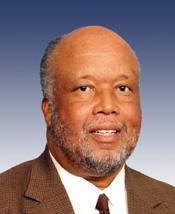 Rep. Bennie G. Thompson (D-MS)
Description
Manager's amendment consists of the text of the amendment contained in House Report 110-136 and printed on pages H4687-H4690 in the Congressional Record for May 9, 2007.
What it changes
35 changes to H.R. 1684 · 26 shown in the bill's text
We couldn't read part of this amendment. That part is shown as written below.
Change 1: Strikes section 305
StrikesIn H.R. 1684 · Reported in House
Struck: SEC. 305. SENSE OF CONGRESS REGARDING OVERSIGHT OF HOMELAND SECURITY.
Struck: It is the sense of the Congress that the House of Representatives and the Senate should implement the recommendation of the National Commission on Terrorist Attacks Upon the United States to designate a committee in each body to serve as the single, principal point of oversight and review for homeland security and to authorize the activities of the Department of Homeland Security.
Original wording
Strike section 305
Change 2: Rewrites section 402(b)
ReplacesIn H.R. 1684 · Reported in House
(b) Appointment Authority.--The Secretary (acting through the Chief Procurement Officer) may, for the purpose of supporting the Department's acquisition capabilities and enhancing contract management throughout the Department, appoint annuitants to positions in procurement offices in accordance with succeeding provisions of this section
[struck: .][inserted: , except that no authority under this subsection shall be available unless the Secretary provides to Congress a certification that--]Inserted: (1) the Secretary has submitted a request under section 8344(i) or 8468(f) of title 5, United States Code, on or after the date of the enactment of this Act, with respect to positions in procurement offices;
Inserted: (2) the request described in paragraph (1) was properly filed; and
Inserted: (3) the Office of Personnel Management has not responded to the request described in paragraph (1), by either approving, denying, or seeking more information regarding such request, within 90 days after the date on which such request was filed.
Original wording
In section 402, strike subsection (b) and insert the following:
Change 3: Rewrites section 402(f)
ReplacesIn H.R. 1684 · Reported in House
(f) Termination[inserted: of Authority].--
[struck: Upon the expiration of][inserted: Effective 2 years after] the[struck: 5-year period beginning on the ]date of the enactment of this Act--(1)
[struck: any][inserted: all] authority to make appointments under subsection (b) shall cease to be available; and(2) all exemptions under subsection (c) shall cease to be effective.
Inserted: In the proposed section 837(b), as proposed to be added by section 403 of the bill, after "require the contractor to submit" insert the following: "past performance".
Original wording
In section 402, strike subsection (f) and insert the following:
Change 4: Strikes section 406(c)
StrikesIn H.R. 1684 · Reported in House
Struck: (c) Priority Consideration.--
Struck: (1) In general.--The Chief Procurement Officer may give priority consideration to small business concerns for all open market procurements exceeding the simplified acquisition threshold prior to initiating full and open, or unrestricted, competition.
Struck: (2) Order of priority.--In proceeding with priority consideration under paragraph (1), the Chief Procurement Officer shall consider contracting proposals in the following order:
Struck: (A) Proposals submitted by 8(a) small business concerns or HUBZone small business concerns; service- disabled veteran owned small business concerns; or women owned small business concerns.
Show 3 more struck paragraphsShow less
Struck: (B) Proposals submitted by other small business concerns.
Struck: (C) Proposals submitted under full and open competition.
Struck: (3) For purposes of carrying out paragraph (2) with respect to proposals submitted by small business concerns described in the same subparagraph of paragraph (2), the Chief Procurement Officer shall select the appropriate category of concern based on market research, historical data, and progress toward achieving the objective described in subsection (b)(2).
Original wording
In section 406, strike subsection (c)
Change 5: Renumbers subsection (d) as (c)
RenumbersSection 406(c)Original wording
redesignate subsection (d) as subsection (c).
Change 6: Replaces “the Department of Homeland Security shall consider” at the section 408(c) with “The Secretary of Homeland Security shall consider, among the other factors the Secretary…”
ReplacesIn H.R. 1684 · Reported in House
(c) Factor in Evaluation of Offers.--When evaluating the offer of a contractor,
[struck: the Department][inserted: The Secretary] of Homeland Security shall consider[struck: ][inserted: , among the other factors the Secretary deems relevant, ]that offeror's efforts to seek and develop a formal Mentor-Protege relationship under the Mentor-Protege Program.Original wording
In section 408(c), strike “the Department of Homeland Security shall consider” and insert “The Secretary of Homeland Security shall consider, among the other factors the Secretary deems relevant,”.
Change 7: Strikes section 409
StrikesIn H.R. 1684 · Reported in House
Struck: SEC. 409. PROHIBITION ON AWARD OF CONTRACTS AND GRANTS TO EDUCATIONAL INSTITUTIONS NOT SUPPORTING COAST GUARD EFFORTS.
Struck: (a) Prohibition.--The Secretary of Homeland Security may not award a contract or grant to an institution of higher education (including any subelement of that institution) if that institution (or any subelement of that institution) has a policy or practice (regardless of when implemented) that prohibits, or in effect prevents, the Commandant of the Coast Guard from gaining access to campuses of the institution, or access to students (who are 17 years of age or older) on such campuses, for purposes of recruiting, in a manner that is at least equal in quality and scope to the access to campuses and to students that is provided to any other employer.
Struck: (b) Institution of Higher Education Defined.--For purposes of this section, the term "institution of higher education" has the meaning provided in section 101 of the Higher Education Act of 1965 (20 U.S.C. 1001).
Struck: (c) Limitation on Application.--The prohibition in this section shall not apply to an institution of higher education (or any subelement of that institution) if the Secretary of Homeland Security determines that the institution of higher education has a longstanding policy of pacifism based on historical religious affiliation.
Original wording
Strike section 409
Change 8: Renumbers section (410) as (409)
RenumbersSection 409Original wording
redesignate section 410 as section 409
Change 9: Renumbers subsections (g) and (h) as (h) and (i)
RenumbersSection 501Original wording
In section 501, redesignate subsections (g) and (h) as subsections (h) and (i), respectively
Change 10: Inserts new text after section 501(f)
InsertsIn H.R. 1684 · Reported in House
(f) Exemption From Mandatory Separation.--Effective during the three-year period beginning on the date of the enactment of this Act, nothing in this section shall result in any individual being involuntarily separated on account of the provisions of any retirement system relating to the mandatory separation of a law enforcement officer on account of age or age and service combined.
Inserted: (g) Comptroller General Report.--The Comptroller General shall conduct a comprehensive review of the retirement system for law enforcement officers employed by the Federal Government. The review shall include all employees categorized as law enforcement officers for purposes of retirement and any other Federal employee performing law enforcement officer duties not so categorized. In carrying out the review, the Comptroller General shall review legislative proposals introduced over the 10 years preceding the date of the enactment of this Act that are relevant to the issue law enforcement retirement and consult with law enforcement agencies and law enforcement employee representatives. Not later than August 1, 2007, the Comptroller General shall submit to Congress a report on the findings of such review. The report shall include each of the following:
Inserted: (1) An assessment of the reasons and goals for the establishment of the separate retirement system for law enforcement officers, as defined in section 8331 of title 5, United States Code, including the need for young and vigorous law enforcement officers, and whether such reasons and goals are currently appropriate.
Inserted: (2) An assessment of the more recent reasons given for including additional groups of employees in such system, including recruitment and retention, and whether such reasons and goals are currently appropriate.
Inserted: (3) A determination as to whether the system is achieving the goals in (1) and (2).
Inserted: (4) A summary of potential alternatives to the system, including increased use of bonuses, increased pay, and raising the mandatory retirement age, and a recommendation as to which alternatives would best meet each goal defined in (1) and (2), including legislative recommendations if necessary.
Inserted: (5) A recommendation for the definition of law enforcement officer.
Inserted: (6) An detailed review of the current system including its mandatory retirement age and benefit accrual.
Inserted: (7) A recommendation as to whether the law enforcement officer category should be made at the employee, function and duty, job classification, agency or other level, and by whom.
Inserted: (8) Any other relevant information.
Original wording
insert after subsection (f), the following new subsection (g):
Change 11: Inserts “and the Committee on Oversight and Government Reform” after “transmit to the Committee on Homeland S…”
InsertsSection 502(a)In H.R. 1684 · Reported in House
(a) Plan for Improving Representation of Minorities.--Not later than 90 days after the date of the enactment of this Act, the Chief Human Capital Officer of the Department of Homeland Security shall prepare and transmit to the Committee on Homeland Security [inserted: and the Committee on Oversight and Government Reform ]of the House of Representatives, the Committee on Homeland Security and Governmental Affairs of the Senate, and the Comptroller General of the United States a plan to achieve the objective of addressing any under representation of minorities in the various categories of civil service employment within such Department. Such plan shall identify and describe any barriers to achieving the objective described in the preceding sentence and the strategies and measures included in the plan to overcome them.
Original wording
In section 502(a) by inserting after “transmit to the Committee on Homeland Security” the following: “and the Committee on Oversight and Government Reform”.
Change 12: Rewrites section 504(b)
ReplacesIn H.R. 1684 · Reported in House
(b) Appointment Authority.--The Secretary (acting through the Commissioner of the United States Customs and Border Protection) may, for the purpose of accelerating the ability of the CBP to secure the borders of the United States, appoint annuitants to positions in the CBP in accordance with succeeding provisions of this section
[struck: .][inserted: , except that no authority under this subsection shall be available unless the Secretary provides to Congress a certification that--]Inserted: (1) the Secretary has submitted a request under section 8344(i) or 8468(f) of title 5, United States Code, on or after the date of the enactment of this Act, with respect to positions in the CBP;
Inserted: (2) the request described in paragraph (1) was properly filed; and
Inserted: (3) the Office of Personnel Management has not responded to the request described in paragraph (1), by either approving, denying, or seeking more information regarding such request, within 90 days after the date on which such request was filed.
Original wording
In section 504, strike subsection (b) and insert the following:
Change 13: Rewrites section 504(f)
ReplacesIn H.R. 1684 · Reported in House
(f) Termination[inserted: of Authority].--
[struck: Upon the expiration of][inserted: Effective 2 years after] the[struck: 5-year period beginning on the ]date of the enactment of this Act--(1)
[struck: any][inserted: all] authority to make appointments under subsection (b) shall cease to be available; and(2) all exemptions under subsection (c) shall cease to be effective.
Original wording
In section 504, strike subsection (f) and insert the following:
Change 14: Inserts “and Office of Personnel Management Regulations and Guidelines” after “statutes”
InsertsSection 505(a)In H.R. 1684 · Reported in House
(a) In General.--In order to address the recruitment and retention challenges faced by United States Customs and Border Protection, the Secretary of Homeland Security shall establish a plan, consistent with existing Federal statutes [inserted: and Office of Personnel Management Regulations and Guidelines ]applicable to pay, recruitment, relocation, and retention of Federal law enforcement officers. Such plan shall include the following components:
(1) The establishment of a recruitment incentive for Border Patrol agents, including the establishment of a foreign language incentive award.
Original wording
In section 505(a), insert after “statutes” the following: “ and Office of Personnel Management Regulations and Guidelines”.
Change 15: Strikes section 507
StrikesIn H.R. 1684 · Reported in House
Struck: SEC. 507. INTEGRITY IN POST-EMPLOYMENT.
Struck: (a) Designations as Separate Agencies and Bureaus Barred.--No agency, bureau, or other entity of the Department of Homeland Security may be designated under section 207(h)(1) of title 18, United States Code, as a separate agency or bureau.
Struck: (b) Effective Date.--
Struck: (1) In general.--This section takes effect on the later of--
Show 5 more struck paragraphsShow less
Struck: (A) June 6, 2007; or
Struck: (B) the date of the enactment of this Act.
Struck: (2) Applicability to designations.--The following shall cease to be effective on the date this section takes effect under paragraph (1):
Struck: (A) Any waiver of restrictions made under section 207(c)(2)(C) of title 18, United States Code, before the enactment of this Act, with respect to any position, or category of positions, in the Department of Homeland Security.
Struck: (B) Any designation of an agency, bureau, or other entity in the Department of Homeland Security, before the enactment of this Act, under section 207(h)(1) of title 18, United States Code, as a separate agency or bureau.
Original wording
Strike section 507
Change 16: Renumbers sections (508) through (513) as (507) through (512)
RenumbersSection 507Original wording
redesignate sections 508 through 513 as sections 507 through 512, respectively
Change 17: Strikes section 606
StrikesIn H.R. 1684 · Reported in House
Struck: SEC. 606. NATIONAL BIO AND AGRO-DEFENSE FACILITY.
Struck: (a) In General.--Title III of the Homeland Security Act of 2002 (6. U.S.C. 181 et seq.) is further amended by adding at the end the following new section:
Struck: "SEC. 318. NATIONAL BIO AND AGRO-DEFENSE FACILITY.
Struck: "(a) Establishment.--There is in the Department a National Bio and Agro-defense Facility (referred to in this section as the 'NBAF'), which shall be headed by a Director who shall be appointed by the Secretary.
Show 34 more struck paragraphsShow less
Struck: "(b) Purposes.--
Struck: "(1) In general.--The NBAF shall be an integrated human, foreign-animal, and zoonotic disease research, development, testing, and evaluation facility with the purpose of supporting the complementary missions of the Department, the Department of Agriculture, and the Department of Health and Human Services in defending against the threat of potential acts of agroterrorism and natural-occurring incidents related to agriculture with the potential to adversely impact public health, animal health, and the economy, or may otherwise impact homeland security.
Struck: "(2) Knowledge production and sharing.--The NBAF shall produce and share knowledge and technology for the purpose of reducing economic losses caused by foreign-animal, zoonotic, and, as appropriate, other endemic animal diseases of livestock and poultry, and preventing human suffering and death caused by diseases existing or emerging in the agricultural sector.
Struck: "(c) Responsibilities of Director.--The Secretary shall vest in the Director primary responsibility for each of the following:
Struck: "(1) Directing basic, applied, and advanced research, development, testing, and evaluation relating to foreign- animal, zoonotic, and, as appropriate, other endemic animal diseases, including foot and mouth disease, and performing related activities, including--
Struck: "(A) developing countermeasures for foreign- animal, zoonotic, and, as appropriate, other endemic animal diseases, including diagnostics, vaccines and therapeutics;
Struck: "(B) providing advanced test and evaluation capability for threat detection, vulnerability, and countermeasure assessment for foreign-animal, zoonotic, and, as appropriate, other endemic animal diseases;
Struck: "(C) conducting nonclinical, animal model testing and evaluation under the Food and Drug Administration's Animal Rule as defined in parts 314 and 601 of title 22, Code of Federal Regulations, to support the development of human medical countermeasures by the Department of Human Services under the Public Health Service Act (42 U.S.C. 201 et seq);
Struck: "(D) establishing NBAF information-sharing mechanisms to share information with relevant stakeholders, including the National Animal Health Laboratory Network; and
Struck: "(E) identifying and promoting uniform national standards for animal disease diagnostics.
Struck: "(2) Facilitating the coordination of Federal, State, and local governmental research and development efforts and resources relating to protecting public health and animal health from foreign-animal, zoonotic, and, as appropriate, other endemic animal diseases.
Struck: "(3) Ensuring public safety during an emergency by developing an emergency response plan under which emergency response providers in the community are sufficiently prepared or trained to respond effectively and given sufficient notice to allow for an effective response.
Struck: "(4) Ensuring NBAF site and facility security.
Struck: "(5) Providing training to develop skilled research and technical staff with the needed expertise in operations conducted at biological and agricultural research facilities.
Struck: "(6) Leveraging the expertise of academic institutions, industry, the Department of Energy National Laboratories, State and local governmental resources, and professional organizations involved in veterinary, medical and public health, and agriculture issues to carry out functions describes in (1) and (2).
Struck: "(d) Requirements.--The Secretary, in designing and constructing the NBAF, shall ensure that the facility meets the following requirements:
Struck: "(1) The NBAF shall consist of state-of-the-art biocontainment laboratories capable of performing research and activities at Biosafety Level 3 and 4, as designated by the Centers for Disease Control and Prevention and the National Institutes of Health.
Struck: "(2) The NBAF facility shall be located on a site of at least 30 acres that can be readily secured by physical measure.
Struck: "(3) The NBAF facility shall be at least 500,000 square feet with a capacity of housing a minimum of 80 large animals for research, testing and evaluation;
Struck: "(4) The NBAF shall be located at a site with a preexisting utility infrastructure, or a utility infrastructure that can be easily built.
Struck: "(5) The NBAF shall be located at a site that has been subject to an Environmental Impact Statement under the National Environmental Policy Act of 1969.
Struck: "(6) The NBAF shall be located within a reasonable proximity to a national or regional airport and to major roadways.
Struck: "(e) Authorization To Procure Real Property and Accept in Kind Donations for the NBAF Site.--The Secretary may accept and use donations of real property for the NBAF site and may accept and use in- kind donations of real property, personal property, laboratory and office space, utility services, and infrastructure upgrades for the purpose of assisting the Director in carrying out the responsibilities of the Director under this section.
Struck: "(f) Applicability of Other Laws.--
Struck: "(1) Public buildings act.--The NBAF shall not be considered a "public building" for purposes of the Public Buildings Act of 1959 (40 U.S.C. 3301 et seq.).
Struck: "(2) Live virus of foot and mouth disease research.--The Secretary shall enable the study of live virus of foot and mouth disease at the NBAF, wherever it is sited, notwithstanding section 113a of title 21, United States Code.
Struck: "(g) Coordination.--
Struck: "(1) Interagency agreements.--
Struck: "(A) In general.--The Secretary shall enter into understandings or agreements with the heads of appropriate Federal departments and agencies, including the Secretary of Agriculture and the Secretary of Health and Human Services, to define the respective roles and responsibilities of each Department in carrying out foreign-animal, zoonotic, and other endemic animal disease research and development at the NBAF to protect public health and animal health.
Struck: "(B) Department of agriculture.--The understanding or agreement entered into with the Secretary of Agriculture shall include a provision describing research programs and functions of the Department of Agriculture and the Department of Homeland Security, including those research programs and functions carried out at the Plum Island Animal Disease Center and those research programs and functions that will be transferred to the NBAF.
Struck: "(C) Department of health and human services.--The understanding or agreement entered into with the Department of Health and Human Services shall describe research programs of the Department of Health and Human Services that may relate to work conducted at NBAF.
Struck: "(2) Cooperative relationships.--The Director shall form cooperative relationships with the National Animal Health Laboratory Network and American Association of Veterinary Laboratory Diagnosticians to connect with the network of Federal and State resources intended to enable an integrated, rapid, and sufficient response to animal health emergencies.".
Struck: (b) Clerical Amendment.--The table of contents in section 1(b) of such Act is further amended by adding at the end of the items relating to such title the following:
Struck: "Sec. 318. National Bio and Agro-defense Facility.".
Original wording
Strike section 606
Change 18: Inserts “the Department of Commerce,” after “Standards and Technology,”
InsertsSection 702(c)(2)In H.R. 1684 · Reported in House
(2) other Federal agencies, including the National Science Foundation, the Defense Advanced Research Projects Agency, the Information Assurance Directorate of the National Security Agency, the National Institute of Standards and Technology, [inserted: the Department of Commerce, ]and other appropriate working groups established by the President to identify unmet needs and cooperatively support activities, as appropriate.
Original wording
In section 702(c)(2), insert after “Standards and Technology,” the following: “the Department of Commerce,”.
Change 19: Adds SEC. 703. COLLABORATION after section 702
Adds a sectionIn H.R. 1684 · Reported in House
(d) Authorization of Appropriations.--Of the amount authorized by section 101, there is authorized to be appropriated for the Department of Homeland Security for fiscal year 2008, $50,000,000, for the cybersecurity research and development activities of the Directorate for Science and Technology to prevent, detect, and respond to acts of terrorism and other large-scale disruptions to information infrastructure.
Inserted: SEC. 703. COLLABORATION.
Inserted: In carrying out this title, the Assistant Secretary of Homeland Security for Cybersecurity and Communications shall collaborate with any Federal entity that, under law, has authority over the activities set forth in this title.
Original wording
Insert after section 702 the following (and conform the table of contents accordingly):
Change 20: Strikes “maximum” at the section 804(b)(1)
StrikesIn H.R. 1684 · Reported in House
(1) establish a formal coordination process that includes the official of the Department of Homeland Security with primary responsibility for the implementation of the SAFETY Act, the Chief Procurement Officer of the Department, the Under Secretary for Science and Technology, the Under Secretary for Policy, and the Department of Homeland Security General Counsel to ensure the
[struck: maximum ]application of the litigation and risk management provisions of the SAFETY Act to antiterrorism technologies procured by the Department; andOriginal wording
In section 804(b)(1), strike “maximum”.
Change 21: Rewrites section 904
ReplacesIn H.R. 1684 · Reported in House
SEC. 904. [inserted: REPORT ON IMPLEMENTATION OF THE ]STUDENT AND EXCHANGE VISITOR PROGRAM.
Struck: (a) In General.--Section 442 of the Homeland Security Act of 2002 (6 U.S.C. 252) is amended--
Struck: (1) in subsection (a)--
Struck: (A) by redesignating paragraph (5) as paragraph (10); and
Struck: (B) by inserting after paragraph (4) the following:
Show 26 more struck paragraphsShow less
Struck: "(5) Student and exchange visitor program.--In administering the program under paragraph (4), the Secretary shall--
Struck: "(A) prescribe regulations to require an institution or exchange visitor program sponsor participating in the Student and Exchange Visitor Program to ensure that each covered student or exchange visitor enrolled at the institution or attending the exchange visitor program--
Struck: "(i) is an active participant in the program for which the covered student or exchange visitor was issued a visa to enter the United States;
Struck: "(ii) is not unobserved for any period--
Struck: "(I) exceeding 30 days during any academic term or program in which the covered student or exchange visitor is enrolled; or
Struck: "(II) exceeding 60 days during any period not described in subclause (I); and
Struck: "(iii) is reported to the Department if within 21 days of--
Struck: "(I) transferring to another institution or program; or
Struck: "(II) being hospitalized or otherwise incapacitated necessitating a prolonged absence from the academic institution or exchange visitor program; and
Struck: "(B) notwithstanding subparagraph (A), require each covered student or exchange visitor to be observed at least once every 60 days.
Struck: "(6) Enhanced access.--The Secretary shall provide access to the Student and Exchange Visitor Information System (hereinafter in this subsection referred to as the 'SEVIS'), or other equivalent program or system, to appropriate employees of an institution or exchange visitor program sponsor participating in the Student and Exchange Visitor Program if--
Struck: "(A) at least two authorized users are identified at each participating institution or exchange visitor sponsor;
Struck: "(B) at least one additional authorized user is identified at each such institution or sponsor for every 200 covered students or exchange visitors enrolled at the institution or sponsor; and
Struck: "(C) each authorized user is certified by the Secretary as having completed an appropriate training course provided by the Department for the program or system.
Struck: "(7) Program support.--The Secretary shall provide appropriate technical support options to facilitate use of the program or system described in paragraph (4) by authorized users.
Struck: "(8) Upgrades to sevis or equivalent data.--The Secretary shall update the program or system described in paragraph (4) to incorporate new data fields that include--
Struck: "(A) verification that a covered student's performance meets the minimum academic standards of the institution in which such student is enrolled; and
Struck: "(B) timely entry of academic majors, including changes to majors, of covered students and exchange visitors enrolled at institutions or exchange program sponsors participating in the Student and Exchange Visitor Program.
Struck: "(9) Savings clause.-- Nothing in this section shall prohibit the Secretary or any institution or exchange program sponsor participating in the Student Exchange Visitor Program from requiring more frequent observations of covered students or exchange visitors."; and
Struck: (2) by adding at the end the following:
Struck: "(d) Definitions.--For purposes of this section:
Struck: "(1) The term 'covered student' means a student who is a nonimmigrant pursuant to section 101(1)(15)(F), 101(1)(15)(J), or 101(1)(15)(M) of the Immigration and Nationality Act of 1952.
Struck: "(2) The term 'observed' means positively identified by physical or electronic means.
Struck: "(3) The term 'authorized user' means an individual nominated by an institution participating in the Student Exchange Visitor Program and confirmed by the Secretary as not appearing on any terrorist watch list.
Struck: "(e) Authorization of Appropriations.--Of the amount authorized by section 101 of the Department of Homeland Security Authorization Act for Fiscal Year 2008, there are authorized to be appropriated to the Secretary such sums as may be necessary to carry out this section.".
Struck: (b) Comptroller General Review.--The Comptroller General shall conduct a review of the fees for the Student and Exchange Visitor Program of the Department of Homeland Security. The Comptroller General shall include in such review data from fiscal years 2004 through 2007 and shall consider fees collected by the Department and all expenses associated with the review, issuance, maintenance, data collection, and enforcement functions of the Student and Exchange Visitor Program.
Inserted: Not later than 180 days after the date of the enactment of this Act, the Comptroller General shall submit to the appropriate congressional committees a report to update the Government Accountability Office report of June 18, 2004, GAO-04-690, on the Student and Exchange Visitor Program (referred to in this section as "SEVP") and specifically the Student and Exchange Visitor Information System (referred to in this section as "SEVIS"). The report shall include the following information:
Inserted: (1) The rate of compliance with the current SEVIS requirements by program sponsors and educational institutions, including non-academic institutions authorized to admit students under SEVIS.
Inserted: (2) Whether there are differences in compliance rates among different types and sizes of institutions participating in SEVIS.
Inserted: (3) Whether SEVIS adequately ensures that each covered foreign student or exchange visitor in nonimmigrant status is, in fact, actively participating in the program for which admission to the United States was granted.
Inserted: (4) Whether SEVIS includes data fields to ensure that each covered foreign student or exchange visitor in nonimmigrant status is meeting minimum academic or program standards and that major courses of study are recorded, especially those that may be of national security concern.
Inserted: (5) Whether the Secretary of Homeland Security provides adequate access, training, and technical support to authorized users from the sponsoring programs and educational institutions in which covered foreign students and exchange visitors in a nonimmigrant status are enrolled.
Inserted: (6) Whether each sponsoring program or educational institution participating in SEVP has designated enough authorized users to comply with SEVIS requirements.
Inserted: (7) Whether authorized users at program sponsors or educational institutions are adequately vetted and trained.
Inserted: (8) Whether the fees collected are adequate to support SEVIS.
Inserted: (9) Whether there any new authorities, capabilities, or resources needed for SEVP and SEVIS to fully perform.
Original wording
Strike section 904 and insert the following (and conform the table of contents accordingly):
Change 22: Strikes section 906
StrikesIn H.R. 1684 · Reported in House
Struck: SEC. 906. BIOMETRIC IDENTIFICATION OF UNAUTHORIZED ALIENS.
Struck: (a) In General.--The Secretary of Homeland Security shall conduct a pilot program for the mobile biometric identification in the maritime environment of aliens unlawfully present in the United States.
Struck: (b) Requirements.--The Secretary shall ensure that the pilot program is coordinated with other biometric identification programs within the Department of Homeland Security and shall evaluate the costs and feasibility of expanding the capability to all appropriate Department of Homeland Security maritime vessels.
Struck: (c) Authorization of Appropriations.--Of the amounts authorized in section 101, there is authorized to be appropriated $10,000,000 to carry out this section.
Original wording
Strike section 906
Change 23: Renumbers section (907) as (906)
RenumbersSection 906Original wording
redesignate section 907 as section 906
Change 24: Rewrites section 1003(b)
ReplacesIn H.R. 1684 · Reported in House
(b) Appointment Authority.--The Secretary (acting through the Assistant Secretary for Information Analysis) may, for the purpose of accelerating the ability of [inserted: the ]IA to perform its statutory duties under the Homeland Security Act of 2002, appoint annuitants to positions in [inserted: the ]IA in accordance with succeeding provisions of this section
[struck: .][inserted: , except that no authority under this subsection shall be available unless the Secretary provides to Congress a certification that--]Inserted: (1) the Secretary has submitted a request under section 8344(i) or 8468(f) of title 5, United States Code, on or after the date of the enactment of this Act, with respect to positions in the IA;
Inserted: (2) the request described in paragraph (1) was properly filed; and
Inserted: (3) the Office of Personnel Management has not responded to the request described in paragraph (1), by either approving, denying, or seeking more information regarding such request, within 90 days after the date on which such request was filed.
Original wording
In section 1003, strike subsection (b) and insert the following:
Change 25: Rewrites section 1003(f)
ReplacesIn H.R. 1684 · Reported in House
(f) Termination[inserted: of Authority].--
[struck: Upon the expiration of][inserted: Effective 2 years after] the[struck: 5-year period beginning on the ]date of the enactment of this Act--(1)
[struck: any][inserted: all] authority to make appointments under subsection (b) shall cease to be available; and(2) all exemptions under subsection (c) shall cease to be effective.
Original wording
In section 1003, strike subsection (f) and insert the following:
Change 26: Strikes section 1101
StrikesIn H.R. 1684 · Reported in House
Struck: SEC. 1101. ELIGIBLE USES FOR INTEROPERABILITY GRANTS.
Struck: The Secretary of Homeland Security shall ensure that all funds administered by the Department of Homeland Security to support the interoperable communications needs of State, local, and tribal agencies, including funds administered pursuant to a Memorandum of Understanding or other agreement, may be used to support the standards outlined in the SAFECOM interoperability continuum, including governance, standard operating procedures, technology, training and exercises, and usage.
Original wording
Strike section 1101
Change 27: Renumbers sections (1102) through (1108) as (1101) through (1107)
RenumbersSection 1101Original wording
redesignate sections 1102 through 1108 as sections 1101 through 1107, respectively
Change 28: Strikes section 1111 of section 1110 of section 1109
StrikesRemoves section 1111 of section 1110 of section 1109.
Original wording
Strike sections 1109, 1110, 1111
Change 29: Renumbers sections (1112) through (1119) as (1108) through (1115)
RenumbersSection 1111 of section 1110 of section 1109Original wording
redesignate sections 1112 through 1119 as sections 1108 through 1115, respectively
Change 30: Strikes section 1120
StrikesIn H.R. 1684 · Reported in House
Struck: SEC. 1120. AUTHORIZATION OF HOMELAND SECURITY FUNCTIONS OF THE UNITED STATES SECRET SERVICE.
Struck: (a) Authorized Funding.--Of the amounts authorized by section 101, there is authorized to be appropriated for fiscal year 2008 for necessary expenses of the United States Secret Service, $1,641,432,000.
Struck: (b) Authorized Personnel Strength.--The United States Secret Service is authorized to provide 6,822 full-time equivalent positions.
Original wording
Strike section 1120
Change 31: Renumbers section (1121) as (1116)
RenumbersSection 1120Original wording
redesignate section 1121 as section 1116
Change 32: Strikes section 1102
StrikesIn H.R. 1684 · Reported in House
Struck: SEC. 1102. RURAL HOMELAND SECURITY TRAINING INITIATIVE.
Struck: (a) Establishment.--The Secretary of Homeland Security shall establish a program to be administered by the Director of the Federal Law Enforcement Training Center of the Department of Homeland Security to expand homeland security training to units of local and tribal governments located in rural areas. The Secretary shall take the following actions:
Struck: (1) Evaluation of needs of rural areas.--The Secretary shall evaluate the needs of such areas.
Struck: (2) Development of training programs.--The Secretary shall develop expert training programs designed to respond to the needs of such areas, including, but not limited to, those pertaining to rural homeland security responses including protections for privacy, and civil rights and civil liberties.
Show 5 more struck paragraphsShow less
Struck: (3) Provision of training programs.--The Secretary shall provide to such areas the training programs developed under paragraph (2).
Struck: (4) Outreach efforts.--The Secretary shall conduct outreach efforts to ensure that such areas are aware of the training programs developed under paragraph (2) so that such programs are made available to units of local government and tribal governments located in rural areas.
Struck: (b) No Duplication or Displacement of Current Programs.--Any training program developed under paragraph (2) of subsection (a) and any training provided by the program pursuant to such subsection shall be developed or provided, respectively, in a manner so as to not duplicate or displace any program in existence on the date of the enactment of this section.
Struck: (c) Prioritized Locations for Rural Homeland Security Training.--In designating sites for the provision of training under this section, the Secretary shall, to the maximum extent possible and as appropriate, give priority to facilities of the Department of Homeland Security in existence as of the date of the enactment of this Act and to closed military installations, and to the extent possible, shall conduct training onsite, at facilities operated by participants.
Struck: (d) Rural Defined.--In this section, the term "rural" means an area that is not located in a metropolitan statistical area, as defined by the Office of Management and Budget.
Original wording
Strike section 1102
Change 33: Adds SEC. 1117. COMPTROLLER GENERAL REPORT ON CRITICAL INFRASTRUCTURE at the end of title XI
Adds a sectionIn H.R. 1684 · Reported in House
The Secretary of Homeland Security shall provide information relating to assistance requested or provided in response to a terrorist attack, major disaster, or other emergency, to Federal, State, or local law enforcement entities to assist in the location of a missing child or registered sex offender. In providing such information, the Secretary shall take reasonable steps to protect the privacy of individuals.
Inserted: SEC. 1117. COMPTROLLER GENERAL REPORT ON CRITICAL INFRASTRUCTURE.
Inserted: (a) Requirement.--The Comptroller General of the United States shall conduct a study to--
Inserted: (1) determine the extent to which architecture, engineering, surveying, and mapping activities related to the critical infrastructure of the United States are being sent to offshore locations;
Inserted: (2) assess whether any vulnerabilities or threats exist with respect to terrorism; and
Inserted: (3) recommend policies, regulations, or legislation, as appropriate, that may be necessary to protect the national and homeland security interests of the United States.
Inserted: (b) Consultation.--In carrying out the study authorized by this section, the Comptroller General shall consult with--
Inserted: (1) such other agencies of the Government of the United States as are appropriate; and
Inserted: (2) national organizations representing the architecture, engineering, surveying, and mapping professions.
Inserted: (c) Report.--The Comptroller General shall submit to the Committees on Transportation and Infrastructure, Energy and Commerce, and Homeland Security of the House of Representatives, and to the Senate, by not later than 6 months after the date of the enactment of this Act a report on the findings, conclusions, and recommendations of the study under this section.
Inserted: (d) Definitions.--As used in this section--
Inserted: (1) each of the terms "architectural", "engineering", "surveying", and "mapping"--
Inserted: (A) subject to subparagraph (B), has the same meaning such term has under section 1102 of title 40, United States Code; and
Show 4 more inserted paragraphsShow less
Inserted: (B) includes services performed by professionals such as surveyors, photogrammetrists, hydrographers, geodesists, or cartographers in the collection, storage, retrieval, or dissemination of graphical or digital data to depict natural or man-made physical features, phenomena, or boundaries of the earth and any information related to such data, including any such data that comprises the processing of a survey, map, chart, geographic information system, remotely sensed image or data, or aerial photograph; and
Inserted: (2) the term "critical infrastructure"--
Inserted: (A) means systems and assets, whether physical or virtual, so vital to the United States that the incapacity or destruction of such systems and assets would have a debilitating impact on security, national economic security, national public health or safety, or any combination of those matters; and
Inserted: (B) includes the basic facilities, structures, and installations needed for the functioning of a community or society, including transportation and communications systems, water and power lines, power plants, and the built environment of private and public institutions of the United States.
Original wording
Add at the end of title XI the following (and conform the table of contents accordingly):
Change 34: Adds SEC. 1118. IMPROVING THE NEXUS AND FAST REGISTERED TRAVELER PROGRAMS at the end of title XI
Adds a sectionIn H.R. 1684 · Reported in House
The Secretary of Homeland Security shall provide information relating to assistance requested or provided in response to a terrorist attack, major disaster, or other emergency, to Federal, State, or local law enforcement entities to assist in the location of a missing child or registered sex offender. In providing such information, the Secretary shall take reasonable steps to protect the privacy of individuals.
Inserted: SEC. 1118. IMPROVING THE NEXUS AND FAST REGISTERED TRAVELER PROGRAMS.
Inserted: (a) Merging Requirements of Nexus and Fast.--
Inserted: (1) In general.--The Secretary of Homeland Security shall merge the procedures for the programs described in subsection (j) into a single procedure, with common eligibility and security screening requirements, enrollment processes, and sanctions regimes.
Inserted: (2) Specific requirements.--In carrying out paragraph (1), the Secretary shall ensure that the procedures for the programs known as "NEXUS Highway", "NEXUS Marine", and "NEXUS Air" are integrated into such a single procedure.
Inserted: (b) Integrating Nexus and Fast Information Systems.--The Secretary of Homeland Security shall integrate all databases and information systems for the programs described in subsection (j) in a manner that will permit any identification card issued to a participant to operate in all locations where a program described in such subsection is operating.
Inserted: (c) Creation of Nexus Convertible Lanes.--In order to expand the NEXUS program described in subsection (j)(2) to major northern border crossings, the Secretary of Homeland Security, in consultation with appropriate representatives of the Government of Canada, shall equip not fewer than six new northern border crossings with NEXUS technology.
Inserted: (d) Creation of Remote Enrollment Centers.--The Secretary of Homeland Security, in consultation with appropriate representatives of the Government of Canada, shall create a minimum of two remote enrollment centers for the programs described in subsection (j). Such a remote enrollment center shall be established at each of the border crossings described in subsection (c).
Inserted: (e) Creation of Mobile Enrollment Centers.--The Secretary of Homeland Security, in consultation with appropriate representatives of the Government of Canada, shall create a minimum of two mobile enrollment centers for the programs described in subsection (j). Such mobile enrollment centers shall be used to accept and process applications in areas currently underserved by such programs. The Secretary shall work with State and local authorities in determining the locations of such mobile enrollment centers.
Inserted: (f) On-Line Application Process.--The Secretary of Homeland Security shall design an on-line application process for the programs described in subsection (j). Such process shall permit individuals to securely submit their applications on-line and schedule a security interview at the nearest enrollment center.
Inserted: (g) Promoting Enrollment.--
Inserted: (1) Creating incentives for enrollment.--In order to encourage applications for the programs described in subsection (j), the Secretary of Homeland Security shall develop a plan to admit participants in an amount that is as inexpensive as possible per card issued for each of such programs.
Inserted: (2) Customer service phone number.--In order to provide potential applicants with timely information for the programs described in subsection (j), the Secretary of Homeland Security shall create a customer service telephone number for such programs.
Show 15 more inserted paragraphsShow less
Inserted: (3) Publicity campaign.--The Secretary shall carry out a program to educate the public regarding the benefits of the programs described in subsection (j).
Inserted: (h) Travel Document for Travel Into United States.--For purposes of the plan required under section 7209(b) of the Intelligence Reform and Terrorism Prevention Act of 2004, an identification card issued to a participant in a program described in subsection (j) shall be considered a document sufficient on its own when produced to denote identity and citizenship for travel into the United States by United States citizens and by categories of individuals for whom documentation requirements have previously been waived under section 212(d)(4)(B) of the Immigration and Nationality Act (8 U.S.C. 1182(d)(4)(B)).
Inserted: (i) Report.--Not later than 120 days after the date of the enactment of this Act, the Secretary of Homeland Security shall submit to the appropriate congressional committees (as defined in section 2 of the Homeland Security Act of 2002 (6 U.S.C. 101)) a report on the implementation of subsections (a) through (g).
Inserted: (j) Programs.--The programs described in this subsection are the following:
Inserted: (1) The FAST program authorized under subpart B of title IV of the Tariff Act of 1930 (19 U.S.C. 1411 et seq.).
Inserted: (2) The NEXUS program authorized under section 286(q) of the Immigration and Nationality Act (U.S.C. 1356(q)).
Inserted: SEC. 1119. TRAVEL DOCUMENTS.
Inserted: (a) Travel to Canada and Mexico.--Section 7209(b) of the Intelligence Reform and Terrorism Prevention Act of 2004 is amended by adding at the end the following new paragraphs:
Inserted: "(3) Pass card infrastructure.--The Secretary of Homeland Security shall conduct not less than one trial on the usability, reliability, and effectiveness of the technology that the Secretary determines appropriate to implement the documentary requirements of this subsection. The Secretary may not issue a final rule implementing the requirements of this subsection until such time as the Secretary has submitted to the appropriate congressional committees (as defined in section 2 of the Homeland Security Act of 2002 (6 U.S.C. 101)) a report on the results and outcome of such trial or trials. The report shall include data and evidence that demonstrates that the technology utilized in such trial or trials is operationally superior to other alternative technology infrastructures.
Inserted: "(4) Flexible implementation period.--In order to provide flexibility upon implementation of the plan developed under paragraph (1), the Secretary of Homeland Security shall establish a special procedure to permit an individual who does not possess a passport or other document, or combination of documents, as required under paragraph (1), but who the Secretary determines to be a citizen of the United States, to re-enter the United States at an international land or maritime border of the United States. The special procedure referred to in this paragraph shall terminate on the date that is 180 days after the date of the implementation of the plan described in paragraph (1)(A).
Inserted: "(5) Special rule for certain minors.--Except as provided in paragraph (6), citizens of the United States or Canada who are less than 16 years of age shall not be required to present to an immigration officer a passport or other document, or combination of documents, as required under paragraph (1), when returning or traveling to the United States from Canada, Mexico, Bermuda, or the Carribean at any port of entry along the international land or maritime border of the United States.
Inserted: "(6) Special rule for certain student minors traveling as part of an authorized and supervised school trip.--Notwithstanding the special rule described in paragraph (5), the Secretary of Homeland Security is authorized to consider expanding the special rule for certain minors described in such paragraph to a citizen of the United States or Canada who is less than 19 years of age but is 16 years of age or older and who is traveling between the United States and Canada at any port of entry along the international or maritime border between the two countries if such citizen is so traveling as a student as part of an authorized and supervised school trip.
Inserted: "(7) Public outreach.--To promote travel and trade across the United States border, the Secretary of Homeland Security shall develop a public communications plan to promote to United States citizens, representatives of the travel and trade industries, and local government officials information relating to the implementation of this subsection. The Secretary of Homeland Security shall coordinate with representatives of the travel and trade industries in the development of such public communications plan.
Inserted: "(8) Cost-benefit analysis.--The Secretary of Homeland Security shall prepare an extensive regulatory impact analysis that is fully compliant with Executive Order 12866 and Office of Management and Budget Circular A-4 for an economically significant regulatory action before publishing a rule with respect to the implementation of the requirements of this subsection.".
Inserted: (b) Report.--Not later than 120 days after the date of the enactment of this Act and every 120 days thereafter, the Secretary of Homeland Security shall submit to the appropriate congressional committees (as defined in section 2 of the Homeland Security Act of 2002 (6 U.S.C. 101)) a report on the implementation of paragraphs (3) through (8) of section 7209(b) of the Intelligence Reform and Terrorism Prevention Act of 2004.
Original wording
Add at the end of title XI the following (and conform the table of contents accordingly):
Change 35: Strikes title XII
StrikesIn H.R. 1684 · Reported in House
Struck: TITLE XII--MARITIME ALIEN SMUGGLING
Struck: SEC. 1201. SHORT TITLE.
Struck: This title may be cited as the "Maritime Alien Smuggling Law Enforcement Act".
Struck: SEC. 1202. CONGRESSIONAL DECLARATION OF FINDINGS.
Show 50 more struck paragraphsShow less
Struck: The Congress finds and declares that maritime alien smuggling violates the national sovereignty of the United States, places the country at risk of terrorist activity, compromises the country's border security, contravenes the rule of law, and compels an unnecessary risk to life among those who enforce the Nation's laws. Moreover, such maritime alien smuggling creates a condition of human suffering among those who seek to enter the United States without official permission or lawful authority that is to be universally condemned and vigorously opposed.
Struck: SEC. 1203. DEFINITIONS.
Struck: In this title:
Struck: (1) The term "alien" has the same meaning given that term in section 101 of the Immigration and Nationality Act (8 U.S.C. 1101).
Struck: (2) The term "lawful authority" means permission, authorization, or waiver that is expressly provided for in the immigration laws of the United States or the regulations prescribed thereunder and does not include any such authority secured by fraud or otherwise obtained in violation of law or authority that has been sought but not approved.
Struck: (3) The term "serious bodily injury" has the same meaning given that term in section 1365 of title 18, United States Code, including any conduct that would violate sections 2241 or 2242 of such title, if the conduct occurred in the special maritime and territorial jurisdiction of the United States.
Struck: (4) The term "State" has the same meaning given that term in section 101 of the Immigration and Nationality Act (8 U.S.C. 1101).
Struck: (5) The term "terrorist activity" has the same meaning given that term in section 212(a)(3)(B) of the Immigration and Nationality Act (8 U.S.C. 1182(a)(3)(B)).
Struck: (6) The term "United States" includes the several States, the District of Columbia, the Commonwealth of Puerto Rico, Guam, American Samoa, the United States Virgin Islands, the Commonwealth of the Northern Mariana Islands, and any other territory or possession of the United States.
Struck: (7) The term "vessel of the United States" and "vessel subject to the jurisdiction of the United States" have the same meanings given those terms in section 2 of the Maritime Drug Law Enforcement Act (46 U.S.C. App. 1903).
Struck: SEC. 1204. MARITIME ALIEN SMUGGLING.
Struck: (a) Offense.--For purposes of enforcing Federal laws, including those that pertain to port, maritime, or land border security, no person on board a vessel of the United States or a vessel subject to the jurisdiction of the United States, or who is a citizen or national of the United States or an alien who is paroled into or is a resident of the United States on board any vessel, shall assist, encourage, direct, induce, transport, move, harbor, conceal, or shield from detection an individual in transit from one country to another on the high seas, knowing or in reckless disregard of the fact that such individual is an alien, known, or suspected terrorist, or an individual seeking to commit terrorist activity, seeking to enter the United States without official permission or lawful authority.
Struck: (b) Attempt or Conspiracy.--Any person who attempts or conspires to commit a violation of this title shall be subject to the same penalties as those prescribed for the violation, the commission of which was the object of the attempt or conspiracy.
Struck: (c) Jurisdiction and Scope.--
Struck: (1) In general.--Jurisdiction of the United States with respect to vessels and persons subject to this section is not an element of any offense. All jurisdictional issues arising under this section are preliminary questions of law to be determined solely by the trial judge.
Struck: (2) Extraterritorial jurisdiction.--There is extraterritorial Federal jurisdiction over the offenses described in this section.
Struck: (3) Nonapplicability to lawful activities.--Nothing in this title shall apply to otherwise lawful activities carried out by or at the direction of the United States Government.
Struck: (d) Claim of Failure To Comply With International Law; Jurisdiction of Court.--Any person charged with a violation of this title shall not have standing to raise the claim of failure to comply with international law as a basis for a defense. A claim of failure to comply with international law in the enforcement of this title may be invoked solely by a foreign nation, and a failure to comply with international law shall not divest a court of jurisdiction or otherwise constitute a defense to any proceeding under this title.
Struck: (e) Affirmative Defense.--It shall be an affirmative defense to a violation of this section, as to which the defendant has the burden of proof by a preponderance of the evidence, that prior to the alleged violation the defendant rescued the alien at sea, if the defendant--
Struck: (1) immediately reported to the Coast Guard the circumstances of the rescue, and the name, description, registry number, and location of the rescuing vessel; and
Struck: (2) did not bring or attempt to bring the alien into the land territory of the United States without official permission or lawful authority, unless exigent circumstances existed that placed the life of the alien in danger, in which case the defendant must have reported to the Coast Guard the information required by paragraph (1) of this subsection immediately upon delivering that alien to emergency medical personnel ashore.
Struck: (f) Admissibility of Evidence.--Notwithstanding any provision of the Federal Rules of Evidence, the testimony of Coast Guard personnel and official records of the Coast Guard, offered to show either that the defendant did not report immediately the information required by subsection (e) or the absence of any such report by the defendant, shall be admissible, and the jury shall be instructed, upon request of the United States, that it may draw an inference from such records or testimony in deciding whether the defendant reported as required by subsection (e).
Struck: (g) Admissibility of Videotaped Witness Testimony.--Notwithstanding any provision of the Federal Rules of Evidence, the videotaped (or otherwise audiovisually or electronically preserved) deposition of a witness to any alleged violation of subsection (a) of this section who has been repatriated, removed, extradited, or otherwise expelled from or denied admission to the United States or who is otherwise unable to testify may be admitted into evidence in an action brought for that violation if the witness was available for cross examination at the deposition and the deposition otherwise complies with the Federal Rules of Evidence.
Struck: (h) Penalties.--A person who commits any violation under this section shall--
Struck: (1) be imprisoned for not less than 3 years and not more than 20 years, fined not more than $100,000, or both;
Struck: (2) in a case in which the violation furthers or aids the commission of any other criminal offense against the United States or any State for which the offense is punishable by imprisonment for more than 1 year, be imprisoned for not less than 5 years and not more than 20 years, fined not more than $100,000, or both;
Struck: (3) in a case in which any participant in the violation created a substantial risk of death or serious bodily injury to another person (including, but not limited to, transporting a person in a shipping container, storage compartment, or other confined space or at a speed in excess of the rated capacity of the vessel), be imprisoned for not less than 5 years and not more than 20 years, fined not more than $100,000, or both;
Struck: (4) in a case in which the violation caused serious bodily injury to any person, regardless of where the injury occurred, be imprisoned for not less than 7 years and not more than 30 years, fined not more than $500,000, or both;
Struck: (5) in a case in which the violation involved an alien who the offender knew or had reason to believe was an alien engaged in terrorist activity or intending to engage in terrorist activity, be imprisoned for not less than 10 years and not more than 30 years, fined not more than $500,000, or both; and
Struck: (6) in the case where the violation caused or resulted in the death of any person regardless of where the death occurred, be punished by death or imprisoned for not less than 10 years and up to a life sentence, fined not more than $1,000,000, or both.
Struck: SEC. 1205. SEIZURE OR FORFEITURE OF PROPERTY.
Struck: (a) In General.--Any conveyance (including any vessel, vehicle, or aircraft) that has been or is being used in the commission of any violation of this title), the gross proceeds of such violation, and any property traceable to such conveyance or proceeds shall be seized and subject to forfeiture in the same manner as property seized or forfeited under section 274 of the Immigration and Nationality Act (8 U.S.C. 1324).
Struck: (b) Prima Facie Evidence of Violations of the Title.--Practices commonly recognized as alien smuggling tactics may provide prima facie evidence of intent to use a vessel to commit, or to facilitate the commission of, a violation of this title and may support seizure and forfeiture of the vessel, even in the absence aboard the vessel of an alien in unlawful transit. The following indicia may be considered, in the totality of the circumstances, to be prima facie evidence that a vessel is intended to be used to commit, or to facilitate the commission of, a violation of this title:
Struck: (1) The construction or adaptation of the vessel in a manner that facilitates smuggling, including--
Struck: (A) the configuration of the vessel to avoid being detected visually or by radar;
Struck: (B) the presence of any compartment or equipment that is built or fitted out for smuggling (excluding items reasonably used for the storage of personal valuables);
Struck: (C) the presence of an auxiliary fuel, oil, or water tank not installed in accordance with applicable law or installed in such a manner as to enhance the vessel's smuggling capability;
Struck: (D) the presence of engines, the power of which exceeds the design specifications or size of the vessel;
Struck: (E) the presence of materials used to reduce or alter the heat or radar signature of the vessel or avoid detection;
Struck: (F) the presence of a camouflaging paint scheme or materials used to camouflage the vessel; and
Struck: (G) the display of false vessel registration numbers, false indicia of vessel nationality, false vessel name, or false vessel homeport.
Struck: (2) The presence or absence of equipment, personnel, or cargo inconsistent with the type or declared purpose of the vessel.
Struck: (3) The presence of fuel, lube oil, food, water, or spare parts inconsistent with legitimate operation of the vessel, the construction or equipment of the vessel, or the character of the vessel.
Struck: (4) The operation of the vessel without lights during times lights are required to be displayed under applicable law or regulation or in a manner of navigation.
Struck: (5) The failure of the vessel to stop, respond, or heave to when hailed by an official of the Federal Government, including conducting evasive maneuvers.
Struck: (6) The declaration to the Federal Government of apparently false information about the vessel, crew, or voyage or the failure to identify the vessel by name or country of registration when requested to do so by a Government official.
Struck: (c) Prima Facie Evidence of the Absence of Lawful Authority To Enter.--Notwithstanding any provision of the Federal Rules of Evidence, in determining whether a violation of this title has occurred, any of the following shall be prima facie evidence in an action for seizure or forfeiture pursuant to this section that an alien involved in the alleged offense had not received prior official permission or legal authorization to come to, enter, or reside in the United States or that such alien had come to, entered, or remained in the United States in violation of law:
Struck: (1) Any order, finding, or determination concerning the alien's status or lack thereof made by a Federal judge or administrative adjudicator (including an immigration judge or an immigration officer) during any judicial or administrative proceeding authorized under the immigration laws or regulations prescribed thereunder.
Struck: (2) Official records of the Department of Homeland Security, the Department of Justice, or the Department of State concerning the alien's status or lack thereof.
Struck: (3) Testimony by an immigration officer having personal knowledge of the facts concerning the alien's status or lack thereof. Union Calendar No. 72
Original wording
Strike title XII
Shown as written
In the proposed section 401(b)(3)(B), as proposed to be added by section 201 of the bill, insert before the period at the end the following: “, excluding each agency that is a distinct entity within the Department”.
In section 301(c), after “submit to the Committee on Homeland Security” the following: “and the Committee on Oversight and Government Reform”. In the proposed subsection (d)(1), as proposed to be added by section 302 of the bill, strike “and the Committee on Homeland Security and Governmental Affairs of the Senate” and insert “, the Committee on Homeland Security and Governmental Affairs of the Senate, and other appropriate congressional committees”.
and conform the table of contents accordingly.
In the proposed section 839(b), as proposed to be added by section 407 of the bill, strike paragraph (4).
and conform the table of contents accordingly.
In section 409, as so redesignated, strike “The Secretary” and insert “Consistent with any applicable law, the Secretary”.
and conform the table of contents accordingly.
In the proposed section 708, as proposed to be added by section 508 of the bill, as so redesignated, strike subsection (b)(1) and insert the following:
and conform the table of contents accordingly.
In the proposed section 226(c)(1)(A), as proposed to be added by section 701 of the bill, strike “to monitor critical information infrastructure” and insert “for ongoing activities to identify threats to critical information infrastructure”.
In the proposed section 319(e), as proposed to be added by section 805 of the bill, after “the project may” insert the following: “, subject to the availability of appropriations for such purpose,”.
and conform the table of contents accordingly.
and conform the table of contents accordingly.
and amend the table of contents accordingly.
and amend the table of contents accordingly.
as so redesignated, and insert the following:
SEC. 1102. CRITICAL INFRASTRUCTURE STUDY. The Secretary of Homeland Security shall work with the Center for Risk and Economic Analysis of Terrorism Events (CREATE), led by the University of Southern California, to evaluate the feasibility and practicality of creating further incentives for private sector stakeholders to share protected critical infrastructure information with the Department for homeland security and other purposes.
In section 1103, as so redesignated, strike “and immigration status databases”.
and conform the table of contents accordingly.
Read automatically from the Congressional Record. Check the original before relying on it.
As printed
In the proposed section 401(b)(3)(B), as proposed to be added by section 201 of the bill, insert before the period at the end the following: “, excluding each agency that is a distinct entity within the Department”.
In the proposed section 401(b)(3)(E), as proposed to be added by section 201 of the bill, insert before the period at the end the following: “, consistent with this section”.
Strike subsection (b) of the proposed section 707, as proposed to be added by section 202 of the bill, and insert the following:
“(b) Coordination.--The Secretary shall direct the Chief Operating Officer of each component agency to coordinate with that Officer's respective Chief Operating Officer of the Department to ensure that the component agency adheres to Government-wide laws, rules, regulations, and policies to which the Department is subject and which the Chief Operating Officer is responsible for implementing.”.
In the proposed section 707(c), strike “reporting to” and insert “coordinating with”.
In the proposed section 402(d), as proposed to be added by section 203 of the bill, insert after “submit to the Committee on Homeland Security” the following: “and the Committee on Transportation and Infrastructure”.
Strike the proposed subsection (d), as proposed to be added by section 208 of the bill, and insert the following:
“(d) Authority of Assistant Secretary for Legislative Affairs Over Departmental Counterparts.--The Secretary for the Department shall ensure that the Assistant Secretary for Legislative Affairs has adequate authority or the Assistant Secretary's respective counterparts in component agencies of the Department to ensure that such component agencies adhere to the laws, rules, and regulations to which the Department is subject and the departmental policies that the Assistant Secretary for Legislative Affairs is responsible for implementing.”.
In section 301(c), after “submit to the Committee on Homeland Security” the following: “and the Committee on Oversight and Government Reform”.
In the proposed subsection (d)(1), as proposed to be added by section 302 of the bill, strike “and the Committee on Homeland Security and Governmental Affairs of the Senate” and insert “, the Committee on Homeland Security and Governmental Affairs of the Senate, and other appropriate congressional committees”.
In the proposed subsection (d)(2), as proposed to be added by section 302 of the bill, strike “and the Committee on Homeland Security and Governmental Affairs of the Senate” and insert “, the Committee on Homeland Security and Governmental Affairs of the Senate, and other appropriate congressional committees”.
In the proposed section 104(a), as proposed to be added by section 304 of the bill, insert after “congressional homeland security committees” the following: “and other appropriate congressional committees”.
Strike section 305 and conform the table of contents accordingly.
In section 402, strike subsection (b) and insert the following:
(b) Appointment Authority.--The Secretary (acting through the Chief Procurement Officer) may, for the purpose of supporting the Department's acquisition capabilities and enhancing contract management throughout the Department, appoint annuitants to positions in procurement offices in accordance with succeeding provisions of this section, except that no authority under this subsection shall be available unless the Secretary provides to Congress a certification that--
(1) the Secretary has submitted a request under section 8344(i) or 8468(f) of title 5, United States Code, on or after the date of the enactment of this Act, with respect to positions in procurement offices;
(2) the request described in paragraph (1) was properly filed; and
(3) the Office of Personnel Management has not responded to the request described in paragraph (1), by either approving, denying, or seeking more information regarding such request, within 90 days after the date on which such request was filed.
In section 402, strike subsection (f) and insert the following:
(f) Termination of Authority.--Effective 2 years after the date of the enactment of this Act--
(1) all authority to make appointments under subsection (b) shall cease to be available; and
(2) all exemptions under subsection (c) shall cease to be effective.
In the proposed section 837(b), as proposed to be added by section 403 of the bill, after “require the contractor to submit” insert the following: “past performance”.
In section 406, strike subsection (c) and redesignate subsection (d) as subsection (c).
In the proposed section 839(b), as proposed to be added by section 407 of the bill, strike paragraph (4).
In the proposed section 839(d), strike “the micro-purchase threshold (as defined in section 32 of the Office of Federal Procurement Policy Act (41 U.S.C. 428))” and insert “the simplified acquisition threshold (as defined in section 4 of the Office of Federal Procurement Policy Act (41 U.S.C. 403))”.
In the proposed section 839, as proposed to be added by section 407 of the bill, strike subsection (f).
In section 408(c), strike “the Department of Homeland Security shall consider” and insert “The Secretary of Homeland Security shall consider, among the other factors the Secretary deems relevant,”.
Strike section 409, redesignate section 410 as section 409, and conform the table of contents accordingly.
In section 409, as so redesignated, strike “The Secretary” and insert “Consistent with any applicable law, the Secretary”.
In section 501, redesignate subsections (g) and (h) as subsections (h) and (i), respectively, and insert after subsection (f), the following new subsection (g):
(g) Comptroller General Report.--The Comptroller General shall conduct a comprehensive review of the retirement system for law enforcement officers employed by the Federal Government. The review shall include all employees categorized as law enforcement officers for purposes of retirement and any other Federal employee performing law enforcement officer duties not so categorized. In carrying out the review, the Comptroller General shall review legislative proposals introduced over the 10 years preceding the date of the enactment of this Act that are relevant to the issue law enforcement retirement and consult with law enforcement agencies and law enforcement employee representatives. Not later than August 1, 2007, the Comptroller General shall submit to Congress a report on the findings of such review. The report shall include each of the following:
(1) An assessment of the reasons and goals for the establishment of the separate retirement system for law enforcement officers, as defined in section 8331 of title 5, United States Code, including the need for young and vigorous law enforcement officers, and whether such reasons and goals are currently appropriate.
(2) An assessment of the more recent reasons given for including additional groups of employees in such system, including recruitment and retention, and whether such reasons and goals are currently appropriate.
(3) A determination as to whether the system is achieving the goals in (1) and (2).
(4) A summary of potential alternatives to the system, including increased use of bonuses, increased pay, and raising the mandatory retirement age, and a recommendation as to which alternatives would best meet each goal defined in (1) and (2), including legislative recommendations if necessary.
(5) A recommendation for the definition of law enforcement officer.
(6) An detailed review of the current system including its mandatory retirement age and benefit accrual.
(7) A recommendation as to whether the law enforcement officer category should be made at the employee, function and duty, job classification, agency or other level, and by whom.
(8) Any other relevant information.
In section 502(a) by inserting after “transmit to the Committee on Homeland Security” the following: “and the Committee on Oversight and Government Reform”.
In section 504, strike subsection (b) and insert the following:
(b) Appointment Authority.--The Secretary (acting through the Commissioner of the United States Customs and Border Protection) may, for the purpose of accelerating the ability of the CBP to secure the borders of the United States, appoint annuitants to positions in the CBP in accordance with succeeding provisions of this section, except that no authority under this subsection shall be available unless the Secretary provides to Congress a certification that--
(1) the Secretary has submitted a request under section 8344(i) or 8468(f) of title 5, United States Code, on or after the date of the enactment of this Act, with respect to positions in the CBP;
(2) the request described in paragraph (1) was properly filed; and
(3) the Office of Personnel Management has not responded to the request described in paragraph (1), by either approving, denying, or seeking more information regarding such request, within 90 days after the date on which such request was filed.
In section 504, strike subsection (f) and insert the following:
(f) Termination of Authority.--Effective 2 years after the date of the enactment of this Act--
(1) all authority to make appointments under subsection (b) shall cease to be available; and
(2) all exemptions under subsection (c) shall cease to be effective.
In section 505(a), insert after “statutes” the following: “ and Office of Personnel Management Regulations and Guidelines”.
Strike section 507, redesignate sections 508 through 513 as sections 507 through 512, respectively, and conform the table of contents accordingly.
In the proposed section 708, as proposed to be added by section 508 of the bill, as so redesignated, strike subsection (b)(1) and insert the following:
“(1) have responsibility for overall Department-wide security activities, including issuing and confiscating credentials, controlling access to and disposing of classified and sensitive but unclassified materials, controlling access to sensitive areas and Secured Compartmentalized Intelligence Facilities, and communicating with other government agencies on the status of security clearances and security clearance applications;”.
Strike section 606 and conform the table of contents accordingly.
In the proposed section 226(c)(1)(A), as proposed to be added by section 701 of the bill, strike “to monitor critical information infrastructure” and insert “for ongoing activities to identify threats to critical information infrastructure”.
In section 702(c)(2), insert after “Standards and Technology,” the following: “the Department of Commerce,”.
Insert after section 702 the following (and conform the table of contents accordingly):
SEC. 703. COLLABORATION.
In carrying out this title, the Assistant Secretary of Homeland Security for Cybersecurity and Communications shall collaborate with any Federal entity that, under law, has authority over the activities set forth in this title.
In section 804(b)(1), strike “maximum”.
In the proposed section 319(e), as proposed to be added by section 805 of the bill, after “the project may” insert the following: “, subject to the availability of appropriations for such purpose,”.
Insert at the end of title VIII the following (and conform the table of contents accordingly):
SEC. 806. AVAILABILITY OF TESTING FACILITIES AND EQUIPMENT.
(a) Authority.--The Under Secretary for Science and Technology or his designee may make available to any person or entity, for an appropriate fee, the services of any Department of Homeland Security owned and operated center, or other testing facility for the testing of materials, equipment, models, computer software, and other items designed to advance the homeland security mission.
(b) Interference With Federal Programs.--The Under Secretary for Science and Technology shall ensure that the testing of materiel and other items not owned by the Government shall not cause government personnel or other government resources to be diverted from scheduled tests of Government materiel or otherwise interfere with Government mission requirements.
(c) Confidentiality of Test Results.--The results of tests performed with services made available under subsection (a) and any associated data provided by the person or entity for the conduct of such tests are trade secrets or commercial or financial information that is privileged or confidential within the meaning of section 552b(4) of title 5, United States Code, and may not be disclosed outside the Federal Government without the consent of the person or entity for whom the tests are performed.
(d) Fees.--The fees for exercising the authorities under subsection (a) may not exceed the amount necessary to recoup the direct and indirect costs involved, such as direct costs of utilities, contractor support, and salaries of personnel that are incurred by the United States to provide for the testing.
(e) Use of Fees.--The fees for exercising the authorities under subsection (a) shall be credited to the appropriations or other funds of the Directorate of Science and Technology.
(f) Operational Plan.--Not later than 90 days after the date of the enactment of this Act, the Under Secretary for Science and Technology shall submit to Congress a report detailing a plan for operating a program that would allow any person or entity, for an appropriate feel, to use any center or testing facility owned and operated by the Department of Homeland Security for testing of materials, equipment, models, computer software, and other items designed to advance the homeland security mission. The plan shall include--
(1) a list of the facilities and equipment that could be made available to such persons or entities;
(2) a five-year budget plan, including the costs for facility construction, staff training, contract and legal fees, equipment maintenance and operation, and any incidental costs associated with the program;
(3) A five-year estimate of the number of users and fees to be collected;
(4) a list of criteria for selecting private-sector users from a pool of applicants, including any special requirements for foreign applicants; and
(5) an assessment of the effect the program would have on the ability of a center or testing facility to meet its obligations under other Federal programs.
(g) Report to Congress.--The Under Secretary for Science and Technology shall submit to Congress an annual report containing a list of the centers and testing facilities that have collected fees under this section, the amount of fees collected, a brief description of each partnership formed under this section, and the purpose for which the testing was conducted.
(h) GAO.--Not later than two years after the date of the enactment of this Act, the Comptroller General shall submit to Congress an assessment of the implementation of this section.
Strike section 904 and insert the following (and conform the table of contents accordingly):
SEC. 904. REPORT ON IMPLEMENTATION OF THE STUDENT AND EXCHANGE VISITOR PROGRAM.
Not later than 180 days after the date of the enactment of this Act, the Comptroller General shall submit to the appropriate congressional committees a report to update the Government Accountability Office report of June 18, 2004, GAO-04-690, on the Student and Exchange Visitor Program (referred to in this section as “SEVP”) and specifically the Student and Exchange Visitor Information System (referred to in this section as “SEVIS”). The report shall include the following information:
(1) The rate of compliance with the current SEVIS requirements by program sponsors and educational institutions, including non-academic institutions authorized to admit students under SEVIS.
(2) Whether there are differences in compliance rates among different types and sizes of institutions participating in SEVIS.
(3) Whether SEVIS adequately ensures that each covered foreign student or exchange visitor in nonimmigrant status is, in fact, actively participating in the program for which admission to the United States was granted.
(4) Whether SEVIS includes data fields to ensure that each covered foreign student or exchange visitor in nonimmigrant status is meeting minimum academic or program standards and that major courses of study are recorded, especially those that may be of national security concern.
(5) Whether the Secretary of Homeland Security provides adequate access, training, and technical support to authorized users from the sponsoring programs and educational institutions in which covered foreign students and exchange visitors in a nonimmigrant status are enrolled.
(6) Whether each sponsoring program or educational institution participating in SEVP has designated enough authorized users to comply with SEVIS requirements.
(7) Whether authorized users at program sponsors or educational institutions are adequately vetted and trained.
(8) Whether the fees collected are adequate to support SEVIS.
(9) Whether there any new authorities, capabilities, or resources needed for SEVP and SEVIS to fully perform.
Strike section 906, redesignate section 907 as section 906, and conform the table of contents accordingly.
In section 1003, strike subsection (b) and insert the following:
(b) Appointment Authority.--The Secretary (acting through the Assistant Secretary for Information Analysis) may, for the purpose of accelerating the ability of the IA to perform its statutory duties under the Homeland Security Act of 2002, appoint annuitants to positions in the IA in accordance with succeeding provisions of this section, except that no authority under this subsection shall be available unless the Secretary provides to Congress a certification that--
(1) the Secretary has submitted a request under section 8344(i) or 8468(f) of title 5, United States Code, on or after the date of the enactment of this Act, with respect to positions in the IA;
(2) the request described in paragraph (1) was properly filed; and
(3) the Office of Personnel Management has not responded to the request described in paragraph (1), by either approving, denying, or seeking more information regarding such request, within 90 days after the date on which such request was filed.
In section 1003, strike subsection (f) and insert the following:
(f) Termination of Authority.--Effective 2 years after the date of the enactment of this Act--
(1) all authority to make appointments under subsection (b) shall cease to be available; and
(2) all exemptions under subsection (c) shall cease to be effective.
Strike section 1101, redesignate sections 1102 through 1108 as sections 1101 through 1107, respectively, and conform the table of contents accordingly.
Strike sections 1109, 1110, 1111, redesignate sections 1112 through 1119 as sections 1108 through 1115, respectively, and amend the table of contents accordingly.
Strike section 1120, redesignate section 1121 as section 1116, and amend the table of contents accordingly.
Strike section 1102, as so redesignated, and insert the following:
SEC. 1102. CRITICAL INFRASTRUCTURE STUDY.
The Secretary of Homeland Security shall work with the Center for Risk and Economic Analysis of Terrorism Events (CREATE), led by the University of Southern California, to evaluate the feasibility and practicality of creating further incentives for private sector stakeholders to share protected critical infrastructure information with the Department for homeland security and other purposes.
In section 1103, as so redesignated, strike “and immigration status databases”.
In the heading for section 1103, as so redesignated, strike “and immigration review”.
In the proposed section 890A(a), as proposed to be added by section 1106 of the bill, as so redesignated, insert after paragraph (2) the following:
“(3) Excluded programs.--This section shall not apply to or otherwise affect any grant issued under the Robert T. Stafford Disaster Relief and Emergency Assistance Act (42 U.S.C. 5121 et seq.) or the Federal Fire Prevention and Control Act of 1974 (15 U.S.C. 2201 et seq.).”.
Add at the end of title XI the following (and conform the table of contents accordingly):
SEC. 1117. COMPTROLLER GENERAL REPORT ON CRITICAL INFRASTRUCTURE.
(a) Requirement.--The Comptroller General of the United States shall conduct a study to--
(1) determine the extent to which architecture, engineering, surveying, and mapping activities related to the critical infrastructure of the United States are being sent to offshore locations;
(2) assess whether any vulnerabilities or threats exist with respect to terrorism; and
(3) recommend policies, regulations, or legislation, as appropriate, that may be necessary to protect the national and homeland security interests of the United States.
(b) Consultation.--In carrying out the study authorized by this section, the Comptroller General shall consult with--
(1) such other agencies of the Government of the United States as are appropriate; and
(2) national organizations representing the architecture, engineering, surveying, and mapping professions.
(c) Report.--The Comptroller General shall submit to the Committees on Transportation and Infrastructure, Energy and Commerce, and Homeland Security of the House of Representatives, and to the Senate, by not later than 6 months after the date of the enactment of this Act a report on the findings, conclusions, and recommendations of the study under this section.
(d) Definitions.--As used in this section--
(1) each of the terms “architectural”, “engineering”, “surveying”, and “mapping”--
(A) subject to subparagraph (B), has the same meaning such term has under section 1102 of title 40, United States Code; and
(B) includes services performed by professionals such as surveyors, photogrammetrists, hydrographers, geodesists, or cartographers in the collection, storage, retrieval, or dissemination of graphical or digital data to depict natural or man-made physical features, phenomena, or boundaries of the earth and any information related to such data, including any such data that comprises the processing of a survey, map, chart, geographic information system, remotely sensed image or data, or aerial photograph; and
(2) the term “critical infrastructure”--
(A) means systems and assets, whether physical or virtual, so vital to the United States that the incapacity or destruction of such systems and assets would have a debilitating impact on security, national economic security, national public health or safety, or any combination of those matters; and
(B) includes the basic facilities, structures, and installations needed for the functioning of a community or society, including transportation and communications systems, water and power lines, power plants, and the built environment of private and public institutions of the United States.
Add at the end of title XI the following (and conform the table of contents accordingly):
SEC. 1118. IMPROVING THE NEXUS AND FAST REGISTERED TRAVELER PROGRAMS.
(a) Merging Requirements of Nexus and Fast.--
(1) In general.--The Secretary of Homeland Security shall merge the procedures for the programs described in subsection (j) into a single procedure, with common eligibility and security screening requirements, enrollment processes, and sanctions regimes.
(2) Specific requirements.--In carrying out paragraph (1), the Secretary shall ensure that the procedures for the programs known as “NEXUS Highway”, “NEXUS Marine”, and “NEXUS Air” are integrated into such a single procedure.
(b) Integrating Nexus and Fast Information Systems.--The Secretary of Homeland Security shall integrate all databases and information systems for the programs described in subsection (j) in a manner that will permit any identification card issued to a participant to operate in all locations where a program described in such subsection is operating.
(c) Creation of Nexus Convertible Lanes.--In order to expand the NEXUS program described in subsection (j)(2) to major northern border crossings, the Secretary of Homeland Security, in consultation with appropriate representatives of the Government of Canada, shall equip not fewer than six new northern border crossings with NEXUS technology.
(d) Creation of Remote Enrollment Centers.--The Secretary of Homeland Security, in consultation with appropriate representatives of the Government of Canada, shall create a minimum of two remote enrollment centers for the programs described in subsection (j). Such a remote enrollment center shall be established at each of the border crossings described in subsection (c).
(e) Creation of Mobile Enrollment Centers.--The Secretary of Homeland Security, in consultation with appropriate representatives of the Government of Canada, shall create a minimum of two mobile enrollment centers for the programs described in subsection (j). Such mobile enrollment centers shall be used to accept and process applications in areas currently underserved by such programs. The Secretary shall work with State and local authorities in determining the locations of such mobile enrollment centers.
(f) On-Line Application Process.--The Secretary of Homeland Security shall design an on-line application process for the programs described in subsection (j). Such process shall permit individuals to securely submit their applications on-line and schedule a security interview at the nearest enrollment center.
(g) Promoting Enrollment.--
(1) Creating incentives for enrollment.--In order to encourage applications for the programs described in subsection (j), the Secretary of Homeland Security shall develop a plan to admit participants in an amount that is as inexpensive as possible per card issued for each of such programs.
(2) Customer service phone number.--In order to provide potential applicants with timely information for the programs described in subsection (j), the Secretary of Homeland Security shall create a customer service telephone number for such programs.
(3) Publicity campaign.--The Secretary shall carry out a program to educate the public regarding the benefits of the programs described in subsection (j).
(h) Travel Document for Travel Into United States.--For purposes of the plan required under section 7209(b) of the Intelligence Reform and Terrorism Prevention Act of 2004, an identification card issued to a participant in a program described in subsection (j) shall be considered a document sufficient on its own when produced to denote identity and citizenship for travel into the United States by United States citizens and by categories of individuals for whom documentation requirements have previously been waived under section 212(d)(4)(B) of the Immigration and Nationality Act (8 U.S.C. 1182(d)(4)(B)).
(i) Report.--Not later than 120 days after the date of the enactment of this Act, the Secretary of Homeland Security shall submit to the appropriate congressional committees (as defined in section 2 of the Homeland Security Act of 2002 (6 U.S.C. 101)) a report on the implementation of subsections (a) through (g).
(j) Programs.--The programs described in this subsection are the following:
(1) The FAST program authorized under subpart B of title IV of the Tariff Act of 1930 (19 U.S.C. 1411 et seq.).
(2) The NEXUS program authorized under section 286(q) of the Immigration and Nationality Act (U.S.C. 1356(q)).
SEC. 1119. TRAVEL DOCUMENTS.
(a) Travel to Canada and Mexico.--Section 7209(b) of the Intelligence Reform and Terrorism Prevention Act of 2004 is amended by adding at the end the following new paragraphs:
“(3) Pass card infrastructure.--The Secretary of Homeland Security shall conduct not less than one trial on the usability, reliability, and effectiveness of the technology that the Secretary determines appropriate to implement the documentary requirements of this subsection. The Secretary may not issue a final rule implementing the requirements of this subsection until such time as the Secretary has submitted to the appropriate congressional committees (as defined in section 2 of the Homeland Security Act of 2002 (6 U.S.C. 101)) a report on the results and outcome of such trial or trials. The report shall include data and evidence that demonstrates that the technology utilized in such trial or trials is operationally superior to other alternative technology infrastructures.
“(4) Flexible implementation period.--In order to provide flexibility upon implementation of the plan developed under paragraph (1), the Secretary of Homeland Security shall establish a special procedure to permit an individual who does not possess a passport or other document, or combination of documents, as required under paragraph (1), but who the Secretary determines to be a citizen of the United States, to re-enter the United States at an international land or maritime border of the United States. The special procedure referred to in this paragraph shall terminate on the date that is 180 days after the date of the implementation of the plan described in paragraph (1)(A).
“(5) Special rule for certain minors.--Except as provided in paragraph (6), citizens of the United States or Canada who are less than 16 years of age shall not be required to present to an immigration officer a passport or other document, or combination of documents, as required under paragraph (1), when returning or traveling to the United States from Canada, Mexico, Bermuda, or the Carribean at any port of entry along the international land or maritime border of the United States.
“(6) Special rule for certain student minors traveling as part of an authorized and supervised school trip.--Notwithstanding the special rule described in paragraph (5), the Secretary of Homeland Security is authorized to consider expanding the special rule for certain minors described in such paragraph to a citizen of the United States or Canada who is less than 19 years of age but is 16 years of age or older and who is traveling between the United States and Canada at any port of entry along the international or maritime border between the two countries if such citizen is so traveling as a student as part of an authorized and supervised school trip.
“(7) Public outreach.--To promote travel and trade across the United States border, the Secretary of Homeland Security shall develop a public communications plan to promote to United States citizens, representatives of the travel and trade industries, and local government officials information relating to the implementation of this subsection. The Secretary of Homeland Security shall coordinate with representatives of the travel and trade industries in the development of such public communications plan.
“(8) Cost-benefit analysis.--The Secretary of Homeland Security shall prepare an extensive regulatory impact analysis that is fully compliant with Executive Order 12866 and Office of Management and Budget Circular A-4 for an economically significant regulatory action before publishing a rule with respect to the implementation of the requirements of this subsection.”.
(b) Report.--Not later than 120 days after the date of the enactment of this Act and every 120 days thereafter, the Secretary of Homeland Security shall submit to the appropriate congressional committees (as defined in section 2 of the Homeland Security Act of 2002 (6 U.S.C. 101)) a report on the implementation of paragraphs (3) through (8) of section 7209(b) of the Intelligence Reform and Terrorism Prevention Act of 2004.
Strike title XII and conform the table of contents accordingly.
Legislative Activity
Stay on top of the latest movement without scrolling through every action
House amendment offered
May 9, 2007
View full timeline
House amendment offered
May 9, 2007
Amendment agreed to by House: On agreeing to the Thompson (MS) amendment (A001) Agreed to by the Yeas and Nays: 212 - 209 (Roll no. 316).
May 9, 2007 • 5:51 PM
House amendment agreed to: On agreeing to the Thompson (MS) amendment (A001) Agreed to by recorded vote: 216 - 209 (Roll no. 314).
May 9, 2007 • 4:38 PM
Roll call votes on amendments in House
May 9, 2007 • 4:38 PM
Amendment agreed to Committee of the Whole
May 9, 2007 • 4:38 PM
Roll call votes on amendments in House
May 9, 2007 • 5:51 PM
House amendment agreed to: On agreeing to the Thompson (MS) amendment (A001) Agreed to by the Yeas and Nays: 212 - 209 (Roll no. 316).
May 9, 2007 • 5:51 PM
House amendment offered/reported by : Amendment (A001) offered by Mr. Thompson (MS).(consideration: CR H4687-4691, H4704-4705, H4710-4714; text: CR H4687-4690; text as modified: CR H4710-4713)
May 9, 2007 • 2:37 PM
Amendment (A001) offered by Mr. Thompson (MS). (consideration: CR H4687-4691, H4704-4705, H4710-4714; text: CR H4687-4690; text as modified: CR H4710-4713)
May 9, 2007 • 2:37 PM
On agreeing to the Thompson (MS) amendment (A001) Agreed to by recorded vote: 216 - 209 (Roll no. 314).
May 9, 2007 • 4:38 PM
Mr. Price (GA) demanded a separate vote on the Thompson (MS) amendment (A001).
May 9, 2007 • 5:24 PM
On agreeing to the Thompson (MS) amendment (A001) Agreed to by the Yeas and Nays: 212 - 209 (Roll no. 316).
May 9, 2007 • 5:51 PM