An amendment to reduce appropriations for Departmental Management (by transfer), and redirect $2,000,000 to Special Education.
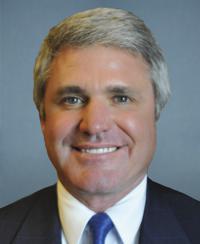 Rep. Michael T. McCaul (R-TX)
Description
Amendment increases special education funding for the DeafBlindness program.
Text
Offered
This amendment's own text couldn't be picked out of its Congressional Record passage, so the passage is shown in full.
Announcement by the Chairman
The CHAIRMAN. The Chair will remind Members to direct all comments to
the Chair, please.
Mr. KENNEDY. If the gentleman doesn't understand, through the
Chairman, doesn't understand the comparison between children working
overseas, fighting, working to try to manufacture products that are
going to compete against our unionized workers here at home or our
manufacturer workers, whether they are unionized or not, if he doesn't
understand that they are competing against one another, I can't explain
it to them.
If he can't understand and grasp that it's in our interest to make
sure that our competitors don't use children that are being paid
pennies on the dollar while our moms and pops are having to compete
against them with minimum wage standards, I can't explain it to him. If
he doesn't understand that, it's hard for me to give him an economics
lesson that they are competing in a global economy that has
transparency of products thanks to these trade agreements.
{time} 1745
Mr. RYAN of Ohio. I thank the gentleman from Rhode Island. And I also
find it a bit peculiar that our friend from Florida, being from Ohio,
we disagree on our favorite college basketball team, we disagree on our
favorite college football team, so it is not a real surprise that we
are going to disagree here. But I find it peculiar that he was saying
that he was trying to support the workers. And I wish he would remember
the vote on the minimum wage when he and the leadership of his party
were consistently trying to prevent us from passing the minimum wage to
help the American worker.
Madam Chairman, I yield back the balance of my time.
Mr. PRICE of Georgia. Madam Chairman, I move to strike the last word.
The CHAIRMAN. The gentleman from Georgia is recognized for 5 minutes.
Mr. PRICE of Georgia. I thank my friend from Minnesota for bringing
this issue forward. Madam Chairman, this is an extremely important
issue, and I think it is important that we bring the debate back to the
actual amendment.
The amendment addresses the issue of funding for the Office of Labor
Management Statistics, and that agency is the only agency of the
government that is devoted to protecting the interests of dues-paying
union members, the only one.
The funding in last year, fiscal year 2007, was about $47 million.
Funding proposed for this year is about $45 million. It is a cut of
about $2 million. That is a cut. Not the cut that we have heard
explained in other bills that were reductions in the increase; it is a
cut. The President felt so strongly about this and felt so strongly
about the success of this agency that he recommended an increase to $56
million. So this proposal by the majority party is a decrease of $11.1
million from the President's request.
Now, it is curious the arguments that we are hearing on the other
side. They have increased spending virtually across the board for every
single agency except for this one, and this is the one that provides
the enforcement for the Department of Labor. I have supported many
appropriate reductions, there is no doubt about it, as we have moved
through these appropriations bills, but I believe strongly that there
is a message that is being sent in this cut that is being proposed by
the majority party, and that message is that it is imperative that the
debt that they owe to union bosses be paid.
And why do I say that? This is an agency that has significant
results. Since 2001, the indictments resulting from investigations by
this agency have increased by 20 percent. Now, why would we want to
decrease funding to an agency that is showing success in protecting
dues-paying workers? Convictions have increased by 26 percent and the
courts have ordered restitution of over $70 million in union members'
dues that were stolen, stolen by union officials. That sounds like a
project that would merit support by the majority party, but, as my good
friend from Florida just said, it is clear that this is a trend that we
are seeing by this new majority party, and that is that the protection
of the rank-and-file worker is not what they have an interest in. And
that was demonstrated clearly with the card check issue which, as he
mentioned, took away the sacrosanct right of a secret ballot in union
formation in this Nation. The majority party said, no, that wasn't
important, that individuals ought to be exposed to the kind of
intimidation that we see on both sides, both the employer and the union
side.
So, Madam Chairman, I guess it ought not be surprising that we see
this included in the current bill, but it is disappointing. There is no
doubt that it is disappointing. Because, again, we have an agency of
the Federal Government, the Office of Labor Management Statistics,
which is getting results, which is fulfilling its mission, which is
fulfilling its charge, which is fulfilling its responsibility to the
American people and to this Federal Government, and this new majority
proposes to significantly cut the amount of funding to the agency. I
think it exposes a flaw in the thinking of the majority party and,
hence, this general statement that we are the only individuals for
working people. In fact, tax cuts are for working people. In fact,
decreasing spending at the level of the Federal Government is for
working people. In fact, not passing the largest tax increase in the
history of our Nation is for working people.
So we stand proudly and honorably before the American people and say
that the party that stands in favor of working people is the party that
is most responsible with Federal spending. It is the party that holds
to account Federal agencies. This Federal agency, this office is
accomplishing its goal, it is accomplishing its mission, and so it
ought not be one that we cut. There are certainly others that are
available to be decreased. I urge support of the Kline amendment and
ask all my colleagues to support it.
Mr. MARCHANT. Madam Chairman, I move to strike the last word.
The CHAIRMAN. The gentleman from Texas is recognized for 5 minutes.
Mr. MARCHANT. I yield to the gentleman from Minnesota.
Mr. KLINE of Minnesota. I thank the gentleman for yielding.
There are a couple of points I would like to address. It has been an
interesting debate, as these things often turn in to be. We have heard
the gentleman from Rhode Island say that this base bill just keeps it
going presumably at the current level. And, as we have already heard
established, this is in fact a $2 million cut, $11 million below the
President's request.
The gentleman from Rhode Island is right, though, when he talked
about this being about people checking their own books and covering
their tracks. That is exactly what this is about. He was talking about
perhaps corporations, and we have already talked about increasing the
money to provide oversight and law enforcement for corporations. But
this is about unions. This is about American workers.
We have looked at the money percentage cut/percentage increase. We
have already confirmed that this is a $2 million cut, as my colleague
from Georgia says. And I just find it interesting, looking at the
figures here, we have added $935 million to President Bush's fiscal
year 2008 budget request for the Department of Labor, and within that
budget increase are individual funding increases for every single
enforcement office within the agency except this one, this one whose
job it is to make sure that union leaders who are misbehaving are not
able to just check their own books and cover their tracks. Somebody
else has got to hold them accountable.
And this embezzlement is not restricted to one or two people in one
or two States. We have examples over the last 3 or 4 years of
misconduct by union leaders in 48, at least, of the 50
[[Page H7936]]
States. A couple of examples here might be relevant.
Looking at the neighboring State of Wisconsin, on September 21, 2006,
in the United States District Court for the Eastern District of
Wisconsin, Felix A. Robinson, former president of the Industrial
Division of the Communication Workers of America, Local 84101, pled
guilty to one count of embezzling union funds. The guilty plea followed
investigation by the OLMS Milwaukee district office.
Sad to say it happens in my own State. On February 22 of this year,
2007, in the United States District Court for the District of
Minnesota, Catherine Bronson, former business representative for Hotel
and Restaurant Employees Local 21 in Rochester, Minnesota, was
sentenced to 180 days of home confinement.
Mr. OBEY. Madam Chairman, will the gentleman yield?
Mr. MARCHANT. I yield to the gentleman from Wisconsin.
Mr. OBEY. Could the gentleman tell me, have there been any more labor
leaders indicted lately than Members of Congress?
Mr. MARCHANT. Reclaiming my time, Madam Chairman, I yield to the
gentleman from Minnesota.
Mr. KLINE of Minnesota. We have pages and pages of examples. Let me
just give another one so that my colleagues and the workers of America
understand that we are talking about misbehavior, illegal behavior on
the part of people who have the responsibility for taking care of their
union dues.
November 7, 2006, in the United States District Court for the
District of Minnesota, Timothy J. Pulvermacher, former financial
secretary for USWA Local 9444 pled guilty to embezzling union funds.
January 8, 2007, Kathryn Stark, former office manager for IBEW Local
31 was sentenced to a 6-month confinement.
Why? Because they are abusing their union members. They are stealing
from them. And this is the only office that has the responsibility and
authority for holding them accountable.
So we can debate for all day, I suppose, who is for the worker and
who is not for the worker and whether the tax cuts are good for the
worker. We certainly believe they are on this side of the aisle. But
that is not what my amendment is about. My amendment is about making
sure that the office who has the responsibility for holding union
leaders accountable for their workers' funds has the staff it needs to
do the job.
The base bill, cutting $2 million would force that office to cut
staff members, the very people who conduct the investigations and bring
these people to justice.
Again, I encourage all of my colleagues to support this amendment
which supports the union workers of America and holds those who
misbehave accountable. And I thank the gentleman for yielding.
Mr. WILSON of South Carolina. Madam Chairman, I rise today in support
of the amendment introduced by my friend Mr. Kline of Minnesota, a
dedicated U.S. Marine veteran, which restores much needed funding to
the Office of Labor Management Standards (OLMS). I applaud
Representative Kline's continued efforts to draw attention and support
to this very important issue, and I appreciate his dedicated leadership
in this area.
This straightforward amendment would add $2 million to the current
legislation and restore funding for OLMS to its fiscal year 2007
levels. This addition would also enable the agency to hire 13 full-time
employees.
The Office of Labor Management Standards plays a vital role in
administering and enforcing provisions of the Labor-Management
Reporting and Disclosure Act of 1959, LMRDA. This bipartisan law was
enacted by Congress to ensure standards of democracy and fiscal
responsibility in labor organizations representing employees in private
industry.
When enacting the LMRDA, Congress expressed that union members and
the general public would benefit by having access to information about
labor unions. As a result, each union subject to LMRDA is required to
submit annual financial reports to OLMS. This public accountability is
achieved through the filing of LM-2 forms. Millions of working
Americans have a portion of their paychecks given to labor
organizations, and they deserve to know where their hard-earned money
is going.
According to a September 2006 Wall Street Journal article, up to 60
percent of labor organizations' budgets are going to PAC contributions
and lobbying activities. In one instance, only 36 percent of the funds
actually went to representing union members in labor negotiations.
There is a high level of demand for this information. In fact,
between May 2006 and May 2007, there were 767,908 hits on OLMS's
website. That's an average of about 64,000 per month and over 2,100 per
day.
Again, I am pleased to recognize the important work of the Office of
Labor Management Standards, and I urge members to support this
amendment.
Mr. MARCHANT. Madam Chairman, I yield back the balance of my time.
The CHAIRMAN. The question is on the amendment offered by the
gentleman from Minnesota (Mr. Kline).
The question was taken; and the Chairman announced that the noes
appeared to have it.
Mr. KLINE of Minnesota. Madam Chairman, I demand a recorded vote.
The CHAIRMAN. Pursuant to clause 6 of rule XVIII, further proceedings
on the amendment offered by the gentleman from Minnesota will be
postponed.
The Clerk will read.
The Clerk read as follows:
Of the unobligated funds collected pursuant to section
286(v) of the Immigration and Nationality Act, $70,000,000 is
rescinded.
special benefits
(including transfer of funds)
For the payment of compensation, benefits, and expenses
(except administrative expenses) accruing during the current
or any prior fiscal year authorized by chapter 81 of title 5,
United States Code; continuation of benefits as provided for
under the heading ``Civilian War Benefits'' in the Federal
Security Agency Appropriation Act, 1947; the Employees'
Compensation Commission Appropriation Act, 1944; sections
4(c) and 5(f) of the War Claims Act of 1948 (50 U.S.C. App.
2012); and 50 percent of the additional compensation and
benefits required by section 10(h) of the Longshore and
Harbor Workers' Compensation Act, $203,000,000, together with
such amounts as may be necessary to be charged to the
subsequent year appropriation for the payment of compensation
and other benefits for any period subsequent to August 15 of
the current year: Provided, That amounts appropriated may be
used under section 8104 of title 5, United States Code, by
the Secretary of Labor to reimburse an employer, who is not
the employer at the time of injury, for portions of the
salary of a reemployed, disabled beneficiary: Provided
further, That balances of reimbursements unobligated on
September 30, 2007, shall remain available until expended for
the payment of compensation, benefits, and expenses: Provided
further, That in addition there shall be transferred to this
appropriation from the Postal Service and from any other
corporation or instrumentality required under section 8147(c)
of title 5, United States Code, to pay an amount for its fair
share of the cost of administration, such sums as the
Secretary determines to be the cost of administration for
employees of such fair share entities through September 30,
2008: Provided further, That of those funds transferred to
this account from the fair share entities to pay the cost of
administration of the Federal Employees' Compensation Act,
$52,280,000 shall be made available to the Secretary as
follows:
(1) For enhancement and maintenance of automated data
processing systems and telecommunications systems,
$21,855,000.
(2) For automated workload processing operations, including
document imaging, centralized mail intake and medical bill
processing, $16,109,000.
(3) For periodic roll management and medical review,
$14,316,000.
(4) The remaining funds shall be paid into the Treasury as
miscellaneous receipts:
Provided further, That the Secretary may require that any
person filing a notice of injury or a claim for benefits
under chapter 81 of title 5, United States Code, or the
Longshore and Harbor Workers' Compensation Act, provide as
part of such notice and claim, such identifying information
(including Social Security account number) as such
regulations may prescribe.
special benefits for disabled coal miners
For carrying out title IV of the Federal Mine Safety and
Health Act of 1977, as amended by Public Law 107-275,
$208,221,000, to remain available until expended.
For making after July 31 of the current fiscal year,
benefit payments to individuals under title IV of such Act,
for costs incurred in the current fiscal year, such amounts
as may be necessary.
Ms. ROYBAL-ALLARD. Madam Chairman, I move to strike the last word.
The CHAIRMAN. The gentlewoman from California is recognized for 5
minutes.
Ms. ROYBAL-ALLARD. Madam Chairman, during the full committee markup
of this bill, an amendment was added that would prohibit the use of
Federal funds for administering thimerosal-containing influenza
vaccines to children under 3 years of age. While
[[Page H7937]]
I respect the good intentions of the author of this amendment and my
colleagues who supported it, this provision creates significant public
health concerns for the protection of our youngest children from both
seasonal and pandemic influenza.
This past week, I have heard from numerous public health and
scientific groups with expertise in immunizations. They all agree that
there is no credible scientific or medical evidence that vaccination of
young children with vaccines containing the preservative thimerosal
causes autism or other neurodevelopmental disorders.
Madam Chairman, our national immunization policies must be based on
science. I strongly believe that the United States Congress should not
substitute its judgment about which vaccines are safe for our children
for that of the major vaccine and public health experts.
Perhaps the most convincing statements against the amendment are in a
communication from Dr. Julie Gerberding, the Director of the Centers
For Disease Control and Prevention, dated July 16, 2007. Her opposition
to the thimerosal amendment is as follows:
``There is no scientific basis to support a prohibition of use of
thimerosal-containing vaccine. In particular, science does not support
a causal association between thimerosal and autism. In fact, the
Institute of Medicine concluded that, `the evidence favors rejection of
a causal relationship between thimerosal-containing vaccines and
autism.'
{time} 1800
``CDC respects this IOM conclusion.''
The Advisory Committee on Immunization Practices, a diverse group of
expert advisers on vaccine use, has made its position explicitly clear.
``The benefits of influenza vaccination for all recommended groups
including pregnant women and young children, outweigh the unproven risk
from thimerosal exposure through vaccination.''
Instead, ACIP recommends that children and adults who need
vaccination may receive any available vaccine preparation licensed for
use in the person's age and risk factor group with or without
thimerosal.
The supply of thimerosal-free vaccine is increasing, but we do not
know precisely how many doses of vaccine licensed for use in children
6-35 months of age will be available in 2008-2009. Based on information
from the manufacturers, the supply is not likely to be large enough to
vaccinate all the children whose parents want this protection for them.
Even if the supply increases more than we expect, the realities of
vaccine distribution make it impossible to precisely align supplies
with vaccine demand in every practice or community.
Passage of the proposed amendment would mean that some children would
not have access to influenza vaccine because the supply would be
reduced. Tragically, some of these unvaccinated children would suffer
the more severe consequences of influenza, even though vaccination
would otherwise have helped protect them. For this reason, CDC strongly
opposes the proposed amendment.
Madam Chairman, these are Dr. Gerberding's compelling arguments
against this provision. I will not be offering an amendment today to
strike it from the bill. However, considering the overwhelming outcry
from the public health community against this amendment, I hope we will
continue this discussion, and I look forward for a way to address these
concerns in conference.
Madam Chairman, I yield back the balance of my time.
The CHAIRMAN. The Clerk will read.
The Clerk read as follows:
For making benefit payments under title IV for the first
quarter of fiscal year 2009, $62,000,000, to remain available
until expended.
administrative expenses, energy employees occupational illness
compensation fund
(including transfer of funds)
For necessary expenses to administer the Energy Employees
Occupational Illness Compensation Act, $104,745,000, to
remain available until expended: Provided, That the Secretary
of Labor is authorized to transfer to any executive agency
with authority under the Energy Employees Occupational
Illness Compensation Act, including within the Department of
Labor, such sums as may be necessary in fiscal year 2008 to
carry out those authorities: Provided further, That the
Secretary may require that any person filing a claim for
benefits under such Act provide as part of such claim, such
identifying information (including Social Security account
number) as may be prescribed. Provided further, That not
later than 30 days after enactment of this Act, in addition
to other sums transferred by the Secretary to the National
Institute for Occupational Safety and Health (NIOSH) for the
administration of the Energy Employees Occupational Illness
Compensation Program (EEOICPA), the Secretary shall transfer
$4,500,000 to NIOSH from the funds appropriated to the Energy
Employees Occupational Illness Compensation Fund (42 U.S.C.
7384e), for use by or in support of the Advisory Board on
Radiation and Worker Health (the Board) to carry out its
statutory responsibilities under EEOICPA (42 U.S.C. 7384n-q),
including obtaining audits, technical assistance and other
support from the Board's audit contractor with regard to
radiation dose estimation and reconstruction efforts, site
profiles, procedures, and review of Special Exposure Cohort
petitions and evaluation reports.
Black Lung Disability Trust Fund
(including transfer of funds)
In fiscal year 2008 and thereafter, such sums as may be
necessary from the Black Lung Disability Trust Fund, to
remain available until expended, for payment of all benefits
authorized by section 9501(d) (1), (2), (4), and (7) of the
Internal Revenue Code of 1954 and interest on advances, as
authorized by section 9501(c)(2) of such Act. In addition,
the following amounts shall be available from the Fund for
fiscal year 2008 for expenses of operation and administration
of the Black Lung Benefits program, as authorized by section
9501(d)(5) of such Act: $32,761,000 for transfer to the
Employment Standards Administration ``Salaries and
Expenses''; $24,785,000 for transfer to Departmental
Management, ``Salaries and Expenses''; $335,000 for transfer
to Departmental Management, ``Office of Inspector General'';
and $356,000 for payments into miscellaneous receipts for the
expenses of the Department of the Treasury.
Occupational Safety and Health Administration
salaries and expenses
For necessary expenses for the Occupational Safety and
Health Administration, $503,516,000, including not to exceed
$91,093,000 which shall be the maximum amount available for
grants to States under section 23(g) of the Occupational
Safety and Health Act (``the Act''), which grants shall be no
less than 50 percent of the costs of State occupational
safety and health programs required to be incurred under
plans approved by the Secretary of Labor under section 18 of
the Act; and, in addition, notwithstanding section 3302 of
title 31, United States Code, the Occupational Safety and
Health Administration may retain up to $750,000 per fiscal
year of training institute course tuition fees, otherwise
authorized by law to be collected, and may utilize such sums
for occupational safety and health training and education:
Provided, That, notwithstanding section 3302 of title 31,
United States Code, the Secretary is authorized, during the
fiscal year ending September 30, 2008, to collect and retain
fees for services provided to Nationally Recognized Testing
Laboratories, and may utilize such sums, in accordance with
the provisions of section 2 of the Act of April 13, 1934 (29
U.S.C. 9a), to administer national and international
laboratory recognition programs that ensure the safety of
equipment and products used by workers in the workplace:
Provided further, That none of the funds appropriated under
this paragraph shall be obligated or expended to prescribe,
issue, administer, or enforce any standard, rule, regulation,
or order under the Act which is applicable to any person who
is engaged in a farming operation which does not maintain a
temporary labor camp and employs 10 or fewer employees:
Provided further, That no funds appropriated under this
paragraph shall be obligated or expended to administer or
enforce any standard, rule, regulation, or order under the
Act with respect to any employer of 10 or fewer employees who
is included within a category having a Days Away, Restricted,
or Transferred (DART) occupational injury and illness rate,
at the most precise industrial classification code for which
such data are published, less than the national average rate
as such rates are most recently published by the Secretary,
acting through the Bureau of Labor Statistics, in accordance
with section 24 of the Act (29 U.S.C. 673), except--
(1) to provide, as authorized by the Act, consultation,
technical assistance, educational and training services, and
to conduct surveys and studies;
(2) to conduct an inspection or investigation in response
to an employee complaint, to issue a citation for violations
found during such inspection, and to assess a penalty for
violations which are not corrected within a reasonable
abatement period and for any willful violations found;
(3) to take any action authorized by the Act with respect
to imminent dangers;
(4) to take any action authorized by the Act with respect
to health hazards;
(5) to take any action authorized by the Act with respect
to a report of an employment accident which is fatal to one
or more employees or which results in hospitalization of two
or more employees, and to take
[[Page H7938]]
any action pursuant to such investigation authorized by the
Act; and
(6) to take any action authorized by the Act with respect
to complaints of discrimination against employees for
exercising rights under the Act:
Provided further, That the foregoing proviso shall not apply
to any person who is engaged in a farming operation which
does not maintain a temporary labor camp and employs 10 or
fewer employees: Provided further, That $10,116,000 shall be
available for Susan Harwood training grants, of which
$3,200,000 shall be used for the Institutional Competency
Building training grants which commenced in September 2000,
for program activities for the period of October 1, 2007, to
September 30, 2008, provided that a grantee has demonstrated
satisfactory performance: Provided further, That such grants
shall be awarded no less than 30 days after the date of
enactment of this Act: Provided further, That the Secretary
shall provide a report to the Committees on Appropriations of
the House of Representatives and the Senate with timetables
for the development and issuance of occupational safety and
health standards on beryllium, silica, cranes and derricks,
confined space entry in construction, and hazard
communication global harmonization; such timetables shall
include actual or estimated dates for: the publication of an
advance notice of proposed rulemaking, the commencement and
completion of a Small Business Regulatory Enforcement
Fairness Act review (if required), the completion of any peer
review (if required), the submission of the draft proposed
rule to the Office of Management and Budget for review under
Executive Order 12866 (if required), the publication of a
proposed rule, the conduct of public hearings, the submission
of a draft final rule to the Office and Management and Budget
for review under Executive Order 12866 (if required), and the
issuance of a final rule; and such report shall be submitted
to the Committees on Appropriations of the House of
Representatives and the Senate within 90 days of the
enactment of this Act, with updates provided every 90 days
thereafter that shall include an explanation of the reasons
for any delays in meeting the projected timetables for
action.
Mine Safety and Health Administration
salaries and expenses
For necessary expenses for the Mine Safety and Health
Administration, $313,478,000 including purchase and bestowal
of certificates and trophies in connection with mine rescue
and first-aid work, and the hire of passenger motor vehicles,
including up to $2,000,000 for mine rescue and recovery
activities; in addition, not to exceed $750,000 may be
collected by the National Mine Health and Safety Academy for
room, board, tuition, and the sale of training materials,
otherwise authorized by law to be collected, to be available
for mine safety and health education and training activities,
notwithstanding section 3302 of title 31, United States Code;
and, in addition, the Mine Safety and Health Administration
may retain up to $1,000,000 from fees collected for the
approval and certification of equipment, materials, and
explosives for use in mines, and may utilize such sums for
such activities; the Secretary of Labor is authorized to
accept lands, buildings, equipment, and other contributions
from public and private sources and to prosecute projects in
cooperation with other agencies, Federal, State, or private;
the Mine Safety and Health Administration is authorized to
promote health and safety education and training in the
mining community through cooperative programs with States,
industry, and safety associations; the Secretary is
authorized to recognize the Joseph A. Holmes Safety
Association as a principal safety association and,
notwithstanding any other provision of law, may provide funds
and, with or without reimbursement, personnel, including
service of Mine Safety and Health Administration officials as
officers in local chapters or in the national organization;
and any funds available to the Department may be used, with
the approval of the Secretary, to provide for the costs of
mine rescue and survival operations in the event of a major
disaster.
Bureau of Labor Statistics
salaries and expenses
For necessary expenses for the Bureau of Labor Statistics,
including advances or reimbursements to State, Federal, and
local agencies and their employees for services rendered,
$497,854,000, together with not to exceed $78,264,000, which
may be expended from the employment security administration
account in the Unemployment Trust Fund, of which $5,000,000
may be used to fund the mass layoff statistics program under
section 15 of the Wagner-Peyser Act (29 U.S.C. 49l-2):
Provided, That the Current Employment Survey shall maintain
the content of the survey issued prior to June 2005 with
respect to the collection of data for the women worker
series.
Amendment Offered by Mr. Platts
Mr. PLATTS. Madam Chairman, I offer an amendment.
The Clerk read as follows:
Amendment offered by Mr. Platts:
Page 24, line 22, after the dollar amount, insert the
following: ``(reduced by $27,995,000)''.
Page 25, line 22, after the first dollar amount, insert the
following: ``(reduced by $10,163,000)''.
Page 63, line 4, after the first dollar amount, insert the
following: ``(reduced by $10,942,000)''.
Page 77, line 6, after the dollar amount, insert the
following: ``(increased by $50,000,000)''.
Page 77, line 7, after the dollar amount, insert the
following: ``(increased by $50,000,000)''.
Page 92, line 17, after the dollar amount, insert the
following: ``(reduced by $900,000)''.
Mr. PLATTS. Madam Chairman, before I address my amendment I certainly
want to commend Chairman Obey and the ranking member, Mr. Walsh, and
their staffs for their dedicated work on this very important
appropriations bill. I sincerely appreciate their efforts.
Madam Chairman, literacy skills are the cornerstone of our education
system. I think that we can all agree that students who struggle with
reading face challenges in all subject areas in school.
Unfortunately, children of parents who themselves have difficulty
reading English are even more likely to perform at low literacy levels.
For this reason, my predecessor, the Honorable Bill Goodling, former
Republican chairman of the Education and Workforce Committee,
established the Even Start Family Literacy Program.
Even Start is the only Federal education program that teaches
literacy skills to both parents and their children. Through this
program parents receive the necessary skills to become a teacher to
their children and to improve their lives.
Even Start serves the most economically and educationally
disadvantaged population in the country. According to a Department of
Education report, 84 percent of Even Start's families are at or below
the Federal poverty level. Nearly half of Even Start families have an
annual household income of under $6,000, and 84 percent of Even Start
adults do not have a high school diploma or GED.
Even Start is a program that provides disadvantaged families with an
opportunity to provide a better life for their children. Parents enroll
in Even Start to become better parents, to further their education, and
to improve their children's chance of success in school.
At the Even Start centers in my hometown of York, Pennsylvania, I've
witnessed firsthand the positive and significant impact that this
program is having on parents and children alike.
The Even Start program has yielded successful results. A 2005 Texas
A&M study has found that, on average, employment rates rise from 17
percent to 51 percent after program completion. In addition, wages
increased by more than 25 percent.
Despite these positive results, and even with the Appropriations
Committee's approximately $17 million proposed increase over the fiscal
year 2007 funding level, the underlying bill's proposed funding level
for the Even Start program is 60 percent less than the amount provided
in 2002. Even Start centers struggled this past year to keep their
doors open, and many had to close their doors permanently because of
this drastic funding cut.
For these reasons, I've introduced this amendment to H.R. 3043. My
amendment would increase the appropriations for the William F. Goodling
Even Start Family Literacy Program by $50 million, bringing its total
appropriation to $149 million. While this increase may seem
significant, it's important to put the proposed level of $149 million
into perspective. Even with the increased proposed in this amendment,
the total level of funding for Even Start will still be 40 percent less
than the funding levels provided in fiscal years 2001, 2002, 2003 and
2004 respectively. In fact, the underlying bill's funding level is less
than what was provided even 13 fiscal years back, in 1995.
I certainly thank Chairman Obey for his support and advocacy of the
Even Start program throughout many years. The Even Start program helps
our most disadvantaged parents better their lives for themselves and
their children.
I hope all Members will join me in supporting the Even Start program.
I urge a ``yes'' vote.
Madam Chairman, I yield back my time.
Mr. OBEY. Madam Chairman, I rise to oppose the amendment.
The CHAIRMAN. The gentleman is recognized for 5 minutes.
Mr. OBEY. Madam Chairman, I don't really enjoy opposing this
amendment because I think this is a good program
[[Page H7939]]
that the gentleman seeks to expand. But let me put his amendment in
context.
The President of the United States tried to eliminate this program in
his budget. The committee has provided $99 million for it, and for that
the administration is criticizing us.
I would also point out that in the last year, when the other party
controlled the House of Representatives, the committee cut Even Start
by $29 million. We've done none of that. We've restored the funding,
and I have a great deal of confidence in the program. But I cannot
support the idea of adding the additional money the gentleman proposes
because he takes it from a very damaging place.
Now, I know that there is no political constituency for the Bureau of
Labor Statistics. No one is going to get excited if they hear that we
are cutting back funding for that agency. But, in fact, the Bureau of
Labor Statistics, which produces the Consumer Price Index, puts
together the numbers that determine the way hundreds of billions of
dollars flow in this budget and flow in this economy.
We are operating on the basis of an ancient Consumer Price Index. The
housing component of that index, which makes up almost 30 percent of
it, is some 17 years out of date, and we know there's been a lot of
change in housing stock over the last 17 years.
And it just seems to me that while the gentleman is citing a worthy
program for adding funds, I would suggest that it would do tremendous
long-term damage to this country in terms of equity if we do not update
and modernize the data being produced by the Bureau of Labor
Statistics. Republicans can have their set of facts, Democrats can have
their set of facts, but in the end we need to disregard both sets and
we need to have statistics which underlie all of the economic decisions
that we make. And it makes no sense to be proceeding on the basis of
17-year old statistics.
So, much as I regret having to oppose the gentleman's amendment and
much as I regret having to call Bill Goodling, who is the original
sponsor of the program, to tell Bill that I couldn't support the
increase in this instance, I do think that the responsible thing to do
in this instance is to vote ``no.''
I forgot to mention, and far be it for me to defend the
administration's Cabinet appointees. But the gentleman, as I understand
it, would take a significant amount of this funding from the Department
of Labor administration accounts.
I would point out the administration is also complaining about the
cuts we've made in the Labor Secretary's budget. Their Information and
Technology Account has already been cut by 39 percent. The Office of
the Secretary has already been cut by 17 percent. And we did not
provide the requested funds for a core accounting system, and the
administration specifically brings attention to their concerns about
this. And I honestly do not think it's advisable to cut the agency even
more deeply.
And let me assure the gentleman that I would actually prefer that he
withdraw the amendment and I'd be happy to try to work, as I'm sure the
gentleman from New York would, to try to improve the Even Start
position in conference.
But if he has to rely on these kinds of offsets, I regret it, but I
simply cannot see my way clear to support it.
Madam Chairman, I yield back the balance of my time.
The CHAIRMAN. The question is on the amendment offered by the
gentleman from Pennsylvania (Mr. Platts).
The question was taken; and the Chairman announced that the noes
appeared to have it.
Mr. PLATTS. Madam Chairman, I demand a recorded vote.
The CHAIRMAN. Pursuant to clause 6 of rule XVIII, further proceedings
on the amendment offered by the gentleman from Pennsylvania will be
postponed.
The Clerk will read.
The Clerk read as follows:
Office of Disability Employment Policy
salaries and expenses
For necessary expenses for the Office of Disability
Employment Policy to provide leadership, develop policy and
initiatives, and award grants furthering the objective of
eliminating barriers to the training and employment of people
with disabilities, $27,712,000.
Departmental Management
salaries and expenses
For necessary expenses for Departmental Management,
including the hire of three sedans, and including the
management or operation, through contracts, grants or other
arrangements of Departmental activities conducted by or
through the Bureau of International Labor Affairs, including
bilateral and multilateral technical assistance and other
international labor activities, $292,943,000, of which
$72,516,000 is for the Bureau of International Labor Affairs
(including $5,000,000 to implement model programs to address
worker rights issues through technical assistance in
countries with which the United States has trade preference
programs), and of which $18,000,000 is for the acquisition of
Departmental information technology, architecture,
infrastructure, equipment, software and related needs, which
will be allocated by the Department's Chief Information
Officer in accordance with the Department's capital
investment management process to assure a sound investment
strategy; together with not to exceed $318,000, which may be
expended from the employment security administration account
in the Unemployment Trust Fund.
Amendment Offered by Mr. Reichert
Mr. REICHERT. Madam Chairman, I offer an amendment.
The Clerk read as follows:
Amendment offered by Mr. Reichert:
Page 25, line 22, after the first dollar amount, insert
``(reduced by $2,500,000)''.
Page 33, line 25, after the dollar amount, insert
``(increased by $2,500,000)''.
Mr. OBEY. Madam Chairman, I reserve a point of order on the
amendment. We don't have a copy of it.
The CHAIRMAN. A point of order is reserved.
The gentleman from Washington is recognized for 5 minutes.
Mr. REICHERT. Madam Chairman, as the former sheriff of King County in
Seattle, Washington, and the cochairman of the Congressional Children's
Health Care Caucus, I am proud to offer this amendment supporting
emergency medical services for children.
I am pleased to be joined in offering this amendment by Congressman
Matheson, and to have the support of Congressman King from New York,
both of whom have been outstanding leaders on this issue.
Our amendment will provide $2.5 million in additional resources for
emergency medical services for children's programs offset from the
Department of Labor's General Administrative Account. This vital
program provides grants to States and medical institutions, to expand
and improve emergency care for children who need treatment for life-
threatening illnesses or injuries.
This modest funding increase will help a program that has been nearly
level funded for the past 6 years. It will better serve those who
provide emergency care for our children.
Children, as everyone knows, are not small adults. The illnesses and
injuries that bring them into emergency rooms vary significantly, and
they often need equipment that is smaller than what is used for adults,
and medication in much more carefully calculated doses.
{time} 1815
Although children account for 30 million annual visits to the
emergency rooms, many hospitals and emergency management agencies are
not well equipped to handle these patients. According to the Centers
for Disease Control, only 6 percent of the United States emergency
departments have all the supplies they need to handle pediatric
emergencies.
Emergency Medical Services grants have been awarded to all 50 States,
the District of Columbia and five territories. They have been used to
train first responders to buy pediatric equipment for hospitals and to
establish and improve standards for emergency care for children. Other
grants have been used to create pediatric treatment guides for school
nurses to test best practices and to incorporate pediatric care into
State disaster plans.
Madam Chairman, this is a simple amendment with a significant impact
on emergency care for our children. I urge all my colleagues to join in
supporting this important measure.
Madam Chairman, I yield back the balance of my time.
The CHAIRMAN. Does the gentleman from Wisconsin continue to reserve
his point of order?
Mr. OBEY. I withdraw the point of order and move to strike the last
word.
The CHAIRMAN. The gentleman is recognized for 5 minutes.
[[Page H7940]]
Mr. OBEY. Madam Chairman, let me simply point out that the
administration has sent us a statement of administration policy, or SAP
as it is known in the trade, and they indicate that the President
intends to veto this bill. And one of the reasons they intend to veto
the bill is because they say this bill spends too much money. I would
simply point out that virtually every Republican amendment that has
been offered so far is an amendment to increase funding for a specific
program.
On this program the President zeroed out this very worthy program.
The committee fully restored the funding at the previous year's level
of $19.8 million, and now this amendment seeks to add a small amount in
addition by taking it out of departmental management.
As the Chair of the committee, I think it is my obligation to the
administration to try to be somewhat objective about the funding level
that they need in order to fund their agency activities. But if we are
going to continue to get amendments from the administration's own side
of the aisle that further reduce Cabinet Secretaries' operating
budgets, who am I to object? So if the administration can't save itself
from its friends, far be it from me to intercede, and so I would simply
say that on this I will accept the amendment.
Mr. WALSH of New York. Madam Chairman, I move to strike the last
word.
The CHAIRMAN. The gentleman is recognized for 5 minutes.
Mr. WALSH of New York. Madam Chairman, I won't take the full 5
minutes. I would just like to say I am also prepared to accept the
amendment. But I would make the note that this is not an increase in
spending. There is an offset. We are moving money from one place to
another. It does not increase overall spending. It is cost neutral.
The CHAIRMAN. The question is on the amendment offered by the
gentleman from Washington (Mr. Reichert).
The amendment was agreed to.
Amendment Offered by Mr. Marchant
Mr. MARCHANT. Mr. Chairman, I offer an amendment.
The Clerk read as follows:
Amendment offered by Mr. Marchant:
Page 25, line 22, after each dollar amount, insert
``(reduced by $58,419,000)''.
Mr. MARCHANT. Madam Chairman, my amendment would reduce funding in
the bill for the International Labor Affairs Bureau to the President's
requested level of $14 million. This would save $58.4 million in this
category.
The underlying bill provides $72.5 million for this account. This
amendment would reduce funding for the International Labor Affairs
Bureau by $58.4 million to match the President's request.
The bureau was originally responsible for the Department of Labor's
overseas research projects and international labor workers' rights,
primarily research and advocacy. However, in recent years the bureau
has taken on grant-making activities. The bureau's grant assistance is
already provided for by the Department of State, and this amendment
would restructure the bureau's activities to advocacy and research
only.
I urge my colleagues to support this amendment.
Madam Chairman, I yield back the balance of my time.
Mr. OBEY. Madam Chairman, I rise in opposition to the gentleman's
amendment.
The CHAIRMAN. The gentleman is recognized for 5 minutes.
Mr. OBEY. Madam Chairman, this amendment is very simple. It seeks to
reinstate the President's 81-percent cut in the International Labor
Organization appropriation in the bill.
Madam Chairman, I cannot walk into a union hall in my District, I
cannot walk into a restaurant, I cannot walk into a barber shop without
having someone say to me, Obey, what are you guys going to do to
protect workers from unfair competition? What are you going to do to
protect us from slave labor in China? What are you going to do to
protect us from countries that pretend that they are free market
countries when, in fact, they are centrally directed Marxist countries?
When are you going to protect us from goods being produced by child
labor around the world?
The purpose of this International Labor Organization is to serve as
the one agency that serves as a red flag when our workers' wages are
being undercut unfairly.
So I think the issue is very simple, and I don't intend to take the
full 5 minutes. If you really are comfortable with the idea of just
letting the wonders of the world market determine what wages are for
American workers, if you are really comfortable with the idea of
letting substandard wages and substandard working conditions undercut
legitimate American workers' interests, then by all means vote for the
gentleman's amendment. If you think that the American worker deserves a
square deal in the midst of this globalization rampage, then I would
suggest you vote against the amendment. And, I do think that workers
and the organizations who represent them will be watching.
Madam Chairman, I yield back the balance of my time.
Mr. GARRETT of New Jersey. Madam Chairman, I move to strike the last
word.
The CHAIRMAN. The gentleman is recognized for 5 minutes.
Mr. GARRETT of New Jersey. Madam Chairman, I come to the floor
tonight to rise in support of the gentleman's amendment. I come to the
floor also to indicate my support for what we can do on this floor for
labor here in America. And I think that is the optimum word, ``here''
in America.
This amendment will do just that. It will protect laborers in this
country, and that should be the first priority of this U.S. Congress.
We do that first and foremost by protecting the fruits of their labor.
Their wages, their income, what they work for, 9 to 5 and longer,
Monday through Friday or longer during the course of the week. We do
that by ensuring that the money that we spend, their hard-earned tax
dollars, is appropriately spent and appropriately prioritized. And I
commend the gentleman for doing just that with this amendment.
There are many things that we would like to spend our dollars on. But
when we are elected to public office, we are to come here and make sure
that first and foremost the American citizen, and in this case, the
American worker, is protected.
As I come to the floor tonight, as I have said in the past, we have
now marked about 6 months into Democrat control of this U.S. Congress.
And what has it wrought during those 6 months? The largest tax increase
in U.S. history. The attempts to change historic rules of this House
and in operations. And, finally, attempts to create slush funds in
which dollars can be misspent on other inappropriate items, dollars
that are earned from the backs and sweat of American labor. And that is
why I come strongly to support this amendment by the gentleman from
Texas, to make sure that their hard-earned dollars are not misspent.
How often have we gone back to our districts and heard the complaint
of jobs in this country going overseas? Well, it is one thing to say
the jobs are going overseas; it is another thing to ask the laborers in
this country to support those jobs overseas. It is one thing to see our
jobs flee from this country to go to foreign shores; it is another
thing to ask the workers of this country, through their tax dollars, to
in essence support the organizations' structure of those jobs overseas.
We are elected to public office to protect the workers of this
country. This gentleman's proposal does just that, by making sure that
their tax dollars are focused first and foremost on workers and their
quality of life and their standards here in this country. We will
protect American workers. We will protect American jobs. And with this
amendment, we will protect the budget of the workers of America as
well.
Madam Chairman, I yield back the balance of my time.
Mr. PRICE of Georgia. Madam Chairman, I move to strike the last word.
The CHAIRMAN. The gentleman is recognized for 5 minutes.
Mr. PRICE of Georgia. Madam Chairman, I am somewhat amused by the
posture of the Appropriations Chair in the last two amendments, and I
appreciate the difficult position he finds himself in. But on the one
hand, the amendment before this one attempting to support the
President's recommendation and then on this one lambasting the
President's recommendation. So a case of whiplash, I understand, may be
in order.
[[Page H7941]]
But it is important to talk about exactly what this amendment does.
And I want to commend my good friend from Texas for proposing this
amendment.
The Department of Labor proposes in the President's budget that $14
million go to the International Labor Affairs Bureau, which would move
the agency closer to its core mission of research and policy analysis.
Remember this is the Department of Labor, not the Department of State.
In 2008 the International Labor Affairs Bureau will continue to focus
on administering over $530 million, $530 million, in projects that were
launched in previous years, including in the field of child labor, as
the chairman mentioned.
The Department of Labor seeks to restore the International Labor
Affairs Bureau to its original mission of research and advocacy by
eliminating its grant-making activities. We have all sorts of
duplication and redundancies in the Federal Government, and this
certainly is one of them. As an example of that, between 1996 and 2001,
the International Labor Affairs Bureau's funding rose by 1,500 percent
over a 5-year period of time when the agency embarked on an expansive
grant-making mission intended to combat international child labor,
develop and disseminate AIDS prevention information in the
international workplace, support core labor standards development, and
provide bilateral technical assistance.
Madam Chairman, grant-making activities are appropriately funded
through the Department of State and through the USAID, the U.S. Agency
for International Development, and other agencies. For example, the
2008 budget includes $3 billion to continue international assistance
activities in developing countries through the Millennium Challenge
Account. The administration created the Millennium Challenge Account to
provide targeted and accountable international development assistance
to poor countries with a demonstrative commitment to ruling justly,
investing in people, and encouraging economic growth. So there are more
appropriate places to fund these kinds of grant activities.
I would suggest, Madam Chairman, that the gentleman from Texas has
proposed an appropriate amendment to return the level of funding in
this appropriations bill to a level that would allow the International
Labor Affairs Bureau to return to its core mission, its core mission of
research and policy analysis and I believe better serve this Congress
and the American people.
{time} 1830
So I commend the gentleman for his amendment, and I encourage my
colleagues to support the amendment.
Madam Chairman, I yield back the balance of my time.
The CHAIRMAN. The question is on the amendment offered by the
gentleman from Texas (Mr. Marchant).
The question was taken; and the Chairman announced that the noes
appeared to have it.
Mr. MARCHANT. Madam Chairman, I demand a recorded vote.
The CHAIRMAN. Pursuant to clause 6 of rule XVIII, further proceedings
on the amendment offered by the gentleman from Texas will be postponed.
Amendment offered by Mr. Mc Caul of Texas
Mr. McCAUL of Texas. Madam Chairman, I offer an amendment.
The Clerk read as follows:
Amendment offered by Mr. McCaul of Texas:
Page 25, line 22, after the first dollar amount, insert
``(reduced by $2,000,000)''.
Page 84, line 24, after the dollar amount, insert
``(increased by $2,000,000)''.
Page 84, line 25, after the dollar amount, insert
``(increased by $2,000,000''.
Mr. McCAUL of Texas. Madam Chairman, I rise today to offer an
amendment in support of teacher training for deaf and blind children.
Madam Chair, the Department of Education has provided funding from
within its special education national activities account aimed at
children who are both deaf and blind, commonly referred to as
``deafblindness.'' This money trains teachers who have such children in
their classes on how to educate and include them in daily classroom
activities. This modest $12 million program has not received an
increase in nearly two decades.
Today over 110,000 people rely on this important program. Expanding
this program will allow us to identify more children in need and
increase the number of on-site technical assistance personnel.
This amendment simply increases the Special Education National
Activities Account to provide the DeafBlindness program with a modest
but necessary increase.
I urge my colleagues to support the amendment.
Mr. OBEY. Madam Chairman, will the gentleman yield?
Mr. McCAUL of Texas. I yield to the gentleman from Wisconsin.
Mr. OBEY. If the gentleman would be willing to constrain his remarks,
we would be willing to accept the amendment.
Mr. McCAUL of Texas. That's an offer I would be remiss to refuse, and
I will accept the offer.
Mr. OBEY. I thank the gentleman.
Mr. McCAUL of Texas. I thank the chairman.
Mr. WALSH of New York. Madam Chair, I rise in support of the
amendment.
Mr. McCAUL of Texas. Madam Chairman, I yield back the balance of my
time.
The CHAIRMAN. The question is on the amendment offered by the
gentleman from Texas (Mr. McCaul).
The amendment was agreed to.
Amendment Offered by Mr. Shays
Mr. SHAYS. Madam Chairman, I offer an amendment.
The Clerk read as follows:
Amendment offered by Mr. Shays:
Page 25, line 22, after the first dollar amount, insert
``(reduced by $500,000)''.
Page 107, line 14, after the dollar amount, insert
``(increased by $500,000)''.
Mr. SHAYS. Madam Chairman, this amendment would increase the funding
for the National Labor Relations Board by $500,000 and is offset by a
decrease to the Department of Labor departmental management salaries
and expenses. It is to allow the NLRB to start to reduce its cases.
It's at 2 years now, and we're looking to reduce it. This is an
amendment offered by Mark Udall and myself and Frank LoBiondo.
The NLRB takes an extraordinary amount of time to review and render a
decision on employment disputes.
According to the NLRB, the median mount of time it takes from the
filing of a charge to the issuance of the NLRB'S decision is over 2
years.
The funding in the Shays-Udall-LoBiondo amendment will allow the NLRB
to retain some of its full-time staff, which they otherwise would have
to let go due to the pay increase for Government employees.
It will also be used to train supervisors and new employees to ensure
they are handling the cases efficiently and effectively, without
sacrificing quality.
Funding, however, is not the only answer to the NLRB's problems.
We need to create deadlines to ensure the NLRB renders decisions in
an expedient manner.
Mark Udall, Frank LoBiondo, and I have been working on legislation to
require the NLRB to issue their decisions promptly.
The bill will require the NLRB to issue a decision not later than 9
months after the date on which the initial complaint was served.
Should the Board not reach a decision within 9 months, it must
transmit a report to Congress provide the reason or reasons the
deadline was not met and what steps it is taking to reach a decision.
One high-profile NLRB decision found the Smithfield Packing Company
guilty of illegally assaulting, intimidating, and harassing its workers
in Tar Heel, North Carolina, when they attempted to form a union in
1994 and 1997. However, the NLRB's decision that the employer used
unfair labor practices did not come down until 2005.
Taking this amount of time is an absurdity.
Mr. OBEY. Will the gentleman yield?
Mr. SHAYS. Absolutely.
Mr. OBEY. Again, same deal; if the gentleman will constrain his
remarks, we would be happy to accept the amendment.
Mr. SHAYS. I would be happy to. Could I just recognize Mark Udall?
Mr. UDALL of Colorado. I thank the gentleman for his generous offer.
I rise in support of the amendment.
I'd like to thank Chairman Obey and Ranking Member Walsh and the
Appropriations Committee for their leadership on this vital legislation
that will help to provide quality healthcare, enhance education
opportunities, and increase worker safety.
This is a good bill, but I think this amendment would make it better.
The amendment will increase the funding for the National Labor
Relations Board (NLRB) by $500,000, and is offset by a decrease to the
Department of Labor Departmental Management Salaries and expenses.
As we all know the NLRB plays a vital role in labor-management
relations.
It hears appeals of unfair labor practices and resolves questions
about the composition of bargaining units.
[[Page H7942]]
We need to maintain its ability to do its job.
But without the additional funding this amendment will provide, there
is a danger that they will have to lay off some of their staff in order
to pay for their required overhead, including salaries.
The amendment would prevent that, and would also enable the NLRB's
staff to handle cases efficiently and effectively, without sacrificing
quality.
Funding is not the only problem that faces the National Labor
Relations Board but congress should make it easier not harder for the
National Labor Relations Board to administer decisions.
I urge the House to adopt the Shays-Udall amendment.
Mr. SHAYS. Madam Chairman, I yield back the balance of my time.
The CHAIRMAN. The question is on the amendment offered by the
gentleman from Connecticut (Mr. Shays).
The amendment was agreed to.
Amendment offered by Mr. Jindal
Mr. JINDAL. Madam Chairman, I offer an amendment.
The Clerk read as follows:
Amendment offered by Mr. Jindal:
Page 25, line 22, after the first dollar amount insert
``(reduced by $50,000,000)''.
Page 38, line 18, after the aggregate dollar amount insert
``(increased by $50,000,000)''.
Mr. JINDAL. Madam Chairman, the Labor-HHS Subcommittee has funded the
Center for Disease Control's Division of Tuberculosis Elimination at
$150 million in this bill. Over the past 15 years, funding for this
program has been level. There has been no increase in funding for this
program since 1993.
Madam Chairman, every State and most major cities have TB control
programs. Approximately 75 percent of the funds appropriated for this
program are used in the States.
Funding for this program is critically important because just last
year, in 2006, more than 20 of the 50 States had increases in TB cases.
My home State of Louisiana, as well as most other States, have a large
number of workers who travel the globe to share their expertise. Unlike
tourists who stay in hotels in environments where TB exposure does not
normally occur, Louisiana's oil and gas workers spend months working
and living in environments among the local population where exposure
can and does occur. TB exposure in these communities can result in many
fatalities.
Another key issue for States and cities is the huge number of
foreign-born students attending universities in the United States. More
than half of the TB cases in the United States stem from foreign-born
students who come here on student visas and often return home for
summers and holidays, risking exposure in their home country. While
risk of exposure is high for these students, their return to
universities in the United States with the possibility of a latent TB
infection creates the same problem seen in oil and gas workers.
If the disease is activated, the number of people exposed is
tremendous. The last such case at a Louisiana university exposed 120
contacts in classes as well as in the dorms.
At present, there is no mandatory screening of this group, and no
vaccine to prevent disease. The Georgia man whose case recently made
headlines was exposed while volunteering overseas. As in his case,
volunteers or overseas workers can return to the United States with a
latent TB infection and activate the spread of this disease in the
United States, later exposing family, friends and coworkers. No routine
screening is performed, and no effective vaccine is available to
prevent the spread of this disease.
My amendment is supported by the American Lung Association, American
Thoracic Society, National Coalition for the Elimination of
Tuberculosis, and the National TB Controllers Association.
Madam Chairman, I yield back the balance of my time.
Mr. OBEY. Madam Chairman, I rise in opposition to the amendment.
The CHAIRMAN. The gentleman is recognized for 5 minutes.
Mr. OBEY. Madam Chairman, I don't like to have to oppose this
amendment, but the fact is where some of the previous amendments were
merely troublesome, this amendment is irresponsible.
Now, let us point out what's happened so far. What we have going on
here is a ``let's pretend'' game. We have the administration telling us
that this bill is runaway spending, and they threaten to veto the bill
when in fact this bill in real terms is only a little over a 2 percent
increase over last year. It is a large difference with the President's
budget, but that's because he tried to cut $7.5 billion of it. In real
terms, this bill goes up by less than $5 billion.
By now we have a number of people in this House who are trying to
escape from the consequences of the President's budget. So we have
pretended in one amendment that we can add money to AmeriCorps by
taking money out of administrative management accounts for the Labor
Department.
Then we are pretending that we can take out, yes, just a small
amount, $500,000, out of that same account in order to deal with
National Labor Relations Board. Then we are having another effort to
escape the squeeze on behalf of another very worthy cause, deaf and
blind children. And those have been accepted.
But now this amendment comes in, and it proposes to increase funding
for a very worthy cause, Center for Disease Control TB Elimination
Program. That is funded in the bill at $150.7 million, an increase of
$13.7 million over fiscal 2007 and $13.9 million over the President's
request. The funding included in this bill is a 10 percent increase
over fiscal 2007.
Now, everybody knows that we would like to be providing more money
for that program and a dozen others in this bill. But we are trying,
evidently, to give some credence to the administration's complaints
about dollar levels in spending.
So what does this amendment do? It savages the ability of the
Secretary of Labor to run any programs at all, because what it does is
to require a 25 percent cut in the ability of the Secretary of Labor to
manage all of the programs within their jurisdiction. So that means
that you have to chop the living guts out of the Secretary's own
office; you have to chop the guts out of the Solicitor's office. And
that is the office that deals with enforcement for mine safety, for
OSHA, or even the OLMS union violations that were the subject of a
previous amendment just a couple minutes ago.
And what this all is is a giant ``let's pretend'' operation. It's a
game that pretends that we are doing something real by adding money for
these accounts, when you know that if you're going to be responsible,
when we go to conference we're going to have to restore most of these
management accounts or else we will have a government agency,
admittedly one run by a very conservative Republican, but still a
government agency which will be crippled in its ability to provide its
functions.
I have in my office two signs. And whenever anybody comes to me
asking for money, I make them read those signs out loud. This is what
one of them says: ``What do you want us to do for someone besides
yourself that's more important than whatever it is you want us to do
for you?'' And I think that's the basic question we always ought to be
asking in a Judeo-Christian society.
My problem with this amendment is, while it seeks funds for a very
worthy cause, in the process it takes away crucial funds for many other
worthy causes. And sooner or later, even in the Congress of the United
States, we need to think about the needs of the whole. We need to think
about all of the needs that the government has to deal with, not just
one concern of one Member or one concern of another.
So in the interest of responsibility, I would urge a, very
regretfully, defeat of the gentleman's amendment.
Madam Chairman, I yield back the balance of my time.
Mr. WALSH of New York. Madam Chairman, I move to strike the last
word.
The CHAIRMAN. The gentleman is recognized for 5 minutes.
Mr. WALSH of New York. Madam Chairman, I couldn't agree more with my
colleague, the chairman of the subcommittee. It's difficult to oppose
an amendment that increases funding for treating and dealing with
tuberculosis. It's a very serious disease all across the Third World.
And there is the potential for it coming into our society and creating
real problems.
Having said that, there is an increase in the budget, it's $14
million above
[[Page H7943]]
what the President requested, a pretty substantial increase, a 10
percent increase in the budget. And while I respect the gentleman's
desire to strengthen our country against the disease, it's not proper
to take that amount of the budget of the Department of Labor for this
purpose. That would hamstring the Department of Labor. It would not cut
the fat, it would cut the muscle, it would cut the arms out. It would
cut the eyes out of the Department of Labor, and I don't think anybody
wants that.
So, I strongly urge a ``no'' vote on this amendment.
Mr. JINDAL. Will the gentleman yield?
Mr. WALSH of New York. I would be happy to yield.
Mr. JINDAL. I won't take a lot of time. I just want to make one
point.
I do thank the gentleman and the chairman for recognizing the good
intent behind the amendment. I do want to point out that the offset
still leaves in that account more money than what the President
requested in his budget. The rationale for offsetting from that account
is that, according to the administration there is a duplication of
effort between the Bureau of International Labor Affairs, the State
Department, USAID, and other agencies. So, even with the offset, we
still leave more money in those accounts than the administration itself
requested.
I thank the gentleman for yielding.
Mr. WALSH of New York. I thank the gentleman.
Reclaiming my time, there have been a number of amendments that have
cut into this salaries and expenses administrative account. I suspect
there will be more. We need to be very careful about further deep cuts.
And this is an especially large cut, $50 million. So I would, again,
urge a ``no'' vote.
Madam Chairman, I yield back the balance of my time.
Mr. PRICE of Georgia. Madam Chairman, I move to strike the last word.
The CHAIRMAN. The gentleman is recognized for 5 minutes.
Mr. PRICE of Georgia. Madam Chairman, I will be relatively brief on
this.
I want to commend my friend from Louisiana for offering the
amendment. As a physician in my former life, I appreciate the
remarkable increase in the incidence of tuberculosis and the need for
surveillance as well as detection and treatment. So I commend my friend
from Louisiana for offering this amendment. We all watched with some
curiosity and some significant concern within the last couple of months
as we tracked the travels of one individual from my City of Atlanta
around the world who was felt to have a case of tuberculosis that
needed to be treated urgently. So I commend my good friend for the
amendment.
I do want to say in the larger context, however, that I'm a little
perplexed, for the Chair of the Appropriations Committee talks about
``pretending'' to support AmeriCorps in previous amendments dealing
with this section of the bill, ``pretending'' to support NLRB,
``pretending'' to support deaf and blind children, and yet those are
the amendments that he accepted.
{time} 1845
So I am a little perplexed as to why this amendment isn't being given
the same, at least the same pretending of, support from the Chair of
the committee.
I would also point out that the appropriately decreased reductions in
the proposal from the administration in this area of the budget aren't
taken in isolation. They are part of the entire, larger budget, which
gets to the issue of the entire, larger budget that this new majority
has passed, and that, as you well know, Madam Chairman, includes the
largest tax increase in the history of our Nation. So I understand that
somehow you have to pay for all these things, but I believe strongly
that it is not the American people who desire to have the largest tax
increase in the history of our Nation.
So I rise to commend my good friend from Louisiana for proposing this
sound amendment. I would encourage its adoption. I understand the
concerns that others have regarding the underlying section in this area
of the bill, but I encourage my colleagues to support the amendment.
Madam Chairman, I yield back the balance of my time.
The CHAIRMAN. The question is on the amendment offered by the
gentleman from Louisiana (Mr. Jindal).
The question was taken; and the Chairman announced that the noes
appeared to have it.
Mr. JINDAL. Madam Chairman, I demand a recorded vote.
The CHAIRMAN. Pursuant to clause 6 of rule XVIII, further proceedings
on the amendment offered by the gentleman from Louisiana will be
postponed.
Amendment Offered by Mr. Shays
Mr. SHAYS. Madam Chairman, I offer an amendment.
The Clerk read as follows:
Amendment offered by Mr. Shays:
Page 25, line 22, after the first dollar amount, insert
``(reduced by $6,800,000)''.
Page 92, line 17, after the first dollar amount, insert
``(reduced by $1,500,000)''.
Page 97, line 16, after the first dollar amount, insert
``(increased by $8,300,000)''.
Page 97, line 17, after the dollar amount, insert
``(increased by $8,300,000)''.
Page 98, line 8, after the dollar amount, insert
``(increased by $1,500,000)''.
Mr. SHAYS. Madam Chairman, this amendment transfers $6.8 million from
the Department of Labor Departmental Management Salaries and Expenses
and $1.5 million from the Department of Education Departmental
Management Account to fund a $6.8 million increase in the AmeriCorps
State and National program. The additional $1.5 million is needed to
fund corresponding increases to the National Service trust fund for
reimbursement of student loans.
This amendment will provide adequate funding to ensure that
AmeriCorps State and National program will maintain the 34,000 full-
time volunteer positions. Based upon the funding level in the
legislation, the corporation will have to reduce its full-time
enrollment by 600 positions and replace them with reduced, part-time
positions.
There is a great deal of support for increasing Pell Grants in this
Congress, something with which I agree. It seems to me, however, that
with Pell Grants, the government and our society get no direct return,
whereas with AmeriCorps, recipients of this aid are required to perform
service to their community and Nation. There is a stipend for
education, but they have earned it through serving their country.
To me, national service is one of the smartest investments our
government can make. Not only is it a smart financial investment, but
national service energizes our youth, empowers our volunteers and helps
citizens make a very real, tangible impact on our communities.
Madam Chairman, I concur that we are taking from an account that the
chairman has some concern about. I would hope that where it is going
would outweigh that.
Madam Chairman, I yield back the balance of my time.
The CHAIRMAN. The question is on the amendment offered by the
gentleman from Connecticut (Mr. Shays).
The amendment was rejected.
The CHAIRMAN. The Clerk will read.
The Clerk read as follows:
office of job corps
To carry out subtitle C of title I of the Workforce
Investment Act of 1998 (29 U.S.C. 2881 et seq.), including
Federal administrative expenses, the purchase and hire of
passenger motor vehicles, the construction, alteration and
repairs of buildings and other facilities, and the purchase
of real property for training centers as authorized by the
Workforce Investment Act; $1,649,476,000, as follows:
(1) $1,507,684,000 for Job Corps operations, of which
$916,684,000 is available for the period July 1, 2008,
through June 30, 2009, and of which $591,000,000 is available
for the period October 1, 2008, through June 30, 2009;
(2) $112,920,000 for construction, rehabilitation, and
acquisition of Job Corps centers, of which $12,920,000 is
available from July 1, 2008, through June 30, 2011; and
$100,000,000 is available for the period October 1, 2008,
through June 30, 2011; and
(3) $28,872,000 for necessary expenses of the Office of Job
Corps, which shall be available for the period October 1,
2007, through September 30, 2008:
Provided, That the Office of Job Corps shall have contracting
authority: Provided further, That no funds from any other
appropriation shall be used to provide meal services at or
for Job Corps centers: Provided further, That none of the
funds appropriated in this title for the Job Corps shall be
used to pay the salary of an individual, either as direct
costs or any proration as an indirect cost, at a rate in
excess of Executive Level I: Provided further, That a total
student training slot level of not less than 44,791 shall be
achieved by the end of program year 2008.
[[Page H7944]]
veterans employment and training
Not to exceed $197,143,000 may be derived from the
employment security administration account in the
Unemployment Trust Fund to carry out the provisions of
sections 4100-4113, 4211-4215, and 4321-4327 of title 38,
United States Code, and Public Law 103-353, and which shall
be available for obligation by the States through December
31, 2008, of which $1,967,000 is for the National Veterans'
Employment and Training Services Institute. To carry out the
Homeless Veterans Reintegration Programs under section
5(a)(1) of the Homeless Veterans Comprehensive Assistance Act
of 2001 (38 U.S.C. 2021) and the Veterans Workforce
Investment Programs under section 168 of the Workforce
Investment Act (29 U.S.C. 2913), $31,055,000, of which
$7,435,000 shall be available for obligation for the period
July 1, 2008, through June 30, 2009.
Office of Inspector General
For salaries and expenses of the Office of Inspector
General in carrying out the provisions of the Inspector
General Act of 1978, $72,929,000, together with not to exceed
$5,729,000, which may be expended from the employment
security administration account in the Unemployment Trust
Fund.
General Provisions
(including transfer of funds)
Sec. 101. Not to exceed 1 percent of any discretionary
funds (pursuant to the Balanced Budget and Emergency Deficit
Control Act of 1985 (2 U.S.C. 900 et seq.)) which are
appropriated for the current fiscal year for the Department
of Labor in this Act may be transferred between a program,
project, or activity, but no such program, project, or
activity shall be increased by more than 3 percent by any
such transfer: Provided further, That the transfer authority
granted by this section shall be available only to meet
unanticipated needs and shall not be used to create any new
program or to fund any project or activity for which no funds
are provided in this Act: Provided further, That the
Committees on Appropriations of the House of Representatives
and the Senate are notified at least 15 days in advance of
any transfer.
Sec. 102. In accordance with Executive Order No. 13126,
none of the funds appropriated or otherwise made available
pursuant to this Act shall be obligated or expended for the
procurement of goods mined, produced, manufactured, or
harvested or services rendered, whole or in part, by forced
or indentured child labor in industries and host countries
already identified by the United States Department of Labor
prior to enactment of this Act.
Sec. 103. After September 30, 2007, the Secretary of Labor
shall issue a monthly transit subsidy of not less than the
full amount (of not less than $110) that each of its
employees of the National Capital Region is eligible to
receive.
Sec. 104. None of the funds appropriated in this title for
grants under section 171 of the Workforce Investment Act of
1998 (29 U.S.C. 2916) may be obligated prior to the
preparation and submission of a report by the Secretary of
Labor to the Committees on Appropriations of the House of
Representatives and the Senate detailing the planned uses of
such funds.
Sec. 105. The Secretary of Labor shall award the following
grants on a competitive basis: (1) Community-Based Job
Training Grants awarded from amounts provided for such
purpose under this title; and (2) grants during fiscal or
program year 2008 under section 414(c) of the American
Competitiveness and Workforce Improvement Act of 1998 (29
U.S.C. 2916 note), as amended by section 428 of the
Consolidated Appropriations Act, 2005 (Public Law 108-447).
Sec. 106. None of the funds made available to the
Department of Labor for grants under section 414(c) of the
American Competitiveness and Workforce Improvement Act of
1998 (29 U.S.C. 2916 note) may be used for any purpose other
than training in the occupations and industries for which
employers are using H-1B visas to hire foreign workers, and
the related activities necessary to support such training:
Provided, That the preceding limitation shall not apply to
grants awarded under section 107 of this title and to multi-
year grants awarded in response to competitive solicitations
issued prior to April 15, 2007.
Sec. 107. Out of funds available to the Department of Labor
under section 414(c) the American Competitiveness and
Workforce Improvement Act of 1998 (29 U.S.C. 2916 note), as
amended by section 428 of the Consolidated Appropriations
Act, 2005 (Public Law 108-447), up to $20,000,000 is
available (in addition to dislocated worker assistance
national reserve funds) for the purposes of grants to States
to address the gap in health care coverage faced by trade
adjustment assistance (``TAA'') participants and dislocated
workers awaiting TAA certification, to assure that these
dislocated workers can benefit from the tax credit for health
insurance costs authorized in section 35 of the Internal
Revenue Code of 1986.
Sec. 108. The Secretary of Labor shall take no action to
amend, through regulatory or administration action, the
definition established in 20 CFR 667.220 for functions and
activities under title I of the Workforce Investment Act of
1998, or to modify, through regulatory or administrative
action, the procedure for redesignation of local areas as
specified in subtitle B of title I of the Act (including
applying the standards specified in section 116(a)(3)(B) of
such Act, but notwithstanding the time limits specified in
section 116(a)(3)(B) of such Act (29 U.S.C. 2831), until such
time as legislation reauthorizing such Act is enacted.
Sec. 109. None of the funds made available in this or any
other Act shall be available to finalize or implement any
proposed regulation under the Workforce Investment Act of
1998, Wagner-Peyser Act of 1933, or the Trade Adjustment
Assistance Reform Act of 2002 until such time as legislation
reauthorizing the Workforce Investment Act of 1998 and the
Trade Adjustment Assistance Reform Act of 2002 is enacted.
Sec. 110. (a) On or before November 30, 2007, the Secretary
of Labor shall, pursuant to section 6 of the Occupational
Safety and Health Act of 1970 (29 U.S.C. 655), promulgate a
final occupational safety and health standard concerning
employer payment for personal protective equipment. The final
standard shall provide no less protection to employees and
shall have no further exceptions from the employer payment
requirement than the proposed rule published in the Federal
Register on March 31, 1999 (64 FR 15402).
(b) In the event that such standard is not promulgated by
the date required, the proposed standard on employer payment
for personal protective equipment published in the Federal
Register on March 31, 1999 (64 FR 15402) shall become
effective as if such standard had been promulgated as a final
standard by the Secretary of Labor.
Sec. 111. None of the funds appropriated in this title may
be used to carry out a public-private competition or direct
conversion under OMB Circular A-76 or any successor
administrative regulation, directive, or policy until 60 days
after the Government Accountability Office provides a report
to the Committees on Appropriations of the House of
Representatives and the Senate on the use of competitive
sourcing at the Department of Labor.
Amendment No. 5 Offered by Mr. Sessions
Mr. SESSIONS. Madam Chairman, I offer an amendment.
The CHAIRMAN. The Clerk will designate the amendment.
The text of the amendment is as follows:
Amendment No. 5 offered by Mr. Sessions:
Strike section 111.
Mr. SESSIONS. Madam Chairman, my amendment would strike section 111
of this legislation, which, as drafted, would have the same effect as
language already included in a number of the Democrat majority's other
appropriations bills which prevents funds from being spent to conduct
public-private competitions.
While this policy may be good for increasing dues payments to private
sector union bosses, it is unquestionably bad for taxpayers and for
Federal agencies because agencies are left with less money to spend on
their core missions when Congress takes the opportunity to use
competition away from them.
In 2006, Federal agencies ``competed'' only 1.7 percent of their
commercial workforce, which makes up less than one-half of 1 percent of
the entire civilian workforce. This very small use of competition for
services is expected to generate savings of $1.3 billion over 10 years
by closing performance gaps and improving efficiencies.
Competitions competed since 2003 are expected to produce almost $7
billion in savings for taxpayers over the next 10 years. This means
that taxpayers will receive a return of about $31 for every $1 spent on
competition, with annualized expected savings of more than $1 billion.
Specifically at the Department of Labor, since May 2004, 27 public-
private partnerships have competed, involving over 1,000 positions. And
thanks to a 10 percent protection clause, 24 of these competitions have
been won by the government. This overwhelming track record of
government success in competing with private sector begs the question,
why would the Democrat leadership insist upon preventing Federal
agencies from running their operations in the most efficient manner
when they have been successful in the past?
I think the answer is clear, Madam Chairman, that when this
appropriations bill cuts the budget for the Office of Labor Management
Standards, which monitors union compliance with Federal law, and
prevents competitive sourcing from taking place, that the Democrat
leadership is clearly hearing from labor bosses that this bill
represents a good opportunity to increase the power of labor bosses at
the expense of taxpayers and good government.
In this time of stretched budgets and bloated spending, Congress
should be looking to use all of the tools it can to find taxpayer
savings and reduce the cost of services that are already being provided
by thousands of hardworking companies nationwide.
[[Page H7945]]
I urge my colleagues to support this commonsense taxpayer-first
amendment to oppose the underlying provision to benefit private sector
union bosses by keeping cost-saving competition available to the
government.
Madam Chairman, I yield back the balance of my time.
Mr. OBEY. Madam Chairman, I rise in opposition to the amendment.
The CHAIRMAN. The gentleman is recognized for 5 minutes.
Mr. OBEY. Madam Chairman, this bill contains a provision that freezes
public-private competitions at the Department of Labor under OMB
circular A-76. That process is used to compete out jobs now performed
by Federal employees. Significant resources have been spent by the
Department over the last several years on contracting out government
jobs, and the committee believes it is time to take a step back and
examine how the process is working.
Government-wide statistics cast doubt, frankly, on the overall
effectiveness of this process. OMB reports in fiscal year 2006 that
government employees won the competition in more than 85 percent of the
cases where competitive sourcing was used. At DOL, the results have
been similar. Since the process has begun, DOL employees have won 22 of
the 25 competitions.
Now, aside from questions about the lack of compelling evidence of
cost savings or increased efficiency, there is concern about the fact
that the Department is not taking proper care to assure that functions
that ought to be considered inherently governmental or are otherwise
unsuitable for contracting performance are excluded from these
competitions.
We have seen some competitions where regulatory and policy functions
are included and believe that an independent look at the Department of
Labor's use of this authority is warranted.
The gentleman says that it is labor bosses who are concerned about
this. The last time I looked, this was having a disproportionate impact
on women and on minority workers, and we are asking the GAO to assess
the impact on them.
{time} 1900
The bill language freezes the A-76 process at the Department of Labor
until the committee has the benefit of a GAO review of that process.
What is wrong with that?
The Comptroller General chaired a panel that submitted a report to
Congress in 2002 and the request to GAO will be to ask for an
assessment of the extent to which the sourcing principle adopted by the
panel, including the recognition of inherently governmental functions,
are being followed by the Department. This department is frankly not
known to be a friend of the worker, certainly not under the present
regime. It certainly is not known to be a friend to Federal workers,
and it seems to me that we have seen in Iraq what happens when we
contract out everything in sight. We have seen what happens in the
Labor Department when 90 percent of one of their most important
manpower programs, when 90 percent of the money in that program is
farmed out on a noncompetitive basis. Frankly, we have sincere doubt
about the balance with which the Department is approaching this issue.
Therefore, we asked the GAO to review the process. What on earth is
wrong with that? I urge opposition to the gentleman's amendment.
Mr. MORAN of Virginia. Madam Chairman, the moratorium on A-76 public-
private competition at the Department of Labor is the right provision,
in the right bill at the right time.
The moratorium is included in this Appropriations bill because the
Department of Labor has made indications that the agency is trying to
reach numerical privatization targets--quotas--for its outsourcing.
The use of outsourcing quotas was first addressed by Congress when
the Office of Management and Budget under the Bush Administration
introduced its effort to outsource at least 15 percent of each agency
to the private sector, with a goal of outsourcing up to half of the
agency workforce.
The problem with outsourcing quotas is that they are a ``one-size-
fits-all'' arbitrary privatization effort. Quotas never consider the
unique needs of different Federal agencies, and they often lead to
widespread cuts that harm the ability of Federal agencies to
effectively carry out their mission.
I offered an amendment to the Transportation-Treasury Appropriations
Act in 2003 that shed light onto the administration's effort, and
outlawed the outsourcing quota.
Now it appears that the Department of Labor is taking the same
approach.
In the next two years, over 2,000 jobs are expected to be competed,
many of which appear to be both inherently governmental and even
discriminatory.
These jobs include technical writers reviewing OSHA enforcement
action, senior instructor for safety specialist responsibilities, and
physical scientists that analyze toxic materials in working
environments. It is vital that these positions provide sound, objective
services that Federal employees can.
Furthermore, the majority of employees impacted by the recent round
of A-76 competitions were older African-American women. The GAO report
will analyze whether the scheduled outsourcings are discriminatory.
The DOL has won 21 out of 23 competitions conducted in the past 3
fiscal years. Millions of dollars have been spent over the last several
years on these initiatives; 90 percent of the cases are won by
Government.
The GAO report would give Congress an objective analysis of the
outsourcing program at the Department of Labor from which to base
further decisions.
Competitive sourcing is not inherently a bad thing if it can save
money for the Federal Government, but arbitrary quotas, numerical
targets, are a bad thing.
Mr. OBEY. Madam Chairman, I yield back the balance of my time.
The CHAIRMAN. The question is on the amendment offered by the
gentleman from Texas (Mr. Sessions).
The question was taken; and the Chairman announced that the noes
appeared to have it.
Mr. SESSIONS. Madam Chairman, I demand a recorded vote.
The CHAIRMAN. Pursuant to clause 6 of rule XVIII, further proceedings
on the amendment offered by the gentleman from Texas will be postponed.
The Clerk will read.
The Clerk read as follows:
This title may be cited as the ``Department of Labor
Appropriations Act, 2008''.
TITLE II--DEPARTMENT OF HEALTH AND HUMAN SERVICES
Health Resources and Services Administration
health resources and services
For carrying out titles II, III, IV, VII, VIII, X, XII,
XVI, XIX, and XXVI of the Public Health Service Act, section
427(a) of the Federal Coal Mine Health and Safety Act, title
V and sections 1128E, 711, and 1820 of the Social Security
Act (42 U.S.C. 1320a-7e, 912, and 1395i-4), the Health Care
Quality Improvement Act of 1986, the Native Hawaiian Health
Care Act of 1988, the Cardiac Arrest Survival Act of 2000,
construction and renovation (including equipment) of health
care and other facilities, and section 712(c) of the American
Jobs Creation Act of 2004 (42 U.S.C. 300b-1 note),
$7,055,709,000, of which $63,538,000 from general revenues,
notwithstanding subsection (j) of section 1820 of the Social
Security Act, shall be available for carrying out the
Medicare rural hospital flexibility grants program under such
section: Provided, That of the funds made available under
this heading, $100,000 shall be available until expended for
facilities renovations at the National Hansen's Disease
Programs Center (as described in section 320 of the Public
Health Service Act (42 U.S.C. 247e)): Provided further, That
in addition to fees authorized by section 427(b)(4) of the
Health Care Quality Improvement Act of 1986 (42 U.S.C.
11137(b)(4)), fees shall be collected for the full disclosure
of information under the Act sufficient to recover the full
costs of operating the National Practitioner Data Bank
authorized under such Act, and shall remain available until
expended to carry out such Act: Provided further, That fees
authorized under subsection (d)(2) of section 1128E of the
Social Security Act (42 U.S.C. 1320a-7e) to be collected for
the full disclosure of information under the national health
care fraud and abuse data collection program established
under such section, shall be sufficient to recover the full
costs of operating the program, and shall remain available
until expended to carry out that program: Provided further,
That $35,000,000 of the funding provided for community health
centers shall be used for base grant adjustments for existing
centers: Provided further, That no more than $40,000 is
available until expended for carrying out the provisions of
section 224(o)(6) of the Public Health Service Act (42 U.S.C.
233(o)(6)) including associated administrative expenses:
Provided further, That $3,963,000 is available until expended
for the National Cord Blood Stem Cell Program: Provided
further, That no more than $45,000,000 is available until
expended for carrying out the amendments to section 224 of
the Public Health Service Act (42 U.S.C. 233) made by the
Federally Supported Health Centers Assistance Act of 1995 and
for expenses incurred by the Department of Health and Human
Services pertaining to administrative claims made pursuant to
such amendments: Provided further, That of the funds made
available under this heading, $310,910,000 shall be for the
program under
[[Page H7946]]
title X of the Public Health Service Act to provide for
voluntary family planning projects: Provided further, That
amounts provided to such projects under such title shall not
be expended for abortions, that all pregnancy counseling
shall be nondirective, and that such amounts shall not be
expended for any activity (including the publication or
distribution of literature) that in any way tends to promote
public support or opposition to any legislative proposal or
candidate for public office: Provided further, That of the
funds available under this heading, $1,865,800,000 shall
remain available to the Secretary of Health and Human
Services through September 30, 2010, for parts A and B of
title XXVI of the Public Health Service Act: Provided
further, That within the amounts provided for part A of title
XXVI of the Public Health Service Act (42 U.S.C. 300ff-11 et
seq.), funds are included to ensure that the amount of any
funding provided under such part to a metropolitan area for
the program year beginning in 2007 is not reduced by an
amount that is more than 8.4 percent, and the amount of any
funding provided under subpart II of such part to a
transitional area is not reduced by an amount that is more
than 13.4 percent, relative to the amount of the total
funding provided under such part to the metropolitan area or
transitional area, respectively, for the program year
beginning in fiscal year 2006: Provided further, That
$830,593,000 shall be for State AIDS Drug Assistance Programs
authorized under section 2616 of such Act (42 U.S.C. 300ff-
26): Provided further, That in addition to amounts provided
herein, $25,000,000 shall be available from amounts available
under section 241 of the Public Health Service Act (42 U.S.C.
238j) to carry out parts A, B, C, and D of title XXVI of such
Act to fund the special projects of national significance
under section 2691 of the Public Health Service Act (42
U.S.C. 300ff-101): Provided further, That, notwithstanding
section 502(a)(1) of the Social Security Act (42 U.S.C.
702(a)(1)), not to exceed $170,991,000 is available for
carrying out special projects of regional and national
significance pursuant to section 501(a)(2) of such Act (42
U.S.C. 701(a)(2)).
Amendment Offered by Mr. Stearns
Mr. STEARNS. Madam Chairman, I offer an amendment.
The Clerk read as follows:
Amendment offered by Mr. Stearns:
Page 33, line 25, after the aggregate dollar figure insert
``(increased by $12,500,000)''.
Page 90, line 7, after the first dollar amount insert
``(increased by $12,500,000)''.
Page 97, line 16, after the aggregate dollar amount insert
``(reduced by $25,000,000)''.
Mr. STEARNS. Madam Chairman, my amendment is very simple. My
amendment transfers 10 percent or $25.5 million from AmeriCorp to the
TRIO educational programs and the geriatric program. I have one of
these programs in my congressional district, and I have a large
university, two community colleges, so I thought it would be
appropriate considering lots of time we talk about the loan process for
the students, and particularly for low income, first generation college
students, I thought it might be appropriate to take a very small
portion of AmeriCorp and give it to these two programs.
I think we all know that AmeriCorp has done some good work. When we
talk about volunteerism, we talk about people who go out and help
people after natural disasters. We have a lot of that in Florida. We
recently had a tornado in Lake County. A lot of the people in the
district donated blood. They helped mentor schoolchildren. We teach
English to new Americans, we teach illiterate adults how to read. We
also have volunteers who go in and clean up rivers and forests.
AmeriCorp is a little bit different. It does have volunteers, but
these volunteers, obviously, are paid. Remuneration in exchange for
choosing to contribute one's time, energy and/or money clearly
undermines the word ``volunteer.'' This is a different type of
volunteerism. We have had a discussion whether it is necessary to pay
volunteers. Paying people to volunteer sort of almost contradicts the
spirit of the word, but we have sort of accepted that and the program
has continued to flourish.
There has been some question that Members on both sides have sought
to legislate whether AmeriCorp members could spend time with political
activities, campaigns, faith-based initiatives or unions. That got us
into some controversy and some rhetoric. If the Federal Government were
not involved in what should be a personal preference in the first
place, we wouldn't have to have these conversations discussing whether
we should allow these AmeriCorp members be involved with political
activities, campaigns, faith-based initiatives, or unions.
So I think when you look at the overall spectrum, I think the modest
amount I am taking from AmeriCorp and putting into these two programs,
I hope Members agree with me, it is worthwhile.
Take a little money, give to TRIO programs. They are aimed, as I
mentioned, at low-income, first generation college students. Currently
there are 2,700 TRIO programs serving nearly 900,000 low-income
students across the United States. TRIO is critical to our Nation's
commitment to advance educational opportunities at our colleges and
universities and, as a result, obviously our Nation's economic future.
I have had the privilege of visiting several TRIO programs at schools
in my district and had the privilege of hearing some of the wonderful
success stories from these students. For that reason, I would like to
give them a little more money.
Also across many districts like mine there are geriatric programs. So
I am taking part of this money from AmeriCorp and putting it into
geriatric programs, roughly $12 million. These programs are currently
funded at the same level as the previous fiscal year. Included in these
programs are educational centers which provide crucial physician,
dental and mental health training programs for the care of our seniors.
Current Federal funding will continue the support of about 50 geriatric
education centers and the training of over 50,000 health care
providers. This funding should be increased to provide more education
and training for more health care professionals so we can meet our
aging population's future health care demands. This is particularly
true in Florida.
I ask my colleagues to consider putting part of the money from
AmeriCorp into the geriatric educational centers. They have done a
great job.
In my district we have three of these geriatric centers. At the
University of Florida, where one center is located, it was established
in 1987 to provide educational services for faculty and practitioners
in the State of Florida. Their goal is to provide better care for older
Americans.
I close, Madam Chairman, and urge support for my amendment so we can
create better educational opportunities for underprivileged youth
through the TRIO programs, and better ensure adequate and quality care
for our seniors.
Madam Chairman, I yield back the balance of my time.
Mr. OBEY. Madam Chairman, I move to strike the last word.
The CHAIRMAN. The gentleman is recognized for 5 minutes.
Mr. OBEY. Madam Chairman, once again we demonstrate the strangeness
of the administration's statement of policy on this bill.
This amendment would add $40 million to TRIO. We have already added
$40 million above the amount that the President asked for for that
program. It is a worthy program.
The President also eliminated the funding for the other account that
the gentleman wants to increase in this amendment. The President zeroed
out the geriatrics program. The committee restored $32 million. So in
both of these accounts, we are significantly above the President's
budget; and yet we get another amendment from the other side of the
aisle seeking to raise a worthy program.
Now he seeks to pay for it by cutting, among other sources,
AmeriCorp. I am a little confused by that because just a few minutes
ago the distinguished gentleman from Connecticut had an amendment to
try to add money for AmeriCorp. The House turned that down. Frankly,
had I realized that the gentleman's amendment was going to be offered,
in this instance I probably would have accepted the gentleman's
amendment from Connecticut because I don't think it makes sense to
reduce AmeriCorp, which has already been cut $9.2 million below last
year, although I admit they do have carryover funds of $8 million.
I guess what I am saying is I don't intend to stand in the way of
this amendment, but it once again illustrates that when the
administration claims that this bill is profligate, it is in fact far
off the mark. Virtually every single amendment being offered today is
being offered for the purpose of increasing funding for what is
described as a worthy program.
Now, yes, in order to pretend that we are all equally focused on the
same things, they say that they have an offset. But it is clear that
the offset is a
[[Page H7947]]
secondary motivation and the primary motivation is to raise funding for
these programs, and I think it indicates that the committee has been
far from profligate when it has set the funding levels that we have set
in this bill.
I yield back the balance of my time.
Mr. SHAYS. Madam Chairman, I move to strike the last word.
The CHAIRMAN. The gentleman is recognized for 5 minutes.
Mr. SHAYS. I rise to oppose this amendment not because of where the
money is spent but where it is taken from. That is what I want to
address.
I had an amendment to try to restore funds for AmeriCorp programs to
bring it back to the level of 34,000 AmeriCorp workers. We can call
them volunteers; we can call them workers.
I was a Peace Corps volunteer. Peace Corps volunteers are given
whatever the minimum wage is in the countries where we serve. We are
given a stipend when we return, a modest stipend. We are called a
``volunteer'' but we don't work for nothing. We have to have shelter
provided as a Peace Corps volunteer, and we have to be paid something
to buy food.
AmeriCorp workers, ``volunteers,'' are given a minimum wage in order
for them to buy food and to pay their minimum expenses like rent. They
may have a 1-year assignment or a 2-year assignment. Most of these
people are young kids out of high school who may never have even had a
job before, and now they have a job as an AmeriCorp volunteer with this
wonderful hope that they can use the 2 years, the stipend that they
receive of about $4,600 a year, for college expenses, for educational
expenses.
Why would we increase a Pell Grant and not require anything of our
young people, but we have an opportunity with AmeriCorp to have someone
provide a service to their community, learn a skill and put aside money
for education? They can't spend the stipend for anything other than
educational needs.
So I just really would encourage my colleague to reconsider doing
this. It is destructive, I think, to the program. It is, I think,
foolish to think that we would not want these young people gainfully
employed in society.
And I make this point particularly to my Republican colleagues. We
helped write this bill. The Clinton administration was going to have a
one-size-fits-all, and they said we will have a competitive model. We
will run these programs State by State by State. We will have them be
local programs so you have not the one-size-fits-all. The States then
decide what programs competing on the State and local level should be
funded. And the program really works well.
I think, if anything, we should be adding more money to AmeriCorp,
not less.
Madam Chairman, I yield back the balance of my time.
Mr. WALSH of New York. Madam Chairman, I move to strike the last
word.
The CHAIRMAN. The gentleman is recognized for 5 minutes.
Mr. WALSH of New York. Madam Chairman, I reluctantly rise to oppose
my friend and colleague's amendment. I certainly support the intent to
provide more money for TRIO, and I also championed additional funds for
the geriatric programs in the 2007 continuing resolution. But I can't
support this cut to AmeriCorp.
Like my colleague from Connecticut who just spoke, I was a Peace
Corps volunteer. The point was made you are not a volunteer if you get
paid. Well, nobody gets rich at these jobs. You have to have some money
to live, to pay the rent, to buy your food, and to call home on
occasion.
{time} 1915
So you still can be a volunteer and receive a small portion of income
to maintain your livelihood while you're providing this service, but
this program gives young Americans the opportunity to express their
idealism, to give something back and to learn and to round themselves
out and to broaden their horizons.
In fact, since AmeriCorps was established back in 1993, it has
demonstrated some pretty remarkable results. Eighty-one percent of
former members have volunteered. Additionally, after leaving AmeriCorps
service in other areas, 89 percent of former members became employed in
the public sector, and Lord knows we need good people working in the
public sector. Ninety percent of organizations said AmeriCorps members
helped their involvement with other organizations in the community.
Young people are idealistic. They want to do something positive in
their lives. This is one of the few programs that we have in the
Federal Government that gives them that opportunity. So I would again
reluctantly oppose the gentleman's amendment.
Madam Chairman, I yield back the balance of my time.
Mr. PRICE of Georgia. Madam Chairman, I move to strike the last word.
The CHAIRMAN. The gentleman is recognized for 5 minutes.
Mr. PRICE of Georgia. I'm pleased to yield to my friend from Florida.
Mr. STEARNS. I thank my distinguished colleague from Georgia.
Madam Chairman, I am just going to briefly respond to my two
distinguished Peace Corps representatives. I know both of them have had
ample experience understanding what the Peace Corps is all about.
When they came to Congress, we didn't have the AmeriCorps. In fact,
the AmeriCorps is only a recent program here in Congress, and it's been
funded continually every year.
I think this is a question not of the Peace Corps merits, but this is
a question of priorities. And I think both of them would realize that
the TRIO, which helps low-income students in college, is probably just
as deserving, as well as geriatric education programs that are part of
the amendment here which would get more funding. So it's only in terms
of priority, and I think when you look at the two programs, I think
they trump the AmeriCorps.
I just would conclude by giving you an example, perhaps highlight two
outstanding participants in the TRIO programs that are from my
congressional district.
A sophomore at Loften High School in Gainesville, Florida, Juliun
Kinsey was one of only 30 students nationwide selected as a Young
Entrepreneur of 2007 by the National Foundation for Teaching
Entrepreneurship for his unique and high-quality business plan. As a
result, he received an all-expense paid trip to an awards banquet in
New York City and a cash award.
Another example is Brooke Bostic, a TRIO program participant and a
sophomore at Buchholz High School, which is also in Gainesville. He was
one of only six students from Florida whose paper on global issues was
selected for entry in the United Nations Association Student Paper
Competition in New York City this spring.
So both these students benefited from the TRIO program. I think it
has ample accommodation for us to say it has a higher priority when we
take just a small portion from the AmeriCorps to use for this TRIO
program.
So with that, Madam Chairman, I yield back to my distinguished
colleague and thank him for the opportunity.
Mr. PRICE of Georgia. I thank my friend for his comments, and I would
just like to underscore one point that he made, and that is, that all
appropriations bills are bills that relate to priorities.
And we oftentimes hear from our good friends on the other side that
we're quibbling or pretending or all sorts of descriptions about what's
going on here tonight, but Madam Chairman, what's going on here tonight
is the work of our democracy and the work of representatives in
Congress to best represent their constituents.
And to scoff at ordering priorities for spending at the Federal
level, I don't believe it's an appropriate message to send to the
American people. This is important work. This is hard-earned taxpayer
money, and it behooves us to spend as much time as any Member in this
House so desires to determine the best way in which that money ought to
be spent.
So I commend my friend for standing up for the priorities that he
believes are most appropriate in this bill.
Madam Chairman, I yield back the balance of my time.
The CHAIRMAN. The question is on the amendment offered by the
gentleman from Florida (Mr. Stearns).
The question was taken; and the Chairman announced that the noes
appeared to have it.
Mr. STEARNS. Madam Chairman, I demand a recorded vote.
[[Page H7948]]
The CHAIRMAN. Pursuant to clause 6 of rule XVIII, further proceedings
on the amendment offered by the gentleman from Florida will be
postponed.
Amendment Offered by Ms. Wasserman Schultz
Ms. WASSERMAN SCHULTZ. Madam Chairman, I offer an amendment.
The Clerk read as follows:
Amendment offered by Ms. Wasserman Schultz:
Page 33, line 25, after the dollar amount, insert the
following: ``(increased by $3,500,000)'' .
Page 38, line 18, after the dollar amount, insert the
following: ``(reduced by $3,500,000)''.
Page 39, line 17, after the dollar amount, insert the
following: ``(increased by $3,500,000)''.
Ms. WASSERMAN SCHULTZ. Madam Chairman, I congratulate the chairman
and ranking member on a very well-crafted and bipartisan bill. I'd like
to particularly thank the chairman for including a nearly $100 million
increase to the Ryan White CARE Act.
My amendment would add a $3.5 million increase to Ryan White title IV
funding.
Title IV's unique model of coordinated, family-centered care has
proven successful at promoting better health. HIV-positive children
treated by title IV have reduced hospitalizations, fewer symptoms, and
fewer opportunistic infections, resulting in overall improved health
and longer life. Babies are more likely to be born HIV-free if their
HIV-positive mothers receive prenatal care through a title IV program.
Nearly 90 percent of the people cared for by title IV live below the
poverty level, and 88 percent are African American or Latino.
As HIV infections in women and young people continue to rise,
disproportionately impacting low-income women and youth of color, title
IV programs have needed additional resources in recent years.
A $3.5 million increase to title IV will prevent cuts to HIV services
for women, children, youth and families living with HIV. Even this
modest increase can help bring more pregnant women and young people
into care and keep them in care.
Madam Chairman, I thank the chairman of the committee and the ranking
member as well, and I want to acknowledge the advocacy and support of
Congressman Hank Johnson from the State of Georgia as well.
Madam Chairman, I yield back the balance of my time.
The CHAIRMAN. The question is on the amendment offered by the
gentlewoman from Florida (Ms. Wasserman Schultz).
The amendment was agreed to.
Amendment Offered by Mr. Jindal
Mr. JINDAL. Madam Chairman, I offer an amendment.
The Clerk read as follows:
Amendment offered by Mr. Jindal:
Page 33, line 25, after the aggregate dollar amount insert
``(reduced by $37,200,000) (increased by $37,200,000)''.
Mr. JINDAL. Madam Chairman, the current bill provides $37.2 million
for nurse education and retention at level funding from the last fiscal
year.
Nursing is the Nation's largest health care profession, with an
estimated 2.9 million active, licensed registered nurses. However, only
212,927 of these RNs received their licenses after 2000.
The Bureau of Labor Statistics projects there will be approximately 1
million new job openings for registered nurses by 2010.
In 1980, 26 percent of RNs were under the age of 30. Today, less than
9 percent of RNs are under the age of 30, with the average nurse being
46.8 years of age.
In 2004, the highest level of educational preparation for nurses was
17.5 with a diploma, 33.7 percent had an associate degree, 34 percent
had a baccalaureate degree, and 13 percent with a master's or doctoral
degree.
The number of full-time nursing faculty required to fill this nursing
gap is approximately 40,000. Currently, however, there are less than
17,000 full-time nursing faculty in the system.
The average age of a nursing professor is 52, and the average age of
an associate professor is 49. Retirement accounts for about 25 percent
of the decline in nurse faculty.
In 2005, 81 percent of accredited nursing schools stated they needed
additional faculty. Only 350 to 400 nursing students receive doctoral
degrees each year. Given that 52 percent of nursing schools require
doctorate degrees as a criterion for professorship, it is imperative to
increase the number of student nurses receiving doctoral degrees.
Because of the faculty shortage of those both willing and skilled to
teach, nursing schools turned away over 30,000 qualified applicants in
2005 and 16,000 in 2004 to entry-level BA nursing programs.
Madam Chairman, my amendment directs an additional $37.2 million for
nurse education retention, which would double funding from fiscal year
2007 levels. This account targets the education, practice and retention
in response to the growing nursing shortage.
And in anticipating a potential objection that the amendment doesn't
specify this, it will be possible to fund this amount from other
accounts while still providing increased funding for other accounts,
for example, like Job Corps' construction and renovation or Job Corps
administration. In other words, within the underlying bill, it is
possible to fund this amount while still providing increases to other
accounts. Other accounts have been increased. I simply would like to
make sure that we provide additional funding to address the critical
nursing shortage that we are facing in our country, to both improve
access, improve quality and decrease the cost of our health care.
Madam Chairman, I yield back the balance of my time.
Mr. WALSH of New York. Madam Chairman, I move to strike the last
word.
The CHAIRMAN. The gentleman is recognized for 5 minutes.
Mr. WALSH of New York. Madam Chairman, if I could, I'd like to enter
into a colloquy with the gentleman who's offered the amendment.
I'd like to ask the gentleman from Louisiana what is the offset that
he's proposed to pay for this additional expense.
Mr. JINDAL. Madam Chairman, will the gentleman yield?
Mr. WALSH of New York. I yield to the gentleman from Louisiana.
Mr. JINDAL. The amendment actually increases and reduces funding, so
it's more to indicate an intent. But as an example, what I offered as
an example was it would be possible to fund this amendment from
accounts, for example, from the increase in the Job Corps construction
and renovation account, from the Job Corps administration account, from
other accounts that have been increased, while still leaving increases
in those accounts.
So, even though this amendment does not take money from those
accounts, it could be funded in that way.
Mr. WALSH of New York. Just a further inquiry to the gentleman. In
order to add funds at a certain point in the bill, you have to derive
those funds from another point in the bill. Would you please, for the
record, identify where these $37 million come from.
Mr. JINDAL. If the gentleman would yield, again the amendment
increases and then reduces by $37.2 million. But, for example, the
money could come from the Job Corps construction and renovation fund,
which is currently funded at $12.9 million above the President's
request, from the Job Corps administration fund, which is funded at $28
million above last year's.
Mr. WALSH of New York. Would the gentleman care to identify which of
those two funds he will provide this offset from?
Mr. JINDAL. Absolutely. The amendment doesn't do this. But, for
example, $7.9 million could be taken from the Job Corps construction
and renovation fund. From the Job Corps administration fund, $14
million could be taken. From the community service employment fund, the
remaining funds could be taken. In all three cases, it would actually
leave more funding than was there in fiscal year 2007.
So, again, the amendment doesn't actually reduce those accounts by
those three amounts, but the funding could be provided in that way,
still leaving increased funding in those three accounts.
Mr. WALSH of New York. Reclaiming my time, Madam Chairman, my
understanding is that these funds, the offset would have to be provided
from within the HRSA account, and while the amendment may be in order,
I don't believe the offset is correct procedure.
[[Page H7949]]
Madam Chairman, I yield back the balance of my time.
Mr. GARRETT of New Jersey. Madam Chairman, I move to strike the last
word.
The CHAIRMAN. The gentleman is recognized for 5 minutes.
{time} 1930
Mr. GARRETT of New Jersey. Madam Chairman, I rise to support the
gentleman's amendment, leaving aside the underlying question of the
funding issue of where the dollars come from. I appreciate the ranking
member's point with regard to that.
I want to go to the point the gentleman raises as far as the
necessity and the importance of making sure that we have appropriate
dollars spent on nurse education and retention and to have a level of
funding for 2007. I come from the great State of New Jersey, and within
the Fifth Congressional District, which I represent, I represent
several, over five good hospitals and also long-term health care
facilities as well.
As I travel about the Fifth Congressional District, and I meet with
the various hospitals and the administrators from such, and I also meet
with the people from the long-term health facilities as well, when I
travel down to Trenton, our State capital, to meet with our State
hospital associations as well, one of the first issues that always
comes up in our discussion is the issue of the availability and quality
of nurses in the State of New Jersey, I should say the availability of
quality nurses in the State of New Jersey. Every nurse that we have is
a quality nurse. We just need more of them in the State.
To that end, on a positive note I should add, we have initiated for
some facilities in our State where we are providing more nurse training
than we ever had before. One of the things, I will just say from a
parochial interest, is once we do have that training for the nurses, we
are going to do everything we possibly can to make sure that they stay
after being trained in the State of New Jersey, but we will, of course,
if need be, maybe allow them to go out to some other States as well
down South, where I believe they probably have a need as well.
But this is a bill from a national perspective. I know the gentleman
can speak to this more eloquently than I. This is not simply an issue
up in the Northeast, and this is not an issue down South as well. I am
sure that I can speak to any Member of this body from any portion of
this country, and they will tell me similar stories that I am
recounting here right now, that we have a lack of quality, skilled
nurses in this country.
Maybe there are other underlying reasons for this. One that comes to
mind, of course, is the rate of compensation for nurses. When you talk
to nurses, when you consider the number of hours they put in as far as
the training they have to go through initially, and then the net length
of the time they have to get the other skills necessary to become a
nurse, and then the amount of pay that they get, it is certainly not
commensurate to what they provide to this community and to this
country. On top of that, of course, is the long hours that they must
struggle with in their jobs, and the conditions that they have to work
with and under in certain circumstances as well.
So I take my hat off to the nursing establishment, the nurses, the
young people, men and women that decide to go into this career. If
there is anything we can do as a national body to facilitate that and
encourage and foster this, I will support it.
So I commend the gentleman for coming up with the idea to make an
amendment to the Labor-HHS appropriation bill to double funding for
nurse education and retention, as they said, from the $37.2 million
that's currently in the bill.
I commend his work. If I can work with him on this initiative or
other initiatives in the future to address the issue of nurse
retention, I am more than happy to do so.
Madam Chair, I yield back the balance of my time.
Mr. OBEY. Madam Chairman, I rise in opposition to the amendment.
The CHAIRMAN. The gentleman from Wisconsin is recognized for 5
minutes.
Mr. OBEY. Madam Chair, this is another one of those ``let's pretend''
devices that I guess we are going to be afflicted with the next 2 days.
This amendment doesn't do nothing to nobody, and it doesn't do
nothing for somebody. The fact is that it pretends to move $37 million
out of this account, and then it puts $37 million back into this
account and pretends that something has been accomplished.
There is no congressional direction that I know of that's being
accomplished by this amendment. There is no consensus about what it
does. It makes no changes in either the bill or the report. As a
practical matter, it doesn't do anything except let somebody pretend
that they have just done something for nurses' education.
If it makes you feel good to play a ``let's pretend'' game, go ahead
and vote for it. But let's not kid ourselves. This amendment is not a
real amendment. It has no real impact. It pretends to have an increase.
It has, in fact, no offset. It's simply a shell game.
Madam Chair, I yield back the balance of my time.
The CHAIRMAN. The question is on the amendment offered by the
gentleman from Louisiana (Mr. Jindal).
The question was taken; and the Chairman announced that the noes
appeared to have it.
Mr. JINDAL. Mr. Chairman, I demand a recorded vote.
The CHAIRMAN. Pursuant to clause 6 of rule XVIII, further proceedings
on the amendment offered by the gentleman from Louisiana will be
postponed.
Amendment Offered by Mr. Smith of New Jersey
Mr. SMITH of New Jersey. Madam Chairman, I offer an amendment.
The Clerk read as follows:
Amendment offered by Mr. Smith of New Jersey:
Page 35, line 6, after the dollar amount insert
``(increased by $11,037,000)''.
Mr. SMITH of New Jersey. Madam Chair, 2 years ago the President
signed the Stem Cell Research and Therapeutic Act into law.
This bipartisan legislation is designed to turn medical waste to
medical miracles by deriving stem cells from umbilical cords and
placentas after the birth of a child.
Cord blood transplantation is saving lives and is doing so today. It
is one of the most promising and exciting fields in the area of
regenerative medicine. The bipartisan legislation, Madam Chair,
establishes a nationwide integrated bone marrow core blood stem cell
transplantation program.
The good news, according to a July 13 technical assistance briefing
memo by HRSA, is that six major grant recipients, Duke, New York Blood,
Puget Sound Blood Center, Stem Cyte, the University of Colorado and the
Anderson Cancer Center at the University of Texas have received funds
for state-of-the-art programs that are now part of the newly created
National Cord Blood Inventory.
With significant infrastructure now in place, and more blood grant
centers imminent, and single point of access to facilitate the delivery
of those units, more than 4,600 units of lifesaving cord blood has
already been collected.
HRSA reports that approximately $22 million from fiscal years 2004
and 2007 appropriations will make collection of some 17,000 cord blood
units possible by the end of fiscal year 2007.
``The question is--then what?
According to HRSA--in FY08--the new Cord Blood Program, just coming
into it's own, will have to rely entirely on new appropriations.
So the bad news, it seems to me, is that if funded at about $4
million for FY08, the amount in the bill, the current grant recipients
will have to dramatically scale back in their cord blood banking
initiatives just as they're ramping up; just as breakout is occurring.
At $4 million, only about 3,000 units will be available in FY08 for
medical realization of the goal of 150,000 units the experts tell us is
needed to provide genetic matches for over 90 percent of Americans who
can be aided by cord blood transplant.
We've come so far--the network is in place. And that money buys more
cord blood which means more people cured and more research to save even
more lives.
The $15 million that my colleague from Alabama and I are asking
Members to support comports with the authorized level and is derived
from within the HRSA allocation, which in the underlying bill is being
increased by $69 million over last year and $1.3 billion over the
President's request. Our shift represents less than \1/4\ of 1 percent
of HRSA's $7 billion.
[[Page H7950]]
Surely, we can accommodate an $11 million shift--the net effect of
the amendment--to a proven regenerative medical treatment that will
mitigate--even cure--a myriad of diseases including leukemia and sickle
cell anemia.
Mr. OBEY. Would the gentleman yield?
Mr. SMITH of New Jersey. I would be happy to yield.
Mr. OBEY. Same deal as we have offered several times earlier today.
If the gentleman is willing to shorten his remarks, we are willing to
accept the amendment.
Mr. SMITH of New Jersey. I certainly appreciate that very generous
offer.
Mr. WALSH of New York. Madam Chairman, I rise in support of the
amendment.
The CHAIRMAN. The gentleman is recognized for 5 minutes.
Mr. WALSH of New York. Madam Chairman, I will be very brief.
Cord blood has proven to be very effective for many lifesaving
purposes. We need to support this research.
I would urge a ``yes'' vote on the amendment.
Madam Chairman, I yield back the balance of my time.
The CHAIRMAN. The question is on the amendment of the gentleman
offered by New Jersey (Mr. Smith).
The amendment was agreed to.
Amendment Offered by Mr. Barton of Texas
Mr. BARTON of Texas. Madam Chairman, I offer an amendment.
The Clerk read as follows:
Amendment offered by Mr. Barton of Texas:
Page 36, beginning at line 5, strike ``Provided further,
That within'' and all that follows through the end of the
proviso.
Mr. BARTON of Texas (during the reading). Madam Chairman, I ask
unanimous consent that the amendment be considered as read and printed
in the Record.
The CHAIRMAN. Is there objection to the request of the gentleman from
Texas?
There was no objection.
Mr. BARTON of Texas. Madam Chairman, I am willing to not speak at all
if Mr. Obey is willing to take my amendment without me talking about
it.
I was chairman of the Energy and Commerce Committee in the last
Congress, and one of the things that I am most proud of was that in the
late stages of that Congress we passed the Ryan White CARE
Reauthorization Act of 2006. It's a 3-year reauthorization act. It was
a bipartisan, bicameral compromise.
Some of the House Members that worked on it included Congresswoman
Mary Bono on the Republican side, Congresswoman Anna Eshoo on the
Democrat side, Senator Enzi, Senator Kennedy, Senator Boxer, Senator
Feinstein, Congressman Dingell, of course myself, and many, many
others.
One of the cornerstones of that reauthorization was a formula change
in the dispensation of HIV/AIDS funding to more reflect where the
epidemic is actually still in play in this country. Under the old
formula you had one-half of funds based on a formula based on
population, things like this, and then you had one-half of the funds
based on a discretionary fund.
Under the reauthorization we changed that to two-thirds formula and
one-third discretionary. But because we were changing the formula, we
did put in a hold-harmless provision for the formula funding.
What we were trying to do was make more funds available to those
areas of the country where the epidemic was still prevalent and
growing, and less funds on a discretionary basis where the epidemic had
once been centered but was now thankfully not as prevalent. The pending
bill before us changes that formula.
Now, normally, that would be considered legislation on an
appropriations act, and a point of order would have been reserved by
Chairman Dingell of the committee, and all we would have to do is make
a point of order, and it would be sustained. Chairman Dingell did not
reserve that point of order, so I have to rise to try to strike it.
My amendment does not change the amount of funding for HIV/AIDS. It
does prevent this reversion of the formula so that we would keep the
bipartisan, bicameral agreement, that we would have two-thirds of funds
based on a traditional formula and one-third of the funding based on
discretionary.
Now, the effect of the pending legislation that I am attempting to
strike, if we don't strike it, two cities will benefit, Newark, New
Jersey, and San Francisco, California. Every other city that currently
receives AIDS funding and HIV funding will be disproportionately
disadvantaged.
So I hope that the House will accept my amendment, and we will keep
the formula that was agreed to after intense negotiations where we have
a two-thirds and one-third split based on formula and discretionary,
and a hold-harmless on the formula side but not a hold-harmless on the
discretionary side.
Madam Chairman, I yield back the balance of my time.
Mr. JACKSON of Illinois. Madam Chairman, I move to strike the last
word.
The CHAIRMAN. The gentleman is recognized for 5 minutes.
Mr. JACKSON of Illinois. I wanted to ask the gentleman from Texas
(Mr. Barton) a question if it's appropriate.
I wanted to ask the gentleman a question specifically about his
amendment and the hold-harmless clause and its impact possibly on Ryan
White.
I yield to the gentleman from Texas.
Mr. BARTON of Texas. In the reauthorization bill that was carefully
negotiated on both sides of the aisle and the Senate, we maintained a
hold-harmless provision for the formula funding under the bill, but we
did not put that hold-harmless provision to the discretionary funding
in the bill.
Discretionary funds are based on actual active case counts, how many
HIV/AIDS patients you have. There is a methodology to determine how
many of those individuals there are, and then the discretionary funds
are distributed based on need.
In the legislation that's pending in the appropriations bill, the
hold-harmless provision, which in the authorization bill we had on the
formula side, is also applied to the discretionary side. The effect of
that would be that an area that at one time had a large number of HIV/
AIDS patients, but those patients had either passed away or been cured
or moved out of the area, they wouldn't get to use the old patient
count for their discretionary request. They could only count for
discretionary purposes the number of active cases that they currently
had in their area.
Mr. JACKSON of Illinois. Reclaiming my time, what the chairman, I
believe, and the committee sought to do by adding this language was to
create a stop loss that does not prevent cuts, but rather reduces
losses to a level that the jurisdiction can absorb in one fiscal year.
For example, the San Francisco EMA, which includes San Mateo and
Marin Counties, for example, will still receive about a $2.3 million
cut. The language caps losses for eligible metropolitan areas like San
Francisco at 8.4 percent, misrepresents the 5 percent hold-harmless
loss that was agreed to in last year's reauthorization, plus the
average loss for all title I jurisdiction, which was 3.4 percent.
{time} 1945
But I think it is important to note, and then I would be happy to
yield if the gentleman would like to respond, here are some of the
other jurisdictions that will benefit from the stop loss language which
included in the chairman's mark: Hartford, Connecticut, 892,000; New
Haven, Connecticut, 712,000; Nassau-Suffolk, New York, 432,000; Puerto
Rico, 310,000; Caguas, 286,000; Sacramento, 195,000. And it goes on and
on and on.
So what we are trying to understand here is how the chairman's
language, which seeks to remedy a particular problem, is fundamentally
changed by the gentleman's amendment.
I would be happy to yield for his response.
Mr. BARTON of Texas. Under the old law, the funding was based one-
half on a formula and one-half on discretionary, and the discretionary
counted active cases and also cumulatively, I believe, cases of
individuals who had expired because of the infection. Under the new
formula that we passed in the reauthorization bill, we changed the
formula to two-thirds instead of one-half, and we reduced the
discretionary from one-half to one-third.
We did put a hold harmless provision in on the formula side, but we
did not apply that hold harmless to the discretionary side. So we also
had a specific hold harmless for the first year of the
[[Page H7951]]
new authorization which we are currently in.
The effect of the language that is in the pending bill basically puts
hold harmless not only on the formula funding, which we increase from
one-half to two-thirds, but it also puts it on the discretionary side,
the effect of which would be areas which don't have as large a patient
count as they once did would get more discretionary funding;
conversely, those areas that 5 or 6 years ago, perhaps, didn't have
much of an HIV/AIDS epidemic would be shortchanged.
Mr. JACKSON of Illinois. Reclaiming my time, I know my time is just
about expired; I know the chairman may have some concluding remarks,
but this has been very difficult from the beginning, and the chairman's
language in the mark seeks to remedy ongoing problems, and I would
encourage my colleagues to vote ``no.''
Ms. WOOLSEY. Madam Chairman, I move to strike the last word.
The CHAIRMAN. The gentlewoman from California is recognized for 5
minutes.
Ms. WOOLSEY. Madam Chairman, over 20,000 people have died from AIDS
in the San Francisco-Bay Area, and AIDS continues to be the second
leading cause of premature death in our area. In addition, and it is
because of improved treatments, because of programs like the Ryan White
AIDS program, nearly 23,000 individuals are currently living with HIV/
AIDS, more than at any point in the history of the epidemic. Therefore,
it is not the right time for the people in the San Francisco-Bay Area
to have any cuts in their AIDS/HIV programs, because it is starting to
work but it isn't working well enough, including my own county of Marin
County north of San Francisco and the county of San Mateo south of San
Francisco. Our communities have the third largest cumulative number of
AIDS cases in the entire country.
This amendment will recklessly and irresponsibly put the lives of
many of our constituents at risk. The very idea truly astounds me, the
very idea that these lifesaving programs would be cut, that there would
even be an offer to cut them while we are spending $10 billion a month
to occupy Iraq just is beyond my comprehension. I have to wonder, what
are some people thinking about? What are their priorities? I can tell
you my priorities are with the health and the well-being of our
constituents.
Treatments and support programs and systems for HIV/AIDS have come a
long way. Now is not the time to pull the rug out from under the
programs that are working and to stop supporting those who are living
with AIDS and HIV, particularly in the most affected areas such as San
Francisco and Newark, New Jersey. Therefore, I urge my colleagues,
please oppose this misguided amendment.
Madam Chairman, I yield back the balance of my time.
Ms. LEE. Madam Chairman, I move to strike the last word.
The CHAIRMAN. The gentlewoman from California is recognized for 5
minutes.
Ms. LEE. Madam Chairman, I rise in strong opposition to the Barton
amendment. This issue of HIV and AIDS, first of all, is a matter of
life and death, and I don't want to see us tamper around with the
language which we have in this bill.
Despite the inclusion of language in the Ryan White Reauthorization
Act to protect against these drastic cuts that would destabilize
existing systems of HIV and AIDS, one jurisdiction's award was cut by
31 percent, or $8.6 million. Several other jurisdictions also received
larger than anticipated cuts. So the language that we have creates just
really a stop loss effort that doesn't prevent further cuts but just
reduces losses to a level that a jurisdiction can absorb in one fiscal
year, which still to me is just not acceptable, but it is the best we
can do in this bill. For instance, as we said earlier, the San
Francisco EMA will still receive a $2.3 million cut.
The language also caps losses for eligible metropolitan areas like
San Francisco at 8.4 percent, which represents the 5 percent hold
harmless loss that was agreed to in last year's reauthorization plus
the average loss for all title I jurisdictions, which was 3.4 percent.
Also, the losses for transitional grant areas which were not protected
by the hold harmless in the reauthorization will be capped at 13.4
percent.
We heard earlier some of the jurisdictions that were included in the
chairman's mark, but in addition there is Jersey City, New Jersey;
Dutchess County, New York; and others.
My colleague from California just mentioned over 20,000 people have
died from AIDS in the San Francisco EMA, and AIDS continues to be the
second leading cause of premature death in the city and county of San
Francisco. Also, nearly 23,000 people are currently living with HIV and
AIDS, more than at any point in the history of the epidemic. San
Francisco also has the third largest cumulative number of AIDS cases in
the country. In fiscal 2006, San Francisco's EMA received about $27
million. In fiscal year 2007, it is only $18 million. This represents
again, what I said earlier, a 31.4 percent reduction.
Provisions were included in last year's reauthorization to prevent
drastic cuts of this sort, and we don't believe HRSA properly
interpreted these provisions.
I hope that we oppose the Barton amendment. We do not need any more
destabilizing initiatives that would affect people's lives. This is a
matter of life and death. We need to look at how we can begin to move
forward to make sure that all of those that need the HIV/AIDS services
receive those services in terms of care, treatment, and prevention, and
start looking at how to do that rather than do the things that the
Barton amendment does. So I urge us to oppose this amendment.
Madam Chairman, I yield back the balance of my time.
Mr. BILBRAY. Madam Chairman, I move to strike the last word.
The CHAIRMAN. The gentleman from California is recognized for 5
minutes.
Mr. BILBRAY. Madam Chairman, I had the privilege to serve 10 years as
a county supervisor in the County of San Diego serving a community that
desperately needed help with the HIV/AIDS epidemic, and I also happened
to have been privileged enough to serve on Interstate and Commerce on
the Health Committee that reauthorized the Ryan White Act.
The biggest issue here that is being discussed by the Member from
Texas (Mr. Barton) is the fact that the need should follow the patient.
I am sure the gentleman from Chicago recognizes that all of these
agencies and all of this money is supposed to be to service the people,
not to groups, not to cities. It is human beings we are talking about
in need. His motion is a compromise. It doesn't say don't strike the
need on everything, but it says let's take half of it or take a portion
and give priority to those who need it.
Madam Chairman, this would be like somebody thinking that it would be
appropriate to send as much money to an empty hospital that used to
serve patients as it is to send it to the new hospital that is full of
patients. All he is saying is, let's take a portion of this and commit
it totally to need. Not all of it, but a portion of it. How can we go
back to our districts and say the agency in a certain city was more
important than the patients and the people who are sick who just happen
not to be sick in that same area?
The fact is having a formula that puts weight to those who used to be
served is an inappropriate formula, and we all agreed in the 1990s that
we were going to phase that out. The gentleman's motion only moves
forward that agreement we have always had when we talked about Ryan
White, that Ryan White was a young man, not an agency. Ryan White was a
human being who had AIDS.
This grant, this program was never meant to serve groups, cities, or
agencies except if they were the victims of this hideous disease called
AIDS/HIV.
And so I think, let's stop a second. These groups and people that
want us to send them money because they used to serve a large number of
patients and realize that they may have to move or they might have to
change their employment, that is not what this fund is for. It is for
serving patients. And so all the gentleman is saying is, please, let's
follow the need, and let's not say that it is for treating those who
are sick if we are going to send it to agencies that are not serving.
Let's send it to those agencies that are serving. At
[[Page H7952]]
least let's start moving towards the total amount of this fund. And the
honor of Ryan White is to make these funds totally committed to serving
patients that are ill today, the patients that need the service today,
not patients of the past. We can't solve the problems of the past, but
we can solve the problems that face us today, this year, and in the
future, and that is by making sure funds are committed to those who are
actually sick today.
And I would support all of the funds going to only those based on a
formula of today's service, because we are talking about this year that
these funds are supposed to be sent. The gentleman has accepted a
compromise; I am willing to accept that compromise. We should be able
to go this far, and common decency says the gentleman should get a
chance to be able to have this compromise worked out.
I yield to the gentleman from Texas.
Mr. BARTON of Texas. Madam Chairman, I want to point out in the brief
time that the gentleman from California still has, the Barton amendment
doesn't lessen funding for this; it doesn't change the total amount of
dollars at all. It simply protects the agreed-upon compromise that the
stakeholders, the House, and the Senate on both sides of the aisle
agreed to in the last Congress. And what the compromise was is, we
moved more to a formula funding mechanism, two-thirds, and one-third
for discretionary. And on the discretionary side, that is totally based
on active HIV/AIDS case counts. It does not include people who have
passed away from AIDS.
And the gentlelady that spoke earlier about the number of people in
San Francisco that have contracted the disease and have passed away is
totally right that those people, unfortunately, are no longer here.
They should not be counted for the discretionary funding because you
can't help them now.
{time} 2000
We want the funding from the discretionary side to go to those that
actually still have the infection.
The CHAIRMAN. The gentleman's time has expired.
Mr. JACKSON of Illinois. Madam Chairman, I would like to respond to
the gentleman from California, but I think it's appropriate to
recognize the gentlelady from California because I have struck the last
word already. And if she will give me 15 seconds, I would be more than
grateful.
Ms. ESHOO. Madam Chairman, I move to strike the last word.
The CHAIRMAN. The gentlewoman from California is recognized for 5
minutes.
Ms. ESHOO. I yield to the gentleman from Illinois.
Mr. JACKSON of Illinois. Madam Chairman, we agree that this is about
people and not about cities, and that's why the committee has an
overall increase in the Ryan White funding.
San Francisco has more people living, not dying of AIDS, but living
AIDS, than any other point in the history of the epidemic. The need is
not going down in any of the 11 jurisdictions protected by this
language and, therefore, the committee is correct in opposing the
Barton amendment.
Ms. ESHOO. Madam Chairman, I rise in opposition to Mr. Barton's
amendment. I believe that it will perpetuate a system of winners and
losers in the allocation of Federal resources for AIDS.
When Congress reauthorized the Ryan White AIDS program last year, we
included language to allow the historic epicenters of the disease to
continue providing care to those in need. The language was specifically
intended to protect against drastic cuts that would destabilize the
existing infrastructure for HIV/AIDS care.
Now, my friend from Texas has been absolutely consistent, and so have
I. He's always been opposed to what I've just described, and I have
supported it. So it's gone back and forth. But we've both been
consistent in terms of our positions. I obviously respectfully disagree
with his amendment, because I think it's important to understand,
number one, A, that you have to protect the infrastructure. This isn't
simply, when we say the care of people, you have to have infrastructure
for it. And I think, underlying the gentleman's amendment is the notion
that dead people are being funded, and that simply is not the case. We
are both on the Energy and Commerce Committee. We've debated it there,
and that's why I'm bringing some of the flavor of what we've debated
there.
Over 20,000 people have died from AIDS in San Francisco's EMA. That's
the eligible metropolitan area.
Now, the gentleman from California that spoke just a few moments ago
talked about his time on the Board of Supervisors. That's where I came
from in San Mateo County. And San Mateo and the City and County of San
Francisco have been partners in this. And it's what has really held up
and helped to build the infrastructure to take very good care of
people. We take it seriously. Every dollar in this, every dollar in
this has an effect on human beings. So this is not some tidy formula
that somehow is not going to affect the infrastructure. So that's
another reason why I oppose this.
San Francisco's award for fiscal 2007 was cut by 31.4 percent, or
$8.6 million. Now, in Federal money, $8.6 million, unfortunately, is
not considered serious money. This is devastating in this EMA. I know
of what I speak. I've been there on the ground. I see where the dollars
go and what people get.
Now, several other jurisdictions also have received larger than
anticipated cuts. So I don't believe that the HRSA properly interpreted
these provisions and that this bill, very importantly, corrects that
error.
The stop loss language does not prevent cuts. Instead, it reduces
losses to levels that can be reasonably absorbed in one fiscal year.
And that's really a very important operational phrase, ``reasonably
absorbed in one fiscal year.''
Any Member of Congress want to take a 31.4 cut in what their income
is to help them take care of what they have to take care of their
responsibilities and obligations? It's absurd. It's absurd. So that's
why we are rising in opposition to the amendment.
So the language caps losses for the EMAs at 8.4 percent. And I think
that this represents the 5 percent hold-harmless loss that was agreed
to in last year's reauthorization.
I think the Barton amendment would prevent us from responding to the
real needs of people that suffer from HIV and AIDS, and I urge my
colleagues to oppose it.
The CHAIRMAN. The gentlewoman's time has expired.
Mr. BURGESS. Madam Chairman, I move to strike the last word.
The CHAIRMAN. The gentleman is recognized for 5 minutes.
Mr. BURGESS. Madam Chairman, I rise tonight in support of the Barton
amendment. I hadn't intended to speak about this, but I was listening
over in my office, and I am extremely concerned about the structure of
this provision that has been added to the bill.
By increasing the percentage of the ``hold-harmless aspect'' the
concern has to be about where are those dollars going to come from to
pay for those increases?
My understanding is that other communities where authorized
identified need may now be placed at risk. And yes, that would include
my home district in north Texas. That would include the City of Fort
Worth, Texas, where there are great numbers of people who, where
unfortunately, the rate of acquisition of AIDS is increasing.
Madam Chairman, this was a carefully negotiated compromise on our
committee, appropriately so. It was an authorizing committee. At best,
this activity tonight is authorizing on an appropriations bill. At
worst, it is a thinly disguised earmark for the Speaker of the House. I
urge my colleagues to vote for the Barton amendment.
I yield to the ranking member of the committee.
Mr. BARTON of Texas. Madam Chairman, I don't want to belabor this,
but I do want people to understand what the compromise was. Those that
represent, as has been characterized, the epicenter of the original
contagion on AIDS/HIV, are protected in the compromise.
Two-thirds of the funding is based on a formula that advantages those
areas where the epidemic started. And we hold that formula harmless.
You can't have, on the formula funding, more than a 5 percent cut the
first year. That's this year. Then next year you get 100 percent of
what you got this year, and the third year you get 100 percent of what
you got the second
[[Page H7953]]
year. So there's no drastic, there are some reductions because on the
discretionary side the population centers are changing. And on the
discretionary side, the compromise was not to have a hold-harmless, but
to base those on actual active HIV/AIDS counts.
Now, if you accept the base bill and reject the Barton amendment,
you're going to have two areas, primarily, I'm told San Francisco and
Newark, that get more funding, and every other area in the country gets
less.
And since all the AIDS groups supported the bipartisan compromise,
and both Chambers did, I don't think it's fair to change that by
putting something in a base text that there were no hearings on, there
were no amendments on, it wasn't debated in the subcommittee or the
full committee, the appropriations, it was just put in, and our only
opportunity is to try to amend that bill right now.
And again, if a point of order had been raised against it, all we'd
have to do is make the point of order, but it wasn't reserved. So I
think what the compromise was in the last Congress is eminently fair,
and was carefully crafted and, as Mr. Burgess has pointed out, worked
out with everybody having input, and that the Barton amendment, which
just reverts it back to that base compromise should be supported.
I thank the gentleman for yielding.
Mr. BURGESS. I'll be happy to yield to my friend from California.
Mr. BILBRAY. Madam Chairman, many people in this country would think
the compromise being proposed doesn't go far enough. I think most
people would say that the money for AIDS should follow the patient, not
a bureaucracy. But it's equal protection.
Does somebody with AIDS in Fort Worth have any more or less of a
right to Federal funds to take care of AIDS than somebody who lives in
San Francisco? How about equal protection here?
Does an AIDS patient in Fort Worth have equal rights with an AIDS
patient in San Francisco? That's the question here.
The compromise gives 75 percent preference to San Francisco. How much
more preference do you want? And let's not talk about equal protection
any more if you want to do this.
He has bent over backwards to try to cooperate and meet the people
from San Francisco halfway at phasing this out. All we're asking for is
stick to the compromise rather than continue to go. And I don't think
that anybody that believes in equal protection can honestly say that an
AIDS patient who happens to be in Fort Worth doesn't have the same
rights and shouldn't be given the same protection and just as much
money per capita as somebody in San Francisco.
The CHAIRMAN. The question is on the amendment offered by the
gentleman from Texas (Mr. Barton).
The question was taken; and the Chairman announced that the noes
appeared to have it.
Mr. BARTON of Texas. Mr. Chairman, I demand a recorded vote.
The CHAIRMAN. Pursuant to clause 6 of rule XVIII, further proceedings
on the amendment offered by the gentleman from Texas will be postponed.
The Clerk will read.
The Clerk read as follows:
health education assistance loans program account
Such sums as may be necessary to carry out subpart 1 of
part A of title VII of the Public Health Service Act. For
administrative expenses to carry out the guaranteed loan
program under such subpart, including section 709 of such
Act, $2,906,000.
vaccine injury compensation program trust fund
For payments from the Vaccine Injury Compensation Trust
Fund, such sums as may be necessary for claims associated
with vaccine-related injury or death with respect to vaccines
administered after September 30, 1988, pursuant to subtitle 2
of title XXI of the Public Health Service Act, to remain
available until expended: Provided, That for necessary
administrative expenses, not to exceed $3,528,000 shall be
available from the Trust Fund to the Secretary of Health and
Human Services.
Centers for Disease Control and Prevention
disease control, research, and training
To carry out titles II, III, VII, XI, XV, XVII, XIX, XXI,
and XXVI of the Public Health Service Act (42 U.S.C. 201 et
seq.) (``PHS Act''), sections 101, 102, 103, 201, 202, 203,
301, and 501 of the Federal Mine Safety and Health Act of
1977 (30 U.S.C. 811, 812, 813, 841, 842, 843, 861, and 951),
sections 20, 21, and 22 of the Occupational Safety and Health
Act of 1970 (29 U.S.C. 669, 670, and 671), title IV of the
Immigration and Nationality Act (8 U.S.C. 1101 et seq.),
section 501 of the Refugee Education Assistance Act of 1980
(8 U.S.C. 1522 note), and for expenses necessary to support
activities related to countering potential biological,
disease, nuclear, radiological, and chemical threats to
civilian populations; including purchase and insurance of
official motor vehicles in foreign countries; and purchase,
hire, maintenance, and operation of aircraft, $6,141,753,000,
of which $10,500,000 shall remain available until expended
for equipment, construction, and renovation of facilities; of
which $581,335,000 shall remain available until expended for
the Strategic National Stockpile under section 319F-2 of the
PHS Act (42 U.S.C. 247d-6b); of which $50,000,000 shall be
available until expended to provide screening and treatment
for first response emergency services personnel related to
the September 11, 2001 terrorist attacks on the World Trade
Center; and of which $122,769,000 for international HIV/AIDS
shall remain available until September 30, 2009: Provided,
That in addition, such sums as may be derived from authorized
user fees, which shall be credited to this account: Provided
further, That in addition to amounts provided herein, the
following amounts shall be available from amounts available
under section 241 of the PHS Act (42 U.S.C. 238j): (1)
$12,794,000 to carry out the National Immunization Surveys;
(2) $120,000,000 to carry out the National Center for Health
Statistics surveys; (3) $24,751,000 to carry out information
systems standards development and architecture and
applications-based research used at local public health
levels; (4) $39,173,000 for Health Marketing; (5) $31,000,000
to carry out Public Health Research; and (6) $88,361,000 to
carry out research activities within the National
Occupational Research Agenda: Provided further, That none of
the funds made available for injury prevention and control at
the Centers for Disease Control and Prevention may be used,
in whole or in part, to advocate or promote gun control:
Provided further, That up to $31,800,000 shall be made
available until expended for Individual Learning Accounts for
full-time equivalent employees of the Centers for Disease
Control and Prevention: Provided further, That the Director
may redirect the total amount made available under authority
of section 3 of the Vaccine and Immunization Amendments of
1990 (Public Law 101-502) to activities the Director may so
designate: Provided further, That the Committees on
Appropriations of the House of Representatives and the Senate
are to be notified promptly of any such transfer: Provided
further, That not to exceed $12,500,000 may be available for
making grants under section 1509 of the PHS Act (42 U.S.C.
300n-4a) to not more than 15 States, tribes, or tribal
organizations: Provided further, That of the funds
appropriated, $10,000 is for official reception and
representation expenses when specifically approved by the
Director of the Centers for Disease Control and Prevention:
Provided further, That none of the funds appropriated may be
used to implement section 2625 of the PHS Act (42 U.S.C.
300ff-33): Provided further, That employees of the Centers
for Disease Control and Prevention or the Public Health
Service, both civilian and Commissioned Officers, detailed to
States, municipalities, or other organizations under
authority of section 214 of the PHS Act (42 U.S.C. 215),
shall be treated as non-Federal employees for reporting
purposes only and shall not be included within any personnel
ceiling applicable to the Agency, Service, or the Department
of Health and Human Services during the period of detail or
assignment.
National Institutes of Health
national cancer institute
For carrying out section 301 and title IV of the Public
Health Service Act (42 U.S.C. 241, 281 et seq.) with respect
to cancer, $4,870,382,000, of which up to $8,000,000 may be
used for facilities repairs and improvements at the NCI-
Frederick Federally Funded Research and Development Center in
Frederick, Maryland.
Amendment Offered by Mr. Garrett of New Jersey
Mr. GARRETT of New Jersey. Madam Chairman, I offer an amendment.
The Clerk read as follows:
Amendment offered by Mr. Garrett of New Jersey:
Offered by Mr. Garrett of New Jersey
Page 80, line 2, after the first dollar amount, insert
``(reduced by $10,000,000)''.
Page 41, line 7, after the dollar amount, insert
``(increased by $10,000,000)''.
Mr. OBEY. Madam Chairman, I reserve a point of order on the
amendment.
The CHAIRMAN. A point of order is reserved.
The gentleman from New Jersey is recognized for 5 minutes.
Mr. GARRETT of New Jersey. Madam Chairman, the amendment that I'm
offering tonight is a very simple, straightforward one. As was just
read, it would remove $10 million from a program that was in fact
zeroed out in the Bush administration's budget request, and then use
those dollars, that money to increase the level of funding currently
appropriated to the National
[[Page H7954]]
Cancer Institute at the National Institutes of Health.
Madam Chairman, some time ago President Nixon unofficially declared a
war on cancer in his State of the Union Address back in 1971. Since
then much progress has been made in the area of cancer research,
thankfully. And over the last 3\1/2\ decades, science and research has
continued to break down barriers in the fight against this dreadful
disease.
Today, cancer is no longer the mystery disease that it once was, and
researchers know infinitely more now today about the prevention, the
detection and the treatment of the disease than ever before in history.
{time} 2015
The results from all of this research is now beginning to bear fruit
on people's lives every day. Fewer people are dying from cancer in 2004
than they were in 2003, according to the studies. An American public is
witnessing declining rates for most major cases, including breast
cancer, prostate cancer, and colorectal cancer as well.
So, Madam Chairman, I think that the chairman of the Appropriations
Committee has done a good job for increasing the budget of the National
Cancer Institute this year in the bill, and Republicans supported a
doubling of the budget at the National Institutes of Health in past
sessions. I supported that. But I think we can do just a little bit
more.
The account that this amendment would take from is the Alaska Native
Education Equity program. That is a program, like we hear so often on
this floor, that is basically a redundant program that the President
has eliminated in his budget request. According to the administration,
the Alaska Native students already receive benefits from the department
in Indian education programs, which provide more than $118 million in
formula grants to school districts and competitive grants for
demonstration and professional development programs.
Now, Madam Chairman, when we consider how the Federal Government is
prioritizing its spending, which really is what it is all about when we
come to the floor on each and every one of these amendments, I submit
that funding cancer research is more important than spending additional
redundant money on a redundant Federal program.
Madam Chairman, I yield back the balance of my time.
Point of Order
Mr. OBEY. Madam Chairman, I make a point of order against the
gentleman's amendment.
The amendment proposes to amend portions of the bill not yet read.
The amendment may not be considered en bloc under clause 2(f) of rule
XXI because the amendment proposes to increase the level of outlays in
the bill.
I ask for a ruling from the Chair.
The CHAIRMAN. Does any Member wish to be heard on the gentleman's
point of order?
Mr. PRICE of Georgia. Madam Chairman, we have had a number of
amendments that have dealt with line items at one point in the bill and
then at a point later in the bill that has not been read yet, so I
would respectfully suggest that the point of order is not appropriate
as it has not been utilized on other amendments that have been offered
and that all Members ought to be treated with equity in the offering of
their amendments.
Mr. OBEY. Madam Chairman, if I may be heard further, that is a very
quaint interpretation of the House rules. And, nonetheless, it does not
at all address the fact that the amendment proposes to increase the
level of outlays in the bill, which I assume as a good conservative,
the gentleman would be opposed to.
Mr. GARRETT of New Jersey. I would like to be heard on the objection.
The CHAIRMAN. The gentleman from New Jersey is recognized.
Mr. GARRETT of New Jersey. The objection, if I understand it
correctly, is that the assertion is that this increases the total of
number of outlays for the bill. That would be the case if we are simply
asking for an increase of $10 million for the Cancer Research
Institute, but that is not what we are asking to be done. We are simply
asking that $10 million in one line, Page 41, line 7, be increased by
the $10 million but another line, page 80 line 2, after the first
dollar amount insert, ``would be reduced by $10 million.'' So in point
of fact, this amendment does not increase the total net dollar output
of the underlying bill. It is a balanced amount. No increase, no
decrease.
Mr. OBEY. Madam Chairman, if I might point out to the gentleman, just
because it is neutral in budget authority does not mean it is neutral
in outlays. It is not neutral in outlays, and, therefore, it is out of
order.
The CHAIRMAN. The Chair is prepared to rule.
To be considered en bloc pursuant to clause 2(f) of rule XXI, an
amendment must not propose to increase the levels of budget authority
or outlays in the bill. Because the amendment offered by the gentleman
from New Jersey proposes a net increase in the level of outlays in the
bill, as argued by the chairman of the Subcommittee on Appropriations,
it may not avail itself of clause 2(f) to address portions of the bill
not yet read.
The point of order is sustained.
The Clerk will read.
The Clerk read as follows:
national heart, lung, and blood institute
For carrying out section 301 and title IV of the Public
Health Service Act (42 U.S.C. 241, 281 et seq.) with respect
to cardiovascular, lung, and blood diseases, and blood and
blood products, $2,965,775,000.
national institute of dental and craniofacial research
For carrying out section 301 and title IV of the Public
Health Service Act (42 U.S.C. 241, 281 et seq.) with respect
to dental disease, $395,753,000.
national institute of diabetes and digestive and kidney diseases
For carrying out section 301 and title IV of the Public
Health Service Act (42 U.S.C. 241, 281 et seq.) with respect
to diabetes and digestive and kidney disease, $1,731,893,000.
national institute of neurological disorders and stroke
For carrying out section 301 and title IV of the Public
Health Service Act (42 U.S.C. 241, 281 et seq.) with respect
to neurological disorders and stroke, $1,559,106,000.
national institute of allergy and infectious diseases
(including transfer of funds)
For carrying out section 301 and title IV of the Public
Health Service Act (42 U.S.C. 241, 281 et seq.) with respect
to allergy and infectious diseases, $4,632,019,000: Provided,
That $300,000,000 may be made available to International
Assistance Programs ``Global Fund to Fight HIV/AIDS, Malaria,
and Tuberculosis'', to remain available until expended:
Provided further, That such sums obligated in fiscal years
2003 through 2007 for extramural facilities construction
projects are to remain available until expended for
disbursement, with prior notification of such projects to the
Committees on Appropriations of the House of Representatives
and the Senate.
Amendment Offered by Mrs. Musgrave
Mrs. MUSGRAVE. Madam Chairman, I offer an amendment.
The Clerk read as follows:
Amendment offered by Mrs. Musgrave:
Page 42, line 13, after the dollar amount, insert
``(reduced by $175,000)''.
Mrs. MUSGRAVE. Madam Chairman, the bill we are debating today will
direct $300 million to the Global Fund to Fight HIV/AIDS, tuberculosis
and malaria. This is an organization that was founded to fight deadly
diseases in the world's poorest countries.
Madam Chairman, I have learned that the Global Fund's former
executive director was spending money on activities well outside of its
intended mission. According to a Boston Globe article which broke a
story last February, the former executive director of the Global Fund
frequently used Global Fund dollars in ways most of us, especially the
American taxpayers, would find reckless.
Global Fund documents say he spent between $91 and $930 per day for
limousines in London, Paris, Rome, Washington and San Francisco,
averaging $376 a day. He spent $1,695 for a dinner for 12 at the United
States Senate dining room here in Washington, D.C.; $225.86 to rent a
suit; $8,780 for a boat cruise on Lake Geneva in Switzerland; $8,436
for a dinner in Switzerland for 63 people; $5,150 for a meal and drinks
for 74 staff members at a retreat in Switzerland. The Global Fund
documents cited other spending that included buying flowers for staff
members and champagne at a retreat.
Madam Chairman, this sounds like American tax dollars being spent to
improve the lifestyle of Global Fund employees. If you add up all the
lavish spending just listed in the Boston Globe article, it comes to
$24,512.72. At a dollar a dose, that money could have saved the lives
of 24,514 infants from dying from malaria. That money could
[[Page H7955]]
have protected almost 5,000 families from being infected with malaria
for a year at the cost of about $5 to spray a house with the cheapest
insecticide.
Madam Chairman, the United States has contributed almost $3 billion
to the Global Fund since 2001. I want to make sure that the Global Fund
knows that the American people are watching the way they are spending
their hard-earned dollars, and I want the director of the Global Fund
to know that he is accountable to the United States taxpayers. And that
is why my amendment reduces his salary from $320,000 a year to $145,000
a year, which is equal to the salary of the United States Global Fund
AIDS coordinator.
I ask for support for my amendment. This is a shot over the bow to
let the Global Fund know that we want American tax dollars spent to
save lives, not to give lavish lifestyles to the Global Fund employees.
Madam Chairman, I yield back the balance of my time.
Ms. LEE. Madam Chairman, I move to strike the last word.
The CHAIRMAN. The gentlewoman is recognized for 5 minutes.
Ms. LEE. Madam Chairman, I rise to strongly oppose the amendment
proposed by the gentlewoman from Colorado.
First of all, as one who wrote the initial legislation that
established the framework for the Global Fund, I want the gentlewoman
to know that the Global Fund is the only international organization
multilateral that is providing for care, prevention and treatment of
those living with HIV/AIDS, malaria and tuberculosis. It is a very
successful effort. We have major international partners. We are the
largest contributor to the fund. And I believe, and she can correct me
if I am wrong, that the cut that she is talking about references a
prior director of the fund who is no longer there. And, in fact, the
fund has reorganized, is moving forward, and is doing quite well. And
we discussed this in the subcommittee and we had testimony. We met with
the officers and directors, the new executive director of the funds,
and I would hate to see us cut a nickel from the Global Fund because we
need every dime we can get to make sure that we address this global
pandemic that is killing so many, especially those in sub-Saharan
Africa and the Caribbean.
Madam Chairman, I yield back the balance of my time.
Mr. OBEY. Madam Chairman, could I inquire of the gentleman from New
York, is the gentleman from New York intending to accept the amendment
on his side?
Mr. WALSH of New York. I do, Madam Chairman.
Mr. OBEY. Then I would suggest accepting the amendment on this side.
This is an amendment that does nothing, Madam Chairman, except, in my
view, it is an effort to put people on the hook by ratifying some
unacceptable conduct by someone who is no longer associated with the
program. I don't intend to be associated with that kind of a problem,
and so I think this is one of those nuisance amendments that is meant
to enable someone to pose for political holy pictures without much
effect.
Madam Chairman, I yield back the balance of my time.
The CHAIRMAN. The question is on the amendment offered by the
gentlewoman from Colorado (Mrs. Musgrave).
The amendment was agreed to.
{time} 2030
Announcement by the Chairman
The CHAIRMAN. Pursuant to clause 6 of rule XVIII, proceedings will
now resume on those amendments on which further proceedings were
postponed, in the following order:
An amendment by Mr. Kline of Minnesota.
An amendment by Mr. Platts of Pennsylvania.
An amendment by Mr. Marchant of Texas.
An amendment by Mr. Jindal of Louisiana.
Amendment No. 5 by Mr. Sessions of Texas.
Remaining postponed votes will be taken at a later time.
The Chair will reduce to 2 minutes the time for any electronic vote
after the first vote in this series.
Amendment Offered by Mr. Kline of Minnesota
The CHAIRMAN. The unfinished business is the demand for a recorded
vote on the amendment offered by the gentleman from Minnesota (Mr.
Kline) on which further proceedings were postponed and on which the
noes prevailed by voice vote.
The Clerk will redesignate the amendment.
The Clerk redesignated the amendment.
Recorded Vote
The CHAIRMAN. A recorded vote has been demanded.
A recorded vote was ordered.
The vote was taken by electronic device, and there were--ayes 186,
noes 237, not voting 13, as follows:
[Roll No. 642]
AYES--186
Aderholt
Akin
Alexander
Bachmann
Bachus
Baker
Barrett (SC)
Bartlett (MD)
Barton (TX)
Bilbray
Bilirakis
Bishop (UT)
Blackburn
Blunt
Boehner
Bonner
Bono
Boozman
Boren
Boustany
Brady (TX)
Brown (SC)
Brown-Waite, Ginny
Buchanan
Burgess
Burton (IN)
Buyer
Calvert
Camp (MI)
Campbell (CA)
Cannon
Cantor
Capito
Carter
Castle
Chabot
Coble
Cole (OK)
Conaway
Cramer
Crenshaw
Cubin
Davis (KY)
Davis, David
Davis, Lincoln
Davis, Tom
Deal (GA)
Dent
Diaz-Balart, L.
Diaz-Balart, M.
Doolittle
Drake
Dreier
Duncan
Ehlers
Ellsworth
Emerson
English (PA)
Everett
Fallin
Flake
Forbes
Fortenberry
Fortuno
Fossella
Foxx
Franks (AZ)
Frelinghuysen
Gallegly
Garrett (NJ)
Gerlach
Gilchrest
Gillmor
Gingrey
Gohmert
Goode
Goodlatte
Granger
Graves
Hall (TX)
Hastings (WA)
Hayes
Heller
Hensarling
Herger
Hobson
Hoekstra
Hulshof
Hunter
Inglis (SC)
Issa
Jindal
Johnson, Sam
Jones (NC)
Jordan
Keller
King (IA)
King (NY)
Kingston
Kline (MN)
Knollenberg
Kuhl (NY)
Lamborn
Latham
LaTourette
Lewis (CA)
Lewis (KY)
Linder
Lucas
Lungren, Daniel E.
Mack
Mahoney (FL)
Manzullo
McCarthy (CA)
McCaul (TX)
McCrery
McHenry
McIntyre
McKeon
Mica
Miller (FL)
Miller, Gary
Mitchell
Moran (KS)
Musgrave
Myrick
Neugebauer
Nunes
Paul
Pearce
Pence
Peterson (PA)
Petri
Pickering
Pitts
Platts
Poe
Price (GA)
Pryce (OH)
Putnam
Radanovich
Ramstad
Regula
Rehberg
Reichert
Renzi
Reynolds
Rogers (AL)
Rogers (KY)
Rogers (MI)
Rohrabacher
Ros-Lehtinen
Royce
Ryan (WI)
Sali
Schmidt
Sensenbrenner
Sessions
Shadegg
Shimkus
Shuler
Shuster
Simpson
Smith (NE)
Smith (TX)
Souder
Stearns
Sullivan
Terry
Thornberry
Tiahrt
Tiberi
Turner
Upton
Walberg
Walden (OR)
Walsh (NY)
Wamp
Weldon (FL)
Westmoreland
Whitfield
Wicker
Wilson (NM)
Wilson (SC)
Wolf
Young (FL)
NOES--237
Abercrombie
Ackerman
Allen
Altmire
Andrews
Arcuri
Baca
Baird
Baldwin
Barrow
Bean
Becerra
Berkley
Berman
Berry
Biggert
Bishop (GA)
Bishop (NY)
Blumenauer
Boswell
Boucher
Boyd (FL)
Boyda (KS)
Brady (PA)
Braley (IA)
Butterfield
Capps
Capuano
Cardoza
Carnahan
Carney
Carson
Castor
Chandler
Christensen
Clarke
Clay
Cleaver
Clyburn
Cohen
Conyers
Cooper
Costa
Costello
Courtney
Crowley
Cuellar
Cummings
Davis (AL)
Davis (CA)
Davis (IL)
DeFazio
DeGette
Delahunt
DeLauro
Dicks
Dingell
Doggett
Donnelly
Doyle
Ellison
Emanuel
Engel
Eshoo
Etheridge
Faleomavaega
Farr
Fattah
Ferguson
Filner
Frank (MA)
Giffords
Gillibrand
Gonzalez
Gordon
Green, Al
Green, Gene
Grijalva
Gutierrez
Hall (NY)
Hare
Harman
Hastings (FL)
Herseth Sandlin
Higgins
Hill
Hinchey
Hinojosa
Hirono
Hodes
Holden
Holt
Honda
Hooley
Hoyer
Inslee
Israel
Jackson (IL)
Jackson-Lee (TX)
Jefferson
Johnson (GA)
Johnson (IL)
Johnson, E. B.
Jones (OH)
Kagen
Kanjorski
Kaptur
Kennedy
Kildee
Kilpatrick
Kind
Kirk
Klein (FL)
LaHood
Lampson
Langevin
Lantos
Larsen (WA)
Larson (CT)
Lee
Levin
Lewis (GA)
Lipinski
LoBiondo
Loebsack
Lofgren, Zoe
Lowey
Lynch
Maloney (NY)
Markey
Marshall
Matheson
Matsui
McCarthy (NY)
McCollum (MN)
McCotter
McDermott
McGovern
McHugh
McNerney
McNulty
Meek (FL)
Meeks (NY)
Melancon
Michaud
Miller (MI)
Miller (NC)
Miller, George
Mollohan
Moore (KS)
Moore (WI)
Moran (VA)
Murphy (CT)
Murphy, Patrick
Murphy, Tim
Murtha
Nadler
Napolitano
Neal (MA)
Norton
Oberstar
Obey
Olver
Ortiz
Pallone
Pascrell
Pastor
[[Page H7956]]
Payne
Perlmutter
Peterson (MN)
Pomeroy
Porter
Price (NC)
Rahall
Reyes
Rodriguez
Roskam
Ross
Rothman
Roybal-Allard
Ruppersberger
Rush
Ryan (OH)
Salazar
Sanchez, Linda T.
Sanchez, Loretta
Sarbanes
Saxton
Schakowsky
Schiff
Schwartz
Scott (GA)
Scott (VA)
Serrano
Sestak
Shays
Shea-Porter
Sherman
Sires
Skelton
Slaughter
Smith (NJ)
Smith (WA)
Snyder
Solis
Space
Spratt
Stark
Stupak
Sutton
Tanner
Tauscher
Taylor
Thompson (CA)
Thompson (MS)
Tierney
Towns
Udall (CO)
Udall (NM)
Van Hollen
Velazquez
Visclosky
Walz (MN)
Wasserman Schultz
Waters
Watson
Watt
Waxman
Weiner
Welch (VT)
Weller
Wexler
Wilson (OH)
Woolsey
Wu
Wynn
Yarmuth
NOT VOTING--13
Bordallo
Brown, Corrine
Culberson
Davis, Jo Ann
Edwards
Feeney
Hastert
Kucinich
Marchant
McMorris Rodgers
Rangel
Tancredo
Young (AK)
{time} 2051
Messrs. WELCH of Vermont, PALLONE and PERLMUTTER and Mrs. BIGGERT
changed their vote from ``aye'' to ``no.''
Messrs. HOBSON, GILCHREST and PICKERING changed their vote from
``no'' to ``aye.''
So the amendment was rejected.
The result of the vote was announced as above recorded.
Amendment Offered by Mr. Platts
The CHAIRMAN. The unfinished business is the demand for a recorded
vote on the amendment offered by the gentleman from Pennsylvania (Mr.
Platts) on which further proceedings were postponed and on which the
noes prevailed by voice vote.
The Clerk will redesignate the amendment.
The Clerk redesignated the amendment.
Recorded Vote
The CHAIRMAN. A recorded vote has been demanded.
A recorded vote was ordered.
The CHAIRMAN. This will be a 2-minute vote.
The vote was taken by electronic device, and there were--ayes 174,
noes 250, not voting 12, as follows:
[Roll No. 643]
AYES--174
Aderholt
Akin
Alexander
Altmire
Bachmann
Bachus
Barrow
Bartlett (MD)
Barton (TX)
Bean
Biggert
Bilbray
Bilirakis
Blunt
Boehner
Bonner
Bono
Boozman
Boren
Boustany
Boyda (KS)
Brady (TX)
Brown (SC)
Brown-Waite, Ginny
Buchanan
Burgess
Burton (IN)
Buyer
Calvert
Camp (MI)
Cannon
Cantor
Capito
Carney
Carter
Castle
Chabot
Cleaver
Coble
Cole (OK)
Conaway
Cubin
Cuellar
Davis (KY)
Davis, David
Davis, Lincoln
Dent
Diaz-Balart, L.
Diaz-Balart, M.
Donnelly
Doolittle
Drake
Dreier
Duncan
Ehlers
Ellsworth
Emerson
English (PA)
Everett
Fallin
Feeney
Ferguson
Forbes
Fortenberry
Fortuno
Fossella
Foxx
Frelinghuysen
Gallegly
Gerlach
Giffords
Gilchrest
Gillibrand
Gingrey
Gohmert
Goode
Granger
Graves
Hall (TX)
Hastings (WA)
Hayes
Heller
Herger
Herseth Sandlin
Hobson
Holt
Hulshof
Hunter
Issa
Jindal
Johnson (IL)
Johnson, Sam
Jones (NC)
Kanjorski
Keller
King (NY)
Kingston
Knollenberg
Kuhl (NY)
Langevin
LaTourette
Lewis (CA)
Lewis (KY)
Linder
LoBiondo
Lucas
Lungren, Daniel E.
Mahoney (FL)
Marchant
Marshall
Matheson
McCarthy (CA)
McCaul (TX)
McCrery
McHenry
McHugh
McKeon
McNerney
Moran (KS)
Murphy, Patrick
Murphy, Tim
Neugebauer
Nunes
Paul
Pearce
Peterson (PA)
Petri
Pickering
Pitts
Platts
Porter
Pryce (OH)
Putnam
Radanovich
Ramstad
Regula
Rehberg
Reichert
Renzi
Reynolds
Rogers (AL)
Rogers (KY)
Rogers (MI)
Ros-Lehtinen
Ryan (WI)
Sali
Sensenbrenner
Shays
Shuler
Shuster
Simpson
Smith (NE)
Smith (NJ)
Smith (TX)
Souder
Stearns
Sullivan
Terry
Thornberry
Tiahrt
Tiberi
Turner
Upton
Walsh (NY)
Wamp
Watt
Weldon (FL)
Weller
Whitfield
Wicker
Wilson (NM)
Wilson (SC)
Wolf
Young (FL)
NOES--250
Abercrombie
Ackerman
Allen
Andrews
Arcuri
Baca
Baird
Baker
Baldwin
Barrett (SC)
Becerra
Berkley
Berman
Berry
Bishop (GA)
Bishop (NY)
Bishop (UT)
Blackburn
Blumenauer
Boswell
Boucher
Boyd (FL)
Brady (PA)
Braley (IA)
Butterfield
Campbell (CA)
Capps
Capuano
Cardoza
Carnahan
Carson
Castor
Chandler
Christensen
Clarke
Clay
Clyburn
Cohen
Conyers
Cooper
Costa
Costello
Courtney
Cramer
Crenshaw
Crowley
Cummings
Davis (AL)
Davis (CA)
Davis (IL)
Davis, Tom
Deal (GA)
DeFazio
DeGette
Delahunt
DeLauro
Dicks
Dingell
Doggett
Doyle
Ellison
Emanuel
Engel
Eshoo
Etheridge
Faleomavaega
Farr
Fattah
Filner
Flake
Frank (MA)
Franks (AZ)
Garrett (NJ)
Gillmor
Gonzalez
Goodlatte
Gordon
Green, Al
Green, Gene
Grijalva
Gutierrez
Hall (NY)
Hare
Harman
Hastings (FL)
Hensarling
Higgins
Hill
Hinchey
Hinojosa
Hirono
Hodes
Hoekstra
Holden
Honda
Hooley
Hoyer
Inglis (SC)
Inslee
Israel
Jackson (IL)
Jackson-Lee (TX)
Jefferson
Johnson (GA)
Johnson, E. B.
Jones (OH)
Jordan
Kagen
Kaptur
Kennedy
Kildee
Kilpatrick
Kind
King (IA)
Kirk
Klein (FL)
Kline (MN)
LaHood
Lamborn
Lampson
Lantos
Larsen (WA)
Larson (CT)
Latham
Lee
Levin
Lewis (GA)
Lipinski
Loebsack
Lofgren, Zoe
Lowey
Lynch
Mack
Maloney (NY)
Manzullo
Markey
Matsui
McCarthy (NY)
McCollum (MN)
McCotter
McDermott
McGovern
McIntyre
McNulty
Meek (FL)
Meeks (NY)
Melancon
Michaud
Miller (FL)
Miller (MI)
Miller (NC)
Miller, Gary
Miller, George
Mitchell
Mollohan
Moore (KS)
Moore (WI)
Moran (VA)
Murphy (CT)
Murtha
Musgrave
Myrick
Nadler
Napolitano
Neal (MA)
Norton
Oberstar
Obey
Olver
Ortiz
Pallone
Pascrell
Pastor
Payne
Pence
Perlmutter
Peterson (MN)
Poe
Pomeroy
Price (GA)
Price (NC)
Rahall
Reyes
Rodriguez
Rohrabacher
Roskam
Ross
Rothman
Roybal-Allard
Royce
Ruppersberger
Rush
Ryan (OH)
Salazar
Sanchez, Linda T.
Sanchez, Loretta
Sarbanes
Saxton
Schakowsky
Schiff
Schmidt
Schwartz
Scott (GA)
Scott (VA)
Serrano
Sessions
Sestak
Shadegg
Shea-Porter
Sherman
Shimkus
Sires
Skelton
Slaughter
Smith (WA)
Snyder
Solis
Space
Spratt
Stark
Stupak
Sutton
Tanner
Tauscher
Taylor
Thompson (CA)
Thompson (MS)
Tierney
Towns
Udall (CO)
Udall (NM)
Van Hollen
Velazquez
Visclosky
Walberg
Walden (OR)
Walz (MN)
Wasserman Schultz
Waters
Watson
Waxman
Weiner
Welch (VT)
Westmoreland
Wexler
Wilson (OH)
Woolsey
Wu
Wynn
Yarmuth
NOT VOTING--12
Bordallo
Brown, Corrine
Culberson
Davis, Jo Ann
Edwards
Hastert
Kucinich
McMorris Rodgers
Mica
Rangel
Tancredo
Young (AK)
Announcement by the Chairman
The CHAIRMAN (during the vote). Members are advised 1 minute remains
in this vote.
{time} 2057
Mr. POE changed his vote from ``aye'' to ``no.''
Mr. FORBES and Mr. McHUGH changed their vote from ``no'' to ``aye.''
So the amendment was rejected.
The result of the vote was announced as above recorded.
Amendment Offered by Mr. Marchant
The CHAIRMAN. The unfinished business is the demand for a recorded
vote on the amendment offered by the gentleman from Texas (Mr.
Marchant) on which further proceedings were postponed and on which the
noes prevailed by voice vote.
The Clerk will redesignate the amendment.
The Clerk redesignated the amendment.
Recorded Vote
The CHAIRMAN. A recorded vote has been demanded.
A recorded vote was ordered.
The CHAIRMAN. This will be a 2-minute vote.
The vote was taken by electronic device, and there were--ayes 149,
noes 277, not voting 10, as follows:
[Roll No. 644]
AYES--149
Aderholt
Akin
Alexander
Bachmann
Bachus
Baker
Barrett (SC)
Bartlett (MD)
Barton (TX)
Bilbray
Bilirakis
Bishop (UT)
Blackburn
Blunt
Boehner
Bonner
Bono
Boustany
Brady (TX)
Brown (SC)
Buchanan
Burgess
Burton (IN)
Buyer
Calvert
Camp (MI)
Campbell (CA)
Cannon
Cantor
Carter
Chabot
Coble
Cole (OK)
Conaway
Crenshaw
Cubin
Davis (KY)
Davis, David
Davis, Tom
Deal (GA)
Diaz-Balart, M.
Doolittle
Drake
Dreier
Duncan
Ehlers
Everett
Fallin
Feeney
Flake
Fortuno
Fossella
Foxx
Franks (AZ)
Frelinghuysen
Gallegly
Garrett (NJ)
[[Page H7957]]
Gingrey
Gohmert
Goode
Goodlatte
Granger
Graves
Hall (TX)
Hastings (WA)
Hayes
Heller
Hensarling
Herger
Hoekstra
Hulshof
Inglis (SC)
Issa
Jindal
Johnson, Sam
Jordan
Keller
King (IA)
Kingston
Kline (MN)
Knollenberg
Kuhl (NY)
Lamborn
Latham
Lewis (KY)
Linder
Lucas
Lungren, Daniel E.
Mack
Manzullo
Marchant
McCarthy (CA)
McCaul (TX)
McCrery
McHenry
McKeon
McMorris Rodgers
Mica
Miller (FL)
Miller, Gary
Musgrave
Myrick
Neugebauer
Nunes
Paul
Pearce
Pence
Petri
Pickering
Pitts
Poe
Price (GA)
Putnam
Radanovich
Ramstad
Rehberg
Reynolds
Rogers (AL)
Rogers (KY)
Rogers (MI)
Rohrabacher
Royce
Ryan (WI)
Sali
Schmidt
Sensenbrenner
Sessions
Shadegg
Shuster
Smith (NE)
Smith (TX)
Souder
Stearns
Sullivan
Taylor
Terry
Thornberry
Tiahrt
Tiberi
Upton
Walberg
Walden (OR)
Wamp
Weldon (FL)
Westmoreland
Whitfield
Wicker
Wilson (SC)
Wolf
NOES--277
Abercrombie
Ackerman
Allen
Altmire
Andrews
Arcuri
Baca
Baird
Baldwin
Barrow
Bean
Becerra
Berkley
Berman
Berry
Biggert
Bishop (GA)
Bishop (NY)
Blumenauer
Boozman
Boren
Boswell
Boucher
Boyd (FL)
Boyda (KS)
Brady (PA)
Braley (IA)
Brown-Waite, Ginny
Butterfield
Capito
Capps
Capuano
Cardoza
Carnahan
Carney
Carson
Castle
Castor
Chandler
Christensen
Clarke
Clay
Cleaver
Clyburn
Cohen
Conyers
Cooper
Costa
Costello
Courtney
Cramer
Crowley
Cuellar
Cummings
Davis (AL)
Davis (CA)
Davis (IL)
Davis, Lincoln
DeFazio
DeGette
Delahunt
DeLauro
Dent
Diaz-Balart, L.
Dicks
Dingell
Doggett
Donnelly
Doyle
Ellison
Ellsworth
Emanuel
Emerson
Engel
English (PA)
Eshoo
Etheridge
Faleomavaega
Farr
Fattah
Ferguson
Filner
Forbes
Fortenberry
Frank (MA)
Gerlach
Giffords
Gilchrest
Gillibrand
Gillmor
Gonzalez
Gordon
Green, Al
Green, Gene
Grijalva
Gutierrez
Hall (NY)
Hare
Harman
Hastings (FL)
Herseth Sandlin
Higgins
Hill
Hinchey
Hinojosa
Hirono
Hobson
Hodes
Holden
Holt
Honda
Hooley
Hoyer
Hunter
Inslee
Israel
Jackson (IL)
Jackson-Lee (TX)
Jefferson
Johnson (GA)
Johnson (IL)
Johnson, E. B.
Jones (NC)
Jones (OH)
Kagen
Kanjorski
Kaptur
Kennedy
Kildee
Kilpatrick
Kind
King (NY)
Kirk
Klein (FL)
LaHood
Lampson
Langevin
Lantos
Larsen (WA)
Larson (CT)
LaTourette
Lee
Levin
Lewis (CA)
Lewis (GA)
Lipinski
LoBiondo
Loebsack
Lofgren, Zoe
Lowey
Lynch
Mahoney (FL)
Maloney (NY)
Markey
Marshall
Matheson
Matsui
McCarthy (NY)
McCollum (MN)
McCotter
McDermott
McGovern
McHugh
McIntyre
McNerney
McNulty
Meek (FL)
Meeks (NY)
Melancon
Michaud
Miller (MI)
Miller (NC)
Miller, George
Mitchell
Mollohan
Moore (KS)
Moore (WI)
Moran (KS)
Moran (VA)
Murphy (CT)
Murphy, Patrick
Murphy, Tim
Murtha
Nadler
Napolitano
Neal (MA)
Norton
Oberstar
Obey
Olver
Ortiz
Pallone
Pascrell
Pastor
Payne
Perlmutter
Peterson (MN)
Peterson (PA)
Platts
Pomeroy
Porter
Price (NC)
Pryce (OH)
Rahall
Regula
Reichert
Renzi
Reyes
Rodriguez
Ros-Lehtinen
Roskam
Ross
Rothman
Roybal-Allard
Ruppersberger
Rush
Ryan (OH)
Salazar
Sanchez, Linda T.
Sanchez, Loretta
Sarbanes
Saxton
Schakowsky
Schiff
Schwartz
Scott (GA)
Scott (VA)
Serrano
Sestak
Shays
Shea-Porter
Sherman
Shimkus
Shuler
Simpson
Sires
Skelton
Slaughter
Smith (NJ)
Smith (WA)
Snyder
Solis
Space
Spratt
Stark
Stupak
Sutton
Tanner
Tauscher
Thompson (CA)
Thompson (MS)
Tierney
Towns
Turner
Udall (CO)
Udall (NM)
Van Hollen
Velazquez
Visclosky
Walsh (NY)
Walz (MN)
Wasserman Schultz
Waters
Watson
Watt
Waxman
Weiner
Welch (VT)
Weller
Wexler
Wilson (NM)
Wilson (OH)
Woolsey
Wu
Wynn
Yarmuth
Young (FL)
NOT VOTING--10
Bordallo
Brown, Corrine
Culberson
Davis, Jo Ann
Edwards
Hastert
Kucinich
Rangel
Tancredo
Young (AK)
Announcement by the Chairman
The CHAIRMAN (during the vote). Members are advised 1 minute remains
in this vote.
{time} 2105
Mr. MITCHELL changed his vote from ``aye'' to ``no.''
Mr. BRADY of Texas changed his vote from ``no'' to ``aye.''
So the amendment was rejected.
The result of the vote was announced as above recorded.
____________________Legislative Activity
Stay on top of the latest movement without scrolling through every action
House amendment offered
July 17, 2007
View full timeline
House amendment offered
July 17, 2007
Amendment agreed to Committee of the Whole
July 17, 2007 • 6:31 PM
House amendment agreed to: On agreeing to the McCaul (TX) amendment (A006) Agreed to by voice vote.
July 17, 2007 • 6:31 PM
House amendment offered/reported by : Amendment (A006) offered by Mr. McCaul (TX).(consideration: CR H7941; text: CR H7941)
July 17, 2007 • 6:30 PM
Amendment (A006) offered by Mr. McCaul (TX). (consideration: CR H7941; text: CR H7941)
July 17, 2007 • 6:30 PM
On agreeing to the McCaul (TX) amendment (A006) Agreed to by voice vote.
July 17, 2007 • 6:31 PM