An amendment to prohibit funds to be used for the Doyle Center for Manufacturing Technology.
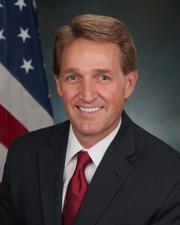 Rep. Jeff Flake (R-AZ)
Description
Amendment sought to prohibit funds in the bill from being used for the Doyle Center for Manufacturing Technology.
Legislative Activity
Stay on top of the latest movement without scrolling through every action
House amendment not agreed to: On agreeing to the Flake amendment (A013) Failed by recorded vote: 98 - 312 (Roll no. 843).
August 5, 2007 • 12:45 AM
View full timeline
House amendment not agreed to: On agreeing to the Flake amendment (A013) Failed by recorded vote: 98 - 312 (Roll no. 843).
August 5, 2007 • 12:45 AM
Roll call votes on amendments in House
August 5, 2007 • 12:45 AM
Amendment failed in Committee of the Whole
August 5, 2007 • 12:45 AM
On agreeing to the Flake amendment (A013) Failed by recorded vote: 98 - 312 (Roll no. 843).
August 5, 2007 • 12:45 AM
House amendment offered
August 4, 2007
House amendment offered/reported by : Amendment (A013) offered by Mr. Flake.(consideration: CR H10004-10005, H10011; text: CR H10004)
August 4, 2007 • 11:39 PM
Amendment (A013) offered by Mr. Flake. (consideration: CR H10004-10005, H10011; text: CR H10004)
August 4, 2007 • 11:39 PM
Votes
1 roll call on this amendment
Text
Offered
DEPARTMENT OF DEFENSE APPROPRIATIONS ACT, 2007
The SPEAKER pro tempore. Pursuant to the order of the House of today
and rule XVIII, the Chair declares the House in the Committee of the
Whole House on the state of the Union for the consideration of the
bill, H.R. 3222.
{time} 2240
In the Committee of the Whole
Accordingly, the House resolved itself into the Committee of the
Whole House on the state of the Union for the consideration of the bill
(H.R. 3222) making appropriations for the Department of Defense for the
fiscal year ending September 30, 2008, and for other purposes, with Mr.
Ross in the chair.
The Clerk read the title of the bill.
The CHAIRMAN. Pursuant to the order of the House of today, the bill
is considered read the first time.
Mr. MURTHA. Mr. Chairman, the President requested $463.1 billion in
total FY 2008 new budget authority for the Department of Defense and
intelligence community programs that fall under the purview of the
Defense Subcommittee. This is an increase of about $43.3 billion over
last year's enacted level--a 10.3 percent increase in nominal terms.
The lion's share of the increase over FY 2007, some 80 percent, was
allocated to operation and maintenance and procurement programs. DoD's
research and development program request is the same as last year's
level, a decrease in real terms due to several major programs having
completed their R&D phase and moved into full-fledged production.
The Committee's reported bill meets its budget authority allocation
of $459.6 billion for FY 2008. This figure is a little more than $3.5
billion below the President's budget request. Nonetheless, the
Committee bill provides an increase for Defense of $39.7 billion over
the FY 2007 enacted level, or about 9.5 percent in nominal growth. With
respect to outlays, the Committee bill is roughly $2.9 billion below
the allocation.
In general, meeting the budget authority allocation required shifting
funding for certain programs between the FY 2008 base budget bill and
the FY 2008 war supplemental, to be considered in September. This
largely affected appropriations for the Department's operation and
maintenance activities. The bill recommends an overall reduction to the
operation and maintenance accounts of some $5.7 billion below the
request. Nonetheless, the bill fully funds home-station training,
equipment maintenance, and other key military readiness programs
covered in these accounts. Finally, notwithstanding a slight reduction
to the military personnel pay accounts, all other major program
activities, such as weapons procurement and R&D, are funded at or above
the President's request.
Meeting the allocation also required deferring consideration of
several high profile programs until the FY 2008 war supplemental is
taken up. These include:
The Basic Allowance for Housing shortfall.
The ground forces' strategic reserve readiness and equipment
rehabilitation and recapitalization.
The purchase of at least ten C-l7 cargo aircraft, $2.5 billion, and
MRAP vehicles, $4 billion or more.
The purchase of additional Blackhawk MEDEVAC helicopters.
The Department's Global Train and Equip program.
The Defense Health Program ``efficiency wedge'' shortfall.
Funding Strategy
For some time now, the Committee has expressed considerable concern
over the erosion of DoD's fiscal discipline. That erosion is reflected
primarily in the Department's use of supplemental funding to cover what
were once considered to be base budget costs, particularly weapons
modernization and force structure costs. As such, the Committee
endeavored to begin restoring traditional funding criteria to the FY
2008 Defense base bill, and will do so when considering the upcoming
war supplemental. Thus, recommendations for the base bill sustain non-
war-related activities and prepare for future threats by funding
enduring personnel benefits, force structure initiatives, such as Army
modularity and ``Grow-the- Force'' programs, infrastructure
improvements, home-station training, and weapons modernization
programs. Conversely, recommendations for the FY 2008 supplemental will
be tailored to funding those programs and incremental costs that are
arguably related to the war.
Highlights
The Committee's recommendations achieve a balance between preparing
units for near-term deployments, supporting our military members and
their families, and modernizing our forces to meet future threats.
Highlights of the Committee's recommendations are:
Supporting Our Troops and Their Families: First and foremost, the
Committee recommends robust funding for programs important to the
health, well-being, and readiness of our forces. In addition, the
Committee proposes several initiatives that address issues raised by
troops, their families, and Department of Defense officials in
testimony before the Committee and visits to military bases in the
United States and overseas.
Funding of about $2.2 billion is recommended to cover the full cost
of a 3.5 percent military pay raise, as approved in the House's version
of the Fiscal Year 2008 National Defense Authorization bill.
Under their ``grow-the-force'' initiatives, the Army and Marine Corps
propose to add 7,000 and 5,000 new troops, respectively. The personnel
costs of these increases are fully covered in the bill, as are the
associated equipping and outfitting costs. For the Army the equipping
costs for these new troops amount to more than $4 billion; for the
Marines the costs exceed $2 billion.
Home-stationing training, optempo, and flying-hour costs are funded
at robust levels. All told, the Committee's recommendations provide for
a 13 percent increase in funding for these activities over last year's
level.
The military services' force structure and basing infrastructure are
in a state of transition. The Army, in particular, has been forced to
manage significant changes in force structure, known as Army
Modularity, base closures, and a global repositioning of forces, all
while meeting the demands of war. Based on detailed information
provided by the Army, the Committee recommends an important new
initiative to assist the service in meeting this challenge. The
Committee proposes adding $1.3 billion to the Army's facilities
sustainment and restoration budget request to offset the growing
infrastructure costs associated with the global repositioning of its
forces. These funds will be used to fix barracks, improve child care
facilities, and enhance community services at Army bases throughout the
United States, Europe, and Korea. Funding for each project is itemized
in the Committee report, consistent with the information provided by
the Army. This funding, however, will only partially cover the Army's
needs. As such, the Committee will address additional infrastructure
cost requirements--particularly military construction costs--during
consideration of the fiscal year 2008 emergency supplemental request.
Further, the Committee intends to work with all the military services
to better understand and respond to their basing and infrastructure
needs during this time of upheaval.
Another initiative proposed by the Committee directly responds to the
needs of our military families. Total funding of $2.9 billion is
recommended for the military's family advocacy programs, childcare
centers, and dependent's education programs. This amount is an increase
of $558 million over the Administration's request, with most of the
increase allocated to DoD's family advocacy programs. This program
provides counseling, education, and support to military families
affected by the demands of war, and episodes of child or spouse abuse.
The Committee's recommendations continue its long tradition of
supporting the Department's health programs. The Committee proposes
several initiatives and additional funding
[[Page H9968]]
to address health care issues raised over the past year, including
improving the Department's electronic medical records and fostering
better coordination between DoD and the Department of Veterans Affairs,
enhancing preventative medicine programs, and advancing military
medical research. Also, the Committee bill fully covers the $1.9
billion shortfall in health funding created by the disapproval of DoD's
proposed fee and premium increases by the House Armed Services
Committee in its bill.
Protecting our forces abroad must be matched with a commitment to
protect our forces and their families here at home. Thus, the Committee
proposes a new initiative to enhance the security of military bases in
the United States. Funding of $268 million is allocated for perimeter
security force protection and related facility security improvements,
an increase of $142 million over the President's budget request. These
funds will be used to erect better perimeter fencing, provide more
secure entry and exit controls, and improve situational awareness and
response capabilities at military bases and hospitals.
Preparing for the Future: In 1796, President George Washington
counseled the Nation to be, ``Taking care always to keep ourselves by
suitable establishments on a respectable defensive posture.'' The
Committee's recommendations abide by that counsel, providing robust
funding for weapons systems purchases and research programs designed to
meet future threats.
The Committee supports full funding, as requested, for key weapons
procurements, including the F-22 and F-35 tactical fighter aircraft
programs.
Increases above the President's request are allocated for development
programs that address so-called ``asymmetric'' threats from weapons of
mass destruction and cruise missiles. Additional funding of $15 million
is provided to pursue cruise missile defense, $25 million for chemical
and biological defense research programs, $26 million to improve
fissile material detection systems, and $50 million for the Former
Soviet Union Threat Reduction account to counter weapons proliferation
and chemical/biological agents.
To support the Army's evolution to a larger, more lethal, and more
rapidly deployable force, the Committee recommends adding funding of
$1.1 billion to outfit a new, eighth Stryker brigade.
Testimony before the Committee revealed that our National Guard and
Reserve forces continue to suffer from equipment shortfalls. To address
this need, the Committee recommends providing an additional $925
million to purchase Guard and Reserve equipment. These additional funds
will enhance these forces' ability to meet overseas deployment demands,
and respond to natural disasters here at home.
Economic Stability: Fostering economic stability in DoD's weapons
modernization programs has been a consistent theme of the Committee.
Analyses completed in recent years about DoD's acquisition program all
conclude that, without improving stability in these programs, it's
quite likely that the military will not be able to achieve the numbers
of weapons systems required to equip current force structure at the
estimated costs. As such, the Committee is proposing a series of
recommendations that would help stabilize certain programs by adding
funds and/or adjusting procurement or development schedules.
The Navy's shipbuilding program has been beset by planning and
resource instability for many years, resulting in ever-increasing costs
to the American taxpayer. Clearly, at current production rates and
price levels, the Navy will be unable to meet its force structure
requirements in the future. The Committee has responded by providing
funds for an additional 5 ships. To purchase these ships, the Committee
recommends adding a total of $3.7 billion above the Navy's request for
shipbuilding and sealift.
The success of the Department's Joint Strike Fighter (F-35) program
is critical to our Nation's ability to field a modern, capable fighter
aircraft fleet for decades to come. To maintain stability in this
program--and limit the potential for cost increases over time--the
Committee recommends an increase of $200 million for F-35 production
enhancements. These funds are to be used to outfit facilities with the
latest in production line equipment and workflow technology. In
addition, the Committee recommends adding $480 million to continue
development of an alternative engine for this aircraft, thereby
ensuring a competitive base for engine production.
Accountability: The Committee's fiduciary responsibility to the
American taxpayer requires holding accountable organizations,
officials, and programs that have performed poorly. Moreover, wasted
resources and procedural abuses ultimately come at the expense of our
military men and women. The Committee focused attention on the
following issues:
Fiscal discipline: For some time, the Committee has raised concerns
about the challenges facing the Department's financial managers. Some
argue that fiscal discipline within the Department has eroded over
time, severely constraining the Department's senior officials and the
Congress' program and financial oversight. Regarding this matter, the
Committee proposes several important initiatives to improve DoD's
fiscal discipline and Congressional oversight. These are described in
an appendix to this memorandum.
Contracting Out: The Committee also has registered concern about the
Department's unabated appetite for contracting out services and
functions once performed by military members or DoD civilians. Though
clearly necessary to offset reductions in military and civilian
personnel levels that occurred over time, the Committee believes that
the Department has failed to adequately manage and oversee the growth
in and cost-effectiveness of contracting out. It is also clear that the
majority of DoD's service contractors has performed and will continue
to perform well. Yet, abuses by some organizations, coupled with DoD's
lack of an effective contractor management and oversight regime, has
cast a pall over the service contractor community writ large. This must
be reversed. The Committee recommends strong steps to do so. These are
described in an appendix to this memo.
Trouble procurement programs: Several of the Department's major
weapons acquisition programs have experienced considerable cost growth
and/or poor execution. For each of these programs--including the Navy's
Littoral Combat Ship, the Air Force's combat search and rescue
helicopter, and several unclassified and classified satellite
purchases--the Committee recommends significant adjustments to the
Pentagon's request.
Basic research: In testimony received by the Committee, and through
information provided by the Department and third-party groups, the
Committee learned that the percent of basic research funding allocated
to Department and research organizations' overhead costs has grown to
unwarranted levels. To reverse this trend and ensure that the
Department's basic research dollars are being used for the purposes
intended by Congress, the Committee recommends a general provision
limiting the percentage of overhead costs that can be covered in basic
research contracts.
Summary of Recommendations by Title
Military personnel
Military personnel pay and benefits accounts are allocated a total of
$105 billion, a slight decrease of $0.4 billion to the President's FY
2008 request, but an increase of $5.2 billion or 5.2 percent over the
FY 2007 level.
The military personnel pay raise funded is 3.5 percent, at a cost of
$2.2 billion. This rate is 0.5 percent greater than the President
requested. Also, the President requests some $2.4 billion for retention
bonuses and recruiting incentives. These incentives are fully funded.
The Basic Allowance for Housing, BAH, increases 4.2 percent to $15
billion, which is $1.6 billion over the projected FY 2007 enacted
level. This continues to ensure no out-of-pocket expenses for service
personnel and supports the privatization of housing units for military
families. Any BAH shortfall anticipated at the time the Committee marks
up the FY 2008 war supplemental will be covered in that bill.
Army end-strength is increased by 7,000 in the base FY 2008 budget,
to a total of 489,400, or $5.7 billion over the FY 2007 enacted budget
amount. The FY 2007 and 2008 supplemental requests include funding for
an additional 36,000 soldiers. By the end of FY 2008, the Army projects
that its total troop strength will be 525,400.
The Marine Corps end-strength is projected to grow by 5,000. This
troop increase is fully funded in the base bill.
The Navy and Air Force, on the other hand, will continue to reduce
their manpower levels. Navy plans to cut 12,300 in 2007; Air Force
intends to reduce their force by about 5,600.
The Special Operations Command will grow to a level of about 54,250
personnel, up about 6,400 over FY 2007 levels. By FY 2013, the Command
projects its end-strength to grow to about 59,000.
Operation and maintenance
The operation and maintenance accounts are funded at a total of
$137.1 billion, a decrease of $5.7 billion from the request, but an
increase of $9.8 billion or 7.7 percent over the FY 2007 baseline O&M
enacted level.
O&M continues to be one of the fastest growing accounts. The growth
in O&M can be attributed to a number of factors, to include:
outsourcing, increasing age of equipment, high OPTEMPO, and diminished
Pentagon budget oversight. Note that these increasing costs are in
addition to costs of our military deployments to Iraq, Afghanistan, and
elsewhere.
Significant reductions are made to the military services' O&M
accounts, particularly the Army and Air Force, for the following
reasons:
Unjustified growth over FY 2007 funding levels, beyond amounts
necessary to fully fund
[[Page H9969]]
all training, optempo, and maintenance activities.
Excessive buildups of spare parts inventories.
Excess cash in working capital funds, beyond levels necessary to
ensure cash flow.
A 5 percent ``efficiency'' reduction to the requested amounts for
contracted services.
The Committee bill fully funds a 3 percent civilian pay raise, which
is scheduled to take effect January 1, 2008.
Procurement and R&D
Procurement is funded at $99.6 billion, roughly the same amount as
requested and an increase of $18.7 billion over last year's level. This
is an increase of 23 percent, the largest percentage increase of all
the major accounts in the DoD budget. R&D is funded at a total of $76.2
billion, about $1.1 billion more than requested. Of note, funding for
shipbuilding totals $17.8 billion, an increase of $3.1 billion over the
President's request. The increase is a function of the Committee's
recommendation to add 5 ships to the 2008 request. The total number of
ships to be purchased in FY 2008 is now 10.
Funding of $3.9 billion is provided to fund the purchase of 20 F-22
aircraft, as requested. Additionally, the Committee recommends $2.7
billion for the procurement of 12 F-35 Joint Strike Fighter aircraft
and $2.0 billion for the procurement of 24 F/A-18E/F aircraft.
Funding for the Missile Defense Agency decreases to $8.5 billion from
last year's level of $9.4 billion.
Defense health program
The Defense Health Program is funded at $23 billion, an increase of
$0.4 billion above the President's request.
Major increases for this activity include: $66 million for the
Wounded Warrior Assistance program; $127.5 million for peer-reviewed
breast cancer research; $80 million for prostate cancer research; and,
$10 million for ovarian cancer research.
HIV/AIDS research and prevention programs receive a total increase of
$20 million in the Committee's recommendations.
Notable General Provisions
A provision is included allowing the Department of Defense general
transfer authority of $3.2 billion. The Department requested transfer
authority of $5 billion.
A new provision is included permitting a competitive expansion of
domestic VIM/VAR steel production capacity.
A provision is retained from previous Defense Appropriations acts
which prohibits the sale of F-22 fighters to foreign countries.
A provision is included appropriating $15 million for Fisher Houses.
Funds are appropriated to the joint U.S.-Israeli Arrow missile
defense system in Section 8077 of the bill. Also, funds are added for a
study of future Israeli missile defense requirements.
A new provision is included which prohibits the Department from
initiating new programs through reprogramming requests.
Another new provision is included which establishes a separate
``major force program'' budget and program designation for DoD's space
programs. This will improve the Committee's oversight of these
activities.
Provisions restricting the establishment of permanent bases in Iraq
and prohibiting torture a carried in the Committee bill. These are
consistent with ones included in previous supplemental and base bill
funding appropriations acts.
The bill includes two provisions regarding contracting out: (1) A
provision restricting the payment of any award fees to contractors who
fail to meet contractual requirements; and (2) a provision which fences
10 percent of all O&M funds appropriated in the bill until the Pentagon
submits a report on contracting out required in the FY 2007 Iraq
supplemental.
A provision was approved in full committee mark-up to identify up to
$30 million for the Impact Aid program.
SELECTED WEAPONS SYSTEMS COMMITTEE RECOMMENDATIONS FOR FY 2008
($ millions)
------------------------------------------------------------------------
2008 Request 2008 Committee
Program ---------------------------------------
(Qty.) $$ (Qty.) $$
------------------------------------------------------------------------
Army Blackhawk helicopter....... (42) 705 (42) 705
Army Apache helicopter.......... (36) 712 (36) 712
Armed Reconnaissance helicopter. (37) 468 ........ 0
Navy MH-60R (Blackhawk var.).... (27) 998 (27) 998
Navy MH-60S (Blackhawk var.).... (18) 503 (18) 503
Navy F/IA-18 E/lF fighter a/c... (24) 2,104 (24) 2,089
Navy EA-18G a/c................. (18) 1,319 (18) 1,317
Air Force C-17 airlift a/c...... ........ 261 ........ 261
Air Force F-22 fighter a/c...... (20) 3,153 (20) 3,153
Air Force C-130J cargo a/c...... (9) 686 (9) 686
Navy KC-130J tanker a/c......... (4) 258 (4) 254
Joint Strike Fighter (R and D).. ........ 3,488 ........ 4,176
Joint Strike Fighter (12) 2,411 (12) 2,411
(Procurement)..................
V-22 airlift a/c................ (26) 2,685 (26) 2,685
Air Force Unmanned Aerial
Vehicles:
Global Hawk................. (5) 514 (3) 403
Predator.................... (24) 278 (24) 278
Reaper...................... (4) 58 (4) 58
CVN-21 Aircraft Carrier......... (1) 2,848 (1) 2,828
DDG-I000 Destroyer.............. ........ 2,954 ........ 2,924
Littoral Combat Ship............ (3) 910 (1) 339
LPD-17 amphibious ship.......... (1) 1,399 (2) 3,092
Virginia Class submarine........ (1) 2,499 (1) 3,087
T-AKE auxiliary ship............ (1) 456 (4) 1,866
LHA(R) amphibious ship.......... (1) 1,377 ........ 1,375
Army Future Combat System (R and ........ 3,563 ........ 3,157
D).............................
Army Stryker armored vehicle.... (127) 1,039 (377) 1,913
M-l tank upgrade--MIA2 SEP...... (18) 53 ........ 0
Evolved Expendable Launch (5) 1,167 (4) 1,102
Vehicle........................
Missile warning satellites:
Space-based Infrared ........ 1,066 ........ 1 ,094
satellite..................
Alternative Infrared Space ........ 231 ........ 76
System.....................
Communications satellites:
Transformational satellite.. ........ 964 ........ 964
Advanced EHF................ ........ 604 ........ 729
Wideband Gapfiller.......... (1) 345 (1) 345
Space-based radar............... ........ 0 ........ 186
Global Positioning System:
GPS III..................... ........ 587 ........ 507
GPS Extension............... ........ 81 ........ 35
GPS User Equipment.......... ........ 93 ........ 156
Missile Defense:
Missile Defense Agency...... ........ 8,796 ........ 8,498
Patriot missiles and MEADS.. (108) 845 (108) 845
---------------------------------------
Total................... ........ 9,641 ........ 9,343
------------------------------------------------------------------------
Appendix: Sections in the Committee Report Regarding Fiscal Management
and Contracting Out
FISCAL MANAGEMENT
For some time now, the Committee has expressed considerable
concern over an erosion of DoD's fiscal discipline. That
erosion is reflected primarily in the Department's use of
emergency supplemental funding to cover what were once
considered to be base budget costs, particularly weapons
modernization and force structure costs. In this bill, the
Committee has endeavored to begin restoring traditional
funding criteria to these respective appropriations matters.
Thus, recommendations for this fiscal year 2008 Defense
Appropriations bill focus on non-incremental war costs and
preparing for future threats by funding enduring personnel
benefits, force structure initiatives (such as Army
modularity and ``Grow-the-Force'' programs), infrastructure
improvements, home-station training, and weapons
modernization programs. The Committee's deliberations on the
fiscal year 2008 war supplemental, however, will be tailored
to funding those programs and incremental costs that are
arguably related to the war efforts. Satisfying these
criteria requires the shifting of funds between the base bill
and supplemental requests. As such, the Committee recommends
deferring consideration of certain funding requests made for
the base fiscal year 2008 Defense bill to the emergency
supplemental. Conversely, the Committee recommends that
certain programs requested by the Administration in its
fiscal year 2008 Global War on Terror emergency supplemental
receive funding in this legislation.
Further, the Committee believes that seeking funding for
weapons modernization programs and enduring force structure
transformations in emergency supplemental requests
conveniently eludes the procedural mechanisms designed to
ensure that the most important priorities are resourced.
There can be no doubt that the Department's financial
officers have faced considerable challenges in managing both
the war and base budgets. Nonetheless, a fiscal
``flabbiness'' has infected the Defense budgeting process--a
situation that must be corrected. To ensure that sound
budgetary and fiscal procedures are re-invigorated, the
Committee recommends a general provision that requires the
Department to include all funding for both non-war and war-
related activities in the President's fiscal year 2009 annual
Defense budget request.
PPBS. For over 40 years, the Department of Defense followed
the Planning, Programming and Budgeting System (PPBS) as the
process for assessing and prioritizing requirements and
allocating resources. The PPBS process established long-range
national security planning objectives, analyzed the costs and
benefits of alternative programs that would meet those
objectives, and translated programs into budget proposals.
The improvements that PPBS offered over previous budgeting
processes were that: (1) it emphasized objectives, focusing
less on changes from the prior-year budget and more on long-
term objectives, and (2) it linked planning and budgeting.
PPBS instilled a process that clearly defined a procedure for
distributing available resources equitably among competing
programs.
Beginning in 2003, the PPBS process has been significantly
altered, splintering planning into two phases and requiring
that the program budget reviews occur simultaneously. The
process changes were ill-conceived and have had significant
and lasting adverse implications. Today, sequential steps to
plan adequately or refine a plan into budget-level detail do
not exist. Further, simultaneous program and budget review
eliminated the inherent discipline in the process which
forced resource allocation decisions to occur deliberatively,
resulting in unnecessary confusion and wasted effort. The
time and attention required to harmonize simultaneous program
and budget review detract from the Department's ability to
scrutinize fully its fiscal requirements. As a result:
the focus on program objectives has diminished;
the inextricable link between planning and budgeting has
been severely damaged;
[[Page H9970]]
reliance on funds transfers and reprogramming within DoD
have grown significantly, often correcting inadequacies that
should have been identified earlier in the Department's
internal review process; with the purpose being to fix holes
in key programs originally created during the DoD budget
review;
supplemental requests and the Department's reliance on them
have grown and, increasingly resemble base budget requests;
and lastly,
Congress is forced to make increasingly difficult funding
decisions in the absence of a rigorous budget review by the
Department.
Accordingly, the Committee recommends that the Secretary of
Defense institute a process for assessing and prioritizing
requirements and allocating resources which is supportive of
thorough, deliberative program and budget review and more
fully utilize the efforts of the dedicated and talented DoD
civil servants. The Committee's recommendation includes
several directions to address the budget execution process
within the department, as discussed below.
Re-baselining.--Generally-accepted reprogramming procedures
and those procedures outlined in the Department of Defense
Financial Management Regulation require the approval of
Congress prior to transferring of operation and maintenance
funding in excess of $15,000,000 from those levels
appropriated by Congress. However, through a ``rebaselining''
process or ``free move'', the Department has transferred
excessive amounts of funds--a total of $2,500,000,000 in
fiscal year 2007--without the approval of Congress. This re-
baselining process, as it has evolved, vitiates
Congressionally-approved resource allocations provided in
annual appropriations Acts, impedes the ability of Congress
to perform its oversight responsibilities, and abrogates
Congressional intent. Moreover, the Committee notes that the
Department has failed to comply with certain reprogramming
requirements as they relate to specific subactivity groups
within the operation and maintenance appropriations. These
actions reflect a continuing erosion of fiscal discipline
within the Department of Defense.
Accordingly, the Committee directs the Department to cease
the reallocation of funds through a re-baselining procedure,
and further directs the Department to comply fully with the
reprogramming procedures contained in this report. The
Committee remains cognizant of the need for the Department to
re-align certain appropriations and commits to work with the
Department to address these concerns.
Base for Reprogramming Actions.--The Committee notes that
the Department was not able to provide in a timely manner the
Base for Reprogramming Actions report, or DD form 1414, for
the current fiscal year. This report is to be provided to the
House and Senate Committees on Appropriations soon after the
enactment of the annual appropriations Act to establish the
baseline from which the Department is to execute its
programs. The report also serves as the benchmark from which
Congress and the Committee can assess all transfers and
reprogrammings. However, the DD 1414 was not submitted to the
Committees on Appropriations until nearly nine months after
the fiscal year had commenced and after the Department has
submitted over $700,000,000 in reprogramming requests
requiring Congressional approval. When the report was
submitted, it was incomplete, omitting each of the active
services' operation and maintenance accounts. Moreover, it
excluded a ``re-baselining'' or realignment in excess of
$2,500,000,000 in operation and maintenance funds from
activities for which they were originally appropriated.
The Committee believes that such funds management is
unacceptable and suggests that the Department does not
execute its programs consistent with Congressional
direction. Accordingly, the Committee has recommended a
provision that requires the department to submit the DD
1414 within 60 days after the enactment of the Act. In
addition, the provision prohibits the department from
executing any reprogramming or transfer of funds for any
purpose other than originally appropriated until the
aforementioned report is submitted to the Committees of
Appropriations of the Senate and the House of
Representatives.
Items or subactivities for which funds have been
specifically provided in an appropriations Act (including
joint resolutions providing continuing appropriations),
accompanying reports of the House and Senate Committees on
Appropriations, or accompanying conference reports and joint
explanatory statements of the committee of conference shall
be carried in the Base for Reprogramming Actions (DD form
1414), irrespective of whether or not the report uses the
phrases ``only for'' or ``only to''.
New starts.--The Committee recommends a general provision
that prohibits the initiation of a new start program through
a reprogramming of funds unless such program must be
undertaken immediately in the interest of national security
and only after written notification by the Office of the
Secretary of Defense and to the congressional defense
committees. The use of reprogramming authorities to initiate
new starts should be used seldom, and if at all, only in
times of national emergency. Starting new programs through
the use of reprogramming authorities in the year of execution
create additional funding requirements in the ensuing budget
year, and rarely does the Administration submit budget
amendments to reallocate its funding requirements reflecting
the new fiscal realities created by the new program starts.
As such, the Committee' ability to review fully the program's
cost-effectiveness and mission utility vis-a-vis other
military programs is denied. The Committee notes that the
fiscal year omnibus 2007 reprogramming includes new starts
totaling nearly $110,000,000. The Committee is not pleased
with the Department's increasing use of its the reprogramming
authorities to initiate new program starts, and accordingly,
directs the Department not to use reprogramming authorities
provided in this Act to initiate new programs unless such
programs are emergency requirements.
General transfer authority (GTA).--A provision is
recommended, consistent with previous appropriations Acts,
providing for the transfer of funds for higher priority
items, based on unforeseen military requirements than those
for which originally appropriated. This authority has been
included annually to respond to unanticipated requirements
that were not known at the time the budget was developed and
after which time appropriations were enacted. This authority
has grown significantly over the past several years, from
$2,000,000,000 in fiscal years 1997 through 2001, rising
precipitously in fiscal year 2005 to $6,185,000,000. In
fiscal year 2007, the GTA was $4,500,000,000 and the
Department has requested $5,000,000,000 in GTA for fiscal
year 2008. While the waging of war certainly has increased
the need for flexibility in executing the Department's
resources, the Committee fears that the Department has come
to rely on reprogramming and transfer authority in lieu of a
thoughtful and deliberative budget formulation and fiscal
management process. In an effort to restore fiscal management
to the Department, while allowing for the flexibility in
executing appropriations for a nation at war, the Committee
recommends for fiscal year 2008 general transfer authority of
$3,200,000,000.
Reprogrammings for operation and maintenance accounts.--
Beginning in fiscal year 2008, the Committee imposes new
accountability and reprogramming guidelines for programs,
projects and activities within the Operation and Maintenance
appropriations. The Committee believes that such revisions
are necessary given the unique nature of activities funded
within these appropriations; continuing concerns about force
readiness, and recent budget execution within these accounts.
The specific revisions are addressed later in this report in
Title II, Operation and Maintenance.
CONTACTED SERVICES AND ACQUISITION MANAGEMENT
A year ago, the Committee expressed concern about the
increasing costs of operating our military forces. To gain
better insight about the factors generating an increase in
operation and maintenance costs, the Committee directed, in
House Report 109-504, that the GAO prepare a comprehensive
analysis of contracting out services, as well as other
factors that may be driving up costs. GAO found that between
the years 2000 to 2005, the cost of O&M service contracts
increased more than 73 percent. Over the same period, DoD
civilian pay costs increased 28 percent, and total DoD pay
costs went up by 34 percent. However, despite the growing and
seemingly unconstrained reliance on contractors to accomplish
DoD's mission, no system of accountability for contract
service cost or performance has been established.
The Committee is frustrated by the lack of accountability
and management of contracted services. DoD has increasingly
relied on private sector contractors, rather than uniformed
or DoD civilian personnel, to perform operation and
maintenance-related work such as logistics, facilities
maintenance, base operations support; information technology
services; and administrative support. But, responsibility for
acquiring services within DoD is spread among individual
military commands, weapon system program offices, or
functional units on military bases. This decentralized
management results in little visibility at either the DoD or
military department level over the totality of DoD's use of
contractors to provide services. GAO recently found that DoD
had reviewed proposed acquisitions accounting for less than 3
percent of the funds obligated for services in fiscal year
2005, and were in a poor position to regularly identify
opportunities to leverage buying power or otherwise change
existing practices.
Focused management attention.--The Committee contends that
DoD is not providing sufficient management attention to
improve the acquisition and management of contractor
services. Tens of billions of dollars are expended for
contract services each year. Management of contract services
should be among DoD's top priorities. The Committee believes
that the Department must improve management of contract
services by instituting clear accountability mechanisms;
instituting unambiguous and short chains of command to the
most-senior decision makers; and improving the tracking and
reporting of contract service costs, and management of
contract service performance.
Increased contractor oversight.--The Committee directs the
Department to provide more robust staffing of contractor
management and oversight personnel. It is clear that DoD
currently lacks the means to provide proper oversight of its
service contracts, in part because of an insufficient number
of contract oversight personnel. While the spending for
contracted services has grown, the size of DoD's workforce,
including its contracting and acquisition workforce, has
[[Page H9971]]
been decreased significantly. For example, the Defense
Contract Management Agency's (DCMA) workforce has been
reduced by over 50 percent between the period 2000 to 2005,
making it more difficult for DCMA to provide through and
meaningful oversight of the department's increasing reliance
on contracted services.
The Committee recommends adding funds for additional DoD
civilian personnel to provide enhanced contract-service
management and oversight. Further, the Committee added funds
for the temporary assignment of six-hundred General Services
Administration contract specialists on a reimbursable basis.
The Committee provides the following:
CONTRACT-SERVICE MANAGEMENT AND OVERSIGHT
($ in millions)
------------------------------------------------------------------------
Committee
recommendation
------------------------------------------------------------------------
Defense Contract Audit Agency........................... +12.0
Defense Contract Management Command..................... +17.0
Defense Inspector General............................... +24.0
Reimbursable GSA Assistance............................. +21.0
------------------------------------------------------------------------
Minimum Standards for Contracted Security Service
Personnel.--DoD relies heavily on contracted security, both
in the theaters of operation as well as at home. The
Committee is particularly concerned that the oversight and
administration of contracted security services is woefully
inadequate. This lack of oversight seemingly has resulted in
few, if any, operational standards and rules-of-engagement to
which contracted security organizations and individuals must
adhere. As such, the Committee directs the Secretary of
Defense to develop, no later than 90 days after the passage
of this Act, uniform minimum personnel standards for all
contract personnel operating under contracts, subcontracts or
task orders performing work that includes private security
functions. The standards, at a minimum, must include
determinations about contractors using personnel with
criminal histories, must determine the eligibility of all
private contract personnel to possess and carry firearms, and
determine what assessments of medical and mental fitness of
contracted security personnel must be undertaken. The
Secretary of Defense should develop a mechanism for contract
accountability that specifies consequences for noncompliance
with the personnel standards, including fines, denial of
contractual obligations or contract rescission. Finally, the
Secretary is directed to establish a clear set of rules-of-
engagement for all contracted security personnel operating in
the Iraq and Afghanistan theaters of operations. The
Secretary shall submit the prescribed standards to the
congressional defense committees once the 90-day period
referenced above is completed.
Improving the Acquisition Workforce.--The Committee directs
that the Undersecretary of Defense for Acquisition,
Technology, and Logistics to submit, within 90 days of
enactment of this Act, a report to the congressional defense
committees analyzing the current acquisition workforce
personnel needs and the tools to recruit and retain a
workforce best positioned to provide appropriate contract
management and oversight of contractor performance. The
report should identify the most urgent shortages in the
current acquisition workforce. The report should also
recommend revisions to the Department's Strategic Human
Capital Plan geared to enhancing the Department's ability to
recruit and retain high performing acquisition and
contracting personnel and overcome obstacles to the expedited
hiring of talented acquisition professionals.
Enhancing Access to Small Business.--The Committee is
concerned about the access of small businesses to Department
of Defense contracting and procurement. Moreover, the
committee recognizes that harvesting mature innovative
technologies from the Small Business Innovative Research
(SBIR) programs has resulted in cost avoidance and savings in
Defense Department acquisition programs. SBIRs have been
invaluable in reintroducing competition and developing better
capabilities for the warfighter. For example, efforts such as
open architecture technologies and improved manufacturing
processes championed by small businesses should reduce
acquisition costs and ensure that the military services can
continue to support weapons systems once they become
operational. In order to facilitate entry into the defense
market by small businesses, the Committee recommends
providing a total of $100,000,000 more than requested for the
Department's SBIR program. These funds are allocated as
follows: $25,000,000 is recommended for the Army's Future
Combat System to enhance small business participation in that
program; $25,000,000 is allocated to each of the Navy's
surface ship and submarine research and development
activities for the SBIR program; and, $25,000,000 is provided
to enhance small business participation in the Joint Strike
Fighter program.
Further, the Committee directs the Director of the
Department of Defense Office of Small Business Contracting to
submit, no later than June 1, 2008, a report to the
congressional defense committees which identifies the
impediments to small business owners to contracting or
subcontracting with the Department, including, but not
limited to, an analysis of the small business threshold size,
small business contract bundling, the distribution of small
business subcontracts between professional services and
research and development, the transition from SBIR II
programs to procurement, the impact of the Departments vendor
pay system on small businesses, and the effectiveness of the
mentor-protege program. The report should identify any
impediments to the successes of businesses that graduate from
the small business qualifications and offer recommendations
to support the transition of small businesses to middle-sized
businesses.
Improvements in contract management need not take years to
implement; rather, with intent leadership and executive
attention, considerable efficiencies can be achieved in the
near-term. Accordingly, the Committee recommendations reduce
the Department's funding requests for contracted services in
the O&M budgets by five percent, recognizing contract service
efficiencies and savings with enhanced oversight.
[[Page H9972]]
[GRAPHIC] [TIFF OMITTED] TH04AU07.001
[[Page H9973]]
[GRAPHIC] [TIFF OMITTED] TH04AU07.002
[[Page H9974]]
[GRAPHIC] [TIFF OMITTED] TH04AU07.003
[[Page H9975]]
[GRAPHIC] [TIFF OMITTED] TH04AU07.004
[[Page H9976]]
Mr. YOUNG of Florida. Mr. Chairman, earlier this week the
Appropriations Committee filed the fiscal year 2008 Defense
Appropriations bill and report. There were no minority views on this
bill, because it is broadly supported by both Democrats and Republicans
in its current form.
The bill totals over $459 billion, and is $3.5 billion below the
President's request. However, it is $40 billion above the fiscal year
2007 level.
The fiscal year 2008 war supplemental request of $147 billion is not
included in this bill. That package will be marked up and brought to
the floor in September. At that time we will also be addressing the
President's new request of $5.3 billion for additional MRAP vehicles
for use in Iraq and Afghanistan.
I strongly support this bill as reported. It provides for a number of
Presidential and Congressional priorities, including: $6 billion in
equipment to grow the Army and Marines; Restoration of the $1.9 billion
cut in the Defense Health program associated with proposed increases in
insurance co-payments that have not been authorized by Congress; An
additional $925 million in equipment for the National Guard and Reserve
which is important for disaster response throughout the country,
including the Gulf Coast; Full funding for the Congressionally I
proposed 3.5 percent pay increase for the military; $4.1 billion for
continued development of the Joint Strike Fighter and $3.1 billion to
procure 20 F-22 aircraft; Procurement of nine ships for the Navy,
including initial funding for the next generation aircraft carrier; and
$1.1 billion to outfit a new Stryker brigade, either for the National
Guard or the active Army.
To summarize, unlike many bills we're dealing with this week, I can
state that this bill has broad bipartisan support.
I appreciate the cooperation and courtesy shown by my chairman, Mr.
Murtha, throughout this process. We keep trading places as chairman of
this subcommittee; perhaps in the next Congress we'll trade places
again. Whatever happens, I know we will continue the bipartisan
partnership that has been the hallmark of this subcommittee.
I also want to thank the members of the Defense subcommittee for
their contributions to this bill, especially those on the Republican
side of the aisle. Mr. Hobson, Mr. Frelinghuysen, Mr. Tiahrt, Mr.
Wicker, Mr. Kingston, and the ranking member of the full committee, Mr.
Lewis, all made important contributions to this legislation.
Mr. Chairman, again I want to say that I strongly support this bill,
and urge its adoption by the House.
Ms. JACKSON-LEE of Texas. Mr. Chairman, as a proud member of the
Progressive and the Out of Iraq Caucuses, I rise in support of H.R.
3222, the ``Defense Appropriations Act of 2008.'' I commend the
leadership of Chairman Obey and Defense Appropriations Subcommittee
Chairman Murtha for his patient and careful crafting of this bill,
which relieves our troops and helps our military families. The
committee carefully separated the funding from the Iraq War funding.
Speaking of Chairman Murtha, let me say also that historians will
record that it was he who awakened and educated the Nation regarding
the failure and folly of the Bush Administration's policy in Iraq when
he courageously spoke this truth to power: The war in Iraq is not going
as advertised. It is a flawed policy wrapped in illusion. The American
public is way ahead of us. The United States and coalition troops have
done all they can in Iraq, but it is time for a change in direction.
Our military is suffering. The future of our country is at risk. We can
not continue on the present course. It is evident that continued
military action in Iraq is not in the best interest of the United
States of America, the Iraqi people or the Persian Gulf Region.
The principled stand of the gentleman from Pennsylvania changed the
course of America history by signaling the beginning of the end of the
Iraq War. More importantly, Chairman Murtha's actions have and will
result in the saving of countless thousands of lives of brave young
servicemen and women that would otherwise be lost trying to salvage the
Administration's ill-conceived and terribly mismanaged war in Iraq. I
cannot thank you enough for all you have done for our county.
In supporting this legislation, I stand in strong support of our
troops who have performed magnificently in battle with a grace under
pressure that is distinctively American. I stand with the American
people, who have placed their trust in the President, the Vice-
President, and the former Secretary of Defense, each of whom abused the
public trust and patience.
I stand with the American taxpayers who have paid more than $400
billion to finance the misadventure in Iraq. I stand with the 3,664
fallen heroes who stand even taller in death because they gave the last
full measure of devotion to their country. For these reasons, Madam
Speaker, I stand fully, strongly, and unabashedly in support of H.R.
3222.
Mr. Chairman, I voted against the 2002 Iraq War Resolution. I am
proud of that vote. And I have consistently voted against the
Administration's practice of submitting a request for war funding
through an emergency supplemental rather than the regular
appropriations process which would subject the funding request to more
rigorous scrutiny and require it to be balanced against other pressing
national priorities.
But I strongly believe that when a nation sends its sons and
daughters into harms way, it has an obligation to ensure that they have
everything they need to wage the battle, emerge victorious, and return
home safely to their loved ones and to a grateful nation. That is why I
proudly support this legislation. H.R. 3222 provides for the security
of our nation and addresses that responsibility squarely, fully funding
our troops so that they are prepared for whatever emergencies may
arise, providing them with first class weapons and equipment, and
ensuring that they and their families are cared for properly.
At the same time, H.R. 3222 recognizes our obligation to meet the
recent dependence on the use of contractors with increased support for
their management and oversight. It likewise makes a commitment to
fiscal responsibility. In this regard, I note that the amount
appropriated in this bill, $459.6 billion, represents an increase of
nearly $40 billion over the previous year but is $4 billion less than
the amount requested by the Administration.
Mr. Chairman let me briefly address some of the important components
of this legislation. I think it important that all Americans know that
H.R. 3222 achieves the following .critical objectives: (1) keeps our
commitments to our troops and their families; (2) prepares our forces
to meet future needs; (3) imposes fiscal discipline on the Pentagon;
and (4) prohibits permanent military bases in Iraq and the use of
torture by American forces everywhere.
Specifically, Mr. Chairman, H.R. 3222 addresses equipment shortfalls
in the Guard and Reserve by providing $925 million, $635 million above
2007, specifically to address equipment shortfalls in order to help
forces meet the demands of overseas deployments and respond to natural
disasters here at home. This amount meets the requirements identified
by the Chief of the National Guard Bureau in the ``Essential 10
Equipment Requirements for the Global War on Terror.''
The legislation supports military families by providing $2.9 billion,
$558.4 million above the President's request, for programs including
childcare centers, education programs and the family advocacy program
which provides support to military families affected by the demands of
war and episodes of child or spouse abuse.
In the important area of medical treatment and healthcare, the bill
provides $22.957 billion, $1.7 billion above 2007 and $416 million
above the President's request. The bill rightly rejects the President's
proposal to inflict $1.9 billion in TRICARE fee and premium increases
on our troops and makes much needed investments in improving the
Defense Department's electronic medical records systems and fostering
better coordination between the Defense Department and the Department
of Veterans Affairs.
I particularly commend Chairman Murtha for his successful efforts to
secure more than $400 million in funding to conduct research and treat
the increasing incidence of post-traumatic stress disorder, PTSD, among
American servicemen and women. And I especially appreciate his
commitment to work with me to establish a PTSD facility at Riverside
General Hospital, located in the 18th Congressional District of Texas,
to treat PTSD in veterans, whether on active duty, discharged, or on
leave in the metropolitan Houston area, including Harris and
surrounding counties. There are nearly 200,000 military veterans in
Harris County alone and Riverside General Hospital has proven itself
capable of providing psychiatric, medical, emergency medical,
inpatient, and outpatient services to crisis populations.
Riverside General Hospital, by the way, was formerly known as the
Houston Negro Hospital and was founded in 1926 in memory of Lt. John
Halm Cullinan, 344th FA, 90th Division of the American Expeditionary
Forces. Lt. Cullinan was one of the thousands of African Americans who
risked life and limb to defend America and its allies at a time when
those of his race did not enjoy the legal rights they fought so hard to
secure for others.
Mr. Chairman, there is an unmet need for more medical facilities
specializing in post-traumatic stress disorder located in underserved
urban areas. Access to post-traumatic stress disorder treatment is
especially important since veterans living in such areas are less
likely to be diagnosed and treated for post-traumatic stress disorder.
Riverside General Hospital is uniquely positioned to this need and I
look forward to working with this Defense Appropriation Sub-Committee
to bring this historic project to fruition.
I also strongly approve of the allocation of $1.252 billion above the
President's request to
[[Page H9977]]
repair barracks, improve child care facilities, and improve community
services, to address the strain put on facilities by changes in force
structure, base closures, and a global repositioning of forces all
while meeting the demands of war. Similarly, the appropriation of
$268.1 million, $141.9 million above the President's request, for
perimeter security force protection and related security improvements,
to protect bases, schools, hospitals, base housing, churches and
childcare centers from terrorist attacks makes sense in light of the
recent failed terrorist plot at Fort Dix in New Jersey. As does the $15
billion, $1.6 billion above 2007, set aside to ensure there are no out-
of-pocket expenses for service personnel and support the privatization
of housing for military families.
Mr. Chairman, American troops are the best in the world because they
are the best equipped and the best trained. H.R. 3222 ensures that will
remain the case by providing $7.548 billion, a 13 percent increase for
all home-stationing training, so that our troops are well prepared for
any eventual deployment.
The legislation also takes into account the fact that the size of our
Army and Marine Corps must be increased if we are to reduce the
pressure to extend troop deployments. The bill provides funds to covers
the costs of adding 7,000 new soldiers and 5,000 new marines.
Finally, H.R. 3222 provides $76.229 billion, $1.112 billion above the
President's request and $508 million above 2007, for research,
development, testing, and evaluation of weapons systems, and military
medical research.
Mr. Chairman, the bill before represents responsible, visionary, and
competent policy making. Our vote today will put the House on record
squarely against the Bush Administration's policy of looking the other
way while the Iraqi government fails to govern a country worthy of a
free people with as much commitment and dedication to the security and
happiness of its citizens as has been shown by the heroic American
servicemen and women who risked their lives and, in the case of over
3,600 fallen heroes, lost their lives to win for the Iraqi people the
chance to draft their own constitution, hold their own free elections,
establish their own government, and build a future of peace and
prosperity for themselves and their posterity.
Mr. Chairman, nearly every decision reached by a legislative body is
a product of compromise. The bill before us is no different. If it was
left solely to us, any of us could no doubt add or subtract provisions
which we think would improve the quality of life for our brave men and
women in uniform. Indeed, during this first session of the 110th
Congress, I have offered several amendments to do just that.
For example, I offered an amendment to the Emergency Supplemental
Appropriations Act, H.R. 1591, that would have led to the redeployment
and return of American troops. It would achieve this objective by
terminating the authority granted by Congress to the President in the
2002 Authorization for the Use of Military Force in Iraq because the
objectives for which the authorization was granted have all been
achieved. Specifically, Congress authorized the President to use
military force against Iraq to achieve the following objectives: to
disarm Iraq of any weapons of mass destruction that could threaten the
security of the United States and international peace in the Persian
Gulf region; to change the Iraqi regime so that Saddam Hussein and his
Baathist party no longer posed a threat to the people of Iraq or its
neighbors; to bring to justice any members of al Qaeda known or found
to be in Iraq bearing responsibility for the attacks on the United
States, its citizens, and interests, including the attacks that
occurred on September 11, 2001; to ensure that the regime of Saddam
Hussein would not provide weapons of mass destruction to international
terrorists, including al Qaeda; and to enforce all relevant United
Nations Security Council resolutions regarding Iraq.
Thanks to the skill and valor of the Armed Forces of the United
States we now know for certain that Iraq does not possess weapons of
mass destruction. Thanks to the tenacity and heroism of American
troops, Saddam Hussein was deposed, captured, and dealt with by the
Iraqi people in such a way that neither he nor his Baathist Party will
ever again pose a threat to the people of Iraq or its neighbors in the
region. Nor will the regime ever acquire and provide weapons of mass
destruction to international terrorists. Also, the American military
has caught or killed virtually every member of al Qaeda in Iraq
remotely responsible for the 911 attack on our country. Last, all
relevant U.N. resolutions relating to Iraq have been enforced.
In other words, every objective for which the use of force in Iraq
was authorized by the 2002 resolution has been achieved, most with
spectacular success thanks to the professionalism and superior skill of
our service men and women. The point of my amendment was to recognize,
acknowledge, and honor this fact.
Another amendment, this one to the Defense Authorization Act, H.R.
1585, required the Secretary of Defense to study and report back to
Congress the financial and emotional impact of multiple deployments on
the families of those soldiers who serve multiple tours overseas.
Words cannot explain the pain and the sense of pride that some
families feel when they say good-bye to a loved one. Behind those brave
smiles, hugs, and kisses is an undying and unnerving uncertainty about
what can happen to a spouse, child, father, or mother. Depending on the
extent of that soldier's injury a family can suffer serious economic
consequences as a result, not to mention the emotional impact of seeing
a loved one in that state. Even under the best of circumstances, where
a soldier serves multiple terms and returns with no major injuries,
valuable time is lost between a parent and child and between spouses
that can never be returned.
One in five soldiers suffers from depression, anxiety or stress.
Likewise 20 percent face marital problems including divorce or legal
separation from their spouse. Military families need greater
psychological, emotional, and organizational assistance according to
the results of a new survey released March 28 of this year by the
National Military Family Association, NMFA. The study, ``Cycles of
Deployment Report,'' which focused on the needs of military families,
shows service members and military families are experiencing increased
levels of anxiety, fatigue, and stress. In response, NMFA outlined
recommendations for meeting these challenges amid multiple and extended
deployments, increased rates at which service members are called upon
for service, and the heavy reliance on National Guard and Reserve
forces.
Military families have also expressed concern that when entering a
second or third deployment, their loved ones carry unresolved anxieties
and expectations from the last deployment(s). While they may have
gained knowledge of resources available to them, service members who
have been deployed multiple times report being more fatigued and
increasingly concerned about their family relationships.
Mr. Chairman, at bottom, H.R. 3222 ensures that U.S. forces in the
field have all of the resources they require. Second, it improves
healthcare for returning service members and veterans. Third, it
imposes fiscal restraint upon the Administration and Pentagon.
Mr. Chairman, before I conclude, I want to take a few minutes to
discuss why the American people believe so strongly that the time has
come to an end the policy of not placing any demands or conditions on
American military assistance to the Government of Iraq.
As Kenneth M. Pollack of the Brookings Institution, and a former
senior member of the NSC, brilliantly describes in his essay, ``The
Seven Deadly Sins Of Failure In Iraq: A Retrospective Analysis Of The
Reconstruction,'' in ``Middle East Review of International Affairs''
(December 2006), our trust and patience has been repaid by a record of
incompetence unmatched in the annals of American foreign policy.
The Bush Administration disregarded the advice of experts on Iraq, on
nation-building, and on military operations. It staged both the
invasion and the reconstruction on the cheap. It did not learn from its
mistakes and did not commit the resources necessary to accomplish its
original lofty goals or later pedestrian objectives. It ignored
intelligence that contradicted its own views.
It is clear now that the Administration simply never believed in the
necessity of a major reconstruction in Iraq. To exacerbate matters the
Office of the Secretary of Defense, OSD, and the White House Office of
the Vice President, OVP, worked together to ensure that the State
Department was excluded from any meaningful involvement in the
reconstruction of Iraq.
The Administration's chief Iraq hawks shared a deeply naive view that
the fall of Saddam and his top henchmen would have relatively little
impact on the overall Iraqi governmental structure. They assumed that
Iraq's bureaucracy would remain intact and would therefore be capable
of running the country and providing Iraqis with basic services. They
likewise assumed that the Iraqi armed forces would largely remain
cohesive and would surrender whole to U.S. forces. The result of all
this was a fundamental lack of attention to realistic planning for the
postwar environment.
As it was assumed that the Iraqis would be delighted to be liberated
little thought was given to security requirements after Saddam's fall.
The dearth of planning for the provision of security and basic services
stemmed from the mistaken belief that Iraqi political institutions
would remain largely intact and therefore able to handle those
responsibilities.
But there were too few Coalition troops, which meant that long supply
lines were vulnerable to attack by Iraqi irregulars, and the
[[Page H9978]]
need to mask entire cities at times took so much combat power that it
brought the entire offensive to a halt.
It was not long before these naive assumptions and inadequate
planning conjoined to sow the seeds of the chaos we have witnessed in
Iraq.
The lack of sufficient troops to secure the country led to the
immediate outbreak of lawlessness resulting in massive looting and
destruction dealt a stunning psychological blow to Iraqi confidence in
the United States, from which the country has yet to recover. We
removed Saddam Hussein's regime but we did not move to fill the
military, political, and economic vacuum. The unintended consequence
was the birth of a failing state, which provided the opportunity for
the insurgency to flourish and prevented the development of
governmental institutions capable of providing Iraqis with the most
basic services such as clean water, sanitation, electricity, and a
minimally functioning economy capable of generating basic employment.
Making matters worse, the Administration arrogantly denied the United
Nations overall authority for the reconstruction even though the U.N.
had far more expertise and experience in nation building.
The looting and anarchy, the persistent insurgent attacks, the lack
of real progress in restoring basic services, and the failure to find
the promised weapons of mass destruction undercut the Administration's
claim that things were going well in Iraq and led it to make the next
set of serious blunders, which was the disbanding of the Iraqi military
and security services.
Mr. Chairman, counterinsurgency experts will tell you that to pacify
an occupied country it is essential to disarm, demobilize, and retrain,
DDR, the local army. The idea behind a DDR program is to entice,
cajole, or even coerce soldiers back to their own barracks or to other
facilities where they can be fed, clothed, watched, retrained, and
prevented from joining an insurgency movement, organized crime, or an
outlaw militia.
By disbanding the military and security services without a DDR
program, as many as one million Iraqi men were set at large with no
money, no means to support their families, and no skills other than how
to use a gun. Not surprisingly, many of these humiliated Sunni officers
went home and joined the burgeoning Sunni insurgency.
The next major mistake made in the summer of 2003 was the decision to
create an Iraqi Governing Council, IGC, which laid the foundation for
many of Iraq's current political woes. Many of the IGC leaders were
horribly corrupt, and they stole from the public treasury and
encouraged their subordinates to do the same. The IGC set the tone for
later Iraqi governments, particularly the transitional governments of
Ayad Allawi and Ibrahim Jaafari that followed.
Finally, by insisting that all of the problems of the country were
caused by the insurgency rather than recognizing the problems of the
country were helping to fuel the insurgency, the Bush administration
set about concentrating its efforts in all the wrong places and on the
wrong problems.
This explains why for nearly all of 2004 and 2005, our troops were
disproportionately deployed in the Sunni triangle trying to catch and
kill insurgents. Although our troops caught and killed insurgents by
the hundreds and thousands, these missions were not significantly
advancing our strategic objectives. Indeed, they had little long-term
impact because insurgents are always willing to flee temporarily rather
than fight a leviathan. Second, because so many coalition forces were
playing ``whack-a-mole'' with insurgents in the sparsely populated
areas of western Iraq, the rest of the country was left vulnerable to
take over by militias.
Finally, Mr. Chairman, a cruel irony is that because the Iraqi
Government brought exiles and militia leaders into the government and
gave them positions of power, it is now virtually impossible to get
them out, and even more difficult to convince them to make compromises
because the militia leaders have learned they can use their government
positions to maintain and expand their personal power, at the expense
both of their rivals who are not in the government and of the central
government itself.
All of this was avoidable and the blame for the lack of foresight
falls squarely on the White House and the Office of the Secretary of
Defense.
Mr. Chairman, the American people spoke loudly and clearly last
November when they tossed out the Rubber-Stamp Republican Congress.
They voted for a New Direction in Iraq and for change in America. They
voted to disentangle American troops from the carnage, chaos, and civil
war in Iraq. They voted for accountability and oversight, which we
Democrats have begun to deliver on; already the new majority has held
more than 100 congressional hearings related to the Iraq War,
investigating everything from the rampant waste, fraud, and abuse of
Iraq reconstruction funding to troop readiness to the Iraq Study Group
Report to the shameful mistreatment of wounded soldiers recuperating at
Walter Reed Medical Center.
Mr. Chairman, the bill before us is not asking us to expand or extend
the war in Iraq. I would not and will not do that. On the contrary,
this bill puts us on the glide path to the day when our troops come
home where we can ``care for him who has borne the battle, and for his
widow and orphan.'' This bill helps to repair the damage to America's
international reputation and prestige. This bill brings long overdue
oversight, accountability, and transparency to defense and
reconstruction contracting and procurement.
I urge my colleagues to support H.R. 3222, the ``Defense
Appropriations Act of 2008.''
Mr. MARKEY. Mr. Chairman, I rise today to speak about a very
important provision in the Defense Appropriations Act for 2008, which
yet again confronts President Bush over his inhumane and un-American
torture policies.
I want to thank Chairman Murtha for agreeing once again to include my
language regarding torture in this bill. The provision, in Section 8104
of the bill, states that none of the funds in the Defense
Appropriations bill may be used in contravention of the United Nations
Convention Against Torture. This is a crucial provision because, as we
all know, for years the President has been willing to ignore our
obligations under international and domestic law to protect the basic
human rights of detainees. This disregard for treaty and legal
obligations also undermines our efforts in the war on terror, serving
as a valuable recruiting tool for terrorists and putting our brave men
and women in uniform at risk of similar mistreatment if captured by our
enemies.
I have inserted this provision into a number of funding bills over
the past several years, and I will continue to do so until we can
legislatively restrain this and every future President from
intentionally misinterpreting our obligations to respect the
fundamental human rights of all people. In the period of the Republican
majority, I had to come to the floor and offer amendments to insert
this funding restriction into the appropriations bills. Fortunately, my
colleagues on both sides of the aisle agree that our obligations to
treat individuals humanely are paramount, and my amendment repeatedly
prevailed with near unanimity. I commend Mr. Murtha for including this
language in the bill, which reflects his deep concern for our troops
and his commitment to upholding our obligations to fundamental human
rights.
With his policies of extraordinary rendition, President Bush has
shipped countless prisoners to countries such as Syria and Uzbekistan
where they are brutally tortured--without ever having been afforded a
lawyer, a trial, or any opportunity to challenge their transfer based
on probability of abuse. By allowing senior officers and officials to
implicitly encourage the abuse of Iraqi prisoners at Abu Ghraib,
President Bush not only allowed a situation to develop where Americans
horribly abused detainees but also created one of the greatest public
diplomacy disasters in American history. By establishing a network of
black-site CIA prisons around the world, where prisoners are held in
total secret and without access to international monitors such as the
Red Cross, the President engages in the grossest hypocrisy and
undermines the very international protections for prisoners that our
own troops abroad count on as their last line of defense should they be
captured.
These policies must come to an immediate and permanent end. I look
forward to passing my Torture Outsourcing Prevention Act to end
extraordinary rendition once and for all, and it is essential that
Congress reinstate habeas corpus. Until then, I am proud that the
Congress will, with this funding restriction, once again bar any
appropriations in violation of the Convention Against Torture.
Mr. LANGEVIN. Mr. Chairman, I rise in strong support of H.R. 3222,
the Defense Appropriations Act for Fiscal Year 2008. I would like to
thank the gentleman from Pennsylvania, Chairman Murtha, and the
gentleman from Florida, Ranking Member Young, for their efforts to
craft a strong bipartisan bill and for their tireless dedication to our
national security and to the men and women in uniform who protect us.
Ensuring a strong national defense is one of Congress's greatest
responsibilities, and at no time is that more evident when our
servicemembers are overseas in harm's way. While the members of this
body may disagree about our next steps in Iraq, we all agree that we
must support the soldiers, sailors, airmen, marines and civilians who
are serving their country and facing some challenging missions.
Further, we agree that we must have a military that can protect our
Nation against current threats and respond to emerging challenges we
may face in the future. As a member of the Intelligence Committee and a
former member of the House Armed Services Committee, I believe we need
a flexible and an adaptive
[[Page H9979]]
military--one whose efforts are coordinated with other assets of
national power such as diplomacy, foreign assistance and international
cooperation--to achieve our national security goals.
Congress recognizes that our Nation is only as strong as those who
defend us, and the bill before us makes important steps to enhance the
health and well-being of those serving our Nation. It provides a 3.5
percent pay increase for our men and women in uniform, an increase over
the President's recommendation of 3.0 percent. It continues our efforts
to increase the size of the Army and Marine Corps in order to reduce
the strain on our military caused by repeated troop deployments. In
order to treat those currently in our military health system and to
meet the needs of those returning from combat, it includes $23 billion
for defense health programs, $416 million more than the President
requested. It also postpones the President's recommended cost share
increases for Tricare beneficiaries, a proposal that would have caused
hardship to our military families and retirees.
H.R. 3222 also makes significant increases to vital non-proliferation
programs. For years, the Nunn-Lugar Cooperative Threat Reduction
program has allowed the U.S. to work with Russia and other nations in
the former Soviet Union to dismantle their nuclear, chemical and
biological weapons. As the chairman of the Homeland Security
Subcommittee on Emerging Threats, Cybersecurity and Science and
Technology, I know that one of the most important safeguards to
preventing an attack using a weapon of mass destruction in the U.S. is
to secure dangerous materials at their source to prevent them from
getting into the hands of terrorists. To this end, the Defense
appropriations bill includes $398 million for Cooperative Threat
Reduction--$26 million more than the current level and $50 million more
than the President's request.
Finally, H.R. 3222 invests in systems and technology to protect
against current and future threats. I am extremely pleased that the
measure includes an additional $588 million for advance procurement of
materials that could lead to the construction of a second Virginia-
class submarine as early as next year. Our Navy has estimated that we
need 48 attack submarines to meet the needs of our military commanders.
Yet, under the Navy's current 30-year shipbuilding plan, they do not
expect to increase production to two subs per year until 2012, causing
a perilous decline in our future sub fleet--dropping below 48 ships in
FY2020-33 and hitting a low of 40 in FY2028 and FY2029. I have long
advocated increasing our build rate of Virginia-class submarines to two
per year so that we have sufficient capabilities to address emerging
threats. However, the Navy has repeatedly delayed its two per year
target date, causing instability in the industrial base. In FY2004, the
Navy expected to build two subs per year in FY2007. By FY2005, the
target had moved to FY2009. That date was pushed back again and again,
and now stands at FY2012. Meanwhile, our defense industrial base in
Southeastern New England has suffered layoffs of submarine designers
and engineers, whose specialized skills would be very difficult to
reconstitute if lost. Without immediate action, we risk shrinking our
sub fleet to perilously low levels, precisely when nations such as
China are expanding and modernizing their navies. After visits to Rhode
Island and Connecticut earlier this year, Chairman Murtha stated that
building more submarines would be a priority, and this legislation
demonstrates his commitment to fixing this dangerous problem. On behalf
of the submarine industrial base in Rhode Island, I thank him and
Ranking Member Young for their leadership on this important national
security issue.
I am pleased that one of our final actions before departing for the
August work period will be passing this important legislation, which
demonstrates Congress's commitment to national security and deserves
the support of all in this chamber.
Mr. BISHOP of Georgia. Mr. Chairman, I am very pleased to rise in
strong support of the H.R. 3222, the Department of Defense and related
agencies appropriations bill for fiscal year 2008.
As a member of Defense Appropriations Subcommittee, I am extremely
proud of the work of the Subcommittee and our members on both sides of
the aisle, in crafting a bill which truly provides for the defense and
security of our Nation, our friends and allies, and promotes, supports
and preserves the mutual security interests of both our friends and
allies around the world.
More importantly, I would remind all of us here this evening, that
anyone inside, or outside our shores, or for that matter, hiding in the
most obscure and remote cave, or under a rock for that matter, who
might wish upon us, our citizens and friends--the slightest of ill will
or harm--should be very clear that this bill also serves as a stark,
ominous and indisputable reminder of this Congress's and our Nation's
resolve and dedication to our absolute domestic and global security--
particularly in the face of those who would threaten the very rule of
law, democratic ideals, and more importantly, the God-ordained
principles of peaceful, fair, and progressive coexistence, among all
God's children and nations.
It is important that our men and women who honorably serve in the
defense of our Nation, have all the equipment, material and other
resources they need to provide for the security of this Nation and our
interests around the world.
Without question, the current war in Iraq and Afghanistan has placed
a tremendous strain in this area, as well our potential ability to
effectively respond to eminent security treats which may occur
elsewhere throughout the world.
However, I firmly believe that our bill indeed goes far in meeting
those needs and addressing any potential threats which might exist
wherever they might arise.
More importantly, I, as well as my fellow Committee Members, are
absolutely committed to providing our troops every dollar, dime and
penny they need to defend our Nation and our interests--both here and
abroad.
In this regard, our bill fully supports the Defense Department's
plans to increase the size of the Army and Marine Corps to reduce the
pressure to extend troop deployments.
Our bill will cover the costs of increasing the Army by 7,000 new
members and the Marine Corps by 5,000 new members--including both the
personnel costs and the associated equipment and outfitting costs. For
the Army alone, the equipping costs amount to more than $4 million and,
for the Marine Corps, the equipping costs amount to more than $2
million.
Our bill also provides $925 million, $635 million above 2007,
specifically to address equipment shortfalls of the National Guard and
Reserve in order to help these forces meet the demands of overseas
deployments and respond to natural disasters here at home. This amount
meets the requirements identified by the Chief of the National Guard
Bureau in the ``Essential 10 Equipment Requirements for the Global War
on Terror.''
Additionally, our bill provides an overall increase of 13 percent for
home-station training, so that our troops are prepared for any eventual
deployment. It also outfits a new 8th Stryker Brigade of the highly
successful troop carrier to support the Army's evolution to a larger,
more rapidly deployable force.
But lest anyone of us here tonight forget no matter the short-term
outcome of the current conflict in Iraq and Afghanistan--whether it
ends in the next few months, or extends through next year or beyond--it
``will end'' at some point, hopefully very soon.
And it is on this issue that I am particularly proud of the work of
our Committee.
Ladies and gentlemen, not withstanding what we may individually
believe to be our moral, national security or political interests in
the war in Iraq and Afghanistan we need to meet and provide for the
needs of our troops when they return home from the conflict in the
Middle East.
And, I am very proud that the bill recommended by the Committee takes
a proactive stance in addressing the needs of and improving the
facilities which our men and women serving overseas will return to, and
the resources provided to their families, both in the near and long
term.
Mr. Chairman, our bill provides $558.4 million more than the
President's request, for military family support, including childcare
centers, education programs and the family advocacy program which
supports military families affected by the war and child and spousal
abuse.
Additionally, the bill contains $1.3 billion more than the
President's request to repair barracks, improve child care facilities,
and improve community services at military bases, to address the strain
put on facilities by changes in force structure, base closures, and a
global repositioning of our troops.
Our bill will significantly bolster base security, investing $141.9
million above the President's request for perimeter security force
protection and related security improvements, to protect DOD bases,
schools, and hospitals from terrorist attacks.
I am very proud that Ft. Benning, the ``home'' of the Infantry, is
located in my district. And I am particularly pleased that our bill
places a very high priority on investing in vital facilities like Ft.
Benning, in anticipation of our troops return from the war.
As a new member of the Appropriation's Subcommittee on Defense, I was
struck by the Department's ongoing challenges in effectively managing
its procurement activities, particularly in terms of contractor
oversight, and our long term, multi-year plans, commitments and
management in this area.
From 2000 to 2005, DOD contracting-out increased by 73 percent, but
oversight has actually decreased.
I am very pleased that the Committee's report on the bill directs
several steps to improve the oversight of contractors, including
[[Page H9980]]
the following: In order to improve the oversight of contractors, the
bill increases the budget of certain critical DOD oversight agencies--
including providing an increase of $24 million for the DOD Inspector
General, $17 million for the Defense Contract Management Agency, and
$12 million for the Defense Contract Audit Agency. The bill also
provides $21 million to permit the temporary assignment of 600 contract
specialists from the General Services Administration to help DOD
oversee contracts.
The Committee report requires the Secretary of Defense to develop
minimum standards for all contractors performing security functions and
to establish a clear set of rules of engagement for those operating in
Iraq and Afghanistan, within 90 days of the bill's enactment.
The Committee report also requires a report that identifies: (1) DOD
acquisition workforce needs; and (2) tools to recruit and retain these
personnel in order to provide adequate management of contracts and
oversight of contract performance.
Finally, I would like to congratulate my Chairman, Jack Murtha, and
Ranking Member Bill Young, for the outstanding job they have done in
stewarding and leading the important work of our Subcommittee.
And I would be remiss if I did not recognize and thank the staff of
Subcommittee--David Morrison and his outstanding staff, as well as John
Shank and the minority staff, in the outstanding work they do on behalf
of this body and the Nation.
This is a good bill, and I urge my colleagues to support the FY08
Defense Appropriations bill.
Ms. MOORE of Wisconsin. Mr. Chairman, I rise today--as we consider
the FY 2008 Defense Department Appropriations bill to speak about the
need to ensure that every soldier returning from Iraq gets access to
health care including mental health care servIces.
One of the most important things funded in the bill is the program to
help the Defense Department deal with the rising number of soldiers
returning from Iraq and Afghanistan suffering from mental health
conditions such as Post Traumatic Stress Disorder or PTSD.
As you know Mr. Chairman, PTSD is a chronic medical disorder that
follows exposure to an overwhelming traumatic event. Its symptoms can
include flashbacks, sleeplessness, restlessness, irritability. The
majority of those with PTSD meet the diagnostic criteria for several
psychiatric disorders, especially depression and substance abuse, and
many also attempt suicide.
Our military personnel in Iraq and Afghanistan are constantly at risk
for car bombs, suicide bombers, and improvised explosive devices.
Combat imposes a psychological burden that affects all combatants, not
only those who sustain physical wounds.
Yet, despite a renewed interest and focus on this problem by
Congress, I am disturbed by recent reports about the use of
administrative discharges to ``involuntary separate'' ``unfit''
soldiers in order to maintain ``good order and discipline'' among the
ranks.
While this may seem quite normal, these reports indicate that these
discharges may be pushing men and women out of the service for conduct
that may be tied to undiagnosed or untreated post-traumatic stress
disorder symptoms even as the Army's Surgeon General has stated that
the ``army does not want PTSD treated as a discipline problem.''
PTSD and other mental health challenges often include complex
behaviors which include difficulty controlling one's emotions and self-
medicating with alcohol, other medications, or illicit drugs in an
attempt to return to ``normalcy.'' Without a thorough evaluation by
trained professionals during this process, many soldiers suffering with
PTSD may be discharged and cut off from needed healthcare, with deadly
consequences.
This problem was brought to my attention recently and tragically
through the case of a constituent who my office was working to help
access VA health services which he thought he had earned through his
sacrifice on the battlefield.
This constituent served his country in Iraq for 10 months only to
come back to be discharged as a ``disciplinary problem'' even though he
manifested many symptoms that would indicate PTSD.
Instead of helping him find the door to diagnosis and treatment, he
was just plain shown the door. Besides losing access to DoD health
services, the character of his discharge also unfortunately prevented
him from receiving any of the VA health and mental health services that
could have helped him which so many in Congress have fought to make
available to returning service men and women.
The Army did eventually clarify his discharge so that my constituent
could access VA health benefits. Unfortunately, this changee did not
occur until after his problems had gone untreated for several more
months and only a few weeks before he ultimately committed suicide.
However, why we would force our service men and women, who have
fought the enemy on the battlefield, to fight the enemy of bureaucracy
anew is beyond me, especially when medical professionals maintain that
early intervention and treatment can make a difference for those with
PTSD and other mental health conditions.
Sadly, the problem is much more widespread than one constituent.
There are many who have noted the increasing use of the administrative
discharge process to quickly discharge soldiers considered
``disciplinary'' problems or ``unfit'' including pressure placed on
unit commander to remove these soldiers rather than get them help.
Mr. Chairman, I intended to offer amendments to try and get the DOD
leadership to address this issue with a renewed sense of urgency
especially since the DOD's own Mental Health Task Force expressed
``serious concerns'' about this problem.
The Task Force found a conflict between the haste to enforce
discipline and the need to properly evaluate soldiers prior to a
disciplinary discharge to ensure that reported misconduct is not a
result of an untreated or undiagnosed mental health condition.
In June, that Task Force recommended that DOD change its policies to
``Guarantee a Thorough Assessment of Behavioral Symptoms When
Evaluating Combat Veterans for Administrative/Legal Dismissal from the
Military'' including ``carefully assessing a soldier's history of
exposure to conditions that could cause PTSD, or traumatic brain
injury, or related diagnoses for those facing administrative or medical
discharge.''
While my amendments would have been made in order under the open rule
under which this bill will be considered, the Defense Subcommittee
Chairman, Mr. Murtha, graciously offered to work with me on this issue
as the bill moves forward, including conference report language. On
that basis, I will not offer my amendments today.
In the word ofthe DOD's task force, ``the military also has a clear
responsibility to restore to full level of function a service member
damaged in the line of duty, and to be cognizant of and attentive to
the psychological aftermath of deployment, manifested in hidden
injuries of the brain and mind.''
We can and must do better for our soldiers.
Mr. FRELINGHUYSEN. Mr. Chairman, I rise in support of the bill and
want to thank Chairman Murtha, Ranking member Young and their very able
staff for their hard work.
The challenge before our Subcommittee was this: strike the
appropriate balance between present and the future needs for our
military in a time of war.
Clearly, we must provide the funding necessary to support our
courageous young warfighters--troops in the current fight--and their
families.
In this regard, I am pleased that the bill:
Fully funds a 3.5 percent pay raise for troops;
Provides an additional $2.5 billion for family support activities--
more counselors, teachers, day care providers, better housing, etc;
That the bill: Contains significant increases in many Defense Health
accounts and provides funding to improve military mental health and
PTSD programs;
Includes new efforts on preventative medicine in DOD and enhancements
to military medical research;
The $1.9 billion shortfall in the military's TriCare program is
erased in this bill;
Contains new initiative to consolidate the DOD and VA medical record-
keeping systems to assure that our soldiers' medical records do not
fall through bureaucratic cracks.
Further, the bill:
Fully funds flying hours for our aviators and home training for all
those who fight on our behalf;
Includes an additional $142 million to I provide enhanced security at
DOD bases here in the U.S. As the recent incident at Fort Dix
demonstrates, our military bases are terrorist targets.
But Mr. Chairman, this Committee also applied its best judgment as we
look to the future and how this Nation will confront future opponents
in future conflicts. The bill:
Provides nearly a billion new dollars to upgrade the equipment of our
National Guard and Reserves for both military and home state civil
operations;
Fully funds the ``end strength'' increases for the Army and the
Marines;
Moves the F-22 Raptor program forward and retains language that bars
its foreign sale;
Advances the Joint Strike Fighter program and directs production of a
2nd engine;
Establishes a new Army Stryker Brigade and contains funding for five
new ships for the Navy.
Mr. Chairman, if I had written it this bill, I might have written
sections differently. For example, one could argue with the total
funding levels. And I wonder if we have ``gotten it right'' with
respect to reductions to Future Combat Systems--the Army's signature
modernization program.
But all-in-all, this is a good package worthy of our support. I thank
the Chairman. I thank
[[Page H9981]]
the Ranking Member. And I thank the staff and urge support of the bill.
Mr. LEWIS of California. Mr. Chairman, I rise today to extend my
support for the fiscal year 2008 Defense Appropriations Bill. The bill,
as recommended by Chairman Murtha and Mr. Young, is a clean bill. It is
a good bill. It is a bipartisan bill.
This bill provides almost $460 billion for our Nation's defense, an
increase of $39.7 billion over the fiscal year 2007 appropriations. It
funds the country's priorities during a period where we find ourselves
developing a force structure for the future and carrying out a Global
War on Terrorism. The bill provides balance with support for
development and deployment of near-term capabilities, while investing
in the future through robust science and technology efforts. In
particular, the bill:
Continues the establishment of a strong missile defense against the
threats of our adversaries;
Furthers the revitalization of our human intelligence efforts, a
critical capability lost in the 90's, while maintaining our technical
intelligence assets;
Focuses the evolution of tomorrow's blue water navy;
Grows the force structure necessary to meet the operational demands
and reduce the burdens carried by our military families;
Addresses the health care needs of our soldiers; and,
Does all of these things while providing the necessary resources to
train and equip today's forces that are currently in harm's way.
I believe, however, that it may be more important to appreciate what
this bill doesn't do rather than what it actually does.
This bill doesn't bog us down in the useless exercise of academic
debate on issues better discussed elsewhere.
It doesn't step into the authorizations world with misguided attempts
to solve issues associated with topics like Iraq or detainee policy.
And, most importantly, it doesn't delay providing our men and women
in uniform our unqualified support and the resources they need to
complete their mission successfully. I strongly urge my colleagues to
preserve this quality of the bill before us today.
Over the years that I have been privileged to serve on the
Appropriations committee, we have made every effort to leave partisan
politics at the door. We have teamed up in a bipartisan fashion to do
what is best for the country. This bill follows that longstanding,
time-honored tradition.
For us to get our work done--for us to be successful--it must remain
that way. National security demands that this bill focus on the needs
of our troops. In its current form, this bill does that.
National security also demands that Congress move swiftly. The House
is doing its part and I would urge our colleagues in the Senate to join
us in moving this bill--and others--quickly.
Mr. Chairman, I urge the swift adoption of this Defense
Appropriations bill.
Mr. DICKS. Mr. Chairman, I want to begin by congratulating Chairman
Murtha, Ranking Member Young, Chairman Obey, and Ranking Member Lewis
for guiding the committee work that brings this bill to the floor for
consideration today. I expect that other committee members took as much
satisfaction as I did in being able to report out this bill with
unanimous, bipartisan support from both the subcommittee and the full
committee.
One area that I want to comment on in particular regarding this bill
has to do with the classified accounts. In preparing this bill, we
undertook a new approach in which Members from both the Defense
Appropriations Subcommittee and the Permanent Select Committee on
Intelligence worked jointly in a Select Intelligence Oversight Panel. I
was pleased to have been able to participate in this panel that was
ably led by my friend from New Jersey, Mr. Holt.
Because we cannot comment in any detail on the classified accounts in
this bill, I hope it is useful to my colleagues to hear that the Select
Intelligence Oversight Panel undertook thorough reviews of the
classified accounts, including many probing sessions with
representatives of the intelligence agencies. In the end, the panel
made recommendations on the classified accounts to the Defense
Appropriations Subcommittee, and the bill before us today reflects
those recommendations.
Mr. Chairman, like all other agencies of the Federal Government, the
intelligence agencies need to be subject to oversight and
accountability. I believe that we have done that in developing the
appropriations levels that are provided for in the classified accounts
of this bill.
I also would like to call attention to a few additional areas of the
bill that I think are significant. Equipment shortfalls for our Guard
and Reserve forces have been an area of real concern to the committee.
In order to continue to address this, the bill adds $925 million, $700
million of which is designated for the Army National Guard.
Recognizing the need to help the Army provide the facilities that it
needs as it deals with the combined effects of growing its forces,
rebasing its forces and transforming to the modular force, the bill
adds $1.25 billion for facilities sustainment and restoration. These
funds will be used to fix barracks, improve childcare facilities and
enhance community services at installations around the world.
The Navy has some challenges too, some of which this bill attempts to
address. In shipbuilding, the bill adds $3.7 billion above the budget
request to provide funds for an additional five ships. Furthermore, I
am pleased that the bill fully funds the account for ship depot
maintenance to ensure that the Navy can continue to maintain the
readiness of its current fleet.
Finally, Mr. Chairman, I point out that the bill funds a 3.5 percent
pay increase for our military personnel, and it includes $2.9 billion
(an increase of $558 million over the budget request) for family
advocacy programs, childcare centers, and dependent education programs.
There is much more that is very good about this bill. I urge my
colleagues to vote to support it.
Mr. GENE GREEN of Texas. Mr. Chairman, rise today in strong support
of this legislation.
This legislation along with the passage of the Rest and Recuperation
for Troops Act yesterday and the Military Construction and VA
Appropriations bill earlier this year, continues a strong record in
this Congress of providing our troops with the funding and equipment
they need in the field, and ensuring they have the healthcare and rest
they need when they come home.
I applaud the Appropriations Committee's work to provide more than
the President's request for combat equipment depleted in Iraq,
operational training, National Guard and reserves' battle gear, support
services for military families, and shipbuilding.
This bill appropriates $459.6 billion for Defense Department programs
in FY 2008. The bill's total is $3.5 billion, just 1 percent less than
the President's request, but $39.7 billion, or 9 percent more than
comparable levels for last year's regular defense appropriations--not
accounting for $165 billion in FY 2007 emergency supplemental defense
funds for operations in Iraq and Afghanistan we sent the President
earlier this year.
I thank the Committee for including an important project being worked
on by a consortium of universities in Texas in collaboration with the
Air Force, the Consortium for Nanotechnology in Aerospace Commerce and
Technology (CONTACT). Through collaborations among the universities,
the Air Force Research Laboratory, and the aerospace commercial sector,
this unique partnership will develop leading-edge nanotechnology
aerospace applications faster and better than could be achieved
individually at each institution.
I hope to work with the Committee as they move to conference and in
next year's cycle to highlight the importance of three other projects I
requested that did not get funded.
The Radar/Video Fusion Vessel and Port Security Demonstration Project
will develop a sensor package integrated to provide surveillance,
warning, monitoring and tracking of ships, vessels, and integrate into
current and future Houston Ship Channel surveillance capability.
Increased security at ports and waterways, landside and waterside, is
now an essential part of homeland defense. This is particularly true in
Houston where ships and barges have direct access to high value sites
where destruction of assets will cause major casualties and/or economic
impact.
Two other projects, the Battleship TEXAS Restoration Project, and the
Manganese Health Research Project, have each been funded in the past,
and I hope the Chairman would work with me to see that these important
projects receive the funding necessary to complete the projects in the
future.
Again, I strongly support this bill which will provide essential
funding for the military and our troops, and I urge my colleagues to
join me in supporting it.
Mr. GINGREY. Mr. Chairman, I rise today in recognition of all the
hard work the Chairman and Ranking Member of the Subcommittee, and
their staffs, have put in on behalf of our Nation on the Department of
Defense Appropriations Bill for Fiscal Year 2008--and in gratitude for
their work on behalf of the 11th District of Georgia.
And I would like to commend Chairman Murtha and Ranking Member Young
for their efforts on behalf of our soldiers, sailors, airmen, and
marines who are so bravely defending us at home and abroad.
Mr. Chairman, in its current form, this appears to be legislation
that--although not perfect--does a fine job covering a wide range of
priorities that are vitally important to our Armed Services. While
regrettably cutting funding for both missile defense and future combat
systems, the bill does appropriately include an across-the-board 3.5
percent pay raise and provisions addressing both Guard and Reserve
readiness concerns. This bill also provides much-needed funds to grow
the
[[Page H9982]]
Army--by 7,000 soldiers--and the Marine Corps--by 5,000 Marines.
Our House colleagues also did a good job providing funding for many
important programs which are our military's top priorities. Chief among
these, Mr. Chairman, is the F-22 Raptor.
I am particularly encouraged by the work the Appropriations Committee
has done to fund F-22 procurement this year, as this aircraft is vital
to our Nation's defense. This bill contains $3.153 billion for 20 F-22
Raptor aircraft as part of the multi-year procurement strategy of 60 F-
22s over the next three years. This will go a long way toward providing
stability for the program and ensuring that America maintains air
dominance for the foreseeable future.
Further, Mr. Chairman, as we fight the global war on terror, the
United States must without question continue to modernize and
strengthen our ability to support our men and women in harm's way.
Maintaining our Nation's airlift capabilities is critical to this
mission, and I would like to applaud the Committee for their
recognition of this by including funding for the modernization of the
C-5 fleet, in line with the Air Force's program of record.
The Committee also responsibly recognizes the importance of
developing life-saving innovations to benefit our war-fighters.
Accordingly, $2.5 million dollars was included for the research and
development of BioFoam Protein Hydrogel, which is manufactured in my
district. BioFoam has the potential to save lives on the battlefield by
using an expanding, adhesive, foam sealant to stop uncontrollable
bleeding from internal wounds where tourniquets cannot be applied.
Additionally, I am grateful that the Committee worked with me to
provide funding for the Covert Waveform Program and for the development
of Active/Smart Packaging for combat feeding.
Mr. Chairman, I would like to again thank my colleagues for their
hard work on this bill.
Mr. HOLT. Mr. Chairman, I rise in support of this bill, which will
provide our men and women in uniform with the tools to defend America
and its people. Overall, this bill provides $459.594 billion for the
operations of the Defense Department for fiscal year 2008, which is
more than $43 billion above last year's level.
This bill keeps faith with our troops and their families in three key
areas. First, this bill provides $2.9 billion ($558.4 million above the
President's request) for programs including childcare centers,
education programs and the family advocacy program which provides
support to military families affected by the demands of war and
episodes of child or spouse abuse. Second, the bill addresses the
health care needs of military families and retirees by providing
$22.957 billion ($1.7 billion above 2007 and $416 million above the
President's 2008 request) for their care. The bill rejects the
President's proposal to inflict $1.9 billion in TRICARE fee and premium
increases on our troops, their families, and our military retirees.
Finally, the bill provides $2.2 to cover the cost of a 3.5 percent
military pay raise, as approved in the House version of the Defense
Authorization bill.
This bill also prepares our forces to meet future needs. The bill
provides $7.548 billion, a 13 percent increase for all home-stationing
training, so that our troops are well prepared for any eventual
deployment. The bill also supports DoD's plans to increase the size of
the Army and Marines by providing $4 billion to cover the equipment
costs of adding 7,000 Army troops and $2 billion to cover cost of
adding 5,000 Marines. These force structure increases may reduce the
number of deployments individual servicemembers may face in the years
ahead.
The bill also addresses Guard and Reserve equipment shortfalls by
providing $925 million ($635 million above 2007 levels) in order to
help forces meet the demands of overseas deployments and respond to
natural disasters here at home. This amount meets the requirements
identified by the Chief of the National Guard Bureau in the ``Essential
10 Equipment Requirements for the Global War on Terror.''
To help America maintain its technological edge in the military
arena, the bill provides $76.229 billion ($1.112 billion above the
President's request and $508 million above 2007 levels) for research,
development, testing and evaluation programs, including military
medical research.
Funding for production of the Armed Reconnaissance Helicopter was
zeroed out because they are not ready to go into production. Research
and development will continue. Regarding ballistic missile defense
programs, the committee cut some $298 million from the President's
$8.498 billion request. I continue to believe that this is the single
most wasteful, technologically impractical, and politically
shortsighted programs in the entire Pentagon budget, and I hope that
further cuts to this program will be forthcoming when the House and
Senate conferees meet later this year.
The bill also cuts $406 million from the President's $3.157 billion
request for the Future Combat System, the Army's projected next
generation of armor, artillery, and related vehicle programs. This is
another example of a Cold War legacy program that continues to receive
massive funding despite its complete irrelevance to the wars we've been
waging since 9/11.
If we've learned anything from our experience in Iraq and
Afghanistan, it's not that our soldiers' greatest need has been
additional firepower from new tanks and artillery pieces--it's been
their need for translators and cultural specialist who could help them
bridge the language and culture gap with the Iraqis and Afghans who
want to help us find the insurgents and terrorists who are destroying
their societies. I'm glad the committee has taken this initial step in
reducing expenditures on this Cold War legacy program, but I hope that
it represents only the beginning of a fundamental reevaluation of this
program and the eventual reprogramming of its funds towards more
productive ends.
Finally, I wanted to take a moment to address a structural change
that was made to the committee at the beginning of this Congress, one
that has significantly enhanced this body's oversight of intelligence
programs. Earlier this year and under the leadership of Speaker Pelosi,
the House passed H. Res. 35, which created the Select Intelligence
Oversight Panel, which I have the honor of chairing. This step was in
direct response to the 9/11 Commission recommendation that Congress
take steps to reform how it conducts oversight of the intelligence
community.
Our panel contains a mix of members from both the Appropriations
Committee and the House Permanent Select Committee on Intelligence. Our
charter is to review the operations of the intelligence community and
to recommend policies and funding levels where necessary. The bill
before you incorporates our recommendations. The majority of these
recommendations are detailed in the classified annex to this bill and
cannot be discussed in open session. However, one specific
recommendation can be outlined for this body and the public, and it
involves those critical foreign language programs of which I spoke
earlier.
Our panel recommended a more than $10 million increase in funding for
the National Security Education Program, or NSEP for short. NSEP was
established by the David L. Boren National Security Education Act
(NSEA), as amended, P.L. 102-183, codified at 50 U.S.C. 1901 et seq. It
was signed into law by President George H. W. Bush on December 4, 1991.
The NSEA mandated the Secretary of Defense to create the National
Security Education Program (NSEP) to award: (1) scholarships to U.S.
undergraduate students to study abroad in areas critical to U.S.
national security; (2) fellowships to U.S. graduate students to study
languages and world regions critical to U.S. national security; and (3)
grants to U.S. institutions of higher education to develop programs of
study in and about countries, languages and international fields
critical to national security and under-represented in U.S. study. Also
mandated in the NSEA was the creation of the National Security
Education Board (NSEB) to provide overall guidance for NSEP.
NSEP's mission is to build a broader and more qualified pool of U.S.
citizens with foreign language and international skills. It consists of
five initiatives that represent broad strategic partnerships with the
U.S. education community designed to serve the needs of U.S. national
security and national competitiveness. NSEP focuses on the critical
languages and cultures of Asia, Africa, Eastern Europe, the Middle
East, and Latin America, and is unique in the commitment of its award
recipients to proceed into public service upon completion of their
academic studies. Each NSEP award recipient must demonstrate a
commitment to bring his or her extraordinary skills to the Federal
Government through employment within one of its many agencies and
departments.
I'm pleased that our panel has placed such bipartisan emphasis on
closing the foreign language and cultural literacy gaps that still
exist within our national intelligence and defense agencies. However,
it is clear that our deployed forces still do not have anything
approaching the number of qualified linguists and cultural experts to
help them effectively interact with the people of Iraq, Afghanistan,
and most of the other countries of the Arab and Islamic world that are
the critical battlegrounds in the war of ideas, hearts, and minds
against al Qaeda. I will work with Chairman Murtha in the coming year
to address this issue.
Mr. Chairman, on balance, this is a good bill that provides our armed
forces what they need to protect our citizens, our allies, and our
vital interests, and I urge my colleagues to join me in voting for it.
Mr. Chairman, I commend the subcommittee for bringing this bill to
the floor. Let me also take a moment to commend the outstanding staff
of both the Defense subcommittee and the staff of the Select
Intelligence Oversight
[[Page H9983]]
Panel for their hard work and expert contributions to our final
product. I also want to thank the Panel's ranking member, Mr. LaHood,
for his many thoughtful contributions to our work this year.
Speaker Pelosi is a leader of vision and boldness. Under her
leadership, the House passed H. Res. 35, which created the Select
Intelligence Oversight Panel, which I have the honor to chair. This
step was in direct response to the recommendations of the 9/11
Commission that Congress reform how it conducts oversight of the
intelligence community. Specifically, the Commission said ``Congress
should create a joint committee for intelligence, in with combined
authorizing and appropriations powers.'' The Speaker created a panel
consisting of appropriators and authorizers .
Our panel contains a mix of members from both the Appropriations
Committee and the House Permanent Select Committee on Intelligence. Our
charter is to review all aspects of the intelligence community and
report to the Appropriations Committee's Subcommittee on Defense. The
bill before you contains our first such set of recommendations, which
have put everyone on notice that real Congressional oversight of
intelligence activities has resumed after a long and dangerous lapse.
This panel--unprecedented in Congressional history I believe--appears
to be making a difference. Chairman Obey and Chairman Murtha have taken
the Speaker's proposal and made it succeed. Working in a bipartisan
manner, the panel has made numerous recommendations ranging from
increased funding for foreign language programs to restructuring of
major intelligence programs. Those recommendations are incorporated
into this bill.
I think almost all Americans now know that our national intelligence
agencies activities around the globe affect their safety and prosperity
at home. What I hope they will now also know is that we in the House
have made the oversight changes necessary to help keep them safe and
their liberties secure.
Let me close by saying that our Panel's work is just beginning, and
that I look forward to reporting to the House occasionally on our
activities.
Mr. ORTIZ. Mr. Chairman, given the many challenges faced by our
Nation--and our military--I'm pleased that the House moved the Defense
Appropriations bill quickly.
Chairman Murtha is doing some very heavy lifting for the Nation, and
I thank you for your work.
This bill also contains a significant investment for South Texas,
which contributes significantly to the Nation's military readiness. As
the House point man on Readiness matters in our military, I have been
deeply concerned that the Iraq conflict has eroded the readiness of the
U.S. armed forces, perhaps for a generation.
At a time when we need to be more ready than before, this is a
tremendous cause for alarm.
Today's bill addresses many of our current needs associated with:
beefing up today's ground forces--our boots on the ground overseas;
addressing the many failings of this administration and the last
Congress in ensuring our military is ready for any challenge we need to
meet, such as finally providing oversight of contractors in Iraq and
Afghanistan; fully funding critical needs at depots that supply our
troops; providing funds for National Guard equipment to make us safer
here, and make our soldiers safer on the battlefields; and providing
assistance for wounded warriors.
I thank the gentleman from Pennsylvania for his hard work on the
bill; and the gentlewoman from New York for her work on this rule.
I urge my colleagues to support both the rule and the bill.
Ms. KAPTUR. Mr. Chairman, I rise in strong support of the Fiscal Year
2008 Appropriations bill. I commend Chairman Murtha and Ranking Member
Young for crafting a bipartisan measure that carefully balances support
for or troops and their families and fiscal responsibility. It
maintains and enhances our Nation's commitment to a defense second to
none and our abiding responsibility to protect and defend our Nation
from all enemies at home and abroad.
As a member of this distinguished subcommittee, I am pleased with the
body of work that we produced under the strong leadership of Chairman
Murtha. The Defense subcommittee held over 30 hearings this year,
nearly double that of the previous Congress. We received testimony from
dozens of witnesses--from both inside and outside the Department of
Defense--in order to allow the Members and our extraordinary staff to
fashion this well balanced bill.
Mr. Chairman, this has been a difficult year for our Nation. The
economy is in fragile shape, the public is losing faith in this body
and the war in Iraq is taking a serious toll on the morale and well
being of U.S. soldiers. As this conflict extends well into its 5th
year, I must soberly remind each and every Member of this body that
3,651 U.S. soldiers have been killed and 27,104 injured. Those are
staggering numbers.
Thankfully, this bill seeks to provide robust funding for those
programs most important to the soldiers and to their families. The
Committee fully-funded a 3.5 percent military pay raise without
charging higher health care fees for military retirees, as the
Administration proposed to do. Included in this bill is just under
three billion dollars for family advocacy programs, childcare centers
and dependent's education programs.
I am also very supportive of strong language and related funding in
this bill providing for increased oversight and accountability of
contractors and contracting out services. We have been calling on the
Department of Defense to get its fiscal house in order for years. They
chose to ignore Congress. This bill provides much needed guidance on
the steps they must take to increase transparency on how they spend the
public's money. Corruption and fiscal irresponsibility cannot stand. I
agree with my Chairman, the distinguished gentleman from Pennsylvania,
who maintains: ``The Committee's fiduciary responsibility to the
American taxpayer requires holding accountable organizations,
officials, and programs that have performed poorly. Moreover, wasted
resources and procedural abuses ultimately come at the expense of our
military men and women.'' As a result, we provide increased funds for
the Contract Audit Agency, the Contract Management Agency, and the
Department of Defense Inspector General. We also provide authority for
the DoD to hire up to 500 GSA and GAG efficiency experts for
assistance.
Finally, and perhaps most importantly, I want to draw each Member's
attention to language in this bill that notes the Department of Defense
has been slow ``to establish aggressive goals and timelines to achieve
increased energy efficiency.'' The utter dependence of the United
States on imported petroleum creates the major strategic vulnerability
for our Nation, coupled with nearly half of the energy supply of the
United States dependent on foreign sources. From the economically
damaging Arab oil embargoes of 1973-74 and 1979 to the current
recession precipitated by rising oil prices, which began in 1999,
economic forces outside our borders have too often shaken the economic
stability of the United States. We must shift America's dependence away
from foreign petroleum as an energy source toward alternative,
renewable, domestic sources. We must aim to balance the current
petroleum trade deficit by replacing foreign sources of supply with
steady increases of domestically-produced fuels and power system.
The Department of Defense is the largest purchaser of fuel in the
United States. It maintains the largest energy footprint in our
Govemment. I believe the Department of Defense can and must lead all
other agencies in making the United States energy independent again.
I encourage every Member to vote in favor of this bill.
Mr. VISCLOSKY. Mr. Chairman, I rise in strong support of H.R. 3222
and thank Chairman Murtha and Ranking Member Young for the fine bill
they have crafted. I would particularly like to highlight one item that
is not in the bill. It's funding for the Administration's proposal to
build a new nuclear weapon, the so called Reliable Replacement Warhead.
The Administration proposed funding in the Energy and Water
Appropriations measure for the warhead. They also asked for $30 million
for design and development of the warhead in H.R. 3222.
In conjunction with my Ranking Member, Mr. Hobson, we did not provide
funds for this proposal in the Energy and Water Bill. I thank Chairman
Murtha and Mr. Young for their foresight and correct policy decision in
also eliminating funding for this program in H.R. 3222.
Profound decisions on the use of nuclear weapons stockpile need to be
made--this is a serious and fundamental responsibility. Plans need to
be articulated with specificity before this Nation should consider
proceeding with the President's call for a new nuclear weapon.
First, there is a need for a comprehensive nuclear defense strategy
and stockpile plan to guide transformation and downsizing of the
stockpile and nuclear weapons complex--and until progress is made on
this critical issue, there will be no new facilities or Reliable
Replacement Warhead. Only when a future nuclear weapons strategy is
established can the Departments of Defense and Energy determine the
requirements for the future nuclear weapons stockpile and nuclear
weapons complex plan. To date no Administration has developed and
articulated a policy that takes into account the changes in our world
situation since the end of the Cold War, the advent of regional
conflicts such as we've seen in Kosovo and the terrorist attacks of 9/
11.
[[Page H9984]]
Further, testimony before the subcommittee has pointed to the
potential for the international community to misunderstand development
of a new nuclear weapon by the United States. Moreover, for the last
decade, the Administration has said that Stockpile Stewardship was the
path to maintain the safety, security and reliability of the nuclear
stockpile. Now, with three major stockpile stewardship facilities all
over budget, over their deadlines, and not completed, we are told,
``Let's do something else.''
Given the serious international and domestic consequences of the U.S.
initiating a new nuclear weapons production activity, it is critical
that the administration lay out a comprehensive course of action before
funding is appropriated. Major transformation of the weapons complex
can only be produced with significant bipartisan support, lasting over
multiple sessions of Congress and multiple Administrations. I don't
think it is asking too much for a comprehensive nuclear strategy before
we build a new nuclear weapon.
The Administration has proposed funding to begin engineering and cost
studies of a reliable replacement warhead. In this, they have got the
cart well before the horse. No funds should be provided for this
activity. Future funding should only be considered following the
adoption of a new strategic weapons plan for the Nation whereby the
President establishes the anticipated threat environment and the role
of nuclear weapons in addressing the projected threats. The strategic
weapons plan must then guide a new nuclear stockpile plan before it can
be determined if and when a reliable replacement warhead is needed.
In closing, I again want to thank Chairman Murtha and Mr. Young for
their wise and positive decision in this matter.
The Chairman. No general debate is in order. The bill shall be
considered for amendment under the 5-minute rule.
No amendment to the bill may be offered except those specified in the
previous order of the House of today, which is at the desk.
The Clerk will read.
The Clerk read as follows:
H.R. 3222
Be it enacted by the Senate and House of Representatives of
the United States of America in Congress assembled, That the
following sums are appropriated, out of any money in the
Treasury not otherwise appropriated, for the fiscal year
ending September 30, 2008, for military functions
administered by the Department of Defense and for other
purposes, namely:
TITLE I
MILITARY PERSONNEL
Military Personnel, Army
For pay, allowances, individual clothing, subsistence,
interest on deposits, gratuities, permanent change of station
travel (including all expenses thereof for organizational
movements), and expenses of temporary duty travel between
permanent duty stations, for members of the Army on active
duty (except members of reserve components provided for
elsewhere), cadets, and aviation cadets; for members of the
Reserve Officers' Training Corps; and for payments pursuant
to section 156 of Public Law 97-377, as amended (42 U.S.C.
402 note), and to the Department of Defense Military
Retirement Fund, $31,346,005,000.
Military Personnel, Navy
For pay, allowances, individual clothing, subsistence,
interest on deposits, gratuities, permanent change of station
travel (including all expenses thereof for organizational
movements), and expenses of temporary duty travel between
permanent duty stations, for members of the Navy on active
duty (except members of the Reserve provided for elsewhere),
midshipmen, and aviation cadets; for members of the Reserve
Officers' Training Corps; and for payments pursuant to
section 156 of Public Law 97-377, as amended (42 U.S.C. 402
note), and to the Department of Defense Military Retirement
Fund, $23,300,801,000.
Military Personnel, Marine Corps
For pay, allowances, individual clothing, subsistence,
interest on deposits, gratuities, permanent change of station
travel (including all expenses thereof for organizational
movements), and expenses of temporary duty travel between
permanent duty stations, for members of the Marine Corps on
active duty (except members of the Reserve provided for
elsewhere); and for payments pursuant to section 156 of
Public Law 97-377, as amended (42 U.S.C. 402 note), and to
the Department of Defense Military Retirement Fund,
$10,269,914,000.
Military Personnel, Air Force
For pay, allowances, individual clothing, subsistence,
interest on deposits, gratuities, permanent change of station
travel (including all expenses thereof for organizational
movements), and expenses of temporary duty travel between
permanent duty stations, for members of the Air Force on
active duty (except members of reserve components provided
for elsewhere), cadets, and aviation cadets; for members of
the Reserve Officers' Training Corps; and for payments
pursuant to section 156 of Public Law 97-377, as amended (42
U.S.C. 402 note), and to the Department of Defense Military
Retirement Fund, $24,379,214,000.
Reserve Personnel, Army
For pay, allowances, clothing, subsistence, gratuities,
travel, and related expenses for personnel of the Army
Reserve on active duty under sections 10211, 10302, and 3038
of title 10, United States Code, or while serving on active
duty under section 12301(d) of title 10, United States Code,
in connection with performing duty specified in section
12310(a) of title 10, United States Code, or while undergoing
reserve training, or while performing drills or equivalent
duty or other duty, and expenses authorized by section 16131
of title 10, United States Code; and for payments to the
Department of Defense Military Retirement Fund,
$3,629,620,000.
Reserve Personnel, Navy
For pay, allowances, clothing, subsistence, gratuities,
travel, and related expenses for personnel of the Navy
Reserve on active duty under section 10211 of title 10,
United States Code, or while serving on active duty under
section 12301(d) of title 10, United States Code, in
connection with performing duty specified in section 12310(a)
of title 10, United States Code, or while undergoing reserve
training, or while performing drills or equivalent duty, and
expenses authorized by section 16131 of title 10, United
States Code; and for payments to the Department of Defense
Military Retirement Fund, $1,776,885,000.
Reserve Personnel, Marine Corps
For pay, allowances, clothing, subsistence, gratuities,
travel, and related expenses for personnel of the Marine
Corps Reserve on active duty under section 10211 of title 10,
United States Code, or while serving on active duty under
section 12301(d) of title 10, United States Code, in
connection with performing duty specified in section 12310(a)
of title 10, United States Code, or while undergoing reserve
training, or while performing drills or equivalent duty, and
for members of the Marine Corps platoon leaders class, and
expenses authorized by section 16131 of title 10, United
States Code; and for payments to the Department of Defense
Military Retirement Fund, $513,472,000.
Reserve Personnel, Air Force
For pay, allowances, clothing, subsistence, gratuities,
travel, and related expenses for personnel of the Air Force
Reserve on active duty under sections 10211, 10305, and 8038
of title 10, United States Code, or while serving on active
duty under section 12301(d) of title 10, United States Code,
in connection with performing duty specified in section
12310(a) of title 10, United States Code, or while undergoing
reserve training, or while performing drills or equivalent
duty or other duty, and expenses authorized by section 16131
of title 10, United States Code; and for payments to the
Department of Defense Military Retirement Fund,
$1,365,679,000.
National Guard Personnel, Army
For pay, allowances, clothing, subsistence, gratuities,
travel, and related expenses for personnel of the Army
National Guard while on duty under section 10211, 10302, or
12402 of title 10 or section 708 of title 32, United States
Code, or while serving on duty under section 12301(d) of
title 10 or section 502(f) of title 32, United States Code,
in connection with performing duty specified in section
12310(a) of title 10, United States Code, or while undergoing
training, or while performing drills or equivalent duty or
other duty, and expenses authorized by section 16131 of title
10, United States Code; and for payments to the Department of
Defense Military Retirement Fund, $5,815,017,000.
National Guard Personnel, Air Force
For pay, allowances, clothing, subsistence, gratuities,
travel, and related expenses for personnel of the Air
National Guard on duty under section 10211, 10305, or 12402
of title 10 or section 708 of title 32, United States Code,
or while serving on duty under section 12301(d) of title 10
or section 502(f) of title 32, United States Code, in
connection with performing duty specified in section 12310(a)
of title 10, United States Code, or while undergoing
training, or while performing drills or equivalent duty or
other duty, and expenses authorized by section 16131 of title
10, United States Code; and for payments to the Department of
Defense Military Retirement Fund, $2,621,169,000.
TITLE II
OPERATION AND MAINTENANCE
Operation and Maintenance, Army
(including transfer of funds)
For expenses, not otherwise provided for, necessary for the
operation and maintenance of the Army, as authorized by law;
and not to exceed $11,478,000 can be used for emergencies and
extraordinary expenses, to be expended on the approval or
authority of the Secretary of the Army, and payments may be
made on his certificate of necessity for confidential
military purposes, $26,404,495,000: Provided, That,
notwithstanding any other provision of law, up to $12,500,000
shall be transferred to ``U.S. Army Corps of Engineers,
Operation and Maintenance'' for expenses related to the
dredging of the Hudson River Channel and its adjacent areas,
to be merged with and to be available for the same time
period as the appropriations to which transferred: Provided
further, That the transfer authority provided in this
paragraph shall be in addition to any other transfer
authority elsewhere provided in this Act.
Operation and Maintenance, Navy
For expenses, not otherwise provided for, necessary for the
operation and maintenance
[[Page H9985]]
of the Navy and the Marine Corps, as authorized by law; and
not to exceed $6,257,000 can be used for emergencies and
extraordinary expenses, to be expended on the approval or
authority of the Secretary of the Navy, and payments may be
made on his certificate of necessity for confidential
military purposes, $32,851,468,000.
Operation and Maintenance, Marine Corps
For expenses, not otherwise provided for, necessary for the
operation and maintenance of the Marine Corps, as authorized
by law, $4,471,858,000.
Operation and Maintenance, Air Force
For expenses, not otherwise provided for, necessary for the
operation and maintenance of the Air Force, as authorized by
law; and not to exceed $7,699,000 can be used for emergencies
and extraordinary expenses, to be expended on the approval or
authority of the Secretary of the Air Force, and payments may
be made on his certificate of necessity for confidential
military purposes, $31,613,981,000.
Operation and Maintenance, Defense-Wide
(including transfer of funds)
For expenses, not otherwise provided for, necessary for the
operation and maintenance of activities and agencies of the
Department of Defense (other than the military departments),
as authorized by law, $22,343,180,000: Provided, That not
more than $25,000,000 may be used for the Combatant Commander
Initiative Fund authorized under section 166a of title 10,
United States Code: Provided further, That not to exceed
$36,000,000 can be used for emergencies and extraordinary
expenses, to be expended on the approval or authority of the
Secretary of Defense, and payments may be made on his
certificate of necessity for confidential military purposes:
Provided further, That of the funds provided under this
heading, not less than $27,380,000 shall be made available
for the Procurement Technical Assistance Cooperative
Agreement Program, of which not less than $7,000,000 shall be
available for centers defined in 10 U.S.C. 2411(1)(D):
Provided further, That of the funds provided under this
heading, not less than $245,075,000 shall be available only
for the Combatant Commander's Exercise Engagement and
Training Transformation program: Provided further, That none
of the funds appropriated or otherwise made available by this
Act may be used to plan or implement the consolidation of a
budget or appropriations liaison office of the Office of the
Secretary of Defense, the office of the Secretary of a
military department, or the service headquarters of one of
the Armed Forces into a legislative affairs or legislative
liaison office: Provided further, That no more than
$1,900,000 shall be available for the Office of Legislative
Affairs within the Office of the Secretary of Defense:
Provided further, That, notwithstanding section 130(a) of
title 10, United States Code, not less than $41,293,000 shall
be available for the Office of the Undersecretary of Defense,
Comptroller and Chief Financial Officer: Provided further,
That, notwithstanding any other provision of law, funds
provided under this heading for personnel security
investigations of the Defense Security Service shall be paid
at rates not in excess of those rates in effect as of August
1, 2006: Provided further, That $4,000,000, to remain
available until expended, is available only for expenses
relating to certain classified activities, and may be
transferred as necessary by the Secretary to operation and
maintenance appropriations or research, development, test and
evaluation appropriations, to be merged with and to be
available for the same time period as the appropriations to
which transferred: Provided further, That any ceiling on the
investment item unit cost of items that may be purchased with
operation and maintenance funds shall not apply to the funds
described in the preceding proviso: Provided further, That
the transfer authority provided under this heading is in
addition to any other transfer authority provided elsewhere
in this Act.
Operation and Maintenance, Army Reserve
For expenses, not otherwise provided for, necessary for the
operation and maintenance, including training, organization,
and administration, of the Army Reserve; repair of facilities
and equipment; hire of passenger motor vehicles; travel and
transportation; care of the dead; recruiting; procurement of
services, supplies, and equipment; and communications,
$2,510,890,000.
Operation and Maintenance, Navy Reserve
For expenses, not otherwise provided for, necessary for the
operation and maintenance, including training, organization,
and administration, of the Navy Reserve; repair of facilities
and equipment; hire of passenger motor vehicles; travel and
transportation; care of the dead; recruiting; procurement of
services, supplies, and equipment; and communications,
$1,144,454,000.
Operation and Maintenance, Marine Corps Reserve
For expenses, not otherwise provided for, necessary for the
operation and maintenance, including training, organization,
and administration, of the Marine Corps Reserve; repair of
facilities and equipment; hire of passenger motor vehicles;
travel and transportation; care of the dead; recruiting;
procurement of services, supplies, and equipment; and
communications, $207,087,000.
Operation and Maintenance, Air Force Reserve
For expenses, not otherwise provided for, necessary for the
operation and maintenance, including training, organization,
and administration, of the Air Force Reserve; repair of
facilities and equipment; hire of passenger motor vehicles;
travel and transportation; care of the dead; recruiting;
procurement of services, supplies, and equipment; and
communications, $2,684,577,000.
Operation and Maintenance, Army National Guard
For expenses of training, organizing, and administering the
Army National Guard, including medical and hospital treatment
and related expenses in non-Federal hospitals; maintenance,
operation, and repairs to structures and facilities; hire of
passenger motor vehicles; personnel services in the National
Guard Bureau; travel expenses (other than mileage), as
authorized by law for Army personnel on active duty, for Army
National Guard division, regimental, and battalion commanders
while inspecting units in compliance with National Guard
Bureau regulations when specifically authorized by the Chief,
National Guard Bureau; supplying and equipping the Army
National Guard as authorized by law; and expenses of repair,
modification, maintenance, and issue of supplies and
equipment (including aircraft), $5,893,843,000.
Operation and Maintenance, Air National Guard
For expenses of training, organizing, and administering the
Air National Guard, including medical and hospital treatment
and related expenses in non-Federal hospitals; maintenance,
operation, and repairs to structures and facilities;
transportation of things, hire of passenger motor vehicles;
supplying and equipping the Air National Guard, as authorized
by law; expenses for repair, modification, maintenance, and
issue of supplies and equipment, including those furnished
from stocks under the control of agencies of the Department
of Defense; travel expenses (other than mileage) on the same
basis as authorized by law for Air National Guard personnel
on active Federal duty, for Air National Guard commanders
while inspecting units in compliance with National Guard
Bureau regulations when specifically authorized by the Chief,
National Guard Bureau, $5,021,077,000.
United States Court of Appeals for the Armed Forces
For salaries and expenses necessary for the United States
Court of Appeals for the Armed Forces, $11,971,000, of which
not to exceed $5,000 may be used for official representation
purposes.
Environmental Restoration, Army
(including transfer of funds)
For the Department of the Army, $434,879,000, to remain
available until transferred: Provided, That the Secretary of
the Army shall, upon determining that such funds are required
for environmental restoration, reduction and recycling of
hazardous waste, removal of unsafe buildings and debris of
the Department of the Army, or for similar purposes, transfer
the funds made available by this appropriation to other
appropriations made available to the Department of the Army,
to be merged with and to be available for the same purposes
and for the same time period as the appropriations to which
transferred: Provided further, That upon a determination that
all or part of the funds transferred from this appropriation
are not necessary for the purposes provided herein, such
amounts may be transferred back to this appropriation:
Provided further, That the transfer authority provided under
this heading is in addition to any other transfer authority
provided elsewhere in this Act.
Environmental Restoration, Navy
(including transfer of funds)
For the Department of the Navy, $300,591,000, to remain
available until transferred: Provided, That the Secretary of
the Navy shall, upon determining that such funds are required
for environmental restoration, reduction and recycling of
hazardous waste, removal of unsafe buildings and debris of
the Department of the Navy, or for similar purposes, transfer
the funds made available by this appropriation to other
appropriations made available to the Department of the Navy,
to be merged with and to be available for the same purposes
and for the same time period as the appropriations to which
transferred: Provided further, That upon a determination that
all or part of the funds transferred from this appropriation
are not necessary for the purposes provided herein, such
amounts may be transferred back to this appropriation:
Provided further, That the transfer authority provided under
this heading is in addition to any other transfer authority
provided elsewhere in this Act.
Environmental Restoration, Air Force
(including transfer of funds)
For the Department of the Air Force, $458,428,000, to
remain available until transferred: Provided, That the
Secretary of the Air Force shall, upon determining that such
funds are required for environmental restoration, reduction
and recycling of hazardous waste, removal of unsafe buildings
and debris of the Department of the Air Force, or for similar
purposes, transfer the funds made available by this
appropriation to other appropriations made available to the
Department of the Air Force, to be merged with and to be
available for the same purposes and for the same time period
as the appropriations to which transferred: Provided
[[Page H9986]]
further, That upon a determination that all or part of the
funds transferred from this appropriation are not necessary
for the purposes provided herein, such amounts may be
transferred back to this appropriation: Provided further,
That the transfer authority provided under this heading is in
addition to any other transfer authority provided elsewhere
in this Act.
Environmental Restoration, Defense-Wide
(including transfer of funds)
For the Department of Defense, $12,751,000, to remain
available until transferred: Provided, That the Secretary of
Defense shall, upon determining that such funds are required
for environmental restoration, reduction and recycling of
hazardous waste, removal of unsafe buildings and debris of
the Department of Defense, or for similar purposes, transfer
the funds made available by this appropriation to other
appropriations made available to the Department of Defense,
to be merged with and to be available for the same purposes
and for the same time period as the appropriations to which
transferred: Provided further, That upon a determination that
all or part of the funds transferred from this appropriation
are not necessary for the purposes provided herein, such
amounts may be transferred back to this appropriation:
Provided further, That the transfer authority provided under
this heading is in addition to any other transfer authority
provided elsewhere in this Act.
Environmental Restoration, Formerly Used Defense Sites
(including transfer of funds)
For the Department of the Army, $268,249,000, to remain
available until transferred: Provided, That the Secretary of
the Army shall, upon determining that such funds are required
for environmental restoration, reduction and recycling of
hazardous waste, removal of unsafe buildings and debris at
sites formerly used by the Department of Defense, transfer
the funds made available by this appropriation to other
appropriations made available to the Department of the Army,
to be merged with and to be available for the same purposes
and for the same time period as the appropriations to which
transferred: Provided further, That upon a determination that
all or part of the funds transferred from this appropriation
are not necessary for the purposes provided herein, such
amounts may be transferred back to this appropriation:
Provided further, That the transfer authority provided under
this heading is in addition to any other transfer authority
provided elsewhere in this Act.
Overseas Humanitarian, Disaster, and Civic Aid
For expenses relating to the Overseas Humanitarian,
Disaster, and Civic Aid programs of the Department of Defense
(consisting of the programs provided under sections 401, 402,
404, 407, 2557, and 2561 of title 10, United States Code),
$103,300,000, of which $63,300,000 shall remain available
until September 30, 2009, and of which $40,000,000 shall be
available solely for foreign disaster relief and response
activities and shall remain available until expended.
Mr. MURTHA (during the reading). Mr. Chairman, I ask unanimous
consent that the remainder of the bill through page 18, line 21, be
considered as read, printed in the Record, and open to amendment at any
point.
The CHAIRMAN. Is there objection to the request of the gentleman from
Pennsylvania?
There was no objection.
The CHAIRMAN. The Clerk will read.
The Clerk read as follows:
Former Soviet Union Threat Reduction Account
For assistance to the republics of the former Soviet Union,
including assistance provided by contract or by grants, for
facilitating the elimination and the safe and secure
transportation and storage of nuclear, chemical and other
weapons; for establishing programs to prevent the
proliferation of weapons, weapons components, and weapon-
related technology and expertise; for programs relating to
the training and support of defense and military personnel
for demilitarization and protection of weapons, weapons
components and weapons technology and expertise, and for
defense and military contacts, $398,048,000, to remain
available until September 30, 2010.
Amendment No. 8 Offered by Mr. Rogers of Michigan
Mr. ROGERS of Michigan. Mr. Chairman, I offer an amendment.
The CHAIRMAN. The Clerk will designate the amendment.
The text of the amendment is as follows:
Amendment No. 8 offered by Mr. Rogers of Michigan:
Page 19, line 8, after the dollar amount, insert
``(increased by $45,000,000)''.
Page 35, line 21, after both dollar amounts, insert
``(reduced by $45,000,000)''.
The CHAIRMAN. Pursuant to the order of the House of today, the
gentleman from Michigan (Mr. Rogers) and a Member opposed each will
control 5 minutes.
The Chair recognizes the gentleman from Michigan.
Mr. ROGERS of Michigan. Mr. Chairman, quite simply, Mr. Murtha and I
have worked out an agreement on this amendment, and I want to thank the
chairman for working with me.
This is incredibly important. We are going to take a little bit of
this money from the former Soviet Union Threat Reduction Act, some of
these moneys, and we are going to destroy tens of thousands of liters
of chemical weapons still stockpiled in Libya. I think we have all come
to the conclusion that this stuff is better gone than it is negotiating
away about who pays for the road or for the electricity or for the
incinerator.
I want to thank the chairman. I think this is an important national
security issue which we have come to an agreement that we will do
something about, and I want to thank you for that. America, and I think
the world, will be safer when these chemical munitions are
exterminated.
Mr. Chairman, I yield back my time.
The CHAIRMAN. Does any Member claim time in opposition to the
amendment?
Mr. MURTHA. Mr. Chairman, it is not a matter of being in opposition.
We are going to work something out. It is not a matter of being in
opposition. The gentleman from Michigan is going to withdraw his
amendment.
Mr. YOUNG of Florida. Mr. Chairman, I move to strike the last word.
The CHAIRMAN. The gentleman is recognized for 5 minutes.
Mr. YOUNG of Florida. Mr. Chairman, I do not rise in opposition to
the gentleman's amendment, as he has announced that he intends to
withdraw it because of a previous agreement.
I take this time to advise the chairman of the subcommittee that
under the unanimous consent agreement, a number of amendments were
listed. I advise the chairman that some of those amendments will not be
offered.
{time} 2245
Other amendments we will be able to accept. Others will go to a vote,
and there are several that will be subject to a point of order.
But in order to facilitate the evening and allow the House to
conclude action on this bill, I just took this time to state that.
I yield to the gentleman from Mississippi (Mr. Wicker), the ranking
member on the Military Construction Subcommittee.
Mr. WICKER. Mr. Chairman, I rise in strong support of this
legislation to fund our troops.
Mr. Chairman, I rise in support of this legislation. I want to thank
Chairman Murtha and Ranking Member Bill Young for their leadership and
for working with the members on both sides of the aisle in crafting
this important bill.
This measure provides the funds to enable our military to meet the
challenges it faces in the global war on terror and to protect our
homeland. It contains resources to address the needs of our military
families and includes initiatives to produce the advanced weaponry,
equipment, and training to ensure that our military remains the best in
the world.
I am particularly pleased that the Committee did not include
restrictions on funds that would prevent the President and our military
commanders in the field from implementing the surge strategy in Iraq.
In the debate on funding for the troops and the surge earlier this
year, some of my Democratic colleagues and many in the news media
proclaimed this operation to be a failure even before it began. Many
said the war was lost. Despite signs that the new strategy was taking
hold, the Democratic majority sought to undermine this effort with
attempts to cut off funding and set a date-certain for withdrawal.
President Bush and Republicans in this Congress countered that we
should support the troops fully and give the surge time to work.
There is solid evidence now that this strategy so ably put into place
by GEN David Petraeus is working. Two military commanders on the ground
there reported this week that they are denying freedom of movement to
Al-Qaeda and that the citizenry have a new level of confidence in the
Coalition and Iraqi Security Forces. More Iraqis are turning against Al
Qaeda and working with Coalition forces to make their communities
safer.
Further proof about progress in Iraq was provided in a July 30 op-ed
in the New York Times. The column, entitled ``A War We Just Might
Win,'' was written by Michael O'Hanlon and Kenneth Pollack, two fellows
at the Brookings Institution who have been harsh critics of the war
effort. They spent eight days in Iraq and spoke of the significant
changes taking place there.
They wrote that troop morale is now high, that Coalition forces are
confident in the strategy, and that they have the personnel on the
[[Page H9987]]
ground to ``make a real difference.'' Army and Marine units are working
well with Iraqi security units and the political and economic
arrangements being forged at the local level are helping provide basic
services to the Iraqi people.
They visited Anbar province and its capital of Ramadi, which has gone
from being described as the worst part of Iraq to the best in just six
months. To quote, ``A few months ago, American Marines were fighting
for every yard of Ramadi; last week we strolled down its streets
without body armor.''
Mr. Chairman, in a previous House debate on this issue, I noted that
the American people are war-weary and impatient with the progress of
our efforts there. I also said I believe the American people want us to
win. I understand the frustration they feel about this engagement, but
I still believe they want us to succeed in bringing about a free and
stable government in Iraq and in defeating Al Qaeda. The reports I
referenced earlier offer encouragement that our strategy may yet
produce those results.
Our success there would stymie the plans outlined by Osama Bin Laden
and his Al Qaeda Jihadists who consider Iraq a central battleground in
the war on terror. They seek to establish a radical Islamic caliphate
in the Middle East and use it as a beach-head to spread their terror
and intolerance throughout the region and around the world.
We have taken the fight to terrorists in Iraq and Afghanistan to deny
them the staging ground to plot more September 11-style attacks in the
U.S. We have also been vigilant about protecting our homeland since 9-
11, and we must continue to provide the support our military and our
intelligence communities need to meet that challenge. That includes
modernizing the Foreign Intelligence Surveillance Act to enable our
intelligence agencies to remove outdated restrictions on the collection
of information needed to stop terrorist plots before they can be
carried out.
The funding in this bill and revising the FISA provisions will send a
message about our commitment to providing the resources to protect our
homeland, enable our military to defend American interests, and fight
terrorism in Iraq, Afghanistan, and around the world.
Mr. YOUNG of Florida. Mr. Chairman, I yield back the balance of my
time.
Mr. ROGERS of Michigan. Mr. Chairman, I ask unanimous consent to
withdraw my amendment.
The CHAIRMAN. Without objection, the amendment is withdrawn.
There was no objection.
Mr. MURTHA. Mr. Chairman, I ask unanimous consent that the remainder
of the bill through page 55, line 2, be considered as read, printed in
the Record, and open to amendment at any point.
The CHAIRMAN. Is there objection to the request of the gentleman from
Pennsylvania?
There was no objection.
The text of that portion of the bill is as follows:
TITLE III
PROCUREMENT
Aircraft Procurement, Army
For construction, procurement, production, modification,
and modernization of aircraft, equipment, including ordnance,
ground handling equipment, spare parts, and accessories
therefor; specialized equipment and training devices;
expansion of public and private plants, including the land
necessary therefor, for the foregoing purposes, and such
lands and interests therein, may be acquired, and
construction prosecuted thereon prior to approval of title;
and procurement and installation of equipment, appliances,
and machine tools in public and private plants; reserve plant
and Government and contractor-owned equipment layaway; and
other expenses necessary for the foregoing purposes,
$3,891,539,000, to remain available for obligation until
September 30, 2010.
Missile Procurement, Army
For construction, procurement, production, modification,
and modernization of missiles, equipment, including ordnance,
ground handling equipment, spare parts, and accessories
therefor; specialized equipment and training devices;
expansion of public and private plants, including the land
necessary therefor, for the foregoing purposes, and such
lands and interests therein, may be acquired, and
construction prosecuted thereon prior to approval of title;
and procurement and installation of equipment, appliances,
and machine tools in public and private plants; reserve plant
and Government and contractor-owned equipment layaway; and
other expenses necessary for the foregoing purposes,
$2,103,102,000, to remain available for obligation until
September 30, 2010.
Procurement of Weapons and Tracked Combat Vehicles, Army
For construction, procurement, production, and modification
of weapons and tracked combat vehicles, equipment, including
ordnance, spare parts, and accessories therefor; specialized
equipment and training devices; expansion of public and
private plants, including the land necessary therefor, for
the foregoing purposes, and such lands and interests therein,
may be acquired, and construction prosecuted thereon prior to
approval of title; and procurement and installation of
equipment, appliances, and machine tools in public and
private plants; reserve plant and Government and contractor-
owned equipment layaway; and other expenses necessary for the
foregoing purposes, $4,077,189,000, to remain available for
obligation until September 30, 2010.
Procurement of Ammunition, Army
For construction, procurement, production, and modification
of ammunition, and accessories therefor; specialized
equipment and training devices; expansion of public and
private plants, including ammunition facilities, authorized
by section 2854 of title 10, United States Code, and the land
necessary therefor, for the foregoing purposes, and such
lands and interests therein, may be acquired, and
construction prosecuted thereon prior to approval of title;
and procurement and installation of equipment, appliances,
and machine tools in public and private plants; reserve plant
and Government and contractor-owned equipment layaway; and
other expenses necessary for the foregoing purposes,
$2,215,976,000, to remain available for obligation until
September 30, 2010.
Other Procurement, Army
For construction, procurement, production, and modification
of vehicles, including tactical, support, and non-tracked
combat vehicles; the purchase of passenger motor vehicles for
replacement only; communications and electronic equipment;
other support equipment; spare parts, ordnance, and
accessories therefor; specialized equipment and training
devices; expansion of public and private plants, including
the land necessary therefor, for the foregoing purposes, and
such lands and interests therein, may be acquired, and
construction prosecuted thereon prior to approval of title;
and procurement and installation of equipment, appliances,
and machine tools in public and private plants; reserve plant
and Government and contractor-owned equipment layaway; and
other expenses necessary for the foregoing purposes,
$11,217,945,000, to remain available for obligation until
September 30, 2010.
Aircraft Procurement, Navy
For construction, procurement, production, modification,
and modernization of aircraft, equipment, including ordnance,
spare parts, and accessories therefor; specialized equipment;
expansion of public and private plants, including the land
necessary therefor, and such lands and interests therein, may
be acquired, and construction prosecuted thereon prior to
approval of title; and procurement and installation of
equipment, appliances, and machine tools in public and
private plants; reserve plant and Government and contractor-
owned equipment layaway, $12,470,280,000, to remain available
for obligation until September 30, 2010.
Weapons Procurement, Navy
For construction, procurement, production, modification,
and modernization of missiles, torpedoes, other weapons, and
related support equipment including spare parts, and
accessories therefor; expansion of public and private plants,
including the land necessary therefor, and such lands and
interests therein, may be acquired, and construction
prosecuted thereon prior to approval of title; and
procurement and installation of equipment, appliances, and
machine tools in public and private plants; reserve plant and
Government and contractor-owned equipment layaway,
$2,928,126,000, to remain available for obligation until
September 30, 2010.
Procurement of Ammunition, Navy and Marine Corps
For construction, procurement, production, and modification
of ammunition, and accessories therefor; specialized
equipment and training devices; expansion of public and
private plants, including ammunition facilities, authorized
by section 2854 of title 10, United States Code, and the land
necessary therefor, for the foregoing purposes, and such
lands and interests therein, may be acquired, and
construction prosecuted thereon prior to approval of title;
and procurement and installation of equipment, appliances,
and machine tools in public and private plants; reserve plant
and Government and contractor-owned equipment layaway; and
other expenses necessary for the foregoing purposes,
$1,067,484,000, to remain available for obligation until
September 30, 2010.
Shipbuilding and Conversion, Navy
For expenses necessary for the construction, acquisition,
or conversion of vessels as authorized by law, including
armor and armament thereof, plant equipment, appliances, and
machine tools and installation thereof in public and private
plants; reserve plant and Government and contractor-owned
equipment layaway; procurement of critical, long leadtime
components and designs for vessels to be constructed or
converted in the future; and expansion of public and private
plants, including land necessary therefor, and such lands and
interests therein, may be acquired, and construction
prosecuted thereon prior to approval of title, as follows:
Carrier Replacement Program, $2,703,953,000;
Carrier Replacement Program (AP), $124,401,000;
NSSN, $1,796,191,000;
NSSN (AP), $1,290,710,000;
CVN Refuelings (AP), $297,344,000;
SSBN Submarine Refuelings, $187,652,000;
[[Page H9988]]
SSBN Submarine Refuelings (AP), $42,744,000;
DDG-1000 Program, $2,772,637,000;
DDG-1000 Program (AP), $150,886,000;
DDG-51 Destroyer, $78,078,000;
Littoral Combat Ship, $339,482,000;
LPD-17, $3,091,922,000;
LHA-R, $1,375,414,000;
Special Purpose Craft, $4,500,000;
LCAC Service Life Extension Program, $98,518,000;
Prior year shipbuilding costs, $511,474,000;
Service Craft, $32,903,000; and
For outfitting, post delivery, conversions, and first
destination transportation, $405,011,000.
In all: $15,303,820,000, to remain available for obligation
until September 30, 2012: Provided, That additional
obligations may be incurred after September 30, 2012, for
engineering services, tests, evaluations, and other such
budgeted work that must be performed in the final stage of
ship construction: Provided further, That none of the funds
provided under this heading for the construction or
conversion of any naval vessel to be constructed in shipyards
in the United States shall be expended in foreign facilities
for the construction of major components of such vessel:
Provided further, That none of the funds provided under this
heading shall be used for the construction of any naval
vessel in foreign shipyards.
Other Procurement, Navy
For procurement, production, and modernization of support
equipment and materials not otherwise provided for, Navy
ordnance (except ordnance for new aircraft, new ships, and
ships authorized for conversion); expansion of public and
private plants, including the land necessary therefor, and
such lands and interests therein, may be acquired, and
construction prosecuted thereon prior to approval of title;
and procurement and installation of equipment, appliances,
and machine tools in public and private plants; reserve plant
and Government and contractor-owned equipment layaway,
$5,298,238,000, to remain available for obligation until
September 30, 2010.
Procurement, Marine Corps
For expenses necessary for the procurement, manufacture,
and modification of missiles, armament, military equipment,
spare parts, and accessories therefor; plant equipment,
appliances, and machine tools, and installation thereof in
public and private plants; reserve plant and Government and
contractor-owned equipment layaway; vehicles for the Marine
Corps, including the purchase of passenger motor vehicles for
replacement only; and expansion of public and private plants,
including land necessary therefor, and such lands and
interests therein, may be acquired, and construction
prosecuted thereon prior to approval of title,
$2,500,882,000, to remain available for obligation until
September 30, 2010.
Aircraft Procurement, Air Force
For construction, procurement, and modification of aircraft
and equipment, including armor and armament, specialized
ground handling equipment, and training devices, spare parts,
and accessories therefor; specialized equipment; expansion of
public and private plants, Government-owned equipment and
installation thereof in such plants, erection of structures,
and acquisition of land, for the foregoing purposes, and such
lands and interests therein, may be acquired, and
construction prosecuted thereon prior to approval of title;
reserve plant and Government and contractor-owned equipment
layaway; and other expenses necessary for the foregoing
purposes including rents and transportation of things,
$11,690,220,000, to remain available for obligation until
September 30, 2010.
Missile Procurement, Air Force
For construction, procurement, and modification of
missiles, spacecraft, rockets, and related equipment,
including spare parts and accessories therefor, ground
handling equipment, and training devices; expansion of public
and private plants, Government-owned equipment and
installation thereof in such plants, erection of structures,
and acquisition of land, for the foregoing purposes, and such
lands and interests therein, may be acquired, and
construction prosecuted thereon prior to approval of title;
reserve plant and Government and contractor-owned equipment
layaway; and other expenses necessary for the foregoing
purposes including rents and transportation of things,
$4,920,959,000, to remain available for obligation until
September 30, 2010.
Procurement of Ammunition, Air Force
For construction, procurement, production, and modification
of ammunition, and accessories therefor; specialized
equipment and training devices; expansion of public and
private plants, including ammunition facilities, authorized
by section 2854 of title 10, United States Code, and the land
necessary therefor, for the foregoing purposes, and such
lands and interests therein, may be acquired, and
construction prosecuted thereon prior to approval of title;
and procurement and installation of equipment, appliances,
and machine tools in public and private plants; reserve plant
and Government and contractor-owned equipment layaway; and
other expenses necessary for the foregoing purposes,
$342,494,000, to remain available for obligation until
September 30, 2010.
Other Procurement, Air Force
For procurement and modification of equipment (including
ground guidance and electronic control equipment, and ground
electronic and communication equipment), and supplies,
materials, and spare parts therefor, not otherwise provided
for; the purchase of passenger motor vehicles for replacement
only; lease of passenger motor vehicles; and expansion of
public and private plants, Government-owned equipment and
installation thereof in such plants, erection of structures,
and acquisition of land, for the foregoing purposes, and such
lands and interests therein, may be acquired, and
construction prosecuted thereon, prior to approval of title;
reserve plant and Government and contractor-owned equipment
layaway, $15,255,186,000, to remain available for obligation
until September 30, 2010.
Procurement, Defense-Wide
For expenses of activities and agencies of the Department
of Defense (other than the military departments) necessary
for procurement, production, and modification of equipment,
supplies, materials, and spare parts therefor, not otherwise
provided for; expansion of public and private plants,
equipment, and installation thereof in such plants, erection
of structures, and acquisition of land for the foregoing
purposes, and such lands and interests therein, may be
acquired, and construction prosecuted thereon prior to
approval of title; reserve plant and Government and
contractor-owned equipment layaway, $3,335,637,000, to remain
available for obligation until September 30, 2010.
National Guard and Reserve Equipment
For procurement of aircraft, missiles, tracked combat
vehicles, ammunition, other weapons, and other procurement
for the reserve components of the Armed Forces, $925,000,000,
to remain available for obligation until September 30, 2010,
of which $700,000,000 shall be available only for the Army
National Guard: Provided, That the Chiefs of the Reserve and
National Guard components shall, not later than 30 days after
the enactment of this Act, individually submit to the
congressional defense committees the modernization priority
assessment for their respective Reserve or National Guard
component.
Defense Production Act Purchases
For activities by the Department of Defense pursuant to
sections 108, 301, 302, and 303 of the Defense Production Act
of 1950 (50 U.S.C. App. 2078, 2091, 2092, and 2093),
$64,092,000, to remain available until expended.
TITLE IV
RESEARCH, DEVELOPMENT, TEST AND EVALUATION
Research, Development, Test and Evaluation, Army
For expenses necessary for basic and applied scientific
research, development, test and evaluation, including
maintenance, rehabilitation, lease, and operation of
facilities and equipment, $11,509,540,000, to remain
available for obligation until September 30, 2009.
Research, Development, Test and Evaluation, Navy
For expenses necessary for basic and applied scientific
research, development, test and evaluation, including
maintenance, rehabilitation, lease, and operation of
facilities and equipment, $17,718,624,000, to remain
available for obligation until September 30, 2009: Provided,
That funds appropriated in this paragraph which are available
for the V-22 may be used to meet unique operational
requirements of the Special Operations Forces: Provided
further, That funds appropriated in this paragraph shall be
available for the Cobra Judy program.
Research, Development, Test and Evaluation, Air Force
For expenses necessary for basic and applied scientific
research, development, test and evaluation, including
maintenance, rehabilitation, lease, and operation of
facilities and equipment, $26,163,917,000, to remain
available for obligation until September 30, 2009.
Research, Development, Test and Evaluation, Defense-Wide
For expenses of activities and agencies of the Department
of Defense (other than the military departments), necessary
for basic and applied scientific research, development, test
and evaluation; advanced research projects as may be
designated and determined by the Secretary of Defense,
pursuant to law; maintenance, rehabilitation, lease, and
operation of facilities and equipment, $20,659,095,000, to
remain available for obligation until September 30, 2009.
Operational Test and Evaluation, Defense
For expenses, not otherwise provided for, necessary for the
independent activities of the Director, Operational Test and
Evaluation, in the direction and supervision of operational
test and evaluation, including initial operational test and
evaluation which is conducted prior to, and in support of,
production decisions; joint operational testing and
evaluation; and administrative expenses in connection
therewith, $180,264,000, to remain available for obligation
until September 30, 2009.
TITLE V
REVOLVING AND MANAGEMENT FUNDS
Defense Working Capital Funds
For the Defense Working Capital Funds, $1,352,746,000.
[[Page H9989]]
National Defense Sealift Fund
For National Defense Sealift Fund programs, projects, and
activities, and for expenses of the National Defense Reserve
Fleet, as established by section 11 of the Merchant Ship
Sales Act of 1946 (50 U.S.C. App. 1744), and for the
necessary expenses to maintain and preserve a U.S.-flag
merchant fleet to serve the national security needs of the
United States, $2,489,094,000, to remain available until
expended: Provided, That none of the funds provided in this
paragraph shall be used to award a new contract that provides
for the acquisition of any of the following major components
unless such components are manufactured in the United States:
auxiliary equipment, including pumps, for all shipboard
services; propulsion system components (that is; engines,
reduction gears, and propellers); shipboard cranes; and
spreaders for shipboard cranes: Provided further, That the
exercise of an option in a contract awarded through the
obligation of previously appropriated funds shall not be
considered to be the award of a new contract: Provided
further, That the Secretary of the military department
responsible for such procurement may waive the restrictions
in the first proviso on a case-by-case basis by certifying in
writing to the Committees on Appropriations of the House of
Representatives and the Senate that adequate domestic
supplies are not available to meet Department of Defense
requirements on a timely basis and that such an acquisition
must be made in order to acquire capability for national
security purposes.
TITLE VI
OTHER DEPARTMENT OF DEFENSE PROGRAMS
Defense Health Program
For expenses, not otherwise provided for, for medical and
health care programs of the Department of Defense, as
authorized by law, $22,957,184,000, of which $22,140,381,000
shall be for operation and maintenance, of which not to
exceed one percent shall remain available until September 30,
2009; of which $363,011,000, to remain available for
obligation until September 30, 2010, shall be for
procurement; and of which $453,792,000, to remain available
for obligation until September 30, 2009, shall be for
research, development, test and evaluation: Provided, That,
notwithstanding any other provision of law, of the amount
made available under this heading for research, development,
test and evaluation, not less than $10,000,000 shall be
available for HIV prevention educational activities
undertaken in connection with U.S. military training,
exercises, and humanitarian assistance activities conducted
primarily in African nations.
Chemical Agents and Munitions Destruction, Army
For expenses, not otherwise provided for, necessary for the
destruction of the United States stockpile of lethal chemical
agents and munitions, to include construction of facilities,
in accordance with the provisions of section 1412 of the
Department of Defense Authorization Act, 1986 (50 U.S.C.
1521), and for the destruction of other chemical warfare
materials that are not in the chemical weapon stockpile,
$1,455,724,000, of which $1,198,086,000 shall be for
operation and maintenance; $36,426,000 shall be for
procurement, to remain available until September 30, 2010;
$221,212,000 shall be for research, development, test and
evaluation, of which $211,190,000 shall only be for the
Assembled Chemical Weapons Alternatives (ACWA) program, to
remain available until September 30, 2009; and no less than
$124,618,000 shall be for the Chemical Stockpile Emergency
Preparedness Program, of which $36,373,000 shall be for
activities on military installations and of which
$88,245,000, to remain available until September 30, 2009,
shall be to assist State and local governments.
Drug Interdiction and Counter-Drug Activities, Defense
(including transfer of funds)
For drug interdiction and counter-drug activities of the
Department of Defense, for transfer to appropriations
available to the Department of Defense for military personnel
of the reserve components serving under the provisions of
title 10 and title 32, United States Code; for operation and
maintenance; for procurement; and for research, development,
test and evaluation, $945,772,000: Provided, That the funds
appropriated under this heading shall be available for
obligation for the same time period and for the same purpose
as the appropriation to which transferred: Provided further,
That upon a determination that all or part of the funds
transferred from this appropriation are not necessary for the
purposes provided herein, such amounts may be transferred
back to this appropriation: Provided further, That the
transfer authority provided under this heading is in addition
to any other transfer authority contained elsewhere in this
Act.
Joint Improvised Explosive Device Defeat Fund
(including transfer of funds)
For the ``Joint Improvised Explosive Device Defeat Fund'',
$500,000,000, to remain available until September 30, 2010:
Provided, That of the amounts provided under this heading,
not more than $110,000,000 shall be available for operating
and administrative expenses: Provided further, That such
funds shall be available to the Secretary of Defense,
notwithstanding any other provision of law, for the purpose
of allowing the Director of the Joint Improvised Explosive
Device Defeat Organization to investigate, develop and
provide equipment, supplies, services, training, facilities,
personnel and funds to assist United States forces in the
defeat of improvised explosive devices: Provided further,
That within 60 days of the enactment of this Act, a plan for
the intended management and use of the amounts provided under
this heading shall be submitted to the congressional defense
committees: Provided further, That the Secretary of Defense
shall submit a report not later than 30 days after the end of
each fiscal quarter to the congressional defense committees
providing assessments of the evolving threats, individual
service requirements to counter the threats, the current
strategy for predeployment training of members of the Armed
Forces on improvised explosive devices, and details on the
execution of this Fund: Provided further, That the Secretary
of Defense may transfer funds provided herein to
appropriations for military personnel; operation and
maintenance; procurement; research, development, test and
evaluation; and defense working capital funds to accomplish
the purpose provided herein: Provided further, That this
transfer authority is in addition to any other transfer
authority available to the Department of Defense: Provided
further, That upon determination that all or part of the
funds so transferred from this appropriation are not
necessary for the purpose provided herein, such amounts may
be transferred back to this appropriation: Provided further,
That the Secretary of Defense shall, not fewer than 5 days
prior to making transfers from this appropriation, notify the
congressional defense committees in writing of the details of
any such transfer.
Office of the Inspector General
For expenses and activities of the Office of the Inspector
General in carrying out the provisions of the Inspector
General Act of 1978, as amended, $239,995,000, of which
$238,995,000 shall be for operation and maintenance, of which
not to exceed $1,000,000 is available for emergencies and
extraordinary expenses to be expended on the approval or
authority of the Inspector General, and payments may be made
on the Inspector General's certificate of necessity for
confidential military purposes; and of which $1,000,000, to
remain available until September 30, 2010, shall be for
procurement.
TITLE VII
RELATED AGENCIES
Central Intelligence Agency Retirement and Disability System Fund
For payment to the Central Intelligence Agency Retirement
and Disability System Fund, to maintain the proper funding
level for continuing the operation of the Central
Intelligence Agency Retirement and Disability System,
$262,500,000.
Intelligence Community Management Account
(including transfer of funds)
For necessary expenses of the Intelligence Community
Management Account, $683,276,000: Provided, That of the funds
appropriated under this heading, $39,000,000 shall be
transferred to the Department of Justice for the National
Drug Intelligence Center to support the Department of
Defense's counter-drug intelligence responsibilities, and of
the said amount, $1,500,000 for procurement shall remain
available until September 30, 2010 and $1,000,000 for
research, development, test and evaluation shall remain
available until September 30, 2009: Provided further, That
the National Drug Intelligence Center shall maintain the
personnel and technical resources to provide timely support
to law enforcement authorities and the intelligence community
by conducting document and computer exploitation of materials
collected in Federal, State, and local law enforcement
activity associated with counter-drug, counter-terrorism, and
national security investigations and operations.
TITLE VIII
GENERAL PROVISIONS
Sec. 8001. No part of any appropriation contained in this
Act shall be used for publicity or propaganda purposes not
authorized by the Congress.
Sec. 8002. During the current fiscal year, provisions of
law prohibiting the payment of compensation to, or employment
of, any person not a citizen of the United States shall not
apply to personnel of the Department of Defense: Provided,
That salary increases granted to direct and indirect hire
foreign national employees of the Department of Defense
funded by this Act shall not be at a rate in excess of the
percentage increase authorized by law for civilian employees
of the Department of Defense whose pay is computed under the
provisions of section 5332 of title 5, United States Code, or
at a rate in excess of the percentage increase provided by
the appropriate host nation to its own employees, whichever
is higher: Provided further, That this section shall not
apply to Department of Defense foreign service national
employees serving at United States diplomatic missions whose
pay is set by the Department of State under the Foreign
Service Act of 1980: Provided further, That the limitations
of this provision shall not apply to foreign national
employees of the Department of Defense in the Republic of
Turkey.
Sec. 8003. No part of any appropriation contained in this
Act shall remain available for obligation beyond the current
fiscal year, unless expressly so provided herein.
[[Page H9990]]
Sec. 8004. No more than 20 percent of the appropriations in
this Act which are limited for obligation during the current
fiscal year shall be obligated during the last 2 months of
the fiscal year: Provided, That this section shall not apply
to obligations for support of active duty training of reserve
components or summer camp training of the Reserve Officers'
Training Corps.
(transfer of funds)
Sec. 8005. Upon determination by the Secretary of Defense
that such action is necessary in the national interest, he
may, with the approval of the Office of Management and
Budget, transfer not to exceed $3,200,000,000 of working
capital funds of the Department of Defense or funds made
available in this Act to the Department of Defense for
military functions (except military construction) between
such appropriations or funds or any subdivision thereof, to
be merged with and to be available for the same purposes, and
for the same time period, as the appropriation or fund to
which transferred: Provided, That such authority to transfer
may not be used unless for higher priority items, based on
unforeseen military requirements, than those for which
originally appropriated and in no case where the item for
which funds are requested has been denied by the Congress:
Provided further, That the Secretary of Defense shall notify
the Congress promptly of all transfers made pursuant to this
authority or any other authority in this Act: Provided
further, That no part of the funds in this Act shall be
available to prepare or present a request to the Committees
on Appropriations for reprogramming of funds, unless for
higher priority items, based on unforeseen military
requirements, than those for which originally appropriated
and in no case where the item for which reprogramming is
requested has been denied by the Congress: Provided further,
That a request for multiple reprogrammings of funds using
authority provided in this section must be made prior to June
30, 2008: Provided further, That transfers among military
personnel appropriations shall not be taken into account for
purposes of the limitation on the amount of funds that may be
transferred under this section: Provided further, That no
obligation of funds may be made pursuant to section 1206 of
Public Law 109-163 (or any successor provision) unless the
Secretary of Defense has notified the congressional defense
committees prior to any such obligation.
Sec. 8006. (a) Not later than 60 days after enactment of
this Act, the Department of Defense shall submit a report to
the congressional defense committees to establish the
baseline for application of reprogramming and transfer
authorities for fiscal year 2008: Provided, That the report
shall include--
(1) a table for each appropriation with a separate column
to display the President's budget request, adjustments made
by Congress, adjustments due to enacted rescissions, if
appropriate, and the fiscal year enacted level;
(2) a delineation in the table for each appropriation both
by budget activity and program, project, and activity as
detailed in the Budget Appendix and the supporting
justification materials submitted to the Committees on
Appropriations of the Senate and the House of Representatives
for the respective appropriations; and
(3) an identification of items of special congressional
interest.
(b) Notwithstanding section 8005 of this Act, none of the
funds provided in this Act shall be available for
reprogramming or transfer until the report identified in
subsection (a) is submitted to the congressional defense
committees, unless the Secretary of Defense certifies in
writing to the congressional defense committees that such
reprogramming or transfer is necessary as an emergency
requirement.
(transfer of funds)
Sec. 8007. During the current fiscal year, cash balances in
working capital funds of the Department of Defense
established pursuant to section 2208 of title 10, United
States Code, may be maintained in only such amounts as are
necessary at any time for cash disbursements to be made from
such funds: Provided, That transfers may be made between such
funds: Provided further, That transfers may be made between
working capital funds and the ``Foreign Currency
Fluctuations, Defense'' appropriation and the ``Operation and
Maintenance'' appropriation accounts in such amounts as may
be determined by the Secretary of Defense, with the approval
of the Office of Management and Budget, except that such
transfers may not be made unless the Secretary of Defense has
notified the Congress of the proposed transfer. Except in
amounts equal to the amounts appropriated to working capital
funds in this Act, no obligations may be made against a
working capital fund to procure or increase the value of war
reserve material inventory, unless the Secretary of Defense
has notified the Congress prior to any such obligation.
Sec. 8008. Funds appropriated by this Act may not be used
to initiate a special access program without prior
notification 30 calendar days in advance to the congressional
defense committees.
Sec. 8009. None of the funds provided in this Act shall be
available to initiate: (1) a multiyear contract that employs
economic order quantity procurement in excess of $20,000,000
in any 1 year of the contract or that includes an unfunded
contingent liability in excess of $20,000,000; or (2) a
contract for advance procurement leading to a multiyear
contract that employs economic order quantity procurement in
excess of $20,000,000 in any 1 year, unless the congressional
defense committees have been notified at least 30 days in
advance of the proposed contract award: Provided, That no
part of any appropriation contained in this Act shall be
available to initiate a multiyear contract for which the
economic order quantity advance procurement is not funded at
least to the limits of the Government's liability: Provided
further, That no part of any appropriation contained in this
Act shall be available to initiate multiyear procurement
contracts for any systems or component thereof if the value
of the multiyear contract would exceed $500,000,000 unless
specifically provided in this Act: Provided further, That no
multiyear procurement contract can be terminated without 10-
day prior notification to the congressional defense
committees: Provided further, That the execution of multiyear
authority shall require the use of a present value analysis
to determine lowest cost compared to an annual procurement:
Provided further, That none of the funds provided in this Act
may be used for a multiyear contract executed after the date
of the enactment of this Act unless in the case of any such
contract--
(1) the Secretary of Defense has submitted to Congress a
budget request for full funding of units to be procured
through the contract and, in the case of a contract for
procurement of aircraft, that includes, for any aircraft unit
to be procured through the contract for which procurement
funds are requested in that budget request for production
beyond advance procurement activities in the fiscal year
covered by the budget, full funding of procurement of such
unit in that fiscal year;
(2) cancellation provisions in the contract do not include
consideration of recurring manufacturing costs of the
contractor associated with the production of unfunded units
to be delivered under the contract;
(3) the contract provides that payments to the contractor
under the contract shall not be made in advance of incurred
costs on funded units; and
(4) the contract does not provide for a price adjustment
based on a failure to award a follow-on contract.
Funds appropriated in title III of this Act may be used for
a multiyear procurement contract as follows:
Army CH-47 Chinook Helicopter; M1A2 Abrams System
Enhancement Package upgrades; M2A3/M3A3 Bradley upgrades; and
SSN Virginia Class Submarine.
Sec. 8010. Within the funds appropriated for the operation
and maintenance of the Armed Forces, funds are hereby
appropriated pursuant to section 401 of title 10, United
States Code, for humanitarian and civic assistance costs
under chapter 20 of title 10, United States Code. Such funds
may also be obligated for humanitarian and civic assistance
costs incidental to authorized operations and pursuant to
authority granted in section 401 of chapter 20 of title 10,
United States Code, and these obligations shall be reported
as required by section 401(d) of title 10, United States
Code: Provided, That funds available for operation and
maintenance shall be available for providing humanitarian and
similar assistance by using Civic Action Teams in the Trust
Territories of the Pacific Islands and freely associated
states of Micronesia, pursuant to the Compact of Free
Association as authorized by Public Law 99-239: Provided
further, That upon a determination by the Secretary of the
Army that such action is beneficial for graduate medical
education programs conducted at Army medical facilities
located in Hawaii, the Secretary of the Army may authorize
the provision of medical services at such facilities and
transportation to such facilities, on a nonreimbursable
basis, for civilian patients from American Samoa, the
Commonwealth of the Northern Mariana Islands, the Marshall
Islands, the Federated States of Micronesia, Palau, and Guam.
Sec. 8011. (a) During fiscal year 2008, the civilian
personnel of the Department of Defense may not be managed on
the basis of any end-strength, and the management of such
personnel during that fiscal year shall not be subject to any
constraint or limitation (known as an end-strength) on the
number of such personnel who may be employed on the last day
of such fiscal year.
(b) The fiscal year 2009 budget request for the Department
of Defense as well as all justification material and other
documentation supporting the fiscal year 2009 Department of
Defense budget request shall be prepared and submitted to the
Congress as if subsections (a) and (b) of this provision were
effective with regard to fiscal year 2009.
(c) Nothing in this section shall be construed to apply to
military (civilian) technicians.
Sec. 8012. None of the funds made available by this Act
shall be used in any way, directly or indirectly, to
influence congressional action on any legislation or
appropriation matters pending before the Congress.
Sec. 8013. None of the funds appropriated by this Act shall
be available for the basic pay and allowances of any member
of the Army participating as a full-time student and
receiving benefits paid by the Secretary of Veterans Affairs
from the Department of Defense Education Benefits Fund when
time spent as a full-time student is credited toward
completion of a service commitment: Provided, That this
section shall not apply to those members who have reenlisted
with this
[[Page H9991]]
option prior to October 1, 1987: Provided further, That this
section applies only to active components of the Army.
Sec. 8014. (a) Limitation on Conversion to Contractor
Performance.--None of the funds appropriated by this Act
shall be available to convert to contractor performance an
activity or function of the Department of Defense that, on or
after the date of the enactment of this Act, is performed by
more than 10 Department of Defense civilian employees
unless--
(1) the conversion is based on the result of a public-
private competition that includes a most efficient and cost
effective organization plan developed by such activity or
function;
(2) the Competitive Sourcing Official determines that, over
all performance periods stated in the solicitation of offers
for performance of the activity or function, the cost of
performance of the activity or function by a contractor would
be less costly to the Department of Defense by an amount that
equals or exceeds the lesser of--
(A) 10 percent of the most efficient organization's
personnel-related costs for performance of that activity or
function by Federal employees; or
(B) $10,000,000; and
(3) the contractor does not receive an advantage for a
proposal that would reduce costs for the Department of
Defense by--
(A) not making an employer-sponsored health insurance plan
available to the workers who are to be employed in the
performance of that activity or function under the contract;
or
(B) offering to such workers an employer-sponsored health
benefits plan that requires the employer to contribute less
towards the premium or subscription share than the amount
that is paid by the Department of Defense for health benefits
for civilian employees under chapter 89 of title 5, United
States Code.
(b) Exceptions.--
(1) The Department of Defense, without regard to subsection
(a) of this section or subsection (a), (b), or (c) of section
2461 of title 10, United States Code, and notwithstanding any
administrative regulation, requirement, or policy to the
contrary shall have full authority to enter into a contract
for the performance of any commercial or industrial type
function of the Department of Defense that--
(A) is included on the procurement list established
pursuant to section 2 of the Javits-Wagner-O'Day Act (41
U.S.C. 47);
(B) is planned to be converted to performance by a
qualified nonprofit agency for the blind or by a qualified
nonprofit agency for other severely handicapped individuals
in accordance with that Act; or
(C) is planned to be converted to performance by a
qualified firm under at least 51 percent ownership by an
Indian tribe, as defined in section 4(e) of the Indian Self-
Determination and Education Assistance Act (25 U.S.C.
450b(e)), or a Native Hawaiian Organization, as defined in
section 8(a)(15) of the Small Business Act (15 U.S.C.
637(a)(15)).
(2) This section shall not apply to depot contracts or
contracts for depot maintenance as provided in sections 2469
and 2474 of title 10, United States Code.
(c) Treatment of Conversion.--The conversion of any
activity or function of the Department of Defense under the
authority provided by this section shall be credited toward
any competitive or outsourcing goal, target, or measurement
that may be established by statute, regulation, or policy and
is deemed to be awarded under the authority of, and in
compliance with, subsection (h) of section 2304 of title 10,
United States Code, for the competition or outsourcing of
commercial activities.
(transfer of funds)
Sec. 8015. Funds appropriated in title III of this Act for
the Department of Defense Pilot Mentor-Protege Program may be
transferred to any other appropriation contained in this Act
solely for the purpose of implementing a Mentor-Protege
Program developmental assistance agreement pursuant to
section 831 of the National Defense Authorization Act for
Fiscal Year 1991 (Public Law 101-510; 10 U.S.C. 2302 note),
as amended, under the authority of this provision or any
other transfer authority contained in this Act.
Sec. 8016. None of the funds in this Act may be available
for the purchase by the Department of Defense (and its
departments and agencies) of welded shipboard anchor and
mooring chain 4 inches in diameter and under unless the
anchor and mooring chain are manufactured in the United
States from components which are substantially manufactured
in the United States: Provided, That for the purpose of this
section manufactured will include cutting, heat treating,
quality control, testing of chain and welding (including the
forging and shot blasting process): Provided further, That
for the purpose of this section substantially all of the
components of anchor and mooring chain shall be considered to
be produced or manufactured in the United States if the
aggregate cost of the components produced or manufactured in
the United States exceeds the aggregate cost of the
components produced or manufactured outside the United
States: Provided further, That when adequate domestic
supplies are not available to meet Department of Defense
requirements on a timely basis, the Secretary of the service
responsible for the procurement may waive this restriction on
a case-by-case basis by certifying in writing to the
Committees on Appropriations that such an acquisition must be
made in order to acquire capability for national security
purposes.
Sec. 8017. None of the funds available to the Department of
Defense may be used to demilitarize or dispose of M-1
Carbines, M-1 Garand rifles, M-14 rifles, .22 caliber rifles,
.30 caliber rifles, or M-1911 pistols.
Sec. 8018. No more than $500,000 of the funds appropriated
or made available in this Act shall be used during a single
fiscal year for any single relocation of an organization,
unit, activity or function of the Department of Defense into
or within the National Capital Region: Provided, That the
Secretary of Defense may waive this restriction on a case-by-
case basis by certifying in writing to the congressional
defense committees that such a relocation is required in the
best interest of the Government.
The CHAIRMAN. The Clerk will read.
The Clerk read as follows:
Sec. 8019. In addition to the funds provided elsewhere in
this Act, $8,000,000 is appropriated only for incentive
payments authorized by section 504 of the Indian Financing
Act of 1974 (25 U.S.C. 1544): Provided, That a prime
contractor or a subcontractor at any tier that makes a
subcontract award to any subcontractor or supplier as defined
in section 1544 of title 25, United States Code, or a small
business owned and controlled by an individual or individuals
defined under section 4221(9) of title 25, United States
Code, shall be considered a contractor for the purposes of
being allowed additional compensation under section 504 of
the Indian Financing Act of 1974 (25 U.S.C. 1544) whenever
the prime contract or subcontract amount is over $500,000 and
involves the expenditure of funds appropriated by an Act
making Appropriations for the Department of Defense with
respect to any fiscal year: Provided further, That
notwithstanding section 430 of title 41, United States Code,
this section shall be applicable to any Department of Defense
acquisition of supplies or services, including any contract
and any subcontract at any tier for acquisition of commercial
items produced or manufactured, in whole or in part by any
subcontractor or supplier defined in section 1544 of title
25, United States Code, or a small business owned and
controlled by an individual or individuals defined under
section 4221(9) of title 25, United States Code.
Sec. 8020. None of the funds appropriated by this Act shall
be available to perform any cost study pursuant to the
provisions of OMB Circular A-76 if the study being performed
exceeds a period of 24 months after initiation of such study
with respect to a single function activity or 30 months after
initiation of such study for a multi-function activity.
Amendment No. 10 Offered by Mr. Sessions
Mr. SESSIONS. Mr. Chairman, I offer an amendment.
The CHAIRMAN. The Clerk will designate the amendment.
The text of the amendment is as follows:
Amendment No. 10 offered by Mr. Sessions:
Strike section 8020.
The CHAIRMAN. Pursuant to the order of the House of today, the
gentleman from Texas (Mr. Sessions) and a Member opposed each will
control 5 minutes.
The Chair recognizes the gentleman from Texas.
Mr. SESSIONS. Mr. Chairman, my amendment would strike section 8020 of
this legislation which would have the same anticompetitive effect as
language already included in almost every other one of the Democrat
majority's appropriations bill by preventing funds from being spent to
conduct public-private competitions.
In this case, it would prevent funds from being used to allow the
private sector to compete against the government for commercial jobs by
limiting the Defense Department's ability to spend money on this
taxpayer friendly activity by putting arbitrary time constraints on the
length of time that these studies can take place.
While this policy may be good for increasing dues to the public
sector union bosses, it is unquestionably bad for taxpayers and for
Federal agencies because agencies are left with less money to spend on
their core missions when Congress uses this opportunity to take
competition away from them.
In 2006, Federal agencies competed only 1.7 percent of their
commercial workforce which makes up less than one-half of 1 percent of
the entire civilian workforce. This very small use of competition for
services is expected to generate a savings of $1.3 billion over the
next 10 years by closing performance gaps and improving efficiencies.
Competitions completed since 2003 are expected to produce almost $7
billion in saving to taxpayers over the next 10 years. This means that
taxpayers will receive a return of almost $31 for every dollar spent on
competition with annualized expected savings of more than $1 billion.
[[Page H9992]]
This provision is obviously intended to stall public-private
competitions for an entire fiscal year rather than allowing a proven
process to work as it was intended, and it would harm taxpayers by
denying the Department of Defense the ability to focus its scarce
resources and funds and expertise on its core mission.
This concerted effort to prevent competitive sourcing from taking
place at the Department of Defense demonstrates that the Democrat
leadership is hearing clearly from labor bosses that the Defense
Appropriations bill represents simply another good opportunity to
increase their power at the expense of taxpayers and good government.
In this time of stretched budgets and bloated Federal spending,
Congress should be looking to use all of the tools it can to find
taxpayer savings and to reduce the cost of services that are already
being provided by thousands of hardworking companies nationwide.
I urge all of my colleagues to support this commonsense, taxpayer-
first amendment to oppose the underlying provision to benefit public
sector union bosses by keeping cost-saving competition available to the
government.
Mr. Chairman, I reserve the balance of my time.
The CHAIRMAN. Does any Member claim time in opposition to the
amendment?
Mr. MURTHA. I claim the time in opposition.
The CHAIRMAN. The gentleman from Pennsylvania is recognized.
Mr. MURTHA. I appreciate what the gentleman is trying to do. We have
carried this provision for years and years through both Republican and
Democratic administrations. We oppose the amendment.
Mr. Chairman, I yield back the balance of my time.
Mr. SESSIONS. Mr. Chairman, I yield back the balance of my time.
The CHAIRMAN. The question is on the amendment offered by the
gentleman from Texas (Mr. Sessions).
The question was taken; and the Chairman announced that the noes
appeared to have it.
Mr. SESSIONS. Mr. Chairman, I demand a recorded vote.
The CHAIRMAN. Pursuant to clause 6 of rule XVIII, further proceedings
on the amendment offered by the gentleman from Texas will be postponed.
Mr. MURTHA. Mr. Chairman, I ask unanimous consent that the remainder
of the bill through page 106, line 16, be considered as read, printed
in the Record, and open to amendment at any point.
The CHAIRMAN. Is there objection to the request of the gentleman from
Pennsylvania?
There was no objection.
The text of that portion of the bill is as follows:
Sec. 8021. Funds appropriated by this Act for the American
Forces Information Service shall not be used for any national
or international political or psychological activities.
Sec. 8022. During the current fiscal year, the Department
of Defense is authorized to incur obligations of not to
exceed $350,000,000 for purposes specified in section
2350j(c) of title 10, United States Code, in anticipation of
receipt of contributions, only from the Government of Kuwait,
under that section: Provided, That upon receipt, such
contributions from the Government of Kuwait shall be credited
to the appropriations or fund which incurred such
obligations.
Sec. 8023. (a) Of the funds made available in this Act, not
less than $31,355,000 shall be available for the Civil Air
Patrol Corporation, of which--
(1) $23,753,000 shall be available from ``Operation and
Maintenance, Air Force'' to support Civil Air Patrol
Corporation operation and maintenance, readiness, counterdrug
activities, and drug demand reduction activities involving
youth programs;
(2) $6,727,000 shall be available from ``Aircraft
Procurement, Air Force''; and
(3) $875,000 shall be available from ``Other Procurement,
Air Force'' for vehicle procurement.
(b) The Secretary of the Air Force should waive
reimbursement for any funds used by the Civil Air Patrol for
counter-drug activities in support of Federal, State, and
local government agencies.
Sec. 8024. (a) None of the funds appropriated in this Act
are available to establish a new Department of Defense
(department) federally funded research and development center
(FFRDC), either as a new entity, or as a separate entity
administrated by an organization managing another FFRDC, or
as a nonprofit membership corporation consisting of a
consortium of other FFRDCs and other non-profit entities.
(b) No member of a Board of Directors, Trustees, Overseers,
Advisory Group, Special Issues Panel, Visiting Committee, or
any similar entity of a defense FFRDC, and no paid consultant
to any defense FFRDC, except when acting in a technical
advisory capacity, may be compensated for his or her services
as a member of such entity, or as a paid consultant by more
than one FFRDC in a fiscal year: Provided, That a member of
any such entity referred to previously in this subsection
shall be allowed travel expenses and per diem as authorized
under the Federal Joint Travel Regulations, when engaged in
the performance of membership duties.
(c) Notwithstanding any other provision of law, none of the
funds available to the department from any source during
fiscal year 2008 may be used by a defense FFRDC, through a
fee or other payment mechanism, for construction of new
buildings, for payment of cost sharing for projects funded by
Government grants, for absorption of contract overruns, or
for certain charitable contributions, not to include employee
participation in community service and/or development.
(d) Notwithstanding any other provision of law, of the
funds available to the department during fiscal year 2008,
not more than 5,517 staff years of technical effort (staff
years) may be funded for defense FFRDCs: Provided, That this
subsection shall not apply to staff years funded in the
National Intelligence Program (NIP) and the Military
Intelligence Program (MIP).
(e) The Secretary of Defense shall, with the submission of
the department's fiscal year 2009 budget request, submit a
report presenting the specific amounts of staff years of
technical effort to be allocated for each defense FFRDC
during that fiscal year.
(f) Notwithstanding any other provision of this Act, the
total amount appropriated in this Act for FFRDCs is hereby
reduced by $57,725,000.
Sec. 8025. None of the funds appropriated or made available
in this Act shall be used to procure carbon, alloy or armor
steel plate for use in any Government-owned facility or
property under the control of the Department of Defense which
were not melted and rolled in the United States or Canada:
Provided, That these procurement restrictions shall apply to
any and all Federal Supply Class 9515, American Society of
Testing and Materials (ASTM) or American Iron and Steel
Institute (AISI) specifications of carbon, alloy or armor
steel plate: Provided further, That the Secretary of the
military department responsible for the procurement may waive
this restriction on a case-by-case basis by certifying in
writing to the Committees on Appropriations of the House of
Representatives and the Senate that adequate domestic
supplies are not available to meet Department of Defense
requirements on a timely basis and that such an acquisition
must be made in order to acquire capability for national
security purposes: Provided further, That these restrictions
shall not apply to contracts which are in being as of the
date of the enactment of this Act.
Sec. 8026. For the purposes of this Act, the term
``congressional defense committees'' means the Armed Services
Committee of the House of Representatives, the Armed Services
Committee of the Senate, the Subcommittee on Defense of the
Committee on Appropriations of the Senate, and the
Subcommittee on Defense of the Committee on Appropriations of
the House of Representatives.
Sec. 8027. During the current fiscal year, the Department
of Defense may acquire the modification, depot maintenance
and repair of aircraft, vehicles and vessels as well as the
production of components and other Defense-related articles,
through competition between Department of Defense depot
maintenance activities and private firms: Provided, That the
Senior Acquisition Executive of the military department or
Defense Agency concerned, with power of delegation, shall
certify that successful bids include comparable estimates of
all direct and indirect costs for both public and private
bids: Provided further, That Office of Management and Budget
Circular A-76 shall not apply to competitions conducted under
this section.
Sec. 8028. (a)(1) If the Secretary of Defense, after
consultation with the United States Trade Representative,
determines that a foreign country which is party to an
agreement described in paragraph (2) has violated the terms
of the agreement by discriminating against certain types of
products produced in the United States that are covered by
the agreement, the Secretary of Defense shall rescind the
Secretary's blanket waiver of the Buy American Act with
respect to such types of products produced in that foreign
country.
(2) An agreement referred to in paragraph (1) is any
reciprocal defense procurement memorandum of understanding,
between the United States and a foreign country pursuant to
which the Secretary of Defense has prospectively waived the
Buy American Act for certain products in that country.
(b) The Secretary of Defense shall submit to the Congress a
report on the amount of Department of Defense purchases from
foreign entities in fiscal year 2008. Such report shall
separately indicate the dollar value of items for which the
Buy American Act was waived pursuant to any agreement
described in subsection (a)(2), the Trade Agreement Act of
1979 (19 U.S.C. 2501 et seq.), or any international agreement
to which the United States is a party.
(c) For purposes of this section, the term ``Buy American
Act'' means title III of the Act entitled ``An Act making
appropriations for the Treasury and Post Office Departments
for the fiscal year ending June 30,
[[Page H9993]]
1934, and for other purposes'', approved March 3, 1933 (41
U.S.C. 10a et seq.).
Sec. 8029. Notwithstanding any other provision of law,
funds available during the current fiscal year and hereafter
for ``Drug Interdiction and Counter-Drug Activities,
Defense'' may be obligated for the Young Marines program.
Sec. 8030. During the current fiscal year, amounts
contained in the Department of Defense Overseas Military
Facility Investment Recovery Account established by section
2921(c)(1) of the National Defense Authorization Act of 1991
(Public Law 101-510; 10 U.S.C. 2687 note) shall be available
until expended for the payments specified by section
2921(c)(2) of that Act.
Sec. 8031. (a) Notwithstanding any other provision of law,
the Secretary of the Air Force may convey at no cost to the
Air Force, without consideration, to Indian tribes located in
the States of North Dakota, South Dakota, Montana, and
Minnesota relocatable military housing units located at Grand
Forks Air Force Base and Minot Air Force Base that are excess
to the needs of the Air Force.
(b) The Secretary of the Air Force shall convey, at no cost
to the Air Force, military housing units under subsection (a)
in accordance with the request for such units that are
submitted to the Secretary by the Operation Walking Shield
Program on behalf of Indian tribes located in the States of
North Dakota, South Dakota, Montana, and Minnesota.
(c) The Operation Walking Shield Program shall resolve any
conflicts among requests of Indian tribes for housing units
under subsection (a) before submitting requests to the
Secretary of the Air Force under subsection (b).
(d) In this section, the term ``Indian tribe'' means any
recognized Indian tribe included on the current list
published by the Secretary of the Interior under section 104
of the Federally Recognized Indian Tribe Act of 1994 (Public
Law 103-454; 108 Stat. 4792; 25 U.S.C. 479a-1).
Sec. 8032. During the current fiscal year, appropriations
which are available to the Department of Defense for
operation and maintenance may be used to purchase items
having an investment item unit cost of not more than
$250,000: Provided, That upon determination by the Secretary
of Defense that such action is necessary to meet the
operational requirements of a Commander of a Combatant
Command engaged in contingency operations overseas, such
funds may be used to purchase items having an investment item
unit cost of not more than $500,000.
Sec. 8033. (a) During the current fiscal year, none of the
appropriations or funds available to the Department of
Defense Working Capital Funds shall be used for the purchase
of an investment item for the purpose of acquiring a new
inventory item for sale or anticipated sale during the
current fiscal year or a subsequent fiscal year to customers
of the Department of Defense Working Capital Funds if such an
item would not have been chargeable to the Department of
Defense Business Operations Fund during fiscal year 1994 and
if the purchase of such an investment item would be
chargeable during the current fiscal year to appropriations
made to the Department of Defense for procurement.
(b) The fiscal year 2009 budget request for the Department
of Defense as well as all justification material and other
documentation supporting the fiscal year 2009 Department of
Defense budget shall be prepared and submitted to the
Congress on the basis that any equipment which was classified
as an end item and funded in a procurement appropriation
contained in this Act shall be budgeted for in a proposed
fiscal year 2009 procurement appropriation and not in the
supply management business area or any other area or category
of the Department of Defense Working Capital Funds.
Sec. 8034. None of the funds appropriated by this Act for
programs of the Central Intelligence Agency shall remain
available for obligation beyond the current fiscal year,
except for funds appropriated for the Reserve for
Contingencies, which shall remain available until September
30, 2009: Provided, That funds appropriated, transferred, or
otherwise credited to the Central Intelligence Agency Central
Services Working Capital Fund during this or any prior or
subsequent fiscal year shall remain available until expended:
Provided further, That any funds appropriated or transferred
to the Central Intelligence Agency for advanced research and
development acquisition, for agent operations, and for covert
action programs authorized by the President under section 503
of the National Security Act of 1947, as amended, shall
remain available until September 30, 2009.
Sec. 8035. Notwithstanding any other provision of law,
funds made available in this Act for the Defense Intelligence
Agency may be used for the design, development, and
deployment of General Defense Intelligence Program
intelligence communications and intelligence information
systems for the Services, the Unified and Specified Commands,
and the component commands.
Sec. 8036. Of the funds made available in this Act under
the heading ``Defense Production Act Purchases'', not less
than $23,000,000 shall be made available for the competitive,
domestic expansion of essential vacuum induction melting
furnace capacity and vacuum arc remelting furnace capacity
for military aerospace and other defense applications:
Provided, That the operator must be experienced and qualified
in the production of iron-based vacuum induction melting
steel and vacuum arc remelting steel: Provided further, That
the facility must be owned and operated by an approved
supplier to the military departments and to defense industry
original equipment manufacturers.
Sec. 8037. (a) None of the funds appropriated in this Act
may be expended by an entity of the Department of Defense
unless the entity, in expending the funds, complies with the
Buy American Act. For purposes of this subsection, the term
``Buy American Act'' means title III of the Act entitled ``An
Act making appropriations for the Treasury and Post Office
Departments for the fiscal year ending June 30, 1934, and for
other purposes'', approved March 3, 1933 (41 U.S.C. 10a et
seq.).
(b) If the Secretary of Defense determines that a person
has been convicted of intentionally affixing a label bearing
a ``Made in America'' inscription to any product sold in or
shipped to the United States that is not made in America, the
Secretary shall determine, in accordance with section 2410f
of title 10, United States Code, whether the person should be
debarred from contracting with the Department of Defense.
(c) In the case of any equipment or products purchased with
appropriations provided under this Act, it is the sense of
the Congress that any entity of the Department of Defense, in
expending the appropriation, purchase only American-made
equipment and products, provided that American-made equipment
and products are cost-competitive, quality-competitive, and
available in a timely fashion.
Sec. 8038. None of the funds appropriated by this Act shall
be available for a contract for studies, analysis, or
consulting services entered into without competition on the
basis of an unsolicited proposal unless the head of the
activity responsible for the procurement determines--
(1) as a result of thorough technical evaluation, only one
source is found fully qualified to perform the proposed work;
(2) the purpose of the contract is to explore an
unsolicited proposal which offers significant scientific or
technological promise, represents the product of original
thinking, and was submitted in confidence by one source; or
(3) the purpose of the contract is to take advantage of
unique and significant industrial accomplishment by a
specific concern, or to ensure that a new product or idea of
a specific concern is given financial support: Provided, That
this limitation shall not apply to contracts in an amount of
less than $25,000, contracts related to improvements of
equipment that is in development or production, or contracts
as to which a civilian official of the Department of Defense,
who has been confirmed by the Senate, determines that the
award of such contract is in the interest of the national
defense.
Sec. 8039. (a) Except as provided in subsection (b) and
(c), none of the funds made available by this Act may be
used--
(1) to establish a field operating agency; or
(2) to pay the basic pay of a member of the Armed Forces or
civilian employee of the department who is transferred or
reassigned from a headquarters activity if the member or
employee's place of duty remains at the location of that
headquarters.
(b) The Secretary of Defense or Secretary of a military
department may waive the limitations in subsection (a), on a
case-by-case basis, if the Secretary determines, and
certifies to the Committees on Appropriations of the House of
Representatives and the Senate that the granting of the
waiver will reduce the personnel requirements or the
financial requirements of the department.
(c) This section does not apply to--
(1) field operating agencies funded within the National
Intelligence Program; or
(2) an Army field operating agency established to
eliminate, mitigate, or counter the effects of improvised
explosive devices, and, as determined by the Secretary of the
Army, other similar threats.
Sec. 8040. The Secretary of Defense, notwithstanding any
other provision of law, acting through the Office of Economic
Adjustment of the Department of Defense, may use funds made
available in this Act under the heading ``Operation and
Maintenance, Defense-Wide'' to make grants and supplement
other Federal funds in accordance with the guidance provided
in the Joint Explanatory Statement of the Committee of
Conference to accompany the conference report accompanying
this Act.
(rescissions)
Sec. 8041. Of the funds appropriated in Department of
Defense Appropriations Acts, the following funds are hereby
rescinded from the following accounts and programs in the
specified amounts:
``Aircraft Procurement, Air Force, 2006/2008'',
$25,786,000;
``Aircraft Procurement, Air Force, 2007/2009'',
$51,000,000;
``Research, Development, Test and Evaluation, Navy, 2007/
2008'', $24,000,000;
``Research, Development, Test and Evaluation, Air Force,
2007/2008'', $142,000,000; and
``Research, Development, Test and Evaluation, Defense-Wide,
2007/2008'', $125,000,000.
Sec. 8042. None of the funds available in this Act may be
used to reduce the authorized positions for military
(civilian) technicians of the Army National Guard, Air
National Guard, Army Reserve and Air Force Reserve for the
purpose of applying any administratively imposed civilian
personnel ceiling, freeze, or reduction on military
(civilian) technicians, unless such reductions
[[Page H9994]]
are a direct result of a reduction in military force
structure.
Sec. 8043. None of the funds appropriated or otherwise made
available in this Act may be obligated or expended for
assistance to the Democratic People's Republic of Korea
unless specifically appropriated for that purpose.
Sec. 8044. Funds appropriated in this Act for operation and
maintenance of the Military Departments, Combatant Commands
and Defense Agencies shall be available for reimbursement of
pay, allowances and other expenses which would otherwise be
incurred against appropriations for the National Guard and
Reserve when members of the National Guard and Reserve
provide intelligence or counterintelligence support to
Combatant Commands, Defense Agencies and Joint Intelligence
Activities, including the activities and programs included
within the National Intelligence Program and the Military
Intelligence Program: Provided, That nothing in this section
authorizes deviation from established Reserve and National
Guard personnel and training procedures.
Sec. 8045. During the current fiscal year, none of the
funds appropriated in this Act may be used to reduce the
civilian medical and medical support personnel assigned to
military treatment facilities below the September 30, 2003,
level: Provided, That the Service Surgeons General may waive
this section by certifying to the congressional defense
committees that the beneficiary population is declining in
some catchment areas and civilian strength reductions may be
consistent with responsible resource stewardship and
capitation-based budgeting.
Sec. 8046. (a) None of the funds available to the
Department of Defense for any fiscal year for drug
interdiction or counter-drug activities may be transferred to
any other department or agency of the United States except as
specifically provided in an appropriations law.
(b) None of the funds available to the Central Intelligence
Agency for any fiscal year for drug interdiction and counter-
drug activities may be transferred to any other department or
agency of the United States except as specifically provided
in an appropriations law.
Sec. 8047. None of the funds appropriated by this Act may
be used for the procurement of ball and roller bearings other
than those produced by a domestic source and of domestic
origin: Provided, That the Secretary of the military
department responsible for such procurement may waive this
restriction on a case-by-case basis by certifying in writing
to the Committees on Appropriations of the House of
Representatives and the Senate, that adequate domestic
supplies are not available to meet Department of Defense
requirements on a timely basis and that such an acquisition
must be made in order to acquire capability for national
security purposes: Provided further, That this restriction
shall not apply to the purchase of ``commercial items'', as
defined by section 4(12) of the Office of Federal Procurement
Policy Act, except that the restriction shall apply to ball
or roller bearings purchased as end items.
Sec. 8048. None of the funds in this Act may be used to
purchase any supercomputer which is not manufactured in the
United States, unless the Secretary of Defense certifies to
the congressional defense committees that such an acquisition
must be made in order to acquire capability for national
security purposes that is not available from United States
manufacturers.
Sec. 8049. None of the funds made available in this or any
other Act may be used to pay the salary of any officer or
employee of the Department of Defense who approves or
implements the transfer of administrative responsibilities or
budgetary resources of any program, project, or activity
financed by this Act to the jurisdiction of another Federal
agency not financed by this Act without the express
authorization of the Congress: Provided, That this limitation
shall not apply to transfers of funds expressly provided for
in Defense Appropriations Acts, or provisions of Acts
providing supplemental appropriations for the Department of
Defense.
Sec. 8050. (a) Notwithstanding any other provision of law,
none of the funds available to the Department of Defense for
the current fiscal year may be obligated or expended to
transfer to another nation or an international organization
any defense articles or services (other than intelligence
services) for use in the activities described in subsection
(b) unless the congressional defense committees, the
Committee on International Relations of the House of
Representatives, and the Committee on Foreign Relations of
the Senate are notified 15 days in advance of such transfer.
(b) This section applies to--
(1) any international peacekeeping or peace-enforcement
operation under the authority of chapter VI or chapter VII of
the United Nations Charter under the authority of a United
Nations Security Council resolution; and
(2) any other international peacekeeping, peace-
enforcement, or humanitarian assistance operation.
(c) A notice under subsection (a) shall include the
following:
(1) A description of the equipment, supplies, or services
to be transferred.
(2) A statement of the value of the equipment, supplies, or
services to be transferred.
(3) In the case of a proposed transfer of equipment or
supplies--
(A) a statement of whether the inventory requirements of
all elements of the Armed Forces (including the reserve
components) for the type of equipment or supplies to be
transferred have been met; and
(B) a statement of whether the items proposed to be
transferred will have to be replaced and, if so, how the
President proposes to provide funds for such replacement.
Sec. 8051. None of the funds available to the Department of
Defense under this Act shall be obligated or expended to pay
a contractor under a contract with the Department of Defense
for costs of any amount paid by the contractor to an employee
when--
(1) such costs are for a bonus or otherwise in excess of
the normal salary paid by the contractor to the employee; and
(2) such bonus is part of restructuring costs associated
with a business combination.
(including transfer of funds)
Sec. 8052. During the current fiscal year, no more than
$30,000,000 of appropriations made in this Act under the
heading ``Operation and Maintenance, Defense-Wide'' may be
transferred to appropriations available for the pay of
military personnel, to be merged with, and to be available
for the same time period as the appropriations to which
transferred, to be used in support of such personnel in
connection with support and services for eligible
organizations and activities outside the Department of
Defense pursuant to section 2012 of title 10, United States
Code.
Sec. 8053. During the current fiscal year, in the case of
an appropriation account of the Department of Defense for
which the period of availability for obligation has expired
or which has closed under the provisions of section 1552 of
title 31, United States Code, and which has a negative
unliquidated or unexpended balance, an obligation or an
adjustment of an obligation may be charged to any current
appropriation account for the same purpose as the expired or
closed account if--
(1) the obligation would have been properly chargeable
(except as to amount) to the expired or closed account before
the end of the period of availability or closing of that
account;
(2) the obligation is not otherwise properly chargeable to
any current appropriation account of the Department of
Defense; and
(3) in the case of an expired account, the obligation is
not chargeable to a current appropriation of the Department
of Defense under the provisions of section 1405(b)(8) of the
National Defense Authorization Act for Fiscal Year 1991,
Public Law 101-510, as amended (31 U.S.C. 1551 note):
Provided, That in the case of an expired account, if
subsequent review or investigation discloses that there was
not in fact a negative unliquidated or unexpended balance in
the account, any charge to a current account under the
authority of this section shall be reversed and recorded
against the expired account: Provided further, That the total
amount charged to a current appropriation under this section
may not exceed an amount equal to one percent of the total
appropriation for that account.
Sec. 8054. (a) Notwithstanding any other provision of law,
the Chief of the National Guard Bureau may permit the use of
equipment of the National Guard Distance Learning Project by
any person or entity on a space-available, reimbursable
basis. The Chief of the National Guard Bureau shall establish
the amount of reimbursement for such use on a case-by-case
basis.
(b) Amounts collected under subsection (a) shall be
credited to funds available for the National Guard Distance
Learning Project and be available to defray the costs
associated with the use of equipment of the project under
that subsection. Such funds shall be available for such
purposes without fiscal year limitation.
Sec. 8055. Using funds available by this Act or any other
Act, the Secretary of the Air Force, pursuant to a
determination under section 2690 of title 10, United States
Code, may implement cost-effective agreements for required
heating facility modernization in the Kaiserslautern Military
Community in the Federal Republic of Germany: Provided, That
in the City of Kaiserslautern such agreements will include
the use of United States anthracite as the base load energy
for municipal district heat to the United States Defense
installations: Provided further, That at Landstuhl Army
Regional Medical Center and Ramstein Air Base, furnished heat
may be obtained from private, regional or municipal services,
if provisions are included for the consideration of United
States coal as an energy source.
Sec. 8056. None of the funds appropriated in title IV of
this Act may be used to procure end-items for delivery to
military forces for operational training, operational use or
inventory requirements: Provided, That this restriction does
not apply to end-items used in development, prototyping, and
test activities preceding and leading to acceptance for
operational use: Provided further, That this restriction does
not apply to programs funded within the National Intelligence
Program: Provided further, That the Secretary of Defense may
waive this restriction on a case-by-case basis by certifying
in writing to the Committees on Appropriations of the House
of Representatives and the Senate that it is in the national
security interest to do so.
Sec. 8057. Notwithstanding any other provision of law,
funds available to the Department of Defense in this Act
shall be made available to provide transportation of medical
supplies and equipment, on a nonreimbursable basis, to
American Samoa, and
[[Page H9995]]
funds available to the Department of Defense shall be made
available to provide transportation of medical supplies and
equipment, on a nonreimbursable basis, to the Indian Health
Service when it is in conjunction with a civil-military
project.
Sec. 8058. None of the funds made available in this Act may
be used to approve or license the sale of the F-22A advanced
tactical fighter to any foreign government.
Sec. 8059. (a) The Secretary of Defense may, on a case-by-
case basis, waive with respect to a foreign country each
limitation on the procurement of defense items from foreign
sources provided in law if the Secretary determines that the
application of the limitation with respect to that country
would invalidate cooperative programs entered into between
the Department of Defense and the foreign country, or would
invalidate reciprocal trade agreements for the procurement of
defense items entered into under section 2531 of title 10,
United States Code, and the country does not discriminate
against the same or similar defense items produced in the
United States for that country.
(b) Subsection (a) applies with respect to--
(1) contracts and subcontracts entered into on or after the
date of the enactment of this Act; and
(2) options for the procurement of items that are exercised
after such date under contracts that are entered into before
such date if the option prices are adjusted for any reason
other than the application of a waiver granted under
subsection (a).
(c) Subsection (a) does not apply to a limitation regarding
construction of public vessels, ball and roller bearings,
food, and clothing or textile materials as defined by section
11 (chapters 50-65) of the Harmonized Tariff Schedule and
products classified under headings 4010, 4202, 4203, 6401
through 6406, 6505, 7019, 7218 through 7229, 7304.41 through
7304.49, 7306.40, 7502 through 7508, 8105, 8108, 8109, 8211,
8215, and 9404.
Sec. 8060. (a) None of the funds made available by this Act
may be used to support any training program involving a unit
of the security forces of a foreign country if the Secretary
of Defense has received credible information from the
Department of State that the unit has committed a gross
violation of human rights, unless all necessary corrective
steps have been taken.
(b) The Secretary of Defense, in consultation with the
Secretary of State, shall ensure that prior to a decision to
conduct any training program referred to in subsection (a),
full consideration is given to all credible information
available to the Department of State relating to human rights
violations by foreign security forces.
(c) The Secretary of Defense, after consultation with the
Secretary of State, may waive the prohibition in subsection
(a) if he determines that such waiver is required by
extraordinary circumstances.
(d) Not more than 15 days after the exercise of any waiver
under subsection (c), the Secretary of Defense shall submit a
report to the congressional defense committees describing the
extraordinary circumstances, the purpose and duration of the
training program, the United States forces and the foreign
security forces involved in the training program, and the
information relating to human rights violations that
necessitates the waiver.
Sec. 8061. None of the funds appropriated or made available
in this Act to the Department of the Navy shall be used to
develop, lease or procure the T-AKE class of ships unless the
main propulsion diesel engines and propulsors are
manufactured in the United States by a domestically operated
entity: Provided, That the Secretary of Defense may waive
this restriction on a case-by-case basis by certifying in
writing to the Committees on Appropriations of the House of
Representatives and the Senate that adequate domestic
supplies are not available to meet Department of Defense
requirements on a timely basis and that such an acquisition
must be made in order to acquire capability for national
security purposes or there exists a significant cost or
quality difference.
Sec. 8062. None of the funds appropriated or otherwise made
available by this or other Department of Defense
Appropriations Acts may be obligated or expended for the
purpose of performing repairs or maintenance to military
family housing units of the Department of Defense, including
areas in such military family housing units that may be used
for the purpose of conducting official Department of Defense
business.
Sec. 8063. Notwithstanding any other provision of law or
this Act, funds appropriated in this Act under the heading
``Research, Development, Test and Evaluation, Defense-Wide''
for any new start joint concept technology demonstration
project may only be obligated 30 days after a report,
including a description of the project, the planned
acquisition and transition strategy and its estimated annual
and total cost, has been provided in writing to the
congressional defense committees: Provided, That the
Secretary of Defense may waive this restriction on a case-by-
case basis by certifying to the congressional defense
committees that it is in the national interest to do so.
Sec. 8064. The Secretary of Defense shall provide a
classified quarterly report beginning 30 days after enactment
of this Act, to the House and Senate Appropriations
Committees, Subcommittees on Defense on certain matters as
directed in the classified annex accompanying this Act.
Sec. 8065. Beginning in the current fiscal year and
thereafter, refunds attributable to the use of the Government
travel card, refunds attributable to the use of the
Government Purchase Card and refunds attributable to official
Government travel arranged by Government Contracted Travel
Management Centers may be credited to operation and
maintenance, and research, development, test and evaluation
accounts of the Department of Defense which are current when
the refunds are received.
Sec. 8066. (a) Registering Financial Management Information
Technology Systems With DOD Chief Information Officer.--None
of the funds appropriated in this Act may be used for a
mission critical or mission essential financial management
information technology system (including a system funded by
the defense working capital fund) that is not registered with
the Chief Information Officer of the Department of Defense. A
system shall be considered to be registered with that officer
upon the furnishing to that officer of notice of the system,
together with such information concerning the system as the
Secretary of Defense may prescribe. A financial management
information technology system shall be considered a mission
critical or mission essential information technology system
as defined by the Under Secretary of Defense (Comptroller).
(b) Certifications as to Compliance With Financial
Management Modernization Plan.--
(1) During the current fiscal year, a financial management
automated information system, a mixed information system
supporting financial and non-financial systems, or a system
improvement of more than $1,000,000 may not receive Milestone
A approval, Milestone B approval, or full rate production, or
their equivalent, within the Department of Defense until the
Under Secretary of Defense (Comptroller) certifies, with
respect to that milestone, that the system is being developed
and managed in accordance with the Department's Financial
Management Modernization Plan. The Under Secretary of Defense
(Comptroller) may require additional certifications, as
appropriate, with respect to any such system.
(2) The Chief Information Officer shall provide the
congressional defense committees timely notification of
certifications under paragraph (1).
(c) Certifications as to Compliance With Clinger-Cohen
Act.--
(1) During the current fiscal year, a major automated
information system may not receive Milestone A approval,
Milestone B approval, or full rate production approval, or
their equivalent, within the Department of Defense until the
Chief Information Officer certifies, with respect to that
milestone, that the system is being developed in accordance
with the Clinger-Cohen Act of 1996 (40 U.S.C. 1401 et seq.).
The Chief Information Officer may require additional
certifications, as appropriate, with respect to any such
system.
(2) The Chief Information Officer shall provide the
congressional defense committees timely notification of
certifications under paragraph (1). Each such notification
shall include a statement confirming that the following steps
have been taken with respect to the system:
(A) Business process reengineering.
(B) An analysis of alternatives.
(C) An economic analysis that includes a calculation of the
return on investment.
(D) Performance measures.
(E) An information assurance strategy consistent with the
Department's Global Information Grid.
(d) Definitions.--For purposes of this section:
(1) The term ``Chief Information Officer'' means the senior
official of the Department of Defense designated by the
Secretary of Defense pursuant to section 3506 of title 44,
United States Code.
(2) The term ``information technology system'' has the
meaning given the term ``information technology'' in section
5002 of the Clinger-Cohen Act of 1996 (40 U.S.C. 1401).
Sec. 8067. During the current fiscal year, none of the
funds available to the Department of Defense may be used to
provide support to another department or agency of the United
States if such department or agency is more than 90 days in
arrears in making payment to the Department of Defense for
goods or services previously provided to such department or
agency on a reimbursable basis: Provided, That this
restriction shall not apply if the department is authorized
by law to provide support to such department or agency on a
nonreimbursable basis, and is providing the requested support
pursuant to such authority: Provided further, That the
Secretary of Defense may waive this restriction on a case-by-
case basis by certifying in writing to the Committees on
Appropriations of the House of Representatives and the Senate
that it is in the national security interest to do so.
Sec. 8068. Notwithstanding section 12310(b) of title 10,
United States Code, a Reserve who is a member of the National
Guard serving on full-time National Guard duty under section
502(f) of title 32, United States Code, may perform duties in
support of the ground-based elements of the National
Ballistic Missile Defense System.
Sec. 8069. None of the funds provided in this Act may be
used to transfer to any nongovernmental entity ammunition
held by the Department of Defense that has a center-fire
cartridge and a United States military nomenclature
designation of ``armor penetrator'', ``armor piercing (AP)'',
``armor piercing incendiary (API)'', or ``armor-piercing
incendiary-tracer (API-T)'', except to an
[[Page H9996]]
entity performing demilitarization services for the
Department of Defense under a contract that requires the
entity to demonstrate to the satisfaction of the Department
of Defense that armor piercing projectiles are either: (1)
rendered incapable of reuse by the demilitarization process;
or (2) used to manufacture ammunition pursuant to a contract
with the Department of Defense or the manufacture of
ammunition for export pursuant to a License for Permanent
Export of Unclassified Military Articles issued by the
Department of State.
Sec. 8070. Notwithstanding any other provision of law, the
Chief of the National Guard Bureau, or his designee, may
waive payment of all or part of the consideration that
otherwise would be required under section 2667 of title 10,
United States Code, in the case of a lease of personal
property for a period not in excess of one year to any
organization specified in section 508(d) of title 32, United
States Code, or any other youth, social, or fraternal non-
profit organization as may be approved by the Chief of the
National Guard Bureau, or his designee, on a case-by-case
basis.
Sec. 8071. None of the funds appropriated by this Act shall
be used for the support of any nonappropriated funds activity
of the Department of Defense that procures malt beverages and
wine with nonappropriated funds for resale (including such
alcoholic beverages sold by the drink) on a military
installation located in the United States unless such malt
beverages and wine are procured within that State, or in the
case of the District of Columbia, within the District of
Columbia, in which the military installation is located:
Provided, That in a case in which the military installation
is located in more than one State, purchases may be made in
any State in which the installation is located: Provided
further, That such local procurement requirements for malt
beverages and wine shall apply to all alcoholic beverages
only for military installations in States which are not
contiguous with another State: Provided further, That
alcoholic beverages other than wine and malt beverages, in
contiguous States and the District of Columbia shall be
procured from the most competitive source, price and other
factors considered.
Sec. 8072. Funds available to the Department of Defense for
the Global Positioning System during the current fiscal year
may be used to fund civil requirements associated with the
satellite and ground control segments of such system's
modernization program.
(including transfer of funds)
Sec. 8073. Of the amounts appropriated in this Act under
the heading ``Operation and Maintenance, Army'', $34,500,000
shall remain available until expended: Provided, That
notwithstanding any other provision of law, the Secretary of
Defense is authorized to transfer such funds to other
activities of the Federal Government: Provided further, That
the Secretary of Defense is authorized to enter into and
carry out contracts for the acquisition of real property,
construction, personal services, and operations related to
projects carrying out the purposes of this section: Provided
further, That contracts entered into under the authority of
this section may provide for such indemnification as the
Secretary determines to be necessary: Provided further, That
projects authorized by this section shall comply with
applicable Federal, State, and local law to the maximum
extent consistent with the national security, as determined
by the Secretary of Defense.
Sec. 8074. Section 8106 of the Department of Defense
Appropriations Act, 1997 (titles I through VIII of the matter
under subsection 101(b) of Public Law 104-208; 110 Stat.
3009-111; 10 U.S.C. 113 note) shall continue in effect to
apply to disbursements that are made by the Department of
Defense in fiscal year 2008.
Sec. 8075. In addition to amounts provided elsewhere in
this Act, $15,000,000 is hereby appropriated to the
Department of Defense, to remain available for obligation
until expended: Provided, That notwithstanding any other
provision of law, these funds shall be available only for a
grant to the Fisher House Foundation, Inc., only for the
construction and furnishing of additional Fisher Houses to
meet the needs of military family members when confronted
with the illness or hospitalization of an eligible military
beneficiary.
Sec. 8076. (a) The Secretary of Defense, in coordination
with the Secretary of Health and Human Services, may carry
out a program to distribute surplus dental and medical
equipment of the Department of Defense, at no cost to the
Department of Defense, to Indian Health Service facilities
and to federally-qualified health centers (within the meaning
of section 1905(l)(2)(B) of the Social Security Act (42
U.S.C. 1396d(l)(2)(B))).
(b) In carrying out this provision, the Secretary of
Defense shall give the Indian Health Service a property
disposal priority equal to the priority given to the
Department of Defense and its twelve special screening
programs in distribution of surplus dental and medical
supplies and equipment.
(including transfer of funds)
Sec. 8077. Of the amounts appropriated in this Act under
the heading ``Research, Development, Test and Evaluation,
Defense-Wide'', $150,572,000 shall be for the Arrow missile
defense program: Provided, That of this amount, $37,383,000
shall be for the purpose of producing Arrow missile
components in the United States and Arrow missile components
and missiles in Israel to meet Israel's defense requirements,
consistent with each nation's laws, regulations and
procedures; $26,000,000 shall be available for the Short
Range Ballistic Missile Defense (SRBMD) program; and,
$26,000,000 shall be available only for risk mitigation and
preliminary design activities for an upper-tier component to
the Israeli Missile Defense Architecture: Provided further,
That funds made available under this provision for production
of missiles and missile components may be transferred to
appropriations available for the procurement of weapons and
equipment, to be merged with and to be available for the same
time period and the same purposes as the appropriation to
which transferred: Provided further, That the transfer
authority provided under this provision is in addition to any
other transfer authority contained in this Act.
(including transfer of funds)
Sec. 8078. Of the amounts appropriated in this Act under
the heading ``Shipbuilding and Conversion, Navy'',
$511,474,000 shall be available until September 30, 2008, to
fund prior year shipbuilding cost increases: Provided, That
upon enactment of this Act, the Secretary of the Navy shall
transfer such funds to the following appropriations in the
amounts specified: Provided further, That the amounts
transferred shall be merged with and be available for the
same purposes as the appropriations to which transferred:
To:
Under the heading ``Shipbuilding and Conversion, Navy,
2001/2008'':
Carrier Replacement Program, $336,475,000;
Under the heading ``Shipbuilding and Conversion, Navy,
2002/2008'':
New SSN, $45,000,000;
Under the heading ``Shipbuilding and Conversion, Navy,
2003/2008'':
New SSN, $40,000,000;
Under the heading ``Shipbuilding and Conversion, Navy,
2004/2008'':
New SSN, $24,000,000; and
Under the heading ``Shipbuilding and Conversion, Navy,
2005/2009'':
LPD-17 Amphibious Transport Dock Ship Program, $65,999,000.
Sec. 8079. Notwithstanding any other provision of law or
regulation, the Secretary of Defense may exercise the
provisions of section 7403(g) of title 38, United States
Code, for occupations listed in section 7403(a)(2) of title
38, United States Code, as well as the following:
Pharmacists, Audiologists, Psychologists, Psychology Aides
and Technicians, Social Workers, Social Services Assistants
and Dental Hygienists:
(A) The requirements of section 7403(g)(1)(A) of title 38,
United States Code, shall apply.
(B) The limitations of section 7403(g)(1)(B) of title 38,
United States Code, shall not apply.
Sec. 8080. Funds appropriated by this Act, or made
available by the transfer of funds in this Act, for
intelligence activities are deemed to be specifically
authorized by the Congress for purposes of section 504 of the
National Security Act of 1947 (50 U.S.C. 414) during fiscal
year 2008 until the enactment of the Intelligence
Authorization Act for fiscal year 2008.
Sec. 8081. None of the funds provided in this Act shall be
available for obligation or expenditure through a
reprogramming of funds that creates or initiates a new
program, project, or activity unless such program, project,
or activity must be undertaken immediately in the interest of
national security and only after written prior notification
to the congressional defense committees.
Sec. 8082. (a) In addition to the amounts provided
elsewhere in this Act, the amount of $990,000 is hereby
appropriated to the Department of Defense for ``Operation and
Maintenance, Army National Guard''. Such amount shall be made
available to the Secretary of the Army only to make a grant
in the amount of $990,000 to the entity specified in
subsection (b) to facilitate access by veterans to
opportunities for skilled employment in the construction
industry.
(b) The entity referred to in subsection (a) is the Center
for Military Recruitment, Assessment and Veterans Employment,
a nonprofit labor-management co-operation committee provided
for by section 302(c)(9) of the Labor-Management Relations
Act, 1947 (29 U.S.C. 186(c)(9)), for the purposes set forth
in section 6(b) of the Labor Management Cooperation Act of
1978 (29 U.S.C. 175a note).
Sec. 8083. The Department of Defense and the Department of
the Army shall make future budgetary and programming plans to
fully finance the Non-Line of Sight Future Force cannon
(NLOS-C) and a compatible large caliber ammunition resupply
capability for this system supported by the Future Combat
Systems (FCS) Brigade Combat Team (BCT) in order to field
this system in fiscal year 2010: Provided, That the Army
shall develop the NLOS-C independent of the broader FCS
development timeline to achieve fielding by fiscal year 2010.
In addition the Army will deliver eight combat operational
pre-production NLOS-C systems by the end of calendar year
2008. These systems shall be in addition to those systems
necessary for developmental and operational testing: Provided
further, That the Army shall ensure that budgetary and
programmatic plans will provide for no fewer than eight
Stryker Brigade Combat Teams.
[[Page H9997]]
Sec. 8084. In addition to the amounts appropriated or
otherwise made available elsewhere in this Act, $70,000,000
is hereby appropriated to the Department of Defense:
Provided, That the Secretary of Defense shall make grants in
the amounts specified as follows: $25,000,000 to the United
Service Organizations; $25,000,000 to the Red Cross;
$5,000,000 for the SOAR Virtual School District; $3,500,000
for Harnett County/Fort Bragg, North Carolina infrastructure
improvements; $2,500,000 to The Presidio Trust; $1,500,000 to
the National Bureau of Asian Research; $6,000,000 to the
Jamaica Bay Unit of Gateway National Recreation Area; and,
$1,500,000 to the Red Cross Consolidated Blood Services
Facility.
Sec. 8085. The budget of the President for fiscal year 2009
submitted to the Congress pursuant to section 1105 of title
31, United States Code, shall include separate budget
justification documents for the costs of United States Armed
Forces' named operations exceeding an estimated cost of
$100,000,000 for the Military Personnel accounts, the
Operation and Maintenance accounts, and the Procurement
accounts: Provided, That these documents shall include a
description of the funding requested for each named
operation, for each military service, to include all Active
and Reserve components, and for each appropriations account:
Provided further, That these documents shall include
estimated costs for each element of expense or object class,
a reconciliation of increases and decreases for each named
operation, and programmatic data including, but not limited
to, troop strength for each Active and Reserve component, and
estimates of the major weapons systems deployed in support of
each named operation: Provided further, That these documents
shall include budget exhibits OP-5 and OP-32 (as defined in
the Department of Defense Financial Management Regulation)
for all named operations for the budget year and the two
preceding fiscal years.
Sec. 8086. None of the funds in this Act may be used for
research, development, test, evaluation, procurement or
deployment of nuclear armed interceptors of a missile defense
system.
Sec. 8087. None of the funds appropriated or made available
in this Act shall be used to reduce or disestablish the
operation of the 53rd Weather Reconnaissance Squadron of the
Air Force Reserve, if such action would reduce the WC-130
Weather Reconnaissance mission below the levels funded in
this Act: Provided, That the Air Force shall allow the 53rd
Weather Reconnaissance Squadron to perform other missions in
support of national defense requirements during the non-
hurricane season.
Sec. 8088. None of the funds provided in this Act shall be
available for integration of foreign intelligence information
unless the information has been lawfully collected and
processed during the conduct of authorized foreign
intelligence activities: Provided, That information
pertaining to United States persons shall only be handled in
accordance with protections provided in the Fourth Amendment
of the United States Constitution as implemented through
Executive Order No. 12333.
Sec. 8089. (a) At the time members of reserve components of
the Armed Forces are called or ordered to active duty under
section 12302(a) of title 10, United States Code, each member
shall be notified in writing of the expected period during
which the member will be mobilized.
(b) The Secretary of Defense may waive the requirements of
subsection (a) in any case in which the Secretary determines
that it is necessary to do so to respond to a national
security emergency or to meet dire operational requirements
of the Armed Forces.
(including transfer of funds)
Sec. 8090. The Secretary of Defense may transfer funds from
any available Department of the Navy appropriation to any
available Navy ship construction appropriation for the
purpose of liquidating necessary changes resulting from
inflation, market fluctuations, or rate adjustments for any
ship construction program appropriated in law: Provided, That
the Secretary may transfer not to exceed $100,000,000 under
the authority provided by this section: Provided further,
That the Secretary may not transfer any funds until 30 days
after the proposed transfer has been reported to the
Committees on Appropriations of the House of Representatives
and the Senate, unless a response from the Committees is
received sooner: Provided further, That the transfer
authority provided by this section is in addition to any
other transfer authority contained elsewhere in this Act.
Sec. 8091. For purposes of section 612 of title 41, United
States Code, any subdivision of appropriations made under the
heading ``Shipbuilding and Conversion, Navy'' that is not
closed at the time reimbursement is made shall be available
to reimburse the Judgment Fund and shall be considered for
the same purposes as any subdivision under the heading
``Shipbuilding and Conversion, Navy'' appropriations in the
current fiscal year or any prior fiscal year.
Sec. 8092. Hereafter, the Secretary of Defense may present
promotional materials, including a United States flag, to any
member of an Active or Reserve component under the
Secretary's jurisdiction who, as determined by the Secretary,
participates in Operation Enduring Freedom or Operation Iraqi
Freedom, along with other recognition items in conjunction
with any week-long national observation and day of national
celebration, if established by Presidential proclamation, for
any such members returning from such operations.
Sec. 8093. Notwithstanding any other provision of this Act,
to reflect savings from revised economic assumptions, the
total amount appropriated in title II of this Act is hereby
reduced by $126,787,000: Provided, That the Secretary of
Defense shall allocate this reduction proportionally to each
budget activity, activity group, subactivity group, and each
program, project, and activity, within each appropriation
account.
Sec. 8094. None of the funds appropriated by this Act
available for the Civilian Health and Medical Program of the
Uniformed Services (CHAMPUS) or TRICARE shall be available
for the reimbursement of any health care provider for
inpatient mental health service for care received when a
patient is referred to a provider of inpatient mental health
care or residential treatment care by a medical or health
care professional having an economic interest in the facility
to which the patient is referred: Provided, That this
limitation does not apply in the case of inpatient mental
health services provided under the program for persons with
disabilities under subsection (d) of section 1079 of title
10, United States Code, provided as partial hospital care, or
provided pursuant to a waiver authorized by the Secretary of
Defense because of medical or psychological circumstances of
the patient that are confirmed by a health professional who
is not a Federal employee after a review, pursuant to rules
prescribed by the Secretary, which takes into account the
appropriate level of care for the patient, the intensity of
services required by the patient, and the availability of
that care.
Sec. 8095. Notwithstanding any other provision of law or
regulation, the Secretary of Defense may adjust wage rates
for civilian employees hired for certain health care
occupations as authorized for the Secretary of Veterans
Affairs by section 7455 of title 38, United States Code.
Sec. 8096. Appropriations available to the Department of
Defense for the purchase of heavy and light armored vehicles
for force protection purposes may be used for such purchase,
up to a limit of $250,000 per vehicle, notwithstanding other
limitations applicable to the purchase of passenger carrying
vehicles.
Sec. 8097. Supervision and administration costs associated
with construction projects outside the United States funded
with appropriations available for operation and maintenance,
may be obligated at the time a construction contract is
awarded: Provided, That for the purpose of this section,
supervision and administration costs include all in-house
Government costs.
Sec. 8098. None of the funds appropriated by this Act for
programs of the Office of the Director of National
Intelligence shall remain available for obligation beyond the
current fiscal year, except for funds appropriated for
research and technology, which shall remain available until
September 30, 2009.
Sec. 8099. For purposes of section 1553(b) of title 31,
United States Code, any subdivision of appropriations made in
this Act under the heading ``Shipbuilding and Conversion,
Navy'' shall be considered to be for the same purpose as any
subdivision under the heading ``Shipbuilding and Conversion,
Navy'' appropriations in any prior fiscal year, and the one
percent limitation shall apply to the total amount of the
appropriation.
Sec. 8100. Notwithstanding any other provision of law, that
not more than 35 percent of funds provided in this Act for
environmental remediation may be obligated under indefinite
delivery/indefinite quantity contracts with a total contract
value of $130,000,000 or higher.
Sec. 8101. The Secretary of Defense shall create a major
force program category for space for the Future Years Defense
Program of the Department of Defense. The Secretary of
Defense shall designate an official in the Office of the
Secretary of Defense to provide overall supervision of the
preparation and justification of program recommendations and
budget proposals to be included in such major force program
category.
(including transfer of funds)
Sec. 8102. In addition to funds made available elsewhere in
this Act, there is hereby appropriated $200,000,000, to
remain available until transferred: Provided, That these
funds are appropriated to the ``Tanker Replacement Transfer
Fund'' (referred to as ``the Fund'' elsewhere in this
section): Provided further, That the Secretary of the Air
Force may transfer amounts in the Fund to ``Operation and
Maintenance, Air Force'', ``Aircraft Procurement, Air
Force'', and ``Research, Development, Test and Evaluation,
Air Force'', only for the purposes of proceeding with a
tanker acquisition program: Provided further, That funds
transferred shall be merged with and be available for the
same purposes and for the same time period as the
appropriation or fund to which transferred: Provided further,
That this transfer authority is in addition to any other
transfer authority available to the Department of Defense:
Provided further, That the Secretary of the Air Force shall,
not fewer than 15 days prior to making transfers using funds
provided in this section, notify the congressional defense
committees in writing of the details of any such transfer:
Provided further, That the Secretary shall submit a report no
later than 30 days after the end of each fiscal quarter to
[[Page H9998]]
the congressional defense committees summarizing the details
of the transfer of funds from this appropriation.
Sec. 8103. None of the funds appropriated or otherwise made
available by this or any other Act shall be obligated or
expended by the United States Government for a purpose as
follows:
(1) To establish any military installation or base for the
purpose of providing for the permanent stationing of United
States Armed Forces in Iraq.
(2) To exercise United States control over any oil resource
of Iraq.
Sec. 8104. None of the funds made available in this Act may
be used in contravention of the following laws enacted or
regulations promulgated to implement the United Nations
Convention Against Torture and Other Cruel, Inhuman or
Degrading Treatment or Punishment (done at New York on
December 10, 1984):
(1) Section 2340A of title 18, United States Code.
(2) Section 2242 of the Foreign Affairs Reform and
Restructuring Act of 1998 (division G of Public Law 105-277;
112 Stat. 2681-822; 8 U.S.C. 1231 note) and regulations
prescribed thereto, including regulations under part 208 of
title 8, Code of Federal Regulations, and part 95 of title
22, Code of Federal Regulations.
(3) Sections 1002 and 1003 of the Department of Defense,
Emergency Supplemental Appropriations to Address Hurricanes
in the Gulf of Mexico, and Pandemic Influenza Act, 2006
(Public Law 109-148).
Sec. 8105. Notwithstanding any other provision of law, none
of the funds made available in this Act may be used to pay
negotiated indirect cost rates on a contract, grant, or
cooperative agreement (or similar arrangement) entered into
by the Department of Defense and an entity in excess of 20
percent of the total direct cost of the contract, grant, or
agreement (or similar arrangement) if the purpose of such
contract, grant, or agreement (or similar arrangement) is to
carry out a program or programs of mutual interest between
the two parties: Provided, That this limitation shall apply
only to funds made available in this Act for basic research.
Sec. 8106. Any request for funds for a fiscal year after
fiscal year 2008 for an ongoing military operation overseas,
including operations in Afghanistan and Iraq, shall be
included in the annual budget of the President for such
fiscal year as submitted to Congress under section 1105(a) of
title 31, United States Code.
Sec. 8107. None of the funds appropriated or otherwise made
available by this Act may be obligated or expended to provide
award fees to any defense contractor contrary to the
provisions of section 814 of the National Defense
Authorization Act, Fiscal Year 2007 (Public Law 109-364).
Sec. 8108. Not more than 90 percent of the funds
appropriated to the Department of Defense for contracted
services under title II of this Act shall be available for
obligation unless and until the Secretary of Defense submits
to the congressional defense committees the report required
by section 3305 of title III of Public Law 110-28 (121 Stat.
136).
Amendment Offered by Mr. Flake
Mr. FLAKE. Mr. Chairman, I offer an amendment.
The CHAIRMAN. The Clerk will designate the amendment.
The text of the amendment is as follows:
Amendment offered by Mr. Flake:
Page 96, line 12, strike ``$2,500,000 to The Presidio
Trust;''.
The CHAIRMAN. Pursuant to the order of the House of today, the
gentleman from Arizona (Mr. Flake) and a Member opposed each will
control 5 minutes.
The Chair recognizes the gentleman from Arizona.
Mr. FLAKE. Mr. Chairman, I rise today to once again make the case
that earmarking is out of control in these bills.
This Defense bill that we are discussing tonight has more than 1,300
earmarks. The notion that this was adequately vetted and scrubbed, that
these earmarks had proper review is simply not reasonable. There is no
way they could have in this short amount of time.
When you read through this bill, you have to chuckle at the creative
way that some of these projects have been cast in order to appear that
there is some defense application.
Just to highlight a couple, there is one earmark in here for a cold
weather hand protection system. What could that be? That is a glove to
you and me, sold at any outdoor outfitters store. But in here, it is a
cold weather hand protection system, and we are going to be giving an
earmark to a private company to sell gloves.
There are more. There is another earmark for a light-weight foam
sleep pad project. What is that? It sounds like nothing more than a
mattress. It is one that self-inflates that scouts have been using for
years and years and years. And yet we are giving an earmark to a
private company to provide it to the Defense Department. Why are we
doing that? There are 1,300 earmarks in this bill, many of them like
this.
Let me get to the first one I am challenging tonight.
This amendment would prohibit $2.5 million from being used to restore
the parade ground in the center of the Presidio's Main Post, and reduce
funding for the overall bill by a consistent amount. This is just one
of a long parade of earmarks in the bill.
The Presidio is located in San Francisco, one of the oldest
continuously used military posts in the Nation. In 1996, Congress
turned the bulk of the Presidio, including the large Main Post area,
over to a congressionally chartered nonprofit organization called The
Presidio Trust to be managed with the National Park Service.
In a unique arrangement, the main objective is to achieve financial
self-sufficiency by the year 2013 largely by renting out housing and
leasing land to businesses. It has been quite successful in this. The
San Francisco Chronicle noted last year the Presidio was becoming a
scenic enclave where only the well-healed need apply with some houses
being rented for more than $4,000 a month. That is high, even by
California standards.
This earmark raises a number of troubling questions, not the least of
which is why an earmark for a park managed in partnership with the
National Park Service is receiving an earmark in the Defense
Appropriations bill. The Defense Appropriations bill, I think we all
agree, is for the troops. Yet here we are bleeding off funds to spend
money on an earmark that has been funded in prior bills for a project
managed with the National Park Service. I am sure taxpayers would like
to hear a good explanation for this. Why are we doing it in the Defense
bill?
Mr. Chairman, I reserve the balance of my time.
Mr. MURTHA. Mr. Chairman, I oppose the amendment.
The CHAIRMAN. The gentleman from Pennsylvania is recognized for 5
minutes.
Mr. MURTHA. Mr. Chairman, we put money in where there used to be
bases before it went to the Park Service to be sure they were secure
for the Park Service, so I oppose the amendment.
Mr. Chairman, I yield back the balance of my time.
Mr. FLAKE. Mr. Chairman, may I ask the gentleman who is the sponsor
of the earmark?
The CHAIRMAN. The gentleman from Arizona controls the time.
Mr. FLAKE. I would yield to the gentleman if he would tell us who the
sponsor of the earmark is.
Well, I guess I will since he won't. The sponsor is the Speaker of
the House, and I would hope that the sponsor of the earmark would come
and defend this. Why are we earmarking defense dollars for a project
managed in cooperation with the National Park Service, a project that
is receiving millions and millions of dollars from the outside in a
very high-rent district in San Francisco. That doesn't seem right, yet
we are doing it.
And this is indicative of a lot of the earmarks that are going into
this bill. It is perhaps not surprising that there isn't much of a
defense for this. But I would think even if it is nearly 11 on the last
day of the session that the taxpayers deserve a little better than
this.
I have a few more earmarks and we will talk a little more about this.
But it just seems wrong when you come up with high-sounding words to
make the earmarks sound like they are more important.
I started thinking that if this podium right here were described in
the defense bill, it would be referred to as a multipurpose, ad hoc
self-generating, voice-projection platform. Or this pen might be a
stenographic multi-functional polymer language communication system.
If you name things like this, you might get funding in this defense
bill. And people might laugh, but we do it year after year after year,
and it grows. People will point out that there are fewer earmarks in
this bill than there were in the past couple of years. That is true,
and it is a good thing. But it is still too much.
How can we exercise proper oversight when we are spending money like
this?
The CHAIRMAN. The question is on the amendment offered by the
gentleman from Arizona (Mr. Flake).
[[Page H9999]]
The question was taken; and the Chairman announced that the noes
appeared to have it.
Mr. FLAKE. Mr. Chairman, I demand a recorded vote.
The CHAIRMAN. Pursuant to clause 6 of rule XVIII, further proceedings
on the amendment offered by the gentleman from Arizona will be
postponed.
The Clerk will read.
The Clerk read as follows:
Sec. 8109. Of the funds made available under the heading
``Operation and Maintenance, Defense-Wide'', up to
$30,000,000 may be available for financial assistance to
eligible local education agencies pursuant to section 386 of
Public Law 102-484.
Amendment No. 4 Offered by Mr. Issa
Mr. ISSA. Mr. Chairman, I offer an amendment.
The CHAIRMAN. The Clerk will designate the amendment.
The text of the amendment is as follows:
Amendment No. 4 offered by Mr. Issa:
At the end of the bill (before the short title) insert the
following new section:
Sec. __. None of the funds made available in this Act may
be used to disclose to the public the aggregate amount of
funds appropriated by Congress for the National Intelligence
Program (as defined in in section 3(6) of the National
Security Act of 1947 (50 U.S.C. 401a(6))) for a fiscal year.
The CHAIRMAN. Pursuant to the order of the House of today, the
gentleman from California (Mr. Issa) and a Member opposed each will
control 5 minutes.
The Chair recognizes the gentleman from California.
Mr. ISSA. Mr. Chairman, I won't need 5 minutes.
Mr. MURTHA. Mr. Chairman, will the gentleman yield?
Mr. ISSA. I yield to the gentleman from Pennsylvania.
Mr. MURTHA. We will accept the amendment.
Mr. ISSA. Mr. Chairman, I can take ``yes'' for an answer. Thank you
both very much.
The Issa amendment simply prevents the Intelligence portion of the
DOD Appropriations bill to be made public.
The budget total for the National Intelligence Program is now
authorized to be made public in a provision that was included in the
conference report to H.R. 1.
No amendments were allowed during the Conference to fix this problem.
The original House-passed version of H.R. 1 did not include this
provision.
With so many threats to our Nation's security, it makes no sense to
disclose vital information to our enemies.
Traditionally, this number has remained classified for good reason.
Mr. Chairman, I yield back the balance of my time.
The CHAIRMAN. The question is on the amendment offered by the
gentleman from California (Mr. Issa).
The amendment was agreed to.
{time} 2300
Amendment Offered by Mr. Franks of Arizona
Mr. FRANKS of Arizona. Mr. Chairman, I offer an amendment.
The CHAIRMAN. The Clerk will designate the amendment.
The text of the amendment is as follows:
Amendment offered by Mr. Franks of Arizona:
At the end of the bill (before the short title), insert the
following:
Sec. ___. The amounts otherwise provided by this Act are
revised by reducing the amounts made available under the
heading ``RESEARCH, DEVELOPMENT, TEST AND EVALUATION--
Research, Development, Test and Evaluation, Defense-wide'',
and increasing the amounts made available under that heading,
by $97,200,000.
The CHAIRMAN. Pursuant to the order of the House of today, the
gentleman from Arizona (Mr. Franks) and a Member opposed each will
control 5 minutes.
The Chair recognizes the gentleman from Arizona.
Mr. FRANKS of Arizona. Mr. Chairman, I yield myself as much time as I
may consume.
Mr. Chairman, praise is due to certain Members on the Appropriations
Committee on both sides of this aisle who had the foresight and the
wisdom to fund key missile defense systems in the President's budget.
We must remind ourselves that in 2006 alone there were close to 100
foreign ballistic missiles launched around the world. In an age of
terrorism, when rogue states and non-State entities can acquire these
dangerous missiles, we must prepare a defense for our homeland, for our
deployed war fighters and for our friends and allies.
The Appropriations Committee preserved the Airborne Laser, which is a
system often deemed futuristic or far-term, but as many of us know, ABL
is a magnificent ballistic missile defense system that has now been
built and continues to successfully meet its knowledge points. And
thanks to the ingenuity and hard work of dedicated Americans, Airborne
Laser will soon play a critical role in helping us to meet the evolving
threat of ballistic missiles.
Mr. MURTHA. Mr. Chairman, will the gentleman yield?
Mr. FRANKS of Arizona. I yield to the gentleman from Pennsylvania.
Mr. MURTHA. You can see the hearings we've had on this issue. We felt
that the missile defense cuts we made were because of schedule more
than anything else, and I appreciate your determination to put it in.
We'll take another look at conference, but right now we are convinced,
and you can see the hearings we've had this year. We started on January
17. We just don't feel this is necessary at this point. It was a cut
made on schedule more than anything else.
Mr. FRANKS of Arizona. Mr. Chairman, are you saying that the cuts
would be restored?
Mr. MURTHA. No. What I will say to you is that we'll look at it in
conference, but we believe that we did the right thing. We believe we
cut it because of the schedule.
Mr. FRANKS of Arizona. Mr. Chairman, you may be confused here. We're
not talking about ABL here. I was just getting to the next. I was
thanking you for restoring ABL.
Mr. MURTHA. No, no. We think we made the right cut because of the
schedule. You understand what I'm saying? And we'll look at it in
conference.
Mr. FRANKS of Arizona. Mr. Chairman, if the distinguished chairman of
the appropriations committee is saying that the cuts would be restored,
then I'm willing to withdraw the amendment. If that's not what he's
saying, then I need to go ahead and offer the amendment.
Mr. MURTHA. They may very well be, but I can't assure you of that at
this point. What I'm saying is we'll look at it in conference. We
always negotiate these things. Right now, as we see it in the schedule
after the hearings, the staff and the committee decided that this was a
good cut.
Mr. FRANKS of Arizona. Mr. Chairman, that may be. Let me go ahead and
finish here with my comments, and then I'll ask the Appropriations
chairman what he feels like would be appropriate at that time.
I'm also grateful, Mr. Chairman, that we've taken vital steps for
greater cooperation with Israeli ballistic missile defense because I
believe that will play a critical role in future pieces of the human
family.
Having said that, I'm incredibly concerned tonight that the $97.2
million that was cut from the only existing active defense system this
Nation has against intercontinental ballistic missiles is a dangerous
cut. This is not a far-term system. In fact, this is not a near-term
system. It is a current system and the only one we have to defend this
Nation against intercontinental ballistic missiles. This $97.2 million
cut is inconsistent with even the Democrats' view on the House Armed
Services Committee for their support for short-term programs and near-
term programs, and it directly conflicts with the legislation passed in
last year's National Defense Authorization advocating Department of
Defense focus on near-term capabilities.
This amendment would restore the $97.2 million for ground-based, mid-
course defense without increasing any dollars to the Defense bill. The
offset is from research and development defense-wide, which has over
$20 billion in the account.
Mr. Chairman, this country must plan on being surprised by our
enemies. In 1998, intelligence experts indicated that North Korea was
years away from fielding multistage rockets. That very next month they
demonstrated that capability when, on July 4 of the American
Independence Day, North Korea brazenly launched a long-range ballistic
missile.
Americans witnessed for the first time that day their country
activate a missile defense system to protect our
[[Page H10000]]
homeland against intercontinental ballistic missiles. It is clear that
North Korea was using these missiles for coercion and intimidation, and
I would ask that we neutralize their ability to do that and bring
critical protection to Americans and our homeland by fully supporting
the GMB system we currently have.
Now, I would yield to the chairman if he has any thoughts.
Mr. MURTHA. I appreciate what the gentleman is saying. We don't know
where the cuts would come from, whether they're critical research or
not, and I would ask the gentleman, we're just as concerned as you are
about missile defense. We're trying to make sure we have the adequate
amount, and in conference, we will take another look at it.
Mr. FRANKS of Arizona. Reclaiming my time, Mr. Chairman, in sincere
and due respect, if the concern were as great as mine, this $97.2
million would not have been cut.
I move the amendment, Mr. Chairman.
The CHAIRMAN. The gentleman's time has expired.
Mr. MURTHA. I rise in opposition to the amendment.
I yield back the balance of my time.
The CHAIRMAN. The question is on the amendment offered by the
gentleman from Arizona (Mr. Franks).
The question was taken; and the Chairman announced that the noes
appeared to have it.
Mr. FRANKS of Arizona. Mr. Chairman, I demand a recorded vote.
The CHAIRMAN. Pursuant to clause 6 of rule XVIII, further proceedings
on the amendment offered by the gentleman from Arizona will be
postponed.
Amendment Offered by Mr. Inslee
Mr. INSLEE. Mr. Chairman, I offer an amendment.
The CHAIRMAN. The Clerk will designate the amendment.
The text of the amendment is as follows:
Amendment offered by Mr. Inslee:
At the end of the bill (before the short title), add the
following:
Sec. __. None of the funds appropriated by this Act may be
used to waive or modify regulations promulgated under chapter
43, 71, 75, or 77 of title 5, United States Code.
The CHAIRMAN. Pursuant to the order of the House of today, the
gentleman from Washington (Mr. Inslee) and a Member opposed each will
control 5 minutes.
The Chair recognizes the gentleman from Washington.
Mr. MURTHA. If the gentleman would yield, we have no problem with the
amendment.
Mr. INSLEE. Thank you. I just note Mr. Van Hollen, Mr. Jones and I
are offering this amendment to protect our civil workers, and thanks to
the Chair for his consideration of this issue.
Mr. JONES of North Carolina. Mr. Chairman, I rise in strong support
of this amendment to defund the National Security Personnel System,
NSPS.
The Comptroller General of the United States, David Walker, and the
staff at the Government Accounting Office, GAO has analyzed the
development of NSPS. In published reports and testimony before
Congress, Mr. Walker has criticized the manner in which the Department
of Defense, DOD, has failed to effectively manage the design and
implementation of NSPS.
On July 16, 2007 GAO released a report supporting Defense unions'
contention that DOD has been underestimating the cost of implementing
NSPS. According to the report, GAO found that DOD's November 2005
estimate that it will cost $158 million to implement NSPS ``does not
include the full cost that the department expects to incur as a result
of implementing the new system.''
The report also concluded that the total amount of funds the
department spent on NSPS during fiscal years 2005 and 2006 cannot be
determined because DOD has not established an effective oversight
mechanism to ensure that all these costs are fully captured. Because of
this extreme mismanagement, we will never know how much DOD spent
trying to implement NSPS, although the total amount likely runs into
the billions of dollars.
For this, and many other reasons, Congress should not provide funding
for the implementation of this misguided endeavor.
Mr. VAN HOLLEN. Mr. Chairman, I'm pleased to join my colleagues
Representative Jay Inslee and Representative Walter Jones in offering
this important bipartisan amendment today.
Our Federal workforce is comprised of hard-working public servants
who deserve respect on the job and fairness in matters of personnel.
Over the past several years, it has become increasingly clear that the
Defense Department's alternative human resources regime known as the
National Security Personnel System (NSPS) provides neither--and
therefore should not be supported in this legislation.
The NSPS was originally authorized in the FY 2004 Defense
authorization bill at the request of the political leadership in the
Pentagon with the understanding that the new authority would be
exercised consistent with congressional intent and in consultation with
the legitimate representatives of the Nation's 700,000 DoD workforce.
For all intents and purposes, that hasn't happened. The Pentagon has,
for example, ignored Congress' requirement that an independent entity
arbitrate certain disputes between management and labor. And DoD has
brushed aside provisions mandating the use of a merit system protection
board with independent judgment.
As a consequence, the NSPS has been mired in lawsuits, and this House
has now acted twice to curtail the program: first, by passing an
essentially identical limitation amendment by voice vote during
consideration of last year's Defense appropriations bill; and second,
by effectively eliminating authority for the NSPS in this year's
Defense authorization legislation. If that weren't enough, the
Government Accountability Office (GAO) recently reported that it
couldn't even figure out how much money the Defense Department was
actually spending on the NSPS because ``DoD has not established an
effective oversight mechanism to ensure that all these costs are fully
captured.''
Mr. Chairman, I urge my colleagues' support for this amendment.
Mr. INSLEE. Mr. Chairman, I yield back the balance of my time.
The CHAIRMAN. The question is on the amendment offered by the
gentleman from Washington (Mr. Inslee).
The amendment was agreed to.
Amendment No. 16 Offered by Mr. Castle
Mr. CASTLE. Mr. Chairman, I offer an amendment pertaining to leave.
Mr. MURTHA. Mr. Chairman, I reserve a point or order.
The CHAIRMAN. The gentleman from Pennsylvania reserves a point of
order.
The Clerk will designate the amendment.
The text of the amendment is as follows:
Amendment No. 16 offered by Mr. Castle:
At the end of the bill (before the short title), insert the
following:
Sec. 8110. Funds made available under title II of this Act
shall be used to credit each member of the Armed Forces,
including each member of a reserve component, with one
additional day of leave for every month of the member's most
recent previous deployment in a combat zone.
The CHAIRMAN. Pursuant to the order of the House of today, the
gentleman from Delaware (Mr. Castle) and a Member opposed each will
control 5 minutes.
The Chair recognizes the gentleman from Delaware.
Mr. CASTLE. Mr. Chairman, I'm informed that the point of order will
probably be upheld here, but I would like to make this point before I
withdraw the amendment.
Today, all members of the Armed Forces, including those serving in
the Guard and Reserves, receive two-and-a-half days of leave time per
month, regardless of whether they're deployed in Iraq or back in the
U.S. or at their home base.
My amendment would simply credit soldiers one additional day of leave
time for every month that they are deployed in a combat zone, and this
could be used when they return Stateside. We learned this from speaking
to a soldier in particular by e-mail and to soldiers more specifically
about it, and realized that with some of the mental health problems
which are going on, the extra leave time, not time on standby but
actual leave time, would be good as far as our soldiers are concerned,
and so decided we wanted to push it.
We tried to do it in the Tauscher bill a couple of days ago, and
unfortunately, the Rules Committee did not accept it. And I tried to
put it in this Defense appropriations bill, and I realize it might have
limitations as far as the point of order is concerned.
But I think it's an important question, and I just wanted to appeal
to the chairman and to the ranking member to consider this perhaps in
conference, perhaps at some other time, perhaps somebody else can
borrow it. I just believe it's something we ought to be thinking about
doing for our soldiers who have been called back on a fairly repetitive
rotating basis. In my judgment, they would benefit from this extra
leave time.
[[Page H10001]]
Mr. YOUNG of Florida. Mr. Chairman, will the gentleman yield?
Mr. CASTLE. I yield to the gentleman from Florida.
Mr. YOUNG of Florida. Mr. Chairman, I thank the gentleman for
yielding, and I say to the gentleman I certainly agree with what it is
that he's attempting to do, but it is subject to a point of order. But
I can assure the gentleman that during the conference that we will
address this very important issue.
Mr. CASTLE. I thank the gentleman from Florida.
Mr. MURTHA. Mr. Chairman, will the gentleman yield?
Mr. CASTLE. I yield to the gentleman from Pennsylvania.
Mr. MURTHA. Mr. Chairman, I agree with the gentleman. The gentleman's
got an important point, and we will certainly consider it in
conference.
Mr. CASTLE. Mr. Chairman, I thank both the distinguished gentlemen
for their points.
Mr. Chairman, I ask unanimous consent to withdraw the amendment.
The CHAIRMAN. Is there objection to the request of the gentleman from
Delaware?
There was no objection.
Amendment No. 6 Offered by Mr. Walberg
Mr. WALBERG. Mr. Chairman, I offer an amendment.
The CHAIRMAN. The Clerk will designate the amendment.
The text of the amendment is as follows:
Amendment No. 6 offered by Mr. Walberg:
At the end of the bill (before the short title), insert the
following:
Sec. __. None of the funds made available in this Act may
be used to award a grant or contract based on the race,
ethnicity, or sex of the grant applicant or prospective
contractor.
The CHAIRMAN. Pursuant to the order of the House of today, the
gentleman from Michigan (Mr. Walberg) and the gentleman from
Pennsylvania (Mr. Murtha) each will control 5 minutes.
The Chair recognizes the gentleman from Michigan.
Mr. WALBERG. Mr. Chairman, I rise today to offer an amendment to the
Department of Defense appropriations bill that is straightforward, as
the amendment simply states this: ``None of the funds made available in
this Act may be used to award a grant or contract based on the race,
ethnicity, or sex of the grant applicant or prospective contractor.''
I was glad a similar amendment passed unanimously last week on the
Transportation, Housing and Urban Development appropriations bill, with
the acceptance of the Chairman of Appropriations.
Government contracts and grants should be awarded on the basis of
work, quality and cost, and all firms should have an equal opportunity
to compete for taxpayer-funded projects.
I urge my colleagues to support this amendment.
Mr. Chairman, I reserve the balance of my time.
Mr. MURTHA. Mr. Chairman, I appreciate what the gentleman's doing,
but this cuts out all the minority contracts which have been so
valuable and so important to the defense industry in saving money.
I oppose the amendment.
Mr. WALBERG. Mr. Chairman, I appreciate the concern of the chairman.
However, it is a fact that this cuts out none of the minority
contractors, small business contractors. They still have the great
number of programs that they can use in the process of contracting.
Throughout the government, contracts and grants are awarded with
preference given on the basis of race, sex and ethnicity instead of on
the basis of work, craftsmanship and cost.
Though this policy may be motivated by good intentions, I agree with
Justice Clarence Thomas about preferences in government contracting
based on race, sex, and ethnicity when he stated, ``The paternalism
that appears to lie at the heart of this program is at war with the
principle of inherent equality that underlies and infuses our
Constitution,'' as well as, I might add, the quality of our armed
services.
The Federal Government continues to engage in these preferences via
set-asides to contractors.
Last fall, in my home State, Michiganders voted overwhelmingly, 58
percent to 42 percent, in favor of amending our State Constitution to
outlaw racial preferences in public education, employment and
contracting.
Like my constituents in south-central Michigan, I oppose any and all
forms of discrimination, but I also support nondiscrimination, the
practice or policy of refraining from discrimination.
Once again, the Federal Government is behind State governments in
creating equal opportunity for all Americans, as Michigan followed
California and Washington banning discrimination in education,
contracting and hiring.
My support of nondiscrimination compels me to continue working
against discrimination in government policies because every American
deserves equal treatment when competing for business contracts, and our
Federal Government should treat all applicants for such contracts on an
equal basis.
This amendment would require the Department of Defense to make
contracting decisions based on the quality of work of a firm, the cost,
and equality among firms. It should be noted that this amendment has no
impact on programs directed at small business operated by veterans and
those with disabilities.
I believe this commonsense amendment will help ensure that all
American businesses and individuals competing for public work projects
are given a fair, nondiscriminatory opportunity, and I urge its
adoption.
Mr. Chairman, I yield back my time.
Mr. MURTHA. Mr. Chairman, I yield back my time.
The CHAIRMAN. The question is on the amendment offered by the
gentleman from Michigan (Mr. Walberg).
The question was taken; and the Chairman announced that the noes
appeared to have it.
Mr. WALBERG. Mr. Chairman, I demand a recorded vote.
The CHAIRMAN. Pursuant to clause 6 of rule XVIII, further proceedings
on the amendment offered by the gentleman from Michigan will be
postponed.
{time} 2315
Amendment No. 18 Offered by Mr. Campbell of California
Mr. CAMPBELL of California. Mr. Chairman, I offer an amendment.
The CHAIRMAN. The Clerk will designate the amendment.
The text of the amendment is as follows:
Amendment No. 18 offered by Mr. Campbell of California:
At the end of the bill (before the short title), insert the
following:
Sec. __. None of the funds made available in this Act under
the heading ``Research, Development, Test and Evaluation,
Army'' may be used for the Paint Shield for Protecting People
from Microbial Threats.
The CHAIRMAN. Pursuant to the order of the House of today, the
gentleman from California (Mr. Campbell) and a Member opposed each will
control 5 minutes.
The Chair recognizes the gentleman from California.
Mr. CAMPBELL of California. Mr. Chairman, this is an earmark
ostensibly for a ``Paint Shield for Protecting People Against Microbial
Threats'' for $2 million. Apparently this $2 million will be going to
the Sherwin-Williams paint company in Cleveland, Ohio.
I actually have a couple of questions either for the sponsor of the
earmark or for the chairman of the committee.
I guess my first question would be, and I am happy to yield to
whomever would like to answer it, is this something that military
leadership has asked for?
Mr. MURTHA. This is a very worthwhile project. Let me say to the
gentleman, you see the number of hearings we have had, and the number
of earmarks. Our staff went over every one of these earmarks very
carefully.
It's not on our highest priority list, but I'm sure that the military
is interested in this kind of research, because it's so important to
the military.
Mr. CAMPBELL of California. If I may inquire further, Mr. Chairman,
you said you are sure the military, so you are not aware if, in fact,
the military has asked for this kind of technology? I guess the answer
to that is no.
The next question I would have is what investigations have been done
to determine that this technology could actually even be effective.
[[Page H10002]]
Mr. MURTHA. Let me mention to the gentleman, we have a $459 billion
bill.
We look at every one. We ask the Members to vet them. Our staff vets
them. We go over every single earmark.
We don't apologize for them because we think the Members know as much
about what goes on in their district as much as the bureaucrats and the
Defense Department.
Mr. CAMPBELL of California. Then I am sure if the gentleman goes over
every single one, he can answer the questions, what investigations,
what research has been done to determine that this technology is
effective and is worth $2 million of taxpayers' funds?
If you investigate every earmark, I have a couple of other questions.
Sherwin-Williams is not the only maker of paint in the country. How did
we know, and what was determined that Sherwin-Williams was the best or
the right supplier, if you assume that the military asked for it and
the technology was effective?
Mr. MURTHA. I don't represent Sherwin-Williams. I don't know what
paint company you represent, but we know they are a very qualified
contractor.
Mr. CAMPBELL of California. I thank you. Again, my question was, I am
sure, they are obviously a well-known qualified paint company. By the
way, I don't represent any paint companies, to my knowledge, none
whatsoever.
So my question is, how do we know they are the best for this
particular product?
I guess I would follow it up with how do we know, if we even knew
that, how do we know that $2 million is the right amount. Was there
some investigation, some research done to determine that $2 million was
the right amount?
Mr. MURTHA. Every one of these earmarks are competitively granted
under the regulations of the Defense Department. We depend on them to
competitively check them over, and they do.
Mr. CAMPBELL of California. Let me ask, though, but then why is it,
if they are competitively bid, that this one is going to Sherwin-
Williams paint company?
Mr. MURTHA. There is no guarantee.
Mr. CAMPBELL of California. Well, I think Sherwin-Williams thinks
there is, by the way.
Then the final question I would have for the gentleman would be if
this $2 million goes to Sherwin-Williams to develop this product, and
they, in fact, develop it, will the taxpayers own that product? Is that
then a product, a license, something that the taxpayers own?
Mr. MURTHA. Absolutely.
Mr. CAMPBELL of California. So the taxpayers will not have to pay for
the use of that product in the future.
Mr. MURTHA. They do it all the time.
Mr. CAMPBELL of California. What evidence of that is there, if I may
ask? What do the taxpayers get for this $2 million as evidence of their
ownership of this product or technology?
Mr. MURTHA. Let me tell you, we have added, we have added all kinds
of money for body armor, for paint, for the gentleman from Ohio,
predecessors, one of your predecessors was always looking for new ways,
new developments. Small business has been the real impetus for these
things happening. Big business takes it on. We do the research and
development because it benefits the troops. That's the reason we do
this.
The CHAIRMAN. The gentleman's time has expired.
Mr. MURTHA. Mr. Chairman, I rise in opposition to the amendment.
I yield back the balance of my time.
The CHAIRMAN. The question is on the amendment offered by the
gentleman from California (Mr. Campbell).
The question was taken; and the Chairman announced that the noes
appeared to have it.
Mr. CAMPBELL from California. Mr. Chairman, I demand a recorded vote.
The CHAIRMAN. Pursuant to clause 6 of rule XVIII, further proceedings
on the amendment offered by the gentleman from California will be
postponed.
Amendment No. 17 Offered by Mr. Campbell of California
Mr. CAMPBELL of California. Mr. Chairman, I offer an amendment.
The CHAIRMAN. The Clerk will designate the amendment.
The text of the amendment is as follows:
Amendment No. 17 offered by Mr. Campbell of California:
At the end of the bill (before the short title), insert the
following:
Sec. __. None of the funds made available in this Act under
the heading ``Research, Development, Test and Evaluation,
Navy'' may be used for the Swimmer Detection Sonar Network.
The CHAIRMAN. Pursuant to the order of the House of today, the
gentleman from California (Mr. Campbell) and a Member opposed each will
control 5 minutes.
The Chair recognizes the gentleman from California.
Mr. CAMPBELL of California. Mr. Chairman, this particular earmark is
for a swimmer detection sonar network for $1.5 million. The company
developing this technology is in New Hampshire.
Interestingly, there are about three other companies that do a
similar technology or do something intended to do the same thing, which
is detect people swimming in the water up towards a ship, at least
three others that we have determined, and one of which is currently
being used by the Coast Guard that doesn't use sonar but already is in
place and in effect.
Mr. Chairman, I could ask the same series of questions of the
chairman of the committee on this earmark that I did on the last. I
won't do that, because the point of this, frankly, is not that this
particular earmark is particularly egregious, nor, frankly, that the
previous one that I brought up was particularly egregious.
I believe that there are literally hundreds of earmarks like these
offered by many members in this Defense Appropriations Committee.
The reason I am bringing these forward is because of a personal
experience I had when a defense contractor came to me in my first few
months in office and came forward with an earmark, and I asked these
questions.
I said, does the military want this, or, have you developed something
you want me to give you $2 million of the taxpayers' money for
something the military doesn't want?
Then I said how do I know that your technology will work? How do I
know that this $2 million is effective in curing or dealing with the
situation that you claim you want it to be? Then I said how do I know
you are the right supplier? It's great that you are in my district,
that's wonderful, I think that's fine you have those jobs, but how do I
know the best supplier is not in Pennsylvania? How do I know the best
supplier is not in Connecticut? How do I know you're the right company
to do this?
Then I said, even if I did, how do I know that $3 million is the
right price? How do I know that it doesn't cost you $50,000 to develop
this thing, and you are making $2,950,000 off the American taxpayer.
Then if you do, is the American taxpayer going to get this product for
free, because if we pay for it, we should.
That is the point of what I am doing here. When you look at all of
these earmarks, those five questions, in my view, should be asked on
every single earmark that goes to a private company that is in this
defense bill or, frankly, any other bill.
If the answer to all five of these questions is not yes, I don't care
if it's a company in my district, or the chairman's district or
anybody's district, we should not be using taxpayers' funds for it.
I will tell you that I told that defense supplier and every defense
supplier in my district that I met with, no. Because they could not
give me a yes answer to all five of those questions.
Mr. Chairman, I reserve the balance of my time.
Mr. MURTHA. Mr. Chairman, I rise in opposition to the amendment.
The CHAIRMAN. The gentleman from Pennsylvania is recognized for 5
minutes.
Mr. MURTHA. Mr. Chairman, in this particular case we are looking for
is sensors to protect against the type of thing that happened in Yemen
with the USS Cole. We have a lot of people working on this, and we hope
that we will be able to develop a system that will protect against that
kind of swimmers for those kinds of ships.
Mr. Chairman, I yield back the balance of my time.
[[Page H10003]]
Mr. CAMPBELL of California. May I inquire how much time I have
remaining, Mr. Chairman?
The CHAIRMAN. The gentleman from California has 2 minutes remaining.
Mr. CAMPBELL of California. Mr. Chairman, I understand, but there are
a number, there are at least three, and I am not on the committee, and
I didn't do exhaustive research, there are three others of these
currently in use and currently in development. The Coast Guard, at
least, apparently, believes that their system is better than this
system.
So my question is, for this sort of earmark, are we going to fund, if
there were a company, and all 435 of our districts that was interested
in developing this thing, should we give them all $1.5 million and see
who wins?
I just don't think that this earmark, or, as I have said, hundreds of
others out of the 1,300 that are in this bill, really meet the scrutiny
when we are using taxpayer money and giving it to private companies to
develop this stuff without the proper scrutiny in terms of this
technology, did the military ask for it, is it effective, is it the
right supplier, is it the right price and what do the taxpayers own
when they are done paying for it.
I ask for an ``aye'' vote.
Mr. Chairman, I yield back the balance of my time.
The CHAIRMAN. The question is on the amendment offered by the
gentleman from California (Mr. Campbell).
The amendment was rejected.
Amendment Offered by Mr. Flake
Mr. FLAKE. Mr. Chairman, I offer an amendment.
The CHAIRMAN. The Clerk will designate the amendment.
The text of the amendment is as follows:
Amendment offered by Mr. Flake:
At the end of the bill (before the short title), insert the
following:
Sec. 8110. None of the funds made available in this Act may
be used for Marine Desalination Systems, Inc., in St.
Petersburg, Florida.
The CHAIRMAN. Pursuant to the order of the House of today, the
gentleman from Arizona (Mr. Flake) and a Member opposed each will
control 5 minutes.
The Chair recognizes the gentleman from Arizona.
Mr. FLAKE. I thank the Chair. That last discussion was remarkable,
just remarkable.
I would gladly yield time to anybody who agrees with the chairman of
the Appropriations Subcommittee that, one, that these earmarks are
competitively bid. Anybody in agreement here; or, two, that the U.S.
taxpayer, after paying for these earmarks, has rights to the technology
that developed these earmarks.
Any takers there? I didn't think so.
I think that is simply wrong. That is simply wrong.
An earmark, by very definition, is a sole source contract. It is
circumventing the competitive bidding process.
Maybe you don't like what the bureaucrats over in the Defense
Department do, but to say that this is a competitively bid contract is
simply wrong. To say that the U.S. taxpayer has rights to the
technology developed with the companies that are getting these
earmarks, is simply wrong as well.
If anybody can contradict, please take time. But let's not defend
these earmarks on that basis when that's simply wrong.
Any way, let's get to this one.
This earmark, I am sorry, this amendment would eliminate $1 million
for the Marine Desalination Systems, Inc., in St. Petersburg, Florida,
for atmospheric water harvesting and reduce the cost of the bill by a
corresponding amount.
The earmark described in the certification letter submitted to the
committee by the sponsor informs us that this earmark would be used to
fund lightweight, low power expeditionary water production.
According to the Web site of the entity, Marine Desalination Systems
is a corporation that develops new technologies to create inexpensive,
potable water, to bring to market.
Again, I have the same issue that the last gentleman to offer
amendments did, the gentleman from California. Why are we singling out
this one company for this project or this earmark?
I would ask similar questions to the ones he asked, but these, I
think, are more in the defense speak that goes with the language in
this bill.
Was this project palmed, which means, is it a program of memorandum?
I would ask the sponsor that.
Is it on any unfunded requirement list? Number 3, does any operator
in the field say that we need this particular program or technology
from this particular company? I would love to hear the answer to any of
those questions from the sponsor of the earmark.
Mr. Chairman, I reserve the balance of my time.
Mr. YOUNG of Florida. Mr. Chairman, I claim time in opposition to the
amendment.
The CHAIRMAN. The gentleman from Florida is recognized for 5 minutes.
Mr. YOUNG of Florida. The gentleman caught my attention when he said
St. Petersburg, Florida, if that's where that company is located. I
assume that it is because when I submitted the request in full
transparency, I said it was from St. Petersburg, Florida.
This is a program that is important to the military. This is a
defense-related issue.
{time} 2330
What this program is, is providing water for our troops in the field
where there is no water. We have reverse osmosis. To do that, you have
got to have some kind of liquid. We have desalinization. To do that
you, have got to have saltwater. But how about getting water where
there is none present? How about getting water out of the atmosphere?
Because there is water in the atmosphere. And this company has proved
they can do it. And this company's product is being tested at Aberdeen
Proving Grounds by the United States Army.
Now, I suggest to the gentleman, do we really want to deny our troops
the opportunity to have a system that provides water from the air? And
it works. It is working in Aberdeen. Do you really want to deny troops
the opportunity to have a portable unit that will provide water for
troops that are deployed in outrageous places where there is no water?
If that is what you want to do, then you should vote for this
amendment. I am opposed to the amendment.
Mr. MURTHA. If the gentleman would yield, I also oppose the
amendment.
Mr. YOUNG of Florida. I yield back the balance of my time.
Mr. FLAKE. Let me just finish. Nobody is trying to deny anybody any
water, certainly not somebody from Arizona. But the question remains,
was this a program of memorandum? Is it on any unfunded requirement
list? Does any operator in the field say that we need this particular
program or technology from this particular company?
I would be glad to yield.
Mr. YOUNG of Florida. Let me give you the type of question you are
asking. Last year, I was chairman of this subcommittee. Last year, we
had a request through the administration for a supplemental of $70
billion. We asked the administration, what would you like to include in
that $70 billion? What did you need? We didn't get an answer.
We didn't get an answer, so after repeated requests we had to go to
the services who were fighting the war and say to them, what do you
need? And we identified those items and we put them in that $70 billion
supplemental, which most of us voted for. So I was responsible for and
got credit for a $70 billion earmark. Everything is not black and white
in this world.
And so I say to the gentleman, I appreciate his tenacity, but I would
like to have an opportunity to debate with you the many good things
that have been done to defend our Nation and support our troops that
have been done created by the Congress, not requested by any
administration.
One of the very best earmarks that I can give you an example of off
the top of my head is the Predator, the Predator that the Iraqi
terrorists really hate because it hunts them down and it kills them.
The Predator was a congressional earmark. The administration, the
Defense Department didn't ask for it, didn't give us any support. We
said we need this capability, and we
[[Page H10004]]
got the capability. And it is one of the best things we have going for
us in the war against terror.
So I hope that begins to give the gentleman a little bit of a
response about our responsibility in providing things that our military
needs and our national defense needs. And I thank my friend for
yielding.
Mr. FLAKE. I thank the gentleman. The question here is, why aren't we
competitively bidding these projects? We have had hearing after hearing
after hearing in this Congress, more so than we had in the last
Congress. To our great shame, I think as Republicans we didn't have
enough oversight hearings. And we bring up Halliburton constantly, with
no bid contracts.
The CHAIRMAN. The question is on the amendment offered by the
gentleman from Arizona (Mr. Flake).
The amendment was rejected.
Amendment Offered by Mr. Flake
Mr. FLAKE. Mr. Chairman, I offer an amendment.
The Acting CHAIRMAN. The Clerk will designate the amendment.
The text of the amendment is as follows:
Amendment offered by Mr. Flake:
At the end of the bill (before the short title), insert the
following:
Sec. 8110. None of the funds made available in this Act may
be used for Concurrent Technologies Corporation.
The CHAIRMAN. Pursuant to the order of the House of today, the
gentleman from Arizona (Mr. Flake) and a Member opposed each will
control 5 minutes.
The Chair recognizes the gentleman from Arizona.
Mr. FLAKE. Mr. Chairman, this amendment would strike all funding in
the bill for Concurrent Technologies Corporation.
As you may recall, I offered an amendment last month during
consideration of the Energy and Water appropriations bill to cut
funding for something called the Center for Instrumental Critical
Infrastructure in Pennsylvania. We did not know whether the center
existed. I had a colloquy with the chairman of the subcommittee in that
time. But we learned that the money is actually going to Concurrent
Technologies Corporation based in Johnstown, Pennsylvania. Concurrent
Technologies has been a leading earmark recipient in multiple
appropriations bills over the years.
In the Energy and Water bill, Concurrent received $1 million in
earmarked funds. In this bill, Concurrent is due to receive $11 million
in the form of four earmarks.
Concurrent Technologies was the focus of an October 2, 2006, story in
the New York Times titled, ``Trading Boats for Pork Across the House
Aisle.'' According to the article, Concurrent Technologies Corporation
was created by an earmark in 1988. Back then, the corporation was
called the Center for Excellence in Metalworking.
The New York Times stated that the military and other Federal
agencies have paid Concurrent nearly $1 billion in grants and contracts
since 1999. That is $1 billion in taxpayer funds to an entity created
with an earmark. That does not include the $12 million Concurrent is
receiving in earmarks this year alone.
Concurrent Technologies Corporation is an earmark incubator. It was
created by an earmark to get more earmarks. Without earmarks, this
corporation, I think it is safe to say, would not exist.
The president of the corporation, Mr. DeVos, was quoted in the local
paper saying that the sponsor has ``impressed upon the area's defense
industries leaders the need to wean themselves from this aid.''
Mr. DeVos and the sponsor of the earmark have a funny way of weaning
Concurrent off of Federal earmarks. The sponsor has secured $11 million
more for Concurrent in this bill alone. In addition, The Washington
Post reported that Mr. DeVos and his company have spent $820,000 in
fees to a lobby firm seeking more Federal aid.
I would ask the sponsor of this earmark to confirm what has been
reported. With regard to the defense industry's needing to wean
themselves off this aid, when is that weaning going to occur? Can we
assure Members of this body that there will be no more earmarks to
Concurrent Technologies? Can Concurrent Technologies survive without
Federal Member-sponsored earmarks?
I look forward to receiving answers to these questions.
I reserve the balance of my time.
Mr. MURTHA. I rise in opposition to the amendment.
The CHAIRMAN. The gentleman is recognized for 5 minutes.
Mr. MURTHA. The Department of Defense, the intelligence and security
communities, other Federal agencies, and industrial clients in the
recent past, CTC was awarded the operations contract through full and
open competition for both the National Defense Center for Environmental
Excellence and the Navy Metalworking Center. The value of the two
contracts, $250 million and $150 million respectively. The core funding
for each is included in the President's budget.
Last year, CTC won over 50 competitive Federal awards, culminating in
a $65 million contract from the Air Force Advanced Power Technology
Office. I oppose the amendment.
I yield back the balance of my time.
Mr. FLAKE. The gentleman correctly stated that Concurrent has been
given some Federal contracts. Then, why in the world did they need this
earmark? If they are getting Federal contracts through some kind of
bidding process, then why do they need continued earmarks? Which, as I
mentioned, are by their very definition sole-source contracts, no-bid
contracts, where we are specifying an individual firm, a business in
this case, that hires a lobbyist, $820,000 paid to a lobbyist to get
more Federal funds.
Where does it end? Is this any kind of process or system that we can
be proud of, with these earmark incubators that survive just by getting
more earmarks? I mean, how can we do that? If every district in this
country had those kinds of earmark incubators, every account in the
U.S. Federal Government would be earmarked, I would venture to say.
So I would say we simply have to stop this somewhere. I urge support
for the amendment.
I yield back the balance of my time.
The CHAIRMAN. The question is on the amendment offered by the
gentleman from Arizona (Mr. Flake).
The amendment was rejected.
Amendment Offered by Mr. Flake
Mr. FLAKE. Mr. Chairman, I offer an amendment.
The CHAIRMAN. The Clerk will designate the amendment.
The text of the amendment is as follows:
Amendment offered by Mr. Flake:
At the end of the bill (before the short title), insert the
following:
Sec. __. (a) Limitation.--None of the funds made available
in this Act may be used for the Doyle Center for
Manufacturing Technology.
(b) Corresponding Reduction in Funds.--The amount otherwise
provided by this Act for ``RESEARCH, DEVELOPMENT, TEST AND
EVALUATION--Research, Development, Test and Evaluation, Air
Force'' is hereby reduced by $1,500,000.
The CHAIRMAN. Pursuant to the order of the House of today, the
gentleman from Arizona (Mr. Flake) and a Member opposed each will
control 5 minutes.
The Chair recognizes the gentleman from Arizona.
Mr. FLAKE. Mr. Chairman, this amendment would strike $1.5 million in
funding in the bill for the Doyle Center for Manufacturing Technology.
The Doyle Center, which is a monument to its sponsor, is an earmark
incubator, much like Concurrent Technologies, a center created out of
earmarks for the sole objective for obtaining more Federal contracts or
earmarks.
The center is a sister organization to a number of earmarks
incubators like Concurrent Technologies, which is an entity, as
mentioned before, receiving $11 million in earmark funds in the bill.
How do we know that there is a symbiotic relationship between
Concurrent Technologies and the Doyle Center? For one thing, the
chairman of the board of the Doyle Center is the senior vice president
and chief financial officer of Concurrent Technologies. We also know
that the Doyle Center and Concurrent Technologies work closely together
on projects funded through earmarks. It is no surprise that they share
the same leadership.
According to a recent article in The Hill, the creation of the Doyle
Center is adding another layer to three nonprofit organizations devoted
to a similar mission of helping spur economic development in the area,
the Pennsylvania Technology Council, Pittsburgh
[[Page H10005]]
Technology Council, and the Catalyst Connection. The article in The
Hill stated that all four groups share the same address and many of the
same officers.
In addition, the Doyle Center handed over a large portion of its
earmark money in 2004 to the Catalyst Connection for research. These
funds came from a portion of a larger $1.36 million earmark that make
up the center's entire budget for that year.
Just think of that. We are giving an earmark to a center that is
funded completely with taxpayer dollars with the goal of receiving more
taxpayer dollars.
A certification letter for the project says that $1.5 million in
earmark money will go toward the Doyle Center. But with all these
groups sharing the same address, the same money, the same officers, do
we really know where the money is going?
So my answer to the sponsor to the earmark is as follows: Is the
money going to the Doyle Center, the Pittsburgh Technology Council, the
Catalyst Content, Connect, or the Concurrent Technologies?
I urge the adoption of the amendment.
I reserve the balance of my time.
Mr. MURTHA. Mr. Chairman, I rise in opposition to the amendment.
The CHAIRMAN. The gentleman from Pennsylvania is recognized for 5
minutes.
Mr. MURTHA. Let me just mention to the gentleman, 85 of the 90
members of the RSC receive, RSC which you just mentioned, receive
earmarks in this total of this $436 million.
Mr. FLAKE. Do you want a response?
Mr. MURTHA. You were using this as an example, the RSC. You were
using those as stopping earmarks.
I am just saying that the Members come to the committee. We have a
$459 billion bill. We find all kinds of shortages. I will give you an
example of what we just found.
I went down to five bases, sent the staff down later, and we found
that they didn't have the money to take the troops back when they come
back after BRAC. We put $3 billion in that. This is an earmark.
Years ago, we put a couple billion in for ships. That is an earmark,
and the Navy didn't want them. And yet, the SL-7s, if we wouldn't have
had them in 1991, we would not have been able to get there.
We have confidence in the Members. Under the Constitution, Congress
is responsible for appropriations. They make recommendations, but it is
a bureaucracy that makes recommendations. The President doesn't make
recommendations. He sends long lists, the White House sends long lists
over to OMB. And anybody that has worked at OMB will tell you, billions
of dollars, as the gentleman knows, in requests go to OMB.
I expect the Members to vet them. We try to vet them the best we can.
We know that very few earmarks are not of real value to military. If
there is any, we take them out. We have had a few like that, and we
take them out as soon as we can.
So I don't make apologies for having earmarks. As I say, $456 million
went to the RSC. So I don't make apologies. That is the Congress' job.
Less than 1 percent of the $459 billion budget in that sense was
projects for Members of Congress. And I would think Members of Congress
know, as well as the bureaucracy over in the Pentagon and White House
know, what needs to be done. And I think the gentleman will have to
agree with that.
I yield back the balance of my time.
Mr. FLAKE. I thank the gentleman. I don't remember mentioning the
RSC, but I appreciate the illumination. But let me just ask the Member,
he has talked about the process by which these grants are given.
Let me just note, he mentioned earlier that every one of these was
scrubbed by the Appropriations Committee. We had a manager's amendment
that actually removed some and then put the money back somewhere else.
One in particular that I had planned to actually challenge here was
called the Advanced Robotic Vehicle Command and Control. I had an
earlier version apparently of what came, and it was removed in a
manager's amendment in committee. But then the money was taken, that
same money, and given to the same Member for another earmark sponsored
by that Member entitled Big Foot Airborne Receiver.
{time} 2345
So the money went from that one just to another earmark sponsored by
that same Member to plus that one up.
What kind of process does the committee go through? Is it that every
Member is allotted a certain amount, or is it what they think the
Defense Department needs?
I would be glad to yield to the Member.
Mr. MURTHA. I think that is a perfect example of the way things work.
When we see something that we think is not as valuable as something
else is, we change it.
Mr. FLAKE. Mr. Chairman, there is a story in the paper yesterday that
mentioned how much of the funding is in this bill, and the gentleman
mentioned that sometimes it is not completely accurate because the
Defense Department will ask for things that are then listed as an
earmark to the Member. I understand that it is not a perfect count. But
still senior members of the Appropriations Committee were given up to
$150 million in earmarks when other rank-and-file Members got maybe a
million or 2.
Are there more needs in certain districts? Is it spread out? How does
that process go? What confidence should we have as Members voting to
fund these earmarks that it is on some kind of basis that bears any
relationship to what the Defense Department needs rather than political
calculation?
I would be glad to yield to the gentleman.
All right. I guess I will accept that as an answer. But let me just
say, with regard to the Doyle Center, I would have hoped that the
sponsor of the earmark would come and talk about it. But here is
another example, as I mentioned, of an earmark incubator where an
earmark creates an organization, in this case, named after one of our
own, and the same one who it is named after gets more earmarks year
after year for the same center to get more earmarks and more Federal
contracts.
We simply can't sustain that. The notion that that is what the
Defense Department needs simply doesn't hold water. With that, I urge
adoption of the amendment.
Mr. Chairman, I yield back the balance of my time.
The CHAIRMAN. The question is on the amendment offered by the
gentleman from Arizona (Mr. Flake).
The question was taken; and the Chairman announced that the noes
appeared to have it.
Mr. FLAKE. Mr. Chairman, I demand a recorded vote.
The CHAIRMAN. Pursuant to clause 6 of rule XVIII, further proceedings
on the amendment offered by the gentleman from Arizona will be
postponed.
Amendment Offered by Mr. Flake
Mr. FLAKE. Mr. Chairman, I offer an amendment.
The CHAIRMAN. The Clerk will designate the amendment.
The text of the amendment is as follows:
Amendment offered by Mr. Flake:
At the end of the bill (before the short title) insert the
following:
Sec. __. (a) Limitation on Use of Funds.--None of the funds
made available in this Act may be used for the Lewis Center
for Education Research.
(b) Corresponding Transfer in Funds.--The amounts otherwise
provided by this Act are revised by reducing the amount made
available for ``Operation and Maintenance, Defense-wide'',
and increasing the amount made available for ``Operation and
Maintenance, Defense-wide'', by $3,000,000.
The CHAIRMAN. Pursuant to the order of the House of today, the
gentleman from Arizona (Mr. Flake) and a Member opposed each will
control 5 minutes.
The Chair recognizes the gentleman from Arizona.
Mr. FLAKE. Mr. Chairman, this amendment is a little different from
the others. The others would strike funding from the bill. This would
simply redirect funding to the same account from which it was drawn.
This amendment would redirect $3 million from the Lewis Center for
Educational Research to the Family Advocacy Programs in the Operations
and Maintenance account.
Mr. Chairman, it seems that we are debating the Labor-HHS bill rather
than the Defense appropriations bill.
[[Page H10006]]
Why is there a $3 million earmark in the bill for an organization with
a stated goal of providing ``an opportunity for students to experience
real science; to learn that science is an ongoing process, not just
memorizing facts?'' I am referring, of course, to this earmark for the
Lewis Center for Educational Research.
This is becoming somewhat of an annual earmark. In fact, according to
the Citizens Against Government Waste database, this educational center
has received earmarks in past Defense appropriation bills ranging from
$2.5 million to $3.5 million in every fiscal year since 2003. According
to the certification letter submitted by the sponsor, ``the funding
would be used to develop on-line educational curriculum.'' The Lewis
Center for Educational research is an ``educational facility designed
to improve educational effectiveness and scientific literacy among
American schoolchildren.'' According to its Web site, since opening in
1990, the Lewis Center has provided hands-on instructional programs for
elementary, middle, and high school students throughout local
communities and across the Nation.
I would ask the same questions here. Why are we providing an earmark
that is to a school that is sponsored by groups like Target, Wal-Mart,
Verizon, Boeing, State Farm Insurance, Southern California Edison,
Lucent Technologies, and others?
This is to a school; this is a defense bill. I simply would ask why
is it here in the defense bill? How does it serve our national defense?
What essential Federal purpose does it serve? Should it receive any
earmark funding at all? And certainly not, I would say, in a defense
bill.
And then the notion that this is actually taken out of an account for
Family Advocacy Programs in the Operations and Maintenance account. I
would think that, given the needs that the families of our troops have,
that that money would be better left in that account for that purpose
than to go to what I think is a charter school for other purposes.
Mr. Chairman, I reserve the balance of my time.
Mr. LEWIS of California. Mr. Chairman, I rise to claim the time in
opposition to the amendment.
The CHAIRMAN. The gentleman is recognized for 5 minutes.
Mr. LEWIS of California. Mr. Chairman, it is most interesting that we
would have this discussion this evening. It is not my intention to
spend a lot of time on this, but, nonetheless, last year we had a
discussion about another project entirely near the Marine base, and I
asked the gentleman if he had ever been to the Marine barracks in
Washington, D.C., and he had not.
In this case to even suggest that there isn't an interest in
education within the families that make up our services across the
country and the world causes me almost to smile if it wasn't so painful
to think that he didn't understand how important this could be to
military families.
This program involves a model center, developing methods for
attracting and training, developing teachers and otherwise, to
encourage young people to be involved in math and science. It has now
affected literally tens of thousands of students all across the
country. It has had a tremendous impact upon military families who are
interested in these programs. It has attracted NASA, playing a major
role in the fundamental center of the success of this educational
effort. Retired employees from companies like JPL volunteer time to
help in this effort because it is having an effect upon science
education all across America, including literally, literally, hundreds,
if not thousands, of student in Arizona alone.
Last year we had this discussion. I don't want to take a lot of time,
only to say that after the discussion, 50 of my colleagues decided to
vote against this program and well over 300 of my friends, our
colleagues, thought it was a worthwhile effort. It is indeed one of the
models for attracting kids of military families dramatically to math
and science across the country, and I urge a ``no'' vote on the
gentleman's recommendation.
Mr. MURTHA. Mr. Chairman, will the gentleman yield?
Mr. LEWIS of California. I yield to the gentleman from Pennsylvania.
Mr. MURTHA. Mr. Chairman, I agree with the gentleman. The gentleman
was at the forefront of Predator and many other programs which the
Defense Department didn't ask for.
And I want to say to the gentleman I had to find out that the young
people in the schools where the bases are needed counseling. General
Casey went out and found the same thing, and then he called me and said
we need to take care of it. We already took care of it. We take care of
all kinds of things like that.
The people that work in the hospitals that Bill and I visit all the
time were hurting so badly, they needed help. We put extra money in for
it.
And when you talk about programs that you may not think directly
affects the Defense Department, breast cancer research, prostate cancer
research, those diseases affect military families.
Diabetes. Not long ago, I asked the Air Force, How many do you think
you have with diabetes in the Air Force? And they said 40,000. The
Surgeon General went back and said 150,000. That is in all the
families. We started a research program to see how we get them under
control because it saves not only emotional strain and physical strain
but it saves money.
So we do these kinds of things all the time, changing the direction
of the Defense Department with health care things, with educational
facilities that are important to the military.
Mr. YOUNG of Florida. Mr. Chairman, will the gentleman yield?
Mr. LEWIS of California. I would be happy to yield to my chairman.
Mr. YOUNG of Florida. Chairman Murtha has just raised an issue that
reminded me in talking about earmarks and good programs. One of the
best programs this Congress ever created in the health field was the
National Bone Marrow Donor Program, which has saved thousands of lives,
a proven system. It was created by this subcommittee with an earmark
many years ago, and it saved thousands of lives.
Mr. LEWIS of California. Mr. Chairman, reclaiming my time, Mr. Young
is exactly correct.
I don't stand to take credit for all kinds of extra earmarks. But as
long as we are talking about it, the gentleman has heard the Predator
mentioned a number of times. I think the gentleman knows that the
bureaucrats don't necessarily have all the answers, whether those
bureaucrats happen to be in the Education Department or they happen to
be in the military.
Back when we were looking at the Predator, the idea of an unmanned
aerial vehicle, it was pretty clear that the Air Force was much more
interested in programs where planes were flown by men than in new
ideas. The Predator came along, an unmanned aerial vehicle concept, and
I had to take credit, my goodness, credit that year when this became
implemented for some $40 million of an earmark to advance the RDT&E,
the research and development. If that $40 million had not been
appropriated, Predator would not have been available in Bosnia.
Now, since then Predator has gone forward and done many a thing, and
I suppose I should be taking credit for hundreds and hundreds of
millions of dollars of earmarks. But in the meantime, the military does
not have all the answers to all the ideas, and, indeed, neither does
the Department of Education.
Mr. FLAKE. Mr. Chairman, I would simply reiterate what we are talking
about here. This is a charter school that, although it has been spoken
of as serving military families, it has no more of a mission to serve
military families, I would suggest, than the school that my kids go to.
There are military families there. But I would not presume to give an
earmark to that school simply because military families might attend
that school. There is nothing in the literature that we have been able
to find anywhere in this school that has any specific purpose to serve
military families.
Mr. LEWIS of California. Mr. Chairman, will the gentleman yield?
Mr. FLAKE. I yield to the gentleman.
Mr. LEWIS of California. Upon examination of this program, the last
time we discussed this a year ago and took the Members' time in a very
late
[[Page H10007]]
evening, approximately 50 of your colleagues joined in your concern
about this program.
It is a fabulous program, using the money very well, and I urge a
``no'' vote on the gentleman's amendment.
Mr. FLAKE. Reclaiming my time, Mr. Chairman, again, I would say that
this is a charter school receiving money in the defense bill that has
no more military application than any school that any of your kids or
grandkids go to, and yet we are doing it. Does that have a military
application? I would suggest not. And the notion that we can talk about
this earmark that turned into something good or that one, but for every
one of those, I would suggest that there is a company out there that
would love to bid on one of these contracts that isn't given the
opportunity, a company that might have technology that might turn into
something good, but they can't compete because an earmark is given as a
sole-source contract to another company. There are hundreds of them in
this bill.
Again, an earmark is not a competitively bid project. It is a sole-
source contract.
I urge adoption of the amendment.
The CHAIRMAN. The question is on the amendment offered by the
gentleman from Arizona (Mr. Flake).
The question was taken; and the Chairman announced that the noes
appeared to have it.
Mr. FLAKE. Mr. Chairman, I demand a recorded vote.
The CHAIRMAN. Pursuant to clause 6 of rule XVIII, further proceedings
on the amendment offered by the gentleman from Arizona will be
postponed.
{time} 0000
Amendment Offered by Mr. Flake
Mr. FLAKE. Mr. Chairman, I offer an amendment.
The CHAIRMAN. The Clerk will designate the amendment.
The text of the amendment is as follows:
Amendment offered by Mr. Flake:
At the end of the bill (before the short title), insert the
following:
Sec. 8110. (a) Limitation on Use of Funds.--None of the
funds made available in this Act may be used for the National
Drug Intelligence Center, Johnstown, Pennsylvania.
(b) Corresponding Reduction in Funds.--The amount otherwise
provided by this Act for ``Intelligence Community Management
Account'' is hereby reduced by $39,000,000.
The CHAIRMAN. Pursuant to the order of the House of today, the
gentleman from Arizona (Mr. Flake) and a Member opposed each will
control 5 minutes.
The Chair recognizes the gentleman from Arizona.
Mr. FLAKE. Mr. Chairman, this amendment would eliminate $39 million
in Federal taxpayer dollars for the National Drug Intelligence Center,
a project that U.S. News and World Report called ``a boondoggle.'' This
amendment would also reduce the cost of the bill by a commensurate
amount.
There are a number of reasons to support this amendment; primary
among these is the fact that we should not spend our scarce
intelligence dollars on wasteful and duplicative programs like the
National Drug Intelligence Center.
This earmark has been part of a growing list of intelligence, or so-
called ``black earmarks.'' I think a lot of us have long been skeptical
of the practice of earmarking Intelligence accounts, and several of us
have repeatedly called for the abolition of this practice. We really
didn't start earmarking the Intelligence bill until, I think, around
the late - nineties. And it has not gone well for us, as we know with
the case of Mr. Cunningham, now serving time.
It is important to note that the practice of earmarking only began
really in this case in the Intelligence bill in the 1990s.
Let me repeat, we shouldn't be earmarking the Intelligence bill this
way. This was authorized in the Intelligence bill. There was an
amendment offered at the time to strike it.
Many of us have been troubled, as I mentioned, with this kind of
earmarking. Many of us have asked to see the unclassified version of
the report that was commissioned by the Intelligence Committee about
Mr. Cunningham and his ability to get Intelligence earmarks. I have not
been able to get that report, an unclassified report. I, as a Member of
Congress, have been denied that report, and so have all of you. That is
simply not right.
The Los Angeles Times reported a couple of weeks ago, as did the
Associated Press, that they had received a copy of that report, but
Members of Congress have not. Yet, we still continue with the practice
of earmarking Intelligence bills.
When we did the authorization bill, we didn't receive the list of
earmarks in that bill until it was past time to offer amendments to the
Rules Committee to strike those earmarks. So we haven't had that
opportunity.
Let me say that we cannot continue to go down this road, particularly
with earmarks that have been called ``duplicative and wasteful.'' The
administration has tried for years to get rid of this National Drug
Center. In fact, they offered $16 million in one of these bills to shut
that center down; yet, still, it keeps coming back and back and back.
Mr. Chairman, I reserve the balance of my time.
Mr. MURTHA. Mr. Chairman, I rise in opposition to the amendment.
The CHAIRMAN. The gentleman from Pennsylvania is recognized for 5
minutes.
Mr. MURTHA. The Center's analytical tools were developed at NDIC and
are among the best in the industry, performing over 500 missions
involving drug trafficking, money laundering, terrorism, fraud in the
health care industry, and child abduction. Today, the NDIC document
exploitation program analysts are supporting the U.S. Army to
facilitate criminal investigations being conducted in Iraq.
NDIC developed computer software. It was recently adopted by the U.S.
Army in Iraq to exploit valuable information from captured computers of
insurgents and members of al Qaeda.
And let me say to the gentleman how this started. President Bush felt
we needed a centralized place, and they wanted to put it in Washington.
I felt, with a new communications, we didn't need it in Washington, and
they decided to put it in Johnstown, and I think it has done very well.
And we have argued this before, so I oppose the amendment.
Mr. Chairman, I yield back the balance of my time.
Mr. FLAKE. I would just ask the gentleman, while he's still standing,
I would yield to the gentleman to simply ask, has the Bush
administration requested that this be shut down?
Mr. MURTHA. Let me tell you, the Bush administration made a few
mistakes in the past.
Mr. FLAKE. Does the gentleman presume to know more about this
specific subject and know of a reason why this should remain in effect
when the administration is saying that it should be shut down because
it is duplicative and wasteful?
Mr. MURTHA. The administration says a lot of things that I disagree
with.
Mr. FLAKE. I have nothing to add to that.
Mr. Chairman, I yield back the balance of my time and urge adoption
of the amendment.
The CHAIRMAN. The question is on the amendment offered by the
gentleman from Arizona (Mr. Flake).
The question was taken; and the Chairman announced that the noes
appeared to have it.
Mr. FLAKE. Mr. Chairman, I demand a recorded vote.
The CHAIRMAN. Pursuant to clause 6 of rule XVIII, further proceedings
on the amendment offered by the gentleman from Arizona will be
postponed.
Announcement by the Chairman
The CHAIRMAN. Pursuant to clause 6 of rule XVIII, proceedings will
now resume on those amendments on which further proceedings were
postponed in the following order:
Amendment No. 10 by Mr. Sessions of Texas.
An amendment by Mr. Flake of Arizona regarding Presidio Trust.
An amendment by Mr. Franks of Arizona.
Amendment No. 6 by Mr. Walberg of Michigan.
Amendment No. 18 by Mr. Campbell of California.
An amendment by Mr. Flake of Arizona regarding Doyle Center.
An amendment by Mr. Flake of Arizona regarding Lewis Center.
An amendment by Mr. Flake of Arizona regarding National Drug
Intelligence Center.
[[Page H10008]]
The Chair will reduce to 2 minutes the time for any electronic vote
after the first vote in this series.
Amendment No. 10 Offered by Mr. Sessions.
The CHAIRMAN. The unfinished business is the demand for a recorded
vote on the amendment offered by the gentleman from Texas (Mr.
Sessions) on which further proceedings were postponed and on which the
noes prevailed by voice vote.
The Clerk will redesignate the amendment.
The Clerk redesignated the amendment.
Recorded Vote
The CHAIRMAN. A recorded vote has been demanded.
A recorded vote was ordered.
The vote was taken by electronic device, and there were--ayes 148,
noes 259, not voting 30, as follows:
[Roll No. 838]
AYES--148
Akin
Alexander
Bachmann
Bachus
Baker
Barrett (SC)
Bartlett (MD)
Barton (TX)
Biggert
Bilbray
Bilirakis
Blackburn
Blunt
Boehner
Bonner
Bono
Boozman
Boustany
Brady (TX)
Broun (GA)
Brown (SC)
Buchanan
Burgess
Burton (IN)
Buyer
Calvert
Camp (MI)
Campbell (CA)
Cannon
Cantor
Carter
Chabot
Conaway
Cubin
Culberson
Davis (KY)
Davis, David
Deal (GA)
Dent
Diaz-Balart, L.
Diaz-Balart, M.
Doolittle
Drake
Dreier
Duncan
Ehlers
Fallin
Feeney
Flake
Forbes
Fortenberry
Fossella
Foxx
Franks (AZ)
Frelinghuysen
Gallegly
Garrett (NJ)
Gillmor
Gingrey
Gohmert
Goodlatte
Granger
Graves
Hall (TX)
Hastings (WA)
Heller
Hensarling
Herger
Hulshof
Inglis (SC)
Issa
Jordan
Keller
King (IA)
Kingston
Kline (MN)
Knollenberg
Lamborn
Latham
Linder
Lucas
Lungren, Daniel E.
Mack
Manzullo
Marchant
McCarthy (CA)
McCaul (TX)
McCrery
McHenry
McKeon
McMorris Rodgers
Mica
Miller (FL)
Miller, Gary
Moran (KS)
Musgrave
Myrick
Neugebauer
Nunes
Pearce
Pence
Peterson (PA)
Petri
Pickering
Pitts
Poe
Price (GA)
Pryce (OH)
Putnam
Radanovich
Ramstad
Rehberg
Reichert
Renzi
Reynolds
Rogers (KY)
Rogers (MI)
Rohrabacher
Ros-Lehtinen
Royce
Ryan (WI)
Sali
Schmidt
Sensenbrenner
Sessions
Shadegg
Shays
Shuster
Simpson
Smith (NE)
Smith (TX)
Souder
Terry
Thornberry
Tiahrt
Tiberi
Turner
Upton
Walberg
Walden (OR)
Wamp
Weldon (FL)
Weller
Westmoreland
Whitfield
Wicker
Wilson (NM)
Wilson (SC)
NOES--259
Abercrombie
Ackerman
Aderholt
Allen
Altmire
Andrews
Arcuri
Baca
Baird
Baldwin
Barrow
Bean
Berkley
Berman
Berry
Bishop (GA)
Bishop (NY)
Bishop (UT)
Blumenauer
Boren
Boswell
Boucher
Boyd (FL)
Boyda (KS)
Brady (PA)
Braley (IA)
Brown, Corrine
Brown-Waite, Ginny
Butterfield
Capito
Capps
Capuano
Cardoza
Carnahan
Carney
Carson
Castle
Castor
Chandler
Christensen
Cleaver
Clyburn
Cohen
Cole (OK)
Conyers
Cooper
Costa
Costello
Courtney
Cramer
Crowley
Cuellar
Cummings
Davis (AL)
Davis (CA)
Davis (IL)
Davis, Lincoln
Davis, Tom
DeFazio
DeGette
DeLauro
Dicks
Dingell
Doggett
Donnelly
Doyle
Edwards
Ellison
Ellsworth
Emanuel
Emerson
Engel
English (PA)
Eshoo
Etheridge
Everett
Farr
Fattah
Ferguson
Filner
Frank (MA)
Gerlach
Giffords
Gilchrest
Gillibrand
Gonzalez
Gordon
Green, Al
Green, Gene
Grijalva
Gutierrez
Hall (NY)
Hare
Harman
Hastings (FL)
Herseth Sandlin
Higgins
Hill
Hinchey
Hirono
Hobson
Hodes
Hoekstra
Holden
Holt
Honda
Hooley
Hoyer
Inslee
Israel
Jackson (IL)
Jackson-Lee (TX)
Johnson (GA)
Johnson (IL)
Johnson, E. B.
Jones (NC)
Jones (OH)
Kagen
Kanjorski
Kaptur
Kennedy
Kildee
Kind
King (NY)
Kirk
Kucinich
Lampson
Langevin
Larsen (WA)
Larson (CT)
LaTourette
Lee
Levin
Lewis (CA)
Lewis (GA)
Lewis (KY)
Lipinski
LoBiondo
Loebsack
Lofgren, Zoe
Lowey
Lynch
Mahoney (FL)
Maloney (NY)
Markey
Marshall
Matheson
Matsui
McCarthy (NY)
McCollum (MN)
McCotter
McDermott
McGovern
McHugh
McIntyre
McNerney
McNulty
Meek (FL)
Meeks (NY)
Melancon
Michaud
Miller (MI)
Miller (NC)
Miller, George
Mitchell
Mollohan
Moore (KS)
Moore (WI)
Moran (VA)
Murphy (CT)
Murphy, Patrick
Murphy, Tim
Murtha
Nadler
Napolitano
Neal (MA)
Norton
Oberstar
Obey
Olver
Ortiz
Pallone
Pascrell
Pastor
Payne
Perlmutter
Peterson (MN)
Platts
Pomeroy
Porter
Price (NC)
Rahall
Rangel
Regula
Reyes
Rodriguez
Rogers (AL)
Roskam
Ross
Rothman
Roybal-Allard
Ruppersberger
Rush
Ryan (OH)
Salazar
Sanchez, Linda T.
Sanchez, Loretta
Sarbanes
Schakowsky
Schiff
Schwartz
Scott (GA)
Scott (VA)
Serrano
Sestak
Shea-Porter
Sherman
Shimkus
Shuler
Sires
Slaughter
Smith (NJ)
Smith (WA)
Snyder
Solis
Space
Spratt
Stearns
Stupak
Sutton
Tanner
Tauscher
Taylor
Thompson (CA)
Thompson (MS)
Tierney
Towns
Udall (CO)
Udall (NM)
Van Hollen
Velazquez
Visclosky
Walsh (NY)
Walz (MN)
Wasserman Schultz
Waters
Watson
Watt
Waxman
Weiner
Welch (VT)
Wexler
Wilson (OH)
Wolf
Woolsey
Wu
Wynn
Yarmuth
Young (FL)
NOT VOTING--30
Becerra
Bordallo
Clarke
Clay
Coble
Crenshaw
Davis, Jo Ann
Delahunt
Faleomavaega
Fortuno
Goode
Hastert
Hayes
Hinojosa
Hunter
Jefferson
Jindal
Johnson, Sam
Kilpatrick
Klein (FL)
Kuhl (NY)
LaHood
Lantos
Paul
Saxton
Skelton
Stark
Sullivan
Tancredo
Young (AK)
{time} 0027
Mr. COLE of Oklahoma, Ms. HERSETH SANDLIN, Mr. MCNERNEY and Mr.
STUPAK changed their vote from ``aye to ``no.''
Mr. BAKER changed his vote from ``no'' to ``aye.''
So the amendment was rejected.
The result of the vote was announced as above recorded.
Amendment Offered by Mr. Flake
The CHAIRMAN. The unfinished business is the demand for a recorded
vote on the amendment offered by the gentleman from Arizona (Mr. Flake)
regarding Presidio Trust on which further proceedings were postponed
and on which the noes prevailed by voice vote.
The Clerk will redesignate the amendment.
The Clerk redesignated the amendment.
Recorded Vote
The CHAIRMAN. A recorded vote has been demanded.
A recorded vote was ordered.
The CHAIRMAN. This will be a 2-minute vote. Members are encouraged to
remain on the floor for this series of 2-minute votes.
The vote was taken by electronic device, and there were--ayes 94,
noes 311, not voting 32, as follows:
[Roll No. 839]
AYES--94
Akin
Bachmann
Barrett (SC)
Barton (TX)
Bilbray
Bishop (UT)
Blackburn
Boehner
Brady (TX)
Broun (GA)
Buchanan
Burgess
Burton (IN)
Buyer
Camp (MI)
Campbell (CA)
Cannon
Cantor
Carter
Chabot
Conaway
Cooper
Davis, David
Davis, Tom
Deal (GA)
Duncan
Feeney
Flake
Forbes
Fossella
Foxx
Franks (AZ)
Garrett (NJ)
Gingrey
Gohmert
Goodlatte
Granger
Graves
Hastings (WA)
Heller
Hensarling
Hoekstra
Hulshof
Inglis (SC)
Issa
Jordan
Keller
King (IA)
Kingston
Kirk
Kline (MN)
Lamborn
LaTourette
Linder
Mack
Marchant
McCarthy (CA)
McCaul (TX)
McCrery
McHenry
Mica
Miller (FL)
Musgrave
Myrick
Neugebauer
Nunes
Pearce
Pence
Petri
Poe
Price (GA)
Ramstad
Rogers (MI)
Rohrabacher
Roskam
Royce
Ryan (WI)
Sali
Sensenbrenner
Sessions
Shadegg
Shimkus
Simpson
Smith (NE)
Stearns
Sullivan
Terry
Thornberry
Tiberi
Walberg
Walden (OR)
Westmoreland
Wilson (SC)
Wolf
NOES--311
Abercrombie
Ackerman
Aderholt
Alexander
Allen
Altmire
Andrews
Arcuri
Baca
Bachus
Baird
Baker
Baldwin
Barrow
Bartlett (MD)
Bean
Berkley
Berman
Berry
Biggert
Bilirakis
Bishop (GA)
Bishop (NY)
Blumenauer
Blunt
Bonner
Bono
Boozman
Boren
Boswell
Boucher
Boustany
Boyd (FL)
Boyda (KS)
Brady (PA)
Braley (IA)
Brown (SC)
Brown, Corrine
Brown-Waite, Ginny
Butterfield
Calvert
Capito
Capps
Cardoza
Carnahan
Carney
Carson
Castle
Castor
Chandler
Christensen
Cleaver
Clyburn
Cohen
Cole (OK)
Conyers
Costa
Costello
Courtney
Cramer
Cubin
Cuellar
Culberson
Cummings
Davis (AL)
Davis (CA)
Davis (IL)
Davis (KY)
Davis, Lincoln
DeGette
DeLauro
Dent
Diaz-Balart, L.
Diaz-Balart, M.
Dicks
Dingell
Doggett
Donnelly
Doolittle
Doyle
Drake
Dreier
Edwards
Ehlers
Ellison
Ellsworth
Emanuel
Emerson
Engel
English (PA)
Eshoo
Etheridge
[[Page H10009]]
Everett
Fallin
Farr
Fattah
Ferguson
Filner
Fortenberry
Frank (MA)
Frelinghuysen
Gallegly
Gerlach
Giffords
Gilchrest
Gillibrand
Gillmor
Gonzalez
Gordon
Green, Al
Green, Gene
Grijalva
Gutierrez
Hall (NY)
Hall (TX)
Hare
Harman
Hastings (FL)
Herseth Sandlin
Higgins
Hill
Hinchey
Hirono
Hobson
Hodes
Holden
Holt
Honda
Hooley
Hoyer
Inslee
Israel
Jackson (IL)
Jackson-Lee (TX)
Jefferson
Johnson (GA)
Johnson (IL)
Johnson, E. B.
Jones (NC)
Jones (OH)
Kagen
Kanjorski
Kaptur
Kennedy
Kildee
Kind
King (NY)
Knollenberg
Kucinich
Kuhl (NY)
Lampson
Langevin
Larsen (WA)
Larson (CT)
Latham
Lee
Levin
Lewis (CA)
Lewis (GA)
Lewis (KY)
Lipinski
LoBiondo
Loebsack
Lofgren, Zoe
Lowey
Lucas
Lungren, Daniel E.
Lynch
Mahoney (FL)
Maloney (NY)
Manzullo
Markey
Marshall
Matheson
Matsui
McCarthy (NY)
McCollum (MN)
McCotter
McDermott
McGovern
McHugh
McIntyre
McKeon
McMorris Rodgers
McNerney
McNulty
Meek (FL)
Meeks (NY)
Melancon
Michaud
Miller (MI)
Miller (NC)
Miller, Gary
Miller, George
Mitchell
Mollohan
Moore (KS)
Moore (WI)
Moran (KS)
Moran (VA)
Murphy (CT)
Murphy, Tim
Murtha
Nadler
Napolitano
Neal (MA)
Norton
Oberstar
Obey
Olver
Ortiz
Pallone
Pascrell
Pastor
Payne
Perlmutter
Peterson (MN)
Peterson (PA)
Pickering
Pitts
Platts
Pomeroy
Porter
Price (NC)
Pryce (OH)
Putnam
Radanovich
Rahall
Rangel
Regula
Rehberg
Reichert
Renzi
Reyes
Reynolds
Rodriguez
Rogers (AL)
Rogers (KY)
Ros-Lehtinen
Ross
Rothman
Roybal-Allard
Ruppersberger
Rush
Ryan (OH)
Salazar
Sanchez, Linda T.
Sanchez, Loretta
Sarbanes
Schakowsky
Schiff
Schmidt
Schwartz
Scott (GA)
Scott (VA)
Serrano
Sestak
Shays
Shea-Porter
Sherman
Shuler
Shuster
Sires
Slaughter
Smith (NJ)
Smith (TX)
Smith (WA)
Snyder
Solis
Souder
Space
Spratt
Stupak
Sutton
Tanner
Tauscher
Taylor
Thompson (CA)
Thompson (MS)
Tiahrt
Tierney
Towns
Turner
Udall (CO)
Udall (NM)
Upton
Van Hollen
Velazquez
Visclosky
Walsh (NY)
Walz (MN)
Wamp
Wasserman Schultz
Waters
Watson
Watt
Waxman
Weiner
Welch (VT)
Weldon (FL)
Weller
Wexler
Whitfield
Wicker
Wilson (NM)
Wilson (OH)
Woolsey
Wu
Wynn
Yarmuth
Young (FL)
NOT VOTING--32
Becerra
Bordallo
Capuano
Clarke
Clay
Coble
Crenshaw
Crowley
Davis, Jo Ann
DeFazio
Delahunt
Faleomavaega
Fortuno
Goode
Hastert
Hayes
Herger
Hinojosa
Hunter
Jindal
Johnson, Sam
Kilpatrick
Klein (FL)
LaHood
Lantos
Murphy, Patrick
Paul
Saxton
Skelton
Stark
Tancredo
Young (AK)
Announcement by the Chairman
The CHAIRMAN (during the vote). Members are advised 1 minute remains.
{time} 0030
So the amendment was rejected.
The result of the vote was announced as above recorded.
Amendment Offered by Mr. Franks of Arizona
The CHAIRMAN. The unfinished business is the demand for a recorded
vote on the amendment offered by the gentleman from Arizona (Mr.
Franks) on which further proceedings were postponed and on which the
noes prevailed by voice vote.
The Clerk will redesignate the amendment.
The Clerk redesignated the amendment.
Recorded Vote
The CHAIRMAN. A recorded vote has been demanded.
A recorded vote was ordered.
The CHAIRMAN. This will be a 2-minute vote. Members are encouraged to
remain on the floor for this series of votes. Time limits will be
strictly enforced.
The vote was taken by electronic device, and there were--ayes 161,
noes 249, not voting 27, as follows:
[Roll No. 840]
AYES--161
Aderholt
Akin
Alexander
Altmire
Bachmann
Bachus
Baker
Barrett (SC)
Barrow
Bartlett (MD)
Barton (TX)
Bean
Bilbray
Bilirakis
Bishop (UT)
Blackburn
Blunt
Boehner
Bonner
Bono
Boozman
Boustany
Brady (TX)
Broun (GA)
Brown (SC)
Buchanan
Burgess
Burton (IN)
Buyer
Calvert
Camp (MI)
Campbell (CA)
Cannon
Cantor
Capito
Carter
Chabot
Cole (OK)
Conaway
Cramer
Cubin
Davis (KY)
Davis, David
Davis, Tom
Deal (GA)
Diaz-Balart, L.
Diaz-Balart, M.
Donnelly
Doolittle
Drake
Dreier
Duncan
English (PA)
Everett
Fallin
Feeney
Ferguson
Flake
Forbes
Fortenberry
Fossella
Foxx
Franks (AZ)
Gallegly
Garrett (NJ)
Gingrey
Gohmert
Goodlatte
Granger
Graves
Hastings (WA)
Heller
Hensarling
Herger
Hill
Hoekstra
Hulshof
Inglis (SC)
Issa
Johnson (IL)
Jones (NC)
Jordan
King (IA)
King (NY)
Kline (MN)
Lamborn
Lampson
Lewis (KY)
Linder
Lipinski
LoBiondo
Lucas
Lungren, Daniel E.
Mack
Marchant
Marshall
McCaul (TX)
McCotter
McCrery
McHenry
McHugh
McKeon
McMorris Rodgers
Melancon
Mica
Miller, Gary
Moran (KS)
Murphy, Tim
Musgrave
Myrick
Neugebauer
Nunes
Pearce
Pence
Peterson (MN)
Peterson (PA)
Pickering
Pitts
Poe
Porter
Price (GA)
Putnam
Radanovich
Ramstad
Rehberg
Reichert
Renzi
Reynolds
Rogers (AL)
Rogers (KY)
Rogers (MI)
Rohrabacher
Ros-Lehtinen
Roskam
Royce
Ryan (WI)
Sali
Schmidt
Sessions
Shadegg
Shimkus
Shuster
Smith (NE)
Smith (NJ)
Smith (TX)
Souder
Stearns
Sullivan
Terry
Thornberry
Tiahrt
Tiberi
Walberg
Walden (OR)
Wamp
Weldon (FL)
Weller
Westmoreland
Wilson (NM)
Wilson (SC)
Wolf
NOES--249
Abercrombie
Ackerman
Allen
Andrews
Arcuri
Baca
Baird
Baldwin
Berkley
Berman
Berry
Biggert
Bishop (GA)
Bishop (NY)
Blumenauer
Boren
Boswell
Boucher
Boyd (FL)
Boyda (KS)
Brady (PA)
Braley (IA)
Brown, Corrine
Brown-Waite, Ginny
Butterfield
Capps
Capuano
Cardoza
Carnahan
Carney
Carson
Castle
Castor
Chandler
Christensen
Cleaver
Clyburn
Cohen
Conyers
Cooper
Costa
Costello
Courtney
Crowley
Cuellar
Culberson
Cummings
Davis (AL)
Davis (CA)
Davis (IL)
Davis, Lincoln
DeFazio
DeGette
DeLauro
Dent
Dicks
Dingell
Doggett
Doyle
Edwards
Ehlers
Ellison
Ellsworth
Emanuel
Emerson
Engel
Eshoo
Etheridge
Farr
Fattah
Filner
Frank (MA)
Frelinghuysen
Gerlach
Giffords
Gilchrest
Gillibrand
Gillmor
Gonzalez
Gordon
Green, Al
Green, Gene
Grijalva
Gutierrez
Hall (NY)
Hall (TX)
Hare
Harman
Hastings (FL)
Herseth Sandlin
Higgins
Hinchey
Hirono
Hobson
Hodes
Holden
Holt
Honda
Hooley
Hoyer
Inslee
Israel
Jackson (IL)
Jackson-Lee (TX)
Jefferson
Johnson (GA)
Johnson, E. B.
Jones (OH)
Kagen
Kanjorski
Kaptur
Keller
Kennedy
Kildee
Kind
Kingston
Kirk
Knollenberg
Kucinich
Kuhl (NY)
Langevin
Larsen (WA)
Larson (CT)
Latham
LaTourette
Lee
Levin
Lewis (CA)
Lewis (GA)
Loebsack
Lofgren, Zoe
Lowey
Lynch
Mahoney (FL)
Maloney (NY)
Manzullo
Markey
Matheson
Matsui
McCarthy (CA)
McCarthy (NY)
McCollum (MN)
McDermott
McGovern
McIntyre
McNerney
McNulty
Meek (FL)
Meeks (NY)
Michaud
Miller (FL)
Miller (MI)
Miller (NC)
Miller, George
Mitchell
Mollohan
Moore (KS)
Moore (WI)
Moran (VA)
Murphy (CT)
Murphy, Patrick
Murtha
Nadler
Napolitano
Neal (MA)
Norton
Oberstar
Obey
Olver
Ortiz
Pallone
Pascrell
Pastor
Payne
Perlmutter
Petri
Platts
Pomeroy
Price (NC)
Pryce (OH)
Rahall
Rangel
Regula
Reyes
Rodriguez
Ross
Rothman
Roybal-Allard
Ruppersberger
Rush
Ryan (OH)
Salazar
Sanchez, Linda T.
Sanchez, Loretta
Sarbanes
Schakowsky
Schiff
Schwartz
Scott (GA)
Scott (VA)
Sensenbrenner
Serrano
Sestak
Shays
Shea-Porter
Sherman
Shuler
Simpson
Sires
Slaughter
Smith (WA)
Snyder
Solis
Space
Spratt
Stupak
Sutton
Tanner
Tauscher
Taylor
Thompson (CA)
Thompson (MS)
Tierney
Towns
Turner
Udall (CO)
Udall (NM)
Upton
Van Hollen
Velazquez
Visclosky
Walsh (NY)
Walz (MN)
Wasserman Schultz
Waters
Watson
Watt
Waxman
Weiner
Welch (VT)
Wexler
Whitfield
Wicker
Wilson (OH)
Woolsey
Wu
Wynn
Yarmuth
Young (FL)
NOT VOTING--27
Becerra
Bordallo
Clarke
Clay
Coble
Crenshaw
Davis, Jo Ann
Delahunt
Faleomavaega
Fortuno
Goode
Hastert
Hayes
Hinojosa
Hunter
Jindal
Johnson, Sam
Kilpatrick
Klein (FL)
LaHood
Lantos
Paul
Saxton
Skelton
Stark
Tancredo
Young (AK)
Announcement by the Chairman
The CHAIRMAN (during the vote). Members are advised 1 minute remains.
{time} 0035
So the amendment was rejected.
The result of the vote was announced as above recorded.
[[Page H10010]]
Amendment No. 6 Offered by Mr. Walberg
The CHAIRMAN. The unfinished business is the demand for a recorded
vote on the amendment offered by the gentleman from Michigan (Mr.
Walberg) on which further proceedings were postponed and on which the
noes prevailed by voice vote.
The Clerk will redesignate the amendment.
The Clerk redesignated the amendment.
Recorded Vote
The CHAIRMAN. A recorded vote has been demanded.
A recorded vote was ordered.
The CHAIRMAN. This will be a 2-minute vote. Members are encouraged to
remain on the floor for this series of 2-minute votes.
The vote was taken by electronic device, and there were--ayes 126,
noes 284, not voting 27, as follows:
[Roll No. 841]
AYES--126
Akin
Alexander
Bachmann
Bachus
Baker
Barrett (SC)
Bartlett (MD)
Barton (TX)
Bilbray
Blackburn
Blunt
Boehner
Bono
Boustany
Brady (TX)
Broun (GA)
Brown (SC)
Brown-Waite, Ginny
Buchanan
Burton (IN)
Buyer
Calvert
Camp (MI)
Campbell (CA)
Cannon
Cantor
Carter
Chabot
Conaway
Cubin
Culberson
Davis (KY)
Davis, David
Deal (GA)
Doolittle
Dreier
Duncan
Feeney
Flake
Fossella
Foxx
Franks (AZ)
Gallegly
Garrett (NJ)
Gillmor
Gingrey
Gohmert
Goodlatte
Granger
Graves
Hall (TX)
Hastings (WA)
Heller
Hensarling
Herger
Hoekstra
Inglis (SC)
Issa
Johnson (IL)
Jones (NC)
Jordan
Keller
King (IA)
King (NY)
Kingston
Kline (MN)
Knollenberg
Kuhl (NY)
Lamborn
Latham
Lewis (KY)
Linder
Lungren, Daniel E.
Mack
Manzullo
Marchant
McCarthy (CA)
McCaul (TX)
McCotter
McHenry
McKeon
McMorris Rodgers
Mica
Miller (FL)
Miller (MI)
Miller, Gary
Musgrave
Myrick
Neugebauer
Nunes
Pearce
Pence
Peterson (PA)
Petri
Pitts
Poe
Price (GA)
Putnam
Radanovich
Regula
Rehberg
Reynolds
Rogers (KY)
Rogers (MI)
Rohrabacher
Roskam
Royce
Ryan (WI)
Sali
Sensenbrenner
Sessions
Shadegg
Shuster
Smith (NE)
Smith (TX)
Stearns
Sullivan
Thornberry
Upton
Walberg
Weldon (FL)
Weller
Westmoreland
Whitfield
Wicker
Wilson (SC)
NOES--284
Abercrombie
Ackerman
Aderholt
Allen
Altmire
Andrews
Arcuri
Baca
Baird
Baldwin
Barrow
Bean
Berkley
Berman
Berry
Biggert
Bilirakis
Bishop (GA)
Bishop (NY)
Bishop (UT)
Blumenauer
Bonner
Boozman
Boren
Boswell
Boucher
Boyd (FL)
Boyda (KS)
Brady (PA)
Braley (IA)
Brown, Corrine
Burgess
Butterfield
Capito
Capps
Capuano
Cardoza
Carnahan
Carney
Carson
Castle
Castor
Chandler
Christensen
Cleaver
Clyburn
Cohen
Cole (OK)
Conyers
Cooper
Costa
Costello
Courtney
Cramer
Crowley
Cuellar
Cummings
Davis (AL)
Davis (CA)
Davis (IL)
Davis, Lincoln
Davis, Tom
DeFazio
DeGette
DeLauro
Dent
Diaz-Balart, L.
Diaz-Balart, M.
Dicks
Dingell
Doggett
Donnelly
Doyle
Drake
Edwards
Ehlers
Ellison
Ellsworth
Emanuel
Emerson
Engel
English (PA)
Eshoo
Etheridge
Everett
Fallin
Farr
Fattah
Ferguson
Filner
Forbes
Fortenberry
Frank (MA)
Frelinghuysen
Gerlach
Giffords
Gilchrest
Gillibrand
Gonzalez
Gordon
Green, Al
Green, Gene
Grijalva
Gutierrez
Hall (NY)
Hare
Harman
Hastings (FL)
Herseth Sandlin
Higgins
Hill
Hinchey
Hirono
Hobson
Hodes
Holden
Holt
Honda
Hooley
Hoyer
Hulshof
Inslee
Israel
Jackson (IL)
Jackson-Lee (TX)
Jefferson
Johnson (GA)
Johnson, E. B.
Jones (OH)
Kagen
Kanjorski
Kaptur
Kennedy
Kildee
Kind
Kirk
Kucinich
Lampson
Langevin
Larsen (WA)
Larson (CT)
LaTourette
Lee
Levin
Lewis (CA)
Lewis (GA)
Lipinski
LoBiondo
Loebsack
Lofgren, Zoe
Lowey
Lucas
Lynch
Mahoney (FL)
Maloney (NY)
Markey
Marshall
Matheson
Matsui
McCarthy (NY)
McCollum (MN)
McCrery
McDermott
McGovern
McHugh
McIntyre
McNerney
McNulty
Meek (FL)
Meeks (NY)
Melancon
Michaud
Miller (NC)
Miller, George
Mitchell
Mollohan
Moore (KS)
Moore (WI)
Moran (KS)
Moran (VA)
Murphy (CT)
Murphy, Patrick
Murphy, Tim
Murtha
Nadler
Napolitano
Neal (MA)
Norton
Oberstar
Obey
Olver
Ortiz
Pallone
Pascrell
Pastor
Payne
Perlmutter
Peterson (MN)
Pickering
Platts
Pomeroy
Porter
Price (NC)
Pryce (OH)
Rahall
Ramstad
Rangel
Reichert
Renzi
Reyes
Rodriguez
Rogers (AL)
Ros-Lehtinen
Ross
Rothman
Roybal-Allard
Ruppersberger
Rush
Ryan (OH)
Salazar
Sanchez, Linda T.
Sanchez, Loretta
Sarbanes
Schakowsky
Schiff
Schmidt
Schwartz
Scott (GA)
Scott (VA)
Serrano
Sestak
Shays
Shea-Porter
Sherman
Shimkus
Shuler
Simpson
Sires
Slaughter
Smith (NJ)
Smith (WA)
Snyder
Solis
Souder
Space
Spratt
Stupak
Sutton
Tanner
Tauscher
Taylor
Terry
Thompson (CA)
Thompson (MS)
Tiahrt
Tiberi
Tierney
Towns
Turner
Udall (CO)
Udall (NM)
Van Hollen
Velazquez
Visclosky
Walden (OR)
Walsh (NY)
Walz (MN)
Wamp
Wasserman Schultz
Waters
Watson
Watt
Waxman
Weiner
Welch (VT)
Wexler
Wilson (NM)
Wilson (OH)
Wolf
Woolsey
Wu
Wynn
Yarmuth
Young (FL)
NOT VOTING--27
Becerra
Bordallo
Clarke
Clay
Coble
Crenshaw
Davis, Jo Ann
Delahunt
Faleomavaega
Fortuno
Goode
Hastert
Hayes
Hinojosa
Hunter
Jindal
Johnson, Sam
Kilpatrick
Klein (FL)
LaHood
Lantos
Paul
Saxton
Skelton
Stark
Tancredo
Young (AK)
Announcement by the Chairman
The CHAIRMAN (during the vote). Members are advised 1 minute remains.
{time} 0039
So the amendment was rejected.
The result of the vote was announced as above recorded.
Amendment No. 18 Offered by Mr. Campbell of California
The CHAIRMAN. The unfinished business is the demand for a recorded
vote on the amendment offered by the gentleman from California (Mr.
Campbell) on which further proceedings were postponed and on which the
noes prevailed by voice vote.
The Clerk will redesignate the amendment.
The Clerk redesignated the amendment.
Recorded Vote
The CHAIRMAN. A recorded vote has been demanded.
A recorded vote was ordered.
The CHAIRMAN. This will be a 2-minute vote. Members are encouraged to
remain on the floor for this series of 2-minute votes.
The vote was taken by electronic device, and there were--ayes 91,
noes 317, not voting 29, as follows:
[Roll No. 842]
AYES--91
Akin
Bachmann
Barrett (SC)
Barton (TX)
Bilbray
Bishop (UT)
Blackburn
Broun (GA)
Buchanan
Burton (IN)
Buyer
Campbell (CA)
Cannon
Cantor
Carter
Castle
Chabot
Cole (OK)
Conaway
Cooper
Davis, David
Davis, Tom
Deal (GA)
Duncan
Ehlers
Fallin
Feeney
Flake
Forbes
Fossella
Foxx
Franks (AZ)
Garrett (NJ)
Gingrey
Gohmert
Goodlatte
Granger
Graves
Hall (TX)
Heller
Hensarling
Hoekstra
Inglis (SC)
Johnson (IL)
Keller
King (IA)
Kingston
Kline (MN)
Lamborn
Linder
Lungren, Daniel E.
Mack
Marchant
McCarthy (CA)
McHenry
Mica
Miller (FL)
Musgrave
Myrick
Neugebauer
Nunes
Pearce
Pence
Petri
Pitts
Platts
Poe
Price (GA)
Putnam
Ramstad
Rogers (MI)
Rohrabacher
Roskam
Royce
Ryan (WI)
Sali
Schmidt
Sensenbrenner
Sessions
Shadegg
Shays
Shimkus
Smith (NE)
Souder
Sullivan
Terry
Thornberry
Walberg
Weldon (FL)
Westmoreland
Wilson (SC)
NOES--317
Abercrombie
Ackerman
Aderholt
Alexander
Allen
Altmire
Andrews
Arcuri
Baca
Bachus
Baird
Baker
Baldwin
Barrow
Bartlett (MD)
Bean
Berkley
Berman
Berry
Biggert
Bilirakis
Bishop (GA)
Bishop (NY)
Blumenauer
Blunt
Boehner
Bonner
Bono
Boozman
Boren
Boswell
Boucher
Boustany
Boyd (FL)
Boyda (KS)
Brady (PA)
Brady (TX)
Braley (IA)
Brown (SC)
Brown, Corrine
Brown-Waite, Ginny
Burgess
Butterfield
Calvert
Camp (MI)
Capito
Capps
Capuano
Cardoza
Carnahan
Carney
Carson
Castor
Chandler
Christensen
Cleaver
Clyburn
Cohen
Conyers
Costa
Costello
Courtney
Cramer
Crowley
Cubin
Cuellar
Culberson
Cummings
Davis (AL)
Davis (CA)
Davis (IL)
Davis (KY)
Davis, Lincoln
DeFazio
DeGette
DeLauro
Dent
Diaz-Balart, L.
Diaz-Balart, M.
Dicks
Dingell
Doggett
Donnelly
Doolittle
Doyle
Drake
Dreier
Edwards
Ellison
Ellsworth
Emanuel
Emerson
Engel
English (PA)
Eshoo
[[Page H10011]]
Etheridge
Everett
Farr
Fattah
Ferguson
Filner
Fortenberry
Frank (MA)
Frelinghuysen
Gallegly
Gerlach
Giffords
Gilchrest
Gillibrand
Gillmor
Gonzalez
Gordon
Green, Al
Green, Gene
Grijalva
Gutierrez
Hall (NY)
Hare
Harman
Hastings (FL)
Hastings (WA)
Herger
Herseth Sandlin
Higgins
Hill
Hinchey
Hirono
Hobson
Hodes
Holden
Holt
Honda
Hooley
Hoyer
Hulshof
Inslee
Israel
Issa
Jackson (IL)
Jackson-Lee (TX)
Jefferson
Johnson (GA)
Johnson, E. B.
Jones (NC)
Jones (OH)
Jordan
Kagen
Kanjorski
Kaptur
Kennedy
Kildee
Kind
King (NY)
Kirk
Knollenberg
Kucinich
Kuhl (NY)
Lampson
Langevin
Larsen (WA)
Larson (CT)
Latham
LaTourette
Lee
Levin
Lewis (CA)
Lewis (GA)
Lewis (KY)
Lipinski
LoBiondo
Loebsack
Lofgren, Zoe
Lowey
Lucas
Lynch
Mahoney (FL)
Maloney (NY)
Manzullo
Markey
Marshall
Matheson
Matsui
McCarthy (NY)
McCaul (TX)
McCollum (MN)
McCotter
McCrery
McDermott
McGovern
McHugh
McIntyre
McKeon
McMorris Rodgers
McNerney
McNulty
Meek (FL)
Meeks (NY)
Melancon
Michaud
Miller (MI)
Miller (NC)
Miller, Gary
Miller, George
Mitchell
Mollohan
Moore (KS)
Moore (WI)
Moran (KS)
Moran (VA)
Murphy (CT)
Murphy, Patrick
Murphy, Tim
Murtha
Nadler
Napolitano
Neal (MA)
Norton
Oberstar
Obey
Olver
Ortiz
Pallone
Pascrell
Pastor
Payne
Perlmutter
Peterson (MN)
Peterson (PA)
Pickering
Pomeroy
Porter
Price (NC)
Pryce (OH)
Radanovich
Rahall
Rangel
Regula
Rehberg
Reichert
Renzi
Reyes
Reynolds
Rodriguez
Rogers (AL)
Rogers (KY)
Ros-Lehtinen
Ross
Rothman
Roybal-Allard
Rush
Ryan (OH)
Salazar
Sanchez, Linda T.
Sanchez, Loretta
Sarbanes
Schakowsky
Schiff
Schwartz
Scott (GA)
Scott (VA)
Serrano
Sestak
Shea-Porter
Sherman
Shuler
Shuster
Simpson
Sires
Slaughter
Smith (NJ)
Smith (TX)
Smith (WA)
Snyder
Solis
Space
Spratt
Stearns
Stupak
Sutton
Tanner
Tauscher
Taylor
Thompson (CA)
Thompson (MS)
Tiahrt
Tiberi
Tierney
Towns
Turner
Udall (CO)
Udall (NM)
Upton
Van Hollen
Velazquez
Visclosky
Walden (OR)
Walsh (NY)
Walz (MN)
Wamp
Wasserman Schultz
Watson
Watt
Waxman
Weiner
Welch (VT)
Weller
Wexler
Whitfield
Wicker
Wilson (NM)
Wilson (OH)
Wolf
Woolsey
Wu
Wynn
Yarmuth
Young (FL)
NOT VOTING--29
Becerra
Bordallo
Clarke
Clay
Coble
Crenshaw
Davis, Jo Ann
Delahunt
Faleomavaega
Fortuno
Goode
Hastert
Hayes
Hinojosa
Hunter
Jindal
Johnson, Sam
Kilpatrick
Klein (FL)
LaHood
Lantos
Paul
Ruppersberger
Saxton
Skelton
Stark
Tancredo
Waters
Young (AK)
Announcement by the Chairman
The CHAIRMAN (during the vote). Members are advised 1 minute remains.
{time} 0042
So the amendment was rejected.
The result of the vote was announced as above recorded.
Amendment Offered by Mr. Flake
The CHAIRMAN. The unfinished business is the demand for a recorded
vote on the amendment offered by the gentleman from Arizona (Mr. Flake)
regarding Doyle Center on which further proceedings were postponed and
on which the noes prevailed by voice vote.
The Clerk will redesignate the amendment.
The Clerk redesignated the amendment.
Recorded Vote
The CHAIRMAN. A recorded vote has been demanded.
A recorded vote was ordered.
The CHAIRMAN. This will be a 2-minute vote.
The vote was taken by electronic device, and there were--ayes 98,
noes 312, not voting 27, as follows:
[Roll No. 843]
AYES--98
Akin
Bachmann
Barrett (SC)
Biggert
Bilirakis
Bishop (UT)
Blackburn
Broun (GA)
Brown-Waite, Ginny
Buchanan
Burgess
Burton (IN)
Camp (MI)
Campbell (CA)
Cannon
Cantor
Carter
Castle
Chabot
Conaway
Cooper
Cubin
Davis, David
Deal (GA)
Dreier
Duncan
Ehlers
Fallin
Feeney
Flake
Forbes
Fortenberry
Fossella
Foxx
Franks (AZ)
Garrett (NJ)
Gingrey
Gohmert
Goodlatte
Granger
Graves
Hall (TX)
Heller
Hensarling
Hoekstra
Hulshof
Inglis (SC)
Issa
Johnson (IL)
Jordan
Keller
King (IA)
Kirk
Kline (MN)
Lamborn
Linder
Lungren, Daniel E.
Mack
Marchant
McCarthy (CA)
McHenry
Mica
Miller (FL)
Musgrave
Myrick
Neugebauer
Nunes
Pearce
Pence
Petri
Poe
Price (GA)
Pryce (OH)
Putnam
Radanovich
Ramstad
Rogers (MI)
Rohrabacher
Roskam
Royce
Ryan (WI)
Sali
Schmidt
Sensenbrenner
Sessions
Shadegg
Shimkus
Smith (NE)
Souder
Stearns
Sullivan
Terry
Thornberry
Tiberi
Walberg
Walden (OR)
Westmoreland
Wilson (SC)
NOES--312
Abercrombie
Ackerman
Aderholt
Alexander
Allen
Altmire
Andrews
Arcuri
Baca
Bachus
Baird
Baker
Baldwin
Barrow
Bartlett (MD)
Barton (TX)
Bean
Berkley
Berman
Berry
Bilbray
Bishop (GA)
Bishop (NY)
Blumenauer
Blunt
Boehner
Bonner
Bono
Boozman
Boren
Boswell
Boucher
Boustany
Boyd (FL)
Boyda (KS)
Brady (PA)
Brady (TX)
Braley (IA)
Brown (SC)
Brown, Corrine
Butterfield
Buyer
Calvert
Capito
Capps
Capuano
Cardoza
Carnahan
Carney
Carson
Castor
Chandler
Christensen
Cleaver
Clyburn
Cohen
Cole (OK)
Conyers
Costa
Costello
Courtney
Cramer
Crowley
Cuellar
Culberson
Cummings
Davis (AL)
Davis (CA)
Davis (IL)
Davis (KY)
Davis, Lincoln
Davis, Tom
DeFazio
DeGette
DeLauro
Dent
Diaz-Balart, L.
Diaz-Balart, M.
Dicks
Dingell
Doggett
Donnelly
Doolittle
Doyle
Drake
Edwards
Ellison
Ellsworth
Emanuel
Emerson
Engel
English (PA)
Eshoo
Etheridge
Everett
Farr
Fattah
Ferguson
Filner
Frank (MA)
Frelinghuysen
Gallegly
Gerlach
Giffords
Gilchrest
Gillibrand
Gillmor
Gonzalez
Gordon
Green, Al
Green, Gene
Grijalva
Gutierrez
Hall (NY)
Hare
Harman
Hastings (FL)
Hastings (WA)
Herger
Herseth Sandlin
Higgins
Hill
Hinchey
Hirono
Hobson
Hodes
Holden
Holt
Honda
Hooley
Hoyer
Inslee
Israel
Jackson (IL)
Jackson-Lee (TX)
Jefferson
Johnson (GA)
Johnson, E. B.
Jones (NC)
Jones (OH)
Kagen
Kanjorski
Kaptur
Kennedy
Kildee
Kind
King (NY)
Kingston
Knollenberg
Kucinich
Kuhl (NY)
Lampson
Langevin
Larsen (WA)
Larson (CT)
Latham
LaTourette
Lee
Levin
Lewis (CA)
Lewis (GA)
Lewis (KY)
Lipinski
LoBiondo
Loebsack
Lofgren, Zoe
Lowey
Lucas
Lynch
Mahoney (FL)
Maloney (NY)
Manzullo
Markey
Marshall
Matheson
Matsui
McCarthy (NY)
McCaul (TX)
McCollum (MN)
McCotter
McCrery
McDermott
McGovern
McHugh
McIntyre
McKeon
McMorris Rodgers
McNerney
McNulty
Meek (FL)
Meeks (NY)
Melancon
Michaud
Miller (MI)
Miller (NC)
Miller, Gary
Miller, George
Mitchell
Mollohan
Moore (KS)
Moore (WI)
Moran (KS)
Moran (VA)
Murphy (CT)
Murphy, Patrick
Murphy, Tim
Murtha
Nadler
Napolitano
Neal (MA)
Norton
Oberstar
Obey
Olver
Ortiz
Pallone
Pascrell
Pastor
Payne
Perlmutter
Peterson (MN)
Peterson (PA)
Pickering
Pitts
Platts
Pomeroy
Porter
Price (NC)
Rahall
Rangel
Regula
Rehberg
Reichert
Renzi
Reyes
Reynolds
Rodriguez
Rogers (AL)
Rogers (KY)
Ros-Lehtinen
Ross
Rothman
Roybal-Allard
Ruppersberger
Rush
Ryan (OH)
Salazar
Sanchez, Linda T.
Sanchez, Loretta
Sarbanes
Schakowsky
Schiff
Schwartz
Scott (GA)
Scott (VA)
Serrano
Sestak
Shays
Shea-Porter
Sherman
Shuler
Shuster
Simpson
Sires
Slaughter
Smith (NJ)
Smith (TX)
Smith (WA)
Snyder
Solis
Space
Spratt
Stupak
Sutton
Tanner
Tauscher
Taylor
Thompson (CA)
Thompson (MS)
Tiahrt
Tierney
Towns
Turner
Udall (CO)
Udall (NM)
Upton
Van Hollen
Velazquez
Visclosky
Walsh (NY)
Walz (MN)
Wamp
Wasserman Schultz
Waters
Watson
Watt
Waxman
Weiner
Welch (VT)
Weldon (FL)
Weller
Wexler
Whitfield
Wicker
Wilson (NM)
Wilson (OH)
Wolf
Woolsey
Wu
Wynn
Yarmuth
Young (FL)
NOT VOTING--27
Becerra
Bordallo
Clarke
Clay
Coble
Crenshaw
Davis, Jo Ann
Delahunt
Faleomavaega
Fortuno
Goode
Hastert
Hayes
Hinojosa
Hunter
Jindal
Johnson, Sam
Kilpatrick
Klein (FL)
LaHood
Lantos
Paul
Saxton
Skelton
Stark
Tancredo
Young (AK)
Announcement by the Chairman
The CHAIRMAN (during the vote). Members are advised 1 minute remains.
{time} 0045
Mr. ALTMIRE changed his vote from ``aye'' to ``no.''
So the amendment was rejected.
The result of the vote was announced as above recorded.
[[Page H10012]]
Amendment Offered by Mr. Flake
The CHAIRMAN. The unfinished business is the demand for a recorded
vote on the amendment offered by the gentleman from Arizona (Mr. Flake)
regarding Lewis Center on which further proceedings were postponed and
on which the noes prevailed by voice vote.
The Clerk will redesignate the amendment.
The Clerk redesignated the amendment.
Recorded Vote
The CHAIRMAN. A recorded vote has been demanded.
A recorded vote was ordered.
The CHAIRMAN. This will be a 2-minute vote.
The vote was taken by electronic device, and there were--ayes 57,
noes 353, not voting 27, as follows:
[Roll No. 844]
AYES--57
Bachmann
Barrett (SC)
Blackburn
Blumenauer
Broun (GA)
Burton (IN)
Campbell (CA)
Cannon
Cantor
Chabot
Conaway
Cooper
Davis, David
Deal (GA)
Feeney
Flake
Fortenberry
Foxx
Franks (AZ)
Garrett (NJ)
Gingrey
Graves
Heller
Hensarling
Hoekstra
Hulshof
Inglis (SC)
Issa
Jordan
King (IA)
Kline (MN)
Lamborn
Linder
McCarthy (CA)
Musgrave
Neugebauer
Nunes
Pence
Petri
Poe
Price (GA)
Rogers (MI)
Rohrabacher
Royce
Ryan (WI)
Sali
Sensenbrenner
Sessions
Shadegg
Shimkus
Smith (NE)
Sullivan
Terry
Thornberry
Tiberi
Walberg
Westmoreland
NOES--353
Abercrombie
Ackerman
Aderholt
Akin
Alexander
Allen
Altmire
Andrews
Arcuri
Baca
Bachus
Baird
Baker
Baldwin
Barrow
Bartlett (MD)
Barton (TX)
Bean
Berkley
Berman
Berry
Biggert
Bilbray
Bilirakis
Bishop (GA)
Bishop (NY)
Bishop (UT)
Blunt
Boehner
Bonner
Bono
Boozman
Boren
Boswell
Boucher
Boustany
Boyd (FL)
Boyda (KS)
Brady (PA)
Brady (TX)
Braley (IA)
Brown (SC)
Brown, Corrine
Brown-Waite, Ginny
Buchanan
Burgess
Butterfield
Buyer
Calvert
Camp (MI)
Capito
Capps
Capuano
Cardoza
Carnahan
Carney
Carson
Carter
Castle
Castor
Chandler
Christensen
Cleaver
Clyburn
Cohen
Cole (OK)
Conyers
Costa
Costello
Courtney
Cramer
Crowley
Cubin
Cuellar
Culberson
Cummings
Davis (AL)
Davis (CA)
Davis (IL)
Davis (KY)
Davis, Lincoln
Davis, Tom
DeFazio
DeGette
DeLauro
Dent
Diaz-Balart, L.
Diaz-Balart, M.
Dicks
Dingell
Doggett
Donnelly
Doolittle
Doyle
Drake
Dreier
Duncan
Edwards
Ehlers
Ellison
Ellsworth
Emanuel
Emerson
Engel
English (PA)
Eshoo
Etheridge
Everett
Fallin
Farr
Fattah
Ferguson
Filner
Forbes
Fossella
Frank (MA)
Frelinghuysen
Gallegly
Gerlach
Giffords
Gilchrest
Gillibrand
Gillmor
Gohmert
Gonzalez
Goodlatte
Gordon
Granger
Green, Al
Green, Gene
Grijalva
Gutierrez
Hall (NY)
Hall (TX)
Hare
Harman
Hastings (FL)
Hastings (WA)
Herger
Herseth Sandlin
Higgins
Hill
Hinchey
Hirono
Hobson
Hodes
Holden
Holt
Honda
Hooley
Hoyer
Inslee
Israel
Jackson (IL)
Jackson-Lee (TX)
Jefferson
Johnson (GA)
Johnson (IL)
Johnson, E. B.
Jones (NC)
Jones (OH)
Kagen
Kanjorski
Kaptur
Keller
Kennedy
Kildee
Kind
King (NY)
Kingston
Kirk
Knollenberg
Kucinich
Kuhl (NY)
Lampson
Langevin
Larsen (WA)
Larson (CT)
Latham
LaTourette
Lee
Levin
Lewis (CA)
Lewis (GA)
Lewis (KY)
Lipinski
LoBiondo
Loebsack
Lofgren, Zoe
Lowey
Lucas
Lungren, Daniel E.
Lynch
Mack
Mahoney (FL)
Maloney (NY)
Manzullo
Marchant
Markey
Marshall
Matheson
Matsui
McCarthy (NY)
McCaul (TX)
McCollum (MN)
McCotter
McCrery
McDermott
McGovern
McHenry
McHugh
McIntyre
McKeon
McMorris Rodgers
McNerney
McNulty
Meek (FL)
Meeks (NY)
Melancon
Mica
Michaud
Miller (FL)
Miller (MI)
Miller (NC)
Miller, Gary
Miller, George
Mitchell
Mollohan
Moore (KS)
Moore (WI)
Moran (KS)
Moran (VA)
Murphy (CT)
Murphy, Patrick
Murphy, Tim
Murtha
Myrick
Nadler
Napolitano
Neal (MA)
Norton
Oberstar
Obey
Olver
Ortiz
Pallone
Pascrell
Pastor
Payne
Pearce
Perlmutter
Peterson (MN)
Peterson (PA)
Pickering
Pitts
Platts
Pomeroy
Porter
Price (NC)
Pryce (OH)
Putnam
Radanovich
Rahall
Ramstad
Rangel
Regula
Rehberg
Reichert
Renzi
Reyes
Reynolds
Rodriguez
Rogers (AL)
Rogers (KY)
Ros-Lehtinen
Roskam
Ross
Rothman
Roybal-Allard
Ruppersberger
Rush
Ryan (OH)
Salazar
Sanchez, Linda T.
Sanchez, Loretta
Sarbanes
Schakowsky
Schiff
Schmidt
Schwartz
Scott (GA)
Scott (VA)
Serrano
Sestak
Shays
Shea-Porter
Sherman
Shuler
Shuster
Simpson
Sires
Slaughter
Smith (NJ)
Smith (TX)
Smith (WA)
Snyder
Solis
Souder
Space
Spratt
Stearns
Stupak
Sutton
Tanner
Tauscher
Taylor
Thompson (CA)
Thompson (MS)
Tiahrt
Tierney
Towns
Turner
Udall (CO)
Udall (NM)
Upton
Van Hollen
Velazquez
Visclosky
Walden (OR)
Walsh (NY)
Walz (MN)
Wamp
Wasserman Schultz
Waters
Watson
Watt
Waxman
Weiner
Welch (VT)
Weldon (FL)
Weller
Wexler
Whitfield
Wicker
Wilson (NM)
Wilson (OH)
Wilson (SC)
Wolf
Woolsey
Wu
Wynn
Yarmuth
Young (FL)
NOT VOTING--27
Becerra
Bordallo
Clarke
Clay
Coble
Crenshaw
Davis, Jo Ann
Delahunt
Faleomavaega
Fortuno
Goode
Hastert
Hayes
Hinojosa
Hunter
Jindal
Johnson, Sam
Kilpatrick
Klein (FL)
LaHood
Lantos
Paul
Saxton
Skelton
Stark
Tancredo
Young (AK)
Announcement by the Chairman
The CHAIRMAN (during the vote). One minute remains on this vote.
{time} 0050
So the amendment was rejected.
The result of the vote was announced as above recorded.
Amendment Offered by Mr. Flake
The CHAIRMAN. The unfinished business is the demand for a recorded
vote on the amendment offered by the gentleman from Arizona (Mr. Flake)
regarding National Drug Intelligence Center on which further
proceedings were postponed and on which the noes prevailed by voice
vote.
The Clerk will redesignate the amendment.
The Clerk redesignated the amendment.
Recorded Vote
The CHAIRMAN. A recorded vote has been demanded.
A recorded vote was ordered.
The CHAIRMAN. This will be a 2-minute vote.
The vote was taken by electronic device, and there were--ayes 109,
noes 301, not voting 27, as follows:
[Roll No. 845]
AYES--109
Akin
Bachmann
Bachus
Barrett (SC)
Barton (TX)
Biggert
Bilbray
Bilirakis
Bishop (UT)
Blackburn
Blunt
Boehner
Brady (TX)
Broun (GA)
Brown-Waite, Ginny
Buchanan
Burgess
Burton (IN)
Campbell (CA)
Cannon
Cantor
Carter
Castle
Chabot
Cole (OK)
Conaway
Cooper
Cubin
Davis, David
Deal (GA)
Drake
Dreier
Duncan
Ehlers
Fallin
Feeney
Flake
Forbes
Fortenberry
Fossella
Foxx
Franks (AZ)
Garrett (NJ)
Gillmor
Gingrey
Gohmert
Goodlatte
Granger
Graves
Hastings (WA)
Heller
Hensarling
Herger
Hoekstra
Hulshof
Inglis (SC)
Issa
Johnson (IL)
Jordan
Keller
King (IA)
Kline (MN)
Lamborn
Linder
Lungren, Daniel E.
Mack
Marchant
McCarthy (CA)
McCaul (TX)
McHenry
McMorris Rodgers
Mica
Miller (FL)
Musgrave
Myrick
Neugebauer
Nunes
Pearce
Pence
Petri
Pitts
Poe
Price (GA)
Putnam
Ramstad
Reichert
Rogers (MI)
Rohrabacher
Roskam
Royce
Ryan (WI)
Sali
Schmidt
Sensenbrenner
Sessions
Shadegg
Shays
Shimkus
Smith (NE)
Stearns
Sullivan
Terry
Thornberry
Tiberi
Walberg
Walden (OR)
Westmoreland
Wilson (NM)
Wilson (SC)
NOES--301
Abercrombie
Ackerman
Aderholt
Alexander
Allen
Altmire
Andrews
Arcuri
Baca
Baird
Baker
Baldwin
Barrow
Bartlett (MD)
Bean
Berkley
Berman
Berry
Bishop (GA)
Bishop (NY)
Blumenauer
Bonner
Bono
Boozman
Boren
Boswell
Boucher
Boustany
Boyd (FL)
Boyda (KS)
Brady (PA)
Braley (IA)
Brown (SC)
Brown, Corrine
Butterfield
Buyer
Calvert
Camp (MI)
Capito
Capps
Capuano
Cardoza
Carnahan
Carney
Carson
Castor
Chandler
Christensen
Cleaver
Clyburn
Cohen
Conyers
Costa
Costello
Courtney
Cramer
Crowley
Cuellar
Culberson
Cummings
Davis (AL)
Davis (CA)
Davis (IL)
Davis (KY)
Davis, Lincoln
Davis, Tom
DeFazio
DeGette
DeLauro
Dent
Diaz-Balart, L.
Diaz-Balart, M.
Dicks
Dingell
Doggett
Donnelly
Doolittle
Doyle
Edwards
Ellison
Ellsworth
Emanuel
Emerson
Engel
English (PA)
Eshoo
Etheridge
Everett
Farr
Fattah
Ferguson
Filner
Frank (MA)
[[Page H10013]]
Frelinghuysen
Gallegly
Gerlach
Giffords
Gilchrest
Gillibrand
Gonzalez
Gordon
Green, Al
Green, Gene
Grijalva
Gutierrez
Hall (NY)
Hall (TX)
Hare
Harman
Hastings (FL)
Herseth Sandlin
Higgins
Hill
Hinchey
Hirono
Hobson
Hodes
Holden
Holt
Honda
Hooley
Hoyer
Inslee
Israel
Jackson (IL)
Jackson-Lee (TX)
Jefferson
Johnson (GA)
Johnson, E. B.
Jones (NC)
Jones (OH)
Kagen
Kanjorski
Kaptur
Kennedy
Kildee
Kind
King (NY)
Kingston
Kirk
Knollenberg
Kucinich
Kuhl (NY)
Lampson
Langevin
Larsen (WA)
Larson (CT)
Latham
LaTourette
Lee
Levin
Lewis (CA)
Lewis (GA)
Lewis (KY)
Lipinski
LoBiondo
Loebsack
Lofgren, Zoe
Lowey
Lucas
Lynch
Mahoney (FL)
Maloney (NY)
Manzullo
Markey
Marshall
Matheson
Matsui
McCarthy (NY)
McCollum (MN)
McCotter
McCrery
McDermott
McGovern
McHugh
McIntyre
McKeon
McNerney
McNulty
Meek (FL)
Meeks (NY)
Melancon
Michaud
Miller (MI)
Miller (NC)
Miller, Gary
Miller, George
Mitchell
Mollohan
Moore (KS)
Moore (WI)
Moran (KS)
Moran (VA)
Murphy (CT)
Murphy, Patrick
Murphy, Tim
Murtha
Nadler
Napolitano
Neal (MA)
Norton
Oberstar
Obey
Olver
Ortiz
Pallone
Pascrell
Pastor
Payne
Perlmutter
Peterson (MN)
Peterson (PA)
Pickering
Platts
Pomeroy
Porter
Price (NC)
Pryce (OH)
Radanovich
Rahall
Rangel
Regula
Rehberg
Renzi
Reyes
Reynolds
Rodriguez
Rogers (AL)
Rogers (KY)
Ros-Lehtinen
Ross
Rothman
Roybal-Allard
Ruppersberger
Rush
Ryan (OH)
Salazar
Sanchez, Linda T.
Sanchez, Loretta
Sarbanes
Schakowsky
Schiff
Schwartz
Scott (GA)
Scott (VA)
Serrano
Sestak
Shea-Porter
Sherman
Shuler
Shuster
Simpson
Sires
Slaughter
Smith (NJ)
Smith (TX)
Smith (WA)
Snyder
Solis
Souder
Space
Spratt
Stupak
Sutton
Tanner
Tauscher
Taylor
Thompson (CA)
Thompson (MS)
Tiahrt
Tierney
Towns
Turner
Udall (CO)
Udall (NM)
Upton
Van Hollen
Velazquez
Visclosky
Walsh (NY)
Walz (MN)
Wamp
Wasserman Schultz
Waters
Watson
Watt
Waxman
Weiner
Welch (VT)
Weldon (FL)
Weller
Wexler
Whitfield
Wicker
Wilson (OH)
Wolf
Woolsey
Wu
Wynn
Yarmuth
Young (FL)
NOT VOTING--27
Becerra
Bordallo
Clarke
Clay
Coble
Crenshaw
Davis, Jo Ann
Delahunt
Faleomavaega
Fortuno
Goode
Hastert
Hayes
Hinojosa
Hunter
Jindal
Johnson, Sam
Kilpatrick
Klein (FL)
LaHood
Lantos
Paul
Saxton
Skelton
Stark
Tancredo
Young (AK)
Announcement by the Chairman
The CHAIRMAN (during the vote). One minute remains on this vote.
{time} 0054
Mrs. MCMORRIS RODGERS changed her vote from ``no'' to ``aye.''
So the amendment was rejected.
The result of the vote was announced as above recorded.
The CHAIRMAN. The Clerk will read.
The Clerk read as follows:
This Act may be cited as the ``Department of Defense
Appropriations Act, 2008''.
The CHAIRMAN. There being no further amendments, the Committee rises.
Accordingly, the Committee rose; and the Speaker pro tempore (Mr.
Tierney) having assumed the chair, Mr. Ross, Chairman of the Committee
of the Whole House on the state of the Union, reported that that
Committee, having had under consideration the bill (H.R. 3222) making
appropriations for the Department of Defense for the fiscal year ending
September 30, 2008, and for other purposes, pursuant to the previous
order of the House by unanimous consent, he reported the bill back to
the House with sundry amendments adopted by the Committee of the Whole.
The SPEAKER pro tempore. Under the rule, the previous question is
ordered.
Is a separate vote demanded on any amendment reported from the
Committee of the Whole? If not, the Chair will put them en gros.
The amendments were agreed to.
The SPEAKER pro tempore. The question is on the engrossment and third
reading of the bill.
The bill was ordered to be engrossed and read the third time and was
read the third time.
The SPEAKER pro tempore. The question is on the passage of the bill.
Pursuant to clause 10 of rule XX, the yeas and nays are ordered.
The vote was taken by electronic device, and there were--yeas 395,
nays 13, not voting 24, as follows:
[Roll No. 846]
YEAS--395
Abercrombie
Ackerman
Aderholt
Akin
Alexander
Allen
Altmire
Andrews
Arcuri
Baca
Bachmann
Bachus
Baird
Baker
Barrett (SC)
Barrow
Bartlett (MD)
Barton (TX)
Bean
Berkley
Berman
Berry
Biggert
Bilbray
Bilirakis
Bishop (GA)
Bishop (NY)
Bishop (UT)
Blackburn
Blunt
Boehner
Bonner
Bono
Boozman
Boren
Boswell
Boucher
Boustany
Boyd (FL)
Boyda (KS)
Brady (PA)
Brady (TX)
Braley (IA)
Broun (GA)
Brown (SC)
Brown, Corrine
Brown-Waite, Ginny
Buchanan
Burgess
Burton (IN)
Butterfield
Buyer
Calvert
Camp (MI)
Campbell (CA)
Cannon
Cantor
Capito
Capps
Capuano
Cardoza
Carnahan
Carney
Carson
Carter
Castle
Castor
Chabot
Chandler
Cleaver
Clyburn
Cohen
Cole (OK)
Conaway
Conyers
Cooper
Costa
Costello
Courtney
Cramer
Crowley
Cubin
Cuellar
Culberson
Cummings
Davis (AL)
Davis (CA)
Davis (IL)
Davis (KY)
Davis, David
Davis, Lincoln
Davis, Tom
Deal (GA)
DeFazio
DeGette
DeLauro
Dent
Diaz-Balart, L.
Diaz-Balart, M.
Dicks
Dingell
Doggett
Donnelly
Doolittle
Doyle
Drake
Dreier
Duncan
Edwards
Ellsworth
Emanuel
Emerson
Engel
English (PA)
Eshoo
Etheridge
Everett
Fallin
Farr
Fattah
Feeney
Ferguson
Flake
Forbes
Fortenberry
Fossella
Foxx
Franks (AZ)
Frelinghuysen
Gallegly
Garrett (NJ)
Gerlach
Giffords
Gilchrest
Gillibrand
Gillmor
Gingrey
Gohmert
Gonzalez
Goodlatte
Gordon
Granger
Graves
Green, Al
Green, Gene
Grijalva
Gutierrez
Hall (NY)
Hall (TX)
Hare
Harman
Hastings (FL)
Hastings (WA)
Heller
Hensarling
Herger
Herseth Sandlin
Higgins
Hill
Hinchey
Hirono
Hobson
Hodes
Hoekstra
Holden
Holt
Honda
Hooley
Hoyer
Hulshof
Inglis (SC)
Inslee
Israel
Issa
Jackson (IL)
Jackson-Lee (TX)
Jefferson
Johnson (GA)
Johnson (IL)
Johnson, E. B.
Jones (NC)
Jones (OH)
Jordan
Kagen
Kanjorski
Kaptur
Keller
Kennedy
Kildee
Kind
King (IA)
King (NY)
Kingston
Kirk
Kline (MN)
Knollenberg
Kuhl (NY)
Lamborn
Lampson
Langevin
Larsen (WA)
Larson (CT)
Latham
LaTourette
Levin
Lewis (CA)
Lewis (KY)
Linder
Lipinski
LoBiondo
Loebsack
Lofgren, Zoe
Lowey
Lucas
Lungren, Daniel E.
Lynch
Mack
Mahoney (FL)
Maloney (NY)
Manzullo
Marchant
Markey
Marshall
Matheson
Matsui
McCarthy (CA)
McCarthy (NY)
McCaul (TX)
McCollum (MN)
McCotter
McCrery
McGovern
McHenry
McHugh
McIntyre
McKeon
McMorris Rodgers
McNerney
McNulty
Meek (FL)
Meeks (NY)
Melancon
Mica
Michaud
Miller (FL)
Miller (MI)
Miller (NC)
Miller, Gary
Miller, George
Mitchell
Mollohan
Moore (KS)
Moore (WI)
Moran (KS)
Moran (VA)
Murphy (CT)
Murphy, Patrick
Murphy, Tim
Murtha
Musgrave
Myrick
Nadler
Napolitano
Neal (MA)
Neugebauer
Nunes
Oberstar
Obey
Olver
Ortiz
Pallone
Pascrell
Pastor
Pearce
Pence
Perlmutter
Peterson (MN)
Peterson (PA)
Petri
Pickering
Pitts
Platts
Poe
Pomeroy
Porter
Price (GA)
Price (NC)
Pryce (OH)
Putnam
Radanovich
Rahall
Ramstad
Rangel
Regula
Rehberg
Reichert
Renzi
Reyes
Reynolds
Rodriguez
Rogers (AL)
Rogers (KY)
Rogers (MI)
Rohrabacher
Ros-Lehtinen
Roskam
Ross
Rothman
Roybal-Allard
Royce
Ruppersberger
Rush
Ryan (OH)
Ryan (WI)
Salazar
Sali
Sanchez, Linda T.
Sanchez, Loretta
Sarbanes
Schakowsky
Schiff
Schmidt
Schwartz
Scott (GA)
Scott (VA)
Sensenbrenner
Serrano
Sessions
Sestak
Shadegg
Shays
Shea-Porter
Sherman
Shimkus
Shuler
Shuster
Simpson
Sires
Slaughter
Smith (NE)
Smith (NJ)
Smith (TX)
Smith (WA)
Snyder
Solis
Souder
Space
Spratt
Stearns
Stupak
Sullivan
Sutton
Tanner
Tauscher
Taylor
Terry
Thompson (CA)
Thompson (MS)
Thornberry
Tiahrt
Tiberi
Tierney
Towns
Turner
Udall (CO)
Udall (NM)
Upton
Van Hollen
Visclosky
Walberg
Walden (OR)
Walsh (NY)
Walz (MN)
Wamp
Wasserman Schultz
Waters
Watson
Watt
Waxman
Weiner
Welch (VT)
Weldon (FL)
Weller
Westmoreland
Wexler
Whitfield
Wicker
Wilson (NM)
Wilson (OH)
Wilson (SC)
Wolf
Wu
Wynn
Yarmuth
Young (FL)
NAYS--13
Baldwin
Blumenauer
Ehlers
Ellison
Filner
Frank (MA)
Kucinich
Lee
Lewis (GA)
McDermott
Payne
Velazquez
Woolsey
NOT VOTING--24
Becerra
Clarke
Clay
Coble
Crenshaw
Davis, Jo Ann
[[Page H10014]]
Delahunt
Goode
Hastert
Hayes
Hinojosa
Hunter
Jindal
Johnson, Sam
Kilpatrick
Klein (FL)
LaHood
Lantos
Paul
Saxton
Skelton
Stark
Tancredo
Young (AK)
{time} 0111
So the bill was passed.
The result of the vote was announced as above recorded.
A motion to reconsider was laid on the table.
____________________