To increase the penalty for failure to comply with lobbying disclosure requirements.
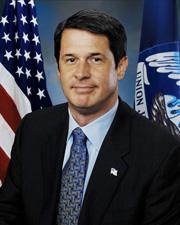 Sen. David Vitter (R-LA)
Legislative Activity
Stay on top of the latest movement without scrolling through every action
Senate amendment agreed to: Amendment SA 10 as modified agreed to in Senate by Yea-Nay Vote. 81 - 6. Record Vote Number: 9.
January 12, 2007
View full timeline
Senate amendment agreed to: Amendment SA 10 as modified agreed to in Senate by Yea-Nay Vote. 81 - 6. Record Vote Number: 9.
January 12, 2007
Roll call votes on amendments in Senate: Amendment SA 10 as modified agreed to in Senate by Yea-Nay Vote. 81 - 6. Record Vote Number: 9.
January 12, 2007
Considered by Senate. (consideration: CR S485, S486, S489)
January 12, 2007
Amendment SA 10 as modified agreed to in Senate by Yea-Nay Vote. 81 - 6. Record Vote Number: 9.
January 12, 2007
Considered by Senate. (consideration: CR S415)
January 11, 2007
Senate amendment submitted
January 10, 2007
Senate amendment proposed (on the floor): Amendment SA 10 proposed by Senator Vitter to Amendment SA 3.(consideration: CR S323; text: CR S323)
January 10, 2007
Amendment SA 10 proposed by Senator Vitter to Amendment SA 3. (consideration: CR S323; text: CR S323) To increase the penalty for failure to comply with lobbying disclosure requirements.
January 10, 2007
Votes
1 roll call on this amendment
Text
Proposed
LEGISLATIVE TRANSPARENCY AND ACCOUNTABILITY ACT OF 2007

The ACTING PRESIDENT pro tempore. Under the previous order, the
Senate will resume consideration of S. 1, which the clerk will report
by title.
The assistant legislative clerk read as follows:

A bill (S. 1) to provide greater transparency in the
legislative process.

Pending:

Reid amendment No. 3, in the nature of a substitute.
Reid amendment No. 4 (to amendment No. 3), to strengthen
the gift and travel bans.
Vitter amendment No. 5 (to amendment No. 3), to modify the
application of the Federal Election Campaign Act of 1971 to
Indian tribes.
Vitter amendment No. 6 (to amendment No. 3), to prohibit
authorized committees and leadership PACs from employing the
spouse or immediate family members of any candidate or
Federal office holder connected to the committee.
Vitter amendment No. 7 (to amendment No. 3), to amend the
Ethics in Government Act of 1978 to establish criminal
penalties for knowingly and willfully falsifying or failing
to file or report certain information required to be reported
under that Act.

The ACTING PRESIDENT pro tempore. The Senator from Connecticut is
recognized.
Mr. LIEBERMAN. Mr. President, I am privileged to be able to manage
the bill for part of today. Senator Feinstein and I--she is the chair
of the Rules Committee, and I, in my capacity as chair of the Homeland
Security and Governmental Affairs Committee, will be alternating on our
side. I am honored to do that.
I would say that after a day, we are off to a good start in our
consideration of S. 1, the bill before us. The majority and minority
leaders, Senators Reid and McConnell, laid down yesterday a bipartisan
substitute amendment that improves what was already a strong bill, S.
1, and I know a number of other Senators have come to the floor to file
or offer amendments. It is good to proceed in that way.
We have a bill before us which fortunately has strong bipartisan
support, and it is certainly my hope, and I know the hope of managers
on both sides, and the leaders, that we can move along with the
consideration of these amendments so that we will complete this bill in
the timeframe laid out by the majority leader, which is the end of next
week. This will be not just auspicious but a meaningful, bipartisan way
to begin this 110th Congress.
I wish to speak in strong support of the comprehensive substitute
that was laid down and offered by the majority and minority leaders
yesterday. I am pleased to join as a sponsor of that amendment. The
underlying text of S. 1 is already a sweeping reform of ethics rules
and lobbying regulations, and the substitute takes us even further in
strengthening those reforms. I would like to focus on a few of the
additional improvements made by the substitute.
The substitute will clarify and strengthen the provisions in the
underlying bill that require, for the first time, lobbyists to report
on campaign contributions and travel they arrange for Members of
Congress--for the first time. We also will require lobbyists to
disclose contributions to Presidential libraries and inaugural
committees. This is an extension of one of the basic building blocks of
this reform, which is disclosure, transparency, shining the sunshine on
what is happening here so the public, the media, and Congress itself
will be better informed and can take appropriate action. These
disclosures will provide a fuller picture of the relationships between
those who lobby and those who are lobbied in the Congress and in the
executive branch.
The substitute also creates a new criminal penalty for violations of
the

[[Page S320]]

Lobbying Disclosure Act. While the underlying bill, S. 1, already
doubles the amount of civil penalties that may be imposed, a criminal
penalty will strengthen the hand of the Department of Justice in
pursuing and punishing the most egregious violations.
The substitute will also tighten the revolving door rules by
prohibiting Senators from negotiating for jobs as lobbyists while they
are still in office. We will also require senior Senate staff to report
to the Ethics Committee when they are negotiating for employment so
that the Ethics Committee can identify any conflicts of interest and
require staff to recuse themselves while they are still employed by the
Senate from working on issues that may present conflicts of interest
with those with whom they are negotiating.
The substitute will also provide new rules on evaluation of tickets
to sporting and entertainment events. Why, one may ask, would we need
that provision if the underlying bill already bans gifts from lobbyists
to Members? The reason is there has been a concern that there could be
an end run around this ban, and this provision will prevent any
lobbyist who might think of doing so from selling tickets to Members or
staff at a steeply discounted price, which would effectively be a gift
because the discount itself would be a benefit in and of itself.

The substitute also improves the provisions in S. 1 that provide
transparency for the earmark process. The substitute will strengthen
and clarify the definition of an earmark, to make sure that it includes
targeted tax benefits and targeted tariff benefits. These are obviously
matters of great importance and of value. A targeted tax benefit, which
is to say a tax cut or a credit, or a tariff benefit often has as much
value, and many times has more value, than a specific earmarked
appropriation. So the substitute now strengthens and clarifies the
definition of ``earmark'' to include those benefits.
The improved definition makes clear that earmarks, as in the bill,
include earmarks to non-Federal entities when the money is first
funneled through a Federal entity. That provision addresses what some
perceive and have said is a weakness in the earmark provisions in the
underlying bill.
All of this is an attempt by this body to take hold of the earmark
process that was abused by some in the ethical scandals that have
occurred here in Congress, and more generally is blamed by others for
an escalation in the cost of Government without covering those costs.
I have always believed you have to be direct and forthright about
this issue. It is not that all earmarks are evil. There are good
earmarks and bad earmarks, and there are limits to the earmarks we want
to provide simply because we can't afford to provide beyond that. The
attempt of S. 1 and the substitute laid down by Senators Reid and
McConnell is not to stop earmarks but to create transparency,
disclosure, and a process by which the full body will be both aware of
the earmarks and able to challenge them if an individual Senator or
Senators desire.
The substitute also contains a sense of the Senate on fair and open
procedures for conference committees, and this also relates to how
earmarks are handled. The substitute also amends the Senate rules to
make clear that no changes may be made to conference reports after the
reports have been signed by the conferees. This is obviously the
concern, unfortunately based in fact, that, after a conference report,
including one signed by the conferees, either staff or Members in high
positions have been able to insert items, earmarks, into those
conference reports, which obviously suppresses not only the public's
right to know but the Members' right to know. This substitute will now
make clear that no changes of that kind can be made.

I am disappointed that the substitute does not include some
additional gift and travel rules. I believe there is strong bipartisan
support for some of the measures I have in mind. That is why I intend
to support the majority leader when he offers an amendment to pass the
gift and travel provisions to which I am referring in a separate
amendment. The House already has passed strict gift and travel rules,
and I personally hope the Senate will follow suit.
I am also very pleased that the majority leader has included in this
amendment that I referred to an additional amendment, a strong
provision on the use of corporate jets. This is a controversial,
difficult matter. It is an issue that Senators McCain, Feingold, Obama,
and I wanted to pursue last year when we took this up essentially in
its predecessor form, but we were unable to do so once cloture was
reached on the bill because the amendment was determined to be
nongermane.
Under current law this is the reality. When a Member of Congress or a
candidate for Federal office uses a private plane instead of flying on
a commercial airline, the ethics rules, as well as the Federal Election
Commission rules, require a payment to the owner of the plane
equivalent to a first-class commercial ticket. The current rules
undervalue flights on noncommercial jets and provide, in effect, a way
for corporations and individuals to give benefits to Members beyond the
limits provided for in our campaign finance laws. The Reid amendment
would eliminate that loophole by requiring that the reimbursement be
based on the comparable charter rate for a plane.
I know there are strong feelings on both sides of that. I appreciate
that Senator Reid will put that before the Senate. I look forward to
supporting him in it.
We have some very strong reform proposals before the Senate. We are
off to a good beginning. We have a lot more work to do, and I hope my
colleagues will come to the floor and offer their amendments so we can
get this all done by the end of next week.
I suggest the absence of a quorum.
Mr. DeMINT. Will the Senator withhold his request?
Mr. LIEBERMAN. I note the presence of the Senator from South Carolina
on the floor of the Senate, and I will yield to him at this time. I
withdraw my request for a quorum call.
The ACTING PRESIDENT pro tempore. The request is withdrawn. The
Senator from South Carolina is recognized.
Mr. DeMINT. Mr. President, I ask unanimous consent to set the pending
amendment aside and I be permitted to offer four amendments.
The ACTING PRESIDENT pro tempore. Is there objection to the request?
Hearing no objection, it is so ordered.

Amendments Nos. 11, 12, 13, and 14 to Amendment No. 3 en bloc

Mr. DeMint. Mr. President, I have four amendments at the desk.
The ACTING PRESIDENT pro tempore. The clerk will report the
amendments by number.
The assistant legislative clerk read as follows:

The Senator from South Carolina [Mr. DeMINT] proposes
amendments numbered 11, 12, 13, and 14 to amendment No. 3 en
bloc.

Mr. DeMINT. I ask unanimous consent the reading of the amendments be
dispensed with.
The ACTING PRESIDENT pro tempore. Without objection, it is so
ordered.
The amendments are as follows:

AMENDMENT NO. 11

(Purpose: To strengthen the earmark reform)

Strike section 103 and insert the following:

SEC. 103. CONGRESSIONAL EARMARK REFORM.

The Standing Rules of the Senate are amended by adding at
the end the following:

RULE XLIV

earmarks

``1. It shall not be in order to consider--
``(a) a bill or joint resolution reported by a committee
unless the report includes a list of congressional earmarks,
limited tax benefits, and limited tariff benefits in the bill
or in the report (and the name of any Member who submitted a
request to the committee for each respective item included in
such list) or a statement that the proposition contains no
congressional earmarks, limited tax benefits, or limited
tariff benefits;
``(b) a bill or joint resolution not reported by a
committee unless the chairman of each committee of
jurisdiction has caused a list of congressional earmarks,
limited tax benefits, and limited tariff benefits in the bill
(and the name of any Member who submitted a request to the
committee for each respective item included in such list) or
a statement that the proposition contains no congressional
earmarks, limited tax benefits, or limited tariff benefits to
be printed in the Congressional Record prior to its
consideration; or
``(c) a conference report to accompany a bill or joint
resolution unless the joint explanatory statement prepared by
the managers on the part of the House and the managers on the
part of the Senate includes a

[[Page S321]]

list of congressional earmarks, limited tax benefits, and
limited tariff benefits in the conference report or joint
statement (and the name of any Member, Delegate, Resident
Commissioner, or Senator who submitted a request to the House
or Senate committees of jurisdiction for each respective item
included in such list) or a statement that the proposition
contains no congressional earmarks, limited tax benefits, or
limited tariff benefits.
``2. For the purpose of this rule--
``(a) the term `congressional earmark' means a provision or
report language included primarily at the request of a
Member, Delegate, Resident Commissioner, or Senator
providing, authorizing or recommending a specific amount of
discretionary budget authority, credit authority, or other
spending authority for a contract, loan, loan guarantee,
grant, loan authority, or other expenditure with or to an
entity, or targeted to a specific State, locality or
Congressional district, other than through a statutory or
administrative formula-driven or competitive award process;
``(b) the term `limited tax benefit' means--
``(1) any revenue-losing provision that--
``(A) provides a Federal tax deduction, credit, exclusion,
or preference to 10 or fewer beneficiaries under the Internal
Revenue Code of 1986; and
``(B) contains eligibility criteria that are not uniform in
application with respect to potential beneficiaries of such
provision; or
``(2) any Federal tax provision which provides one
beneficiary temporary or permanent transition relief from a
change to the Internal Revenue Code of 1986; and
``(c) the term `limited tariff benefit' means a provision
modifying the Harmonized Tariff Schedule of the United States
in a manner that benefits 10 or fewer entities.
``3. A Member may not condition the inclusion of language
to provide funding for a congressional earmark, a limited tax
benefit, or a limited tariff benefit in any bill or joint
resolution (or an accompanying report) or in any conference
report on a bill or joint resolution (including an
accompanying joint explanatory statement of managers) on any
vote cast by another Member, Delegate, or Resident
Commissioner.
``4. (a) A Member who requests a congressional earmark, a
limited tax benefit, or a limited tariff benefit in any bill
or joint resolution (or an accompanying report) or in any
conference report on a bill or joint resolution (or an
accompanying joint statement of managers) shall provide a
written statement to the chairman and ranking member of the
committee of jurisdiction, including--
``(1) the name of the Member;
``(2) in the case of a congressional earmark, the name and
address of the intended recipient or, if there is no
specifically intended recipient, the intended location of the
activity;
``(3) in the case of a limited tax or tariff benefit,
identification of the individual or entities reasonably
anticipated to benefit, to the extent known to the Member;
``(4) the purpose of such congressional earmark or limited
tax or tariff benefit; and
``(5) a certification that the Member or spouse has no
financial interest in such congressional earmark or limited
tax or tariff benefit.
``(b) Each committee shall maintain the written statements
transmitted under subparagraph (a). The written statements
transmitted under subparagraph (a) for any congressional
earmarks, limited tax benefits, or limited tariff benefits
included in any measure reported by the committee or
conference report filed by the chairman of the committee or
any subcommittee thereof shall be published in a searchable
format on the committee's or subcommittee's website not later
than 48 hours after receipt on such information.''.

AMENDMENT NO. 12

(Purpose: To clarify that earmarks added to a conference report that
are not considered by the Senate or the House of Representatives are
out of scope)

At the appropriate place, insert the following:

SEC. __. EARMARKS OUT OF SCOPE.

Any earmark that was not committed to conference by either
the House of Representatives or the Senate in their
disagreeing votes on a measure shall be considered out of
scope under rule XXVIII of the Standing Rules of the Senate
and section 102 of this Act if contained in a conference
report on that measure.

AMENDMENT NO. 13

(Purpose: To prevent Government shutdowns)

At the appropriate place, insert the following:

SEC. ___. AMENDMENT TO TITLE 31.

(a) In General.--Chapter 13 of title 31, United States
Code, is amended by inserting after section 1310 the
following new section:

``Sec. 1311. Continuing appropriations

``(a)(1) If any regular appropriation bill for a fiscal
year (or, if applicable, for each fiscal year in a biennium)
does not become law before the beginning of such fiscal year
or a joint resolution making continuing appropriations is not
in effect, there are appropriated, out of any money in the
Treasury not otherwise appropriated, and out of applicable
corporate or other revenues, receipts, and funds, such sums
as may be necessary to continue any project or activity for
which funds were provided in the preceding fiscal year--
``(A) in the corresponding regular appropriation Act for
such preceding fiscal year; or
``(B) if the corresponding regular appropriation bill for
such preceding fiscal year did not become law, then in a
joint resolution making continuing appropriations for such
preceding fiscal year.
``(2) Appropriations and funds made available, and
authority granted, for a project or activity for any fiscal
year pursuant to this section shall be at a rate of
operations not in excess of the lower of--
``(A) the rate of operations provided for in the regular
appropriation Act providing for such project or activity for
the preceding fiscal year;
``(B) in the absence of such an Act, the rate of operations
provided for such project or activity pursuant to a joint
resolution making continuing appropriations for such
preceding fiscal year;
``(C) the rate of operations provided for in the regular
appropriation bill as passed by the House of Representatives
or the Senate for the fiscal year in question, except that
the lower of these two versions shall be ignored for any
project or activity for which there is a budget request if no
funding is provided for that project or activity in either
version; or
``(D) the annualized rate of operations provided for in the
most recently enacted joint resolution making continuing
appropriations for part of that fiscal year or any funding
levels established under the provisions of this Act.
``(3) Appropriations and funds made available, and
authority granted, for any fiscal year pursuant to this
section for a project or activity shall be available for the
period beginning with the first day of a lapse in
appropriations and ending with the earlier of--
``(A) the date on which the applicable regular
appropriation bill for such fiscal year becomes law (whether
or not such law provides for such project or activity) or a
continuing resolution making appropriations becomes law, as
the case may be; or
``(B) the last day of such fiscal year.
``(b) An appropriation or funds made available, or
authority granted, for a project or activity for any fiscal
year pursuant to this section shall be subject to the terms
and conditions imposed with respect to the appropriation made
or funds made available for the preceding fiscal year, or
authority granted for such project or activity under current
law.
``(c) Appropriations and funds made available, and
authority granted, for any project or activity for any fiscal
year pursuant to this section shall cover all obligations or
expenditures incurred for such project or activity during the
portion of such fiscal year for which this section applies to
such project or activity.
``(d) Expenditures made for a project or activity for any
fiscal year pursuant to this section shall be charged to the
applicable appropriation, fund, or authorization whenever a
regular appropriation bill or a joint resolution making
continuing appropriations until the end of a fiscal year
providing for such project or activity for such period
becomes law.
``(e) This section shall not apply to a project or activity
during a fiscal year if any other provision of law (other
than an authorization of appropriations)--
``(1) makes an appropriation, makes funds available, or
grants authority for such project or activity to continue for
such period; or
``(2) specifically provides that no appropriation shall be
made, no funds shall be made available, or no authority shall
be granted for such project or activity to continue for such
period.
``(f) For purposes of this section, the term `regular
appropriation bill' means any annual appropriation bill
making appropriations, otherwise making funds available, or
granting authority, for any of the following categories of
projects and activities:
``(1) Agriculture, Rural Development, Food and Drug
Administration, and Related Agencies.
``(2) Commerce, Justice, Science, and Related Agencies.
``(3) Defense.
``(4) Energy and Water Development.
``(5) Financial Services and General Government.
``(6) Homeland Security.
``(7) Interior, Environment, and Related Agencies.
``(8) Labor, Health and Human Services, Education, and
Related Agencies.
``(9) Legislative Branch.
``(10) Military Construction, Veterans' Affairs, and
Related Agencies.
``(11) State, Foreign Operations, and Related Programs.
``(12) Transportation, Housing and Urban Development, and
Related Agencies.''.
(b) Clerical Amendment.--The analysis of chapter 13 of
title 31, United States Code, is amended by inserting after
the item relating to section 1310 the following new item:

``1311. Continuing appropriations''.

AMENDMENT NO. 14

(Purpose: To protect individuals from having their money involuntarily
collected and used for lobbying by a labor organization)

At the appropriate place, insert the following:

[[Page S322]]

SEC. __. PROTECTION OF WORKERS' POLITICAL RIGHTS.

Title III of the Labor Management Relations Act, 1947 (29
U.S.C. 185 et seq.) is amended by adding at the end the
following:

``SEC. 304. PROTECTION OF WORKER'S POLITICAL RIGHTS.

``(a) Prohibition.--Except with the separate, prior,
written, voluntary authorization of an individual, it shall
be unlawful for any labor organization to collect from or
assess its members or nonmembers any dues, initiation fee, or
other payment if any part of such dues, fee, or payment will
be used to lobby members of Congress or Congressional staff
for the purpose of influencing legislation.
``(b) Authorization.--An authorization described in
subsection (a) shall remain in effect until revoked and may
be revoked at any time.''.

Mr. DeMINT. Mr. President, I thank the Senators from Connecticut and
Utah for working with me to get the time to offer these amendments.
When similar legislation was considered last year, I voted against it
because I believed it did not do enough in the way of earmark reform. I
believe the same is true for the substitute that is before us today,
and I am offering these amendments to strengthen the bill and try to
get it to the point where I can support it.
My first amendment would enhance the disclosure requirements for
congressional earmarks, for limited tax benefits, and limited tariff
benefits to match those proposed in the other body by Speaker of the
House Nancy Pelosi. The earmark definition in the substitute is
woefully inadequate. It exempts earmarks for Federal entities as well
as earmarks in report language.
According to the Congressional Research Service, more than 95 percent
of all earmarks in fiscal year 2006 were found in report language, not
in the bill text. In effect, disclosure requirements in the substitute
could conceivably apply to only 5 out of every 100 earmarks.
The definition of a targeted tax benefit in the substitute also falls
short, as it never explicitly defines what constitutes a limited group
of taxpayers. Speaker Pelosi's language, however, explicitly defines a
limited tax benefit as one that is targeted to 10 or fewer
beneficiaries.
I do not always agree with Speaker Pelosi, but on this issue we are
in full agreement. The earmark definition agreed to in the House is by
far the most comprehensive definition that is currently being debated,
and I encourage my colleagues to support it.
My second amendment would clarify that earmarks that were not in
either the House or Senate version of the bill are out of scope when
they are added in a conference report. As my colleagues know, a lot of
earmarks find their way into conference reports where they cannot be
voted on. This circumvents the legislative process, and it fosters
abuse of taxpayer dollars. I am pleased that the substitute partly
addresses this problem by creating a new 60-vote point of order against
matters that are out of scope. This was designed to allow Members to
object to out-of-scope earmarks and have them removed from the
conference report, but the Senate Parliamentarian does not believe this
provision is enforceable against earmarks specifically.
My amendment would clarify that out-of-scope earmarks are subject to
this new point of order in the Senate bill as well as rule XXVIII of
the Standing Rules of the Senate, which prohibits adding out-of-scope
matters in conference. I believe this is the true intent of the
substitute, and I strongly encourage my colleagues to support it.
My third amendment would prevent the Government from shutting down
when regular appropriations bills are not enacted. It would do so by
automatically triggering a continuing resolution that funds agencies at
current levels for up to a year. The amendment would begin automatic
funding on the first day of a lapse in appropriations, and it would end
on the day the regular appropriations bill becomes law or the last day
of the fiscal year, whichever comes first. This would eliminate the
must-pass nature associated with regular appropriations bills which
often pressure lawmakers into accepting spending bills with
objectionable earmarks.
I understand that the Democratic leader intends to get all of the
appropriations bills done before the end of the fiscal year, but there
are always unforeseeable events that must be dealt with, and there is
always a chance that we will be faced with having to pass a bad bill or
allowing parts of the Government to shut down. I certainly do not
support Government shutdowns, and I know my colleagues do not either.
My amendment would create a safety net that would avoid the crisis
situations that often pressure lawmakers into supporting spending bills
that they would not otherwise support. This is a commonsense proposal,
and I encourage my colleagues to support it.
My fourth amendment would prevent labor unions from using a member's
dues to lobby Congress without the prior separate and written consent
of that member. Union dues, like taxes, are compulsory for union
members. We all believe Congress must be transparent and accountable in
the way it spends tax dollars, and we should all support making unions
transparent and accountable in the way they spend members' dues.
Federal tax dollars cannot be used for lobbying but compulsory union
dues can be used for lobbying. This is a real problem because it forces
union workers to pay for lobbying with which they may not agree. If
someone is a member of a trade association and they disagree with the
actions of that group, they can always stop paying their dues. This
freedom is not afforded to union workers.
I tried on several occasions last year to pass legislation that would
bar criminals convicted of serious felonies from gaining secure access
to our ports. This proposal is essential to protecting our Nation from
future terrorist attacks, and it is overwhelmingly supported by
Americans. But the measure was killed by several unions that lobbied
against it, and they killed it with dues that they forced union workers
to pay without their consent.
My amendment simply requires consent from union members before his or
her dues may be used to lobby Congress. My amendment has nothing to do
with political contributions. That is a debate for another day. But as
long as unions force workers to pay dues as a condition of employment,
they should get consent from their members before they use those dues
to lobby Congress. My amendment would ensure that voluntary
contributions will be the only contributions that can go toward
lobbying Congress.
I thank the managers again for working with me to get these
amendments called up so our colleagues can begin reviewing them. I
would be pleased to work with the managers in scheduling additional
time to debate and vote on these amendments.
I yield and suggest the absence of a quorum.
The ACTING PRESIDENT pro tempore. The clerk will call the roll.
The assistant legislative clerk proceeded to call the roll.
Mr. VITTER. Mr. President, I ask unanimous consent that the order for
the quorum call be rescinded.
The PRESIDING OFFICER (Mr. Carper). Without objection, it is so
ordered.

Amendment No. 9

Mr. VITTER. Mr. President, I ask unanimous consent to call up my
amendment No. 9 which is at the desk.
The PRESIDING OFFICER. Without objection, it is so ordered.
The clerk will report.
The assistant legislative clerk read as follows:

The Senator from Louisiana [Mr. Vitter] for himself and Mr.
Inhofe, proposes an amendment numbered 9 to amendment No. 3.

Mr. VITTER. I ask unanimous consent to waive the reading of the
amendment.
The PRESIDING OFFICER. Without objection, it is so ordered.
The amendment is as follows:

(Purpose: To place certain restrictions on the ability of the spouses
of Member of Congress to lobby Congress)

On page 51, between lines 12 and 13, insert the following:

SEC. 242. SPOUSE LOBBYING MEMBER.

(a) In General.--Section 207(e) of title 18, United States
Code, as amended by section 241, is further amended by adding
at the end the following:
``(5) Spouses.--Any person who is the spouse of a Member of
Congress and who was not serving as a registered lobbyist at
least 1 year prior to the election of that Member of Congress
to office and who, after the election of such Member,
knowingly lobbies on behalf of a client for compensation any
Member of Congress or is associated with any such lobbying
activity by an employer of

[[Page S323]]

that spouse shall be punished as provided in section 216 of
this title.''.
(b) Grandfather Provision.--The amendment made by
subsection (a) shall not apply to any spouse of a Member of
Congress serving as a registered lobbyist on the date of
enactment of this Act.

Mr. VITTER. Mr. President, I thank the leaders, the floor managers,
all those involved in this important debate for putting this front and
center of our business in the new Congress. It is very appropriate we
do so.
I hope we all recognize, after the last few years, we need a very
focused, sincere, determined effort to strengthen the law, strengthen
enforcement, and rebuild the confidence of the American people in our
institutions.
These two amendments that I bring to the Senate I hope will do that.
They are part of a package I have introduced, along with three
amendments I introduced and talked about briefly yesterday.
Let me get to this first amendment today. It is a very simple,
straightforward idea to address what, unfortunately, is a very real
issue and a very real cause for concern by the American people. That is
the practice, in some cases, of spouses of Members of the House and
Senate being registered lobbyists, making large amounts of money in
that profession, lobbying at the same time they are a spouse of a
Member of the House or a Member of the Senate. My amendment is very
straightforward and says we will not allow that.
The underlying bill addresses that in a very narrow way, to say that
spouses in that situation can't directly lobby their own spouse or that
Members' office. That is great, but clearly a person in that
situation--a Senate spouse, a House spouse--has enormous entre to other
Members, to other offices. My amendment is broader and says we are not
going to allow that. Spouses of sitting Members of the House and Senate
cannot lobby.
Unfortunately, I wish history was such that Members could argue this
is a solution looking for a problem. That is not the case. This
happens. It has happened. It has clearly been abused. There have been
instances that have been reported that have caused great legitimate
alarm and concern by the American people of this being abused. This has
come to light in the last several years. Spouses making large amounts
of money, bringing that income to the family bank account--obviously,
the Member of Congress is part of it, participates in it--from
lobbying.
There is a situation with two fundamental problems. One is a lobbyist
spouse clearly having extraordinary access to other Members and their
offices. That is one real problem. The second real problem is maybe
even more significant. That is the opportunity for significant moneyed
interests, special interests, whatever you want to call it, to be able
to write a check, a big check, in the form of a salary that goes
directly into a Member's family bank account through the spouse. That
is a practice that has been used and abused in the recent past. Again,
this is not a solution looking for a problem.
We, also, point out there is an exception in my amendment. I debated
whether to include this exception. I can make an argument that we
should not even allow this exception, but to bend over backwards, to be
fair, to answer some concerns of other Members, I included the
exception. It says, if this lobbyist spouse was a lobbyist more than a
year before the Member was first elected to the Congress, they can
continue with that activity. In other words, someone who legitimately
built up a career well before that marriage was ever seriously
contemplated, can continue. Again, I can make an argument of no
exceptions, but in the interest of bending over backward to meet some
legitimate questions, I included that exception.
I hope all Members of the Senate, Republican and Democrat, will
carefully look at this amendment and support it. This has been and is a
practice. It has been used and abused in the past. It has clearly
caused serious concerns among the American people. It has been in press
reports and other disclosures in the last couple of years.
To say we are doing wholesale lobbying and ethics reform, and, oh, by
the way, we are not going to touch this, we are going to forget about
this, would make a folly of the whole exercise. I encourage all Members
of the Senate to support this concept.
Let's make a clear-cut rule. Let's get rid of this clear conflict of
interest to potential abuses, unusual access to Members, as well as the
possibility of special interests basically being able to write a big
check directly into a Member's family bank account.

Amendment No. 10 to Amendment No. 3

With that, Mr. President, I ask unanimous consent to temporarily set
aside that amendment and call up my second amendment of the day,
amendment No. 10.
The PRESIDING OFFICER. Is there objection?
Without objection, it is so ordered.
The clerk will report.
The assistant legislative clerk read as follows:

The Senator from Louisiana [Mr. Vitter] proposes an
amendment numbered 10 to amendment No. 3.

Mr. VITTER. Mr. President, I ask unanimous consent that reading of
the amendment be dispensed with.
The PRESIDING OFFICER. Without objection, it is so ordered.
The amendment is as follows:

(Purpose: To increase the penalty for failure to comply with lobbying
disclosure requirements)

On page 34, line 5, strike ``$100,000'' and insert
``$200,000''.

Mr. VITTER. Mr. President, I think this amendment also addresses an
important issue in this ethics and lobbying reform debate; that is, the
significance of the penalties involved for serious violations.
This amendment is very straightforward. It says that registered
lobbyists who fail to comply with the Lobbying Disclosure Act--and
after that is called to their attention, and then they fail to remedy
the situation, fail to fix it, fail to follow other aspects of the
law--the maximum penalty can be $200,000. Current law, right now, is
$50,000. I simply think that is too low for the most serious violations
of the Lobbying Disclosure Act, considering that in virtually all of
these cases the lobbyist is given notice and allowed to correct the
situation before we ever get to this sort of very serious penalty.
The underlying bill on the floor, as I understand it, will propose to
increase the current law penalty from $50,000 to $100,000. I think that
is obviously movement in the right direction but not far enough. My
amendment would propose changing current law from a maximum penalty of
$50,000 to $200,000.
Again, let me emphasize a couple things. I think there is the wide
and correct perception by the American people that in a lot of these
cases you have a law, you have a violation, and it just ends up being a
slap on the wrist--the cost of doing business to a lobbyist who is
making millions. I think that is true in many cases. That is a real
defect in the law. We need to correct that.
Secondly, we are talking about a maximum penalty--up to $200,000. It
does not mean it has to be $200,000. And we are talking about a
situation where a violation is called to a person's attention and that
person fails to comply with the law within 60 days, fails to right the
wrong by complying with other provisions of the Lobbying Disclosure
Act.
So given all of that, given all of those circumstances, I think a
maximum penalty--maximum--of up to $200,000 is very legitimate and is a
change that is really overdue.
Again, I implore all the Members of the Senate, Democrat and
Republican, to take a good, hard look at this amendment. I think when
they do, the vast majority will support it. I certainly look forward to
that.
With that, Mr. President, I look forward to further debate on these
amendments and certainly votes on these amendments, and I have received
commitments for that.
With that, I yield back my time.
The PRESIDING OFFICER. The Senator yields back his time.
The Senator from Connecticut.
Mr. LIEBERMAN. Mr. President, I ask unanimous consent that at 11:45
a.m. this morning, the Senate resume consideration of the Vitter
amendment No. 7 and that there be 15 minutes of debate, controlled 5
minutes each for the majority and minority managers and 5 minutes for
Senator Vitter; that at 12 noon, without further intervening action or
debate, the Senate proceed to vote in relation to Vitter amendment No.
7.

[[Page S324]]

The PRESIDING OFFICER. Is there objection?
Without objection, it is so ordered.
Mr. LIEBERMAN. I thank the Chair.
I yield the floor and suggest the absence of a quorum.
The PRESIDING OFFICER. The clerk will call the roll.
The assistant legislative clerk proceeded to call the roll.
Mr. VITTER. Mr. President, I ask unanimous consent that the order for
the quorum call be rescinded.
The PRESIDING OFFICER. Without objection, it is so ordered.

Amendment No. 7 to Amendment No. 3

Mr. VITTER. Mr. President, I ask unanimous consent to call up
amendment No. 7.
The PRESIDING OFFICER. The amendment is pending.
Mr. VITTER. I thank the Chair. Under the previous order, I will talk
about this amendment for 5 minutes and then the floor managers will do
the same.
Mr. President, I explained this yesterday. It is a very
straightforward amendment. It simply increases penalties--I think
appropriately--for willful and knowing misrepresentations on financial
disclosure reports.
As you know, many people in Government, including U.S. Senators, have
to file financial disclosure statements. That is section 101 of the
Ethics in Government Act of 1975. It is very basic information about
not every detail of our finances, but the broad brush of an
individual's finances. This applies to others, certainly, in the
administration, executive branch, as well as some in the judicial
branch.
Section 104 of that act is about the penalties. That says the
Attorney General can file a civil suit against any individual who
knowingly and willfully falsifies that sort of document or knowingly
and willfully fails to report that information. But the maximum fine
under that civil suit is $10,000. Mr. President, this can literally be
a slap on the wrist in certain situations. This can literally encourage
people to falsify documents or not report certain information
completely or properly because, No. 1, that figure will never be
noticed or caught; No. 2, worst case, if it is, it is only $10,000. It
may be worth paying that and trying to get away with it versus
disclosing certain information.
That is unacceptable. This amendment fixes that. It raises the
maximum civil penalty from $10,000 to $50,000, and it allows--doesn't
mandate--the Attorney General to bring criminal charges in certain
situations, with a maximum penalty of up to 1 year imprisonment. Again,
in certain situations, that would be appropriate and the current law in
certain situations, I believe, will actually encourage folks to try to
get away with noncompliance, nondisclosure.
Finally, I ask this simple question in support of the amendment: If
that is the right approach for the average American citizen, why should
it not be the right approach for U.S. Senators, House Members, and
members of the executive branch? Why do I say that? Well, if an average
American citizen knowingly and willfully falsifies tax documents, guess
what. They are in a heap of trouble and they face much greater
potential consequences than a civil fine of up to $10,000. They
absolutely face potential criminal charges. So if it is right and
appropriate for the average American citizen, certainly the same rule
should bear on Members of the Senate, Members of the House, and members
of the executive branch, no more or less. What is fair is fair. We need
to be treated like the average American citizen.
With that, I yield back my time and look forward to wrapping up this
debate.
The PRESIDING OFFICER. Who yields time?
The Senator from California is recognized.
Mrs. FEINSTEIN. Mr. President, we have no problem with this
amendment.
The PRESIDING OFFICER. Is there further debate on the amendment?
Mrs. FEINSTEIN. Mr. President, I suggest the absence of a quorum.
The PRESIDING OFFICER. The clerk will call the roll.
The legislative clerk proceeded to call the roll.
Mr. LIEBERMAN. Mr. President, I ask unanimous consent that the order
for the quorum call be rescinded.
The PRESIDING OFFICER. Without objection, it is so ordered.
Mr. LIEBERMAN. Mr. President, in about 5 minutes the Senate will vote
on the amendment offered by the Senator from Louisiana, Mr. Vitter.
First, I thank him for offering this amendment, which concerns the
Ethics in Government Act, a law that falls within the jurisdiction of
the Homeland Security and Governmental Affairs Committee, which I am
privileged to chair in this session. The penalty provisions for
disclosure violations under that act, the Ethics in Government Act,
have not been addressed in some time. Senator Vitter's amendment begins
to do that. I think it does it in an appropriate way. I intend to
support the Senator's amendment.
As has been said, and I will repeat it, the amendment will increase
the civil penalties that already exist under the act and will create a
new penalty for knowing and willful falsification or failure to report,
and that is a criminal penalty.
I note for my colleagues' benefit that the Homeland Security and
Governmental Affairs Committee intends to take up reauthorization of
the Office of Government Ethics this year.
I know that some of my colleagues are interested in offering
amendments to this bill, S. 1, related to executive branch ethics.
Obviously, I am happy to work with them on these amendments to see if
any of those might appropriately be attached to this bill, such as the
one we are voting on now.
But I also want to say on behalf of the committee that there may be
some other proposed amendments that the committee believes need further
deliberate consideration by the committee. I will be happy to work with
my colleagues on those, urging them not to go forward on this bill, but
with the promise that as we address the Office of Government Ethics
reauthorization and other matters, that we will be glad to consider
those proposals. As the hour approaches, I urge my colleagues to
support this progressive amendment by the Senator from Louisiana.
I thank the Chair and yield the floor.
Mr. VITTER. Mr. President, I ask for the yeas and nays.
The PRESIDING OFFICER. Is there a sufficient second? There is a
sufficient second.
Mr. LIEBERMAN. Mr. President, I now yield back all of the remaining
time and suggest that we go forward with the vote.
The PRESIDING OFFICER. All time is yielded back. The question is on
agreeing to amendment No. 7 offered by the Senator from Louisiana.
The yeas and nays have been ordered, and the clerk will call the
roll.
The legislative clerk called the roll.
Mr. DURBIN. I announce that the Senator from West Virginia (Mr.
Byrd), the Senator from Hawaii (Mr. Inouye), and the Senator from South
Dakota (Mr. Johnson) are necessarily absent.
Mr. LOTT. The following Senators were necessarily absent: the Senator
from Kansas (Mr. Brownback) and the Senator from Idaho (Mr. Crapo).
Further, if present and voting, the Senator from Idaho (Mr. Crapo)
would have voted ``aye.''
The PRESIDING OFFICER (Mr. Obama). Are there any other Senators in
the Chamber desiring to vote?
The result was announced--yeas 93, nays 2, as follows:

[Rollcall Vote No. 2 Leg.]

YEAS--93

Akaka
Alexander
Allard
Baucus
Bayh
Bennett
Biden
Bingaman
Bond
Boxer
Brown
Bunning
Burr
Cantwell
Cardin
Carper
Casey
Chambliss
Clinton
Coburn
Cochran
Coleman
Collins
Conrad
Corker
Cornyn
Craig
DeMint
Dodd
Dole
Domenici
Dorgan
Durbin
Ensign
Enzi
Feingold
Feinstein
Graham
Grassley
Gregg
Hagel
Harkin
Hatch
Hutchison
Inhofe
Isakson
Kennedy
Kerry
Klobuchar
Kohl
Kyl
Landrieu
Lautenberg
Leahy
Levin
Lieberman
Lincoln
Martinez
McCain
McCaskill
McConnell
Menendez
Mikulski
Murkowski
Murray
Nelson (FL)
Nelson (NE)
Obama
Pryor
Reed
Reid
Roberts
Rockefeller
Salazar
Sanders
Schumer
Sessions
Shelby
Smith
Snowe
Specter
Stabenow
Stevens
Sununu
Tester
Thomas
Thune
Vitter
Voinovich
Warner
Webb
Whitehouse
Wyden

[[Page S325]]

NAYS--2

Lott
Lugar

NOT VOTING--5

Brownback
Byrd
Crapo
Inouye
Johnson
The amendment (No. 7) was agreed to.
Mr. REID. Mr. President, I move to reconsider the vote, and I move to
lay that motion on the table.
The motion to lay on the table was agreed to.
The PRESIDING OFFICER. The Senator from Montana is recognized.
Mr. BAUCUS. Mr. President, I want to engage the managers here. It is
my understanding I will have time shortly to give a statement on Iraq.
I don't want to interfere with the legislation on the floor, and I am
asking whether this would be a good time for that statement to take
about maybe 15, 20 minutes.
I see no objection.
The PRESIDING OFFICER. Without objection, it is so ordered.

Iraq

Mr. BAUCUS. Mr. President, I am concerned about the deteriorating
situation in Iraq. We need to change course. Let me urge my colleagues
to consider a few principles for where I believe we should go from
here.
Like my colleagues, I have received an outpouring of letters, e-
mails, telephone calls. Montanans are split in how Americans should
proceed, but one thing is clear: They all want to see an end to it.
They want to see our men and women come home.
On October 20, a man from Cutbank, MT wrote me to say:

Yesterday was a very emotional day for me. I currently have
a son serving in Iraq who does house-to-house raids and goes
out on extended missions. My other son, who just joined the
Army, informed me that he too will now be leaving for Iraq.
As native Americans, my sons will be honored when they return
home. We are proud of them. We are very proud of our native
Americans who serve as warriors, but I am deeply concerned
with what they face every day over there.

Amber, a military wife from Great Falls, MT writes:

I realize that my voice is a voice of millions that call
for your assistance. However, I couldn't sleep at night
knowing I didn't at least try to do what I think is right. My
husband along with many others here in Montana is in Iraq
right now, and just recently we lost a soldier from Billings.
Help us bring the troops home where they belong with their
families who miss them.

In September, Tom Gignoux, from Missoula, MT, a Marine Corps veteran
with a Purple Heart wrote me to say this:

I no longer support the war in Iraq. I believe that
mismanagement of the occupation and reconstruction has made
the war unwinnable and is distracting us from the war on
terrorism.

Mr. President, I believe it is time for our combat troops to come
home from Iraq. America entered into this war with motivations that
were clearly honorable, but they were mistaken. As the 9/11 Commission
found, there was no connection between Iraq and the attacks on 9/11.
There were no weapons of mass destruction. And the theory that America
could, through invading Iraq, establish democracy that would spread
throughout the region has proven a cruel joke.
If we knew then what we know now, I would not have voted for the war.
If we knew then what we know now, I believe the results of that vote
would have been different. Indeed, I doubt that we would even be asked
to take that vote.
The administration was not up front with us. They presented faulty
intelligence and faulty information, especially about weapons of mass
destruction. Unfortunately, the quality of congressional decisionmaking
was no better than the quality of the information upon which we relied.
Going into Iraq was a mistake. The premise was wrong. After September
11, 2001, we had international support to go after al-Qaida and to find
Osama bin Laden. That is the mission we should be strongly pursuing--
more strongly. Our resources are incorrectly being exhausted in Iraq. I
cannot go back and change that vote, but I can work in a new direction.
I first commend our troops. They are wonderful. They have shown such
courage, such exemplary strength. They are terrific. They removed the
tyrant Saddam Hussein. They addressed the potential threat of weapons
of mass destruction. They have done their job well. We are all proud of
them. Their service has been outstanding. No one can argue against
their contribution to our national security, and their dedication to
their missions goes unmatched.
I believe in giving our soldiers, sailors, and airmen the proper
equipment and tools they need to stay safe and to succeed. A year ago,
I spoke about our responsibility to get as much funding as possible for
the troops. I have criticized spending on high-tech weapons systems at
the expense of boots on the ground. I voted in favor of every Defense
bill and war supplemental since the war began.
I heard of families hosting bake sales to buy body armor. I have
tried to do everything I could to protect our troops. But it is no
longer enough.
Now our brave troops stand in the crossfire of a civil war. We have
lost more than 3,000 troops in the escalating conflict. Just this week,
the Iraqi Health Ministry reported that more than 17,000 Iraqis died in
the second half of 2006. That is more than three times as many who died
in the first half of 2006. And now, America has spent more time
fighting this war than we spent in World War II.
I understand and sympathize with the Americans who continue to
support this war because they do not want their family and friends to
have died in vain. I know what they feel. I struggled with that last
summer when my nephew Phillip died in Iraq. On July 29, Marine Cpl
Phillip Baucus, my brother John's son, was killed during combat
operations in the Al Anbar province. He was just 28 years old. Phillip
was a bright and dedicated young man. He was like a son to me. He had a
loving wife and a bright future. His death was devastating.
I know what it is like to wait on the flight line at Dover Air Force
Base. I know what it is like to weep over the body of a fallen soldier
and family member. I know what it is like to escort Phillip back from
Dover to Montana. I know what it is like to pray for a reason, and to
become determined not to lose.
I am not the only Montanan who has grieved. We are not a large State,
but 14 Montanans have so far lost their lives in Iraq, and we grieve
for them all. In fact, we in Montana send more troops to Iraq on a per
capita basis than any other State in the Nation. Those men and women
who have lost their lives have served a noble purpose. They have taught
us lessons in courage, and we honor that courage by speaking out. We
honor that courage by admitting that what we are doing is not working,
and we honor that courage by finding a new direction.
A change in strategy is not defeat. A change in strategy is a
recognition that things are not working. Moving forward, I urge the
President and the Congress to consider four principles. First, we must
not escalate the conflict. Second, we must train Iraqis to stand up for
themselves. Third, we must start bringing our troops home by the middle
of this year. Fourth, we must engage Iraq's neighbors and the world
community to find a more political solution.

Let me explain in greater detail. First, I do not support the
escalation in the number of American troops. Throwing more troops at
the problem--especially a modest number, up to 20,000--is not a
solution. Escalating the war is not a solution. We must not launch a
strategy which has no benchmarks for its success. How long and at what
cost do we add troops to the conflict? It is a mistake.
The Iraq Study Group is a prestigious and well-respected group.
Secretary of Defense Robert Gates was a member. The study group said
the current strategy in Iraq is not working. That is what this study
says. But to this date, the President has not implemented any of the
group's recommendations.
President Bush has stated numerous times that he listens to the
commanders on the ground. American commanders on the ground have
reported that al-Qaida has increasingly gained political influence
among the Sunnis. General Abizaid told the Senate Armed Services
Committee:

I believe that more American forces prevent Iraqis from
doing more, from taking responsibility for their own future.

I urge the President to listen to what General Abizaid said and not
just replace commanders who say things he does not want to hear.

[[Page S326]]

Second, we should not have an open-ended commitment in Iraq. America
must make that clear to the Iraqi Government. The war is now costing us
$2 billion a week. That is $2 billion a week that is not being devoted
to health care, veterans' benefits, or education.
There must be a more specific plan. The plan needs to outline how
long our training efforts will continue, and the plan needs to show at
what point the Iraqis will take over security of their own country.
Last weekend, Iraq's Prime Minister, Nuri al-Maliki, reiterated the
need and his commitment to getting the Iraqi security forces to stand
up on their own two feet. America should support these efforts. In
short, our forces should stand down so the Iraqi forces can stand up.
Third, with a new focus on political solutions, the United States
should start phased redeployment of combat troops in roughly 6 months,
with the goal of having combat forces out of Iraq as soon as possible.
Our troops are stretched too thin to address emerging threats around
the world. There is something called opportunity cost. It is a
technical term. But we are so focused on Iraq that we are not paying
attention to other trouble spots in the world as much as we should. We
must not focus solely on Iraq in blindness to the rest of the world.
Our troops are serving their third and fourth tours in Iraq. Some
deployments have been extended for 12 to 18 months. Some troops no
longer have a year to spend at home between deployments. I have seen
firsthand in Montana how the Guard and Reserves are deployed in record
numbers. They have served honorably and with my great admiration. But
we need them on U.S. soil for homeland defense missions. The Active-
Duty troops must not be overextended. They need to be ready to deploy
around the world.
Finally, America must engage Iraq's neighbors more than we have. The
Iraq Study Group named a peaceful solution to the Arab-Israeli conflict
as a major potential contributor to the stability in Iraq. I strongly
agree with that. That will take so much of the terrorists' energy out
of their sails, frankly, if we could find a meaningful solution to the
Israeli-Palestinian conflict. The Iraq Study Group said:

The United States cannot achieve its goals in the Middle
East unless it deals directly with the Arab-Israeli conflict
and regional stability.

They continue:

There must be renewed and sustained commitment by the
United States to a comprehensive Arab-Israeli peace on all
fronts.

We have taken too many steps backward in that conflict. Our invasion
of Iraq has simply stirred up things way too much. It has caused
problems. America's presence has opened the doors to terrorism and
sectarian violence.
We must reengage and work toward peace and diplomatic solutions. We
must seek increased participation of other nations both in a political
way forward and also in reconstruction work. We should redouble our
efforts to reach out to that nation and to our allies who also have an
intense interest in peace in that region and work together toward a
responsible exit.
In March of 1919, the Emir of Iraq, Feisal ibn Hussein, wrote to
Supreme Court Justice Felix Frankfurter. This is what he said:

We feel that Arabs and Jews are cousins in race, having
suffered similar oppressions at the hands of powers stronger
than themselves, and by happy coincidence they have been able
to take the first step toward the mutual attainment of their
national ideals together. . . .Indeed, I think neither can be
a real success without the other. . . .I look forward . . .
to a future in which we will help you and you will help us,
so that the countries in which we are mutually interested may
once again take their places in the community of civilized
peoples in the world.

That is what the Emir of Iraq wrote in 1919.
America must renew its commitment to peace in the Middle East. We
must work to regain the fleeting sense of optimism that can lead to
political resolution. We must be positive. We must be the leaders that
we Americans are. We must work to stop the spilling of blood in the
land of Abraham.
I urge President Bush to listen to the Iraq Study Group. I urge him
to listen to commanders such as General Abizaid. I urge him to listen
to the American people. It is time for America to change its course. It
is time for a new political effort. It is time to bring the troops
home.
I yield the floor. I suggest the absence of a quorum.
The PRESIDING OFFICER. The clerk will call the roll.
The assistant legislative clerk proceeded to call the roll.
Mr. GRASSLEY. Mr. President, I ask unanimous consent that the order
for the quorum call be rescinded.
The PRESIDING OFFICER (Mr. Webb). Without objection, it is so
ordered.
Mr. GRASSLEY. Mr. President, I ask unanimous consent to speak as in
morning business.
The PRESIDING OFFICER. Without objection, it is so ordered.

Prescription Drugs

Mr. GRASSLEY. Mr. President, I am back here today, as I have been
other days this week, to talk about the Medicare drug benefit and the
debate about whether the Government would do a better job of
negotiating with drug companies than the prescription drug plans that
are doing so this very day under law of the last 2\1/2\ years. Over the
past 2 days, I have talked about the fundamental structure of the drug
benefit. I talked about the heart of it, of the drug benefit plan, as
competition. Plans, with vast experience in negotiating with drug
manufacturers, compete to get the best drug prices for Medicare. That
is what is happening today to benefit our senior citizens. Plans that
have been doing this for 50 years are negotiating with drug companies
in a competitive way to get the best prices for Medicare senior
citizens. To date, the proof is in the pudding. We have lower bids, we
have lower beneficiary premiums, lower costs to the Government, and
lower costs to our States. Most importantly, we have lower prices on
drugs, meaning senior citizens get affordable drugs and low-income
people do not have to choose between drugs and food. Remember, that was
a goal we had in 2003 we passed this legislation.

I will give some examples of how this competition has worked. A draft
PricewaterhouseCoopers study found in 2006 prescription drug plans
achieved higher savings, 29 percent compared to unmanaged drug benefit
expenditures. That is almost 100 percent greater than the 15-percent
savings projected by Centers for Medicare and Medicaid Services and
almost 50 percent greater than the savings estimated by the
Congressional Budget Office way back when, in 2003, when we all thought
if this program worked at all there would be some savings on
prescription drugs for seniors. However, it has turned out to be much
greater savings than we anticipated when we wrote the bill.
It isn't often that legislation we write comes back with a better
benefit to the taxpayers, better benefit to our seniors or any group or
population. Most often there are what we call cost overruns.
I believe it is fair to say that competition is working.
Yesterday, I talked about how this whole debate is based on nothing
more than a distortion of language in what is called the
noninterference clause in the existing legislation. This
noninterference language was first included in legislation introduced
by many of the same people now opposing it, and these people tend to be
led by Members of the Democratic Party.
To be clear, that language, the noninterference language that people
now are questioning, that period of time between 1999 and 2003, bills
introduced by Members in the other party included this language and
now, somehow, they do not like it.
I want to be clear that the impressions left by opponents of this
part of the legislation that we do not have competition, we do not have
negotiations, this language in the legislation does not prohibit
negotiations to get drug prices down. Negotiations occur between
private plans and the drug manufacturers regularly. You could not get
those percentage decreases in prices I just mentioned--those
percentages that are even greater than percentages we thought when we
wrote the legislation--you would not get those without negotiation, you
would not get those without competition.
I, also, pointed out in earlier speeches, so far, proposals to have
the Secretary of HHS negotiate drug prices have not been shown to
actually save

[[Page S327]]

any money. Our beloved Congressional Budget Office tells us that they
cannot project savings by having a Government bureaucrat negotiate
instead of plans negotiating. Nevertheless, here we are, in the new
Congress, discussing this matter once again.
What I want to do today is put forward a picture of what Government
negotiations might look like. Admittedly, doing this will require some
speculation. Why is that necessary? It is necessary because Democrats
have not provided many details on how they actually envision their
requirement that the Secretary negotiate how that will work. This is
despite the fact that some opponents of the noninterference clause have
demagoged this issue for nearly 3 years. After 3 years, they are still
out there saying the noninterference clause ought to go, but there are
no details on how their plan will work. They have given us a few clues
as to their thinking on how they want it to work.
For the longest time, I heard it said that the Secretary of Health
and Human Services should have the power to negotiate drug prices, as
the Veterans' Administration does. With the Veterans' Administration as
our guide, let's talk about the VA's approach to purchasing drugs and
then ask you to consider, after you hear this, do you want to do it
that way? This discussion will be somewhat technical, but I urge
listeners to bear with me because we need to get beyond the Veteran's
Administration sound bite. Everyone needs to have a good understanding
of what this would mean for Medicare.
It is a fact that the Veterans' Administration uses different
purchasing arrangements to get discounts on prescription drugs. But
there is a big distinction between these purchasing arrangements. The
Veterans' Administration has access to what we call the Federal supply
schedule prices. Under the Federal supply schedule prices, the
Government guarantees by law that it must get the best price in the
marketplace. This means that the Federal supply schedule prices cannot
exceed the lowest price that a manufacturer gives in comparable terms
and conditions to a non-Federal customer such as the pharmacy benefit
manager. Since that is technical, I will go over that once more. Under
the Federal supply schedule, the Government guarantees by law that it
must get the best price in the marketplace. But what this means is that
the Federal supply schedule prices cannot exceed the lowest price that
a manufacturer gives under comparable terms and conditions to a non-
Federal customer, and that could include health plans, pharmacy benefit
managers, and many others. Under Federal law, manufacturers must list
their drug on the supply schedule to qualify for reimbursement under
Medicaid.
Next, the VA can purchase drugs at the Federal ceiling price. Again,
the Government passed a law to guarantee itself an automatic discount
no one else can get. By law, that price is automatically 24 percent
less than the average price paid by basically all non-Federal
purchasers.
Isn't that a nice negotiating tactic? Pass a law and guarantee
yourself a discount. The logical questions are, why not have Medicare
access the Federal supply schedule--because people who want to do it
such as the VA, that is where it takes you. Why not give Medicare the
Federal ceiling price?

I will refer to a chart because experts have looked at this question,
and we have assigned the Government Accountability Office to look into
this. They had a year 2000 report on this. They say:

Mandating that federal prices for outpatient prescription
drugs be extended to a large group of purchasers, such as
Medicare beneficiaries, could lower the prices they pay but
raise prices for others.

In other words, raising prices for everybody else in America that is
purchasing drugs. You heard that right: Raise prices on everybody else.
Who would face the higher prices under ``everybody else''? Small
businesses, their employees, their families, to name a few. Those
higher prices would likely force employers to reduce their prescription
drug benefit or stop providing health insurance coverage altogether. Of
course, that is an outcome I surely hope people want to avoid, but it
may be an outcome that the proponents of doing away with the
noninterference clause are not aware of. Or the people that are saying
we ought to follow the VA practice may not be aware, that to save the
taxpayers some money you are going to raise the price of drugs on
everybody else in America, according to the Government Accountability
Office.
The Government Accountability Office reached its conclusion by
examining what happened to drug prices after Congress required drug
manufacturers to pay rebates to State Medicaid Programs such as the
Federal supply schedule, the Medicaid rebate program guarantees that
the Government gets the best price in the marketplace.
What happened after the law was enacted? The best prices went up for
everyone else. The practical effect was twofold: First, the size of
rebates for State Medicare Programs got smaller. What the Federal
Government wanted to accomplish to benefit the States did not happen.
Second, other purchasers paid higher prices. One might ask why that
might happen. Here is why: Drugmakers had to eliminate their best
prices to private purchasers or face bigger rebates. That happens
because if they gave 1 purchaser a best price, they then had to give
the best price to 50 State Medicaid purchasers. One discount to a
private purchaser could mean millions that a manufacturer would be
forced to pay in rebates to the Government.
What do you think the drug companies did to counteract a well-
intentioned act of Congress which ended with unintended consequences?
The drug companies eliminated all the deep discounts so that they did
not have to pay as much in mandatory rebates to Medicaid.
A 1996 study by the nonpartisan Congressional Budget Office examined
the extent to which the Medicaid laws result in higher drug prices to
everyone else. Listen to what our Congressional Budget Office
concluded:

Best price discounts have fallen from an average of over 36
percent in 1991 to 19 percent in 1994. Hence, although the
Medicaid rebate appears on the surface to be attractive, it
may have had unintended consequences for private purchasers.

The Federal Government passes a law to do good, and we find out we
end up not doing so good. Almost a 50-percent reduction in best-price
discounts; is that good? A nearly 50-percent reduction in the discounts
received by purchasers such as health plans that serve employers and
their employees; is that good? Of course, it is not. What this means is
when those deep discounts went away, the price that everyone else pays
for drugs went up. So those mandates, rebates to Medicaid made drug
prices for everyone else higher.
Talk about unintended consequences. And we in the Senate who set
these things up had the right intentions for doing it, but it has not
worked out--unless you want to look at the good it did to the Federal
Treasury and not count or not discount the harm it did to everyone else
who paid higher prices.
To state it more simply, when discounts to a large purchasing group
are based on discounts to another, no one gets a good discount. That is
what the Government Accountability Office said in its 2000 report:

Extending the Federal Supply Schedule . . . could also
raise the prices paid by private and federal purchasers, as
increases in prices, manufacturers charged their best
customers would, in turn, increase Federal Supply Schedule
prices.

Would opponents of the noninterference clause believe the
congressional agencies, such as the CBO and the Government
Accountability Office, that striking the noninterference clause would
not be good? Ironic, isn't it, when the Government used price controls
to mandate discounts to itself, it actually makes prices go up. I will
go through that again. When the Government uses price controls to
mandate discounts to itself, it actually makes prices go up. No person
in their right mind concerned about the Federal Treasury or concerned
about the cost of drugs to people in this country would say that meets
the commonsensical test. But that is what happens.

During a 2001 hearing before the Senate Committee on Veterans'
Affairs, my colleague, the senior Senator from Pennsylvania, Mr. Arlen
Specter, posed a question on this very matter. He asked whether adding
Medicare to the VA and Department of Defense purchasing mix would
produce greater

[[Page S328]]

bulk discounts. The Veterans' Administration chief consultant for its
Pharmacy Benefits Management Strategic Health Group answered that
adding Medicare to the Federal Supply Schedule umbrella would result in
increased drug prices for both the Veterans' Administration and the
Department of Defense.
So, now, in addition to the Government Accountability Office and the
Congressional Budget Office, the Veterans' Administration weighs in for
itself, and the Department of Defense, that doing what repealers of the
noninterference clause want to do will actually increase drug prices to
the Veterans' Administration and the DOD. And people want to use the
Veterans' Administration as a pattern to affect Medicare. So that is
saying it for the third time.
If I could say it for another time, straight from the Veterans'
Administration's mouth, itself: Extending VA prices to Medicare would
make the VA's own drug prices increase.
And for one last time, the basic point they are making is, if you try
to mandate discounts to everyone, then--what I have said a few minutes
ago--no one gets a discount. Now, I am no economist, but that is basic
economics. And not only that but it is common sense.
I think I have pretty much laid out why including Medicare in the
Federal Supply Schedule is not as good an idea as its proponents may
have made it out to be.
So now I want to go back to how the Veterans' Administration uses
competitive bidding to get the discounts they say they want to use as a
pattern for the Medicare Program.
Let me start by giving you an important piece of information. The
Veterans' Administration has its own pharmacy benefits manager. More
than a decade ago, as part of a major initiative to improve the care
delivered, the Veterans' Administration formed a pharmacy benefits
manager, better known around here as a PBM.
So you will probably wonder why they did that. Because, as stated in
the VA news release, they wanted to maximize a strategy used by the
private sector. You have people who want to have Medicare do it like
the VA does it, but the VA set up a very special program because they
wanted to learn something from the private sector.
A primary responsibility of the PBM for the Veterans' Administration
was to develop a national formulary. The Government learned that from
the private sector, the very same people they are finding complaints
about now. They wanted to set up a national formulary.
A formulary is the list of drugs that a plan will cover. Basically,
if your drug is not on the list, it is not covered.
A 2005 article in the American Journal of Managed Care, coauthored by
the Veterans' Administration's staff and university-based researchers,
stated that the Veterans' Administration created the national formulary
to achieve two main goals.
First, the Veterans' Administration wanted to reduce the variation in
access to drugs across its many facilities throughout the United
States. In other words, they wanted to put a VA bureaucrat between the
doctor and the patient. Doctors could not subscribe to everything that
they thought that patient might need because if it was not on the
formulary, they could not prescribe it.
Second, the VA wanted to use the formulary as leverage to get lower
prices for drugs. Let me repeat that because it is important. The
Veterans' Administration created a national formulary to create the
leverage it needed to get lower prices for drugs.
That goes back to the point I made a couple days ago. The ability to
get good discounts does not result from the sheer number of people a
purchaser buys for. The ability to get good discounts comes from how
the purchaser leverages those numbers. That leverage comes from a
purchaser threatening to exclude a drug from the formulary. So it
eventually comes down to threats.
The Veterans' Administration uses its formulary to say: Give me a
better price or else--or else we are not going to buy your drugs at
all.
As I said earlier, the Veterans' Administration was intentionally
adopting a private sector strategy when it started using a formulary to
get lower drug prices. The Medicare prescription drug plans also use
formularies to negotiate lower drug prices. The most important thing
about the VA formulary is that it is one big national formulary.
The biggest difference between the VA and Medicare is that
beneficiaries have choices.
Let me make that clear. The biggest difference between how the VA
does it and how the plans do it--the plans that are approved by the
Secretary of Health and Human Services for the senior citizens of
America and Medicare--the biggest difference is the beneficiaries have
choices. They can choose their plans with different formularies. So
Medicare bureaucrats are not coming between the patient and the doctor
like VA bureaucrats are coming between the patient and the doctor. You
can run into this in your town meetings because I had people come up to
me and complain about the VA: My doctor says I ought to have this drug
because the drug that the VA wants me to take has side effects.
And they come to me and say: How come the VA won't pay for this drug
because it is better for me, according to my doctor?
And their answer is: Because the VA wants to save money. So you have
a Government bureaucrat deciding what is best for your health instead
of your doctor.
But the principle behind the prescription drug bill that Senator
Baucus and I wrote was that we were not going to have the bureaucrat
getting in the medicine cabinet of a person, of senior citizens. We
wanted every therapy available. That is the way it is written, and that
is the way it is being carried out. So I wonder if people who say you
ought to change this and do it the way the VA does it know how you are
negatively affecting the senior citizens of America.
The way senior citizens can do it is they have choice. They can
enroll in a plan that covers their drugs. They can enroll in a plan
that allows them to use their neighborhood pharmacy. The VA does not do
business with every pharmacist in America. So you are hurting your
local pharmacist when you do business that way.

Under the Veterans' Administration programs, veterans do not have a
choice. They cannot choose a different plan, and they have to use the
VA's own pharmacy, not the pharmacy down the street. Using a limited
number of VA-controlled pharmacies and mail-order pharmacies also helps
keep VA costs down.
But one of the things we wanted to accomplish in the prescription
drug bill, Part D, was to make sure the Government did not use its
leverage to hurt local pharmacists. And we put several things in--a
requirement you had to have a brick-and-motor pharmacist in every plan.
So we have some requirements to help pharmacies that the VA does not
even worry about. And I have to confess to the community pharmacists of
America, we still have a lot of work to do to help them so they benefit
from this program like we intended. There are some unintended
consequences to what we did, even considering the fact we took the
community pharmacists into consideration.
Under the VA program, then, you do not have a local pharmacist to go
to. When they do not use the local pharmacist the way we do, when they
use all these mail-order pharmacies, they hurt the local pharmacist,
but they are saving some money.
Also, there is limited access to drugs, limited access to retail
pharmacies. That is how the VA works. So do you want to force that upon
the senior citizens of America?
I would like to go to another chart now. The Los Angeles Times put it
best in an article on November 27 of last year. According to the Los
Angeles Times:

VA officials can negotiate major price discounts because
they restrict the number of drugs on their coverage list. . .
.In other words, the VA offers lower drug prices but fewer
choices.

So do you want to offer fewer choices to our seniors? That is not
what we wanted when we wrote the Medicare bill. We wanted to keep CMS
bureaucrats out of the Medicare medicine cabinet of every senior
citizen.
So what would it mean if the Government negotiated lower drug prices
for Medicare in a national system like the Veterans' Administration? It
would

[[Page S329]]

mean having a more limited formulary. And it would mean having the
Veterans' Administration bureaucrat between you and your doctor.
So I would go to a chart that would make this more picturesque and
more clear to you. This chart shows what this would mean. It would mean
that instead of having 4,300 drugs available to them, beneficiaries
would have about 1,200 drugs available. If Medicare used a national
formulary like the VA, it would mean that 70 percent of the
prescription drugs could not be covered by Medicare. Only 30 percent of
the drugs covered today would be covered.
Then let's get into some specific drugs, about major problems we are
trying to treat today, such as diabetes or cholesterol. There, too, if
the Government negotiated for Medicare like it does for VA, it would
mean fewer drugs covered by Medicare.
In the case of treatment for depression: 65 percent covered; 35
percent not covered. In the case of treatment for high cholesterol: 54
percent covered, 46 percent not covered. It seems that by looking at
these drugs, if the Government used the VA model, our senior citizens
would not be as well served.
Now, maybe you can make an argument we are not treating our veterans
right. We appropriate more money every year for veterans health
programs. And we have to because the needs are there and we made a
promise. We have to keep the promise to the veterans. But I think
veterans watching this could say: Well, why not cover these? Why not
cover these? Well, I have given the reason. We want to save taxpayers
money. But it is completely opposite what we wanted to accomplish under
the Medicare bill to serve our senior citizens: everything being
available, and to save the taxpayers money through competitive bidding.
This could also mean that beneficiaries could not get their
prescriptions filled at the most convenient pharmacy for them. That is
not what we wanted when writing the bill. We put seniors first. Those
who want to repeal it, it seems to me, they are putting bureaucrats
first, or at least they are putting bureaucrats between the doctor and
the senior citizen. In many cases, those realities have led Medicare-
eligible veterans to enroll in Medicare drug programs so they will have
coverage for drugs not covered by the VA.
When I held my town meetings as we were rolling out this new drug
program, I had veterans say: Well, does this mean I have to get out of
the veterans program?
I said: If you are satisfied with the veterans program, you can stay
in it. You do not have to do anything. If you decide later on you want
to get into one of these programs, you can do it without penalty.
So they had the best of both worlds. If they were satisfied with the
VA, keep it. But we have evidence that some of them are leaving the VA
program to join the program of Part D Medicare. Even though many
veterans have very good drug coverage, almost 40 percent of the
veterans with VA benefits and Medicare coverage are enrolled in Part D.
So when you get beyond the easy sound bites, when you get to the facts,
applying the VA system to Medicare is neither as easy as it sounds nor
will it likely have the effect that the proponents suggest.
It now appears that even they have begun to figure this out because
now, when the rubber hits the road, when they have to produce
something, they introduce a bill--and I am referring now to a bill of
the other body--that explicitly prohibits the Secretary from creating a
formulary.
In fact, the Los Angeles Times reported last week that a House
Democratic leadership aide said, ``We felt we couldn't go as far as the
Veterans Affairs [Department] does.''
Under the House Democrats bill, Medicare can't have a formulary. As I
tried to make clear here today, the drug formulary is the key to
negotiating lower drug prices. The House Democrats bill prohibits the
Government from having a national formulary. No formulary means no
negotiations, no leverage over drug companies. In reality, the
Democratic proposal on negotiation actually prohibits the Government
from negotiating. Under their plan for Government negotiation, the
Government won't be able to say no to a drug company. With no formulary
to bargain with, the drug companies could say something like this: No,
why should I give you that price if you can't exclude me or charge
higher cost sharing?
At the same time, the House Democrats bill repeals the prohibition on
the Government setting a pricing structure. So if the Government cannot
negotiate because it can't have a formulary, if there is no prohibition
on Government price structure, where does that leave us? Sounds like
price controls to me. Experience shows that when the Government sets
prices for itself, when it gives itself mandatory discount, prices go
up for everyone, higher prices for everyone else. Why would anyone want
that sort of a situation?
Everyone always asks, why not have Medicare work like the VA program
to get lower drug prices. I think I have laid out why that idea might
not be as good as the proponents have made it sound. Having Medicare
work like the VA could mean fewer drugs covered, restricted access to
community pharmacies, more use of mail-order pharmacies and higher drug
prices for everyone else. I can't imagine that is what people want.
So where does that leave us? The Medicare plans are working today. I
say that based upon several polls that show 80 or so percent of the
seniors are satisfied. The plans are also delivering the benefits to
Medicare beneficiaries. These private sector plans have the experience
of negotiating better prices. These Medicare negotiators have proven
their ability to get lower prices. The Medicare plans are negotiating
with drug companies using drug formularies within the rules set by law,
and the formularies are basic for that negotiation.
Last week on the Senate floor, the Senator from Illinois said that
the law ``took competition out of the program so that [the drug
companies] could charge whatever they want.'' That is not true. We have
the 50-year experience of the Federal Employees Health Benefit Program
negotiating for every Federal employee to keep costs down to the
citizen as well as to the taxpayers. We patterned it something like
that. And quite frankly, when we patterned it for the senior citizens
under Medicare, I wasn't entirely sure we would get all the plans
interested, that we would have the competition we ended up having. It
has worked beyond our expectation. And thank God it did, because I am
not sure we had that kind of expectation out of it. But it sure worked.
Thank God something worked a little bit better than we anticipated it
would work.
So we had a Senator saying that we took competition out of the
program. Competition is what this program is all about, and that
competition is working. Costs are lower. Premiums are lower. Let me
quantify how premiums are lower, because when we were writing the bill
in 2003, we were figuring at what price, somewhere between $35 and $40
a month, could we get seniors to join. Over that, we would have
problems. Competition has brought it in at $23 last year and $22 this
year on average. So these organizations remain in the best position to
get lower prices for Medicare beneficiaries and taxpayers.
I yield the floor.
Mr. LIEBERMAN. Mr. President, I thank the Senator from Iowa.
I suggest the absence of a quorum.
The PRESIDING OFFICER. The clerk will call the roll.
The bill clerk proceeded to call the roll.
Ms. COLLINS. Mr. President, I ask unanimous consent that the order
for the quorum call be rescinded.
The PRESIDING OFFICER (Mr. Lieberman). Without objection, it is so
ordered.
Ms. COLLINS. Mr. President, I ask unanimous consent that I be
permitted to proceed as in morning business for not to exceed 5 minutes
in order to submit a resolution.
The PRESIDING OFFICER. Without objection, it is so ordered.
The Senator from Maine is recognized.
Ms. COLLINS. I thank the Chair.
(The remarks of Ms. COLLINS pertaining to the submission of S. Res.
22 are located in today's Record under ``Submission of Concurrent and
Senate Resolutions.'')
Ms. COLLINS. Mr. President, I suggest the absence of a quorum.

[[Page S330]]

The PRESIDING OFFICER. The clerk will call the roll.
The legislative clerk proceeded to call the roll.
Mr. COLEMAN. Mr. President, I ask unanimous consent that the order
for the quorum call be rescinded.
The PRESIDING OFFICER (Mr. Webb). Without objection, it is so
ordered.
Mr. COLEMAN. Mr. President, I ask unanimous consent to speak as in
morning business.
The PRESIDING OFFICER. Without objection, it is so ordered.

Iraq

Mr. COLEMAN. Mr. President, having recently returned from another
visit to Iraq serving as a member of the Foreign Relations Committee, I
come to the floor this afternoon to express my views on the most
pressing issue facing our country today: our path to success in Iraq.
The Iraq Study Group recently stated the situation in Iraq is grave and
deteriorating. When the current path isn't working, you have to be
flexible. You have to shift. You have to make a change. And, clearly,
in Iraq today we have to make a change. The President of the United
States, on Friday, said the same thing.
In December I met with Iraqi political leaders, U.S. troops and their
leaders, as well as our diplomats on the ground. Our conversations with
this broad range of individuals helped me draw various conclusions that
are key to evaluating the proposals currently being debated. In light
of the President's upcoming announcement of his strategy for Iraq, I
think it is important to share these conclusions.
It is easy to lose sight of the fact that we are in Iraq as part of a
Global War on Terror. There is no question that Iraq has become the key
battleground of this war. Failure cannot be an option in either the
overall war on terror or in Iraq. As the President has correctly
stated, this is the battle of this generation. With menacing regimes in
Iran and Syria, we cannot dismiss the fact that a failed state in Iraq
would lead to much more than chaos and collapse in that nation. It
would destabilize a critical region of the world and, most alarmingly,
would create a breeding ground for terrorists whose ambitions do not
stop at Iraq's borders. Americans--all Americans--have a direct stake
in winning this war.
We know the United States will be involved in the war on terror for
the foreseeable future. The question is, How do we move forward in
Iraq? How do we fight this war? And, where do we put our troops?
From my experience in Iraq, I know now, or at least I believe, that
we are fighting it essentially on two fronts. The first is the war we
intended to fight: a war against terrorists, primarily Sunni extremists
and foreign jihadists linked to al-Qaida--foreign terrorists. The other
war is a war between the Iraqis themselves: Shiite against Sunni, in a
seemingly endless cycle of grisly violence. Our military must continue
the battle against extremists and terrorists, but we have no business
being caught in the crossfires of an Iraqi sectarian conflict.
The good news is we have had great success in fighting the war on
terror, imposing crippling losses on the international jihadist network
which today operates in Iraq. Indeed, during my visit in December with
marines from Minnesota stationed in Anbar, they reported they were
making great headway against the insurgency there. I am proud of their
accomplishments, and I firmly believe these military victories directly
enhance our security at home. But to secure the ground that these
marines have cleared of insurgents in places such as Fallujah, they
need Sunni police officers. They need Sunni members of the Iraqi Army.
They need reconciliation between Sunni and Shia. So as we continue to
fight the first war, the war against terrorists, we need also to
address the second war, that of Iraqi against Iraqi.
The overall consensus I found in Iraq is that we will be unable to
hold on to the ground we have gained on the first front without
addressing the second front: Iraqi sectarian violence. This violence is
spiraling rapidly and is undermining the success we have made against
the terrorists. If the Iraqi security forces, both Army and police, are
to someday soon take over the fighting of the insurgency from U.S.
troops, it is clear that intergroup violence must be brought under
control. The Iraqi security forces must include all Iraqis: Sunni,
Shiite, Kurd, and others. To be certain, our efforts cannot succeed if
sectarian hatred is not addressed at the highest level of the Iraqi
Government immediately.
The only long-term solution for bringing stability to Iraq must be
centered on national reconciliation. It is true that after decades of
Sunni violence led by Saddam Hussein and his regime, the Shiites still
have unaddressed grievances. But this does not call for, nor permit,
neighborhood-by-neighborhood ethnic cleansing, nor a refusal to work
together for the future of all Iraqis. Shiites may be able to win
short-term victories through the use of violence, but in the long term
they will not have a unified country if they continue to do so. Iraqi
leaders should focus on reining in all sectarian groups under the
umbrella of a national and inclusive political process. This is a
solution that can only be led by the Iraqis themselves.
With no doubt, this sectarian violence was left to grow unchecked for
far too long. Even so, it is not too late to get Iraq back to stable
footing. But it will come from dialogue and political compromise
enforced by a central government prepared to take on militias under the
control of religious sects, clans, and even common criminals. We must
get to the point where Iraqi citizens express their views through
political channels instead of through violence. The Iraqis are the
masters of their own destiny, and it is important that our strategy
regard them as such.
Since my trip to Iraq in December, I have been calling for the Iraqi
Government to establish a series of benchmarks that will diffuse the
sectarian violence and stabilize the country politically and
economically. These benchmarks would include an oil revenue-sharing
agreement and economic assistance to areas that have been neglected in
the past. The reality is not putting resources in Anbar Province
because it is Sunni, and so as a result, what you get is a feeding of
insurgency by the actions of a government that has not been prepared to
address the issue of sectarian violence. We will be a better supporter
of the Iraqi Government if we pressure them to create and adhere to
these benchmarks rather than assuming that this fractured Government
will take this on by themselves. I fear that up to this point the Iraqi
leadership has not stepped up to the plate to make the difficult
decisions that are necessary to pave the road for a political solution.
When I was in Iraq with Senator Bill Nelson from Florida, we met with
the Iraqi National Security Adviser to Maliki, Dr. Rubaie, who
contended that sectarian violence wasn't the main problem, but the
problem was the foreign terrorists and was the Sunni insurgency. That
is not the case. As a Senator responsible for looking after the best
interests of my constituents and all Americans, I take seriously the
responsibility of Iraqi political leaders to honor the sacrifices that
are being made by American soldiers. I refuse to put more American
lives on the line in Baghdad without being assured that the Iraqis
themselves are willing to do what they need to do to end the violence
of Iraqi against Iraqi. If Iraq is to fulfill its role as a sovereign
and democratic state, it must start acting like one. It is for this
reason that I oppose the proposal for a troop surge. I oppose the
proposal for a troop surge in Baghdad where violence can only be
defined as sectarian. A troop surge proposal basically ignores the
conditions on the ground, both as I saw on my most recent trip and
reports that I have been receiving regularly since my return. My
consultations with both military and Iraqi political leaders confirms
that an increase in troops in areas plagued by sectarian violence will
not solve the problem of sectarian hatred. A troop surge in Baghdad
would put more American troops at risk to address a problem that is not
a military problem. It will put more American soldiers in the
crosshairs of sectarian violence. It will create more targets. I just
don't believe that makes sense.
Again, I oppose a troop surge in Baghdad because I don't believe it
is the path to victory or a strategy for victory in Iraq. I recognize
there are those who think otherwise. The Iraqi

[[Page S331]]

Study Group, in their report, said that they could, however, support a
short-term deployment, a surge of American combat forces to stabilize
Baghdad or to speed up the training and equipping mission if the U.S.
commander in Iraq determines that such standards would be effective.
I sat with the President with Democratic colleagues and Republican
colleagues. I know that he has weighed this heavily, and I know he has
looked at this issue for a long time. Apparently, he has come to the
conclusion that, in fact, a troop surge would be helpful. I believe his
comments will contain--hopefully contain--discussions about benchmarks
and contain a commitment to do those things to rebuild the economy and
create jobs so that we get rid of some of the underlying causes and
frustrations that feed the insurgency. But the bottom line is, again,
at this point in time, it is sectarian violence that I believe is the
major issue that we face and more troops in Baghdad is not going to
solve that problem.
As one of the final conclusions to share of my experience in Iraq, I
would also like to emphasize the significant role of Iran in fomenting
instabilities. Across the board, my meetings with Iraqi officials
revealed that the Iranians are driving instability in Iraq by all means
at their disposal. We had a hearing today in the Foreign Relations
Committee and one of the speakers, one of the experts said that it may
be, and it is probably clear that, the Iranians have a stake in
American failure in Iraq and its stability in the region, and they feed
on that. Indeed, there are credible reports that Iran is currently
supplying money and weapons to both its traditional Shiite allies and
its historic Sunni rivals, all for the purposes of ensuring a daily
death toll of Iraqi citizens. It is clear the Iranians have concluded
that chaos in Iraq is in their direct interest. Iran's role thus far,
not to mention their pursuit of nuclear weapons, makes it hard to
believe that they might suddenly become a constructive partner in the
stabilization of Iraq.
I want to point out that my commitment to success in Iraq has not
changed, nor my willingness to consider options that would
realistically contribute toward our goals there. In my trips to Iraq, I
have gone with an open mind as to what next steps could be taken as we
work with the Iraqis to stabilize their country. I have said all along
that the stakes of our mission in Iraq are such that failure is simply
not an option, and I will only support proposals that will steer the
United States toward victory. Abandoning Iraq today would precipitate
an even greater surge of ethnic cleansing. It would, as I indicated
before, precipitate an episode of instability and chaos in the region
that would be in no one's interest. But my most recent trip to Iraq
also reaffirmed to me that it is the Iraqis who must play the biggest
role in any strategy for success. Our investment must be tied to their
willingness to make the tough choices needed to pave the way to
stability and for them to act on them.
I represent Minnesota, but if I represented Missouri, I think I would
simply say to Maliki: Show me. Show me your resolve. Show me your
commitment. Show me that you can, in fact, do the things that have to
be done to deal with the sectarian violence, and then we can talk about
enhancing and increasing the American effort. I haven't seen it. I
don't see it today, and as such, I am certainly not willing to put more
U.S. troops at risk.
Mr. President, I yield the floor, and I note the absence of a quorum.
The PRESIDING OFFICER. The clerk will call the roll.
The assistant legislative clerk proceeded to call the roll.
Mr. SALAZAR. Mr. President, I ask unanimous consent the order for the
quorum call be rescinded.
The PRESIDING OFFICER. Without objection, it is so ordered.
The Senator from Colorado.
Mr. SALAZAR. Mr. President, what is the pending business?
The PRESIDING OFFICER. The Vitter amendment, No. 10, is the pending
amendment.

Amendment No. 15 to Amendment No. 3

Mr. SALAZAR. I ask unanimous consent that the pending amendment be
set aside so that I can offer amendment No. 15.
The PRESIDING OFFICER. Without objection, it is so ordered.
The clerk will report.
The assistant legislative clerk read as follows:

The Senator from Colorado (Mr. Salazar), for himself and
Mr. Obama, proposes an amendment numbered 15 to amendment No.
3.

Mr. SALAZAR. I ask unanimous consent the reading of the amendment be
dispensed with.
The PRESIDING OFFICER. Without objection, it is so ordered.
The amendment is as follows:

(Purpose: To require Senate committees and subcommittees to make
available by the Internet a video recording, audio recording, or
transcript of any meeting not later than 14 days after the meeting
occurs)

At the appropriate place, insert the following:

SEC. __. PUBLIC AVAILABILITY OF SENATE COMMITTEE AND
SUBCOMMITTEE MEETINGS.

(a) In General.--Paragraph 5(e) of rule XXVI of the
Standing Rules of the Senate is amended by--
(1) by inserting after ``(e)'' the following: ``(1)''; and
(2) by adding at the end the following:
``(2) Except as provided in clause (1), each committee and
subcommittee shall make publicly available through the
Internet a video recording, audio recording, or transcript of
any meeting not later than 14 days after the meeting
occurs.''.
(b) Effective Date.--This section shall take effect October
1, 2007.

Mr. SALAZAR. Mr. President, I rise today to discuss amendment No. 15,
which is being offered by myself and the Senator from Illinois, Barack
Obama. The amendment is a very simple amendment but a very important
one as we undertake our effort to revise the ethics rules of the
Congress. The amendment simply requires that each Senate committee and
subcommittee make available on the Internet either a video recording,
an audio recording or a transcript of every meeting that is open and
that those documents be made public within 14 days of the meeting's
adjournment, unless a majority of the committee members decide
otherwise.
I was surprised, frankly, to realize how difficult it is for all of
our constituents to learn about the work we do in this Senate and
Congress because most of that work occurs in the committees of our
legislative Chamber. Most of those committee meetings are not
broadcast. There are a few occasionally that get broadcast on C-SPAN or
that are picked up by one of the networks, but that is a rare
occurrence. It is an exception to receive that kind of broadcast. So,
as far as the public of the United States is concerned, most of the
work we do in committees--which is where most of the work actually
occurs for our legislative activity--is work that actually occurs in
the dark.
While Senate rules require that committee meetings be open to the
public and that each committee prepare and keep a complete transcript
or electronic recording of all of its meetings, it still remains very
difficult for citizens to figure out what actually goes on in our
committee rooms. According to one estimate, a transcript or electronic
recording is available online for only about one-half of all Senate
committee and subcommittee hearings. Only for one-half of those
hearings is there made available a transcript that the public can
actually access. That number is far too low. There is no reason why, in
this day of modern technology and communications, we should not be able
to achieve a goal of 100 percent.
I know we often refer to Justice Brandeis because he was one of those
great jurists who really illuminated our times with some of his wisdom,
his jewels that have become almost cliches that captured the moment. I
remember Justice Brandeis's famous line where he said, ``Sunshine is
said to be the best of disinfectants.''
Those words are as true now as ever. We have seen an unprecedented
level of secrecy in the legislative process. We have seen one-party
conference committees where, just because you happen to be of the other
party, you were not allowed to participate in the conference committee
or you were not even notified that a conference committee was, in fact,
meeting. We have seen provisions that are slipped into conference
committee reports that were not passed by either Chamber. Those kinds
of procedures and tactics are often used. That kind of secrecy is

[[Page S332]]

part of what has caused a lack of confidence of the American people in
our institutions in Washington, DC.
The time for secret government is over. This legislation we have been
considering over the last several days, and hopefully will bring to
conclusion this week or next week, will be a great first step in making
sure we are returning government back to the people and integrity back
to the processes which we oversee in the Congress.
I hope my colleagues can join us as we move forward with this
amendment. I will quickly add that the amendment will create no serious
burden for the committees of our Senate. First, our committees will
have until October 1 of 2007 to adjust their practices. Second, they
have three options: They can do audio, they can do video, they can do
transcript--whichever option they choose--in order to comply with the
provisions of my amendment. Third, many of the committees are already
posting this information online.
One central purpose of this bill is to improve transparency in the
legislative process. My amendment is an important step in that
direction. I urge my colleagues to support this amendment. I thank
Senator Obama for his support of this amendment and I yield the floor.
The PRESIDING OFFICER. The Senator from Vermont.

Amendment No. 2 to Amendment No. 3

Mr. LEAHY. Mr. President, I understand that amendment No. 2 is at the
desk.
The PRESIDING OFFICER. Without objection, the pending amendment is
set aside and the clerk will report the amendment.
The assistant legislative clerk read as follows:

The Senator from Vermont [Mr. Leahy], for himself and Mr.
Pryor, proposes an amendment numbered 2 to amendment No. 3.

Mr. LEAHY. I ask unanimous consent the reading of the amendment be
dispensed with.
The PRESIDING OFFICER. Without objection, it is so ordered.
The amendment is as follows:

(Purpose: To give investigators and prosecutors the tools they need to
combat public corruption)

At the appropriate place, insert the following:

SEC. ___. EFFECTIVE CORRUPTION PROSECUTIONS ACT OF 2007.

(a) Short Title.--This section may be cited as the
``Effective Corruption Prosecutions Act of 2007''.
(b) Extension of Statute of Limitations for Serious Public
Corruption Offenses.--
(1) In general.--Chapter 213 of title 18, United States
Code, is amended by adding at the end the following:

``Sec. 3299. Corruption offenses

``Unless an indictment is returned or the information is
filed against a person within 8 years after the commission of
the offense, a person may not be prosecuted, tried, or
punished for a violation of, or a conspiracy or an attempt to
violate the offense in--
``(1) section 201 or 666;
``(2) section 1341, 1343, or 1346, if the offense involves
a scheme or artifice to deprive another of the intangible
right of honest services of a public official;
``(3) section 1951, if the offense involves extortion under
color of official right;
``(4) section 1952, to the extent that the unlawful
activity involves bribery; or
``(5) section 1963, to the extent that the racketeering
activity involves bribery chargeable under State law, or
involves a violation of section 201 or 666.''.
(2) Clerical amendment.--The table of sections at the
beginning of chapter 213 of title 18, United States Code, is
amended by adding at the end the following:

``3299. Corruption offenses.''.

(3) Application of amendment.--The amendments made by this
subsection shall not apply to any offense committed more than
5 years before the date of enactment of this Act.
(c) Inclusion of Federal Program Bribery as a Predicate for
Interception of Wire, Oral or Electronic Communications and
as a Predicate for a Racketeer Influenced and Corrupt
Organizations Offense.--
(1) In general.--Section 2516(c) of title 18, United States
Code, is amended by adding after ``section 224 (bribery in
sporting contests),'' the following: ``section 666 (theft or
bribery concerning programs receiving Federal funds),''.
(2) In general.--Section 1961 of title 18, United States
Code, is amended by adding after ``section 664 (relating to
embezzlement from pension and welfare funds),'' the
following: ``section 666 (relating to theft or bribery
concerning programs receiving Federal funds),''.
(d) Authorization for Additional Personnel To Investigate
and Prosecute Public Corruption Offenses.--There are
authorized to be appropriated to the Department of Justice,
including the United States Attorneys' Offices, the Federal
Bureau of Investigation, and the Public Integrity Section of
the Criminal Division, $25,000,000 for each of the fiscal
years 2008, 2009, 2010, and 2011, to increase the number of
personnel to investigate and prosecute public corruption
offenses including sections 201, 203 through 209, 641, 654,
666, 1001, 1341, 1343, 1346, and 1951 of title 18, United
States Code.

Mr. LEAHY. Mr. President, I am pleased to join with Senator Mark
Pryor to offer an amendment to the ethics bill, the Effective
Prosecutions Act of 2007. Our amendment would strengthen the tools
available to Federal prosecutors in combating public corruption. It
gives investigators and prosecutors the statutory rules and resources
they need to assure that corruption is detected and prosecuted.
In November, voters sent a strong message that they were tired of the
culture of corruption. From war profiteers and corrupt officials in
Iraq to convicted administration officials, to influence-peddling
lobbyists and, regrettably, even Members of Congress, too many supposed
public servants are serving their own interests rather than the public
interests.
Actually, the American people staged an intervention and made it
clear they would not stand for it any longer, and they expect Congress
to take action. We need to restore the people's trust by acting to
clean up the people's government.
The Legislative Transparency and Accountability Act will help to
restore the people's trust. Similar legislation passed the Senate last
year, but stalled in the House. This is a vital first step.
But the most serious corruption cannot be prevented only by changing
our own rules. Bribery and extortion are committed by people who are
assuming they will not get caught. These offenses are very difficult to
detect and even harder to prove. But because they attack our democracy
itself, they have to be found out and punished. We can send a signal we
don't believe in corruption, that we want it punished.
I was pleased to join Senator Pryor last week to introduce the
Effective Corruption Prosecutions Act of 2007, and I hope that all
Senators will support us and incorporate this important bill into the
Legislative Transparency and Accountability Act. Our legislation gives
investigators and prosecutors the tools and resources they need to go
after public corruption.

Senator Pryor is a former attorney general. He understands, as I do,
as I am a former prosecutor, the need for such legislation.
First, it would extend the statute of limitations for the most
serious public corruption offenses, extending it from 5 years to 8
years for bribery, deprivation of honest services, and extortion by
public officials.
The reason this is important is these public corruption cases are
among the most difficult and time consuming to investigate, before you
even bring a charge. They often require use of informants and
electronic monitoring, as well as review of extensive financial and
electronic records, techniques which take time to develop and
implement. Once you bring a charge, the statute of limitations tolls.
You do not want it to run out before you can bring the charge.
Bank fraud, arson, and passport fraud, among other offenses, all have
10-year statutes of limitations. Since public corruption offenses are
so important to our democracy and these cases are so difficult to
investigate and prove, a more modest extended statute of limitations
for these offenses is a reasonable step to help our corruption
investigators and prosecutors do their jobs. Corrupt officials should
not be able to get away with ill-gotten gains simply because they
outwait the investigators.
This legislation also facilitates the investigation and prosecution
of an important offense known as Federal program bribery, Title 18,
United States Code, section 666. Federal program bribery is the key
Federal statute for prosecuting bribery involving State and local
officials, as well as officials of the many organizations that receive
substantial Federal money. This legislation would allow agents and
prosecutors investigating this important offense to request authority
to conduct wiretaps and to use Federal program bribery as a basis for a
racketeering charge.

[[Page S333]]

Wiretaps, when appropriately requested and authorized, are an
important method for agents and prosecutors to gain evidence of corrupt
activities, which can otherwise be next to impossible to prove without
an informant. The Racketeer Influenced and Corrupt Organizations, RICO,
statute is also an important tool which helps prosecutors target
organized crime and corruption.
Agents and prosecutors may currently request authority to conduct
wiretaps to investigate many serious offenses, including bribery of
Federal officials and even sports bribery, and may predicate RICO
charges on these offenses, as well. It is only reasonable that these
important tools also be available for investigating the similar and
equally important offense of Federal program bribery.
Lastly, the Effective Corruption Prosecutions Act authorizes $25
million in additional Federal funds over each of the next four years to
give Federal investigators and prosecutors needed resources to go after
public corruption. Last month, FBI Director Mueller in written
testimony to the Judiciary Committee called public corruption the FBI's
top criminal investigative priority. However, a September 2005 Report
by Department of Justice Inspector General Fine found that, from 2000
to 2004, there was an overall reduction in public corruption matters
handled by the FBI. The report also found declines in resources
dedicated to investigating public corruption, in corruption cases
initiated, and in cases forwarded to U.S. attorneys' offices.
I am heartened by Director Mueller's assertion that there has
recently been an increase in the number of agents investigating public
corruption cases and the number of cases investigated, but I remain
concerned by the inspector general's findings. I am concerned because
the FBI in recent years has diverted resources away from criminal law
priorities, including corruption, into counterterrorism. The FBI may
need to divert further resources to cover the growing costs of
Sentinel, their data management system. The Department of Justice has
similarly diverted resources, particularly from United States
Attorney's Offices.
Additional funding is important to compensate for this diversion of
resources and to ensure that corruption offenses are aggressively
pursued. This legislation will give the FBI, the U.S. attorneys'
offices, and the Public Integrity Section of the Department of Justice
new resources to hire additional public corruption investigators and
prosecutors. They can finally have the manpower they need to track down
and make these difficult cases, and to root out corruption.
These may sound like dry nuts-and-bolts measures, but what we are
trying to figure out is what will actually allow us to investigate and
prosecute the kinds of crimes that undermine our democracy.
If we are serious about addressing the egregious misconduct that we
have recently witnessed, Congress must enact meaningful legislation to
give investigators and prosecutors the resources they need to enforce
our public corruption laws. I strongly urge Congress to pass this
important amendment as a major step to restoring the public's trust in
their government.
The PRESIDING OFFICER (Mr. Brown). The Senator from Utah.
Mr. BENNETT. Would the Senator from Vermont yield for some questions?
Mr. LEAHY. Certainly.
Mr. BENNETT. Mr. President, my first question is whether the
Department of Justice has asked for this and whether they need these
additional resources to deal with the challenges.
Mr. LEAHY. Mr. President, if I might answer that, last month the FBI
directed written testimony to the Judiciary Committee. When GAO looked
at it, the Department of Justice Inspector General found the numbers
had gone way down partly because some of the resources had been
converted to other matters. Regarding financial resources, as the
distinguished Senator certainly knows, as he is on the Committee on
Appropriations, enormous amounts of money were diverted to the very
difficult setup of the computer system, the central system, and the
FBI. Hundreds and hundreds and hundreds of millions of dollars
literally went down the drain, and they have had to start all over.
I understand from Director Mueller's assertion that there has been an
increased number of agents investigating public corruption cases, but
it also appears that the resources have not been there.
If they don't want it, send it back to the Treasury. What I am
concerned about, I say to my friend from Utah, and he is my friend, I
recall in prosecutor days when legislative bodies would say, Boy, we
are going to cut down on crime, we are going to give more crimes
increased penalties; that will stop crime. And I said, Well, are you
going to give us the resources to catch the people? No, we don't have
money for that, but we will double the penalty.
The fact is, if somebody commits a crime, they figure they won't get
caught. On some of these sophisticated bribery cases, and I include
influence-peddling cases, they think if they can wait out the short
statute of limitations, the 5-year statute of limitations, they can get
away with it. We will at least increase that to 8 years. It should be
out there somewhere near sports bribery, which I believe is 10 years.
Mr. BENNETT. Mr. President, I thank the Senator for his answer.
It seems to me this is more of an appropriations issue rather than
something that is relevant to this bill. I remember in history that
Members of Congress who were involved in ABSCAM were picked up without
the additional authority that is in this amendment. I remember Mayor
Marion Barry, the Mayor of Washington, was videotaped with existing
powers and existing resources at that time without the additional
information of this amendment. As we have said, both Jack Abramoff and
Duke Cunningham are in jail under existing procedures and existing
resources.
While I certainly do not want to be here characterized as being
reluctant to pursue wrongdoing, I am not sure I understand why this
particular activity is essential now, whether we have any indication
that there is a great deal of Government corruption in both Houses that
needs this kind of additional attention. If they need more money
because of additional workload elsewhere, I am more than happy to vote
for the more money. I would appreciate it if the Senator from Vermont
would give Members the background of why he thinks this additional
activity is necessary.
Mr. LEAHY. The money will still be appropriated. Simply authorizing
does not appropriate money. I don't want to be in a position where the
Committee on Appropriations or somebody says we are not authorized. The
distinguished Senator could easily say ``zero.'' I don't want them to
say it is a great idea but they cannot authorize it.
We just agreed to an amendment that makes it a crime that already
exists and makes it a misdemeanor. The Senator from Utah supports that.
This is for prevention of crimes and to make sure they can be
prosecuted. They are not being prosecuted.
The Senator mentions the Jack Abramoff case. We know that is ongoing,
and there were lots of people who hoped they could wait out the statute
of limitations on that bad boy. Under this, they will not.
I suggest we make these retroactive. I am suggesting we need enough
time to investigate. And the FBI has had to divert so much money--first
the hundreds of millions lost because they screwed up on the computer
system, and they have had to divert a lot more from it. If they want to
come up here and tell us they don't need this, fine. I haven't heard
that from the Department of Justice at all. I have heard from the
Inspector General that these investigations have suddenly gone way down
in the last 4 years. Maybe there has been a great new wave of morality
in this country and we have only seen the most egregious cases. I
believe in the redemption of everyone, but I am not sure it happens all
at once.
Mr. BENNETT. Mr. President, I will look at this amendment with great
interest. I appreciate the sincerity with which my friend from Vermont
offers it.
My first reaction to the increase in the statute of limitations is
that is fairly reasonable. My only immediate reaction is it gives the
impression that there is widespread corruption that is not being
examined in the Congress.
Mr. LEAHY. This is not just the Congress; we are talking about the
ability

[[Page S334]]

to go after State officials, for example, who are diverting public
money. We are talking about a group that receives Federal funds and
uses bribery to get it, going after or diverting it when they do. This
is not just naming 535 Members of Congress but goes further than that.
Mr. BENNETT. I appreciate that clarification. I will examine the
amendment with great care.
Mr. LEAHY. I suggest the absence of a quorum.
The PRESIDING OFFICER. The clerk will call the roll.
The assistant legislative clerk proceeded to call the roll.
Mr. STEVENS. Mr. President, I ask unanimous consent that the order
for the quorum call be rescinded.
The PRESIDING OFFICER. Without objection, it is so ordered.
The Senator from Alaska.
Mr. STEVENS. What is the pending business, Mr. President?
The PRESIDING OFFICER. The Leahy amendment is the pending amendment.

Amendment No. 16 to Amendment No. 4

Mr. STEVENS. Mr. President, I ask unanimous consent that amendment be
set aside so I can offer an amendment to the Reid amendment No. 4.
The PRESIDING OFFICER. Without objection, it is so ordered.
Mr. STEVENS. I have the amendment at the desk, Mr. President.
The PRESIDING OFFICER. The clerk will report.
The assistant legislative clerk read as follows:

The Senator from Alaska [Mr. Stevens] proposes an amendment
numbered 16 to amendment No. 4.

Mr. STEVENS. Mr. President, I ask unanimous consent that reading of
the amendment be dispensed with.
The PRESIDING OFFICER. Without objection, it is so ordered.
The amendment is as follows:

(Purpose: To permit certain travel within State)

At the appropriate place in the amendment insert the
following:
``(l) Notwithstanding any other provision of this paragraph
or any other rule, if there is not more than one flight daily
from a point in a Member's State to a point within that
Member's State, the Member may accept transportation in a
privately owned aircraft to that point provided (1) there is
no appearance of or actual conflict of interest, and (2) the
Member has the trip approved by the Select Committee on
Ethics. When accepting such transportation, the Member shall
reimburse the provider at either the rate of a first class
ticket, if available, or the rate of a full fare coach ticket
if first class rates are unavailable between those points.''.

Mr. STEVENS. Mr. President, the current Senate rule requires Members
to pay the cost of a first-class plane ticket for travel on a private
plane. The amendment does not substantially reform our lobbying laws,
and this amendment will place an undue burden on Members from rural
States, at great expense to the taxpayers.
Most Members who take private flights do so to complete official
business. These flights enable Members from States such as Wyoming,
Montana, and my State of Alaska access to rural areas. Our State does
not have the infrastructure found in more densely populated States
throughout the country. Many of our constituents live in communities
that cannot be accessed by road. We need to fly to these remote
communities.
Despite this rule, or any other rule, these flights are essential and
will continue and must continue to take place. This amendment will not
provide meaningful reform. It will increase the amount of money Members
need from the Treasury to pay for these flights. The taxpayer will foot
the bill for the amendment, and the only real change will be more money
in the pockets of those who own and operate the private planes.
Those representing States with less-developed infrastructure and many
geographically remote communities--my friends from other rural States
and even some large States such as California--have this problem. It is
a unique problem. It is essential to take flights into these rural
areas because there are no roads to get there.
In Alaska, almost 80 percent of our towns and villages cannot be
accessed by road year-round. Even our State capital, Juneau, can only
be reached by boat or by plane. There are few scheduled commercial
flights a week to many villages in our State. Our State uses planes the
way people in the lower 48 use cars, buses, and taxis.
It is literally true. If I took a Senator to Bethel, for instance,
and wanted to go upriver to visit some of the mines or the small
villages, there is only one way to get there, and that is by plane, and
in many instances a floatplane. But these are still private aircraft
and would be banned by this amendment--or the actual cost of the
operation of the plane would be required to be paid, but I would be
paying that from taxpayers' funds, not from my funds but from the
taxpayers' funds if this amendment passed.
Flights on private planes are necessary in our State, particularly
when traveling to areas which are only accessible by private planes or
by long boat rides in the summertime. Along the great rivers such as
the Yukon or the Kuskokwim, you could take a boat. It would take you
several days to wind up those rivers to go to a village you might be
able to fly to in 30 minutes.
I use private planes to visit constituents who cannot afford to come
to Washington to visit with our congressional delegation. On many
occasions, I am asked to come to these villages to talk to them about
their problems, and I can only go there by private plane. I use private
planes to view the conditions in rural communities and villages. For
instance, this last October, I visited the village of Kivalina in my
State to view the catastrophic damage caused by winter storms there.
Now, at times we do have available the Air National Guard planes. But
in times of war such as this right now, to use these National Guard
planes puts a substantial burden on the Guard because so many of their
people are deployed.
Now, I can recall several occasions when I have traveled with other
Members on private planes to show them areas of our State which were
subject to important legislation. These trips have been invaluable to
our deliberations on the floor.
I recall taking a group of Senators on a CODEL--``congressional
delegation;'' that is ``CODEL''--to Prudhoe Bay to help them understand
Alaska's oil industry. There is no public access to Prudhoe Bay and no
commercial flights. We must fly in on an industry plane.
We continued the CODEL. After we got there--we went up by their jet--
we took a helicopter flight over the Coastal Plain of ANWR. Now, that,
again, was about an hour and a half flight, out and back, on a
helicopter. That flight was on a private helicopter, owned by some
entity within the oil industry there at Prudhoe Bay. Had this proposed
amendment been in effect, that trip would not have been possible, as
the cost of the trip would have been prohibitive.
Now, other people were going up there anyway and we flew up on their
plane to Prudhoe Bay.
On the helicopter, they wanted us to go out and see these conditions
where drilling would take place. But it would not have been possible
for the Senators who were our visitors to see this area firsthand. The
area we went to and had them look at is an area that currently is
producing 16 percent of our Nation's energy. If you want to go visit
that industry in Oklahoma or somewhere like that, you would go to a
town by commercial aircraft and you would get probably in a private car
and they would drive you out. I doubt that you would have to have a
helicopter. But what I am saying is, our conditions require air where
other people use buses, taxis, or private automobiles.
There are countless examples of how we use these airplanes. For
instance, about 3 years ago, I went along on a flight that was going to
Bethel, AK. This is an area out in the Kuskokwim Delta area of our
State. The person who asked me to go with him wanted me to personally
experience the use of a capstone variant. A capstone is a system that
has revolutionized the airline safety industry in our State. In the
1990s, for instance, an airplane crashed on average every other day in
my State. We had an aircraft-related fatality every 9 days. Capstone
and these related technologies, which make cockpit technology available
to the pilot to know what is going on and what the threats are, have
reduced these airplane crashes by 40 percent.
The reason I went along was they wanted me to see that system and to
experience it so I would understand it and support the money the FAA
was

[[Page S335]]

going to ask for in terms of development of these new technologies.
I went out to Valdez several times on an industry airplane to review
the 1989 oil spill in my State, once in a Coast Guard jet. That was my
first flight to see that fantastically horrible and great disaster. But
we went out several times to try to figure out what to do with our
oversight of the oil spill itself. We went out in a private airplane. I
also recently took a flight from Point Barrow, which is at the top of
our State, the farthest north portion of our State, over to Nome, which
is out on the peninsula, and it is a flight--there is no scheduled
service between those two places. It is about 300 miles. If I had not
taken that flight on a private plane, I would have gone down to
Fairbanks from Barrow, gone to Anchorage, and then flown back up to
Kotzebue and come down to Nome. It actually saved the taxpayers money.
This was an official business trip that saved the taxpayers money by
going the same way on a private plane, and we compensated the owner of
that plane under the current rule with the equivalent of a first-class
fare between those two places, had there been such a scheduled flight
in the first place.
For instance, the flight from Anchorage alone to Nome is 540 miles.
It is farther than from here to Chicago. I think that is about 500
miles. Anyway, if this amendment passes, I have to ask the Senate, what
should we do, those of us who represent rural areas such as this? I
don't think the Senate expects us not to respond to a constituent's
request, particularly an organized area such as a village or a city, to
come view the conditions in their area when they believe they need
Federal assistance. We have to take planes to get to such areas.
Last October, I visited several communities along the west coast of
Alaska that had been damaged by severe storms, and we used a
combination of commercial, charter, and private aircraft. We worked out
what was the best advantage to the Government and used different types
of aircraft as we went on that trip. I saw firsthand the problems of
erosion that are going on there and learned about the needs of those
places, particularly the problems these villages will face in the
future if continued erosion takes place and they have to move back from
these barrier islands on which they live. My charter cost alone, one
way from Kotzebue to Bethel, was $1,500. That was the charter cost
which we paid on the equivalent because there was no scheduled flight
there, a 3-hour flight, more than triple the total cost for commercial
and private flight combined. Had this amendment been in effect, there
would have been no way that I could have justified spending taxpayers'
money for this type of transportation cost.
If a Member from another State is going from one town to another and
someone is going to drive there, there is no provision that anybody
would have to pay for the cost of going in an automobile to another
town. The effect of this amendment now would be that whenever I use an
aircraft that is a private aircraft, I would have to repay from the
Treasury, by asking for the funds, to an organization with a plane that
was going to fly there anyway.
I think our current rule is very fair. It says we pay the operator of
those airplanes the equivalent first-class fare to travel from point to
point in our State. It would be unreasonably expensive to apply the
provisions of the pending amendment to our State.
It is particularly burdensome because of our Senate rules. I don't
think many Members think about this. Our office allowances are based on
population, not the distance we travel within our State. We would have
to pay from our allowances. And each Senator gets a maximum allowance
per year from the Senate. This amendment, if enacted, will mean that my
budget will run out in the first month or two of the calendar year. It
would not permit us to travel to these remote communities throughout
the year. It would simply become too expensive to deal with going to
these communities to listen to their complaints and to view them and to
be able to report to the Senate.
I believe that if a plane is going to a village in the direction I
need to go, if there is room on that for my staff and me, we should be
able to get on that plane and go see the problems they want us to see.
And it is reasonable to compensate them at what it would cost to fly on
a commercial flight, if there was one. That is what we have been doing.
I have never had a complaint from anyone in my years here in the Senate
traveling under the existing rule. Taxpayers, however, should not have
to pay outrageous costs for us to do our business.
As a matter of fact, as I said, once we have exhausted our
allowances, and coming from a State that has a small population but is
enormous, this is going to be an enormous burden on those of us who
represent our State.
I have hesitated to try to get an exemption for Alaska. I am not
doing that. The amendment I have before the Senate will continue the
current rule but would say that we can travel on a privately owned
aircraft to the point where there is not commercial service, but we
would have to go to the Ethics Committee and show there is no
appearance or actual conflict of interest in taking the trip, and the
trip would have to be approved by the Ethics Committee. I think that
gives it a transparency. We not only will report after we take the
trip, but we will get approval of the Ethics Committee before we take
the trip.

There is a lack of commercial air service in many areas in the lower
48 that this would apply to, the larger States in the West in
particular. We just do not have frequent flights between our
communities that other States enjoy. We travel great distances to see
our constituents. When I go west from Anchorage out to Shemya--that is
the place where the X-band radar was going to be and where the current
radars they operate in the North Pacific are, a former large air base
that is not very large now--that is 1,200 miles. If I go out farther
than that to Adak, it is almost 1,800 miles. If I fly from Anchorage to
Unalakleet, the charter rate under the Reid amendment would be
thousands of dollars. I should go to places like that at least once a
year. I try to do that.
The effect of this prohibition against using these private planes
unless we pay the charter rate is really very oppressive.
Mr. GREGG. Will the Senator yield so I may ask a question?
Mr. STEVENS. I do yield without losing my right to the floor.
Mr. GREGG. I ask unanimous consent that at the conclusion of the
Senator's remarks, I be recognized.
The PRESIDING OFFICER. Without objection, it is so ordered.
Mr. STEVENS. The pending amendment will not improve the system as far
as those of us from these rural States are concerned. It will hurt our
constituents. I think it will punish the taxpayers.
Some have suggested that raising the cost of private plane travel is
important because it gives the appearance of fairness. The reason is
that citizens cannot fly on private planes, so we should not be able to
fly on them, either. The difference is that a private citizen in my
State doesn't have to go to Kivalina, doesn't have to go to Unalakleet,
doesn't have to go to these places where changes are taking place as we
speak. The whole Arctic is changing because of the current
circumstances. I think the Senate is going to hear more about that. But
as these changes take place, we must go there. We must try to take
people from the administration there. We must try to get the Corps of
Engineers and other agencies to go with us to see what can be done to
meet the problems our constituents face.
I don't think there are many Senators who would have to visit four or
five communities in one weekend that are so far apart. We usually only
have a weekend to make trips such as this. If those of us who have to
do this have to pay this charter rate, it is not our money, this is
official business. If this amendment passes, I will be asked to spend
part of the allowance I get to run my Senate office at enormous cost to
pay the full cost of flying the plane on a charter rate even though
there are other people in that plane who are already going on company
business and they are willing to take us along on the basis of paying
what would be the equivalent in terms of a commercial rate.
We need transparency. I support that. We want to try to do this
without additional burden to our taxpayers. I think we should disclose
flights on private planes, and we do. We disclose

[[Page S336]]

them. Today we disclose. Under the current rule, we disclose whom we
paid when we go on these flights. From my point of view, we ought to
look at this amendment from the point of view of appearances, but it
really is not totally appearances. It is necessity. If this amendment
passes, we will face the difficult choice of either flying to remote
communities at considerable cost to the taxpayer or to the State and
the developed communities or failing to do the duty to those we
represent who live in these remote areas. I think Alaska has probably
the most pressing problems of any State in terms of the changes that
are coming back because of global climate change. There is no question
about that.
We will do everything we can to assist a Senator who faces problems
such as that but not do it in a way that will increase substantially
the cost to the taxpayers and reduce our ability to do our jobs as
Senators. If I have to use this money to take those trips to these
small cities, I will not have the money to do the things I would
normally do--for instance, flying from here to Alaska. The same funds
that are available to us to pay these charters flights are the funds I
use to fly to Alaska.
I parenthetically say, Mr. President, when I came here, a Senator was
allowed two trips a year. One to come down and go back and another to
go home. Today, many of us make 10, 15, 20 trips. One time, I made 35
trips home to my State of Alaska because there were so many problems
and things we had to do. It was not for campaigning or an election
year, it was to talk to people about problems they were facing.
I don't think this amendment is part of lobbying reform. I understand
the need to find some way to deal with it. I, also, believe we should
have some exception in the amendments that deals with the problems we
face, where we cannot travel except by the use of private planes. I
hope the Senator from California will take occasion to look at this
amendment. I know that being a Californian, there are problems she
faces, too, but not on the regular basis that we face, in terms of
dealing with Alaska.
I yield the floor.
The PRESIDING OFFICER. The Senator from California is recognized.
Mrs. FEINSTEIN. Mr. President, I know there is a unanimous consent
agreement of the Senator from New Hampshire. Would he allow me to
answer the Senator from Alaska?
Mr. GREGG. Yes, I will do that.
Mrs. FEINSTEIN. On the face of this, I don't have a problem with it.
Mr. STEVENS. I thank the Senator.
Mrs. FEINSTEIN. I appreciate the smile. It is a rare one.
The PRESIDING OFFICER. The Senator from New Hampshire is recognized.

Amendment No. 17

Mr. GREGG. Mr. President, I rise to offer an amendment to this bill,
along with Senator DeMint and a number of colleagues--about 25 of them.
Mr. GREGG. This amendment we are offering is what we call the second
look at waste amendment. It is a child of the original line-item veto,
although it is not a line-item veto. As the Congress will remember, we
passed the line-item veto in the early 1990s and gave President Clinton
that authority. He actually used that authority. It was challenged in
court and was found to be unconstitutional. But that line-item veto was
passed rather strongly by this Congress and by the Senate, and it was a
bipartisan effort, which I hope this will be, to try to allow the
executive branch more opportunity to address omnibus bills around here.
This proposal that we put forward is not like the line-item veto
because it doesn't have the same constitutional impact. It is truly a
second look at waste amendment, where we basically say to the executive
branch that if you get one of these omnibus bills filled with different
initiatives--and these bills can be hundreds of pages long and can
involve hundreds of billions of dollars of spending and massive amounts
of authorization, and it is not unlikely that there is going to be a
fair amount of activity put in there because somebody knows it is an
omnibus bill and they know it is going to have to pass and go forward,
and even though the language put in may be questionable as to purpose,
policy or as to just plain waste, it gets stuck in this--baggage thrown
in the train as they say--that baggage can never be looked at. The
President has no capacity to take another look at this. Congress ends
up with the vote--and we get one vote, usually, on these types of
bills; sometimes in the Senate we get more shots at it. They are not
scrutinized at an intensity level that they should be.
So this second look at waste language essentially says that the
President can, on four different occasions during the year, send up
what amounts to an enhanced rescission package, where if he has gotten
bills that have had in them things the executive branch deems to be
inappropriate, most likely wasteful spending or spending that is
unnecessary or maybe counterproductive even, he can ask the Congress--
or she, maybe in the next round--to take another look at that spending,
and there is a fast-track procedure where that goes to a vote.
The savings, should they occur as a result of rescission--and it is
presumed that all rescissions will involve savings--will go to deficit
reduction. The language itself is essentially modeled after language
that was offered as a Democratic substitute by the Democratic
leadership back when we were debating the original line-item bill
President Clinton ended up having the authority to use. So we have
tried to structure it in a bipartisan way, using bipartisan language
and verses--for example, the language originally sent up by the White
House as to how they would have liked to have handled this, which we
felt overreached the authority of the executive significantly, and we
have basically set that language aside and moved forward with this
language, which is more restrictive on executive rights. It truly
retains the right of the legislative branch to control the spending
issues. But it does ask us, as the legislative branch, to take another
look at things that may be of questionable interest. Of course, if both
Houses don't approve the request from the President, the spending stays
in place. So it is one of these light-of-day amendments that tracks
very closely what is being proposed in both Houses in the area of
earmarks.

It is an attempt to address what is a common event, which is a
cluster or a significant earmark not necessarily individually directed
but maybe more expansive, that is put in a bill that the executive
simply can't not sign and the Congress can't not pass. So it is an
attempt to basically bring some transparency, light of day, on some of
what occurs around here and is referred to as occurring in the middle
of the night.
It is an initiative which has very strong support by a large number
of groups. A few would be the Chamber of Commerce, the Center for
Individual Freedom, the Concord Coalition, Americans for Tax Reform--
groups that are interested--the National Taxpayers Union--groups that
are interested in having more discipline over the fiscal process of
this Government.
All this is is another disciplining mechanism. It actually gives the
executive branch the opportunity to come forward and say, listen, do
you want to do this? Did you want to spend this money in this way? If
the Congress concludes that, yes, it did, the matter is over. In fact,
it takes an affirmative action of the Congress to confirm the decision
of the executive or the request of the executive to pursue this course
of action of not spending this money. The original Presidential
proposal would have allowed them to send up numerous rescission
requests, which could have tied the Congress up technically and
practically for months. This avoids that. It is very limited. They can
only send up four, and one has to come up with a budget. The original
request from the executive branch would have said that they could
withhold spending on something that they decided to send a rescission
up on for up to 180 days, with the practical effect being they could
have withheld spending almost forever.
This bill dramatically shortens that to 45 days or until Congress
acts. It is similar to a BRAC approach, in other words. It says you
tell us what you think should be rescinded. We will act within a short
timeframe. If we disagree or decide not to act in a way that is
consistent with your request, then the matter is over and the money
gets spent. If we agree, the rescission occurs and both Houses must
concur in the rescission.

[[Page S337]]

So this is an exercise in good Government, in transparency, and it is
an exercise in trying to give the American people the information they
need on bills that are very complex and sometimes have a lot of
questionable activity buried in them, to give them another chance to
have those decisions reviewed. It is an exercise in fiscal discipline
because the money saved goes to deficit reduction.
As I said, it has very strong support. I hope that my colleagues will
join us in supporting this. I see that the Senator from South Carolina
has joined us on the floor. He has been a strong spokesperson for this
initiative.
I send my amendment to the desk.
The PRESIDING OFFICER. Without objection, the pending amendment is
set aside without objection.
The clerk will report.
The legislative clerk read as follows:

The Senator from New Hampshire (Mr. Gregg), for himself,
Mr. DeMint, Mrs. Dole, Mr. Burr, Mr. Chambliss, Mr. Thomas,
Mr. Sessions, Mr. McConnell, Mr. Lott, Mr. Kyl, Mrs.
Hutchison, Mr. Cornyn, Mr. Allard, Mr. Crapo, Mr. Bunning,
Mr. Vitter, Mr. Brownback, Mr. Alexander, Mr. Craig, Mr.
McCain, Mr. Sununu, Mr. Enzi, Mr. Martinez, Mr. Coleman, Mr.
Graham, and Mr. Voinovich, proposes an amendment numbered 17.

Mr. GREGG. Mr. President, I ask unanimous consent that reading of the
amendment be dispensed with.
The PRESIDING OFFICER. Without objection, it is so ordered.
(The amendment is printed in today's Record under ``Text of
Amendments.'')
Mr. GREGG. Mr. President, I yield the floor.
The PRESIDING OFFICER. The Senator from South Carolina.
Mr. DeMINT. Mr. President, I rise in support of the amendment offered
by Senator Gregg. This amendment would establish a legislative line-
item veto.
The American people sent a clear message in November that they were
tired of a broken system that wasted their hard-earned money on pork
projects. They want us to make the tough decisions and end the ``favor
factory,'' where taxpayer money goes to the highest bidding lobbyist.
The legislative line-item veto strikes at the heart of this ethics
dilemma. It gives the President the ability to strip special spending
and earmarks out of a bill and send them back to Congress for an up-or-
down vote. By doing this, it allows the administration to work with
Congress in a constructive way to reduce wasteful spending, to reduce
the budget deficit and ensure that taxpayer dollars are spent wisely.
The Senator's amendment permits the President to submit to Congress
proposals to cancel specific appropriations, as well as items of direct
spending and targeted tax benefits. Both the House and the Senate would
have to vote on each Presidential proposal, without amendment, within a
short timeframe. But the proposed rescission could not take effect
unless approved by Congress.
Mr. President, giving the President enhanced authority to seek
rescission of new spending will help ensure that taxpayer dollars are
not wasted on earmarks that are not national priorities. Since the
Supreme Court struck down the Line-Item Veto Act of 1996, the number of
earmarks has significantly increased. The line-item veto has a long
history of bipartisan support. At least 11 Presidents from both parties
have called for the authority to address individual spending items
wrapped into larger bills. These Presidents include Grant, Hayes,
Arthur, Roosevelt, Truman, Eisenhower, Nixon, Ford, Reagan, Bush, and
Clinton. Additionally, the Governors of 43 out of 53 States already
have this authority.
Mr. President, the Senator's proposal is also consistent with the
Constitution. In its 1998 ruling striking down the Line-Item Veto Act
of 1996, the Supreme Court concluded that the act ``gave the President
the unilateral power to change the text of duly enacted statutes.''
However, this amendment does not raise those constitutional issues
because the President's rescissions must be enacted by both Houses of
Congress and signed into law.
This amendment has been dramatically curtailed so that even
supporters of congressional earmarks can support it because it limits
the President to four rescission packages a year. The fast-track
mechanism is similar to what we use for BRAC, as well as free trade
agreements. Rather than forcing Americans to accept a foot-tall omnibus
spending bill with thousands of earmarks, this amendment will give the
President a second look at waste so we can all protect American
taxpayers.
This is an important amendment. We know that earmarks have gotten way
out of control and must be reduced. Without this commonsense provision,
this bill cannot be serious about addressing earmarks, as well as the
corruption that is associated with them.
The Senator's amendment is very sound, and I urge my colleagues to
support the amendment.
Mr. President, I yield the floor.
The PRESIDING OFFICER. The Senator from North Dakota.
Mrs. HUTCHISON. Mr. President, will the Senator yield? I ask
unanimous consent that following the remarks of Senator Conrad, I be
recognized to speak in support of the amendment.
The PRESIDING OFFICER. Without objection, it is so ordered.
The Senator from North Dakota.
Mr. CONRAD. Mr. President, this is one of the all-time worst ideas to
be brought to the Chamber. First, it has no place on this bill. This
bill is about ethics reform. What our colleagues have brought is a
budget matter, without taking it to the Budget Committee first, without
hearings, without a chance for review, without a recommendation. As a
result, it is subject to a budget point of order which, if other action
is not taken, I will be constrained to raise at the appropriate time.
Why do I say this is a bad idea? Because it has virtually nothing to
do with budget discipline, and it has virtually everything to do with
increasing the power of the President. That is what this is about.
I hope colleagues understand that this provision, if adopted, would
actually undermine the chances to do something about our long-term
fiscal imbalances. People listening may wonder: How can that be? How
can the line-item veto in any way endanger a long-term agreement on
entitlements? Let me say why.
Tucked away in this little legislative offering that has been
casually brought to the floor without going through the Budget
Committee first are provisions that would allow the President to target
any agreement reached on a long-term solution to our entitlement
challenges. So we could have--and we are working to achieve now--a
long-term agreement to face up to the demographic tsunami that is
coming at us. We could engage all of this year in resolving those
matters in a bipartisan way--Democrats and Republicans working
together--and then the President could come in the backdoor and cherry-
pick those provisions with which he disagrees.
If my colleagues want to undermine the negotiation, the bipartisan
negotiation that needs to occur here on long-term entitlements, if they
want to endanger that enterprise, adopt this amendment, hand that power
to the President. If they want to instead engage in a serious
negotiation, forget about this amendment, and let's get about the work
of preparing a plan to deal with our long-term fiscal challenges. But
if anybody thinks we are going to enter into a seriatim negotiation in
which we first negotiate in good faith on both sides to achieve a long-
term solution and then we hand the President the ability to come and
cherry-pick the whole thing, forget it. That is not going to work.
We already know what the President's policies have done to our fiscal
outlook. The deficits on this President's watch have exploded. He
inherited a balanced budget. He promptly put us in deficit and then in
record deficits for 2003 and 2004, 2005, the third worst deficit in our
history, and some improvement last year.
These have been enormous deficits and deficits that understate the
problem because last year while the deficit was $248 billion, the
addition to the debt was $546 billion. I find when I talk to my
constituents that they are very surprised by this enormous difference
between the size of the deficit and the additions to the debt. The
biggest reason for the differences is the $185 billion of Social
Security money that was taken last year to pay other bills.
I have said to my constituents: If anybody tried to do this in the
private sector--tried to take the retirement

[[Page S338]]

funds of their employees and use it to pay other operating expenses--
they would be on their way to a Federal institution, but it wouldn't be
the Congress of the United States, it wouldn't be the White House. They
would be headed for the big house because that is a violation of
Federal law.
The combined result, in terms of our debt, of these fiscal policies
has been to increase the debt of the country by more than 50 percent
through last year, and we are headed for another $3 trillion of debt
over the next 5 years if the President's policies are pursued. That is
a combination of increases in spending and reductions in revenue.
On the spending side, the President inherited a budget that was
spending about 18.4 percent of GDP. We are up to 20.4 percent of GDP
last year. This is a very significant increase in spending and, of
course, revenue has stagnated.
Only last year did we get back to the revenue base that we had in the
year 2000. While there has been significant revenue growth in the last
2 or 3 years, even with that we are only now back to the revenue base
we enjoyed in 2000.
On the question of whether this line-item rescission is going to make
a difference with respect to the deficit, here is a USA Today editorial
from last year on the line-item veto. The editorial states:

. . . [T]he line-item veto is a convenient distraction.
The vast bulk of the deficit is not the result of self-
aggrandizing line items, infuriating as they are.

And make no mistake, I am for disciplining the notion of these line
items, these individual items that Members stick into appropriations
bills. Senator McCain and I had a legislative proposal last year to
discipline that process. The line-item veto before us makes very little
difference.

The deficit is primarily caused by unwillingness to make
hard choices on benefit programs or to levy the taxes to pay
for the true cost of government.

This is the Roanoke Times, a newspaper in Virginia, from last year.
They pointed out:
. . . [T]he president already has the only tool he needs:
The veto. That Bush has declined to challenge Congress in
five-plus years is his choice. The White House no doubt sees
reviving this debate as a means of distracting people from
the missteps, miscalculations, mistruths and mistakes that
have dogged Bush and sent his approval rating south. The
current problems are not systemic; they are ideological. A
line-item veto will not magically grant lawmakers and the
president fiscal discipline and economic sense.

They are not alone in that assessment. Here is the previous CBO
Director. He is actually still the CBO Director, will be until his
successor takes office some time later this week or perhaps some time
next week. Here is what he said:

Such tools, however, cannot establish fiscal discipline
unless there is a political consensus to do so. . . . In the
absence of that consensus, the proposed changes to the
rescission process . . . are unlikely to greatly affect the
budget's bottom line.

Not only do newspaper editorialists and the CBO Director cast doubt
on the significance of this with respect to the question of fiscal
discipline, Senator Gregg said this last year:

Passage of [the line-item veto] legislation would be a
``political victory'' that would not address long-term
problems posed by growing entitlement programs.

The Budget Committee chairman also said:

. . . it would have ``very little impact'' on the budget
deficit.

He was being a truthteller then, and I think it is the truth now.
George Will, the conservative columnist, made this point:

It would aggravate an imbalance in our constitutional
system that has been growing for seven decades: the expansion
of executive power at the expense of the legislature.

Those are words. Let me put it into a real-life example. If we give
this power to the President, what is to prevent him from calling up
Senator Conrad and saying: You know, Senator, I know you represent a
State that is rural. I know that rural electric cooperatives are
critically important to delivering electricity in your rural areas. I
know you have a provision in a recent appropriations bill that would
address safety concerns on those systems. You know, we are looking at
the line-item rescission package that I might be sending up, and I
would like to be able to help you on that proposal you have to improve
the safety of rural electric systems, but, you know, separately I have
a judge who is coming up for confirmation. I know you have said some
harsh things about that judge, that you don't want to approve him. I
don't want to suggest in any way these things are linked, but, Senator,
I need your help on the confirmation of that judge. Separately--I don't
want to connect these two at all--I also am reviewing this package of
rescissions and would very much hope I wouldn't have to include your
provision to make rural electric systems in your State more safe and
more secure.
I think I would get the message. That is exactly what we don't need:
to hand more power to this President; frankly, as far as I am
concerned, to hand more power to any President, more power to put
leverage on individuals in the Senate and the House to bend to the will
of the White House. They already have enough power down there.
American Enterprise Scholar Mr. Ornstein said this about the line-
item veto:

The larger reality is that this line-item veto proposal
gives the President a great additional mischief-making
capability, to pluck out items to punish lawmakers he doesn't
like, or to threaten individual lawmakers to get votes on
other things, without having any noticeable impact on budget
growth or restraint.
More broadly, it simply shows the lack of institutional
integrity and patriotism by the majority in Congress. They
have lots of ways to put the responsibility of budget
restraint where it belongs--on themselves. Instead, they
willingly, even eagerly, try to turn their most basic power
over to the President. Shameful, just shameful.

I think it is shameful. More than shameful, this, I believe, is a
fundamental threat to the negotiation which must occur in this body and
in the other body and with the President of the United States. That is
a negotiation on the long-term fiscal imbalances of this country,
including Medicare, Social Security, Medicaid, and the structural
deficit as well.
If we are to engage in good faith on that negotiation, we simply
can't be subject to a circumstance in which once that negotiation is
completed, the President is free to cherry-pick which part of the deal
he will allow to move forward. That would completely undermine the
ability to have this negotiation.

Let me just end by making these points. One, this proposal represents
an abdication of congressional responsibility. Two, it shifts too much
power to the executive branch with little impact on the deficit. Three,
it provides the President up to a year to submit rescission requests--
up to a year. It requires the Congress to vote on the President's
proposals within 10 days. It provides no opportunity to amend or
filibuster proposed rescissions--no opportunity to amend. Sometimes I
really don't know what our colleagues are thinking. It allows the
President to cancel new mandatory spending proposals passed by Congress
such as those dealing with Social Security, Medicare, veterans, and
agriculture at the very time we are poised to enter into a negotiation
on those very matters.
If there were ever an ill-considered amendment, inappropriate to the
underlying legislation, this is it. I urge my colleagues to either
support a budget point of order against this matter because it violates
the budget rules very clearly or support a tabling motion to get on to
the business of passing this ethics reform proposal. But to mix budget
issues with ethics reform has the entire matter confused and
fundamentally threatens the opportunity to do what must be done, which
is for Democrats and Republicans together to consider long-term
entitlement reform.
I thank the Chair, and I yield the floor.
The PRESIDING OFFICER. The Senator from Texas is recognized.
Mrs. HUTCHISON. Mr. President, I rise today to speak in favor of the
amendment, but I do think that some of the points that have been made
are valid. I am supporting this amendment because I believe it is
important that we do everything possible to put restraints on spending
and go back to the balanced budget we had before terrorists struck our
country in 2001. I think that is so important that passing an amendment
to try for 4 years--and it does have a 4-year sunset provision--to see
if we can give the President the authority to do some big overall cuts
is a good idea, but I did do it with some reservation.

[[Page S339]]

I supported the line-item veto that was passed by the Congress in
1996. I supported it because I thought it would provide fiscal
restraint. I think it was misused, and I was very pleased when the
Supreme Court overturned it. I said I would never vote for it again
because I believe the Constitution is very clear that Congress has the
purse strings. That is how James Madison phrased it in the Federalist
Papers: the power of the purse is in Congress. That is where the budget
is passed to go to the President, and I believe we should uphold our
part of the Constitution.
Earmark reform is important, and the most important part that I hope
we will pass is transparency. It is important that people be willing to
stand up and say: Yes, I did this earmark.
Let me just tell my colleagues how I operate on the Appropriations
Committee with regard to my State. Obviously, as chairman of the
Military Construction and Veterans Affairs Subcommittee and now as its
ranking member, I pass appropriations that come from the President and
from the Pentagon for military installations. But I also take care of
my State--that is what I was elected by my constituents to do--and I
balance the needs of the cities in my State. So if the biggest need in
Houston, TX, is the dredging of the port because it is such an economic
engine for Houston, that is what my major priority for Houston is going
to be. On the other hand, for Dallas, it is going to be the Dallas Area
Rapid Transit Authority or the Trinity River flood control project, and
that is my major priority for Dallas. And it goes on that way. I
balance so that the major needs of my cities are met and their highest
priorities are met. But it doesn't mean they get everything they ask
for. The lower priorities will not be met.
If we turn this over to the executive branch, how is the employee
sitting at the Department of Transportation going to know that the
major need of Dallas is DART and the major need of Houston is over in
the Interior Department or the Energy Department or the Corps of
Engineers? How are those two people in Federal agencies who have never
been to Dallas or Houston going to know that the first priority is
something besides what they are giving them? That is my job. That is
what I do. I am proud of it, and I want it to be transparent, and that
is the reform which we should enact.
So I don't want to just continue to hear that earmark reform is pork
barrel spending reform. Spending is spending. If it is done in the
executive branch or if it is done by Congress, it is spending, and
hopefully we have a system that funds the top priorities.
I believe there are projects that are not in the national interest
that go into appropriations bills. That is why I think some reining in
of the process through this amendment can be a good thing, and it is
why I have supported it and am supporting it. It does have the
capability to give the President the authority to go in and look at
projects he believes don't meet the national need, and he is elected by
the people of our country. I believe letting him have four different
times to come to Congress and rescind may be too many. I hope that
number could be brought to two. I would think the OMB and the President
would be able to see, during two different budget or appropriations
analyses, that a project wouldn't meet the President's standards, and
then it could come back to Congress and Congress can say we disagree
with the President or we agree with the President. It is the coming
back to Congress that is the change from the original line-item veto
that was passed in 1996 and which should allow the Supreme Court to
affirm this rescission process.

I think it is worth a try. But I also would say for the record that
we are going to have President Bush for 2 years and we are going to
have a new President for 2 years, the duration of this amendment if it
passes and goes into law. I think that will be a good test. Congress
will then have the right to come back and say it has worked well, it
has cut spending, it has prioritized better. Frankly, maybe some people
won't put earmarks in bills if they are not proud that the earmarks
serve a national interest, and maybe that in itself will bring down the
number of earmarks and the spending.
But the bottom line is that we are on a trajectory to have a balanced
budget because we are setting budget limits on what we appropriate. We
always do that, and then we reconcile. And we have been able to keep
the economy strong and bring down the unemployment rate by keeping the
tax cuts we gave the American people in 2001 and 2003. Unemployment is
at an all-time low. So I think we are exercising fiscal restraint,
particularly in light of the fact that we have had some major hits on
our country that have required us to spend money--hits such as 9/11,
the war on terror, which is the most important security issue facing
our country, and Hurricane Katrina and the rebuilding of New Orleans
and Mississippi. We need to do those things and do them well. We know
that. Despite all of those added expenditures, we have half the deficit
that was built up after our country was hit by terrorists, and we are
on the way to bringing it lower, and that is our goal. It must be our
goal. I think this amendment can help us in furthering that goal.
So I am going to support it. It has changed since the first time the
Senator from New Hampshire introduced it. I didn't support it in the
beginning. He has made changes that make it more palatable to a Member
of Congress who is trying to uphold the right of Congress under the
Constitution, which I believe is my responsibility to do. I must uphold
the rights of Congress in order to keep the three branches equal, as
much as we can do that. That is the beauty of our constitutional
framework, that balance of power.
I also have a responsibility to my constituents who elected me to
make sure that my State is treated fairly. I am proud of what we have
been able to do, and I want it in the open. I believe reform is
necessary, and I am going to support the amendment. But if this
amendment does go into effect, I would urge this President and the next
President who will have this vast authority to use it wisely and
judiciously because that is the only way it will have the effect we are
all intending it to have.
Mr. President, I yield the floor.
The PRESIDING OFFICER. The Senator from Michigan is recognized.
Ms. STABENOW. Mr. President, I rise today to oppose the Gregg
amendment because as a member of the Budget Committee, as we have
watched this develop and as we worked on it last year in committee, I
believe it is too broad and not in the public interest.
I am not opposed to line-item veto. In Michigan, when I was in the
State legislature for 16 years, we had and have a line-item veto, but
it is a very narrowly crafted line-item veto in a very different
setting. We have a germaneness rule in Michigan that certainly we do
not have here, where topic by topic is taken up separately, or
legislation separately. We here work in a larger format where we are
many times--most of the time--negotiating very complex legislation, and
frequently we have a number of different issues and interests coming
into the same bill, and it creates a very different climate in which
this is being discussed.
Also, this is a very broad application, and I believe too broad. Let
me give my colleagues an example. The amendment would give the
President unprecedented powers to dramatically weaken any legislation
we might put together that would strengthen Social Security or Medicare
or any other areas of mandatory spending such as veterans' benefits or
other areas where we have critical needs. Let's suppose for a moment
that we come together, and this is the way it is always done, and we
negotiate an agreement around Social Security or around Medicare, and
as always, it is a give and take.
Let's say, for instance, around Medicare, it is a provision where the
industry receives certain things they would like to see happen, and on
the other side, those things that are important for people, for
seniors, for the disabled, for those trying to be able to afford
medicine, we negotiate things there that allow prices to go down or
more competition or better benefits. But then it goes to the President,
and under this particular bill the President will be allowed to go into
that legislation and veto certain parts of an agreement that the Senate
and the House made to come up with something that was balanced, that
would allow legislation to happen. The President will be

[[Page S340]]

able to come in, for instance, and decide to keep the provisions of the
pharmaceutical industry, an industry he has been very close to, and at
the same time he might then strike out provisions regarding negotiation
or improved benefits or something else that might help seniors or
people and put pressure on the industry to have a more competitive
pricing system.
This is something that I believe we should not, in good conscience,
allow to happen. It is our job to sort through all of the pieces of the
legislative process, all the complexities, all the competing needs. If
we come up with something that is balanced and supported by this Senate
and the House of Representatives and it is sent to the President, the
President should not be able to go in and cherry-pick which provisions
of a compromise he supports or does not support.
This particular amendment in this proposal would undermine the very
intent of Congress. In the case of Medicare, I believe it would create
a situation where it is impossible for us, certainly within this time
and this administration, to move forward on many positive things that
are necessary to improve Medicare for seniors or to address Social
Security in a way that keeps Social Security secure for the future.
Also, it is important to say that this is not a necessary tool to
reduce the deficit. In fact, we, on both sides of the aisle, have been
speaking about reducing the deficit. On this side of the aisle our
distinguished incoming chairman of the Budget Committee has been our
leader on speaking out through that committee, as has our leader in
this Senate. Senator Reid has spoken out and made pay-go a priority,
fiscal responsibility a priority for us coming into this new year. We
will soon adopt what is called pay-as-you-go legislation that basically
says, if we decide to spend dollars, whether it is in the form of a tax
cut or in new spending of some kind, we have to pay for it.
It is the same thing that any family or any business has to do:
figure out how you are going to pay for it. We are the ones who have
committed, as part of our agenda, our priority: to bring this huge
deficit under control and try to get our arms around some fiscal
responsibility in this Government. We have put that forward and that
will play a major role, reinstituting pay-go.
Unfortunately, our colleagues on the other side of the aisle have
blocked this for 6 years. During that time we have seen deficits go up
and up and up and decisions being made that have added to the spending
of this country.
We have seen policies that turned a $5.6 trillion surplus created
under the Clinton policies into record deficits.
Now we understand that we are at a crossroads in this country. It is
absolutely critical that we bring fiscal responsibility and we begin to
turn this around. But this proposal in front of us does not do that. I
hope we will see strong support on both sides of the aisle for fiscal
responsibility and pay-go legislation and begin to make tough decisions
about what is in the interests of America, what is in the interests of
our businesses trying to do business and stay in America, of our
families who need jobs and health care and want to know they can send
the kids to college and breathe the air and drink the water and all of
those things that are critical to our quality of life. We have a lot of
tough decisions to make. But one strategy is not to create this broad
tool for the President to be able to undermine anything that we are
doing together on a bipartisan basis to get to agreement, to be able to
move things forward.
I am very concerned particularly at this time with this type of
legislation. I speak a lot about Medicare. I know the distinguished
Chair is also deeply concerned and involved in health care issues and
Medicare. We want very much to be able to see change occur, change that
is good for our seniors, change to make health care coverage and
prescription drugs more affordable and make sure our businesses, large
and small, have the capacity to compete effectively in Michigan and be
able to afford health care for their employees. I am very concerned
this kind of proposal would enable the President to come in in support
of those interests he supports, that I believe are on the opposite side
of what we are trying to do, unfortunately, in the health care arena,
and allow him to undermine any effort that we make to go forward
together. People are desperately asking that we move forward and get
something done on the issues that are critical to them, that matter to
them.
Again, I rise to oppose the Gregg amendment. I encourage colleagues
to do the same. We stand together and we can move forward together
around fiscal responsibility. This is not the way to do that. This
gives unprecedented power and flexibility to the President for him to
undermine what we need to do together in order to solve big problems
and get things done for people.
The PRESIDING OFFICER. The Senator from Utah.
Mr. BENNETT. Mr. President, I have enjoyed this debate on this
amendment. At the risk of sounding like wishy-washy Charlie Brown, I
agree with both sides; that is, I agree with Senator Conrad absolutely
on the line-item veto. I came to the Congress supporting the line-item
veto. I voted for the line-item veto. Then I watched how President
Clinton used the line-item veto. What Senator Conrad had to say is
exactly right. When the Supreme Court struck it down and Senator Byrd
and Senator Moynihan both talked about how glorious a day it was for
the Congress that the line-item veto had been stricken, I took the
floor and said: I am converted. I agree with you. I will never vote for
the line-item veto again.
I remember Senator Moynihan saying,

If Lyndon Johnson had the line-item veto he would have
turned into an emperor.

We must preserve the rights of the legislature against that kind of
thing.
What Senator Gregg has proposed is not a line-item veto. I know the
press described it as such, but this will not be the first time the
press has inaccurately described something that is going on here. Under
the terms of Senator Gregg's amendment, the President is limited in the
number of things he can send back to us. They can be overturned with a
simple majority vote rather than the standard veto two-thirds. And it
is not an abrogation of congressional authority. It simply gives the
President the right to say, on selected issues: Do you really want to
do this? I have looked this over. I found this, this, and this that
strike me as particularly egregious. Do you really want to do this? And
by a majority vote the Congress can say: Yes, we really do. And it is
done.
So it is not a line-item veto. It is simply a review of a
relatively--not relatively, an absolutely narrow, few number of items.
I am not sure I would have crafted it that way. I am not sure this is
going to make much difference. But it does not have the potential for
the kinds of mischief that Senator Conrad talked about. I agree with
Senator Conrad, I am a new convert--not new anymore. I am a firm
convert against the line-item veto. But I think the kind of additional
executive review subject to a majority vote to overturn in Congress
that Senator Gregg has proposed is not going to threaten the
foundations of the Republic or even the stability of this institution.
For that reason I will support the amendment.
The PRESIDING OFFICER. The Senator from California.
Mrs. FEINSTEIN. Mr. President, if I may, I listened carefully to the
remarks of the ranking member, a friend for whom I have great respect
and with whom I hope to work very closely. I do disagree on this.
I have watched Senator Conrad, now, for more than a decade. He is
usually armed with charts when he comes to the floor or a committee or
a caucus. I have never ever found him to be wrong. I don't think there
is any person in this body who knows better what he is doing than
Senator Conrad. I have been just unusually proud of his leadership on
the Budget Committee.
My objection to this amendment--and I agree with Senator Bennett; I
was an original supporter of the line-item veto. This is a different
day right now. It is a different situation. Different issues are at
stake in a line-item veto. This is an ethics bill. We are talking about
lobby reform and earmark reform and we want very much to have a
bipartisan bill. We are not going to have a bipartisan bill if we get
into campaign finance reform and line-item vetoes and a number of other
issues that are beginning to percolate.
It is my hope that we could keep this bill restricted to ethics,
restricted to

[[Page S341]]

lobby reform, earmark reform, those things that are properly before
this body. That is the only way we are going to get a broad consensus
that is going to survive a conference and come back with something all
Members can support.
I am going to begin to move to table items that are outside of the
germane issues of this bill in the hopes that we could keep this broad,
bipartisan support.
The underlying bill from which we have already moved away with the
substitute amendment passed this body early last year by a vote of 90
to 8. The substitute amendment seeks to toughen it. Again, the
substitute confines itself to matters within the bill. I must say that
I think it is ill-advised to come forward with some of these
amendments. At an appropriate time I will rise to begin to move to
table them.
I yield the floor.
I suggest the absence of a quorum.
The PRESIDING OFFICER. The clerk will call the roll.
The assistant legislative clerk proceeded to call the roll.
Mr. DORGAN. Mr. President, I ask unanimous consent that the order for
the quorum call be rescinded.
The PRESIDING OFFICER. Without objection, it is so ordered.
Mr. DORGAN. Mr. President, I understand we are waiting to lock in
votes. I was asking the chairman of the committee if I might speak for
6 or 8 minutes in morning business while we are waiting to hear back.
I ask unanimous consent to speak for 8 minutes in morning business.
The ACTING PRESIDING OFFICER (Mr. Cardin). Without objection, it is
so ordered.
(The remarks of Mr. Dorgan pertaining to the introduction of S. 242
are printed in today's Record under ``Statements on Introduced Bills
and Joint Resolutions.'')
Mr. DORGAN. Mr. President, I yield the floor.
The ACTING PRESIDENT pro tempore. The Senator from West Virginia.
Mr. BYRD. Mr. President, I rise at this moment to discuss a vote
earlier today which began at approximately 12 noon on the Vitter
amendment to the Legislative Transparency and Accountability Act of
2007, S. 1.
Had I been permitted to vote, I would have voted for the Vitter
amendment. Now, why do I say ``permitted''? Why do I say ``had I been
permitted to vote''? I say it because even though I was in the Capitol
Building and on my way to the Senate floor, and even though my staff
had so advised the Democratic cloakroom and was told that I had time to
get to the Senate Chamber, the leadership arbitrarily closed the vote
before I could get to the floor. That action prevented me from doing my
constitutional duty to represent the people of my State of West
Virginia. I was not more than 5 minutes from the Senate Chamber.
Next year, Mr. President, I will begin my 50th year of service in the
Senate. In November, I was elected to serve an unprecedented ninth full
term in the Senate. And I was also elected, just days ago, by my
colleagues to serve as President pro tempore of the Senate, a position
fourth in line in the order of succession to the Presidency of the
United States.
I have cast, as of 11:59 a.m. this morning, 17,779 rollcall votes.
And the vote I was prevented from casting would have made that number
17,780. The last rollcall that I missed in casting a vote was on March
30, 2006. It was 5 days after my darling wife of nearly 69 years had
passed away.
And so I rise at this time not to blame anybody or to lecture
anybody, but I do feel that I owe an explanation to the people of West
Virginia why I missed the vote. I take these matters very seriously.
And I want to explain to the people, who rightfully expect me to do on
this day of January 10--and on every other day that the Senate has
rollcall votes--they expect me to be here and to answer the rollcall.
I well understand the need to avoid undue delays in transacting the
people's business. As majority leader of the Senate from 1977 to 1981,
and from 1987 to 1989, I had to wrestle with such issues myself. It is
very difficult to accommodate the schedules of 100 Senators and to get
the Nation's business done expeditiously. I know all about that. I have
been down that road. I have had my feet in those tracks before.
But I hope that as Senators, who serve in a body that reveres
tradition, seniority, debate, deliberation, experience, and common
courtesy, we try to avoid sacrificing an understanding of individual
Members' circumstances and constitutional obligations as we aim for
efficiency in our work, which we know that the Senate is not expected
to be, and never will be--never has been--an efficient body. That is
not the way legislation is done in a body such as ours where we do have
free and open debate.
There is no Senate rule mandating the length of time for rollcall
votes. I think we have to be careful and considerate in putting
constraints on votes. While I wholeheartedly support efforts to avoid
unduly dragging rollcall votes, I also hope that we will not forget the
common courtesies for which this body has for more than 200 years
afforded its Members, especially when Senators are making every effort
to get to the floor and are only a few minutes away from appearing here
to cast a vote. No real reason exists to deny this Senator a right to
represent his constituents, as I was elected to do.

Surely we do not need to coldly sacrifice our regard for Members who,
after all, are only human and who experience the travails of life which
befall many human beings--we have traffic; we have head colds; we have
infirmities or unexpected emergencies--when only a slight accommodation
would assist them. After all, we do--when I use the pronoun ``we,'' I
include myself--represent real people and we purport to understand
human needs and circumstances. I hope that we will reflect that same
reasonableness in our treatment of one another and our dealings with
one another here in the Senate and studiously avoid overly arbitrary,
artificial, sometimes unconscionable and bloodless decrees that are
such an ill fit for a legislative body in which each Member carries
such tremendous burdens and responsibilities under the U.S.
Constitution.
I yield the floor and suggest the absence of a quorum.
The ACTING PRESIDENT pro tempore. The clerk will call the roll.
The assistant legislative clerk proceeded to call the roll.
Mrs. FEINSTEIN. Mr. President, I ask unanimous consent that the order
for the quorum call be rescinded.
The ACTING PRESIDENT pro tempore. Without objection, it is so
ordered.
Mrs. FEINSTEIN. I ask unanimous consent that at 5 o'clock today, the
Senate vote in relation to the following amendments in the order listed
and that there be 2 minutes between the votes equally divided: the
Vitter amendment No. 5 regarding Indian tribes and the Vitter amendment
No. 6 regarding family members; that the time until then be divided as
follows: 2 minutes each to Senators Bennett and Feinstein and 5 minutes
for Senator Vitter.
The ACTING PRESIDENT pro tempore. Without objection, it is so
ordered.
The Senator from Utah.

Amendment No. 6

Mr. BENNETT. I yield my 2 minutes to the Senator from Maine.
The ACTING PRESIDENT pro tempore. The Senator from Maine is
recognized.
Ms. COLLINS. Mr. President, I thank my colleague from Utah.
I rise in opposition to the amendment offered by the Senator from
Louisiana that would restrict the ability of a campaign to hire the
spouse or child of a candidate. I just don't see why we would want to
get into the issue of whom a candidate can put on his or her payroll.
As long as it is a fully disclosed expense, which it would be through
campaign finance reports and campaign disclosures, then the voters can
judge whether it is appropriate. In some cases, it may be appropriate;
in some cases, it may not. Why should we bar the ability of a family
member to work for a candidate? I don't see the point of that.
This isn't a case where taxpayer dollars are being used and you might
want to make sure that you are following some antinepotism rules. This
is a campaign.
As it happens, I have never had a relative on my campaign payroll. I
should perhaps make that clear. But many times when people are starting
out, running for public office the first time, it is family members who
are willing to

[[Page S342]]

work on the campaign at very minimal pay in order to help their
relative win the race.
I don't see this creating a problem. I think it is a mistake for us
to legislate in this area. I urge opposition to Senator Vitter's
amendment.
I thank the Chair.
The ACTING PRESIDENT pro tempore. Who yields time?
The Senator from California.
Mrs. FEINSTEIN. I yield to Senator Vitter if he wishes, and then I
will wrap up.
The ACTING PRESIDENT pro tempore. The Senator from Louisiana.
Mr. VITTER. Mr. President, I urge all Members to vote against the
motion to table. I believe I am correct that it will be in the form of
a motion to table.
Mrs. FEINSTEIN. That is correct.
Mr. VITTER. I urge them to vote against the motion to table. I
appreciate the legitimate concerns that have been expressed about this
amendment. However, I do think this is not a solution looking for a
problem. This is a real problem that we need to solve.
The problem is simply this: This has been abused in the past. There
are clear and documented cases whereby Members, candidates especially,
use their political position to add to the family income. If the case
of a Member or a candidate hiring a family member on a campaign could
truly be enforced, if we had a way consistently in all cases to make
sure that the law was being followed that only bona fide work should be
paid for at fair market value prices, that would be one thing. That is
the law. You can do it, but it is only supposed to be done to
compensate actual work at fair market value prices.
The fact is, there is no way to police that. There have been plenty
of situations, unfortunately, in the past where this opportunity was
used to allow a candidate to use his political position to increase the
family income. This has come to light in the last several years. This
has been an unfortunate practice. I think it is part of a whole series
of abuses that Americans are just fed up with. They see Members of
Congress, people in politics, using their political position to
increase their income or increase their family's income. This is a
situation which is wide open for that abuse.
Again, it would be one thing if present law were enforced. Present
law says you can do it, yes, but it is only supposed to be for real
work, bona fide services at a reasonable compensation level. It is
crystal clear that that provision is not and cannot be policed. There
is no real meaningful way to ensure that. So it is an opportunity which
has been used by some folks who use their political position to add to
their family income.
This goes to the heart of the concerns of many Americans. It goes to
the heart of a lot of issues on the lobbying side. It goes to the heart
of issues involving campaign finance.
I urge all Members of the Senate to solve this problem in the only
way that is practical, which is to draw a red line, create a clear
prohibition so that we avoid those abuses which have unfortunately
happened in the past.
I urge Members of the Senate to vote against the motion to table.
I yield back my time.
Mr. LEVIN. Mr. President, while I am troubled by the potential
questions raised by the employment of a family member on a campaign
committee or leadership PAC, I will support the chairman of the Senate
Rules Committee, Senator Feinstein's motion to table the Vitter
amendment No. 6 because it deals primarily with campaign finance
reforms and because Senator Feinstein has assured me, personally, that
the Rules Committee will hold hearings on this specific issue as a part
of comprehensively addressing campaign finance reform later this year.
The ACTING PRESIDENT pro tempore. The Senator from California is
recognized.
Mrs. FEINSTEIN. Mr. President, I find myself in agreement with the
Senator from Maine. I don't understand why we are getting into this
issue at this place and time. I see no evidence of anything improper in
this body. To a great extent what I see happening is legislation being
developed in reaction to things that have happened in the other body,
not in this body. I have been very proud of this body because we have
been able to conduct our business in a very respectful manner. If there
is evidence in this body of any improper and unreasonable payment to
which the Senator seemed to allude, I ask him, please, bring it to the
Rules Committee. I can assure him we will hold a hearing, if necessary.
We will pass legislation. But at this time, what we are trying to do is
coalesce around a 90-to-8 vote that took place early last year, that
passed almost unanimously a bill out of this Senate dealing with
earmarks, dealing with lobbying reform, dealing with ethics reform.
We are trying to keep extraneous matters, to the extent that we can,
out of this bill.
With that in mind, I move to table Vitter amendment No. 5 and ask for
the yeas and nays.
The ACTING PRESIDENT pro tempore. Is there a sufficient second?
The Senator from Louisiana.
Mr. VITTER. I ask unanimous consent simply to be recognized for the
time remaining of my 5 minutes so that I may also address my second
amendment which will be voted on. I misunderstood. I thought the time
allotments only applied to the amendment I addressed, not the other
amendment. Therefore, I want to address the second amendment as well.
The ACTING PRESIDENT pro tempore. Is there objection? Without
objection, it is so ordered.

Amendment No. 5

Mr. VITTER. Mr. President, the second of my amendments that will be
voted on through a motion to table is with regard to the clear loophole
in campaign finance law about Indian tribes. We have talked about this
and debated this. This has been widely recognized for quite some time.
It is a loophole in the law that allows tribes to give to candidates
directly, including gambling proceeds, without any necessity of forming
a PAC and going through those rigorous requirements that corporations,
labor unions, and other entities have to do. This is a loophole that
has been widely recognized and needs to be closed.
Certainly no legitimate argument exists that this is beyond the
present debate. Think about the single biggest scandal that got us to
this debate, the Jack Abramoff scandal. Indian tribes and their
unfettered access to money, including gambling revenues, was at the
center of the single biggest scandal that brought us to this debate.
There is no legitimate argument that the amendment is somehow
extraneous to the debate. If this is going to be a meaningful exercise
about real reform, really cleaning things up, getting serious, not
protecting sacred cows, then let's get real about it.
One way we get real about it is closing this Indian tribe loophole
which clearly exists and has no legitimate justification. I urge all
Senators to vote against the motion to table because, again, this goes
to the heart of the Abramoff matter. We need to properly regulate those
campaign contributions in the same way as we do other entities,
corporations, labor unions, and the like.
With that, I appreciate the deference in allowing me to speak to this
issue.
I yield the floor.
Mr. INOUYE. Mr. President, I rise today to express my strong
opposition to an amendment to S.1, the Legislative Transparency Act of
2007, which is proposed by my colleague, Senator David Vitter of
Louisiana.
This amendment amends the Federal Election Campaign Act, FECA, so
that Indian tribes would be singled out for the purposes of campaign
finance law. In effect, this proposal would prohibit tribal campaign
contributions by defining tribes as corporations under our Nation's
campaign finance laws.
Indian tribes are constitutionally recognized sovereign governments,
with whom the Federal Government has a trust relationship. The primary
purpose of Indian tribes is to provide governmental services to their
members. Corporations are for-profit entities whose primary goal is to
maximize profits for its shareholders. Treating Indian tribes as
corporations for the purposes of campaign finance sets a dangerous
precedent for their treatment in other areas of the law.
In addition, I do not support this measure because it would treat
Indian tribes differently from other similarly situated entities
regarding their campaign contributions. Indian tribes are exempt from
the aggregate limit and

[[Page S343]]

the reporting requirements on their campaign contributions in the same
manner as other unincorporated associations are exempt. While I support
efforts to require more transparency with respect to the reporting of
all contributions, I do so with the caveat that all similarly situated
entities should be subject to the same reporting requirements.
If enacted this amendment would limit the ability of tribes to
participate fully in the political process by preventing them from
making campaign contributions.
Even though tribes are acknowledged as sovereigns, they have not been
granted seats in the U.S. Congress. Instead, they must rely on the
Congress to represent them. Having served in the United States Senate
for 45 years and on the Indian Affairs Committee for the past 28 years,
I have seen how the Congress has taken actions without considering
their effects on tribes and individual Indians. At times, it even
seemed that the Congress took action only to appease non-Indians. It
causes one to wonder whether the Congress would have taken those
actions if tribes had been consulted and been allowed to actively
participate in the political process.
Due to some bad actions taken by non-Indians, some are calling to
prevent tribes from fully participating in the electoral process. We
must pause and reflect upon the impact that this proposal will have now
and in the long term. We must ensure that the tribes, who were the
victims of illegal acts, are not penalized in the name of reform. To do
this, we must fully consider the unique nature of Indian tribes. Tribes
need a voice to reflect their unique legal status. Without a seat in
the U.S. Congress they must be allowed to use other means to
participate in this process.
And once again, we must ensure that Indian gaming is not unfairly
blamed. Some believe that Indian gaming is providing an improper tribal
advantage in the political process. During the 2004 election cycle,
tribal contributions comprised one-third of 1 percent of total
contributions nationwide. Given the facts, it is hard to conceive of an
unfair tribal advantage.
I believe that many critics of full tribal participation in the
election process do not understand the unique history, status, and
relationship that Indian tribes have with the Federal Government.
Indian tribes have much to lose in the Federal process. The U.S.
government has a history of taking from Indian tribes, and taking
without fulfilling our obligations. We must fully consider the tribal
role in the Federal process before determining that gaming revenues
cannot be used in the Federal process or that tribes should not be
allowed to fully participate. The U.S. Senate committees of
jurisdiction should have the opportunity to hold hearings and fully
explore this issue.
Therefore, for these reasons I urge my colleagues to join me in
opposing this proposed measure, and preserving the rights of Indian
tribes to participate in the political process.
Mr. DORGAN. Mr. President, I want to speak in response to the
amendment offered by Mr. Vitter yesterday that relates to the
application of the Federal campaign finance laws to Indian tribes. As
Mr. Vitter suggested, this issue is outside the scope of the bill
presently before us, and we should consider it at a later date when
overall campaign fiance matters are being reviewed. I expect there to
be a motion to table his amendment until a more appropriate time, and I
will support such a motion.
More importantly though, I feel compelled to respond to some of the
statements made in support of the amendment that are simply factually
inaccurate. Mr. Vitter offered his amendment to correct what he
describes as a very significant loophole in the campaign finance laws
for Indian tribes. He stated that unlike other entities Indian tribes
can give money directly from their tribal revenues and are not subject
to the giving limits that apply to everyone else. Mr. Vitter stated
that we should treat Indian tribes exactly as we treat other entities.
Contrary to these statements, we do treat Indian tribes exactly as we
treat other unincorporated entities.
Last year, the Committee on Indian Affairs held a hearing on the
applicability of the Federal campaign finance laws to Indian tribes.
The committee held this hearing to counter the significant factual
errors that were being reported in the news. In fact, the Federal
Election Commission felt the need to issue an Advisory on Indian Tribes
last year to clarify the misconceptions about the law that regulates
the political activity of Indian tribes. The chairman and vice chairman
of the Federal Election Commission testified before the committee on
how the campaign finance laws apply to Indian tribes.
So let me convey some important facts about how Indian tribes are
indeed treated under the campaign finance laws:
Indian tribes are treated as ``a group of persons'' under the Federal
campaign finance laws. This decision was first made by the Federal
Election Commission in 1978.
Thus, Indian tribes are subject to the contribution limitations and
prohibitions applicable to all ``persons'' under the law. We treat them
the same as all other persons. For the last election cycle, this was
$2,100 to each candidate, $26,700 per year to a political party's
national committee, and $5,000 per year to a political action
committee.
Similar to other unincorporated entities, Indian tribes do not have
to report their political contributions. However, political committees,
including candidate and party committees, that receive contributions
from Indian tribes must report those contributions in their disclosure
reports.
Also, similar to other unincorporated entities, Indian tribes are not
subject to the cumulative giving limits applicable to ``individuals.''
This is because Indian tribes are not ``individuals.'' This is the same
way that other types of organizations are treated, such as partnerships
or certain limited liability companies.
Indian tribes are not treated in any unique manner under the Federal
campaign finance laws. They are treated just like other unincorporated
entities. The concerns raised by Mr. Vitter are not unique to Indian
tribes. Many entities can give money directly from their revenues, and
only ``individuals'' are subject to a cumulative giving limit.
Now that is not to say that there shouldn't be any changes to the
campaign finance laws, or that there should not be more transparency
with regards to political contributions. However, Indian tribes should
not be singled out because of misunderstandings about how the Federal
laws apply to them. Nor should the sovereignty of Indian tribes or
their ability to represent their tribal members be infringed upon.
Mrs. FEINSTEIN. Mr. President, once again, I move to table the Vitter
amendment No. 5 and ask for the yeas and nays.
The ACTING PRESIDENT pro tempore. Is there a sufficient second? There
is a sufficient second.
The question is on agreeing to the motion.
The clerk will call the roll.
The assistant legislative clerk called the roll.
Mr. DURBIN. I announce that the Senator from Hawaii (Mr. Inouye) and
the Senator from South Dakota (Mr. Johnson) are necessarily absent.
Mr. LOTT. The following Senators were necessarily absent: the Senator
from Kansas (Mr. Brownback) and the Senator from Idaho (Mr. Crapo).
Further, if present and voting, the Senator from Idaho (Mr. Crapo)
would have voted ``no.''
The ACTING PRESIDENT pro tempore. Are there any other Senators in the
Chamber desiring to vote?
The result was announced--yeas 56, nays 40, as follows:

[Rollcall Vote No. 3 Leg.]

YEAS--56

Akaka
Baucus
Bayh
Biden
Bingaman
Boxer
Brown
Byrd
Cantwell
Cardin
Carper
Casey
Clinton
Coleman
Collins
Conrad
Dodd
Domenici
Dorgan
Durbin
Feingold
Feinstein
Harkin
Kennedy
Kerry
Klobuchar
Kohl
Lautenberg
Leahy
Levin
Lieberman
Lincoln
McCaskill
Menendez
Mikulski
Murkowski
Murray
Nelson (FL)
Nelson (NE)
Obama
Pryor
Reed
Reid
Rockefeller
Salazar
Sanders
Schumer
Smith
Snowe
Stabenow
Stevens
Tester
Thomas
Webb
Whitehouse
Wyden

[[Page S344]]

NAYS--40

Alexander
Allard
Bennett
Bond
Bunning
Burr
Chambliss
Coburn
Cochran
Corker
Cornyn
Craig
DeMint
Dole
Ensign
Enzi
Graham
Grassley
Gregg
Hagel
Hatch
Hutchison
Inhofe
Isakson
Kyl
Landrieu
Lott
Lugar
Martinez
McCain
McConnell
Roberts
Sessions
Shelby
Specter
Sununu
Thune
Vitter
Voinovich
Warner

NOT VOTING--4

Brownback
Crapo
Inouye
Johnson
The motion was agreed to.
Mrs. FEINSTEIN. I move to reconsider the vote.
Mr. DURBIN. I move to lay that motion on the table.
The motion to lay on the table was agreed to.

Amendment No. 6

The ACTING PRESIDENT pro tempore. Under the unanimous consent
agreement, there remains 2 minutes equally divided between the Senator
from Louisiana and the Senator from California on the Vitter amendment
No. 6.
Who yields time? The Senator from Utah.
Mr. BENNETT. Mr. President, I am in favor of the tabling motion, so I
will be happy to yield whatever time I have to the Senator from
Louisiana.
The ACTING PRESIDENT pro tempore. The Senator from Louisiana.
Mr. VITTER. Mr. President, how much time do I have under the
unanimous consent agreement?
The ACTING PRESIDENT pro tempore. The Senator from Louisiana has 1
minute.
Mr. VITTER. Mr. President, I urge Senators to vote against this
motion to table. Unfortunately, this opportunity to increase a Member's
family income has been used and abused, and it tarnishes the entire
body. It is one factor that has helped erode public confidence in the
Congress.
If there was a way to truly police present law, I would say fine, but
the fact is, there clearly is not and there is no way to know if
services are being rendered and if a proper amount is being paid. So it
is and will remain, if this amendment is tabled, a clear conduit of
abuse of which some Members--I am not saying many or most, some
Members--will take advantage. That will continue to hurt this
institution and all of us who don't participate in that practice.
I yield back my time.
The ACTING PRESIDENT pro tempore. The Senator from California.
Mrs. FEINSTEIN. Mr. President, once again, this is related to
campaign spending. It does not belong in this bill. We are trying to
keep a bill with which the greatest majority of the Senate can agree.
Secondly, I know of no problems related to this issue in this body.
Should there be any evidence that any Senator has that there are
problems, please bring it to the Rules Committee and we will do
something about it.
In the absence of that, I move to table the Vitter amendment No. 6,
and I ask for the yeas and nays?
The ACTING PRESIDENT pro tempore. The majority leader.
Mr. REID. Mr. President, prior to starting the vote on this and
granting the request for the yeas and nays, we are going to come in at
9:30 in the morning. There will be a period for morning business for an
hour. Then we hope to have debate on the Stevens amendment, a serious
amendment, dealing with travel. We hope to be able to complete that
debate fairly quickly, in an hour or so. So there will be a vote on
that amendment, if things work out the way we hope, at around 11:30 in
the morning.
There are a number of amendments pending. The managers have done
extremely well. As I said earlier this morning, we couldn't have two
better people managing this bill. People who have amendments to offer,
please come and offer them; otherwise, we are going to get the idea
that maybe people are wanting to move forward on this legislation in
some other way.
Mrs. FEINSTEIN. Once again, Mr. President, I move to table the
amendment, and I ask for the yeas and nays.
The ACTING PRESIDENT pro tempore. Is there a sufficient second?
There is a sufficient second.
The question is on agreeing to the motion. The clerk will call the
roll.
The legislative clerk called the roll.
Mrs. BOXER. (When her name was called). Present.
Mr. DURBIN. I announce that the Senator from Hawaii (Mr. Inouye) and
the Senator from South Dakota (Mr. Johnson) are necessarily absent.
Mr. LOTT. The following Senators were necessarily absent: the Senator
from Kansas (Mr. Brownback) and the Senator from Idaho (Mr. Crapo).
Further, if present and voting, the Senator from Idaho (Mr. Crapo)
would have voted ``yea.''
The ACTING PRESIDENT pro tempore. Are there any other Senators in the
Chamber desiring to vote?
The result was announced--yeas 54, nays 41, as follows:

[Rollcall Vote No. 4 Leg.]

YEAS--54

Akaka
Alexander
Baucus
Bennett
Biden
Bingaman
Bond
Brown
Bunning
Byrd
Cardin
Carper
Casey
Clinton
Coleman
Collins
Conrad
Dodd
Domenici
Dorgan
Durbin
Enzi
Feinstein
Gregg
Hatch
Kennedy
Klobuchar
Kohl
Lautenberg
Leahy
Levin
Lieberman
Lincoln
Lott
Lugar
McCaskill
Menendez
Murkowski
Murray
Nelson (NE)
Pryor
Reed
Reid
Rockefeller
Salazar
Sanders
Schumer
Sessions
Stabenow
Sununu
Thomas
Voinovich
Webb
Whitehouse

NAYS--41

Allard
Bayh
Burr
Cantwell
Chambliss
Coburn
Cochran
Corker
Cornyn
Craig
DeMint
Dole
Ensign
Feingold
Graham
Grassley
Hagel
Harkin
Hutchison
Inhofe
Isakson
Kerry
Kyl
Landrieu
Martinez
McCain
McConnell
Mikulski
Nelson (FL)
Obama
Roberts
Shelby
Smith
Snowe
Specter
Stevens
Tester
Thune
Vitter
Warner
Wyden

ANSWERED ``PRESENT''--1

Boxer

NOT VOTING--4

Brownback
Crapo
Inouye
Johnson
The motion was agreed to.
Mr. WHITEHOUSE. Mr. President, I move to reconsider the vote, and I
move to lay that motion on the table.
The motion to lay on the table was agreed to.

Amendment No. 16 Withdrawn

Mr. STEVENS. Mr. President, I ask unanimous consent that amendment
No. 16 be withdrawn. There has been confusion over the interpretation
of that amendment. I will look at it and redraft it.
The ACTING PRESIDENT pro tempore. Without objection, it is so
ordered. The amendment is withdrawn.
The Senator from Colorado.

Amendment No. 17 to Amendment No. 3

Mr. ALLARD. Mr. President, what is the pending amendment?
The ACTING PRESIDENT pro tempore. Amendment No. 17 by the Senator
from New Hampshire is pending.
Mr. ALLARD. Mr. President, I rise today in support of the Second Look
at Wasteful Spending amendment offered by Senator Gregg to the pending
Legislative Transparency Act of 2007.
I am proud to be an original cosponsor of this amendment, as I was to
be a cosponsor of the Stop-Over-Spending Act of 2006, which contained a
similar provision.
Spending is out of control and it is time that Congress put its money
where its mouth is when it comes to reigning in spending. In addition
to being a good first step, this amendment is symbolic because it is
the first opportunity of this new Congress to do so.
I hope the new majority party will use this opportunity to live up to
its promise of fiscal responsibility and support this amendment.
The amendment is simple. In a nutshell, it allows the President to
identify individual items of wasteful spending that, for one reason or
another, slipped through Congress and send them back for closer
scrutiny.
Once under the microscope for Congress and all of America to see,
both houses of Congress will have the opportunity to give the
individual proposal an up-or-down vote.
If both Houses deem the spending appropriate, the President must
release the funds. On the other hand, if it does

[[Page S345]]

not survive the scrutiny of both Houses, the spending is rescinded.
Importantly, any savings resulting from rescinded items of spending
goes to reduce the Federal deficit. With record revenues streaming into
the Treasury as a result of the Republican pro-growth tax cuts, we have
made significant strides toward cutting the deficit. This amendment
provides an opportunity to chip away at the deficit from the spending
side of the equation.
Some of you may recall the Line Item Veto Authority that a Republican
Congress gave to President Clinton in 1996 and wonder how this differs.
This legislation, although similar in purpose, is not nearly as far-
reaching as the authority given to President Clinton.
Under that authority, presidential cancellations went into effect
automatically, without Congressional action. Unlike that law, the
Second Look at Wasteful Spending legislation requires that Congress
take affirmative steps to affirm or deny any rescission package
proposed by the President. In other words, Congress has the final say
on the President's rescission request.
Today's legislation contains several other important limitations on
the President's authority. First, the President is limited to the
submission of four rescission packages per year. Second, the
President's rescission requests are limited to discretionary or
mandatory spending or tax bills introduced on or after the
legislation's enactment. Third, the authority sunsets in 4 years to
allow Congress to reevaluate it after two Presidents have each used it
for 2 years.
I am pleased that Senator Gregg chose to address this issue during
the pending lobbying reform legislation. Both pieces legislation share
the goal of bringing greater transparency to the Federal spending
process.
While I do not pretend that it will solve all of the long-term fiscal
problems--such as long-term entitlement spending--I do believe that it
is an important and symbolic first step.
Even if the authority is never used by the President, its mere
existence will have a chilling effect on wasteful discretionary
spending. Individual Members of Congress will give second thought to
promoting wasteful items spending that they know will receive a second
look.
Similarly, it will provide an additional check on new items of
mandatory spending, each of which has the potential to exacerbate the
crisis that is the unsustainable growth in long-term entitlement
spending. I say crisis because we received testimony in the Budget
Committee that, if left unchecked, in under 30 years spending on just
three entitlement programs--Medicare, Medicaid and Social Security--
will exceed, as a share of GDP, the amount of spending that the entire
U.S. Government consumes today.
In other words, those three programs are unsustainable. To further
put the issue in perspective, outstanding 75-year Government promises,
including Medicare, Medicaid, and Social Security, exceed the total
amount of taxes collected in U.S. history by $26 trillion.
Again, this amendment is only the first step in reducing spending--
something that the American taxpayers demand and deserve.
I am hopeful that the new majority party will take the opportunity to
support its promises of fiscal responsibility and join me in supporting
this amendment.
It will bring more accountability and transparency to the legislative
process so that Americans will know what is happening and can hold
Members of Congress more accountable.
I yield the floor and I suggest the absence of a quorum.
The ACTING PRESIDENT pro tempore. The clerk will call the roll.
The assistant legislative clerk proceeded to call the roll.
Mr. WHITEHOUSE. Mr. President, I ask unanimous consent that the order
for the quorum call be rescinded.
The ACTING PRESIDENT pro tempore. Without objection, it is so
ordered.

Amendment No. 15, as Modified

Mr. WHITEHOUSE. Mr. President, I ask unanimous consent that the
Salazar amendment No. 15 be the pending business.
The ACTING PRESIDENT pro tempore. Without objection, it is so
ordered.
Mr. WHITEHOUSE. Mr. President, I ask unanimous consent that the
amendment be modified with the changes at the desk.
The ACTING PRESIDENT pro tempore. Without objection, it is so
ordered.
The amendment will be so modified.
The amendment (No. 15), as modified, is as follows:

At the appropriate place, insert the following:

SEC. __. PUBLIC AVAILABILITY OF SENATE COMMITTEE AND
SUBCOMMITTEE MEETINGS.

(a) In General.--Paragraph 5(e) of rule XXVI of the
Standing Rules of the Senate is amended by--
(1) by inserting after ``(e)'' the following: ``(1)''; and
(2) by adding at the end the following:
``(2) Except with respect to meetings closed in accordance
with this rule, each committee and subcommittee shall make
publicly available through the Internet a video recording,
audio recording, or transcript of any meeting not later than
14 business days after the meeting occurs.''.
(b) Effective Date.--This section shall take effect October
1, 2007.

____________________