To allow clean fuels to meet the renewable fuel standard.
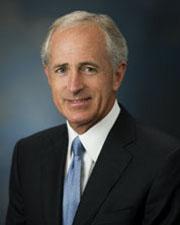 Sen. Bob Corker (R-TN)
Legislative Activity
Stay on top of the latest movement without scrolling through every action
Considered by Senate. (consideration: CR S8166)
June 21, 2007
View full timeline
Considered by Senate. (consideration: CR S8166)
June 21, 2007
Amendment SA 1608 ruled out of order by the chair.
June 21, 2007
Considered by Senate. (consideration: CR S8002)
June 20, 2007
Considered by Senate. (consideration: CR S7846)
June 19, 2007
Considered by Senate. (consideration: CR S7804)
June 18, 2007
Senate amendment proposed (on the floor): Amendment SA 1608 proposed by Senator Corker to Amendment SA 1502.(consideration: CR S7780-7781; text: CR S7780)
June 15, 2007
Amendment SA 1608 proposed by Senator Corker to Amendment SA 1502. (consideration: CR S7780-7781; text: CR S7780) To allow clean fuels to meet the renewable fuel standard.
June 15, 2007
Senate amendment submitted
June 14, 2007
Text
Submitted
TEXT OF AMENDMENTS
SA 1562. Mr. DORGAN (for himself, and Mr. Craig) submitted an
amendment intended to be proposed by him to the bill H.R. 6, to reduce
our Nation's dependency on foreign oil by investing in clean,
renewable, and alternative energy resources, promoting new emerging
energy technologies, developing greater efficiency, and creating a
Strategic Energy Efficiency and Renewables Reserve to invest in
alternative energy, and for other purposes; which was ordered to lie on
the table; as follows:
At the end, add the following:
TITLE VIII--OUTER CONTINENTAL SHELF RESOURCES
SEC. 801. SHORT TITLE.
This title may be cited as the ``Domestic Offshore Energy
Security Act''.
SEC. 802. DEVELOPMENT AND INVENTORY OF CERTAIN OUTER
CONTINENTAL SHELF RESOURCES.
(a) Definition of United States Person.--In this section,
the term ``United States person'' means--
(1) any United States citizen or alien lawfully admitted
for permanent residence in the United States; and
(2) any person other than an individual, if 1 or more
individuals described in paragraph (1) own or control at
least 51 percent of the securities or other equity interest
in the person.
(b) Authorization of Activities and Exports Involving
Hydrocarbon Resources by United States Persons.--
Notwithstanding any other provision of law (including a
regulation), United States persons (including agents and
affiliates of those United States persons) may--
(1) engage in any transaction necessary for the exploration
for and extraction of hydrocarbon resources from any portion
of any foreign exclusive economic zone that is contiguous to
the exclusive economic zone of the United States; and
(2) export without license authority all equipment
necessary for the exploration for or extraction of
hydrocarbon resources described in paragraph (1).
(c) Travel in Connection With Authorized Hydrocarbon
Exploration and Extraction Activities.--Section 910 of the
Trade Sanctions Reform and Export Enhancement Act of 2000 (22
U.S.C. 7209) is amended by inserting after subsection (b) the
following:
``(c) General License Authority for Travel-Related
Expenditures by Persons Engaging in Hydrocarbon Exploration
and Extraction Activities.--
``(1) In general.--The Secretary of the Treasury shall,
authorize under a general license the travel-related
transactions listed in section 515.560(c) of title 31, Code
of Federal Regulations, for travel to, from or within Cuba in
connection with exploration for and the extraction of
hydrocarbon resources in any part of a foreign maritime
Exclusive Economic Zone that is contiguous to the United
States' Exclusive Economic Zone.
``(2) Persons authorized.--Persons authorized to travel to
Cuba under this section include full-time employees,
executives, agents, and consultants of oil and gas producers,
distributors, and shippers.''.
(d) Moratorium of Oil and Gas Leasing in Certain Areas of
the Gulf of Mexico.--
(1) In general.--Section 104(a) of the Gulf of Mexico
Energy Security Act of 2006 (43 U.S.C. 1331 note; Public Law
109-432) is amended--
(A) by striking paragraph (1);
(B) in paragraph (2), by striking ``125 miles'' and
inserting ``45 miles'';
(C) in paragraph (3), by striking ``100 miles'' each place
it appears and inserting ``45 miles''; and
(D) by redesignating paragraphs (2) and (3) as paragraphs
(1) and (2), respectively.
(2) Regulations.--
(A) In general.--The Secretary of the Interior shall
promulgate regulations that establish appropriate
environmental safeguards for the exploration and production
of oil and natural gas on the outer Continental Shelf.
(B) Minimum requirements.--At a minimum, the regulations
shall include--
(i) provisions requiring surety bonds of sufficient value
to ensure the mitigation of any foreseeable incident;
(ii) provisions assigning liability to the leaseholder in
the event of an incident causing damage or loss, regardless
of the negligence of the leaseholder or lack of negligence;
(iii) provisions no less stringent than those contained in
the Spill Prevention, Control, and Countermeasure regulations
promulgated under the Oil Pollution Act of 1990 (33 U.S.C.
2701 et seq.);
(iv) provisions ensuring that--
(I) no facility for the exploration or production of
resources is visible to the unassisted eye from any shore of
any coastal State; and
(II) the impact of offshore production facilities on
coastal vistas is otherwise mitigated;
(v) provisions to ensure, to the maximum extent
practicable, that exploration and production activities will
result in no significant adverse effect on fish or wildlife
(including habitat), subsistence resources, or the
environment; and
(vi) provisions that will impose seasonal limitations on
activity to protect breeding, spawning, and wildlife
migration patterns.
(3) Conforming amendment.--Section 105 of the Department of
the Interior, Environment, and Related Agencies
Appropriations Act, 2006 (Public Law 109-54; 119 Stat. 521)
(as amended by section 103(d) of the Gulf of Mexico Energy
Security Act of 2006 (43 U.S.C. 1331 note; Public Law 109-
432)) is amended by inserting ``and any other area that the
Secretary of the Interior may offer for leasing, preleasing,
or any related activity under section 104 of that Act'' after
``2006)''.
(e) Inventory of Outer Continental Shelf Oil and Natural
Gas Resources Off Southeastern Coast of the United States.--
(1) In general.--The Secretary of the Interior (referred to
in this subsection as the ``Secretary'') may conduct an
inventory of oil and natural gas resources beneath the waters
of the outer Continental Shelf (as defined in section 2 of
the Outer Continental Shelf Lands Act (43 U.S.C. 1331)) off
of the coast of the States of Virginia, North Carolina, South
Carolina, or Georgia in accordance with this subsection.
(2) Best available technology.--In conducting the
inventory, the Secretary shall use the best technology
available to obtain accurate resource estimates.
(3) Request by governor.--The Secretary may conduct an
inventory under this subsection off the coast of a State
described in paragraph (1) only if the Governor of the State
requests the inventory.
(4) Reports.--The Secretary shall submit to Congress and
the requesting Governor a report on any inventory conducted
under this subsection.
(5) Authorization of appropriations.--There are authorized
to be appropriated such sums as are necessary to carry out
this subsection.
(f) Enhanced Oil Recovery.--Section 354(c)(4)(B) of the
Energy Policy Act of 2005 (42 U.S.C. 15910(c)(4)(B)) is
amended--
(1) in clause (iii), by striking ``and'' at the end;
(2) in clause (iv), by striking the period at the end and
inserting ``; and''; and
(3) by adding at the end the following:
``(v) are carried out in geologically challenging
fields.''.
______
SA 1563. Mr. DORGAN (for himself, Mr. Craig, and Mr. Kerry) submitted
an amendment intended to be proposed to amendment SA 1502 proposed by
Mr. Reid to the bill H.R. 6, to reduce our Nation's dependency on
foreign oil by investing in clean, renewable, and alternative energy
resources, promoting new emerging energy technologies, developing
greater efficiency, and creating a Strategic Energy Efficiency and
Renewables Reserve to invest in alternative energy, and for other
purposes; which was ordered to lie on the table; as follows:
On page 47, after line 23, insert the following:
SEC. 131. INSTALLATION OF ETHANOL-BLEND FUEL PUMPS BY COVERED
OWNERS AT RETAIL STATIONS.
Section 211(o) of the Clean Air Act (42 U.S.C. 7545(o)) is
amended by adding at the end the following:
``(11) Installation of ethanol-blend fuel pumps by covered
owners at retail stations.--
``(A) Definitions.--In this paragraph:
``(i) Blender pump.--The term `blender pump' means any fuel
pump that--
``(I) combines ethanol and gasoline products from separate
underground storage tanks;
``(II) uses inlet valves from the tanks to enable varying
quantities of ethanol and gasoline products to be blended
within a chamber in the pump; and
``(III) dispenses the various blends of ethanol and
gasoline products through separate hoses.
``(ii) Covered owner.--The term `covered owner' means any
person that, individually or together with any other person
with respect to which the person has an affiliate
relationship or significant ownership interest, owns 15 or
more retail station outlets, as determined by the Secretary.
``(iii) Ethanol-blend fuel.--The term `ethanol-blend fuel'
means a blend of gasoline not more than 85 percent, nor less
than
[[Page S7756]]
70 percent, of the content of which is derived from ethanol
produced in the United States, as defined by the Secretary in
a manner consistent with applicable standards of the American
Society for Testing and Materials.
``(iv) Major oil company.--The term `major oil company'
means any person, individually or together with any other
person, that has an ownership interest in 200 or more retail
station outlets.
``(v) Secretary.--The term `Secretary' means the Secretary
of Energy, acting in consultation with the Administrator and
the Secretary of Agriculture.
``(B) Assessment.--Not later than 3 years after the date of
enactment of this paragraph, the Secretary shall make an
assessment of the progress made toward the penetration of not
less than 5 percent of the market of fuel pump infrastructure
for the production and distribution of ethanol-blend fuel
(including the creation of adequate qualified alternative
fuel vehicle refueling property that contains blender pumps).
``(C) Regulations.--If the Secretary determines (based on
the assessment conducted under subparagraph (B)) that
adequate progress has not been made toward the penetration
described in subparagraph (B), the Secretary shall promulgate
regulations to ensure that, to the maximum extent
practicable, each covered owner installs or otherwise makes
available 1 or more pumps that dispense ethanol-blend fuel
(including any other equipment necessary, such as tanks, to
ensure that the pumps function properly) at not less than the
applicable percentage of the retail station outlets of the
covered owner specified in subparagraph (E).
``(D) Considerations.--In promulgating regulations, the
Secretary shall take into account--
``(i) the number of retail gas stations that are wholly
owned by major oil companies;
``(ii) the concentration of flexible fuel vehicles in a
geographic area;
``(iii) any refueling infrastructure corridors established
under section 121(b) of the Renewable Fuels, Consumer
Protection, and Energy Efficiency Act of 2007; and
``(iv) any covered owners that own more than 15 retail
station outlets.
``(E) Applicable percentages.--For the purpose of
subparagraph (C), the applicable percentage of the retail
station outlets shall be--
``(i) during the 10-year period beginning on the date on
which any determination is made under subparagraph (C), 10
percent; and
``(ii) after the 10-year period described in clause (i), 20
percent.
``(F) Financial responsibility.--In promulgating
regulations under subparagraph (C), the Secretary shall
ensure that each covered owner covered by this paragraph
assumes full financial responsibility for the costs of
installing or otherwise making available the pumps required
under those regulations and any other equipment necessary
(including tanks) to ensure that the pumps function properly.
``(G) Production credits for exceeding ethanol-blend fuel
pumps installation requirement.--
``(i) Earning and period for applying credits.--If the
percentage of the retail station outlets of a covered owner
at which the covered owner installs ethanol-blend fuel pumps
in a particular calendar year exceeds the percentage required
under subparagraph (C), the covered owner shall earn credits
under this paragraph, which may be applied to any of the 3
consecutive calendar years immediately following the calendar
year for which the credits are earned.
``(ii) Trading credits.--A covered owner that earns credits
under clause (i) may sell credits to another covered owner to
enable the purchaser to meet the requirements of this
paragraph.''.
______
SA 1564. Mr. TESTER submitted an amendment intended to be proposed to
amendment SA 1502 proposed by Mr. Reid to the bill H.R. 6, to reduce
our Nation's dependency on foreign oil by investing in clean,
renewable, and alternative energy resources, promoting new emerging
energy technologies, developing greater efficiency, and creating a
Strategic Energy Efficiency and Renewables Reserve to invest in
alternative energy, and for other purposes; which was ordered to lie on
the table; as follows:
On page 177, after line 21, add the following:
SEC. 279. ENERGY EFFICIENT SCHOOLS.
(a) Definitions.--In this section:
(1) High-performance school building.--The term ``high-
performance school building'' means a school building that
integrates and optimizes all major high-performance building
attributes, including energy and water efficiency, renewable
energy, indoor air quality, durability, lifecycle cost
performance, and occupant productivity.
(2) Renewable energy.--The term ``renewable energy''
means--
(A) energy produced using solar, wind, biomass, ocean,
geothermal, or hydroelectric energy; or
(B) heating and cooling from a ground source heat pump.
(3) School.--The term ``school'' means an accredited public
school that is--
(A) subject to the authority of a State education agency;
and
(B)(i) an elementary school or secondary school (as those
terms are defined in section 9101 of the Elementary and
Secondary Education Act of 1965 (20 U.S.C. 7801)); or
(ii) a BIA school (within the meaning of section
9101(26)(C) of that Act (20 U.S.C. 7801(26)(C))).
(4) State educational agency.--The term ``State educational
agency'' has the meaning given the term in section 9101 of
the Elementary and Secondary Education Act of 1965 (20 U.S.C.
7801)).
(5) State energy office.--The term ``State energy office''
means--
(A) the State agency that is responsible for developing
State energy conservation plans under section 362 of the
Energy Policy and Conservation Act (42 U.S.C. 6322); or
(B) if an agency described in subparagraph (A) does not
exist in a State, a State agency designated by the Governor
of the State.
(b) Establishment of Program.--There is established in the
Department of Energy a program, to be known as the ``High-
Performance Schools Program'', under which the Secretary may
provide grants to State energy offices to assist school
districts in the State--
(1) to improve the energy efficiency of, and use of
renewable energy in, school buildings;
(2) to educate students regarding--
(A) energy consumption in buildings; and
(B) the benefits of energy efficiency and renewable energy;
(3) to administer the program; and
(4) to promote participation in the program.
(c) Conditions of Receipt.--As a condition of receiving a
grant under this section, a State energy office shall agree
to use the grant only to provide assistance to school
districts in the State that demonstrate to the satisfaction
of the State energy office--
(1) financial need with respect to the construction of new
or renovated high-performance school buildings;
(2) a commitment to use the grant funds to develop high-
performance school buildings, in accordance with a plan that
the State energy office, in consultation with the State
educational agency, determines to be feasible and appropriate
to achieve the purposes for which the grant is provided;
(3) a commitment to educate students and the public
regarding the energy efficiency and renewable energy uses
relating to the program; and
(4) that the school district has conducted an energy audit
satisfactory to the State energy office of the baseline
energy consumption of the district.
(d) Administration.--
(1) Selection of projects.--In selecting school districts
to receive funds provided under this section, the Secretary
shall--
(A) give priority to States that carry out, or propose to
carry out, projects that--
(i) achieve maximum increases in energy efficiency; and
(ii) achieve maximum cost savings as a result of that
increased efficiency; and
(B) ensure geographical diversity of distribution of funds
throughout the United States, to the maximum extent
practicable.
(2) Use of grants by state energy offices.--A State energy
office may use a portion of a grant received under this
section--
(A) to evaluate compliance by school districts in the State
with the requirements of this section;
(B) to develop and conduct programs for school board
members, school personnel, architects, engineers, and other
interested persons to advance the concepts of high-
performance school buildings;
(C) to obtain technical services and assistance in planning
and designing high-performance school buildings;
(D) to collect and monitor data relating to high-
performance school building projects; or
(E) for promotional and marketing activities.
(e) Supplementing Grant Funds.--Each State energy office
that receives a grant under this section shall encourage each
school district provided funds by the State energy office to
supplement, to the maximum extent practicable, the funds
using funds from other sources in the implementation of the
plans of the school districts.
(f) Other Funds.--Of amounts made available to carry out
this section, the Secretary may reserve an amount equal to
the lesser of 10 percent of the amounts and $500,000 for a
fiscal year to provide assistance to State energy offices
with respect to the coordination and implementation of the
program under this section, including the development of
reference materials--
(1) to clarify and support the purposes of this section;
and
(2) to increase the quantity in the States of high-
performance school buildings.
(g) Authorization of Appropriations.--There is authorized
to be appropriated to carry out this section $10,000,000 for
each of fiscal years 2008 through 2012.
______
SA 1565. Mr. NELSON of Nebraska submitted an amendment intended to be
proposed to amendment SA 1502 proposed by Mr. Reid to the bill H.R. 6,
to reduce our Nation's dependency on foreign oil by investing in clean,
renewable, and alternative energy resources, promoting new emerging
energy technologies, developing greater efficiency, and creating a
Strategic Energy Efficiency and Renewables Reserve to invest in
alternative energy, and for other purposes; which was ordered to lie on
the table; as follows:
[[Page S7757]]
On page 36, line 17, strike ``Section'' and insert the
following:
(a) In General.--Section
On page 36, after line 22, add the following:
(b) Biofuels Investment Trust Fund.--Section 932(d) of the
Energy Policy Act of 2005 (42 U.S.C. 16232(d)) is amended by
adding at the end the following:
``(3) Biofuels investment trust fund.--
``(A) Establishment.--
``(i) In general.--There is established in the Treasury of
the United States a trust fund, to be known as the `Biofuels
Investment Trust Fund' (referred to in this paragraph as the
`trust fund'), consisting of such amounts as are transferred
to the trust fund under clause (ii).
``(ii) Transfer.--As soon as practicable after the date of
enactment of this paragraph, the Secretary of the Treasury
shall transfer to the trust fund, from amounts in the general
fund of the Treasury, such amounts as the Secretary of the
Treasury determines to be equivalent to the amounts received
in the general fund as of January 1, 2007, that are
attributable to duties received on articles entered under
heading 9901.00.50 of the Harmonized Tariff Schedule of the
United States.
``(B) Investment of amounts.--
``(i) In general.--The Secretary of the Treasury shall
invest such portion of the trust fund as is not, in the
judgment of the Secretary of the Treasury, required to meet
current withdrawals.
``(ii) Interest-bearing obligations.--Investments may be
made only in interest-bearing obligations of the United
States.
``(iii) Acquisition of obligations.--For the purpose of
investments under clause (i), obligations may be acquired--
``(I) on original issue at the issue price; or
``(II) by purchase of outstanding obligations at the market
price.
``(iv) Sale of obligations.--Any obligation acquired by the
trust fund may be sold by the Secretary of the Treasury at
the market price.
``(v) Credits to trust fund.--The interest on, and the
proceeds from the sale or redemption of, any obligations held
in the trust fund shall be credited to and form a part of the
trust fund.
``(C) Transfers of amounts.--
``(i) In general.--The amounts required to be transferred
to the trust fund under subparagraph (A)(ii) shall be
transferred at least quarterly from the general fund of the
Treasury to the trust fund on the basis of estimates made by
the Secretary of the Treasury.
``(ii) Adjustments.--Proper adjustment shall be made in
amounts subsequently transferred to the extent prior
estimates were in excess of or less than the amounts required
to be transferred.
``(D) Use of funds.--
``(i) In general.--Amounts in the trust fund shall be used,
subject to the availability of funds provided in advance in
any appropriations Act, to carry out the program under
paragraph (1).
``(ii) Treatment.--Amounts in the trust fund used under
clause (i) shall be in addition to, and shall not be
considered to be provided in lieu of, any other funds made
available to carry out this subsection.''.
______
SA 1566. Mr. WARNER proposed an amendment to amendment SA 1502
proposed by Mr. Reid to the bill H.R. 6, to reduce our Nation's
dependency on foreign oil by investing in clean, renewable, and
alternative energy resources, promoting new emerging energy
technologies, developing greater efficiency, and creating a Strategic
Energy Efficiency and Renewables Reserve to invest in alternative
energy, and for other purposes; as follows:
At the appropriate place, insert the following:
SEC. ___. AVAILABILITY OF CERTAIN AREAS FOR LEASING.
Section 8 of the Outer Continental Shelf Lands Act (43
U.S.C. 1337) is amended by adding at the end the following:
``(q) Availability of Certain Areas for Leasing.--
``(1) Definitions.--In this subsection:
``(A) Atlantic coastal state.--The term `Atlantic Coastal
State' means each of the States of Maine, New Hampshire,
Massachusetts, Connecticut, Rhode Island, Delaware, New York,
New Jersey, Maryland, Virginia, North Carolina, South
Carolina, Georgia, and Florida.
``(B) Governor.--The term `Governor' means the Governor of
the State.
``(C) Qualified revenues.--The term `qualified revenues'
means all rentals, royalties, bonus bids, and other sums due
and payable to the United States from leases entered into on
or after the date of enactment of this Act for natural gas
exploration and extraction activities authorized by the
Secretary under this subsection.
``(D) State.--The term `State' means the State of Virginia.
``(2) Petition.--
``(A) In general.--The Governor may submit to the
Secretary--
``(i) a petition requesting that the Secretary issue leases
authorizing the conduct of natural gas exploration activities
only to ascertain the presence or absence of a natural gas
reserve in any area that is at least 50 miles beyond the
coastal zone of the State; and
``(ii) if a petition for exploration by the State described
in clause (i) has been approved in accordance with paragraph
(3) and the geological finding of the exploration justifies
extraction, a second petition requesting that the Secretary
issue leases authorizing the conduct of natural gas
extraction activities in any area that is at least 50 miles
beyond the coastal zone of the State.
``(B) Contents.--In any petition under subparagraph (A),
the Governor shall include a detailed plan of the proposed
exploration and subsequent extraction activities, as
applicable.
``(3) Action by secretary.--
``(A) In general.--As soon as practicable after the date of
receipt of a petition under paragraph (2), the Secretary
shall approve or deny the petition.
``(B) Requirements for exploration.--The Secretary shall
not approve a petition submitted under paragraph (2)(A)(i)
unless the State legislature has enacted legislation
supporting exploration for natural gas in the coastal zone of
the State.
``(C) Requirements for extraction.--The Secretary shall not
approve a petition submitted under paragraph (2)(A)(ii)
unless the State legislature has enacted legislation
supporting extraction for natural gas in the coastal zone of
the State.
``(D) Consistency with legislation.--The plan provided in
the petition under paragraph (2)(B) shall be consistent with
the legislation described in subparagraph (B) or (C), as
applicable.
``(E) Comments from atlantic coastal states.--On receipt of
a petition under paragraph (2), the Secretary shall--
``(i) provide Atlantic Coastal States with an opportunity
to provide to the Secretary comments on the petition; and
``(ii) take into consideration, but not be bound by, any
comments received under clause (i).
``(4) Disposition of revenues.--Notwithstanding section 9,
for each applicable fiscal year, the Secretary of the
Treasury shall deposit--
``(A) 50 percent of qualified revenues in the general fund
of the Treasury; and
``(B) 50 percent of qualified revenues in a special account
in the Treasury from which the Secretary shall disburse--
``(i) 75 percent to the State;
``(ii) 12.5 percent to provide financial assistance to
States in accordance with section 6 of the Land and Water
Conservation Fund Act of 1965 (16 U.S.C. 460l-8), which shall
be considered income to the Land and Water Conservation Fund
for purposes of section 2 of that Act (16 U.S.C. 460l-5); and
``(iii) 12.5 percent to a reserve fund to be used to
mitigate for any environmental damage that occurs as a result
of extraction activities authorized under this subsection,
regardless of whether the damage is--
``(I) reasonably foreseeable; or
``(II) caused by negligence, natural disasters, or other
acts.''.
______
SA 1567. Mr. BINGAMAN (for himself, and Mr. Domenici) submitted an
amendment intended to be proposed to amendment SA 1502 proposed by Mr.
Reid to the bill H.R. 6, to reduce our Nation's dependency on foreign
oil by investing in clean, renewable, and alternative energy resources,
promoting new emerging energy technologies, developing greater
efficiency, and creating a Strategic Energy Efficiency and Renewables
Reserve to invest in alternative energy, and for other purposes; which
was ordered to lie on the table; as follows:
On page 133, between lines 9 and 10, insert the following:
SEC. 246. COMMERCIAL INSULATION DEMONSTRATION PROGRAM.
(a) Definitions.--In this section:
(1) Advanced insulation.--The term ``advanced insulation''
means insulation that has an R value of not less than R35 per
inch.
(2) Covered refrigeration unit.--The term ``covered
refrigeration unit'' means any--
(A) commercial refrigerated truck;
(B) commercial refrigerated trailer; and
(C) commercial refrigerator, freezer, or refrigerator-
freezer described in section 342(c) of the Energy Policy and
Conservation Act (42 U.S.C. 6313(c)).
(b) Report.--Not later than 90 days after the date of
enactment of this Act, the Secretary shall submit to Congress
a report that includes an evaluation of--
(1) the state of technological advancement of advanced
insulation; and
(2) the projected amount of cost savings that would be
generated by implementing advanced insulation into covered
refrigeration units.
(c) Demonstration Program.--
(1) Establishment.--If the Secretary determines in the
report described in subsection (b) that the implementation of
advanced insulation into covered refrigeration units would
generate an economically justifiable amount of cost savings,
the Secretary, in cooperation with manufacturers of covered
refrigeration units, shall establish a demonstration program
under which the Secretary shall demonstrate the cost-
effectiveness of advanced insulation.
(2) Disclosure.--Section 623 of the Energy Policy Act of
1992 (42 U.S.C. 13293) may apply to any project carried out
under this subsection.
(3) Cost-sharing.--Section 988 of the Energy Policy Act of
2005 (42 U.S.C. 16352) shall
[[Page S7758]]
apply to any project carried out under this subsection.
(d) Authorization of Appropriations.--There is authorized
to be appropriated to carry out this section $10,000,000 for
each of fiscal years 2008 through 2013.
______
SA 1568. Mr. BINGAMAN (for himself and Mr. Domenici) submitted an
amendment intended to be proposed to amendment SA 1502 proposed by Mr.
Reid to the bill H.R. 6, to reduce our Nation's dependency on foreign
oil by investing in clean, renewable, and alternative energy resources,
promoting new emerging energy technologies, developing greater
efficiency, and creating a Strategic Energy Efficiency and Renewables
Reserve to invest in alternative energy, and for other purposes; which
was ordered to lie on the table; as follows:
At the appropriate place, insert the following:
SEC. ___. COORDINATION OF PLANNED REFINERY OUTAGES.
(a) Definitions.--In this section:
(1) Administrator.--The term ``Administrator'' means the
Administrator of the Energy Information Administration.
(2) Planned refinery outage.--
(A) In general.--The term ``planned refinery outage'' means
a removal, scheduled before the date on which the removal
occurs, of a refinery, or any unit of a refinery, from
service for maintenance, repair, or modification.
(B) Exclusion.--The term ``planned refinery outage'' does
not include any necessary and unplanned removal of a
refinery, or any unit of a refinery, from service as a result
of a component failure, safety hazard, or emergency.
(3) Refined petroleum product.--The term ``refined
petroleum product'' means any gasoline, diesel fuel, fuel
oil, lubricating oil, liquid petroleum gas, or other
petroleum distillate that is produced through the refining or
processing of crude oil or an oil derived from tar sands,
shale, or coal.
(4) Refinery.--The term ``refinery'' means a facility used
in the production of a refined petroleum product through
distillation, cracking, or any other process.
(5) Secretary.--The term ``Secretary'' means the Secretary
of Energy.
(b) Review and Analysis of Available Information.--The
Administrator shall, on an ongoing basis--
(1) review information on planned refinery outages that is
available from commercial reporting services;
(2) analyze that information to determine whether the
scheduling of a planned refinery outage may nationally or
regionally affect the price or supply of any refined
petroleum product by--
(A) decreasing the production of the refined petroleum
product; and
(B) causing or contributing to a retail or wholesale supply
shortage or disruption;
(3) not less frequently than twice each year, submit to the
Secretary a report describing the results of the review and
analysis under paragraphs (1) and (2); and
(4) specifically alert the Secretary of any planned
refinery outage that the Administrator determines may
nationally or regionally affect the price or supply of a
refined petroleum product.
(c) Action by Secretary.--On a determination by the
Secretary, based on a report or alert under paragraph (3) or
(4) of subsection (b), that a planned refinery outage may
affect the price or supply of a refined petroleum product,
the Secretary shall make available to refinery operators
information on planned refinery outages to encourage
reductions of the quantity of refinery capacity that is out
of service at any time.
(d) Limitation.--Nothing in this section authorizes the
Secretary--
(1) to prohibit a refinery operator from conducting a
planned refinery outage; or
(2) to require a refinery operator to continue to operate a
refinery.
______
SA 1569. Mr. DOMENICI (for himself, and Mr. Bingaman) submitted an
amendment intended to be proposed to amendment SA 1502 proposed by Mr.
Reid to the bill H.R. 6, to reduce our Nation's dependency on foreign
oil by investing in clean, renewable, and alternative energy resources,
promoting new emerging energy technologies, developing greater
efficiency, and creating a Strategic Energy Efficiency and Renewables
Reserve to invest in alternative energy, and for other purposes; as
follows:
At the appropriate place, insert the following:
SEC. ___. TECHNICAL CRITERIA FOR CLEAN COAL POWER INITIATIVE.
Section 402(b)(1)(B)(ii) of the Energy Policy Act of 2005
(42 U.S.C. 15962(b)(1)(B)(ii)) is amended by striking
subclause (I) and inserting the following:
``(I)(aa) to remove at least 99 percent of sulfur dioxide;
or
``(bb) to emit not more than 0.04 pound SO<inf>2</inf> per
million Btu, based on a 30-day average;''.
______
SA 1570. Mr. INHOFE (for himself, Mr. Thune, and Mr. Craig) submitted
an amendment intended to be proposed to amendment SA 1502 proposed by
Mr. Reid to the bill H.R. 6, to reduce our Nation's dependency on
foreign oil by investing in clean, renewable, and alternative energy
resources, promoting new emerging energy technologies, developing
greater efficiency, and creating a Strategic Energy Efficiency and
Renewables Reserve to invest in alternative energy, and for other
purposes; as follows:
At the end of title IV, add the following:
Subtitle D--Miscellaneous
SEC. 471. AUDITS AND REPORTS.
(a) In General.--Title I of the Oil Pollution Act of 1990
(33 U.S.C. 2701 et seq.) is amended by adding at the end the
following:
``SEC. 1021. AUDITS AND REPORTS.
``(a) Audits.--Not later than April 30 of the fiscal year
in which this section is enacted, and every 2 years
thereafter, the President shall provide to the Committee on
Environment and Public Works of the Senate and the Committee
on Transportation and Infrastructure of the House of
Representatives an audit conducted by the Comptroller General
of the United States that includes a detailed accounting of
all funds from the Fund in excess of $100,000 that are--
``(1) disbursed by the National Pollution Funds Center; and
``(2) administered and managed by the receiving agencies,
including final payments made through agencies, contractors,
and subcontractors.
``(b) Reports.--Not later than February 28 of the fiscal
year in which this section is enacted, and every February 28
thereafter, the Secretary, the Secretary of the Interior, the
Secretary of Transportation, the Administrator of the
Environmental Protection Agency, and the heads of any other
Federal agencies that, during the preceding fiscal year,
received funds from the Fund in excess of $100,000, shall--
``(1) provide to the President a report accounting for the
uses of the funds by the Federal agency, including a
description of ways in which those uses relate to--
``(A) oil pollution liability, compensation, prevention,
preparedness, and removal;
``(B) natural resource damage assessment and restoration;
``(C) oil pollution research and development; and
``(D) other activities authorized by this Act; and
``(2) make each report available to the public and other
interested parties via the Internet website of the National
Pollution Funds Center.
``(c) Authorization of Appropriations.--There are
authorized to be appropriated such sums as are necessary to
carry out this section.''.
(b) Conforming Amendment.--The table of contents in section
2 of the Oil Pollution Act of 1990 (33 U.S.C. prec. 1001) is
amended by inserting after the item relating to section 1020
the following:
``Sec. 1021. Audits and reports''.
______
SA 1571. Mr. HAGEL submitted an amendment intended to be proposed to
amendment SA 1502 proposed by Mr. Reid to the bill H.R. 6, to reduce
our Nation's dependency on foreign oil by investing in clean,
renewable, and alternative energy resources, promoting new emerging
energy technologies, developing greater efficiency, and creating a
Strategic Energy Efficiency and Renewables Reserve to invest in
alternative energy, and for other purposes; as follows:
At the end of subtitle D of title II, add the following:
SEC. 255. ENERGY-RELATED RESEARCH AND DEVELOPMENT.
(a) Findings.--Congress finds that--
(1) information and opinions provided by individuals and
entities of the academic and industrial sectors should be an
important consideration with respect to energy-related
research and development activities carried out by the
Federal Government;
(2) in carrying out energy-related research and development
activities, the Federal Government should regularly seek
input from multiple sources, including the industrial sector,
academia, and other relevant sectors;
(3) research is better focused around well-defined problems
that need to be resolved;
(4) a number of potential problems to be resolved are
likely to require input from a diverse selection of
technologies and contributing sectors;
(5) sharing of information relating to energy research and
development is important to the development and innovation of
energy technologies;
(6) necessary intellectual property protection can lead to
delays in sharing valuable information that could aid in
resolving major energy-related problems;
(7) the Federal Government should facilitate the sharing of
information from a diverse array of industries by ensuring
the protection of intellectual property while simultaneously
creating an environment of openness and cooperation; and
(8) the Federal Government should revise the methods of the
Federal Government regarding energy-related research and
development to encourage faster development and
implementation of energy technologies.
[[Page S7759]]
(b) Definitions.--In this section:
(1) Network.--The term ``network'' means the Energy
Technologies Innovation Network established by subsection
(d)(1).
(2) Secretary.--The term ``Secretary'' means the Secretary
of Energy.
(3) Survey.--The term ``survey'' means a survey conducted
pursuant to subsection (c).
(c) Energy-Related Research and Development Priorities.--
(1) In general.--Not less frequently than once every 5
years, the Secretary shall conduct a survey in accordance
with this subsection to determine the 10 highest-priority
energy-related problems to resolve to ensure the goals of--
(A) maximizing the energy security of the United States;
(B) maximizing improvements in energy efficiency within the
United States; and
(C) minimizing damage to the economy and the environment of
the United States.
(2) Survey.--
(A) In general.--Each survey shall contain a request that
the respondent shall list, in descending order of priority,
the 10 highest-priority energy-related problems that, in the
opinion of the respondent, require resolution as quickly as
practicable to ensure the goals described in paragraph (1).
(B) Announcement.--The Secretary shall announce the
existence of each survey by--
(i) publishing an announcement in the Federal Register; and
(ii) placing an announcement in a prominent position on the
homepage of the website of the Department of the Energy.
(C) Availability.--The Secretary shall ensure that each
survey is made available--
(i) in an electronic format only through a link on the
Department of Energy website;
(ii) for a period of not less than 21 days and not more
than 30 days; and
(iii) to any individual or entity that elects to
participate.
(D) Additional information gathering.--Each survey--
(i) shall require each respondent to provide information
regarding--
(I) the age of the respondent;
(II) the occupational category of the respondent;
(III) the period of time during which the respondent has
held the current occupation of the respondent; and
(IV) the State and country in which the respondent resides;
and
(ii) may request, but shall not require--
(I) the name of the respondent;
(II) an identification of the employer of the respondent;
(III) the electronic mail address of the respondent; and
(IV) such other information as the Secretary determines to
be appropriate.
(E) Respondents.--The Secretary shall seek responses to a
survey from appropriate representatives of--
(i) the energy, transportation, manufacturing,
construction, mining, and electronic industries;
(ii) academia;
(iii) research facilities;
(iv) nongovernmental organizations;
(v) the Federal Government; and
(vi) units of State and local government.
(F) Nonpolitical requirement.--The Secretary shall ensure
that each survey is conducted, to the maximum extent
practicable--
(i) in a transparent, nonpolitical, and scientific manner;
and
(ii) without any political bias.
(G) Report.--Not later than 180 days after the date on
which a survey under this subsection is no longer available
under subparagraph (C)(ii), the Secretary shall submit to
Congress and make available to the public (including through
publication in the Federal Register and on the website of the
Department of Energy) a report that--
(i) describes the results of the survey; and
(ii) includes a list of the 10 highest-priority energy-
related problems based on all responses to the survey.
(3) Effect of results on energy-related research and
development.--
(A) In general.--Subject to subparagraph (B), on receipt of
a report under paragraph (2)(G), the Secretary shall ensure
that, during the 5-year period beginning on the date of
receipt of the report, all energy-related research and
development activities of the Department of Energy are
carried out for the purpose of resolving, to the maximum
extent practicable, the 10 problems included on the list of
the report under paragraph (2)(G)(ii).
(B) Additional problems.--In addition to the activities
described in subparagraph (A), during the 5-year period
beginning on the date of receipt of a report under paragraph
(2)(G), the Secretary may carry out, using the same quantity
of resources as are allocated to [any 1 energy-related
problem] included on the list of the report under paragraph
(2)(G)(ii), energy-related research and development
activities for the purpose of resolving, to the maximum
extent practicable, 2 additional energy-related problems
that--
(i) are not included on the list; and
(ii) are high-priority energy-related problems, as
determined by the Secretary.
(d) Energy Technologies Innovation Network.--
(1) Establishment.--There is established an information and
collaboration network, to be known as the ``Energy
Technologies Innovation Network''.
(2) Purpose.--The purpose of the network shall be to
provide a forum through which interested parties (including
scientists and entrepreneurs) can present, discuss, and
collaborate with respect to information and ideas relating to
energy technologies.
(3) Operation of network.--
(A) In general.--The Secretary shall offer to enter into a
contract, after an open bidding process, with a third party
to operate the network.
(B) Requirements.--The third party selected under
subparagraph (A) shall--
(i) have experience with respect to the establishment and
maintenance of a comprehensive database of Federal research
and development projects that is--
(I) easily searchable;
(II) open to the public; and
(III) capable of expansion;
(ii) provide a secure electronic forum to enable
collaboration among users of the network; and
(iii) collaborate with the Secretary to protect the
intellectual property rights of individual users and
governmental agencies participating in the network in
accordance with paragraph (6).
(4) Required contributors.--Each research laboratory or
other facility that receives Federal funding shall provide to
the network the results of the research conducted using that
funding, regardless of whether the research relates to
energy, subject to the condition that revelation of the
research will not adversely effect national security.
(5) Other contributors.--Other entities, including entities
in the academic and industrial sectors and individuals, may
participate in the network to actively contribute to
resolving--
(A) the energy-related problems included on the list of the
report under subsection (c)(2)(G)(ii); or
(B) any other energy-related problem that the contributor
determines would advance the goals described in subsection
(c)(1).
(6) Protection of information and ideas.--In collaborating
with a third party in operating the network under paragraph
(3), the Secretary shall employ such individuals and entities
with experience relating to--
(A) intellectual property as the Secretary determines to be
necessary to ensure that--
(i) information and ideas presented, and discussed in the
network are--
(I) monitored with respect to the intellectual property
owners and components of the information or ideas; and
(II) protected in accordance with applicable Federal
intellectual property law (including regulations);
(ii) information and ideas developed within the network
are--
(I) monitored with respect to the intellectual property
components of the developers of the information or ideas; and
(II) protected in accordance with applicable Federal
intellectual property law (including regulations); and
(iii) contributors to the network are provided adequate
assurances that intellectual property rights of the
contributors will be protected with respect to participation
in the network;
(B) setting up, maintaining, and operating a network that
ensures security and reliability.
(e) Authorization of Appropriations.--There are authorized
to be appropriated such sums as are necessary to carry out
this section.
______
SA 1572. Mr. SALAZAR (for himself, Mr. Bayh, Mr. Brownback, Mr.
Lieberman, Mr. Coleman, Ms. Cantwell, Mrs. Lincoln, Mrs. Clinton, Mr.
Biden, Ms. Klobuchar, and Mr. Durbin) submitted an amendment intended
to be proposed to amendment SA 1502 proposed by Mr. Reid to the bill
H.R. 6, to reduce our Nation's dependency on foreign oil by investing
in clean, renewable, and alternative energy resources, promoting new
emerging energy technologies, developing greater efficiency, and
creating a Strategic Energy Efficiency and Renewables Reserve to invest
in alternative energy, and for other purposes; as follows:
On page 119, line 1, strike ``transportation technology''
and insert ``vehicles''.
On page 121, line 4, after ``equipment'' insert ``and
developing new manufacturing processes and material
suppliers''.
On page 126, strike lines 9 and 10 and insert the
following:
(iii) electrode-active materials, including electrolytes
and bioelectrolytes;
On page 126, strike lines 12 and 13 and insert the
following:
(v) modeling and simulation; and
(vi) thermal behavior and life degradation mechanisms.
On page 130, strike lines 5 through line 13 and insert the
following:
(1) Definitions.--In this subsection:
(A) Battery.--The term ``battery'' means an electrochemical
energy storage device powered directly by electrical current.
(B) Plug-in electric drive vehicle.--The term ``plug-in
electric drive vehicle'' means a light-duty, medium-duty, or
heavy-duty on-road or nonroad battery electric, hybrid, or
fuel cell vehicle that can be recharged from an external
source of electricity for motive power.
On page 130, line 16, insert ``plug-in'' before
``electric''.
On page 130, strike lines 17 through 21 and insert the
following:
[[Page S7760]]
(3) Eligibility.--
(A) In general.--A State government, local government,
metropolitan transportation authority, air pollution control
district, private entity, and nonprofit entity shall be
eligible to receive a grant under this subsection.
(B) Certain applicants.--A battery manufacturer that
proposes to supply to an applicant for a grant under this
section a battery with a capacity of greater than 1 kilowatt-
hour for use in a plug-in electric drive vehicle shall--
(i) ensure that the applicant includes in the application a
description of the price of the battery per kilowatt hour;
(ii) on approval by the Secretary of the application,
publish, or permit the Secretary to publish, the price
described in clause (i); and
(iii) for any order received by the battery manufacturer
for at least 1,000 batteries, offer the batteries at that
price.
On page 131, line 2, insert ``plug-in'' before
``electric''.
Beginning on page 132, strike line 1 and all that follows
through page 133, line 9, and insert the following:
(b) Near-Term Electric Drive Transportation Deployment
Program.--
(1) Definition of qualified electric transportation
project.--
(A) In general.--In this subsection, the term ``qualified
electric transportation project'' means a project that would
simultaneously reduce emissions of criteria pollutants,
greenhouse gas emissions, and petroleum usage by at least 40
percent as compared to commercially available, petroleum-
based technologies.
(B) Inclusions.--In this subsection, the term ``qualified
electric transportation project'' includes a project relating
to--
(i) shipside or shoreside electrification for vessels;
(ii) truck-stop electrification;
(iii) electric truck refrigeration units;
(iv) battery powered auxiliary power units for trucks;
(v) electric airport ground support equipment;
(vi) electric material and cargo handling equipment;
(vii) electric or dual-mode electric freight rail;
(viii) any distribution upgrades needed to supply
electricity to the project; and
(ix) any ancillary infrastructure, including panel
upgrades, battery chargers, in-situ transformers, and
trenching.
(2) Establishment.--Not later than 1 year after the date of
enactment of this Act, the Secretary, in consultation with
the Secretary of Transportation and the Administrator of the
Environmental Protection Agency, shall establish a program to
provide grants and loans to eligible entities for the conduct
of qualified electric transportation projects.
(3) Grants.--
(A) In general.--Of the amounts made available for grants
under paragraph (2)--
(i) \2/3\ shall be made available by the Secretary on a
competitive basis for qualified electric transportation
projects based on the overall cost-effectiveness of a
qualified electric transportation project in reducing
emissions of criteria pollutants, emissions of greenhouse
gases, and petroleum usage; and
(ii) \1/3\ shall be made available by the Secretary for
qualified electric transportation projects in the order that
the grant applications are received, if the qualified
electric transportation projects meet the minimum standard
for the reduction of emissions of criteria pollutants,
emissions of greenhouse gases, and petroleum usage described
in paragraph (1)(A).
(B) Priority.--In providing grants under this paragraph,
the Secretary shall give priority to large-scale projects and
large-scale aggregators of projects.
(C) Cost sharing.--Section 988 of the Energy Policy Act of
2005 (42 U.S.C. 16352) shall apply to a grant made under this
paragraph.
(4) Revolving loan program.--
(A) In general.--The Secretary shall establish a revolving
loan program to provide loans to eligible entities for the
conduct of qualified electric transportation projects under
paragraph (2).
(B) Criteria.--The Secretary shall establish criteria for
the provision of loans under this paragraph.
(C) Funding.--Of amounts made available to carry out this
subsection, the Secretary shall use any amounts not used to
provide grants under paragraph (3) to carry out the revolving
loan program under this paragraph.
(c) Market Assessment Program.--The Administrator of the
Environmental Protection Agency, in consultation with the
Secretary and private industry, shall carry out a program--
(1) to inventory and analyze existing electric drive
transportation technologies and hybrid technologies and
markets; and
(2) to identify and implement methods of removing barriers
for existing and emerging applications of electric drive
transportation technologies and hybrid transportation
technologies.
(d) Electricity Usage Program.--
(1) In general.--The Secretary, in consultation with the
Administrator of the Environmental Protection Agency and
private industry, shall carry out a program--
(A) to work with utilities to develop low-cost, simple
methods of--
(i) using off-peak electricity; or
(ii) managing on-peak electricity use;
(B) to develop systems and processes--
(i) to enable plug-in electric vehicles to enhance the
availability of emergency back-up power for consumers;
(ii) to study and demonstrate the potential value to the
electric grid to use the energy stored in the on-board
storage systems to improve the efficiency and reliability of
the grid generation system; and
(iii) to work with utilities and other interested
stakeholders to study and demonstrate the implications of the
introduction of plug-in electric vehicles and other types of
electric transportation on the production of electricity from
renewable resources.
(2) Off-peak electricity usage grants.--In carrying out the
program under paragraph (1), the Secretary shall provide
grants to assist eligible public and private electric
utilities for the conduct of programs or activities to
encourage owners of electric drive transportation
technologies--
(A) to use off-peak electricity; or
(B) to have the load managed by the utility.
(e) Authorization of Appropriations.--There is authorized
to be appropriated to carry out subsections (b), (c), and (d)
$125,000,000 for each of fiscal years 2008 through 2013.
On page 133, between lines 9 and 10, insert the following:
(f) Electric Drive Transportation Technologies.--
(1) Definitions.--In this subsection:
(A) Battery.--The term ``battery'' means an electrochemical
energy storage device powered directly by electrical current.
(B) Electric drive transportation technology.--The term
``electric drive transportation technology'' means--
(i) technology used in vehicles that use an electric motor
for all or part of the motive power of the vehicles,
including battery electric, hybrid electric, plug-in hybrid
electric, fuel cell, and plug-in fuel cell vehicles, or rail
transportation; or
(ii) equipment relating to transportation or mobile sources
of air pollution that use an electric motor to replace an
internal combustion engine for all or part of the work of the
equipment, including--
(I) corded electric equipment linked to transportation or
mobile sources of air pollution; and
(II) electrification technologies at airports, ports, truck
stops, and material-handling facilities.
(C) Energy storage device.--
(i) In general.--The term ``energy storage device'' means
the onboard device used in an on-road or nonroad vehicle to
store energy, or a battery, ultracapacitor, compressed air
energy storage system, or flywheel used to store energy in a
stationary application.
(ii) Inclusions.--The term ``energy storage device''
includes--
(I) in the case of an electric or hybrid electric or fuel
cell vehicle, a battery, ultracapacitor, or similar device;
and
(II) in the case of a hybrid hydraulic vehicle, an
accumulator or similar device.
(D) Engine dominant hybrid vehicle.--The term ``engine
dominant hybrid vehicle'' means an on-road or nonroad vehicle
that--
(i) is propelled by an internal combustion engine or heat
engine using--
(I) any combustible fuel; and
(II) an on-board, rechargeable energy storage device; and
(ii) has no means of using an off-board source of energy.
(E) Nonroad vehicle.--The term ``nonroad vehicle'' means a
vehicle--
(i) powered by--
(I) a nonroad engine, as that term is defined in section
216 of the Clean Air Act (42 U.S.C. 7550); or
(II) fully or partially by an electric motor powered by a
fuel cell, a battery, or an off-board source of electricity;
and
(ii) that is not a motor vehicle or a vehicle used solely
for competition.
(F) Plug-in electric drive vehicle.--The term ``plug-in
electric drive vehicle'' means a light-duty, medium-duty, or
heavy-duty on-road or nonroad battery electric, hybrid, or
fuel cell vehicle that can be recharged from an external
source of electricity for motive power.
(G) Plug-in hybrid electric vehicle.--The term ``plug-in
hybrid electric vehicle'' means a light-duty, medium-duty, or
heavy-duty on-road or nonroad vehicle that is propelled by
any combination of--
(i) an electric motor and on-board, rechargeable energy
storage system capable of operating the vehicle in
intermittent or continuous all-electric mode and which is
rechargeable using an off-board source of electricity; and
(ii) an internal combustion engine or heat engine using any
combustible fuel.
(2) Evaluation of plug-in electric drive transportation
technology benefits.--
(A) In general.--The Secretary, in cooperation with the
Administrator of the Environmental Protection Agency, the
heads of other appropriate Federal agencies, and appropriate
interested stakeholders, shall evaluate and, as appropriate,
modify existing test protocols for fuel economy and emissions
to ensure that any protocols for electric drive
transportation technologies, including plug-in electric drive
vehicles, accurately measure the fuel economy and emissions
performance of the electric drive transportation
technologies.
(B) Requirements.--Test protocols (including any
modifications to test protocols) for electric drive
transportation technologies under subparagraph (A) shall--
[[Page S7761]]
(i) be designed to assess the full potential of benefits in
terms of reduction of emissions of criteria pollutants,
reduction of energy use, and petroleum reduction; and
(ii) consider--
(I) the vehicle and fuel as a system, not just an engine;
(II) nightly off-board charging, as applicable; and
(III) different engine-turn on speed control strategies.
(3) Electric drive transportation research and
development.--The Secretary shall conduct an applied research
program for electric drive transportation technology and
engine dominant hybrid vehicle technology, including--
(A) high-capacity, high-efficiency energy storage devices
that, as compared to existing technologies that are in
commercial service, have improved life, energy storage
capacity, and power delivery capacity;
(B) high-efficiency on-board and off-board charging
components;
(C) high-power and energy-efficient drivetrain systems for
passenger and commercial vehicles and for nonroad vehicles;
(D) development and integration of control systems and
power trains for plug-in hybrid electric vehicles, plug-in
hybrid fuel cell vehicles, and engine dominant hybrid
vehicles, including--
(i) development of efficient cooling systems;
(ii) analysis and development of control systems that
minimize the emissions profile in cases in which clean diesel
engines are part of a plug-in hybrid drive system; and
(iii) development of different control systems that
optimize for different goals, including--
(I) prolonging energy storage device life;
(II) reduction of petroleum consumption; and
(III) reduction of greenhouse gas emissions;
(E) application of nanomaterial technology to energy
storage devices and fuel cell systems; and
(F) use of smart vehicle and grid interconnection devices
and software that enable communications between the grid of
the future and electric drive transportation technology
vehicles.
(4) Education program.--
(A) In general.--The Secretary shall develop a nationwide
electric drive transportation technology education program
under which the Secretary shall provide--
(i) teaching materials to secondary schools and high
schools; and
(ii) assistance for programs relating to electric drive
system and component engineering to institutions of higher
education.
(B) Electric vehicle competition.--The program established
under subparagraph (A) shall include a plug-in hybrid
electric vehicle competition for institutions of higher
education, which shall be known as the ``Dr. Andrew Frank
Plug-In Hybrid Electric Vehicle Competition''.
(C) Engineers.--In carrying out the program established
under subparagraph (A), the Secretary shall provide financial
assistance to institutions of higher education to create new,
or support existing, degree programs to ensure the
availability of trained electrical and mechanical engineers
with the skills necessary for the advancement of--
(i) plug-in electric drive vehicles; and
(ii) other forms of electric drive transportation
technology vehicles.
(5) Authorization of appropriations.--There are authorized
to be appropriated for each of fiscal years 2008 through
2013--
(A) to carry out paragraph (3) $200,000,000; and
(B) to carry out paragraph (4) $5,000,000.
(g) Collaboration and Merit Review.--
(1) Collaboration with national laboratories.--To the
maximum extent practicable, National Laboratories shall
collaborate with the public, private, and academic sectors
and with other National Laboratories in the design, conduct,
and dissemination of the results of programs and activities
authorized under this section.
(2) Collaboration with mobile energy storage program.--To
the maximum extent practicable, the Secretary shall seek to
coordinate the stationary and mobile energy storage programs
of the Department of the Energy with the programs and
activities authorized under this section
(3) Merit review.--Notwithstanding section 989 of the
Energy Policy Act of 2005 (42 U.S.C. 16353), of the amounts
made available to carry out this section, not more than 30
percent shall be provided to National Laboratories.
SEC. 246. INCLUSION OF ELECTRIC DRIVE IN ENERGY POLICY ACT OF
1992.
Section 508 of the Energy Policy Act of 1992 (42 U.S.C.
13258) is amended--
(1) by redesignating subsections (a) through (d) as
subsections (b) through (e), respectively;
(2) by inserting before subsection (b) the following:
``(a) Definitions.--In this section:
``(1) Fuel cell electric vehicle.--The term `fuel cell
electric vehicle' means an on-road or nonroad vehicle that
uses a fuel cell (as defined in section 803 of the Spark M.
Matsunaga Hydrogen Act of 2005 (42 U.S.C. 16152)).
``(2) Hybrid electric vehicle.--The term `hybrid electric
vehicle' means a new qualified hybrid motor vehicle (as
defined in section 30B(d)(3) of the Internal Revenue Code of
1986).
``(3) Medium- or heavy-duty electric vehicle.--The term
`medium- or heavy-duty electric vehicle' means an electric,
hybrid electric, or plug-in hybrid electric vehicle with a
gross vehicle weight of more than 8,501 pounds.
``(4) Neighborhood electric vehicle.--The term
`neighborhood electric vehicle' means a 4-wheeled on-road or
nonroad vehicle that--
``(A) has a top attainable speed in 1 mile of more than 20
mph and not more than 25 mph on a paved level surface; and
``(B) is propelled by an electric motor and on-board,
rechargeable energy storage system that is rechargeable using
an off-board source of electricity.
``(5) Plug-in hybrid electric vehicle.--The term `plug-in
hybrid electric vehicle' means a light-duty, medium-duty, or
heavy-duty on-road or nonroad vehicle that is propelled by
any combination of--
``(A) an electric motor and on-board, rechargeable energy
storage system capable of operating the vehicle in
intermittent or continuous all-electric mode and which is
rechargeable using an off-board source of electricity; and
``(B) an internal combustion engine or heat engine using
any combustible fuel.'';
(3) in subsection (b) (as redesignated by paragraph (1))--
(A) by striking ``The Secretary'' and inserting the
following:
``(1) Allocation.--The Secretary''; and
(B) by adding at the end the following:
``(2) Electric vehicles.--Not later than January 31, 2009,
the Secretary shall--
``(A) allocate credit in an amount to be determined by the
Secretary for--
``(i) acquisition of--
``(I) a hybrid electric vehicle;
``(II) a plug-in hybrid electric vehicle;
``(III) a fuel cell electric vehicle;
``(IV) a neighborhood electric vehicle; or
``(V) a medium- or heavy-duty electric vehicle; and
``(ii) investment in qualified alternative fuel
infrastructure or nonroad equipment, as determined by the
Secretary; and
``(B) allocate more than 1, but not to exceed 5, credits
for investment in an emerging technology relating to any
vehicle described in subparagraph (A) to encourage--
``(i) a reduction in petroleum demand;
``(ii) technological advancement; and
``(iii) a reduction in vehicle emissions.'';
(4) in subsection (c) (as redesignated by paragraph (1)),
by striking ``subsection (a)'' and inserting ``subsection
(b)''; and
(5) by adding at the end the following:
``(e) Authorization of Appropriations.--There are
authorized to be appropriated such sums as are necessary to
carry out this section for each of fiscal years 2008 through
2013.''.
On page 144, line 8, insert ``and the use of 2-wheeled
electric drive devices'' after ``bicycling''.
______
SA 1573. Ms. KLOBUCHAR (for Mr. Bingaman (for himself, Mr. Reid, Mr.
Cardin, and Mr. Salazar)) proposed an amendment to amendment SA 1537
proposed by Mr. Reid (for Mr. Bingaman (for himself, Mr. Reid, Mr.
Cardin, Mr. Salazar, Ms. Snowe, and Mr. Durbin)) to the amendment SA
1502 proposed by Mr. Reid to the bill H.R. 6, to reduce our Nation's
dependency on foreign oil by investing in clean, renewable, and
alternative energy resources, promoting new emerging energy
technologies, developing greater efficiency, and creating a Strategic
Energy Efficiency and Renewables Reserve to invest in alternative
energy, and for other purposes; which was ordered to lie on the table;
as follows:
Strike all after Title in the first line of the amendment
and insert the following:
VIII--RENEWABLE PORTFOLIO STANDARD
SEC. 801. RENEWABLE PORTFOLIO STANDARD.
(a) In General.--Title VI of the Public Utility Regulatory
Policies Act of 1978 (16 U.S.C. 2601 et seq.) is amended by
adding at the end the following:
``SEC. 610. FEDERAL RENEWABLE PORTFOLIO STANDARD.
``(a) Renewable Energy Requirement.--
``(1) In general.--Each electric utility that sells
electricity to electric consumers shall obtain a percentage
of the base amount of electricity it sells to electric
consumers in any calendar year from new renewable energy or
existing renewable energy. The percentage obtained in a
calendar year shall not be less than the amount specified in
the following table:
``Calendar year: Minimum annual percentage:
2010 through 2012..................................................3.75
2013 through 2016..................................................7.50
2017 through 2019.................................................11.25
2020 through 2030..................................................15.0
``(2) Means of compliance.--An electric utility shall meet
the requirements of paragraph (1) by--
``(A) submitting to the Secretary renewable energy credits
issued under subsection (b);
``(B) making alternative compliance payments to the
Secretary at the rate of 2 cents per kilowatt hour (as
adjusted for inflation under subsection (g)); or
``(C) a combination of activities described in
subparagraphs (A) and (B).
``(3) Special rule.--Nothing in this section authorizes or
requires the Tennessee Valley Authority to make any capital
expenditure on new generating capacity, except to the
[[Page S7762]]
extent that budget authority for the expenditure is provided
in advance in an appropriations Act.
``(b) Federal Renewable Energy Credit Trading Program.--
``(1) In general.--Not later than July 1, 2009, the
Secretary shall establish a Federal renewable energy credit
trading program under which electric utilities shall submit
to the Secretary renewable energy credits to certify the
compliance of the electric utilities with respect to
obligations under subsection (a)(1).
``(2) Administration.--As part of the program, the
Secretary shall--
``(A) issue tradeable renewable energy credits to
generators of electric energy from new renewable energy;
``(B) issue nontradeable renewable energy credits to
generators of electric energy from existing renewable energy;
``(C) issue renewable energy credits to electric utilities
associated with State renewable portfolio standard compliance
mechanisms pursuant to subsection (h);
``(D) ensure that a kilowatt hour, including the associated
renewable energy credit, shall be used only once for purposes
of compliance with this Act;
``(E) allow double credits for generation from facilities
on Indian land, and triple credits for generation from small
renewable distributed generators (meaning those no larger
than 1 megawatt); and
``(F) ensure that, with respect to a purchaser that, as of
the date of enactment of this section, has a purchase
agreement from a renewable energy facility placed in service
before that date, the credit associated with the generation
of renewable energy under the contract is issued to the
purchaser of the electric energy to the extent that the
contract does not already provide for the allocation of the
Federal credit.
``(3) Duration.--A credit described in subparagraph (A),
(B), or (C) of paragraph (2) may only be used for compliance
with this section during the 3-year period beginning on the
date of issuance of the credit.
``(4) Transfers.--An electric utility that holds credits in
excess of the quantity of credits needed to comply with
subsection (a) may transfer the credits to another electric
utility in the same utility holding company system.
``(5) Delegation of market function.--The Secretary may
delegate to an appropriate market-making entity the
administration of a national tradeable renewable energy
credit market for purposes of creating a transparent national
market for the sale or trade of renewable energy credits.
``(c) Enforcement.--
``(1) Civil penalties.--Any electric utility that fails to
meet the compliance requirements of subsection (a) shall be
subject to a civil penalty.
``(2) Amount of penalty.--The amount of the civil penalty
shall be determined by multiplying the number of kilowatt-
hours of electric energy sold to electric consumers in
violation of subsection (a) by the greater of--
``(A) the value of the alternative compliance payment, as
adjusted to reflect changes for the 12-month period ending
the preceding November 30 in the Consumer Price Index for All
Urban Consumers published by the Bureau of Labor Statistics
of the Department of Labor; or
``(B) 200 percent of the average market value of renewable
energy credits during the year in which the violation
occurred.
``(3) Mitigation or waiver.--
``(A) Penalty.--
``(i) In general.--The Secretary may mitigate or waive a
civil penalty under this subsection if the electric utility
is unable to comply with subsection (a) for a reason outside
of the reasonable control of the utility.
``(ii) Amount.--The Secretary shall reduce the amount of
any penalty determined under paragraph (2) by the amount paid
by the electric utility to a State for failure to comply with
the requirement of a State renewable energy program if the
State requirement is greater than the applicable requirement
of subsection (a).
``(B) Requirement.--The Secretary may waive the
requirements of subsection (a) for a period of up to 5 years
with respect to an electric utility if the Secretary
determines that the electric utility cannot meet the
requirements because of a hurricane, tornado, fire, flood,
earthquake, ice storm, or other natural disaster or act of
God beyond the reasonable control of the utility.
``(4) Procedure for assessing penalty.--The Secretary shall
assess a civil penalty under this subsection in accordance
with the procedures prescribed by section 333(d) of the
Energy Policy and Conservation Act of 1954 (42 U.S.C. 6303).
``(d) State Renewable Energy Account Program.--
``(1) In general.--There is established in the Treasury a
State renewable energy account program.
``(2) Deposits.--All money collected by the Secretary from
alternative compliance payments and the assessment of civil
penalties under this section shall be deposited into the
renewable energy account established pursuant to this
subsection.
``(3) Use.--Proceeds deposited in the State renewable
energy account shall be used by the Secretary, subject to
appropriations, for a program to provide grants to the State
agency responsible for developing State energy conservation
plans under section 362 of the Energy Policy and Conservation
Act (42 U.S.C. 6322) for the purposes of promoting renewable
energy production, including programs that promote
technologies that reduce the use of electricity at customer
sites such as solar water heating.
``(4) Administration.--The Secretary may issue guidelines
and criteria for grants awarded under this subsection. State
energy offices receiving grants under this section shall
maintain such records and evidence of compliance as the
Secretary may require.
``(5) Preference.--In allocating funds under this program,
the Secretary shall give preference--
``(A) to States in regions which have a disproportionately
small share of economically sustainable renewable energy
generation capacity; and
``(B) to State programs to stimulate or enhance innovative
renewable energy technologies.
``(e) Rules.--The Secretary shall issue rules implementing
this section not later than 1 year after the date of
enactment of this section.
``(f) Exemptions.--This section shall not apply in any
calendar year to an electric utility--
``(1) that sold less than 4,000,000 megawatt-hours of
electric energy to electric consumers during the preceding
calendar year; or
``(2) in Hawaii.
``(g) Inflation Adjustment.--Not later than December 31 of
each year beginning in 2008, the Secretary shall adjust for
inflation the rate of the alternative compliance payment
under subsection (a)(2)(B) and the amount of the civil
penalty per kilowatt-hour under subsection (c)(2).
``(h) State Programs.--
``(1) In general.--Nothing in this section diminishes any
authority of a State or political subdivision of a State to
adopt or enforce any law or regulation respecting renewable
energy or the regulation of electric utilities, but, except
as provided in subsection (c)(3), no such law or regulation
shall relieve any person of any requirement otherwise
applicable under this section. The Secretary, in consultation
with States having such renewable energy programs, shall, to
the maximum extent practicable, facilitate coordination
between the Federal program and State programs.
``(2) Regulations.--
``(A) In general.--The Secretary, in consultation with
States, shall promulgate regulations to ensure that an
electric utility that is subject to the requirements of this
section and is subject to a State renewable energy standard
receives renewable energy credits if--
``(i) the electric utility complies with State standard by
generating or purchasing renewable electric energy or
renewable energy certificates or credits; or
``(ii) the State imposes or allows other mechanisms for
achieving the State standard, including the payment of taxes,
fees, surcharges, or other financial obligations.
``(B) Amount of credits.--The amount of credits received by
an electric utility under this subsection shall equal--
``(i) in the case of subparagraph (A)(i), the renewable
energy resulting from the generation or purchase by the
electric utility of existing renewable energy or new
renewable energy; and
``(ii) in the case of subparagraph (A)(ii), the pro rata
share of the electric utility, based on the contributions to
the mechanism made by the electric utility or customers of
the electric utility, in the State, of the renewable energy
resulting from those mechanisms.
``(C) Prohibition on double counting.--The regulations
promulgated under this paragraph shall ensure that a
kilowatt-hour associated with a renewable energy credit
issued pursuant to this subsection shall not be used for
compliance with this section more than once.
``(i) Definitions.--In this section:
``(1) Base amount of electricity.--The term `base amount of
electricity' means the total amount of electricity sold by an
electric utility to electric consumers in a calendar year,
excluding--
``(A) electricity generated by a hydroelectric facility
(including a pumped storage facility but excluding
incremental hydropower); and
``(B) electricity generated through the incineration of
municipal solid waste.
``(2) Distributed generation facility.--The term
`distributed generation facility' means a facility at a
customer site.
``(3) Existing renewable energy.--The term `existing
renewable energy' means, except as provided in paragraph
(7)(B), electric energy generated at a facility (including a
distributed generation facility) placed in service prior to
January 1, 2001, from solar, wind, or geothermal energy,
ocean energy, biomass (as defined in section 203(a) of the
Energy Policy Act of 2005), or landfill gas.
``(4) Geothermal energy.--The term `geothermal energy'
means energy derived from a geothermal deposit (within the
meaning of section 613(e)(2) of the Internal Revenue Code of
1986).
``(5) Incremental geothermal production.--
``(A) In general.--The term `incremental geothermal
production' means for any year the excess of--
``(i) the total kilowatt hours of electricity produced from
a facility (including a distributed generation facility)
using geothermal energy; over
[[Page S7763]]
``(ii) the average annual kilowatt hours produced at such
facility for 5 of the previous 7 calendar years before the
date of enactment of this section after eliminating the
highest and the lowest kilowatt hour production years in such
7-year period.
``(B) Special rule.--A facility described in subparagraph
(A) that was placed in service at least 7 years before the
date of enactment of this section shall, commencing with the
year in which such date of enactment occurs, reduce the
amount calculated under subparagraph (A)(ii) each year, on a
cumulative basis, by the average percentage decrease in the
annual kilowatt hour production for the 7-year period
described in subparagraph (A)(ii) with such cumulative sum
not to exceed 30 percent.
``(6) Incremental hydropower.--The term `incremental
hydropower' means additional energy generated as a result of
efficiency improvements or capacity additions made on or
after January 1, 2001, or the effective date of an existing
applicable State renewable portfolio standard program at a
hydroelectric facility that was placed in service before that
date. The term does not include additional energy generated
as a result of operational changes not directly associated
with efficiency improvements or capacity additions.
Efficiency improvements and capacity additions shall be
measured on the basis of the same water flow information used
to determine a historic average annual generation baseline
for the hydroelectric facility and certified by the Secretary
or the Federal Energy Regulatory Commission.
``(7) New renewable energy.--The term `new renewable
energy' means--
``(A) electric energy generated at a facility (including a
distributed generation facility) placed in service on or
after January 1, 2001, from--
``(i) solar, wind, or geothermal energy or ocean energy;
``(ii) biomass (as defined in section 203(b) of the Energy
Policy Act of 2005 (42 U.S.C. 15852(b));
``(iii) landfill gas; or
``(iv) incremental hydropower; and
``(B) for electric energy generated at a facility
(including a distributed generation facility) placed in
service before January 1, 2001--
``(i) the additional energy above the average generation
during the period beginning on January 1, 1998, and ending on
January 1, 2001, at the facility from--
``(I) solar or wind energy or ocean energy;
``(II) biomass (as defined in section 203(b) of the Energy
Policy Act of 2005 (42 U.S.C. 15852(b));
``(III) landfill gas; or
``(IV) incremental hydropower; and
``(ii) incremental geothermal production.
``(8) Ocean energy.--The term `ocean energy' includes
current, wave, tidal, and thermal energy.
``(j) Sunset.--This section expires on December 31,
2030.''.
(b) Table of Contents Amendment.--The table of contents of
the Public Utility Regulatory Policies Act of 1978 (16 U.S.C.
prec. 2601) is amended by adding at the end of the items
relating to title VI the following:
``Sec. 610. Federal renewable portfolio standard.''.
This Title shall take effect one day after the date of this
bill's enactment.
______
SA 1574. Mr. LAUTENBERG submitted an amendment intended to be
proposed to amendment SA 1502 proposed by Mr. Reid to the bill H.R. 6,
to reduce our Nation's dependency on foreign oil by investing in clean,
renewable, and alternative energy resources, promoting new emerging
energy technologies, developing greater efficiency, and creating a
Strategic Energy Efficiency and Renewables Reserve to invest in
alternative energy, and for other purposes; which was ordered to lie on
the table; as follows:
On page 161, between lines 2 and 3, insert the following:
SEC. 269. FEDERAL GREENHOUSE GAS EMISSIONS.
The Clean Air Act (42 U.S.C. 7401 et seq.) is amended by
adding at the end the following:
``TITLE VII--FEDERAL GREENHOUSE GAS EMISSIONS
``SEC. 701. DEFINITIONS.
``In this title:
``(1) Agency emission baseline.--The term `agency emission
baseline', with respect to a Federal agency, means such
quantity of the aggregate quantity of direct emissions,
energy indirect emissions, and indirect emissions used to
calculate the emission baseline as is attributable to the
Federal agency.
``(2) Direct emission.--The term `direct emission' means an
emission of a greenhouse gas directly from a source owned or
controlled by the Federal Government, such as from a fleet of
motor vehicles.
``(3) Emission allowance.--The term `emission allowance'
means an authorization to emit, for any fiscal year, 1 ton of
carbon dioxide (or the equivalent quantity of any other
greenhouse gas, as determined by the Administrator).
``(4) Emission baseline.--The term `emission baseline'
means a quantity of greenhouse gas emissions equal to the
aggregate quantity of direct emissions, energy indirect
emissions, and indirect emissions for fiscal year 2005, as
determined by the Office in accordance with section
702(b)(3).
``(5) Energy indirect emission.--The term `energy indirect
emission' means an emission of a greenhouse gas resulting
from the production of electricity purchased and used by the
Federal Government.
``(6) Greenhouse gas.--The term `greenhouse gas' means any
of--
``(A) carbon dioxide;
``(B) methane;
``(C) nitrous oxide;
``(D) hydrofluorocarbons;
``(E) perfluorocarbons; and
``(F) sulfur hexafluoride.
``(7) Indirect emission.--
``(A) In general.--The term `indirect emission' means an
emission of greenhouse gases resulting from the conduct of a
project or activity (including outsourcing of a project or
activity) by the Federal Government (or any Federal officer
or employee acting in an official capacity).
``(B) Inclusions.--The term `indirect emission' includes an
emission of a greenhouse gas resulting from--
``(i) employee travel; or
``(ii) the use of an energy-intensive material, such as
paper.
``(C) Exclusion.--The term `indirect emission' does not
include an energy indirect emission.
``(8) Office.--The term `Office' means the Federal
Emissions Inventory Office established by section 702(a).
``(9) Protocol.--The term `protocol' means the Greenhouse
Gas Protocol Corporate Accounting and Reporting Standard
developed by the World Resources Institute and World Business
Council on Sustainable Development.
``SEC. 702. FEDERAL EMISSIONS INVENTORY OFFICE.
``(a) Establishment.--There is established within the
Environmental Protection Agency an office to be known as the
`Federal Emissions Inventory Office'.
``(b) Duties.--The Office shall--
``(1) as soon as practicable after the date of enactment of
this title, develop an emission inventory or other
appropriate system to measure and verify direct emissions,
energy indirect emissions, indirect emissions, and offsets of
those emissions;
``(2) ensure that the process of data collection for the
inventory or system is reliable, transparent, and accessible;
``(3)(A)(i) not later than 1 year after the date of
enactment of this title, establish an emission baseline for
the Federal Government; or
``(ii) not later than 180 days after the date of enactment
of this title, if the Office determines that Federal agencies
have not collected enough information, or sufficient data are
otherwise unavailable, to establish an emission baseline,
submit to Congress and the Administrator a report describing
the type and quantity of data that are unavailable; and
``(B) after establishment of an emission baseline under
subparagraph (A), periodically review and, if new information
relating to the base year becomes available, revise the
emission baseline, as appropriate;
``(4) upon development of the inventory or system under
paragraph (1), use the inventory or system to begin
accounting for direct emissions, energy indirect emissions,
and indirect emissions in accordance with the protocol;
``(5) ensure that the inventory or other appropriate system
developed under paragraph (1) is periodically audited to
ensure that data reported in accordance with the inventory or
system are relevant, complete, and transparent;
``(6) not later than 1 year after the date of enactment of
this title--
``(A) develop such additional procedures as are necessary
to account for emissions described in paragraph (3),
particularly indirect emissions; and
``(B) submit to Congress and the Administrator a report
that describes any additional data necessary to calculate
indirect emissions;
``(7) coordinate with climate change and greenhouse gas
registries being developed by States and Indian tribes; and
``(8) not later than October 1 of the year after the date
of enactment of this title, and annually thereafter, submit
to Congress and the Administrator a report that, for the
preceding fiscal year, for the Federal Government and each
Federal agency--
``(A) describes the aggregate quantity of emissions
(including direct emissions, energy indirect emissions, and
indirect emissions); and
``(B) specifies separately the quantities of direct
emissions, energy indirect emissions, and indirect emissions
comprising that aggregate quantity.
``SEC. 703. AUTHORIZATION OF APPROPRIATIONS.
``There are authorized to be appropriated such sums as are
necessary to carry out this title.''.
______
SA 1575. Mr. VOINOVICH (for himself, Mr. Carper, and Mr. Inhofe)
submitted an amendment intended to be proposed to amendment SA 1502
proposed by Mr. Reid to the bill H.R. 6, to reduce our Nation's
dependency on foreign oil by investing in clean, renewable, and
alternative energy resources, promoting new emerging energy
technologies, developing greater efficiency, and creating a Strategic
Energy Efficiency and Renewables Reserve to invest in alternative
energy, and for
[[Page S7764]]
other purposes; which was ordered to lie on the table; as follows:
Beginning on page 39, strike line 12 and all that follows
through page 42, line 8, and insert the following:
(b) Improvements to Underlying Loan Guarantee Authority.--
(1) Definition of commercial technology.--Section 1701(1)
of the Energy Policy Act of 2005 (42 U.S.C. 16511(1)) is
amended by striking subparagraph (B) and inserting the
following:
``(B) Exclusion.--The term `commercial technology' does not
include a technology if the sole use of the technology is in
connection with--
``(i) a demonstration plant; or
``(ii) a project for which the Secretary approved a loan
guarantee.''.
(2) Specific appropriation or contribution.--Section 1702
of the Energy Policy Act of 2005 (42 U.S.C. 16512) is amended
by striking subsection (b) and inserting the following:
``(b) Specific Appropriation or Contribution.--
``(1) In general.--No guarantee shall be made unless--
``(A) an appropriation for the cost has been made; or
``(B) the Secretary has received from the borrower a
payment in full for the cost of the obligation and deposited
the payment into the Treasury.
``(2) Limitation.--The source of payments received from a
borrower under paragraph (1)(B) shall not be a loan or other
debt obligation that is made or guaranteed by the Federal
Government.
``(3) Relation to other laws.--Section 504(b) of the
Federal Credit Reform Act of 1990 (2 U.S.C. 661c(b)) shall
not apply to a loan or loan guarantee made in accordance with
paragraph (1)(B).''.
(3) Amount.--Section 1702 of the Energy Policy Act of 2005
(42 U.S.C. 16512) is amended by striking subsection (c) and
inserting the following:
``(c) Amount.--
``(1) In general.--Subject to paragraphs (2) and (3), upon
the request of the borrower, the Secretary shall guarantee
100 percent of the principal and interest due on 1 or more
loans for a facility that are the subject of the guarantee,
on the condition that the Secretary has--
``(A) received from the borrower a payment in full for the
cost of the obligation; and
``(B) deposited the payment in the Treasury.
``(2) Limitation on amount.--The total amount of loans
guaranteed for a facility by the Secretary shall not exceed
80 percent of the total cost of the facility, as estimated at
the time at which the guarantee is issued.
``(3) Approval of applications.--
``(A) Deadline.--The Secretary shall approve or disapprove
an application for a guarantee not later than 1 year after
the date of receipt of the application.
``(B) Report.--The Secretary shall submit to Congress an
annual report on the approval or disapproval of all loan
guarantee applications that includes--
``(i) the reasons for each approval and disapproval; and
``(ii) an evaluation and recommendation by the Secretary
for the termination of authority for each eligible project
category described in section 1703(b).''.
(4) Subrogation.--Section 1702(g)(2) of the Energy Policy
Act of 2005 (42 U.S.C. 16512(g)(2)) is amended--
(A) by striking subparagraph (B); and
(B) by redesignating subparagraph (C) as subparagraph (B).
(5) Fees.--Section 1702(h) of the Energy Policy Act of 2005
(42 U.S.C. 16512(h)) is amended by striking paragraph (2) and
inserting the following:
``(2) Availability.--Fees collected under this subsection
shall--
``(A) be deposited by the Secretary in a special fund in
the Treasury to be known as the `Incentives For Innovative
Technologies Fund'; and
``(B) remain available to the Secretary for expenditure,
without further appropriation or fiscal year limitation, for
administrative expenses incurred in carrying out this
title.''.
______
SA 1576. Mr. INHOFE submitted an amendment intended to be proposed to
amendment SA 1502 proposed by Mr. Reid to the bill H.R. 6, to reduce
our Nation's dependency on foreign oil by investing in clean,
renewable, and alternative energy resources, promoting new emerging
energy technologies, developing greater efficiency, and creating a
Strategic Energy Efficiency and Renewables Reserve to invest in
alternative energy, and for other purposes; which was ordered to lie on
the table; as follows:
At the appropriate place, insert the following:
SEC. ___. GEOTHERMAL HEAT PUMP TECHNOLOGY ACCELERATION
PROGRAM.
(a) Definitions.--In this section:
(1) Administrator.--The term ``Administrator'' means the
Administrator of General Services.
(2) General services administration facility.--
(A) In general.--The term ``General Services Administration
facility'' means any building, structure, or facility, in
whole or in part (including the associated support systems of
the building, structure, or facility), that--
(i) is constructed (including facilities constructed for
lease), renovated, or purchased, in whole or in part, by the
Administrator for use by the Federal Government; or
(ii) is leased, in whole or in part, by the Administrator
for use by the Federal Government--
(I) except as provided in subclause (II), for a term of not
less than 5 years; or
(II) for a term of less than 5 years, if the Administrator
determines that use of cost-effective technologies and
practices would result in the payback of expenses.
(B) Inclusion.--The term ``General Services Administration
facility'' includes any group of buildings, structures, or
facilities described in subparagraph (A) (including the
associated energy-consuming support systems of the buildings,
structures, and facilities).
(C) Exemption.--The Administrator may exempt from the
definition of ``General Services Administration facility''
under this paragraph a building, structure, or facility that
meets the requirements of section 543(c) of Public Law 95-619
(42 U.S.C. 8253(c)).
(3) Operational cost savings.--The term ``operational cost
savings'' means a reduction in end-use operational costs
through the application of geothermal heat pump technologies,
including a reduction in electricity consumption relative to
consumption by the same customer or at the same facility in a
given year, as defined in guidelines promulgated by the
Administrator, that achieves cost savings sufficient to pay
the incremental additional costs of using geothermal heat
pump technologies by not later than the date that is 5 years
after the date of installation of the technologies.
(b) Establishment.--
(1) In general.--The Administrator shall establish a
program to accelerate the use of geothermal heat pumps at
General Services Administration facilities.
(2) Requirements.--The program established under this
subsection shall--
(A) ensure centralized responsibility for the coordination
of geothermal heat pump recommendations, practices, and
activities of all relevant Federal agencies;
(B) provide technical assistance and operational guidance
to applicable tenants to achieve the goal identified in
subsection (c)(2)(B)(ii); and
(C) establish methods to track the success of Federal
departments and agencies with respect to that goal.
(c) Accelerated Use of Geothermal Heat Pump Technologies.--
(1) Review.--
(A) In general.--As part of the program under this section,
not later than 90 days after the date of enactment of this
Act, the Administrator shall conduct a review of--
(i) current use of geothermal heat pump technologies in
General Services Administration facilities; and
(ii) the availability to managers of General Services
Administration facilities of geothermal heat pumps.
(B) Requirements.--The review under subparagraph (A)
shall--
(i) examine the use of geothermal heat pumps by Federal
agencies in General Services Administration facilities; and
(ii) as prepared in consultation with the Administrator of
the Environmental Protection Agency, identify geothermal heat
pump technology standards that could be used for all types of
General Services Administration facilities.
(2) Replacement.--
(A) In general.--As part of the program under this section,
not later than 180 days after the date of enactment of this
Act, the Administrator shall establish, using available
appropriations, a geothermal heat pump technology
acceleration program to achieve maximum feasible replacement
of existing heating and cooling technologies with geothermal
heat pump technologies in each General Services
Administration facility.
(B) Acceleration plan timetable.--
(i) In general.--To implement the program established under
subparagraph (A), not later than 1 year after the date of
enactment of this Act, the Administrator shall establish a
timetable, including milestones for specific activities
needed to replace existing heating and cooling technologies
with geothermal heat pump technologies, to the maximum extent
feasible (including at the maximum rate feasible), at each
General Services Administration facility.
(ii) Goal.--The goal of the timetable under clause (i)
shall be to complete, using available appropriations, maximum
feasible replacement of existing heating and cooling
technologies with geothermal heat pump technologies by not
later than the date that is 5 years after the date of
enactment of this Act.
(d) General Services Administration Facility Geothermal
Heat Pump Technologies and Practices.--Not later than 180
days after the date of enactment of this Act, and annually
thereafter, the Administrator shall--
(1) ensure that a manager responsible for accelerating the
use of geothermal heat pump technologies is designated for
each General Services Administration facility geothermal heat
pump technologies and practices facility; and
(2) submit to Congress a plan, to be implemented to the
maximum extent feasible (including at the maximum rate
feasible) using available appropriations, by not later than
[[Page S7765]]
the date that is 5 years after the date of enactment of this
Act, that--
(A) includes an estimate of the funds necessary to carry
out this section;
(B) describes the status of the implementation of
geothermal heat pump technologies and practices at General
Services Administration facilities, including--
(i) the extent to which programs, including the program
established under subsection (b), are being carried out in
accordance with this Act; and
(ii) the status of funding requests and appropriations for
those programs;
(C) identifies within the planning, budgeting, and
construction processes, all types of General Services
Administration facility-related procedures that inhibit new
and existing General Services Administration facilities from
implementing geothermal heat pump technologies;
(D) recommends language for uniform standards for use by
Federal agencies in implementing geothermal heat pump
technologies and practices;
(E) in coordination with the Office of Management and
Budget, reviews the budget process for capital programs with
respect to alternatives for--
(i) permitting Federal agencies to retain all identified
savings accrued as a result of the use of geothermal heat
pump technologies; and
(ii) identifying short- and long-term cost savings that
accrue from the use of geothermal heat pump technologies and
practices;
(F) achieves substantial operational cost savings through
the application of geothermal heat pump technologies; and
(G) includes recommendations to address each of the
matters, and a plan for implementation of each
recommendation, described in subparagraphs (A) through (F).
(e) Authorization of Appropriations.--There are authorized
to be appropriated such sums as are necessary to carry out
this section, to remain available until expended.
______
SA 1577. Mr. MARTINEZ submitted an amendment intended to be proposed
to amendment SA 1502 proposed by Mr. Reid to the bill H.R. 6, to reduce
our Nation's dependency on foreign oil by investing in clean,
renewable, and alternative energy resources, promoting new emerging
energy technologies, developing greater efficiency, and creating a
Strategic Energy Efficiency and Renewables Reserve to invest in
alternative energy, and for other purposes; which was ordered to lie on
the table; as follows:
At the appropriate place, insert the following:
SEC. __. EXCLUSION OF ALIENS WHO HAVE INVESTED IN PETROLEUM
DEVELOPMENT IN CUBA.
(a) Statement of Policy.--It shall be the policy of the
United States to--
(1) undertake the necessary measures to deny the Cuban
regime the financial resources to engage in activities that
threaten--
(A) United States national security, its interests and its
allies;
(B) the environment and natural resources of the submerged
lands of Cuba's northern coast and Florida's unique maritime
environment; and
(C) that prolong the dictatorship that oppresses the Cuban
people; and
(2) deter foreign investments that would enhance the
ability of the Cuban regime to develop its petroleum
resources.
(b) Exclusion of Certain Aliens.--
(1) In general.--The Cuban Liberty and Democratic
Solidarity (LIBERTAD) Act of 1996 (22 U.S.C. 6021 et seq.) is
amended by inserting after section 401 the following:
``SEC. 402. EXCLUSION FROM THE UNITED STATES OF ALIENS WHO
CONTRIBUTE TO THE ABILITY OF CUBA TO DEVELOP
PETROLEUM RESOURCES OFF OF CUBA'S NORTHERN
COAST.
``(a) In General.--The Secretary of State shall deny a visa
to, and the Secretary of Homeland Security shall exclude from
the United States, any alien who the Secretary of State
determines is a person who--
``(1) is an officer or principal of an entity, or a
shareholder who owns a controlling interest in an entity,
that, on or after May 2, 2006, makes an investment that
equals or exceeds $1,000,000 (or any combination of
investments that in the aggregate equals or exceeds
$1,000,000 in any 12-month period), that contributes to the
enhancement of Cuba's ability to develop petroleum resources
of the submerged lands of Cuba's northern coast; or
``(2) is a spouse, minor child, or agent of a person
described in paragraph (1).
``(b) Waiver.--The Secretary of State may waive the
application of subsection (a) if the Secretary certifies and
reports to the appropriate congressional committees, on a
case-by-case basis, that the admission to the United States
of a person described in subsection (a)--
``(1) is necessary for critical medical reasons or for
purposes of litigation of an action under title III; or
``(2) is appropriate if the requirements of sections 203,
204, and 205 have been satisfied.
``(c) Definitions.--In this section:
``(1) Develop.--The term `develop', with respect to
petroleum resources, means the exploration for, or the
extraction, refining, or transportation by pipeline or other
means of, petroleum resources.
``(2) Investment.--The term `investment' means any of the
following activities if such activity is undertaken pursuant
to an agreement, or pursuant to the exercise of rights under
such an agreement, that is entered into with the Government
of Cuba (or any agency or instrumentality thereof) or a
nongovernmental entity in Cuba, on or after May 2, 2006:
``(A) The entry into a contract that includes
responsibility for the development of petroleum resources of
the submerged lands of Cuba's northern coast, or the entry
into a contract providing for the general supervision and
guarantee of another person's performance of such a contract.
``(B) The purchase of a share of ownership, including an
equity interest, in that development.
``(C) The entry into a contract providing for the
participation in royalties, earnings, or profits in that
development, without regard to the form of the participation.
``(D) The entry into, performance, or financing of a
contract to sell or purchase goods, services, or technology
related to that development.
``(3) Petroleum resources.--The term `petroleum resources'
includes petroleum and natural gas resources.''.
(2) Effective date.--The amendment made by paragraph (1)
applies to aliens seeking admission to the United States on
or after the date of the enactment of this Act.
(c) Imposition of Sanctions.--
(1) In general.--The President shall impose two or more of
the sanctions described in paragraph (2) if the President
determines that a person has, on or after May 2, 2006, made
an investment that equals or exceeds $1,000,000 (or any
combination of investments that in the aggregate equals or
exceeds $1,000,000 in any 12-month period) that contributes
to the enhancement of Cuba's ability to develop petroleum
resources of the submerged lands of Cuba's northern coast.
(2) Sanctions described.--The sanctions to be imposed on a
sanctioned person under this subsection are as follows:
(A) Export-import bank assistance for exports to sanctioned
persons.--The President may direct the Export-Import Bank of
the United States not to give approval to the issuance of any
guarantee, insurance, extension of credit, or participation
in the extension of credit in connection with the export of
any goods or services to any sanctioned person.
(B) Export sanction.--The President may order the United
States Government not to issue any specific license and not
to grant any other specific permission or authority to export
any goods or technology to a sanctioned person under--
(i) the Export Administration Act of 1979 (50 U.S.C. App.
2401 et seq.);
(ii) the Arms Export Control Act (22 U.S.C. 2751 et seq.);
(iii) the Atomic Energy Act of 1954 (42 U.S.C. 2011 et
seq.); or
(iv) any other statute that requires the prior review and
approval of the United States Government as a condition for
the export or reexport of goods or services.
(C) Loans from united states financial institutions.--The
United States Government may prohibit any United States
financial institution from making loans or providing credits
to any sanctioned person totaling more than $10,000,000 in
any 12-month period unless such person is engaged in
activities to relieve human suffering and the loans or
credits are provided for such activities.
(D) Prohibitions on financial institutions.--
(i) In general.--The following prohibitions may be imposed
against a sanctioned person that is a financial institution:
(I) Prohibition on designation as primary dealer.--Neither
the Board of Governors of the Federal Reserve System nor the
Federal Reserve Bank of New York may designate, or permit the
continuation of any prior designation of, such financial
institution as a primary dealer in United States Government
debt instruments.
(II) Prohibition on service as a repository of government
funds.--Such financial institution may not serve as agent of
the United States Government or serve as repository for
United States Government funds.
(ii) Treatment of sanctions.--The imposition of either
sanction under subclause (I) or (II) of clause (i) shall be
treated as one sanction for purposes of this subsection, and
the imposition of both such sanctions shall be treated as two
sanctions for purposes of this subsection.
(E) Procurement sanction.--The United States Government may
not procure, or enter into any contract for the procurement
of, any goods or services from a sanctioned person.
(3) Person defined.--In this subsection, the term
``person'' includes a foreign subsidiary of a person referred
to in paragraph (1).
______
SA 1578. Mr. MENENDEZ (for himself, Mr. Lautenberg, and Mrs. Dole)
proposed an amendment to amendment SA 1502 proposed by Mr. Reid to the
bill H.R. 6, to reduce our Nation's dependency on foreign oil by
investing in clean, renewable, and alternative energy resources,
promoting new emerging energy technologies, developing
[[Page S7766]]
greater efficiency, and creating a Strategic Energy Efficiency and
Renewables Reserve to invest in alternative energy, and for other
purposes; as follows:
Beginning on page 4 of the amendment, strike line 20 and
all that follows through page 5, line 3, and insert the
following:
``(E) Comments and approval from other states.--
``(i) In general.--On receipt of a petition under paragraph
(2), the Secretary shall provide Atlantic Coastal States with
an opportunity to provide to the Secretary comments on the
petition.
``(ii) Requirement.--The Secretary shall not approve a
petition under this paragraph unless the Governors of all
States within 100 miles of the coastal waters of the State
have approved the petition.
______
SA 1579. Mr. OBAMA submitted an amendment intended to be proposed to
amendment SA 1502 proposed by Mr. Reid to the bill H.R. 6, to reduce
our Nation's dependency on foreign oil by investing in clean,
renewable, and alternative energy resources, promoting new emerging
energy technologies, developing greater efficiency, and creating a
Strategic Energy Efficiency and Renewables Reserve to invest in
alternative energy, and for other purposes; which was ordered to lie on
the table; as follows:
On page 27, after line 23, add the following:
SEC. 113. NATIONAL LOW-CARBON FUEL STANDARD.
(a) Definitions.--In this section:
(1) Administrator.--The term ``Administrator'' means the
Administrator of the Environmental Protection Agency.
(2) Conventional transportation fuel.--The term
``conventional transportation fuel'' means any fossil-fuel-
based transportation fuel used in the United States as of the
date of enactment of this Act.
(3) Fuel emission baseline.--The term ``fuel emission
baseline'' means the average lifecycle greenhouse gas
emissions per unit of energy of the average of fossil-based
fuels in commerce in the United States during the period of
calendar years 2005 through 2007.
(4) Greenhouse gas.--The term ``greenhouse gas'' means any
of--
(A) carbon dioxide;
(B) methane;
(C) nitrous oxide;
(D) hydrofluorocarbons;
(E) perfluorocarbons; and
(F) sulfur hexafluoride.
(5) Lifecycle greenhouse gas emissions.--The term
``lifecycle greenhouse gas emissions'' means, with respect to
a fuel, the aggregate quantity of greenhouse gases emitted
during production, feedstock production or extraction,
distribution, and use of the fuel, as determined by the
Administrator.
(6) Low-carbon fuel.--The term ``low-carbon fuel'' means
fuel produced, to the maximum extent practicable, in the
United States--
(A) that meets the requirements of an applicable American
Society for Testing and Materials standard; and
(B) the lifecycle greenhouse gas emissions of which are
lower than the fuel emission baseline, as determined by the
Administrator.
(7) Obligated party.--
(A) In general.--The term ``obligated party'' means an
obligated party as described in section 80.1106 of title 40,
Code of Federal Regulations (or a successor regulation).
(B) Related term.--The term ``any and all of the
products'', when used with respect to an obligated party,
means diesel and aviation fuel, home heating oil, and boiler
oil to be included in the volume used to calculate the
requirements applicable to the obligated party under this
section.
(b) National Low-Carbon Fuel Standard.--Not later than
January 1, 2015, the Administrator shall, by regulation--
(1) establish a fuel emission baseline based on the average
lifecycle greenhouse gas emissions per unit of energy of the
average of fossil-based fuels in commerce in the United
States during the period of calendar years 2005 through 2007;
(2) identify qualifying low-carbon transportation fuels
based on--
(A) whether the lifecycle greenhouse gas emissions of a
fuel are lower, per unit of energy delivered by use of a
specific quantity of the fuel, than the fuel emission
baseline, including the percentage greenhouse gas emission
reduction provided by the fuel to the fuel emission baseline;
(B) whether a fuel--
(i) achieves a substantial reduction in petroleum content
over the lifecycle of the fuel; or
(ii) otherwise contributes to the energy security of the
United States; and
(C) with respect to calculation of the lifecycle greenhouse
gas emissions of vehicles operating on electricity or a
hydrogen fuel, the quantity of energy delivered by use of the
fuel, which shall be determined by calculating the product
obtained by multiplying--
(i) a unit of energy delivered by use of the electricity or
hydrogen fuel; and
(ii) an adjustment factor determined by the Administrator
to reflect, with respect to the fuel emissions baseline and
any improvement relating to the domestic energy security of
the United States resulting from petroleum otherwise
displaced, the substantial lifecycle greenhouse gas benefits
of using the electricity or hydrogen fuel, on a per-mile
basis, resulting from reasonably anticipated energy
efficiency of an average--
(I) battery electric vehicle;
(II) plug-in hybrid electric vehicle; or
(III) hydrogen fuel cell vehicle;
(3) establish a low-carbon fuel certification and marketing
process--
(A) to certify fuels that qualify as low-carbon fuels under
this section;
(B) to make those certifications available to consumers;
and
(C) to label and market low-carbon fuels;
(4) publish fuel-use compliance scenarios describing the
estimated volumes per year of low-carbon fuels required to
meet each requirement described in subsection (c); and
(5) establish--
(A) for fuels blended with low-carbon fuel, as part of the
renewable identification number program of the Environmental
Protection Agency--
(i) an intensity number measured in the quantity of
lifecycle greenhouse gas emissions per unit of energy
provided by use of the fuel; and
(ii) an index number representing the percentage reduction
of greenhouse gas emissions achieved by the fuel as compared
to the fuel emission baseline; and
(B) for electricity from the electric power transmission
and distribution system expected to be used as a motor
vehicle or nonroad fuel, a process for generating and
assigning identification numbers for electricity
incorporating, to the maximum extent practicable, clauses (i)
and (ii) of subparagraph (A).
(c) Requirements Applicable to Obligated Parties.--
(1) Requirements.--
(A) Calendar years 2015 through 2020.--Not later than
January 1, 2015, the Administrator shall, by regulation,
require each obligated party to reduce the average lifecycle
greenhouse gas emissions per unit of energy of the aggregate
quantity of fuels introduced into commerce by the obligated
party to a level that is, as determined by the Administrator,
to the maximum extent practicable--
(i) by calendar year 2015, substantially equivalent to at
least 5 percent below the fuel emission baseline; and
(ii) by calendar year 2020, substantially equivalent to at
least 10 percent below the fuel emission baseline.
(B) Calendar year 2021 and thereafter.--For calendar year
2021, and by not later than each fifth calendar year
thereafter, the Administrator shall, by regulation, require
each obligated party to reduce the average lifecycle
greenhouse gas emissions per unit of energy of the aggregate
quantity of fuels introduced into commerce by the obligated
party to a level that, as determined by the Administrator, is
progressively lower, but not a level higher than, the
previous years, unless the Administrator, in coordination
with the Secretary of Agriculture and the Secretary,
establishes an alternative required percentage reduction
based on--
(i) a review of the implementation of this paragraph during
the period of calendar years 2015 through 2020;
(ii) the expected annual rate of future production of low-
carbon fuel;
(iii) the impact of low-carbon fuels on the energy security
of the United States;
(iv) the impact of low-carbon fuels on the infrastructure
of the United States, including the deliverability of
materials, goods, and products other than low-carbon fuel;
(v) the sufficiency of the infrastructure of the United
States to deliver low-carbon fuel; and
(vi) the impact of the use of low-carbon fuel on other
factors, including--
(I) job creation;
(II) the price and supply of agricultural commodities;
(III) rural economic development; and
(IV) the environment.
(2) Failure to promulgate regulations.--If the
Administrator does not promulgate regulations in accordance
with this subsection, the average lifecycle greenhouse gas
emissions of the aggregate quantity of fuel introduced by an
obligated party for calendar year 2014 shall be at least 3
percent below the fuel emissions baseline.
(d) Domestic Feedstock Study.--Not later than 3 years after
the date of enactment of this Act, the President, in
conjunction with the Secretary of Agriculture, the
Administrator, and the Secretary, taking into consideration
recommendations issued by the National Academy of Sciences,
the Food and Agricultural Policy Research Institute, and not
more than 2 additional appropriate independent research
institutes, as determined by the President, shall establish
and apply a methodology to assess and quantify environmental
changes associated with the increase in the volume of
renewable fuels required by this subsection, as compared with
the effects of an increase in conventional transportation
fuels otherwise displaced as a result of this subsection, as
applicable, for the purpose of negating overall adverse
environmental impacts, particularly with respect to the
effects on or changes in--
(1) the national security of the United States;
(2) the rural economic development of the United States;
(3) the energy security of the United States;
(4) land, air, and water quality of the United States;
[[Page S7767]]
(5) deforestation;
(6) areas containing significant concentrations of
biodiversity values (including endemism, endangered species,
high species richness, and refugia), including habitats in
which any alteration of the habitat would render the habitat
unable to support most characteristic native species and
ecological processes;
(7) the long-term capacity of the United States to produce
feedstocks for low-carbon fuels;
(8) land enrolled in--
(A) the conservation reserve program established under
subchapter B of chapter 1 of subtitle D of title XII of the
Food Security Act of 1985 (16 U.S.C. 3831 et seq.); or
(B) the wetlands reserve program established under
subchapter C of chapter 1 of subtitle D of title XII of the
Food Security Act of 1985 (16 U.S.C. 3837 et seq.);
(9) the impact on areas at risk of wildfire, including
areas in the vicinity of--
(A) buildings and other areas regularly occupied by people;
or
(B) infrastructure;
(10) the conversion of biowaste and other wastes into
fuels, as compared with use of those wastes for other
beneficial purposes, and any potential for the generation of
toxic byproducts resulting from that conversion;
(11) the conversion of nonrenewable biomass into biofuel;
(12) materials produced, harvested, acquired, transported,
or processed that would have, as an adverse result, an
exemption from otherwise applicable Federal law (including
regulations); and
(13) such other matters or activities as are identified by
the President.
______
SA 1580. Mr. BAYH (for Mr. Brownback, Mr. Lieberman, Mr. Coleman, and
Mr. Salazar) submitted an amendment intended to be proposed to
amendment SA 1502 proposed by Mr. Reid to the bill H.R. 6, to reduce
our Nation's dependency on foreign oil by investing in clean,
renewable, and alternative energy resources, promoting new emerging
energy technologies, developing greater efficiency, and creating a
Strategic Energy Efficiency and Renewables Reserve to invest in
alternative energy, and for other purposes; which was ordered to lie on
the table; as follows:
On page 6, line 23, insert ``, methanol, and other
renewable fuels'' after ``ethanol''.
On page 7, line 1, insert ``, methanol, and other renewable
fuels'' after ``ethanol''.
On page 7, line 4, insert ``, methanol, and other renewable
fuels'' after ``ethanol''.
On page 7, lines 6 and 7, strike ``and food waste and yard
waste'' and insert ``food waste, yard waste, and municipal
solid waste from which all recyclable materials and non-
biomass materials have been removed''.
______
SA 1581. Mr. GREGG (for himself, Mrs. Feinstein, Mr. Sununu, Mr. Kyl,
and Mr. Ensign) submitted an amendment intended to be proposed to
amendment SA 1502 proposed by Mr. Reid to the bill H.R. 6, to reduce
our Nation's dependency on foreign oil by investing in clean,
renewable, and alternative energy resources, promoting new emerging
energy technologies, developing greater efficiency, and creating a
Strategic Energy Efficiency and Renewables Reserve to invest in
alternative energy, and for other purposes; which was ordered to lie on
the table; as follows:
At the appropriate place, insert the following:
SEC. ___. ELIMINATION OF ETHANOL TARIFF AND DUTY.
(a) In General.--
(1) Elimination of permanent tariff of 2.5 percent.--
Subheading 2207.10.60 of the Harmonized Tariff Schedule of
the United States is amended--
(A) by striking the column 1 general rate of duty and
inserting ``Free''; and
(B) by striking the matter contained in the column 1
special rate of duty column and inserting ``Free''.
(2) Elimination of permanent tariff of 1.9 percent.--
(A) In general.--Chapter 22 of the Harmonized Tariff
Schedule of the United States is amended by inserting in
numerical sequence the following new subheading:
----------------------------------------------------------------------------------------------------------------
`` 2207.20.20 Ethyl alcohol and 1.9% Free (A+, AU, BH, 20% ''
other spirits, CA, CL, D, E, IL, .
denatured, of any J, JO, MA, MX, P,
strength (if used SG)
as a fuel or in a
mixture to be used
as a fuel)........
(B) Conforming amendment.--The article description for
subheading 2207.20.00 of the Harmonized Tariff Schedule of
the United States is amended by inserting ``(not provided for
in subheading 2207.20.20)'' after ``strength''.
(b) Repeal of Temporary Duty of 54 Cents Per Gallon.--
Subchapter I of chapter 99 of the Harmonized Tariff Schedule
of the United States is amended--
(1) by striking heading 9901.00.50; and
(2) by striking U.S. Notes 2 and 3 relating to heading
9901.00.50.
(c) Effective Date.--The amendments made by this section
apply with respect to goods entered, or withdrawn from
warehouse for consumption, on or after the 15th day after the
date of the enactment of this Act.
______
SA 1582. Mr. MARTINEZ submitted an amendment intended to be proposed
to amendment SA 1502 proposed by Mr. Reid to the bill H.R. 6, to reduce
our Nation's dependency on foreign oil by investing in clean,
renewable, and alternative energy resources, promoting new emerging
energy technologies, developing greater efficiency, and creating a
Strategic Energy Efficiency and Renewables Reserve to invest in
alternative energy, and for other purposes; which was ordered to lie on
the table; as follows:
On page 12, between lines 6 and 7, insert the following:
(D) Goals.--In promulgating regulations pursuant to this
paragraph, the President shall take into consideration the
goals of--
(i) providing credits under this section to motivate
blenders to incorporate existing infrastructure in the
transportation, storage, blending, and distribution of any
alcohol-based biofuel; and
(ii) encouraging blenders to share any credits provided
under this section with pipeline and common storage
facilities, which incorporate practices to achieve
fungibility, pipeline transmission, commingling, and common
storage of biofuels with hydrocarbons.
______
SA 1583. Mr. MARTINEZ submitted an amendment intended to be proposed
to amendment SA 1502 proposed by Mr. Reid to the bill H.R. 6, to reduce
our Nation's dependency on foreign oil by investing in clean,
renewable, and alternative energy resources, promoting new emerging
energy technologies, developing greater efficiency, and creating a
Strategic Energy Efficiency and Renewables Reserve to invest in
alternative energy, and for other purposes; which was ordered to lie on
the table; as follows:
At the end of subtitle A of title I, add the following:
SEC. 113. ACCELERATED FUEL WAIVER BLENDS.
Section 211(a) of the Clean Air Act (42 U.S.C. 7545(a)) is
amended--
(1) by striking ``The Administrator'' and inserting the
following:
``(1) In general.--The Administrator''; and
(2) by adding at the end the following:
``(2) Requirement.--In promulgating regulations pursuant to
paragraph (1) relating to the provision of a waiver under
subsection (f) or any fuel registration requirement under
this section, the Administrator shall provide for the
expeditious registration, to the maximum extent practicable,
of any fuel that contains an oxygenated blending component,
including fuel that contains--
``(A) C1- to C6-based alcohols;
``(B) C5 to C6 carbonates (such as dimethyl carbonate and
diethyl carbonate); or
``(C) any other additive that improves the thermal
efficiency or fuel economy of the fuel.''.
______
SA 1584. Mr. MARTINEZ submitted an amendment intended to be proposed
to amendment SA 1502 proposed by Mr. Reid to the bill H.R. 6, to reduce
our Nation's dependency on foreign oil by investing in clean,
renewable, and alternative energy resources, promoting new emerging
energy technologies, developing greater efficiency, and creating a
Strategic Energy Efficiency and Renewables Reserve to invest in
alternative energy, and for other purposes; which was ordered to lie on
the table; as follows:
At the end of subtitle A of title I, add the following:
SEC. 113. TREATMENT OF CERTAIN GASOLINE.
(a) In General.--Section 211(f) of the Clean Air Act (42
U.S.C. 7545(f)) is amended by adding at the end the
following:
``(6) Treatment of certain gasoline.--
``(A) In general.--For purposes of this subsection,
gasoline described in subparagraph (B) shall be considered to
be substantially similar to any fuel or fuel additive
utilized in the certification of any model year 1975.
``(B) Description of gasoline.--Gasoline referred to in
subparagraph (A) is gasoline that--
[[Page S7768]]
``(i) contains not more than 3.7 percent oxygen, by weight,
such that the gasoline is equivalent to E-10 gasoline; or
``(ii) contains a greater quantity of oxygen, as the
Administrator may determine, by regulation.''.
(b) Effect of Section.--Nothing in the amendment made by
subsection (a) affects subsection (h) of section 211 of the
Clean Air Act (42 U.S.C. 7545).
______
SA 1585. Mr. LAUTENBERG (for himself and Mr. Menendez) submitted an
amendment intended to be proposed to amendment SA 1502 proposed by Mr.
Warner to the amendment SA 1502 proposed by Mr. Reid to the bill H.R.
6, to reduce our Nation's dependency on foreign oil by investing in
clean, renewable, and alternative energy resources, promoting new
emerging energy technologies, developing greater efficiency, and
creating a Strategic Energy Efficiency and Renewables Reserve to invest
in alternative energy, and for other purposes; which was ordered to lie
on the table; as follows:
On page 6, strike line 5, and insert the following:
ural disasters, or other acts.
``(5) Liability.--
``(A) In general.--The State shall be liable for the costs
incurred by any other State as a result of any oil or natural
gas spill or other damages caused by offshore drilling or
other activities conducted in the coastal zone of the State
under this subsection.
``(B) Inclusions.--Costs for which the State shall be
liable under this paragraph include the costs associated
with--
``(i) any environmental cleanup;
``(ii) any economic damages to the coastline of the
affected State resulting from the oil or natural gas spill;
and
``(iii) any other damage to the affected State.
``(C) Original jurisdiction.--Notwithstanding any other
provision of law, the Supreme Court shall have original
jurisdiction over a claim to recover costs under this
paragraph.
``(D) Amount.--If an action is brought under subparagraph
(C), the Supreme Court shall determine the total amount of
the costs for which the State shall be liable under this
paragraph.''.
______
SA 1586. Mr. TESTER (for himself, Mr. Bingaman, Mr. Reid, Ms.
Murkowski, Mr. Stevens, Mr. Salazar, Mr. Akaka, Mr. Sanders, Ms. Snowe,
and Mr. Hatch) submitted an amendment intended to be proposed to
amendment SA 1502 proposed by Mr. Reid to the bill H.R. 6, to reduce
our Nation's dependency on foreign oil by investing in clean,
renewable, and alternative energy resources, promoting new emerging
energy technologies, developing greater efficiency, and creating a
Strategic Energy Efficiency and Renewables Reserve to invest in
alternative energy, and for other purposes, which was ordered to lie on
the table; as follows:
At the end, add the following:
TITLE VIII--GEOTHERMAL ENERGY
SEC. 801. SHORT TITLE.
This title may be cited as the ``National Geothermal
Initiative Act of 2007''.
SEC. 802. FINDINGS.
Congress finds that--
(1) domestic geothermal resources have the potential to
provide vast amounts of clean, renewable, and reliable energy
to the United States;
(2) Federal policies and programs are critical to achieving
the potential of those resources;
(3) Federal tax policies should be modified to
appropriately support the longer lead-times of geothermal
facilities and address the high risks of geothermal
exploration and development;
(4) sustained and expanded research programs are needed--
(A) to support the goal of increased energy production from
geothermal resources;
(B) to develop and demonstrate the potential for geothermal
heat exchange technologies for heating, cooling, and energy
efficiency; and
(C) to develop the technologies that will enable commercial
production of energy from more geothermal resources;
(5) a comprehensive national resource assessment is needed
to support policymakers and industry needs;
(6) a national exploration and development technology and
information center should be established to support the
achievement of increased geothermal energy production; and
(7) implementation and completion of geothermal and other
renewable initiatives on public land in the United States is
critical, consistent with the principles and requirements of
the Federal Land Policy and Management Act of 1976 (43 U.S.C.
1701 et seq.) and other applicable law.
SEC. 803. NATIONAL GOAL.
Congress declares that it shall be a national goal to
achieve at least 15 percent of total electrical energy
production in the United States from geothermal resources by
not later than 2030.
SEC. 804. DEFINITIONS.
In this title:
(1) Initiative.--The term ``Initiative'' means the national
geothermal initiative established by section 805(a).
(2) National goal.--The term ``national goal'' means the
national goal of increased energy production from geothermal
resources described in section 803.
(3) Secretary.--The term ``Secretary'' means the Secretary
of Energy.
SEC. 805. NATIONAL GEOTHERMAL INITIATIVE.
(a) Establishment.--There is established a national
geothermal initiative under which the Federal Government
shall seek to achieve the national goal.
(b) Federal Support and Coordination.--In carrying out the
Initiative, each Federal agency shall give priority to
programs and efforts necessary to support achievement of the
national goal to the extent consistent with applicable law.
(c) Energy and Interior Goals.--
(1) In general.--In carrying out the Initiative, the
Secretary and the Secretary of the Interior shall establish
and carry out policies and programs--
(A) to characterize the complete geothermal resource base
(including engineered geothermal systems) of the United
States by not later than 2010;
(B) to sustain an annual growth rate in the use of
geothermal power, heat, and heat pump applications of at
least 10 percent;
(C) to demonstrate state-of-the-art energy production from
the full range of geothermal resources in the United States;
(D) to achieve new power or commercial heat production from
geothermal resources in at least 25 States;
(E) to develop the tools and techniques to construct an
engineered geothermal system power plant; and
(F) to deploy geothermal heat exchange technologies in
Federal buildings for heating, cooling, and energy
efficiency.
(2) Report to congress.--Not later than 1 year after the
date of enactment of this Act, and every 3 years thereafter,
the Secretary and the Secretary of the Interior shall jointly
submit to the appropriate Committees of Congress a report
that describes--
(A) the proposed plan to achieve the goals described in
paragraph (1); and
(B) a description of the progress during the period covered
by the report toward achieving those goals.
(d) Geothermal Research, Development, Demonstration, and
Commercial Application.--
(1) In general.--The Secretary shall carry out a program of
geothermal research, development, demonstration, outreach and
education, and commercial application to support the
achievement of the national goal.
(2) Requirements of program.--In carrying out the
geothermal research program described in paragraph (1), the
Secretary shall--
(A) prioritize funding for the discovery and
characterization of geothermal resources;
(B) expand funding for cost-shared drilling;
(C)(i) establish, at a national laboratory or university
research center selected by the Secretary, a national
geothermal exploration research and information center;
(ii) support development and application of new exploration
and development technologies through the center; and
(iii) in cooperation with the Secretary of the Interior,
disseminate geological and geophysical data to support
geothermal exploration activities through the center;
(D) support cooperative programs with and among States
(including geothermal facilities that are operational as of
the date of enactment of this Act, the Great Basin Center for
Geothermal Energy, the Intermountain West Geothermal
Consortium, and other similar State and regional initiatives)
to expand knowledge of the geothermal resource base of the
United States and potential applications of that resource
base;
(E) improve and advance high-temperature and high-pressure
drilling, completion, and instrumentation technologies
benefiting geothermal well construction;
(F) demonstrate geothermal applications in settings that,
as of the date of enactment of this Act, are noncommercial;
(G) research, develop, and demonstrate engineered
geothermal systems techniques for commercial application of
the technologies, including advances in--
(i) reservoir stimulation;
(ii) reservoir characterization, monitoring, and modeling;
(iii) stress mapping;
(iv) tracer development;
(v) 3-dimensional tomography; and
(vi) understanding seismic effects of deep drilling and
reservoir engineering;
(H) support the development and application of the full
range of geothermal technologies and applications; and
(I)(i) study the potential to apply geothermal heat
exchange technologies to new and existing Federal buildings;
and
(ii) in cooperation with the Administrator of General
Services, develop and carry out 2 demonstration projects with
geothermal heat exchange technologies, of which--
(I) 1 project shall involve the construction of a new
Federal building; and
(II) 1 project shall involve the renovation of an existing
Federal building.
(3) Authorization of appropriations.--There are authorized
to be appropriated to the Secretary to carry out this
subsection--
(A) $75,000,000 for fiscal year 2008;
[[Page S7769]]
(B) $110,000,000 for each of fiscal years 2009 through
2012; and
(C) for fiscal year 2013 and each fiscal year thereafter
through fiscal year 2030, such sums as are necessary.
(e) Geothermal Assessment, Exploration Information, and
Priority Activities.--
(1) Interior.--In carrying out the Initiative, the
Secretary of the Interior--
(A) acting through the Director of the United States
Geological Survey, shall, not later than 2010--
(i) conduct and complete a comprehensive nationwide
geothermal resource assessment that examines the full range
of geothermal resources in the United States; and
(ii) submit to the appropriate committees of Congress a
report describing the results of the assessment; and
(B) in planning and leasing, shall consider the national
goal established under this title.
(2) Authorization of appropriations.--There are authorized
to be appropriated to the Secretary of the Interior to carry
out this subsection--
(A) $15,000,000 for fiscal year 2008;
(B) $25,000,000 for each of fiscal years 2009 to 2012; and
(C) for fiscal year 2013 and each fiscal year thereafter
through fiscal year 2030, such sums as are necessary.
SEC. 806. INTERMOUNTAIN WEST GEOTHERMAL CONSORTIUM.
Section 237 of the Energy Policy Act of 2005 (42 U.S.C.
15874) is amended by adding at the end the following:
``(d) Authorization of Appropriations.--There are
authorized to be appropriated to carry out this section--
``(1) $5,000,000 for each of fiscal years 2008 through
2013; and
``(2) such sums as are necessary for each of fiscal years
2014 through 2020.''.
SEC. 807. INTERNATIONAL MARKET SUPPORT FOR GEOTHERMAL ENERGY
DEVELOPMENT.
(a) United States Agency for International Development.--
The United States Agency for International Development, in
coordination with other appropriate Federal and multilateral
agencies, shall support international and regional
development to promote the use of geothermal resources,
including (as appropriate) the African Rift Geothermal
Development Facility.
(b) United States Trade and Development Agency.--The United
States Trade and Development Agency shall support the
Initiative by--
(1) encouraging participation by United States firms in
actions taken to carry out subsection (a); and
(2) providing grants and other financial support for
feasibility and resource assessment studies.
(c) Authorization of Appropriations.--There are authorized
to be appropriated such sums as are necessary to carry out
this section.
SEC. 808. ALASKA GEOTHERMAL CENTER.
(a) In General.--The Secretary may participate in a
consortium described in subsection (b) to address science and
science policy issues relating to the expanded discovery and
use of geothermal energy, including geothermal energy
generated from geothermal resources on public land.
(b) Administration.--The consortium referred to in
subsection (a) shall--
(1) be known as the ``Alaska Geothermal Center'';
(2) be a regional consortium of institutions and government
agencies that focuses on building collaborative efforts
among--
(A) institutions of higher education in the State of
Alaska;
(B) other regional institutions of higher education; and
(C) State agencies;
(3) include--
(A) the Energy Authority of the State of Alaska;
(B) the Denali Commission established by section 303 of the
Denali Commission Act of 1998 (42 U.S.C. 3121 note; Public
Law 105-277); and
(C) the University of Alaska-Fairbanks;
(4) be hosted and managed by the University of Alaska-
Fairbanks; and
(5) have--
(A) a director appointed by the head of the Energy
Authority of the State of Alaska; and
(B) associate directors appointed by each participating
institution.
(c) Authorization of Appropriations.--There are authorized
to be appropriated such sums as are necessary to carry out
this section for each of fiscal years 2008 through 2013.
______
SA 1587. Mr. BROWN submitted an amendment intended to be proposed to
amendment SA 1502 proposed by Mr. Reid to the bill H.R. 6, to reduce
our Nation's dependency on foreign oil by investing in clean,
renewable, and alternative energy resources, promoting new emerging
energy technologies, developing greater efficiency, and creating a
Strategic Energy Efficiency and Renewables Reserve to invest in
alternative energy, and for other purposes; which was ordered to lie on
the table; as follows:
On page 161, between lines 2 and 3, insert the following:
SEC. 26_. RENEWABLE ENERGY INNOVATION MANUFACTURING
PARTNERSHIP.
(a) Establishment.--The Secretary shall carry out a
program, to be known as the Renewable Energy Innovation
Manufacturing Partnership Program (referred to in this
section as the ``Program''), to make grants to eligible
entities for use in carrying out research, development, and
demonstration relating to the manufacturing of renewable
energy technologies.
(b) Solicitation.--To carry out the Program, the Secretary
shall annually conduct a competitive solicitation for
projects.
(c) Program Purposes.--The purposes of the Program are--
(1) to develop, or aid in the development of, advanced
manufacturing processes, materials, and infrastructure;
(2) to increase the domestic production of renewable energy
technology and components; and
(3) to better coordinate Federal, State, and private
resources to meet regional and national renewable energy
goals through advanced manufacturing partnerships.
(d) Eligible Entities.--An entity shall be eligible to
receive a grant under the Program to carry out an eligible
project described in subsection (e) if the entity is composed
of--
(1) 1 or more public or private nonprofit institutions,
engaged in research, development, demonstration, or
technology transfer, that would participate substantially in
the project; and
(2) 1 or more private entities engaged in the manufacturing
or development of renewable energy system components
(including solar energy, wind energy, biomass, geothermal
energy, or fuel cells).
(e) Eligible Projects.--An eligible entity may use a grant
provided under this section to carry out a project relating
to--
(1) the conduct of studies of market opportunities for
component manufacturing of renewable energy systems;
(2) the conduct of multiyear applied research, development,
demonstration, and deployment projects for advanced
manufacturing processes, materials, and infrastructure for
renewable energy systems; and
(3) other similar ventures, as approved by the Secretary,
that promote advanced manufacturing of renewable
technologies.
(f) Criteria and Guidelines.--The Secretary shall establish
criteria and guidelines for the submission, evaluation, and
funding of proposed projects under the Program.
(g) Cost Sharing.--Section 988 of the Energy Policy Act of
2005 (42 U.S.C. 16352) shall apply to a project carried out
under this section.
(h) Disclosure.--Section 623 of the Energy Policy Act of
1992 (42 U.S.C. 13293) shall apply to a project carried out
under this subsection.
(i) Sense of the Senate.--It is the sense of the Senate
that the Secretary should ensure that small businesses
engaged in renewable manufacturing be considered for loan
guarantees authorized under title XVII of the Energy Policy
Act of 2005 (42 U.S.C. 16511 et seq.).
(j) Authorization of Appropriations.--There is authorized
to be appropriated to carry out this section $25,000,000 for
each of fiscal years 2008 through 2013, to remain available
until expended.
______
SA 1588. Mr. BROWN submitted an amendment intended to be proposed to
amendment SA 1502 proposed by Mr. Reid to the bill H.R. 6, to reduce
our Nation's dependency on foreign oil by investing in clean,
renewable, and alternative energy resources, promoting new emerging
energy technologies, developing greater efficiency, and creating a
Strategic Energy Efficiency and Renewables Reserve to invest in
alternative energy, and for other purposes; which was ordered to lie on
the table; as follows:
At the end of subtitle C of title I, add the following:
SEC. 151. STUDY OF DEVELOPMENT OF CARBON LABELING SYSTEM FOR
GOODS SOLD IN THE UNITED STATES.
(a) In General.--For purposes of increasing awareness of
carbon emissions, not later than 90 days after the date of
enactment of this Act, the Secretary shall initiate a study
of the potential for creating a carbon labeling system for
all food, goods, and products sold or manufactured in the
United States.
(b) Inclusions.--The study under subsection (a) shall
include the development of a cogent and effective carbon
emission standard that--
(1) is feasible for implementation by producers and
manufacturers; and
(2) is based on carbon emissions, from the manufacturing to
marketing stages, of all food, goods, and products sold or
manufactured in the United States.
______
SA 1589. Mr. BROWN submitted an amendment intended to be proposed to
amendment SA 1502 proposed by Mr. Reid to the bill H.R. 6, to reduce
our Nation's dependency on foreign oil by investing in clean,
renewable, and alternative energy resources, promoting new emerging
energy technologies, developing greater efficiency, and creating a
Strategic Energy Efficiency and Renewables Reserve to invest in
alternative energy, and for other purposes; which was ordered to lie on
the table; as follows:
On page 116, strike line 17 and insert the following:
[[Page S7770]]
(C) Preference.--In providing financial assistance under
this subsection, the Secretary shall give preference to
higher-education for-profit partnerships involved in the
development of liquid crystal, photovoltaic, and wind
technologies that--
(i) increase energy efficiency; and
(ii) improve the economic competitiveness of the United
States.
(D) Competitive awards.--The provision
______
SA 1590. Mr. BROWN submitted an amendment intended to be proposed to
amendment SA 1502 proposed by Mr. Reid to the bill H.R. 6, to reduce
our Nation's dependency on foreign oil by investing in clean,
renewable, and alternative energy resources, promoting new emerging
energy technologies, developing greater efficiency, and creating a
Strategic Energy Efficiency and Renewables Reserve to invest in
alternative energy, and for other purposes; which was ordered to lie on
the table; as follows:
On page 199, line 5, insert ``, INSTITUTIONS OF HIGHER
EDUCATION, AND NONPROFIT HOSPITALS'' after ``GOVERNMENTS''.
On page 199, lines 12 and 13, strike ``governments (such as
municipalities and counties), with respect to local
government buildings'' and insert `` governments (such as
municipalities and counties), institutions of higher
education, and nonprofit hospitals, with respect to buildings
operated by those entities''.
On page 200, line 3, insert ``in which the local
government, institution of higher education, or nonprofit
hospital, as applicable, is located'' after ``community''.
On page 201, line 4, insert ``, institution of higher
education, and nonprofit hospital'' before ``that receives''.
On page 201, line 6, strike ``local government''.
On page 201, line 7, insert ``sustainable and'' before
``cost-effective''.
On page 201, line 20, strike ``$20,000,000'' and insert
``$25,000,000''.
______
SA 1591. Mr. BROWN submitted an amendment intended to be proposed to
amendment SA 1502 proposed by Mr. Reid to the bill H.R. 6, to reduce
our Nation's dependency on foreign oil by investing in clean,
renewable, and alternative energy resources, promoting new emerging
energy technologies, developing greater efficiency, and creating a
Strategic Energy Efficiency and Renewables Reserve to invest in
alternative energy, and for other purposes; which was ordered to lie on
the table; as follows:
On page 192, after line 21, add the following:
SEC. 305. PREFERENCE FOR EXISTING AND FORMER DEPARTMENT OF
ENERGY FACILITIES AND SITES.
In selecting sites or facilities for the conduct of
projects and activities authorized under section 963(c) of
the Energy Policy Act of 2005 (42 U.S.C. 16293(c)) (as
amended by section 302) and sections 303 and 304, the
Secretary shall give preference to--
(1) Department of Energy sites and facilities in existence
on the date of enactment of this Act; and
(2) Department of Energy sites and facilities that have
been deactivated or decommissioned before the date of
enactment of this Act.
______
SA 1592. Mr. BROWN submitted an amendment intended to be proposed by
him to the bill H.R. 6, to reduce our Nation's dependency on foreign
oil by investing in clean, renewable, and alternative energy resources,
promoting new emerging energy technologies, developing greater
efficiency, and creating a Strategic Energy Efficiency and Renewables
Reserve to invest in alternative energy, and for other purposes; which
was ordered to lie on the table; as follows:
At the appropriate place in title V, insert the following:
SEC. 5__. EMISSION STANDARDS FOR SPARK-IGNITION ENGINES.
Section 213 of the Clean Air Act (42 U.S.C. 7547) is
amended by adding at the end the following:
``(e) Emission Standards for Spark-Ignition Engines.--
``(1) Definition of spark-ignition engine.--In this
subsection, the term `spark-ignition engine' means an engine
that uses spark-ignition (as described in section 89.2 of
title 40, Code of Federal Regulations (as in effect on the
date of enactment of this subsection)).
``(2) Standards.--Not later than 1 year after the date of
enactment of this subsection, the Administrator shall by
regulation establish standards for the reduction in emissions
of total hydrocarbons, oxides of nitrogen, and carbon
monoxide from spark-ignition engines as specified in the
following table:
``Emission limitations for spark-ignition engines
----------------------------------------------------------------------------------------------------------------
Required reduction in Required reduction in
Type of spark-ignition engine HC + NOx CO Applicable model years
----------------------------------------------------------------------------------------------------------------
Outboard or personal watercraft 12 g/kW-hr............. 185 g/kW-hr............ 2011 and thereafter
marine engine producing more than 45
hp.
Sterndrive or inboard marine engine.. 3 g/kW-hr.............. 65 g/kW-hr............. 2010 and thereafter
Class I engines producing less than 8 g/kW-hr.............. ....................... 2012 and thereafter
30 hp.
Class II engines producing less than 7 g/kW-hr.............. ....................... 2011 and thereafter''.
30 hp.
----------------------------------------------------------------------------------------------------------------
______
SA 1593. Mr. ISAKSON submitted an amendment intended to be proposed
to amendment SA 1502 proposed by Mr. Reid to the bill H.R. 6, to reduce
our Nation's dependency on foreign oil by investing in clean,
renewable, and alternative energy resources, promoting new emerging
energy technologies, developing greater efficiency, and creating a
Strategic Energy Efficiency and Renewables Reserve to invest in
alternative energy, and for other purposes; which was ordered to lie on
the table; as follows:
On page 251, line 14, strike ``(e)'' and insert the
following:
(e) Alternative Fuel Economy Standards for Low Volume
Manufacturers and New Entrants.--Section 32902(d) of title
49, United States Code, is amended to read as follows:
``(d) Alternative Average Fuel Economy Standard.--
``(1) In general.--Upon the application of an eligible
manufacturer, the Secretary of Transportation may prescribe
an alternative average fuel economy standard for automobiles
manufactured by that manufacturer if the Secretary determines
that--
``(A) the applicable standard prescribed under subsection
(a), (b), or (c) is more stringent than the maximum feasible
average fuel economy level that manufacturer can achieve; and
``(B) the alternative average fuel economy standard
prescribed under this subsection is the maximum feasible
average fuel economy level that manufacturer can achieve.
``(2) Application of alternative standard.--The Secretary
may provide for the application of an alternative average
fuel economy standard prescribed under paragraph (1) to--
``(A) the manufacturer that applied for the alternative
average fuel economy standard;
``(B) all automobiles to which this subsection applies; or
``(C) classes of automobiles manufactured by eligible
manufacturers.
``(3) Importers.--Notwithstanding paragraph (1), an
importer registered under section 30141(c) may not be
exempted as a manufacturer under paragraph (1) for an
automobile that the importer--
``(A) imports; or
``(B) brings into compliance with applicable motor vehicle
safety standards prescribed under chapter 301 for an
individual described in section 30142.
``(4) Application.--The Secretary of Transportation may
prescribe the contents of an application for an alternative
average fuel economy standard.
``(5) Eligible manufacturer defined.--In this section, the
term `eligible manufacturer' means a manufacturer that--
``(A) sold in the United States fewer than 0.5 percent of
the number of automobiles sold in the United States in the
model year that is 2 years before the model year to which the
application relates; and
``(B) will sell in the United States fewer than 0.5 percent
of the automobiles sold in the United States for the model
year for which the alternative average fuel economy standard
will apply.''.
(f)
______
SA 1594. Mr. DURBIN submitted an amendment intended to be proposed to
amendment SA 1502 proposed by Mr. Reid to the bill H.R. 6, to reduce
our Nation's dependency on foreign oil by investing in clean,
renewable, and alternative energy resources, promoting new emerging
energy technologies, developing greater efficiency, and creating a
Strategic Energy Efficiency and Renewables Reserve to invest in
alternative energy, and for other purposes; which was ordered to lie on
the table; as follows:
At the end of subtitle C of title I, add the following:
[[Page S7771]]
SEC. 151. STUDY OF ESTABLISHMENT OF A REFINED PETROLEUM
PRODUCT RESERVE.
(a) In General.--The Secretary, in consultation with other
Federal agencies as the Secretary determines to be necessary,
shall conduct a study on the need for, and feasibility of,
maintaining a refined petroleum product reserve.
(b) Components.--In conducting the study under subsection
(a), the Secretary shall--
(1) consider whether consolidation in the oil industry
during the 1990s resulted in reduced commercial crude oil and
refined petroleum product inventories;
(2) evaluate whether other major energy-consuming countries
hold significantly different quantities of commercial and
strategic stocks of crude oil and refined petroleum products,
as compared to the United States;
(3) analyze whether strategic stocks of refined petroleum
products held by the Federal Government could be used to
increase flexibility in the motor gasoline, diesel, and jet
fuel markets of the United States;
(4) determine the types of storage facilities that may be
appropriate for maintaining a refined petroleum product
reserve, including identification of specific facilities and
or potential facilities that could be used for a refined
petroleum product reserve;
(5) address the comparative benefits of storing motor
gasoline, diesel, and jet fuel in a refined product reserve;
and
(6) identify potential barriers to the establishment of a
refined petroleum product reserve.
(c) Report.--Not later than 1 year after the date of
enactment of this Act, the Secretary shall submit to Congress
a report describing the results of the study under this
section.2
______
SA 1595. Mr. KOHL submitted an amendment intended to be proposed to
amendment SA 1502 proposed by Mr. Reid to the bill H.R. 6, to reduce
our Nation's dependency on foreign oil by investing in clean,
renewable, and alternative energy resources, promoting new emerging
energy technologies, developing greater efficiency, and creating a
Strategic Energy Efficiency and Renewables Reserve to invest in
alternative energy, and for other purposes; which was ordered to lie on
the table; as follows:
On page 122, between lines 19 and 20, insert the following:
(e) Set Aside for Small Automobile Manufacturers and
Component Suppliers.--
(1) Definition of covered firm.--In this subsection, the
term ``covered firm'' means a firm that--
(A) employs less than 500 individuals; and
(B) manufactures automobiles or components of automobiles.
(2) Set aside.--Of the amount of funds that are used to
provide awards for each fiscal year under this section, the
Secretary shall use not less than 30 percent of the amount to
provide awards to covered firms.
______
SA 1596. Mr. KOHL submitted an amendment intended to be proposed to
amendment SA 1502 proposed by Mr. Reid to the bill H.R. 6, to reduce
our Nation's dependency on foreign oil by investing in clean,
renewable, and alternative energy resources, promoting new emerging
energy technologies, developing greater efficiency, and creating a
Strategic Energy Efficiency and Renewables Reserve to invest in
alternative energy, and for other purposes; which was ordered to lie on
the table; as follows:
At the end of subtitle C of title I, add the following:
SEC. 151. STUDY OF ADEQUACY OF REFINING INFRASTRUCTURE.
(a) In General.--The Comptroller General of the United
States shall conduct a study of the adequacy of the refining
infrastructure in the United States.
(b) Evaluations.--In conducting the study, the Comptroller
General shall include an evaluation of--
(1) each action taken by the United States to ensure the
energy security of the United States in the event of a
hurricane or other natural disaster;
(2) whether the refining infrastructure of the United
States is adequate for the future; and
(3)(A) whether, in the absence of additional capacity,
providing product stocks to existing refineries would improve
supply reliability during supply disruptions; and
(B) the costs associated with providing those product
stocks.
(c) Report.--Not later than 180 days after the date of
enactment of this Act, the Comptroller General shall submit
to Congress a report that describes the results of the study,
including any recommendations.
______
SA 1597. Mr. INOUYE (for himself, and Mr. Dorgan) submitted an
amendment intended to be proposed to amendment SA 1502 proposed by Mr.
Reid to the bill H.R. 6, to reduce our Nation's dependency on foreign
oil by investing in clean, renewable, and alternative energy resources,
promoting new emerging energy technologies, developing greater
efficiency, and creating a Strategic Energy Efficiency and Renewables
Reserve to invest in alternative energy, and for other purposes; which
was ordered to lie on the table; as follows:
On page 22, strike lines 1 through 17.
Beginning on page 56, line 17, strike through line 4 of
page 59.
On page 277, between lines 5 and 6, insert the following:
SEC. ------. STUDY OF THE ADEQUACY OF TRANSPORTATION OF
DOMESTICALLY-PRODUCED RENEWABLE FUEL BY
RAILROADS AND OTHER MODES OF TRANSPORTATION.
(a) Study.--
(1) In general.--The Secretary of Transportation and the
Secretary of Energy shall jointly conduct a study of the
adequacy of transportation of domestically-produced renewable
fuels by railroad and other modes of transportation as
designated by the Secretaries.
(2) Components.--In conducting the study under paragraph
(1), the Secretaries shall--
(A) consider the adequacy of existing railroad and other
transportation infrastructure, equipment, service and
capacity to move the necessary quantities of domestically-
produced renewable fuel within the timeframes required by
section 111;
(B)(i) consider the projected costs of moving the
domestically-produced renewable fuel by railroad and other
modes transportation; and
(ii) consider the impact of the projected costs on the
marketability of the domestically-produced renewable fuel;
(C) identify current and potential impediments to the
reliable transportation of adequate supplies of domestically-
produced renewable fuel at reasonable prices, including
practices currently utilized by domestic producers, shippers,
and receivers of renewable fuels;
(D) consider whether inadequate competition exists within
and between modes of transportation for the transportation of
domestically-produced renewable fuel and, if such inadequate
competition exists, whether such inadequate competition leads
to an unfair price for the transportation of domestically-
produced renewable fuel or unacceptable service for
transportation of domestically-produced renewable fuel;
(E) consider whether Federal agencies have adequate legal
authority to address instances of inadequate competition when
inadequate competition is found to prevent domestic producers
for renewable fuels from obtaining a fair and reasonable
transportation price or acceptable service for the
transportation of domestically-produced renewable fuels;
(F) consider whether Federal agencies have adequate legal
authority to address railroad and transportation service
problems that may be resulting in inadequate supplies of
domestically-produced renewable fuel in any area of the
United States;
(G) consider what transportation infrastructure capital
expenditures may be necessary to ensure the reliable
transportation of adequate supplies of domestically-produced
renewable fuel at reasonable prices within the United States
and which public and private entities should be responsible
for making such expenditures; and
(K) provide recommendations on ways to facilitate the
reliable transportation of adequate supplies of domestically-
produced renewable fuel at reasonable prices.
(b) Report.--Not later than 180 days after the date of
enactment of this Act, the Secretaries shall jointly submit
to the Committee on Commerce, Science and Transportation and
the Committee on Energy and Natural Resources of the Senate
and the Committee on Transportation and Infrastructure and
the Committee on Energy and Commerce of the House of
Representatives a report that describes the results of the
study conducted under subsection (a).
______
SA 1598. Mr. INHOFE submitted an amendment intended to be proposed to
amendment SA 1502 proposed by Mr. Reid to the bill H.R. 6, to reduce
our Nation's dependency on foreign oil by investing in clean,
renewable, and alternative energy resources, promoting new emerging
energy technologies, developing greater efficiency, and creating a
Strategic Energy Efficiency and Renewables Reserve to invest in
alternative energy, and for other purposes; which was ordered to lie on
the table; as follows:
On page 7, line 13, strike ``and''.
On page 7, line 16, strike the period and insert ``; and''.
On page 7, between lines 16 and 17, insert the following:
(vii) natural gas, including liquid fuels domestically
produced from natural gas; and
(viii) coal-derived liquid fuels.
On page 13, after the table, between lines 5 and 6, insert
the following:
(B) Environmental compliance value.--
(i) In general.--In addition to the requirements of
subparagraph (A)(ii), the President shall designate
additional compliance value factors based on the
environmental performance of each alternative fuel, based on
criteria and other pollution reductions, in an amount equal
to an additional compliance value of 0.10 for every 10-
percent reduction in the emissions of nitrogen oxide, sulfur
dioxide, volatile organic compound, particulate
[[Page S7772]]
matter, or any other air pollutant listed as a criteria
pollutant by the Administrator of the Environmental
Protection Agency.
(ii) Method of determination.--In determining a factor
under clause (i), the President shall use the findings of the
regulatory impact analysis of the Environmental Protection
Agency for the renewable fuel standard dated April 2007.
On page 13, line 6, strike ``(B)'' and insert ``(C)''.
On page 13, line 7, strike ``(C)'' and insert ``(D)''.
On page 14, line 15, strike ``(C)'' and insert ``(D)''.
On page 14, line 16, strike ``(D)'' and insert ``(E)''.
On page 15, line 6, strike ``(D)'' and insert ``(E)''.
On page 15, line 8, strike ``(C)'' and insert ``(D)''.
______
SA 1599. Mr. INHOFE submitted an amendment intended to be proposed to
amendment SA 1502 proposed by Mr. Reid to the bill H.R. 6, to reduce
our Nation's dependency on foreign oil by investing in clean,
renewable, and alternative energy resources, promoting new emerging
energy technologies, developing greater efficiency, and creating a
Strategic Energy Efficiency and Renewables Reserve to invest in
alternative energy, and for other purposes; which was ordered to lie on
the table; as follows:
At the end of subtitle C of title I, add the following:
SEC. 151. ALTERNATIVE HYDROCARBON AND RENEWABLE RESERVES
DISCLOSURES CLASSIFICATION SYSTEM.
(a) In General.--The Chairperson of the Securities and
Exchange Commission shall appoint a task force, to be
composed of representatives of the Federal Government and the
private sector (including experts in the field of dedicated
energy crop feedstocks for cellulosic biofuels production),
to analyze, and submit to Congress a report (including
recommendations) on--
(1) modernization of the hydrocarbon reserves disclosures
classification system of the Commission to reflect advances
in reserves recovery from nontraditional sources (such as
deep water, oil shale, tar sands, and renewable reserves for
cellulosic biofuels feedstocks); and
(2) the creation of a renewable reserves classification
system for cellulosic biofuels feedstocks.
(b) Deadline.--The task force shall submit the report
required under subsection (a) by not later than 180 days
after the date of enactment of this Act.
______
SA 1600. Mr. INHOFE submitted an amendment intended to be proposed to
amendment SA 1502 proposed by Mr. Reid to the bill H.R. 6, to reduce
our Nation's dependency on foreign oil by investing in clean,
renewable, and alternative energy resources, promoting new emerging
energy technologies, developing greater efficiency, and creating a
Strategic Energy Efficiency and Renewables Reserve to invest in
alternative energy, and for other purposes; which was ordered to lie on
the table; as follows:
At the end of subtitle C of title I, add the following:
SEC. 151. EVALUATION OF FISCHER-TROPSCH DIESEL AND JET FUEL
AS AN EMISSION CONTROL STRATEGY.
(a) In General.--The Administrator of the Environmental
Protection Agency (referred to in this section as the
``Administrator''), in cooperation with the Secretary, the
Secretary of Defense, the Administrator of the Federal
Aviation Administration, the Secretary of Health and Human
Services, and Fischer-Tropsch industry representatives,
shall--
(1) conduct a research and demonstration program to
evaluate the air quality benefits of ultra-clean Fischer-
Tropsch transportation fuel, including diesel and jet fuel;
(2) evaluate the use of ultra-clean Fischer-Tropsch
transportation fuel as a mechanism for reducing engine
exhaust emissions; and
(3) submit to Congress recommendations on the most
effective uses and associated benefits of those ultra-clean
fuels with respect to reducing public exposure to exhaust
emissions.
(b) Guidance and Technical Support.--The Administrator
shall issue, to the extent necessary, such guidance and
technical support documents that the Administrator determines
would facilitate the effective use and associated benefits of
Fischer-Tropsch fuel and blends.
(c) Requirements.--In carrying out this section, the
Administrator shall take into consideration--
(1) the use of neat (100-percent) Fischer-Tropsch fuel and
blends with conventional crude oil-derived fuel for heavy-
duty and light-duty diesel engines and the aviation sector;
and
(2) the production costs associated with domestic
production of those ultra-clean fuel, and prices for
consumers.
(d) Reports.--The Administrator shall submit to the
Committee on Environment and Public Works of the Senate and
the Committee on Energy and Commerce of the House of
Representatives--
(1) not later than 180 days after the date of enactment of
this Act, an interim report on actions taken to carry out
this section; and
(2) not later than 1 year after the date of enactment of
this Act, a final report on actions taken to carry out this
section.
______
SA 1601. Mr. INHOFE submitted an amendment intended to be proposed to
amendment SA 1502 proposed by Mr. Reid to the bill H.R. 6, to reduce
our Nation's dependency on foreign oil by investing in clean,
renewable, and alternative energy resources, promoting new emerging
energy technologies, developing greater efficiency, and creating a
Strategic Energy Efficiency and Renewables Reserve to invest in
alternative energy, and for other purposes; which was ordered to lie on
the table; as follows:
On page 18, after line 25, add the following:
(3) Sale of credits.--
(A) In general.--The President shall make available
additional credits under this subsection for sale to
refineries, blenders, and importers that are subject to
subsection (b)(2)(B) at a price of $1.00 per gallon of
gasoline equivalent.
(B) Use of credits.--A refinery, blender, or importer may
use a credit purchased under subparagraph (A) to comply with
the renewable fuel obligation applicable to the refinery,
blender, or importer under subsection (b)(2) for the calendar
year in which the credit is purchased.
(C) Deposit of revenue.--For each of fiscal years 2008
through 2022, revenues received as a result of sales of
credits under this paragraph shall be deposited into the
general fund of the Treasury.
______
SA 1602. Mr. INHOFE submitted an amendment intended to be proposed to
amendment SA 1502 proposed by Mr. Reid to the bill H.R. 6, to reduce
our Nation's dependency on foreign oil by investing in clean,
renewable, and alternative energy resources, promoting new emerging
energy technologies, developing greater efficiency, and creating a
Strategic Energy Efficiency and Renewables Reserve to invest in
alternative energy, and for other purposes, which was ordered to lie on
the table; as follows:
At the appropriate place, insert the following:
SEC. ___. TRANSITIONAL ASSISTANCE FOR FARMERS WHO PLANT
DEDICATED ENERGY CROPS FOR A LOCAL CELLULOSIC
REFINERY.
(a) Definitions.--In this section:
(1) Cellulosic crop.--The term ``cellulosic crop'' means
a tree or grass that is grown specifically--
(A) to provide raw materials (including feedstocks) for
conversion to liquid transportation fuels or chemicals
through biochemical or thermochemical processes; or
(B) for energy generation through combustion, pyrolysis,
or cofiring.
(2) Cellulosic refiner.--The term ``cellulosic refiner''
means the owner or operator of a cellulosic refinery.
(3) Cellulosic refinery.--The term ``cellulosic
refinery'' means a refinery that processes a cellulosic crop.
(4) Qualified cellulosic crop.--The term ``qualified
cellulosic crop'' means, with respect to an agricultural
producer, a cellulosic crop that is--
(A) the subject of a contract or memorandum of
understanding between the producer and a cellulosic refiner,
under which the producer is obligated to sell the crop to the
cellulosic refiner by a certain date; and
(B) produced not more than 70 miles from a cellulosic
refinery owned or operated by the cellulosic refiner.
(5) Secretary.--The term ``Secretary'' means the
Secretary of Agriculture.
(b) Transitional Assistance Payments.--The Secretary
shall make transitional assistance payments to an
agricultural producer during the first year in which the
producer devotes land to the production of a qualified
cellulosic crop.
(c) Amount of Payment.--
(1) Determined by formula.--Subject to paragraph (2), the
Secretary shall devise a formula to be used to calculate the
amount of a payment to be made to an agricultural producer
under this section, based on the opportunity cost (as
determined in accordance with such standard as the Secretary
may establish, taking into consideration land rental rates
and other applicable costs) incurred by the producer during
the first year in which the producer devotes land to the
production of the qualified cellulosic crop.
(2) Limitation.--The total of the amount paid to a
producer under this section shall not exceed an amount equal
to 25 percent of the amounts made available under subsection
(e) for the applicable fiscal year.
(d) Regulations.--The Secretary shall promulgate such
regulations as the Secretary determines to be necessary to
carry out this section.
(e) Authorization of Appropriations.--There is authorized
to be appropriated to carry out this section $4,088,000 for
each of fiscal years 2008 through 2012, to remain available
until expended.
______
SA 1603. Mr. BROWN submitted an amendment intended to be proposed to
amendment SA 1502 proposed by Mr. Reid to the bill H.R. 6, to reduce
our
[[Page S7773]]
Nation's dependency on foreign oil by investing in clean, renewable,
and alternative energy resources, promoting new emerging energy
technologies, developing greater efficiency, and creating a Strategic
Energy Efficiency and Renewables Reserve to invest in alternative
energy, and for other purposes, which was ordered to lie on the table;
as follows:
On page 142, strike lines 19 through 25 and insert the
following:
``subject to section 400AA requiring that--
``(A) not later than October 1, 2015, each Federal agency
shall achieve at least a 20-percent reduction in petroleum
consumption, and shall increase alternative fuel consumption
by not less than 10 percent annually, as calculated from the
baseline established by the Secretary for fiscal year 2005;
and
``(B) of the inventory of the Federal fleet--
``(i) not less than 15 percent shall be hybrid or flex-
fuel vehicles by January 1, 2015; and
``(ii) not less than 25 percent shall be hybrid or flex-
fuel vehicles by January 1, 2020.
On page 143, lines 5 and 6, strike ``and the alternative
fuel consumption increases'' and insert ``, the alternative
fuel consumption increases, and the hybrid or flex-fuel
vehicle requirements''.
______
SA 1604. Mr. SCHUMER submitted an amendment intended to be proposed
by him to the bill H.R. 6, to reduce our Nation's dependency on foreign
oil by investing in clean, renewable, and alternative energy resources,
promoting new emerging energy technologies, developing greater
efficiency, and creating a Strategic Energy Efficiency and Renewables
Reserve to invest in alternative energy, and for other purposes, which
was ordered to lie on the table; as follows:
At the end of subtitle F of title II, add the following:
SEC. 279. UPDATING STATE BUILDING ENERGY EFFICIENCY CODES AND
STANDARDS.
(a) Updating National Model Building Energy Codes and
Standards.--
(1) Updating.--
(A) In general.--The Secretary shall facilitate the
updating of national model building energy codes and
standards at least every 3 years to achieve overall energy
savings, compared to the 2006 International Energy
Conservation Code (referred to in this section as the
``IECC'') for residential buildings and ASHRAE/IES Standard
90.1 (2004) for commercial buildings, of at least--
(i) 30 percent by 2015; and
(ii) 50 percent by 2022.
(B) Modification of goal.--If the Secretary determines that
the goal referred to in subparagraph (A)(ii) cannot be
achieved using existing technology, or would not be lifecycle
cost effective, the Secretary shall establish, after
providing notice and an opportunity for public comment, a
revised goal that ensures the maximum level of energy
efficiency that is technologically feasible and lifecycle
cost effective.
(2) Revision of codes and standards.--
(A) In general.--If the IECC or ASHRAE/IES Standard 90.1
regarding building energy use is revised, not later than 1
year after the date of the revision, the Secretary shall
determine whether the revision will--
(i) improve energy efficiency in buildings; and
(ii) meets the targets established under paragraph (1).
(B) Revision by secretary.--
(i) In general.--If the Secretary makes a determination
under subparagraph (A)(ii) that a code or standard does not
meet the targets established under paragraph (1), or if a
national model code or standard is not updated for more than
3 years, not later than 2 years after the determination or
the expiration of the 3-year period, the Secretary shall
amend the IECC or ASHRAE/IES Standard 90.1 (as in effect on
the date on which the determination is made) to establish a
modified code or standard that meets the targets established
under paragraph (1).
(ii) Baseline.--The modified code or standard shall serve
as the baseline for the next determination under subparagraph
(A)(i).
(C) Notice and comment.--The Secretary shall--
(i) publish in the Federal Register notice of targets,
determinations, and modified codes and standards under this
subsection; and
(ii) provide the opportunity for public comment on targets,
determinations, and modified codes and standards under this
subsection.
(b) State Certification of Building Energy Code Updates.--
(1) State certification.--
(A) In general.--Not later than 2 years after the date of
enactment of this Act, each State shall certify to the
Secretary that the State has reviewed and updated the
residential and commercial building code of the State
regarding energy efficiency.
(B) Energy savings.--The certification shall include a
demonstration that the code of the State--
(i) meets or exceeds the 2006 IECC for residential
buildings and the ASHRAE/IES Standard 90.1-2004 for
commercial buildings; or
(ii) achieves equivalent or greater energy savings.
(2) Revision of codes and standards.--
(A) In general.--If the Secretary makes an affirmative
determination under subsection (a)(2)(A)(i) or establishes a
modified code or standard under subsection (a)(2)(B), not
later than 2 years after the determination or proposal, each
State shall certify that the State has reviewed and updated
the building code of the State regarding energy efficiency.
(B) Energy savings.--The certification shall include a
demonstration that the code of the State--
(i) meets or exceeds the revised code or standard; or
(ii) achieves equivalent or greater energy savings.
(C) Review and updating by states.--If the Secretary fails
to make a determination under subsection (a)(2)(A)(i) by the
date specified in subsection (a)(2) or makes a negative
determination under subsection (a)(2)(A), not later 3 years
after the specified date or the date of the determination,
each State shall certify that the State has--
(i) reviewed the revised code or standard; and
(ii) updated the building code of the State regarding
energy efficiency to--
(I) meet or exceed any provisions found to improve energy
efficiency in buildings; or
(II) achieve equivalent or greater energy savings in other
ways.
(c) State Certification of Compliance With Building
Codes.--
(1) In general.--Not later than 3 years after a
certification of a State under subsection (b), the State
shall certify that the State has achieved compliance with the
certified building energy code.
(2) Rate of compliance.--The certification shall include
documentation of the rate of compliance based on independent
inspections of a random sample of the new and renovated
buildings covered by the code during the preceding year.
(3) Compliance.--A State shall be considered to achieve
compliance with the certified building energy code under
paragraph (1) if--
(A) at least 90 percent of new and renovated buildings
covered by the code during the preceding year substantially
meet all the requirements of the code; or
(B) the estimated excess energy use of new and renovated
buildings that did not meet the code during the preceding
year, compared to a baseline of comparable buildings that
meet the code, is not more than 10 percent of the estimated
energy use of all new and renovated buildings covered by the
code during the preceding year.
(d) Failure to Meet Deadlines.--
(1) Reports.--A State that has not made a certification
required under subsection (b) or (c) by the applicable
deadline shall submit to the Secretary a report on--
(A) the status of the State with respect to completing and
submitting the certification; and
(B) a plan of the State for completing and submitting the
certification.
(2) Extensions.--The Secretary shall permit an extension of
an applicable deadline for a certification requirement under
subsection (b) or (c) for not more than 1 year if a State
demonstrates in the report of the State under paragraph (1)
that the State has made--
(A) a good faith effort to comply with the requirements;
and
(B) significant progress in complying with the
requirements, including by developing and implementing a plan
to achieve that compliance.
(3) Noncompliance by state.--Any State for which the
Secretary has not accepted a certification by a deadline
established under subsection (b) or (c), with any extension
granted under paragraph (2), shall be considered not in
compliance with this section.
(4) Compliance by local governments.--In any State that is
not in compliance with this section, a local government of
the State may comply with this section by meeting the
certification requirements under subsections (b) and (c).
(5) Annual compliance reports.--
(A) In general.--The Secretary shall annually submit to
Congress a report that contains, and publish in the Federal
Register, a list of--
(i) each State (including local governments in a State, as
applicable) that is in compliance with the requirements of
this section; and
(ii) each State that is not in compliance with those
requirements.
(B) Inclusion.--For each State included on a list described
in subparagraph (A)(ii), the Secretary shall include an
estimate of--
(i) the increased energy use by buildings in that State due
to the failure of the State to comply with this section; and
(ii) the resulting increase in energy costs to individuals
and businesses.
(e) Technical Assistance.--
(1) In general.--The Secretary shall provide technical
assistance (including building energy analysis and design
tools, building demonstrations, and design assistance and
training) to enable the national model building energy codes
and standards to meet the targets established under
subsection (a)(1).
(2) Assistance to states.--The Secretary shall provide
technical assistance to States to--
(A) implement this section, including procedures for States
to demonstrate that the codes of the States achieve
equivalent or
[[Page S7774]]
greater energy savings than the national model codes and
standards;
(B) improve and implement State residential and commercial
building energy efficiency codes; and
(C) otherwise promote the design and construction of energy
efficient buildings.
(f) Availability of Incentive Funding.--
(1) In general.--The Secretary shall provide incentive
funding to States to--
(A) implement this section; and
(B) improve and implement State residential and commercial
building energy efficiency codes, including increasing and
verifying compliance with the codes.
(2) Factors.--In determining whether, and in what amount,
to provide incentive funding under this subsection, the
Secretary shall consider the actions proposed by the State
to--
(A) implement this section;
(B) improve and implement residential and commercial
building energy efficiency codes; and
(C) promote building energy efficiency through the use of
the codes.
(3) Additional funding.--The Secretary shall provide
additional funding under this subsection for implementation
of a plan to achieve and document at least a 90 percent rate
of compliance with residential and commercial building energy
efficiency codes, based on energy performance--
(A) to a State that has adopted and is implementing, on a
statewide basis--
(i) a residential building energy efficiency code that
meets or exceeds the requirements of the 2006 IECC, or any
succeeding version of that code that has received an
affirmative determination from the Secretary under subsection
(a)(2)(A)(i); and
(ii) a commercial building energy efficiency code that
meets or exceeds the requirements of the ASHRAE/IES Standard
90.1-2004, or any succeeding version of that standard that
has received an affirmative determination from the Secretary
under subsection (a)(2)(A)(i); or
(B) in a State in which there is no statewide energy code
either for residential buildings or for commercial buildings,
to a local government that has adopted and is implementing
residential and commercial building energy efficiency codes,
as described in subparagraph (A).
(4) Training.--Of the amounts made available under this
subsection, the Secretary may use to train State and local
officials to implement codes described in paragraph (3) at
least $500,000 for each fiscal year.
(5) Authorization of appropriations.--
(A) In general.--There are authorized to be appropriated to
carry out this subsection--
(i) $25,000,000 for each of fiscal years 2006 through 2010;
and
(ii) such sums as are necessary for fiscal year 2011 and
each fiscal year thereafter.
(B) Limitation.--Funding provided to States under paragraph
(3) for each fiscal year shall not exceed \1/2\ of the excess
of funding under this subsection over $5,000,000 for the
fiscal year.
(g) Technical Correction.--Section 303 of the Energy
Conservation and Production Act (42 U.S.C. 6832) is amended
by adding at the end the following:
``(17) IECC.--The term `IECC' means the International
Energy Conservation Code.''.
______
SA 1605. Mr. SCHUMER submitted an amendment intended to be proposed
to amendment SA 1502 proposed by Mr. Reid to the bill H.R. 6, to reduce
our Nation's dependency on foreign oil by investing in clean,
renewable, and alternative energy resources, promoting new emerging
energy technologies, developing greater efficiency, and creating a
Strategic Energy Efficiency and Renewables Reserve to invest in
alternative energy, and for other purposes, which was ordered to lie on
the table; as follows:
On page 117, between lines 15 and 16, insert the following:
SEC. 234. STATE REQUIREMENTS FOR ENERGY EFFICIENCY.
Section 327(d) of the Energy Policy and Conservation Act
(42 U.S.C. 6297(d)) is amended--
(1) in paragraph (1)--
(A) in subparagraph (B)--
(i) by striking ``paragraphs (2) through (5)'' and
inserting ``paragraphs (2) and (3)''; and
(ii) by striking ``such State regulation is needed to meet
unusual and compelling State or local energy or water
interests'' and inserting ``the benefit of the State
regulation outweighs the cost of the State regulation''; and
(B) by striking subparagraph (C) and inserting the
following:
``(C) Definitions.--In this subsection:
``(i) Benefit.--The term `benefit' means--
``(I) the lifecycle cost savings to consumers of a State
that files a petition under subparagraph (A); and
``(II) the energy savings to consumers of a State that
files a petition under subparagraph (A).
``(ii) Cost.--The term `cost' means any burden to the
consumers of a State, including additional costs from
manufacturing, distribution, sale, or service of a product
covered by the regulation of the State on a national
basis.'';
(2) in paragraph (3), by striking ``significantly burden''
and all that follows through the end of the paragraph and
inserting ``not provide any benefit.''; and
(3) by striking paragraphs (4) through (6).
______
SA 1606. Mr. SCHUMER submitted an amendment intended to be proposed
to amendment SA 1502 proposed by Mr. Reid to the bill H.R. 6, to reduce
our Nation's dependency on foreign oil by investing in clean,
renewable, and alternative energy resources, promoting new emerging
energy technologies, developing greater efficiency, and creating a
Strategic Energy Efficiency and Renewables Reserve to invest in
alternative energy, and for other purposes, which was ordered to lie on
the table; as follows:
Beginning on page 93, strike line 2 and all that follows
through page 95, line 25, and insert the following:
of the final rule establishing a standard.
``(5) Failure to publish final determination or standard.--
Notwithstanding section 327, if the Secretary does not
publish a final determination for a product by the date
required under paragraph (1) or a final standard requiring
greater energy efficiency or lower energy use than the
federal minimum standards in effect for a product by the date
required under paragraph (3), no State standard for the
product shall be preempted until the earlier of--
``(A) the date on which an amended final standard for the
product published by the Secretary takes effect; or
``(B) the date that is 3 years after the date of
publication of a final determination of the Secretary not to
amend the applicable standard.''.
(c) Standards.--Section 342(a) of the Energy Policy and
Conservation Act (42 U.S.C. 6313(a)) is amended by striking
paragraph (6) and inserting the following:
``(6) Amended energy efficiency standards.--
``(A) Analysis of potential energy savings.--If ASHRAE/IES
Standard 90.1 is amended with respect to any small commercial
package air conditioning and heating equipment, large
commercial package air conditioning and heating equipment,
packaged terminal central and commercial air conditioners,
packaged terminal heat pumps, warm-air furnaces, packaged
boilers, storage water heaters, instantaneous water heaters,
or unfired hot water storage tanks, not later than 180 days
after the amendment of the standard, the Secretary shall
publish in the Federal Register for public comment an
analysis of the energy savings potential of amended energy
efficiency standards.
``(B) Amended uniform national standard for products.--
``(i) In general.--Except as provided in clause (ii), not
later than 18 months after the date of publication of the
amendment to the ASHRAE/IES Standard 90.1 for a product
described in subparagraph (A), the Secretary shall establish
an amended uniform national standard for the product at the
minimum level for the applicable effective date specified in
the amended ASHRAE/IES Standard 90.1.
``(ii) More stringent standard.--Clause (i) shall not apply
if the Secretary determines, by rule published in the Federal
Register, and supported by clear and convincing evidence,
that adoption of a uniform national standard more stringent
than the amended ASHRAE/IES Standard 90.1 for the product
would result in significant additional conservation of energy
and is technologically feasible and economically justified.
``(C) Rule.--If the Secretary makes a determination
described in subparagraph (B)(ii) for a product described in
subparagraph (A), not later than 30 months after the date of
publication of the amendment to the ASHRAE/IES Standard 90.1
for the product, the Secretary shall issue the rule
establishing the amended standard.
``(D) Amendment of standards.--
``(i) In general.--After issuance of the most recent final
rule for a product under this subsection, not later than 5
years after the date of issuance of a final rule establishing
or amending a standard or determining not to amend a
standard, the Secretary shall publish a final rule to
determine whether standards for the product should be amended
based on the criteria described in subparagraph (A).
``(ii) Analysis.--Prior to publication of the
determination, the Secretary shall publish a notice of
availability describing the analysis of the Department and
provide opportunity for written comment.
``(iii) Final rule.--Not later than 3 years after a
positive determination under clause (i), the Secretary shall
publish a final rule amending the standard for the product.
``(iv) Failure to publish final determination or
standard.--Notwithstanding sections 327 and 345(b)(2)(A), if
the Secretary does not publish a final determination for a
product by the date required under clause (i) or a final
standard requiring greater energy efficiency or lower energy
use than the federal minimum standards in effect for a
product by a date required under clause (iii), no State
standard for the product shall be preempted until the earlier
of--
``(I) the date on which an amended final standard for the
product published by the Secretary takes effect; and
``(II) the date that is 3 years after the date of
publication of a final determination of the Secretary not to
amend the applicable standard.''.
[[Page S7775]]
______
SA 1607. Mr. GREGG (for himself, Mrs. Feinstein, Mr. Sununu, Mr. Kyl,
and Mr. Ensign) submitted an amendment intended to be proposed to
amendment SA 1502 proposed by Mr. Reid to the bill H.R. 6, to reduce
our Nation's dependency on foreign oil by investing in clean,
renewable, and alternative energy resources, promoting new emerging
energy technologies, developing greater efficiency, and creating a
Strategic Energy Efficiency and Renewables Reserve to invest in
alternative energy, and for other purposes; which was ordered to lie on
the table; as follows:
At the appropriate place, insert the following:
SEC. ___. ELIMINATION OF ETHANOL TARIFF AND DUTY.
(a) In General.--
(1) Elimination of permanent tariff of 2.5 percent.--
Subheading 2207.10.60 of the Harmonized Tariff Schedule of
the United States is amended--
(A) by striking the column 1 general rate of duty and
inserting ``Free''; and
(B) by striking the matter contained in the column 1
special rate of duty column and inserting ``Free''.
(2) Elimination of permanent tariff of 1.9 percent.--
(A) In general.--Chapter 22 of the Harmonized Tariff
Schedule of the United States is amended by inserting in
numerical sequence the following new subheading:
----------------------------------------------------------------------------------------------------------------
`` 2207.20.20 Ethyl alcohol and Free Free (A+, AU, BH, 20% ''
other spirits, CA, CL, D, E, IL, .
denatured, of any J, JO, MA, MX, P,
strength (if used SG)
as a fuel or in a
mixture to be used
as a fuel)........
(B) Conforming amendment.--The article description for
subheading 2207.20.00 of the Harmonized Tariff Schedule of
the United States is amended by inserting ``(not provided for
in subheading 2207.20.20)'' after ``strength''.
(b) Repeal of Temporary Duty of 54 Cents Per Gallon.--
Subchapter I of chapter 99 of the Harmonized Tariff Schedule
of the United States is amended--
(1) by striking heading 9901.00.50; and
(2) by striking U.S. Notes 2 and 3 relating to heading
9901.00.50.
(c) Effective Date.--The amendments made by this section
apply with respect to goods entered, or withdrawn from
warehouse for consumption, on or after the 15th day after the
date of the enactment of this Act.
______
SA 1608. Mr. CORKER submitted an amendment intended to be proposed to
amendment SA 1502 proposed by Mr. Reid to the bill H.R. 6, to reduce
our Nation's dependency on foreign oil by investing in clean,
renewable, and alternative energy resources, promoting new emerging
energy technologies, developing greater efficiency, and creating a
Strategic Energy Efficiency and Renewables Reserve to invest in
alternative energy, and for other purposes; which was ordered to lie on
the table; as follows:
In section 102(1)(B)(v), strike ``and'' at the end.
In section 102(1)(B)(vi), strike the period at the end and
insert ``; and''.
At the end of section 102(1)(B), add the following:
(vii) after December 31, 2015, any fuel that--
(I) is not derived from crude oil; and
(II) achieves--
(aa) as compared to conventional gasoline, lifecycle
emission reductions of 2 or more air pollutants, including--
(AA) sulfur dioxide;
(BB) nitrogen oxides;
(CC) carbon monoxide;
(DD) particulate matter with a diameter smaller than 10
microns; and
(EE) volatile organic compounds; and
(bb) a 20-percent reduction in lifecycle greenhouse gas
emissions compared to conventional gasoline.
In section 102, redesignate paragraphs (3) through (7) as
paragraphs (4) through (8), respectively, and insert between
paragraphs (2) and (4) (as so redesignated) the following:
(3) Clean fuel.--The term ``clean fuel'' means motor
vehicle fuel, boiler fuel, or home heating fuel that--
(A) is not derived from crude oil;
(B)(i) as compared to conventional gasoline, has lower
lifecycle emissions of 2 or more air pollutants, including--
(I) sulfur dioxide;
(II) nitrogen oxides;
(III) carbon monoxide;
(IV) particulate matter with a diameter smaller than 10
microns; and
(V) volatile organic compounds; or
(ii) achieves a 20-percent reduction in lifecycle
greenhouse gas emissions compared to conventional gasoline;
and
(C) has lower lifecycle greenhouse gas emissions than
conventional gasoline.
In section 102, strike paragraph (6) (as so redesignated)
and insert the following:
(6) Renewable fuel.--
(A) In general.--The term ``renewable fuel'' means motor
vehicle fuel, boiler fuel, or home heating fuel that is--
(i) produced from renewable biomass; and
(ii) used to replace or reduce the quantity of fossil fuel
present in a fuel or fuel mixture used to operate a motor
vehicle, boiler, or furnace.
(B) Inclusion.--The term ``renewable fuel'' includes--
(i) conventional biofuel;
(ii) advanced biofuel; and
(iii) clean fuel.
In section 111(a)(1)(B)(i)(II), insert ``(other than clean
fuels)'' after ``renewable fuels''.
______
SA 1609. Mr. THUNE submitted an amendment intended to be proposed to
amendment SA 1502 proposed by Mr. Reid to the bill H.R. 6, to reduce
our Nation's dependency on foreign oil by investing in clean,
renewable, and alternative energy resources, promoting new emerging
energy technologies, developing greater efficiency, and creating a
Strategic Energy Efficiency and Renewables Reserve to invest in
alternative energy, and for other purposes; which was ordered to lie on
the table; as follows:
At the appropriate place, insert the following:
SEC. ___. CLEAN ENERGY CORRIDORS.
Section 216 of the Federal Power Act (16 U.S.C. 824p) is
amended--
(1) in subsection (a)--
(A) by striking ``(1) Not later than'' and inserting the
following:
``(1) In general.--Not later than'';
(B) by striking paragraph (2) and inserting the following:
``(2) Report and designations.--
``(A) In general.--After considering alternatives and
recommendations from interested parties (including an
opportunity for comment from affected States), the Secretary
shall issue a report, based on the study conducted under
paragraph (1), in which the Secretary may designate as a
national interest electric transmission corridor any
geographic area experiencing electric energy transmission
capacity constraints or congestion that adversely affects
consumers, including constraints or congestion that--
``(i) increases costs to consumers;
``(ii) limits resource options to serve load growth; or
``(iii) limits access to sources of clean energy, such as
wind, solar energy, geothermal energy, and biomass.
``(B) Additional designations.--In addition to the corridor
designations made under subparagraph (A), the Secretary may
designate additional corridors in accordance with that
subparagraph upon the application by an interested person, on
the condition that the Secretary provides for an opportunity
for notice and comment by interested persons and affected
States on the application.'';
(C) in paragraph (3), the striking ``(3) The Secretary''
and inserting the following:
``(3) Consultation.--The Secretary''; and
(D) in paragraph (4)--
(i) by striking ``(4) In determining'' and inserting the
following:
``(4) Basis for determination.--In determining''; and
(ii) by striking subparagraphs (A) through (E) and
inserting the following:
``(A) the economic vitality and development of the
corridor, or the end markets served by the corridor, may be
constrained by lack of adequate or reasonably priced
electricity;
``(B)(i) economic growth in the corridor, or the end
markets served by the corridor, may be jeopardized by
reliance on limited sources of energy; and
``(ii) a diversification of supply is warranted;
``(C) the energy independence of the United States would be
served by the designation;
``(D) the designation would be in the interest of national
energy policy; and
``(E) the designation would enhance national defense and
homeland security.''; and
(2) by adding at the end the following:
``(l) Rates and Recovery of Costs.--
``(1) In general.--Not later than 1 year after the date of
enactment of this subsection, the Commission shall promulgate
regulations providing for the allocation and recovery of
costs prudently incurred by public utilities in building and
operating facilities authorized under this section for
transmission of electric energy generated from clean sources
(such as wind, solar energy, geothermal energy, and biomass).
``(2) Applicable provisions.--All rates approved under the
regulations promulgated under paragraph (1), including any
revisions
[[Page S7776]]
to the regulations, shall be subject to the requirements
under sections 205 and 206 that all rates, charges, terms,
and conditions be just and reasonable and not unduly
discriminatory or preferential.''.
____________________