To provide for a Federal supplemental loan program.
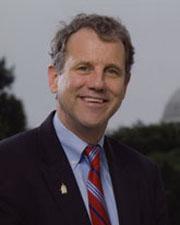 Sen. Sherrod Brown (D-OH)
Legislative Activity
Stay on top of the latest movement without scrolling through every action
Senate amendment submitted
July 23, 2007
View full timeline
Senate amendment submitted
July 23, 2007
Senate amendment proposed (on the floor): Amendment SA 2376 proposed by Senator Brown.(consideration: CR S9745-9749, S9760-9767; text: CR S9745)
July 23, 2007
Senate amendment not agreed to: Amendment SA 2376 not agreed to in Senate by Yea-Nay Vote. 37 - 54. Record Vote Number: 273.
July 23, 2007
Roll call votes on amendments in Senate: Amendment SA 2376 not agreed to in Senate by Yea-Nay Vote. 37 - 54. Record Vote Number: 273.
July 23, 2007
Amendment SA 2376 proposed by Senator Brown. (consideration: CR S9745-9749, S9760-9767; text: CR S9745) To provide for a Federal supplemental loan program.
July 23, 2007
Amendment SA 2376 not agreed to in Senate by Yea-Nay Vote. 37 - 54. Record Vote Number: 273.
July 23, 2007
Votes
1 roll call on this amendment
Text
Proposed
HIGHER EDUCATION AMENDMENTS OF 2007

The ACTING PRESIDENT pro tempore. Under the previous order, the
Senate will proceed to the consideration of S. 1642, which the clerk
will report.
The assistant legislative clerk read as follows:

A bill (S. 1642) to extend the authorization programs under
the Higher Education Act of 1965, and for other purposes.

The Senate proceeded to consider the bill, which had been reported
from the Committee on Health, Education, Labor, and Pensions, with an
amendment to strike all after the enacting clause and insert in lieu
thereof the following:

SECTION 1. SHORT TITLE; TABLE OF CONTENTS.

(a) Short Title.--This Act may be cited as the ``Higher
Education Amendments of 2007''.
(b) Table of Contents.--The table of contents for this Act
is as follows:

Sec. 1. Short title; table of contents.
Sec. 2. References.
Sec. 3. General effective date.

TITLE I--GENERAL PROVISIONS

Sec. 101. Additional definitions.
Sec. 102. General definition of institution of higher education.
Sec. 103. Definition of institution of higher education for purposes of
title IV programs.
Sec. 104. Protection of student speech and association rights.
Sec. 105. Accreditation and Institutional Quality and Integrity
Advisory Committee.
Sec. 106. Drug and alcohol abuse prevention.
Sec. 107. Prior rights and obligations.
Sec. 108. Transparency in college tuition for consumers.
Sec. 109. Databases of student information prohibited.
Sec. 110. Clear and easy-to-find information on student financial aid.
Sec. 111. Performance-based organization for the delivery of Federal
student financial assistance.
Sec. 112. Procurement flexibility.
Sec. 113. Institution and lender reporting and disclosure requirements.

TITLE II--TEACHER QUALITY ENHANCEMENT

Sec. 201. Teacher quality partnership grants.
Sec. 202. General provisions.

TITLE III--INSTITUTIONAL AID

Sec. 301. Program purpose.
Sec. 302. Definitions; eligibility.
Sec. 303. American Indian tribally controlled colleges and
universities.
Sec. 304. Alaska Native and Native Hawaiian-serving institutions.
Sec. 305. Native American-serving, nontribal institutions.
Sec. 306. Part B definitions.
Sec. 307. Grants to institutions.
Sec. 308. Allotments to institutions.
Sec. 309. Professional or graduate institutions.
Sec. 310. Authority of the Secretary.
Sec. 311. Authorization of appropriations.
Sec. 312. Technical corrections.

TITLE IV--STUDENT ASSISTANCE

Part A--Grants to Students in Attendance at Institutions of Higher
Education

Sec. 401. Federal Pell Grants.
Sec. 402. Academic competitiveness grants.
Sec. 403. Federal Trio Programs.
Sec. 404. Gaining early awareness and readiness for undergraduate
programs.
Sec. 405. Academic achievement incentive scholarships.
Sec. 406. Federal supplemental educational opportunity grants.
Sec. 407. Leveraging Educational Assistance Partnership program.
Sec. 408. Special programs for students whose families are engaged in
migrant and seasonal farmwork.
Sec. 409. Robert C. Byrd Honors Scholarship Program.
Sec. 410. Child care access means parents in school.
Sec. 411. Learning anytime anywhere partnerships.

Part B--Federal Family Education Loan Program

Sec. 421. Federal payments to reduce student interest costs.
Sec. 422. Federal Consolidation Loans.
Sec. 423. Default Reduction Program.
Sec. 424. Reports to consumer reporting agencies and institutions of
higher education.
Sec. 425. Common forms and formats.
Sec. 426. Student loan information by eligible lenders.
Sec. 427. Consumer education information.
Sec. 428. Definition of eligible lender.
Sec. 429. Discharge and cancellation rights in cases of disability.

Part C--Federal Work-Study Programs

Sec. 441. Authorization of appropriations.
Sec. 442. Allowance for books and supplies.
Sec. 443. Grants for Federal work-study programs.
Sec. 444. Job location and development programs.
Sec. 445. Work colleges.

Part D--Federal Perkins Loans

Sec. 451. Program authority.
Sec. 452. Cancellation of loans for certain public service.

Part E--Need Analysis

Sec. 461. Cost of attendance.
Sec. 462. Definitions.

Part F--General Provisions Relating to Student Assistance

Sec. 471. Definitions.
Sec. 472. Compliance calendar.
Sec. 473. Forms and regulations.
Sec. 474. Student eligibility.
Sec. 475. Statute of limitations and State court judgments.
Sec. 476. Institutional refunds.
Sec. 477. Institutional and financial assistance information for
students.
Sec. 478. Entrance counseling required.
Sec. 479. National Student Loan Data System.
Sec. 480. Early awareness of financial aid eligibility.
Sec. 481. Program participation agreements.
Sec. 482. Regulatory relief and improvement.
Sec. 483. Transfer of allotments.
Sec. 484. Purpose of administrative payments.
Sec. 485. Advisory Committee on student financial assistance.
Sec. 486. Regional meetings.
Sec. 487. Year 2000 requirements at the Department.

Part G--Program Integrity

Sec. 491. Recognition of accrediting agency or association.
Sec. 492. Administrative capacity standard.
Sec. 493. Program review and data.
Sec. 494. Timely information about loans.
Sec. 495. Auction evaluation and report.

TITLE V--DEVELOPING INSTITUTIONS

Sec. 501. Authorized activities.
Sec. 502. Postbaccalaureate opportunities for Hispanic Americans.
Sec. 503. Applications.
Sec. 504. Cooperative arrangements.
Sec. 505. Authorization of appropriations.

TITLE VI--INTERNATIONAL EDUCATION PROGRAMS

Sec. 601. Findings.
Sec. 602. Graduate and undergraduate language and area centers and
programs.
Sec. 603. Undergraduate international studies and foreign language
programs.
Sec. 604. Research; studies.
Sec. 605. Technological innovation and cooperation for foreign
information access.
Sec. 606. Selection of certain grant recipients.
Sec. 607. American overseas research centers.
Sec. 608. Authorization of appropriations for international and foreign
language studies.
Sec. 609. Centers for international business education.
Sec. 610. Education and training programs.
Sec. 611. Authorization of appropriations for business and
international education programs.
Sec. 612. Minority foreign service professional development program.
Sec. 613. Institutional development.
Sec. 614. Study abroad program.
Sec. 615. Advanced degree in international relations.
Sec. 616. Internships.
Sec. 617. Financial assistance.
Sec. 618. Report.
Sec. 619. Gifts and donations.
Sec. 620. Authorization of appropriations for the Institute for
International Public Policy.
Sec. 621. Definitions.
Sec. 622. Assessment and enforcement.

TITLE VII--GRADUATE AND POSTSECONDARY IMPROVEMENT PROGRAMS

Sec. 701. Purpose.
Sec. 702. Allocation of Jacob K. Javits Fellowships.
Sec. 703. Stipends.
Sec. 704. Authorization of appropriations for the Jacob K. Javits
Fellowship Program.
Sec. 705. Institutional eligibility under the Graduate Assistance in
Areas of National Need Program.
Sec. 706. Awards to graduate students.

[[Page S9671]]

Sec. 707. Additional assistance for cost of education.
Sec. 708. Authorization of appropriations for the Graduate Assistance
in Areas of National Need Program.
Sec. 709. Legal educational opportunity program.
Sec. 710. Fund for the improvement of postsecondary education.
Sec. 711. Special projects.
Sec. 712. Authorization of appropriations for the fund for the
improvement of postsecondary education.
Sec. 713. Repeal of the urban community service program.
Sec. 714. Grants for students with disabilities.
Sec. 715. Applications for demonstration projects to ensure students
with disabilities receive a quality higher education.
Sec. 716. Authorization of appropriations for demonstration projects to
ensure students with disabilities receive a quality
higher education.
Sec. 717. Research grants.

TITLE VIII--MISCELLANEOUS

Sec. 801. Miscellaneous.

TITLE IX--AMENDMENTS TO OTHER LAWS

Part A--Education of the Deaf Act of 1986

Sec. 901. Laurent Clerc National Deaf Education Center.
Sec. 902. Agreement with Gallaudet University.
Sec. 903. Agreement for the National Technical Institute for the Deaf.
Sec. 904. Cultural experiences grants.
Sec. 905. Audit.
Sec. 906. Reports.
Sec. 907. Monitoring, evaluation, and reporting.
Sec. 908. Liaison for educational programs.
Sec. 909. Federal endowment programs for Gallaudet University and the
National Technical Institute for the Deaf.
Sec. 910. Oversight and effect of agreements.
Sec. 911. International students.
Sec. 912. Research priorities.
Sec. 913. Authorization of appropriations.

Part B--United States Institute of Peace Act

Sec. 921. United States Institute of Peace Act.

Part C--The Higher Education Amendments of 1998

Sec. 931. Repeals.
Sec. 932. Grants to States for workplace and community transition
training for incarcerated youth offenders.
Sec. 933. Underground railroad educational and cultural program.
Sec. 934. Olympic scholarships under the Higher Education Amendments of
1992.

Part D--Indian Education

SUBPART 1--Tribal Colleges and Universities

Sec. 941. Reauthorization of the Tribally Controlled College or
University Assistance Act of 1978.

SUBPART 2--Navajo Higher Education

Sec. 945. Short title.
Sec. 946. Reauthorization of Navajo Community College Act.

SEC. 2. REFERENCES.

Except as otherwise expressly provided, whenever in this
Act an amendment or repeal is expressed in terms of an
amendment to, or repeal of, a section or other provision, the
reference shall be considered to be made to a section or
other provision of the Higher Education Act of 1965 (20
U.S.C. 1001 et seq.).

SEC. 3. GENERAL EFFECTIVE DATE.

Except as otherwise provided in this Act or the amendments
made by this Act, the amendments made by this Act shall take
effect on the date of enactment of this Act.

TITLE I--GENERAL PROVISIONS

SEC. 101. ADDITIONAL DEFINITIONS.

(a) Amendment.--Section 103 (20 U.S.C. 1003) is amended--
(1) by redesignating paragraphs (9) through (16) as
paragraphs (13) through (20); respectively;
(2) by redesignating paragraphs (4) through (8) as
paragraphs (7) through (11), respectively;
(3) by redesignating paragraphs (1), (2), and (3) as
paragraphs (2), (4), and (5), respectively;
(4) by inserting before paragraph (2) (as redesignated by
paragraph (2)) the following:
``(1) Authorizing committees.--The term `authorizing
committees' means the Committee on Health, Education, Labor,
and Pensions of the Senate and the Committee on Education and
Labor of the House of Representatives.'';
(5) by inserting after paragraph (2) (as redesignated by
paragraph (3)) the following:
``(3) Critical foreign language.--The term `critical
foreign language' means each of the languages contained in
the list of critical languages designated by the Secretary in
the Federal Register on August 2, 1985 (50 Fed. Reg. 149,
31412; promulgated under the authority of section 212(d) of
the Education for Economic Security Act (repealed by section
2303 of the Augustus F. Hawkins-Robert T. Stafford Elementary
and Secondary School Improvement Amendments of 1988)), except
that in the implementation of this definition with respect to
a specific title, the Secretary may set priorities according
to the purposes of such title and the national security,
economic competitiveness, and educational needs of the United
States.'';
(6) by inserting after paragraph (5) (as redesignated by
paragraph (3)) the following:
``(6) Distance education.--
``(A) In general.--Except as otherwise provided, the term
`distance education' means education that uses 1 or more of
the technologies described in subparagraph (B)--
``(i) to deliver instruction to students who are separated
from the instructor; and
``(ii) to support regular and substantive interaction
between the students and the instructor, synchronously or
asynchronously.
``(B) Inclusions.--For the purposes of subparagraph (A),
the technologies used may include--
``(i) the Internet;
``(ii) one-way and two-way transmissions through open
broadcast, closed circuit, cable, microwave, broadband lines,
fiber optics, satellite, or wireless communications devices;
``(iii) audio conferencing; or
``(iv) video cassette, DVDs, and CD-ROMs, if the cassette,
DVDs, and CD-ROMs are used in a course in conjunction with
the technologies listed in clauses (i) through (iii).''; and
(7) by inserting after paragraph (11) (as redesignated by
paragraph (2)) the following:
``(12) Poverty line.--The term `poverty line' means the
poverty line (as defined in section 673(2) of the Community
Services Block Grant Act (42 U.S.C. 9902(2))) applicable to a
family of the size involved.''.
(b) Conforming Amendments.--The Act (20 U.S.C. 1001 et
seq.) is amended--
(1) in section 131(a)(3)(B) (20 U.S.C. 1015(a)(3)(B)), by
striking ``Committee on Labor and Human Resources of the
Senate and the Committee on Education and the Workforce of
the House of Representatives'' and inserting ``authorizing
committees'';
(2) in section 141(d)(4)(B) (20 U.S.C. 1018(d)(4)(B)), by
striking ``Committee on Education and the Workforce of the
House of Representatives and the Committee on Labor and Human
Resources of the Senate'' and inserting ``authorizing
committees'';
(3) in section 401(f)(3) (20 U.S.C. 1070a(f)(3)), by
striking ``to the Committee on Appropriations'' and all that
follows through ``House of Representatives'' and inserting
``to the Committee on Appropriations of the Senate, the
Committee on Appropriations of the House of Representatives,
and the authorizing committees'';
(4) in section 428 (20 U.S.C. 1078)--
(A) in subsection (c)(9)(K), by striking ``House Committee
on Education and the Workforce and the Senate Committee on
Labor and Human Resources'' and inserting ``authorizing
committees'';
(B) in the matter following paragraph (2) of subsection
(g), by striking ``Committee on Labor and Human Resources of
the Senate and the Committee on Education and the Workforce
of the House of Representatives'' and inserting ``authorizing
committees''; and
(C) in subsection (n)(4), by striking ``Committee on
Education and the Workforce of the House of Representatives
and the Committee on Labor and Human Resources of the
Senate'' and inserting ``authorizing committees'';
(5) in section 428A(c) (20 U.S.C. 1078-1(c))--
(A) in the matter preceding subparagraph (A) of paragraph
(2), by striking ``Chairperson'' and all that follows through
``House of Representatives'' and inserting ``members of the
authorizing committees'';
(B) in paragraph (3), by striking ``Chairperson'' and all
that follows through ``House of Representatives'' and
inserting ``members of the authorizing committees''; and
(C) in paragraph (5), by striking ``Chairperson'' and all
that follows through ``House of Representatives'' and
inserting ``members of the authorizing committees'';
(6) in section 432 (20 U.S.C. 1082)--
(A) in subsection (f)(1)(C), by striking ``the Committee on
Education and the Workforce of the House of Representatives
or the Committee on Labor and Human Resources of the Senate''
and inserting ``either of the authorizing committees''; and
(B) in the matter following subparagraph (D) of subsection
(n)(3), by striking ``Committee on Education and the
Workforce of the House of Representatives and the Committee
on Labor and Human Resources of the Senate'' and inserting
``authorizing committees'';
(7) in section 437(c)(1) (20 U.S.C. 1087(c)(1)), by
striking ``Committee on Education and the Workforce of the
House of Representatives and the Committee on Labor and Human
Resources of the Senate'' and inserting ``authorizing
committees'';
(8) in section 439 (20 U.S.C. 1087-2)--
(A) in subsection (d)(1)(E)(iii), by striking ``advise the
Chairman'' and all that follows through ``House of
Representatives'' and inserting ``advise the members of the
authorizing committees'';
(B) in subsection (r)--
(i) in paragraph (3), by striking ``inform the Chairman''
and all that follows through ``House of Representatives,''
and inserting ``inform the members of the authorizing
committees'';
(ii) in paragraph (5)(B), by striking ``plan, to the
Chairman'' and all that follows through ``Education and
Labor'' and inserting ``plan, to the members of the
authorizing committees'';
(iii) in paragraph (6)(B)--

(I) by striking ``plan, to the Chairman'' and all that
follows through ``House of Representatives'' and inserting
``plan, to the members of the authorizing committees''; and
(II) by striking ``Chairmen and ranking minority members of
such Committees'' and inserting ``members of the authorizing
committees'';

(iv) in paragraph (8)(C), by striking ``implemented to the
Chairman'' and all that follows through ``House of
Representatives, and'' and inserting ``implemented to the
members of the authorizing committees, and to''; and
(v) in the matter preceding subparagraph (A) of paragraph
(10), by striking ``days to the Chairman'' and all that
follows through ``Education and Labor'' and inserting ``days
to the members of the authorizing committees''; and
(C) in subsection (s)(2)--
(i) in the matter preceding clause (i) of subparagraph (A),
by striking ``Treasury and to the Chairman'' and all that
follows through ``House of Representatives'' and inserting
``Treasury and to the members of the authorizing
committees''; and
(ii) in subparagraph (B), by striking ``Treasury and to the
Chairman'' and all that follows

[[Page S9672]]

through ``House of Representatives'' and inserting ``Treasury
and to the members of the authorizing committees'';
(9) in section 455(b)(8)(B) (20 U.S.C. 1087e(b)(8)(B)), by
striking ``Committee on Labor and Human Resources of the
Senate and the Committee on Education and the Workforce of
the House of Representatives'' and inserting ``authorizing
committees'';
(10) in section 482(d) (20 U.S.C. 1089(d)), by striking
``Committee on Labor and Human Resources of the Senate and
the Committee on Education and Labor of the House of
Representatives'' and inserting ``authorizing committees'';
(11) in section 483(c) (20 U.S.C. 1090(c)), by striking
``Committee on Labor and Human Resources of the Senate and
the Committee on Education and the Workforce of the House of
Representatives'' and inserting ``authorizing committees'';
(12) in section 485 (20 U.S.C. 1092)--
(A) in subsection (f)(5)(A), by striking ``Committee on
Education and the Workforce of the House of Representatives
and the Committee on Labor and Human Resources of the
Senate'' and inserting ``authorizing committees''; and
(B) in subsection (g)(4)(B), by striking ``Committee on
Education and the Workforce of the House of Representatives
and the Committee on Labor and Human Resources of the
Senate'' and inserting ``authorizing committees'';
(13) in section 486 (20 U.S.C. 1093)--
(A) in subsection (e), by striking ``Committee on Labor and
Human Resources of the Senate and the Committee on Education
and the Workforce of the House of Representatives'' and
inserting ``authorizing committees''; and
(B) in subsection (f)(3)--
(i) in the matter preceding clause (i) of subparagraph (A),
by striking ``Committee on Labor and Human Resources of the
Senate and the Committee on Education and the Workforce of
the House of Representatives'' and inserting ``authorizing
committees''; and
(ii) in the matter preceding clause (i) of subparagraph
(B), by striking ``Committee on Labor and Human Resources of
the Senate and the Committee on Education and the Workforce
of the House of Representatives'' and inserting ``authorizing
committees'';
(14) in section 487A(a)(5) (20 U.S.C. 1094a(a)(5)), by
striking ``Committee on Labor and Human Resources of the
Senate and the Committee on Education and the Workforce of
the House of Representatives'' and inserting ``authorizing
committees''; and
(15) in section 498B(d) (20 U.S.C. 1099c-2(d))--
(A) in paragraph (1), by striking ``Committee on Labor and
Human Resources of the Senate and the Committee on Education
and the Workforce of the House of Representatives'' and
inserting ``authorizing committees''; and
(B) in paragraph (2), by striking ``Committee on Labor and
Human Resources of the Senate and the Committee on Education
and the Workforce of the House of Representatives'' and
inserting ``authorizing committees''.

SEC. 102. GENERAL DEFINITION OF INSTITUTION OF HIGHER
EDUCATION.

Section 101 (20 U.S.C. 1001) is amended--
(1) in subsection (a)(3), by inserting ``, or awards a
degree that is acceptable for admission to a graduate or
professional degree program, subject to the review and
approval by the Secretary'' after ``such a degree''; and
(2) by striking subsection (b)(2) and inserting the
following:
``(2) a public or nonprofit private educational institution
in any State that, in lieu of the requirement in subsection
(a)(1), admits as regular students persons--
``(A) who are beyond the age of compulsory school
attendance in the State in which the institution is located;
or
``(B) who will be dually or concurrently enrolled in the
institution and a secondary school.''.

SEC. 103. DEFINITION OF INSTITUTION OF HIGHER EDUCATION FOR
PURPOSES OF TITLE IV PROGRAMS.

Section 102 (20 U.S.C. 1002) is amended--
(1) by striking subclause (II) of subsection (a)(2)(A)(i)
and inserting the following:

``(II) the institution has or had a clinical training
program that was approved by a State as of January 1, 1992,
and has continuously operated a clinical training program in
not less than 1 State that is approved by such State;'';

(2) in subsection (b)--
(A) in paragraph (1)--
(i) in subparagraph (D), by inserting ``and'' after the
semicolon;
(ii) in subparagraph (E), by striking ``; and'' and
inserting a period; and
(iii) by striking subparagraph (F); and
(B) by striking paragraph (2) and inserting the following:
``(2) Additional institutions.--The term `proprietary
institution of higher education' also includes a proprietary
educational institution in any State that, in lieu of the
requirement in section 101(a)(1), admits as regular students
persons--
``(A) who are beyond the age of compulsory school
attendance in the State in which the institution is located;
or
``(B) who will be dually or concurrently enrolled in the
institution and a secondary school.''; and
(3) by striking subsection (c)(2) and inserting the
following:
``(2) Additional institutions.--The term `postsecondary
vocational institution' also includes an educational
institution in any State that, in lieu of the requirement in
section 101(a)(1), admits as regular students persons--
``(A) who are beyond the age of compulsory school
attendance in the State in which the institution is located;
or
``(B) who will be dually or concurrently enrolled in the
institution and a secondary school.''.

SEC. 104. PROTECTION OF STUDENT SPEECH AND ASSOCIATION
RIGHTS.

Section 112 (20 U.S.C. 1011a) is amended--
(1) in subsection (a)--
(A) by inserting ``(1)'' before ``It is the sense''; and
(B) by adding at the end the following:
``(2) It is the sense of Congress that--
``(A) the diversity of institutions and educational
missions is one of the key strengths of American higher
education;
``(B) individual colleges and universities have different
missions and each institution should design its academic
program in accordance with its educational goals;
``(C) a college should facilitate the free and open
exchange of ideas;
``(D) students should not be intimidated, harassed,
discouraged from speaking out, or discriminated against;
``(E) students should be treated equally and fairly; and
``(F) nothing in this paragraph shall be construed to
modify, change, or infringe upon any constitutionally
protected religious liberty, freedom, expression, or
association.''; and
(2) in subsection (b)(1), by inserting ``, provided that
the imposition of such sanction is done objectively and
fairly'' after ``higher education''.

SEC. 105. ACCREDITATION AND INSTITUTIONAL QUALITY AND
INTEGRITY ADVISORY COMMITTEE.

(a) In General.--Section 114 (20 U.S.C. 1011c) is amended
to read as follows:

``SEC. 114. ACCREDITATION AND INSTITUTIONAL QUALITY AND
INTEGRITY COMMITTEE.

``(a) Establishment.--There is established in the
Department an Accreditation and Institutional Quality and
Integrity Advisory Committee (in this section referred to as
the `Committee') to assess the process of accreditation and
the institutional eligibility and certification of such
institutions under title IV.
``(b) Membership.--
``(1) In general.--The Committee shall have 15 members, of
which--
``(A) 5 members shall be appointed by the Secretary;
``(B) 5 members shall be appointed by the Speaker of the
House of Representatives upon the recommendation of the
majority leader and minority leader of the House of
Representatives; and
``(C) 5 members shall be appointed by the President pro
tempore of the Senate upon the recommendation of the majority
leader and minority leader of the Senate.
``(2) Qualifications.--Individuals shall be appointed as
members of the Committee on--
``(A) the basis of the individuals' experience, integrity,
impartiality, and good judgment;
``(B) from among individuals who are representatives of, or
knowledgeable concerning, education and training beyond
secondary education, representatives of all sectors and types
of institutions of higher education (as defined in section
102); and
``(C) on the basis of the individuals' technical
qualifications, professional standing, and demonstrated
knowledge in the fields of accreditation and administration
in higher education.
``(3) Terms of members.--The term of office of each member
of the Committee shall be for 6 years, except that any member
appointed to fill a vacancy occurring prior to the expiration
of the term for which the member's predecessor was appointed
shall be appointed for the remainder of such term.
``(4) Vacancy.--A vacancy on the Committee shall be filled
in the same manner as the original appointment was made not
later than 90 days after the vacancy occurred. If a vacancy
occurs in a position to be filled by the Secretary, the
Secretary shall publish a Federal Register notice soliciting
nominations for the position not later than 30 days after
being notified of the vacancy.
``(5) Initial terms.--The terms of office for the initial
members of the Committee shall be--
``(A) 2 years for members appointed under paragraph (1)(A);
``(B) 4 years for members appointed under paragraph (1)(B);
and
``(C) 6 years for members appointed under paragraph (1)(C).
``(6) Chairperson.--The members of the Committee shall
select a chairperson from among the members.
``(c) Functions.--The Committee shall--
``(1) advise the Secretary with respect to establishment
and enforcement of the standards of accrediting agencies or
associations under subpart 2 of part H of title IV;
``(2) advise the Secretary with respect to the recognition
of a specific accrediting agency or association;
``(3) advise the Secretary with respect to the preparation
and publication of the list of nationally recognized
accrediting agencies and associations;
``(4) advise the Secretary with respect to the eligibility
and certification process for institutions of higher
education under title IV, together with recommendations for
improvements in such process;
``(5) advise the Secretary with respect to the relationship
between--
``(A) accreditation of institutions of higher education and
the certification and eligibility of such institutions; and
``(B) State licensing responsibilities with respect to such
institutions; and
``(6) carry out such other advisory functions relating to
accreditation and institutional eligibility as the Secretary
may prescribe in regulation.
``(d) Meeting Procedures.--
``(1) Schedule.--
``(A) Biannual meetings.--The Committee shall meet not less
often than twice each year, at the call of the Chairperson.

[[Page S9673]]

``(B) Publication of date.--The Committee shall submit the
date and location of each meeting in advance to the
Secretary, and the Secretary shall publish such information
in the Federal Register not later than 30 days before the
meeting.
``(2) Agenda.--
``(A) Establishment.--The agenda for a meeting of the
Committee shall be established by the Chairperson and shall
be submitted to the members of the Committee upon
notification of the meeting.
``(B) Opportunity for public comment.--The agenda shall
include, at a minimum, opportunity for public comment during
the Committee's deliberations.
``(3) Secretary's designee.--
``(A) Attendance at meeting.--The Chairperson shall invite
the Secretary's designee to attend all meetings of the
Committee.
``(B) Role of designee.--The Secretary's designee may be
present at a Committee meeting to facilitate the exchange and
free flow of information between the Secretary and the
Committee. The designee shall have no authority over the
agenda of the meeting, the items on that agenda, or on the
resolution of any agenda item.
``(4) Federal advisory committee act.--The provisions of
the Federal Advisory Committee Act (5 U.S.C. App.) shall
apply to the Committee, except that section 14 of such Act
shall not apply.
``(e) Report and Notice.--
``(1) Notice.--The Secretary shall annually publish in the
Federal Register--
``(A) a list containing, for each member of the Committee--
``(i) the member's name;
``(ii) the date of the expiration of the member's term of
office; and
``(iii) the individual described in subsection (b)(1) who
appointed the member; and
``(B) a solicitation of nominations for each expiring term
of office on the Committee of a member appointed by the
Secretary.
``(2) Report.--Not later than September 30 of each year,
the Committee shall make an annual report to the Secretary,
the authorizing committees, and the public. The annual report
shall contain--
``(A) a detailed summary of the agenda and activities of,
and the findings and recommendations made by, the Committee
during the preceding fiscal year;
``(B) a list of the date and location of each meeting
during the preceding fiscal year;
``(C) a list of the members of the Committee and
appropriate contact information; and
``(D) a list of the functions of the Committee, including
any additional functions established by the Secretary through
regulation.
``(f) Termination.--The Committee shall terminate on
September 30, 2012.''.
(b) Termination of NACIQI.--The National Advisory Committee
on Institutional Quality and Integrity, established under
section 114 of the Higher Education Act of 1965 (as such
section was in effect the day before the date of enactment of
this Act) shall terminate 90 days after such date.

SEC. 106. DRUG AND ALCOHOL ABUSE PREVENTION.

Section 120(a)(2) (20 U.S.C. 1011i(a)(2)) is amended--
(1) in subparagraph (A), by striking ``and'' after the
semicolon;
(2) by redesignating subparagraph (B) as subparagraph (D);
and
(3) by inserting after subparagraph (A) (as amended by
paragraph (1)) the following:
``(B) determine the number of drug and alcohol-related
incidents and fatalities that--
``(i) occur on the institution's property or as part of any
of the institution's activities; and
``(ii) are reported to the institution;
``(C) determine the number and type of sanctions described
in paragraph (1)(E) that are imposed by the institution as a
result of drug and alcohol-related incidents and fatalities
on the institution's property or as part of any of the
institution's activities; and''.

SEC. 107. PRIOR RIGHTS AND OBLIGATIONS.

Section 121(a) (20 U.S.C. 1011j(a)) is amended--
(1) in paragraph (1), by striking ``1999 and for each of
the 4 succeeding fiscal years'' and inserting ``2008 and for
each succeeding fiscal year''; and
(2) in paragraph (2), by striking ``1999 and for each of
the 4 succeeding fiscal years'' and inserting ``2008 and for
each succeeding fiscal year''.

SEC. 108. TRANSPARENCY IN COLLEGE TUITION FOR CONSUMERS.

Part C of title I (20 U.S.C. 1015) is amended by adding at
the end the following:

``SEC. 132. TRANSPARENCY IN COLLEGE TUITION FOR CONSUMERS.

``(a) Net Price.--In this section, the term `net price'
means the average yearly tuition and fees paid by a full-time
undergraduate student at an institution of higher education,
after discounts and grants from the institution, Federal
Government, or a State have been applied to the full price of
tuition and fees at the institution.
``(b) Higher Education Price Index.--
``(1) In general.--Not later than 1 year after the date of
enactment of the Higher Education Amendments of 2007, the
Commission of the Bureau of Labor Statistics, in consultation
with the Commissioner of Education Statistics and
representatives of institutions of higher education, shall
develop higher education price indices that accurately
reflect the annual change in tuition and fees for
undergraduate students in the categories of institutions
listed in paragraph (2). Such indices shall be updated
annually.
``(2) Development.--The higher education price index under
paragraph (1) shall be developed for each of the following
categories:
``(A) 4-year public degree-granting institutions of higher
education.
``(B) 4-year private degree-granting institutions of higher
education.
``(C) 2-year public degree-granting institutions of higher
education.
``(D) 2-year private degree-granting institutions of higher
education.
``(E) Less than 2-year institutions of higher education.
``(F) All types of institutions described in subparagraphs
(A) through (E).
``(3) Authorization of appropriations.--There are
authorized to be appropriated to carry out this subsection
such sums as may be necessary.
``(c) Reporting.--
``(1) In general.--The Secretary shall annually report, in
a national list and in a list for each State, a ranking of
institutions of higher education according to such
institutions' change in tuition and fees over the preceding 2
years. The purpose of such lists is to provide consumers with
general information on pricing trends among institutions of
higher education nationally and in each State.
``(2) Compilation.--
``(A) In general.--The lists described in paragraph (1)
shall be compiled according to the following categories:
``(i) 4-year public institutions of higher education.
``(ii) 4-year private, nonprofit institutions of higher
education.
``(iii) 4-year private, for-profit institutions of higher
education.
``(iv) 2-year public institutions of higher education.
``(v) 2-year private, nonprofit institutions of higher
education.
``(vi) 2-year private, for-profit institutions of higher
education.
``(vii) Less than 2-year public institutions of higher
education.
``(viii) Less than 2-year private, nonprofit institutions
of higher education.
``(ix) Less than 2-year private, for-profit institutions of
higher education.
``(B) Percentage and dollar change.--The lists described in
paragraph (1) shall include 2 lists for each of the
categories under subparagraph (A) as follows:
``(i) 1 list in which data is compiled by percentage change
in tuition and fees over the preceding 2 years.
``(ii) 1 list in which data is compiled by dollar change in
tuition and fees over the preceding 2 years.
``(3) Higher education price increase watch lists.--Upon
completion of the development of the higher education price
indices described in paragraph (1), the Secretary shall
annually report, in a national list, and in a list for each
State, a ranking of each institution of higher education
whose tuition and fees outpace such institution's applicable
higher education price index described in subsection (b).
Such lists shall--
``(A) be known as the `Higher Education Price Increase
Watch Lists';
``(B) report the full price of tuition and fees at the
institution and the net price;
``(C) where applicable, report the average price of room
and board for students living on campus at the institution,
except that such price shall not be used in determining
whether an institution's cost outpaces such institution's
applicable higher education price index; and
``(D) be compiled by the Secretary in a public document to
be widely published and disseminated in paper form and
through the website of the Department.
``(4) State higher education appropriations chart.--The
Secretary shall annually report, in charts for each State--
``(A) a comparison of the percentage change in State
appropriations per enrolled student in a public institution
of higher education in the State to the percentage change in
tuition and fees for each public institution of higher
education in the State for each of the previous 5 years; and
``(B) the total amount of need-based and merit-based aid
provided by the State to students enrolled in a public
institution of higher education in the State.
``(5) Sharing of information.--The Secretary shall share
the information under paragraphs (1) through (4) with the
public, including with private sector college guidebook
publishers.
``(d) Net Price Calculator.--
``(1) Development.--Not later than 1 year after the date of
enactment of the Higher Education Amendments of 2007, the
Secretary shall, in consultation with institutions of higher
education, develop and make several model net price
calculators to help students, families, and consumers
determine the net price of an institution of higher
education, which institutions of higher education may, at
their discretion, elect to use pursuant to paragraph (3).
``(2) Categories.--The model net price calculators
described in paragraph (1) shall be developed for each of the
following categories:
``(A) 4-year public institutions of higher education.
``(B) 4-year private, nonprofit institutions of higher
education.
``(C) 4-year private, for-profit institutions of higher
education.
``(D) 2-year public institutions of higher education.
``(E) 2-year private, nonprofit institutions of higher
education.
``(F) 2-year private, for-profit institutions of higher
education.
``(G) Less than 2-year public institutions of higher
education.
``(H) Less than 2-year private, nonprofit institutions of
higher education.
``(I) Less than 2-year private, for-profit institutions of
higher education.

[[Page S9674]]

``(3) Use of net price calculator by institutions.--Not
later than 3 years after the date of enactment of the Higher
Education Amendments of 2007, each institution of higher
education that receives Federal funds under this Act shall
adopt and use a net price calculator to help students,
families, and other consumers determine the net price of such
institution of higher education. Such calculator may be--
``(A) based on a model calculator developed by the
Department; or
``(B) developed by the institution of higher education.
``(4) Authorization of appropriations.--There are
authorized to be appropriated to carry out this subsection
such sums as may be necessary.
``(e) Net Price Reporting in Application Information.--An
institution of higher education that receives Federal funds
under this Act shall include, in the materials accompanying
an application for admission to the institution, the most
recent information regarding the net price of the
institution, calculated for each quartile of students based
on the income of either the students' parents or, in the case
of independent students (as such term is described in section
480), of the students, for each of the 2 academic years
preceding the academic year for which the application is
produced.
``(f) Enhanced College Information Website.--
``(1) In general.--
``(A) In general.--Not later than 90 days after the date of
enactment of the Higher Education Amendments of 2007, the
Secretary shall contract with an independent organization
with demonstrated experience in the development of consumer-
friendly websites to develop improvements to the website
known as the College Opportunities On-Line (COOL) so that it
better meets the needs of students, families, and consumers
for accurate and appropriate information on institutions of
higher education.
``(B) Implementations.--Not later than 1 year after the
date of enactment of the Higher Education Amendments of 2007,
the Secretary shall implement the improvements developed by
the independent organization described under subparagraph (A)
to the college information website.
``(2) University and college accountability network.--Not
later than 1 year after the date of enactment of the Higher
Education Amendments of 2007, the Secretary shall develop a
model document for annually reporting basic information about
an institution of higher education that chooses to
participate, to be posted on the college information website
and made available to institutions of higher education,
students, families, and other consumers. Such document shall
be known as the `University and College Accountability
Network' (U-CAN), and shall include, the following
information about the institution of higher education for the
most recent academic year for which the institution has
available data, presented in a consumer-friendly manner:
``(A) A statement of the institution's mission and
specialties.
``(B) The total number of undergraduate students who
applied, were admitted, and enrolled at the institution.
``(C) Where applicable, reading, writing, mathematics, and
combined scores on the SAT or ACT for the middle 50 percent
range of the institution's freshman class.
``(D) Enrollment of full-time, part-time, and transfer
students at the institution, at the undergraduate and (where
applicable) graduate levels.
``(E) Percentage of male and female undergraduate students
enrolled at the institution.
``(F) Percentage of enrolled undergraduate students from
the State in which the institution is located, from other
States, and from other countries.
``(G) Percentage of enrolled undergraduate students at the
institution by race and ethnic background.
``(H) Retention rates for full-time and part-time first-
time first-year undergraduate students enrolled at the
institution.
``(I) Average time to degree or certificate completion for
first-time, first-year undergraduate students enrolled at the
institution.
``(J) Percentage of enrolled undergraduate students who
graduate within 2 years (in the case of 2-year institutions),
and 4, 5 and 6 years (in the case of 2 and 4-year
institutions).
``(K) Number of students who obtained a certificate or an
associate's, bachelor's, master's, or doctoral degree at the
institution.
``(L) The undergraduate major areas of study with the
highest number of degrees awarded.
``(M) The student-faculty ratio, and number of full-time,
part-time, and adjunct faculty at the institution.
``(N) Percentage of faculty at the institution with the
highest degree in their field.
``(O) The percentage change in total price in tuition and
fees and the net price for an undergraduate at the
institution in each of the preceding 5 academic years.
``(P) The total average yearly cost of tuition and fees,
room and board, and books and other related costs for an
undergraduate student enrolled at the institution, for--
``(i) full-time undergraduate students living on campus;
``(ii) full-time undergraduate students living off-campus;
and
``(iii) in the case of students attending a public
institution of higher education, such costs for in-State and
out-of-State students living on and off-campus.
``(Q) The average yearly grant amount (including Federal,
State, and institutional aid) for a student enrolled at the
institution.
``(R) The average yearly amount of Federal student loans,
and other loans provided through the institution, to
undergraduate students enrolled at the institution.
``(S) The total yearly grant aid available to undergraduate
students enrolled at the institution, from the Federal
Government, a State, the institution, and other sources.
``(T) The percentage of undergraduate students enrolled at
the institution receiving Federal, State, and institutional
grants, student loans, and any other type of student
financial assistance provided publicly or through the
institution, such as Federal work-study funds.
``(U) The average net price for all undergraduate students
enrolled at the institution.
``(V) The percentage of first-year undergraduate students
enrolled at the institution who live on campus and off
campus.
``(W) Information on the policies of the institution
related to transfer of credit from other institutions.
``(X) Information on campus safety required to be collected
under section 485(f).
``(Y) Links to the appropriate sections of the
institution's website that provide information on student
activities offered by the institution, such as
intercollegiate sports, student organizations, study abroad
opportunities, intramural and club sports, specialized
housing options, community service opportunities, cultural
and arts opportunities on campus, religious and spiritual
life on campus, and lectures and outside learning
opportunities.
``(Z) Links to the appropriate sections of the
institution's website that provide information on services
offered by the institution to students during and after
college, such as internship opportunities, career and
placement services, and preparation for further education.
``(3) Consultation.--The Secretary shall ensure that
current and prospective college students, family members of
such students, and institutions of higher education are
consulted in carrying out paragraphs (1) and (2).
``(4) Authorization of appropriations.--There are
authorized to be appropriated to carry out this subsection
such sums as may be necessary.
``(g) GAO Report.--The Comptroller General of the United
States shall--
``(1) conduct a study on the time and cost burdens to
institutions of higher education associated with completing
the Integrated Postsecondary Education Data System (IPEDS),
which study shall--
``(A) report on the time and cost burden of completing the
IPEDS survey for 4-year, 2-year, and less than 2-year
institutions of higher education; and
``(B) present recommendations for reducing such burden;
``(2) not later than 1 year after the date of enactment of
the Higher Education Amendments of 2007, submit to Congress a
preliminary report regarding the findings of the study
described in paragraph (1); and
``(3) not later than 2 years after the date of enactment of
the Higher Education Amendments of 2007, submit to Congress a
final report regarding such findings.''.

SEC. 109. DATABASES OF STUDENT INFORMATION PROHIBITED.

Part C of title I (20 U.S.C. 1015), as amended by section
108, is further amended by adding at the end the following:

``SEC. 133. DATABASE OF STUDENT INFORMATION PROHIBITED.

``(a) Prohibition.--Except as described in (b), nothing in
this Act shall be construed to authorize the development,
implementation, or maintenance of a Federal database of
personally identifiable information on individuals receiving
assistance under this Act, attending institutions receiving
assistance under this Act, or otherwise involved in any
studies or other collections of data under this Act,
including a student unit record system, an education bar code
system, or any other system that tracks individual students
over time.
``(b) Exception.--The provisions of subsection (a) shall
not affect the loan obligation enforcement activities
described in section 485B.
``(c) State Databases.--Nothing in this Act shall prohibit
a State or a consortium of States from developing,
implementing, or maintaining State-developed databases that
track individuals over time, including student unit record
systems that contain information related to enrollment,
attendance, graduation and retention rates, student financial
assistance, and graduate employment outcomes.''.

SEC. 110. CLEAR AND EASY-TO-FIND INFORMATION ON STUDENT
FINANCIAL AID.

Part C of title I (as amended by sections 108 and 109) is
further amended by adding at the end the following:

``SEC. 134. CLEAR AND EASY-TO-FIND INFORMATION ON STUDENT
FINANCIAL AID.

``(a) Prominent Display.--The Secretary shall ensure that a
link to current student financial aid information is
displayed prominently on the home page of the Department
website.
``(b) Enhanced Student Financial Aid Information.--
``(1) In general.--Not later than 180 days after the date
of enactment of the Higher Education Amendments of 2007, the
Secretary shall contract with an independent organization
with demonstrated expertise in the development of consumer-
friendly websites to develop improvements to the usefulness
and accessibility of the information provided by the
Department on college financial planning and student
financial aid.
``(2) Implementation.--Not later than 1 year after the date
of enactment of the Higher Education Amendments of 2007, the
Secretary shall implement the improvements developed by the
independent organization described under paragraph (1) to the
college financial planning and student financial aid website
of the Department.
``(3) Dissemination.--The Secretary shall make the
availability of the information on the

[[Page S9675]]

website widely known through a major media campaign and other
forms of communication.''.

SEC. 111. PERFORMANCE-BASED ORGANIZATION FOR THE DELIVERY OF
FEDERAL STUDENT FINANCIAL ASSISTANCE.

Section 141 (20 U.S.C. 1018) is amended--
(1) in subsection (a)--
(A) in paragraph (1), by striking ``operational'' and
inserting ``administrative and oversight''; and
(B) in paragraph (2)(D), by striking ``of the operational
functions'' and inserting ``and administration'';
(2) in subsection (b)--
(A) in paragraph (1)--
(i) in subparagraph (A), by striking ``the information
systems administered by the PBO, and other functions
performed by the PBO'' and inserting ``the Federal student
financial assistance programs authorized under title IV'';
and
(ii) by striking subparagraph (C) and inserting the
following:
``(C) assist the Chief Operating Officer in identifying
goals for--
``(i) the administration of the systems used to administer
the Federal student financial assistance programs authorized
under title IV; and
``(ii) the updating of such systems to current
technology.''; and
(B) in paragraph (2)--
(i) in the matter preceding subparagraph (A), by striking
``administration of the information and financial systems
that support'' and inserting ``the administration of
Federal'';
(ii) in subparagraph (A)--

(I) in the matter preceding clause (i), by striking ``of
the delivery system for Federal student assistance'' and
inserting ``for the Federal student assistance programs
authorized under title IV'';
(II) by striking clauses (i) and (ii) and inserting the
following:

``(i) the collection, processing, and transmission of data
to students, institutions, lenders, State agencies, and other
authorized parties;
``(ii) the design and technical specifications for software
development and procurement for systems supporting the
student financial assistance programs authorized under title
IV;'';

(III) in clause (iii), by striking ``delivery'' and
inserting ``administration'';
(IV) in clause (iv)--

(aa) by inserting ``the'' after ``supporting''; and
(bb) by striking ``and'' after the semicolon;

(V) in clause (v), by striking ``systems that support those
programs.'' and inserting ``the administration of the Federal
student assistance programs authorized under title IV; and'';
and
(VI) by adding at the end the following:

``(vi) ensuring the integrity of the student assistance
programs authorized under title IV.''; and
(iii) in subparagraph (B), by striking ``operations and
services'' and inserting ``activities and functions''; and
(3) in subsection (c)--
(A) in the subsection heading, by striking ``Performance
Plan and Report'' and inserting ``Performance Plan, Report,
and Briefing'';
(B) in paragraph (1)(C)--
(i) in clause (iii), by striking ``information and
delivery''; and
(ii) in clause (iv)--

(I) by striking ``Developing an'' and inserting
``Developing''; and
(II) by striking ``delivery and information system'' and
inserting ``systems'';

(C) in paragraph (2)--
(i) in subparagraph (A), by inserting ``the'' after ``PBO
and''; and
(ii) in subparagraph (B), by striking ``Officer'' and
inserting ``Officers'';
(D) in paragraph (3), by inserting ``students,'' after
``consult with''; and
(E) by adding at the end the following:
``(4) Briefing on enforcement of student loan provisions.--
The Chief Operating Officer shall provide an annual briefing
to the members of the authorizing committees on the steps the
PBO has taken and is taking to ensure that lenders are
providing the information required under clauses (iii) and
(iv) of section 428(c)(3)(C) and sections 428(b)(1)(Z) and
428C(b)(1)(F).'';
(4) in subsection (d)--
(A) in paragraph (1), by striking the second sentence; and
(B) in paragraph (5)--
(i) in subparagraph (B), by striking ``paragraph (2)'' and
inserting ``paragraph (4)''; and
(ii) in subparagraph (C), by striking ``this'';
(5) in subsection (f)--
(A) in paragraph (2), by striking ``to borrowers'' and
inserting ``to students, borrowers,''; and
(B) in paragraph (3)(A), by striking ``(1)(A)'' and
inserting ``(1)'';
(6) in subsection (g)(3), by striking ``not more than 25'';
(7) in subsection (h), by striking ``organizational
effectiveness'' and inserting ``effectiveness'';
(8) by striking subsection (i);
(9) by redesignating subsection (j) as subsection (i); and
(10) in subsection (i) (as redesignated by paragraph (9)),
by striking ``, including transition costs''.

SEC. 112. PROCUREMENT FLEXIBILITY.

Section 142 (20 U.S.C. 1018a) is amended--
(1) in subsection (b)--
(A) in paragraph (1)--
(i) by striking ``for information systems supporting the
programs authorized under title IV''; and
(ii) by striking ``and'' after the semicolon;
(B) in paragraph (2), by striking the period at the end and
inserting ``; and''; and
(C) by adding at the end the following:
``(3) through the Chief Operating Officer--
``(A) to the maximum extent practicable, utilize
procurement systems that streamline operations, improve
internal controls, and enhance management; and
``(B) assess the efficiency of such systems and assess such
systems' ability to meet PBO requirements.'';
(2) by striking subsection (c)(2) and inserting the
following:
``(2) Fee for service arrangements.--The Chief Operating
Officer shall, when appropriate and consistent with the
purposes of the PBO, acquire services related to the
functions set forth in section 141(b)(2) from any entity that
has the capability and capacity to meet the requirements set
by the PBO. The Chief Operating Officer is authorized to pay
fees that are equivalent to those paid by other entities to
an organization that provides services that meet the
requirements of the PBO, as determined by the Chief Operating
Officer.'';
(3) in subsection (d)(2)(B), by striking ``on Federal
Government contracts'';
(4) in subsection (g)--
(A) in paragraph (4)(A)--
(i) in the subparagraph heading, by striking ``Sole
source.--'' and inserting ``Single-source basis.--''; and
(ii) by striking ``sole-source'' and inserting ``single-
source''; and
(B) in paragraph (7), by striking ``sole-source'' and
inserting ``single-source'';
(5) in subsection (h)(2)(A), by striking ``sole-source''
and inserting ``single-source''; and
(6) in subsection (l), by striking paragraph (3) and
inserting the following:
``(3) Single-source basis.--The term `single-source basis',
with respect to an award of a contract, means that the
contract is awarded to a source after soliciting an offer or
offers from, and negotiating with, only such source (although
such source is not the only source in the marketplace capable
of meeting the need) because such source is the most
advantageous source for purposes of the award.''.

SEC. 113. INSTITUTION AND LENDER REPORTING AND DISCLOSURE
REQUIREMENTS.

Title I (20 U.S.C. 1001 et seq.) is amended by adding at
the end the following:

``PART E--LENDER AND INSTITUTION REQUIREMENTS RELATING TO EDUCATIONAL
LOANS

``SEC. 151. DEFINITIONS.

``In this part:
``(1) Cost of attendance.--The term `cost of attendance'
has the meaning given the term in section 472.
``(2) Covered institution.--The term `covered
institution'--
``(A) means any educational institution that offers a
postsecondary educational degree, certificate, or program of
study (including any institution of higher education, as such
term is defined in section 102) and receives any Federal
funding or assistance; and
``(B) includes any employee or agent of the educational
institution or any organization or entity affiliated with, or
directly or indirectly controlled by, such institution.
``(3) Educational loan.--The term `educational loan' means
any loan made, insured, or guaranteed under title IV.
``(4) Educational loan arrangement.--The term `educational
loan arrangement' means an arrangement or agreement between a
lender and a covered institution--
``(A) under which arrangement or agreement a lender
provides or otherwise issues educational loans to the
students attending the covered institution or the parents of
such students; and
``(B) which arrangement or agreement--
``(i) relates to the covered institution recommending,
promoting, endorsing, or using educational loans of the
lender; and
``(ii) involves the payment of any fee or provision of
other material benefit by the lender to the institution or to
groups of students who attend the institution.
``(5) Lender.--The term `lender'--
``(A) means--
``(i) any lender--

``(I) of a loan made, insured, or guaranteed under part B
of title IV; and
``(II) that is a financial institution, as such term is
defined in section 509 of the Gramm-Leach-Bliley Act (15
U.S.C. 6809); and

``(ii) in the case of any loan issued or provided to a
student under part D of title IV, the Secretary; and
``(B) includes any individual, group, or entity acting on
behalf of the lender in connection with an educational loan.
``(6) Officer.--The term `officer' includes a director or
trustee of an institution.

``SEC. 152. REQUIREMENTS FOR LENDERS AND INSTITUTIONS
PARTICIPATING IN EDUCATIONAL LOAN ARRANGEMENTS.

``(a) Use of Lender Name.--A covered institution that
enters into an educational loan arrangement shall disclose
the name of the lender in documentation related to the loan.
``(b) Disclosures.--
``(1) Disclosures by lenders.--Before a lender issues or
otherwise provides an educational loan to a student, the
lender shall provide the student, in writing, with the
disclosures described in paragraph (2).
``(2) Disclosures.--The disclosures required by this
paragraph shall include a clear and prominent statement--
``(A) of the interest rates of the educational loan being
offered;
``(B) showing sample educational loan costs, disaggregated
by type;
``(C) that describes, with respect to each type of
educational loan being offered--
``(i) the types of repayment plans that are available;
``(ii) whether, and under what conditions, early repayment
may be made without penalty;

[[Page S9676]]

``(iii) when and how often interest on the loan will be
capitalized;
``(iv) the terms and conditions of deferments or
forbearance;
``(v) all available repayment benefits, the percentage of
all borrowers who qualify for such benefits, and the
percentage of borrowers who received such benefits in the
preceding academic year, for each type of loan being offered;
``(vi) the collection practices in the case of default; and
``(vii) all fees that the borrower may be charged,
including late payment penalties and associated fees; and
``(D) of such other information as the Secretary may
require in regulations.
``(c) Disclosures to the Secretary by Lender.--
``(1) In general.--Each lender shall, on an annual basis,
report to the Secretary any reasonable expenses paid or given
under section 435(d)(5)(D), 487(a)(21)(A)(ii), or
487(a)(21)(A)(iv) to any employee who is employed in the
financial aid office of a covered institution, or who
otherwise has responsibilities with respect to educational
loans or other financial aid of the institution. Such reports
shall include--
``(A) the amount of each specific instance in which the
lender provided such reimbursement;
``(B) the name of the financial aid official or other
employee to whom the reimbursement was made;
``(C) the dates of the activity for which the reimbursement
was made; and
``(D) a brief description of the activity for which the
reimbursement was made.
``(2) Report to congress.--The Secretary shall compile the
information in paragraph (1) in a report and transmit such
report to the authorizing committees annually.

``SEC. 153. INTEREST RATE REPORT FOR INSTITUTIONS AND LENDERS
PARTICIPATING IN EDUCATIONAL LOAN ARRANGEMENTS.

``(a) Secretary Duties.--
``(1) Report and model format.--Not later than 180 days
after the date of enactment of the Higher Education
Amendments of 2007, the Secretary shall--
``(A) prepare a report on the adequacy of the information
provided to students and the parents of such students about
educational loans, after consulting with students,
representatives of covered institutions (including financial
aid administrators, registrars, and business officers),
lenders, loan servicers, and guaranty agencies;
``(B) include in the report a model format, based on the
report's findings, to be used by lenders and covered
institutions in carrying out subsections (b) and (c)--
``(i) that provides information on the applicable interest
rates and other terms and conditions of the educational loans
provided by a lender to students attending the institution,
or the parents of such students, disaggregated by each type
of educational loans provided to such students or parents by
the lender, including--

``(I) the interest rate and terms and conditions of the
loans offered by the lender for the upcoming academic year;
``(II) with respect to such loans, any benefits that are
contingent on the repayment behavior of the borrower;
``(III) the average amount borrowed from the lender by
students enrolled in the institution who obtain loans of such
type from the lender for the preceding academic year;
``(IV) the average interest rate on such loans provided to
such students for the preceding academic year; and
``(V) the amount that the borrower may repay in interest,
based on the standard repayment period of a loan, on the
average amount borrowed from the lender by students enrolled
in the institution who obtain loans of such type from the
lender for the preceding academic year; and

``(ii) which format shall be easily usable by lenders,
institutions, guaranty agencies, loan servicers, parents, and
students; and
``(C)(i) submit the report and model format to the
authorizing committees; and
``(ii) make the report and model format available to
covered institutions, lenders, and the public.
``(2) Use of form.--The Secretary shall take such steps as
necessary to make the model format available to covered
institutions and to encourage--
``(A) lenders subject to subsection (b) to use the model
format in providing the information required under subsection
(b); and
``(B) covered institutions to use such format in preparing
the information report under subsection (c).
``(b) Lender Duties.--Each lender that has an educational
loan arrangement with a covered institution shall annually,
by a date determined by the Secretary, provide to the covered
institution and to the Secretary the information included on
the model format for each type of educational loan provided
by the lender to students attending the covered institution,
or the parents of such students, for the preceding academic
year.
``(c) Covered Institution Duties.--Each covered institution
shall--
``(1) prepare and submit to the Secretary an annual report,
by a date determined by the Secretary, that includes, for
each lender that has an educational loan arrangement with the
covered institution and that has submitted to the institution
the information required under subsection (b)--
``(A) the information included on the model format for each
type of educational loan provided by the lender to students
attending the covered institution, or the parents of such
students; and
``(B) a detailed explanation of why the covered institution
believes the terms and conditions of each type of educational
loan provided pursuant to the agreement are beneficial for
students attending the covered institution, or the parents of
such students; and
``(2) ensure that the report required under paragraph (1)
is made available to the public and provided to students
attending or planning to attend the covered institution, and
the parents of such students, in time for the student or
parent to take such information into account before applying
for or selecting an educational loan.''.

TITLE II--TEACHER QUALITY ENHANCEMENT

SEC. 201. TEACHER QUALITY PARTNERSHIP GRANTS.

Part A of title II (20 U.S.C. 1021 et seq.) is amended to
read as follows:

``PART A--TEACHER QUALITY PARTNERSHIP GRANTS

``SEC. 201. PURPOSES; DEFINITIONS.

``(a) Purposes.--The purposes of this part are to--
``(1) improve student achievement;
``(2) improve the quality of the current and future
teaching force by improving the preparation of prospective
teachers and enhancing professional development activities;
``(3) hold institutions of higher education accountable for
preparing highly qualified teachers; and
``(4) recruit qualified individuals, including minorities
and individuals from other occupations, into the teaching
force.
``(b) Definitions.--In this part:
``(1) Arts and sciences.--The term `arts and sciences'
means--
``(A) when referring to an organizational unit of an
institution of higher education, any academic unit that
offers 1 or more academic majors in disciplines or content
areas corresponding to the academic subject matter areas in
which teachers provide instruction; and
``(B) when referring to a specific academic subject area,
the disciplines or content areas in which academic majors are
offered by the arts and sciences organizational unit.
``(2) Children from low-income families.--The term
`children from low-income families' means children as
described in section 1124(c)(1)(A) of the Elementary and
Secondary Education Act of 1965.
``(3) Core academic subjects.--The term `core academic
subjects' has the meaning given the term in section 9101 of
the Elementary and Secondary Education Act of 1965.
``(4) Early childhood education program.--The term `early
childhood education program' means--
``(A) a Head Start program or an Early Head Start program
carried out under the Head Start Act (42 U.S.C. 9831 et
seq.);
``(B) a State licensed or regulated child care program or
school; or
``(C) a State prekindergarten program that serves children
from birth through kindergarten and that addresses the
children's cognitive (including language, early literacy, and
pre-numeracy), social, emotional, and physical development.
``(5) Early childhood educator.--The term `early childhood
educator' means an individual with primary responsibility for
the education of children in an early childhood education
program.
``(6) Educational service agency.--The term `educational
service agency' has the meaning given the term in section
9101 of the Elementary and Secondary Education Act of 1965.
``(7) Eligible partnership.--The term `eligible
partnership' means an entity that--
``(A) shall include--
``(i) a high-need local educational agency;
``(ii) a high-need school or a consortium of high-need
schools served by the high-need local educational agency or,
as applicable, a high-need early childhood education program;
``(iii) a partner institution;
``(iv) a school, department, or program of education within
such partner institution; and
``(v) a school or department of arts and sciences within
such partner institution; and
``(B) may include any of the following:
``(i) The Governor of the State.
``(ii) The State educational agency.
``(iii) The State board of education.
``(iv) The State agency for higher education.
``(v) A business.
``(vi) A public or private nonprofit educational
organization.
``(vii) An educational service agency.
``(viii) A teacher organization.
``(ix) A high-performing local educational agency, or a
consortium of such local educational agencies, that can serve
as a resource to the partnership.
``(x) A charter school (as defined in section 5210 of the
Elementary and Secondary Education Act of 1965).
``(xi) A school or department within the partner
institution that focuses on psychology and human development.
``(xii) A school or department within the partner
institution with comparable expertise in the disciplines of
teaching, learning, and child and adolescent development.
``(8) Essential components of reading instruction.--The
term `essential components of reading instruction' has the
meaning given such term in section 1208 of the Elementary and
Secondary Education Act of 1965.
``(9) Exemplary teacher.--The term `exemplary teacher' has
the meaning given such term in section 9101 of the Elementary
and Secondary Education Act of 1965.
``(10) High-need early childhood education program.--The
term `high-need early childhood education program' means an
early childhood education program that is among the highest
25 percent of early childhood programs in the geographic area
served by the local educational agency in the partnership, in
terms of

[[Page S9677]]

the percentage of students from families with incomes below
the poverty line.
``(11) High-need local educational agency.--The term `high-
need local educational agency' means a local educational
agency--
``(A)(i) for which not less than 20 percent of the children
served by the agency are children from low-income families;
``(ii) that serves not fewer than 10,000 children from low-
income families; or
``(iii) with a total of less than 600 students in average
daily attendance at the schools that are served by the agency
and all of whose schools are designated with a school locale
code of 6, 7, or 8, as determined by the Secretary; and
``(B)(i) for which there is a high percentage of teachers
not teaching in the academic subject areas or grade levels in
which the teachers were trained to teach; or
``(ii) for which there is a high teacher turnover rate or a
high percentage of teachers with emergency, provisional, or
temporary certification or licensure.
``(12) High-need school.--The term `high-need school' means
a public elementary school or public secondary school that--
``(A) is among the highest 25 percent of schools served by
the local educational agency that serves the school, in terms
of the percentage of students from families with incomes
below the poverty line; or
``(B) is designated with a school locale code of 6, 7, or
8, as determined by the Secretary.
``(13) Highly competent.--The term `highly competent', when
used with respect to an early childhood educator, means an
educator--
``(A) with specialized education and training in
development and education of young children from birth until
entry into kindergarten;
``(B) with--
``(i) a baccalaureate degree in an academic major in the
arts and sciences; or
``(ii) an associate's degree in a related educational area;
and
``(C) who has demonstrated a high level of knowledge and
use of content and pedagogy in the relevant areas associated
with quality early childhood education.
``(14) Highly qualified.--The term `highly qualified' has
the meaning given such term in section 9101 of the Elementary
and Secondary Education Act of 1965 and, with respect to
special education teachers, in section 602 of the Individuals
with Disabilities Education Act.
``(15) Induction program.--The term `induction program'
means a formalized program for new teachers during not less
than the teachers' first 2 years of teaching that is designed
to provide support for, and improve the professional
performance and advance the retention in the teaching field
of, beginning teachers. Such program shall promote effective
teaching skills and shall include the following components:
``(A) High-quality teacher mentoring.
``(B) Periodic, structured time for collaboration with
teachers in the same department or field, as well as time for
information-sharing among teachers, principals,
administrators, and participating faculty in the partner
institution.
``(C) The application of empirically based practice and
scientifically valid research on instructional practices.
``(D) Opportunities for new teachers to draw directly upon
the expertise of teacher mentors, faculty, and researchers to
support the integration of empirically based practice and
scientifically valid research with practice.
``(E) The development of skills in instructional and
behavioral interventions derived from empirically based
practice and, where applicable, scientifically valid
research.
``(F) Faculty who--
``(i) model the integration of research and practice in the
classroom; and
``(ii) assist new teachers with the effective use and
integration of technology in the classroom.
``(G) Interdisciplinary collaboration among exemplary
teachers, faculty, researchers, and other staff who prepare
new teachers on the learning process and the assessment of
learning.
``(H) Assistance with the understanding of data,
particularly student achievement data, and the data's
applicability in classroom instruction.
``(I) Regular evaluation of the new teacher.
``(16) Limited english proficient.--The term `limited
English proficient' has the meaning given such term in
section 9101 of the Elementary and Secondary Education Act of
1965.
``(17) Partner institution.--The term `partner institution'
means an institution of higher education, which may include a
2-year institution of higher education offering a dual
program with a 4-year institution of higher education,
participating in an eligible partnership that has a teacher
preparation program--
``(A) whose graduates exhibit strong performance on State-
determined qualifying assessments for new teachers through--
``(i) demonstrating that 80 percent or more of the
graduates of the program who intend to enter the field of
teaching have passed all of the applicable State
qualification assessments for new teachers, which shall
include an assessment of each prospective teacher's subject
matter knowledge in the content area in which the teacher
intends to teach; or
``(ii) being ranked among the highest-performing teacher
preparation programs in the State as determined by the
State--

``(I) using criteria consistent with the requirements for
the State report card under section 205(b); and
``(II) using the State report card on teacher preparation
required under section 205(b), after the first publication of
such report card and for every year thereafter; or

``(B) that requires--
``(i) each student in the program to meet high academic
standards and participate in intensive clinical experience;
``(ii) each student in the program preparing to become a
teacher to become highly qualified; and
``(iii) each student in the program preparing to become an
early childhood educator to meet degree requirements, as
established by the State, and become highly competent.
``(18) Principles of scientific research.--The term
`principles of scientific research' means research that--
``(A) applies rigorous, systematic, and objective
methodology to obtain reliable and valid knowledge relevant
to education activities and programs;
``(B) presents findings and makes claims that are
appropriate to and supported by the methods that have been
employed; and
``(C) includes, appropriate to the research being
conducted--
``(i) use of systematic, empirical methods that draw on
observation or experiment;
``(ii) use of data analyses that are adequate to support
the general findings;
``(iii) reliance on measurements or observational methods
that provide reliable and generalizable findings;
``(iv) claims of causal relationships only in research
designs that substantially eliminate plausible competing
explanations for the obtained results, which may include but
shall not be limited to random-assignment experiments;
``(v) presentation of studies and methods in sufficient
detail and clarity to allow for replication or, at a minimum,
to offer the opportunity to build systematically on the
findings of the research;
``(vi) acceptance by a peer-reviewed journal or critique by
a panel of independent experts through a comparably rigorous,
objective, and scientific review; and
``(vii) use of research designs and methods appropriate to
the research question posed.
``(19) Professional development.--The term `professional
development' has the meaning given the term in section 9101
of the Elementary and Secondary Education Act of 1965.
``(20) Scientifically valid research.--The term
`scientifically valid research' includes applied research,
basic research, and field-initiated research in which the
rationale, design, and interpretation are soundly developed
in accordance with accepted principles of scientific
research.
``(21) Teacher mentoring.--The term `teacher mentoring'
means the mentoring of new or prospective teachers through a
new or established program that--
``(A) includes clear criteria for the selection of teacher
mentors who will provide role model relationships for
mentees, which criteria shall be developed by the eligible
partnership and based on measures of teacher effectiveness;
``(B) provides high-quality training for such mentors,
including instructional strategies for literacy instruction;
``(C) provides regular and ongoing opportunities for
mentors and mentees to observe each other's teaching methods
in classroom settings during the day in a high-need school in
the high-need local educational agency in the eligible
partnership;
``(D) provides mentoring to each mentee by a colleague who
teaches in the same field, grade, or subject as the mentee;
``(E) promotes empirically based practice of, and
scientifically valid research on, where applicable--
``(i) teaching and learning;
``(ii) assessment of student learning;
``(iii) the development of teaching skills through the use
of instructional and behavioral interventions; and
``(iv) the improvement of the mentees' capacity to
measurably advance student learning; and
``(F) includes--
``(i) common planning time or regularly scheduled
collaboration for the mentor and mentee; and
``(ii) joint professional development opportunities.
``(22) Teaching skills.--The term `teaching skills' means
skills that enable a teacher to--
``(A) increase student learning, achievement, and the
ability to apply knowledge;
``(B) effectively convey and explain academic subject
matter;
``(C) employ strategies grounded in the disciplines of
teaching and learning that--
``(i) are based on empirically based practice and
scientifically valid research, where applicable, on teaching
and learning;
``(ii) are specific to academic subject matter; and
``(iii) focus on the identification of students' specific
learning needs, particularly students with disabilities,
students who are limited English proficient, students who are
gifted and talented, and students with low literacy levels,
and the tailoring of academic instruction to such needs;
``(D) conduct an ongoing assessment of student learning;
``(E) effectively manage a classroom;
``(F) communicate and work with parents and guardians, and
involve parents and guardians in their children's education;
and
``(G) use age-appropriate strategies and practices for
children, including in early childhood education programs.
``(23) Teaching residency program.--The term `teaching
residency program' means a school-based teacher preparation
program in which a prospective teacher--
``(A) for 1 academic year, teaches alongside a mentor
teacher, who is the teacher of record;
``(B) receives concurrent instruction during the year
described in subparagraph (A) from the partner institution,
which courses may be taught by local educational agency
personnel or residency program faculty, in the teaching of
the content area in which the teacher will become certified
or licensed;
``(C) acquires effective teaching skills; and

[[Page S9678]]

``(D) prior to completion of the program, earns a master's
degree, attains full State teacher certification or
licensure, and becomes highly qualified.

``SEC. 202. PARTNERSHIP GRANTS.

``(a) Program Authorized.--From amounts made available
under section 208, the Secretary is authorized to award
grants, on a competitive basis, to eligible partnerships, to
enable the eligible partnerships to carry out the activities
described in subsection (c).
``(b) Application.--Each eligible partnership desiring a
grant under this section shall submit an application to the
Secretary at such time, in such manner, and accompanied by
such information as the Secretary may require. Each such
application shall contain--
``(1) a needs assessment of all the partners in the
eligible partnership with respect to the preparation, ongoing
training, professional development, and retention, of general
and special education teachers, principals, and, as
applicable, early childhood educators;
``(2) a description of the extent to which the program
prepares prospective and new teachers with strong teaching
skills;
``(3) a description of the extent to which the program will
prepare prospective and new teachers to understand research
and data and the applicability of research and data in the
classroom;
``(4) a description of how the partnership will coordinate
strategies and activities assisted under the grant with other
teacher preparation or professional development programs,
including those funded under the Elementary and Secondary
Education Act of 1965 and the Individuals with Disabilities
Education Act, and through the National Science Foundation,
and how the activities of the partnership will be consistent
with State, local, and other education reform activities that
promote student achievement;
``(5) a resource assessment that describes the resources
available to the partnership, including--
``(A) the integration of funds from other related sources;
``(B) the intended use of the grant funds;
``(C) the commitment of the resources of the partnership to
the activities assisted under this section, including
financial support, faculty participation, and time
commitments, and to the continuation of the activities when
the grant ends;
``(6) a description of--
``(A) how the partnership will meet the purposes of this
part;
``(B) how the partnership will carry out the activities
required under subsection (d) or (e) based on the needs
identified in paragraph (1), with the goal of improving
student achievement;
``(C) the partnership's evaluation plan under section
204(a);
``(D) how the partnership will align the teacher
preparation program with the--
``(i) early learning standards for early childhood
education programs, as applicable, of the State in which the
partnership is located; and
``(ii) the student academic achievement standards and
academic content standards under section 1111(b)(2) of the
Elementary and Secondary Education Act of 1965, established
by the State in which the partnership is located;
``(E) how faculty at the partner institution will work
with, during the term of the grant, highly qualified teachers
in the classrooms of schools served by the high-need local
educational agency in the partnership to provide high-quality
professional development activities;
``(F) how the partnership will design, implement, or
enhance a year-long, rigorous, and enriching teaching
preservice clinical program component;
``(G) the in-service professional development strategies
and activities to be supported; and
``(H) how the partnership will collect, analyze, and use
data on the retention of all teachers and early childhood
educators in schools and early childhood programs located in
the geographic area served by the partnership to evaluate the
effectiveness of the partnership's teacher and educator
support system; and
``(7) with respect to the induction program required as
part of the activities carried out under this section--
``(A) a demonstration that the schools and departments
within the institution of higher education that are part of
the induction program have relevant and essential roles in
the effective preparation of teachers, including content
expertise and expertise in teaching;
``(B) a demonstration of the partnership's capability and
commitment to the use of empirically based practice and
scientifically valid research on teaching and learning, and
the accessibility to and involvement of faculty;
``(C) a description of how the teacher preparation program
will design and implement an induction program to support all
new teachers through not less than the first 2 years of
teaching in the further development of the new teachers'
teaching skills, including the use of mentors who are trained
and compensated by such program for the mentors' work with
new teachers; and
``(D) a description of how faculty involved in the
induction program will be able to substantially participate
in an early childhood education program or an elementary or
secondary school classroom setting, as applicable, including
release time and receiving workload credit for such
participation.
``(c) Required Use of Grant Funds.--An eligible partnership
that receives a grant under this part shall use grant funds
to carry out a program for the pre-baccalaureate preparation
of teachers under subsection (d), a teaching residency
program under subsection (e), or both such programs.
``(d) Partnership Grants for Pre-Baccalaureate Preparation
of Teachers.--An eligible partnership that receives a grant
to carry out an effective program for the pre-baccalaureate
preparation of teachers shall carry out a program that
includes all of the following:
``(1) Reforms.--
``(A) In general.--Implementing reforms, described in
subparagraph (B), within each teacher preparation program
and, as applicable, each preparation program for early
childhood education programs, of the eligible partnership
that is assisted under this section, to hold each program
accountable for--
``(i) preparing--

``(I) current or prospective teachers to be highly
qualified (including teachers in rural school districts who
may teach multiple subjects, special educators, and teachers
of students who are limited English proficient who may teach
multiple subjects);
``(II) such teachers and, as applicable, early childhood
educators, to understand empirically based practice and
scientifically valid research on teaching and learning and
its applicability, and to use technology effectively,
including the use of instructional techniques to improve
student achievement; and
``(III) as applicable, early childhood educators to be
highly competent; and

``(ii) promoting strong teaching skills and, as applicable,
techniques for early childhood educators to improve
children's cognitive, social, emotional, and physical
development.
``(B) Required reforms.--The reforms described in
subparagraph (A) shall include--
``(i) implementing teacher preparation program curriculum
changes that improve, evaluate, and assess how well all
prospective and new teachers develop teaching skills;
``(ii) using empirically based practice and scientifically
valid research, where applicable, about the disciplines of
teaching and learning so that all prospective teachers and,
as applicable, early childhood educators--

``(I) can understand and implement research-based teaching
practices in classroom-based instruction;
``(II) have knowledge of student learning methods;
``(III) possess skills to analyze student academic
achievement data and other measures of student learning and
use such data and measures to improve instruction in the
classroom;
``(IV) possess teaching skills and an understanding of
effective instructional strategies across all applicable
content areas that enable the teachers and early childhood
educators to--

``(aa) meet the specific learning needs of all students,
including students with disabilities, students who are
limited English proficient, students who are gifted and
talented, students with low literacy levels and, as
applicable, children in early childhood education programs;
and
``(bb) differentiate instruction for such students; and

``(V) can successfully employ effective strategies for
reading instruction using the essential components of reading
instruction;

``(iii) ensuring collaboration with departments, programs,
or units of a partner institution outside of the teacher
preparation program in all academic content areas to ensure
that new teachers receive training in both teaching and
relevant content areas in order to become highly qualified;
``(iv) developing and implementing an induction program;
and
``(v) developing admissions goals and priorities with the
hiring objectives of the high-need local educational agency
in the eligible partnership.
``(2) Clinical experience and interaction.--Developing and
improving a sustained and high-quality pre-service clinical
education program to further develop the teaching skills of
all prospective teachers and, as applicable, early childhood
educators, involved in the program. Such program shall do the
following:
``(A) Incorporate year-long opportunities for enrichment
activity or a combination of activities, including--
``(i) clinical learning in classrooms in high-need schools
served by the high-need local educational agency in the
eligible partnership and identified by the eligible
partnership; and
``(ii) closely supervised interaction between faculty and
new and experienced teachers, principals, and other
administrators at early childhood education programs (as
applicable), elementary schools, or secondary schools, and
providing support for such interaction.
``(B) Integrate pedagogy and classroom practice and promote
effective teaching skills in academic content areas.
``(C) Provide high-quality teacher mentoring.
``(D)(i) Be offered over the course of a program of teacher
preparation;
``(ii) be tightly aligned with course work (and may be
developed as a 5th year of a teacher preparation program);
and
``(iii) where feasible, allow prospective teachers to learn
to teach in the same school district in which the teachers
will work, learning the instructional initiatives and
curriculum of that district.
``(E) Provide support and training for those individuals
participating in an activity for prospective teachers
described in this paragraph or paragraph (1) or (2), and for
those who serve as mentors for such teachers, based on each
individual's experience. Such support may include--
``(i) with respect to a prospective teacher or a mentor,
release time for such individual's participation;
``(ii) with respect to a faculty member, receiving course
workload credit and compensation for time teaching in the
eligible partnership's activities; and
``(iii) with respect to a mentor, a stipend, which may
include bonus, differential, incentive, or merit or
performance-based pay.
``(3) Induction programs for new teachers.--Creating an
induction program for new

[[Page S9679]]

teachers, or, in the case of an early childhood education
program, providing mentoring or coaching for new early
childhood educators.
``(4) Support and training for participants in early
childhood education programs.--In the case of an eligible
partnership focusing on early childhood educator preparation,
implementing initiatives that increase compensation for early
childhood educators who attain associate or baccalaureate
degrees in early childhood education.
``(5) Teacher recruitment.--Developing and implementing
effective mechanisms to ensure that the eligible partnership
is able to recruit qualified individuals to become highly
qualified teachers through the activities of the eligible
partnership.
``(e) Partnership Grants for the Establishment of Teaching
Residency Programs.--
``(1) In general.--An eligible partnership receiving a
grant to carry out an effective teaching residency program
shall carry out a program that includes all of the following
activities:
``(A) Supporting a teaching residency program described in
paragraph (2) for high-need subjects and areas, as determined
by the needs of the high-need local educational agency in the
partnership.
``(B) Modifying staffing procedures to provide greater
flexibility for local educational agency and school leaders
to establish effective school-level staffing in order to
facilitate placement of graduates of the teaching residency
program in cohorts that facilitate professional
collaboration, both among graduates of the teaching residency
program and between such graduates and mentor teachers in the
receiving school.
``(C) Ensuring that teaching residents that participated in
the teaching residency program receive--
``(i) effective preservice preparation as described in
paragraph (2);
``(ii) teacher mentoring;
``(iii) induction through the induction program as the
teaching residents enter the classroom as new teachers; and
``(iv) the preparation described in subparagraphs (A), (B),
and (C) of subsection (d)(2).
``(2) Teaching residency programs.--
``(A) Establishment and design.--A teaching residency
program under this paragraph shall be a program based upon
models of successful teaching residencies that serves as a
mechanism to prepare teachers for success in the high-need
schools in the eligible partnership, and shall be designed to
include the following characteristics of successful programs:
``(i) The integration of pedagogy, classroom practice, and
teacher mentoring.
``(ii) Engagement of teaching residents in rigorous
graduate-level coursework to earn a master's degree while
undertaking a guided teaching apprenticeship.
``(iii) Experience and learning opportunities alongside a
trained and experienced mentor teacher--

``(I) whose teaching shall complement the residency program
so that classroom clinical practice is tightly aligned with
coursework;
``(II) who shall have extra responsibilities as a teacher
leader of the teaching residency program, as a mentor for
residents, and as a teacher coach during the induction
program for novice teachers, and for establishing, within the
program, a learning community in which all individuals are
expected to continually improve their capacity to advance
student learning; and
``(III) who may have full relief from teaching duties as a
result of such additional responsibilities.

``(iv) The establishment of clear criteria for the
selection of mentor teachers based on measures of teacher
effectiveness and the appropriate subject area knowledge.
Evaluation of teacher effectiveness shall be based on
observations of such domains of teaching as the following:

``(I) Planning and preparation, including demonstrated
knowledge of content, pedagogy, and assessment, including the
use of formative assessments to improve student learning.
``(II) Appropriate instruction that engages students with
different learning styles.
``(III) Collaboration with colleagues to improve
instruction.
``(IV) Analysis of gains in student learning, based on
multiple measures, that, when feasible, may include valid and
reliable objective measures of the influence of teachers on
the rate of student academic progress.
``(V) In the case of mentor candidates who will be
mentoring current or future literacy and mathematics coaches
or instructors, appropriate skills in the essential
components of reading instruction, teacher training in
literacy instructional strategies across core subject areas,
and teacher training in mathematics instructional strategies,
as appropriate.

``(v) Grouping of teaching residents in cohorts to
facilitate professional collaboration among such residents.
``(vi) The development of admissions goals and priorities
aligned with the hiring objectives of the local educational
agency partnering with the program, as well as the
instructional initiatives and curriculum of the agency, in
exchange for a commitment by the agency to hire graduates
from the teaching residency program.
``(vii) Support for residents, once the teaching residents
are hired as teachers of record, through an induction
program, professional development, and networking
opportunities to support the residents through not less than
the residents' first 2 years of teaching.
``(B) Selection of individuals as teacher residents.--
``(i) Eligible individual.--In order to be eligible to be a
teacher resident in a teaching residency program under this
paragraph, an individual shall--

``(I) be a recent graduate of a 4-year institution of
higher education or a mid-career professional from outside
the field of education possessing strong content knowledge or
a record of professional accomplishment; and
``(II) submit an application to the teaching residency
program.

``(ii) Selection criteria.--An eligible partnership
carrying out a teaching residency program under this
subparagraph shall establish criteria for the selection of
eligible individuals to participate in the teaching residency
program based on the following characteristics:

``(I) Strong content knowledge or record of accomplishment
in the field or subject area to be taught.
``(II) Strong verbal and written communication skills,
which may be demonstrated by performance on appropriate
tests.
``(III) Other attributes linked to effective teaching,
which may be determined by interviews or performance
assessments, as specified by the eligible partnership.

``(C) Stipend and service requirement.--
``(i) Stipend.--A teaching residency program under this
paragraph shall provide a 1-year living stipend or salary to
teaching residents during the 1-year teaching residency
program.
``(ii) Service requirement.--As a condition of receiving a
stipend under this subparagraph, a teaching resident shall
agree to teach in a high-need school served by the high-need
local educational agency in the eligible partnership for a
period of 3 or more years after completing the 1-year
teaching residency program.
``(iii) Repayment.--If a teaching resident who received a
stipend under this subparagraph does not complete the service
requirement described in clause (ii), such individual shall
repay to the high-need local educational agency a pro rata
portion of the stipend amount for the amount of teaching time
that the individual did not complete.
``(f) Consultation.--
``(1) In general.--Members of an eligible partnership that
receives a grant under this section shall engage in regular
consultation throughout the development and implementation of
programs and activities under this section.
``(2) Regular communication.--To ensure timely and
meaningful consultation, regular communication shall occur
among all members of the eligible partnership, including the
high-need local educational agency. Such communication shall
continue throughout the implementation of the grant and the
assessment of programs and activities under this section.
``(3) Written consent.--The Secretary may approve changes
in grant activities of a grant under this section only if a
written consent signed by all members of the eligible
partnership is submitted to the Secretary.
``(g) Construction.--Nothing in this section shall be
construed to prohibit an eligible partnership from using
grant funds to coordinate with the activities of eligible
partnerships in other States or on a regional basis through
Governors, State boards of education, State educational
agencies, State agencies responsible for early childhood
education, local educational agencies, or State agencies for
higher education.
``(h) Supplement, Not Supplant.--Funds made available under
this section shall be used to supplement, and not supplant,
other Federal, State, and local funds that would otherwise be
expended to carry out activities under this section.

``SEC. 203. ADMINISTRATIVE PROVISIONS.

``(a) Duration; Number of Awards; Payments.--
``(1) Duration.--A grant awarded under this part shall be
awarded for a period of 5 years.
``(2) Number of awards.--An eligible partnership may not
receive more than 1 grant during a 5-year period. Nothing in
this title shall be construed to prohibit an individual
member, that can demonstrate need, of an eligible partnership
that receives a grant under this title from entering into
another eligible partnership consisting of new members and
receiving a grant with such other eligible partnership before
the 5-year period described in the preceding sentence
applicable to the eligible partnership with which the
individual member has first partnered has expired.
``(3) Payments.--The Secretary shall make annual payments
of grant funds awarded under this part.
``(b) Peer Review.--
``(1) Panel.--The Secretary shall provide the applications
submitted under this part to a peer review panel for
evaluation. With respect to each application, the peer review
panel shall initially recommend the application for funding
or for disapproval.
``(2) Priority.--In recommending applications to the
Secretary for funding under this part, the panel shall give
priority--
``(A) to applications from broad-based eligible
partnerships that involve businesses and community
organizations; and
``(B) to eligible partnerships so that the awards promote
an equitable geographic distribution of grants among rural
and urban areas.
``(3) Secretarial selection.--The Secretary shall
determine, based on the peer review process, which
applications shall receive funding and the amounts of the
grants. In determining the grant amount, the Secretary shall
take into account the total amount of funds available for all
grants under this part and the types of activities proposed
to be carried out by the eligible partnership.
``(c) Matching Requirements.--
``(1) In general.--Each eligible partnership receiving a
grant under this part shall provide, from non-Federal
sources, an amount equal to 100 percent of the amount of the
grant, which may be provided in cash or in-kind, to carry out
the activities supported by the grant.
``(2) Waiver.--The Secretary may waive all or part of the
matching requirement described in

[[Page S9680]]

paragraph (1) for any fiscal year for an eligible
partnership, if the Secretary determines that applying the
matching requirement to the eligible partnership would result
in serious hardship or an inability to carry out the
authorized activities described in this part.
``(d) Limitation on Administrative Expenses.--An eligible
partnership that receives a grant under this part may use not
more than 2 percent of the grant funds for purposes of
administering the grant.

``SEC. 204. ACCOUNTABILITY AND EVALUATION.

``(a) Eligible Partnership Evaluation.--Each eligible
partnership submitting an application for a grant under this
part shall establish and include in such application, an
evaluation plan that includes strong performance objectives.
The plan shall include objectives and measures for
increasing--
``(1) student achievement for all students as measured by
the eligible partnership;
``(2) teacher retention in the first 3 years of a teacher's
career;
``(3) improvement in the pass rates and scaled scores for
initial State certification or licensure of teachers; and
``(4)(A) the percentage of highly qualified teachers hired
by the high-need local educational agency participating in
the eligible partnership;
``(B) the percentage of such teachers who are members of
under represented groups;
``(C) the percentage of such teachers who teach high-need
academic subject areas (such as reading, mathematics,
science, and foreign language, including less commonly taught
languages and critical foreign languages);
``(D) the percentage of such teachers who teach in high-
need areas (including special education, language instruction
educational programs for limited English proficient students,
and early childhood education);
``(E) the percentage of such teachers in high-need schools,
disaggregated by the elementary, middle, and high school
levels; and
``(F) as applicable, the percentage of early childhood
education program classes in the geographic area served by
the eligible partnership taught by early childhood educators
who are highly competent.
``(b) Information.--An eligible partnership receiving a
grant under this part shall ensure that teachers, principals,
school superintendents, and faculty and leadership at
institutions of higher education located in the geographic
areas served by the eligible partnership under this part are
provided information about the activities carried out with
funds under this part, including through electronic means.
``(c) Revocation of Grant.--If the Secretary determines
that an eligible partnership receiving a grant under this
part is not making substantial progress in meeting the
purposes, goals, objectives, and measures, as appropriate, of
the grant by the end of the third year of a grant under this
part, then the Secretary shall require such eligible
partnership to submit a revised application that identifies
the steps the partnership will take to make substantial
progress to meet the purposes, goals, objectives, and
measures, as appropriate, of this part.
``(d) Evaluation and Dissemination.--The Secretary shall
evaluate the activities funded under this part and report the
Secretary's findings regarding the activities to the
authorizing committees. The Secretary shall broadly
disseminate--
``(1) successful practices developed by eligible
partnerships under this part; and
``(2) information regarding such practices that were found
to be ineffective.

``SEC. 205. ACCOUNTABILITY FOR PROGRAMS THAT PREPARE
TEACHERS.

``(a) Institutional and Program Report Cards on the Quality
of Teacher Preparation.--
``(1) Report card.--Each institution of higher education
that conducts a traditional teacher preparation program or
alternative routes to State certification or licensure
program and that enrolls students receiving Federal
assistance under this Act shall report annually to the State
and the general public, in a uniform and comprehensible
manner that conforms with the definitions and methods
established by the Secretary, both for traditional teacher
preparation programs and alternative routes to State
certification or licensure programs, the following
information:
``(A) Pass rates and scaled scores.--For the most recent
year for which the information is available for those
students who took the assessments and are enrolled in the
traditional teacher preparation program or alternative routes
to State certification or licensure program, and for those
who have taken the assessments and have completed the
traditional teacher preparation program or alternative routes
to State certification or licensure program during the 2-year
period preceding such year, for each of the assessments used
for teacher certification or licensure by the State in which
the program is located--
``(i) the percentage of students who have completed 100
percent of the nonclinical coursework and taken the
assessment who pass such assessment;
``(ii) the percentage of all such students who passed each
such assessment;
``(iii) the percentage of students taking an assessment who
completed the teacher preparation program after enrolling in
the program, which shall be made available widely and
publicly by the State;
``(iv) the average scaled score for all students who took
each such assessment;
``(v) a comparison of the program's pass rates with the
average pass rates for programs in the State; and
``(vi) a comparison of the program's average scaled scores
with the average scaled scores for programs in the State.
``(B) Program information.--The criteria for admission into
the program, the number of students in the program
(disaggregated by race and gender), the average number of
hours of supervised clinical experience required for those in
the program, the number of full-time equivalent faculty and
students in the supervised clinical experience, and the total
number of students who have been certified or licensed as
teachers, disaggregated by subject and area of certification
or licensure.
``(C) Statement.--In States that require approval or
accreditation of teacher preparation programs, a statement of
whether the institution's program is so approved or
accredited, and by whom.
``(D) Designation as low-performing.--Whether the program
has been designated as low-performing by the State under
section 207(a).
``(E) Use of technology.--A description of the activities
that prepare teachers to effectively integrate technology
into curricula and instruction and effectively use technology
to collect, manage, and analyze data in order to improve
teaching, learning, and decisionmaking for the purpose of
increasing student academic achievement.
``(2) Report.--Each eligible partnership receiving a grant
under section 202 shall report annually on the progress of
the eligible partnership toward meeting the purposes of this
part and the objectives and measures described in section
204(a).
``(3) Fines.--The Secretary may impose a fine not to exceed
$25,000 on an institution of higher education for failure to
provide the information described in this subsection in a
timely or accurate manner.
``(4) Special rule.--In the case of an institution of
higher education that conducts a traditional teacher
preparation program or alternative routes to State
certification or licensure program and has fewer than 10
scores reported on any single initial teacher certification
or licensure assessment during an academic year, the
institution shall collect and publish information, as
required under paragraph (1)(A), with respect to an average
pass rate and scaled score on each State certification or
licensure assessment taken over a 3-year period.
``(b) State Report Card on the Quality of Teacher
Preparation.--
``(1) In general.--Each State that receives funds under
this Act shall provide to the Secretary, annually, in a
uniform and comprehensible manner that conforms with the
definitions and methods established by the Secretary, a State
report card on the quality of teacher preparation in the
State, both for traditional teacher preparation programs and
for alternative routes to State certification or licensure
programs, which shall include not less than the following:
``(A) A description of reliability and validity of the
teacher certification and licensure assessments, and any
other certification and licensure requirements, used by the
State.
``(B) The standards and criteria that prospective teachers
must meet in order to attain initial teacher certification or
licensure and to be certified or licensed to teach particular
academic subject areas or in particular grades within the
State.
``(C) A description of how the assessments and requirements
described in subparagraph (A) are aligned with the State's
challenging academic content standards required under section
1111(b)(1) of the Elementary and Secondary Education Act of
1965 and State early learning standards for early childhood
education programs.
``(D) For each of the assessments used by the State for
teacher certification or licensure--
``(i) for each institution of higher education located in
the State and each entity located in the State that offers an
alternative route for teacher certification or licensure, the
percentage of students at such institution or entity who have
completed 100 percent of the nonclinical coursework and taken
the assessment who pass such assessment;
``(ii) the percentage of all such students at all such
institutions taking the assessment who pass such assessment;
and
``(iii) the percentage of students taking an assessment who
completed the teacher preparation program after enrolling in
the program, which shall be made available widely and
publicly by the State.
``(E) A description of alternative routes to State
certification or licensure in the State (including any such
routes operated by entities that are not institutions of
higher education), if any, including, for each of the
assessments used by the State for teacher certification or
licensure--
``(i) the percentage of individuals participating in such
routes, or who have completed such routes during the 2-year
period preceding the date of the determination, who passed
each such assessment; and
``(ii) the average scaled score of individuals
participating in such routes, or who have completed such
routes during the period preceding the date of the
determination, who took each such assessment.
``(F) A description of the State's criteria for assessing
the performance of teacher preparation programs within
institutions of higher education in the State. Such criteria
shall include indicators of the academic content knowledge
and teaching skills of students enrolled in such programs.
``(G) For each teacher preparation program in the State,
the criteria for admission into the program, the number of
students in the program, disaggregated by race and gender
(except that such disaggregation shall not be required in a
case in which the number of students in a category is
insufficient to yield statistically reliable information or
the results would reveal personally identifiable information
about an individual student), the average number of hours of

[[Page S9681]]

supervised clinical experience required for those in the
program, and the number of full-time equivalent faculty,
adjunct faculty, and students in supervised clinical
experience.
``(H) For the State as a whole, and for each teacher
preparation program in the State, the number of teachers
prepared, in the aggregate and reported separately by--
``(i) area of certification or licensure;
``(ii) academic major; and
``(iii) subject area for which the teacher has been
prepared to teach.
``(I) Using the data generated under subparagraphs (G) and
(H), a description of the extent to which teacher preparation
programs are helping to address shortages of highly qualified
teachers, by area of certification or licensure, subject, and
specialty, in the State's public schools.
``(J) A description of the activities that prepare teachers
to effectively integrate technology into curricula and
instruction and effectively use technology to collect,
manage, and analyze data in order to improve teaching,
learning, and decisionmaking for the purpose of increasing
student academic achievement.
``(2) Prohibition against creating a national list.--The
Secretary shall not create a national list or ranking of
States, institutions, or schools using the scaled scores
provided under this subsection.
``(c) Report of the Secretary on the Quality of Teacher
Preparation.--
``(1) Report card.--The Secretary shall provide to
Congress, and publish and make widely available, a report
card on teacher qualifications and preparation in the United
States, including all the information reported in
subparagraphs (A) through (J) of subsection (b)(1). Such
report shall identify States for which eligible partnerships
received a grant under this part. Such report shall be so
provided, published, and made available annually.
``(2) Report to congress.--The Secretary shall prepare and
submit a report to Congress that contains the following:
``(A) A comparison of States' efforts to improve the
quality of the current and future teaching force.
``(B) A comparison of eligible partnerships' efforts to
improve the quality of the current and future teaching force.
``(C) The national mean and median scaled scores and pass
rate on any standardized test that is used in more than 1
State for teacher certification or licensure.
``(3) Special rule.--In the case of a teacher preparation
program with fewer than 10 scores reported on any single
initial teacher certification or licensure assessment during
an academic year, the Secretary shall collect and publish
information, and make publicly available, with respect to an
average pass rate and scaled score on each State
certification or licensure assessment taken over a 3-year
period.
``(d) Coordination.--The Secretary, to the extent
practicable, shall coordinate the information collected and
published under this part among States for individuals who
took State teacher certification or licensure assessments in
a State other than the State in which the individual received
the individual's most recent degree.

``SEC. 206. STATE FUNCTIONS.

``(a) State Assessment.--In order to receive funds under
this Act, a State shall have in place a procedure to identify
and assist, through the provision of technical assistance,
low-performing programs of teacher preparation. Such State
shall provide the Secretary an annual list of such low-
performing teacher preparation programs that includes an
identification of those programs at risk of being placed on
such list. Such levels of performance shall be determined
solely by the State and may include criteria based on
information collected pursuant to this part. Such assessment
shall be described in the report under section 205(b).
``(b) Termination of Eligibility.--Any program of teacher
preparation from which the State has withdrawn the State's
approval, or terminated the State's financial support, due to
the low performance of the program based upon the State
assessment described in subsection (a)--
``(1) shall be ineligible for any funding for professional
development activities awarded by the Department;
``(2) shall not be permitted to accept or enroll any
student that receives aid under title IV in the institution's
teacher preparation program; and
``(3) shall provide transitional support, including
remedial services if necessary, for students enrolled at the
institution at the time of termination of financial support
or withdrawal of approval.
``(c) Negotiated Rulemaking.--If the Secretary develops any
regulations implementing subsection (b)(2), the Secretary
shall submit such proposed regulations to a negotiated
rulemaking process, which shall include representatives of
States, institutions of higher education, and educational and
student organizations.
``(d) Application of the Requirements.--The requirements of
this section shall apply to both traditional teacher
preparation programs and alternative routes to State
certification and licensure programs.

``SEC. 207. GENERAL PROVISIONS.

``(a) Methods.--In complying with sections 205 and 206, the
Secretary shall ensure that States and institutions of higher
education use fair and equitable methods in reporting and
that the reporting methods do not allow identification of
individuals.
``(b) Special Rule.--For each State that does not use
content assessments as a means of ensuring that all teachers
teaching in core academic subjects within the State are
highly qualified, as required under section 1119 of the
Elementary and Secondary Education Act of 1965 and in
accordance with the State plan submitted or revised under
section 1111 of such Act, and that each person employed as a
special education teacher in the State who teaches elementary
school, middle school, or secondary school is highly
qualified by the deadline, as required under section
612(a)(14)(C) of the Individuals with Disabilities Education
Act,--
``(1) the Secretary shall, to the extent practicable,
collect data comparable to the data required under this part
from States, local educational agencies, institutions of
higher education, or other entities that administer such
assessments to teachers or prospective teachers; and
``(2) notwithstanding any other provision of this part, the
Secretary shall use such data to carry out requirements of
this part related to assessments, pass rates, and scaled
scores.
``(c) Release of Information to Teacher Preparation
Programs.--
``(1) In general.--For the purpose of improving teacher
preparation programs, a State educational agency that
receives funds under this Act, or that participates as a
member of a partnership, consortium, or other entity that
receives such funds, shall provide to a teacher preparation
program, upon the request of the teacher preparation program,
any and all pertinent education-related information that--
``(A) may enable the teacher preparation program to
evaluate the effectiveness of the program's graduates or the
program itself; and
``(B) is possessed, controlled, or accessible by the State
educational agency.
``(2) Content of information.--The information described in
paragraph (1)--
``(A) shall include an identification of specific
individuals who graduated from the teacher preparation
program to enable the teacher preparation program to evaluate
the information provided to the program from the State
educational agency with the program's own data about the
specific courses taken by, and field experiences of, the
individual graduates; and
``(B) may include--
``(i) kindergarten through grade 12 academic achievement
and demographic data, without revealing personally
identifiable information about an individual student, for
students who have been taught by graduates of the teacher
preparation program; and
``(ii) teacher effectiveness evaluations for teachers who
graduated from the teacher preparation program.

``SEC. 208. AUTHORIZATION OF APPROPRIATIONS.

``There are authorized to be appropriated to carry out this
part such sums as may be necessary for fiscal year 2008 and
each of the 5 succeeding fiscal years.''.

SEC. 202. GENERAL PROVISIONS.

Title II (20 U.S.C. 1021 et seq.) is amended by adding at
the end the following:

``PART C--GENERAL PROVISIONS

``SEC. 231. LIMITATIONS.

``(a) Federal Control Prohibited.--Nothing in this title
shall be construed to permit, allow, encourage, or authorize
any Federal control over any aspect of any private,
religious, or home school, whether or not a home school is
treated as a private school or home school under State law.
This section shall not be construed to prohibit private,
religious, or home schools from participation in programs or
services under this title.
``(b) No Change in State Control Encouraged or Required.--
Nothing in this title shall be construed to encourage or
require any change in a State's treatment of any private,
religious, or home school, whether or not a home school is
treated as a private school or home school under State law.
``(c) National System of Teacher Certification or Licensure
Prohibited.--Nothing in this title shall be construed to
permit, allow, encourage, or authorize the Secretary to
establish or support any national system of teacher
certification or licensure.''.

TITLE III--INSTITUTIONAL AID

SEC. 301. PROGRAM PURPOSE.

Section 311 (20 U.S.C. 1057) is amended--
(1) in subsection (b)--
(A) in paragraph (1), by striking ``351'' and inserting
``391''; and
(B) in paragraph (3)(F), by inserting ``, including
services that will assist in the education of special
populations'' before the period; and
(2) in subsection (c)--
(A) in paragraph (6), by inserting ``, including
innovative, customized, remedial education and English
language instruction courses designed to help retain students
and move the students rapidly into core courses and through
program completion'' before the period;
(B) by redesignating paragraphs (7) through (12) as
paragraphs (8) through (13), respectively;
(C) by inserting after paragraph (6) the following:
``(7) Education or counseling services designed to improve
the financial literacy and economic literacy of students or
the students' parents.'';
(D) in paragraph (12) (as redesignated by subparagraph
(B)), by striking ``distance learning academic instruction
capabilities'' and inserting ``distance education
technologies''; and
(E) in the matter preceding subparagraph (A) of paragraph
(13) (as redesignated by subparagraph (B)), by striking
``subsection (c)'' and inserting ``subsection (b) and section
391''.

SEC. 302. DEFINITIONS; ELIGIBILITY.

Section 312 (20 U.S.C. 1058) is amended--
(1) in subsection (b)(1)(A), by striking ``subsection (c)
of this section'' and inserting ``subsection (d)''; and
(2) in subsection (d)(2), by striking ``subdivision'' and
inserting ``paragraph''.

SEC. 303. AMERICAN INDIAN TRIBALLY CONTROLLED COLLEGES AND
UNIVERSITIES.

Section 316 (20 U.S.C. 1059c) is amended--

[[Page S9682]]

(1) by striking subsection (b)(3) and inserting the
following:
``(3) Tribal college or university.--The term `Tribal
College or University' means an institution that--
``(A) qualifies for funding under the Tribally Controlled
College or University Assistance Act of 1978 (25 U.S.C. 1801
et seq.) or the Navajo Community College Assistance Act of
1978 (25 U.S.C. 640a note); or
``(B) is cited in section 532 of the Equity in Educational
Land-Grant Status Act of 1994 (7 U.S.C. 301 note).'';
(2) in subsection (c)(2)--
(A) in subparagraph (B), by inserting before the semicolon
at the end the following: ``and the acquisition of real
property adjacent to the campus of the institution'';
(B) by redesignating subparagraphs (G), (H), (I), (J), (K),
and (L) as subparagraphs (H), (I), (J), (K), (L), and (N),
respectively;
(C) by inserting after subparagraph (F) the following:
``(G) education or counseling services designed to improve
the financial literacy and economic literacy of students or
the students' parents;'';
(D) in subparagraph (L) (as redesignated by subparagraph
(B)), by striking ``and'' after the semicolon;
(E) by inserting after subparagraph (L) (as redesignated by
subparagraph (B)) the following:
``(M) developing or improving facilities for Internet use
or other distance education technologies; and''; and
(F) in subparagraph (N) (as redesignated by subparagraph
(B)), by striking ``subparagraphs (A) through (K)'' and
inserting ``subparagraphs (A) through (M)''; and
(3) by striking subsection (d) and inserting the following:
``(d) Application, Plan, and Allocation.--
``(1) Institutional eligibility.--To be eligible to receive
assistance under this section, a Tribal College or University
shall be an eligible institution under section 312(b).
``(2) Application.--
``(A) In general.--A Tribal College or University desiring
to receive assistance under this section shall submit an
application to the Secretary at such time, and in such
manner, as the Secretary may reasonably require.
``(B) Streamlined process.--The Secretary shall establish
application requirements in such a manner as to simplify and
streamline the process for applying for grants.
``(3) Allocations to institutions.--
``(A) Construction grants.--
``(i) In general.--Of the amount appropriated to carry out
this section for any fiscal year, the Secretary may reserve
30 percent for the purpose of awarding 1-year grants of not
less than $1,000,000 to address construction, maintenance,
and renovation needs at eligible institutions.
``(ii) Preference.--In providing grants under clause (i),
the Secretary shall give preference to eligible institutions
that have not yet received an award under this section.
``(B) Allotment of remaining funds.--
``(i) In general.--Except as provided in clause (ii), the
Secretary shall distribute the remaining funds appropriated
for any fiscal year to each eligible institution as follows:

``(I) 60 percent of the remaining appropriated funds shall
be distributed among the eligible Tribal Colleges and
Universities on a pro rata basis, based on the respective
Indian student counts (as defined in section 2(a) of the
Tribally Controlled College or University Assistance Act of
1978 (25 U.S.C. 1801(a)) of the Tribal Colleges and
Universities; and
``(II) the remaining 40 percent shall be distributed in
equal shares to the eligible Tribal Colleges and
Universities.

``(ii) Minimum grant.--The amount distributed to a Tribal
College or University under clause (i) shall not be less than
$500,000.
``(4) Special rules.--
``(A) Concurrent funding.--For the purposes of this part,
no Tribal College or University that is eligible for and
receives funds under this section shall concurrently receive
funds under other provisions of this part or part B.
``(B) Exemption.--Section 313(d) shall not apply to
institutions that are eligible to receive funds under this
section.''.

SEC. 304. ALASKA NATIVE AND NATIVE HAWAIIAN-SERVING
INSTITUTIONS.

Section 317(c)(2) (20 U.S.C. 1059d(c)(2)) is amended--
(1) in subparagraph (G), by striking ``and'' after the
semicolon;
(2) in subparagraph (H), by striking the period and
inserting ``; and''; and
(3) by adding at the end the following:
``(I) education or counseling services designed to improve
the financial literacy and economic literacy of students or
the students' parents.''.

SEC. 305. NATIVE AMERICAN-SERVING, NONTRIBAL INSTITUTIONS.

(a) Grant Program Authorized.--Part A of title III (20
U.S.C. 1057 et seq.) is amended by adding at the end the
following:

``SEC. 318. NATIVE AMERICAN-SERVING, NONTRIBAL INSTITUTIONS.

``(a) Program Authorized.--The Secretary shall provide
grants and related assistance to Native American-serving,
nontribal institutions to enable such institutions to improve
and expand their capacity to serve Native Americans.
``(b) Definitions.--In this section:
``(1) Native american.--The term `Native American' means an
individual who is of a tribe, people, or culture that is
indigenous to the United States.
``(2) Native american-serving, nontribal institution.--The
term `Native American-serving, nontribal institution' means
an institution of higher education that, at the time of
application--
``(A) has an enrollment of undergraduate students that is
not less than 10 percent Native American students; and
``(B) is not a Tribal College or University (as defined in
section 316).
``(c) Authorized Activities.--
``(1) Types of activities authorized.--Grants awarded under
this section shall be used by Native American-serving,
nontribal institutions to assist such institutions to plan,
develop, undertake, and carry out activities to improve and
expand such institutions' capacity to serve Native Americans.
``(2) Examples of authorized activities.--Such programs may
include--
``(A) the purchase, rental, or lease of scientific or
laboratory equipment for educational purposes, including
instructional and research purposes;
``(B) renovation and improvement in classroom, library,
laboratory, and other instructional facilities;
``(C) support of faculty exchanges, and faculty development
and faculty fellowships to assist faculty in attaining
advanced degrees in the faculty's field of instruction;
``(D) curriculum development and academic instruction;
``(E) the purchase of library books, periodicals,
microfilm, and other educational materials;
``(F) funds and administrative management, and acquisition
of equipment for use in strengthening funds management;
``(G) the joint use of facilities such as laboratories and
libraries; and
``(H) academic tutoring and counseling programs and student
support services.
``(d) Application Process.--
``(1) Institutional eligibility.--A Native American-
serving, nontribal institution desiring to receive assistance
under this section shall submit to the Secretary such
enrollment data as may be necessary to demonstrate that the
institution is a Native American-serving, nontribal
institution, along with such other information and data as
the Secretary may by regulation require.
``(2) Applications.--
``(A) Permission to submit applications.--Any institution
that is determined by the Secretary to be a Native American-
serving, nontribal institution may submit an application for
assistance under this section to the Secretary.
``(B) Simplified and streamlined format.--The Secretary
shall, to the extent possible, prescribe a simplified and
streamlined format for applications under this section that
takes into account the limited number of institutions that
are eligible for assistance under this section.
``(C) Content.--An application submitted under subparagraph
(A) shall include--
``(i) a 5-year plan for improving the assistance provided
by the Native American-serving, nontribal institution to
Native Americans; and
``(ii) such other information and assurances as the
Secretary may require.
``(3) Special rules.--
``(A) Eligibility.--No Native American-serving, nontribal
institution that receives funds under this section shall
concurrently receive funds under other provisions of this
part or part B.
``(B) Exemption.--Section 313(d) shall not apply to
institutions that are eligible to receive funds under this
section.
``(C) Distribution.--In awarding grants under this section,
the Secretary shall, to the extent possible and consistent
with the competitive process under which such grants are
awarded, ensure maximum and equitable distribution among all
eligible institutions.''.
(b) Minimum Grant Amount.--Section 399 (20 U.S.C. 1068h) is
amended by adding at the end the following:
``(c) Minimum Grant Amount.--The minimum amount of a grant
under this title shall be $200,000.''.

SEC. 306. PART B DEFINITIONS.

Section 322(4) (20 U.S.C. 1061(4)) is amended by inserting
``, in consultation with the Commissioner for Education
Statistics'' before ``and the Commissioner''.

SEC. 307. GRANTS TO INSTITUTIONS.

Section 323(a) (20 U.S.C. 1062(a)) is amended--
(1) in the matter preceding paragraph (1), by striking
``360(a)(2)'' and inserting ``399(a)(2)'';
(2) by redesignating paragraphs (7) through (12) as
paragraphs (8) through (13), respectively; and
(3) by inserting after paragraph (6) the following:
``(7) Education or counseling services designed to improve
the financial literacy and economic literacy of students or
the students' parents.''.

SEC. 308. ALLOTMENTS TO INSTITUTIONS.

Section 324 (20 U.S.C. 1063) is amended by adding at the
end the following:
``(h) Special Rule on Eligibility.--Notwithstanding any
other provision of this section, a part B institution shall
not receive an allotment under this section unless the part B
institution provides, on an annual basis, data indicating
that the part B institution--
``(1) enrolled Federal Pell Grant recipients in the
preceding academic year;
``(2) in the preceding academic year, has graduated
students from a program of academic study that is licensed or
accredited by a nationally recognized accrediting agency or
association recognized by the Secretary pursuant to part H of
title IV where appropriate; and
``(3) where appropriate, has graduated students who, within
the past 5 years, enrolled in graduate or professional
school.''.

SEC. 309. PROFESSIONAL OR GRADUATE INSTITUTIONS.

Section 326 (20 U.S.C. 1063b) is amended--
(1) in subsection (c)--
(A) in paragraph (2), by inserting ``, and for the
acquisition and development of real property that is adjacent
to the campus for such construction, maintenance, renovation,
or improvement'' after ``services'';
(B) by redesignating paragraphs (5) through (7) as
paragraphs (7) through (9), respectively;

[[Page S9683]]

(C) by inserting after paragraph (4) the following:
``(5) tutoring, counseling, and student service programs
designed to improve academic success;
``(6) education or counseling services designed to improve
the financial literacy and economic literacy of students or
the students' parents;'';
(D) in paragraph (7) (as redesignated by subparagraph (B)),
by striking ``establish or improve'' and inserting
``establishing or improving'';
(E) in paragraph (8) (as redesignated by subparagraph
(B))--
(i) by striking ``assist'' and inserting ``assisting''; and
(ii) by striking ``and'' after the semicolon;
(F) in paragraph (9) (as redesignated by subparagraph (B)),
by striking the period and inserting ``; and''; and
(G) by adding at the end the following:
``(10) other activities proposed in the application
submitted under subsection (d) that--
``(A) contribute to carrying out the purposes of this part;
and
``(B) are approved by the Secretary as part of the review
and acceptance of such application.'';
(2) in subsection (e)--
(A) in paragraph (1)--
(i) by inserting a colon after ``the following'';
(ii) in subparagraph (Q), by striking ``and'' at the end;
(iii) in subparagraph (R), by striking the period and
inserting a semicolon; and
(iv) by adding at the end the following:
``(S) Alabama State University qualified graduate program;
``(T) Coppin State University qualified graduate program;
``(U) Prairie View A & M University qualified graduate
program;
``(V) Fayetteville State University qualified graduate
program;
``(W) Delaware State University qualified graduate program;
``(X) Langston University qualified graduate program; and
``(Y) West Virginia State University qualified graduate
program.'';
(B) in paragraph (2)(A)--
(i) by inserting ``in law or'' after ``instruction''; and
(ii) by striking ``mathematics, or'' and inserting
``mathematics, psychometrics, or'';
(C) in paragraph (3)--
(i) by striking ``1998'' and inserting ``2007''; and
(ii) by striking ``(Q) and (R)'' and inserting ``(S), (T),
(U), (V), (W), (X), and (Y)'';
(3) in subsection (f)--
(A) in paragraph (1), by striking ``(P)'' and inserting
``(R)'';
(B) in paragraph (2), by striking ``(Q) and (R)'' and
inserting ``(S), (T), (U), (V), (W), (X), and (Y)''; and
(C) in paragraph (3)--
(i) in the matter preceding subparagraph (A), by striking
``(R)'' and inserting ``(Y)'';
(ii) by striking subparagraphs (A) and (B) and inserting
the following:
``(A) The amount of non-Federal funds for the fiscal year
for which the determination is made that the institution or
program listed in subsection (e)--
``(i) allocates from institutional resources;
``(ii) secures from non-Federal sources, including amounts
appropriated by the State and amounts from the private
sector; and
``(iii) will utilize to match Federal funds awarded for the
fiscal year for which the determination is made under this
section to the institution or program.
``(B) The number of students enrolled in the qualified
graduate programs of the eligible institution or program, for
which the institution or program received and allocated
funding under this section in the preceding year.'';
(iii) in subparagraph (C), by striking ``(or the
equivalent) enrolled in the eligible professional or graduate
school'' and all that follows through the period and
inserting ``enrolled in the qualified programs or
institutions listed in paragraph (1).'';
(iv) in subparagraph (D)--

(I) by striking ``students'' and inserting ``Black American
students or minority students''; and
(II) by striking ``institution'' and inserting
``institution or program''; and

(v) by striking subparagraph (E) and inserting the
following:
``(E) The percentage that the total number of Black
American students and minority students who receive their
first professional, master's, or doctoral degrees from the
institution or program in the academic year preceding the
academic year for which the determination is made, represents
of the total number of Black American students and minority
students in the United States who receive their first
professional, master's, or doctoral degrees in the
professions or disciplines related to the course of study at
such institution or program, respectively, in the preceding
academic year.''; and
(4) in subsection (g), by striking ``1998'' and inserting
``2007''.

SEC. 310. AUTHORITY OF THE SECRETARY.

Section 345 (20 U.S.C. 1066d) is amended--
(1) in paragraph (6), by striking ``and'' after the
semicolon;
(2) in paragraph (7), by striking the period at the end and
inserting ``; and''; and
(3) by adding at the end the following:
``(8) not later than 90 days after the date of enactment of
the Higher Education Amendments of 2007, shall submit to the
authorizing committees a report on the progress of the
Department in implementing the recommendations made by the
Government Accountability Office in October 2006 for
improving the Historically Black College and Universities
Capital Financing Program.''.

SEC. 311. AUTHORIZATION OF APPROPRIATIONS.

Subsection (a) of section 399 (20 U.S.C. 1068h) is amended
to read as follows:
``(a) Authorizations.--
``(1) Part a.--(A) There are authorized to be appropriated
to carry out part A (other than sections 316, 317, and 318)
such sums as may be necessary for fiscal year 2008 and each
of the 5 succeeding fiscal years.
``(B) There are authorized to be appropriated to carry out
section 316 such sums as may be necessary for fiscal year
2008 and each of the 5 succeeding fiscal years.
``(C) There are authorized to be appropriated to carry out
section 317 such sums as may be necessary for fiscal year
2008 and each of the 5 succeeding fiscal years.
``(D) There are authorized to be appropriated to carry out
section 318 such sums as may be necessary for fiscal year
2008 and each of the 5 succeeding fiscal years.
``(2) Part b.--(A) There are authorized to be appropriated
to carry out part B (other than section 326) such sums as may
be necessary for fiscal year 2008 and each of the 5
succeeding fiscal years.
``(B) There are authorized to be appropriated to carry out
section 326 such sums as may be necessary for fiscal year
2008 and each of the 5 succeeding fiscal years.
``(3) Part c.--There are authorized to be appropriated to
carry out part C such sums as may be necessary for fiscal
year 2008 and each of the 5 succeeding fiscal years.
``(4) Part d.--(A) There are authorized to be appropriated
to carry out part D (other than section 345(7), but including
section 347) such sums as may be necessary for fiscal year
2008 and each of the 5 succeeding fiscal years.
``(B) There are authorized to be appropriated to carry out
section 345(7) such sums as may be necessary for fiscal year
2008 and each of the 5 succeeding fiscal years.
``(5) Part e.--There are authorized to be appropriated to
carry out part E such sums as may be necessary for fiscal
year 2008 and each of the 5 succeeding fiscal years.''.

SEC. 312. TECHNICAL CORRECTIONS.

Title III (20 U.S.C. 1051 et seq.) is further amended--
(1) in section 342(5)(C) (20 U.S.C. 1066a(5)(C)), by
striking ``,,'' and inserting ``,'';
(2) in section 343(e) (20 U.S.C. 1066b(e)), by inserting
``Sale of Qualified Bonds.--'' before ``Notwithstanding'';
(3) in the matter preceding clause (i) of section 365(9)(A)
(20 U.S.C. 1067k(9)(A)), by striking ``support'' and
inserting ``supports'';
(4) in section 391(b)(7)(E) (20 U.S.C. 1068(b)(7)(E)), by
striking ``subparagraph (E)'' and inserting ``subparagraph
(D)'';
(5) in the matter preceding subparagraph (A) of section
392(b)(2) (20 U.S.C. 1068a(b)(2)), by striking ``eligible
institutions under part A institutions'' and inserting
``eligible institutions under part A''; and
(6) in the matter preceding paragraph (1) of section 396
(20 U.S.C. 1068e), by striking ``360'' and inserting ``399''.

TITLE IV--STUDENT ASSISTANCE

PART A--GRANTS TO STUDENTS IN ATTENDANCE AT INSTITUTIONS OF HIGHER
EDUCATION

SEC. 401. FEDERAL PELL GRANTS.

(a) Amendments.--Section 401 (20 U.S.C. 1070a) is amended--
(1) in subsection (a)--
(A) in paragraph (1)--
(i) in the first sentence, by striking ``2004'' and
inserting ``2013''; and
(ii) in the second sentence, by striking ``,,'' and
inserting ``,''; and
(B) in paragraph (3), by striking ``this subpart'' and
inserting ``this section'';
(2) in subsection (b)--
(A) by striking paragraph (2)(A) and inserting the
following:
``(2)(A) The amount of the Federal Pell Grant for a student
eligible under this part shall be--
``(i) $5,400 for academic year 2008-2009;
``(ii) $5,700 for academic year 2009-2010;
``(iii) $6,000 for academic year 2010-2011; and
``(iv) $6,300 for academic year 2011-2012,

less an amount equal to the amount determined to be the
expected family contribution with respect to that student for
that year.'';
(B) by striking paragraph (3);
(C) in paragraph (4) (as redesignated by subparagraph (C)),
by striking ``$400, except'' and all that follows through the
period and inserting ``10 percent of the maximum basic grant
level specified in the appropriate Appropriation Act for such
academic year, except that a student who is eligible for a
Federal Pell Grant in an amount that is equal to or greater
than 5 percent of such level but less than 10 percent of such
level shall be awarded a Federal Pell grant in the amount of
10 percent of such level.''; and
(D) by striking paragraph (5) (as redesignated by
subparagraph (C)) and inserting the following:
``(5) In the case of a student who is enrolled, on at least
a half-time basis and for a period of more than 1 academic
year in a single award year in a 2-year or 4-year program of
instruction for which an institution of higher education
awards an associate or baccalaureate degree, the Secretary
shall award such student not more than 2 Federal Pell Grants
during that award year to permit such student to accelerate
the student's progress toward a degree. In the case of a
student receiving more than 1 Federal Pell Grant in a single
award year, the total amount of Federal Pell Grants awarded
to such student for the award year may exceed the maximum
basic grant level specified in the appropriate appropriations
Act for such award year.''; and
(3) in subsection (c), by adding at the end the following:
``(5) The period of time during which a student may receive
Federal Pell Grants shall not

[[Page S9684]]

exceed 18 semesters, or an equivalent period of time as
determined by the Secretary pursuant to regulations, which
period shall--
``(A) be determined without regard to whether the student
is enrolled on a full-time basis during any portion of the
period of time; and
``(B) include any period of time for which the student
received a Federal Pell Grant prior to July 1, 2008.''.
(b) Effective Date.--The amendments made by subsection (a)
shall take effect on July 1, 2008.

SEC. 402. ACADEMIC COMPETITIVENESS GRANTS.

Section 401A (20 U.S.C. 1070a-1) is amended--
(1) by striking subsection (a) and inserting the following:
``(a) Academic Competitiveness Grant Program Authorized.--
The Secretary shall award grants, in the amounts specified in
subsection (d)(1), to eligible students to assist the
eligible students in paying their college education
expenses.'';
(2) in subsection (b)--
(A) in paragraph (1), by striking ``academic''; and
(B) in paragraph (2), by striking ``third or fourth
academic'' and inserting ``third, fourth, or fifth'';
(3) in subsection (c)--
(A) in the matter preceding paragraph (1), by striking
``full-time'' and all that follows through ``is made'' and
inserting ``student who'';
(B) by striking paragraph (1) and inserting the following:
``(1) is eligible for a Federal Pell Grant for the award
year in which the determination of eligibility is made for a
grant under this section;'';
(C) by striking paragraph (2) and inserting the following:
``(2) is enrolled or accepted for enrollment in an
institution of higher education on not less than a half-time
basis; and''; and
(D) in paragraph (3)--
(i) by striking subparagraph (A) and inserting the
following:
``(A) the first year of a program of undergraduate
education at a 2- or 4-year degree-granting institution of
higher education (including a program of not less than 1 year
for which the institution awards a certificate), has
successfully completed, after January 1, 2006, a rigorous
secondary school program of study established by a State or
local educational agency and recognized as such by the
Secretary;'';
(ii) in subparagraph (B)--

(I) in the matter preceding clause (i), by striking
``academic'' and all that follows through ``higher
education'' and inserting ``year of a program of
undergraduate education at a 2- or 4-year degree-granting
institution of higher education (including a program of not
less than 2 years for which the institution awards a
certificate)''; and
(II) in clause (ii)--

(aa) by striking ``academic''; and
(bb) by striking ``or'' after the semicolon at the end;
(iii) in subparagraph (C)--

(I) by striking ``academic'';
(II) by striking ``four'' and inserting ``4'';
(III) by striking clause (i)(II) and inserting the
following:
``(II) a critical foreign language; and''; and

(IV) in clause (ii), by striking the period at the end and
inserting a semicolon; and

(iv) by adding at the end the following:
``(D) the third or fourth year of a program of
undergraduate education at an institution of higher education
(as defined in section 101(a)) that demonstrates, to the
satisfaction of the Secretary, that the institution--
``(i) offers a single liberal arts curriculum leading to a
baccalaureate degree, under which students are not permitted
by the institution to declare a major in a particular subject
area, but do study, in such years, a subject described in
subparagraph (C)(i) that is at least equal to the
requirements for an academic major at an institution of
higher education that offers a baccalaureate degree in such
subject, as certified by the appropriate official of the
demonstrating institution; and
``(ii) offered such curriculum prior to February 8, 2006;
or
``(E) the fifth year of a program of undergraduate
education that requires 5 full years of coursework for which
a baccalaureate degree is awarded by a degree-granting
institution of higher education, as certified by the
appropriate official of such institution--
``(i) is pursuing a major in--

``(I) the physical, life, or computer sciences,
mathematics, technology, or engineering (as determined by the
Secretary pursuant to regulations); or
``(II) a critical foreign language; and

``(ii) has obtained a cumulative grade point average of at
least 3.0 (or the equivalent, as determined under regulations
prescribed by the Secretary) in the coursework required for
the major described in clause (i).'';
(4) in subsection (d)--
(A) in paragraph (1)--
(i) in subparagraph (A)--

(I) by striking ``The'' and inserting ``In general.--The'';
(II) in clause (ii), by striking ``or'' after the semicolon
at the end;
(III) in clause (iii), by striking ``subsection
(c)(3)(C).'' and inserting ``subparagraph (C) or (D) of
subsection (c)(3), for each of the 2 years described in such
subparagraphs; or''; and
(IV) by adding at the end the following:

``(iv) $4,000 for an eligible student under subsection
(c)(3)(E).''; and
(ii) in subparagraph (B)--

(I) by striking ``Notwithstanding'' and inserting
``Limitation; ratable reduction.--Notwithstanding'';
(II) by redesignating clauses (i), (ii), and (iii), as
clauses (ii), (iii), and (iv), respectively; and
(III) by inserting before clause (ii), as redesignated
under subclause (II), the following:

``(i) in any case in which a student attends an institution
of higher education on less than a full-time basis, the
amount of the grant that such student may receive shall be
reduced in the same manner as a Federal Pell Grant is reduced
under section 401(b)(2)(B);'';
(B) by striking paragraph (2) and inserting the following:
``(2) Limitations.--
``(A) No grants for previous credit.--The Secretary may not
award a grant under this section to any student for any year
of a program of undergraduate education for which the student
received credit before the date of enactment of the Higher
Education Reconciliation Act of 2005.
``(B) Number of grants.--
``(i) First year.--In the case of a student described in
subsection (c)(3)(A), the Secretary may not award more than 1
grant to such student for such first year of study.
``(ii) Second year.--In the case of a student described in
subsection (c)(3)(B), the Secretary may not award more than 1
grant to such student for such second year of study.
``(iii) Third and fourth years.--In the case of a student
described in subparagraph (C) or (D) of subsection (c)(3),
the Secretary may not award more than 1 grant to such student
for each of the third and fourth years of study.
``(iv) Fifth year.--In the case of a student described in
subsection (c)(3)(E), the Secretary may not award more than 1
grant to such student for such fifth year of study.''; and
(C) by adding at the end the following:
``(3) Calculation of grant payments.--An institution of
higher education shall make payments of a grant awarded under
this section in the same manner, using the same payment
periods, as such institution makes payments for Federal Pell
Grants under section 401.'';
(5) by striking subsection (e)(2) and inserting the
following:
``(2) Availability of funds.--Funds made available under
paragraph (1) for a fiscal year shall remain available for
the succeeding fiscal year.'';
(6) in subsection (f)--
(A) by striking ``at least one'' and inserting ``not less
than 1''; and
(B) by striking ``subsection (c)(3)(A) and (B)'' and
inserting ``subparagraphs (A) and (B) of subsection (c)(3)'';
and
(7) in subsection (g), by striking ``academic'' and
inserting ``award''.

SEC. 403. FEDERAL TRIO PROGRAMS.

(a) Program Authority; Authorization of Appropriations.--
Section 402A (20 U.S.C. 1070a-11) is amended--
(1) in subsection (b)--
(A) in paragraph (2)--
(i) in the matter preceding subparagraph (A), by striking
``4'' and inserting ``5'';
(ii) by striking subparagraph (A); and
(iii) by redesignating subparagraphs (B) and (C) as
subparagraphs (A) and (B), respectively; and
(B) by striking paragraph (3) and inserting the following:
``(3) Minimum grants.--Unless the institution or agency
requests a smaller amount, an individual grant authorized
under this chapter shall be awarded in an amount that is not
less than $200,000, except that an individual grant
authorized under section 402G shall be awarded in an amount
that is not less than $170,000.'';
(2) in subsection (c)--
(A) in paragraph (2), by striking ``service delivery'' and
inserting ``high quality service delivery, as determined
under subsection (f),'';
(B) in paragraph (3)(B), by striking ``is not required to''
and inserting ``shall not''; and
(C) in paragraph (5), by striking ``campuses'' and
inserting ``different campuses'';
(3) in subsection (e), by striking ``(g)(2)'' each place
the term occurs and inserting ``(h)(4)'';
(4) by redesignating subsections (f) and (g) as subsections
(g) and (h), respectively;
(5) by inserting after subsection (e) the following:
``(f) Outcome Criteria.--
``(1) Use for prior experience determination.--The
Secretary shall use the outcome criteria described in
paragraphs (2) and (3) to evaluate the programs provided by a
recipient of a grant under this chapter, and the Secretary
shall determine an eligible entity's prior experience of high
quality service delivery, as required under subsection
(c)(2), based on the outcome criteria.
``(2) Disaggregation of relevant data.--The outcome
criteria under this subsection shall be disaggregated by low-
income students, first generation college students, and
individuals with disabilities, in the schools and
institutions of higher education served by the program to be
evaluated.
``(3) Contents of outcome criteria.--The outcome criteria
under this subsection shall measure, annually and for longer
periods, the quality and effectiveness of programs authorized
under this chapter and shall include the following:
``(A) For programs authorized under section 402B, the
extent to which the eligible entity met or exceeded the
entity's objectives established in the entity's application
for such program regarding--
``(i) the delivery of service to a total number of students
served by the program;
``(ii) the continued secondary school enrollment of such
students;
``(iii) the graduation of such students from secondary
school;
``(iv) the enrollment of such students in an institution of
higher education; and
``(v) to the extent practicable, the postsecondary
education completion of such students.
``(B) For programs authorized under section 402C, the
extent to which the eligible entity met

[[Page S9685]]

or exceeded the entity's objectives for such program
regarding--
``(i) the delivery of service to a total number of students
served by the program, as agreed upon by the entity and the
Secretary for the period;
``(ii) such students' school performance, as measured by
the grade point average, or its equivalent;
``(iii) such students' academic performance, as measured by
standardized tests, including tests required by the students'
State;
``(iv) the retention in, and graduation from, secondary
school of such students; and
``(v) the enrollment of such students in an institution of
higher education.
``(C) For programs authorized under section 402D--
``(i) the extent to which the eligible entity met or
exceeded the entity's objectives regarding the retention in
postsecondary education of the students served by the
program;
``(ii)(I) in the case of an entity that is an institution
of higher education offering a baccalaureate degree, the
extent to which the entity met or exceeded the entity's
objectives regarding such students' completion of the degree
programs in which such students were enrolled; or
``(II) in the case of an entity that is an institution of
higher education that does not offer a baccalaureate degree,
the extent to which the entity met or exceeded the entity's
objectives regarding--

``(aa) the completion of a degree or certificate by such
students; and
``(bb) the transfer of such students to institutions of
higher education that offer baccalaureate degrees;

``(iii) the extent to which the entity met or exceeded the
entity's objectives regarding the delivery of service to a
total number of students, as agreed upon by the entity and
the Secretary for the period; and
``(iv) the extent to which the entity met or exceeded the
entity's objectives regarding such students remaining in good
academic standing.
``(D) For programs authorized under section 402E, the
extent to which the entity met or exceeded the entity's
objectives for such program regarding--
``(i) the delivery of service to a total number of
students, as agreed upon by the entity and the Secretary for
the period;
``(ii) the provision of appropriate scholarly and research
activities for the students served by the program;
``(iii) the acceptance and enrollment of such students in
graduate programs; and
``(iv) the continued enrollment of such students in
graduate study and the attainment of doctoral degrees by
former program participants.
``(E) For programs authorized under section 402F, the
extent to which the entity met or exceeded the entity's
objectives for such program regarding--
``(i) the enrollment of students without a secondary school
diploma or its recognized equivalent, who were served by the
program, in programs leading to such diploma or equivalent;
``(ii) the enrollment of secondary school graduates who
were served by the program in programs of postsecondary
education;
``(iii) the delivery of service to a total number of
students, as agreed upon by the entity and the Secretary for
the period; and
``(iv) the provision of assistance to students served by
the program in completing financial aid applications and
college admission applications.
``(4) Measurement of progress.--In order to determine the
extent to which an outcome criterion described in paragraphs
(2) or (3) is met or exceeded, an eligible entity receiving
assistance under this chapter shall compare the eligible
entity's target for the criterion, as established in the
eligible entity's application, with the results for the
criterion, measured as of the last day of the applicable time
period for the determination.'';
(6) in subsection (g) (as redesignated by paragraph (4))--
(A) in the first sentence, by striking ``$700,000,000 for
fiscal year 1999'' and all that follows through the period
and inserting ``such sums as may be necessary for fiscal year
2008 and each of the 5 succeeding fiscal years.''; and
(B) by striking the fourth sentence; and
(7) in subsection (h) (as redesignated by paragraph (4))--
(A) by redesignating paragraphs (1) through (4) as
paragraphs (3) through (6), respectively;
(B) by inserting before paragraph (3) (as redesignated by
subparagraph (A)) the following:
``(1) Different campus.--The term `different campus' means
a site of an institution of higher education that--
``(A) is geographically apart from the main campus of the
institution;
``(B) is permanent in nature; and
``(C) offers courses in educational programs leading to a
degree, certificate, or other recognized educational
credential.
``(2) Different population.--The term `different
population' means a group of individuals, with respect to
whom an eligible entity desires to serve through an
application for a grant under this chapter, that--
``(A) is separate and distinct from any other population
that the entity has applied for a grant under this chapter to
serve; or
``(B) while sharing some of the same needs as another
population that the eligible entity has applied for a grant
under this chapter to serve, has distinct needs for
specialized services.'';
(C) in paragraph (5) (as redesignated by subparagraph
(A))--
(i) in subparagraph (A), by striking ``or'' after the
semicolon;
(ii) in subparagraph (B), by striking the period at the end
and inserting ``; or''; and
(iii) by adding at the end the following:
``(C) was a member of a reserve component of the Armed
Forces called to active duty for a period of more than 180
days.''; and
(D) in paragraph (6), by striking ``subparagraph (A) or (B)
of paragraph (3)'' and inserting ``subparagraph (A), (B), or
(C) of paragraph (5)''.
(b) Talent Search.--Section 402B (20 U.S.C. 1070a-12) is
amended--
(1) in subsection (a)--
(A) in paragraph (1), by striking ``to identify qualified
youths with potential for education at the postsecondary
level and to encourage such youths'' and inserting ``to
encourage eligible youths'';
(B) in paragraph (2), by inserting ``, and facilitate the
application for,'' after ``the availability of''; and
(C) in paragraph (3), by striking ``, but who have the
ability to complete such programs, to reenter'' and inserting
``to enter or reenter, and complete'';
(2) by redesignating subsection (c) as subsection (d);
(3) by striking subsection (b) and inserting the following:
``(b) Required Services.--Any project assisted under this
section shall provide--
``(1) academic tutoring, or connections to high quality
academic tutoring services, to enable students to complete
secondary or postsecondary courses, which may include
instruction in reading, writing, study skills, mathematics,
science, and other subjects;
``(2) advice and assistance in secondary course selection
and, if applicable, initial postsecondary course selection;
``(3) assistance in preparing for college entrance
examinations and completing college admission applications;
``(4)(A) information on both the full range of Federal
student financial aid programs (including Federal Pell Grant
awards and loan forgiveness) and resources for locating
public and private scholarships; and
``(B) assistance in completing financial aid applications,
including the Free Application for Federal Student Aid
described in section 483(a);
``(5) guidance on and assistance in--
``(A) secondary school reentry;
``(B) alternative education programs for secondary school
dropouts that lead to the receipt of a regular secondary
school diploma;
``(C) entry into general educational development (GED)
programs; or
``(D) postsecondary education; and
``(6) education or counseling services designed to improve
the financial literacy and economic literacy of students or
the students' parents, including financial planning for
postsecondary education.
``(c) Permissible Services.--Any project assisted under
this section may provide services such as--
``(1) personal and career counseling or activities;
``(2) information and activities designed to acquaint
youths with the range of career options available to the
youths;
``(3) exposure to the campuses of institutions of higher
education, as well as cultural events, academic programs, and
other sites or activities not usually available to
disadvantaged youth;
``(4) workshops and counseling for families of students
served;
``(5) mentoring programs involving elementary or secondary
school teachers or counselors, faculty members at
institutions of higher education, students, or any
combination of such persons; and
``(6) programs and activities as described in subsection
(b) or paragraphs (1) through (5) of this subsection that are
specially designed for students who are limited English
proficient, students with disabilities, students who are
homeless children and youths (as such term is defined in
section 725 of the McKinney-Vento Homeless Assistance Act (42
U.S.C. 11434a)), or students who are in foster care or are
aging out of the foster care system.''; and
(4) in the matter preceding paragraph (1) of subsection (d)
(as redesignated by paragraph (2)), by striking ``talent
search projects under this chapter'' and inserting ``projects
under this section''.
(c) Upward Bound.--Section 402C (20 U.S.C. 1070a-13) is
amended--
(1) by striking subsection (b) and inserting the following:
``(b) Required Services.--Any project assisted under this
section shall provide--
``(1) academic tutoring to enable students to complete
secondary or postsecondary courses, which may include
instruction in reading, writing, study skills, mathematics,
science, and other subjects;
``(2) advice and assistance in secondary and postsecondary
course selection;
``(3) assistance in preparing for college entrance
examinations and completing college admission applications;
``(4)(A) information on both the full range of Federal
student financial aid programs (including Federal Pell Grant
awards and loan forgiveness) and resources for locating
public and private scholarships; and
``(B) assistance in completing financial aid applications,
including the Free Application for Federal Student Aid
described in section 483(a);
``(5) guidance on and assistance in--
``(A) secondary school reentry;
``(B) alternative education programs for secondary school
dropouts that lead to the receipt of a regular secondary
school diploma;
``(C) entry into general educational development (GED)
programs; or
``(D) postsecondary education; and
``(6) education or counseling services designed to improve
the financial literacy and economic literacy of students or
the students' parents, including financial planning for
postsecondary education.'';
(2) in subsection (c)--

[[Page S9686]]

(A) in the subsection heading, by striking ``Required
Services'' and inserting ``Additional Required Services for
Multiple-Year Grant Recipients''; and
(B) by striking ``upward bound project assisted under this
chapter'' and inserting ``project assisted under this
section'';
(3) by redesignating subsections (d) and (e) as subsections
(f) and (g), respectively;
(4) by inserting after subsection (c) the following:
``(d) Permissible Services.--Any project assisted under
this section may provide such services as--
``(1) exposure to cultural events, academic programs, and
other activities not usually available to disadvantaged
youth;
``(2) information, activities and instruction designed to
acquaint youths participating in the project with the range
of career options available to the youths;
``(3) on-campus residential programs;
``(4) mentoring programs involving elementary school or
secondary school teachers or counselors, faculty members at
institutions of higher education, students, or any
combination of such persons;
``(5) work-study positions where youth participating in the
project are exposed to careers requiring a postsecondary
degree;
``(6) special services to enable veterans to make the
transition to postsecondary education; and
``(7) programs and activities as described in subsection
(b), subsection (c), or paragraphs (1) through (6) of this
subsection that are specially designed for students who are
limited English proficient, students with disabilities,
students who are homeless children and youths (as such term
is defined in section 725 of the McKinney-Vento Homeless
Assistance Act (42 U.S.C. 11434a)), or students who are in
foster care or are aging out of the foster care system.
``(e) Priority.--In providing assistance under this section
the Secretary--
``(1) shall give priority to projects assisted under this
section that select not less than 30 percent of all first-
time participants in the projects from students who have a
high academic risk for failure; and
``(2) shall not deny participation in a project assisted
under this section to a student because the student will
enter the project after the 9th grade.'';
(5) in the matter preceding paragraph (1) of subsection (f)
(as redesignated by paragraph (3)), by striking ``upward
bound projects under this chapter'' and inserting ``projects
under this section''; and
(6) in subsection (g) (as redesignated by paragraph (3))--
(A) by striking ``during June, July, and August'' each
place the term occurs and inserting ``during the summer
school recess, for a period not to exceed 3 months''; and
(B) by striking ``(b)(10)'' and inserting ``(d)(5)''.
(d) Student Support Services.--Section 402D (20 U.S.C.
1070a-14) is amended--
(1) in subsection (a)--
(A) in paragraph (2), by striking ``and'' after the
semicolon;
(B) by striking paragraph (3) and inserting the following:
``(3) to foster an institutional climate supportive of the
success of low-income and first generation college students,
students with disabilities, students who are limited English
proficient, students who are homeless children and youths (as
such term is defined in section 725 of the McKinney-Vento
Homeless Assistance Act (42 U.S.C. 11434a)), and students who
are in foster care or are aging out of the foster care
system.''; and
(C) by adding at the end the following:
``(4) to improve the financial literacy and economic
literacy of students, including--
``(A) basic personal income, household money management,
and financial planning skills; and
``(B) basic economic decisionmaking skills.'';
(2) by redesignating subsections (c) and (d) as subsections
(d) and (e);
(3) by striking subsection (b) and inserting the following:
``(b) Required Services.--A project assisted under this
section shall provide--
``(1) academic tutoring to enable students to complete
postsecondary courses, which may include instruction in
reading, writing, study skills, mathematics, science, and
other subjects;
``(2) advice and assistance in postsecondary course
selection;
``(3)(A) information on both the full range of Federal
student financial aid programs (including Federal Pell Grant
awards and loan forgiveness) and resources for locating
public and private scholarships; and
``(B) assistance in completing financial aid applications,
including the Free Application for Federal Student Aid
described in section 483(a);
``(4) education or counseling services designed to improve
the financial literacy and economic literacy of students,
including financial planning for postsecondary education;
``(5) activities designed to assist students participating
in the project in securing college admission and financial
assistance for enrollment in graduate and professional
programs; and
``(6) activities designed to assist students enrolled in 2-
year institutions of higher education in securing admission
and financial assistance for enrollment in a 4-year program
of postsecondary education.
``(c) Permissible Services.--A project assisted under this
section may provide services such as--
``(1) consistent, individualized personal, career, and
academic counseling, provided by assigned counselors;
``(2) information, activities, and instruction designed to
acquaint youths participating in the project with the range
of career options available to the students;
``(3) exposure to cultural events and academic programs not
usually available to disadvantaged students;
``(4) activities designed to acquaint students
participating in the project with the range of career options
available to the students;
``(5) mentoring programs involving faculty or upper class
students, or a combination thereof;
``(6) securing temporary housing during breaks in the
academic year for students who are homeless children and
youths (as such term is defined in section 725 of the
McKinney-Vento Homeless Assistance Act (42 U.S.C. 11434a)) or
were formerly homeless children and youths and students who
are in foster care or are aging out of the foster care
system; and
``(7) programs and activities as described in subsection
(b) or paragraphs (1) through (5) of this subsection that are
specially designed for students who are limited English
proficient, students with disabilities, students who are
homeless children and youths (as such term is defined in
section 725 of the McKinney-Vento Homeless Assistance Act (42
U.S.C. 11434a)) or were formerly homeless children and
youths, or students who are in foster care or are aging out
of the foster care system.'';
(4) in subsection (d)(1) (as redesignated by paragraph
(2)), by striking ``subsection (b)'' and inserting
``subsection (c)''; and
(5) in the matter preceding paragraph (1) of subsection (e)
(as redesignated by paragraph (2)), by striking ``student
support services projects under this chapter'' and inserting
``projects under this section''.
(e) Postbaccalaureate Achievement Program Authority.--
Section 402E (20 U.S.C. 1070a-15) is amended--
(1) in subsection (b)--
(A) in the subsection heading, by inserting ``Required''
before ``Services'';
(B) in the matter preceding paragraph (1), by striking ``A
postbaccalaureate achievement project assisted under this
section may provide services such as--'' and inserting ``A
project assisted under this section shall provide--'';
(C) in paragraph (5), by inserting ``and'' after the
semicolon;
(D) in paragraph (6), by striking the semicolon and
inserting a period; and
(E) by striking paragraphs (7) and (8);
(2) by redesignating subsections (c) through (f) as
subsections (d) through (g), respectively;
(3) by inserting after subsection (b) the following:
``(c) Permissible Services.--A project assisted under this
section may provide services such as--
``(1) education or counseling services designed to improve
the financial literacy and economic literacy of students,
including financial planning for postsecondary education;
``(2) mentoring programs involving faculty members at
institutions of higher education, students, or any
combination of such persons; and
``(3) exposure to cultural events and academic programs not
usually available to disadvantaged students.'';
(4) in the matter preceding paragraph (1) of subsection (d)
(as redesignated by paragraph (2)), by striking
``postbaccalaureate achievement'';
(5) in the matter preceding paragraph (1) of subsection (f)
(as redesignated by paragraph (2)), by striking
``postbaccalaureate achievement project'' and inserting
``project under this section''; and
(6) in subsection (g) (as redesignated by paragraph (2))--
(A) by striking ``402A(f)'' and inserting ``402A(g)''; and
(B) by striking ``1993 through 1997'' and inserting ``2007
through 2012''.
(f) Educational Opportunity Centers.--Section 402F (20
U.S.C. 1070a-16) is amended--
(1) in subsection (a)--
(A) in paragraph (1), by striking ``and'' after the
semicolon;
(B) in paragraph (2), by striking the period at the end and
inserting ``; and''; and
(C) by adding at the end the following:
``(3) to improve the financial literacy and economic
literacy of students, including--
``(A) basic personal income, household money management,
and financial planning skills; and
``(B) basic economic decisionmaking skills.''; and
(2) in subsection (b)--
(A) by redesignating paragraphs (5) through (10) as
paragraphs (6) through (11), respectively;
(B) by inserting after paragraph (4) the following:
``(5) education or counseling services designed to improve
the financial literacy and economic literacy of students;'';
(C) by striking paragraph (7) (as redesignated by
subparagraph (A)) and inserting the following:
``(7) individualized personal, career, and academic
counseling;''; and
(D) by striking paragraph (11) (as redesignated by
subparagraph (A)) and inserting the following:
``(11) programs and activities as described in paragraphs
(1) through (10) that are specially designed for students who
are limited English proficient, students with disabilities,
or students who are homeless children and youths (as such
term is defined in section 725 of the McKinney-Vento Homeless
Assistance Act (42 U.S.C. 11434a)), or programs and
activities for students who are in foster care or are aging
out of the foster care system.''.
(g) Staff Development Activities.--Section 402G(b)(3) (20
U.S.C. 1070a-17(b)(3)) is amended by inserting ``, including
strategies for recruiting and serving students who are
homeless children and youths (as such term is defined in
section 725 of the McKinney-Vento Homeless Assistance Act (42
U.S.C. 11434a)) and students who are in foster care or are
aging out of the foster care system'' before the period at
the end.

[[Page S9687]]

(h) Reports, Evaluations, and Grants for Project
Improvement and Dissemination.--Section 402H (20 U.S.C.
1070a-18) is amended--
(1) by striking the section heading and inserting
``REPORTS, EVALUATIONS, AND GRANTS FOR PROJECT IMPROVEMENT
AND DISSEMINATION.'';
(2) by redesignating subsections (a) through (c) as
subsections (b) through (d), respectively;
(3) by inserting before subsection (b) (as redesignated by
paragraph (2)) the following:
``(a) Reports to the Authorizing Committees.--The Secretary
shall submit annually, to the authorizing committees, a
report that documents the performance of all programs funded
under this chapter. The report shall--
``(1) be submitted not later than 24 months after the
eligible entities receiving funds under this chapter are
required to report their performance to the Secretary;
``(2) focus on the programs' performance on the relevant
outcome criteria determined under section 402A(f)(4);
``(3) aggregate individual project performance data on the
outcome criteria in order to provide national performance
data for each program;
``(4) include, when appropriate, descriptive data, multi-
year data, and multi-cohort data; and
``(5) include comparable data on the performance nationally
of low-income students, first-generation students, and
students with disabilities.''; and
(4) in subsection (b) (as redesignated by paragraph (2)),
by striking paragraph (2) and inserting the following:
``(2) Practices.--
``(A) In general.--The evaluations described in paragraph
(1) shall identify institutional, community, and program or
project practices that are particularly effective in--
``(i) enhancing the access of low-income individuals and
first-generation college students to postsecondary education;
``(ii) the preparation of the individuals and students for
postsecondary education; and
``(iii) fostering the success of the individuals and
students in postsecondary education.
``(B) Primary purpose.--Any evaluation conducted under this
chapter shall have as its primary purpose the identification
of particular practices that further the achievement of the
outcome criteria determined under section 402A(f)(4).
``(C) Dissemination and use of evaluation findings.--The
Secretary shall disseminate to eligible entities and make
available to the public the practices identified under
subparagraph (B). The practices may be used by eligible
entities that receive assistance under this chapter after the
dissemination.
``(3) Evaluation special rules.--
``(A) Recruitment.--The Secretary shall not require an
eligible entity desiring to receive assistance under this
chapter to recruit students to serve as a control group for
purposes of evaluating any program or project assisted under
this chapter.
``(B) Permissible priority.--If the Secretary elects to
provide for the conduct of an evaluation of a program or
project under this chapter using a control group, then the
Secretary may give priority in providing assistance under
this chapter, subject to section 402C(e), to an eligible
entity that elects to participate in such an evaluation.''.

SEC. 404. GAINING EARLY AWARENESS AND READINESS FOR
UNDERGRADUATE PROGRAMS.

(a) Early Intervention and College Awareness Program
Authorized.--Section 404A (20 U.S.C. 1070a-21) is amended--
(1) by striking subsection (a) and inserting the following:
``(a) Program Authorized.--The Secretary is authorized, in
accordance with the requirements of this chapter, to
establish a program that encourages eligible entities to
provide support to eligible low-income students to assist the
students in obtaining a secondary school diploma (or its
recognized equivalent) and to prepare for and succeed in
postsecondary education, by providing--
``(1) financial assistance, academic support, additional
counseling, mentoring, outreach, and supportive services to
middle school and secondary school students to reduce--
``(A) the risk of such students dropping out of school; or
``(B) the need for remedial education for such students at
the postsecondary level; and
``(2) information to students and their parents about the
advantages of obtaining a postsecondary education and the
college financing options for the students and their
parents.'';
(2) by striking subsection (b)(2)(A) and inserting the
following:
``(A) give priority to eligible entities that have a prior,
demonstrated commitment to early intervention leading to
college access through collaboration and replication of
successful strategies;''; and
(3) by striking subsection (c)(2) and inserting the
following:
``(2) a partnership--
``(A) consisting of--
``(i) 1 or more local educational agencies; and
``(ii) 1 or more degree granting institutions of higher
education; and
``(B) which may include not less than 2 other community
organizations or entities, such as businesses, professional
organizations, State agencies, institutions or agencies
sponsoring programs authorized under subpart 4, or other
public or private agencies or organizations.''.
(b) Requirements.--Section 404B (20 U.S.C. 1070a-22) is
amended--
(1) by striking subsection (a) and inserting the following:
--
``(a) Funding Rules.--
``(1) Distribution.--In awarding grants from the amount
appropriated under section 404G for a fiscal year, the
Secretary shall take into consideration--
``(A) the geographic distribution of such awards; and
``(B) the distribution of such awards between urban and
rural applicants.
``(2) Special rule.--The Secretary shall annually
reevaluate the distribution of funds described in paragraph
(1) based on number, quality, and promise of the
applications.'';
(2) by striking subsections (b), (e), and (f);
(3) by redesignating subsections (c), (d), and (g) as
subsections (b), (c), and (d), respectively; and
(4) by adding at the end the following:
``(e) Supplement, Not Supplant.--Grant funds awarded under
this chapter shall be used to supplement, and not supplant,
other Federal, State, and local funds that would otherwise be
expended to carry out activities assisted under this
chapter.''.
(c) Application.--Section 404C (20 U.S.C. 1070a-23) is
amended--
(1) in the section heading, by striking ``ELIGIBLE ENTITY
PLANS'' and inserting ``APPLICATIONS'';
(2) in subsection (a)--
(A) in the subsection heading, by striking ``Plan'' and
inserting ``Application'';
(B) in paragraph (1)--
(i) by striking ``a plan'' and inserting ``an
application''; and
(ii) by striking the second sentence; and
(C) by striking paragraph (2) and inserting the following:
``(2) Contents.--Each application submitted pursuant to
paragraph (1) shall be in such form, contain or be
accompanied by such information or assurances, and be
submitted at such time as the Secretary may require. Each
such application shall, at a minimum--
``(A) describe the activities for which assistance under
this chapter is sought, including how the eligible entity
will carry out the required activities described in section
404D(a);
``(B) describe how the eligible agency will meet the
requirements of section 404E;
``(C) provide assurances that adequate administrative and
support staff will be responsible for coordinating the
activities described in section 404D;
``(D) ensure that activities assisted under this chapter
will not displace an employee or eliminate a position at a
school assisted under this chapter, including a partial
displacement such as a reduction in hours, wages or
employment benefits;
``(E) describe, in the case of an eligible entity described
in section 404A(c)(2), how the eligible entity will define
the cohorts of the students served by the eligible entity
pursuant to section 404B(d), and how the eligible entity will
serve the cohorts through grade 12, including--
``(i) how vacancies in the program under this chapter will
be filled; and
``(ii) how the eligible entity will serve students
attending different secondary schools;
``(F) describe how the eligible entity will coordinate
programs with other existing Federal, State, or local
programs to avoid duplication and maximize the number of
students served;
``(G) provide such additional assurances as the Secretary
determines necessary to ensure compliance with the
requirements of this chapter; and
``(H) provide information about the activities that will be
carried out by the eligible entity to support systemic
changes from which future cohorts of students will
benefit.'';
(3) in the matter preceding subparagraph (A) of subsection
(b)(1)--
(A) by striking ``a plan'' and inserting ``an
application''; and
(B) by striking ``such plan'' and inserting ``such
application''; and
(4) in subsection (c)(1), by striking the semicolon at the
end and inserting ``including--
``(A) the amount contributed to a student scholarship fund
established under section 404E; and
``(B) the amount of the costs of administering the
scholarship program under section 404E;''.
(d) Activities.--Section 404D (20 U.S.C. 1070a-24) is
amended to read as follows:

``SEC. 404D. ACTIVITIES.

``(a) Required Activities.--Each eligible entity receiving
a grant under this chapter shall carry out the following:
``(1) Provide information regarding financial aid for
postsecondary education to participating students in the
cohort described in subsection 404B(d)(1)(A).
``(2) Encourage student enrollment in rigorous and
challenging curricula and coursework, in order to reduce the
need for remedial coursework at the postsecondary level.
``(3) Support activities designed to improve the number of
participating students who--
``(A) obtain a secondary school diploma; and
``(B) complete applications for and enroll in a program of
postsecondary education.
``(4) In the case of an eligible entity described in
section 404A(c)(1), provide for the scholarships described in
section 404E.
``(b) Optional Activities for States and Partnerships.--An
eligible entity that receives a grant under this chapter may
use grant funds to carry out 1 or more of the following
activities:
``(1) Providing tutoring and supporting mentors, including
adults or former participants of a program under this
chapter, for eligible students.
``(2) Conducting outreach activities to recruit priority
students described in subsection (d) to participate in
program activities.
``(3) Providing supportive services to eligible students.
``(4) Supporting the development or implementation of
rigorous academic curricula, which may include college
preparatory, Advanced Placement, or International
Baccalaureate programs, and providing participating students
access to rigorous core courses that reflect challenging
State academic standards.

[[Page S9688]]

``(5) Supporting dual or concurrent enrollment programs
between the secondary school and institution of higher
education partners of an eligible entity described in section
404A(c)(2), and other activities that support participating
students in--
``(A) meeting challenging academic standards;
``(B) successfully applying for postsecondary education;
``(C) successfully applying for student financial aid; and
``(D) developing graduation and career plans.
``(6) Providing support for scholarships described in
section 404E.
``(7) Introducing eligible students to institutions of
higher education, through trips and school-based sessions.
``(8) Providing an intensive extended school day, school
year, or summer program that offers--
``(A) additional academic classes; or
``(B) assistance with college admission applications.
``(9) Providing other activities designed to ensure
secondary school completion and postsecondary education
enrollment of at-risk children, such as--
``(A) the identification of at-risk children;
``(B) after-school and summer tutoring;
``(C) assistance to at-risk children in obtaining summer
jobs;
``(D) academic counseling;
``(E) volunteer and parent involvement;
``(F) encouraging former or current participants of a
program under this chapter to serve as peer counselors;
``(G) skills assessments;
``(H) personal counseling;
``(I) family counseling and home visits;
``(J) staff development; and
``(K) programs and activities described in this subsection
that are specially designed for students who are limited
English proficient.
``(10) Enabling eligible students to enroll in Advanced
Placement or International Baccalaureate courses, or college
entrance examination preparation courses.
``(11) Providing services to eligible students in the
participating cohort described in section 404B(d)(1)(A),
through the first year of attendance at an institution of
higher education.
``(c) Additional Optional Activities for States.--In
addition to the required activities described in subsection
(a) and the optional activities described in subsection (b),
an eligible entity described in section 404A(c)(1) receiving
funds under this chapter may use grant funds to carry out 1
or more of the following activities:
``(1) Providing technical assistance to--
``(A) middle schools or secondary schools that are located
within the State; or
``(B) partnerships described in section 404A(c)(2) that are
located within the State.
``(2) Providing professional development opportunities to
individuals working with eligible cohorts of students
described in section 404B(d)(1)(A).
``(3) Providing strategies and activities that align
efforts in the State to prepare eligible students for
attending and succeeding in postsecondary education, which
may include the development of graduation and career plans.
``(4) Disseminating information on the use of
scientifically based research and best practices to improve
services for eligible students.
``(5)(A) Disseminating information on effective coursework
and support services that assist students in obtaining the
goals described in subparagraph (B)(ii).
``(B) Identifying and disseminating information on best
practices with respect to--
``(i) increasing parental involvement; and
``(ii) preparing students, including students with
disabilities and students who are limited English proficient,
to succeed academically in, and prepare financially for,
postsecondary education.
``(6) Working to align State academic standards and
curricula with the expectations of postsecondary institutions
and employers.
``(7) Developing alternatives to traditional secondary
school that give students a head start on attaining a
recognized postsecondary credential (including an industry
certificate, an apprenticeship, or an associate's or a
bachelor's degree), including school designs that give
students early exposure to college-level courses and
experiences and allow students to earn transferable college
credits or an associate's degree at the same time as a
secondary school diploma.
``(8) Creating community college programs for drop-outs
that are personalized drop-out recovery programs that allow
drop-outs to complete a regular secondary school diploma and
begin college-level work.
``(d) Priority Students.--For eligible entities not using a
cohort approach, the eligible entity shall treat as priority
students any student in middle or secondary school who is
eligible--
``(1) to be counted under section 1124(c) of the Elementary
and Secondary Education Act of 1965;
``(2) for free or reduced price meals under the Richard B.
Russell National School Lunch Act;
``(3) for assistance under a State program funded under
part A or E of title IV of the Social Security Act (42 U.S.C.
601 et seq., 670 et seq.); or
``(4) for assistance under subtitle B of title VII of the
McKinney-Vento Homeless Assistance Act (42 U.S.C. 11431 et
seq.).
``(e) Allowable Providers.--In the case of eligible
entities described in section 404A(c)(1), the activities
required by this section may be provided by service providers
such as community-based organizations, schools, institutions
of higher education, public and private agencies, nonprofit
and philanthropic organizations, businesses, institutions and
agencies sponsoring programs authorized under subpart 4, and
other organizations the State determines appropriate.''.
(e) Scholarship Component.--Section 404E (20 U.S.C. 1070a-
25) is amended--
(1) by striking subsections (e) and (f);
(2) by redesignating subsections (b), (c), and (d) as
subsections (d), (f), and (g), respectively;
(3) by inserting after subsection (a) the following:
``(b) Limitation.--
``(1) In general.--Subject to paragraph (2), each eligible
entity described in section 404A(c)(1) that receives a grant
under this chapter shall use not less than 25 percent and not
more than 50 percent of the grant funds for activities
described in section 404D (except for the activity described
in subsection (a)(4) of such section), with the remainder of
such funds to be used for a scholarship program under this
section in accordance with such subsection.
``(2) Exception.--Notwithstanding paragraph (1), the
Secretary may allow an eligible entity to use more than 50
percent of grant funds received under this chapter for such
activities, if the eligible entity demonstrates that the
eligible entity has another means of providing the students
with the financial assistance described in this section and
describes such means in the application submitted under
section 404C.
``(c) Notification of Eligibility.--Each eligible entity
providing scholarships under this section shall provide
information on the eligibility requirements for the
scholarships to all participating students upon the students'
entry into the programs assisted under this chapter.'';
(4) in subsection (d) (as redesignated by paragraph (2)),
by striking ``the lesser of'' and all that follows through
the period at the end of paragraph (2) and inserting ``the
minimum Federal Pell Grant award under section 401 for such
award year.'';
(5) by inserting after subsection (d) (as redesignated by
paragraph (2) and amended by paragraph (4)) the following:
``(e) Portability of Assistance.--
``(1) In general.--Each eligible entity described in
section 404A(c)(1) that receives a grant under this chapter
shall create or organize a trust for each cohort described in
section 404B(d)(1)(A) for which the grant is sought in the
application submitted by the entity, which trust shall be an
amount that is not less than the minimum scholarship amount
described in subsection (d), multiplied by the number of
students participating in the cohort.
``(2) Requirement for portability.--Funds contributed to
the trust for a cohort shall be available to a student in the
cohort when the student has--
``(A) completed a secondary school diploma, its recognized
equivalent, or other recognized alternative standard for
individuals with disabilities; and
``(B) enrolled in an institution of higher education.
``(3) Qualified educational expenses.--Funds available to
an eligible student from a trust may be used for--
``(A) tuition, fees, books, supplies, and equipment
required for the enrollment or attendance of the eligible
student at an institution of higher education; and
``(B) in the case of an eligible student with special
needs, expenses for special needs services which are incurred
in connection with such enrollment or attendance.
``(4) Return of funds.--
``(A) Redistribution.--
``(i) In general.--Trust funds that are not used by an
eligible student within 6 years of the student's scheduled
completion of secondary school may be redistributed by the
eligible entity to other eligible students.
``(ii) Return of excess to the secretary.--If, after
meeting the requirements of paragraph (1) and, if applicable,
redistributing excess funds in accordance with clause (i), an
eligible entity has funds remaining, the eligible entity
shall return excess funds to the Secretary for distribution
to other grantees under this chapter.
``(B) Nonparticipating entity.--Notwithstanding
subparagraph (A), in the case of an eligible entity described
in section 404A(c)(1)(A) that does not receive assistance
under this subpart for 6 fiscal years, the eligible entity
shall return any trust funds not awarded or obligated to
eligible students to the Secretary for distribution to other
grantees under this chapter.''; and
(6) in subsection (g) (as redesignated by paragraph (2))--
(A) in paragraph (2), by striking ``1993'' and inserting
``2001''; and
(B) in paragraph (4), by striking ``early intervention
component required under section 404D'' and inserting
``activities required under section 404D(a)''.
(f) Repeal of 21st Century Scholar Certificates.--Chapter 2
of subpart 2 of part A of title IV (20 U.S.C. 1070a-21 et
seq.) is further amended--
(1) by striking section 404F; and
(2) by redesignating sections 404G and 404H as sections
404F and 404G, respectively.
(g) Authorization of Appropriations.--Section 404G (as
redesignated by subsection (f)) (20 U.S.C. 1070a-28) is
amended by striking ``$200,000,000 for fiscal year 1999'' and
all that follows through the period and inserting ``such sums
as may be necessary for fiscal year 2008 and each of the 5
succeeding fiscal years.''.
(h) Conforming Amendments.--Chapter 2 of subpart 2 of part
A of title IV (20 U.S.C. 1070a-21 et seq.) is further
amended--
(1) in section 404A(b)(1), by striking ``404H'' and
inserting ``404G'';
(2) in section 404B(a)(1), by striking ``404H'' and
inserting ``404G''; and
(3) in section 404F(c) (as redesignated by subsection
(f)(2)), by striking ``404H'' and inserting ``404G''.

SEC. 405. ACADEMIC ACHIEVEMENT INCENTIVE SCHOLARSHIPS.

Chapter 3 of subpart 2 of part A of title IV (20 U.S.C.
1070a-31 et seq.) is repealed.

[[Page S9689]]

SEC. 406. FEDERAL SUPPLEMENTAL EDUCATIONAL OPPORTUNITY
GRANTS.

(a) Appropriations Authorized.--Section 413A(b)(1) (20
U.S.C. 1070b(b)(1)) is amended by striking ``$675,000,000 for
fiscal year 1999'' and all that follows through the period
and inserting ``such sums as may be necessary for fiscal year
2008 and each of the 5 succeeding fiscal years.''.
(b) Allocation of Funds.--
(1) Allocation of funds.--Section 413D (20 U.S.C. 1070b-3)
is amended--
(A) by striking subsection (a)(4); and
(B) in subsection (c)(3)(D), by striking ``$450'' and
inserting ``$600''.
(2) Technical correction.--Section 413D(a)(1) (20 U.S.C.
1070b-3(a)(1)) is amended by striking ``such institution''
and all that follows through the period and inserting ``such
institution received under subsections (a) and (b) of this
section for fiscal year 1999 (as such subsections were in
effect with respect to allocations for such fiscal year).''.

SEC. 407. LEVERAGING EDUCATIONAL ASSISTANCE PARTNERSHIP
PROGRAM.

(a) Appropriations Authorized.--Section 415A(b)(1) (20
U.S.C. 1070c(b)(1)) is amended to read as follows:
``(1) In general.--There are authorized to be appropriated
to carry out this subpart such sums as may be necessary for
fiscal year 2008 and each of the 5 succeeding fiscal
years.''.
(b) Applications.--Section 415C(b) (20 U.S.C. 1070c-2(b))
is amended--
(1) in the matter preceding subparagraph (A) of paragraph
(2), by striking ``not in excess of $5,000 per academic
year'' and inserting ``not to exceed the lesser of $12,500 or
the student's cost of attendance per academic year''; and
(2) by striking paragraph (10) and inserting the following:
``(10) provides notification to eligible students that such
grants are--
``(A) Leveraging Educational Assistance Partnership grants;
and
``(B) funded by the Federal Government, the State, and
other contributing partners.''.
(c) Grants for Access and Persistence.--Section 415E (20
U.S.C. 1070c-3a) is amended to read as follows:

``SEC. 415E. GRANTS FOR ACCESS AND PERSISTENCE.

``(a) Purpose.--It is the purpose of this section to expand
college access and increase college persistence by making
allotments to States to enable the States to--
``(1) expand and enhance partnerships with institutions of
higher education, early information and intervention,
mentoring, or outreach programs, private corporations,
philanthropic organizations, and other interested parties in
order to--
``(A) carry out activities under this section; and
``(B) provide coordination and cohesion among Federal,
State, and local governmental and private efforts that
provide financial assistance to help low-income students
attend an institution of higher education;
``(2) provide need-based grants for access and persistence
to eligible low-income students;
``(3) provide early notification to low-income students of
the students' eligibility for financial aid; and
``(4) encourage increased participation in early
information and intervention, mentoring, or outreach
programs.
``(b) Allotments to States.--
``(1) In general.--
``(A) Authorization.--From sums reserved under section
415A(b)(2) for each fiscal year, the Secretary shall make an
allotment to each State that submits an application for an
allotment in accordance with subsection (c) to enable the
State to pay the Federal share, as described in paragraph
(2), of the cost of carrying out the activities under
subsection (d).
``(B) Determination of allotment.--In making allotments
under subparagraph (A), the Secretary shall consider the
following:
``(i) Continuation of award.--If a State continues to meet
the specifications established in such State's application
under subsection (c), the Secretary shall make an allotment
to such State that is not less than the allotment made to
such State for the previous fiscal year.
``(ii) Priority.--The Secretary shall give priority in
making allotments to States that meet the requirements
described in paragraph (2)(A)(ii).
``(2) Federal share.--
``(A) In general.--The Federal share under this section
shall be determined in accordance with the following:
``(i) If a State applies for an allotment under this
section in partnership with--

``(I) any number of degree granting institutions of higher
education in the State whose combined full-time enrollment
represents less than a majority of all students attending
institutions of higher education in the State; and
``(II)(aa) philanthropic organizations that are located in,
or that provide funding in, the State; or
``(bb) private corporations that are located in, or that do
business in, the State,

then the Federal share of the cost of carrying out the
activities under subsection (d) shall be equal to 50 percent.
``(ii) If a State applies for an allotment under this
section in partnership with--

``(I) any number of degree granting institutions of higher
education in the State whose combined full-time enrollment
represents a majority of all students attending institutions
of higher education in the State; and
``(II)(aa) philanthropic organizations that are located in,
or that provide funding in, the State; or
``(bb) private corporations that are located in, or that do
business in, the State,

then the Federal share of the cost of carrying out the
activities under subsection (d) shall be equal to 57 percent.
``(B) Non-federal share.--
``(i) In general.--The non-Federal share under this section
may be provided in cash or in kind, fully evaluated and in
accordance with this subparagraph.
``(ii) In kind contribution.--For the purpose of
calculating the non-Federal share under this section, an in
kind contribution is a non-cash award that has monetary
value, such as provision of room and board and transportation
passes, and that helps a student meet the cost of attendance.
``(iii) Effect on need analysis.--For the purpose of
calculating a student's need in accordance with part F of
this title, an in-kind contribution described in clause (ii)
shall not be considered an asset or income.
``(c) Application for Allotment.--
``(1) In general.--
``(A) Submission.--A State that desires to receive an
allotment under this section on behalf of a partnership
described in paragraph (3) shall submit an application to the
Secretary at such time, in such manner, and containing such
information as the Secretary may require.
``(B) Content.--An application submitted under subparagraph
(A) shall include the following:
``(i) A description of the State's plan for using the
allotted funds.
``(ii) Assurances that the State will provide the non-
Federal share from State, institutional, philanthropic, or
private funds, of not less than the required share of the
cost of carrying out the activities under subsection (d), as
determined under subsection (b), in accordance with the
following:

``(I) The State shall specify the methods by which non-
Federal share funds will be paid and include provisions
designed to ensure that funds provided under this section
will be used to supplement, and not supplant, Federal and
non-Federal funds available for carrying out the activities
under this title.
``(II) A State that uses non-Federal funds to create or
expand existing partnerships with nonprofit organizations or
community-based organizations in which such organizations
match State funds for student scholarships, may apply such
matching funds from such organizations toward fulfilling the
State's non-Federal share obligation under this clause.

``(iii) Assurances that early information and intervention,
mentoring, or outreach programs exist within the State or
that there is a plan to make such programs widely available.
``(iv) A description of the organizational structure that
the State has in place to administer the activities under
subsection (d), including a description of the system the
State will use to track the participation of students who
receive grants under this section to degree completion.
``(v) Assurances that the State has a method in place, such
as acceptance of the automatic zero expected family
contribution determination described in section 479, to
identify eligible low-income students and award State grant
aid to such students.
``(vi) Assurances that the State will provide notification
to eligible low-income students that grants under this
section are--

``(I) Leveraging Educational Assistance Partnership Grants;
and
``(II) funded by the Federal Government, the State, and
other contributing partners.

``(2) State agency.--The State agency that submits an
application for a State under section 415C(a) shall be the
same State agency that submits an application under paragraph
(1) for such State.
``(3) Partnership.--In applying for an allotment under this
section, the State agency shall apply for the allotment in
partnership with--
``(A) not less than 1 public and 1 private degree granting
institution of higher education that are located in the
State, if applicable;
``(B) new or existing early information and intervention,
mentoring, or outreach programs located in the State; and
``(C) not less than 1--
``(i) philanthropic organization located in, or that
provides funding in, the State; or
``(ii) private corporation located in, or that does
business in, the State.
``(4) Roles of partners.--
``(A) State agency.--A State agency that is in a
partnership receiving an allotment under this section--
``(i) shall--

``(I) serve as the primary administrative unit for the
partnership;
``(II) provide or coordinate non-Federal share funds, and
coordinate activities among partners;
``(III) encourage each institution of higher education in
the State to participate in the partnership;
``(IV) make determinations and early notifications of
assistance as described under subsection (d)(2); and
``(V) annually report to the Secretary on the partnership's
progress in meeting the purpose of this section; and

``(ii) may provide early information and intervention,
mentoring, or outreach programs.
``(B) Degree granting institutions of higher education.--A
degree granting institution of higher education that is in a
partnership receiving an allotment under this section--
``(i) shall--

``(I) recruit and admit participating qualified students
and provide such additional institutional grant aid to
participating students as agreed to with the State agency;
``(II) provide support services to students who receive
grants for access and persistence under this section and are
enrolled at such institution; and
``(III) assist the State in the identification of eligible
students and the dissemination of early notifications of
assistance as agreed to with the State agency; and

[[Page S9690]]

``(ii) may provide funding for early information and
intervention, mentoring, or outreach programs or provide such
services directly.
``(C) Programs.--An early information and intervention,
mentoring, or outreach program that is in a partnership
receiving an allotment under this section shall provide
direct services, support, and information to participating
students.
``(D) Philanthropic organization or private corporation.--A
philanthropic organization or private corporation that is in
a partnership receiving an allotment under this section shall
provide funds for grants for access and persistence for
participating students, or provide funds or support for early
information and intervention, mentoring, or outreach
programs.
``(d) Authorized Activities.--
``(1) In general.--
``(A) Establishment of partnership.--Each State receiving
an allotment under this section shall use the funds to
establish a partnership to award grants for access and
persistence to eligible low-income students in order to
increase the amount of financial assistance such students
receive under this subpart for undergraduate education
expenses.
``(B) Amount of grants.--
``(i) Partnerships with institutions serving less than a
majority of students in the state.--

``(I) In general.--In the case where a State receiving an
allotment under this section is in a partnership described in
subsection (b)(2)(A)(i), the amount of a grant for access and
persistence awarded by such State shall be not less than the
amount that is equal to the average undergraduate tuition and
mandatory fees at 4-year public institutions of higher
education in the State where the student resides (less any
other Federal or State sponsored grant amount, work study
amount, and scholarship amount received by the student), and
such amount shall be used toward the cost of attendance at an
institution of higher education located in the State.
``(II) Cost of attendance.--A State that has a program,
apart from the partnership under this section, of providing
eligible low-income students with grants that are equal to
the average undergraduate tuition and mandatory fees at 4-
year public institutions of higher education in the State,
may increase the amount of grants for access and persistence
awarded by such State up to an amount that is equal to the
average cost of attendance at 4-year public institutions of
higher education in the State (less any other Federal or
State sponsored grant amount, work study amount, and
scholarship amount received by the student).

``(ii) Partnerships with institutions serving the majority
of students in the state.--In the case where a State
receiving an allotment under this section is in a partnership
described in subsection (b)(2)(A)(ii), the amount of a grant
for access and persistence awarded by such State shall be not
more than an amount that is equal to the average cost of
attendance at 4-year public institutions of higher education
in the State where the student resides (less any other
Federal or State sponsored grant amount, college work study
amount, and scholarship amount received by the student), and
such amount shall be used by the student to attend an
institution of higher education located in the State.
``(C) Special rules.--
``(i) Partnership institutions.--A State receiving an
allotment under this section may restrict the use of grants
for access and persistence under this section by awarding the
grants only to students attending institutions of higher
education that are participating in the partnership.
``(ii) Out-of-state institutions.--If a State provides
grants through another program under this subpart to students
attending institutions of higher education located in another
State, such agreement may also apply to grants awarded under
this section.
``(2) Early notification.--
``(A) In general.--Each State receiving an allotment under
this section shall annually notify low-income students, such
as students who are eligible to receive a free lunch under
the school lunch program established under the Richard B.
Russell National School Lunch Act, in grade 7 through grade
12 in the State, of the students' potential eligibility for
student financial assistance, including a grant for access
and persistence, to attend an institution of higher
education.
``(B) Content of notice.--The notification under
subparagraph (A)--
``(i) shall include--

``(I) information about early information and intervention,
mentoring, or outreach programs available to the student;
``(II) information that a student's candidacy for a grant
for access and persistence is enhanced through participation
in an early information and intervention, mentoring, or
outreach program;
``(III) an explanation that student and family eligibility
and participation in other Federal means-tested programs may
indicate eligibility for a grant for access and persistence
and other student aid programs;
``(IV) a nonbinding estimation of the total amount of
financial aid a low-income student with a similar income
level may expect to receive, including an estimation of the
amount of a grant for access and persistence and an
estimation of the amount of grants, loans, and all other
available types of aid from the major Federal and State
financial aid programs;
``(V) an explanation that in order to be eligible for a
grant for access and persistence, at a minimum, a student
shall--

``(aa) meet the requirement under paragraph (3);
``(bb) graduate from secondary school; and
``(cc) enroll at an institution of higher education that is
a partner in the partnership or qualifies under subsection
(d)(1)(C)(ii);

``(VI) information on any additional requirements (such as
a student pledge detailing student responsibilities) that the
State may impose for receipt of a grant for access and
persistence under this section; and
``(VII) instructions on how to apply for a grant for access
and persistence and an explanation that a student is required
to file a Free Application for Federal Student Aid authorized
under section 483(a) to be eligible for such grant and
assistance from other Federal and State financial aid
programs; and

``(ii) may include a disclaimer that grant awards for
access and persistence are contingent upon--

``(I) a determination of the student's financial
eligibility at the time of the student's enrollment at an
institution of higher education that is a partner in the
partnership or qualifies under subsection (d)(1)(C)(ii);
``(II) annual Federal and State appropriations; and
``(III) other aid received by the student at the time of
the student's enrollment at such institution of higher
education.

``(3) Eligibility.--In determining which students are
eligible to receive grants for access and persistence, the
State shall ensure that each such student meets not less than
1 of the following:
``(A) Meets not less than 2 of the following criteria, with
priority given to students meeting all of the following
criteria:
``(i) Has an expected family contribution equal to zero (as
described in section 479) or a comparable alternative based
upon the State's approved criteria in section 415C(b)(4).
``(ii) Has qualified for a free lunch, or at the State's
discretion a reduced price lunch, under the school lunch
program established under the Richard B. Russell National
School Lunch Act.
``(iii) Qualifies for the State's maximum undergraduate
award, as authorized under section 415C(b).
``(iv) Is participating in, or has participated in, a
Federal, State, institutional, or community early information
and intervention, mentoring, or outreach program, as
recognized by the State agency administering activities under
this section.
``(B) Is receiving, or has received, a grant for access and
persistence under this section, in accordance with paragraph
(5).
``(4) Grant award.--Once a student, including those
students who have received early notification under paragraph
(2) from the State, applies for admission to an institution
that is a partner in the partnership, files a Free
Application for Federal Student Aid and any related existing
State form, and is determined eligible by the State under
paragraph (3), the State shall--
``(A) issue the student a preliminary award certificate for
a grant for access and persistence with tentative award
amounts; and
``(B) inform the student that payment of the grant for
access and persistence award amounts is subject to
certification of enrollment and award eligibility by the
institution of higher education.
``(5) Duration of award.--An eligible student that receives
a grant for access and persistence under this section shall
receive such grant award for each year of such student's
undergraduate education in which the student remains eligible
for assistance under this title, including pursuant to
section 484(c), and remains financially eligible as
determined by the State, except that the State may impose
reasonable time limits to degree completion.
``(e) Use of Funds for Administrative Costs Prohibited.--A
State that receives an allotment under this section shall not
use any of the allotted funds to pay administrative costs
associated with any of the authorized activities described in
subsection (d).
``(f) Statutory and Regulatory Relief for Institutions of
Higher Education.--The Secretary may grant, upon the request
of an institution of higher education that is in a
partnership described in subsection (b)(2)(A)(ii) and that
receives an allotment under this section, a waiver for such
institution from statutory or regulatory requirements that
inhibit the ability of the institution to successfully and
efficiently participate in the activities of the partnership.
``(g) Applicability Rule.--The provisions of this subpart
which are not inconsistent with this section shall apply to
the program authorized by this section.
``(h) Maintenance of Effort Requirement.--Each State
receiving an allotment under this section for a fiscal year
shall provide the Secretary with an assurance that the
aggregate amount expended per student or the aggregate
expenditures by the State, from funds derived from non-
Federal sources, for the authorized activities described in
subsection (d) for the preceding fiscal year were not less
than the amount expended per student or the aggregate
expenditure by the State for the activities for the second
preceding fiscal year.
``(i) Special Rule.--Notwithstanding subsection (h), for
purposes of determining a State's share of the cost of the
authorized activities described in subsection (d), the State
shall consider only those expenditures from non-Federal
sources that exceed the State's total expenditures for need-
based grants, scholarships, and work-study assistance for
fiscal year 1999 (including any such assistance provided
under this subpart).
``(j) Continuation and Transition.--For the 2-year period
that begins on the date of enactment of the Higher Education
Amendments of 2007, the Secretary shall continue to award
grants under section 415E of the Higher Education Act of 1965
as such section existed on the day before the date of
enactment of such Act to States that choose to apply for
grants under such predecessor section.
``(k) Reports.--Not later than 3 years after the date of
enactment of the Higher Education

[[Page S9691]]

Amendments of 2007 and annually thereafter, the Secretary
shall submit a report describing the activities and the
impact of the partnerships under this section to the
authorizing committees.''.

SEC. 408. SPECIAL PROGRAMS FOR STUDENTS WHOSE FAMILIES ARE
ENGAGED IN MIGRANT AND SEASONAL FARMWORK.

Section 418A (20 U.S.C. 1070d-2) is amended--
(1) in subsection (b)--
(A) in paragraph (1)(B)(i), by striking ``parents'' and
inserting ``immediate family'';
(B) in paragraph (3)(B), by inserting ``(including
preparation for college entrance examinations)'' after
``college program'';
(C) in paragraph (5), by striking ``weekly'';
(D) in paragraph (7), by striking ``and'' after the
semicolon;
(E) in paragraph (8)--
(i) by inserting ``(such as transportation and child
care)'' after ``services''; and
(ii) by striking the period at the end and inserting ``;
and''; and
(F) by adding at the end the following:
``(9) other activities to improve persistence and retention
in postsecondary education.'';
(2) in subsection (c)--
(A) in paragraph (1)--
(i) in subparagraph (A), by striking ``parents'' and
inserting ``immediate family''; and
(ii) in subparagraph (B)--

(I) in the matter preceding clause (i), by inserting ``to
improve placement, persistence, and retention in
postsecondary education,'' after ``services''; and
(II) in clause (i), by striking ``and career'' and
inserting ``career, and economic education or personal
finance'';

(iii) in subparagraph (E), by striking ``and'' after the
semicolon;
(iv) by redesignating subparagraph (F) as subparagraph (G);
(v) by inserting after subparagraph (E) the following:
``(F) internships; and''; and
(vi) in subparagraph (G) (as redesignated by clause (iv)),
by striking ``support services'' and inserting ``essential
supportive services (such as transportation and child care)''
; and
(B) in paragraph (2)--
(i) in subparagraph (A), by striking ``and'' after the
semicolon;
(ii) in subparagraph (B), by striking the period at the end
and inserting ``, and coordinating such services, assistance,
and aid with other non-program services, assistance, and aid,
including services, assistance, and aid provided by
community-based organizations, which may include mentoring
and guidance; and''; and
(iii) by adding at the end the following:
``(C) for students attending 2-year institutions of higher
education, encouraging the students to transfer to 4-year
institutions of higher education, where appropriate, and
monitoring the rate of transfer of such students.'';
(3) in subsection (e), by striking ``section 402A(c)(1)''
and inserting ``section 402A(c)(2)'';
(4) in subsection (f)--
(A) in paragraph (1), by striking ``$150,000'' and
inserting ``$180,000''; and
(B) in paragraph (2), by striking ``$150,000'' and
inserting ``$180,000'';
(5) by redesignating subsections (g) and (h) as subsections
(h) and (i), respectively;
(6) by inserting after subsection (f) the following:
``(g) Reservation of Funds.--From the amounts made
available under subsection (i), the Secretary may reserve not
more than a total of \1/2\ of 1 percent for outreach
activities, technical assistance, and professional
development programs relating to the programs under
subsection (a).'';
(7) by striking subsection (h) (as redesignated by
paragraph (5)) and inserting the following:
``(h) Data Collection.--The Commissioner for Education
Statistics shall--
``(1) annually collect data on persons receiving services
authorized under this subpart regarding such persons' rates
of secondary school graduation, entrance into postsecondary
education, and completion of postsecondary education;
``(2) not less often than once every 2 years, prepare and
submit a report based on the most recently available data
under paragraph (1) to the authorizing committees; and
``(3) make such report available to the public.''; and
(8) in subsection (i) (as redesignated by paragraph (5))--
(A) in paragraph (1), by striking ``$15,000,000 for fiscal
year 1999'' and all that follows through the period and
inserting ``such sums as may be necessary for fiscal year
2008 and each of the 5 succeeding fiscal years.''; and
(B) in paragraph (2), by striking ``$5,000,000 for fiscal
year 1999'' and all that follows through the period and
inserting ``such sums as may be necessary for fiscal year
2008 and each of the 5 succeeding fiscal years.''.

SEC. 409. ROBERT C. BYRD HONORS SCHOLARSHIP PROGRAM.

(a) Eligibility of Scholars.--Section 419F(a) (20 U.S.C.
1070d-36(a)) is amended by inserting ``(or a home school,
whether treated as a home school or a private school under
State law)'' after ``public or private secondary school''.
(b) Authorization of Appropriations.--Section 419K (20
U.S.C. 1070d-41) is amended by striking ``$45,000,000 for
fiscal year 1999'' and all that follows through the period
and inserting ``such sums as may be necessary for fiscal year
2008 and each of the 5 succeeding fiscal years.''.

SEC. 410. CHILD CARE ACCESS MEANS PARENTS IN SCHOOL.

(a) Minimum Grant.--Section 419N(b)(2)(B) (20 U.S.C.
1070e(b)(2)(B)) is amended--
(1) by striking ``A grant'' and inserting the following:
``(i) In general.--Except as provided in clause (ii), a
grant''; and
(2) by adding at the end the following:
``(ii) Increase trigger.--For any fiscal year for which the
amount appropriated under the authority of subsection (g) is
equal to or greater than $20,000,000, a grant under this
section shall be awarded in an amount that is not less than
$30,000.''.
(b) Definition of Low-Income Student.--Paragraph (7) of
section 419N(b) (20 U.S.C. 1070e(b)) is amended to read as
follows:
``(7) Definition of low-income student.--For the purpose of
this section, the term `low-income student' means a student
who--
``(A) is eligible to receive a Federal Pell Grant for the
award year for which the determination is made; or
``(B) would otherwise be eligible to receive a Federal Pell
Grant for the award year for which the determination is made,
except that the student fails to meet the requirements of--
``(i) section 401(c)(1) because the student is enrolled in
a graduate or first professional course of study; or
``(ii) section 484(a)(5) because the student is in the
United States for a temporary purpose.''.
(c) Authorization of Appropriations.--Section 419N(g) (20
U.S.C. 1070e(g)) is amended by striking ``$45,000,000 for
fiscal year 1999'' and all that follows through the period
and inserting ``such sums as may be necessary for fiscal year
2008 and each of the 5 succeeding fiscal years.''.

SEC. 411. LEARNING ANYTIME ANYWHERE PARTNERSHIPS.

Subpart 8 of part A of title IV (20 U.S.C. 1070f et seq.)
is repealed.

PART B--FEDERAL FAMILY EDUCATION LOAN PROGRAM

SEC. 421. FEDERAL PAYMENTS TO REDUCE STUDENT INTEREST COSTS.

Section 428 (as amended by this Act) (20 U.S.C. 1078) is
further amended--
(1) in subsection (b)--
(A) in paragraph (1)--
(i) in subparagraph (X), by striking ``and'' after the
semicolon;
(ii) in subparagraph (Y)--

(I) by striking clause (i) and inserting the following:

``(i) the lender shall determine the eligibility of a
borrower for a deferment described in subparagraph (M)(i)
based on--

``(I) receipt of a request for deferment from the borrower
and documentation of the borrower's eligibility for the
deferment;
``(II) receipt of a newly completed loan application that
documents the borrower's eligibility for a deferment;
``(III) receipt of student status information received by
the lender that the borrower is enrolled on at least a half-
time basis; or
``(IV) the lender's confirmation of the borrower's half-
time enrollment status through use of the National Student
Loan Data System, if the confirmation is requested by the
institution of higher education.''; and

(II) in clause (ii), by striking the period at the end and
inserting ``; and''; and

(iii) by adding at the end the following:
``(Z) provides that the lender shall, at the time the
lender grants a deferment to a borrower who received a loan
under section 428H and is eligible for a deferment under
section 428(b)(1)(M), provide information to the borrower to
enable the borrower to understand the impact of
capitalization of interest on the borrower's loan principal
and total amount of interest to be paid during the life of
the loan.'';
(B) in paragraph (2)(F)--
(i) in clause (i)--

(I) in subclause (III), by striking ``and'' after the
semicolon;
(II) in subclause (IV), by striking ``and'' after the
semicolon; and
(III) by adding at the end the following:
``(V) the effective date of the transfer;
``(VI) the date the current servicer will stop accepting
payments; and
``(VII) the date at which the new servicer will begin
accepting payments.''; and

(C) by striking paragraph (3) and inserting the following:
``(3) Restrictions on inducements, payments, mailings, and
advertising.--A guaranty agency shall not--
``(A) offer, directly or indirectly, premiums, payments,
stock or other securities, prizes, travel, entertainment
expenses, tuition repayment, or other inducements to--
``(i) any institution of higher education or the employees
of an institution of higher education in order to secure
applicants for loans made under this part; or
``(ii) any lender, or any agent, employee, or independent
contractor of any lender or guaranty agency, in order to
administer or market loans made under this part (other than a
loan made under section 428H or a loan made as part of the
guaranty agency's lender-of-last-resort program pursuant to
section 439(q)) for the purpose of securing the designation
of the guaranty agency as the insurer of such loans;
``(B) conduct unsolicited mailings, by postal or electronic
means, of educational loan application forms to students
enrolled in secondary school or postsecondary educational
institutions, or to the parents of such students, except that
applications may be mailed, by postal or electronic means, to
students or borrowers who have previously received loans
guaranteed under this part by the guaranty agency;
``(C) perform, for an institution of higher education
participating in a program under this title, any function
that the institution is required to perform under part B, D,
or G;
``(D) pay, on behalf of the institution of higher
education, another person to perform any function that the
institution of higher education is required to perform under
part B, D, or G; or
``(E) conduct fraudulent or misleading advertising
concerning loan availability, terms, or conditions.

[[Page S9692]]

It shall not be a violation of this paragraph for a guaranty
agency to provide technical assistance to institutions of
higher education comparable to the technical assistance
provided to institutions of higher education by the
Department.''; and
(2) in subsection (c)--
(A) in paragraph (2)(H)(i), by striking ``preclaims'' and
inserting ``default aversion''; and
(B) in paragraph (3)(D)--
(i) in clause (i), by striking ``and'' after the comma at
the end;
(ii) in clause (ii), by striking the period and inserting a
semicolon; and
(iii) by inserting after clause (ii) the following:
``(iii) the lender shall, at the time of granting a
borrower forbearance, provide information to the borrower to
enable the borrower to understand the impact of
capitalization of interest on the borrower's loan principal
and total amount of interest to be paid during the life of
the loan; and
``(iv) the lender shall contact the borrower not less often
than once every 180 days during the period of forbearance to
inform the borrower of--

``(I) the amount of unpaid principal and the amount of
interest that has accrued since the last statement of such
amounts provided to the borrower by the lender;
``(II) the fact that interest will accrue on the loan for
the period of forbearance;
``(III) the amount of interest that will be capitalized,
and the date on which capitalization will occur;
``(IV) the ability of the borrower to pay the interest that
has accrued before the interest is capitalized; and
``(V) the borrower's option to discontinue the forbearance
at any time.''.

SEC. 422. FEDERAL CONSOLIDATION LOANS.

(a) Amendments.--Section 428C(b)(1) (20 U.S.C. 1078-
3(b)(1)) is amended--
(1) in subparagraph (E), by striking ``and'' after the
semicolon;
(2) by redesignating subparagraph (F) as subparagraph (H);
and
(3) by inserting after subparagraph (E) the following:
``(F) that the lender will disclose, in a clear and
conspicuous manner, to borrowers who consolidate loans made
under part E of this title--
``(i) that once the borrower adds the borrower's Federal
Perkins Loan to a Federal Consolidation Loan, the borrower
will lose all interest-free periods that would have been
available, such as those periods when no interest accrues on
the Federal Perkins Loan while the borrower is enrolled in
school at least half-time, during the grace period, and
during periods when the borrower's student loan repayments
are deferred;
``(ii) that the borrower will no longer be eligible for
loan cancellation of Federal Perkins Loans under any
provision of section 465; and
``(iii) the occupations described in section 465(a)(2),
individually and in detail, for which the borrower will lose
eligibility for Federal Perkins Loan cancellation; and
``(G) that the lender shall, upon application for a
consolidation loan, provide the borrower with information
about the possible impact of loan consolidation, including--
``(i) the total interest to be paid and fees to be paid on
the consolidation loan, and the length of repayment for the
loan;
``(ii) whether consolidation would result in a loss of loan
benefits under this part or part D, including loan
forgiveness, cancellation, and deferment;
``(iii) in the case of a borrower that plans to include a
Federal Perkins Loan under part E in the consolidation loan,
that once the borrower adds the borrower's Federal Perkins
Loan to a consolidation loan--

``(I) the borrower will lose all interest-free periods that
would have been available for such loan under part E, such as
the periods during which no interest accrues on the Federal
Perkins Loan while the borrower is enrolled in school at
least half-time, the grace period, and the periods during
which the borrower's student loan repayments are deferred
under section 464(c)(2); and
``(II) the borrower will no longer be eligible for
cancellation of part or all of a Federal Perkins loan under
section 465(a);

``(iv) the ability of the borrower to prepay the
consolidation loan, pay such loan on a shorter schedule, and
to change repayment plans;
``(v) that borrower benefit programs for a consolidation
loan may vary among different lenders;
``(vi) the consequences of default on the consolidation
loan; and
``(vii) that by applying for a consolidation loan, the
borrower is not obligated to agree to take the consolidation
loan; and''.
(b) Conforming Amendment.--Section 455(g) (20 U.S.C.
1087e(g)) is amended by striking ``428C(b)(1)(F)'' and
inserting ``428C(b)(1)(H)''.

SEC. 423. DEFAULT REDUCTION PROGRAM.

Section 428F (20 U.S.C. 1078-6) is amended by adding at the
end the following:
``(c) Financial and Economic Literacy.--Where appropriate
as determined by the institution of higher education in which
a borrower is enrolled, each program described in subsection
(b) shall include making available financial and economic
education materials for the borrower, including making the
materials available before, during, or after rehabilitation
of a loan.''.

SEC. 424. REPORTS TO CONSUMER REPORTING AGENCIES AND
INSTITUTIONS OF HIGHER EDUCATION.

Section 430A (20 U.S.C. 1080a) is amended--
(1) in the section heading, by striking ``CREDIT BUREAUS''
and inserting ``CONSUMER REPORTING AGENCIES''; and
(2) in subsection (a)--
(A) in the first sentence, by striking ``with credit bureau
organizations'' and inserting ``with each consumer reporting
agency that compiles and maintains files on consumers on a
nationwide basis (as defined in section 603(p) of the Fair
Credit Reporting Act (15 U.S.C. 1681a(p))'';
(B) by redesignating paragraphs (1), (2), and (3) as
paragraphs (2), (4), and (5), respectively;
(C) by inserting before paragraph (2) (as redesignated by
subparagraph (B)), the following:
``(1) the type of loan made, insured, or guaranteed under
this title;'';
(D) by inserting after paragraph (2) (as redesignated by
subparagraph (B)), the following:
``(3) information concerning the repayment status of the
loan, which information shall be included in the file of the
borrower, except that nothing in this subsection shall be
construed to affect any otherwise applicable provision of the
Fair Credit Reporting Act (15 U.S.C. 1681 et seq.)'';
(E) in paragraph (4) (as redesignated by subparagraph (B)),
by striking ``and'' after the semicolon;
(F) in paragraph (5) (as redesignated by subparagraph (B)),
by striking the period and inserting ``; and''; and
(G) by adding at the end the following:
``(6) any other information required to be reported by
Federal law.''.

SEC. 425. COMMON FORMS AND FORMATS.

Section 432(m)(1)(D)(i) (20 U.S.C. 1082(m)(1)(D)(i)) is
amended by adding at the end the following: ``Unless
otherwise notified by the Secretary, each institution of
higher education that participates in the program under this
part or part D may use a master promissory note for loans
under this part and part D.''.

SEC. 426. STUDENT LOAN INFORMATION BY ELIGIBLE LENDERS.

Section 433 (20 U.S.C. 1083) is amended by adding at the
end the following:
``(f) Borrower Information and Privacy.--Each entity
participating in a program under this part that is subject to
subtitle A of title V of the Gramm-Leach-Bliley Act (15
U.S.C. 6801 et seq.) shall only use, release, disclose, sell,
transfer, or give student information, including the name,
address, social security number, or amount borrowed by a
borrower or a borrower's parent, in accordance with the
provisions of such subtitle.
``(g) Loan Benefit Disclosures.--
``(1) In general.--Each eligible lender, holder, or
servicer of a loan made, insured, or guaranteed under this
part shall provide the borrower with information on the loan
benefit repayment options the lender, holder, or servicer
offer, including information on reductions in interest
rates--
``(A) by repaying the loan by automatic payroll or checking
account deduction;
``(B) by completing a program of on-time repayment; and
``(C) under any other interest rate reduction program.
``(2) Information.--Such borrower information shall
include--
``(A) any limitations on such options;
``(B) explicit information on the reasons a borrower may
lose eligibility for such an option;
``(C) examples of the impact the interest rate reductions
will have on a borrower's time for repayment and amount of
repayment;
``(D) upon the request of the borrower, the effect the
reductions in interest rates will have with respect to the
borrower's payoff amount and time for repayment; and
``(E) information on borrower recertification
requirements.''.

SEC. 427. CONSUMER EDUCATION INFORMATION.

Part B (20 U.S.C. 1071 et seq.) is amended by inserting
after section 433 (20 U.S.C. 1083) the following:

``SEC. 433A. CONSUMER EDUCATION INFORMATION.

``Each guaranty agency participating in a program under
this part, working with the institutions of higher education
served by such guaranty agency (or in the case of an
institution of higher education that provides loans
exclusively through part D, the institution working with a
guaranty agency or with the Secretary), shall develop and
make available a high-quality educational program and
materials to provide training for students in budgeting and
financial management, including debt management and other
aspects of financial literacy, such as the cost of using very
high interest loans to pay for postsecondary education,
particularly as budgeting and financial management relates to
student loan programs authorized by this title. Nothing in
this section shall be construed to prohibit a guaranty agency
from using an existing program or existing materials to meet
the requirement of this section. The activities described in
this section shall be considered default reduction activities
for the purposes of section 422.''.

SEC. 428. DEFINITION OF ELIGIBLE LENDER.

Section 435(d) (20 U.S.C. 1085(d)) is amended--
(1) in paragraph (5)--
(A) by redesignating subparagraphs (C) and (D) as
subparagraphs (H) and (I), respectively; and
(B) by striking subparagraphs (A) and (B) and inserting the
following:
``(A) offered, directly or indirectly, points, premiums,
payments (including payments for referrals and for processing
or finder fees), prizes, stock or other securities, travel,
entertainment expenses, tuition repayment, the provision of
information technology equipment at below-market value,
additional financial aid funds, or other inducements to any
institution of higher education or any employee of an
institution of higher education in order to secure applicants
for loans under this part;
``(B) conducted unsolicited mailings, by postal or
electronic means, of student loan application forms to
students enrolled in secondary school

[[Page S9693]]

or postsecondary institutions, or to parents of such
students, except that applications may be mailed, by postal
or electronic means, to students or borrowers who have
previously received loans under this part from such lender;
``(C) entered into any type of consulting arrangement, or
other contract to provide services to a lender, with an
employee who is employed in the financial aid office of an
institution of higher education, or who otherwise has
responsibilities with respect to student loans or other
financial aid of the institution;
``(D) compensated an employee who is employed in the
financial aid office of an institution of higher education,
or who otherwise has responsibilities with respect to
educational loans or other financial aid of the institution,
and who is serving on an advisory board, commission, or group
established by a lender or group of lenders for providing
such service, except that the eligible lender may reimburse
such employee for reasonable expenses incurred in providing
such service;
``(E) performed for an institution of higher education any
function that the institution of higher education is required
to carry out under part B, D, or G;
``(F) paid, on behalf of an institution of higher
education, another person to perform any function that the
institution of higher education is required to perform under
part B, D, or G;
``(G) provided payments or other benefits to a student at
an institution of higher education to act as the lender's
representative to secure applications under this title from
individual prospective borrowers, unless such student--
``(i) is also employed by the lender for other purposes;
and
``(ii) made all appropriate disclosures regarding such
employment;''; and
(2) by adding at the end the following:
``(8) Sunset of authority for school as lender program.--
``(A) Sunset.--The authority provided under subsection
(d)(1)(E) for an institution to serve as an eligible lender,
and under paragraph (7) for an eligible lender to serve as a
trustee for an institution of higher education or an
organization affiliated with an institution of higher
education, shall expire on June 30, 2012.
``(B) Application to existing institutional lenders.--An
institution that was an eligible lender under this
subsection, or an eligible lender that served as a trustee
for an institution of higher education or an organization
affiliated with an institution of higher education under
paragraph (7), before June 30, 2012, shall--
``(i) not issue any new loans in such a capacity under part
B after June 30, 2012; and
``(ii) continue to carry out the institution's
responsibilities for any loans issued by the institution
under part B on or before June 30, 2012, except that,
beginning on June 30, 2011, the eligible institution or
trustee may, notwithstanding any other provision of this Act,
sell or otherwise dispose of such loans if all profits from
the divestiture are used for need-based grant programs at the
institution.
``(C) Audit requirement.--All institutions serving as an
eligible lender under subsection (d)(1)(E) and all eligible
lenders serving as a trustee for an institution of higher
education or an organization affiliated with an institution
of higher education shall annually complete and submit to the
Secretary a compliance audit to determine whether--
``(i) the institution or lender is using all proceeds from
special allowance payments and interest payments from
borrowers, interest subsidies received from the Department,
and any proceeds from the sale or other disposition of loans,
for need-based aid programs, in accordance with section
435(d)(2)(A)(viii);
``(ii) the institution or lender is using no more than a
reasonable portion of the proceeds described in section
435(d)(2)(A)(viii) for direct administrative expenses; and
``(iii) the institution or lender is ensuring that the
proceeds described in section 435(d)(2)(A)(viii) are being
used to supplement, and not to supplant, non-Federal funds
that would otherwise be used for need-based grant
programs.''.

SEC. 429. DISCHARGE AND CANCELLATION RIGHTS IN CASES OF
DISABILITY.

(a) FFEL and Direct Loans.--Section 437(a) (20 U.S.C. 1087)
is amended--
(1) by inserting ``, or if a student borrower who has
received such a loan is unable to engage in any substantial
gainful activity by reason of any medically determinable
physical or mental impairment that can be expected to result
in death, has lasted for a continuous period of not less than
60 months, or can be expected to last for a continuous period
of not less than 60 months'' after ``of the Secretary),'';
and
(2) by adding at the end the following: ``The Secretary may
develop such safeguards as the Secretary determines necessary
to prevent fraud and abuse in the discharge of liability
under this subsection. Notwithstanding any other provision of
this subsection, the Secretary may promulgate regulations to
resume collection on loans discharged under this subsection
in any case in which--
``(1) a borrower received a discharge of liability under
this subsection and after the discharge the borrower--
``(A) receives a loan made, insured or guaranteed under
this title; or
``(B) has earned income in excess of the poverty line; or
``(2) the Secretary determines necessary.''.
(b) Perkins.--Section 464(c) (20 U.S.C. 1087dd(c)) is
amended--
(1) in paragraph (1)(F)--
(A) by striking ``or if he'' and inserting ``if the
borrower''; and
(B) by inserting ``, or if the borrower is unable to engage
in any substantial gainful activity by reason of any
medically determinable physical or mental impairment that can
be expected to result in death, has lasted for a continuous
period of not less than 60 months, or can be expected to last
for a continuous period of not less than 60 months'' after
``the Secretary''; and
(2) by adding at the end the following:
``(8) The Secretary may develop such additional safeguards
as the Secretary determines necessary to prevent fraud and
abuse in the cancellation of liability under paragraph
(1)(F). Notwithstanding paragraph (1)(F), the Secretary may
promulgate regulations to resume collection on loans
cancelled under paragraph (1)(F) in any case in which--
``(A) a borrower received a cancellation of liability under
paragraph (1)(F) and after the cancellation the borrower--
``(i) receives a loan made, insured or guaranteed under
this title; or
``(ii) has earned income in excess of the poverty line; or
``(B) the Secretary determines necessary.''.
(c) Effective Date.--The amendments made by subsections (a)
and (b) shall take effect on July 1, 2008.

PART C--FEDERAL WORK-STUDY PROGRAMS

SEC. 441. AUTHORIZATION OF APPROPRIATIONS.

Section 441(b) (42 U.S.C. 2751(b)) is amended by striking
``$1,000,000,000 for fiscal year 1999'' and all that follows
through the period and inserting ``such sums as may be
necessary for fiscal year 2008 and each of the 5 succeeding
fiscal years.''.

SEC. 442. ALLOWANCE FOR BOOKS AND SUPPLIES.

Section 442(c)(4)(D) (42 U.S.C. 2752(c)(4)(D)) is amended
by striking ``$450'' and inserting ``$600''.

SEC. 443. GRANTS FOR FEDERAL WORK-STUDY PROGRAMS.

Section 443(b)(2) (42 U.S.C. 2753(b)(2)) is amended--
(1) by striking subparagraph (A);
(2) by redesignating subparagraphs (B) and (C) as
subparagraphs (A) and (B), respectively; and
(3) in subparagraph (A) (as redesignated by paragraph (2)),
by striking ``this subparagraph if'' and all that follows
through ``institution;'' and inserting ``this subparagraph
if--
``(i) the Secretary determines that enforcing this
subparagraph would cause hardship for students at the
institution; or
``(ii) the institution certifies to the Secretary that 15
percent or more of its total full-time enrollment
participates in community service activities described in
section 441(c) or tutoring and literacy activities described
in subsection (d) of this section;''.

SEC. 444. JOB LOCATION AND DEVELOPMENT PROGRAMS.

Section 446(a)(1) (42 U.S.C. 2756(a)(1)) is amended by
striking ``$50,000'' and inserting ``$75,000''.

SEC. 445. WORK COLLEGES.

Section 448 (42 U.S.C. 2756b) is amended--
(1) in subsection (a), by striking ``work-learning'' and
inserting ``work-learning-service'';
(2) in subsection (b)--
(A) in paragraph (1), by striking ``under subsection (f)''
and inserting ``for this section under section 441(b)''; and
(B) in paragraph (2)--
(i) in the matter preceding subparagraph (A), by striking
``pursuant to subsection (f)'' and inserting ``for this
section under section 441(b)'';
(ii) in subparagraph (A), by striking ``work-learning
program'' and inserting ``comprehensive work-learning-service
program'';
(iii) by redesignating subparagraphs (C) through (F) as
subparagraphs (D) through (G), respectively;
(iv) by inserting after subparagraph (B) the following:
``(C) support existing and new model student volunteer
community service projects associated with local institutions
of higher education, such as operating drop-in resource
centers that are staffed by students and that link people in
need with the resources and opportunities necessary to become
self-sufficient; and'';
(v) in subparagraph (E) (as redesignated by clause (iii)),
by striking ``work-learning'' each place the term occurs and
inserting ``work-learning-service''; and
(vi) in subparagraph (F) (as redesignated by clause (iii)),
by striking ``work service learning'' and inserting ``work-
learning-service'';
(3) in subsection (c), by striking ``by subsection (f) to
use funds under subsection (b)(1)'' and inserting ``for this
section under section 441(b) or to use funds under subsection
(b)(1),'';
(4) in subsection (e)--
(A) in paragraph (1)--
(i) in subparagraph (A), by inserting ``4-year, degree-
granting'' after ``nonprofit'';
(ii) in subparagraph (B), by striking ``work-learning'' and
inserting ``work-learning-service'';
(iii) by striking subparagraph (C) and inserting the
following:
``(C) requires all resident students, including at least
\1/2\ of all resident students who are enrolled on a full-
time basis, to participate in a comprehensive work-learning-
service program for not less than 5 hours each week, or not
less than 80 hours during each period of enrollment except
summer school, unless the student is engaged in a study
abroad or externship program that is organized or approved by
the institution; and''; and
(iv) in subparagraph (D), by striking ``work-learning'' and
inserting ``work-learning-service''; and
(B) by striking paragraph (2) and inserting the following:
``(2) the term `comprehensive work-learning-service
program' means a student work-learning-service program that--
``(A) is an integral and stated part of the institution's
educational philosophy and program;
``(B) requires participation of all resident students for
enrollment and graduation;

[[Page S9694]]

``(C) includes learning objectives, evaluation, and a
record of work performance as part of the student's college
record;
``(D) provides programmatic leadership by college personnel
at levels comparable to traditional academic programs;
``(E) recognizes the educational role of work-learning-
service supervisors; and
``(F) includes consequences for nonperformance or failure
in the work-learning-service program similar to the
consequences for failure in the regular academic program.'';
and
(5) by striking subsection (f).

PART D--FEDERAL PERKINS LOANS

SEC. 451. PROGRAM AUTHORITY.

Section 461(b)(1) (20 U.S.C. 1087aa(b)(1)) is amended by
striking ``$250,000,000 for fiscal year 1999'' and all that
follows through the period and inserting ``such sums as may
be necessary for each of the fiscal years 2008 through
2012.''.

SEC. 452. CANCELLATION OF LOANS FOR CERTAIN PUBLIC SERVICE.

Section 465(a) (20 U.S.C. 1087ee(a)) is amended--
(1) in paragraph (2)--
(A) in subparagraph (B), by striking ``Head Start Act
which'' and inserting ``Head Start Act, or in a
prekindergarten or child care program that is licensed or
regulated by the State, that'';
(B) in subparagraph (H), by striking ``or'' after the
semicolon;
(C) in subparagraph (I), by striking the period and
inserting a semicolon; and
(D) by inserting before the matter following subparagraph
(I) (as amended by subparagraph (C)) the following:
``(J) as a full-time faculty member at a Tribal College or
University, as that term is defined in section 316;
``(K) as a librarian, if the librarian has a master's
degree in library science and is employed in--
``(i) an elementary school or secondary school that is
eligible for assistance under title I of the Elementary and
Secondary Education Act of 1965; or
``(ii) a public library that serves a geographic area that
contains 1 or more schools eligible for assistance under
title I of the Elementary and Secondary Education Act of
1965; or
``(L) as a full-time speech language therapist, if the
therapist has a master's degree and is working exclusively
with schools that are eligible for assistance under title I
of the Elementary and Secondary Education Act of 1965.''; and
(2) in paragraph (3)(A)--
(A) in clause (i)--
(i) by inserting ``(D),'' after ``(C),''; and
(ii) by striking ``or (I)'' and inserting ``(I), (J), (K),
or (L)'';
(B) in clause (ii), by inserting ``or'' after the
semicolon;
(C) by striking clause (iii); and
(D) by redesignating clause (iv) as clause (iii).

PART E--NEED ANALYSIS

SEC. 461. COST OF ATTENDANCE.

(a) Amendments.--Section 472(3) (20 U.S.C. 1087kk(3)) is
amended--
(1) in subparagraph (B), by striking ``and'' after the
semicolon;
(2) by redesignating subparagraph (C) as subparagraph (D);
and
(3) by inserting after subparagraph (B), as amended by
paragraph (1), the following:
``(C) for students who live in housing located on a
military base or for which a basic allowance is provided
under section 403(b) of title 37, United States Code, shall
be an allowance based on the expenses reasonably incurred by
such students for board but not for room; and''.
(b) Effective Date.--The amendments made by subsection (a)
shall take effect on July 1, 2008.

SEC. 462. DEFINITIONS.

(a) Amendment.--Section 480(b)(6) (20 U.S.C. 1087vv(b)(6))
is amended by inserting ``, except that the value of on-base
military housing or the value of basic allowance for housing
determined under section 403(b) of title 37, United States
Code, received by the parents, in the case of a dependent
student, or the student or student's spouse, in the case of
an independent student, shall be excluded'' before the
semicolon.
(b) Effective Date.--The amendment made by subsection (a)
shall take effect on July 1, 2008.

PART F--GENERAL PROVISIONS RELATING TO STUDENT ASSISTANCE

SEC. 471. DEFINITIONS.

Section 481(a)(2)(B) (20 U.S.C. 1088(a)(2)(B)) is amended
by inserting ``and that measures program length in credit
hours or clock hours'' after ``baccalaureate degree''.

SEC. 472. COMPLIANCE CALENDAR.

Section 482 (20 U.S.C. 1089) is amended by adding at the
end the following:
``(e) Compliance Calendar.--Prior to the beginning of each
award year, the Secretary shall provide to institutions of
higher education a list of all the reports and disclosures
required under this Act. The list shall include--
``(1) the date each report or disclosure is required to be
completed and to be submitted, made available, or
disseminated;
``(2) the required recipients of each report or disclosure;
``(3) any required method for transmittal or dissemination
of each report or disclosure;
``(4) a description of the content of each report or
disclosure sufficient to allow the institution to identify
the appropriate individuals to be assigned the responsibility
for such report or disclosure;
``(5) references to the statutory authority, applicable
regulations, and current guidance issued by the Secretary
regarding each report or disclosure; and
``(6) any other information which is pertinent to the
content or distribution of the report or disclosure.''.

SEC. 473. FORMS AND REGULATIONS.

Section 483 (20 U.S.C. 1090) is amended--
(1) by striking subsections (a) and (b) and inserting the
following:
``(a) Common Financial Aid Form Development and
Processing.--
``(1) In general.--
``(A) Common forms.--The Secretary, in cooperation with
representatives of agencies and organizations involved in
student financial assistance, shall produce, distribute, and
process free of charge common financial reporting forms as
described in this subsection to be used to determine the need
and eligibility of a student for financial assistance under
parts A through E of this title (other than under subpart 4
of part A). The forms shall be made available to applicants
in both paper and electronic formats.
``(B) FAFSA.--The common financial reporting forms
described in this subsection (excluding the form described in
paragraph (2)(B)), shall be referred to collectively as the
`Free Application for Federal Student Aid', or `FAFSA'.
``(2) Paper format.--
``(A) In general.--The Secretary shall encourage applicants
to file the electronic versions of the forms described in
paragraph (3), but shall develop, make available, and
process--
``(i) a paper version of EZ FAFSA, as described in
subparagraph (B); and
``(ii) a paper version of the other forms described in this
subsection, in accordance with subparagraph (C), for any
applicant who does not meet the requirements of or does not
wish to use the process described in subparagraph (B).
``(B) EZ fafsa.--
``(i) In general.--The Secretary shall develop and use,
after appropriate field testing, a simplified paper
application form for applicants meeting the requirements of
section 479(c), which form shall be referred to as the `EZ
FAFSA'.
``(ii) Required federal data elements.--The Secretary shall
include on the EZ FAFSA only the data elements required to
determine student eligibility and whether the applicant meets
the requirements of section 479(c).
``(iii) Required state data elements.--The Secretary shall
include on the EZ FAFSA such data items as may be necessary
to award State financial assistance, as provided under
paragraph (5), except the Secretary shall not include a
State's data if that State does not permit its applicants for
State assistance to use the EZ FAFSA.
``(iv) Free availability and data distribution.--The
provisions of paragraphs (6) and (10) shall apply to the EZ
FAFSA.
``(C) Phase-out of full paper fafsa.--
``(i) Phase-out of printing of full paper fafsa.--At such
time as the Secretary determines that it is not cost-
effective to print the full paper version of FAFSA, the
Secretary shall--

``(I) phase out the printing of the full paper version of
FAFSA;
``(II) maintain on the Internet easily accessible,
downloadable formats of the full paper version of FAFSA; and
``(III) provide a printed copy of the full paper version of
FAFSA upon request.

``(ii) Use of savings.--The Secretary shall utilize any
savings realized by phasing out the printing of the full
paper version of FAFSA and moving applicants to the
electronic versions of FAFSA, to improve access to the
electronic versions for applicants meeting the requirements
of section 479(c).
``(3) Electronic versions.--
``(A) In general.--The Secretary shall produce, make
available through a broadly available website, and process
electronic versions of the FAFSA and the EZ FAFSA.
``(B) Minimum questions.--The Secretary shall use all
available technology to ensure that a student using an
electronic version of the FAFSA under this paragraph answers
only the minimum number of questions necessary.
``(C) Reduced requirements.--The Secretary shall enable
applicants who meet the requirements of subsection (b) or (c)
of section 479 to provide information on the electronic
version of the FAFSA only for the data elements required to
determine student eligibility and whether the applicant meets
the requirements of subsection (b) or (c) of section 479.
``(D) State data.--The Secretary shall include on the
electronic version of the FAFSA the questions needed to
determine whether the applicant is eligible for State
financial assistance, as provided under paragraph (5), except
that the Secretary shall not--
``(i) require applicants to complete data required by any
State other than the applicant's State of residence; and
``(ii) include a State's data if such State does not permit
its applicants for State assistance to use the electronic
version of the FAFSA described in this paragraph.
``(E) Free availability and data distribution.--The
provisions of paragraphs (6) and (10) shall apply to the
electronic version of the FAFSA.
``(F) Use of forms.--Nothing in this subsection shall be
construed to prohibit the use of the electronic versions of
the forms developed by the Secretary pursuant to this
paragraph by an eligible institution, eligible lender, a
guaranty agency, a State grant agency, a private computer
software provider, a consortium of such entities, or such
other entity as the Secretary may designate. Data collected
by the electronic versions of such forms shall be used only
for the application, award, and administration of aid awarded
under this title, State aid, or aid awarded by eligible
institutions or such entities as the Secretary may designate.
No data collected by such electronic versions of the forms
shall be used for making final aid awards under this title
until such data have been processed by the Secretary or a
contractor or designee of the Secretary, except as may be
permitted under this title.

[[Page S9695]]

``(G) Privacy.--The Secretary shall ensure that data
collection under this paragraph complies with section 552a of
title 5, United States Code, and that any entity using an
electronic version of a form developed by the Secretary under
this paragraph shall maintain reasonable and appropriate
administrative, technical, and physical safeguards to ensure
the integrity and confidentiality of the information, and to
protect against security threats, or unauthorized uses or
disclosures of the information provided on the electronic
version of the form.
``(H) Signature.--Notwithstanding any other provision of
this Act, the Secretary may permit an electronic version of a
form developed under this paragraph to be submitted without a
signature, if a signature is subsequently submitted by the
applicant or if the applicant uses a personal identification
number provided by the Secretary under subparagraph (I).
``(I) Personal identification numbers authorized.--The
Secretary is authorized to assign to an applicant a personal
identification number--
``(i) to enable the applicant to use such number as a
signature for purposes of completing an electronic version of
a form developed under this paragraph; and
``(ii) for any purpose determined by the Secretary to
enable the Secretary to carry out this title.
``(J) Personal identification number improvement.--Not
later than 180 days after the date of enactment of the Higher
Education Amendments of 2007, the Secretary shall implement a
real-time data match between the Social Security
Administration and the Department to minimize the time
required for an applicant to obtain a personal identification
number when applying for aid under this title through an
electronic version of a form developed under this paragraph.
``(4) Streamlined reapplication process.--
``(A) In general.--The Secretary shall develop streamlined
paper and electronic reapplication forms and processes for an
applicant who applies for financial assistance under this
title in the next succeeding academic year subsequent to an
academic year for which such applicant applied for financial
assistance under this title.
``(B) Updating of data elements.--The Secretary shall
determine, in cooperation with States, institutions of higher
education, agencies, and organizations involved in student
financial assistance, the data elements that may be
transferred from the previous academic year's application and
those data elements that shall be updated.
``(C) Reduced data authorized.--Nothing in this title shall
be construed as limiting the authority of the Secretary to
reduce the number of data elements required of reapplicants.
``(D) Zero family contribution.--Applicants determined to
have a zero family contribution pursuant to section 479(c)
shall not be required to provide any financial data in a
reapplication form, except data that are necessary to
determine eligibility under such section.
``(5) State requirements.--
``(A) In general.--Except as provided in paragraphs
(2)(B)(iii), (3)(D), and (4)(B), the Secretary shall include
on the forms developed under this subsection, such State-
specific data items as the Secretary determines are necessary
to meet State requirements for need-based State aid. Such
items shall be selected in consultation with State agencies
in order to assist in the awarding of State financial
assistance in accordance with the terms of this subsection.
The number of such data items shall not be less than the
number included on the common financial reporting form for
the 2005-2006 award year unless a State notifies the
Secretary that the State no longer requires those data items
for the distribution of State need-based aid.
``(B) Annual review.--The Secretary shall conduct an annual
review to determine--
``(i) which data items each State requires to award need-
based State aid; and
``(ii) if the State will permit an applicant to file a form
described in paragraph (2)(B) or (3)(C).
``(C) Use of simplified application forms encouraged.--The
Secretary shall encourage States to take such steps as are
necessary to encourage the use of simplified forms under this
subsection, including those forms described in paragraphs
(2)(B) and (3)(C), for applicants who meet the requirements
of subsection (b) or (c) of section 479.
``(D) Consequences if state does not accept simplified
forms.--If a State does not permit an applicant to file a
form described in paragraph (2)(B) or (3)(C) for purposes of
determining eligibility for State need-based financial aid,
the Secretary may determine that State-specific questions for
such State will not be included on a form described in
paragraph (2)(B) or (3)(B). If the Secretary makes such
determination, the Secretary shall advise the State of the
Secretary's determination.
``(E) Lack of state response to request for information.--
If a State does not respond to the Secretary's request for
information under subparagraph (B), the Secretary shall--
``(i) permit residents of that State to complete simplified
forms under paragraphs (2)(B) and (3)(B); and
``(ii) not require any resident of such State to complete
any data items previously required by that State under this
section.
``(F) Restriction.--The Secretary shall not require
applicants to complete any financial or non-financial data
items that are not required--
``(i) by the applicant's State; or
``(ii) by the Secretary.
``(6) Charges to students and parents for use of forms
prohibited.--The need and eligibility of a student for
financial assistance under parts A through E (other than
under subpart 4 of part A) may be determined only by using a
form developed by the Secretary under this subsection. Such
forms shall be produced, distributed, and processed by the
Secretary, and no parent or student shall be charged a fee by
the Secretary, a contractor, a third-party servicer or
private software provider, or any other public or private
entity for the collection, processing, or delivery of
financial aid through the use of such forms. No data
collected on a paper or electronic version of a form
developed under this subsection, or other document that was
created to replace, or used to complete, such a form, and for
which a fee was paid, shall be used.
``(7) Restrictions on use of pin.--No person, commercial
entity, or other entity shall request, obtain, or utilize an
applicant's personal identification number assigned under
paragraph (3)(I) for purposes of submitting a form developed
under this subsection on an applicant's behalf.
``(8) Application processing cycle.--The Secretary shall
enable students to submit forms developed under this
subsection and initiate the processing of such forms under
this subsection, as early as practicable prior to January 1
of the student's planned year of enrollment.
``(9) Early estimates of expected family contributions.--
The Secretary shall permit an applicant to complete a form
described in this subsection in the years prior to enrollment
in order to obtain from the Secretary a nonbinding estimate
of the applicant's expected family contribution, computed in
accordance with part F. Such applicant shall be permitted to
update information submitted on a form described in this
subsection using the process required under paragraph (4).
``(10) Distribution of data.--Institutions of higher
education, guaranty agencies, and States shall receive,
without charge, the data collected by the Secretary using a
form developed under this subsection for the purposes of
processing loan applications and determining need and
eligibility for institutional and State financial aid awards.
Entities designated by institutions of higher education,
guaranty agencies, or States to receive such data shall be
subject to all the requirements of this section, unless such
requirements are waived by the Secretary.
``(11) Third party servicers and private software
providers.--To the extent practicable and in a timely manner,
the Secretary shall provide, to private organizations and
consortia that develop software used by institutions of
higher education for the administration of funds under this
title, all the necessary specifications that the
organizations and consortia must meet for the software the
organizations and consortia develop, produce, and distribute
(including any diskette, modem, or network communications)
which are so used. The specifications shall contain record
layouts for required data. The Secretary shall develop in
advance of each processing cycle an annual schedule for
providing such specifications. The Secretary, to the extent
practicable, shall use multiple means of providing such
specifications, including conferences and other meetings,
outreach, and technical support mechanisms (such as training
and printed reference materials). The Secretary shall, from
time to time, solicit from such organizations and consortia
means of improving the support provided by the Secretary.
``(12) Parent's social security number and birth date.--The
Secretary is authorized to include space on the forms
developed under this subsection for the social security
number and birth date of parents of dependent students
seeking financial assistance under this title.'';
(2) by redesignating subsections (c) through (e) (as
amended by section 101(b)(11)) as subsections (b) through
(d), respectively;
(3) in subsection (c) (as redesignated by paragraph (2)),
by striking ``that is authorized'' and all that follows
through the period at the end and inserting ``or other
appropriate provider of technical assistance and information
on postsecondary educational services that is authorized
under section 663(a) of the Individuals with Disabilities
Education Act. Not later than 2 years after the date of
enactment of the Higher Education Amendments of 2007, the
Secretary shall test and implement, to the extent
practicable, a toll-free telephone based system to permit
applicants who meet the requirements of 479(c) to submit an
application over such system.'';
(4) by striking subsection (d) (as redesignated by
paragraph (2)) and inserting the following:
``(d) Assistance in Preparation of Financial Aid
Application.--
``(1) Preparation authorized.--Notwithstanding any
provision of this Act, an applicant may use a preparer for
consultative or preparation services for the completion of a
form developed under subsection (a) if the preparer satisfies
the requirements of this subsection.
``(2) Preparer identification required.--If an applicant
uses a preparer for consultative or preparation services for
the completion of a form developed under subsection (a), the
preparer shall include the name, signature, address or
employer's address, social security number or employer
identification number, and organizational affiliation of the
preparer on the applicant's form.
``(3) Additional requirements.--A preparer that provides
consultative or preparation services pursuant to this
subsection shall--
``(A) clearly inform each individual upon initial contact,
including contact through the Internet or by telephone, that
the FAFSA and EZ FAFSA may be completed for free via paper or
electronic versions of the forms that are provided by the
Secretary;
``(B) include in any advertising clear and conspicuous
information that the FAFSA and EZ FAFSA may be completed for
free via paper or electronic versions of the forms that are
provided by the Secretary;
``(C) if advertising or providing any information on a
website, or if providing services through a website, include
on the website a link

[[Page S9696]]

to the website described in subsection (a)(3) that provides
the electronic versions of the forms developed under
subsection (a);
``(D) refrain from producing or disseminating any form
other than the forms developed by the Secretary under
subsection (a); and
``(E) not charge any fee to any individual seeking services
who meets the requirements of subsection (b) or (c) of
section 479.
``(4) Special rule.--Nothing in this Act shall be construed
to limit preparers of the financial reporting forms required
to be made under this title that meet the requirements of
this subsection from collecting source information from a
student or parent, including Internal Revenue Service tax
forms, in providing consultative and preparation services in
completing the forms.''; and
(5) by adding at the end the following:
``(e) Early Application and Award Demonstration Program.--
``(1) Purpose.--The purpose of the demonstration program
implemented under this subsection is to determine the
feasibility of implementing a comprehensive early application
and notification system for all dependent students and to
measure the benefits and costs of such a system.
``(2) Program authorized.--Not later than 2 years after the
date of enactment of the Higher Education Amendments of 2007,
the Secretary shall implement an early application
demonstration program enabling dependent students who wish to
participate in the program--
``(A) to complete an application under this subsection
during the academic year that is 2 years prior to the year
such students plan to enroll in an institution of higher
education; and
``(B) based on the application described in subparagraph
(A), to obtain, not later than 1 year prior to the year of
the students' planned enrollment, information on eligibility
for Federal Pell Grants, Federal student loans under this
title, and State and institutional financial aid for the
student's first year of enrollment in an the institution of
higher education.
``(3) Early application and award.--For all dependent
students selected for participation in the demonstration
program who submit a completed FAFSA, or, as appropriate, an
EZ FAFSA, 2 years prior to the year such students plan to
enroll in an institution of higher education, the Secretary
shall, not later than 1 year prior to the year of such
planned enrollment--
``(A) provide each student who meets the requirements under
section 479(c) with a determination of such student's--
``(i) expected family contribution for the first year of
the student's enrollment in an institution of higher
education; and
``(ii) Federal Pell Grant award for the first such year,
based on the maximum Federal Pell Grant award at the time of
application;
``(B) provide each student who does not meet the
requirements under section 479(c) with an estimate of such
student's--
``(i) expected family contribution for the first year of
the student's planned enrollment; and
``(ii) Federal Pell Grant award for the first such year,
based on the maximum Federal Pell Grant award at the time of
application; and
``(C) remind the students of the need to update the
students' information during the calendar year of enrollment
using the expedited reapplication process provided for in
subsection (a)(4).
``(4) Participants.--The Secretary shall include, as
participants in the demonstration program--
``(A) States selected through the application process
described in paragraph (5);
``(B) institutions of higher education within the selected
States that are interested in participating in the
demonstration program, and that can make estimates or
commitments of institutional student financial aid, as
appropriate, to students the year before the students'
planned enrollment date; and
``(C) secondary schools within the selected States that are
interested in participating in the demonstration program, and
can commit resources to--
``(i) advertising the availability of the program;
``(ii) identifying students who might be interested in
participating in the program;
``(iii) encouraging such students to apply; and
``(iv) participating in the evaluation of the program.
``(5) Applications.--States that are interested in
participating in the demonstration program shall submit an
application, to the Secretary at such time, in such form, and
containing such information as the Secretary shall require.
The application shall include--
``(A) information on the amount of the State's need-based
student financial assistance available, and the eligibility
criteria for receiving such assistance;
``(B) a commitment to make, not later than the year before
the dependent students participating in the demonstration
program plan to enroll in an institution of higher
education--
``(i) determinations of State financial aid awards to
dependent students participating in the program who meet the
requirements of section 479(c); and
``(ii) estimates of State financial aid awards to other
dependent students participating in the program;
``(C) a plan for recruiting institutions of higher
education and secondary schools with different demographic
characteristics to participate in the program;
``(D) a plan for selecting institutions of higher education
and secondary schools to participate in the program that--
``(i) demonstrate a commitment to encouraging students to
submit a FAFSA, or, as appropriate, an EZ FAFSA, 2 years
before the students' planned date of enrollment in an
institution of higher education;
``(ii) serve different populations of students;
``(iii) in the case of institutions of higher education--

``(I) to the extent possible, are of varying types and
control; and
``(II) commit to making, not later than the year prior to
the year that dependent students participating in the
demonstration program plan to enroll in the institution--

``(aa) institutional awards to participating dependent
students who meet the requirements of section 479(c);
``(bb) estimates of institutional awards to other
participating dependent students; and
``(cc) expected or tentative awards of grants or other
financial aid available under this title (including
supplemental grants under subpart 3 of part A), for all
participating dependent students, along with information on
State awards, as provided to the institution by the State;
``(E) a commitment to participate in the evaluation
conducted by the Secretary; and
``(F) such other information as the Secretary may require.
``(6) Special provisions.--
``(A) Discretion of student financial aid administrators.--
A financial aid administrator at an institution of higher
education participating in a demonstration program under this
subsection may use the discretion provided under section 479A
as necessary in awarding financial aid to students
participating in the demonstration program.
``(B) Waivers.--The Secretary is authorized to waive, for
an institution participating in the demonstration program,
any requirements under the title, or regulations prescribed
under this title, that would make the demonstration program
unworkable, except that the Secretary shall not waive any
provisions with respect to the maximum award amounts for
grants and loans under this title.
``(7) Outreach.--The Secretary shall make appropriate
efforts in order to notify States, institutions of higher
education, and secondary schools of the demonstration
program.
``(8) Evaluation.--The Secretary shall conduct a rigorous
evaluation of the demonstration program to measure the
program's benefits and adverse effects, as the benefits and
effects relate to the purpose of the program described in
paragraph (1). In conducting the evaluation, the Secretary
shall--
``(A) identify whether receiving financial aid awards or
estimates, as applicable, 1 year prior to the year in which
the student plans to enroll in an institution of higher
education, has a positive impact on the higher education
aspirations and plans of such student;
``(B) measure the extent to which using a student's income
information from the year that is 2 years prior to the
student's planned enrollment date had an impact on the
ability of States and institutions to make financial aid
awards and commitments;
``(C) determine what operational changes would be required
to implement the program on a larger scale;
``(D) identify any changes to Federal law that would be
necessary to implement the program on a permanent basis; and
``(E) identify the benefits and adverse effects of
providing early awards or estimates on program costs, program
operations, program integrity, award amounts, distribution,
and delivery of aid.
``(9) Consultation.--The Secretary shall consult, as
appropriate, with the Advisory Committee on Student Financial
Assistance established under section 491 on the design,
implementation, and evaluation of the demonstration program.
``(f) Use of IRS Data and Reduced Income and Asset
Information to Determine Eligibility for Student Financial
Aid.--
``(1) Formation of study group.--Not later than 180 days
after the date of enactment of the Higher Education
Amendments of 2007, the Comptroller General of the United
States and the Secretary of Education shall convene a study
group whose members shall include the Secretary of the
Treasury, the Director of the Office of Management and
Budget, the Director of the Congressional Budget Office, and
such other individuals as the Comptroller General and
Secretary of Education may designate.
``(2) Study required.--The Comptroller General and the
Secretary, in consultation with the study group convened
under paragraph (1), shall design and conduct a study to
identify and evaluate the means of simplifying the process of
applying for Federal financial aid available under this
title. The study shall focus on developing alternative
approaches for calculating the expected family contribution
that use substantially less income and asset data than the
methodology currently used, as of the time of the study, for
determining the expected family contribution.
``(3) Objectives of study.--The objectives of the study
required under paragraph (2) are--
``(A) to shorten the FAFSA and make it easier and less
time-consuming to complete, thereby increasing higher
education access for low-income students;
``(B) to examine the feasibility, and evaluate the costs
and benefits, of using income data from the Internal Revenue
Service to pre-populate the electronic version of the FAFSA;
``(C) to determine ways in which to provide reliable
information on the amount of Federal grant aid and financial
assistance a student can expect to receive, assuming constant
income, 2 to 3 years before the student's enrollment; and
``(D) to simplify the process for determining eligibility
for student financial aid without causing significant
redistribution of Federal grants and subsidized loans under
this title.
``(4) Required subjects of study.--The study required under
paragraph (2) shall consider--

[[Page S9697]]

``(A) how the expected family contribution of a student
could be calculated using substantially less income and asset
information than the approach currently used, as of the time
of the study, to calculate the expected family contribution
without causing significant redistribution of Federal grants
and subsidized loans under this title, State aid, or
institutional aid, or change in the composition of the group
of recipients of such aid, which alternative approaches for
calculating the expected family contribution shall, to the
extent practicable--
``(i) rely mainly, in the case of students and parents who
file income tax returns, on information available on the
1040, 1040EZ, and 1040A; and
``(ii) include formulas for adjusting income or asset
information to produce similar results to the existing
approach with less data;
``(B) how the Internal Revenue Service can provide income
and other data needed to compute an expected family
contribution for taxpayers and dependents of taxpayers to the
Secretary of Education, and when in the application cycle the
data can be made available;
``(C) whether data provided by the Internal Revenue could
be used to--
``(i) prepopulate the electronic version of the FAFSA with
student and parent taxpayer data; or
``(ii) generate an expected family contribution without
additional action on the part of the student and taxpayer;
``(D) the extent to which the use of income data from 2
years prior to a student's planned enrollment date would
change the expected family contribution computed in
accordance with part F, and potential adjustments to the need
analysis formula that would minimize the change;
``(E) the extent to which States and institutions would
accept the data provided by the Internal Revenue Service to
prepopulate the electronic version of the FAFSA in
determining the distribution of State and institutional
student financial aid funds;
``(F) the changes to the electronic version of the FAFSA
and verification processes that would be needed or could be
made if Internal Revenue Service data were used to
prepopulate such electronic version;
``(G) the data elements currently collected, as of the time
of the study, on the FAFSA that are needed to determine
eligibility for student aid, or to administer Federal student
financial aid programs, but are not needed to compute an
expected family contribution, such as whether information
regarding the student's citizenship or permanent residency
status, registration for selective service, or driver's
license number could be reduced without adverse effects;
``(H) additional steps that can be taken to simplify the
financial aid application process for students who (or, in
the case of dependent students, whose parents) are not
required to file an income tax return for the prior taxable
year;
``(I) information on the State need for and usage of the
full array of income, asset, and other information currently
collected, as of the time of the study, on the FAFSA,
including analyses of--
``(i) what data are currently used by States to determine
eligibility for State student financial aid, and whether the
data are used for merit or need-based aid;
``(ii) the extent to which the full array of income and
asset information currently collected on the FAFSA play an
important role in the awarding of need-based State financial
aid, and whether the State could use income and asset
information that was more limited to support determinations
of eligibility for such State aid programs;
``(iii) whether data are required by State law, State
regulations, or policy directives;
``(iv) what State official has the authority to advise the
Department on what the State requires to calculate need-based
State student financial aid;
``(v) the extent to which any State-specific information
requirements could be met by completion of a State
application linked to the electronic version of the FAFSA;
and
``(vi) whether the State can use, as of the time of the
study, or could use, a student's expected family contribution
based on data from 2 years prior to the student's planned
enrollment date and a calculation with reduced data elements
and, if not, what additional information would be needed or
what changes would be required; and
``(J) information on institutional needs, including the
extent to which institutions of higher education are already
using supplemental forms to collect additional data from
students and their families to determine eligibility for
institutional funds.
``(5) Use of data from the internal revenue service to
prepopulate fafsa forms.--After the study required under this
subsection has been completed, the Secretary may use Internal
Revenue Service data to prepopulate the electronic version of
the FAFSA if the Secretary, in a joint decision with the
Secretary of Treasury, determines that such use will not
significantly negatively impact students, institutions of
higher education, States, or the Federal Government based on
each of the following criteria:
``(A) Program costs.
``(B) Redistributive effects on students.
``(C) Accuracy of aid determinations.
``(D) Reduction of burden to the FAFSA filers.
``(E) Whether all States and institutions that currently
accept the Federal aid formula accept the use of data from 2
years prior to the date of a student's planned enrollment in
an institution of higher education to award Federal, State,
and institutional aid, and as a result will not require
students to complete any additional forms to receive this
aid.
``(6) Consultation.--The Secretary shall consult with the
Advisory Committee on Student Financial Assistance
established under section 491 as appropriate in carrying out
this subsection.
``(7) Report.--Not later than 18 months after the date of
enactment of the Higher Education Amendments of 2007, the
Comptroller General and the Secretary shall prepare and
submit a report on the results of the study required under
this subsection to the authorizing committees.''.

SEC. 474. STUDENT ELIGIBILITY.

(a) Amendments.--Section 484 (20 U.S.C. 1091) is amended--
(1) in subsection (d), by adding at the end the following:
``(4) The student shall be determined by the institution of
higher education as having the ability to benefit from the
education or training offered by the institution of higher
education, upon satisfactory completion of 6 credit hours or
the equivalent coursework that are applicable toward a degree
or certificate offered by the institution of higher
education.'';
(2) by striking subsection (l) and inserting the following:
``(l) Courses Offered Through Distance Education.--
``(1) Relation to correspondence courses.--
``(A) In general.--A student enrolled in a course of
instruction at an institution of higher education that is
offered principally through distance education and leads to a
recognized certificate, or associate, baccalaureate, or
graduate degree, conferred by such institution, shall not be
considered to be enrolled in correspondence courses.
``(B) Exception.--An institution of higher education
referred to in subparagraph (A) shall not include an
institution or school described in section 3(3)(C) of the
Carl D. Perkins Career and Technical Education Act of 2006.
``(2) Restriction or reductions of financial aid.--A
student's eligibility to receive grants, loans, or work
assistance under this title shall be reduced if a financial
aid officer determines under the discretionary authority
provided in section 479A that distance education results in a
substantially reduced cost of attendance to such student.
``(3) Special rule.--For award years prior to July 1, 2008,
the Secretary shall not take any compliance, disallowance,
penalty, or other action against a student or an eligible
institution when such action arises out of such institution's
prior award of student assistance under this title if the
institution demonstrates to the satisfaction of the Secretary
that its course of instruction would have been in conformance
with the requirements of this subsection.''; and
(3) by adding at the end the following:
``(s) Students With Intellectual Disabilities.--
Notwithstanding subsection (a), in order to receive any grant
or work assistance under subparts 1 and 3 of part A and part
C of this title, a student with an intellectual disability
shall--
``(1) be an individual with an intellectual disability
whose mental retardation or other significant cognitive
impairment substantially impacts the individual's
intellectual and cognitive functioning;
``(2)(A) be a student eligible for assistance under the
Individuals with Disabilities Education Act who--
``(i) has completed secondary school with a diploma or
certificate; or
``(ii) has completed secondary school; or
``(B) be an individual who is no longer eligible for
assistance under the Individuals with Disabilities Education
Act because the individual has exceeded the maximum age for
which the State provides a free appropriate public education;
``(3) be enrolled or accepted for enrollment in a
comprehensive transition and postsecondary education program
that--
``(A) is designed for students with an intellectual
disability who are seeking to continue academic, vocational,
and independent living instruction at the institution in
order to prepare for gainful employment and independent
living;
``(B) includes an advising and curriculum structure;
``(C) requires students to participate on at least a half-
time basis, as determined by the institution; or
``(D) includes--
``(i) regular enrollment in courses offered by the
institution;
``(ii) auditing or participating in courses offered by the
institution for which the student does not receive regular
academic credit;
``(iii) enrollment in noncredit, nondegree courses;
``(iv) participation in internships; or
``(v) a combination of 2 or more of the activities
described in clauses (i) through (iv);
``(4) be maintaining satisfactory progress in the program
as determined by the institution, in accordance with
standards established by the institution; and
``(5) meet the requirements of paragraphs (3), (4), (5),
and (6) of subsection (a).''.
(b) Effective Date.--The amendments made by subsection (a)
shall take affect on July 1, 2008.

SEC. 475. STATUTE OF LIMITATIONS AND STATE COURT JUDGMENTS.

Section 484A (20 U.S.C. 1091a) is amended--
(1) in subsection (b)--
(A) in paragraph (1), by striking ``and'' after the
semicolon;
(B) in paragraph (2), by striking the period and inserting
``; and''; and
(C) by adding at the end the following:
``(3) in collecting any obligation arising from a loan made
under part E of this title, an institution of higher
education that has an agreement with the Secretary pursuant
to section 463(a) shall not be subject to a defense raised by
any borrower based on a claim of infancy.''; and
(2) by adding at the end the following:

[[Page S9698]]

``(d) Special Rule.--This section shall not apply in the
case of a student who is deceased or to a deceased student's
estate or the estate of such student's family. If a student
is deceased, then the student's estate or the estate of the
student's family shall not be required to repay any financial
assistance under this title, including interest paid on the
student's behalf, collection costs, or other charges
specified in this title.''.

SEC. 476. INSTITUTIONAL REFUNDS.

(a) Amendment.--Section 484B(c)(2) (20 U.S.C. 1091B(c)(2))
is amended by striking ``may determine the appropriate
withdrawal date.'' and inserting ``may determine--
``(A) the appropriate withdrawal date; and
``(B) that the requirements of subsection (b)(2) do not
apply to the student.''.
(b) Effective Date.--The amendment made by subsection (a)
shall take effect on July 1, 2008.

SEC. 477. INSTITUTIONAL AND FINANCIAL ASSISTANCE INFORMATION
FOR STUDENTS.

Section 485 (20 U.S.C. 1092) is amended--
(1) in subsection (a)--
(A) in paragraph (1)--
(i) by striking subparagraph (M) and inserting the
following:
``(M) the terms and conditions of the loans that students
receive under parts B, D, and E;'';
(ii) in subparagraph (N), by striking ``and'' after the
semicolon;
(iii) in subparagraph (O), by striking the period and
inserting a semicolon; and
(iv) by adding at the end the following:
``(P) institutional policies and sanctions related to
copyright infringement that inform students that unauthorized
distribution of copyrighted material on the institution's
information technology systems, including engaging in
unauthorized peer-to-peer file sharing, may subject the
students to civil and criminal penalties;''
``(Q) student body diversity at the institution, including
information on the percentage of enrolled, full-time students
who are--
``(i) male;
``(ii) female;
``(iii) from a low-income background; and
``(iv) a self-identified member of a major racial or ethnic
group;
``(R) the placement in employment of, and types of
employment obtained by, graduates of the institution's degree
or certificate programs, gathered from such sources as alumni
surveys, student satisfaction surveys, the National Survey of
Student Engagement, the Community College Survey of Student
Engagement, State data systems, or other relevant sources;
``(S) the types of graduate and professional education in
which graduates of the institution's 4-year degree programs
enrolled, gathered from such sources as alumni surveys,
student satisfaction surveys, the National Survey of Student
Engagement, State data systems, or other relevant sources;
and
``(T) the fire safety report prepared by the institution
pursuant to subsection (i).'';
(B) by striking paragraph (4) and inserting the following:
``(4) For purposes of this section, institutions may--
``(A) exclude from the information disclosed in accordance
with subparagraph (L) of paragraph (1) the completion or
graduation rates of students who leave school to serve in the
Armed Forces, on official church missions, or with a
recognized foreign aid service of the Federal Government; or
``(B) in cases where the students described in subparagraph
(A) represent 20 percent or more of the certificate- or
degree-seeking, full-time, undergraduate students at the
institution, the institution may recalculate the completion
or graduation rates of such students by excluding from the
calculation described in paragraph (3) the time period such
students were not enrolled due to their service in the Armed
Forces, on official church missions, or with a recognized
foreign aid service of the Federal Government.''; and
(C) by adding at the end the following:
``(7) The information disclosed under subparagraph (L) of
paragraph (1), or reported under subsection (e), shall
include information disaggregated by gender, by each major
racial and ethnic subgroup, by recipients of a Federal Pell
Grant, by recipients of a loan made under this part or part D
(other than a loan made under section 428H or a Federal
Direct Unsubsidized Stafford Loan) who did not receive a
Federal Pell Grant, and by recipients of neither a Federal
Pell Grant nor a loan made under this part or part D (other
than a loan made under section 428H or a Federal Direct
Unsubsidized Stafford Loan), if the number of students in
such subgroup or with such status is sufficient to yield
statistically reliable information and reporting would not
reveal personally identifiable information about an
individual student. If such number is not sufficient for such
purposes, then the institution shall note that the
institution enrolled too few of such students to so disclose
or report with confidence and confidentiality.'';
(2) in subsection (b)--
(A) in paragraph (1)(A), by striking the subparagraph
designation and all that follows through ``465.'' and
inserting the following:
``(A) Each eligible institution shall, through financial
aid offices or otherwise, provide counseling to borrowers of
loans that are made, insured, or guaranteed under part B
(other than loans made pursuant to section 428C or loans made
to parents pursuant to section 428B), or made under part D
(other than Federal Direct Consolidation Loans or Federal
Direct PLUS Loans made to parents) or E, prior to the
completion of the course of study for which the borrower
enrolled at the institution or at the time of departure from
such institution. The counseling required by this subsection
shall include--
``(i) information on the repayment plans available,
including a discussion of the different features of each plan
and sample information showing the difference in interest
paid and total payments under each plan;
``(ii) the average anticipated monthly repayments under the
standard repayment plan and, at the borrower's request, the
other repayment plans for which the borrower is eligible;
``(iii) such debt and management strategies as the
institution determines are designed to facilitate the
repayment of such indebtedness;
``(iv) an explanation that the borrower has the ability to
prepay each such loan, pay the loan on a shorter schedule,
and change repayment plans;
``(v) the terms and conditions under which the student may
obtain full or partial forgiveness or cancellation of
principal or interest under sections 428J, 460, and 465 (to
the extent that such sections are applicable to the student's
loans);
``(vi) the terms and conditions under which the student may
defer repayment of principal or interest or be granted
forbearance under subsections (b)(1)(M) and (o) of section
428, 428H(e)(7), subsections (f) and (l) of section 455, and
section 464(c)(2), and the potential impact of such deferment
or forbearance;
``(vii) the consequences of default on such loans;
``(viii) information on the effects of using a
consolidation loan to discharge the borrower's loans under
parts B, D, and E, including, at a minimum--

``(I) the effects of consolidation on total interest to be
paid, fees to be paid, and length of repayment;
``(II) the effects of consolidation on a borrower's
underlying loan benefits, including all grace periods, loan
forgiveness, cancellation, and deferment opportunities;
``(III) the ability of the borrower to prepay the loan or
change repayment plans; and
``(IV) that borrower benefit programs may vary among
different loan holders; and

``(ix) a notice to borrowers about the availability of the
National Student Loan Data System and how the system can be
used by a borrower to obtain information on the status of the
borrower's loans.''; and
(B) by adding at the end the following:
``(3) Each eligible institution shall, during the exit
interview required by this subsection, provide to a borrower
of a loan made under part B, D, or E a clear and conspicuous
notice describing the general effects of using a
consolidation loan to discharge the borrower's student loans,
including--
``(A) the effects of consolidation on total interest to be
paid, fees to be paid, and length of repayment;
``(B) the effects of consolidation on a borrower's
underlying loan benefits, including loan forgiveness,
cancellation, and deferment;
``(C) the ability for the borrower to prepay the loan, pay
on a shorter schedule, and to change repayment plans, and
that borrower benefit programs may vary among different loan
holders;
``(D) a general description of the types of tax benefits
which may be available to borrowers of student loans; and
``(E) the consequences of default.'';
(3) in subsection (d)(2)--
(A) by inserting ``grant assistance, as well as State''
after ``describing State''; and
(B) by inserting ``and other means, including through the
Internet'' before the period at the end;
(4) in subsection (e), by striking paragraph (3) and
inserting the following:
``(3) For purposes of this subsection, institutions may--
``(A) exclude from the reporting requirements under
paragraphs (1) and (2) the completion or graduation rates of
students and student athletes who leave school to serve in
the Armed Forces, on official church missions, or with a
recognized foreign aid service of the Federal Government; or
``(B) in cases where the students described in subparagraph
(A) represent 20 percent or more of the certificate- or
degree-seeking, full-time, undergraduate students at the
institution, the institution may calculate the completion or
graduation rates of such students by excluding from the
calculations described in paragraph (1) the time period such
students were not enrolled due to their service in the Armed
Forces, on official church missions, or with a recognized
foreign aid service of the Federal Government.'';
(5) in subsection (f)--
(A) in paragraph (1)--
(i) the matter preceding subparagraph (A), by inserting ``,
other than a foreign institution of higher education,'' after
``under this title''; and
(ii) by adding at the end the following:
``(J) A statement of current campus policies regarding
immediate emergency response and evacuation procedures,
including the use of electronic and cellular communication
(if appropriate), which policies shall include procedures--
``(i) to notify the campus community in a reasonable and
timely manner in the event of a significant emergency or
dangerous situation, involving an immediate threat to the
health or safety of students or staff, occurring on the
campus;
``(ii) to publicize emergency response and evacuation
procedures on an annual basis in a manner designed to reach
students and staff; and
``(iii) to test emergency response and evacuation
procedures on an annual basis.'';
(B) by redesignating paragraph (15) as paragraph (17); and
(C) by inserting after paragraph (14) the following:
``(15) Compliance report.--The Secretary shall annually
report to the authorizing committees regarding compliance
with this subsection by institutions of higher education,
including an up-to-date report on the Secretary's monitoring
of such compliance.

[[Page S9699]]

``(16) Best practices.--The Secretary may seek the advice
and counsel of the Attorney General concerning the
development, and dissemination to institutions of higher
education, of best practices information about campus safety
and emergencies.''; and
(6) by adding at the end the following:
``(h) Transfer of Credit Policies.--
``(1) Disclosure.--Each institution of higher education
participating in any program under this title shall publicly
disclose in a readable and comprehensible manner the
institution's transfer of credit policies which shall include
a statement of the institution's current transfer of credit
policies that includes, at a minimum--
``(A) a statement of whether the institution denies a
transfer of credit solely on the basis of the agency or
association that accredited such other institution of higher
education; and
``(B) a list of institutions of higher education with which
the institution has established an articulation agreement.
``(2) Rule of construction.--Nothing in this subsection
shall be construed to--
``(A) authorize the Secretary or the Accreditation and
Institutional Quality and Integrity Advisory Committee to
require particular policies, procedures, or practices by
institutions of higher education with respect to transfer of
credit;
``(B) authorize an officer or employee of the Department to
exercise any direction, supervision, or control over the
curriculum, program of instruction, administration, or
personnel of any institution of higher education, or over any
accrediting agency or association;
``(C) limit the application of the General Education
Provisions Act; or
``(D) create any legally enforceable right on the part of a
student to require an institution of higher education to
accept a transfer of credit from another institution.
``(i) Disclosure of Fire Safety Standards and Measures.--
``(1) Annual fire safety reports on student housing
required.--Each eligible institution participating in any
program under this title shall, on an annual basis, publish a
fire safety report, which shall contain information with
respect to the campus fire safety practices and standards of
that institution, including--
``(A) statistics concerning the following in each on-campus
student housing facility during the most recent calendar
years for which data are available--
``(i) the number of fires and the cause of each fire;
``(ii) the number of injuries related to a fire that result
in treatment at a medical facility;
``(iii) the number of deaths related to a fire; and
``(iv) the value of property damage caused by a fire;
``(B) a description of each on-campus student housing
facility fire safety system, including the fire sprinkler
system;
``(C) the number of regular mandatory supervised fire
drills;
``(D) policies or rules on portable electrical appliances,
smoking, and open flames (such as candles), procedures for
evacuation, and policies regarding fire safety education and
training programs provided to students, faculty, and staff;
and
``(E) plans for future improvements in fire safety, if
determined necessary by such institution.
``(2) Report to the secretary.--Each eligible institution
participating in any program under this title shall, on an
annual basis submit to the Secretary a copy of the statistics
required to be made available under subparagraph (A).
``(3) Current information to campus community.--Each
institution participating in any program under this title
shall--
``(A) make, keep, and maintain a log, recording all fires
in on-campus student housing facilities, including the
nature, date, time, and general location of each fire; and
``(B) make annual reports to the campus community on such
fires.
``(4) Responsibilities of the secretary.--The Secretary
shall--
``(A) make such statistics submitted to the Secretary
available to the public; and
``(B) in coordination with nationally recognized fire
organizations and representatives of institutions of higher
education, representatives of associations of institutions of
higher education, and other organizations that represent and
house a significant number of students--
``(i) identify exemplary fire safety policies, procedures,
programs, and practices;
``(ii) disseminate information to the Administrator of the
United States Fire Administration;
``(iii) make available to the public information concerning
those policies, procedures, programs, and practices that have
proven effective in the reduction of fires; and
``(iv) develop a protocol for institutions to review the
status of their fire safety systems.
``(5) Rules of construction.--Nothing in this subsection
shall be construed to--
``(A) authorize the Secretary to require particular
policies, procedures, programs, or practices by institutions
of higher education with respect to fire safety, other than
with respect to the collection, reporting, and dissemination
of information required by this subsection;
``(B) affect the Family Educational Rights and Privacy Act
of 1974 or the regulations issued under section 264 of the
Health Insurance Portability and Accountability Act of 1996
(42 U.S.C. 1320d-2 note);
``(C) create a cause of action against any institution of
higher education or any employee of such an institution for
any civil liability; and
``(D) establish any standard of care.
``(6) Compliance report.--The Secretary shall annually
report to the authorizing committees regarding compliance
with this subsection by institutions of higher education,
including an up-to-date report on the Secretary's monitoring
of such compliance.
``(7) Evidence.--Notwithstanding any other provision of
law, evidence regarding compliance or noncompliance with this
subsection shall not be admissible as evidence in any
proceeding of any court, agency, board, or other entity,
except with respect to an action to enforce this
subsection.''.

SEC. 478. ENTRANCE COUNSELING REQUIRED.

Section 485 (as amended by section 477) is further
amended--
(1) by redesignating subsections (b) through (i) as
subsections (c) through (j), respectively; and
(2) by inserting after subsection (a) the following:
``(b) Entrance Counseling for Borrowers.--
``(1) Disclosure required prior to disbursement.--
``(A) In general.--Each eligible institution shall, at or
prior to the time of a disbursement to a first-time student
borrower of a loan made, insured, or guaranteed under part B
or D, ensure that the borrower receives comprehensive
information on the terms and conditions of the loan and the
responsibilities the borrower has with respect to such loan.
Such information shall be provided in simple and
understandable terms and may be provided--
``(i) during an entrance counseling session conducted in
person;
``(ii) on a separate written form provided to the borrower
that the borrower signs and returns to the institution; or
``(iii) online, with the borrower acknowledging receipt and
understanding of the information.
``(B) Use of interactive programs.--The Secretary shall
encourage institutions to carry out the requirements of
subparagraph (A) through the use of interactive programs that
test the borrowers' understanding of the terms and conditions
of the borrowers' loans under part B or D, using
comprehensible language and displays with clear formatting.
``(2) Information to be provided.--The information provided
to the borrower under paragraph (1)(A) shall include--
``(A) an explanation of the use of the Master Promissory
Note;
``(B) in the case of a loan made under section 428B or
428H, a Federal Direct PLUS Loan, or a Federal Direct
Unsubsidized Stafford Loan--
``(i) the ability of the borrower to pay the interest while
the borrower is in school; and
``(ii) how often interest is capitalized;
``(C) the definition of half-time enrollment at the
institution, during regular terms and summer school, if
applicable, and the consequences of not maintaining half-time
enrollment;
``(D) an explanation of the importance of contacting the
appropriate institutional offices if the borrower withdraws
prior to completing the borrower's program of study so that
the institution can provide exit counseling, including
information regarding the borrower's repayment options and
loan consolidation;
``(E) the obligation of the borrower to repay the full
amount of the loan even if the borrower does not complete the
program in which the borrower is enrolled;
``(F) information on the National Student Loan Data System
and how the borrower can access the borrower's records; and
``(G) the name of an individual the borrower may contact if
the borrower has any questions about the borrower's rights
and responsibilities or the terms and conditions of the
loan.''.

SEC. 479. NATIONAL STUDENT LOAN DATA SYSTEM.

Section 485B (20 U.S.C. 1092b) is amended--
(1) in subsection (a)--
(A) by redesignating paragraphs (6) through (10) as
paragraphs (7) through (11), respectively;
(B) in paragraph (5) (as added by Public Law 101-610), by
striking ``effectiveness.'' and inserting ``effectiveness;'';
and
(C) by redesignating paragraph (5) (as added by Public Law
101-234) as paragraph (6);
(2) by redesignating subsections (d) through (g) as
subsections (e) through (h), respectively; and
(3) by inserting after subsection (c) the following:
``(d) Principles for Administering the Data System.--In
managing the National Student Loan Data System, the Secretary
shall take actions necessary to maintain confidence in the
data system, including, at a minimum--
``(1) ensuring that the primary purpose of access to the
data system by guaranty agencies, eligible lenders, and
eligible institutions of higher education is for legitimate
program operations, such as the need to verify the
eligibility of a student, potential student, or parent for
loans under part B, D, or E;
``(2) prohibiting nongovernmental researchers and policy
analysts from accessing personally identifiable information;
``(3) creating a disclosure form for students and potential
students that is distributed when such students complete the
common financial reporting form under section 483, and as a
part of the exit counseling process under section 485(b),
that--
``(A) informs the students that any title IV grant or loan
the students receive will be included in the National Student
Loan Data System, and instructs the students on how to access
that information;
``(B) describes the categories of individuals or entities
that may access the data relating to such grant or loan
through the data system, and for what purposes access is
allowed;
``(C) defines and explains the categories of information
included in the data system;
``(D) provides a summary of the provisions of the Family
Educational Rights and Privacy Act of 1974 and other
applicable Federal privacy statutes, and a statement of the
students' rights

[[Page S9700]]

and responsibilities with respect to such statutes;
``(E) explains the measures taken by the Department to
safeguard the students' data; and
``(F) includes other information as determined appropriate
by the Secretary;
``(4) requiring guaranty agencies, eligible lenders, and
eligible institutions of higher education that enter into an
agreement with a potential student, student, or parent of
such student regarding a loan under part B, D, or E, to
inform the student or parent that such loan shall be--
``(A) submitted to the data system; and
``(B) accessible to guaranty agencies, eligible lenders,
and eligible institutions of higher education determined by
the Secretary to be authorized users of the data system;
``(5) regularly reviewing the data system to--
``(A) delete inactive users from the data system;
``(B) ensure that the data in the data system are not being
used for marketing purposes; and
``(C) monitor the use of the data system by guaranty
agencies and eligible lenders to determine whether an agency
or lender is accessing the records of students in which the
agency or lender has no existing financial interest; and
``(6) developing standardized protocols for limiting access
to the data system that include--
``(A) collecting data on the usage of the data system to
monitor whether access has been or is being used contrary to
the purposes of the data system;
``(B) defining the steps necessary for determining whether,
and how, to deny or restrict access to the data system; and
``(C) determining the steps necessary to reopen access to
the data system following a denial or restriction of
access.''; and
(4) by striking subsection (e) (as redesignated by
paragraph (1)) and inserting the following:
``(e) Reports to Congress.--
``(1) Annual report.--Not later than September 30 of each
fiscal year, the Secretary shall prepare and submit to the
appropriate committees of Congress a report describing--
``(A) the results obtained by the establishment and
operation of the National Student Loan Data System authorized
by this section;
``(B) the effectiveness of existing privacy safeguards in
protecting student and parent information in the data system;
``(C) the success of any new authorization protocols in
more effectively preventing abuse of the data system;
``(D) the ability of the Secretary to monitor how the
system is being used, relative to the intended purposes of
the data system; and
``(E) any protocols developed under subsection (d)(6)
during the preceding fiscal year.
``(2) Study.--
``(A) In general.--The Secretary shall conduct a study
regarding--
``(i) available mechanisms for providing students and
parents with the ability to opt in or opt out of allowing
eligible lenders to access their records in the National
Student Loan Data System; and
``(ii) appropriate protocols for limiting access to the
data system, based on the risk assessment required under
subchapter III of chapter 35 of title 44, United States Code.
``(B) Submission of study.--Not later than 3 years after
the date of enactment of the Higher Education Amendments of
2007, the Secretary shall prepare and submit a report on the
findings of the study to the appropriate committees of
Congress.''.

SEC. 480. EARLY AWARENESS OF FINANCIAL AID ELIGIBILITY.

Part G of title IV (20 U.S.C. 1088 et seq.) is further
amended by inserting after section 485D (20 U.S.C. 1092c) the
following:

``SEC. 485E. EARLY AWARENESS OF FINANCIAL AID ELIGIBILITY.

``(a) In General.--The Secretary shall implement, in
cooperation with States, institutions of higher education,
secondary schools, middle schools, early intervention and
outreach programs under this title, other agencies and
organizations involved in student financial assistance and
college access, public libraries, community centers,
employers, and businesses, a comprehensive system of early
financial aid information in order to provide students and
families with early information about financial aid and early
estimates of such students' eligibility for financial aid
from multiple sources. Such system shall include the
activities described in subsections (b) and (c).
``(b) Communication of Availability of Aid and Aid
Eligibility.--
``(1) Students who receive benefits.--The Secretary shall--
``(A) make special efforts to notify students, who receive
or are eligible to receive benefits under a Federal means-
tested benefit program (including the food stamp program
under the Food Stamp Act of 1977 (7 U.S.C. 2011 et seq.)) or
another such benefit program as determined by the Secretary,
of such students' potential eligibility for a maximum Federal
Pell Grant under subpart 1 of part A; and
``(B) disseminate such informational materials as the
Secretary determines necessary.
``(2) Middle school students.--The Secretary, in
cooperation with States, institutions of higher education,
other organizations involved in college access and student
financial aid, middle schools, and programs under this title
that serve middle school students, shall make special efforts
to notify students and their parents of the availability of
financial aid under this title and, in accordance with
subsection (c), shall provide nonbinding estimates of grant
and loan aid that an individual may be eligible for under
this title upon completion of an application form under
section 483(a). The Secretary shall ensure that such
information is as accurate as possible and that such
information is provided in an age-appropriate format using
dissemination mechanisms suitable for students in middle
school.
``(3) Secondary school students.--The Secretary, in
cooperation with States, institutions of higher education,
other organizations involved in college access and student
financial aid, secondary schools, and programs under this
title that serve secondary school students, shall make
special efforts to notify students in secondary school and
their parents, as early as possible but not later than such
students' junior year of secondary school, of the
availability of financial aid under this title and, in
accordance with subsection (c), shall provide nonbinding
estimates of the amounts of grant and loan aid that an
individual may be eligible for under this title upon
completion of an application form under section 483(a). The
Secretary shall ensure that such information is as accurate
as possible and that such information is provided in an age-
appropriate format using dissemination mechanisms suitable
for students in secondary school.
``(4) Adult learners.--The Secretary, in cooperation with
States, institutions of higher education, other organizations
involved in college access and student financial aid,
employers, workforce investment boards and public libraries,
shall make special efforts to provide individuals who would
qualify as independent students, as defined in section
480(d), with information regarding the availability of
financial aid under this title and, in accordance with
subsection (c), with nonbinding estimates of the amounts of
grant and loan aid that an individual may be eligible for
under this title upon completion of an application form under
section 483(a). The Secretary shall ensure that such
information--
``(A) is as accurate as possible;
``(B) includes specific information regarding the
availability of financial aid for students qualified as
independent students, as defined in section 480(d); and
``(C) uses dissemination mechanisms suitable for adult
learners.
``(5) Public awareness campaign.--Not later than 2 years
after the date of enactment of the Higher Education
Amendments of 2007, the Secretary, in coordination with
States, institutions of higher education, early intervention
and outreach programs under this title, other agencies and
organizations involved in student financial aid, local
educational agencies, public libraries, community centers,
businesses, employers, employment services, workforce
investment boards, and movie theaters, shall implement a
public awareness campaign in order to increase national
awareness regarding the availability of financial aid under
this title. The public awareness campaign shall disseminate
accurate information regarding the availability of financial
aid under this title and shall be implemented, to the extent
practicable, using a variety of media, including print,
television, radio and the Internet. The Secretary shall
design and implement the public awareness campaign based upon
relevant independent research and the information and
dissemination strategies found most effective in implementing
paragraphs (1) through (4).
``(c) Availability of Nonbinding Estimates of Federal
Financial Aid Eligibility.--
``(1) In general.--The Secretary, in cooperation with
States, institutions of higher education, and other agencies
and organizations involved in student financial aid, shall
provide, via a printed form and the Internet or other
electronic means, the capability for individuals to determine
easily, by entering relevant data, nonbinding estimates of
amounts of grant and loan aid an individual may be eligible
for under this title upon completion and processing of an
application and enrollment in an institution of higher
education.
``(2) Data elements.--The Secretary, in cooperation with
States, institutions of higher education, and other agencies
and organizations involved in student financial aid, shall
determine the data elements that are necessary to create a
simplified form that individuals can use to obtain easily
nonbinding estimates of the amounts of grant and loan aid an
individual may be eligible for under this title.
``(3) Qualification to use simplified application.--The
capability provided under this paragraph shall include the
capability to determine whether the individual is eligible to
submit a simplified application form under paragraph (2)(B)
or (3)(B) of section 483(a).''.

SEC. 481. PROGRAM PARTICIPATION AGREEMENTS.

Section 487 (20 U.S.C. 1094) is amended--
(1) in subsection (a)--
(A) by redesignating paragraphs (21), (22), and (23) as
paragraphs (22), (23), and (24), respectively;
(B) by inserting after paragraph (20) the following:
``(21) Code of conduct.--
``(A) In general.--The institution will establish, follow,
and enforce a code of conduct regarding student loans that
includes not less than the following:
``(i) Revenue sharing prohibition.--The institution is
prohibited from receiving anything of value from any lender
in exchange for any advantage sought by the lender to make
educational loans to a student enrolled, or who is expected
to be enrolled, at the institution, except that an
institution shall not be prohibited from receiving a
philanthropic contribution from a lender if the contribution
is not made in exchange for any such advantage.
``(ii) Gift and trip prohibition.--Any employee who is
employed in the financial aid office of the institution, or
who otherwise has responsibilities with respect to
educational loans or other financial aid of the institution,
is prohibited from taking from any lender any gift or trip
worth more than nominal value, except for

[[Page S9701]]

reasonable expenses for professional development that will
improve the efficiency and effectiveness of programs under
this title and for domestic travel to such professional
development.
``(iii) Contracting arrangements.--Any employee who is
employed in the financial aid office of the institution, or
who otherwise has responsibilities with respect to
educational loans or other financial aid of the institution,
shall be prohibited from entering into any type of consulting
arrangement or other contract to provide services to a
lender.
``(iv) Advisory board compensation.--Any employee who is
employed in the financial aid office of the institution, or
who otherwise has responsibilities with respect to
educational loans or other student financial aid of the
institution, and who serves on an advisory board, commission,
or group established by a lender or group of lenders shall be
prohibited from receiving anything of value from the lender
or group of lenders, except that the employee may be
reimbursed for reasonable expenses incurred in serving on
such advisory board, commission or group.
``(v) Interaction with borrowers.--The institution will
not--

``(I) for any first-time borrower, assign, through award
packaging or other methods, the borrower's loan to a
particular lender; and
``(II) refuse to certify, or, delay certification of, any
loan in accordance with paragraph (6) based on the borrower's
selection of a particular lender or guaranty agency.

``(B) Designation.--The institution will designate an
individual who shall be responsible for signing an annual
attestation on behalf of the institution that the institution
agrees to, and is in compliance with, the requirements of the
code of conduct described in this paragraph. Such individual
shall be the chief executive officer, chief operating
officer, chief financial officer, or comparable official, of
the institution, and shall annually submit the signed
attestation to the Secretary.
``(C) Availability.--The institution will make the code of
conduct widely available to the institution's faculty
members, students, and parents through a variety of means,
including the institution's website.'';
(C) in paragraph (24) (as redesignated by subparagraph
(A)), by adding at the end the following:
``(D) In the case of a proprietary institution of higher
education as defined in section 102(b), the institution shall
be considered in compliance with the requirements of
subparagraph (A) for any student to whom the institution
electronically transmits a message containing a voter
registration form acceptable for use in the State in which
the institution is located, or an Internet address where such
a form can be downloaded, if such information is in an
electronic message devoted solely to voter registration.'';
and
(D) by adding at the end the following:
``(25) In the case of a proprietary institution of higher
education as defined in section 102(b), the institution will,
as calculated in accordance with subsection (h)(1), have not
less than 10 percent of its revenues from sources other than
funds provided under this title, or will be subject to the
sanctions described in subsection (h)(2).
``(26) Preferred lender lists.--
``(A) In general.--In the case of an institution (including
an employee or agent of an institution) that maintains a
preferred lender list, in print or any other medium, through
which the institution recommends one or more specific lenders
for loans made under part B to the students attending the
institution (or the parents of such students), the
institution will--
``(i) clearly and fully disclose on the preferred lender
list--

``(I) why the institution has included each lender as a
preferred lender, especially with respect to terms and
conditions favorable to the borrower; and
``(II) that the students attending the institution (or the
parents of such students) do not have to borrow from a lender
on the preferred lender list;

``(ii) ensure, through the use of the list provided by the
Secretary under subparagraph (C), that--

``(I) there are not less than 3 lenders named on the
preferred lending list that are not affiliates of each other;
and
``(II) the preferred lender list--

``(aa) specifically indicates, for each lender on the list,
whether the lender is or is not an affiliate of each other
lender on the list; and
``(bb) if the lender is an affiliate of another lender on
the list, describes the specifics of such affiliation; and
``(iii) establish a process to ensure that lenders are
placed upon the preferred lender list on the basis of the
benefits provided to borrowers, including --

``(I) highly competitive interest rates, terms, or
conditions for loans made under part B;
``(II) high-quality customer service for such loans; or
``(III) additional benefits beyond the standard terms and
conditions for such loans.

``(B) Definition of affiliate; control.--
``(i) Definition of affiliate.--For the purposes of
subparagraph (A)(ii) the term `affiliate' means a person that
controls, is controlled by, or is under common control with,
another person.
``(ii) Control.--For purposes of subparagraph (A)(ii), a
person has control over another person if--

``(I) the person directly or indirectly, or acting through
1 or more others, owns, controls, or has the power to vote 5
percent or more of any class of voting securities of such
other person;
``(II) the person controls, in any manner, the election of
a majority of the directors or trustees of such other person;
or
``(III) the Secretary determines (after notice and
opportunity for a hearing) that the person directly or
indirectly exercises a controlling interest over the
management or policies of such other person.

``(C) List of lender affiliates.--The Secretary, in
consultation with the Director of the Federal Deposit
Insurance Corporation, shall maintain and update a list of
lender affiliates of all eligible lenders, and shall provide
such list to the eligible institutions for use in carrying
out subparagraph (A).'';
(2) in subsection (c)(1)(A)(i), by inserting ``, except
that the Secretary may modify the requirements of this clause
with regard to an institution outside the United States''
before the semicolon at the end;
(3) by redesignating subsections (d) and (e) as subsection
(f) and (g), respectively;
(4) by inserting after subsection (c) the following:
``(d) Institutional Requirements for Teach-Outs.--
``(1) In general.--In the event the Secretary initiates the
limitation, suspension, or termination of the participation
of an institution of higher education in any program under
this title under the authority of subsection (c)(1)(F) or
initiates an emergency action under the authority of
subsection (c)(1)(G) and its prescribed regulations, the
Secretary shall require that institution to prepare a teach-
out plan for submission to the institution's accrediting
agency or association in compliance with section 496(c)(4),
the Secretary's regulations on teach-out plans, and the
standards of the institution's accrediting agency or
association.
``(2) Teach-out plan defined.--In this subsection, the term
`teach-out plan' means a written plan that provides for the
equitable treatment of students if an institution of higher
education ceases to operate before all students have
completed their program of study, and may include, if
required by the institution's accrediting agency or
association, an agreement between institutions for such a
teach-out plan.
``(e) Violation of Code of Conduct Regarding Student
Loans.--
``(1) In general.--Upon a finding by the Secretary, after
reasonable notice and an opportunity for a hearing, that an
institution of higher education that has entered into a
program participation agreement with the Secretary under
subsection (a) willfully contravened the institution's
attestation of compliance with the provisions of subsection
(a)(21), the Secretary may impose a penalty described in
paragraph (2).
``(2) Penalties.--A violation of paragraph (1) shall result
in the limitation, suspension, or termination of the
eligibility of the institution for the loan programs under
this title.''; and
(5) by adding at the end the following:
``(h) Implementation of Nontitle IV Revenue Requirement.--
``(1) Calculation.--In carrying out subsection (a)(27), a
proprietary institution of higher education (as defined in
section 102(b)) shall use the cash basis of accounting and
count the following funds as from sources of funds other than
funds provided under this title:
``(A) Funds used by students from sources other than funds
received under this title to pay tuition, fees, and other
institutional charges to the institution, provided the
institution can reasonably demonstrate that such funds were
used for such purposes.
``(B) Funds used by the institution to satisfy matching-
fund requirements for programs under this title.
``(C) Funds used by a student from savings plans for
educational expenses established by or on behalf of the
student and which qualify for special tax treatment under the
Internal Revenue Code of 1986.
``(D) Funds paid by a student, or on behalf of a student by
a party other than the institution, to the institution for an
education or training program that is not eligible for funds
under this title, provided that the program is approved or
licensed by the appropriate State agency or an accrediting
agency recognized by the Secretary.
``(E) Funds generated by the institution from institutional
activities that are necessary for the education and training
of the institution's students, if such activities are--
``(i) conducted on campus or at a facility under the
control of the institution;
``(ii) performed under the supervision of a member of the
institution's faculty; and
``(iii) required to be performed by all students in a
specific educational program at the institution.
``(F) Institutional aid, as follows:
``(i) In the case of loans made by the institution, only
the amount of loan repayments received by the institution
during the fiscal year for which the determination is made.
``(ii) In the case of scholarships provided by the
institution, only those scholarship funds provided by the
institution that are--

``(I) in the form of monetary aid based upon the academic
achievements or financial need of students; and
``(II) disbursed during the fiscal year for which the
determination is made from an established restricted account
and only to the extent that the funds in that account
represent designated funds from an outside source or income
earned on those funds.

``(iii) In the case of tuition discounts, only those
tuition discounts based upon the academic achievement or
financial need of students.
``(2) Sanctions.--
``(A) Failure to meet requirement for 1 year.--In addition
to such other means of enforcing the requirements of this
title as may be available to the Secretary, if an institution
fails to meet the requirements of subsection (a)(27) in any
year, the Secretary may impose 1 or both of the following
sanctions on the institution:
``(i) Place the institution on provisional certification in
accordance with section 498(h) until the institution
demonstrates, to the satisfaction of the Secretary, that it
is in compliance with subsection (a)(27).

[[Page S9702]]

``(ii) Require such other increased monitoring and
reporting requirements as the Secretary determines necessary
until the institution demonstrates, to the satisfaction of
the Secretary, that it is in compliance with subsection
(a)(27).
``(B) Failure to meet requirement for 2 years.--An
institution that fails to meet the requirements of subsection
(a)(27) for 2 consecutive years shall be ineligible to
participate in the programs authorized under this title until
the institution demonstrates, to the satisfaction of the
Secretary, that it is in compliance with subsection (a)(27).
``(3) Public availability of information.--The Secretary
shall make publicly available, through the means described in
subsection (b) of section 131, any institution that fails to
meet the requirements of subsection (a)(27) in any year as an
institution that is failing to meet the minimum non-Federal
source of revenue requirements of such subsection (a)(27).''.

SEC. 482. REGULATORY RELIEF AND IMPROVEMENT.

Section 487A(b) (20 U.S.C. 1094a(b)) is amended--
(1) in paragraph (1)--
(A) by striking ``1998'' and inserting ``2007'' ; and
(B) by striking ``1999'' and inserting ``2008''; and
(2) by striking the matter preceding paragraph (2)(A) and
inserting the following:
``(2) Report.--The Secretary shall review and evaluate the
experience of institutions participating as experimental
sites and shall, on a biennial basis, submit a report based
on the review and evaluation to the authorizing committees.
Such report shall include--''; and
(3) in paragraph (3)--
(A) in subparagraph (A)--
(i) by striking ``Upon the submission of the report
required by paragraph (2), the'' and inserting ``The''; and
(ii) by inserting ``periodically'' after ``authorized to'';
(B) by striking subparagraph (B);
(C) by redesignating subparagraph (C) as subparagraph (B);
and
(D) in subparagraph (B) (as redesignated by subparagraph
(C))--
(i) by inserting ``, including requirements related to the
award process and disbursement of student financial aid (such
as innovative delivery systems for modular or compressed
courses, or other innovative systems), verification of
student financial aid application data, entrance and exit
interviews, or other management procedures or processes as
determined in the negotiated rulemaking process under section
492'' after ``requirements in this title'';
(ii) by inserting ``(other than an award rule related to an
experiment in modular or compressed schedules)'' after
``award rules''; and
(iii) by inserting ``unless the waiver of such provisions
is authorized by another provision under this title'' before
the period at the end.

SEC. 483. TRANSFER OF ALLOTMENTS.

Section 488 (20 U.S.C. 1095) is amended in the first
sentence--
(1) in paragraph (1), by striking ``and'' after the
semicolon;
(2) in paragraph (2), by striking ``413D.'' and inserting
``413D; and''; and
(3) by adding at the end ``(3) transfer 25 percent of the
institution's allotment under section 413D to the
institution's allotment under section 442.''.

SEC. 484. PURPOSE OF ADMINISTRATIVE PAYMENTS.

Section 489(b) (20 U.S.C. 1096(b)) is amended by striking
``offsetting the administrative costs of'' and inserting
``administering''.

SEC. 485. ADVISORY COMMITTEE ON STUDENT FINANCIAL ASSISTANCE.

Section 491 (20 U.S.C. 1098) is amended--
(1) in subsection (a)(2)--
(A) in subparagraph (B), by striking ``and'' after the
semicolon;
(B) in subparagraph (C), by striking the period and
inserting a semicolon; and
(C) by adding at the end the following:
``(D) to provide knowledge and understanding of early
intervention programs, and to make recommendations that will
result in early awareness by low- and moderate-income
students and families--
``(i) of their eligibility for assistance under this title;
and
``(ii) to the extent practicable, of their eligibility for
other forms of State and institutional need-based student
assistance; and
``(E) to make recommendations that will expand and improve
partnerships among the Federal Government, States,
institutions of higher education, and private entities to
increase the awareness and the total amount of need-based
student assistance available to low- and moderate-income
students.'';
(2) in subsection (c), by adding at the end the following:
``(3) The appointment of a member under subparagraph (A) or
(B) of paragraph (1) shall be effective upon confirmation of
the member by the Senate and publication of such appointment
in the Congressional Record.'';
(3) in subsection (d)(6), by striking ``, but nothing'' and
all that follows through ``or analyses'';
(4) in subsection (j)--
(A) in paragraph (1)--
(i) by inserting ``and simplification'' after
``modernization'' each place the term appears; and
(ii) by striking ``including'' and all that follows through
``Department,''; and
(B) by striking paragraphs (4) and (5) and inserting the
following:
``(4) conduct a review and analysis of regulations in
accordance with subsection (l); and
``(5) conduct a study in accordance with subsection (m).'';
(5) in subsection (k), by striking ``2004'' and inserting
``2013''; and
(6) by adding at the end the following:
``(l) Review and Analysis of Regulations.--
``(1) Recommendations.--The Advisory Committee shall make
recommendations to the Secretary and Congress for
consideration of future legislative action regarding
redundant or outdated regulations under this title,
consistent with the Secretary's requirements under section
498B.
``(2) Review and analysis of regulations.--The Advisory
Committee shall conduct a review and analysis of the
regulations issued under this title that are in effect at the
time of the review and that apply to the operations or
activities of participants in the programs assisted under
this title. The review and analysis may include a
determination of whether the regulation is duplicative, is no
longer necessary, is inconsistent with other Federal
requirements, or is overly burdensome. In conducting the
review, the Advisory Committee shall pay specific attention
to evaluating ways in which regulations under this title
affecting institutions of higher education (other than
institutions described in section 102(a)(1)(C)), that have
received in each of the 2 most recent award years prior to
the date of enactment of the Higher Education Amendments of
2007 less than $200,000 in funds through this title, may be
improved, streamlined, or eliminated.
``(3) Consultation.--
``(A) In general.--In carrying out the review and analysis
under paragraph (2), the Advisory Committee shall consult
with the Secretary, relevant representatives of institutions
of higher education, and individuals who have expertise and
experience with the regulations issued under this title, in
accordance with subparagraph (B).
``(B) Review panels.--The Advisory Committee shall convene
not less than 2 review panels of representatives of the
groups involved in student financial assistance programs
under this title who have experience and expertise in the
regulations issued under this title to review the regulations
under this title, and to provide recommendations to the
Advisory Committee with respect to the review and analysis
under paragraph (2). The panels shall be made up of experts
in areas such as the operations of the financial assistance
programs, the institutional eligibility requirements for the
financial assistance programs, regulations not directly
related to the operations or the institutional eligibility
requirements of the financial assistance programs, and
regulations for dissemination of information to students
about the financial assistance programs.
``(4) Reports to congress.--The Advisory Committee shall
submit, not later than 2 years after the completion of the
negotiated rulemaking process required under section 492
resulting from the amendments to this Act made by the Higher
Education Amendments of 2007, a report to the authorizing
committees and the Secretary detailing the expert panels'
findings and recommendations with respect to the review and
analysis under paragraph (2).
``(5) Additional support.--The Secretary and the Inspector
General of the Department shall provide such assistance and
resources to the Advisory Committee as the Secretary and
Inspector General determine are necessary to conduct the
review required by this subsection.
``(m) Study of Innovative Pathways to Baccalaureate Degree
Attainment.--
``(1) Study required.--The Advisory Committee shall conduct
a study of the feasibility of increasing baccalaureate degree
attainment rates by reducing the costs and financial barriers
to attaining a baccalaureate degree through innovative
programs.
``(2) Scope of study.--The Advisory Committee shall examine
new and existing programs that promote baccalaureate degree
attainment through innovative ways, such as dual or
concurrent enrollment programs, changes made to the Federal
Pell Grant program, simplification of the needs analysis
process, compressed or modular scheduling, articulation
agreements, and programs that allow 2-year institutions of
higher education to offer baccalaureate degrees.
``(3) Required aspects of the study.--In performing the
study described in this subsection, the Advisory Committee
shall examine the following aspects of such innovative
programs:
``(A) The impact of such programs on baccalaureate
attainment rates.
``(B) The degree to which a student's total cost of
attaining a baccalaureate degree can be reduced by such
programs.
``(C) The ways in which low- and moderate-income students
can be specifically targeted by such programs.
``(D) The ways in which nontraditional students can be
specifically targeted by such programs.
``(E) The cost-effectiveness for the Federal Government,
States, and institutions of higher education to implement
such programs.
``(4) Consultation.--
``(A) In general.--In performing the study described in
this subsection the Advisory Committee shall consult with a
broad range of interested parties in higher education,
including parents, students, appropriate representatives of
secondary schools and institutions of higher education,
appropriate State administrators, administrators of dual or
concurrent enrollment programs, and appropriate Department
officials.
``(B) Congressional consultation.--The Advisory Committee
shall consult on a regular basis with the authorizing
committees in carrying out the study required by this
section.
``(5) Reports to congress.--
``(A) Interim report.--The Advisory Committee shall prepare
and submit to the authorizing committees and the Secretary an
interim report, not later than 1 year after the date of
enactment of the Higher Education Amendments

[[Page S9703]]

of 2007, describing the progress that has been made in
conducting the study required by this subsection and any
preliminary findings on the topics identified under paragraph
(2).
``(B) Final report.--The Advisory Committee shall, not
later than 3 years after the date of enactment of the Higher
Education Amendments of 2007, prepare and submit to the
authorizing committees and the Secretary a final report on
the study, including recommendations for legislative,
regulatory, and administrative changes based on findings
related to the topics identified under paragraph (2).''.

SEC. 486. REGIONAL MEETINGS.

Section 492(a)(1) (20 U.S.C. 1098a(a)(1)) is amended by
inserting ``State student grant agencies,'' after
``institutions of higher education,''.

SEC. 487. YEAR 2000 REQUIREMENTS AT THE DEPARTMENT.

(a) Repeal.--Section 493A (20 U.S.C. 1098c) is repealed.
(b) Redesignation.--Section 493B (20 U.S.C. 1098d) is
redesignated as section 493A.

PART G--PROGRAM INTEGRITY

SEC. 491. RECOGNITION OF ACCREDITING AGENCY OR ASSOCIATION.

Section 496 (20 U.S.C. 1099b) is amended--
(1) in subsection (a)--
(A) by striking paragraph (4) and inserting the following:
``(4)(A) such agency or association consistently applies
and enforces standards that respect the stated mission of the
institution of higher education, including religious
missions, and that ensure that the courses or programs of
instruction, training, or study offered by the institution of
higher education, including distance education courses or
programs, are of sufficient quality to achieve, for the
duration of the accreditation period, the stated objective
for which the courses or the programs are offered; and
``(B) if such agency or association has or seeks to include
within its scope of recognition the evaluation of the quality
of institutions or programs offering distance education, such
agency or association shall, in addition to meeting the other
requirements of this subpart, demonstrate to the Secretary
that--
``(i) the agency or association's standards effectively
address the quality of an institution's distance education in
the areas identified in section 496(a)(5), except that the
agency or association shall not be required to have separate
standards, procedures or policies for the evaluation of
distance education institutions or programs in order to meet
the requirements of this subparagraph; and
``(ii) the agency or association requires an institution
that offers distance education to have processes through
which the institution establishes that the student who
registers in a distance education course or program is the
same student who participates in and completes the program
and receives the academic credit;'';
(B) in paragraph (5), by striking subparagraph (A) and
inserting the following:
``(A) success with respect to student achievement in
relation to the institution's mission, which may include
different standards for different institutions or programs,
through the determination of expected levels of student
achievement that are established by the institution, and
which use, as appropriate, empirical evidence and external
indicators with respect to criteria regarding--
``(i) student retention rates;
``(ii) course completion rates;
``(iii) program completion and graduation rates;
``(iv) for prebaccalaureate career and technical education
programs, degree programs leading to initial professional
licensure or certification, and other programs as
appropriate--

``(I) results on State licensing examinations; and
``(II) job placement rates;

``(v) as appropriate, enrollment in graduate or
professional programs; and
``(vi) as appropriate, other student performance
information selected by the institution, particularly
information--

``(I) used by the institution to evaluate or strengthen the
institution's programs; and
``(II) that reflects the institution's individual mission
and the institution's distinctive goals for students;'';

(C) by striking paragraph (6) and inserting the following:
``(6) such an agency or association shall establish and
apply review procedures throughout the accrediting process,
including evaluation and withdrawal proceedings which comply
with due process procedures that provide for--
``(A) adequate specification of requirements and
deficiencies at the institution of higher education or
program examined;
``(B) an opportunity for a written response by any such
institution to be included, prior to final action, in the
evaluation and withdrawal proceedings;
``(C) upon the written request of an institution, an
opportunity for the institution to appeal any adverse action,
including denial, withdrawal, suspension, or termination of
accreditation, or placement on probation of an institution,
at a hearing prior to such action becoming final, before an
appeals panel that--
``(i) shall not include current members of the agency or
association's underlying decision-making body that made the
adverse decision; and
``(ii) is subject to a conflict of interest policy; and
``(D) the right to representation by counsel for such an
institution during an appeal of the adverse action;''; and
(D) by striking paragraph (8) and inserting the following:
``(8) such agency or association shall make available to
the public and the State licensing or authorizing agency, and
submit to the Secretary, a summary of agency or association
actions, including--
``(A) the award of accreditation or reaccreditation of an
institution;
``(B) final denial, withdrawal, suspension, or termination
of accreditation, or placement on probation of an
institution, and any findings made in connection with the
action taken, together with the official comments of the
affected institution; and
``(C) any other adverse action taken with respect to an
institution.'';
(2) in subsection (c)--
(A) in paragraph (1), by inserting ``, including those
regarding distance education'' after ``their
responsibilities'';
(B) by redesignating paragraphs (2) through (6) as
paragraphs (5) through (9);
(C) by inserting after paragraph (1) (as amended by
subparagraph (A)) the following:
``(2) ensures that the agency or association's on-site
evaluation for accreditation or reaccreditation includes
review of the Federally required information the institution
or program provides its current and prospective students;
``(3) monitors the growth of programs at institutions that
are experiencing significant enrollment growth;
``(4) requires an institution to submit a teach-out plan
for approval to the accrediting agency upon the occurrence of
any of the following events:
``(A) The Department notifies the accrediting agency of an
action against the institution pursuant to section 487(d).
``(B) The accrediting agency acts to withdraw, terminate,
or suspend the accreditation of an institution.
``(C) The institution notifies the accrediting agency that
the institution intends to cease operations.'';
(D) in paragraph (8) (as redesignated by subparagraph (B)),
by striking ``and'' after the semicolon;
(E) in subparagraph (9) (as redesignated by subparagraph
(B)), by striking the period and inserting ``; and''; and
(F) by adding at the end the following:
``(10) confirms, as a part of the agency or association's
review for accreditation or reaccreditation, that the
institution has transfer of credit policies--
``(A) that are publicly disclosed; and
``(B) that include a statement of whether the institution
denies a transfer of credit based solely on the accreditation
of the sending institution.''; and
(3) in subsection (g), by adding at the end the following:
``Nothing in this section shall be construed to permit the
Secretary to establish any criteria that specifies, defines,
or prescribes the standards that accrediting agencies or
associations shall use to assess any institution's success
with respect to student achievement.''.

SEC. 492. ADMINISTRATIVE CAPACITY STANDARD.

Section 498 (20 U.S.C. 1099c) is amended--
(1) in subsection (d)(1)(B), by inserting ``and'' after the
semicolon; and
(2) by adding at the end the following:
``(k) Treatment of Teach-Outs at Additional Locations.--
``(1) In general.--A location of a closed institution of
higher education shall be eligible as an additional location
of an eligible institution of higher education, as defined
pursuant to regulations of the Secretary, for the purposes of
a teach-out, if such teach-out has been approved by the
institution's accrediting agency.
``(2) Special rule.--An institution of higher education
that conducts a teach-out through the establishment of an
additional location described in paragraph (1) shall be
permitted to establish a permanent additional location at a
closed institution and shall not be required--
``(A) to meet the requirements of sections 102(b)(1)(E) and
102(c)(1)(C) for such additional location; or
``(B) to assume the liabilities of the closed
institution.''.

SEC. 493. PROGRAM REVIEW AND DATA.

Section 498A(b) (20 U.S.C. 1099c-1(b)) is amended--
(1) in paragraph (4), by striking ``and'' after the
semicolon;
(2) in paragraph (5) by striking the period and inserting a
semicolon; and
(3) by adding at the end the following:
``(6) provide to an institution of higher education an
adequate opportunity to review and respond to any program
review report and relevant materials related to the report
before any final program review report is issued;
``(7) review and take into consideration an institution of
higher education's response in any final program review
report or audit determination, and include in the report or
determination--
``(A) a written statement addressing the institution of
higher education's response;
``(B) a written statement of the basis for such report or
determination; and
``(C) a copy of the institution's response; and
``(8) maintain and preserve at all times the
confidentiality of any program review report until the
requirements of paragraphs (6) and (7) are met, and until a
final program review is issued, other than to the extent
required to comply with paragraph (5), except that the
Secretary shall promptly disclose any and all program review
reports to the institution of higher education under
review.''.

SEC. 494. TIMELY INFORMATION ABOUT LOANS.

(a) In General.--Title IV (20 U.S.C. 1070 et seq.) is
further amended by adding at the end the following:

``SEC. 499A. ACCESS TO TIMELY INFORMATION ABOUT LOANS.

``(a) Regular Bill Providing Pertinent Information About a
Loan.--A lender of a loan made, insured, or guaranteed under
this title shall provide the borrower of such loan a bill

[[Page S9704]]

each month or, in the case of a loan payable less frequently
than monthly, a bill that corresponds to each payment
installment time period, including a clear and conspicuous
notice of--
``(1) the borrower's principal borrowed;
``(2) the borrower's current balance;
``(3) the interest rate on such loan;
``(4) the amount the borrower has paid in interest;
``(5) the amount of additional interest payments the
borrower is expected to pay over the life of the loan;
``(6) the total amount the borrower has paid for the loan,
including the amount the borrower has paid in interest, the
amount the borrower has paid in fees, and the amount the
borrower has paid against the balance, in a brief, borrower-
friendly manner;
``(7) a description of each fee the borrower has been
charged for the current payment period;
``(8) the date by which the borrower needs to make a
payment in order to avoid additional fees;
``(9) the amount of such payment that will be applied to
the interest, the balance, and any fees on the loan; and
``(10) the lender's address and toll-free phone number for
payment and billing error purposes.
``(b) Information Provided Before Commencement of
Repayment.--A lender of a loan made, insured, or guaranteed
under this title shall provide to the borrower of such loan,
at least one month before the loan enters repayment, a clear
and conspicuous notice of not less than the following
information:
``(1) The borrower's options, including repayment plans,
deferments, forbearances, and discharge options to which the
borrower may be entitled.
``(2) The conditions under which a borrower may be charged
any fee, and the amount of such fee.
``(3) The conditions under which a loan may default, and
the consequences of default.
``(4) Resources, including nonprofit organizations,
advocates, and counselors (including the Office of the
Ombudsman at the Department), where borrowers can receive
advice and assistance, if such resources exist.
``(c) Information Provided During Delinquency.--In addition
to any other information required under law, a lender of a
loan made, insured, or guaranteed under this title shall
provide a borrower in delinquency with a clear and
conspicuous notice of the date on which the loan will default
if no payment is made, the minimum payment that must be made
to avoid default, discharge options to which the borrower may
be entitled, resources, including nonprofit organizations,
advocates, and counselors (including the Office of the
Ombudsman at the Department), where borrowers can receive
advice and assistance, if such resources exist.
``(d) Information Provided During Default.--A lender of a
loan made, insured, or guaranteed under this title shall
provide a borrower in default, on not less than 2 separate
occasions, with a clear and conspicuous notice of not less
than the following information:
``(1) The options available to the borrower to be removed
from default.
``(2) The relevant fees and conditions associated with each
option.''.

SEC. 495. AUCTION EVALUATION AND REPORT.

(a) Evaluation.--If Congress enacts an Act that authorizes
the Secretary of Education to carry out a pilot program under
which the Secretary establishes a mechanism for an auction of
Federal PLUS Loans, then the Comptroller General shall
evaluate such pilot program. The evaluation shall determine--
(1) the extent of the savings to the Federal Government
that are generated through the pilot program, compared to the
cost the Federal Government would have incurred in operating
the parent loan program under section 428B of the Higher
Education Act of 1965 in the absence of the pilot program;
(2) the number of lenders that participated in the pilot
program, and the extent to which the pilot program generated
competition among lenders to participate in the auctions
under the pilot program;
(3) the effect of the transition to and operation of the
pilot program on the ability of--
(A) lenders participating in the pilot program to originate
loans made through the pilot program smoothly and
efficiently;
(B) institutions of higher education participating in the
pilot program to disburse loans made through the pilot
program smoothly and efficiently; and
(C) the ability of parents to obtain loans made through the
pilot program in a timely and efficient manner;
(4) the differential impact, if any, of the auction among
the States, including between rural and non-rural States; and
(5) the feasibility of using the mechanism piloted to
operate the other loan programs under part B of title IV of
the Higher Education Act of 1965.
(b) Reports.--The Comptroller General shall--
(1) not later than September 1, 2010, submit to the
authorizing committees (as defined in section 103 of the
Higher Education Act of 1965 (20 U.S.C. 1003)) a preliminary
report regarding the findings of the evaluation described in
subsection (a);
(2) not later than September 1, 2012, submit to the
authorizing committees an interim report regarding such
findings; and
(3) not later than September 1, 2014, submit to the
authorizing committees a final report regarding such
findings.

TITLE V--DEVELOPING INSTITUTIONS

SEC. 501. AUTHORIZED ACTIVITIES.

Section 503(b) (20 U.S.C. 1101b(b)) is amended--
(1) by redesignating paragraphs (6) through (14) as
paragraphs (8) through (16), respectively;
(2) in paragraph (5), by inserting ``, including
innovative, customized remedial education and English
language instruction courses designed to help retain students
and move the students rapidly into core courses and through
program completion'' before the period at the end;
(3) by inserting after paragraph (5) the following:
``(6) Education or counseling services designed to improve
the financial literacy and economic literacy of students or
the students' parents.
``(7) Articulation agreements and student support programs
designed to facilitate the transfer from 2-year to 4-year
institutions.''; and
(4) in paragraph (12) (as redesignated by paragraph (1)),
by striking ``distance learning academic instruction
capabilities'' and inserting ``distance education
technologies''.

SEC. 502. POSTBACCALAUREATE OPPORTUNITIES FOR HISPANIC
AMERICANS.

(a) Establishment of Program.--Title V (20 U.S.C. 1101 et
seq.) is amended--
(1) by redesignating part B as part C;
(2) by redesignating sections 511 through 518 as sections
521 through 528, respectively; and
(3) by inserting after section 505 the following:

``PART B--PROMOTING POSTBACCALAUREATE OPPORTUNITIES FOR HISPANIC
AMERICANS

``SEC. 511. PROGRAM AUTHORITY AND ELIGIBILITY.

``(a) Program Authorized.--Subject to the availability of
funds appropriated to carry out this part, the Secretary
shall award grants, on a competitive basis, to eligible
institutions to enable the eligible institutions to carry out
the authorized activities described in section 512.
``(b) Eligibility.--For the purposes of this part, an
`eligible institution' means an institution of higher
education that--
``(1) is a Hispanic-serving institution (as defined in
section 502); and
``(2) offers a postbaccalaureate certificate or degree
granting program.

``SEC. 512. AUTHORIZED ACTIVITIES.

``Grants awarded under this part shall be used for 1 or
more of the following activities:
``(1) Purchase, rental, or lease of scientific or
laboratory equipment for educational purposes, including
instructional and research purposes.
``(2) Construction, maintenance, renovation, and
improvement in classroom, library, laboratory, and other
instructional facilities, including purchase or rental of
telecommunications technology equipment or services.
``(3) Purchase of library books, periodicals, technical and
other scientific journals, microfilm, microfiche, and other
educational materials, including telecommunications program
materials.
``(4) Support for needy postbaccalaureate students,
including outreach, academic support services, mentoring,
scholarships, fellowships, and other financial assistance, to
permit the enrollment of such students in postbaccalaureate
certificate and degree granting programs.
``(5) Support of faculty exchanges, faculty development,
faculty research, curriculum development, and academic
instruction.
``(6) Creating or improving facilities for Internet or
other distance education technologies, including purchase or
rental of telecommunications technology equipment or
services.
``(7) Collaboration with other institutions of higher
education to expand postbaccalaureate certificate and degree
offerings.
``(8) Other activities proposed in the application
submitted pursuant to section 513 that are approved by the
Secretary as part of the review and acceptance of such
application.

``SEC. 513. APPLICATION AND DURATION.

``(a) Application.--Any eligible institution may apply for
a grant under this part by submitting an application to the
Secretary at such time and in such manner as the Secretary
may require. Such application shall demonstrate how the grant
funds will be used to improve postbaccalaureate education
opportunities for Hispanic and low-income students and will
lead to such students' greater financial independence.
``(b) Duration.--Grants under this part shall be awarded
for a period not to exceed 5 years.
``(c) Limitation.--The Secretary may not award more than 1
grant under this part in any fiscal year to any Hispanic-
serving institution.''.

SEC. 503. APPLICATIONS.

Section 521(b)(1)(A) (as redesignated by section 502(a)(2))
(20 U.S.C. 1103(b)(1)(A)) is amended by striking ``subsection
(b)'' and inserting ``subsection (c)''.

SEC. 504. COOPERATIVE ARRANGEMENTS.

Section 524(a) (as redesignated by section 502(a)(2)) (20
U.S.C. 1103c(a)) is amended by striking ``section 503'' and
inserting ``sections 503 and 512''.

SEC. 505. AUTHORIZATION OF APPROPRIATIONS.

Section 528(a) (as redesignated by section 502(a)(2)) (20
U.S.C. 1103g(a)) is amended--
(1) by inserting ``part A of'' after ``carry out'';
(2) by striking ``$62,500,000 for fiscal year 1999'' and
all that follows through the period and inserting ``such sums
as may be necessary for fiscal year 2008 and each of the 5
succeeding fiscal years.'';
(3) by striking ``(a)  Authorizations.--'' and inserting
the following:
``(a) Authorizations.--
``(1) Part a.--There are''; and
(4) by adding at the end the following:
``(2) Part b.--There are authorized to be appropriated to
carry out part B of this title such sums as may be necessary
for fiscal year 2008 and each of the 5 succeeding fiscal
years.''.

TITLE VI--INTERNATIONAL EDUCATION PROGRAMS

SEC. 601. FINDINGS.

Section 601 (20 U.S.C. 1121) is amended--

[[Page S9705]]

(1) in the section heading, by striking ``AND PURPOSES''
and inserting ``; PURPOSES; CONSULTATION; SURVEY'';
(2) in subsection (a)(3), by striking ``post-Cold War'';
(3) in subsection (b)(1)(D), by inserting ``, including
through linkages with overseas institutions'' before the
semicolon; and
(4) by adding at the end the following:
``(c) Consultation.--The Secretary shall, prior to
requesting applications for funding under this title during
each grant cycle, consult with and receive recommendations
regarding national need for expertise in foreign languages
and world regions from the head officials of a wide range of
Federal agencies. Such agencies shall provide information to
the Secretary regarding how the agencies utilize expertise
and resources provided by grantees under this title. The
Secretary shall take into account such recommendations and
information when requesting applications for funding under
this title, and shall make available to applicants a list of
areas identified as areas of national need.
``(d) Survey.--The Secretary shall assist grantees in
developing a survey to administer to students who have
participated in programs under this title to determine
postgraduation placement. All grantees, where applicable,
shall administer such survey not less often than annually and
report such data to the Secretary.''.

SEC. 602. GRADUATE AND UNDERGRADUATE LANGUAGE AND AREA
CENTERS AND PROGRAMS.

Section 602 (20 U.S.C. 1122) is amended--
(1) in subsection (a)--
(A) in paragraph (2)--
(i) in subparagraph (G), by striking ``and'' after the
semicolon;
(ii) in subparagraph (H), by striking the period and
inserting ``; and''; and
(iii) by adding at the end the following:
``(I) support for instructors of the less commonly taught
languages.''; and
(B) in paragraph (4)--
(i) by redesignating subparagraphs (C) through (E) as
subparagraphs (D) through (F), respectively;
(ii) by inserting after subparagraph (B) the following:
``(C) Programs of linkage or outreach between or among--
``(i) foreign language, area studies, or other
international fields; and
``(ii) State educational agencies or local educational
agencies.'';
(iii) in subparagraph (D) (as redesignated by clause (i))
by inserting ``, including Federal or State scholarship
programs for students in related areas'' before the period at
the end; and
(iv) in subparagraph (F) (as redesignated by clause (i)),
by striking ``and (D)'' and inserting ``(D), and (E)'';
(2) in subsection (b)--
(A) in the subsection heading, by striking ``Graduate'';
and
(B) by striking paragraph (2) and inserting the following:
``(2) Eligible students.--A student receiving a stipend
described in paragraph (1) shall be engaged--
``(A) in an instructional program with stated performance
goals for functional foreign language use or in a program
developing such performance goals, in combination with area
studies, international studies, or the international aspects
of a professional studies program; and
``(B)(i) in the case of an undergraduate student, in the
intermediate or advanced study of a less commonly taught
language; or
``(ii) in the case of a graduate student, in graduate study
in connection with a program described in subparagraph (A),
including--
``(I) predissertation level study;
``(II) preparation for dissertation research;
``(III) dissertation research abroad; or
``(IV) dissertation writing.'';
(3) by striking subsection (d) and inserting the following:
``(d) Allowances.--
``(1) Graduate level recipients.--A stipend awarded to a
graduate level recipient may include allowances for
dependents and for travel for research and study in the
United States and abroad.
``(2) Undergraduate level recipients.--A stipend awarded to
an undergraduate level recipient may include an allowance for
educational programs in the United States or educational
programs abroad that--
``(A) are closely linked to the overall goals of the
recipient's course of study; and
``(B) have the purpose of promoting foreign language
fluency and knowledge of foreign cultures.''; and
(4) by adding at the end the following:
``(e) Application.--Each institution or combination of
institutions desiring a grant under this section shall submit
an application to the Secretary at such time, in such manner,
and accompanied by such information and assurances as the
Secretary may require. Each application shall include an
explanation of how the activities funded by the grant will
reflect diverse perspectives and a wide range of views and
generate debate on world regions and international affairs.
Each application shall also describe how the applicant will
address disputes regarding whether activities funded under
the application reflect diverse perspectives and a wide range
of views. Each application shall also include a description
of how the applicant will encourage government service in
areas of national need, as identified by the Secretary, as
well as in needs in the education, business, and nonprofit
sectors.''.

SEC. 603. UNDERGRADUATE INTERNATIONAL STUDIES AND FOREIGN
LANGUAGE PROGRAMS.

Section 604 (20 U.S.C. 1124) is amended--
(1) in subsection (a)--
(A) in paragraph (2)--
(i) by redesignating subparagraphs (I) through (M) as
subparagraphs (J) through (N), respectively; and
(ii) by inserting after subparagraph (H) the following:
``(I) providing subgrants to undergraduate students for
educational programs abroad that--
``(i) are closely linked to the overall goals of the
program for which the grant is awarded; and
``(ii) have the purpose of promoting foreign language
fluency and knowledge of foreign cultures;''; and
(B) in paragraph (7)--
(i) in subparagraph (C), by striking ``and'' after the
semicolon;
(ii) in subparagraph (D), by striking the period at the end
and inserting a semicolon; and
(iii) by adding at the end the following:
``(E) a description of how the applicant will provide
information to students regarding federally funded
scholarship programs in related areas;
``(F) an explanation of how the activities funded by the
grant will reflect diverse perspectives and a wide range of
views and generate debate on world regions and international
affairs, where applicable;
``(G) a description of how the applicant will address
disputes regarding whether the activities funded under the
application reflect diverse perspectives and a wide range of
views; and
``(H) a description of how the applicant will encourage
service in areas of national need as identified by the
Secretary.''; and
(2) in subsection (c)--
(A) by striking ``Funding Support.--The Secretary'' and
inserting ``Funding Support.--
``(1) The secretary.--The Secretary'';
(B) by striking ``10'' and inserting ``20''; and
(C) by adding at the end the following:
``(2) Grantees.--Of the total amount of grant funds awarded
to a grantee under this section, the grantee may use not more
than 10 percent of such funds for the activity described in
subsection (a)(2)(I).''.

SEC. 604. RESEARCH; STUDIES.

Section 605(a) (20 U.S.C. 1125(a)) is amended--
(1) in paragraph (8), by striking ``and'' after the
semicolon;
(2) in paragraph (9), by striking the period and inserting
a semicolon; and
(3) by adding at the end the following:
``(10) evaluation of the extent to which programs assisted
under this title reflect diverse perspectives and a wide
range of views and generate debate on world regions and
international affairs;
``(11) the systematic collection, analysis, and
dissemination of data that contribute to achieving the
purposes of this part; and
``(12) support for programs or activities to make data
collected, analyzed, or disseminated under this section
publicly available and easy to understand.''.

SEC. 605. TECHNOLOGICAL INNOVATION AND COOPERATION FOR
FOREIGN INFORMATION ACCESS.

Section 606 (20 U.S.C. 1126) is amended--
(1) in subsection (a)--
(A) by striking ``new electronic technologies'' and
inserting ``electronic technologies'';
(B) by inserting ``from foreign sources'' after
``disseminate information'';
(C) in the subsection heading, by striking ``Authority.--
The Secretary'' and inserting ``Authority.--
``(1) In general.--The Secretary''; and
(D) by adding at the end the following:
``(2) Partnerships with not-for-profit educational
organizations.--The Secretary may award grants under this
section to carry out the activities authorized under this
section to the following:
``(A) An institution of higher education.
``(B) A public or nonprofit private library.
``(C) A consortium of an institution of higher education
and 1 or more of the following:
``(i) Another institution of higher education.
``(ii) A library.
``(iii) A not-for-profit educational organization.'';
(2) in subsection (b)--
(A) in paragraph (1), by striking ``to facilitate access
to'' and inserting ``to acquire, facilitate access to,'';
(B) in paragraph (2), by inserting ``or standards for''
after ``means of'';
(C) in paragraph (6), by striking ``and'' after the
semicolon;
(D) in paragraph (7), by striking the period and inserting
a semicolon; and
(E) by adding at the end the following:
``(8) to establish linkages to facilitate carrying out the
activities described in this subsection between--
``(A) the institutions of higher education, libraries, and
consortia receiving grants under this section; and
``(B) institutions of higher education, not-for-profit
educational organizations, and libraries overseas; and
``(9) to carry out other activities that the Secretary
determines are consistent with the purpose of the grants or
contracts awarded under this section.''; and
(3) in subsection (c), by striking ``institution or
consortium'' and inserting ``institution of higher education,
library, or consortium''.

SEC. 606. SELECTION OF CERTAIN GRANT RECIPIENTS.

Section 607 (20 U.S.C. 1127) is amended--
(1) in subsection (a), by striking ``evaluates the
applications for comprehensive and undergraduate language and
area centers and programs.'' and inserting ``evaluates--
``(1) the applications for comprehensive foreign language
and area or international studies centers and programs; and
``(2) the applications for undergraduate foreign language
and area or international studies centers and programs.'';
and

[[Page S9706]]

(2) in subsection (b), by adding at the end the following:
``The Secretary shall also consider an applicant's record of
placing students into service in areas of national need and
an applicant's stated efforts to increase the number of such
students that go into such service.''.

SEC. 607. AMERICAN OVERSEAS RESEARCH CENTERS.

Section 609 (20 U.S.C. 1128a) is amended by adding at the
end the following:
``(e) Application.--Each center desiring a grant under this
section shall submit an application to the Secretary at such
time, in such manner, and accompanied by such information and
assurances as the Secretary may require.''.

SEC. 608. AUTHORIZATION OF APPROPRIATIONS FOR INTERNATIONAL
AND FOREIGN LANGUAGE STUDIES.

Section 610 (20 U.S.C. 1128b) is amended by striking
``$80,000,000 for fiscal year 1999'' and all that follows
through the period and inserting ``such sums as may be
necessary for fiscal year 2008 and each of the 5 succeeding
fiscal years.''.

SEC. 609. CENTERS FOR INTERNATIONAL BUSINESS EDUCATION.

Section 612(f)(3) (20 U.S.C. 1130-1(f)(3)) is amended by
inserting ``, and that diverse perspectives will be made
available to students in programs under this section'' before
the semicolon.

SEC. 610. EDUCATION AND TRAINING PROGRAMS.

Section 613(c) (20 U.S.C. 1130a(c)) is amended by adding at
the end the following: ``Each such application shall include
an assurance that, where applicable, the activities funded by
the grant will reflect diverse perspectives and a wide range
of views on world regions and international affairs.''.

SEC. 611. AUTHORIZATION OF APPROPRIATIONS FOR BUSINESS AND
INTERNATIONAL EDUCATION PROGRAMS.

Section 614 (20 U.S.C. 1130b) is amended--
(1) in subsection (a), by striking ``$11,000,000 for fiscal
year 1999'' and all that follows through ``fiscal years'' and
inserting ``such sums as may be necessary for fiscal year
2008 and each of the 5 succeeding fiscal years''; and
(2) in subsection (b), by striking ``$7,000,000 for fiscal
year 1999'' and all that follows through ``fiscal years,''
and inserting ``such sums as may be necessary for fiscal year
2008 and each of the 5 succeeding fiscal years''.

SEC. 612. MINORITY FOREIGN SERVICE PROFESSIONAL DEVELOPMENT
PROGRAM.

Section 621 (20 U.S.C. 1131) is amended--
(1) in subsection (c), by adding at the end the following:
``Each application shall include a description of how the
activities funded by the grant will reflect diverse
perspectives and a wide range of views on world regions and
international affairs, where applicable.''; and
(2) in subsection (e)--
(A) by striking ``Match Required.--The eligible'' and
inserting ``Matching Funds.--
``(1) In general.--Subject to paragraph (2), the
eligible''; and
(B) by adding at the end the following:
``(2) Waiver.--The Secretary may waive the requirement of
paragraph (1) for an eligible recipient if the Secretary
determines such waiver is appropriate.''.

SEC. 613. INSTITUTIONAL DEVELOPMENT.

Section 622 (20 U.S.C. 1131-1) is amended--
(1) in subsection (a)--
(A) by striking ``Tribally Controlled Colleges or
Universities'' and inserting ``tribally controlled colleges
or universities''; and
(B) by striking ``international affairs programs.'' and
inserting ``international affairs, international business,
and foreign language study programs, including the teaching
of foreign languages, at such colleges, universities, and
institutions, respectively, which may include collaboration
with institutions of higher education that receive funding
under this title.''; and
(2) in subsection (c)--
(A) by striking paragraphs (1) and (3);
(B) by redesignating paragraphs (2) and (4) as paragraphs
(1) and (2), respectively; and
(C) in paragraph (1) (as redesignated by subparagraph (B)),
by inserting ``and'' after the semicolon.

SEC. 614. STUDY ABROAD PROGRAM.

Section 623(a) (20 U.S.C. 1131a(a)) is amended--
(1) by striking ``as defined in section 322 of this Act'';
and
(2) by striking ``tribally controlled Indian community
colleges as defined in the Tribally Controlled Community
College Assistance Act of 1978'' and inserting ``tribally
controlled colleges or universities''.

SEC. 615. ADVANCED DEGREE IN INTERNATIONAL RELATIONS.

Section 624 (20 U.S.C. 1131b) is amended--
(1) in the section heading, by striking ``MASTERS'' and
inserting ``ADVANCED'';
(2) in the first sentence, by inserting ``, and in
exceptional circumstances, a doctoral degree,'' after
``masters degree'';
(3) in the second sentence, by striking ``masters degree''
and inserting ``advanced degree''; and
(4) in the fourth sentence, by striking ``United States''
and inserting ``United States.''.

SEC. 616. INTERNSHIPS.

Section 625 (20 U.S.C. 1131c) is amended--
(1) in subsection (a)--
(A) by striking ``as defined in section 322 of this Act'';
(B) by striking ``tribally controlled Indian community
colleges as defined in the Tribally Controlled Community
College Assistance Act of 1978'' and inserting ``tribally
controlled colleges or universities'';
(C) by striking ``an international'' and inserting
``international,''; and
(D) by striking ``the United States Information Agency''
and inserting ``the Department of State''; and
(2) in subsection (c)(1)--
(A) in subparagraph (E), by inserting ``and'' after the
semicolon;
(B) in subparagraph (F), by striking ``; and'' and
inserting a period; and
(C) by striking subparagraph (G).

SEC. 617. FINANCIAL ASSISTANCE.

Part C of title VI (20 U.S.C. 1131 et seq.) is further
amended--
(1) by redesignating sections 626, 627, and 628 as sections
627, 628, and 629, respectively; and
(2) by inserting after section 625 the following:

``SEC. 626. FINANCIAL ASSISTANCE.

``(a) Authority.--The Institute may provide financial
assistance, in the form of summer stipends described in
subsection (b) and Ralph Bunche scholarship assistance
described in subsection (c), to needy students to facilitate
the participation of the students in the Institute's programs
under this part.
``(b) Summer Stipends.--
``(1) Requirements.--A student receiving a summer stipend
under this section shall use such stipend to defray the
student's cost of participation in a summer institute program
funded under this part, including the costs of travel,
living, and educational expenses necessary for the student's
participation in such program.
``(2) Amount.--A summer stipend awarded to a student under
this section shall not exceed $3,000 per summer.
``(c) Ralph Bunche Scholarship.--
``(1) Requirements.--A student receiving a Ralph Bunche
scholarship under this section--
``(A) shall be a full-time student at an institution of
higher education who is accepted into a program funded under
this part; and
``(B) shall use such scholarship to pay costs related to
the cost of attendance, as defined in section 472, at the
institution of higher education in which the student is
enrolled.
``(2) Amount and duration.--A Ralph Bunche scholarship
awarded to a student under this section shall not exceed
$5,000 per academic year.''.

SEC. 618. REPORT.

Section 627 (as redesignated by section 617(1)) (20 U.S.C.
1131d) is amended by striking ``annually'' and inserting
``biennially''.

SEC. 619. GIFTS AND DONATIONS.

Section 628 (as redesignated by section 617(1)) (20 U.S.C.
1131e) is amended by striking ``annual report described in
section 626'' and inserting ``biennial report described in
section 627''.

SEC. 620. AUTHORIZATION OF APPROPRIATIONS FOR THE INSTITUTE
FOR INTERNATIONAL PUBLIC POLICY.

Section 629 (as redesignated by section 617(1)) (20 U.S.C.
1131f) is amended by striking ``$10,000,000 for fiscal year
1999'' and all that follows through the period and inserting
``such sums as may be necessary for fiscal year 2008 and each
of the 5 succeeding fiscal years.''.

SEC. 621. DEFINITIONS.

Section 631 (20 U.S.C. 1132) is amended--
(1) by striking paragraph (7);
(2) by redesignating paragraphs (2), (3), (4), (5), (6),
(8), and (9), as paragraphs (7), (4), (8), (2), (10), (6),
and (3), respectively;
(3) in paragraph (2), as redesignated by paragraph (2), by
striking ``comprehensive language and area center'' and
inserting ``comprehensive foreign language and area or
international studies center'';
(4) in paragraph (3), as redesignated by paragraph (2), by
striking the period at the end and inserting a semicolon;
(5) by inserting after paragraph (4), as redesignated by
paragraph (2), the following:
``(5) the term `historically Black college and university'
has the meaning given the term `part B institution' in
section 322;'';
(6) in paragraph (6), as redesignated by paragraph (2), by
striking ``and'' after the semicolon;
(7) by inserting after paragraph (8), as redesignated by
paragraph (2), the following:
``(9) the term `tribally controlled college or university'
has the meaning given the term in section 2 of the Tribally
Controlled College or University Assistance Act of 1978 (25
U.S.C. 1801); and''; and
(8) in paragraph (10), as redesignated by paragraph (2), by
striking ``undergraduate language and area center'' and
inserting ``undergraduate foreign language and area or
international studies center''.

SEC. 622. ASSESSMENT AND ENFORCEMENT.

Part D of title VI (20 U.S.C. 1132) is amended by adding at
the end the following:

``SEC. 632. ASSESSMENT; ENFORCEMENT; RULE OF CONSTRUCTION.

``(a) In General.--The Secretary is authorized to assess
and ensure compliance with all the conditions and terms of
grants provided under this title. If a complaint regarding
activities funded under this title is not resolved under the
process outlined in the relevant grantee's application, such
complaint shall be filed with the Department and reviewed by
the Secretary. The Secretary shall take the review of such
complaints into account when determining the renewal of
grants.
``(b) Rule of Construction.--Nothing in this title shall be
construed to authorize the Secretary to mandate, direct, or
control an institution of higher education's specific
instructional content, curriculum, or program of instruction.

``SEC. 633. EVALUATION, OUTREACH, AND INFORMATION.

``The Secretary may use not more than 1 percent of the
funds made available under this title to carry out program
evaluation, national outreach, and information dissemination
activities relating to the programs authorized under this
title.

``SEC. 634. BIENNIAL REPORT.

``The Secretary shall, in consultation and collaboration
with the Secretary of State, the Secretary of Defense, and
the heads of other relevant Federal agencies, submit a
biennial report

[[Page S9707]]

that identifies areas of national need in foreign language,
area, and international studies as such studies relate to
government, education, business, and nonprofit needs, and a
plan to address those needs. The report shall be provided to
the authorizing committees and made available to the
public.''.

TITLE VII--GRADUATE AND POSTSECONDARY IMPROVEMENT PROGRAMS

SEC. 701. PURPOSE.

Section 700(1)(B)(i) (20 U.S.C. 1133(1)(B)(i)) is amended
by inserting ``, including those areas critical to United
States national and homeland security needs such as
mathematics, science, and engineering'' before the semicolon
at the end.

SEC. 702. ALLOCATION OF JACOB K. JAVITS FELLOWSHIPS.

Section 702(a)(1) (20 U.S.C. 1134a(a)(1)) is amended to
read as follows:
``(1) Appointment.--
``(A) In general.--The Secretary shall appoint a Jacob K.
Javits Fellows Program Fellowship Board (referred to in this
subpart as the `Board') consisting of 9 individuals
representative of both public and private institutions of
higher education who are especially qualified to serve on the
Board.
``(B) Qualifications.--In making appointments under
subparagraph (A), the Secretary shall--
``(i) give due consideration to the appointment of
individuals who are highly respected in the academic
community;
``(ii) assure that individuals appointed to the Board are
broadly representative of a range of disciplines in graduate
education in arts, humanities, and social sciences;
``(iii) appoint members to represent the various geographic
regions of the United States; and
``(iv) include representatives from minority institutions,
as defined in section 365.''.

SEC. 703. STIPENDS.

Section 703(a) (20 U.S.C. 1134b(a)) is amended by striking
``graduate fellowships'' and inserting ``Graduate Research
Fellowship Program''.

SEC. 704. AUTHORIZATION OF APPROPRIATIONS FOR THE JACOB K.
JAVITS FELLOWSHIP PROGRAM.

Section 705 (20 U.S.C. 1134d) is amended by striking
``$30,000,000 for fiscal year 1999'' and all that follows
through the period and inserting ``such sums as may be
necessary for fiscal year 2008 and each of the 5 succeeding
fiscal years to carry out this subpart.''.

SEC. 705. INSTITUTIONAL ELIGIBILITY UNDER THE GRADUATE
ASSISTANCE IN AREAS OF NATIONAL NEED PROGRAM.

Section 712(b) (20 U.S.C. 1135a(b)) is amended to read as
follows:
``(b) Designation of Areas of National Need.--After
consultation with appropriate Federal and nonprofit agencies
and organizations, including the National Science Foundation,
the Department of Defense, the Department of Homeland
Security, the National Academy of Sciences, and the Bureau of
Labor Statistics, the Secretary shall designate areas of
national need. In making such designations, the Secretary
shall take into consideration--
``(1) the extent to which the interest in the area is
compelling;
``(2) the extent to which other Federal programs support
postbaccalaureate study in the area concerned;
``(3) an assessment of how the program may achieve the most
significant impact with available resources; and
``(4) an assessment of current and future professional
workforce needs of the United States.''.

SEC. 706. AWARDS TO GRADUATE STUDENTS.

Section 714 (20 U.S.C. 1135c) is amended--
(1) in subsection (b)--
(A) by striking ``1999-2000'' and inserting ``2008-2009'';
and
(B) by striking ``graduate fellowships'' and inserting
``Graduate Research Fellowship Program''; and
(2) in subsection (c)--
(A) by striking ``716(a)'' and inserting ``715(a)''; and
(B) by striking ``714(b)(2)'' and inserting ``713(b)(2)''.

SEC. 707. ADDITIONAL ASSISTANCE FOR COST OF EDUCATION.

Section 715(a)(1) (20 U.S.C. 1135d(a)(1)) is amended--
(1) by striking ``1999-2000'' and inserting ``2008-2009'';
and
(2) by striking ``1998-1999'' and inserting ``2007-2008''.

SEC. 708. AUTHORIZATION OF APPROPRIATIONS FOR THE GRADUATE
ASSISTANCE IN AREAS OF NATIONAL NEED PROGRAM.

Section 716 (20 U.S.C. 1135e) is amended by striking
``$35,000,000 for fiscal year 1999'' and all that follows
through the period and inserting ``such sums as may be
necessary for fiscal year 2008 and each of the 5 succeeding
fiscal years to carry out this subpart.''.

SEC. 709. LEGAL EDUCATIONAL OPPORTUNITY PROGRAM.

Section 721 (20 U.S.C. 1136) is amended--
(1) in subsection (a)--
(A) by inserting ``secondary school and'' after
``disadvantaged''; and
(B) by inserting ``and admission to law practice'' before
the period at the end;
(2) in the matter preceding paragraph (1) of subsection
(b), by inserting ``secondary school student or'' before
``college student'';
(3) in subsection (c)--
(A) in paragraph (1), by inserting ``secondary school and''
before ``college students'';
(B) by striking paragraph (2) and inserting the following:
``(2) to prepare such students for successful completion of
a baccalaureate degree and for study at accredited law
schools, and to assist them with the development of
analytical skills, writing skills, and study methods to
enhance the students' success and promote the students'
admission to and completion of law school;'';
(C) in paragraph (4), by striking ``and'' after the
semicolon;
(D) by striking paragraph (5) and inserting the following:
``(4) to motivate and prepare such students--
``(A) with respect to law school studies and practice in
low-income communities; and
``(B) to provide legal services to low-income individuals
and families; and;''; and
(E) by adding at the end the following:
``(6) to award Thurgood Marshall Fellowships to eligible
law school students--
``(A) who participated in summer institutes under
subsection (d)(6) and who are enrolled in an accredited law
school; or
``(B) who have successfully completed summer institute
programs comparable to the summer institutes under subsection
(d) that are certified by the Council on Legal Education
Opportunity.'';
(4) in subsection (d)--
(A) in the matter preceding paragraph (1), by inserting
``pre-college programs, undergraduate'' before ``pre-law'';
(B) in paragraph (1)--
(i) in subparagraph (B), by inserting ``law school'' before
``graduation''; and
(ii) by striking subparagraph (D) and inserting the
following:
``(D) pre-college and undergraduate preparatory courses in
analytical and writing skills, study methods, and curriculum
selection;'';
(C) by redesignating paragraphs (2) through (6) as
paragraphs (3) through (7), respectively;
(D) by inserting after paragraph (1) the following:
``(2) summer academic programs for secondary school
students who have expressed interest in a career in the
law;''; and
(E) in paragraph (7) (as redesignated by subparagraph (C)),
by inserting ``and Associates'' after ``Thurgood Marshall
Fellows'';
(5) in subsection (e)(1), by inserting ``, including before
and during undergraduate study'' before the semicolon;
(6) in subsection (f)--
(A) by inserting ``national and State bar associations,''
after ``agencies and organizations,''; and
(B) by striking ``and organizations.'' and inserting
``organizations, and associations.'';
(7) by striking subsection (g) and inserting the following:
``(g) Fellowships and Stipends.--The Secretary shall
annually establish the maximum fellowship to be awarded, and
stipend to be paid (including allowances for participant
travel and for the travel of the dependents of the
participant), to Thurgood Marshall Fellows or Associates for
the period of participation in summer institutes, midyear
seminars, and bar preparation seminars. A Fellow or Associate
may be eligible for such a fellowship or stipend only if the
Thurgood Marshall Fellow or Associate maintains satisfactory
academic progress toward the Juris Doctor or Bachelor of Laws
degree, as determined by the respective institutions (except
with respect to a law school graduate enrolled in a bar
preparation course).''; and
(8) in subsection (h), by striking ``$5,000,000 for fiscal
year 1999'' and all that follows through the period at the
end and inserting ``such sums as may be necessary for fiscal
year 2008 and for each of the 5 succeeding fiscal years''.

SEC. 710. FUND FOR THE IMPROVEMENT OF POSTSECONDARY
EDUCATION.

Section 741 (20 U.S.C. 1138) is amended--
(1) in subsection (a)--
(A) by striking paragraph (3) and inserting the following:
``(3) the establishment and continuation of institutions,
programs, consortia, collaborations, and other joint efforts
based on the technology of communications, including those
efforts that utilize distance education and technological
advancements to educate and train postsecondary students
(including health professionals serving medically underserved
populations);'';
(B) in paragraph (7), by striking ``and'' after the
semicolon;
(C) in paragraph (8), by striking the period at the end and
inserting a semicolon; and
(D) by adding at the end the following:
``(9) the introduction of reforms in remedial education,
including English language instruction, to customize remedial
courses to student goals and help students progress rapidly
from remedial courses into core courses and through program
completion; and
``(10) the creation of consortia that join diverse
institutions of higher education to design and offer
curricular and co-curricular interdisciplinary programs at
the undergraduate and graduate levels, sustained for not less
than a 5 year period, that--
``(A) focus on poverty and human capability; and
``(B) include--
``(i) a service-learning component; and
``(ii) the delivery of educational services through
informational resource centers, summer institutes, midyear
seminars, and other educational activities that stress the
effects of poverty and how poverty can be alleviated through
different career paths.''; and
(2) by adding at the end the following:
``(c) Project GRAD.--
``(1) Purposes.--The purposes of this subsection are--
``(A) to provide support and assistance to programs
implementing integrated education reform services in order to
improve secondary school graduation, college attendance, and
college completion rates for at-risk students; and
``(B) to promote the establishment of new programs to
implement such integrated education reform services.

[[Page S9708]]

``(2) Definitions.--In this subsection:
``(A) At-risk.--The term `at-risk' has the same meaning
given such term in section 1432 of the Elementary and
Secondary Education Act of 1965.
``(B) Feeder pattern.--The term `feeder pattern' means a
secondary school and the elementary schools and middle
schools that channel students into that secondary school.
``(3) Grant authorized.--The Secretary is authorized to
award a grant to Project GRAD USA (referred to in this
subsection as the `grantee'), a nonprofit educational
organization that has as its primary purpose the improvement
of secondary school graduation, college attendance, and
college completion rates for at-risk students, to implement
and sustain the integrated education reform program at
existing Project GRAD sites, and to promote the expansion of
the Project GRAD program to new sites.
``(4) Requirements of grant agreement.--The Secretary shall
enter into an agreement with the grantee that requires that
the grantee shall--
``(A) enter into subcontracts with nonprofit educational
organizations that serve a substantial number or percentage
of at-risk students (referred to in this subsection as
`subcontractors'), under which the subcontractors agree to
implement the Project GRAD program and provide matching funds
for such programs; and
``(B) directly carry out--
``(i) activities to implement and sustain the literacy,
mathematics, classroom management, social service, and
college access components of the Project GRAD program;
``(ii) activities for the purpose of implementing new
Project GRAD program sites;
``(iii) activities to support, evaluate, and consistently
improve the Project GRAD program;
``(iv) activities for the purpose of promoting greater
public awareness of integrated education reform services to
improve secondary school graduation, college attendance, and
college completion rates for at-risk students; and
``(v) other activities directly related to improving
secondary school graduation, college attendance, and college
completion rates for at-risk students.
``(5) Grantee contribution and matching requirement.--
``(A) In general.--The grantee shall provide funds to each
subcontractor based on the number of students served by the
subcontractor in the Project GRAD program, adjusted to take
into consideration--
``(i) the resources available in the area where the
subcontractor will implement the Project GRAD program; and
``(ii) the need for the Project GRAD program in such area
to improve student outcomes, including reading and
mathematics achievement and, where applicable, secondary
school graduation, college attendance, and college completion
rates.
``(B) Matching requirement.--Each subcontractor shall
provide funds for the Project GRAD program in an amount that
is equal to or greater than the amount received by the
subcontractor from the grantee. Such matching funds may be
provided in cash or in-kind, fairly evaluated.
``(6) Evaluation.--The Secretary shall select an
independent entity to evaluate, every 3 years, the
performance of students who participate in a Project GRAD
program under this subsection.
``(d) Center for Best Practices to Support Single Parent
Students.--
``(1) Program authorized.--The Secretary is authorized to
award 1 grant or contract to an institution of higher
education to enable such institution to establish and
maintain a center to study and develop best practices for
institutions of higher education to support single parents
who are also students attending such institutions.
``(2) Institution requirements.--The Secretary shall award
the grant or contract under this subsection to a 4-year
institution of higher education that has demonstrated
expertise in the development of programs to assist single
parents who are students at institutions of higher education,
as shown by the institution's development of a variety of
targeted services to such students, including on-campus
housing, child care, counseling, advising, internship
opportunities, financial aid, and financial aid counseling
and assistance.
``(3) Center activities.--The center funded under this
section shall--
``(A) assist institutions implementing innovative programs
that support single parents pursuing higher education;
``(B) study and develop an evaluation protocol for such
programs that includes quantitative and qualitative
methodologies;
``(C) provide appropriate technical assistance regarding
the replication, evaluation, and continuous improvement of
such programs; and
``(D) develop and disseminate best practices for such
programs.
``(e) Understanding the Federal Regulatory Impact on Higher
Education.--
``(1) Purpose.--The purpose of this subsection is to help
institutions of higher education understand the regulatory
impact of the Federal Government on such institutions, in
order to raise awareness of institutional legal obligations
and provide information to improve compliance with, and to
reduce the duplication and inefficiency of, Federal
regulations.
``(2) Program authorized.--The Secretary is authorized to
award 1 grant or contract to an institution of higher
education to enable the institution to carry out the
activities described in the agreement under paragraph (4).
``(3) Institution requirements.--The Secretary shall award
the grant or contract under this subsection to an institution
of higher education that has demonstrated expertise in--
``(A) reviewing Federal higher education regulations;
``(B) maintaining a clearinghouse of compliance training
materials; and
``(C) explaining the impact of such regulations to
institutions of higher education through a comprehensive and
freely accessible website.
``(4) Requirements of agreement.--As a condition of
receiving a grant or contract under this subsection, the
institution of higher education shall enter into an agreement
with the Secretary that shall require the institution to--
``(A) monitor Federal regulations, including notices of
proposed rulemaking, for their impact or potential impact on
higher education;
``(B) provide a succinct description of each regulation or
proposed regulation that is relevant to higher education; and
``(C) maintain a website providing information on Federal
regulations that is easy to use, searchable, and updated
regularly.
``(f) Scholarship Program for Family Members of Veterans or
Members of the Military.--
``(1) Authorization.--The Secretary shall contract with a
nonprofit organization with demonstrated experience in
carrying out the activities described in this subsection to
carry out a program to provide postsecondary education
scholarships for eligible students.
``(2) Eligible students.--In this subsection, the term
`eligible student' means an individual who is--
``(A)(i) a dependent student who is a child of--
``(I) an individual who is--

``(aa) serving on active duty during a war or other
military operation or national emergency (as defined in
section 481); or
``(bb) performing qualifying National Guard duty during a
war or other military operation or national emergency (as
defined in section 481); or

``(II) a veteran who died while serving or performing, as
described in subclause (I), since September 11, 2001, or has
been disabled while serving or performing, as described in
subclause (I), as a result of such event; or
``(ii) an independent student who is a spouse of--
``(I) an individual who is--

``(aa) serving on active duty during a war or other
military operation or national emergency (as defined in
section 481); or
``(bb) performing qualifying National Guard duty during a
war or other military operation or national emergency (as
defined in section 481); or

``(II) a veteran who died while serving or performing, as
described in subclause (I), since September 11, 2001, or has
been disabled while serving or performing, as described in
subclause (I), as a result of such event; and
``(B) enrolled as a full-time or part-time student at an
institution of higher education (as defined in section 102).
``(3) Awarding of scholarships.--Scholarships awarded under
this subsection shall be awarded based on need with priority
given to eligible students who are eligible to receive
Federal Pell Grants under subpart 1 of part A of title IV.
``(4) Maximum scholarship amount.--The maximum scholarship
amount awarded to an eligible student under this subsection
for an academic year shall be the lesser of--
``(A) the difference between the eligible student's cost of
attendance (as defined in section 472) and any non-loan based
aid such student receives; or
``(B) $5,000.
``(5) Amounts for scholarships.--100 percent of amounts
appropriated to carry out this subsection shall be used for
scholarships awarded under this subsection.''.

SEC. 711. SPECIAL PROJECTS.

Section 744(c) (20 U.S.C. 1138c) is amended to read as
follows:
``(c) Areas of National Need.--Areas of national need shall
include, at a minimum, the following:
``(1) Institutional restructuring to improve learning and
promote productivity, efficiency, quality improvement, and
cost and price control.
``(2) Improvements in academic instruction and student
learning, including efforts designed to assess the learning
gains made by postsecondary students.
``(3) Articulation between 2- and 4-year institutions of
higher education, including developing innovative methods for
ensuring the successful transfer of students from 2- to 4-
year institutions of higher education.
``(4) Development, evaluation and dissemination of model
programs, including model core curricula that--
``(A) provide students with a broad and integrated
knowledge base;
``(B) include, at a minimum, broad survey courses in
English literature, American and world history, American
political institutions, economics, philosophy, college-level
mathematics, and the natural sciences; and
``(C) include sufficient study of a foreign language to
lead to reading and writing competency in the foreign
language.
``(5) International cooperation and student exchanges among
postsecondary educational institutions.''.

SEC. 712. AUTHORIZATION OF APPROPRIATIONS FOR THE FUND FOR
THE IMPROVEMENT OF POSTSECONDARY EDUCATION.

Section 745 (20 U.S.C. 1138d) is amended by striking
``$30,000,000 for fiscal year 1999'' and all that follows
through the period and inserting ``such sums as may be
necessary for fiscal year 2008 and each of the 5 succeeding
fiscal years.''.

SEC. 713. REPEAL OF THE URBAN COMMUNITY SERVICE PROGRAM.

Part C of title VII (20 U.S.C. 1139 et seq.) is repealed.

[[Page S9709]]

SEC. 714. GRANTS FOR STUDENTS WITH DISABILITIES.

(a) Grants Authorized for Demonstration Projects to Ensure
Students With Disabilities Receive a Quality Higher
Education.--Section 762 (20 U.S.C. 1140a) is amended--
(1) in subsection (b)--
(A) in paragraph (2)--
(i) in subparagraph (A), by striking ``to teach students
with disabilities'' and inserting ``to teach and meet the
academic and programmatic needs of students with disabilities
in order to improve retention and completion of postsecondary
education'';
(ii) by redesignating subparagraphs (B) and (C) as
subparagraphs (C) and (F), respectively;
(iii) by inserting after subparagraph (A) the following:
``(B) Effective transition practices.--The development of
innovative and effective teaching methods and strategies to
ensure the successful transition of students with
disabilities from secondary school to postsecondary
education.'';
(iv) in subparagraph (C), as redesignated by clause (ii),
by striking the period at the end and inserting ``, including
data on the postsecondary education of and impact on
subsequent employment of students with disabilities. Such
research, information, and data shall be made publicly
available and accessible.'';
(v) by inserting after subparagraph (C), as redesignated by
clause (ii), the following:
``(D) Distance learning.--The development of innovative and
effective teaching methods and strategies to provide faculty
and administrators with the ability to provide accessible
distance education programs or classes that would enhance
access of students with disabilities to higher education,
including the use of accessible curriculum and electronic
communication for instruction and advisement.
``(E) Disability career pathways.--
``(i) In general.--Training and providing support to
secondary and postsecondary staff with respect to disability-
related fields to--

``(I) encourage interest and participation in such fields,
among students with disabilities and other students;
``(II) enhance awareness and understanding of such fields
among such students;
``(III) provide educational opportunities in such fields
among such students;
``(IV) teach practical skills related to such fields among
such students; and
``(V) offer work-based opportunities in such fields among
such students.

``(ii) Development.--The training and support described in
clause (i) may include developing means to offer students
credit-bearing, college-level coursework, and career and
educational counseling.''; and
(vi) by adding at the end the following:
``(G) Accessibility of education.--Making postsecondary
education more accessible to students with disabilities
through curriculum development.''; and
(B) in paragraph (3), by striking ``subparagraphs (A)
through (C)'' and inserting ``subparagraphs (A) through
(G)''; and
(2) by adding at the end the following:
``(d) Report.--Not later than 3 years after the date of
enactment of the Higher Education Amendments of 2007, the
Secretary shall prepare and disseminate a report reviewing
the activities of the demonstration projects authorized under
this subpart and providing guidance and recommendations on
how successful projects can be replicated.''.
(b) Transition Programs for Students With Intellectual
Disabilities Into Higher Education; Coordinating Center.--
Part D of title VII (20 U.S.C. 1140 et seq.) is further
amended--
(1) in the part heading, by striking ``DEMONSTRATION'';
(2) by inserting after the part heading the following:

``Subpart 1--Quality Higher Education'';

and
(3) by adding at the end the following:

``Subpart 2--Transition Programs for Students With Intellectual
Disabilities Into Higher Education; Coordinating Center

``SEC. 771. PURPOSE.

``It is the purpose of this subpart to support model
demonstration programs that promote the successful transition
of students with intellectual disabilities into higher
education.

``SEC. 772. DEFINITIONS.

``In this subpart:
``(1) Comprehensive transition and postsecondary program
for students with intellectual disabilities.--The term
`comprehensive transition and postsecondary program for
students with intellectual disabilities' means a degree,
certificate, or nondegree program offered by an institution
of higher education that--
``(A) is designed for students with intellectual
disabilities who seek to continue academic, vocational, or
independent living instruction at the institution in order to
prepare for gainful employment;
``(B) includes an advising and curriculum structure; and
``(C) requires the enrollment of the student (through
enrollment in credit-bearing courses, auditing or
participating in courses, participating in internships, or
enrollment in noncredit, nondegree courses) in the equivalent
of not less than a half-time course of study, as determined
by the institution.
``(2) Student with an intellectual disability.--The term
`student with an intellectual disability' means a student
whose mental retardation or other significant cognitive
impairment substantially impacts the student's intellectual
and cognitive functioning.

``SEC. 773. MODEL COMPREHENSIVE TRANSITION AND POSTSECONDARY
PROGRAMS FOR STUDENTS WITH INTELLECTUAL
DISABILITIES.

``(a) Grants Authorized.--
``(1) In general.--The Secretary shall annually award
grants, on a competitive basis, to institutions of higher
education (or consortia of institutions of higher education),
to create or expand high-quality, inclusive model
comprehensive transition and postsecondary programs for
students with intellectual disabilities.
``(2) Number and duration of grants.--The Secretary shall
award not less than 10 grants per year under this section,
and each grant awarded under this subsection shall be for a
period of 5 years.
``(b) Application.--An institution of higher education (or
a consortium) desiring a grant under this section shall
submit an application to the Secretary at such time, in such
manner, and containing such information as the Secretary may
require.
``(c) Preference.--In awarding grants under this section,
the Secretary shall give preference to institutions of higher
education (or consortia) that--
``(1) will carry out a model program under the grant in a
State that does not already have a comprehensive transition
and postsecondary program for students with intellectual
disabilities; or
``(2) in the application submitted under subsection (b),
agree to incorporate 1 or more the following elements into
the model programs carried out under the grant:
``(A) The formation of a partnership with any relevant
agency serving students with intellectual disabilities, such
as a vocational rehabilitation agency.
``(B) In the case of an institution of higher education
that provides institutionally-owned or operated housing for
students attending the institution, the integration of
students with intellectual disabilities into such housing.
``(C) The involvement of students attending the institution
of higher education who are studying special education,
general education, vocational rehabilitation, assistive
technology, or related fields in the model program carried
out under the grant.
``(d) Use of Funds.--An institution of higher education (or
consortium) receiving a grant under this section shall use
the grant funds to establish a model comprehensive transition
and postsecondary program for students with intellectual
disabilities that--
``(1) serves students with intellectual disabilities,
including students with intellectual disabilities who are no
longer eligible for special education and related services
under the Individuals with Disabilities Education Act;
``(2) provides individual supports and services for the
academic and social inclusion of students with intellectual
disabilities in academic courses, extracurricular activities,
and other aspects of the institution of higher education's
regular postsecondary program;
``(3) with respect to the students with intellectual
disabilities participating in the model program, provides a
focus on--
``(A) academic enrichment;
``(B) socialization;
``(C) independent living, including self-advocacy skills;
and
``(D) integrated work experiences and career skills that
lead to gainful employment;
``(4) integrates person-centered planning in the
development of the course of study for each student with an
intellectual disability participating in the model program;
``(5) participates with the coordinating center established
under section 774 in the evaluation of the model program;
``(6) partners with 1 or more local educational agencies to
support students with intellectual disabilities participating
in the model program who are still eligible for special
education and related services under such Act, including
regarding the utilization of funds available under part B of
the Individuals with Disabilities Education Act for such
students;
``(7) plans for the sustainability of the model program
after the end of the grant period; and
``(8) creates and offers a meaningful credential for
students with intellectual disabilities upon the completion
of the model program.
``(e) Matching Requirement.--An institution of higher
education that receives a grant under this section shall
provide toward the cost of the model comprehensive transition
and postsecondary program for students with intellectual
disabilities carried out under the grant, matching funds,
which may be provided in cash or in-kind, in an amount not
less than 25 percent of the amount of such grant funds.
``(f) Report.--Not later than 3 years after the date of
enactment of the Higher Education Amendments of 2007, the
Secretary shall prepare and disseminate a report reviewing
the activities of the model comprehensive transition and
postsecondary programs for students with intellectual
disabilities authorized under this subpart and providing
guidance and recommendations on how successful programs can
be replicated.
``(g) Authorization of Appropriations.--There are
authorized to be appropriated to carry out this section such
sums as may be necessary.

``SEC. 774. COORDINATING CENTER FOR TECHNICAL ASSISTANCE,
EVALUATION, AND DEVELOPMENT OF ACCREDITATION
STANDARDS.

``(a) In General.--
``(1) Award.--The Secretary shall, on a competitive basis,
enter into a cooperative agreement with an eligible entity,
for the purpose of establishing a coordinating center for
technical assistance, evaluation, and development of
accreditation standards for institutions of higher education
that offer inclusive model comprehensive transition and
postsecondary programs for students with intellectual
disabilities.
``(2) Duration.--The cooperative agreement under this
section shall be for a period of 5 years.

[[Page S9710]]

``(b) Requirements of Cooperative Agreement.--The eligible
entity entering into a cooperative agreement under this
section shall establish and maintain a center that shall--
``(1) serve as the technical assistance entity for all
model comprehensive transition and postsecondary programs for
students with intellectual disabilities assisted under
section 773;
``(2) provide technical assistance regarding the
development, evaluation, and continuous improvement of such
programs;
``(3) develop an evaluation protocol for such programs that
includes qualitative and quantitative methodology measuring
student outcomes and program strengths in the areas of
academic enrichment, socialization, independent living, and
competitive or supported employment;
``(4) assist recipients of grants under section 773 in
efforts to award a meaningful credential to students with
intellectual disabilities upon the completion of such
programs, which credential takes into consideration unique
State factors;
``(5) develop model criteria, standards, and procedures to
be used in accrediting such programs that--
``(A) include, in the development of the model criteria,
standards, and procedures for such programs, the
participation of--
``(i) an expert in higher education;
``(ii) an expert in special education;
``(iii) a disability organization that represents students
with intellectual disabilities; and
``(iv) a State, regional, or national accrediting agency or
association recognized by the Secretary under subpart 2 of
part H of title IV; and
``(B) define the necessary components of such programs,
such as--
``(i) academic, vocational, social, and independent living
skills;
``(ii) evaluation of student progress;
``(iii) program administration and evaluation;
``(iv) student eligibility; and
``(v) issues regarding the equivalency of a student's
participation in such programs to semester, trimester,
quarter, credit, or clock hours at an institution of higher
education, as the case may be;
``(6) analyze possible funding streams for such programs
and provide recommendations regarding the funding streams;
``(7) develop model memoranda of agreement between
institutions of higher education and agencies providing
funding for such programs;
``(8) develop mechanisms for regular communication between
the recipients of grants under section 773 regarding such
programs; and
``(9) host a meeting of all recipients of grants under
section 773 not less often than once a year.
``(c) Definition of Eligible Entity.--In this section, the
term `eligible entity' means an entity, or a partnership of
entities, that has demonstrated expertise in the fields of
higher education, students with intellectual disabilities,
the development of comprehensive transition and postsecondary
programs for students with intellectual disabilities, and
evaluation.
``(d) Authorization of Appropriations.--There are
authorized to be appropriated to carry out this section such
sums as may be necessary.''.
(c) Conforming Amendments.--Part D of title VII (20 U.S.C.
1140 et seq.) is further amended--
(1) in section 761, by striking ``part'' and inserting
``subpart'';
(2) in section 762 (as amended by subsection (a)), by
striking ``part'' each place the term appears and inserting
``subpart'';
(3) in section 763, by striking ``part'' both places the
term appears and inserting ``subpart'';
(4) in section 764, by striking ``part'' and inserting
``subpart''; and
(5) in section 765, by striking ``part'' and inserting
``subpart''.

SEC. 715. APPLICATIONS FOR DEMONSTRATION PROJECTS TO ENSURE
STUDENTS WITH DISABILITIES RECEIVE A QUALITY
HIGHER EDUCATION.

Section 763 (as amended in section 714(c)(3)) (20 U.S.C.
1140b) is further amended--
(1) by striking paragraph (1) and inserting the following:
``(1) a description of how such institution plans to
address the activities allowed under this subpart;'';
(2) in paragraph (2), by striking ``and'' after the
semicolon;
(3) in paragraph (3), by striking the period at the end and
inserting ``; and''; and
(4) by adding at the end the following:
``(4) a description of the extent to which the institution
will work to replicate the research based and best practices
of institutions of higher education with demonstrated success
in serving students with disabilities.''.

SEC. 716. AUTHORIZATION OF APPROPRIATIONS FOR DEMONSTRATION
PROJECTS TO ENSURE STUDENTS WITH DISABILITIES
RECEIVE A QUALITY HIGHER EDUCATION.

Section 765 (20 U.S.C. 1140d) is amended by striking
``$10,000,000 for fiscal year 1999'' and all that follows
through the period and inserting ``such sums as may be
necessary for fiscal year 2008 and each of the 5 succeeding
fiscal years.''.

SEC. 717. RESEARCH GRANTS.

Title VII (20 U.S.C. 1133 et seq.) is further amended by
adding at the end the following:

``PART E--RESEARCH GRANTS

``SEC. 781. RESEARCH GRANTS.

``(a) Grants Authorized.--The Secretary is authorized to
award grants, on a competitive basis, to eligible entities to
enable the eligible entities to develop or improve valid and
reliable measures of student achievement for use by
institutions of higher education to measure and evaluate
learning in higher education.
``(b) Definitions.--In this section:
``(1) Eligible entity.--The term `eligible entity' means--
``(A) an institution of higher education;
``(B) a State agency responsible for higher education;
``(C) a recognized higher education accrediting agency or
an organization of higher education accreditors;
``(D) an eligible applicant described in section 174(c) of
the Education Sciences Reform Act of 2002; and
``(E) a consortium of any combination of entities described
in subparagraphs (A) through (D).
``(c) Application.--
``(1) In general.--Each eligible entity that desires a
grant under this part shall submit an application to the
Secretary at such time, in such manner, and accompanied by
such information as the Secretary may require.
``(2) Contents.--Each application submitted under
subsection (a) shall include a description of how the
eligible entity--
``(A) will work with relevant experts, including
psychometricians, research experts, institutions,
associations, and other qualified individuals as determined
appropriate by the eligible entity;
``(B) will reach a broad and diverse range of audiences;
``(C) has participated in work in improving postsecondary
education;
``(D) has participated in work in developing or improving
assessments to measure student achievement;
``(E) includes faculty, to the extent practicable, in the
development of any assessments or measures of student
achievement; and
``(F) will focus on program specific measures of student
achievement generally applicable to an entire--
``(i) institution of higher education; or
``(ii) State system of higher education.
``(d) Award Basis.--In awarding grants under this section,
the Secretary shall take into consideration--
``(1) the quality of an application for a grant under this
section;
``(2) the distribution of the grants to different--
``(A) geographic regions;
``(B) types of institutions of higher education; and
``(C) higher education accreditors.
``(e) Use of Funds.--Each eligible entity receiving a grant
under this section may use the grant funds--
``(1) to enable the eligible entity to improve the quality,
validity, and reliability of existing assessments used by
institutions of higher education;
``(2) to develop measures of student achievement using
multiple measures of student achievement from multiple
sources;
``(3) to measure improvement in student achievement over
time;
``(4) to evaluate student achievement;
``(5) to develop models of effective practices; and
``(6) for a pilot or demonstration project of measures of
student achievement.
``(f) Matching Requirement.--An eligible entity described
in subparagraph (A), (B), or (C) of subsection (b)(1) that
receives a grant under this section shall provide for each
fiscal year, from non-Federal sources, an amount (which may
be provided in cash or in kind), to carry out the activities
supported by the grant, equal to 50 percent of the amount
received for the fiscal year under the grant.
``(g) Supplement, Not Supplant.--Grant funds provided under
this section shall be used to supplement, not supplant, other
Federal or State funds.
``(h) Report.--
``(1) Report.--The Secretary shall provide an annual report
to Congress on the implementation of the grant program
assisted under this section.
``(2) Content.--The report shall include--
``(A) information regarding the development or improvement
of scientifically valid and reliable measures of student
achievement;
``(B) a description of the assessments or other measures
developed by eligible entities;
``(C) the results of any pilot or demonstration projects
assisted under this section; and
``(D) such other information as the Secretary may
require.''.

TITLE VIII--MISCELLANEOUS

SEC. 801. MISCELLANEOUS.

The Act (20 U.S.C. 1001 et seq.) is amended by adding at
the end the following:

``TITLE VIII--MISCELLANEOUS

``PART A--MATHEMATICS AND SCIENCE SCHOLARS PROGRAM

``SEC. 811. MATHEMATICS AND SCIENCE SCHOLARS PROGRAM.

``(a) Program Authorized.--The Secretary is authorized to
award grants to States, on a competitive basis, to enable the
States to award eligible students, who complete a rigorous
secondary school curriculum in mathematics and science,
scholarships for undergraduate study.
``(b) Eligible Students.--A student is eligible for a
scholarship under this section if the student is a full-time
undergraduate student in the student's first and second year
of study who has completed a rigorous secondary school
curriculum in mathematics and science.
``(c) Rigorous Curriculum.--Each participating State shall
determine the requirements for a rigorous secondary school
curriculum in mathematics and science described in subsection
(b).
``(d) Priority for Scholarships.--The Governor of a State
may set a priority for awarding scholarships under this
section for particular eligible students, such as students
attending schools in high-need areas, students who are from
groups underrepresented in the fields of mathematics,
science, and engineering, students

[[Page S9711]]

served by local educational agencies that do not meet or
exceed State standards in mathematics and science, or
students with regional or geographic needs as determined
appropriate by the Governor.
``(e) Amount and Duration of Scholarship.--The Secretary
shall award a grant under this section--
``(1) in an amount that does not exceed $1,000; and
``(2) for not more than 2 years of undergraduate study.
``(f) Matching Requirement.--In order to receive a grant
under this section, a State shall provide matching funds for
the scholarships awarded under this section in an amount
equal to 50 percent of the Federal funds received.
``(g) Authorization.--There are authorized to be
appropriated to carry out this section such sums as may be
necessary for fiscal year 2008 and each of the 5 succeeding
fiscal years.

``PART B--POSTSECONDARY EDUCATION ASSESSMENT

``SEC. 816. POSTSECONDARY EDUCATION ASSESSMENT.

``(a) Contract for Assessment.--The Secretary shall enter
into a contract, with an independent, bipartisan organization
with specific expertise in public administration and
financial management, to carry out an independent assessment
of the cost factors associated with the cost of tuition at
institutions of higher education.
``(b) Timeframe.--The Secretary shall enter into the
contract described in subsection (a) not later than 90 days
after the date of enactment of the Higher Education
Amendments of 2007.
``(c) Matters Assessed.--The assessment described in
subsection (a) shall--
``(1) examine the key elements driving the cost factors
associated with the cost of tuition at institutions of higher
education during the 2001-2002 academic year and succeeding
academic years;
``(2) identify and evaluate measures being used to control
postsecondary education costs;
``(3) identify and evaluate effective measures that may be
utilized to control postsecondary education costs in the
future; and
``(4) identify systemic approaches to monitor future
postsecondary education cost trends and postsecondary
education cost control mechanisms.

``PART C--JOB SKILL TRAINING IN HIGH-GROWTH OCCUPATIONS OR INDUSTRIES

``SEC. 821. JOB SKILL TRAINING IN HIGH-GROWTH OCCUPATIONS OR
INDUSTRIES.

``(a) Grants Authorized.--The Secretary is authorized to
award grants, on a competitive basis, to eligible
partnerships to enable the eligible partnerships to provide
relevant job skill training in high-growth industries or
occupations.
``(b) Definitions.--In this section:
``(1) Eligible partnership.--The term `eligible
partnership' means a partnership--
``(A) between an institution of higher education and a
local board (as such term is defined in section 101 of the
Workforce Investment Act of 1998); or
``(B) if an institution of higher education is located
within a State that does not operate local boards, between
the institution of higher education and a State board (as
such term is defined in section 101 of the Workforce
Investment Act of 1998).
``(2) Nontraditional student.--The term `nontraditional
student' means a student who--
``(A) is independent, as defined in section 480(d);
``(B) attends an institution of higher education--
``(i) on less than a full-time basis;
``(ii) via evening, weekend, modular, or compressed
courses; or
``(iii) via distance education methods; or
``(C) has delayed enrollment at an institution of higher
education.
``(3) Institution of higher education.--The term
`institution of higher education' means an institution of
higher education, as defined in section 101(b), that offers a
1- or 2-year program of study leading to a degree or
certificate.
``(c) Application.--
``(1) In general.--Each eligible partnership that desires a
grant under this section shall submit an application to the
Secretary at such time, in such manner, and accompanied by
such additional information as the Secretary may require.
``(2) Contents.--Each application submitted under paragraph
(1) shall include a description of--
``(A) how the eligible partnership, through the institution
of higher education, will provide relevant job skill training
for students to enter high-growth occupations or industries;
``(B) local high-growth occupations or industries; and
``(C) the need for qualified workers to meet the local
demand of high-growth occupations or industries.
``(d) Award Basis.--In awarding grants under this section,
the Secretary shall--
``(1) ensure an equitable distribution of grant funds under
this section among urban and rural areas of the United
States; and
``(2) take into consideration the capability of the
institution of higher education--
``(A) to offer relevant, high quality instruction and job
skill training for students entering a high-growth occupation
or industry;
``(B) to involve the local business community and to place
graduates in the community in employment in high-growth
occupations or industries;
``(C) to provide secondary students with dual-enrollment or
concurrent enrollment options;
``(D) to serve nontraditional or low-income students, or
adult or displaced workers; and
``(E) to serve students from rural or remote communities.
``(e) Use of Funds.--Grant funds provided under this
section may be used--
``(1) to expand or create academic programs or programs of
training that provide relevant job skill training for high-
growth occupations or industries;
``(2) to purchase equipment which will facilitate the
development of academic programs or programs of training that
provide training for high-growth occupations or industries;
``(3) to support outreach efforts that enable students to
attend institutions of higher education with academic
programs or programs of training focused on high-growth
occupations or industries;
``(4) to expand or create programs for distance, evening,
weekend, modular, or compressed learning opportunities that
provide relevant job skill training in high-growth
occupations or industries;
``(5) to build partnerships with local businesses in high-
growth occupations or industries;
``(6) to support curriculum development related to
entrepreneurial training; and
``(7) for other uses that the Secretary determines to be
consistent with the intent of this section.
``(f) Requirements.--
``(1) Fiscal agent.--For the purpose of this section, the
institution of higher education in an eligible partnership
shall serve as the fiscal agent and grant recipient for the
eligible partnership.
``(2) Duration.--The Secretary shall award grants under
this section for periods that may not exceed 5 years.
``(3) Supplement, not supplant.--Funds made available under
this section shall be used to supplement and not supplant
other Federal, State, and local funds available to the
eligible partnership for carrying out the activities
described in subsection (e).
``(g) Authorization of Appropriations.--There are
authorized to be appropriated to carry out this part such
sums as may be necessary for fiscal year 2008 and each of the
5 succeeding fiscal years.

``PART D--ADDITIONAL CAPACITY FOR R.N. STUDENTS OR GRADUATE-LEVEL
NURSING STUDENTS

``SEC. 826. ADDITIONAL CAPACITY FOR R.N. STUDENTS OR
GRADUATE-LEVEL NURSING STUDENTS.

``(a) Authorization.--The Secretary shall award grants to
institutions of higher education that offer--
``(1) a R.N. nursing program at the baccalaureate or
associate degree level to enable such program to expand the
faculty and facilities of such program to accommodate
additional R.N. nursing program students; or
``(2) a graduate-level nursing program to accommodate
advanced practice degrees for R.N.s or to accommodate
students enrolled in a graduate-level nursing program to
provide teachers of nursing students.
``(b) Determination of Number of Students and
Application.--Each institution of higher education that
offers a program described in subsection (a) that desires to
receive a grant under this section shall--
``(1) determine for the 4 academic years preceding the
academic year for which the determination is made the average
number of matriculated nursing program students at such
institution for such academic years; and
``(2) submit an application to the Secretary at such time,
in such manner, and accompanied by such information as the
Secretary may require, including the average number
determined under paragraph (1).
``(c) Grant Amount; Award Basis.--
``(1) Grant amount.--For each academic year after academic
year 2006-2007, the Secretary shall provide to each
institution of higher education awarded a grant under this
section an amount that is equal to $3,000 multiplied by the
number of matriculated nursing program students at such
institution for such academic year that is more than the
average number determined with respect to such institution
under subsection (b)(1). Such amount shall be used for the
purposes described in subsection (a).
``(2) Distribution of grants among different degree
programs.--
``(A) In general.--Subject to subparagraph (B), from the
funds available to award grants under this section for each
fiscal year, the Secretary shall--
``(i) use 20 percent of such funds to award grants under
this section to institutions of higher education for the
purpose of accommodating advanced practice degrees or
students in graduate-level nursing programs;
``(ii) use 40 percent of such funds to award grants under
this section to institutions of higher education for the
purpose of expanding R.N. nursing programs at the
baccalaureate degree level; and
``(iii) use 40 percent of such funds to award grants under
this section to institutions of higher education for the
purpose of expanding R.N. nursing programs at the associate
degree level.
``(B) Distribution of excess funds.--If, for a fiscal year,
funds described in clause (i), (ii), or (iii) of subparagraph
(A) remain after the Secretary awards grants under this
section to all applicants for the particular category of
nursing programs described in such clause, the Secretary
shall use equal amounts of the remaining funds to award
grants under this section to applicants for the remaining
categories of nursing programs.
``(C) Equitable distribution.--In awarding grants under
this section, the Secretary shall, to the extent practicable,
ensure--
``(i) an equitable geographic distribution of the grants
among the States; and
``(ii) an equitable distribution of the grants among
different types of institutions of higher education.
``(d) Prohibition.--

[[Page S9712]]

``(1) In general.--Funds provided under this section may
not be used for the construction of new facilities.
``(2) Rule of construction.--Nothing in paragraph (1) shall
be construed to prohibit funds provided under this section
from being used for the repair or renovation of facilities.
``(e) Authorization of Appropriations.--There are
authorized to be appropriated to carry out this section such
sums as may be necessary.

``PART E--AMERICAN HISTORY FOR FREEDOM

``SEC. 831. AMERICAN HISTORY FOR FREEDOM.

``(a) Grants Authorized.--The Secretary is authorized to
award 3-year grants, on a competitive basis, to eligible
institutions to establish or strengthen postsecondary
academic programs or centers that promote and impart
knowledge of--
``(1) traditional American history;
``(2) the history and nature of, and threats to, free
institutions; or
``(3) the history and achievements of Western civilization.
``(b) Definitions.--In this section:
``(1) Eligible institution.--The term `eligible
institution' means an institution of higher education as
defined in section 101.
``(2) Free institution.--The term `free institution' means
an institution that emerged out of Western civilization, such
as democracy, constitutional government, individual rights,
market economics, religious freedom and religious tolerance,
and freedom of thought and inquiry.
``(3) Traditional american history.--The term `traditional
American history' means--
``(A) the significant constitutional, political,
intellectual, economic, and foreign policy trends and issues
that have shaped the course of American history; and
``(B) the key episodes, turning points, and leading figures
involved in the constitutional, political, intellectual,
diplomatic, and economic history of the United States.
``(c) Application.--
``(1) In general.--Each eligible institution that desires a
grant under this part shall submit an application to the
Secretary at such time, in such manner, and accompanied by
such additional information as the Secretary may require.
``(2) Contents.--Each application submitted under
subsection (a) shall include a description of --
``(A) how funds made available under this part will be used
for the activities set forth under subsection (e), including
how such activities will increase knowledge with respect to
traditional American history, free institutions, or Western
civilization;
``(B) how the eligible institution will ensure that
information about the activities funded under this part is
widely disseminated pursuant to subsection (e)(1)(B);
``(C) any activities to be undertaken pursuant to
subsection (e)(2)(A), including identification of entities
intended to participate;
``(D) how funds made available under this part shall be
used to supplement and not supplant non-Federal funds
available for the activities described in subsection (e); and
``(E) such fiscal controls and accounting procedures as may
be necessary to ensure proper disbursement of and accounting
for funding made available to the eligible institution under
this part.
``(d) Award Basis.--In awarding grants under this part, the
Secretary shall take into consideration the capability of the
eligible institution to--
``(1) increase access to quality programming that expands
knowledge of traditional American history, free institutions,
or Western civilization;
``(2) involve personnel with strong expertise in
traditional American history, free institutions, or Western
civilization; and
``(3) sustain the activities funded under this part after
the grant has expired.
``(e) Use of Funds.--
``(1) Required use of funds.--Funds provided under this
part shall be used to--
``(A) establish or strengthen academic programs or centers
focused on traditional American history, free institutions,
or Western civilization, which may include--
``(i) design and implementation of programs of study,
courses, lecture series, seminars, and symposia;
``(ii) development, publication, and dissemination of
instructional materials;
``(iii) research;
``(iv) support for faculty teaching in undergraduate and,
if applicable, graduate programs;
``(v) support for graduate and postgraduate fellowships, if
applicable; or
``(vi) teacher preparation initiatives that stress content
mastery regarding traditional American history, free
institutions, or Western civilization; and
``(B) conduct outreach activities to ensure that
information about the activities funded under this part is
widely disseminated--
``(i) to undergraduate students (including students
enrolled in teacher education programs, if applicable);
``(ii) to graduate students (including students enrolled in
teacher education programs), if applicable;
``(iii) to faculty;
``(iv) to local educational agencies; and
``(v) within the local community.
``(2) Allowable uses of funds.--Funds provided under this
part may be used to support--
``(A) collaboration with entities such as--
``(i) local educational agencies, for the purpose of
providing elementary, middle and secondary school teachers an
opportunity to enhance their knowledge of traditional
American history, free institutions, or Western civilization;
and
``(ii) nonprofit organizations whose mission is consistent
with the purpose of this part, such as academic
organizations, museums, and libraries, for assistance in
carrying out activities described under subsection (a); and
``(B) other activities that meet the purposes of this part.
``(f) Authorization of Appropriations.--For the purpose of
carrying out this part, there are authorized to be
appropriated such sums as may be necessary for fiscal year
2008 and each of the 5 succeeding fiscal years.

``PART F--TEACH FOR AMERICA

``SEC. 836. TEACH FOR AMERICA.

``(a) Definitions.--
``(1) In general.--The terms `highly qualified', `local
educational agency', and `Secretary' have the meanings given
the terms in section 9101 of the Elementary and Secondary
Education Act of 1965 (20 U.S.C. 7801).
``(2) Grantee.--The term `grantee' means Teach For America,
Inc.
``(3) High need.--The term `high need', when used with
respect to a local educational agency, means a local
educational agency experiencing a shortage of highly
qualified teachers.
``(b) Grants Authorized.--The Secretary is authorized to
award a grant to Teach For America, Inc., the national
teacher corps of outstanding recent college graduates who
commit to teach for 2 years in underserved communities in the
United States, to implement and expand its program of
recruiting, selecting, training, and supporting new teachers.
``(c) Requirements.--In carrying out the grant program
under subsection (b), the Secretary shall enter into an
agreement with the grantee under which the grantee agrees to
use the grant funds provided under this section--
``(1) to provide highly qualified teachers to high need
local educational agencies in urban and rural communities;
``(2) to pay the cost of recruiting, selecting, training,
and supporting new teachers; and
``(3) to serve a substantial number and percentage of
underserved students.
``(d) Authorized Activities.--
``(1) In general.--Grant funds provided under this section
shall be used by the grantee to carry out each of the
following activities:
``(A) Recruiting and selecting teachers through a highly
selective national process.
``(B) Providing preservice training to the teachers through
a rigorous summer institute that includes hands-on teaching
experience and significant exposure to education coursework
and theory.
``(C) Placing the teachers in schools and positions
designated by partner local educational agencies as high need
placements serving underserved students.
``(D) Providing ongoing professional development activities
for the teachers' first 2 years in the classroom, including
regular classroom observations and feedback, and ongoing
training and support.
``(2) Limitation.--The grantee shall use all grant funds
received under this section to support activities related
directly to the recruitment, selection, training, and support
of teachers as described in subsection (a).
``(e) Reports and Evaluations.--
``(1) Annual report.--The grantee shall provide to the
Secretary an annual report that includes--
``(A) data on the number and quality of the teachers
provided to local educational agencies through a grant under
this section;
``(B) an externally conducted analysis of the satisfaction
of local educational agencies and principals with the
teachers so provided; and
``(C) comprehensive data on the background of the teachers
chosen, the training the teachers received, the placement
sites of the teachers, the professional development of the
teachers, and the retention of the teachers.
``(2) Study.--
``(A) In general.--From funds appropriated under subsection
(f), the Secretary shall provide for a study that examines
the achievement levels of the students taught by the teachers
assisted under this section.
``(B) Achievement gains compared.--The study shall compare,
within the same schools, the achievement gains made by
students taught by teachers who are assisted under this
section with the achievement gains made by students taught by
teachers who are not assisted under this section.
``(3) Requirements.--The Secretary shall provide for such a
study not less than once every 3 years, and each such study
shall include multiple placement sites and multiple schools
within placement sites.
``(4) Peer review standards.--Each such study shall meet
the peer review standards of the education research
community.
``(f) Authorization of Appropriations.--
``(1) In general.--There are authorized to be appropriated
to carry out this section such sums as may be necessary for
fiscal year 2008 and each of the 5 succeeding fiscal years.
``(2) Limitation.--The grantee shall not use more than 25
percent of Federal funds from any source for administrative
costs.

``PART G--PATSY T. MINK FELLOWSHIP PROGRAM

``SEC. 841. PATSY T. MINK FELLOWSHIP PROGRAM.

``(a) Purpose.--
``(1) In general.--It is the purpose of this section to
provide, through eligible institutions, a program of
fellowship awards to assist highly qualified minorities and
women to acquire the doctoral degree, or highest possible
degree available, in academic areas in which such individuals
are underrepresented for the purpose of enabling such
individuals to enter the higher education professoriate.
``(2) Designation.--Each recipient of a fellowship award
from an eligible institution receiving a grant under this
section shall be known as a `Patsy T. Mink Graduate Fellow'.
``(b) Definitions.--In this section, the term `eligible
institution' means an institution of

[[Page S9713]]

higher education, or a consortium of such institutions, that
offers a program of postbaccalaureate study leading to a
graduate degree.
``(c) Program Authorized.--
``(1) Grants by secretary.--
``(A) In general.--The Secretary shall award grants to
eligible institutions to enable such institutions to make
fellowship awards to individuals in accordance with the
provisions of this section.
``(B) Priority consideration.--In awarding grants under
this section, the Secretary shall consider the eligible
institution's prior experience in producing doctoral degree,
or highest possible degree available, holders who are
minorities and women, and shall give priority consideration
in making grants under this section to those eligible
institutions with a demonstrated record of producing
minorities and women who have earned such degrees.
``(2) Applications.--
``(A) In general.--An eligible institution that desires a
grant under this section shall submit an application to the
Secretary at such time, in such manner, and containing such
information as the Secretary may require.
``(B) Applications made on behalf.--
``(i) In general.--The following entities may submit an
application on behalf of an eligible institution:

``(I) A graduate school or department of such institution.
``(II) A graduate school or department of such institution
in collaboration with an undergraduate college or university
of such institution.
``(III) An organizational unit within such institution that
offers a program of postbaccalaureate study leading to a
graduate degree, including an interdisciplinary or an
interdepartmental program.
``(IV) A nonprofit organization with a demonstrated record
of helping minorities and women earn postbaccalaureate
degrees.

``(ii) Nonprofit organizations.--Nothing in this paragraph
shall be construed to permit the Secretary to award a grant
under this section to an entity other than an eligible
institution.
``(3) Selection of applications.--In awarding grants under
subsection (a), the Secretary shall--
``(A) take into account--
``(i) the number and distribution of minority and female
faculty nationally;
``(ii) the current and projected need for highly trained
individuals in all areas of the higher education
professoriate; and
``(iii) the present and projected need for highly trained
individuals in academic career fields in which minorities and
women are underrepresented in the higher education
professoriate; and
``(B) consider the need to prepare a large number of
minorities and women generally in academic career fields of
high national priority, especially in areas in which such
individuals are traditionally underrepresented in college and
university faculty.
``(4) Distribution and amounts of grants.--
``(A) Equitable distribution.--In awarding grants under
this section, the Secretary shall, to the maximum extent
feasible, ensure an equitable geographic distribution of
awards and an equitable distribution among public and
independent eligible institutions that apply for grants under
this section and that demonstrate an ability to achieve the
purpose of this section.
``(B) Special rule.--To the maximum extent practicable, the
Secretary shall use not less than 30 percent of the amount
appropriated pursuant to subsection (f) to award grants to
eligible institutions that--
``(i) are eligible for assistance under title III or title
V; or
``(ii) have formed a consortium that includes both non-
minority serving institutions and minority serving
institutions.
``(C) Allocation.--In awarding grants under this section,
the Secretary shall allocate appropriate funds to those
eligible institutions whose applications indicate an ability
to significantly increase the numbers of minorities and women
entering the higher education professoriate and that commit
institutional resources to the attainment of the purpose of
this section.
``(D) Number of fellowship awards.--An eligible institution
that receives a grant under this section shall make not less
than 15 fellowship awards.
``(E) Reallotment.--If the Secretary determines that an
eligible institution awarded a grant under this section is
unable to use all of the grant funds awarded to the
institution, the Secretary shall reallot, on such date during
each fiscal year as the Secretary may fix, the unused funds
to other eligible institutions that demonstrate that such
institutions can use any reallocated grant funds to make
fellowship awards to individuals under this section.
``(5) Institutional allowance.--
``(A) In general.--
``(i) Number of allowances.--In awarding grants under this
section, the Secretary shall pay to each eligible institution
awarded a grant, for each individual awarded a fellowship by
such institution under this section, an institutional
allowance.
``(ii) Amount.--Except as provided in paragraph (3), an
institutional allowance shall be in an amount equal to, for
academic year 2007-2008 and succeeding academic years, the
amount of institutional allowance made to an institution of
higher education under section 715 for such academic year.
``(B) Use of funds.--Institutional allowances may be
expended in the discretion of the eligible institution and
may be used to provide, except as prohibited under paragraph
(4), academic support and career transition services for
individuals awarded fellowships by such institution.
``(C) Reduction.--The institutional allowance paid under
paragraph (1) shall be reduced by the amount the eligible
institution charges and collects from a fellowship recipient
for tuition and other expenses as part of the recipient's
instructional program.
``(D) Use for overhead prohibited.--Funds made available
under this section may not be used for general operational
overhead of the academic department or institution receiving
funds under this section.
``(d) Fellowship Recipients.--
``(1) Authorization.--An eligible institution that receives
a grant under this section shall use the grant funds to make
fellowship awards to minorities and women who are enrolled at
such institution in a doctoral degree, or highest possible
degree available, program and--
``(A) intend to pursue a career in instruction at--
``(i) an institution of higher education (as the term is
defined in section 101);
``(ii) an institution of higher education (as the term is
defined in section 102(a)(1));
``(iii) an institution of higher education outside the
United States (as the term is described in section
102(a)(2)); or
``(iv) a proprietary institution of higher education (as
the term is defined in section 102(b)); and
``(B) sign an agreement with the Secretary agreeing--
``(i) to begin employment at an institution described in
paragraph (1) not later than 3 years after receiving the
doctoral degree or highest possible degree available, which
3-year period may be extended by the Secretary for
extraordinary circumstances; and
``(ii) to be employed by such institution for 1 year for
each year of fellowship assistance received under this
section.
``(2) Failure to comply.--If an individual who receives a
fellowship award under this section fails to comply with the
agreement signed pursuant to subsection (a)(2), then the
Secretary shall do 1 or both of the following:
``(A) Require the individual to repay all or the applicable
portion of the total fellowship amount awarded to the
individual by converting the balance due to a loan at the
interest rate applicable to loans made under part B of title
IV.
``(B) Impose a fine or penalty in an amount to be
determined by the Secretary.
``(3) Waiver and modification.--
``(A) Regulations.--The Secretary shall promulgate
regulations setting forth criteria to be considered in
granting a waiver for the service requirement under
subsection (a)(2).
``(B) Content.--The criteria under paragraph (1) shall
include whether compliance with the service requirement by
the fellowship recipient would be--
``(i) inequitable and represent an extraordinary hardship;
or
``(ii) deemed impossible because the individual is
permanently and totally disabled at the time of the waiver
request.
``(4) Amount of fellowship awards.--Fellowship awards under
this section shall consist of a stipend in an amount equal to
the level of support provided to the National Science
Foundation graduate fellows, except that such stipend shall
be adjusted as necessary so as not to exceed the fellow's
tuition and fees or demonstrated need (as determined by the
institution of higher education where the graduate student is
enrolled), whichever is greater.
``(5) Academic progress required.--An individual student
shall not be eligible to receive a fellowship award--
``(A) except during periods in which such student is
enrolled, and such student is maintaining satisfactory
academic progress in, and devoting essentially full time to,
study or research in the pursuit of the degree for which the
fellowship support was awarded; and
``(B) if the student is engaged in gainful employment,
other than part-time employment in teaching, research, or
similar activity determined by the eligible institution to be
consistent with and supportive of the student's progress
toward the appropriate degree.
``(e) Rule of Construction.--Nothing in this section shall
be construed to require an eligible institution that receives
a grant under this section--
``(1) to grant a preference or to differentially treat any
applicant for a faculty position as a result of the
institution's participation in the program under this
section; or
``(2) to hire a Patsy T. Mink Fellow who completes this
program and seeks employment at such institution.
``(f) Authorization of Appropriations.--There is authorized
to be appropriated to carry out this section such sums as may
be necessary for fiscal year 2008 for each of the 5
succeeding fiscal years.

``PART H--IMPROVING COLLEGE ENROLLMENT BY SECONDARY SCHOOLS

``SEC. 846. IMPROVING COLLEGE ENROLLMENT BY SECONDARY
SCHOOLS.

``(a) In General.--The Secretary shall contract with 1
nonprofit organization described in subsection (b) to enable
the nonprofit organization--
``(1) to make publicly available the year-to-year higher
education enrollment rate trends of secondary school
students, disaggregated by secondary school, in full
compliance with the Family Education Rights and Privacy Act
of 1974;
``(2) to identify not less than 50 urban local educational
agencies and 5 States with significant rural populations,
each serving a significant population of low-income students,
and to carry out a comprehensive needs assessment in the
agencies and States of the factors known to contribute to
improved higher education enrollment rates, which factors
shall include--
``(A) an evaluation of the local educational agency's and
State's leadership strategies;
``(B) the secondary school curriculum and class offerings
of the local educational agency and State;

[[Page S9714]]

``(C) the professional development used by the local
educational agency and the State to assist teachers, higher
education counselors, and administrators in supporting the
transition of secondary students into higher education;
``(D) secondary school student attendance and other factors
demonstrated to be associated with enrollment into higher
education;
``(E) the data systems used by the local educational agency
and the State to measure college enrollment rates and the
incentives in place to motivate the efforts of faculty and
students to improve student and school-wide outcomes; and
``(F) strategies to mobilize student leaders to build a
college-bound culture; and
``(3) to provide comprehensive services to improve the
school-wide higher education enrollment rates of each of not
less than 10 local educational agencies and States, with the
federally funded portion of each project declining by not
less than 20 percent each year beginning in the second year
of the comprehensive services, that--
``(A) participated in the needs assessment described in
paragraph (2); and
``(B) demonstrated a willingness and commitment to
improving the higher education enrollment rates of the local
educational agency or State, respectively.
``(b) Grant Recipient Criteria.--The recipient of the grant
awarded under subsection (a) shall be a nonprofit
organization with demonstrated expertise--
``(1) in increasing school-wide higher education enrollment
rates in low-income communities nationwide by providing
curriculum, training, and technical assistance to secondary
school staff and student peer influencers; and
``(2) in a college transition data management system.
``(c) Authorization of Appropriations.--There are
authorized to be appropriated to carry out this section such
sums as are necessary for fiscal year 2008 and each of the 5
succeeding fiscal years.

``PART I--PREDOMINANTLY BLACK INSTITUTIONS

``SEC. 850. PREDOMINANTLY BLACK INSTITUTIONS.

``(a) Purpose.--It is the purpose of this section to assist
Predominantly Black Institutions in expanding educational
opportunity through a program of Federal assistance.
``(b) Definitions.--In this section:
``(1) Educational and general expenditures.--The term
`educational and general expenditures' has the meaning given
the term in section 312.
``(2) Eligible institution.--The term `eligible
institution' means an institution of higher education that--
``(A) has an enrollment of needy undergraduate students;
``(B) has an average educational and general expenditure
which is low, per full-time equivalent undergraduate student
in comparison with the average educational and general
expenditure per full-time equivalent undergraduate student of
institutions that offer similar instruction, except that the
Secretary may apply the waiver requirements described in
section 392(b) to this subparagraph in the same manner as the
Secretary applies the waiver requirements to section
312(b)(1)(B);
``(C) has an enrollment of undergraduate students that is
not less than 40 percent Black American students;
``(D) is legally authorized to provide, and provides within
the State, an educational program for which the institution
of higher education awards a baccalaureate degree, or in the
case of a junior or community college, an associate's degree;
and
``(E) is accredited by a nationally recognized accrediting
agency or association determined by the Secretary to be a
reliable authority as to the quality of training offered, or
is, according to such an agency or association, making
reasonable progress toward accreditation.
``(3) Endowment fund.--The term `endowment fund' has the
meaning given the term in section 312.
``(4) Enrollment of needy students.--The term `enrollment
of needy students' means the enrollment at an eligible
institution with respect to which not less than 50 percent of
the undergraduate students enrolled in an academic program
leading to a degree--
``(A) in the second fiscal year preceding the fiscal year
for which the determination is made, were Federal Pell Grant
recipients for such year;
``(B) come from families that receive benefits under a
means-tested Federal benefit program;
``(C) attended a public or nonprofit private secondary
school--
``(i) that is in the school district of a local educational
agency that was eligible for assistance under part A of title
I of the Elementary and Secondary Education Act of 1965 for
any year during which the student attended such secondary
school; and
``(ii) which for the purpose of this paragraph and for that
year was determined by the Secretary (pursuant to regulations
and after consultation with the State educational agency of
the State in which the school is located) to be a school in
which the enrollment of children counted under section
1113(a)(5) of such Act exceeds 30 percent of the total
enrollment of such school; or
``(D) are first-generation college students and a majority
of such first-generation college students are low-income
individuals.
``(5) First generation college student.--The term `first
generation college student' has the meaning given the term in
section 402A(g).
``(6) Low-income individual.--The term `low-income
individual' has the meaning given such term in section
402A(g).
``(7) Means-tested federal benefit program.--The term
`means-tested Federal benefit program' means a program of the
Federal Government, other than a program under title IV, in
which eligibility for the program's benefits, or the amount
of such benefits, are determined on the basis of income or
resources of the individual or family seeking the benefit.
``(8) Predominantly black institution.--The term
`Predominantly Black Institution' means an institution of
higher education, as defined in section 101(a)--
``(A) that is an eligible institution with not less than
1,000 undergraduate students;
``(B) at which not less than 50 percent of the
undergraduate students enrolled at the eligible institution
are low-income individuals or first generation college
students; and
``(C) at which not less than 50 percent of the
undergraduate students are enrolled in an educational program
leading to a bachelor's or associate's degree that the
eligible institution is licensed to award by the State in
which the eligible institution is located.
``(9) State.--The term `State' means each of the 50 States
and the District of Columbia.
``(c) Grant Authority.--
``(1) In general.--The Secretary is authorized to award
grants, from allotments under subsection (e), to
Predominantly Black Institutions to enable the Predominantly
Black Institutions to carry out the authorized activities
described in subsection (d).
``(2) Priority.--In awarding grants under this section the
Secretary shall give priority to Predominantly Black
Institutions with large numbers or percentages of students
described in subsections (b)(2)(A) or (b)(2)(C). The level of
priority given to Predominantly Black Institutions with large
numbers or percentages of students described in subsection
(b)(2)(A) shall be twice the level of priority given to
Predominantly Black Institutions with large numbers or
percentages of students described in subsection (b)(2)(C).
``(d) Authorized Activities.--
``(1) Required activities.--Grant funds provided under this
section shall be used--
``(A) to assist the Predominantly Black Institution to
plan, develop, undertake, and implement programs to enhance
the institution's capacity to serve more low- and middle-
income Black American students;
``(B) to expand higher education opportunities for students
eligible to participate in programs under title IV by
encouraging college preparation and student persistence in
secondary school and postsecondary education; and
``(C) to strengthen the financial ability of the
Predominantly Black Institution to serve the academic needs
of the students described in subparagraphs (A) and (B).
``(2) Additional activities.--Grant funds provided under
this section shall be used for 1 or more of the following
activities:
``(A) The activities described in paragraphs (1) through
(11) of section 311(c).
``(B) Academic instruction in disciplines in which Black
Americans are underrepresented.
``(C) Establishing or enhancing a program of teacher
education designed to qualify students to teach in a public
elementary school or secondary school in the State that shall
include, as part of such program, preparation for teacher
certification or licensure.
``(D) Establishing community outreach programs that will
encourage elementary school and secondary school students to
develop the academic skills and the interest to pursue
postsecondary education.
``(E) Other activities proposed in the application
submitted pursuant to subsection (f) that--
``(i) contribute to carrying out the purpose of this
section; and
``(ii) are approved by the Secretary as part of the review
and approval of an application submitted under subsection
(f).
``(3) Endowment fund.--
``(A) In general.--A Predominantly Black Institution may
use not more than 20 percent of the grant funds provided
under this section to establish or increase an endowment fund
at the institution.
``(B) Matching requirement.--In order to be eligible to use
grant funds in accordance with subparagraph (A), a
Predominantly Black Institution shall provide matching funds
from non-Federal sources, in an amount equal to or greater
than the Federal funds used in accordance with subparagraph
(A), for the establishment or increase of the endowment fund.
``(C) Comparability.--The provisions of part C of title
III, regarding the establishment or increase of an endowment
fund, that the Secretary determines are not inconsistent with
this subsection, shall apply to funds used under subparagraph
(A).
``(4) Limitation.--Not more than 50 percent of the grant
funds provided to a Predominantly Black Institution under
this section may be available for the purpose of constructing
or maintaining a classroom, library, laboratory, or other
instructional facility.
``(e) Allotments to Predominantly Black Institutions.--
``(1) Federal pell grant basis.--From the amounts
appropriated to carry out this section for any fiscal year,
the Secretary shall allot to each Predominantly Black
Institution having an application approved under subsection
(f) a sum that bears the same ratio to one-half of that
amount as the number of Federal Pell Grant recipients in
attendance at such institution at the end of the academic
year preceding the beginning of that fiscal year, bears to
the total number of Federal Pell Grant recipients at all such
institutions at the end of such academic year.
``(2) Graduates basis.--From the amounts appropriated to
carry out this section for any fiscal year, the Secretary
shall allot to each Predominantly Black Institution having an
application approved under subsection (f) a sum that bears
the same ratio to one-fourth of that

[[Page S9715]]

amount as the number of graduates for such academic year at
such institution, bears to the total number of graduates for
such academic year at all such institutions.
``(3) Graduates seeking a higher degree basis.--From the
amounts appropriated to carry out this section for any fiscal
year, the Secretary shall allot to each Predominantly Black
Institution having an application approved under subsection
(f) a sum that bears the same ratio to one-fourth of that
amount as the percentage of graduates from such institution
who are admitted to and in attendance at, not later than 2
years after graduation with an associate's degree or a
baccalaureate degree, a baccalaureate degree-granting
institution or a graduate or professional school in a degree
program in disciplines in which Black American students are
underrepresented, bears to the percentage of such graduates
for all such institutions.
``(4) Minimum allotment.--
``(A) In general.--Notwithstanding paragraphs (1), (2), and
(3), the amount allotted to each Predominantly Black
Institution under this section shall not be less than
$250,000.
``(B) Insufficient amount.--If the amount appropriated
pursuant to subsection (i) for a fiscal year is not
sufficient to pay the minimum allotment provided under
subparagraph (A) for the fiscal year, then the amount of such
minimum allotment shall be ratably reduced. If additional
sums become available for such fiscal year, such reduced
allotment shall be increased on the same basis as the
allotment was reduced until the amount allotted equals the
minimum allotment required under subparagraph (A).
``(5) Reallotment.--The amount of a Predominantly Black
Institution's allotment under paragraph (1), (2), (3), or (4)
for any fiscal year that the Secretary determines will not be
required for such institution for the period such allotment
is available, shall be available for reallotment to other
Predominantly Black Institutions in proportion to the
original allotment to such other institutions under this
section for such fiscal year. The Secretary shall reallot
such amounts from time to time, on such date and during such
period as the Secretary determines appropriate.
``(f) Applications.--Each Predominantly Black Institution
desiring a grant under this section shall submit an
application to the Secretary at such time, in such manner,
and containing or accompanied by such information as the
Secretary may reasonably require.
``(g) Prohibition.--No Predominantly Black Institution that
applies for and receives a grant under this section may apply
for or receive funds under any other program under part A or
part B of title III.
``(h) Duration and Carryover.--Any grant funds paid to a
Predominantly Black Institution under this section that are
not expended or used for the purposes for which the funds
were paid within 10 years following the date on which the
grant was awarded, shall be repaid to the Treasury.
``(i) Authorization of Appropriations.--There are
authorized to be appropriated to carry out this section such
sums as may be necessary for fiscal year 2008 and each of 5
succeeding fiscal years.

``PART J--EARLY CHILDHOOD EDUCATION PROFESSIONAL DEVELOPMENT AND CAREER
TASK FORCE

``SEC. 851. SHORT TITLE.

``This part may be cited as the `Early Childhood Education
Professional Development and Career Task Force Act'.

``SEC. 852. PURPOSE.

``It is the purpose of this part--
``(1) to improve the quality of the early childhood
education workforce by creating a statewide early childhood
education professional development and career task force for
early childhood education program staff, directors, and
administrators; and
``(2) to create--
``(A) a coherent system of core competencies, pathways to
qualifications, credentials, degrees, quality assurances,
access, and outreach, for early childhood education program
staff, directors, and administrators, that is linked to
compensation commensurate with experience and qualifications;
``(B) articulation agreements that enable early childhood
education professionals to transition easily among degrees;
and
``(C) compensation initiatives for individuals working in
an early childhood education program that reflect the
individuals' credentials, degrees, and experience.

``SEC. 853. DEFINITION OF EARLY CHILDHOOD EDUCATION PROGRAM.

``In this part, the term `early childhood education
program' means--
``(1) a family child care program, center-based child care
program, State prekindergarten program, or school-based
program, that--
``(A) provides early childhood education;
``(B) uses developmentally appropriate practices;
``(C) is licensed or regulated by the State; and
``(D) serves children from birth through age 5;
``(2) a Head Start Program carried out under the Head Start
Act; or
``(3) an Early Head Start Program carried out under section
645A of the Head Start Act.

``SEC. 854. GRANTS AUTHORIZED.

``(a) In General.--The Secretary is authorized to award
grants to States in accordance with the provisions of this
part to enable such States--
``(1) to establish a State Task Force described in section
855; and
``(2) to support activities of the State Task Force
described in section 856.
``(b) Competitive Basis.--Grants under this part shall be
awarded on a competitive basis.
``(c) Equitable Geographic Distribution.--In awarding
grants under this part, the Secretary shall take into
consideration providing an equitable geographic distribution
of such grants.
``(d) Duration.--Grants under this part shall be awarded
for a period of 5 years.

``SEC. 855. STATE TASK FORCE ESTABLISHMENT.

``(a) State Task Force Established.--The Governor of a
State receiving a grant under this part shall establish, or
designate an existing entity to serve as, the State Early
Childhood Education Professional Development and Career Task
Force (hereafter in this part referred to as the `State Task
Force').
``(b) Membership.--The State Task Force shall include a
representative of a State agency, an institution of higher
education (including an associate or a baccalaureate degree
granting institution of higher education), an early childhood
education program, a nonprofit early childhood organization,
a statewide early childhood workforce scholarship or
supplemental initiative, and any other entity or individual
the Governor determines appropriate.

``SEC. 856. STATE TASK FORCE ACTIVITIES.

``(a) Activities.--The State Task Force shall--
``(1) coordinate and communicate regularly with the State
Advisory Council on Early Care and Education (hereafter in
this part referred to as `State Advisory Council') or a
similar State entity charged with creating a comprehensive
system of early care and education in the State, for the
purposes of--
``(A) integrating recommendations for early childhood
professional development and career activities into the plans
of the State Advisory Council; and
``(B) assisting in the implementation of professional
development and career activities that are consistent with
the plans described in subparagraph (A);
``(2) conduct a review of opportunities for and barriers to
high quality professional development, training, and higher
education degree programs, in early childhood development and
learning, including a periodic statewide survey concerning
the demographics of individuals working in early childhood
education programs in the State, which survey shall include
information disaggregated by--
``(A) race, gender, and ethnicity;
``(B) compensation levels;
``(C) type of early childhood education program setting;
``(D) specialized knowledge of child development;
``(E) years of experience in an early childhood education
program; and
``(F) attainment of--
``(i) academic credit for coursework;
``(ii) an academic degree;
``(iii) a credential;
``(iv) licensure; or
``(v) certification in early childhood education; and
``(3) develop a plan for a comprehensive statewide
professional development and career system for individuals
working in early childhood education programs or for early
childhood education providers, which plan shall include--
``(A) methods of providing outreach to early childhood
education program staff, directors, and administrators,
including methods for how outreach is provided to non-English
speaking providers, in order to enable the providers to be
aware of opportunities and resources under the statewide
plan;
``(B) developing a unified data collection and
dissemination system for early childhood education training,
professional development, and higher education programs;
``(C) increasing the participation of early childhood
educators in high quality training and professional
development by assisting in paying the costs of enrollment in
and completion of such training and professional development
courses;
``(D) increasing the participation of early childhood
educators in postsecondary education programs leading to
degrees in early childhood education by providing assistance
to pay the costs of enrollment in and completion of such
postsecondary education programs, which assistance--
``(i) shall only be provided to an individual who--

``(I) enters into an agreement under which the individual
agrees to work, for a reasonable number of years after
receiving such a degree, in an early childhood education
program that is located in a low-income area; and
``(II) has a family income equal to or less than the
annually adjusted national median family income as determined
by the Bureau of the Census; and

``(ii) shall be provided in an amount that does not exceed
$17,500;
``(E) supporting professional development activities and a
career lattice for a variety of early childhood professional
roles with varying professional qualifications and
responsibilities for early childhood education personnel,
including strategies to enhance the compensation of such
personnel;
``(F) supporting articulation agreements between 2- and 4-
year public and private institutions of higher education and
mechanisms to transform other training, professional
development, and experience into academic credit;
``(G) developing mentoring and coaching programs to support
new educators in and directors of early childhood education
programs;
``(H) providing career development advising with respect to
the field of early childhood education, including informing
an individual regarding--
``(i) entry into and continuing education requirements for
professional roles in the field;
``(ii) available financial assistance; and
``(iii) professional development and career advancement in
the field;

[[Page S9716]]

``(I) enhancing the quality of faculty and coursework in
postsecondary programs that lead to an associate,
baccalaureate, or graduate degree in early childhood
education;
``(J) consideration of the availability of on-line graduate
level professional development offered by institutions of
higher education with experience and demonstrated expertise
in establishing programs in child development, in order to
improve the skills and expertise of individuals working in
early childhood education programs; and
``(K) developing or enhancing a system of quality assurance
with respect to the early childhood education professional
development and career system, including standards or
qualifications for individuals and entities who offer
training and professional development in early childhood
education.
``(b) Public Hearings.--The State Task Force shall hold
public hearings and provide an opportunity for public comment
on the activities described in the statewide plan described
in subsection (a)(3).
``(c) Periodic Review.--The State Task Force shall meet
periodically to review implementation of the statewide plan
and to recommend any changes to the statewide plan the State
Task Force determines necessary.

``SEC. 857. STATE APPLICATION AND REPORT.

``(a) In General.--Each State desiring a grant under this
part shall submit an application to the Secretary at such
time, in such manner, and accompanied by such information as
the Secretary may reasonably require. Each such application
shall include a description of--
``(1) the membership of the State Task Force;
``(2) the activities for which the grant assistance will be
used;
``(3) other Federal, State, local, and private resources
that will be available to support the activities of the State
Task Force described in section 856;
``(4) the availability within the State of training, early
childhood educator preparation, professional development,
compensation initiatives, and career systems, related to
early childhood education; and
``(5) the resources available within the State for such
training, educator preparation, professional development,
compensation initiatives, and career systems.
``(b) Report to the Secretary.--Not later than 2 years
after receiving a grant under this part, a State shall submit
a report to the Secretary that shall describe--
``(1) other Federal, State, local, and private resources
that will be used in combination with a grant under this
section to develop or expand the State's early childhood
education professional development and career activities;
``(2) the ways in which the State Advisory Council (or
similar State entity) will coordinate the various State and
local activities that support the early childhood education
professional development and career system; and
``(3) the ways in which the State Task Force will use funds
provided under this part and carry out the activities
described in section 856.

``SEC. 858. EVALUATIONS.

``(a) State Evaluation.--Each State receiving a grant under
this part shall--
``(1) evaluate the activities that are assisted under this
part in order to determine--
``(A) the effectiveness of the activities in achieving
State goals;
``(B) the impact of a career lattice for individuals
working in early childhood education programs;
``(C) the impact of the activities on licensing or
regulating requirements for individuals in the field of early
childhood development;
``(D) the impact of the activities, and the impact of the
statewide plan described in section 856(a)(3), on the quality
of education, professional development, and training related
to early childhood education programs that are offered in the
State;
``(E) the change in compensation and retention of
individuals working in early childhood education programs
within the State resulting from the activities; and
``(F) the impact of the activities on the demographic
characteristics of individuals working in early childhood
education programs; and
``(2) submit a report at the end of the grant period to the
Secretary regarding the evaluation described in paragraph
(1).
``(b) Secretary's Evaluation.--Not later than September 30,
2013, the Secretary, in consultation with the Secretary of
Health and Human Services, shall prepare and submit to the
authorizing committees an evaluation of the State reports
submitted under subsection (a)(2).

``SEC. 859. AUTHORIZATION OF APPROPRIATIONS.

``There are authorized to be appropriated to carry out this
part such sums as may be necessary for fiscal year 2008 and
each of the 5 succeeding fiscal years.

``PART K--IMPROVING SCIENCE, TECHNOLOGY, ENGINEERING, AND MATHEMATICS
EDUCATION WITH A FOCUS ON ALASKA NATIVE AND NATIVE HAWAIIAN STUDENTS

``SEC. 861. IMPROVING SCIENCE, TECHNOLOGY, ENGINEERING, AND
MATHEMATICS EDUCATION WITH A FOCUS ON ALASKA
NATIVE AND NATIVE HAWAIIAN STUDENTS.

``(a) Purpose.--The purpose of this section is--
``(1) to develop or expand programs for the development of
professionals in the fields of science, technology,
engineering, and mathematics; and
``(2) to focus resources on meeting the educational and
cultural needs of Alaska Natives and Native Hawaiians.
``(b) Definitions.--In this section:
``(1) Alaska native.--The term `Alaska Native' has the
meaning given the term `Native' in section 3(b) of the Alaska
Natives Claims Settlement Act (43 U.S.C. 1602(b)).
``(2) Institution of higher education.--The term
`institution of higher education' has the meaning given the
term in section 101(a).
``(3) Eligible partnership.--The term `eligible
partnership' means a partnership that includes--
``(A) 1 or more colleges or schools of engineering;
``(B) 1 or more colleges of science, engineering, or
mathematics;
``(C) 1 or more institutions of higher education that offer
2-year degrees; and
``(D) 1 or more private entities that--
``(i) conduct career awareness activities showcasing local
technology professionals;
``(ii) encourage students to pursue education in science,
technology, engineering, and mathematics from elementary
school through college, and careers in those fields, with the
assistance of local technology professionals;
``(iii) develop internships, apprenticeships, and mentoring
programs in partnership with relevant industries; and
``(iv) assist with placement of interns and apprentices.
``(4) Native hawaiian.--The term `Native Hawaiian' has the
meaning given the term in section 7207 of the Elementary and
Secondary Education Act of 1965.
``(c) Grant Authorized.--The Secretary is authorized to
award a grant to an eligible partnership to enable the
eligible partnership to expand programs for the development
of science, technology, engineering, or mathematics
professionals, from elementary school through college,
including existing programs for Alaska Native and Native
Hawaiian students.
``(d) Uses of Funds.--Grant funds under this section shall
be used for 1 or more of the following:
``(1) Development or implementation of cultural, social, or
educational transition programs to assist students to
transition into college life and academics in order to
increase such students' retention rates in the fields of
science, technology, engineering, or mathematics, with a
focus on Alaska Native or Native Hawaiian students.
``(2) Development or implementation of academic support or
supplemental educational programs to increase the graduation
rates of students in the fields of science, technology,
engineering, or mathematics, with a focus on Alaska Native
and Native Hawaiian students.
``(3) Development or implementation of internship programs,
carried out in coordination with educational institutions and
private entities, to prepare students for careers in the
fields of science, technology, engineering, or mathematics,
with a focus on programs that serve Alaska Native or Native
Hawaiian students.
``(4) Such other activities that are consistent with the
purposes of this section.
``(e) Application.--Each eligible partnership that desires
a grant under this section shall submit an application to the
Secretary at such time, in such manner, and containing such
information as the Secretary may require.
``(f) Priority.--In awarding grants under this section, the
Secretary shall give priority to an eligible partnership that
provides 1 or more programs in which 30 percent or more of
the program participants are Alaska Native or Native
Hawaiian.
``(g) Period of Grant.--A grant under this section shall be
awarded for a period of 5 years.
``(h) Evaluation and Report.--Each eligible partnership
that receives a grant under this section shall conduct an
evaluation to determine the effectiveness of the programs
funded under the grant and shall provide a report regarding
the evaluation to the Secretary not later than 6 months after
the end of the grant period.
``(i) Authorization of Appropriations.--There are
authorized to be appropriated to carry out this section such
sums as may be necessary for fiscal year 2008 and each of the
5 succeeding fiscal years.

``PART L--PILOT PROGRAM TO INCREASE PERSISTENCE IN COMMUNITY COLLEGES

``SEC. 865. PILOT PROGRAM TO INCREASE PERSISTENCE IN
COMMUNITY COLLEGES.

``(a) Definitions.--In this section:
``(1) Institution of higher education.--Except as otherwise
provided in this section, the term `institution of higher
education' means an institution of higher education, as
defined in section 101, that provides a 1- or 2-year program
of study leading to a degree or certificate.
``(2) Eligible student.--The term `eligible student' means
a student who--
``(A) meets the requirements of section 484(a);
``(B) is enrolled at least half time;
``(C) is not younger than age 19 and not older than age 33;
``(D) is the parent of at least 1 dependent child, which
dependent child is age 18 or younger;
``(E) has a family income below 200 percent of the poverty
line;
``(F) has a secondary school diploma or its recognized
equivalent, and earned a passing score on a college entrance
examination; and
``(G) does not have a degree or occupational certificate
from an institution of higher education, as defined in
section 101 or 102(a).
``(b) Program Authorized.--The Secretary is authorized to
award grants, on a competitive basis, to institutions of
higher education to enable the institutions of higher
education to provide additional monetary and nonmonetary
support to eligible students to enable the eligible students
to maintain enrollment and complete degree or certificate
programs.
``(c) Uses of Funds.--
``(1) Required uses.--Each institution of higher education
receiving a grant under this section shall use the grant
funds--

[[Page S9717]]

``(A) to provide scholarships in accordance with subsection
(d); and
``(B) to provide counseling services in accordance with
subsection (e).
``(2) Allowable uses of funds.--Grant funds provided under
this section may be used--
``(A) to conduct outreach to make students aware of the
scholarships and counseling services available under this
section and to encourage the students to participate in the
program assisted under this section;
``(B) to provide gifts of $20 or less, such as a store gift
card, to applicants who complete the process of applying for
assistance under this section, as an incentive and as
compensation for the student's time; and
``(C) to evaluate the success of the program.
``(d) Scholarship Requirements.--
``(1) In general.--Each scholarship awarded under this
section shall--
``(A) be awarded for 1 academic year;
``(B) be awarded in the amount of $1,000 for each of 2
semesters (prorated for quarters), or $2,000 for an academic
year;
``(C) require the student to maintain during the
scholarship period at least half-time enrollment and a 2.0 or
C grade point average; and
``(D) be paid in increments of--
``(i) $250 upon enrollment (prorated for quarters);
``(ii) $250 upon passing midterm examinations (prorated for
quarters); and
``(iii) $500 upon passing courses (prorated for quarters).
``(2) Number.--An institution may award an eligible student
not more than 2 scholarships under this section.
``(e) Counseling Services.--
``(1) In general.--Each institution of higher education
receiving a grant under this section shall use the grant
funds to provide students at the institution with a
counseling staff dedicated to students participating in the
program under this section. Each such counselor shall--
``(A) have a caseload of less than 125 students;
``(B) use a proactive, team-oriented approach to
counseling;
``(C) hold a minimum of 2 meetings with students each
semester; and
``(D) provide referrals to and follow-up with other student
services staff, including financial and career services.
``(2) Counseling services availability.--The counseling
services provided under this section shall be available to
participating students during the daytime and evening hours.
``(f) Application.--An institution of higher education that
desires to receive a grant under this section shall submit an
application to the Secretary at such time, in such manner,
and containing such information as the Secretary may require,
including--
``(1) the number of students to be served under this
section;
``(2) a description of the scholarships and counseling
services that will be provided under this section; and
``(3) a description of how the program under this section
will be evaluated.
``(g) Period of Grant.--The Secretary may award a grant
under this section for a period of 5 years.
``(h) Evaluation.--
``(1) In general.--Each institution of higher education
receiving a grant under this section shall conduct an annual
evaluation of the impact of the grant and shall provide the
evaluation to the Secretary. The Secretary shall disseminate
to the public the findings, information on best practices,
and lessons learned, with respect to the evaluations.
``(2) Random assignment research design.--The evaluation
shall be conducted using a random assignment research design
with the following requirements:
``(A) When students are recruited for the program, all
students will be told about the program and the evaluation.
``(B) Baseline data will be collected from all applicants
for assistance under this section.
``(C) Students will be assigned randomly to 2 groups, which
will consist of--
``(i) a program group that will receive the scholarship and
the additional counseling services; and
``(ii) a control group that will receive whatever regular
financial aid and counseling services are available to all
students at the institution of higher education.
``(3) Previous cohorts.--In conducting the evaluation for
the second and third years of the program, each institution
of higher education shall include information on previous
cohorts of students as well as students in the current
program year.
``(i) Authorization of Appropriations.--There are
authorized to be appropriated to carry out this section such
sums as may be necessary for fiscal year 2008 and each of the
5 succeeding fiscal years.

``PART M--STUDENT SAFETY AND CAMPUS EMERGENCY MANAGEMENT

``SEC. 871. STUDENT SAFETY AND CAMPUS EMERGENCY MANAGEMENT.

``(a) Grants Authorized.--
``(1) In general.--The Secretary is authorized to award
grants, on a competitive basis, to institutions of higher
education or consortia of institutions of higher education to
enable institutions of higher education or consortia to pay
the Federal share of the cost of carrying out the authorized
activities described in subsection (c).
``(2) Consultation with the attorney general and the
secretary of homeland security.--Where appropriate, the
Secretary shall award grants under this section in
consultation with the Attorney General of the United States
and the Secretary of Homeland Security.
``(3) Duration.--The Secretary shall award each grant under
this section for a period of 2 years.
``(4) Limitation on institutions and consortia.--An
institution of higher education or consortium shall be
eligible for only 1 grant under this section.
``(b) Federal Share; Non-Federal Share.--
``(1) In general.--The Federal share shall be 50 percent.
``(2) Non-federal share.--The institution of higher
education or consortium shall provide the non-Federal share,
which may be provided from other Federal, State, and local
resources dedicated to emergency preparedness and response.
``(c) Authorized Activities.--Each institution of higher
education or consortium receiving a grant under this section
may use the grant funds to carry out 1 or more of the
following:
``(1) Developing and implementing a state-of-the-art
emergency communications system for each campus of an
institution of higher education or consortium, in order to
contact students via cellular, text message, or other state-
of-the-art communications methods when a significant
emergency or dangerous situation occurs. An institution or
consortium using grant funds to carry out this paragraph
shall also, in coordination with the appropriate State and
local emergency management authorities--
``(A) develop procedures that students, employees, and
others on a campus of an institution of higher education or
consortium will be directed to follow in the event of a
significant emergency or dangerous situation; and
``(B) develop procedures the institution of higher
education or consortium shall follow to inform, within a
reasonable and timely manner, students, employees, and others
on a campus in the event of a significant emergency or
dangerous situation, which procedures shall include the
emergency communications system described in this paragraph.
``(2) Supporting measures to improve safety at the
institution of higher education or consortium, such as--
``(A) security assessments;
``(B) security training of personnel and students at the
institution of higher education or consortium;
``(C) where appropriate, coordination of campus
preparedness and response efforts with local law enforcement,
local emergency management authorities, and other agencies,
to improve coordinated responses in emergencies among such
entities; and
``(D) establishing a hotline that allows a student or staff
member at an institution or consortium to report another
student or staff member at the institution or consortium who
the reporting student or staff member believes may be a
danger to the reported student or staff member or to others.
``(3) Coordinating with appropriate local entities the
provision of, mental health services for students enrolled in
the institution of higher education or consortium, including
mental health crisis response and intervention services, to
individuals affected by a campus or community emergency.
``(d) Application.--Each institution of higher education or
consortium desiring a grant under this section shall submit
an application to the Secretary at such time, in such manner,
and containing such information as the Secretary may require.
``(e) Technical Assistance.--The Secretary shall coordinate
technical assistance provided by State and local emergency
management agencies, the Department of Homeland Security, and
other agencies as appropriate, to institutions of higher
education or consortia that request assistance in developing
and implementing the activities assisted under this section.
``(f) Rule of Construction.--Nothing in this section shall
be construed--
``(1) to provide a private right of action to any person to
enforce any provision of this section;
``(2) to create a cause of action against any institution
of higher education or any employee of the institution for
any civil liability; or
``(3) to affect the Family Educational Rights and Privacy
Act of 1974 or the regulations issued under section 264 of
the Health Insurance Portability and Accountability Act of
1996 (42 U.S.C. 1320d-2 note).
``(g) Authorization of Appropriations.--There are
authorized to be appropriated to carry out this section such
sums as may be necessary for fiscal year 2008 and each of the
5 succeeding fiscal years.

``SEC. 872. MODEL EMERGENCY RESPONSE POLICIES, PROCEDURES,
AND PRACTICES.

``The Secretary of Education, the Attorney General of the
United States, and the Secretary of Homeland Security shall
jointly have the authority--
``(1) to advise institutions of higher education on model
emergency response policies, procedures, and practices; and
``(2) to disseminate information concerning those policies,
procedures, and practices.''.

TITLE IX--AMENDMENTS TO OTHER LAWS

PART A--EDUCATION OF THE DEAF ACT OF 1986

SEC. 901. LAURENT CLERC NATIONAL DEAF EDUCATION CENTER.

Section 104 of the Education of the Deaf Act of 1986 (20
U.S.C. 4304) is amended--
(1) by striking the section heading and inserting ``laurent
clerc national deaf education center'';
(2) in subsection (a)(1)(A), by inserting ``the Laurent
Clerc National Deaf Education Center (referred to in this
section as the `Clerc Center') to carry out'' after
``maintain and operate''; and
(3) in subsection (b)--
(A) in the matter preceding subparagraph (A) of paragraph
(1), by striking ``elementary and secondary education
programs'' and inserting ``Clerc Center'';

[[Page S9718]]

(B) in paragraph (2), by striking ``elementary and
secondary education programs'' and inserting ``Clerc
Center''; and
(C) by adding at the end the following:
``(5) The University, for purposes of the elementary and
secondary education programs carried out at the Clerc Center,
shall--
``(A)(i) select challenging academic content standards,
challenging student academic achievement standards, and
academic assessments of a State, adopted and implemented, as
appropriate, pursuant to paragraphs (1) and (3) of section
1111(b) of the Elementary and Secondary Education Act of 1965
(20 U.S.C. 6311(b)(1) and (3)) and approved by the Secretary;
and
``(ii) implement such standards and assessments for such
programs by not later than the beginning of the 2009-2010
academic year;
``(B) annually determine whether such programs at the Clerc
Center are making adequate yearly progress, as determined
according to the definition of adequate yearly progress
defined (pursuant to section 1111(b)(2)(C) of such Act (20
U.S.C. 6311(b)(2)(C))) by the State that has adopted and
implemented the standards and assessments selected under
subparagraph (A)(i); and
``(C) publicly report the results of the academic
assessments implemented under subparagraph (A) and whether
the programs at the Clerc Center are making adequate yearly
progress, as determined under subparagraph (B).''.

SEC. 902. AGREEMENT WITH GALLAUDET UNIVERSITY.

Section 105(b)(4) of the Education of the Deaf Act of 1986
(20 U.S.C. 4305(b)(4)) is amended--
(1) by striking ``the Act of March 3, 1931 (40 U.S.C. 276a-
276a-5) commonly referred to as the Davis-Bacon Act'' and
inserting ``subchapter IV of chapter 31 of title 40, United
States Code, commonly referred to as the Davis-Bacon Act'';
and
(2) by striking ``section 2 of the Act of June 13, 1934 (40
U.S.C. 276c)'' and inserting ``section 3145 of title 40,
United States Code''.

SEC. 903. AGREEMENT FOR THE NATIONAL TECHNICAL INSTITUTE FOR
THE DEAF.

Section 112 of the Education of the Deaf Act of 1986 (20
U.S.C. 4332) is amended--
(1) in subsection (a)--
(A) in paragraph (1)--
(i) in the first sentence--

(I) by striking ``an institution of higher education'' and
inserting ``the Rochester Institute of Technology, Rochester,
New York''; and
(II) by striking ``of a'' and inserting ``of the''; and

(ii) by striking the second sentence;
(B) by redesignating paragraph (2) as paragraph (3); and
(C) by inserting after paragraph (1) the following:
``(2) Notwithstanding the requirement under paragraph (1),
if the Secretary or the Rochester Institute of Technology
terminates the agreement under paragraph (1), the Secretary
shall consider proposals from other institutions of higher
education and enter into an agreement with 1 of such
institutions for the establishment and operation of a
National Technical Institution for the Deaf.''; and
(2) in subsection (b)--
(A) in paragraph (3), by striking ``Committee on Labor and
Human Resources of the Senate'' and inserting ``Committee on
Health, Education, Labor, and Pensions of the Senate''; and
(B) in paragraph (5)--
(i) by striking ``the Act of March 3, 1931 (40 U.S.C. 276a-
276a-5) commonly referred to as the Davis-Bacon Act'' and
inserting ``subchapter IV of chapter 31 of title 40, United
States Code, commonly referred to as the Davis-Bacon Act'';
and
(ii) by striking ``section 2 of the Act of June 13, 1934
(40 U.S.C. 276c)'' and inserting ``section 3145 of title 40,
United States Code''.

SEC. 904. CULTURAL EXPERIENCES GRANTS.

(a) Cultural Experiences Grants.--Title I of the Education
of the Deaf Act of 1986 (20 U.S.C. 4301 et seq.) is amended
by adding at the end the following:

``PART C--OTHER PROGRAMS

``SEC. 121. CULTURAL EXPERIENCES GRANTS.

``(a) In General.--The Secretary shall, on a competitive
basis, make grants to, and enter into contracts and
cooperative agreements with, eligible entities to support the
activities described in subsection (b).
``(b) Activities.--In carrying out this section, the
Secretary shall support activities providing cultural
experiences, through appropriate nonprofit organizations with
a demonstrated proficiency in providing such activities,
that--
``(1) enrich the lives of deaf and hard-of-hearing children
and adults;
``(2) increase public awareness and understanding of
deafness and of the artistic and intellectual achievements of
deaf and hard-of-hearing persons; or
``(3) promote the integration of hearing, deaf, and hard-
of-hearing persons through shared cultural, educational, and
social experiences.
``(c) Applications.--An eligible entity that desires to
receive a grant, or enter into a contract or cooperative
agreement, under this section shall submit an application to
the Secretary at such time, in such manner, and containing
such information as the Secretary may require.
``(d) Authorization of Appropriations.--There are
authorized to be appropriated to carry out this section such
sums as may be necessary for fiscal year 2007 and each of the
5 succeeding fiscal years.''.
(b) Conforming Amendment.--The title heading of title I of
the Education of the Deaf Act of 1986 (20 U.S.C. 4301 et
seq.) is amended by adding at the end ``; OTHER PROGRAMS''.

SEC. 905. AUDIT.

Section 203 of the Education of the Deaf Act of 1986 (20
U.S.C. 4353) is amended--
(1) in subsection (b)--
(A) in paragraph (2), by striking ``sections'' and all that
follows through the period and inserting ``sections 102(b),
105(b)(4), 112(b)(5), 203(c), 207(b)(2), subsections (c)
through (f) of section 207, and subsections (b) and (c) of
section 209.''; and
(B) in paragraph (3), by inserting ``and the Committee on
Education and Labor of the House of Representatives and the
Committee on Health, Education, Labor, and Pensions of the
Senate'' after ``Secretary''; and
(2) in subsection (c)(2)(A), by striking ``Committee on
Labor and Human Resources of the Senate'' and inserting
``Committee on Health, Education, Labor, and Pensions of the
Senate''.

SEC. 906. REPORTS.

Section 204 of the Education of the Deaf Act of 1986 (20
U.S.C. 4354) is amended--
(1) in the matter preceding paragraph (1), by striking
``Committee on Labor and Human Resources of the Senate'' and
inserting ``Committee on Health, Education, Labor, and
Pensions of the Senate'';
(2) in paragraph (1), by striking ``preparatory,'';
(3) in paragraph (2)(C), by striking ``upon graduation/
completion'' and inserting ``on the date that is 1 year after
the date of graduation or completion''; and
(4) in paragraph (3)(B), by striking ``of the institution
of higher education'' and all that follows through the period
and inserting ``of NTID programs and activities.''.

SEC. 907. MONITORING, EVALUATION, AND REPORTING.

Section 205 of the Education of the Deaf Act of 1986 (20
U.S.C. 4355) is amended--
(1) in subsection (b), by striking ``The Secretary, as part
of the annual report required under section 426 of the
Department of Education Organization Act, shall include a
description of'' and inserting ``The Secretary shall annually
transmit information to Congress on''; and
(2) in subsection (c), by striking ``fiscal years 1998
through 2003'' and inserting ``fiscal years 2008 through
2013''.

SEC. 908. LIAISON FOR EDUCATIONAL PROGRAMS.

Section 206(a) of the Education of the Deaf Act of 1986 (20
U.S.C. 4356(a)) is amended by striking ``Not later than 30
days after the date of enactment of this Act, the'' and
inserting ``The''.

SEC. 909. FEDERAL ENDOWMENT PROGRAMS FOR GALLAUDET UNIVERSITY
AND THE NATIONAL TECHNICAL INSTITUTE FOR THE
DEAF.

Section 207(h) of the Education of the Deaf Act of 1986 (20
U.S.C. 4357(h)) is amended by striking ``fiscal years 1998
through 2003'' each place it appears and inserting ``fiscal
years 2008 through 2013''.

SEC. 910. OVERSIGHT AND EFFECT OF AGREEMENTS.

Section 208(a) of the Education of the Deaf Act of 1986 (20
U.S.C. 4359(a)) is amended by striking ``Committee on Labor
and Human Resources of the Senate and the Committee on
Education and the Workforce of the House of Representatives''
and inserting ``Committee on Education and Labor of the House
of Representatives and the Committee on Health, Education,
Labor, and Pensions of the Senate''.

SEC. 911. INTERNATIONAL STUDENTS.

Section 209 of the Education of the Deaf Act of 1986 (20
U.S.C. 4359a) is amended--
(1) in subsection (a)--
(A) by striking ``preparatory, undergraduate,'' and
inserting ``undergraduate'';
(B) by striking ``Effective with'' and inserting the
following:
``(1) In general.--Except as provided in paragraph (2),
effective with''; and
(C) by adding at the end the following:
``(2) Distance learning.--International students who
participate in distance learning courses that are at NTID or
the University and who are residing outside of the United
States shall--
``(A) not be counted as international students for purposes
of the cap on international students under paragraph (1),
except that in any school year no United States citizen who
applies to participate in distance learning courses that are
at the University or NTID shall be denied participation in
such courses because of the participation of an international
student in such courses; and
``(B) not be charged a tuition surcharge, as described in
subsection (b).''; and
(2) by striking subsections (b), (c), and (d), and
inserting the following:
``(b) Tuition Surcharge.--Except as provided in subsections
(a)(2)(B) and (c), the tuition for postsecondary
international students enrolled in the University (including
undergraduate and graduate students) or NTID shall include,
for academic year 2008-2009 and any succeeding academic year,
a surcharge of--
``(1) 100 percent for a postsecondary international student
from a non-developing country; and
``(2) 50 percent for a postsecondary international student
from a developing country.
``(c) Reduction of Surcharge.--
``(1) In general.--Beginning with the academic year 2008-
2009, the University or NTID may reduce the surcharge--
``(A) under subsection (b)(1) from 100 percent to not less
than 50 percent if--
``(i) a student described under subsection (b)(1)
demonstrates need; and
``(ii) such student has made a good faith effort to secure
aid through such student's government or other sources; and
``(B) under subsection (b)(2) from 50 percent to not less
than 25 percent if--
``(i) a student described under subsection (b)(2)
demonstrates need; and

[[Page S9719]]

``(ii) such student has made a good faith effort to secure
aid through such student's government or other sources.
``(2) Development of sliding scale.--The University and
NTID shall develop a sliding scale model that--
``(A) will be used to determine the amount of a tuition
surcharge reduction pursuant to paragraph (1); and
``(B) shall be approved by the Secretary.
``(d) Definition.--In this section, the term `developing
country' means a country with a per-capita income of not more
than $4,825, measured in 1999 United States dollars, as
adjusted by the Secretary to reflect inflation since 1999.''.

SEC. 912. RESEARCH PRIORITIES.

Section 210(b) of the Education of the Deaf Act of 1986 (20
U.S.C. 4359b(b)) is amended by striking ``Committee on
Education and the Workforce of the House of Representatives,
and the Committee on Labor and Human Resources of the
Senate'' and inserting ``Committee on Education and Labor of
the House of Representatives, and the Committee on Health,
Education, Labor, and Pensions of the Senate''.

SEC. 913. AUTHORIZATION OF APPROPRIATIONS.

Section 212 of the Education of the Deaf Act of 1986 (20
U.S.C. 4360a) is amended--
(1) in subsection (a), in the matter preceding paragraph
(1), by striking ``fiscal years 1998 through 2003'' and
inserting ``fiscal years 2008 through 2013''; and
(2) in subsection (b), by striking ``fiscal years 1998
through 2003'' and inserting ``fiscal years 2008 through
2013''.

PART B--UNITED STATES INSTITUTE OF PEACE ACT

SEC. 921. UNITED STATES INSTITUTE OF PEACE ACT.

(a) Powers and Duties.--Section 1705(b)(3) of the United
States Institute of Peace Act (22 U.S.C. 4604(b)(3)) is
amended by striking ``the Arms Control and Disarmament
Agency,''.
(b) Board of Directors.--Section 1706 of the United States
Institute of Peace Act (22 U.S.C. 4605) is amended--
(1) by striking ``(b)(5)'' each place the term appears and
inserting ``(b)(4)''; and
(2) in subsection (e), by adding at the end the following:
``(5) The term of a member of the Board shall not commence
until the member is confirmed by the Senate and sworn in as a
member of the Board.''.
(c) Funding.--Section 1710 of the United States Institute
of Peace Act (22 U.S.C. 4609) is amended--
(1) by striking ``to be appropriated'' and all that follows
through the period at the end and inserting ``to be
appropriated such sums as may be necessary for fiscal years
2008 through 2013.''; and
(2) by adding at the end the following:
``(d) Extension.--Any authorization of appropriations made
for the purposes of carrying out this title shall be extended
in the same manner as applicable programs are extended under
section 422 of the General Education Provisions Act.''.

PART C--THE HIGHER EDUCATION AMENDMENTS OF 1998

SEC. 931. REPEALS.

The following provisions of title VIII of the Higher
Education Amendments of 1998 (Public Law 105-244) are
repealed:
(1) Part A.
(2) Part C (20 U.S.C. 1070 note).
(3) Part F (20 U.S.C. 1862 note).
(4) Part J.
(5) Section 861.
(6) Section 863.

SEC. 932. GRANTS TO STATES FOR WORKPLACE AND COMMUNITY
TRANSITION TRAINING FOR INCARCERATED YOUTH
OFFENDERS.

Section 821 of the Higher Education Amendments of 1998 (20
U.S.C. 1151) is amended to read as follows:

``SEC. 821. GRANTS TO STATES FOR IMPROVED WORKPLACE AND
COMMUNITY TRANSITION TRAINING FOR INCARCERATED
YOUTH OFFENDERS.

``(a) Definition.--In this section, the term `youth
offender' means a male or female offender under the age of
35, who is incarcerated in a State prison, including a
prerelease facility.
``(b) Grant Program.--The Secretary of Education (in this
section referred to as the `Secretary')--
``(1) shall establish a program in accordance with this
section to provide grants to the State correctional education
agencies in the States, from allocations for the States under
subsection (h), to assist and encourage youth offenders to
acquire functional literacy, life, and job skills, through--
``(A) the pursuit of a postsecondary education certificate,
or an associate or bachelor's degree while in prison; and
``(B) employment counseling and other related services
which start during incarceration and end not later than 1
year after release from confinement; and
``(2) may establish such performance objectives and
reporting requirements for State correctional education
agencies receiving grants under this section as the Secretary
determines are necessary to assess the effectiveness of the
program under this section.
``(c) Application.--To be eligible for a grant under this
section, a State correctional education agency shall submit
to the Secretary a proposal for a youth offender program
that--
``(1) identifies the scope of the problem, including the
number of youth offenders in need of postsecondary education
and vocational training;
``(2) lists the accredited public or private educational
institution or institutions that will provide postsecondary
educational services;
``(3) lists the cooperating agencies, public and private,
or businesses that will provide related services, such as
counseling in the areas of career development, substance
abuse, health, and parenting skills;
``(4) describes specific performance objectives and
evaluation methods (in addition to, and consistent with, any
objectives established by the Secretary under subsection
(b)(2)) that the State correctional education agency will use
in carrying out its proposal, including--
``(A) specific and quantified student outcome measures that
are referenced to outcomes for non-program participants with
similar demographic characteristics; and
``(B) measures, consistent with the data elements and
definitions described in subsection (d)(1)(A), of--
``(i) program completion, including an explicit definition
of what constitutes a program completion within the proposal;
``(ii) knowledge and skill attainment, including
specification of instruments that will measure knowledge and
skill attainment;
``(iii) attainment of employment both prior to and
subsequent to release;
``(iv) success in employment indicated by job retention and
advancement; and
``(v) recidivism, including such subindicators as time
before subsequent offense and severity of offense;
``(5) describes how the proposed programs are to be
integrated with existing State correctional education
programs (such as adult education, graduate education degree
programs, and vocational training) and State industry
programs;
``(6) describes how the proposed programs will have
considered or will utilize technology to deliver the services
under this section; and
``(7) describes how students will be selected so that only
youth offenders eligible under subsection (e) will be
enrolled in postsecondary programs.
``(d) Program Requirements.--Each State correctional
education agency receiving a grant under this section shall--
``(1) annually report to the Secretary regarding--
``(A) the results of the evaluations conducted using data
elements and definitions provided by the Secretary for the
use of State correctional education programs;
``(B) any objectives or requirements established by the
Secretary pursuant to subsection (b)(2); and
``(C) the additional performance objectives and evaluation
methods contained in the proposal described in subsection
(c)(4) as necessary to document the attainment of project
performance objectives; and
``(2) provide to each State for each student eligible under
subsection (e) not more than--
``(A) $3,000 annually for tuition, books, and essential
materials; and
``(B) $300 annually for related services such as career
development, substance abuse counseling, parenting skills
training, and health education.
``(e) Student Eligibility.--A youth offender shall be
eligible for participation in a program receiving a grant
under this section if the youth offender--
``(1) is eligible to be released within 5 years (including
a youth offender who is eligible for parole within such
time);
``(2) is 35 years of age or younger; and
``(3) has not been convicted of--
``(A) a `criminal offense against a victim who is a minor'
or a `sexually violent offense', as such terms are defined in
the Jacob Wetterling Crimes Against Children and Sexually
Violent Offender Registration Act (42 U.S.C. 14071 et seq.);
or
``(B) murder, as described in section 1111 of title 18,
United States Code.
``(f) Length of Participation.--A State correctional
education agency receiving a grant under this section shall
provide educational and related services to each
participating youth offender for a period not to exceed 5
years, 1 year of which may be devoted to study in a graduate
education degree program or to remedial education services
for students who have obtained a secondary school diploma or
its recognized equivalent. Educational and related services
shall start during the period of incarceration in prison or
prerelease, and the related services may continue for not
more than 1 year after release from confinement.
``(g) Education Delivery Systems.--State correctional
education agencies and cooperating institutions shall, to the
extent practicable, use high-tech applications in developing
programs to meet the requirements and goals of this section.
``(h) Allocation of Funds.--From the funds appropriated
pursuant to subsection (i) for each fiscal year, the
Secretary shall allot to each State an amount that bears the
same relationship to such funds as the total number of
students eligible under subsection (e) in such State bears to
the total number of such students in all States.
``(i) Authorization of Appropriations.--There are
authorized to be appropriated to carry out this section such
sums as may be necessary for fiscal years 2008 through
2013.''.

SEC. 933. UNDERGROUND RAILROAD EDUCATIONAL AND CULTURAL
PROGRAM.

Section 841(c) of the Higher Education Amendments of 1998
(20 U.S.C. 1153(c)) is amended by striking ``this section''
and all that follows through the period at the end and
inserting ``this section such sums as may be necessary for
fiscal years 2008 through 2013.''.

SEC. 934. OLYMPIC SCHOLARSHIPS UNDER THE HIGHER EDUCATION
AMENDMENTS OF 1992.

Section 1543(d) of the Higher Education Amendments of 1992
(20 U.S.C. 1070 note) is amended by striking ``to be
appropriated'' and all that follows through the period at the
end and inserting ``to be appropriated such sums as may be
necessary for fiscal years 2008 through 2013.''.

[[Page S9720]]

PART D--INDIAN EDUCATION

Subpart 1--Tribal Colleges and Universities

SEC. 941. REAUTHORIZATION OF THE TRIBALLY CONTROLLED COLLEGE
OR UNIVERSITY ASSISTANCE ACT OF 1978.

(a) Clarification of the Definition of National Indian
Organization.--Section 2(a)(6) of the Tribally Controlled
College or University Assistance Act of 1978 (25 U.S.C.
1801(a)(6)) is amended by striking ``in the field of Indian
education'' and inserting ``in the fields of tribally
controlled colleges and universities and Indian higher
education''.
(b) Indian Student Count.--Section 2(a) of the Tribally
Controlled College or University Assistance Act of 1978 (25
U.S.C. 1801(a)) is amended--
(1) by redesignating paragraphs (7) and (8) as paragraphs
(8) and (9), respectively; and
(2) by inserting after paragraph (6) the following:
``(7) `Indian student' means a student who is--
``(A) a member of an Indian tribe; or
``(B) a biological child of a member of an Indian tribe,
living or deceased;''.
(c) Continuing Education.--Section 2(b) of the Tribally
Controlled College or University Assistance Act of 1978 (25
U.S.C. 1801(b)) is amended--
(1) in the matter preceding paragraph (1), by striking
``paragraph (7) of subsection (a)'' and inserting
``subsection (a)(8)'';
(2) by striking paragraph (5) and inserting the following:
``(5) Determination of credits.--Eligible credits earned in
a continuing education program--
``(A) shall be determined as 1 credit for every 10 contact
hours in the case of an institution on a quarter system, or
15 contact hours in the case of an institution on a semester
system, of participation in an organized continuing education
experience under responsible sponsorship, capable direction,
and qualified instruction, as described in the criteria
established by the International Association for Continuing
Education and Training; and
``(B) shall be limited to 10 percent of the Indian student
count of a tribally controlled college or university.''; and
(3) by striking paragraph (6).
(d) Accreditation Requirement.--Section 103 of the Tribally
Controlled College or University Assistance Act of 1978 (25
U.S.C. 1804) is amended--
(1) in paragraph (2), by striking ``and'' at the end;
(2) in paragraph (3), by striking the period at the end and
inserting ``; and''; and
(3) by inserting after paragraph (3), the following:
``(4)(A) is accredited by a nationally recognized
accrediting agency or association determined by the Secretary
of Education to be a reliable authority with regard to the
quality of training offered; or
``(B) according to such an agency or association, is making
reasonable progress toward accreditation.''.
(e) Technical Assistance Contracts.--Section 105 of the
Tribally Controlled College or University Assistance Act of
1978 (25 U.S.C. 1805) is amended--
(1) by striking the section designation and heading and all
that follows through ``The Secretary shall'' and inserting
the following:

``SEC. 105. TECHNICAL ASSISTANCE CONTRACTS.

``(a) Technical Assistance.--
``(1) In general.--The Secretary shall'';
(2) in the second sentence, by striking ``In the awarding
of contracts for technical assistance, preference shall be
given'' and inserting the following:
``(2) Designated organization.--The Secretary shall require
that a contract for technical assistance under paragraph (1)
shall be awarded''; and
(3) in the third sentence, by striking ``No authority'' and
inserting the following:
``(b) Effect of Section.--No authority''.
(f) Amount of Grants.--Section 108(a) of the Tribally
Controlled College or University Assistance Act of 1978 (25
U.S.C. 1808(a)) is amended--
(1) by redesignating paragraphs (1) and (2) as
subparagraphs (A) and (B), respectively, and indenting the
subparagraphs appropriately;
(2) by striking ``(a) Except as provided in section 111,''
and inserting the following:
``(a) Requirement.--
``(1) In general.--Except as provided in paragraph (2) and
section 111,'';
(3) in paragraph (1) (as redesignated by paragraphs (1) and
(2))--
(A) in the matter preceding subparagraph (A) (as
redesignated by paragraph (1))--
(i) by striking ``him'' and inserting ``the Secretary'';
and
(ii) by striking ``product of'' and inserting ``product
obtained by multiplying'';
(B) in subparagraph (A) (as redesignated by paragraph (1)),
by striking ``section 2(a)(7)'' and inserting ``section
2(a)(8)''; and
(C) in subparagraph (B) (as redesignated by paragraph (1)),
by striking ``$6,000,'' and inserting ``$8,000, as adjusted
annually for inflation.''; and
(4) by striking ``except that no grant shall exceed the
total cost of the education program provided by such college
or university.'' and inserting the following:
``(2) Exception.--The amount of a grant under paragraph (1)
shall not exceed an amount equal to the total cost of the
education program provided by the applicable tribally
controlled college or university.''.
(g) General Provisions Reauthorization.--Section 110(a) of
the Tribally Controlled College or University Assistance Act
of 1978 (25 U.S.C. 1810(a)) is amended--
(1) in paragraphs (1), (2), (3), and (4), by striking
``1999'' and inserting ``2008'';
(2) in paragraphs (1), (2), and (3), by striking ``4
succeeding'' and inserting ``5 succeeding'';
(3) in paragraph (2), by striking ``$40,000,000'' and
inserting ``such sums as may be necessary'';
(4) in paragraph (3), by striking ``$10,000,000'' and
inserting ``such sums as may be necessary''; and
(5) in paragraph (4), by striking ``succeeding 4'' and
inserting ``5 succeeding''.
(h) Endowment Program Reauthorization.--Section 306(a) of
the Tribally Controlled College or University Assistance Act
of 1978 (25 U.S.C. 1836(a)) is amended--
(1) by striking ``1999'' and inserting ``2008''; and
(2) by striking ``4 succeeding'' and inserting ``5
succeeding''.
(i) Tribal Economic Development Reauthorization.--Section
403 of the Tribal Economic Development and Technology Related
Education Assistance Act of 1990 (25 U.S.C. 1852) is
amended--
(1) by striking ``$2,000,000 for fiscal year 1999'' and
inserting ``such sums as may be necessary for fiscal year
2008''; and
(2) by striking ``4 succeeding'' and inserting ``5
succeeding''.
(j) Tribally Controlled Postsecondary Career and Technical
Institutions.--
(1) In general.--The Tribally Controlled College or
University Assistance Act of 1978 (25 U.S.C. 1801 et seq.) is
amended by adding at the end the following:

``Subtitle V--Tribally Controlled Postsecondary Career and Technical
Institutions

``SEC. 501. DEFINITION OF TRIBALLY CONTROLLED POSTSECONDARY
CAREER AND TECHNICAL INSTITUTION.

``In this title, the term `tribally controlled
postsecondary career and technical institution' has the
meaning given the term in section 3 of the Carl D. Perkins
Career and Technical Education Act of 2006 (20 U.S.C. 2302).

``SEC. 502. TRIBALLY CONTROLLED POSTSECONDARY CAREER AND
TECHNICAL INSTITUTIONS PROGRAM.

``(a) In General.--Subject to the availability of
appropriations, for fiscal year 2008 and each fiscal year
thereafter, the Secretary shall--
``(1) subject to subsection (b), select 2 tribally
controlled postsecondary career and technical institutions to
receive assistance under this title; and
``(2) provide funding to the selected tribally controlled
postsecondary career and technical institutions to pay the
costs (including institutional support costs) of operating
postsecondary career and technical education programs for
Indian students at the tribally controlled postsecondary
career and technical institutions.
``(b) Selection of Certain Institutions.--
``(1) Requirement.--For each fiscal year during which the
Secretary determines that a tribally controlled postsecondary
career and technical institution described in paragraph (2)
meets the definition referred to in section 501, the
Secretary shall select that tribally controlled postsecondary
career and technical institution under subsection (a)(1) to
receive funding under this section.
``(2) Institutions.--The 2 tribally controlled
postsecondary career and technical institutions referred to
in paragraph (1) are--
``(A) the United Tribes Technical College; and
``(B) the Navajo Technical College.
``(c) Method of Payment.--For each applicable fiscal year,
the Secretary shall provide funding under this section to
each tribally controlled postsecondary career and technical
institution selected for the fiscal year under subsection
(a)(1) in a lump sum payment for the fiscal year.
``(d) Distribution.--
``(1) In general.--For fiscal year 2009 and each fiscal
year thereafter, of amounts made available pursuant to
section 504, the Secretary shall distribute to each tribally
controlled postsecondary career and technical institution
selected for the fiscal year under subsection (a)(1) an
amount equal to the greater of--
``(A) the total amount appropriated for the tribally
controlled postsecondary career and technical institution for
fiscal year 2006; or
``(B) the total amount appropriated for the tribally
controlled postsecondary career and technical institution for
fiscal year 2008.
``(2) Excess amounts.--If, for any fiscal year, the amount
made available pursuant to section 504 exceeds the sum of the
amounts required to be distributed under paragraph (1) to the
tribally controlled postsecondary career and technical
institutions selected for the fiscal year under subsection
(a)(1), the Secretary shall distribute to each tribally
controlled postsecondary career and technical institution
selected for that fiscal year a portion of the excess amount,
to be determined by--
``(A) dividing the excess amount by the aggregate Indian
student count (as defined in section 117(h) of the Carl D.
Perkins Career and Technical Education Act of 2006 (20 U.S.C.
2327(h)) of such institutions for the prior academic year;
and
``(B) multiplying the quotient described in subparagraph
(A) by the Indian student count of each such institution for
the prior academic year.

``SEC. 503. APPLICABILITY OF OTHER LAWS.

``(a) In General.--Paragraphs (4) and (7) of subsection
(a), and subsection (b), of section 2, sections 105, 108,
111, 112 and 113, and titles II, III, and IV shall not apply
to this title.
``(b) Indian Self-Determination and Education Assistance.--
Funds made available pursuant to this title shall be subject
to the Indian Self-Determination and Education Assistance Act
(25 U.S.C. 450 et seq.).
``(c) Election to Receive.--A tribally controlled
postsecondary career and technical institution selected for a
fiscal year under section 502(b) may elect to receive funds
pursuant to section 502 in accordance with an agreement
between the tribally controlled postsecondary career and
technical institution and the Secretary

[[Page S9721]]

under the Indian Self-Determination and Education Assistance
Act (25 U.S.C. 450 et seq.) if the agreement is in existence
on the date of enactment of the Higher Education Amendments
of 2007.
``(d) Other Assistance.--Eligibility for, or receipt of,
assistance under this title shall not preclude the
eligibility of a tribally controlled postsecondary career and
technical institutions to receive Federal financial
assistance under--
``(1) any program under the Higher Education Act of 1965
(20 U.S.C. 1001 et seq.);
``(2) any program under the Carl D. Perkins Career and
Technical Education Act of 2006; or
``(3) any other applicable program under which a benefit is
provided for--
``(A) institutions of higher education;
``(B) community colleges; or
``(C) postsecondary educational institutions.

``SEC. 504. AUTHORIZATION OF APPROPRIATIONS.

``There are authorized to be appropriated such sums as are
necessary for fiscal year 2008 and each fiscal year
thereafter to carry out this title.''.
(2) Conforming amendments.--Section 117 of the Carl D.
Perkins Career and Technical Education Act of 2006 (20 U.S.C.
2327) is amended--
(A) by striking subsection (a) and inserting the following:
``(a) Grant Program.--Subject to the availability of
appropriations, the Secretary shall make grants under this
section, to provide basic support for the education and
training of Indian students, to tribally controlled
postsecondary career and technical institutions that are not
receiving Federal assistance as of the date on which the
grant is provided under--
``(1) title I of the Tribally Controlled College or
University Assistance Act of 1978 (25 U.S.C. 1802 et seq.);
or
``(2) the Navajo Community College Act (25 U.S.C. 640a et
seq.).''; and
(B) by striking subsection (d) and inserting the following:
``(d) Applications.--To be eligible to receive a grant
under this section, a tribally controlled postsecondary
career and technical institution that is not receiving
Federal assistance under title I of the Tribally Controlled
College or University Assistance Act (25 U.S.C. 1802 et seq.)
or the Navajo Community College Act (25 U.S.C. 640a et seq.)
shall submit to the Secretary an application at such time, in
such manner, and containing such information as the Secretary
may require.''.
(k) Short Title.--
(1) In general.--The first section of the Tribally
Controlled College or University Assistance Act of 1978 (25
U.S.C. 1801 note; Public Law 95-471) is amended to read as
follows:

``SECTION 1. SHORT TITLE.

``This Act may be cited as the `Tribally Controlled
Colleges and Universities Assistance Act of 1978'.''.
(2) References.--Any reference in law (including
regulations) to the Tribally Controlled College or University
Assistance Act of 1978 shall be considered to be a reference
to the ``Tribally Controlled Colleges and Universities
Assistance Act of 1978''.

Subpart 2--Navajo Higher Education

SEC. 945. SHORT TITLE.

This subpart may be cited as the ``Navajo Nation Higher
Education Act of 2006''.

SEC. 946. REAUTHORIZATION OF NAVAJO COMMUNITY COLLEGE ACT.

(a) Purpose.--Section 2 of the Navajo Community College Act
(25 U.S.C. 640a) is amended--
(1) by striking ``Navajo Tribe of Indians'' and inserting
``Navajo Nation''; and
(2) by striking ``the Navajo Community College'' and
inserting ``Dine College''.
(b) Grants.--Section 3 of the Navajo Community College Act
(25 U.S.C. 640b) is amended--
(1) in the first sentence--
(A) by inserting ``the'' before ``Interior'';
(B) by striking ``Navajo Tribe of Indians'' and inserting
``Navajo Nation''; and
(C) by striking ``the Navajo Community College'' and
inserting ``Dine College''; and
(2) in the second sentence--
(A) by striking ``Navajo Tribe'' and inserting ``Navajo
Nation''; and
(B) by striking ``Navajo Indians'' and inserting ``Navajo
people''.
(c) Study of Facilities Needs.--Section 4 of the Navajo
Community College Act (25 U.S.C. 640c) is amended--
(1) in subsection (a)--
(A) in the first sentence--
(i) by striking ``the Navajo Community College'' and
inserting ``Dine College''; and
(ii) by striking ``August 1, 1979'' and inserting ``October
31, 2010''; and
(B) in the second sentence, by striking ``Navajo Tribe''
and inserting ``Navajo Nation'';
(2) in subsection (b), by striking ``the date of enactment
of the Tribally Controlled Community College Assistance Act
of 1978'' and inserting ``October 1, 2007''; and
(3) in subsection (c), in the first sentence, by striking
``the Navajo Community College'' and inserting ``Dine
College''.
(d) Authorization of Appropriations.--Section 5 of the
Navajo Community College Act (25 U.S.C. 640c-1) is amended--
(1) in subsection (a)--
(A) in paragraph (1), by striking ``$2,000,000'' and all
that follows through the end of the paragraph and inserting
``such sums as are necessary for fiscal years 2008 through
2013.''; and
(B) by adding at the end the following:
``(3) Sums described in paragraph (2) shall be used to
provide grants for construction activities, including the
construction of buildings, water and sewer facilities, roads,
information technology and telecommunications infrastructure,
classrooms, and external structures (such as walkways).'';
(2) in subsection (b)(1)--
(A) in the matter preceding subparagraph (A)--
(i) by striking ``the Navajo Community College'' and
inserting ``Dine College''; and
(ii) by striking ``, for each fiscal year'' and all that
follows through ``for--'' and inserting ``such sums as are
necessary for fiscal years 2008 through 2013 to pay the cost
of--'';
(B) in subparagraph (A)--
(i) by striking ``college'' and inserting ``College'';
(ii) in clauses (i) and (iii), by striking the commas at
the ends of the clauses and inserting semicolons; and
(iii) in clause (ii), by striking ``, and'' at the end and
inserting ``; and'';
(C) in subparagraph (B), by striking the comma at the end
and inserting a semicolon;
(D) in subparagraph (C), by striking ``, and'' at the end
and inserting a semicolon;
(E) in subparagraph (D), by striking the period at the end
and inserting ``; and''; and
(F) by adding at the end the following:
``(E) improving and expanding the College, including by
providing, for the Navajo people and others in the community
of the College--
``(i) higher education programs;
``(ii) career and technical education;
``(iii) activities relating to the preservation and
protection of the Navajo language, philosophy, and culture;
``(iv) employment and training opportunities;
``(v) economic development and community outreach; and
``(vi) a safe learning, working, and living environment.'';
and
(3) in subsection (c), by striking ``the Navajo Community
College'' and inserting ``Dine College''.
(e) Effect on Other Laws.--Section 6 of the Navajo
Community College Act (25 U.S.C. 640c-2) is amended--
(1) by striking ``the Navajo Community College'' each place
it appears and inserting ``Dine College''; and
(2) in subsection (b), by striking ``college'' and
inserting ``College''.
(f) Payments; Interest.--Section 7 of the Navajo Community
College Act (25 U.S.C. 640c-3) is amended by striking ``the
Navajo Community College'' each place it appears and
inserting ``Dine College''.

The ACTING PRESIDENT pro tempore. The Senator from Wyoming is
recognized.
Mr. ENZI. Mr. President, I am going to speak a little bit about this
very important bill, S. 1642, the Higher Education Amendments Act of
2007. This legislation is a bipartisan product of 3 years of
negotiations by the members of the Senate Health, Education, Labor and
Pensions Committee, or the HELP Committee. It builds on the legislation
the HELP Committee passed in the 109th Congress.
It is important to note that the legislation before us today is not a
Democratic or a Republican bill; it is a bipartisan bill. We worked on
it carefully. We made sure that parts which were objectionable to
either side were eliminated or a third way found, and as a result of
that very congenial process, it has gotten us to this point where we
are on the floor with the bill.
Following the bill we had last week, which also dealt with higher
education--more with the funding issues--this bill covers a number of
the other issues. But Republican Senators were able to secure changes
to the Higher Education Act that were important to them, as were
Democratic Senators.
Our committee works a little differently than a lot of the
committees. We use the committee markup to see what the objections are
to a bill, the intensity of those objections, and identify possible
solutions. Then, once the bill has been marked up, we will get together
a managers' package that will overcome any remaining objections. I am
pleased with the effort that has gone into this bill since markup. We
worked together to bring to the floor a piece of legislation that can
be supported by the most liberal and the most conservative Members of
the Senate.
I am pleased we are taking up this bill today. The companion
legislation, the Higher Education Access Reconciliation Act of 2007,
passed the Senate last week, as I mentioned. My colleagues heard me say
over and over again last week that the reconciliation bill was only a
small piece of the Higher Education Act. Without considering both
bills, we would only be doing part of the job.
I wish to thank my leadership for hearing me and my Republican
colleagues on the HELP Committee when we requested that both these
bills be considered sequentially.
At this point, I ask unanimous consent to have printed in the Record
and sent to the desk the letter several of us sent requesting that both
these higher education bills be considered together.
There being no objection, the material was ordered to be printed in
the Record, as follows:

[[Page S9722]]

U.S. Senate,

Washington, DC, July 12, 2007.
The Hon. Harry Reid,
Majority Leader, U.S. Senate, Hart Senate Office Building,
Washington, DC.
Hon. Mitch McConnell,
Minority Leader, U.S. Senate, Russell Senate Office Building,
Washington, DC.
Dear Senator Reid and Senator McConnell: On June 20th the
Committee on Health, Education, Labor and Pensions reported
two separate pieces of legislation: S. 1642 the Higher
Education Amendments of 2007, which reauthorizes the
discretionary programs within the Higher Education Act; and
the Higher Education Access Act of 2007, a reconciliation
bill that responds to the Budget Resolution adopted earlier
this year. This legislative package takes important steps to
make college more affordable, while ensuring American
students have the knowledge and skills they need to be
successful in the 21st century economy.
Both the reauthorization and reconciliation bills must be
considered together on the Senate floor as a comprehensive
reform of our laws pertaining to higher education and should
not be moved separately. If the Senate moves forward with
just the Higher Education Access Act, which as a budget bill
has a privileged status, we lose an important opportunity to
pass essential bipartisan reforms contained in the Higher
Education Amendments bill. The reforms in the reauthorization
bill include: simplifying the student aid application
process; authorizing a year-round Pell Grant to better serve
non-traditional students; and expanding graduate programs at
Historically Black Colleges and Universities and Hispanic
Serving Institutions. More importantly, moving the
reconciliation bill without the reauthorization bill would
result in making significant cuts to education subsidies,
while ignoring important ethical, privacy, and disclosure
requirements taken from Republican bills. We believe these
new requirements as contained in the reauthorization bill are
necessary to protect students from those who would exploit
loan programs.
We will only be doing half our job if we allow the
reconciliation bill to move forward without the companion
reauthorization bill. Such a piecemeal approach to reforming
higher education is inadequate. The Senate must ensure an
ample and meaningful debate on both bills at the same time so
that the vital reforms to higher education are given the
attention and scrutiny that they warrant. We urge you to take
a comprehensive approach to addressing the challenges facing
higher education and our status as a world economic leader by
moving both of these bills together on the floor.
Sincerely,
Michael B. Enzi, Judd Gregg, Lamar Alexander, Pat
Roberts, Richard Burr, Orrin Hatch, Johnny Isakson,
Wayne Allard, Lisa Murkowski.

Mr. ENZI. Mr. President, today we are going to consider the rest of
the higher education pie--the foundation of the programs we discussed
last week. I believe that without considering both pieces of
legislation, we will not make the changes necessary to help students
enter into and succeed in higher education.
These are all of the pieces of the higher education pie. We see the
little red triangle there; that is the reconciliation piece which we
did last week, and it deals with the Pell grant funding, primarily.
This bill deals with the other pie pieces we see on this chart.
ACG, the Academic Competitiveness grants, and the SMART grants, are
grants to students who will specialize in science, technology,
engineering, math, and some selected languages. These grants provide
extra support above the Pell grants, and that is so we turn out the
kind of people we need in technical fields to keep the innovation in
the United States going. We passed the America COMPETES package that
ties in with this.
Teacher quality. The key to a classroom is the teacher. We had to
have a piece in there that would encourage teachers and get them extra
instruction so they can be better teachers.
FAFSA simplification. There are a lot of people who have not applied
for grants because the process is so difficult. You probably saw us
last week mention that this was the application--actually, these are
the instructions; the applications are equally as long. We have been
able, through this bill, to reduce that to a very simple form for
students to be able to fill out to see if they can qualify for the
Federal help that is available. There is significant Federal help
available, and we don't want anybody not attending higher education,
whether it be college or technical school, because they don't have the
resources for it. We are trying to provide the resources, and now we
are trying to make sure the process isn't so difficult that people skip
the process and skip higher education. We need the technical skills
that are provided by a higher education, a higher level of thought. So
we now have a much easier form.
You will also find some little improvements, such as if you do work
while you are in junior high and high school and you earn and save some
money, you won't be penalized when you apply for college. We want
people to be saving their money, not spending their money so that it
doesn't count against them when they go to make the application.
Graduate and international education, and loan disclosures are also
included in this bill. There has been quite a bit of emphasis on this
lately. I was pleased to be able, as an accountant, to provide a lot of
suggestions for the ways these problems could be handled so that people
would know exactly what is available and so that companies and colleges
dealing with loans would do the right thing.
Pell grants and campus-based aid are a huge part. It complements the
Pell grant work we did last week, which was essential to what we did in
the reconciliation bill. And, of course, financial literacy. We
incorporate that into our work whenever we possibly can. People need to
know as much about their financial situation as possible. It is
particularly critical for college students. We don't want them winding
up in an impossible situation when they graduate. We want them to be
able to take advantage of the resources available before they enter
college.
So we have a lot of pieces that will be completed when we finish the
day today, and I am convinced we will be able to complete this today.
We have a limited number of amendments, and many are very reasonable
and should not be too difficult. We will have discussions on some
others. We will have a very bipartisan discussion on what can be put in
the bill to complete it, and we will get it done today.
Why is that important? This year marks 50 years since Sputnik was
launched. That launch sparked huge turmoil in this country and worry
about the knowledge and skills necessary to keep our economy growing
and competitive. I was in junior high at the time. It was a shock to
our Nation. Every one of us could recognize it--teachers, parents and,
probably as important, students, recognized it. Russia was beating us.
They had put a satellite into orbit. It shocked us. But it also brought
out that American competitive spirit. We said they were not going to
beat us. It launched a change in education such as we had not seen in
the United States in decades, maybe centuries. We were ultimately the
winners of the space race, but it wasn't just the space race; it was an
education race. It was the broad range of education the United States
delved into and the innovation that was brought about at the time that
put us ahead of Russia. Of course, the Government probably helped
considerably too. Sputnik had a dramatic effect on our education system
and made us recognize a high school diploma was no longer just a nice
thing to have. We could no longer rest on our past successes as a
Nation. We met the challenge of Sputnik through the National Defense
Education Act. We looked to education as a path to continued success,
and we supported an increase in the number of people who would continue
their education beyond high school, particularly in math, science,
engineering, and technology.
We are again being challenged. For millions of Americans, access to
an affordable college education is the key to their success in the 21st
century global economy. In the 1950s, skilled jobs comprised 20 percent
of the U.S. job market. In 2000, 85 percent of all U.S. jobs are
categorized as skilled. Without some college education, these Americans
will not have the qualifications for over 90 percent of the new jobs
being created over the next 10 years. It is estimated that 60 percent
of tomorrow's jobs will require skills that only 20 percent of today's
workers possess. We have a huge challenge, not just in K-12 and higher
education but in continuing education. It is estimated the average
person leaving college will change careers 14 times. I didn't say
``change jobs'' 14 times, I said ``change careers'' 14 times. That is
the pace at which things are accelerating.
Here is an even more important statistic. Of those 14 career changes,
10 of them don't even exist now. So we are

[[Page S9723]]

educating people for a level of jobs that do not exist at the present
time. That is quite a challenge. In this decade, 40 percent of job
growth will be in jobs requiring postsecondary education. Those jobs
requiring associate degrees are growing the fastest. Learning is never
over; school is never out. Technology is demanding that everybody
continue to learn and gain skills to remain competitive in the
workplace.
America's ability to compete in a global economy depends increasingly
on the number of students entering and completing college. Of the 75
percent of high school seniors who continue their studies, only 50
percent receive a degree in 5 years after enrolling in college. Only 25
percent of them receive a bachelor's degree or higher. These numbers,
incidentally, are even worse for children of low-income families. Among
eighth graders in 1988, only 16 percent from low-income families
attained a bachelor's degree by 2000. The fact is that over four times
as many eighth graders from high-income families attain bachelor's
degrees than from low-income families. This is using the eighth graders
from 1988 who should have graduated by 2000.
On the chart, you can see the level from low to high income who
completed a bachelor's degree based on family income. Some of that is a
failure on our part to emphasize to those in the low-income category
they can do it and they should do it and how they can do it. That is
part of what this bill does.
It is important to ensure that more students enroll in college
prepared to learn and that more students have the support they need to
complete college with the knowledge and skills to be successful.
Slightly less than one-third--31 percent--of all public high school
students are prepared for postsecondary education, as demonstrated by
the academic courses they pursue. Well-prepared and well-supported
students are more likely to persist to a degree completion and obtain
the knowledge and skills they need.
For years, institutions of higher education and employers have
expressed their dissatisfaction about the fact that our high school
graduates need remedial study or training in order to do college-level
work or to participate in the workforce. Nearly one-third of entering
college freshmen take at least one remedial course. Each year,
taxpayers pay an estimated $1 billion to $2 billion to provide remedial
education to students at our public universities and community
colleges.
Our goal should be to keep the cost of college down, expand the
availability of information, help students and parents make more
informed decisions, and improve financial literacy across the board so
students and families have a better understanding of how they can
manage their loans and monthly payments. Schools and colleges must do
more to increase accountability and seek efficiencies that bring down
the cost of postsecondary education.

S. 1642, the Higher Education Amendments of 2007, refines and focuses
Federal policy on access, affordability, and accountability. It
attempts to tackle the complexity of the Federal student data system.
Right now, filling out the free application for federal student aid
prevents many students from even considering college. That was never
our intent. This bill, as I pointed out, reduces the number of
questions on the FAFSA to those that are necessary to determining the
need students have for financial assistance. We are making the FAFSA
less complicated than filling out tax forms, which has not been the
case in the past. The bill puts us on the path of greater coordination
between Federal agencies so students and their families will have the
opportunity to allow information that is already provided to the
Government through tax forms, be used to complete the FAFSA.
Also, it is our responsibility to ensure that students and their
families have the information they need to make informed decisions
about the investment of time and money they are making to secure a
college education. The cost of college has risen dramatically and at
the same time the need for a college education has never been greater.
Students will receive upfront information about financial decisions
they are making. Similar information would be provided to them
periodically throughout their college experience.
The quality of classroom teacher preparation is critical to the
education of our K-12 students. The goal of the teacher preparation
programs supported under this bill is to help teachers be prepared to
meet the ever-increasing diverse needs of students and to improve
student achievement.
The bill also addresses recent concerns that institutions of higher
education and lenders have not been operating in the best interest of
students and their families. Although what we have seen are isolated
incidents, we wish to make sure the confidence in our institutions and
financial aid advisors is not questioned. We have included requirements
that institutions establish codes of conduct for how they work with
lenders and prohibit incentives and other arrangements that would
appear inappropriate. Students and their parents must have knowledge to
make informed choices and financial decisions that will impact their
lives for years to come.
It is no longer an option whether to pursue college or skills
certification that is nationally recognized. Everybody needs tools to
understand and shape their future. Higher education is the onramp to
success in the global economy, and it is our responsibility to make
sure everyone can access that opportunity and reach their goals.
Without a lifetime of education, training, and retraining opportunities
for everyone, we will not meet our 21st century needs and challenges.
There is tremendous opportunity in the United States. We recently
went to India to see why they were winning in some markets and getting
American jobs, and their method is kind of abhorrent to Americans, and
it should be. They begin excluding students at very early ages. They
make the prize very desirable in the end, and that results in lots of
people pursuing and competing and getting those few opportunities for
higher education out of that huge population.
We believe in higher education for anyone who wants it, and the need
is there. I look forward to the opportunity to discuss this bill and to
consider the amendments that will be offered. I thank Senator Kennedy
for working with me and my Republican colleagues in order to bring a
bipartisan bill to the floor. As he mentioned last week, this is
essentially the bill he and I worked on the past 2 years and wanted to
bring to the floor, but were not able to. We now have that opportunity,
and I am pleased everyone is willing to cooperate and get it done
quickly.
As we move forward, I am hopeful we will move forward with both the
Higher Education Access Act of 2007, the reconciliation bill we passed
last week, and this bill. The comprehensive reauthorization of both of
these bills will make a huge difference. There is no reason they cannot
accompany each other moving forward, as they have on the Senate floor.
Each complements the other, and without both, the changes made in
reconciliation will be less meaningful. I encourage the Democratic
leadership to ensure we don't do just a piece of the pie as we move
forward; otherwise, as was said last week, ``any way you slice it,
higher education is left undone.'' We need both pieces to get it done
right.
Again, I thank Senator Kennedy and those on the other side of the
aisle on the committee for their tremendous cooperation, participation,
focus, and willingness to figure out what we are trying to solve and
find a way to solve it. We have done a very adequate job with what is
in this bill.
I yield the floor.
The ACTING PRESIDENT pro tempore. The Senator from New Mexico is
recognized.
Mr. BINGAMAN. Mr. President, I congratulate Senator Kennedy and
Senator Enzi for their leadership in getting this higher education bill
to the floor. I know they have worked on it for many years now. As I
understand it, the current Higher Education Act, which we have had to
extend, was scheduled to expire in 2004. We are now getting around to
actually passing a reauthorization of that legislation, which I think
is very important to do.
Last week, we overwhelmingly approved the student aid package that
promises millions of students the ability to afford college. That
package included more than $17 billion in student aid over 5 years. For
my State of New

[[Page S9724]]

Mexico, that translated into $177 million of new aid for New Mexico
students and their families over the next 5 years.
I was glad to be part of the committee that prepared that
legislation. I am glad to see it passed by an overwhelming vote of 78
to 18. But financial assistance is only one part of the puzzle, as
Senator Enzi pointed out. We need to do more, and the legislation
before us today gives us the ability to do more.
First, we need to do more to address the increasing cost of attending
college. Second, we need to ensure more students graduate from college
and are prepared to succeed in this 21st-century global economy. And,
third, we need to reform the student loan system so it works better for
students rather than just for lenders.
I believe this legislation accomplishes all three of those
objectives.
These higher education amendments of 2007 have a number of provisions
designed to address the rising cost of college. We have all talked
about the rising cost of college. The cost of going to college is 6.3
percent higher than it was last year, and the average cost of going to
a 4-year college is $13,000 this year. The bill sets forth a
comprehensive approach to addressing these problems.
First, the amendments will establish a higher education price index
to accurately reflect annual changes in tuition and fees for
undergraduate students. The Secretary of Education will be required to
report annually in a national list and in a list for each State a
ranking of colleges according to the extent of changes they have made
in their tuition and fees.
The Secretary is also required to establish a higher education price
increase watch list in order to hold colleges accountable for their
rising costs by publicizing those colleges where increases are the
highest.
Second, the bill makes significant changes to the financial aid
process. It makes Pell grants available to students all year round so
they can take courses during the summer, and they can finish college
earlier. It will also simplify the forms that these students have to
complete.
The bill also removes barriers for students with disabilities and
students with limited English proficiency so they can apply for
financial aid.
These amendments provide a number of types of loan forgiveness,
scholarships, and fellowship opportunities. Let me mention just a few.
The bill provides loan forgiveness for early childhood educators,
including Head Start teachers and preschool program instructors, full-
time faculty members of tribal colleges and universities, school
librarians, speech and language pathologists, and members of the Armed
Forces. It authorizes graduate fellowships for minority students and
women.
We need to increase the number of students who can succeed and
graduate from college, and this bill places great emphasis on
activities that not only help high school students prepare for college
but help those same students succeed in college and graduate from
college.
The higher education amendments improve student academic readiness
for college by strengthening the GEAR UP and TRIO programs. For
example, the bill requires GEAR UP partnerships to systematically
change the way schools prepare students for college. It requires States
and school districts to encourage more students to enroll in rigorous
high school course work and emphasizes activities that will support the
development of college prep curricula, including advanced placement
courses. The bill also strengthens the TRIO programs by establishing
outcome criteria for measuring the quality and effectiveness of the
programs around the country.
The bill includes a provision that I authored that creates a new
grant program to assist colleges and universities that serve large
numbers of Native American students. Currently, there is no particular
Federal program to assist nontribal schools that provide educational
services and support to large Native American student populations. We
have a number of such schools in my home State of New Mexico such as
San Juan College, University of New Mexico in Gallup, New Mexico State
University in Grants, and the Eastern New Mexico campus in Ruidoso.
The bill provides grants to such colleges to improve and expand their
capacity to serve Native American students through such activities as
curriculum development, academic instruction, faculty development,
acquisition of education instruction, research equipment, and a variety
of other activities.
The higher education amendments also improve programs for students
whose families are engaged in migrant and seasonal farm work to enter
and succeed in college. This is very important.
In addition, the bill authorizes funding for the Navajo Technical
College to help pay the costs to operate postsecondary career and
technical educational programs for Native American students. This
authorization will significantly increase the Navajo Technical
College's ability to provide high-quality career and technical training
to ensure that Native American students graduate with the skills needed
to succeed in this economy.

I am also very glad this legislation contains provisions from the
Next Generation Hispanic-Serving Institutions Act of 2007. This is
legislation that I introduced, along with Senator Hutchison and others,
to establish a long overdue Hispanic-serving institution graduate
program.
Current law only provides support for 2-year and 4-year colleges. The
percentage of Hispanic students attending college has increased
significantly in recent years. Unfortunately, Hispanic students are
woefully underrepresented in the graduate programs around our country,
and this legislation will try to help solve that problem.
The higher education amendments will also require teacher preparation
programs to substantially improve over the next several years.
Finally, as we see the price of college rising steadily, an increased
number of students are forced to rely on loans in order to finance
their education. We have seen from recent investigations that some
lenders in the Student Loan Program, and even some financial aid
officers, have been exploiting the student loan system to the detriment
of the very students they are meant to help.
This reauthorization will make a number of very important changes to
the Student Loan Program. It will ensure that colleges recommend
lenders to their students based on the best interest of the students
and not on the self-interests of the financial aid officers.
Further, it will prohibit payments or gifts or other inducements from
lenders to colleges or to financial aid administrators that constitute
a conflict of interest.
Importantly, it will require colleges to establish and follow a code
of conduct with respect to student loans.
Let me reiterate that this is extremely important legislation. I
commend the majority leader for bringing it to the Senate floor. I
commend Senator Kennedy and Senator Enzi for their bipartisan effort to
move this legislation forward. Together with the student aid package
that we approved last week, this legislation will allow us to make
college accessible to all and affordable for every family in this
country. I urge my colleagues to support the bill.
Mr. President, I yield the floor.
The PRESIDING OFFICER (Mr. Cardin). Who yields time? The Senator from
North Dakota is recognized.

Amendment No. 2366

Mr. DORGAN. Mr. President, I send an amendment to the desk and ask
for its immediate consideration.
The PRESIDING OFFICER. The clerk will report.
The assistant legislative clerk read as follows:

The Senator from North Dakota [Mr. Dorgan] proposes an
amendment numbered 2366.

Mr. DORGAN. Mr. President, I ask unanimous consent that the reading
of the amendment be dispensed with.
The PRESIDING OFFICER. Without objection, it is so ordered.
The amendment is as follows:

(Purpose: To provide for the development of a student loan
clearinghouse)

At the end of title VIII, add the following:

SEC. 802. STUDENT LOAN CLEARINGHOUSE.

(a) Development.--Not later than 180 days after the date of
enactment of this Act, the Secretary of Education shall
establish 1 or more clearinghouses of information on student
loans (including loans under parts B

[[Page S9725]]

and D of title IV of the Higher Education Act of 1965 (20
U.S.C. 1071 et seq. and 1087a et seq.) and private loans, for
both undergraduate and graduate students) for use by
prospective borrowers or any person desiring information
regarding available interest rates and other terms from
lenders. Such a clearinghouse shall--
(1) have no affiliation with any institution of higher
education or any lender;
(2) accept nothing of value from any lender, guaranty
agency, or any entity affiliated with a lender or guaranty
agency, except that the clearinghouse may establish a flat
fee to be charged to each listed lender, based on the costs
necessary to establish and maintain the clearinghouse;
(3) provide information regarding the interest rates, fees,
borrower benefits, and any other matter that the Department
of Education determines relevant to enable prospective
borrowers to select a lender;
(4) provide interest rate information that complies with
the Federal Trade Commission guidelines for consumer credit
term disclosures; and
(5) be a nonprofit entity.
(b) Publication of List.--The Secretary of Education shall
publish a list of clearinghouses described in subsection (a)
on the website of the Department of Education and such list
shall be updated not less often than every 90 days.
(c) Disclosure.--Beginning on the date the first
clearinghouse described in subsection (a) is established,
each institution of higher education that receives Federal
assistance under the Higher Education Act of 1965 (20 U.S.C.
1001 et seq.) and that designates 1 or more lenders as
preferred, suggested, or otherwise recommended shall include
a standard disclosure developed by the Secretary of Education
on all materials that reference such lenders to inform
students that the students might find a more attractive loan,
with a lower interest rate, by visiting a clearinghouse
described in subsection (a).
(d) Report.--Not later than 18 months after the date of
enactment of this Act, the Comptroller General of the United
States shall submit a report to Congress on whether students
are using a clearinghouse described in subsection (a) to find
and secure a student loan. The report shall assess whether
students could have received a more attractive loan, one with
a lower interest rate or better benefits, by using a
clearinghouse described in subsection (a) instead of a
preferred lender list.

Mr. DORGAN. Mr. President, I join my colleague from New Mexico in
commending Senator Kennedy and Senator Enzi for bringing this bill to
the floor of the Senate. It is important legislation and one that I
hope we will move to pass very quickly.
This is about education. I don't know there is a subject much more
important than education. H.G. Wells once said that human history
becomes a race between education and catastrophe. Education is so
unbelievably important. As I was sitting here, I was thinking about
this amendment and about education and what it means to our country. I
was thinking about something I have told my colleagues previously.
The first week I served in the Congress, I served in the U.S. House
of Representatives. I went to visit, then, the oldest man serving in
the Congress. I read a lot about him and was interested in him. So I
went to say hello, to greet him. His name was Claude Pepper from
Florida. Claude Pepper was an old man by then but a vibrant man
nonetheless. He had an office that was very much like a museum, full of
history over the many decades.
As I indicated before, one of the things I remember about that
morning walking into Claude Pepper's office was seeing all of his
memorabilia about his service. But I saw two things that struck me.
They were behind his chair looking over his desk. There were two
photographs. One was a photograph of December 17, 1903, Wilbur and
Orville Wright making the first powered human flight to leave the
surface of the Earth. It was autographed to Congressman Claude Pepper.
Before Orville Wright died, he autographed this wonderful photograph of
that little airplane in the wind in Kitty Hawk, NC, leaving the ground.
It says: ``To Congressman Claude Pepper, with admiration. Orville
Wright.'' I thought, this is interesting. I am speaking to a living man
who has an autographed photograph of the first person to leave the
ground.
Beneath that was something just as interesting. It was Neil Armstrong
setting foot on the Moon autographed ``To Claude Pepper, with
admiration. Neil Armstrong.'' I thought, these pictures are only about
4 inches apart in frames, but what is the distance between these
photographs? From 1903 to 1969, leaving the Earth for the first time in
human-powered flight and then stepping on the surface of the Moon. What
is that distance measured in? It is measured in education. It comes
from this country's education system--knowledge, engineering, science,
mathematics, the knowledge to build flying machines, to build rockets,
to build Moon capsules. The basic knowledge comes from our school
system, from your education system.
I know we spend a lot of time in this country describing what is
wrong with education. But the fact is, we are the ones who have split
the atom and spliced genes. We are the ones who invented the telephone
and the television and the computer. We are the ones who built
airplanes and then learned to fly them, built rockets and walked on the
surface of the Moon, all as a result of the foundation of learning and
education.
So the bill comes to the floor of the Senate today saying education
is a priority, and it is, and we have some issues with education that
we want to fix because we want to strengthen our educational system. It
is not that our system is perfect, we know it is not. It needs to be
strengthened and improved.
With respect to higher education, we want to encourage every person
in this country who has an urge to get a college degree, to go to a
technical school, to go to a vocational school, to be able to advance
their interests. In doing so, we offer a series of financial
incentives. For those who have no money, we offer Pell grants. For
those who have very little money, we offer Stafford loans and direct
loans. And for those who perhaps do not qualify for the low-income
components, they have other loan opportunities from private lenders to
get the money to go to college.
That is what we want in this country. We want every young child to
grow up, and as they grow up, to become whatever their God-given
talents can allow them to be. We don't want the brakes to exist for
anybody. We want this to be an opportunity for everybody.
I recall one day when my father came home for supper--and my father
was a very successful man, very bright man, did very well in his life,
but he only went through sixth grade in school because his mother died
during childbirth and my father spent most of his time trying to raise
some money and work and try to help his brothers and sisters, who had
been farmed out to uncles and aunts and so on. So my dad had only a
sixth grade education.
I recall him coming home one day, never having told our family, and
announcing at the supper table that he had just passed the GED. He had
gotten his high school degree. He was somewhere in his fifties. He had
gotten his high school degree. I will never forget the look on his face
when he told us: I am a high school graduate. Got my GED.
We didn't even know he was doing it, but he did. It meant the world
to him because he had never gotten the opportunity to go beyond the
sixth grade. And it means the world to a lot of people, in my judgment,
to find out: What are my talents? What capabilities do I have? What are
my interests to better myself? What kinds of things am I interested in,
and where can I go to college? How can I finish school and then go to
college and advance my opportunities?
Well, that is what the legislation that is brought before us today
offers us the opportunity to do, to advance those interests. We have
done it in steps over many decades, and it is the difference, as the
Senator from Wyoming said, it is the difference between this country
and many others.
There are many other countries where they separate these kids at an
early age, and they say: Well, based on your track record, based on the
way things look for you, you are going in this direction. You are not
going to college. And based on the way things look, you are going here.
They separate them and they channel kids. Not in this country. We want
every single kid to have an opportunity to become whatever their God-
given talents allow them to become.
So the issue is funding for many kids because many young people don't
have the money to go to college unless they get some help--Pell grants,
Stafford loans, direct loans, and other loans. So we have programs that
we have put together that provide that kind of assistance through the
student loan process,

[[Page S9726]]

and this bill, the underlying bill, strengthens programs to prepare
students for college, and it takes important steps to help kids get to
college and then make both kids and colleges accountable.
Now, we have rising costs, as everyone knows. Every single parent
knows that the costs for a college education are increasing
dramatically. With respect to lending money for students going to
college, we have discovered recently that there are some abusive
lending practices, and this bill takes some steps to address those
abusive practices.
Some student lenders have undertaken to secure spots on what are
called ``preferred lender lists.'' Some colleges, many colleges, have
preferred lender lists. They put out a list that says: Here are the
lenders from which you can get a guaranteed loan. There is a lot of
money in this process for the lenders, and that is why the lenders are
so anxious to be on these lists.
My preference would be that we eliminate the lists altogether--
eliminate the preferred lender lists--but I don't think that is
possible to get through this Chamber at this point, so I am going to do
it in another way. I am going to address this in another way with the
amendment I have just offered.
The HELP Committee has done an admirable job in digging into this, as
well as have, for example, some officials, the attorney general of New
York, and others. The HELP Committee has put together some information
about colleges and some colleges' financial aid officers soliciting
favors, gifts, and financial assistance from lenders in exchange for
putting that lender on a preferred list. Here is something that came
from the HELP Committee that I noticed when I was looking at this
issue.
A Bank of America employee noted in an e-mail that Larry Burt, former
Director of the University of Texas Office of Student Financial Aid,
had requirements to get on the UT-preferred lender list. Again, it is
very important to get on these lists for these companies that want to
have lending opportunities to students. So here is someone who ran the
University of Texas Student Financial Aid Office. This is a quote.

Happy hour with UT loan department staff, staff luncheons,
lunch and/or dinner with Larry Burt, parties for Larry's
family--birthdays, et cetera--invitations to golf
tournaments--expenses paid by lender--and free tickets to
sports events. Larry loves tequila and wine--since becoming
director at UT Austin, he has not had to buy any tequila or
wine--lenders provide this to him on a regular basis.

This was an e-mail from a Bank of America employee from a HELP report
on marketing practices in the lending program. Not all lenders went
along with these inappropriate demands. The HELP Committee
investigation said Citibank did not go along with them because they
deemed those requests to be inappropriate. And the very next year,
apparently, with respect to this campus and Mr. Burt, Citibank was
dropped from the UT-preferred lender list.
Student Loan Xpress, another major lender, paid $21,000-plus for the
chief financial officer at Johns Hopkins University to attend an
executive doctorate program at the University of Pennsylvania after the
financial aid officer sent the following lender an e-mail. This is the
e-mail that went around from the financial aid officer at Johns
Hopkins.

I have been accepted to a doctoral program at Penn that
begins in August. I am searching for \1/2\ tuition support--
know of any good scholarship programs?? I already know where
to get loans--or, why don't you put me on retainer to
EdLending.
This is an e-mail from Dr. Ellen Frishberg, former Johns Hopkins
University financial aid director. Once again, I think this is
important information discovered by the HELP Committee. They began to
investigate these issues.
An investigation by New York attorney general Andrew Cuomo uncovered
a revenue-sharing agreement between Citibank and Syracuse University.
Citibank was paying Syracuse \1/2\ percent of the interest earned on
student loans steered to the bank--a deal worth about $100,000 a year
to the school. According to Attorney General Cuomo's investigation,
during the last academic year, 98 percent of Syracuse students who took
out loans went through Citibank.
Just an unusual occurrence? Doesn't sound like it to me. Many lenders
have invited college financial aid officers to serve on advisory
boards, flying them around the country and various parts of the world
and on harbor cruises.
Now, why do lenders go through all this trouble? Well, the stakes are
high. The student loan business is an $85 billion industry. It has
grown 27 percent since 2001, and the lenders listed on the college's
preferred lender list typically receive up to 90 percent of the loans
taken out by students attending that institution. Again, these are
guaranteed loans--guaranteed by the Federal Government. Lenders fight
to get to the top of a list--of a preferred lender list--at a college.
According to one survey, the first lender on the preferred list gets
as much as 75 percent of the loan value. So this is big money to
private interests that want to get government-guaranteed loans, move
them out to students, and make a lot of money off those loans.
Now, I know that the managers of the bill share my concerns. Senators
Enzi, along with Alexander, Allard, Burr, Hatch, Isakson, Murkowski,
and Roberts introduced legislation to ban preferred lender lists
altogether. And Senator Kennedy has worked tirelessly to uncover and
document abusive practices. I, frankly, would like to ban preferred
lender lists altogether. We don't need preferred lender lists by
colleges in which they describe who gets on the list and who gets to
the top of the list. I don't think we ought to be doing that. But it is
quite clear we can't ban those lists at the present time, so I am
offering a different amendment.
The bill before us addresses some of these practices by prohibiting
payments, gifts, and other inducements that lenders give to colleges
and student aid officers. The bill also forces schools to explain the
rationale for selecting preferred lenders, and I think these are
important steps.
I don't diminish these steps at all. I am concerned that lenders will
still do whatever they can do to get on those lists and get to the top
of those lists. There are substantial incentives for abuse, and there
is no evidence--there is no evidence at all--that the lenders on the
preferred list actually offer the best deal to the students.
The PRESIDING OFFICER. The Senator's time in support of his amendment
has expired.
Mr. DORGAN. Mr. President, I ask unanimous consent for 5 additional
minutes.
The PRESIDING OFFICER. Is there objection?
Hearing no objection, it is so ordered.
Mr. DORGAN. As I was saying, there is no evidence that being on the
list or put on the list by the college offers the students the best
financial arrangement, and with the cost of college increasing at twice
the rate of inflation, I think we need to make sure that students have
access to affordable loans.
So I offer an amendment that does the following: It will create a
clearinghouse of student loans, both Federal and private loans. That
clearinghouse will put students in the driver's seat, allowing them to
search for a loan that offers the best deal, the best financial
arrangements for them, whether that be the loan that has the lowest
rate or the loan with the best borrower's benefits. This gives the
students the opportunity to shop in an informed way for the best
situation for themselves.
This type of clearinghouse will create more competition in the
student loan industry. I can't imagine that many students would go to
this clearinghouse and pick the loan with the highest interest rate.
This will empower students. It is not a new concept. In fact, some
schools, including the University of North Dakota in my home State, are
already directing students to Web sites that allow the students to
search through dozens of loan options by themselves to pick the best
terms.
But creating a clearinghouse is not enough. We need to make certain
that students know that it exists. My amendment would require schools
to include a disclosure statement on their preferred lending list that
lets students know that they might find a better deal by visiting the
clearinghouse themselves.
My amendment won't cost taxpayers a dime. The clearinghouse would be

[[Page S9727]]

fully paid for by nominal fees that lenders would be charged in order
to be listed in the clearinghouse.
Finally, my amendment would direct the Government Accountability
Office to issue a report to Congress about whether students have been
able to use the clearinghouse and are using the clearinghouse, and it
will examine whether students who chose to use one of the school's
preferred lenders could have gotten a better rate--better financial
arrangements--by visiting the clearinghouse had they done so. It is my
hope this report will inform our future efforts in this area. If it
becomes clear that students can do much better by visiting the
clearinghouse than by going to preferred lenders, I think we ought to
take a hard look at whether the preferred lenders ought to exist at all
and whether we ought not in the future to prohibit a preferred lender
list and develop, instead, a comprehensive clearinghouse that allows
students to find the best arrangements for themselves.
I believe this amendment will make the student loan industry more
transparent and more accountable to students and their families who
already struggle often to pay for these college expenses. So I
encourage my colleagues to support this amendment. I think it is a
reasonable and measured approach to clean up some of the abusive
practices and to empower students.
Finally, again, I would have preferred to just end the preferred
lending list, but that is not possible. So this is the step I think
accomplishes some of the same goals by empowering students, and I hope
the Senate will consider this favorably today.
Mr. President, I yield the floor.
The PRESIDING OFFICER. The Senator from Wyoming.
Mr. ENZI. Mr. President, I thank the Senator from North Dakota for
offering this amendment. I think we will be able to take it on voice--I
know we will be able to take it on a voice vote, and I appreciate what
he has done to enhance what we have in the bill that deals with more
transparency and better information for students and parents on their
loans.
We created a number of new programs and disclosure requirements that
will better equip students to make informed choices about how to
finance their postsecondary education, which is always desired and what
we are always working toward, and we have to find some mechanism
through which that can be done. So I appreciate the way in which the
Senator from North Dakota has approached this.
I appreciate, too, his information. I always learn a lot from
listening to him, and the Claude Pepper pictures about the 1903 Wright
flight and the 1969 Moon landing are particularly interesting. It does
show how education is accelerating--learning how to do flight in 1903,
landing on the Moon in 1969--but it was the Sputnik event I mentioned
in 1957 that touched off a lot of that. So it was essentially 12 years
of development that got us to the Moon.
I also want to mention the Grameen Bank. The founder of the Grameen
Bank got a Nobel Peace prize for the work he has been doing loaning
money to poor people. And this is a whole different level of poor than
we know about in the United States. His first loan was for 27 cents to
a lady who was then able to go into a weaving business. But the point I
want to make is that the reason a lot of people aren't able to get
loans is because they do not have any collateral. Students fall into
that category, unless their parents have money. The student doesn't
have money, and the student doesn't have collateral.
So what we have provided for in the United States, through the Higher
Education Act, both the reconciliation and this act, is a mechanism for
people who don't have collateral but just have that collateral of
desire; that collateral of a work ethic to be able to get loans and
grants to be able to go on to college.
The poorer they are, the more grants they qualify for in different
ways. But they can get loans based on their desire to go to college.
This mechanism, this clearinghouse, will help people make better
determinations on their loans.
We also have a new mechanism which deals with the Parent PLUS loans,
which are about 10 percent of the loans. That is going to be an auction
process. We looked at some ways to be able to auction the rights to
provide the loans in order to bring down the costs, particularly the
Federal Government. What we decided on was taking this one category and
trying it. To do the whole thing could disrupt the entire student loan
process, so we are trying it through an auction process on the Parent
PLUS loans. That will answer some of these questions, too, on
certification and perhaps bring down some of the costs. But it will
increase the ability of students to get loans.
I thank the Senator from North Dakota for his effort. At the
appropriate time, we will do a voice vote on that if that is agreeable?
The PRESIDING OFFICER. The Senator from North Dakota.
Mr. DORGAN. Mr. President, a voice vote will be fine. I don't know if
we are able to clear it now. I think it is cleared on our side. If it
were cleared on your side, I think perhaps we could proceed to have it
considered.
Let me make a point. The Senator mentioned the microcredit issue. I
have been in various parts of the world where they are using
microcredit. In many ways, it is the same thing as microcredit in a
different way--people with no collateral to be able to have some
funding to advance themselves. The microcredit approach has been
unbelievably successful, giving poor people the opportunity to buy
needles for crocheting and bicycles for delivery services in various
parts of the world. It was interesting the Senator referred to that.
This approach allows a student who has no collateral of any type--all
they have is promise, they have the promise of their capability to do
better in life if they go to college--it allows them to get a loan to
advance their interests. I think it is exactly the right thing.
If we are able to consider that amendment now, I think it would be
appropriate.
Mr. ENZI. The amendment is cleared on both sides. Would it be
appropriate to finish it now?
The PRESIDING OFFICER. If there is no further debate, the question is
on agreeing to the amendment.
The amendment (No. 2366) was agreed to.
The PRESIDING OFFICER. The Senator from South Carolina is recognized.

Amendment No. 2367

Mr. DeMINT. I send an amendment to the desk and ask for its immediate
consideration.
The PRESIDING OFFICER. The clerk will report.
The bill read as follows:

The Senator from South Carolina [Mr. DeMint] proposes an
amendment numbered 2367.

Mr. DeMINT. I ask unanimous consent that the reading of the amendment
be dispensed with.
The PRESIDING OFFICER. Without objection, it is so ordered.
The amendment is as follows:

(Purpose: To have the Government Accountability Office conduct a study
regarding the employment of postsecondary education graduates)

At the end of title I, add the following:

SEC. 114. EMPLOYMENT OF POSTSECONDARY EDUCATION GRADUATES.

(a) Study, Assessments, and Recommendations.--The
Comptroller General of the United States shall--
(1) conduct a study of--
(A) the information that States currently have on the
employment of students who have completed postsecondary
education programs;
(B) the feasibility of collecting information on students
who complete all types of postsecondary education programs
(including 2- and 4-year degree, certificate, and
professional and graduate programs) at all types of
institutions (including public, private nonprofit, and for-
profit schools), regarding--
(i) employment, including--

(I) the type of job obtained not later than 6 months after
the completion of the degree, certificate, or program;
(II) whether such job was related to the course of study;
(III) the starting salary for such job; and
(IV) the student's satisfaction with the student's
preparation for such job and guidance provided with respect
to securing the job; and

(ii) for recipients of Federal student aid, the type of
assistance received, so that the information can be used to
evaluate various education programs;
(C) the evaluation systems used by other industries to
identify successful programs and challenges, set priorities,
monitor performance, and make improvements;
(D) the best means of collecting information from or
regarding recent postsecondary graduates, including--
(i) whether a national website would be the most effective
way to collect information;

[[Page S9728]]

(ii) whether postsecondary graduates could be encouraged to
submit voluntary information by allowing a graduate to access
aggregated information about other graduates (such as
graduates from the graduate's school, with the graduate's
degree, or in the graduate's area) if the graduate completes
an online questionnaire;
(iii) whether employers could be encouraged to submit
information by allowing an employer to access aggregated
information about graduates (such as institutions of higher
education attended, degrees, or starting pay) if the employer
completes an online questionnaire to evaluate the employer's
satisfaction with the graduates the employer hires; and
(iv) whether postsecondary institutions that receive
Federal funds or whose students have received Federal student
financial aid could be required to submit aggregated
information about the graduates of the institutions; and
(E) the best means of displaying employment information;
and
(2) provide assessments and recommendations regarding--
(A) whether successful State cooperative relationships
between higher education system offices and State agencies
responsible for employment statistics can be encouraged and
replicated in other States;
(B) whether there is value in collecting additional
information from or about the employment experience of
individuals who have recently completed a postsecondary
educational program;
(C) what are the most promising ways of obtaining and
displaying or disseminating such information;
(D) if a website is used for such information, whether the
website should be run by a governmental agency or contracted
out to an independent education or employment organization;
(E) whether a voluntary information system would work, both
from the graduates' and employers' perspectives;
(F) the value of such information to future students,
institutions, accrediting agencies or associations,
policymakers, and employers, including how the information
would be used and the practical applications of the
information;
(G) whether the request for such information is duplicative
of information that is already being collected; and
(H) whether the National Postsecondary Student Aid Survey
conducted by the National Center for Education Statistics
could be amended to collect such information.
(b) Reports.--
(1) Preliminary report.--Not later than 1 year after the
date of enactment of this Act, the Comptroller General shall
submit to Congress a preliminary report regarding the study,
assessments, and recommendations described in subsection (a).
(2) Final report.--Not later than 2 years after the date of
enactment of this Act, the Comptroller General shall submit
to Congress a final report regarding such study, assessments,
and recommendations.

Mr. DeMINT. Mr. President, I am offering a very simple amendment
today which I hope will get overwhelming bipartisan support. My
amendment simply instructs the Government Accountability Office to
complete a study regarding the employment of postsecondary education
graduates.
As my colleagues know, we live in a global economy that is creating
intense competitive pressure on our workforce. It is more important
than ever that our Nation's students, employers, and policymakers have
access to good information about the effectiveness of our higher
education system as it relates to employment and job placement.
One of my favorite books, one I know many of my colleagues have read,
is ``The World Is Flat'' by Thomas Friedman. According to Friedman, the
convergence of advanced technology, the removal of economic and
political obstructions, and the rapid introduction of millions of young
professionals into the global economy have dramatically flattened the
economic playing field. Friedman believes these changes are creating
opportunities for people to tap their full potential, boost their
prosperity, and live out their dreams. He believes that Americans with
the knowledge, skills, and adaptability to compete in this newly
flattened world can look forward to a bright future, while those
without these skills will be left behind.
If our higher education system is going to equip our students with
the skills they need to compete, we need to have good information on
graduate job performance so other students can pick the best schools
and the most promising degrees.
My amendment would instruct the GAO to study the feasibility of
collecting information on the employment of students who complete a
postsecondary education program. It would also instruct the GAO to
provide Congress with recommendations on several important questions,
including whether the current State programs that bring education and
employment functions together can be replicated in other States;
whether there is a value to collecting additional information about the
employment of postsecondary graduates; the most promising ways of
obtaining and disseminating this information; if a Web site is used,
whether the Web site should be run by a Government agency or contracted
out to an independent organization; whether a voluntary information
system would work, both from the graduates' and employers' perspective;
how the information could be used in practical ways; whether the
requests for such information are duplicative of information already
being collected or whether the National Postsecondary Student Aid
Survey could be amended to collect such information. These are all
important issues we must consider as we seek to expand information on
the employment experiences of our Nation's college graduates.
Before I conclude, I wish to explain how powerful this information
could be in making our Nation more competitive in the global economy.
If students could see how graduates from specific schools and with
specific degrees have performed in the workplace, they could make
better choices of alternative colleges and universities. If employers
could see how graduates of specific schools and with specific degrees
performed, they could make better hiring decisions. If colleges and
universities could see exactly how they are performing in equipping
students for the workplace, they could make adjustments to better
compete with other higher education institutions. Finally, if lawmakers
could see exactly how our education system is performing, it would help
us all make better policy decisions in this important area.
I thank the Senator from Wyoming, Mr. Enzi, for his interest in this
issue and for the assistance he and his staff have provided me. I look
forward to working with him and the Senator from Massachusetts to find
ways to increase the availability of information we have that connects
higher education and employment.
I yield the floor.
The PRESIDING OFFICER. The Senator from Wyoming is recognized.
Mr. ENZI. Mr. President, I thank the Senator for his good work on
this amendment.
The GAO study of the feasibility of collecting employment information
on college graduates can help us find out how effective the program is
before we have another reauthorization. Reliable information on student
success, particularly employment success--that is our best measure--is
very important to the future of higher education. The postsecondary
education system needs facts at the State and institutional levels to
identify successes and challenges, and consumers need the information
to make informed decisions about education and training programs. Some
States have pretty strong relationships between higher education and
State agencies to get those employment statistics, but it is not done
nationally. I think this would be a great step to providing that
information and helping us to see how well we are doing, as well as the
students.
I yield the floor.
The PRESIDING OFFICER. The Senator from Massachusetts is recognized.
Mr. KENNEDY. Mr. President, I thank the Senator for what I think is
an excellent suggestion. It is an excellent idea. Some years ago, when
we had the consolidation of our work-training program, we had 16 work-
training programs in 6 different agencies. Under the Kassebaum-Kennedy
program, we tried to consolidate those. In those programs, we tried to
do an assessment of training programs so someone coming will have the
information that will be valuable to them--if they took X program for 8
weeks, what their possibilities of getting placed were and what the
possibilities would be for their income and how that might grow over a
period of time. That would give the various students, at that time, the
information to know, with what options, what the future was going to
be.
It also is helpful to us on our committee to know in what areas
individuals are being trained. We have the responsibility in our
committee to review where the vacancies are in our job markets and how
we are going to deal

[[Page S9729]]

with those. The amendment of the Senator is going to take this to
another level in terms of the postgraduate education.
I think we will have a chance, when this is achieved, to evaluate
what our national needs are as a country and as an economy and whether
we want to incentivize them. We can have that as a matter of public
discussion and debate, as a Congress, in committees, so the American
people understand what is going on in terms of graduate students. It
will be enormously valuable and helpful.
We always have a debate and discussion about our doctors: Do we have
too many specialists in some areas and don't have enough general
practitioners in others? What have been the defining aspects that get
them to go into those areas? That is a constant issue our committee is
dealing with at any particular time in the reauthorization.
I think the amendment of the Senator will have the GAO come back and
report. We look forward to working with the Senator when that comes
back to try to get us greater information. It is a very solid amendment
and a very useful one. I certainly recommend we accept it, for the
reasons I have outlined briefly and for the reasons the Senator has
explained.
If the Senator is ready for a vote on that?
Mr. DeMINT. Yes. A voice vote will be fine.
The PRESIDING OFFICER. If there is no further debate, the question is
on agreeing to the amendment.
The amendment (No. 2367) was agreed to.
Mr. KENNEDY. Mr. President, I move to reconsider the vote.
Mr. ENZI. I move to lay that motion on the table.
The motion to lay on the table was agreed to.
Mr. KENNEDY. Mr. President, we thank the Senator. We have made good
progress this morning on two very useful and important amendments. As
we pointed out during the discussion and debate at the end of last
week, we are in an extremely fortunate position. We thank the
leadership, and I thank Senator Enzi for his persistence, insisting
that we deal with the authorization at a time when we are going to deal
with the student assistance program. They should be considered
together.
We are grateful to the leadership for giving us the opportunity today
to have a good chance to consider some ideas--as we have earlier this
morning--some good ideas on the higher education legislation. This
legislation is long overdue, and it is appropriate that we address it.
We thank all of our colleagues for their cooperation.
Hopefully, we will have a conclusion of this legislation after we
have the consideration of some amendments. I have gone through a number
of amendments. They are very solid and helpful and useful to the
purpose and thrust of this legislation. We will have a chance to
continue the good progress we have made earlier.
I did wish to say a word generally about the legislation and
highlight some of the provisions. I start off by again thanking my
friend and colleague from Wyoming for his very strong work in this
area. As I mentioned last week, our committee basically spent a great
deal of time on this reauthorization. The legislation we have here
today--with the exception, probably, of the provisions we have added on
the student loans and perhaps one or two other important issues--is
very much the legislation that would have come through our committee
under his leadership.
We have worked in a very important tradition and we want to try to
maintain that tradition of strong bipartisanship. We have tried to keep
this free from some of the other kinds of issues people feel strongly
about here on the floor of the Senate because I think both of us
understand that the education of the young people of this country is
such an overwhelming issue for so many families that we want to try to
meet our responsibilities to them and do it in a timely and thoughtful
way.
That has been the tradition, certainly marks the tradition of this
particular reauthorization legislation. This is a place, I say, to join
with members of our committee. Again, we have--I think the Senator from
Wyoming would agree--a committee that spends a great deal of time on
education issues. Whenever we have a markup, we have a very well-
informed discussion and debate.
There has been an enormous accumulation of knowledge--and always of
concern--by the members of our committee for these higher education
bills; people who have spent a good deal of time on the education
issue, Republicans and Democrats alike. We have wide diversity of our
committee, urban areas, rural areas, and we have tried to respond to
those kinds of needs. But this reauthorization is extremely important.
Leading to the creation of the Higher Education Act back in 1965,
President Kennedy said:

Our progress as a Nation can be no swifter than our
progress in education, our requirements for world leadership,
our hopes for economic growth, and the demands of citizenship
itself in an era such as this all require the maximum
development of every young American's capacity. The human
mind is our fundamental resource.

Those words rang true then, and they ring true today, as our country
is once again in a time of war and conflict and faces great economic
challenges. Equal access to higher education touches every aspect of
American life. In order to compete effectively in the global economy
and ensure a well-qualified Armed Forces, we need to equip all our
citizens with the sound education from prekindergarten to college.
Each year, 400,000 students do not go on to a 4-year college simply
because they cannot afford to do so.
Equally devastating--this is the 400,000--it shows that some 400,000
talented students, these are qualified students, students that
effectively have the qualifications to gain entrance into institutions
of higher learning, by and large; it is because of the lack of
financial help and assistance that they do not attend a college.
As we have seen during the debate and discussion at the end of last
week, we need to make a very strong downpayment to provide help and
assistance to students and graduates, such as through loan forgiveness,
so that if they go into public service, which so many of them want to,
we provide a forgiveness program for them that will make a large
difference.
As I mentioned last week, a key element that is going to help those
400,000 is the work that has been done by the chairman and Senator Reed
to make the FAFSA application a good deal simpler. As we have time
through the afternoon, if others may wish to address the Senate, I will
spend a little time going through the contrast between the two, and you
will see the dramatic difference in the change we have had.
Secondly, our second chart shows the devastating, equally
devastating, fact that 47 percent of low-income eight graders will be
academically--only 47 percent--will be academically prepared for
college at the time of high school graduation, compared to 86 percent
of their higher income peers. This is, again, an issue we talked about
briefly last week, the growing apart of America.
Education is the key. We do not want to have an education system that
is going to help America grow apart. We have made every effort in this
legislation to address that broader kind of issue. We are a better
nation than that. We are a nation that believes in promise and
opportunity for all our citizens.
This bill expired in 2003. It was last updated in 1998. We cannot
afford to wait any longer to reaffirm our commitment to higher
education in this country and create a framework so our students are
prepared to meet the challenges of this new economy.
I am immensely pleased, and I know our committee members are, that we
were able to swiftly move to this bill after the passage of the Higher
Education Access Act last Thursday. Together, they make up the
comprehensive higher education package.
Again, I thank my friend and colleague, Senator Enzi, for the strong
support in both of these parts of our education program and for
considering them in tandem.
The bill we passed last week includes several critical features,
provisions to help make college affordable. We mentioned those during
the debate. But it is important again to recognize the need-based grant
aid; a significant increase in the maximum Pell grant; the

[[Page S9730]]

repayment provisions that cap loan payments at 15 percent of monthly
discretionary income; the loan forgiveness if individuals go into
public service jobs; the protection for working students so those who
are working, trying to put themselves through school, are not going to
earn so much it will make them ineligible for student assistance
programs; and the other protections we have provided for, such as those
on active duty, which are Senator Murray's provisions.
There is no doubt the student aid in the Access Act is the single
most important thing we can do to increase access for college-ready,
low-income students. But it is also our responsibility to ensure the
multibillion dollar investment of taxpayers we make to student aid is
delivered in the most effective and efficient way possible.
This authorization bill will take steps to ensure the greatest return
on this investment by addressing rising college costs, reforming the
student loan system so it works for students not banks, simplifying the
Federal aid application process, strengthening the college preparation
programs such as GEAR UP and TRIO and promoting high-quality and
effective teacher preparation programs.
As we provide more aid to students, this bill recognizes that
colleges need to do their part to keep college costs down. Costs for
college have more than tripled in the last twenty years, as this chart
shows. Every middle-income family, who has a child in school or college
knows this better than the charts can portray.

The costs have effectively tripled over the last 20 years. So the
higher education amendments for 2007 will hold colleges accountable for
skyrocketing college costs by creating nationwide watch lists of
colleges whose costs are increasing at a rate greater than their peers
and by encouraging the Department of Education and colleges to publish
more consumer-friendly information about college costs and programs.
To ensure this aid is directed to students, its intended
beneficiaries, we must keep them informed about choices and hold
colleges and lenders accountable for getting the students the best loan
deal possible.
The investigation by New York Attorney General Cuomo and other States
and our committee have found many lenders are entering into sweetheart
deals with colleges. Some lenders offer gifts to college employees in
order to secure their student loan business. We have documented how
lenders who participated in the Federal student loan program offer
educational conferences, luxury hotels, free entertainment, free
tickets to sporting events to college officials in order to entice
those officials to recommend the lenders to their students.
Our legislation makes these practices illegal and protects students
by ensuring that when a college recommends a lender, it is based on the
best interests of students and nothing else. To ensure that students
have access to the Federal financial aid they are eligible for, we
simplify the financial aid process for all students by reforming the
application for Federal student aid.
As you can see, the form is currently 10 pages long and includes more
than 100 questions. This chart shows--the people who are watching
cannot read the individual lines--but this is 10 pages long. Even up
close it is difficult to read the questions. But it is enough to
intimidate and inhibit many of the young people from moving ahead with
this program.
As I mentioned, thanks to Senator Enzi and Reed, this bill
dramatically simplifies the FAFSA and examines how we can streamline it
further in the future. Our bill will make the financial aid process
more student friendly by immediately creating a 2-page form, what we
call EZ FAFSA, for low-income students and phasing out the current long
paper process. It will also create a pilot program to let students know
how they can access Federal aid for college earlier by allowing
students to receive an aid determination or estimate in junior high
school so they can gain the information about whether they have a real
opportunity to go on, to continue on to college, and get the
information in an easy to understand and timely way. That is the
purpose of this particular effort.
Ensuring access to adequate grant aid is one component of solving the
college access crisis. We must also ensure more students are graduating
from high school ready to succeed in college. In 2001, colleges
required a third of all freshmen to take remedial courses in reading,
writing or math.
Because so many high school students are not learning the basic
skills to succeed in college or work, the Nation loses more than $3.7
billion a year. This figure includes the $1.4 billion to provide the
remedial education of students who recently completed high school.
In addition, this figure factors in the almost $2.3 billion the
economy loses because remedial students are more likely to drop out of
college without a degree, therefore reducing their earning potential.
This is extremely important. That brings us to the work our committee
is attempting on the No Child Left Behind Act. The target of that is
the lower grades and high school, but we are interested in trying to
find a seamless web, so that we're coordinating with Head Start, with
kindergarten, coordinating with No Child Left Behind, coordinating with
the colleges and universities.
We understand this ought to be a seamless web, so to speak. It is
not, at the present time, and we are committed to trying to do it. If
we have these kinds of gaps in the learning process for our students,
we are certainly not serving them well.
This bill also includes provisions championed by Senator Brown to
maintain the strength of the TRIO and GEAR UP programs which provide
underprivileged students with the support they need to go to college
and graduate from college.
The Higher Education Act of 1965 established the National Teacher
Corps, a federally funded Great Society program to develop our Nation's
teaching force. This bill continues that tradition by promoting high-
quality and effective preparation programs for new and prospective
teachers. We are very committed to retaining high-quality teachers in
high-need schools. This was of particular interest to Senator Nelson,
Gaylord Nelson, who is deceased. He was very much involved in that
program and it was very successful.
Finally, this bill will create a new student safety grant program to
help colleges and universities improve their campus safety and
emergency response systems. As the nightmare at Virginia Tech made us
all too aware, tragedy can strike anywhere, include college campuses.
We have important provisions in this area.
This legislation received unanimous bipartisan support in committee.
I hope we will see that demonstrated today. One final point, when we
are talking about the cost of colleges, we also encourage that states
ensure students and families know what they're doing to support higher
education. In a number of States, for example, my State of
Massachusetts, in recent years, prior to the election of Deval Patrick,
under a previous Governor, we saw substantial reductions of State help
to colleges, and so the colleges have no alternative but to raise the
fees on young people.
They didn't say these were increased taxes, but effectively they were
for these young families. We had a dramatic reduction in terms of state
appropriations for higher education recently. It is important for the
American people to understand, are the States helping? Are they doing
their fair share or is the fact that we are seeing an increase in
particular States the result of State action? We want to make sure the
public understands it and that we understand it as well. We are serious
about trying to ensure that college education is affordable and
accessible to everyone. This is not the final answer. We have a lot
more work to do. But I would hope the students and their families and
the education community would feel this is a very important and
constructive step. It is reflected in a very important bipartisan
effort on our part to make sure we are going to get help to the young
people of this country so our Nation can be strong economically and can
have the young people who will make sure that our great institutions
are going to function to protect our values and our rights.
I yield the floor.

[[Page S9731]]

The PRESIDING OFFICER. Who yields time? If no one yields time, time
will be charged equally.
Mr. KENNEDY. I suggest the absence of a quorum and ask unanimous
consent that time under the quorum calls during consideration of S.
1642 be charged equally to both sides.
The PRESIDING OFFICER. Without objection, it is so ordered.
The clerk will call the roll.
The legislative clerk proceeded to call the roll.
Mr. KENNEDY. I ask unanimous consent that the order for the quorum
call be rescinded.
The PRESIDING OFFICER. Without objection, it is so ordered.

Amendment No. 2368

Mr. KENNEDY. Mr. President, I send to the desk an amendment by the
Senator from California, Mrs. Boxer. I welcome the opportunity to offer
it on her behalf.
The PRESIDING OFFICER. The clerk will report.
The legislative clerk read as follows:

The Senator from Massachusetts [Mr. Kennedy], for Mrs.
Boxer, proposes an amendment numbered 2368.

Mr. KENNEDY. I ask unanimous consent that reading of the amendment be
dispensed with.
The PRESIDING OFFICER. Without objection, it is so ordered.
The amendment is as follows:

(Purpose: To amend provisions relating to the upward bound program
under section 402C of the Higher Education Act of 1965)

In section 403(c) of the Higher Education Amendments of
2007, add at the end the following:
(7) by adding at the end the following:
``(h) Additional Funds.--
``(1) Authorization.--There are authorized to be
appropriated for the upward bound program under this chapter,
in addition to any amounts appropriated under section
402A(g), $57,000,000 for each of the fiscal years 2008
through 2011 for the Secretary to carry out paragraph (2),
except that any amounts that remain unexpended for such
purpose for each of such fiscal years may be available for
technical assistance and administration costs for the upward
bound program under this chapter.
``(2) Use of funds.--
``(A) In general.--The amounts made available by paragraph
(1) for a fiscal year shall be available to provide
assistance to applicants for an upward bound project under
this chapter for such fiscal year that--
``(i) did not apply for assistance, or applied but did not
receive assistance, under this section in fiscal year 2007;
and
``(ii) receive a grant score above 70 on the applicant's
application.
``(B) 4-year grants.--The assistance described in
subparagraph (A) shall be made available in the form of 4-
year grants.''.

Mr. KENNEDY. I yield myself the time on the amendment itself.
The PRESIDING OFFICER. The Senator from Massachusetts is recognized.
Mr. KENNEDY. The Boxer amendment is to provide additional funding--
$57 million for Upward Bound Programs. Upward Bound Programs are
special programs, formed by colleges, to help students who come from
lower income families and who are first-generation college students,
and who have capacity and capability to continue on to college. It has
been enormously successful. What has happened is there are applications
submitted by Upward Bound Programs in order to get a grant. Depending
on a variety of different factors, those grants are either approved or
not. They are scored and then either approved or not. The cutoff time
at the present time is 92 percent.
The Boxer amendment, with an increased authorization which amounts to
approximately $57 million, will amend the Upward Bound scoring to say
that any quality program above 70 on the most recent grant cycle would
be eligible to receive funding.
This is a valuable and worthwhile effort. I have a chart which shows
what the results of the Upward Bound Program have been. Nearly 90
percent of Upward Bound students graduate from high school compared to
only 68 percent of all low-income 18- to 24-year-olds. We have gone
through other charts that showed, even if they graduated, those who
will be qualified for college. Nearly 70 percent of Upward Bound
students attend college compared to the lower rate of 54 percent for
all low-income students. Fifty percent of Upward Bound students attend
a 4-year college compared to other low-income students. Upward Bound
students are four times more likely to earn an undergraduate degree
than students from similar backgrounds. This shows what all of us
believe, and that is, all students can learn. They may learn at a
somewhat different pace or a different time, but they can learn.
What we have seen is for a number of different reasons, we find
particularly that those who are from the lower income families are
either discouraged or, because of the costs, because of the
application, the system is skewed against them. We are seeing that
education, rather than being a factor which is uniting our country, is
adding to the disparity.
One of the most effective programs, of course, is the TRIO Program.
Within the TRIO Program is the Upward Bound Program. So Members are
very familiar with this program. We all have programs in our own
States. I have many in my State--over 50 TRIO programs in
Massachusetts. I have the list here, and there are programs in just
about every single State. These programs are out there and are working
and providing important opportunities for students.
So this is just an authorization, but it is an important one. It is
targeting the group of students who need that extra help and
assistance. It is remarkable that the schools and colleges are so
involved in trying to help secondary school students. We have the GEAR
UP program, which our good friend, Chaka Fattah from Philadelphia, was
the architect of, working through universities. I know in the city of
Boston many of the high schools are tied into the colleges that work
with these students. It is a wonderful relationship. It is the way it
should be.
These kinds of outreach programs try to help and assist many of those
students who are the neediest and are facing a wide variety of
different challenges, recognizing they, too, have dreams, hopes, and
interests in terms of furthering their education. This is an extremely
modest program, but one that is enormously valuable and has
demonstrated, time and again, its success.
So, Mr. President, that is the Boxer amendment, and I do not believe
there is objection to it.
The PRESIDING OFFICER. The Senator from Wyoming.
Mr. ENZI. Mr. President, I want to voice my appreciation for the
presentation that was just made to give people a fuller understanding
of what this amendment does. I will make a couple of additional
comments on it.
One of the problems that brings this particular amendment forward is
the appropriators did not appropriate the money that would have
provided for all of the people who got a score of 70 or above to
receive a grant in fiscal year 2007. Perhaps that has to do with a lack
of authorization or too low of an authorization. So this one is an
authorization.
It is an interesting process we have around here. We have the budget
process, which is where the President sends us a bunch of
recommendations as to how he thinks we ought to spend money, and then
we revise it sort of the way we want to spend money, except the real
revision is only in the caps. That is what a budget is, it is how much
total money we get to spend. Then we have an authorization process,
where the committees are involved in the actual legislation for that
area.
In this case, higher education comes under Health, Education, Labor,
and Pensions, the HELP Committee. So we get to authorize, which says
what we think ought to happen, kind of in a maximum sort of way. So
this amendment does authorize additional funds that would meet the
criteria.
I do have some small concern. It says this would allow for those to
reapply who did not apply for assistance. This is a competitive grant
situation. For whatever reason, they might not have applied. If they
did not apply, for a competitive grant, you simply do not get it. But I
suspect that is something I will either better understand or we can
make a correction on at a later time. So I do not have any problem with
taking this amendment.
I do want to emphasize that anybody who wants higher education ought
to look at the programs that are available out there. One of the things
we are trying to do is get more information to more people about what
is available. We originally called it the TRIO Program because there
were three programs that would help students--some in minorities, some
in lower income situations. But we had three programs.

[[Page S9732]]

Now we are at eight programs, and we keep devising ways so more kids
can get more education.
What we need, of course, is for the kids to take advantage of the
programs that are out there. I certainly would not want to stifle a
program by not authorizing this at this point in time. So I encourage
us to accept this amendment by a voice vote.
I yield the floor.
The PRESIDING OFFICER. Is there further debate on the amendment?
If not, the question is on agreeing to amendment No. 2368.
The amendment (No. 2368) was agreed to.
Mr. KENNEDY. Mr. President, I yield myself the remainder of the time
on this amendment for use in the debate on the bill.
I suggest the absence of a quorum.
The PRESIDING OFFICER. The clerk will call the roll.
The legislative clerk proceeded to call the roll.
Ms. MURKOWSKI. Mr. President, I ask unanimous consent that the order
for the quorum call be rescinded.
The PRESIDING OFFICER. Without objection, it is so ordered.
The Senator from Alaska is recognized.
Ms. MURKOWSKI. Mr. President, we know a college degree and a highly
skilled labor force are the keys to increasing earnings and to
Americans' competitiveness around the world.
When the Senate HELP Committee began work on the reauthorization of
the Higher Education Act, my main priority at the time was to ensure
that more students could access and afford college and job training.
Taken as a package, S. 1762--the Higher Education Access Act that we
passed early Friday morning--and S. 1642--the Higher Education
Amendments Act--that we are debating today--truly accomplish these
goals and more.
Early Friday morning, the Senate increased the maximum Pell grant
award to assist low-income students to go to college or to get job
training. Then we added additional funding for the neediest of low-
income students.
I am also very proud that we authorized and appropriated $226 million
for the College Access Partnership Grant Program. This is a partnership
between the Federal Government and the States to help more young
Americans prepare for, apply to, and succeed in college.
We also did good work in the bill in protecting borrower benefits
that are provided by State agency and nonprofit lenders.
In Alaska, we have a State agency lender that uses their special
allowance payments, or their SAP payments, to reduce the loan interest
rates to the lowest in the Nation. They provide outreach and college
early awareness to middle and high school students. They provide need-
based grants and other very important benefits.
Alaska's State agency, nonprofit lender, and others like it in States
such as Wyoming, Tennessee, and North Carolina, are not plowing their
SAP rate into their profit margin. I am gratified the Senate was able
to recognize the good work the State of Alaska and many other States
are doing.
Also in the legislation, we ensured that young Americans will not be
saddled with unmanageable amounts of debt after they graduate.
It is these and other provisions in S. 1762 that go hand in hand with
the bill we are debating today, and which I am hopeful we will see
passage of by tonight.
This bill, S. 1642--the Higher Education Amendments of 2007--includes
many important and beneficial provisions that will ensure that
students, parents, and American taxpayers get the fairest deal, the
best information, and truly the biggest bang for their buck.
This legislation makes the cost of college more transparent so
parents and students can compare the costs of different colleges to
determine which ones will most effectively and affordably meet their
needs.
It places prohibitions on unauthorized entities using students' loan
and grant information for marketing purposes. It provides fair,
sensible, and rigorous ethics reform for financial aid administrators
and lenders to ensure that the students receive the information they
need to make decisions that will benefit them and not benefit
unscrupulous lenders or postsecondary institutions.
Title II of the bill streamlines and strengthens Teacher Quality
Enhancement grants to bring more accountability to university teacher
training programs. It also directs the Secretary to further simplify
the FAFSA the Free Application for Federal Student Aid. When we were
talking on the floor last week about the FAFSA application, the Senator
from Wyoming held up that eight-page application and demonstrated what
it is the students are faced with when they take this on.
I am particularly proud of one provision that I worked to include in
S. 1642. This provision makes it easier for servicemembers--
particularly those in the lowest ranks--and their spouses to afford
college.
I was in my State at Fort Richardson last winter, and I was visiting
with some of the wives of the servicemen deployed to Iraq and
Afghanistan. I asked them in this townhall meeting: What is it that I
can do to help you as you wait for your loved one to return home? How
can we make your lives better? We talked about quality-of-life
initiatives. We talked about greater certainty with deployments. But
one of the wives told me that during this time when her husband was
deployed for 15 months, she was trying to take advantage of this time
period to better herself by going on to college. She told me that one
of the things keeping her from being able to afford to go to college
was that the money the military pays to help offset a portion of their
housing costs, which is counted toward their income, this allowance
prevented her from being eligible for a Pell grant. Now, given the low
rate of pay for many members of the military, particularly those in the
lowest ranks, this is also a barrier for them in being able to take out
student loans.
I soon found out from the National Military Families Association that
many military spouses are in this same position. So when I came back to
the Capitol, I worked to include language in S. 1642 that would exclude
the cost of the basic allowance for housing for servicemembers living
off base, as well as the value of on-base housing, from being included
in calculations for financial need.
Excluding the basic allowance for housing--which, in the vast
majority of cases, does not completely cover military families' housing
costs--and the value of on-base housing will benefit the least well-
paid members of our military and their spouses. These are privates,
they are seamen's apprentices, lance corporals, airmen, and corporals
whose base pay is less than $35,000 a year. As those who are deployed
and serving our country, we can help the spouses who perhaps are here
and looking to better themselves during this period of time as they
wait for their loved ones to return home. This is a true benefit for
them.
I could not be more proud to know that this strong woman whom I met
last year and potentially thousands like her will have a better chance
now of being able to attend college should we be successful in passing
this legislation.
Overall, I believe we did a fine job in making college and job
training more accessible and more affordable. I would like to thank my
colleagues, especially Senator Kennedy and Senator Enzi, for their
generosity and their graciousness throughout this long process and
their true dedication toward the goal of educating all of America's
young people.
I yield the floor.
The PRESIDING OFFICER. Who yields time?
Mr. KENNEDY. Mr. President, if the Senator from Virginia will
withhold, I wanted to thank the good Senator from Alaska. She has been
a very active member of our committee. Besides her earlier amendment
that was on income-based assistance to the students, she had a very
worthwhile amendment that is going to make a big difference in her
State and in all of our States in terms of making greater availability
of information and outreach to students who are qualified to go to the
schools and colleges but otherwise would not be able to because of lack
of information and support. That was a key element. Also, she has been
very much involved in the grant program which is included in this for
science and technology.

[[Page S9733]]

She has been a very active member. We value very much her input and
involvement in the legislation. We thank her for her comments.
Mr. ENZI. Mr. President, I, too, would like to thank her for her
comments and her tremendous participation on the committee,
particularly with her rural approach to problem-solving, and that rural
approach affects Wyoming equally--well, maybe not equally to Alaska
because they have a lot more land with a few more people--but she has
done a tremendous job in the committee.
I yield up to 15 minutes to the Senator from Virginia for a
presentation of his amendment.
The PRESIDING OFFICER. The Senator from Virginia is recognized.

Amendment No. 2371

Mr. WARNER. Mr. President, I thank the Presiding Officer, and I wish
to particularly thank the managers of this bill. In my 29 years here in
the Senate, I have stood on the floor many times with Senator Kennedy,
but at this time, we are absolutely joined in this magnificent piece of
legislation which I submit on behalf of Senator Kerry and Senator Webb
and many other Senators who have worked on it through the years.
To my good friend, Senator Enzi, I was once on his committee, the
Senate Committee on Health, Education, Labor and Pensions (HELP), but
as we move around here, I just couldn't get on the HELP Committee this
time around.
I commend Senator Enzi and Senator Kennedy and their staffs for their
very hard work in preparation of this amendment, and my staff, senior
member Angela Stewart. Over the weekend, I was traveling, as many of
our colleagues were in our respective States, and she and I must have
had at least six to eight telephone calls over the period of 2 days,
just working out refinements and protocol with regard to this
amendment. I think it is a representation of the Senate. No matter
whether we are here on the floor or wherever we may be, we constantly
are working on the legislative proposals that many of us have from time
to time.
Again, I wish to draw attention to the title of this particular
amendment. First, I send it to the desk and ask for its immediate
consideration.
The PRESIDING OFFICER. The clerk will report.
The legislative clerk read as follows:

The Senator from Virginia [Mr. Warner], for himself, Mr.
Kerry, and Mr. Webb, proposes an amendment numbered 2371.

Mr. WARNER. Mr. President, I ask unanimous consent that the reading
of the amendment be dispensed with.
The PRESIDING OFFICER. Without objection, it is so ordered.
The amendment is as follows:

(Purpose: To establish a digital and wireless network technology
program, and for other purposes)

At the end of title VIII of the bill, insert the following:

SEC. 802. MINORITY SERVING INSTITUTIONS FOR ADVANCED
TECHNOLOGY AND EDUCATION.

At the end of title VIII (as added by section 801), add the
following:

``PART N--MINORITY SERVING INSTITUTIONS FOR ADVANCED TECHNOLOGY AND
EDUCATION

``SEC. 876. PURPOSES.

``The purposes of the program under this part are to--
``(1) strengthen the ability of eligible institutions to
provide capacity for instruction in digital and wireless
network technologies; and
``(2) strengthen the national digital and wireless
infrastructure by increasing national investment in
telecommunications and technology infrastructure at eligible
institutions.

``SEC. 877. DEFINITION OF ELIGIBLE INSTITUTION.

``In this part, the term `eligible institution' means an
institution that is--
``(1) a historically Black college or university that is a
part B institution, as defined in section 322;
``(2) a Hispanic-serving institution, as defined in section
502(a);
``(3) a Tribal College or University, as defined in section
316(b);
``(4) an Alaska Native-serving institution, as defined in
section 317(b);
``(5) a Native Hawaiian-serving institution, as defined in
section 317(b); or
``(6) an institution determined by the Secretary to have
enrolled a substantial number of minority, low-income
students during the previous academic year who received a
Federal Pell Grant for that year.

``SEC. 878. MINORITY SERVING INSTITUTIONS FOR ADVANCED
TECHNOLOGY AND EDUCATION.

``(a) Grants Authorized.--
``(1) In general.--The Secretary is authorized to award
grants, on a competitive basis, to eligible institutions to
enable the eligible institutions to carry out the activities
described in subsection (d).
``(2) Grant period.--The Secretary may award a grant to an
eligible institution under this part for a period of not more
than 5 years.
``(b) Application and Review Procedure.--
``(1) In general.--To be eligible to receive a grant under
this part, an eligible institution shall submit an
application to the Secretary at such time, in such manner,
and containing such information as the Secretary may
reasonably require. The application shall include--
``(A) a program of activities for carrying out 1 or more of
the purposes described in section 876; and
``(B) such other policies, procedures, and assurances as
the Secretary may require by regulation.
``(2) Regulations.--After consultation with appropriate
individuals with expertise in technology and education, the
Secretary shall establish a procedure by which to accept and
review such applications and publish an announcement of such
procedure, including a statement regarding the availability
of funds, in the Federal Register.
``(3) Application review criteria.--The application review
criteria used by the Secretary for grants under this part
shall include consideration of--
``(A) demonstrated need for assistance under this part; and
``(B) diversity among the types of eligible institutions
receiving assistance under this part.
``(c) Matching Requirement.--
``(1) In general.--An eligible institution that receives a
grant under this part shall agree that, with respect to the
costs to be incurred by the institution in carrying out the
program for which the grant is awarded, such institution will
make available (directly or through donations from public or
private entities) non-Federal contributions in an amount
equal to 25 percent of the amount of the grant awarded by the
Secretary, or $500,000, whichever is the lesser amount.
``(2) Waiver.--The Secretary shall waive the matching
requirement for any eligible institution with no endowment,
or an endowment that has a current dollar value as of the
time of the application of less than $50,000,000.
``(d) Uses of Funds.--An eligible institution shall use a
grant awarded under this part--
``(1) to acquire equipment, instrumentation, networking
capability, hardware and software, digital network
technology, wireless technology, and infrastructure;
``(2) to develop and provide educational services,
including faculty development, related to science,
technology, engineering, and mathematics;
``(3) to provide teacher preparation and professional
development, library and media specialist training, and early
childhood educator and teacher aide certification or
licensure to individuals who seek to acquire or enhance
technology skills in order to use technology in the classroom
or instructional process to improve student achievement;
``(4) to form consortia or collaborative projects with a
State, State educational agency, local educational agency,
community-based organization, national nonprofit
organization, or business, including a minority business, to
provide education regarding technology in the classroom;
``(5) to provide professional development in science,
technology, engineering, or mathematics to administrators and
faculty of eligible institutions with institutional
responsibility for technology education;
``(6) to provide capacity-building technical assistance to
eligible institutions through remote technical support,
technical assistance workshops, distance learning, new
technologies, and other technological applications; and
``(7) to foster the use of information communications
technology to increase scientific, technological,
engineering, and mathematical instruction and research.
``(e) Data Collection.--An eligible institution that
receives a grant under this part shall provide the Secretary
with any relevant institutional statistical or demographic
data requested by the Secretary.
``(f) Information Dissemination.--The Secretary shall
convene an annual meeting of eligible institutions receiving
grants under this part for the purposes of--
``(1) fostering collaboration and capacity-building
activities among eligible institutions; and
``(2) disseminating information and ideas generated by such
meetings.
``(g) Limitation.--An eligible institution that receives a
grant under this part that exceeds $2,500,000 shall not be
eligible to receive another grant under this part until every
other eligible institution that has applied for a grant under
this part has received such a grant.

``SEC. 879. ANNUAL REPORT AND EVALUATION.

``(a) Annual Report Required From Recipients.--Each
eligible institution that receives a grant under this part
shall provide an annual report to the Secretary on the
eligible institution's use of the grant.
``(b) Evaluation by Secretary.--The Secretary shall--
``(1) review the reports provided under subsection (a) each
year; and

[[Page S9734]]

``(2) evaluate the program authorized under this part on
the basis of those reports every 2 years.
``(c) Contents of Evaluation.--The Secretary, in the
evaluation under subsection (b), shall--
``(1) describe the activities undertaken by the eligible
institutions that receive grants under this part; and
``(2) assess the short-range and long-range impact of
activities carried out under the grant on the students,
faculty, and staff of the institutions.
``(d) Report to Congress.--Not later than 3 years after the
date of enactment of the Higher Education Amendments of 2007,
the Secretary shall submit a report on the program supported
under this part to the authorizing committees that shall
include such recommendations, including recommendations
concerning the continuing need for Federal support of the
program, as may be appropriate.

``SEC. 880. AUTHORIZATION OF APPROPRIATIONS.

``There are authorized to be appropriated to carry out this
part such sums as may be necessary for fiscal year 2008 and
each of the 5 succeeding fiscal years.''.

The PRESIDING OFFICER. The Senator from Virginia is recognized.
Mr. WARNER. Mr. President, it is entitled, ``Minority Serving
Institutions for Advanced Technology and Education,'' amendment to S.
1642, The Higher Education Act Amendments of 2007.
I remember in the 1980s, traveling to several of the historically--
and they referred to them as ``historically Black colleges'' in the
Commonwealth of Virginia, I noticed the absence of so much
infrastructure in these struggling institutions that other institutions
often had in abundance. Having had an engineering background myself, at
my old school, Washington Lee University, we had laboratories with an
abundance of equipment and all types of high technology.
I suppose at that time the thoughts in my mind led toward this day,
and it has been a long climb up the mountain--not by just this Senator
from Virginia but by many, many Senators. I remember Senator Cleland
was very interested in this, former Senator Cleland, Max Cleland of
Georgia, and my colleague and former Senator George Allen of Virginia.
Fortunately, today, with the two managers of this bill, the chairman
and ranking member of this important committee, the HELP Committee, and
with the help of many others and the primary cosponsor, the
distinguished Senator from Massachusetts, Mr. Kerry, and my colleague
from my State, Senator Webb, we are here this afternoon to present this
amendment.
I first ask unanimous consent that those Senators who desire to put
in statements regarding this amendment of course may do so and that
they be colocated in the Record following the introduction of this
amendment.
The PRESIDING OFFICER. Without objection, it is so ordered.
Mr. WARNER. Mr. President, it appears statistically that over 60
percent of the jobs in America, all across our land, require not only a
basic knowledge but really an advanced skill in what we refer to as
``information technology.'' Jobs in this area, frankly, pay and command
higher salaries. Today, as I said, many of the minority serving
institutions--this covers a wide group of institutions which I will
address later in my text, but the minority serving institutions simply
lack the resources, the necessary capital, endowments, and all types of
financing that go into these institutions to acquire the basic
equipment, whether it is an actual computer itself, or the technology
to hook it into systems, and they also need technology capabilities in
their classrooms, dormitories and libraries. It is for that purpose we
are asking the Senate today to support this bill to provide the sum of
money for 5 consecutive years to form a competitive grant program so
this wide range of institutions may compete for this pot of money and
hopefully obtain it for their respective institutions.
We need to bridge--and I use the term the ``digital divide'' to help
students who want to develop the skills necessary to succeed in a
technology-based economy so that they can compete in today's modern
world and take these jobs, which, incidentally, are badly needed in the
workforce, and therefore get salary and perhaps a step up on the ladder
of development of their career. This is definitely a bipartisan
amendment and, as I said with the deepest sense of humility, many, many
Senators have worked toward this day.
Specifically, the legislation will establish, as I said, a grant
program for these institutions of higher learning to bring increased
access to computers, technology, and the Internet to their student
populations. Institutions can use funds to acquire equipment,
instrumentation, networking capability, hardware and software, digital
network technology, wireless technology, and infrastructure to develop
and provide these educational services. In addition, the grants can be
used for such activities as campus wiring, equipment upgrades, and
technology training. Finally, Minority Serving Institutions could use
these funds to offer their students universal access to campus
networks, thereby increasing connectivity and making infrastructure
improvements.
Moreover, much has been said in this education debate about the
importance of math and science education. I remember well, I and other
Senators 2 years ago were authors of the SMART grant program, which
provides stipends to economically disadvantaged students in their third
and fourth year of college or university training who elect to study
critical majors in math, science, and engineering and key foreign
languages. We must now begin to encourage and provide for those
students who want to start earlier than their third and fourth year and
begin to enter and study these critical fields, not only of math and
science but of high tech.
I point out, I remember very well when I came out of the Navy at the
end of World War II, I had the GI bill, and I went to my university--a
small one--and they had a very small engineering department at that
time. The engineering department is now gone because it couldn't take
the competition of larger schools. But I remember so well we would go
into the laboratories in the afternoon and spend long hours. We didn't
have any air-conditioning, so we opened the windows, obviously. You
could hear the other students out on the playing fields enjoying all
kinds of sports and other things while we were there laboring over the
laboratory requirements. Then, at night, of course, we all had the
obligatory homework. It seems to me that those of us who were in the
high-tech and the math--I was a math major and physics major--we would
spend endless, long hours on our homework.
I bring that up not to in any way eulogize myself and my career but
simply to say that those students who want to dedicate that extra time
to study in the high-tech world--and it does require extra time,
thereby giving up some of the pleasures in life--we ought to have the
proper equipment available for all of them.
The National Science Foundation reports that the percentage of
bachelor's degrees in science and engineering across America has been
declining. Many a time I and other Members of this body have pointed
out how America is falling behind, particularly with reference to India
and to China, as such a higher percentage of their university graduates
are following the high-tech careers. So let's give a leg-up to those
young people who want to devote that extra time, that extra motivation
in their studies for these specialties in math, science, and
technology.
This amendment also addresses the shortage of qualified professionals
that teach courses in these areas. You simply have to have not only the
hardware within the institution but knowledgeable teachers and
professors, and this amendment provides an inducement for their
training.
As I said, I am proud to say that my great State is home to six
institutions that qualify for this grant program. Throughout the years
that I have been in the Senate, they have proudly been referred to as
Historically Black Colleges and Universities, known as the HBCUs:
Norfolk State University, St. Paul's College, Virginia University of
Lynchburg, Virginia Union University, Hampton University, and Virginia
State University. Right now, at this point, I thank all of the faculty
and presidents of those institutions and administrators who through
these many years, year after year, have come into my office pleading
for this modest program to help them put in the infrastructure and gain
the teaching faculty to help the students who want to pursue these
careers in science, math, and technology. Likewise, all across America,
Minority Serving Institutions will

[[Page S9735]]

qualify for this grant program. There are over 200 Hispanic-Serving
Institutions, over 100 Historically Black Colleges outside of Virginia,
and over 30 Tribal Colleges throughout the United States. In addition,
Alaska Native-serving institutions and Native Hawaiian-serving
institutions are also eligible for these grants.
In the mid-1980s, on the campus of St. Paul's, my first thoughts
regarding the growing disparity between Historically Black Colleges and
other institutions of higher education with respect to the
infrastructure began leading up to this day.
This Senate has addressed similar pieces of legislation in the past
year. In 2003, a similar bill passed in the Senate with a roll call
vote of 97 to 0. In 2005, a similar bill passed in the Senate by
Unanimous Consent. So I am pleased today, together with Senator Kerry
and Senator Webb, to offer this not only on behalf of ourselves, but
the many Senators who through the years--some who have now retired--
have worked hard on this legislation.
Again, I salute the faculty and presidents, and so forth, at these
institutions and, most particularly, I salute the students who are
ready and willing to seize the opportunity that this bill will provide
to advance their intellectual skills to meet the requirements of
today's workforce, so that America can be competitive.
I yield the floor.
Mr. KENNEDY. Mr. President, I thank my friend from Virginia, Senator
Warner, for his excellent presentation, and also for reminding us about
the importance of math and science and technology and engineering. As a
member of the Armed Services Committee, I think his involvement and
focus on this is also enormously important because he understands that
education is not only a value to the individual, not only a value to
our economy, but it is an essential aspect in terms of our national
security. I have talked with him frequently about the National Defense
Education Act that made such a difference in terms of availability.
That was after Sputnik in the late 1950s, when the country came
together and passed the National Defense Education Act. Still, some of
those individuals are in key positions today in both private and public
sectors. They are individuals who took advantage of that.
In the Defense authorization, Senator Collins and I had spoken to the
Senator when he was chairman of the Armed Services Committee. We have
the small program that is directly focused on math, science,
engineering, and technology that he included in legislation in the
past. We have a number of enormously interested young people who are
taking advantage of those scholarships. We remember the amendments the
Senator offered on the reconciliation that he referenced here
previously. So this is an area that he has shown enormous interest in
and concern about. We are enormously grateful for his intervention.
As the Senator knows, we passed the COMPETE Act earlier this year. In
that COMPETE Act there are provisions to assist these minority
institutions. Quite frankly, there are a lot of other priorities in
that COMPETE Act. I think the fact that the Senator has given us this
legislation and this focus is incredibly helpful to us. I thank the
Senator for all of his efforts. It is no surprise to me that my
colleague and friend from Massachusetts, Senator Kerry, is your strong
cosponsor because I have talked with him about this subject matter on
many occasions.
I just draw the attention of the Senator to this chart, which I think
makes the point the Senator pointed out. The bill provides resources
for institutions to build capacity, develop facilities, and improve
instruction; expands opportunities for institutions to serve more low-
and middle-income students; supports greater financial literacy and
strengthens the focus on studies in the STEM fields.
That is a pretty good summation of what the Senator is trying to do.
I think it is enormously important that this legislation be included.
Senator Kerry is very interested in this, as well as Senator Webb. I
thank all of you for giving this focus and attention. This is a very
important undertaking, very important legislation. I am grateful the
Senator has taken the time to bring this to our attention.
Mr. WARNER. Mr. President, I thank my friend who has worked with me
for these 29 years. Following Senator Enzi, I wonder if I may have 2
minutes on one other point.
Mr. ENZI. Yes. Mr. President, I congratulate the Senator, Mr. Warner,
for his tremendous effort, and not just on this bill but on the
previous bills where his emphasis on science, technology, engineering,
and math, has resulted in other grants that are available to students.
We need to increase awareness among students of these opportunities,
particularly in the lower grades, so they have the prerequisites they
need to qualify for going to college. The Senator's emphasis on that
has had tremendous effect on higher education and on the work we have
done before.
I also thank the Senator for the comments he made about his staff
working through the weekend and ours working through the weekend. This
is not a 9-to-5 job around here. People don't realize the amount of
dedication our staffs have. As I say, they work through the weekend for
these students. It happened to be a beautiful weekend in Washington,
and they were indoors making telephone calls and making sure that
everything works precisely right so we can pass this amendment today. I
think we would be willing to take it on a voice vote.

This will provide up-to-date technology, which is vitally important.
Everything is operating off of technology today. And I especially
appreciate the concern for and emphasis on minority-serving
institutions having this opportunity. There is a disadvantage there,
and we want to equalize that. The Senator has caught the essence of
that and has the solution for it. I congratulate him. It will
strengthen the national and digital and wireless infrastructure. That
helps all of us because it increases national investment in that area
and makes us all more communicative and to also have a greater ability
for education.
I thank the Senator.
Mr. WARNER. Mr. President, I thank the Senator for the kind remarks
of the Senators. Mr. President, I will just tell a short story. Senator
Kennedy mentioned the importance of this to the Armed Forces to have a
pool of trained individuals to join the military today. I would like to
contrast it to an early experience I had in life. In the winter of
1945, the war was raging in Europe--although it ended in May, it was
still going on, as was the war in the Pacific. Like everybody else on
my block, all students who were 17 and 18, we all joined the military.
I don't claim to have a military career of any great consequence, but I
will never forget the first night. We had been on a small train that
stopped in stations all across the east coast picking up a dozen or two
17- and 18-year-olds on the train. It was cold as the dickens, and the
train was chugging its way up to the Great Lakes.
We arrived at 2 or 3 in the morning. We were tired, cold, and huddled
into a great big room. A petty officer, who was quite rotund, got up on
a little platform and screamed at us, ``All you guys who can't read and
write raise your hands.'' I had the benefit of a wonderful education in
high school. I almost flipped out. I did not realize, really, that many
people didn't have the basic skills that I had been given.
Then the petty officer said, ``All you smart so-and-sos fill out the
forms for the others.'' About 20, 25 percent of the fellows came out of
the coal mines and steel mills of Pennsylvania and up through the
valley, where the train went picking up these guys. So we filled out
the forms.
I want to say that those men had very short training once we got to
the Great Lakes. The rest of us were shunted aside for technical
schools. Within 90 days, they went aboard ships and right into the
battle.
On those ships in those days there were dozens of jobs that persons
who could not read and write could perform, and perform very well. In
no way do I denigrate their abilities to fight, as they did bravely in
World War II--those who could not read and write. Today's ship in the
U.S. Navy--take a destroyer. The destroyers today are considerably
larger than the destroyers of the past. But the crews are dramatically
reduced in number, which means that every one of those naval persons
today has to have high-tech skills. It is true also in the Army and
Marine Corps.

[[Page S9736]]

When you visit Iraq and see the troops there, as most of us have,
they are all working with high-tech equipment. There is no place
available today in the military for one who is not skilled in high-tech
work. So it is a changed society, albeit my story dates back more than
a half century. They were fighters then, but in today's military we
access those in the military with high school equivalent. The ones who
show a technical proficiency are immediately moved into advanced
technical courses.
So this legislation is laying the foundation for those in these
institutions who so desire to join the U.S. military, and they will
arrive on the first day not requiring a fellow soldier, sailor, airman,
or marine to fill out their form. They are all smart and able to work
with the high-tech equipment.
I yield the floor.
The PRESIDING OFFICER. Is there further debate?
If not, the question is on agreeing to the Warner amendment.
The amendment (No. 2371) was agreed to.
Mr. KENNEDY. Mr. President, I move to reconsider the vote.
Mr. ENZI. I move to lay that motion on the table.
The motion to lay on the table was agreed to.
The PRESIDING OFFICER. Who yields time?
Mr. KENNEDY. I suggest the absence of a quorum and ask that the time
be charged to the Warner amendment.
The PRESIDING OFFICER (Mr. Whitehouse). Without objection, the clerk
will call the roll.
The assistant legislative clerk proceeded to call the roll.
Mr. REID. Mr. President, I ask unanimous consent that the order for
the quorum call be rescinded.
The PRESIDING OFFICER. Without objection, it is so ordered.
Mr. REID. Mr. President, I ask unanimous consent that the remarks I
will make be charged against the bill rather than the Warner amendment.
The PRESIDING OFFICER. Without objection, it is so ordered.
Mr. REID. Mr. President, Benjamin Franklin said:

Genius without education is like silver in the mine.

What he was saying is that silver still in the rock, in the ore, is
worthless until it is mined, taken out of the rock. It is the same with
education. Genius without education is akin to silver in a mine.
We have, I am sure, a lot of geniuses who have not been educated, and
that is too bad. That is what this legislation is all about. It is
unquestioned that a college education is the single greatest weight on
the scales of success. Yet today, more and more working-class Americans
are shut out from the promise and opportunity of a college education
because the price is out of their reach.
Last week, we took a significant step to restoring that promise to
hundreds of thousands of American students by passing the bipartisan
Higher Education Access Act. It should not go unnoticed that the $17
billion in new student aid and benefits represents the largest increase
in college assistance since Congress passed the GI Bill of Rights more
than 50 years ago.
The bill we passed last week did this in a comprehensive way by
increasing grant aid, expanding the number of students eligible for
Federal aid, making loan debt more manageable, and expanding loan
forgiveness options for those professions that we all recognize are
important to society--teaching, social work, law enforcement, and
health care.
Today, in considering the higher education amendments, we authorize
remaining programs and funding in the Higher Education Act. This bill
is not weeks overdue or months overdue, it is years overdue.
First, this legislation addresses the recent student loan scandals.
With provisions in the bill--increased disclosure requirements,
prohibiting payments and gifts from lenders to colleges and financial
aid administrators, and new restrictions on preferred lender lists--we
are finally putting an end to these unacceptable practices and making
sure the student loan system works in the interests of our students.
As importantly, we tackle the rising costs of college. Despite the
billions in new student aid and benefits in the bill we passed last
week, if college costs continue to rise at the rate they have been--
tripling over the past 20 years--higher education will continue to
remain further and further out of reach for too many Americans.
I am pleased to support this legislation. I am also pleased students
in Nevada have the good fortune of a State university system with some
of the lowest costs in the Nation. But the same is not true everywhere,
and this bill will hold colleges accountable if their costs increase
too dramatically. It also ensures students and parents have information
they need to make objective decisions based on the cost of college.
Finally, the bill phases out the unnecessarily complicated Federal
financial aid form which is currently 7 pages long--and probably more
complicated than filing out a tax return--with a much simpler 2-page
form.
Again, thanks to Senators Kennedy and Enzi for the work they have
done and the rest of the HELP Committee for their work in the
formulation of this bill which, when combined with their efforts last
week, reaffirms our commitment to making higher education affordable
and accessible to America's students.
Mr. KENNEDY. Mr. President, I say to the majority leader, we thank
him so much for scheduling this legislation, both the underlying
legislation we passed last week, which will make a difference to
students, and the authorization. I know my friend and colleague from
Wyoming, as well as others, knows we saw this authorization expire some
3 years ago. So this is long overdue.
The idea that we passed both these pieces of legislation together is
going to make a major difference, not only to the students, about whom
we are primarily concerned, and to their families but also to the
colleges and universities and to all the other entities in the
educational community.
We are moving along with these amendments. We are very thankful for
all the cooperation we have received this afternoon. Hopefully, we are
able to conclude this bill either late tonight or tomorrow. This will
be a very significant and important time in terms of educational policy
for our country.

I thank the leader very much.
Mr. REID. Mr. President, if I may say to my friend, the distinguished
Senator from Massachusetts, and my friend from Wyoming, we did not have
time to do this legislation, but we had to take time to do this
legislation. This is an example of how committees working together can
get work done. Committees do a lot of work, but much of what comes out
of the committees is done on a partisan basis. Democrats vote for it,
Republicans vote against it. Frankly, we cannot get those bills to the
floor. We cannot get them done.
I repeat, we did not have time to do this legislation. We have so
much to do. We have appropriations bills we need to do. As soon as we
finish this bill, we are going to move to Homeland Security
appropriations, which is essential. SCHIP legislation, we have to do
that. We have to do the conference report on the 9/11 Commission
recommendations. We have to complete the work we have done and gone so
far down the road on ethics and lobbying reform.
This is an example, and I say this to all committees, to work
together such as these two men have worked together and we can get
things done. That is how we were able to get the Energy bill passed
earlier. We took those provisions from the Energy Committee, the
Environment and Public Works Committee, and the Commerce Committee, on
which there was unanimity, everyone agreed. I took those provisions and
put them in a package, and that was the bill we passed in the Senate.
I appreciate Senator Kennedy mentioning my name, but the work was
done by this committee last week and arriving at the point where we can
have this legislation completed today. This is important legislation.
I heard Senator Warner on the floor today talking about when he went
in the military. They had those who couldn't read or write during World
War II raise their hand. Twenty-five percent of the people on the ship
could not read or write. We don't have that situation today. But we do
have a situation where there are many people, such as the example I
gave, who have the intellect to have a college education and simply
cannot do it. It is as

[[Page S9737]]

Benjamin Franklin said, when the silver is still in the mine, it
doesn't help anybody. When we have the people who have the ability to
be educated who cannot be educated, it doesn't speak well of our
country.
We have to continue down that road of educating our students, and
this legislation, tied in with what we did last week, is a giant step
forward.
I again express my appreciation to Senators Kennedy and Enzi and the
members of the committee for allowing us to get to the point where we
have time to do a bill that we don't have time to do.
Mr. KENNEDY. Mr. President, the Senator from Hawaii was on the floor
a moment ago. We are expecting his amendment.
The PRESIDING OFFICER. The Senator from Hawaii.

Amendment No. 2372

Mr. AKAKA. Mr. President, I send an amendment to the desk.
The PRESIDING OFFICER. The clerk will report.
The assistant legislative clerk read as follows:

The Senator from Hawaii [Mr. Akaka] proposes an amendment
numbered 2372.

Mr. AKAKA. Mr. President, I ask unanimous consent that the reading of
the amendment be dispensed with.
The PRESIDING OFFICER. Without objection, it is so ordered.
The amendment is as follows:

(Purpose: To include Native Hawaiians as groups underrepresented in
graduate education for purposes of the Ronald E. McNair
postbaccalaureate achievement program)

At the end of section 403, add the following:
(i) Additional Amendment to Postbaccalaureate Achievement
Program.--Section 402E(d)(2) (as redesignated by subsection
(e)(2)) (20 U.S.C. 1070a-15(d)(2)) is further amended by
inserting ``, including Native Hawaiians, as defined in
section 7207 of the Elementary and Secondary Education Act of
1965, and Pacific Islanders'' after ``graduate education''.

Mr. AKAKA. Mr. President, I yield myself 15 minutes.
In our United States, Native Hawaiians and other Pacific Islanders
are far less likely than the average American to earn a bachelor's or
graduate degree. This makes Native Hawaiians and other Pacific
Islanders drastically underrepresented in higher education.
Unfortunately, Pacific Islanders are left with fewer opportunities to
lift themselves out of underrepresentation because, unlike African
Americans, unlike American Indians, unlike Alaska Natives, and unlike
Hispanics, Native Hawaiians and Pacific Islanders have been largely
excluded from programs such as the McNair Achievement Program based on
a determination that they are not an underrepresented group.
The McNair program is designed to prepare young men and women from
disadvantaged backgrounds who have demonstrated strong academic
potential for doctoral studies through involvement in research and
other scholarly activities. However, until the underrepresentation of
Native Hawaiians and Pacific Islanders is addressed, the promise of the
McNair program to help the underrepresented achieve their dreams of
higher education will remain only partially fulfilled.
According to a study conducted by the Pacific Islander Access
project, Native Hawaiian and other Pacific Islanders have difficulty
gaining access to programs for underrepresented minorities in higher
education, such as the McNair Program. In fact, the study reported that
more than 80 percent of these scholarship programs did not recognize
Native Hawaiians and other Pacific Islanders as underrepresented. This
is due, in part, to a misconception that Native Hawaiians and other
Pacific Islanders are not a distinct group but are, instead, an Asian
subgroup. This misconception is, to a large extent, rooted in the
Federal Government's policy from 1977 to 1997 to lump Asians and
Pacific Islanders into one category. Fortunately, in 1997, this Federal
policy was changed to recognize that Pacific Islanders and Asians are
separate and distinct groups. However, many programs, including the
McNair Program, have yet to catch up with this Federal policy.
It is to our Nation's credit that we have developed programs such as
the McNair Program in response to the needs of our country's minority
students, and my amendment in no way excludes other underrepresented
groups. Rather, this amendment simply ensures that Native-Hawaiian and
other Pacific-Islander students are also allowed full access to the
opportunities afforded the McNair Program, which has opened the door to
an advanced degree for so many in our Nation.
I urge my colleagues to support this amendment and help young Native
Hawaiians and other Pacific Islanders achieve their potential.
I wish to thank the chairman for his zealous attitude in which he has
tried to help all those in the United States who need help in
education, and I commend him for that.
Mr. President, I yield the floor.
Mr. KENNEDY. Mr. President, I wish to thank my friend from Hawaii for
bringing this to our attention, this situation which works to the
disadvantage of Pacific Islanders and specifically Native Hawaiians. He
quite appropriately points out that other groups are included as
underserved populations but the Native Hawaiians are not and the
Pacific Islanders are not. In many respects, the fact that they are not
able to participate in these programs works to the disadvantage of the
population generally from being included in terms of the life of not
only their communities but the communities of our country. All his
amendment does is to make sure they are going to be included in this
program.
What is this program? This program is really a helping hand to those
students who are going on to college--in this case, it would be the
Hawaiians and the Pacific Islanders--a helping hand in counseling,
giving guidance to these students so that they might participate in
these other programs which offer real hope in terms of technology in
the future. Effectively, his amendment says that Pacific Islanders and
Native Hawaiians will be included so as to qualify for these programs
in ways that mean students, who otherwise would be excluded from
getting counseling--the helping hand--could continue for graduate
degrees. It seems to me they should be included, and the amendment
makes a good deal of sense.
For those reasons and the excellent reasons the Senator mentioned
earlier, I thank him for bringing this to our attention. I must say, I
was not aware those groups had been excluded, quite frankly, from the
program. I don't know how this originally happened, but we always learn
a good deal from our colleagues here in the Senate, and we have learned
a good deal about this issue today. As always, the Senator from Hawaii
is out front when it comes to issues on education and opportunity for
Native Hawaiians and for Pacific Islanders, and we are very grateful to
him for bringing this to our attention.
Hopefully, we will accept this and make sure it is a part of the
legislation.
Mr. ENZI. Mr. President, I, too, wish to thank Senator Akaka for
bringing this to our attention. That is one of the reasons we have 100
people in the Senate and 435 people on the House side, so that we bring
all these various backgrounds together, so that something which may
have been overlooked can be corrected, and the amendment process is one
of the places where we correct that.
As Senator Akaka has said, this amendment would provide Native
Hawaiians and Pacific Islanders with eligibility for the Ronald McNair
Post-Baccalaureate Achievement Program, and that is a program which
provides assistance to disadvantaged students who are pursuing doctoral
degrees. The students in the McNair Program get research opportunities,
they get seminars, they get summer internships, they get tutoring and
academic counseling, and they get assistance in securing graduate
admission and financial aid mentoring. Those are all things, of course,
which increase the probability and the possibility that a person will
get their doctoral degree.
I am sure it wasn't anyone's intention to leave these groups out, so
this amendment, of course, would include the Native Hawaiians to the
list of students eligible for this program. So, in his usual way of
taking a careful look at things, I appreciate his doing this and enjoy
all the times we have worked together on financial literacy.
I think there is still someone taking a look at the exact wording on
this, so hopefully we can get that done and get to a voice vote a
little later.

[[Page S9738]]

Mr. KENNEDY. Mr. President, will the Senator yield for a question?
Am I correct in understanding that Senator Akaka was a principal in
an elementary school.
Mr. AKAKA. That is true. I was a principal in an elementary school.
Mr. KENNEDY. In an elementary school.
Mr. AKAKA. Yes.
Mr. KENNEDY. How many years were you a principal in an elementary
school?
Mr. AKAKA. I was a principal for 6 years, before I was moved into the
Governor's office.
Mr. KENNEDY. Good. Well, I thank the Senator.
Senator Akaka brings many different qualities to his service, but the
fact that he was a principal in an elementary school reflects that he
understands the importance of education, and he knows this community.
It gives us additional information to understand his strong
commitment in this area of opportunity for Pacific Islanders and for
Native Hawaiians.
I think, Mr. President, we will hold up, but I expect we will pass
this amendment in a short while. So I think at this time we are just
going to hold, if we could.
Mr. President, I suggest the absence of a quorum.
The PRESIDING OFFICER. Without objection, the time will be charged to
the amendment.
The clerk will call the roll.
The bill clerk proceeded to call the roll.
Mr. ENZI. Mr. President, I ask unanimous consent that the order for
the quorum call be rescinded.
The PRESIDING OFFICER. Without objection, it is so ordered.
Mr. ENZI. Mr. President, I ask unanimous consent that we set aside
the pending amendment so that we can proceed to another amendment.
The PRESIDING OFFICER. Without objection, it is so ordered.

Amendment No. 2373

Mr. ENZI. Mr. President, I send to the desk an amendment by Senator
Burr.
The PRESIDING OFFICER. The clerk will report.
The bill clerk read as follows:

The Senator from Wyoming [Mr. Enzi], for Mr. Burr, proposes
an amendment numbered 2373.

Mr. ENZI. Mr. President, I ask unanimous consent that further reading
of the amendment be dispensed with.
The PRESIDING OFFICER. Without objection, it is so ordered.
The amendment is as follows:

(Purpose: To amend provisions relating to the study group regarding
simplifying the process of applying for Federal financial aid)

Strike lines 14 through 23 on page 814 and insert the
following:
``(1) Formation of study group.--Not later than 90 days
after the date of enactment of the Higher Education
Amendments of 2007, the Comptroller General of the United
States and the Secretary of Education shall convene a study
group whose membership shall include the Secretary of the
Treasury, the Director of the Office of Management and
Budget, the Director of the Congressional Budget Office,
representatives of institutions of higher education with
expertise in Federal and State financial aid assistance,
State chief executive officers of higher education with a
demonstrated commitment to simplifying the FAFSA, and such
other individuals as the Comptroller General and the
Secretary of Education may designate.
Strike line 22 on page 821 and all that follows through
line 2 on page 822 and insert the following:
``(7) Report.--Not later than 1 year after the date of
enactment of the Higher Education Amendments of 2007, the
Comptroller General and the Secretary shall prepare and
submit a report on the results of the study required under
this subsection to the authorizing committees.''.

Mr. ENZI. Mr. President, Federal student aid is a tangled web of tax,
grant, loan, and savings programs with rules and regulations that are
so complicated, many prospective students don't know that they really
can afford to go to college. Families have to fight their way through a
maze of paperwork. We have talked about this several times, the
difficulty of the present financial aid form. Nearly 10 million
prospective aid recipients must file that form each year, and
submitting the form is the only way for families to determine their
eligibility for Federal grants and loans.
The free application for federal financial aid is longer and more
complicated than a Federal tax form. It has 5 pages and 127 questions,
so it is longer than the form 1040EZ, which is 1 page and 37 questions
for filing your taxes, or the form 1040A, which is 2 pages and 83
questions. It is comparable to the form 1040, with 2 pages and 118
questions. The contrast between the tax forms and the financial aid
forms is especially informative. With a third of the financial aid form
questions and a fifth of its pages, the IRS captures the information
needed to determine tax liability for the very population targeted by
the Pell grant.
Financial aid officers and education specialists typically explain
that the complexity of the form is a necessary evil, without which we
could not target aid to students with the greatest need. The FAFSA,
financial aid form, is long, it is argued, so that it can precisely
measure who most needs aid. However, a few economists have recently
completed research that measured empirically how much complexity in the
current aid system contributes to its targeting. They found this
complexity adds very little to the targeting of aid to those who most
need it. Only a handful of questions on the FAFSA determine eligibility
for Federal aid, and most of these questions are currently found even
in the 1040EZ, the tax form.
In response, a small but growing number of researchers, economists,
and leaders in higher education have offered proposals to reduce the
FAFSA to one page and to prepopulate a student's FAFSA with the data
their families have already submitted to the IRS. Such an approach
would reduce the time-consuming and confusing FAFSA paperwork which
requires parents and students to report to one Federal agency--the
Department of Education--data they have already submitted to another
Federal agency--the IRS.
Two North Carolinians--Senator Burr, on whose behalf I have submitted
this amendment, and Erskine Bowles, who is the President of the
University of North Carolina System, teamed up in the belief they could
make applying for financial aid simpler and easier. President Bowles
knows simplification of Federal applications is possible. As
Administrator of the Small Business Administration in the 1990s,
Erskine Bowles reduced the inch-thick SBA loan application to one page.
After a conversation between the two this spring, President Bowles
put together a task force across the State of North Carolina and gave
them 90 days to come up with a one-page form which made better use of
data parents had already reported to the IRS. This June, President
Bowles delivered the mockup of this one page to Senator Burr. So North
Carolina showed we can and should work more rapidly to simplify the
process of financial aid, both by reducing the length of the
application and making better and more efficient use of data parents
have already submitted to the Federal Government through their IRS
forms.
I would mention we have had a task force, largely my staff, who has
been working on reducing it. We have it down to a one-page form. But
Senator Burr's amendment speeds up the time we study included in the
higher education bill, so the relevant offices: Education, Comptroller
General, Treasury, Office of Management and the Congressional Budget
Office and representatives of higher education and State higher
education executive officers who have a demonstrated commitment to
simplifying the application for financial aid, report back to Congress
in 1 year, how we could simplify the application and make even better
use of data parents have already submitted to the Federal Government.
America's students and parents should not have to wait any longer
than necessary for simplification. One stage of simplification should
not preclude another stage of simplification. We do want to see that
those who need the money the most have the highest priority. We want
that to be done as simply as possible, so it doesn't discourage people
from applying.
I appreciate this amendment to try to speed up the time to do a
further simplification of FAFSA. I am pretty sure there are no
objections on the other side of the aisle. We will leave the time open
for further debate on that as well.
I suggest the absence of a quorum and allocate the time to the
amendment.

[[Page S9739]]

The PRESIDING OFFICER (Mr. Whitehouse). Without objection, it is so
ordered. The clerk will call the roll.
The legislative clerk proceeded to call the roll.
Mr. REID. Mr. President, I ask unanimous consent the order for the
quorum call be rescinded.
The PRESIDING OFFICER. Without objection, it is so ordered.

Amendment No. 2328

Mr. REID. Mr. President, I ask the pending amendment be set aside
and, as one of the Democratic amendments, I call up amendment No. 2328.
The PRESIDING OFFICER. Without objection, it is so ordered. The clerk
will report.
The bill clerk read as follows:

The Senator from Nevada [Mr. Reid] proposes an amendment
numbered 2328.

Mr. REID. I ask unanimous consent the reading of the amendment be
dispensed with.
The PRESIDING OFFICER. Without objection, it is so ordered.
The amendment is as follows:

(Purpose: To provide for campus-based digital theft prevention)

At the end of the bill, add the following:

SEC. 802. CAMPUS-BASED DIGITAL THEFT PREVENTION.

Part G of title IV (20 U.S.C. 1088 et seq.) is amended by
adding at the end the following:

``SEC. 494. CAMPUS-BASED DIGITAL THEFT PREVENTION.

``(a) In General.--Each eligible institution participating
in any program under this title which is among those
identified during the prior calendar year by the Secretary
pursuant to subsection (b)(2), shall--
``(1) provide evidence to the Secretary that the
institution has notified students on its policies and
procedures related to the illegal downloading and
distribution of copyrighted materials by students as required
under section 485(a)(1)(P);
``(2) undertake a review, which shall be submitted to the
Secretary, of its procedures and plans related to preventing
illegal downloading and distribution to determine the
program's effectiveness and implement changes to the program
if the changes are needed; and
``(3) provide evidence to the Secretary that the
institution has developed a plan for implementing a
technology-based deterrent to prevent the illegal downloading
or peer-to-peer distribution of intellectual property.
``(b) Identification.--For purposes of carrying out the
requirements of subsection (a), the Secretary shall, on an
annual basis, identify--
``(1) the 25 institutions of higher education participating
in programs under this title, which have received during the
previous calendar year the highest number of written notices
from copyright owners, or persons authorized to act on behalf
of copyright owners, alleging infringement of copyright by
users of the institution's information technology systems,
where such notices identify with specificity the works
alleged to be infringed, or a representative list of works
alleged to be infringed, the date and time of the alleged
infringing conduct together with information sufficient to
identify the infringing user, and information sufficient to
contact the copyright owner or its authorized representative;
and
``(2) from among the 25 institutions described in paragraph
(1), those that have received during the previous calendar
year not less than 100 notices alleging infringement of
copyright by users of the institution's information
technology systems, as described in paragraph (1).''.

Mr. REID. Mr. President, I suggest the absence of a quorum.
The PRESIDING OFFICER. The clerk will call the roll.
The bill clerk proceeded to call the roll.
Mr. REID. Mr. President, I ask unanimous consent that the order for
the quorum call be rescinded.
The PRESIDING OFFICER. Without objection, it is so ordered.

Amendment No. 2328, as Modified

Mr. REID. Mr. President, I have an amendment pending, No. 2328, and I
send a modification to the desk and ask unanimous consent I be allowed
to modify this amendment.
The PRESIDING OFFICER. Without objection, it is so ordered. The
amendment is so modified.
The amendment, as modified, is as follows:

At the end of the bill, add the following:

SEC. 802. CAMPUS-BASED DIGITAL THEFT PREVENTION.

Part G of title IV (20 U.S.C. 1088 et seq.) is amended by
adding at the end the following:

``SEC. 494. CAMPUS-BASED DIGITAL THEFT PREVENTION.

``(a) In General.--Each eligible institution participating
in any program under this title which is among those
identified during the prior calendar year by the Secretary
pursuant to subsection (b)(2), shall--
``(1) provide evidence to the Secretary that the
institution has notified students on its policies and
procedures related to the illegal downloading and
distribution of copyrighted materials by students as required
under section 485(a)(1)(P);
``(2) undertake a review, which shall be submitted to the
Secretary, of its procedures and plans related to preventing
illegal downloading and distribution to determine the
program's effectiveness and implement changes to the program
if the changes are needed; and
``(3) provide evidence to the Secretary that the
institution has developed a plan for implementing a
technology-based deterrent to the illegal downloading or
peer-to-peer distribution of intellectual property.
``(b) Identification.--For purposes of carrying out the
requirements of subsection (a), the Secretary shall, on an
annual basis, identify--
``(1) the 25 institutions of higher education participating
in programs under this title, which have received during the
previous calendar year the highest number of written notices
from copyright owners, or persons authorized to act on behalf
of copyright owners, alleging infringement of copyright by
users of the institution's information technology systems,
where such notices identify with specificity the works
alleged to be infringed, or a representative list of works
alleged to be infringed, the date and time of the alleged
infringing conduct together with information sufficient to
identify the infringing user, and information sufficient to
contact the copyright owner or its authorized representative;
and
``(2) from among the 25 institutions described in paragraph
(1), those that have received during the previous calendar
year not less than 100 notices alleging infringement of
copyright by users of the institution's information
technology systems, as described in paragraph (1).''.
(c) The Secretary shall not find any of the 25 institutions
of higher education described in paragraph (b)(1) to be
ineligible for continued participation in a program
authorized under this subchapter because of failure to comply
with this section.

Mr. REID. Mr. President, I suggest the absence of a quorum and ask
unanimous consent that it be charged how it was being charged before.
The PRESIDING OFFICER. Without objection, it is so ordered. The clerk
will call the roll.
The legislative clerk proceeded to call the roll.
Mr. SESSIONS. Mr. President, I ask unanimous consent that the order
for the quorum call be rescinded.
The PRESIDING OFFICER. Without objection, it is so ordered.

Amendment No. 2374

Mr. SESSIONS. Mr. President, for several years I have been looking at
the question of student loans and the abuse that often exists in that
process. Also, another issue that has concerned me is America's lack of
physicians in numbers sufficient to meet our current demands and the
demands we may have in the future. So I have an amendment today that,
hopefully, the bill managers, Senators Kennedy and Enzi, might feel
comfortable supporting. It deals with both of those issues, I think, in
a way that takes us in a positive direction.
The Association of American Medical Colleges, after the
recommendation of Dr. Jordan Cohen, their president a couple years ago,
recently stated it is their official policy that medical school
enrollment should be increased by 30 percent. Most American medical
schools are now already beginning to increase enrollment, some at about
the rate of 15 percent, which can be done in most colleges without
great expense. But as you get closer to a one-third increase, it
actually begins to put a bite on people's programs. They have to have
faculty, perhaps buildings, and other capabilities that may incur
substantial costs.

One of the things that has concerned me--and I am not sure most
Americans are fully aware of it--is that a shortage of physicians is
being filled by an increasing number of graduates from foreign medical
schools. Many of these are offshore schools in the Caribbean--for-
profit schools. Many of them don't require test scores to get in, and
they are not up to the standard of American schools. That is a fact. We
have the finest, most magnificent medical schools in the world. We have
a tremendous teaching and training program. We have some of the best
equipment any schools could imagine in our country. So it is a special
thing.
But I have been concerned that perhaps we have been too tough on
enrollment, requiring too high of test scores, sometimes denying good
people with good leadership skills, such as class presidents and
captains of the football team, who scored a little bit below someone
who had a higher physics or

[[Page S9740]]

chemistry score, and they don't get in. So I think we need to expand
the number of people who come into medical school, and we ought to be
open to qualities that are proven to further medical success, frankly.
So I am concerned about that.
The interesting development I have discovered that goes to the
question of our Federal dollars and how we are supporting medical
education is indicated by this chart. It deals with the number of loans
certified for U.S. residents who are attending foreign schools. In
general, whether you are going for a semester abroad to Italy or Brazil
or England or wherever, this shows that during the 1993-1994 academic
year, there were under 4,600 loans, and ten years later there were over
13,000 loans. That might make one think this is a good thing, that more
Americans are taking a semester abroad, as is common in a lot of
schools. They encourage students to take a semester abroad, and it is
an enriching experience--maybe even a year abroad. One might think that
is what that issue deals with. But let's show what is happening here.
Look at this chart. Of the 13,000 students who attend foreign
schools, about 9,000 of those are attending foreign medical schools.
About 75 percent of the total study abroad loan volume of 2003, or
about $170 million--and I am sure that number has gone up--is now for
loans to students who attend foreign medical schools. That is a rather
shocking number and a dramatic number. It comes from a GAO report,
dated July of 2003. That is a matter I would call attention to.
What about these loans? Are these people attending top Paris medical
schools or what? Look at them in terms of the volume of loans, first.
Let's look at No. 1, the No. 1 school in the world where students
receive U.S. Federal loan money is a medical school in Dominica. They
only have one medical school on that island in the Caribbean, and they
receive $35 million in loan volume, with 1,700-plus students receiving
loans to go to that school.
The next one in volume is Grenada. Remember during President Reagan's
presidency, when we had an invasion of Grenada, where we had American
medical students and their safety was of great concern to us when that
invasion took place. Grenada has one medical school. It gets $30
million and has 1,500 students attending.
The third country to receive Federal loan money for medical school is
Mexico. They have 11 schools and they get $27 million. England is
fourth. They have 182 schools in England, but they only get $25 million
in student loans, and they have quite an advanced medical program
there.
The next school on the list--the next country is the Dominican
Republic, another island school. The Dominican Republic has six
schools, and they receive $20 million in student loans each year. The
next one is St. Maarten, another Caribbean island, $16 million. Next is
Canada. We would think that would be up there at the top, would we not?
Canada, our neighbor. Canada has 108 schools and they get only $15
million. The next one is another island school in the Caribbean, St.
Kitts, they have two schools and they get $14 million.
I think that begins to show the problem we are dealing with. I would
suggest we need to take some real interest in it.
So I have offered an amendment that would deal with it. I send my
amendment to the desk, as modified, and ask for its consideration.
The PRESIDING OFFICER (Mr. Webb). The clerk will report.
The legislative clerk read as follows:

The Senator from Alabama [Mr. Sessions] proposes an
amendment numbered 2374.

Mr. SESSIONS. Mr. President, I ask unanimous consent that reading of
the amendment be dispensed with.
The PRESIDING OFFICER. Without objection, it is so ordered.
The amendment is as follows:

(Purpose: To amend the provisions of the Higher Education Act of 1965
regarding graduate medical schools located outside of the United
States)

At the end of title I, add the following:

SEC. 114. FOREIGN MEDICAL SCHOOLS.

(a) Percentage Pass Rate.--
(1) In general.--Section 102(a)(2)(A)(i)(I)(bb) (20 U.S.C.
1002(a)(2)(A)(i)(I)(bb)) is amended by striking ``60'' and
inserting ``75''.
(2) Effective date.--The amendment made by paragraph (1)
shall take effect on July 1, 2010.
(b) Study.--
(1) In general.--Not later than 2 years after the date of
enactment of this Act, the Comptroller General of the United
States shall--
(A) complete a study that shall examine American students
receiving Federal financial aid to attend graduate medical
schools located outside of the United States; and
(B) submit to Congress a report setting forth the
conclusions of the study.
(2) Contents.--The study conducted under this subsection
shall include the following:
(A) The amount of Federal student financial aid dollars
that are being spent on graduate medical schools located
outside of the United States every year, and the percentage
of overall student aid such amount represents.
(B) The percentage of students of such medical schools who
pass the examinations administered by the Educational
Commission for Foreign Medical Graduates the first time.
(C) The percentage of students of such medical schools who
pass the examinations administered by the Educational
Commission for Foreign Medical Graduates after taking such
examinations multiple times, disaggregated by how many times
the students had to take the examinations to pass.
(D) The percentage of recent graduates of such medical
schools practicing medicine in the United States, and a
description of where the students are practicing and what
types of medicine the students are practicing.
(E) The rate of graduates of such medical schools who lose
malpractice lawsuits or have the graduates' medical licenses
revoked, as compared to graduates of graduate medical schools
located in the United States.
(F) Recommendations regarding the percentage passing rate
of the examinations administered by the Educational
Commission for Foreign Medical Graduates that the United
States should require of graduate medical schools located
outside of the United States for Federal financial aid
purposes.

Mr. SESSIONS. So to briefly summarize what the amendment does, it
attempts to deal with this issue in a balanced but effective way. It
seeks to protect taxpayers' dollars from subsidizing foreign medical
schools that are failing to show positive results, and we have a way to
determine which ones are showing results. Currently, in order to
qualify for student financial aid, we have a rule in effect. That rule
is that the foreign medical school must show 60 percent of its
graduates pass the Educational Commission for Foreign Medical
Graduates' Examination. This is a test you have to take after you
graduate to become licensed to practice medicine in the United States.
So, currently, that rule is 60 percent. This amendment would raise the
bar from 60 to 75 percent, to be implemented in 2 years' time. It would
give them 2 years to prepare for this.
I believe it is a reasonable change because approximately 90 percent
of U.S. medical school graduates pass medical licensing examinations on
their first attempt. That is a big difference. It is indisputable that
the test failure rate is indicative of the quality of the instruction
that one receives at a school.
During the next 2 years, prior to implementation of the new 75-
percent standard, the amendment also requires the Government
Accountability Office to conduct a study on the amount of Federal aid
going to offshore medical schools, the percentage of foreign medical
graduates who pass the examination on the first try or after multiple
attempts, the percentage of recent foreign medical school graduates
practicing medicine in the United States, and a description of where
and what type of medicine they are practicing and asking for
recommendations for the examination passage rate the United States
should require of foreign medical schools who wish to qualify so that
they can receive U.S. Federal student aid.
I am also modifying the amendment by adding a portion of the study to
examine the rate of malpractice lawsuits and of lost or revoked medical
licenses from graduates of foreign medical schools as compared to
graduates of U.S. medical schools.
Now, the study we have, the GAO report, would involve this. It would
examine what is happening with students of foreign medical schools
after they leave in order to determine how effective the schools are.
While many of these schools likely do a pretty good job, and some I
think do, there is no way to know for sure, as they are not licensed or
accredited by any American entity.
Many foreign medical schools do not use cadavers--do not use
cadavers--but instead have students perform procedures that would be
done, preferably on

[[Page S9741]]

cadavers, by simulation on a computer. I don't know about you, but I
don't want a doctor operating on me who has been practicing using a
mouse and a keyboard.
In fact, an article in the Pittsburgh Tribune Review earlier this
year quoted Dr. Cameron Wilkinson, medical director of Joseph N. France
Hospital in St. Kitts and supervisor of clinical rotations for two
medical schools on the island as saying this--this is at St. Kitts in
the hospital there, the training school, and he said this: ``No medical
school here would have a cadaver.''
He said: ``It would be great,'' but he explained the schools in the
islands aren't equipped to work with them. This was in reference to a
school on the island that was actually found to have cadavers for
clinical instruction, but they kept them in black bags in an unsterile,
unlocked, air-conditioned room. They were not following protocol for
the use of cadavers and lacked the necessary documents to have them
shipped from the United States. They also did not smell like
formaldehyde, which is one reason I didn't go to medical school, having
gone into a place where something was kept in formaldehyde. But that is
a great concern, as formaldehyde preservation is standard procedure for
institutions that utilize cadavers in medical research. Thus, this
school was handling cadavers inappropriately.
But this story also makes clear that schools on the island, for the
most part, never use cadavers. Many of these schools do not even
require that students take the MCAT; that is, the Medical College
Admission Test. Standards at some of these schools are much lower than
standards at American medical schools in regard to MCAT scores and
GPAs--grade point averages--if they have those requirements at all.
The Association of American Medical Colleges states that about--get
this--this is the Association of American Medical Colleges. They have
found that about one in four physicians practicing in the United States
today, and about one in four physicians in training in the United
States today, are foreign medical graduates. This is a remarkable
statistic, when we have this magnificent medical school system in our
country. We have gotten out of sync.
These foreign medical school graduates are, in many ways, needed to
fill the gaps that currently exist in the American medical school
education system. In June of 2006, as I said, the Association of
American Medical Colleges recognized this shortfall and formally
recommended a 30-percent increase in medical school graduates by 2015.
That expansion would allow for 5,000 new medical students each year
beginning in 2015.
The PRESIDING OFFICER. The Senator has used the 15 minutes provided
for him under the order for the amendment.
Mr. SESSIONS. I thank the Chair. I ask unanimous consent for 1
additional minute.
The PRESIDING OFFICER. Is there objection?
Without objection, it is so ordered.
Mr. SESSIONS. Mr. President, I would note that the U.S. population is
increasing by 25 million each decade. The number of people over 65 will
double by 2030. We expect more and more out of health care. We must
have additional medical physicians, and we need to increase our own
system and reduce the amount of money, taxpayer money, going to medical
schools that are below par.
This bill would make changes and move us in that direction. I ask our
leaders to consider that.
I yield the floor.
The PRESIDING OFFICER. The Senator from Massachusetts is recognized.
Mr. KENNEDY. Mr. President, I am going to urge that the Senate accept
the Senator's amendment. It has been a number of years since our HELP
Committee got into looking at the foreign medical schools, as the
Senator pointed out. I think there are a number that are exceptional
and incredibly good. Others are moderately good, and there are others
that don't pass muster. It is, I think, useful to get that kind of
information. We have a health care crisis. Personnel is a key aspect of
the health care crisis. We have a concern about what the specialties
are in different areas in this country. The amendment the Senator is
offering is going to help us understand what is happening with these
foreign medical schools. The amount of financial aid they receive--we
ought to be updated on that. We ought to know the percentage of
students that are going to pass that exam. We ought to know what
specialties they are moving into and where they are practicing, the
types of medicine they are practicing; that is exceedingly important
and useful.
The Senator has other references in here, too, in terms of the number
of times to take the exam and medical licenses that are revoked. I
think it would provide important information, certainly, for our
committee. We ought to have an update of information on what is
happening. Also, I think it is important for the American taxpayer to
understand what is happening as well, in terms of this kind of
investment, so I thank the Senator. This is an important area. We have,
as the Senator knows, programs to provide medical personnel--this is
related but not directly on subject--in underserved areas in the United
States, which has worked quite well. That is not the target of this
particular program. But it is important that we have this kind of
information. It will be useful for our HELP Committee to have it. So I
hope the Senate will accept it. I thank the Senator for raising this
issue. I think it is useful and important. We hope we can persuade our
House Members to accept it at the appropriate time as well.
The PRESIDING OFFICER. If there is no further debate, the question is
on agreeing to the amendment.
The amendment (No. 2374) was agreed to.
Mr. KENNEDY. Mr. President, I move to reconsider the vote.
Mr. ENZI. I move to lay that motion on the table.
The motion to lay on the table was agreed to.
Mr. KENNEDY. Mr. President, I think we are prepared to accept the
Akaka amendment, if there is no further debate.
The PRESIDING OFFICER. If there is no further debate, the question is
on agreeing to amendment No. 2372.
The amendment (No. 2372) was agreed to.
Mr. KENNEDY. Mr. President, I move to reconsider the vote.
Mr. ENZI. I move to lay that motion on the table.
The motion to lay on the table was agreed to.
Mr. ENZI. Mr. President, I think we are prepared to move on with the
Burr amendment as well. That is next.
The PRESIDING OFFICER. If there is no further debate, the question is
on agreeing to amendment No. 2373.
The amendment (No. 2373) was agreed to.
Mr. ENZI. Mr. President, I move to reconsider the vote.
Mr. KENNEDY. I move to lay that motion on the table.
The motion to lay on the table was agreed to.
Mr. KENNEDY. Mr. President, we have remaining time on the amendments
we have dealt with previously. I believe we have 15 minutes. I am glad
to yield it to the Senator from Oregon. He wants to talk on another
subject.
The PRESIDING OFFICER. The Senator from Oregon is recognized.

chip

Mr. WYDEN. Mr. President, I thank the Senator from Massachusetts and
the Senator from Wyoming for their thoughtfulness.
This is especially appropriate, since Chairman Kennedy and the
distinguished ranking minority member are on the floor. Both of them
have great interest and involvement in health care. I thought it would
be appropriate to talk for a few minutes about the upcoming CHIP
legislation, the legislation that deals with the Children's Health
Insurance Program, which is so important to America's youngsters.
There was a markup in the Senate Finance Committee last week and it
passed out overwhelmingly, to a great extent because of the very
important and laborious work done by Chairman Baucus, Senator
Rockefeller, and also the senior Republicans on the committee, Senators
Grassley and Hatch. I commend them greatly for their toil.
I wish to take a couple of minutes today to talk about the issue
because the administration has indicated that at this point they would
veto the legislation, which came from the Senate Finance Committee by a
17-to-4 vote. I

[[Page S9742]]

am very hopeful they will choose not to veto this legislation because I
felt it was striking in the Finance Committee last week that Senator
after Senator on both sides of the aisle, including Senator Conrad and
Senator Lott, for example--leaders of their respective parties on
economic issues--they concurred that the system in this country is
broken. The health care system cannot control the costs. Millions fall
between the cracks. Administrative expenses are soaring. We have
largely sick care rather than health care. This is something Democrats
and Republicans alike agree on.
The administration has the view that one of the key changes that
needs to be made is the Federal tax rules as they relate to health
care. I share their view that these rules are a mess. But it is not
going to be possible to get to the question of broader reform until you
first get bipartisan cooperation on the urgent and immediate needs of
this country's youngsters.
Frankly, I came out of the markup last week very encouraged about the
Senate's interest and desire, on a bipartisan basis, to move ahead to
fix health care. I think the clear feeling in the Senate Finance
Committee is that this country cannot afford to wait to fix health
care. I know there are a lot of people, particularly in the media,
think tanks, and others who think: Let's wait a couple of years for
another Presidential election. Let's wait 2, 3 more years.
That is sort of the way it goes for the political class. But for
people who are hurting in this country and businesses that are
struggling to meet the health needs of their workers and are dying to
offer them coverage and cannot afford it, I don't think it is
acceptable to say let's wait around a couple more years. It strikes me
as pretty callous to say let's wait for another election, when we have
all those needs of workers and businesses in parts of the country where
there have been tremendous layoffs. They say: Well, they can wait a
couple more years before anybody talks about fixing health care.
That is not what I heard in the Senate Finance Committee last week. I
heard Senator after Senator--not just Senators Conrad and Lott but
Senators Crapo, Salazar, and other colleagues on both sides of the
aisle--making it clear they share my view that the health care system
is broken. Now, for the first time in more than 13 years, the Senate
has an opportunity to work in a bipartisan way to fix health care.

Senator Bennett, a member of the Republican leadership, has joined me
in legislation--the Healthy Americans Act--that has been able to pick
up support of labor and business. We have structured it so all our
citizens can get health care coverage, such as their Member of Congress
does, through the private sector, at no greater cost than we are
spending as a nation today. The bill has been put together so workers
and employers win with the very first paychecks that are offered. I
don't see why America should wait any longer to fix health care. What
we should be doing is building on the important work of Chairman Baucus
and Senator Grassley, Senators Hatch and Rockefeller and move to get
CHIP passed in a bipartisan way and meet the immediate needs of this
country's youngsters and then move on to do what I have heard members
on both sides of the aisle on the Finance Committee call for last week
and that is to fix American health care.
The reality is--and you and I have had a chance to talk a bit about
it, Mr. President--the system we have today was largely designed more
than 70 years ago. It was set up after World War II. There were wage
and price controls. Our troops were coming home. We wanted them to get
good benefits. So we put it off essentially on the employer, and the
Tax Code would change to make that possible. Well, a system designed
for the 1940s surely doesn't make sense for 2007, when the typical
worker changes jobs seven times by the time they are age 35.
The current Tax Code is regressive and it promotes inefficiency. If
you are a high-flying CEO, you can get a designer smile put on your
face and write off the cost of that operation on your taxes. But if you
are a hard-working woman in a furniture store and your company has no
health plan, you get practically nothing.
Now, my sense is, when the administration talks about changing the
tax rules for health care and you look at what Senators were saying in
the Senate Finance Committee about the system being broken, there is a
pretty good opportunity to work in a cooperative way--not 2 or 3 years
from now but to move forward in this session of Congress. To make that
possible, it is going to be essential for the Bush administration to
back off from this threat of vetoing the children's health program and
to work with Members on both sides of the aisle so that this
legislation can get passed, and it would be possible, on a bipartisan
basis, to move on to fix our health care system.
We have a lot to work with. Certainly, we have seen great interest at
the State level. A number of States are already moving forward with
innovative programs. Mr. President, as you and I have discussed, no
State can fix problems they didn't cause. No State can deal with the
regressivity and inefficiency of the Federal tax rules on health care.
No State can deal with Medicare. No State can deal with what is called
the ERISA Program, the Employee Retirement Income and Security Act,
with respect to large employers and multiemployer programs. No State
can deal with that. We are going to have to have bipartisan action at
the Federal level.
I have been very pleased that Senator Bennett has joined me in this
bipartisan effort. My sense is there is something of an ideological
truce coming on health care. We see a lot of bipartisan cooperation.
Today, in fact, the distinguished Senator from Wyoming, Senator Enzi,
and Chairman Kennedy are cooperating on issue after issue.
Senator Bennett and I have said on health care that Republicans have
moved a long way on coverage. We recognized that to fix health care,
the people who are uninsured cannot just keep passing the bills on to
people who are insured. We have to cover everybody, and Republicans
have acknowledged that fact.
Democrats, on the other hand, have been making it clear that they do
not think we can just turn it all over to Government. We cannot turn
everything in health care over to Government and expect everything to
come out well. We have to have some private choices, choices in a fixed
market, where insurance companies cannot cherry-pick and just take
healthy people and send sick people over to Government programs more
fragile than they are.
We have to fix the private marketplace, but there ought to be choices
in the private sector. That, too, is an opportunity for Democrats and
Republicans in the Senate to work with the Bush administration once we
get beyond the question of the children's health program.
I am convinced that we are right on the cusp of being able to move
forward on health care in a bipartisan way. In the other body, the
Healthy Americans Act that Senator Bennett and I have been working for
in the Senate will be introduced this week on a bipartisan basis. So
that would then mean the Healthy Americans Act would be the first
bipartisan, bicameral piece of legislation to fix American health care
in more than 13 years.
Colleagues are going home every time there is a recess and talking
with folks at home about health care. People are saying we know the
system is broken and it is not enough to try to just take one small
part. We really need to step back and make changes, for example, in the
employer-based system which is hurting the competitiveness of so many
of our companies. We need to have some health care rather than sick
care because the system is biased against prevention. We clearly need
to help those who are falling between the cracks.
Above all, we have to contain the costs. The costs are rising,
according to PricewaterhouseCoopers, at far in excess of inflation,
estimated to be about 12 percent this year. There is no way that is
sustainable. It is not sustainable when we look at today's population
trends and costs and the disadvantages our employers face.
I was very pleased last week that not only was the Senate Finance
Committee able to pass the CHIP legislation on a 17-to-4 basis through
the hard work of our bipartisan leadership, but I was impressed because
so many Senators on both sides of the aisle said

[[Page S9743]]

they want to go further and to fix a broken health care system. To do
that, we are going to have to work in a bipartisan way. We are
interested in working with the Bush administration on that issue.
I and others have said we can have differences of opinion with
respect to how we straighten out this mess of a Tax Code as it relates
to health care, but by and large, the administration is onto the key
issue. To do this, we are going to have to recognize, first, that
America cannot afford to wait any longer to fix health care. It is not
enough to say let's just deal with it after the next election. That is
not enough for people who are hurting in Virginia and Oregon and
Wyoming. They want to see action in this session. That is what they
give us an election certificate to do, to act on big issues and not
just put them off for another 2 or 3 years.
So let us work together, Democrats and Republicans, in this body with
the administration to pass the children's health program and then to
continue that spirit of bipartisanship and fix American health care in
this Congress.
I yield the floor. I suggest the absence of a quorum.
The PRESIDING OFFICER. The clerk will call the roll.
The assistant legislative clerk proceeded to call the roll.
Mr. KENNEDY. Mr. President, I ask unanimous consent that the order
for the quorum call be rescinded.
The PRESIDING OFFICER. Without objection, it is so ordered.
Mr. KENNEDY. Mr. President, we have made very good progress during
the morning and early afternoon on the reauthorization of the Higher
Education Act. We have a pretty good idea now of the remaining
amendments. We are getting in touch with our colleagues who intend to
offer those amendments. I expect we will have votes, as the leader
indicated, in the early evening, and this probably will necessitate
that we will have a few votes in the morning tomorrow. But we will wind
up this higher education reauthorization bill, which is really the good
news.
Mr. President, how much time remains?
The PRESIDING OFFICER. The Senator has 8\1/2\ minutes remaining on
the bill.
Mr. KENNEDY. Mr. President, I ask the Chair to advise when I have 1
minute left.
Finally, Mr. President, I want to review again exactly where we are
on the two pieces of legislation, one of which we passed on Thursday
night, which is the historic increase in the need-based grant aid, the
largest increase in grant aid since the GI bill after World War II. We
have also assisted in the management of these loans, the indebtedness,
by offering loan forgiveness and by putting a limit on loan payments at
15 percent of the discretionary income. Discretionary income also takes
into consideration if there are children and, obviously, that reduces
the discretionary income.
We have the loan forgiveness for borrowers who work in the public
service jobs. If you become a teacher and work with special needs
children, or work with the disabled or the elderly, and you do that
over a 10-year period, you will not pay more than 15 percent and
qualify for the loan forgiveness.
The bill also protects working students, so that if they work hard
and gain some money to be able to buy some books, that they are not
going to break through these caps, need-based caps, and they are going
to be able to buy the books and use those earnings. This is a realistic
and important aspect of the legislation.
So this is assistance to the neediest students, assistance for those
students from working families with middle income, and assistance for
idealistic students who want to work in public service. All of that is
going to be possible under this legislation.
Under the reauthorization, the other part which we are now on the
floor of the Senate debating, we are also making sure that the student
loan system is going to meet the ethical requirements and is going to
ensure that the best interest of the students and the loan system is
going to be protected.
We have had too many stories of inappropriate kinds of actions in the
development of the loan system, which makes it more difficult for the
students and, obviously, compromises the colleges and universities. So
we have addressed that issue in this part of the program.
We are publicizing the cost information so that parents will
understand and get real information as to what the cost is for the
schools. We are going to also publicize what the States are providing.
If they cut back, as they have in my own State, which has meant the
fees have gone up, parents will know who is responsible. We hope this
will make a difference in terms of the total cost of education.
The application itself, what they call the FAFSA, we have simplified
that so it will no longer be a discouraging document. It will be one
that will be easier to read and be easier to utilize, particularly for
those students who don't have the kind of support systems that help
them fill out those forms.
Finally, we have helped in the areas of the GEAR UP and TRIO programs
to help improve preparation for higher education. For one reason or
another, some students need a helping hand to continue their education
and succeed in school. That has been true for the TRIO and GEAR UP
programs and other programs that work with children who come from
economically disadvantaged backgrounds but are talented and hard
working students. This helps provide an outreach for those students.
Lastly, we have the programs to support higher quality teacher
preparation. We understand at the end of the day the teacher in the
classroom is the one who makes all the difference. Each and every one
of us in this Chamber can all remember our favorite teachers, the one
who inspired us, helped us, coached us, and really encouraged us to
move ahead and grasp the opportunities of furthering our education.
Mr. President, this is a very meaningful piece of legislation. It
represents the best judgment of Republicans and Democrats alike. We are
enormously indebted to our Republican and Democratic colleagues and all
of the staffs who have worked very long and hard on this legislation.
We are going to have more to say on these particular amendments, but
I think it is useful to just give a summary of what this legislation is
all about. We have added to this legislation over the course of the day
in some very useful and meaningful ways. So we are going to look
forward to getting a good vote on the final passage.
Mr. President, I believe my time is up.
The PRESIDING OFFICER. The Senator's time has expired.

Amendment No. 2375

Mr. ENZI. Mr. President, I send an amendment to the desk on behalf of
Senator Burr.
The PRESIDING OFFICER. The clerk will report.
The assistant legislative clerk read as follows:

The Senator from Wyoming [Mr. Enzi], for Mr. Burr, proposes
an amendment numbered 2375.

Mr. ENZI. Mr. President, I ask unanimous consent that further reading
of the amendment be dispensed with.
The PRESIDING OFFICER. Without objection, it is so ordered.
The amendment is as follows:

(Purpose: To amend the Higher Education Act of 1965 with respect to
teacher development)

After section 205 of the Higher Education Act of 1965 (as
amended by section 201 of the Higher Education Amendments of
2007), insert the following:

``SEC. 205A. TEACHER DEVELOPMENT.

``(a) Annual Goals.--As a condition of receiving assistance
under title IV, each institution of higher education that
conducts a traditional teacher preparation program or
alternative routes to State certification or licensure
program and that enrolls students receiving Federal
assistance under this Act shall set annual quantifiable goals
for--
``(1) increasing the number of prospective teachers trained
in teacher shortage areas designated by the Secretary,
including mathematics, science, special education, and
instruction of limited English proficient students; and
``(2) more closely linking the training provided by the
institution with the needs of schools and the instructional
decisions new teachers face in the classroom.
``(b) Assurance.--As a condition of receiving assistance
under title IV, each institution described in subsection (a)
shall provide an assurance to the Secretary that--
``(1) training provided to prospective teachers responds to
the identified needs of the local educational agencies or
States where the institution's graduates are likely to

[[Page S9744]]

teach, based on past hiring and recruitment trends;
``(2) prospective special education teachers receive
coursework in core academic subjects and receive training in
providing instruction in core academic subjects;
``(3) regular education teachers receive training in
providing instruction to diverse populations, including
children with disabilities, limited English proficient
students, and children from low-income families; and
``(4) prospective teachers receive training on how to
effectively teach in urban and rural schools.
``(c) Public Reporting.--As part of the annual report card
required under section 205(a)(1), an institution of higher
education described in subsection (a) shall publicly report
whether the goals established under such subsection have been
met.

Mr. ENZI. Mr. President, this is a teacher amendment. Teachers are
the most important factor to a child's academic achievement. Student
achievement will not improve unless we can ensure that all children
have access to qualified teachers. Many of our schools, however, are
lacking in a steady and ample supply of qualified teachers.
The current state of affairs for high schools and middle schools is
especially troubling. Nationally, 24 percent of all high school classes
are taught by teachers lacking in either a college major or minor in
their field of teaching. However, for students in high-poverty schools,
this number jumps to 34 percent in comparison to 19 percent in low-
poverty schools.
Nearly 50 percent of math classes in high-poverty high schools are
taught by teachers with neither a major nor minor in math or a math-
related field, such as engineering, physics, or math education.
Schools and districts for too long have been forced to depend on
teacher pipelines that are not producing sufficient numbers of
qualified individuals to teach in high-need areas such as math,
science, foreign language, special education, and English language
proficiency, and in hard-to-staff schools both in urban and rural
areas.
The Bipartisan Commission on No Child Left Behind, led by Tommy
Thompson and Roy Barnes, though concentrating primarily on the
Elementary and Secondary Education Act, recognized the critical
connection between higher education--colleges of education--and K-12
education, for improving the supply of qualified teachers.
As one of its recommendations, the No Child Left Behind Commission
recommended amending title II of the Higher Education Act to require
institutions of higher education that prepare prospective teachers to
set annual goals for increasing the number of prospective teachers in
shortage areas, such as math, science, special education, and
instruction of limited English-proficient students, and for more
closely linking the instruction colleges of education provide
prospective teachers with the needs new teachers will face in the
classroom.
Additionally, the Commission recommended having institutions of
higher education provide an assurance to the Secretary that, No. 1,
teacher training responds to the needs of the school districts and
States in which new teachers graduate; No. 2, regular education
teachers are provided with training in teaching diverse populations,
including special education students, limited English-proficient
students, and low-income students; No. 3, prospective teachers receive
training to teach in urban and rural schools; and, No. 4, special
education teachers receive training on instruction in content areas.
Senator Burr's amendment puts into statute these important Higher
Education Act recommendations made by the bipartisan, nonpartisan No
Child Left Behind Commission. Senator Burr, on whose behalf I offer
this amendment, and I share the belief we must forge stronger
connections between higher education and our K-12 schools and that
higher education has a responsibility to ensure that the pipeline of
prospective teachers grows and responds to the needs of American
students and schools.
All our children, regardless of background or neighborhood, must have
access to high-quality teachers. So I am going to urge everyone to
support this important amendment, which is offered by Senator Burr.
This amendment requires teacher training programs to report to the
Secretary of Education on how they are responsive to the needs of their
graduates once they reach the classroom.
I am particularly pleased this amendment recognizes the special
skills new teachers need when teaching in rural areas. Today's teachers
need training to meet the needs for diverse student populations--
ranging from students with disabilities to English language learners to
gifted and talented students.
Finally, this amendment does not impose additional mandates on
institutions with teacher training programs. It simply requires them to
report on how they are meeting the needs of prospective teachers in
local school districts, and I am sure they are working on that on a
daily basis to figure out how they can meet the needs in the best way
possible. Sharing that with us will help us in our work. So I ask that
we adopt the Burr amendment.
Mr. KENNEDY. Mr. President, I thank the good Senator from North
Carolina for offering this amendment. I had the opportunity to travel
to North Carolina and to visit with their education department about
their innovative and creative ways of trying to bring in highly
qualified teachers in a lot of underserved areas. They have done a very
good job.
This amendment doesn't surprise me. It is extremely worthwhile and
reminds us of what the current situation is. If you have math students
in high-poverty schools, they are more likely to be taught by out-of-
field teachers. That means that over 33 percent of the math classes in
high-poverty schools are being taught by a teacher without a degree in
their field compared to less than 18 percent in low-poverty schools.
So as we have discussed during this entire debate, both last week and
this week, this is a good example of our efforts to reduce the
inequities in education, particularly when we are talking about the
needs of developing skills in math, in science, engineering, and
technology. This is a pretty good indication, the fact that if children
are going to high-poverty schools, this is the chance they have to
learn from a well-qualified teacher. It isn't always the case, but
these statistics demonstrate the point the amendment is trying to make.

This is in science. If you take science students in high-poverty
schools, they are more likely to be taught by out-of-field teachers. It
is 56 percent in the high-poverty area, and only 22 percent in the low-
poverty areas. This is repeated in other subjects as well.
Among other things, what the amendment is trying to do is hold
institutions of higher education accountable for the quality and
progress of teacher preparation and alternative certification programs.
We have serious need for math and science teachers, especially in low-
income and high-need schools. We ought to be encouraging our teaching
institutions to help produce those teachers. That is really a very
substantial part of what this amendment does. It helps high-need
schools recruit and retain high-quality teachers so we give
encouragement to schools to produce these teachers, and then help the
high-needs schools to recruit and retain the highly qualified teachers
and also help promote innovative models such as induction and teaching
residency programs.
We have seen that some of these programs have been enormously
successful in retaining teachers in high-poverty areas. These programs
also encourage more accountability in teacher preparation. That is very
consistent with what we are trying to do in this legislation.
Senator Burr has spoken of this issue. The Senator from Wyoming, you
will remember, spoke about this during our discussions in the
committee. We indicated a desire to work with him. This legislation is
right on target with what we are attempting to do, recognizing what I
said previously, and that is the key to education is the well-trained
teacher. This is going to be helpful to make sure we are going to have
a well-trained teacher in those areas of shortage. Clearly, math,
science and engineering are very important, critical areas. As are
teaching students with disabilities and English language learners. The
amendment will help make this stronger legislation as a result of its
acceptance.
I am more than glad to urge our colleagues to accept it. I will
follow the lead of the Senator from Wyoming.

[[Page S9745]]

Mr. ENZI. I thank the Senator from Massachusetts for his comments. It
is something he and I have talked about extensively. We do know
teachers are the key to education.
I am not aware of any disagreement on either side. I am ready to wrap
up the debate on it.
Mr. KENNEDY. We are prepared to accept the amendment.
Mr. ENZI. We ask the time left on the amendment be yielded to the
bill itself.
The PRESIDING OFFICER. Without objection, it is so ordered.
Mr. ENZI. I thank the Chair.
The PRESIDING OFFICER. The question is on agreeing to the amendment.
The amendment (No. 2375) was agreed to.
Mr. KENNEDY. Mr. President, I move to reconsider the vote.
Mr. ENZI. I move to lay that motion on the table.
The motion to lay on the table was agreed to.
Mr. KENNEDY. Mr. President, the Senator from Ohio, I understand, is
on his way. We expect him shortly. He has an important amendment.
I suggest the absence of a quorum.
The PRESIDING OFFICER. The clerk will call the roll.
The bill clerk proceeded to call the roll.
Mr. BROWN. Mr. President, I ask unanimous consent that the order for
the quorum call be rescinded.
The PRESIDING OFFICER. Without objection, it is so ordered.

Amendment No. 2376

Mr. BROWN. Mr. President, I send an amendment to the desk and ask for
its immediate consideration.
The PRESIDING OFFICER. Without objection, the pending amendment is
set aside. The clerk will report the amendment.
The bill clerk read as follows:

The Senator from Ohio [Mr. Brown] proposes an amendment
numbered 2376.

Mr. BROWN. Mr. President, I ask unanimous consent that the reading of
the amendment be dispensed with.
The PRESIDING OFFICER. Without objection, it is so ordered.
The amendment is as follows:

(Purpose: To provide for a Federal supplemental loan program)

At the end of title IV of the bill, add the following:

PART H--FEDERAL SUPPLEMENTAL LOAN PROGRAM

SEC. 499. FEDERAL SUPPLEMENTAL LOAN PROGRAM.

Title IV (20 U.S.C. 1070 et seq.) is further amended by
adding at the end the following:

``SEC. 499B. FEDERAL SUPPLEMENTAL LOAN PROGRAM.

``(a) Program Authorized.--The Secretary shall carry out a
Federal Supplemental Loan Program in accordance with this
section.
``(b) Eligible Individuals.--An individual shall be
eligible to receive a loan under this section if such
individual attends an institution of higher education on a
full-time basis as an undergraduate or graduate student.
``(c) Fixed Interest Rate Loans and Variable Interest Rate
Loans.--
``(1) In general.--Beginning with academic year 2008-2009,
the Secretary shall make fixed interest rate loans and
variable interest rate loans to eligible individuals under
this section to enable such individuals to pursue their
courses of study at institutions of higher education on a
full-time basis.
``(2) Fixed interest rate loans.--With respect to a fixed
interest rate loan made under this section, the applicable
rate of interest on the principal balance of the loan shall
be set by the Secretary at the lowest rate for the borrower
that will result in no net cost to the Federal Government
over the life of the loan.
``(3) Variable interest rate loans.--With respect to a
variable interest rate loan made under this section, the
applicable rate of interest shall, during any 12-month period
beginning on July 1 and ending on June 30, be determined on
the preceding June 1 and be equal to--
``(A) the bond equivalent rate of 91-day Treasury bills
auctioned at the final auction held prior to such June 1;
plus
``(B) a margin determined on an annual basis by the
Secretary to result in the lowest rate for the borrower that
will result in no net cost to the Federal Government over the
life of the loan.
``(d) Maximum Loan Amount.--
``(1) In general.--The Secretary shall make a loan under
this section in any amount up to the maximum amount described
in paragraph (2).
``(2) Maximum amount.--For an eligible individual, the
maximum amount shall be calculated by subtracting from the
estimated cost of attendance for such individual to attend
the institution of higher education, any amount of financial
aid awarded to the eligible individual and any loan amount
for which the individual is eligible, but does not receive
such amount, pursuant to the subsidized loan program
established under section 428 and the unsubsidized loan
program established under section 428H. For the purposes of
this section, an institution of higher education may reduce
its cost of attendance.
``(e) Cosigners.--The Secretary shall offer to eligible
individuals both fixed interest rate loans and variable
interest rate loans under this section with the option of
having a cosigner or not having a cosigner.
``(f) Repayment.--The Secretary shall offer a borrower of a
loan made under this section the same repayment plans the
Secretary offers under section 455(d) for Federal Direct
Loans.
``(g) Consolidation.--A borrower of a loan made under this
section may consolidate such loan with Federal Direct Loans
made under part D.
``(h) Disclosures and Cooling Off Period.--
``(1) Disclosures.--The Secretary shall provide disclosures
to each borrower of a loan made under this section that are
not less than as protective as the disclosures required under
the Truth in Lending Act (15 U.S.C. 1601 et seq.), including
providing a description of the terms, fees, and annual
percentage rate with respect to the loan before signing the
promissory note.
``(2) Cooling off period.--With respect to loans made under
this section, the Secretary shall provide a cooling off
period for the borrower of not less than 10 business days
during which an individual may rescind consent to borrow
funds pursuant to this section.
``(i) Discretion to Alter.--The Secretary may design or
alter the loan program under this section with features
similar to those offered by private lenders as part of loans
financing postsecondary education.''.

Mr. BROWN. Mr. President, a couple of months ago a distraught mother
from Cincinnati wrote me about the private loan her daughter had taken
to go to college. Her daughter had borrowed $21,000, was facing a bill
for over $100,000 as a result. She sent me the disclosure sheet on the
loan represented in this chart because she could not believe what she
saw.
She took out a loan for $21,000 for 2 years of school. That loan
grew, at an 18 percent interest rate, to almost $35,000 because there
was a deferral on payback of the loan during her 2 years in school.
So she ended up owing $67,000 for the life of the loan. That is why
she ended up paying $102,000 because of this incredibly high interest
rate for student loan, 18\1/4\ percent.
I have shown this statement to a loan officer at a bank and also to
my attorney. They both expressed to me they had never seen anything
such as this and there must be a mistake. Unfortunately, the only
mistake is Congress has failed to act to restrain the costs of these
loans, which as we have seen, can carry interest rates sometimes in
excess of 18 percent.
It is not an isolated problem. Private loans have been growing at an
annual pace of some 27 percent, meaning that because tuition continues
to grow at a rapid rate, and the Federal Government has not met,
through the Direct Student Loan Program or the Guaranteed Student Loan
Program, has not met that increase, the amount that students need has
grown at such a rapid rate that private lenders have come in charging
interest rates similar to this, 18 percent, 16 percent, 17 percent,
whatever.
The cost of college has climbed so much that we have seen this kind
of growth. In Ohio, the median house income increased 3 percent between
2000 and 2006. Tuition went up 53 percent at 4-year public schools, 28
percent at 4-year private schools. Tuition went up 28 percent for some,
53 percent for others. Yet the average wage in our State went up only 3
percent.
The Federal loan limits have barely budged over the past several
decades. In 1972, a freshman could borrow $2,500 in Federal loans. Last
year, that number barely moved to $2,600, even though, in real terms,
the limit on borrowing would amount to $12,000, if it kept pace with
inflation. To be fair, the law changed this month. A freshman can
borrow $3,500 for school. But even though the limits in the first 2
years have been increased somewhat, the overall cap on borrowing
remains the same, $23,000 for a dependent undergraduate. This bill does
nothing to change the cap because the HELP Committee decided, correctly
in my view, the bulk of savings we could achieve should be plowed back
into Pell grants. I applaud Chairman Kennedy for doing that.
With the price tag for 4 years of college at $120,000 for private
schools, $50,000 for public schools, there is obviously a big gap for
many students.

[[Page S9746]]

That gap gets filled in many ways: savings, work, grants, PLUS Loans,
credit cards, you name it. But for more students, private loans are
playing a bigger role.
According to testimony before the Banking Committee last month,
Sallie Mae made $7 billion in private loans and $15 billion in Federal
loans. In other words, one out of three college student loan dollars
originated by the biggest student lender in the country is a private
loan subject to much higher rates.
As this chart indicates, the private loan program may well outstrip
the Federal program over the next decade. What we have done on this
chart is use the growth rates of the two programs over the past several
years to predict how large they will grow if current trends continue.
The darker reddish-purple there is the unregulated private bank loans
that students are getting, growing more than 20 percent a year. You can
see how within 7 or 8 years, they will overtake student loans.
More and more students are forced to go through private banks for
private loans at higher and higher interest rates every year. Think
about these numbers: A 28-percent increase in tuition over the last 6
years for private 4-year institutions, 53 percent for public 4-year
institutions. Yet the average wage has only gone up 3 percent.
Congress very often legislates through the rear-view mirror. We wait
until a problem becomes close to unmanageable before we feel compelled
to act. Today we can take a different approach. We can act to address a
problem before it becomes widespread. This amendment I am offering will
create an alternative for the fastest growing segment of the student
loan industry, private loans.
My amendment creates a supplemental loan program that would be run by
the Federal Government. It would provide one more option for students
to finance their education. Over the years, my Republican colleagues
have defended the private guaranteed student loan program by arguing
there should be competition between the guaranteed and the Direct Loan
Program and that the competition made both better. Right now there is
no competition for these private loans with the results that students
have been charged in excess of 18 percent.

Mr. KENNEDY. Would the Senator yield?
Mr. BROWN. I will yield.
Mr. KENNEDY. Mr. President, how much time do we have?
The PRESIDING OFFICER. There is 10 minutes remaining in favor of the
amendment.
Mr. KENNEDY. There is 15 minutes divided between Senator Enzi and
myself?
The PRESIDING OFFICER. The Senator is correct.
Mr. KENNEDY. I would be glad to, if the Senator would yield on my
time.
Is it not true that there is sort of three major components of paying
for the cost for higher education? We have one aspect of it, which is
the student loan program, which is the Federal student loan program.
Included in that program is the authorization program, that we are
going to deal with this issue.
Then we have the private loan programs which the Senator from Ohio is
addressing. So as we are on the floor of the Senate, and middle-income
families are watching us, we say we want to do something about the cost
of tuition, certainly we make a downpayment on that in the
reconciliation bill, where we have taken some $17 billion out of the
lenders in order to provide more Federal grant aid to needy students.
We have helped the neediest students.
But the Senator from Ohio has put his finger on what is happening at
the other end; that is, the dramatic increase in the students borrowing
at these exorbitant rates of 18 percent.
Does the Senator share my belief that we will never get a handle on
the cost of tuition for colleges and universities until we get a handle
on that program as well?
Mr. BROWN. I think that is exactly right, what Senator Kennedy said.
Because of the efforts of Senator Enzi and Senator Kennedy, in a
bipartisan effort in this body last week, to move money that has been
subsidizing those private companies into Pell grants and into better
rates and better payback periods and all of that for students, we have
gone a big part of the way.
But on this chart, as Senator Kennedy suggests, the dollars students
will need continue to skyrocket, and the only place they can go is
these private banks.
Mr. ENZI. Parliamentary inquiry: It is my understanding of the time
that it was equally divided by the pro and the con on the amendment
rather than----
The PRESIDING OFFICER. That is correct.
Mr. ENZI. Rather than half to the presenter.
The PRESIDING OFFICER. The Senator is correct.
Mr. KENNEDY. Let me ask the Senator from Ohio, if you look at the
left part of that chart, that is 1996; is that correct?
Mr. BROWN. This is actually 2005.
Mr. KENNEDY. So what you are pointing out is what has happened in the
last 6 years; am I not correct?
Mr. BROWN. Well, we also had a chart earlier that showed that
increase of 20-plus percent, up until now, in real dollars. If the
percentage increase continues, and there is no reason it would not, it
will grow similar to this. But we have had several years of this
already.
Mr. KENNEDY. Well, the point I am making is this is a relatively new
phenomenon that has taken place, correct?
Mr. BROWN. Correct.
Mr. KENNEDY. As we try to get a handle on trying to provide need-
based assistance, we've seen a cutback in the proportion of grants
compared to loans in Federal aid. We've seen the huge increase in
Federal student loan debt--more and more students must borrow to afford
a college education. At the same time we are seeing the explosion of
private student loans, which often carry interest rates as high as 18
percent, which the Senator has talked about.
Does the Senator not agree with me, if we are really serious about
dealing with the cost of tuition for students, we ought to deal with
all of those components? As I understand, the Senator from Ohio is
doing that with his amendment, to make sure we are going to, as a
result of his amendment, help the neediest students in terms of Pell
grants, and we are going to get help managing student loan debt by
offering loan forgiveness to those in public service and by capping
monthly loan repayments. We are using some $17 billion that we take
from the lenders, and we are going to make sure that students will get
the best possible loan--even if it's a private loan.
Mr. BROWN. That is correct. We are not regulating the banks. We are
simply setting up a program so that the Government will break even. It
will not cost taxpayer dollars. We are setting up a program to compete
directly with private lenders, which we are certain, as my Republican
friends have said, with the direct student loan program, that
competition will make both operate better.
I will briefly summarize the amendment and then reserve our time.
The amendment requires the Secretary of Education to offer two types
of loans, a fixed rate and a variable. Each type of loan would be
offered for borrowers with or without cosigners. The Secretary would
then have the discretion of designing the program to mirror other
features offered by private loans such as delayed payment until after
graduation or deferment for certain hardships. This amendment will
clearly stop situations like this one from happening to a student,
where a student goes in with a $21,000 loan and has to pay $500 monthly
for 179 times and ends up paying $102,000 for a $21,000 student loan.
We will see a competitive situation which will save those students
dramatic amounts of money, working with what Senator Kennedy and
Senator Enzi did last week on debt forgiveness, on the Pell grants--all
that will absolutely matter for students.
Mr. KENNEDY. This is providing competition; am I correct?
Mr. BROWN. Yes.
Mr. KENNEDY. So this isn't just mandating. This is creating
competition, if they want competition in this area; am I correct?
Mr. BROWN. This creates a competitive situation similar to what we
have had since 1939 but for students who have to borrow money beyond
the $23,000 limit. It doesn't regulate the banks. It doesn't tell the
banks what to do. It simply sets up a competitive situation from which
all of us will gain.

[[Page S9747]]

I reserve the remainder of my time.
The PRESIDING OFFICER. The Senator from Wyoming.
Mr. ENZI. Mr. President, I rise to oppose the amendment. There are
some statements that I would like to clear up a little bit. I would not
want anybody to think that this is increasing competition. This is
increasing Government price fixing. It is requiring the Secretary of
Education to do the price fixing. She is the one who sets the interest
rate, or he, as the case might be at the time it was put into effect.
That is not the person with the expertise to know what kind of interest
rate ought to be charged on anything.
I also have objection because this amendment has neither been through
the Education Committee nor the Banking Committee. This is something
the Banking Committee would strongly believe should be in their
jurisdiction. I am glad we are having the discussion because it is very
important for people to hear that you can borrow money at 18 percent,
$21,000, defer all payments for 2 years, and pay off the loan in equal
installments after that and wind up paying $100,000. If you are buying
a car at $21,000 and you have to pay 18 percent interest and you don't
have to pay anything for the first 2 years, that car is going to cost
$100,000.
That comes under the subject of financial literacy. It is important
for us to impress on young people today what the cost of interest
means, what the cost of deferring interest means. There are people
buying houses under that kind of a proposal right now. They are very
surprised at how much they owe on their house. We are trying to do as
much as we can in the bill on financial literacy. Part of that
financial literacy would be to encourage the parents to have a home
equity loan to provide for the student, and that way it is deductible
on their income tax. There are a number of different ways of doing
this, but I don't think having the Secretary of Education determine an
interest rate would intentionally bring down the cost of interest.
Hopefully, we can get banks to be responsible on the interest rates
they charge. But when there is no Federal backing, no Federal guarantee
on the loan, they are actually providing the loan at very high risk to
a student with no collateral, which is why the interest rates come in
at 18 percent. There are other ways to correct the problem other than
putting this in the hands of the Secretary.
We had some experience with this before. There was a tuition credit
that was initiated in 1978 to solve a huge problem at that time. It was
supposed to apply to both elementary and secondary education and higher
education, but it was focused on tuition tax credits for parochial
schools. Almost all of the public attention was on the higher education
part of it. The Carter administration very quickly came up with a two-
part plan, automatic Pell eligibility for every family if their income
was below $25,000, and automatic eligibility for a student loan to any
student who wanted one regardless of family income. Of course, one of
the things that Money magazine pointed out was that even a Rockefeller
could get a loan at 9 percent. That is what the Government set the loan
rate at, 9 percent.
What is the problem with that? If we had a Secretary of Education
right now, and they happened to set the loan rate at 9 percent, I am
sure the press would say that was absolutely terrible. On the other
hand, if it was a Democrat who set it at 9 percent, they would probably
say it was great. But this was the case where the Government set the
rate at 9 percent. What is the problem? It was a time when interest
rates were climbing through the roof and were on their way to 21
percent prime. So there was an incentive to borrow money at a fixed 9
percent rate, which is what the student loan interest rate was, and
that didn't have to be repaid until after college when interest rates
were going through the roof.
So students borrowed the money, put the funds in a money market, and
paid it back as soon as the repayment began, having made a tidy profit
on the float.
Other students borrowed money and used it to finance cars and other
things unrelated to college. In fact, parents were encouraged to borrow
and do home improvements and other things because they could get this 9
percent money from the Federal Government. The amount of money being
borrowed jumped from $1.7 billion in 1977 and 1978 to $67.2 billion in
1980-1981, an increase of 265 percent in 4 years. Federal costs
associated with student loans grew from $480 million to $2.5 billion
which was also growth of 420 percent.
Under the Brown-Sanders amendment, a student attending an expensive
private college could borrow the entire cost of attendance, as much as
$45,000 a year, on highly favorable terms. Repayment would, indeed,
start right away, but if families have college money in the bank, they
can pay off the loan gradually and earn on the interest, as they do,
the same as we had a problem with before.
The amendment also will encourage students to have their children
borrow money for college rather than finance it through the PLUS loans
or other mechanisms that would put the burden on the adults. In some
cases, of course, parents will have the student take out the loans and
would repay it for them.
I am suggesting this is something we haven't reviewed enough to do
yet; that it would put some of the present loans in jeopardy. We have
been very careful in both last week's bill and this week's to be sure
that there was some competition between direct loans and the private
loans. But those were reviewed over a period of time, looked at with
some history, and this one doesn't have the history.
I hope we will vote against it.
I yield the floor and reserve the remainder of my time.
The PRESIDING OFFICER. The Senator from Ohio.
Mr. BROWN. How much time remains?
The PRESIDING OFFICER. The Senator from Ohio has 3 minutes remaining.
The Senator from Wyoming has 8\1/2\ minutes remaining.
Mr. BROWN. Mr. President, I would prefer to close, if the Senator
from Wyoming has any more time he would like to use.
The PRESIDING OFFICER. The Senator from Wyoming has 8\1/2\ minutes
remaining. Does he choose to use more time?
Mr. ENZI. I will use some more of my time. I haven't used all of it
yet today, and I probably will not on this one either.
I do have a letter I ask unanimous consent to have printed in the
Record. It is from the American Association of State Colleges and
Universities, U.S. Public Interest Research Group, and the United
States Student Association.

There being no objection, the material was ordered to be printed in
the Record, as follows:

July 23, 2007.
Dear Senator: On behalf of students and institutions of
higher education we urge you to oppose the Brown amendment to
create a new supplemental loan program and eliminate all
federal student loan limits. We share the desire to help
students avoid risky and expensive private loans to pay for
college. However, by eliminating all limits on federal
student loan borrowing, this amendment may allow states to
pass on more of the cost of college to students.
Federal Stafford loan limits for undergraduate students are
currently set at $23,000 for dependent students and $46,000
for independent students. Students can borrow additional aid
through the Perkins loan program and parents are eligible to
borrow up to the cost of attendance through the PLUS loan
program. Independent students, and in certain circumstances
dependent students, are eligible to borrow PLUS loans when
their parents do not. Despite the availability of federal
student loans a growing number of borrowers are turning to
the private loan market to finance their education.
The Brown amendment would create a new supplemental loan
program designed as an alternative to these more expensive
private loans. About 5% of undergraduate students take out
private loans to finance their education each year. However,
the Brown amendment would allow all students to borrow
federal loans up to the cost of attendance minus other
federal aid.
By eliminating all federal loan limits, the Brown amendment
could have serious, negative unintended consequences on state
investment in higher education. Over the past decade states
all across the country have cut funding for higher education
or restrained funding increases when faced with tight
budgets. States have compensated by increasing the cost of
college to students. Making available such a massive source
of new funds, without any limitations, may have the
unintended consequence of facilitating tuition increases in
states across the country.
We urge you to oppose the Brown amendment to S. 1642.
For questions please contact Luke Swarthout at U.S. PIRG or
Brittny McCarthy.
Sincerely,
American Association of State Colleges and Universities
(AASCU).

[[Page S9748]]

U.S. Public Interest Research Group (U.S. PIRG).
United States Student Association (US SA).

Mr. ENZI. A few of the highlights:

Dear Senator,
On behalf of students and institutions of higher education
we urge you to oppose the Brown amendment to create a new
supplemental loan program and eliminate all federal student
loan limits.
By eliminating all federal loan limits, the Brown amendment
could have serious, negative unintended consequences on state
investment in higher education.

I also have a letter from the Financial Services Roundtable. I ask
unanimous consent that it be printed in the Record.
There being no objection, the material was ordered to be printed in
the Record, as follows:

The Financial Services Roundtable,

Washington, DC, July 19, 2007.
U.S. Senate,
Washington, DC.
Dear Senator: As the Senate considers S. 1642, the Higher
Education Amendment of 2007, the Roundtable is writing to
express our opposition to the amendment by Senator Sherrod
Brown. The Financial Services Roundtable would urge you to
oppose the Brown Amendment, which would ultimately be
detrimental to student borrowers.
The Brown Amendment would create a new federal-run student
loan program, in addition to current programs that would
offer loans currently being made by private student lenders.
This new government system with the ability to borrow money
at government rates would essentially supplant lenders
offering private student loans. The policy implications of
such a program are broad and the unintended consequences are
numerous.
The private market and competition most efficiently serve
consumers. There are many lenders in the private student loan
marketplace and competition among lenders benefits students.
S. 1642 supports competition in the private student loan
market, while the Brown Amendment eliminates competition.
This expansive new government bureaucracy created by the
Brown Amendment would drive private lenders out of the
student loan marketplace. Students would essentially have no
alternative to the federal government for student loans. The
federal government is not able to respond to market demands
like the private market and having one lender on which
student must rely is potentially problematic.
We urge you to oppose the Brown Amendment.
Best regards,
Steve Bartlett,
President and CEO.

Mr. ENZI. I will mention, again, a couple of highlights. They, of
course, express their opposition and point out that it would ``create a
new federal-run student loan program, in addition to current programs
that would offer loans currently be made by private student lenders.
This new government system with the ability to borrow money at
government rates would essentially supplant lenders offering private
student loans. The policy implications of such a program are broad and
the unintended consequences are numerous.''
Once again, I reiterate that this hasn't been tested. It hasn't been
vetted through the committees. Of course, when it goes through
committee, that is an opportunity for a diverse group of people to put
their opinions behind it, as well as to meet with stakeholders and get
an outside opinion.
I would ask that Members oppose the amendment.
Does the Senator from New Hampshire wish to speak on this amendment.
Mr. GREGG. I do.
Mr. ENZI. I yield the remainder of my time to the Senator from New
Hampshire.
The PRESIDING OFFICER. The Senator from New Hampshire.
Mr. GREGG. How much time remains?
The PRESIDING OFFICER. The Senator is recognized for 6 minutes 24
seconds.
Mr. GREGG. How much time remains to the offeror of the amendment?
The PRESIDING OFFICER. The Senator from Ohio has 3 minutes and wishes
to sum up.
Mr. GREGG. Mr. President, when we structured the arrangement between
direct student lending and private lending back in the 1990s, when
Senator Kennedy was chairman of the committee, there was considerable
open dialog about the fact that we were going to set an even playing
field where we would allow the marketplace, essentially the students
and the schools, to decide who was going to win, who would be used more
often, direct lending or the private market. That was the theory.
The Senator from Massachusetts and the Senator from Indiana, at that
time Mr. Coats, and I worked on this at great length. We worked out an
arrangement where this was the way we would approach it. But ever since
then, or at least in the last year, there has been an attempt to tilt
the playing field significantly toward direct lending and to make the
Government the lender of first resort and last resort for most
students, even though in most instances that has been rejected both by
the students and the education community.
This amendment is just an extension of that effort and is arguably an
extremely expensive extension because even though the scoring rules may
reflect a zero scoring--and I am not sure it will--we know those rules
don't adequately reflect the cost to the Government of having
participated in these types of lending programs.
What we are doing now under this amendment is saying not only do you
have these base lending amounts that are available under direct
lending, but you are going to be able to borrow up to the full cost of
your education. So it dramatically skews the system to favor direct
lending and especially to allow students and parents, as has been
pointed out by the ranking member on the committee, to arbitrage that
money and encourages high cost schools to become even more expensive.
One of the things we have seen is that there appears to be a direct
correlation between tuition going up at schools and federally supported
lending and Federal grants being increased. So the students are not
usually advantaged by this expansion of direct lending and, many times,
grants. It is, rather, the schools that are advantaged, especially
high-end schools which simply raise their tuition to absorb whatever
new money is flowing in out of the Federal Treasury. It has become a
fairly cynical game on the part of many academic institutions, but it
is exactly what has happened.
This amendment needs a hearing. It needs to be vetted very
aggressively in committee, as the Senator from Wyoming, the ranking
Republican, pointed out. It basically, in my humble opinion, right up
front, undermines three of the basic principles we should be trying to
resist occurring.

The first principle is we not unduly tilt the playing field in favor
of direct lending over private lending or private lending over direct
lending. Last week's amendment, which I think took a significant amount
of money out of the subsidy for private lending, was a good step in the
direction of not allowing private lending to get an advantage. This
amendment should not be passed because it gives direct lending an
unfair advantage.
Secondly, it should not create an atmosphere where students are
pushed toward higher income schools, higher cost schools, and where
parents and students are allowed to basically game the system through
arbitraging funds--borrowing at one rate, lending at another rate--
assuming they had some other sources of revenue.
Thirdly, it should not encourage this process which is occurring out
there of giving significant resources without any discipline to higher
education facilities so they can then raise their tuition, at the
expense of students who do not have these types of resources to pay
these loans or who do not qualify for these loans and end up with
education becoming more expensive simply because the higher education
institutions see there is easy money out there to capture, and they do
not have to be disciplined in managing their education systems.
So there are a lot of issues this raises--a lot of issues. Now, I
know the basic goal of some on the other side is to move the whole
thing to direct lending. Unfortunately, that has become the cause
celebre around here, and the purpose. Much like universal health care,
they would like to have universal Federal lending policies around here.
But the private sector plays a significant and constructive role in
making college affordable for American students, and has.
The original agreement, which was reached in the 1990s to make the
playing field balanced and fair and to keep it balanced and fair, is
the way we should proceed. We should not be putting in place, out of
the clear blue sky, a brand-new major direct lending program which will
undermine some of the

[[Page S9749]]

major tenets and efforts we have undertaken in higher education
lending.
Mr. President, I reserve the remainder of the time for the ranking
member.
Mr. BROWN. Mr. President, how much time do the opponents of the
amendment have?
The PRESIDING OFFICER. Those opposed have 49 seconds.
Mr. BROWN. I thank the Chair. I will close.
We know several things. We, first of all, know that my amendment sets
up a competition. It does not set up, it does not run the system. It
simply sets up a competition. It does not tilt the playing field. It
makes the playing field even so interest rates will not continue to be
at a usurious rate of 16 and 17 and 18 percent.
We know the Direct Loan Program works. We have seen the Government
involved in the Direct Loan Program, as in Pell, as in Stafford. The
Government, in fact, has negative subsidy rates of 7 percent and 4
percent. In other words, the Government has done these so efficiently
that the Government either breaks even or actually makes money.
We know my amendment does not take effect until students have
exhausted up to $23,000. There are other opportunities to get financing
for college. It only goes there. It is not a new program that simply
will take people in because it is tilted, as my friend, the Senator
from New Hampshire, says. We also know if we do nothing, as USA Today
said: There is just one problem. The efforts short of this amendment
would do little to rein in the fastest growing area of the market--
loans that are not federally backed whose rates can generally rise
without limit. Bills in Congress would not affect rates on these loans,
also often called private loans, until this amendment.
The ranking member said he hopes the banks charge lower interest
rates. The fact is--as the Senator from New Hampshire talked about
gaming the system--the banks are gaming the system. That is why this
woman from Cincinnati had to--on a loan of $21,000--pay $102,000 back,
at 18 percent interest.
We just want some competition. I do not want to see the easy money--
the Senator from New Hampshire talks about the easy money. It is easy
money for the banks. It is huge profits for the banks.
This is really a decision that comes down to, are you going to
support students in giving them the opportunity to go to school? This
is not buying a car. This is not making car loans. This is providing an
opportunity for a lot of students. It is their first chance to go to
college.
My wife went to college, enrolled at Kent State University 30 years
ago. She was the first one in her family to go to college. She probably
could not do that today because the loans and the grants are not
available the way they were 30 years ago. She probably would have
either not been able to go to school because she could not have put the
financial package together or she would have seen a situation where she
would have been burdened with such huge loans, huge debt when she
graduated.
There is the choice, are you voting for students in this country--
giving opportunity to middle-class students, opportunity to working
families--or are you going to vote to support the banks so they can
continue to charge these kinds of 15, 16, 17, 18 percent interest
rates?
Mr. President, I ask for support of the Brown amendment.
I yield back my time.
The PRESIDING OFFICER. The Senator from Wyoming.
Mr. ENZI. Mr. President, I ask unanimous consent that a letter from
the Consumer Bankers Association be printed in the Record.
There being no objection, the material was ordered to be printed in
the Record, as follows:

Consumer Bankers Association,

Arlington, VA, July 23, 2007.
Dear Senator: I am writing to let you know of the strong
opposition of the Consumer Bankers Association to an
amendment that will be offered by Senator Brown to the S.
1624, the Higher Education Act Amendments of 2007. The Brown
Amendment would create a new ``Federal Supplemental Loan
Program.''
The effects of this program are hard to ascertain as it is
being proposed with little input from anyone involved with or
affected by student financial assistance programs. There have
been no hearings or other public discussion of this massive
proposal. We understand that student and school groups oppose
the legislation, and we urge you to read letters to that
effect from their representatives.
The loan program envisioned by this legislation would
enlarge the government by tens of billions of dollars a year
and represents an attempt to fully nationalize student
lending, putting all responsibility for making and collecting
tens of billions of dollars in new loans every year into the
hands of the Department of Education and its contractors.
A private student lending system already exists; it is
competitive and serves the needs of millions of students
every year. The Brown Amendment is attempting to replace this
system with a government-only monopoly that will eliminate
students' and parents' choice of lender. This will only put a
stop to innovation and improvement while doing nothing about
the high cost of higher education.
We urge you to oppose the Brown Amendment to S. 1624.
Sincerely,
Joe Belew,
President.

The PRESIDING OFFICER. The Senator from Massachusetts.
Mr. KENNEDY. Mr. President, just for the benefit of Members, I think
we will have a rollcall vote on the Senator's amendment. We will work
out with the leadership the time for that vote. I think that is going
to be the way we are going to proceed.
I see the Senator from Illinois on the Senate floor now who has an
amendment and, hopefully, we will be able to address that at the
present time.
The PRESIDING OFFICER. The Senator from Illinois.

Amendment No. 2377

Mr. DURBIN. Mr. President, I rise today to offer the John R. Justice
Prosecutors and Defenders Incentive Act as an amendment to the Higher
Education Act of 2007.
This amendment would create a targeted student loan repayment
assistance program that will bolster the ranks of attorneys in the
criminal justice system in America.
I think the need for this amendment is clear. Prosecutor and public
defender offices throughout the country are having serious difficulties
recruiting and retaining qualified attorneys.
In a recent survey, over a third of prosecutor offices nationwide
reported problems with keeping attorneys on staff. Over 60 percent of
prosecutor offices that serve populations of 250,000 or more reported
serious problems with the retention of attorneys.
The story is the same for public defender offices. Another recent
survey found that over 60 percent of State and local public defender
offices reported difficulty in attorney recruitment and retention.
When prosecutor and defender offices cannot attract new lawyers or
keep experienced ones, their ability to protect the public is
compromised. Caseloads become unmanageable, cases can be delayed or
mishandled, crimes may go unprosecuted, and innocent defendants may sit
in jail.
Why is it that prosecutor and defender offices are struggling to keep
attorneys on staff? I will tell you one major reason: student loan
debt.
Over 80 percent of law students take out loans to finance their legal
education. The average educational debt for law school graduates in the
class of 2005 was almost $79,000 for private school graduates, and
$51,000 for public school graduates. Two-thirds of law students also
carry additional debt from their undergraduate experience.
In light of this, it is not surprising that two-thirds of law
students in a recent national survey stated that student loan debt
prevented them from even considering a public interest or Government
job--two-thirds of law school graduates. Of those dedicated law
graduates who initially accept criminal justice jobs, many cannot stay.
They just cannot afford to do so with the student loans they face.
The higher education reconciliation bill we passed last week does
much to address student loan debt in general for those who have already
been in public service for 10 years. There is student loan forgiveness.
There is a cap on how much a graduate would have to repay for a period
of time, and at the end of 10 years there is student loan forgiveness.
But, unfortunately, it does not go far enough to address the urgent
need to help our criminal justice system recruit and retain qualified
attorneys.

[[Page S9750]]

We need a special solution to provide immediate assistance.
My amendment, the John R. Justice Prosecutors and Defenders Incentive
Act, is a tailored solution. My amendment would establish, within the
Department of Justice, a program of student loan repayment assistance
for borrowers who agree to remain employed for at least 3 years as
State or local criminal prosecutors or as State, local, or Federal
public defenders.
I should point out that Federal prosecutors are already eligible for
loan relief through existing programs.
Under my amendment, borrowers could enter into another agreement,
after the 3-year minimum, for an additional period of service.
Attorneys who participate in this program can receive student loan debt
repayments of up to $10,000 annually, with a maximum over time of
$60,000. Repayments would begin with the first year of service. But,
remember, there is no repayment unless there is a pledge to work at
least 3 years, and then an opportunity to come back for another 3
years. So a commitment has to be made.
The program gives priority in repayment benefits to attorneys who
have the least ability to repay their loans. It ensures a fair
allocation of benefits among prosecutors and defenders nationwide.
If an attorney receives loan repayments under this program but does
not complete the agreed-upon period of service, they have to pay back
the money.
The John R. Justice Act is modeled on existing loan repayment
programs that cover Federal executive branch employees and the
Department of Justice. They have been demonstrated to be a great
success as an attorney recruitment and retention tool.
Simply put, a targeted loan repayment assistance program such as this
one would make criminal justice careers more feasible and more
attractive to qualified attorneys.
Let me say, this bill has passed out of the Senate Judiciary
Committee twice. It has strong bipartisan support. It was brought to me
by the prosecutors and the defenders in our criminal justice system. As
we read in the news about case after case where those in prison have
had their prosecutions reevaluated, we understand that competent
counsel is the bedrock of a good system of criminal justice. We need
the very best attorneys on both sides of the table--prosecuting those
who have been accused of a crime and defending those who have that
presumption of innocence in America.
This bill has strong bipartisan support, with 38 Senate cosponsors.
Companion legislation in the House passed by a vote of 341 to 73. It is
supported by prosecutor, defender, and criminal justice organizations.
I urge my colleagues to support their State and local prosecutors and
defenders, and to support this legislation.
It has, among others, the support of the National District Attorneys
Association, the National Association of Prosecutor Coordinators, the
National Legal Aid and Defender Association, the National Association
of Criminal Defense Lawyers, the American Council of Chief Defenders,
the National Juvenile Defender Center, the American Bar Association,
the Conference of Chief Judges, and the American Law Deans Association.
Mr. President, I would like to ask, is there an amendment currently
pending on this legislation?
The PRESIDING OFFICER. There is an amendment pending.
Mr. DURBIN. Mr. President, I ask unanimous consent that the amendment
be set aside and I send this amendment to the desk. Then, of course, I
would agree to step back in line and defer to the chairman and ranking
member as to the sequence of amendments that will be called later. So I
ask unanimous consent that be the order.
The PRESIDING OFFICER. Without objection, it is so ordered.
The clerk will report.
The legislative clerk read as follows:

The Senator from Illinois [Mr. Durbin] proposes an
amendment numbered 2377.

Mr. DURBIN. Mr. President, I ask unanimous consent that reading of
the amendment be dispensed with.
The PRESIDING OFFICER. Without objection, it is so ordered.
The amendment is as follows:

(Purpose: To provide loan repayment for prosecutors and public
defenders)

At the end of title IX, add the following:

PART E--OMNIBUS CRIME CONTROL AND SAFE STREETS ACT OF 1968

SEC. 951. SHORT TITLE.

This part may be cited as the ``John R. Justice Prosecutors
and Defenders Incentive Act of 2007''.

SEC. 952. LOAN REPAYMENT FOR PROSECUTORS AND DEFENDERS.

Title I of the Omnibus Crime Control and Safe Streets Act
of 1968 (42 U.S.C. 3711 et seq.) is amended by inserting
after part II (42 U.S.C. 3797cc et seq.) the following:

``PART JJ--LOAN REPAYMENT FOR PROSECUTORS AND PUBLIC DEFENDERS

``SEC. 3001. GRANT AUTHORIZATION.

``(a) Purpose.--The purpose of this section is to encourage
qualified individuals to enter and continue employment as
prosecutors and public defenders.
``(b) Definitions.--In this section:
``(1) Prosecutor.--The term `prosecutor' means a full-time
employee of a State or local agency who--
``(A) is continually licensed to practice law; and
``(B) prosecutes criminal or juvenile delinquency cases at
the State or local  level (including supervision, education,
or training of other persons prosecuting such cases).
``(2) Public defender.--The term `public defender' means an
attorney who--
``(A) is continually licensed to practice law; and
``(B) is--
``(i) a full-time employee of a State or local agency who
provides legal representation to indigent persons in criminal
or juvenile delinquency cases (including supervision,
education, or training of other persons providing such
representation);
``(ii) a full-time employee of a nonprofit organization
operating under a contract with a State or unit of local
government, who devotes substantially all of his or her full-
time employment to providing legal representation to indigent
persons in criminal or juvenile delinquency cases, (including
supervision, education, or training of other persons
providing such representation); or
``(iii) employed as a full-time Federal defender attorney
in a defender organization established pursuant to subsection
(g) of section 3006A of title 18, United States Code, that
provides legal representation to indigent persons in criminal
or juvenile delinquency cases.
``(3) Student loan.--The term `student loan' means--
``(A) a loan made, insured, or guaranteed under part B of
title IV of the Higher Education Act of 1965 (20 U.S.C. 1071
et seq.);
``(B) a loan made under part D or E of title IV of the
Higher Education Act of 1965 (20 U.S.C. 1087a et seq. and
1087aa et seq.); and
``(C) a loan made under section 428C or 455(g) of the
Higher Education Act of 1965 (20 U.S.C. 1078-3 and 1087e(g))
to the extent that such loan was used to repay a Federal
Direct Stafford Loan, a Federal Direct Unsubsidized Stafford
Loan, or a loan made under section 428 or 428H of such Act.
``(c) Program Authorized.--The Attorney General shall
establish a program by which the Department of Justice shall
assume the obligation to repay a student loan, by direct
payments on behalf of a borrower to the holder of such loan,
in accordance with subsection (d), for any borrower who--
``(1) is employed as a prosecutor or public defender; and
``(2) is not in default on a loan for which the borrower
seeks forgiveness.
``(d) Terms of Agreement.--
``(1) In general.--To be eligible to receive repayment
benefits under subsection (c), a borrower shall enter into a
written agreement that specifies that--
``(A) the borrower will remain employed as a prosecutor or
public defender for a required period of service of not less
than 3 years, unless involuntarily separated from that
employment;
``(B) if the borrower is involuntarily separated from
employment on account of misconduct, or voluntarily separates
from employment, before the end of the period specified in
the agreement, the borrower will repay the Attorney General
the amount of any benefits received by such employee under
this section;
``(C) if the borrower is required to repay an amount to the
Attorney General under subparagraph (B) and fails to repay
such amount, a sum equal to that amount shall be recoverable
by the Federal Government from the employee (or such
employee's estate, if applicable) by such methods as are
provided by law for the recovery of amounts owed to the
Federal Government;
``(D) the Attorney General may waive, in whole or in part,
a right of recovery under this subsection if it is shown that
recovery would be against equity and good conscience or
against the public interest; and
``(E) the Attorney General shall make student loan payments
under this section for the period of the agreement, subject
to the availability of appropriations.
``(2) Repayments.--
``(A) In general.--Any amount repaid by, or recovered from,
an individual or the estate of an individual under this
subsection shall be credited to the appropriation account
from which the amount involved was originally paid.
``(B) Merger.--Any amount credited under subparagraph (A)
shall be merged with other sums in such account and shall be
available

[[Page S9751]]

for the same purposes and period, and subject to the same
limitations, if any, as the sums with which the amount was
merged.
``(3) Limitations.--
``(A) Student loan payment amount.--Student loan repayments
made by the Attorney General under this section shall be made
subject to such terms, limitations, or conditions as may be
mutually agreed upon by the borrower and the Attorney General
in an agreement under paragraph (1), except that the amount
paid by the Attorney General under this section shall not
exceed--
``(i) $10,000 for any borrower in any calendar year; or
``(ii) an aggregate total of $60,000 in the case of any
borrower.
``(B) Beginning of payments.--Nothing in this section shall
authorize the Attorney General to pay any amount to reimburse
a borrower for any repayments made by such borrower prior to
the date on which the Attorney General entered into an
agreement with the borrower under this subsection.
``(e) Additional Agreements.--
``(1) In general.--On completion of the required period of
service under an agreement under subsection (d), the borrower
and the Attorney General may, subject to paragraph (2), enter
into an additional agreement in accordance with subsection
(d).
``(2) Term.--An agreement entered into under paragraph (1)
may require the borrower to remain employed as a prosecutor
or public defender for less than 3 years.
``(f) Award Basis; Priority.--
``(1) Award basis.--Subject to paragraph (2), the Attorney
General shall provide repayment benefits under this section--
``(A) giving priority to borrowers who have the least
ability to repay their loans, except that the Attorney
General shall determine a fair allocation of repayment
benefits among prosecutors and public defenders, and among
employing entities nationwide; and
``(B) subject to the availability of appropriations.
``(2) Priority.--The Attorney General shall give priority
in providing repayment benefits under this section in any
fiscal year to a borrower who--
``(A) received repayment benefits under this section during
the preceding fiscal year; and
``(B) has completed less than 3 years of the first required
period of service specified for the borrower in an agreement
entered into under subsection (d).
``(g) Regulations.--The Attorney General is authorized to
issue such regulations as may be necessary to carry out the
provisions of this section.
``(h) Study.--Not later than 1 year after the date of
enactment of this section, the Government Accountability
Office shall study and report to Congress on the impact of
law school accreditation requirements and other factors on
law school costs and access, including the impact of such
requirements on racial and ethnic minorities.
``(i) Authorization of Appropriations.--There are
authorized to be appropriated to carry out this section
$25,000,000 for fiscal year 2008 and such sums as may be
necessary for each succeeding fiscal year.''.

Mr. DURBIN. Mr. President, I will defer to the chairman and ranking
member as the sequence of amendments are considered on the bill. My
amendment, I assume, is currently pending, but I understand if there is
a different sequence both of these Senators would seek.
I thank the Chair.
The PRESIDING OFFICER (Mr. Kennedy). The Senator from Wyoming is
recognized.
Mr. ENZI. Mr. President, I appreciate the Senator being willing to
allow us to go back to the previous amendment or on to another
amendment. We have one more that will be presented on our side. I think
there is another one that will be presented on the Democratic side.
I do have to oppose this amendment. I understand the importance, the
desire, but I would oppose it on the basis that we spent a lot of time
last week doing this same thing. I appreciate the time the Senator from
Massachusetts, Mr. Kennedy, took to explain to everybody what we were
doing in a very general way so we did not have to pick one profession
over another profession so we could give some reduced loan repayments
and then forgiveness to public prosecutors, defenders, teachers--a
whole category, a whole bunch of service sector people. There was a lot
of support, although we spent more time debating that part than we did
several other parts of the bill, showing there is some discomfort with
doing that, but also support for doing that, but in a general way.
When we start picking out one particular area of Federal service over
others, what we are doing is touching off a whole raft of people coming
in with their particular public service and asking for the same kind of
a reduction. Of course, if we do that for everybody, we have increased
the cost considerably. We ought to start with the proposal that is in
there, and after that works, make modifications to it, rather than
encouraging every specialty of public service to come in and do that as
well.
I know the Judiciary passed it. That does not surprise me. That is a
special Judiciary category. If it were a category coming through one of
the other committees that dealt with their committee, it would get that
same kind of support. But what we tried to do is come up with a way we
could have fairness between professions. Each of the professions we
talked about have some special needs, and we would be able to encourage
and incentivize people to go into those professions earlier, quicker,
and with less debt if we have this same kind of proposal for them. So I
hope we will resist separating the prosecutors and public defenders at
this point in time when we have included them in other language with
loan forgiveness. Although it is not as short a period of time as the
Senator might like, I think it is what we ought to do at the present
time, and we shouldn't be increasing the program and then leveraging
everybody else at the same time.

I yield the floor and reserve the remainder of my time.
The PRESIDING OFFICER (Mr. Kennedy). The Senator from Illinois is
recognized.
Mr. DURBIN. Mr. President, I respect the Senator from Wyoming. I wish
to make sure we understand what happened last week. It was a good
thing. We basically kept the amount that all student borrowers would
pay based on the income they receive. As I understand the bill that was
passed last week, which I was happy to support, there is a cap at 15
percent of the discretionary income of graduate students for those
loans that are either in the Direct Loan Program or consolidated into
the Direct Loan Program.
Basically, what it means from the chart I saw is that students,
instead of paying back $600 or $700 a month, might face half that
amount they would pay back because of the limit they would pay each
year of 15 percent discretionary income, which I understand to be gross
income less 150 percent of poverty for the student or the graduate in
that category.
The reason I have come back this week to offer this is because we are
talking about a group of individuals who are in an exceptional
circumstance. They are people who will face an even greater debt than
most college graduates. In addition to their undergraduate debt, they
have the debt of a law education, which, as I noted here, can be
substantial--almost $80,000 for those who have gone to public law
schools, and $50,000 for those in private law schools on top of their
undergraduate debt. Then we find that two-thirds of these students
cannot seriously consider taking any job in public service or
Government work because of the amount of their debt. So we have
prosecutors coming in from all over the United States--and I would bet
from your own State--saying: We are having some difficulties here. We
can't attract the kind of talented young men and women from law
schools, because of their debt, to come work as prosecutors and
defenders in the criminal justice system and once there, we can't keep
them. As soon as they have a good offer to go with a private firm, they
leave. One of the compelling reasons is the fact that their student
debt is so high.
So even though the bill passed last week is a good step, it is not
adequate to the task. These particular graduates face more debt--
dramatically more debt--than ordinary undergraduates or even graduate
degree students in America. We have a special need. I would say to the
Senator from Wyoming, I guess you can argue that this is special
interest because it deals with our system of justice, but I think we
all concur that as legislators, we can pass the best laws in the world
in the criminal justice system, but if we don't have well-trained and
competent lawyers prosecuting those cases on behalf of the people of
this country, defending those charged on behalf of those who have been
named defendants, then our system of justice will not work as well as
it should.
I will concede that this goes after a special group, but I think
there are special circumstances that warrant it.
So I hope the Senator will reconsider his opposition to this. As I
said, it has bipartisan sponsorship because I think

[[Page S9752]]

people realize that if we don't do this, we will diminish this branch
of our Government which is so important for our democracy.
Mr. ENZI. Mr. President, I thank the Senator for his explanation. I
would suggest that the phones are probably ringing off the hook over in
my office saying: My public service profession is as important as those
public defenders, and that is probably what this phone call was on the
floor over here earlier as well.
I yield the floor and reserve the remainder of my time.
The PRESIDING OFFICER. The Senator from Oklahoma is recognized.

Amendment No. 2369

Mr. COBURN. Mr. President, I ask unanimous consent to set aside the
pending amendment and call up amendment No. 2369 and ask for its
immediate consideration.
The PRESIDING OFFICER (Mr. Durbin). Is there objection?
Without objection, it is so ordered.
The clerk will report.
The legislative clerk read as follows:

The Senator from Oklahoma [Mr. Coburn] proposes an
amendment numbered 2369.

Mr. COBURN. Mr. President, I ask unanimous consent that the reading
of the amendment be dispensed with.
The PRESIDING OFFICER. Without objection, it is so ordered.
The amendment is as follows:

(Purpose: To certify that taxpayers' dollars and students' tuition
support educational rather than lobbying activities)

At the end of title I of the bill, insert the following:

SEC. 114. DEMONSTRATION AND CERTIFICATION REGARDING THE
ABSENCE OF PAYMENTS FOR INFLUENCE.

Each institution of higher education or other postsecondary
educational institution receiving Federal funding, as a
condition for receiving such funding, shall annually
demonstrate and certify to the Secretary of Education that no
student tuition amounts or funds from a Federal contract,
grant, loan, or cooperative agreement received by the
institution were used to hire a registered lobbyist or to pay
any person or entity for influencing or attempting to
influence an officer or employee of any agency of the Federal
Government, a Member of Congress, an officer or employee of
Congress, or an employee of a Member of Congress in
connection with any Federal action.

Mr. COBURN. Mr. President, I wish to thank Senator Kennedy and
Senator Enzi for allowing me to offer this amendment. Everything I try
to do is toward transparency in our Federal Government, because what
you cannot measure, you cannot manage.
This is a very simple amendment. What we know is that in the last 7
years, the cost of a 4-year college education has doubled. It has gone
from $2,700 to $5,800 at State universities. It has gone from about
$10,500 to $23,000 at private universities. The costs have doubled. It
is the only thing in this country that is rising twice as fast as the
cost of health care. We ought to ask ourselves why.
This amendment is very clear. What it says is if you are a university
and you are lobbying Congress, you have to certify to Congress that you
are not spending tuition money or other Federal money that you have
gotten for a project for your students or for your university in terms
of lobbying to get more money.
This, by the way, was excluded from the lobbying and ethics bill we
considered. I have some experience on it because last year, as chairman
of the Subcommittee on Federal Financial Management, Government
Information, Federal Services, and International Security of the
Committee on Homeland Security and Governmental Affairs, I queried 500
colleges and universities in this country, asking them about their
earmarks. I asked them how they spent the money. The interesting thing
is only 50 percent of them replied, and of the 50 percent that replied,
only half of them actually knew where the money went. The other half
didn't dare reply, either because they didn't know where the money went
or the money didn't go for the purpose it was earmarked. So we have a
grave problem in terms of earmarks.
Let me give my colleagues some statistics about what has happened.
First of all, in 2005, $127 million were spent by universities to lobby
our institution to get earmarks--$127 million. Divide that and see how
many kids we could educate in this country with that amount of money
that was spent on lobbying.
What we do know is between 1996 and 2005, the number of earmarks at
the Department of Education increased by 29,375 percent. I wonder if
that has anything to do with this marked increase of 14.5 percent per
year in the cost of a college education.
Those earmarks--the overall cost of the earmarks came to a half a
billion dollars a year last year--a half a billion dollars in earmarks.
What we also saw--that was in the Department of Education. Then,
separate earmarks for separate universities and colleges in the same
time period increased from 369 to 1,964, up to $2 billion a year. Now,
you would think that for $2.5 billion a year, we ought to be able to
see where the money is spent. We ought to have transparency to see.
There are several problems with our earmarking, and the biggest
problem is we choose to pick winners and losers. When we do that on
research and development at our universities, which are the ones we
want to do it to, when we do it, we say that the peer review scientific
community shouldn't have any input. That is what we are saying.
Consequently, when we spend $2.6 billion on earmarking specific
projects at universities, what we are doing is getting a whole lot less
value for our money. What we do know is if we let the scientists,
through peer-reviewed guidance of scientific discovery, tell us where
to go next, we will get two to three to four times return on our
research than when I, as a Senator from Oklahoma, decide to earmark a
specific research project at a university in the State of Oklahoma.
Now, the question we should be asking--similar to the amendment of
the Senator from Illinois--where is the money going to come from? The
true deficit last year was $434 billion. That is not what we told the
American people, but that is how much our debt increased, so that is
what the actual increase in expenditures over the increase in revenues
was. If I was a prosecutor, I would love Senator Durbin's amendment, if
I owed the money.
But the principle we should be thinking about is this: Why are we
having trouble getting the best into the offices of the public
defenders and the prosecutors? Because we don't pay enough. What
Senator Durbin is attempting to do is a State function. It is an
indirect payment. We are going to pay off loans, we are going to have
loan forgiveness for this group of people when, in fact, the way we
should be enhancing that is having States choose to increase
reimbursement for people who fulfill that very worthy task.
So what we are actually doing is jumping all over States' rights,
because States haven't increased those fees, as they should, because
they don't evidently value it the way the 38 cosponsors of the Durbin
amendment do, and we are saying: Time out. It is not your
responsibility; we are going to do it. It is the same type of thing we
have in terms of earmarks.
This amendment is very simple. Certify to Congress, if you are
getting Federal funds and you want more Federal funds in terms of
earmarks or grants, that you are not going to spend that money or your
students' tuition to come up here to get more money. What you ought to
do is use your endowment.
There are some very interesting statistics on endowment that I would
like to alert my colleagues to so everybody can be aware. I commend to
my colleagues a 2006 National Association of College and University
Business Officers Endowment Study.
The top 25 universities in this country have $178 billion in
endowments. Now, if they earn 6 percent on that, that is $9 billion a
year that they have funds available to them to do research with, or
whatever else they want to do. If you take the entire group of
endowments, which is some 20 pages long, what you find is a massive
amount of money that is endowed.
Why do people give to universities? They give to universities to
secure their future because they felt rewarded by the gift they gave
them of education. Yet we have almost $1 trillion in endowments in this
country in universities, and we are saying we need earmarks. We need
extra moneys. Fine. If we do need extra moneys for research, let's let
the peer-reviewed scientific community tell us where to go. Let's put
the research at the place that it is going to get us the best return,
rather than one that has the greatest

[[Page S9753]]

political pull. That makes absolute sense to anybody outside of
Washington.
Now, it doesn't make sense if you are trying to get something for
your university, and University X obviously has the expertise, but you
want it at your university. So what do we do? We end up paying double.
We are going to fund one that is not as efficient, not as capable, and
not as successful at the expense of the university that is far more
capable of doing that.
A lot of the university earmarks came about because it was stated
they couldn't compete on the grant process; that the major
universities--those top 25 research universities in the United States--
could outcompete them all on grants. So we did some things when we
doubled NIH funding. We did allow for things. What has happened is a
pox on our house. We have gone to this large number of earmarks, 2,000
earmarks a year for universities, and we are not getting our money's
worth for them.
I come back to one of the reasons I would like for us to consider
this amendment: How do you tell a student who is working a second job,
who can't afford a tutor, he has borrowed student loans up to his gills
and is trying to make it, that a percentage of his university's budget
out of his tuition is coming up here to get another earmark that is not
necessarily going to be efficient or not going to enhance or advance
his education or her education?
So it is real simple. Transparency creates accountability.
I ask unanimous consent to have printed in the Record four case
studies--one from the University of Alaska, one from the University of
North Carolina, Chapel Hill, one from the University of Georgia, and
one from Iowa State University--on what they have done with earmarks
and how they have spent them. It is remarkable.
There being no objection, the material was ordered to be printed in
the Record, as follows:

Lobbyist confirms that academic earmarks are indeed a
``gateway drug on the road to spending addiction'': Earmarks
are the ``gateway drug to the spending addiction.'' A
lobbyist for one of the universities polled (the University
of Alaska) agrees. According to a profile of this lobbyist in
the Chronicle of Higher Education, ``She equates getting
earmarks to having a heroin addiction. `Once you start
getting them, it's hard to let go.' '' It's noteworthy that
this same lobbyist advised her institution not to respond to
the Subcommittee's oversight request on the University of
Alaska's past earmarks.
``Martha Stewart, director of federal relations for the
University of Alaska, is one who said her institution would
not respond.
``Stewart said she showed the Coburn request to the Alaska
Congressional delegation, including the office of Stevens,
whose clout as an appropriator and earmarker is legendary.
``Answering the letter `would be providing someone with
bullets to shoot you,' said Martha Stewart, director of
federal relations for the University of Alaska system. She
said she assumes that Senator Coburn would use the
information to try to block Alaska's requests for earmarked
projects--which she declined to describe--from appropriations
bills for the 2007 fiscal year, which begins October 1.''
Lobbying for academic earmarks is on the rise: In 2003, it
was reported that:
``[T]he brisk rate of growth has outpaced almost all other
sectors that pay for lobbyists. That has made higher
education one of the biggest players on the lobbying scene in
Washington, on a par with defense contractors and ranking
ahead of some other large, influential interest groups such
as lawyers, labor unions, and the construction industry,
according to rankings compiled by Political Money Line, a
company that tracks lobbying reports . . . By far the single
biggest reason for the spurt appears to be the appetite
colleges have for pork-barrel projects. The burst in lobbying
came at a time when Congress was quadrupling spending on
directed, noncompetitive grants from $495-million to $2-
billion. Such earmarks were rare 20 years ago, but the
floodgates opened in the late 1990s.''
Even though universities claim to be lobbying innocently
for general education funding increases, in fact, this
lobbying is often for specific projects: In response to the
Subcommittee's questions, a number of universities reported
that the lobbyists they hire are to help them reach out to
Congress for general issues related to academia and the need
for more federal research dollars. But there's some evidence
that schools are lobbying for specific projects:
``The Chronicle collected and analyzed lobbying-disclosure
reports for all colleges, universities, and other academic
institutions for the 1998, 2001, and 2003 calendar years. . .
. While the reports are supposed to state the purpose of the
lobbying, the wording often mentions federal appropriations
generally, not specific projects.
``The reports do show that not all of the academic lobbying
is for earmarks . . . But at many colleges, officials don't
feel compelled to pay lobbyists to spend lots of time on
those and other policy issues because they know places
like Yale and Rutgers are already making the case, as are
higher-education associations like the American Council on
Education.
``Most institutions apparently prefer to concentrate their
lobbying dollars on getting earmarks.'' [Emphasis added.]
The resistance universities show to disclosing information
about their lobbying activities suggests that they recognize
the unsavory nature of this sort of spending. The
Subcommittee specifically asked about the use of lobbyists to
help obtain earmarks.
The response--or lack of it--was surprising. Despite
receiving taxpayer money for special projects, some
universities were still unwilling to answer the question. Of
the top 50 pork recipients for 2003, and the top 50 R&D
ranked universities questioned: 23 wouldn't respond to
whether they retained a lobbyist--they simply skipped the
question or did not write a letter response at all; 6 said
they had ``considered'' hiring a lobbyist, but didn't respond
whether they had actually hired a lobbyist or not, and two
said they had ``no plan to retain a federally lobbyist at the
moment''; 22 stated that they retained a contract lobbyist;
14 stated that they had not hired a contract lobbyist; and 5
stated they had hired a contract lobbyist in the past, but
not at the time of their response.

Case study: University of Georgia

Which comes first--the lobbyist or the earmark? And is
either actually a value to a student? At the University of
Georgia--it's hard to tell. The university retains a lobbyist
who seems to be an expert in the peanut and Vidalia onion
industry, among other things, and the University has received
federal earmarks for research on Vidalia onions and peanuts.
However, because the University is hiding information on
those particular earmarks, it's hard for students and
taxpayers to judge the educational value of the projects.
In fact, the university tasked its lobbyist with responding
to the Subcommittee inquiry. The response was sent from the
email account of ``C. Randall Nuckolls, Washington Counsel,
University of Georgia, McKenna Long & Aldridge LLP.''
According to the Center for Responsive Politics'
OpenSecrets.org website, Mr. C. Nuckolls' firm, McKenna Long
& Aldridge, earned $160,000 in 2006 from its contract with
the University of Georgia.
In addition, data compiled by the Center for Responsive
Politics shows that the University of Georgia also paid
another lobbyist, Robert Redding, Jr., $40,000-$60,000 each
year for the years 2000-2006. In 2006, the University paid
$20K for the main university campus and $20K for the
University of Georgia School of Agriculture & Environmental
Sciences. Robert Redding, Jr., also represents the Georgia
Peanut Commission, the National Association of FSA County
Office Employees, and the Vidalia Onion Business Council,
among others.
In response to the question about its past earmarks, the
university supplied the subcommittee with a three page
attachment with the titles of only 9 earmarked projects from
2000-2006, the amount of funding, the funding agency, and a
short description of the earmark projects. The total value of
projects listed was $62.117 million. That's 9 earmarks
reported, for the 7-year period from 2000-2006.
However, the Chronicle earmarks database tells a different
story. The database lists 53 earmarks distributed over just
four of the years in that 7-year period, worth nearly $41
million to the University of Georgia. Information after 2003
is unavailable because earmarks grew so much that the
publication no longer had the resources to keep track of
them.
Meanwhile, the Congressional Research Service has refused
to conduct research in this area, despite repeated requests.
Two earmarks the University failed to report to the
Subcommittee come from the U.S. Agency for International
Development's (USAID) budget. One earmark, for $200,000 in
2000 was ``for support above what the agency would otherwise
have spent, to promote the availability of food in developing
nations by educating leaders to manage natural resources.''
The second earmark, for $200,000 in 2000, was for ``for
support above what the agency would otherwise have spent, to
improve the production, processing, and marketing of peanuts
in developing nations as a high-protein food source.''
Even when the university did report earmarks, it grouped
them in vague categories, particularly those from the
Department of Agriculture. The Chronicle database is more
forthcoming about what the university merely described as
``Ag special research grants.'' These types of earmarks come
from a pork-slush-fund at USDA, and include the following for
the University of Georgia: $16 million from 2001-2003 to
conduct ``research to combat fusarium head blight, or scab, a
fungus that damages wheat and barley''; $170,470 in 2003 to
``develop the cultivation and marketing of grass-fed cattle
raised in the Appalachian region''; $488,615 over three years
for ``research on predation by small mammals, such as
raccoons and foxes, on ground-nesting game birds''; $657,000
over two years for ``research on pests, soil quality, and
water quality related to the cultivation of peanuts'';
$800,000 over two years for research on the ``quality of
cotton fibers'';

[[Page S9754]]

$493,000 over two years ``to study the quantity of water used
in agriculture in Georgia''; $1,972,000 over four years for
``research on canola''; $1,800,000 in 2000 for ``unspecified
research''; $1,091,000 over three years for the for the
National Center for Peanut Competitiveness, ``which works to
improve peanut-production methods and product safety'';
$694,000 over three years ``for research on tomato-wilt
virus, which damages peanuts'' $350,000 over three years ``to
develop pungency-testing procedures to improve the quality
and ``sensory consistency'' of Vidalia onions''; $64,000 in
2000 to ``to develop better methods of monitoring and
controlling termites and ants''.
That's 12 projects under one vague category reported to the
Subcommittee as one item. What else is the University of
Georgia hiding?

Case study 2: Iowa State University

When asked by the Subcommittee to provide a list of past
appropriations from the year 2000 to present, and the amount
of assistance received, Iowa State University apparently did
not have this information available in any form that could be
presented to the Subcommittee. The university asked for
additional time to comply with the request, along with
answering a few of the questions in the initial response.
The university was granted more time by the Subcommittee to
complete a response. Three months after the original request
date, the university sent a second response letter, a
notebook containing summaries of Iowa State University
Congressionally directed funding 2000-2006 (minus the
requested actual funding amounts), and 6 boxes containing,
according to the letter, ``540 published reports, studies,
and other materials that had been produced throughout the
requested timeframe.''
Quotes from second response:
``I want to thank you for making this request, because
compiling this information has proved very useful to the
university. We have added this information to our own on-
campus process of evaluation and review of federally
appropriated projects. To that end, we took great care to
make sure that we collected and reviewed all relevant
information for our own purposes as well as your request. We
regularly go to great lengths to assure the merit and value
all university research, but I am also aware of the
importance of additional informed review. Following this
letter is a compilation of the congressionally directed
funding that Iowa State University has received from FY2000
through FY2006.''
The second response from Iowa State University was heavy on
detail when it came to lists of published reports (provided
only for some projects; others included far less detail), but
not when it came to requested information. Only one of the 31
earmark summaries included in the notebook sent by the
University contained a table breaking out funding streams by
sponsoring agency for the earmark in Question. but even that
table did not include the years the university received
funding for the project, and the table was rife with acronyms
(a practice well known in D.C. and apparently also in the
academic world) and therefore not easily decipherable. Only
one other project included a paragraph describing the history
and origin of the earmark, and some information on the
funding stream, as well as details on significant oversight
by the lead agency from which the funding originated.
Despite the reams of paper provided by the university, The
Chronicle database lists a significant number of earmarks
which do not appear in the project summaries provided by Iowa
State University. However, what is even worse is the
university's lack of responsiveness on the funding for the
earmarks they chose to highlight to the subcommittee: the
total value of the earmark funding from the Chronicle
database for the years 2000 through 2003, is over $83
million. Information after 2003 is unavailable because
earmarks grew so much that the publication no longer had the
resources to keep track of them.

Case study 3: University of North Carolina at Chapel Hill

In response to the FFM Subcommittee's oversight request,
the university provided a list of 17 earmarks spanning six
years, from 2001-2006, worth a total value of $17.7 million.
The university included brief, one sentence ``program
objectives'' for each earmark it listed its response. These
cursory sentences do not answer the Subcommittee's request
for detailed descriptions, findings and accomplishments for
each project.
According to the University, 8 of those projects were
funded from earmarks handed out over the years 2001-2003 with
a value of $6.975 million. However, in contrast, over the
same timeframe, the Chronicle database lists 10 non-shared
earmarks, and two shared earmarks distributed over 2001-2003,
with a total value of a little over $14 million.
According to data in the Chronicle earmarks database, for
the three years 2001-2003, the university failed to include
and report on the following earmarks funding 6 projects with
a total value of $12.593 million. Without Chronicle data, who
would know the difference--and who knows for the years 2004
through 2006 since information after 2003 is unavailable
because earmarks grew so much that the Chronicle no longer
had the resources to keep track of them. Here are the six
projects: $3.5 million over three years from the Department
of Defenses for ``Research on improving logistics management
for the military and businesses, and to develop an executive-
education project''; $223,537 from the Department of Defense
in 2002 for ``personnel, student internships, research, and
other expenses to expand technological education and
applications through its KnowledgeWorks Institute''; $2.4
million through NASA over 2002-2003 for ``academic programs
at the Science Discovery Outreach Center''; $4 million in
2002 through the Department of Defense for the ``Southeast
Atlantic Coastal Ocean Observing System (to be shared with
the University of Miami)''; $969,000 from the Department of
Energy for ``mathematical and computational research and
software development to solve environmental problems''; $1.5
million in 2002 through the Environmental and Protection
Agency to ``advance the `one-atmosphere approach' to
determining the health effects of air pollution for the
university's schools of public health and medicine''
FFM Subcommittee staff received calls and faxed
communications from the university's lobbyist, James E.
Hyland, who helped to coordinate the response and who
forwarded the university's first interim response via fax.
According to the Center for Responsive Politics'
OpenSecrets.org website, James E. Hyland, ``Career Client
List, 1998-2006,'' works for Greenberg Traurig LLP, which had
a contract worth in $120,000 in 2006 alone with UNC.

Mr. COBURN. With that, I will cease discussing this other than to say
we ought to figure out why a college education and the costs thereof
are growing twice as fast as health care, which is four times as fast
as everything else in this country. Something isn't right. Transparency
is the key to getting accountability for that problem. To vote against
this amendment would be saying you don't want the universities to be
transparent, to be accountable. I believe they should be accountable
and certify to us that not one penny of tuition, one penny of Federal
money is spent back here. Mr. President, $127 million was spent last
year to lobby this body on university grants and earmarks. We ought to
change that. That could educate a ton of our young people.
With that, I yield the floor.
The PRESIDING OFFICER. The Senator from Massachusetts is recognized.
Mr. KENNEDY. Mr. President, I am wondering if the Senator would help
clarify his amendment for me. How much time do I have?
The PRESIDING OFFICER. The chairman has 15 minutes.
Mr. KENNEDY. Let me know after I have used 7 minutes.
The PRESIDING OFFICER. The Chair will do so.
Mr. KENNEDY. Would the Senator be good enough to answer some
questions?
Mr. COBURN. Yes.
Mr. KENNEDY. I was reading through the amendment. As the Senator
knows, we have at the present time on the bill the Byrd amendment,
title 31 of the U.S. Code, which forbids what I imagine is much of this
amendment. Under the law, recipients of Federal contracts--whether
through grants, loans, or cooperative agreements--are barred from using
those funds to lobby, to extend, or modify a Federal award.
I am trying to understand what you include that his amendment doesn't
include. Let me ask the question: if the President of a university or a
government affairs person of the university called a Member of Congress
about the student loan program, is that considered to be part of a
lobbying effort? This is on my time.
Mr. COBURN. No. What I am looking at is for them to, in a positive,
forward way, assert that as they take Federal funds, those funds are
not used to, in fact, pay a lobbyist. When a university President calls
you, he is not calling as a lobbyist. He has a right to lobby this as
an individual. My amendment is fairly narrow in that those funds are
not spent to lobby, i.e. lobbying payment.
Mr. KENNEDY. I was interested, if there is a government affairs
person at one of our fine universities--for example, Tufts University
in Massachusetts, which was in touch with us about loan forgiveness. In
government affairs, they have an interesting program where they had a
good deal of loan forgiveness for students, and they were calling
asking about how their program fits in with this bill. It was a
government affairs figure who called us about this, signaling that they
thought their program was better than the one we had. Is that
considered lobbying by the government affairs person?
Mr. COBURN. No.
Mr. KENNEDY. If there were inquiries on No Child Left Behind, on the
special needs of disabled children, or they

[[Page S9755]]

wanted to find out about bilingual programs and about grants from the
NIH--there is this concern, as the Senator knows, about cuts in the NIH
budget, and I have had calls from some of the great research centers in
my home State, from universities and in some instances from presidents
and in some instances from government affairs people, about their
concern about where we are going as a country in terms of NIH and in
terms of the future. Does it affect any of those?
Mr. COBURN. No, sir.
Mr. KENNEDY. Even though the universities may be affected by some of
these cuts. Is it just that the lobbyists--the hiring of the lobbyists
and the lobbyists then speaking to the Member--I am trying to get what
the Senator is driving at.
Mr. COBURN. Will the Senator yield?
Mr. KENNEDY. Yes.
Mr. COBURN. I am trying to get to this paradigm where we pay $200,000
a year for lobbyists, and the lobbyists work to get an earmark for the
university back in that is out of the priority of the peer review,
scientifically evaluated, and at the same time, some of that $200,000
somehow ends up in campaign coffers, for some reason. I cannot figure
out why, but it seems to. This doesn't stop it. What this says is they
are going to just certify that the money they used for that wasn't
their students' tuition and other Federal dollars that were designed
for another purpose and coming back against that. It doesn't mean they
cannot pay a lobbyist or hire a lobbyist or that anybody in there
government affairs office cannot contact us to lobby for a particular
position, which is their right. This is very narrowly defined to say:
Do not spend the money you get from us, or your students, to hire the
lobbyists to earmark something that is outside the peer review.
Mr. KENNEDY. I think that might be wrong. I thought that was the
point of the Byrd amendment. In your language you have on page 2, ``any
person or entity for influencing or attempting to influence an officer
or employee of any agency of the Federal Government, a Member of
Congress, an officer or employee of Congress, or an employee of a
Member of Congress in connection with any Federal action.'' I am trying
to understand this. Can a government affairs person at a university--I
am a Member of Congress--talk to me about support for the NIH and NIH
funding?
I hear what the Senator wants to do. I would be interested in where
you get the $127 million. I will accept what the Senator says on this.
I had thought, when we passed the Byrd amendment, Senator Byrd spoke
very eloquently about what I think the Senator is dealing with, and
that is lobbyists getting part of the action when they have the
earmark. I thought that is the effect.
It goes further than that, but I am concerned about--and I have said
this in my questions--whether you have a person representing a
university or a government affairs person calling a Member of Congress
about a lot of the matters that we are considering in this legislation,
whether it is a student loan program or the NIH or whether it is the
regulations that are guiding some of the education programs, the
programs dealing with disabled student--let me ask you, how would this
affect a university? If there was a conference by one of the agencies--
the Department of Education--and they were having a conference on the
subject of higher education, can the university send any individuals
there to express their views on education policies? Say they want to go
down there and see more laboratories built because they want additional
research, and they speak to the Department of Education about those
kinds of items.

Mr. COBURN. It does not limit that in any way.
Mr. KENNEDY. The Senator's responses are helpful. I don't know
whether the Senator is familiar with the Byrd amendment. If it is not
interfering with colleges or universities or institutions dealing with
a wide range of educational issues or some of the fine schools that
offer criminology wanting to call the Justice Department to try to get
grants to deal with the problems of violence in the communities. But
the Senator has given assurance that is not the area he is trying to
get at. It is basically the lobbyists. I don't know whether the Senator
is familiar with title I of the Byrd amendment, which prohibits, as I
understand it, a great deal of what the Senator spoke about with great
eloquence in the earlier program.
Mr. COBURN. Will the Senator yield?
Mr. KENNEDY. Yes, I am glad to.
Mr. COBURN. What we are trying to get is this. It is true that the
Byrd amendment makes that illegal. The problem is that nobody has to
certify it. So whether it is illegal or not, it is obviously happening.
Yet we don't have any proactive basis going on at the universities for
them to certify that they are not doing it. That is the difference
between this and the Byrd amendment.
Mr. KENNEDY. Just to continue, Mr. President, there are penalties
with the Byrd amendment, civil penalties on the Byrd amendment. Maybe
it is enforcement. The Byrd amendment says:

None of the funds appropriated by any Act may be expended
by the recipient of a Federal contract, grant, loan, or
cooperative agreement to pay any person for influencing or
attempting to influence an officer or employee of any agency,
a Member of Congress, an officer or employee of any agency, a
Member of Congress, or an employee of a Member of Congress in
connection with any Federal action described in paragraph (2)
of this subsection.

Then it goes on:

(2) The prohibition in paragraph (1) of this subsection
applies with respect to the following Federal Actions:
(A) The awarding of Federal contract.
(B) The making of any Federal grant.
(C) The making of any Federal loan.
(D) The entering into of a cooperative agreement.
(E) The extension, continuation, renewal, amendment, or
modification of a Federal contract, grant, loan, or
cooperative agreement.

If the Senator says this is pretty good language but not enforceable
and he has ideas about how we can try to enforce it, I am certainly
open to it and would welcome it. I don't have a problem.
My concern was looking at the Senator's amendment and seeing that
language talking about ``to pay any person or entity for influencing or
attempting to influence an officer or employee of an agency of the
Federal Government, a Member of Congress. . . .'' My office has
frequent phone calls from universities and colleges, certainly as the
chairman of the HELP Committee, particularly as we are dealing with
this education issue--from scores of universities and colleges. They
express strong views about different aspects of this. We have heard a
great deal from the lending institutions--Sallie Mae and the others--
that have a direct financial interest in this. I think it is valuable
to have clarity in this area so we know what is permitted and what is
not permitted. These were some of the areas of concern that I had, and
the Senator has been helpful.
Mr. COBURN. If the Senator will yield, it put forth a parliamentary
idea that the Byrd rule applies on bills consistent with
reconciliation, if I am correct. What this is intended to do is
proactively have--this does two things: It requires the university to
know what they are doing, which is one of the things we found in my
subcommittee--that they didn't know what they were doing. They weren't
aware of where the money was going or how they were spending the money.
It makes them look at that. Two, it makes them proactively say they are
within the law in terms of how they are spending the student money and
the Federal money.
I appreciate the colloquy on this issue. I hope we have clarified the
intent of the amendment. I am more than happy to accept a second degree
that would clarify it more and that would give Senator Kennedy the
safeguards he is concerned about. Nevertheless, there is a gigantic
problem out there today, not the least of which is that it is hard to
find in the Constitution where we should be earmarking $2.6 billion a
year to private and State universities for education.
Mr. KENNEDY. Mr. President, the Senator is quite correct. The Byrd
rule applies to reconciliation. The Byrd amendment applies to this. Let
me just say that I listened and there is much to what the Senator says.
There are also some concerns. In 1980, we had, for example, a very good
program to help colleges, large colleges and small, to develop research
centers at the colleges and universities. What we had seen in our
committee at that time was

[[Page S9756]]

the deterioration of laboratories and research centers. We passed a
very good bill. We had close to in excess of a billion dollars that was
going out for peer review. That program was effectively eliminated. The
budget cutters eliminated it. They eliminated the program but not the
need. I haven't been very successful. I have done my best to try to
help outstanding colleges and universities that are in need in terms of
research, that are doing some of the breakthrough research, that are
making progress in health and other areas, that are trying to get
assistance. I am proud of that fact.

I share the view that in a perfect world, we have peer-reviewed
science. There is a lot to what he says. In other areas, we do the best
we can with the circumstances we have.
I will take a look at what we have in terms of whether an amendment
or clarification would be the best way to proceed.
I suggest the absence of a quorum.
Mr. COBURN. Mr. President, how much time do I have remaining?
The PRESIDING OFFICER. The Senator from Oklahoma has 4 minutes 48
seconds remaining.
Mr. COBURN. If I can be recognized, Mr. President?
The PRESIDING OFFICER. The Senator from Oklahoma.
Mr. COBURN. Mr. President, Senator Kennedy makes my point. In 1980,
we had a program that was designed on merit, scientific, and peer-
reviewed analysis. We had no earmarks then. Now we have 2,000 earmarks,
and about 1 out of every 3 accomplishes something, and then not to the
level of what it should because most of the money did not go to the
best place to get the research done.
The Senator makes my point. We have a corrupted process in how we
fund much of the money that goes to universities. Personally, the
Senator from Massachusetts recognizes, I believe, that is not
necessarily a legitimate role for the Federal Government, but it is one
that is there. So if it is there, it ought to be transparent. We ought
to be able to hold all universities accountable, and we ought to know
where the money goes, how it is spent, and what money was spent to
accomplish the receipt of that money in the first place.
Those who vote against transparency like the status quo. You cannot
fight against transparency. The facts are the facts. You cannot put a
political spin on it. The facts will be the facts. The American
people--actually, our American grandchildren, against whom we charged
$434 billion this last year, ought to have the right to know where
their money is being spent, and the devil is in the details on whether
they are taking Federal money and using that Federal money to turn
around to hire a lobbyist to get more Federal money. That is a corrupt
system, and transparency will clean that up.
I ask consideration of the amendment, and I ask for the yeas and
nays.
The PRESIDING OFFICER. Is there a sufficient second?
There appears to be a sufficient second.
The yeas and nays were ordered.
Mr. COBURN. Mr. President, is there an order in which the votes are
going to roll this evening? Can this be combined into those votes? I
thank the Senator.
I suggest the absence of a quorum.
The PRESIDING OFFICER. Without objection, the clerk will call the
roll.
The assistant legislative clerk proceeded to call the roll.
Mr. REID. Mr. President, I ask unanimous consent that the order for
the quorum call be rescinded.
The PRESIDING OFFICER. Without objection, it is so ordered.

Amendment No. 2328, as Modified

Mr. REID. Mr. President, I ask that the Reid amendment be withdrawn.
The PRESIDING OFFICER. Without objection, it is so ordered.
Mr. REID. Mr. President, it is my intention--this has been cleared
with the two managers--to have two votes tonight and finish whatever
votes remain in the morning. It is my understanding that in the morning
the first vote will be on the Dodd amendment. He is involved with other
matters tonight. We will give him 5 minutes, and if there is
opposition, they can have 5 minutes, or should we split 5 minutes, I
say to my friend from Wyoming? I am not asking consent now--we will do
that later--but I am giving an idea.
Mr. ENZI. Mr. President, we should have some time for debate because
I don't even know what amendment he is offering.
Mr. REID. We will talk with the managers in more detail about that
situation. Likely, what we will have is on the Dodd amendment, 5
minutes equally divided, and on other amendments, there will be 1
minute of explanation, for or against, and after that, 10-minute votes.
We understand there could be three to five votes in the morning or
there could be more. Whatever, we will finish in the morning. We will
come in at 10 o'clock because of the leadership meetings that take
place in the Capitol. There will be no morning business. We will go
right to the bill and dispose of these amendments before we have our
regular work sessions on Tuesday.
Does that seem reasonable to my friend from Wyoming?
Mr. ENZI. That sounds reasonable to me. I assume we are going to have
a couple votes tonight.
Mr. REID. Yes, that is what I said, we will do two votes tonight.
I suggest the absence of a quorum.
The PRESIDING OFFICER. The clerk will call the roll.
The legislative clerk proceeded to call the roll.
Mr. CARDIN. Mr. President, I ask unanimous consent that the order for
the quorum call be rescinded.
The PRESIDING OFFICER (Mr. Whitehouse). Without objection, it is so
ordered.
Mr. CARDIN. Mr. President, I take this time to speak in favor of the
Durbin amendment. I thank my colleague from Illinois for introducing
this important amendment. It gives us an opportunity to provide for
equal access to justice in this country.
There is a problem today in our legal system, and it is the cost of
legal education. The average attorney who graduates from law school
will have $70,000 of debt in addition to the $16,000 of average debt in
attending an undergraduate school. When you have that type of debt, it
affects your career choice.
Today, we want to make sure we get the best qualified attorneys going
into public interest law, whether it is as a prosecutor or whether it
is as a public defender. I think Senator Harkin will be here, either
later tonight or tomorrow, to talk about the civil legal services, and
the average starting salary for a legal aid attorney is $36,000 a year.
For a public defender or for a prosecutor, it is not much higher than
that. How can you possibly take a career in those fields and still be
able to pay off your loans?
The Durbin amendment does something about it. It came through the
committee on which I have the honor of serving, the Judiciary
Committee. I think it is a well-balanced approach. I know we will
probably have a chance to vote on this tomorrow--I don't believe we
will vote on it tonight--but there will not be debate time available
tomorrow, and I wanted to come to the floor and urge my colleagues to
support the amendment.
If Senator Harkin offers his second-degree amendment that deals with
civil legal services, I hope this body will also support that
amendment.
I yield the floor.
Mr. DURBIN. I thank my colleague from Maryland for his support. I
might also say, during the course of the debate he raised an important
issue--legal aid attorneys. These are attorneys who work primarily in
the civil area, representing people of limited means. They are not very
well paid. Many of them come out of law school facing debt on their
own. We want to make sure that people, regardless of their economic
status in America, have access to good legal counsel. So I have pledged
to him--and I renew the pledge--that if there is a way for us to help
the legal aid attorneys as well as defenders and prosecutors, we
should.
It is in the best interests of our country to have competent counsel
available for all Americans in terms of our civil and criminal justice
systems. Think about how much we count on prosecutors to take the bad
guys off the street and keep them off. We don't want somebody bungling
a trial because of lack of experience or lack of skill. We want the
best and brightest as prosecutors. Similarly, if the system is going to
work and work well, there is a good attorney across the table defending
the person who has been

[[Page S9757]]

charged so there truly is a contest that is respectful of our judicial
system.
The same thing for legal aid attorneys. Whether they are representing
people of modest means who are dealing with the daily drudgery of
divorce or wills or landlord-tenant issues or small claims court, we
want to make certain that those who are of modest circumstances in this
country do not lose because the race always goes to the swift; that is,
to those with more money.
I thank the Senator from Maryland for his commitment to this
amendment and his general commitment to justice in this country.
Mr. CARDIN. Will my colleague yield?
Mr. DURBIN. I am happy to yield.
Mr. CARDIN. I thank my colleague for his leadership on this issue. I
know he has been working for many years to get this accomplished, and I
hope this is the vehicle on which we will get it done. I had the chance
to chair the Maryland Legal Services Corporation and chaired a
commission in Maryland looking to services for our population, and
there are not enough attorneys who will handle poverty law. There are
not enough attorneys who will handle public defender cases. It is
difficult to get experienced prosecutors today because you can go into
a private law firm and make a lot of money, much more than you can as a
public defender or legal aid attorney or as a prosecutor.
The Senator's legislation gives us a chance to say we want to make
sure every citizen in our State has equal access to justice in our
State. I applaud him for it. I think this is what we need to do. We
have a chance in this bill to get it done. I thank the Senator for
bringing it to the floor, and I support his amendment.
Mr. DURBIN. In my hometown of Springfield, IL, we have an appellant
defender program. These are young men and women who handle cases on
appeal after the trials and work for a government salary. When I
announced this amendment--that we had the possibility of student loan
forgiveness--two young women came to the press conference. One of them
said to me that she has plotted out how long it will take her, working
as an appellate defender, to pay off her student loan. She said, ``I
will be paying when I qualify for Social Security.'' That is hard to
imagine, but it is a fact. The debt these young lawyers incur to get
through law school, unless they are lucky enough to grab the brass ring
and go to a big law firm, is so large that it haunts them for a
lifetime. It colors their life decisions as to where they will work,
whether they can own a car, whether they can finally have an apartment
of their own and move out of their parents' homes. All of these things
are associated many times with student debt.
Whether we are talking about appellate defenders or prosecutors or
public defenders, I think we want to make sure these young people are
spared some of this financial worry and some of this financial burden
if they are willing to dedicate themselves to public service. That is
what this is about.
I think this is a noble calling, and I have to recall it has not been
but a few weeks since a Justice of the Supreme Court testified before
the Senate Judiciary Committee. This Justice came and said he thought
the current pay for Federal judges was inadequate in America. That pay
is in the realm of $165,000 to $200,000 or maybe more, certainly more
at the Supreme Court level. We asked how much more he thought these
Federal judges should receive.
The PRESIDING OFFICER. There is a time limit on this amendment, and
the time of the Senator has expired.
Mr. DURBIN. I yield the floor.
I suggest the absence of a quorum.
The PRESIDING OFFICER. The clerk will call the roll.
The assistant legislative clerk proceeded to call the roll.
Mr. HARKIN. Mr. President, I ask unanimous consent that the order for
the quorum call be rescinded.
The PRESIDING OFFICER. Without objection, it is so ordered.

Amendment No. 2380 to Amendment No. 2377

Mr. HARKIN. Mr. President, I call for the regular order to bring up
the amendment offered by the Senator from Illinois, Mr. Durbin, No.
2377.
The PRESIDING OFFICER. The Senator has that right. The amendment is
now pending.
Mr. HARKIN. Mr. President, I send to the desk a second-degree
amendment to Durbin amendment No. 2377.
The PRESIDING OFFICER. The clerk will report the amendment.
The legislative clerk read as follows:

The Senator from Iowa [Mr. Harkin] proposes an amendment
numbered 2380 to amendment No. 2377.

Mr. HARKIN. Mr. President, I ask unanimous consent that the reading
of the amendment be dispensed with.
The PRESIDING OFFICER. Without objection, it is so ordered.
The amendment is as follows:

(Purpose: To amend the Higher Education Act of 1965 in order to provide
funding for student loan repayment for civil legal assistance
attorneys)

At the appropriate place, insert the following:
In part B of the Higher Education Act of 1965, as amended
by the Higher Education Amendments of 2007, insert after
section 428K the following:

``SEC. 428L. LOAN REPAYMENT FOR CIVIL LEGAL ASSISTANCE
ATTORNEYS.

``(a) Purpose.--The purpose of this section is to encourage
qualified individuals to enter and continue employment as
civil legal assistance attorneys.
``(b) Definitions.--In this section:
``(1) Civil legal assistance attorney.--The term `civil
legal assistance attorney' means an attorney who--
``(A) is a full-time employee of a nonprofit organization
that provides legal assistance with respect to civil matters
to low-income individuals without a fee;
``(B) as such employee, provides civil legal assistance as
described in subparagraph (A) on a full-time basis; and
``(C) is continually licensed to practice law.
``(2) Student loan.--The term `student loan' means--
``(A) subject to subparagraph (B), a loan made, insured, or
guaranteed under part B, D, or E of this title; and
``(B) a loan made under section 428C or 455(g), to the
extent that such loan was used to repay--
``(i) a Federal Direct Stafford Loan, a Federal Direct
Unsubsidized Stafford Loan, or a Federal Direct PLUS Loan;
``(ii) a loan made under section 428, 428B, or 428H; or
``(iii) a loan made under part E.
``(c) Program Authorized.--The Secretary shall carry out a
program of assuming the obligation to repay a student loan,
by direct payments on behalf of a borrower to the holder of
such loan, in accordance with subsection (d), for any
borrower who--
``(1) is employed as a civil legal assistance attorney; and
``(2) is not in default on a loan for which the borrower
seeks repayment.
``(d) Terms of Agreement.--
``(1) In general.--To be eligible to receive repayment
benefits under subsection (c), a borrower shall enter into a
written agreement with the Secretary that specifies that--
``(A) the borrower will remain employed as a civil legal
assistance attorney for a required period of service of not
less than 3 years, unless involuntarily separated from that
employment;
``(B) if the borrower is involuntarily separated from
employment on account of misconduct, or voluntarily separates
from employment, before the end of the period specified in
the agreement, the borrower will repay the Secretary the
amount of any benefits received by such employee under this
agreement;
``(C) if the borrower is required to repay an amount to the
Secretary under subparagraph (B) and fails to repay such
amount, a sum equal to that amount shall be recoverable by
the Federal Government from the employee by such methods as
are provided by law for the recovery of amounts owed to the
Federal Government;
``(D) the Secretary may waive, in whole or in part, a right
of recovery under this subsection if it is shown that
recovery would be against equity and good conscience or
against the public interest; and
``(E) the Secretary shall make student loan payments under
this section for the period of the agreement, subject to the
availability of appropriations.
``(2) Repayments.--
``(A) In general.--Any amount repaid by, or recovered from,
an individual under this subsection shall be credited to the
appropriation account from which the amount involved was
originally paid.
``(B) Merger.--Any amount credited under subparagraph (A)
shall be merged with other sums in such account and shall be
available for the same purposes and period, and subject to
the same limitations, if any, as the sums with which the
amount was merged.
``(3) Limitations.--
``(A) Student loan payment amount.--Student loan repayments
made by the Secretary under this section shall be made
subject to such terms, limitations, or conditions as may be
mutually agreed upon by the borrower and the Secretary in an
agreement under paragraph (1), except that the amount paid by
the Secretary under this section shall not exceed--

[[Page S9758]]

``(i) $6,000 for any borrower in any calendar year; or
``(ii) an aggregate total of $40,000 in the case of any
borrower.
``(B) Beginning of payments.--Nothing in this section shall
authorize the Secretary to pay any amount to reimburse a
borrower for any repayments made by such borrower prior to
the date on which the Secretary entered into an agreement
with the borrower under this subsection.
``(e) Additional Agreements.--
``(1) In general.--On completion of the required period of
service under an agreement under subsection (d), the borrower
and the Secretary may, subject to paragraph (2), enter into
an additional agreement in accordance with subsection (d).
``(2) Term.--An agreement entered into under paragraph (1)
may require the borrower to remain employed as a civil legal
assistance attorney for less than 3 years.
``(f) Award Basis; Priority.--
``(1) Award basis.--Subject to paragraph (2), the Secretary
shall provide repayment benefits under this section on a
first-come, first-served basis, and subject to the
availability of appropriations.
``(2) Priority.--The Secretary shall give priority in
providing repayment benefits under this section in any fiscal
year to a borrower who--
``(A) has practiced law for 5 years or less and, for at
least 90 percent of the time in such practice, has served as
a civil legal assistance attorney;
``(B) received repayment benefits under this section during
the preceding fiscal year; and
``(C) has completed less than 3 years of the first required
period of service specified for the borrower in an agreement
entered into under subsection (d).
``(g) Regulations.--The Secretary is authorized to issue
such regulations as may be necessary to carry out the
provisions of this section.
``(h) Authorization of Appropriations.--There are
authorized to be appropriated to carry out this section
$10,000,000 for fiscal year 2008 and such sums as may be
necessary for each succeeding fiscal year.''.

Mr. HARKIN. I will take a minute. I understand we are getting ready
to vote very soon. But I cleared this, of course, with Senator Durbin.
He was fine with the second-degree amendment.
This amendment that I offered would be to provide for loan
forgiveness for young attorneys who go into civil legal practice, legal
services. Now, the Durbin amendment provides for loan guarantees for
those going into prosecution, or I should say criminal work,
prosecuting attorneys, district attorney's offices, that type of thing,
which is fine.
But we also need them for civil legal attorneys, those who are going
into legal services. They make the bottom of the ladder. I mean, even
the district attorney's offices pay them more than legal services. So I
think it is needed in both areas.
Right now, with the costs of law school and with the need we have for
legal services attorneys, this amendment is drastically needed. Right
now, about 50 percent of the people eligible for legal services, which
means they had household income for a family of four of $25,800 or
less--$25,000 a year or less--only 50 percent of them were able to get
help from a legal aid program. That is 50 percent of the people who
actually went and sought help. You can imagine how many more there are
out there who, for one reason or another, did not seek the help.
Estimates are that closer to 80 percent of low-income Americans have
unmet civil legal needs. Right now there is 1 legal aid attorney for
6,800 low-income Americans. One legal services attorney for every 6,800
low-income Americans. Compare that to 1 attorney for every 525 middle-
income Americans.
Well, again, the key reason for this is the inability of the legal
aid programs to recruit and retain attorneys. Given the financial
realities, many law graduates who are able to take positions with legal
aid leave after 1 or 2 years. One Midwestern program cited a turnover
rate of 60 percent over a 2-year period of time, with an average tenure
for new attorneys of 17 months.
So what my amendment does is it builds on the existing loan repayment
and retention programs for Federal prosecutors and 29 other Government
agencies, including the Department of Justice and the Congress. All we
are saying is, if we are going to do it for people who come to work
here or the Department of Justice, why not for civil legal aid
attorneys?
This would provide for up to $6,000 a year in loan repayments. You
would have to sign it, you would have to be at least 3 years as a legal
services attorney to get that, with a maximum lifetime benefit of
$40,000. The amendment authorizes up to $10 million to do this. We know
how many there are. We are only talking about 1,200 nationwide. So we
know it does not cost a lot of money, but it is sorely needed. Time and
again, people who have unmet civil legal needs, whether it is child
custody, divorce proceedings, it could be landlord-tenant problems,
these people do not have access to the civil legal system. Then they
take the law into their own hands, they do something else.
By providing good legal services to low-income people, we basically
keep people from doing things they otherwise would not do if they had
some legal help available to them. People get desperate. I can tell you
this, that the strongest bulwark against domestic violence is legal aid
attorneys.
What happens is, when someone is in an abusive relationship and they
need legal help and they cannot afford it, that is when you get
problems. Now, I can speak about this from experience. I started out my
life as a legal services attorney. That is what I did when I got out of
law school.
I thought it was a great opening. I thought it was a great thing to
do. You get the cases no one else takes. You get people who are at the
end of their rope. Maybe they have tried to get legal help and they
cannot get it anywhere else. You are sort of the last hope they have
for settling something civilly.
I can tell you from my time as a legal services attorney, we had a
lot of people who got in a lot of trouble simply because they did not
either know we were there or they could not access the civil legal
system. You have domestic violence. Some people go to jail. Or you have
child custody battles that go on.
I have had landlord-tenant cases where people are at the end of their
rope, maybe they have a dispute with the landlord, they cannot get it
resolved, so they sort of take the law into their own hands and do
something rash.
To me, while it is important to encourage young lawyers to get into
criminal prosecution, I think it is equally as important for us to
provide some help for young lawyers who want to be legal services
attorneys.
I see the Senator from Vermont who has been a strong supporter of our
legal services program. I know of his commitment to this. I yield to
the Senator.
Mr. SANDERS. I rise in support of the Senator's amendment. If we are
a nation of equal justice under the law, then low-income people must
have legal representation. Legal aid does a phenomenally good job. In
Vermont, the wage scale for legal aid workers is embarrassingly low.
Any young person who graduates law school with the kind of debt we are
talking about would find it almost impossible to work at a legal aid
salary. We should be supportive of legal aid. I strongly support the
Senator's amendment, and I thank him for offering it.
Mr. HARKIN. I thank the Senator from Vermont. Check with the American
Bar Association, with the State bar associations; they all support
legal services. They know this is one way in which we can provide, as
the Senator from Vermont said, access to equal justice under the law. I
can remember when I was a legal services attorney in the 1970s, the
case files we received. I mean, there were so many. We were there late
at night. We were actually working weekends on some of these cases. You
feel that maybe you are not serving their interest well because you
have so many cases and so many case files.
I appreciate the remarks of the Senator. I hope we can get good
support on the vote for this amendment.
The PRESIDING OFFICER. The time of the Senator has expired.
Who yields time?

Amendment No. 2381 to Amendment No. 2369

Mr. KENNEDY. Mr. President, I send up a second-degree amendment to
Coburn amendment No. 2369 to the desk and ask for its immediate
consideration.
The PRESIDING OFFICER. If the Senator would withhold, it requires
unanimous consent to send up a second-degree amendment to that
amendment at this time.
Mr. KENNEDY. Mr. President, I call for the regular order with respect
to the Coburn amendment.
The PRESIDING OFFICER. Is there objection to returning to the Coburn

[[Page S9759]]

amendment? Without objection, it is so ordered.
The clerk will report the amendment.
The legislative clerk read as follows:

The Senator from Massachusetts [Mr. Kennedy] proposes an
amendment numbered 2381 to amendment No. 2369.

The amendment is as follows:
Strike all after the first word and insert the following:

114. RESTRICTION ON USE OF FEDERAL FUNDS

(1) No Federal funds received by an institution of higher
education may be used to pay any person for influencing or
attempting to influence an officer or employee of any agency,
a Member of Congress, an officer or employee of Congress, or
an employee of a Member of Congress in connection with any
Federal action described in paragraph (2) of this section.
(2) The prohibition in paragraph (1) of this section
applies with respect to the following Federal actions:
(a) the awarding of any Federal contract;
(b) the making of any Federal grant;
(c) the making of any Federal loan;
(d) the entering into of any cooperative agreement;
(e) the extension, continuation, renewal, amendment, or
modification of any Federal contract, grant, loan, or
cooperative agreement.
Mr. KENNEDY. Mr. President, I don't intend to press this amendment
this evening. I have talked to the Senator from Oklahoma. I would hope
we would have a chance over the evening to work with him to address the
substantive matter of his amendment. I don't intend that we will have a
vote on that amendment this evening, but for the benefit of the
membership, I wanted to be able to at least file this amendment. I have
talked to the Senator from Oklahoma earlier, about 45 minutes ago. We
had a good conversation. He was working on some language. But we do
believe that we are probably getting fairly close to a vote on the
Brown amendment.
We wanted to be able to at least indicate to the membership that
there may very well be a vote tomorrow. Hopefully, we will have a
chance to work through the evening and get a chance to work that
amendment out.
The reason I offer this amendment is, I agree with the Senator from
Oklahoma that Federal funds should not be used for lobbying. That is
the current law. I would support the clarifying language in the law
that prevents it. But there are very important reasons for institutions
to communicate with Members of Congress, and I am afraid this amendment
would have the unintended consequence of restricting universities and
colleges from advocating for research grants and protections for their
students. It would make it possible for universities to comment on
Federal regulations of the Department of Education. It may very well
have impact regarding communications with Members of Congress whether
we ought to increase NIH funding. It would require that universities
use private or foundation dollars to share findings with Congress, and
this would especially harm small institutions, rural institutions,
historically Black colleges, and other institutions with limited
resources.
I am worried that the Senator's amendment goes too far. It is
important we make very clear that Federal funding should not be used
for lobbying, and if we need to do more to ensure that it is enforced,
I am happy to work with the Senator from Oklahoma to do so. That is
what my second degree amendment does. It is a restatement that no
Federal funds received by any institution may be used to pay any person
for influencing or attempting to influence an officer or employee or
any agency, a Member of Congress.
It says:

No federal student aid funding may be used to hire a
registered lobbyist or pay any person or entity for securing
an earmark.

Then it continues: Any person who makes a prohibited expenditure
shall be subject to a civil penalty of not less and not more than a
million dollars, and the Secretary of Education shall take such actions
as necessary to ensure these provisions.
I would hope as part of an enforcement effort, that we would get a
statement or attestation of colleges that they are not using these
funds and report back to the Congress if universities are not doing it.
We will try to work with the Senator from Oklahoma, but I wanted to at
least include that second degree as we work with him through the
evening.
That is where we are.
The PRESIDING OFFICER. The Senator from Wyoming.
Mr. ENZI. Mr. President, so tomorrow we will be voting on whatever is
needed to be voted on on Coburn, and then we will be voting on Durbin
and then final passage, but we also have the second-degree amendment
that Senator Harkin has offered. Does that preclude anybody from
putting in more second-degree amendments?
I thought we had that whole issue done last week when we dealt with
loan forgiveness. I think that would have been a more appropriate place
to deal with loan forgiveness. Now we have some special cases. I doubt
that anybody in public service doesn't consider themselves to be a
special case. There are some people who consider themselves to have
spent a lot of money.
I guess people can turn in amendments, second-degree amendments, for
virtually any profession they want by tomorrow morning, and we will
vote on each of those separately.
The PRESIDING OFFICER. The Senator from Massachusetts.

Amendment No. 2382

Mr. KENNEDY. Mr. President, I have the managers' amendment at the
desk. I ask for its immediate consideration.
The PRESIDING OFFICER. Without objection, it is so ordered.
The clerk will report.
Mr. KENNEDY. I ask unanimous consent that reading of the managers'
amendment be dispensed with and the amendment be adopted.
The PRESIDING OFFICER. Without objection, it is so ordered.
(The amendment is printed in today's Record under ``Text of
Amendments.'')
The amendment (No. 2382) was agreed to.
Mr. KENNEDY. Mr. President, I ask unanimous consent that at 5:40
today, the Senate--would the Senator want 1 minute? Would that be
agreeable, 1 minute on each side on the Brown amendment?
I ask unanimous consent that at 5:41 today the Senate proceed to vote
in relation to the Brown amendment No. 2376; that no amendments be in
order to the Brown amendment prior to the vote; and that time in the
next 2 minutes be equally divided.
The PRESIDING OFFICER. Without objection, it is so ordered.
Who yields time?
The Senator from Ohio.
Mr. BROWN. Mr. President, I ask for support for the Brown amendment.
We know in the last 5 years the cost of public education has gone up
for a 4-year degree 53 percent. We know the cost of private education
for a 4-year degree has gone up 28 percent. We also know that wages
have gone up only 3 to 4 percent for the average person during this 5-
year period. The Federal Government is not keeping up with helping
students get the opportunity to go to college. We have seen students
have no alternative. They have exhausted what they can do with Pell
grants. They have exhausted what they can do either through the direct
loan program or other federally backed programs. The fastest growing
part of their student loan availability is going to private
institutions with a 16- to 18-percent interest rate. This amendment is
no cost to the Government. It competes with banks.
We reauthorize every 5 to 7 years the Higher Education Act. This is
an opportunity we should not pass up. The problem is only getting
worse. I ask for support of the Brown amendment.
The PRESIDING OFFICER. Who yields time in opposition?
The Senator from Wyoming.
Mr. ENZI. Mr. President, as Senator Gregg and I have both explained,
this amendment is very problematic. It has not been to a committee. It
has not been heard. There has been no vote on it. It creates another
loan program. It creates a different loan program than any we have ever
done because this says the Secretary of Education will set the loan
rate and the requirements on it. We have never had that kind of a
situation.
Most problematic, the system of education in this country is
successful because it is a partnership between the private and public
sectors. This one moves it all to private. It off-balances the direct
loan versus the private loan market. We should not be supporting this
amendment. The Secretary is not in a position to make the kind of
decisions this calls for. We do have to have a private market. This
would eliminate it.

[[Page S9760]]

We also have a previous example of where this kind of loan was used
back in the 1970s, but that was because the interest rates were about
21 percent in the regular market, and the Secretary set it at--well, it
wasn't the Secretary, but the loan rate wound up being set at 9
percent. People borrowed it for everything except education.
I ask Members to defeat the amendment.
The PRESIDING OFFICER. The question is on agreeing to amendment No.
2376.
Mr. BROWN. I ask for the yeas and nays.
The PRESIDING OFFICER. Is there a sufficient second?
There appears to be a sufficient second.
The clerk will call the roll.
The legislative clerk called the roll.
Mr. DURBIN. I announce that the Senator from Delaware (Mr. Biden),
the Senator from New York (Mrs. Clinton), the Senator from Connecticut
(Mr. Dodd), the Senator from South Dakota (Mr. Johnson), the Senator
from Arkansas (Mrs. Lincoln), the Senator from Illinois (Mr. Obama),
and the Senator from Rhode Island (Mr. Reed) are necessarily absent.
Mr. McCONNELL. The following Senators are necessarily absent: the
Senator from Mississippi (Mr. Lott) and the Senator from Arizona (Mr.
McCain).
The PRESIDING OFFICER. Are there any other Senators in the Chamber
desiring to vote?
The result was announced--yeas 38, nays 53, as follows:

[Rollcall Vote No. 273 Leg.]

YEAS--38

Akaka
Baucus
Bingaman
Boxer
Brown
Cantwell
Cardin
Casey
Conrad
Dorgan
Durbin
Feingold
Feinstein
Harkin
Inouye
Kennedy
Kerry
Klobuchar
Kohl
Landrieu
Lautenberg
Leahy
Levin
Lieberman
McCaskill
Menendez
Mikulski
Murray
Nelson (FL)
Pryor
Reid
Rockefeller
Sanders
Schumer
Stabenow
Tester
Whitehouse
Wyden

NAYS--53

Alexander
Allard
Barrasso
Bayh
Bennett
Bond
Brownback
Bunning
Burr
Byrd
Carper
Chambliss
Coburn
Cochran
Coleman
Collins
Corker
Cornyn
Craig
Crapo
DeMint
Dole
Domenici
Ensign
Enzi
Graham
Grassley
Gregg
Hagel
Hatch
Hutchison
Inhofe
Isakson
Kyl
Lugar
Martinez
McConnell
Murkowski
Nelson (NE)
Roberts
Salazar
Sessions
Shelby
Smith
Snowe
Specter
Stevens
Sununu
Thune
Vitter
Voinovich
Warner
Webb

NOT VOTING--9

Biden
Clinton
Dodd
Johnson
Lincoln
Lott
McCain
Obama
Reed
The amendment (No. 2376) was rejected.
Mr. ALEXANDER. Mr. President, I would ask through the Chair to the
managers, would it be appropriate now to speak on the bill or would
they prefer to go ahead with other business that they have?
The PRESIDING OFFICER. The Senator from Tennessee is recognized.
Mr. ALEXANDER. Mr. President, I ask unanimous consent to speak for up
to 20 minutes and that following me, Senator Menendez be allowed to
speak for----
Mr. MENENDEZ. For about 15 minutes.
Mr. ALEXANDER. For 15 minutes.
The PRESIDING OFFICER. Is there objection?
Without objection, it is so ordered.
Mr. ALEXANDER. Mr. President, I congratulate Senator Kennedy and
Senator Enzi and the members of the Health, Education, Labor, and
Pensions Committee for their work on this bill. I have been around
awhile, but I have not been in the Senate for very long, and we have
been working on this bill since I came to the Senate, which was 4 years
ago. It needed to be reauthorized some time ago. But similar to some
other things, it has gotten a little better with age, and it is a very
good bill.
Although we have been working on this bill for some time, I believe
it has gotten better over time. It has a number of excellent provisions
in it. There is one major concern I have which I intend to speak on.
Let me say what that is at the outset before I begin to talk about what
I like about the bill. My late friend, Alex Haley, used to say, ``Find
the good and praise it,'' and I can do that with this bill, but I do
have one concern. My concern is the creeping regulation of higher
education.
I believe the single most important thing we could do to help improve
excellence in higher education in America, which is already pretty
good--the best in the world--is to deregulate, not add more federal
regulations. Unfortunately, with this bill, we significantly add to the
stack of regulations that college and university presidents all over
America have to wade through every year in order to accept students who
receive Federal grants and loans.
Let me talk about some of the good things about this bill. In the
first place, it was an excellent decision to separate this piece of
legislation from the work we acted on last week--what we call the
reconciliation bill. This reauthorizes the Higher Education Act for the
next 5 years, and it has separate provisions which deserve separate
attention. For example, it increases the amount of Pell grants from
$4,300 to $6,300 over the next 5 years. Pell grants are for the lowest
income students. They don't help the middle-income families very much
because the dollars don't get up to that level. Those families are
eligible for other aid from universities and other grants and loans.
But $6,300 for a Pell grant is a significant amount of money.
For example, if you go to Harvard, it doesn't come close to paying
the cost, but if you go to the University of Tennessee, it pays almost
the entire tuition for the year. In fact, if you go to the University
of Tennessee with a Pell grant, you are very likely to show up with
what we call a HOPE scholarship, which also pays for tuition. So you
would start off with a HOPE scholarship of--I think the amount is about
$4,000--plus your $6,300 from the Pell grant, if you needed that
additional amount of money. So the Pell grant would be increasing from
its current level of $4,310 to $6,300. If there are families across the
country who are watching our debate and thinking they can't go to
college, it is important for them to know that the community colleges
of America cost several hundred dollars a quarter, and that the great
State universities of America typically cost $5,000 or $6,000 or $7,000
a year in tuition. Now, that does not include living expenses, but we
all pay living expenses, whether we are in college or we are not in
college.
This decision to move up the Pell grant to $6,300 is a big help. I
hope it sends a signal across this country to families without means
that their son or their daughter may start their higher education, for
example, at a community college for 2 years, living at home and paying
a few hundred dollars and letting the Pell grant pay for the total cost
of the tuition, the total cost of the books. So there will be zero
charge for that family for 2 years, and then after 2 more years, go on
to a State University, where the tuition might not be very much more
than the Pell grant. In addition, the Pell grants will be even larger
for students who are majoring in math, science, critical foreign
languages, and thereby encouraging students to pursue those fields.
This Congress is taking a number of steps to try to refocus our
country's attention on our brain power advantage, to make sure we keep
that so we can keep our good jobs from going overseas. Senator Kennedy
and Senator Enzi and Senator Frist last year changed the law and
created the SMART grants to focus on our competitiveness, and the
increase to the Pell grants do that significantly more in this
legislation.
In addition, this legislation, in an overdue way, recognizes the
importance of a year-round Pell grant. Many people still have in their
mind the idea of the traditional college student on the traditional
campus. That life has changed. Many of the students who take Pell
grants have to work. They are older. They may be moms going back to
school to get the training to get a better job or a dad doing the same,
and they may not have time to take the summer off, or that might not
fit their schedule. The way the law has been, they couldn't get the
Pell grant, if there were, say, three quarters, they could only get it
for two. This says that--and Senator Clinton, I congratulate her for
working on this as well. A number of Senators have worked on

[[Page S9761]]

making the Pell grant a year-round opportunity.
I am also delighted about legislation I introduced, again with
Senator Clinton, to expand Teach For America. Teach For America
attracts some of the brightest young men and women in our country who
have a passion for serving. There are many ways to serve our country.
Some of our most valued are in Iraq and Afghanistan. Others are in the
inner city helping children who haven't had a chance to learn to read,
to learn to compute, and learn to have a chance in this country. As
Lyndon Johnson used to say, we want people to be equal at the starting
line, but we need to help some people get to that starting line, and
through Teach For America, young men and women can do just that. This
will build a corps of young college graduates who will spend 2 years in
those schools, and it will expand the group of influential alumni of
Teach For America who care about our public schools.
I actually think that what may end up being more important about
Teach For America than their service for 2 years in the inner city
schools is that we will expand these young men and women who will grow
to be the leaders of this country in a relatively short period of time.
Then they will always have within their personal missions the idea of
giving every student an opportunity to go to a first-class public
school. Having a corps of Americans who value education and who value
public schools, especially, will do our country more good than almost
anything I can think of.
Mr. President, I believe we have the best colleges and universities
in the world. We don't just have some of them, we have almost all of
them. They have their problems, but we should recognize the asset that
they are. One of my primary goals as a Senator is to relieve the
burdensome, oppressive paperwork that the Federal Government places
upon our colleges and universities, freeing up scarce dollars to spend
on improving quality teaching and research rather than paperwork.
The higher education system--and I want to be careful saying this
because I don't want to drive anyone away from this idea--is a
Republican's dream, a conservative's dream. We have 6,000 autonomous
institutions. Some are public, some are private. Some are religious,
some are secular. Some are historically Black, some are Native
American, some are Jewish. Some are in cities. There is Harvard and
there is the Nashville Auto Diesel College. There are 6,000 autonomous
institutions that compete. We don't give money directly to those
institutions, for the most part. We give the money to the students, and
students take those vouchers--one-half of America's college students
attend our autonomous institutions with a Federal grant or loan that
helps them to pay for college, and they are flat out vouchers.
I have introduced several times a Pell grant for kids, saying that is
what a voucher is for K-12, but we will reserve that discussion for
another day.
Since World War II, quite by accident, we have said to the world:
Here is the way we organize our education. It is a marketplace of 6,000
institutions, where (1) colleges compete for students, (2) Government
money follows those students to the institution of their choice, and
(3) the Federal research money is, for the most part, competed for in
peer-reviewed efforts. The rest of the world is scrambling to catch up
with our system.
In China, they are deregulating. In France, they are deregulating and
creating a more competitive system and trying to emulate the model that
we have.
So what concerns me about our Government's attitude toward higher
education is the number of forms each institution has to fill out. I
have a stack of forms this tall in my office. I didn't bring it here to
the Senate floor. Every institution has to fill that out in order to
accept students who bring with them Federal grants or loans, which are
almost all of the students. That means the small church-related schools
have to hire somebody else. They have to go through all that. The
President of Stanford--not a small, church-related school--said 7 out
of 10 cents of every tax dollar is spent on complying with Government
regulations.
Would it not be better if we allowed Stanford and the small schools
and the Nashville Auto Diesel College, as well as Harvard, to use more
of their money to help students and less to comply with paperwork?
With passage of this bill, we will require the Advisory Committee on
Student Financial Aid to review regulations imposed under the act and
report to the Secretary and Congress ways to reduce regulation,
streamline procedures, and simplify for the benefit of students. That
will be one small force moving in the right direction.
It would create a discretionary grant program for an institution of
higher education to maintain a Web site that keeps track of Federal
regulations that have an impact on institutions of higher education. A
small, church-related college might only have to hire a person who
spends half of his or her time keeping up with the rules and
regulations because the Web site might have done it for them.
We require the Secretary to develop an annual compliance calendar for
disclosures required by the Higher Education Act.
These provisions might seem not very important, but I can guarantee
you, as a former president of a university, they can make a lot of
difference. I would like very much to have spread out before me a
calendar from the Government that said we have listed all of the rules
and regulations and forms and papers that you have to file. That would
mean I knew what it was and that would save me a lot of time in
figuring it out.
Despite that good news, I am afraid there are, nevertheless, problems
in this bill. Currently there are 24 reporting categories and 74
reporting requirements with hundreds of data points. That is today,
before this bill passes. My staff has identified 26 new categories and
over 100 new reporting requirements imposed on higher education with
this law, and that is even before the department starts its
regulations.
So I hope we can figure out a way to create competitive forces in
favor of deregulation. It is as bad on our side of the aisle as it is
on that side of the aisle. Very often, my Republican friends say, for
example, prices at colleges have gone up, so let's put on price
controls.
When the pilgrims arrived in Massachusetts, they said we know what
religious oppression is, so let's practice it ourselves. We are
supposed to be for markets and choice and less Federal regulation. So
let's apply that to Federal higher education.
I have worked on a number of provisions in the bill, and I thank
Senators Kennedy and Enzi for permitting me to do that, working with
others, including Senators Gregg and Reed, and I have worked on
provisions that have been included that simplify the application form
for students who apply for grants or loans.
As I mentioned, I worked with Senator Clinton to help allow students
who have Pell grants to use them year-round so they can finish earlier
and get back to work and back with their families, rather than the
antiquated requirement that they may only use them part of the year. I
mentioned the compliance calendar to make it simpler for colleges, and
the Teach for America plan, which Senators Harkin and Reid and others
have cosponsored.
There is an accountability research grant and a state data system
pilot project. I thank Secretary Spellings for agreeing with these. As
a result of her study of higher education, which pointed out a number
of important things, we do have a fine system of higher education, but
it needs to be challenged if we are going to keep our advantage. I felt
that the Secretary, in her recommendations, was going too far in
federalizing higher education, whether it be transfer of credit
provisions, or whether it might be proposals mandated from Washington
about student accountability. I thought that was a good goal but the
wrong way to go about it.
So Secretary Spellings has agreed to step back and focus instead on
challenging our State boards of education and our college boards of
trustees and our university presidents and our Governors and
legislators to do their own on accountability. We are not going to kick
it to Washington, DC, and let us conduct oversight of how they are
doing their jobs, rather than to try to

[[Page S9762]]

impose more of the one-size or a few-sizes-fit-all ideas from
Washington. A part of doing that would be these new grants from the
Department.
In this bill, we have provided grants from the Secretary to create
new measures for assessing student achievement in higher education.
There is a difference in the Harvard classics department and the
Nashville Auto Diesel College. I mention that because Harvard classics
might be the best department for classics. I know the Nashville Auto
Diesel College is the best training for mechanics. There is no need for
us to figure out what is the appropriate accountability at those
institutions.
With great respect to the chair and Senators Kennedy and Enzi and the
Department of Education, the institutions of higher education know more
about accountability in higher education. We ought to make sure they
are doing their job, not try and do it for them from here.
Mr. KENNEDY. Will the Senator yield for a consent agreement?
Mr. ALEXANDER. I am happy to.
Mr. KENNEDY. I believe I have time remaining. I ask unanimous consent
that the remaining time be given to the Senator from New Jersey--I
believe I have 5 minutes left--and I ask that he be given an additional
10 minutes.
The PRESIDING OFFICER. Without objection, it is so ordered.
Mr. ENZI. Mr. President, I yield back the remainder of my time.
The PRESIDING OFFICER. The Senator's time is yielded back.
Mr. ALEXANDER. Mr. President, I thank the Senator from Massachusetts
and the Senator from Wyoming. Another example of what I would call the
propensity to federalize education is to regulate the transfer of
credit policy that individual institutions have. If we are going to
have a marketplace, and if students are going to have choice, then it
is the job of the students to find out from the colleges and
universities what their rules are. Otherwise, we go to a European
system or a Chinese system, or a system like our K-12 system where we,
knowing all, tell everybody what to do, what the transfer of credit
policies might be.
So I strongly resist saying that the Federal Government ought not to
have anything to say about whether the Nashville Auto Diesel College
ought to be required to accept a transfer of credit from the Harvard
classics department. I am not sure that a graduate or student in
Harvard classics would know anything about a Nissan engine in
Nashville, and vice versa. I am pretty sure we don't need to interfere
with that, particularly if so much of the excellence in our system
comes from this competition, and these autonomous institutions and this
marketplace that allows students, followed by Government money, to
choose and allows researchers to compete to see who deserves the money.
So my hope is that as time goes on we can have a serious discussion
in the Health, Education, Labor, and Pensions Committee and in the
Education and Labor Committee in the House about deregulation of higher
education. We all have good ideas about what to do. Some will be voted
on as amendments tomorrow. If we all impose our good ideas from here,
then they add up to another stack like this, and our higher education
system begins to be smothered.
I have had the privilege of working at several levels in higher
education. When I was president of the University of Tennessee, I had a
lot of oversight. The Governor was chairman of the board. The
legislature approved the largest share of money that I received. I had
a board of trustees to which I had to respond. There was a faculty
council to which I paid a lot of attention. In terms of student
accountability, the professors graded students on a regular basis. The
dean graded the professors. The trustees, the president, the provost,
the Tennessee Higher Education Commission, the Governor, and the
legislature all had their say. There is plenty of supervision of higher
education based on my experience. So we need to be careful. We have
been wise since World War II with our loans and grants that half of
Americans use to go to college to say here is the money.
If the college is accredited, a student can take their choice. You
may go to Notre Dame or to the community college down the street. You
may go to the University of Tennessee or to Rhode Island. That is your
choice, as long as it is accredited. Of course, some mistakes are made.
I am sure that at the fringes some colleges are teaching goofy courses.
Some schools are better than others.
Overall, we don't have any enterprise in America that today has
consistently outperformed the rest of the world as well as our system
of higher education--not our automobile business, not our aluminum
business, and not our K-12 system. Even the Senate rarely raises above
the level of the Baghdad Parliament when it comes to getting consensus
on the war in Iraq. But the system of higher education, with all its
sometimes stuffiness and its disagreeable political correctness, and
even with the lengthy vacations and even with more tenure than probably
is deserved, as a whole, is by far the finest in the world; and more
regulation, as a whole, will make it worse, not more excellent.
There is one other provision I want to mention. I am glad the
committee included this. It is a statement about the protection of free
speech.
Willie Morris, who wrote the ``North Toward Home'' about his days in
Mississippi and the University of Texas and New York, wrote an eloquent
statement about how the American Association of University Presidents
rose up about the political correctness at the time he was a student.
That was in the 1950s--I guess early 1960s. At that time, the political
correctness in part of Texas, or all of Texas, was segregationist, very
conservative, and oppressive to those who had different points of view.
Today, the shoe is often on the other foot. Some deny that, but we
know that is true. There are not many conservative speakers at college
graduation ceremonies.
The PRESIDING OFFICER. The Senator's time has expired
Mr. ALEXANDER. I ask unanimous consent for 3 more minutes.
The PRESIDING OFFICER. Without objection, it is so ordered.
Mr. ALEXANDER. Often legitimate speakers with different points of
view are booed and not welcomed in the academic environment.
I testified about this situation before Secretary Spellings'
committee on higher education. I ask unanimous consent to have printed
in the Record following my remarks my testimony in Nashville last year.
The PRESIDING OFFICER. Without objection, it is so ordered.
(See exhibit 1.)
Mr. ALEXANDER. Mr. President, I hope my friends in the university
community will see in me someone who values higher education, who
defends the importance of it in our society, who is working hard to
keep our brainpower advantage in the world marketplace, who supports
funding it generously, but who also believes that the greatest
Achilles' heel of our system of higher education today is political
correctness and a failure to take it seriously.
Colleges and universities are places where people ought to be allowed
to say even outrageous things from the right and from the left. It is
not a free and academic environment if you are only allowed to say
outrageous things from the left.
Without belaboring that point, I conclude my remarks by expressing my
appreciation once more to Senators Kennedy and Enzi. This is a first-
rate bill. It will help students. It will help our country. It has a
great many good ideas in it, and I hope there are others in this body
and in the House of Representatives who will join me in recognizing
that along with political correctness, the greatest threat to quality
of higher education, in my view, is overregulation by the Federal
Government, and perhaps over time we can find some sensible ways to
give it a little more freedom from this big stack of regulations that
piled up over the years.
I thank the Chair and yield the floor.

Exhibit 1

Remarks of Senator Alexander to Commission on the Future of Higher
Education, Nashville, Tennessee

Thank you for the time you are giving to this Commission's
work, and thank you for inviting me to testify.
I've seen higher education from many sides, so I'm
sometimes asked, ``What's harder: being governor of a State,
a member of a president's cabinet, or president of a
university?''

[[Page S9763]]

My answer is, ``Obviously, you've never been president of a
university, or you wouldn't ask such a question.''
I have six suggestions for recommendations you might make:
First, I hope you will urge the Administration that
appointed you to make the National Academies' ``Augustine
Report'' a focus of the President's State of the Union
address in January and of his remaining three years in
office.
This 20-point, $10 billion a year report is the National
Academies' answer to the following question that Senator Pete
Domenici, Senator Jeff Bingaman and I posed to them in May:
``What are the ten top actions, in priority order, that
federal policy makers could take to enhance the science and
technology enterprise so the United States can successfully
compete, prosper and be secure in the global community of the
21st century?'' The report was written by a distinguished
panel of business, government and university leaders headed
by Norm Augustine, former CEO of Lockheed Martin.
As 2005 ends, we Americans--who constitute just five
percent of the world's population--will once again produce
nearly thirty percent of the world's wealth.
Most of this good fortune comes from the American advantage
in brainpower: an educated workforce and our science and
technology. More Americans go to college than in any other
country. Our universities are the world's best, attracting
more than 500,000 of the brightest foreign students. No
country has national research laboratories to match ours.
Americans have won the most Nobel Prizes in science, and have
registered the most patents. We have invented the Internet,
the automobile and the computer chip, television and
electricity. From such advances have come a steady flow of
the world's best paying jobs.
As one scientist has said, we don't have science and
technology because we're rich. We're rich because we have
science and technology.
Yet I am worried that America may be losing its brainpower
advantage. Most Americans who travel to China, India,
Finland, Singapore and Ireland come home saying, ``Watch
out.''
The Augustine panel found I am right to be worried:
Last year, China trained 500,000 engineers, India 200,000,
while the U.S. trained 70,000.
For the cost of one chemist or engineer in the U.S., a
company can hire five chemists in China or 11 engineers in
India.
China is spending billions to recruit the best Chinese
scientists from American universities to return home to build
up Chinese universities.
They also found signs that we are not keeping up:
U.S. 12th graders performed below the international average
of 21 leading countries on tests of general knowledge in
math.
In 2003, only three American companies ranked among the top
10 recipients of new U.S. patents.
Of 120 new chemical plants being built around the world
with price tags of $1 billion dollars or more, one is in the
U.S. and 50 are in China.
Among the Augustine Report's 20 recommendations were:
Recruit 10,000 new science and math teachers with 4-year
scholarships and train 250,000 current teachers in summer
institutes.
Triple the number of students who take Advanced Placement
math and science exams.
Increase Federal funding for basic research in the physical
sciences by 10 percent a year for 7 years.
Provide 30,000 scholarships and graduate fellowships for
scientists.
Give foreign students who earn a PhD in science,
engineering and computing a ``green card'' so they can live
and work here.
Give American companies a bigger research and development
tax credit so they will keep their good jobs here instead of
moving them offshore.
Some may wince at the $10 billion a year price tag. I
believe that the cost is low. America's brainpower advantage
has not come on the cheap. This year, one-third of State and
local budgets go to fund education. Over 50 percent of
American students have a Federal grant or loan to help pay
for college. The Federal government spends nearly $30 billion
per year this year on research at universities and another
$34 billion to fund 36 national research laboratories.
Just this year, Congress has authorized $75 billion to
fight the war in Iraq, $71 billion for hurricane recovery,
$13 billion in increased Medicaid spending and $352 billion
to finance the National debt. If we fail to invest the funds
necessary to keep our brainpower advantage, we'll not have an
economy capable of producing enough money to pay the bills
for war, Social Security, hurricanes, Medicaid and debt.
Aside from the war on terror, there is no greater challenge
than maintaining our brainpower advantage so we can keep our
good paying jobs. That is the surest way to keep America on
top.
I have attached an executive summary of the Augustine
Report to my comments.
Second, I suggest that you recommend that presidents of the
United States appoint a lead adviser to coordinate all of the
Federal government responsibilities for higher education.
My greatest regret as U.S. Education Secretary was that I
did not volunteer to be that lead person. Secretary
Spellings, with the appointment of this commission, has
assumed at least some of that responsibility. But the
authority of the Secretary of Education over higher education
is somewhat like the authority of the U.S. Senate majority
leader or a university president: overestimated. Almost every
agency of the federal government has something to do with
higher education, tens of billions of taxpayer dollars are
invested every year and someone should be looking at all
of this in a coordinated way.
Third, I urge you to join me on the bandwagon for
deregulation of higher education.
The greatest threat to the quality of American higher
education is not underfunding. It is overregulation. The key
to the quality of our higher education system is that it is
NOT a system. It is a marketplace of 6,000 autonomous
institutions. Yet, thanks largely to the last two rounds of
the Federal Higher Education Act, each one of our 6,000
higher education institutions that accepts students with
Federal grants and loans must wade through over 7,000
regulations and notices. The president of Stanford has said
that seven cents of every tuition dollar is spent on
compliance with governmental regulations.
I have attached to my testimony remarks I made to the U.S.
Senate in June when I introduced the Higher Education
Simplification and Deregulation Act of 2005, much of which
was incorporated in the Higher Education Act reauthorization
bill this year.
Fourth, I urge the Congress to overhaul the Medicaid
program and free states from outdated federal court consent
decrees so that states may properly fund colleges and
universities.
You have two charts before you that tell the story.
Nationally, during the five year period from 2000 to 2004,
State spending for Medicaid was up 36 percent, while State
spending for higher education was up only 6.8 percent. As one
result, tuition was up 38 percent.
The story in Tennessee was worse. Medicaid spending was up
71 percent, while higher education was up only 10.5 percent,
and tuition was up 43 percent.
By the way, during this same four year period, Federal
spending for higher education was up 71 percent.
When I left the governor's office in 1987, Tennessee was
spending 51 cents of each State tax dollar on education and
16 cents on health care, mainly Medicaid. Today it is 40
cents on education and 26 cents on health care, mainly
Medicaid.
To give governors and legislatures the proper authority to
allocate resources, Congress should give States more
authority over Medicaid standards and more ability to
terminate outdated Federal court consent decrees that remove
decision-making authority from elected officials.
In addition to the two charts on spending trends, I have
attached my remarks when Senator Mark Pryor of Arkansas and I
introduced the Federal Consent Decree Fairness Act.
Fifth, I hope you will put a spotlight on the greatest
disappointment in higher education today: colleges of
education. ``At a time when America 's schools face a
critical demand for effective principals and superintendents,
the majority of programs that prepare school leaders range in
quality from inadequate to poor.'' Those are not my words,
but those of a new report by Arthur Levine, the president of
Teachers College, Columbia University. Or ask Richard Light,
the Harvard professor, who is working with university
presidents trying to find and inspire a new generation of
leaders for our colleges of education. Sometimes colleges of
education are even roadblocks to the very reforms they ought
to be championing. In 1983, when I asked colleges of
education to help me find a fair way to pay teachers more
for teaching well (which not one State was doing at the
time), they said it couldn't be done. So we invented our
own system for thousands of teachers, with virtually no
help from the very people who are in business to figure
out such things. And still today, despite the good work of
Governor Hunt and others, the lack of differential pay is
the major obstacle to quality teaching.
I have attached an executive summary of Dr. Levine's
report, ``Educating School Leaders.''
Finally, I hope you will put a spotlight on the greatest
threat to broader public support and funding for higher
education: the growing political one-sidedness which has
infected most campuses, and an absence of true diversity of
opinion.
To describe this phenomenon, allow me to borrow some words
from the past, which may sound familiar to your chairman,
Charles Miller, who was once Chairman of the Board of Regents
of the University of Texas: ``systematic, persistent and
continuous attempts by a politically dominant group to impose
its social and educational views on the university.'' This
was what the American Association of University Professors
(AAUP) called it in its censure of Texas Governor Pappy
O'Daniel's Board of Regents when the Board fired University
of Texas President Homer Rainey in the 1940s. This is
reported in Willie Morris' book, ``North Toward Home.'' Then
the AAUP was talking about one-sidedness imposed by the
right, instead of by the left--but political one-sidedness is
political one-sidedness, no matter from what direction it
comes.
There is more to this charge of one-sidedness than the
academic community would like to admit. How many conservative
speakers are invited to deliver commencement addresses? How
many colleges require courses

[[Page S9764]]

in U.S. history? How many even teach Western Civilization?
How many bright, young faculty members are encouraged to earn
dissertations in the failures of bilingual education or on
the virtues of vouchers or charter schools?
I am not surprised that most faculties express liberal
views, vote Democratic and that most faculty members resist
authority. That is the nature of most university communities.
But I am disappointed when true diversity of thought is
discouraged in the name of a preferred brand of diversity.
This one-sidedness is not good for students. It is not good
for the pursuit of truth. And it undermines broad public
support for higher education. The solution to this political
rigidity lies not in Washington, D.C., but in the hands of
trustees, deans and faculty members themselves.
Last year Senator Kay Bailey Hutchison of Texas invited
former Brazilian President Fernando Henrique Cardoso to join
a small group of U.S. senators in the majority leader's
office for a discussion. Dr. Cardoso was completing a
residency at the Library of Congress.
``What memory of the United States will you take back to
your country?'' Senator Hutchison asked Dr. Cardoso.
``The American university,'' he replied immediately. ``The
uniqueness, strength and autonomy of the American university.
There is nothing like it in the world.''
I salute Secretary Spellings and this Commission for
undertaking to preserve and improve higher education,
America's secret weapon for its future success.
In coming to your conclusions, I hope that you will urge
the President to adopt the Augustine Report and to designate
a lead advisor for higher education, that you will jump on
the bandwagon to deregulate higher education and preserve its
autonomy, that you will urge Congress to overhaul Medicaid
and Federal court consent decrees so States can properly fund
higher education, and that you will urge trustees to revamp
colleges of education and ensure a campus environment that
honors true diversity of opinion.

The PRESIDING OFFICER. The Senator from New Jersey.
Mr. MENENDEZ. Mr. President, I also rise in strong support of the
higher education reauthorization bill before the Senate today.
I first thank my colleague, the chairman of the Health, Education,
Labor and Pensions Committee, a true champion for education in our
country. Senator Kennedy's vision for higher education will help make
sure college is more accessible and affordable to all our young people
regardless of their race, their class, or their income. It is because
of the vision of Senator Kennedy, of Senator Pell before, and others
that the doors to college have been opened to millions of Americans who
otherwise would not have had access to that American dream.
I appreciate Senator Enzi's leadership as well in bringing and moving
this bill on the floor. I salute him for all of his work, both on the
bill we had last week and now the bill we have today. It is a
tremendous testament of what we can do when we join in a common cause.
As someone whose dreams of college could not have been realized
without the power of the Pell grant and without other Federal aid, I am
proud to be able to support legislation that will open the doors for
the next generation of students in this country. Without the critical
assistance I received, I would never have been able to be the first in
my family to graduate from college, then later from law school, and I
certainly wouldn't be speaking here on the floor of the Senate.
The bill before us takes great steps toward improving and leveling
the playing field for all students so that more students are able to
access and afford a higher education. Today, all students do not have
an equal chance to attend college. As an example, Latinos and African
Americans are less likely to be able to afford college and, therefore,
more likely to qualify for Federal financial aid. Latinos and African
Americans are 40 to 60 percent less likely to earn a bachelor's degree
in their lifetime than other students. By also expanding Federal aid
opportunities for minorities, the bill will help improve those numbers
and close the gap in higher education.
My own story of growing up poor yet having the opportunity to fulfill
my dream of attending college because of Federal aid is still true as a
challenge for so many of our young people today, and it will continue
to be for the young people of tomorrow.
The changes in this bill come at a critical time. It is projected
that by the year 2015, 8 short years from now, college enrollment of
African-American students will increase by 23 percent, and for Latinos
that number will increase by a whopping 73 percent. Moreover, 75
percent of undergraduate students are nontraditional students, meaning
they either are attending part time and working full time, non-high
school graduates, or have dependents, among other characteristics. The
student populations of our Nation's colleges will increasingly reflect
the changing landscape of our country. So this bill is going to help
all of our students.
More and more of our students will not be the sons and daughters of
previous college graduates. The student of tomorrow will be a mother
who juggles a full-time job and attends community college part time at
night so she can gain skills that will lead to a better job and provide
her children economic security.
The student of tomorrow will be a naturalized U.S. citizen who, with
the help of Federal aid, can fulfill his dream of becoming an engineer
who can give back to this country by helping build new infrastructure.
The student of tomorrow will be a foster child who is able to attend
college with Federal aid and fulfill her dream of becoming a nurse so
she can not only live a stable life but give back to a system that
saved hers.
The student of tomorrow will be a bright high school student who
works part time through college and despite his family's low income can
attend the college of his choice because of Pell and Perkins.
These are the students who will help define the students of our
Nation--the first-generation students breaking through new barriers,
the parents working to improve life for their children, the naturalized
citizen building a better life in this country. They will each be
charting their own path, able to realize their dreams because of the
opportunity only a college education can provide.
How well educated they are will not just determine how successful
they are in the workforce but how successful our Nation is in the
global economy. As a nation, I am convinced that the single greatest
asset we will have in this global economy is our collective intellect.
To be a leader globally, we will have to be at the apex of the curve of
intellect. That means the most highly educated generation this Nation
has ever known. To get there, our education pipeline must be accessible
and affordable to a great cross-section of young people.
However, rising costs, combined with far too stagnant growth in
family income and declining Federal aid, have effectively priced out
many students. Even with student loans and work study, today's students
have thousands in unmet financial need they often cannot afford to pay.
As a nation, we simply cannot afford to have our students priced out of
a college education. Our Nation's future depends on it.
The legislation before us will make key changes to help ensure the
doors to college remain open to all, not just those who can afford it
out of pocket. This bill realizes that improving access to college does
not just mean increasing funding. Improving access to college means
curbing rising tuition costs so that young people will be able to
better afford a higher education. This bill will hold colleges
accountable for rising tuition costs by making tuition data public and
available so students and their families can compare costs. By
publicizing costs to prospective families, colleges will need to
justify tuition increases that far exceed those of comparable
institutions.
Improving access to college means reforming the student loan system
so students get loans that are fair, not loans that wash them away in
debt. Outrageous loan debt is forcing borrowers to delay either buying
a home in the future or taking the dream job of their choice after
college simply because it will not pay enough. This bill reverses this
troubling trend by not only expanding Federal aid but ensuring students
are getting the best possible deal when they take out a loan.
Improving access to college also means starting at the first step--
filling out the forms. As someone who had to fill out the FAFSA form by
myself, it was pretty daunting. For any student facing this process on
their own or for families with income, language, or other barriers, the
financial aid process itself can be overwhelming. By reducing the FAFSA
from 10 pages to 2

[[Page S9765]]

pages, we make it easier for students to accomplish the very first step
necessary to get financial aid.
By improving access to college, it also means helping students get on
the right path early by strengthening and expanding programs such as
GEAR UP and TRIO, by promoting quality teacher preparation programs,
and helping high-needs public schools recruit and retain high-quality
teachers. This bill takes low-income and first-generation students
closer to their dreams of college.
We also need to expand access beyond the undergraduate realm. I am
particularly pleased that this bill expands funding for minority-
serving institutions and specifically supports the creation of graduate
programs at Hispanic-serving institutions, a proposal I have supported
for a long time. Latinos currently make up less than 6 percent of
graduate students, and by expanding opportunities at Hispanic-serving
institutions which enroll more than 50 percent of all Latino students
in this country, this expansion is an important step to ensuring the
Nation's graduate and doctorate students reflect the diversity of our
Nation.
Ensuring our students are prepared to be the next generation of
innovators, business owners, and leaders requires a serious commitment
to making college affordable and accessible. This means making
education work for all students. That is why we must take the steps to
increase critical grant aid and strengthen key programs to help open
the doors to college for all our young people. We must ensure our young
people are getting the best possible deal when they apply to college
and that every student who is willing to work hard has the opportunity
to graduate from college.
I believe that in this Nation in which this challenge for us globally
is so significant, in which an engineer's report is created in India
and transmitted back to the United States for a fraction of the cost,
in which a radiologist's report is done in Pakistan and sent to your
local hospital, read by your local doctor, if you have a problem with a
credit card, as I recently did, you may end up in a call center in
South Africa, in the pursuit of human capital for the creation of a
product for the delivery of a service; we are globally challenged. That
is why this ability to have a generation that has the greatest
educational achievement is so important to the Nation's competitive
future.
I want to make sure that the opportunity I had as someone who had
challenges is an opportunity that can be met by every student who is
willing to work hard, has the ability, and gives something back to
their country. This bill is going to make that happen. I think this
bill takes us significantly in the right direction. I hope it will have
incredibly robust support when its final passage comes up for a vote.
Mrs. HUTCHISON. Mr. President, I rise today to speak about the Higher
Education Act.
As the reauthorization process continues, I want to highlight the
importance of Hispanic serving institutions, and the role they play in
educating our young people.
Hispanics should have equal opportunities to receive a first-class
education, acquire the great jobs available in America, and pursue
careers in any field they desire whether it's in medicine, law,
business, education, or any other area.
According to the Census Bureau, Hispanics account for 1 out of every
2 people who are added to the Nation's population, and the U.S.
Department of Labor estimates that 1 out of every 3 new entrants into
the job market is Hispanic.
The percentage of Hispanic students attending college has also
increased significantly over the past few years. Because the pace of
bachelor's degrees earned by Hispanics is accelerating rapidly, we must
keep pace by increasing the capacity of our institutions of higher
education to serve these students.
Our Hispanic serving institutions are able to do this.
HSIs continue to grow in stature and importance. They are home to
more than half of all Hispanic college students, and are often the only
viable opportunity for individuals of modest economic backgrounds to
attend college.
I applaud HSIs for their vast contributions in providing quality
educational opportunities to all Hispanic and non-Hispanic students who
attend their institutions, and I remain committed to opening the doors
of higher education to all Americans and keeping our country
competitive in the global marketplace.
I have been proud to serve as cochair of the HSI Coalition with my
colleague Senator Bingaman of New Mexico. The success we have had over
the past 11 years has us headed in the right direction.
From 1995-2006, we have helped increase Federal funding for HSIs from
$12 million to $95.8 million.
The Third Higher Education Extension Act of 2006 removed two barriers
harmful to Hispanics and HSIs. It eliminated the 2-year wait-out period
between HSI grant funding cycles, as well as the requirement that 50
percent of the Hispanic student population must be low-income for the
school to qualify for HSI eligibility. This allows HSIs to gain funding
without costly gathering and reporting of individual Hispanic-student
income documentation, which was often impossible for universities to
obtain.
Despite the positive increases in college student matriculation,
overall, too few Hispanic-Americans graduate from high school or
college. If we fail to properly educate one-half of America's future
workforce, there will be disastrous economic and social consequences
for the entire nation.
As we debate the reauthorization of the Higher Education Act, I want
to make sure that our federally-designated HSIs are not left behind.
I have ensured that the language of the Next Generation Hispanic
Serving Institutions Act is included in the Higher Education Act. I am
an original cosponsor of this legislation, which I introduced with
Senator Bingaman on February 13, 2007.
This bill provides fellowships and support services for graduates, as
well as facility and faculty improvements at HSIs. It provides new
technology for distance education and collaborative arrangements with
other institutions.
In addition, the legislation increases the authorization of the
current HSI program to $175 million and authorizes $125 million for the
new HSIs graduate program for fiscal year 2008.
I strongly urge my colleagues in the Senate to support these
provisions.
Mr. CARDIN. Mr. President, I rise today in strong support of the
higher education amendments before the Senate. This bill works toward
one of the most important responsibilities elected representatives
shoulder: opening the doors of educational opportunity for each
American child and every American family.
Last week, the Senate took a critical step toward making college more
affordable by passing the Higher Education Access Act, legislation that
increases Pell grants, caps student loan repayments, and provides loan
forgiveness for those who enter and stick with careers in public
service.
But we must actually control college costs if we hope to make
permanent progress on college affordability. The legislation now before
the Senate would not only allow the Secretary of Education to highlight
those colleges and universities whose tuition increases are out of line
with their peers, it would allow the Secretary to study what factors
are driving soaring higher education costs in this country and identify
what measures could be utilized to bring them under control.
Even with this effort and the important measures passed last week,
most students and their families in Maryland and around the Nation will
still have to borrow money to make their college dream a reality.
Today, that means completing lengthy and confusing Federal and
school-based student aid applications. Once those applications are
submitted, families must decipher various colleges' price estimates and
various banks' descriptions of loan terms and conditions. Financial
award letters often contain inconsistent definitions and formats to
describe the cost of attendance, the financial aid offered, and the
costs associated with various types of loans. Too many banks provide
inadequate information about their rates and terms. As a result,
families are unable to shop around for the financial

[[Page S9766]]

aid package or best loan rates and are ill-prepared for post-graduation
monthly payments. Jim Guest, president of the Consumers Union, has said
that ``[f]inancing a house or car can be confusing, but it's nothing
compared with trying to pay for a college education.''
In the face of such confusion, many students and their families turn
to financial aid officers to guide their choices. But throughout this
year, thanks to the New York Attorney General and my distinguished
colleagues on the Senate Health, Education, Labor, and Pensions
Committee, we have learned that some financial aid officers, including,
unfortunately, some from Maryland, were not giving families honest
advice. Some financial aid offices were receiving expensive gifts,
travel and other kickbacks from lenders and in return recommended those
lenders to students, even if the product was not in the students' best
interest.
This important legislation takes critical steps to reform the entire
student loan system so that students and their families will receive
timely, accessible, and reliable information and can make wise college
financing decisions.
First and foremost, the legislation would simplify the financial aid
process for all students and their families.
The bill reforms the Federal financial aid application. The Free
Application for Federal Student Aid, FAFSA, is currently 10 long pages
full of complex questions. Its length and complexity create an
unnecessary obstacle for low- and middle-income students seeking the
aid they need to attend college. The higher education amendments
simplify the FAFSA by creating a new two-page EZ-FAFSA for low-income
students, and phasing out the current seven-page FAFSA for all
applicants within 5 years.
Further, the bill creates a pilot program that allows students to
receive an aid determination or estimate in their junior year of high
school. Rather than making complicated decisions in a frenzy of paper
and options, the bill facilitates student planning, giving families
time to investigate their financing options.
This critical bill makes sure that those options are easier to
understand. The bill requires the Secretary of Education work with
colleges and universities to develop several model price calculators
that would give students an institution's actual net price. With these
bottom-line prices in hand--in clear and consistent terms--families
will be better equipped to make the right college and financing
choices.
Plus, the bill requires lenders clearly disclose the terms of their
loans and again asks the Secretary of Education to develop a consumer-
friendly format so that families receive information in a consistent
and accessible way.
But critically important, the bill protects students by ensuring
colleges recommend lenders based on students--not banks' or financial
aid officers'--best interest.
The bill requires that colleges adopt and enforce a code of conduct
that prohibits the college or any of its employees from accepting any
significant gifts, trips, services, or other benefits from lenders,
period. If a college chooses to select a ``preferred lender,'' it must
provide the Secretary of Education and the public a clear report
explaining why the preferred products are in the best interest of
students or their parents.
These provisions take critical steps towards cleaning up the student
loan industry by removing the conflicts of interest that compromised
the advice and integrity of too many financial aid offices and
officers.
Beyond the student loans, the higher education amendments make more
grant aid available to students in Maryland and around the nation. This
bill expands eligibility criteria for Academic Competitiveness Grants,
ACG, and National Science Mathematics Access to Retain Talent, SMART,
grants; expands critical opportunities and services provided for low-
income, first generation, and homeless college students under Federal
TRIO Programs; increases grants to States to provide its young
scientists and mathematicians with scholarships; and increases
colleges' ability to reach out and prepare younger students for college
through partnership programs. The bill makes it easier for colleges to
use grant money to provide financial counseling and for students to
engage in public service opportunities as part of their work-study
obligations.

Grant programs encourage colleges to build partnerships with the
business community to address the Nation's workforce needs and to build
programs that teach all students, and especially minority students,
foreign languages and encourage them to enter international service
fields. The bill creates a new grant program for predominantly Black
institutions to enhance their capacity to service more low- and middle-
income Black American students; and a new grant for colleges to develop
and improve their campus safety and emergency response systems in the
wake of the terrible tragedy at Virginia Tech.
What do these changes mean for Maryland students? Well, instead of
filling out a seven-page monstrosity, students will have access to a
simpler two-page form, and eventually an on-line smart form that
tailors later questions as a student answers earlier ones and may even
be able to populate information from forms submitted to the IRS and
other Government agencies.
Students will know their financial needs by their junior year of high
school, enabling their family to examine straight-forward and honest
documents outlining financing options. Families will be able to rely on
financial aid officers for honest advice and will have greater access
to financial aid counseling. Expanded grant eligibility requirements
will give Maryland students increased access to grants and a better
ability to pursue their dreams. St. John's students in Annapolis, for
instance, will now be able to apply for SMART grants whereas this
unique institution's absence of formal majors was a barrier to student
eligibility in the past. Students who choose to go to school year round
will be eligible for a second Pell grant. The books and supplies
allowance for Federal work-study students will go from $450 to $600.
Perhaps most important, this bill takes steps toward addressing one
of the most critical education problems we have in this country: a
growing teacher shortage. As you know, Mr. President, teachers are our
most valuable resource when it comes to educating our Nation's
children. According to research, teacher quality is the schooling
factor with the greatest effect on student achievement. Good teachers
can make up to a full year's difference in learning growth for students
and dwarf the impact of any other educational investment, even smaller
class sizes.
But between the retirement of hundreds of thousands of baby boomers,
efforts to reduce class sizes, and the No Child Left Behind law's
raised standards for new teachers, school systems across the Nation
can't find enough qualified recruits to fill their class rooms.
Maryland is no different. In 2006, the Maryland Higher Education
Commission found that the State ``is not producing or attracting enough
teachers to fulfill the staffing requirements of the State's school
systems, especially in high need certification fields.'' High turnover
only makes the problem worse.
It is widely accepted that it takes 5 years to master the complex art
of teaching. But one-third of new teachers leave the profession within
3 years, half within 5 years, and attrition is greater in schools in
low-income, urban districts. Of the estimated 6 million people in the
U.S. with teaching backgrounds or credentials, only 3 million are
actually teaching. Not only does the turnover leave our classrooms
without teachers, but recruiting and training new teachers costs the
country $7 billion a year.
Because research shows even modest monetary incentives lower teacher
attrition, especially in high-risk school districts, I introduced the
Master Teacher Act of 2007 to reward ``master teachers'' with a 25-
percent Federal tax exemption on their salary for 4 years if they agree
to teach in a school that is not meeting No Child Left Behind's annual
achievement goals. That legislation is now before the Senate Finance
Committee.
But more must be done to attract our best and brightest to teaching
and then keep them there. Most professions, require new entrants go
through extensive formal or informal apprenticeships before taking on
the profession's full responsibilities. Not many graduate

[[Page S9767]]

law school and the next day walk into a courtroom and try a death
penalty case or graduate medical school and immediately walk into an
operating room to perform open-heart surgery. Those professions require
decades of training post-graduation. Teaching is an equally complex
profession, melding academic theory and practice, and carries enormous
responsibility for children's personal and our Nation's collective
economic future.
But too many teachers are thrown into a classroom with their own
students, many with complex social, emotional, and learning needs,
without sufficient training or support. And too many leave the
profession feeling frustrated, defeated, and disheartened. Studies have
shown a connection between support in the first year and teachers'
moving between schools and leaving the profession. A helpful mentor, as
reported by teachers, significantly reduces the chances of quitting in
the first year. Common planning time and collaboration with other
teachers are strong predictors of teachers' decisions to stay in a
school and the profession.
The higher education amendments will improve teacher quality,
training, and retention by promoting high-quality and effective teacher
preparation programs for new and prospective teachers, and help high-
need schools by focusing on recruiting and retaining high-quality
teachers in high-need schools.
The bill creates competitive grants for innovative teacher
preparation programs that address the need for stronger teaching
methods and better teacher support. The bill provides a competitive
grant for college level preparation programs that include evidence-
based teaching methods, mentoring programs for the teacher's first 2
years in service--called induction programs--and new accountability
measures to allow programs to improve the training offered.
The bill also provides grants to teaching residency programs,
programs that provide participants a 1-year stipend to engage in a
guided teaching apprenticeship with a master teacher that integrates
theory and practice and includes master's degree coursework. These
residency programs must place participants in high-needs schools and
work with local school districts to develop an induction program to
provide continued support to residents once the program ends. These
programs must also contain accountability measures methods that allow
for program evaluation and improvement.
I want to express my gratitude to Senators Kennedy and Enzi and the
rest of my colleagues on the Senate Health, Education, Labor, and
Pensions Committee for all their hard work and leadership in bringing
such a comprehensive and innovative bill to the floor.
Mr. President, I first ran for elected office in my home State of
Maryland at the age of 22. I sought elected office because I believed
that government can make a difference in people's lives. This bill,
reauthorizing the Higher Education Act of 1965, does just that, and I
am proud to offer my support.
Mr. REED. Mr. President, due to the delay of my flight from Rhode
Island, I was unavoidably absent for vote No. 273, the Brown amendment
to create a new Federal Supplemental Loan program.
Had I been present, I would have supported the Brown amendment No.
2376. We know that more and more students are taking out private loans
with high interest rates. Senator Brown's amendment seeks to provide an
alternative for those students who have exhausted their grant and
Stafford loan aid and continue to need assistance in meeting their
college cost of attendance. I have heard concern that such a program
could provide a disincentive to States to provide additional grant aid,
but I believe we must address the fact that too many moderate- and low-
income students take out high interest private loans, which creates an
unmanageable loan burden for these students and their families. The
Brown amendment is an attempt to rectify this situation and although
not perfect, it is worthy of inclusion in the committee's deliberation.
Mr. President, I suggest the absence of a quorum.
The PRESIDING OFFICER. The clerk will call the roll.
The legislative clerk proceeded to call the roll.
Mr. DURBIN. Mr. President, I ask unanimous consent that the order for
the quorum call be rescinded.
The PRESIDING OFFICER. Without objection, it is so ordered.
Mr. DURBIN. Mr. President, what is the pending order of business?
The PRESIDING OFFICER. The pending amendment is the Kennedy second-
degree amendment to the Coburn amendment.

Amendment No. 2377

Mr. DURBIN. Mr. President, I ask unanimous consent to return to the
amendment I filed earlier.
The PRESIDING OFFICER. Without objection, it is so ordered. The
amendment is now pending.
Mr. DURBIN. I ask the Chair if there is a pending second-degree
amendment by the Senator from Iowa.
The PRESIDING OFFICER. There is.
Mr. DURBIN. I would say to the Chair, for those Members following,
there has been agreement reached, and there will be no objection to the
adoption of the second-degree amendment to my amendment and then the
adoption of my amendment, both by voice vote.
So at this point, I urge the adoption of the second-degree amendment
offered by the Senator from Iowa.
The PRESIDING OFFICER. Without objection, the amendment is agreed to.
The amendment (No. 2380) was agreed to.
Mr. DURBIN. Now, Mr. President, I urge adoption of the Durbin
amendment, as amended by the second-degree amendment of the Senator
from Iowa.
The PRESIDING OFFICER. Without objection, the amendment, as amended,
is agreed to.
The amendment (No. 2377), as amended, was agreed to.

Amendment No. 2381

Mr. DURBIN. Mr. President, I ask to return to the pending business
before I make my unanimous consent request.
The PRESIDING OFFICER. Without objection, it is so ordered.
Mr. DURBIN. Mr. President, I suggest the absence of a quorum.
The PRESIDING OFFICER. The clerk will call the roll.
The legislative clerk proceeded to call the roll.
Mr. REID. Mr. President, I ask unanimous consent the order for the
quorum call be rescinded.
The PRESIDING OFFICER. Without objection, it is so ordered.
Mr. REID. Mr. President, I ask unanimous consent that when the Senate
resumes consideration of S. 1642 in the morning, July 24, no amendments
other than those in this agreement be in order; that there be 20
minutes of debate time remaining, divided as follows: 10 minutes each
for Senators Kennedy and Enzi; upon the use of that time, the Senate
proceed to vote in relation to the Kennedy second-degree amendment, No.
2387; that upon disposition of the Kennedy amendment, if the Kennedy
amendment is agreed to, then it be in order for Senator Coburn to offer
a further second-degree amendment on the same subject; that there be 2
minutes of debate prior to a vote in relation to the Coburn second-
degree amendment, if offered, with the time equally divided and
controlled in the usual form; that upon disposition of the Coburn
second-degree amendment, there be 2 minutes for debate, equally
divided, prior to a vote in relation to the Coburn amendment No. 2369,
as amended; that upon disposition of the Coburn amendment No. 2369, as
amended, if amended, the committee substitute amendment, as amended, be
agreed to, the motion to reconsider be laid upon the table; the bill be
read a third time, and the Senate proceed to vote on passage of the
bill without further intervening action or debate.
The PRESIDING OFFICER. Without objection, it is so ordered.

____________________