S.Amdt. 2599Senate110th Congress (2007-2009)2nd degree
To express the sense of the Senate that Judge Leslie Southwick should receive a vote by the full Senate.
Sponsored by 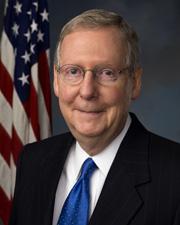 Sen. Mitch McConnell (R-KY)
Submitted August 1, 2007
Legislative Activity
Stay on top of the latest movement without scrolling through every action
Floor
Latest Action
Considered by Senate. (consideration: CR S10719)
August 2, 2007
View full timeline
Floor
Considered by Senate. (consideration: CR S10719)
August 2, 2007
Floor
Proposed amendment SA 2599 withdrawn in Senate.
August 2, 2007
Floor
Senate amendment submitted
August 1, 2007
Floor
Senate amendment proposed (on the floor): Amendment SA 2599 proposed by Senator McConnell to Amendment SA 2530.(consideration: CR S10544-10546, S10547-10551; text: CR S10544)
August 1, 2007
Floor
Amendment SA 2599 proposed by Senator McConnell to Amendment SA 2530. (consideration: CR S10544-10546, S10547-10551; text: CR S10544) To express the sense of the Senate that Judge Leslie Southwick should receive a vote by the full Senate.
August 1, 2007
Text
Submitted
TEXT OF AMENDMENTS

SA 2593. Mr. LOTT (for himself, Mr. McConnell, Mr. Kyl, Mr. Gregg,
Mr. Cornyn, Mr. Bunning, Mr. Coburn, Mr. DeMint, and Mrs. Dole)
proposed an amendment to amendment SA 2530 proposed by Mr. Baucus (for
himself, Mr. Grassley, Mr. Rockefeller, and Mr. Hatch) to the bill H.R.
976, to amend the Internal Revenue Code of 1986 to provide tax relief
for small businesses, and for other purposes; as follows:

On page 1, line 3, strike all after ``Section'' and insert
the following:

1. SHORT TITLE; TABLE OF CONTENTS.

(a) Short Title.--This Act may be cited as the ``Kids First
Act''.
(b) Table of Contents.--The table of contents for this Act
is as follows:

Sec. 1. Short title; table of contents.

TITLE I--STATE CHILDREN'S HEALTH INSURANCE PROGRAM REAUTHORIZATION

Sec. 101. 5-Year reauthorization.
Sec. 102. Allotments for the 50 States and the District of Columbia
based on expenditures and numbers of low-income children.
Sec. 103. Limitations on matching rates for populations other than low-
income children or pregnant women covered through a
section 1115 waiver.
Sec. 104. Prohibition on new section 1115 waivers for coverage of
adults other than pregnant women.
Sec. 105. Standardization of determination of family income.
Sec. 106. Grants for outreach and enrollment.
Sec. 107. Improved State option for offering premium assistance for
coverage through private plans.
Sec. 108. Treatment of unborn children.
Sec. 109. 50 percent matching rate for all Medicaid administrative
costs.
Sec. 110. Reduction in payments for Medicaid administrative costs to
prevent duplication of such costs under TANF.
Sec. 111. Effective date.

TITLE II--HEALTH INSURANCE MARKETPLACE MODERNIZATION AND AFFORDABILITY

Sec. 200. Short title; purpose.

Subtitle A--Small Business Health Plans

Sec. 201. Rules governing small business health plans.
Sec. 202. Cooperation between Federal and State authorities.
Sec. 203. Effective date and transitional and other rules.

Subtitle B--Market Relief

Sec. 211. Market relief.

Subtitle C--Harmonization of Health Insurance Standards

Sec. 221. Health Insurance Standards Harmonization.

TITLE III--HEALTH SAVINGS ACCOUNTS

Sec. 301. Special rule for certain medical expenses incurred before
establishment of health savings account.
Sec. 302. Use of account for individual high deductible health plan
premiums.
Sec. 303. Exception to requirement for employers to make comparable
health savings account contributions.
Sec. 304. Certain health reimbursement arrangement coverage disregarded
coverage for health savings accounts.

TITLE IV--STUDY

Sec. 401. Study on tax treatment of and access to private health
insurance.

TITLE I--STATE CHILDREN'S HEALTH INSURANCE PROGRAM REAUTHORIZATION

SEC. 101. 5-YEAR REAUTHORIZATION.

(a) Increase in National Allotment.--Section 2104(a) of the
Social Security Act (42 U.S.C. 1397dd(a)) is amended--
(1) in paragraph (9), by striking ``and'' at the end;
(2) in paragraph (10), by striking the period at the end
and inserting a semicolon; and
(3) by adding at the end the following:
``(11) for fiscal year 2008, $7,000,000,000;
``(12) for fiscal year 2009, $7,200,000,000;
``(13) for fiscal year 2010, $7,600,000,000;
``(14) for fiscal year 2011, $8,300,000,000; and
``(15) for fiscal year 2012, $8,800,000,000.''.
(b) Continuation of Additional Allotments to Territories.--
Section 2104(c)(4)(B) of the Social Security Act (42 U.S.C.
1397dd(c)(4)(B)) is amended--
(1) by striking ``and'' after ``2006,''; and
(2) by inserting before the period the following: ``,
$56,000,000 for fiscal year 2008, $58,000,000 for fiscal year
2009, $61,000,000 for fiscal year 2010, $66,000,000 for
fiscal year 2011, and $70,000,000 for fiscal year 2012''.

SEC. 102. ALLOTMENTS FOR THE 50 STATES AND THE DISTRICT OF
COLUMBIA BASED ON EXPENDITURES AND NUMBERS OF
LOW-INCOME CHILDREN.

(a) In General.--Section 2104 of the Social Security Act
(42 U.S.C. 1397dd) is amended by adding at the end the
following new subsection:
``(i) Determination of Allotments for the 50 States and the
District of Columbia for Fiscal Years 2008 Through 2012.--
``(1) In general.--Notwithstanding the preceding provisions
of this subsection and subject to paragraph (3), the
Secretary shall allot to each subsection (b) State for each
of fiscal years 2008 through 2012,, the amount determined for
the fiscal year that is equal to the product of--
``(A) the amount available for allotment under subsection
(a) for the fiscal year, reduced by the amount of allotments
made under subsection (c) (determined without regard to
paragraph (4) thereof) for the fiscal year; and
``(B) the sum of the State allotment factors determined
under paragraph (2) with respect to the State and weighted in
accordance with subparagraph (B) of that paragraph for the
fiscal year.
``(2) State allotment factors.--
``(A) In general.--For purposes of paragraph (1)(B), the
State allotment factors are the following:
``(i) The ratio of the projected expenditures for targeted
low-income children under the State child health plan and
pregnant women under a waiver of such plan for the fiscal
year to the sum of such projected expenditures for all States
for the fiscal year, multiplied by the applicable percentage
weight assigned under subparagraph (B).
``(ii) The ratio of the number of low-income children who
have not attained age 19 with no health insurance coverage in
the State, as determined by the Secretary on the basis of the
arithmetic average of the number of such children for the 3
most recent Annual Social and Economic Supplements to the
Current Population Survey of the Bureau of the Census
available before the beginning of the calendar year before
such fiscal year begins, to the sum of the number of such
children determined for all States for such fiscal year,
multiplied by the applicable percentage weight assigned under
subparagraph (B).
``(iii) The ratio of the projected expenditures for
targeted low-income children under the State child health
plan and pregnant women under a waiver of such plan for the
preceding fiscal year to the sum of such projected
expenditures for all States for such preceding fiscal year,
multiplied by the applicable percentage weight assigned under
subparagraph (B).
``(iv) The ratio of the actual expenditures for targeted
low-income children under the State child health plan and
pregnant women under a waiver of such plan for the second
preceding fiscal year to the sum of such actual expenditures
for all States for such second preceding fiscal year,
multiplied by the applicable percentage weight assigned under
subparagraph (B).
``(B) Assignment of weights.--For each of fiscal years 2008
through 2012, the following percentage weights shall be
applied to the ratios determined under subparagraph (A) for
each such fiscal year:
``(i) 40 percent for the ratio determined under
subparagraph (A)(i).
``(ii) 5 percent for the ratio determined under
subparagraph (A)(ii).
``(iii) 50 percent for the ratio determined under
subparagraph (A)(iii).
``(iv) 5 percent for the ratio determined under
subparagraph (A)(iv).
``(C) Determination of projected and actual expenditures.--
For purposes of subparagraph (A):
``(i) Projected expenditures.--The projected expenditures
described in clauses (i) and (iii) of such subparagraph with
respect to a fiscal year shall be determined on the basis of
amounts reported by States to the Secretary on the May 15th
submission of Form CMS-37 and Form CMS-21B submitted not
later than June 30th of the fiscal year preceding such year.

[[Page S10630]]

``(ii) Actual expenditures.--The actual expenditures
described in clause (iv) of such subparagraph with respect to
a second preceding fiscal year shall be determined on the
basis of amounts reported by States to the Secretary on Form
CMS-64 and Form CMS-21 submitted not later than November 30
of the preceding fiscal year.''.
(b) 2-Year Availability of Allotments; Expenditures Counted
Against Oldest Allotments.--Section 2104(e) of the Social
Security Act (42 U.S.C. 1397dd(e)) is amended to read as
follows:
``(e) Availability of Amounts Allotted.--
``(1) In general.--Except as provided in the succeeding
paragraphs of this subsection, amounts allotted to a State
pursuant to this section--
``(A) for each of fiscal years 1998 through 2007, shall
remain available for expenditure by the State through the end
of the second succeeding fiscal year; and
``(B) for each of fiscal years 2008 through 2012, shall
remain available for expenditure by the State only through
the end of the succeeding fiscal year for which such amounts
are allotted.
``(2) Elimination of redistribution of allotments not
expended within 3 years.--Notwithstanding subsection (f),
amounts allotted to a State under this section for fiscal
years beginning with fiscal year 2008 that remain unexpended
as of the end of the second succeeding fiscal year shall not
be redistributed to other States and shall revert to the
Treasury on October 1 of the third succeeding fiscal year.
``(3) Rule for counting expenditures against fiscal year
allotments.--Expenditures under the State child health plan
made on or after October 1, 2007, shall be counted against
allotments for the earliest fiscal year for which funds are
available for expenditure under this subsection.''.
(c) Conforming Amendments.--
(1) Section 2104(b)(1) of the Social Security Act (42
U.S.C. 1397dd(b)(1)) is amended by striking ``subsection
(d)'' and inserting ``the succeeding subsections of this
section''.
(2) Section 2104(f) of such Act (42 U.S.C. 1397dd(f)) is
amended by striking ``The'' and inserting ``Subject to
subsection (e)(2), the''.

SEC. 103. LIMITATIONS ON MATCHING RATES FOR POPULATIONS OTHER
THAN LOW-INCOME CHILDREN OR PREGNANT WOMEN
COVERED THROUGH A SECTION 1115 WAIVER.

(a) Limitation on Payments.--Section 2105(c) of the Social
Security Act (42 U.S.C. 1397ee(c)) is amended by adding at
the end the following new paragraph:
``(8) Limitations on matching rate for populations other
than targeted low-income children or pregnant women covered
through a section 1115 waiver.--For child health assistance
or health benefits coverage furnished in any fiscal year
beginning with fiscal year 2008:
``(A) FMAP applied to payments for coverage of children or
pregnant women covered through a section 1115 waiver enrolled
in the state child health plan on the date of enactment of
the kids first act and whose gross family income is
determined to exceed the income eligibility level specified
for a targeted low-income child.--Notwithstanding subsections
(b)(1)(B) and (d) of section 2110, in the case of any
individual described in subsection (c) of section 105 of the
Kids First Act who the State elects to continue to provide
child health assistance for under the State child health plan
in accordance with the requirements of such subsection, the
Federal medical assistance percentage (as determined under
section 1905(b) without regard to clause (4) of such section)
shall be substituted for the enhanced FMAP under subsection
(a)(1) with respect to such assistance.
``(B) FMAP applied to payments only for nonpregnant
childless adults and parents and caretaker relatives enrolled
under a section 1115 waiver on the date of enactment of the
state children's health insurance program reauthorization of
2007.--The Federal medical assistance percentage (as
determined under section 1905(b) without regard to clause (4)
of such section) shall be substituted for the enhanced FMAP
under subsection (a)(1) with respect to payments for child
health assistance or health benefits coverage provided under
the State child health plan for any of the following:
``(i) Parents or caretaker relatives enrolled under a
waiver on the date of enactment of the state children's
health insurance program reauthorization of 2007.--A
nonpregnant parent or a nonpregnant caretaker relative of a
targeted low-income child who is enrolled in the State child
health plan under a waiver, experimental, pilot, or
demonstration project on the date of enactment of the Kids
First Act and whose family income does not exceed the income
eligibility applied under such waiver with respect to that
population on such date.
``(ii) Nonpregnant childless adults enrolled under a waiver
on such date.--A nonpregnant childless adult enrolled in the
State child health plan under a waiver, experimental, pilot,
or demonstration project described in section 6102(c)(3) of
the Deficit Reduction Act of 2005 (42 U.S.C. 1397gg note) on
the date of enactment of the Kids First Act and whose family
income does not exceed the income eligibility applied under
such waiver with respect to that population on such date.
``(iii) No replacement enrollees.--Nothing in clauses (i)
or (ii) shall be construed as authorizing a State to provide
child health assistance or health benefits coverage under a
waiver described in either such clause to a nonpregnant
parent or a nonpregnant caretaker relative of a targeted low-
income child, or a nonpregnant childless adult, who is not
enrolled under the waiver on the date of enactment of the
Kids First Act.
``(C) No federal payment for any new nonpregnant adult
enrollees or for such enrollees who no longer satisfy income
eligibility requirements.--Payment shall not be made under
this section for child health assistance or other health
benefits coverage provided under the State child health plan
or under a waiver under section 1115 for any of the
following:
``(i) Parents or caretaker relatives under a section 1115
waiver approved after the date of enactment of the state
children's health insurance program reauthorization of
2007.--A nonpregnant parent or a nonpregnant caretaker
relative of a targeted low-income child under a waiver,
experimental, pilot, or demonstration project that is
approved on or after the date of enactment of the Kids First
Act.
``(ii) Parents, caretaker relatives, and nonpregnant
childless adults whose family income exceeds the income
eligibility level specified under a section 1115 waiver
approved prior to the state children's health insurance
program reauthorization of 2007.--Any nonpregnant parent or a
nonpregnant caretaker relative of a targeted low-income child
whose family income exceeds the income eligibility level
referred to in subparagraph (B)(i), and any nonpregnant
childless adult whose family income exceeds the income
eligibility level referred to in subparagraph (B)(ii).
``(iii) Nonpregnant childless adults, parents, or caretaker
relatives not enrolled under a section 1115 waiver on the
date of enactment of the state children's health insurance
program reauthorization of 2007.--Any nonpregnant parent or a
nonpregnant caretaker relative of a targeted low-income child
who is not enrolled in the State child health plan under a
section 1115 waiver, experimental, pilot, or demonstration
project referred to in subparagraph (B)(i) on the date of
enactment of the Kids First Act, and any nonpregnant
childless adult who is not enrolled in the State child health
plan under a section 1115 waiver, experimental, pilot, or
demonstration project referred to in subparagraph (B)(ii)(I)
on such date.
``(D) Definition of caretaker relative.--In this
subparagraph, the term `caretaker relative' has the meaning
given that term for purposes of carrying out section 1931.
``(E) Rule of construction.--Nothing in this paragraph
shall be construed as implying that payments for coverage of
populations for which the Federal medical assistance
percentage (as so determined) is to be substituted for the
enhanced FMAP under subsection (a)(1) in accordance with this
paragraph are to be made from funds other than the allotments
determined for a State under section 2104.''.
(b) Conforming Amendment.--Section 2105(a)(1) of the Social
Security Act ( 42 U.S.C. 1397dd(a)(1)) is amended, in the
matter preceding subparagraph (A), by inserting ``or
subsection (c)(8)'' after ``subparagraph (B)''.

SEC. 104. PROHIBITION ON NEW SECTION 1115 WAIVERS FOR
COVERAGE OF ADULTS OTHER THAN PREGNANT WOMEN.

(a) In General.--Section 2107(f) of the Social Security Act
(42 U.S.C. 1397gg(f)) is amended--
(1) by striking ``, the Secretary'' and inserting ``:
``(1) The Secretary''; and
(2) by adding at the end the following new paragraphs:
``(2) The Secretary may not approve, extend, renew, or
amend a waiver, experimental, pilot, or demonstration project
with respect to a State after the date of enactment of the
Kids First Act that would allow funds made available under
this title to be used to provide child health assistance or
other health benefits coverage for any other adult other than
a pregnant woman whose family income does not exceed the
income eligibility level specified for a targeted low-income
child in that State under a waiver or project approved as of
such date.
``(3) The Secretary may not approve, extend, renew, or
amend a waiver, experimental, pilot, or demonstration project
with respect to a State after the date of enactment of the
Kids First Act that would waive or modify the requirements of
section 2105(c)(8).''.
(b) Clarification of Authority for Coverage of Pregnant
Women.--Section 2106 of the Social Security Act (42 U.S.C.
1397ff) is amended by adding at the end the following new
subsection:
``(f) No Authority to Cover Pregnant Women Through State
Plan.--For purposes of this title, a State may provide
assistance to a pregnant woman under the State child health
plan only--
``(1) by virtue of a waiver under section 1115; or
``(2) through the application of sections 457.10,
457.350(b)(2), 457.622(c)(5), and 457.626(a)(3) of title 42,
Code of Federal Regulations (as in effect on the date of
enactment of the Kids First Act).''.
(c) Assurance of Notice to Affected Enrollees.--The
Secretary of Health and Human Services shall establish
procedures to ensure that States provide adequate public
notice for parents, caretaker relatives, and nonpregnant
childless adults whose eligibility for child health
assistance or health

[[Page S10631]]

benefits coverage under a waiver under section 1115 of the
Social Security Act will be terminated as a result of the
amendments made by subsection (a), and that States otherwise
adhere to regulations of the Secretary relating to procedures
for terminating waivers under section 1115 of the Social
Security Act.

SEC. 105. STANDARDIZATION OF DETERMINATION OF FAMILY INCOME.

(a) Eligibility Based on Gross Income.--
(1) In general.--Section 2110 of the Social Security Act
(42 U.S.C. 1397jj) is amended by adding at the end the
following new subsection:
``(d) Standardization of Determination of Family Income.--A
State shall determine family income for purposes of
determining income eligibility for child health assistance or
other health benefits coverage under the State child health
plan (or under a waiver of such plan under section 1115)
solely on the basis of the gross income (as defined by the
Secretary) of the family.''.
(2) Prohibition on waiver of requirements.--Section 2107(f)
(42 U.S.C. 1397gg(f)), as amended by section 104(a), is
amended by adding at the end the following new paragraph:
``(4) The Secretary may not approve a waiver, experimental,
pilot, or demonstration project with respect to a State after
the date of enactment of the Kids First Act that would waive
or modify the requirements of section 2110(d) (relating to
determining income eligibility on the basis of gross income)
and regulations promulgated to carry out such
requirements.''.
(b) Regulations.--Not later than 90 days after the date of
enactment of this Act, the Secretary of Health and Human
Services shall promulgate interim final regulations defining
gross income for purposes of section 2110(d) of the Social
Security Act, as added by subsection (a).
(c) Application to Current Enrollees.--The interim final
regulations promulgated under subsection (b) shall not be
used to determine the income eligibility of any individual
enrolled in a State child health plan under title XXI of the
Social Security Act on the date of enactment of this Act
before the date on which such eligibility of the individual
is required to be redetermined under the plan as in effect on
such date. In the case of any individual enrolled in such
plan on such date who, solely as a result of the application
of subsection (d) of section 2110 of the Social Security Act
(as added by subsection (a)) and the regulations promulgated
under subsection (b), is determined to be ineligible for
child health assistance under the State child health plan, a
State may elect, subject to substitution of the Federal
medical assistance percentage for the enhanced FMAP under
section 2105(c)(8)(A) of the Social Security Act (as added by
section 103(a)), to continue to provide the individual with
such assistance for so long as the individual otherwise would
be eligible for such assistance and the individual's family
income, if determined under the income and resource standards
and methodologies applicable under the State child health
plan on September 30, 2007, would not exceed the income
eligibility level applicable to the individual under the
State child health plan.

SEC. 106. GRANTS FOR OUTREACH AND ENROLLMENT.

(a) Grants.--Title XXI of the Social Security Act (42
U.S.C. 1397aa et seq.) is amended by adding at the end the
following:

``SEC. 2111. GRANTS TO IMPROVE OUTREACH AND ENROLLMENT.

``(a) Outreach and Enrollment Grants; National Campaign.--
``(1) In general.--From the amounts appropriated for a
fiscal year under subsection (f), subject to paragraph (2),
the Secretary shall award grants to eligible entities to
conduct outreach and enrollment efforts that are designed to
increase the enrollment and participation of eligible
children under this title and title XIX.
``(2) 10 percent set aside for national enrollment
campaign.--An amount equal to 10 percent of such amounts for
the fiscal year shall be used by the Secretary for
expenditures during the fiscal year to carry out a national
enrollment campaign in accordance with subsection (g).
``(b) Award of Grants.--
``(1) Priority for awarding.--
``(A) In general.--In awarding grants under subsection (a),
the Secretary shall give priority to eligible entities that--
``(i) propose to target geographic areas with high rates
of--

``(I) eligible but unenrolled children, including such
children who reside in rural areas; or
``(II) racial and ethnic minorities and health disparity
populations, including those proposals that address cultural
and linguistic barriers to enrollment; and

``(ii) submit the most demonstrable evidence required under
paragraphs (1) and (2) of subsection (c).
``(B) 10 percent set aside for outreach to indian
children.--An amount equal to 10 percent of the funds
appropriated under subsection (f) for a fiscal year shall be
used by the Secretary to award grants to Indian Health
Service providers and urban Indian organizations receiving
funds under title V of the Indian Health Care Improvement Act
(25 U.S.C. 1651 et seq.) for outreach to, and enrollment of,
children who are Indians.
``(2) 2-year availability.--A grant awarded under this
section for a fiscal year shall remain available for
expenditure through the end of the succeeding fiscal year.
``(c) Application.--An eligible entity that desires to
receive a grant under subsection (a) shall submit an
application to the Secretary in such form and manner, and
containing such information, as the Secretary may decide.
Such application shall include--
``(1) evidence demonstrating that the entity includes
members who have access to, and credibility with, ethnic or
low-income populations in the communities in which activities
funded under the grant are to be conducted;
``(2) evidence demonstrating that the entity has the
ability to address barriers to enrollment, such as lack of
awareness of eligibility, stigma concerns and punitive fears
associated with receipt of benefits, and other cultural
barriers to applying for and receiving child health
assistance or medical assistance;
``(3) specific quality or outcomes performance measures to
evaluate the effectiveness of activities funded by a grant
awarded under this section; and
``(4) an assurance that the eligible entity shall--
``(A) conduct an assessment of the effectiveness of such
activities against the performance measures;
``(B) cooperate with the collection and reporting of
enrollment data and other information in order for the
Secretary to conduct such assessments.
``(C) in the case of an eligible entity that is not the
State, provide the State with enrollment data and other
information as necessary for the State to make necessary
projections of eligible children and pregnant women.
``(d) Supplement, Not Supplant.--Federal funds awarded
under this section shall be used to supplement, not supplant,
non-Federal funds that are otherwise available for activities
funded under this section.
``(e) Definitions.--In this section:
``(1) Eligible entity.--The term `eligible entity' means
any of the following:
``(A) A State with an approved child health plan under this
title.
``(B) A local government.
``(C) An Indian tribe or tribal consortium, a tribal
organization, an urban Indian organization receiving funds
under title V of the Indian Health Care Improvement Act (25
U.S.C. 1651 et seq.), or an Indian Health Service provider.
``(D) A Federal health safety net organization.
``(E) A State, national, local, or community-based public
or nonprofit private organization.
``(F) A faith-based organization or consortia, to the
extent that a grant awarded to such an entity is consistent
with the requirements of section 1955 of the Public Health
Service Act (42 U.S.C. 300x-65) relating to a grant award to
non-governmental entities.
``(G) An elementary or secondary school.
``(H) A national, local, or community-based public or
nonprofit private organization, including organizations that
use community health workers or community-based doula
programs.
``(2) Federal health safety net organization.--The term
`Federal health safety net organization' means--
``(A) a Federally-qualified health center (as defined in
section 1905(l)(2)(B));
``(B) a hospital defined as a disproportionate share
hospital for purposes of section 1923;
``(C) a covered entity described in section 340B(a)(4) of
the Public Health Service Act (42 U.S.C. 256b(a)(4)); and
``(D) any other entity or consortium that serves children
under a federally-funded program, including the special
supplemental nutrition program for women, infants, and
children (WIC) established under section 17 of the Child
Nutrition Act of 1966 (42 U.S.C. 1786), the head start and
early head start programs under the Head Start Act (42 U.S.C.
9801 et seq.), the school lunch program established under the
Richard B. Russell National School Lunch Act, and an
elementary or secondary school.
``(3) Indians; indian tribe; tribal organization; urban
indian organization.--The terms `Indian', `Indian tribe',
`tribal organization', and `urban Indian organization' have
the meanings given such terms in section 4 of the Indian
Health Care Improvement Act (25 U.S.C. 1603).
``(4) Community health worker.--The term `community health
worker' means an individual who promotes health or nutrition
within the community in which the individual resides--
``(A) by serving as a liaison between communities and
health care agencies;
``(B) by providing guidance and social assistance to
community residents;
``(C) by enhancing community residents' ability to
effectively communicate with health care providers;
``(D) by providing culturally and linguistically
appropriate health or nutrition education;
``(E) by advocating for individual and community health or
nutrition needs; and
``(F) by providing referral and followup services.
``(f) Appropriation.--
``(1) In general.--There is appropriated, out of any money
in the Treasury not otherwise appropriated, for the purpose
of awarding grants under this section--
``(A) $100,000,000 for each of fiscal years 2008 and 2009;
``(B) $75,000,000 for each of fiscal years 2010 and 2011;
and
``(C) $50,000,000 for fiscal year 2012.

[[Page S10632]]

``(2) Grants in addition to other amounts paid.--Amounts
appropriated and paid under the authority of this section
shall be in addition to amounts appropriated under section
2104 and paid to States in accordance with section 2105,
including with respect to expenditures for outreach
activities in accordance with subsections (a)(1)(D)(iii) and
(c)(2)(C) of that section.
``(g) National Enrollment Campaign.--From the amounts made
available under subsection (a)(2) for a fiscal year, the
Secretary shall develop and implement a national enrollment
campaign to improve the enrollment of underserved child
populations in the programs established under this title and
title XIX. Such campaign may include--
``(1) the establishment of partnerships with the Secretary
of Education and the Secretary of Agriculture to develop
national campaigns to link the eligibility and enrollment
systems for the assistance programs each Secretary
administers that often serve the same children;
``(2) the integration of information about the programs
established under this title and title XIX in public health
awareness campaigns administered by the Secretary;
``(3) increased financial and technical support for
enrollment hotlines maintained by the Secretary to ensure
that all States participate in such hotlines;
``(4) the establishment of joint public awareness outreach
initiatives with the Secretary of Education and the Secretary
of Labor regarding the importance of health insurance to
building strong communities and the economy;
``(5) the development of special outreach materials for
Native Americans or for individuals with limited English
proficiency; and
``(6) such other outreach initiatives as the Secretary
determines would increase public awareness of the programs
under this title and title XIX.''.
(b) Nonapplication of Administrative Expenditures Cap.--
Section 2105(c)(2) of the Social Security Act (42 U.S.C.
1397ee(c)(2)) is amended by adding at the end the following:
``(C) Nonapplication to expenditures for outreach and
enrollment.--The limitation under subparagraph (A) shall not
apply with respect to expenditures for outreach activities
under section 2102(c)(1), or for enrollment activities, for
children eligible for child health assistance under the State
child health plan or medical assistance under the State plan
under title XIX.''.

SEC. 107. IMPROVED STATE OPTION FOR OFFERING PREMIUM
ASSISTANCE FOR COVERAGE THROUGH PRIVATE PLANS.

(a) In General.--Section 2105(c) of the Social Security Act
(42 U.S.C. 1397ee(c)), as amended by section 103(a) is
amended by adding at the end the following:
``(9) Additional state option for offering premium
assistance.--
``(A) In general.--Subject to the succeeding provisions of
this paragraph, a State may elect to offer a premium
assistance subsidy (as defined in subparagraph (C)) for
qualified employer sponsored coverage (as defined in
subparagraph (B)) to all targeted low-income children who are
eligible for child health assistance under the plan and have
access to such coverage in accordance with the requirements
of this paragraph.
``(B) Qualified employer sponsored coverage.--
``(i) In general.--In this paragraph, the term `qualified
employer sponsored coverage' means a group health plan or
health insurance coverage offered through an employer that
is--

``(I) substantially equivalent to the benefits coverage in
a benchmark benefit package described in section 2103(b) or
benchmark-equivalent coverage that meets the requirements of
section 2103(a)(2);
``(II) made similarly available to all of the employer's
employees and for which the employer makes a contribution to
the premium that is not less for employees receiving a
premium assistance subsidy under any option available under
the State child health plan under this title or the State
plan under title XIX to provide such assistance than the
employer contribution provided for all other employees; and
``(III) cost-effective, as determined under clause (ii).

``(ii) Cost-effectiveness.--A group health plan or health
insurance coverage offered through an employer shall be
considered to be cost-effective if--

``(I) the marginal premium cost to purchase family coverage
through the employer is less than the State cost of providing
child health assistance through the State child health plan
for all the children in the family who are targeted low-
income children; or
``(II) the marginal premium cost between individual
coverage and purchasing family coverage through the employer
is not greater than 175 percent of the cost to the State to
provide child health assistance through the State child
health plan for a targeted low-income child.

``(iii) High deductible health plans included.--The term
`qualified employer sponsored coverage' includes a high
deductible health plan (as defined in section 223(c)(2) of
the Internal Revenue Code of 1986) purchased through a health
savings account (as defined under section 223(d) of such
Code).
``(C) Premium assistance subsidy.--
``(i) In general.--In this paragraph, the term `premium
assistance subsidy' means, with respect to a targeted low-
income child, the amount equal to the difference between the
employee contribution required for enrollment only of the
employee under qualified employer sponsored coverage and the
employee contribution required for enrollment of the employee
and the child in such coverage, less any applicable premium
cost-sharing applied under the State child health plan,
subject to the annual aggregate cost-sharing limit applied
under section 2103(e)(3)(B).
``(ii) State payment option.--Subject to clause (iii), a
State may provide a premium assistance subsidy directly to an
employer or as reimbursement to an employee for out-of-pocket
expenditures.
``(iii) Requirement for direct payment to employee.--A
State shall not pay a premium assistance subsidy directly to
the employee, unless the State has established procedures to
ensure that the targeted low-income child on whose behalf
such payments are made are actually enrolled in the qualified
employer sponsored coverage.
``(iv) Treatment as child health assistance.--Expenditures
for the provision of premium assistance subsidies shall be
considered child health assistance described in paragraph
(1)(C) of subsection (a) for purposes of making payments
under that subsection.
``(v) State option to require acceptance of subsidy.--A
State may condition the provision of child health assistance
under the State child health plan for a targeted low-income
child on the receipt of a premium assistance subsidy for
enrollment in qualified employer sponsored coverage if the
State determines the provision of such a subsidy to be more
cost-effective in accordance with subparagraph (B)(ii).
``(vi) Not treated as income.--Notwithstanding any other
provision of law, a premium assistance subsidy provided in
accordance with this paragraph shall not be treated as income
to the child or the parent of the child for whom such subsidy
is provided.
``(D) No requirement to provide supplemental coverage for
benefits and additional cost-sharing protection provided
under the state child health plan.--
``(i) In general.--A State that elects the option to
provide a premium assistance subsidy under this paragraph
shall not be required to provide a targeted low-income child
enrolled in qualified employer sponsored coverage with
supplemental coverage for items or services that are not
covered, or are only partially covered, under the qualified
employer sponsored coverage or cost-sharing protection other
than the protection required under section 2103(e)(3)(B).
``(ii) Notice of cost-sharing requirements.--A State shall
provide a targeted low-income child or the parent of such a
child (as appropriate) who is provided with a premium
assistance subsidy in accordance with this paragraph with
notice of the cost-sharing requirements and limitations
imposed under the qualified employer sponsored coverage in
which the child is enrolled upon the enrollment of the child
in such coverage and annually thereafter.
``(iii) Record keeping requirements.--A State may require a
parent of a targeted low-income child that is enrolled in
qualified employer-sponsored coverage to bear the
responsibility for keeping track of out-of-pocket
expenditures incurred for cost-sharing imposed under such
coverage and to notify the State when the limit on such
expenditures imposed under section 2103(e)(3)(B) has been
reached for a year from the effective date of enrollment for
such year.
``(iv) State option for reimbursement.--A State may
retroactively reimburse a parent of a targeted low-income
child for out-of-pocket expenditures incurred after reaching
the 5 percent cost-sharing limitation imposed under section
2103(e)(3)(B) for a year.
``(E) 6-month waiting period required.--A State shall
impose at least a 6-month waiting period from the time an
individual is enrolled in private health insurance prior to
the provision of a premium assistance subsidy for a targeted
low-income child in accordance with this paragraph.
``(F) Non application of waiting period for enrollment in
the state medicaid plan or the state child health plan.--A
targeted low-income child provided a premium assistance
subsidy in accordance with this paragraph who loses
eligibility for such subsidy shall not be treated as having
been enrolled in private health insurance coverage for
purposes of applying any waiting period imposed under the
State child health plan or the State plan under title XIX for
the enrollment of the child under such plan.
``(G) Assurance of special enrollment period under group
health plans in case of eligibility for premium subsidy
assistance.--No payment shall be made under subsection (a)
for amounts expended for the provision of premium assistance
subsidies under this paragraph unless a State provides
assurances to the Secretary that the State has in effect laws
requiring a group health plan, a health insurance issuer
offering group health insurance coverage in connection with a
group health plan, and a self-funded health plan, to permit
an employee who is eligible, but not enrolled, for coverage
under the terms of the plan (or a child of such an employee
if the child is eligible, but not enrolled, for coverage
under such terms) to enroll for coverage under the terms of
the plan if the employee's child becomes eligible for a
premium assistance subsidy under this paragraph.
``(H) No effect on previously approved premium assistance
programs.--Nothing in this paragraph shall be construed as
limiting

[[Page S10633]]

the authority of a State to offer premium assistance under
section 1906, a waiver described in paragraph (2)(B) or (3),
a waiver approved under section 1115, or other authority in
effect on June 28, 2007.
``(I) Notice of availability.--A State shall--
``(i) include on any application or enrollment form for
child health assistance a notice of the availability of
premium assistance subsidies for the enrollment of targeted
low-income children in qualified employer sponsored coverage;
``(ii) provide, as part of the application and enrollment
process under the State child health plan, information
describing the availability of such subsidies and how to
elect to obtain such a subsidy; and
``(iii) establish such other procedures as the State
determines necessary to ensure that parents are informed of
the availability of such subsidies under the State child
health plan.''.
(b) Application to Medicaid.--Section 1906 of the Social
Security Act (42 U.S.C. 1396e) is amended by inserting after
subsection (c) the following:
``(d) The provisions of section 2105(c)(9) shall apply to a
child who is eligible for medical assistance under the State
plan in the same manner as such provisions apply to a
targeted low-income child under a State child health plan
under title XXI. Section 1902(a)(34) shall not apply to a
child who is provided a premium assistance subsidy under the
State plan in accordance with the preceding sentence.''.

SEC. 108. TREATMENT OF UNBORN CHILDREN.

(a) Codification of Current Regulations.--Section
2110(c)(1) of the Social Security Act (42 U.S.C.
1397jj(c)(1)) is amended by striking the period at the end
and inserting the following: ``, and includes, at the option
of a State, an unborn child. For purposes of the previous
sentence, the term `unborn child' means a member of the
species Homo sapiens, at any stage of development, who is
carried in the womb.''.
(b) Clarifications Regarding Coverage of Mothers.--Section
2103 of such Act (42 U.S.C. 1397cc) is amended by adding at
the end the following new subsection:
``(g) Clarifications Regarding Authority to Provide
Postpartum Services and Maternal Health Care.--Any State that
provides child health assistance to an unborn child under the
option described in section 2110(c)(1) may--
``(1) continue to provide such assistance to the mother, as
well as postpartum services, through the end of the month in
which the 60-day period (beginning on the last day of
pregnancy) ends; and
``(2) in the interest of the child to be born, have
flexibility in defining and providing services to benefit
either the mother or unborn child consistent with the health
of both.''.

SEC. 109. 50 PERCENT MATCHING RATE FOR ALL MEDICAID
ADMINISTRATIVE COSTS.

Section 1903(a) of the Social Security Act (42 U.S.C.
1396b(a)) is amended--
(1) by striking paragraph (2);
(2) by redesignating paragraph (3)(E) as paragraph (2) and
re-locating and indenting it appropriately;
(3) in paragraph (2), as so redesignated, by redesignating
clauses (i) and (ii) as subparagraphs (A) and (B), and
indenting them appropriately;
(4) by striking paragraphs (3) and (4);
(5) in paragraph (5), by striking ``which are attributable
to the offering, arranging, and furnishing'' and inserting
``which are for the medical assistance costs of furnishing'';
(6) by striking paragraph (6);
(7) in paragraph (7), by striking ``subject to section
1919(g)(3)(B),''; and
(8) by redesignating paragraphs (5) and (7) as paragraphs
(3) and (4), respectively.

SEC. 110. REDUCTION IN PAYMENTS FOR MEDICAID ADMINISTRATIVE
COSTS TO PREVENT DUPLICATION OF SUCH PAYMENTS
UNDER TANF.

Section 1903 of such Act (42 U.S.C. 1396b) is amended--
(1) in subsection (a)(7), by striking ``section
1919(g)(3)(B)'' and inserting ``subsection (h)'';
(2) in subsection (a)(2)(D) by inserting ``, subject to
subsection (g)(3)(C) of such section'' after ``as are
attributable to State activities under section 1919(g)''; and
(3) by adding after subsection (g) the following new
subsection:
``(h) Reduction in Payments for Administrative Costs to
Prevent Duplication of Payments Under Title IV.--Beginning
with the calendar quarter commencing October 1, 2007, the
Secretary shall reduce the amount paid to each State under
subsection (a)(7) for each quarter by an amount equal to \1/
4\ of the annualized amount determined for the Medicaid
program under section 16(k)(2)(B) of the Food Stamp Act of
1977 (7 U.S.C. 2025(k)(2)(B)).''.

SEC. 111. EFFECTIVE DATE.

(a) In General.--Subject to subsection (b), the amendments
made by this title take effect on October 1, 2007.
(b) Delay if State Legislation Required.--In the case of a
State child health plan under title XXI of the Social
Security Act or a waiver of such plan under section 1115 of
such Act which the Secretary of Health and Human Services
determines requires State legislation (other than legislation
appropriating funds) in order for the plan or waiver to meet
the additional requirements imposed by the amendments made by
this title, the State child health plan or waiver shall not
be regarded as failing to comply with the requirements of
such title XXI solely on the basis of its failure to meet
such additional requirements before the first day of the
first calendar quarter beginning after the close of the first
regular session of the State legislature that begins after
the date of the enactment of this title. For purposes of the
previous sentence, in the case of a State that has a 2-year
legislative session, each year of such session shall be
deemed to be a separate regular session of the State
legislature.

TITLE II--HEALTH INSURANCE MARKETPLACE MODERNIZATION AND AFFORDABILITY

SEC. 200. SHORT TITLE; PURPOSE.

(a) Short Title.--This title may be cited as the ``Health
Insurance Marketplace Modernization and Affordability Act of
2007''.
(b) Purposes.--It is the purpose of this title to--
(1) make more affordable health insurance options available
to small businesses, working families, and all Americans;
(2) assure effective State regulatory protection of the
interests of health insurance consumers; and
(3) create a more efficient and affordable health insurance
marketplace through collaborative development of uniform
regulatory standards.

Subtitle A--Small Business Health Plans

SEC. 201. RULES GOVERNING SMALL BUSINESS HEALTH PLANS.

(a) In General.--Subtitle B of title I of the Employee
Retirement Income Security Act of 1974 is amended by adding
after part 7 the following new part:

``PART 8--RULES GOVERNING SMALL BUSINESS HEALTH PLANS

``SEC. 801. SMALL BUSINESS HEALTH PLANS.

``(a) In General.--For purposes of this part, the term
`small business health plan' means a fully insured group
health plan whose sponsor is (or is deemed under this part to
be) described in subsection (b).
``(b) Sponsorship.--The sponsor of a group health plan is
described in this subsection if such sponsor--
``(1) is organized and maintained in good faith, with a
constitution and bylaws specifically stating its purpose and
providing for periodic meetings on at least an annual basis,
as a bona fide trade association, a bona fide industry
association (including a rural electric cooperative
association or a rural telephone cooperative association), a
bona fide professional association, or a bona fide chamber of
commerce (or similar bona fide business association,
including a corporation or similar organization that operates
on a cooperative basis (within the meaning of section 1381 of
the Internal Revenue Code of 1986)), for substantial purposes
other than that of obtaining medical care;
``(2) is established as a permanent entity which receives
the active support of its members and requires for membership
payment on a periodic basis of dues or payments necessary to
maintain eligibility for membership;
``(3) does not condition membership, such dues or payments,
or coverage under the plan on the basis of health status-
related factors with respect to the employees of its members
(or affiliated members), or the dependents of such employees,
and does not condition such dues or payments on the basis of
group health plan participation; and
``(4) does not condition membership on the basis of a
minimum group size.

Any sponsor consisting of an association of entities which
meet the requirements of paragraphs (1), (2), (3), and (4)
shall be deemed to be a sponsor described in this subsection.

``SEC. 802. CERTIFICATION OF SMALL BUSINESS HEALTH PLANS.

``(a) In General.--Not later than 6 months after the date
of enactment of this part, the applicable authority shall
prescribe by interim final rule a procedure under which the
applicable authority shall certify small business health
plans which apply for certification as meeting the
requirements of this part.
``(b) Requirements Applicable to Certified Plans.--A small
business health plan with respect to which certification
under this part is in effect shall meet the applicable
requirements of this part, effective on the date of
certification (or, if later, on the date on which the plan is
to commence operations).
``(c) Requirements for Continued Certification.--The
applicable authority may provide by regulation for continued
certification of small business health plans under this part.
Such regulation shall provide for the revocation of a
certification if the applicable authority finds that the
small business health plan involved is failing to comply with
the requirements of this part.
``(d) Expedited and Deemed Certification.--
``(1) In general.--If the Secretary fails to act on an
application for certification under this section within 90
days of receipt of such application, the applying small
business health plan shall be deemed certified until such
time as the Secretary may deny for cause the application for
certification.
``(2) Civil penalty.--The Secretary may assess a civil
penalty against the board of trustees and plan sponsor
(jointly and severally) of a small business health plan that
is deemed certified under paragraph (1) of up to $500,000 in
the event the Secretary determines that the application for
certification

[[Page S10634]]

of such small business health plan was willfully or with
gross negligence incomplete or inaccurate.

``SEC. 803. REQUIREMENTS RELATING TO SPONSORS AND BOARDS OF
TRUSTEES.

``(a) Sponsor.--The requirements of this subsection are met
with respect to a small business health plan if the sponsor
has met (or is deemed under this part to have met) the
requirements of section 801(b) for a continuous period of not
less than 3 years ending with the date of the application for
certification under this part.
``(b) Board of Trustees.--The requirements of this
subsection are met with respect to a small business health
plan if the following requirements are met:
``(1) Fiscal control.--The plan is operated, pursuant to a
plan document, by a board of trustees which pursuant to a
trust agreement has complete fiscal control over the plan and
which is responsible for all operations of the plan.
``(2) Rules of operation and financial controls.--The board
of trustees has in effect rules of operation and financial
controls, based on a 3-year plan of operation, adequate to
carry out the terms of the plan and to meet all requirements
of this title applicable to the plan.
``(3) Rules governing relationship to participating
employers and to contractors.--
``(A) Board membership.--
``(i) In general.--Except as provided in clauses (ii) and
(iii), the members of the board of trustees are individuals
selected from individuals who are the owners, officers,
directors, or employees of the participating employers or who
are partners in the participating employers and actively
participate in the business.
``(ii) Limitation.--

``(I) General rule.--Except as provided in subclauses (II)
and (III), no such member is an owner, officer, director, or
employee of, or partner in, a contract administrator or other
service provider to the plan.
``(II) Limited exception for providers of services solely
on behalf of the sponsor.--Officers or employees of a sponsor
which is a service provider (other than a contract
administrator) to the plan may be members of the board if
they constitute not more than 25 percent of the membership of
the board and they do not provide services to the plan other
than on behalf of the sponsor.
``(III) Treatment of providers of medical care.--In the
case of a sponsor which is an association whose membership
consists primarily of providers of medical care, subclause
(I) shall not apply in the case of any service provider
described in subclause (I) who is a provider of medical care
under the plan.

``(iii) Certain plans excluded.--Clause (i) shall not apply
to a small business health plan which is in existence on the
date of the enactment of the Health Insurance Marketplace
Modernization and Affordability Act of 2007.
``(B) Sole authority.--The board has sole authority under
the plan to approve applications for participation in the
plan and to contract with insurers.
``(c) Treatment of Franchise Networks.--In the case of a
group health plan which is established and maintained by a
franchiser for a franchise network consisting of its
franchisees--
``(1) the requirements of subsection (a) and section 801(a)
shall be deemed met if such requirements would otherwise be
met if the franchiser were deemed to be the sponsor referred
to in section 801(b), such network were deemed to be an
association described in section 801(b), and each franchisee
were deemed to be a member (of the association and the
sponsor) referred to in section 801(b); and
``(2) the requirements of section 804(a)(1) shall be deemed
met.

The Secretary may by regulation define for purposes of this
subsection the terms `franchiser', `franchise network', and
`franchisee'.

``SEC. 804. PARTICIPATION AND COVERAGE REQUIREMENTS.

``(a) Covered Employers and Individuals.--The requirements
of this subsection are met with respect to a small business
health plan if, under the terms of the plan--
``(1) each participating employer must be--
``(A) a member of the sponsor;
``(B) the sponsor; or
``(C) an affiliated member of the sponsor, except that, in
the case of a sponsor which is a professional association or
other individual-based association, if at least one of the
officers, directors, or employees of an employer, or at least
one of the individuals who are partners in an employer and
who actively participates in the business, is a member or
such an affiliated member of the sponsor, participating
employers may also include such employer; and
``(2) all individuals commencing coverage under the plan
after certification under this part must be--
``(A) active or retired owners (including self-employed
individuals), officers, directors, or employees of, or
partners in, participating employers; or
``(B) the dependents of individuals described in
subparagraph (A).
``(b) Individual Market Unaffected.--The requirements of
this subsection are met with respect to a small business
health plan if, under the terms of the plan, no participating
employer may provide health insurance coverage in the
individual market for any employee not covered under the plan
which is similar to the coverage contemporaneously provided
to employees of the employer under the plan, if such
exclusion of the employee from coverage under the plan is
based on a health status-related factor with respect to the
employee and such employee would, but for such exclusion on
such basis, be eligible for coverage under the plan.
``(c) Prohibition of Discrimination Against Employers and
Employees Eligible to Participate.--The requirements of this
subsection are met with respect to a small business health
plan if--
``(1) under the terms of the plan, all employers meeting
the preceding requirements of this section are eligible to
qualify as participating employers for all geographically
available coverage options, unless, in the case of any such
employer, participation or contribution requirements of the
type referred to in section 2711 of the Public Health Service
Act are not met;
``(2) information regarding all coverage options available
under the plan is made readily available to any employer
eligible to participate; and
``(3) the applicable requirements of sections 701, 702, and
703 are met with respect to the plan.

``SEC. 805. OTHER REQUIREMENTS RELATING TO PLAN DOCUMENTS,
CONTRIBUTION RATES, AND BENEFIT OPTIONS.

``(a) In General.--The requirements of this section are met
with respect to a small business health plan if the following
requirements are met:
``(1) Contents of governing instruments.--
``(A) In general.--The instruments governing the plan
include a written instrument, meeting the requirements of an
instrument required under section 402(a)(1), which--
``(i) provides that the board of trustees serves as the
named fiduciary required for plans under section 402(a)(1)
and serves in the capacity of a plan administrator (referred
to in section 3(16)(A)); and
``(ii) provides that the sponsor of the plan is to serve as
plan sponsor (referred to in section 3(16)(B)).
``(B) Description of material provisions.--The terms of the
health insurance coverage (including the terms of any
individual certificates that may be offered to individuals in
connection with such coverage) describe the material benefit
and rating, and other provisions set forth in this section
and such material provisions are included in the summary plan
description.
``(2) Contribution rates must be nondiscriminatory.--
``(A) In general.--The contribution rates for any
participating small employer shall not vary on the basis of
any health status-related factor in relation to employees of
such employer or their beneficiaries and shall not vary on
the basis of the type of business or industry in which such
employer is engaged.
``(B) Effect of title.--Nothing in this title or any other
provision of law shall be construed to preclude a health
insurance issuer offering health insurance coverage in
connection with a small business health plan, and at the
request of such small business health plan, from--
``(i) setting contribution rates for the small business
health plan based on the claims experience of the plan so
long as any variation in such rates complies with the
requirements of clause (ii), except that small business
health plans shall not be subject to paragraphs (1)(A) and
(3) of section 2911(b) of the Public Health Service Act; or
``(ii) varying contribution rates for participating
employers in a small business health plan in a State to the
extent that such rates could vary using the same methodology
employed in such State for regulating small group premium
rates, subject to the terms of part I of subtitle A of title
XXIX of the Public Health Service Act (relating to rating
requirements), as added by subtitle B of the Health Insurance
Marketplace Modernization and Affordability Act of 2007.
``(3) Exceptions regarding self-employed and large
employers.--
``(A) Self employed.--
``(i) In general.--Small business health plans with
participating employers who are self-employed individuals
(and their dependents) shall enroll such self-employed
participating employers in accordance with rating rules that
do not violate the rating rules for self-employed individuals
in the State in which such self-employed participating
employers are located.
``(ii) Guarantee issue.--Small business health plans with
participating employers who are self-employed individuals
(and their dependents) may decline to guarantee issue to such
participating employers in States in which guarantee issue is
not otherwise required for the self-employed in that State.
``(B) Large employers.--Small business health plans with
participating employers that are larger than small employers
(as defined in section 808(a)(10)) shall enroll such large
participating employers in accordance with rating rules that
do not violate the rating rules for large employers in the
State in which such large participating employers are
located.
``(4) Regulatory requirements.--Such other requirements as
the applicable authority determines are necessary to carry
out the purposes of this part, which shall be prescribed by
the applicable authority by regulation.
``(b) Ability of Small Business Health Plans to Design
Benefit Options.--Nothing in this part or any provision of
State law (as

[[Page S10635]]

defined in section 514(c)(1)) shall be construed to preclude
a small business health plan or a health insurance issuer
offering health insurance coverage in connection with a small
business health plan from exercising its sole discretion in
selecting the specific benefits and services consisting of
medical care to be included as benefits under such plan or
coverage, except that such benefits and services must meet
the terms and specifications of part II of subtitle A of
title XXIX of the Public Health Service Act (relating to
lower cost plans), as added by subtitle B of the Health
Insurance Marketplace Modernization and Affordability Act of
2007.
``(c) Domicile and Non-Domicile States.--
``(1) Domicile state.--Coverage shall be issued to a small
business health plan in the State in which the sponsor's
principal place of business is located.
``(2) Non-domicile states.--With respect to a State (other
than the domicile State) in which participating employers of
a small business health plan are located but in which the
insurer of the small business health plan in the domicile
State is not yet licensed, the following shall apply:
``(A) Temporary preemption.--If, upon the expiration of the
90-day period following the submission of a licensure
application by such insurer (that includes a certified copy
of an approved licensure application as submitted by such
insurer in the domicile State) to such State, such State has
not approved or denied such application, such State's health
insurance licensure laws shall be temporarily preempted and
the insurer shall be permitted to operate in such State,
subject to the following terms:
``(i) Application of non-domicile state law.--Except with
respect to licensure and with respect to the terms of
subtitle A of title XXIX of the Public Health Service Act
(relating to rating and benefits as added by the Health
Insurance Marketplace Modernization and Affordability Act of
2007), the laws and authority of the non-domicile State shall
remain in full force and effect.
``(ii) Revocation of preemption.--The preemption of a non-
domicile State's health insurance licensure laws pursuant to
this subparagraph, shall be terminated upon the occurrence of
either of the following:

``(I) Approval or denial of application.--The approval of
denial of an insurer's licensure application, following the
laws and regulations of the non-domicile State with respect
to licensure.
``(II) Determination of material violation.--A
determination by a non-domicile State that an insurer
operating in a non-domicile State pursuant to the preemption
provided for in this subparagraph is in material violation of
the insurance laws (other than licensure and with respect to
the terms of subtitle A of title XXIX of the Public Health
Service Act (relating to rating and benefits added by the
Health Insurance Marketplace Modernization and Affordability
Act of 2007)) of such State.

``(B) No prohibition on promotion.--Nothing in this
paragraph shall be construed to prohibit a small business
health plan or an insurer from promoting coverage prior to
the expiration of the 90-day period provided for in
subparagraph (A), except that no enrollment or collection of
contributions shall occur before the expiration of such 90-
day period.
``(C) Licensure.--Except with respect to the application of
the temporary preemption provision of this paragraph, nothing
in this part shall be construed to limit the requirement that
insurers issuing coverage to small business health plans
shall be licensed in each State in which the small business
health plans operate.
``(D) Servicing by licensed insurers.--Notwithstanding
subparagraph (C), the requirements of this subsection may
also be satisfied if the participating employers of a small
business health plan are serviced by a licensed insurer in
that State, even where such insurer is not the insurer of
such small business health plan in the State in which such
small business health plan is domiciled.

``SEC. 806. REQUIREMENTS FOR APPLICATION AND RELATED
REQUIREMENTS.

``(a) Filing Fee.--Under the procedure prescribed pursuant
to section 802(a), a small business health plan shall pay to
the applicable authority at the time of filing an application
for certification under this part a filing fee in the amount
of $5,000, which shall be available in the case of the
Secretary, to the extent provided in appropriation Acts, for
the sole purpose of administering the certification
procedures applicable with respect to small business health
plans.
``(b) Information to Be Included in Application for
Certification.--An application for certification under this
part meets the requirements of this section only if it
includes, in a manner and form which shall be prescribed by
the applicable authority by regulation, at least the
following information:
``(1) Identifying information.--The names and addresses
of--
``(A) the sponsor; and
``(B) the members of the board of trustees of the plan.
``(2) States in which plan intends to do business.--The
States in which participants and beneficiaries under the plan
are to be located and the number of them expected to be
located in each such State.
``(3) Bonding requirements.--Evidence provided by the board
of trustees that the bonding requirements of section 412 will
be met as of the date of the application or (if later)
commencement of operations.
``(4) Plan documents.--A copy of the documents governing
the plan (including any bylaws and trust agreements), the
summary plan description, and other material describing the
benefits that will be provided to participants and
beneficiaries under the plan.
``(5) Agreements with service providers.--A copy of any
agreements between the plan, health insurance issuer, and
contract administrators and other service providers.
``(c) Filing Notice of Certification With States.--A
certification granted under this part to a small business
health plan shall not be effective unless written notice of
such certification is filed with the applicable State
authority of each State in which the small business health
plans operate.
``(d) Notice of Material Changes.--In the case of any small
business health plan certified under this part, descriptions
of material changes in any information which was required to
be submitted with the application for the certification under
this part shall be filed in such form and manner as shall be
prescribed by the applicable authority by regulation. The
applicable authority may require by regulation prior notice
of material changes with respect to specified matters which
might serve as the basis for suspension or revocation of the
certification.

``SEC. 807. NOTICE REQUIREMENTS FOR VOLUNTARY TERMINATION.

``A small business health plan which is or has been
certified under this part may terminate (upon or at any time
after cessation of accruals in benefit liabilities) only if
the board of trustees, not less than 60 days before the
proposed termination date--
``(1) provides to the participants and beneficiaries a
written notice of intent to terminate stating that such
termination is intended and the proposed termination date;
``(2) develops a plan for winding up the affairs of the
plan in connection with such termination in a manner which
will result in timely payment of all benefits for which the
plan is obligated; and
``(3) submits such plan in writing to the applicable
authority.
Actions required under this section shall be taken in such
form and manner as may be prescribed by the applicable
authority by regulation.

``SEC. 808. DEFINITIONS AND RULES OF CONSTRUCTION.

``(a) Definitions.--For purposes of this part--
``(1) Affiliated member.--The term `affiliated member'
means, in connection with a sponsor--
``(A) a person who is otherwise eligible to be a member of
the sponsor but who elects an affiliated status with the
sponsor, or
``(B) in the case of a sponsor with members which consist
of associations, a person who is a member or employee of any
such association and elects an affiliated status with the
sponsor.
``(2) Applicable authority.--The term `applicable
authority' means the Secretary of Labor, except that, in
connection with any exercise of the Secretary's authority
with respect to which the Secretary is required under section
506(d) to consult with a State, such term means the
Secretary, in consultation with such State.
``(3) Applicable state authority.--The term `applicable
State authority' means, with respect to a health insurance
issuer in a State, the State insurance commissioner or
official or officials designated by the State to enforce the
requirements of title XXVII of the Public Health Service Act
for the State involved with respect to such issuer.
``(4) Group health plan.--The term `group health plan' has
the meaning provided in section 733(a)(1) (after applying
subsection (b) of this section).
``(5) Health insurance coverage.--The term `health
insurance coverage' has the meaning provided in section
733(b)(1), except that such term shall not include excepted
benefits (as defined in section 733(c)).
``(6) Health insurance issuer.--The term `health insurance
issuer' has the meaning provided in section 733(b)(2).
``(7) Individual market.--
``(A) In general.--The term `individual market' means the
market for health insurance coverage offered to individuals
other than in connection with a group health plan.
``(B) Treatment of very small groups.--
``(i) In general.--Subject to clause (ii), such term
includes coverage offered in connection with a group health
plan that has fewer than 2 participants as current employees
or participants described in section 732(d)(3) on the first
day of the plan year.
``(ii) State exception.--Clause (i) shall not apply in the
case of health insurance coverage offered in a State if such
State regulates the coverage described in such clause in the
same manner and to the same extent as coverage in the small
group market (as defined in section 2791(e)(5) of the Public
Health Service Act) is regulated by such State.
``(8) Medical care.--The term `medical care' has the
meaning provided in section 733(a)(2).
``(9) Participating employer.--The term `participating
employer' means, in connection with a small business health
plan, any employer, if any individual who is an employee of
such employer, a partner in such employer, or a self-employed
individual who is such employer (or any dependent, as defined
under the terms of the plan, of such individual) is or was
covered under such plan

[[Page S10636]]

in connection with the status of such individual as such an
employee, partner, or self-employed individual in relation to
the plan.
``(10) Small employer.--The term `small employer' means, in
connection with a group health plan with respect to a plan
year, a small employer as defined in section 2791(e)(4).
``(11) Trade association and professional association.--The
terms `trade association' and `professional association' mean
an entity that meets the requirements of section 1.501(c)(6)-
1 of title 26, Code of Federal Regulations (as in effect on
the date of enactment of this section).
``(b) Rule of Construction.--For purposes of determining
whether a plan, fund, or program is an employee welfare
benefit plan which is a small business health plan, and for
purposes of applying this title in connection with such plan,
fund, or program so determined to be such an employee welfare
benefit plan--
``(1) in the case of a partnership, the term `employer' (as
defined in section 3(5)) includes the partnership in relation
to the partners, and the term `employee' (as defined in
section 3(6)) includes any partner in relation to the
partnership; and
``(2) in the case of a self-employed individual, the term
`employer' (as defined in section 3(5)) and the term
`employee' (as defined in section 3(6)) shall include such
individual.
``(c) Renewal.--Notwithstanding any provision of law to the
contrary, a participating employer in a small business health
plan shall not be deemed to be a plan sponsor in applying
requirements relating to coverage renewal.
``(d) Health Savings Accounts.--Nothing in this part shall
be construed to inhibit the development of health savings
accounts pursuant to section 223 of the Internal Revenue Code
of 1986.''.
(b) Conforming Amendments to Preemption Rules.--
(1) Section 514(b)(6) of the Employee Retirement Income
Security Act of 1974 (29 U.S.C. 1144(b)(6)) is amended by
adding at the end the following new subparagraph:
``(E) The preceding subparagraphs of this paragraph do not
apply with respect to any State law in the case of a small
business health plan which is certified under part 8.''.
(2) Section 514 of such Act (29 U.S.C. 1144) is amended--
(A) in subsection (b)(4), by striking ``Subsection (a)''
and inserting ``Subsections (a) and (d)'';
(B) in subsection (b)(5), by striking ``subsection (a)'' in
subparagraph (A) and inserting ``subsection (a) of this
section and subsections (a)(2)(B) and (b) of section 805'',
and by striking ``subsection (a)'' in subparagraph (B) and
inserting ``subsection (a) of this section or subsection
(a)(2)(B) or (b) of section 805'';
(C) by redesignating subsection (d) as subsection (e); and
(D) by inserting after subsection (c) the following new
subsection:
``(d)(1) Except as provided in subsection (b)(4), the
provisions of this title shall supersede any and all State
laws insofar as they may now or hereafter preclude a health
insurance issuer from offering health insurance coverage in
connection with a small business health plan which is
certified under part 8.
``(2) In any case in which health insurance coverage of any
policy type is offered under a small business health plan
certified under part 8 to a participating employer operating
in such State, the provisions of this title shall supersede
any and all laws of such State insofar as they may establish
rating and benefit requirements that would otherwise apply to
such coverage, provided the requirements of subtitle A of
title XXIX of the Public Health Service Act (as added by
title II of the Health Insurance Marketplace Modernization
and Affordability Act of 2007) (concerning health plan rating
and benefits) are met.''.
(c) Plan Sponsor.--Section 3(16)(B) of the Employee
Retirement Income Security Act of 1974 (29 U.S.C. 102(16)(B))
is amended by adding at the end the following new sentence:
``Such term also includes a person serving as the sponsor of
a small business health plan under part 8.''.
(d) Savings Clause.--Section 731(c) of the Employee
Retirement Income Security Act of 1974 is amended by
inserting ``or part 8'' after ``this part''.
(e) Clerical Amendment.--The table of contents in section 1
of the Employee Retirement Income Security Act of 1974 is
amended by inserting after the item relating to section 734
the following new items:

``Part 8--Rules Governing Small Business Health Plans

``801. Small business health plans.
``802. Certification of small business health plans.
``803. Requirements relating to sponsors and boards of trustees.
``804. Participation and coverage requirements.
``805. Other requirements relating to plan documents, contribution
rates, and benefit options.
``806. Requirements for application and related requirements.
``807. Notice requirements for voluntary termination.
``808. Definitions and rules of construction.''.

SEC. 202. COOPERATION BETWEEN FEDERAL AND STATE AUTHORITIES.

Section 506 of the Employee Retirement Income Security Act
of 1974 (29 U.S.C. 1136) is amended by adding at the end the
following new subsection:
``(d) Consultation With States With Respect to Small
Business Health Plans.--
``(1) Agreements with states.--The Secretary shall consult
with the State recognized under paragraph (2) with respect to
a small business health plan regarding the exercise of--
``(A) the Secretary's authority under sections 502 and 504
to enforce the requirements for certification under part 8;
and
``(B) the Secretary's authority to certify small business
health plans under part 8 in accordance with regulations of
the Secretary applicable to certification under part 8.
``(2) Recognition of domicile state.--In carrying out
paragraph (1), the Secretary shall ensure that only one State
will be recognized, with respect to any particular small
business health plan, as the State with which consultation is
required. In carrying out this paragraph such State shall be
the domicile State, as defined in section 805(c).''.

SEC. 203. EFFECTIVE DATE AND TRANSITIONAL AND OTHER RULES.

(a) Effective Date.--The amendments made by this subtitle
shall take effect 12 months after the date of the enactment
of this Act. The Secretary of Labor shall first issue all
regulations necessary to carry out the amendments made by
this subtitle within 6 months after the date of the enactment
of this Act.
(b) Treatment of Certain Existing Health Benefits
Programs.--
(1) In general.--In any case in which, as of the date of
the enactment of this Act, an arrangement is maintained in a
State for the purpose of providing benefits consisting of
medical care for the employees and beneficiaries of its
participating employers, at least 200 participating employers
make contributions to such arrangement, such arrangement has
been in existence for at least 10 years, and such arrangement
is licensed under the laws of one or more States to provide
such benefits to its participating employers, upon the filing
with the applicable authority (as defined in section
808(a)(2) of the Employee Retirement Income Security Act of
1974 (as amended by this subtitle)) by the arrangement of an
application for certification of the arrangement under part 8
of subtitle B of title I of such Act--
(A) such arrangement shall be deemed to be a group health
plan for purposes of title I of such Act;
(B) the requirements of sections 801(a) and 803(a) of the
Employee Retirement Income Security Act of 1974 shall be
deemed met with respect to such arrangement;
(C) the requirements of section 803(b) of such Act shall be
deemed met, if the arrangement is operated by a board of
trustees which--
(i) is elected by the participating employers, with each
employer having one vote; and
(ii) has complete fiscal control over the arrangement and
which is responsible for all operations of the arrangement;
(D) the requirements of section 804(a) of such Act shall be
deemed met with respect to such arrangement; and
(E) the arrangement may be certified by any applicable
authority with respect to its operations in any State only if
it operates in such State on the date of certification.

The provisions of this subsection shall cease to apply with
respect to any such arrangement at such time after the date
of the enactment of this Act as the applicable requirements
of this subsection are not met with respect to such
arrangement or at such time that the arrangement provides
coverage to participants and beneficiaries in any State other
than the States in which coverage is provided on such date of
enactment.
(2) Definitions.--For purposes of this subsection, the
terms ``group health plan'', ``medical care'', and
``participating employer'' shall have the meanings provided
in section 808 of the Employee Retirement Income Security Act
of 1974, except that the reference in paragraph (7) of such
section to an ``small business health plan'' shall be deemed
a reference to an arrangement referred to in this subsection.

Subtitle B--Market Relief

SEC. 211. MARKET RELIEF.

The Public Health Service Act (42 U.S.C. 201 et seq.) is
amended by adding at the end the following:

``TITLE XXX--HEALTH CARE INSURANCE MARKETPLACE MODERNIZATION

``SEC. 3001. GENERAL INSURANCE DEFINITIONS.

``In this title, the terms `health insurance coverage',
`health insurance issuer', `group health plan', and
`individual health insurance' shall have the meanings given
such terms in section 2791.

``Subtitle A--Market Relief

``PART I--RATING REQUIREMENTS

``SEC. 3011. DEFINITIONS.

``(a) General Definitions.--In this part:
``(1) Adopting state.--The term `adopting State' means a
State that, with respect to the small group market, has
enacted either the Model Small Group Rating Rules or, if
applicable to such State, the Transitional Model Small Group
Rating Rules, each in their entirety and as the exclusive
laws of the State that relate to rating in the small group
insurance market.
``(2) Applicable state authority.--The term `applicable
State authority' means, with respect to a health insurance
issuer in a State, the State insurance commissioner

[[Page S10637]]

or official or officials designated by the State to enforce
the insurance laws of such State.
``(3) Base premium rate.--The term `base premium rate'
means, for each class of business with respect to a rating
period, the lowest premium rate charged or that could have
been charged under a rating system for that class of business
by the small employer carrier to small employers with similar
case characteristics for health benefit plans with the same
or similar coverage
``(4) Eligible insurer.--The term `eligible insurer' means
a health insurance issuer that is licensed in a State and
that--
``(A) notifies the Secretary, not later than 30 days prior
to the offering of coverage described in this subparagraph,
that the issuer intends to offer health insurance coverage
consistent with the Model Small Group Rating Rules or, as
applicable, transitional small group rating rules in a State;
``(B) notifies the insurance department of a nonadopting
State (or other State agency), not later than 30 days prior
to the offering of coverage described in this subparagraph,
that the issuer intends to offer small group health insurance
coverage in that State consistent with the Model Small Group
Rating Rules, and provides with such notice a copy of any
insurance policy that it intends to offer in the State, its
most recent annual and quarterly financial reports, and any
other information required to be filed with the insurance
department of the State (or other State agency); and
``(C) includes in the terms of the health insurance
coverage offered in nonadopting States (including in the
terms of any individual certificates that may be offered to
individuals in connection with such group health coverage)
and filed with the State pursuant to subparagraph (B), a
description in the insurer's contract of the Model Small
Group Rating Rules and an affirmation that such Rules are
included in the terms of such contract.
``(5) Health insurance coverage.--The term `health
insurance coverage' means any coverage issued in the small
group health insurance market, except that such term shall
not include excepted benefits (as defined in section
2791(c)).
``(6) Index rate.--The term `index rate' means for each
class of business with respect to the rating period for small
employers with similar case characteristics, the arithmetic
average of the applicable base premium rate and the
corresponding highest premium rate.
``(7)  Model small group rating rules.--The term ` Model
Small Group Rating Rules' means the rules set forth in
subsection (b).
``(8) Nonadopting state.--The term `nonadopting State'
means a State that is not an adopting State.
``(9) Small group insurance market.--The term `small group
insurance market' shall have the meaning given the term
`small group market' in section 2791(e)(5).
``(10) State law.--The term `State law' means all laws,
decisions, rules, regulations, or other State actions
(including actions by a State agency) having the effect of
law, of any State.
``(b) Definition Relating to Model Small Group Rating
Rules.--The term `Model Small Group Rating Rules' means
adapted rating rules drawn from the Adopted Small Employer
Health Insurance Availability Model Act of 1993 of the
National Association of Insurance Commissioners consisting of
the following:
``(1) Premium rates.--Premium rates for health benefit
plans to which this title applies shall be subject to the
following provisions relating to premiums:
``(A) Index rate.--The index rate for a rating period for
any class of business shall not exceed the index rate for any
other class of business by more than 20 percent.
``(B) Class of businesses.--With respect to a class of
business, the premium rates charged during a rating period to
small employers with similar case characteristics for the
same or similar coverage or the rates that could be charged
to such employers under the rating system for that class of
business, shall not vary from the index rate by more than 25
percent of the index rate under subparagraph (A).
``(C) Increases for new rating periods.--The percentage
increase in the premium rate charged to a small employer for
a new rating period may not exceed the sum of the following:
``(i) The percentage change in the new business premium
rate measured from the first day of the prior rating period
to the first day of the new rating period. In the case of a
health benefit plan into which the small employer carrier is
no longer enrolling new small employers, the small employer
carrier shall use the percentage change in the base premium
rate, except that such change shall not exceed, on a
percentage basis, the change in the new business premium rate
for the most similar health benefit plan into which the small
employer carrier is actively enrolling new small employers.
``(ii) Any adjustment, not to exceed 15 percent annually
and adjusted pro rata for rating periods of less then 1 year,
due to the claim experience, health status or duration of
coverage of the employees or dependents of the small employer
as determined from the small employer carrier's rate manual
for the class of business involved.
``(iii) Any adjustment due to change in coverage or change
in the case characteristics of the small employer as
determined from the small employer carrier's rate manual for
the class of business.
``(D) Uniform application of adjustments.--Adjustments in
premium rates for claim experience, health status, or
duration of coverage shall not be charged to individual
employees or dependents. Any such adjustment shall be applied
uniformly to the rates charged for all employees and
dependents of the small employer.
``(E) Use of industry as a case characteristic.--A small
employer carrier may utilize industry as a case
characteristic in establishing premium rates, so long as the
highest rate factor associated with any industry
classification does not exceed the lowest rate factor
associated with any industry classification by more than 15
percent.
``(F) Consistent application of factors.--Small employer
carriers shall apply rating factors, including case
characteristics, consistently with respect to all small
employers in a class of business. Rating factors shall
produce premiums for identical groups which differ only by
the amounts attributable to plan design and do not reflect
differences due to the nature of the groups assumed to select
particular health benefit plans.
``(G) Treatment of plans as having same rating period.--A
small employer carrier shall treat all health benefit plans
issued or renewed in the same calendar month as having the
same rating period.
``(H) Restricted network provisions.--For purposes of this
subsection, a health benefit plan that contains a restricted
network provision shall not be considered similar coverage to
a health benefit plan that does not contain a similar
provision if the restriction of benefits to network providers
results in substantial differences in claims costs.
``(I) Prohibition on use of certain case characteristics.--
The small employer carrier shall not use case characteristics
other than age, gender, industry, geographic area, family
composition, group size, and participation in wellness
programs without prior approval of the applicable State
authority.
``(J) Require compliance.--Premium rates for small business
health benefit plans shall comply with the requirements of
this subsection notwithstanding any assessments paid or
payable by a small employer carrier as required by a State's
small employer carrier reinsurance program.
``(2) Establishment of separate class of business.--Subject
to paragraph (3), a small employer carrier may establish a
separate class of business only to reflect substantial
differences in expected claims experience or administrative
costs related to the following:
``(A) The small employer carrier uses more than one type of
system for the marketing and sale of health benefit plans to
small employers.
``(B) The small employer carrier has acquired a class of
business from another small employer carrier.
``(C) The small employer carrier provides coverage to one
or more association groups that meet the requirements of this
title.
``(3) Limitation.--A small employer carrier may establish
up to 9 separate classes of business under paragraph (2),
excluding those classes of business related to association
groups under this title.
``(4) Additional groupings.--The applicable State authority
may approve the establishment of additional distinct
groupings by small employer carriers upon the submission of
an application to the applicable State authority and a
finding by the applicable State authority that such action
would enhance the efficiency and fairness of the small
employer insurance marketplace.
``(5) Limitation on transfers.--A small employer carrier
shall not transfer a small employer involuntarily into or out
of a class of business. A small employer carrier shall not
offer to transfer a small employer into or out of a class of
business unless such offer is made to transfer all small
employers in the class of business without regard to case
characteristics, claim experience, health status or duration
of coverage since issue.
``(6) Suspension of the rules.--The applicable State
authority may suspend, for a specified period, the
application of paragraph (1) to the premium rates applicable
to one or more small employers included within a class of
business of a small employer carrier for one or more rating
periods upon a filing by the small employer carrier and a
finding by the applicable State authority either that the
suspension is reasonable when considering the financial
condition of the small employer carrier or that the
suspension would enhance the efficiency and fairness of the
marketplace for small employer health insurance.

``SEC. 3012. RATING RULES.

``(a) Implementation of Model Small Group Rating Rules.--
Not later than 6 months after the enactment of this title,
the Secretary shall promulgate regulations implementing the
Model Small Group Rating Rules pursuant to section 3011(b).
``(b) Transitional Model Small Group Rating Rules.--
``(1) In general.--Not later than 6 months after the date
of enactment of this title and to the extent necessary to
provide for a graduated transition to the Model Small Group
Rating Rules, the Secretary, in consultation with the NAIC,
shall promulgate Transitional Model Small Group Rating Rules
in accordance with this subsection, which shall be applicable
with respect to certain non-adopting States for a period of
not to exceed 5 years from the date of the promulgation of

[[Page S10638]]

the Model Small Group Rating Rules pursuant to subsection
(a). After the expiration of such 5-year period, the
transitional model small group rating rules shall expire, and
the Model Small Group Rating Rules shall then apply with
respect to all non-adopting States pursuant to the provisions
of this part.
``(2) Premium variation during transition.--
``(A) Transition states.--During the transition period
described in paragraph (1), small group health insurance
coverage offered in a non-adopting State that had in place
premium rating band requirements or premium limits that
varied by less than 12.5 percent from the index rate within a
class of business on the date of enactment of this title,
shall not be subject to the premium variation provision of
section 3011(b)(1) of the Model Small Group Rating Rules and
shall instead be subject to the Transitional Model Small
Group Rating Rules as promulgated by the Secretary pursuant
to paragraph (1).
``(B) Non-transition states.--During the transition period
described in paragraph (1), and thereafter, small group
health insurance coverage offered in a non-adopting State
that had in place premium rating band requirements or premium
limits that varied by more than 12.5 percent from the index
rate within a class of business on the date of enactment of
this title, shall not be subject to the Transitional Model
Small Group Rating Rules as promulgated by the Secretary
pursuant to paragraph (1), and instead shall be subject to
the Model Small Group Rating Rules effective beginning with
the first plan year or calendar year following the
promulgation of such Rules, at the election of the eligible
insurer.
``(3) Transitioning of old business.--In developing the
transitional model small group rating rules under paragraph
(1), the Secretary shall, after consultation with the
National Association of Insurance Commissioners and
representatives of insurers operating in the small group
health insurance market, promulgate special transition
standards and timelines with respect to independent rating
classes for old and new business, to the extent reasonably
necessary to protect health insurance consumers and to ensure
a stable and fair transition for old and new market entrants.
``(4) Other transitional authority.--In developing the
Transitional Model Small Group Rating Rules under paragraph
(1), the Secretary shall provide for the application of the
Transitional Model Small Group Rating Rules in transition
States as the Secretary may determine necessary for a an
effective transition.
``(c) Market Re-Entry.--
``(1) In general.--Notwithstanding any other provision of
law, a health insurance issuer that has voluntarily withdrawn
from providing coverage in the small group market prior to
the date of enactment of the Health Insurance Marketplace
Modernization and Affordability Act of 2007 shall not be
excluded from re-entering such market on a date that is more
than 180 days after such date of enactment.
``(2) Termination.--The provision of this subsection shall
terminate on the date that is 24 months after the date of
enactment of the Health Insurance Marketplace Modernization
and Affordability Act of 2007.

``SEC. 3013. APPLICATION AND PREEMPTION.

``(a) Superseding of State Law.--
``(1) In general.--This part shall supersede any and all
State laws of a non-adopting State insofar as such State laws
(whether enacted prior to or after the date of enactment of
this subtitle) relate to rating in the small group insurance
market as applied to an eligible insurer, or small group
health insurance coverage issued by an eligible insurer,
including with respect to coverage issued to a small employer
through a small business health plan, in a State.
``(2) Nonadopting states.--This part shall supersede any
and all State laws of a nonadopting State insofar as such
State laws (whether enacted prior to or after the date of
enactment of this subtitle)--
``(A) prohibit an eligible insurer from offering,
marketing, or implementing small group health insurance
coverage consistent with the Model Small Group Rating Rules
or transitional model small group rating rules; or
``(B) have the effect of retaliating against or otherwise
punishing in any respect an eligible insurer for offering,
marketing, or implementing small group health insurance
coverage consistent with the Model Small Group Rating Rules
or transitional model small group rating rules.
``(b) Savings Clause and Construction.--
``(1) Nonapplication to adopting states.--Subsection (a)
shall not apply with respect to adopting states.
``(2) Nonapplication to certain insurers.--Subsection (a)
shall not apply with respect to insurers that do not qualify
as eligible insurers that offer small group health insurance
coverage in a nonadopting State.
``(3) Nonapplication where obtaining relief under state
law.--Subsection (a)(1) shall not supercede any State law in
a nonadopting State to the extent necessary to permit
individuals or the insurance department of the State (or
other State agency) to obtain relief under State law to
require an eligible insurer to comply with the Model Small
Group Rating Rules or transitional model small group rating
rules.
``(4) No effect on preemption.--In no case shall this part
be construed to limit or affect in any manner the preemptive
scope of sections 502 and 514 of the Employee Retirement
Income Security Act of 1974. In no case shall this part be
construed to create any cause of action under Federal or
State law or enlarge or affect any remedy available under the
Employee Retirement Income Security Act of 1974
``(c) Effective Date.--This section shall apply, at the
election of the eligible insurer, beginning in the first plan
year or the first calendar year following the issuance of the
final rules by the Secretary under the Model Small Group
Rating Rules or, as applicable, the Transitional Model Small
Group Rating Rules, but in no event earlier than the date
that is 12 months after the date of enactment of this title.

``SEC. 3014. CIVIL ACTIONS AND JURISDICTION.

``(a) In General.--The courts of the United States shall
have exclusive jurisdiction over civil actions involving the
interpretation of this part.
``(b) Actions.--An eligible insurer may bring an action in
the district courts of the United States for injunctive or
other equitable relief against any officials or agents of a
nonadopting State in connection with any conduct or action,
or proposed conduct or action, by such officials or agents
which violates, or which would if undertaken violate, section
3013.
``(c) Direct Filing in Court of Appeals.--At the election
of the eligible insurer, an action may be brought under
subsection (b) directly in the United States Court of Appeals
for the circuit in which the nonadopting State is located by
the filing of a petition for review in such Court.
``(d) Expedited Review.--
``(1) District court.--In the case of an action brought in
a district court of the United States under subsection (b),
such court shall complete such action, including the issuance
of a judgment, prior to the end of the 120-day period
beginning on the date on which such action is filed, unless
all parties to such proceeding agree to an extension of such
period.
``(2) Court of appeals.--In the case of an action brought
directly in a United States Court of Appeal under subsection
(c), or in the case of an appeal of an action brought in a
district court under subsection (b), such Court shall
complete all action on the petition, including the issuance
of a judgment, prior to the end of the 60-day period
beginning on the date on which such petition is filed with
the Court, unless all parties to such proceeding agree to an
extension of such period.
``(e) Standard of Review.--A court in an action filed under
this section, shall render a judgment based on a review of
the merits of all questions presented in such action and
shall not defer to any conduct or action, or proposed conduct
or action, of a nonadopting State.

``SEC. 3015. ONGOING REVIEW.

``Not later than 5 years after the date on which the Model
Small Group Rating Rules are issued under this part, and
every 5 years thereafter, the Secretary, in consultation with
the National Association of Insurance Commissioners, shall
prepare and submit to the appropriate committees of Congress
a report that assesses the effect of the Model Small Group
Rating Rules on access, cost, and market functioning in the
small group market. Such report may, if the Secretary, in
consultation with the National Association of Insurance
Commissioners, determines such is appropriate for improving
access, costs, and market functioning, contain legislative
proposals for recommended modification to such Model Small
Group Rating Rules.

``PART II--AFFORDABLE PLANS

``SEC. 3021. DEFINITIONS.

``In this part:
``(1) Adopting state.--The term `adopting State' means a
State that has enacted the Benefit Choice Standards in their
entirety and as the exclusive laws of the State that relate
to benefit, service, and provider mandates in the group and
individual insurance markets.
``(2) Benefit choice standards.--The term `Benefit Choice
Standards' means the Standards issued under section 3022.
``(3) Eligible insurer.--The term `eligible insurer' means
a health insurance issuer that is licensed in a nonadopting
State and that--
``(A) notifies the Secretary, not later than 30 days prior
to the offering of coverage described in this subparagraph,
that the issuer intends to offer health insurance coverage
consistent with the Benefit Choice Standards in a nonadopting
State;
``(B) notifies the insurance department of a nonadopting
State (or other State agency), not later than 30 days prior
to the offering of coverage described in this subparagraph,
that the issuer intends to offer health insurance coverage in
that State consistent with the Benefit Choice Standards, and
provides with such notice a copy of any insurance policy that
it intends to offer in the State, its most recent annual and
quarterly financial reports, and any other information
required to be filed with the insurance department of the
State (or other State agency) by the Secretary in
regulations; and
``(C) includes in the terms of the health insurance
coverage offered in nonadopting States (including in the
terms of any individual certificates that may be offered to
individuals in connection with such group health coverage)
and filed with the State pursuant to subparagraph (B), a
description

[[Page S10639]]

in the insurer's contract of the Benefit Choice Standards and
that adherence to such Standards is included as a term of
such contract.
``(4) Health insurance coverage.--The term `health
insurance coverage' means any coverage issued in the group or
individual health insurance markets, except that such term
shall not include excepted benefits (as defined in section
2791(c)).
``(5) Nonadopting state.--The term `nonadopting State'
means a State that is not an adopting State.
``(6) Small group insurance market.--The term `small group
insurance market' shall have the meaning given the term
`small group market' in section 2791(e)(5).
``(7) State law.--The term `State law' means all laws,
decisions, rules, regulations, or other State actions
(including actions by a State agency) having the effect of
law, of any State.

``SEC. 3022. OFFERING AFFORDABLE PLANS.

``(a) Benefit Choice Options.--
``(1) Development.--Not later than 6 months after the date
of enactment of this title, the Secretary shall issue, by
interim final rule, Benefit Choice Standards that implement
the standards provided for in this part.
``(2) Basic options.--The Benefit Choice Standards shall
provide that a health insurance issuer in a State, may offer
a coverage plan or plan in the small group market, individual
market, large group market, or through a small business
health plan, that does not comply with one or more mandates
regarding covered benefits, services, or category of provider
as may be in effect in such State with respect to such market
or markets (either prior to or following the date of
enactment of this title), if such issuer also offers in such
market or markets an enhanced option as provided for in
paragraph (3).
``(3) Enhanced option.--A health insurance issuer issuing a
basic option as provided for in paragraph (2) shall also
offer to purchasers (including, with respect to a small
business health plan, the participating employers of such
plan) an enhanced option, which shall at a minimum include
such covered benefits, services, and categories of providers
as are covered by a State employee coverage plan in one of
the 5 most populous States as are in effect in the calendar
year in which such enhanced option is offered.
``(4) Publication of benefits.--Not later than 3 months
after the date of enactment of this title, and on the first
day of every calendar year thereafter, the Secretary shall
publish in the Federal Register such covered benefits,
services, and categories of providers covered in that
calendar year by the State employee coverage plans in the 5
most populous States.
``(b) Effective Dates.--
``(1) Small business health plans.--With respect to health
insurance provided to participating employers of small
business health plans, the requirements of this part
(concerning lower cost plans) shall apply beginning on the
date that is 12 months after the date of enactment of this
title.
``(2) Non-association coverage.--With respect to health
insurance provided to groups or individuals other than
participating employers of small business health plans, the
requirements of this part shall apply beginning on the date
that is 15 months after the date of enactment of this title.

``SEC. 3023. APPLICATION AND PREEMPTION.

``(a) Superceding of State Law.--
``(1) In general.--This part shall supersede any and all
State laws insofar as such laws relate to mandates relating
to covered benefits, services, or categories of provider in
the health insurance market as applied to an eligible
insurer, or health insurance coverage issued by an eligible
insurer, including with respect to coverage issued to a small
business health plan, in a nonadopting State.
``(2) Nonadopting states.--This part shall supersede any
and all State laws of a nonadopting State (whether enacted
prior to or after the date of enactment of this title)
insofar as such laws--
``(A) prohibit an eligible insurer from offering,
marketing, or implementing health insurance coverage
consistent with the Benefit Choice Standards, as provided for
in section 3022(a); or
``(B) have the effect of retaliating against or otherwise
punishing in any respect an eligible insurer for offering,
marketing, or implementing health insurance coverage
consistent with the Benefit Choice Standards.
``(b) Savings Clause and Construction.--
``(1) Nonapplication to adopting states.--Subsection (a)
shall not apply with respect to adopting States.
``(2) Nonapplication to certain insurers.--Subsection (a)
shall not apply with respect to insurers that do not qualify
as eligible insurers who offer health insurance coverage in a
nonadopting State.
``(3) Nonapplication where obtaining relief under state
law.--Subsection (a)(1) shall not supercede any State law of
a nonadopting State to the extent necessary to permit
individuals or the insurance department of the State (or
other State agency) to obtain relief under State law to
require an eligible insurer to comply with the Benefit Choice
Standards.
``(4) No effect on preemption.--In no case shall this part
be construed to limit or affect in any manner the preemptive
scope of sections 502 and 514 of the Employee Retirement
Income Security Act of 1974. In no case shall this part be
construed to create any cause of action under Federal or
State law or enlarge or affect any remedy available under the
Employee Retirement Income Security Act of 1974

``SEC. 3024. CIVIL ACTIONS AND JURISDICTION.

``(a) In General.--The courts of the United States shall
have exclusive jurisdiction over civil actions involving the
interpretation of this part.
``(b) Actions.--An eligible insurer may bring an action in
the district courts of the United States for injunctive or
other equitable relief against any officials or agents of a
nonadopting State in connection with any conduct or action,
or proposed conduct or action, by such officials or agents
which violates, or which would if undertaken violate, section
3023.
``(c) Direct Filing in Court of Appeals.--At the election
of the eligible insurer, an action may be brought under
subsection (b) directly in the United States Court of Appeals
for the circuit in which the nonadopting State is located by
the filing of a petition for review in such Court.
``(d) Expedited Review.--
``(1) District court.--In the case of an action brought in
a district court of the United States under subsection (b),
such court shall complete such action, including the issuance
of a judgment, prior to the end of the 120-day period
beginning on the date on which such action is filed, unless
all parties to such proceeding agree to an extension of such
period.
``(2) Court of appeals.--In the case of an action brought
directly in a United States Court of Appeal under subsection
(c), or in the case of an appeal of an action brought in a
district court under subsection (b), such Court shall
complete all action on the petition, including the issuance
of a judgment, prior to the end of the 60-day period
beginning on the date on which such petition is filed with
the Court, unless all parties to such proceeding agree to an
extension of such period.
``(e) Standard of Review.--A court in an action filed under
this section, shall render a judgment based on a review of
the merits of all questions presented in such action and
shall not defer to any conduct or action, or proposed conduct
or action, of a nonadopting State.

``SEC. 3025. RULES OF CONSTRUCTION.

``(a) In General.--Notwithstanding any other provision of
Federal or State law, a health insurance issuer in an
adopting State or an eligible insurer in a non-adopting State
may amend its existing policies to be consistent with the
terms of this subtitle (concerning rating and benefits).
``(b) Health Savings Accounts.--Nothing in this subtitle
shall be construed to inhibit the development of health
savings accounts pursuant to section 223 of the Internal
Revenue Code of 1986.''.

Subtitle C--Harmonization of Health Insurance Standards

SEC. 221. HEALTH INSURANCE STANDARDS HARMONIZATION.

Title XXIX of the Public Health Service Act (as added by
section 201) is amended by adding at the end the following:

``Subtitle B--Standards Harmonization

``SEC. 3031. DEFINITIONS.

``In this subtitle:
``(1) Adopting state.--The term `adopting State' means a
State that has enacted the harmonized standards adopted under
this subtitle in their entirety and as the exclusive laws of
the State that relate to the harmonized standards.
``(2) Eligible insurer.--The term `eligible insurer' means
a health insurance issuer that is licensed in a nonadopting
State and that--
``(A) notifies the Secretary, not later than 30 days prior
to the offering of coverage described in this subparagraph,
that the issuer intends to offer health insurance coverage
consistent with the harmonized standards in a nonadopting
State;
``(B) notifies the insurance department of a nonadopting
State (or other State agency), not later than 30 days prior
to the offering of coverage described in this subparagraph,
that the issuer intends to offer health insurance coverage in
that State consistent with the harmonized standards published
pursuant to section 3032(d), and provides with such notice a
copy of any insurance policy that it intends to offer in the
State, its most recent annual and quarterly financial
reports, and any other information required to be filed with
the insurance department of the State (or other State agency)
by the Secretary in regulations; and
``(C) includes in the terms of the health insurance
coverage offered in nonadopting States (including in the
terms of any individual certificates that may be offered to
individuals in connection with such health coverage) and
filed with the State pursuant to subparagraph (B), a
description of the harmonized standards published pursuant to
section 3032(g)(2) and an affirmation that such standards are
a term of the contract.
``(3) Harmonized standards.--The term `harmonized
standards' means the standards certified by the Secretary
under section 3032(d).
``(4) Health insurance coverage.--The term `health
insurance coverage' means any coverage issued in the health
insurance market, except that such term shall not include
excepted benefits (as defined in section 2791(c).
``(5) Nonadopting state.--The term `nonadopting State'
means a State that fails to

[[Page S10640]]

enact, within 18 months of the date on which the Secretary
certifies the harmonized standards under this subtitle, the
harmonized standards in their entirety and as the exclusive
laws of the State that relate to the harmonized standards.
``(6) State law.--The term `State law' means all laws,
decisions, rules, regulations, or other State actions
(including actions by a State agency) having the effect of
law, of any State.

``SEC. 3032. HARMONIZED STANDARDS.

``(a) Board.--
``(1) Establishment.--Not later than 3 months after the
date of enactment of this title, the Secretary, in
consultation with the NAIC, shall establish the Health
Insurance Consensus Standards Board (referred to in this
subtitle as the `Board') to develop recommendations that
harmonize inconsistent State health insurance laws in
accordance with the procedures described in subsection (b).
``(2) Composition.--
``(A) In general.--The Board shall be composed of the
following voting members to be appointed by the Secretary
after considering the recommendations of professional
organizations representing the entities and constituencies
described in this paragraph:
``(i) Four State insurance commissioners as recommended by
the National Association of Insurance Commissioners, of which
2 shall be Democrats and 2 shall be Republicans, and of which
one shall be designated as the chairperson and one shall be
designated as the vice chairperson.
``(ii) Four representatives of State government, two of
which shall be governors of States and two of which shall be
State legislators, and two of which shall be Democrats and
two of which shall be Republicans.
``(iii) Four representatives of health insurers, of which
one shall represent insurers that offer coverage in the small
group market, one shall represent insurers that offer
coverage in the large group market, one shall represent
insurers that offer coverage in the individual market, and
one shall represent carriers operating in a regional market.
``(iv) Two representatives of insurance agents and brokers.
``(v) Two independent representatives of the American
Academy of Actuaries who have familiarity with the actuarial
methods applicable to health insurance.
``(B) Ex officio member.--A representative of the Secretary
shall serve as an ex officio member of the Board.
``(3) Advisory panel.--The Secretary shall establish an
advisory panel to provide advice to the Board, and shall
appoint its members after considering the recommendations of
professional organizations representing the entities and
constituencies identified in this paragraph:
``(A) Two representatives of small business health plans.
``(B) Two representatives of employers, of which one shall
represent small employers and one shall represent large
employers.
``(C) Two representatives of consumer organizations.
``(D) Two representatives of health care providers.
``(4) Qualifications.--The membership of the Board shall
include individuals with national recognition for their
expertise in health finance and economics, actuarial science,
health plans, providers of health services, and other related
fields, who provide a mix of different professionals, broad
geographic representation, and a balance between urban and
rural representatives.
``(5) Ethical disclosure.--The Secretary shall establish a
system for public disclosure by members of the Board of
financial and other potential conflicts of interest relating
to such members. Members of the Board shall be treated as
employees of Congress for purposes of applying title I of the
Ethics in Government Act of 1978 (Public Law 95-521).
``(6) Director and staff.--Subject to such review as the
Secretary deems necessary to assure the efficient
administration of the Board, the chair and vice-chair of the
Board may--
``(A) employ and fix the compensation of an Executive
Director (subject to the approval of the Comptroller General)
and such other personnel as may be necessary to carry out its
duties (without regard to the provisions of title 5, United
States Code, governing appointments in the competitive
service);
``(B) seek such assistance and support as may be required
in the performance of its duties from appropriate Federal
departments and agencies;
``(C) enter into contracts or make other arrangements, as
may be necessary for the conduct of the work of the Board
(without regard to section 3709 of the Revised Statutes (41
U.S.C. 5));
``(D) make advance, progress, and other payments which
relate to the work of the Board;
``(E) provide transportation and subsistence for persons
serving without compensation; and
``(F) prescribe such rules as it deems necessary with
respect to the internal organization and operation of the
Board.
``(7) Terms.--The members of the Board shall serve for the
duration of the Board. Vacancies in the Board shall be filled
as needed in a manner consistent with the composition
described in paragraph (2).
``(b) Development of Harmonized Standards.--
``(1) In general.--In accordance with the process described
in subsection (c), the Board shall identify and recommend
nationally harmonized standards for each of the following
process categories:
``(A) Form filing and rate filing.--Form and rate filing
standards shall be established which promote speed to market
and include the following defined areas for States that
require such filings:
``(i) Procedures for form and rate filing pursuant to a
streamlined administrative filing process.
``(ii) Timeframes for filings to be reviewed by a State if
review is required before they are deemed approved.
``(iii) Timeframes for an eligible insurer to respond to
State requests following its review.
``(iv) A process for an eligible insurer to self-certify.
``(v) State development of form and rate filing templates
that include only non-preempted State law and Federal law
requirements for eligible insurers with timely updates.
``(vi) Procedures for the resubmission of forms and rates.
``(vii) Disapproval rationale of a form or rate filing
based on material omissions or violations of non-preempted
State law or Federal law with violations cited and explained.
``(viii) For States that may require a hearing, a rationale
for hearings based on violations of non-preempted State law
or insurer requests.
``(B) Market conduct review.--Market conduct review
standards shall be developed which provide for the following:
``(i) Mandatory participation in national databases.
``(ii) The confidentiality of examination materials.
``(iii) The identification of the State agency with primary
responsibility for examinations.
``(iv) Consultation and verification of complaint data with
the eligible insurer prior to State actions.
``(v) Consistency of reporting requirements with the
recordkeeping and administrative practices of the eligible
insurer.
``(vi) Examinations that seek to correct material errors
and harmful business practices rather than infrequent errors.
``(vii) Transparency and publishing of the State's
examination standards.
``(viii) Coordination of market conduct analysis.
``(ix) Coordination and nonduplication between State
examinations of the same eligible insurer.
``(x) Rationale and protocols to be met before a full
examination is conducted.
``(xi) Requirements on examiners prior to beginning
examinations such as budget planning and work plans.
``(xii) Consideration of methods to limit examiners' fees
such as caps, competitive bidding, or other alternatives.
``(xiii) Reasonable fines and penalties for material errors
and harmful business practices.
``(C) Prompt payment of claims.--The Board shall establish
prompt payment standards for eligible insurers based on
standards similar to those applicable to the Social Security
Act as set forth in section 1842(c)(2) of such Act (42 U.S.C.
1395u(c)(2)). Such prompt payment standards shall be
consistent with the timing and notice requirements of the
claims procedure rules to be specified under subparagraph
(D), and shall include appropriate exceptions such as for
fraud, nonpayment of premiums, or late submission of claims.
``(D) Internal review.--The Board shall establish standards
for claims procedures for eligible insurers that are
consistent with the requirements relating to initial claims
for benefits and appeals of claims for benefits under the
Employee Retirement Income Security Act of 1974 as set forth
in section 503 of such Act (29 U.S.C. 1133) and the
regulations thereunder.
``(2) Recommendations.--The Board shall recommend
harmonized standards for each element of the categories
described in subparagraph (A) through (D) of paragraph (1)
within each such market. Notwithstanding the previous
sentence, the Board shall not recommend any harmonized
standards that disrupt, expand, or duplicate the benefit,
service, or provider mandate standards provided in the
Benefit Choice Standards pursuant to section 3022(a).
``(c) Process for Identifying Harmonized Standards.--
``(1) In general.--The Board shall develop recommendations
to harmonize inconsistent State insurance laws with respect
to each of the process categories described in subparagraphs
(A) through (D) of subsection (b)(1).
``(2) Requirements.--In adopting standards under this
section, the Board shall consider the following:
``(A) Any model acts or regulations of the National
Association of Insurance Commissioners in each of the process
categories described in subparagraphs (A) through (D) of
subsection (b)(1).
``(B) Substantially similar standards followed by a
plurality of States, as reflected in existing State laws,
relating to the specific process categories described in
subparagraphs (A) through (D) of subsection (b)(1).
``(C) Any Federal law requirement related to specific
process categories described in subparagraphs (A) through (D)
of subsection (b)(1).

[[Page S10641]]

``(D) In the case of the adoption of any standard that
differs substantially from those referred to in subparagraphs
(A), (B), or (C), the Board shall provide evidence to the
Secretary that such standard is necessary to protect health
insurance consumers or promote speed to market or
administrative efficiency.
``(E) The criteria specified in clauses (i) through (iii)
of subsection (d)(2)(B).
``(d) Recommendations and Certification by Secretary.--
``(1) Recommendations.--Not later than 18 months after the
date on which all members of the Board are selected under
subsection (a), the Board shall recommend to the Secretary
the certification of the harmonized standards identified
pursuant to subsection (c).
``(2) Certification.--
``(A) In general.--Not later than 120 days after receipt of
the Board's recommendations under paragraph (1), the
Secretary shall certify the recommended harmonized standards
as provided for in subparagraph (B), and issue such standards
in the form of an interim final regulation.
``(B) Certification process.--The Secretary shall establish
a process for certifying the recommended harmonized standard,
by category, as recommended by the Board under this section.
Such process shall--
``(i) ensure that the certified standards for a particular
process area achieve regulatory harmonization with respect to
health plans on a national basis;
``(ii) ensure that the approved standards are the minimum
necessary, with regard to substance and quantity of
requirements, to protect health insurance consumers and
maintain a competitive regulatory environment; and
``(iii) ensure that the approved standards will not limit
the range of group health plan designs and insurance
products, such as catastrophic coverage only plans, health
savings accounts, and health maintenance organizations, that
might otherwise be available to consumers.
``(3) Effective date.--The standards certified by the
Secretary under paragraph (2) shall be effective on the date
that is 18 months after the date on which the Secretary
certifies the harmonized standards.
``(e) Termination.--The Board shall terminate and be
dissolved after making the recommendations to the Secretary
pursuant to subsection (d)(1).
``(f) Ongoing Review.--Not earlier than 3 years after the
termination of the Board under subsection (e), and not
earlier than every 3 years thereafter, the Secretary, in
consultation with the National Association of Insurance
Commissioners and the entities and constituencies represented
on the Board and the Advisory Panel, shall prepare and submit
to the appropriate committees of Congress a report that
assesses the effect of the harmonized standards on access,
cost, and health insurance market functioning. The Secretary
may, based on such report and applying the process
established for certification under subsection (d)(2)(B), in
consultation with the National Association of Insurance
Commissioners and the entities and constituencies represented
on the Board and the Advisory Panel, update the harmonized
standards through notice and comment rulemaking.
``(g) Publication.--
``(1) Listing.--The Secretary shall maintain an up to date
listing of all harmonized standards certified under this
section on the Internet website of the Department of Health
and Human Services.
``(2) Sample contract language.--The Secretary shall
publish on the Internet website of the Department of Health
and Human Services sample contract language that incorporates
the harmonized standards certified under this section, which
may be used by insurers seeking to qualify as an eligible
insurer. The types of harmonized standards that shall be
included in sample contract language are the standards that
are relevant to the contractual bargain between the insurer
and insured.
``(h) State Adoption and Enforcement.--Not later than 18
months after the certification by the Secretary of harmonized
standards under this section, the States may adopt such
harmonized standards (and become an adopting State) and, in
which case, shall enforce the harmonized standards pursuant
to State law.

``SEC. 3033. APPLICATION AND PREEMPTION.

``(a) Superceding of State Law.--
``(1) In general.--The harmonized standards certified under
this subtitle shall supersede any and all State laws of a
non-adopting State insofar as such State laws relate to the
areas of harmonized standards as applied to an eligible
insurer, or health insurance coverage issued by a eligible
insurer, including with respect to coverage issued to a small
business health plan, in a nonadopting State.
``(2) Nonadopting states.--This subtitle shall supersede
any and all State laws of a nonadopting State (whether
enacted prior to or after the date of enactment of this
title) insofar as they may--
``(A) prohibit an eligible insurer from offering,
marketing, or implementing health insurance coverage
consistent with the harmonized standards; or
``(B) have the effect of retaliating against or otherwise
punishing in any respect an eligible insurer for offering,
marketing, or implementing health insurance coverage
consistent with the harmonized standards under this subtitle.
``(b) Savings Clause and Construction.--
``(1) Nonapplication to adopting states.--Subsection (a)
shall not apply with respect to adopting States.
``(2) Nonapplication to certain insurers.--Subsection (a)
shall not apply with respect to insurers that do not qualify
as eligible insurers who offer health insurance coverage in a
nonadopting State.
``(3) Nonapplication where obtaining relief under state
law.--Subsection (a)(1) shall not supercede any State law of
a nonadopting State to the extent necessary to permit
individuals or the insurance department of the State (or
other State agency) to obtain relief under State law to
require an eligible insurer to comply with the harmonized
standards under this subtitle.
``(4) No effect on preemption.--In no case shall this
subtitle be construed to limit or affect in any manner the
preemptive scope of sections 502 and 514 of the Employee
Retirement Income Security Act of 1974. In no case shall this
subtitle be construed to create any cause of action under
Federal or State law or enlarge or affect any remedy
available under the Employee Retirement Income Security Act
of 1974.
``(c) Effective Date.--This section shall apply beginning
on the date that is 18 months after the date on harmonized
standards are certified by the Secretary under this subtitle.

``SEC. 3034. CIVIL ACTIONS AND JURISDICTION.

``(a) In General.--The district courts of the United States
shall have exclusive jurisdiction over civil actions
involving the interpretation of this subtitle.
``(b) Actions.--An eligible insurer may bring an action in
the district courts of the United States for injunctive or
other equitable relief against any officials or agents of a
nonadopting State in connection with any conduct or action,
or proposed conduct or action, by such officials or agents
which violates, or which would if undertaken violate, section
3033.
``(c) Direct Filing in Court of Appeals.--At the election
of the eligible insurer, an action may be brought under
subsection (b) directly in the United States Court of Appeals
for the circuit in which the nonadopting State is located by
the filing of a petition for review in such Court.
``(d) Expedited Review.--
``(1) District court.--In the case of an action brought in
a district court of the United States under subsection (b),
such court shall complete such action, including the issuance
of a judgment, prior to the end of the 120-day period
beginning on the date on which such action is filed, unless
all parties to such proceeding agree to an extension of such
period.
``(2) Court of appeals.--In the case of an action brought
directly in a United States Court of Appeal under subsection
(c), or in the case of an appeal of an action brought in a
district court under subsection (b), such Court shall
complete all action on the petition, including the issuance
of a judgment, prior to the end of the 60-day period
beginning on the date on which such petition is filed with
the Court, unless all parties to such proceeding agree to an
extension of such period.
``(e) Standard of Review.--A court in an action filed under
this section, shall render a judgment based on a review of
the merits of all questions presented in such action and
shall not defer to any conduct or action, or proposed conduct
or action, of a nonadopting State.

``SEC. 3035. AUTHORIZATION OF APPROPRIATIONS; RULE OF
CONSTRUCTION.

``(a) Authorization of Appropriations.--There are
authorized to be appropriated such sums as may be necessary
to carry out this subtitle.
``(b) Health Savings Accounts.--Nothing in this subtitle
shall be construed to inhibit the development of health
savings accounts pursuant to section 223 of the Internal
Revenue Code of 1986.''.

TITLE III--HEALTH SAVINGS ACCOUNTS

SEC. 301. SPECIAL RULE FOR CERTAIN MEDICAL EXPENSES INCURRED
BEFORE ESTABLISHMENT OF HEALTH SAVINGS ACCOUNT.

(a) In General.--Paragraph (2) of section 223(d) of the
Internal Revenue Code of 1986 is amended by adding at the end
the following new subparagraph:
``(D) Certain medical expenses incurred before
establishment of account treated as qualified.--An expense
shall not fail to be treated as a qualified medical expense
solely because such expense was incurred before the
establishment of the health savings account if such expense
was incurred--
``(i) during either--

``(I) the taxable year in which the health savings account
was established, or
``(II) the preceding taxable year in the case of a health
savings account established after the taxable year in which
such expense was incurred but before the time prescribed by
law for filing the return for such taxable year (not
including extensions thereof), and

``(ii) for medical care of an individual during a period
that such individual was an eligible individual.''.
(b) Effective Date.--The amendment made by this section
shall apply to taxable years beginning after December 31,
2007.

SEC. 302. USE OF ACCOUNT FOR INDIVIDUAL HIGH DEDUCTIBLE
HEALTH PLAN PREMIUMS.

(a) In General.--Section 223(d)(2)(C) of the Internal
Revenue Code of 1986 (relating to exceptions) is amended by
striking ``or'' at the end of clause (iii), by striking the
period at

[[Page S10642]]

the end of clause (iv) and inserting ``, or'', and by adding
at the end the following new clause:
``(v) a high deductible health plan, other than a group
health plan (as defined in section 5000(b)(1)).''.
(b) Effective Date.--The amendments made by this section
shall apply to taxable years beginning after December 31,
2007.

SEC. 303. EXCEPTION TO REQUIREMENT FOR EMPLOYERS TO MAKE
COMPARABLE HEALTH SAVINGS ACCOUNT
CONTRIBUTIONS.

(a) Greater Employer-Provided Contributions to HSAs for
Chronically Ill Employees Treated as Meeting Comparability
Requirements.--Subsection (b) of section 4980G of the
Internal Revenue Code of 1986 (relating to failure of
employer to make comparable health savings account
contributions) is amended to read as follows:
``(b) Rules and Requirements.--
``(1) In general.--Except as provided in paragraph (2),
rules and requirements similar to the rules and requirements
of section 4980E shall apply for purposes of this section.
``(2) Treatment of employer-provided contributions to hsas
for chronically ill employees.--For purposes of this
section--
``(A) In general.--Any contribution by an employer to a
health savings account of an employee who is (or the spouse
or any dependent of the employee who is) a chronically ill
individual in an amount which is greater than a contribution
to a health savings account of a comparable participating
employee who is not a chronically ill individual shall not
fail to be considered a comparable contribution.
``(B) Nondiscrimination requirement.--Subparagraph (A)
shall not apply unless the excess employer contributions
described in subparagraph (A) are the same for all
chronically ill individuals who are similarly situated.
``(C) Chronically ill individual.--For purposes of this
paragraph, the term `chronically ill individual' means any
individual whose qualified medical expenses for any taxable
year are more than 50 percent greater than the average
qualified medical expenses of all employees of the employer
for such year.''.
(b) Effective Date.--The amendment made by this section
shall apply to taxable years beginning after December 31,
2007.

SEC. 304. CERTAIN HEALTH REIMBURSEMENT ARRANGEMENT COVERAGE
DISREGARDED COVERAGE FOR HEALTH SAVINGS
ACCOUNTS.

(a) In General.--Section 223(c)(1)(B)(iii) of the Internal
Revenue Code of 1986 is amended by inserting ``or a health
reimbursement arrangement'' after ``health flexible a
spending arrangement''.
(b) Effective Date.--The amendment made by this section
shall take effect on the date of the enactment of this Act.

TITLE IV--STUDY

SEC. 401. STUDY ON TAX TREATMENT OF AND ACCESS TO PRIVATE
HEALTH INSURANCE.

(a) Study.--
(1) In general.--The Secretary of the Treasury shall study
various options and make recommendations--
(A) for reforming the tax treatment of health insurance to
improve tax equity and increase access to private health care
coverage; and
(B) for providing meaningful assistance to low-income
individuals and families to purchase private health
insurance.
(2) Consideration of various options.--In carrying out the
study under paragraph (1), the Secretary of the Treasury
shall consider--
(A) options which rely on changes to Federal law not
included in the Internal Revenue Code of 1986;
(B) options which have a goal of minimizing Federal
Government outlays;
(C) options which minimize tax increases;
(D) at least one option which retains the Federal tax
exclusion for employer-provided health coverage;
(E) at least one option which is budget neutral; and
(F) at least one option which maintains the current
distribution of the Federal income tax burden.
(b) Report.--Not later than 6 months after the date of the
enactment of this Act, the Secretary of the Treasury shall
report the results of the study and the recommendations
required under subsection (a) to the Committee on Finance of
the Senate and the Committee on Ways and Means of the House
of Representatives.
______

SA 2594. Mrs. McCASKILL submitted an amendment intended to be
proposed to amendment SA 2011 proposed by Mr. Nelson of Nebraska (for
Mr. Levin) to the bill H.R. 1585, to authorize appropriations for
fiscal year 2008 for military activities of the Department of Defense,
for military construction, and for defense activities of the Department
of Energy, to prescribe military personnel strengths for such fiscal
year, and for other purposes; which was ordered to lie on the table; as
follows:

At the end of subtitle E of title VI, add the following:

SEC. 673. INDEPENDENT STUDENT.

Section 480(d)(3) of the Higher Education Act of 1965 (20
U.S.C. 1087vv(d)(3)) is amended by inserting ``or is a
current active member of the National Guard or Reserve forces
of the United States who has completed initial military
training'' after ``purposes''.
______

SA 2595. Mr. DeMINT submitted an amendment intended to be proposed to
amendment SA 2530 proposed by Mr. Baucus (for himself, Mr. Grassley,
Mr. Rockefeller, and Mr. Hatch) to the bill H.R. 976, to amend the
Internal Revenue Code of 1986 to provide tax relief for small
businesses, and for other purposes; which was ordered to lie on the
table; as follows:

On page 217, after line 25, insert the following:

SEC. _. DISPOSITION OF UNUSED HEALTH BENEFITS IN CAFETERIA
PLANS AND FLEXIBLE SPENDING ARRANGEMENTS.

(a) In General.--Section 125 of the Internal Revenue Code
of 1986 (relating to cafeteria plans) is amended by
redesignating subsections (h) and (i) as subsections (i) and
(j), respectively, and by inserting after subsection (g) the
following:
``(h) Contributions of Certain Unused Health Benefits.--
``(1) In general.--For purposes of this title, a plan or
other arrangement shall not fail to be treated as a cafeteria
plan solely because qualified benefits under such plan
include a health flexible spending arrangement under which
not more than $500 of unused health benefits may be--
``(A) carried forward to the succeeding plan year of such
health flexible spending arrangement, or
``(B) to the extent permitted by section 106(d),
contributed by the employer to a health savings account (as
defined in section 223(d)) maintained for the benefit of the
employee.
``(2) Health flexible spending arrangement.--For purposes
of this subsection, the term `health flexible spending
arrangement' means a flexible spending arrangement (as
defined in section 106(c)) that is a qualified benefit and
only permits reimbursement for expenses for medical care (as
defined in section 213(d)(1), without regard to subparagraphs
(C) and (D) thereof).
``(3) Unused health benefits.--For purposes of this
subsection, with respect to an employee, the term `unused
health benefits' means the excess of--
``(A) the maximum amount of reimbursement allowable to the
employee for a plan year under a health flexible spending
arrangement, over
``(B) the actual amount of reimbursement for such year
under such arrangement.''.
(b) Effective Date.--The amendments made by subsection (a)
shall apply to taxable years beginning after December 31,
2007.
______

SA 2596. Mr. VITTER submitted an amendment intended to be proposed to
amendment SA 2530 proposed by Mr. Baucus (for himself, Mr. Grassley,
Mr. Rockefeller, and Mr. Hatch) to the bill H.R. 976, to amend the
Internal Revenue Code of 1986 to provide tax relief for small
businesses, and for other purposes; which was ordered to lie on the
table; as follows:

At the end of title I, insert the following:

SEC. ___. REQUIREMENT THAT INDIVIDUALS WHO ARE ELIGIBLE FOR
CHIP AND EMPLOYER-SPONSORED COVERAGE USE THE
EMPLOYER-SPONSORED COVERAGE INSTEAD OF CHIP.

Section 2105(c) (42 U.S.C. 1397ee(c)), as amended by
section 401(a), is amended by adding at the end the following
new paragraph:
``(12) Requirement regarding employer-sponsored coverage.--
``(A) In general.--Subject to subparagraph (B), no payment
may be made under this title with respect to an individual
who is eligible for coverage under a group health plan or
health insurance coverage offered through an employer, either
as an individual or as part of family coverage.
``(B) State option to offer premium assistance for high-
cost plans.--
``(i) In general.--In the case of an individual who is
otherwise eligible for coverage under this title but for the
application of subparagraph (A) and who is eligible for high-
cost heath insurance coverage, a State may elect to offer a
premium assistance subsidy for such coverage.
``(ii) Amount.--The amount of a premium assistance subsidy
under this paragraph shall be determined by the State but in
no case shall exceed the lesser of--

``(I) an amount equal to the value of the coverage under
this title that would otherwise apply with respect to the
individual but for the application of subparagraph (A); or
``(II) an amount equal to the difference between--

``(aa) the amount of the employee's share of the premium
costs for the high-cost health insurance coverage (for the
family or the individual, as the case may be); and
``(bb) an amount equal to 20 percent of the total premium
costs for such coverage, including both the employer and
employee share, (for the family or the individual, as the
case may be).
``(C) High-cost health insurance coverage.--For purposes of
this paragraph, the term `high cost health insurance
coverage' means a group health plan or health insurance
coverage offered through an employer in which the employee is
required to pay more than 20 percent of the premium costs.

[[Page S10643]]

``(D) Treatment as child health assistance.--Expenditures
for the provision of premium assistance subsidies under this
paragraph shall be considered child health assistance
described in paragraph (1)(C) of subsection (a) for purposes
of making payments under that subsection.''.
______

SA 2597. Mr. VOINOVICH (for himself and Mr. Bingaman) submitted an
amendment intended to be proposed by him to the bill H.R. 976, to amend
the Internal Revenue Code of 1986 to provide tax relief for small
businesses, and for other purposes; which was ordered to lie on the
table; as follows:

At the appropriate place, insert the following:

TITLE __--HEALTH PARTNERSHIP

SEC. _01. SHORT TITLE.

This title may be cited as the ``Health Partnership Act''.

SEC. _02. STATE HEALTH REFORM PROJECTS.

(a) Purpose; Establishment of State Health Care Expansion
and Improvement Program.--The purposes of the programs
approved under this section shall include, but not be limited
to--
(1) achieving the goals of increased health coverage and
access;
(2) ensuring that patients receive high-quality,
appropriate health care;
(3) improving the efficiency of health care spending; and
(4) testing alternative reforms, such as building on the
public or private health systems, or creating new systems, to
achieve the objectives of this Act.
(b) Applications by States, Local Governments, and
Tribes.--
(1) Entities that may apply.--
(A) In general.--A State, in consultation with local
governments, Indian tribes, and Indian organizations involved
in the provision of health care, may apply for a State health
care expansion and improvement program for the entire State
(or for regions of the State) under paragraph (2).
(B) Regional groups.--A regional entity consisting of more
than one State may apply for a multi-State health care
expansion and improvement program for the entire region
involved under paragraph (2).
(C) Definition.--In this Act, the term ``State'' means the
50 States, the District of Columbia, and the Commonwealth of
Puerto Rico. Such term shall include a regional entity
described in subparagraph (B).
(2) Submission of application.--In accordance with this
section, each State desiring to implement a State health care
expansion and improvement program may submit an application
to the State Health Innovation Commission under subsection
(c) (referred to in this section as the ``Commission'') for
approval.
(3) Local government applications.--
(A) In general.--Where a State declines to submit an
application under this section, a unit of local government of
such State, or a consortium of such units of local
governments, may submit an application directly to the
Commission for programs or projects under this subsection.
Such an application shall be subject to the requirements of
this section.
(B) Other applications.--Subject to such additional
guidelines as the Secretary may prescribe, a unit of local
government, Indian tribe, or Indian health organization may
submit an application under this section, whether or not the
State submits such an application, if such unit of local
government can demonstrate unique demographic needs or a
significant population size that warrants a substate program
under this subsection.
(c) State Health Innovation Commission.--
(1) In general.--Within 90 days after the date of the
enactment of this Act, the Secretary shall establish a State
Health Innovation Commission that shall--
(A) be comprised of--
(i) the Secretary;
(ii) four State governors to be appointed by the National
Governors Association on a bipartisan basis;
(iii) two members of a State legislature to be appointed by
the National Conference of State Legislators on a bipartisan
basis;
(iv) two county officials to be appointed by the National
Association of Counties on a bipartisan basis;
(v) two mayors to be appointed by the United States
Conference of Mayors and the National League of Cities on a
joint and bipartisan basis;
(vi) two individuals to be appointed by the Speaker of the
House of Representatives;
(vii) two individuals to be appointed by the minority
leader of the House of Representatives;
(viii) two individuals to be appointed by the majority
leader of the Senate;
(ix) two individuals to be appointed by the minority leader
of the Senate; and
(x) two individuals who are members of federally-recognized
Indian tribes to be appointed on a bipartisan basis by the
National Congress of American Indians;
(B) upon approval of \2/3\ of the members of the
Commission, provide the States with a variety of reform
options for their applications, such as tax credit
approaches, expansions of public programs such as medicaid
and the State Children's Health Insurance Program, the
creation of purchasing pooling arrangements similar to the
Federal Employees Health Benefits Program, individual market
purchasing options, single risk pool or single payer systems,
health savings accounts, a combination of the options
described in this clause, or other alternatives determined
appropriate by the Commission, including options suggested by
States, Indian tribes, or the public;
(C) establish, in collaboration with a qualified and
independent organization such as the Institute of Medicine,
minimum performance measures and goals with respect to
coverage, quality, and cost of State programs, as described
under subsection (d)(1);
(D) conduct a thorough review of the grant application from
a State and carry on a dialogue with all State applicants
concerning possible modifications and adjustments;
(E) submit the recommendations and legislative proposal
described in subsection (d)(4)(B);
(F) be responsible for monitoring the status and progress
achieved under program or projects granted under this
section;
(G) report to the public concerning progress made by States
with respect to the performance measures and goals
established under this Act, the periodic progress of the
State relative to its State performance measures and goals,
and the State program application procedures, by region and
State jurisdiction;
(H) promote information exchange between States and the
Federal Government; and
(I) be responsible for making recommendations to the
Secretary and the Congress, using equivalency or minimum
standards, for minimizing the negative effect of State
program on national employer groups, provider organizations,
and insurers because of differing State requirements under
the programs.
(2) Period of appointment; representation requirements;
vacancies.--Members shall be appointed for a term of 5 years.
In appointing such members under paragraph (1)(A), the
designated appointing individuals shall ensure the
representation of urban and rural areas and an appropriate
geographic distribution of such members. Any vacancy in the
Commission shall not affect its powers, but shall be filled
in the same manner as the original appointment.
(3) Chairperson, meetings.--
(A) Chairperson.--The Commission shall select a Chairperson
from among its members.
(B) Quorum.--A majority of the members of the Commission
shall constitute a quorum, but a lesser number of members may
hold hearings.
(C) Meetings.--Not later than 30 days after the date on
which all members of the Commission have been appointed, the
Commission shall hold its first meeting. The Commission shall
meet at the call of the Chairperson.
(4) Powers of the commission.--
(A) Negotiations with states.--The Commission may conduct
detailed discussions and negotiations with States submitting
applications under this section, either individually or in
groups, to facilitate a final set of recommendations for
purposes of subsection (d)(4)(B). Such negotiations shall
include consultations with Indian tribes, and be conducted in
a public forum.
(B) Hearings.--The Commission may hold such hearings, sit
and act at such times and places, take such testimony, and
receive such evidence as the Commission considers advisable
to carry out the purposes of this subsection.
(C) Meetings.--In addition to other meetings the Commission
may hold, the Commission shall hold an annual meeting with
the participating States under this section for the purpose
of having States report progress toward the purposes in
subsection (a)(1) and for an exchange of information.
(D) Information.--The Commission may secure directly from
any Federal department or agency such information as the
Commission considers necessary to carry out the provisions of
this subsection. Upon request of the Chairperson of the
Commission, the head of such department or agency shall
furnish such information to the Commission if the head of the
department or agency involved determines it appropriate.
(E) Postal services.--The Commission may use the United
States mails in the same manner and under the same conditions
as other departments and agencies of the Federal Government.
(5) Personnel matters.--
(A) Compensation.--Each member of the Commission who is not
an officer or employee of the Federal Government or of a
State or local government shall be compensated at a rate
equal to the daily equivalent of the annual rate of basic pay
prescribed for level IV of the Executive Schedule under
section 5315 of title 5, United States Code, for each day
(including travel time) during which such member is engaged
in the performance of the duties of the Commission. All
members of the Commission who are officers or employees of
the United States shall serve without compensation in
addition to that received for their services as officers or
employees of the United States.
(B) Travel expenses.--The members of the Commission shall
be allowed travel expenses, including per diem in lieu of
subsistence, at rates authorized for employees of agencies
under subchapter I of chapter 57 of title 5, United States
Code, while away from their homes or regular places of
business in the performance of services for the Commission.
(C) Staff.--The Chairperson of the Commission may, without
regard to the civil service laws and regulations, appoint and

[[Page S10644]]

terminate an executive director and such other additional
personnel as may be necessary to enable the Commission to
perform its duties. The employment of an executive director
shall be subject to confirmation by the Commission.
(D) Detail of government employees.--Any Federal Government
employee may be detailed to the Commission without
reimbursement, and such detail shall be without interruption
or loss of civil service status or privilege.
(E) Temporary and intermittent services.--The Chairperson
of the Commission may procure temporary and intermittent
services under section 3109(b) of title 5, United States
Code, at rates for individuals which do not exceed the daily
equivalent of the annual rate of basic pay prescribed for
level V of the Executive Schedule under section 5316 of such
title.
(6) Funding.--For the purpose of carrying out this
subsection, there are authorized to be appropriated
$3,000,000 for fiscal year 2007 and each fiscal year
thereafter.
(d) Requirements for Programs.--
(1) State plan.--A State that seeks to receive a grant
under subsection (f) to operate a program under this section
shall prepare and submit to the Commission, as part of the
application under subsection (b), a State health care plan
that shall have as its goal improvements in coverage, quality
and costs. To achieve such goal, the State plan shall comply
with the following:
(A) Coverage.--With respect to coverage, the State plan
shall--
(i) provide and describe the manner in which the State will
ensure that an increased number of individuals residing
within the State will have expanded access to health care
coverage with a specific 5-year target for reduction in the
number of uninsured individuals through either private or
public program expansion, or both, in accordance with the
options established by the Commission;
(ii) describe the number and percentage of current
uninsured individuals who will achieve coverage under the
State health program;
(iii) describe the minimum benefits package that will be
provided to all classes of beneficiaries under the State
health program;
(iv) identify Federal, State, or local and private programs
that currently provide health care services in the State and
describe how such programs could be coordinated with the
State health program, to the extent practicable; and
(v) provide for improvements in the availability of
appropriate health care services that will increase access to
care in urban, rural, and frontier areas of the State with
medically underserved populations or where there is an
inadequate supply of health care providers.
(B) Quality.--With respect to quality, the State plan
shall--
(i) provide a plan to improve health care quality in the
State, including increasing effectiveness, efficiency,
timeliness, patient focused, equity while reducing health
disparities, and medical errors; and
(ii) contain appropriate results-based quality indicators
established by the Commission that will be addressed by the
State as well as State-specific quality indicators.
(C) Costs.--With respect to costs, the State plan shall--
(i) provide that the State will develop and implement
systems to improve the efficiency of health care, including a
specific 5-year target for reducing administrative costs
(including paperwork burdens);
(ii) describe the public and private sector financing to be
provided for the State health program;
(iii) estimate the amount of Federal, State, and local
expenditures, as well as, the costs to business and
individuals under the State health program;
(iv) describe how the State plan will ensure the financial
solvency of the State health program; and
(v) provide that the State will prepare and submit to the
Secretary and the Commission such reports as the Secretary or
Commission may require to carry out program evaluations.
(D) Health information technology.--With respect to health
information technology, the State plan shall provide
methodology for the appropriate use of health information
technology to improve infrastructure, such as improving the
availability of evidence-based medical and outcomes data to
providers and patients, as well as other health information
(such as electronic health records, electronic billing, and
electronic prescribing).
(2) Technical assistance.--The Secretary shall, if
requested, provide technical assistance to States to assist
such States in developing applications and plans under this
section, including technical assistance by private sector
entities if determined appropriate by the Commission.
(3) Initial review.--With respect to a State application
for a grant under subsection (b), the Secretary and the
Commission shall complete an initial review of such State
application within 60 days of the receipt of such
application, analyze the scope of the proposal, and determine
whether additional information is needed from the State. The
Commission shall advise the State within such period of the
need to submit additional information.
(4) Final determination.--
(A) In general.--Not later than 90 days after completion of
the initial review under paragraph (3), the Commission shall
determine whether to submit a State proposal to Congress for
approval.
(B) Voting.--
(i) In general.--The determination to submit a State
proposal to Congress under subparagraph (A) shall be approved
by \2/3\ of the members of the Commission who are eligible to
participate in such determination subject to clause (ii).
(ii) Eligibility.--A member of the Commission shall not
participate in a determination under subparagraph (A) if--

(I) in the case of a member who is a Governor, such
determination relates to the State of which the member is the
Governor; or
(II) in the case of member not described in subclause (I),
such determination relates to the geographic area of a State
of which such member serves as a State or local official.

(C) Submission.--Not later than 90 days prior to October 1
of each fiscal year, the Commission shall submit to Congress
a list, in the form of a legislative proposal, of the State
applications that the Commission recommends for approval
under this section.
(D) Approval.--With respect to a fiscal year, a State
proposal that has been recommended under subparagraph (B)
shall be deemed to be approved, and subject to the
availability of appropriations, Federal funds shall be
provided to such program, unless a joint resolution has been
enacted disapproving such proposal as provided for in
subsection (e). Nothing in the preceding sentence shall be
construed to include the approval of State proposals that
involve waivers or modifications in applicable Federal law.
(5) Program or project period.--A State program or project
may be approved for a period of 5 years and may be extended
for subsequent 5-year periods upon approval by the Commission
and the Secretary, based upon achievement of targets, except
that a shorter period may be requested by a State and granted
by the Secretary.
(e) Expedited Congressional Consideration.--
(1) Introduction and committee consideration.--
(A) Introduction.--The legislative proposal submitted
pursuant to subsection (d)(4)(B) shall be in the form of a
joint resolution (in this subsection referred to as the
``resolution''). Such resolution shall be introduced in the
House of Representatives by the Speaker, and in the Senate,
by the majority leader, immediately upon receipt of the
language and shall be referred to the appropriate committee
of Congress. If the resolution is not introduced in
accordance with the preceding sentence, the resolution may be
introduced in either House of Congress by any member thereof.
(B) Committee consideration.--A resolution introduced in
the House of Representatives shall be referred to the
Committee on Ways and Means of the House of Representatives.
A resolution introduced in the Senate shall be referred to
the Committee on Finance of the Senate. Not later than 15
calendar days after the introduction of the resolution, the
committee of Congress to which the resolution was referred
shall report the resolution or a committee amendment thereto.
If the committee has not reported such resolution (or an
identical resolution) at the end of 15 calendar days after
its introduction or at the end of the first day after there
has been reported to the House involved a resolution,
whichever is earlier, such committee shall be deemed to be
discharged from further consideration of such reform bill and
such reform bill shall be placed on the appropriate calendar
of the House involved.
(2) Expedited procedure.--
(A) Consideration.--Not later than 5 days after the date on
which a committee has been discharged from consideration of a
resolution, the Speaker of the House of Representatives, or
the Speaker's designee, or the majority leader of the Senate,
or the leader's designee, shall move to proceed to the
consideration of the committee amendment to the resolution,
and if there is no such amendment, to the resolution. It
shall also be in order for any member of the House of
Representatives or the Senate, respectively, to move to
proceed to the consideration of the resolution at any time
after the conclusion of such 5-day period. All points of
order against the resolution (and against consideration of
the resolution) are waived. A motion to proceed to the
consideration of the resolution is highly privileged in the
House of Representatives and is privileged in the Senate and
is not debatable. The motion is not subject to amendment, to
a motion to postpone consideration of the resolution, or to a
motion to proceed to the consideration of other business. A
motion to reconsider the vote by which the motion to proceed
is agreed to or not agreed to shall not be in order. If the
motion to proceed is agreed to, the House of Representatives
or the Senate, as the case may be, shall immediately proceed
to consideration of the resolution without intervening
motion, order, or other business, and the resolution shall
remain the unfinished business of the House of
Representatives or the Senate, as the case may be, until
disposed of.
(B) Consideration by other house.--If, before the passage
by one House of the resolution that was introduced in such
House, such

[[Page S10645]]

House receives from the other House a resolution as passed by
such other House--
(i) the resolution of the other House shall not be referred
to a committee and may only be considered for final passage
in the House that receives it under clause (iii);
(ii) the procedure in the House in receipt of the
resolution of the other House, with respect to the resolution
that was introduced in the House in receipt of the resolution
of the other House, shall be the same as if no resolution had
been received from the other House; and
(iii) notwithstanding clause (ii), the vote on final
passage shall be on the reform bill of the other House.
Upon disposition of a resolution that is received by one
House from the other House, it shall no longer be in order to
consider the resolution bill that was introduced in the
receiving House.
(C) Consideration in conference.--Immediately upon a final
passage of the resolution that results in a disagreement
between the two Houses of Congress with respect to the
resolution, conferees shall be appointed and a conference
convened. Not later than 10 days after the date on which
conferees are appointed, the conferees shall file a report
with the House of Representatives and the Senate resolving
the differences between the Houses on the resolution.
Notwithstanding any other rule of the House of
Representatives or the Senate, it shall be in order to
immediately consider a report of a committee of conference on
the resolution filed in accordance with this subclause.
Debate in the House of Representatives and the Senate on the
conference report shall be limited to 10 hours, equally
divided and controlled by the Speaker of the House of
Representatives and the minority leader of the House of
Representatives or their designees and the majority and
minority leaders of the Senate or their designees. A vote on
final passage of the conference report shall occur
immediately at the conclusion or yielding back of all time
for debate on the conference report.
(3) Rules of the senate and house of representatives.--This
subsection is enacted by Congress--
(A) as an exercise of the rulemaking power of the Senate
and House of Representatives, respectively, and is deemed to
be part of the rules of each House, respectively, but
applicable only with respect to the procedure to be followed
in that House in the case of a resolution, and it supersedes
other rules only to the extent that it is inconsistent with
such rules; and
(B) with full recognition of the constitutional right of
either House to change the rules (so far as they relate to
the procedure of that House) at any time, in the same manner,
and to the same extent as in the case of any other rule of
that House.
(4) Limitation.--The amount of Federal funds provided with
respect to any State proposal that is deemed approved under
subsection (d)(3) shall not exceed the cost provided for such
proposals within the concurrent resolution on the budget as
enacted by Congress for the fiscal year involved.
(f) Funding.--
(1) In general.--The Secretary shall provide a grant to a
State that has an application approved under subsection (b)
to enable such State to carry out an innovative State health
program in the State.
(2) Amount of grant.--The amount of a grant provided to a
State under paragraph (1) shall be determined based upon the
recommendations of the Commission, subject to the amount
appropriated under subsection (k).
(3) Performance-based funding allocation and
prioritization.--In awarding grants under paragraph (1), the
Secretary shall--
(A) fund a diversity of approaches as provided for by the
Commission in subsection (c)(1)(B);
(B) give priority to those State programs that the
Commission determines have the greatest opportunity to
succeed in providing expanded health insurance coverage and
in providing children, youth, and other vulnerable
populations with improved access to health care items and
services; and
(C) link allocations to the State to the meeting of the
goals and performance measures relating to health care
coverage, quality, and health care costs established under
this Act through the State project application process.
(4) Maintenance of effort.--A State, in utilizing the
proceeds of a grant received under paragraph (1), shall
maintain the expenditures of the State for health care
coverage purposes for the support of direct health care
delivery at a level equal to not less than the level of such
expenditures maintained by the State for the fiscal year
preceding the fiscal year for which the grant is received.
(5) Report.--At the end of the 5-year period beginning on
the date on which the Secretary awards the first grant under
paragraph (1), the State Health Innovation Advisory
Commission established under subsection (c) shall prepare and
submit to the appropriate committees of Congress, a report on
the progress made by States receiving grants under paragraph
(1) in meeting the goals of expanded coverage, improved
quality, and cost containment through performance measures
established during the 5-year period of the grant. Such
report shall contain the recommendation of the Commission
concerning any future action that Congress should take
concerning health care reform, including whether or not to
extend the program established under this subsection.
(g) Monitoring and Evaluation.--
(1) Annual reports and participation by states.--Each State
that has received a program approval shall--
(A) submit to the Commission an annual report based on the
period representing the respective State's fiscal year,
detailing compliance with the requirements established by the
Commission and the Secretary in the approval and in this
section; and
(B) participate in the annual meeting under subsection
(c)(4)(B).
(2) Evaluations by commission.--The Commission, in
consultation with a qualified and independent organization
such as the Institute of Medicine, shall prepare and submit
to the Committee on Finance and the Committee on Health,
Education, Labor, and Pensions of the Senate and the
Committee on Energy and Commerce, the Committee on Education
and Labor, and the Committee on Ways and Means of the House
of Representatives annual reports that shall contain--
(A) a description of the effects of the reforms undertaken
in States receiving approvals under this section;
(B) a description of the recommendations of the Commission
and actions taken based on these recommendations;
(C) an evaluation of the effectiveness of such reforms in--
(i) expanding health care coverage for State residents;
(ii) improving the quality of health care provided in the
States; and
(iii) reducing or containing health care costs in the
States;
(D) recommendations regarding the advisability of
increasing Federal financial assistance for State ongoing or
future health program initiatives, including the amount and
source of such assistance; and
(E) as required by the Commission or the Secretary under
subsection (f)(5), a periodic, independent evaluation of the
program.
(h) Noncompliance.--
(1) Corrective action plans.--If a State is not in
compliance with a requirement of this section, the Secretary
shall develop a corrective action plan for such State.
(2) Termination.--For good cause and in consultation with
the Commission, the Secretary may revoke any program granted
under this section. Such decisions shall be subject to a
petition for reconsideration and appeal pursuant to
regulations established by the Secretary.
(i) Relationship to Federal Programs.--
(1) In general.--Nothing in this Act, or in section 1115 of
the Social Security Act (42 U.S.C. 1315) shall be construed
as authorizing the Secretary, the Commission, a State, or any
other person or entity to alter or affect in any way the
provisions of title XIX of such Act (42 U.S.C. 1396 et seq.)
or the regulations implementing such title.
(2) Maintenance of effort.--No payment may be made under
this section if the State adopts criteria for benefits,
income, and resource standards and methodologies for purposes
of determining an individual's eligibility for medical
assistance under the State plan under title XIX that are more
restrictive than those applied as of the date of enactment of
this Act.
(j) Miscellaneous Provisions.--
(1) Application of certain requirements.--
(A) Restriction on application of preexisting condition
exclusions.--
(i) In general.--Subject to subparagraph (B), a State shall
not permit the imposition of any preexisting condition
exclusion for covered benefits under a program or project
under this section.
(ii) Group health plans and group health insurance
coverage.--If the State program or project provides for
benefits through payment for, or a contract with, a group
health plan or group health insurance coverage, the program
or project may permit the imposition of a preexisting
condition exclusion but only insofar and to the extent that
such exclusion is permitted under the applicable provisions
of part 7 of subtitle B of title I of the Employee Retirement
Income Security Act of 1974 and title XXVII of the Public
Health Service Act.
(B) Compliance with other requirements.--Coverage offered
under the program or project shall comply with the
requirements of subpart 2 of part A of title XXVII of the
Public Health Service Act insofar as such requirements apply
with respect to a health insurance issuer that offers group
health insurance coverage.
(2) Prevention of duplicative payments.--
(A) Other health plans.--No payment shall be made to a
State under this section for expenditures for health
assistance provided for an individual to the extent that a
private insurer (as defined by the Secretary by regulation
and including a group health plan (as defined in section
607(1) of the Employee Retirement Income Security Act of
1974), a service benefit plan, and a health maintenance
organization) would have been obligated to provide such
assistance but for a provision of its insurance contract
which has the effect of limiting or excluding such obligation
because the individual is eligible for or is provided health
assistance under the plan.
(B) Other federal governmental programs.--Except as
provided in any other provision of law, no payment shall be
made to a State under this section for expenditures for
health assistance provided for an individual to the extent
that payment has been made or

[[Page S10646]]

can reasonably be expected to be made promptly (as determined
in accordance with regulations) under any other federally
operated or financed health care insurance program, other
than an insurance program operated or financed by the Indian
Health Service, as identified by the Secretary. For purposes
of this paragraph, rules similar to the rules for
overpayments under section 1903(d)(2) of the Social Security
Act shall apply.
(3) Application of certain general provisions.--The
following sections of the Social Security Act shall apply to
States under this section in the same manner as they apply to
a State under such title XIX:
(A) Title xi provisions.--
(i) Section 1902(a)(4)(C) (relating to conflict of interest
standards).
(ii) Paragraphs (2), (16), and (17) of section 1903(i)
(relating to limitations on payment).
(iii) Section 1903(w) (relating to limitations on provider
taxes and donations).
(iv) Section 1920A (relating to presumptive eligibility for
children).
(B) Title xi provisions.--
(i) Section 1116 (relating to administrative and judicial
review), but only insofar as consistent with this title.
(ii) Section 1124 (relating to disclosure of ownership and
related information).
(iii) Section 1126 (relating to disclosure of information
about certain convicted individuals).
(iv) Section 1128A (relating to civil monetary penalties).
(v) Section 1128B(d) (relating to criminal penalties for
certain additional charges).
(vi) Section 1132 (relating to periods within which claims
must be filed).
(4) Relation to other laws.--
(A) HIPAA.--Health benefits coverage provided under a State
program or project under this section shall be treated as
creditable coverage for purposes of part 7 of subtitle B of
title I of the Employee Retirement Income Security Act of
1974, title XXVII of the Public Health Service Act, and
subtitle K of the Internal Revenue Code of 1986.
(B) ERISA.--Nothing in this section shall be construed as
affecting or modifying section 514 of the Employee Retirement
Income Security Act of 1974 (29 U.S.C. 1144) with respect to
a group health plan (as defined in section 2791(a)(1) of the
Public Health Service Act (42 U.S.C. 300gg-91(a)(1))).
(k) Authorization of Appropriations.--There is authorized
to be appropriated to carry out this section, such sums as
may be necessary in each fiscal year. Amounts appropriated
for a fiscal year under this subsection and not expended may
be used in subsequent fiscal years to carry out this section.
______

SA 2598. Mr. CRAIG submitted an amendment intended to be proposed to
amendment SA 2530 proposed by Mr. Baucus (for himself, Mr. Grassley,
Mr. Rockefeller, and Mr. Hatch) to the bill H.R. 976, to amend the
Internal Revenue Code of 1986 to provide tax relief for small
businesses, and for other purposes; which was ordered to lie on the
table; as follows:

On page 217, after line 25, insert the following:

SEC. 61_. REPEAL OF IMPOSITION OF WITHHOLDING ON CERTAIN
PAYMENTS MADE TO VENDORS BY GOVERNMENT
ENTITIES.

The amendment made by section 511 of the Tax Increase
Prevention and Reconciliation Act of 2005 is repealed and the
Internal Revenue Code of 1986 shall be applied as if such
amendment had never been enacted.
______

SA 2599. Mr. McCONNELL (for himself, Mr. Specter, and Mr. Thune)
proposed an amendment to amendment SA 2530 proposed by Mr. Baucus (for
himself, Mr. Grassley, Mr. Rockefeller, and Mr. Hatch) to the bill H.R.
976, to amend the Internal Revenue Code of 1986 to provide tax relief
for small businesses, and for other purposes; as follows:

At the end of the substitute, insert the following:

SEC. ___. SENSE OF THE SENATE REGARDING THE NOMINATION OF
JUDGE LESLIE SOUTHWICK.

(a) Findings.--The Senate makes the following findings:
(1) Judge Leslie Southwick served on the Mississippi Court
of Appeals from January 1995 to December 2006, during which
time he was honored by his peers for his outstanding service
on the bench.
(2) The Mississippi State Bar honored Judge Southwick in
2004 with its judicial excellence award, which is awarded
annually to a judge who is ``an example of judicial
excellence; a leader in advancing the quality and integrity
of justice; and a person of high ideals, character and
integrity''.
(3) The American Bar Association has twice rated Judge
Southwick well-qualified for Federal judicial service, its
highest rating. As part of its evaluation, the American Bar
Association considers a nominee's ``compassion,'' ``open-
mindedness,'' ``freedom from bias and commitment to equal
justice under law''.
(4) In 2006, the President nominated Judge Southwick to the
United States District Court for the Southern District of
Mississippi.
(5) Last fall, the Senate Judiciary Committee unanimously
reported Judge Southwick's nomination to the full Senate for
its favorable consideration.
(6) In 2007, the President nominated Judge Southwick to the
United States Court of Appeals for the Fifth Circuit.
(7) The Administrative Office of the Courts has declared
the Fifth Circuit vacancy to which Judge Southwick has been
nominated a ``judicial emergency'' with one of the highest
case filing rates in the country.
(8) Judge Southwick is the third consecutive Mississippian
whom the President has nominated to address this judicial
emergency.
(9) Both Senators from Mississippi strongly support Judge
Southwick's nomination to the Fifth Circuit, and they
strongly supported his 2 predecessor nominees to that
vacancy.
(10) The only material change in Judge Southwick's
qualifications between last fall when the Senate Judiciary
Committee unanimously reported his district court nomination
to the floor, and this year when the Committee is considering
his nomination to the Fifth Circuit is that the American Bar
Association has increased its rating of him from well-
qualified to unanimously well-qualified.
(11) While on the State appellate bench, Judge Southwick
has continued to serve his country admirably in her armed
forces.
(12) In 1992, Judge Southwick sought an age waiver to join
the Army Reserves, and in 2003, he volunteered to serve in a
line combat unit, the 155th Separate Armor Brigade. In 2004,
he took a leave of absence from the bench to serve in Iraq
with the 155th Brigade Combat Team of the Mississippi
National Guard. There he distinguished himself at Forward
Operating Base Duke near Najaf and at Forward Operating Base
Kalsu.
(b) Sense of Senate.--It is the sense of the Senate that
the nomination of Judge Leslie Southwick to the United States
Court of Appeals for the Fifth Circuit should receive an up
or down vote by the full Senate.
______

SA 2600. Mr. SANDERS submitted an amendment intended to be proposed
to amendment SA 2530 proposed by Mr. Baucus (for himself, Mr. Grassley,
Mr. Rockefeller, and Mr. Hatch) to the bill H.R. 976, to amend the
Internal Revenue Code of 1986 to provide tax relief for small
businesses, and for other purposes; which was ordered to lie on the
table; as follows:

On page 83, strike line 2 and insert the following:
level.
``(C) Use of funds.--Payments under this paragraph may only
be used to provide health care coverage or to expand health
care access or infrastructure, including, but not limited to,
the provision of school-based health services, dental care,
mental health services, Federally-qualified health center
services, and educational debt forgiveness for health care
practitioners in fields experiencing local shortages.''.
______

SA 2601. Mr. LEVIN (for himself, Ms. Stabenow, and Mr. Bingaman)
submitted an amendment intended to be proposed to amendment SA 2530
proposed by Mr. Baucus (for himself, Mr. Grassley, Mr. Rockefeller, and
Mr. Hatch) to the bill H.R. 976, to amend the Internal Revenue Code of
1986 to provide tax relief for small businesses, and for other
purposes; which was ordered to lie on the table; as follows:

Beginning on page 42, strike line 14 and all that follows
through page 49, line 4 and insert the following:
``(a) Termination of Coverage for Nonpregnant Childless
Adults.--
``(1) No new chip waivers; automatic extensions at state
option through fiscal year 2010.--Notwithstanding section
1115 or any other provision of this title, except as provided
in this subsection--
``(A) the Secretary shall not on or after the date of the
enactment of the Children's Health Insurance Program
Reauthorization Act of 2007, approve or renew a waiver,
experimental, pilot, or demonstration project that would
allow funds made available under this title to be used to
provide child health assistance or other health benefits
coverage to a nonpregnant childless adult; and
``(B) notwithstanding the terms and conditions of an
applicable existing waiver, the provisions of paragraphs (2)
and (3) shall apply for purposes of any fiscal year beginning
on or after October 1, 2010, in determining the period to
which the waiver applies, the individuals eligible to be
covered by the waiver, and the amount of the Federal payment
under this title.
``(2) Termination of chip coverage under applicable
existing waivers at the end of fiscal year 2010.--
``(A) In general.--No funds shall be available under this
title for child health assistance or other health benefits
coverage that is provided to a nonpregnant childless adult
under an applicable existing waiver after September 30, 2010.
``(B) Extension upon state request.--If an applicable
existing waiver described in subparagraph (A) would otherwise
expire before October 1, 2010, and the State requests an
extension of such waiver, the Secretary shall grant such an
extension, but only through September 30, 2010.
``(C) Application of enhanced fmap.--The enhanced FMAP
determined under section

[[Page S10647]]

2105(b) shall apply to expenditures under an applicable
existing waiver for the provision of child health assistance
or other health benefits coverage to a nonpregnant childless
adult during each of fiscal years 2008 through 2010.
``(3) Optional 1-year transitional coverage block grant
funded from state allotment.--Subject to paragraph (4)(B),
each State for which coverage under an applicable existing
waiver is terminated under paragraph (2)(A) may elect to
provide nonpregnant childless adults who were provided child
health assistance or health benefits coverage under the
applicable existing waiver at any time during fiscal year
2010 with such assistance or coverage during fiscal year
2011, as if the authority to provide such assistance or
coverage under an applicable existing waiver was extended
through that fiscal year, but subject to the following terms
and conditions:
``(A) Block grant set aside from state allotment.--The
Secretary shall set aside for the State an amount equal to
the Federal share of the State's projected expenditures under
the applicable existing waiver for providing child health
assistance or health benefits coverage to all nonpregnant
childless adults under such waiver for fiscal year 2010 (as
certified by the State and submitted to the Secretary by not
later than August 31, 2010, and without regard to whether any
such individual lost coverage during fiscal year 2010 and was
later provided child health assistance or other health
benefits coverage under the waiver in that fiscal year),
increased by the annual adjustment for fiscal year 2011
determined under section 2104(i)(2)(B)(i). The Secretary may
adjust the amount set aside under the preceding sentence, as
necessary, on the basis of the expenditure data for fiscal
year 2010 reported by States on CMS Form 64 or CMS Form 21
not later than November 30, 2010, but in no case shall the
Secretary adjust such amount after December 31, 2010.
``(B) No coverage for nonpregnant childless adults who were
not covered during fiscal year 2010.--
``(i) FMAP applied to expenditures.--The Secretary shall
pay the State for each quarter of fiscal year 2011, from the
amount set aside under subparagraph (A), an amount equal to
the Federal medical assistance percentage (as determined
under section 1905(b) without regard to clause (4) of such
section) of expenditures in the quarter for providing child
health assistance or other health benefits coverage to a
nonpregnant childless adult but only if such adult was
enrolled in the State program under this title during fiscal
year 2010 (without regard to whether the individual lost
coverage during fiscal year 2010 and was reenrolled in that
fiscal year or in fiscal year 2011).
``(ii) Federal payments limited to amount of block grant
set-aside.--No payments shall be made to a State for
expenditures described in this subparagraph after the total
amount set aside under subparagraph (A) for fiscal year 2011
has been paid to the State.
``(4) State option to apply for medicaid waiver to continue
coverage for nonpregnant childless adults.--
``(A) In general.--Each State for which coverage under an
applicable existing waiver is terminated under paragraph
(2)(A) may submit, not later than June 30, 2011, an
application to the Secretary for a waiver under section 1115
of the State plan under title XIX to provide medical
assistance to a nonpregnant childless adult whose coverage is
so terminated (in this subsection referred to as a ``Medicaid
nonpregnant childless adults waiver'').
``(B) Deadline for approval.--The Secretary shall make a
decision to approve or deny an application for a Medicaid
nonpregnant childless adults waiver submitted under
subparagraph (A) within 90 days of the date of the submission
of the application. If no decision has been made by the
Secretary as of September 30, 2011, on the application of a
State for a Medicaid nonpregnant childless adults waiver that
was submitted to the Secretary by June 30, 2011, the
application shall be deemed approved.
``(C) Standard for budget neutrality.--The budget
neutrality requirement applicable with respect to
expenditures for medical assistance under a Medicaid
nonpregnant childless adults waiver shall--
``(i) in the case of fiscal year 2012, allow expenditures
for medical assistance under title XIX for all such adults to
not exceed the total amount of payments made to the State
under paragraph (3)(B) for fiscal year 2011, increased by the
percentage increase (if any) in the projected nominal per
capita amount of National Health Expenditures for calendar
year 2012 over calendar year 2011, as most recently published
by the Secretary; and
``(ii) in the case of any succeeding fiscal year, allow
such expenditures to not exceed the amount in effect under
this subparagraph for the preceding fiscal year, increased by
the percentage increase (if any) in the projected nominal per
capita amount of National Health Expenditures for the
calendar year that begins during the fiscal year involved
over the preceding calendar year, as most recently published
by the Secretary.
``(5) Special rules.--Notwithstanding the amendments made
by the Children's Health Insurance Program Reauthorization
Act of 2007:
``(A) Section 2104(e)(4)(C)(i) shall be applied by
substituting `2011' for `2009'.
``(B) Section 2104(j)(1)(B)(ii)(V) shall be applied by
substituting `2011' for `2009' each place it appears.
______

SA 2602. Mr. KERRY (for himself, Mr. Bingaman, Mr. Sanders, Mr.
Casey, Mr. Menendez, Mr. Durbin, Mr. Reed, Mr. Brown, Mr. Whitehouse,
and Mr. Biden) submitted an amendment intended to be proposed to
amendment SA 2530 proposed by Mr. Baucus (for himself, Mr. Grassley,
Mr. Rockefeller, and Mr. Hatch) to the bill H.R. 976, to amend the
Internal Revenue Code of 1986 to provide tax relief for small
businesses, and for other purposes; as follows:

At the end, add the following:

TITLE IX--IMPROVED INCENTIVES TO ENROLL UNINSURED CHILDREN AND PROTECT
EXISTING COVERAGE OPTIONS

SEC. 901. IMPROVEMENTS TO THE INCENTIVE BONUSES FOR STATES.

Paragraphs (2) and (3) of section 2104(j), as added by
section 105(a), are amended to read as follows:
``(2) Payments to states increasing enrollment.--
``(A) In general.--Subject to paragraph (3)(D), with
respect to each of fiscal years 2008 through 2012, the
Secretary shall make payments to States from the Incentive
Pool determined under subparagraph (B).
``(B) Amount.--The amount described in this subparagraph
for a State for a fiscal year is equal to the sum of the
following amounts:
``(i) First tier above baseline medicaid enrollees.--An
amount equal to the number of first tier above baseline child
enrollees (as determined under paragraph (3)(A)(i)) under
title XIX for the State and fiscal year multiplied by 6
percent of the projected per capita State Medicaid
expenditures (as determined under paragraph (3)(B)) for the
State and fiscal year under title XIX.
``(ii) Second tier above baseline medicaid enrollees.--An
amount equal to the number of second tier above baseline
child enrollees (as determined under paragraph (3)(A)(ii))
under title XIX for the State and fiscal year multiplied by
35 percent of the projected per capita State Medicaid
expenditures (as determined under paragraph (3)(B)) for the
State and fiscal year under title XIX.
``(iii) Third tier above baseline medicaid enrollees.--An
amount equal to the number of third tier above baseline child
enrollees (as determined under paragraph (3)(A)(iii)) under
title XIX for the State and fiscal year multiplied by 90
percent of the projected per capita State Medicaid
expenditures (as determined under paragraph (3)(B)) for the
State and fiscal year under title XIX.
``(3) Definitions and rules.--For purposes of this
paragraph and paragraph (2):
``(A) Tiers above baseline.--
``(i) First tier above baseline child enrollees.--The
number of first tier above baseline child enrollees for a
State for a fiscal year under title XIX is equal to the
number (if any, as determined by the Secretary) by which--

``(I) the monthly average unduplicated number of qualifying
children (as defined in subparagraph (C)) enrolled during the
fiscal year under the State plan under title XIX; exceeds
``(II) the baseline number of enrollees described in clause
(iv) for the State and fiscal year under title XIX,
respectively;

but not to exceed 2 percent of the baseline number of
enrollees described in subclause (II).
``(ii) Second tier above baseline child enrollees.--The
number of second tier above baseline child enrollees for a
State for a fiscal year under title XIX is equal to the
number (if any, as determined by the Secretary) by which--

``(I) the monthly average unduplicated number of qualifying
children (as defined in subparagraph (C)) enrolled during the
fiscal year under title XIX, as described in clause (i)(I);
exceeds
``(II) the sum of the baseline number of child enrollees
described in clause (iv) for the State and fiscal year under
title XIX, as described in clause (i)(II), and the maximum
number of first tier above baseline child enrollees for the
State and fiscal year under title XIX, as determined under
clause (i),

but not to exceed 7 percent of the baseline number of
enrollees described in clause (i)(II), reduced by the maximum
number of first tier above baseline child enrollees for the
State and fiscal year under title XIX, as determined under
clause (i).
``(iii) Third tier above baseline child enrollees.--The
number of second tier above baseline child enrollees for a
State for a fiscal year under title XIX is equal to the
number (if any, as determined by the Secretary) by which--

``(I) the monthly average unduplicated number of qualifying
children (as defined in subparagraph (C)) enrolled during the
fiscal year under title XIX, as described in clause (i)(I);
exceeds
``(II) the sum of the baseline number of child enrollees
described in clause (iv) for the State and fiscal year under
title XIX, as described in clause (i)(II), the maximum number
of first tier above baseline child enrollees for the State
and fiscal year under title XIX, as determined under clause
(i), and the maximum number of second tier above

[[Page S10648]]

baseline child enrollees for the State and fiscal year under
title XIX, as determined under clause (ii).

``(iv) Baseline number of child enrollees.--The baseline
number of child enrollees for a State under title XIX--

``(I) for fiscal year 2008 is equal to the monthly average
unduplicated number of qualifying children enrolled in the
State plan under title XIX, respectively, during fiscal year
2007 increased by the population growth for children in that
State for the year ending on June 30, 2006 (as estimated by
the Bureau of the Census) plus 1 percentage point; or
``(II) for a subsequent fiscal year is equal to the
baseline number of child enrollees for the State for the
previous fiscal year under this title or title XIX,
respectively, increased by the population growth for children
in that State for the year ending on June 30 before the
beginning of the fiscal year (as estimated by the Bureau of
the Census) plus 1 percentage point.

``(B) Projected per capita state medicaid expenditures.--
For purposes of subparagraph (A), the projected per capita
State Medicaid expenditures for a State and fiscal year under
title XIX is equal to the average per capita expenditures
(including both State and Federal financial participation)
for children under the State plan under such title, including
under waivers but not including such children eligible for
assistance by virtue of the receipt of benefits under title
XVI, for the most recent fiscal year for which actual data
are available (as determined by the Secretary), increased
(for each subsequent fiscal year up to and including the
fiscal year involved) by the annual percentage increase in
per capita amount of National Health Expenditures (as
estimated by the Secretary) for the calendar year in which
the respective subsequent fiscal year ends and multiplied by
a State matching percentage equal to 100 percent minus the
Federal medical assistance percentage (as defined in section
1905(b)) for the fiscal year involved.
``(C) Qualifying children defined.--For purposes of this
subsection, the term `qualifying children' means, with
respect to this title or title XIX, children who meet the
eligibility criteria (including income, categorical
eligibility, age, and immigration status criteria) in effect
as of July 1, 2007, for enrollment under this title or title
XIX, respectively, taking into account criteria applied as of
such date under this title or title XIX, respectively,
pursuant to a waiver under section 1115.''.

SEC. 902. OPTIONAL COVERAGE OF OLDER CHILDREN UNDER MEDICAID
AND CHIP.

(a) Medicaid.--
(1) In general.--Section 1902(l)(1)(D) (42 U.S.C.
1396a(l)(1)(D)) is amended by striking ``but have not
attained 19 years of age'' and inserting ``but is under 19
years of age (or, at the option of a State, under such higher
age, not to exceed 21 years of age, as the State may
elect)''.
(2) Conforming amendments.--
(A) Section 1902(e)(3)(A) (42 U.S.C. 1396a(e)(3)(A)) is
amended by striking ``18 years of age or younger'' and
inserting ``under 19 years of age (or under such higher age
as the State has elected under subsection (l)(1)(D))'' after
``18 years of age''.
(B) Section 1902(e)(12) (42 U.S.C. 1396a(e)(12)) is amended
by inserting ``or such higher age as the State has elected
under subsection (l)(1)(D)'' after ``19 years of age''.
(C) Section 1905(a) (42 U.S.C. 1396d(a)) is amended, in
clause (i), by inserting ``or under such higher age as the
State has elected under subsection (l)(1)(D)'' after ``as the
State may choose''.
(D) Section 1920A(b)(1) (42 U.S.C. 1396r-1a(b)(1)) is
amended by inserting ``or under such higher age as the State
has elected under section 1902(l)(1)(D)'' after ``19 years of
age''.
(E) Section 1928(h)(1) (42 U.S.C. 1396s(h)(1)) is amended
by striking ``18 years of age or younger'' and inserting
``under 19 years of age or under such higher age as the State
has elected under section 1902(l)(1)(D)''.
(F) Section 1932(a)(2)(A) (42 U.S.C. 1396u-2(a)(2)(A)) is
amended by inserting ``(or under such higher age as the State
has elected under section 1902(l)(1)(D))'' after ``19 years
of age''.
(b) Title XXI.--Section 2110(c)(1) (42 U.S.C. 1397jj(c)(1))
is amended by inserting ``(or, at the option of the State,
under such higher age as the State has elected under section
1902(l)(1)(D))''.

SEC. 903. MODERNIZING TRANSITIONAL MEDICAID.

(a) Four-Year Extension.--
(1) In general.--Sections 1902(e)(1)(B) and 1925(f) (42
U.S.C. 1396a(e)(1)(B), 1396r-6(f)) are each amended by
striking ``September 30, 2003'' and inserting ``September 30,
2011''.
(2) Effective date.--The amendments made by this subsection
shall take effect on October 1, 2007.
(b) State Option of Initial 12-Month Eligibility.--Section
1925 (42 U.S.C. 1396r-6) is amended--
(1) in subsection (a)(1), by inserting ``but subject to
paragraph (5)'' after ``Notwithstanding any other provision
of this title'';
(2) by adding at the end of subsection (a) the following:
``(5) Option of 12-month initial eligibility period.--A
State may elect to treat any reference in this subsection to
a 6-month period (or 6 months) as a reference to a 12-month
period (or 12 months). In the case of such an election,
subsection (b) shall not apply.''; and
(3) in subsection (b)(1), by inserting ``but subject to
subsection (a)(5)'' after ``Notwithstanding any other
provision of this title''.
(c) Removal of Requirement for Previous Receipt of Medical
Assistance.--Section 1925(a)(1) (42 U.S.C. 1396r-6(a)(1)), as
amended by subsection (b)(1), is further amended--
(1) by inserting ``subparagraph (B) and'' before
``paragraph (5)'';
(2) by redesignating the matter after ``Requirement.--'' as
a subparagraph (A) with the heading ``In general.--'' and
with the same indentation as subparagraph (B) (as added by
paragraph (3)); and
(3) by adding at the end the following:
``(B) State option to waive requirement for 3 months before
receipt of medical assistance.--A State may, at its option,
elect also to apply subparagraph (A) in the case of a family
that was receiving such aid for fewer than three months or
that had applied for and was eligible for such aid for fewer
than 3 months during the 6 immediately preceding months
described in such subparagraph.''.
(d) CMS Report on Enrollment and Participation Rates Under
TMA.--Section 1925 (42 U.S.C. 1396r-6), as amended by this
section, is further amended by adding at the end the
following new subsection:
``(g) Collection and Reporting of Participation
Information.--
``(1) Collection of information from states.--Each State
shall collect and submit to the Secretary (and make publicly
available), in a format specified by the Secretary,
information on average monthly enrollment and average monthly
participation rates for adults and children under this
section and of the number and percentage of children who
become ineligible for medical assistance under this section
whose medical assistance is continued under another
eligibility category or who are enrolled under the State's
child health plan under title XXI. Such information shall be
submitted at the same time and frequency in which other
enrollment information under this title is submitted to the
Secretary.
``(2) Annual reports to congress.--Using the information
submitted under paragraph (1), the Secretary shall submit to
Congress annual reports concerning enrollment and
participation rates described in such paragraph.''.
(e) Effective Date.--The amendments made by subsections (b)
through (d) shall take effect on the date of the enactment of
this Act.

SEC. 904. REPEAL OF TOP INCOME TAX RATE REDUCTION FOR
TAXPAYERS WITH $1,000,000 OR MORE OF TAXABLE
INCOME.

(a) In General.--Section 1(i) of the Internal Revenue Code
of 1986 (relating to rate reductions) is amended by
redesignating paragraph (3) as paragraph (4) and by inserting
after paragraph (2) the following new paragraph:
``(3) Exception for taxpayers with taxable income of
$1,000,000, or more.--
``(A) In general.--Notwithstanding paragraph (2), in the
case of taxable years beginning in a calender year after
2007, the last item in the fourth column of the table under
paragraph (2) shall be applied by substituting `39.6%' for
`35.0%' with respect to taxable income in excess of
$1,000,000 (one-half of such amount in the case of taxpayers
to whom subsection (d) applies).
``(B) Inflation adjustment.--In the case of the dollar
amount under subparagraph (A), paragraph (1)(C) shall be
applied by substituting `2008' for `2003' and `2007' for
`2002'.''.
(b) Effective Date.--The amendment made by this section
shall apply to taxable years beginning after December 31,
2007.
(c) Application of Egtrra Sunset.--The amendment made by
this section shall be subject to title IX of the Economic
Growth and Tax Relief Reconciliation Act of 2001 to the same
extent and in the same manner as the provision of such Act to
which such amendment relates.
______

SA 2603. Mrs. HUTCHISON submitted an amendment intended to be
proposed to amendment SA 2530 proposed by Mr. Baucus (for himself, Mr.
Grassley, Mr. Rockefeller, and Mr. Hatch) to the bill H.R. 976, to
amend the Internal Revenue Code of 1986 to provide tax relief for small
businesses, and for other purposes; which was ordered to lie on the
table; as follows:

At the end of title I add the following:

SEC. 112. FUNDING PRIORITY FOR STATES WITH AN EFFECTIVE
INCOME ELIGIBILITY LEVEL FOR CHILDREN THAT DOES
NOT EXCEED 200 PERCENT OF THE POVERTY LINE.

(a) Priority for Determination of Fiscal Year 2008
Allotments.--Subparagraph (D) of section 2104(i)(2) (42
U.S.C. 1397dd(i)(2))), as added by section 102, is amended to
read as follows:
``(D) Priority and proration rules.--If, after the
application of this paragraph without regard to this
subparagraph, the sum of the State allotments determined
under this paragraph for fiscal year 2008 exceeds the
available national allotment for fiscal year 2008, the
Secretary shall--
``(i) first, provide the allotments for all subsection (b)
States for which the effective income eligibility level for
child health assistance for targeted low-income children
under the State child health plan does not exceed 200 percent
of the poverty line (and if, the sum of such allotments
exceeds the available national allotment for fiscal year

[[Page S10649]]

2008, reduce each such allotment on a proportional basis);
and
``(ii) only to the extent there are any amounts remaining
available for allotment from the available national allotment
for fiscal year 2008 after the application of clause (i),
provide, on a proportional basis, allotments for any other
subsection (b) States.''.
(b) Priority for Determination of Fiscal Year 2009 Through
2012 Allotments.--Subparagraph (A) of section 2104(i)(3) (42
U.S.C. 1397dd(i)(3)), as so added, is amended to read as
follows:
``(A) In general.--If the sum of the State allotments
determined under paragraph (1)(A)(ii) for any of fiscal years
2009 through 2011 exceeds the available national allotment
for the fiscal year, the Secretary shall--
``(i) first, allot to each subsection (b) State for which
the effective income eligibility level for child health
assistance for targeted low-income children under the State
child health plan does not exceed 200 percent of the poverty
line from the available national allotment for the fiscal
year an amount equal to the product of--

``(I) the available national allotment for the fiscal year;
and
``(II) the percentage equal to the sum of the State
allotment factors for the fiscal year determined under
paragraph (4) with respect to the State; and

``(ii) only to the extent there are any amounts remaining
available for allotment from the available national allotment
for the fiscal year after the application of clause (i),
determine the allotments for any other subsection (b) States
in the same manner as how allotments are determined under
clause (i).''.
(c) CHIP Contingency Fund.--Section 2104(k)(3) (42 U.S.C.
1397dd(k)(3)), as added by section 108, is amended by adding
at the end the following new subparagraph:
``(I) Priority for states with an effective income
eligibility level for children that does not exceed 200
percent of the poverty line.--Notwithstanding subparagraph
(E), the Secretary shall make monthly payments from the
Fund--
``(i) first, to those States that are determined to be
eligible States with respect to a month and for which the
effective income eligibility level for child health
assistance for targeted low-income children under the State
child health plan does not exceed 200 percent of the poverty
line (and, if the sum of such payments exceed the amount in
the Fund, reduced on a proportional basis); and
``(ii) only to the extent that there are any amounts
remaining in the Fund for a month, to any other States that
are determined to be eligible States with respect to the
month (and reduced, if necessary, on a proportional
basis).''.
______

SA 2604. Mrs. HUTCHISON submitted an amendment intended to be
proposed to amendment SA 2530 proposed by Mr. Baucus (for himself, Mr.
Grassley, Mr. Rockefeller, and Mr. Hatch) to the bill H.R. 976, to
amend the Internal Revenue Code of 1986 to provide tax relief for small
businesses, and for other purposes; which was ordered to lie on the
table; as follows:

On page 142, strike lines 14 through 23 and insert the
following:
``(J) No effect on previously approved premium assistance
programs or pending waivers for such programs.--Nothing in
this paragraph shall be construed as--
``(i) limiting the authority of a State to offer premium
assistance under section 1906, a waiver described in
paragraph (2)(B) or (3), a waiver approved under section
1115, or other authority in effect prior to the date of
enactment of the Children's Health Insurance Program
Reauthorization Act of 2007; or
``(ii) limiting the authority of a State to offer premium
assistance under a waiver pending approval by the Secretary
prior to such date of enactment that is approved on or after
such date of enactment.''.
______

SA 2605. Mr. DeMINT submitted an amendment intended to be proposed by
him to the bill S. 1, to provide greater transparency in the
legislative process; which was ordered to lie on the table; as follows:

Strike subtitle B of title V of the amendment and insert
the following:

Subtitle B--Earmark, Conference, and Conflict of Interest Reform

SEC. 521. OUT OF SCOPE MATTERS IN CONFERENCE REPORTS.

(a) In General.--A point of order may be made by any
Senator against any item contained in a conference report
that includes or consists of any matter not committed to the
conferees by either House. The point of order may be made and
disposed of separately for each item in violation of this
section.
(b) Disposition.--If the point of order raised against an
item in a conference report under subsection (a) is
sustained--
(1) the matter in such conference report shall be stricken;
and
(2) when all other points of order under this section have
been disposed of--
(A) the Senate shall proceed to consider the question of
whether the Senate should recede from its amendment to the
House bill, or its disagreement to the amendment of the
House, and concur with a further amendment, which further
amendment shall consist of only that portion of the
conference report that has not been stricken (any
modification of total amounts appropriated necessary to
reflect the deletion of the matter struck from the conference
report shall be made);
(B) the question shall be debatable; and
(C) no further amendment shall be in order.
(c) Limitation.--
(1) In general.--In this section, the term ``matter not
committed to the conferees by either House'' shall include
any item which consists of a specific provision containing a
specific level of funding for any specific account, specific
program, specific project, or specific activity, when no such
specific funding was provided for such specific account,
specific program, specific project, or specific activity in
the measure originally committed to the conferees by either
House.
(2) Rule xxviii.--For the purpose of rule XXVIII of the
Standing Rules of the Senate, the term ``matter not
committed'' shall include any item which consists of a
specific provision containing a specific level of funding for
any specific account, specific program, specific project, or
specific activity, when no such specific funding was provided
for such specific account, specific program, specific
project, or specific activity in the measure originally
committed to the conferees by either House.
(d) Supermajority Waiver and Appeal.--This section may be
waived or suspended in the Senate only by an affirmative vote
of \3/5\ of the Members, duly chosen and sworn. An
affirmative vote of \3/5\ of the Members of the Senate, duly
chosen and sworn, shall be required in the Senate to sustain
an appeal of the ruling of the Chair on a point of order
raised under this section.

SEC. 522. CONGRESSIONAL EARMARK REFORM.

The Standing Rules of the Senate are amended by adding at
the end the following:

``RULE XLIV

``earmarks

``1. It shall not be in order to consider--
``(a) a bill or joint resolution reported by a committee
unless the report includes a list, which shall be made
available on the Internet in a searchable format to the
general public for at least 48 hours before consideration of
the bill or joint resolution, of congressional earmarks,
limited tax benefits, and limited tariff benefits in the bill
or in the report (and the name of any Member who submitted a
request to the committee for each respective item included in
such list) or a statement that the proposition contains no
congressional earmarks, limited tax benefits, or limited
tariff benefits;
``(b) a bill or joint resolution not reported by a
committee unless the chairman of each committee of
jurisdiction has caused a list, which shall be made available
on the Internet in a searchable format to the general public
for at least 48 hours before consideration of the bill or
joint resolution, of congressional earmarks, limited tax
benefits, and limited tariff benefits in the bill (and the
name of any Member who submitted a request to the committee
for each respective item included in such list) or a
statement that the proposition contains no congressional
earmarks, limited tax benefits, or limited tariff benefits to
be printed in the Congressional Record prior to its
consideration; or
``(c) a conference report to accompany a bill or joint
resolution unless the joint explanatory statement prepared by
the managers on the part of the House and the managers on the
part of the Senate includes a list, which shall be made
available on the Internet in a searchable format to the
general public for at least 48 hours before consideration of
the conference report, of congressional earmarks, limited tax
benefits, and limited tariff benefits in the conference
report or joint statement (and the name of any Member,
Delegate, Resident Commissioner, or Senator who submitted a
request to the House or Senate committees of jurisdiction for
each respective item included in such list) or a statement
that the proposition contains no congressional earmarks,
limited tax benefits, or limited tariff benefits.
``2. For the purpose of this rule--
``(a) the term `congressional earmark' means a provision or
report language included primarily at the request of a
Member, Delegate, Resident Commissioner, or Senator
providing, authorizing or recommending a specific amount of
discretionary budget authority, credit authority, or other
spending authority for a contract, loan, loan guarantee,
grant, loan authority, or other expenditure with or to an
entity, or targeted to a specific State, locality or
Congressional district, other than through a statutory or
administrative formula-driven or competitive award process;
``(b) the term `limited tax benefit' means--
``(1) any revenue provision that--
``(A) provides a Federal tax deduction, credit, exclusion,
or preference to a particular beneficiary or limited group of
beneficiaries under the Internal Revenue Code of 1986; and
``(B) contains eligibility criteria that are not uniform in
application with respect to potential beneficiaries of such
provision; or
``(2) any Federal tax provision which provides one
beneficiary temporary or permanent transition relief from a
change to the Internal Revenue Code of 1986; and
``(c) the term `limited tariff benefit' means a provision
modifying the Harmonized Tariff

[[Page S10650]]

Schedule of the United States in a manner that benefits 10 or
fewer entities.
``3. A Member may not condition the inclusion of language
to provide funding for a congressional earmark, a limited tax
benefit, or a limited tariff benefit in any bill or joint
resolution (or an accompanying report) or in any conference
report on a bill or joint resolution (including an
accompanying joint explanatory statement of managers) on any
vote cast by another Member, Delegate, or Resident
Commissioner.
``4. (a) A Member who requests a congressional earmark, a
limited tax benefit, or a limited tariff benefit in any bill
or joint resolution (or an accompanying report) or in any
conference report on a bill or joint resolution (or an
accompanying joint statement of managers) shall provide a
written statement to the chairman and ranking member of the
committee of jurisdiction, including--
``(1) the name of the Member;
``(2) in the case of a congressional earmark, the name and
address of the intended recipient or, if there is no
specifically intended recipient, the intended location of the
activity;
``(3) in the case of a limited tax or tariff benefit,
identification of the individual or entities reasonably
anticipated to benefit, to the extent known to the Member;
``(4) the purpose of such congressional earmark or limited
tax or tariff benefit; and
``(5) a certification that the Member or spouse has no
financial interest in such congressional earmark or limited
tax or tariff benefit.
``(b) Each committee shall maintain the written statements
transmitted under subparagraph (a). The written statements
transmitted under subparagraph (a) for any congressional
earmarks, limited tax benefits, or limited tariff benefits
included in any measure reported by the committee or
conference report filed by the chairman of the committee or
any subcommittee thereof shall be published in a searchable
format on the committee's or subcommittee's website not later
than 48 hours after receipt on such information.
``5. It shall not be in order to consider any bill,
resolution, or conference report that contains an earmark
included in any classified portion of a report accompanying
the measure unless the bill, resolution, or conference report
includes to the greatest extent practicable, consistent with
the need to protect national security (including intelligence
sources and methods), in unclassified language, a general
program description, funding level, and the name of the
sponsor of that earmark.''.

SEC. 523. PROHIBITION ON FINANCIAL GAIN FROM EARMARKS BY
MEMBERS, IMMEDIATE FAMILY OF MEMBERS, STAFF OF
MEMBERS, OR IMMEDIATE FAMILY OF STAFF OF
MEMBERS.

Rule XXXVII of the Standing Rules of the Senate is amended
by adding at the end the following:
``15. (a) No Member shall use his official position to
introduce, request, or otherwise aid the progress or passage
of a congressional earmark that will financially benefit or
otherwise further the pecuniary interest of such Member, the
spouse of such Member, the immediate family member of such
Member, any employee on the staff of such Member, the spouse
of an employee on the staff of such Member, or immediate
family member of an employee on the staff of such Member.
``(b) For purposes of this paragraph--
``(1) the term `immediate family member' means the son,
daughter, stepson, stepdaughter, son-in-law, daughter-in-law,
mother, father, stepmother, stepfather, mother-in-law,
father-in-law, brother, sister, stepbrother, or stepsister of
a Member or any employee on the staff (including staff in
personal, committee and leadership offices) of a Member; and
``(2) the term `congressional earmark' shall have the same
meaning as in rule XLIV of the Standing Rules of the
Senate.''.
______

SA 2606. Mr. DODD submitted an amendment intended to be proposed by
him to the bill H.R. 180, to require the identification of companies
that conduct business operations in Sudan, to prohibit United States
Government contracts with such companies, and for other purposes; which
was ordered to lie on the table; as follows:

Strike section 3 and insert the following:

SEC. 3. TRANSPARENCY IN CAPITAL MARKETS.

(a) List of Persons Directly Investing in or Conducting
Business Operations in Certain Sudanese Sectors.--
(1) Publication of list.--Not later than 6 months after the
date of the enactment of this Act and every 6 months
thereafter, the President, in consultation with the Secretary
of the Treasury, the Secretary of Energy, the Secretary of
State, the Securities and Exchange Commission, and the heads
of other appropriate Federal departments and agencies, shall,
using only publicly available (including proprietary)
information, ensure publication in the Federal Register of a
list of each person, whether within or outside of the United
States, that, as of the date of the publication, has a direct
investment in, or is conducting, business operations in
Sudan's power production, mineral extraction, oil-related, or
military equipment industries, subject to paragraph (2). To
the extent practicable, the list shall include a description
of the investment made by each such person, including the
dollar value, intended purpose, and status of the investment,
as of the date of the publication.
(2) Exceptions.--The President shall exclude a person from
the list if all of the business operations by reason of which
the person would otherwise be included on the list--
(A) are conducted under contract directly and exclusively
with the regional government of southern Sudan;
(B) are conducted under a license from the Office of
Foreign Assets Control, or are expressly exempted under
Federal law from the requirement to be conducted under such a
license;
(C) consist of providing goods or services to marginalized
populations of Sudan;
(D) consist of providing goods or services to an
internationally recognized peacekeeping force or humanitarian
organization;
(E) consist of providing goods or services that are used
only to promote health or education;
(F) are conducted by a person that has also undertaken
significant humanitarian efforts as described in section
10(14)(B);
(G) have been voluntarily suspended; or
(H) will cease within 1 year after the adoption of a formal
plan to cease the operations, as determined by the President.
(3) Consideration of scrutinized business operations.--The
President should give serious consideration to including on
the list any company that has a scrutinized business
operation with respect to Sudan (within the meaning of
section 10(4)).
(4) Prior notice to persons.--The President shall, at least
30 days before the list is published under paragraph (1),
notify each person that the President intends to include on
the list.
(5) Delay in including persons on the list.--After
notifying a person under paragraph (4), the President may
delay including that person on the list for up to 60 days if
the President determines and certifies to the Congress that
the person has taken specific and effective actions to
terminate the involvement of the person in the activities
that resulted in the notification under paragraph (4).
(6) Removal of persons from the list.--The President may
remove a person from the list before the next publication of
the list under paragraph (1) if the President determines that
the person no longer has a direct investment in or is no
longer conducting business operations as described in
paragraph (1).
(7) Advance notice to congress.--Not later than 30 days
(or, in the case of the 1st such list, 60 days) before the
date by which paragraph (1) requires the list to be
published, the President shall submit to the Committees on
Financial Services, on Education and Labor, and on Oversight
and Government Reform of the House of Representatives and the
Committees on Banking, Housing, and Urban Affairs, on Health,
Education, Labor, and Pensions, and on Homeland Security and
Governmental Affairs of the Senate a copy of the list which
the President intends to publish under paragraph (1).
(b) Publication on Website.--The President shall ensure
that the list is published on an appropriate, publicly
accessible Government website, updating the list as necessary
to take into account any person removed from the list under
subsection (a)(6).
(c) Definition.--In this section, the term ``investment''
has the meaning given the term in section 4(b)(3).
______

SA 2607. Mr. DODD submitted an amendment intended to be proposed by
him to the bill H.R. 180, to require the identification of companies
that conduct business operations in Sudan, to prohibit United States
Government contracts with such companies, and for other purposes; which
was ordered to lie on the table; as follows:

On page 13, between lines 4 and 5, insert the following:
(d) Authorization of Appropriations.--There are authorized
to be appropriated $2,000,000 for the purposes of carrying
out this section.
______

SA 2608. Ms. SNOWE (for herself, Mr. Bingaman, Mr. Cardin, Ms.
Mikulski, and Ms. Collins) submitted an amendment intended to be
proposed to amendment SA 2530 proposed by Mr. Baucus (for himself, Mr.
Grassley, Mr. Rockefeller, and Mr. Hatch) to the bill H.R. 976, to
amend the Internal Revenue Code of 1986 to provide tax relief for small
businesses, and for other purposes; which was ordered to lie on the
table; as follows:

Beginning on page 213, strike line 13 and all that follows
through page 216, line 6 and insert the following:

SEC. 608. REQUIRING COVERAGE OF DENTAL SERVICES.

(a) Required Coverage of Dental Services.--
(1) In general.--Section 2103 (42 U.S.C. 1397cc) is
amended--
(A) in subsection (a), in the matter preceding paragraph
(1), by striking ``subsection (c)(5)'' and inserting
``paragraphs (5) and (6) of subsection (c)''; and
(B) in subsection (c)--
(i) by redesignating paragraph (5) as paragraph (6); and
(ii) by inserting after paragraph (4), the following new
paragraph:
``(5) Dental services.--The child health assistance
provided to a targeted low-income

[[Page S10651]]

child (whether through benchmark coverage or benchmark-
equivalent coverage or otherwise) shall include coverage of
dental services necessary to--
``(A) prevent disease and promote oral health;
``(B) restore oral structures to health and function; and
``(C) treat emergency conditions.''.
(2) State child health plan requirement.--Section
2102(a)(7)(B) (42 U.S.C. 1397bb(a)(7)(B)) is amended by
inserting ``and services described in section 2103(c)(5)''
after ``emergency services''.
(3) Inclusion in basic services for benchmark-equivalent
coverage.--Section 2103(c)(1) (42 U.S.C. 1397cc(c)(1)) is
amended by adding at the end the following new subparagraph:
``(E) Services described in paragraph (5).''.
(4) Effective date.--The amendments made by this subsection
shall apply to health benefits coverage provided on or after
October 1, 2008.
(b) Denial of Deduction for Punitive Damages.--
(1) Disallowance of deduction.--
(A) In general.--Section 162(g) (relating to treble damage
payments under the antitrust laws) is amended--
(i) by redesignating paragraphs (1) and (2) as
subparagraphs (A) and (B), respectively,
(ii) by striking ``If'' and inserting:
``(1) Treble damages.--If'', and
(iii) by adding at the end the following new paragraph:
``(2) Punitive damages.--No deduction shall be allowed
under this chapter for any amount paid or incurred for
punitive damages in connection with any judgment in, or
settlement of, any action. This paragraph shall not apply to
punitive damages described in section 104(c).''.
(B) Conforming amendment.--The heading for section 162(g)
is amended by inserting ``Or Punitive Damages'' after
``Laws''.
(2) Inclusion in income of punitive damages paid by insurer
or otherwise.--
(A) In general.--Part II of subchapter B of chapter 1
(relating to items specifically included in gross income) is
amended by adding at the end the following new section:

``SEC. 91. PUNITIVE DAMAGES COMPENSATED BY INSURANCE OR
OTHERWISE.

``Gross income shall include any amount paid to or on
behalf of a taxpayer as insurance or otherwise by reason of
the taxpayer's liability (or agreement) to pay punitive
damages.''.
(B) Reporting requirements.--Section 6041 (relating to
information at source) is amended by adding at the end the
following new subsection:
``(h) Section To Apply to Punitive Damages Compensation.--
This section shall apply to payments by a person to or on
behalf of another person as insurance or otherwise by reason
of the other person's liability (or agreement) to pay
punitive damages.''.
(C) Conforming amendment.--The table of sections for part
II of subchapter B of chapter 1 is amended by adding at the
end the following new item:

``Sec. 91. Punitive damages compensated by insurance or otherwise.''.
(3) Effective date.--The amendments made by this subsection
shall apply to damages paid or incurred on or after the date
of the enactment of this Act.
(c) Denial of Deduction for Certain Fines, Penalties, and
Other Amounts.--
(1) In general.--Subsection (f) of section 162 (relating to
trade or business expenses) is amended to read as follows:
``(f) Fines, Penalties, and Other Amounts.--
``(1) In general.--Except as provided in paragraph (2), no
deduction otherwise allowable shall be allowed under this
chapter for any amount paid or incurred (whether by suit,
agreement, or otherwise) to, or at the direction of, a
government or entity described in paragraph (4) in relation
to the violation of any law or the investigation or inquiry
by such government or entity into the potential violation of
any law.
``(2) Exception for amounts constituting restitution or
paid to come into compliance with law.--Paragraph (1) shall
not apply to any amount which--
``(A) the taxpayer establishes--
``(i) constitutes restitution (including remediation of
property) for damage or harm caused by or which may be caused
by the violation of any law or the potential violation of any
law, or
``(ii) is paid to come into compliance with any law which
was violated or involved in the investigation or inquiry, and
``(B) is identified as restitution or as an amount paid to
come into compliance with the law, as the case may be, in the
court order or settlement agreement.

A taxpayer shall not meet the requirements of subparagraph
(A) solely by reason an identification under subparagraph
(B). This paragraph shall not apply to any amount paid or
incurred as reimbursement to the government or entity for the
costs of any investigation or litigation.
``(3) Exception for amounts paid or incurred as the result
of certain court orders.--Paragraph (1) shall not apply to
any amount paid or incurred by order of a court in a suit in
which no government or entity described in paragraph (4) is a
party.
``(4) Certain nongovernmental regulatory entities.--An
entity is described in this paragraph if it is--
``(A) a nongovernmental entity which exercises self-
regulatory powers (including imposing sanctions) in
connection with a qualified board or exchange (as defined in
section 1256(g)(7)), or
``(B) to the extent provided in regulations, a
nongovernmental entity which exercises self-regulatory powers
(including imposing sanctions) as part of performing an
essential governmental function.
``(5) Exception for taxes due.--Paragraph (1) shall not
apply to any amount paid or incurred as taxes due.''.
(2) Reporting of deductible amounts.--
(A) In general.--Subpart B of part III of subchapter A of
chapter 61 is amended by inserting after section 6050V the
following new section:

``SEC. 6050W. INFORMATION WITH RESPECT TO CERTAIN FINES,
PENALTIES, AND OTHER AMOUNTS.

``(a) Requirement of Reporting.--
``(1) In general.--The appropriate official of any
government or entity which is described in section 162(f)(4)
which is involved in a suit or agreement described in
paragraph (2) shall make a return in such form as determined
by the Secretary setting forth--
``(A) the amount required to be paid as a result of the
suit or agreement to which paragraph (1) of section 162(f)
applies,
``(B) any amount required to be paid as a result of the
suit or agreement which constitutes restitution or
remediation of property, and
``(C) any amount required to be paid as a result of the
suit or agreement for the purpose of coming into compliance
with any law which was violated or involved in the
investigation or inquiry.
``(2) Suit or agreement described.--
``(A) In general.--A suit or agreement is described in this
paragraph if--
``(i) it is--

``(I) a suit with respect to a violation of any law over
which the government or entity has authority and with respect
to which there has been a court order, or
``(II) an agreement which is entered into with respect to a
violation of any law over which the government or entity has
authority, or with respect to an investigation or inquiry by
the government or entity into the potential violation of any
law over which such government or entity has authority, and

``(ii) the aggregate amount involved in all court orders
and agreements with respect to the violation, investigation,
or inquiry is $600 or more.
``(B) Adjustment of reporting threshold.--The Secretary may
adjust the $600 amount in subparagraph (A)(ii) as necessary
in order to ensure the efficient administration of the
internal revenue laws.
``(3) Time of filing.--The return required under this
subsection shall be filed not later than--
``(A) 30 days after the date on which a court order is
issued with respect to the suit or the date the agreement is
entered into, as the case may be, or
``(B) the date specified Secretary.
``(b) Statements To Be Furnished to Individuals Involved in
the Settlement.--Every person required to make a return under
subsection (a) shall furnish to each person who is a party to
the suit or agreement a written statement showing--
``(1) the name of the government or entity, and
``(2) the information supplied to the Secretary under
subsection (a)(1).
The written statement required under the preceding sentence
shall be furnished to the person at the same time the
government or entity provides the Secretary with the
information required under subsection (a).
``(c) Appropriate Official Defined.--For purposes of this
section, the term `appropriate official' means the officer or
employee having control of the suit, investigation, or
inquiry or the person appropriately designated for purposes
of this section.''.
(B) Conforming amendment.--The table of sections for
subpart B of part III of subchapter A of chapter 61 is
amended by inserting after the item relating to section 6050V
the following new item:

``Sec. 6050W. Information with respect to certain fines, penalties, and
other amounts.''.
(3) Effective date.--The amendments made by this subsection
shall apply to amounts paid or incurred on or after the date
of the enactment of this Act, except that such amendments
shall not apply to amounts paid or incurred under any binding
order or agreement entered into before such date. Such
exception shall not apply to an order or agreement requiring
court approval unless the approval was obtained before such
date.
______

SA 2609. Ms. SNOWE (for herself, Mr. Bingaman, Mr. Cardin, Ms.
Mikulski, and Ms. Collins) submitted an amendment intended to be
proposed to amendment SA 2530 proposed by Mr. Baucus (for himself, Mr.
Grassley, Mr. Rockefeller, and Mr. Hatch) to the bill H.R. 976, to
amend the Internal Revenue Code of 1986 to provide tax relief for small
businesses, and for other purposes; which was ordered to lie on the
table; as follows:

On page 216, between lines 6 and 7, insert the following:
(b) Amount Appropriated for Dental Health Grants.--
Notwithstanding subsection (e) of section 2114 of the Social
Security Act, as added by this section, out of any

[[Page S10652]]

funds in the Treasury not otherwise appropriated, there is
appropriated, $500,000,000 for the period of fiscal years
2008 through 2012, to remain available until expended, for
the purpose of awarding grants to States under such section.
Amounts appropriated under this subsection and paid under the
authority of such section 2114 shall be in addition to
amounts appropriated under section 2104 of the Social
Security Act (42 U.S.C. 1397dd) and paid to States in
accordance with section 2105 of such Act (42 U.S.C. 1397ee).
(c) Denial of Deduction for Punitive Damages.--
(1) Disallowance of deduction.--
(A) In general.--Section 162(g) (relating to treble damage
payments under the antitrust laws) is amended--
(i) by redesignating paragraphs (1) and (2) as
subparagraphs (A) and (B), respectively,
(ii) by striking ``If'' and inserting:
``(1) Treble damages.--If'', and
(iii) by adding at the end the following new paragraph:
``(2) Punitive damages.--No deduction shall be allowed
under this chapter for any amount paid or incurred for
punitive damages in connection with any judgment in, or
settlement of, any action. This paragraph shall not apply to
punitive damages described in section 104(c).''.
(B) Conforming amendment.--The heading for section 162(g)
is amended by inserting ``Or Punitive Damages'' after
``Laws''.
(2) Inclusion in income of punitive damages paid by insurer
or otherwise.--
(A) In general.--Part II of subchapter B of chapter 1
(relating to items specifically included in gross income) is
amended by adding at the end the following new section:

``SEC. 91. PUNITIVE DAMAGES COMPENSATED BY INSURANCE OR
OTHERWISE.

``Gross income shall include any amount paid to or on
behalf of a taxpayer as insurance or otherwise by reason of
the taxpayer's liability (or agreement) to pay punitive
damages.''.
(B) Reporting requirements.--Section 6041 (relating to
information at source) is amended by adding at the end the
following new subsection:
``(h) Section To Apply to Punitive Damages Compensation.--
This section shall apply to payments by a person to or on
behalf of another person as insurance or otherwise by reason
of the other person's liability (or agreement) to pay
punitive damages.''.
(C) Conforming amendment.--The table of sections for part
II of subchapter B of chapter 1 is amended by adding at the
end the following new item:

``Sec. 91. Punitive damages compensated by insurance or otherwise.''.

(3) Effective date.--The amendments made by this subsection
shall apply to damages paid or incurred on or after the date
of the enactment of this Act.
(d) Denial of Deduction for Certain Fines, Penalties, and
Other Amounts.--
(1) In general.--Subsection (f) of section 162 (relating to
trade or business expenses) is amended to read as follows:
``(f) Fines, Penalties, and Other Amounts.--
``(1) In general.--Except as provided in paragraph (2), no
deduction otherwise allowable shall be allowed under this
chapter for any amount paid or incurred (whether by suit,
agreement, or otherwise) to, or at the direction of, a
government or entity described in paragraph (4) in relation
to the violation of any law or the investigation or inquiry
by such government or entity into the potential violation of
any law.
``(2) Exception for amounts constituting restitution or
paid to come into compliance with law.--Paragraph (1) shall
not apply to any amount which--
``(A) the taxpayer establishes--
``(i) constitutes restitution (including remediation of
property) for damage or harm caused by or which may be caused
by the violation of any law or the potential violation of any
law, or
``(ii) is paid to come into compliance with any law which
was violated or involved in the investigation or inquiry, and
``(B) is identified as restitution or as an amount paid to
come into compliance with the law, as the case may be, in the
court order or settlement agreement.

A taxpayer shall not meet the requirements of subparagraph
(A) solely by reason an identification under subparagraph
(B). This paragraph shall not apply to any amount paid or
incurred as reimbursement to the government or entity for the
costs of any investigation or litigation.
``(3) Exception for amounts paid or incurred as the result
of certain court orders.--Paragraph (1) shall not apply to
any amount paid or incurred by order of a court in a suit in
which no government or entity described in paragraph (4) is a
party.
``(4) Certain nongovernmental regulatory entities.--An
entity is described in this paragraph if it is--
``(A) a nongovernmental entity which exercises self-
regulatory powers (including imposing sanctions) in
connection with a qualified board or exchange (as defined in
section 1256(g)(7)), or
``(B) to the extent provided in regulations, a
nongovernmental entity which exercises self-regulatory powers
(including imposing sanctions) as part of performing an
essential governmental function.
``(5) Exception for taxes due.--Paragraph (1) shall not
apply to any amount paid or incurred as taxes due.''.
(2) Reporting of deductible amounts.--
(A) In general.--Subpart B of part III of subchapter A of
chapter 61 is amended by inserting after section 6050V the
following new section:

``SEC. 6050W. INFORMATION WITH RESPECT TO CERTAIN FINES,
PENALTIES, AND OTHER AMOUNTS.

``(a) Requirement of Reporting.--
``(1) In general.--The appropriate official of any
government or entity which is described in section 162(f)(4)
which is involved in a suit or agreement described in
paragraph (2) shall make a return in such form as determined
by the Secretary setting forth--
``(A) the amount required to be paid as a result of the
suit or agreement to which paragraph (1) of section 162(f)
applies,
``(B) any amount required to be paid as a result of the
suit or agreement which constitutes restitution or
remediation of property, and
``(C) any amount required to be paid as a result of the
suit or agreement for the purpose of coming into compliance
with any law which was violated or involved in the
investigation or inquiry.
``(2) Suit or agreement described.--
``(A) In general.--A suit or agreement is described in this
paragraph if--
``(i) it is--

``(I) a suit with respect to a violation of any law over
which the government or entity has authority and with respect
to which there has been a court order, or
``(II) an agreement which is entered into with respect to a
violation of any law over which the government or entity has
authority, or with respect to an investigation or inquiry by
the government or entity into the potential violation of any
law over which such government or entity has authority, and

``(ii) the aggregate amount involved in all court orders
and agreements with respect to the violation, investigation,
or inquiry is $600 or more.
``(B) Adjustment of reporting threshold.--The Secretary may
adjust the $600 amount in subparagraph (A)(ii) as necessary
in order to ensure the efficient administration of the
internal revenue laws.
``(3) Time of filing.--The return required under this
subsection shall be filed not later than--
``(A) 30 days after the date on which a court order is
issued with respect to the suit or the date the agreement is
entered into, as the case may be, or
``(B) the date specified Secretary.
``(b) Statements To Be Furnished to Individuals Involved in
the Settlement.--Every person required to make a return under
subsection (a) shall furnish to each person who is a party to
the suit or agreement a written statement showing--
``(1) the name of the government or entity, and
``(2) the information supplied to the Secretary under
subsection (a)(1).

The written statement required under the preceding sentence
shall be furnished to the person at the same time the
government or entity provides the Secretary with the
information required under subsection (a).
``(c) Appropriate Official Defined.--For purposes of this
section, the term `appropriate official' means the officer or
employee having control of the suit, investigation, or
inquiry or the person appropriately designated for purposes
of this section.''.
(B) Conforming amendment.--The table of sections for
subpart B of part III of subchapter A of chapter 61 is
amended by inserting after the item relating to section 6050V
the following new item:

``Sec. 6050W. Information with respect to certain fines, penalties, and
other amounts.''.

(3) Effective date.--The amendments made by this subsection
shall apply to amounts paid or incurred on or after the date
of the enactment of this Act, except that such amendments
shall not apply to amounts paid or incurred under any binding
order or agreement entered into before such date. Such
exception shall not apply to an order or agreement requiring
court approval unless the approval was obtained before such
date.
______

SA 2610. Mr. COBURN submitted an amendment intended to be proposed to
amendment SA 2530 proposed by Mr. Baucus (for himself, Mr. Grassley,
Mr. Rockefeller, and Mr. Hatch) to the bill H.R. 976, to amend the
Internal Revenue Code of 1986 to provide tax relief for small
businesses, and for other purposes; which was ordered to lie on the
table; as follows:

Beginning on page 133, strike line 4 and all that follows
through page 165, line 2, and insert the following:

SEC. 401. IMPROVED STATE OPTION FOR OFFERING PREMIUM
ASSISTANCE FOR COVERAGE THROUGH PRIVATE PLANS.

(a) In General.--Section 2105(c) (42 U.S.C. 1397ee(c)), as
amended by section 301(c) is amended by adding at the end the
following:
``(10) Additional state option for offering premium
assistance.--
``(A) In general.--Subject to the succeeding provisions of
this paragraph, a State may elect to offer a premium
assistance subsidy (as defined in subparagraph (C)) for
qualified employer sponsored coverage (as defined in
subparagraph (B)) to all targeted low-income children who are
eligible for child health assistance under the plan and

[[Page S10653]]

have access to such coverage in accordance with the
requirements of this paragraph.
``(B) Qualified employer sponsored coverage.--
``(i) In general.--In this paragraph, the term `qualified
employer sponsored coverage' means a group health plan or
health insurance coverage offered through an employer that
is--

``(I) substantially equivalent to the benefits coverage in
a benchmark benefit package described in section 2103(b) or
benchmark-equivalent coverage that meets the requirements of
section 2103(a)(2);
``(II) made similarly available to all of the employer's
employees and for which the employer makes a contribution to
the premium that is not less for employees receiving a
premium assistance subsidy under any option available under
the State child health plan under this title or the State
plan under title XIX to provide such assistance than the
employer contribution provided for all other employees; and
``(III) cost-effective, as determined under clause (ii).

``(ii) Cost-effectiveness.--A group health plan or health
insurance coverage offered through an employer shall be
considered to be cost-effective if--

``(I) the marginal premium cost to purchase family coverage
through the employer is less than the State cost of providing
child health assistance through the State child health plan
for all the children in the family who are targeted low-
income children; or
``(II) the marginal premium cost between individual
coverage and purchasing family coverage through the employer
is not greater than 175 percent of the cost to the State to
provide child health assistance through the State child
health plan for a targeted low-income child.

``(iii) High deductible health plans included.--The term
`qualified employer sponsored coverage' includes a high
deductible health plan (as defined in section 223(c)(2) of
the Internal Revenue Code of 1986) purchased through a health
savings account (as defined under section 223(d) of such
Code).
``(C) Premium assistance subsidy.--
``(i) In general.--In this paragraph, the term `premium
assistance subsidy' means, with respect to a targeted low-
income child, the amount equal to the difference between the
employee contribution required for enrollment only of the
employee under qualified employer sponsored coverage and the
employee contribution required for enrollment of the employee
and the child in such coverage, less any applicable premium
cost-sharing applied under the State child health plan,
subject to the annual aggregate cost-sharing limit applied
under section 2103(e)(3)(B).
``(ii) State payment option.--Subject to clause (iii), a
State may provide a premium assistance subsidy directly to an
employer or as reimbursement to an employee for out-of-pocket
expenditures.
``(iii) Requirement for direct payment to employee.--A
State shall not pay a premium assistance subsidy directly to
the employee, unless the State has established procedures to
ensure that the targeted low-income child on whose behalf
such payments are made are actually enrolled in the qualified
employer sponsored coverage.
``(iv) Treatment as child health assistance.--Expenditures
for the provision of premium assistance subsidies shall be
considered child health assistance described in paragraph
(1)(C) of subsection (a) for purposes of making payments
under that subsection.
``(v) State option to require acceptance of subsidy.--A
State may condition the provision of child health assistance
under the State child health plan for a targeted low-income
child on the receipt of a premium assistance subsidy for
enrollment in qualified employer sponsored coverage if the
State determines the provision of such a subsidy to be more
cost-effective in accordance with subparagraph (B)(ii).
``(vi) Not treated as income.--Notwithstanding any other
provision of law, a premium assistance subsidy provided in
accordance with this paragraph shall not be treated as income
to the child or the parent of the child for whom such subsidy
is provided.
``(D) No requirement to provide supplemental coverage for
benefits and additional cost-sharing protection provided
under the state child health plan.--
``(i) In general.--A State that elects the option to
provide a premium assistance subsidy under this paragraph
shall not be required to provide a targeted low-income child
enrolled in qualified employer sponsored coverage with
supplemental coverage for items or services that are not
covered, or are only partially covered, under the qualified
employer sponsored coverage or cost-sharing protection other
than the protection required under section 2103(e)(3)(B).
``(ii) Notice of cost-sharing requirements.--A State shall
provide a targeted low-income child or the parent of such a
child (as appropriate) who is provided with a premium
assistance subsidy in accordance with this paragraph with
notice of the cost-sharing requirements and limitations
imposed under the qualified employer sponsored coverage in
which the child is enrolled upon the enrollment of the child
in such coverage and annually thereafter.
``(iii) Record keeping requirements.--A State may require a
parent of a targeted low-income child that is enrolled in
qualified employer-sponsored coverage to bear the
responsibility for keeping track of out-of-pocket
expenditures incurred for cost-sharing imposed under such
coverage and to notify the State when the limit on such
expenditures imposed under section 2103(e)(3)(B) has been
reached for a year from the effective date of enrollment for
such year.
``(iv) State option for reimbursement.--A State may
retroactively reimburse a parent of a targeted low-income
child for out-of-pocket expenditures incurred after reaching
the 5 percent cost-sharing limitation imposed under section
2103(e)(3)(B) for a year.
``(E) 6-month waiting period required.--A State shall
impose at least a 6-month waiting period from the time an
individual is enrolled in private health insurance prior to
the provision of a premium assistance subsidy for a targeted
low-income child in accordance with this paragraph.
``(F) Non application of waiting period for enrollment in
the state medicaid plan or the state child health plan.--A
targeted low-income child provided a premium assistance
subsidy in accordance with this paragraph who loses
eligibility for such subsidy shall not be treated as having
been enrolled in private health insurance coverage for
purposes of applying any waiting period imposed under the
State child health plan or the State plan under title XIX for
the enrollment of the child under such plan.
``(G) Assurance of special enrollment period under group
health plans in case of eligibility for premium subsidy
assistance.--No payment shall be made under subsection (a)
for amounts expended for the provision of premium assistance
subsidies under this paragraph unless a State provides
assurances to the Secretary that the State has in effect laws
requiring a group health plan, a health insurance issuer
offering group health insurance coverage in connection with a
group health plan, and a self-funded health plan, to permit
an employee who is eligible, but not enrolled, for coverage
under the terms of the plan (or a child of such an employee
if the child is eligible, but not enrolled, for coverage
under such terms) to enroll for coverage under the terms of
the plan if the employee's child becomes eligible for a
premium assistance subsidy under this paragraph.
``(H) No effect on previously approved premium assistance
programs.--Nothing in this paragraph shall be construed as
limiting the authority of a State to offer premium assistance
under section 1906, a waiver described in paragraph (2)(B) or
(3), a waiver approved under section 1115, or other authority
in effect on June 28, 2007.
``(I) Notice of availability.--A State shall--
``(i) include on any application or enrollment form for
child health assistance a notice of the availability of
premium assistance subsidies for the enrollment of targeted
low-income children in qualified employer sponsored coverage;
``(ii) provide, as part of the application and enrollment
process under the State child health plan, information
describing the availability of such subsidies and how to
elect to obtain such a subsidy; and
``(iii) establish such other procedures as the State
determines necessary to ensure that parents are informed of
the availability of such subsidies under the State child
health plan.''.
(b) Application to Medicaid.--Section 1906 (42 U.S.C.
1396e) is amended by inserting after subsection (c) the
following:
``(d) The provisions of section 2105(c)(10) shall apply to
a child who is eligible for medical assistance under the
State plan in the same manner as such provisions apply to a
targeted low-income child under a State child health plan
under title XXI. Section 1902(a)(34) shall not apply to a
child who is provided a premium assistance subsidy under the
State plan in accordance with the preceding sentence.''.
______

SA 2611. Mr. COBURN submitted an amendment intended to be proposed to
amendment SA 2530 proposed by Mr. Baucus (for himself, Mr. Grassley,
Mr. Rockefeller, and Mr. Hatch) to the bill H.R. 976, to amend the
Internal Revenue Code of 1986 to provide tax relief for small
businesses, and for other purposes; which was ordered to lie on the
table; as follows:

Beginning on page 133, strike line 4 and all that follows
through page 165, line 2, and insert the following:

SEC. 401. PREMIUM ASSISTANCE FOR HIGHER INCOME CHILDREN AND
PREGNANT WOMEN WITH ACCESS TO EMPLOYER-
SPONSORED COVERAGE.

(a) In General.--Section 2105(c) (42 U.S.C. 1397ee(c)), as
amended by section 301(c) is amended by adding at the end the
following:
``(10) Premium assistance.--
``(A) In general.--Beginning with fiscal year 2008, a State
may only provide child health assistance for a targeted low-
income child or a pregnant woman whose family income exceeds
200 percent of the poverty line and who has access to
qualified employer sponsored coverage (as defined in
subparagraph (B)) through the provision of a premium
assistance subsidy in accordance with the requirements of
this paragraph. The enhanced FMAP under subsection (a)(1)
shall be zero with respect to any expenditures for providing
child health assistance for a targeted low-income child or
pregnant woman described in the preceding sentence in any
manner other than through the provision of such a subsidy.

[[Page S10654]]

``(B) Qualified employer sponsored coverage.--
``(i) In general.--In this paragraph, the term `qualified
employer sponsored coverage' means a group health plan or
health insurance coverage offered through an employer that
is--

``(I) substantially equivalent to the benefits coverage in
a benchmark benefit package described in section 2103(b) or
benchmark-equivalent coverage that meets the requirements of
section 2103(a)(2);
``(II) for which the employer contribution toward any
premium for such coverage is at least 50 percent (75 percent,
in the case of an employer with more than 50 employees);
``(III) made similarly available to all of the employer's
employees and for which the employer makes a contribution to
the premium that is not less for employees receiving a
premium assistance subsidy under any option available under
the State child health plan under this title or the State
plan under title XIX to provide such assistance than the
employer contribution provided for all other employees; and
``(IV) cost-effective, as determined under clause (ii).

``(ii) Cost-effectiveness.--A group health plan or health
insurance coverage offered through an employer shall be
considered to be cost-effective if--

``(I) the marginal premium cost to purchase family coverage
through the employer is less than the State cost of providing
child health assistance through the State child health plan
for all the children in the family who are targeted low-
income children; or
``(II) the marginal premium cost between individual
coverage and purchasing family coverage through the employer
is not greater than 175 percent of the cost to the State to
provide child health assistance through the State child
health plan for a targeted low-income child.

``(iii) High deductible health plans included.--The term
`qualified employer sponsored coverage' includes a high
deductible health plan (as defined in section 223(c)(2) of
the Internal Revenue Code of 1986) purchased through a health
savings account (as defined under section 223(d) of such
Code).
``(C) Premium assistance subsidy.--
``(i) In general.--In this paragraph, the term `premium
assistance subsidy' means, with respect to a targeted low-
income child, the amount equal to the difference between the
employee contribution required for enrollment only of the
employee under qualified employer sponsored coverage and the
employee contribution required for enrollment of the employee
and the child in such coverage, less any applicable premium
cost-sharing applied under the State child health plan,
subject to the annual aggregate cost-sharing limit applied
under section 2103(e)(3)(B).
``(ii) State payment option.--Subject to clause (iii), a
State may provide a premium assistance subsidy directly to an
employer or as reimbursement to an employee for out-of-pocket
expenditures.
``(iii) Requirement for direct payment to employee.--A
State shall not pay a premium assistance subsidy directly to
the employee, unless the State has established procedures to
ensure that the targeted low-income child on whose behalf
such payments are made are actually enrolled in the qualified
employer sponsored coverage.
``(iv) Treatment as child health assistance.--Expenditures
for the provision of premium assistance subsidies shall be
considered child health assistance described in paragraph
(1)(C) of subsection (a) for purposes of making payments
under that subsection.
``(v) State option to require acceptance of subsidy.--A
State may condition the provision of child health assistance
under the State child health plan for a targeted low-income
child on the receipt of a premium assistance subsidy for
enrollment in qualified employer sponsored coverage if the
State determines the provision of such a subsidy to be more
cost-effective in accordance with subparagraph (B)(ii).
``(vi) Not treated as income.--Notwithstanding any other
provision of law, a premium assistance subsidy provided in
accordance with this paragraph shall not be treated as income
to the child or the parent of the child for whom such subsidy
is provided.
``(D) No requirement to provide supplemental coverage for
benefits and additional cost-sharing protection provided
under the state child health plan.--
``(i) In general.--A State that elects the option to
provide a premium assistance subsidy under this paragraph
shall not be required to provide a targeted low-income child
enrolled in qualified employer sponsored coverage with
supplemental coverage for items or services that are not
covered, or are only partially covered, under the qualified
employer sponsored coverage or cost-sharing protection other
than the protection required under section 2103(e)(3)(B).
``(ii) Notice of cost-sharing requirements.--A State shall
provide a targeted low-income child or the parent of such a
child (as appropriate) who is provided with a premium
assistance subsidy in accordance with this paragraph with
notice of the cost-sharing requirements and limitations
imposed under the qualified employer sponsored coverage in
which the child is enrolled upon the enrollment of the child
in such coverage and annually thereafter.
``(iii) Record keeping requirements.--A State may require a
parent of a targeted low-income child that is enrolled in
qualified employer-sponsored coverage to bear the
responsibility for keeping track of out-of-pocket
expenditures incurred for cost-sharing imposed under such
coverage and to notify the State when the limit on such
expenditures imposed under section 2103(e)(3)(B) has been
reached for a year from the effective date of enrollment for
such year.
``(iv) State option for reimbursement.--A State may
retroactively reimburse a parent of a targeted low-income
child for out-of-pocket expenditures incurred after reaching
the 5 percent cost-sharing limitation imposed under section
2103(e)(3)(B) for a year.
``(E) 6-month waiting period required.--A State shall
impose at least a 6-month waiting period from the time an
individual is enrolled in private health insurance prior to
the provision of a premium assistance subsidy for a targeted
low-income child in accordance with this paragraph.
``(F) Non application of waiting period for enrollment in
the state medicaid plan or the state child health plan.--A
targeted low-income child provided a premium assistance
subsidy in accordance with this paragraph who loses
eligibility for such subsidy shall not be treated as having
been enrolled in private health insurance coverage for
purposes of applying any waiting period imposed under the
State child health plan or the State plan under title XIX for
the enrollment of the child under such plan.
``(G) Assurance of special enrollment period under group
health plans in case of eligibility for premium subsidy
assistance.--No payment shall be made under subsection (a)
for amounts expended for the provision of premium assistance
subsidies under this paragraph unless a State provides
assurances to the Secretary that the State has in effect laws
requiring a group health plan, a health insurance issuer
offering group health insurance coverage in connection with a
group health plan, and a self-funded health plan, to permit
an employee who is eligible, but not enrolled, for coverage
under the terms of the plan (or a child of such an employee
if the child is eligible, but not enrolled, for coverage
under such terms) to enroll for coverage under the terms of
the plan if the employee's child becomes eligible for a
premium assistance subsidy under this paragraph.
``(H) No effect on previously approved premium assistance
programs.--Nothing in this paragraph shall be construed as
limiting the authority of a State to offer premium assistance
under section 1906, a waiver described in paragraph (2)(B) or
(3), a waiver approved under section 1115, or other authority
in effect on June 28, 2007, for targeted low-income children
or pregnant women whose family income does not exceed 200
percent of the poverty line.
``(I) Notice of availability.--A State shall--
``(i) include on any application or enrollment form for
child health assistance a notice of the availability of
premium assistance subsidies for the enrollment of targeted
low-income children in qualified employer sponsored coverage
and the requirement to provide such subsidies to the
individuals described in subparagraph (A);
``(ii) provide, as part of the application and enrollment
process under the State child health plan, information
describing the availability of such subsidies and how to
elect to obtain such a subsidy, or if required, to obtain
such subsidies; and
``(iii) establish such other procedures as the State
determines necessary to ensure that parents are informed of
the availability of such subsidies under the State child
health plan.''.
(b) Application to Medicaid.--Section 1906 (42 U.S.C.
1396e) is amended by inserting after subsection (c) the
following:
``(d) The provisions of section 2105(c)(10) shall apply to
a child who is eligible for medical assistance under the
State plan in the same manner as such provisions apply to a
targeted low-income child under a State child health plan
under title XXI. Section 1902(a)(34) shall not apply to a
child who is provided a premium assistance subsidy under the
State plan in accordance with the preceding sentence.''.
______

SA 2612. Mr. STEVENS submitted an amendment intended to be proposed
by him to the bill S. 1, to provide greater transparency in the
legislative process; which was ordered to lie on the table; as follows:

Strike section 544 (c) of the amendment and insert the
following:
(c) Limited Flight Exception.--
(1) In general.--Paragraph 1 of rule XXXV of the Standing
Rules of the Senate is amended by adding at the end the
following:
``(h) For purposes of subparagraph (c)(1) and rule XXXVIII,
if there is not more than 1 regularly scheduled flight daily
from a point in a Member's State to another point within that
Member's State, the Select Committee on Ethics may provide a
waiver to the requirements in subparagraph (c)(1) (except in
those cases where regular air service is not available
between 2 cities) if--
``(1) there is no appearance of or actual conflict of
interest; and
``(2) the Member has the trip approved by the committee at
a rate determined by the committee.

In determining rates under clause (2), the committee may
consider Ethics Committee Interpretive Ruling 412.''.
(2) Disclosure.--

[[Page S10655]]

(A) Rules.--Paragraph 2 of rule XXXV of the Standing Rules
of the Senate is amended by adding at the end the following:
``(g) A Member, officer, or employee of the Senate shall--
``(1) disclose a flight on an aircraft that is not licensed
by the Federal Aviation Administration to operate for
compensation or hire, excluding a flight on an aircraft
owned, operated, or leased by a governmental entity, taken in
connection with the duties of the Member, officer, or
employee as an officeholder or Senate officer or employee;
and
``(2) with respect to the flight, file a report with the
Secretary of the Senate, including the date, destination, and
owner or lessee of the aircraft, the purpose of the trip, and
the persons on the trip, except for any person flying the
aircraft.

This subparagraph shall apply to flights approved under
paragraph 1(h).''.
(B) FECA.--Section 304(b) of the Federal Election Campaign
Act of 1971 (2 U.S.C. 434(b)) is amended--
(i) by striking ``and'' at the end of paragraph (7);
(ii) by striking the period at the end of paragraph (8) and
inserting ``; and''; and
(iii) by adding at the end the following:
``(9) in the case of a principal campaign committee of a
candidate (other than a candidate for election to the office
of President or Vice President), any flight taken by the
candidate (other than a flight designated to transport the
President, Vice President, or a candidate for election to the
office of President or Vice President) during the reporting
period on an aircraft that is not licensed by the Federal
Aviation Administration to operate for compensation or hire,
together with the following information:
``(A) The date of the flight.
``(B) The destination of the flight.
``(C) The owner or lessee of the aircraft.
``(D) The purpose of the flight.
``(E) The persons on the flight, except for any person
flying the aircraft.''.
(C) Public availability.--Paragraph 2(e) of rule XXXV of
the Standing Rules of the Senate is amended to read as
follows:
``(e) The Secretary of the Senate shall make available to
the public all disclosures filed pursuant to subparagraphs
(f) and (g) as soon as possible after they are received and
such matters shall be posted on the Member's official website
but no later than 30 days after the trip or flight.''.
(D) Repeal.--Section 601 of this Act shall be null and
void.
______

SA 2613. Mr. FEINGOLD (for himself, Mr. Graham, Mr. Voinovich, and
Mr. Bingaman) submitted an amendment intended to be proposed to
amendment SA 2530 proposed by Mr. Baucus (for himself, Mr. Grassley,
Mr. Rockefeller, and Mr. Hatch) to the bill H.R. 976, to amend the
Internal Revenue Code of 1986 to provide tax relief for small
businesses, and for other purposes; which was ordered to lie on the
table; as follows:

At the appropriate place, insert the following:

SEC. __. GAO REPORT ON STATE HEALTH CARE REFORM INITIATIVES.

(a) Report.--Not later than November 30, 2008, the
Comptroller General of the United States shall submit to
Congress a report on State health care reform initiatives.
(b) Elements.--The report required by subsection (a) shall
include the following:
(1) Assessment.--An assessment of State efforts to
reexamine health care delivery and health insurance systems
and to expand access of residents to health insurance and
health care services, including the following:
(A) An overview of State approaches to reexamining health
care delivery and insurance.
(B) Whether and to what extent State health care
initiatives have resulted in improved access to health care
and insurance.
(C) The extent to which public and private cooperation has
occurred in State health care initiatives.
(D) Outcomes of State insurance coverage mandates.
(E) The effects of increased health care costs on State
fiscal choices.
(F) The effects of Federal law and funding on State health
care initiatives and fiscal choices.
(G) Outcomes of State efforts to increase health care
quality and control costs.
(2) Potential role of congress.--Recommendations regarding
the potential role of Congress in supporting State-based
reform efforts, including (but not limited to) the following:
(A) Enacting changes in Federal law that would facilitate
State-based health reform and expansion efforts.
(B) Creating new or realigning existing Federal funding
mechanisms to support State-based reform and expansion
efforts.
(C) Expanding existing Federal health insurance programs
and increasing other sources of Federal health care funding
to support State-based health reform and expansion efforts.
______

SA 2614. Mr. FEINGOLD (for himself, and Ms. Collins) submitted an
amendment intended to be proposed to amendment SA 2530 proposed by Mr.
Baucus (for himself, Mr. Grassley, Mr. Rockefeller, and Mr. Hatch) to
the bill H.R. 976, to amend the Internal Revenue Code of 1986 to
provide tax relief for small businesses, and for other purposes; which
was ordered to lie on the table; as follows:

At the appropriate place, insert the following:

SEC. __. AUTOMATED DEFIBRILLATION IN ADAM'S MEMORY
REAUTHORIZATION.

Section 312(e) of the Public Health Service Act (42 U.S.C.
244(e)) is amended in the first sentence by striking ``fiscal
year 2003'' and all that follows through ``2006'' and
inserting ``for each of fiscal years 2003 through 2011''.
______

SA 2615. Mrs. FEINSTEIN (for herself and Mrs. Boxer) submitted an
amendment intended to be proposed to amendment SA 2530 proposed by Mr.
Baucus (for himself, Mr. Grassley, Mr. Rockefeller, and Mr. Hatch) to
the bill H.R. 976, to amend the Internal Revenue Code of 1986 to
provide tax relief for small businesses, and for other purposes; which
was ordered to lie on the table; as follows:

At the appropriate place, insert the following:

SEC. __. AUTHORITY TO CONTINUE PROVIDING ADULT DAY HEALTH
SERVICES APPROVED UNDER A STATE MEDICAID PLAN.

(a) In General.--During the period described in subsection
(b), the Secretary shall not--
(1) withhold, suspend, disallow, or otherwise deny Federal
financial participation under section 1903(a) of the Social
Security Act (42 U.S.C. 1396b(a)) for the provision of adult
day health care services, day activity and health services,
or adult medical day care services, as defined under a State
medicaid plan approved during or before 1994, during such
period if such services are provided consistent with such
definition and the requirements of such plan; or
(2) withdraw Federal approval of any such State plan or
part thereof regarding the provision of such services (by
regulation or otherwise).
(b) Period Described.--The period described in this
subsection is the period that begins on November 3, 2005, and
ends on March 1, 2009.
______

SA 2616. Mrs. FEINSTEIN submitted an amendment intended to be
proposed to amendment SA 2530 proposed by Mr. Baucus (for himself, Mr.
Grassley, Mr. Rockefeller, and Mr. Hatch) to the bill H.R. 976, to
amend the Internal Revenue Code of 1986 to provide tax relief for small
businesses, and for other purposes; which was ordered to lie on the
table; as follows:

At the appropriate place, insert the following:

SEC. __. PERMITTING LOCAL PUBLIC AGENCIES TO ACT AS MEDICAID
ENROLLMENT BROKERS.

Section 1903(b)(4) (42 U.S.C. 1396b(b)(4)) is amended by
adding at the end the following new subparagraph:
``(C)(i) Subparagraphs (A) and (B) shall not apply in the
case of a local public agency that is acting as an enrollment
broker under a contract or memorandum with a State medicaid
agency, provided the local public agency does not have a
direct or indirect financial interest with any medicaid
managed care plan for which it provides enrollment broker
services.
``(ii) In determining whether a local public agency has a
direct or indirect financial interest with a medicaid managed
care plan under clause (i), the status of a local public
agency as a contractor of the plan does not constitute having
a direct or indirect financial interest with the plan.''.
______

SA 2617. Mrs. McCASKILL (for herself and Ms. Collins) submitted an
amendment intended to be proposed to amendment SA 2011 proposed by Mr.
Nelson of Nebraska (for Mr. Levin) to the bill H.R. 1585, to authorize
appropriations for fiscal year 2008 for military activities of the
Department of Defense, for military construction, and for defense
activities of the Department of Energy, to prescribe military personnel
strengths for such fiscal year, and for other purposes; which was
ordered to lie on the table; as follows:

Beginning on page 223, strike line 20 and all that follows
through page 227, line 19, and insert the following:
(2) by striking ``information relating to a substantial
violation of law related to a contract (including the
competition for or negotiation of a contract)'' and inserting
``information that the employee reasonably believes is
evidence of gross mismanagement of a Department of Defense
contract, grant, or direct payment if the United States
Government provides any portion of the money or property
which is requested or demanded, a gross waste of Department
of Defense funds, a substantial and specific danger to public
health or safety, or a violation of law related to a
Department of Defense contract (including the competition for
or negotiation of a contract), grant, or direct payment if
the United States Government provides any portion of the
money or property which is requested or demanded''.
(b) Acceleration of Schedule for Denying Relief or
Providing Remedy.--Subsection (c) of such section is
amended--

[[Page S10656]]

(1) in paragraph (1)--
(A) by inserting after ``(1)'' the following: ``Not later
than 90 days after receiving an Inspector General report
pursuant to subsection (b), the head of the agency concerned
shall determine whether the contractor concerned has
subjected the complainant to a reprisal prohibited under
subsection (a).''; and
(B) by adding at the end the following new subparagraphs:
``(D) In the event the disclosure relates to a cost-plus
contract, prohibit the contractor from receiving one or more
award fee payments to which the contractor would otherwise be
eligible until such time as the contractor takes the actions
ordered by the head of the agency pursuant to subparagraphs
(A) through (C).
``(E) Take the reprisal into consideration in any past
performance evaluation of the contractor for the purpose of a
contract award.'';
(2) by redesignating paragraph (3) as paragraph (4); and
(3) by inserting after paragraph (2) the following new
paragraph:
``(3)(A) In the case of a contract covered by subsection
(f), an employee of a contractor who has been discharged,
demoted, or otherwise discriminated against as a reprisal for
a disclosure covered by subsection (a) or who is aggrieved by
the determination made pursuant to paragraph (1) or by an
action that the agency head has taken or failed to take
pursuant to such determination may, after exhausting his or
her administrative remedies, bring a de novo action at law or
equity against the contractor to seek compensatory damages
and other relief available under this section in the
appropriate district court of the United States, which shall
have jurisdiction over such an action without regard to the
amount in controversy. Such an action shall, at the request
of either party to the action, be tried by the court with a
jury.
``(B) An employee shall be deemed to have exhausted his or
her administrative remedies for the purpose of this
paragraph--
``(i) 90 days after the receipt of a written determination
under paragraph (1); or
``(ii) 15 months after a complaint is submitted under
subsection (b), if a determination by an agency head has not
been made by that time and such delay is not shown to be due
to the bad faith of the complainant.''.
(c) Legal Burden of Proof.--Such section is further
amended--
(1) by redesignating subsection (e) as subsection (g); and
(2) by inserting after subsection (d) the following new
subsection:
``(e) Legal Burden of Proof.--The legal burdens of proof
specified in section 1221(e) of title 5 shall be controlling
for the purposes of any investigation conducted by an
inspector general, decision by the head of an agency, or
hearing to determine whether discrimination prohibited under
this section has occurred.''.
(d) Requirement To Notify Employees of Rights Related to
Protection From Reprisal.--Such section, as amended by
subsection (c), is further amended by inserting after
subsection (e) the following new subsection:
``(f) Notice of Rights Related to Protection From
Reprisal.--
``(1) In general.--Each Department of Defense contract in
excess of $5,000,000, other than a contract for the purchase
of commercial items, shall include a clause requiring the
contractor to ensure that all employees of the contractor who
are working on Department of Defense contracts are notified
of--
``(A) their rights under this section;
``(B) the fact that the restrictions imposed by any
employee contract, employee agreement, or non-disclosure
agreement may not supersede, conflict with, or otherwise
alter the employee rights provided for under this section;
and
``(C) the telephone number for the whistleblower hotline of
the Inspector General of the Department of Defense.
``(2) Form of notice.--The notice required by paragraph (1)
shall be made by posting the required information at a
prominent place in each workplace where employees working on
the contract regularly work.''.
(e) Definitions.--Subsection (g) of such section, as
redesignated by subsection (c)(1), is amended--
(1) in paragraph (4), by inserting after ``an agency'' the
following: ``and includes any person receiving funds covered
by the prohibition against reprisals in subsection (a)'';
(2) in paragraph (5), by inserting after ``1978'' the
following: ``and any Inspector General that receives funding
from or is under the jurisdiction of the Secretary of
Defense''; and
(3) by adding at the end the following new paragraphs:
``(6) The term `employee' means an individual (as defined
by section 2105 of title 5) or any individual or organization
performing services for a contractor, grantee, or other
recipient if the United States Government provides any
portion of the money or property which is requested or
demanded (including as an employee of an organization).
``(7) The term `Department of Defense funds' includes funds
controlled by the Department of Defense and funds for which
the Department of Defense may be reasonably regarded as
responsible to a third party.''.
______

SA 2618. Mr. WEBB submitted an amendment intended to be proposed to
amendment SA 2530 proposed by Mr. Baucus (for himself, Mr. Grassley,
Mr. Rockefeller, and Mr. Hatch) to the bill H.R. 976, to amend the
Internal Revenue Code of 1986 to provide tax relief for small
businesses, and for other purposes; as follows:

At the end of title VII, insert the following:

SEC. __. ELIMINATION OF DEFERRAL OF TAXATION OF CERTAIN
INCOME OF CONTROLLED FOREIGN CORPORATIONS.

(a) In General.--Section 952 (relating to subpart F income
defined) is amended by adding at the end the following new
subsection:
``(e) Special Application of Subpart.--
``(1) In general.--For taxable years beginning after
December 31, 2007, notwithstanding any other provision of
this subpart, the term `subpart F income' means, in the case
of any controlled foreign corporation, the income of such
corporation derived from any foreign country.
``(2) Applicable rules.--Rules similar to the rules under
the last sentence of subsection (a) and subsection (d) shall
apply to this subsection.''.
(b) Effective Date.--The amendment made by this section
shall apply to taxable years of controlled foreign
corporations beginning after December 31, 2007, and to
taxable years of United States shareholders with or within
which such taxable years of such corporations end.
______

SA 2619. Mr. NELSON of Florida (for himself and Mr. Alexander)
submitted an amendment intended to be proposed to amendment SA 2530
proposed by Mr. Baucus (for himself, Mr. Grassley, Mr. Rockefeller, and
Mr. Hatch) to the bill H.R. 976, to amend the Internal Revenue Code of
1986 to provide tax relief for small businesses, and for other
purposes; which was ordered to lie on the table; as follows:

On page 218, line 16, strike ``$10.00'' and insert
``$3.00''.
______

SA 2620. Mrs. HUTCHISON submitted an amendment intended to be
proposed to amendment SA 2530 proposed by Mr. Baucus (for himself, Mr.
Grassley, Mr. Rockefeller, and Mr. Hatch) to the bill H.R. 976, to
amend the Internal Revenue Code of 1986 to provide tax relief for small
businesses, and for other purposes; which was ordered to lie on the
table; as follows:

Strike section 110 and insert the following:

SEC. 110. COVERAGE FOR INDIVIDUALS RESIDING IN HIGH COST
AREAS WITH FAMILY INCOME ABOVE 200 PERCENT OF
THE FEDERAL POVERTY LINE.

(a) In General.--Section 2105(c) (42 U.S.C. 1397ee(c)) is
amended by adding at the end the following new paragraph:
``(8) Coverage of individuals residing in high-cost
areas.--
``(A) In general.--For fiscal years beginning with fiscal
year 2008, a State shall receive payments under subsection
(a)(1) with respect to child health assistance provided to an
individual who resides in a high cost county or metropolitan
statistical area (as defined by the Secretary, taking into
account the national average cost-of-living) and whose
effective family income exceeds 200 percent of the poverty
line (as determined under the State child health plan), only
if such family income does not exceed 200 percent of the
poverty line as adjusted for the cost-of-living in the State
under subparagraph (B)).
``(B) Adjusted poverty line.--The Secretary shall adjust
the poverty line applicable to a family of the size involved
with respect to each State to take into account the cost-of-
living for each county or metropolitan statistical area in
the State, based on the most recent index data from the
Council for Community and Economic Research (previously known
as the American Chamber of Commerce Research Association),the
2004 Consumer Expenditure Survey of the Bureau of Labor
Statistics, and the Bureau of Economic Analysis of the
Department of Commerce.''.
(b) Conforming Amendment.--Section 2105(a)(1) ( 42 U.S.C.
1397dd(a)(1)) is amended, in the matter preceding
subparagraph (A), by inserting ``or subsection (c)(8)'' after
``subparagraph (B)''.
(c) Regulations.--Not later than 90 days after the date of
enactment of this subparagraph, the Secretary shall
promulgate interim final regulations to carry out the
amendments made by subsections (a) and (b).
______

SA 2621. Mrs. LINCOLN (for herself, Ms. Snowe, Mr. Nelson of
Nebraska, Mr. Baucus, Mr. Grassley, Mr. Kennedy, Mr. Enzi, Mr. Durbin,
Mr. Crapo, and Mr. Smith) submitted an amendment intended to be
proposed to amendment SA 2530 proposed by Mr. Baucus (for himself, Mr.
Grassley, Mr. Rockefeller, and Mr. Hatch) to the bill H.R. 976, to
amend the Internal Revenue Code of 1986 to provide tax relief for small
businesses, and for other purposes; which was ordered to lie on the
table; as follows:

At the end of title VI, insert the following:

SEC. __. SENSE OF SENATE REGARDING ACCESS TO AFFORDABLE AND
MEANINGFUL HEALTH INSURANCE COVERAGE.

(a) Findings.--The Senate finds the following:

[[Page S10657]]

(1) There are approximately 45 million Americans currently
without health insurance.
(2) More than half of uninsured workers are employed by
businesses with less than 25 employees or are self-employed.
(3) Health insurance premiums continue to rise at more than
twice the rate of inflation for all consumer goods.
(4) Individuals in the small group and individual health
insurance markets usually pay more for similar coverage than
those in the large group market.
(5) The rapid growth in health insurance costs over the
last few years has forced many employers, particularly small
employers, to increase deductibles and co-pays or to drop
coverage completely.
(b) Sense of the Senate.--The Senate--
(1) recognizes the necessity to improve affordability and
access to health insurance for all Americans;
(2) acknowledges the value of building upon the existing
private health insurance market; and
(3) affirms its intent to enact legislation this year that,
with appropriate protection for consumers, improves access to
affordable and meaningful health insurance coverage for
employees of small businesses and individuals by--
(A) facilitating pooling mechanisms, including pooling
across State lines, and
(B) providing assistance to small businesses and
individuals, including financial assistance and tax
incentives, for the purchase of private insurance coverage.
______

SA 2622. Mr. CASEY (for Mr. Enzi (for himself and Ms. Mikulski))
proposed an amendment to the bill S. 845, to direct the Secretary of
Health and Human Services to expand and intensify programs with respect
to research and related activities concerning elder falls; as follows:

Strike all after the enacting clause and insert the
following:

SECTION 1. SHORT TITLE.

This Act may be cited as the ``Safety of Seniors Act of
2007''.

SEC. 2. AMENDMENTS TO THE PUBLIC HEALTH SERVICE ACT.

Part J of title III of the Public Health Service Act (42
U.S.C. 280b et seq.) is amended--
(1) by redesignating section 393B (as added by section 1401
of Public Law 106-386) as section 393C and transferring such
section so that it appears after section 393B (as added by
section 1301 of Public Law 106-310); and
(2) by inserting after section 393C (as redesignated by
paragraph (1)) the following:

``SEC. 393D. PREVENTION OF FALLS AMONG OLDER ADULTS.

``(a) Public Education.--The Secretary may--
``(1) oversee and support a national education campaign to
be carried out by a nonprofit organization with experience in
designing and implementing national injury prevention
programs, that is directed principally to older adults, their
families, and health care providers, and that focuses on
reducing falls among older adults and preventing repeat
falls; and
``(2) award grants, contracts, or cooperative agreements to
qualified organizations, institutions, or consortia of
qualified organizations and institutions, specializing, or
demonstrating expertise, in falls or fall prevention, for the
purpose of organizing State-level coalitions of appropriate
State and local agencies, safety, health, senior citizen, and
other organizations to design and carry out local education
campaigns, focusing on reducing falls among older adults and
preventing repeat falls.
``(b) Research.--
``(1) In general.--The Secretary may--
``(A) conduct and support research to--
``(i) improve the identification of older adults who have a
high risk of falling;
``(ii) improve data collection and analysis to identify
fall risk and protective factors;
``(iii) design, implement, and evaluate the most effective
fall prevention interventions;
``(iv) improve strategies that are proven to be effective
in reducing falls by tailoring these strategies to specific
populations of older adults;
``(v) conduct research in order to maximize the
dissemination of proven, effective fall prevention
interventions;
``(vi) intensify proven interventions to prevent falls
among older adults;
``(vii) improve the diagnosis, treatment, and
rehabilitation of elderly fall victims and older adults at
high risk for falls; and
``(viii) assess the risk of falls occurring in various
settings;
``(B) conduct research concerning barriers to the adoption
of proven interventions with respect to the prevention of
falls among older adults;
``(C) conduct research to develop, implement, and evaluate
the most effective approaches to reducing falls among high-
risk older adults living in communities and long-term care
and assisted living facilities; and
``(D) evaluate the effectiveness of community programs
designed to prevent falls among older adults.
``(2) Educational support.--The Secretary, either directly
or through awarding grants, contracts, or cooperative
agreements to qualified organizations, institutions, or
consortia of qualified organizations and institutions,
specializing, or demonstrating expertise, in falls or fall
prevention, may provide professional education for physicians
and allied health professionals, and aging service providers
in fall prevention, evaluation, and management.
``(c) Demonstration Projects.--The Secretary may carry out
the following:
``(1) Oversee and support demonstration and research
projects to be carried out by qualified organizations,
institutions, or consortia of qualified organizations and
institutions, specializing, or demonstrating expertise, in
falls or fall prevention, in the following areas:
``(A) A multistate demonstration project assessing the
utility of targeted fall risk screening and referral
programs.
``(B) Programs designed for community-dwelling older adults
that utilize multicomponent fall intervention approaches,
including physical activity, medication assessment and
reduction when possible, vision enhancement, and home
modification strategies.
``(C) Programs that are targeted to new fall victims who
are at a high risk for second falls and which are designed to
maximize independence and quality of life for older adults,
particularly those older adults with functional limitations.
``(D) Private sector and public-private partnerships to
develop technologies to prevent falls among older adults and
prevent or reduce injuries if falls occur.
``(2)(A) Award grants, contracts, or cooperative agreements
to qualified organizations, institutions, or consortia of
qualified organizations and institutions, specializing, or
demonstrating expertise, in falls or fall prevention, to
design, implement, and evaluate fall prevention programs
using proven intervention strategies in residential and
institutional settings.
``(B) Award 1 or more grants, contracts, or cooperative
agreements to 1 or more qualified organizations,
institutions, or consortia of qualified organizations and
institutions, specializing, or demonstrating expertise, in
falls or fall prevention, in order to carry out a multistate
demonstration project to implement and evaluate fall
prevention programs using proven intervention strategies
designed for single and multifamily residential settings with
high concentrations of older adults, including--
``(i) identifying high-risk populations;
``(ii) evaluating residential facilities;
``(iii) conducting screening to identify high-risk
individuals;
``(iv) providing fall assessment and risk reduction
interventions and counseling;
``(v) coordinating services with health care and social
service providers; and
``(vi) coordinating post-fall treatment and rehabilitation.
``(3) Award 1 or more grants, contracts, or cooperative
agreements to qualified organizations, institutions, or
consortia of qualified organizations and institutions,
specializing, or demonstrating expertise, in falls or fall
prevention, to conduct evaluations of the effectiveness of
the demonstration projects described in this subsection.
``(d) Priority.--In awarding grants, contracts, or
cooperative agreements under this section, the Secretary may
give priority to entities that explore the use of cost-
sharing with respect to activities funded under the grant,
contract, or agreement to ensure the institutional commitment
of the recipients of such assistance to the projects funded
under the grant, contract, or agreement. Such non-Federal
cost sharing contributions may be provided directly or
through donations from public or private entities and may be
in cash or in-kind, fairly evaluated, including plant,
equipment, or services.
``(e) Study of Effects of Falls on Health Care Costs.--
``(1) In general.--The Secretary may conduct a review of
the effects of falls on health care costs, the potential for
reducing falls, and the most effective strategies for
reducing health care costs associated with falls.
``(2) Report.--If the Secretary conducts the review under
paragraph (1), the Secretary shall, not later than 36 months
after the date of enactment of the Safety of Seniors Act of
2007, submit to Congress a report describing the findings of
the Secretary in conducting such review.''.
______

SA 2623. Mr. SALAZAR submitted an amendment intended to be proposed
by him to the bill H.R. 976, to amend the Internal Revenue Code of 1986
to provide tax relief for small businesses, and for other purposes;
which was ordered to lie on the table; as follows:

At the appropriate place, insert the following:

SEC. __. DEMONSTRATION PROJECT TO PROVIDE NURSE HOME
VISITATION SERVICES UNDER MEDICAID AND CHIP.

(a) Findings and Purpose.--
(1) Findings.--Congress makes the following findings:
(A) Medicaid and CHIP have collectively provided health
insurance coverage to over 38,000,000 low-income pregnant
women and children.
(B) Evidence-based home visitation programs can improve the
health status of low-income pregnant women and children
enrolled in Medicaid and CHIP by promoting access to prenatal
and well-baby care, reducing pre-term births, reducing high-
risk pregnancies, increasing time intervals between first and
subsequent births, and improving child cognitive, social, and
behavioral skills, and development.

[[Page S10658]]

(C) In addition to health benefits, evidence-based home
visitation programs have been proven to increase maternal
employment and economic self-sufficiency and significantly
reduce child abuse and neglect, child arrests, maternal
arrests, and involvement in the criminal justice system.
(D) Evidence-based nurse home visitation programs are cost
effective, yielding a 5-to-1 return on investment for every
dollar spent on services, and producing a net benefit to
society of $34,000 per high risk family served.
(2) Purpose.--The purpose of this section is to establish a
demonstration project to evaluate the cost-effectiveness and
impact on the health and well-being of low-income pregnant
mothers and children of providing evidence-based home
visitation services for low-income pregnant mothers and
children under Medicaid and CHIP, particularly with respect
to the impact of such services on--
(A) improving the prenatal health of children;
(B) improving pregnancy outcomes;
(C) improving child health and development;
(D) improving child development and mental health related
to elementary school readiness;
(E) improving family stability and economic self-
sufficiency;
(F) reducing the incidence of child abuse and neglect; and
(G) increasing birth intervals between pregnancies.
(b) Requirement To Conduct Demonstration Project.--
(1) In general.--The Secretary shall establish a
demonstration project under which a State may apply under
section 1115 of the Social Security Act (42 U.S.C. 1315) to
provide, in accordance with the provisions of this section,
medical assistance under the State plan under title XIX of
the Social Security Act, child health assistance under the
State child health plan under title XXI of such Act, or both
for evidence-based home visitation services to children and
pregnant women who are eligible for such assistance under
such plans.
(2) Limitation on number of approved applications.--The
Secretary shall only approve as many State applications to
provide medical assistance or child health assistance in
accordance with this section as will not exceed the
limitation on aggregate payments under subsection (d)(2)(A).
(3) Authority to waive restrictions on payments to
territories.--The Secretary shall waive the limitations on
payment under subsections (f) and (g) of section 1108 of the
Social Security Act (42 U.S.C. 1308) in the case of a State
that is subject to such limitations and submits an approved
application to provide medical assistance, child health
assistance, or both in accordance with this section.
(c) Length of Period for Provision of Assistance.--A State
shall not be approved to provide medical assistance or child
health assistance for evidence-based home visitation services
in accordance with the demonstration project established
under this section for a period of more than 5 consecutive
years.
(d) Limitations on Federal Funding.--
(1) Appropriation.--
(A) In general.--Out of any funds in the Treasury not
otherwise appropriated, there is appropriated to carry out
this section, $25,000,000 for the period of fiscal years 2008
through 2012.
(B) Budget authority.--Subparagraph (A) constitutes budget
authority in advance of appropriations Acts and represents
the obligation of the Federal Government to provide for the
payment of the amounts appropriated under that subparagraph.
(2) Limitation on payments.--In no case may--
(A) the aggregate amount of payments made by the Secretary
to eligible States under this section exceed $25,000,000; or
(B) payments be provided by the Secretary under this
section after September 30, 2012.
(3) Funds allocated to states.--The Secretary shall
allocate funds to States with approved applications under
this section based on their applications and the availability
of funds.
(4) Payments to states.--The Secretary shall pay to each
State, from its allocation under paragraph (3), an amount
each quarter equal to the Federal medical assistance
percentage, as defined with respect to the State in section
1905(b) of the Social Security Act (42 U.S.C. 1396d(b)), or
the enhanced FMAP, as defined with respect to the State in
section 2105(b) of such Act (42 U.S.C. 1397ee(b)) (as
applicable) of expenditures in the quarter for medical
assistance or child health assistance for evidence-based home
visitation services provided to low-income pregnant mothers
and children who are eligible for such assistance under a
State plan under title XIX or XXI of such Act in accordance
with the demonstration project established under this
section.
(e) Evaluation and Report.--
(1) Evaluation.--The Secretary shall conduct an evaluation
of the demonstration project established under this section.
Such evaluation shall include an analysis of the cost-
effectiveness of the project with differentiation between the
different types of home health programs and the impact of the
programs on Medicaid and CHIP. For purposes of conducting
such evaluation, the Secretary shall require a State that
submits an application to participate in the demonstration
project established under this section to agree, as a
condition of approval of such application, to maintain data
related to, and be subject to, periodic evaluations based on
performance outcomes regarding the following:
(A) Substance abuse during pregnancy.
(B) Prematurity.
(C) Immunizations.
(D) Developmental delay.
(E) Language development.
(F) Emergency room visits and hospitalizations for injury.
(G) Interval between pregnancies.
(H) Workforce participation.
(I) Government assistance use.
(2) Report to congress.--Not later than December 31, 2012,
the Secretary shall submit a report to Congress on the
results of the evaluation of the demonstration project
established under this section.
(f) Definition.--In this section, the term ``evidence-based
home visitation services'' means services (such as services
related to improving prenatal health, pregnancy outcomes,
child health and development, school readiness, family
stability and economic self-sufficiency, reducing child
abuse, neglect, and injury, reducing maternal and child
involvement in the criminal justice system, and increasing
birth intervals between pregnancies) on behalf of a targeted
low-income child who has not attained age 2 and is born to a
first-time pregnant mother, but only if such services are
provided in accordance with outcome standards that have been
replicated in multiple, rigorous, randomized clinical trials
in multiple sites, with outcomes that improve prenatal health
of children, pregnancy outcomes, child health and
development, child development, and mental health related to
elementary school readiness, reduce child abuse, neglect, and
injury, increase birth intervals between pregnancies, and
improve maternal employment.
(g) Rule of Construction.--Nothing in the demonstration
project established under this section shall be construed as
affecting the ability of a State under Medicaid or CHIP to
provide home visitation services as part of medical
assistance, child health assistance, or an administrative
expense, for which any State received payment under section
1903(a) or 2105(a) of the Social Security Act (42 U.S.C.
1396b(a), 1397ee(a)) for the provision of such services
before, on, or after the date of enactment of this Act.

____________________