To provide funding for security associated with the national party conventions.
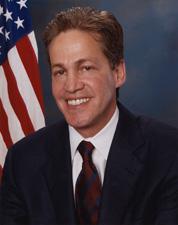 Sen. Norm Coleman (R-MN)
Legislative Activity
Stay on top of the latest movement without scrolling through every action
Senate amendment proposed (on the floor): Amendment SA 2687 proposed by Senator Coleman.(consideration: CR S11137-11140; text: CR S11139)
September 6, 2007
View full timeline
Senate amendment proposed (on the floor): Amendment SA 2687 proposed by Senator Coleman.(consideration: CR S11137-11140; text: CR S11139)
September 6, 2007
Senate amendment agreed to: Amendment SA 2687 agreed to in Senate by Yea-Nay Vote. 76 - 15. Record Vote Number: 313.
September 6, 2007
Roll call votes on amendments in Senate: Amendment SA 2687 agreed to in Senate by Yea-Nay Vote. 76 - 15. Record Vote Number: 313.
September 6, 2007
Amendment SA 2687 proposed by Senator Coleman. (consideration: CR S11137-11140; text: CR S11139) To provide funding for security associated with the national party conventions.
September 6, 2007
Amendment SA 2687 agreed to in Senate by Yea-Nay Vote. 76 - 15. Record Vote Number: 313.
September 6, 2007
Senate amendment submitted
September 5, 2007
Votes
1 roll call on this amendment
Text
Proposed
MILITARY CONSTRUCTION AND VETERANS AFFAIRS APPROPRIATIONS ACT, 2008

The PRESIDING OFFICER. Under the previous order, the Senate will
resume consideration of H.R. 2642, which the clerk will report.
The assistant legislative clerk read as follows:

A bill (H.R. 2642) making appropriations for military
construction, the Department of Veterans Affairs, and related
agencies for the fiscal year ending September 30, 2008, and
for other purposes.

The PRESIDING OFFICER. The Senator from Kentucky.

Amendment No. 2687

Mr. BUNNING. Mr. President, I rise to express my strong opposition to
the Coleman amendment No. 2687. The amendment requires the use of
emergency Federal funds paid by taxpayers from every State for security
at the 2008 Presidential political party conventions in Minneapolis and
Denver. If the amendment passes, both the Republican and Democratic
political party conventions will each receive $50 million additional in
Federal taxpayer dollars for State and local law enforcement costs
associated with hosting the conventions. The $50 million for the
Minneapolis convention is on top of the $12.5 million in Federal funds
the State also will receive in the current version of the Commerce-
Justice-State appropriations bill. This is all on top of $70 million
each party receives to host their conventions and run their political
campaigns.
Spending an additional $100 million in taxpayer funds for political
conventions in Minneapolis and Denver is pretty outrageous to me.
States that bid to host political conventions know that winning the bid
also means a high cost for security comes with it. Sure, the cost of
security after September 11 has gone up, but States and cities that bid
on the 2008 conventions knew that burden at the get-go.
Plus, the States will receive an enormous benefit from hosting the
conventions. I have not heard one person say that the States or cities
hosting the

[[Page S11138]]

conventions will go bankrupt from holding them. One estimate shows that
Minneapolis will receive more than $150 million in benefits from
hosting the convention. Denver will likely receive a similar financial
benefit. The millions of dollars in benefits is the main reason cities
bid to host conventions in the first place. That is why every 4 years
many cities bid to host each of the conventions. This windfall comes
from thousands of people staying at the hotels, eating at the
restaurants, and shopping in the stores in Denver and Minneapolis. That
will result in a lot of sales tax revenue and hotel tax revenue that
will stay in each of those cities and States.
Paying for security definitely should not put States in the red. It
is definitely not an unfunded mandate on the States or cities by the
Federal Government. So if the States are receiving this huge benefit,
why are taxpayers footing over $100 million additional in Federal
funding for these political conventions? And how did we determine that
figure of $50 million that was needed for each of these cities and
States? Was this thoroughly researched? By whom? And what will the
actual need be for Minneapolis? What will it be for Denver? Why has no
Member of this body made this case?
At the 2004 convention in New York City that I attended, they spent
about $58 million in security. Will Minneapolis and Denver, which are
not as big as New York and not a major port city, need the same amount
of funding? It seems we are just throwing taxpayer money needlessly
around without seriously looking at the situation.
The legislation before us today provides over $109 billion for
veterans and military construction projects all across the Nation. This
legislation is supposed to help support our troops who are risking
their lives overseas and to help the veteran men and women who so
bravely fought for our country. With this in mind, I ask, why are we
funding political conventions in this VA-Military Construction
appropriations bill? What do political conventions have to do with the
military? This is a combination of oil and water, and the Coleman
amendment is trying to put them together. It doesn't mix.
I also have extreme concerns with the use of emergency Federal
spending to pay for political party conventions--emergency Federal
spending. This is just a budget gimmick to get around the need to
offset the funds. I keep saying this over and over, but emergency
spending should only be for just that--emergencies. Usually emergency
funding goes to things such as the Iraq war, the Afghanistan war, or
victims of Hurricane Katrina, and other major disasters that occur in
the United States. It should not go toward nonemergency funding such as
the conventions. Come on. Everybody knew, once the winning conventions
city and State bids were announced, that security would have to be
somehow funded. Holding conventions takes advance planning from States
and cities and their political parties. All this does not add up to an
emergency situation requiring emergency Federal funding.
The fiscal year 2008 budget resolution allows for a point of order
against amendments such as this that are not true emergency spending.
It sets criteria for emergency spending which I do not think this
amendment meets. Emergency spending must be only used for essential,
sudden, and urgent matters that are unforeseen and not permanent. By my
calculations, this amendment meets only one of those requirements, and
none of the four other requirements. Because I think the overwhelming
majority of the Senate will vote for this amendment, I will not raise
the point of order against it.
I have been to every Republican convention since 1980. I want to make
it clear I think security is as important for the Republican and
Democratic conventions, but my objections to this amendment concern who
should foot the bill for the security. I believe those States and
cities hosting the conventions should provide that funding. That means
those planning the conventions and those benefiting from the
conventions in Denver and Minneapolis should pick up the security tab,
not Federal taxpayers across the country.
For all these reasons, I oppose the Coleman amendment and urge my
colleagues to do the same. This amendment will pass, but we need to
reevaluate how we finance political conventions in the future. When
cities make bids to host these conventions, they should also make
preparations to pay for security and include this information in their
bids.
This emergency funding method, using Federal taxpayers' dollars for
political conventions, is not in the best interest or the best way to
proceed, and that is why I oppose this amendment. If we think about
this, this is the way the old Soviet Union used to fund their
conventions, which were phony. But the state paid for the whole thing.
I do not think we should have the same thing happening here in the
United States of America.
Mr. President, I reserve the remainder of my time.
Will the Chair state how much time I have left?
The PRESIDING OFFICER. The Senator has 18 minutes.
Mr. BUNNING. Eighteen minutes. Mr. President, I will allow the
Senator from Minnesota to use 5 of those minutes.
The PRESIDING OFFICER. The Senator from Minnesota is recognized for 5
minutes.
Mr. COLEMAN. Mr. President, I thank my colleague, my friend from
Kentucky.
I want to respond to a couple of concerns he raised.
First, I am in total accord with my friend that we need to reevaluate
how we fund conventions in the future. There is absolutely no question
about that. In a post-9/11 world, these conventions are targets for
terrorism. These conventions, by the way, are designated as national
special security events, which means the Federal Government actually
has overall responsibility for the security, through the Department of
Homeland Security, Secret Service. They then direct the folks at the
local level. But we need to figure out, in the future when these
conventions are bid for: How are we going to pay for security?
In this case, there are three things that should be responded to.
First, there are appropriations in some other bills, but the total
sought here is $100 million, and that anything else in any other bill
will not be pursued, will be dropped. So the figure--and I think we
should be in agreement on that--is $100 million, which is what it was
in New York and Boston; but we are 4 years later, $50 million for each
of the cities.
I should also note all funds will be audited. That has not been the
case in the past. All funds will be audited. We will find out. I think
we need to do that for the future to know what are the security needs,
and, again, to make sure--I have been very insistent to ensure--we have
an auditing mechanism which we have not had in place before.
Third, it is an emergency because the planning for security has to
begin now. We have not dealt with it up to this point in time. I would
note that the city of St. Paul--and I was the mayor of St. Paul--I
believe their entire budget is $500 million. Their overall budget for
police in the course of a year--law enforcement--I think is about $68
million.
Cities do not have the capacity to meet the security needs that are
being imposed on them by the Federal Government, by the Federal
authorities. Where I disagree with my friend is, I see this as an
unfunded mandate. The Department of Homeland Security or the Secret
Service tell local law enforcement: You have to do A, B, C, or D, and
that is the Federal Government telling folks at the local level to do
something without giving them the resources. Those are unfunded
mandates.
We live in a world where conventions are natural targets for those
who wish to do us harm. As we saw in Germany, the threats are very
real. We have a situation where security is the first responsibility of
Government. That is what this is about. It is about security. It is the
primary responsibility of Government. National conventions are events
that if we are going to continue to have them--and I think we should
have them; we could do away with them, if that is what some are
suggesting, and I don't think they are--but if we are, we have to have
security at a level that ensures those who are there--the President
will be there, elected officials, citizens, and they are targets.
They have been designated national special security events and,
therefore,

[[Page S11139]]

we have to fund them. This will fund the conventions. I will work with
my friend from Kentucky as we work forward in the future to make sure
we address up front the cost of security. But it is not reasonable to
argue the city of Denver or the cities of St. Paul-Minneapolis would
have the capacity to institute the security they are required to do. So
we stepped forward at the first post-9/11 convention in New York. We
had security there. The Federal Government played a role. We will
continue to play a role in the future. It is the right thing to do. I
think it is the responsibility of Government.
Again, as a former local elected official, were I sitting in the
mayor's office, there is no doubt I would be saying, yes, we have this
opportunity, but we need to make sure, in the end, it can be funded.
This is clearly a Federal responsibility. The States and cities will do
their part, but we have a part to play also.
With that, Mr. President, I thank my colleague from Kentucky and
yield the floor.
The PRESIDING OFFICER. The Senator from Kentucky.
Mr. BUNNING. Mr. President, I wish to respond to my friend from
Minnesota.
First of all, it was only $25 million put in the New York security
bill for the 2004 convention in New York, which I attended. My concern
and my wonder is: Why did Minneapolis-St. Paul in Minnesota, bid at all
for the convention, or Denver, CO? Why did they bid? Did they bid to
lose money? Did they bid to attract people into their States so they
could make money on the conventions?
I was on the Republican National Committee for 8 years and was
involved in three national conventions. We went to Detroit, Dallas, and
New Orleans. All of those cities were pre-9/11, but all of those cities
were responsible for the security.
Now, after 9/11, the people who are bidding--and there were more than
just those two cities bidding. In fact, there were five that were
narrowed down to three, and, finally, Minneapolis-St. Paul was chosen
by the Republicans. The same thing occurred on the Democratic side,
where there were five, and then down to three, and then down to one in
Denver, CO.
Now, they knew there was going to be a cost for security after 9/11.
They had to build that security cost into their bid for the convention.
If they did not do that, they were poor planners. The mandates that
come from the Federal Government were known prior to the bids being
made because we had already experienced a New York convention which was
held in a much bigger city with many more ports and many more people
and many more police than there are now in Minneapolis-St. Paul or
Denver, CO.
So it does not wash, the fact that this is an unfunded mandate from
the Federal Government, because all of these cities that bid knew there
were going to be additional costs for security if they were successful
in hosting the convention.
The way it is done with emergency spending is a farce. We do this
when we cannot pay for it in the normal budgeted manner. It is a
gimmick used in budgeting when you do not want to pay for something in
the year that you spend the money. I am shocked this is going to pass
by the margin it will pass. I sincerely believe we need our conventions
and we need to nominate whomever we nominate for President and Vice
President on both the Democratic and Republican side, but I almost am
at a loss for words we would use emergency spending for the conventions
and for something that should have been planned for by the cities and
States that are going to host the current conventions in 2008.
Mr. President, I yield back the remainder of my time, and seeing no
one seeking recognition, I suggest the absence of a quorum.
The PRESIDING OFFICER. The clerk will call the roll.
The assistant legislative clerk proceeded to call the roll.
Mr. COLEMAN. Mr. President, I ask unanimous consent that the order
for the quorum call be rescinded.
The PRESIDING OFFICER (Mr. Brown). Without objection, it is so
ordered.

Amendment No. 2687

Mr. COLEMAN. I call up my amendment No. 2687. It should be at the
desk.
The PRESIDING OFFICER. The clerk will report.
The assistant legislative clerk read as follows:

The Senator from Minnesota [Mr. Coleman] proposes an
amendment numbered 2687.

The amendment is as follows:

(Purpose: To provide funding for security associated with the national
party conventions)

At the end of the bill, add the following:
Sec. __.  For an addtional amount $100,000,000, with
$50,000,000 each to the Cities of Denver, Colorado, and St.
Paul, Minnesota, shall be available to the Department of
Homeland Security for State and local law enforcement
entities for security and related costs, including overtime,
associated with the Democratic National Convention and
Republican National Convention in 2008. The Department of
Homeland Security shall provide for an audit of all amounts
made available under this section, including expenditures by
State and local law enforcement entities. Amounts provided by
this section are designated as an emergency requirement
pursuant to section 204 of S. Con. Res. 21 (110th Congress).

Mrs. HUTCHISON. Mr. President, would the Senator yield for a
unanimous consent request?
Mr. COLEMAN. Mr. President, I yield the floor.
Mrs. HUTCHISON. Let me suggest the absence of a quorum before I do
that, just to inform the other side, and then we can proceed.
The PRESIDING OFFICER. The clerk will call the roll.
The assistant legislative clerk proceeded to call the roll.
Mrs. HUTCHISON. Mr. President, I ask unanimous consent that the order
for the quorum call be rescinded.
The PRESIDING OFFICER. Without objection, it is so ordered.
Mrs. HUTCHISON. Mr. President, I ask unanimous consent to withdraw
amendment No. 2666 by Senator McConnell.
The PRESIDING OFFICER. The amendment has not actually been proposed.
Mrs. HUTCHISON. The amendment was on the unanimous consent request
list last night.
The PRESIDING OFFICER. Without objection, the order will be so
modified.
Mrs. HUTCHISON. I do want to say in regard to amendment No. 2666, the
McConnell amendment, which if it has not been formally proposed, I want
to say it is regarding the Chemical Demilitarization Program that is in
the Department of Defense. I just want to assure the Senator from
Kentucky that this committee will work with the Armed Services
Committee to ensure that the program stays on schedule. It is a very
important program. The Department of Defense does want to continue the
program, and we will work with the Armed Services Committee to assure
that.
I would certainly ask the chairman of the committee if that is his
wish as well.
The PRESIDING OFFICER. The senior Senator from Rhode Island is
recognized.
Mr. REED. Mr. President, Senator McConnell is proposing additional
resources for the Bluegrass chemical demilitarization facility. It is a
very important project. It is one we funded already in the bill. I can
assure the Senator from Texas that I will work with my colleagues on
the House Armed Services Committee to allow additional resources going
forward, perhaps through reprogramming, so that we can achieve Senator
McConnell's goal, which is to as quickly as possible put this facility
into operation to begin to eliminate some of these chemical weapons we
have had in our inventory for many years.
Mrs. HUTCHISON. I thank the chairman of the subcommittee, and I
appreciate very much his cooperation. I agree with him completely and
with the Senator from Kentucky that we need to continue this program,
and we will all work together to assure that the funding is there.
Mr. President, let me just ask a parliamentary inquiry now. We had
told our colleagues we would start voting at 11 o'clock, and I was just
going to ask the status of that information.
The PRESIDING OFFICER. Senator Coleman and Senator Bunning will
divide 2 minutes on the Coleman amendment prior to the vote. We then
will begin the first vote.
Mrs. HUTCHISON. And have the yeas and nays been called for?

[[Page S11140]]

The PRESIDING OFFICER. They have not.
Mrs. HUTCHISON. Mr. President, I ask for the yeas and nays on
amendment No. 2687.
The PRESIDING OFFICER. Is there a sufficient second? There is a
sufficient second.
Under the previous order, there will now be 2 minutes of debate
equally divided prior to a vote to be taken in relation to amendment
No. 2687 offered by the Senator from Minnesota.
The senior Senator from Minnesota is recognized.
Mr. COLEMAN. Mr. President, parliamentary inquiry before my time
begins: Has the amendment been called up and read?
The PRESIDING OFFICER. The amendment has been called up, and it has
been read. The Senator may proceed.
Mr. COLEMAN. Mr. President, first, two points of clarification.
Both New York and Boston received $50 million each. There were
apparently two separate appropriations, but they each received $50
million, and that is what Denver and St. Paul-Minneapolis are seeking
here.
The second point I wish to tell my colleagues is that all funds in
here will be ordered. There is a specific ordering provision in this
amendment that has not been in previous amendments or previous funding
of conventions.
Third, the Department of Homeland Security has designated these
conventions as national special security events. As such, the Secret
Service will be directing the local units of government regarding
security needs. Without Federal assistance, the security costs
associated with these events are essentially unfunded mandates.
I urge my colleagues to ask themselves what are the consequences of
not providing this critical emergency funding. The planning has to
start now. We all know security risks are real. Look at what happened
in Germany yesterday. It is our responsibility as Senators to make sure
local law enforcement offices that will be working tirelessly to
protect these events have the resources they need. Security is the
first responsibility of Government. This funding is for security.
Frankly, I wouldn't want to be standing on the Senate floor a year from
now saying I wish we had done more.
The PRESIDING OFFICER. The Senator's time has expired.
Mr. COLEMAN. Thank you, Mr. President.
The PRESIDING OFFICER. The Senator from Kentucky is recognized for 1
minute.
Mr. BUNNING. Mr. President, it is as though we didn't know 9/11
occurred, that the security risk for a convention in 2004 and 2008
would not be planned for in the bid by the hosting cities. Then for the
Federal Government to step in and use emergency funding as a tool, a
budget gimmick tool to fund this $50 million extra because Minneapolis-
St. Paul and Denver didn't plan well for their conventions--I don't
think it is the responsibility of the Federal Government to budget this
as an emergency spending bill, so I urge the defeat of the Coleman
amendment.
The PRESIDING OFFICER. The Senator's time has expired. All time has
expired.
The yeas and nays have been ordered.
The question is on agreeing to the amendment.
The clerk will call the roll.
The assistant legislative clerk called the roll.
Mr. DURBIN. I announce that the Senator from Delaware (Mr. Biden),
the Senator from Connecticut (Mr. Dodd), the Senator from Massachusetts
(Mr. Kerry), the Senator from Arkansas (Mrs. Lincoln), and the Senator
from Illinois (Mr. Obama) are necessarily absent.
I also announce that the Senator from New Mexico (Mr. Bingaman) is
absent attending a funeral.
I further announce that, if present and voting, the Senator from
Massachusetts (Mr. Kerry) would vote ``yea.''
Mr. LOTT. The following Senators are necessarily absent: the Senator
from Idaho (Mr. Craig), the Senator from New Mexico (Mr. Domenici), and
the Senator from Virginia (Mr. Warner).
The PRESIDING OFFICER. Are there any other Senators in the Chamber
desiring to vote?
The result was announced--yeas 76, nays 15, as follows:

[Rollcall Vote No. 313 Leg.]

YEAS--76

Akaka
Alexander
Allard
Baucus
Bayh
Bennett
Bond
Boxer
Brown
Burr
Byrd
Cantwell
Cardin
Carper
Casey
Chambliss
Clinton
Cochran
Coleman
Collins
Conrad
Corker
Cornyn
Crapo
Dole
Dorgan
Durbin
Ensign
Feinstein
Graham
Gregg
Hatch
Hutchison
Inouye
Isakson
Johnson
Kennedy
Klobuchar
Kohl
Kyl
Landrieu
Lautenberg
Leahy
Levin
Lieberman
Lott
Lugar
Martinez
McCain
McConnell
Menendez
Mikulski
Murkowski
Murray
Nelson (FL)
Nelson (NE)
Pryor
Reed
Reid
Roberts
Rockefeller
Salazar
Sanders
Schumer
Shelby
Smith
Snowe
Specter
Stabenow
Stevens
Sununu
Tester
Vitter
Webb
Whitehouse
Wyden

NAYS--15

Barrasso
Brownback
Bunning
Coburn
DeMint
Enzi
Feingold
Grassley
Hagel
Harkin
Inhofe
McCaskill
Sessions
Thune
Voinovich

NOT VOTING--9

Biden
Bingaman
Craig
Dodd
Domenici
Kerry
Lincoln
Obama
Warner
The amendment (No. 2687) was agreed to.
Mr. REED. I move to reconsider the vote, and I move to lay that
motion on the table.
The motion to lay on the table was agreed to.

Amendment No. 2664

The PRESIDING OFFICER. Under the previous order, the clerk will
report the Sanders amendment.
The assistant legislative clerk read as follows:

The Senator from Vermont [Mr. Sanders] proposes an
amendment numbered 2664.

The amendment is as follows:

(Purpose: To prohibit the Secretary of Veterans Affairs, with respect
to increases in dollar amounts for the payment of disability
compensation and dependency and indemnity compensation, from rounding
down such dollar amounts to the next lower whole dollar)

On page 46, between lines 2 and 3, insert the following:
Sec. 227.  None of the funds appropriated or otherwise made
available by this Act may be used during fiscal year 2008 to
round down dollar amounts to the next lower whole dollar for
payments of the following:
(1) Disability compensation under section 1114 of 38,
United States Code.
(2) Additional compensation for dependents under section
1115(1) of such title.
(3) Clothing allowance under section 1162 of such title.
(4) Dependency and indemnity compensation to surviving
spouse under subsections (a) through (d) of section 1311 of
such title.
(5) Dependency and indemnity compensation to children under
sections 1313(a) and 1314 of such title.

The PRESIDING OFFICER. There is now 2 minutes of debate prior to the
vote in relation to the amendment.
Who yields time?
The Senator from Vermont is recognized for 1 minute.
Mr. SANDERS. Mr. President, the amendment I am offering has the
support of the American Legion, the Veterans of Foreign Wars, the
Disabled American Veterans, the Paralyzed Veterans of America, and
AMVETS, and it is cosponsored by Senator Menendez.
In a $109 billion piece of legislation, this $20 million amendment is
not significant from a monetary perspective. It is, however, very
significant in terms of the message we send to veterans throughout our
country, especially disabled veterans, the men and women who have lost
arms and legs defending us, who move around in wheelchairs, who are
blind and/or deaf.
In the 1990s, as a temporary measure, Congress initiated the so-
called rounding down of veterans' disability benefits. Under this
rounding-down process, a disabled veteran who is supposed to receive,
for example, a check for $200.99 has that 99 cents taken away from him
and only gets the $200.
A veteran in a wheelchair opens his envelope check every month and is
reminded that the United States Government is saving 99 cents a month.
What a message that sends to the veterans.
This is an important amendment. It should be adopted.
The PRESIDING OFFICER. The Senator's time has expired.

[[Page S11141]]

Who yields time?
Mrs. HUTCHISON. Mr. President, we yield back our time.
The PRESIDING OFFICER. All time is yielded back. The question is on
agreeing to amendment No. 2664.
The amendment (No. 2664) was agreed to.
Mr. REED. I move to reconsider the vote, and I move to lay that
motion on the table.
The motion to lay on the table was agreed to.

Amendment No. 2662

The PRESIDING OFFICER. Under the previous order, the next amendment
is the Salazar amendment. There is now 2 minutes of debate prior to a
vote in relation to the amendment.
Who yields time? The Senator from Colorado is recognized.
Mr. SALAZAR. Mr. President, I urge my colleagues in this Chamber, on
the Republican side and the Democratic side, to vote yes on this
amendment. In February of this year, the Army announced that it wanted
to acquire an area the size of Rhode Island in the southeastern part of
my State. I am not opposed to the possibility of expanding the Pinon
Canyon Maneuver Site, but what we are asking for in our amendment is
that we have a 1-year timeout for us to study the training capacity
needs of the Army.
If my colleagues care about private property rights, vote for this
amendment. If they care about the ranchers of America and the ranchers
of southeastern Colorado, I ask for a ``yes'' vote. And if they care
about national security and making sure we are fiscally responsible in
how we invest our money, vote yes on this amendment. I ask for a
``yes'' vote.
Mrs. HUTCHISON. Mr. President, I yield 30 seconds to the Senator from
Colorado.
The PRESIDING OFFICER. The Senator from Colorado is recognized for 30
seconds.
Mr. ALLARD. Mr. President, this issue boils down to just a few
important points. First and foremost, denying the Army the opportunity
to explore expansion efforts at a time when the Army is facing a
training land shortfall is not in our national security interests.
Second, this amendment will tie the hands of the Army. The language
is so restrictive that it will prevent them from providing information,
handouts, or holding community meetings to find common ground for
conducting an environmental impact statement which will be important to
the decisionmaking process.
Last, we do need to remember that property rights should be
protected, and we are doing that through other amendments which the
Army supports.
The PRESIDING OFFICER. The Senator's time has expired.
Mr. ALLARD. I ask for a ``no'' vote.
Mrs. HUTCHISON. Mr. President, the Secretary of the Army called me
this morning and said if they cannot continue to plan for the expansion
working with the community that it will hamper their efforts in
training. It will require them to go to other places for training. It
will cause the troops to have to train longer periods.
They absolutely are against this amendment, and they are against the
precedent of having Congress say: You cannot continue with expansion
plans that are on the books.
I urge a ``no'' vote.
The PRESIDING OFFICER. The Senator's time has expired.
Mr. REED. Mr. President, I point out that a similar measure passed
the House of Representatives by a vote of 383 to 35 on a bipartisan
basis, strongly supported in the House.
Also, during the BRAC process, the Army determined the capacity of
Fort Carson was adequate for the brigades stationed there.
I urge the adoption of the amendment.
The PRESIDING OFFICER. The clerk will report the Salazar amendment.
The assistant legislative clerk read as follows:

The Senator from Colorado [Mr. Salazar] proposes an
amendment numbered 2662.

The amendment is as follows:

(Purpose: To prohibit the use of funds to expand the boundaries or size
of the Pinon Canyon Maneuver Site, Colorado)

On page 50, between lines 17 and 18, insert the following:
Sec. 408.  None of the funds appropriated or otherwise made
available by this Act may be used for any action that is
related to or promotes the expansion of the boundaries or
size of the Pinon Canyon Maneuver Site, Colorado.
Mr. BUNNING. I ask for the yeas and nays.
The PRESIDING OFFICER. Is there a sufficient second?
There is a sufficient second.
The question is on agreeing to amendment No. 2662. The clerk will
call the roll.
The bill clerk called the roll.
Mr. DURBIN. I announce that the Senator from Delaware (Mr. Biden),
the Senator from Connecticut (Mr. Dodd), the Senator from Massachusetts
(Mr. Kerry), the Senator from Arkansas (Mrs. Lincoln), and the Senator
from Illinois (Mr. Obama), are necessarily absent.
I also announce that the Senator from New Mexico (Mr. Bingaman) is
absent attending a funeral.
I further announce that, if present and voting, the Senator from
Massachusetts (Mr. Kerry) would vote ``yea.''
Mr. LOTT. The following Senators are necessarily absent: the Senator
from Idaho (Mr. Craig) and the Senator from New Mexico (Mr. Domenici).
The ACTING PRESIDENT pro tempore. Are there any other Senators in the
Chamber desiring to vote?
The result was announced--yeas 47, nays 45, as follows:

[Rollcall Vote No. 314 Leg.]

YEAS--47

Akaka
Baucus
Bayh
Boxer
Brown
Brownback
Byrd
Cantwell
Cardin
Carper
Casey
Clinton
Conrad
Dorgan
Durbin
Feingold
Feinstein
Harkin
Inouye
Johnson
Kennedy
Klobuchar
Kohl
Landrieu
Lautenberg
Leahy
Levin
Lieberman
McCaskill
Menendez
Mikulski
Murray
Nelson (FL)
Nelson (NE)
Pryor
Reed
Reid
Roberts
Rockefeller
Salazar
Sanders
Schumer
Stabenow
Tester
Webb
Whitehouse
Wyden

NAYS--45

Alexander
Allard
Barrasso
Bennett
Bond
Bunning
Burr
Chambliss
Coburn
Cochran
Coleman
Collins
Corker
Cornyn
Crapo
DeMint
Dole
Ensign
Enzi
Graham
Grassley
Gregg
Hagel
Hatch
Hutchison
Inhofe
Isakson
Kyl
Lott
Lugar
Martinez
McCain
McConnell
Murkowski
Sessions
Shelby
Smith
Snowe
Specter
Stevens
Sununu
Thune
Vitter
Voinovich
Warner

NOT VOTING--8

Biden
Bingaman
Craig
Dodd
Domenici
Kerry
Lincoln
Obama
The amendment (No. 2662) was agreed to.
Mr. SCHUMER. I move to reconsider the vote.
Mr. CONRAD. I move to lay that motion on the table.
The motion to lay on the table was agreed to.
The ACTING PRESIDENT pro tempore. The Senator from Ohio.

Amendment No. 2673

Mr. BROWN. Mr. President, I call up amendment 2673, and I ask
unanimous consent to add Senator Webb as a cosponsor.
The ACTING PRESIDENT pro tempore. Without objection, it is so
ordered.
The clerk will report.
The legislative clerk read as follows:

The Senator from Ohio [Mr. Brown] proposes an amendment
numbered 2673.

The amendment is as follows:

(Purpose: To limit the cases in which funds appropriated or otherwise
made available by this Act may be used to convert to contractor
performance an activity or function of the Department of Veterans
Affairs that is performed by more than 10 Federal employees)

On page 46, between lines 2 and 3, insert the following:
Sec. 227.  None of the funds appropriated or otherwise made
available by this Act or any other Act for the Department of
Veterans Affairs may be used in a manner that is inconsistent
with--
(1) section 842 of the Transportation, Treasury, Housing
and Urban Development, the Judiciary, and Independent
Agencies Appropriations Act, 2006 (Public Law 109-115; 119
Stat. 2506); or
(2) section 8110(a)(5) of title 38, United States Code.

The ACTING PRESIDENT pro tempore. There are now 2 minutes of debate
equally divided prior to the vote in relationship to the amendment.

[[Page S11142]]

The Senator from Ohio.
Mr. BROWN. Mr. President, Congress again and again has called on
Federal agencies to ensure that before work is contracted out we first
see if Federal employees can perform their jobs as well as their
private-sector counterparts. That is only fair to taxpayers as well as
to employees. The VA is trying to contract out the work of its blue-
collar employees, some four-fifths of whom are veterans themselves,
without bothering to see if they can perform as well as their private
competition.
This amendment, cosponsored with Senator Webb, simply reiterates the
language we have adopted before that there must be a public-private
competition before work is contracted out. I hope we can adopt the
amendment overwhelmingly to send a message to the VA that this isn't a
Democratic-Republican issue, this is simply good government. It is the
right thing for American taxpayers and the right thing for veterans--
those being given care and those workers who are veterans who support
that mission.
I yield back my remaining time.
The ACTING PRESIDENT pro tempore. The Senator from Texas.
Mrs. HUTCHISON. Mr. President, this is an amendment that would tie
the hands of the Veterans' Administration in trying to make the most
and the best use of taxpayer dollars. It would prohibit contracting out
if 10 Federal employees are doing a job.
We ought to be trying to promote the Veterans' Administration for
being efficient. We should be promoting using taxpayer dollars wisely,
not a protectionist amendment, where Congress would tie the hands of
the Veterans Affairs Department. I hope we will defeat this amendment.
We already have the capability to affirm that it is in the best
interest of the VA to contract out. The VA is required to come to
Congress to say it is in the interest of the VA that the contracting
out be done. But to say no contracting out if there are 10 Federal
employees doing a job is absolutely wrong, and it is going in the wrong
direction for efficiency of our taxpayer dollars.
I urge a ``no'' vote.
The ACTING PRESIDENT pro tempore. The question is on agreeing to
amendment No. 2673.
Mr. BROWN. I ask for the yeas and nays.
The ACTING PRESIDENT pro tempore. Is there a sufficient second?
There is a sufficient second. The clerk will call the roll.
The legislative clerk called the roll.
Mr. DURBIN. I announce that the Senator from Delaware (Mr. Biden),
the Senator from Connecticut (Mr. Dodd), the Senator from Massachusetts
(Mr. Kerry), the Senator from Connecticut (Mr. Lieberman), the Senator
from Arkansas (Mrs. Lincoln), the Senator from Illinois (Mr. Obama),
and the Senator from Virginia (Mr. Webb), are necessarily absent.
I also announce that the Senator from New Mexico (Mr. Bingaman) is
absent attending a funeral.
I further announce that, if present and voting, the Senator from
Massachusetts (Mr. Kerry) and the Senator from Virginia (Mr. Webb)
would each vote ``yea.''
Mr. LOTT. The following Senator is necessarily absent: the Senator
from Idaho (Mr. Craig).
The ACTING PRESIDENT pro tempore. Are there any other Senators in the
Chamber desiring to vote?
The result was announced--yeas 52, nays 39, as follows:

[Rollcall Vote No. 315 Leg.]

YEAS--52

Akaka
Baucus
Bayh
Bond
Boxer
Brown
Byrd
Cantwell
Cardin
Carper
Casey
Chambliss
Clinton
Collins
Conrad
Domenici
Dorgan
Durbin
Feingold
Feinstein
Harkin
Inouye
Johnson
Kennedy
Klobuchar
Kohl
Landrieu
Lautenberg
Leahy
Levin
McCaskill
Menendez
Mikulski
Murkowski
Murray
Nelson (FL)
Nelson (NE)
Pryor
Reed
Reid
Rockefeller
Salazar
Sanders
Schumer
Snowe
Specter
Stabenow
Stevens
Tester
Voinovich
Whitehouse
Wyden

NAYS--39

Alexander
Allard
Barrasso
Bennett
Brownback
Bunning
Burr
Coburn
Cochran
Coleman
Corker
Cornyn
Crapo
DeMint
Dole
Ensign
Enzi
Graham
Grassley
Gregg
Hagel
Hatch
Hutchison
Inhofe
Isakson
Kyl
Lott
Lugar
Martinez
McCain
McConnell
Roberts
Sessions
Shelby
Smith
Sununu
Thune
Vitter
Warner

NOT VOTING--9

Biden
Bingaman
Craig
Dodd
Kerry
Lieberman
Lincoln
Obama
Webb
The amendment (No. 2673) was agreed to.
Mr. REED. Mr. President, I move to reconsider the vote and lay that
motion on the table.
The motion to lay on the table was agreed to.
Mr. CARDIN. Mr. President, I rise today to express my support for
H.R. 2642, the fiscal year 2008 Military Construction and Veterans
Affairs appropriations bill. This is an important bill, one that makes
the necessary investments in caring for our veterans, in improving the
quality of life for our military families, and in building and
improving the facilities integral to our military's current and future
mission and our national security. The legislation provides $64.7
billion in discretionary funding, which is $4 billion above the
President's budget request. Frankly, the President's request was
insufficient, so I support the Appropriations Committee's
recommendation.
The bill offers substantial new investments in health care for
America's veterans and takes into consideration the unique needs of our
service men and women returning from Iraq and Afghanistan. By
increasing critical investments in medical services, which include
treatment of traumatic brain injury, TBI, and post traumatic stress
disorder, PTSD, for Iraq and Afghanistan veterans, providing the
funding necessary to hire new claims processors to address the VA's
backlog, and investing in VA repair and maintenance necessary to
prevent another Walter Reed-type situation, the bill addresses key
shortcomings in our veterans health care system.
The bill also addresses key quality-of-life and mission-related needs
for all U.S. troops and their families. I am grateful it includes $265
million for construction of facilities at Aberdeen Proving Ground,
Patuxent River, Suitland, Fort Detrick, and Fort Meade in recognition
of the growing and critical role these Maryland installations play in
our national defense.
As stated in the Base Realignment and Closure, BRAC, Commission
Report, the primary goal for the 2005 BRAC process was military
transformation. While acknowledging the need to save money, the
Commission went beyond a business model analysis, giving military value
criteria priority consideration. Of critical importance to communities
in Maryland and to citizens across the Nation, the bill provides $8.17
billion for BRAC 2005 to implement the base closures and realignments
that the Commission determined are critical to our military's current
and future mission. This includes over $700 million for the
construction of crucial facilities at Aberdeen Proving Ground, Indian
Head, Andrews Air Force Base, Fort Meade, and the Bethesda National
Naval Medical Center.
Given the critical nature of these appropriations, you can imagine my
concern when I read the Statement of Administration Policy on this
bill. President Bush, it seems, thinks that such investments in our
veterans and our military infrastructure are ``excessive.'' While he
has indicated that he will not veto H.R. 2642, he has threatened to
veto other appropriations bills unless we find ways to cut spending in
those measures equal to the spending--$4 billion--in this bill that
exceeds his request.
This administration, which has consistently underestimated the
resources it would take to fund our military and care for our veterans,
promises that it is ``closely tracking the ongoing cost of providing
for our veterans.'' When it comes to bases, troops, and veterans, we
shouldn't be cutting corners or scrambling later to make up for earlier
mistakes. It is our duty to pass this bill and fully fund the veterans
initiatives and military construction projects it contains.
I applaud Senators Byrd, Cochran, Johnson, Hutchison, and Reed and my
other colleagues on the Appropriations Committee for their excellent
work and look forward to quick passage of this critical legislation.

[[Page S11143]]

Mr. LAUTENBERG. Mr. President, as a member of the Senate
Appropriations Committee, I helped craft the 2008 Military Construction
and Veterans Affairs Appropriations bill and I am proud of the
priorities we set for our military.
There is no more important time than now to show our support for our
troops. Nearly 200,000 American service men and women are fighting in
Iraq and Afghanistan. More than 1.5 million have served valiantly since
these wars began. Of these, more than 33,000 servicemembers have come
from New Jersey.
This legislation will provide critical funding to ensure that those
in our military who sacrifice in defense of our country now and those
who did so in the past are given the best care.
Overall veterans funding will increase 18 percent over last year's
levels, supporting physical and mental care, the administration of the
Veterans' Administration, VA, health system, and VA medical facilities.
The Veterans Health Administration will receive an increase of $4.6
billion to help care for our wounded warriors, to treat both their
physical injuries and increasingly common mental trauma, including
post-traumatic stress disorder.
This appropriations bill also aims to strengthen our military bases,
providing $21 billion for military construction efforts and
infrastructure improvements at bases, including those in New Jersey,
and to support projects related to the Defense Base Realignment and
Closure Act, BRAC, of 2005.
We are all proud of the work being done at military bases in our home
States and nationwide, and it is vital that we support their missions
now and in the future.
But I must take a moment to alert my colleagues to troubling
information that has come to light since the Appropriations Committee
completed work on this bill.
Fort Monmouth, based in New Jersey, is the Army's primary
intelligence, surveillance and reconnaissance facility. The Army's work
at Fort Monmouth is critical to the safety of America's military men
and women and to the success of their missions. The intelligence
support it provides goes directly to our troops in the field, making
them more effective fighters and protecting their lives and the lives
of those around them.
Over the next 5 years, researchers at Fort Monmouth are slated to
develop significant innovations for our Armed Forces, such as Warlock
Jammers, which emit radio frequencies that interfere with the signals
that set off improvised explosive devices--infamously known as IEDs.
The Jammer was engineered at Fort Monmouth and modified for use in
Iraq. The military was able to deploy them within 60 days of their
development, and they save American lives.
But despite the critical value of this and other innovations at the
Fort, the BRAC Commission in 2005 voted to close Fort Monmouth.
It goes without saying that no Senator wants to see a base close in
his or her State. And it is not only New Jersey that will suffer a loss
of jobs and economic activity because of the 2005 BRAC process.
But the situation with Fort Monmouth is unique and casts a shadow on
the entire base closure process.
As we learn more information about the closure of Fort Monmouth, it
becomes increasingly clear that this was a flawed process based on
faulty estimates that must be thoroughly investigated.
The first and most pressing question is how this closure will affect
our troops in the field, given the crucial work Fort Monmouth does for
ongoing missions overseas.
Simply put, Fort Monmouth is strategically vital to our military and
to the wars in Iraq and Afghanistan.
Anticipating this alarming problem, the BRAC Commission specifically
included a requirement for the Secretary of Defense to prove that
closing Fort Monmouth will not harm troops in the field.
The caveat required the Pentagon to submit a report to Congress
ensuring ``that movement of organizations, functions, or activities
from Fort Monmouth to Aberdeen Proving Ground will be accomplished
without disruption of their support to the Global War on Terrorism.''
The GAO is then expected to review and audit the report.
Yet more than 2 years after the BRAC Commission vote, the
administration has failed to produce this report.
Even worse, the Army is trying to move personnel out of Fort Monmouth
before it has even considered the effect on our military.
This is unacceptable. No personnel should leave Fort Monmouth and be
transferred to Aberdeen, MD, before the Department of Defense reports
to Congress that the closure of Fort Monmouth will not hurt our troops
in the field.
But that is only one of the reasons why the BRAC decision to close
Fort Monmouth is so controversial and so flawed.
It is becoming increasingly clear that only about 20 percent of the
highly trained and highly skilled workforce who work at the Fort--from
engineers to scientists--appear willing to move to Maryland.
This is far fewer than the rosy forecast of 75 percent that was
provided to the BRAC Commission in 2005.
Again, we must ask how this shortage of expertise will affect the
critical operations and technology that Fort Monmouth currently
provides to our military.
Furthermore, the costs of closing Fort Monmouth are skyrocketing and
call into question the very cost-savings rationale upon which BRAC
decisions are made.
This argument was made by many in 2005, but the warnings were
ignored. And as more facts come to light, it becomes apparent that the
BRAC Commission was not given all of the information that it should
have had to make its decision.
The original cost estimate for closing the fort was $780 million.
But according to the Army's own budget request for the fiscal year
2008, that cost has now nearly doubled to $1.5 billion.
We all know that the cost overruns are not limited to the closure of
Fort Monmouth.
In fact, the Congressional Research Service has calculated that
overall BRAC costs have increased from initial estimates of $17 billion
to a current projection of $32 billion.
There are also signs that the true costs of closing Fort Monmouth may
have been ignored in 2005. There is mounting evidence that the Pentagon
knew, or should have known, that the cost estimates it gave the BRAC
Commission related to the closure of Fort Monmouth were not correct. A
July 2005 memo from Fort Monmouth officials detailed significant cost
errors in the Pentagon's estimates, but the information in that memo
was never received by the BRAC Commission.
For these reasons I, joined by Senator Menendez and our colleagues in
the House of Representatives, have asked both the Government
Accountability Office and Defense Department's inspector general to
investigate the decision to close Fort Monmouth.
There is over $200 million in this bill for military construction at
Aberdeen, MD.
While I understand this committee's desire to continue funding
pursuant to the 2005 BRAC Commission decisions, I must caution that the
closure of Fort Monmouth and the transfer of its critical operations
needs to be reexamined in light of these facts and the investigations
and reports that are underway.
I would also note that Senator Menendez and I have introduced
legislation to change the BRAC process by calling for a review of major
base closures that result in excessive cost overruns of over 25
percent.
I hope my colleagues will see the wisdom of this legislation and
support it in the coming months.
The ACTING PRESIDENT pro tempore. Under the previous order, the
question is on the engrossment of the amendment and third reading of
the bill.
The amendment was ordered to be engrossed and the bill to be read a
third time.
The bill was read the third time.
The ACTING PRESIDENT pro tempore. The bill having been read the third
time, the question is, Shall the bill pass?
Mr. REED. Mr. President, I ask for the yeas and nays.
The ACTING PRESIDENT pro tempore. Is there a sufficient second? There
is a sufficient second.

[[Page S11144]]

The clerk will call the roll.
The assistant legislative clerk called the roll.
Mr. DURBIN. I announce that the Senator from Delaware (Mr. Biden),
the Senator from Connecticut (Mr. Dodd), the Senator from Massachusetts
(Mr. Kerry), the Senator from Arkansas (Mrs. Lincoln), and the Senator
from Illinois (Mr. Obama), are necessarily absent.
I also announce that the Senator from New Mexico (Mr. Bingaman) is
absent attending a funeral.
I further announce that if present and voting, the Senator from
Delaware (Mr. Biden) and the Senator from Massachusetts (Mr. Kerry)
would each vote ``yea.''
Mr. LOTT. The following Senator is necessarily absent: the Senator
from Idaho (Mr. Craig).
The ACTING PRESIDENT pro tempore. Are there any other Senators in the
Chamber desiring to vote?
The result was announced--yeas 92, nays 1, as follows:

[Rollcall Vote No. 316 Leg.]

YEAS--92

Akaka
Alexander
Allard
Barrasso
Baucus
Bayh
Bennett
Bond
Boxer
Brown
Brownback
Bunning
Burr
Byrd
Cantwell
Cardin
Carper
Casey
Chambliss
Clinton
Coburn
Cochran
Coleman
Collins
Conrad
Corker
Cornyn
Crapo
Dole
Domenici
Dorgan
Durbin
Ensign
Enzi
Feingold
Feinstein
Graham
Grassley
Gregg
Hagel
Harkin
Hatch
Hutchison
Inhofe
Inouye
Isakson
Johnson
Kennedy
Klobuchar
Kohl
Kyl
Landrieu
Lautenberg
Leahy
Levin
Lieberman
Lott
Lugar
Martinez
McCain
McCaskill
McConnell
Menendez
Mikulski
Murkowski
Murray
Nelson (FL)
Nelson (NE)
Pryor
Reed
Reid
Roberts
Rockefeller
Salazar
Sanders
Schumer
Sessions
Shelby
Smith
Snowe
Specter
Stabenow
Stevens
Sununu
Tester
Thune
Vitter
Voinovich
Warner
Webb
Whitehouse
Wyden

NAYS--1

DeMint

NOT VOTING--7

Biden
Bingaman
Craig
Dodd
Kerry
Lincoln
Obama
The bill (H.R. 2642), as amended, was passed.
(The bill will be printed in a future edition of the Record.)
Mr. REED. I move to reconsider the vote and to lay that motion on the
table.
The motion to lay on the table was agreed to.
The ACTING PRESIDENT pro tempore. Under the previous order, the
Senate insists on its amendment, requests a conference with the House
on the disagreeing votes of the two Houses, and the Chair appoints the
following conferees on the part of the Senate.
The Acting President pro tempore appointed Mr. Johnson, Mr. Inouye,
Ms. Landrieu, Mr. Byrd, Mrs. Murray, Mr. Reed, Mr. Nelson of Nebraska,
Mr. Leahy, Mrs. Hutchison, Mr. Craig, Mr. Brownback, Mr. Allard, Mr.
McConnell, Mr. Bennett, and Mr. Cochran conferees on the part of the
Senate.
The ACTING PRESIDENT pro tempore. The Senator from Rhode Island.
Mr. REED. Mr. President, I take this opportunity to thank so many
people who were significant in the passage of this legislation. First,
let me recognize Senator Hutchison, the ranking member, for her
valuable contributions throughout. Also, and gladly, I not only welcome
back Senator Johnson but recognize that as chairman of this committee,
we communicated. He was very influential in the final outcome of the
legislation. I not only welcome him back, but I gladly and joyfully
give him the reins of the subcommittee so that the next time this bill
comes to the floor, Senator Tim Johnson will be managing it, and I will
be proud to be working with him.
I particularly want to thank staff members who made such a huge and
critical contribution to this effort: Christina Evans, B.G. Wright,
Chad Schulken, and Elizabeth King from my staff; and from the minority
staff: Dennis Balkham, Chris Heggem, and Yvonne Stone.
I thank all my colleagues who cooperated so willingly and
effectively.
I yield the floor.

____________________