To prevent contributions to organizations that perform or promote abortion as a method of family planning.
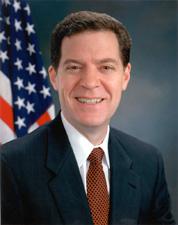 Sen. Sam Brownback (R-KS)
Legislative Activity
Stay on top of the latest movement without scrolling through every action
Senate amendment submitted
September 6, 2007
View full timeline
Senate amendment submitted
September 6, 2007
Senate amendment proposed (on the floor): Amendment SA 2708 proposed by Senator Brownback.(consideration: CR S11177-11180, S11192-11193; text: CR S11177)
September 6, 2007
Roll call votes on amendments in Senate: Amendment SA 2708 not agreed to in Senate by Yea-Nay Vote. 40 - 54. Record Vote Number: 320.
September 6, 2007
Senate amendment not agreed to: Amendment SA 2708 not agreed to in Senate by Yea-Nay Vote. 40 - 54. Record Vote Number: 320.
September 6, 2007
Amendment SA 2708 proposed by Senator Brownback. (consideration: CR S11177-11180, S11192-11193; text: CR S11177) To prevent contributions to organizations that perform or promote abortion as a method of family planning.
September 6, 2007
Amendment SA 2708 not agreed to in Senate by Yea-Nay Vote. 40 - 54. Record Vote Number: 320.
September 6, 2007
Votes
1 roll call on this amendment
Text
Proposed
DEPARTMENT OF STATE, FOREIGN OPERATIONS, AND RELATED PROGRAMS
APPROPRIATIONS ACT, 2008

The ACTING PRESIDENT pro tempore. Under the previous order, the
Senate will proceed to the consideration of H.R. 2764, which the clerk
will report.
The assistant legislative clerk read as follows:

A bill (H.R. 2764) making appropriations for the Department
of State, foreign operations, and related programs for the
fiscal year ending September 30, 2008, and for other
purposes.
The Senate proceeded to consider the bill, which had been reported
from the Committee on Appropriations, with an amendment to strike all
after the enacting clause and insert in lieu thereof the following:

That the following sums are appropriated, out of any money in
the Treasury not otherwise appropriated, for the fiscal year
ending September 30, 2008, and for other purposes, namely:

TITLE I

DEPARTMENT OF STATE AND RELATED AGENCY

DEPARTMENT OF STATE

Administration of Foreign Affairs

Diplomatic and Consular Programs

(Including Transfer of Funds)

For necessary expenses of the Department of State and the
Foreign Service not otherwise provided for, including
employment, without regard to civil service and
classification laws, of persons on a temporary basis (not to
exceed $700,000 of this appropriation), as authorized by
section 801 of the United States Information and Educational
Exchange Act of 1948; representation to certain international
organizations in which the United States participates
pursuant to treaties ratified pursuant to the advice and
consent of the Senate or specific Acts of Congress; arms
control, nonproliferation and disarmament activities as
authorized; acquisition by exchange or purchase of passenger
motor vehicles as authorized by law; and for expenses of
general administration, $3,885,375,000: Provided, That of the
amount made available under this heading, not to exceed
$10,000,000 may be transferred to and merged with
``Emergencies in the Diplomatic and Consular Service'', to be
available only for emergency evacuations and terrorism
rewards: Provided further, That of the funds appropriated
under this heading, $8,131,000 shall be available for the
Office of the Director of United States Foreign Assistance
and $1,000,000 shall not be obligated until consultations
with the Congress, arising from the report submitted pursuant
to section 653(a) of the Foreign Assistance Act of 1961, have
been completed: Provided further, That of the amount made
available under this heading, not less than $364,905,000
shall be available only for public diplomacy international
information programs: Provided further, That of the funds
made available under this heading, $5,000,000 shall be made
available for a demonstration program to expand access to
consular services: Provided further, That of the funds made
available under this heading, $40,000,000 shall be made
available for passport operations, facilities, and systems:
Provided further, That the funds appropriated by the previous
proviso shall be in addition to amounts otherwise made
available for such purposes: Provided further, That of the
funds made available under this heading in this Act and in
prior Acts making appropriations for the Department of State,
foreign operations, export financing and related programs, up
to $200,000,000 may be transferred to, and merged with, funds
appropriated under the heading ``Millennium Challenge
Corporation'', subject to section 615 of this Act: Provided
further, That of the funds appropriated under this heading,
$6,000,000 shall be made available for the Ambassador's Fund
for Cultural Preservation of which $1,500,000 shall be for
grants of not less than $500,000 for significant historic
preservation projects: Provided further, That there shall be
one additional senior permanent position at United States
Embassy Moscow whose sole responsibilities shall be to
monitor human rights and the implementation of Russian laws
relating to nongovernmental organizations, communicate United
States support for human rights defenders and journalists who
are harassed and arrested, and support the work of civil
society groups: Provided further, That funds available under
this heading may be made available for a United States
Government interagency task force to examine, coordinate and
oversee United States participation in the United Nations
headquarters renovation project: Provided further, That funds
appropriated under this heading are available, pursuant to 31
U.S.C. 1108(g), for the field examination of programs and
activities in the United States funded from any account in
this title.
In addition, not to exceed $1,558,390 shall be derived from
fees collected from other executive agencies for lease or use
of facilities located at the International Center in
accordance with section 4 of the International Center Act; in
addition, as authorized by section 5 of such Act, $490,000,
to be derived from the reserve authorized by that section, to
be used for the purposes set out in that section; in
addition, as authorized by section 810 of the United States
Information and Educational Exchange Act, not to exceed
$6,000,000, to remain available until expended, may be
credited to this appropriation from fees or other payments
received from English teaching, library, motion pictures, and
publication programs and from fees from educational advising
and counseling and exchange visitor programs; and, in
addition, not to exceed

[[Page S11145]]

$15,000, which shall be derived from reimbursements,
surcharges, and fees for use of Blair House facilities.
In addition, for the costs of worldwide security
protection, $909,598,000, to remain available until expended.

Capital Investment Fund

For necessary expenses of the Capital Investment Fund,
$63,743,000, to remain available until expended, as
authorized: Provided, That section 135(e) of Public Law 103-
236 shall not apply to funds available under this heading.

Office of Inspector General

For necessary expenses of the Office of Inspector General,
$35,508,000, notwithstanding section 209(a)(1) of the Foreign
Service Act of 1980 (Public Law 96-465), as it relates to
post inspections.

Educational and Cultural Exchange Programs

For expenses of educational and cultural exchange programs,
as authorized, $509,482,000, to remain available until
expended: Provided, That not to exceed $5,000,000, to remain
available until expended, may be credited to this
appropriation from fees or other payments received from or in
connection with English teaching, educational advising and
counseling programs, and exchange visitor programs as
authorized: Provided further, That of the funds available
under this heading up to $2,000,000 may be made available to
the Senator Paul Simon Study Abroad Foundation, subject to
authorization: Provided further, That if a majority of the
Board of Directors of such Foundation is not confirmed by the
Senate by August 1, 2008, the Secretary shall provide
$1,000,000 of such funds to the Benjamin A. Gilman
International Scholarship Program and $1,000,000 shall be
provided to the Fulbright Program to augment existing study
abroad programs.

Representation Allowances

For representation allowances as authorized, $8,175,000.

Protection of Foreign Missions and Officials

For expenses, not otherwise provided, to enable the
Secretary of State to provide for extraordinary protective
services, as authorized, $14,000,000, to remain available
until September 30, 2009.

Embassy Security, Construction, and Maintenance

For necessary expenses for carrying out the Foreign Service
Buildings Act of 1926 (22 U.S.C. 292-303), preserving,
maintaining, repairing, and planning for buildings that are
owned or directly leased by the Department of State,
renovating, in addition to funds otherwise available, the
Harry S Truman Building, and carrying out the Diplomatic
Security Construction Program as authorized, $792,534,000, to
remain available until expended as authorized, of which not
to exceed $25,000 may be used for domestic and overseas
representation as authorized: Provided, That none of the
funds appropriated in this paragraph shall be available for
acquisition of furniture, furnishings, or generators for
other departments and agencies.
In addition, for the costs of worldwide security upgrades,
acquisition, and construction as authorized, $649,278,000, to
remain available until expended.

Emergencies in the Diplomatic and Consular Service

(Including Transfer of Funds)

For expenses necessary to enable the Secretary of State to
meet unforeseen emergencies arising in the Diplomatic and
Consular Service, $9,000,000, only for emergency evacuations
and terrorism rewards, to remain available until expended, of
which not to exceed $1,000,000 may be transferred to and
merged with the ``Repatriation Loans Program Account'',
subject to the same terms and conditions.

Repatriation Loans Program Account

(Including Transfer of Funds)

For the cost of direct loans, $678,000, as authorized:
Provided, That such costs, including the cost of modifying
such loans, shall be as defined in section 502 of the
Congressional Budget Act of 1974.
In addition, for administrative expenses necessary to carry
out the direct loan program, $607,000, which may be
transferred to and merged with ``Diplomatic and Consular
Programs''.

Payment to the American Institute in Taiwan

For necessary expenses to carry out the Taiwan Relations
Act (Public Law 96-8), $16,351,000.

Payment to the Foreign Service Retirement and Disability Fund

For payment to the Foreign Service Retirement and
Disability Fund, as authorized by law, $158,900,000.

International Organizations

Contributions to International Organizations

For expenses, not otherwise provided for, necessary to meet
annual obligations of membership in international
multilateral organizations, pursuant to treaties ratified
pursuant to the advice and consent of the Senate, conventions
or specific Acts of Congress, $1,374,400,000, to remain
available until September 30, 2009: Provided, That the
Secretary of State shall, at the time of the submission of
the President's budget to Congress under section 1105(a) of
title 31, United States Code, transmit to the Committees on
Appropriations the most recent biennial budget prepared by
the United Nations for the operations of the United Nations:
Provided further, That the Secretary of State shall notify
the Committees on Appropriations at least 15 days in advance
(or in an emergency, as far in advance as is practicable) of
any United Nations action to increase funding for any United
Nations program without identifying an offsetting decrease
elsewhere in the United Nations budget and cause the United
Nations budget for the biennium 2008-2009 to exceed the
revised United Nations budget level for the biennium 2006-
2007 of $4,173,895,900: Provided further, That any payment of
arrearages under this title shall be directed toward
activities that are mutually agreed upon by the United States
and the respective international organization: Provided
further, That none of the funds appropriated in this
paragraph shall be available for a United States contribution
to an international organization for the United States share
of interest costs made known to the United States Government
by such organization for loans incurred on or after October
1, 1984, through external borrowings.

Contributions for International Peacekeeping Activities

For necessary expenses to pay assessed and other expenses
of international peacekeeping activities directed to the
maintenance or restoration of international peace and
security, $1,352,000,000, of which 15 percent shall remain
available until September 30, 2009: Provided, That at least
15 days in advance of voting in the United Nations Security
Council (or in an emergency as far in advance as is
practicable) for any new or expanded United Nations
peacekeeping mission, the Secretary of State shall, with
regard to any new or expanded mission, notify the Committees
on Appropriations and other appropriate Committees of the
Congress of its estimated cost and duration, the United
States national interest that will be served, the planned
exit strategy, the specific measures the United Nations is
taking to prevent United Nations employees, contractor
personnel, and peacekeeping forces serving in any such
mission from trafficking in persons, exploiting victims of
trafficking, or committing acts of illegal sexual
exploitation, and to hold accountable individuals who engage
in such acts while participating in the peacekeeping mission;
and a notification of funds pursuant to section 615 of this
Act is submitted, and the procedures therein followed,
setting forth the source of funds that will be used to pay
for the cost of the new or expanded mission: Provided
further, That funds shall be available for peacekeeping
expenses only after a determination by the Secretary of State
that American manufacturers and suppliers are being given
opportunities to provide equipment, services, and material
for United Nations peacekeeping activities equal to those
being given to foreign manufacturers and suppliers.

International Commissions

For necessary expenses, not otherwise provided for, to meet
obligations of the United States arising under treaties, or
specific Acts of Congress, as follows:

international boundary and water commission, united states and mexico

For necessary expenses for the United States Section of the
International Boundary and Water Commission, United States
and Mexico, and to comply with laws applicable to the United
States Section, including not to exceed $6,000 for
representation; as follows:

salaries and expenses

For salaries and expenses, not otherwise provided for,
$30,430,000.

Construction

For detailed plan preparation and construction of
authorized projects, $88,425,000, to remain available until
expended, as authorized.

American Sections, International Commissions

For necessary expenses, not otherwise provided, for the
International Joint Commission and the International Boundary
Commission, United States and Canada, as authorized by
treaties between the United States and Canada or Great
Britain, and for the Border Environment Cooperation
Commission as authorized by Public Law 103-182, $11,250,000,
of which not to exceed $9,000 shall be available for
representation expenses incurred by the International Joint
Commission.

International Fisheries Commissions

For necessary expenses for international fisheries
commissions, not otherwise provided for, as authorized by
law, $27,054,000: Provided, That the United States' share of
such expenses may be advanced to the respective commissions
pursuant to 31 U.S.C. 3324: Provided further, That funds
appropriated under this heading shall be available for
programs in the amounts contained in the table included in
the report accompanying this Act and no proposal for
deviation from those amounts shall be considered.

Other

Payment to the Asia Foundation

For a grant to the Asia Foundation, as authorized by the
Asia Foundation Act (22 U.S.C. 4402), $16,000,000, to remain
available until expended, as authorized.

Center for Middle Eastern-Western Dialogue Trust Fund

For necessary expenses of the Center for Middle Eastern-
Western Dialogue Trust Fund, the total amount of the interest
and earnings accruing to such Fund on or before September 30,
2008, to remain available until expended.

Eisenhower Exchange Fellowship Program

For necessary expenses of Eisenhower Exchange Fellowships,
Incorporated, as authorized by sections 4 and 5 of the
Eisenhower Exchange Fellowship Act of 1990 (20 U.S.C. 5204-
5205), all interest and earnings accruing to the Eisenhower
Exchange Fellowship Program Trust Fund on or before September
30, 2008, to remain available until expended: Provided, That
none of the funds appropriated herein shall be used to pay
any salary or other compensation, or to enter into any
contract providing for the

[[Page S11146]]

payment thereof, in excess of the rate authorized by 5 U.S.C.
5376; or for purposes which are not in accordance with OMB
Circulars A-110 (Uniform Administrative Requirements) and A-
122 (Cost Principles for Non-profit Organizations), including
the restrictions on compensation for personal services.

israeli arab scholarship program

For necessary expenses of the Israeli Arab Scholarship
Program as authorized by section 214 of the Foreign Relations
Authorization Act, Fiscal Years 1992 and 1993 (22 U.S.C.
2452), all interest and earnings accruing to the Israeli Arab
Scholarship Fund on or before September 30, 2008, to remain
available until expended.

East-West Center

To enable the Secretary of State to provide for carrying
out the provisions of the Center for Cultural and Technical
Interchange Between East and West Act of 1960, by grant to
the Center for Cultural and Technical Interchange Between
East and West in the State of Hawaii, $20,000,000: Provided,
That none of the funds appropriated herein shall be used to
pay any salary, or enter into any contract providing for the
payment thereof, in excess of the rate authorized by 5 U.S.C.
5376.

RELATED AGENCIES

Broadcasting Board of Governors

International Broadcasting Operations

For expenses necessary to enable the Broadcasting Board of
Governors, as authorized, to carry out international
communication activities, including the purchase, rent,
construction, and improvement of facilities for radio and
television transmission and reception and purchase, lease,
and installation and operation of necessary equipment,
including aircraft, for radio and television transmission and
reception to Cuba, and to make and supervise grants for radio
and television broadcasting to the Middle East, $662,727,000:
Provided, That of the total amount in this heading, not to
exceed $16,000 may be used for official receptions within the
United States as authorized, not to exceed $35,000 may be
used for representation abroad as authorized, and not to
exceed $39,000 may be used for official reception and
representation expenses of Radio Free Europe/Radio Liberty;
and in addition, notwithstanding any other provision of law,
not to exceed $2,000,000 in receipts from advertising and
revenue from business ventures, not to exceed $500,000 in
receipts from cooperating international organizations, and
not to exceed $1,000,000 in receipts from privatization
efforts of the Voice of America and the International
Broadcasting Bureau, to remain available until expended for
carrying out authorized purposes.

Broadcasting Capital Improvements

For the purchase, rent, construction, and improvement of
facilities for radio transmission and reception, and purchase
and installation of necessary equipment for radio and
television transmission and reception as authorized,
$10,748,000, to remain available until expended, as
authorized.

Commission for the Preservation of America's Heritage Abroad

SALARIES AND EXPENSES

For necessary expenses for the Commission for the
Preservation of America's Heritage Abroad, $499,000, as
authorized by section 1303 of Public Law 99-83.

Commission on International Religious Freedom

SALARIES AND EXPENSES

For necessary expenses for the United States Commission on
International Religious Freedom, as authorized by title II of
the International Religious Freedom Act of 1998 (Public Law
105-292), $3,000,000, to remain available until September 30,
2009.

Commission on Security and Cooperation in Europe

SALARIES AND EXPENSES

For necessary expenses of the Commission on Security and
Cooperation in Europe, as authorized by Public Law 94-304,
$2,037,000, to remain available until September 30, 2009.

Congressional-Executive Commission on the People's Republic of China

SALARIES AND EXPENSES

For necessary expenses of the Congressional-Executive
Commission on the People's Republic of China, as authorized,
$2,000,000, including not more than $3,000 for the purpose of
official representation, to remain available until September
30, 2009.

United States-China Economic and Security Review Commission

SALARIES AND EXPENSES

For necessary expenses of the United States-China Economic
and Security Review Commission, $2,962,000, including not
more than $3,000 for the purpose of official representation,
to remain available until September 30, 2008: Provided, That
funds appropriated under this heading shall only be available
for obligation in accordance with a spending plan submitted
to the Committees on Appropriations which effectively
addresses the recommendations of the Government
Accountability Office's audit of the Commission: Provided
further, That the Commission shall provide to the Committees
on Appropriations a quarterly accounting of the cumulative
balances of any unobligated funds that were received by the
Commission during any previous fiscal year.

United States Senate-China Interparliamentary Group

SALARIES AND EXPENSES

For necessary expenses of the United States Senate-China
Interparliamentary Group, as authorized under section 153 of
the Consolidated Appropriations Act, 2004 (22 U.S.C. 276n;
Public Law 108-99; 118 Stat. 448), $150,000, to remain
available until September 30, 2009.

United States Institute of Peace

OPERATING EXPENSES

For necessary expenses of the United States Institute of
Peace as authorized in the United States Institute of Peace
Act, $25,000,000, to remain available until September 30,
2009.

GENERAL PROVISIONS--THIS TITLE

allowances and differentials

Sec. 101. Funds appropriated under this Act shall be
available, except as otherwise provided, for allowances and
differentials as authorized by subchapter 59 of title 5,
United States Code; for services as authorized by 5 U.S.C.
3109; and for hire of passenger transportation pursuant to 31
U.S.C. 1343(b).

unobligated balances report

Sec. 102. The Department of State and the Broadcasting
Board of Governors shall provide to the Committees on
Appropriations a quarterly accounting of the cumulative
balances of any unobligated funds that were received by such
agency during any previous fiscal year.

embassy construction

Sec. 103. (a) Except as provided in subsection (b), a
project to construct a diplomatic facility of the United
States may not include office space or other accommodations
for an employee of a Federal agency or department if the
Secretary of State determines that such department or agency
has not provided to the Department of State the full amount
of funding required by subsection (e) of section 604 of the
Secure Embassy Construction and Counterterrorism Act of 1999
(as enacted into law by section 1000(a)(7) of Public Law 106-
113 and contained in appendix G of that Act; 113 Stat. 1501A-
453), as amended by section 629 of the Departments of
Commerce, Justice, and State, the Judiciary, and Related
Agencies Appropriations Act, 2005.
(b) Notwithstanding the prohibition in subsection (a), a
project to construct a diplomatic facility of the United
States may include office space or other accommodations for
members of the Marine Corps.

peacekeeping missions

Sec. 104. None of the funds made available under title I of
this Act may be used for any United Nations undertaking when
it is made known to the Federal official having authority to
obligate or expend such funds that: (1) the United Nations
undertaking is a peacekeeping mission; (2) such undertaking
will involve United States Armed Forces under the command or
operational control of a foreign national; and (3) the
President's military advisors have not submitted to the
President a recommendation that such involvement is in the
national security interests of the United States and the
President has not submitted to the Congress such a
recommendation.

Denial of Visas

Sec. 105. (a) None of the funds appropriated or otherwise
made available under this Act shall be expended for any
purpose for which appropriations are prohibited by section
616 of the Departments of Commerce, Justice, and State, the
Judiciary, and Related Agencies Appropriations Act, 1999.
(b) The requirements in subsections (b) and (c) of section
616 of that Act shall continue to apply during fiscal year
2008.

UNITED STATES CITIZENS BORN IN JERUSALEM

Sec. 106. For the purposes of registration of birth,
certification of nationality, or issuance of a passport of a
United States citizen born in the city of Jerusalem, the
Secretary of State shall, upon request of the citizen, record
the place of birth as Israel.

state department authorities

Sec. 107. Funds appropriated under this Act for the
Broadcasting Board of Governors and the Department of State
may be obligated and expended notwithstanding section 15 of
the State Department Basic Authorities Act of 1956, section
313 of the Foreign Relations Authorization Act, Fiscal Years
1994 and 1995 (Public Law 103-236), and section 504(a)(1) of
the National Security Act of 1947 (50 U.S.C. 414(a)(1)).

Restriction on Contributions to the United Nations

Sec. 108. None of the funds appropriated or otherwise made
available under any title of this Act may be made available
to make any assessed contribution or voluntary payment of the
United States to the United Nations if the United Nations
implements or imposes any taxation on any United States
persons.

Personnel Actions

Sec. 109. Any costs incurred by a department or agency
funded under this Act resulting from personnel actions taken
in response to funding reductions included in this Act shall
be absorbed within the total budgetary resources available to
such department or agency: Provided, That the authority to
transfer funds between appropriations accounts as may be
necessary to carry out this section is provided in addition
to authorities included elsewhere in this Act: Provided
further, That use of funds to carry out this section shall be
treated as a reprogramming of funds under section 615 of
title VI of this Act and shall not be available for
obligation or expenditure except in compliance with the
procedures set forth in that section.

restrictions on united nations delegations

Sec. 110. None of the funds made available in this Act may
be used to pay expenses for any United States delegation to
any specialized agency, body, or commission of the United
Nations if such commission is chaired or presided over by a
country, the government of which the Secretary of State has
determined, for purposes of section 6(j)(1) of the Export
Administration Act of 1979 (50 U.S.C. App. 2405(j)(1)), has
provided support for acts of international terrorism.

[[Page S11147]]

Palestinian Broadcasting Corporation

Sec. 111. None of the funds appropriated or otherwise made
available in this Act may be used to provide equipment,
technical support, consulting services, or any other form of
assistance to the Palestinian Broadcasting Corporation.

Attendance at International Conferences

Sec. 112. None of the funds made available in this Act may
be used to send or otherwise pay for the attendance of more
than 50 employees of agencies or departments of the United
States Government who are stationed in the United States, at
any single international conference occurring outside the
United States, unless the Secretary of State determines that
such attendance is in the national interest: Provided, That
for purposes of this section the term ``international
conference'' shall mean a conference attended by
representatives of the United States Government and
representatives of foreign governments, international
organizations, or nongovernmental organizations.

PEACEKEEPING ASSESSMENT

Sec. 113. Section 404(b)(2)(B) of the Foreign Relations
Authorization Act, Fiscal Years 1994 and 1995, as amended (22
U.S.C. 287e note) is further amended at the end by adding the
following:
``(v) For assessments made during calendar year 2008, 27.1
percent.''

alhurra broadcasting

Sec. 114. Funds appropriated by this Act, and any
subsequent emergency supplemental appropriations Act for
fiscal year 2008, may be made available for the programs and
activities of Alhurra only if the Secretary of State
certifies and reports to the Committees on Appropriations
that Alhurra does not advocate on behalf of any organization
that the Secretary knows, or has reason to believe, engages
in terrorist activities.
Sec. 115. Commission Financial Management. (a) Term
Limits.--Section 1238(b)(3) of Public Law 106-398 is amended
by striking subparagraph (G) and inserting the following:
``(G) a member of the Commission may not be reappointed for
an additional term of service if that member has twice been
appointed to the Commission; and''.
(b) Requirement for Performance Reviews.--The United
States-China Economic and Security Review Commission shall
comply with chapter 43 of title 5, United States Code,
regarding the establishment and regular review of employee
performance appraisals.
(c) Limitation on Cash Awards.--The United States-China
Economic and Security Review Commission shall comply with
section 4505a of title 5, United States Code, with respect to
limitations on payment of performance-based cash awards.
(d) Annual Financial Audit.--The Commission shall provide
to Congress an annual comprehensive independent financial
audit of all obligations and expenditures, not later than
June 30 each year hereafter.

REFERENCES

Sec. 116. Except as otherwise provided in this title, any
reference in this title to ``this Act'' shall be deemed to be
a reference only to title I.

TITLE II

EXPORT AND INVESTMENT ASSISTANCE

Export-Import Bank of the United States

INSPECTOR GENERAL

For necessary expenses of the Office of Inspector General
in carrying out the provisions of the Inspector General Act
of 1978, as amended, $1,000,000, to remain available until
September 30, 2009.

Loans Program Account

The Export-Import Bank of the United States is authorized
to make such expenditures within the limits of funds and
borrowing authority available to such corporation, and in
accordance with law, and to make such contracts and
commitments without regard to fiscal year limitations, as
provided by section 104 of the Government Corporation Control
Act, as may be necessary in carrying out the program for the
current fiscal year for such corporation: Provided, That none
of the funds available during the current fiscal year may be
used to make expenditures, contracts, or commitments for the
export of nuclear equipment, fuel, or technology to any
country, other than a nuclear-weapon state as defined in
Article IX of the Treaty on the Non-Proliferation of Nuclear
Weapons eligible to receive economic or military assistance
under this Act, that has detonated a nuclear explosive after
the date of the enactment of this Act: Provided further, That
notwithstanding section 1(c) of Public Law 103-428, as
amended, sections 1(a) and (b) of Public Law 103-428 shall
remain in effect through October 1, 2008: Provided further,
That 10 percent of the aggregate loan, guarantee, and
insurance authority available to the Export-Import Bank under
this or any prior Act should be used for renewable energy and
environmentally beneficial products and services.

SUBSIDY APPROPRIATION

For the cost of direct loans, loan guarantees, insurance,
and tied-aid grants as authorized by section 10 of the
Export-Import Bank Act of 1945, as amended, $68,000,000, to
remain available until September 30, 2011: Provided, That
such costs, including the cost of modifying such loans, shall
be as defined in section 502 of the Congressional Budget Act
of 1974: Provided further, That such sums shall remain
available until September 30, 2026, for the disbursement of
direct loans, loan guarantees, insurance and tied-aid grants
obligated in fiscal years 2008, 2009, 2010, and 2011:
Provided further, That none of the funds appropriated by this
Act or any prior Act appropriating funds for foreign
operations, export financing, and related programs for tied-
aid credits or grants may be used for any other purpose
except through the regular notification procedures of the
Committees on Appropriations: Provided further, That funds
appropriated by this paragraph are made available
notwithstanding section 2(b)(2) of the Export-Import Bank Act
of 1945, in connection with the purchase or lease of any
product by any Eastern European country, any Baltic State or
any agency or national thereof.

administrative expenses

For administrative expenses to carry out the direct and
guaranteed loan and insurance programs, including hire of
passenger motor vehicles and services as authorized by 5
U.S.C. 3109, and not to exceed $30,000 for official reception
and representation expenses for members of the Board of
Directors, $78,000,000: Provided, That the Export-Import Bank
may accept, and use, payment or services provided by
transaction participants for legal, financial, or technical
services in connection with any transaction for which an
application for a loan, guarantee or insurance commitment has
been made: Provided further, That notwithstanding subsection
(b) of section 117 of the Export Enhancement Act of 1992,
subsection (a) thereof shall remain in effect until October
1, 2008.

RECEIPTS COLLECTED

Receipts collected pursuant to the Export-Import Bank Act
of 1945, as amended, and the Federal Credit Reform Act of
1990, as amended, in an amount not to exceed the amount
appropriated herein, shall be credited as offsetting
collections to this account: Provided, That the sums herein
appropriated from the General Fund shall be reduced on a
dollar-for-dollar basis by such offsetting collections so as
to result in a final fiscal year appropriation from the
General Fund estimated at $0: Provided further, That amounts
collected in fiscal year 2008 in excess of obligations, up to
$50,000,000, shall become available October 1, 2008 and shall
remain available until September 30, 2011.

Overseas Private Investment Corporation

noncredit account

The Overseas Private Investment Corporation is authorized
to make, without regard to fiscal year limitations, as
provided by 31 U.S.C. 9104, such expenditures and commitments
within the limits of funds available to it and in accordance
with law as may be necessary: Provided, That the amount
available for administrative expenses to carry out the credit
and insurance programs (including an amount for official
reception and representation expenses which shall not exceed
$35,000) shall not exceed $47,500,000: Provided further, That
project-specific transaction costs, including direct and
indirect costs incurred in claims settlements, and other
direct costs associated with services provided to specific
investors or potential investors pursuant to section 234 of
the Foreign Assistance Act of 1961, shall not be considered
administrative expenses for the purposes of this heading.

program account

For the cost of direct and guaranteed loans, $21,000,000,
as authorized by section 234 of the Foreign Assistance Act of
1961, to be derived by transfer from the Overseas Private
Investment Corporation Non-Credit Account: Provided, That
such costs, including the cost of modifying such loans, shall
be as defined in section 502 of the Congressional Budget Act
of 1974: Provided further, That such sums shall be available
for direct loan obligations and loan guaranty commitments
incurred or made during fiscal years 2008, 2009, and 2010:
Provided further, That funds so obligated in fiscal year 2008
remain available for disbursement through 2016; funds
obligated in fiscal year 2009 remain available for
disbursement through 2017; funds obligated in fiscal year
2010 remain available for disbursement through 2018: Provided
further, That notwithstanding any other provision of law, the
Overseas Private Investment Corporation is authorized to
undertake any program authorized by title IV of the Foreign
Assistance Act of 1961 in Iraq: Provided further, That funds
made available pursuant to the authority of the previous
proviso shall be subject to the regular notification
procedures of the Committees on Appropriations.
In addition, such sums as may be necessary for
administrative expenses to carry out the credit program may
be derived from amounts available for administrative expenses
to carry out the credit and insurance programs in the
Overseas Private Investment Corporation Noncredit Account and
merged with said account.

Funds Appropriated to the President

trade and development agency

For necessary expenses to carry out the provisions of
section 661 of the Foreign Assistance Act of 1961,
$50,400,000, to remain available until September 30, 2009.

TITLE III

BILATERAL ECONOMIC ASSISTANCE

Funds Appropriated to the President

For expenses necessary to enable the President to carry out
the provisions of the Foreign Assistance Act of 1961, and for
other purposes, to remain available until September 30, 2008,
unless otherwise specified herein, as follows:

global health programs

(including transfer of funds)

For necessary expenses to carry out the provisions of
chapters 1 and 10 of part I of the Foreign Assistance Act of
1961, for global health activities, in addition to funds
otherwise available for such purposes, $6,531,425,000, to
remain available until September 30, 2009: Provided, That
this amount shall be made available for such activities as:
(1) child survival programs; (2) immunization and oral
rehydration programs; (3) other health, nutrition, water and
sanitation programs which directly address the needs of
mothers and children, and related education programs; (4)
assistance for children displaced or orphaned by causes other
than AIDS;

[[Page S11148]]

(5) programs for the prevention, treatment, control of, and
research on HIV/AIDS, tuberculosis, polio, malaria, and other
infectious diseases, and for assistance to communities
severely affected by HIV/AIDS, including children displaced
or orphaned by AIDS; and (6) family planning/reproductive
health: Provided further, That none of the funds appropriated
under this heading may be made available for nonproject
assistance, except that funds may be made available for such
assistance for ongoing health activities: Provided further,
That of the funds appropriated under this heading, not to
exceed $350,000, in addition to funds otherwise available for
such purposes, may be used to monitor and provide oversight
of child survival, maternal and family planning/reproductive
health, and infectious disease programs: Provided further,
That the following amounts should be allocated as follows:
$450,000,000 for child survival and maternal health;
$15,000,000 for vulnerable children; $634,675,000 for other
infectious diseases; and $395,000,000 for family planning/
reproductive health, including in areas where population
growth threatens biodiversity or endangered species: Provided
further, That of the funds appropriated under this heading,
$75,000,000 should be made available for a United States
contribution to The GAVI Fund, and up to $6,000,000 may be
transferred to and merged with funds appropriated by this Act
under the heading ``Operating Expenses of the United States
Agency for International Development'' for costs directly
related to global health, but funds made available for such
costs may not be derived from amounts made available for
contribution under this and preceding provisos: Provided
further, That none of the funds made available in this Act
nor any unobligated balances from prior appropriations may be
made available to any organization or program which directly
supports coercive abortion or involuntary sterilization:
Provided further, That none of the funds made available under
this Act may be used to pay for the performance of abortion
as a method of family planning or to motivate or coerce any
person to practice abortions: Provided further, That nothing
in this paragraph shall be construed to alter any existing
statutory prohibitions against abortion under section 104 of
the Foreign Assistance Act of 1961: Provided further, That
none of the funds made available under this Act may be used
to lobby for or against abortion: Provided further, That in
order to reduce reliance on abortion in developing nations,
funds shall be available only for voluntary family planning
projects which offer, either directly or through referral to,
or information about access to, a broad range of family
planning methods and services with proven effectiveness, and
that any such voluntary family planning project shall meet
the following requirements: (1) service providers or referral
agents in the project shall not implement or be subject to
quotas, or other numerical targets, of total number of
births, number of family planning acceptors, or acceptors of
a particular method of family planning (this provision shall
not be construed to include the use of quantitative estimates
or indicators for budgeting and planning purposes); (2) the
project shall not include payment of incentives, bribes,
gratuities, or financial reward to: (A) an individual in
exchange for becoming a family planning acceptor; or (B)
program personnel for achieving a numerical target or quota
of total number of births, number of family planning
acceptors, or acceptors of a particular method of family
planning; (3) the project shall not deny any right or
benefit, including the right of access to participate in any
program of general welfare or the right of access to health
care, as a consequence of any individual's decision not to
accept family planning services; (4) the project shall
provide family planning acceptors comprehensible information
on the health benefits and risks of the method chosen,
including those conditions that might render the use of the
method inadvisable and those adverse side effects known to be
consequent to the use of the method; and (5) the project
shall ensure that experimental contraceptive drugs and
devices and medical procedures are provided only in the
context of a scientific study in which participants are
advised of potential risks and benefits; and, not less than
60 days after the date on which the Administrator of the
United States Agency for International Development determines
that there has been a violation of the requirements contained
in paragraph (1), (2), (3), or (5) of this proviso, or a
pattern or practice of violations of the requirements
contained in paragraph (4) of this proviso, the Administrator
shall submit to the Committees on Appropriations a report
containing a description of such violation and the corrective
action taken by the Agency: Provided further, That in
awarding grants for natural family planning under section 104
of the Foreign Assistance Act of 1961 no applicant shall be
discriminated against because of such applicant's religious
or conscientious commitment to offer only natural family
planning; and, additionally, all such applicants shall comply
with the requirements of the previous proviso: Provided
further, That for purposes of this or any other Act
authorizing or appropriating funds for foreign operations,
export financing, and related programs, the term
``motivate'', as it relates to family planning assistance,
shall not be construed to prohibit the provision, consistent
with local law, of information or counseling about all
pregnancy options: Provided further, That to the maximum
extent practicable, taking into consideration cost, timely
availability, and best health practices, funds appropriated
in this Act or prior appropriations Acts that are made
available for condom procurement should be made available
only for the procurement of condoms manufactured in the
United States: Provided further, That information provided
about the use of condoms as part of projects or activities
that are funded from amounts appropriated by this Act shall
be medically accurate and shall include the public health
benefits and failure rates of such use.
Of the funds appropriated under this heading, for necessary
expenses to carry out the provisions of the Foreign
Assistance Act of 1961 for the prevention, treatment, and
control of, and research on, HIV/AIDS, including for children
displaced or orphaned by AIDS, $5,050,000,000, to remain
available until expended, of which $550,000,000 shall be made
available, notwithstanding any other provision of law, except
for the United States Leadership Against HIV/AIDS,
Tuberculosis and Malaria Act of 2003 (Public Law 108-25) for
a United States contribution to the Global Fund to Fight
AIDS, Tuberculosis and Malaria, and shall be expended at the
minimum rate necessary to make timely payment for projects
and activities: Provided, That up to 5 percent of the
aggregate amount of funds made available to the Global Fund
in fiscal year 2008 may be made available to the United
States Agency for International Development for technical
assistance related to the activities of the Global Fund:
Provided further, That of the funds appropriated by this
paragraph, up to $13,000,000 may be made available, in
addition to amounts otherwise available for such purposes,
for administrative expenses of the Office of the Global AIDS
Coordinator: Provided further, That the Global AIDS
Coordinator shall include in each country operational plan
for fiscal year 2008 a health workforce strategy for meeting
HIV/AIDS goals without reducing the capacity of the country
to meet other health needs: Provided further, That of the
funds appropriated by this paragraph, not less than
$45,000,000 shall be made available to support the
development of microbicides as a means for combating HIV/
AIDS, and not less than $40,000,000 shall be made available
for a United States contribution to UNAIDS: Provided further,
That funds made available under this heading shall be made
available notwithstanding the second sentence of section
403(a) of Public Law 108-25.

development assistance

For necessary expenses to carry out the provisions of
sections 103, 105, 106, and sections 251 through 255, and
chapter 10 of part I of the Foreign Assistance Act of 1961,
$1,455,000,000, to remain available until September 30, 2009:
Provided, That of the funds appropriated under this heading
that are made available for assistance programs for displaced
and orphaned children and victims of war, not to exceed
$43,000, in addition to funds otherwise available for such
purposes, may be used to monitor and provide oversight of
such programs: Provided further, That of the funds
appropriated by this Act, not less than $250,000,000 shall be
made available for microenterprise and microfinance
development programs for the poor, especially women: Provided
further, That of the funds appropriated under this heading,
not less than $29,000,000 shall be made available for
Collaborative Research Support Programs: Provided further,
That of the funds appropriated under this heading, $750,000
shall be made available to implement 7 U.S.C. section 1736g-
2(a)(2)(C) to improve food aid product quality and nutrient
delivery: Provided further, That of the funds appropriated
under this heading, not less than $22,000,000 should be made
available for the American Schools and Hospitals Abroad
program: Provided further, That of the funds appropriated
under this heading, $12,000,000 may be made available for
cooperative development programs within the Office of Private
and Voluntary Cooperation: Provided further, That of the
funds appropriated in this Act, not less than $300,000,000
shall be made available for safe drinking water and
sanitation supply projects only to implement the Senator Paul
Simon Water for the Poor Act of 2005 (Public Law 109-121), of
which not less than $125,000,000 should be made available for
such projects in Africa including drilling wells in northern
Niger, Mali and elsewhere in the African Sahel region.

international disaster assistance

For necessary expenses to carry out the provisions of
section 491 of the Foreign Assistance Act of 1961 for
international disaster relief, rehabilitation, and
reconstruction assistance, $322,350,000, to remain available
until expended, of which $20,000,000 should be for famine
prevention and relief.

transition initiatives

For necessary expenses for international disaster
rehabilitation and reconstruction assistance pursuant to
section 491 of the Foreign Assistance Act of 1961,
$50,000,000, to remain available until expended, to support
transition to democracy and to long-term development of
countries in crisis: Provided, That such support may include
assistance to develop, strengthen, or preserve democratic
institutions and processes, revitalize basic infrastructure,
and foster the peaceful resolution of conflict: Provided
further, That the United States Agency for International
Development shall submit a report to the Committees on
Appropriations at least 5 days prior to beginning a new
program of assistance: Provided further, That if the
President determines that it is important to the national
interests of the United States to provide transition
assistance in excess of the amount appropriated under this
heading, up to $15,000,000 of the funds appropriated by this
Act to carry out the provisions of part I of the Foreign
Assistance Act of 1961 may be used for purposes of this
heading and under the authorities applicable to funds
appropriated under this heading: Provided further, That funds
made available pursuant to the previous proviso shall be made
available subject to prior consultation with the Committees
on Appropriations.

development credit authority

(including transfer of funds)

For the cost of direct loans and loan guarantees provided
by the United States Agency for

[[Page S11149]]

International Development, as authorized by sections 256 and
635 of the Foreign Assistance Act of 1961, up to $21,000,000
may be derived by transfer from funds appropriated by this
Act to carry out part I of such Act and under the heading
``Assistance for Eastern Europe and the Baltic States'':
Provided, That such funds shall be made available only for
micro and small enterprise programs, urban programs, and
other programs which further the purposes of part I of the
Act: Provided further, That such costs, including the cost of
modifying such direct and guaranteed loans, shall be as
defined in section 502 of the Congressional Budget Act of
1974, as amended: Provided further, That funds made available
by this paragraph may be used for the cost of modifying any
such guaranteed loans under this Act or prior Acts, and funds
used for such costs shall be subject to the regular
notification procedures of the Committees on Appropriations:
Provided further, That the provisions of section 107A(d)
(relating to general provisions applicable to the Development
Credit Authority) of the Foreign Assistance Act of 1961, as
contained in section 306 of H.R. 1486 as reported by the
House Committee on International Relations on May 9, 1997,
shall be applicable to direct loans and loan guarantees
provided under this heading: Provided further, That these
funds are available to subsidize total loan principal, any
portion of which is to be guaranteed, of up to $700,000,000.
In addition, for administrative expenses to carry out
credit programs administered by the United States Agency for
International Development, $8,920,000, which may be
transferred to and merged with the appropriation for
Operating Expenses of the United States Agency for
International Development: Provided, That funds made
available under this heading shall remain available until
September 30, 2010.

operating expenses of the united states agency for international
development

(including transfer of funds)

For necessary expenses to carry out the provisions of
section 667 of the Foreign Assistance Act of 1961,
$645,700,000, of which up to $25,000,000 may remain available
until September 30, 2009: Provided, That none of the funds
appropriated under this heading and under the heading
``Capital Investment Fund'' may be made available to finance
the construction (including architect and engineering
services), purchase, or long-term lease of offices for use by
the United States Agency for International Development,
unless the Administrator has identified such proposed
construction (including architect and engineering services),
purchase, or long-term lease of offices in a report submitted
to the Committees on Appropriations at least 15 days prior to
the obligation of these funds for such purposes: Provided
further, That the previous proviso shall not apply where the
total cost of construction (including architect and
engineering services), purchase, or long-term lease of
offices does not exceed $1,000,000: Provided further, That
contracts or agreements entered into with funds appropriated
under this heading may entail commitments for the expenditure
of such funds through fiscal year 2009: Provided further,
That any decision to open a new overseas mission or office of
the United States Agency for International Development or,
except where there is a substantial security risk to mission
personnel, to close or significantly reduce the number of
personnel of any such mission or office, shall be subject to
the regular notification procedures of the Committees on
Appropriations: Provided further, That the authority of
sections 610 and 109 of the Foreign Assistance Act of 1961
may be exercised by the Secretary of State to transfer funds
appropriated to carry out chapter 1 of part I of such Act to
``Operating Expenses of the United States Agency for
International Development'' in accordance with the provisions
of those sections.

Capital investment fund

For necessary expenses for overseas construction and
related costs, and for the procurement and enhancement of
information technology and related capital investments,
pursuant to section 667 of the Foreign Assistance Act of
1961, $90,508,000, to remain available until expended:
Provided, That this amount is in addition to funds otherwise
available for such purposes: Provided further, That funds
appropriated under this heading shall be available for
obligation only pursuant to the regular notification
procedures of the Committees on Appropriations: Provided
further, That of the funds appropriated under this heading,
not to exceed $75,144,500 may be made available for the
purposes of implementing the Capital Security Cost Sharing
Program.

operating expenses of the united states agency for international
development office of inspector general

For necessary expenses to carry out the provisions of
section 667 of the Foreign Assistance Act of 1961,
$38,000,000, to remain available until September 30, 2009,
which sum shall be available for the Office of the Inspector
General of the United States Agency for International
Development.

Other Bilateral Economic Assistance

economic support fund

(including transfer of funds)

For necessary expenses to carry out the provisions of
chapter 4 of part II of the Foreign Assistance Act of 1961,
$3,015,000,000, to remain available until September 30, 2009:
Provided, That funds appropriated under this heading that are
available for Egypt shall be provided with the understanding
that Egypt will undertake significant economic and democratic
reforms which are additional to those which were undertaken
in previous fiscal years, including the benchmarks
accompanying the ``Financial Sector Reform Memorandum of
Understanding'' dated March 20, 2005: Provided further, That
with respect to the provision of assistance for Egypt for
democracy, human rights and governance activities, the
organizations implementing such assistance and the specific
nature of that assistance shall not be subject to the prior
approval by the Government of Egypt: Provided further, That
of the funds appropriated under this heading that are
available for assistance for Egypt, not less than $15,000,000
should be made available for democracy, human rights and
governance programs and not less than $50,000,000 should be
used for education programs, of which not less than
$10,000,000 should be made available for scholarships for
Egyptian students with high financial need to attend United
States accredited institutions of higher education in Egypt:
Provided further, That funds appropriated under this heading
that are available for assistance for Cyprus should be used
only for scholarships, administrative support of the
scholarship program, bicommunal projects, and measures aimed
at reunification of the island and designed to reduce
tensions and promote peace and cooperation between the two
communities on Cyprus: Provided further, That of the funds
appropriated under this heading, $363,547,000 shall be made
available for assistance for Jordan: Provided further, That
of the funds appropriated under this heading, $75,000,000
shall be made available for assistance for the West Bank and
Gaza, of which not to exceed $2,000,000 may be used for
administrative expenses of the United States Agency for
International Development, in addition to funds otherwise
available for such purposes, to carry out programs in the
West Bank and Gaza: Provided further, That of the funds
appropriated under this heading, not less than $30,000,000
shall be made available for assistance for the Philippines
and not less than $10,700,000 shall be made available for
assistance for Vietnam: Provided further, That $45,000,000 of
the funds appropriated under this heading shall be made
available for assistance for Lebanon, of which not less than
$10,000,000 should be made available for scholarships and
direct support of United States educational institutions in
Lebanon, and of which not less than $500,000 shall be made
available to the United States Forest Service for forest
management and wildlife conservation programs in Lebanon:
Provided further, That of the funds appropriated under this
heading, not less than $5,000,000 shall be made available for
the fund established by section 2108 of Public Law 109-13:
Provided further, That of the funds appropriated under this
heading, $3,000,000 shall be made available for programs to
promote democracy and human rights in North Korea: Provided
further, That of the funds appropriated under this heading
for assistance for Cambodia, $15,000,000 shall be made
available to support, democracy, the rule of law, and human
rights in Cambodia, including assistance for democratic
political parties: Provided further, That notwithstanding any
other provision of law, funds appropriated under this heading
may be made available for programs and activities in the
Central Highlands of Vietnam: Provided further, That of the
funds appropriated under this heading for the Middle East
Partnership Initiative, not less than $5,000,000 shall be
made available to rescue Iraqi scholars: Provided further,
That of the funds appropriated under this heading that are
available for assistance for the Democratic Republic of
Timor-Leste, up to $1,000,000 may be available for
administrative expenses of the United States Agency for
International Development in addition to amounts otherwise
made available for such purposes: Provided further, That of
the funds appropriated under this heading, not less than
$12,000,000 shall be made available for a United States
contribution to the Special Court for Sierra Leone, not less
than $3,000,000 shall be made available for a United States
contribution to the Extractive Industries Transparency
Initiative Trust Fund, not less than $3,000,000 shall be made
available to support implementation of the Kimberley Process
Certification Scheme with an emphasis on support for regional
efforts to combat cross-border smuggling and for monitoring
by civil society groups, not less than $2,500,000 shall be
made available for East Asia and Pacific Environmental
Initiatives, and not less than $5,000,000 shall be made
available for programs to protect biodiversity in Colombia's
national parks and indigenous reserves: Provided further,
That funds appropriated under this heading that are made
available for a Middle East Financing Facility, Middle East
Enterprise Fund, or any other similar entity in the Middle
East shall be subject to the regular notification procedures
of the Committees on Appropriations: Provided further, That
of the funds appropriated under this heading, not less than
$10,000,000 shall be made available for labor and
environmental capacity building activities relating to the
free trade agreements with the countries of Central America
and the Dominican Republic.

assistance for eastern europe and the baltic states

(a) For necessary expenses to carry out the provisions of
the Foreign Assistance Act of 1961 and the Support for East
European Democracy (SEED) Act of 1989, $294,568,000, to
remain available until September 30, 2009, which shall be
available, notwithstanding any other provision of law, for
assistance and for related programs for Eastern Europe and
the Baltic States.
(b) Funds appropriated under this heading shall be
considered to be economic assistance under the Foreign
Assistance Act of 1961 for purposes of making available the
administrative authorities contained in that Act for the use
of economic assistance.
(c) The provisions of section 628 of this Act shall apply
to funds appropriated under this heading: Provided, That
notwithstanding any

[[Page S11150]]

provision of this or any other Act, including provisions in
this subsection regarding the application of section 628 of
this Act, local currencies generated by, or converted from,
funds appropriated by this Act and by previous appropriations
Acts and made available for the economic revitalization
program in Bosnia may be used in Eastern Europe and the
Baltic States to carry out the provisions of the Foreign
Assistance Act of 1961 and the Support for East European
Democracy (SEED) Act of 1989.

assistance for the independent states of the former soviet union

For necessary expenses to carry out the provisions of
chapters 11 and 12 of part I of the Foreign Assistance Act of
1961 and the FREEDOM Support Act, for assistance for the
Independent States of the former Soviet Union and for related
programs, $401,885,000, to remain available until September
30, 2009: Provided, That the provisions of such chapters
shall apply to funds appropriated by this paragraph: Provided
further, That funds made available for the Southern Caucasus
region may be used, notwithstanding any other provision of
law, for confidence-building measures and other activities in
furtherance of the peaceful resolution of regional conflicts,
especially those in the vicinity of Abkhazia and Nagorno-
Karabagh: Provided further, That of the funds appropriated
under this heading, not less than $8,000,000 shall be made
available for humanitarian, conflict mitigation, human
rights, civil society, and relief and recovery assistance for
Chechnya, Ingushetia, Dagestan, and North Ossetia-Alania in
the North Caucasus: Provided further, That of the funds
appropriated under this heading that are available for
assistance for Russia, not less than $500,000 shall be made
available to the United States Forest Service for forest
management and wildlife conservation programs in the Russian
Far East: Provided further, That notwithstanding any other
provision of law, funds appropriated under this heading in
this Act or prior Acts making appropriations for foreign
operations, export financing, and related programs, that are
made available pursuant to the provisions of section 807 of
Public Law 102-511 shall be subject to a 6 percent ceiling on
administrative expenses.

Independent Agencies

Inter-American Foundation

For necessary expenses to carry out the functions of the
Inter-American Foundation in accordance with the provisions
of section 401 of the Foreign Assistance Act of 1969,
$22,000,000, to remain available until September 30, 2009.

AFRICAN DEVELOPMENT FOUNDATION

For necessary expenses to carry out title V of the
International Security and Development Cooperation Act of
1980, Public Law 96-533, $30,000,000, to remain available
until September 30, 2009: Provided, That funds made available
to grantees may be invested pending expenditure for project
purposes when authorized by the Board of Directors of the
Foundation: Provided further, That interest earned shall be
used only for the purposes for which the grant was made:
Provided further, That notwithstanding section 505(a)(2) of
the African Development Foundation Act, (1) in exceptional
circumstances the Board of Directors of the Foundation may
waive the $250,000 limitation contained in that section with
respect to a project and (2) a project may exceed the
limitation by up to $10,000 if the increase is due solely to
foreign currency fluctuation: Provided further, That the
Foundation shall provide a report to the Committees on
Appropriations after each time such waiver authority is
exercised.

peace corps

(Including Transfer of Funds)

For necessary expenses to carry out the provisions of the
Peace Corps Act (75 Stat. 612), including the purchase of not
to exceed five passenger motor vehicles for administrative
purposes for use outside of the United States, $323,500,000,
to remain available until September 30, 2009: Provided, That
none of the funds appropriated under this heading shall be
used to pay for abortions: Provided further, That the
Director may transfer to the Foreign Currency Fluctuations
Account, as authorized by 22 U.S.C. 2515, an amount not to
exceed $2,000,000: Provided further, That funds transferred
pursuant to the previous proviso may not be derived from
amounts made available for Peace Corps overseas operations.

Millennium Challenge Corporation

For necessary expenses to carry out the provisions of the
Millennium Challenge Act of 2003, $1,200,000,000, to remain
available until expended: Provided, That of the funds
appropriated under this heading, up to $75,000,000 may be
available for administrative expenses of the Millennium
Challenge Corporation: Provided further, That up to 10
percent of the funds appropriated under this heading may be
made available to carry out the purposes of section 616 of
the Millennium Challenge Act of 2003 for candidate countries
for fiscal year 2008: Provided further, That none of the
funds available to carry out section 616 of such Act may be
made available until the Chief Executive Officer of the
Millennium Challenge Corporation provides a report to the
Committees on Appropriations listing the candidate countries
that will be receiving assistance under section 616 of such
Act, the level of assistance proposed for each such country,
a description of the proposed programs, projects and
activities, and the implementing agency or agencies of the
United States Government: Provided further, That section
605(e)(4) of the Millennium Challenge Act of 2003 shall apply
to funds appropriated under this heading: Provided further,
That funds appropriated under this heading may be made
available for a Millennium Challenge Compact entered into
pursuant to section 609 of the Millennium Challenge Act of
2003 only if such Compact obligates, or contains a commitment
to obligate subject to the availability of funds and the
mutual agreement of the parties to the Compact to proceed,
the entire amount of the United States Government funding
anticipated for the duration of the Compact.

Department of State

DEMOCRACY FUND

(a) For necessary expenses to carry out the provisions of
the Foreign Assistance Act of 1961 for the promotion of
democracy globally, $177,000,000, of which the following
amounts shall be made available, subject to the regular
notification procedures of the Committees on Appropriations,
until September 30, 2010--
(1) $75,000,000 for the Human Rights and Democracy Fund of
the Bureau of Democracy, Human Rights and Labor, Department
of State, of which $15,000,000 shall be for democracy and
rule of law programs in the People's Republic of China, Hong
Kong, and Taiwan: Provided, That assistance for Taiwan should
be matched from sources other than the United States
Government: Provided further, That $10,000,000 shall be made
available for programs and activities for the promotion of
democracy in countries located outside the Middle East region
with a significant Muslim population, and where such programs
and activities would be important to United States efforts to
respond to, deter, or prevent acts of international
terrorism: Provided further, That funds used for such
purposes should support new initiatives and activities in
those countries; and
(2) $102,000,000 for the National Endowment for Democracy:
Provided, That of the funds appropriated by this Act under
the headings ``Development Assistance'', ``Economic Support
Fund'', and ``Assistance for the Independent States of the
Former Soviet Union'', an additional $18,000,000 shall be
made available for the programs and activities of the
National Endowment of Democracy.
(b) Funds appropriated by this Act that are made available
for the promotion of democracy may be made available
notwithstanding any other provision of this or any other Act
and, with regard to the National Endowment for Democracy, any
regulation. Funds appropriated under this heading are in
addition to funds otherwise available for such purposes.
(c) The Assistant Secretary of State for Democracy, Human
Rights and Labor shall be responsible for--
(1) all policy, funding, and programming decisions
regarding funds made available in this Act and subsequent
Acts making appropriations for the Department of State,
foreign operations, export financing, and related programs
for the Human Rights and Democracy Fund of the Bureau of
Democracy, Human Rights, and Labor; and
(2) the development of strategies for the promotion of
democracy globally and the coordination of democracy programs
between the United States Department of State and the United
States Agency for International Development.
(d) For the purposes of funds appropriated by this Act, the
term ``promotion of democracy'' means programs that support
good governance, human rights, independent media, and the
rule of law, and otherwise strengthen the capacity of
democratic political parties, governments, nongovernmental
institutions, and citizens to support the development of
democratic states, institutions, and practices that are
responsive and accountable to citizens.
(e) Any contract, grant or cooperative agreement (or any
amendment to any contract, grant, or cooperative agreement)
in excess of $2,500,000 for the promotion of democracy under
this Act shall be subject to the regular notification
procedures of the Committees on Appropriations.

international narcotics control and law enforcement

For necessary expenses to carry out section 481 of the
Foreign Assistance Act of 1961, $558,449,000, to remain
available until September 30, 2010: Provided, That during
fiscal year 2008, the Department of State may also use the
authority of section 608 of the Foreign Assistance Act of
1961, without regard to its restrictions, to receive excess
property from an agency of the United States Government for
the purpose of providing it to a foreign country under
chapter 8 of part I of that Act subject to the regular
notification procedures of the Committees on Appropriations:
Provided further, That the Secretary of State shall provide
to the Committees on Appropriations not later than 45 days
after the date of the enactment of this Act and prior to the
initial obligation of funds appropriated under this heading,
a report on the proposed uses of all funds under this heading
on a country-by-country basis for each proposed program,
project, or activity: Provided further, That of the funds
appropriated under this heading, not less than $19,000,000
shall be made available for training programs and activities
of the International Law Enforcement Academies: Provided
further, That funds appropriated under this heading shall be
made available for training of foreign law enforcement and
judicial personnel in the prevention of violence and
discrimination on account of sexual orientation or gender
identity: Provided further, That of the funds appropriated
under this heading, not less than $10,500,000 should be made
available for programs to combat trafficking in persons and
migrant smuggling: Provided further, That of the funds
appropriated under this heading, not more than $38,000,000
may be available for administrative expenses.

Andean programs

(including transfer of funds)

(a) For necessary expenses to carry out section 481 of the
Foreign Assistance Act of 1961 to support counterdrug,
economic and social development, rule of law, and other
activities in the Andean region of South America,
$415,050,000, to remain available until September 30, 2010.

[[Page S11151]]

(b) In fiscal year 2008, funds available to the Department
of State for assistance to the Government of Colombia may be
made available to support a unified campaign against drug
trafficking, against activities by organizations designated
as Foreign Terrorist Organizations, and to take actions to
protect human health and welfare in emergency circumstances,
including undertaking rescue operations: Provided, That this
authority shall cease to be effective if the Secretary of
State has credible evidence that the Colombian Armed Forces
are not conducting vigorous operations to restore civilian
government authority and respect for human rights in areas
under the effective control of paramilitary organizations or
successor armed groups: Provided further, That the President
shall ensure that if any helicopter procured with funds under
this heading is used to aid or abet the operations of any
such organization, the helicopter shall be immediately
returned to the United States: Provided further, That section
482(b) of the Foreign Assistance Act of 1961 shall not apply
to funds appropriated under this heading: Provided further,
That assistance provided with funds appropriated under this
heading that is made available notwithstanding section 482(b)
of the Foreign Assistance Act of 1961 shall be made available
subject to the regular notification procedures of the
Committees on Appropriations.
(c) Of the funds appropriated under this heading that are
available for assistance for Colombia, not less than
$22,000,000 shall be made available for the Office of the
Attorney General, of which $5,000,000 shall be for the Human
Rights Unit, $5,000,000 shall be for the Justice and Peace
Unit, $9,000,000 shall be used to develop a witness
protection program for victims of armed groups, and
$3,000,000 shall be for investigations of mass graves and
identification of remains: Provided further, That of the
funds appropriated under this heading that are available for
assistance for Colombia, $5,000,000 shall be for the Office
of the Procuraduria General de la Nacion, $3,000,000 shall be
for the Office of the Defensoria del Pueblo, and $750,000
shall be made available for a United States contribution to
the Office of the United Nations High Commissioner for Human
Rights in Colombia to support monitoring and public reporting
of human rights conditions in the field.
(d) Funds appropriated by this Act that are available for
aerial eradication of coca in Colombia may be made available
only for targeted eradication in specific areas and only if
the Secretary of State certifies to the Committees on
Appropriations that manual eradication in such areas is not
feasible: Provided, That not more than 20 percent of such
funds may be made available unless the Secretary of State
certifies to the Committees on Appropriations that: (1) the
herbicide is being used in accordance with EPA label
requirements for comparable use in the United States and with
Colombian laws; and (2) the herbicide, in the manner it is
being used, does not pose unreasonable risks or adverse
effects to humans or the environment including endemic
species: Provided further, That such funds may not be made
available unless the Secretary of State certifies to the
Committees on Appropriations that complaints of harm to
health or licit crops caused by such aerial eradication are
thoroughly evaluated and fair compensation is being paid in a
timely manner for meritorious claims, and the Secretary
submits a report to the Committees on Appropriations
detailing all claims, evaluations, and compensation paid
during the twelve month period prior to the date of enactment
of this Act: Provided further, That such funds may not be
made available for such purposes unless programs are being
implemented by the United States Agency for International
Development, the Government of Colombia, or other
organizations, in consultation and coordination with local
communities, to provide alternative sources of income in
municipalities where security permits for small-acreage
growers whose illicit crops are targeted for aerial
eradication: Provided further, That funds appropriated by
this Act may be used for aerial eradication in Colombia's
national parks or reserves only if the Secretary of State
determines on a case-by-case basis that there are no feasible
alternatives and the eradication is conducted in accordance
with Colombian laws: Provided further, That of the funds
appropriated under this heading that are available for
Colombia, $10,000,000 shall be transferred to, and merged
with, funds appropriated under the heading ``Foreign Military
Financing Program'' and shall be made available only for
assistance for the Colombian military to provide security for
manual eradication programs, including in national parks:
Provided further, That none of the funds appropriated by this
Act shall be made available for the cultivation or processing
of African oil palm, if doing so would contribute to
significant loss of native species or the forced displacement
of local people.
(e) No United States Armed Forces personnel or United
States civilian contractor employed by the United States will
participate in any combat operation in connection with
assistance made available by this Act for Colombia.
(f) Funds appropriated under this heading that are made
available for assistance for the Bolivian military may be
made available for such purposes only if the Secretary of
State certifies that the Bolivian military is respecting
human rights, and civilian judicial authorities are
investigating and prosecuting, with the military's full
cooperation, military personnel who have been implicated in
gross violations of human rights.
(g) Of the funds appropriated under this heading, not more
than $16,000,000 may be available for administrative expenses
of the Department of State, and not more than $8,000,000 may
be available, in addition to amounts otherwise available for
such purposes, for administrative expenses of the United
States Agency for International Development.
(h) The Secretary of State, in consultation with the
Administrator of the United States Agency for International
Development, shall provide to the Committees on
Appropriations not later than 45 days after the date of the
enactment of this Act and prior to the initial obligation of
funds appropriated under this heading, a report on the
proposed uses of all funds under this heading on a country-
by-country basis for each proposed program, project, or
activity.

migration and refugee assistance

For expenses, not otherwise provided for, necessary to
enable the Secretary of State to provide, as authorized by
law, a contribution to the International Committee of the Red
Cross, assistance to refugees, including contributions to the
International Organization for Migration and the United
Nations High Commissioner for Refugees, and other activities
to meet refugee and migration needs; salaries and expenses of
personnel and dependents as authorized by the Foreign Service
Act of 1980; allowances as authorized by sections 5921
through 5925 of title 5, United States Code; purchase and
hire of passenger motor vehicles; and services as authorized
by section 3109 of title 5, United States Code, $889,000,000,
to remain available until expended: Provided, That not more
than $23,000,000 may be available for administrative
expenses: Provided further, That $40,000,000 of the funds
made available under this heading shall be made available for
refugees resettling in Israel: Provided further, That funds
made available under this heading shall be made available for
assistance for refugees from North Korea.

United States Emergency Refugee and Migration Assistance Fund

For necessary expenses to carry out the provisions of
section 2(c) of the Migration and Refugee Assistance Act of
1962, as amended (22 U.S.C. 2601(c)), $45,000,000, to remain
available until expended: Provided, That funds made available
under this heading are appropriated notwithstanding the
provisions contained in section 2(c)(2) of such Act which
would limit the amount of funds which could be appropriated
for this purpose.

nonproliferation, anti-terrorism, demining and related programs

For necessary expenses for nonproliferation, anti-
terrorism, demining and related programs and activities,
$499,000,000, to carry out the provisions of chapter 8 of
part II of the Foreign Assistance Act of 1961 for anti-
terrorism assistance, chapter 9 of part II of the Foreign
Assistance Act of 1961, section 504 of the FREEDOM Support
Act, section 23 of the Arms Export Control Act or the Foreign
Assistance Act of 1961 for demining activities, the clearance
of unexploded ordnance, the destruction of small arms, and
related activities, notwithstanding any other provision of
law, including activities implemented through nongovernmental
and international organizations, and section 301 of the
Foreign Assistance Act of 1961 for a voluntary contribution
to the International Atomic Energy Agency (IAEA), and for a
United States contribution to the Comprehensive Nuclear Test
Ban Treaty Preparatory Commission: Provided, That of this
amount not to exceed $32,000,000, to remain available until
expended, may be made available for the Nonproliferation and
Disarmament Fund, notwithstanding any other provision of law,
to promote bilateral and multilateral activities relating to
nonproliferation and disarmament: Provided further, That such
funds may also be used for such countries other than the
Independent States of the former Soviet Union and
international organizations when it is in the national
security interest of the United States to do so: Provided
further, That of the funds appropriated under this heading,
not less than $30,000,000 shall be made available for the
Biosecurity Engagement Program: Provided further, That funds
appropriated under this heading may be made available for the
International Atomic Energy Agency only if the Secretary of
State determines (and so reports to the Congress) that Israel
is not being denied its right to participate in the
activities of that Agency: Provided further, That of the
funds made available for demining and related activities, not
to exceed $700,000, in addition to funds otherwise available
for such purposes, may be used for administrative expenses
related to the operation and management of the demining
program: Provided further, That funds appropriated under this
heading that are available for ``Anti-terrorism Assistance''
and ``Export Control and Border Security'' shall remain
available until September 30, 2009.

Department of the Treasury

International Affairs Technical Assistance

For necessary expenses to carry out the provisions of
section 129 of the Foreign Assistance Act of 1961,
$22,800,000, to remain available until September 30, 2010,
which shall be available notwithstanding any other provision
of law.

Debt Restructuring

For the cost, as defined in section 502 of the
Congressional Budget Act of 1974, of modifying loans and loan
guarantees, as the President may determine, for which funds
have been appropriated or otherwise made available for
programs within the International Affairs Budget Function
150, including the cost of selling, reducing, or canceling
amounts owed to the United States as a result of concessional
loans made to eligible countries, pursuant to parts IV and V
of the Foreign Assistance Act of 1961, of modifying
concessional credit agreements with least developed
countries, as authorized under section 411 of the
Agricultural Trade Development and Assistance Act of 1954, as
amended, of concessional loans, guarantees and credit
agreements, as authorized under section 572 of the Foreign
Operations, Export Financing, and Related Programs
Appropriations Act, 1989 (Public Law 100-461), and of
canceling amounts owed,

[[Page S11152]]

as a result of loans or guarantees made pursuant to the
Export-Import Bank Act of 1945, by countries that are
eligible for debt reduction pursuant to title V of H.R. 3425
as enacted into law by section 1000(a)(5) of Public Law 106-
113, $200,300,000, to remain available until September 30,
2010: Provided, That not less than $20,000,000 of the funds
appropriated under this heading shall be made available to
carry out the provisions of part V of the Foreign Assistance
Act of 1961: Provided further, That amounts paid to the HIPC
Trust Fund may be used only to fund debt reduction under the
enhanced HIPC initiative by--
(1) the Inter-American Development Bank;
(2) the African Development Fund;
(3) the African Development Bank; and
(4) the Central American Bank for Economic Integration:

Provided further, That funds may not be paid to the HIPC
Trust Fund for the benefit of any country if the Secretary of
State has credible evidence that the government of such
country is engaged in a consistent pattern of gross
violations of internationally recognized human rights or in
military or civil conflict that undermines its ability to
develop and implement measures to alleviate poverty and to
devote adequate human and financial resources to that end:
Provided further, That on the basis of final appropriations,
the Secretary of the Treasury shall consult with the
Committees on Appropriations concerning which countries and
international financial institutions are expected to benefit
from a United States contribution to the HIPC Trust Fund
during the fiscal year: Provided further, That the Secretary
of the Treasury shall inform the Committees on Appropriations
not less than 15 days in advance of the signature of an
agreement by the United States to make payments to the HIPC
Trust Fund of amounts for such countries and institutions:
Provided further, That the Secretary of the Treasury may
disburse funds designated for debt reduction through the HIPC
Trust Fund only for the benefit of countries that--
(1) have committed, for a period of 24 months, not to
accept new market-rate loans from the international financial
institution receiving debt repayment as a result of such
disbursement, other than loans made by such institutions to
export-oriented commercial projects that generate foreign
exchange which are generally referred to as ``enclave''
loans; and
(2) have documented and demonstrated their commitment to
redirect their budgetary resources from international debt
repayments to programs to alleviate poverty and promote
economic growth that are additional to or expand upon those
previously available for such purposes:

Provided further, That any limitation of subsection (e) of
section 411 of the Agricultural Trade Development and
Assistance Act of 1954 shall not apply to funds appropriated
under this heading: Provided further, That none of the funds
made available under this heading in this or any other
appropriations Act shall be made available for Sudan or Burma
unless the Secretary of the Treasury determines and notifies
the Committees on Appropriations that a democratically
elected government has taken office.

TITLE IV

MILITARY ASSISTANCE

Funds Appropriated to the President

International Military Education and Training

For necessary expenses to carry out the provisions of
section 541 of the Foreign Assistance Act of 1961,
$85,877,000, of which up to $3,000,000 may remain available
until expended: Provided, That funds appropriated under this
heading shall not be available for Equatorial Guinea:
Provided further, That the civilian personnel for whom
military education and training may be provided under this
heading may include civilians who are not members of a
government whose participation would contribute to improved
civil-military relations, civilian control of the military,
or respect for human rights: Provided further, That funds
appropriated under this heading that are made available for
assistance for Angola, Cameroon, Central African Republic,
Chad, Cote d'Ivoire, Guinea, Libya, and Nepal may be made
available only for expanded international military education
and training: Provided further, That expanded international
military education and training may include English language
training for purposes of funds appropriated under this
heading: Provided further, That funds made available under
this heading for assistance for Haiti, Guatemala, the
Democratic Republic of the Congo, Sri Lanka, Ethiopia,
Bangladesh, Libya, Angola, and Nigeria may only be provided
through the regular notification procedures of the Committees
on Appropriations.

Foreign Military Financing Program

For expenses necessary for grants to enable the President
to carry out the provisions of section 23 of the Arms Export
Control Act, $4,579,000,000: Provided, That of the funds
appropriated under this heading, not less than $2,400,000,000
shall be available for grants only for Israel: Provided
further, That the funds appropriated by this paragraph for
Israel shall be disbursed within 30 days of the enactment of
this Act or by October 31, 2007, whichever is later: Provided
further, That to the extent that the Government of Israel
requests that funds be used for such purposes, grants made
available for Israel by this paragraph shall, as agreed by
Israel and the United States, be available for advanced
weapons systems, of which not less than $631,200,000 shall be
available for the procurement in Israel of defense articles
and defense services, including research and development:
Provided further, That of the funds appropriated by this
paragraph, $300,000,000 shall be made available for
assistance for Jordan: Provided further, That of the funds
appropriated under this heading, not less than $8,413,000
shall be made available for assistance for Tunisia: Provided
further, That of the funds appropriated under this heading,
not less than $1,300,000,000 shall be made available for
grants only for Egypt: Provided further, That funds made
available under this heading for assistance for Egypt should
be made available for counterterrorism and border security
programs in the Sinai: Provided further, That of the funds
appropriated under this heading that are available for
Colombia, $10,000,000 shall be made available for medical and
rehabilitation assistance, removal of landmines, and to
enhance communications capabilities: Provided further, That
funds appropriated or otherwise made available by this
paragraph shall be nonrepayable notwithstanding any
requirement in section 23 of the Arms Export Control Act:
Provided further, That funds made available under this
paragraph shall be obligated upon apportionment in accordance
with paragraph (5)(C) of title 31, United States Code,
section 1501(a): Provided further, That 0.1 percent of the
funds appropriated under this heading shall be transferred to
and merged with funds appropriated under the heading
``Economic Support Fund'' to be made available to the Bureau
of Democracy, Human Rights and Labor, Department of State, to
ensure adequate monitoring of the use of assistance made
available under this heading in countries where such
monitoring is most needed, in addition to amounts otherwise
available for such purposes.
None of the funds made available under this heading shall
be available to finance the procurement of defense articles,
defense services, or design and construction services that
are not sold by the United States Government under the Arms
Export Control Act unless the foreign country proposing to
make such procurements has first signed an agreement with the
United States Government specifying the conditions under
which such procurements may be financed with such funds:
Provided, That all country and funding level increases in
allocations shall be submitted through the regular
notification procedures of section 515 of this Act: Provided
further, That none of the funds appropriated under this
heading shall be available for assistance for Sudan: Provided
further, That none of the funds appropriated under this
heading may be made available for assistance for Haiti,
Guatemala, Nepal, Sri Lanka, Pakistan, Bangladesh,
Philippines, Indonesia, Bosnia and Herzegovina, Ethiopia, and
Democratic Republic of the Congo except pursuant to the
regular notification procedures of the Committees on
Appropriations: Provided further, That funds made available
under this heading may be used, notwithstanding any other
provision of law, for demining, the clearance of unexploded
ordnance, and related activities, and may include activities
implemented through nongovernmental and international
organizations: Provided further, That only those countries
for which assistance was justified for the ``Foreign Military
Sales Financing Program'' in the fiscal year 1989
congressional presentation for security assistance programs
may utilize funds made available under this heading for
procurement of defense articles, defense services or design
and construction services that are not sold by the United
States Government under the Arms Export Control Act: Provided
further, That funds appropriated under this heading shall be
expended at the minimum rate necessary to make timely payment
for defense articles and services: Provided further, That not
more than $41,900,000 of the funds appropriated under this
heading may be obligated for necessary expenses, including
the purchase of passenger motor vehicles for replacement only
for use outside of the United States, for the general costs
of administering military assistance and sales: Provided
further, That not more than $395,000,000 of funds realized
pursuant to section 21(e)(1)(A) of the Arms Export Control
Act may be obligated for expenses incurred by the Department
of Defense during fiscal year 2008 pursuant to section 43(b)
of the Arms Export Control Act, except that this limitation
may be exceeded only through the regular notification
procedures of the Committees on Appropriations: Provided
further, That foreign military financing program funds
estimated to be outlayed for Egypt during fiscal year 2008
may be transferred to an interest bearing account for Egypt
in the Federal Reserve Bank of New York.

peacekeeping operations

For necessary expenses to carry out the provisions of
section 551 of the Foreign Assistance Act of 1961,
$273,200,000: Provided, That of the funds made available
under this heading, not less than $25,000,000 shall be made
available for a United States contribution to the
Multinational Force and Observers mission in the Sinai:
Provided further, That none of the funds appropriated under
this heading shall be obligated or expended except as
provided through the regular notification procedures of the
Committees on Appropriations.

TITLE V

MULTILATERAL ECONOMIC ASSISTANCE

funds appropriated to the president

International Financial Institutions

global environment facility

For the United States contribution for the Global
Environment Facility, $106,763,000 to the International Bank
for Reconstruction and Development as trustee for the Global
Environment Facility (GEF), by the Secretary of the Treasury,
to remain available until expended.

Contribution to the International Development Association

For payment to the International Development Association by
the Secretary of the Treasury, $1,000,000,000, to remain
available until expended: Provided, That funds appropriated

[[Page S11153]]

under this heading should not be obligated until the
Secretary of the Treasury reports to the Committees on
Appropriations that he has received written assurance from
the President of the World Bank that the bank's management
will not recommend or support any loan, grant, credit or
other financing for any infrastructure project which would
contribute to significant loss of tropical forest or
biodiversity.

Contribution to the Enterprise for the Americas Multilateral Investment
Fund

For payment to the Enterprise for the Americas Multilateral
Investment Fund by the Secretary of the Treasury, for the
United States contribution to the fund, $25,000,000, to
remain available until expended.

contribution to the asian development fund

For the United States contribution by the Secretary of the
Treasury to the increase in resources of the Asian
Development Fund, as authorized by the Asian Development Bank
Act, as amended, $90,000,000, to remain available until
expended.

Contribution to the African Development Bank

For payment to the African Development Bank by the
Secretary of the Treasury, $2,037,000, for the United States
paid-in share of the increase in capital stock, to remain
available until expended.

limitation on callable capital subscriptions

The United States Governor of the African Development Bank
may subscribe without fiscal year limitation for the callable
capital portion of the United States share of such capital
stock in an amount not to exceed $31,918,770.

contribution to the african development fund

For the United States contribution by the Secretary of the
Treasury to the increase in resources of the African
Development Fund, $105,000,000, to remain available until
expended.

Contribution to the European Bank for Reconstruction and Development

For payment to the European Bank for Reconstruction and
Development by the Secretary of the Treasury, $10,159 for the
United States share of the paid-in portion of the increase in
capital stock, to remain available until expended.

contribution to the international fund for agricultural development

For the United States contribution by the Secretary of the
Treasury to increase the resources of the International Fund
for Agricultural Development, $18,072,000, to remain
available until expended.

international organizations and programs

For necessary expenses to carry out the provisions of
section 301 of the Foreign Assistance Act of 1961, and of
section 2 of the United Nations Environment Program
Participation Act of 1973, $313,925,000: Provided, That of
the funds appropriated under this heading that are available
for the Organization of American States Fund for
Strengthening Democracy, $500,000 shall be subject to the
regular notification procedures of the Committees on
Appropriations.

TITLE VI

GENERAL PROVISIONS

compensation for united states executive directors to international
financial institutions

Sec. 601. (a) No funds appropriated by this Act may be made
as payment to any international financial institution while
the United States Executive Director to such institution is
compensated by the institution at a rate which, together with
whatever compensation such Director receives from the United
States, is in excess of the rate provided for an individual
occupying a position at level IV of the Executive Schedule
under section 5315 of title 5, United States Code, or while
any alternate United States Director to such institution is
compensated by the institution at a rate in excess of the
rate provided for an individual occupying a position at level
V of the Executive Schedule under section 5316 of title 5,
United States Code.
(b) For purposes of this section ``international financial
institutions'' are: the International Bank for Reconstruction
and Development, the Inter-American Development Bank, the
Asian Development Bank, the Asian Development Fund, the
African Development Bank, the African Development Fund, the
International Monetary Fund, the North American Development
Bank, and the European Bank for Reconstruction and
Development.

allocations

Sec. 602. (a) Funds provided in this Act for the following
accounts shall be made available for programs and countries
in the amounts contained in the respective tables included in
the report accompanying this Act:
``Educational and Cultural Exchange Programs''.
``Embassy Security, Construction, and Maintenance''.
``International Fisheries Commissions''.
``International Broadcasting Operations''.
``Global Health Programs''.
``Economic Support Fund''.
``Assistance for Eastern Europe and the Baltic States''.
``Assistance for the Independent States of the Former
Soviet Union''.
``Democracy Fund''.
``Andean Programs''.
``Nonproliferation, Anti-Terrorism, Demining and Related
Programs''.
``Foreign Military Financing Program''.
``International Organizations and Programs''.
(b) Any proposed increases or decreases to the amounts
contained in such tables in the accompanying report shall be
subject to the regular notification procedures of the
Committees on Appropriations and section 634A of the Foreign
Assistance Act of 1961.

limitation on residence expenses

Sec. 603. Of the funds appropriated or made available
pursuant to title III of this Act, not to exceed $100,500
shall be for official residence expenses of the United States
Agency for International Development during the current
fiscal year: Provided, That appropriate steps shall be taken
to assure that, to the maximum extent possible, United
States-owned foreign currencies are utilized in lieu of
dollars.

unobligated balances report

Sec. 604. Any Department or Agency to which funds are
appropriated or otherwise made available by this Act shall
provide, upon request of the Committees on Appropriations, an
accurate accounting by program, project, and activity of the
funds received by such Department or Agency in this fiscal
year or any previous fiscal year that remain unobligated and
unexpended.

limitation on representational allowances

Sec. 605. Of the funds appropriated or made available
pursuant to this Act, not to exceed $250,000 shall be
available for representation and entertainment allowances, of
which not to exceed $5,000 shall be available for
entertainment allowances, for the United States Agency for
International Development during the current fiscal year:
Provided, That no such entertainment funds may be used for
the purposes listed in section 648 of this Act: Provided
further, That appropriate steps shall be taken to assure
that, to the maximum extent possible, United States-owned
foreign currencies are utilized in lieu of dollars: Provided
further, That of the funds made available by this Act for
general costs of administering military assistance and sales
under the heading ``Foreign Military Financing Program'', not
to exceed $4,000 shall be available for entertainment
expenses and not to exceed $130,000 shall be available for
representation allowances: Provided further, That of the
funds made available by this Act under the heading
``International Military Education and Training'', not to
exceed $55,000 shall be available for entertainment
allowances: Provided further, That of the funds made
available by this Act for the Inter-American Foundation, not
to exceed $2,000 shall be available for entertainment and
representation allowances: Provided further, That of the
funds made available by this Act under the heading ``United
States-China Economic and Security Review Commission'', not
to exceed $3,000 shall be available for official reception,
representation, and entertainment allowances: Provided
further, That of the funds made available by this Act for the
Peace Corps, not to exceed a total of $4,000 shall be
available for entertainment expenses: Provided further, That
of the funds made available by this Act under the heading
``Trade and Development Agency'', not to exceed $4,000 shall
be available for representation and entertainment allowances:
Provided further, That of the funds made available by this
Act under the heading ``Millennium Challenge Corporation'',
not to exceed $115,000 shall be available for representation
and entertainment allowances.

prohibition on taxation of united states assistance

Sec. 606. (a) Prohibition on Taxation.--None of the funds
appropriated by this Act may be made available to provide
assistance for a foreign country under a new bilateral
agreement governing the terms and conditions under which such
assistance is to be provided unless such agreement includes a
provision stating that assistance provided by the United
States shall be exempt from taxation, or reimbursed, by the
foreign government, and the Secretary of State shall
expeditiously seek to negotiate amendments to existing
bilateral agreements, as necessary, to conform with this
requirement.
(b) Reimbursement of Foreign Taxes.--An amount equivalent
to 200 percent of the total taxes assessed during fiscal year
2008 on funds appropriated by this Act by a foreign
government or entity against commodities financed under
United States assistance programs for which funds are
appropriated by this Act, either directly or through
grantees, contractors and subcontractors shall be withheld
from obligation from funds appropriated for assistance for
fiscal year 2009 and allocated for the central government of
such country and for the West Bank and Gaza Program to the
extent that the Secretary of State certifies and reports in
writing to the Committees on Appropriations that such taxes
have not been reimbursed to the Government of the United
States.
(c) De Minimis Exception.--Foreign taxes of a de minimis
nature shall not be subject to the provisions of subsection
(b).
(d) Reprogramming of Funds.--Funds withheld from obligation
for each country or entity pursuant to subsection (b) shall
be reprogrammed for assistance to countries which do not
assess taxes on United States assistance or which have an
effective arrangement that is providing substantial
reimbursement of such taxes.
(e) Determinations.--
(1) The provisions of this section shall not apply to any
country or entity the Secretary of State determines--
(A) does not assess taxes on United States assistance or
which has an effective arrangement that is providing
substantial reimbursement of such taxes; or
(B) the foreign policy interests of the United States
outweigh the policy of this section to ensure that United
States assistance is not subject to taxation.
(2) The Secretary of State shall consult with the
Committees on Appropriations at least 15 days prior to
exercising the authority of this subsection with regard to
any country or entity.

[[Page S11154]]

(f) Implementation.--The Secretary of State shall issue
rules, regulations, or policy guidance, as appropriate, to
implement the prohibition against the taxation of assistance
contained in this section.
(g) Definitions.--As used in this section--
(1) the terms ``taxes'' and ``taxation'' refer to value
added taxes and customs duties imposed on commodities
financed with United States assistance for programs for which
funds are appropriated by this Act; and
(2) the term ``bilateral agreement'' refers to a framework
bilateral agreement between the Government of the United
States and the government of the country receiving assistance
that describes the privileges and immunities applicable to
United States foreign assistance for such country generally,
or an individual agreement between the Government of the
United States and such government that describes, among other
things, the treatment for tax purposes that will be accorded
the United States assistance provided under that agreement.

prohibition against direct funding for certain countries

Sec. 607. None of the funds appropriated or otherwise made
available pursuant to this Act shall be obligated or expended
to finance directly any assistance or reparations to Cuba,
North Korea, Iran, or Syria: Provided, That for purposes of
this section, the prohibition on obligations or expenditures
shall include direct loans, credits, insurance and guarantees
of the Export-Import Bank or its agents.

military coups

Sec. 608. None of the funds appropriated or otherwise made
available pursuant to this Act shall be obligated or expended
to finance directly any assistance to the government of any
country whose duly elected head of government is deposed by
military coup or decree: Provided, That assistance may be
resumed to such government if the President determines and
certifies to the Committees on Appropriations that subsequent
to the termination of assistance a democratically elected
government has taken office: Provided further, That the
provisions of this section shall not apply to assistance to
promote democratic elections or public participation in
democratic processes: Provided further, That funds made
available pursuant to the previous provisos shall be subject
to the regular notification procedures of the Committees on
Appropriations.

transfers

Sec. 609. (a) Department of State and Broadcasting Board of
Governors.--Not to exceed 5 percent of any appropriation made
available for the current fiscal year for the Department of
State in this Act may be transferred between such
appropriations, but no such appropriation, except as
otherwise specifically provided, shall be increased by more
than 10 percent by any such transfers: Provided, That not to
exceed 5 percent of any appropriation made available for the
current fiscal year for the Broadcasting Board of Governors
in this Act may be transferred between such appropriations,
but no such appropriation, except as otherwise specifically
provided, shall be increased by more than 10 percent by any
such transfers: Provided further, That any transfer pursuant
to this section shall be treated as a reprogramming of funds
under section 104 of this Act and shall not be available for
obligation or expenditure except in compliance with the
procedures set forth in that section.
(b)(1) Limitation on Transfers Between Agencies.--None of
the funds made available by this Act may be transferred to
any department, agency, or instrumentality of the United
States Government, except pursuant to a transfer made by, or
transfer authority provided in, this Act or any other
appropriation Act.
(2) Notwithstanding paragraph (1), in addition to transfers
made by, or authorized elsewhere in, this Act, funds
appropriated by this Act to carry out the purposes of the
Foreign Assistance Act of 1961 may be allocated or
transferred to agencies of the United States Government
pursuant to the provisions of sections 109, 610, and 632 of
the Foreign Assistance Act of 1961.
(c) Transfers Between Accounts.--None of the funds made
available by this Act may be obligated under an appropriation
account to which they were not appropriated, except for
transfers specifically provided for in this Act, unless the
President provides notification in accordance with the
regular notification procedures of the Committees on
Appropriations.
(d) Audit of Inter-Agency Transfers.--Any agreement for the
transfer or allocation of funds appropriated by this Act, or
prior Acts, entered into between the United States Agency for
International Development and another agency of the United
States Government under the authority of section 632(a) of
the Foreign Assistance Act of 1961 or any comparable
provision of law, shall expressly provide that the Office of
the Inspector General for the agency receiving the transfer
or allocation of such funds shall perform periodic program
and financial audits of the use of such funds: Provided, That
funds transferred under such authority may be made available
for the cost of such audits.

commercial leasing of defense articles

Sec. 610. Notwithstanding any other provision of law, and
subject to the regular notification procedures of the
Committees on Appropriations, the authority of section 23(a)
of the Arms Export Control Act may be used to provide
financing to Israel, Egypt and NATO and major non-NATO allies
for the procurement by leasing (including leasing with an
option to purchase) of defense articles from United States
commercial suppliers, not including Major Defense Equipment
(other than helicopters and other types of aircraft having
possible civilian application), if the President determines
that there are compelling foreign policy or national security
reasons for those defense articles being provided by
commercial lease rather than by government-to-government sale
under such Act.

availability of funds

Sec. 611. No part of any appropriation contained in this
Act shall remain available for obligation after the
expiration of the current fiscal year unless expressly so
provided in this Act: Provided, That funds appropriated for
the purposes of chapters 1, 8, 11, and 12 of part I, section
661, section 667, chapters 4, 6, 8, and 9 of part II of the
Foreign Assistance Act of 1961, section 23 of the Arms Export
Control Act, and funds provided under the heading
``Assistance for Eastern Europe and the Baltic States'',
shall remain available for an additional 4 years from the
date on which the availability of such funds would otherwise
have expired, if such funds are initially obligated before
the expiration of their respective periods of availability
contained in this Act: Provided further, That,
notwithstanding any other provision of this Act, any funds
made available for the purposes of chapter 1 of part I and
chapter 4 of part II of the Foreign Assistance Act of 1961
which are allocated or obligated for cash disbursements in
order to address balance of payments or economic policy
reform objectives, shall remain available until expended:
Provided further, That the Director of the Trade and
Development Agency shall notify the Committees on
Appropriations not later than 15 days prior to any
reobligation of funds appropriated for the purposes of
section 661 of part II of the Foreign Assistance Act of 1961.

limitation on assistance to countries in default

Sec. 612. No part of any appropriation contained in this
Act shall be used to furnish assistance to the government of
any country which is in default during a period in excess of
1 calendar year in payment to the United States of principal
or interest on any loan made to the government of such
country by the United States pursuant to a program for which
funds are appropriated under this Act unless the President
determines, following consultations with the Committees on
Appropriations, that assistance to such country is in the
national interest of the United States.

commerce and trade

Sec. 613. (a) None of the funds appropriated or made
available pursuant to this Act for direct assistance and none
of the funds otherwise made available pursuant to this Act to
the Export-Import Bank and the Overseas Private Investment
Corporation shall be obligated or expended to finance any
loan, any assistance or any other financial commitments for
establishing or expanding production of any commodity for
export by any country other than the United States, if the
commodity is likely to be in surplus on world markets at the
time the resulting productive capacity is expected to become
operative and if the assistance will cause substantial injury
to United States producers of the same, similar, or competing
commodity: Provided, That such prohibition shall not apply to
the Export-Import Bank if in the judgment of its Board of
Directors the benefits to industry and employment in the
United States are likely to outweigh the injury to United
States producers of the same, similar, or competing
commodity, and the Chairman of the Board so notifies the
Committees on Appropriations.
(b) None of the funds appropriated by this or any other Act
to carry out chapter 1 of part I of the Foreign Assistance
Act of 1961 shall be available for any testing or breeding
feasibility study, variety improvement or introduction,
consultancy, publication, conference, or training in
connection with the growth or production in a foreign country
of an agricultural commodity for export which would compete
with a similar commodity grown or produced in the United
States: Provided, That this subsection shall not prohibit--
(1) activities designed to increase food security in
developing countries where such activities will not have a
significant impact on the export of agricultural commodities
of the United States; or
(2) research activities intended primarily to benefit
American producers.

surplus commodities

Sec. 614. The Secretary of the Treasury shall instruct the
United States Executive Directors of the International Bank
for Reconstruction and Development, the International
Development Association, the International Finance
Corporation, the Inter-American Development Bank, the
International Monetary Fund, the Asian Development Bank, the
Inter-American Investment Corporation, the North American
Development Bank, the European Bank for Reconstruction and
Development, the African Development Bank, and the African
Development Fund to use the voice and vote of the United
States to oppose any assistance by these institutions, using
funds appropriated or made available pursuant to this Act,
for the production or extraction of any commodity or mineral
for export, if it is in surplus on world markets and if the
assistance will cause substantial injury to United States
producers of the same, similar, or competing commodity.

reprogramming notification requirements

Sec. 615. (a) None of the funds made available in all
titles of this Act, or in prior appropriations Acts to the
agencies and departments funded by this Act that remain
available for obligation or expenditure in fiscal year 2008,
or provided from any accounts in the Treasury of the United
States derived by the collection of fees or of currency
reflows or other offsetting collections, or made available by
transfer, to the agencies and departments funded by this Act,
shall be available for obligation or expenditure through a
reprogramming of funds that: (1) creates new programs; (2)
eliminates a program,

[[Page S11155]]

project, or activity; (3) increases funds or personnel by any
means for any project or activity for which funds have been
denied or restricted; (4) relocates an office or employees;
(5) closes or opens a mission or post; (6) reorganizes or
renames offices; (7) reorganizes programs or activities; or
(8) contracts out or privatizes any functions or activities
presently performed by Federal employees; unless the
Committees on Appropriations are notified 15 days in advance
of such reprogramming of funds.
(b) For the purposes of providing the executive branch with
the necessary administrative flexibility, none of the funds
provided under title I of this Act, or provided under
previous appropriations Acts to the agencies or department
funded under title I of this Act that remain available for
obligation or expenditure in fiscal year 2008, or provided
from any accounts in the Treasury of the United States
derived by the collection of fees available to the agencies
or department funded by title I of this Act, shall be
available for obligation or expenditure for activities,
programs, or projects through a reprogramming of funds in
excess of $750,000 or ten percent, whichever is less, that:
(1) augments existing programs, projects, or activities; (2)
reduces by 10 percent funding for any existing program,
project, or activity, or numbers of personnel by ten percent
as approved by Congress; or (3) results from any general
savings, including savings from a reduction in personnel,
which would result in a change in existing programs,
activities, or projects as approved by Congress; unless the
Committees on Appropriations are notified 15 days in advance
of such reprogramming of funds.
(c) For the purposes of providing the executive branch with
the necessary administrative flexibility, none of the funds
made available under titles II through V of this Act for
``Global Health Programs'', ``Development Assistance'',
``International Organizations and Programs'', ``Trade and
Development Agency'', ``International Narcotics Control and
Law Enforcement'', ``Andean Programs'', ``Assistance for
Eastern Europe and the Baltic States'', ``Assistance for the
Independent States of the Former Soviet Union'', ``Economic
Support Fund'', ``Democracy Fund'', ``Peacekeeping
Operations'', ``Capital Investment Fund'', ``Operating
Expenses of the United States Agency for International
Development'', ``Operating Expenses of the United States
Agency for International Development Office of Inspector
General'', ``Nonproliferation, Anti-terrorism, Demining and
Related Programs'', ``Millennium Challenge Corporation'' (by
country only), ``Foreign Military Financing Program'',
``International Military Education and Training'', ``Peace
Corps'', and ``Migration and Refugee Assistance'', shall be
available for obligation for activities, programs, projects,
type of materiel assistance, countries, or other operations
not justified or in excess of the amount justified to the
Committees on Appropriations for obligation under any of
these specific headings unless the Committees on
Appropriations of both Houses of Congress are previously
notified 15 days in advance: Provided, That the President
shall not enter into any commitment of funds appropriated for
the purposes of section 23 of the Arms Export Control Act for
the provision of major defense equipment, other than
conventional ammunition, or other major defense items defined
to be aircraft, ships, missiles, or combat vehicles, not
previously justified to Congress or 20 percent in excess of
the quantities justified to Congress unless the Committees on
Appropriations are notified 15 days in advance of such
commitment: Provided further, That this subsection shall not
apply to any reprogramming for an activity, program, or
project for which funds are appropriated under titles III or
IV of this Act of less than 10 percent of the amount
previously justified to the Congress for obligation for such
activity, program, or project for the current fiscal year.
(d) The requirements of this section or any similar
provision of this Act or any other Act, including any prior
Act requiring notification in accordance with the regular
notification procedures of the Committees on Appropriations,
may be waived if failure to do so would pose a substantial
risk to human health or welfare: Provided, That in case of
any such waiver, notification to the Congress, or the
appropriate congressional committees, shall be provided as
early as practicable, but in no event later than 3 days after
taking the action to which such notification requirement was
applicable, in the context of the circumstances necessitating
such waiver: Provided further, That any notification provided
pursuant to such a waiver shall contain an explanation of the
emergency circumstances.

limitation on availability of funds for international organizations and
programs

Sec. 616. Subject to the regular notification procedures of
the Committees on Appropriations, funds appropriated under
this Act or any previously enacted Act making appropriations
for foreign operations, export financing, and related
programs, which are returned or not made available for
organizations and programs because of the implementation of
section 307(a) of the Foreign Assistance Act of 1961, shall
remain available for obligation until September 30, 2009:
Provided, That section 307(a) of the Foreign Assistance Act
of 1961 is amended by striking ``Libya,''.

independent states of the former soviet union

Sec. 617. (a) None of the funds appropriated under the
heading ``Assistance for the Independent States of the Former
Soviet Union'' shall be made available for assistance for a
government of an Independent State of the former Soviet Union
if that government directs any action in violation of the
territorial integrity or national sovereignty of any other
Independent State of the former Soviet Union, such as those
violations included in the Helsinki Final Act: Provided, That
such funds may be made available without regard to the
restriction in this subsection if the President determines
that to do so is in the national security interest of the
United States.
(b) None of the funds appropriated under the heading
``Assistance for the Independent States of the Former Soviet
Union'' shall be made available for any state to enhance its
military capability: Provided, That this restriction does not
apply to demilitarization, demining or nonproliferation
programs.
(c) Funds appropriated under the heading ``Assistance for
the Independent States of the Former Soviet Union'' for the
Russian Federation, Armenia, Kazakhstan, and Uzbekistan shall
be subject to the regular notification procedures of the
Committees on Appropriations.
(d)(1) Of the funds appropriated under this heading that
are allocated for assistance for the Government of the
Russian Federation, 60 percent shall be withheld from
obligation until the President determines and certifies in
writing to the Committees on Appropriations that the
Government of the Russian Federation--
(A) has terminated implementation of arrangements to
provide Iran with technical expertise, training, technology,
or equipment necessary to develop a nuclear reactor, related
nuclear research facilities or programs, or ballistic missile
capability; and
(B) is providing full access to international non-
government organizations providing humanitarian relief to
refugees and internally displaced persons in Chechnya.
(2) Paragraph (1) shall not apply to--
(A) assistance to combat infectious diseases, child
survival activities, or assistance for victims of trafficking
in persons; and
(B) activities authorized under title V (Nonproliferation
and Disarmament Programs and Activities) of the FREEDOM
Support Act.
(e) Section 907 of the FREEDOM Support Act shall not apply
to--
(1) activities to support democracy or assistance under
title V of the FREEDOM Support Act and section 1424 of Public
Law 104-201 or non-proliferation assistance;
(2) any assistance provided by the Trade and Development
Agency under section 661 of the Foreign Assistance Act of
1961 (22 U.S.C. 2421);
(3) any activity carried out by a member of the United
States and Foreign Commercial Service while acting within his
or her official capacity;
(4) any insurance, reinsurance, guarantee or other
assistance provided by the Overseas Private Investment
Corporation under title IV of chapter 2 of part I of the
Foreign Assistance Act of 1961 (22 U.S.C. 2191 et seq.);
(5) any financing provided under the Export-Import Bank Act
of 1945; or
(6) humanitarian assistance.

prohibition on funding for abortions and involuntary sterilization

Sec. 618. None of the funds made available to carry out
part I of the Foreign Assistance Act of 1961, as amended, may
be used to pay for the performance of abortions as a method
of family planning or to motivate or coerce any person to
practice abortions. None of the funds made available to carry
out part I of the Foreign Assistance Act of 1961, as amended,
may be used to pay for the performance of involuntary
sterilization as a method of family planning or to coerce or
provide any financial incentive to any person to undergo
sterilizations. None of the funds made available to carry out
part I of the Foreign Assistance Act of 1961, as amended, may
be used to pay for any biomedical research which relates in
whole or in part, to methods of, or the performance of,
abortions or involuntary sterilization as a means of family
planning. None of the funds made available to carry out part
I of the Foreign Assistance Act of 1961, as amended, may be
obligated or expended for any country or organization if the
President certifies that the use of these funds by any such
country or organization would violate any of the above
provisions related to abortions and involuntary
sterilizations.

export financing transfer authorities

Sec. 619. Not to exceed 5 percent of any appropriation
other than for administrative expenses made available for
fiscal year 2008, for programs under title II of this Act may
be transferred between such appropriations for use for any of
the purposes, programs, and activities for which the funds in
such receiving account may be used, but no such
appropriation, except as otherwise specifically provided,
shall be increased by more than 25 percent by any such
transfer: Provided, That the exercise of such authority shall
be subject to the regular notification procedures of the
Committees on Appropriations.

special notification requirements

Sec. 620. None of the funds appropriated by this Act shall
be obligated or expended for assistance for Serbia, Sudan,
Zimbabwe, Pakistan, Cuba, the Dominican Republic, Iran,
Haiti, Mexico or Cambodia except as provided through the
regular notification procedures of the Committees on
Appropriations.

definition of program, project, and activity

Sec. 621. For the purpose of titles II through V of this
Act ``program, project, and activity'' shall be defined at
the appropriations Act account level and shall include all
appropriations and authorizations Acts earmarks, ceilings,
and limitations with the exception that for the following
accounts: ``Economic Support Fund'' and ``Foreign Military
Financing Program'', ``program, project, and activity'' shall
also be considered to include country, regional, and central
program level funding within each such account; for the
development assistance accounts of the United States Agency
for International Development ``program, project, and
activity'' shall also be considered to include central,
country, regional, and program level funding, either as: (1)
justified to the Congress; or (2)

[[Page S11156]]

allocated by the executive branch in accordance with a
report, to be provided to the Committees on Appropriations
within 30 days of the enactment of this Act, as required by
section 653(a) of the Foreign Assistance Act of 1961.

global health activities

Sec. 622. Up to $13,500,000 of the funds made available by
this Act for assistance under the heading ``Global Health
Programs'', may be used to reimburse United States Government
agencies, agencies of State governments, institutions of
higher learning, and private and voluntary organizations for
the full cost of individuals (including for the personal
services of such individuals) detailed or assigned to, or
contracted by, as the case may be, the United States Agency
for International Development for the purpose of carrying out
activities under that heading: Provided, That up to
$3,500,000 of the funds made available by this Act for
assistance under the heading ``Development Assistance'' may
be used to reimburse such agencies, institutions, and
organizations for such costs of such individuals carrying out
other development assistance activities: Provided further,
That funds appropriated by titles III and IV of this Act that
are made available for bilateral assistance for child
survival activities or disease programs including activities
relating to research on, and the prevention, treatment and
control of, HIV/AIDS may be made available notwithstanding
any other provision of law except for the provisions under
the heading ``Global Health Programs'' and the United States
Leadership Against HIV/AIDS, Tuberculosis, and Malaria Act of
2003 (117 Stat. 711; 22 U.S.C. 7601 et seq.), as amended:
Provided further, That of the funds appropriated under title
III of this Act, not less than $461,060,000 shall be made
available for family planning/reproductive health: Provided
further, That in order to prevent unintended pregnancies,
abortions, and the transmission of sexually transmitted
infections, including HIV/AIDS, no contract or grant for the
exclusive purpose of providing donated contraceptives in
developing countries shall be denied to any nongovernmental
organization solely on the basis of the policy contained in
the President's March 28, 2001, Memorandum to the
Administrator of the United States Agency for International
Development with respect to providing contraceptives in
developing countries, or any comparable administration policy
regarding the provision of contraceptives.

afghanistan

Sec. 623. Of the funds appropriated by titles III and IV of
this Act, up to $1,057,050,000 may be made available for
assistance for Afghanistan, of which not less than
$75,000,000 should be made available to support programs that
directly address the needs of Afghan women and girls, of
which not less than $12,000,000 shall be made available for
grants to support training and equipment to improve the
capacity of women-led Afghan nongovernmental organizations
and to support the activities of such organizations, and not
less than $3,000,000 should be made available for
reforestation activities: Provided, That funds made available
pursuant to the previous proviso for reforestation activities
should be matched, to the maximum extent possible, with
contributions from American and Afghan businesses: Provided
further, That of the funds appropriated by this Act that are
available for Afghanistan, $20,000,000 should be made
available through United States universities to develop
agriculture extension services for Afghan farmers, and not
less than $10,000,000 shall be made available for continued
support of the United States Agency for International
Development's Afghan Civilian Assistance Program.

notification on excess defense equipment

Sec. 624. Prior to providing excess Department of Defense
articles in accordance with section 516(a) of the Foreign
Assistance Act of 1961, the Department of Defense shall
notify the Committees on Appropriations to the same extent
and under the same conditions as are other committees
pursuant to subsection (f) of that section: Provided, That
before issuing a letter of offer to sell excess defense
articles under the Arms Export Control Act, the Department of
Defense shall notify the Committees on Appropriations in
accordance with the regular notification procedures of such
Committees if such defense articles are significant military
equipment (as defined in section 47(9) of the Arms Export
Control Act) or are valued (in terms of original acquisition
cost) at $7,000,000 or more, or if notification is required
elsewhere in this Act for the use of appropriated funds for
specific countries that would receive such excess defense
articles: Provided further, That such Committees shall also
be informed of the original acquisition cost of such defense
articles.

global fund management

Sec. 625. Notwithstanding any other provision of this Act,
20 percent of the funds that are appropriated by this Act for
a contribution to support the Global Fund to Fight AIDS,
Tuberculosis and Malaria (the ``Global Fund'') shall be
withheld from obligation to the Global Fund until the
Secretary of State certifies to the Committees on
Appropriations that the Global Fund--
(1) is releasing incremental disbursements only if grantees
demonstrate progress against clearly defined performance
indicators;
(2) is providing support and oversight to country-level
entities, such as country coordinating mechanisms, principal
recipients, and local Fund agents, to enable them to fulfill
their mandates;
(3) has a full-time, professional, independent Office of
Inspector General that is fully operational;
(4) requires local Fund agents to assess whether a
principal recipient has the capacity to oversee the
activities of sub-recipients;
(5) is making progress toward implementing a reporting
system that breaks down grantee budget allocations by
programmatic activity;
(6) has adopted and is implementing an appropriate policy
on the public release of documents produced by the Office of
the Inspector General; and
(7) is tracking and encouraging the involvement of civil
society in country coordinating mechanisms and program
implementation.

Prohibition on bilateral assistance to terrorist countries

Sec. 626. (a) Funds appropriated for bilateral assistance
under any heading of this Act and funds appropriated under
any such heading in a provision of law enacted prior to the
enactment of this Act, shall not be made available for
assistance to the government of any country which the
President determines--
(1) grants sanctuary from prosecution to any individual or
group which has committed an act of international terrorism;
or
(2) otherwise supports international terrorism.
(b) The President may waive the application of subsection
(a) to such government if the President determines that
national security or humanitarian reasons justify such
waiver. The President shall publish each waiver in the
Federal Register and, at least 15 days before the waiver
takes effect, shall notify the Committees on Appropriations
of the waiver (including the justification for the waiver) in
accordance with the regular notification procedures of the
Committees on Appropriations.

debt-for-development

Sec. 627. In order to enhance the continued participation
of nongovernmental organizations in debt-for-development and
debt-for-nature exchanges, a nongovernmental organization
which is a grantee or contractor of the United States Agency
for International Development may place in interest bearing
accounts local currencies which accrue to that organization
as a result of economic assistance provided under title III
of this Act and, subject to the regular notification
procedures of the Committees on Appropriations, any interest
earned on such investment shall be used for the purpose for
which the assistance was provided to that organization.

separate accounts

Sec. 628. (a) Separate Accounts for Local Currencies.--
(1) If assistance is furnished to the government of a
foreign country under chapters 1 and 10 of part I or chapter
4 of part II of the Foreign Assistance Act of 1961 under
agreements which result in the generation of local currencies
of that country, the Administrator of the United States
Agency for International Development shall--
(A) require that local currencies be deposited in a
separate account established by that government;
(B) enter into an agreement with that government which sets
forth--
(i) the amount of the local currencies to be generated; and
(ii) the terms and conditions under which the currencies so
deposited may be utilized, consistent with this section; and
(C) establish by agreement with that government the
responsibilities of the United States Agency for
International Development and that government to monitor and
account for deposits into and disbursements from the separate
account.
(2) Uses of local currencies.--As may be agreed upon with
the foreign government, local currencies deposited in a
separate account pursuant to subsection (a), or an equivalent
amount of local currencies, shall be used only--
(A) to carry out chapter 1 or 10 of part I or chapter 4 of
part II (as the case may be), for such purposes as--
(i) project and sector assistance activities; or
(ii) debt and deficit financing; or
(B) for the administrative requirements of the United
States Government.
(3) Programming accountability.--The United States Agency
for International Development shall take all necessary steps
to ensure that the equivalent of the local currencies
disbursed pursuant to subsection (a)(2)(A) from the separate
account established pursuant to subsection (a)(1) are used
for the purposes agreed upon pursuant to subsection (a)(2).
(4) Termination of assistance programs.--Upon termination
of assistance to a country under chapter 1 or 10 of part I or
chapter 4 of part II (as the case may be), any unencumbered
balances of funds which remain in a separate account
established pursuant to subsection (a) shall be disposed of
for such purposes as may be agreed to by the government of
that country and the United States Government.
(5) Reporting requirement.--The Administrator of the United
States Agency for International Development shall report on
an annual basis as part of the justification documents
submitted to the Committees on Appropriations on the use of
local currencies for the administrative requirements of the
United States Government as authorized in subsection
(a)(2)(B), and such report shall include the amount of local
currency (and United States dollar equivalent) used and/or to
be used for such purpose in each applicable country.
(b) Separate Accounts for Cash Transfers.--
(1) If assistance is made available to the government of a
foreign country, under chapter 1 or 10 of part I or chapter 4
of part II of the Foreign Assistance Act of 1961, as cash
transfer assistance or as nonproject sector assistance, that
country shall be required to maintain such funds in a
separate account and not commingle them with any other funds.
(2) Applicability of other provisions of law.--Such funds
may be obligated and expended notwithstanding provisions of
law which are inconsistent with the nature of this

[[Page S11157]]

assistance including provisions which are referenced in the
Joint Explanatory Statement of the Committee of Conference
accompanying House Joint Resolution 648 (House Report No. 98-
1159).
(3) Notification.--At least 15 days prior to obligating any
such cash transfer or nonproject sector assistance, the
President shall submit a notification through the regular
notification procedures of the Committees on Appropriations,
which shall include a detailed description of how the funds
proposed to be made available will be used, with a discussion
of the United States interests that will be served by the
assistance (including, as appropriate, a description of the
economic policy reforms that will be promoted by such
assistance).
(4) Exemption.--Nonproject sector assistance funds may be
exempt from the requirements of subsection (b)(1) only
through the notification procedures of the Committees on
Appropriations.

enterprise fund restrictions

Sec. 629. (a) Prior to the distribution of any assets
resulting from any liquidation, dissolution, or winding up of
an Enterprise Fund, in whole or in part, the President shall
submit to the Committees on Appropriations, in accordance
with the regular notification procedures of the Committees on
Appropriations, a plan for the distribution of the assets of
the Enterprise Fund.
(b) Funds made available by this Act for Enterprise Funds
shall be expended at the minimum rate necessary to make
timely payment for projects and activities.

INTERNATIONAL FAMILY PLANNING AND REPRODUCTIVE HEALTH

Sec. 630. (a) Funds appropriated by this Act may be made
available for a United States contribution to the United
Nations Population Fund (UNFPA).
(b) None of the funds appropriated by this Act may be made
available to UNFPA for a country program in the People's
Republic of China.
(c) Funds appropriated by this Act may not be made
available to UNFPA unless--
(1) UNFPA maintains amounts made available under this
section in an account separate from other accounts of UNFPA;
(2) UNFPA does not commingle amounts made available to
UNFPA under this section with other sums; and
(3) UNFPA does not fund abortions.

authorities for the peace corps, inter-american foundation and african
development foundation

Sec. 631. Unless expressly provided to the contrary,
provisions of this or any other Act, including provisions
contained in prior Acts authorizing or making appropriations
for foreign operations, export financing, and related
programs, shall not be construed to prohibit activities
authorized by or conducted under the Peace Corps Act, the
Inter-American Foundation Act or the African Development
Foundation Act. The agency shall promptly report to the
Committees on Appropriations whenever it is conducting
activities or is proposing to conduct activities in a country
for which assistance is prohibited.

impact on jobs in the united states

Sec. 632. None of the funds appropriated by this Act may be
obligated or expended to provide--
(1) any financial incentive to a business enterprise
currently located in the United States for the purpose of
inducing such an enterprise to relocate outside the United
States if such incentive or inducement is likely to reduce
the number of employees of such business enterprise in the
United States because United States production is being
replaced by such enterprise outside the United States; or
(2) assistance for any program, project, or activity that
contributes to the violation of internationally recognized
workers rights, as defined in section 507(4) of the Trade Act
of 1974, of workers in the recipient country, including any
designated zone or area in that country: Provided, That the
application of section 507(4)(D) and (E) of such Act should
be commensurate with the level of development of the
recipient country and sector, and shall not preclude
assistance for the informal sector in such country, micro and
small-scale enterprise, and smallholder agriculture.

COMPREHENSIVE EXPENDITURES REPORT

Sec. 633. Not later than 180 days after the date of
enactment of this Act, the Secretary of State shall submit a
report to the Committees on Appropriations detailing the
total amount of United States Government expenditures in
fiscal year 2006, by Federal agency, for programs and
activities in each foreign country, identifying the line item
as presented in the President's Budget Appendix and the
purpose for which the funds were provided: Provided, That, if
required, information may be submitted in classified form.

special authorities

Sec. 634. (a) Afghanistan, Iraq, Pakistan, Lebanon,
Montenegro, Victims of War, Displaced Children, and Displaced
Burmese.--Funds appropriated by this Act that are made
available for assistance for Afghanistan may be made
available notwithstanding section 612 of this Act or any
similar provision of law and section 660 of the Foreign
Assistance Act of 1961, and funds appropriated in titles II
and III of this Act that are made available for Iraq,
Lebanon, Montenegro, Pakistan, and for victims of war,
displaced children, and displaced Burmese, and to assist
victims of trafficking in persons and, subject to the regular
notification procedures of the Committees on Appropriations,
to combat such trafficking, may be made available
notwithstanding any other provision of law.
(b) Tropical Forestry and Biodiversity Conservation
Activities.--Funds appropriated by this Act to carry out the
provisions of sections 103 through 106, and chapter 4 of part
II, of the Foreign Assistance Act of 1961 may be used,
notwithstanding any other provision of law, for the purpose
of supporting tropical forestry and biodiversity conservation
activities and energy programs aimed at reducing greenhouse
gas emissions: Provided, That such assistance shall be
subject to sections 116, 502B, and 620A of the Foreign
Assistance Act of 1961.
(c) Personal Services Contractors.--Funds appropriated by
this Act to carry out chapter 1 of part I, chapter 4 of part
II, and section 667 of the Foreign Assistance Act of 1961,
and title II of the Agricultural Trade Development and
Assistance Act of 1954, may be used by the United States
Agency for International Development to employ up to 25
personal services contractors in the United States,
notwithstanding any other provision of law, for the purpose
of providing direct, interim support for new or expanded
overseas programs and activities managed by the agency until
permanent direct hire personnel are hired and trained:
Provided, That not more than 10 of such contractors shall be
assigned to any bureau or office: Provided further, That such
funds appropriated to carry out title II of the Agricultural
Trade Development and Assistance Act of 1954, may be made
available only for personal services contractors assigned to
the Office of Food for Peace.
(d)(1) Waiver.--The President may waive the provisions of
section 1003 of Public Law 100-204 if the President
determines and certifies in writing to the Speaker of the
House of Representatives and the President pro tempore of the
Senate that it is important to the national security
interests of the United States.
(2) Period of Application of Waiver.--Any waiver pursuant
to paragraph (1) shall be effective for no more than a period
of 6 months at a time and shall not apply beyond 12 months
after the enactment of this Act.
(e) Small Business.--In entering into multiple award
indefinite-quantity contracts with funds appropriated by this
Act, the United States Agency for International Development
may provide an exception to the fair opportunity process for
placing task orders under such contracts when the order is
placed with any category of small or small disadvantaged
business.
(f) Vietnamese Refugees.--Section 594(a) of the Foreign
Operations, Export Financing, and Related Programs
Appropriations Act, 2005 (enacted as division D of Public Law
108-447; 118 Stat. 3038) is amended by striking ``and 2007''
and inserting ``through 2009''.
(g) Reconstituting Civilian Police Authority.--In providing
assistance with funds appropriated by this Act under section
660(b)(6) of the Foreign Assistance Act of 1961, support for
a nation emerging from instability may be deemed to mean
support for regional, district, municipal, or other sub-
national entity emerging from instability, as well as a
nation emerging from instability.
(h) China Programs.--Notwithstanding any other provision of
law, of the funds appropriated under the heading
``Development Assistance'' in this Act, not less than
$10,000,000 shall be made available to United States
educational institutions and nongovernmental organizations
for programs and activities in the People's Republic of China
relating to the environment, democracy, and the rule of law:
Provided, That funds made available pursuant to this
authority shall be subject to the regular notification
procedures of the Committees on Appropriations.
(i) Extension of Authority.--
(1) With respect to funds appropriated by this Act that are
available for assistance for Pakistan, the President may
waive the prohibition on assistance contained in section 608
of this Act subject to the requirements contained in section
1(b) of Public Law 107-57, as amended, for a determination
and certification, and consultation, by the President prior
to the exercise of such waiver authority.
(2) Notwithstanding the date contained in section 6 of
Public Law 107-57, as amended, the provisions of sections 2
and 4 of that Act shall remain in effect through the current
fiscal year.
(j) Middle East Foundation.--Funds appropriated by this Act
and prior Acts under the heading ``Economic Support Fund''
that are available for the Middle East Partnership Initiative
may be made available, including as an endowment,
notwithstanding any other provision of law and following
consultations with the Committees on Appropriations, to
establish and operate a Middle East Foundation, or any other
similar entity, whose purpose is to support democracy,
governance, human rights, and the rule of law in the Middle
East region: Provided, That such funds may be made available
to the Foundation only to the extent that the Foundation has
commitments from sources other than the United States
Government to at least match the funds provided under the
authority of this subsection: Provided further, That
provisions contained in section 201 of the Support for East
European Democracy (SEED) Act of 1989 (excluding the
authorizations of appropriations provided in subsection (b)
of that section and the requirement that a majority of the
members of the board of directors be citizens of the United
States provided in subsection (d)(3)(B) of that section)
shall be deemed to apply to any such foundation or similar
entity referred to under this subsection, and to funds made
available to such entity, in order to enable it to provide
assistance for purposes of this section: Provided further,
That prior to the initial obligation of funds for any such
foundation or similar entity pursuant to the authorities of
this subsection, other than for administrative support, the
Secretary of State shall take steps to ensure, on an ongoing
basis, that any such funds made available pursuant to such
authorities are not provided to or through any individual or
group

[[Page S11158]]

that the management of the foundation or similar entity knows
or has reason to believe, advocates, plans, sponsors, or
otherwise engages in terrorist activities: Provided further,
That section 629 of this Act shall apply to any such
foundation or similar entity established pursuant to this
subsection: Provided further, That the authority of the
Foundation, or any similar entity, to provide assistance
shall cease to be effective on September 30, 2010.
(k) Extension of Authority.--Section 1365(c) of the
National Defense Authorization Act for Fiscal Year 1993
(Public Law 102-484; 22 U.S.C. 2778 note) is amended by
striking ``During the 16 year period beginning on October 23,
1992'' and inserting ``During the 22 year period beginning on
October 23, 1992'' before the period at the end.
(l) Extension of Authority.--The Foreign Operations, Export
Financing, and Related Programs Appropriations Act, 1990
(Public Law 101-167) is amended--
(1) in section 599D (8 U.S.C. 1157 note)--
(A) in subsection (b)(3), by striking ``and 2007'' and
inserting ``2007, and 2008''; and
(B) in subsection (e), by striking ``2007'' each place it
appears and inserting ``2008''; and
(2) in section 599E (8 U.S.C. 1255 note) in subsection
(b)(2), by striking ``2007'' and inserting ``2008''.
(m) World Food Program.--Of the funds managed by the Bureau
for Democracy, Conflict, and Humanitarian Assistance of the
United States Agency for International Development, from this
or any other Act, not less than $10,000,000 shall be made
available as a general contribution to the World Food
Program, notwithstanding any other provision of law.
(n) Capital Security Cost-Sharing.--Notwithstanding any
other provision of law, of the funds appropriated under the
heading ``Embassy Security, Construction, and Maintenance'',
not less than $2,000,000 shall be made available for the
Capital Security Cost-Sharing fees of the Library of Congress
for fiscal year 2008.

arab league boycott of israel

Sec. 635. It is the sense of the Congress that--
(1) the Arab League boycott of Israel, and the secondary
boycott of American firms that have commercial ties with
Israel, is an impediment to peace in the region and to United
States investment and trade in the Middle East and North
Africa;
(2) the Arab League boycott, which was regrettably
reinstated in 1997, should be immediately and publicly
terminated, and the Central Office for the Boycott of Israel
immediately disbanded;
(3) all Arab League states should normalize relations with
their neighbor Israel;
(4) the President and the Secretary of State should
continue to vigorously oppose the Arab League boycott of
Israel and find concrete steps to demonstrate that opposition
by, for example, taking into consideration the participation
of any recipient country in the boycott when determining to
sell weapons to said country; and
(5) the President should report to Congress annually on
specific steps being taken by the United States to encourage
Arab League states to normalize their relations with Israel
to bring about the termination of the Arab League boycott of
Israel, including those to encourage allies and trading
partners of the United States to enact laws prohibiting
businesses from complying with the boycott and penalizing
businesses that do comply.

eligibility for assistance

Sec. 636. (a) Assistance Through Nongovernmental
Organizations.--Restrictions contained in this or any other
Act with respect to assistance for a country shall not be
construed to restrict assistance in support of programs of
nongovernmental organizations from funds appropriated by this
Act to carry out the provisions of chapters 1, 10, 11, and 12
of part I and chapter 4 of part II of the Foreign Assistance
Act of 1961, and from funds appropriated under the heading
``Assistance for Eastern Europe and the Baltic States'':
Provided, That before using the authority of this subsection
to furnish assistance in support of programs of
nongovernmental organizations, the President shall notify the
Committees on Appropriations under the regular notification
procedures of those committees, including a description of
the program to be assisted, the assistance to be provided,
and the reasons for furnishing such assistance: Provided
further, That nothing in this subsection shall be construed
to alter any existing statutory prohibitions against abortion
or involuntary sterilizations contained in this or any other
Act.
(b) Public Law 480.--During fiscal year 2008, restrictions
contained in this or any other Act with respect to assistance
for a country shall not be construed to restrict assistance
under the Agricultural Trade Development and Assistance Act
of 1954: Provided, That none of the funds appropriated to
carry out title I of such Act and made available pursuant to
this subsection may be obligated or expended except as
provided through the regular notification procedures of the
Committees on Appropriations.
(c) Exception.--This section shall not apply--
(1) with respect to section 620A of the Foreign Assistance
Act of 1961 or any comparable provision of law prohibiting
assistance to countries that support international terrorism;
or
(2) with respect to section 116 of the Foreign Assistance
Act of 1961 or any comparable provision of law prohibiting
assistance to the government of a country that violates
internationally recognized human rights.

reservations of funds

Sec. 637. (a) Funds appropriated under titles II through V
of this Act which are earmarked may be reprogrammed for other
programs within the same account notwithstanding the earmark
if compliance with the earmark is made impossible by
operation of any provision of this or any other Act:
Provided, That any such reprogramming shall be subject to the
regular notification procedures of the Committees on
Appropriations: Provided further, That assistance that is
reprogrammed pursuant to this subsection shall be made
available under the same terms and conditions as originally
provided.
(b) In addition to the authority contained in subsection
(a), the original period of availability of funds
appropriated by this Act and administered by the United
States Agency for International Development that are
earmarked for particular programs or activities by this or
any other Act shall be extended for an additional fiscal year
if the Administrator of such agency determines and reports
promptly to the Committees on Appropriations that the
termination of assistance to a country or a significant
change in circumstances makes it unlikely that such
designated funds can be obligated during the original period
of availability: Provided, That such earmarked funds that are
continued available for an additional fiscal year shall be
obligated only for the purpose of such designation.
(c) Ceilings and earmarks levels contained in this Act
shall not be applicable to funds or authorities appropriated
or otherwise made available by any subsequent Act unless such
Act specifically so directs. Earmarks or minimum funding
requirements contained in any other Act shall not be
applicable to funds appropriated by this Act.

ASIA

Sec. 638. (a) Funding Levels.--Of the funds appropriated by
this Act under the headings ``Global Health Programs'' and
``Development Assistance'', not less than the amount of funds
initially allocated for each such account pursuant to
subsection 653(a) of the Foreign Assistance Act of 1961 for
fiscal year 2006 shall be made available for Cambodia,
Philippines, Vietnam, Asia and Near East Regional, and
Regional Development Mission/Asia: Provided, That for the
purposes of this subsection, ``Global Health Programs'' shall
mean ``Child Survival and Health Programs Fund''.
(b) Burma.--
(1) The Secretary of the Treasury shall instruct the United
States executive director to each appropriate international
financial institution in which the United States
participates, to oppose and vote against the extension by
such institution any loan or financial or technical
assistance or any other utilization of funds of the
respective bank to and for Burma.
(2) Of the funds appropriated by this Act under the heading
``Economic Support Fund'', not less than $11,000,000 shall be
made available to support democracy activities in Burma,
along the Burma-Thailand border, for activities of Burmese
student groups and other organizations located outside Burma,
and for the purpose of supporting the provision of
humanitarian assistance to displaced Burmese along Burma's
borders: Provided, That funds made available under this
heading may be made available notwithstanding any other
provision of law: Provided further, That in addition to
assistance for Burmese refugees provided under the heading
``Migration and Refugee Assistance'' in this Act, not less
than $3,000,000 shall be made available for community-based
organizations operating in Thailand to provide food, medical
and other humanitarian assistance to internally displaced
persons in eastern Burma: Provided further, That funds made
available under this heading shall be subject to the regular
notification procedures of the Committees on Appropriations.
(c) Tibet.--
(1) The Secretary of the Treasury should instruct the
United States executive director to each international
financial institution to use the voice and vote of the United
States to support projects in Tibet if such projects do not
provide incentives for the migration and settlement of non-
Tibetans into Tibet or facilitate the transfer of ownership
of Tibetan land and natural resources to non-Tibetans; are
based on a thorough needs-assessment; foster self-sufficiency
of the Tibetan people and respect Tibetan culture and
traditions; and are subject to effective monitoring.
(2) Notwithstanding any other provision of law, not less
than $5,000,000 of the funds appropriated by this Act under
the heading ``Economic Support Fund'' should be made
available to nongovernmental organizations to support
activities which preserve cultural traditions and promote
sustainable development and environmental conservation in
Tibetan communities in the Tibetan Autonomous Region and in
other Tibetan communities in China, and not less than
$250,000 should be made available to the National Endowment
for Democracy for human rights and democracy programs
relating to Tibet.

prohibition on publicity or propaganda

Sec. 639. No part of any appropriation contained in this
Act shall be used for publicity or propaganda purposes within
the United States not authorized before the date of the
enactment of this Act by the Congress.

prohibition of payments to united nations members

Sec. 640. None of the funds appropriated or made available
pursuant to this Act for carrying out the Foreign Assistance
Act of 1961, may be used to pay in whole or in part any
assessments, arrearages, or dues of any member of the United
Nations or, from funds appropriated by this Act to carry out
chapter 1 of part I of the Foreign Assistance Act of 1961,
the costs for participation of another country's delegation
at international conferences held under the auspices of
multilateral or international organizations.

requests for documents

Sec. 641. (a) None of the funds appropriated or made
available pursuant to this Act shall be

[[Page S11159]]

available to a nongovernmental organization, including any
contractor, which fails to provide upon timely request any
document, file, or record necessary to the auditing
requirements of the United States Agency for International
Development.
(b) Notwithstanding any other provision of law or
regulation, the Administrator of the United States Agency for
International Development shall provide to the Committees on
Appropriations, on a timely basis, such information on the
obligation and expenditure of funds appropriated by this Act
and prior Acts, pursuant to grants, cooperative agreements,
and contracts entered into or financed by the agency, as may
be requested by the Committee on Appropriations to satisfy
oversight responsibilities of those Committees.

prohibition on assistance to foreign governments that export lethal
military equipment to countries supporting international terrorism

Sec. 642. (a) None of the funds appropriated or otherwise
made available by this Act may be available to any foreign
government which provides lethal military equipment to a
country the government of which the Secretary of State has
determined is a terrorist government for purposes of section
6(j) of the Export Administration Act of 1979. The
prohibition under this section with respect to a foreign
government shall terminate 12 months after that government
ceases to provide such military equipment. This section
applies with respect to lethal military equipment provided
under a contract entered into after October 1, 1997.
(b) Assistance restricted by subsection (a) or any other
similar provision of law, may be furnished if the President
determines that furnishing such assistance is important to
the national interests of the United States.
(c) Whenever the waiver authority of subsection (b) is
exercised, the President shall submit to the appropriate
congressional committees a report with respect to the
furnishing of such assistance. Any such report shall include
a detailed explanation of the assistance to be provided,
including the estimated dollar amount of such assistance, and
an explanation of how the assistance furthers United States
national interests.

withholding of assistance for parking fines and real property taxes
owed by foreign countries

Sec. 643. (a) Subject to subsection (c), of the funds
appropriated under titles II through V by this Act that are
made available for assistance for a foreign country, an
amount equal to 110 percent of the total amount of the unpaid
fully adjudicated parking fines and penalties and unpaid
property taxes owed by the central government of such country
shall be withheld from obligation for assistance for the
central government of such country until the Secretary of
State submits a certification to the Committees on
Appropriations stating that such parking fines and penalties
and unpaid property taxes are fully paid.
(b) Funds withheld from obligation pursuant to subsection
(a) may be made available for other programs or activities
funded by this Act, after consultation with and subject to
the regular notification procedures of the Committees on
Appropriations, provided that no such funds shall be made
available for assistance for the central government of a
foreign country that has not paid the total amount of the
fully adjudicated parking fines and penalties and unpaid
property taxes owed by such country.
(c) Subsection (a) shall not include amounts that have been
withheld under any other provision of law.
(d)(1) The Secretary of State may waive the requirements
set forth in subsection (a) with respect to parking fines and
penalties no sooner than 60 days from the date of enactment
of this Act, or at any time with respect to a particular
country, if the Secretary determines that it is in the
national interests of the United States to do so.
(2) The Secretary of State may waive the requirements set
forth in subsection (a) with respect to the unpaid property
taxes if the Secretary of State determines that it is in the
national interests of the United States to do so.
(e) Not later than 6 months after the initial exercise of
the waiver authority in subsection (d), the Secretary of
State, after consultations with the City of New York, shall
submit a report to the Committees on Appropriations
describing a strategy, including a timetable and steps
currently being taken, to collect the parking fines and
penalties and unpaid property taxes and interest owed by
nations receiving foreign assistance under this Act.
(f) In this section:
(1) The term ``fully adjudicated'' includes circumstances
in which the person to whom the vehicle is registered--
(A)(i) has not responded to the parking violation summons;
or
(ii) has not followed the appropriate adjudication
procedure to challenge the summons; and
(B) the period of time for payment of or challenge to the
summons has lapsed.
(2) The term ``parking fines and penalties'' means parking
fines and penalties--
(A) owed to--
(i) the District of Columbia; or
(ii) New York, New York; and
(B) incurred during the period April 1, 1997, through
September 30, 2007.
(3) The term ``unpaid property taxes'' means the amount of
unpaid taxes and interest determined to be owed by a foreign
country on real property in the District of Columbia or New
York, New York in a court order or judgment entered against
such country by a court of the United States or any State or
subdivision thereof.

limitation on assistance for the plo for the west bank and gaza

Sec. 644. None of the funds appropriated by this Act may be
obligated for assistance for the Palestine Liberation
Organization for the West Bank and Gaza unless the President
has exercised the authority under section 604(a) of the
Middle East Peace Facilitation Act of 1995 (title VI of
Public Law 104-107) or any other legislation to suspend or
make inapplicable section 307 of the Foreign Assistance Act
of 1961 and that suspension is still in effect: Provided,
That if the President fails to make the certification under
section 604(b)(2) of the Middle East Peace Facilitation Act
of 1995 or to suspend the prohibition under other
legislation, funds appropriated by this Act may not be
obligated for assistance for the Palestine Liberation
Organization for the West Bank and Gaza.

war crimes tribunals drawdown

Sec. 645. If the President determines that doing so will
contribute to a just resolution of charges regarding genocide
or other violations of international humanitarian law, the
President may direct a drawdown pursuant to section 552(c) of
the Foreign Assistance Act of 1961 of up to $30,000,000 of
commodities and services for the United Nations War Crimes
Tribunal established with regard to the former Yugoslavia by
the United Nations Security Council or such other tribunals
or commissions as the Council may establish or authorize to
deal with such violations, without regard to the ceiling
limitation contained in paragraph (2) thereof: Provided, That
the determination required under this section shall be in
lieu of any determinations otherwise required under section
552(c): Provided further, That funds made available for
tribunals other than Yugoslavia, Rwanda, or the Special Court
for Sierra Leone shall be made available subject to the
regular notification procedures of the Committees on
Appropriations.

landmines

Sec. 646. Notwithstanding any other provision of law,
demining equipment available to the United States Agency for
International Development and the Department of State and
used in support of the clearance of landmines and unexploded
ordnance for humanitarian purposes may be disposed of on a
grant basis in foreign countries, subject to such terms and
conditions as the President may prescribe.

restrictions concerning the palestinian authority

Sec. 647. None of the funds appropriated by this Act may be
obligated or expended to create in any part of Jerusalem a
new office of any department or agency of the United States
Government for the purpose of conducting official United
States Government business with the Palestinian Authority
over Gaza and Jericho or any successor Palestinian governing
entity provided for in the Israel-PLO Declaration of
Principles: Provided, That this restriction shall not apply
to the acquisition of additional space for the existing
Consulate General in Jerusalem.

prohibition of payment of certain expenses

Sec. 648. None of the funds appropriated or otherwise made
available by this Act under the heading ``International
Military Education and Training'' or ``Foreign Military
Financing Program'' for Informational Program activities or
under the headings ``Global Health Programs'', ``Development
Assistance'', and ``Economic Support Fund'' may be obligated
or expended to pay for--
(1) alcoholic beverages; or
(2) entertainment expenses for activities that are
substantially of a recreational character, including but not
limited to entrance fees at sporting events, theatrical and
musical productions, and amusement parks.

western hemisphere

Sec. 649. (a) Central America.--Of the funds appropriated
by this Act under the headings ``Global Health Programs'' and
``Development Assistance'', not less than the amount of funds
initially allocated for each such account pursuant to section
653(a) of the Foreign Assistance Act of 1961 for fiscal year
2006 shall be made available for El Salvador, Guatemala,
Nicaragua, Honduras, Ecuador, Peru, Bolivia, and Brazil:
Provided, That for the purposes of this subsection, ``Global
Health Programs'' shall mean ``Child Survival and Health
Programs Fund''.
(b)(1) Haiti.--Of the funds appropriated by this Act under
the headings ``Development Assistance'' and ``Economic
Support Fund'', not less than $106,200,000 shall be made
available for assistance for Haiti, of which not less than
$5,000,000 shall be for programs to improve court
administration and reduce pre-trial detention and of which
not less than $5,000,000 shall be made available for
watershed remediation and reforestation activities.
(2) The Government of Haiti shall be eligible to purchase
defense articles and services under the Arms Export Control
Act (22 U.S.C. 2751 et seq.), for the Coast Guard.
(3) None of the funds made available in this Act under the
heading ``International Narcotics Control and Law
Enforcement'' may be used to transfer excess weapons,
ammunition or other lethal property of an agency of the
United States Government to the Government of Haiti for use
by the Haitian National Police until the Secretary of State
certifies to the Committees on Appropriations that the United
Nations Mission in Haiti has ensured that any members of the
Haitian National Police who have been credibly alleged to
have committed serious crimes, including drug trafficking and
human rights violations, have been suspended.
(c) Dominican Republic.--Of the funds appropriated by this
Act under the headings ``Global Health Programs'' and
``Development Assistance'', not less than $23,600,000 shall
be made available for assistance for the Dominican Republic,
of which not less than $5,000,000 shall

[[Page S11160]]

be made available for basic health care, nutrition,
sanitation, education, and shelter for migrant sugar cane
workers and other residents of batey communities.

limitation on assistance to the palestinian authority

Sec. 650. (a) Prohibition of Funds.--None of the funds
appropriated by this Act to carry out the provisions of
chapter 4 of part II of the Foreign Assistance Act of 1961
may be obligated or expended with respect to providing funds
to the Palestinian Authority.
(b) Waiver.--The prohibition included in subsection (a)
shall not apply if the President certifies in writing to the
Committees on Appropriations that waiving such prohibition is
important to the national security interests of the United
States.
(c) Period of Application of Waiver.--Any waiver pursuant
to subsection (b) shall be effective for no more than a
period of 6 months at a time and shall not apply beyond 12
months after the enactment of this Act.
(d) Report.--Whenever the waiver authority pursuant to
subsection (b) is exercised, the President shall submit a
report to the Committees on Appropriations detailing the
justification for the waiver, the purposes for which the
funds will be spent, and the accounting procedures in place
to ensure that the funds are properly disbursed.

limitation on assistance to security forces

Sec. 651. Chapter 1 of part III of the Foreign Assistance
Act of 1961 is amended by adding the following section:

``SEC. 620J. LIMITATION ON ASSISTANCE TO SECURITY FORCES.

``(a) In General.--No assistance shall be furnished under
this Act or the Arms Export Control Act to any unit of the
security forces of a foreign country if the Secretary of
State has credible evidence that such unit has committed
gross violations of human rights.
``(b) Exception.--The prohibition in subsection (a) shall
not apply if the Secretary determines and reports to the
Committee on Foreign Relations of the Senate, the Committee
on Foreign Affairs of the House of Representatives, and the
Committees on Appropriations that the government of such
country is taking effective measures to bring the responsible
members of the security forces unit to justice.
``(c) Duty to Inform.--In the event that funds are withheld
from any unit pursuant to this section, the Secretary of
State shall promptly inform the foreign government of the
basis for such action and shall, to the maximum extent
practicable, assist the foreign government in taking
effective measures to bring the responsible members of the
security forces to justice.''.

foreign military training report

Sec. 652. The annual foreign military training report
required by section 656 of the Foreign Assistance Act of 1961
shall be submitted by the Secretary of Defense and the
Secretary of State to the Committees on Appropriations by the
date specified in that section.

authorization requirement

Sec. 653. Funds appropriated by this Act, except funds
appropriated under the headings ``Trade and Development
Agency'' and ``Overseas Private Investment Corporation'', may
be obligated and expended notwithstanding section 10 of
Public Law 91-672 and section 15 of the State Department
Basic Authorities Act of 1956.

AVIAN INFLUENZA PREPAREDNESS

Sec. 654. Notwithstanding any other provision of law except
section 551 of Public Law 109-102, of the funds appropriated
by this Act under the heading ``Foreign Military Financing
Program'', $12,500,000 shall be made available to enhance the
preparedness of militaries in Asia and Africa to respond to
an avian influenza pandemic, and of the funds appropriated by
this Act under the heading ``Peacekeeping Operations'',
$12,500,000 shall be transferred to, and merged with, funds
made available under the heading ``Foreign Military Financing
Program'' to be used for this purpose.

palestinian statehood

Sec. 655. (a) Limitation on Assistance.--None of the funds
appropriated by this Act may be provided to support a
Palestinian state unless the Secretary of State determines
and certifies to the appropriate congressional committees
that--
(1) the governing entity of a new Palestinian state--
(A) has demonstrated a commitment to peaceful co-existence
with the State of Israel;
(B) is taking appropriate measures to counter terrorism and
terrorist financing in the West Bank and Gaza, including the
dismantling of terrorist infrastructures, and is cooperating
with appropriate Israeli and other appropriate security
organizations; and
(2) the Palestinian Authority (or the governing entity of a
new Palestinian state) is working with other countries in the
region to establish a just, lasting, and comprehensive peace
in the Middle East that will enable Israel and an independent
Palestinian state to exist within the context of full and
normal relationships, which should include--
(A) termination of all claims or states of belligerency;
(B) respect for and acknowledgement of the sovereignty,
territorial integrity, and political independence of every
state in the area through measures including the
establishment of demilitarized zones;
(C) their right to live in peace within secure and
recognized boundaries free from threats or acts of force;
(D) freedom of navigation through international waterways
in the area; and
(E) a framework for achieving a just settlement of the
refugee problem.
(b) Sense of Congress.--It is the sense of Congress that
the governing entity should enact a constitution assuring the
rule of law, an independent judiciary, and respect for human
rights for its citizens, and should enact other laws and
regulations assuring transparent and accountable governance.
(c) Waiver.--The President may waive subsection (a) if he
determines that it is important to the national security
interests of the United States to do so.
(d) Exemption.--The restriction in subsection (a) shall not
apply to assistance intended to help reform the Palestinian
Authority and affiliated institutions, or the governing
entity, in order to help meet the requirements of subsection
(a), consistent with the provisions of section 650 of this
Act (``Limitation on Assistance to the Palestinian
Authority'').

colombia

Sec. 656. (a) Funding.--Funds appropriated by this Act that
are available for assistance for Colombia shall be made
available in the amounts indicated in the table in the
accompanying report.
(b) Determination and Certification Required.--Funds
appropriated by this Act that are available for assistance
for the Colombian Armed Forces, may be made available as
follows:
(1) Up to 70 percent of such funds may be obligated prior
to the certification and report by the Secretary of State
pursuant to paragraph (2).
(2) Up to 15 percent of such funds may be obligated only
after the Secretary of State consults with, and submits a
written certification and report to, the Committees on
Appropriations that:
(A) The Commander General of the Colombian Armed Forces is
suspending from the Armed Forces those members, of whatever
rank who, according to the Minister of Defense or the
Procuraduria General de la Nacion, have been credibly alleged
to have committed gross violations of human rights, including
extra-judicial killings, or to have aided or abetted
paramilitary organizations or successor armed groups.
(B) The Colombian Government is vigorously investigating
and prosecuting, in the civilian justice system, those
members of the Colombian Armed Forces, of whatever rank, who
have been credibly alleged to have committed gross violations
of human rights, including extra-judicial killings, or to
have aided or abetted paramilitary organizations or successor
armed groups, and is promptly punishing those members of the
Colombian Armed Forces found to have committed such
violations of human rights or to have aided or abetted such
organizations or successor groups.
(C) The Colombian Armed Forces are cooperating fully with
civilian prosecutors and judicial authorities in such cases
(including providing requested information, such as the
identity of persons suspended from the Armed Forces and the
nature and cause of the suspension, and access to witnesses,
relevant military documents, and other requested
information).
(D) The Colombian Armed Forces have taken all necessary
steps to sever links (including denying access to military
intelligence, vehicles, and other equipment or supplies, and
ceasing other forms of active or tacit cooperation) at the
command, battalion, and brigade levels, with paramilitary
organizations and successor armed groups, especially in
regions where such organizations or successor groups have a
significant presence.
(E) The Colombian Government is dismantling paramilitary
leadership and financial networks by arresting and
prosecuting under civilian criminal law individuals who have
provided financial, planning, or logistical support, or have
otherwise aided or abetted paramilitary organizations or
successor armed groups, by identifying and confiscating land
and other assets illegally acquired by such organizations or
their associates and returning such land or assets to their
rightful owners, by revoking reduced sentences for
demobilized paramilitaries who engage in new criminal
activity, and by arresting, prosecuting under civilian
criminal law, and when requested, promptly extraditing to the
United States members of successor armed groups.
(F) The Colombian Government is ensuring that the Colombian
Armed Forces are not violating the land and property rights
of Colombia's indigenous and Afro-Colombian communities, and
the Colombian Armed Forces are distinguishing between
civilians, including displaced persons, and combatants in
their operations.
(3) The balance of such funds may be obligated after July
31, 2008, if, before such date, the Secretary of State
consults with, and submits a written certification and report
to, the Committees on Appropriations, that the Colombian
Armed Forces are continuing to meet the conditions contained
in paragraph (2) and are conducting vigorous operations to
restore civilian government authority and respect for human
rights in areas under the effective control of paramilitary
organizations or successor armed groups and guerrilla
organizations.
(c) Report.--The reports required by subsections (a)(2) and
(a)(3) of this section shall contain, with respect to each
such subsection, a detailed description of the actions taken
by the Colombian Government or Armed Forces which support
each requirement of the certification, and the cases or
issues brought to the attention of the Secretary for which
the actions taken by the Colombian Government or Armed Forces
have been inadequate.
(d) Congressional Notification.--Funds made available by
this Act for the Colombian Armed Forces shall be subject to
the regular notification procedures of the Committees on
Appropriations.
(e) Consultative Process.--Not later than 60 days after the
date of enactment of this Act, and every 90 days thereafter
until September 30, 2008, the Secretary of State shall
consult with Colombian and internationally recognized

[[Page S11161]]

human rights organizations regarding progress in meeting the
conditions contained in subsection (a).
(f) Definitions.--In this section:
(1) Aided or abetted.--The term ``aided or abetted'' means
to provide any support to paramilitary or successor armed
groups, including taking actions which allow, facilitate, or
otherwise foster the activities of such groups.
(2) Paramilitary groups.--The term ``paramilitary groups''
means illegal self-defense groups and illegal security
cooperatives, including those groups and cooperatives that
have formerly demobilized but continue illegal operations, as
well as parts thereof.

illegal armed groups

Sec. 657. (a) Denial of Visas.--Subject to subsection (b),
the Secretary of State shall not issue a visa to any alien
who the Secretary determines, based on credible evidence--
(1) has willfully provided any support to the Revolutionary
Armed Forces of Colombia (FARC), the National Liberation Army
(ELN), or the United Self-Defense Forces of Colombia (AUC),
or successor armed groups, including taking actions or
failing to take actions which allow, facilitate, or otherwise
foster the activities of such groups; or
(2) has committed, ordered, incited, assisted, or otherwise
participated in the commission of gross violations of human
rights, including extra-judicial killings, in Colombia.
(b) Waiver.--Subsection (a) shall not apply if the
Secretary of State determines and certifies to the
appropriate congressional committees, on a case-by-case
basis, that the issuance of a visa to the alien is necessary
to support the peace process in Colombia or for humanitarian
reasons.

west bank and gaza assistance

Sec. 658. (a) Vetting.--Prior to the obligation of funds
appropriated by this Act under the heading ``Economic Support
Fund'' for assistance for the West Bank and Gaza, the
Secretary of State shall take all appropriate steps to ensure
that such assistance is not provided to or through any
individual, private or government entity, or educational
institution that the Secretary knows or has reason to believe
advocates, plans, sponsors, engages in, or has engaged in,
terrorist activity. The Secretary of State shall terminate
assistance to any individual, entity, or educational
institution which the Secretary has determined to be involved
in or advocating terrorist activity.
(b) Prohibition.--None of the funds appropriated by this
Act for assistance under the West Bank and Gaza program may
be made available for the purpose of recognizing or otherwise
honoring individuals who commit, or have committed, acts of
terrorism.
(c) Audits.--
(1) The Administrator of the United States Agency for
International Development shall ensure that Federal or non-
Federal audits of all contractors and grantees, and
significant subcontractors and subgrantees, under the West
Bank and Gaza Program, are conducted at least on an annual
basis to ensure, among other things, compliance with this
section.
(2) Of the funds appropriated by this Act under the heading
``Economic Support Fund'' that are made available for
assistance for the West Bank and Gaza, up to $500,000 may be
used by the Office of the Inspector General of the United
States Agency for International Development for audits,
inspections, and other activities in furtherance of the
requirements of this subsection. Such funds are in addition
to funds otherwise available for such purposes.

war criminals

Sec. 659. (a)(1) None of the funds appropriated or
otherwise made available pursuant to this Act may be made
available for assistance, and the Secretary of the Treasury
shall instruct the United States executive directors to the
international financial institutions to vote against any new
project involving the extension by such institutions of any
financial or technical assistance, to any country, entity, or
municipality whose competent authorities have failed, as
determined by the Secretary of State, to take necessary and
significant steps to implement its international legal
obligations to apprehend and transfer to the International
Criminal Tribunal for the former Yugoslavia (the
``Tribunal'') all persons in their territory who have been
indicted by the Tribunal and to otherwise cooperate with the
Tribunal.
(2) The provisions of this subsection shall not apply to
humanitarian assistance or assistance for democratization.
(b) The provisions of subsection (a) shall apply unless the
Secretary of State determines and reports to the appropriate
congressional committees that the competent authorities of
such country, entity, or municipality are--
(1) cooperating with the Tribunal, including access for
investigators to archives and witnesses, the provision of
documents, and the surrender and transfer of indictees or
assistance in their apprehension; and
(2) are acting consistently with the Dayton Accords.
(c) Not less than 10 days before any vote in an
international financial institution regarding the extension
of any new project involving financial or technical
assistance or grants to any country or entity described in
subsection (a), the Secretary of the Treasury, in
consultation with the Secretary of State, shall provide to
the Committees on Appropriations a written justification for
the proposed assistance, including an explanation of the
United States position regarding any such vote, as well as a
description of the location of the proposed assistance by
municipality, its purpose, and its intended beneficiaries.
(d) In carrying out this section, the Secretary of State,
the Administrator of the United States Agency for
International Development, and the Secretary of the Treasury
shall consult with representatives of human rights
organizations and all government agencies with relevant
information to help prevent indicted war criminals from
benefiting from any financial or technical assistance or
grants provided to any country or entity described in
subsection (a).
(e) The Secretary of State may waive the application of
subsection (a) with respect to projects within a country,
entity, or municipality upon a written determination to the
Committees on Appropriations that such assistance directly
supports the implementation of the Dayton Accords.
(f) Definitions.--As used in this section:
(1) Country.--The term ``country'' means Bosnia and
Herzegovina, Croatia and Serbia.
(2) Entity.--The term ``entity'' refers to the Federation
of Bosnia and Herzegovina, Kosovo, Montenegro and the
Republika Srpska.
(3) Municipality.--The term ``municipality'' means a city,
town or other subdivision within a country or entity as
defined herein.
(4) Dayton accords.--The term ``Dayton Accords'' means the
General Framework Agreement for Peace in Bosnia and
Herzegovina, together with annexes relating thereto, done at
Dayton, November 10 through 16, 1995.

user fees

Sec. 660. The Secretary of the Treasury shall instruct the
United States Executive Director at each international
financial institution (as defined in section 1701(c)(2) of
the International Financial Institutions Act) and the
International Monetary Fund to oppose any loan, grant,
strategy or policy of these institutions that would require
user fees or service charges on poor people for primary
education or primary healthcare, including prevention and
treatment for HIV/AIDS, malaria, tuberculosis, and infant,
child, and maternal well-being, in connection with the
institutions' financing programs.

funding for serbia

Sec. 661. (a) Funds appropriated by this Act may be made
available for assistance for the central Government of Serbia
after May 31, 2008, if the President has made the
determination and certification contained in subsection (c).
(b) After May 31, 2008, the Secretary of the Treasury
should instruct the United States executive directors to the
international financial institutions to support loans and
assistance to the Government of Serbia subject to the
conditions in subsection (c).
(c) The determination and certification referred to in
subsection (a) is a determination by the President and a
certification to the Committees on Appropriations that the
Government of Serbia is--
(1) cooperating with the International Criminal Tribunal
for the former Yugoslavia including access for investigators,
the provision of documents, timely information on the
location, movement, and sources of financial support of
indictees, and the surrender and transfer of indictees or
assistance in their apprehension, including Ratko Mladic and
Radovan Karadzic;
(2) taking steps that are consistent with the Dayton
Accords to end Serbian financial, political, security and
other support which has served to maintain separate Republika
Srpska institutions; and
(3) taking steps to implement policies which reflect a
respect for minority rights and the rule of law.
(d) This section shall not apply to Kosovo, humanitarian
assistance or assistance to promote democracy.

community-based police assistance

Sec. 662. (a) Authority.--Funds made available by this Act
to carry out the provisions of chapter 1 of part I and
chapter 4 of part II of the Foreign Assistance Act of 1961,
may be used, notwithstanding section 660 of that Act, to
enhance the effectiveness and accountability of civilian
police authority through training and technical assistance in
human rights, the rule of law, strategic planning, and
through assistance to foster civilian police roles that
support democratic governance including assistance for
programs to prevent conflict, respond to disasters, address
gender-based violence, and foster improved police relations
with the communities they serve.
(b) Notification.--Assistance provided under subsection (a)
shall be subject to prior consultation with, and the regular
notification procedures of, the Committees on Appropriations.

Special Debt Relief for the Poorest

Sec. 663. (a) Authority To Reduce Debt.--The President may
reduce amounts owed to the United States (or any agency of
the United States) by an eligible country as a result of--
(1) guarantees issued under sections 221 and 222 of the
Foreign Assistance Act of 1961;
(2) credits extended or guarantees issued under the Arms
Export Control Act; or
(3) any obligation or portion of such obligation, to pay
for purchases of United States agricultural commodities
guaranteed by the Commodity Credit Corporation under export
credit guarantee programs authorized pursuant to section 5(f)
of the Commodity Credit Corporation Charter Act of June 29,
1948, as amended, section 4(b) of the Food for Peace Act of
1966, as amended (Public Law 89-808), or section 202 of the
Agricultural Trade Act of 1978, as amended (Public Law 95-
501).
(b) Limitations.--
(1) The authority provided by subsection (a) may be
exercised only to implement multilateral official debt relief
and referendum agreements, commonly referred to as ``Paris
Club Agreed Minutes''.
(2) The authority provided by subsection (a) may be
exercised only in such amounts or to such extent as is
provided in advance by appropriations Acts.
(3) The authority provided by subsection (a) may be
exercised only with respect to countries with heavy debt
burdens that are eligible to borrow from the International
Development Association, but not from the International Bank
for

[[Page S11162]]

Reconstruction and Development, commonly referred to as
``IDA-only'' countries.
(c) Conditions.--The authority provided by subsection (a)
may be exercised only with respect to a country whose
government--
(1) does not have an excessive level of military
expenditures;
(2) has not repeatedly provided support for acts of
international terrorism;
(3) is not failing to cooperate on international narcotics
control matters;
(4) (including its military or other security forces) does
not engage in a consistent pattern of gross violations of
internationally recognized human rights; and
(5) is not ineligible for assistance because of the
application of section 527 of the Foreign Relations
Authorization Act, Fiscal Years 1994 and 1995.
(d) Availability of Funds.--The authority provided by
subsection (a) may be used only with regard to the funds
appropriated by this Act under the heading ``Debt
Restructuring''.
(e) Certain Prohibitions Inapplicable.--A reduction of debt
pursuant to subsection (a) shall not be considered assistance
for the purposes of any provision of law limiting assistance
to a country. The authority provided by subsection (a) may be
exercised notwithstanding section 620(r) of the Foreign
Assistance Act of 1961 or section 321 of the International
Development and Food Assistance Act of 1975.

Authority to Engage in Debt Buybacks or Sales

Sec. 664. (a) Loans Eligible for Sale, Reduction, or
Cancellation.--
(1) Authority to sell, reduce, or cancel certain loans.--
Notwithstanding any other provision of law, the President
may, in accordance with this section, sell to any eligible
purchaser any concessional loan or portion thereof made
before January 1, 1995, pursuant to the Foreign Assistance
Act of 1961, to the government of any eligible country as
defined in section 702(6) of that Act or on receipt of
payment from an eligible purchaser, reduce or cancel such
loan or portion thereof, only for the purpose of
facilitating--
(A) debt-for-equity swaps, debt-for-development swaps, or
debt-for-nature swaps; or
(B) a debt buyback by an eligible country of its own
qualified debt, only if the eligible country uses an
additional amount of the local currency of the eligible
country, equal to not less than 40 percent of the price paid
for such debt by such eligible country, or the difference
between the price paid for such debt and the face value of
such debt, to support activities that link conservation and
sustainable use of natural resources with local community
development, and child survival and other child development,
in a manner consistent with sections 707 through 710 of the
Foreign Assistance Act of 1961, if the sale, reduction, or
cancellation would not contravene any term or condition of
any prior agreement relating to such loan.
(2) Terms and conditions.--Notwithstanding any other
provision of law, the President shall, in accordance with
this section, establish the terms and conditions under which
loans may be sold, reduced, or canceled pursuant to this
section.
(3) Administration.--The Facility, as defined in section
702(8) of the Foreign Assistance Act of 1961, shall notify
the administrator of the agency primarily responsible for
administering part I of the Foreign Assistance Act of 1961 of
purchasers that the President has determined to be eligible,
and shall direct such agency to carry out the sale,
reduction, or cancellation of a loan pursuant to this
section. Such agency shall make adjustment in its accounts to
reflect the sale, reduction, or cancellation.
(4) Limitation.--The authorities of this subsection shall
be available only to the extent that appropriations for the
cost of the modification, as defined in section 502 of the
Congressional Budget Act of 1974, are made in advance.
(b) Deposit of Proceeds.--The proceeds from the sale,
reduction, or cancellation of any loan sold, reduced, or
canceled pursuant to this section shall be deposited in the
United States Government account or accounts established for
the repayment of such loan.
(c) Eligible Purchasers.--A loan may be sold pursuant to
subsection (a)(1)(A) only to a purchaser who presents plans
satisfactory to the President for using the loan for the
purpose of engaging in debt-for-equity swaps, debt-for-
development swaps, or debt-for-nature swaps.
(d) Debtor Consultations.--Before the sale to any eligible
purchaser, or any reduction or cancellation pursuant to this
section, of any loan made to an eligible country, the
President should consult with the country concerning the
amount of loans to be sold, reduced, or canceled and their
uses for debt-for-equity swaps, debt-for-development swaps,
or debt-for-nature swaps.
(e) Availability of Funds.--The authority provided by
subsection (a) may be used only with regard to funds
appropriated by this Act under the heading ``Debt
Restructuring''.

reconciliation programs

Sec. 665. Of the funds appropriated under the heading
``Economic Support Fund'', not less than $20,000,000 shall be
made available to support reconciliation programs and
activities which bring together individuals of different
ethnic, religious, and political backgrounds from areas of
civil conflict and war.

SUDAN

Sec. 666. (a) Limitation on Assistance.--Subject to
subsection (b):
(1) Notwithstanding section 501(a) of the International
Malaria Control Act of 2000 (Public Law 106-570) or any other
provision of law, none of the funds appropriated by this Act
may be made available for assistance for the Government of
Sudan.
(2) None of the funds appropriated by this Act may be made
available for the cost, as defined in section 502, of the
Congressional Budget Act of 1974, of modifying loans and loan
guarantees held by the Government of Sudan, including the
cost of selling, reducing, or canceling amounts owed to the
United States, and modifying concessional loans, guarantees,
and credit agreements.
(b) Subsection (a) shall not apply if the Secretary of
State determines and certifies to the Committees on
Appropriations that--
(1) the Government of Sudan is honoring its pledges to
cease attacks upon civilians and has disarmed and demobilized
the Janjaweed and other government-supported militias;
(2) the Government of Sudan and all government-supported
militia groups are honoring their commitments made in all
previous cease-fire agreements; and
(3) the Government of Sudan is allowing unimpeded access to
Darfur to humanitarian aid organizations, the human rights
investigation and humanitarian teams of the United Nations,
including protection officers, and an international
monitoring team that is based in Darfur and that has the
support of the United States.
(c) Exceptions.--The provisions of subsection (a) shall not
apply to--
(1) humanitarian assistance;
(2) assistance for Darfur and for areas outside the control
of the Government of Sudan; and
(3) assistance to support implementation of the
Comprehensive Peace Agreement and the Darfur Peace Agreement
or any other internationally-recognized peace agreement in
Sudan.
(d) Definitions.--For the purposes of this Act, the term
``Government of Sudan'' shall not include the Government of
Southern Sudan.

TRANSPARENCY AND ACCOUNTABILITY

Sec. 667. (a) United Nations Development Program.--Prior to
the initial obligation of funds appropriated in this Act
under the heading ``International Organizations and
Programs'' for a United States contribution to the United
Nations Development Program (UNDP), the Secretary of State
shall certify and report to the Committees on Appropriations
that UNDP is--
(1) giving adequate and appropriate access to information
to the United States Mission to the United Nations regarding
UNDP's programs and activities, as requested, including in
North Korea and Burma; and
(2) conducting appropriate oversight of UNDP programs and
activities globally.
(b) World Bank.--Twenty percent of the funds appropriated
by this Act under the heading ``International Development
Association'' shall be withheld from disbursement until the
Secretary of the Treasury reports to the Committees on
Appropriations that--
(1) the World Bank has made publicly available, in an
appropriate manner, financial disclosure forms of senior
World Bank personnel, including those at the level of
managing director, vice president, and above;
(2) the World Bank has established a plan and maintains a
schedule for conducting regular, independent audits of
internal management controls and procedures for meeting
operational objectives, and is making reports describing the
scope and findings of such audits available to the public;
(3) the World Bank is adequately staffing and sufficiently
funding the Department of Institutional Integrity; and
(4) the World Bank has made publicly available the ``Volker
Panel'' report regarding the review and evaluation of the
mandate and authorities, policies, procedures, practices,
independence, reporting lines, and oversight mechanisms of
the World Bank's Department of Institutional Integrity.
(c) Report.--The Comptroller General of the United States
shall conduct an assessment of the financial management and
oversight of programs and activities funded under the
headings ``Millennium Challenge Corporation'', ``Global
Health Programs'' (for HIV/AIDS programs), and ``Global HIV/
AIDS Initiative'' in this Act and prior Acts making
appropriations for foreign operations, export financing, and
related programs. The assessment shall include an examination
of donor coordination efforts, and recommendations for
improving financial oversight of such programs and
activities.

excess defense articles for central and south european countries and
certain other countries

Sec. 668. Notwithstanding section 516(e) of the Foreign
Assistance Act of 1961 (22 U.S.C. 2321j(e)), during fiscal
year 2008, funds available to the Department of Defense may
be expended for crating, packing, handling, and
transportation of excess defense articles transferred under
the authority of section 516 of such Act to Albania,
Afghanistan, Bulgaria, Croatia, Estonia, Former Yugoslavian
Republic of Macedonia, Georgia, India, Iraq, Latvia,
Lithuania, Moldova, Mongolia, Pakistan, Romania, Slovakia,
and Ukraine.

ZIMBABWE

Sec. 669. The Secretary of the Treasury shall instruct the
United States executive director to each international
financial institution to vote against any extension by the
respective institution of any loans to the Government of
Zimbabwe, except to meet basic human needs or to promote
democracy, unless the Secretary of State determines and
certifies to the Committees on Appropriations that the rule
of law has been restored in Zimbabwe, including respect for
ownership and title to property, freedom of speech and
association.

DEVELOPMENT GRANTS PROGRAM

Sec. 670. (a) Establishment of the Program.--There is
established within the United States Agency for International
Development (USAID) a Development Grants Program (DGP)

[[Page S11163]]

to provide small grants to United States and indigenous
nongovernmental organizations for the purpose of carrying out
the provisions of chapters 1 and 10 of part I and chapter 4
of part II of the Foreign Assistance Act of 1961.
(b) Eligibility for Grants.--Grants from the DGP shall be
made only for proposals of nongovernmental organizations
identified in the report accompanying this Act that are
recommended for consideration for funding by that report, and
for proposals of other nongovernmental organizations that
apply.
(c) Competition.--To the maximum extent practicable, grants
made pursuant to the authority of this section shall be open,
transparent and competitive.
(d) Size of Program and Individual Grants.--
(1) Of the funds appropriated by this Act to carry out
chapter 1 of part I and chapter 4 of part II of the Foreign
Assistance Act of 1961, not less than $50,000,000 shall be
made available for purposes of this section: Provided, That
not more than 50 percent of this amount shall be derived from
funds appropriated to carry out chapter 1 of part I of such
Act.
(2) No individual grant, or grant amendment, made pursuant
to this section shall exceed $2,000,000.
(e) Availability of Other Funds.--Funds made available
under this section are in addition to other funds available
for such purposes including funds designated by this Act by
section 665, Reconciliation Programs.
(f) Definition.--For purposes of this section, the term
``nongovernmental organization'' means a private and
voluntary organization or for-profit entity, and shall not
include entities owned in whole or in part by a government or
governmental entity.
(g) Report.--Within 90 days from the date of enactment of
this Act, and after consultation with the Committees on
Appropriations, the Administrator of USAID shall submit a
report to those Committees describing the procedures and
mechanisms USAID will use to implement this section.

MONITORING OF MILITARY ASSISTANCE

Sec. 671. Not later than 90 days after enactment of this
Act, the Secretary of State shall submit a report to the
Committees on Appropriations describing the procedures being
applied, on a country-by-country basis, to monitor whether
funds appropriated by this Act under the heading ``Foreign
Military Financing Program'' for assistance for Bangladesh,
Democratic Republic of the Congo, Ethiopia, Pakistan,
Philippines, and Sri Lanka, are misused by units of the
security forces of such countries against civilians,
including civilians who are members of political opposition
parties and human rights groups.

DISASTER ASSISTANCE AND RECOVERY

Sec. 672. (a) Funds made available to the Comptroller
General under chapter 4 of title I of the Emergency
Supplemental Appropriations Act (Public Law 106-31; 113 Stat.
69) and section 593 of the Foreign Operations, Export
Financing, and Programs Agencies Appropriations Act, 2001
(Public Law 106-429; 114 Stat. 1900A-59) to monitor the
provisions of assistance to address the effects of hurricanes
in Central America and the Caribbean and the earthquake in
Colombia, and to monitor the earthquake relief and
reconstruction efforts in El Salvador under section 561 of
the Foreign Operations, Export Financing, and Programs
Agencies Appropriations Act, 2002 (Public Law 107-115; 115
Stat. 2162) shall also be available to the Comptroller
General to monitor any other disaster assistance and recovery
effort.
(b) This section shall apply with respect to fiscal year
2008 and each year thereafter.

united states agency for international development management

(including transfer of funds)

Sec. 673. (a) Authority.--Up to $81,000,000 of the funds
made available in this Act to carry out the provisions of
part I of the Foreign Assistance Act of 1961, including funds
appropriated under the heading ``Assistance for Eastern
Europe and the Baltic States'', may be used by the United
States Agency for International Development (USAID) to hire
and employ individuals in the United States and overseas on a
limited appointment basis pursuant to the authority of
sections 308 and 309 of the Foreign Service Act of 1980.
(b) Restrictions.--
(1) The number of individuals hired in any fiscal year
pursuant to the authority contained in subsection (a) may not
exceed 175.
(2) The authority to hire individuals contained in
subsection (a) shall expire on September 30, 2009.
(c) Conditions.--The authority of subsection (a) may only
be used to the extent that an equivalent number of positions
that are filled by personal services contractors or other
nondirect-hire employees of USAID, who are compensated with
funds appropriated to carry out part I of the Foreign
Assistance Act of 1961, including funds appropriated under
the heading ``Assistance for Eastern Europe and the Baltic
States'', are eliminated.
(d) Priority Sectors.--In exercising the authority of this
section, primary emphasis shall be placed on enabling USAID
to meet personnel positions in technical skill areas
currently encumbered by contractor or other nondirect-hire
personnel.
(e) Consultations.--The USAID Administrator shall consult
with the Committees on Appropriations at least on a quarterly
basis concerning the implementation of this section.
(f) Program Account Charged.--The account charged for the
cost of an individual hired and employed under the authority
of this section shall be the account to which such
individual's responsibilities primarily relate. Funds made
available to carry out this section may be transferred to and
merged and consolidated with funds appropriated for
``Operating Expenses of the United States Agency for
International Development''.
(g) Management Reform Pilot.--Of the funds made available
in subsection (a), USAID may use, in addition to funds
otherwise available for such purposes, up to $15,000,000 to
fund overseas support costs of members of the Foreign Service
with a Foreign Service rank of four or below: Provided, That
such authority is only used to reduce USAID's reliance on
overseas personal services contractors or other nondirect-
hire employees compensated with funds appropriated to carry
out part I of the Foreign Assistance Act of 1961, including
funds appropriated under the heading ``Assistance for Eastern
Europe and the Baltic States''.
(h) Disaster Surge Capacity.--Funds appropriated by this
Act to carry out part I of the Foreign Assistance Act of
1961, including funds appropriated under the heading
``Assistance for Eastern Europe and the Baltic States'', may
be used, in addition to funds otherwise available for such
purposes, for the cost (including the support costs) of
individuals detailed to or employed by the United States
Agency for International Development whose primary
responsibility is to carry out programs in response to
natural disasters.

opic transfer authority

(including transfer of funds)

Sec. 674. Whenever the President determines that it is in
furtherance of the purposes of the Foreign Assistance Act of
1961, up to a total of $20,000,000 of the funds appropriated
under title II of this Act may be transferred to and merged
with funds appropriated by this Act for the Overseas Private
Investment Corporation Program Account, to be subject to the
terms and conditions of that account: Provided, That such
funds shall not be available for administrative expenses of
the Overseas Private Investment Corporation: Provided
further, That funds earmarked by this Act shall not be
transferred pursuant to this section: Provided further, That
the exercise of such authority shall be subject to the
regular notification procedures of the Committees on
Appropriations.

reporting requirement

Sec. 675. The Secretary of State shall provide the
Committees on Appropriations, not later than April 1, 2008,
and for each fiscal quarter, a report in writing on the uses
of funds made available under the headings ``Foreign Military
Financing Program'', ``International Military Education and
Training'', and ``Peacekeeping Operations'': Provided, That
such report shall include a description of the obligation and
expenditure of funds, and the specific country in receipt of,
and the use or purpose of the assistance provided by such
funds.

ENVIRONMENT AND ENERGY CONSERVATION PROGRAMS

Sec. 676. (a) Biodiversity.--Of the funds appropriated
under the heading ``Development Assistance'', not less than
$195,000,000 shall be made available for programs and
activities which directly protect biodiversity, including
forests, in developing countries, of which not less than the
amount of funds initially allocated pursuant to section
653(a) of the Foreign Assistance Act of 1961 for fiscal year
2006 shall be made available for such activities in Brazil,
Colombia, Ecuador, Peru and Bolivia, and that in addition to
such amounts for such countries not less than $15,000,000
shall be made available for the United States Agency for
International Development's Amazon Basin Conservation
Initiative: Provided, That of the funds appropriated by this
Act, not less than $17,500,000 shall be made available for
the Congo Basin Forest Partnership of which not less than
$2,500,000 shall be made available to the United States Fish
and Wildlife Service for wildlife conservation programs in
Central Africa.
(b) Energy.--
(1) Of the funds appropriated by this Act, not less than
$195,000,000 shall be made available to support clean energy
and other climate change programs in developing countries, of
which not less than $125,000,000 should be made available to
directly promote and deploy energy conservation, energy
efficiency, and renewable and clean energy technologies with
an emphasis on small hydro, solar and wind energy, and of
which the balance should be made available to directly: (1)
reduce greenhouse gas emissions; (2) increase carbon
sequestration activities; and (3) support climate change
mitigation and adaptation programs.
(2) The Secretary of State shall convene an interagency
committee, including appropriate officials of the Department
of State, the United States Agency for International
Development, and the Environmental Protection Agency, to
evaluate the specific needs of developing countries in
adapting to climate change impacts: Provided, That the
Secretary shall submit a report to the Committees on
Appropriations not later than September 1, 2008, describing
such needs, on a country-by-country and regional basis, and
the actions planned and being taken by the United States,
including funding provided to developing countries
specifically for adaptation to climate change impacts.
(c) Extraction of Natural Resources.--
(1) The Secretary of the Treasury shall inform the
managements of the international financial institutions and
the public that it is the policy of the United States that
any assistance by such institutions (including but not
limited to any loan, credit, grant, or guarantee) for the
extraction and export of oil, gas, coal, timber, or other
natural resource should not be provided unless the government
of the country has in place functioning systems for: (A)
accurately accounting for revenues and expenditures in
connection with the extraction and export of the type of
natural resource to be extracted or exported; (B) the
independent auditing of such accounts and

[[Page S11164]]

the widespread public dissemination of the audits; and (C)
verifying government receipts against company payments
including widespread dissemination of such payment
information, and disclosing such documents as Host Government
Agreements, Concession Agreements, and bidding documents,
allowing in any such dissemination or disclosure for the
redaction of, or exceptions for, information that is
commercially proprietary or that would create competitive
disadvantage.
(2) Not later than 180 days after the enactment of this
Act, the Secretary of the Treasury shall submit a report to
the Committees on Appropriations describing, for each
international financial institution, the amount and type of
assistance provided, by country, for the extraction and
export of oil, gas, coal, timber, or other national resource
since September 30, 2007, and whether each institution
considered, in its proposal for such assistance, the extent
to which the country has functioning systems described in
paragraph (c)(1).
(d) Funds appropriated under titles II, III and IV of this
Act shall to the maximum extent practicable, be subject to
the provisions of section 117 (relating to environment and
natural resources) of the Foreign Assistance Act of 1961.

uzbekistan

Sec. 677. (a) Limitation on Assistance.--Funds appropriated
by this Act may be made available for assistance for the
central Government of Uzbekistan only if the Secretary of
State determines and reports to the Committees on
Appropriations that--
(1) the Government of Uzbekistan is making substantial and
continuing progress in meeting its commitments under the
``Declaration on the Strategic Partnership and Cooperation
Framework Between the Republic of Uzbekistan and the United
States of America'', including respect for human rights,
establishing a genuine multi-party system, and ensuring free
and fair elections, freedom of expression, and the
independence of the media; and
(2) a credible international investigation of the May 13,
2005, shootings in Andijan is underway with the support of
the Government of Uzbekistan.
(b) Sanctions.--Not later than 90 days after the date of
enactment of this Act, the Secretary of State shall send to
the appropriate congressional committees a list of officials
of the Government of Uzbekistan and their immediate family
members who have been credibly alleged to have been involved
in the Andijan massacre or in other gross violations of human
rights in Uzbekistan;
(c) Imposition of Sanctions.--Not later than 10 days after
the list described in subsection (b) is submitted to the
appropriate congressional committees, the following sanctions
shall apply:
(1) Any individual on the list submitted under subsection
(b) shall be ineligible for a visa to enter the United
States.
(2) No property or interest in property belonging to an
individual on the list submitted under subsection (b), or to
a member of the immediate family of such individual if the
property is effectively under the control of such individual,
may be transferred, paid, exported, withdrawn, or otherwise
dealt with, if the property is within the United States or
within the possession or control of a United States person,
including the overseas branch of such person, or after the
date of the enactment of this Act comes within the control of
such person.
(3) No United States person may engage in financial
transactions with an individual on the list submitted under
subsection (b), or with a member of the immediate family of
such individual if the transaction will benefit an individual
on the list submitted under subsection (b).
(c) Freezing of Assets.--
(1) In general.--The Secretary of the Treasury shall
immediately block any assets, property, transactions in
foreign exchange, currency, or securities, and transfers of
credit or payments between, by, through, or to any banking
institution under the jurisdiction of the United States of an
individual identified under subsection (b) of this section.
(2) Reporting requirement.--Not later than 15 days after a
decision to freeze the assets identified in this subsection
of any individual identified under subsection (b), the
Secretary of the Treasury shall--
(A) report the name of such individual to the Committees on
Appropriations; and
(B) require any United States financial institution holding
such funds or assets to promptly report those funds and
assets to the Office of Foreign Assets Control.

Central Asia

Sec. 678. (a) Funds appropriated by this Act may be made
available for assistance for the Government of Kazakhstan
only if the Secretary of State determines and reports to the
Committees on Appropriations that the Government of
Kazakhstan has made significant improvements in the
protection of human rights during the preceding 6 month
period.
(b) The Secretary of State may waive subsection (a) if he
determines and reports to the Committees on Appropriations
that such a waiver is important to the national security of
the United States.
(c) Not later than October 1, 2008, the Secretary of State
shall submit a report to the Committees on Appropriations and
the Committee on Foreign Relations of the Senate and the
Committee on Foreign Affairs of the House of Representatives
describing the following:
(1) The defense articles, defense services, and financial
assistance provided by the United States to the countries of
Central Asia during the 6-month period ending 30 days prior
to submission of such report.
(2) The use during such period of defense articles, defense
services, and financial assistance provided by the United
States by units of the armed forces, border guards, or other
security forces of such countries.
(d) For purposes of this section, the term ``countries of
Central Asia'' means Uzbekistan, Kazakhstan, Kyrgyz Republic,
Tajikistan, and Turkmenistan.

disability programs

Sec. 679. (a) Of the funds appropriated by this Act under
the heading ``Economic Support Fund'', not less than
$4,000,000 shall be made available for programs and
activities administered by the United States Agency for
International Development (USAID) to address the needs and
protect the rights of people with disabilities in developing
countries, of which $1,500,000 should be made available to
disability advocacy organizations that have expertise in
working to protect the rights and increasing the independence
and full participation of people with disabilities: Provided,
That funds for disability advocacy organizations should be
used for training and technical assistance for foreign
disabled persons organizations in such areas as advocacy,
education, independent living, and transportation, with the
goal of promoting equal participation of people with
disabilities in developing countries: Provided further, That
USAID should seek to disburse at lease 25 percent of the
funds made available pursuant to this subsection in the form
of small grants.
(b) Funds appropriated under the heading ``Operating
Expenses of the United States Agency for International
Development'' shall be made available to develop and
implement training for staff in overseas USAID missions to
promote the full inclusion and equal participation of people
with disabilities in developing countries.
(c) The Secretary of State, the Secretary of the Treasury,
and the Administrator of USAID shall seek to ensure that,
where appropriate, construction projects funded by this Act
are accessible to people with disabilities and in compliance
with the USAID Policy on Standards for Accessibility for the
Disabled, or other similar accessibility standards.
(d) Of the funds made available pursuant to subsection (a),
not more than 7 percent may be for management, oversight and
technical support.
(e) Not later than 180 days after the date of enactment of
this Act, and 180 days thereafter, the Administrator of USAID
shall submit a report describing the programs, activities,
and organizations funded pursuant to this section.

NEGLECTED TROPICAL DISEASES

Sec. 680. Of the funds appropriated under the heading
``Global Health Programs'', not less than $15,000,000 shall
be made available for continued support of the United States
Agency for International Development's cooperative agreement
to implement an integrated response to the control of
neglected diseases including intestinal parasites,
schistosomiasis, lymphatic filariasis, onchocerciasis,
trachoma and leprosy: Provided, That the Administrator of the
United States Agency for International Development shall work
with relevant technical organizations addressing the specific
diseases, recipient countries, donor countries, the private
sector, UNICEF and the World Health Organization to develop a
multilateral, integrated initiative to control these diseases
that will enhance coordination and effectiveness and maximize
the leverage of United States contributions with those of
other donors: Provided further, That funds made available
pursuant to this section shall be subject to the regular
notification procedures of the Committees on Appropriations.

ORPHANS, DISPLACED AND ABANDONED CHILDREN

Sec. 681. Of the funds appropriated under title III of this
Act, $3,000,000 should be made available for activities to
improve the capacity of foreign government agencies and
nongovernmental organizations to prevent child abandonment,
address the needs of orphans, displaced and abandoned
children and provide permanent homes through family
reunification, guardianship and domestic adoptions: Provided,
That funds made available under title III of this Act should
be made available, as appropriate, consistent with--
(1) the goal of enabling children to remain in the care of
their family of origin, but when not possible, placing
children in permanent homes through adoption;
(2) the principle that such placements should be based on
informed consent which has not been induced by payment or
compensation;
(3) the view that long-term foster care or
institutionalization are not permanent options and should be
used when no other suitable permanent options are available;
and
(4) the recognition that programs that protect and support
families can reduce the abandonment and exploitation of
children.

COORDINATOR OF ACTIVITIES RELATING TO INDIGENOUS PEOPLES
INTERNATIONALLY

Sec. 682. (a) Coordinator.--After consultation with the
Committees on Appropriations and not later than 90 days after
the enactment of this Act, there shall be established within
the Department of State in the immediate office of the
Director of United States Foreign Assistance a Coordinator of
Activities Relating to Indigenous Peoples Internationally
(hereinafter in this section referred to as the
``Coordinator''), who shall be appointed by the Director. The
Coordinator shall report directly to the Director.
(b) Responsibilities.--The Coordinator shall:
(1) Serve as a principal advisor to the Director of United
States Foreign Assistance and the Administrator of the United
States Agency for International Development on matters
relating to the rights and needs of indigenous peoples
internationally and should represent the United States
Government on such matters in meetings with foreign
governments and multilateral institutions.

[[Page S11165]]

(2) Provide for the oversight and coordination of all
resources, programs, projects, and activities of the United
States Government to protect the rights and address the needs
of indigenous peoples internationally; and
(3) Develop and coordinate assistance strategies with
specific goals, benchmarks, guidelines, and impact
assessments (including support for local indigenous peoples'
organizations).
(c) Funds.--Of the funds appropriated by this Act under the
heading ``Diplomatic and Consular Programs'', not less than
$250,000 shall be made available for executing the provisions
of this section.
(d) Report.--Not later than one year after the enactment of
this Act, the Secretary shall submit a report to the
Committees on Appropriations describing progress made in
implementing this section.

OVERSIGHT OF IRAQ RECONSTRUCTION

Sec. 683. Subsection (o) of section 3001 of the Emergency
Supplemental Appropriations Act for Defense and for the
Reconstruction of Iraq and Afghanistan, 2004 (Public Law 108-
106; 117 Stat. 1234; 5 U.S.C. App. 3 section 8G note), as
amended by section 1054(b) of the John Warner National
Defense Authorization Act for Fiscal Year 2007 (Public Law
109-364; 129 Stat. 2397), section 2 of the Iraq
Reconstruction Accountability Act of 2006 (Public Law 109-
440), and section 3801 of the U.S. Troop Readiness, Veterans'
Care, Katrina Recovery, and Iraq Accountability
Appropriations Act, 2007 (Public Law 110-28) is amended--
(1) in subsection (o)(1)(B) by striking ``fiscal year 2006
or fiscal year 2007'' and inserting ``fiscal years 2006
through 2008''. Section 1054 of Public Law 109-364 is amended
by striking ``fiscal year 2006'' and inserting ``fiscal years
2006 through 2008''; and
(2) by adding at the end of such section the following
subsection:
``(p) Rule of Construction.--For the purposes of carrying
out the duties of the Inspector General, any United States
funds appropriated or otherwise made available for fiscal
years 2006 through 2008 for the reconstruction of Iraq,
irrespective of the designation of such funds, shall be
deemed to be amounts appropriated or otherwise made available
to the Iraq Relief and Reconstruction Fund.''.

demobilization and disarmament in colombia

Sec. 684. (a) Availability of Funds.--Of the funds
appropriated in this Act, up to $12,000,000 may be made
available in fiscal year 2008 for assistance for the
demobilization and reintegration of former members of foreign
terrorist organizations (FTOs) in Colombia, if the Secretary
of State consults with and makes a certification described in
subsection (b) to the Committees on Appropriations prior to
the initial obligation of amounts for such assistance for the
fiscal year involved.
(b) Certification.--A certification described in this
subsection is a certification that--
(1) assistance for the fiscal year will be provided only
for individuals who have: (A) verifiably renounced and
terminated any affiliation or involvement with FTOs or other
illegal armed groups; (B) are meeting all the requirements of
the Colombia Demobilization Program, including having
disclosed their involvement in past crimes and their
knowledge of the FTO's structure, financing sources, illegal
assets, and the location of kidnapping victims and bodies of
the disappeared; and (C) are not involved in acts of
intimidation or violence against human rights defenders;
(2) the Government of Colombia is providing full
cooperation to the Government of the United States to
extradite the leaders and members of the FTOs who have been
indicted in the United States for murder, kidnapping,
narcotics trafficking, or other violations of United States
law, and is immediately extraditing to the United States
those commanders, leaders and members indicted in the United
States who have breached the terms of the Colombia
Demobilization Program, including by failing to fully confess
their crimes, failing to disclose their illegal assets, or
committing new crimes since the approval of the Justice and
Peace Law;
(3) the Government of Colombia is not taking any steps to
legalize the titles of land or other assets illegally
obtained and held by FTOs, their associates, or successors,
has established effective procedures to identify such land
and other assets, and is confiscating and returning such land
and other assets to their rightful owners;
(4) the Government of Colombia is implementing a concrete
and workable framework for dismantling the organizational
structures of foreign terrorist organizations; and
(5) funds shall not be made available as cash payments to
individuals and are available only for activities under the
following categories: verification, reintegration (including
training and education), vetting, recovery of assets for
reparations for victims, and investigations and prosecutions.
(c) Notification.--Funds made available by this Act for
demobilization and reintegration of members of FTOs shall be
subject to the regular notification procedures of the
Committees on Appropriations.
(d) Definitions.--In this section:
(1) Appropriate congressional committees.--The term
``appropriate congressional committees'' means--
(A) the Committee on Appropriations and the Committee on
Foreign Affairs of the House of Representatives; and
(B) the Committee on Appropriations and the Committee on
Foreign Relations of the Senate.
(2) Foreign terrorist organization.--The term ``foreign
terrorist organization'' means an organization designated as
a terrorist organization under section 219 of the Immigration
and Nationality Act.

INDONESIA

Sec. 685. Of the funds appropriated under the heading
``Foreign Military Financing Program'', $15,700,000 may be
made available for assistance for Indonesia, and an
additional $2,000,000 may be made available when the
Secretary of State reports to the Committees on
Appropriations that the Government of Indonesia has provided
a copy of its written plans to effectively address the
following, and a copy of each plan has been provided with the
report--
(1) accountability for past violations of human rights by
members of the Indonesian military;
(2) to allow public access to Papua and West Irian Jaya;
and
(3) to pursue the criminal investigation, and provide the
projected timeframe for completing the investigation, of the
murder of Munir Said Thalib.

ASSISTANCE FOR GUATEMALA

Sec. 686. (a) Funds appropriated by this Act under the
heading ``International Military Education and Training''
that are available for assistance for Guatemala, other than
for expanded international military education and training,
may be made available only for the Guatemalan Air Force and
Navy and may be made available for the Guatemalan Army Corps
of Engineers only for training to improve disaster response
capabilities and to participate in international peacekeeping
operations: Provided, That such funds may be made available
only if the Secretary of State certifies that the Guatemalan
Air Force, Navy and Army Corps of Engineers are respecting
human rights, and civilian judicial authorities are
investigating and prosecuting, with the military's full
cooperation, military personnel who have been credibly
alleged to have committed gross violations of human rights.
(b) Funds appropriated by this Act under the heading
``Foreign Military Financing Program'' that are available for
assistance for Guatemala may be made available only for the
Guatemalan Air Force, Navy and Army Corps of Engineers if the
Secretary of State certifies that the Guatemalan Air Force,
Navy and Army Corps of Engineers are respecting human rights,
civilian judicial authorities are investigating and
prosecuting, with the military's full cooperation, military
personnel who have been credibly alleged to have committed
gross violations of human rights, and the Guatemalan
Government has enacted into law the International Commission
Against Impunity in Guatemala.
(c) Funds made available for assistance for Guatemala under
the headings referred to in this section shall be subject to
the regular notification procedures of the Committees on
Appropriations.

CHILD SOLDIERS

Sec. 687. (a) No military assistance shall be furnished
with funds appropriated by this Act and, during the current
fiscal year, no military equipment or technology shall be
sold or transferred pursuant to the authorities contained in
this Act or any other Act, to the government of a country
that is identified by the Department of State's 2006 Country
Reports on Human Rights Practices as having security forces
that recruit or use child soldiers.
(b) The Secretary of State may provide assistance or
defense articles otherwise prohibited under subsection (a) to
a country upon certifying to the Committees on Appropriations
that the government of such country has implemented effective
measures to prohibit and prevent the future recruitment or
use of child soldiers.
(c) The Secretary of State may waive the application to a
country of the prohibition in subsection (a) if the Secretary
determines and reports to the Committees on Appropriations
that such waiver is important to the national interest of the
United States.

PHILIPPINES

Sec. 688. Of the funds appropriated by this Act under the
heading ``Foreign Military Financing Program'', not to exceed
$30,000,000 may be made available for assistance for the
Philippines, and an additional $2,000,000 may be made
available when the Secretary of State reports to the
Committees on Appropriations that--
(1) the Philippine Government is implementing the
recommendations of the United Nations Special Rapporteur on
Extrajudicial, Summary or Arbitrary Executions; and
(2) the Philippine military is not engaging in acts of
intimidation or violence against members of legal
organizations who advocate for human rights.

PAKISTAN

Sec. 689. (a) Of the funds appropriated by this Act under
the heading ``Foreign Military Financing Program'',
$300,000,000 may be made available for assistance for
Pakistan, unless the Secretary of State reports to the
Committees on Appropriations that the Government of Pakistan
is not--
(1) making effective and consistent efforts to prevent Al
Qaeda and associated terrorist groups from operating in the
territory of Pakistan, including by eliminating terrorist
training camps or facilities, arresting members of Al Qaeda
and associated terrorist groups, and countering recruitment
efforts;
(2) making effective and consistent efforts to prevent the
Taliban from using the territory of Pakistan as a sanctuary
from which to launch attacks within Afghanistan, including by
arresting Taliban leaders, stopping cross-border incursions,
and countering recruitment efforts; and
(3) implementing democratic reforms, including by--
(A) allowing free, fair and inclusive elections in
accordance with internationally recognized democratic norms;
(B) ensuring freedom of expression and ending harassment of
journalists and government critics by security and
intelligence forces; and

[[Page S11166]]

(C) respecting the independence of the judiciary and
implementing judicial decisions.
(b) If the Secretary reports pursuant to subsection (a),
funds that are available for assistance for Pakistan pursuant
to this section which have not been made available may be
transferred to and merged with funds appropriated by this Act
under the heading ``Economic Support Fund'' and used for
basic education, health, micro-enterprise development, and
democracy programs in Pakistan.

SRI LANKA

Sec. 690. None of the funds appropriated by this Act under
the heading ``Foreign Military Financing Program'' may be
made available for assistance for Sri Lanka, no defense
export license may be issued, and no military equipment or
technology shall be sold or transferred to Sri Lanka pursuant
to the authorities contained in this Act or any other Act,
unless the Secretary of State certifies and reports to the
Committees on Appropriations that the Sri Lankan military is
suspending and the Sri Lankan Government is bringing to
justice members of the military who have been credibly
alleged to have committed gross violations of human rights,
including extrajudicial executions and the recruitment of
child soldiers.

PEACE CORPS SEPARATION PAY

Sec. 691. (a) Establishment of Fund.--There is established
in the Treasury of the United States a fund for the Peace
Corps to provide separation pay for host country resident
personal services contractors of the Peace Corps.
(b) Funding.--The Director of the Peace Corps may deposit
in such fund--
(1) amounts previously obligated and not canceled for
separation pay of host country resident personal services
contractors of the Peace Corps; and
(2) amounts obligated for fiscal years after 2006 for the
current and future costs of separation pay for host country
resident personal services contractors of the Peace Corps.
(c) Availability.--Beginning in fiscal year 2007 and
thereafter, amounts in the fund are available without fiscal
year limitation for severance, retirement, or other
separation payments to host country resident personal
services contractors of the Peace Corps in countries where
such pay is legally authorized.

MULTILATERAL DEVELOPMENT BANKS

Sec. 692. (a) Independent Auditing and Inspector General.--
The Secretary of the Treasury shall instruct the United
States Executive Director to each multilateral development
bank to inform the bank of, and use the voice and vote of the
United States to achieve at the bank, the following United
States policy goals:
(1) Each multilateral development bank should--
(A) establish an independent Office of Inspector General,
establish or strengthen an independent auditing function at
the bank, and require that the Inspector General and the
auditing function report directly to the board of directors
of the bank; and
(B) adopt and implement an internationally recognized
internal controls framework, allocate adequate staffing to
auditing and supervision, require external audits of internal
controls, and external audits of loans where fraud is
suspected.
(2) Each multilateral development bank should establish
effective procedures for the receipt, retention, and
treatment of--
(A) complaints received by the bank regarding fraud,
accounting, mismanagement, internal accounting controls, or
auditing matters; and
(B) the confidential, anonymous submission, particularly by
employees of the bank, of concerns regarding fraud,
accounting, mismanagement, internal accounting controls, or
auditing matters.
(b) World Bank Inspection Panel.--The Secretary of the
Treasury shall instruct the United States Executive Director
to the World Bank to inform the Bank of, and use the voice
and vote of the United States to achieve transparency reforms
of the selection process for members of the World Bank
Inspection Panel, including--
(1) Widely circulating Inspection Panel position vacancy
announcements on the Inspection Panel's website and in
appropriate publications;
(2) Notifying civil society organizations on the Inspection
Panel's website and on other appropriate World Bank websites
and inviting nominations from such groups;
(3) Making public the schedule of the selection process;
(4) Posting the list of nominees and applicants on the
Inspection Panel's website; and
(5) Including a civil society representative on the World
Bank selection committee for the Inspection Panel member.
(c) Anti-Corruption Trust Pilot Program.--
(1) Authority.--The Secretary of the Treasury shall seek
the creation of a pilot program that establishes an Anti-
Corruption Trust at the World Bank, the purposes of which
should include--
(A) to assist poor countries in investigations and
prosecutions of fraud and corruption related to loans,
grants, or credits of the World Bank; and
(B) to determine whether such a program should be carried
out at other multilateral development banks.
(2) Poor countries defined.--In this subsection, the term
``poor countries'' means countries eligible to borrow from
the International Development Association.
(3) Report.--Not later than 180 days after enactment of
this Act, the Secretary shall submit to the appropriate
congressional committees a report detailing the actions taken
to establish the Anti-Corruption Trust.
(c) Authorizations.--
(1) Section 501(i) of title V of H.R. 3425 as enacted into
law by section 1000(a)(5) of Public law 106-113, as amended
by section 591(b) of Division D of Public Law 108-447, is
further amended by striking ``fiscal'' and all that follows
through ``which'' and inserting in lieu thereof ``fiscal
years 2000-2010, which''.
(2) Section 801(b)(1)(ii) of Public Law 106-429, as amended
by section 591(a)(2) of Division D of Public law 108-447, is
further amended by striking ``fiscal years 2004-2006'' and by
inserting in lieu thereof ``fiscal years 2004-2010.''.

MILLENNIUM CHALLENGE CORPORATION

Sec. 693. Section 607(b) of the Millennium Challenge Act of
2003 (22 U.S.C. 7706) is amended--
(1) in paragraph (2)(B) by striking ``and the sustainable
management of natural resources'';
(2) in paragraph (3)--
(A) in subparagraph (A), by striking ``and'';
(B) in subparagraph (B), by striking the period and
inserting ``; and''; and
(C) by adding the following subparagraph:
``(C) promote the protection of biodiversity and the
sustainable management and use of natural resources.''.

MATERIAL SUPPORT

RELIEF FOR IRAQI, MONTAGNARDS, HMONG AND OTHER REFUGEES WHO DO NOT POSE
A THREAT TO THE UNITED STATES

Sec. 694. (a) Amendment to Authority to Determine the Bar
to Admission Inapplicable.--Section 212(d)(3)(B)(i) of the
Immigration Nationality Act (8 U.S.C. 1182(d)(3)(B)(i)) is
amended to read as follows: ``The Secretary of State, after
consultation with the Attorney General and the Secretary of
Homeland Security, or the Secretary of Homeland Security,
after consultation with the Secretary of State and the
Attorney General, may determine in such Secretary's sole
unreviewable discretion that subsection (a)(3)(B) shall not
apply with respect to an alien, within the scope of that
subsection, unless that alien is described in subsection
(a)(3)(B)(i)(V), or that subsection (a)(3)(B)(vi)(III) shall
not apply to a group. Such a determination shall neither
prejudice the ability of the United States Government to
commence criminal or civil proceedings involving a
beneficiary of such a determination or any other person, nor
create any substantive or procedural right or benefit for a
beneficiary of such a determination or any other person.
Notwithstanding any other provision of law (statutory or non-
statutory), including but not limited to section 2241 of
title 28, or any other habeas corpus provision, and sections
1361 and 1651 of such title, no court shall have jurisdiction
to review such a determination or revocation except in a
proceeding for review of a final order of removal pursuant to
section 242 and only to the extent provided in section
242(a)(2)(D). The Secretary of State may not exercise the
discretion provided in this clause with respect to an alien
at any time during which the alien is the subject of pending
removal proceedings under section 1229a of title 8.''.
(b) Automatic Relief for the Montagnards and Other Groups
That Do Not Pose a Threat to the United States.--Section
212(a)(3)(B) of the Immigration and Nationality Act (8 U.S.C.
1182(a)(3)(B)) is amended--
(1) in clause (vi) in the matter preceding section (I), by
striking ``As'' and inserting ``Except as provided in clause
(vii), as''; and
(2) by adding at the end the following new clause:
``(vii) Notwithstanding clause (vi), for purposes of this
section the Hmong, the Montagnards, the Karen National Union/
Karen Liberation Army (KNU/KNLA), the Chin National Front/
Chin National Army (CNF/CNA), the Chin National League for
Democracy (CNLD), the Kayan New Land Party (KNLP), the Arakan
Liberation Party (ALP), the Mustangs, the Alzados, and the
Karenni National Progressive Party shall not be considered to
be a terrorist organization on the basis of any act or event
occurring before the date of enactment of this section.
Nothing in this subsection may be construed to alter or limit
the authority of the Secretary of State and Secretary of
Homeland Security to exercise their discretionary authority
pursuant to 212(d)(3)(B)(i) (8 U.S.C. 1182(d)(3)(B)(i)).''.
(c) Duress Exception.--Section 212(a)(3)(B)(iv)(VI) of the
Immigration and Nationality Act (8 U.S.C.
1182(a)(3)(B)(iv)(VI)) is amended by adding at the end: ``It
shall be an affirmative defense to inadmissibility under this
subsection that the actor provided material support under
duress.''.
(d) Technical Correction. In general.--Section
212(a)(3)(B)(ii) of the Immigration and Nationality Act (8
U.S.C. 1182(a)(3)(B)(ii)) is amended by striking ``Subclause
(VII)'' and replacing it with ``Subclause (IX)''.
(e) Regulations.--Section 212(d)(3)(B) of the Immigration
and Nationality Act (8 U.S.C. 1182(d)(3)(B)) is amended by
adding the following subsection:
``(iii) Not later than 180 days after the date of enactment
of this Act, the Secretary of the Department of Homeland
Security and Secretary of State shall each publish in the
Federal Register regulations establishing the process by
which the eligibility of a refugee, asylum seeker, or
individual seeking to adjust his or her immigration status is
considered eligible for any of the exceptions authorized by
clause (i), including a timeline for issuing a
determination.''
(f) Effective Date.--The amendments made by this section
shall take effect on the date of enactment of this section,
and these amendments and sections 212(a)(3)(B) and
212(d)(3)(B) of the Immigration and Nationality Act (8 U.S.C.
1182(a)(3)(B) and 1182(d)(3)(B)), as amended by these
sections, shall apply to--
(1) removal proceedings instituted before, on, or after the
date of enactment of this section; and
(2) acts and conditions constituting a ground for
inadmissibility, excludability, deportation, or

[[Page S11167]]

removal occurring or existing before, on, or after such date.

CLUSTER MUNITIONS

Sec. 695. During the current fiscal year, no military
assistance shall be furnished for cluster munitions, no
defense export license for cluster munitions may be issued,
and no cluster munitions or cluster munitions technology
shall be sold or transferred, unless--
(1) the submunitions of the cluster munitions have a 99
percent or higher tested rate; and
(2) the agreement applicable to the assistance, transfer,
or sale of the cluster munitions or cluster munitions
technology specifies that the cluster munitions will only be
used against clearly defined military targets and will not be
used where civilians are known to be present.

CUBA

Sec. 696. (a) Subject to subsection (b), of the funds
appropriated by this Act under the heading ``International
Narcotics Control and Law Enforcement'', $1,000,000 shall be
made available for preliminary work by the Department of
State, or such other entity as the Secretary of State may
designate, to establish cooperation with appropriate agencies
of the Government of Cuba on counter-narcotics matters,
including matters relating to cooperation, coordination, and
mutual assistance in the interdiction of illicit drugs being
transported through Cuba airspace or over Cuba waters.
(b) The amount in subsection (a) shall not be available if
the Secretary certifies to the Committees on Appropriations
that--
(1) Cuba does not have in place appropriate procedures to
protect against the loss of innocent life in the air and on
the ground in connection with the interdiction of illegal
drugs; and
(2) there is credible evidence of involvement of the
Government of Cuba in drug trafficking during the preceeding
10 years.

LIBYA

Sec. 697. (a) None of the funds appropriated by this Act
may be made available for--
(1) construction of a new United States embassy in Libya;
(2) activities in Libya related to energy development; or
(3) activities in Libya which support investment in Libya's
hydrocarbon sector, including the processing of applications
for dual-use export licenses.
(b) The prohibitions in subsection (a) shall no longer
apply if the Secretary of State certifies to the Committees
on Appropriations that the Government of Libya has made the
final settlement payments to the Pan Am 103 victims'
families, paid to the LaBelle Disco bombing victims their
agreed upon settlement amounts, and is engaging in good faith
settlement discussions regarding other relevant terrorism
cases.
(c) Not later than 90 days after enactment of this Act and
90 days thereafter, the Secretary shall submit a report to
the Committees on Appropriations describing (1) actions taken
by the Department of State to facilitate a resolution of
these cases; and (2) United States commercial activities in
Libya's energy sector.

CARRY FORWARD OF UNUSED SPECIAL IMMIGRANT VISAS

Sec. 698. Section 1059(c) of the National Defense
Authorization Act for Fiscal Year 2006 (8 U.S.C. 1101 note)
is amended by adding at the end the following:
``(3) Carry forward.--If the numerical limitation described
in paragraph (1) is not reached during a given fiscal year,
the numerical limitation for the following fiscal year shall
be increased by a number equal to the difference between the
number of visas authorized for the given fiscal year and the
number of aliens provided special immigrant status during the
given fiscal year.''.

global fund contribution

(including rescission of funds)

Sec. 699. (a) The amount appropriated or otherwise made
available by title III for bilateral assistance for Global
Health Programs is hereby increased by $40,000,000.
(b) The amount appropriated or otherwise made available for
such purpose and available for a United States contribution
to the Global Fund to Fight AIDS, Tuberculosis, and Malaria
is hereby increased by $40,000,000.
(c) Of the unobligated balances of amounts appropriated or
otherwise made available in prior appropriations Acts under
the heading ``Economic Support Fund'', $40,000,000 is
rescinded.

REFERENCES

Sec. 699A. Except as otherwise provided, any reference in
titles II through V, including the general provisions for
such titles, to ``this Act'' shall be deemed to be a
reference to titles II through V of the Department of State,
Foreign Operations, and Related Programs Appropriations Act,
2008.
The ACTING PRESIDENT pro tempore. The Senator from Vermont.
Mr. LEAHY. Mr. President, I compliment my colleagues for moving so
rapidly through the Military Construction legislation. It brings us to
the State-Foreign Operations appropriations bill, which Senator Gregg,
my friend and neighbor from New Hampshire, and I will be handling. I
want to make a couple comments.
If there are Senators who have amendments, I urge that they bring
them to the floor. I understand because of the policy luncheons, it
will probably be about an hour before we get to an amendment. But if
there aren't any amendments pending, it would be my intent, if the
Senator from New Hampshire has none, to go to final passage. We would
like to wrap up this bill, if we can, today. I thank both Senator Reid
and Senator McConnell for calling up this bill. I also thank Chairman
Byrd and Ranking Member Cochran for the allocation we have.
I do want to say, at the risk of causing political problems for him
back in my neighboring State of New Hampshire, how appreciative I am to
Senator Gregg and his staff for the bipartisan way they worked with me
and my staff. Senator McConnell and I had established this way of doing
things for a number of years, when he was chairman and I was chairman.
We realized that, almost like the Vandenberg rule, bipartisanship has
to begin at the water's edge. We have tried to do that with this bill.
We have a balanced bill. When it was reported out of the
Appropriations Committee, 28 of the 29 members of the committee voted
for it.
As a housekeeping matter, I remind Senators that on August 2, 2007,
by a vote of 83 to 14, the Senate approved S. 1, the Honest Leadership
and Open Government Act, clearing the measure for the President. This
act will significantly improve transparency and accountability in the
legislative process.
The President has not yet signed it, but I want to inform Senators
that we intend to abide by the requirements of that legislation during
the consideration of this bill. The legislation requires that the
chairman of the committee of jurisdiction certify that certain
information related to congressionally directed spending be identified
and that the required information be available on a publicly accessible
congressional Web site in a searchable format at least 48 hours before
a vote. The information required includes the identification of the
congressionally directed spending and the name of the Senator who
requested it.
With regard to this legislation, I notify my colleagues that the
committee bill and report do not include any congressionally directed
spending as defined by S. 1. A description of how the committee
addresses this issue is contained in the committee report numbered 110-
128, dated July 10 of this year. It has been on the Internet for a
couple months.
I ask unanimous consent to print in the Record the certification by
the chairman of the Committee on Appropriations.
There being no objection, the material was ordered to be printed in
the Record, as follows:

Senator BYRD: I certify that the information that will be
required by S. 1, when it becomes law, related to
congressionally directed spending, has been identified in the
Committee report numbered 110-128, filed on July 10, 2007,
and that the required information has been available on a
publicly accessible congressional website in a searchable
format at least 48 hours before a vote on the pending bill.

Mr. LEAHY. Senator Gregg and I did, of course, do our best to address
the many requests we received. We have made some difficult choices. The
bill contains a total of $34.4 billion in budget authority. The
President has threatened to veto all appropriations bills that are
above his budget request. This bill is $700 million below the
President's budget request. In case anybody did not hear that, it is
$700 million below the President's budget request.
We have a significant increase for State Department and U.S. Embassy
operations and security costs. We provide $1.35 billion for assessed
contributions to international peacekeeping missions. These are
peacekeeping missions the U.S. Government has voted for in Sudan,
Liberia, the Democratic Republic of Congo, Haiti, Lebanon, and other
nations.
We provide $5.09 billion to combat HIV/AIDS. That is $940 million
above the President's request but within the overall budget limits.
This includes $590 million for the Global Fund to Fight AIDS,
Tuberculosis, and Malaria. Added to the $300 million in the Labor,
Health and Human Services bill, it is a total of $890 million for the
Global Fund, an increase of $166 above last year's budget.
The bill contains $476.5 million for Child Survival and Maternal
Health. These programs address the most basic public health needs in
the world's poorest countries.
In our country, we are blessed with so many riches. For a child born
here, almost always maternal health care and child health care is
available. They

[[Page S11168]]

can believe the water they are going to drink will be clean water. They
can be given a schedule where the child will be given certain shots,
inoculations, and so on, at certain times. In all likelihood--barring
an accident or rare disease--that child is going to grow up.
In so many of these other countries, they do not even list a child's
birth until they are 2 years old because of the enormous number who die
either in childbirth, where the mother can die also, or die of diseases
easily controlled--dysentery, malaria, things such as that--before the
child is even old enough to walk.
I would say it is not an economic issue with us. We are blessed with
the wealthiest, most powerful nation on Earth. We are so blessed. I
think it is a moral responsibility for us to help in these areas.
We provide $509 million for educational and cultural exchange
programs, particularly to build bridges with predominantly Muslim
countries. We should have these exchanges. We should have as many
students coming to America as possible, and as many of our students
going over to these other countries as possible. Maybe they will learn
some languages. Maybe they will learn different cultures. Maybe our own
students will come back having learned there is a world outside our
borders, but those who come here will learn something about the United
States.
We provide lifesaving programs for millions of destitute refugees and
displaced persons in Darfur, Iraq, the Middle East, and Colombia. More
than 4 million Iraqis have fled their homes. Many of these people have
worked for the U.S. Government or U.S. contractors or the U.S. news
media and are being targeted because of those affiliations. They cannot
even get help in getting out of there. They supported us. Now--whether
one was for or opposed to the war in Iraq, these people helped us--it
is time for us to help them. Other Iraqis are being killed simply
because they are academic scholars or officials of Iraq's Ministry of
Education. We have a moral responsibility to help these people.
There is up to $1 billion in the bill for humanitarian and
reconstruction programs in Afghanistan to help counter the resurgence
of the Taliban and al-Qaida.
The bill provides $1.2 billion for the Millennium Challenge
Corporation. We support the Millennium Challenge Corporation, but they
have had $6 billion appropriated since 2004, and they have only
disbursed about $100 million. I felt they ought to use some of the
undisbursed money they already have, to give us some of the other money
for much greater needs.
There are provisions in the bill considering international family
planning the President said he would veto. That is no surprise. We have
had these provisions in past bills. These are the same provisions that
have been in the State, Foreign Operations appropriations bill year
after year. Every year, the President says he will veto it because of
it. We will have time for that debate later on.
But I recall what Senator Mark Hatfield, the then-chairman of the
Senate Appropriations Committee, said. Mark Hatfield--a strong right-
to-lifer, as strongly opposed to abortion as anybody else I have ever
met--pointed out those family planning moneys actually cut down on
abortions around the world. When they have been cut off, abortions have
gone up. Sometimes we should get beyond the sloganeering.
President Reagan, God rest his soul, used to give some speeches about
how we needed a Constitutional amendment to ban abortions. Of course,
he never supported one here and never asked to have one introduced. But
it was a great speech. Many objected to President Clinton because he
was pro-choice. Now we are back to somebody who is a right-to-lifer.
But do you know what. As a matter of curiosity, abortions went up under
President Reagan. They went down under President Clinton. Now they are
going back up again. I wish we would never have abortions, but let us
give alternatives to abortion in family planning. Sometimes the reality
shames the rhetoric. The fact is, abortions went up during President
Reagan's time, and they went down during President Clinton's time, and
they are going back up now.
The same thing can happen here. Give people family planning money and
abortions will go down. We saw this in Russia. We have seen it
categorically in other parts of the world. But that will be a debate
for later on.
My main point coming here was to say we would not have gotten the
bill out with this kind of huge bipartisan support without the strong
help of the former Governor, now Senator, Judd Gregg.
Mr. President, I yield the floor.
The ACTING PRESIDENT pro tempore. The Senator from New Hampshire.
Mr. GREGG. Mr. President, let me join and participate in expressing
my appreciation to Senator Leahy and his staff for bringing forward a
bill that is a reasonable bill. It is within the budget requested by
the President. In fact, it is a little bit underneath it. It has a very
strong commitment to the right priorities, and Senator Leahy deserves
great credit. He has been instrumental on the issue of how we proceed
in foreign policy for many years. Prior to my assuming this ranking
position, Senator McConnell and he worked together hand in hand to
address these issues, which cover the globe, are complicated but have a
huge impact on an awful lot of lives.
I appreciate his exceptional work in this area, and I appreciate the
fact he has brought forward a piece of legislation which I am happy to
support with enthusiasm. There are some issues, obviously, on policy
which hopefully will be straightened out and which have been alluded
to. They are primarily the issues of Mexico City and the Kemp-Kasten
language. But the bill itself is basically a very strong bill, and it
is within the budget as requested by the President. Therefore,
hopefully, we can get the Mexico City language straightened out and
move on to passing the bill.
His staff--Tim Rieser and the Democratic staff--have been
extraordinarily fair to our staff--Paul Grove and our people on this
side--and we appreciate their courtesy. When we raised issues, they
tried to address them and resolve them.
I wish to point out a few highlights in this bill. The chairman has
mentioned a number of them. I think it is important to recognize we are
a compassionate Nation, committed to trying to help people who we see
in need. This bill reflects that innate quality of the American people.
It is one of our great characteristics as Americans that we as a nation
and as a people try to reach out to those who have not been dealt quite
as good a hand as we have been dealt and try to help them across the
globe.
We use a lot of American taxpayers' dollars to do that. People work
hard for those dollars. When we spend them in other countries, people
want to be sure, of course, they are spent well, and they want to be
sure they are getting results. They expect them to be spent to benefit
regions of the world that have not been quite as lucky as we have been.
That is why the commitment in this bill to AIDS, which is huge--$5
billion--is important. It is something that has been bipartisan. The
President has clearly taken the lead on this issue. This committee has
strongly supported those initiatives.
We also have made a very significant effort in the area of
humanitarian aid dealing with migration and refugee assistance and with
international disaster assistance. That is what these dollars are used
for. When you go out and you meet folks, as all of us do--that is one
of the fun parts of doing this job, representing our constituents and
hearing from them--sometimes--actually, not that often in New Hampshire
and I suspect not that often in Vermont, but sometimes you hear people
say: What are we sending all this money overseas for? Those are dollars
we worked hard for and could spend here in America.
Well, we spend them overseas, first, because we are a nation which is
blessed--and we understand others are not--and when we see things we
can try to help with, such as the AIDS epidemic in Africa. We also send
these dollars overseas because, quite honestly, it benefits us. It is
that simple: It benefits us. It benefits us on two levels.

[[Page S11169]]

First, it benefits us on a national security level. Most or many of
these dollars which we spend under this bill essentially go to
countries which undertake actions which assist us in our national
security and pick up burdens which we might otherwise have to pick up,
not only with dollars but also with American troops being at risk. So
it is a good investment from that standpoint.
Also, we basically are a trading nation. Our great success as an
economy is the fact we are engaged, we are the international economy.
Participating in that economy is critical to creating jobs and economic
benefit here. Thus, we use these dollars, to a significant degree, to
stabilize regions and give them economic viability. Quite simply, we
can then participate in that economic viability by selling them goods--
products or services--which we manufacture or make in the United
States.
Again, it benefits us. So these dollars which we spend--and they are
significant; $34 billion is a lot of money--are dollars which we spend
well, I believe, on behalf of the American people in most instances.
In this bill, for example, we significantly assist the military
efforts of the nations of Egypt, Israel, Pakistan, Indonesia, and other
allies around the globe. We have increased the funding, for example,
rather significantly to the country of Jordan. Let's take that as an
example.
Here is a country right in the middle of the Middle East, which is a
linchpin in the Middle East which represents stability, represents a
forward-thinking Government, that cares for its people and wants its
people to succeed but does not have the resources of many of those
nations in the Middle East that have the good fortune to have oil or
gas. Yet they take on responsibility that we would have to otherwise
take on. They take on massive numbers of refugees from Iraq, which has
strained significantly their infrastructure and their educational
system and the culture.
We have some obligation, I believe, to support a country which is
willing to take these types of steps to assist its neighbors but also
has duress to some degree because of our efforts in that region. So
that is why I think increasing the funding for Jordan is very
appropriate. I certainly hope we will be able to maintain that as we
move through the entire process.
There are no earmarks in this bill. We obviously have had quite a
battle in this Congress over how many earmarks people should have, what
types of earmarks people should have. This bill is pretty much earmark
free. In fact, unless you consider funds going to a foreign government
requested by the President as an earmark, there are virtually no
earmarks in this bill, for which, again, I congratulate the chairman
for that sort of leadership. As he said, he is complying with S. 1,
which passed this body back in July. It has not been signed yet, but we
presume it will be, or at least the language relative to how earmarks
in appropriations bills are handled will certainly go into force. So I
congratulate the chairman for pulling this bill together in that form.
I wish to speak briefly, though, about one area which I am concerned
about and which I find to be a bit of an affront--more than a bit--a
real affront, and that is dollars which we are allocating to certain
activities in this international arena which are being wasted, they are
being fraudulently handled, they are being used for patronage or there
is simple corruption, which is stealing. We have three examples of that
which are rather severe. We are missing $8 billion, minimum--remember,
the number, I suspect, is significantly higher--in Iraq in
reconstruction. A lot of the reconstruction money which we are supposed
to be spending in Iraq doesn't appear to be getting out into the field,
the rubber doesn't seem to be hitting the road. The money seems to be
somewhere; we are not sure where. We hear representations that it may
be buying buildings in Switzerland rather than building buildings in
Iraq, but we know, because the money is not moving out, that the
dollars are not there and not doing what they are supposed to be doing.

This concerns many of us on both sides of the aisle. The GAO has been
giving us report after report. The special Inspector General has been
giving us report after report highlighting this concern, which is that
there is and appears to be significant corruption, and that corruption
is misallocating funds--American tax dollars--in Iraq.
In addition, another example of concern is the World Bank. The World
Bank has just taken on a new leader, Secretary Zoellick, Ambassador
Zoellick, who is one of the strongest individuals I have met in my
experience in public life. I think he is one of the best public
servants I have come across. He is totally committed to doing things
the right way and has no problem making a decision and shaking a place
up, that is for sure. I think he is going to be good for the World
Bank. But he comes into a situation which has very big issues relative
to the dollars that are being spent there. Reports are coming out that
literally hundreds of millions--if not billions--of dollars are being
siphoned off from these grants, that there is inadequate oversight,
that there is a lack of transparency, that there is shoddy accounting,
and that there is just plain theft going on of some of these dollars.
We have examples of corruption which appear to be fairly significant in
Kenya, in Guyana, in India, in Bolivia, and in various other regions.
The biggest concern, independent of the loss of dollars and the dollars
not being used to benefit these nations which need the assistance, is
the fact that there seems to be a real resistance within the structured
bureaucracy of the World Bank to telling anybody what is going on, and
there appears to be more of a commitment to hiding the facts than to
disclosing the facts when it comes to corruption, mismanagement, poor
accounting, and that is not right.
These are American tax dollars. We are going to put $1.1 billion into
the World Bank with this bill, and the American taxpayer, at least the
people from New Hampshire and, I am sure, the people from Vermont,
don't expect those dollars to be spent to line the pockets of some
corrupt official in one of these nations. They expect them to be spent
to assist the people in those nations who haven't been as fortunate as
we have. The World Bank has to get its act cleaned up, and that begins
with transparency.
So in this bill we have put in significant language--I believe it is
significant--which will essentially fence 20 percent of the
appropriations until we hear from the World Bank that they have made
public the available financial disclosure forms, that the bank has
established a plan and a schedule for conducting regular independent
audits, that the bank is adequately staffing and sufficiently funding
the Department of Institutional Integrity, and that the bank has made
publicly available the bulk of the panel report which we wish to see.
We may add another thing to that. We want to make it unalterably clear
that we are tired of the obfuscation that is coming out of the World
Bank and that the World Bank makes public the Department of
Institutional Integrity November 23 report relative to the India issue,
which has received a fair amount of attention recently.
So we are fencing these funds. They are not going to get this money
until we get some accounting rules that work over there. I think with
Secretary Zoellick now in charge, he will be equally aggressive in
making sure that this sort of action occurs.
In addition, of course, there is the United Nations. I have always
supported funding the United Nations. I strongly support the United
Nations as an institution, as a concept, and as a key player in world
events in order to try to give the world a place where it can come
together and resolve disputes, especially.
But once again, we have a track record of mismanagement and shoddy
accounting, and sometimes no accounting, and patronage and misuse of
tax dollars that are rather staggering. Article after article has been
reported in this area. It is--the U.S. taxpayer picks up about a
quarter of the cost of the United Nations--a disproportionate amount
quite honestly, in my opinion--but we do it because we believe in that
institution. But it is very hard to tell an American taxpayer that the
dollars they are sending to the United Nations, if it goes into certain
accounts is going to disappear, or it is going to be used to give a job
to somebody's cousin

[[Page S11170]]

who is coming in from some country where they couldn't get him a job.
So again, I say this is an issue we are going to focus on in order to
try to get some fair and honest accounting, transparency, and a system
that uses at least American tax dollars efficiently to benefit the
world rather than uses them to benefit individuals who happen to be in
high places or have found themselves in positions to take advantage of
the situation.

So those are issues I think are critical. The corruption issue is
very high, at least on my agenda, as to how we handle these dollars.
But that doesn't undercut the basic need here, which is to have a
strong and vibrant commitment to foreign aid assistance and to
international assistance which addresses priorities that we have as a
nation in dealing with other countries and also addresses the needs of
other people around this globe where we see we can make a difference,
such as in the AIDS area.
Again I congratulate the chairman who has done a good job on this
bill, his staff has done a good job on this bill, our staff has done a
good job on this bill, and I hope we can pass it promptly.
There are a number of amendments from our side. I have been made
aware of a number of amendments, and we are ready to start the
amendment process, and whenever people want to start offering
amendments--I see the Senator from Florida is here and I know he has
two very good amendments that I will certainly be supportive of, I
suspect, and I will be happy to proceed if he wants to offer them, and
I will be happy to hear them. I presume there will be no votes until
about 2:30.
Madam President, I make a point of order that a quorum is not
present.
Madam President, I would like to reserve that request and I ask
unanimous consent that the committee amendment be agreed to, that the
bill as thus amended be considered as original text for the purpose of
further amendment, and that no points of order be waived by virtue of
this agreement.
The PRESIDING OFFICER (Mrs. McCaskill). Without objection, it is so
ordered.
The Committee amendment in the nature of a substitute was agreed to.
Mr. GREGG. I note the absence of a quorum.
The PRESIDING OFFICER. The clerk will call the roll.
The bill clerk proceeded to call the roll.
Mr. MARTINEZ. Madam President, I ask unanimous consent that the order
for the quorum call be rescinded.
The PRESIDING OFFICER. Without objection, it is so ordered.
Mr. MARTINEZ. Are we not in a posture where amendments would be
appropriate?
The PRESIDING OFFICER. The Senator is correct.

Amendment No. 2694

Mr. MARTINEZ. I wish to offer an amendment to H.R. 2764 and send it
to the desk.
The PRESIDING OFFICER. The clerk will report.
The bill clerk read as follows:

The Senator from Florida Mr. [Martinez] proposes an
amendment numbered 2694.

The amendment is as follows:

(Purpose: To promote democracy in Cuba)

On page 410, between lines 15 and 16, insert the following:

CUBA DEMOCRACY ASSISTANCE PROGRAM

Sec. 699B.  (a) The amount appropriated or otherwise made
available by title III under the subheading ``economic
support fund'' under the heading ``Other Bilateral Economic
Assistance'' is hereby increased by $30,700,000 and such
amount shall be available for the Cuba democracy assistance
program to assist the pro-democracy movement in Cuba and
shall be in addition to any other amounts appropriated or
made available for such purposes.
(b) The amount appropriated or otherwise made available by
title I for the Department of State and Related Agency under
the subheading ``diplomatic and consular programs'' under the
heading ``Administration of Foreign Affairs'' for expenses of
general administration is hereby decreased by $30,700,000.

Mr. MARTINEZ. This amendment essentially restores $30.7 million for
the Cuba Democracy Assistance Program by offsetting it from the
Department of State's $3.8 billion in the general administrative
budget. In conjunction with the committee's recommendation, $15 million
funding for the Cuban Democracy Assistance, this amendment would now
equal the administration's request. These funds are used to provide
needed humanitarian assistance to Cuban civil society and pro-democracy
movement.
Let me say that Cuba at the current time is living through a
transitional moment, an historic moment. After the dictatorship of
Fidel Castro of almost half a century, it appears that he no longer is
in a position to govern. His brother Raul Castro has assumed power in
Cuba in a way frankly that belies legitimacy or anything close to
Democratic rule. It is my hope, it is the hope of those of us who
support this amendment, that by restoring these funds to the amounts
necessary, we will be able to help the Cuban people create the
conditions within the country similar to those that were created in
Eastern Europe through our assistance to the forces of democracy and
freedom. We now see the flourish in democracies of Eastern Europe and
we relish the opportunity that they have brought to those people. We
want to see the same take place in Cuba.
A few days ago, I had the unusual opportunity and privilege to talk
on a teleconference with members of the Civil Society--the opposition
in Cuba--who hope and dream of a day when they will have the
opportunity to freely speak, where human rights will be observed, and
where they will have the opportunity to elect their own leaders. These
folks pleaded with us to please assist them, not with high tech, if
that would come, but with even the simple things such as pencils,
paper, ballpoint pens, so that they can communicate with each other and
so they can create the atmosphere and the condition of a civil society
that would permit the flourishing of a democracy in Cuba at this
critical time and at this juncture.
I think it would be a good idea to not reduce the funding that is
going to the civil society and democracy movement in Cuba. It is
humanitarian assistance. It is civil society assistance. This isn't
military. This is about creating peaceful conditions of change and by
allowing the Cuban people those opportunities that they otherwise would
not have through the current totalitarian system that currently rules
in Cuba.
I could talk on and on about this, but I hope that with this bill we
would restore the funding to the administration recommended levels,
which are not in keeping even with what was done for Eastern Europe,
which are essential and which will make a big difference to the people
of Cuba.

Amendment No. 2695

Madam President, I have another amendment I wish to offer at this
time.
The PRESIDING OFFICER. Without objection, the pending amendment is
set aside.
The clerk will report.
The bill clerk read as follows:

The Senator from Florida [Mr. Martinez] proposes an
amendment numbered 2695.

Mr. MARTINEZ. Madam President, I ask unanimous consent that the
reading of the amendment be dispensed with.
The PRESIDING OFFICER. Without objection, it is so ordered.
The amendment is as follows:

(Purpose: To increase the funding for broadcasts to Cuba and to provide
an offset)

On page 410, between lines 15 and 16, insert the following:

INTERNATIONAL BROADCASTING OPERATIONS TO CUBA

Sec. 699B.  (a) The amount appropriated or otherwise made
available by title I under the subheading ``international
broadcasting operations'' under the heading ``Broadcasting
Board of Governors'' is hereby increased by $5,019,000 and
such amount shall be available for the international
broadcasting operations to Cuba and is in addition to any
other amounts available for broadcasting operations to Cuba
under title I.
(b) The amount appropriated or otherwise made available by
title I for the Department of State and Related Agency under
the subheading ``diplomatic and consular programs'' under the
heading ``Administration of Foreign Affairs'' for expenses of
general administration is hereby decreased by $5,019,000.

Mr. MARTINEZ. Madam President, this amendment again deals with the
budding hopes of democracy in Cuba and it deals with Radio and TV
Marti. Radio and TV Marti for years has been the source of information
and the source of hope, much like Radio Free Europe was for the
enslaved people of Europe.
The people of Cuba today have no opportunity for anything close to a
free press. All they get handed daily are the diatribes of the
Communist regime as

[[Page S11171]]

they control every source of media available to the Cuban people. This
amendment would restore funding to Radio and TV Marti by increasing the
funding by $5 million to allow the continuation of this very important
tool of democracy, which is information to the Cuban people.
Again, I would point out this is a critical time in the history of
this country. We are only 90 miles from the shores of Cuba. What
happens in Cuba is important to the United States. It is important to
our national security. At a time when we fear the potential for mass
migration, at a time when we see the opportunity perhaps for political
change, this would be the wrong time to cut back and to diminish our
commitment to the voice of democracy, the voice of freedom, and,
frankly, simply to the voice of unfettered information.
If there was a condition in Cuba that created unrest or a
governmental change, our defense forces, the Department of Homeland
Security is greatly concerned that there would be a mass migration. It
has happened in the past. Radio and TV Marti would be the tools that
people such as myself, speaking in Spanish to the Cuban people, could
use to urge them not to go to the high seas, not to seek to migrate but
simply remain calm in Cuba. That is why TV and Radio Marti, at this
critical juncture, ought not to be cut in funding. The amendment
doesn't restore it to current funding; it increases it by $5 million,
which I think would be a great step in the right direction.
I ask unanimous consent that the current amendment be set aside.
The PRESIDING OFFICER. Without objection, it is so ordered.
Mr. GREGG. Will the Senator yield for a question?
Mr. MARTINEZ. Yes.
Mr. GREGG. I understand all of the Senator's amendments are paid for,
is that correct?
Mr. MARTINEZ. That is correct. And the Senator is correct that there
were going to be two amendments--it is actually four, dealing with two
subjects, two in Cuba and two in Colombia. They are the same
fundamental issues and they are offset within the State Department
budget.

Amendment No. 2696

Mr. MARTINEZ. Madam President, I call up the next amendment.
The PRESIDING OFFICER. The clerk will report.
The bill clerk read as follows:

The Senator from Florida (Mr. Martinez) proposes an
amendment numbered 2696.

Mr. MARTINEZ. I ask unanimous consent that reading of the amendment
be dispensed with.
The PRESIDING OFFICER. Without objection, it is so ordered.
The amendment is as follows:

(Purpose: To modify the conditions on the availability of funds for the
aerial eradication of coca in Colombia to address circumstances where
manual eradication is too impractical or risky and to limit the
requirement to implement programs to provide alternative sources of
income to areas where conditions exist for successful alternative
development)

Beginning on page 266, line 13, strike ``manual
eradication'' and all that follows through ``municipalities
where security permits'' on page 267, line 12, and insert the
following: ``manual eradication in such areas is not
practical or poses an unacceptable risk to government
security forces, as determined based on consultations with
appropriate authorities of the Government of Colombia:
Provided, That not more than 20 percent of such funds may be
made available unless the Secretary of State certifies to the
Committees on Appropriations that: (1) the herbicide is being
used in accordance with EPA label requirements for comparable
use in the United States and with Colombian laws; and (2) the
herbicide, in the manner it is being used, does not pose
unreasonable risks or adverse effects to humans or the
environment including endemic species: Provided further, That
such funds may not be made available unless the Secretary of
State certifies to the Committees on Appropriations that
complaints of harm to health or licit crops caused by such
aerial eradication are thoroughly evaluated and fair
compensation is being paid in a timely manner for meritorious
claims, and the Secretary submits a report to the Committees
on Appropriations detailing all claims, evaluations, and
compensation paid during the twelve month period prior to the
date of enactment of this Act: Provided further, That such
funds may not be made available for such purposes unless
programs are being implemented by the United States Agency
for International Development, the Government of Colombia, or
other organizations, in consultation and coordination with
local communities, to provide alternative sources of income
in areas where conditions exist for successful alternative
development and security permits''.

Mr. MARTINEZ. Madam President, this amendment deals with the
situation in Colombia. This was a congressional effort started in the
Clinton administration, which has been a dramatic help--and it has been
continued by the Bush administration--to the people of Colombia as they
fight the narcotraffickers who essentially took over that country for
more than a decade.
The number of deaths and the destruction due to the drug trafficking
out of Colombia that has occurred on our streets and in our
neighborhoods and schools has been known for decades now. Under the
presidency of President Uribe, whom the Colombian people elected in an
unprecedented fashion a year ago, the Colombian Government, in
partnership with us in Plan Colombia, has made a turnaround in that
country relating to drug interdiction and eradication, and in the fight
against these narcoterrorists who have threatened life in Colombia as
we know it. Today, life there is returning to normal. Business and
trade are increasing dramatically. They are becoming the kind of
neighbor we want and need. There is no closer ally in Latin America
than Colombia today. Their successes have been undeniable.
My amendment seeks to change language in the current Foreign
Relations appropriations bill that would dictate that air eradication
not take place. We seek to restore language that would allow for air
eradication of drugs to take place when it is reasonable to do so, and
when to do otherwise would endanger the Colombian security forces.
Rather than hamstring and tie down the Colombian forces and eliminate
eradication, we are changing the language to permit it where necessary,
when to do otherwise would endanger the life of Colombians.
Drug eradication is vitally important. To allow the current language
in the bill would diminish these important efforts so that we can
eradicate drugs in the Colombian fields and not have to deal with them
in our neighborhoods.
At this time, I ask unanimous consent that this amendment be set
aside.
The PRESIDING OFFICER. Without objection, it is so ordered.

Amendment No. 2697

Mr. MARTINEZ. I call up amendment No. 2697.
The PRESIDING OFFICER. The clerk will report.
The bill clerk read as follows:

The Senator from Florida (Mr. Martinez) proposes an
amendment numbered 2697.

The amendment is as follows:

(Purpose: To increase by $30,000,000 the amount appropriated or
otherwise made available for ``Andean Programs'' and available for
aerial eradication of coca in Colombia, and to provide an offset)

On page 410, between lines 15 and 16, insert the following:

AERIAL ERADICATION OF COCA IN COLOMBIA

Sec. 699B.  (a) The amount appropriated or otherwise made
available by title III under the heading ``andean programs''
for the Department of State and available for aerial
eradication of coca in Colombia is hereby increased by
$30,000,000.
(b) The amount appropriated or otherwise made available by
title I for the Department of State under the heading
``diplomatic and consular programs'' and available for
expenses of general administration is hereby reduced by
$30,000,000.

Mr. MARTINEZ. Madam President, this amendment restores $30 million of
the amount requested by the administration to continue a drug
eradication program. It doesn't go as high as the administration
requested, but it is higher than what came out of committee. It is
vitally important to continue our commitment to drug eradication in
Colombia not only by air but with other means as well. This would
permit the continuation of this very important program, which we think
is vital to our hemisphere's security and to our drug eradication and
interdiction efforts to keep our streets safe in America. It is also a
very important component of Plan Columbia, this partnership where we
have enjoyed such a positive and fruitful relationship during the
presidency of President Uribe.
Mr. GREGG. Madam President, first, I thank the Senator from Florida
for his cooperation with the committee

[[Page S11172]]

and for bringing these amendments forward so promptly so we can address
these important issues he raised.
The Senator from Florida obviously is the leading expert in this
Congress on the issue of Cuba for a variety of reasons, not the least
of which is that he was a refugee from Cuba. His success story is an
American success story since his arrival in the United States. I am
sure the Cuban people take great pride in seeing him in the Senate as a
person who came to this country with nothing. We admire him for that
fact. He has maintained, obviously, close ties to the issue of Cuba and
how we can best address it. His suggestions here are that we bring the
funding levels for supporting initiatives relative to democracy in Cuba
up by $10 million and supporting Radio Marti so it is fully funded by
adding $5 million. Those are reasonable suggestions that I support. I
hope we can move them forward.
The Senator is also the leading expert in Congress on the issue of
South America and how we deal with that. South America--the issues of
Colombia, Venezuela, Peru, Ecuador, and Bolivia--is a very important
issue to us as a nation. This region of the world is very close to us.
What happens there has a direct and immediate impact on us both in
terms of people leaving those countries and illegally coming to the
United States and in terms of drugs being exported to the United
States.
In the case of Venezuela, they have a government that has a clear
antipathy toward the United States and is trying to undermine American
interests throughout the world, but especially in South America.
As the Senator pointed out, the government has had incredible
successes in Colombia, which was a basket case when it was controlled
by the mob--the FARC, as it is known--for a number of years. It was the
center of and remains, regrettably, a high-profile producer of cocaine,
which ends up in the United States. Now they have a government that is
freely elected and which is making significant strides toward
establishing a functioning nondrug-based culture and economy in that
country. We need to support this government. We need to support
President Uribe as he moves forward.
I honestly haven't understood what seems to be an antipathy from the
intelligentsia in the United States, especially the Northeast
intelligentsia, toward President Uribe and his government. It has a lot
of overtones, in my opinion, to what happened in Haiti, where the
intelligentsia of the Northeast decided that Mr. Aristide was the
perfect person for that nation, and it turned out he was a horrific
event for that nation, as he backtracked and continues to backtrack.
Why there should be antagonism toward a government that has been freely
elected with overwhelming majorities, and which is moving aggressively
toward trying to control the criminals who export cocaine to this
country, is hard to fathom. But that exists and I think it is
unfortunate.
But I do think we, as a government, should recognize that the
Government of Colombia, and specifically President Uribe's government,
has made some very significant strides toward trying to get control
over the cocaine production and the FARC elements. They have done it at
not only a risk to their Government but at tremendous personal risk.
These folks are targeted for assassination by these criminal groups.
They have shown tremendous courage in moving forward and moving their
nation forward. We should be supporting that courage. We hear from our
own people--not from the Colombians but those who are fighting drugs in
this country, including General Walters, who believes firmly that he
needs the additional money being proposed here by the Senator from
Florida in order to adequately fund the effort with primarily
hardware--helicopters specifically--in Colombia in order to continue
the successes we have begun to see under Plan Colombia.
I support the Senator's initiative, and I hope we can support these
amendments as we move forward. We are not going to have any votes until
probably later in the afternoon, but it is good to start with these
amendments. I congratulate the Senator from Florida for bringing them
forward.
Mr. MARTINEZ. I thank the Senator for his kind comments and for
allowing me to move forward with these amendments. I appreciate his
sentiment about the Colombian situation. There is no question that they
are an ally and friend. One of the things I think is often not talked
about, but is very important, is what President Uribe has done. He has
had an amnesty program where people would lay down their arms and
simply have to atone for what they have done; they may get a jail
sentence, but they can then reincorporate themselves into that society.
They would have a job training program, have a way of getting out of
the armed forces, which they did legally or illegally, including the
paramilitary, or whatever. So if the rebel groups that supported the
FARC lay down their arms and come back into society, that helps heal
that country and bring it together.
We have a great opportunity here to see Plan Columbia in its next
phase not only continue with eradication and interdiction and fighting
the guerrillas, but also with the reestablishment of economic
opportunities, so we can also try to improve the lives of the Colombian
people.
On the Cuban amendments, I also appreciate his support very much. It
means a great deal to me personally. I assure you that, at a moment
when we are at the cusp of a democracy there, this is precisely the
time in which to encourage the forces of change, forces of democracy,
and provide them with the meager tools they need to communicate with
each other. I think the fruits from that can be manifold.
I thank the Senator. I yield the floor and I suggest the absence of a
quorum.
The PRESIDING OFFICER. The clerk will call the roll.
The bill clerk proceeded to call the roll.

IRAQ

Mr. SCHUMER. Mr. President, I ask unanimous consent that the order
for the quorum call be rescinded.
The PRESIDING OFFICER (Mr. Salazar). Without objection, it is so
ordered.
Mr. SCHUMER. Mr. President, I ask unanimous consent to speak as in
morning business for 5 minutes.
The PRESIDING OFFICER. Without objection, it is so ordered.
(The remarks of Mr. Schumer are printed in today's record under
``Morning Business.'')
Mr. SCHUMER. Mr. President, I yield the floor, and I suggest the
absence of a quorum.
The PRESIDING OFFICER. The clerk will call the roll.
The legislative clerk proceeded to call the roll.
Mr. BOND. Mr. President, I ask unanimous consent that the order for
the quorum call be rescinded.
The PRESIDING OFFICER. Without objection, it is so ordered.
The Senator from Missouri.
Mr. BOND. Mr. President, I rise today to speak on behalf of the
Foreign Operations bill, and I thank the managers of the bill for
putting forward an excellent measure.
I have a couple of areas I wish to speak about at some length, but
let me give the framework in which I will talk about it. I come to the
floor a lot--I spoke this morning about military action, but I come to
the floor to talk about intelligence. We are, at least in my thesis, in
a worldwide war against those who have declared us to be their enemy.
It is an ideological war. I think, by any stretch of the imagination,
most people realize that a war against this kind of enemy is only 20
percent kinetic, it is 80 percent economic/educational.
What we are doing in this bill some people object to--spending money
on foreign operations--because they think, oh, it is do-gooderism; it
is trying to make us feel good, helping people in the world. Well,
clearly we are carrying out an important mission to help less developed
countries throughout the world. That is certainly one of the areas
where America's generosity has always shown through. Our private
charities are even more robust than what we do through government.
I continue to hear people back home saying: If we just cut out
foreign aid, we could do this and we could do that. But foreign aid is
minuscule. I, frankly, think it ought to be more. If we are going to
turn the tide against those who are committed to radical views, to
misusing and misinterpreting their religion to declare war on us, we
have to

[[Page S11173]]

deal with them not only kinetically when they pick up arms or when they
threaten to bomb us, but we have to help create the conditions in those
countries where people are not driven to earn a small amount of money
for planting a roadside bomb or an IED or even get a little more for
their family by committing suicide in a terrorist attack.
There are some things we can do through this bill that I think are
very important to connect with those countries which view us with
suspicion. We can help change the attitude--not of everybody; not of
the committed mufsidoon. Those are people who, in the name of Islam,
kill innocents, men and women, fellow Muslims. They are too often
called jihadists. They are not for jihad. Jihad is a legitimate self-
fulfillment and improvement by Muslims. They commit hirabah, which is
the terrible form of violence these Muslims commit. We need to show
people in the countries from which they come that America can be a
force for good.

There are a couple of things that are very important. No. 1 is
establishing and improving educational exchanges. No. 2 is economic
assistance to help them build their economy. I will talk about that
later. No. 3 is getting Americans on the ground.
I have traveled to a lot of countries, and I have spent a lot of time
in Southeast Asia. They keep telling me that the best emissaries the
United States has are Peace Corps members, the Peace Corps members who
have been here, and those in other volunteer organizations--if they
come with a church, if they come with a charity or a nongovernmental
organization, if they come with the volunteers in the financial
services program. When Americans come, even as tourists, they can make
a difference.
I wish to talk just a minute about the Peace Corps. The Peace Corps,
as I said, is one of the important weapons we have, not only to help
them understand us but to help us understand them. At no other time in
this Nation's history has the work of the Peace Corps and its
volunteers been more vital or valued. Peace Corps volunteers are the
good face of America in the developing world. They provide practical,
hands-on experience while spreading compassion and good will, which is
vital in winning the hearts and minds of people all over the world. The
United States is no longer the only game in town, and we can no longer
take for granted that countries will line up to want to support the
United States.
China, for example, with over 1 trillion U.S. dollars, is
aggressively engaging in courting countries all over the world on
economic, diplomatic, and cultural fronts, frankly shutting us out,
moving us out of the game by establishing what the Chinese call their
Confucius Institutes, thus promoting their language and culture through
internationally affiliated institutes. The Chinese Ministry of
Education estimates that by the year 2010 there will be approximately
100 million people worldwide learning Chinese as a foreign language.
And it plans to set up 100 more. They will be learning Chinese, not
English.
I ask, why are we reducing and not increasing our efforts to promote
American values, our culture, our way of life? As I said, to fight the
war on terror, our efforts are 20 percent kinetic, 80 percent public
diplomacy--international exchanges, education, aid, and community
development. In other words, I believe that putting more sandals on the
ground will prevent having to put boots on the ground in the future to
fight militarily what we could have won economically with education and
diplomacy beforehand.
Only about 20 percent of Peace Corps volunteers are serving in
predominantly Muslim countries. There are far too few. In key areas,
there are just not enough. Why? We just do not have the money. The
money stayed stable, and costs have gone up. We have been declining in
Peace Corps participation. Why is it important to have them in Muslim
countries? Because they provide alternatives to the Wahabist view of
life, financed too often by our Saudi Arabian friends. They are too
often promoting the Salafists' radical agenda--barbaric ideologies,
trying to reach impressionable Muslims.
Numerous accomplishments have been achieved over the past 6 years by
our American volunteers, and the Peace Corps is poised to meet not only
the growing demands from interested countries but from thousands of
Americans who want to serve as well. I believe the Peace Corps should
obtain its full request in 2008 in order to expand opportunities to
enter these countries, vitally important countries in Southeast Asia
and elsewhere, and I hope we will get a more robust request from the
administration next year. It should not be hindered in expanding the
number of volunteers in countries where the Peace Corps already exists
and is advancing American ideals and building good will. Budget
tightening has already occurred at many posts, and program closures are
likely without additional funds.
Many of our diplomats and host country officials say that the Peace
Corps is the most effective and cost-efficient U.S. agency in getting a
better view of America.
I look forward to working with my colleagues in the conference
committee. I hope we will be able to restore the President's full
request for the Peace Corps. It is an investment in an effort vitally
important to improving the lives of those in the developing world.
I also wish to talk about another initiative. I have been on the
floor talking about it a long time; that is, effective grass roots
development for agriculture in Afghanistan. Agriculture is the main
building block of the Afghan economy, but it has suffered from
disinvestment and neglect. Over 70 percent of Afghans live in rural
areas and derive their income from agriculture. Yet the public and
private support infrastructure for agriculture is yet to be rebuilt.

I talked to some Missouri farmers--I will discuss it more later--who
were over there with our National Guard. They tell us that they believe
the Afghans could move a tremendous leap forward if we got them 19th
century, not 21st century, not 20th century, but 19th century tools and
equipment because they are that far behind.
I thank the managers of the bill. They have used in this bill $20
million for USAID to set up and develop a nationwide agriculture
extension system. It would establish and execute a strategy through a
consortium of U.S. land grant universities, integrating the program
into Afghanistan institutions, guided by local councils, comprising
community, private sector, and government education leaders. Our U.S.
education extension service transformed American agriculture over the
last hundred years, and it can do a lot to improve the livelihood of
the people in Afghanistan and counter the other influences, such as the
cultivation of poppies for the drug trade.
Unfortunately, we have given money to USAID in the past, and it has
been largely ineffective. USAID has refused to set up an extension
system in Afghanistan. They continue to rely on large, DC-based
contractors who apparently have had no impact. They lack that expertise
and capacity-building know-how and expertise which will create
sustainable development.
Over 5 years and hundreds of millions of dollars later, after USAID
has been spinning its wheels, Afghanistan now accounts for 92 percent
of the world's opium supply. I recognize USAID and the Department of
State are large bureaucracies that cannot operate as effectively as the
military can in places such as Iraq and Afghanistan. However, the
community development efforts they are tasked with are paramount to
establish a strong economy that will allow the Afghan farmers and the
Afghan people an alternative to opium production. When I was in Iraq,
for example, I observed our warfighters taking action and picking up
the mantle where State and USAID's hands were tied.
In Ramadi, we saw the marines, after they had pacified Ramadi, went
in and rebuilt the Blue Mosque, the absolutely central Sunni mosque for
that entire region. There was a tremendous amount of goodwill created,
showing them we supported their religion.
In Afghanistan, a member of my staff, a month ago, returned from
Nangarhar Province with members of the Missouri National Guard. As a
result of my working with the Guard and what we saw on the ground and
the fact that the President, Hamid Karzai, had asked for extension
service assistance but USAID was not able to produce it,

[[Page S11174]]

I asked the National Guard to send an agricultural development team
over to see what could be done. They came back with a very promising
response.
The team and subsequent others we hope will be established by the
Department of Defense through the National Guard will be composed of
citizen soldiers who come, in their civilian lives, from farming,
agribusiness, and construction trades. Each AG team will have extension
service experts--whether it is in soil or meat technology or other
things that have been identified as pressing needs. They are going to
focus on more efficient use of irrigation, crop rotation, cold storage,
harvesting, processing, and agribusiness. They will not just be giving
farmers seeds, they will be building real, long-term relationships and
capacity-building that will sustain agriculture in Afghanistan, to
bring it into the 19th and even into the 20th century. They will be
doing so in a place where building trust with the populace is
paramount.
From my time as Governor, I have always been impressed with not only
the capacity and the ability and dedication of our National Guard
throughout the United States but their flexibility. The National Guard
structure, capabilities, and the skill-set of the citizen soldiers in
the Army are uniquely positioned to execute a position that many others
are incapable of fully executing. I hope the USAID and State Department
will follow the lead of its Department of Defense cohorts in Iraq and
Afghanistan. As I said, 80 percent of the war on terror is nonkinetic--
agricultural development, education exchanges, Peace Corps volunteers,
and public diplomacy. If USAID continues to rely on giving large chunks
of money to cumbersome contractors in its foreign aid, it will fail,
and I will see if I can convince my colleagues to choose another route.
Efforts in Afghanistan, like the land grant extension initiative and
the agricultural development teams, are models for how we should be
conducting the nonkinetic war we must fight against those who vowed
continuing war against us and the way of life we espouse.
I yield the floor.
The PRESIDING OFFICER. The Senator from New Jersey.
Mr. MENENDEZ. Mr. President, I rise to speak to one of the amendments
pending before the Senate on Cuba democracy. But before I speak to that
specific amendment, I wish to start off by thanking Chairman Leahy for
all of his hard work on the Foreign Operations appropriations bill. His
leadership on crucial issues around the world is critical. I also
appreciate his support for human rights around the world--Latin America
and other places--as well as his willingness to work with me and my
staff. So we appreciate his leadership on what I believe is overall an
exceptional bill that has been brought to the Senate for its
consideration.

Amendment No. 2694

I didn't know my colleague from Florida, Senator Martinez, was going
to come to the floor earlier. I would have joined him at the time. But
I certainly wish to join him in promoting this amendment and Cuban
democracy. This amendment is simple and for a simple but powerful
purpose: to support democracy inside of Cuba. I believe that no matter
where we as Members of the Senate stand on the issue of U.S. policy
toward Cuba--and I recognize there are diverging views--every Member of
this body, however, I suspect, supports achieving democracy in Cuba and
therefore should support this particular amendment.
Right now, we are at a critical time for democracy in Cuba. Some
would ask: Why now? Why should we increase the funding for Cuban
democracy right now in this legislation?
I would answer: Right now, we face a moment of hope for the Cuban
people. Right now, we face a moment of hope for the Cuban people who
have suffered under the only dictatorship in the entire hemisphere--a
dictatorship of 48 years. Dictatorships, whether they be from the left
or the right, are nonetheless dictatorships. They are an oppression of
people, and we should be against such oppression.
Sometimes I hear from some the romanticism of who Fidel Castro is.
They forget that he is, above all, a dictator and that he oppresses
his people on a daily basis. And even at the height of what was the
former Soviet Union giving billions of dollars in assistance to the
Castro regime, what did he do? He still rationed, Cuban families having
to wait in long lines, as they do today, because of a regime that seeks
to put its money in security forces, to oppress its people, instead of
feeding its own people.
We should be against such repression. Right now we are faced with a
moment of hope for the Cuban people with Castro ailing. Right now we
face a potential tipping point for the Cuban opposition leaders and
dissidents who risk their lives and well-being and their security and
their freedom every day to speak out for democracy.
Right now we have to seize this moment of hope and increase our
support for democracy inside of Cuba. Now, as we look at the history of
democratic movements around the world, we have learned it is at such
moments that internal democratic movements need external support.
Look at similar moments in Eastern Europe. Look at Poland's
Solidarity movement; look at the former Czechoslovakia's Charter 77
movement in 1989. In each case, these internal moments were also
supported from the outside. We must remember our responsibility when we
hear those who formerly languished under Communist rule, when we hear
people such as the famous Polish human rights activist and former
President of Poland Lech Walesa say:

The United States led the free world defending values of
democracy and humanism. Your determination and your
civilization bloomed with the hope of Poles.

That is why it is critical that we increase our funds to support
democracy in Cuba right now. A few weeks ago I participated in a video
conference at the State Department with Cuban human rights activists,
political dissidents, independent journalists, who took great risk to
travel to the U.S. Interest Section in Havana from different parts of
Cuba to speak to a group of Members of Congress, of which I was one.
We heard one clear message: that they are facing increased pressure.
Think about it. Already under a totalitarian dictatorship, even under
that oppression they are facing increased pressure from the regime, and
U.S. funds are critical to their ability to continue speaking out
against repression.
I would add that dissidents and opposition leaders were united. There
was well over a dozen of them in this video conference at the U.S.
Interest Section, and they were united on this point, even though they
are sometimes divided on other issues. On this point of receiving
assistance in order to nurture the opportunity for civil society and
the opportunity for change to take place, they were united.
In fact, I received a letter from these same leaders which said their
needs were, among others:

Medicine to keep a political prisoner or dissident from
dying to food, water filters, medical equipment, clothing,
shoes, coats, toys for the children of political prisoners
who suffer doubly the loss of a loved one who is in prison
and social repression on the streets and in schools,
essential vitamins, office supplies and the tools of
democracy (computers, printers, phones, fax machines).

Because in a closed society in which only the dictatorship owns the
airwaves, whether it be that of radio, or that of television, or the
state newspaper, when you cannot express your God-given right as an
individual to have a different view and to speak out, and you have no
form of expressing that view to those of your fellow countrymen, to
have them seek to move in a different direction, what we do by
providing computers and printers and phones and fax machines is the
very essence of what we take for granted here at home but for them are
the very seeds, the tools they need to promote democracy.
This letter was signed by a diverse group of Cuban dissidents,
including Julio Cecilia Delgado Gonzalez, Juan Gonzalez Febles, Laura
Pollan Toledo, Gidal Delgado Sablon, Candido J. Hidalgo-Gato, Vladimiro
Roca Antunez, Guillermo Farinas Hernandez, Hector Palacio Ruiz, and
Elizardo Sanchez Santa Cruz.
This is a very diverse group of human rights activists, political
dissidents, independent journalists. They do not all agree, just as
sometimes we do not all agree here, but they all seek to have democracy
and human rights. They may have come at it in different

[[Page S11175]]

ways, but they all agree that they need help from the United States and
from others throughout the world in order to achieve this.
This is why this amendment, increasing funding in the bill to $45.7
million, is important. This is the same level of funding the President
requested, the same level of funding that was included in the House
version of this bill that was passed by a strong bipartisan vote.
Let me be clear. We are asking for an increase in these funds. We are
asking for an increase in these funds because this is exactly the
moment to increase funds for Cuban democracy. We do provide an offset
for these funds, so we are not increasing the overall total of the
bill. The offset is exactly what was included in the House-passed
version of this bill. It is from the largest pot of money in the entire
bill, for general expenses, for general administration.

I wish also to remind my friends that these programs I am talking
about for democracy inside of Cuba--health, helping the human rights
activists, political dissidents, journalists and activists--are carried
out by organizations well known to my Senate colleagues: the National
Endowment for Democracy, Freedom House, Pan American Development
Foundation.
Our Cuba Democracy Program also works with well-known international
organizations such as France's Reporters Without Borders, the
Netherlands' Pax Christi, and the Czechs' People in Need Foundation.
I think we would all support the type of work the Cuba Democracy
programs carry out. U.S. funds support helping victims of repression.
U.S. funds support advocating for human rights, including helping the
wives of political prisoners advocate for their release from prison and
defending their rights in jail.
U.S. funds support pro-democracy activists, grantees of training
Cuban dissidents on information technology, leadership, civil society
activities, facilitating coordination among activists, and making small
institutional developmental grants to strengthen the organizational
capacity of democracy groups.
U.S. funds give Cubans a voice and help disseminate activists'
writing and provide Internet coverage by independent Cuban journalists.
The work they do is powerful and meaningful. Between 2004 and 2005,
there was a 54 percent increase in civil resistance actions within
Cuba, 89 percent of which occurred outside of Havana in Cuba's
provinces.
A 2005 study by the Cuban Democratic Directorate found that actions
of civil resistance have increased from 444 in the year 2000 to 3,322
in the year 2005. It is a positive trend of those who seek to create
civil society and peaceful change inside of their country, toward that
which we promote around the world, human rights, democracy. Ignoring
this opportunity would only undermine this historic undertaking.
In conclusion, I believe this is a vote that should unite all of us
wherever we stand on general U.S. policy toward Cuba. Let me remind my
friends, this is not a vote on the embargo, this is not a vote on basic
U.S. policies toward Cuba; we may have that discussion on some other
day. By voting for this amendment, you are voting to support those in
Cuba who continue to go out in the street every day, to ask for
peaceful democratic change, who risk their lives, who risk their
liberty. That is not an overdramatization of the reality of the
challenge those who seek to create change in the country of Cuba face.
I represent many in New Jersey who have languished in Castro's jails
for 10, 20, even 30 years. What was their crime? What was their crime
that they had languished for 10, 20, or 30 years in Castro's jails?
Simply to suggest, simply to suggest, that there was a better way for
the Cuban people simply to speak out for those freedoms we enjoy here
in this country, simply to be able to have the opportunity to worship
at the altar that we choose, simply to be able to elect those who
represent us in our Government as we are privileged to serve here,
simply to be able to come together and organize and demonstrate a
different view than that which the Government might have at any given
time, simply to speak your mind without the fear that the consequences
of doing so will have you languishing 10, 20, or 30 years in Castro's
gulags.
Anyone who doubts that is welcome to come to my home State of New
Jersey, I am sure to the home State of my colleague from Florida, and
others in the country who can visit with these human living examples of
that oppression, and in many cases of the torture that they receive
under the hand of this dictatorship.
By voting for this amendment, you are voting to support those in Cuba
who are seeking and trying to create peaceful democratic change. By
voting for this amendment you are voting to provide food and clothing
to support political prisoners in Castro's jails who have been
imprisoned for doing nothing more than reading the Universal
Declaration of Human Rights or other democratic documents.
I wrote, when I was in the House, what is still the law of the land,
title II of the Helms-Burton legislation, which is the document of that
law which talks about how the United States stands ready to assist a
future government pledged to democracy and transition, and then a
future democratic government. We put in, under President Clinton, the
first plan that described the proactive nature, the first time we
proactively prepared for the possibility of a transition in a country.
That document was sent to the U.S. Interest Section and reproduced, was
given to Cubans who came to the section. Those who had the audacity to
have that simple document in their possession were often arrested and
thrown into jail. The power of the thought, the liberating thought of
the freedoms and the real attitude the United States had with the Cuban
people as to where we wanted to help the people, not those who
oppressed them, was so powerful that the regime could not afford for
people to read it and would arrest them as they left the Interest
Section.
By voting for this amendment, you give those who read that document
or the Universal Declaration of Human Rights or other democratic
documents the opportunity to be able to survive those jails. By voting
for this amendment you are voting to do what the international
community did in Poland, in Hungary, in Eastern Europe.
By voting for this amendment, you are voting to support democracy and
human rights as we do in other programs in countries such as China,
Burma, Cambodia, and many others. By voting for this amendment, you are
making a simple statement--whether or not we disagree on how we achieve
the policy goals--we support democracy, freedom, and human rights of
the Cuban people. That is what this amendment does.
I hope we will have, as the House did, a strong bipartisan vote to
send a message to those who struggle every day inside Cuba to create
freedom, to promote the rights of individuals, as we are able to enjoy
here in this country, that 90 miles away from the shores of the United
States there can be the same opportunity as people aspire to throughout
the world.
This is the moment. This is the time. This is the opportunity. I hope
the Senate will avail itself of it and vote for this amendment.
I yield the floor, and suggest the absence of a quorum.
The PRESIDING OFFICER. The clerk will call the roll.
The assistant legislative clerk proceeded to call the roll.
Mr. MARTINEZ. I ask unanimous consent that the order for the quorum
call be rescinded.
The PRESIDING OFFICER (Mr. Nelson of Nebraska). Without objection, it
is so ordered.
Mr. MARTINEZ. Mr. President, I ask unanimous consent that Senators
Menendez, Ensign, and Nelson of Florida be added as cosponsors of
amendment No. 2694.
The PRESIDING OFFICER. Without objection, it is so ordered.
Mr. MARTINEZ. I further ask unanimous consent that Senator Nelson of
Florida and Senator Menendez be added as cosponsors of amendment No.
2695.
The PRESIDING OFFICER. Without objection, it is so ordered.
Mr. MENENDEZ. I suggest the absence of a quorum.
The PRESIDING OFFICER. The clerk will call the roll.
The assistant legislative clerk proceeded to call the roll.
Mr. LEAHY. I ask unanimous consent that the order for the quorum call
be rescinded.

[[Page S11176]]

The PRESIDING OFFICER. Without objection, it is so ordered.
Mr. LEAHY. Mr. President, I commend Senator Gregg for his opening
statement. I associate myself especially with his comments and concern
related to corruption at the World Bank and the U.N. and in our
assistance programs in Iraq. We have serious and nonpartisan concerns.
These go across the spectrum in this body. We intend to address them. I
commend the Senator from New Hampshire for raising them in his
statement.
We are trying very much to work out amendments. I hope we can go to
third reading.
Mr. GREGG. I see no objection.
Mr. LEAHY. In saying that, I am reminded of that wonderful part in
Henry IV--I am sure the Chair remembers this very well--with Glendower
and Hotspur, when Glendower says: I can call spirits from the frothy
depths, or something to that effect. And Hotspur says: Well, so can I,
so can any man, but will they come when you call them.
The Senator from New Hampshire and I can call them from the depths,
but we would just like to have them come when we call them. Staffs are
working with a number of people. As soon as we have a finite list of
amendments, we are going to go through them. I would hope we can wrap
up.
I suggest the absence of a quorum.
The PRESIDING OFFICER. The clerk will call the roll.
The assistant legislative clerk proceeded to call the roll.
Mr. LEAHY. Madam President, I ask unanimous consent that the order
for the quorum call be rescinded.
The PRESIDING OFFICER (Ms. Klobuchar). Without objection, it is so
ordered.
Mr. LEAHY. Madam President, the distinguished Senator from New Jersey
and the distinguished Senator from Florida have been working together
on an amendment actually that is part of an overall package that the
distinguished Senator from New Hampshire and I are working on with
them, and I think we are prepared to move forward on that part of the
legislation now. Both of the distinguished Senators are on the floor.
Once that is disposed of, we have a few other odds and ends, and I
would hope--I have heard there may be some other amendments, and I hope
we get to them right away so that maybe we can go to third reading
within the next hour or so.
With that, I yield the floor.
The PRESIDING OFFICER. The Senator from Florida is recognized.
Mr. MARTINEZ. Madam President, as was pointed out by the
distinguished chairman, Senator Menendez and I have worked together on
this effort which has been collaborative and bipartisan and has the
support also, as cosponsors, of Senators Ensign and Nelson of Florida.

Amendment No. 2694, as Modified

Mr. President, at this time I have a modification to the amendment
No. 2694 that I would like to send to the desk.
The PRESIDING OFFICER. Will the Senator indicate the number again for
the clerk?
Mr. MARTINEZ. Amendment No. 2694, which is the amendment we have been
discussing.
The PRESIDING OFFICER. Without objection, the amendment is so
modified.
The amendment, as modified, is as follows:

On page 255, line 5 before the period, insert the
following:
: Provided further, That of the funds appropriated under
this heading, $45,700,000 should be made available to promote
democracy in Cuba, and to assist the pro-democracy movement
in Cuba.

Mr. MARTINEZ. At this time, I would simply speak on behalf of this
amendment, which is to provide $45,700,000 to the democracy movement
and to assist the pro-democracy movement in Cuba and to promote
democracy in Cuba. It is an essential part, as the Senator from New
Jersey very eloquently discussed, of support for the dissident movement
so they can have the resources necessary for them to carry out their
work, so we can create a civil society in Cuba. So that, at this very
critical juncture in history--a very critical moment in history--the
forces of democracy, the forces of freedom, the forces of a new way for
Cuba could be heard and have the resources necessary to carry their
message to others within the Cuban population.
Senator Menendez and I both listened as we discussed with these
people their needs and their wants. They are not asking for things
other than that which makes their work possible: The ability to have a
cell phone so they can communicate with one another; pencils, paper,
ballpoint pens, things as simple as that--computers, of course;
printers, of course. All these things are the tools of democracy that,
as we saw in Eastern Europe bring about the fruits of democracy, we can
also see that these seeds of democracy planted in Cuba, that these
funds can also bear the same kind of fruit at this very critical moment
of transition, we hope, in the Cuban situation.
I yield the floor.
The PRESIDING OFFICER. The Senator from New Jersey is recognized.
Mr. MENENDEZ. Madam President, I am happy to join with my
distinguished colleague from Florida in offering this amendment. I
appreciate what I understand I hope will be the acceptance of the
distinguished chairman and ranking member of the amendment by voice. I
appreciate the fact that even those who have different views as to how
we promote democracy in Cuba are willing to allow resources to have the
ability to nurture human rights activists, political dissidents,
independent journalists, those who struggle inside Cuba every day to
promote civil society and peaceful change in their country which has
languished for 48 years under a dictatorship--are willing to allow that
to move forward.
This is about promoting the opportunities of nurturing those people
who risk their life and liberty every day to create change in their
country, and in doing so the United States has always been a beacon of
light of democracy throughout the world and a strong advocate for human
rights. The adoption of the amendment would continue in that fine
tradition.
I urge our colleagues, when the distinguished Senator from Florida
seeks to do so, with hopefully the distinguished acquiescence of the
chairman of the committee and ranking Republican, to have the amendment
adopted and take advantage of this most propitious and historic moment.
With that, I yield the floor.

Amendments Nos. 2695, 2696, and 2697 Withdrawn

Mr. MARTINEZ. Madam President, there are three amendments I wish to
withdraw at this time. They are amendments Nos. 2695, 2696, and 2697.
The PRESIDING OFFICER. Without objection, it is so ordered. Those
amendments are withdrawn.
The Senator from Vermont is recognized.
Mr. LEAHY. Madam President, I am prepared to accept the amendment, as
modified, by the Senators from Florida and New Jersey.
The PRESIDING OFFICER. If there is no further debate, the question is
on agreeing to the amendment, as modified.
The amendment (No. 2694), as modified, was agreed to.
Mr. GREGG. Madam President, I move to reconsider the vote and I move
to lay that motion on the table.
The motion to lay on the table was agreed to.
Mr. LEAHY. Madam President, I ask unanimous consent that the Senator
from New Mexico be recognized for up to 10 minutes as in morning
business.
The PRESIDING OFFICER. Without objection, it is so ordered.
The Senator from New Mexico is recognized.
(The remarks of Senator Bingaman are printed in today's Record under
``Morning Business.'')
The PRESIDING OFFICER. The Senator from Kansas is recognized.
Mr. BROWNBACK. Madam President, I have two amendments I will be
offering to this Foreign Operations bill dealing with international
family planning. I would like to call up both of them and discuss them
as a way of being able to deal with this in a timely fashion for my
colleagues. I ask unanimous consent that these two amendments be called
up and put in order.
The PRESIDING OFFICER. Is there objection?
Mr. LEAHY. Madam President, reserving the right to object, and I
shall not, the Senator from Kansas wishes to speak about the amendments
now, and there is going to be an amendment or two by Senator Boxer. I
hope the Senator will work with us--and the Senator from California,
too--to give their

[[Page S11177]]

speeches, have the amendments discussed, but before the votes start, we
can work out a sequence of votes in a relatively short period of time.
It is my understanding that comports with the thinking of the Senator
from Kansas. He can speak as long as he wants because he has the floor.
Does that comport with his thinking?
Mr. BROWNBACK. Yes, it does. There is a dispute on international
family planning and the dollars. I was asking here--and I ask my
colleague from Vermont about this--would it be appropriate to bring the
two amendments up on the floor at this time? I am willing to work on
any sequencing that the Senator from California or anybody else would
feel appropriate. I want to get votes on these issues; they are
important. They are matters of longstanding policy. Frankly, they are
policy issues that if either of them ends up in the bill, it will be
vetoed. I think it is a significant issue for debate on the bill. If
the Senator from Vermont would like to sequence things in a different
way----
Mr. LEAHY. I wonder if we might begin with the amendment that says:

On page 308, beginning line 18, strike ``health:'' And all
that follows through page 309, line 4, and insert ``health.''

Can we deal with that first and then go to the next one? If that was
the request, I have no objection.

Amendment No. 2708

Mr. BROWNBACK. I call up amendment No. 2708.
The PRESIDING OFFICER. The clerk will report.
The bill clerk read as follows:

The Senator from Kansas [Mr. Brownback] proposes an
amendment numbered 2708.

The amendment is as follows:

(Purpose: To prevent contributions to organizations that perform or
promote abortion as a method of family planning)

On page 308, beginning on line 18, strike ``health:'' and
all that follows through page 309, line 4, and insert
``health.''.

Mr. BROWNBACK. Madam President, I want to describe the overview of
this and go into the specifics. This amendment No. 2708 deals with the
Mexico City policy. The second one deals with the Kemp-Kasten
legislation. They are both policies the U.S. has in place. Kemp-Kasten
has been in place over 20 years. The Mexico City policy has been in
place since President Reagan. It was repealed under President Clinton
and put back in place under President Bush. These are long, well-known
policy issues. They are significant policy issues. There is significant
policy debate about it.
The centerpiece of this debate is whether the U.S. should use
taxpayer funding to fund abortion overseas. That is at the centerpiece
of the debate--whether the U.S. Government should use taxpayer dollars
to fund abortions overseas. I submit that regardless of your position
on abortion, we should not be using taxpayer funds to fund abortions
here or overseas. A number of Americans would oppose on moral grounds
that their taxpayer dollars are being used to fund abortions here or
overseas but particularly overseas. They would object to that. And a
number of people would say why are we even doing something like this
overseas.
People who are pro-choice might say: I am OK with abortion, but why
are we using taxpayer dollars to do this overseas? Why not let those
countries and governments deal with their own problems rather than us
funding these issues?
There is a taxpayer angle on this issue and there is an overseas
meddling angle on this issue, and there is obviously a major moral
issue of our day that is involved with this issue.
These amendments raise important issues. Should, as I mentioned, U.S.
taxpayers be forced to subsidize international groups involved in
abortions? Should U.S. taxpayers support organizations involved with
coercive abortion policies? Some people support abortion but not
coercive abortion. And should U.S. taxpayers be involved with
organizations that are connected to involuntary sterilizations?
I hope everybody in this body would be opposed to those last two
points.
As drafted, the Foreign Operations bill, unfortunately, answers yes
to all three questions, and that is what this first amendment, the
Mexico City language amendment, seeks to turn around.
The bill is a radical departure from both current policy and common
sense, and it should make us pause. Do we want to go down this road?
The first amendment I offer today addresses what is known as the
Mexico City policy. This policy originated with President Ronald
Reagan, as I stated previously, in 1984 and has been continued by the
current administration. The Mexico City policy prohibits Federal
taxpayer funds from going to organizations that perform or actively
promote abortion as a method of family planning in other nations. The
Mexico City language is this: prohibits Federal taxpayer funds from
going to organizations that ``perform or actively promote abortion as a
method of family planning in other nations.'' However, the language in
the pending bill would gut this policy. In fact, the language in this
appropriations bill implies that elective abortion is an acceptable
method of family planning.
No matter how one feels about the taking of human life through
surgically induced abortions, surely we can reach some consensus that
abortion is not a legitimate means of family planning.
Further, I hope we can agree that taxpayers should not be forced to
subsidize groups that provide abortion, many of whom object to abortion
and find it morally wrong. The Mexico City policy is common sense and
aligns with the values of most Americans.
The bottom line is, U.S. taxpayers should not be forced to subsidize
or support organizations that perform or promote abortions for overseas
family planning programs.
In case my colleagues think, OK, that was the language in 1984, that
was the world situation in 1984, let me read from a newspaper article,
an AP story that was filed on August 30, 2007. The article is ``Chinese
victims of forced late-term abortion fight back.''
The article is dated August 30, 2007. It reads as follows:

Yang Zhongchen, a small-town businessman, wined and dined
three government officials for permission to become a father.

Yes, permission to become a father. It didn't work. Even though he
wined and dined, his wife was taken out of town and her baby was killed
by injection while still inside her. This is her quote. I want to read
this for my colleagues:

``Several people held me down, they ripped my clothes aside
and the doctor pushed a large syringe into my stomach,'' says
Jin Yani, a shy, petite woman with a long ponytail. ``It was
very painful. . . . It was all very rough.''

The article goes on to say:

Some 30 years after China decreed a general limit of one
child per family, resentment still brews over the state's
regular and sometimes brutal intrusion into intimate family
matters. Not only are many second pregnancies aborted, but
even to have one's first child requires a license.

Why would we want to be associated with any sort of family planning
that is coercive of an abortion, regardless of where you are on the
choice issue? Whether you are pro-choice or not, you wouldn't want to
be associated with a government, with a group that does forced
abortions, coercive abortions such as I am reading about in an AP story
written at the end of August of this year. Why would we want to be a
part of that?
Madam President, I ask unanimous consent to have printed in the
Record the article on ``Chinese victims of forced late-term abortion
fight back.''
There being no objection, the material was ordered to be printed in
the Record, as follows:

[From the Houston Chronicle, Aug. 30, 2007]

Chinese Victims of Forced Late-Term Abortion Fight Back

Qian'an, China.--Yang Zhongchen, a small-town businessman,
wined and dined three government officials for permission to
become a father.
But the Peking duck and liquor weren't enough. One night, a
couple of weeks before her date for giving birth, Yang's wife
was dragged from her bed in a north China town and taken to a
clinic, where, she says, her baby was killed by injection
while still inside her.
``Several people held me down, they ripped my clothes aside
and the doctor pushed a large syringe into my stomach,'' says
Jin Yani, a shy, petite woman with a long ponytail. ``It was
very painful. ... It was all very rough.''
Some 30 years after China decreed a general limit of one
child per family, resentment still brews over the state's
regular and sometimes brutal intrusion into intimate family
matters. Not only are many second

[[Page S11178]]

pregnancies aborted, but even to have one's first child
requires a license.
Seven years after the dead baby was pulled from her body
with forceps, Jin remains traumatized and, the couple and a
doctor say, unable to bear children. Yang and Jin have made
the rounds of government offices pleading for restitution--to
no avail.
This year, they took the unusual step of suing the family
planning agency. The judges ruled against them, saying Yang
and Jin conceived out of wedlock. Local family planning
officials said Jin consented to the abortion. The couple's
appeal to a higher court is pending.
The one-child policy applies to most families in this
nation of 1.3 billion people, and communist officials, often
under pressure to meet birth quotas set by the government,
can be coldly intolerant of violators.
But in the new China, economically powerful and more open
to outside influences, ordinary citizens such as Yang and Jin
increasingly are speaking out. Aiding them are social
campaigners and lawyers who have documented cases of forced
abortions in the seventh, eighth or ninth month.
Chen Guangcheng, a self-taught lawyer, prepared a lawsuit
cataloguing 20 cases of forced abortions and sterilizations
in rural parts of Shandong province in 2005, allegedly
carried out because local officials had failed to reach
population control targets.
Chen, who is blind, is serving a prison sentence of three
years and four months which his supporters say was meted out
in retaliation for his activism.
Many countries ban abortion after 12 or sometimes 24 weeks
of pregnancy unless the mother's life is at risk. While China
outlaws forced abortions, its laws do not expressly
prohibit or even define late-term termination.

A family unplanned

Jin, an 18-year-old high school dropout from a broken home,
met 30-year-old Yang, a building materials supplier, in
September 1998. They moved in together. A year and a half
later, in January or February 2000, they discovered Jin was
pregnant but couldn't get married right away because she had
not reached 20, the marriage age.
After her birthday in April, Jin bought porcelain cups for
the wedding and posed for studio photos. On May 5, they were
married.
Now all that was missing was the piece of paper allowing
them to have a child. So about a month before Jin's due date,
her husband Yang set out to curry favor with Di Wenjun, head
of the neighborhood family planning office in Anshan, the
couple's home town about 190 miles east of Beijing.
He faced a fine of $660 to $1,330 for not having gotten a
family planning permit in advance, so he treated Di to the
Peking duck lunch on Aug. 15, 2000, hoping to escape with a
lower fine since this was his first child.
The next day he paid for another meal with Di and the
village's Communist Party secretary and accountant.
He said the mood was cordial and that the officials toasted
him for finding a young wife and starting a family.
``They told me `We'll talk to our superiors. We'll do our
best. Wait for our news.' So I was put at ease,'' Yang said.
But three weeks later, on Sept. 7, when Yang was away
opening a new building supplies store, Jin was taken from her
mother-in-law's home and forced into having the abortion.
Why had the officials failed to make good on their
assurances? One of Yang's two lawyers, Wang Chen, says he
believes it was because no bribe was paid.
``Dinner is not enough,'' Wang said. ``Nothing gets done
without a bribe. This is the situation in China. Yang was too
naive.''
Di, who has since been promoted to head of family planning
for all of Anshan township, could not be reached. Officials
who answered his office phone refused to take a message and
gave a cell phone number for him that was out of service.

Late-term procedures decline

Zhai Zhenwu, a sociology professor at the People's
University Institute of Demographic Studies in Beijing, said
that while forced, late-term abortions do still occur
sporadically, they have fallen sharply.
In the late '80s and early '90s, he said, some family
planning officials ``were really radical and would do very
inappropriate things like take your house, levy huge fines,
force you into procedures.''
Things have improved since a propaganda campaign in 1993 to
make enforcement more humane and the enactment of the family
planning law in 2001, he said. Controls have been relaxed,
allowing couples in many rural areas to have two children
under certain conditions.
Still, Radio Free Asia reported this year that dozens of
women in Baise, a small city in the southern province of
Guangxi, were forced to have abortions because local
officials failed to meet their population targets.
In the province's Bobai county, thousands of farmers rioted
in May after family planners levied huge fines against people
with too many children. Those who didn't pay were told
their homes would be demolished and their belongings
seized.
Yang and Jin are suing the Family Planning Bureau in their
county of Changli for $38,000 in medical expenses and
$130,000 for psychological distress.
But it's not about the money, said Yang, a fast-talking
chain-smoker. No longer able to afford to run his business,
he now works as a day laborer in Qian'an, an iron mining town
east of Beijing.
``What I want is my child and I want the court to
acknowledge our suffering,'' he said.
A family planning official in Changli justified Jin's
abortion on the grounds she lacked a birth permit. The woman,
who would only give her surname, Fu, said no one in the
clinic was punished for performing the procedure.

Contradictory evidence

The National Population and Family Planning Commission, the
agency overseeing the one-child policy, says it is looking
into Jin and Yang's case. Meanwhile, the evidence appears
contradictory.
Jin's medical records include a doctor's certificate from
2001, the year after the abortion, confirming she could not
have children. Doctors in Changli county say they examined
her in 2001 and 2002 and found nothing wrong with her.
The court ruling says Jin agreed to have the operation. Jin
says the signature on the consent form is not hers but that
of Di, the official her husband courted.
Sun Maohang, another of the Yangs' lawyers, doubts the
court will rule for the couple lest it encourage further
lawsuits. But he hopes the case will stir debate and lead to
clearer guidelines on abortion.
As she waits for the next round in court, Jin says she is
too weak to work and has been celibate for years because sex
is too painful.
Her husband prods her to tell her story, but during an
interview she sits silent for a long time and finally says
she doesn't want to talk about the past because it's too sad.
Then she quietly insists the lawsuit is something she has
to do for Yang Ying, the baby girl she carried but never got
to see or hold.

Mr. BROWNBACK. Madam President, several years ago, when I was
chairing the South Asia Subcommittee of the Foreign Relations
Committee, we held a hearing on a lady who went undercover in China and
filmed and interviewed a number of women who had been forced into
abortions. She talked about the brutality. She brought the interviews
forward. This continues to go on to today.
There is no reason that we as an American Government should be
associated with it. Period. The Mexico City language has been a
longstanding policy of the United States. It makes sense. It is
something we should continue. It is gutted in the bill.
I want to make another point on this issue. If this language remains
in the bill, if the Mexico City language is not put back in the bill,
or if the current language remains in the bill and it goes to the
President, it will be vetoed. The President has issued a very clear
statement to the Congress to maintain the language of Mexico City and
Kemp-Kasten, saying very clearly, if this is in the bill, the bill will
be vetoed.
I don't know why we would want to overturn a policy that has been in
place for a number of years, a policy that makes common sense, to get a
veto on a very important Foreign Operations bill.
I thank my colleague from Vermont who chairs the committee and my
colleague from New Hampshire who is the ranking member for many good
provisions in this Foreign Operations bill. I know my colleague from
Vermont has a heart for foreign operations issues, for taking care of
people overseas and domestically, to do whatever he can in situations
that are difficult, that are dire. We have talked about it many times.
I am very appreciative of his efforts in this field. This is not the
way to go. This is something that will divide us. This is something
that is harmful. It is something that will be vetoed. It is something
that will bring this bill back in front of us. I believe we will have
the votes to sustain the President's veto. We should not go this route
on this particular bill.
Mr. GREGG. Madam President, will the Senator from Kansas yield for a
question?
Mr. BROWNBACK. Yes, I will.
Mr. GREGG. I see the Senator from California is in the Chamber. I was
wondering if we could enter a game plan. I understand the Senator from
Kansas has two amendments, one dealing with the Mexico City language
and one dealing with Kemp-Kasten.
Mr. BROWNBACK. Yes.
Mr. GREGG. The Senator from California has an amendment that deals
with the language in this bill also in that general area. I was
wondering if we can work out an agreement where the Senator from Kansas
can have the time he has already taken, plus an additional 30 minutes
on his two amendments, and the Senator from California can have 30
minutes on her amendment, and then maybe we can vote on all these
amendments.

[[Page S11179]]

Mr. BROWNBACK. I would be agreeable to that request.
Mr. GREGG. Madam President, I ask unanimous consent that the Senator
from Kansas have 30 minutes and be allowed to offer his two amendments
without second-degree amendments, and the Senator from California then
follow with 30 minutes and be allowed to offer her amendment without
second-degree amendments, and those three amendments be voted on at the
conclusion of that time.
Mrs. BOXER. Reserving the right to object.
Mr. LEAHY. I am not sure I understand. Madam President, I suggest the
absence of a quorum.
The PRESIDING OFFICER. The Senator from Kansas has the floor.
Mr. LEAHY. Will the Senator from Kansas suggest the absence of a
quorum without yielding the floor?
Mr. BROWNBACK. Without yielding the floor, I suggest the absence of a
quorum.
The PRESIDING OFFICER. Without objection, it is so ordered. The
Senator will be recognized.
The clerk will call the roll.
The legislative clerk proceeded to call the roll.
Mr. LEAHY. Madam President, I ask unanimous consent that the order
for the quorum call be rescinded.
The PRESIDING OFFICER. Without objection, it is so ordered.
Mr. LEAHY. Madam President, I understand the Senator from Kansas has
the floor, and I ask if he will yield to me to propose a unanimous
consent request.
Mr. BROWNBACK. I yield to the Senator from Vermont.
The PRESIDING OFFICER. Without objection, it is so ordered.
Mr. LEAHY. Madam President, I propose, similar to what the Senator
from New Hampshire said, that the Senator from Kansas has the time he
already used, plus 30 minutes, during which he will have offered and
spoken on or yielded to others to speak on his two amendments, and then
the Senator from California have up to 30 minutes, either to speak or
to yield to others and to offer her amendment. Then the amendments be
set aside to be voted on prior to final passage at a time to be
determined by the two managers.
Mr. GREGG. And in an order to be determined.
Mr. LEAHY. And in an order to be determined by the two managers?
Mr. BROWNBACK. Reserving the right to object, I want to make sure I
understand the point. We will have votes on all three amendments. I am
assuming that the Senator from California----
Mr. LEAHY. The Senator is right, there will have to be votes on these
amendments prior to final passage.
The PRESIDING OFFICER. Without objection, it is so ordered.
The Senator from Kansas.
Mr. GREGG. Madam President, I ask that the Senator from Kansas yield
for an additional unanimous consent.
Mr. BROWNBACK. I will be happy to yield.
Mr. GREGG. Madam President, I ask unanimous consent that no second-
degree amendments be in order to the amendments proposed.
The PRESIDING OFFICER. Without objection, it is so ordered.
Mr. BROWNBACK. Madam President, I thank my colleagues from Vermont
and New Hampshire for getting this play set. These are well-known
policy issues. They have been debated a long time in this country. My
guess is that most people in this body know where they stand on these
particular issues. A lengthy debate is not necessary.
What I want to do is clarify what we are talking about, No. 1, and
No. 2, factually these conditions continue to exist in the world and
this is not something that is an old policy and not needed any longer.
I ask unanimous consent to add Senator Corker as a cosponsor to my
amendment No. 2708.
The PRESIDING OFFICER. Without objection, it is so ordered.
Mr. BROWNBACK. Madam President, I thank my colleagues for working on
this issue. It is a gut-check issue about where you stand on life,
where you stand on the U.S. role around the world, where you stand on
whether we should be using taxpayers' funds for abortion, where you
stand on whether we should be using taxpayers' dollars to promote
abortion overseas. I think those are important and key issues. They are
issues on which people know where they stand, and I hope we will be
able to have a positive vote on all of these amendments.
I also say to my colleagues that if these particular provisions as
currently exist in the bill, as I already stated, pass through this
body and are in the ultimate bill, I believe the bill will be vetoed
and we will be right back talking about this bill which has a number of
very good provisions in it on foreign affairs, foreign operations that
are very important, but this is certainly going to hold it up.
Continuing my comments, as we all know, many Americans are deeply
opposed to abortion. If you poll the issue of taxpayer funding of
abortion, a solid majority of Americans is opposed to taxpayer funding
of abortion. They do not want a part of it. They may say: I am okay
with a woman's right to choose, but I don't want us to pay for that. I
don't see why the taxpayers should be paying for it, let alone
abortions overseas. Many who support abortion question whether it
should be used for family planning purposes, which these funds are
designated to be used for. We should not force American taxpayers to
subsidize organizations that perform or actively promote abortion. That
is a position--if you polled that--that would be supported by 75
percent of the American public, probably. I don't have actual poll data
on it, but people don't support doing this, and there is no reason we
should do it.

If anything, they would like to see us cut foreign operations and
foreign aid budgets, and here would be a prime spot. They would be
happy to see this cut taking place, and it would support their view of
the role of the United States in the world and the moral authority with
which the United States leads.
These are very difficult moral issues, and then we go and insert
ourselves in a moral debate overseas--a moral debate about which we are
very divided here--and it doubles the negative view of the United
States meddling in a country's domestic issues and one of such key
significance as life, human life; that we would meddle with U.S.
taxpayer dollars.
I would like to argue a few other points. First, some will argue
incorrectly that Federal tax dollars would not have to be used for
actual abortions but could still be used to support the organization's
other activities. This is something you will hear a lot about: We are
not actually funding abortion, we are funding an organization that
happens to be associated with abortion, but it is not for abortions.
Well, I think most people see through that figleaf. It fails to
properly understand the fungibility of money.
If I represent an organization, and I have money in this pocket and
money in this pocket, but the budget all flows together--it supports
staff, it supports overhead--it is used to support the full
organization, and that is U.S. taxpayer money. Again, we are talking
about overseas. It is used to support that organization. Sure, they
will show us that, yes, in our bookkeeping and recordkeeping we don't
support abortions with U.S. taxpayer money, but it does support the
overall organization, and the image of that organization overseas is
they support abortion. So you are funding abortion, even if the actual
dollars themselves don't go for abortion. People get it.
I don't think we should fall for the figleaf they are going to keep a
separate set of books. It is one organization, and the money goes to
support one organization that has one policy, and that policy is to
support and promote abortion overseas. The organization receives funds,
and they can simply reallocate private funds or other sources of
financial support away from their nonabortion-related activities into
their abortion activities. It frees up other money they have that they
can get from us and then use the money they have from private sources
to fund abortions. So we are still helping out with abortions.
Second, the Mexico City policy also prohibits organizations that
actively promote abortion from receiving funds. This means our Federal
tax dollars should not be used to support the lobbying efforts of pro-
abortion organizations that are attempting to change the abortion laws
in other countries. These are groups that are trying to push pro-
abortion laws, pro-choice laws

[[Page S11180]]

in many other countries. Why should we be involved in lobbying efforts
in other countries on a controversial topic such as abortion? That
makes no sense whether you are pro-life or pro-abortion as to why we
should do that.
These are basic considerations I believe we should take into account
with the amendment I have offered today to strike the language in this
bill which guts the Mexico City policy. The current bill language guts
the Mexico City policy. In effect, my amendment would ensure the Mexico
City policy stands as is. It would stand.
I wish to recognize, too, that my colleagues, particularly the
Senator from California, she and I have had various debates about this.
I certainly don't question her ability. I don't question her heart. We
view this differently. I don't think we should be anywhere near
policies that promote abortion overseas. I see no reason the United
States should be involved in policies that promote abortion overseas or
the support of organizations that promote abortions overseas. My
colleague from California looks at this differently. I respect her and
her opinion on this.
I would hope our colleagues would look at this and simply ask--
particularly those who are voting on this for the first time--is this
something they want the United States to be associated with. A lot of
people get mad at the United States for pushing its weight around
overseas. A number of people get in our face and mad at the United
States for pushing cultural changes overseas. I would think most of my
colleagues would be very sensitive to our pushing cultural changes
overseas, saying: OK, we have policies about democracy, we have
thoughts on that; and people should be allowed to govern themselves. We
don't necessarily want to push our views on major moral issues around
the world today. Yet here is one of a most offensive nature to many
Americans, to many people overseas, and the United States is funding
it.
Why not take the money and use it to do water well promotion or
provide AIDS drugs to help people to be able to live or malaria or
tuberculosis, where there is no controversy associated with that. In
those situations, people would applaud us helping them out with a
problem they have, instead of getting involved in a very divisive moral
issue in their country as well as ours. This doesn't make sense that we
would do this.

Amendment No. 2707

Madam President, in the order of agreement, I would like to call up
now the second amendment that I would propose, and I ask unanimous
consent that the current one be set aside and the second amendment be
called up.
I do not have a number. It deals with the Kemp-Kasten language.
The PRESIDING OFFICER. Without objection, the current amendment is
set aside. The clerk will report the amendment.
The legislative clerk read as follows:

The Senator from Kansas [Mr. Brownback] proposes an
amendment numbered 2707.

Mr. BROWNBACK. Madam President, I ask unanimous consent that further
reading of the amendment be dispensed with.
The PRESIDING OFFICER. Without objection, it is so ordered.
The amendment is as follows:

(Purpose: To prohibit funding of organizations that support coercive
abortion)

On page 240, beginning on line 4, strike ``Provided'' and
all that follows through ``sterilization:'' on line 9 and
insert ``Provided further, That none of the funds made
available in this Act nor any unobligated balances from prior
appropriations may be made available to any organization or
program which, as determined by the President, supports, or
participates in the management of, a program of coercive
abortion or involuntary sterilization:''.

Mr. BROWNBACK. Madam President, this is a provision similar to the
last one, as far as the issue. It is more specific. It has been the
policy of the United States since 1985, and consistently been the
policy of the United States through Republican and Democratic
Congresses, through Republican and Democratic administrations. It is
commonly referred to as the Kemp-Kasten legislation. It would require
the reinsertion of what is known as the Kemp-Kasten law into this
legislation. This law helps to ensure that American taxpayers do not
subsidize groups and organizations with ties to coercive abortions and
forced sterilizations. So this is a narrower subset of the past
amendment, the last amendment that I put forward. I would like to read
it to my colleagues. It is a short amendment. It is well-known
language. I would hope it would get near unanimous support in this
body. We would put this language in the bill:

That none of the funds made available in this Act nor any
unobligated balances from prior appropriations may be made
available to any organization or program which, as determined
by the President, supports, or participates in the management
of, a program of coercive abortion or involuntary
sterilization.

Coerced abortion. Involuntary sterilization. It says you cannot
support groups or organizations that participate in each of those. Now,
I don't know of anybody in the Congress who I have ever run into at all
that supports coerced abortion or involuntary sterilization.
We have seen involuntary sterilization at times in the past in this
country, and it was a bad, dark chapter. This is not something we want
to be a part of. What we are saying is you cannot support any
organization overseas that is involved in involuntary sterilizations or
coerced abortions, commonly referred to, as I said, as the Kemp-Kasten
legislation. This has been the law on the books for 20 years, and I
think my colleagues can see why.
This is something people don't support. It has been in place since
1985 through Republican-led Congresses and Democratically led
Congresses, Republican administrations and Democratic administrations.
However, year after year the language has been watered down in the
Foreign Operations appropriation bill and essentially gutted. That is
why in this amendment my colleagues will support it. This is language
we would reinsert into this bill.
This commonsense provision prohibits funding of these organizations.
One important effect of this law has been to prohibit taxpayer funding
of the United Nations Population Fund. That is what this narrow piece
of the debate will be about, because of that agency's support for and
participation in the management of the population control program of
the People's Republic of China. This program relies heavily on
Government-coerced abortions.
This gets a bit personal with me. One of our children is adopted from
China. I think often of the woman who had our child, Jenna; that
somehow she fought through a system that would have paid for, in places
and cases, a coerced abortion. But she fought through this system to
have the child who is my daughter, who is 9 years old, and who won her
third grade spelling bee contest. She is, I think, a beautiful gift to
society. A beautiful gift to the world. Why would we want to be
anywhere closely associated with any government or organization that
would have forced people, such as my daughter's mother, to have an
abortion? I don't know why anybody would want to be associated with
that or come anywhere close to that.
I read to my colleagues, and we inserted in the Record an AP story
about this still going on today. This is not an isolated incident. This
happens in many places. We have held Senate hearings with people where
the local population control officials in China are very aggressive on
pushing a one-child policy, and that you have to get a license for that
child. Many women will flee a local community when they are pregnant in
order to have their child somewhere else. My daughter was left on the
doorsteps of an orphanage by somebody who fought through that system.
Maybe she was from a community that was some ways away, but somehow she
fought through to have this child. Why would we want to be anywhere
close to something like that?
The Appropriations Committee-approved bill has inappropriately
removed the Kemp-Kasten provision by changing the language in important
ways. It requires evidence that the UNFPA directly supports coercive
abortion. We, as a civilized society, should reject the brutal practice
of forced abortion, whether it is promoted directly or indirectly. If
you have local population planning authorities in China who are
indirectly supporting coercive abortion, do we want to be anywhere
closely associated with that? I don't think so. The bill removes the
language giving the President the explicit authority to invoke the
provision.

[[Page S11181]]

We ought to allow the President to enforce this provision, as it is
essential, I believe, to a civilized society. A civilized society
doesn't do forced abortions, coercive abortions or involuntary
sterilization. The Brownback amendment would restore the Kemp-Kasten
language that has been the law for over 20 years.
While we have had a rigorous debate in this country about abortion,
we have come to some fundamental agreements, I believe. One of those
agreements is we should not use tax dollars to fund coercive abortion.
It is a brutal practice and it should be stopped. We should not use
this as an occasion for partisan politics. Whatever your thoughts on
abortion, we should be able to agree that forced abortion goes too far.
It is not worthy of the America we all know is possible. I envision an
America where the strong protect the weak.
We ought to value each life and every life, everywhere and without
exception. That is why I talk often about being pro-life and whole-
life. I believe the life in the womb is sacred. I believe the life of a
child in Darfur is sacred and a child in China. It is a hopeful message
and a unifying message and it is one that should apply in this bill on
this language.
I urge my colleagues to support the Brownback amendment to prohibit
funding for forced abortions and return to the sensible policy of the
past 20 years and to advance a culture of life; to not get involved in
other countries' internal debates on abortion, particularly ones
involving forced abortions and sterilizations.
I yield the floor, I reserve the remainder of my time, and I suggest
the absence of a quorum.
The PRESIDING OFFICER. The clerk will call the roll.
The legislative clerk proceeded to call the roll.
Mrs. BOXER. Madam President, I ask unanimous consent that the order
for the quorum call be rescinded.
The PRESIDING OFFICER. Without objection, it is so ordered.
Mrs. BOXER. Madam President, can you tell me what the order is,
please.
The PRESIDING OFFICER. The Senator from California has 30 minutes.
The Senator from Kansas has 13 minutes 7 seconds remaining.
Mrs. BOXER. Madam President, will you let me know when I have used 20
minutes of time?
The PRESIDING OFFICER. The Chair will do so.

Amendment No. 2719

Mrs. BOXER. Madam President, I call up amendment No. 2719, and I ask
for its immediate consideration.
The PRESIDING OFFICER. The clerk will report the amendment.
The legislative clerk read as follows:

The Senator from California [Mrs. Boxer], for herself and
Ms. Snowe, Ms. Collins, Mrs. Clinton, Ms. Cantwell, Mr.
Menendez, Mr. Dodd, Mr. Lautenberg, Mrs. Feinstein, Mr.
Feingold, and Mrs. Murray, proposes an amendment numbered
2719.

Mrs. BOXER. I ask unanimous consent that the reading of the amendment
be dispensed with.
The PRESIDING OFFICER. Without objection, it is so ordered.
The amendment is as follows:

(Purpose: To prohibit the application of certain restrictive
eligibility requirements to foreign nongovernmental organizations with
respect to the provision of assistance under part I of the Foreign
Assistance Act of 1961)

On page 410, between lines 15 and 16, insert the following:

REMOVAL OF CERTAIN RESTRICTIVE ELIGIBILITY REQUIREMENTS APPLICABLE TO
FOREIGN NONGOVERNMENTAL ORGANIZATIONS

Sec. 699B.  Notwithstanding any other provision of law,
regulation, or policy, in determining eligibility for
assistance authorized under part I of the Foreign Assistance
Act of 1961 (22 U.S.C. 2151 et seq.), foreign nongovernmental
organizations shall not be ineligible for such assistance
solely on the basis of health or medical services, including
counseling and referral services, provided by such
organizations with non-United States Government funds if such
services do not violate the laws of the country in which they
are being provided and would not violate United States
Federal law if provided in the United States, and shall not
be subject to requirements relating to the use of non-United
States Government funds for advocacy and lobbying activities
other than those that apply to United States nongovernmental
organizations receiving assistance under part I of such Act.

Mrs. BOXER. Madam President, I rise today with my colleague, Senator
Olympia Snowe, to offer a very important amendment that could
significantly enhance the health and well-being of millions of women
around the globe. This amendment would overturn the so-called Mexico
City policy, also known as the global gag rule, which undermines a
number of key principles and goals on which our country is based.
As many of you know, this policy was put in place at a conference in
Mexico City in 1984. When we learned what it really did, we dubbed it
the ``global gag rule.'' As many of my colleagues know, the policy
literally gags foreign organizations that receive USAID family planning
funds.
Let me be clear about this issue. Under the gag rule, international
family planning organizations that provide perfectly legal family
planning services with their own funds in the countries in which they
operate are prohibited from receiving U.S. assistance if they provide
legal abortion services and those services include counseling or
referral services, or they also do not get the funds if they publicly
support the right to comprehensive reproductive health care.
Let me bring this home to you. I know you are a mom of a young child.
If a mom walks into one of these family planning clinics that receives
USAID funds with her 11-year-old daughter who has been raped and wants
to be counseled as to what the options are or wants to be told where
she can take that child, this organization will lose all their USAID
funds if they help that mom and that traumatized daughter. Is this
America? We are talking about punishing family planning clinics all
over the world if they use their own funds for perfectly legal
activities to help families.
I will give you a clear example. Until 2004, abortion in Ethiopia was
illegal unless the life of the mother was at stake, and complications
from unsafe procedures were the second leading cause of death among
hospitalized women. The Government decided to have a national debate
about how to fix this problem which was taking a terrible toll on
Ethiopian women. That is right, the Ethiopian Government said: Let's
talk about what is right for our people, what is right for our customs,
what is right for our way of life, and how can we save women's lives.
In order to weigh in on this debate, the two largest family planning
organizations in Ethiopia actually had to give up their U.S. funding.
That is why we call it a gag rule. The organizations were gagged from
expressing themselves. They could not engage in the debate for fear of
losing their funds. So the two largest family planning organizations in
Ethiopia decided they would give up their U.S. assistance in order to
spare women's lives. Imagine, as a result of this misguided policy,
U.S. misguided policy, the two largest family planning organizations in
Ethiopia lost U.S. funds simply because they wanted to weigh in on a
debate about reproductive health care.
One of the things about President Bush that we all love is when he
speaks about democracy and how democracy should be the centerpiece of
our foreign policy. I ask you, what is democratic about gagging people?
What is democratic about saying you have no right to free speech unless
you agree with me? Then, if you agree with me, I support your right to
speak. That is what the global gag rule is. Free speech is only
allowed, under this administration, when that speech agrees with them.
What is happening as a result? Women are dying and there are
unnecessary abortions. This is a terrible result of this policy.
Basically, we say to people who are doing hard work to help their
people: If you don't agree with us, gag it. If you don't gag it, you
are not going to get funds. This feeds into the stereotype of America
that is around the world today. Most foreigners do not like us very
much these days. They look at this administration, and they say that
our strategy is: Do as we say; don't do as you choose.
I always thought that a legitimate democracy had the right to self-
determination, that they were not punished if they said what they
thought. We are not talking about spending a penny of U.S. money for
abortions abroad. That has been illegal since 1976. We are not talking
about using one cent of U.S. money to pay for lobbying for abortions.
That also has been illegal all those years. We are talking, again,

[[Page S11182]]

about gagging family planning organizations that use their own money,
in a legal way in the country in which they are present, to help women
who desperately need help, to help children who are raped, to help
children who are victims of incest.
In both 2003 and 2005, this Senate debated this exact amendment, and
it passed with bipartisan support on both occasions. Why am I back?
Because, sadly, the Senate never took final action on those bills, so
we need to go back again and back again and back again until there is a
clear decision on this issue. That clear decision is America, the
greatest democracy in the world, is not going to tell other countries
they have to see everything the way a particular administration sees
it. They should have the right to make their own decisions. As a
country that believes in democracy, free speech, and improving the
health and well-being of people all over the world, it is time for us
once and for all to do away with this harsh and cruel policy. The
health and lives of millions of women depend on it, and that is why
repealing this global gag rule is so important.
This is not a small matter; this is a large matter. In the bill
currently on the floor of the Senate and in the House bill, some steps
have been taken to ease the burden of the global gag rule. However, it
really does not go the distance. The bill before us today tries to
address it by allowing contraceptives to be provided by the United
States to international family planning organizations that would
otherwise be ineligible. But at the end of the day, these organizations
are still gagged, they still can't lobby for changes in the law in the
countries in which they work. They still cannot even refer someone for
an abortion.
Again, I take the case of the mother who walks into one of these
clinics with a child who is the victim of rape or incest and the mother
is desperate: Where can I take my child? Please tell me.
We can't tell you because if we tell you, we are going to lose our
funding.
Meanwhile, the child is losing time here in a battle to save her
health. That is shameful. That is not something to be proud of.
Let's face it, these organizations need the funding and they need the
freedom to exercise the most basic rights of humankind: the rights to
free speech and expression to try to change policies they think are
fundamentally wrong. In truth, we need family planning clinics to have
open doors, not just to provide contraceptive services--which are so
important--but to attend to all the aspects of reproductive health
care.

Let me tell why I get so emotional about this issue. Approximately
500,000 women die from pregnancy, childbirth, and postpartum
complications every year--500,000. Think of your largest cities--
500,000 women a year, 1 woman every single minute. This includes deaths
from a horrific condition known as obstetric fistula, which occurs when
women's bodies are too young or underdeveloped to give birth. In
Ethiopia, this problem is particularly prevalent, where child marriage
rates are extremely high and some girls actually get married at 7, 8,
and 9 years of age.
The fact that we as a country would do anything to harm access to
comprehensive family planning is shameful. This is the 21st century.
Even if you would never, ever want a member of your family to have an
abortion, even if you would want a member of your family never to know
that it even exists as an option, put aside your own feelings and allow
other people to make their choice.
Let me give a specific example of what happens when international
family planning organizations are barred from speaking out against
injustice in the countries in which they operate. I will tell you a
story I have told on the floor before, a story that a nongovernmental
organization leader from Nepal told us at a hearing I chaired in the
Foreign Relations Committee in 2001.
Like so many nonprofits, this NGO was forced to make an impossible
decision when faced with the unjust imprisonment of a 13-year-old girl
named Min Min. What did Min Min do? A 13-year-old girl--why was she in
prison? Because she was raped by her uncle. A relative took her for an
abortion, and instead of going after the uncle, they put her in jail; a
13-year-old girl, sentenced to 20 years in jail. But because of this
outrageous gag rule, the organizations that operated inside Nepal were
faced with a horrific choice: They would either lose their funding or
they would keep their mouths shut and not try to free Min Min and
change the laws. Do you know what they did? They gave up the money and
they struggled, but they did the right thing, because Min Min was raped
by a relative, she became pregnant, her family forced her to have an
illegal abortion, and therefore she was sentenced to 20 years in
prison. Imagine--a 13-year-old girl sent to jail for 20 years for the
crime of being raped by an uncle.
Is that the kind of country we are, that we would tie the hands of an
organization that wants to help that child and tell them: If you try to
help that child and change the laws here, you lose your American
funding. Doesn't that make us proud as Americans? No, it doesn't. It
certainly doesn't make me proud. I hope it doesn't make anyone proud
who would vote on this important amendment later on today.
I praise that nongovernmental organization, that health care agency
for saying: You know what, it is not worth the money; it is not worth
the money. These countries have people in them who struggle for money.
This child celebrated her 14th birthday in prison, her 15th birthday in
prison, but because that health care organization, that NGO, was able
to change the laws, Min Min was set free. That organization lost
$100,000 in funding because they saved a child, and they had to let 60
staff members go. That meant stopping a program that reached more than
50,000 people in remote communities.
What are we doing? What are we about? Are we about helping families?
Oh, we hear it all the time: family values. I have them. I want to help
that mom who walks into a clinic with a pregnant 11-year-old girl who
was raped. I don't want to punish the people who help her. I don't see
how you stand for family values if you do that. It doesn't make sense.
What we are doing by keeping the gag rule in place is saying to
clinics and doctors: You have to choose between helping the people in
your country by speaking out, by offering them referrals and
counseling, or American dollars. This is not a good policy for this
country. This is a shameful policy for this country. I am very
optimistic that, again, we will have a successful vote to overturn this
global gag order.

President Bush says he will veto it. Let's have the debate. Let's
have the debate because I think any moderate, sensible American will
say this policy is misguided, and at the end of the day women and
children are being hurt by it.
I reserve the remainder of my time. I would ask how much time I have
remaining.
The PRESIDING OFFICER. The Senator has 13 minutes, 43 seconds.
Mrs. BOXER. Madam President, I note the absence of a quorum.
The PRESIDING OFFICER. The clerk will call the roll.
The assistant legislative clerk proceeded to call the roll.
Mr. BROWNBACK. Madam President, I ask unanimous consent that the
order for the quorum call be rescinded.
The PRESIDING OFFICER. Without objection, it is so ordered.
Mr. BROWNBACK. Madam President, in the time I have allotted, I would
like to respond to some of the arguments put forward by my colleague
from California, who is a tremendous advocate on the cause and the
case. We certainly see it a different way, different light. There is a
term that is starting to move around the world a fair amount today
because they are seeing it in practice. The term is called gendercide.
It is a product of family planning institutions in places,
particularly, such as China and India. There are laws in India,
particularly, that you cannot reveal the sex of a child in utero
because so many of the female babies are being killed. Even then they
are not working as laws. The people doing the sonograms will wink or
nod to tell whether it is a girl or a boy child. And if it is a girl
child, a lot of times the parents will go on and go forward with an
abortion.
It has a result and effect that is taking place--normal balance
ratios. You normally have a few more male children born than female
children. In China your average now is 115 males

[[Page S11183]]

born per 100 females. In some areas in China the ratio is 120 to 130
males to 100 females in the country.
As I mentioned, my own experience with adopting a child from China,
Jenna--Jenna, a joy in our household. And if you go into a Chinese
orphanage, it is virtually all female children in a Chinese orphanage.
There will be some male children. They are the ones who have some
physical, sometimes mental difficulties, but otherwise it is all girls
in the orphanage.
My colleague talks about that women are dying through these policies.
Yes, they are dying through these policies. Female children around the
world are being killed through these policies. Female babies are being
left at orphanages or other places around the world because of these
policies. I think that is a powerful indictment of a system that still
forces abortions on people, still forces people to have forced
sterilizations. I do not think we should be anywhere around these. That
is why the second bill, on the Kemp-Kasten, I hope would pass the body
nearly unanimously because it is about forced abortion and forced
sterilization that is taking place.
My colleagues may say, well, I do not think it still goes on. I
mentioned an article. I only read a piece of the quote in it, but I
wanted to read further in it.
Radio Free Asia reported this year that dozens of women in a small
city in a central province in China were forced to have abortions
because local officials failed to meet their population targets.
From a report in Radio Free Asia:

In one province thousands of farmers rioted in May after
family planners levied huge fines against people with too
many children. Those that didn't pay were told their homes
would be demolished and their belongings seized.

This is in an AP article and reported by Radio Free Asia. In that
second amendment I put forward, we are saying: We do not want any part
of this. We do not want any part of an organization that does support
this. We do not want to support a coercive family policy in China. We
do not want to associate with any organization that does. I would hope
all of my colleagues would say: I do not want to see or be a part of
anything like that.
My colleague from California talks about us gagging other people.
They are free, organizations in every country are free as they want to
be to advocate any policy they want to. We just do not want to fund it.
We do not need to fund it. If they want to advocate different abortion
policies, that is fine. We do not have to pay for it, and we should not
pay for it, on something that is so controversial here and there. These
are policies that are controversial in other countries.
If we dispute over the money, let's use the money to fight malaria or
AIDS or tuberculosis. We will all agree on doing that. We do not gag
them. They can do whatever they want. People in those countries get it
too. If the United States is funding them, we are funding that voice.
We are associated with that voice. I agree there are terrible things
that happen in various parts around the world. But these abortion
policies are not something that we should be supporting or funding,
with its controversy here and there.
There is a basic right around the world, a basic right that I think
trumps all other rights. It is the right to life. It is the right to
live. Why would we support policies, promote organizations that are
promoting policies that are opposed to that very basic right? If you do
not get that one, any of the others do not matter a whole lot, do they?
If you do not get to live, if you continue to have the kind of
gendercide and gender imbalances in various countries taking place, you
are not going to have the voices there. You are not going to have the
female voices that are there because they are being killed. This is
happening in our world today. We do not need to do it.
There is a thought--it is a Proverb actually that says:

There is a way that seems right to a man, but in the end it
is death.

One can argue for the saying: Well, OK, this is right for us to do.
We need to support family planning. I do not think so. I do not think
that is the right way. There are ones who could look at this and say:
This is about women's rights and we should use this for women's rights.
I do not think you have to support abortion or abortion provider
organizations to support women's rights. I think we can do that through
other means.
But at the end of the day what this does, and what these policies do,
is it ends in death. This ends in the death of a lot of children. The
numbers are there, and they are huge. They are the ones we should not
be associated with. So I would ask again, my colleagues, on Kemp-Kasten
to support this language that we would not fund any organizations or
support any groups that support forced abortion and involuntary
sterilization. That one I do not think anybody should disagree with,
and that we should reinsert the Mexico City language that we will not
support organizations that directly or indirectly support abortion or
lobby for abortion. These are matters that countries there should take
care of. If these provisions remain in the bill, the bill is not going
to become law, and it will be back to us.
Madam President, I reserve the remainder of my time, and I yield the
floor.
The PRESIDING OFFICER. The Senator from California.
Mrs. BOXER. Madam President, I think this debate has been a good one,
and Senator Brownback and I are used to debating this issue. I think we
lay out our case the best we can. But let me be clear. I deplore
gendercide. I am the mother of a daughter. I would do anything to
protect her. I deplore hurting girls. I deplore hurting women.
That is why it is so difficult for me to understand my friend's
position on the Mexico City global gag rule policy. If he says he
deplores hurting women, hurting children, hurting girls, then why would
he support a policy that would punish a health care organization
operating abroad from using its own funds to protect women, girls,
children, families? Why would he support that?
He says: Oh, we are not gagging anybody. They can say anything they
want. They just will not get our money. Well, this is America. We help
people who are doing good things. That is the reason at one time we
were beloved in the world. Is it not a good thing to help an
organization that is using its own funds to help girls and women, to
protect an 11-year-old who was raped to make sure she gets the health
care she needs? Would not we want to think that American funding should
help get contraceptives to families abroad? Should we help them if they
have an unintended pregnancy or a rape or incest in their family?
That is why I do not understand how my friend's rhetoric matches his
actions. I think it is cruel to continue the global gag rule. I think
it is cruel to punish an organization that had to give up all of its
money and all of its staff to go to work to change the law, to free a
young girl who was raped by her uncle, and instead of the uncle going
to jail, because of the laws in Nepal at that time, the child went to
jail, and had her 14th and 15th birthday in jail and could have had 18
more years in jail had the organization not walked away from U.S.
funding. How does that make you feel as an American? It makes me feel
very sad.
Then my colleague says he agrees that women are dying from these
policies. But he does not define what are ``these policies.'' Well, let
me define these policies. Women are dying because of Mexico City
language, because of the global gag rule known as Mexico City.
Let me read from the New Republic.

The destructiveness of the gag rule is hard to overstate.
The World Health Organization estimates that nearly 500,000
women in developing countries die each year from causes
related to pregnancy and childbirth. Of those, roughly 70,000
die from back-alley abortions. And aid restrictions have hurt
those groups best positioned to help. In Kenya, for example,
two health organizations have had to shut down their clinics
since 2001 after proving unable to abide by the gag rule and
losing their USAID funding. Many of these clinics were the
sole providers of health care for women and children in their
respective regions, and most had offered post-abortion care--
critical in a country where abortion is illegal, unsafe, and
causes an estimated one-third of maternal deaths annually.

Imagine a clinic had to shut down its doors because America withheld
its funding. They could not afford to keep it open. And women came
crying into the front door there, bleeding from back-alley abortions.
This is something my friend speaks about as being humane and kind and
good.

[[Page S11184]]

Well, today the Senate has a chance to take a stand against the
global gag order. The Senate has a chance to express itself in favor of
the health of women, of girls. I am proud to be offering this
amendment.
I ask unanimous consent to retain the remainder of my time, set aside
the amendment, at which time we will have a vote on it at a later time.
The PRESIDING OFFICER. Without objection, it is so ordered.
Who yields time?
Mr. ENSIGN. Madam President, I ask unanimous consent to set aside the
pending amendment and call up amendment No. 2700.
The PRESIDING OFFICER. Without objection, it is so ordered.
Mr. ENSIGN. Madam President, before the clerk reports the amendment,
I ask unanimous consent that I be recognized for 5 minutes to speak on
the amendment, followed by--that my amendment be set aside and Senator
Lieberman be recognized for 5 minutes to call up an amendment.
The PRESIDING OFFICER. Without objection, it is so ordered.
The clerk will report.
The assistant legislative clerk read as follows:

The Senator from Nevada [Mr. Ensign] proposes an amendment
numbered 2700.

Mr. ENSIGN. I ask unanimous consent that reading of the amendment be
dispensed with.
The PRESIDING OFFICER. Without objection, it is so ordered.
The amendment is as follows:

(Purpose: To strike the provision in section 113 that increases the
limit on the United States' share for United Nations peacekeeping
operations during fiscal year 2008 from 25 percent to 27.1 percent so
that the United States does not pay more than its fair share for United
States peacekeeping)

On page 231, strike lines 1 through 7.

Mr. ENSIGN. Madam President, the history of our financial commitment
to United Nations peacekeeping should be a cautionary tale. For
instance, from 1988 to 1994, U.N. peacekeeping spiraled out of control
as the number of operations more than tripled and costs soared from
$268 million to $3.5 billion. Finally, in 1994, the Democratically
controlled Congress and President Clinton enacted legislation
unilaterally reducing the U.S. share of the U.N. peacekeeping budget
from 31 percent to 25 percent. The annual U.S. peacekeeping bill fell
from almost $1 billion to around $300 million back in 1997. With the
historic Helms-Biden U.N. agreement, we managed to clear up our fair
share of arrears in exchange for much needed reforms.
Congress later agreed to a glidepath in our peacekeeping assessment
rate, still maintaining the 25-percent cap in law but permitting higher
authorized levels as we worked to achieve that goal.
Last year the United States recognized our assessment at 25 percent;
the same as the year before. Now in a Democratically controlled
Congress, there is suddenly a push to roll back this achievement. It is
estimated that for 2007, each percentage point over the cap costs U.S.
taxpayers $50 million per year. There is no way the United States
should pay a penny more than the 25-percent assessed contribution rate.
Despite scandal after scandal, the U.N. has neglected to adopt any
reforms that would address the abuse, misconduct, mismanagement, and
corruption that have plagued its peacekeeping operations and the body
as a whole. United Nations peacekeepers are reported to have committed
such egregious crimes as the rape and forced prostitution of the women
and young girls they are sent to protect, all under the protection of
the blue helmet. Peacekeepers have also been accused of torturing and
murdering prisoners in their efforts to smuggle gold and arms to the
rebels they were charged with disarming. Tell me how these actions such
as these are worth more money.
The United Nations cannot even spend the billions of dollars they
receive now in a manner that is above reproach. According to the U.N.
Office of Internal Oversight, from the audit of $1 billion in U.N.
peacekeeping contracts over a 6-year period, $298 million was subject
to waste, fraud, and abuse.
I rise in support of this amendment that would actually keep our
assessment rate at the 25-percent rate instead of what is in the bill,
raising it to 27.1 percent. I personally think we should decrease it
even further, but the least we should do is keep it at the 25-percent
rate.
I urge adoption of the amendment and ask for the yeas and nays.
The PRESIDING OFFICER. Is there a sufficient second?
There appears to be a sufficient second.
The yeas and nays were ordered.
Mr. ENSIGN. I yield the floor.
The PRESIDING OFFICER. The Senator from Connecticut is recognized.

Amendment No. 2691

Mr. LIEBERMAN. Madam President, I call up amendment No. 2691.
The PRESIDING OFFICER. Without objection, the pending amendment is
set aside.
The clerk will report.
The assistant legislative clerk read as follows:

The Senator from Connecticut [Mr. Lieberman], for himself,
Mr. Brownback, Mr. Kyl, Mr. Graham, and Mr. Coleman, proposes
an amendment numbered 2691.

Mr. LIEBERMAN. I ask unanimous consent that reading of the amendment
be dispensed with.
The PRESIDING OFFICER. Without objection, it is so ordered.
The amendment is as follows:

(Purpose: To provide that, of the amount appropriated or otherwise made
available for the Economic Support Fund, $75,000,000 shall be made
available for programs of the Bureau of Near Eastern Affairs of the
Department of State to support democracy, the rule of law, and
governance in Iran)

On page 410, between lines 15 and 16, insert the following:

SUPPORT FOR DEMOCRACY, THE RULE OF LAW, AND GOVERNANCE IN IRAN

Sec. 699B. Of the amount appropriated or otherwise made
available by title III for other bilateral economic
assistance under the heading ``Economic Support Fund'',
$75,000,000 shall be made available for programs of the
Bureau of Near Eastern Affairs of the Department of State to
support democracy, the rule of law, and governance in Iran.

Mr. LIEBERMAN. Madam President, this is an amendment I am pleased to
offer with Senators Brownback and Kyl. It would restore the $75 million
requested by the administration to support programs of democracy, rule
of law, and governance in Iran.
I ask unanimous consent that Senators Coleman and Graham be added as
original sponsors.
The PRESIDING OFFICER. Without objection, it is so ordered.
Mr. LIEBERMAN. No government today poses a greater threat to the
United States, indeed, to the Middle East and probably to the world,
than the Islamic Republic of Iran. We are all aware of the belligerent
international behavior of the Iranian regime, its efforts to develop
nuclear weapons, its use of Islamist terrorist groups such as Hamas,
Hezbollah, and the Taliban, to undermine moderate governments across
the Middle East, its designation by the United States State Department
as the No. 1 state sponsor of terror and, of course, its escalating
proxy war against American troops and Iraqi civilians and military in
Iraq, where the Iranian Revolutionary Guard has been training, arming,
equipping, and directing terrorists who are responsible in turn for the
murder of hundreds of American soldiers and the murder of thousands of
Iraqi civilians and soldiers.
What may, I fear, be less appreciated is that Iran's extremist
terrorist behavior abroad is matched by equally extremist behavior at
home. Just as the Iranian regime has been supporting the forces of
repression and terror against the people of Lebanon, Palestine, Iraq,
and Afghanistan, it is also escalating a campaign of repression and
terror against its own citizens, the people of Iran. As the New York
Times reported yesterday, the Iranian Government has in recent months
``arrested prominent intellectuals, suppressed the Iranian student
movement, rolled back social freedoms, purged university faculties,
[and] closed newspapers.''
This assault on Iranian civil society has been well documented by the
most prominent international human rights nongovernmental
organizations. Amnesty International, for instance, reports that ``in
recent months, the Iranian authorities have been carrying out a
widespread crackdown on civil society, targeting academics, women's
rights activists, students, journalists and labor organizations.''
Dissidents and democrats in Iran today are under attack by their own
Government. The question before this

[[Page S11185]]

Congress is whether we are going to stand with them in solidarity or
whether we will turn away our heads. This amendment would provide $75
million in funds, the amount requested by the administration; in fact,
announced by Secretary of State Rice. That announcement, I know from
sources I have, was broadly heard and appreciated within the Iranian
civil society dissident movement. The committee has recommended one-
third of that amount of money. This $75 million would go to labor
activists, women's groups, journalists, human rights advocates, and
other members of Iranian civil society. It provides Congress an
opportunity to demonstrate that even as we condemn the behavior of the
Iranian regime, we stand with the Iranian people, a people with a proud
history who truly are, in my opinion, yearning to be free. That freedom
is suppressed by the fanatical regime that dominates their lives today.
The alternative path before Congress, if we don't adopt this
amendment, would be to cut the administration's request by two-thirds.
At that level of funding, existing programs will not only be unable to
expand, they will actually be cut back. In other words, at just the
moment when the Iranian Government is engaged in an unprecedented
rollback of the human rights and political freedoms of the Iranian
people, the American Government will be rolling back its own programs
to help defend those rights and freedoms. Why would we do this?
The report language of the Appropriations subcommittee, I say
respectfully, says that ``the Committee supports the goals of promoting
democracy in Iran,'' but ``it is particularly concerned that grantees
suspected of receiving U.S. assistance have been harassed and arrested
by the Government of Iran for their pro-democracy activities.''
I ask unanimous consent to be given another 5 minutes.
The PRESIDING OFFICER. Without objection, it is so ordered.
Mr. LIEBERMAN. In other words, the argument against this amendment
seems to be that we should give less to help dissidents in Iran because
our help, in turn, may lead to their harassment by the totalitarian
government in Tehran. I respectfully disagree with this logic. I know
that we do not give less to democracy advocates in Myanmar or Zimbabwe
or Belarus when they are being harassed by the regime, nor do we give
less to freedom fighters behind the Iron Curtain in Poland,
Czechoslovakia, and Hungary. On the contrary, it is precisely when
dissidents are under attack that they need more help from the United
States, not less. I am sure my colleagues would agree that if we give
less money to these civil society human rights activists in Iran, the
Iranian regime will not repress them any less. The repression probably,
in fact, will be greater. As to the argument that those who accept this
money--and I can say, speaking generally, that the money is given
through third parties, international organizations, to the civil
society human rights advocates in Iran--that somehow they will be
harassed for receiving this money, I believe the just and right thing
to do is leave that decision to those who are fighting for freedom in
Iran, for us to be willing to help them if they want that help. The
record is clear there.
Since the State Department began making these grants 8 months ago, 90
percent of the fiscal year 2006 funds have been obligated, with the
remaining funds expected to be obligated by mid-September. Perhaps
there are some Iranian groups that do not want our funding, but it is
clear that many others do. The need is great. It is beyond the $75
million this amendment would provide. That choice should be theirs. Our
moral responsibility is to make the money available to these courageous
fighters for freedom in Iran, those who want not only more freedom but
a better future for themselves and their children.
I want to close by saying that we know from history that dissidents
can change history, because history is made not by abstract, inexorable
forces but by individual human beings such as Vaclav Havel or Lech
Walesa or Andrei Sakharov or Natan Sharansky. It was the bravery of
these people that kindled our moral imagination to see the suffering of
millions behind the Iron Curtain, and it was their leadership that
inspired millions more to cast off their shackles and overthrow a cruel
and dictatorial system of Communist government that many thought would
endure forever. Like the Communist terrorists of eastern Europe, the
leaders of the Islamic Republic of Iran repress their people because
they are frightened of them. They know how powerful the dissidents and
the democrats in their midst can become. These are the people to whom
this money would go. That is the reason my colleagues and I have
offered this amendment.

I ask all Members of the Senate to support it, and I thank the Chair.
I ask for the yeas and nays.
The PRESIDING OFFICER. Is there a sufficient second?
There appears to be a sufficient second.
The yeas and nays were ordered.
Mr. LIEBERMAN. I yield the floor.
The PRESIDING OFFICER. The Senator from Iowa is recognized.

____________________