To provide flexibility in paying annuities to certain Federal retirees who return to work.
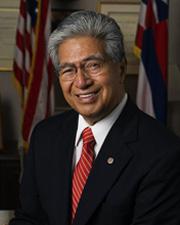 Sen. Daniel K. Akaka (D-HI)
Legislative Activity
Stay on top of the latest movement without scrolling through every action
Senate amendment proposed (on the floor): Amendment SA 2871 proposed by Senator Levin for Senator Akaka to Amendment SA 2011.(consideration: CR S11810-11816; text: CR S11811)
September 20, 2007
View full timeline
Senate amendment proposed (on the floor): Amendment SA 2871 proposed by Senator Levin for Senator Akaka to Amendment SA 2011.(consideration: CR S11810-11816; text: CR S11811)
September 20, 2007
Senate amendment agreed to: Amendment SA 2871 agreed to in Senate by Unanimous Consent.
September 20, 2007
Amendment SA 2871 proposed by Senator Levin for Senator Akaka to Amendment SA 2011. (consideration: CR S11810-11816; text: CR S11811) To provide flexibility in paying annuities to certain Federal retirees who return to work.
September 20, 2007
Amendment SA 2871 agreed to in Senate by Unanimous Consent.
September 20, 2007
Senate amendment submitted
September 17, 2007
Text
Submitted
TEXT OF AMENDMENTS

SA 2864. Mr. NELSON of Nebraska (for himself and Mr. Graham)
submitted an amendment intended to be proposed by him to the bill H.R.
1585, to authorize appropriations for fiscal year 2008 for military
activities of the Department of Defense, for military construction, and
for defense activities of the Department of Energy, to prescribe
personnel strengths for such fiscal year, and for other purposes; which
was ordered to lie on the table; as follows:

On page 96, line 6, insert after ``commissioned service''
the following: ``or on the fifth anniversary of the date of
the officer's appointment in the grade of lieutenant general
or vice admiral, whichever is later''.
______

SA 2865. Mr. NELSON of Nebraska (for himself and Mr. Graham)
submitted an amendment intended to be proposed by him to the bill H.R.
1585, to authorize appropriations for fiscal year 2008 for military
activities of the Department of Defense, for military construction, and
for defense activities of the Department of Energy, to prescribe
military personnel strengths for such fiscal year, and for other
purposes; which was ordered to lie on the table; as follows:

At the end of title VII, add the following:

SEC. 703. AUTHORITY FOR EXPANSION OF PERSONS ELIGIBLE FOR
CONTINUED HEALTH BENEFITS COVERAGE.

(a) Authority To Specify Additional Eligible Persons.--
Subsection (b) of section 1078a of title 10, United States
Code, is amended by adding at the end the following new
paragraph:
``(4) Any other person specified in regulations prescribed
by the Secretary of Defense for purposes of this paragraph
who loses entitlement to health care services under this
chapter or section 1145 of this title, subject to such terms
and conditions as the Secretary shall prescribe in the
regulations.''.
(b) Election of Coverage.--Subsection (d) of such section
is amended by adding at the end the following new paragraph:
``(4) In the case of a person described in subsection
(b)(4), by such date as the Secretary shall prescribe in the
regulations required for purposes of that subsection.''.
(c) Period of Coverage.--Subsection (g)(1) of such section
is amended--
(1) in subparagraph (B), by striking ``and'' at the end;
(2) in subparagraph (C), by striking the period at the end
and inserting ``; and ''; and
(3) by adding at the end the following new subparagraph:
``(D) in the case of a person described in subsection
(b)(4), the date that is 36 months after the date on which
the person loses entitlement to health care services as
described in that subsection.''.
______

SA 2866. Mr. NELSON of Nebraska (for himself, Mr. Graham, and Mr.
McCain) submitted an amendment intended to be proposed by him to the
bill H.R. 1585, to authorize appropriations for fiscal year 2008 for
military activities of the Department of Defense, for military
construction, and for defense activities of the Department of Energy,
to prescribe military personnel strengths for such fiscal year, and for
other purposes; which was ordered to lie on the table; as follows:

At the end of subtitle H of title V, add the following:

SEC. 594. DEMONSTRATION PROJECTS ON THE PROVISION OF SERVICES
TO MILITARY DEPENDENT CHILDREN WITH AUTISM.

(a) Demonstration Projects Authorized.--
(1) In general.--The Secretary of Defense may conduct one
or more demonstration projects to evaluate improved
approaches to the provision of education and treatment
services to military dependent children with autism.
(2) Purpose.--The purpose of any demonstration project
carried out under this section shall be to evaluate
strategies for integrated treatment and case manager services
that include early intervention and diagnosis, medical care,
parent involvement, special education services, intensive
behavioral intervention, and language, communications, and
other interventions considered appropriate by the Secretary.
(b) Review of Best Practices.--In carrying out
demonstration projects under this section, the Secretary of
Defense shall, in coordination with the Secretary of
Education, conduct a review of best practices in the United
States in the provision of education and treatment services
for children with autism, including an assessment of Federal
and State education and treatment services for children with
autism in each State, with an emphasis on locations where
members of the Armed Forces who qualify for enrollment in the
Exceptional Family Member Program of the Department of
Defense are assigned.
(c) Elements.--
(1) Enrollment in exceptional family member program.--
Military dependent children may participate in a
demonstration project under this section only if their
military sponsor is enrolled in the Exceptional Family Member
Program of the Department of Defense.
(2) Case managers.--Each demonstration project shall
include the assignment of both medical and special education
services case managers which shall be required under the
Exceptional Family Member Program pursuant to the policy
established by the Secretary of Defense.
(3) Individualized services plan.--Each demonstration
project shall provide for the voluntary development for
military dependent children with autism participating in such
demonstration project of individualized autism services plans
for use by Department of Defense medical and special
education services case managers, caregivers, and families to
ensure continuity of services throughout the active military
service of their military sponsor.
(4) Supervisory level providers.--The Secretary of Defense
may utilize for purposes of the demonstration projects
personnel who are professionals with a level (as determined
by the Secretary) of post-secondary education that is
appropriate for the provision of safe and effective services
for autism and who are from an accredited educational
facility in the mental health, human development, social
work, or education field to act as supervisory level
providers of behavioral intervention services for autism. In
so acting, such personnel may be authorized--
(A) to develop and monitor intensive behavior intervention
plans for military dependent children with autism who are
participating in the demonstration projects; and
(B) to provide appropriate training in the provision of
approved services to such children.
(5) Services under corporate services provider model.--(A)
In carrying out the demonstration projects, the Secretary may
utilize a corporate services provider model.
(B) Employees of a provider under a model referred to in
subparagraph (A) shall include personnel who implement
special educational and behavioral intervention plans for
military dependent children with autism that are developed,
reviewed, and maintained by supervisory level providers
approved by the Secretary.
(C) In authorizing such a model, the. Secretary shall
establish--
(i) minimum education, training, and experience criteria
required to be met by employees who provide services to
military dependent children with autism;
(ii) requirements for supervisory personnel and
supervision, including requirements for supervisor
credentials and for the frequency and intensity of
supervision; and
(iii) such other requirements as the Secretary considers
appropriate to ensure safety

[[Page S11605]]

and the protection of the children who receive services from
such employees under the demonstration projects.
(6) Construction with other services.--Services provided to
military dependent children with autism under the
demonstration projects under this section shall be in
addition to any other publicly-funded special education
services available in a location in which their military
sponsor resides.
(d) Period.--
(1) Commencement.--If the Secretary determines to conduct
demonstration projects under this section, the Secretary
shall commence any such demonstration projects not later than
180 days after the date of the enactment of this Act.
(2) Minimum period.--Any demonstration projects conducted
under this section shall be conducted for not less than two
years.
(e) Evaluation.--
(1) In general.--The Secretary shall conduct an evaluation
of each demonstration project conducted under this section.
(2) Elements.--The evaluation of a demonstration project
under this subsection shall include the following:
(A) An assessment of the extent to which the activities
under the demonstration project contributed to positive
outcomes for military dependent children with autism and
their families.
(B) An assessment of the extent to which the activities
under the demonstration project led to improvements in
services and continuity of care for children with autism.
(C) An assessment of the extent to which the activities
under the demonstration project improved military family
readiness and enhanced military retention.
(f) Reports.--Not later than 30 months after the
commencement of any demonstration project authorized by this
section, the Secretary shall submit to the Committees on
Armed Services of the Senate and the House of Representatives
a report on such demonstration project. The report on a
demonstration project shall include a description of such
project, the results of the evaluation under subsection (e)
with respect to such project, and a description of plans for
the further provision of services for military dependent
children with autism under such project.
______

SA 2867. Mr. NELSON of Nebraska (for himself and Mr. Graham)
submitted an amendment intended to be proposed by him to the bill H.R.
1585, to authorize appropriations for fiscal year 2008 for military
activities of the Department of Defense, for military construction, and
for defense activities of the Department of Energy, to prescribe
military personnel strengths for such fiscal year, and for other
purposes; which was ordered to lie on the table; as follows:

At the end of title XI, add the following:

SEC. 1107. REPEAL OF AUTHORITY FOR PAYMENT OF UNIFORM
ALLOWANCE TO CIVILIAN EMPLOYEES OF THE
DEPARTMENT OF DEFENSE.

(a) Repeal.--Section 1593 of title 10, United States Code,
is repealed.
(b) Clerical Amendment.--The table of sections at the
beginning of chapter 81 of such title is amended by striking
the item relating to section 1593.
______

SA 2868. Mr. NELSON of Nebraska (for himself and Mr. Graham)
submitted an amendment intended to be proposed by him to the bill H.R.
1585, to authorize appropriations for fiscal year 2008 for military
activities of the Department of Defense, for military construction, and
for defense activities of the Department of Energy, to prescribe
military personnel strengths for such fiscal year, and for other
purposes; which was ordered to lie on the table; as follows:

At the end of title VII, add the following:

SEC. 703. CONTINUATION OF ELIGIBILITY FOR TRICARE STANDARD
COVERAGE FOR CERTAIN MEMBERS OF THE SELECTED
RESERVE.

(a) In General.--Section 706(f) of the John Warner National
Defense Authorization Act for Fiscal Year 2007 (Public Law
109-364; 120 Stat. 2282; 10 U.S.C. 1076d note) is amended--
(1) by striking ``Enrollments'' and inserting ``(1) Except
as provided in paragraph (2), enrollments''; and
(2) by adding at the end the following new paragraph:
``(2) The enrollment of a member in TRICARE Standard that
is in effect on the day before health care under TRICARE
Standard is provided pursuant to the effective date in
subsection (g) shall not be terminated by operation of the
exclusion of eligibility under subsection (a)(2) of such
section 1076d, as so amended, for the duration of the
eligibility of the member under TRICARE Standard as in effect
on October 16, 2006.''.
(b) Effective Date.--The amendments made by subsection (a)
shall take effect on October 1, 2007.
______

SA 2869. Mr. NELSON of Nebraska (for himself, Mr. Graham, and Mr.
Warner) submitted an amendment intended to be proposed by him to the
bill H.R. 1585, to authorize appropriations for fiscal year 2008 for
military activities of the Department of Defense, for military
construction, and for defense activities of the Department of Energy,
to prescribe military personnel strengths for such fiscal year, and for
other purposes; which was ordered to lie on the table; as follows:

At the end of title XI, add the following:

SEC. 1107. AUTHORIZATION FOR INCREASED COMPENSATION FOR
FACULTY AND STAFF OF THE UNIFORMED SERVICES
UNIVERSITY OF THE HEALTH SCIENCES.

Section 2113(f) of title 10, United States Code, is
amended--
(1) in paragraph (1)--
(A) by striking ``so as'' and inserting ``after
consideration of the compensation necessary''; and
(B) by striking ``within the vicinity of the District of
Columbia'' and inserting ``identified by the Secretary for
purposes of this paragraph''; and
(2) in paragraph (4)--
(A) by striking ``section 5373'' and inserting ``sections
5307 and 5373''; and
(B) by adding at the end the following new sentence: ``In
no case may the total amount of compensation paid under
paragraph (1) in any year exceed the total amount of annual
compensation (excluding expenses) specified in section 102 of
title 3.''.
______

SA 2870. Mrs. BOXER submitted an amendment intended to be proposed by
her to the bill H.R. 1585, to authorize appropriations for fiscal year
2008 for military activities of the Department of Defense, for military
construction, and for defense activities of the Department of Energy,
to prescribe military personnel strengths for such fiscal year, and for
other purposes; which was ordered to lie on the table; as follows:

At the end of subtitle D of title X, add the following:

SEC. 1044. ANNUAL REPORT ON CASES REVIEWED BY NATIONAL
COMMITTEE FOR EMPLOYER SUPPORT OF THE GUARD AND
RESERVE.

Section 4332 of title 38, United States Code, is amended--
(1) by redesignating paragraphs (2), (3), (4), (5), and (6)
as paragraphs (3), (4), (5), (6), and (7) respectively;
(2) by inserting after paragraph (1) the following new
paragraph (2):
``(2) The number of cases reviewed by the Secretary of
Defense under the National Committee for Employer Support of
the Guard and Reserve of the Department of Defense during the
fiscal year for which the report is made.''; and
(3) in paragraph (5), as so redesignated, by striking
``(2), or (3)'' and inserting ``(2), (3), or (4)''.
______

SA 2871. Mr. AKAKA submitted an amendment intended to be proposed by
him to the bill H.R. 1585, to authorize appropriations for fiscal year
2008 for military activities of the Department of Defense, for military
construction, and for defense activities of the Department of Energy,
to prescribe military personnel strengths for such fiscal year, and for
other purposes; which was ordered to lie on the table; as follows:

At the appropriate place, insert the following:

SEC. __. FLEXIBILITY IN PAYING ANNUITIES TO CERTAIN FEDERAL
RETIREES WHO RETURN TO WORK.

(a) In General.--Section 9902(j) of title 5, United States
Code, is amended to read as follows:
``(j) Provisions Relating to Reemployment.--
``(1) Except as provided under paragraph (2), if an
annuitant receiving an annuity from the Civil Service
Retirement and Disability Fund becomes employed in a position
within the Department of Defense, his annuity shall continue.
An annuitant so reemployed shall not be considered an
employee for purposes of chapter 83 or 84.
``(2)(A) An annuitant receiving an annuity from the Civil
Service Retirement and Disability Fund who becomes employed
in a position within the Department of Defense following
retirement under section 8336(d)(1) or 8414(b)(1)(A) shall be
subject to section 8344 or 8468.
``(B) The Secretary of Defense may, under procedures and
criteria prescribed under subparagraph (C), waive the
application of the provisions of section 8344 or 8468 on a
case-by-case or group basis, for employment of an annuitant
referred to in subparagraph (A) in a position in the
Department of Defense.
``(C) The Secretary shall prescribe procedures for the
exercise of any authority under this paragraph, including
criteria for any exercise of authority and procedures for a
delegation of authority.
``(D) An employee as to whom a waiver under this paragraph
is in effect shall not be considered an employee for purposes
of subchapter III of chapter 83 or chapter 84.
``(3)(A) An annuitant retired under section 8336(d)(1) or
8414(b)(1)(A) receiving an annuity from the Civil Service
Retirement and Disability Fund, who is employed in a position
within the Department of Defense after the date of enactment
of the National Defense Authorization Act for Fiscal Year
2004 (Public Law 108-136), may elect to begin coverage under
paragraph (2) of this subsection.
``(B) An election for coverage under this paragraph shall
be filed not later than the

[[Page S11606]]

later of 90 days after the date the Department of Defense--
``(i) prescribes regulations to carry out this subsection;
or
``(ii) takes reasonable actions to notify employees who may
file an election.
``(C) If an employee files an election under this
paragraph, coverage shall be effective beginning on the date
of the filing of the election.
``(D) Paragraph (1) shall apply to an individual who is
eligible to file an election under subparagraph (A) of this
paragraph and does not file a timely election under
subparagraph (B) of this paragraph.''.
(b) Regulations.--Not later than 60 days after the date of
enactment of this Act, the Secretary of Defense shall
prescribe regulations to carry out the amendment made by this
section.
______

SA 2872. Mr. KENNEDY (for himself, Mr. Smith, Mr. Lieberman, Mr.
Brownback, Mr. Biden, Mr. Hagel, Mr. Leahy, Ms. Snowe, Mr. Durbin, Mrs.
Feinstein, Mr. Obama, Mr. Menendez, Mr. Levin, and Mr. Voinovich)
submitted an amendment intended to be proposed by him to the bill H.R.
1585, to authorize appropriations for fiscal year 2008 for military
activities of the Department of Defense, for military construction, and
for defense activities of the Department of Energy, to prescribe
military personnel strengths for such fiscal year, and for other
purposes; which was ordered to lie on the table; as follows:

At the end title VI, insert the following:

Subtitle D--Iraq Refugee Crisis

SEC. 1541. SHORT TITLE.

This subtitle may be cited as the ``Refugee Crisis in Iraq
Act''.

SEC. 1542. PROCESSING MECHANISMS.

(a) In General.--The Secretary of State shall establish
processing mechanisms in Iraq and in countries in the region
in which--
(1) aliens described in section 1543 may apply and
interview for admission to the United States as refugees; and
(2) aliens described in section 1544(b) may apply and
interview for admission to the United States as special
immigrants.
(b) Report.--
(1) In general.--Not later than 60 days after the date of
the enactment of this Act, the Secretary of State, in
consultation with the Secretary of Homeland Security, shall
submit a report that contains the plans and assessment
described in paragraph (2) to--
(A) the Committee on the Judiciary of the Senate;
(B) the Committee on Foreign Relations of the Senate;
(C) the Committee on the Judiciary of the House of
Representatives; and
(D) the Committee on Foreign Affairs of the House of
Representatives.
(2) Contents.--The report submitted under paragraph (1)
shall--
(A) describe the Secretary's plans to establish the
processing mechanisms described in subsection (a); and
(B) contain an assessment of in-country processing that
makes use of videoconferencing.

SEC. 1543. UNITED STATES REFUGEE PROGRAM PRIORITIES.

(a) In General.--Priority 2 refugees of special
humanitarian concern under the refugee resettlement priority
system shall include--
(1) Iraqis who were employed by, or worked for or directly
with the United States Government, in Iraq;
(2) Iraqis who were employed in Iraq by--
(A) a media or nongovernmental organization headquartered
in the United States; or
(B) an organization or entity that has received United
States Government funding through an official and documented
contract, award, grant, or cooperative agreement;
(3) spouses, children, sons, daughters, siblings, and
parents of aliens described in paragraph (1) or section
1544(b)(1); and
(4) Iraqis who are members of a religious or minority
community, have been identified by the Department of State as
a persecuted group, and have close family members (as
described in section 201(b)(2)(A)(i) or 203(a) of the
Immigration and Nationality Act (8 U.S.C. 1151(b)(2)(A)(i)
and 1153(a))) in the United States.
(b) Identification of Other Persecuted Groups.--The
Secretary of State is authorized to identify other Priority 2
groups in Iraq.
(c) Ineligible Organizations and Entities.--Organizations
and entities described in section 1543 shall not include any
that appear on the Department of the Treasury's list of
Specially Designated Nationals.
(d) Security.--An alien is not eligible to participate in
the program authorized under this section if the alien is
otherwise inadmissible to the United States under section
212(a)(3) of the Immigration and Nationality Act (8 U.S.C.
1182(a)(3)).

SEC. 1544. SPECIAL IMMIGRANT STATUS FOR CERTAIN IRAQIS.

(a) In General.--Subject to subsection (c)(1) and
notwithstanding any other provision of law, for purposes of
the Immigration and Nationality Act (8 U.S.C. 1101 et seq.),
the Secretary of Homeland Security may provide an alien
described in subsection (b) with the status of a special
immigrant under section 101(a)(27) of such Act (8 U.S.C.
1101(a)(27)), if the alien--
(1) or an agent acting on behalf of the alien, submits to
the Secretary a petition under section 204 of such Act (8
U.S.C. 1154) for classification under section 203(b)(4) of
such Act (8 U.S.C. 1153(b)(4));
(2) is otherwise eligible to receive an immigrant visa; and
(3) is otherwise admissible to the United States for
permanent residence (excluding the grounds for
inadmissibility specified in section 212(a)(4) of such Act (8
U.S.C. 1182(a)(4)).
(b) Aliens Described.--
(1) Principal aliens.--An alien is described in this
subsection if the alien--
(A) is a national of Iraq;
(B) was employed by, or worked for or directly with the
United States Government in Iraq, in or after 2003, for an
aggregate period of not less than 1 year; and
(C) provided faithful service to the United States
Government, which is documented in a positive recommendation
or evaluation.
(2) Spouses and children.--An alien is described in this
subsection if the alien is--
(A) the spouse or child of a principal alien described in
paragraph (1); and
(B) is following or accompanying to join the principal
alien in the United States.
(c) Numerical Limitations and Benefits.--
(1) In general.--The total number of principal aliens who
may be provided special immigrant status under this section
may not exceed 5,000 per year for each of the 5 fiscal years
beginning after the date of the enactment of this Act.
(2) Exclusion from numerical limitations.--Aliens provided
special immigrant status under this section shall not be
counted against any numerical limitation under sections
201(d), 202(a), or 203(b)(4) of the Immigration and
Nationality Act (8 U.S.C. 1151(d), 1152(a), and 1153(b)(4)).
(3) Benefits.--Aliens provided special immigrant status
under this section shall be eligible for the same
resettlement assistance, entitlement programs, and other
benefits as refugees admitted under section 207 of the
Immigration and Naturalization Act (8 U.S.C. 1157).
(4) Carry forward.--If the numerical limitation under
paragraph (1) is not reached during a given fiscal year, the
numerical limitation under paragraph (1) for the following
fiscal year shall be increased by a number equal to the
difference between--
(A) the number of visas authorized under paragraph (1) for
the given fiscal year; and
(B) the number of principal aliens provided special
immigrant status under this section during the given fiscal
year.
(d) Visa and Passport Issuance and Fees.--Neither the
Secretary of State nor the Secretary of Homeland Security may
charge an alien described in subsection (b) any fee in
connection with an application for, or issuance of, a special
immigrant visa. The Secretary of State shall ensure that
aliens described in this section who are issued special
immigrant visas are provided with the appropriate series
Iraqi passport necessary to enter the United States.
(e) Protection of Aliens.--The Secretary of State, in
consultation with other relevant Federal agencies, shall
provide an alien described in this section who is applying
for a special immigrant visa with protection or the immediate
removal from Iraq of such alien if the Secretary determines
that such alien is in imminent danger.
(f) Security.--An alien is not eligible to participate in
the program authorized under this section if the alien is
otherwise inadmissible to the United States under section
212(a)(3) of the Immigration and Nationality Act (8 U.S.C.
1182(a)(3)).
(g) Definitions.--The terms defined in subsections (a) and
(b) of section 101 of the Immigration and Nationality Act (8
U.S.C. 1101) have the same meanings when used in this
section.
(h) Regulations.--Not later than 90 days after the date of
the enactment of this Act, the Secretary of Homeland Security
shall promulgate regulations to carry out the provisions of
this section, including requirements for background checks.
(i) Savings Provision.--Nothing in this section may be
construed to affect the authority of the Secretary of
Homeland Security under section 1059 of the National Defense
Authorization Act for Fiscal Year 2006 (Public Law 109-163).

SEC. 1545. MINISTER COUNSELORS FOR IRAQI REFUGEES AND
INTERNALLY DISPLACED PERSONS.

(a) In General.--The Secretary of State shall establish in
the embassy of the United States located in Baghdad, Iraq, a
Minister Counselor for Iraqi Refugees and Internally
Displaced Persons (referred to in this section as the
``Minister Counselor for Iraq'').
(b) Duties.--The Minister Counselor for Iraq shall be
responsible for the oversight of processing for resettlement
of persons considered Priority 2 refugees of special
humanitarian concern, special immigrant visa programs in
Iraq, and the development and implementation of other
appropriate policies and programs concerning Iraqi refugees
and internally displaced persons. The Minister Counselor for
Iraq shall have the authority to refer persons to the United
States refugee resettlement program.
(c) Designation of Minister Counselors.--The Secretary of
State shall designate in the embassies of the United States
located in Cairo, Egypt; Amman, Jordan; Damascus, Syria; and
Beirut, Lebanon a Minister Counselor to oversee resettlement
to

[[Page S11607]]

the United States of persons considered Priority 2 refugees
of special humanitarian concern in those countries to ensure
their applications to the United States refugee resettlement
program are processed in an orderly manner and without delay.

SEC. 1546. COUNTRIES WITH SIGNIFICANT POPULATIONS OF
DISPLACED IRAQIS.

(a) In General.--With respect to each country with a
significant population of displaced Iraqis, including Iraq,
Jordan, Egypt, Syria, Turkey, and Lebanon, the Secretary of
State shall--
(1) as appropriate, consult with other countries regarding
resettlement of the most vulnerable members of such refugee
populations; and
(2) as appropriate, except where otherwise prohibited by
the laws of the United States, develop mechanisms in and
provide assistance to countries with a significant population
of displaced Iraqis to ensure the well-being and safety of
such populations in their host environments.
(b) Numerical Limitations.--In determining the number of
Iraqi refugees who should be resettled in the United States
under sections (a) and (b) of section 207 of the Immigration
and Nationality Act (8 U.S.C. 1157), the President shall
consult nongovernmental organizations that have a presence in
Iraq or experience in assessing the problems faced by Iraqi
refugees.
(c) Eligibility for Admission as Refugee.--Section
207(c)(1) of the Immigration and Nationality Act (8 U.S.C.
1157(c)(1)) is amended by adding at the end the following:
``No alien shall be denied the opportunity to apply for
admission under this section solely because such alien
qualifies as an immediate relative or is eligible for
classification as a special immigrant.''.

SEC. 1547. DENIAL OR TERMINATION OF ASYLUM.

Section 208(b) of the Immigration and Nationality Act (8
U.S.C. 1158) is amended by adding at the end the following:
``(4) Changed country conditions.--An applicant for asylum
or withholding of removal, whose claim was denied by an
immigration judge solely on the basis of changed country
conditions on or after March 1, 2003, may file a motion to
reopen to reconsider his or her claim not later than 6 months
after the date of the enactment of the Refugee Crisis in Iraq
Act if the applicant--
``(A) is a national of Iraq; and
``(B) remained in the United States on such date of
enactment.''.

SEC. 1548. REPORTS.

(a) Secretary of Homeland Security.--
(1) In general.--Not later than 90 days after the date of
the enactment of this Act, the Secretary of Homeland Security
shall submit a report containing plans to expedite the
processing of Iraqi refugees for resettlement to--
(A) the Committee on the Judiciary of the Senate;
(B) the Committee on Foreign Relations of the Senate;
(C) the Committee on the Judiciary of the House of
Representatives; and
(D) the Committee on Foreign Affairs of the House of
Representatives.
(2) Contents.--The report submitted under paragraph (1)
shall--
(A) detail the plans of the Secretary for expediting the
processing of Iraqi refugees for resettlement including
through temporary expansion of the Refugee Corps of United
States Citizenship and Immigration Services; and
(B) describe the plans of the Secretary for enhancing
existing systems for conducting background and security
checks of persons applying for Special Immigrant Visas and of
persons considered Priority 2 refugees of special
humanitarian concern under this subtitle, which enhancements
shall support immigration security and provide for the
orderly processing of such applications without delay.
(b) President.--Not later than 90 days after the date of
the enactment of this Act, and annually thereafter, the
President shall submit to Congress an unclassified report,
with a classified annex if necessary, which includes--
(1) an assessment of the financial, security, and personnel
considerations and resources necessary to carry out the
provisions of this subtitle;
(2) the number of aliens described in section 1543(1);
(3) the number of such aliens who have applied for special
immigrant visas;
(4) the date of such applications; and
(5) in the case of applications pending for more than 6
months, the reasons that visas have not been expeditiously
processed.
(c) Report on Iraqi Nationals Employed by the United States
Government and Federal Contractors in Iraq.--
(1) In general.--Not later than 90 days after the date of
the enactment of this Act, the Secretary of Defense, the
Secretary of State, the Administrator of the United States
Agency for International Development, the Secretary of the
Treasury, and the Secretary of Homeland Security shall--
(A) review internal records and databases of their
respective agencies for information that can be used to
verify employment of Iraqi nationals by the United States
Government; and
(B) solicit from each prime contractor or grantee that has
performed work in Iraq since March 2003 under a contract,
grant, or cooperative agreement with their respective
agencies that is valued in excess of $25,000 information that
can be used to verify the employment of Iraqi nationals by
such contractor or grantee.
(2) Information required.--To the extent data is available,
the information referred to in paragraph (1) shall include
the name and dates of employment of, biometric data for, and
other data that can be used to verify the employment of, each
Iraqi national that has performed work in Iraq since March
2003 under a contract, grant, or cooperative agreement with
an executive agency.
(3) Executive agency defined.--In this subsection, the term
``executive agency'' has the meaning given the term in
section 4(1) of the Office of Federal Procurement Policy Act
(41 U.S.C. 403(1)).
(d) Report on Establishment of Database.--Not later than 90
days after the date of the enactment of this Act, the
Secretary of Defense, in consultation with the Secretary of
State, the Administrator of the United States Agency for
International Development, the Secretary of the Treasury, and
the Secretary of Homeland Security, shall submit to Congress
a report examining the options for establishing a unified,
classified database of information related to contracts,
grants, or cooperative agreements entered into by executive
agencies for the performance of work in Iraq since March
2003, including the information described and collected under
subsection (c), to be used by relevant Federal departments
and agencies to adjudicate refugee, asylum, special immigrant
visa, and other immigration claims and applications.
(e) Noncompliance Report.--Not later than 180 days after
the date of the enactment of this Act, the President shall
submit a report to Congress that describes--
(1) the inability or unwillingness of any contractors or
grantees to provide the information requested under
subsection (c); and
(2) the reasons for failing to provide such information.

SEC. 1549. AUTHORIZATION OF APPROPRIATIONS.

There are authorized to be appropriated such sums as may be
necessary to carry out this subtitle.
______

SA 2873. Mrs. FEINSTEIN (for herself, Mr. Specter, and Mr. Feingold)
submitted an amendment intended to be proposed by her to the bill H.R.
1585, to authorize appropriations for fiscal year 2008 for military
activities of the Department of Defense, for military construction, and
for defense activities of the Department of Energy, to prescribe
military personnel strengths for such fiscal year, and for other
purposes; which was ordered to lie on the table; as follows:

After section 1058, insert the following:

SEC. 1059. CERTIORARI TO THE UNITED STATES COURT OF APPEALS
FOR THE ARMED FORCES.

(a) Short Title.--This section may be cited as the ``Equal
Justice for United States Military Personnel Act of 2007''.
(b) In General.--Section 1259 of title 28, United States
Code, is amended--
(1) in paragraph (3), by inserting ``or denied'' after
``granted''; and
(2) in paragraph (4), by inserting ``or denied'' after
``granted''.
(c) Technical and Conforming Amendment.--Section 867a(a) of
title 10, United States Code, is amended by striking ``The
Supreme Court may not review by a writ of certiorari under
this section any action of the Court of Appeals for the Armed
Forces in refusing to grant a petition for review.''.
______

SA 2874. Mr. LUGAR (for himself and Mr. Biden) submitted an amendment
intended to be proposed by him to the bill H.R. 1585, to authorize
appropriations for fiscal year 2008 for military activities of the
Department of Defense, for military construction, and for defense
activities of the Department of Energy, to prescribe military personnel
strengths for such fiscal year, and for other purposes; which was
ordered to lie on the table; as follows:

At the end of title XII, add the following:

Subtitle D--Reconstruction and Stabilization Civilian Management

SEC. 1241. SHORT TITLE.

This subtitle may be cited as the ``Reconstruction and
Stabilization Civilian Management Act of 2007''.

SEC. 1242. FINDING; PURPOSE.

(a) Finding.--Congress finds that the resources of the
United States Armed Forces have been burdened by having to
undertake stabilization and reconstruction tasks in the
Balkans, Afghanistan, Iraq, and other countries of the world
that could have been performed by civilians, which has
resulted in lengthy deployments for Armed Forces personnel.
(b) Purpose.--The purpose of this subtitle is to provide
for the continued development, as a core mission of the
Department of State and the United States Agency for
International Development, of an effective expert civilian
response capability to carry out reconstruction and
stabilization activities in a country or region that is at
risk of, in, or is in transition from, conflict or civil
strife.

SEC. 1243. DEFINITIONS.

In this subtitle:
(1) Administrator.--The term ``Administrator'' means the
Administrator of the United States Agency for International
Development.

[[Page S11608]]

(2) Appropriate congressional committees.--The term
``appropriate congressional committees'' means--
(A) the Committee on Foreign Relations of the Senate; and
(B) the Committee on Foreign Affairs of the House of
Representatives.
(3) Department.--Except as otherwise provided in this
subtitle, the term ``Department'' means the Department of
State.
(4) Executive agency.--The term ``executive agency'' has
the meaning given that term in section 105 of title 5, United
States Code.
(5) Secretary.--The term ``Secretary'' means the Secretary
of State.

SEC. 1244. SENSE OF CONGRESS.

It is the sense of Congress that--
(1) the civilian element of United States joint civilian-
military operations should be strengthened in order to
enhance the execution of current and future reconstruction
and stabilization activities in foreign countries or regions
that are at risk of, in, or are in transition from, conflict
or civil strife;
(2) the capability of civilian agencies of the United
States Government to carry out reconstruction and
stabilization activities in such countries or regions should
also be enhanced through a new rapid response corps of
civilian experts supported by the establishment of a new
system of planning, organization, personnel policies, and
education and training, and the provision of adequate
resources;
(3) the international community, including nongovernmental
organizations, and the United Nations and its specialized
agencies, should be further encouraged to participate in
planning and organizing reconstruction and stabilization
activities in such countries or regions;
(4) the executive branch has taken a number of steps to
strengthen civilian capability, including the establishment
of an office headed by a Coordinator for Reconstruction and
Stabilization in the Department, the Presidential designation
of the Secretary as the interagency coordinator and leader of
reconstruction and stabilization efforts, and Department of
Defense directives to the military to support the Office of
Reconstruction and Stabilization and to work closely with
counterparts in the Department of State and other civilian
agencies to develop and enhance personnel, training,
planning, and analysis;
(5) the Secretary and the Administrator should work with
the Secretary of Defense to augment existing personnel
exchange programs among the Department, the United States
Agency for International Development, and the Department of
Defense, including the regional commands and the Joint Staff,
to enhance the stabilization and reconstruction skills of
military and civilian personnel and their ability to
undertake joint operations; and
(6) the heads of other executive agencies should establish
personnel exchange programs that are designed to enhance the
stabilization and reconstruction skills of military and
civilian personnel.

SEC. 1245. OFFICE OF THE COORDINATOR FOR RECONSTRUCTION AND
STABILIZATION.

Title I of the State Department Basic Authorities Act of
1956 (22 U.S.C. 2651 et seq.) is amended by adding at the end
the following new section:

``SEC. 62. RECONSTRUCTION AND STABILIZATION.

``(a) Office of the Coordinator for Reconstruction and
Stabilization.--
``(1) Establishment.--There is established within the
Department of State the Office of the Coordinator for
Reconstruction and Stabilization.
``(2) Coordinator for reconstruction and stabilization.--
The head of the Office shall be the Coordinator for
Reconstruction and Stabilization, who shall be appointed by
the President, by and with the advice and consent of the
Senate. The Coordinator shall serve at the sole direction of,
and report solely to, the Secretary of State or the Deputy
Secretary of State and shall have the rank and status of
Ambassador at Large.
``(3) Functions.--The functions of the Office of the
Coordinator for Reconstruction and Stabilization include the
following:
``(A) Monitoring, in coordination with relevant bureaus
within the Department of State, political and economic
instability worldwide to anticipate the need for mobilizing
United States and international assistance for the
stabilization and reconstruction of countries or regions that
are at risk of, in, or are in transition from, conflict or
civil strife.
``(B) Assessing the various types of stabilization and
reconstruction crises that could occur and cataloging and
monitoring the non-military resources and capabilities of
Executive agencies that are available to address such crises.
``(C) Planning to address appropriate non-military
requirements, such as demobilization, policing, human rights
monitoring, and public information, that commonly arise in
stabilization and reconstruction crises.
``(D) Coordinating with relevant Executive agencies (as
that term is defined in section 105 of title 5, United States
Code) to develop interagency contingency plans to mobilize
and deploy civilian personnel to address the various types of
such crises.
``(E) Entering into appropriate arrangements with other
Executive agencies to carry out activities under this section
and the Reconstruction and Stabilization Civilian Management
Act of 2007.
``(F) Identifying personnel in State and local governments
and in the private sector who are available to participate in
the Response Readiness Corps established under subsection (c)
or to otherwise participate in or contribute to stabilization
and reconstruction activities.
``(G) Taking steps to ensure that training of civilian
personnel to perform such stabilization and reconstruction
activities is adequate and, as appropriate, includes security
training that involves exercises and simulations with the
Armed Forces, including the regional commands.
``(H) Sharing information and coordinating plans for
stabilization and reconstruction activities, as appropriate,
with the United Nations and its specialized agencies, the
North Atlantic Treaty Organization, nongovernmental
organizations, and other foreign national and international
organizations.
``(I) Coordinating plans and procedures for joint civilian-
military operations with respect to stabilization and
reconstruction activities.
``(J) Maintaining the capacity to field on short notice an
evaluation team to undertake on-site needs assessment.
``(b) Response to Stabilization and Reconstruction
Crisis.--If the President determines that it is important to
the national interests of the United States for United States
civilian agencies or non-Federal employees to assist in
stabilizing and reconstructing a country or region that is at
risk of, in, or is in transition from, conflict or civil
strife, the President may--
``(1) designate the Coordinator, or such other individual
as the President may determine appropriate, as the
coordinator of the United States response, and the individual
so designated, or, in the event the President does not make
such a designation, the Coordinator for Reconstruction and
Stabilization, shall--
``(A) assess the immediate and long-term need for resources
and civilian personnel;
``(B) identify and mobilize non-military resources to
respond to the crisis; and
``(C) coordinate the activities of the other individuals or
management team, if any, designated by the President to
manage the United States response;
``(2) exercise the authorities contained in sections
552(c)(2) and 610 of the Foreign Assistance Act of 1961 (22
U.S.C. 2348a(c)(2) and 2360) without regard to the percentage
and aggregate dollar limitations contained in such sections;
and
``(3) furnish assistance to respond to the crisis in
accordance with the provisions set forth in section 614(a)(3)
of the Foreign Assistance Act of 1961 (22 U.S.C. 2364(a)(3)),
including funds made available under such Act (22 U.S.C. 2151
et seq.) and transferred or reprogrammed for purposes of this
section.''.

SEC. 1246. RESPONSE READINESS CORPS.

(a) In General.--Section 62 of the State Department Basic
Authorities Act of 1956 (as added by section 1245) is amended
by adding at the end the following new subsection:
``(c) Response Readiness Corps.--
``(1) In general.--The Secretary, in consultation with the
Administrator of the United States Agency for International
Development and the heads of other appropriate departments
and agencies of the United States Government, is authorized
to establish and maintain a Response Readiness Corps
(hereafter referred to in this subsection as the `Corps') to
provide assistance in support of stabilization and
reconstruction activities in foreign countries or regions
that are at risk of, in, or are in transition from, conflict
or civil strife.
``(2) Federal components.--
``(A) Active and standby components.--The Corps shall have
active and standby components consisting of United States
Government personnel as follows:
``(i) An active component, which should consist of 250
personnel who are recruited, employed, and trained in
accordance with this paragraph.
``(ii) A standby component, which should consist of 2000
personnel who are recruited and trained in accordance with
this paragraph.
``(B) Authorized members of standby component.--Personnel
in the standby component of the Corps may include employees
of the Department of State (including Foreign Service
Nationals), employees of the United States Agency for
International Development, employees of any other executive
agency (as that term is defined in section 105 of title 5,
United States Code), and employees of the legislative branch
and judicial branch of Government--
``(i) who are assigned to the standby component by the
Secretary following nomination for such assignment by the
head of the department or agency of the United States
Government concerned or by an appropriate official of the
legislative or judicial branch of Government, as applicable;
and
``(ii) who--

``(I) have the training and skills necessary to contribute
to stabilization and reconstruction activities; and
``(II) have volunteered for deployment to carry out
stabilization and reconstruction activities.

``(C) Recruitment and employment.--The recruitment and
employment of personnel to the Corps shall be carried out by
the Secretary, the Administrator of the United States Agency
for International Development, and the heads of the other
departments and agencies of the United States

[[Page S11609]]

Government participating in the establishment and maintenance
of the Corps.
``(D) Training.--The Secretary is authorized to train the
members of the Corps under this paragraph to perform services
necessary to carry out the purpose of the Corps under
paragraph (1).
``(E) Compensation.--Members of the active component of the
Corps under subparagraph (A)(i) shall be compensated in
accordance with the appropriate salary class for the Foreign
Service, as set forth in sections 402 and 403 of the Foreign
Service Act of 1980 (22 U.S.C. 3962, 3963), or in accordance
with the appropriate compensation provisions of title 5,
United States Code.
``(3) Civilian reserve.--
``(A) Civilian reserve.--The Corps shall have a reserve
(hereafter referred to in this subsection as the `Civilian
Reserve') consisting of non-United States Government
personnel who are trained and available as needed to perform
services necessary to carry out the purpose of the Corps
under paragraph (1). The Civilian Reserve shall be
established by the Secretary, in consultation with the
Administrator of the Unites States Agency for International
Development and the heads of other appropriate departments
and agencies of the United States Government.
``(B) Composition.--Beginning not later than two years
after the date of the enactment of the Reconstruction and
Stabilization Civilian Management Act of 2007, the Civilian
Reserve shall include at least 500 personnel, who may include
retired employees of the United States Government, contractor
personnel, nongovernmental organization personnel, State and
local government employees, and individuals from the private
sector, who--
``(i) have the training and skills necessary to enable them
to contribute to stabilization and reconstruction activities;
``(ii) have volunteered to carry out stabilization and
reconstruction activities; and
``(iii) are available for training and deployment to carry
out the purpose of the Corps under paragraph (1).
``(4) Use of response readiness corps.--
``(A) Federal active component.--Members of the active
component of the Corps under paragraph (2)(A)(i) are
authorized to be available--
``(i) for activities in direct support of stabilization and
reconstruction activities; and
``(ii) if not engaged in activities described in clause
(i), for assignment in the United States, United States
diplomatic missions, and United States Agency for
International Development missions.
``(B) Federal standby component and civilian reserve.--The
Secretary may deploy members of the Federal standby component
of the Corps under paragraph (2)(A)(ii), and members of the
Civilian Reserve under paragraph (3), in support of
stabilization and reconstruction activities in a foreign
country or region if the President makes a determination
regarding a stabilization and reconstruction crisis under
subsection (b).''.
(b) Employment Authority.--The full-time personnel in the
active component of the Response Readiness Corps under
section 62(c)(2)(A)(i) of the State Department Basic
Authorities Act of 1956 (as added by subsection (a)) are in
addition to any other full-time personnel authorized to be
employed under any other provision of law.
(c) Report.--Not later than 180 days after the date of the
enactment of this Act, the Secretary shall submit to the
appropriate congressional committees a report on the status
of efforts to establish the Response Readiness Corps under
this section. The report should include recommendations for
any legislation necessary to implement section 62(c) of the
State Department Basic Authorities Act of 1956 (as so added).

SEC. 1247. STABILIZATION AND RECONSTRUCTION TRAINING AND
EDUCATION.

Section 701 of the Foreign Service Act of 1980 (22 U.S.C.
4021) is amended--
(1) by redesignating subsection (g) as subsection (h); and
(2) by inserting after subsection (f) the following new
subsection:
``(g) Stabilization and Reconstruction Curriculum.--
``(1) Establishment and mission.--The Secretary, in
cooperation with the Secretary of Defense and the Secretary
of the Army, is authorized to establish a stabilization and
reconstruction curriculum for use in programs of the Foreign
Service Institute, the National Defense University, and the
United States Army War College.
``(2) Curriculum content.--The curriculum should include
the following:
``(A) An overview of the global security environment,
including an assessment of transnational threats and an
analysis of United States policy options to address such
threats.
``(B) A review of lessons learned from previous United
States and international experiences in stabilization and
reconstruction activities.
``(C) An overview of the relevant responsibilities,
capabilities, and limitations of various Executive agencies
(as that term is defined in section 105 of title 5, United
States Code) and the interactions among them.
``(D) A discussion of the international resources available
to address stabilization and reconstruction requirements,
including resources of the United Nations and its specialized
agencies, nongovernmental organizations, private and
voluntary organizations, and foreign governments, together
with an examination of the successes and failures experienced
by the United States in working with such entities.
``(E) A study of the United States interagency system.
``(F) Foreign language training.
``(G) Training and simulation exercises for joint civilian-
military emergency response operations.''.

SEC. 1248. SERVICE RELATED TO STABILIZATION AND
RECONSTRUCTION.

(a) Promotion Purposes.--Service in stabilization and
reconstruction operations overseas, membership in the
Response Readiness Corps under section 62(c) of the State
Department Basic Authorities Act of 1956 (as added by section
1246), and education and training in the stabilization and
reconstruction curriculum established under section 701(g) of
the Foreign Service Act of 1980 (as added by section 1247)
should be considered among the favorable factors for the
promotion of employees of Executive agencies.
(b) Personnel Training and Promotion.--The Secretary and
the Administrator should take steps to ensure that, not later
than 3 years after the date of the enactment of this Act, at
least 10 percent of the employees of the Department and the
United States Agency for International Development in the
United States are members of the Response Readiness Corps or
are trained in the activities of, or identified for potential
deployment in support of, the Response Readiness Corps. The
Secretary should provide such training as needed to
Ambassadors and Deputy Chiefs of Mission.
(c) Other Incentives and Benefits.--The Secretary and the
Administrator may establish and administer a system of awards
and other incentives and benefits to confer appropriate
recognition on and reward any individual who is assigned,
detailed, or deployed to carry out stabilization or
reconstruction activities in accordance with this subtitle.

SEC. 1249. AUTHORITIES RELATED TO PERSONNEL.

(a) Contracting Authority.--
(1) In general.--The Secretary, or the Administrator with
the concurrence of the Secretary, may enter into contracts to
procure the services of nationals of the United States (as
defined in section 101(a)(22) of the Immigration and
Nationality Act (8 U.S.C. 1101(a)(22)) or aliens authorized
to be employed in the United States as personal services
contractors for the purpose of carrying out this subtitle,
without regard to Civil Service or classification laws, for
service in the Office of the Coordinator for Reconstruction
and Stabilization or for service in foreign countries to
assist in stabilizing and reconstructing a country or region
that is at risk of, in, or is in transition from, conflict or
civil strife. Such contracts are authorized to be negotiated,
the terms of the contracts to be prescribed, and the work to
be performed, where necessary, without regard to such
statutory provisions as relate to the negotiation, making,
and performance of contracts and performance of work in the
United States.
(2) Status of contractors.--Individuals performing services
under contracts described in paragraph (1) shall not by
virtue of performing such services be considered to be
employees of the United States Government for purposes of any
law administered by the Office of Personnel Management. The
Secretary or Administrator may determine the applicability to
such individuals of any law administered by the Secretary or
Administrator concerning the performance of such services by
such individuals. Individuals employed by contract under the
authority provided in paragraph (1) shall be considered
employees for the purposes of parts 2600 through 2641 of
title 5, Code of Federal Regulations, and sections 201, 203,
205, 207, 208, and 209 of title 18, United States Code.
(b) Experts and Consultants.--The Secretary and the
Administrator may, to the extent necessary to obtain services
without delay, employ experts and consultants under section
3109 of title 5, United States Code, for the purpose of
carrying out this subtitle.
(c) Authority To Accept and Assign Details.--The Secretary
is authorized to accept details or assignments of employees
of Executive agencies, members of the uniformed services, and
employees of State or local governments on a reimbursable or
nonreimbursable basis for the purpose of carrying out this
subtitle. The assignment of an employee of a State or local
government under this subsection shall be consistent with
subchapter VI of chapter 33 of title 5, United States Code.
(d) Dual Compensation Waiver.--
(1) Annuitants under civil service retirement system or
federal employees retirement system.--Notwithstanding
sections 8344(i) and 8468(f) of title 5, United States Code,
the Secretary or the head of another executive agency, as
authorized by the Secretary, may waive the application of
subsections (a) through (h) of such section 8344 and
subsections (a) through (e) of such section 8468 with respect
to annuitants under the Civil Service Retirement System or
the Federal Employees Retirement System who are assigned,
detailed, or deployed to assist in stabilizing and
reconstructing a country or region that is at risk of, in, or
is in transition from, conflict or civil strife during the
period of their reemployment.
(2) Annuitants under foreign service retirement and
disability system or foreign service pension system.--The
Secretary may waive the application of subsections (a)
through (d) of section 824 of the Foreign

[[Page S11610]]

Service Act (22 U.S.C. 4064) for annuitants under the Foreign
Service Retirement and Disability System or the Foreign
Service Pension System who are reemployed on a temporary
basis in order to be assigned, detailed, or deployed to
assist in stabilization and reconstruction activities under
this subtitle.
(e) Increase in Premium Pay Cap.--The Secretary, or the
head of another executive agency as authorized by the
Secretary, may compensate an employee detailed, assigned, or
deployed to assist in stabilizing and reconstructing a
country or region that is at risk of, in, or is in transition
from, conflict or civil strife, without regard to the
limitations on premium pay set forth in section 5547 of title
5, United States Code, to the extent that the aggregate of
the basic pay and premium pay of such employee for a year
does not exceed the annual rate payable for level II of the
Executive Schedule.
(f) Extension of Certain Foreign Service Benefits.--The
Secretary, or the head of another executive agency as
authorized by the Secretary, may extend to any individuals
assigned, detailed, or deployed to carry out stabilization
and reconstruction activities in accordance with this
subtitle, the benefits or privileges set forth in sections
412, 413, 704, and 901 of the Foreign Service Act of 1980 (22
U.S.C. 3972, 22 U.S.C. 3973, 22 U.S.C. 4024, and 22 U.S.C.
4081) to the same extent and manner that such benefits and
privileges are extended to members of the Foreign Service.
(g) Compensatory Time.--Notwithstanding any other provision
of law, the Secretary, or the head of another executive
agency as authorized by the Secretary, may, subject to the
consent of an individual who is assigned, detailed, or
deployed to carry out stabilization and reconstruction
activities in accordance with this subtitle, grant such
individual compensatory time off for an equal amount of time
spent in regularly or irregularly scheduled overtime work.
Credit for compensatory time off earned shall not form the
basis for any additional compensation. Any such compensatory
time not used within 26 pay periods shall be forfeited.
(h) Acceptance of Volunteer Services.--
(1) In general.--The Secretary may accept volunteer
services for the purpose of carrying out this subtitle
without regard to section 1342 of title 31, United States
Code.
(2) Types of volunteers.--Donors of voluntary services
accepted for purposes of this section may include--
(A) advisors;
(B) experts;
(C) consultants; and
(D) persons performing services in any other capacity
determined appropriate by the Secretary.
(3) Supervision.--The Secretary shall--
(A) ensure that each person performing voluntary services
accepted under this section is notified of the scope of the
voluntary services accepted;
(B) supervise the volunteer to the same extent as employees
receiving compensation for similar services; and
(C) ensure that the volunteer has appropriate credentials
or is otherwise qualified to perform in each capacity for
which the volunteer's services are accepted.
(4) Applicability of law relating to federal government
employees.--A person providing volunteer services accepted
under this section shall not be considered an employee of the
Federal Government in the performance of those services,
except for the purposes of the following provisions of law:
(A) Chapter 81 of title 5, United States Code, relating to
compensation for work-related injuries.
(B) Chapter 11 of title 18, United States Code, relating to
conflicts of interest.
(5) Applicability of law relating to volunteer liability
protection.--
(A) In general.--A person providing volunteer services
accepted under this section shall be deemed to be a volunteer
of a nonprofit organization or governmental entity, with
respect to the accepted services, for purposes of the
Volunteer Protection Act of 1997 (42 U.S.C. 14501 et seq.).
(B) Inapplicability of exceptions to volunteer liability
protection.--Section 4(d) of such Act (42 U.S.C. 14503(d))
does not apply with respect to the liability of a person with
respect to services of such person that are accepted under
this section.
(i) Authority for Outside Advisors.--
(1) In general.--The Secretary may establish temporary
advisory commissions composed of individuals with appropriate
expertise to facilitate the carrying out of this subtitle.
(2) Inapplicability of faca.--The requirements of the
Federal Advisory Committee Act (5 U.S.C. App.) shall not
apply to the activities of a commission established under
this subsection.

SEC. 1250. PREVIOUSLY APPROPRIATED FUNDS.

There are authorized to be appropriated for the Department
of State under the heading ``diplomatic and consular
programs'' such sums as may be available under section 3810
of the U.S. Troop Readiness, Veterans' Care, Katrina
Recovery, and Iraq Accountability Appropriations Act, 2007
(Public Law 110-28; 121 Stat. 151) to support and maintain a
civilian reserve corps.
______

SA 2875. Mr. BOND submitted an amendment intended to be proposed by
him to the bill H.R. 1585, to authorize appropriations for fiscal year
2008 for military activities of the Department of Defense, for military
construction, and for defense activities of the Department of Energy,
to prescribe military personnel strengths for such fiscal year, and for
other purposes; which was ordered to lie on the table; as follows:

Strike section 1064 and insert the following:

SEC. 1064. SECURITY CLEARANCES; LIMITATIONS.

(a) In General.--Title III of the Intelligence Reform and
Terrorism Prevention Act of 2004 (50 U.S.C. 435b) is amended
by adding at the end the following new section:

``SEC. 3002. SECURITY CLEARANCES; LIMITATIONS.

``(a) Definitions.--In this section:
``(1) Controlled substance.--The term `controlled
substance' has the meaning given that term in section 102 of
the Controlled Substances Act (21 U.S.C. 802).
``(2) Covered person.--The term `covered person' means--
``(A) an officer or employee of a Federal agency;
``(B) a member of the Army, Navy, Air Force, or Marine
Corps who is on active duty or is in an active status; and
``(C) an officer or employee of a contractor of a Federal
agency.
``(3) Restricted data.--The term `Restricted Data' has the
meaning given that term in section 11 of the Atomic Energy
Act of 1954 (42 U.S.C. 2014).
``(4) Special access program.--The term `special access
program' has the meaning given that term in section 4.1 of
Executive Order 12958 (60 Fed. Reg. 19825).
``(b) Prohibition.--After January 1, 2008, the head of a
Federal agency may not grant or renew a security clearance
for a covered person who is--
``(1) an unlawful user of, or is addicted to, a controlled
substance; or
``(2) mentally incompetent, as determined by an
adjudicating authority, based on an evaluation by a duly
qualified mental health professional employed by, or
acceptable to and approved by, the United States government
and in accordance with the adjudicative guidelines required
by subsection (d).
``(c) Disqualification.--
``(1) In general.--After January 1, 2008, absent an express
written waiver granted in accordance with paragraph (2), the
head of a Federal agency may not grant or renew a security
clearance described in paragraph (3) for a covered person who
has been--
``(A) convicted in any court of the United States of a
crime, was sentenced to imprisonment for a term exceeding 1
year, and was incarcerated as a result of that sentence for
not less than 1 year; or
``(B) discharged or dismissed from the Armed Forces under
dishonorable conditions.
``(2) Waiver authority.--In a meritorious case, an
exception to the disqualification in this subsection may be
authorized if there are mitigating factors. Any such waiver
may be authorized only in accordance with standards and
procedures prescribed by, or under the authority of, an
Executive Order or other guidance issued by the President.
``(3) Covered security clearances.--This subsection applies
to security clearances that provide for access to--
``(A) special access programs;
``(B) Restricted Data; or
``(C) any other information commonly referred to as
`sensitive compartmented information'.
``(4) Annual report.--
``(A) Requirement for report.--Not later than February 1 of
each year, the head of a Federal agency shall submit a report
to the appropriate committees of Congress if such agency
employs or employed a person for whom a waiver was granted in
accordance with paragraph (2) during the preceding year. Such
annual report shall not reveal the identity of such person,
but shall include for each waiver issued the disqualifying
factor under paragraph (1) and the reasons for the waiver of
the disqualifying factor.
``(B) Definitions.--In this paragraph:
``(i) Appropriate committees of congress.--The term
`appropriate committees of Congress' means, with respect to a
report submitted under subparagraph (A) by the head of a
Federal agency--

``(I) the congressional intelligence committees;
``(II) the Committee on Homeland Security and Governmental
Affairs of the Senate;
``(III) the Committee on Oversight and Government Reform of
the House of Representatives; and
``(IV) each Committee of the Senate or the House of
Representatives with oversight authority over such Federal
agency.

``(ii) Congressional intelligence committees.--The term
`congressional intelligence committees' has the meaning given
that term in section 3 of the National Security Act of 1947
(50 U.S.C. 401a).
``(d) Adjudicative Guidelines.--
``(1) Requirement to establish.--The President shall
establish adjudicative guidelines for determining eligibility
for access to classified information.
``(2) Requirements related to mental health.--The
guidelines required by paragraph (1) shall--
``(A) include procedures and standards under which a
covered person is determined to be mentally incompetent and
provide a means to appeal such a determination; and
``(B) require that no negative inference concerning the
standards in the guidelines may be raised solely on the basis
of seeking mental health counseling.''.
(b) Conforming Amendments.--
(1) Repeal.--Section 986 of title 10, United States Code,
is repealed.

[[Page S11611]]

(2) Clerical amendment.--The table of sections at the
beginning of chapter 49 of such title is amended by striking
the item relating to section 986.
(3) Effective date.--The amendments made by this subsection
shall take effect on January 1, 2008.
______

SA 2876. Mr. KERRY (for himself, Mr. Domenici, Mr. Tester, Mr. Hagel,
and Mr. Obama) submitted an amendment intended to be proposed to
amendment SA 2011 proposed by Mr. Nelson of Nebraska (for Mr. Levin) to
the bill H.R. 1585, to authorize appropriations for fiscal year 2008
for military activities of the Department of Defense, for military
construction, and for defense activities of the Department of Energy,
to prescribe military personnel strengths for such fiscal year, and for
other purposes; which was ordered to lie on the table; as follows:

At the end of title VII, add the following:

SEC. 703. CENTER OF EXCELLENCE IN PREVENTION, DIAGNOSIS,
MITIGATION, TREATMENT, AND REHABILITATION OF
MILITARY EYE INJURIES.

(a) Establishment.--
(1) In general.--Chapter 55 of title 10, United States
Code, is amended by inserting after section 1105 the
following new section:

``Sec. 1105a. Center of Excellence in Prevention, Diagnosis,
Mitigation, Treatment, and Rehabilitation of Military Eye
Injuries

``(a) In General.--The Secretary of Defense shall establish
within the Department of Defense a center of excellence in
the prevention, diagnosis, mitigation, treatment, and
rehabilitation of military eye injuries to carry out the
responsibilities specified in subsection (c). The center
shall be known as a `Center of Excellence in Prevention,
Diagnosis, Mitigation, Treatment, and Rehabilitation of
Military Eye Injuries'.
``(b) Partnerships.--The Secretary shall ensure that the
Center collaborates to the maximum extent practicable with
the Department of Veterans Affairs, institutions of higher
education, and other appropriate public and private entities
(including international entities) to carry out the
responsibilities specified in subsection (c).
``(c) Responsibilities.--(1) The Center shall--
``(A) develop, implement, and oversee a registry of
information for the tracking of the diagnosis, surgical
intervention or other operative procedure, other treatment,
and follow up for each case of eye injury incurred by a
member of the armed forces in combat that requires surgery or
other operative intervention; and
``(B) ensure the electronic exchange with Secretary of
Veterans Affairs of information obtained through tracking
under subparagraph (A).
``(2) The registry under this subsection shall be known as
the `Military Eye Injury Registry'.
``(3) The Center shall develop the Registry in consultation
with the ophthalmological specialist personnel and optometric
specialist personnel of the Department of Defense. The
mechanisms and procedures of the Registry shall reflect
applicable expert research on military and other eye
injuries.
``(4) The mechanisms of the Registry for tracking under
paragraph (1)(A) shall ensure that each military medical
treatment facility or other medical facility shall submit to
the Center for inclusion in the Registry information on the
diagnosis, surgical intervention or other operative
procedure, other treatment, and follow up for each case of
eye injury described in that paragraph as follows (to the
extent applicable):
``(A) Not later than 72 hours after surgery or other
operative intervention.
``(B) Any clinical or other operative intervention done
within 30 days, 60 days, or 120 days after surgery or other
operative intervention as a result of a follow-up
examination.
``(C) Not later than 180 days after surgery or other
operative intervention.
``(5)(A) The Center shall provide notice to the Blind
Service or Low Vision Optometry Service, as applicable, of
the Department of Veterans Affairs on each member of the
armed forces described in subparagraph (B) for purposes of
ensuring the coordination of the provision of visual
rehabilitation benefits and services by the Department of
Veterans Affairs after the separation or release of such
member from the armed forces.
``(B) A member of the armed forces described in this
subparagraph is a member of the armed forces as follows:
``(i) A member with an eye injury incurred in combat who
has a visual acuity of \20/200\ or less in either eye.
``(ii) A member with an eye injury incurred in combat who
has a loss of peripheral vision of twenty degrees or less.
``(d) Utilization of Registry Information.--The Secretary
of Defense and the Secretary of Veterans Affairs shall
jointly ensure that information in the Military Eye Injury
Registry is available to appropriate ophthalmological and
optometric personnel of the Department of Veterans Affairs
for purposes of encouraging and facilitating the conduct of
research, and the development of best practices and clinical
education, on eye injuries incurred by members of the armed
forces in combat.''.
(2) Clerical amendment.--The table of sections at the
beginning of chapter 55 of such title is amended by inserting
after the item relating to section 1105 the following new
item:

``1105a. Center of Excellence in Prevention, Diagnosis, Mitigation,
Treatment, and Rehabilitation of Military Eye
Injuries.''.

(b) Inclusion of Records of OIF/OEF Veterans.--The
Secretary of Defense shall take appropriate actions to
include in the Military Eye Injury Registry established under
section 1105a of title 10, United States Code (as added by
subsection (a)), such records of members of the Armed Forces
who incurred an eye injury in combat in Operation Iraqi
Freedom or Operation Enduring Freedom before the
establishment of the Registry as the Secretary considers
appropriate for purposes of the Registry.
(c) Report on Establishment.--Not later than 180 days after
the date of the enactment of this Act, the Secretary shall
submit to Congress a report on the status of the Center of
Excellence in Prevention, Diagnosis, Mitigation, Treatment,
and Rehabilitation of Military Eye Injuries under section
1105a of title 10, United States Code (as so added),
including the progress made in established the Military Eye
Injury Registry required under that section.
(d) Traumatic Brain Injury Post Traumatic Visual
Syndrome.--In carrying out the program at Walter Reed Army
Medical Center, District of Columbia, on Traumatic Brain
Injury Post Traumatic Visual Syndrome, the Secretary of
Defense and the Department of Veterans Affairs shall jointly
provide for the conduct of a cooperative study on neuro-
optometric screening and diagnosis of members of the Armed
Forces with Traumatic Brain Injury by military medical
treatment facilities of the Department of Defense and medical
centers of the Department of Veterans Affairs selected for
purposes of this subsection for purposes of vision screening,
diagnosis, rehabilitative management, and vision research on
visual dysfunction related to Traumatic Brain Injury.
(e) Funding.--
(1) Increase in amount for defense health program.--The
amount authorized to be appropriated by section 1403 for
Defense Health Program is hereby increased by $5,000,000.
(2) Availability.--Of the amount authorized to be
appropriated by section 1403 for Defense Health Program, as
increased by paragraph (1), $5,000,000 may be available for
the Center of Excellence in Prevention, Diagnosis,
Mitigation, Treatment, and Rehabilitation of Military Eye
Injuries under section 1105a of title 10, United States Code
(as so added).
______

SA 2877. Mrs. MURRAY submitted an amendment intended to be proposed
to amendment SA 2011 proposed by Mr. Nelson of Nebraska (for Mr. Levin)
to the bill H.R. 1585, to authorize appropriations for fiscal year 2008
for military activities of the Department of Defense, for military
construction, and for defense activities of the Department of Energy,
to prescribe military personnel strengths for such fiscal year, and for
other purposes; which was ordered to lie on the table; as follows:

At the end of subtitle E of title V, add the following:

SEC. 565. EMERGENCY FUNDING FOR LOCAL EDUCATIONAL AGENCIES
ENROLLING MILITARY DEPENDENT CHILDREN.

(a) Short Title.--This section may be cited as the ``Help
for Military Children Affected by War Act of 2007''.
(b) Grants Authorized.--The Secretary of Defense is
authorized to award grants to eligible local educational
agencies for the additional education, counseling, and other
needs of military dependent children who are affected by war
or dramatic military decisions.
(c) Definitions.--In this section:
(1) Eligible local educational agency.--The term ``eligible
local educational agency'' means a local educational agency
that--
(A)(i) had a number of military dependent children in
average daily attendance in the schools served by the local
educational agency during the school year preceding the
school year for which the determination is made, that--
(I) equaled or exceeded 20 percent of the number of all
children in average daily attendance in the schools served by
such agency during the preceding school year; or
(II) was 1,000 or more,
whichever is less; and
(ii) is designated by the Secretary of Defense as impacted
by--
(I) Operation Iraqi Freedom;
(II) Operation Enduring Freedom;
(III) the global rebasing plan of the Department of
Defense;
(IV) the realignment of forces as a result of the base
closure process;
(V) the official creation or activation of 1 or more new
military units; or
(VI) a change in the number of required housing units on a
military installation, due to the Military Housing
Privatization Initiative of the Department of Defense; or
(B)(i) enrolls not less than 1 military dependent child
affected by Operation Iraqi Freedom or Operation Enduring
Freedom, as certified by the Secretary of Education; and
(ii) is not eligible for a payment under section 8002 or
8003 of the Elementary and Secondary Education Act of 1965
(20 U.S.C. 7702, 7703).

[[Page S11612]]

(2) Local educational agency.--The term ``local educational
agency'' has the meaning given the term in section 9101 of
the Elementary and Secondary Education Act of 1965 (20 U.S.C.
7801).
(3) Military dependent child.--The term ``military
dependent child''--
(A) means a child described in subparagraph (B) or (D)(i)
of section 8003(a)(1) of the Elementary and Secondary
Education Act of 1965 (20 U.S.C. 7703(a)(1)); and
(B) includes a child--
(i) who resided on Federal property with a parent on active
duty in the National Guard or Reserve; or
(ii) who had a parent on active duty in the National Guard
or Reserve but did not reside on Federal property.
(d) Use of Funds.--Grant funds provided under this section
shall be used for--
(1) tutoring, after-school, and dropout prevention
activities for military dependent children with a parent who
is or has been impacted by war-related action described in
subclause (I), (II), or (III) of subsection (c)(1)(A)(ii);
(2) professional development of teachers, principals, and
counselors on the needs of military dependent children with a
parent who is or has been impacted by war-related action
described in subclause (I), (II), or (III) of subsection
(c)(1)(A)(ii);
(3) counseling and other comprehensive support services for
military dependent children with a parent who is or has been
impacted by war-related action described in subclause (I),
(II), or (III) of subsection (c)(1)(A)(ii), including the
hiring of a military-school liaison; and
(4) other basic educational activities associated with an
increase in military dependent children.
(e) Authorization of Appropriations.--
(1) In general.--There are authorized to be appropriated to
the Department of Defense $5,000,000 to carry out this
section for fiscal year 2008 and such sums as may be
necessary for each of the 3 succeeding fiscal years.
(2) Special rule.--Funds appropriated under paragraph (1)
are in addition to any funds made available to local
educational agencies under section 561 or 562 of this Act or
section 8003 of the Elementary and Secondary Education Act of
1965 (20 U.S.C. 7703).
______

SA 2878. Mr. HATCH (for himself and Mr. Bennett) submitted an
amendment intended to be proposed by him to the bill H.R. 1585, to
authorize appropriations for fiscal year 2008 for military activities
of the Department of Defense, for military contruction, and for defense
activities of the Department of Energy, to prescribe military personnel
strengths for such fiscal year, and for other purposes; which was
ordered to lie on the table; as follows:

At the end of subtitle D of title X, add the following:

SEC. 1044. REPORT ON CAPABILITIES FOR SUSTAINMENT OF THE
MINUTEMAN III INTERCONTINENTAL BALLISTIC
MISSILE.

(a) Findings.--Congress makes the following findings:
(1) The strategic forces of the United States remain a
cornerstone of United States national security.
(2) The 2001 Nuclear Posture Review states that it is the
current policy of the United States that intercontinental
ballistic missiles (ICBMs), submarine-launched ballistic
missiles, and long-range nuclear-armed bombers play a
critical role in the defense capabilities of the United
States, its allies, and friends.
(3) The dispersed and alert Minuteman III intercontinental
ballistic missile system provides the most responsive,
stabilizing, and cost-effective strategic force.
(4) Section 139 of the John Warner National Defense
Authorization Act for Fiscal Year 2007 (Public Law 109-364;
120 Stat. 2114) requires the Secretary of the Air Force to
modernize Minuteman III intercontinental ballistic missiles
in the United States inventory so as to maintain a sufficient
supply of launch test assets and spares to sustain the
deployed force of such missiles through 2030.
(5) The modernization program for the Minuteman III
intercontinental ballistic missile is nearing completion.
Once that program is complete, there will be no program to
sustain the capability of the United States industrial base
to modernize or replace the intercontinental ballistic
missiles that constitute the sole land-based strategic
deterrent system of the United States.
(6) As an example, motor production for the Minuteman III
Propulsion Replacement Program (PRP) is currently scheduled
to end in fiscal year 2009. Once the PRP program ends, the
capacity of the United States industrial base to respond to
matters arising from the aging and obsolescence of Minuteman
III intercontinental ballistic missiles will be extremely
diminished, decades-worth of critical program knowledge may
be lost, and the current design of the Minuteman III
intercontinental ballistic missile is likely to no longer be
reproducible.
(b) Report Required.--
(1) In general.--Not later than March 1, 2008, the
Secretary of Defense shall submit to the congressional
defense committees a report on the capability of the United
States industrial base to achieve each of the following:
(A) To maintain, modernize, and sustain the Minuteman III
intercontinental ballistic missile (ICBM) system until at
least 2030.
(B) To replace the Minuteman III intercontinental ballistic
missile with a follow-on land-based strategic deterrent
system after 2030.
(2) Elements.--The report required by paragraph (1) shall
include the following:
(A) A description of any current plans for extending the
Minuteman III intercontinental ballistic missile system after
the period from 2020 to 2030, including plans for testing
sufficient to account for any aging and obsolescence found in
the Minuteman III intercontinental ballistic missile during
the remaining life of the system, and an assessment of the
risks associated with such plans after the shutdown of
associated production lines.
(B) A description of any current plans to maintain the
Minuteman III intercontinental ballistic missile system after
2030, including an assessment of any risks associated with
such plans after the shutdown of associated production lines.
(C) An explanation why the Minuteman III intercontinental
ballistic missile system, the only United States land-based
strategic deterrent system, is no longer considered to be of
the highest national defense urgency, as indicated by
inclusion of the system on the so-called ``DX-Rated Program
List'' while the sea-based strategic deterrent system, the
Trident II D5 missile system, is still on the so-called ``DX-
list''.
(D) An analysis of existing commonalities between the
service life extension program for the Trident II D5 missile
system and any equivalent planned service life extension
program for the Minuteman III intercontinental ballistic
missile system, including an analysis of the impact on
materials, the supplier base, production facilities, and the
production workforce of extending all or part of the service
life extension program for the Trident II D5 missile system
to a service life extension program for the Minuteman III
intercontinental ballistic missile system.
(E) An assessment of the adequacy of current and
anticipated programs, such as missile defense, space launch,
and prompt global strike programs, to support the industrial
base for the Minuteman III intercontinental ballistic missile
system, including an analysis of the impact on materials, the
supplier base, production facilities, and the production
workforce of extending all or part of any such program to the
program for the Minuteman III intercontinental ballistic
missile system.
(c) Comptroller General Review.--Not later than 60 days
after submittal under subsection (b) of the report required
by that subsection, the Comptroller General of the United
States shall submit to the congressional defense committees a
report setting forth the Comptroller General's assessment of
the matters contained in the report under subsection (b),
including an assessment of the consistency of the budget of
the President for fiscal year 2009, as submitted to Congress
pursuant to section 1105 of title 31, United States Code,
with the matters contained in the report under subsection
(b).
______

SA 2879. Mr. DOMENICI (for himself and Mr. Bingaman) submitted an
amendment intended to be proposed by him to the bill H.R. 1585, to
authorize appropriations for fiscal year 2008 for military activities
of the Department of Defense, for military construction, and for
defense activities of the Department of Energy, to prescribe military
personnel strengths for such fiscal year, and for other purposes; which
was ordered to lie on the table; as follows:

At the end of title II, add the following:

SEC. 256. COST-BENEFIT ANALYSIS OF PROPOSED FUNDING REDUCTION
FOR HIGH ENERGY LASER SYSTEMS TEST FACILITY.

(a) Report Required.--Not later than 90 days after the date
of the enactment of this Act, the Secretary of Defense shall
submit to the congressional defense committees a report
containing a cost-benefit analysis of the proposed reduction
in Army research, development, test, and evaluation funding
for the High Energy Laser Systems Test Facility.
(b) Evaluation of Impact on Other Military Departments.--
The report required under subsection (a) shall include an
evaluation of the impact of the proposed reduction in funding
on each Federal agency that utilizes the High Energy Laser
Systems Test Facility.
(c) Prohibition on Actions to Diminish Ability of Facility
to Function as Major Range and Test Base Facility.--The
Secretary of the Army may not take any action that diminishes
the ability of the High Energy Laser Systems Test Facility to
function as a major range and test base facility, as that
term is defined in Department of Defense Directive 3200.11,
including actions related to the closure of such facility.
______

SA 2880. Mr. SALAZAR submitted an amendment intended to be proposed
by him to the bill H.R. 1585, to authorize appropriations for fiscal
year 2008 for military activities of the Department of Defense, for
military construction, and for defense activities of the Department of
Energy, to prescribe military personnel strengths for such fiscal year,
and for other purposes; which was ordered to lie on the table; as
follows:

At the end of subtitle E of title III, add the following:

[[Page S11613]]

SEC. 358. REPORT ON HIGH-ALTITUDE AVIATION TRAINING SITE,
COLORADO.

(a) In General.--Not later than 60 days after the date of
the enactment of this Act, the Secretary of the Army shall
submit to the congressional defense committees a report on
the High-Altitude Aviation Training Site at Gypsum, Colorado.
(b) Content.--The report required under subsection (a)
shall include--
(1) a summary of costs for each of the previous 5 years
associated with transporting aircraft to and from the High-
Altitude Aviation Training Site for training purposes; and
(2) an analysis of potential cost savings and operational
benefits, if any, of permanently stationing no less than 4
UH-60, 2 CH-47, and 2 LUH-72 aircraft at the High-Altitude
Aviation Training Site.
______

SA 2881. Mr. SALAZAR submitted an amendment intended to be proposed
by him to the bill H.R. 1585, to authorize appropriations for fiscal
year 2008 for military activities of the Department of Defense, for
military construction, and for defense activities of the Department of
Energy, to prescribe military personnel strengths for such fiscal year,
and for other purposes; which was ordered to lie on the table; as
follows:

At the end of subtitle D of title X, add the following:

SEC. 1044. REPORT AND MASTER INFRASTRUCTURE RECAPITALIZATION
PLAN REGARDING CHEYENNE MOUNTAIN AIR STATION,
COLORADO.

(a) Report on Relocation of North American Aerospace
Defense Command Center.--
(1) In general.--Not later than December 31, 2007, the
Secretary of Defense shall submit to Congress a report on the
relocation of the North American Aerospace Defense command
center and related functions from Cheyenne Mountain Air
Station, Colorado, to Peterson Air Force Base, Colorado.
(2) Content.--The report required under paragraph (1) shall
include--
(A) an analysis comparing the total costs associated with
the relocation, including costs determined as part of ongoing
security-related studies of the relocation, to anticipated
operational benefits from the relocation; and
(B) an analysis of what additional missions could be
performed at the Cheyenne Mountain Air Station, including
anticipated operational benefits or cost savings of moving
additional functions to the Cheyenne Mountain Air Station.
(b) Master Infrastructure Recapitalization Plan.--
(1) In general.--Not later than March 16, 2008, the
Secretary of the Air Force shall submit to Congress a master
infrastructure recapitalization plan for Cheyenne Mountain
Air Station.
(2) Content.--The plan required under paragraph (1) shall
include--
(A) A description of the projects that are needed to
improve the infrastructure required for supporting current
and projected missions associated with Cheyenne Mountain Air
Station; and
(B) a funding plan explaining the expected timetable for
the Air Force to support such projects.
______

SA 2882. Mr. CARDIN submitted an amendment intended to be proposed by
him to the bill H.R. 1585, to authorize appropriations for fiscal year
2008 for military activities of the Department of Defense, for military
construction, and for defense activities of the Department of Energy,
to prescribe military personnel strengths for such fiscal year, and for
other purposes; which was ordered to lie on the table; as follows:

At the end of subtitle D of title V, add the following:

SEC. 555. ASSESSMENTS OF SPONSOR PROGRAMS AT THE MILITARY
SERVICE ACADEMIES.

(a) Assessments Required.--Not later than 180 days after
the date of the enactment of this Act, the Board of Visitors
for each military service academy shall submit to the
congressional defense committees an assessment of the sponsor
program at that academy together with a copy of the policy of
the academy with respect to such program.
(b) Content.--Each assessment submitted under subsection
(a) shall describe--
(1) the purpose of the policy regarding the sponsor program
at the academy;
(2) the implementation of the policy;
(3) the method used to screen potential sponsors;
(4) the responsibilities of sponsors; and
(5) the guidance provided to midshipmen and cadets
regarding the sponsor program.
______

SA 2883. Mr. CARDIN submitted an amendment intended to be proposed by
him to the bill H.R. 1585, to authorize appropriations for fiscal year
2008 for military activities of the Department of Defense, for military
construction, and for defense activities of the Department of Energy,
to prescribe military personnel strengths for such fiscal year, and for
other purposes; which was ordered to lie on the table; as follows:

At the end of title XII, add the following:

SEC. 1234. GOVERNMENT ACCOUNTABILITY OFFICE REPORT ON
PREVENTION OF MASS ATROCITIES.

(a) Report Required.--Not later than 120 days after the
date of enactment of this Act, the Comptroller General of the
United States shall submit to the congressional defense
committees a report assessing the capability of the Secretary
of Defense and the Secretary of State to provide training and
guidance to the command of an international intervention
force that seeks to prevent mass atrocities.
(b) Content.--The report required under subsection (a)
shall include the following:
(1) An evaluation of any doctrine currently used by the
Secretary of Defense or the Secretary of State to prepare for
the training and guidance of the command of an international
intervention force.
(2) An assessment of the current capability of the
Secretary of Defense and the Secretary of State to provide
training and guidance to the command of an international
intervention force in keeping with the ``responsibility to
protect'' doctrine described in paragraphs 138 through 140 of
the outcome document of the High-level Plenary Meeting of the
General Assembly adopted by the United Nations in September
2005.
(3) An assessment of the potential capability of the
Secretary of Defense and the Secretary of State to support
the development of new doctrines for the training and
guidance of an international intervention force in keeping
with the ``responsibility to protect'' doctrine.
(4) Recommendations as to the steps necessary to allow the
Secretary of Defense and the Secretary of State to provide
more effective training and guidance to an international
intervention force.
(c) International Intervention Force.--For the purposes of
this section, ``international intervention force'' means a
military force that--
(1) is authorized by an international organization such as
the United Nations, the Economic Community of West African
States (ECOWAS), the North Atlantic Treaty Organization
(NATO), the European Union, or the African Union; and
(2) has a mission that is narrowly focused on the
protection of civilian life and the prevention of mass
atrocities such as genocide.
______

SA 2884. Mr. KENNEDY submitted an amendment intended to be proposed
by him to the bill H.R. 1585, to authorize appropriations for fiscal
year 2008 for military activities of the Department of Defense, for
military construction, and for defense activities of the Department of
Energy, to prescribe military personnel strengths for such fiscal year,
and for other purposes; which was ordered to lie on the table; as
follows:

At the end of subtitle E of title X, add the following:

SEC. 1070. UNIFORM STANDARDS FOR INTERROGATION TECHNIQUES
APPLICABLE TO INDIVIDUALS UNDER CONTROL OR
CUSTODY OF THE UNITED STATES GOVERNMENT.

(a) In General.--No individual in the custody or under the
effective control of the United States Government or any
agency or instrumentality thereof, regardless of nationality
or physical location, shall be subject to any treatment or
technique of interrogation not authorized by sections 5-50
through 5-99 of the United States Army Field Manual on Human
Intelligence Collector Operations.
(b) Prohibited Actions.--The treatment or techniques of
interrogation prohibited under subsection (a) include, but
are not limited to, the following:
(1) Forcing an individual to be naked, perform sexual acts,
or pose in a sexual manner.
(2) Placing a hood or sack over the head of an individual,
or using or placing duct tape over the eyes of an individual.
(3) Applying a beating, electric shock, burns, or other
forms of physical pain to an individual.
(4) Subjecting an individual to the procedure known as
``waterboarding''.
(5) Subjecting an individual to threats or attack from a
military working dog.
(6) Inducing hypothermia or heat injury in an individual.
(7) Conducting a mock execution of an individual.
(8) Depriving an individual of necessary food, water, or
medical care.
(c) Applicability.--Subsection (a) shall not apply with
respect to any individual in the custody or under the
effective control of the United States Government pursuant to
a criminal law or immigration law of the United States.
(d) Construction.--Nothing in this section shall be
construed to affect the rights under the United States
Constitution of any individual in the custody or under the
effective control of the United States Government.
______

SA 2885. Mr. KENNEDY submitted an amendment intended to be proposed
by him to the bill H.R. 1585, to authorize appropriations for fiscal
year 2008 for military activities of the Department of Defense, for
military construction, and for defense activities of the Department of
Energy, to prescribe military personnel strengths for such fiscal year,
and for other purposes; which was ordered to lie on the table; as
follows:

At the end of subtitle C of title I, add the following:

[[Page S11614]]

SEC. 132. LITTORAL COMBAT SHIP (LCS) PROGRAM.

(a) Findings.--Congress makes the following findings:
(1) The plan of the Chief of Naval Operations to
recapitalize the United States Navy to at least 313 battle
force ships is essential for meeting the long-term
requirements of the National Military Strategy.
(2) Fiscal challenges to the plan to build a 313-ship fleet
require that the Navy exercise discipline in determining
warfighter requirements and responsibility in estimating,
budgeting, and controlling costs.
(3) The 55-ship Littoral Combat Ship (LCS) program is
central to the shipbuilding plan of the Navy. The inability
of the Navy to control requirements and costs on the two lead
ships of the Littoral Combat Ship program raises serious
concerns regarding the capacity of the Navy to affordably
build a 313-ship fleet.
(4) On April 23, 2007, the Naval Inspector General reported
to Congress that it determined that cost growth in the
Littoral Combat Ship program was attributable to several
factors, most notably that--
(A) the strategy adopted for the Littoral Combat Ship
program, a so-called ``concurrent design-build'' strategy,
was a high-risk strategy that did not account for that risk
in the cost and schedule for the lead ships in the program;
(B) inadequate emphasis was placed on ``bid realism'' in
the evaluation of contract proposals under the program;
(C) late incorporation of Naval Vessel Rules into the
program caused significant design delays and cost growth;
(D) the Earned Value Management System of the contractor
under the program did not adequately measure shipyard
performance, and the Navy did not independently assess cost
performance;
(E) the program manager for the program was inexperienced
as an acquisition professional and had insufficient staff
support for the challenges posed by management of such a
complex, major program because senior Navy officials waived
qualifications of acquisition workforce personnel and chose
not to provide adequate support in other areas;
(F) the acquisition chain-of-command, from the program
office for the program to the Assistant Secretary of the Navy
failed to report timely program cost and schedule information
within the Navy and to the Office of Secretary of Defense and
Congress, which resulted in poor understanding of actual
program performance; and
(G) the relationship between the Naval Sea Systems Command
and the program executive offices for the program was
dysfunctional.
(b) Requirement.--In order to halt further cost growth in
the Littoral Combat Ship program, costs and government
liability under future contracts under the Littoral Combat
Ship program shall be limited as follows:
(1) Limitation of costs.--The total amount obligated or
expended for the procurement costs of the fifth and sixth
vessels in the Littoral Combat Ship (LCS) class of vessels
shall not exceed $460,000,000 per vessel.
(2) Procurement costs.--For purposes of paragraph (1),
procurement costs shall include all costs for plans, basic
construction, change orders, electronics, ordnance,
contractor support, and other costs associated with
completion of production drawings, ship construction, test,
and delivery, including work performed post-delivery that is
required to meet original contract requirements.
(3) Contract type.--The Navy shall employ a fixed-price
type contract for construction of the fifth and following
ships of the Littoral Combat Ship class of vessels.
(4) Limitation of government liability.--The Navy shall not
enter into a contract, or modify a contract, for construction
of the fifth or sixth vessel of the Littoral Combat Ship
class of vessels if the limitation of the Government's cost
liability, when added to the sum of other budgeted
procurement costs, would exceed $460,000,000 per vessel.
(5) Adjustment of limitation amount.--The Secretary of the
Navy may adjust the amount set forth in paragraphs (1) and
(4) for either vessel referred to in such paragraph by the
following:
(A) The amounts of increases or decreases in costs
attributable to compliance with changes in Federal, State, or
local laws enacted after September 30, 2007.
(B) The amounts of outfitting costs and costs required to
complete post-delivery test and trials.
(c) Repeal of Superseded Authority.--Section 124 of the
National Defense Authorization Act for Fiscal Year 2006
(Public Law 109-163; 119 Stat. 3157) is repealed.
______

SA 2886. Mrs. FEINSTEIN (for herself and Mr. Specter) submitted an
amendment intended to be proposed to amendment SA 2011 proposed by Mr.
Nelson of Nebraska (for Mr. Levin) to the bill H.R. 1585, to authorize
appropriations for fiscal year 2008 for military activities of the
Department of Defense, for military construction, and for defense
activities of the Department of Energy, to prescribe military personnel
strengths for such fiscal year, and for other purposes; which was
ordered to lie on the table; as follows:

Strike section 824 and insert the following:

SEC. 824. COMPTROLLER GENERAL REPORT ON EMPLOYMENT
OPPORTUNITIES FOR FEDERAL PRISONERS.

(a) In General.--Not later than 180 days after the date of
the enactment of this Act, the Comptroller General of the
United States shall, in coordination with the Attorney
General, submit to Congress a report setting forth such
modifications to law or regulations as may be required to
provide sufficient employment opportunities for Federal
prisoners to reduce recidivism among, and to promote job
skills for, the growing population of Federal prisoners.
(b) Elements.--The report shall include an assessment of
the following:
(1) The effect of the current Federal Prison Industries
program on private industry.
(2) The impact of limitations on authorized purchasers of
Federal Prison Industries products, and proposed alternative
employment opportunities for Federal prisoners that may be
used to reduce any negative impact on the Federal Prison
Industries program of the modifications set forth in
subsection (a).

____________________