To modify the provisions relating to unlawful practices under the Packers and Stockyards Act.
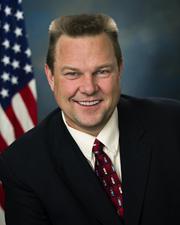 Sen. Jon Tester (D-MT)
Legislative Activity
Stay on top of the latest movement without scrolling through every action
Senate amendment not agreed to: Amendment SA 3666, pursuant to the order of December 13, 2007, having failed to achieve the required 60 votes in the affirmative, was not agreed to in Senate by Yea-Nay Vote. 40 - 55. Record Vote Number: 427.
December 13, 2007
View full timeline
Senate amendment not agreed to: Amendment SA 3666, pursuant to the order of December 13, 2007, having failed to achieve the required 60 votes in the affirmative, was not agreed to in Senate by Yea-Nay Vote. 40 - 55. Record Vote Number: 427.
December 13, 2007
Roll call votes on amendments in Senate: Amendment SA 3666, pursuant to the order of December 13, 2007, having failed to achieve the required 60 votes in the affirmative, was not agreed to in Senate by Yea-Nay Vote. 40 - 55. Record Vote Number: 427.
December 13, 2007
Considered by Senate. (consideration: CR S15380, S15392-15398, S15418)
December 13, 2007
Amendment SA 3666, pursuant to the order of December 13, 2007, having failed to achieve the required 60 votes in the affirmative, was not agreed to in Senate by Yea-Nay Vote. 40 - 55. Record Vote Number: 427.
December 13, 2007
Proposed amendment SA 3666, pursuant to the order of December 13, 2007, having failed to achieve the required 60 votes in the affirmative, withdrawn in Senate.
December 13, 2007
Considered by Senate. (consideration: CR S15179)
December 12, 2007
Senate amendment proposed (on the floor): Amendment SA 3666 proposed by Senator Tester to Amendment SA 3500.(consideration: CR S15095; text: CR S15095)
December 11, 2007
Amendment SA 3666 proposed by Senator Tester to Amendment SA 3500. (consideration: CR S15095; text: CR S15095) To modify the provisions relating to unlawful practices under the Packers and Stockyards Act.
December 11, 2007
Senate amendment submitted
November 14, 2007
Votes
1 roll call on this amendment
Text
Proposed
FARM, NUTRITION, AND BIOENERGY ACT OF 2007

The PRESIDING OFFICER. Under the previous order, the Senate will
resume consideration of H.R. 2419, which the clerk will report.
The assistant legislative clerk read as follows:

A bill (H.R. 2419) to provide for the continuation of
agricultural programs for fiscal year 2012, and for other
purposes.

Pending:

Harkin amendment No. 3500, in the nature of a substitute.
Harkin (for Dorgan-Grassley) amendment No. 3695 (to
amendment No. 3500), to strengthen payment limitations and
direct the savings to increase funding for certain programs.
Brown amendment No. 3819 (to amendment No. 3500), to
increase funding for critical farm bill programs and improve
crop insurance.
Klobuchar amendment No. 3810 (to amendment No. 3500), to
improve the adjusted gross income limitation and use the
savings to provide additional funding for certain programs
and reduce the Federal deficit.
Chambliss (for Lugar) amendment No. 3711 (to amendment No.
3500), relative to traditional payments and loans.
Chambliss (for Cornyn) amendment No. 3687 (to amendment No.
3500), to prevent duplicative payments for agricultural
disaster assistance already covered by the Agricultural
Disaster Relief Trust Fund.
Chambliss (for Coburn) amendment No. 3807 (to amendment No.
3500), to ensure the priority of the farm bill remains
farmers by eliminating wasteful Department of Agriculture
spending on casinos, golf courses, junkets, cheese centers,
and aging barns.
Chambliss (for Coburn) amendment No. 3530 (to amendment No.
3500), to limit the distribution to deceased individuals, and
estates of those individuals, of certain agricultural
payments.
Chambliss (for Coburn) amendment No. 3632 (to amendment No.
3500), to modify a provision relating to the Environmental
Quality Incentive Program.
Salazar amendment No. 3616 (to amendment No. 3500), to
amend the Internal Revenue Code of 1986 to provide incentives
for the production of all cellulosic biofuels.
Thune (for McConnell) amendment No. 3821 (to amendment No.
3500), to promote the nutritional health of school children,
with an offset.
Craig amendment No. 3640 (to amendment No. 3500), to
prohibit the involuntary acquisition of farmland and grazing
land by Federal, State, and local governments for parks, open
space, or similar purposes.
Thune (for Roberts-Brownback) amendment No. 3549 (to
amendment No. 3500), to modify a provision relating to
regulations.
Domenici amendment No. 3614 (to amendment No. 3500), to
reduce our Nation's dependency foreign oil by investing in
clean, renewable, and alternative energy resources.
Thune (for Gregg) amendment No. 3674 (to amendment No.
3500), to amend the Internal Revenue Code of 1986 to exclude
charges of indebtedness on principal residences from gross
income.
Thune (for Gregg) amendment No. 3673 (to amendment No.
3500), to improve women's access to health care services in
rural areas and provide improved medical care by reducing the
excessive burden the liability system places on the delivery
of obstetrical and gynecological services.
Thune (for Gregg) amendment No. 3671 (to amendment No.
3500), to strike the section requiring the establishment of a
Farm and Ranch Stress Assistance Network.
Thune (for Gregg) amendment No. 3672 (to amendment No.
3500), to strike a provision relating to market loss
assistance for asparagus producers.
Thune (for Gregg) amendment No. 3822 (to amendment No.
3500), to provide nearly $1,000,000,000 in critical home
heating assistance to low-income families and senior citizens
for the 2007-2008 winter season, and reduce the Federal
deficit by eliminating wasteful farm subsidies.
Thune (for Grassley/Kohl) amendment No. 3823 (to amendment
No. 3500), to provide for the review of agricultural mergers
and acquisitions by the Department of Justice.
Thune (for Sessions) amendment No. 3596 (to amendment No.
3500), to amend the Internal Revenue Code of 1986 to
establish a pilot program under which agricultural producers
may establish and contribute to tax-exempt farm savings
accounts in lieu of obtaining federally subsidized crop
insurance or noninsured crop assistance, to provide for
contributions to such accounts by the Secretary of
Agriculture, to specify the situations in which amounts may
be paid to producers from such accounts, and to limit the
total amount of such distributions to a producer during a
taxable year.
Thune (for Stevens) amendment No. 3569 (to amendment No.
3500), to make commercial fishermen eligible for certain
operating loans.
Thune (for Alexander) amendment No. 3551 (to amendment No.
3500), to increase funding for the Initiative for Future
Agriculture and Food Systems, with an offset.
Thune (for Alexander) amendment No. 3553 (to amendment No.
3500), to limit the tax credit for small wind energy property
expenditures to property placed in service in connection with
a farm or rural small business.
Thune (for Bond) amendment No. 3771 (to amendment No.
3500), to amend title 7, United States Code, to include
provisions relating to rulemaking.
Salazar (for Durbin) amendment No. 3539 (to amendment No.
3500), to provide a termination date for the conduct of
certain inspections and the issuance of certain regulations.

The PRESIDING OFFICER. The Senator from Iowa.
Mr. HARKIN. Mr. President, as Senators are well aware, we are now
back on the farm bill. I again thank both leaders, Senator Reid and
Senator McConnell, for last week working together to reach an agreement
whereby we will have 20 amendments, a maximum of 20 amendments. We
don't have to have 20 amendments but a maximum of 20 amendments on each
side. We now have a list, and we do have the amendments in order on the
Republican side. There are 20 listed. I hope that maybe not all of them
will require a vote. Maybe we can work some of those out so we will not
require votes or much time on any of those amendments. Senator
Chambliss and I are working together to try to get some hard-and-fast

[[Page S15091]]

time agreements on these amendments so we can move ahead expeditiously.
Right now we have seven amendments listed on the Democratic side, and
I hope that might be the limit of those amendments. Republicans have
about 20, and we have about 7 amendments that I know of right now.
Also, we know yesterday the Senate entered into a unanimous consent
agreement that beginning at 11 a.m., the Senate will begin 3 hours of
debate on the Lugar-Lautenberg amendment No. 3711 and the time is to be
equally divided, so an hour and a half on each side. Of course, we will
break at 12:30 p.m. for our respective weekly party conferences. We
will resume at 2:15 p.m. and will resume debate on amendment No. 3711,
the Lugar-Lautenberg amendment, and that when all time is used or
yielded back, we will vote on or in relation to that amendment.
Senators should be aware the first vote that will occur on an
amendment to the farm bill will be on the Lugar-Lautenberg amendment at
some point this afternoon, and then hopefully we will move ahead after
that on other amendments. I don't know exactly what the next amendment
will be. We will work that out.
Hopefully, we can work out some more votes today. I don't know how
late the leader wants to keep us in tonight. I am prepared to stay here
very late tonight--very late tonight--to move these amendments forward.
We are reaching a point where I know everyone wants to get out of here
for the holiday season, for Christmas and New Year. We are approaching
the end of Hanukkah. I know people would like to leave and get together
with their families. I think if we put in a couple long days, we can
reach pretty good agreements on these amendments to the farm bill.
I hope we will have a long day today and get some amendments offered
and debated and disposed of, one way or another. I wished to lay that
out. I see my colleague and good friend, the former chairman of the
Agriculture Committee, Senator Lugar, is on the floor.
So I will at this time yield the floor.
The PRESIDING OFFICER. The Senator from Indiana.

Amendment No. 3711

Mr. LUGAR. Mr. President, what is the pending business?
The PRESIDING OFFICER. The Senator's amendment No. 3711 is pending
under a 3-hour time limit.
Mr. LUGAR. Mr. President, is it appropriate to commence the debate?
The PRESIDING OFFICER. Yes, it is.
Mr. LUGAR. I thank the Chair, and I thank the distinguished chairman
of the committee.
Mr. President, let me start by thanking Senator Tom Harkin, the
distinguished chairman of our committee, and the ranking Republican
leader, Saxby Chambliss, for their leadership. It is not an easy task
to be chairman or ranking Member of the Senate Agriculture Committee
during the farm bill. Having served in both capacities, I know well of
the challenges that both have faced in putting together a bill.
Let me point out, as I have during the debate in committee, some
achievements have occurred. Both the chairman and ranking member have
outlined a number of these in the areas of conservation, rural
development, research, nutrition, and energy.
I am also pleased by the effort to provide interested farmers with
the revenue-based program which should be an improvement over the
status quo.
However, the farm bill before us does not provide meaningful reform.
Our current farm policies, sold to the American public as a safety net,
actually hurt the family farmer. In the name of maintaining the family
farm and preserving rural communities, today's farm programs have
benefited a select few, while leaving the majority of farmers without
support or a safety net.
Let me review the history of these farm bills.
The genesis of our current farm policy began during the Great
Depression as an effort to help alleviate poverty among farmers and
rural communities. At that time, one in four Americans lived on a farm
and the rural economy's vitality was largely dependent upon farmers.
Farm programs were instituted that stifled agricultural productivity in
order to raise commodity prices through a federally administered
supply-and-demand program. Supply-control programs cost U.S. taxpayers
handsomely in higher food costs and job loss, and now about half of the
Nation's farmers are essentially prevented from growing other crops,
such as fruits and vegetables.
To date, this same antiquated idea is promoted even though farm
income is higher on average than other industries. Times have changed
dramatically since then. Today, 1 in 75 Americans lives on a farm, and
only 1 in 750 lives on a full-time commercial farm. Furthermore, nearly
90 percent of total farm household income comes from off-farm sources--
90 percent.
In response to these ongoing changes, in 1996, Congress finally
recognized farmers, not the Government, could best ascertain what crops
are profitable and granted roughly half our farmers flexibility in
planting choices, the so-called Freedom to Farm bill, and began to
transition away from federally controlled agriculture programs.
But in 2002, Congress and the Bush administration reversed these
reforms and created the so-called three-legged stool which, in addition
to other farm programs, has helped to place us in violation of our WTO
commitments.
The Senate Agriculture Committee farm bill before us today
perpetuates and even expands these defective policies without regard
for the fact that the majority of farmers do not have a safety net.
The first leg of this so-called three-legged stool is direct payment
subsidies to specific farmers who grow certain crops. Direct payments
are fixed annual taxpayer-funded subsidies that are based on a farm's
historic production and a federally set payment rate. For the five
major subsidized crops, the average payment rate is roughly $15 per
acre for wheat, $24 per acre for corn, $33 per acre for cotton, $11 per
acre for soybeans, and $94 per acre for rice.
These subsidies were originally called transition payments. They were
meant to be a temporary bridge from supply management-based subsidies
to free market-based agriculture. They were never intended to be a
continuing entitlement.
Direct payment policies are particularly irresponsible because the
taxpayer-funded subsidies go out to farmers regardless of whether cash
is flowing in or out of their farms or whether they farm at all.
Although many subsidized farmers are projected to receive record crop
prices and earn record farm incomes over the next 5 years, the Senate
farm bill, as agreed to by the Senate Agriculture Committee, doles out
up to $26 billion in direct payments from taxpayers, much of which will
go to some of the largest and wealthiest farming operations in America.
In fact, over 50 percent of these subsidies will continue to go to
farmers in seven States, for a grand total of $13.1 billion.
Some may find these statistics surprising, but this is simply a
continuation of ``business as usual'' when it comes to farm subsidies.
Keep in mind, in the years 2000 to 2005, the farm sector received $112
billion in taxpayer subsidies, but only 43 percent of all farms
received payments. This is because the majority of the payments go to
just five row crops--corn, soybeans, wheat, cotton, and rice. The
largest 8 percent of these farms receives 58 percent of these payments.
In fact, the top 1 percent of the highest earning farmers claimed 17
percent of the crop subsidy benefits between 2003 and 2005.

Smaller farms that qualify in the current system and that could
benefit from additional support did not do as well. Two-thirds of
recipient farms received less than $10,000, accounting for only 7
percent of their gross cash farm income. Minority farmers fared even
worse, with only 8 percent of minority farmers even receiving Federal
farm subsidies. Furthermore, half of the Federal crop subsidies paid
between 2003 and 2005 went to only 19 congressional districts out of
435.
Each one of these statistics illustrates that our direct payment
system is inequitable and in conflict with claims we hear on the Senate
floor that our current farm policies are a safety net for the family
farmer.
The second leg of the stool is ``countercyclical payments,'' or
having the taxpayer pay farmers when prices fall below a
congressionally set price. The third leg is a marketing loan program
that allows farmers to put their crops

[[Page S15092]]

up as collateral to receive operating capital. However, provisions
allow farmers to go ahead and sell the crop and repay the Government at
a lower rate, leaving taxpayers to make up the difference.
Because these two programs do not appropriately correspond with
market forces, they have the effect of creating artificial markets for
crops, even when markets do not exist. Yet neither program provides any
help to farmers when they arguably need it most--during disasters, such
as drought. Of greater concern, these programs have been ruled to
violate our trade agreements. But this new farm bill actually increases
target prices for at least five crops, loan rates for seven crops, and
adds a number of new subsidized crops.
Now, some Senators may wonder why we should be concerned that we are
in violation of our World Trade Organization--or WTO--commitments. They
might think this situation is simply limited to agriculture, or
specific crops, with little impact on our overall economy. Others might
even suggest we are better off building more barriers to trade; that
this farm bill is about American farmers and not farmers in Brazil or
elsewhere. However, if Senators look further down the line, they will
see that our WTO violations could cost the United States billions in
revenue, intellectual property, and lost trade opportunities. And
failure to move toward compliance will invite retaliatory tariffs that
legally can be redirected at any U.S. industry.
In fact, as is happening now, Brazil will soon have the authority to
retaliate in kind against United States products, whether they be
agricultural products or intellectual property, due to our
unwillingness to fix our farm policies. It is unclear if Brazil will
follow through with these threats, but what is clear is that the WTO
has repeatedly found the United States cotton program to be in
violation of our commitments. As a result, a host of challenges to
other agricultural commodities has ensued, including a case brought
forth by Brazil and Canada in November that targets all of our
commodity programs.
Upon the initial findings of the WTO, Congress did repeal some
cotton-related programs found to violate these agreements, namely, the
so-called Step 2 Program, which was a program that used taxpayer money
to pay companies to use U.S. cotton. However, the farm bill we are
currently considering makes virtually no attempt to bring the rest of
the cotton program into compliance.
The administration earlier this year put forth a number of policy
changes that they argued would have fixed our trade problems with the
WTO, including a revenue-based countercyclical program, marketing loans
that respond to market prices, and eliminating planting restrictions
for fruits and vegetables. None of these proposals were incorporated
into either the House bill or the Senate farm bill before us today. In
fact, this farm bill significantly increases the likelihood that other
programs will be further challenged by the World Trade Organization.
Specifically, the WTO found that countercyclical payments and
marketing loans are trade distorting, and the direct payments argued to
be trade neutral are a trade violation as long as planting restrictions
are retained. Astonishingly, the farm bill increases payments made
under these trade-distorting programs almost across the board, further
exacerbating our trade situation.
In the midst of all of this, the chief economist for the Department
of Agriculture projects that exports of agricultural products for this
year are likely to reach $79 billion, nearly 30 percent of all farm
cash receipts in 2007. Nearly 40 percent of soybeans, half of our
wheat, and over 90 percent of our cotton produced in the United States
this year will be exported.
Clearly, trade and our trading partners are important to American
farmers now and will continue to be in the future. U.S. action to
comply with WTO rulings against cotton subsidies as well as U.S. policy
regarding subsidies in general will be closely monitored by the world's
exporters. Should the WTO determine that other United States farm
subsidy programs, as challenged by Brazil and Canada, do not comply
with WTO rules, the potential for retaliation by other countries is
immeasurable.
The farm bill before us today establishes a new permanent disaster
trust fund at the Department of the Treasury to provide an additional
$5 billion in spending for commodity crop farmers. Our amendment does
not touch this provision nor any of the other provisions related to the
Finance Committee package. Of this $5 billion, it is estimated that
nearly half of the money will be given to farmers in counties
designated as disaster counties by the President and the other half
will go to crop insurance companies as a subsidy to administer higher
levels of crop insurance coverage.
The idea of a permanent disaster program may have merit, especially
when you consider that Congress has passed legislation to fund ad hoc
disaster payment assistance nearly every year for the last 20 years,
but we should ask ourselves, if the current expensive farm bill is
failing to provide a safety net to farmers when these devastating
events do happen, then what is the purpose of the farm bill? Why do we
need a new program administered by a separate Federal agency to fulfill
what most Americans believe is the core purpose of the legislation
before us? We should fix the root problem, namely that the current
subsidy system does not work and wastes taxpayer dollars.
If you are now a farmland owner in America, it is highly probable
your land will increase in value. Why? Because a land-owning farmer or
agricultural business can count upon receiving substantially more money
through subsidies. As a result, you are able to leverage your land and
crops to expand. If you are one of hundreds of thousands of farmers in
this country who rents land as opposed to owning land, you face a very
tough set of circumstances. Your rents are likely to go up each year as
the value of the land goes up. Worse still, if you are a young farmer
who hopes someday to own land, then your prospects diminish year by
year.
As a result, there are young members of farm families who are hopeful
that with the reduction or repeal of Federal estate taxes that they
might inherit the land. Other young people who are interested in
farming are simply out of luck, as it is too difficult to get into the
business. As a result, it is predictable that the average age of
farmers in this country will continue to increase, as it has been
increasing in recent decades. Consider the fact that 6 percent of
farmers are younger than 35, while 26 percent are over 65 years of age.
Furthermore, elderly farmers who may be land rich but cash poor will
be more inclined to sell their farms as their retirement nest egg. The
most likely buyer of that farm is an owner of a larger farm who is in a
position to expand, thanks to Government subsidies.
In spite of all the rhetoric and all of the attempts to talk about
perpetuating the small family farm or even the medium-sized farm, the
facts are that consolidation is increasing, and this bill will
perpetuate that cycle. I want to emphasize this point because it
reflects the inequity of this entire bill. Our farm policies transfer a
great deal of money from ordinary taxpayers to a few farmers. If this
transfer from the many to the few produced a stable farm economy, with
prospects for greater trade success, perhaps one could argue this
approach is more justified. Further, these policies could be justified
if they truly did support the lower to middle-class farmer and reduce
the number of farm consolidations. I am arguing that our policies
promote the exact opposite.
For all of these reasons, Senator Frank Lautenberg and I, along with
Senators Hatch, Reed, Menendez, Cardin, Collins, Domenici, McCain, and
Whitehouse are introducing an amendment today that would provide a true
safety net for all farmers regardless of what they grow or where they
live. For the first time, each farmer would receive, at no cost, either
expanded county-based crop insurance policies that would cover 85
percent of expected crop revenue, or 80 percent of a farm's 5-year
average adjusted gross revenue.
These subsidized insurance tools already exist, but our reforms would
make them more effective and universally used while controlling
administrative costs. Farmers would be able to purchase insurance to
cover the remainder of their revenue and yields.

[[Page S15093]]

The 85 percent county level-based policy simply looks at the expected
revenue annually in each county in the United States for crops such as
corn, soybeans, wheat, cotton, and rice, but it can be expanded under
this bill to any commodity so long as adequate market information is
available to satisfy actuarial concerns.
The USDA uses prices from the futures market in late February and
multiplies them by past county average crop yields collected by the
National Agricultural Statistics Service, which keeps detailed data on
virtually every agricultural product produced in the United States.
This creates a target price that adjusts either up or down each year to
market conditions and yield trends. Farmers receive a safety net
payment when the actual county revenue for a crop they are growing
falls below 85 percent of the target revenue.
This program ensures that the only incentive to grow a crop is the
market, not federally set prices under the farm policies before the
Senate today.
For example, in Marion County, IN, where my farm is located, expected
yields for corn in 2006 were 146 bushels an acre; the future price for
corn in late February 2006 was $2.59 a bushel. So target revenue for
corn was $378 an acre. After the harvest, USDA found that actual corn
yields in Marion County were 140 bushels an acre and that harvest
prices were $3.03 a bushel, producing average revenue of $424 an acre.
Actual revenue exceeded target revenue so that no additional subsidies
were paid to corn farmers in Marion County in 2006.
By contrast, corn farmers in Baca County, CO, experienced poor
weather. Expected yields were 161 bushels an acre and the future price
for corn was $2.59 a bushel, so expected revenue was $418 an acre.
After the harvest, USDA found that actual yields were much lower at 116
bushels an acre and even though the harvest prices of $3.03 a bushel
were higher than expected, the actual average revenue was $350 an acre.
Since actual revenue was 83 percent of target revenue, corn farmers in
Baca County would have received $5.30 per acre under the safety net, or
the difference between actual revenue in that county and the 85 percent
guarantee.
The other choice would allow farmers to protect against adverse
change in their own historic average revenues. This program looks at
the whole farm, recognizing the same risks exist for an apple orchard
as the soybean field on the same farm. A farm's 5-year average adjusted
revenue is calculated using annual tax forms. The adjusted revenue is
essentially a farm's overall revenue minus expenses as indicated on
their tax forms. When a farm's adjusted revenue falls below 80 percent
of that 5-year average, a safety-net payment makes up the difference.
This program is currently operating as a pilot program in a number of
States but has been limited to the amount of revenue that can be
covered for some agricultural products such as livestock and forest
products. Our bill expands the program nationwide and allows the USDA
to include more agricultural products. It also requires the USDA to
minimize double payments under situations where farmers may also have
products covered by remaining farm support programs, namely the sugar
program and the Milk Income Loss Program.
In addition, this bill creates optional risk management accounts that
would be available to every farmer and rancher and would work in
concert with crop and revenue insurance. Producers who are eligible for
direct payments would receive transition payments, phased out over the
next 5 years, which would be deposited into their accounts. They would
then be eligible to withdraw from their available balance to supplement
their income in years when their gross revenue falls below 95 percent
of their rolling 5-year average gross revenue. They could invest in a
rural enterprise, purchase additional revenue or crop insurance, or
upon retirement, utilize it as a farmer retirement account. These
accounts provide farmers who are generally asset rich and cash poor
greater incentive to save for the future, and will help maintain family
farms by providing retirement benefits without forcing a liquidation of
farm assets.
The FRESH Act amendment is important because savings from these
reforms will allow us to provide an additional $6.1 billion more than
the underlying bill in new investments to assist farmers with
conservation practices, encourage rural development, develop renewable
energy, expand access to healthy foods for children and consumers, and
assist more hungry Americans.
Our amendment provides an additional $1 billion for important
environmental and conservation programs. I am pleased that we were able
to expand and improve USDA's voluntary conservation incentives
programs, which provide financial and technical assistance to farmers,
ranchers and forest landowners who offer to take steps to prevent soil
erosion and improve water quality, air quality and wildlife habitat.
Since 2003, roughly two-thirds of farmers seeking assistance through
USDA conservation programs have been rejected due to insufficient
funding. Most of these conservation programs are cost-share programs.
That means that farmers are offering to put their own money into
environmental improvements from which the public benefits. We are
missing an opportunity to utilize private dollars to produce
environmental benefits such as cleaner water and cleaner air when we
underfund cost-share conservation programs.
One of the most popular of these programs, the Environmental Quality
Incentives Program, EQIP, has had an application backlog that has
averaged $1.6 billion a year over the past 4 years. Yet the farm bill
before us provides no increase in funding for this popular conservation
program.
The current farm bill also provides no increase in funding for the
Farmland Protection Program. This program is critical because in many
areas our working farms and ranches are under tremendous development
pressures. From 1992 to 1997, this country lost more than 6 million
acres of agricultural land--an area the size of Maryland--to
development. And yet this bill doesn't provide the funding needed to
assist State and local governments and private land trusts in the
important work they do to conserve our Nation's farmland.
Increasing funding for the farm bill's conservation programs also
provides another way to make our farm policies more equitable. All
producers can be eligible to participate in conservation programs,
regardless of what they grow or where they grow it. By contrast, only
producers of a handful of commodity crops can participate in commodity
programs.
While discussion of commodity policy dominates much of the farm bill
debate and discretionary funding, production agriculture remains a
comparatively small and shrinking part of the rural economy.
Farm employment has fallen from just over 14 percent of total
employment in 1969 to 6 percent in 2005. The number of counties with
farm employment accounting for 20 percent or more of total employment
has shrunk dramatically from 1,148 in 1969 to 348 in 2005. Furthermore,
only 1 in 75 Americans lives on a farm today, and nearly 90 percent of
total farm household income comes from off-farm sources.
Despite this fundamental shift, the 2002 farm bill committed 69
percent of total spending to commodity payments, plus another 13
percent to conservation payments. In all, four-fifths of total funding
went to a select few farmers, while only 0.7 percent went to rural
development initiatives aimed at boosting rural economies.
We now have evidence which suggests that direct payments to farmers
have little positive impact on rural economies. A recent study revealed
that most payment-dependent counties did not even match the national
average in terms of job growth from 1992 to 2002. In fact, many
experienced losses during that time.
Furthermore, most of these payment-dependent counties experienced
population losses during that same 10-year period. Such job and
population loss figures suggest that our current system of support for
rural communities, which relies on subsidies like direct payments, does
not work.
I am also pleased that the amendment we are offering expands
agricultural markets and decreases oil dependency by dramatically
increasing

[[Page S15094]]

research and development efforts for cellulosic ethanol and other
renewable fuels, and expanding clean renewable energy opportunities to
all of our rural areas. This is an area of considerable interest to the
chairman who has been a stalwart supporter.
Today's growth in ethanol production is creating jobs and bringing
new sources of revenue into our communities. Because of our energy
demands, we are witness to a palpable sense of optimism in rural
communities for economic growth in areas that have stagnated under the
current farm bill. Failure to give clear and strong Government
commitment in the farm bill to developing biofuels from diverse
feedstocks has unnecessarily confined new markets to midwestern States
rich in corn. Spreading the economic benefits of biofuels nationwide
will require breakthroughs in technologies and agricultural techniques
to make more fuels from farm, municipal, and industrial wastes
available from coast to coast. Strong support in the farm bill will
help galvanize private investment and bring jobs across the country.
Yet the opportunity before us involves more than economic growth.
Dramatic advancements in biofuels will help build a more secure and
self-reliant America by reducing our dependence on foreign oil. Global
competition for oil continues to grow as demand soars and oil-rich
States tighten their control over supplies. Already, we have witnessed
Russia cut its exports to selected countries for political gain, and
the Governments of Iran and Venezuela have threatened to do the same.
Each year, Americans spend hundreds of billions of dollars to import
oil. Some of that money enriches authoritarian governments that
suppress their own people and work against the United States.
Meanwhile, oil infrastructure is being targeted by terrorists. In
today's tight oil market even a small disruption in oil supplies could
cause shortages and send prices much higher than the $90-plus per
barrel prices Americans have paid in recent weeks.
Biofuels will not make America completely independent of energy
imports, but they can strengthen our leverage over oil-rich regimes
hostile to the United States, give greater freedom to our policy
options in the Middle East, help protect our economy, and foster rural
development.
Reaping the economic and energy security benefits of biofuels and
other rural, renewable energy requires breakthroughs in research and
incentives for infrastructure development. Our amendment provides an
additional half billion dollars to transform renewable energy's
opportunity into reality.
During the markup in the Agriculture Committee, I offered an
amendment to increase nutrition funding in the farm bill by about $1.6
billion through cuts to direct payments.
Unfortunately, my amendment was defeated 17-4. However, the amendment
sparked constructive, bipartisan debate on the importance of strong
funding for the nutrition programs that provide a safety net for people
across our country who are on the cusp of poverty. I am thankful to
Senators Harkin and Chambliss for taking that discussion seriously, and
as a result, using the savings generated from a committee change to the
underlying bill to provide additional funding for the nutrition title
of this farm bill.
But even as I applaud the efforts of Agriculture Committee members
for their attention to nutrition programs, I have serious concerns that
the nutrition program in this bill is essentially only authorized for 5
years. At the end of the 5 years, funding for nutrition programs drops
dramatically. In 2012, we would then be faced with having to manipulate
the budget to find additional funding for these programs or vulnerable
Americans would lose this much-needed assistance. This is because the
agriculture bill before us is ``front-loading'' spending during the
first 5 years and then virtually zeroing out nutrition spending for
years 6 through 10 so that the bill will come out budget neutral, on
paper, but will cost taxpayers handsomely in reality. This is just one
of many budgetary tricks performed so that the scoring works out
favorably without regard to the practical application of such
maneuvers.
In our amendment, nutrition programs would not end. In fact, we
increase funding for these important programs by $2 billion over the
underlying farm bill and make these funding increases permanent. We
cannot and should not build a safety net with holes.
This leads me to another benefit of our reform proposal. Our
amendment provides critical funding for each of these priorities and
yet pays for itself from the existing agricultural budget passed by
Congress without employing deceptive budgetary maneuvers. In fact, our
bill will save taxpayers $4 billion.
Unfortunately, this is not the case with the underlying bill, and if
you take a thorough look, you realize just how precarious that bill's
budget situation truly is. In fact, the Bush administration's Statement
of Administrative Policy highlighted a number of budget gimmicks used
to make the farm bill pay-go compliant, at least on paper.
The FRESH Act amendment is fully paid for, fiscally responsible and
provides a framework for growth for farmers and rural communities.
Furthermore, the long-term budgetary savings from our proposal will
allow for us to make considerable investments in key priority areas.
There is an inappropriate political assumption that agriculture
policy is impenetrable for consumers, taxpayers, the poor, and the vast
majority of Americans who are being asked to pay for subsidies, while
getting little in return. Even if only a small number of farmers in a
State raise a program crop or one of the protected specialty crops like
milk, sugar, or peanuts, their focused advocacy somehow has more
political influence than the broader well-being of consumers and
taxpayers. In short, those who benefit from current agriculture
programs are virtually the only participants in the debate.
This fact is probably best illustrated by the fact that one of the
most contentious debates on this bill has been whether farmers with
income of over $1 million, after farm expenses have been paid, should
continue to receive subsidies. I have even seen media reports that
indicate that if a payment limitation amendment were passed, the farm
bill could be filibustered. Keep in mind that the median household
income for Americans for 2006 was $48,200 and the average income of a
food stamp recipient is less than $10,000.
There is also an ongoing reluctance to consider change. Members will
say, ``Farming is conservative by nature. You can't demand too much
change.'' In 2002, I offered a similar type of reform proposal and
opponents argued that the proposal was ``too new, too radical, and
required too much change.''
You will hear that same baseless argument today. Mr. President and
Members of the Senate, when is the time for reform? When will we fix
this broken system? When will we act on the clear evidence before us?
As Senators, we clearly must understand our responsibility. Whether
we understand all the complexities of our current farm programs, we
know where the money goes. The bulk of the money in the underlying farm
bill goes to a very few farmers, a very few. That has been clear
throughout. This is not a great humanitarian effort. This does not save
the family farmer, the low-income farmer, or even the middle-income
farmer.
This bill is about making choices. And it is incredible to me that
with all of the budgetary pressures that we are facing to fund critical
needs such as providing better health insurance coverage for Americans,
protecting Social Security and pension savings, improving education,
increasing border security, and providing our men and women in the
Armed Forces with appropriate pay and equipment that we would consider
a bill which enriches so few individuals.
I believe that this year's farm bill debate is a good time to begin
changing these dynamics.
This year an unconventional alliance of conservation, humanitarian,
business and taxpayer advocate groups has entered the fray with success
in framing the issue and building support for the FRESH Act. They
represent the broadest ever political support for change.
Newspapers in at least 41 States have written editorials in support
of changing our farm programs to a fair, trade

[[Page S15095]]

compliant and fiscally responsible system. I have distributed these
articles to my colleagues.
Perhaps more importantly, there has never been a better time for
farmers to change. Thanks to strong foreign and domestic demand for
energy crops, net farm income is forecast to be $87 billion, up $28
billion from 2006 and $30 billion above the average for the previous 10
years and setting a new record for new farm income.
As a result, average farm household income is projected to be almost
$87,000 in 2007, up 8 percent from 2006, 15 percent above the 5-year
average between 2002 and 2006, and well above median U.S. household
income. Farm revenue may be high today but this will not always be the
case. It is critical that we have an appropriate safety net in place to
assist these farmers during times of need.
Agriculture policy is too important for rural America and the
economic and budgetary health of our country to continue the current
misguided path. Our amendment provides a much more equitable approach,
produces higher net farm income for farmers, increases farm exports,
avoids stimulating overproduction, and gives more emphasis to
environmental, nutritional, energy security and research concerns. More
importantly, this proposal will protect the family farmer through a
strong safety net and encourage rural development in a fiscally
responsible and trade compliant manner.
The PRESIDING OFFICER (Mr. Casey.) The Senator from Montana.

Amendment No. 3666 to Amendment No. 3500

Mr. TESTER. Mr. President, I ask unanimous consent to temporarily set
aside amendment 3711 and call up amendment No. 3666, and further ask
unanimous consent that the time not be charged against the time
allocated for amendment 3711.
The PRESIDING OFFICER. Without objection, it is so ordered.
The clerk will report the amendment.
The legislative clerk read as follows:

The Senator from Montana [Mr. Tester], for himself, Mr.
Grassley and Mr. Harkin, proposes an amendment numbered 3666
to amendment No. 3500.

Mr. TESTER. Mr. President, I ask unanimous consent that the reading
of the amendment be dispensed with.
The PRESIDING OFFICER. Without objection, it is so ordered.
The amendment is as follows:

(Purpose: To modify the provision relating to unlawful practices under
the Packers and Stockyards Act)

On page 1232, strike lines 9 through 12 and insert the
following:
(1) by redesignating subsections (f) and (g) as subsections
(g) and (h), respectively;
(2) in subsections (c), (d), (e), and (g) (as redesignated
by paragraph (1)), by striking the semicolon each place it
appears and inserting ``, regardless of any alleged business
justification;''; and
(3) by inserting after subsection (e) the following:
On page 1233, line 20, strike ``subsection (a)'' and insert
``subsection (a)(3)''.
On page 1234, line 2, strike ``subsection (a)'' and insert
``subsection (a)(3)''.

Mr. TESTER. Mr. President, the Packers and Stockyards Act of 1921
prohibits meatpackers from engaging in any course of business or doing
any act for the purpose or with the effect of manipulating or
controlling prices. This act was passed in Congress way back when it
was determined that the Sherman Act, the Clayton Act, and the FTC Act
were insufficient to promote competitive markets.
Unfortunately, back in 2005, three judges decided to rewrite the
Packers and Stockyards Act instead of interpreting this statute. What
this amendment will do is reinstate the Packers and Stockyards Act, and
with that reinstate free market competition in the marketplace.
The PRESIDING OFFICER. The Senator from Montana.
Mr. BAUCUS. Mr. President, I ask unanimous consent that the time I am
talking not be charged against the time for debate with respect to the
Lugar-Lautenberg amendment.
The PRESIDING OFFICER. Without objection, it is so ordered.

Amendment No. 3660 to Amendment No. 3500

Mr. BAUCUS. Mr. President, I ask unanimous consent that the pending
amendment be set aside, and I call up amendment No. 3660, and ask
unanimous consent that once the amendment is reported by number, I be
recognized to speak for up to 5 minutes, and that at the conclusion of
my statement, the amendment be withdrawn.
The PRESIDING OFFICER. Is there objection?
Mr. NELSON of Florida. Reserving the right to object----
Mr. CHAMBLISS. Reserving the right to object, would the Senator mind
amending his unanimous consent request to provide for Senator Nelson to
speak for 5 minutes and Senator Martinez to speak for up to 5 minutes?
Mr. BAUCUS. That is fine as long as the time is not being charged.
Mr. LAUTENBERG. I have no objection as long as this time is not
charged against the pending amendment.
The PRESIDING OFFICER. Is there objection to the request as modified?
Without objection, it is so ordered.
The clerk will report the amendment.
The legislative clerk read as follows:

The Senator from Montana [Mr. Baucus], for himself and Mr.
Crapo, proposes an amendment numbered 3660 to amendment No.
3500.

The amendment is as follows:

(Purpose: To modify the trade title)

At the appropriate place in title III, insert the
following:

SEC. 3__. AGRICULTURAL SUPPLY.

(a) In General.--Section 902(1) of the Trade Sanctions
Reform and Export Enhancement Act of 2000 (22 U.S.C. 7201(1))
is amended--
(1) by striking paragraph (1);
(2) by redesignating paragraph (2) as paragraph (1); and
(3) by inserting after paragraph (1) the following:
``(2) Agricultural supply.--The term `agricultural supply'
includes--
``(A) agricultural commodities; and
``(B)(i) agriculture-related processing equipment;
``(ii) agriculture-related machinery; and
``(iii) other capital goods related to the storage or
handling of agricultural commodities or products.''.
(b) Conforming Amendments.--The Trade Sanctions Reform and
Export Enhancement Act of 2000 (22 U.S.C. 7201 et seq.) is
amended--
(1) by striking ``agricultural commodities'' each place it
appears and inserting ``agricultural supplies'';
(2) in section 904(2), by striking ``agricultural
commodity'' and inserting ``agricultural supply''; and
(3) in section 910(a), in the subsection heading, by
striking ``Agricultural Commodities'' and inserting
``Agricultural Supplies''.

SEC. 3__. CLARIFICATION OF PAYMENT TERMS UNDER TSREEA.

Section 908(b)(1) of the Trade Sanctions Reform and Export
Enhancement Act of 2000 (22 U.S.C. 7207(b)(1)) is amended--
(1) by redesignating subparagraphs (A) and (B) as clauses
(i) and (ii), respectively, and indenting appropriately;
(2) striking ``(1) In general.--No United States person''
and inserting the following:
``(1) Prohibition.--
``(A) In general.--No United States person''; and
(3) in the undesignated matter following clause (ii) (as
redesignated by paragraph (1)), by striking ``Nothing in this
paragraph'' and inserting the following:
``(B) Definition of payment of cash in advance.--
Notwithstanding any other provision of law, for purposes of
this paragraph, the term `payment of cash in advance' means
only that payment must be received by the seller of an
agricultural supply to Cuba or any person in Cuba before
surrendering physical possession of the agricultural supply.
``(C) Regulations.--The Secretary of the Treasury shall
publish in the Federal Register a description of the contents
of this section as a clarification of the regulations of the
Secretary regarding sales under this title to Cuba.
``(D) Clarification.--Nothing in this paragraph''.

SEC. 3__. REQUIREMENTS RELATING TO CERTAIN TRAVEL-RELATED
TRANSACTIONS WITH CUBA.

Section 910 of the Trade Sanctions Reform and Export
Enhancement Act of 2000 (22 U.S.C. 7208) is amended by adding
at the end the following:
``(c) General License Authority for Travel-Related
Expenditures in Cuba by Persons Engaging in TSREEA-Authorized
Sales and Marketing Activities.--
``(1) Definition of sales and marketing activity.--
``(A) In general.--In this subsection, the term `sales and
marketing activity' means any activity with respect to travel
to, from, or within Cuba that is undertaken by United States
persons--
``(i) to explore the market in Cuba for products authorized
under this title; or
``(ii) to engage in sales activities with respect to such
products.
``(B) Inclusion.--The term `sales and marketing activity'
includes exhibiting, negotiating, marketing, surveying the
market, and delivering and servicing products authorized
under this title.
``(2) Authorization.--The Secretary of the Treasury shall
authorize under a general license the travel-related
transactions listed in paragraph (c) of section 515.560 of
title 31, Code of Federal Regulations (as in effect on June
1, 2007), for travel to, from, or within Cuba in connection
with sales and marketing

[[Page S15096]]

activities involving products approved for sale under this
title.
``(3) Authorized persons.--Persons authorized to travel to
Cuba under paragraph (2) shall include--
``(A) producers of products authorized under this title;
``(B) distributors of such products; and
``(C) representatives of trade organizations that promote
the interests of producers and distributors of such products.
``(4) Regulations.--The Secretary of the Treasury shall
promulgate such rules and regulations as are necessary to
carry out this subsection.''.

SEC. 3__. AUTHORIZATION OF DIRECT TRANSFERS BETWEEN CUBAN AND
UNITED STATES FINANCIAL INSTITUTIONS.

The Trade Sanctions Reform and Export Enhancement Act of
2000 is amended--
(1) by redesignating section 911 (22 U.S.C. 7201 note;
Public Law 106-387) as section 912; and
(2) by inserting after section 910 (22 U.S.C. 7209) the
following:

``SEC. 911. AUTHORIZATION OF DIRECT TRANSFERS BETWEEN CUBAN
AND UNITED STATES FINANCIAL INSTITUTIONS.

``Notwithstanding any other provision of law (including
regulations), the President shall not restrict direct
transfers from Cuban to United States financial institutions
executed in payment for products authorized by this Act.''.

SEC. 3__. SENSE OF CONGRESS THAT PROSPECTIVE PURCHASERS OF
TSREEA PRODUCTS SHOULD BE ISSUED VISAS TO ENTER
THE UNITED STATES.

(a) Sense of Congress.--It is the sense of Congress that
the Secretary of State should issue visas for temporary entry
into the United States of Cuban nationals who demonstrate a
full itinerary of purchasing activities relating to the Trade
Sanctions Reform and Export Enhancement Act of 2000 (22
U.S.C. 7201 et seq.) while in the United States.
(b) Periodic Reports.--Not later than 45 days after the
date of enactment of this Act and every 90 days thereafter,
the Secretary of State shall submit to the Committees on
Agriculture, Foreign Affairs, and Ways and Means of the House
of Representatives and the Committees on Agriculture,
Nutrition, and Forestry, Finance, and Foreign Relations of
the Senate a report that describes any actions of the
Secretary relating to this section, including--
(1) a full description of each application received from a
Cuban national to travel to the United States to engage in
purchasing activities described in subsection (a); and
(2) a description of the disposition of each such
application.

The PRESIDING OFFICER. The Senator from Montana.
Mr. BAUCUS. Mr. President, more than 200 years ago, Richard Whately,
an English logician, said:

A man is called selfish not for pursuing his own good, but
for neglecting his neighbor's.

Not only does our current Cuba policy make it difficult to pursue our
own good, we are also guilty of neglecting the good of one of our
closest neighbors.
Today I am offering an amendment to enable America's farmers and
ranchers to sell their wheat, potatoes, and dairy products to a
neighbor only 90 miles away and a market of 11 million consumers. That
market, of course, is Cuba.
In the year 2000, Congress authorized limited sales of food and
medical goods to Cuba under the Trade Sanctions Reform and Export
Enhancement Act, otherwise known as TSREEA. That law permitted United
States farmers and ranchers to engage in cash-based sales of their
goods to Cuban buyers.
Under this new law, our agricultural trade with Cuba prospered. At
its peak, American farmers and ranchers, including those from Montana,
sold over $400 million worth of peas, beef, and wheat to Cuba in 1
year. In fact, in the year 2003, I led a trade mission to Cuba and
walked away with a $10.4 million deal for Montana. Cuba bought $10.4
million of Montana wheat, beans, and peas. I went back a year later for
$15 million worth of Montana goods. But then things changed. In 2005
the Treasury Department issued rules to stymie such sales. Under the
guise of clarifying the intent of Congress, the Treasury Department
instead undermined the express will of Congress by restricting the
ability of U.S. farmers and ranchers to engage in cash-basis sales.
Specifically, the new Treasury rule requires Cuban buyers to pay for
their goods before they leave U.S. ports. What is the effect of that?
That converts the goods to Cuban assets, which makes them vulnerable to
seizure in American ports to satisfy unrelated American claims against
the Cuban Government.
In order for American farmers and ranchers to sell their wheat, beef,
and pork to Cuba, they must work with foreign banks, and surrender a
portion of their profits to costly fees. Not surprisingly, since
Treasury's rule, cash-basis sales of agricultural products to Cuba have
slowed to a trickle. It made implementation of Montana's 2004 agreement
with Cuba virtually impossible.
I think I know the intent of Congress. I was here when that act was
passed. I can assure you that we do not need Treasury's
``clarification.'' Congress did not approve legislation to expand trade
with Cuba with the expectation that the administration would seek to
restrict it. Congress does not approve legislation to enable the sales
of products by our farmers and ranchers, while at the same time making
it impossible, by the Treasury Department, for them to receive payment.
These rules have continued to stifle the ability of farmers to sell
their products to Cubans on a cash basis. They have encouraged foreign
banks to take a cut of every United States ag deal with Cuba. They have
required farmers and ranchers to wait weeks and months to get a license
to travel to Cuba to meet potential buyers. They prevent Cuban buyers,
who want to come to this country to meet with producers, who are going
to buy the American products, from entering our country.
This amendment would change that. It restores the true intent of
Congress. It simplifies the cash transactions, and expands
opportunities for U.S. farmers and ranchers. It enables direct
transfers from American banks to Cuban banks. It allows American
farmers and ranchers to travel to Cuba to sell their products, and it
encourages Cuban buyers to come to the United States to see our first-
class products for themselves.
These provisions are plain, simple, common sense. These provisions
are sound policy. I had hoped we could have a discussion and a vote on
this amendment. But, unfortunately, some Members of this body have
threatened to hold up the farm bill if we include, or even vote on,
these important provisions.

Amendment No. 3660 to Amendment No. 3500 Withdrawn.

In the interest of moving the farm bill forward, it is with deep
regret that I ask unanimous consent to withdraw my amendment.
The PRESIDING OFFICER. Without objection, it is so ordered.
The Senator from Florida.
Mr. NELSON of FLORIDA. Mr. President, Senator Baucus and I see eye to
eye on about 95 percent of the issues in front of the Senate. This is
one we do not agree on.
I thank Senator Baucus for withdrawing his amendment. He has been an
outspoken and very articulate spokesman for his point of view of
wanting agricultural products to go to Cuba. And coming from his State
of Montana, I certainly understand that.
There is a greater issue here, in this Senator's opinion, and that is
the issue of the foreign policy of the United States.
This Senator believes this issue ought to be a foreign policy debate
on the future of the relationship of the United States with Cuba. There
will be an appropriate forum in which we can engage in that debate. I
believe that debate will come sooner than later because there is change
in the air and change on the island of Cuba. Fidel is transitioning
out. Raul is transitioning in. There is a great deal of unrest among
the people, increasingly in a police state that has been so effective
in tamping down any dissent over the course of the last four decades.
Increasingly we are seeing the people of Cuba start to resist, to
dissent, and to do it openly. We are right on the cusp of the Castro
government starting to disintegrate and being unable to cow the people
by imprisoning them as they have in the past.
What, therefore, should be the foreign policy of the United States
when we are right at this moment of change? I think we ought to have a
deliberative discussion about that issue, instead of on the farm bill.
That is why I am thanking the Senator from Montana for withdrawing the
amendment. I look forward to that debate. I look forward to this
extraordinary change that is occurring on the island of Cuba so that
ultimately those people will be able to break the shackles of bondage
they have been in, and we can have a normal relationship between the
Government of Cuba and the Government of the United States when that
country finally does become free. That is our

[[Page S15097]]

hope, our prayer. That should be the goal of the foreign policy of the
United States. It is within our grasp shortly.
I yield the floor.
The PRESIDING OFFICER. The Senator from Florida.
Mr. MARTINEZ. Mr. President, I join with my senior colleague in
thanking the distinguished Senator from Montana for withdrawing this
amendment which was ill-timed on this farm bill. Much important farm
legislation and related items are in this bill. To now inject into it
the very difficult issue, as my senior colleague well described, of a
very fine-tuned policy, a foreign policy issue with Cuba into this bill
would be a grave mistake.
I want to speak in a little broader context about the relationship
between the United States and Cuba. It is one that is rooted--and the
reason this proposed amendment would be so wrong--in the steps the
Castro government took against U.S. economic interests on the island
almost a half century ago, all uncompensated, never accounted for, and
never taken care of. It is a debt that still exists. Legitimate
business interests had their property taken from them without just
compensation. That is why we have the policy we have today.
The question is, how can we influence events, how can we better help
the Cuban people to overthrow the shackles that have held them in
prison for 47 years?
The fact is, there is an awful lot happening on the island. People
are increasingly saying enough is enough. It is time for change.
Cimbio, the Spanish word for change, on this little bracelet that the
people around the island are wearing increasingly represents the desire
of the Cuban people. The Cuban regime, true to its nature, continues to
repress the people. Here is why we should not reward the Cuban
Government with a change in U.S. policy.
Yesterday, Human Rights Day around the world was celebrated in Cuba
by a small group of people seeking to simply peacefully march to Ghandi
Park, a park where Ghandi, that peaceful icon of the world, is
represented. On their way there, Government thugs beat and arrested
them, took them into unmarked sedans, and removed them from the area.
So threatened is that Government that they also arrested 70 young
people a month or so ago for wearing this simple bracelet. But that is
not all. The most unheard of human rights abuse has taken place in
recent days. In addition to the illegitimate detention of political
prisoners in the most unspeakable conditions is the fact that the Cuban
Government thugs entered a Catholic Church just a few days ago and
arrested 18 young people who were there exercising the very limited
right they have to at least attend church and to hear a sermon and to
maybe have conversations about their hopes and dreams. The Cuban
Government invaded that sacred space, took the people and arrested
them. These are just a few examples of why this Government so
illegitimately each day loses a little more of its grip on the people.
I believe the time will come when we can trade with Cuba, when we can
have open relationships, and when we can see the fruits of that
relationship benefit the people of Cuba, not just the Government
structure with which America's farmers are dealing. We should not give
credit to the Cuban Government. We know these cash sales are the only
way we can be sure our people will be paid, and we should not enhance
or increase the opportunity for the Cuban Government, which is the only
owner of anything in Cuba. No one owns any property in Cuba but the
Cuban Government. To trade with Cuba does not mean trading with Cuban
farmers. It means trading with the Cuban Government apparatus. The
Cuban people only see the meager droppings from the table of the
tourists who go to Cuba with whom they are not allowed to even have a
conversation.
Oftentimes people say: If we only opened the opportunity for people
to freely travel, if we only allowed for the contact Americans would
have with ordinary Cubans, everything would change. There are Canadian
tourists, British, Italian. Their impact upon the Cuban people has not
changed a thing because the tourists are prohibited from interacting
with the people themselves. The people are just their servants. The
people are the people who facilitate a fun time in the sun, but they
are not allowed to have any political influence upon the people of
Cuba.
I know there was a hearing this morning. I would love to comment
further on that because much was said there which I believe to be
completely wrong. But I thank the Senator from Kentucky, Mr. Bunning,
who, in this hearing this morning, spoke about his 5 months in Cuba. I
saw Senator Bunning when he was in Cuba during that time as a young
boy. I had the pleasure of going to a stadium and watching him pitch,
which was a thrill to me. Little did I know I would have the honor of
serving with him in the Senate. I thank the Senator from Kentucky for
his very good words and his clear understanding of the Cuban situation
as it is today.
I thank the Senator from Montana for withdrawing an ill-timed and
ill-advised amendment.
I yield the floor.
The PRESIDING OFFICER. Who yields time?
Mr. LAUTENBERG. I suggest the absence of a quorum.
The PRESIDING OFFICER. The clerk will call the roll.
The legislative clerk proceeded to call the roll.
Mr. LAUTENBERG. I ask unanimous consent that the order for the quorum
call be rescinded.
The PRESIDING OFFICER. Without objection, it is so ordered.
Mr. LAUTENBERG. I ask unanimous consent that whatever time is used
during the quorum be charged equally.
The PRESIDING OFFICER. Without objection, it is so ordered.
Mr. LAUTENBERG. I suggest the absence of a quorum.
The PRESIDING OFFICER. The clerk will call the roll.
The legislative clerk proceeded to call the roll.
Mr. SCHUMER. Mr. President, I ask unanimous consent that the order
for the quorum call be rescinded.
The PRESIDING OFFICER. Without objection, it is so ordered.

Amendment No. 3720 to Amendment No. 3500

Mr. SCHUMER. Mr. President, I ask unanimous consent that the pending
amendment be set aside so I may call up my amendment and that the time
I use to describe my amendment not be charged against the time for the
Senators from New Jersey and Indiana.
The PRESIDING OFFICER. Without objection, it is so ordered.
The clerk will report.
The assistant legislative clerk read as follows:

The Senator from New York [Mr. Schumer] proposes an
amendment numbered 3720 to amendment No. 3500.

Mr. SCHUMER. Mr. President, I ask unanimous consent that reading of
the amendment be dispensed with.
The PRESIDING OFFICER. Without objection, it is so ordered.
The amendment is as follows:

(Purpose: To improve crop insurance and use resulting savings to
increase funding for certain conservation programs)

On page 272, after line 24, add the following:

SEC. 19__ SHARE OF RISK; REIMBURSEMENT RATE; FUNDING AND
ADMINISTRATION.

(a) Share of Risk.--
(1) In general.--Section 508(k)(3) of the Federal Crop
Insurance Act (7 U.S.C. 1508(k)(3)) is amended--
(A) by striking ``require the reinsured'' and inserting the
following: ``require--
``(A) the reinsured'';
(B) by striking the period at the end and inserting ``;
and''; and
(C) by adding at the end the following:
``(B)(i) the cumulative underwriting gain or loss, and the
associated premium and losses with such amount, calculated
under any reinsurance agreement (except livestock) ceded to
the Corporation by each approved insurance provider to be not
less than 12.5 percent; and
``(ii) the Corporation to pay a ceding commission to
reinsured companies of 2 percent of the premium used to
define the loss ratio for the book of business of the
approved insurance provider that is described in clause
(i).''.
(2) Conforming amendments.--Section 516(a)(2) of the
Federal Crop Insurance Act (7 U.S.C. 1516(a)(2)) is amended
by adding at the end the following:
``(E) Costs associated with the ceding commissions
described in section 508(k)(3)(B)(ii).''.
(3) Effective date.--The amendments made by this section
take effect on June 30, 2008.
(b) Reimbursement Rate.--Notwithstanding section 1911,
section 508(k)(4) of the Federal Crop Insurance Act (7 U.S.C.

[[Page S15098]]

1508(k)(4)) (as amended by section 1906(2)) is amended--
(1) in subparagraph (A), by striking ``Except as provided
in subparagraph (B)'' and inserting ``Except as otherwise
provided in this paragraph''; and
(2) by adding at the end the following:
``(E) Reimbursement rate reduction.--For each of the 2009
and subsequent reinsurance years, the reimbursement rates for
administrative and operating costs shall be 4.0 percentage
points below the rates in effect as of the date of enactment
of the Food and Energy Security Act of 2007 for all crop
insurance policies used to define loss ratio, except that the
reduction shall not apply in a reinsurance year to the total
premium written in a State in which the State loss ratio is
greater than 1.2.
``(F) Reimbursement rate for area policies and plans of
insurance.--Notwithstanding subparagraphs (A) through (E),
for each of the 2009 and subsequent reinsurance years, the
reimbursement rate for area policies and plans of insurance
shall be 17 percent of the premium used to define loss ratio
for that reinsurance year.''.
(c) Funding and Administration.--Notwithstanding section
2401, section 1241(a) of the Food Security Act of 1985 (16
U.S.C. 3841(a)) is amended--
(1) in the matter preceding paragraph (1), by striking
``2007'' and inserting ``2012''; and
(2) by striking paragraphs (3) through (7) and inserting
the following:
``(3) The conservation security program under subchapter A
of chapter 2, using $2,317,000,000 to administer contracts
entered into as of the day before the date of enactment of
the Food and Energy Security Act of 2007, to remain available
until expended.
``(4) The conservation stewardship program under subchapter
B of chapter 6.
``(5) The farmland protection program under subchapter B of
chapter 2, using, to the maximum extent practicable,
$110,000,000 for each of fiscal years 2008 through 2012.
``(6) The grassland reserve program under chapter C of
chapter 2, using, to the maximum extent practicable,
$300,000,000 for the period of fiscal years 2008 through
2012.
``(7) The environmental quality incentives program under
chapter 4, using, to the maximum extent practicable--
``(A) $1,345,000,000 for fiscal year 2008;
``(B) $1,350,000,000 for fiscal year 2009;
``(C) $1,385,000,000 for fiscal year 2010; and
``(D) $1,420,000,000 for each of fiscal years 2011 and
2012.''.

Mr. SCHUMER. Mr. President, I rise today to offer an amendment to
Senator Harkin's substitute amendment to the farm bill. I commend
Chairman Harkin, Senator Chambliss, and all the members of the
Agriculture Committee for their hard work during the drafting of this
farm bill.
I particularly thank the committee for its commitment to making this
bill the most fair in our country's history. The committee's farm bill
includes all agricultural producers, not just growers of commodity
crops. With new programs for specialty growers and expanded protections
for dairy and livestock producers, this bill is truly a winner for all
parts of the country.
I thank my colleague from Iowa once again, now that he is in the
Chamber, for his great work and for being inclusive as he always is.
I am here this morning offering an amendment I believe builds on the
spirit of the committee's bill. This amendment increases funding for
vital conservation programs that are important to all working farmers.
It provides an additional $480 million over 5 years to the
Environmental Quality Incentives Program, EQIP; an additional $65
million over 5 years to the Farmland Protection Program; and an
additional $60 million to the Grassland Reserve Program.
To offset these increased payments, the amendment makes small
reductions in the Federal subsidies of crop insurance. It increases the
cut in administration and operations payments to 4 percent, above the
committee's 2 percent, and retains the important snap-back provision
Senator Roberts introduced.
The amendment also raises the underwriting gain share to 12.5
percent. That is the level to which the House raised it.
Working farmers are the most important stewards of our natural
resources. Farmers and ranchers own 70 percent of the land in the
country. They deserve help from the Government preserving these
resources because all Americans benefit from them.
I would also like to add, I am in full support of the amendment--I am
a cosponsor, in fact, of the amendment--the Senator from Ohio, Mr.
Brown, has offered. This amendment is along the same lines, and I will
not ask for a vote on it if his amendment succeeds because I think it
is an outstanding amendment.
With that, I yield back the floor and suggest the absence of a
quorum.
The PRESIDING OFFICER. The clerk will call the roll.
The assistant legislative clerk proceeded to call the roll.
Mr. SCHUMER. Mr. President, I ask unanimous consent that the order
for the quorum call be rescinded.
The PRESIDING OFFICER. Without objection, it is so ordered.

____________________