To express the sense of Congress on the transition of the missions of United States Forces in Iraq to a more limited set of missions as specified by the President on September 13, 2007.
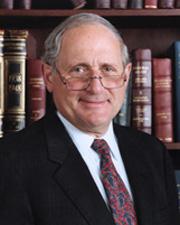 Sen. Carl Levin (D-MI)
Legislative Activity
Stay on top of the latest movement without scrolling through every action
Senate amendment submitted
December 18, 2007
View full timeline
Senate amendment submitted
December 18, 2007
Roll call votes on amendments in Senate: Amendment SA 3876, pursuant to the order of December 18, 2007, having failed to achieve the required 60 votes in the affirmative, was not agreed to in Senate by Yea-Nay Vote. 50 - 45. Record Vote Number: 438.
December 18, 2007
Senate amendment not agreed to: Amendment SA 3876, pursuant to the order of December 18, 2007, having failed to achieve the required 60 votes in the affirmative, was not agreed to in Senate by Yea-Nay Vote. 50 - 45. Record Vote Number: 438.
December 18, 2007
Senate amendment proposed (on the floor): Amendment SA 3876 proposed by Senator Levin to Amendment SA 3874.(consideration: CR S15853-15861; text: CR S15853)
December 18, 2007
Amendment SA 3876 proposed by Senator Levin to Amendment SA 3874. (consideration: CR S15853-15861; text: CR S15853) To express the sense of Congress on the transition of the missions of United States Forces in Iraq to a more limited set of missions as specified by the President on September 13, 2007.
December 18, 2007
Amendment SA 3876, pursuant to the order of December 18, 2007, having failed to achieve the required 60 votes in the affirmative, was not agreed to in Senate by Yea-Nay Vote. 50 - 45. Record Vote Number: 438.
December 18, 2007
Proposed amendment SA 3876, pursuant to the order of December 18, 2007, having failed to achieve the required 60 votes in the affirmative, was withdrawn in Senate.
December 18, 2007
Votes
1 roll call on this amendment
Text
Proposed
CONSOLIDATED APPROPRIATIONS ACT, 2008--Continued

Mr. GREGG. Mr. President, I ask unanimous consent that the Senator
from Idaho now be recognized for 5 minutes and that at 5:20, it be
deemed that all time be yielded back by all sides relative to the
motion.
The PRESIDING OFFICER (Mr. Salazar). Without objection, it is so
ordered.
Mr. GREGG. Mr. President, I note for those people listening, under
this agreement, there should be a vote beginning about 5:20 p.m.
Mr. LEAHY. Mr. President, I have no objection.
The PRESIDING OFFICER. The Senator from Idaho.
Mr. CRAIG. Mr. President, the Senator from Washington and all of us
recognize that this may be the conclusion this evening of this session
of Congress, and there may be a lot of issues out there that will be
brought to a final vote. I think for all of us, as any session
concludes, we have to look at the work product and say that is a job
well done or a job not so well done. Frankly, for those of us on the
Republican side who stayed together and fought the fight and exchanged
our differences with those on the Democratic side, to bring a budget
back into constraints that are at or near the President's proposal is
without question a victory. Some of us will recognize that and honor
that tonight as we conclude this first session of this Congress.
I yield the floor.
The PRESIDING OFFICER. The Senator from Maine.
Ms. COLLINS. Mr. President, I ask unanimous consent that I be
permitted to proceed until the vote occurs, which is 2 minutes from
now.
The PRESIDING OFFICER. Without objection, it is so ordered.
Ms. COLLINS. Mr. President, I rise to discuss the funding for the Low
Income Home Energy Assistance Program. This program is absolutely vital
to the people of my State. This winter we have seen record-high prices
for home heating oil.
I want to thank the appropriators for including additional funding
for the LIHEAP program as part of the omnibus spending bill, but, Mr.
President, I was hoping we would proceed to consideration of the
amendment offered by the Senator from Vermont, of which I am proud to
be a cosponsor, which would have provided 800 million additional
dollars for the LIHEAP program.
Mr. President, this is a real crisis. I consider the amount of money
in this bill to be a significant step forward, but it is not adequate
to meet the overwhelming needs for the constituents that live in cold
weather States and are struggling and literally choosing between paying
their bills, buying food, purchasing prescription drugs, and staying
warm. That is a choice that no family in this country should have to
make.
I am pleased with this downpayment on the LIHEAP program. It is a
major step forward that is going to make a significant difference, but,
frankly, it is simply not adequate to meet the overwhelming need.
Nationwide, over the last 4 years, the number of households receiving
LIHEAP assistance increased by 26 percent from 4.6 million to about 5.8
million, but during this same period, Federal funding increased by only
10 percent. The result is that the average grant declined from $349 to
$305. In addition, since August, crude oil prices quickly rose from
around $60 barrel to nearly $100 per barrel, so a grant buys less fuel
today than it would have just 4 months ago. According to the Maine
Office of Energy Independence and Security, the average price of
heating oil

[[Page S15844]]

in our State is $3.26 a gallon. That is a record in our State.
This large, rapid increase, combined with less LIHEAP funding
available per family, imposes hardship on people who use home heating
oil to heat their homes. Low-income families and senior citizen living
on limited incomes in Maine and many other States face a crisis in
staying warm this winter.
The Sanders amendment would have provided an additional $800 million
as emergency funding for LIHEAP. The term ``emergency,'' could not be
more accurate. Our Nation is in a heating emergency this winter.
Families are being forced to choose among paying for food, housing,
prescription drugs and heat. No family should be forced to suffer
through a severe winter without adequate heat.
I understand we may consider this proposal again after the holidays.
When we reconsider it, I urge all my colleagues to support the Sanders
proposal to provide vital home energy assistance for the most
vulnerable of our citizens.

Cloture Motion

The PRESIDING OFFICER. Under the previous order and pursuant to rule
XXII, the Chair lays before the Senate the following cloture motion
which the clerk will report.
The assistant legislative clerk read as follows:

Cloture Motion

We, the undersigned Senators, in accordance with the
provisions of rule XXII of the Standing Rules of the Senate,
do hereby move to bring to a close debate on the motion to
concur in the House amendments to H.R. 2764, State, Foreign
Operations Appropriations, 2008.
Harry Reid, Jeff Bingaman, Barbara A. Mikulski, Byron L.
Dorgan, Daniel K. Inouye, Patrick Leahy, Max Baucus,
Mark Pryor, Debbie Stabenow, Kent Conrad, Patty Murray,
Bill Nelson, Jack Reed, Ken Salazar, Blanche L.
Lincoln, Tom Carper, Herb Kohl, Ben Nelson, Dick
Durbin.

The PRESIDING OFFICER. By unanimous consent, the mandatory quorum
call is waived.
The question is, Is it the sense of the Senate that debate on the
motion to concur in the House amendments to the Senate amendment to
H.R. 2764, the Department of State, Foreign Operations, and Related
Programs Appropriations Act, shall be brought to a close?
The yeas and nays are mandatory under the rule.
The clerk will call the roll.
The assistant legislative clerk called the roll.
Mr. DURBIN. I announce that the Senator from Delaware (Mr. Biden),
the Senator from New York (Mrs. Clinton), the Senator from Connecticut
(Mr. Dodd), the Senator from California (Mrs. Feinstein), and the
Senator from Illinois (Mr. Obama) are necessarily absent.
The PRESIDING OFFICER. Are there any other Senators in the Chamber
desiring to vote?
The yeas and nays resulted--yeas 44, nays 51, as follows:

[Rollcall Vote No. 436 Leg.]

YEAS--44

Akaka
Baucus
Bingaman
Boxer
Brown
Byrd
Cantwell
Cardin
Carper
Casey
Conrad
Dorgan
Durbin
Feingold
Hagel
Harkin
Inouye
Johnson
Kennedy
Kerry
Klobuchar
Kohl
Lautenberg
Leahy
Levin
Lieberman
Lincoln
Menendez
Mikulski
Murray
Nelson (FL)
Nelson (NE)
Pryor
Reed
Reid
Rockefeller
Salazar
Sanders
Schumer
Stabenow
Tester
Webb
Whitehouse
Wyden

NAYS--51

Alexander
Allard
Barrasso
Bayh
Bennett
Bond
Brownback
Bunning
Burr
Chambliss
Coburn
Cochran
Coleman
Collins
Corker
Cornyn
Craig
Crapo
DeMint
Dole
Domenici
Ensign
Enzi
Graham
Grassley
Gregg
Hatch
Hutchison
Inhofe
Isakson
Kyl
Landrieu
Lott
Lugar
Martinez
McCain
McCaskill
McConnell
Murkowski
Roberts
Sessions
Shelby
Smith
Snowe
Specter
Stevens
Sununu
Thune
Vitter
Voinovich
Warner

NOT VOTING--5

Biden
Clinton
Dodd
Feinstein
Obama
The PRESIDING OFFICER. On this vote the yeas are 44, the nays are 51.
Three-fifths of the Senators duly chosen and sworn not having voted in
the affirmative, the motion is rejected.
Mr. LEAHY. Mr. President, I suggest the absence of a quorum.
The PRESIDING OFFICER. The clerk will call the roll
The legislative clerk proceeded to call the roll.
Mr. LEAHY. Mr. President, I ask unanimous consent that the order for
the quorum call be rescinded.
The PRESIDING OFFICER. Without objection, it is so ordered.
The Republican leader is recognized.

Amendment No. 3874

(Purpose: To make emergency supplemental appropriations for the
Department of Defense for the fiscal year ending September 30, 2008)

Mr. McCONNELL. Mr. President, I move to concur in the House
amendments with an amendment which I send to the desk on behalf of
myself, Senators Lieberman, Inouye, Stevens, Cochran, and Warner.
The PRESIDING OFFICER. The clerk will report.
The legislative clerk read as follows:

The Senator from Kentucky [Mr. McConnell], for himself, Mr.
Lieberman, Mr. Inouye, Mr. Stevens, Mr. Cochran, and Mr.
Warner moves to concur in the House amendment No. 2 to the
Senate amendment to H.R. 2764, with an amendment numbered
3874.

(The amendment is printed in today's Record under ``Text of
Amendments.'')
Mr. McCONNELL. Mr. President, under the consent agreement, how much
time do we have? I will use my leader time.
The PRESIDING OFFICER. The agreement contemplates a second-degree
amendment, the Feingold amendment, where there will be 1 hour of debate
equally divided on that amendment.
Mr. McCONNELL. Mr. President, I will use leader time now.
The PRESIDING OFFICER. The Republican leader.
Mr. McCONNELL. Mr. President, a lot has changed since last December.
At this time last year, America and its allies were desperate for good
news out of Iraq. The security situation was dire, and getting worse.
An all-out civil war threatened to undermine the heroic work of U.S.
forces and frustrate the hopes of millions of Iraqis.
Then General Petraeus stepped forward with a bold new plan. We
confirmed General Petraeus unanimously for what seemed like one last
effort at salvaging the mission. And we sent him the troops and the
funds he needed to carry out the job.
Since the implementation of the Petraeus plan, the security situation
in and around Baghdad has changed dramatically. Attacks on troops are
down. Civilian casualties in Baghdad are down 75 percent. Iraqi
refugees are streaming back over the borders. Outside the city, the
local leaders are forging agreements among themselves and with U.S.
forces to ensure even greater security.
There is simply no question that on the military and tactical levels
the Petraeus plan has been a tremendous success. So as we stand here
today, we have new hope that U.S. service men and women are beginning
to return home with a sense of achievement. A lot has changed in Iraq,
and here in Washington, we should take notice.
Before us is an amendment sent to us by the House of Representatives
that underfunds our troops and only provides for those fighting in
Afghanistan. It leaves the troops in Iraq to fend for themselves. That
is unacceptable.
What is the difference between funding the troops in Afghanistan and
funding the troops in Iraq? They are both our troops. Even those of us
who have disagreed on the war have always agreed on at least one thing,
and that is the troops in the field will not be left without the
resources they need.
So the amendment I sent to the desk provides for our men and women in
uniform in Iraq and Afghanistan because I believe it is our duty to
protect all of those who are putting their lives on the line. It is
also important to understand--I hope everybody in the Chamber and
anybody listening gets this fundamental point: If this amendment does
not pass, the McConnell-Lieberman amendment does not pass in its
current form, the underlying bill will not become law. The passage of
the McConnell-Lieberman proposal is essential to getting a Presidential
signature on the Omnibus appropriations and Iraq funding.
The Petraeus plan provides for a gradual reduction of our forces and
a

[[Page S15845]]

transition of the mission. Iraqi security forces will eventually shift
from partnering with coalition forces to leading forces on their own.
We must not impose an arbitrary timeline for withdrawal or accelerate
this timeline at an unrealistic pace.
This is a moment of real hope for our Nation and for the people of
Iraq. It is a moment of real urgency in the Senate. We need to pass the
spending bill with troop funds without any strings and without further
delay.
At the risk of being redundant, the President has made it
absolutely clear that to get a Presidential signature, to
wrap up this session, having succeeded in passing all of our
appropriations bills, will require the passage of the
McConnell-Lieberman amendment.
So when we get to that amendment--we will have a couple of votes
before then, but when we get to that amendment, it is essential. We
want to complete our work in a way that implements the appropriations
process as all of us feel it should be implemented on a yearly basis.
The success of the McConnell-Lieberman amendment is essential.
I yield the floor.
Mr. LEAHY. Mr. President, not counting leader time, what is the
provision of time once Senator Feingold has introduced his second-
degree amendment?
The PRESIDING OFFICER. There will be 1 hour of debate equally
divided.
Mr. LEAHY. Mr. President, I see the Senator from Wisconsin. I ask, of
the half hour on this side, that 15 minutes be given to the
distinguished Senator from Wisconsin, 10 minutes to the senior Senator
from West Virginia, 5 minutes to the distinguished senior Senator from
Massachusetts, and that the Senator from Vermont who is a cosponsor be
allowed to submit a statement as though read for the Record.
The PRESIDING OFFICER. Without objection, it is so ordered.

Amendment No. 3875 to Amendment No. 3874

Mr. FEINGOLD. Mr. President, I send an amendment to the desk and ask
for its immediate consideration.
The PRESIDING OFFICER. The clerk will report.
The legislative clerk read as follows:

The Senator from Wisconsin [Mr. Feingold], for himself, Mr.
Reid, Mr. Leahy, Mr. Dodd, Mrs. Boxer, Mr. Kennedy, Mr.
Kerry, Mr. Harkin, Mr. Whitehouse, Mr. Wyden, Mr. Durbin, Mr.
Schumer, Mr. Obama, Mr. Sanders, Mr. Menendez, Mr.
Lautenberg, and Mr. Brown, proposes an amendment numbered
3875 to amendment No. 3874.

Mr. FEINGOLD. Mr. President, I ask unanimous consent that the reading
of the amendment be dispensed with.
The PRESIDING OFFICER. Without objection, it is so ordered.
The amendment is as follows:

(Purpose: To provide for the safe redeployment of United States troops
from Iraq)

At the appropriate place, insert the following:

SEC. __. SAFE REDEPLOYMENT OF UNITED STATES TROOPS FROM IRAQ.

(a) Transition of Mission.--The President shall promptly
transition the mission of the United States Armed Forces in
Iraq to the limited and temporary purposes set forth in
subsection (d).
(b) Commencement of Safe, Phased Redeployment From Iraq.--
The President shall commence the safe, phased redeployment of
members of the United States Armed Forces from Iraq who are
not essential to the limited and temporary purposes set forth
in subsection (d). Such redeployment shall begin not later
than 90 days after the date of the enactment of this Act, and
shall be carried out in a manner that protects the safety and
security of United States troops.
(c) Use of Funds.--No funds appropriated or otherwise made
available under any provision of law may be obligated or
expended to continue the deployment in Iraq of members of the
United States Armed Forces after the date that is nine months
after the date of the enactment of this Act.
(d) Except for Limited and Temporary Purposes.--The
prohibition under subsection (c) shall not apply to the
obligation or expenditure of funds for the following limited
and temporary purposes:
(1) To conduct targeted operations, limited in duration and
scope, against members of al Qaeda and affiliated
international terrorist organizations.
(2) To provide security for United States Government
personnel and infrastructure.
(3) To provide training to members of the Iraqi Security
Forces who have not been involved in sectarian violence or in
attacks upon the United States Armed Forces, provided that
such training does not involve members of the United States
Armed Forces taking part in combat operations or being
embedded with Iraqi forces.
(4) To provide training, equipment, or other materiel to
members of the United States Armed Forces to ensure,
maintain, or improve their safety and security.

Mr. FEINGOLD. Mr. President, I rise to offer an amendment with the
majority leader, Senator Reid, and Senators Leahy, Dodd, Boxer,
Kennedy, Kerry, Harkin, Whitehouse, Wyden, Durbin, Schumer, Obama,
Sanders, Menendez, Lautenberg, and Brown to H.R. 2764, the fiscal year
2008 Omnibus appropriations bill.
The amendment is one I have offered before. I will not hesitate, if I
must, to offer it again and again and again.
The 17 cosponsors is the greatest number we have ever had for this
amendment.
It requires the President to begin safely redeploying U.S. troops
from Iraq within 90 days of enactment, and requires redeployment be
completed within 9 months. At that point, with the bulk of our troops
safely out of Iraq, funding for the war would be ended, with four
narrow exceptions: providing security for U.S. Government personnel and
infrastructure, training the Iraqi security forces, providing training
and equipment to U.S. service men and women to ensure their safety and
security, and conducting targeted operations limited in duration and
scope against members of al-Qaida and others affiliated with
international terrorist organizations.
Some of my colleagues complain that we spent too much time debating
Iraq this year. They would rather talk about other issues. Well, we
have a lot of important priorities, but nothing is more important to me
or my constituents than ending this disastrous war.
As I do every year, I held a town hall meeting in every county in
Wisconsin this year. That is 72 meetings for those of you who are not
from the Badger State. I heard a lot from my constituents at the
meetings about health care and education. But the No. 1 issue I heard
about was foreign affairs, particularly the war in Iraq.
But the No. 1 issue I heard about was foreign affairs, particularly
the war in Iraq. Let me tell you--they weren't asking why Congress is
spending so much time on this issue. They weren't asking us to give the
President more time for his so-called surge. Like Americans all across
the country, they want an end to this war, and they want to know what
is stopping us.
The Senate needs to address the concerns and demands of our
constituents, who more than a year ago voted for a change in
congressional leadership in large measure because of the debacle in
Iraq. But we have yet to follow through and end this misguided war,
before more Americans are injured and killed. And we are about to
adjourn for the year and let the war drag on even longer.
We hear a lot from supporters of the President that violence in Iraq
is down right now, and therefore we are on the path to victory. That
argument would be a lot more convincing if the administration had a
viable strategy for success. The surge may buy time, but as long as
there is no political solution to Iraq's problems, we are just
postponing the inevitable resurgence in violence, and our brave troops
will continue bearing the brunt of it.
That is not a strategy for success. It is not even a strategy. It is
a way of pushing this problem off to the next President and the next
Congress, while our troops put their lives on the line, and our
constituents foot the bill. Or, I should say, our constituents'
children and grandchildren foot the bill, because we can't even be
bothered to figure out a way to pay for the war. We are just handing
the tab to future generations, sticking them with hundreds of billions
of dollars of more deficit spending.
I am certainly pleased that violence in Iraq has declined in the last
few months. Once again, our troops have showed they excel in any
challenge with which they are tasked. This doesn't change the fact,
however, that this year was the bloodiest year for Americans since the
war began, and there are still a few weeks to go in 2007.

Indeed, let us remember that nearly 4,000 Americans have died, and
almost 30,000 have been wounded in a war that has no clear strategy and
no end in sight. While the President is bringing home a token number of
troops, over 160,000 remain as the war drags on into its fifth year.
What are we supposed to tell them, and their families, to wait another
year until a new administration and new Congress finally listen to the
American people and bring this tragedy to a close?

[[Page S15846]]

Mr. President, Iraq appears to be no closer to legitimate political
reconciliation at the national level than it was before the surge
began. Equally worrisome is that, as part of the President's plan, we
appear to be deepening our dependence upon former insurgents and
militia-infiltrated security forces with questionable loyalties.
Supporting the sheiks in al Anbar--and elsewhere--may help to reduce
violence in the near term, but by supporting both sides of a civil war,
we are risking greater violence down the road. Such tactics are likely
to undermine the prospects for long-term stability, as they could lead
to greater political fragmentation and ultimately jeopardize Iraq's
territorial integrity. Again, without legitimate national
reconciliation, violence may ebb and flow, but it won't end, and we
will be no closer to a settlement, no matter how long we keep a
significant military presence in Iraq. That is not the fault of our
heroic men and women in uniform. It is the fault of the
administration's disastrous policies.
There is another dirty secret behind the temporary drop in violence,
and it relates to the segregation of Baghdad and the neighborhoods on
its outskirts. With so many Iraqis fleeing their homes in search of
greater safety and security, large-scale displacement has resulted in
very different demographics. Previously mixed neighborhoods have ceased
to exist, thereby curtailing one of the chief sources of sectarian
violence. This ethnic cleansing is hardly evidence of a successful
surge. And it sure isn't a hopeful sign for future peace and stability.
When it announced the surge, the administration said its goal was to
keep a lid on violence to give time and space for reconciliation in
Iraq. Now that we are no closer to reconciliation, the administration
is trying, once again, to shift the goalposts. We don't hear as much
about reconciliation now, and when we do, it sounds very different from
the national reconciliation that was supposedly our goal--instead we
hear about ``bottom-up'' reconciliation, whatever that means. All the
administration can do is stall for time, just as it did in 2004, just
as it did in 2005, and just as it did in 2006. The slogan may be
different--``Mission Accomplished,'' ``Stay the Course,'' ``The New Way
Forward'' and even ``Return on Success,'' but each time we are told we
are on the right road, if we just keep walking a little longer. Until,
that is, we reach another dead end, and a new slogan is invented to
justify heading in a new, but equally futile direction.
As the administration blunders from one mistake to another, brave
American troops are being injured and killed in Iraq; our military is
being overstretched; countless billions of dollars are being spent; the
American people are growing more and more frustrated and outraged; and
our national security is being undermined.
Instead of focusing on Iraq, we should be focusing on our top
national security priority--going after al-Qaida and its affiliates
around the globe. This administration has sadly proven that we cannot
do both.
Al-Qaida is waging a global campaign, from North Africa--where the
Algerian Government has blamed an al-Qaida affiliate for two major
bombings last week--to the border region between Afghanistan and
Pakistan were, while we have been distracted by Iraq, al-Qaida has
reconstituted and strengthened itself. There is a price to pay for our
neglect, and this administration has failed to acknowledge it.
Because of its narrow focus on Iraq, the administration has been so
distracted it has not adequately addressed the deteriorating security
conditions in Afghanistan, where the resurgent Taliban--the same
movement that harbored and supported the terrorist elements that
attacked our country on 9/11--are gaining ground. Violence may be down
in Iraq, but it is up significantly in Afghanistan. There were 77
suicide attacks in Afghanistan in just the first 6 months of 2007,
which is about twice the number for the same period in 2006 and 26
times higher than from January to June 2005.
This worrisome escalation of suicide bombings is one of many signs
that Afghanistan's already tenuous stability is even shakier. And while
earlier this week the Pentagon confirmed that the U.S. military and its
NATO partners are reviewing plans for Afghanistan, it is awfully late
in the game to try to put that country on a solid path to stabilization
and development. Nonetheless, we have to try because we still have an
opportunity to finish the job we started 6 years ago in Afghanistan--
eliminating the Taliban and destroying a safe haven for terrorist
networks that seek to harm us. This opportunity is critical because
until bin Laden and his reconstituted al-Qaida leadership are killed or
captured, Afghanistan's future cannot be separated from our own
national security.

Instead of seeing the big picture--instead of approaching Iraq in the
context of a comprehensive and global campaign against a ruthless
enemy--this administration persists with its tragic policy and its
tragic mistakes. As the President digs in his heels, he is
simultaneously deepening instability throughout the Middle East,
undermining the international support and cooperation we need to defeat
al-Qaida, providing al-Qaida and its allies with a rallying cry and
recruiting tool, and increasing our vulnerability.

The President's promise to redeploy a few battalions, while leaving
160,000 troops in Iraq, is not nearly enough. That is why, once again,
I am offering this amendment with Majority Leader Reid. It is up to us
here in Congress to reverse what continues to be an intractable policy.
It is our job to listen to the American people, to save American lives,
and to protect our Nation's security by redeploying our troops from
Iraq, because the President will not.

I am not suggesting that we abandon the people of Iraq or that we
ignore the political impasse there. We cannot ignore the ongoing
humanitarian crisis that has unfolded within Iraq or the one that
followed millions of Iraqis as they fled to Jordan and Syria. These
issues require the attention and constructive engagement of U.S.
policymakers, key regional players, and the international community.
They require high-level, consistent, and multilateral engagement and
cooperation. But Iraqi reconciliation cannot--and will not--be brought
about by a massive American military engagement.

By enacting Feingold-Reid, we can finally bring our troops out of
Iraq and focus on what should be our top national security priority--
waging a global campaign against al-Qaida and its affiliates.
Some of my colleagues will oppose this amendment. That is their
right. But I hope none of them will suggest that Feingold-Reid would
hurt the troops by denying them equipment or support. There is no truth
to that argument--none. Passing this legislation would result in our
troops being safely redeployed within 9 months. At that point, with the
troops safely out of Iraq, funding for the war would end, with the
narrow exceptions I mentioned earlier. That is what Congress did in
1993, when it voted overwhelmingly to bring our military mission in
Somalia to an end. That is what Congress must do again to terminate the
President's unending mission in Iraq.
This amendment is almost identical to the version I offered with
Senator Reid and others to the Defense Department authorization bill.
And once again, we have specified that nothing in this amendment will
prevent U.S. troops from receiving the training or equipment they need
``to ensure, maintain, or improve their safety and security.'' I hope
we won't be hearing any more spurious arguments about troops on the
battlefield not getting the supplies they need.
This war is exhausting our country, overstretching our military, and
tarnishing our credibility. Even with the recent decline in violence,
the American people know the war is wrong, and they continue to call
for its end. I urge my colleagues to vote yes on Feingold-Reid so we
can finally heed their call to action.
I yield the floor.
The PRESIDING OFFICER (Mr. Menendez). The Senator from West Virginia.
Mr. BYRD. Mr. President, I intend to support the amendment being
offered by the Senator from Wisconsin. While I fully support the
addition of the $31 billion in funding for the war in Afghanistan and
for troop protection, I cannot support the President's demands that
funding be given to him with no strings attached so that he may keep
some 130,000 or more troops in Iraq for a sixth year. Risking the lives
of more soldiers to try to win a

[[Page S15847]]

bad bet on Iraq represents a terrible injustice to our brave fighting
men and women. Just a little more time, the President says, just a
little more money, and the quagmire that is Iraq will be transformed.
The President has made clear that if he has his way, U.S. troops
would still be in Iraq decades hence. What a statement by a U.S.
President. What a deadly bankrupt legacy to leave. 2007 has already
been the most deadly year in Iraq in terms of U.S. deaths since the
invasion began, and the year is not yet over. The number of U.S. deaths
has reached 3,890, and the number of wounded has surpassed 28,000. The
Iraqi Government has not passed any of the legislative benchmarks that
would indicate progress toward national reconciliation.
The economic rebuilding of Iraq continues to lag, financed by U.S.
taxpayer dollars and marked by waste, fraud, and abuse. Oil production
is sputtering and shortages of basics such as electricity and water
continue unabated, despite the boondoggle that this war has been for
private contractors. Evidence of ethnic cleansing is growing, as Sunnis
are forced out of Shia areas and vice versa. The Iraqi Army and police
forces remain riddled with sectarianism. U.S. forces continue to carry
the bulk of the security burden, and while U.S. forces remain in Iraq,
there is little incentive for the Iraqis to assume that duty.
Some have pointed to recent tactical successes and the reduction of
violence in certain areas of Iraq as justification for continuing the
occupation of Iraq. But the prowess of our troops was never in
question. They have been given a job to do, and they do it with bravery
and skill. The important question--the only true measure of our efforts
in Iraq--is whether those tactical successes somehow add up to progress
toward a lasting political solution. That progress has failed to
materialize.
It is time for a change in Iraq. It is time to limit the U.S.
military mission in Iraq and bring the bulk of our troops home. It is
time to seriously engage our allies and the nations of the Middle East
on Iraqi security issues. It is time to restore the reputation of the
great United States of America by returning to the policies that made
the United States an example to inspire the world, a beacon of economic
prosperity, a showcase of humanitarian ideals, and benevolent
assistance to people in their hour of need. It is time to shed our
image as invaders and occupiers of other nations, using mercenary
forces to expand our reach. It is time to unequivocally reject the
notion that America condones torture. For most of my lifetime--and it
has been a long one already--the world looked to the United States
first when help was needed. Now, the world wonders which nation America
will invade next. How far we have fallen.
The administration has used emergency proclamations and stop-loss
orders to effect a back-door draft that keeps soldiers in the military,
even though their terms of service have been completed. Meanwhile, the
needs of our own Nation go wanting, as important equipment that could
be used for domestic disasters is shipped off to Iraq, and our National
Guardsmen, the first responders in emergencies, sit in the sands--the
hot sands--of the Middle East.
I urge my colleagues on both sides of the aisle to vote in favor of
this amendment and, thus, reaffirm our resolve to alter our disastrous
course in Iraq. To vote for this amendment is to vote for our troops
and to begin a reasonable new policy for Iraq. To vote for this
amendment is to begin to reassert the constitutional role of the
Congress as the people's check on the Executive, using the most
powerful tool there ever was and ever will be in the congressional
arsenal--the power of the purse. To vote for this amendment is to show
the American people we are listening to them.
Keeping our troops in harm's way in support of a misbegotten war and
a failed strategy is not patriotism. We must not roll the dice again,
recklessly risking American lives and American treasure. It is time--
time--time--for a change.
Mr. President, I yield the floor.
The PRESIDING OFFICER. The Senator from Arizona.
Mr. McCAIN. Mr. President, I rise to oppose the pending amendment by
the Senator from Wisconsin, my friend. I strongly support the amendment
that will be offered by the Republican leader that would deliver vital
funding for our troops in Iraq.
The underlying House-passed bill is not only irresponsive to the
facts on the ground in Iraq, it is simply irresponsible. It fails to
provide any funding for our troops fighting in Iraq and actually
contains an explicit prohibition against the use of funds for Operation
Iraqi Freedom. The authors have compiled a bill of some 1,400 pages and
an even larger joint explanatory statement chock-full of unnecessary
spending, but they include not a dime for our troops in Iraq. They
include not a dime for our troops in Iraq.
I would like our friends and colleagues and others to consider that
the bill on the floor today contains $1.6 million for animal vaccines
in Greenport, NY, but not a penny for our soldiers in Iraq; $477,000
for Barley Health Food Benefits but nothing for the troops in Iraq;
$846,000 for the Father's Day Rally Committee of Philadelphia but not a
dime for our sons and daughters who are fighting.
We are willing to spend $244,000 for bee research in Weslaco, TX, but
not a dollar for our fighting men and women in Baghdad, Kirkuk, and
Anbar. It is a sad day--it is a sad day, indeed--when in the middle of
a war this country must win, the Congress provides more funds for bee
research than for the brave Americans risking their lives on our
behalf.
For Congress to fail to provide the funds needed by our soldiers in
the field is inexcusable under any circumstances, but it is especially
disappointing right now at the very moment when General David Petraeus
and his troops are achieving the kind of progress in Iraq that many
dismissed as impossible a few months ago, including suspending
disbelief in order to believe the surge was working. One has to suspend
disbelief to believe it is not.
The bill's proponents seek, I suppose, a precipitous withdrawal of
U.S. combat forces from Iraq regardless of conditions on the ground or
the views of our commanders in the field. If that sounds familiar, it
should. It should sound familiar, my friends. The majority has thus far
engaged in no less than 40 legislative attempts to achieve this
misguided outcome.
The choice today is simple: Do we build upon the clear successes of
our current strategy and give General Petraeus and the troops under his
command the support they require to complete their mission or do we
ignore the realities and legislate a premature end to our efforts in
Iraq, accepting thereby all the terrible consequences that will ensue?
In case my colleagues missed it, a couple nights ago, there was a
piece on the evening news of one of the major networks that pointed out
that for the first time in a long time there was 24 hours in Baghdad
without a single incident of violence. How you can ignore these facts
on the ground is something I do not--will not--comprehend.
I had the privilege, along with my colleagues, Senator Lieberman of
Connecticut and Senator Graham of South Carolina, of spending
Thanksgiving with our troops in Iraq. On that trip, I saw and heard
firsthand about the remarkable transformation these brave men and women
in uniform have brought about this year. After nearly 4 years of
mismanaged war, our military, in cooperation with the Iraqi security
forces, has made significant gains under the new American
counterinsurgency strategy, the so-called surge. Overall violence in
Iraq has fallen to its lowest level since the first year of the
invasion. LTG Ray Odierno, the second in command in Iraq, said this
week this improvement is due to the increase in American troops and
better trained Iraqi forces--due to the increase in American troops and
better trained Iraqi forces.

Now, you can believe LTG Ray Odierno or you can believe those on the
other side of the aisle who want to bring to a halt the success we have
achieved.
Improvised explosive device blasts, the foremost source of U.S.
combat deaths, now occur at a rate lower than at any point since
September 2004. This week, MG Joseph Fil, the commander for Baghdad,
stated that attacks in Baghdad have fallen nearly 80 percent since
November 2006, murders in Baghdad Province are down by some 90 percent
over the same period, and vehicle-

[[Page S15848]]

borne bombs have dropped by 70 percent.
So as Ronald Reagan used to say: Facts are stubborn things. Facts are
stubborn things. These are the facts--not rhetoric but facts.
Major General Fil added that, today, there is no longer any part of
Baghdad under al-Qaida control, though the terrorist group is ``still
lurking in the shadows.'' I agree. They are on the run, but they are
not defeated. They are on the run, but they are not defeated.
Last week, the violence in Anbar Province was the lowest ever
recorded. The British handed control of southern Basra to the Iraqi
Government. And in Diyala, one of most dangerous regions in Iraq, al-
Qaida militants tried to retake several villages around the town of
Khalis, only to see U.S.-backed local volunteers drive the terrorists
away. That is the success of a classic counterinsurgency strategy. Tens
of thousands of volunteers have joined ``awakening councils'' that aim
to combat al-Qaida, and al-Qaida's No. 2, Ayman al-Zawahiri, has begun
warning of ``traitors'' among the insurgents in Iraq.
As a result of the hard-won gains our troops have secured, General
Petraeus has been able to initiate a drawdown of U.S. forces, a
drawdown tied not to an artificial timetable but based on security
gains in-country. This drawdown, beginning with the removal without
replacement of some 5,000 American troops, has commenced following a
dramatic drop in American casualty rates and enhanced security
throughout the country.
Al-Qaida's leadership knows which side is winning in Iraq. It may not
be known in some parts of America and in this body, but al-Qaida knows.
Al-Qaida knows who is winning in Iraq. Our soldiers know they have
seized the momentum in this fight. Does the majority party understand
we are succeeding under the new strategy? The proponents of this bill
cannot continue forever to deny or disparage the reality of progress in
Iraq or reject its connection to our new counterinsurgency strategy.
As General Odierno explained, with the new counterinsurgency
operations, ``we have been able to eliminate key safe havens, liberate
portions of the population and hamper the enemy's ability to conduct
coordinated attacks.'' General Odierno went on to add: ``We have
experienced a consistent and steady trend of increased security. . . .
and I believe continued aggressive operations by both Iraqi and
coalition forces are the most effective way to extend our gains and
continue to protect the citizens of Iraq.'' Given these realities, some
proponents of precipitous withdrawal from Iraq have shifted their
focus. While conceding, finally, that there have been dramatic security
gains, they have begun seizing on the lackluster performance of the
Iraqi Government to insist that we should abandon the successful
strategy and withdraw U.S. forces. This would be a terrible mistake. Of
course, there is no question that Iraq's national leaders must do more
to promote reconciliation and improve governance and that the reduction
in violence has created a window for political and economic progress
that Iraqi leaders must seize, but let's not close that window. The
likelihood that they make this progress would be vastly decreased--not
increased--by a precipitous U.S. withdrawal. Whatever the failings of
the imperfect democracy in Baghdad, they do not justify--either in
terms of national interests or simple morality--abandoning it to the
al-Qaida terrorists and Iranian-backed militias trying to destroy it.

None of this is to argue that Iraq has become completely safe or that
violence has come down to an acceptable level or that victory lies just
around the corner. On the contrary, the road ahead remains as it always
has been: long and hard. Violence is still at an unacceptable level in
some parts of the country. Unemployment remains high in many areas. The
Maliki government remains unwilling to function as it must. No one can
guarantee success or be certain about its progress or its prospects. We
can, however, be certain about the prospects for defeat if we fail to
fund our troops.
Make no mistake; despite the progress I have outlined, there is no
cause for complacency. Just as we have managed to turn failure into
success in 2007, we can likewise turn success back into failure in
2008, if we are not careful. As Major General Fil recently put it,
progress toward securing the city remains fragile and there is
``absolutely a risk of going too quickly'' in drawing down troops. ``An
immediate pullout too quickly would be a real serious threat to the
stability here in Baghdad,'' he said. Al-Qaida is off balance, but they
will come back swinging at us if we give them the chance.
Imagine for a moment if 1 of those 40 attempts to force a withdrawal
from Iraq had been successful earlier this year. Rather than hearing
from our commanders and troops in the field about the enormous
progress, the decline in violence, the Iraqis seeking to return home,
the decrease in al-Qaida influence, we would hear instead a very
different story--a darker one--with terrible implications for the
people of Iraq, the wider Middle East, and the security of the United
States of America.
Some of my colleagues would like to believe that should the bill we
are currently considering become law, without funding our troops in
Iraq, it would mark the end of this long effort. They are wrong. Should
the Congress force a precipitous withdrawal from Iraq, it would mark a
new beginning, the start of a new, more dangerous effort to contain the
forces unleashed by our disengagement. If we leave, we will be back. If
we leave, we will be back in Iraq and elsewhere in many more desperate
fights to protect our security and at an even greater cost in American
lives and treasure. Now is not the time for us to lose our resolve.
That is why the Senate must adopt the McConnell amendment. The
funding contained in this amendment is not as some have characterized
it: ``The President's money.'' It is money for the troops. It is money
for the brave Americans who are in harm's way as we speak. This funding
is to provide them with the equipment and proper training they require
to fulfill their mission; funding to protect our men and women from
roadside bombs and other attacks; funding to enable them to bring this
war to a successful and honorable end. If the funding is not included,
the President will very rightly veto this omnibus measure.
I say to my friends on the other side of the aisle that I understand
the frustration many feel after nearly 4 years of mismanaged war. I
share their frustration and sorrow. But we must remember to whom we owe
our allegiance--not to short-term political gain but to the security of
America, to those brave men and women who risk all to ensure it, and to
the ideals upon which our Nation was founded. That responsibility is
our dearest privilege, and to be judged by history to have discharged
it honorably will in the end matter so much more to all of us than any
fleeting glory of popular acclaim, electoral advantage, or office. Let
us not sacrifice the remarkable gains our service men and women have
made by engaging in a game of political brinkmanship. There is far, far
too much at stake.
I urge my colleagues to support the McConnell amendment and to reject
this amendment. I urge my colleagues to fund our troops and to support
them so that when they do return to us, they return with the honor and
success their valiant efforts have earned. They and the American people
whom they are entrusted to protect deserve nothing less.
Mr. President, I yield the floor.
The PRESIDING OFFICER. Who yields time?
Mr. ALLARD. Mr. President, I yield myself 7 minutes under the
Republican time. I am going to share my concerns about a provision
included in the Interior division of the Omnibus appropriations bill.
This provision was added on the House Floor and was unfortunately
retained by the conference committee. The language of this provision
will prohibit BLM from preparing or publishing final regulations for
oil shale commercial leasing on public lands. This provision is opposed
by the Department of the Interior. I have a letter stating their
concerns from Secretary Dirk Kempthorne which I ask unanimous consent
be printed in the Record.
There being no objection, the material was ordered to be printed in
the Record, as follows:

[[Page S15849]]

The Secretary of the Interior,

Washington, DC, December 12, 2007.
Hon. Wayne Allard,
Ranking Member, Subcommittee on Interior, Environment and
Related Agencies, Committee on Appropriations, U.S.
Senate, Washington, DC.
Dear Senator Allard: As the House and Senate consider the
Fiscal Year 2008 Interior, Environment and Related Agencies
Appropriations bill, I would like to voice my concern
regarding efforts to prohibit our Department from issuing
regulations related to oil shale leasing.
Section 606 of the House-passed Interior appropriations
bill would prohibit the use of funds to prepare or publish
final regulations regarding a commercial leasing program for
oil shale resources on public lands. The Energy Policy Act of
2005 (EPAct) was enacted with broad bipartisan support. The
EPAct included substantive and significant authorities for
the development of alternative and emerging energy sources.
Oil shale is one important potential energy source. The
United States holds significant oil shale resources, the
largest known concentration of oil shale in the world, and
the energy equivalent of 2.6 trillion barrels of oil. Even if
only a portion were recoverable, that source could be
important in the future as energy demands increase worldwide
and the competition for energy resources increases.
The Energy Policy Act sets the timeframe for program
development, including the completion of final regulations.
The Department must be able to prepare final regulations in
FY 2008 in order to meet the statutorily-imposed schedule.
The Bureau of Land Management (BLM) issued a draft
Environmental Impact Statement (EIS) in August 2007. The
final EIS is scheduled for release in May 2008 and the
effective date of the final rule is anticipated in November
2008. The final regulations will consider all pertinent
components of the final EIS. Throughout this process BLM will
seek public input and work closely with the States and other
stakeholders to ensure that concerns are adequately
addressed. The Department is willing to consider an extended
comment period after the publication of the draft regulations
in order to assure that all of the stakeholders have adequate
time and opportunity to review and comment before publication
of the final regulations.
The successful development of economically viable and
environmentally responsible oil shale extraction technology
requires significant capital investments and substantial
commitments of time and expertise by those undertaking this
important research. Our Nation relies on private investment
to develop new energy technologies such as this one. Even
though commercial leasing is not anticipated until after
2010, it is vitally important that private investors know
what will be expected of them regarding the development of
this resource. The regulations that Section 606 would
disallow represent the critical ``rules of the road'' upon
which private investors will rely in determining whether to
make future financial commitments. Accordingly, any delay or
failure to publish these regulations in a timely manner is
likely to discourage continued private investment in these
vital research and development efforts.
The Administration opposes the House provision that would
prohibit the Department from completing its oil shale
regulations. I would urge the Congress to let the
administrative process work. It is premature to impose
restrictions on the development of oil shale regulations
before the public has had an opportunity to provide input.
Identical letters are being sent to Congressman Norm Dicks,
Chairman, Subcommittee on Interior, Environment, and Related
Agencies, Committee on Appropriations, House of
Representatives; Congressman Todd Tiahrt, Subcommittee on
Interior, Environment, and Related Agencies, Committee on
Appropriations, House of Representatives; and Senator Dianne
Feinstein, Chairman, Subcommittee on Interior, Environment,
and Related Agencies, Committee on Appropriations, United
States Senate.
Sincerely,
Dirk Kempthorne.

Mr. ALLARD. In 2005, I worked closely with my colleagues in the House
and in the Senate on provisions which were included in section 369 of
the Energy Policy Act of 2005. These will help lead to
commercialization after the research and demonstration projects
currently underway have proven themselves. As those of us who have to
run a business know, it is a bad practice to pour millions of dollars
into research and development projects with no hint of assurance that
these projects will lead to commercialization. Understanding the
regulatory framework within which development must take place is
important to companies making investment decisions. I believe, as I did
in 2005, that it is critical to give companies investing tens of
millions of dollars into these research projects a proverbial ``light
at the end of the tunnel.''
The timeline included in this section of the Energy Policy Act for
setting up a regulatory framework for oil shale development required
the Department of the Interior to develop a programmatic environmental
impact statement for oil shale by February of 2007 and to finalize oil
shale regulations by August of 2007. Although these dates have slipped,
many who are concerned with decreasing our country's dependence on
foreign sources of oil remain interested in seeing this process move
forward. A regulatory framework is needed in order to clarify the range
of development options.
During the last several years, a handful of companies have worked to
develop technologies that will allow for economically and
environmentally feasible development of this resource. While it may
take many years of research to establish whether commercial leasing is
viable, it is essential in guiding the scope of study and further
analysis, including additional site-specific environmental impact
statements that are likely to be needed prior to any commercial-scale
development.
Some have complained that it is too soon to begin drafting
commercialization regulations or that the pace at which the development
is moving is too quick. I am not advocating that we move forward
inappropriately or in a way that is not sustainable.
It should be noted that section 369 of the Energy Policy Act also
requires the Department of Interior to host a commercial lease sale in
February of 2008, but all who are involved in this process are aware
that it is premature to take that step too soon. I have been supportive
of moving back the date of the first commercial lease sale. However,
this fact does not mean that we should not bring the rest of the
process to a grinding halt.
We are in the midst of a deliberate and thoughtful process for
approaching the research and eventual commercial development of oil
shale. The potential of this abundant domestic resource is too
important to take lightly.
It is estimated that there are potentially over 3 trillion barrels of
recoverable oil available from shale. Let me repeat that. There is a
potential of over 3 trillion barrels of recoverable oil available from
oil shale, at a time when this country is struggling to produce enough
oil for this country's consumption. This could be the single largest
contributor to weaning us off of imports from other countries, many of
which are in political turmoil. Moreover, bringing online another large
domestic supply of energy can lower prices for consumers, bring in
royalties to States and the Federal Government, and enhance the
stability of oil prices in the marketplace.
With a cautious but deliberate approach that involves consultation
with State and local governments, we have the best opportunity of
determining if producing oil from shale is possible. We must give this
process an opportunity to work before we cut it off at the knees. The
language included in this bill does just that. It is not sound policy
for our country. From a process standpoint, we should not be undoing
carefully crafted policy choices that were negotiated for months by the
authorizing committees of jurisdiction and passed by the Congress on a
massive appropriations bill that is being pushed through this Chamber
at the eleventh hour.
I yield the floor.
The PRESIDING OFFICER. The Senator from New Mexico is recognized.
Mr. DOMENICI. Mr. President, I wonder if the Senator from Colorado,
before he yields, would engage in a brief dialog with the Senator from
New Mexico. I ask unanimous consent for 2 minutes for that purpose.
The PRESIDING OFFICER. Without objection, it is so ordered.
Mr. ALLARD. Mr. President, I withdraw my request to yield the floor.
Mr. DOMENICI. Mr. President, I commend the Senator from Colorado. I
understand he is the ranking member on that subcommittee.
Mr. ALLARD. Yes.
Mr. DOMENICI. The Senator tried his best to inform those working on
this that this was not the way to handle one of America's most
significant resources that might, indeed, sooner rather than later take
the place of the crude oil we import from all over the world.
Right now, some of the major companies in America are investing in
technology which will completely change the way this asset oil shale
will be developed; is that not right? It is going to be in situ instead
of the old mining system that would have been so tough environmentally.

[[Page S15850]]

Mr. ALLARD. Mr. President, this is a new process. I thank the Senator
from New Mexico for his question. This process is becoming economically
feasible and certainly protects the environment. I know the Senator has
been working hard on this particular issue on the committees on which
he is a leader, and I appreciate his recognizing the importance of us
being less dependent on foreign oil and the importance of this huge
reserve that exists in several States throughout the West. This is new
technology. It is very promising. It is exciting. The byproduct from
this particular process I have been told--and I have seen samples of
it--is high-grade jet fuel that needs further refining because of the
high sulfur nitrogen content. But it is a remarkable product, and it is
done in an environmentally friendly way.
Mr. DOMENICI. I thank the Senator. I want to say this is exactly what
we should not be doing: putting on a moratorium that stops rulemaking
and the ordinary professional evolution of standards by the appropriate
Federal agencies to address the utilization of one of America's most
profound solutions to our energy crisis. Because the price of oil has
gotten so high, it is indeed feasible to develop shale oil in America
and substitute it for diesel and crude oil products that are bought
from overseas. I know that. I need not ask anybody any questions about
that. That is why we put the language in the big energy package, and
that is why a candidate running for Senate in the State of Colorado
should not pander to those who just want to take out after this product
that could indeed be one of America's salvations. The people in the
State of Colorado and in America ought to know it. The person who did
this, who put the moratorium on wants to be a Senator, I understand.
The first thing we ought to find out is does he want America to have
a chance to be independent of foreign oil. This is one that might do
it. You can imagine that in 15 or 20 years, oil would be produced from
this shale, and it can be taken right out of the ground and used,
because they boil it in the ground. That is the new technology.
I am not very impressed with somebody who comes along on a bill such
as this and deals with this kind of resource in a willy-nilly manner,
to respond or pander to those who don't want the United States on its
own to do anything to develop energy. They might say we could not do it
before. Of course not. You could not develop it at $25-a-barrel oil.
But you certainly can at $50, and there is no question you can at $80
or $90. That is what America's future is all about.
I thank the Senator for his work. I am sorry it didn't work. At least
those who put that in know somebody is looking out for them. It won't
be there next year. This Senator will see to it that we have a debate
and vote on that issue before that happens. I thank the Senator for
yielding.
Mr. ALLARD. Mr. President, I thank the Senator for his comments on
this very important issue.
I yield the floor.
The PRESIDING OFFICER. The Senator from Massachusetts is recognized.
Mr. KENNEDY. How much time remains on this amendment?
The PRESIDING OFFICER. The proponents have 6 minutes 41 seconds. The
opponents have 5 minutes 20 seconds.
Mr. KENNEDY. Mr. President, I yield myself the 6\1/2\ minutes. I ask
if the Chair will let me know when 1 minute remains.
The PRESIDING OFFICER. The Chair will do so.
Mr. KENNEDY. Mr. President, I support this amendment, and I commend
my friend and colleague Senator Feingold. It is wrong, basically and
fundamentally, to give another blank check to President Bush for his
failed Iraq policy. I support our troops, but I oppose our war.
We have heard here in the last few minutes and in the last few hours
the rather rosy picture about what is happening over in Iraq. I think
everybody in this Chamber salutes the brave men and women for their
courage, bravery, and valor over the last 5 years. This war has been
going on for 5 years. We do know there has been some progress made in
recent times on the military aspect. But as every member of the Armed
Services Committee understands, everyone who has had a responsibility
in Iraq who appeared before the committee has said there are two
dimensions for finally getting peace in Iraq: One is military, and one
is political reconciliation. That has not taken place.
Day after day after day after day, our men and women are on the
streets of Baghdad and around Iraq, and more American servicemen have
lost their lives this year than in any other year of the Iraq war, make
no mistake about it. As we can see, these brave men and women in
Baghdad, and all over, are still being targeted in Iraq. They are
basically being held hostage by the Iraqi political establishment.
American military personnel, American service men and women are being
held hostage by Iraq's political leadership, which refuses to come
together and reconcile their differences and form a government.
Every day that goes on, the American taxpayers' money is being poured
into the sands of Iraq, because Iraqi politicians refuse reconciliation
and political judgments in Iraq. That is what is going on over there
today. That was going on yesterday, and it has been going on for 5
years.
What the other side says is let's give this administration and this
President a blank check to continue it. How long do they want it for?
When is enough enough? That is what they are asking for. That is what
they are asking for. For 5 long years, these brave men and women in the
Armed Services have done what they have been asked to do, and the best
way you can honor them is to get the policy right, get the policy
correct.
That is what the Feingold amendment does. How? Very simple. It says:
OK, Mr. Iraqi politician, you have had your chance, your day; now you
have to take responsibility for your own country. The way you are going
to do that is that we are going to start bringing American service men
and women home. They have been unwilling to take the political
decisions up until now. The other side says pour more money in here and
lose more American lives.
The Feingold amendment is a changed policy. It says we believe that
with the judgment and decision we are going to take to American
servicemen, then they will make the judgment and decision that is in
the interest of this country. Their way hasn't worked. This way will.
Why not give it a try and a chance?
What are some of the American military personnel saying over there?
BG John Campbell, deputy commanding general of the 1st Cavalry Division
in Iraq, spoke bluntly about the faults of Iraq's political leaders. He
said:

The ministers, they don't get out . . . They don't know
what the hell is going on on the ground.

This is the brigadier general, the deputy commander, talking about
the Iraqi political leaders, and you want to give them a blank check?
Well, those of us who support the Feingold amendment say no.
Army LTC Mark Fetter put it this way:
``It is very painful, very painful'' to deal with the obstructionism
of Iraqi officials.
There it is. How much clearer does it have to get? How much more of a
blank check do you need? How many more billions of dollars do you have
to spend--let alone that we will never recover the 81 brave men and
women from Massachusetts who lost their lives. That cannot be
recovered.
Think of this: For every month that goes on in that battle over in
Iraq, we could have 250,000 more schoolteachers who are experts in math
and science teaching our young people. For every month that goes on,
just think that every child who needs after school help and assistance
would be able to receive it in the United States of America. Just
think, for every month this goes on, we could provide Head Start for
every young person who needs it. Just think of this: If we could have
the resources for 2 years, we could rebuild and repair every public
school in this country that is in need. Doesn't that matter? Well, it
matters to this Senator, and it matters to those who are supporting the
Feingold amendment.
It is wrong to neglect priorities such as these at home and pour
hundreds of billions of dollars into the black hole that the Iraq war
has become. It is wrong to give the President another huge blank check
for the war in Iraq. Enough is enough.

[[Page S15851]]

I urge my colleagues to take a strong stand and vote against this
gigantic blank check for more war.
Mr. LEAHY. Mr. President, I support the Feingold-Reid-Leahy Amendment
because it specifically requires the President to begin the
redeployment of American forces in Iraq within 90 days. Within 9 months
of enactment, the redeployment would be completed and funding
terminated for Iraq operations with narrow exceptions for a limited
number of counterterrorism, force protection, and troop training
missions.
The President's so-called ``surge'' is just another word for
escalation. It has failed to set the lasting conditions for peace.
Violence, though down, still continues at horrifying rates. The various
Iraqi factions have made little progress towards political
reconciliation. The deadly rifts in that war-torn country have only
grown deeper. The Iraqi government has done little to support the few
encouraging trends like the willingness of some Sunni groups to turn
against the insurgency.
The only thing that is going to force the Iraqis to come to terms--
the only way to get Iraq's neighbors involved in bringing about peace
there--is to make clear that our country is not going to be there
forever. We cannot afford to spend more of our precious resources and
to spill more of the precious blood of our troops if the Iraqis will
not take responsibility for their own future.
There is a way to begin to right the wrongs of the President's failed
policy on Iraq. That better path involves effective diplomacy and a
strong signal about our finite military presence in Iraq, not this
senseless waste of money and lives. The Feingold-Reid-Leahy Amendment
offers the real promise of a long-term positive outcome for our
security and the people of Iraq. I urge the amendment's adoption.
The PRESIDING OFFICER. The Senator from Vermont is recognized.
Mr. LEAHY. Mr. President, what is the time remaining?
The PRESIDING OFFICER. Seventeen seconds.
Mr. LEAHY. Mr. President, I ask unanimous consent that we have 1
minute evenly divided added to the time.
The PRESIDING OFFICER. Is there objection?
Without objection, it is so ordered.
Mr. LEAHY. Mr. President, I came here at the time of the Vietnam war.
I remember how people said maybe it should end and maybe we should do
something; the Vietnam war has gone on too long. We finally stopped it.
I am the only Vermonter ever to vote against the war in Vietnam. I
voted against funding for it, and the funding failed in the Senate in
April of 1975 by one vote. The war ended. Two years later, it was hard
to find anybody who supported the war, even though we paid for it for a
long time.
We have been in Iraq longer than we were in World War II. It is time
to bring our brave men and women home. Let them be with their families
and let the Iraqis take care of Iraq.
I yield the floor.
The PRESIDING OFFICER. Who yields time?
The Senator from Alabama is recognized.
Mr. SESSIONS. Mr. President, I ask unanimous consent that I be
recognized for 2 minutes.
The PRESIDING OFFICER. The Senator is recognized for 2 minutes.
Mr. SESSIONS. Mr. President, we know what the situation is, and we
are a great nation. We are not at liberty to flip-flop around every
time there is some change afoot in some polling data. We voted this
summer 80 to 14 to give General Petraeus a chance. We funded the surge
and we funded his new strategy. At the time we did that, things were
not going well in Iraq. We had a tough year, there is no doubt about
it. In the last few months and in the last few weeks, we have seen
dramatic changes under the surge and under the classic
counterinsurgency strategy this brilliant general is conducting. So I
say let's allow him to conduct this war. Let's allow General Petraeus,
a proven leader, to do so. Let's reject the tactical decisions of
``General'' Feingold and ``General'' Kennedy. We have a professional
there who is achieving things beyond what I would have thought possible
a few months ago, actually. I hoped and believed we were going to see
progress, but the extent of it is remarkable.
The last thing we need to do is to take action to pull the rug out
from under the fabulous men and women who are serving us at great risk
this very moment, whose highest and deepest wish is to be successful,
to execute the policy we gave them by a three-fourths-plus vote several
years ago.
I thank the Chair and reserve the remainder of the time.
The PRESIDING OFFICER. Who yields time?
The Senator from Wisconsin is recognized.
Mr. FEINGOLD. Mr. President, I ask unanimous consent that Senator
Clinton be added as a cosponsor of the amendment.
The PRESIDING OFFICER. Without objection, it is so ordered.
Mr. FEINGOLD. Mr. President, I suggest the absence of a quorum.
The PRESIDING OFFICER. The clerk will call the roll.
The legislative clerk proceeded to call the roll.
Mr. McCONNELL. Mr. President, I ask unanimous consent that the order
for the quorum call be rescinded.
The PRESIDING OFFICER. Without objection, it is so ordered.
Mr. McCONNELL. Mr. President, I urge my colleagues to oppose the
Feingold amendment. Simply put, this amendment mandates withdrawal from
Iraq within 90 days, notwithstanding the substantial progress that even
the harshest critics acknowledge is occurring there. Further, it cuts
off funds for those troops in 9 months. We have taken this vote three
times already this year. That is three times we voted on this this
year. It has failed on a bipartisan basis each time, and with good
reason.
I urge my colleagues to oppose the Feingold amendment one more time.
Mr. REID. Mr. President, in a short time we will move to vote on
three amendments to the Omnibus appropriations bill.
Each of them takes a different approach to funding the war in Iraq.
I will vote for the Feingold/Reid amendment, which I have cosponsored
and voted for several times this year.
Feingold/Reid is the right approach to begin to responsibly end the
war, and I will vote for it again today.
The second amendment is Levin/Reed, which I will also vote for.
Finally, we will vote on the McConnell amendment, which I will
strongly vote against. This amendment simply does more of what
congressional Republicans have done since the war began:
It rubberstamps President Bush's reckless management of the war that
has cost us so dearly in lives, limbs, and treasure.
The debate over supplemental war funding is nothing new.
Every year, President Bush comes to us demanding more and more funds
for Iraq, with absolutely no accountability. This year, he requested a
staggering $200 billion for Iraq and Afghanistan.
At a time when he and his allies in Congress are telling us we can't
invest in medical research, education, infrastructure, or public
safety, they want billions and billions more for Iraq.
How will our country pay the bill for the Iraq war? A Cost that when
all is done will likely exceed $2 trillion?
The President has no idea. He has no plan or intention to pay the
bill. He is simply sticking it in a drawer like an overdue credit card
statement, leaving it to our children and grandchildren to pay for
generations to come.
That is not just fiscal irresponsibility, it is fiscal madness. But
it is par for the course for a President who inherited record budget
surpluses from President Clinton and turned them into record deficits.
Every year, this war gets more expensive, and the American people
deserve to know why.
The answer is waste. The answer is fraud. The answer is
mismanagement. The answer is incompetence.
On President Bush's watch, the companies he chooses to do business
with--like Halliburton and Blackwater--have wasted billions and
billions of our tax dollars.
The President has allowed billions to be spent on buildings that were
never built, projects that were never seen through, and contractor
military operations that did far more harm than good.
That is why he asks for more every year--because he has grossly
misspent the funds he has received.

[[Page S15852]]

This year, we have already passed a $460 billion Defense budget--and
this bill includes another $31 billion for Afghanistan and troop
protection.
Democrats have fully funded the needs of our men and women in uniform
and given the President more than enough to conduct the war and begin
to bring our troops home.
But one thing we can't control is his reckless financial
mismanagement.
We have held hearings and brought cases of waste and fraud to the
light of day.
But ultimately, the inability to conduct the war with the billions
already allocated is no one's fault but his.
The President and his allies here in Congress will doubtlessly push
the panic button and say that if we don't approve the funds
immediately, our troops will suffer.
This argument is untruthful and beyond the pale.
Our Secretary of Defense, Robert Gates--a man for whom I have great
respect--told Congress that the Army has enough money to get through
the end of February and the Marines have enough funds to get through
mid-March.
If President Bush hadn't wasted untold billions, our troops would be
funded for far longer than that.
If the President had followed the wishes of the American people by
spending the funds we gave him to wind down the war instead of ramp it
up, the existing funds would be more than sufficient.
But he didn't. He ignored the calls of the American people to
responsibly end the war. And he should accept the consequences of his
mistakes by finally changing course.
But let me be clear: Democrats will never let our troops suffer for
the President's misdeeds.
Democrats always have and always will support our courageous men and
women in uniform who have given so much and received so little in
return.
It is Democrats who insisted upon a 3.5 percent across-the-board pay
increase for everyone in uniform, which the President opposed.
It is Democrats who made right the awful conditions at Walter Reed
and other veterans' health care facilities that took place on this
President's watch.
It is Democrats who provided a $3.5 billion increase for veterans'
health care after Republicans underfunded it for years.
It is Democrats who passed the Wounded Warriors Act to honor our
servicemembers and their families.
I think we have heard enough of the tired old Bush-Republican scare
tactics that Democrats are putting our troops at risk.
The facts speak for themselves.
We have always stood with our men and women in uniform. We always
will.
But unlike Republicans, we believe that truly supporting our troops
means beginning to bring them home to the hero's welcome they have so
bravely earned.
My fellow Democrats and I come to the Senate floor more times than I
can count to discuss the horrible cost of the Iraq war on our troops,
our national security, and our reputation in the world.
We have lost nearly 4,000 young Americans. Tens of thousands more
have been gravely wounded.
As I have said already, hundreds of billions of dollars have been
spent--tens of billions have been recklessly wasted--and the total
price will climb into the trillions before all is said and done.
Our military has been stretched paper thin. Colin Powell has said our
Armed Forces are ``about broken.''
Every single one of our available combat units is deployed to either
Iraq or Afghanistan, leaving no strategic reserves for other conflicts.
And as the situation in Iran, the faltering of democracy in Pakistan,
and the escalating violence in Afghanistan show, the world can evolve
literally overnight.
We must have the flexibility to respond, but right now we do not.
Our troops are being forced into repeated deployments, and the length
of those deployments has gotten longer.
Military families are deeply strained, military mental health is
suffering, and the Armed Forces are reporting problems with both
recruitment and retention.
Just this week, General Casey acknowledged this problem, saying--``We
are running the all-volunteer force at a pace that is not
sustainable.''
Our National Guard is hamstrung in its efforts to keep us safe at
home, because much of their equipment has been shipped to Iraq. Every
natural disaster, from fire to flood, reminds us of this growing
crisis.
Yet for all the cost and all the courage of our troops, this war has
made us no safer.
Let me remind my colleagues of the most recent National Intelligence
Estimate, which found that al-Qaida has regrouped and is now directing
operations from Pakistan, stronger than ever.
Bin Laden remains free, taunting and threatening us with new videos.
Afghanistan--once viewed as a great military success--has spiraled
out of control.
The opium trade there is at an all-time high, violence is at its
highest level since American intervention, and recent reports indicate
that the Taliban has vastly stepped up its efforts.
It is no wonder that this week has brought new reports that a
panicked Bush administration is conducting a top-to-bottom review to
stave off all-out chaos in Afghanistan and the backslide of all past
gains.
I welcome this review. But as long as more than 160,000 troops remain
caught in the crossfire of the Iraqi civil war, our ability to address
conditions in Afghanistan--and elsewhere--will be constrained.
The American people are rightly frustrated that more has not been
done to responsibly end the Iraqi war.
I share that frustration.
But within the confines of a stubborn, obstinate President and a
Republican Congress that knows no other way but to carry his water,
Democrats have made a difference--and a majority of Senators have
consistently voted with us.
Before Democrats controlled the Congress, the Bush White House
conducted the war with total impunity.
No dissent was tolerated. The patriotism of those who raised
questions was openly attacked.
This year, Democrats have brought the President's recklessness into
the harsh light of day.
We forced the President to set benchmarks for legislative and
political progress and required regular reports on whether those
benchmarks were being met.
These reports have shown that the surge has failed to reach the
objective set forth by the President of political reconciliation.
We forced General Petraeus to testify--and he has said repeatedly
that the war cannot be won militarily and must be won politically.
We brought to light the Blackwater controversy and forced Eric Prince
to testify.
And we put an end to the duplicitous Republican practice of claiming
to support the troops but failing to protect them in the field or
provide for them back home.
Do I feel that enough has been done? Of course not.
Time after time, the Republican minority has had a choice: stand with
the President or stand with the American people.
Each and every time, they have chosen the President.
I urge my colleagues to reject the McConnell amendment. The time for
zero accountability is long past.
I urge my colleagues to embrace the amendments offered by Senator
Feingold and Senator Levin.
Let's send our troops and all Americans a holiday gift: a message
that the United States Congress is ready to bring this war, now nearly
5 years long, to its responsible end.
Mr. FEINGOLD. Mr. President, I ask for the yeas and nays.
The PRESIDING OFFICER. Is there a sufficient second?
There is a sufficient second.
The question is on agreeing to the amendment.
The clerk will call the roll.
The legislative clerk called the roll.
Mr. DURBIN. I announce that the Senator from Delaware (Mr. Biden),
the Senator from New York (Mrs. Clinton), the Senator from Connecticut
(Mr. Dodd), the Senator from California (Mrs. Feinstein), and the
Senator from Illinois (Mr. Obama) are necessarily absent.

[[Page S15853]]

The PRESIDING OFFICER. Are there any other Senators in the Chamber
desiring to vote?
The result was announced--yeas 24, nays 71, as follows:

[Rollcall Vote No. 437 Leg.]

YEAS--24

Akaka
Boxer
Brown
Byrd
Cantwell
Cardin
Durbin
Feingold
Harkin
Kennedy
Kerry
Klobuchar
Kohl
Lautenberg
Leahy
Menendez
Murray
Reid
Rockefeller
Sanders
Schumer
Stabenow
Whitehouse
Wyden

NAYS--71

Alexander
Allard
Barrasso
Baucus
Bayh
Bennett
Bingaman
Bond
Brownback
Bunning
Burr
Carper
Casey
Chambliss
Coburn
Cochran
Coleman
Collins
Conrad
Corker
Cornyn
Craig
Crapo
DeMint
Dole
Domenici
Dorgan
Ensign
Enzi
Graham
Grassley
Gregg
Hagel
Hatch
Hutchison
Inhofe
Inouye
Isakson
Johnson
Kyl
Landrieu
Levin
Lieberman
Lincoln
Lott
Lugar
Martinez
McCain
McCaskill
McConnell
Mikulski
Murkowski
Nelson (FL)
Nelson (NE)
Pryor
Reed
Roberts
Salazar
Sessions
Shelby
Smith
Snowe
Specter
Stevens
Sununu
Tester
Thune
Vitter
Voinovich
Warner
Webb

NOT VOTING--5

Biden
Clinton
Dodd
Feinstein
Obama
The PRESIDING OFFICER. On this vote, the yeas are 24, the nays are
71. Under the previous order requiring 60 votes for the adoption of
this amendment, the amendment is withdrawn.
The Senator from Vermont.
Mr. LEAHY. Mr. President, what is the parliamentary situation?
The PRESIDING OFFICER. Under the previous order, the Senator from
Michigan is recognized to offer an amendment.
Mr. LEAHY. And, Mr. President, is there a time allotted on the
amendment of the Senator from Michigan?
The PRESIDING OFFICER. There is 1 hour.
Mr. LEAHY. Equally divided in the usual fashion?
The PRESIDING OFFICER. Equally divided.
Mr. LEAHY. I thank the Chair, and I yield the floor.
the PRESIDING OFFICER. The Senator from Michigan.

Amendment No. 3876 to Amendment No. 3874

Mr. LEVIN. Mr. President, I send an amendment to the desk on behalf
of myself, Senator Reid, Senator Voinovich, Senator Hagel, Senator
Snowe, Senator Reed, Senator Smith, and Senator Salazar, and ask for
its immediate consideration.
The PRESIDING OFFICER. The clerk will report.
The assistant legislative clerk read as follows:

The Senator from Michigan [Mr. Levin], for himself, Mr.
Reid of Nevada, Mr. Voinovich, Mr. Hagel, Ms. Snowe, Mr. Reed
of Rhode Island, Mr. Smith, and Mr. Salazar, proposes an
amendment numbered 3876 to amendment No. 3874.

Mr. LEVIN. Mr. President, I ask unanimous consent that further
reading of the amendment be dispensed with.
The PRESIDING OFFICER. Without objection, it is so ordered.
The amendment is as follows:

(Purpose: To express the sense of Congress on the transition of the
missions of United States Forces in Iraq to a more limited set of
missions as specified by the President on September 13, 2007)

At the appropriate place, insert the following:
Sec.  . It is the sense of Congress that the missions of
the United States Armed Forces in Iraq should be transitioned
to the more limited set of missions laid out by the President
in his September 13, 2007, address to the Nation, that is, to
counterterrorism operations and training, equipping, and
supporting Iraqi forces, in addition to the necessary mission
of force protection, with the goal of completing that
transition by the end of 2008.

Mr. LEVIN. Mr. President, our amendment expresses the sense of the
Congress that we should have a goal for the removal of most of our
forces in a reasonable time mainly as a way of telling the Iraqi
leaders they must accept responsibility for their own future. Our
amendment expresses the sense of the Congress. It is not legally
binding, but it puts us on record, and it sends a message. It says it
is the sense of the Congress that:

The United States Armed Forces in Iraq should transition to
the more limited set of missions laid out by President Bush
in his September 13, 2007, address to the Nation--
counterterrorism operations and training, equipping, and
supporting Iraqi forces--

And we add--

in addition to the necessary mission of force protection,
with the goal of completing that transition by the end of
2008.

The primary aim of this amendment is to keep the pressure on the
Iraqi politicians to do what only they can do: Work out compromises, as
they promised to do long ago--to compromise the differences which
divide them so as to ensure the currently relatively calm situation in
many parts of Iraq, including Baghdad, remains calm. Our sense of
Congress language is aimed at pressuring the Iraqi politicians to seize
the window of opportunity, as General Odierno put it, to avoid a return
to the violence that characterized the presurge period.
The New York Times, in a story on December 5, quoted Iraqi Deputy
Prime Minister Chalabi as saying about the present situation in Iraq:
``It is more a cease-fire than a peace.'' Well, we need to make it
clear to those Iraqi political leaders that a cease-fire is not good
enough. They must take the steps to turn that cease-fire into a real
peace.
From all accounts, the surge has already produced some military
progress. The problem is that while the surge has, up to this point,
achieved some military progress, it has not accomplished its primary
purpose, as announced by President Bush last January. President Bush
said the surge's purpose was to give the Iraqi Government ``the
breathing space it needs to make progress in other critical areas'' and
that ``reducing the violence in Baghdad will help make reconciliation
possible.''

The President also said ``America will hold the Iraqi government to
the benchmarks that it has announced.'' Well, the administration has
not done what it said it would do--hold the Iraqi Government to the
benchmarks that it, the Iraqi Government, has announced. Those
legislative benchmarks include approving a hydrocarbon law, approving a
debaathification law, completing the work of a constitutional review
committee, and holding provincial elections. Those commitments, made
1\1/2\ years ago, which were to have been completed by January of 2007,
have not yet been kept by the Iraqi political leaders despite the
breathing space the surge has provided.

Despite the breathing space the brave men and women wearing our
uniform have provided the Iraqi leaders, despite the breathing room and
the breathing space which young men and women putting their lives in
harm's way on behalf of this Nation to give the Iraqis an opportunity
to create a nation, they have not used that breathing space. And as a
matter of fact, the Iraqi leaders appear to be farther apart today than
they were at the start of the surge.
The Iraqi political leadership's response to the breathing space
provided by the surge has been stunning inaction. The Iraqi Parliament
has suspended its session until the New Year, thus ensuring that not
1--not 1--of the 18 legislative benchmarks that they committed to meet
will be met this year. The President's statement that he will hold the
Iraqi Government to the benchmarks it has announced is hollow
rhetoric. To date, there have been no consequences for Iraqis' failures
to meet those benchmarks.

Whether the Iraqi political leaders decide to take advantage of this
window of opportunity is, of course, their decision. The United States
cannot make that decision for them. They are a sovereign country and
have to decide what is best for themselves. But whether the United
States keeps an open-ended commitment or establishes a goal for
redeployment of most of our forces is our decision. That is not the
Iraqis' decision. They can decide whether to live up to the commitments
they made to themselves and to us--solemn commitments, as far as I am
concerned, because it involves the lives of American troops. Those
solemn commitments have not been kept. We cannot force them to keep
them, but we can decide whether we are going to maintain an open-ended
commitment of our troops.
Mr. President, how much time do we have?

[[Page S15854]]

The PRESIDING OFFICER (Mr. Brown). The Senator from Michigan has 24
minutes.
Mr. LEVIN. I yield myself 3 additional minutes.
According to our own State Department, the key threat to our effort
in Iraq is the failure of the Iraqi political leaders to reach a
political settlement. Listen to what the State Department said in its
own weekly status report of November 21, 2007. This is our State
Department:

Senior military commanders [U.S. commanders] now portray
the intransigence of Iraq's Shiite-dominated government as
the key threat facing the U.S. effort in Iraq rather than al-
Qaida terrorists, Sunni insurgents or Iranian-backed
militias.

Let me read that once again. This is our State Department saying what
is the key threat to our forces in Iraq. What they are saying is that
it is not the Iranian-backed militias, it is not the Sunni insurgents,
it is not the al-Qaida terrorists; the key threat facing the U.S.
effort in Iraq, according to our State Department, is ``the
intransigence of Iraq's Shiite-dominated government.''
We have to break that intransigence. How can Congress do it? How do
we put pressure on the Iraqi political leaders? At a minimum, by at
least expressing our view that U.S. forces in Iraq should transition to
a more supporting and a less direct role, with a goal--a goal, just a
goal--of completing that transition by the end of 2008. The message the
Iraqi political leaders need to hear is that Congress has lost patience
with them, as have the American people. By their own Prime Minister's
acknowledgment, a political solution is the only way to end the
conflict, and ending the conflict is in their own hands.
I wish we could legislate a legally binding way forward for U.S.
forces in Iraq. We have tried to do that. We have not been able to
break the filibuster, to get to 60 votes. But at least expressing the
sense of the Congress on this matter is better than silence because
silence implies acquiescence in the open-endedness of our presence. It
is that open-ended commitment which takes the pressure off the Iraqi
political leaders, and Congress needs to act to correct that. Our
amendment is a small but important step in that direction.
The PRESIDING OFFICER. Who yields time?
Mr. STEVENS. Mr. President, I yield myself 5 minutes from the time on
this side.
The PRESIDING OFFICER. The senior Senator from Alaska is recognized.
Mr. STEVENS. Mr. President, I do not support the Levin amendment. I
rise in strong support of the amendment offered by our leader, Senator
McConnell, and the Senator from Connecticut, Mr. Lieberman. That
amendment will provide the Department of Defense and our deployed
military personnel the resources they need to continue the mission they
have been assigned. It will also eliminate the distinction proposed by
the House to fund only those troops that are assigned to Afghanistan.
In my view, it is unconscionable for Congress to send the message to
our troops that they will only get what they need if they are lucky
enough to be assigned to fight the war in Afghanistan. What if they
were assigned to Iraq? Should they go without funds?
I believe it is our duty as Senators to support the troops in the
field and provide them all the resources they need to complete the
mission they have been assigned. Unlike us, they do not get to choose
which battle they fight. They go where duty calls, without hesitation.
Senator Inouye and I were in Iraq during the Thanksgiving recess, and
I can tell the Senate that the troops are watching what is going on
right here. They will get the message over there, and if the House
amendment is approved, it will be a real blow to the morale of our
forces. This particularly concerns me, that some of my colleagues would
consider cutting off funds in Iraq at a time when we are starting to
see real progress and reconciliation.
I listened to the comments made by the Senator from Arizona, Mr.
McCain. I am really pleased to see his strong approval of the funding
of our troops that are deployed in harm's way.
In March, Ambassador Crocker and General Petraeus will be testifying
before Congress to give us their assessment of the situation in Iraq.
We know General Petraeus's plans are working. To withhold funding now
would only invite defeat and step back from the progress that has been
hard fought and won over the last few months.
I have urged Congress for quite some time to approve this funding and
allow progress to continue until we hear from our leaders on the ground
in Iraq. The funds that are sent--the President sent us the request for
these funds 10 months ago. For the past 3 years, the Committee on
Appropriations has included bridge funding as part of the annual
appropriations bill to cover the cost of war, until a supplemental bill
was passed in the following year. This amendment would continue what
Congress has done in prior years by providing funds to cover the cost
of continued operations, including special pay and subsistence to our
troops, fuel, transportation, supplies, and equipment reset and
procurement.
The amendment is intended to cover half-year costs for keeping troops
in the field. It also provides resources to provide critical force
protection equipment, including body armor, helmets, armor plate for
vehicles, and aircraft survivability equipment.
There is also other equipment procurement funding to reset our forces
returning from theater. This includes buying down shortfalls for the
National Guard and Reserve units. Specifically, the McConnell-Lieberman
amendment would provide $1.1 billion military pay and benefits to
include support for our wounded warriors and death gratuities; $50.2
billion for operation and maintenance activities to include fuel, spare
parts, transportation, and equipment maintenance, including $500
million for the commander's Emergency Response Program, $1.4 billion
for body armor and personal protection equipment, and $9 billion for
depot maintenance funding to reset equipment and maintain force
readiness.

This amendment also provides funds to continue our efforts to train
and equip the Iraqi and Afghan security forces. That funding is
critical so that the elected governments in those countries can
effectively provide for their own security and our troops can come
home.
There is also $4.3 billion for the Joint Improvised Explosive Devise
Defeat Fund which will help our troops detect and defeat the No. 1
killer of our troops in Iraq--the IEDs, the improvised explosive
devices we have heard so much about.
Mr. President, $6.1 billion is included for the procurement of
equipment, ammunition, vehicles, missiles and aircraft, including $946
million for Army aircraft, $3.46 billion for Army vehicles and
equipment, $703 million for Marine Corps vehicles and equipment, and
$266 million for special operations forces equipment.
The amendment also includes $1 billion for the Defense Working
Capital Fund, which includes $587 million to reset prepositioned stocks
stationed around the world, which greatly enhances our Nation's ability
to respond to contingencies, and we have forces in 141 different--I ask
for 1 more minute.
The PRESIDING OFFICER. The Senator from Alaska.
Mr. STEVENS. It also provides $141 million for increased fuel costs,
$3.7 billion to continue to enhance our intelligence activities in the
theater, $600 million for the Defense Health Program to provide for the
care and recovery of our wounded servicemembers, and $193 million for
counterdrug activities to curb production of opium in Afghanistan.
Without these funds, the Department of Defense would be forced to pay
for the cost of war out of the regular DOD moneys we have already
appropriated. This cost of this war is approaching $15 billion a month,
with the Army spending $4.2 billion of that every month. Without
relief, the Army will totally deplete their 2008 operations and
maintenance funding by mid-February.
I urge the Senate not to take the risk that our troops in the field
will not have those resources they need in time to complete the mission
they have been assigned. I urge the Senate to support the McConnell-
Lieberman amendment.
I ask to have a chart showing the $70 billion bridge fund, as I tried
to outline, printed in the Record.
There being no objection, the material was ordered to be printed in
the Record, as follows:

[[Page S15855]]

$70 Billion Bridge Fund

$1.1 billion for military pays and benefits to include
support to wounded warriors, and death gratuities.
$50.2 billion for operation and maintenance activities to
include fuel, spare parts, transportation, and equipment
maintenance in the field and at our national depots.
Provides $500 million for the Commander's Emergency
Response Program.
Provides $1.4 billion for Body Armor and Personal
Protection Equipment.
Provides $9.0 billion of Depot Maintenance funding to reset
equipment and maintain force readiness.
Provides for the transfer of $110 million to the Coast
Guard for support to GWOT.
Provides $300 million for Coalition Support.
$2.9 billion to continue our efforts to train and equip the
Iraqi and Afghan security forces.
$4.3 billion for the Joint Improvised Explosive Device
Defeat Fund to help our troops detect and defeat the number
one killer of our troops in Iraq.
$6.1 billion for procurement of equipment, ammunition,
vehicles, missiles, and aircraft.
Includes $946 million for Army Aircraft; and $3.46 billion
for Army vehicles and equipment.
Includes $703 million for Marine Corps vehicles and
equipment.
Provides $266 million for Special Operations Forces
equipment.
$1.0 billion for the Defense Working Capital Funds.
Includes $587 million to reset Prepositioned Stocks
stationed around the world and greatly enhances our nations
ability to response to contingencies.
Provides $141 million for increased fuel costs.
$3.7 billion to continue and enhance our Intelligence
activities in theater.
$600 million for the Defense Health Program to provide for
the care and recovery of our wounded service members.
$193 million for Counter-Drug activities.

Mr. STEVENS. I also thank my colleagues for their continued support
of the troops in the field.
I yield the floor.
The PRESIDING OFFICER. Who yields time? The senior Senator from
Virginia is recognized.
Mr. WARNER. Mr. President, if I could get the attention of the
distinguished chairman, might it be advisable that we rotate sides? I
will be happy to follow a colleague on your side for purposes of this
debate.
Mr. LEVIN. Fine. That is fine with us. I yield 5 minutes to the
Senator from Ohio, and we will come back to you.
Mr. WARNER. Fine. The Senator from Ohio is in support of the
amendment of the Senator from Michigan?
Mr. LEVIN. That is correct.
Mr. WARNER. Mr. President, I ask that I be recognized following the
Senator from Ohio for 5 minutes.
The PRESIDING OFFICER. Without objection, it is so ordered.
The Senator from Ohio is recognized.
Mr. VOINOVICH. Mr. President, I rise today to speak in favor of the
Levin amendment on Iraq. As my colleagues know, I have long supported a
greater level of oversight in the war in Iraq. Many of us feel we
should have done a better job of force oversight at the beginning of
the war. I was quite taken with a quote from Condoleezza Rice recently,
who said, ``I wish we had known more about Iraq before we went in.''
While in Iraq in August, I witnessed a great deal of progress on the
ground. That gave me encouragement. However, I was also convinced that
it would not be possible to sustain the current level of troops and
funding for Iraq over the long term without damaging our national
security and long-term fiscal health.
As stated before, I believe we need to implement a plan to reduce our
military presence in Iraq and focus the remaining military presence on
a more limited role. This is clearly the plan General Petraeus is
implementing now, and it is the stated goal of the President, as
mentioned in the Levin amendment, supported by Secretary Gates and
others who are concerned about our force level, and that we need more
troops in Afghanistan. I have been working with Senator Levin for
several months now to come up with a piece of legislation that could
secure bipartisan support in the Senate and send a message to the
President and the world that the Congress intends to exercise oversight
to ensure we are making progress toward this goal. I have been careful
to avoid supporting any measure that I thought would hurt our troops in
any way, tie the hands of our brave commanders in the field, or prevent
the President from responding to the situation on the ground.
In September, I introduced a bill with Senators Alexander, Coleman,
and Dole to strive for a goal to reduce our military presence. We had
bipartisan support for that, but Senator Levin and I had a problem with
the date. Unfortunately, it fell by the wayside.
I support the Levin amendment, and I am a cosponsor to this
legislation because I believe it is a very simple piece of legislation
that accomplished the goals we all share. It sends the message that we
support the President's declared goal of reducing our presence in Iraq
over time so we can play a more supportive role, bring our forces home,
and reduce the burden on our military. It is a sense of Congress and
will not bind the President in any way or tie the commanders' hands in
the field. It is supported by the President's own declared goals and
that of his commander, General Petraeus--who is doing, by the way, an
incredible job. It provides a goal for limiting our role in Iraq, and
that goal is to end at the end of next year. But, unlike other past
legislation, this date is not legally binding and would allow the
President to respond according to the security conditions on the
ground.
I believe this amendment will not hurt our aspirations in Iraq in any
way but will actually help our President and General Petraeus, who are
striving now to hand over more responsibility to the Iraqis.
This week, it was announced that the Iraq Government is ready to take
over local security groups, with our support. This is an important
step, and it is a step in the right direction. We need to continue in
this direction. We need to make it our goal. We need to let the Iraqis
know that they must take more responsibility for their own security.
We must make it clear to them that we spent over $550 billion, that
we have lost almost 3,900 individuals, 26,000 people have been wounded
over there, and half of them are going to be disabled for the rest of
their lives.
We have paid a tremendous price. It is time for them to step up to
the table and start doing more for themselves. I support this amendment
so Congress can send that message that we are not simply funding a
never-ending conflict in Iraq, we have a goal of reducing our presence
there, and we are working toward it.
I hope my colleagues realize the sensibility behind this very simple
piece of legislation and join me in supporting it today.
The PRESIDING OFFICER. The Senator from Virginia.
Mr. WARNER. Mr. President, it had originally been established that I
would speak now, but I am going to yield the time I have to the
distinguished Senator from South Carolina for 5 minutes.
The PRESIDING OFFICER. The Senator from South Carolina is recognized.
Mr. GRAHAM. Mr. President, I say to my friend from Virginia, thank
you. I do hope you will take an opportunity to speak because your voice
needs to be heard.
I say to my good friend Senator Levin, we have had a number of
chances to work together. I am afraid this is not one of those moments.
What does all of this mean if this language passes? The bill will get
vetoed. And when you read the language, what is so bad about it? I know
the intent of the author is to try to make Iraq a better place, and he
said for as long--I do not want to misquote him--as long as you have
this many troops in Iraq, they are not going to do what they need to do
politically. They use the troops as a crutch. I think that is the
general theme, that we need to somehow let the Iraqi Government know we
are not going to be there forever with this number of troops. You need
to step up to the plate, generally speaking. I think that is your view
of how to put pressure on the Maliki government to reconcile, but,
again, I will let you speak for yourself.
My view is that the lack of security has been the biggest impediment
to reconciliation, and the security changes in Iraq give us the best
hope we have had in 4 years of finding a way forward politically in
Iraq. If we change by word or deed or perception our commitment to the
military strategy that is currently working, we would be undercutting
our best chance for reconciliation.

[[Page S15856]]

This amendment, this sense-of-the-Senate amendment, does not do
anything positive. It sends the signal I have been trying to avoid for
well over a year now. For 3\1/2\ years we had the wrong strategy.
Finally we have the right strategy, and in my opinion, the best,
sensible thing the Senate could do is allow the surge to go forward
without any interference, give General Petraeus and those under his
command what they need to finish the job. They have done a wonderful
job. We are going into the holiday season here and every American,
every political leader, should celebrate what I think has been the most
outstanding military operation in counterinsurgency history, and we
should not have any more debates about that. It is a fact now. We
should support it without reservation.
This amendment, the sense of the Senate, will send a confusing signal
about what we intend to do militarily. The Senate, in my opinion,
should not try to change the mission. The mission is to win. Very
simply put, what is my goal in Iraq? My goal is to win a war we cannot
afford to lose, to have a military footprint in Iraq as long as it
takes to keep al-Qaida on the run, and when we come home, which we
surely will, to come home with victory in hand and let the military
commanders who are not worried about the 2008 election decide when that
transition should take place. Quite frankly, as much as I love my
colleagues in this body, I do not trust anybody, including myself, to
transition this mission other than General Petraeus.
This statement will be seized upon by people who are following this
bill very closely and will send all of the wrong signals, and that is
why it will be vetoed. The most sensible thing the Senate could do, and
we should have done this 4 or 5 months ago, is allow the surge to go
forward without political interference. This is not the time to take
command of the operation in Iraq from General Petraeus and his command
team and give it to the Senate.
I hope and pray we will allow the surge to be funded, to go forward,
and to achieve the goal that is in the national interest of the United
States, and that is victory, victory over extremism and support of
moderation. So this attempt at making a political statement is ill-
advised, comes at the wrong time, sends the wrong signal. The most
sensible thing the Senate could do is reject this and allow our
military commanders to transition based on facts on the ground, not the
next poll or the next election.
I yield the floor.
The PRESIDING OFFICER. Who yields time?
Mr. LEVIN. Mr. President, I yield 5 minutes to the Senator from Rhode
Island, Mr. Reed.
Mr. REED. Mr. President, Senator Levin has very eloquently pointed
out the premise of the President's surge strategy; that was to provide
the political space so that the Iraqi Government could essentially
begin a reconciliation among its own people, begin to function
effectively. Little or none of that has happened.
What has happened is that the violence has been reduced. That is
commendable. It is attributable to several factors; first, the increase
of American forces there and the way they have been deployed very
adroitly by our military commanders; secondly, the fact that
coincidentally but propitiously in Anbar Province, Sunni tribesmen have
finally figured out that al-Qaida is as much a threat to them as to
anyone else, particularly Americans. They have banded together with us
to attack al-Qaida elements there. How long that relationship of
convenience lasts is a question that has not been resolved.
Within Baghdad, there has been significant ethnic cleansing. In fact,
we recall just weeks ago, refugees started coming back. They were told
by the Government in Baghdad: Do not come back. You are going to
provoke another destabilizing situation. That ethnic cleansing is one
other factor.
Sadr, the leader of the Shia in the South, one of the purported
leaders in the South, has basically told his Mahdi army to stand down
for 6 months so he can reorganize, so he can regroup, so when he feels
the moment is right he is in a much more powerful position to strike.
Then the administration has finally embraced some diplomatic efforts;
quietly, I think, with the Iranians, much more publicly with the
Syrians and others. All of those factors together have contributed to
this reduced violence.
But here is one of the most significant and salient facts we have to
recognize: The surge is over. Our force structure will not allow a
continuation of 160,000 American forces in Iraq beyond the middle of
this year, beyond this summer. That is not because some politician in
Washington said so, that is because the Chairman of the Joint Chiefs of
Staff, because the Chief of Staff of the Army understand that the
operational tempo will not allow that.
The question before us is: Well, what is the strategy now? Is the
strategy coming here and asking for billions of dollars every 3 or 4
months? Asking for troops that cannot be actively or effectively
provided, because our force structure is too small?
The essence of this amendment, an amendment that Senator Levin and I
and others have been pursuing for months now, is to focus on a strategy
that can be sustained and supported so we can do what we must do. That
strategy, in our view, boils down to three very specific missions: Go
after the terrorists, the al-Qaida people, wherever they are; train
Iraqi security forces to support their country, because ultimately the
Iraqi people and their leaders will decide whether their country will
survive and prosper, not American forces; and, finally, protect our
forces on the ground.
Those are three discrete missions that can be done, should be done.
There is no attempt in this amendment to cut off funding. There is an
attempt, though, to focus our policy on a strategy that will work over
time. What we have here is no simple situation in which you have got an
al-Qaida rogue group we are going after. This is a very complicated
situation.
Ultimately at the heart of this, it is a political struggle between
Sunni, Shia, and Kurds; Sunnis, who feel a profound sense of
entitlement which has been frustrated by our operations over there, and
the departure of the Baathist regime; Shia, who feel profoundly
paranoid because they suffered grievously under that regime; and Kurds,
who want their autonomy.
These political forces have to be settled. They will only be settled
internally by the Iraqis standing up. This amendment will help direct
that policy, force them to recognize we are not there indefinitely with
a blank check. It will also guide our forces to missions that we can
perform, that will be essential to our security and will allow us, I
believe, to do what we can to help that country stabilize itself.
This is a message. It is a message to the troops that we are going to
adopt a wise, sustainable policy that is worthy of their sacrifice. It
is a message, I hope, to the President that he cannot come back here
every 6 months and ask for 5, 10, 50, 70, 80, $100 billion. It is a
message to the Iraqi politicians that they must seize this moment.
I urge passage.
The PRESIDING OFFICER. Who yields time?
Mr. WARNER. Mr. President, I yield 5 minutes to the distinguished
Senator from Connecticut.
Mr. LIEBERMAN. I thank my friend from Virginia.
I rise to support the amendment I am privileged to cosponsor with the
Senator from Kentucky, Mr. McConnell, which would give our troops,
General Petraeus in the field, the funding they need to carry on the
fight they are carrying on so successfully.
As a result, I rise to oppose the amendment introduced by my friend
from Michigan and others. Nine months ago, when General Petraeus took
command in Baghdad, people of good conscience could disagree about
whether his new counterinsurgency strategy would succeed, unless you
decided that everything was lost in Iraq or it did not matter if we
lost in Iraq. I think most of us do not feel that way. We know it would
matter, because we are engaged in a battle with al-Qaida, the same al-
Qaida that attacked us on 9/11, and Iran, the most significant state
sponsor of terrorism, according to our own State Department, supporting
militias and extremists in Iraq. So it matters.
But 9 months ago, people who cared about whether we won or lost in
Iraq could argue about whether the surge strategy would work. After so
many

[[Page S15857]]

mistakes, frankly, in the conduct of the war in Iraq, many Americans,
many Members of this Chamber, were understandably skeptical about the
possibility of this new counterinsurgency strategy succeeding.
Now, however, the evidence is unequivocal. I will say it is
remarkable. In some cases it is downright miraculous. The surge is
working. As a result, it is time to support General Petraeus, his plan,
and his troops, not to second guess, not to editorialize about it, not
to add conditions or goals to it.
Let's do something that we in Congress do not do very well, which is
to remain silent in the face of something that is working. With all
respect, the Levin amendment is a classic case of snatching defeat from
the jaws of victory, because we are on the road to victory in Iraq.
The extra American troops have played a critical part, the broad-
scale counterinsurgency strategy. And what has happened? Violence is
down. I think this number has been cited, but this week, MG Joseph Fil,
who is the commander of our operations in Baghdad, said that attacks in
the capital city have fallen nearly 80 percent since November of 2006;
murders in Baghdad Province are down by 90 percent over the same
period; and vehicle-borne bombs which have killed so many of our troops
and the Iraqi people have dropped by 70 percent.
There is a people's uprising occurring in Iraq today. It started with
the awakening in Anbar. It has now gone on to Baghdad and other
provinces throughout the country. I know those sponsors of this
amendment have said they want to send it as a message to the Iraqi
national political leadership to get with it, to reconcile. Of course,
we are all frustrated by their lack of progress in doing that. A lot of
us thought that the political changes in Iraq would come from the top
down. But what has happened is something not to disparage, not to
ignore. What has happened is classically democratic, in the best
traditions of America. The political changes in Iraq are coming from
the bottom up, from the grassroots up. Local councils are governing in
area after area. The local people have taken charge of their destiny.
They have kicked out al-Qaida. They have kicked out al-Qaida because
they decided that al-Qaida was their enemy. And we, much to their
surprise, turned out to be their friends, their supporter. They
understand we do not want conquest in Iraq. We want to liberate them
from the forces of extremism. The same is happening throughout the
country.
I urge my colleagues, let success alone. Let it work. Oppose the
Levin-Reed amendment and support the McConnell-Lieberman amendment.
I yield the floor.
The PRESIDING OFFICER. Who yields time?
Mr. WARNER. Mr. President, I think I can almost speak for our side
with certainty. I have a few comments, followed by perhaps a minute and
a half by the Republican leader, and then that way we can yield back
time. I will proceed to give my comments.
I say to my good friend from Michigan that I picked one word out of
his very impressive opening comments. I agree with his opening comments
about the tragic situation by which the leadership in Iraq, their
legislative body, has failed to act.
But one word you said impressed me, and that is ``military progress
is being made.'' That is an exact quote you used. You felt if we didn't
speak by adopting your amendment, there would be silence. I say to my
good friend, the amendment by the distinguished Republican leader and
the Senator from Connecticut, the McConnell-Lieberman amendment, will
send a very strong message. Were we to adopt your amendment, it would
be in conflict with that message. That is my concern. Therefore, I must
say, I strongly support the McConnell-Lieberman amendment. I hope that
will be voted on very shortly. I do believe, in all sincerity, your
amendment would send a conflicting message. That message could be
exceedingly troublesome. People don't understand the phraseology
``sense of the Senate.'' Al-Qaida would simply clip that off and then
announce that we are going to leave in December, irrespective of the
facts on the ground. Furthermore, we have not been in this fight alone.
We put together a coalition of forces, a coalition of nations,
primarily Great Britain and others, Poland. So far as I know, there has
been no consultation with respect to your amendment to announce a goal
by December of next year with those other fighting forces that, while
they are smaller in number, are no less important as a symbol of the
united effort of many nations to achieve, first, sovereignty in Iraq,
which has been a wonderful goal that has been achieved, and now to
enable that country to take its place rightfully in that region and be
a strong voice for freedom and to fight al-Qaida.
I say to my friend, I will have to oppose his amendment because it
would send a totally conflicting message with the underlying amendment,
which is a very significant appropriation of funds to continue, as you
say, in your very words, the ``progress'' of the military so far.
I yield the floor.
The PRESIDING OFFICER. Who yields time?
Mr. LEVIN. Before I yield to the Senator from California, let me
respond briefly to my friend from Virginia. There is no inconsistency
between voting to adopt a sense-of-the-Senate resolution expressing as
a goal, nonbinding, that we complete a transition to a more limited
mission, a mission which the President says he wants to transition to
by the end of next year and at the same time voting for the McConnell
amendment. There will be many Senators voting for the Levin-Reed
amendment who are also going to vote for the McConnell amendment. There
is no inconsistency whatsoever between sending our troops the funding
which has been requested and having a goal for the transition of their
mission to something which gets them out of the middle of a civil war.
That is the one point I wish to make immediately to my good friend from
Virginia.
I yield 4 minutes to the Senator from California.
Mrs. BOXER. Mr. President, it seems to me if you want to liberate the
Iraqi people, then you give them back the country and you let them know
that is what this is all about. We have been there 1 year, 2 years, 3
years, 4 years, 5 years. We have spent a half a trillion dollars; 3,893
of our own killed, 28,711 wounded. Is this forever? I went through the
period of time in the Vietnam war where the people of this country
stood up and said: Enough is enough is enough. It seems to me what
Senator Levin is doing--and I am so proud he has bipartisan support,
Senators Hagel, Voinovich, Snowe, Smith--is good. This shows we are
beginning to cross over party lines, which is so important, and say: It
is time the mission changes.
My dear friend from Virginia talks about the Brits. This is exactly
what the Brits have already done. They are getting out. They have
turned the keys of the city over to the Iraqis. They are ahead of us.
In many ways, this resolution tracks what they have done. I read it. It
is very simple. It is a sense of the Congress that the missions of the
U.S. Armed Forces should be transitioned to a more limited set--
counterterrorism, training, equipping, supporting Iraqi forces, and
force protection. Yes, we are sending a message to the Maliki
Government, get your act together because we are not going to be here
forever. The American people are generous and good people. But there is
a limit to how much they can give in terms of blood and treasure.
It is true that many people supporting this resolution are going to
vote for the McConnell amendment. I will not be one of them. I wish to
speak against it for my remaining time. I have a list of what we have
already spent. A half a trillion dollars, that is what we have already
spent, and we are about to go well over that mark, toward a trillion
dollars. There comes a time when we have to ask ourselves: What are we
doing in Iraq? If you listen to the President, it is to bring freedom.
He said it was the weapons of mass destruction. Then he changed that.
He said it was to get Saddam. We got Saddam. Then he changed it. He
said we have to have free and fair elections. They had two. He said we
have to reconstruct. We are spending money to reconstruct.
It is now time to say enough is enough. I think the Levin resolution
is not putting into place binding deadlines. It is merely saying to the
Iraqi Government we want them to step up to the plate.

[[Page S15858]]

If my colleagues want to be seen as occupiers, vote against this
amendment because that is what is happening. We are seen as occupiers,
when we want to be seen as liberators. If you want to be seen as
liberators, you do what the Brits did. This is exactly what Senator
Levin is doing. I am pleased to support this. I will be voting no on
McConnell.
I thank the Chair and yield the floor.
The PRESIDING OFFICER. Who yields time?
Mr. WARNER. Mr. President, I believe we are about ready to vote on
this side. We are going to have our leader speak for a minute, and then
we can proceed. I simply, once again, say to my distinguished colleague
from Michigan, while we are waiting for the Republican leader, with due
respect, this will send a very conflicting message. If the Senate acts
upon this appropriations tonight favorably, as I anticipate it will,
coupled with your message, it could be misconstrued. Therefore, I
strongly urge that the Senate accept the McConnell-Lieberman amendment
but reject the amendment of the distinguished Senator from Michigan.
The PRESIDING OFFICER. The Senator from Michigan.
Mr. LEVIN. The message is not conflicting at all. There is no
conflict between saying we are going to support our troops, we are not
going to reduce funding for them, and at the same time have a goal a
year hence for when they transition to the more limited mission. There
is not the slightest inconsistency. It is not a conflicting message. If
we are interested in success in Iraq, there is only one way to achieve
it--for the Iraqi politicians to reach agreement on their differences
which have continued the conflict. That is not just me saying it. That
is our military leaders.
I wish to read this quote because I am not sure people have focused
on it. This is our State Department. I ask my colleagues to listen to
this very brief quote from our State Department:

Senior military commanders portray the intransigence of
Iraq's Shiite-dominated government as the key threat facing
the U.S. effort in Iraq rather than al-Qaida terrorists,
Sunni insurgents or Iranian-backed militias.

Is that a conflicting message from our State Department, when they
identify the political leaders of Iraq as being the major threat to our
success? They are the major threat to our success. We all know it. Our
military leaders have said it is the failure of the political leaders
of Iraq to work out their differences, which is the key problem that
keeps the battle going on between Iraqis. That is our State Department.
Is that a conflicting message? I don't think so.
It is the truth. Most of us recognize it. We are all completely
unhappy with the Iraqi political leaders. Most of us, when we go to
Iraq, tell them that. The President of the United States has even said
it is useful for that message to be delivered. Let us deliver it
tonight.
The PRESIDING OFFICER. Who yields time?
The Republican leader is recognized.
Mr. McCONNELL. Mr. President, if we want a Presidential signature on
the Omnibus appropriations, thereby finishing our work this year, we
need to defeat the Levin amendment and approve the McConnell amendment,
which will come shortly after the Levin amendment. The McConnell
amendment provides $70 billion for our troops, whether they are in
Afghanistan or Iraq, without any strings attached, without any
stipulations. The key to finishing our work this year successfully lies
in defeating the Levin amendment and approving the McConnell amendment.
Mr. President, I ask unanimous consent that an explanatory statement
be printed in the Record.
There being no objection, the material was ordered to be printed in
the Record, as follows:

Explanatory Statement Submitted by Senator McConnell, Senator Stevens,
Senator Cochran, Senator Inouye, and Senator Lieberman Regarding
Supplemental Appropriations for the Department of Defense

The following tabular data delineates by appropriation the
funding provided by the McConnell amendment (related to
supplemental appropriations for the Department of Defense) to
H.R. 2764, the State, Foreign Operations, and Related
Programs Appropriations Act, 2008.
In regard to classified activities funded in this
amendment, a separate letter from the Chairman and Ranking
Member of the Defense Subcommittee of the Committee on
Appropriations will delineate the programs and activities
funded by this amendment.

[Dollars in thousands]

Title I--Military Personnel

Military Personnel Army:
Pay and Allowances.............................................13,700
Wounded Warrior................................................68,800
________________

Total, Military Personnel, Army...........................782,500
Military Personnel, Navy:
Pay and Allowances.............................................95,624
________________

Total, Military Personnel, Navy............................95,624
Military Personnel, Marine Corps:
Pay and Allowances.............................................56,050
________________

Total, Military Personnel, Marine Corps....................56,050
Military Personnel, Air Force:
Pay and Allowances............................................138,037
________________

Total, Military Personnel, Air Force......................138,037
================

Total , Military Personnel..............................1,072,211

Title II--Operation and Maintenance

Operation and Maintenance, Army:
Operating Expenses.........................................25,158,543
Wounded Warrior, Enhanced Soldier and Family Support..........853,800
Body Armor and Personal Protection Items......................800,000
Commander's Emergency Response Program........................500,000
Depot Maintenance...........................................7,840,027
________________

Total, O&M, Army.......................................35,152,370
Operation and Maintenance, Navy:
Operating Expenses..........................................2,971,658
Body Armor and Personal Protection Items......................175,000
Depot Maintenance.............................................407,342
Coast Guard Support...........................................110,000
________________

Total, O&M, Navy........................................3,664,000
Operation and Maintenance, Marine Corps:
Operating Expenses..........................................3,000,000
Wounded Warrior, Enhanced Soldier and Family Support..........100,000
Body Armor and Personal Protection Items......................375,000
Depot Maintenance.............................................490,638
________________

Total, O&M, Marine Corps................................3,965,638
Operation and Maintenance, Air Force:
Operating Expenses..........................................4,060,814
Body Armor and Personal Protection Items......................400,000
Depot Maintenance.............................................317,186
________________

Total, O&M, Air Force...................................4,778,000
Operation and Maintenance, Defense-Wide:
Joint Staff....................................................32,140
Special Operations Command..................................1,054,000
Armed Forces Information Service................................9,300
Defense Contract Audit Agency...................................7,100
Defense Contract Management Agency..............................3,000
Defense Human Resources Activity................................4,100
Defense Information Systems Agency.............................44,510
Defense Logistics Agency.......................................48,200
Defense Legal Services Activity.................................9,900
Department of Defense Education Activity......................155,000
Defense Security Cooperation Agency--Coalition Support........300,000
Lift and Sustain..............................................100,000
Global Train and Equip........................................300,000
Office of the Secretary of Defense.............................42,500
Washington Headquarters Services................................7,200
________________

Total, O&M, Defense-Wide................................2,116,950
Operation and Maintenance, Army Reserve:
Operating Expenses.............................................68,036
Wounded Warrior, Enhanced Soldier and Family Support............9,700
Total, O&M, Army Reserve...................................77,736
Operation and Maintenance, Navy Reserve:
Operating Expenses.............................................41,657
________________

Total, O&M, Navy Reserve...................................41,657
Operation and Maintenance, Marine Corps Reserve:
Operating Expenses.............................................46,153
________________

Total, O&M, Marine Corps Reserve...............................46,153
Operation and Maintenance, Air Force Reserve:
Operating Expenses.............................................12,133
________________

Total, O&M, Air Force Reserve..............................12,133

[[Page S15859]]

Operation and Maintenance, Army National Guard:
Operating Expenses............................................288,900
Wounded Warrior, Enhanced Soldier and Family Support...........38,100
________________

Total, O&M, Army National Guard...........................327,000
Operation and Maintenance, Air National Guard:
Operating Expenses.............................................51,634
________________

Total, O&M, Air National Guard.............................51,634

Iraq Freedom Fund.............................................3,747,327
Afghanistan Security Forces Fund..............................1,350,000
Iraq Security Forces Fund.....................................1,500,000
Joint Improvised Explosive Device Defeat Fund:
Attack the Network..........................................1,258,000
Defeat the Device...........................................2,340,000
Train the Force...............................................603,000
Staff and Infrastructure.......................................68,000
________________

Total, Joint Improvised Explosive Device Defeat Fund....4,269,000
================

Total, Operation and Maintenance.....................61,099,598

Title III--Procurement

Aircraft Procurement, Army:
Utility Fixed Wing Cargo Aircraft...............................5,000
UH-60M Blackhawk--27 Aircraft.................................483,300
AH-64 Apache--3 Aircraft......................................105,000
CH-47 Chinook--11 Aircraft....................................334,100
Common Ground Equipment........................................10,000
Air Traffic Control.............................................6,200
________________

Total, Aircraft Procurement, Army.........................943,600
Procurement of Weapons & Tracked Combat Vehicles, Army:
Bradley Program...............................................700,100
Stryker Vehicle................................................41,000
Bradley Fire Support Vehicle (Mod).............................65,000
Bradley Fighting Vehicle Systems (Mod).........................48,000
Improved Recovery Vehicle (M88 Mod)...........................135,000
M1 Abrams Tank (Mod)..........................................200,000
Abrams Upgrade Program (M1A2 SEP).............................225,000
M249 Squad Automatic Weapon Machine Gun Mods....................6,500
M16 Rifle Modifications.........................................1,845
Modifications Less Than $5.0M (WOCV-WTCV)--Improved Combat Optic7,000
________________

Total, Procurement of Weapons & Tracked Combat Vehicles,1,429,445
Procurement of Ammunition, Army:
Cartridge, 25MM, All Types........................................300
Cartridge, 30MM, All Types.....................................40,000
Cartridge, 40MM, All Types.....................................65,700
Cartridge, Artillery, 105MM, All Types.........................10,000
Modular Artillery Charge System, All Types.....................18,000
Rocket, Hydra 70, All Types....................................20,000
________________

Total, Procurement of Ammunition, Army....................154,000
Other Procurement, Army:
Tactical Trailer/Dolly Sets....................................29,000
High Mobility Multipurpose Wheeled Vehicle....................455,000
Family of Medium Tactical Vehicles............................146,000
Family of Heavy Tactical Vehicles.............................427,000
Armored Security Vehicles.......................................1,500
Truck, Tractor, Line Haul, M915/M916............................4,600
HMMWV Recapitalization Program................................140,000
Modification of In-Service Equipment..........................184,800
Items Less Than $5.0 Million (Tactical Vehicles)................8,000
Defense Enterprise Wideband Satellite Communications Systems...19,000
Satellite Terminal, Enhanced Manpack UHF Terminal (Space).......3,400
Navstar Global Positioning System (Space).......................3,200
Army Global Command and Control System..........................3,000
Information System Security Program............................21,600
Digital Topographic Support System (MIP).......................12,000
Counterintelligence/Human Intelligence Information Management System
(MIP).........................................................2,400
Night Vision Devices...........................................45,000
Night Vision, Thermal Weapon Sight.............................11,000
Fire Support Command and Control (C2) Family....................7,000
Knight Family--Procure 29 M1200 Knight Vehicles................50,000
Chemical, Biological, Radiological, and Nuclear Soldier Protect54,300
Rapid Equipping Soldier Support Systems including Warlock.....400,000
________________

Total, Other Procurement, Army..........................2,027,800
Aircraft Procurement, Navy:
H-53 Series--Re-activate 1 CH-53 Helicopter.....................2,600
EP-3 Series--Special Mission Avionics,..........................9,000
P-3 Series--Special Missions Equipment..........................2,400
Common ECM Equipment--Generation II Missile Warning Systems....34,500
________________

Total, Aircraft Procurement, Navy..........................48,500
Procurement of Ammunition, Navy & Marine Corps:
Joint Direct Attack Munition....................................5,000
Air Expendable Countermeasures..................................6,625
Other Ship Gun Ammunition..........................................43
Small Arms and Landing Party Ammunition........................32,929
Pyrotechnic and Demolition.........................................64
Small Arms Ammunition..........................................27,645
Linear Charges, All Types.......................................3,875
40MM, All Types................................................23,096
60MM, All Types................................................30,252
81 MM, All Types...............................................35,000
120MM, All Types...............................................59,020
Cartridge 25MM, All Types.........................................670
Grenades, All Types.............................................9,385
Rockets, All Types..............................................8,273
Artillery, All Types...........................................51,033
Demolition Munitions, All Types.................................3,539
Fuze, All Types...................................................880
Non Lethals.....................................................5,616
Ammo Modernization..............................................2,000
________________

Total, Procurement of Ammunition, Navy & Marine Corps.....304,945
Other Procurement, Navy:
Air Station Support Equipment--Air Traffic Control Equipment....6,111
Aviation Life Support--Body Armor and Survival Gear...............750
Explosive Ordnance Disposal Equipment:
Unmanned Aerial Systems......................................37,000
Man Transportable Robotic System..............................1,400
Mounted CREW Systems.........................................35,400
Physical Security Vehicles--Light Armored Vehicles................900
Medical Support Equipment.........................................820
Physical Security Equipment:
Body Armor....................................................3,100
Weapons of Mass Destruction Detectors.........................6,000
________________

Total, Other Procurement, Navy.............................91,481
Procurement, Marine Corps:
Light Armored Vehicles:
Light Armored Vehicles.......................................12,500
Light Armored Vehicles Product Improvement Program...........23,000
Light Armored Vehicles Restoration and Modernization.........33,600
Modification Kits--Multipurpose Tank Blade......................2,200
Modification Kits--Tactical Concealed Video System................400
Marine Air Command Control System..............................29,000
Intelligence Support Equipment--Angel Fire Sensor Package.......8,000
Motor Transport Modifications--Medium Tactical Vehicle Replacement
Armor........................................................60,000
Power Equipment Assorted--Engineer Equipment...................15,000
Explosive Ordnance Disposal Systems--CREW.....................172,800
Physical Security Equipment--Ground-Based Operational Surveillance
System......................................................340,000
Field Medical Equipment--Family of Field Medical Equipment......6,750

[[Page S15860]]

Total, Procurement, Marine Corps..........................703,250
Aircraft Procurement, Air Force:
F-15--ARC-210 Beyond Line of Sight/Secure Line of Sight Radios 39,700
C-5--Aircraft Defensive Systems (12 Kits for C-5A's) -.........11,700
________________

Total, Aircraft Procurement, Air Force.....................51,400
Other Procurement, Air Force:
Halvorsen Loader................................................7,500
Items Less Than $5 Million (Vehicles)--Counter Sniper Protection1,625
General Information Technology--Blue Force Trackers.............2,500
Air Force Physical Security System--CROWS and BDOC-T............8,500
Tactical C-E Equipment--ROVER...................................8,100
Night Vision Goggles............................................2,500
Total, Other Procurement, Air Force........................30,725
Procurement, Defense-Wide:
Defense Information Systems Network.............................8,700
MH-47 Service Life Extension Program...........................34,400
C-130 Modifications............................................11,000
SOF Ordnance Replenishment.....................................32,759
SOF Ordnance Acquisition.......................................39,600
SOF Intelligence Systems.......................................44,346
Small Arms and Weapons.........................................29,587
Tactical Vehicles..............................................16,458
Unmanned Vehicles..............................................23,500
SOF Operational Enhancements...................................34,393
________________

Total, Procurement, Defense-Wide..........................274,743
Total, Procurement......................................6,059,889

Title IV--Revolving and Management Funds

Defense Working Capital Funds:
Defense Working Capital Fund--Army:................................
Army Preposition Stocks.....................................586,900
Spares Augmentation--Combat Losses...........................63,000
Spares Augmentation--Demand In70,000
Defense Working Capital Fund--Defense-Wide:........................
Fuel Transportation..........................................96,000
Fuel Cost Increase..........................................140,700
Combat Fuel Losses...........................................43,400
================

Total, Defense working Capital Funds....................1,000,000

Title V--Other Department of Defense Programs

Defense Health Program:
Operations....................................................461,101
Wounded Warrior, Enhanced Soldier and Family Support..........114,600
________________

Total, Defense Health Program.............................575,701

Drug Interdiction and Counter-Drug Activities...................192,601
================

Total, Other Department of Defense Programs.............768,302

Title VI--General Provisions

Special Transfer Authority (Sec 603)........................[4,000,000]
================

Total, Department of Defense.......................70,000,000
Mr. McCONNELL. Mr. President, is there more time on this side?
The PRESIDING OFFICER. There is 7 minutes 5 seconds.
Mr. WARNER. I ask for the yeas and nays.
The PRESIDING OFFICER. Is there a sufficient second?
There appears to be a sufficient second.
The yeas and nays were ordered.
The PRESIDING OFFICER. The Senator from Michigan has 7 minutes.
Mr. LEVIN. I intend to yield back all that time but 30 seconds. I
cannot believe the President of the United States is going to veto a
bill providing this additional funding for the troops because the
Senate, in a nonbinding resolution, expresses its belief that we ought
to have a nonbinding timetable for the reduction of our troops by the
end of the year. If the President has said that, I have not seen it. I
can't believe he would so try to squelch the Senate from expressing a
nonbinding opinion.
I yield back the remainder of my time.
Mr. McCONNELL. Mr. President, the President will veto the bill if the
Levin amendment is approved. The McConnell amendment must be approved
in order to get a Presidential signature.
Is there time remaining on this side?
The PRESIDING OFFICER. There is 6 minutes remaining.
Mr. McCONNELL. I yield back the time.
The PRESIDING OFFICER. The question is on agreeing to the Levin
amendment No. 3876.
The yeas and nays have been ordered. The clerk will call the roll.
The assistant legislative clerk called the roll.
Mr. DURBIN. I announce that the Senator from Delaware (Mr. Biden),
the Senator from New York (Mrs. Clinton), the Senator from Connecticut
(Mr. Dodd), the Senator from California (Mrs. Feinstein), and the
Senator from Illinois (Mr. Obama) are necessarily absent.
The PRESIDING OFFICER. Are there any other Senators in the Chamber
desiring to vote?
The result was announced--yeas 50, nays 45, as follows:

[Rollcall Vote No. 438 Leg.]

YEAS--50

Akaka
Baucus
Bayh
Bingaman
Boxer
Brown
Byrd
Cantwell
Cardin
Carper
Casey
Collins
Conrad
Dole
Dorgan
Durbin
Hagel
Harkin
Inouye
Johnson
Kennedy
Kerry
Klobuchar
Kohl
Landrieu
Lautenberg
Leahy
Levin
Lincoln
McCaskill
Menendez
Mikulski
Murray
Nelson (FL)
Nelson (NE)
Pryor
Reed
Reid
Rockefeller
Salazar
Sanders
Schumer
Smith
Snowe
Stabenow
Tester
Voinovich
Webb
Whitehouse
Wyden

NAYS--45

Alexander
Allard
Barrasso
Bennett
Bond
Brownback
Bunning
Burr
Chambliss
Coburn
Cochran
Coleman
Corker
Cornyn
Craig
Crapo
DeMint
Domenici
Ensign
Enzi
Feingold
Graham
Grassley
Gregg
Hatch
Hutchison
Inhofe
Isakson
Kyl
Lieberman
Lott
Lugar
Martinez
McCain
McConnell
Murkowski
Roberts
Sessions
Shelby
Specter
Stevens
Sununu
Thune
Vitter
Warner

NOT VOTING--5

Biden
Clinton
Dodd
Feinstein
Obama
The PRESIDING OFFICER. Under the previous order requiring 60 votes,
the amendment is withdrawn.
Mr. McCONNELL. Mr. President, I move to reconsider the vote.
Mr. WARNER. I move to lay that motion on the table.
The motion to lay on the table was agreed to.
The PRESIDING OFFICER. The question is on agreeing to the motion.
Is there a sufficient second? There appears to be a sufficient
second.
The clerk will call the roll.
The legislative clerk called the roll.
Mr. DURBIN. I announce that the Senator from Delaware (Mr. Biden),
the Senator from New York (Mrs. Clinton), the Senator from Connecticut
(Mr. Dodd), the Senator from California (Mrs. Feinstein), and the
Senator from Illinois (Mr. Obama) are necessarily absent.
The PRESIDING OFFICER. Are there any other Senators in the Chamber
desiring to vote?
The yeas and nays resulted--yeas 70, nays 25, as follows:

[Rollcall Vote No. 439 Leg.]

YEAS--70

Akaka
Alexander
Allard
Barrasso
Baucus
Bayh
Bennett
Bond
Brownback
Bunning
Burr
Carper
Casey
Chambliss
Coburn
Cochran
Coleman
Collins
Conrad
Corker
Cornyn
Craig
Crapo
DeMint
Dole
Domenici
Dorgan
Ensign
Enzi
Graham
Grassley
Gregg
Hagel
Hatch
Hutchison
Inhofe
Inouye
Isakson
Johnson
Kyl
Landrieu
Levin
Lieberman
Lincoln
Lott
Lugar
Martinez
McCain
McCaskill
McConnell
Mikulski
Murkowski
Nelson (FL)
Nelson (NE)
Pryor
Roberts
Rockefeller
Salazar
Sessions
Shelby
Snowe
Specter
Stevens
Sununu
Tester
Thune
Vitter
Voinovich
Warner
Webb

[[Page S15861]]

NAYS--25

Bingaman
Boxer
Brown
Byrd
Cantwell
Cardin
Durbin
Feingold
Harkin
Kennedy
Kerry
Klobuchar
Kohl
Lautenberg
Leahy
Menendez
Murray
Reed
Reid
Sanders
Schumer
Smith
Stabenow
Whitehouse
Wyden

NOT VOTING--5

Biden
Clinton
Dodd
Feinstein
Obama
The PRESIDING OFFICER. Under the previous order, requiring 60 votes
for the adoption of the motion, the motion is agreed to.
The majority leader is recognized.
Mr. REID. Mr. President, we have just a few matters left. We have a
vote on AMT. This is a vote we have had before. Senator Baucus, the
Finance chair, will talk about it when we get to it in a few minutes.
It is an issue on which I agree with the House. I think we should have
paid for it. We have had this vote several times before--at least once
before. We have tried different ways of getting the matter before the
Senate.
We have an agreement in the order entered earlier today that we are
going to vote on whether AMT should be paid for. Senator Baucus will
speak on that.

Amendment No. 3877

Mr. REID. Mr. President, it is my understanding there is a motion to
concur at the desk.
The PRESIDING OFFICER. The clerk will report the motion.
The legislative clerk read as follows:

The Senator from Nevada [Mr. Reid] moves to concur in the
House amendment No. 1 to the Senate amendment to H.R. 2764,
with an amendment numbered 3877.

(The amendment is printed in Today's Record under ``Text of
Amendments.'')
The PRESIDING OFFICER. There will be 1 hour of debate equally
divided.
Mr. REID. Mr. President, we have a vote on this, and we have a vote
on whether we will concur with the House on a matter that we have
changed and sent back to them. Then I am going to speak with the
chairman of the Judiciary Committee. Under the order entered several
days ago, we have a judge who is on the calendar. I will talk with the
distinguished manager of this bill and the chairman of the Judiciary
Committee to find out if we are going to have a recorded vote.
My point is that people should not run off after the second vote.
There may be three votes tonight.
The PRESIDING OFFICER. Who yields time?
The senior Senator from Montana is recognized.
Mr. BAUCUS. Mr. President, the next vote is on AMT, paid for. We have
had this vote several times. It requires 60 votes. I personally believe
that the AMT relief we will be providing for here, so the taxpayers
will not have to pay additional AMT for 2007, should be paid for. I
don't think the votes are here. There are not 60 votes to pay for it.
But once this goes down because it doesn't have 60 votes, it is then my
expectation that the House will then vote for AMT not paid for so that
we can get AMT passed this year. Americans will know they will not have
to pay the additional AMT tax, done in a way that is satisfactory.
There is an hour allocated on this amendment, a half hour each side.
Mr. President, I don't plan to take many more minutes than I have
already consumed. I expect the other side will not either.
I will reserve the remainder of my time, with the expectation that I
will yield back the remainder of my time. For now, I will reserve my
time.
The PRESIDING OFFICER. The Senator from Iowa is recognized.
Mr. GRASSLEY. Mr. President, I yield myself such time as I may
consume. I haven't had a request on this side for many people to speak.
I think I will speak for 9 or 10 minutes on my side. If people want
time, I will be glad to yield time.
When we were debating the Tax Relief Act of 2005, the other side
forced a series of debates on the same subject matter. We had the same
debate three times, and it culminated on Groundhog Day, February 2,
2006. Despite numerous votes and debates in each round, we went through
essentially the same debate and vote not once or twice but three times.
I have two charts that will remind folks of that exercise.
My first chart depicts a groundhog. For those of you who see the
groundhog, you will recall that the centerpiece of that debate involved
the alternative minimum tax patch. During the first groundhog debate,
the bipartisan majority had to prove that we meant business on the
cornerstone of that bill, which was the last AMT patch that was
enacted. I am referring to the AMT patch that protected then about 15
million families, and now we are talking about protecting about 23
million families.
The bipartisan majority, I am pleased to remind everybody, stuck to
our guns in conference on that bill. We made sure the AMT patch was one
of the cornerstones of the conference agreement. So despite the
extended debate, what we said would happen did happen.
Now, the next Groundhog Day is February 2, 2008. That is just 45 days
from now. That may seem like a long time, but given recent history, I
am worried. Here is why.
About 47 days ago, the two tax-writing committee chairmen,
Congressman Rangel and Senator Baucus, and the ranking members,
Congressman McCrery, and this Senator, wrote Secretary Paulson and
acting IRS Commissioner Stiff and pledged to get an AMT patch bill to
the President before the end of the year. We wrote the letter for a
couple of reasons. The first reason is to spare 23 million middle-
income families from an average tax increase of $2,000 per family. As
everyone now agrees, this monster tax was not meant to hit 23 million
middle-income families. The second reason was to assure the Secretary
of the Treasury and the IRS Commissioner that we would do everything
possible to minimize delays in refunds for another 27 million families
and individuals, on top of the 23 million who would be hit for the
first time.
After pledging to get mutually agreeable AMT patch legislation to the
President in a form he could sign--that is what the letter was about--
we are instead now engaged in this Groundhog Day type of exercise. We
are essentially having the same debate, and we will go through the same
votes the Senate went through just a couple of weeks ago. In other
words, the floor debate tonight illustrates my worry that we are
repeating the Groundhog Day exercise.
I ask unanimous consent to have printed in the Record a copy of that
letter by the two chairmen and ranking members.
There being no objection, the material was ordered to be printed in
the Record, as follows:

Congress of the United States,

Washington, DC, October 30, 2007.
Ms. Linda E. Stiff,
Acting Commissioner, Internal Revenue Service, Washington,
DC.
Dear Acting Commissioner Stiff: Under present law, more
than 23 million taxpayers will be subject to higher taxes in
2007 unless legislation is enacted to limit the reach of the
Alternative Minimum Tax (AMT). We realize that this fact is
causing concern for many taxpayers and is creating
administrative difficulties for the IRS as the agency
prepares for the upcoming filing season.
As the leaders of the Congressional tax-writing committees,
we want to assure you that legislative relief is forthcoming
so that no new taxpayers will be subject to the AMT for
taxable year 2007. To accomplish this, we are committed to
extending and indexing the 2006 AMT patch with the goal of
ensuring that not one additional taxpayer faces higher taxes
in 2007 due to the onerous AMT. In addition to allowing the
personal credits against the AMT, the exemption amount for
2007 will be set at $44,350 for individuals and $66,250 for
married taxpayers filing jointly.
We plan to do everything possible to enact AMT relief
legislation in a form mutually agreeable to the Congress and
the President before the end of the year. We urge the
Internal Revenue Service to take all steps necessary to plan
for changes that would be made by the legislation.
Thank you for your immediate attention to this matter.
Sincerely yours,
Max Baucus,
Chairman, Committee on Finance.
Charles E. Grassley,
Ranking Member, Committee on Finance.
Charles B. Rangel,
Chairman, Committee on Ways and Means.
Jim McCrery,
Ranking Member, Committee on Ways and Means.

Mr. GRASSLEY. So we are not quite there yet, but the way we are
going, we

[[Page S15862]]

might not get this year's AMT patch done until the next Groundhog Day.
Let me bring up another chart to expand on this point. I have next to
me the portrait of Punxsutawney Phil, that famous groundhog. In
thinking of Phil and the weather report he will provide in 45 days, I
also thought about the popular film entitled ``Groundhog Day.'' That
movie stars Bill Murray, in which a man relives the same day--Groundhog
Day--over and over and over. This film has taken on greater
significance for me as I seem to be in a very similar situation. More
than just a sense of the deja vu, I feel I am reliving a past
experience.
We are going through the same debate we had a couple of weeks ago. We
are on a different bill and the amendment has different offsets. Yet I
seem to remember already having this debate.
So, Mr. President, instead of taking the next steps and focusing on
what we said we would do in the letter and finding a mutually
agreeable--those are words from the letter--resolution to the AMT
patch, the House Democratic leadership is insisting that the Senate
repeat the same debate and vote of just last week.
At 5:01 p.m., on Tuesday, December 4, 2007, we took up H.R. 3996,
with the title ``Temporary Tax Relief Act of 2007.'' For several hours
on Tuesday, Wednesday, and into Thursday, we debated the bill. The
final vote on final passage came at 7:25 p.m., Thursday evening,
December 6.
According to the Secretary of the Senate, 93 of us were here for that
vote. So I must not be the only one reliving this experience.
I ask unanimous consent to have printed in the Record the results of
that final vote.
There being no objection, the material was ordered to be printed in
the Record, as follows:

The result was announced--yeas 88, nays 5, as follows:

[Rollcall Vote No. 415 Leg.]

YEAS--88

Akaka
Alexander
Allard
Barrasso
Baucus
Bayh
Bennett
Bingaman
Bond
Boxer
Brown
Brownback
Bunning
Burr
Byrd
Cantwell
Cardin
Casey
Chambliss
Coburn
Cochran
Coleman
Collins
Corker
Cornyn
Craig
Crapo
DeMint
Dole
Domenici
Durbin
Enzi
Feinstein
Graham
Grassley
Gregg
Hagel
Harkin
Hatch
Hutchison
Inhofe
Inouye
Isakson
Johnson
Kennedy
Kerry
Klobuchar
Kohl
Kyl
Landrieu
Lautenberg
Leahy
Levin
Lieberman
Lincoln
Lott
Lugar
Martinez
McCaskill
McConnell
Menendez
Mikulski
Murkowski
Murray
Nelson (FL)
Nelson (NE)
Pryor
Reed
Reid
Roberts
Rockefeller
Salazar
Sanders
Schumer
Sessions
Shelby
Smith
Snowe
Specter
Stabenow
Stevens
Sununu
Tester
Thune
Vitter
Warner
Webb
Wyden

NAYS--5

Carper
Conrad
Dorgan
Feingold
Whitehouse

NOT VOTING--7

Biden
Clinton
Dodd
Ensign
McCain
Obama
Voinovich

Majority \1/2\ Required

Vote date: 12/06/2007, 6:23:00 p.m., Business Type: L.
Result Code: 1 (Bill Passed).
Vote title: H.R. 3996 as Amended.
Mr. GRASSLEY. Mr. President, as we consider the Senate amendment to
the omnibus bill, I have to ask: Why are we still here? I have to ask:
Didn't we already go through this exercise? I have to ask: Aren't we
finished with the Senate debate?
In the face of the urgent need to enact an AMT patch, does the House
Democratic leadership want the Senate to reenact recent debates and
resuscitate old talking points? Our un-offset AMT patch already passed
with the support of 88 Senators.
While I believe this legislation is extremely important and we will
debate it for as long as is necessary, I question the necessity of
going through a process that resulted in overwhelming bipartisan
passage of the same bill 2 weeks ago.
That is my first point. This is, in fact, a curious exercise. It is
an exercise with no apparent purpose other than delay. Is the delay on
the part of the House Democratic leadership important? Why doesn't the
House send the amended House bill which cleared this Chamber by a vote
of 88 to 5 to the President of the United States for signature? Because
President Bush will sign it. That bill does meet--again the words from
the letter of the chairman of the committee--that bill does meet the
mutually agreeable criteria of the tax writers' letter. The amendment
before us, just as the prior House vote, does not meet the mutually
agreeable criteria that was in that letter.
Nearly all House and Senate Republicans have a problem with this
amendment and its predecessor that failed in the Senate. The problem is
not necessarily with the offsets themselves. Some of them might be
acceptable tax policy to this Senator and others on our side. The
debate and resistance on our side rests with a bigger principle. It is
about accepting the notion that the unintended reach of the AMT should
be permitted unless we find offsetting revenue from other taxpayers; in
other words, other taxpayers being taxed to offset revenue from middle-
income taxpayers who were never supposed to pay this tax in the first
place. It is the use of the AMT then as an open-ended revenue-
generating machine that creates problems on the Republican side of the
aisle.
I am going to point to another chart to illustrate this debate. This
is a chart of a very fine horse, a horse named Trigger and his rider
Roy Rogers. Trigger is a fine horse, but he is dead. He is very dead.
Trigger is so dead that he is stuffed and resides in a museum. This
debate is the practice of beating a dead horse. It would be like
tourists taking swipes at Trigger as they go through the museum.
Everyone knows beating a dead horse is a waste of time, but that is
what we are doing. We need to stop beating a dead horse. We need to
show our good friends in the House Democratic leadership that they need
to stop reviving a dead horse of an offset AMT patch. It is a dead
horse. Let's stop beating it. Vote against this amendment.
After this exercise is done, then I urge my friends in the House
leadership to pass the un-offset AMT patch bill we sent them several
days ago, that very same bill that passed this body 88 to 5.
Think, will you, on the other side of the Capitol, think of the 23
million families that will face a tax increase of $2,000 per family if
we don't get this bill to the President. Think of the 27 million
families and individuals that will face even longer delays in getting
their refunds next year if we don't get this bill passed, or even if we
do get this bill passed, it is going to be delayed. Think of these
hard-working taxpayers. Stop beating a dead horse and let's get the
people's business done.
I reserve the remainder of my time.
The PRESIDING OFFICER (Mr. Pryor). The Senator from Montana.
Mr. BAUCUS. Mr. President, the Senator from North Dakota has some
comments about not beating a dead horse. I now yield 7 minutes to the
Senator from North Dakota.
I might say, we should not beat a dead horse, that is clear, but also
we should not look a gift horse in the mouth. We have an opportunity to
resolve this and get it done. I urge us to vote quickly so we can
dispose of this matter so the American taxpayers get their AMT relief
very quickly.
I yield to the Senator from North Dakota.
Mr. CONRAD. Mr. President, I thank the chairman.
I say to the Senator from Iowa when he tells us that we should stop
beating a dead horse, the picture he used shows that Trigger rides
again. That wasn't a dead horse. That horse is alive, and as well it
should be, because the underlying question is whether we pay for
anything in this Chamber or do we borrow the money? When we borrow the
money, do we borrow it from the Chinese and the Japanese, or do we
start paying our bills right here at home? That is the issue before the
Chamber. It is not a question of a dead horse or a live horse. It is a
fundamental question of whether we pay our bills or put it on the
charge card.
The issue before us is very simple. If we do not offset the
alternative minimum tax or alter it in some way, it will hit 23 million
American families, up from some 4.2 million this last year.
The bill before us says, yes, adjust the alternative minimum tax so
more

[[Page S15863]]

people are not hit by it, but it also says something very important. It
says pay for it; don't go out and borrow the money, don't go out and
borrow billions more from China and Japan.
The House has it right. We ought to pay for it. Certainly it makes no
sense to let the alternative minimum tax sweep up millions more people,
but it also makes no sense to fail to pay for it. That is not just my
view; that is also the view of the former chairman of the Federal
Reserve who said on ABC's weekend program in response to a question
from George Stephanopoulos, the question was put to the chairman:

So when the Congress this week . . . fixes this patch in
the alternative minimum tax . . . and doesn't pay for the
increase in the deficit, that is something you're against?

Mr. Greenspan:

Yes.

No qualifications, a simple clear statement in support of paying for
fixing the alternative minimum tax.

Why is paying for it so important? Because if we fail to do so, we
put it on the debt, and already the debt has skyrocketed under this
administration, from $5.8 trillion in 2001 to, at the end of the fiscal
year that just ended, a debt of $8.9 trillion.
Future generations will look back on this one. Perhaps they will be
amused by the debate tonight. They will not be amused by the debt we
leave them. This generation will not be known as the greatest
generation. This generation will be known as a greedy generation, a
self-oriented generation, one that was not responsible with the
people's money.
Some of my colleagues claim we never intended to raise this money,
that it was no part of any budget, that it was not part of any revenue
projection. I beg to differ. As chairman of the Senate Budget
Committee, I can tell you that these revenues have been in every budget
written by this President, and written by the Congress, whether
controlled by the Republicans or the Democrats. The only way any of
these budgets have balanced was to assume this revenue which is the law
of the land would either be collected or would be offset, would be paid
for.
This chart shows the revenue assumptions in the Bush budget. We find
alternative minimum tax revenue assumed for each and every year of the
5 years of this budget.
I won't belabor the point. This is a question of whether we are going
to be responsible. This is an opportunity to fix the alternative
minimum tax, to prevent it from being spread to 23 million American
families, but to do it in the responsible way: to offset it with other
revenue so it does not get added to the deficit, so it does not get
added to the debt, so we are not compelled to borrow even more billions
from the Japanese and the Chinese and around the world.
I hope my colleagues will vote ``aye'' and demonstrate their fiscal
responsibility tonight.
I yield the floor.
The PRESIDING OFFICER. Who yields time?
The Senator from Ohio.
Mr. BROWN. Mr. President, yes, we have been here before. I hear the
Senator from Iowa, whom I greatly respect, say we have been here before
and have done this over and over. In the last 2 hours, we have made the
same mistake, or about to make the same mistake, that we have made in
the last 6 years. About 7 groundhog days ago, if you will, we went from
a budget surplus to huge budget deficits, as Senator Conrad pointed
out. Do you know why? Because we are in the middle of a war that
Senator Byrd spoke so eloquently against time and again on this Senate
floor, a war that has cost us $500 billion and counting, and we have
done tax cuts over and over. Every groundhog day we do another tax cut.
So tonight, in the space of 2 hours, we are going to encapsulate that
in one evening. We did $70 billion for a war nobody is willing to pay
for. Let our grandchildren pay for that one. And then we are doing more
tax cuts, hundreds of billions of dollars we are not paying for, so let
our grandchildren take care of it.
We have been here before, and it is about time we vote ``yes'' on
this and do the right thing, so instead of these going from a budget
surplus 7 groundhog days to hundreds of billions of dollars in budget
deficits, instead we have an opportunity, as Senator Conrad said, to do
the right thing to begin to pay for things as we go so that our
grandchildren will not continue to be burdened with our profligacy and
our irresponsibility.
I yield the floor.
The PRESIDING OFFICER. Who yields time?
Mr. GRASSLEY. Mr. President, if the other side is ready to yield back
their time, I will yield back our time, but I want to find out if they
are interested in doing that.
Mr. BAUCUS. I yield back our time.
Mr. GRASSLEY. I yield back our time.
The PRESIDING OFFICER. The question is on agreeing to the motion.
Mr. DURBIN. I ask for the yeas and nays.
The PRESIDING OFFICER. Is there a sufficient second?
There appears to be a sufficient second.
The clerk will call the roll.
The assistant legislative clerk called the roll.
Mr. DURBIN. I announce that the Senator from Delaware (Mr. Biden),
the Senator from New York (Mrs. Clinton), the Senator from Connecticut
(Mr. Dodd), the Senator from California (Mrs. Feinstein), and the
Senator from Illinois (Mr. Obama) are necessarily absent.
Mr. LOTT. The following Senator is necessarily absent: the Senator
from Arizona (Mr. McCain).
The PRESIDING OFFICER. Are there any other Senators in the Chamber
desiring to vote?
The result was announced--yeas 48, nays 46, as follows:

[Rollcall Vote No. 440 Leg.]

YEAS--48

Akaka
Baucus
Bayh
Bingaman
Boxer
Brown
Byrd
Cantwell
Cardin
Carper
Casey
Conrad
Dorgan
Durbin
Feingold
Harkin
Inouye
Johnson
Kennedy
Kerry
Klobuchar
Kohl
Landrieu
Lautenberg
Leahy
Levin
Lieberman
Lincoln
McCaskill
Menendez
Mikulski
Murray
Nelson (FL)
Nelson (NE)
Pryor
Reed
Reid
Rockefeller
Salazar
Sanders
Schumer
Snowe
Stabenow
Tester
Voinovich
Webb
Whitehouse
Wyden

NAYS--46

Alexander
Allard
Barrasso
Bennett
Bond
Brownback
Bunning
Burr
Chambliss
Coburn
Cochran
Coleman
Collins
Corker
Cornyn
Craig
Crapo
DeMint
Dole
Domenici
Ensign
Enzi
Graham
Grassley
Gregg
Hagel
Hatch
Hutchison
Inhofe
Isakson
Kyl
Lott
Lugar
Martinez
McConnell
Murkowski
Roberts
Sessions
Shelby
Smith
Specter
Stevens
Sununu
Thune
Vitter
Warner

NOT VOTING--6

Biden
Clinton
Dodd
Feinstein
McCain
Obama
The PRESIDING OFFICER. Under the previous order requiring 60 votes
for the adoption of this motion, the motion is withdrawn.
The majority leader is recognized.
Mr. REID. Mr. President, I move to concur in the House amendment.
Mr. President, there is a proverb from the Book of Matthew that says:
``For where your treasure is, there your heart will be also.''
In the past few weeks, as we have put together the budget that is now
before us, Democrats have sought to put our hearts and our treasure
where the American people need them most.
President Bush and his Republican allies in Congress have been
determined from the start to stand in our way.
The President picked a top line budget number out of thin air and
said he would veto any bill that invested another dime above this total
in the needs of the American people--no matter how many children,
students, working families veterans or senior citizens would be harmed.
This from the President who inherited record surpluses when he took
office and turned them into record deficits.
This from the President who has spent nearly $500 billion--all of it
borrowed--to fight a war of choice in Iraq, while ignoring the
desperate needs that we face here at home.
And this from congressional Republicans who have rubber-stamped his
every irresponsible, wasteful, reckless choice.
But now, this year, this President and these Bush-Cheney Republicans

[[Page S15864]]

claim--after years leading our country down a path of fiscal ruin--they
have been baptized into the church of fiscal responsibility.
Under this false pretense, they went about to prevent us from
presenting appropriations bills that help America's working families.
With the power of the President's veto and a core group of
congressional Republicans willing to back it up, this fight has not
been easy. That is an understatement.
Nevertheless, in the past few weeks, we have worked within the
President's arbitrary top line to make it clear to the American people
where our hearts and our fiscal priorities lie.
Every victory in the appropriations bills now before us--every
benefit to working families, every investment in our Nation's future--
we have had to fight for, tooth and nail.
Bush-Cheney Republicans turned their backs on medical science in this
budget.
They tried to cut 800 grants for medical research at the National
Institutes of Health--programs that would help find cures for dread
diseases.
Our Democratic priorities are different.
We want to spread hope--real scientific hope--that those who suffer
from Alzheimer's, cancer, Parkinson's and diabetes and other maladies
will see a brighter, healthier day.
So we restored the Bush-Cheney Republican cuts to the NIH and
invested more than $600 million in medical research.
We refused to back down and we won that fight.
The Bush-Cheney Republican budget would have slashed access to health
care by $600 million--leaving many of the most vulnerable Americans
with nowhere to turn.
But our Democratic priorities are different.
We believe in helping the little girl with asthma, for whom the
emergency room is a revolving door because her parents can't afford a
doctor; or the uninsured laborer who gets injured on the job; or the
senior citizen who suffers from arthritis.
We gave these Americans a better chance to live healthy lives--with
$1 billion above the President's request for programs like community
health centers, high risk insurance pools and rural hospitals--programs
on which hundreds of thousands of low-income Americans rely.
We refused to back down on America's health care needs, and we won
that fight.
If the Bush-Cheney Republicans got their way, this budget would have
stripped $1.2 billion from education, eliminated major student aid
programs and cut vocational education by 50 percent.
But Democrats have different priorities here, too.
We believe that education is the great equalizer in America, and that
every American child deserves the right to a quality education and the
keys to a better future.
We backed that commitment with major investments in Title 1, special
education, teacher quality grants, after school programs, Head Start,
student aid grants and technical training--all above the Bush-Cheney
Republican request.
Democrats refused to back down and let Republicans rob children of
the chance to succeed, and we won that fight.
Bush-Cheney Republicans talk tough on law enforcement, but when it
came time to actually give our State and local law enforcement the
tools they need to keep us safe, Bush-Cheney Republicans said no.
Their budget cut law enforcement funds by $1.4 billion at the
Department of Justice.
Once again, Democrats' priorities are different. We invested $1.2
billion more than the President's request to help our police fight
crime.
We refused to back down from our commitment to safer neighborhoods,
and we won that fight.
Bush-Cheney Republicans try hard to scare us with the threat of
terrorism. Did their budget match their rhetoric? No.
They cut more than $1 billion in homeland security grants for police,
firefighters and medical personnel.
What are our priorities? Democrats increased our commitment to
fighting terrorism by nearly $2 billion.
We refused to believe that at a time we are spending $12 billion a
month in Iraq and Afghanistan, we couldn't spend an additional $2
billion per year to fight terrorism in America.
We won that fight, too, and America will be safer because of it.
The same year when the Minneapolis bridge collapse tragically
reminded us that our roads, bridges and tunnels are crumbling, Bush-
Cheney Republicans tried to strip critical infrastructure projects from
the budget.
Democrats refused to stand by while the President spends billions to
build roads in Iraq, but tells us we can't do anything about our roads
in America.
We can do something and we did. We refused to back down and we won
the fight for American infrastructure.
When it came time to choose between energy independence and big oil,
between a clean environment and the special interests, the Bush-Cheney
Republicans chose the special interests.
Our priorities are consumers who are spending more than ever to pay
for gas for their cars and heat for their homes.
We take the side of cleaner air and renewable fuels by investing in
solar energy, wind energy, biofuels and energy efficiency.
We stood up to Bush-Cheney Republicans, who once again turned their
backs on science and cozied up to the major polluters.
We won that fight, and America will be safer and cleaner because we
did.
I am so grateful for my Democratic colleagues in the House and
Senate.
We have faced a level of arbitrary stubbornness from President Bush
and his congressional allies that no Congress has ever faced before.
We turned a horrible budget into a budget that does some good,
important things.
And we did it responsibly: without raising taxes or adding anything
to President Bush's epic pile of debt.
Our country owes enormous gratitude to the senior Senator from West
Virginia, Chairman Robert Byrd, for his leadership on this budget.
Chairman Obey also did a tremendous job on this legislation.
I would also like to acknowledge the work of Senator Cochran, who
worked with Senator Byrd and others to move this bill through committee
and to the floor.
This budget includes funds to help prevent Western wildfires and
better fight the ones that do occur.
It includes vital education funding for Nevada's universities.
It invests in Nevada's renewable energy.
It provides funds for vital Nevada water projects.
And it honors our troops and veterans with more than $340 million for
the southern Nevada veteran's hospital.
But let me be clear: this compromise budget could have been much,
much better if not for Bush-Cheney Republicans' double standard on
fiscal responsibility.
They chose to enforce an arbitrary topline on America's priorities--
even as they continue to borrow billions to fund the endless war in
Iraq, to support corporate cronyism, and to look the other way on
global warming and pollution.
Because Republicans have made these choices, the American people will
have to keep waiting for the kind of budget they deserve.
But because Democrats refused to back down, this budget is a step
forward.
The American people deserve to know that Democrats will keep taking
step after step after step to set the right priorities and make the
progress that our country so desperately needs.
Mr. President, as things now stand, we have about 20 minutes of
talking on the Republican side and we have Senator Byrd, who has less
than 10 minutes on our side. Those are the only speeches I know of.
Mr. LEAHY. Mr. President, I am going to require 5 minutes.
Mr. REID. That is what I was starting to say. On our side, we have
Senator Byrd plus the manager of the bill, Senator Leahy.
Following that, there is going to be a vote on a judge. I don't know
how much time Senator Leahy and Senator Specter want on the judge, but
whatever time they want, they can have it. But we will have a vote on
the judge.

[[Page S15865]]

Tonight, when these speeches are finished, we will have one final
vote, a vote on the judge. We are going to be in session tomorrow.
There will be no rollcall votes after 9, unless something untoward
happens that Senator McConnell and I do not expect. So we will be in
session if somebody wants to come in and give some speeches. We have
some nominations we are trying to clear, maybe some bills from the
House. I do not expect any heavy lifting tomorrow, at least I hope not.
I wish to express my appreciation to everyone for their cooperation
in getting to the point where we are. As some have heard me say before,
usually you recognize you have something that is OK when both
negotiators are unhappy with what they have gotten. That is what we
have. We are not happy with how we have been pushed into doing what we
have done. The President is not happy, as his people say he has been
pushed into doing things he didn't want to do. We are where we are. We
are going to be able to finish our appropriations process, and we
should all hold our heads high in that regard.
Again, I wish everyone a very merry Christmas, a happy New Year, and
look forward to a productive year next year, the last of the 110th
Congress.
The PRESIDING OFFICER. The Senator from West Virginia is recognized.
Mr. BYRD. Mr. President, it has been a challenging year for the
Senate Appropriations Committee. When the 110th Congress convened in
January 2007, only two of the annual appropriations bills had been
enacted. Working with the chairman of the House Appropriations
Committee, Mr. David Obey, Senator Cochran, and Representative Lewis,
we immediately began work on a joint funding resolution to fund the
Federal Government.
We focused on funding a short list of priorities, such as adding $3.6
billion for VA medical care; $1.6 billion for State and local law
enforcement; $620 million for the National Institutes of Health; and
$1.4 billion to fight AIDS and malaria in the developing world. That
joint funding resolution was passed by the House and the Senate and
signed into law by the President on February 15, 2007.
Almost immediately, the committee was called back into action to
tackle a bill to make emergency appropriations for the wars in Iraq and
Afghanistan. The committee produced a prudent and responsible bill that
required a new course for the war in Iraq. The bill set a goal for
having most of our troops out of Iraq by January 1, 2008. Had the
President signed that bill, most of our troops would already be home
preparing to celebrate the new year.
Unfortunately, the President found that the bill did not support his
``stay the course'' policies and vetoed that bill on May 1, 2007. The
Appropriations Committee produced another bill, totaling $120 billion,
unfortunately this time stripped of the important guidance on the
future of the war. That bill was again passed by the House and Senate,
and this time the President signed it into law on May 25, 2007.
The committee then began its annual work of producing the regular
appropriations bills. I am proud to say that the committee reported 12
individual appropriations bills, many of which were reported by
unanimous, bipartisan votes. The bills that were considered on the
floor of the Senate received broad, bipartisan support, and each
received the affirmative vote of more than 75 Senators. And finally,
the, committee--working on a bipartisan, bicameral basis--produced the
complex legislation, which is now before the Senate.
My reason for detailing the work of the Appropriations Committee this
year is simple: I wish to convey my personal appreciation for all of
the work and cooperation of the committee's ranking member, Senator
Cochran, who has time and again used his skill and experience to bring
credit upon himself, the committee, and the Senate as a whole.
I also wish to commend the chairmen and ranking members of each of
the 12 subcommittees. It is through their knowledge and leadership that
the committee is able to craft the individual appropriations bills. It
is to their great credit that the committee was able to rise to the
many challenges presented this year.
I wish to express my gratitude to the staff of the Appropriations
Committee. They are dedicated public servants: professional, expert,
and diligent. The committee is extremely fortunate to have their
services, and I thank them for all the many hours they have devoted to
performing their duties.
And finally, I send to my colleague, Senator Cochran, each member of
the Appropriations Committee, and all of the staff, my warmest wishes
for a safe and joyous Christmas in the spirit of the old-Time
Christmases and a very happy New Year.
Mr. DOMENICI. Mr. President, I do not know where the time is. I do
not to want to interfere. I want 2 minutes before they are finished.
Thank you.
Mr. LEAHY. Mr. President, what is the parliamentary situation on
time?
The PRESIDING OFFICER. There is 50 minutes remaining on the majority
side and 1 hour on the minority side.
Mr. LEAHY. Mr. President, I see the Senator from Georgia rising. Do
you wish to speak?
Mr. CHAMBLISS. Yes, I do have a statement I want to make, followed by
Senator Isakson.
Mr. LEAHY. If the Senator is willing to wait for a few minutes?
Mr. CHAMBLISS. Surely.
Mr. LEAHY. Mr. President, I commend the distinguished Senator from
West Virginia. In a few weeks, I will have served with him for 33
years. Now, in Robert C. Byrd time, 33 years is but a moment. In
Patrick J. Leahy's time, it is a wee bit of time. But I remember coming
here as a 34-year-old Senator--Senator Byrd was the majority whip at
the time--and how much he taught me, and his colleague, the leader,
Mike Mansfield, and then later when he was our leader, and, of course,
sat on Appropriations. He has been my leader for all of those years. I
appreciate his help.
His late wife Erma was a very special friend of my wife's and mine,
and I hope he does not mind me mentioning her at this time. I always
thought when she and my wife Marcelle would meet at the grocery store
that perhaps Bob and I were at a lower level. It went to a higher level
when it was not Senator Byrd and Senator Leahy. But it was Marcelle and
Erma talking about Bob and Patrick, and what should we do to take care
of those folks. Well, Robert C. Byrd has taken care of all of us these
years. It has been a privilege to serve on the Appropriations Committee
with him. It is especially nice, because one of the closest friends I
have in the Senate, Thad Cochran, has been both chairman and ranking
member of that committee, and those of us who have been here for over a
third of a century, as I have, know the majority and minority goes back
and forth.
The thing that does not go back and forth is the friendships we have
across the aisles. The distinguished Presiding Officer knows that his
father and I were very close friends and served together. His mother
and my wife were close friends. Those kinds of friendships go on
through the years and through the decades.
We have spoken of the Senate as being a family. Indeed it is. It is
probably a family that wants to go home and go to bed, so I will not
push this much longer. But I think how important it is that we do have
these chances to be together. So I applaud Senator Byrd, I applaud
Senator Cochran, and their staffs.
Because this is the Foreign Operations Bill we are on, I want to
mention my own staff: Tim Rieser, Kate Eltrich, Nikole Manatt, who
handle the Appropriations subcommittee for me, and the various other
matters they are involved in here; J.P. Dowd, my legislative director;
Ed Pagano, my chief of staff; Bruce Cohen, who is always listed as one
of the 50 most important people here in the Senate--I get listed as an
asterisk--because of what he does to make sure the Judiciary matters
are kept here; Jessica Berry and so many others who keep this thing
going.
I said to Senator Reid, our distinguished leader, we Senators are but
mere constitutional impediments to our staffs. We know they are the
ones who run it. Roscoe Jones of my staff was here, probably never
heard me say that. He is trying desperately to keep a straight face,
but it is a fact.
We have included within this money for DNA funding $4.8 million for
the Kirk Bloodsworth post-conviction DNA testing grants, and $147
million for the Debbie Smith DNA backlog grants.
I am privileged to know both Kirk Bloodsworth and Debbie Smith.

[[Page S15866]]

Mr. LEAHY. Mr. President, I am pleased to note that we included
funding in the appropriations package for landmark programs created by
the Justice For All Act of 2004. Specifically, we provide $2.5 million
for Capital Litigation Improvement Grants to improve the quality of
legal representation in State capital cases, and over $152 million to
improve Federal and State DNA collection and analysis systems critical
to the prosecution of the guilty and the protection of the innocent
from wrongful prosecution.
The Justice For All Act capped more than 4 years of effort by a
bipartisan House and Senate coalition that included both supporters and
opponents of the death penalty. It is the most significant step we have
taken in many years to improve the quality of justice in this country
and restore public confidence in the integrity of the American justice
system.
That law increased Federal resources for combating crimes with DNA
technology, established safeguards to prevent wrongful convictions and
executions, and enhanced protections for victims of Federal crimes.
It authorized the Debbie Smith grant program to address the DNA
backlog crisis in the Nation's crime labs, and created new grant
programs to reduce other forensic science backlogs, train criminal
justice and medical personnel in the use of DNA evidence, and promote
the use of DNA technology to identify missing persons. It also
established enhanced and enforceable rights for crime victims in the
Federal criminal justice system.
The law also included legislation I authored called the Innocence
Protection Act. That measure provides access to postconviction DNA
testing in Federal cases, helps States improve the quality of legal
representation in capital cases, and increases compensation in Federal
cases of wrongful conviction. It established the Kirk Bloodsworth
PostConviction DNA Testing Program to help States defray the costs of
postconviction DNA testing.
Getting the Justice For All Act fully-funded has proven to be tough,
especially given the fiscal crunch that all criminal justice programs
have faced in recent years. However, as a senior member of the
Appropriations Subcommittee that sets the Justice Department budget, I
have worked closely with CJS Chairwoman Mikulski and Ranking Member
Shelby to include in the omnibus package roughly $155 million to
advance the comprehensive and far-reaching reforms in the criminal
justice system established under the Justice For All Act. I thank my
colleagues for their leadership in this area.
State and local authorities will be better able to implement and
enforce crime victims' rights laws, including Federal victim and
witness assistance programs. They can apply for grants to develop and
implement victim notification systems so that they can share
information on criminal proceedings in a timely and efficient manner.
The intent of the Justice For All Act was to create a fairer and more
accurate system of justice for all Americans. The spending priorities
set forth in the Justice Department portion of the fiscal year 2008
Omnibus appropriations package will help protect crime victims,
maximize the use of forensic DNA evidence testing, and provide
safeguards to prevent wrongful convictions and executions.
I note that this bill is the product of more than 9 months of work by
the Senate and House Appropriations Committees. It meets the
President's arbitrary budget ceiling, but because of the arbitrary
ceiling, we have had to cut a number of things. Senator Gregg,
Congresswoman Lowey, Congressman Wolf, and I worked on that to agree to
the numbers so that the foreign ops part is not a Democratic bill or a
Republican bill, it is a bipartisan bill that attempts to address a
myriad of foreign policy, national security, and domestic needs of this
country.
Other subcommittees worked just as hard and in a similar bipartisan
manner. None of us are completely happy with the outcome. We had to
make exceedingly difficult cuts to get to the President's number. But
that is the nature of this process.
It is ironic that a President who said he would veto this bill unless
it was within his self-proclaimed budget ceiling because he wants to
keep a lid on spending, is asking Congress for another $70 billion in
emergency funding to continue the war in Iraq.
Those dollars do not score against the budget, so the White House can
espouse the fiction that the President is being fiscally responsible at
the same time that he piles on the debt for future generations.
Of course, he never threatened to veto any of the appropriations
conference reports during the past 6 years.
It is a political ploy after inheriting a balanced budget and
tripling the national debt, but it is going to be hard felt by the
American people. Cuts in funding for education, health care, public
infrastructure, homeland security, environmental protection,
transportation--no part of the federal budget was exempted except
defense.
The State and Foreign Operations portion of the bill is $2 billion
below the President's budget. A full $1.3 billion of that cut was the
result of the President's veto threat.
It means fewer children will receive vaccinations in the poorest
countries, less money for international peacekeeping, less for HIV/AIDS
prevention, care and treatment, less for non-proliferation and anti-
terrorism programs, less for disaster relief, less for education,
environment, energy and agriculture programs.
But, if the President gets his way, there will be tens of billions of
dollars more to keep our troops bogged down in Iraq, while the Iraqi
Sunnis and Shiites continue to fight among themselves.
Despite that, this omnibus bill is a far, far better outcome than
continued spending at the fiscal year 2007 levels, and the dire
consequences that would bring.
The State and Foreign Operations portion totals $35.1 billion in
discretionary budget authority including $2.4 billion in emergency
spending.
Without emergency spending, the bill totals $32.8 billion, which is
$2 billion below the President's regular fiscal year 2008 request and
$1.52 billion above the fiscal year 2007 level.
Here are some of the highlights:
We provide $6.5 billion for global health programs, including $345
million to combat malaria, $150 million for tuberculosis, and $5
billion for HIV/AIDS.
We provide $546 million for the Global Fund to Fight AIDS,
Tuberculosis and Malaria. Added to funds in the Labor, Health and Human
Services bill, this omnibus bill provides a total of $841 million for
the Global Fund, an increase of $115 million above last year's level.
It includes $446 million for child and maternal health, which is
almost $100 million above last year's level.
We provide $1.69 billion for United Nations peacekeeping, $550 of
which will support the desperately needed UN-African Union force in
Darfur.
The bill provides $1 billion to assist the world's refugees, and $100
million to help Jordan cope with the hundreds of thousands of Iraqi
refugees that have flooded that country, which is already home to tens
of thousands of Palestinians.
The bill provides the requested funds for Israel, Egypt, Pakistan,
Afghanistan, the West Bank, Lebanon, and other needy countries.
It provides $1.54 billion for the Millennium Challenge Corporation,
which is $344 million above the Senate-passed level.
It provides $501 million for Educational and Cultural Exchange
Programs, an increase of $55 million above the fiscal year 2007 level.
The bill does not include the so-called Mexico City language
concerning international family planning which would have led to a
Presidential veto. It is regrettable that the President would rather
score political points than support private organizations that would
use our funds for voluntary family planning services.
The bill provides $968 million for embassy security, which is $190
million above the fiscal year 2007 level.
There are several other important provisions in the State and Foreign
Operations portion of this omnibus bill.
One would make long overdue reforms to current law by allowing
thousands of persecuted refugees, barred because they were members of
armed groups that were allied with the U.S., or who were forced to
offer food, shelter or other services to terrorist groups, to seek
asylum here.

[[Page S15867]]

This change was worked out by myself and Senator Kyl, and would
provide relief to such Vietnam-era allies as the Hmong tribesman of
Laos and the Montagnards of Vietnam, and for child soldiers and others
who were forced against their will to provide support to terrorist
groups.
These people were there for us when we needed them, and we should not
turn our backs when they need the safety of our shores. It is an
affront to our values and to our reputation as a safe haven for victims
of persecution.
The changes we are making will also provide relief for Iraqi
refugees, some of whom have been barred for paying ransom to secure the
release of a family member who was kidnapped by insurgents.
This change will not raise the number of refugees admitted to the
United States, but it will bring our laws back in line with our values.
This bill contains other provisions, some proposed by Democrats, some
by Republicans, which make important improvements in our foreign
assistance programs.
We provide $300 million for safe drinking water and sanitation
programs, consistent with the Senator Paul Simon Water for the Poor
Act.
There are funds set aside for reconciliation and people-to-people
coexistence programs in the Middle East, as well as in other countries
divided by ethnic, religious, or political conflict.
There are new provisions which address the problem of corruption and
governance in countries that receive U.S. assistance.
There are new provisions to improve monitoring of U.S. military aid
to countries that have human rights problems, and to address the
problem of child soldiers.
Mr. President, these are only a few of the items supported by both
Democrats and Republicans in this omnibus bill, and they are only
within the State and Foreign Operations portion.
There are thousands of other important domestic programs funded by
each of the other subcommittees whose bills make up this omnibus
appropriations bill.
Lastly, I wish the American public realized how much Senators on both
sides of the aisle work together. I wish the American public realized
the number of friendships there are on both sides of the aisle, both
among the Senators and their families. Are we going to pass a perfect
bill here? No. Am I opposed to the blank check for Iraq? Yes.
We have been in Iraq longer than we were engaged in World War II. It
is time to let our brave men and women come home to their families. I
believe that from the bottom of my soul. The opposition I have to this
bill is because of that.
I know how proud I was when my youngest son, LCpl Mark Patrick Leahy
of the Marine Corps, was one to answer the call in Desert Storm, as
much as I feared for his safety, and how pleased I was that war ended
so quickly, that he was not in harm's way.
I also worry that that is not something parents can say when they see
parents and wives and husbands, children and brothers and sisters when
they see their family members in a war that has lasted longer than
World War II. It is time to say: Come home, America. Come home,
America, and face the problems in our country. Let the Iraqis now face
their problems. Let them stand at the plate. Let us address the fact
that we have so many unanswered problems in health and science, in
addressing our myriad diseases, education, infrastructure, and
everything else in this country.
One thing I must say is that is in this bill, Senator Stevens and I
changed the so-called WHTI provision in the omnibus. It shows some
realities across the border into Canada and vice versa. There are those
of us who think of Canada as that great country to the North. There are
some of us who have family ties in Canada, some of us who feel that
Canada is not a threat to the United States and we should not treat it
as such.
Mr. President, one important issue I wish to highlight today is an
international border issue with our friendly neighbors in Canada,
Mexico, and the Caribbean that could have severe implications for the
social and economic ways of life for communities all across our
country.
In the wake of the September 11 terrorist attacks, Congress has
enacted a number of new border security measures, all with the
expressed goal of preventing another terrorist incident. In this bill,
we have worked hard to provide the needed resources for these programs
in a fair and balanced manner. Post 9/11, everyone recognizes that
there are potential threats and security needs, but we must implement
them sensibly and intelligently.
Over the past few years, I have heard from many Vermonters about
problems they have encountered at U.S. border crossings, from long
traffic backups to invasive searches and questioning to inadequate
communication from Federal authorities about new facilities and
procedures. Such a top-down approach does not work well in interwoven
communities along the border, where people cross daily from one side to
the other for jobs, shopping, and cultural events. We have hardened
security around this Capitol and the White House and built fences near
San Diego. But those procedures do not work on Canusa Avenue in Beebe
Plain, a two-lane road where one side of the street is Vermont and the
other side is Quebec, or at the Haskell Free Library and Opera House,
which straddles the international border in Derby Line, Vermont, and
Stanstead, Quebec.
That is why I am pleased that this bill includes a much-needed delay
for full implementation of the so-called Western Hemisphere Travel
Initiative, which will require individuals from the United States,
Canada, Mexico, and the Caribbean to present passports or other
documents proving citizenship before entering the United States. I was
pleased to join with Senator Stevens and many other colleagues from
both bodies in pushing for inclusion of this important provision
because it is clear that the Department of Homeland Security and the
Department of State are not ready for a full rollout of the new
passport checks next summer.
Muddled thinking, poor planning, and administrative hubris have
plagued implementation of the Western Hemisphere Travel Initiative. The
Department of Homeland Security has rushed to implement the new
passport checks before the necessary technology, infrastructure and
training are in place at our border stations. If these critical
features of the deployment are not in place when the new program
starts, we will see severe delays at our border and law-abiding
citizens from the United States, Canada, Mexico, and the Caribbean will
have great difficulty moving between our countries. Most importantly, a
hasty implementation will undermine the intended goals of the program.
The massive backlogs in processing passport applications we saw
earlier this year when the Departments of Homeland Security and State
started to require passports for air travel is just a taste of the
chaos that is likely when they start enforcing citizenship checks at
our Nation's land and sea borders in January. There is another train
wreck on the horizon if these Federal agencies continue pushing forward
with full implementation of the Western Hemisphere Travel Initiative
before the necessary policies and procedures are in place to handle the
surge in applications and the lengthy border crossing delays that are
sure to come.
I appreciate the recognition by this Congress that premature
implementation will recklessly risk the travel plans of millions of
Americans and the economies of scores of U.S. States and communities.
The Departments of Homeland Security and State have shown that they
need more time to establish a set of rules and procedures that will do
more than just shut our borders down to legitimate travel and trade.
Mr. President, there is one item that was in the Senate passed
version of H.R. 2764, the State and Foreign Operations Appropriations
bill, that the conferees agreed to address in the explanatory statement
accompanying the amended bill that is Division J of the omnibus bill,
relating to Uganda.
That language directs the Secretary of State to submit a report
within 90 days detailing a strategy for substantially enhancing United
States efforts to resolve the conflict between the Lord's Resistance
Army and the Government of Uganda. The language specifies certain
issues to be addressed in the strategy. It also indicates that

[[Page S15868]]

$5 million is provided to implement the strategy.
Due to an oversight, the $5 million was omitted from the funding
table in the explanatory statement under the Economic Support Fund
heading. However, it is the intent of the conferees that this amount in
unallocated Economic Support Fund assistance be made available for this
purpose.
Mr. President, I yield the floor. I see the Senator from Georgia is
about to speak.
The PRESIDING OFFICER. The Senator from Georgia.
Mr. CHAMBLISS. Mr. President, I know many of my colleagues have
become involved in issues in their States stemming from a shortage of
water over the years. Sometimes these issues are intrastate, sometimes
they are interstate. Regardless of the size or scope, they always get
very complicated quickly.
The water wars between Georgia, Florida, and Alabama that have been
going on for decades are no different in that regard. They too get very
complicated very quickly. There are decades of negotiations,
agreements, lawsuits and settlements, and the Governors of the three
States are still attempting in good faith to come to a resolution. In
fact, those three Governors met in Tallahassee, FL, yesterday, along
with Secretary Kempthorne, to create a roadmap forward on this very
complicated issue.
There is language included in this Omnibus appropriations bill that
does not resolve the very complex problems that the three States
continue to deal with, the allocation of water among them. Rather, the
language in this bill seeks to, one, insert Congress into the middle of
an ongoing dispute and attempts to pick winners and losers in that
dispute; two, it attempts to limit the ability of the Corps of
Engineers to provide complete and accurate technical data to make
recommendations to the States involved in the dispute; and, three,
prohibits the Corps of Engineers from completing the process of
updating water control manuals, which they have begun to do on one
basin, and which they are required to do by statute and their own
regulations.
I object strongly to the language regarding this issue included in
this bill. The Army Corps of Engineers operates a number of different
reservoirs across river systems around the country. Normally they
conduct their operations under a water control plan, which is a plan
that identifies the objectives for managing the system; basically, the
release and retention of water for different needs, such as navigation,
water supply, hydropower production, recreation, as well as other
needs.
The water control plan is the manual by which the Corps of Engineers
manages the river systems, and they do so within the confines of water
allocations set for each State.
Now water can be allocated among States in one of three ways:
interstate water compacts, direct congressional appointments, or
equitable apportionment by the Supreme Court of the United States.
Obviously, interstate water compacts are the preferred method for
allocating water, because they allow the States, which are the most
knowledgeable about their own water resources and needs for water, to
do the apportioning. That is what the Governors of Georgia, Alabama,
and Florida are currently trying to do.
The State of Georgia shares the Apalachicola-Chattahoochee-Flint
River Basin with Alabama and Florida. Georgia also shares the Alabama-
Coosa-Tallapoosa River Basin with Alabama. After 17 years of
litigation, the Governors of these three States are finally at the
negotiating table finding a way forward on this very difficult issue.
I commend them for doing so during these exacerbating drought
conditions we are now experiencing. It is always harder to discuss
sharing water when there is less of it to go around. So during this
time of progress, it is mind boggling to see this language in the
omnibus bill intended to block that progress. It is a blatant dilatory
tactic. I am disappointed it is included in this bill. I am
disappointed for several reasons.
First, this is not an issue into which Congress should be inserting
itself. The Corps of Engineers is required by Federal statute and their
own regulations to operate the reservoirs with up-to-date water control
manuals. However, for the ACF basin, the only approved water manual was
prepared in 1958 and does not even include the Federal facilities at
West Point, Walter F. George, or George W. Andrews.
The process of updating the manuals has been on hold for almost 20
years as litigation between the States has been ongoing. However, last
year, the U.S. District Court for the District of Columbia ordered that
the Corps of Engineers proceed with its NEPA studies, which is the
necessary first step in updating the water control manuals. The court
ordered it be done as expeditiously as possible.
Apart from the fact that Congress should not be inserting itself in
this issue, apart from the fact that everyone knows updated water
control manuals are required by law, have been ordered by a Federal
court and are beneficial to all parties, I am also disappointed to see
this language because of the process by which it got into this bill.
This language was not in the House-passed version of the Energy and
Water appropriations bill. And, in fact, the only instance in which the
House has considered this issue was last year during the debate on the
fiscal year 2007 Energy and Water appropriations bill. Similar language
was removed from that legislation by a House vote of 216 to 201. So
this language was not in the House-passed bill.
The full Senate did not even debate the fiscal year 2008 Energy and
Water appropriations bill. Only the Senate Energy and Water
Appropriations Subcommittee approved this language. It has now been
included in this omnibus bill. That simply is not right.
Finally, let me say that I noted with interest the fact that last
week, seven States in the western part of the United States signed a
historic water-sharing agreement.
I congratulate those from Utah, Arizona, California, Colorado,
Nevada, New Mexico, and Wyoming who worked on this issue and were able
to complete what I am sure was a very difficult process. It gives those
of us in the Southeast hope for that light at the end of the tunnel,
hope that we, too, can reach agreement one day. I ask my colleagues to
consider for a moment that if during the midst of progress on that
historic water agreement a Member of the Senate attempted to use the
appropriations process to prevent the Corps of Engineers from
implementing the most up-to-date information in the management of the
water that crosses those States. I hope those colleagues would consider
the negative impact that would have on the process in which their
States were engaged.
I read very carefully the language my colleague from Alabama inserted
into this omnibus bill. I can only take solace in the fact that at
least the language allows the Corps of Engineers to continue the
process of updating the water control manuals, even though it seems to
prevent them from actually implementing those manuals, whatever
recommendations come out of those manuals. We all know updating water
control manuals is a 2-year process. You can rest assured that we will
revisit this issue and rest assured when the time comes, I will do
everything in my power to make sure these critical updated manuals are
actually implemented. I think at the end of the day my colleague from
Alabama will discover that updated water control manuals will benefit
all parties involved in the difficult negotiations of water allocation
among the three States.
I yield the floor.
The PRESIDING OFFICER. The Senator from Georgia.
Mr. ISAKSON. Mr. President, I associate myself entirely with the
remarks of the distinguished Senator from Georgia. Secondly, I express
my appreciation to Senator Reid for his attempt when this was
discovered to allow us a chance to debate the merits of the proposal in
division C of section 134 of the Omnibus appropriations act.
Unfortunately, that could not be done. Senator Chambliss and I are left
with expressing our deep disappointment on the floor of the Senate
tonight.
I ask unanimous consent to print in the Record the complete article
of a December 18, 2007, front-page article from the Marietta Daily
Journal entitled ``Drought Talks to Speed Up.''
There being no objection, the material was ordered to be printed in
the Record, as follows:

[[Page S15869]]

[From the Marietta Daily Journal,
Dec. 18, 2007]

Drought Talks To Speed Up

(By David Royse)

Tallahassee, Fla.--The governors of three drought-stricken
Southeastern states agreed Monday to speed up talks on
sharing water during scarcities, hoping to end a nearly 18-
year fight over the issue by March.
The governors of Florida, Alabama and Georgia and federal
officials also agreed not to reduce for now the minimum
amount of water that will flow into the Apalachicola River,
which feeds a major oyster breeding ground in the Florida
Panhandle. That eases the minds of some fishermen and Florida
officials--they had feared the flow could be further reduced
to meet drinking water needs in Atlanta. Florida's Charlie
Crist, Georgia's Sonny Purdue and Alabama's Bob Riley said
they agreed that their staffs will continue to work together
to come up with a plan for dolling out the region's water by
March 15.
That was hopeful news to fishermen along the Panhandle Gulf
Coast, who were looking at the prospect of water flows
remaining lower than they say they can tolerate until June 1,
when an interim agreement on flow levels originally had been
set to expire. Now, there's a possibility of agreeing on
raising the amount of water coming into Florida earlier.
``We're cautiously optimistic,'' said Kevin Begos, the
director of the Franklin County Oyster & Seafood Task Force.
U.S. Secretary of the Interior Dirk Kempthorne, who also
participated, said he was pleased the governors have agreed
to try to end the states' nearly two decades of disagreement
on the issue as early as this spring.
``This was real. It was meaningful,'' Kempthorne said.
``The atmosphere today reinvigorates me that we can get this
done.''
One of the worst droughts in years in the Southeast has
created a sense of urgency, all three governors acknowledged.
``We're talking about solving something we've been working
on for 18 years within the next two months,'' Riley said.
The fast-growing Atlanta area gets most of its water from
Lake Lanier, at the head of the river basin shared by the
states. But drawing more water from the lake means less for
downstream uses in Alabama and Florida.
Alabama is concerned about water for the Joseph M. Farley
Nuclear Plant, near Dothan.
Florida is concerned about freshwater flowing into
Apalachicola Bay, a prime shellfish producing area, that
produces about 1 in 10 of the oysters eaten in the country.
The amount of freshwater flowing through the Apalachicola-
Chathoochee-Flint river system into the Gulf at the mouth of
the Apalachicola River has been reduced to near historic
lows, threatening the fishing industry there.
The flow increased in recent days because of a downpour
over the weekend, but it had been reduced to a level that
fishermen had said wouldn't sustain their industry. Making
them more nervous, U.S. Corps of Engineers officials had said
they might reduce the flow further. And it wasn't likely to
be renegotiated until June 1.
At a Cobb County-Marietta Water Authority meeting on
Monday, authority General Manager Glenn Page said that for
the first time since May, the level of Lake Allatoona
increased.
At full pool, Lake Allatoona is 840 feet above sea level.
Page said the lake on Monday was at 819.15 feet, about 5.5
feet below average for this time of year. On Friday, the lake
level was 818.88 feet.
But fishermen have said that to keep the low amount of
water going into the bay through the spring spawning season
would devastate the industry.
Crist said he understands the needs of the bay's fishermen
and oystermen, who complained in a recent meeting that the
river mouth and bay are already so salty that oysters can't
survive. Speeding up the timeline could mean earlier relief.
``Florida's oyster industry faces an uncertain spring, due
to the current drought,'' Crist said. ``Spawning season is
critical to our northwest Florida economy.''
Crist also hinted that Georgia might need to increase its
conservation--noting Florida has made moves to cut use since
the drought began.
``We all share the difficulties of the current drought--all
three of our states must provide for comprehensive water
conservation efforts,'' Crist said.
None of the governors, however, would talk specifics about
where their chief remaining obstacles lie.
Water flows into the bay are also a concern for
environmentalists, who worry about the effect of less water
on other species besides oysters.
The endangered Gulf sturgeon, and two species of mussel,
the fat threeridge and the threatened purple bankclimber, are
also imperiled by lower flows.
In early December, authorities said there was less than
four months of available water left in Lake Lanier. Perdue
said recent reductions in flow that Florida opposed have
aided in raising the lake's level.
``The flow reductions have helped, the ability to recover
some of the rainfall and store that has helped,'' Perdue
said. ``But we've got to have a protocol that determines how
we're going to share in times of scarcity, and that's what
we're all trying to figure out.''
Just last week, Florida water managers approved
restrictions on water use in the southern part of the state.
Starting early next year, outside watering will only be
allowed once a week from Orlando south to the Keys.
The meeting also follows a major agreement signed last week
that will allow seven western states to conserve and share
Colorado River water, ending a divisive battle among those
states.

Mr. ISAKSON. I would like to read one sentence from that article:
Governors Charlie Crist of Florida, Sonny Perdue of Georgia, and
Alabama's Bob Riley said ``that their staffs will continue to work
together to come up with a plan for doling out the region's water by
March 15.''
That common goal stated by those three Governors today in Florida
puts us within less than 90 days' reach of what has been out of the
grasp of the States of Georgia, Alabama, and Florida for 18 years,
since 1989. At the last minute, because of a broken process for an
Omnibus appropriations bill to contain legislation that directs,
potentially limits, or sets the parameters by which the Corps of
Engineers might be able to implement control of the waterways is just
not right. It is my sincere hope at some time in the future those who
might have thought this was a good idea will recognize it is actually
contrary to what we in the Senate from the three States have attempted
to do when we had a summit in Washington less than 2 months ago with
our three Governors and the Secretary of the Interior.
There is no more precious gift than water, no better and more
precious resource than water. There also is nothing better in the
legislative process than a spirit of cooperation between each of us who
shares borders in our States so as to find the right way to solve
problems, not have dilatory tactics to postpone or delay problems.
I conclude by expressing my deep disappointment that the Omnibus
appropriations bill contains division C, section 134, which has those
potentially limiting factors and urge my colleagues to look to the
future to find solutions, rather than a way to protract and delay and
find confusion.
I yield the floor.
The PRESIDING OFFICER. The Senator from New Mexico.
Mr. DOMENICI. Mr. President, I wanted to say to the two Senators who
have just spoken, this Senator from New Mexico is ranking member of
that committee. I am not chairman any longer of the committee they have
alluded to. I can assure them that it was not overt action on this
Senator's part that put that provision in the bill. I think you know
that. We would be talking; I am pretty accessible. You two have already
been telling me. I am hopeful that my presence on that committee will
be of help to you in resolving whatever problems might be caused by its
being there. Having said that, I want to make a comment. If it takes me
an extra minute, I ask for an extra minute at this point.
The PRESIDING OFFICER. Without objection, it is so ordered.
Mr. DOMENICI. I come to the floor as I embark upon my last year as a
Senator after 35 years. Tonight, today, this week, this month reminds
me of something. It reminds me that it is time for the Senate to have a
serious debate on whether we should be doing appropriations every year
and doing a budget resolution every year or whether it is time for the
Senate to do that on a 2-year basis, as many States do, and as we
certainly could do, taking the first year for appropriations and
budgeting and the second year of the bi-cycle with no appropriations
other than emergency supplementals or whatever we define. I believe it
will work. I believe it will work because it is better than what we
have. I also believe things are so bad in terms of not being able to
get our work done and ending up with appropriations like this.
As good as they are, as hard as people work, everybody knows it is
not the way to do business. We have done it. Democrats have done it. I
lay blame on no party. I merely say the Senate can't sleepwalk through
this for much longer. This is a huge problem with a simple solution.
The solution will be a little one that will address a huge problem.
Plain and simple, the legislation is drawn, committees have had
hearings, a 2-year cycle for the processes of budgeting and
appropriations. I hope those who have come up to me in the

[[Page S15870]]

last week will follow through. I hope the chairman of the Committee on
the Budget, who has indicated he is going to look carefully and study
thoroughly, will do that quickly.
I would like to join with those early on next year in seeing what we
can do to better a process that has served us well but, clearly, at
this point in history, considering the size of government, how often
government must produce budgets, how wasteful that is, all the other
things that go with it, I would hope we might make some giant move in
the right direction.
I yield the floor.
The PRESIDING OFFICER. The Senator from Vermont.
Mr. LEAHY. Mr. President, I am advised that there are between both
sides nearly an hour and a half left to debate. My colleagues have been
asking when we might vote on this and on the judge who is also to be
voted on. If my friends on the other side are willing to yield back all
their time, I am willing to yield back all time on this side and go to
a vote on this measure. I am not trying to cut off anybody from their
long speeches. But if they are willing to do that, we could save an
hour and a half, yield back time on both sides, and then yield back
everything but 1 minute per side on the judicial nomination and go
straight to a vote on that. Do I hear any takers?
I ask unanimous consent that all time be yielded back on both the
Republican and Democratic side.
The PRESIDING OFFICER. Is there objection?
Mr. DeMINT. I object.
The PRESIDING OFFICER. Objection is heard.
Mr. LEAHY. You want to stay here for the next hour and a half and
vote and the next hour or so for the judge and vote.
Mr. DeMINT. Will the Senator yield? I think there are a few of us who
would like to make comments on the omnibus, but I don't think we are
going to use all of our time.
Mr. LEAHY. I recommend that the Senators, for those who wish to go
home, may want to make speeches after the vote. If they would like to
make them before, of course. If they would like to make them before,
they have that absolute right, and we would not yield back any time.
Mr. DeMINT. That is my preference, to make some comments.
Mr. LEAHY. Then I will not yield back.
The PRESIDING OFFICER. Who yields time?
The Senator from South Carolina.
Mr. DeMINT. Mr. President, hopefully, we can cut the time short. We
insist on some comments about this bill because it is probably the
largest bill that has ever passed in the Senate. It is sitting in front
of me tonight. It amazes me we are willing to take this lightly. This
is the bill we are getting ready to vote on, probably the biggest
spending bill that has ever passed in the Senate. It was received
yesterday. Normally it is a courtesy in the Senate that the bills we
are debating are placed on every Senator's desk so that we can at least
have the pretense that we have looked at them. But you will notice that
this bill is not on any desk in the Chamber because there is not one
single Senator here tonight who can say they have read this bill.
Mr. DURBIN. Will the Senator yield for a question?
Mr. DeMINT. No, sir, I am going to make my statement. I know we are
all tired and ready to go home. I do appreciate the work of my
colleagues. I wish them all a very Merry Christmas and a wonderful time
with their families. But this is the last bill of the year. It is not
just any bill. We began the year, all of us, very hopeful. Oftentimes a
change is helpful as we rethink how we do things. In fact, I began this
year introducing one of Speaker Pelosi's bills that provided more
transparency to earmarks that I thought was better than ours. I
introduced it on the Senate side. But, unfortunately, as we have gone
through the year, we haven't been able to get our work done.
We like to say we are the world's greatest deliberative body. I have
to ask my colleagues tonight, on the largest bill we have ever
considered, the most expensive bill we have ever considered, what
deliberation?
We don't even know what is in this bill. We haven't had any real
debate. We are going to try to cut it off in an hour or so. This is a
couple of times bigger than the Bible. It is bigger than Webster's
Dictionary. It has some of the most important provisions to direct our
country over the next year that we could possibly consider. We don't
even have a desk copy.
I would like to make a few things clear about this bill. This does
not include the Iraq and Afghanistan money. We voted on that
separately. It is done. It is going to go back to the House. A vote
against this bill is not a vote against our troops, but it is a vote
against how this has been done and the mismanagement that has occurred.
To bring this much spending and this many provisions, 3,400 pages plus
in 24 hours, and ask us to vote on it is irresponsible.
There should be no confusion tonight. We are not going to vote on the
Iraq funding, which we passed. I am here to encourage my colleagues to
consider for many reasons voting against this omnibus spending bill. I
am afraid it is indicative of the way we have run this year, as we look
at this big bill sitting in front of us.
I am afraid the new majority has attempted to cater to so many
special interests with so many diverse interests that we have really
become dysfunctional and have not been able to get our work done. They
cannot really support the funding of the troops or they will irritate
the antiwar left. They cannot vote for fiscal responsibility or they
will irritate the special interest lobbyists who need a lot of the
special projects and earmarks in this bill.
So instead, we have come up with this arcane procedural process. This
is not really a bill; it is some form of message. And we are going to
pass it separately so that we can have it both ways and no one can be
blamed for the mismanagement. But there should be no mistake. Nancy
Pelosi is the Speaker of the House, and Harry Reid is the Senate
majority leader. The Democrats are in charge of Congress. This is their
process. It is their bill. And I am afraid, my colleagues, it is a
disgrace.
This is the bill. As I have said, it might be the largest bill in the
Nation's history. It is the most expensive bill in America's history--
3,400 pages-plus; 24 hours to consider its contents. It took over 6
hours just to print this out. There is one copy in the cloakroom on
both sides. We have not even read it. It contains over 9,000 earmarks.
If we can see this chart over this large stack of legislation: 9,100
earmarks, plus the 2,100 that have already been passed.
If you remember, a lot of the culture of corruption we talked about
at the beginning of this year was attributed to the earmarks--trading
earmarks for bribes and earmarks for campaign contributions. The new
majority promised the American people, with my support, that we would
reduce the number of earmarks significantly.
One of the last acts of the Republican majority was to stop the big
omnibus last year and to force a continuing resolution where the result
was only 2,600 earmarks.
Those who say this large number of earmarks has always been a part of
the Senate do not know our history. All you have to do is go back to
1995: 1,400 earmarks. If you go back past then, there were fewer than
that.
This is not a constitutional function. It has not been part of the
history of the Senate. This growth in earmarks is a perversion of the
purpose of this Congress, where we have changed our focus from national
interests, the future of this country, to parochial, special interests
that we work on every year and hardly even talk about those issues that
challenge our Nation--such as a Tax Code that is sending jobs overseas;
entitlement programs, where we do not have a clue how we are going to
pay for them; health care, when people cannot receive it in our
country. We are fighting over bike paths and museums and little special
projects all year long.
This year, with the new majority, we are back up to the second
highest level in history of the number of earmarks, special project
earmarks, that we are supporting in this bill right here, and we do not
even know everything that is in it as yet. It contains at least $20
billion in budget gimmicks and so-called emergency spending. I could go
down the list. It would put a lot of people to sleep. There are a
number of ridiculous provisions that we are just finding.

[[Page S15871]]

The serious debate over immigration came down to at least one
starting solution: that we are going to secure our borders. We voted
the money to build fence and barriers on our borders. But this bill
changes what we have already passed. It allows for only a single-layer
fence and takes out the requirement for the location of the fence in
States, that the money cannot be released until 15 new requirements
authored by the Appropriations Committee are satisfied. It is just
designed to delay what the American people made clear to us earlier in
the year. They want us to have a country with secure borders. This bill
changes that. It also provides $10 million to pay for lawyers for
illegal aliens.
The English requirement. The Senate passed language earlier in the
year to ensure that employers are not subjected to Government-funded
lawsuits if they require English in the workplace. This bill takes that
protection away from employers and exposes them to lawsuits because
they need English spoken in the workplace.
Sanctuary cities. The prohibition against sanctuary cities was taken
out.
There are special earmarks for the AFL-CIO, a number of others.
We could go down the list. Again, we are just starting to find out
what is in the bill. I know very few Senators here tonight know what is
really in it.
The organizations that are watching this Congress to try to identify
waste are going to be key voting this tonight. I think my colleagues
know they consider that a very serious issue. The Citizens Against
Government Waste are saying vote no. The Club for Growth says vote no.
The American Conservative Union says vote no. The Americans for
Prosperity: No. Americans for Tax Reform: No. National Taxpayers Union.
We can continue to go down the list. All the organizations that
downloaded this off the Web last night and began looking through it
within an hour or two found things that made it unacceptable.
It is an unacceptable bill, and it should not be part of the world's
greatest deliberative body tonight. But I think we agreed--I think the
American people asked the new majority to end business as usual. I hope
we can do that tonight. I hope we can give the American taxpayers a
real Christmas present and stop wasting their money, stop breaking the
promises. While we are making all the new promises in here, we are not
making provisions to keep the promises we make.
I know most of my colleagues believe this is not the way we should be
running the Senate and that they would like for there to be a better
way. We do not have to vote against the troops to vote against this
bill. I would encourage my Democratic colleagues, many of them who have
stood with us this year on earmark reform, that is one reason alone to
vote against this bill: the policy changes, the moving more money to
Planned Parenthood, the compromising of our border security. The list
is getting longer and longer, and we are not even a quarter of the way
down the bill yet.
I encourage my colleagues to join the American people and help us
stop wasteful spending. This is the last bill of the year. It is the
last vote. It is going to say a lot about this Congress and what we
have accomplished. This is our chance to at least say: No more business
as usual. We are not going to do business this way, where we pile
3,400-plus pages on a desk, in 24 hours, and ask the Senators of this
country to vote for it without even knowing what is in it. It is not
the way to run a Senate. It is not the way to run a country.
I plead with my colleagues, let's leave this year on a positive note.
Vote against this omnibus and give Americans a real Christmas present.
Thank you, Mr. President. I yield back.
The PRESIDING OFFICER. The assistant majority leader is recognized.
Mr. DURBIN. Mr. President, for 46 hours and 8 minutes--for 46 hours
and 8 minutes--the Senator from South Carolina has had an opportunity
to go to the Internet and see this bill in its entirety, with his
staff, and to read every page--46 hours and 8 minutes. For this Senator
to suggest on the floor that we are sneaking this bill in, that people
have not had a chance to see it, I would just say to the Senator from
South Carolina: Welcome to the world of the Internet. This bill has
been posted since 12:15 a.m. Monday morning on the Internet for your
perusal. That is early to get up, I understand. It is an early time to
be reading the bill. But, please, do not come to the floor and suggest
that this is a mystery bill which no one has seen. For 2 days, this has
been posted on the Internet. You have had your chance. Every Senator
has had a chance. And incidentally, this bill was passed pursuant to a
budget resolution.
Mr. DeMINT. Has the Senator read the bill? Have you read the bill?
Mr. DURBIN. Regular order, Mr. President. The Senator from South
Carolina would not yield for my questions, and ordinarily I do, but I
am going to make this quick because it is late at night.
I say to the Senator from South Carolina: Welcome to the Senate where
we pass a budget resolution. We did that this year. It is new to the
Senate. We did not do that last year. Welcome to the Senate where we
are going to pass appropriations bills. It did not happen last year.
The Senator may recall when he arrived that the Republican-controlled
Senate failed to pass 11 appropriations bills, and we had to pass them
when we arrived in the new Senate.
So for him to suggest that what we are doing here does not give the
American people a chance to see what has happened--this has been the
most transparent approach to passing these bills. In fact, I might say
to the Senator--he has probably followed this--the Senate
Appropriations Committee has considered all of the bills that are
contained therein. There have been changes, for sure, but those that
came to the floor--about 7 of them--passed with over 75 votes apiece.
So to suggest that this is a mystery document is to ignore the
Internet, ignore the availability, and ignore the obvious. The last
time, the Republican majority passed two appropriations bills.
Congratulations. We want to pass them all. And this is your chance. You
can vote no. That is your right as a Senator.
Let me say a word about earmarks. About 4 inches of the document in
front of you consists of complete disclosure on earmarks--the most
detailed disclosure in the history of Congress. And your chart,
unfortunately, tells the story from the wrong angle. The total dollar
amount of the earmarks contained in those appropriations equals 43
percent of the earmarks contained in the Republican appropriations
bills of 2 years ago. A 43-percent reduction in the dollar value of
earmarks, total transparency, total disclosure--I thought that is what
you were asking for when you stood up during the ethics debate.
Let me also say that the Senator is opposing the removal of
authorization language from appropriations bills. That is a point under
our rules that is debated all the time. It happens. It happened in my
bill, in my appropriations bill. And most of the time it happens
because the White House tells us they do not want the language.
The last point I want to make to you is that to suggest that this
bill is wasteful spending comes at just the right moment--just the
right moment--after the Senator from South Carolina voted for $70
billion on a war that is not paid for. And the Senator joined in
opposing our efforts to pay for a reduction in taxes. Wasteful
spending? What the Senator did in those two votes is to pass billions
of dollars in debt on to future generations.
I would urge the Senator, discover the Internet, discover the
opportunity to read these bills. And when you do, you will see that
this information has been available now for 46 hours and 13 minutes.
I yield the floor.
The PRESIDING OFFICER. The Senator from Vermont.
Mr. LEAHY. Mr. President, in this discussion of earmarks, of course,
the elephant in the room--and I do not necessarily mean that as a pun--
are the hundreds of billions of dollars of earmarks from the President
of the United States: the blank check to the war in Iraq; the blank
check to the people who are hired as contractors, various companies--
Halliburton is one that comes to mind, but many others, Blackwater and
so on. These blank checks--nobody wants to talk about those.
But every President--not just this President but every President--has

[[Page S15872]]

hundreds of billions of dollars in earmarks in the bill. This President
has had trillions of dollars. That is why this President, who inherited
the largest surplus in the Nation's history, has turned it into the
largest deficit in the Nation's history. And it is why? Because with
the combination of his deficits and his war in Iraq, he is just paying
the interest on the Bush administration's debt and the war--just the
interest and the cost of the war.
Every day, 7 days a week, 365 days a year--366 in leap year--we spend
$1 billion every single day--every single day--in interest and the war
in Iraq. That is money that does not go to education, does not go to
finding a cure for cancer or Alzheimer's or diabetes or AIDS. It is $1
billion a day that does not go to educate our children and our
grandchildren. It is $1 billion a day that does not go to find a way to
make sure our schools can start competing again with schools around the
world. It is $1 billion a day that does not go to paying down the
national debt.
So those are the earmarks we do not talk about.
Mr. President, I yield to the senior Senator from Florida.
Mr. NELSON of Florida. Mr. President, I thank the distinguished
Senator from Vermont. I will be very brief. I will vote for this bill.
There are good things in the bill and there are bad things. One bad
thing, as the Senator from Vermont was listing off a number of things
that have not been adequately funded, is the fact that the widows and
orphans of the people who have served our Nation in uniform are not
being compensated a paltry $1,200 a month due to an offset between what
they paid--what their spouse paid for in the spouses's benefit, and
what, under the dependents indemnity compensation, they are entitled to
by law.
This bill, to its credit, tries to address that offset but addresses
it with a paltry $50 per month for those widows and orphans. It was
President Lincoln who said a Nation has an obligation for those who
went to war to care for the widows and orphans. Widows and orphans are
a cost of war, and we have denied that cost and we still do so again
tonight. We have only been working on this for 7 straight years, and at
least we got a paltry $50. But there is much more that needs to be done
to right this wrong.
I yield the floor.
The PRESIDING OFFICER. The Senator from Vermont is recognized.
Mr. LEAHY. Mr. President, I see the Senator from Iowa, who obviously
has the right to speak. Let me ask again how much time remains on both
sides.
The PRESIDING OFFICER. The majority controls 30 minutes and the
minority controls 32 minutes.
Mr. LEAHY. Mr. President, I hope we can quickly reach a point where
Senators on both sides are willing to finish speaking. Obviously, I am
not going to ask to cut off anybody's time. As soon as there is no
Senator seeking recognition, I will move again to yield back all time
on this vote and all time on the judge's vote, so we can go to both
those votes back to back.
The PRESIDING OFFICER. The Senator from Wyoming is recognized.
Mr. ENZI. Mr. President, I do need to rise to speak in strong
opposition to what folks in Wyoming have figured out is an ominous
omnibus appropriations bill, and they think there are literally
billions of reasons to vote against this bill, and that is what I
intend to do when I vote on it.
We are nearly a quarter of the way through fiscal year 2008 and only
one of the 12 appropriations bills is law. The remaining 11 bills are
stuck together in this bill. There is one-half trillion dollars of
spending in the 3,000-page bill. Now, when I was going to school, we
spent a lot of time figuring out what a million was, and I think I kind
of figured that out after I got here. But we talk mostly about
billions, and that is a little tougher to do. But I did run into one
example that explains a billion a little bit, and that is if we are
talking about a billion seconds ago, we are talking about 1959. If we
are talking about a billion minutes ago, Christ was walking the Earth.
If we were talking about a billion dollars of spending ago, we are
talking about 8 hours and 20 minutes, the way we are spending it right
now.
There was some comment about not having access to the bill. Well, the
Web site had the bill the way the House was to address it 2 days ago. I
suspect you can get through the 3,400 pages if you stayed up the whole
48 hours and read it, but we didn't know what that bill was going to be
after their action until less than 12 hours ago--perhaps a few more
than that, considering the time of night it is now. But this is a real
unreal state of affairs and it has become the norm.
It has been pointed out that this isn't the only year we have done an
omnibus bill, but this is exhibit No. 1 on what is wrong with
government in this country, and I don't want to condone it. Every year
this happens, every year we drive an omnibus, we get closer to
financial ruin when we do that. What have we been spending our time on
this year? Political votes, not policy votes. And the American taxpayer
is paying the price here in the eleventh hour to the tune of billions
of dollars.
In the 2006 mid-term elections, the American people called on us to
stop business as usual. They called on us to stop overspending. They
called on us to change. That is the message we gave them, that we were
going to change. But instead of change, we have seen Washington run in
a more partisan manner than ever before. This bill contains 3,400
pages, and I can't imagine that many of my colleagues have read it,
even those who knew it was on the Web site 48 hours ago.
In the crazy world that is Washington, the bill complies with the
spending level set forth by President Bush, but it does so in a way
that uses budget gimmicks and hides billions of dollars in extra
spending. As the only accountant in the Senate, I can tell you the
Federal Government's budgeting is criminal. If a private company forgot
to count $11 billion against their budget, the CEO would go to jail.
I support some of the funding in this bill. I support full funding
for our veterans. I support providing money for border security. Almost
all of these provisions are worthy areas for Federal funding. But we
cannot spend money on everything we want and call ourselves fiscally
responsible. If the money is needed for these programs, maybe we should
cut out the more than 9,000 earmarks that were in the bill to pay for
them. At some point, someone will have to pay for our overspending, and
I would ask: Where do my colleagues think that money comes from? This
money is coming from mothers working at the mall or fathers who are
building buildings or farmers plowing their fields. They do not work so
hard so they can serve up a dish of pork to people thousands of miles
away without their consent. But that is what the architects of this
bill are doing.
My concerns with this bill are more than just fiscal. We do have a
process around here for considering legislation. I am talking about
legislation versus appropriation. This bill ignores that process and
the Senate rules that expressly prohibit legislating on appropriations
bills. By making it an omnibus bill, it makes things that are important
seem insignificant when compared to the one-half trillion dollars we
are spending. So it seems petty if anybody suggests taking out some
minor item of a few million, or even a few billion, considering the
size of the bill.
But I am talking about the legislation part. It ignores the process
and the Senate rules that expressly prohibit legislating on
appropriations bills. Again, because it is an omnibus bill, we don't
have the same right to challenge parts that would be legislating. We do
hold hearings in committee. We work within the committee to develop and
pass legislation. Then we consider the bill on the Senate floor. We do
this so that important issues get the input and attention the American
people expect and deserve. It might take longer to go through these
steps, but the product is better; not perfect, but certainly better
than the product that is before us today.
The amount of legislating in the Omnibus appropriations bill,
particularly the Labor-HHS title, is criminal and outrageous. HIV/AIDS
funding is a perfect example. A year ago, we passed a bill with a
formula in it that made sure that money for HIV/AIDS followed the
patients. How well did that do? It passed unanimously in the Senate and
it passed unanimously in the House. You can't be more bipartisan than
that. You can't be more agreeable than that. We said the formula was
right and that the money should follow the

[[Page S15873]]

patients. Well, there is legislation in this bill that changes that
formula, and it never received a hearing before a congressional
committee, it has never been marked up, and it was inserted in the
House bill without a full debate or even a vote.
We struck that part over here. We struck that part by a very
significant vote because it was mostly 7 cities stealing from 42 other
cities. That is not the way to legislate. So striking that part did
occur in the Senate by a significant vote. So much for transparency and
sunshine in Washington.
The Labor-HHS section of the bill is not the only section that
includes problematic legislation. The bill includes provisions that
allow a 2-percent deduction of State mineral royalty payments to help
cover administrative costs at the Department of Interior. Let's see,
what does the Department of Interior do? They get a check from Wyoming
companies, collected by the State of Wyoming, audited by the State of
Wyoming, and they take half of it and send us a check back for the
other half. That check is going to cost us $20 million.
Whoever heard of paying somebody $20 million to write you a check?
Well, maybe there is some accounting they have to do to figure out
whether the money sent was exactly right. You know, accountants are not
allowed to take a percentage of the money. That is what lawyers do.
Accountants are supposed to stay on flat fees, and I guarantee you
nobody ever got $20 million for a few minutes work. That is another
example of the Government taking money that is owed to States to pay
for the unrelated Federal priorities because a majority in Congress
doesn't control spending.
The omnibus contains provisions to prohibit the Department of the
Interior from issuing final regulations for oil shale development, even
though the process for development was laid out through careful
bipartisan negotiations that came through a committee and that were
voted on by the people in the committee, that were voted on here on
floor of the Senate, that were voted on the House floor, and that were
combined into what we call the Energy Policy Act of 2005. We said: Get
that process set up. We didn't say: Do the process. We said: Get the
process set up.
Well, there is language in this bill that says: You can't set it up.
You can't do what we said in 2005 as a necessity for getting energy
going in this country. Now, there are plenty of possibilities for
stopping that process through things that are already in place, but,
no, there is legislation in this bill that says: We don't want energy.
We don't want you to even consider energy. We don't even want you to
set up the regulations for how you might proceed in an orderly way so
that we can object to that orderly way if we want to.
It also includes the new $4,000 fee for each application for a permit
to drill oil and gas wells, with no guarantees that the permits will
move forward in an expeditious manner so they can produce more domestic
energy. If we don't produce more energy, the price, I guarantee you,
will go up. You cannot constrain the supply and get the price to go
down.
It is unfortunate that Congress waited until December 18 to advance
these appropriations bills. Without the ``gotcha'' politics part, they
could have been completed more than 2 months ago. They could have been
completed in a very bipartisan way. We have to quit playing ``gotcha''
politics. Congress wasted countless weeks writing and debating bills
that were never going to be signed. The President has been quite vocal
about his objections. People on both sides of the aisle have expressed
objections on a lot of the things we have voted on.
So here we are today, a week before Christmas, cramming through in 1
day a project larger than several Manhattan phone books, and that most
of my colleagues have not had the time to read and review, and that is
even if they divided it up among all their staff and had them look at
all the parts they are familiar with. So I am telling you I am offended
by the process. I am disappointed in the institution. I vote ``no'' on
the bill. I want us to change it.
Mr. President, I yield the floor.
Mr. HARKIN. Mr. President, I am disappointed with the omnibus
appropriations bill that is before us today. With the McConnell
amendment, this omnibus bill will write yet another blank check--this
one for a whopping $70 billion--for the President to spend on his wars
in Iraq and Afghanistan. At the same time, this bill will grossly
underfund urgent priorities here at home--everything from cancer
research to law enforcement to home heating assistance.
And why is this happening? It is happening because President Bush has
refused to compromise, refused to negotiate, refused to respect
Congress as a coequal partner in the budgeting process.
The President claims that he is standing on principle, the principle
of budget restraint and fiscal conservatism. But this claim is
laughable.
Think about it: Mr. Bush provoked a bitter confrontation with
Congress over the $22 billion that we proposed spending on urgent
domestic priorities above his budget request. Democrats offered to
split the difference, lowering that amount to $11 billion. But Mr. Bush
still refused to negotiate or compromise.
Meanwhile, he and his allies have insisted on vastly more than that--
a total of $144 billion--for the war in Iraq this year, all of which
will simply be added to the deficit. At the same time, he demands a $50
billion AMT fix--which we all favor--but he insists that we not pay for
it. That's another $50 billion piled onto the deficit.
So the President has forced Congress to cut $22 billion in domestic
funding from the budget, and he turns right around and demands that
Congress add more than 10 times that--more than $200 billion--for wars
and tax cuts, all of it unpaid for, all of it added to the deficit. And
this is what he calls budget restraint and fiscal conservatism? As I
said, that claim is simply laughable.
Actually, this is not so much laughable as it is shameful. Bear in
mind that in October the Senate passed an appropriations bill for
Labor, Health and Human Services, and Education by an overwhelming 75
to 19 margin, including a strong majority of Republican Senators. That
bipartisan support reflected the fact that the bill funded essential,
life-supporting, and life-saving services for millions of people in
this country. That bill reflected the values and priorities of the
American people.
But even before we brought the health and education appropriations
bill to the floor, President Bush threatened to veto it. He dismissed
the bill as ``social spending,'' as though it pays for Saturday night
socials or something. Then, on November 13, in one fell swoop, Mr. Bush
vetoed the bill, and insisted, again, that we bend to his budget
demands.
Let me remind our colleagues what Mr. Bush was demanding. The
President demanded that we cut cancer research and other medical
research at the National Institutes of Health.
He demanded that we cut thousands of families from the Low Income
Home Energy Assistance Program.
He demanded that we completely eliminate the safety net that includes
job training, housing, and emergency food assistance for our most needy
citizens, including seniors and people with disabilities.
He demanded that we slash funding for Community Health Centers,
preventing 225 new centers from opening.
He demanded that we dramatically cut funding for law enforcement and
the COPS program.
He demanded that we cut funding for special education and Head Start.
I am pleased to say that we did not allow these heartless, misguided
priorities to prevail entirely. The President has refused to
compromise, refused to negotiate--and, no question, this is going to
hurt millions of Americans, including the most needy among us.
Nonetheless, I am pleased with what we have been able to salvage in
this bill.
The omnibus bill before us today technically yields to the
President's top-line number of $515.7 billion. But I am pleased to
report that it shifts funding in order to address some of the bottom-
line priorities of the American people and of the Democratic majority
in Congress.
Even within the constraints of this bill, the final Labor-HHS-
Education section of the omnibus includes significant increases above
the President's budget. For instance, it includes: an

[[Page S15874]]

additional $607 million for the National Institutes of Health,
additional $788 million for LIHEAP, the home-heating assistance program
for low-income families.
It provides $77 million above the President's budget for community
Health Centers, allowing more than 50 new centers to be opened.
It provides an additional $955 million for Head Start, Title I,
special education, and teacher quality.
It also provides an additional $150 million for the Social Security
Administration to help clear out the backlog of disability claims.
However, because of the President's veto threat and refusal to
compromise, law enforcement remains woefully underfunded, in particular
support for local police departments. Fewer community health centers
will be opened and fewer children will be vaccinated. More than 80,000
fewer children will be served under Title I.
Every dime of additional funding in this bill goes to meet basic,
essential needs here at home--needs that have been sadly neglected in
recent years, even as we have squandered hundreds of billions of
dollars in Iraq.
I voted against the McConnell amendment to provide another $70
billion in funding, mostly for Iraq. The war in Iraq has not reduced
the threat of another terrorist attack in America, it has increased
that threat. It has not defeated Islamic terrorists, it has brought
more recruits to the ranks of al Qaeda.
Nor has the so-called ``surge'' in Iraq succeeded as advertised. The
whole rationale for the surge was to create breathing space for new
elections in Iraq and reconciliation between Sunnis and Shiites. These
things have not happened.
I joined with Senator Feingold to attempt to link any new funding for
Iraq to a deadline for redeployment of our troops. Unfortunately, that
amendment failed. This means that the next $70 billion appropriation
for Iraq will not require any redeployments, nor will it include any
benchmarks that the Iraqi government must meet. It is simply a blank
check, untied to any demands or expectations, and that is unacceptable.
Indeed, I find it ironic that Mr. Bush has been more than happy to
spend untold billions of dollars on schools, hospitals, job training,
and law enforcement--in Iraq. But when we try to address those
priorities here at home, Mr. Bush gets out his veto pen and hoists the
flag of what he calls ``fiscal conservatism.''
But, as I have said, Mr. Bush's pose as a fiscal conservative is
absurd.
During the six years that the Republicans largely controlled
Congress, Mr. Bush did not veto a single appropriations bill, including
many that exceeded his budget requests.
He is demanding that we pass supplemental bills that bring war
spending, this year alone, to more than $196 billion, mostly for Iraq.
The Congressional Budget Office now estimates that Mr. Bush's war in
Iraq will cost a staggering $1.9 trillion through the next decade. Yet,
just last week, he pledged to veto the omnibus bill because of $11
billion in funding for education, health, biomedical research and other
domestic priorities.
Think about it: The President is demanding that we continue to spend
$12 billion a month on his war in Iraq, yet he objected to an
additional $11 billion over a full year for domestic funding. This is
simply not reasonable or rational.
At the same time, the President is insisting that we send him an
Alternative Minimum Tax fix costing $50 billion. Yes, we need to fix
the AMT, and we need to do so in a responsible way. But, Mr. Bush has a
different idea. He refuses to pay for the AMT fix. He insists that we
simply pile it onto the deficit, dumping it on our children and
grandchildren.
Bear in mind, by the way, that this AMT problem is not a surprise to
anyone. The 2001 tax cut bill deliberately refused to address the AMT
issue in order to squeeze in hundreds of millions of dollars in
additional tax cuts, overwhelmingly for the well-off. Mr. Bush used the
AMT to mask the true cost of the tax cuts. But, in doing so, he left
the AMT as a ticking time-bomb that would soon double the number of
Americans subject to the tax.
Today, that time-bomb is exploding, threatening to hurt millions of
middle-class families. The House of Representatives, to its great
credit, came up with a responsible way of paying for the AMT fix. The
House proposed to eliminate the so-called ``carried interest'' tax
break for hedge fund managers with multi-million-dollar incomes--a tax
break that allows them to pay their taxes at lower marginal rates than
middle-income Americans.
Eliminating this egregious tax break is a matter of basic fairness.
It also would help to pay for the AMT fix. But the President said no.
He promised to veto it. All of which means that the $50 billion we
spend on the AMT patch will not be paid for; it will be added to the
deficit and the debt. That is not just a shame; it is shameful.
So I regret that the President vetoed a good, bipartisan Labor-HHS-
Education appropriations bill that passed this body overwhelmingly. I
regret that Mr. Bush has refused to negotiate or compromise. I regret
that he demands that we spend endlessly on his war in Iraq, even as he
demands that we slash essential services and programs here at home.
But, despite all of these disappointments, we can take pride in the
fact that this omnibus bill, in important ways, reflects the values and
priorities of the American people. We have found additional funding for
our priorities--priorities ranging from cancer research to education to
law enforcement. I urge my colleagues to join me in voting for this
bill.

PECUNIARY INTEREST LETTERS

Mr. HATCH. Mr. President, today I rise to discuss an unintended
oversight by my office in connection with the disclosure of a
congressionally directed funding project in the House message to
accompany H.R. 2764, the Omnibus appropriations bill. When I filed my
original requests for funding for projects in May of this year, I did
not realize the letter included a request to fund the Old Dome Meeting
Hall Renovations project in Riverton, UT. Subsequently, with the
enactment of Public Law 110-81 on September 14, 2007, along with other
Members of the Senate, I was asked to sign, and did sign, various
certification letters in connection with our requests for project
funding.
Upon a review of our files last night, with respect to the
forthcoming House message to accompany H.R. 2764, the Omnibus
appropriations bill, we determined that the certification letters sent
to the committee may have been incorrect, as a member of my family may
be deemed to have an indirect pecuniary interest in one of the items
requested in my letter to the Appropriations Committee dated May 15,
2007. Upon discovering this oversight, I forwarded a letter to the
attention of Appropriations Committee chairman, Robert Byrd, and
ranking Republican member, Thad Cochran, which I believe to be in
accordance with the facts now known to me.
I have chosen to address these issues openly on the floor of the
Senate to clear up any facts regarding this completely unintended and
unfortunate oversight. I want my colleagues to know that I always have
and will continue to do everything possible to ensure I meet all ethics
laws, rules, and requirements here in the U.S. Senate.
For the reasons I have outlined and in an effort to meet the highest
ethical standards, I will be voting present on the Omnibus
appropriations bill when I otherwise would have supported the
legislation.
Mr. COCHRAN. I appreciate this colloquy and your intent to meet all
the new, as well as old, ethics requirements regarding earmarks in
appropriations bills. This is the first year for implementation of many
of these new ethics rules and there has been some not unexpected
confusion over how some of the new requirements must be implemented. I
applaud your aggressiveness in making sure that you have done
everything within your knowledge and power to ensure that you have
complied with all the rules and requirements that are specified by the
rules of the Senate with regard to the use of earmarks. Our discussion
today provides the type of transparency intended by the ethics rules
and should satisfy all requirements with regard to letters of pecuniary
interest and earmarks as they relate to your situation.
Mr. HATCH. I ask unanimous consent that a copy of my letter to
Chairman Byrd and Ranking Republican Member Cochran be printed in the
Record.

[[Page S15875]]

There being no objection, the material was ordered to be printed in
the Record, as follows:

U.S. Senate,

Washington, DC, December 18, 2007
Hon. Robert C. Byrd,
Chairman, Committee on Appropriations, Senate, Washington,
DC.
Hon. Thad Cochran,
Ranking Republican Member, Committee on Appropriations,
Senate, Washington, DC.
Dear Chairman Byrd and Ranking Member Cochran: I certify
that neither I nor my immediate family has a pecuniary
interest in any congressionally directed spending that I
requested the Committee on Appropriations for Fiscal Year
2008, except that a member of my immediate family may have an
indirect pecuniary interest in the Old Dome Meeting Hall
Renovations; Riverton, Utah; Economic Development Initiative
project, requested in my letter dated May 15, 2007 to the
Senate Subcommittee on Transportation, Treasury, the
Judiciary, Housing and Urban Development, and Related
Agencies, Committee on Appropriations.
I respectfully ask that my request to fund this project be
withdrawn.
Once this has been effectuated, my request will be
consistent with the requirements of Paragraph 9 of rule XLIV
of thc Standing Rules of the Senate.
Sincerely,
Orrin G. Hatch,
U.S. Senator.

Low-Volume Hospital Medicare Inpatient Payment Adjustment

Mr HARKIN. Mr. President, I am pleased to support the legislation
pending before the Senate today, which will ensure that Iowa's seniors
continue to have access to their physicians and will reauthorize the
SCHIP program through March 31, 2009, with additional funds for the
``shortfall States,'' like Iowa. I am however concerned about one
provision that is not included in the legislation, a provision that is
critically needed to help Iowa's midsized hospitals.
Unfortunately, current Medicare payment rates for hospitals do not
account for the fact that most rural facilities cannot achieve the same
economies of scale as large hospitals. This leads to inadequate
reimbursement, which threatens the very existence of some of these
facilities. To help address this situation, the Medicare Payment
Advisory Committee MedPAC has recommended implementing a payment
adjustment for certain small rural hospitals that serve a lowvolume of
patients. For example, Grinnell Regional Medical Center in Grinnell,
IA, is having difficulty keeping their doors open simply because of its
size and location. Due to Medicare policies, they are currently
reimbursed at 60 percent of its costs. This cannot continue. These
hospitals are essential to giving our seniors good access to
healthcare.
Mr. GRASSLEY. I want to thank my distinguished colleague for raising
this issue, which has also been a concern of mine. I agree with him
that these rural hospitals--the so-called ``tweener'' hospitals--should
be given some assistance. These hospitals play a critical role in the
medical care of our seniors throughout Iowa, and I remain committed to
working with Senator Baucus to include ``tweener'' hospital
improvements in next year's Medicare legislation.
Mr. BAUCUS. Senator Harkin, I agree with you that this is an issue we
need to address. As you know, I intend to work with Senator Grassley to
move a Medicare reform package early in 2008. Given the importance of
this issue, I am committed to working with you to find solutions that
will assist these hospitals within the context of our Medicare efforts.
Mr HARKIN. I appreciate that commitment. I look forward to working
with both of you early next year to move legislation to assist these
hospitals, in Iowa and throughout the country.

ADVANCED TECHNOLOGY LOAN GUARANTEES

Mr. LEVIN. Mr. President, I would like to ask the distinguished
chairman of the Energy and Water Development Appropriations Committee,
Senator Dorgan, to clarify for me the scope of the budget authority
contained in the fiscal year 2008 Consolidated Appropriations Act for
the Department of Energy's guarantee loans for development of advanced
energy technologies. My understanding is that there would be $10
billion in budget authority for the Department to guarantee loans in
the broad technology areas of renewable, energy efficiency,
manufacturing, electricity transmission and distribution technologies.
I believe there is tremendous potential for new technologies to
produce ethanol from cellulosic materials through all phases of
development, including pretreatment. An important step toward proving
these technologies will be the development of pilot-scale facilities.
Is it the chairman's understanding that a range of technologies and
pilot-scale demonstration facilities would be eligible for a loan
guarantee issued by the Department of Energy using the budget authority
included in this Consolidated Appropriations Act?
Mr. DORGAN. Yes, cellulosic ethanol projects are consistent with the
intent of title XVII of the Energy Policy Act of 2005 and would clearly
be within the scope of technologies that would be eligible for a loan
guarantee from the Department of Energy.
Mr. LEVIN. I am also very interested in ensuring that advanced
batteries and battery systems are fully developed and believe that loan
guarantees for projects and facilities to develop lithium ion batteries
could provide a significant boost for U.S. competitiveness. In the case
of battery technologies, we need to develop the manufacturing
capability in this country to ensure that these batteries will be
produced here. Is it the chairman's understanding that advanced battery
technologies would be included in the scope of the budget authority in
this bill and would be eligible for a loan guarantee from the
Department of Energy?
Mr. DORGAN. Yes, I believe that loan guarantees for development of
advanced battery technologies would also fit into the scope of
manufacturing technologies contemplated by the language in the
Consolidated Appropriations Act of 2008 and should be consistent with
the intent of title XVII of the Energy Policy Act of 2005.
Mr. KYL. Mr. President, I rise today to comment on section 691 of the
Consolidated Appropriations Act, 2008. This provision amends section
212(d)(3)(B) of the Immigration and Nationality Act in order to allow
the executive to make REAL ID immigration bars inapplicable to
individuals or groups whose presence in this country would not pose a
threat to the United States, while continuing to bar from the United
States all persons who are tied to the worst terrorist organizations.
The provision also gives automatic exemptions to the Hmong and
Montagnard soldiers who fought alongside the United States during the
Vietnam war, providing overdue relief to the members of these armies.
And section 691 also designates the Taliban as a Tier I terrorist
organization for immigration purposes, effectively eliminating
exceptions to the applicability of REAL ID immigration bars for
members, combatants, and others tied to the group that harbored Al
Qaeda at the time when that organization was plotting the terrorist
attacks of September 11, 2001.
Section 691 is the result of a negotiated compromise between Senator
Leahy and me a compromise that was encouraged and assisted by Senator
Coleman and other Members who have taken an interest in this issue. The
final language allows the Secretaries of Homeland Security and State to
decide that the barriers to entry and stay in the United States in
section 212(a)(3)(B) of the INA do not apply to certain individuals or
groups. The language also clarifies that such non-applicability
determinations are not subject to judicial review.
Under current law, the REAL ID immigration bars can only be deemed
non-applicable to an alien if the alien is a representative of a
political or social group that endorses terrorism, has himself endorsed
terrorism, or has given material support to a terrorist group, and may
only be extended to a group if that group is a Tier III group that only
has a subgroup that engages in terrorism. The amendment expands the
non-applicability determination authority to all terrorism-related
bars, except that the bars cannot be deemed non-applicable if an alien
is expected to engage in future terrorism, is a member or
representative of a Tier I or II group, voluntarily and knowingly
engaged in terrorist activity or endorsed terrorism on behalf of a Tier
I or II group, or has voluntarily and knowingly received military-type
training from a Tier I or II group. Also, no group nonapplicability
determination may be applied to a group that attacks democratic
countries or intentionally engages in a practice of attacking
civilians.

[[Page S15876]]

Section 691's expansion of section 212(d)(3)(B) nonapplicability
authority generally draws a line between Tier I and II terrorist
organizations, on the one hand--groups which have been designated as
Foreign Terrorist Organizations by the State Department or other agency
of the Federal Government--and Tier III organizations, on the other
hand, which are swept into the definition of ``terrorist organization''
as a result of their conduct. The State Department's FTO list includes
some of the most bloodthirsty terrorist organizations on the planet.
The list includes groups such as al-Qaida, Hamas, Hezbollah, and the
Salafist Group for Call and Combat. By precluding non-applicability
determinations with regard to persons tied to these groups, section 691
not only helps to protect the U.S. homeland from terrorism--it also
contributes to making these groups radioactive in the foreign countries
where they are based. Joining or helping one of these groups or
accepting military training from them will bar an individual from ever
being allowed to enter or reside in the United States, in all cases and
without exception. And making these groups radioactive makes it more
difficult for them to recruit members or to carry out terrorist
attacks.
Information that has been developed in hearings before the Senate
Judiciary Committee explains why it is imperative that the United
States discourage individuals from providing any type of aid or
material support to foreign terrorist organizations. In an April 20,
2005, hearing before the Terrorism Subcommittee, for example, Barry
Sabin, the Chief of the Counterterrorism Section of the Justice
Department's Criminal Division, explained how the provision of material
aid to terrorist groups is critical to the functioning of these
organizations. Mr. Sabin noted:

We know from experience that terrorists need funding and
logistical support to operate. They need to raise funds, open
and use bank accounts to transfer money, and to communicate
by phone and the Internet. They need travel documents. They
need to train and recruit new operatives, and procure
equipment for their attacks.

It is also important to emphasize that all provision of material
support to terrorist organizations is bad. There is no such thing as
``good'' aid to a terrorist organization, because all aid is fungible
and can be converted to evil purposes, and because even humanitarian
aid can be used by a terrorist organization to help it to recruit new
members. These points were developed in detail in answers to written
questions provided by Chris Wray, the Assistant Attorney General for
the Criminal Division, following a May 5, 2004, hearing before the
Judiciary Committee. Mr. Wray explained why there is no such thing as
benign material support to a designated foreign terrorist organization:

First, because material support of any kind is fungible and
frees up resources that may then be used to promote violence,
the provision of any material support facilitates and
furthers the organization's unlawful and violent activities
regardless of the benign intent of the donor. As the Ninth
Circuit recognized in rejecting the argument that 18 U.S.C.
section 2339B is unconstitutional because it proscribes the
giving of material support even if the donor does not have
the specific intent to aid in the organization's unlawful
purposes, ``Material support given to a terrorist
organization can be used to promote the organization's
unlawful activities, regardless of donor intent. Once the
support is given, the donor has no control over how it is
used. Humanitarian Law Project v. Reno, 205 F. 3d 1130, 1134
(2000).
Even support designed and intended to encourage a group to
pursue lawful, nonviolent means to achieve its ends may be
used to further the organization's violent aims.
[S]ome terrorist organizations use their humanitarian
activities as an integral part of an overall program that
includes murdering innocent civilians and assassinating
government officials. For example, one expert on terrorist
organizations, Matthew Levitt, describes in ``Hamas from
Cradle to Grave,'' Middle East Quarterly, Winter 2004, at 3-
15, that this foreign terrorist organization is one unified
body, and that its social welfare organizations, supported by
numerous charities, answer to the same leaders who set Hamas
political and terrorist policy. Levitt describes how Hamas
charity committees, mosque classes, student unions, and sport
clubs serve as places where Hamas activists recruit
Palestinian youth for terrorist training courses in Syria and
Iran, or for suicidal terrorist attacks. And, he discusses
how a single soccer team from the Jihad mosque in Hebron has
produced several Hamas terrorists responsible for five
suicide bombings in 2003.
Even more frightening, Levitt explains how Hamas charities,
social service organizations, hospitals, schools, and mosques
openly laud suicide bombings. Hamas-run schools and summer
camps begin indoctrinating children as early as kindergarten
for later use as suicide bombers. As Levitt notes,
Palestinian children raised in this environment make willing
terrorist recruits. This program is accomplished in
significant part by the multi-faceted nature of Hamas, which
gains strength through its humanitarian and charitable
activities in the community.
Thus, even if individuals are providing material support,
such as money, for groups like the Hamas, and are somehow
able to ensure that this money is spent by these FTOs only
for humanitarian activities, such as a school, the problem
remains that this money enables these groups to gain more
general support, loyalty, and popularity among the local
people and to earn a measure of legitimacy. This support and
legitimacy then allows groups such as Hamas to recruit
suicide bombers, as well as accomplices to provide critical
services such as transportation, lodging, and local
intelligence for terrorist operations. Accordingly, even
those who are providing material support with the sincere
hope and assurance that their money is not being used
directly for terrorism are nevertheless providing groups such
as Hamas with the type of overall support they need in order
to operate successfully as terrorists.

Section 691 of the Consolidated Appropriations Act also bars the
extension of a non-applicability determination to any alien who has
voluntarily and knowingly received military-type training from a Tier I
or II terrorist organization. Again in his April 20, 2005, testimony
before the Terrorism Subcommittee, Counterterrorism Section Chief Barry
Sabin explained why individuals who have received such training are
dangerous to the United States and why an individual's participation in
such training benefits the terrorist organization. Mr. Sabin explained:

Various investigations have uncovered individuals who have
traveled overseas to training camps to receive military-style
training. These individuals, who in many cases have received
firearms and explosives training, appear to be preparing to
conduct terrorist activity or violence and pose a clear
threat here and abroad. Investigations have also disclosed
that attendees sometimes maintain longstanding relationships
with other training camp ``alumni,'' who may later seek to
recruit and utilize them in their plots. In an even more
basic way, a trainee's participation in a terrorist
organization's training camp, without more, benefits the
organization as a whole. By attending a camp, an individual
lends critical moral support to other trainees and the entire
organization, a support that is essential to the health and
vitality of the organization.

Section 691 also clarifies that the decision to extend or to not
extend a non-applicability determination to a particular group or
individual is not subject to judicial review. A decision as to whether
a particular individual or group that would otherwise be within the
scope of a section 212(a)(3)(B) bar should instead be deemed outside
the scope of that bar is a decision that is inherently executive in
nature. Such a decision will often involve consideration of classified
information that would be compromised if litigated in open court, and
it will involve sensitive judgments about which terrorist groups are
more dangerous than others.
Vesting this discretion solely in the executive allows executive
officers to consider the full range of information about a particular
group that is available to the State Department, the Justice
Department, Homeland Security, and to intelligence agencies. It allows
the executive to decide that some groups are less dangerous and
therefore the REAL ID bars may be deemed to not apply to activities
tied to that group, and that other groups are extremely dangerous and
that even tenuous connections to such a group should serve as grounds
for exclusion, with no exceptions allowed.
Were decisions about nonapplicability to be made in the courts, their
precedent-based system of decisionmaking would require the courts to
extend the same ``rights'' to members of one group as had extended to
the last group whose case was reviewed. What is sufficient to justify a
nonapplicability determination with regard to the FARC in Columbia, for
example, would also be good for al-Qaida. By keeping these non-
applicability decisions out of the courts, section 691's amendments to
INA section 212(d)(3)(B) allow the Government to take the common-sense
approach of treating different groups differently based on how violent
they are and how much of a threat they pose

[[Page S15877]]

to the United States. For that reason, section 691 does not allow
judicial relief from an executive determination. Rather, it is the
executive alone that will decide whether a bar should be inapplicable--
that it should not even apply to the alien in the first instance.
Subsection (b) of section 691 statutorily exempts several groups from
the definition of ``terrorist organization'' for purposes of INA
section 212(a)(3)(B). These groups--which include Hmong and Montagnard
groups that fought alongside the United States in the Vietnam War--have
already been cleared by the administration and do not pose a threat to
the United States. This subsection will immediately resolve any legal
ambiguity as to these groups' status.
Subsection (c) of section 691 corrects a technical error in the
original REAL ID Act. With this change, the otherwise-automatically-
deportable spouse or child of a barred alien is not barred if the
spouse or child did not know of the husband/father's terrorist activity
or has renounced that activity.
Subsection (d) designates the Taliban as a Tier I terrorist
organization for immigration purposes. As a result of the distinctions
drawn in subsection (a) of section 691, this designation will render
individuals tied to the Taliban ineligible for most waiver authority.
Subsection (e) requires a report by the Department of Homeland
Security on the use of its authority to waive material-support bars on
grounds of duress.
Subsection (f) makes all of these changes apply retroactively.
I think that section 691 reaches a reasonable compromise that allows
removal of the applicability of the REAL ID immigration bars for groups
and individuals to whom those bars should not apply, but allows REAL ID
to continue to protect the United States and its citizens from foreign
terrorist organizations. I would like to thank Tim Rieser of Senator
Leahy's staff, and Jennifer Daskal, on detail to Senator Leahy, for
working with my staff to draft this section. Whom to exclude from the
United States for terrorism-related reasons is a difficult and very
serious matter, and one that I am glad has been the subject of a
carefully developed bipartisan compromise in this bill.
Mr. McCAIN. Mr. President, fiscal year 2008 began 79 days ago. And
yet here we are at the end of the calendar year--with Christmas one
week away--and everyone scrambling to finally get our work done and get
out of town. This process, and the monstrosity it has produced, is the
height of irresponsibility. We owe the taxpayer more than this.
In the past, I have stood here on the Senate floor to speak about how
our economic situation and our vital national security concerns require
us to take greater effort in prioritizing our Federal spending and that
we could no longer afford, literally, ``business as usual.'' Actually,
Mr. President, what we have before us is even worse than business as
usual because the bill we received from the House provides not a single
penny to fund our ongoing mission in Iraq. We are at war and our men
and women serving in Iraq today continue to face a fierce and
determined enemy--and this bill does not fund their mission. The
omission of Iraq funding is no more than a political stunt--and we all
know it. What kind of message does this send to those brave men and
women in the field?
Unfortunately, little has changed over the years. Here we are again,
nearly 3 full months into fiscal year 2008, and we have before us
another appropriations monster. Let me remind my colleagues that,
because of our inability to get much done around here under the regular
order, we have been forced to consider huge omnibus appropriations
bills and one long-term continuing resolution in 5 of the last 6 fiscal
years.
The bill before us today is more than 1,400 pages long and is
accompanied by a joint explanatory statement that was so big they
couldn't even number the pages. This bill consolidates 11 of the 12
annual appropriations bills with a price tag of nearly $475 billion.
Amazingly, this bill contains 9,170 earmarks. Add those to the 2,161
earmarks that were contained in the Defense appropriations bill and the
grand total for fiscal year 2008 earmarks stands at 11,331 unnecessary,
wasteful, run-of-the-mill pork barrel projects. And that is just for
the House and Senate-passed bill. I can only imagine what this will
look like when it comes out of conference.
A New York Times/CBS News poll that was released today shows that the
approval rating of Congress stands at 21 percent. Can we blame the
American people for holding us in such low esteem? Let's look at how we
are spending their hard earned tax dollars.
Here is just a sampling of some of the earmarks contained in this
bill: $150,000 for the STEEED, Soaring Toward Educational Enrichment
via Equine Discovery, Youth Program in Washington, DC. Basically this
is an earmark of $150,000 so that disadvantaged kids can ride horses;
$50,000 for the construction of a National Mule and Packers Museum in
Bishop, CA; $100,000 for Cooters Pond Park in Prattville, AL; $625,000
for the Historic Congressional Cemetery right here on Capitol Hill;
$1.95 million for the City College of NY for the Charles B. Rangel
Center for Public Service; $975,000 for the Clinton School of Public
Service at the University of Arkansas, Little Rock, AR; $1.628 million
for animal vaccines in Greenport, NY; $477,000 for Barley Health Food
Benefits in Beltsville, MD; $244,000 for Bee Research in Weslaco, TX;
$10 million to Nevada for the design and construction of the Derby Dam
fish screen to allow passage of fish; $1.6 million for sensitivity
training for law enforcement in Los Angeles; $1.786 million to develop
an exhibit for the Thunder Bay National Marine Sanctuary in Michigan;
$846,000 to the Father's Day Rally Committee in Philadelphia, PA;
$125,000 for International Mother's Day Shrine in Grafton, WV; $470,000
for an Oyster Hatchery Economic Pilot Program, Morgan State University,
MD; $446,500 for Horseshoe Crab Research, Virginia Tech, VA; $125,000
for the Polish American Cultural Center in Philadelphia, PA; $400,000
for the National Iron Worker's Training Program; $350,000 for leafy
spurge control in North Dakota; $1.725 million for the Hudson Valley
Welcome Center in Hyde Park, NY.
This omnibus was made available just yesterday, yet approved by the
House last night. Imagine that--a 1,445 page bill, with a joint
explanatory statement that is nine inches tall and costs $475 billion
was made available and voted on by both chambers in less than 48 hours.
Simply remarkable. It is impossible for us to know exactly what is in
this thing, and we are expected to simply take the appropriators word
that it is all okay. Well, I have been around here long enough to know
that a bill of this size, put together behind closed doors and rammed
through at the last minute, cannot be all good. And I know it will be a
long time before all of the hidden provisions in this legislation are
exposed.
I fully recognize that it isn't necessarily the fault of the
appropriators that we are forced into this new pattern of adopting
omnibus appropriations measures. Overly partisan politics has largely
prevented us from following the regular legislative order, and that
fact must change. But while it may not be the appropriators fault that
we are forced to consider omnibus appropriations measures, it is their
decision to continue to load them up with unauthorized earmarks and at
a rate that seems only increases year after year.
When we ram through a gigantic bill, spending hundreds of billions of
taxpayer's dollars with little or no debate because we want to go home
for Christmas, we send the message to the American people that we are
not serious enough about our jobs. We essentially accomplish little
almost all year long because everything requires 60 votes, and then, at
the very last minute, we scramble around and throw together a mammoth
bill like the one before us today. We are sending the signal that it is
more important for us to be able to issue press releases, and I am sure
hundreds of them will be going out today, about how much pork we have
been able to get for our States and districts, than we are about good
government and fiscal responsibility. How can we, in good conscience,
defend this behavior to the American people?
Among the most egregious aspects of this bill are the so-called
``economic development initiatives'' funded under the Department of
Housing and Urban Development. This account is nothing more than a
slush fund for the appropriators--plain and simple. Contained

[[Page S15878]]

within this section of the joint explanatory statement are 741
locality-specific earmarks costing nearly $180 million. These pork
barrel projects are spread out over 42 pages and fund everything from
construction of coastal trails, nature education centers, public parks
and renovations for museums and theaters.
On defense matters, the omnibus appropriations bill proposes funding
$1.18 billion in military construction projects that were not requested
by the President. Of that amount, $584 million was vetted by both the
Senate Armed Services and Appropriations Committees to ensure that the
services' critical unfunded priorities requirements were met. On the
Senate floor, those projects were further reviewed, and approved in the
Senate versions of the authorization and appropriations bills.
However, this bloated omnibus appropriations bill also includes
another $580 million--for 108 military ``airdropped'' construction
projects, that is, funding for projects that were not included in any
previous appropriations bill passed by the House or Senate. The House
appropriators have once again waited until the last minute to present
these new spending items to skirt responsibility for their pork
spending. Mr. President, in the ethics reform law we passed with much
fanfare earlier this year, we amended Senate rule 44 specifically to
discourage such ``airdropping'' of projects in the dead of night. In an
unprecedented and unfortunate act, the majority accepted $328 million
of airdropped military construction authorizations into the recently
passed national defense authorization bill. It was in part for this
reason that I reluctantly decided not to sign the defense authorization
conference report. I could not then, and cannot now, support the
parachuting of new spending items into final reports that have not been
transparently vetted on the floor of Congress. I am very disappointed
that we in the Senate continue to condone this irresponsible practice
in light of our efforts to prevent it with ethics reform.
The omnibus appropriations bill also earmarks over $41 million for
the planning and design of pork military construction projects
requested by Members of Congress. Congress normally authorizes funding
annually for each military service to plan and design their critical
future military construction priorities. This bill disregards the
military's priorities and earmarks funds towards specific projects--
without the Department being given the opportunity to determine whether
or not those projects reflect actual military requirements.
Even more egregious is that we are proposing to pay for this
airdropped pork by cutting over $900 million from the amount of $8.1
billion requested by the President to carry out the critical military
construction activities related to the 2005 defense base closure and
realignment round. The Department of Defense and the local communities
affected by BRAC need enough funding to meet the statutory deadline of
September 2011. To underfund BRAC in order to pay for earmarks is a sad
reflection on the priorities of this Congress, which has again
unabashedly put parochial interests above the needs of the Defense
Department, our local communities and the American taxpayer.
We simply must start making some very tough decisions around here if
we are serious about improving our fiscal future. We need to be
thinking about the future of America and the future generations who are
going to be paying the tab for our continued spending. It is simply not
fiscally responsible for us to continue to load up appropriations bills
with wasteful and unnecessary spending, and good deals for special
interests and their lobbyists. We have had ample opportunities to
tighten our belts in this town in recent years, and we have taken a
pass each and every time. We can't put off the inevitable any longer.
In a report on our long-term budget outlook issued this month, the
Congressional Budget Office states this: ``Significant uncertainty
surrounds long-term fiscal projections, but under any plausible
scenario, the federal budget is on an unsustainable path--that is,
federal debt will grow much faster than the economy over the long run.
In the absence of significant changes in policy, rising costs for
health care and the aging of the U.S. population will cause federal
spending to grow rapidly.''
The report goes on to say that: ``If outlays increased as projected
and revenues did not grow at a corresponding rate, deficits would climb
and federal debt would grow significantly. Substantial budget deficits
would reduce national saving, which would lead to an increase in
borrowing from abroad and lower levels of domestic investment that in
turn would constrain income growth in the United States. In the
extreme, deficits could seriously harm the economy. Such economic
damage could be averted by putting the nation on a sustainable fiscal
course, which would require some combination of less spending and more
revenues than the amounts now projected. Making such changes sooner
rather than later would lessen the risk that an unsustainable fiscal
path poses to the economy.'' Again--this is not my dire prediction, it
comes from our own CBO.
To underscore the urgency of the problem, in a speech at The National
Press Club just yesterday, David Walker, the Comptroller General of the
United States announced that--for the eleventh straight year--the
Federal Government failed its financial audit. Mr. Walker said that
``the federal government's total liabilities and unfunded commitments
for future benefits payments promised under the current Social Security
and Medicare programs are now estimated at $53 trillion, in current
dollar terms, up from about $20 trillion in 2000. This translates into
a defacto mortgage of about $455,000 for every American household and
there's no house to back this mortgage. In other words, our government
has made a whole lot of promises that, in the long run, it cannot
possibly keep without huge tax increases.''
The Comptroller General also highlighted a specific program that
serves as an example of the serious problems we face. He said: ``The
prescription drug benefit alone represents about $8 trillion of
Medicare's $34 trillion gap. Incredibly, this number was not disclosed
or discussed until after the Congress had voted on the bill and the
President had signed it into law. Generations of Americans will be
paying the price--with compound interest--for this new entitlement
benefit.'' He went on to note that: ``Unfortunately, once federal
programs or agencies are created, the tendency is to fund them in
perpetuity. Washington rarely seems to question the wisdom of its
existing commitments. Instead, it simply adds new programs and
initiatives on top of the old ones. This continual layering is a key
reason our government has grown so large, so expensive, so inefficient,
and in some cases, so ineffective.''
Mr. Walker ended his speech by saying ``If all of us do our part, and
if we start making tough choices sooner rather than later, we can keep
America great, ensure that our future is better than the past, and
ensure that our great nation is the first republic to stand the test of
time. To me, that is a cause worth fighting for.'' I agree
wholeheartedly. And I say to my colleagues: Let's start making those
tough choices today. We have to face the facts, and one fact is that we
can't continue to spend taxpayer's dollars on wasteful, unnecessary
pork barrel projects or cater to wealthy corporate special interests
any longer. The American people won't stand for it, and they shouldn't.
They deserve better treatment from us.

St. John's Bayou/New Madrid Floodway

Mrs. BOXER, Mr. President, I wish to speak to the intent of section
123 of title I of division C of the bill, which addresses the Corps of
Engineers project--Saint Johns Bayou/New Madrid Floodway. As the
chairman of the Committee on Environment and Public Works with
jurisdiction over the Corps of Engineers, the Clean Water Act and the
National Environmental Policy Act,
I offer my understanding of section 123. Section 123 does not
interfere with or overturn any court decision concerning this project
with regard to either or both of the Clean Water Act and the National
Environmental Policy Act. The language provides that the project as
described in the June 2002 Revised Supplemental Impact Statement, as
supplemented by the March 2006 Revised Supplemental Environmental
Impact Statement 2 is determined to be economically justified.

[[Page S15879]]

The language does not affect the application of the Clean Water Act and
NEPA to this project. Because of the specific reference to the project
documents, the language in section 123 does not alter legal
requirements regarding cost/benefit analysis for subsequent or revised
project documents, including environmental impact statements, or any
requirements with regard to NEPA and the Clean Water Act.
Mr. CARDIN. Mr. President, nearly a year ago, when President Bush
announced his decision to send 30,000 additional troops to Iraq, he
predicted that increased U.S. troop levels would stabilize the country
so that its national leaders could reach political agreement. More
troops would enable us to accelerate training initiatives so that the
Iraqi army and police force could assume control of all security in the
country by November 2007. According to this plan, the Iraqi army and
police force were to assume control of Iraq's security last month.
Well, the information before us in December, like the reports before
us in September and July, show us that President Bush's troop
escalation hasn't delivered on the President's promises. It has failed
to stem the civil war going on in Iraq, failed to allow Iraqi forces to
take control over their own security, and failed to lead to political
reconciliation. That failure was clear when I last came to the floor to
discuss this issue in September, and it is clear today.
With troop levels still 24,000 above where they were a year ago, and
with no plans to lower them below pre-surge levels, not even President
Bush's claims that substantial progress toward the ultimate goal of the
escalation--political reconciliation--has occurred. There have been no
agreements on de-Ba'athification reform, oil revenue sharing,
provincial elections, or amnesty laws, nor has the Iraqi government or
the Administration offered a clear plan for achieving a sustainable
political reconciliation. Just 2 days ago, LTG Raymond Odierno, the No.
2 commander of U.S. forces in Iraq, was quoted pleading with the Iraqi
government to make progress on national reconciliation and improving
basic services.
Our country's resources remain locked in Iraq. Iran is emboldened.
Insurgent violence is at its highest level in Afghanistan since U.S.-
led forces first ousted the Taliban and our military reports signs of
al Qaeda is returning to Afghanistan from Iraq. Pakistan is facing
political turmoil and Turkey has begun military incursions into Iraq's
Kurdish regions.
We have to change our mission in Iraq. The cost of further delay in
lives, materiel, treasure, and our standing in the world is too great.
The United States cannot impose the political reconciliation necessary
to bring long-lasting security to that nation. It is time to direct our
resources toward the rest of the region and to needs here at home.
A new policy begins by removing our troops from the middle of a civil
war and giving them a more realistic mission, one that is in the best
interests of Iraq and the United States. Given the facts and the
realities independent reports provide us, I continue to support an
amendment, this time sponsored by Senators Feingold and Reid, to change
our mission in Iraq from providing security and services to a focus on
training, counter-terrorism and force protection.
I voted against an amendment to add $40 billion to the omnibus
spending package without any limits on the President's use of that
money. The military has no immediate need for additional funds for
Iraq. Congress just passed a $456 billion Defense Appropriations bill.
The omnibus provides the Army and Marine Corps an additional $20
billion. Given the Department of Defense's ability to shift funds, this
money should pay for the war through March. We will have a chance to
vote on additional funding next year when we will have more information
about trends on the ground in Iraq.
Further, while negotiating this year's spending levels this President
has vetoed additional health and education funding and refused to
negotiate over a modest increase in overall appropriations to fund
critical needs here at home, and he continues to insist Congress fund a
failed strategy in Iraq. The President's intransigence undermines our
position in the world and has left this Congress fewer resources to
direct toward priorities here at home. Those are the wrong priorities
for our nation.
The world has an interest in a safe and secure Iraq. It is time to
take steps to protect our troops and our all volunteer force, change
the mission, step up our diplomatic efforts, and internationalize the
effort to bring stability to that country and to the Middle East.
We don't need additional funds for Iraq, we need a new direction.
Mr. President, I yield the floor.
Mr. LAUTENBERG. Mr. President, I rise to discuss one provision of the
fiscal year 2008 Omnibus appropriations bill which is of great
importance to the security of our nation, and of particular importance
to my State of New Jersey. That is Section 534, which will overturn the
Department of Homeland Security's efforts to preempt the rights of
State and local governments to adopt chemical security protections
stronger than the standards adopted by the Federal Government.
The effort by DHS to prevent States from going beyond the measures
adopted by DHS to protect their residents from terrorist attacks on
chemical facilities was never authorized by Congress, and the inclusion
of my provision overturning the Department's effort represents a strong
rejection by Congress of the Department's attempt to do so.
Opposition to the Department's efforts has been widespread and
bipartisan, including from the National Governor's Association, the
National Conference of State Legislatures and the Chairmen of the 9/11
Commission, Representative Lee Hamilton and former New Jersey Governor
Tom Kean. Nevertheless, DHS continues to insist that its partnership
with industry rather than a partnership with States--will be sufficient
to protect the American public. By including this provision in the
omnibus bill, Congress is making clear that the role of State and local
governments is not to be undermined by the Department of Homeland
Security.
The provision included in the omnibus bill amends Section 550 of the
Department of Homeland Security Appropriations Act, 2007 to clarify
that DHS does not have the authority to preempt State or local
governments from adopting chemical security measures stronger than
those adopted by DHS. The language in this bill will allow States to go
beyond the Federal regulations as long as there is no actual conflict
with the Federal regulations. This means that unless it is impossible
to comply with both State and Federal law, the State law is not
preempted. Determinations on whether it is impossible to comply with
both State law and Federal law are properly decided by the Federal
courts, and DHS should not be prejudging or interfering with this
determination.
While we all wish it were not so, the threat of terrorists using our
chemical plants as a mechanism for killing hundreds or thousands of
citizens is not far-fetched. It was reported as far back as December
2001 that chemical trade publications had been found in a hideout in
Afghanistan used by Osama bin Laden. Numerous Government agencies and
independent bodies have identified the Nation's chemical facilities as
an attractive target for terrorists. And New Jersey has good reason to
be concerned about a terrorist attack on a facility storing large
amounts of dangerous chemicals. The FBI has called the stretch between
Port Newark and Liberty International Airport ``the most dangerous two
miles in America.'' According to a 2005 CRS report, 7 of the 111 sites
identified by EPA that could put more than 1 million people at risk in
the event of an attack or serious accident are in New Jersey. According
to the same report, up to 7 facilities in New Jersey put up to 1
million people at risk, and up to 20 more facilities pose a risk to up
to 100,000 people.
I want to thank the leadership of the Appropriations Committee and my
colleagues in the Senate and the House for their support for including
this critically important national security provision in the Omnibus
appropriations bill.
Mr. SANDERS. Mr. President, like many of my colleagues, I worked very
hard to assure that, given the veto threats of President Bush, the
Omnibus appropriations bill was as strong as it could be. In that
regard, we have made some real progress. Unfortunately,

[[Page S15880]]

however, this bill contains $40 billion for Iraq operations, with no
strings attached the money to be used as the President wishes, with no
accountability for when our involvement in Iraq will end. With
expenditures of $12 billion a month, it is now estimated that the total
cost of our Iraq involvement will end up being more than $1 trillion.
I cannot support providing more money for continuing our ill-
conceived and tragic presence in Iraq, money provided with no
requirement for plans as to when the redeployment will begin, when it
will be concluded, and what our future course in Iraq will be.
Consequently, I will vote against the Omnibus appropriations bill.
My vote against this bill also reflects genuine concern regarding
last-minute additions of loan guarantees for questionable energy
sources, which move us in exactly the wrong direction. More
specifically, the report language accompanying the Omnibus
appropriations bill provides $18.5 billion in loan guarantees for
nuclear powerplants, $2.0 billion in loan guarantees for uranium
enrichment, $6.0 billion in loan guarantees for coal, which I have
reason to believe includes coal to liquids, and $2.0 billion in loan
guarantees for coal gasification, which I also fear could be used for
coal to liquids. It is, quite frankly, beyond belief that we would be
passing legislation to support these questionable energy sources. In my
view, we should be doing everything we can to transform our energy
system so as to move away from unsafe and polluting sources to energy
efficiency and sustainable and renewable technologies. Congress can,
and must, do better.
Mr. INHOFE. Mr. President, now December 18 and we are all anxious to
get home. Additionally tomorrow is my 48th wedding anniversary. That's
why I want to get home. Standing in our way is final disposition of the
2008 appropriation bills. The leadership has brought before us an
omnibus bill that combines the remaining 11 regular appropriation bills
not yet signed by the President. That in and of itself is a failure.
Instead of working to pass the annual appropriations bills and ensure
the continued operation of our Government, congressional Democrats have
spent the majority of the 110th Congress playing political games with
critical funding for our troops, attempting to pass surrender
resolutions, and pushing a path to amnesty for the millions of illegal
immigrants in our Nation. Two months past the end of the fiscal year,
Congress only managed to pass one of the annual appropriations bills,
instead choosing to roll billions of dollars in funding into an Omnibus
appropriations bill hours before Congress is supposed to recess for the
year. In fact, this year we observed the latest date in 20 years that
Congress failed to send a single annual appropriations bill to the
President's desk. This Democrat-controlled Congress should be labeled
as nothing but irresponsible. Additionally, I am here to point out that
this bill violates rule XVI of the Standing Rules of the Senate because
it is legislating on an appropriations bill.
Title I of Division C, which appropriates money for the Civil Works
program of the Army Corps of Engineers, the following projects have
either not yet be authorized or the amounts appropriated for them under
this bill exceed the authorized levels:
Louisiana Coastal Protection and Restoration study; coastal
Mississippi hurricane and storm damage reduction study; rural health
care facility on the Fort Berthold Reservation of the three affiliated
tribes; North Dakota environmental infrastructure project.
During consideration of H.R. 1492, the Water Resources Development
Act, Public Law 110-114, I elaborated for my colleagues in great detail
the history and function of the authorization process and stated that I
would oppose any appropriation bill that attempted to fund projects
either not previously authorized, or above their authorized level. As I
made clear in my statements on September 24 prior to passage of the
conference report and again on November 8, prior to the Senate's veto
override vote, the authorization process is the foremost mechanism we
have to control spending. We are violating it in this bill.
In addition to these increases in spending, the omnibus includes
numerous provisions authorizing or modifying other projects and
policies of the Corps in nonspending ways. These legislative
provisions, too, should be decided within the authorization process,
not in an omnibus appropriations bill.
Just over a month ago, we authorized $23 billion in projects for the
Corps of Engineers, and Chairwoman Boxer and I have already begun
discussions on a new authorization bill for 2008. So, I have to ask why
are we violating not only the Standing Rules of the Senate, but
creating an opportunity for criticism on our ability to control
spending. It makes no sense, it is not necessary and I believe goes to
the heart of why the public has such a low opinion of Congress. They
don't trust us. Why should they, we cannot seem to follow our own
rules.
Before I close, I would like to point out one more area of
unnecessary and irresponsible legislating in this omnibus appropriation
bill. There are several provisions to address climate change scattered
throughout the bill. These provisions include creation of new
requirements and a new mitigation incentives fund for the Economic
Development Administration, in title I of Division B; a sense of
Congress with a call for a mandatory program to reduce greenhouse gas
emissions, in Division F; and the creation of a mandatory greenhouse
gas registry, in title II of Division F, which appropriates money for
the Environmental Protection Agency. We are in the middle of a regular
order process for the consideration of climate change legislation. To
include these provisions now, at the last minute on an omnibus, is a
total affront to that process.
The proposed registry language is a completely standardless grant to
the EPA, possibly an unlawful delegation of Congress' power to
legislate. The language directs EPA to develop a mandatory reporting
program of greenhouse gas emissions ``above appropriate thresholds in
all sectors of the economy of the United States.'' There are no other
standards or directions to the Agency. There are no standards by which
a reviewing court can judge EPA's actions.
This registry language should be removed or, at a minimum, allowed to
sunset at the end of fiscal year 2008 without implementation or effect.
In another provision, the appropriators express concern about
proposed new power plants in Texas. This provision, at the very least,
should refer to all fossil fuel generation, not just single out coal-
fired generation.
Colleagues, I have no illusions that my attempt here today to bring
about discipline on the spending process will succeed, but I cannot
allow the bill to go through without registering in the strongest
possible terms my objections to what we are doing here today.
I have no doubt that each of the Army Corps projects mentioned above
have merit, and I would be happy to work with the sponsors, as would, I
am sure, Chairwoman Boxer, during the authorization process, but doing
it now is wrong. It violates our rules, it removes discipline from the
process.
Mr. NELSON of Nebraska. Mr. President, I rise today to speak in
support of the consolidated appropriations bill before the Senate and
to discuss one small part of the bill that is an important component to
our many efforts to advance the biofuels industry and to wean our
nation off of its reliance on oil.
In the Energy and Water Appropriations bill, the Senate
Appropriations Committee provided $2 million to the Department of
Energy for ``E-85 infrastructure deployment.''
I want to highlight the importance of this funding and stress the
need for DOE to utilize this money in the most cost efficient and
effective manner possible.
E85 is an alternative form of transportation fuel that consists of 85
percent ethanol and 15 percent gasoline. It has been developed, in
part, to address American's air quality issues and its dangerous
dependence on foreign oil.
Currently, there are over 6 million E85 capable vehicles on the
Nation's highways, and the use of E85 in these vehicles has the
potential to significantly reduce the Nation's dependence on foreign
oil, add billions to total farm income, help improve rural and the
American economies, and help reduce levels of greenhouse gas emissions.

[[Page S15881]]

Recognizing the importance of E85, President Bush and Secretary of
Transportation Mary Peters participated with the CEOs of General
Motors, Ford, and Chrysler in an event on March of 2007, where they
announced the growth in the production of flexible-fuel vehicles, FFVs,
that can run on E85.
The automakers pledged to double their existing production of
flexible fuel vehicles by 2010. They also pledged that by 2012 fully 50
percent of all vehicle production would be FFVs.
This pledge, however, was predicated on the fact that adequate
fueling infrastructure would be available by that time to fuel the
millions of additional E85-compatible vehicles.
It is the responsibility of Congress to provide adequate funding to
help advance the deployment of E85 fueling infrastructure. I was
encouraged then that the Senate elected to set aside $2 million for
this purpose in the Energy and Water Appropriations bill. Once
finalized, it will become the Department of Energy's responsibility to
allocate this funding to the entity that can provide the most effective
and cost-efficient service.
As Governor of Nebraska I helped create the Governors' Ethanol
Coalition. In 1997, this coalition, along with the National Corn
Growers Association, domestic automakers, and others, established a
group named the National Ethanol Vehicle Coalition, NEVC, to be the
Nation's primary advocate for the use of E85 ethanol as an alternative
to oil-based transportation fuel.
Working with its many partners, NEVC maintains the primary national
database on E85 fueling locations, E85 fuel providers, and
comprehensive data on the technical requirements necessary to install
E85 fueling systems. NEVC also provides the marketing and promotional
materials used by all E85 fueling stations in the nation.
NEVC accomplishes all of these actions in a cost effective, timely,
and prudent manner. In addition to having assisted with the opening of
1,413 existing stations, NEVC has provided assistance to station
operators for securing reasonably priced supplies of ethanol. NEVC has
also provided assistance regarding State and Federal tax credits and
the materials needed for proper marketing and promotion by these
stations.
NEVC has an extensive background, high level of technical competence,
and vast experience in establishing and maintaining E85 fueling
facilities, and they have proven themselves capable of effectively
delivering assistance in a cost-efficient manner.
I note that there is broad consensus that additional alternative
fueling infrastructure is needed in this country, and I stress the need
for DOE to wisely use the limited funds we have made available.
As such, Mr. President, I strongly urge the Department of Energy to
work closely with NEVC and give them all due consideration when it is
expending the funding Congress has provided to meet the needs and goals
for E85 fueling stations.
Mr. CORNYN. Mr. President, it is no secret that every Senator who
comes to Washington, DC, comes with a few select issues in mind which
he makes his own, and which he takes a particular interest in. For me,
open and transparent government has been one of those issues.
From my time as a Texas lawyer, supreme court justice, and attorney
general I know firsthand the importance, but also the difficulty of
creating and enforcing open government and the free flow of
information. I have always taken to heart, however, the words of James
Madison, who once declared: ``The advancement and diffusion of
knowledge is the only guardian of true liberty.''
Of course, I have the advantage of coming from Texas, one of the
strongest States in terms of free information and open government. In
Texas, it is a matter of principle that everyone should be able to
quickly and easily find out what their government is doing and how.
That is why I was so pleased last week when the Senate passed the
Openness Promotes Effectiveness in our National Government, or OPEN
Government Act of 2007. Now, the House has likewise passed this
important bill, and I eagerly await the President signing it into law.
I have to thank my colleagues, the chairman of the Judiciary
committee, Senator Leahy, and Lydia Griggsby of his staff; Senator Kyl,
and Joe Matal of his staff; and two of my former chief counsels, James
Ho and Reed O'Connor. Without their hard work, we wouldn't be
celebrating this legislative victory today.
I have spoken on several occasions in this Chamber about the
importance of reforming and updating the Freedom of Information Act, so
that undue delays and onerous burdens which plague American citizens
looking for information that they by right should have. After 40 years
of FOIA there still remain pending requests for information more than a
decade old. And many requests result in costly and drawn out lawsuits
which effectively prevent the average citizen from receiving the
information they deserve.
This bill will restore this most fundamental principle of a free and
informed citizenry. It reinforces Lincoln's notion of a government ``of
the people, by the people, for the people,'' placing information back
in the hands of Americans. It is nothing short of a victory for
democracy.
This bill restores meaningful deadlines with real consequences to the
FOIA system, ensuring Government agencies will provide timely responses
to requests. It creates a new system for tracking pending FOIA requests
and an ombudsman to review agency compliance. At the same time it
closes loopholes and strengthens FOIA law ensuring all journalists have
equal access to information.
These reforms are long overdue, and are but a part of creating a
government focused on openness. Still, I look forward to the President
signing this bill and pacing the way for a culture of transparency in
America. In my home of Texas, we have worked hard to establish the
ideals of openness and transparency, and I know that the Nation can
follow suit. It is in everyone's best interest to throw a little more
sunshine on Washington, DC.
Ms. SNOWE. Mr. President, I rise today to draw your attention to a
critical amendment that I am offering to the Omnibus appropriation
bill. As ranking member of the Subcommittee on Oceans, Atmosphere,
Fisheries, and the Coast Guard, I am working with my colleagues in the
New England delegation to seek support for this amendment. Our
amendment would allow fisheries disaster relief funds to be made
available to hard-hit fishermen in all New England States, not just
Massachusetts as is currently stipulated
From the time the first Europeans arrived in the region that would
become New England, fish--particularly groundfish such as cod and
haddock--were the fundamental natural resource. It was said that fish
were once so bountiful that one could walk across the Gulf of Maine on
the backs of codfish. But today, our centuries-old tradition of
groundfishing is at a critical juncture, and many of our fishermen are
increasingly finding that they can no longer find enough fish to make a
living in an industry that has sustained their families for
generations. This is because ongoing requirements to rebuild New
England's groundfishery have resulted in drastic cuts to the fishing
industry and severe economic impacts to our fishing communities. Since
1996, groundfishermen in the Northeast Multispecies Groundfish Fishery
have seen their allotted days-at-sea slashed by over 75 percent, from
an average of 116 to just 24 days a year. This effectively closes the
fishery 93 percent of the time.
I understand the need to reduce catch on a temporary basis in order
to allow the stocks to rebound from decades of overfishing, but if we
are going to have any fishermen left to harvest those rebuilt stocks,
we must have Government assistance to sustain the fleet through this
rebuilding period. The Maine groundfishing fleet already has been cut
in half over the past 13 years, from more than 220 boats in 1994 to
just 110 today. Groundfish landings in Maine are down 58 percent over
that same time period. Shoreside support industries such as fish
processors, and ice, bait and fuel suppliers have suffered similar
losses--with jobs in fish processing and wholesaling dropping 40
percent, from nearly 3,000 jobs to less than 1,800 today.

[[Page S15882]]

Because of these severe economic impacts and their ramifications to
shoreside infrastructure and the overall health of coastal communities,
earlier this year the Governor of Maine appealed to the Secretary of
Commerce, asking that he officially declare a ``fisheries failure'' in
this region. Such a declaration under existing law would allow the
release of vital disaster assistance to help minimize the devastating
losses our fishing communities are experiencing.
Unfortunately, the Secretary of Commerce failed our fishermen, when
he failed to make this declaration. He misinterpreted Congress's intent
when, in the most recent reauthorization of the Magnuson-Stevens
Fishery Conservation Management Act, we authorized disaster relief
funding for fisheries crippled by overly onerous regulations. And that
mistake was fueled by his decision to cherry-pick numbers and
timeframes that provided a rosier analysis of the true cumulative
economic impact of the groundfish regulations. It was his contention
that the fishery was ``rebuilding.'' While this may be true, the fact
remains: today, our fishermen are only allowed to work 24 days a year.
If these are the regulations we require, I think that is evidence
enough that the fishery should be considered a failure.

But given the Secretary's decision, and his rejection of numerous
appeals to reconsider, it is now up to Congress to provide this vital
economic relief, which will enable our fishing communities to survive
while groundfish stocks rebuild over the next several years. But as it
now stands in the omnibus, Congress is poised to repeat the mistakes
made by the Secretary of Commerce by denying this relief where it is
most needed.
Currently, the language in the bill would only allow disaster relief
funding to groundfishermen in the State of Massachusetts. This language
marks a significant departure from the New England delegation's past
efforts to address the impacts of groundfish regulations. For nearly a
decade, until this language appeared, my staff and I have worked
closely with Senators Kerry and Kennedy--as well our colleagues from
other New England States--to develop and put forth a comprehensive,
consistent, regional approach for achieving the goal of fairly and
effectively helping our groundfishermen. The simple fact is that this
is a regional fishery. Massachusetts fishermen are chasing the same
fish as their Maine or Rhode Island or New Hampshire counterparts. And
I am deeply troubled to see that this regional, cooperative approach
has been abandoned by my colleagues from Massachusetts, and they now
choose to ``go it alone'' without seeing that this is a regional
crisis. After all, considering that devastating economic impacts have
hit all New England States, especially Maine, it is simply unfair and
unreasonable to keep this funding contained to one State.
We first worked to remedy this situation and restore a strong
regional solution last October. When the Senate passed our Commerce-
Justice-Science Bill, S. 3093, we included a Sununu amendment, which I
cosponsored, that would have directed $15 million of the funds provided
to the National Oceanic and Atmospheric Administration to be available
to carry out disaster relief activities of the Magnuson-Stevens Act. To
my great dismay--and without consultation to the New England
delegation--the omnibus before us no longer contains the Senate-passed
language allowing this disaster relief for New England's
groundfishermen. The Senate must now act to restore this funding.
If we fail to do the right thing today, the result will be that
disaster relief funding will go to only Massachusetts--arguably the
State that needs it the least. For example, the port of New Bedford, MA
consistently ranks first in the Nation in the value of fisheries
landings. Fishermen brought $281.2 million worth of fish to New Bedford
alone in 2006, continuing a 7-year trend of increasing value of
landings. On top of that--Massachusetts fishermen are already set to
receive approximately 6 million of additional fisheries mitigation
funding from operators of a liquefied natural gas facility.

If Congress does not act to remedy this situation, we could be
sounding the death knell for groundfishermen in other New England
States. The fishermen in Maine, New Hampshire, Rhode Island, and
Connecticut would simply be unable to compete with their counterparts
in Massachusetts, who will soon find themselves awash in an influx of
cash, boosting their bottom lines and increasing their competitiveness.
This would be a grievous injustice--one that we cannot countenance.
For the sake of the hard-working groundfishermen throughout the other
New England States, who have already endured years of costly
regulations and are working hard to help stocks recover, I implore my
colleagues to support this amendment. Congress must right the wrongs
that continue to be carried out on our hardest hit fishermen and
coastal communities.
Mr. LIEBERMAN. Mr. President, I rise today to support the fiscal year
2008 omnibus appropriations bill. I know it has been difficult to reach
a compromise on this bill, and I realize that many funding levels for
important programs were reduced so we could reach an agreement.
Despite these cutbacks, I believe we can still be proud of this bill.
It contains considerable funding for counterterrorism and crime
prevention, scientific and medical research, Pell grants, title I
schools, special education, small business programs, consumer product
protection, Amtrak, State and local first responder grants, and low-
income energy assistance. To meet the President's top line budget
number, my colleagues had to make hard choices. To their credit, the
bill before us today prioritizes the most critical domestic programs in
the Federal Government.
The omnibus also contains an additional $3.7 billion in emergency
funding for veterans, constituting the largest increase in veterans'
spending in the history of our Nation. $1.9 billion of the increase is
targeted for VA medical services. This much needed funding will improve
treatment for traumatic brain injury and post-traumatic stress
disorder, two of the most prevalent injuries from the global war on
terrorism.
I am also proud of what this bill will do for the people and
communities of Connecticut. The money I requested will assist many
worthy local efforts, such as hospital renovations, the construction of
a small craft maintenance facility at Naval Submarine Base New London,
a community college manufacturing technology program, and improvements
to several intermodal transportation facilities.
I would like to clarify conference language concerning two specific
projects in the bill. Currently, the Interior, Environment, and Related
Agencies conference report lists a State and tribal assistance grant
project as ``$300,000 for The City of Southington for wellhead
cleanup.'' This language should be interpreted as if it stated
``$300,000 for the Southington Water Department for wellhead cleanup.''
The Labor, Health and Human Services, Education and Related Agencies
conference report lists an Office of Museum and Library Services
project as ``$97,000 for the Connecticut Historical Society, Hartford,
CT for educational programs and interactive school programs at the Old
State House.'' This language should be interpreted as if it stated
``$97,000 for the Connecticut Historical Society, Hartford, CT for
educational programs and interactive school programs at the Old State
House and the Connecticut Historical Society Museum.''
Once again, I commend the efforts of my colleagues on the
consolidated appropriations bill for fiscal year 2008. They deserve
hearty congratulations for their demanding work and considerable
willingness to compromise.
Mr. COBURN. As we approach the end of the year, Congress once again
finds itself on a last-minute spending spree, approving billions of
dollars of new spending with few questions asked, no amendments
allowed, and little debate, discussion, or inspection permitted.
The U.S. national debt now exceeds $9.13 trillion. That means almost
$30,000 in debt for each and every man, woman, and child in the United
States. The U.S. debt is expanding by about $1.4 billion a day, or
nearly $1 million a minute. The unfunded liability placed on a child
born today is $400,000.
The ``Financial Report of the United States Government'' released
this week found that the Federal deficit would be

[[Page S15883]]

nearly 70 percent higher than the $162.8 billion reported 2 months ago
if the Government used the same accounting practices as private firms.
Accounting for such liabilities as pensions and health care costs when
they are incurred rather than when they are paid would have boosted the
deficit to $275.5 billion, the report noted.
It is completely irresponsible for Congress to add to this debt that
threatens the retirement security of our senior citizens and the
economic prosperity of our children and grandchildren who will inherit
the debt that results from the spending decisions Congress is making
today.
The Omnibus appropriations bill, which combines the 11 unfinished
appropriations bills to fund the Federal Government's operations in
fiscal year 2008, provides approximately $515.7 billion in
discretionary spending. The bill also adds approximately $11 billion in
emergency spending, of which $3.7 billion is contingent emergency
spending for veterans programs.
This bill was approved by the House of Representatives last night,
and the Senate will vote on it today, even though it has only been
available now for 36 hours. The bill is more than 3,400 pages, and I am
fairly certain that not a single Member of either chamber of Congress,
or anyone else, for that matter, has read it in its entirety. What is
most shocking, however, is that the eagerness of Members of Congress to
recess for the year and to satisfy the desire to secure pork projects
has taken precedent over our responsibility to properly manage the
Nation's finances and set national spending priorities.
While this bill does not provide the funding that is needed for our
brave men and women in uniform fighting on the front lines in Iraq, it
does contains over 9,000 special interest pork projects, known as
``earmarks.''
``An earmark Christmas, Lawmakers deck out omnibus with many a
spending project,'' proclaims the front page of the Hill newspaper.
``Earmark Extravaganza, Nearly 9,000 Requests in Omnibus,'' exclaims
the front page of Roll Call.
Nearly 300 of the earmarks in this bill costing over $800 million
were air dropped into this bill during closed- door meetings not open
to the public or most Members of Congress.
Among the thousands of earmarked projects tucked into this bill are:
$113,000 for rodent control in Alaska;
$213,000 for olive fruit fly research in France;
$1,645,000 for the City of Bastrop, LA. According to Bastrop Daily
Enterprise, ``The money is officially earmarked for the purchase of
bulletproof vests and body armor. Bulletproof vests only cost about
$700-800, however, so $1.6 million would appear to be overkill.''
Police detective Curtis Stephenson agrees, conceding ``There's no way
we'd need that kind of money just to put all our people in vests.'';
$200,000 for a Hunting and Fishing Museum in Pennsylvania;
$150,000 for a Louis Armstrong Museum in New York;
$700,000 for a bike trail in Minnesota;
$1,000,000 for river walk in Massachusetts;
$200,000 for a post office museum in downtown Las Vegas;
$1,000,000 for an earmark requested by a House Member who has been
indicted on Federal charges of racketeering, money-laundering and
soliciting bribes;
$824,000 for alternative salmon products;
$146,000 for an aquarium in South Carolina;
$1,000,000 for managing weeds in Idaho; and
$37,000 for the Lincoln Park Zoo in Illinois.
It is hard to argue that any of these are national priorities or more
important than funding the troops in Iraq or worth increasing the
national debt. Members of Congress have, however, learned to
rationalize the practice of earmarking, but the truth is every earmark
diverts funds away from more important national priorities.
I filed two amendments to this bill that would have demonstrated this
point that I had hoped to offer but was blocked from doing so. These
amendments would have given Congress the opportunity to choose between
improving deficient roads and bridges and providing health care to
women and children before steering funds toward special interest
earmarks.
The first amendment, 3860, would have allowed the Department of
Transportation to redirect earmarked funds to improve unsafe roads and
bridges.
On August 1, 2007, the Interstate 35 West, I-35W bridge over the
Mississippi River in Minneapolis, MN, collapsed during rush hour,
killing 13 people and injuring another 123. This tragedy exposed both a
nationwide problem of deficient bridges as well as misplaced priorities
of Congress, which has focused more on funding earmarks than improving
aging infrastructure.
According to the U.S. Department of Transportation, one out of every
eight bridges in our Nation is structurally deficient. Of the 597,340
bridges in the United States, 154,101 bridges are deficient. Yet,
instead of addressing needed bridge maintenance, Congress has
prioritized earmarks for politicians' pet projects, many which do not
even involve roads or bridges.
The $286 billion, 5-year Transportation authorization bill approved
by Congress in 2005, for example, included 6,373 earmarks, totaling $24
billion, including the infamous ``Bridge to Nowhere'' in Alaska.
An investigation by the inspector general of the Department of
Transportation found that ``Many earmarked projects considered by the
agencies as low priority are being funded over higher priority, non-
earmarked projects.'' The IG notes that ``Funding these new low
priority projects added to the already substantial backlog of
replacement projects and caused [Federal Aviation Administration] to
delay the planning of its higher priority replacement projects by at
least 3 years.''
Earmarks have siphoned away tens of billions of dollars that could
and should have been spent to upgrade deficient bridges or improve
aging roads rather than being spent on politicians' pet projects.
The Senate has already rejected a similar amendment in September, and
this bill shows once again that Congress is more interested in securing
earmarks than securing our Nation's roads and bridges.
The second amendment, 3861, would have allowed the Department of
Health and Human Services to redirect earmarked funds to the Maternal
and Child Health Block Grant Program.
Congress has spent much of this year posturing about who cares most
about providing health care for children and the uninsured. Yet
Congress has failed to enact any reforms to expand health care access.
According to the Kaiser Family Foundation, in this country there were
9.5 million children who lacked health insurance for at least part of
last year, and over 17 million women are uninsured.
This amendment ensures that many of these uninsured women and
children would receive services from the Maternal and Child Health
Block Grant, which provides funding for urgent health needs for
pregnant women, mothers, infants, children, and adolescents. It is
shameful that Congress has diverted tens of millions of dollars in the
health title of this bill towards special interest pork projects when
millions of children and women do not have access to critical health
care.
The Senate rejected a similar amendment in October, and this bill
demonstrates once again that while Congress may talk about prioritizing
children's health care, the real priority of Congress is its own
special interest pork projects.
There are plenty of other examples in this bill of Congress's
misplaced priorities. The bill, for example, terminates the Baby AIDS
Program that provides resources to prevent perinatal HIV transmission
and care for mothers with HIV, while ensuring that San Francisco
receives funding for deceased AIDS patients. The bill provides another
$100 million for the 2008 political party conventions. It allows the
Department of Justice to again provide Federal financial support for
groups linked to terrorism by removing the prohibition passed by the
Senate in October.
Who know what other travesties are hidden within this 3,400 page
omnibus spending bill that Congress is expected to pass without having
time to read, review, or amend? Members of Congress may never know, and
apparently few seem to care.

[[Page S15884]]

It should come as no surprise to anyone that the approval ratings of
Congress have reached alltime historical lows.
Congress has ignored the needs of our troops in combat, the looming
bankruptcy of Social Security and Medicare, and the nearly
insurmountable national debt that threatens the future prosperity of
our Nation while showing virtually no restraint on spending, especially
for parochial pork projects.
Mr. CRAPO. Mr. President, I rise today to offer my distinct dismay
with the outcome of what has become omnibus funding legislation for 11
of the 13 appropriations bills for fiscal year 2008. H.R. 2764 is a sad
testament to Congress's inability to draft and pass responsible Federal
funding legislation. I am very disappointed that critical funding for
drug abuse education efforts, crime victims and, more specifically,
victims of domestic violence has been stripped from this bill. Idaho
will lose more than 10 percent of Victims of Crime Act Funding, money,
incidentally, which was never supposed to be subject to the
appropriations process in the first place. Furthermore, funding for
programs that help victims of sexual assault in 15 cities in Idaho and
a program that has helped thousands of Idaho schoolchildren learn of
the dangers of Internet predators have been eliminated during the
conference process on this omnibus spending bill. Justice assistance
grants have been significantly reduced. The Office of National Drug
Control Policy Youth Anti-Drug Media Campaign was significantly cut,
which jeopardizes important anti drug and, particularly anti meth media
messaging for Idaho's youth. Although I have supported important
funding along the way in these bills including veterans funding, border
funds and other Idaho priorities, in my view, victims of crime and our
youth are the clear losers in this legislation, and because of this and
other substantial concerns I have with this, I have to vote against the
bill.
Mr. PRYOR. Mr. President, I would like to express my support for a
provision of the Consolidated Appropriations Act, 2008. Specifically, I
would like to take this opportunity to highlight and clarify language
included in Division E, the Department of Homeland Security
Appropriations Act of 2008 regarding the secure handling of ammonium
nitrate.
This legislation reduces the risk of large quantities of ammonium
nitrate falling into the wrong hands, while ensuring access for
agriculture professionals and farmers who use this fertilizer for
legitimate purposes. It requires that ammonium nitrate sellers and
purchasers register and receive a registration number in order to
distribute or buy the product. Doing so reduces the possibility that
ammonium nitrate will be misused. First, it allows Department of
Homeland Security and relevant law enforcement agencies to know who has
access to ammonium nitrate. Second, it requires registration number
applicants to be matched against the terrorism screening database
before being authorized to buy or sell ammonium nitrate. Finally, by
making the sale or purchase of ammonium nitrate more difficult, it
deters acquisition of this explosive precursor by dangerous persons.
Farmers who use ammonium nitrate in agriculture production normally
obtain the ammonium nitrate from a retail fertilizer dealership. Any
retail fertilizer dealership that stores and sells ammonium nitrate
would have to register under this legislation. The intent of this
legislation is ``track and trace''--to provide law enforcement
officials with the ability to know where ammonium nitrate is being
stored and the establishment of a prescreening process before a person
can purchase and take away ammonium nitrate.
Retail fertilizer dealerships provide many services for farmers and
one of those services is custom application. Many farmers buy the
fertilizer, but never physically take possession of the ammonium
nitrate. Instead, farmers purchase the services of a dealer who spreads
the ammonium nitrate on their fields. In the southeastern United
States, nearly 90 percent of the 41,800 tons of ammonium nitrate
purchased is directly applied to the field from the custody of the
fertilizer dealer or applicator company. Only 10 percent of the
ammonium nitrate purchased in the southeastern United States is ever
under the direct control and possession of the farm customer.
Businesses and employees who provide custom application services
would be subject to the registration requirements of the legislation.
It is not the intent of this legislation to require registration by
individuals who use custom application services but never physically
control any ammonium nitrate.
I believe this bill will help keep ammonium nitrate out of would-be
terrorists' hands while allowing farmers to use it for legitimate
purposes.
Mr. BROWNBACK. Mr. President, I rise to discuss the Omnibus
appropriations bill that is before us today. Although I am supportive
of a number of important items in the bill, I have serious concerns and
reservations about how this voluminous package was put together and how
it has reached this point. As we are all aware, none of the 11 bills in
this package have ever been considered on the floor of this chamber. I
believe this is a travesty and entirely contrary to our democratic
process. I, for one, believe that next year we must make it a priority
to consider all of the appropriations bills in regular order so that
all Members can participate in the process. We are appropriating nearly
$933 billion through this bill and only a select few Members in both
Chambers have participated in the allocation of those dollars.
Despite my deep concerns about the process of putting this bill
together, I have chosen to support it because it is within the
President's budget request, it provides bridge-funding to support our
troops in Iraq and Afghanistan, and it contains a number of other items
that I support.
I am pleased that the bill contains funds to continue Marriage
Development Accounts in the District of Columbia. We began this program
in fiscal year 2006 as a way to stem the erosion of marriage in DC.
Sadly, marriage is all but disappearing in low-income communities in
this city and across the country because couples lose important
benefits such as food stamps, low-income housing credits, Temporary
Assistance to Needy Families, and Medicaid merely for taking a wedding
vow. In addition, these couples often have to pay higher taxes when
they choose to marry. For most low-income couples, the welfare system
has made marriage a bad economic decision. MDAs are one way we are
making marriage a good economic decision. With an MDA, a low-income
couple can save for a house, for higher education, or to start a small
business and we will match those funds 3-to-1 with two Federal dollars
and one private matching dollar. In just its second year of operation,
over 100 DC residents have opened MDAs and 7 have already bought houses
with their matched savings.
I am also pleased that we were able to include language in this bill
requiring the U.S. Mint to return the words ``In God We Trust'' to the
face of the $1 Presidential coins and the $1 Sacagawea coins. ``In God
We Trust'' is our national motto and since the beginning of our Nation,
America's citizens have acknowledged how God is very much a part of the
founding principles and traditions of our democracy. I would like to
note that in 1861, Secretary of the Treasury Samuel P. Chase ordered
that coins bear a motto expressing the American people's trust in God.
The first coins with the phrase ``In God We Trust'' were minted in
1864. In 1955, the phrase was required for all new coins, and in 1956
Congress officially endorsed ``In God We Trust'' as the national motto.
Therefore, I was troubled to learn that the words ``In God We Trust''
do not appear on the face of the new Presidential coins. These words
are barely visible and almost hidden on the edge of the new coins. To
rectify this situation, we have included language in this bill that
will require the U.S. Mint to return our national motto to the front of
the coin.
I would like to note that we have provided $80 million for the
Consumer Product Safety Commission, an increase of $17 million over the
fiscal year 2007 level. I believe that this increase is important and
necessary because it will allow the CPSC to hire additional inspectors
to ensure that toys and other consumer products entering our country
are safe. We have all been deeply concerned over the flood of shoddy
and dangerous products entering our ports. Most troubling is that

[[Page S15885]]

many of these products are designed for our smallest and most
vulnerable consumers: everything from baby cribs and strollers to
children's toys and baby teethers have been recalled just this past
year. I believe these additional funds will help CPSC address this
growing problem.
I am supportive of the $60 million available in this bill to support
democracy in Iran. Although I am pleased that this money is in the
bill, I would have hoped we could have come up with an additional
amount for this important and essential work. I am also concerned about
oversight of these funds. In my view, this money is a crucial part of
our overall policy on Iran, and I will closely monitor how it is spent.
Finally, I would not be able to vote for this bill if it did not
contain the necessary funding for our troops in Iraq and Afghanistan.
The amendment that Senator McConnell has offered today contains those
important and necessary funds. We are making progress in the war in
Iraq and we must continue to provide our brave servicemen and
servicewomen all the armor and ammunition and support they need to
continue to secure a peace in that region of the world.
I reiterate my deep concerns and consternation with how this omnibus
bill was put together. To say that this behemoth bill was cobbled
together in the dead of night among just a few Members is no
exaggeration. Such an approach is undemocratic and dangerous. Although
I will vote for the bill, I must insist that we abandon this
undemocratic process and return to regular order when we take up next
year's appropriations bills.
Ms. MIKULKSI. Mr. President, I rise today to discuss the Commerce,
Justice, Science and Related Agencies, CJS, division of the Omnibus
appropriations bill before the Senate. The CJS agreement in this bill
is a bipartisan, bicameral compromise that is a product of hard work
and tough choices. In order to meet a very stringent allocation
mandated by the President, we had to cut $2.6 billion from the Senate
CJS bill, which passed the Senate on October 16, 2007.
Although we were forced to make substantial cuts, we protected the
subcommittee's priorities. First, security--keeping Americans safe from
threats at home and abroad. Second, promoting competitiveness--
developing new technologies that create jobs for the future. Finally,
providing congressional oversight by demanding accountability from the
agencies funded in this bill to ensure they act as good stewards of
U.S. taxpayer dollars. Significant improvements to the President's
budget were made in this bill to make America safer and stronger and
ensure taxpayer dollars are being spent wisely.
Despite the tough choices we had to make, there are accomplishments
for which we can be proud. First, the CJS subcommittee's top priority
is to protect America from terrorism and violent crime. The
subcommittee provided the Federal Bureau of Investigation (FBI), our
domestic counterterrorism agency, $133 million above the President's
request, for a total of $6.7 billion. The CJS agreement bolsters the
FBI's efforts to fight emerging cyber security and terrorist threats
and provide for 160 new FBI agents to track and dismantle terrorist
cells in the United States For the Drug Enforcement Administration,
DEA, we provide $53 million more than the President's request, for a
total of $2.1 billion. These funds will lift the hiring freeze and give
DEA the resources they need to hire 200 additional special agents.
These agents will fight illegal drugs like heroin and methamphetamine
that are destroying our communities and disrupt the poppy trade in
Afghanistan, which funds terrorist activity.
In addition, the President's budget gutted funds for State and local
law enforcement by $1.5 billion from last year's level. The CJS
agreement provides a total of $2.7 billion to help State and local law
enforcement fight crime, drugs and gangs. The agreement includes $1.2
billion more than the President's request. With the limited resources
the subcommittee had, we were able to make modest increases to
critically important State and local law enforcement programs. For
example, we provided $20 million to put 260 new cops on the beat in our
local communities; $400 million to keep women and children safe from
domestic violence; $383 million to keep children safe from child
predators, gangs and drugs; and $15 million to put cops in schools to
fight the rising trend of violence on school grounds. These are
critical programs and I wish we could have provided more funds to keep
our children safe, protect our communities and provide those on the
thin blue line the resources they deserve to protect us.
The CJS agreement continues the subcommittee's commitment to the
development of new technologies that create jobs for the future. The
CJS agreement fully funds the President's request of $17.3 billion for
NASA. NASA is our premier innovation agency that is creating new
technologies and inspiring future scientists and engineers. The CJS
agreement maintains our commitment to the space station and the aging
space shuttle fleet and fully funds the new space transportation
vehicle. The CJS agreement also keep our commitment to NASA's
scientific discovery and aeronautics research.
In addition, the CJS agreement rejects the President's cuts to
Department of Commerce initiatives that create technologies and jobs.
The agreement restores $80 million above the President's request for
economic development grants to help our communities develop
infrastructure to create new jobs. The agreement provides $90 million
for the Manufacturing Extension Partnerships, MEP, which help small
U.S. manufacturers stay competitive. Also, the agreement provides $65
million for the newly authorized Technology Innovation Partnership,
TIP, program to encourage innovation.
The CJS agreement emphasizes oversight and accountability to prevent
mismanagement of taxpayer dollars. Specifically, the agreement
prohibits funds for lavish banquets and conferences and requires the
Inspector General in each agency to stand sentry over grant spending to
ensure taxpayer dollars are not squandered. The subcommittee agreement
institutes an early warning system for cost overruns and schedule
slippages on major satellite procurement programs so that costs to the
taxpayers do not grow unchecked. The agreement also requires management
reforms at the Patent and Trademark Office, PTO, to reduce application
backlogs and waiting times. Currently there is a 2 year backlog to
process a patent application and this backlog could reach over 800,000
applications this year.
Unfortunately, the subcommittee also had to make some very difficult
choices. There were reluctant cuts dictated by the President's budget
that forced the Subcommitte to cut things that we wanted to fund. For
example, Byrne formula grants to States are funded at only $170
million. The President zeroed out Byrne formula grants, but our
agreement is still $350 million below 2007. Byrne formula grants go to
States to pay for police training and technology and crime prevention
programs at the State and local level. This cut means there will be
less direct Federal funding for State law enforcement budgets,
straining State budgets that are already stressed.
Regrettably, the CJS agreement is $424 million below the President's
request for the American Competitiveness Initiative, ACI, at the
National Science Foundation, NSF, and National Institute of Standards
and Technology, NIST. Our Senate bill fully funded the President's
request for ACI, which has bipartisan support, but our allocation
required very difficult choices and this was one of them.
Finally, I want to express about my disappointment that the House
would not agree with two provisions that were included in the Senate
CJS bill. First is emergency funding for NASA. Our Senate bill included
$1 billion in emergency funding to reimburse NASA for the costs of
returning the space shuttle to flight after the Columbia accident. This
funding had bipartisan support in the Senate, but the House would not
agree to it. The consequence will be a continued gap in time between
shuttle retirement and development of our new vehicle.
Second, I included a provision in our Senate bill to extend the H-2B
returning worker exemption. This was a simple 1-year extension of
current law. On a bipartisan basis, the Senate wanted to protect small
and seasonal businesses from going bankrupt. I regret

[[Page S15886]]

that the House would not agree to the extension.
Overall, the CJS agreement is a bipartisan effort, a product of hard
work and tough choices in order to meet a very tight allocation. Even
within the tight allocation, we provide funding to keep America safe,
we secure America's competitiveness, and we provide strong oversight
and accountability to ensure stewardship of taxpayer dollars.
I want to thank my ranking member, Senator Shelby for his
collegiality and cooperation. I also want to thank Chairman Byrd and
Ranking Member Cochran for their hard work and advocacy. And I thank
their staff, specifically, Art Cameron, Chuck Kieffer, and Bruce Evans.
I encourage my colleagues to support of the CJS agreement.
Mr. KERRY. Mr. President, I rise in support of the Feingold amendment
because the strategy it mandates gives us the best chance to succeed in
Iraq and strengthen America's security around the world. In fact,
recent developments in Iraq and Afghanistan have made it clear that
this amendment is as important now as it was when Senator Feingold and
I first introduced a similar measure a year and half ago.
I have heard the arguments that the escalation has worked, that we no
longer need to change the mission, and that we are now on the path to
victory in Iraq. Every one of us agrees that the troops in Iraq have
done an extraordinary job under unbelievably difficult circumstances.
The entire country owes them a profound debt of gratitude for their
incredible sacrifices.
But we must not lose sight of the bigger picture, which is that the
brave men and women of our armed forces no matter how heroically they
perform cannot end an Iraqi civil war. Every one of our generals, the
Secretary of Defense, and the Secretary of State have all told us
repeatedly that there is simply no military solution to this conflict.
The President himself has acknowledged as much and that is why he made
clear that the purpose of the escalation was to give the Iraqis one
last opportunity to make the tough political compromises that are the
only hope for bringing lasting stability to Iraq.
But the bottom line is that we have not seen any political progress
from the Maliki government since the escalation began nearly one year
ago. Not one single additional political benchmark has been met and by
some accounts they are even further away from compromising than they
have ever been. So when we assess progress in Iraq over the past few
months, let's be clear: by the measure that ultimately counts the most
political reconciliation this strategy has not accomplished the goal
that the President himself established.
The reason is simple: the Iraqi government has proven time and again
that without a deadline they will not make the tough compromises
necessary to bring about a political solution that is the only
solution. And as long as we continue to follow the same course of
giving them an open-ended commitment, they will continue to pursue
their narrow sectarian interests while our troops continue to pay the
ultimate price.
To succeed over the long term in Iraq, we must change course. We must
insist on a strategy that honors what our troops have accomplished and
force the Iraqis to finally take advantage of the opportunity they have
before them. That's what the Feingold amendment does. It changes the
mission to one that can be sustained even as we draw down troops to
pre-surge levels which our overstretched military requires us to do:
training Iraqi security forces, conducting targeted counter-terrorism
missions, and protecting U.S. forces and facilities. And most
importantly, it sets the deadline we need to create the leverage
necessary to bring about real political reconciliation.
In fact, if you look closely at what has occurred over the past few
months in Iraq, it is clear that a significant amount of the progress
we have seen in terms of reducing violence has been the result of
political decisions. That's not to understate the key role our troops
have played it's simply to recognize the realities of this type of
counterinsurgency mission.
We all know that the Sunni tribal leaders in Anbar province made a
calculated decision, based on their own self-interest, to turn against
al-Qaida in fact, many of us have argued for some time the Iraqis
themselves would never tolerate foreign extremists in their midst.
We also know that one of the key factors in reducing the violence has
been the decision by Moktada al-Sadr to tell his Mahdi militia to stand
down--at least temporarily. This was reportedly due, at least in part,
to a request Prime Minister Maliki made of Iran in August to help rein
in the Shia militias. In fact, according to the New York Times,
spokesmen for our own military ``have gone out of their way to publicly
acknowledge Iran's role in helping to slow the flow of weapons into the
country.''
And finally, we know that the flow of foreign fighters into Iraq from
Syria has diminished considerably at a time when we have finally begun
some level of diplomatic engagement with Syria.
So we must learn the right lessons from the positive developments we
have seen over the last few months and recognize that the way forward,
the best chance for lasting progress, is through political and
diplomatic efforts. We must act now to take advantage of the window our
troops have provided. I applaud the summits that have been held on Iraq
in Sharm el Sheikh and Istanbul, but we need to see much more
sustained, hands-on engagement at the highest levels of the
administration. And we need a deadline to fundamentally change the
dynamic for Iraq's political leaders.
The alternative is to continue giving the President a blank check
which is exactly what the McConnell amendment does. There's no
requirement to transition the mission, and no deadline to leverage
political process. And there's no relief for a military stretched to
the breaking point. That will not resolve the sectarian divisions that
have fed this civil war, it will not bring longterm stability to Iraq,
and it will not protect our national security interests around the
world.
Nowhere is that more important than in Afghanistan, where the same
killers who attacked us on 9/11 are right where we left them, plotting
more attacks on our homeland. The simple fact is that because of the
attention, energy, and resources we have devoted to Iraq, we're now in
danger of losing Afghanistan. The Taliban and al-Qaida have regrouped
along the Afghan-Pakistan border, currently hold large swathes of
territory, and are expanding their reach into regions that haven't seen
the Taliban since 2001. Violence may be down in Iraq, but it's at its
highest levels in Afghanistan since the invasion. Opium cultivation has
soared to 93 percent of the world's market. Reconstruction efforts have
stalled, and Oxfam International is reporting ``humanitarian conditions
rarely seen outside sub-Saharan Africa.''
That is why Secretary Gates and Admiral Mullen called for more
troops, equipment, and a strategic plan to get it right in Afghanistan
last week. But because we have expended valuable American blood and
treasure in Iraq and allowed our focus to wander from our top national
security priority, the resources just aren't there to fight Taliban and
al-Qaida in Afghanistan. If we change the mission in Iraq and return
our focus to Afghanistan, we still have time to achieve the stable
democracy we promised.
But we must act now. In Iraq and in Afghanistan, time is not on our
side. We must seize this moment to put America on course to a safer and
more secure future.
Mr. DURBIN. Mr. President, the fiscal year 2008 appropriations bills
do not adequately address all of the long-term needs of the American
people. We have no one to blame but the President and his Republican
allies who have chosen to stand by his side.
The bills we drafted and passed out of the Appropriations Committees
on a bipartisan basis went far beyond what we have here today, but the
President has made it clear he would veto any bills that were above his
grossly inadequate budget.
These allies stood with the President and his budget, a budget that I
cannot believe anyone would be proud to support. The President's budget
contained cuts of 800 grants for medical research at NIH, cuts in
programs that provide access to health care by $595 million, cuts in
rural health initiatives by 50 percent, cuts for crucial Department of
Education programs by $1.2 billion, and

[[Page S15887]]

cuts in Homeland Security Grants for police, firefighters, and medical
personnel by $1.1 billion.
This is what we were presented with take it or leave it. The
President refused to compromise and instead made it very clear that in
his eyes, cuts for health care, education, jobs, and homeland security
are nonnegotiable. For the cost of what we spend in 2 months in Iraq,
the President was more than willing to sacrifice a year's worth of
badly needed investments into health research, our children's
education, worker safety, and homeland security.
The President has done all of this under the banner of fiscal
responsibility. This is hard to believe from a President who increased
spending 50 percent since he came to office, saddled our children and
grandchildren with $3.3 trillion in new debt, doubled the size of
foreign debt held by other countries, and asked for another $200
billion for the war in Iraq without paying for it.
This President also had no problem with a Defense spending bill that
was 11 percent more than he asked for. He has no problem asking us for
a blank check to fund war in Iraq. This is a President who says it is
OK to increase spending for those in other countries, but not here at
home. When it comes to raising money for our needs at home his answer
comes with a stroke of his new-found veto pen.
When the President drew his line in the sand, we reached out to our
Republican counterparts in an effort to build a bipartisan coalition to
overcome his veto, but Republicans gave us the cold shoulder and have
decided to stand with the President. These are the same Republicans who
last Congress failed to pass a budget or complete any of its work on
domestic funding bills. They have criticized us for the size of this
bill, but compared to nothing, I will take our work here.
We realize we have an obligation to the American people to fund the
important functions of our Government and to finish our work as a
Congress. To complete these bills we had to make tough decisions in the
face of the President's unreasonable demands and work toward
prioritizing the needs of the country.
Even within the unreasonable constraints of the President's budget
numbers, we still put veterans first. This bill added $3.7 billion
above the President's budget request for veterans and their health
needs. This $3.7 billion in veterans spending is a proposal the
President once threatened to veto. These funds will be used for medical
and prosthetic research, health services for injured and ill veterans,
and the construction of new medical facilities to help those returning
home from Iraq and Afghanistan. The additional $3.7 billion for
veterans is contingent on Presidential action. The President must make
an emergency spending request by January 18, 2008.
Within the President's overall budget numbers, we were still able to
increase spending for health, education and workers by $3.9 billion.
That is $3.9 billion for our needs here for Americans at home. Even
with the President's hard-line position on his overall budget numbers,
the fiscal year 2008 Consolidated Appropriations Act better reflects
American priorities.
Democratic increases above the President's budget request include
$3.7 billion for veterans healthcare, $613 million for medical
research, $3 billion for education, $486 million for renewable energy
sources, $788 million for heating assistance for low-income households,
$1.6 billion for highways and bridges, $1.2 billion for State and local
law enforcement, $1.8 billion for homeland security, and $17 million
for consumer protection.
I am also very pleased and proud of what we were able to do with very
limited funding within the Financial Services and General Government
Appropriations Subcommittee.
Our bill provides $20.6 billion in funding for the Department of the
Treasury, the Internal Revenue Service, the Executive Office of the
President, the Federal judiciary, the District of Columbia, and an
array of 20 independent agencies, including the Consumer Product Safety
Commission, the General Services Administration, the Federal
Communications Commission, the Federal Election Commission, the Federal
Trade Commission, the Postal Service, the Securities and Exchange
Commission, and the Small Business Administration.
Therefore, while I would like to highlight some of the features in
the Financial Services title, I note that the circumstances that led to
the final bill forced us to make regrettable cuts, because of the
President's insistence on his overall bottom line on domestic spending.
I am pleased this bill provides $80 million for the Consumer Product
Safety Commission, a 30-percent increase of $17.3 million above the
fiscal year 2007 enacted level and $16.75 million above the budget
request.
This increase in funding will allow the agency to hire employees,
find space for additional employees, and make critically needed IT
improvements.
In addition, the bill includes $115 million for election reform
programs to be available for States for assistance in meeting the
requirements of the Help America Vote Act of 2002. The amended bill
also provides $10 million for an election data collection pilot
program.
Within the IRS, funding of $2.15 billion is provided for the Taxpayer
Services account. This is $11.7 million above the fiscal year 2007
enacted level, $46.9 million above the President's request, and
$800,000 above the Senate committee-reported level. The President's
budget sought to cut Taxpayer Services by $35.1 million below the
fiscal year 2007 level. The bill also establishes a new $8 million
pilot grant program to improve the Community Volunteer Income Tax
Assistance Program to serve underserved populations and hardest-to-
reach areas.
The bill boosts funding for Treasury's Community Development
Financial Institutions, CDFI, Fund to $94 million, reflecting an
increase of $39.5 million over the fiscal year 2007 enacted level,
$65.4 million above the President's request, and $4 million above the
Senate committee-reported level. The President's request would have
decimated the fund, which promotes access to capital and local economic
growth by directly investing in and supporting community development
financial institutions and by expanding lending, investment, and
services offered by banks and thrifts within underserved markets.
The Federal judiciary receives a 4.3 percent increase over fiscal
year 2007 in both mandatory and discretionary funding. Within the
Judiciary title, the bill provides $410 million--an 8.3 percent
increase over fiscal year 2007--for court security. The bill also
authorizes a pilot program to permit the U.S. Marshals instead of the
Federal Protective Service to provide security for seven Federal
courthouses including the Dirksen Courthouse in Chicago.
Finally, among an array of general provisions applicable government-
wide in Title VII of Division D, the bill provides for a 3.5 percent
cost-of-living adjustment for civilian Federal employees as included in
both the House-passed and Senate committee-reported bills.
I am frustrated that we were not able to do more and that the process
has been delayed, but the fiscal year 2008 funding levels we consider
this evening reflect America's priorities and I am pleased to support
the final package.
Mr. REID. Mr. President, with the Senate's passage of the Omnibus
appropriations bill for fiscal year 2008 and H.R. 6, the Energy
Security and Independence Act of 2007, the Department of Energy must
now finally understand that its irrational hostility toward geothermal
energy research and development has come to an end, pursuant to these
two acts of Congress.
First, H.R. 6 will become law ahead of the omnibus and thereby
controls the primary use and priorities for funds provided by Congress
following its enactment. As Senators may know, the United States and
particularly Nevada and the West have tens of thousands of megawatts of
clean power generation potential from geothermal energy sources just
waiting to be developed. In title VI, H.R. 6 contains very important
research and development provisions collectively referred to as the
Advanced Geothermal Energy Research and Development Act of 2007 that
will help realize that enormous potential and create significant
sustainable economic growth in rural areas throughout America.
The Department must, by law, comply with the program direction
provided in H.R. 6. The Department staff

[[Page S15888]]

need not reinvent the wheel or plead that they cannot accept or
acknowledge statutory direction from Congress at this point in the
fiscal year, since they have not and will not have had any conflicting
direction from Congress.
Second, the Omnibus appropriations bill requires that the Department
cease and desist its efforts to shut down the existing geothermal
program. Instead, the bill provides approximately $20 million for
geothermal energy technology research. This is an increase of $20
million over the budget request for the deployment of large-scale
enhanced geothermal systems, to include accelerating the development of
subsurface technologies, including geological and geophysical data
collection and synthesis. This direction to the Department is entirely
consistent with that provided in H.R. 6.
The Congress expects the Department to use that money wisely and in a
balanced fashion that comports with the direction in the appropriations
bill's statement of managers and the statutory direction provided in
H.R. 6. Clearly, the funds should not and cannot be used to focus on
one or even a narrow set of technologies to the exclusion of the
continuum of geothermal energy technologies. I also expect that next
year's budget request will reflect the direction given to the
Department by Congress in H.R. 6.
The PRESIDING OFFICER. All time is yielded back.
Mr. LEAHY. I ask for the yeas and nays.
The PRESIDING OFFICER. Is there a sufficient second? There appears to
be a sufficient second.
The question is on agreeing to the motion.
The clerk will call the roll.
The legislative clerk called the roll.
Mr. HATCH (when his name was called). Present.
Mr. DURBIN. I announce that the Senator from Delaware (Mr. Biden),
the Senator from New York (Mrs. Clinton), the Senator from Connecticut
(Mr. Dodd), the Senator from California (Mrs. Feinstein), and the
Senator from Illinois (Mr. Obama) are necessarily absent.
Mr. LOTT. The following Senator is necessarily absent: the Senator
from Arizona (Mr. McCain).
The PRESIDING OFFICER. Are there any other Senators in the Chamber
desiring to vote?
The result was announced--yeas 76, nays 17, as follows:

[Rollcall Vote No. 441 Leg.]

YEAS--76

Akaka
Alexander
Baucus
Bennett
Bingaman
Bond
Boxer
Brown
Brownback
Bunning
Byrd
Cantwell
Cardin
Carper
Casey
Cochran
Coleman
Collins
Conrad
Corker
Cornyn
Craig
Dole
Domenici
Dorgan
Durbin
Grassley
Gregg
Harkin
Hutchison
Inouye
Johnson
Kennedy
Kerry
Klobuchar
Kohl
Kyl
Landrieu
Lautenberg
Leahy
Levin
Lieberman
Lincoln
Lott
Lugar
Martinez
McConnell
Menendez
Mikulski
Murkowski
Murray
Nelson (FL)
Nelson (NE)
Pryor
Reed
Reid
Roberts
Rockefeller
Salazar
Sanders
Schumer
Sessions
Shelby
Smith
Snowe
Specter
Stabenow
Stevens
Sununu
Tester
Thune
Vitter
Warner
Webb
Whitehouse
Wyden

NAYS--17

Allard
Barrasso
Bayh
Burr
Chambliss
Coburn
Crapo
DeMint
Ensign
Enzi
Feingold
Graham
Hagel
Inhofe
Isakson
McCaskill
Voinovich

ANSWERED ``PRESENT''--1

Hatch

NOT VOTING--6

Biden
Clinton
Dodd
Feinstein
McCain
Obama
The motion was agreed to.
Mr. REID. Mr. President, I move to reconsider the vote.
Mr. LEVIN. I move to lay that motion on the table.
The motion to lay on the table was agreed to.

____________________