In the nature of a substitute.
What it does: Replaces the bill's text with a full substitute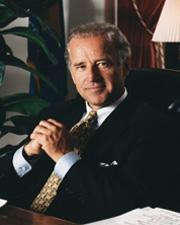 Sen. Joseph R. Biden Jr. (D-DE)
What it changes
1 change to H.R. 3890 · shown in the bill's text
Replaces the bill's text with a full substitute
Replaces the full textEverything after the enacting clauseIn H.R. 3890 · Referred in Senate
SECTION 1. SHORT TITLE.
This Act may be cited as the "
[struck: Block Burmese JADE (Junta's Anti- Democratic Efforts) ][inserted: Burma Democracy Promotion ]Act of 2007".SEC. 2. FINDINGS.
Congress
[struck: finds][inserted: makes] the following[inserted: findings]:Struck: (1) The Burmese regime has continued and worsened its obstruction of democratic processes and mass violation of human rights identified in the Burmese Freedom and Democracy Act of 2003 (Public Law 108-61; 50 U.S.C. 1701 note). In August and September 2007, Burmese people from all walks of life conducted their largest peaceful public protests since 1988. The peaceful public protests responded to a drastic increase in fuel prices, as well as the Burmese regime's ongoing denial of the democratic and human rights of the Burmese people. On September 24, 2007, Buddhist monks actively participated and increasingly led these peaceful demonstrations, culminating in an estimated 100,000 people marching through Rangoon, Burma. The protesters peacefully demanded the release of 1991 Nobel Peace Prize Winner Daw Aung San Suu Kyi, the leader of the National League for Democracy (NLD), marching past security barricades to her house in a show of support for Burmese democracy. The Burmese regime continues to refuse to recognize the results of the 1990 election, won by the NLD, which gave Aung San Suu Kyi's party the right to form a government.
Struck: (2) The Burmese regime, which calls itself the State Peace and Development Council (SPDC), responded to these peaceful protests with a violent crackdown leading to the reported killing of some 200 people, including a Japanese photojournalist, and hundreds of injuries. Human rights groups further estimate that over 2,000 individuals have been detained, arrested, imprisoned, beaten, tortured, or otherwise intimidated as part of this crackdown. The Burmese regime continues to detain, torture, and otherwise intimidate those individuals whom it believes participated in or led the protests and it has closed down or otherwise limited access to several monasteries and temples that played key roles in the protests.
Struck: (3) The Burmese regime and its supporters finance their ongoing violations of human rights, undemocratic policies, and military activities through financial transactions, travel, and trade involving the United States, including the sale of gemstones. Despite the sanctions imposed in the Burmese Freedom and Democracy Act of 2003, the Burmese regime seeks out ways to evade these restrictions. Millions of dollars in gemstones that are exported from Burma ultimately enter the United States but the Burmese regime attempts to conceal the origin of the gemstones in an effort to evade the sanctions in the Burmese Freedom and Democracy Act of 2003. For example, over 90 percent of the world's ruby supply originates in Burma but only three percent of the rubies entering the United States are claimed to be of Burmese origin. The value of Burmese gemstones is more than 99 percent a function of their original quality and geological origin, and not a result of the labor involved in cutting and polishing the gemstones.
Struck: SEC. 3. AMENDMENTS TO THE BURMESE FREEDOM AND DEMOCRACY ACT OF 2003.
Show 139 more struck paragraphsShow less
Struck: (a) Prohibition on Importation of Jadeite and Rubies From Burma and Articles of Jewelry Containing Jadeite or Rubies From Burma.--The Burmese Freedom and Democracy Act of 2003 (Public Law 108-61; 50 U.S.C. 1701 note) is amended by inserting after section 3 the following new section:
Struck: "SEC. 3A. PROHIBITION ON IMPORTATION OF JADEITE AND RUBIES FROM BURMA AND ARTICLES OF JEWELRY CONTAINING JADEITE OR RUBIES FROM BURMA.
Struck: "(a) Definitions.--In this section:
Struck: "(1) Appropriate congressional committees.--The term 'appropriate congressional committees' means--
Struck: "(A) the Committee on Ways and Means and the Committee on Foreign Affairs of the House of Representatives; and
Struck: "(B) the Committee on Finance and the Committee on Foreign Relations of the Senate.
Struck: "(2) Burmese covered article.--The term 'Burmese covered article' means--
Struck: "(A) jadeite mined or extracted from Burma;
Struck: "(B) rubies mined or extracted from Burma; or
Struck: "(C) articles of jewelry containing jadeite described in subparagraph (A) or rubies described in subparagraph (B).
Struck: "(3) Non-burmese covered article.--The term 'non-Burmese covered article' means--
Struck: "(A) jadeite mined or extracted from a country other than Burma;
Struck: "(B) rubies mined or extracted from a country other than Burma; or
Struck: "(C) articles of jewelry containing jadeite described in subparagraph (A) or rubies described in subparagraph (B).
Struck: "(4) Jadeite; rubies; articles of jewelry containing jadeite or rubies.--
Struck: "(A) Jadeite.--The term 'jadeite' means any jadeite classifiable under heading 7103 of the Harmonized Tariff Schedule of the United States (in this paragraph referred to as the 'HTS').
Struck: "(B) Rubies.--The term 'rubies' means any rubies classifiable under heading 7103 of the HTS.
Struck: "(C) Articles of jewelry containing jadeite or rubies.--The term 'articles of jewelry containing jadeite or rubies' means--
Struck: "(i) any article of jewelry classifiable under heading 7113 of the HTS that contains jadeite or rubies; or
Struck: "(ii) any article of jadeite or rubies classifiable under heading 7116 of the HTS.
Struck: "(5) United states.--The term 'United States', when used in the geographic sense, means the several States, the District of Columbia, and any commonwealth, territory, or possession of the United States.
Struck: "(b) Prohibition on Importation of Burmese Covered Articles.--
Struck: "(1) In general.--Notwithstanding any other provision of law, until such time as the President determines and certifies to the appropriate congressional committees that Burma has met the conditions described in section 3(a)(3), beginning 60 days after the date of the enactment of the Block Burmese JADE (Junta's Anti-Democratic Efforts) Act of 2007, the President shall prohibit the importation into the United States of any Burmese covered article.
Struck: "(2) Regulatory authority.--The President is authorized to, and shall as necessary, issue such proclamations, regulations, licenses, and orders, and conduct such investigations, as may be necessary to implement the prohibition under paragraph (1).
Struck: "(3) Other actions.--Beginning on the date of the enactment of this Act, the President shall take all appropriate actions to seek the following:
Struck: "(A) The issuance of a draft waiver decision by the Council for Trade in Goods of the World Trade Organization granting a waiver of the applicable obligations of the United States under the World Trade Organization with respect to the provisions of this section and any measures taken to implement this section.
Struck: "(B) The adoption of a resolution by the United Nations General Assembly expressing the need to address trade in Burmese covered articles and calling for the creation and implementation of a workable certification scheme for non-Burmese covered articles to prevent the trade in Burmese covered articles.
Struck: "(c) Requirements for Importation of Non-Burmese Covered Articles.--
Struck: "(1) In general.--Except as provided in paragraph (2), until such time as the President determines and certifies to the appropriate congressional committees that Burma has met the conditions described in section 3(a)(3), beginning 60 days after the date of the enactment of the Block Burmese JADE (Junta's Anti-Democratic Efforts) Act of 2007, the President shall require as a condition for the importation into the United States of any non-Burmese covered article that--
Struck: "(A) the exporter of the non-Burmese covered article has implemented measures that have substantially the same effect and achieve the same goals as the measures described in clauses (i) through (iv) of paragraph (2)(B) (or their functional equivalent) to prevent the trade in Burmese covered articles; and
Struck: "(B) the importer of the non-Burmese covered article agrees--
Struck: "(i) to maintain a full record of, in the form of reports or otherwise, complete information relating to any act or transaction related to the purchase, manufacture, or shipment of the non-Burmese covered article for a period of not less than 5 years from the date of entry of the non-Burmese covered article; and
Struck: "(ii) to provide the information described in clause (i) to the relevant United States authorities upon request.
Struck: "(2) Exception.--
Struck: "(A) In general.--The President may waive the requirements of paragraph (1) with respect to the importation of non-Burmese covered articles from any country with respect to which the President determines and certifies to the appropriate congressional committees has implemented the measures described in subparagraph (B) (or their functional equivalent) to prevent the trade in Burmese covered articles.
Struck: "(B) Measures described.--The measures referred to in subparagraph (A) are the following:
Struck: "(i) With respect to exportation from the country of jadeite or rubies in rough form, a system of verifiable controls on the jadeite or rubies from mine to exportation demonstrating that the jadeite or rubies were not mined or extracted from Burma, and accompanied by officially-validated documentation certifying the country from which the jadeite or rubies were mined or extracted, total carat weight, and value of the jadeite or rubies.
Struck: "(ii) With respect to exportation from the country of finished jadeite or polished rubies, a system of verifiable controls on the jadeite or rubies from mine to the place of final finishing of the jadeite or rubies demonstrating that the jadeite or rubies were not mined or extracted from Burma, and accompanied by officially-validated documentation certifying the country from which the jadeite or rubies were mined or extracted.
Struck: "(iii) With respect to exportation from the country of articles of jewelry containing jadeite or rubies, a system of verifiable controls on the jadeite or rubies from mine to the place of final finishing of the article of jewelry containing jadeite or rubies demonstrating that the jadeite or rubies were not mined or extracted from Burma, and accompanied by officially-validated documentation certifying the country from which the jadeite or rubies were mined or extracted.
Struck: "(iv) With respect to re-exportation from the country of jadeite or rubies in rough form, finished jadeite or polished rubies, or articles of jewelry containing jadeite or rubies, a system of verifiable controls on the jadeite or rubies or articles of jewelry containing jadeite or rubies ensuring that no jadeite or rubies mined or extracted from Burma have entered the legitimate trade in jadeite or rubies.
Struck: "(v) Verifiable recordkeeping by all entities and individuals engaged in mining, importation, and exportation of non-Burmese covered articles in the country, and subject to inspection and verification by authorized authorities of the government of the country in accordance with applicable law.
Struck: "(vi) Implementation by the government of the country of proportionate and dissuasive penalties against any persons who violate laws and regulations designed to prevent trade in Burmese covered articles.
Struck: "(vii) Full cooperation by the country with the United Nations or other official international organizations that seek to prevent trade in Burmese covered articles.
Struck: "(d) Inapplicability.--
Struck: "(1) In general.--The requirements of subsection (b)(1) and subsection (c)(1) shall not apply with respect to the importation of Burmese covered articles and non-Burmese covered articles, respectively, that were previously exported from the United States and reimported into the United States by the same person, without having been advanced in value or improved in condition by any process or other means while outside the United States, if the person declares that the reimportation of the Burmese covered articles or non-Burmese covered articles, as the case may be, satisfies the requirements of this paragraph.
Struck: "(2) Additional provision.--The requirements of subsection (c)(1) shall not apply with respect to the importation of non- Burmese covered articles that are imported by or on behalf of an individual for personal use and accompanying an individual upon entry into the United States.
Struck: "(e) Enforcement.--Burmese covered articles or non-Burmese covered articles that are imported into the United States in violation of any prohibition of this Act or any other provision law shall be subject to all applicable seizure and forfeiture laws and criminal and civil laws of the United States to the same extent as any other violation of the customs laws of the United States.
Struck: "(f) Sense of Congress.--
Struck: "(1) In general.--It is the sense of Congress that the President should take the necessary steps to seek to negotiate an international arrangement--similar to the Kimberley Process Certification Scheme for conflict diamonds--to prevent the trade in Burmese covered articles. Such an international arrangement should create an effective global system of controls and should contain the measures described in subsection (c)(2)(B) (or their functional equivalent).
Struck: "(2) Kimberley process certification scheme defined.--In paragraph (1), the term 'Kimberley Process Certification Scheme' has the meaning given the term in section 3(6) of the Clean Diamond Trade Act (Public Law 108-19; 19 U.S.C. 3902(6)).
Struck: "(g) Report.--
Struck: "(1) In general.--Not later than 180 days after the date of the enactment of the Block Burmese JADE (Junta's Anti- Democratic Efforts) Act of 2007, the President shall transmit to the appropriate congressional committees a report describing what actions the United States has taken during the 60-day period beginning on the date of the enactment of such Act to seek--
Struck: "(A) the issuance of a draft waiver decision by the Council for Trade in Goods of the World Trade Organization, as specified in subsection (b)(3)(A);
Struck: "(B) the adoption of a resolution by the United Nations General Assembly, as specified in subsection (b)(3)(B); and
Struck: "(C) the negotiation of an international arrangement, as specified in subsection (f)(1).
Struck: "(2) Update.--Not later than 180 days after the transmission of the report required under paragraph (1), and every 6 months thereafter, the President shall transmit to the appropriate congressional committees an update of the report describing the continued efforts of the United States to seek the items specified in subparagraphs (A), (B), and (C) of paragraph (1).
Struck: "(h) GAO Report.--Not later than 14 months after the date of the enactment of the Block Burmese JADE (Junta's Anti-Democratic Efforts) Act of 2007, the Comptroller General of the United States shall submit to the appropriate congressional committees a report on the effectiveness of the implementation of this section. The Comptroller General shall include in the report any recommendations or any modifications to this Act that may be necessary.".
Struck: (b) Visa Ban.--Paragraph (1) of section 6(a) of the Burmese Freedom and Democracy Act of 2003 is amended to read as follows:
Struck: "(1) Visa ban.--
Struck: "(A) In general.--The Secretary of State shall deny the issuance of a visa and the Secretary of Homeland Security shall deny admission to the United States to a sanctioned person (as such term is defined in section 4(b)(8).
Struck: "(B) Waiver.--The ban described in subparagraph (A) may be waived only if the President determines and certifies in writing to Congress that such is in the national interests of the United States.".
Struck: (c) Freezing Assets of the Burmese Regime in the United States.-- Section 4 of the Burmese Freedom and Democracy Act of 2003 is amended--
Struck: (1) by redesignating subsections (b) and (c) as subsection (c) and (d); and
Struck: (2) by inserting after subsection (a) the following new subsection:
Struck: "(b) Blocking of Assets and Other Prohibited Activities.--
Struck: "(1) In general.--The President shall block all property and interests in property, including all commercial, industrial, or public utility undertakings or entities, that, on or after the date of the enactment of the Block Burmese JADE (Junta's Anti-Democratic Efforts) Act of 2007--
Struck: "(A) are owned, in whole or in part, by any sanctioned person; and
Struck: "(B) are in the United States, or in the possession or control of the Government of the United States or of any financial institution or financial agency organized under the laws of a State, territory, or possession of the United States, including any branch or office of such financial institution or financial agency that is located outside the United States.
Struck: "(2) Prohibited activities.--Any person who, on or after the date of the enactment of the Block Burmese JADE (Junta's Anti-Democratic Efforts) Act of 2007, engages in any of the following activities shall be subject to penalties described in paragraph (6):
Struck: "(A) Payments or transfers of any property, or any transactions involving the transfer of anything of economic value by any United States person, including any financial institution or financial agency organized under the laws of a State, territory, or possession of the United States and any branch or office of such financial institution or financial agency that is located outside the United States, to any sanctioned person.
Struck: "(B) Direct or indirect payments of any tax, cancellation penalty, or any other amount to the Burmese Government, including amounts paid or incurred with respect to any joint production agreement relating to the Yadana or Shwe gas fields or pipelines. Any such payment made by or on behalf of a United States person after the date of the enactment of the Block Burmese JADE (Junta's Anti-Democratic Efforts) Act of 2007 shall be deemed a willful violation of this Act for purposes of penalties described in paragraph (6) and any other related provision of law.
Struck: "(C) The export or reexport to any entity owned, controlled, or operated by a sanctioned person directly or indirectly, of any goods, technology, or services by a United States person.
Struck: "(D) The performance by any United States person of any contract, including a contract providing a loan or other financing, in support of an industrial, commercial, or public utility operated, controlled, or owned by a sanctioned person.
Struck: "(3) Extension of authority.--
Struck: "(A) Blocking of property.--The President may block all property and interests in property of the following entities and persons, to the same extent as property and interests in property of a foreign person determined to have committed acts of terrorism for purposes of Executive Order No. 13224 of September 21, 2001, (50 U.S.C. 1701 note) may be blocked:
Struck: "(i) The Burmese Government, the Burmese military, or a sanctioned person, including entities owned or effectively controlled by the Burmese Government, the Burmese military, or a sanctioned person.
Struck: "(ii) Persons otherwise associated with the Burmese Government, the Burmese military, or a sanctioned person.
Struck: "(B) Conditions on certain accounts.--The President may prohibit or impose conditions on the opening or maintaining in the United States of a correspondent account or payable-through account by any financial institution or financial agency that is organized under the laws of a State, territory, or possession of the United States, if the President determines that such an account might be used--
Struck: "(i) by a person or entity that holds property or an interest in property belonging to the Burmese Government, the Burmese military, or a sanctioned person; or
Struck: "(ii) to conduct a transaction on behalf of or for the benefit of the Burmese Government, the Burmese military, or a sanctioned person.
Struck: "(4) Rule of construction.--Nothing in this subsection shall be construed to prohibit any contract or other financial transaction with any nongovernmental humanitarian organization in Burma.
Struck: "(5) Exceptions.--The prohibitions and restrictions described in paragraphs (1), (2), and (3) shall not apply to medicine, medical equipment or supplies, food, or any other form of humanitarian assistance provided to Burma as relief in response to a humanitarian crisis.
Struck: "(6) Penalties.--Any person who violates any prohibition or restriction described in paragraph (1), (2), or (3) shall be subject to the penalties under section 6 of the International Emergency Economic Powers Act (50 U.S.C. 1705) to the same extent as for a violation under that Act.
Struck: "(7) Listing of sanctioned persons.--The Secretary of State and Secretary of the Treasury shall update and publish in the Federal Register new lists of sanctioned persons as additional information becomes available. The Secretary of State and the Secretary of the Treasury shall devote sufficient resources to the identification of information concerning sanctioned persons to carry out the purposes described in this Act.
Struck: "(8) Definitions.--In this subsection:
Struck: "(A) Correspondent account; payable-through account.--The terms 'correspondent account' and 'payable-through account' have the meanings given such terms in section 5318A(e)(1) of title 31, United States Code.
Struck: "(B) Financial agency.--The term 'financial agency' has the meaning given such term in section 5312 of title 31, United States Code.
Struck: "(C) Financial institution.--The term 'financial institution' has the meaning given such term in section 5312 of title 31, United States Code.
Struck: "(D) United states person.--The term 'United States person' means--
Struck: "(i) any United States citizen or alien lawfully admitted for permanent residence to the United States;
Struck: "(ii) any person in the United States;
Struck: "(iii) any entity organized under the laws of the United States, any State or territory thereof, or the District of Columbia, and any foreign branch or subsidiary of such an entity; or
Struck: "(iv) any entity organized under the laws of the United States, any State or territory thereof, or the District of Columbia, in which an individual or entity described in clauses (i), (ii), or (iii) owns, directly or indirectly, more than 50 percent of the outstanding capital stock or other beneficial interest in such entity.
Struck: "(E) Sanctioned person.--The term 'sanctioned person' means--
Struck: "(i) any individual who is a member of the former or present leadership of the SPDC or the union Solidarity Development Association;
Struck: "(ii) any member of the Burmese military involved in the violent repression of the public protests in Burma in August, September, and October 2007 (regardless of when such repression occurred);
Struck: "(iii) any Burmese official who has engaged in, ordered, or facilitated acts of gross violations of internationally recognized human rights (as defined in section 502B(d)(1) of the Foreign Assistance Act of 1961 (22 U.S.C. 2304(d)(1)), either as an individual or as a member of a group or government; or
Struck: "(iv) any member of the immediate family of any individual described in clauses (i), (ii), or (iii).".
Struck: SEC. 4. SUPPORT FOR DEMOCRACY PROMOTION AND HUMANITARIAN ASSISTANCE IN BURMA.
Struck: (a) In General.--The President is authorized to use all available resources to assist Burma democracy activists and humanitarian aid workers in their efforts to promote freedom, democracy, and human rights in Burma.
Struck: (b) Authorization of Appropriations.--There are authorized to be appropriated $20,000,000 to the Secretary of State for each of the fiscal years 2008 and 2009 for the following purposes:
Struck: (1) To provide aid to democracy and human rights activists and organizations inside and outside of Burma working to bring a transition to democracy inside Burma, including to individuals and groups that--
Struck: (A) promote democracy and human rights;
Struck: (B) represent the ethnic minorities of Burma;
Struck: (C) broadcast radio and television programs into Burma that promote democracy and report on human rights conditions inside Burma; or
Struck: (D) compile evidence of human rights violations by the SPDC and its civilian militia, the Union Solidarity and Development Association (USDA), and of the SPDC and its entities' efforts to repress peaceful activities.
Struck: (2) To provide aid to humanitarian workers who--
Struck: (A) provide food, medical, educational, or other assistance to refugees and internally displaced persons;
Struck: (B) assist women and girls after incidents of rape and other forms of sexual violence; or
Struck: (C) assist in the rehabilitation of child soldiers.
Struck: (c) Preventing Funds From Enriching the SPDC.--None of the funding made available under this section may be provided to SPDC-controlled entities, entities working with or providing cash or resources to the SPDC, including organizations affiliated with the United Nations, or entities requiring the approval of the SPDC to operate within the borders of Burma.
Struck: SEC. 5. REPORT ON MILITARY AND INTELLIGENCE AID TO BURMA.
Struck: (a) In General.--Not later than 180 days after the date of the enactment of this Act, the Secretary of State shall submit to the Committee on Foreign Affairs of the House of Representatives and the Committee on Foreign Relations of the Senate a report containing a list of countries, companies, and other entities that provide military or intelligence aid to the SPDC and describing such military or intelligence aid provided by each such country, company, and other entity.
Struck: (b) Military or Intelligence Aid Defined.--For the purpose of this section, the term "military or intelligence aid" means, with respect to the SPDC--
Struck: (1) the provision of weapons, weapons parts, military vehicles, or military aircraft;
Struck: (2) the provision of military or intelligence training, including advice and assistance on subject matter expert exchanges;
Struck: (3) the provision of weapons of mass destruction and related materials, capabilities, and technology, including nuclear, chemical, or dual-use capabilities;
Struck: (4) conducting joint military exercises;
Struck: (5) the provision of naval support, including ship development and naval construction;
Struck: (6) the provision of technical support, including computer and software development and installations, networks, and infrastructure development and construction; or
Struck: (7) the construction or expansion of airfields, including radar and anti-aircraft systems.
Struck: (c) Form.--The report required under subsection (a) shall be submitted in unclassified form but may include a classified annex.
Struck: SEC. 6. DENIAL OF FOREIGN TAX CREDIT WITH RESPECT TO BURMA.
Struck: (a) In General.--Paragraph (2) of section 901(j) of the Internal Revenue Code of 1986 is amended by adding at the end the following new subparagraph:
Struck: "(C) Special rule for burma.--In addition to any period during which this subsection would otherwise apply to Burma, this subsection shall apply to Burma during the period--
Struck: "(i) beginning on January 1, 2008, and
Struck: "(ii) ending on the date the Secretary of State certifies to the Secretary of the Treasury that Burma meets the requirements of section 3(a)(3) of the Burmese Freedom and Democracy Act of 2003 (as in effect on the date of the enactment of this subparagraph).".
Struck: (b) Effective Date.--The amendment made by this section shall take effect on January 1, 2008.
Struck: SEC. 7. WAIVER OF COMPETITIVE NEED LIMITATION UNDER GENERALIZED SYSTEM OF PREFERENCES FOR CERTAIN ARTICLES OF INDIA AND THAILAND.
Struck: (a) Waiver.--Not later than 60 days after the date of the enactment of this Act, the President shall waive the application of subsection (c)(2) of section 503 of the Trade Act of 1974 (19 U.S.C. 2463) pursuant to subsection (d) of such section (relating to waiver of competitive need limitation) with respect to articles of Thailand and India classifiable under subheading 7113.19.50 of the Harmonized Tariff Schedule of the United States.
Struck: (b) Sense of Congress.--It is the sense of Congress that the President should--
Struck: (1) review any waiver of the application of subsection (c)(2) of section 503 of the Trade Act of 1974 pursuant to subsection (d) of such section with respect to any eligible article of any beneficiary developing country that is revoked pursuant to subsection (d)4)(B)(ii) of such section; and
Struck: (2) reinstate such waiver unless the United States International Trade Commission affirmatively determines that--
Struck: (A) revocation of such waiver will not reduce the current level of exports of such article from the beneficiary developing country to the United States; and
Struck: (B) revocation of the waiver will not benefit one or more countries that are not designated as beneficiary developing countries for purposes of title V of the Trade Act of 1974.
Struck: SEC. 8. OFFSETS.
Struck: (a) Time for Payment of Corporate Estimated Taxes.--The percentage under subparagraph (B) of section 401(1) of the Tax Increase Prevention and Reconciliation Act of 2005 in effect on the date of the enactment of this Act is increased by 0.25 percentage points.
Struck: (b) Customs User Fees.--Section 13031(j)(3)(B)(i) of the Consolidated Omnibus Budget Reconciliation Act of 1985 (19 U.S.C. 58c(j)(3)(B)(i)) is amended by striking "December 13, 2014" and inserting "January 24, 2015".
Struck: Passed the House of Representatives December 11, 2007.
Inserted: (1) Beginning on August 19, 2007, hundreds of thousands of citizens of Burma, including thousands of Buddhist monks and students, participated in peaceful demonstrations against rapidly deteriorating living conditions and the violent and repressive policies of the State Peace and Development Council, the ruling military regime in Burma--
Inserted: (A) to demand the release of all political prisoners, including 1991 Nobel Peace Prize winner Aung San Suu Kyi; and
Inserted: (B) to urge the SPDC to engage in meaningful dialogue to pursue national reconciliation.
Inserted: (2) The SPDC violently confronted unarmed demonstrators, killing, injuring, and imprisoning citizens, including several thousand Buddhist monks, and continues to forcefully restrict peaceful forms of public expression.
Inserted: (3) The Department of State's 2006 Country Reports on Human Rights Practices found that the SPDC--
Inserted: (A) routinely restricts freedoms of speech, press, assembly, association, religion, and movement;
Inserted: (B) traffics in persons;
Inserted: (C) discriminates against women and ethnic minorities;
Inserted: (D) forcibly recruits child soldiers and child labor; and
Inserted: (E) commits other serious violations of human rights, including extrajudicial killings, custodial deaths, disappearances, rape, torture, abuse of prisoners and detainees, and the imprisonment of citizens arbitrarily for political motives.
Inserted: (4) Aung San Suu Kyi has been arbitrarily imprisoned or held under house arrest for more than 12 years.
Inserted: (5) On September 25, 2007, President Bush announced that the United States would--
Show 126 more inserted paragraphsShow less
Inserted: (A) tighten economic sanctions against Burma, and block property and interests in property of--
Inserted: (i) certain senior leaders of the SPDC;
Inserted: (ii) individuals who provide financial backing for the SPDC; and
Inserted: (iii) individuals responsible for violations of human rights and for impeding the transition to democracy in Burma; and
Inserted: (B) impose an expanded visa ban on individuals--
Inserted: (i) responsible for violations of human rights; and
Inserted: (ii) who aid, abet, or benefit from the efforts of the SPDC to impede the efforts of the people of Burma to transition to democracy and ensure respect for human dignity.
Inserted: (6) The Burmese regime and its supporters finance their ongoing violations of human rights, undemocratic policies, and military activities through financial transactions, travel, and trade involving the United States, including the sale of gemstones and hardwoods.
Inserted: (7) The SPDC seeks to evade the sanctions imposed in the Burmese Freedom and Democracy Act of 2003. Millions of dollars in gemstones that are exported from Burma ultimately enter the United States, but the Burmese regime attempts to conceal the origin of the gemstones in an effort to evade sanctions. For example, over 90 percent of the world's ruby supply originates in Burma but only 3 percent of the rubies entering the United States are claimed to be of Burmese origin. The value of Burmese gemstones is predominantly based on their original quality and geological origin, rather than the labor involved in cutting and polishing the gemstones.
Inserted: (8) Burma is home to approximately 60 percent of the world's native teak reserves. More than \1/4\ of the world's internationally traded teak originates from Burma, and hardwood sales, mainly of teak, represent more than 11 percent of Burma's official foreign exchange earnings.
Inserted: (9) Burma officially exports tens of millions of dollars worth of rubies, sapphires, pearls, jade, and other precious stones each year and the SPDC owns a majority stake in all mining operations within the borders of Burma.
Inserted: (10) On October 11, 2007, the United Nations Security Council, with the consent of the People's Republic of China, issued a statement condemning the violence in Burma, urging the release of all political prisoners, and calling on the SPDC to enter into a United Nations-mediated dialogue with its political opposition.
Inserted: (11) The United Nations special envoy Ibrahim Gambari traveled to Burma from September 29, 2007, through October 2, 2007, holding meetings with SPDC leader General Than Shwe and democracy advocate Aung San Suu Kyi in an effort to promote dialogue between the SPDC and democracy advocates.
Inserted: (12) The leaders of the SPDC will have a greater incentive to cooperate with diplomatic efforts by the United Nations, the Association of Southeast Asian Nations, and the People's Republic of China if they come under targeted economic pressure that denies them access to personal wealth and sources of revenue.
Inserted: SEC. 3. DEFINITIONS.
Inserted: In this Act:
Inserted: (1) Account; correspondent account; payable-through account.--The terms "account", "correspondent account", and "payable-through account" have the meanings given the terms in section 5318A(e)(1) of title 31, United States Code.
Inserted: (2) Appropriate congressional committees.--The term "appropriate congressional committees" means--
Inserted: (A) the Committee on Foreign Relations of the Senate;
Inserted: (B) the Committee on Finance of the Senate;
Inserted: (C) the Committee on Foreign Affairs of the House of Representatives; and
Inserted: (D) the Committee on Ways and Means of the House of Representatives.
Inserted: (3) ASEAN.--The term "ASEAN" means the Association of Southeast Asian Nations.
Inserted: (4) Person.--The term "person" means--
Inserted: (A) an individual, corporation, company, business association, partnership, society, trust, any other nongovernmental entity, organization, or group; and
Inserted: (B) any successor, subunit, or subsidiary of any person described in subparagraph (A).
Inserted: (5) SPDC.--The term "SPDC" means the State Peace and Development Council, the ruling military regime in Burma.
Inserted: (6) United states person.--The term "United States person" means any United States citizen, permanent resident alien, juridical person organized under the laws of the United States (including foreign branches), or any person in the United States.
Inserted: SEC. 4. STATEMENT OF POLICY.
Inserted: It is the policy of the United States to--
Inserted: (1) condemn the continued repression carried out by the SPDC;
Inserted: (2) work with the international community, especially the People's Republic of China, India, Thailand, and ASEAN, to foster support for the legitimate democratic aspirations of the people of Burma and to coordinate efforts to impose sanctions on those directly responsible for human rights abuses in Burma;
Inserted: (3) provide all appropriate support and assistance to aid a peaceful transition to constitutional democracy in Burma;
Inserted: (4) support international efforts to alleviate the suffering of Burmese refugees and address the urgent humanitarian needs of the Burmese people; and
Inserted: (5) identify individuals responsible for the repression of peaceful political activity in Burma and hold them accountable for their actions.
Inserted: SEC. 5. SANCTIONS.
Inserted: (a) List of Officials of the SPDC.--
Inserted: (1) In general.--Not later than 30 days after the date of the enactment of this Act, the President shall submit to the appropriate congressional committees a list of--
Inserted: (A) officials of the SPDC who have played a direct and substantial role in the repression of peaceful political activity in Burma or in the commission of other human rights abuses, including any current or former officials of the security services and judicial institutions of the SPDC; and
Inserted: (B) any other Burmese persons who provide substantial economic and political support for the SPDC.
Inserted: (2) Updates.--The President shall regularly submit updated versions of the list required under paragraph (1).
Inserted: (b) Sanctions.--
Inserted: (1) Visa ban.--A person included on the list required under subsection (a) shall be ineligible for a visa to enter the United States.
Inserted: (2) Financial sanctions.--
Inserted: (A) Blocked property.--No property or interest in property belonging to a person described in subparagraph (C) may be transferred, paid, exported, withdrawn, or otherwise dealt with if--
Inserted: (i) the property is located in the United States or within the possession or control of a United States person, including the overseas branch of a United States person; or
Inserted: (ii) the property comes into the possession or control of a United States person after the date of the enactment of this Act.
Inserted: (B) Financial transactions.--Except with respect to transactions authorized under Executive Orders 13047 (May 20, 1997) and 13310 (July 28, 2003), no United States person may engage in a financial transaction with the SPDC or with a person described in subparagraph (C).
Inserted: (C) Person described.--A person is described in this subparagraph if the person is--
Inserted: (i) an official of the SPDC;
Inserted: (ii) included on the list required under subsection (a); or
Inserted: (iii) an immediate family member of a person included on the list required under subsection (a), if the President determines that the person included on the list--
Inserted: (I) effectively controls the property, for purposes of subparagraph (A); or
Inserted: (II) would benefit from a financial transaction, for purposes of subparagraph (B).
Inserted: (c) Authority for Additional Banking Sanctions.--
Inserted: (1) In general.--The Secretary of the Treasury, in consultation with the Secretary of State, the Attorney General of the United States, and the Chairman of the Board of Governors of the Federal Reserve System, may prohibit or impose conditions on the opening or maintaining in the United States of a correspondent account or payable-through account by any financial institution (as that term is defined in section 5312 of title 31, United States Code) or financial agency that is organized under the laws of a State, territory, or possession of the United States, for or on behalf of a foreign banking institution, if the Secretary determines that the account might be used--
Inserted: (A) by a foreign banking institution that holds property or an interest in property belonging to a person on the list required under subsection (a); or
Inserted: (B) to conduct a transaction on behalf of a person on the list required under subsection (a).
Inserted: (2) Authority to define terms.--The Secretary of the Treasury may, by regulation, further define the terms used in paragraph (1) for purposes of this section, as the Secretary considers appropriate.
Inserted: (d) Rule of Construction.--Nothing in this section may be construed to prohibit any contract or other financial transaction with any nongovernmental humanitarian organization in Burma.
Inserted: (e) Exceptions.--
Inserted: (1) In general.--The prohibitions and restrictions described in subsections (b) and (c) shall not apply to medicine, medical equipment or supplies, food or feed, or any other form of humanitarian assistance provided to Burma as relief in response to a humanitarian crisis.
Inserted: (2) Additional exceptions.--The Secretary of the Treasury may, by regulation, authorize exceptions to the prohibitions and restrictions described in subsection (b) and (c)--
Inserted: (A) to permit the United States to operate its diplomatic mission;
Inserted: (B) to permit United States citizens to visit Burma; and
Inserted: (C) for such other purposes as the Secretary determines to be necessary.
Inserted: (f) Penalties.--Any person who violates any prohibition or restriction described in subsection (b) or (c) shall be subject to the penalties under section 6 of the International Emergency Economic Powers Act (50 U.S.C. 1705) to the same extent as for a violation under that Act.
Inserted: (g) Termination of Sanctions.--The sanctions imposed under subsection (b) or (c) shall apply until the President determines and certifies to the appropriate congressional committees that the SPDC has--
Inserted: (1) unconditionally released all political prisoners, including Aung San Suu Kyi and other members of the National League for Democracy;
Inserted: (2) entered into a substantive dialogue with democratic forces led by the National League for Democracy and the ethnic minorities of Burma on transitioning to democratic government under the rule of law; and
Inserted: (3) allowed humanitarian access to populations affected by armed conflict in all regions of Burma.
Inserted: (h) Waiver.--The sanctions described in subsection (b) or (c) may be waived if the President determines and certifies to the appropriate congressional committees that such waiver is in the national interest of the United States.
Inserted: SEC. 6. PROHIBITION ON IMPORTATION OF BURMESE GEMS, HARDWOODS, AND OTHER ITEMS.
Inserted: Section 3(a)(1) of the Burmese Freedom and Democracy Act of 2003 (50 U.S.C. 1701 note) is amended by striking "a product of Burma." and inserting "produced, mined, manufactured, grown, or assembled in Burma, including--
Inserted: "(A) any gemstone or rough unfinished geological material mined or extracted from Burma, whether imported as a loose item or as a component of a finished piece of jewelry; and
Inserted: "(B) any teak or other hardwood timber, regardless of the country in which such hardwood timber is milled, sawn, or otherwise processed, whether imported in unprocessed form or as a part or component of finished furniture or another wood item.".
Inserted: SEC. 7. SPECIAL REPRESENTATIVE AND POLICY COORDINATOR FOR BURMA.
Inserted: (a) United States Special Representative and Policy Coordinator for Burma.--The President shall appoint a Special Representative and Policy Coordinator for Burma, by and with the advice and consent of the Senate.
Inserted: (b) Rank.--The Special Representative and Policy Coordinator for Burma appointed under subsection (a) shall have the rank of ambassador and shall hold the office at the pleasure of the President.
Inserted: (c) Duties and Responsibilities.--The Special Representative and Policy Coordinator for Burma shall--
Inserted: (1) promote a comprehensive international effort, including multilateral sanctions, direct dialogue with the SPDC and democracy advocates, and support for nongovernmental organizations operating in Burma and neighboring countries, designed to restore civilian democratic rule to Burma and address the urgent humanitarian needs of the Burmese people;
Inserted: (2) consult broadly, including with the Governments of the People's Republic of China, India, Thailand, and Japan, and the members of ASEAN and the European Union to coordinate policies toward Burma;
Inserted: (3) assist efforts by the United Nations Special Envoy to secure the release of all political prisoners in Burma and to promote dialogue between the SPDC and leaders of Burma's democracy movement, including Aung San Suu Kyi;
Inserted: (4) consult with Congress on policies relevant to Burma and the future and welfare of all the Burmese people, including refugees; and
Inserted: (5) coordinate the imposition of Burma sanctions within the United States Government and with the relevant international financial institutions.
Inserted: SEC. 8. SENSE OF CONGRESS ON COORDINATION WITH THE ASSOCIATION OF SOUTHEAST ASIAN NATIONS.
Inserted: It is the sense of Congress that the United States--
Inserted: (1) joins the foreign ministers of member nations of ASEAN that have expressed concern over the human rights situation in Burma;
Inserted: (2) encourages ASEAN to take more substantial steps to ensure a peaceful transition to democracy in Burma;
Inserted: (3) welcomes steps by ASEAN to strengthen its internal governance through the adoption of a formal ASEAN charter;
Inserted: (4) urges ASEAN to ensure that all members live up to their membership obligations and adhere to the core principles of ASEAN, including respect for, and commitment to, human rights; and
Inserted: (5) would welcome a decision by ASEAN, consistent with its core documents and its new charter, to review Burma's membership in ASEAN and consider appropriate disciplinary measures, including suspension, until such time as the Government of Burma has demonstrated an improved respect for, and commitment to, human rights.
Inserted: SEC. 9. SUPPORT FOR CONSTITUTIONAL DEMOCRACY IN BURMA.
Inserted: (a) In General.--The President is authorized to assist Burmese democracy activists who are dedicated to nonviolent opposition to the SPDC in their efforts to promote freedom, democracy, and human rights in Burma.
Inserted: (b) Authorization of Appropriations.--There are authorized to be appropriated $5,000,000 to the Secretary of State for fiscal year 2008 to--
Inserted: (1) provide aid to democracy activists in Burma;
Inserted: (2) provide aid to individuals and groups conducting democracy programming outside of Burma targeted at a peaceful transition to constitutional democracy inside Burma; and
Inserted: (3) expand radio and television broadcasting into Burma.
Inserted: SEC. 10. SUPPORT FOR NONGOVERNMENTAL ORGANIZATIONS ADDRESSING THE HUMANITARIAN NEEDS OF THE BURMESE PEOPLE.
Inserted: (a) Sense of Congress.--It is the sense of Congress that the international community should increase support for nongovernmental organizations attempting to meet the urgent humanitarian needs of the Burmese people.
Inserted: (b) Licenses for Humanitarian or Religious Activities in Burma.--Section 5 of the Burmese Freedom and Democracy Act of 2003 (50 U.S.C. 1701) is amended--
Inserted: (1) by inserting "(a) Opposition to Assistance to Burma" before "The Secretary"; and
Inserted: (2) by adding at the end the following:
Inserted: "(b) Licenses for Humanitarian or Religious Activities in Burma.--Notwithstanding any other provision of law, the Secretary of the Treasury is authorized to issue multi-year licenses for humanitarian or religious activities in Burma. Licenses issued pursuant to this section shall be subject to annual review.".
Inserted: (c) Authorization of Appropriations.--
Inserted: (1) In general.--Subject to paragraph (2), there are authorized to be appropriated $11,000,000 to the Secretary of State for fiscal year 2008 to support operations by nongovernmental organizations designed to address the humanitarian needs of the Burmese people inside Burma and in refugee camps in neighboring countries.
Inserted: (2) Limitation.--
Inserted: (A) In general.--Except as provided under subparagraph (B), amounts appropriated pursuant to paragraph (1) may not be provided to--
Inserted: (i) SPDC-controlled entities;
Inserted: (ii) entities run by members of the SPDC or their families; or
Inserted: (iii) entities providing cash or resources to the SPDC, including organizations affiliated with the United Nations.
Inserted: (B) Waiver.--The President may waive the funding restriction described in subparagraph (A) if--
Inserted: (i) the President determines and certifies to the appropriate congressional committees that such waiver is in the national security interests of the United States;
Inserted: (ii) a description of the national security need for the waiver is submitted to the appropriate congressional committees; and
Inserted: (iii) the description submitted under clause (ii) is posted on a publicly accessible Internet Web site of the Department of State.
Inserted: SEC. 11. REPORT ON MILITARY AID TO BURMA.
Inserted: (a) In General.--Not later than 180 days after the date of the enactment of this Act, the Secretary of State shall submit a report to the appropriate congressional committees that--
Inserted: (1) contains a list of countries that provide military aid to Burma; and
Inserted: (2) describes the military aid provided by each of the countries described in paragraph (1).
Inserted: (b) Military Aid Defined.--In this section, the term "military aid" includes--
Inserted: (1) the provision of weapons, military vehicles, and military aircraft;
Inserted: (2) the provision of military training; and
Inserted: (3) conducting joint military exercises.
Inserted: (c) Form.--The report required under subsection (a) shall be submitted in unclassified form and may include a classified annex.
Inserted: SEC. 12. SENSE OF CONGRESS ON INTERNATIONAL ARMS SALES TO BURMA.
Inserted: It is the sense of Congress that the United States should lead efforts in the United Nations Security Council to impose a mandatory international arms embargo on Burma, curtailing all sales of weapons, ammunition, military vehicles, and military aircraft to Burma until the SPDC releases all political prisoners, restores constitutional rule, and holds free and fair elections to establish a new government.
Original wording
Strike all after the enacting clause and insert the following:
Read automatically from the Congressional Record. Check the original before relying on it.
As printed
SA 3888. Mr. SCHUMER (for Mr. Biden (for himself and Mr. McConnell)) proposed an amendment to the bill H.R. 3890, of 2003 to impose import sanctions on Burmese gemstones, expand the number of individuals against whom the visa ban is applicable, expand the blocking of assets and other prohibited activities, and for other purposes; as follows:
Strike all after the enacting clause and insert the following:
SECTION 1. SHORT TITLE.
This Act may be cited as the “Burma Democracy Promotion Act of 2007”.
SEC. 2. FINDINGS.
Congress makes the following findings:
(1) Beginning on August 19, 2007, hundreds of thousands of citizens of Burma, including thousands of Buddhist monks and students, participated in peaceful demonstrations against rapidly deteriorating living conditions and the violent and repressive policies of the State Peace and Development Council, the ruling military regime in Burma--
(A) to demand the release of all political prisoners, including 1991 Nobel Peace Prize winner Aung San Suu Kyi; and
(B) to urge the SPDC to engage in meaningful dialogue to pursue national reconciliation.
(2) The SPDC violently confronted unarmed demonstrators, killing, injuring, and imprisoning citizens, including several thousand Buddhist monks, and continues to forcefully restrict peaceful forms of public expression.
(3) The Department of State's 2006 Country Reports on Human Rights Practices found that the SPDC--
(A) routinely restricts freedoms of speech, press, assembly, association, religion, and movement;
(B) traffics in persons;
(C) discriminates against women and ethnic minorities;
(D) forcibly recruits child soldiers and child labor; and
(E) commits other serious violations of human rights, including extrajudicial killings, custodial deaths, disappearances, rape, torture, abuse of prisoners and detainees, and the imprisonment of citizens arbitrarily for political motives.
(4) Aung San Suu Kyi has been arbitrarily imprisoned or held under house arrest for more than 12 years.
(5) On September 25, 2007, President Bush announced that the United States would--
(A) tighten economic sanctions against Burma, and block property and interests in property of--
(i) certain senior leaders of the SPDC;
(ii) individuals who provide financial backing for the SPDC; and
(iii) individuals responsible for violations of human rights and for impeding the transition to democracy in Burma; and
(B) impose an expanded visa ban on individuals--
(i) responsible for violations of human rights; and
(ii) who aid, abet, or benefit from the efforts of the SPDC to impede the efforts of the people of Burma to transition to democracy and ensure respect for human dignity.
(6) The Burmese regime and its supporters finance their ongoing violations of human rights, undemocratic policies, and military activities through financial transactions, travel, and trade involving the United States, including the sale of gemstones and hardwoods.
(7) The SPDC seeks to evade the sanctions imposed in the Burmese Freedom and Democracy Act of 2003. Millions of dollars in gemstones that are exported from Burma ultimately enter the United States, but the Burmese regime attempts to conceal the origin of the gemstones in an effort to evade sanctions. For example, over 90 percent of the world's ruby supply originates in Burma but only 3 percent of the rubies entering the United States are claimed to be of Burmese origin. The value of Burmese gemstones is predominantly based on their original quality and geological origin, rather than the labor involved in cutting and polishing the gemstones.
(8) Burma is home to approximately 60 percent of the world's native teak reserves. More than \1/4\ of the world's internationally traded teak originates from Burma, and hardwood sales, mainly of teak, represent more than 11 percent of Burma's official foreign exchange earnings.
(9) Burma officially exports tens of millions of dollars worth of rubies, sapphires, pearls, jade, and other precious stones each year and the SPDC owns a majority stake in all mining operations within the borders of Burma.
(10) On October 11, 2007, the United Nations Security Council, with the consent of the People's Republic of China, issued a statement condemning the violence in Burma, urging the release of all political prisoners, and calling on the SPDC to enter into a United Nations-mediated dialogue with its political opposition.
(11) The United Nations special envoy Ibrahim Gambari traveled to Burma from September 29, 2007, through October 2, 2007, holding meetings with SPDC leader General Than Shwe and democracy advocate Aung San Suu Kyi in an effort to promote dialogue between the SPDC and democracy advocates.
(12) The leaders of the SPDC will have a greater incentive to cooperate with diplomatic efforts by the United Nations, the Association of Southeast Asian Nations, and the People's Republic of China if they come under targeted economic pressure that denies them access to personal wealth and sources of revenue.
SEC. 3. DEFINITIONS.
In this Act:
(1) Account; correspondent account; payable-through account.--The terms “account”, “correspondent account”, and “payable-through account” have the meanings given the terms in section 5318A(e)(1) of title 31, United States Code.
(2) Appropriate congressional committees.--The term “appropriate congressional committees” means--
(A) the Committee on Foreign Relations of the Senate;
(B) the Committee on Finance of the Senate;
(C) the Committee on Foreign Affairs of the House of Representatives; and
(D) the Committee on Ways and Means of the House of Representatives.
(3) ASEAN.--The term “ASEAN” means the Association of Southeast Asian Nations.
(4) Person.--The term “person” means--
(A) an individual, corporation, company, business association, partnership, society, trust, any other nongovernmental entity, organization, or group; and
(B) any successor, subunit, or subsidiary of any person described in subparagraph (A).
(5) SPDC.--The term “SPDC” means the State Peace and Development Council, the ruling military regime in Burma.
(6) United states person.--The term “United States person” means any United States citizen, permanent resident alien, juridical person organized under the laws of the United States (including foreign branches), or any person in the United States.
SEC. 4. STATEMENT OF POLICY.
It is the policy of the United States to--
(1) condemn the continued repression carried out by the SPDC;
(2) work with the international community, especially the People's Republic of China, India, Thailand, and ASEAN, to foster support for the legitimate democratic aspirations of the people of Burma and to coordinate efforts to impose sanctions on those directly responsible for human rights abuses in Burma;
(3) provide all appropriate support and assistance to aid a peaceful transition to constitutional democracy in Burma;
(4) support international efforts to alleviate the suffering of Burmese refugees and address the urgent humanitarian needs of the Burmese people; and
(5) identify individuals responsible for the repression of peaceful political activity in Burma and hold them accountable for their actions.
SEC. 5. SANCTIONS.
(a) List of Officials of the SPDC.--
(1) In general.--Not later than 30 days after the date of the enactment of this Act, the President shall submit to the appropriate congressional committees a list of--
(A) officials of the SPDC who have played a direct and substantial role in the repression of peaceful political activity in Burma or in the commission of other human rights abuses, including any current or former officials of the security services and judicial institutions of the SPDC; and
(B) any other Burmese persons who provide substantial economic and political support for the SPDC.
(2) Updates.--The President shall regularly submit updated versions of the list required under paragraph (1).
(b) Sanctions.--
(1) Visa ban.--A person included on the list required under subsection (a) shall be ineligible for a visa to enter the United States.
(2) Financial sanctions.--
(A) Blocked property.--No property or interest in property belonging to a person described in subparagraph (C) may be transferred, paid, exported, withdrawn, or otherwise dealt with if--
(i) the property is located in the United States or within the possession or control of a United States person, including the overseas branch of a United States person; or
(ii) the property comes into the possession or control of a United States person after the date of the enactment of this Act.
(B) Financial transactions.--Except with respect to transactions authorized under Executive Orders 13047 (May 20, 1997) and 13310 (July 28, 2003), no United States person may engage in a financial transaction with the SPDC or with a person described in subparagraph (C).
(C) Person described.--A person is described in this subparagraph if the person is--
(i) an official of the SPDC;
(ii) included on the list required under subsection (a); or
(iii) an immediate family member of a person included on the list required under subsection (a), if the President determines that the person included on the list--
(I) effectively controls the property, for purposes of subparagraph (A); or
(II) would benefit from a financial transaction, for purposes of subparagraph (B).
(c) Authority for Additional Banking Sanctions.--
(1) In general.--The Secretary of the Treasury, in consultation with the Secretary of State, the Attorney General of the United States, and the Chairman of the Board of Governors of the Federal Reserve System, may prohibit or impose conditions on the opening or maintaining in the United States of a correspondent account or payable-through account by any financial institution (as that term is defined in section 5312 of title 31, United States Code) or financial agency that is organized under the laws of a State, territory, or possession of the United States, for or on behalf of a foreign banking institution, if the Secretary determines that the account might be used--
(A) by a foreign banking institution that holds property or an interest in property belonging to a person on the list required under subsection (a); or
(B) to conduct a transaction on behalf of a person on the list required under subsection (a).
(2) Authority to define terms.--The Secretary of the Treasury may, by regulation, further define the terms used in paragraph (1) for purposes of this section, as the Secretary considers appropriate.
(d) Rule of Construction.--Nothing in this section may be construed to prohibit any contract or other financial transaction with any nongovernmental humanitarian organization in Burma.
(e) Exceptions.--
(1) In general.--The prohibitions and restrictions described in subsections (b) and (c) shall not apply to medicine, medical equipment or supplies, food or feed, or any other form of humanitarian assistance provided to Burma as relief in response to a humanitarian crisis.
(2) Additional exceptions.--The Secretary of the Treasury may, by regulation, authorize exceptions to the prohibitions and restrictions described in subsection (b) and (c)--
(A) to permit the United States to operate its diplomatic mission;
(B) to permit United States citizens to visit Burma; and
(C) for such other purposes as the Secretary determines to be necessary.
(f) Penalties.--Any person who violates any prohibition or restriction described in subsection (b) or (c) shall be subject to the penalties under section 6 of the International Emergency Economic Powers Act (50 U.S.C. 1705) to the same extent as for a violation under that Act.
(g) Termination of Sanctions.--The sanctions imposed under subsection (b) or (c) shall apply until the President determines and certifies to the appropriate congressional committees that the SPDC has--
(1) unconditionally released all political prisoners, including Aung San Suu Kyi and other members of the National League for Democracy;
(2) entered into a substantive dialogue with democratic forces led by the National League for Democracy and the ethnic minorities of Burma on transitioning to democratic government under the rule of law; and
(3) allowed humanitarian access to populations affected by armed conflict in all regions of Burma.
(h) Waiver.--The sanctions described in subsection (b) or (c) may be waived if the President determines and certifies to the appropriate congressional committees that such waiver is in the national interest of the United States.
SEC. 6. PROHIBITION ON IMPORTATION OF BURMESE GEMS, HARDWOODS, AND OTHER ITEMS.
Section 3(a)(1) of the Burmese Freedom and Democracy Act of 2003 (50 U.S.C. 1701 note) is amended by striking “a product of Burma.” and inserting “produced, mined, manufactured, grown, or assembled in Burma, including--
“(A) any gemstone or rough unfinished geological material mined or extracted from Burma, whether imported as a loose item or as a component of a finished piece of jewelry; and
“(B) any teak or other hardwood timber, regardless of the country in which such hardwood timber is milled, sawn, or otherwise processed, whether imported in unprocessed form or as a part or component of finished furniture or another wood item.”.
SEC. 7. SPECIAL REPRESENTATIVE AND POLICY COORDINATOR FOR BURMA.
(a) United States Special Representative and Policy Coordinator for Burma.--The President shall appoint a Special Representative and Policy Coordinator for Burma, by and with the advice and consent of the Senate.
(b) Rank.--The Special Representative and Policy Coordinator for Burma appointed under subsection (a) shall have the rank of ambassador and shall hold the office at the pleasure of the President.
(c) Duties and Responsibilities.--The Special Representative and Policy Coordinator for Burma shall--
(1) promote a comprehensive international effort, including multilateral sanctions, direct dialogue with the SPDC and democracy advocates, and support for nongovernmental organizations operating in Burma and neighboring countries, designed to restore civilian democratic rule to Burma and address the urgent humanitarian needs of the Burmese people;
(2) consult broadly, including with the Governments of the People's Republic of China, India, Thailand, and Japan, and the members of ASEAN and the European Union to coordinate policies toward Burma;
(3) assist efforts by the United Nations Special Envoy to secure the release of all political prisoners in Burma and to promote dialogue between the SPDC and leaders of Burma's democracy movement, including Aung San Suu Kyi;
(4) consult with Congress on policies relevant to Burma and the future and welfare of all the Burmese people, including refugees; and
(5) coordinate the imposition of Burma sanctions within the United States Government and with the relevant international financial institutions.
SEC. 8. SENSE OF CONGRESS ON COORDINATION WITH THE ASSOCIATION OF SOUTHEAST ASIAN NATIONS.
It is the sense of Congress that the United States--
(1) joins the foreign ministers of member nations of ASEAN that have expressed concern over the human rights situation in Burma;
(2) encourages ASEAN to take more substantial steps to ensure a peaceful transition to democracy in Burma;
(3) welcomes steps by ASEAN to strengthen its internal governance through the adoption of a formal ASEAN charter;
(4) urges ASEAN to ensure that all members live up to their membership obligations and adhere to the core principles of ASEAN, including respect for, and commitment to, human rights; and
(5) would welcome a decision by ASEAN, consistent with its core documents and its new charter, to review Burma's membership in ASEAN and consider appropriate disciplinary measures, including suspension, until such time as the Government of Burma has demonstrated an improved respect for, and commitment to, human rights.
SEC. 9. SUPPORT FOR CONSTITUTIONAL DEMOCRACY IN BURMA.
(a) In General.--The President is authorized to assist Burmese democracy activists who are dedicated to nonviolent opposition to the SPDC in their efforts to promote freedom, democracy, and human rights in Burma.
(b) Authorization of Appropriations.--There are authorized to be appropriated $5,000,000 to the Secretary of State for fiscal year 2008 to--
(1) provide aid to democracy activists in Burma;
(2) provide aid to individuals and groups conducting democracy programming outside of Burma targeted at a peaceful transition to constitutional democracy inside Burma; and
(3) expand radio and television broadcasting into Burma.
SEC. 10. SUPPORT FOR NONGOVERNMENTAL ORGANIZATIONS ADDRESSING THE HUMANITARIAN NEEDS OF THE BURMESE PEOPLE.
(a) Sense of Congress.--It is the sense of Congress that the international community should increase support for nongovernmental organizations attempting to meet the urgent humanitarian needs of the Burmese people.
(b) Licenses for Humanitarian or Religious Activities in Burma.--Section 5 of the Burmese Freedom and Democracy Act of 2003 (50 U.S.C. 1701) is amended--
(1) by inserting “(a) Opposition to Assistance to Burma” before “The Secretary”; and
(2) by adding at the end the following:
“(b) Licenses for Humanitarian or Religious Activities in Burma.--Notwithstanding any other provision of law, the Secretary of the Treasury is authorized to issue multi-year licenses for humanitarian or religious activities in Burma. Licenses issued pursuant to this section shall be subject to annual review.”.
(c) Authorization of Appropriations.--
(1) In general.--Subject to paragraph (2), there are authorized to be appropriated $11,000,000 to the Secretary of State for fiscal year 2008 to support operations by nongovernmental organizations designed to address the humanitarian needs of the Burmese people inside Burma and in refugee camps in neighboring countries.
(2) Limitation.--
(A) In general.--Except as provided under subparagraph (B), amounts appropriated pursuant to paragraph (1) may not be provided to--
(i) SPDC-controlled entities;
(ii) entities run by members of the SPDC or their families; or
(iii) entities providing cash or resources to the SPDC, including organizations affiliated with the United Nations.
(B) Waiver.--The President may waive the funding restriction described in subparagraph (A) if--
(i) the President determines and certifies to the appropriate congressional committees that such waiver is in the national security interests of the United States;
(ii) a description of the national security need for the waiver is submitted to the appropriate congressional committees; and
(iii) the description submitted under clause (ii) is posted on a publicly accessible Internet Web site of the Department of State.
SEC. 11. REPORT ON MILITARY AID TO BURMA.
(a) In General.--Not later than 180 days after the date of the enactment of this Act, the Secretary of State shall submit a report to the appropriate congressional committees that--
(1) contains a list of countries that provide military aid to Burma; and
(2) describes the military aid provided by each of the countries described in paragraph (1).
(b) Military Aid Defined.--In this section, the term “military aid” includes--
(1) the provision of weapons, military vehicles, and military aircraft;
(2) the provision of military training; and
(3) conducting joint military exercises.
(c) Form.--The report required under subsection (a) shall be submitted in unclassified form and may include a classified annex.
SEC. 12. SENSE OF CONGRESS ON INTERNATIONAL ARMS SALES TO BURMA.
It is the sense of Congress that the United States should lead efforts in the United Nations Security Council to impose a mandatory international arms embargo on Burma, curtailing all sales of weapons, ammunition, military vehicles, and military aircraft to Burma until the SPDC releases all political prisoners, restores constitutional rule, and holds free and fair elections to establish a new government.
Legislative Activity
Stay on top of the latest movement without scrolling through every action
Senate amendment submitted
December 19, 2007
View full timeline
Senate amendment submitted
December 19, 2007
Senate amendment agreed to: Amendment SA 3888 agreed to in Senate by Unanimous Consent.
December 19, 2007
Senate amendment proposed (on the floor): Amendment SA 3888 proposed by Senator Schumer for Senator Biden.(consideration: CR S15971)
December 19, 2007
Amendment SA 3888 proposed by Senator Schumer for Senator Biden. (consideration: CR S15971) In the nature of a substitute.
December 19, 2007
Amendment SA 3888 agreed to in Senate by Unanimous Consent.
December 19, 2007