In the nature of a substitute.
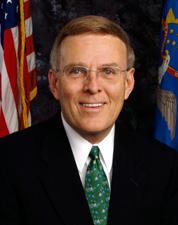 Sen. Byron L. Dorgan (D-ND)
Legislative Activity
Stay on top of the latest movement without scrolling through every action
Senate amendment agreed to: Amendment SA 3899 agreed to in Senate by Unanimous Consent.
February 26, 2008
View full timeline
Senate amendment agreed to: Amendment SA 3899 agreed to in Senate by Unanimous Consent.
February 26, 2008
Considered by Senate. (consideration: CR S1150, S1155)
February 26, 2008
Amendment SA 3899 agreed to in Senate by Unanimous Consent.
February 26, 2008
Roll call votes on amendments in Senate: Cloture on amendment SA 3899 invoked in Senate by Yea-Nay Vote. 85 - 2. Record Vote Number: 28.(consideration: CR S1108-1109; text: CR S1108)
February 25, 2008
Considered by Senate. (consideration: CR S1101)
February 25, 2008
Cloture on amendment SA 3899 invoked in Senate by Yea-Nay Vote. 85 - 2. Record Vote Number: 28. (consideration: CR S1108-1109; text: CR S1108)
February 25, 2008
Considered by Senate. (consideration: CR S994)
February 14, 2008
Cloture motion on amendment SA 3899 presented in Senate. (consideration: CR S1045; text: CR S1045)
February 14, 2008
Considered by Senate. (consideration: CR S957)
February 13, 2008
Considered by Senate. (consideration: CR S158)
January 23, 2008
Senate amendment submitted
January 22, 2008
Senate amendment proposed (on the floor): Amendment SA 3899 proposed by Senator Dorgan.(consideration: CR S52-53)
January 22, 2008
Amendment SA 3899 proposed by Senator Dorgan. (consideration: CR S52-53) In the nature of a substitute.
January 22, 2008
Votes
1 roll call on this amendment
Amendments
70 amendmentsOffered to this amendment
Amendments
70 amendmentsOffered to this amendment
No matches
Of a perfecting nature.
Amendment SA 4066 agreed to in Senate by Unanimous Consent. · Sponsored by Jim DeMint · Amends S.Amdt. 3899
To authorize the Secretary of Health and Human Services to establish an Indian health savings account demonstration project.
Proposed amendment SA 4015 withdrawn in Senate. (consideration: CR S1152) · Sponsored by Jim DeMint · Amends S.Amdt. 3899
To modify a provision relating to development of innovative approaches.
Amendment SA 3897 agreed to in Senate by Yea-Nay Vote. 56 - 38. Record Vote Number: 31. · Sponsored by Gordon H. Smith · Amends S.Amdt. 3899
To modify a section relating to limitation on use of funds appropriated to the Service.
Amendment SA 3896, previously agreed to, was modified by Unanimous Consent. (consideration: CR S1208; text as modified: CR S1208) · Sponsored by David Vitter · Amends S.Amdt. 3899
Of a perfecting nature.
Proposed amendment SA 4073 withdrawn in Senate. (consideration: CR S1109-1110) · Sponsored by Jim DeMint · Amends S.Amdt. 3899
Of a perfecting nature.
Amendment SA 4070 agreed to in Senate by Yea-Nay Vote. 78 - 11. Record Vote Number: 29. · Sponsored by Jim DeMint · Amends S.Amdt. 3899
To require a study of tribal justice systems.
Amendment SA 4021 agreed to in Senate by Unanimous Consent. · Sponsored by John Thune · Amends S.Amdt. 3899
To provide for testimony by Service employees in cases of rape and sexual assault.
Amendment SA 4019 as modified agreed to in Senate by Unanimous Consent. (text as modified: CR S1113) · Sponsored by Tim Johnson · Amends S.Amdt. 3899
To require the Comptroller General of the United States to conduct a study on payments for contract health services.
Amendment SA 4083 agreed to in Senate by Unanimous Consent. · Sponsored by Jeff Bingaman · Amends S.Amdt. 3899
Of a perfecting nature.
Amendment SA 4082 agreed to in Senate by Yea-Nay Vote. 95 - 0. Record Vote Number: 24. · Sponsored by Byron L. Dorgan · Amends S.Amdt. 3899
To determine the factors leading to significant tobacco-related disease and disproportionate health effects on tribal populations.
Amendment SA 4078 as modified agreed to in Senate by Unanimous Consent. (text as modified: CR S1040) · Sponsored by Tom Coburn · Amends S.Amdt. 3899
Of a perfecting nature.
Amendment SA 4038 agreed to in Senate by Unanimous Consent. · Sponsored by David Vitter · Amends S.Amdt. 3899
To prioritize scarce resources to basic medical services for Indians.
Proposed amendment SA 4037 withdrawn in Senate. · Sponsored by Tom Coburn · Amends S.Amdt. 3899
To prioritize scarce resources to basic medical services for Indians.
Amendment SA 4036 not agreed to in Senate by Yea-Nay Vote. 21 - 73. Record Vote Number: 26. · Sponsored by Tom Coburn · Amends S.Amdt. 3899
To prioritize patient care over administrative overhead.
Proposed amendment SA 4035 withdrawn in Senate. · Sponsored by Tom Coburn · Amends S.Amdt. 3899
To allow tribal members to make their own health care choices.
Amendment SA 4034 not agreed to in Senate by Yea-Nay Vote. 28 - 67. Record Vote Number: 25. · Sponsored by Tom Coburn · Amends S.Amdt. 3899
To allow tribal members to make their own health care choices.
Proposed amendment SA 4033 withdrawn in Senate. · Sponsored by Tom Coburn · Amends S.Amdt. 3899
To protect rape and sexual assault victims from HIV/AIDS and other sexually transmitted diseases.
Amendment SA 4032 agreed to in Senate by Yea-Nay Vote. 94 - 0. Record Vote Number: 27. (consideration: CR S996-1004, S1028, S1032-1033) · Sponsored by Tom Coburn · Amends S.Amdt. 3899
To promote transparency and quality in the Service.
Proposed amendment SA 4031 withdrawn in Senate. · Sponsored by Tom Coburn · Amends S.Amdt. 3899
To ensure tribal members have access to the highest levels of quality and safety in the Service.
Proposed amendment SA 4030 withdrawn in Senate. · Sponsored by Tom Coburn · Amends S.Amdt. 3899
To require a study of membership criteria for federally recognized Indian tribes.
Amendment SA 4029 agreed to in Senate by Unanimous Consent. · Sponsored by Tom Coburn · Amends S.Amdt. 3899
To provide a blood quantum requirement for Federal recognition of Indian tribes.
Proposed amendment SA 4028 withdrawn in Senate. · Sponsored by Tom Coburn · Amends S.Amdt. 3899
To clarify the effect of a title.
Proposed amendment SA 4027 withdrawn in Senate. · Sponsored by Tom Coburn · Amends S.Amdt. 3899
To modify a provision relating to child sexual abuse and prevention treatment programs.
Proposed amendment SA 4026 withdrawn in Senate. · Sponsored by Tom Coburn · Amends S.Amdt. 3899
To clarify the absence of authorization of racial preference in employment.
Proposed amendment SA 4025 withdrawn in Senate. · Sponsored by Tom Coburn · Amends S.Amdt. 3899
To ensure that tribal members receive scientifically effective health promotion services.
Proposed amendment SA 4024 withdrawn in Senate. · Sponsored by Tom Coburn · Amends S.Amdt. 3899
To temporarily delay application of proposed changes to Medicaid payment rules for case management and targeted case management services.
Amendment SA 4023 agreed to in Senate by Voice Vote. · Sponsored by Barbara A. Mikulski · Amends S.Amdt. 3899
To amend titles XI and XVIII of the Social Security Act to provide increased civil and criminal penalties for acts involving fraud and abuse under the Medicare program.
Amendment SA 3906 as modified agreed to in Senate by Unanimous Consent. (text as modified: CR S1015) · Sponsored by Mel Martinez · Amends S.Amdt. 3899
To provide for payments under subsections (a) through (e) of section 2604 of the Low-Income Home Energy Assistance Act of 1981.
Proposed amendment SA 3900 withdrawn in Senate. · Sponsored by Bernard Sanders · Amends S.Amdt. 3899
To require the Comptroller General to report on the effectiveness of coordination of health care services provided to Indians using Federal, State local and tribal funds.
Amendment SA 3898 agreed to in Senate by Unanimous Consent. · Sponsored by John Barrasso · Amends S.Amdt. 3899
To amend title XVIII of the Social Security Act to provide for a limitation on the charges for contract health services provided to Indians by Medicare providers.
Proposed amendment SA 3894 withdrawn in Senate. · Sponsored by Jeff Bingaman · Amends S.Amdt. 3899
To acknowledge a long history of official depredations and ill-conceived policies by the Federal Government regarding Indian tribes and offer an apology to all Native Peoples on behalf of the United States.
Amendment SA 3893 as modified agreed to in Senate by Voice Vote. (text as modified: CR S1037-1038) · Sponsored by Sam Brownback · Amends S.Amdt. 3899
To express the sense of Congress regarding law enforcement and methamphetamine issues in Indian country.
Amendment SA 4020 agreed to in Senate by Yea-Nay Vote. 95 - 0. Record Vote Number: 23. · Sponsored by Jon Tester · Amends S.Amdt. 3899
Sponsored by Richard J. Durbin · Amends S.Amdt. 3899
Sponsored by Jeff Bingaman · Amends S.Amdt. 3899
Sponsored by Jim DeMint · Amends S.Amdt. 3899
Sponsored by Jim DeMint · Amends S.Amdt. 3899
Sponsored by Jim DeMint · Amends S.Amdt. 3899
Sponsored by Jim DeMint · Amends S.Amdt. 3899
Sponsored by Jim DeMint · Amends S.Amdt. 3899
Sponsored by Jim DeMint · Amends S.Amdt. 3899
Sponsored by Jim DeMint · Amends S.Amdt. 3899
Sponsored by Jim DeMint · Amends S.Amdt. 3899
Sponsored by Jim DeMint · Amends S.Amdt. 3899
Sponsored by Jim DeMint · Amends S.Amdt. 3899
Sponsored by Jim DeMint · Amends S.Amdt. 3899
Sponsored by Jim DeMint · Amends S.Amdt. 3899
Sponsored by Jim DeMint · Amends S.Amdt. 3899
Sponsored by Jim DeMint · Amends S.Amdt. 3899
Sponsored by Jim DeMint · Amends S.Amdt. 3899
Sponsored by Jim DeMint · Amends S.Amdt. 3899
Sponsored by Jim DeMint · Amends S.Amdt. 3899
Sponsored by Jim DeMint · Amends S.Amdt. 3899
Sponsored by Jim DeMint · Amends S.Amdt. 3899
Sponsored by Jim DeMint · Amends S.Amdt. 3899
Sponsored by Jim DeMint · Amends S.Amdt. 3899
Sponsored by Jim DeMint · Amends S.Amdt. 3899
Sponsored by Jim DeMint · Amends S.Amdt. 3899
Sponsored by Jim DeMint · Amends S.Amdt. 3899
Sponsored by Jim DeMint · Amends S.Amdt. 3899
Sponsored by Jim DeMint · Amends S.Amdt. 3899
Sponsored by Jim DeMint · Amends S.Amdt. 3899
Sponsored by Jim DeMint · Amends S.Amdt. 3899
Sponsored by Jim DeMint · Amends S.Amdt. 3899
Sponsored by Jim DeMint · Amends S.Amdt. 3899
Sponsored by Jim DeMint · Amends S.Amdt. 3899
Sponsored by Jim DeMint · Amends S.Amdt. 3899
Sponsored by Jim DeMint · Amends S.Amdt. 3899
Sponsored by Jim DeMint · Amends S.Amdt. 3899
Sponsored by Jim DeMint · Amends S.Amdt. 3899
Text
Submitted
SA 3899. Mr. DORGAN (for himself, Ms. Murkowski, Mr. Baucus, Mr.
Kennedy, Mr. Smith, Mr. Nelson of Nebraska, and Mr. Salazar) proposed
an amendment to the bill S. 1200, to amend the Indian Health Care
Improvement Act to revise and extend the Act; as follows:

Strike all after the enacting clause and insert the
following:

SECTION 1. SHORT TITLE; TABLE OF CONTENTS.

(a) Short Title.--This Act may be cited as the ``Indian
Health Care Improvement Act Amendments of 2008''.
(b) Table of Contents.--The table of contents of this Act
is as follows:

Sec. 1. Short title; table of contents.

TITLE I--AMENDMENTS TO INDIAN LAWS

Sec. 101. Indian Health Care Improvement Act amended.
Sec. 102. Soboba sanitation facilities.
Sec. 103. Native American Health and Wellness Foundation.

TITLE II--IMPROVEMENT OF INDIAN HEALTH CARE PROVIDED UNDER THE SOCIAL
SECURITY ACT

Sec. 201. Expansion of payments under Medicare, Medicaid, and SCHIP for
all covered services furnished by Indian Health Programs.
Sec. 202. Increased outreach to Indians under Medicaid and SCHIP and
improved cooperation in the provision of items and
services to Indians under Social Security Act health
benefit programs.
Sec. 203. Additional provisions to increase outreach to, and enrollment
of, Indians in SCHIP and Medicaid.
Sec. 204. Premiums and cost sharing protections under Medicaid,
eligibility determinations under Medicaid and SCHIP, and
protection of certain Indian property from Medicaid
estate recovery.
Sec. 205. Nondiscrimination in qualifications for payment for services
under Federal health care programs.
Sec. 206. Consultation on Medicaid, SCHIP, and other health care
programs funded under the Social Security Act involving
Indian Health Programs and Urban Indian Organizations.
Sec. 207. Exclusion waiver authority for affected Indian Health
Programs and safe harbor transactions under the Social
Security Act.
Sec. 208. Rules applicable under Medicaid and SCHIP to managed care
entities with respect to Indian enrollees and Indian
health care providers and Indian managed care entities.
Sec. 209. Annual report on Indians served by Social Security Act health
benefit programs.
Sec. 210. Development of recommendations to improve interstate
coordination of Medicaid and CHIP coverage of Indian
children and other children who are outside of their
State of residency because of educational or other needs.
Sec. 211. Establishment of National Child Welfare Resource Center for
Tribes.
Sec. 212. Adjustment to the Medicare Advantage stabilization fund.

TITLE I--AMENDMENTS TO INDIAN LAWS

SEC. 101. INDIAN HEALTH CARE IMPROVEMENT ACT AMENDED.

The Indian Health Care Improvement Act (25 U.S.C. 1601 et
seq.) is amended to read as follows:

``SECTION 1. SHORT TITLE; TABLE OF CONTENTS.

``(a) Short Title.--This Act may be cited as the `Indian
Health Care Improvement Act'.
``(b) Table of Contents.--The table of contents for this
Act is as follows:

``Sec. 1. Short title; table of contents.
``Sec. 2. Findings.
``Sec. 3. Declaration of national Indian health policy.
``Sec. 4. Definitions.

``TITLE I--INDIAN HEALTH, HUMAN RESOURCES, AND DEVELOPMENT

``Sec. 101. Purpose.
``Sec. 102. Health professions recruitment program for Indians.
``Sec. 103. Health professions preparatory scholarship program for
Indians.
``Sec. 104. Indian health professions scholarships.
``Sec. 105. American Indians Into Psychology Program.
``Sec. 106. Scholarship programs for Indian Tribes.
``Sec. 107. Indian Health Service extern programs.
``Sec. 108. Continuing education allowances.
``Sec. 109. Community Health Representative Program.
``Sec. 110. Indian Health Service Loan Repayment Program.
``Sec. 111. Scholarship and Loan Repayment Recovery Fund.
``Sec. 112. Recruitment activities.
``Sec. 113. Indian recruitment and retention program.
``Sec. 114. Advanced training and research.
``Sec. 115. Quentin N. Burdick American Indians Into Nursing Program.
``Sec. 116. Tribal cultural orientation.
``Sec. 117. INMED Program.
``Sec. 118. Health training programs of community colleges.
``Sec. 119. Retention bonus.
``Sec. 120. Nursing residency program.
``Sec. 121. Community Health Aide Program.
``Sec. 122. Tribal Health Program administration.
``Sec. 123. Health professional chronic shortage demonstration
programs.
``Sec. 124. National Health Service Corps.
``Sec. 125. Substance abuse counselor educational curricula
demonstration programs.
``Sec. 126. Behavioral health training and community education
programs.
``Sec. 127. Authorization of appropriations.

``TITLE II--HEALTH SERVICES

``Sec. 201. Indian Health Care Improvement Fund.
``Sec. 202. Catastrophic Health Emergency Fund.
``Sec. 203. Health promotion and disease prevention services.
``Sec. 204. Diabetes prevention, treatment, and control.
``Sec. 205. Shared services for long-term care.
``Sec. 206. Health services research.
``Sec. 207. Mammography and other cancer screening.
``Sec. 208. Patient travel costs.
``Sec. 209. Epidemiology centers.
``Sec. 210. Comprehensive school health education programs.
``Sec. 211. Indian youth program.
``Sec. 212. Prevention, control, and elimination of communicable and
infectious diseases.
``Sec. 213. Other authority for provision of services.
``Sec. 214. Indian women's health care.
``Sec. 215. Environmental and nuclear health hazards.
``Sec. 216. Arizona as a contract health service delivery area.
``Sec. 216A. North Dakota and South Dakota as contract health service
delivery area.
``Sec. 217. California contract health services program.
``Sec. 218. California as a contract health service delivery area.
``Sec. 219. Contract health services for the Trenton service area.
``Sec. 220. Programs operated by Indian Tribes and Tribal
Organizations.
``Sec. 221. Licensing.
``Sec. 222. Notification of provision of emergency contract health
services.
``Sec. 223. Prompt action on payment of claims.
``Sec. 224. Liability for payment.
``Sec. 225. Office of Indian Men's Health.
``Sec. 226. Authorization of appropriations.

``TITLE III--FACILITIES

``Sec. 301. Consultation; construction and renovation of facilities;
reports.
``Sec. 302. Sanitation facilities.
``Sec. 303. Preference to Indians and Indian firms.
``Sec. 304. Expenditure of non-Service funds for renovation.
``Sec. 305. Funding for the construction, expansion, and modernization
of small ambulatory care facilities.
``Sec. 306. Indian health care delivery demonstration projects.
``Sec. 307. Land transfer.
``Sec. 308. Leases, contracts, and other agreements.
``Sec. 309. Study on loans, loan guarantees, and loan repayment.
``Sec. 310. Tribal leasing.
``Sec. 311. Indian Health Service/tribal facilities joint venture
program.
``Sec. 312. Location of facilities.
``Sec. 313. Maintenance and improvement of health care facilities.
``Sec. 314. Tribal management of Federally-owned quarters.
``Sec. 315. Applicability of Buy American Act requirement.
``Sec. 316. Other funding for facilities.
``Sec. 317. Authorization of appropriations.

``TITLE IV--ACCESS TO HEALTH SERVICES

``Sec. 401. Treatment of payments under Social Security Act health
benefits programs.
``Sec. 402. Grants to and contracts with the Service, Indian Tribes,
Tribal Organizations, and Urban Indian Organizations to
facilitate outreach, enrollment, and coverage of Indians
under Social Security Act health benefit programs and
other health benefits programs.
``Sec. 403. Reimbursement from certain third parties of costs of health
services.

[[Page S112]]

``Sec. 404. Crediting of reimbursements.
``Sec. 405. Purchasing health care coverage.
``Sec. 406. Sharing arrangements with Federal agencies.
``Sec. 407. Eligible Indian veteran services.
``Sec. 408. Payor of last resort.
``Sec. 409. Nondiscrimination under Federal health care programs in
qualifications for reimbursement for services.
``Sec. 410. Consultation.
``Sec. 411. State Children's Health Insurance Program (SCHIP).
``Sec. 412. Exclusion waiver authority for affected Indian Health
Programs and safe harbor transactions under the Social
Security Act.
``Sec. 413. Premium and cost sharing protections and eligibility
determinations under Medicaid and SCHIP and protection of
certain Indian property from Medicaid estate recovery.
``Sec. 414. Treatment under Medicaid and SCHIP managed care.
``Sec. 415. Navajo Nation Medicaid Agency feasibility study.
``Sec. 416. General exceptions.
``Sec. 417. Authorization of appropriations.

``TITLE V--HEALTH SERVICES FOR URBAN INDIANS

``Sec. 501. Purpose.
``Sec. 502. Contracts with, and grants to, Urban Indian Organizations.
``Sec. 503. Contracts and grants for the provision of health care and
referral services.
``Sec. 504. Contracts and grants for the determination of unmet health
care needs.
``Sec. 505. Evaluations; renewals.
``Sec. 506. Other contract and grant requirements.
``Sec. 507. Reports and records.
``Sec. 508. Limitation on contract authority.
``Sec. 509. Facilities.
``Sec. 510. Division of Urban Indian Health.
``Sec. 511. Grants for alcohol and substance abuse-related services.
``Sec. 512. Treatment of certain demonstration projects.
``Sec. 513. Urban NIAAA transferred programs.
``Sec. 514. Conferring with Urban Indian Organizations.
``Sec. 515. Urban youth treatment center demonstration.
``Sec. 516. Grants for diabetes prevention, treatment, and control.
``Sec. 517. Community Health Representatives.
``Sec. 518. Effective date.
``Sec. 519. Eligibility for services.
``Sec. 520. Authorization of appropriations.

``TITLE VI--ORGANIZATIONAL IMPROVEMENTS

``Sec. 601. Establishment of the Indian Health Service as an agency of
the Public Health Service.
``Sec. 602. Automated management information system.
``Sec. 603. Authorization of appropriations.

``TITLE VII--BEHAVIORAL HEALTH PROGRAMS

``Sec. 701. Behavioral health prevention and treatment services.
``Sec. 702. Memoranda of agreement with the Department of the Interior.
``Sec. 703. Comprehensive behavioral health prevention and treatment
program.
``Sec. 704. Mental health technician program.
``Sec. 705. Licensing requirement for mental health care workers.
``Sec. 706. Indian women treatment programs.
``Sec. 707. Indian youth program.
``Sec. 708. Indian youth telemental health demonstration project.
``Sec. 709. Inpatient and community-based mental health facilities
design, construction, and staffing.
``Sec. 710. Training and community education.
``Sec. 711. Behavioral health program.
``Sec. 712. Fetal alcohol spectrum disorders programs.
``Sec. 713. Child sexual abuse and prevention treatment programs.
``Sec. 714. Domestic and sexual violence prevention and treatment.
``Sec. 715. Behavioral health research.
``Sec. 716. Definitions.
``Sec. 717. Authorization of appropriations.

``TITLE VIII--MISCELLANEOUS

``Sec. 801. Reports.
``Sec. 802. Regulations.
``Sec. 803. Plan of implementation.
``Sec. 804. Availability of funds.
``Sec. 805. Limitations.
``Sec. 806. Eligibility of California Indians.
``Sec. 807. Health services for ineligible persons.
``Sec. 808. Reallocation of base resources.
``Sec. 809. Results of demonstration projects.
``Sec. 810. Provision of services in Montana.
``Sec. 811. Tribal employment.
``Sec. 812. Severability provisions.
``Sec. 813. Establishment of National Bipartisan Commission on Indian
Health Care.
``Sec. 814. Confidentiality of medical quality assurance records;
qualified immunity for participants.
``Sec. 815. Appropriations; availability.
``Sec. 816. Authorization of appropriations.

``SEC. 2. FINDINGS.

``Congress makes the following findings:
``(1) Federal health services to maintain and improve the
health of the Indians are consonant with and required by the
Federal Government's historical and unique legal relationship
with, and resulting responsibility to, the American Indian
people.
``(2) A major national goal of the United States is to
provide the resources, processes, and structure that will
enable Indian Tribes and tribal members to obtain the
quantity and quality of health care services and
opportunities that will eradicate the health disparities
between Indians and the general population of the United
States.
``(3) A major national goal of the United States is to
provide the quantity and quality of health services which
will permit the health status of Indians to be raised to the
highest possible level and to encourage the maximum
participation of Indians in the planning and management of
those services.
``(4) Federal health services to Indians have resulted in a
reduction in the prevalence and incidence of preventable
illnesses among, and unnecessary and premature deaths of,
Indians.
``(5) Despite such services, the unmet health needs of the
American Indian people are severe and the health status of
the Indians is far below that of the general population of
the United States.

``SEC. 3. DECLARATION OF NATIONAL INDIAN HEALTH POLICY.

``Congress declares that it is the policy of this Nation,
in fulfillment of its special trust responsibilities and
legal obligations to Indians--
``(1) to assure the highest possible health status for
Indians and Urban Indians and to provide all resources
necessary to effect that policy;
``(2) to raise the health status of Indians and Urban
Indians to at least the levels set forth in the goals
contained within the Healthy People 2010 or successor
objectives;
``(3) to ensure maximum Indian participation in the
direction of health care services so as to render the persons
administering such services and the services themselves more
responsive to the needs and desires of Indian communities;
``(4) to increase the proportion of all degrees in the
health professions and allied and associated health
professions awarded to Indians so that the proportion of
Indian health professionals in each Service Area is raised to
at least the level of that of the general population;
``(5) to require that all actions under this Act shall be
carried out with active and meaningful consultation with
Indian Tribes and Tribal Organizations, and conference with
Urban Indian Organizations, to implement this Act and the
national policy of Indian self-determination;
``(6) to ensure that the United States and Indian Tribes
work in a government-to-government relationship to ensure
quality health care for all tribal members; and
``(7) to provide funding for programs and facilities
operated by Indian Tribes and Tribal Organizations in amounts
that are not less than the amounts provided to programs and
facilities operated directly by the Service.

``SEC. 4. DEFINITIONS.

``For purposes of this Act:
``(1) The term `accredited and accessible' means on or near
a reservation and accredited by a national or regional
organization with accrediting authority.
``(2) The term `Area Office' means an administrative
entity, including a program office, within the Service
through which services and funds are provided to the Service
Units within a defined geographic area.
``(3)(A) The term `behavioral health' means the blending of
substance (alcohol, drugs, inhalants, and tobacco) abuse and
mental health prevention and treatment, for the purpose of
providing comprehensive services.
``(B) The term `behavioral health' includes the joint
development of substance abuse and mental health treatment
planning and coordinated case management using a
multidisciplinary approach.
``(4) The term `California Indians' means those Indians who
are eligible for health services of the Service pursuant to
section 806.
``(5) The term `community college' means--
``(A) a tribal college or university, or
``(B) a junior or community college.
``(6) The term `contract health service' means health
services provided at the expense of the Service or a Tribal
Health Program by public or private medical providers or
hospitals, other than the Service Unit or the Tribal Health
Program at whose expense the services are provided.
``(7) The term `Department' means, unless otherwise
designated, the Department of Health and Human Services.
``(8) The term `Director' means the Director of the
Service.
``(9) The term `disease prevention' means the reduction,
limitation, and prevention of disease and its complications
and reduction in the consequences of disease, including--
``(A) controlling--
``(i) the development of diabetes;
``(ii) high blood pressure;
``(iii) infectious agents;
``(iv) injuries;
``(v) occupational hazards and disabilities;
``(vi) sexually transmittable diseases; and
``(vii) toxic agents; and
``(B) providing--
``(i) fluoridation of water; and
``(ii) immunizations.

[[Page S113]]

``(10) The term `health profession' means allopathic
medicine, family medicine, internal medicine, pediatrics,
geriatric medicine, obstetrics and gynecology, podiatric
medicine, nursing, public health nursing, dentistry,
psychiatry, osteopathy, optometry, pharmacy, psychology,
public health, social work, marriage and family therapy,
chiropractic medicine, environmental health and engineering,
allied health professions, and any other health profession.
``(11) The term `health promotion' means--
``(A) fostering social, economic, environmental, and
personal factors conducive to health, including raising
public awareness about health matters and enabling the people
to cope with health problems by increasing their knowledge
and providing them with valid information;
``(B) encouraging adequate and appropriate diet, exercise,
and sleep;
``(C) promoting education and work in conformity with
physical and mental capacity;
``(D) making available safe water and sanitary facilities;
``(E) improving the physical, economic, cultural,
psychological, and social environment;
``(F) promoting culturally competent care; and
``(G) providing adequate and appropriate programs, which
may include--
``(i) abuse prevention (mental and physical);
``(ii) community health;
``(iii) community safety;
``(iv) consumer health education;
``(v) diet and nutrition;
``(vi) immunization and other prevention of communicable
diseases, including HIV/AIDS;
``(vii) environmental health;
``(viii) exercise and physical fitness;
``(ix) avoidance of fetal alcohol spectrum disorders;
``(x) first aid and CPR education;
``(xi) human growth and development;
``(xii) injury prevention and personal safety;
``(xiii) behavioral health;
``(xiv) monitoring of disease indicators between health
care provider visits, through appropriate means, including
Internet-based health care management systems;
``(xv) personal health and wellness practices;
``(xvi) personal capacity building;
``(xvii) prenatal, pregnancy, and infant care;
``(xviii) psychological well-being;
``(xix) family planning;
``(xx) safe and adequate water;
``(xxi) healthy work environments;
``(xxii) elimination, reduction, and prevention of
contaminants that create unhealthy household conditions
(including mold and other allergens);
``(xxiii) stress control;
``(xxiv) substance abuse;
``(xxv) sanitary facilities;
``(xxvi) sudden infant death syndrome prevention;
``(xxvii) tobacco use cessation and reduction;
``(xxviii) violence prevention; and
``(xxix) such other activities identified by the Service, a
Tribal Health Program, or an Urban Indian Organization, to
promote achievement of any of the objectives described in
section 3(2).
``(12) The term `Indian', unless otherwise designated,
means any person who is a member of an Indian Tribe or is
eligible for health services under section 806, except that,
for the purpose of sections 102 and 103, the term also means
any individual who--
``(A)(i) irrespective of whether the individual lives on or
near a reservation, is a member of a tribe, band, or other
organized group of Indians, including those tribes, bands, or
groups terminated since 1940 and those recognized now or in
the future by the State in which they reside; or
``(ii) is a descendant, in the first or second degree, of
any such member;
``(B) is an Eskimo or Aleut or other Alaska Native;
``(C) is considered by the Secretary of the Interior to be
an Indian for any purpose; or
``(D) is determined to be an Indian under regulations
promulgated by the Secretary.
``(13) The term `Indian Health Program' means--
``(A) any health program administered directly by the
Service;
``(B) any Tribal Health Program; or
``(C) any Indian Tribe or Tribal Organization to which the
Secretary provides funding pursuant to section 23 of the Act
of June 25, 1910 (25 U.S.C. 47) (commonly known as the `Buy
Indian Act').
``(14) The term `Indian Tribe' has the meaning given the
term in the Indian Self-Determination and Education
Assistance Act (25 U.S.C. 450 et seq.).
``(15) The term `junior or community college' has the
meaning given the term by section 312(e) of the Higher
Education Act of 1965 (20 U.S.C. 1058(e)).
``(16) The term `reservation' means any federally
recognized Indian Tribe's reservation, Pueblo, or colony,
including former reservations in Oklahoma, Indian allotments,
and Alaska Native Regions established pursuant to the Alaska
Native Claims Settlement Act (43 U.S.C. 1601 et seq.).
``(17) The term `Secretary', unless otherwise designated,
means the Secretary of Health and Human Services.
``(18) The term `Service' means the Indian Health Service.
``(19) The term `Service Area' means the geographical area
served by each Area Office.
``(20) The term `Service Unit' means an administrative
entity of the Service, or a Tribal Health Program through
which services are provided, directly or by contract, to
eligible Indians within a defined geographic area.
``(21) The term `telehealth' has the meaning given the term
in section 330K(a) of the Public Health Service Act (42
U.S.C. 254c-16(a)).
``(22) The term `telemedicine' means a telecommunications
link to an end user through the use of eligible equipment
that electronically links health professionals or patients
and health professionals at separate sites in order to
exchange health care information in audio, video, graphic, or
other format for the purpose of providing improved health
care services.
``(23) The term `tribal college or university' has the
meaning given the term in section 316(b)(3) of the Higher
Education Act (20 U.S.C. 1059c(b)(3)).
``(24) The term `Tribal Health Program' means an Indian
Tribe or Tribal Organization that operates any health
program, service, function, activity, or facility funded, in
whole or part, by the Service through, or provided for in, a
contract or compact with the Service under the Indian Self-
Determination and Education Assistance Act (25 U.S.C. 450 et
seq.).
``(25) The term `Tribal Organization' has the meaning given
the term in the Indian Self-Determination and Education
Assistance Act (25 U.S.C. 450 et seq.).
``(26) The term `Urban Center' means any community which
has a sufficient Urban Indian population with unmet health
needs to warrant assistance under title V of this Act, as
determined by the Secretary.
``(27) The term `Urban Indian' means any individual who
resides in an Urban Center and who meets 1 or more of the
following criteria:
``(A) Irrespective of whether the individual lives on or
near a reservation, the individual is a member of a tribe,
band, or other organized group of Indians, including those
tribes, bands, or groups terminated since 1940 and those
tribes, bands, or groups that are recognized by the States in
which they reside, or who is a descendant in the first or
second degree of any such member.
``(B) The individual is an Eskimo, Aleut, or other Alaska
Native.
``(C) The individual is considered by the Secretary of the
Interior to be an Indian for any purpose.
``(D) The individual is determined to be an Indian under
regulations promulgated by the Secretary.
``(28) The term `Urban Indian Organization' means a
nonprofit corporate body that (A) is situated in an Urban
Center; (B) is governed by an Urban Indian-controlled board
of directors; (C) provides for the participation of all
interested Indian groups and individuals; and (D) is capable
of legally cooperating with other public and private entities
for the purpose of performing the activities described in
section 503(a).

``TITLE I--INDIAN HEALTH, HUMAN RESOURCES, AND DEVELOPMENT

``SEC. 101. PURPOSE.

``The purpose of this title is to increase, to the maximum
extent feasible, the number of Indians entering the health
professions and providing health services, and to assure an
optimum supply of health professionals to the Indian Health
Programs and Urban Indian Organizations involved in the
provision of health services to Indians.

``SEC. 102. HEALTH PROFESSIONS RECRUITMENT PROGRAM FOR
INDIANS.

``(a) In General.--The Secretary, acting through the
Service, shall make grants to public or nonprofit private
health or educational entities, Tribal Health Programs, or
Urban Indian Organizations to assist such entities in meeting
the costs of--
``(1) identifying Indians with a potential for education or
training in the health professions and encouraging and
assisting them--
``(A) to enroll in courses of study in such health
professions; or
``(B) if they are not qualified to enroll in any such
courses of study, to undertake such postsecondary education
or training as may be required to qualify them for
enrollment;
``(2) publicizing existing sources of financial aid
available to Indians enrolled in any course of study referred
to in paragraph (1) or who are undertaking training necessary
to qualify them to enroll in any such course of study; or
``(3) establishing other programs which the Secretary
determines will enhance and facilitate the enrollment of
Indians in, and the subsequent pursuit and completion by them
of, courses of study referred to in paragraph (1).
``(b) Grants.--
``(1) Application.--The Secretary shall not make a grant
under this section unless an application has been submitted
to, and approved by, the Secretary. Such application shall be
in such form, submitted in such manner, and contain such
information, as the Secretary shall by regulation prescribe
pursuant to this Act. The Secretary shall give a preference
to applications submitted by Tribal Health Programs or Urban
Indian Organizations.
``(2) Amount of grants; payment.--The amount of a grant
under this section shall be determined by the Secretary.
Payments pursuant to this section may be made in advance or
by way of reimbursement, and at

[[Page S114]]

such intervals and on such conditions as provided for in
regulations issued pursuant to this Act. To the extent not
otherwise prohibited by law, grants shall be for 3 years, as
provided in regulations issued pursuant to this Act.

``SEC. 103. HEALTH PROFESSIONS PREPARATORY SCHOLARSHIP
PROGRAM FOR INDIANS.

``(a) Scholarships Authorized.--The Secretary, acting
through the Service, shall provide scholarship grants to
Indians who--
``(1) have successfully completed their high school
education or high school equivalency; and
``(2) have demonstrated the potential to successfully
complete courses of study in the health professions.
``(b) Purposes.--Scholarship grants provided pursuant to
this section shall be for the following purposes:
``(1) Compensatory preprofessional education of any
recipient, such scholarship not to exceed 2 years on a full-
time basis (or the part-time equivalent thereof, as
determined by the Secretary pursuant to regulations issued
under this Act).
``(2) Pregraduate education of any recipient leading to a
baccalaureate degree in an approved course of study
preparatory to a field of study in a health profession, such
scholarship not to exceed 4 years. An extension of up to 2
years (or the part-time equivalent thereof, as determined by
the Secretary pursuant to regulations issued pursuant to this
Act) may be approved.
``(c) Other Conditions.--Scholarships under this section--
``(1) may cover costs of tuition, books, transportation,
board, and other necessary related expenses of a recipient
while attending school;
``(2) shall not be denied solely on the basis of the
applicant's scholastic achievement if such applicant has been
admitted to, or maintained good standing at, an accredited
institution; and
``(3) shall not be denied solely by reason of such
applicant's eligibility for assistance or benefits under any
other Federal program.

``SEC. 104. INDIAN HEALTH PROFESSIONS SCHOLARSHIPS.

``(a) In General.--
``(1) Authority.--The Secretary, acting through the
Service, shall make scholarship grants to Indians who are
enrolled full or part time in accredited schools pursuing
courses of study in the health professions. Such scholarships
shall be designated Indian Health Scholarships and shall be
made in accordance with section 338A of the Public Health
Services Act (42 U.S.C. 254l), except as provided in
subsection (b) of this section.
``(2) Determinations by secretary.--The Secretary, acting
through the Service, shall determine--
``(A) who shall receive scholarship grants under subsection
(a); and
``(B) the distribution of the scholarships among health
professions on the basis of the relative needs of Indians for
additional service in the health professions.
``(3) Certain delegation not allowed.--The administration
of this section shall be a responsibility of the Director and
shall not be delegated in a contract or compact under the
Indian Self-Determination and Education Assistance Act (25
U.S.C. 450 et seq.).
``(b) Active Duty Service Obligation.--
``(1) Obligation met.--The active duty service obligation
under a written contract with the Secretary under this
section that an Indian has entered into shall, if that
individual is a recipient of an Indian Health Scholarship, be
met in full-time practice equal to 1 year for each school
year for which the participant receives a scholarship award
under this part, or 2 years, whichever is greater, by service
in 1 or more of the following:
``(A) In an Indian Health Program.
``(B) In a program assisted under title V of this Act.
``(C) In the private practice of the applicable profession
if, as determined by the Secretary, in accordance with
guidelines promulgated by the Secretary, such practice is
situated in a physician or other health professional shortage
area and addresses the health care needs of a substantial
number of Indians.
``(D) In a teaching capacity in a tribal college or
university nursing program (or a related health profession
program) if, as determined by the Secretary, the health
service provided to Indians would not decrease.
``(2) Obligation deferred.--At the request of any
individual who has entered into a contract referred to in
paragraph (1) and who receives a degree in medicine
(including osteopathic or allopathic medicine), dentistry,
optometry, podiatry, or pharmacy, the Secretary shall defer
the active duty service obligation of that individual under
that contract, in order that such individual may complete any
internship, residency, or other advanced clinical training
that is required for the practice of that health profession,
for an appropriate period (in years, as determined by the
Secretary), subject to the following conditions:
``(A) No period of internship, residency, or other advanced
clinical training shall be counted as satisfying any period
of obligated service under this subsection.
``(B) The active duty service obligation of that individual
shall commence not later than 90 days after the completion of
that advanced clinical training (or by a date specified by
the Secretary).
``(C) The active duty service obligation will be served in
the health profession of that individual in a manner
consistent with paragraph (1).
``(D) A recipient of a scholarship under this section may,
at the election of the recipient, meet the active duty
service obligation described in paragraph (1) by service in a
program specified under that paragraph that--
``(i) is located on the reservation of the Indian Tribe in
which the recipient is enrolled; or
``(ii) serves the Indian Tribe in which the recipient is
enrolled.
``(3) Priority when making assignments.--Subject to
paragraph (2), the Secretary, in making assignments of Indian
Health Scholarship recipients required to meet the active
duty service obligation described in paragraph (1), shall
give priority to assigning individuals to service in those
programs specified in paragraph (1) that have a need for
health professionals to provide health care services as a
result of individuals having breached contracts entered into
under this section.
``(c) Part-Time Students.--In the case of an individual
receiving a scholarship under this section who is enrolled
part time in an approved course of study--
``(1) such scholarship shall be for a period of years not
to exceed the part-time equivalent of 4 years, as determined
by the Secretary;
``(2) the period of obligated service described in
subsection (b)(1) shall be equal to the greater of--
``(A) the part-time equivalent of 1 year for each year for
which the individual was provided a scholarship (as
determined by the Secretary); or
``(B) 2 years; and
``(3) the amount of the monthly stipend specified in
section 338A(g)(1)(B) of the Public Health Service Act (42
U.S.C. 254l(g)(1)(B)) shall be reduced pro rata (as
determined by the Secretary) based on the number of hours
such student is enrolled.
``(d) Breach of Contract.--
``(1) Specified breaches.--An individual shall be liable to
the United States for the amount which has been paid to the
individual, or on behalf of the individual, under a contract
entered into with the Secretary under this section on or
after the date of enactment of the Indian Health Care
Improvement Act Amendments of 2008 if that individual--
``(A) fails to maintain an acceptable level of academic
standing in the educational institution in which he or she is
enrolled (such level determined by the educational
institution under regulations of the Secretary);
``(B) is dismissed from such educational institution for
disciplinary reasons;
``(C) voluntarily terminates the training in such an
educational institution for which he or she is provided a
scholarship under such contract before the completion of such
training; or
``(D) fails to accept payment, or instructs the educational
institution in which he or she is enrolled not to accept
payment, in whole or in part, of a scholarship under such
contract, in lieu of any service obligation arising under
such contract.
``(2) Other breaches.--If for any reason not specified in
paragraph (1) an individual breaches a written contract by
failing either to begin such individual's service obligation
required under such contract or to complete such service
obligation, the United States shall be entitled to recover
from the individual an amount determined in accordance with
the formula specified in subsection (l) of section 110 in the
manner provided for in such subsection.
``(3) Cancellation upon death of recipient.--Upon the death
of an individual who receives an Indian Health Scholarship,
any outstanding obligation of that individual for service or
payment that relates to that scholarship shall be canceled.
``(4) Waivers and suspensions.--
``(A) In general.--The Secretary shall provide for the
partial or total waiver or suspension of any obligation of
service or payment of a recipient of an Indian Health
Scholarship if the Secretary determines that--
``(i) it is not possible for the recipient to meet that
obligation or make that payment;
``(ii) requiring that recipient to meet that obligation or
make that payment would result in extreme hardship to the
recipient; or
``(iii) the enforcement of the requirement to meet the
obligation or make the payment would be unconscionable.
``(B) Factors for consideration.--Before waiving or
suspending an obligation of service or payment under
subparagraph (A), the Secretary shall consult with the
affected Area Office, Indian Tribes, or Tribal Organizations,
or confer with the affected Urban Indian Organizations, and
may take into consideration whether the obligation may be
satisfied in a teaching capacity at a tribal college or
university nursing program under subsection (b)(1)(D).
``(5) Extreme hardship.--Notwithstanding any other
provision of law, in any case of extreme hardship or for
other good cause shown, the Secretary may waive, in whole or
in part, the right of the United States to recover funds made
available under this section.
``(6) Bankruptcy.--Notwithstanding any other provision of
law, with respect to a recipient of an Indian Health
Scholarship, no obligation for payment may be released by a
discharge in bankruptcy under title 11, United States Code,
unless that discharge is granted after the expiration of the
5-year period beginning on the initial date on which

[[Page S115]]

that payment is due, and only if the bankruptcy court finds
that the nondischarge of the obligation would be
unconscionable.

``SEC. 105. AMERICAN INDIANS INTO PSYCHOLOGY PROGRAM.

``(a) Grants Authorized.--The Secretary, acting through the
Service, shall make grants of not more than $300,000 to each
of 9 colleges and universities for the purpose of developing
and maintaining Indian psychology career recruitment programs
as a means of encouraging Indians to enter the behavioral
health field. These programs shall be located at various
locations throughout the country to maximize their
availability to Indian students and new programs shall be
established in different locations from time to time.
``(b) Quentin N. Burdick Program Grant.--The Secretary
shall provide a grant authorized under subsection (a) to
develop and maintain a program at the University of North
Dakota to be known as the `Quentin N. Burdick American
Indians Into Psychology Program'. Such program shall, to the
maximum extent feasible, coordinate with the Quentin N.
Burdick Indian Health Programs authorized under section
117(b), the Quentin N. Burdick American Indians Into Nursing
Program authorized under section 115(e), and existing
university research and communications networks.
``(c) Regulations.--The Secretary shall issue regulations
pursuant to this Act for the competitive awarding of grants
provided under this section.
``(d) Conditions of Grant.--Applicants under this section
shall agree to provide a program which, at a minimum--
``(1) provides outreach and recruitment for health
professions to Indian communities including elementary,
secondary, and accredited and accessible community colleges
that will be served by the program;
``(2) incorporates a program advisory board comprised of
representatives from the tribes and communities that will be
served by the program;
``(3) provides summer enrichment programs to expose Indian
students to the various fields of psychology through
research, clinical, and experimental activities;
``(4) provides stipends to undergraduate and graduate
students to pursue a career in psychology;
``(5) develops affiliation agreements with tribal colleges
and universities, the Service, university affiliated
programs, and other appropriate accredited and accessible
entities to enhance the education of Indian students;
``(6) to the maximum extent feasible, uses existing
university tutoring, counseling, and student support
services; and
``(7) to the maximum extent feasible, employs qualified
Indians in the program.
``(e) Active Duty Service Requirement.--The active duty
service obligation prescribed under section 338C of the
Public Health Service Act (42 U.S.C. 254m) shall be met by
each graduate who receives a stipend described in subsection
(d)(4) that is funded under this section. Such obligation
shall be met by service--
``(1) in an Indian Health Program;
``(2) in a program assisted under title V of this Act; or
``(3) in the private practice of psychology if, as
determined by the Secretary, in accordance with guidelines
promulgated by the Secretary, such practice is situated in a
physician or other health professional shortage area and
addresses the health care needs of a substantial number of
Indians.
``(f) Authorization of Appropriations.--There is authorized
to be appropriated to carry out this section $2,700,000 for
each of fiscal years 2008 through 2017.

``SEC. 106. SCHOLARSHIP PROGRAMS FOR INDIAN TRIBES.

``(a) In General.--
``(1) Grants authorized.--The Secretary, acting through the
Service, shall make grants to Tribal Health Programs for the
purpose of providing scholarships for Indians to serve as
health professionals in Indian communities.
``(2) Amount.--Amounts available under paragraph (1) for
any fiscal year shall not exceed 5 percent of the amounts
available for each fiscal year for Indian Health Scholarships
under section 104.
``(3) Application.--An application for a grant under
paragraph (1) shall be in such form and contain such
agreements, assurances, and information as consistent with
this section.
``(b) Requirements.--
``(1) In general.--A Tribal Health Program receiving a
grant under subsection (a) shall provide scholarships to
Indians in accordance with the requirements of this section.
``(2) Costs.--With respect to costs of providing any
scholarship pursuant to subsection (a)--
``(A) 80 percent of the costs of the scholarship shall be
paid from the funds made available pursuant to subsection
(a)(1) provided to the Tribal Health Program; and
``(B) 20 percent of such costs may be paid from any other
source of funds.
``(c) Course of Study.--A Tribal Health Program shall
provide scholarships under this section only to Indians
enrolled or accepted for enrollment in a course of study
(approved by the Secretary) in 1 of the health professions
contemplated by this Act.
``(d) Contract.--
``(1) In general.--In providing scholarships under
subsection (b), the Secretary and the Tribal Health Program
shall enter into a written contract with each recipient of
such scholarship.
``(2) Requirements.--Such contract shall--
``(A) obligate such recipient to provide service in an
Indian Health Program or Urban Indian Organization, in the
same Service Area where the Tribal Health Program providing
the scholarship is located, for--
``(i) a number of years for which the scholarship is
provided (or the part-time equivalent thereof, as determined
by the Secretary), or for a period of 2 years, whichever
period is greater; or
``(ii) such greater period of time as the recipient and the
Tribal Health Program may agree;
``(B) provide that the amount of the scholarship--
``(i) may only be expended for--

``(I) tuition expenses, other reasonable educational
expenses, and reasonable living expenses incurred in
attendance at the educational institution; and
``(II) payment to the recipient of a monthly stipend of not
more than the amount authorized by section 338(g)(1)(B) of
the Public Health Service Act (42 U.S.C. 254m(g)(1)(B)), with
such amount to be reduced pro rata (as determined by the
Secretary) based on the number of hours such student is
enrolled, and not to exceed, for any year of attendance for
which the scholarship is provided, the total amount required
for the year for the purposes authorized in this clause; and

``(ii) may not exceed, for any year of attendance for which
the scholarship is provided, the total amount required for
the year for the purposes authorized in clause (i);
``(C) require the recipient of such scholarship to maintain
an acceptable level of academic standing as determined by the
educational institution in accordance with regulations issued
pursuant to this Act; and
``(D) require the recipient of such scholarship to meet the
educational and licensure requirements appropriate to each
health profession.
``(3) Service in other service areas.--The contract may
allow the recipient to serve in another Service Area,
provided the Tribal Health Program and Secretary approve and
services are not diminished to Indians in the Service Area
where the Tribal Health Program providing the scholarship is
located.
``(e) Breach of Contract.--
``(1) Specific breaches.--An individual who has entered
into a written contract with the Secretary and a Tribal
Health Program under subsection (d) shall be liable to the
United States for the Federal share of the amount which has
been paid to him or her, or on his or her behalf, under the
contract if that individual--
``(A) fails to maintain an acceptable level of academic
standing in the educational institution in which he or she is
enrolled (such level as determined by the educational
institution under regulations of the Secretary);
``(B) is dismissed from such educational institution for
disciplinary reasons;
``(C) voluntarily terminates the training in such an
educational institution for which he or she is provided a
scholarship under such contract before the completion of such
training; or
``(D) fails to accept payment, or instructs the educational
institution in which he or she is enrolled not to accept
payment, in whole or in part, of a scholarship under such
contract, in lieu of any service obligation arising under
such contract.
``(2) Other breaches.--If for any reason not specified in
paragraph (1), an individual breaches a written contract by
failing to either begin such individual's service obligation
required under such contract or to complete such service
obligation, the United States shall be entitled to recover
from the individual an amount determined in accordance with
the formula specified in subsection (l) of section 110 in the
manner provided for in such subsection.
``(3) Cancellation upon death of recipient.--Upon the death
of an individual who receives an Indian Health Scholarship,
any outstanding obligation of that individual for service or
payment that relates to that scholarship shall be canceled.
``(4) Information.--The Secretary may carry out this
subsection on the basis of information received from Tribal
Health Programs involved or on the basis of information
collected through such other means as the Secretary deems
appropriate.
``(f) Relation to Social Security Act.--The recipient of a
scholarship under this section shall agree, in providing
health care pursuant to the requirements herein--
``(1) not to discriminate against an individual seeking
care on the basis of the ability of the individual to pay for
such care or on the basis that payment for such care will be
made pursuant to a program established in title XVIII of the
Social Security Act or pursuant to the programs established
in title XIX or title XXI of such Act; and
``(2) to accept assignment under section 1842(b)(3)(B)(ii)
of the Social Security Act for all services for which payment
may be made under part B of title XVIII of such Act, and to
enter into an appropriate agreement with the State agency
that administers the State plan for medical assistance under
title XIX, or the State child health plan under title XXI, of
such Act to provide service to individuals entitled to
medical assistance or child health assistance, respectively,
under the plan.

[[Page S116]]

``(g) Continuance of Funding.--The Secretary shall make
payments under this section to a Tribal Health Program for
any fiscal year subsequent to the first fiscal year of such
payments unless the Secretary determines that, for the
immediately preceding fiscal year, the Tribal Health Program
has not complied with the requirements of this section.

``SEC. 107. INDIAN HEALTH SERVICE EXTERN PROGRAMS.

``(a) Employment Preference.--Any individual who receives a
scholarship pursuant to section 104 or 106 shall be given
preference for employment in the Service, or may be employed
by a Tribal Health Program or an Urban Indian Organization,
or other agencies of the Department as available, during any
nonacademic period of the year.
``(b) Not Counted Toward Active Duty Service Obligation.--
Periods of employment pursuant to this subsection shall not
be counted in determining fulfillment of the service
obligation incurred as a condition of the scholarship.
``(c) Timing; Length of Employment.--Any individual
enrolled in a program, including a high school program,
authorized under section 102(a) may be employed by the
Service or by a Tribal Health Program or an Urban Indian
Organization during any nonacademic period of the year. Any
such employment shall not exceed 120 days during any calendar
year.
``(d) Nonapplicability of Competitive Personnel System.--
Any employment pursuant to this section shall be made without
regard to any competitive personnel system or agency
personnel limitation and to a position which will enable the
individual so employed to receive practical experience in the
health profession in which he or she is engaged in study. Any
individual so employed shall receive payment for his or her
services comparable to the salary he or she would receive if
he or she were employed in the competitive system. Any
individual so employed shall not be counted against any
employment ceiling affecting the Service or the Department.

``SEC. 108. CONTINUING EDUCATION ALLOWANCES.

``In order to encourage scholarship and stipend recipients
under sections 104, 105, 106, and 115 and health
professionals, including community health representatives and
emergency medical technicians, to join or continue in an
Indian Health Program, in the case of nurses, to obtain
training and certification as sexual assault nurse examiners,
and to provide their services in the rural and remote areas
where a significant portion of Indians reside, the Secretary,
acting through the Service, may--
``(1) provide programs or allowances to transition into an
Indian Health Program, including licensing, board or
certification examination assistance, and technical
assistance in fulfilling service obligations under sections
104, 105, 106, and 115; and
``(2) provide programs or allowances to health
professionals employed in an Indian Health Program to enable
them for a period of time each year prescribed by regulation
of the Secretary to take leave of their duty stations for
professional consultation, management, leadership, refresher
training courses, and, in the case of nurses, additional
clinical sexual assault nurse examiner experience to maintain
competency or certification.

``SEC. 109. COMMUNITY HEALTH REPRESENTATIVE PROGRAM.

``(a) In General.--Under the authority of the Act of
November 2, 1921 (25 U.S.C. 13) (commonly known as the
`Snyder Act'), the Secretary, acting through the Service,
shall maintain a Community Health Representative Program
under which Indian Health Programs--
``(1) provide for the training of Indians as community
health representatives; and
``(2) use such community health representatives in the
provision of health care, health promotion, and disease
prevention services to Indian communities.
``(b) Duties.--The Community Health Representative Program
of the Service, shall--
``(1) provide a high standard of training for community
health representatives to ensure that the community health
representatives provide quality health care, health
promotion, and disease prevention services to the Indian
communities served by the Program;
``(2) in order to provide such training, develop and
maintain a curriculum that--
``(A) combines education in the theory of health care with
supervised practical experience in the provision of health
care; and
``(B) provides instruction and practical experience in
health promotion and disease prevention activities, with
appropriate consideration given to lifestyle factors that
have an impact on Indian health status, such as alcoholism,
family dysfunction, and poverty;
``(3) maintain a system which identifies the needs of
community health representatives for continuing education in
health care, health promotion, and disease prevention and
develop programs that meet the needs for continuing
education;
``(4) maintain a system that provides close supervision of
Community Health Representatives;
``(5) maintain a system under which the work of Community
Health Representatives is reviewed and evaluated; and
``(6) promote traditional health care practices of the
Indian Tribes served consistent with the Service standards
for the provision of health care, health promotion, and
disease prevention.

``SEC. 110. INDIAN HEALTH SERVICE LOAN REPAYMENT PROGRAM.

``(a) Establishment.--The Secretary, acting through the
Service, shall establish and administer a program to be known
as the Service Loan Repayment Program (hereinafter referred
to as the `Loan Repayment Program') in order to ensure an
adequate supply of trained health professionals necessary to
maintain accreditation of, and provide health care services
to Indians through, Indian Health Programs and Urban Indian
Organizations.
``(b) Eligible Individuals.--To be eligible to participate
in the Loan Repayment Program, an individual must--
``(1)(A) be enrolled--
``(i) in a course of study or program in an accredited
educational institution (as determined by the Secretary under
section 338B(b)(1)(c)(i) of the Public Health Service Act (42
U.S.C. 254l-1(b)(1)(c)(i))) and be scheduled to complete such
course of study in the same year such individual applies to
participate in such program; or
``(ii) in an approved graduate training program in a health
profession; or
``(B) have--
``(i) a degree in a health profession; and
``(ii) a license to practice a health profession;
``(2)(A) be eligible for, or hold, an appointment as a
commissioned officer in the Regular or Reserve Corps of the
Public Health Service;
``(B) be eligible for selection for civilian service in the
Regular or Reserve Corps of the Public Health Service;
``(C) meet the professional standards for civil service
employment in the Service; or
``(D) be employed in an Indian Health Program or Urban
Indian Organization without a service obligation; and
``(3) submit to the Secretary an application for a contract
described in subsection (e).
``(c) Application.--
``(1) Information to be included with forms.--In
disseminating application forms and contract forms to
individuals desiring to participate in the Loan Repayment
Program, the Secretary shall include with such forms a fair
summary of the rights and liabilities of an individual whose
application is approved (and whose contract is accepted) by
the Secretary, including in the summary a clear explanation
of the damages to which the United States is entitled under
subsection (l) in the case of the individual's breach of
contract. The Secretary shall provide such individuals with
sufficient information regarding the advantages and
disadvantages of service as a commissioned officer in the
Regular or Reserve Corps of the Public Health Service or a
civilian employee of the Service to enable the individual to
make a decision on an informed basis.
``(2) Clear language.--The application form, contract form,
and all other information furnished by the Secretary under
this section shall be written in a manner calculated to be
understood by the average individual applying to participate
in the Loan Repayment Program.
``(3) Timely availability of forms.--The Secretary shall
make such application forms, contract forms, and other
information available to individuals desiring to participate
in the Loan Repayment Program on a date sufficiently early to
ensure that such individuals have adequate time to carefully
review and evaluate such forms and information.
``(d) Priorities.--
``(1) List.--Consistent with subsection (k), the Secretary
shall annually--
``(A) identify the positions in each Indian Health Program
or Urban Indian Organization for which there is a need or a
vacancy; and
``(B) rank those positions in order of priority.
``(2) Approvals.--Notwithstanding the priority determined
under paragraph (1), the Secretary, in determining which
applications under the Loan Repayment Program to approve (and
which contracts to accept), shall--
``(A) give first priority to applications made by
individual Indians; and
``(B) after making determinations on all applications
submitted by individual Indians as required under
subparagraph (A), give priority to--
``(i) individuals recruited through the efforts of an
Indian Health Program or Urban Indian Organization; and
``(ii) other individuals based on the priority rankings
under paragraph (1).
``(e) Recipient Contracts.--
``(1) Contract required.--An individual becomes a
participant in the Loan Repayment Program only upon the
Secretary and the individual entering into a written contract
described in paragraph (2).
``(2) Contents of contract.--The written contract referred
to in this section between the Secretary and an individual
shall contain--
``(A) an agreement under which--
``(i) subject to subparagraph (C), the Secretary agrees--

``(I) to pay loans on behalf of the individual in
accordance with the provisions of this section; and
``(II) to accept (subject to the availability of
appropriated funds for carrying out this section) the
individual into the Service or place the individual with a
Tribal Health

[[Page S117]]

Program or Urban Indian Organization as provided in clause
(ii)(III); and

``(ii) subject to subparagraph (C), the individual agrees--

``(I) to accept loan payments on behalf of the individual;
``(II) in the case of an individual described in subsection
(b)(1)--

``(aa) to maintain enrollment in a course of study or
training described in subsection (b)(1)(A) until the
individual completes the course of study or training; and
``(bb) while enrolled in such course of study or training,
to maintain an acceptable level of academic standing (as
determined under regulations of the Secretary by the
educational institution offering such course of study or
training); and

``(III) to serve for a time period (hereinafter in this
section referred to as the `period of obligated service')
equal to 2 years or such longer period as the individual may
agree to serve in the full-time clinical practice of such
individual's profession in an Indian Health Program or Urban
Indian Organization to which the individual may be assigned
by the Secretary;

``(B) a provision permitting the Secretary to extend for
such longer additional periods, as the individual may agree
to, the period of obligated service agreed to by the
individual under subparagraph (A)(ii)(III);
``(C) a provision that any financial obligation of the
United States arising out of a contract entered into under
this section and any obligation of the individual which is
conditioned thereon is contingent upon funds being
appropriated for loan repayments under this section;
``(D) a statement of the damages to which the United States
is entitled under subsection (l) for the individual's breach
of the contract; and
``(E) such other statements of the rights and liabilities
of the Secretary and of the individual, not inconsistent with
this section.
``(f) Deadline for Decision on Application.--The Secretary
shall provide written notice to an individual within 21 days
on--
``(1) the Secretary's approving, under subsection (e)(1),
of the individual's participation in the Loan Repayment
Program, including extensions resulting in an aggregate
period of obligated service in excess of 4 years; or
``(2) the Secretary's disapproving an individual's
participation in such Program.
``(g) Payments.--
``(1) In general.--A loan repayment provided for an
individual under a written contract under the Loan Repayment
Program shall consist of payment, in accordance with
paragraph (2), on behalf of the individual of the principal,
interest, and related expenses on government and commercial
loans received by the individual regarding the undergraduate
or graduate education of the individual (or both), which
loans were made for--
``(A) tuition expenses;
``(B) all other reasonable educational expenses, including
fees, books, and laboratory expenses, incurred by the
individual; and
``(C) reasonable living expenses as determined by the
Secretary.
``(2) Amount.--For each year of obligated service that an
individual contracts to serve under subsection (e), the
Secretary may pay up to $35,000 or an amount equal to the
amount specified in section 338B(g)(2)(A) of the Public
Health Service Act, whichever is more, on behalf of the
individual for loans described in paragraph (1). In making a
determination of the amount to pay for a year of such service
by an individual, the Secretary shall consider the extent to
which each such determination--
``(A) affects the ability of the Secretary to maximize the
number of contracts that can be provided under the Loan
Repayment Program from the amounts appropriated for such
contracts;
``(B) provides an incentive to serve in Indian Health
Programs and Urban Indian Organizations with the greatest
shortages of health professionals; and
``(C) provides an incentive with respect to the health
professional involved remaining in an Indian Health Program
or Urban Indian Organization with such a health professional
shortage, and continuing to provide primary health services,
after the completion of the period of obligated service under
the Loan Repayment Program.
``(3) Timing.--Any arrangement made by the Secretary for
the making of loan repayments in accordance with this
subsection shall provide that any repayments for a year of
obligated service shall be made no later than the end of the
fiscal year in which the individual completes such year of
service.
``(4) Reimbursements for tax liability.--For the purpose of
providing reimbursements for tax liability resulting from a
payment under paragraph (2) on behalf of an individual, the
Secretary--
``(A) in addition to such payments, may make payments to
the individual in an amount equal to not less than 20 percent
and not more than 39 percent of the total amount of loan
repayments made for the taxable year involved; and
``(B) may make such additional payments as the Secretary
determines to be appropriate with respect to such purpose.
``(5) Payment schedule.--The Secretary may enter into an
agreement with the holder of any loan for which payments are
made under the Loan Repayment Program to establish a schedule
for the making of such payments.
``(h) Employment Ceiling.--Notwithstanding any other
provision of law, individuals who have entered into written
contracts with the Secretary under this section shall not be
counted against any employment ceiling affecting the
Department while those individuals are undergoing academic
training.
``(i) Recruitment.--The Secretary shall conduct recruiting
programs for the Loan Repayment Program and other manpower
programs of the Service at educational institutions training
health professionals or specialists identified in subsection
(a).
``(j) Applicability of Law.--Section 214 of the Public
Health Service Act (42 U.S.C. 215) shall not apply to
individuals during their period of obligated service under
the Loan Repayment Program.
``(k) Assignment of Individuals.--The Secretary, in
assigning individuals to serve in Indian Health Programs or
Urban Indian Organizations pursuant to contracts entered into
under this section, shall--
``(1) ensure that the staffing needs of Tribal Health
Programs and Urban Indian Organizations receive consideration
on an equal basis with programs that are administered
directly by the Service; and
``(2) give priority to assigning individuals to Indian
Health Programs and Urban Indian Organizations that have a
need for health professionals to provide health care services
as a result of individuals having breached contracts entered
into under this section.
``(l) Breach of Contract.--
``(1) Specific breaches.--An individual who has entered
into a written contract with the Secretary under this section
and has not received a waiver under subsection (m) shall be
liable, in lieu of any service obligation arising under such
contract, to the United States for the amount which has been
paid on such individual's behalf under the contract if that
individual--
``(A) is enrolled in the final year of a course of study
and--
``(i) fails to maintain an acceptable level of academic
standing in the educational institution in which he or she is
enrolled (such level determined by the educational
institution under regulations of the Secretary);
``(ii) voluntarily terminates such enrollment; or
``(iii) is dismissed from such educational institution
before completion of such course of study; or
``(B) is enrolled in a graduate training program and fails
to complete such training program.
``(2) Other breaches; formula for amount owed.--If, for any
reason not specified in paragraph (1), an individual breaches
his or her written contract under this section by failing
either to begin, or complete, such individual's period of
obligated service in accordance with subsection (e)(2), the
United States shall be entitled to recover from such
individual an amount to be determined in accordance with the
following formula: A=3Z(t-s/t) in which--
``(A) `A' is the amount the United States is entitled to
recover;
``(B) `Z' is the sum of the amounts paid under this section
to, or on behalf of, the individual and the interest on such
amounts which would be payable if, at the time the amounts
were paid, they were loans bearing interest at the maximum
legal prevailing rate, as determined by the Secretary of the
Treasury;
``(C) `t' is the total number of months in the individual's
period of obligated service in accordance with subsection
(f); and
``(D) `s' is the number of months of such period served by
such individual in accordance with this section.
``(3) Deductions in medicare payments.--Amounts not paid
within such period shall be subject to collection through
deductions in Medicare payments pursuant to section 1892 of
the Social Security Act.
``(4) Time period for repayment.--Any amount of damages
which the United States is entitled to recover under this
subsection shall be paid to the United States within the 1-
year period beginning on the date of the breach or such
longer period beginning on such date as shall be specified by
the Secretary.
``(5) Recovery of delinquency.--
``(A) In general.--If damages described in paragraph (4)
are delinquent for 3 months, the Secretary shall, for the
purpose of recovering such damages--
``(i) use collection agencies contracted with by the
Administrator of General Services; or
``(ii) enter into contracts for the recovery of such
damages with collection agencies selected by the Secretary.
``(B) Report.--Each contract for recovering damages
pursuant to this subsection shall provide that the contractor
will, not less than once each 6 months, submit to the
Secretary a status report on the success of the contractor in
collecting such damages. Section 3718 of title 31, United
States Code, shall apply to any such contract to the extent
not inconsistent with this subsection.
``(m) Waiver or Suspension of Obligation.--
``(1) In general.--The Secretary shall by regulation
provide for the partial or total waiver or suspension of any
obligation of service or payment by an individual under the
Loan Repayment Program whenever compliance by the individual
is impossible or would involve extreme hardship to the
individual and if enforcement of such obligation with respect
to any individual would be unconscionable.
``(2) Canceled upon death.--Any obligation of an individual
under the Loan Repayment Program for service or payment of

[[Page S118]]

damages shall be canceled upon the death of the individual.
``(3) Hardship waiver.--The Secretary may waive, in whole
or in part, the rights of the United States to recover
amounts under this section in any case of extreme hardship or
other good cause shown, as determined by the Secretary.
``(4) Bankruptcy.--Any obligation of an individual under
the Loan Repayment Program for payment of damages may be
released by a discharge in bankruptcy under title 11 of the
United States Code only if such discharge is granted after
the expiration of the 5-year period beginning on the first
date that payment of such damages is required, and only if
the bankruptcy court finds that nondischarge of the
obligation would be unconscionable.
``(n) Report.--The Secretary shall submit to the President,
for inclusion in the report required to be submitted to
Congress under section 801, a report concerning the previous
fiscal year which sets forth by Service Area the following:
``(1) A list of the health professional positions
maintained by Indian Health Programs and Urban Indian
Organizations for which recruitment or retention is
difficult.
``(2) The number of Loan Repayment Program applications
filed with respect to each type of health profession.
``(3) The number of contracts described in subsection (e)
that are entered into with respect to each health profession.
``(4) The amount of loan payments made under this section,
in total and by health profession.
``(5) The number of scholarships that are provided under
sections 104 and 106 with respect to each health profession.
``(6) The amount of scholarship grants provided under
section 104 and 106, in total and by health profession.
``(7) The number of providers of health care that will be
needed by Indian Health Programs and Urban Indian
Organizations, by location and profession, during the 3
fiscal years beginning after the date the report is filed.
``(8) The measures the Secretary plans to take to fill the
health professional positions maintained by Indian Health
Programs or Urban Indian Organizations for which recruitment
or retention is difficult.

``SEC. 111. SCHOLARSHIP AND LOAN REPAYMENT RECOVERY FUND.

``(a) Establishment.--There is established in the Treasury
of the United States a fund to be known as the Indian Health
Scholarship and Loan Repayment Recovery Fund (hereafter in
this section referred to as the `LRRF'). The LRRF shall
consist of such amounts as may be collected from individuals
under section 104(d), section 106(e), and section 110(l) for
breach of contract, such funds as may be appropriated to the
LRRF, and interest earned on amounts in the LRRF. All amounts
collected, appropriated, or earned relative to the LRRF shall
remain available until expended.
``(b) Use of Funds.--
``(1) By secretary.--Amounts in the LRRF may be expended by
the Secretary, acting through the Service, to make payments
to an Indian Health Program--
``(A) to which a scholarship recipient under section 104
and 106 or a loan repayment program participant under section
110 has been assigned to meet the obligated service
requirements pursuant to such sections; and
``(B) that has a need for a health professional to provide
health care services as a result of such recipient or
participant having breached the contract entered into under
section 104, 106, or section 110.
``(2) By tribal health programs.--A Tribal Health Program
receiving payments pursuant to paragraph (1) may expend the
payments to provide scholarships or recruit and employ,
directly or by contract, health professionals to provide
health care services.
``(c) Investment of Funds.--The Secretary of the Treasury
shall invest such amounts of the LRRF as the Secretary of
Health and Human Services determines are not required to meet
current withdrawals from the LRRF. Such investments may be
made only in interest bearing obligations of the United
States. For such purpose, such obligations may be acquired on
original issue at the issue price, or by purchase of
outstanding obligations at the market price.
``(d) Sale of Obligations.--Any obligation acquired by the
LRRF may be sold by the Secretary of the Treasury at the
market price.
``(e) Effective Date.--This section takes effect on October
1, 2009.

``SEC. 112. RECRUITMENT ACTIVITIES.

``(a) Reimbursement for Travel.--The Secretary, acting
through the Service, may reimburse health professionals
seeking positions with Indian Health Programs or Urban Indian
Organizations, including individuals considering entering
into a contract under section 110 and their spouses, for
actual and reasonable expenses incurred in traveling to and
from their places of residence to an area in which they may
be assigned for the purpose of evaluating such area with
respect to such assignment.
``(b) Recruitment Personnel.--The Secretary, acting through
the Service, shall assign 1 individual in each Area Office to
be responsible on a full-time basis for recruitment
activities.

``SEC. 113. INDIAN RECRUITMENT AND RETENTION PROGRAM.

``(a) In General.--The Secretary, acting through the
Service, shall fund, on a competitive basis, innovative
demonstration projects for a period not to exceed 3 years to
enable Tribal Health Programs and Urban Indian Organizations
to recruit, place, and retain health professionals to meet
their staffing needs.
``(b) Eligible Entities; Application.--Any Tribal Health
Program or Urban Indian Organization may submit an
application for funding of a project pursuant to this
section.

``SEC. 114. ADVANCED TRAINING AND RESEARCH.

``(a) Demonstration Program.--The Secretary, acting through
the Service, shall establish a demonstration project to
enable health professionals who have worked in an Indian
Health Program or Urban Indian Organization for a substantial
period of time to pursue advanced training or research areas
of study for which the Secretary determines a need exists.
``(b) Service Obligation.--An individual who participates
in a program under subsection (a), where the educational
costs are borne by the Service, shall incur an obligation to
serve in an Indian Health Program or Urban Indian
Organization for a period of obligated service equal to at
least the period of time during which the individual
participates in such program. In the event that the
individual fails to complete such obligated service, the
individual shall be liable to the United States for the
period of service remaining. In such event, with respect to
individuals entering the program after the date of enactment
of the Indian Health Care Improvement Act Amendments of 2008,
the United States shall be entitled to recover from such
individual an amount to be determined in accordance with the
formula specified in subsection (l) of section 110 in the
manner provided for in such subsection.
``(c) Equal Opportunity for Participation.--Health
professionals from Tribal Health Programs and Urban Indian
Organizations shall be given an equal opportunity to
participate in the program under subsection (a).

``SEC. 115. QUENTIN N. BURDICK AMERICAN INDIANS INTO NURSING
PROGRAM.

``(a) Grants Authorized.--For the purpose of increasing the
number of nurses, nurse midwives, and nurse practitioners who
deliver health care services to Indians, the Secretary,
acting through the Service, shall provide grants to the
following:
``(1) Public or private schools of nursing.
``(2) Tribal colleges or universities.
``(3) Nurse midwife programs and advanced practice nurse
programs that are provided by any tribal college or
university accredited nursing program, or in the absence of
such, any other public or private institutions.
``(b) Use of Grants.--Grants provided under subsection (a)
may be used for 1 or more of the following:
``(1) To recruit individuals for programs which train
individuals to be nurses, nurse midwives, or advanced
practice nurses.
``(2) To provide scholarships to Indians enrolled in such
programs that may pay the tuition charged for such program
and other expenses incurred in connection with such program,
including books, fees, room and board, and stipends for
living expenses.
``(3) To provide a program that encourages nurses, nurse
midwives, and advanced practice nurses to provide, or
continue to provide, health care services to Indians.
``(4) To provide a program that increases the skills of,
and provides continuing education to, nurses, nurse midwives,
and advanced practice nurses.
``(5) To provide any program that is designed to achieve
the purpose described in subsection (a).
``(c) Applications.--Each application for a grant under
subsection (a) shall include such information as the
Secretary may require to establish the connection between the
program of the applicant and a health care facility that
primarily serves Indians.
``(d) Preferences for Grant Recipients.--In providing
grants under subsection (a), the Secretary shall extend a
preference to the following:
``(1) Programs that provide a preference to Indians.
``(2) Programs that train nurse midwives or advanced
practice nurses.
``(3) Programs that are interdisciplinary.
``(4) Programs that are conducted in cooperation with a
program for gifted and talented Indian students.
``(5) Programs conducted by tribal colleges and
universities.
``(e) Quentin N. Burdick Program Grant.--The Secretary
shall provide 1 of the grants authorized under subsection (a)
to establish and maintain a program at the University of
North Dakota to be known as the `Quentin N. Burdick American
Indians Into Nursing Program'. Such program shall, to the
maximum extent feasible, coordinate with the Quentin N.
Burdick Indian Health Programs established under section
117(b) and the Quentin N. Burdick American Indians Into
Psychology Program established under section 105(b).
``(f) Active Duty Service Obligation.--The active duty
service obligation prescribed under section 338C of the
Public Health Service Act (42 U.S.C. 254m) shall be met by
each individual who receives training or assistance described
in paragraph (1) or (2) of subsection (b) that is funded by a
grant provided under subsection (a). Such obligation shall be
met by service--
``(1) in the Service;
``(2) in a program of an Indian Tribe or Tribal
Organization conducted under the Indian Self-Determination
and Education Assistance Act (25 U.S.C. 450 et seq.)
(including

[[Page S119]]

programs under agreements with the Bureau of Indian Affairs);
``(3) in a program assisted under title V of this Act;
``(4) in the private practice of nursing if, as determined
by the Secretary, in accordance with guidelines promulgated
by the Secretary, such practice is situated in a physician or
other health shortage area and addresses the health care
needs of a substantial number of Indians; or
``(5) in a teaching capacity in a tribal college or
university nursing program (or a related health profession
program) if, as determined by the Secretary, health services
provided to Indians would not decrease.

``SEC. 116. TRIBAL CULTURAL ORIENTATION.

``(a) Cultural Education of Employees.--The Secretary,
acting through the Service, shall require that appropriate
employees of the Service who serve Indian Tribes in each
Service Area receive educational instruction in the history
and culture of such Indian Tribes and their relationship to
the Service.
``(b) Program.--In carrying out subsection (a), the
Secretary shall establish a program which shall, to the
extent feasible--
``(1) be developed in consultation with the affected Indian
Tribes, Tribal Organizations, and Urban Indian Organizations;
``(2) be carried out through tribal colleges or
universities;
``(3) include instruction in American Indian studies; and
``(4) describe the use and place of traditional health care
practices of the Indian Tribes in the Service Area.

``SEC. 117. INMED PROGRAM.

``(a) Grants Authorized.--The Secretary, acting through the
Service, is authorized to provide grants to colleges and
universities for the purpose of maintaining and expanding the
Indian health careers recruitment program known as the
`Indians Into Medicine Program' (hereinafter in this section
referred to as `INMED') as a means of encouraging Indians to
enter the health professions.
``(b) Quentin N. Burdick Grant.--The Secretary shall
provide 1 of the grants authorized under subsection (a) to
maintain the INMED program at the University of North Dakota,
to be known as the `Quentin N. Burdick Indian Health
Programs', unless the Secretary makes a determination, based
upon program reviews, that the program is not meeting the
purposes of this section. Such program shall, to the maximum
extent feasible, coordinate with the Quentin N. Burdick
American Indians Into Psychology Program established under
section 105(b) and the Quentin N. Burdick American Indians
Into Nursing Program established under section 115.
``(c) Regulations.--The Secretary, pursuant to this Act,
shall develop regulations to govern grants pursuant to this
section.
``(d) Requirements.--Applicants for grants provided under
this section shall agree to provide a program which--
``(1) provides outreach and recruitment for health
professions to Indian communities including elementary and
secondary schools and community colleges located on
reservations which will be served by the program;
``(2) incorporates a program advisory board comprised of
representatives from the Indian Tribes and Indian communities
which will be served by the program;
``(3) provides summer preparatory programs for Indian
students who need enrichment in the subjects of math and
science in order to pursue training in the health
professions;
``(4) provides tutoring, counseling, and support to
students who are enrolled in a health career program of study
at the respective college or university; and
``(5) to the maximum extent feasible, employs qualified
Indians in the program.

``SEC. 118. HEALTH TRAINING PROGRAMS OF COMMUNITY COLLEGES.

``(a) Grants to Establish Programs.--
``(1) In general.--The Secretary, acting through the
Service, shall award grants to accredited and accessible
community colleges for the purpose of assisting such
community colleges in the establishment of programs which
provide education in a health profession leading to a degree
or diploma in a health profession for individuals who desire
to practice such profession on or near a reservation or in an
Indian Health Program.
``(2) Amount of grants.--The amount of any grant awarded to
a community college under paragraph (1) for the first year in
which such a grant is provided to the community college shall
not exceed $250,000.
``(b) Grants for Maintenance and Recruiting.--
``(1) In general.--The Secretary, acting through the
Service, shall award grants to accredited and accessible
community colleges that have established a program described
in subsection (a)(1) for the purpose of maintaining the
program and recruiting students for the program.
``(2) Requirements.--Grants may only be made under this
section to a community college which--
``(A) is accredited;
``(B) has a relationship with a hospital facility, Service
facility, or hospital that could provide training of nurses
or health professionals;
``(C) has entered into an agreement with an accredited
college or university medical school, the terms of which--
``(i) provide a program that enhances the transition and
recruitment of students into advanced baccalaureate or
graduate programs that train health professionals; and
``(ii) stipulate certifications necessary to approve
internship and field placement opportunities at Indian Health
Programs;
``(D) has a qualified staff which has the appropriate
certifications;
``(E) is capable of obtaining State or regional
accreditation of the program described in subsection (a)(1);
and
``(F) agrees to provide for Indian preference for
applicants for programs under this section.
``(c) Technical Assistance.--The Secretary shall encourage
community colleges described in subsection (b)(2) to
establish and maintain programs described in subsection
(a)(1) by--
``(1) entering into agreements with such colleges for the
provision of qualified personnel of the Service to teach
courses of study in such programs; and
``(2) providing technical assistance and support to such
colleges.
``(d) Advanced Training.--
``(1) Required.--Any program receiving assistance under
this section that is conducted with respect to a health
profession shall also offer courses of study which provide
advanced training for any health professional who--
``(A) has already received a degree or diploma in such
health profession; and
``(B) provides clinical services on or near a reservation
or for an Indian Health Program.
``(2) May be offered at alternate site.--Such courses of
study may be offered in conjunction with the college or
university with which the community college has entered into
the agreement required under subsection (b)(2)(C).
``(e) Priority.--Where the requirements of subsection (b)
are met, grant award priority shall be provided to tribal
colleges and universities in Service Areas where they exist.

``SEC. 119. RETENTION BONUS.

``(a) Bonus Authorized.--The Secretary may pay a retention
bonus to any health professional employed by, or assigned to,
and serving in, an Indian Health Program or Urban Indian
Organization either as a civilian employee or as a
commissioned officer in the Regular or Reserve Corps of the
Public Health Service who--
``(1) is assigned to, and serving in, a position for which
recruitment or retention of personnel is difficult;
``(2) the Secretary determines is needed by Indian Health
Programs and Urban Indian Organizations;
``(3) has--
``(A) completed 2 years of employment with an Indian Health
Program or Urban Indian Organization; or
``(B) completed any service obligations incurred as a
requirement of--
``(i) any Federal scholarship program; or
``(ii) any Federal education loan repayment program; and
``(4) enters into an agreement with an Indian Health
Program or Urban Indian Organization for continued employment
for a period of not less than 1 year.
``(b) Rates.--The Secretary may establish rates for the
retention bonus which shall provide for a higher annual rate
for multiyear agreements than for single year agreements
referred to in subsection (a)(4), but in no event shall the
annual rate be more than $25,000 per annum.
``(c) Default of Retention Agreement.--Any health
professional failing to complete the agreed upon term of
service, except where such failure is through no fault of the
individual, shall be obligated to refund to the Government
the full amount of the retention bonus for the period covered
by the agreement, plus interest as determined by the
Secretary in accordance with section 110(l)(2)(B).
``(d) Other Retention Bonus.--The Secretary may pay a
retention bonus to any health professional employed by a
Tribal Health Program if such health professional is serving
in a position which the Secretary determines is--
``(1) a position for which recruitment or retention is
difficult; and
``(2) necessary for providing health care services to
Indians.

``SEC. 120. NURSING RESIDENCY PROGRAM.

``(a) Establishment of Program.--The Secretary, acting
through the Service, shall establish a program to enable
Indians who are licensed practical nurses, licensed
vocational nurses, and registered nurses who are working in
an Indian Health Program or Urban Indian Organization, and
have done so for a period of not less than 1 year, to pursue
advanced training. Such program shall include a combination
of education and work study in an Indian Health Program or
Urban Indian Organization leading to an associate or
bachelor's degree (in the case of a licensed practical nurse
or licensed vocational nurse), a bachelor's degree (in the
case of a registered nurse), or advanced degrees or
certifications in nursing and public health.
``(b) Service Obligation.--An individual who participates
in a program under subsection (a), where the educational
costs are paid by the Service, shall incur an obligation to
serve in an Indian Health Program or Urban Indian
Organization for a period of obligated service equal to 1
year for every year that nonprofessional employee (licensed
practical nurses, licensed vocational nurses, nursing
assistants, and various health care technicals), or 2 years
for every year that professional nurse (associate degree and
bachelor-prepared registered nurses), participates in such
program. In the event that the

[[Page S120]]

individual fails to complete such obligated service, the
United States shall be entitled to recover from such
individual an amount determined in accordance with the
formula specified in subsection (l) of section 110 in the
manner provided for in such subsection.

``SEC. 121. COMMUNITY HEALTH AIDE PROGRAM.

``(a) General Purposes of Program.--Under the authority of
the Act of November 2, 1921 (25 U.S.C. 13) (commonly known as
the `Snyder Act'), the Secretary, acting through the Service,
shall develop and operate a Community Health Aide Program in
Alaska under which the Service--
``(1) provides for the training of Alaska Natives as health
aides or community health practitioners;
``(2) uses such aides or practitioners in the provision of
health care, health promotion, and disease prevention
services to Alaska Natives living in villages in rural
Alaska; and
``(3) provides for the establishment of teleconferencing
capacity in health clinics located in or near such villages
for use by community health aides or community health
practitioners.
``(b) Specific Program Requirements.--The Secretary, acting
through the Community Health Aide Program of the Service,
shall--
``(1) using trainers accredited by the Program, provide a
high standard of training to community health aides and
community health practitioners to ensure that such aides and
practitioners provide quality health care, health promotion,
and disease prevention services to the villages served by the
Program;
``(2) in order to provide such training, develop a
curriculum that--
``(A) combines education in the theory of health care with
supervised practical experience in the provision of health
care;
``(B) provides instruction and practical experience in the
provision of acute care, emergency care, health promotion,
disease prevention, and the efficient and effective
management of clinic pharmacies, supplies, equipment, and
facilities; and
``(C) promotes the achievement of the health status
objectives specified in section 3(2);
``(3) establish and maintain a Community Health Aide
Certification Board to certify as community health aides or
community health practitioners individuals who have
successfully completed the training described in paragraph
(1) or can demonstrate equivalent experience;
``(4) develop and maintain a system which identifies the
needs of community health aides and community health
practitioners for continuing education in the provision of
health care, including the areas described in paragraph
(2)(B), and develop programs that meet the needs for such
continuing education;
``(5) develop and maintain a system that provides close
supervision of community health aides and community health
practitioners;
``(6) develop a system under which the work of community
health aides and community health practitioners is reviewed
and evaluated to assure the provision of quality health care,
health promotion, and disease prevention services; and
``(7) ensure that pulpal therapy (not including pulpotomies
on deciduous teeth) or extraction of adult teeth can be
performed by a dental health aide therapist only after
consultation with a licensed dentist who determines that the
procedure is a medical emergency that cannot be resolved with
palliative treatment, and further that dental health aide
therapists are strictly prohibited from performing all other
oral or jaw surgeries, provided that uncomplicated
extractions shall not be considered oral surgery under this
section.
``(c) Program Review.--
``(1) Neutral panel.--
``(A) Establishment.--The Secretary, acting through the
Service, shall establish a neutral panel to carry out the
study under paragraph (2).
``(B) Membership.--Members of the neutral panel shall be
appointed by the Secretary from among clinicians, economists,
community practitioners, oral epidemiologists, and Alaska
Natives.
``(2) Study.--
``(A) In general.--The neutral panel established under
paragraph (1) shall conduct a study of the dental health aide
therapist services provided by the Community Health Aide
Program under this section to ensure that the quality of care
provided through those services is adequate and appropriate.
``(B) Parameters of study.--The Secretary, in consultation
with interested parties, including professional dental
organizations, shall develop the parameters of the study.
``(C) Inclusions.--The study shall include a determination
by the neutral panel with respect to--
``(i) the ability of the dental health aide therapist
services under this section to address the dental care needs
of Alaska Natives;
``(ii) the quality of care provided through those services,
including any training, improvement, or additional oversight
required to improve the quality of care; and
``(iii) whether safer and less costly alternatives to the
dental health aide therapist services exist.
``(D) Consultation.--In carrying out the study under this
paragraph, the neutral panel shall consult with Alaska Tribal
Organizations with respect to the adequacy and accuracy of
the study.
``(3) Report.--The neutral panel shall submit to the
Secretary, the Committee on Indian Affairs of the Senate, and
the Committee on Natural Resources of the House of
Representatives a report describing the results of the study
under paragraph (2), including a description of--
``(A) any determination of the neutral panel under
paragraph (2)(C); and
``(B) any comments received from an Alaska Tribal
Organization under paragraph (2)(D).
``(d) Nationalization of Program.--
``(1) In general.--Except as provided in paragraph (2), the
Secretary, acting through the Service, may establish a
national Community Health Aide Program in accordance with the
program under this section, as the Secretary determines to be
appropriate.
``(2) Exception.--The national Community Health Aide
Program under paragraph (1) shall not include dental health
aide therapist services.
``(3) Requirement.--In establishing a national program
under paragraph (1), the Secretary shall not reduce the
amount of funds provided for the Community Health Aide
Program described in subsections (a) and (b).

``SEC. 122. TRIBAL HEALTH PROGRAM ADMINISTRATION.

``The Secretary, acting through the Service, shall, by
contract or otherwise, provide training for Indians in the
administration and planning of Tribal Health Programs.

``SEC. 123. HEALTH PROFESSIONAL CHRONIC SHORTAGE
DEMONSTRATION PROGRAMS.

``(a) Demonstration Programs Authorized.--The Secretary,
acting through the Service, may fund demonstration programs
for Tribal Health Programs to address the chronic shortages
of health professionals.
``(b) Purposes of Programs.--The purposes of demonstration
programs funded under subsection (a) shall be--
``(1) to provide direct clinical and practical experience
at a Service Unit to health profession students and residents
from medical schools;
``(2) to improve the quality of health care for Indians by
assuring access to qualified health care professionals; and
``(3) to provide academic and scholarly opportunities for
health professionals serving Indians by identifying all
academic and scholarly resources of the region.
``(c) Advisory Board.--The demonstration programs
established pursuant to subsection (a) shall incorporate a
program advisory board composed of representatives from the
Indian Tribes and Indian communities in the area which will
be served by the program.

``SEC. 124. NATIONAL HEALTH SERVICE CORPS.

``The Secretary shall not--
``(1) remove a member of the National Health Service Corps
from an Indian Health Program or Urban Indian Organization;
or
``(2) withdraw funding used to support such member, unless
the Secretary, acting through the Service, has ensured that
the Indians receiving services from such member will
experience no reduction in services.

``SEC. 125. SUBSTANCE ABUSE COUNSELOR EDUCATIONAL CURRICULA
DEMONSTRATION PROGRAMS.

``(a) Contracts and Grants.--The Secretary, acting through
the Service, may enter into contracts with, or make grants
to, accredited tribal colleges and universities and eligible
accredited and accessible community colleges to establish
demonstration programs to develop educational curricula for
substance abuse counseling.
``(b) Use of Funds.--Funds provided under this section
shall be used only for developing and providing educational
curriculum for substance abuse counseling (including paying
salaries for instructors). Such curricula may be provided
through satellite campus programs.
``(c) Time Period of Assistance; Renewal.--A contract
entered into or a grant provided under this section shall be
for a period of 3 years. Such contract or grant may be
renewed for an additional 2-year period upon the approval of
the Secretary.
``(d) Criteria for Review and Approval of Applications.--
Not later than 180 days after the date of enactment of the
Indian Health Care Improvement Act Amendments of 2008, the
Secretary, after consultation with Indian Tribes and
administrators of tribal colleges and universities and
eligible accredited and accessible community colleges, shall
develop and issue criteria for the review and approval of
applications for funding (including applications for renewals
of funding) under this section. Such criteria shall ensure
that demonstration programs established under this section
promote the development of the capacity of such entities to
educate substance abuse counselors.
``(e) Assistance.--The Secretary shall provide such
technical and other assistance as may be necessary to enable
grant recipients to comply with the provisions of this
section.
``(f) Report.--Each fiscal year, the Secretary shall submit
to the President, for inclusion in the report which is
required to be submitted under section 801 for that fiscal
year, a report on the findings and conclusions derived from
the demonstration programs conducted under this section
during that fiscal year.
``(g) Definition.--For the purposes of this section, the
term `educational curriculum' means 1 or more of the
following:

[[Page S121]]

``(1) Classroom education.
``(2) Clinical work experience.
``(3) Continuing education workshops.

``SEC. 126. BEHAVIORAL HEALTH TRAINING AND COMMUNITY
EDUCATION PROGRAMS.

``(a) Study; List.--The Secretary, acting through the
Service, and the Secretary of the Interior, in consultation
with Indian Tribes and Tribal Organizations, shall conduct a
study and compile a list of the types of staff positions
specified in subsection (b) whose qualifications include, or
should include, training in the identification, prevention,
education, referral, or treatment of mental illness, or
dysfunctional and self destructive behavior.
``(b) Positions.--The positions referred to in subsection
(a) are--
``(1) staff positions within the Bureau of Indian Affairs,
including existing positions, in the fields of--
``(A) elementary and secondary education;
``(B) social services and family and child welfare;
``(C) law enforcement and judicial services; and
``(D) alcohol and substance abuse;
``(2) staff positions within the Service; and
``(3) staff positions similar to those identified in
paragraphs (1) and (2) established and maintained by Indian
Tribes and Tribal Organizations (without regard to the
funding source).
``(c) Training Criteria.--
``(1) In general.--The appropriate Secretary shall provide
training criteria appropriate to each type of position
identified in subsection (b)(1) and (b)(2) and ensure that
appropriate training has been, or shall be provided to any
individual in any such position. With respect to any such
individual in a position identified pursuant to subsection
(b)(3), the respective Secretaries shall provide appropriate
training to, or provide funds to, an Indian Tribe or Tribal
Organization for training of appropriate individuals. In the
case of positions funded under a contract or compact under
the Indian Self-Determination and Education Assistance Act
(25 U.S.C. 450 et seq.), the appropriate Secretary shall
ensure that such training costs are included in the contract
or compact, as the Secretary determines necessary.
``(2) Position specific training criteria.--Position
specific training criteria shall be culturally relevant to
Indians and Indian Tribes and shall ensure that appropriate
information regarding traditional health care practices is
provided.
``(d) Community Education on Mental Illness.--The Service
shall develop and implement, on request of an Indian Tribe,
Tribal Organization, or Urban Indian Organization, or assist
the Indian Tribe, Tribal Organization, or Urban Indian
Organization to develop and implement, a program of community
education on mental illness. In carrying out this subsection,
the Service shall, upon request of an Indian Tribe, Tribal
Organization, or Urban Indian Organization, provide technical
assistance to the Indian Tribe, Tribal Organization, or Urban
Indian Organization to obtain and develop community
educational materials on the identification, prevention,
referral, and treatment of mental illness and dysfunctional
and self-destructive behavior.
``(e) Plan.--Not later than 90 days after the date of
enactment of the Indian Health Care Improvement Act
Amendments of 2008, the Secretary shall develop a plan under
which the Service will increase the health care staff
providing behavioral health services by at least 500
positions within 5 years after the date of enactment of this
section, with at least 200 of such positions devoted to
child, adolescent, and family services. The plan developed
under this subsection shall be implemented under the Act of
November 2, 1921 (25 U.S.C. 13) (commonly known as the
`Snyder Act').

``SEC. 127. AUTHORIZATION OF APPROPRIATIONS.

``There are authorized to be appropriated such sums as may
be necessary for each fiscal year through fiscal year 2017 to
carry out this title.

``TITLE II--HEALTH SERVICES

``SEC. 201. INDIAN HEALTH CARE IMPROVEMENT FUND.

``(a) Use of Funds.--The Secretary, acting through the
Service, is authorized to expend funds, directly or under the
authority of the Indian Self-Determination and Education
Assistance Act (25 U.S.C. 450 et seq.), which are
appropriated under the authority of this section, for the
purposes of--
``(1) eliminating the deficiencies in health status and
health resources of all Indian Tribes;
``(2) eliminating backlogs in the provision of health care
services to Indians;
``(3) meeting the health needs of Indians in an efficient
and equitable manner, including the use of telehealth and
telemedicine when appropriate;
``(4) eliminating inequities in funding for both direct
care and contract health service programs; and
``(5) augmenting the ability of the Service to meet the
following health service responsibilities with respect to
those Indian Tribes with the highest levels of health status
deficiencies and resource deficiencies:
``(A) Clinical care, including inpatient care, outpatient
care (including audiology, clinical eye, and vision care),
primary care, secondary and tertiary care, and long-term
care.
``(B) Preventive health, including mammography and other
cancer screening in accordance with section 207.
``(C) Dental care.
``(D) Mental health, including community mental health
services, inpatient mental health services, dormitory mental
health services, therapeutic and residential treatment
centers, and training of traditional health care
practitioners.
``(E) Emergency medical services.
``(F) Treatment and control of, and rehabilitative care
related to, alcoholism and drug abuse (including fetal
alcohol spectrum disorders) among Indians.
``(G) Injury prevention programs, including training.
``(H) Home health care.
``(I) Community health representatives.
``(J) Maintenance and improvement.
``(b) No Offset or Limitation.--Any funds appropriated
under the authority of this section shall not be used to
offset or limit any other appropriations made to the Service
under this Act or the Act of November 2, 1921 (25 U.S.C. 13)
(commonly known as the `Snyder Act'), or any other provision
of law.
``(c) Allocation; Use.--
``(1) In general.--Funds appropriated under the authority
of this section shall be allocated to Service Units, Indian
Tribes, or Tribal Organizations. The funds allocated to each
Indian Tribe, Tribal Organization, or Service Unit under this
paragraph shall be used by the Indian Tribe, Tribal
Organization, or Service Unit under this paragraph to improve
the health status and reduce the resource deficiency of each
Indian Tribe served by such Service Unit, Indian Tribe, or
Tribal Organization.
``(2) Apportionment of allocated funds.--The apportionment
of funds allocated to a Service Unit, Indian Tribe, or Tribal
Organization under paragraph (1) among the health service
responsibilities described in subsection (a)(5) shall be
determined by the Service in consultation with, and with the
active participation of, the affected Indian Tribes and
Tribal Organizations.
``(d) Provisions Relating to Health Status and Resource
Deficiencies.--For the purposes of this section, the
following definitions apply:
``(1) Definition.--The term `health status and resource
deficiency' means the extent to which--
``(A) the health status objectives set forth in section
3(2) are not being achieved; and
``(B) the Indian Tribe or Tribal Organization does not have
available to it the health resources it needs, taking into
account the actual cost of providing health care services
given local geographic, climatic, rural, or other
circumstances.
``(2) Available resources.--The health resources available
to an Indian Tribe or Tribal Organization include health
resources provided by the Service as well as health resources
used by the Indian Tribe or Tribal Organization, including
services and financing systems provided by any Federal
programs, private insurance, and programs of State or local
governments.
``(3) Process for review of determinations.--The Secretary
shall establish procedures which allow any Indian Tribe or
Tribal Organization to petition the Secretary for a review of
any determination of the extent of the health status and
resource deficiency of such Indian Tribe or Tribal
Organization.
``(e) Eligibility for Funds.--Tribal Health Programs shall
be eligible for funds appropriated under the authority of
this section on an equal basis with programs that are
administered directly by the Service.
``(f) Report.--By no later than the date that is 3 years
after the date of enactment of the Indian Health Care
Improvement Act Amendments of 2008, the Secretary shall
submit to Congress the current health status and resource
deficiency report of the Service for each Service Unit,
including newly recognized or acknowledged Indian Tribes.
Such report shall set out--
``(1) the methodology then in use by the Service for
determining Tribal health status and resource deficiencies,
as well as the most recent application of that methodology;
``(2) the extent of the health status and resource
deficiency of each Indian Tribe served by the Service or a
Tribal Health Program;
``(3) the amount of funds necessary to eliminate the health
status and resource deficiencies of all Indian Tribes served
by the Service or a Tribal Health Program; and
``(4) an estimate of--
``(A) the amount of health service funds appropriated under
the authority of this Act, or any other Act, including the
amount of any funds transferred to the Service for the
preceding fiscal year which is allocated to each Service
Unit, Indian Tribe, or Tribal Organization;
``(B) the number of Indians eligible for health services in
each Service Unit or Indian Tribe or Tribal Organization; and
``(C) the number of Indians using the Service resources
made available to each Service Unit, Indian Tribe or Tribal
Organization, and, to the extent available, information on
the waiting lists and number of Indians turned away for
services due to lack of resources.
``(g) Inclusion in Base Budget.--Funds appropriated under
this section for any fiscal year shall be included in the
base budget of the Service for the purpose of determining
appropriations under this section in subsequent fiscal years.
``(h) Clarification.--Nothing in this section is intended
to diminish the primary responsibility of the Service to
eliminate existing backlogs in unmet health care needs,

[[Page S122]]

nor are the provisions of this section intended to discourage
the Service from undertaking additional efforts to achieve
equity among Indian Tribes and Tribal Organizations.
``(i) Funding Designation.--Any funds appropriated under
the authority of this section shall be designated as the
`Indian Health Care Improvement Fund'.

``SEC. 202. CATASTROPHIC HEALTH EMERGENCY FUND.

``(a) Establishment.--There is established an Indian
Catastrophic Health Emergency Fund (hereafter in this section
referred to as the `CHEF') consisting of--
``(1) the amounts deposited under subsection (f); and
``(2) the amounts appropriated to CHEF under this section.
``(b) Administration.--CHEF shall be administered by the
Secretary, acting through the headquarters of the Service,
solely for the purpose of meeting the extraordinary medical
costs associated with the treatment of victims of disasters
or catastrophic illnesses who are within the responsibility
of the Service.
``(c) Conditions on Use of Fund.--No part of CHEF or its
administration shall be subject to contract or grant under
any law, including the Indian Self-Determination and
Education Assistance Act (25 U.S.C. 450 et seq.), nor shall
CHEF funds be allocated, apportioned, or delegated on an Area
Office, Service Unit, or other similar basis.
``(d) Regulations.--The Secretary shall promulgate
regulations consistent with the provisions of this section
to--
``(1) establish a definition of disasters and catastrophic
illnesses for which the cost of the treatment provided under
contract would qualify for payment from CHEF;
``(2) provide that a Service Unit shall not be eligible for
reimbursement for the cost of treatment from CHEF until its
cost of treating any victim of such catastrophic illness or
disaster has reached a certain threshold cost which the
Secretary shall establish at--
``(A) the 2000 level of $19,000; and
``(B) for any subsequent year, not less than the threshold
cost of the previous year increased by the percentage
increase in the medical care expenditure category of the
consumer price index for all urban consumers (United States
city average) for the 12-month period ending with December of
the previous year;
``(3) establish a procedure for the reimbursement of the
portion of the costs that exceeds such threshold cost
incurred by--
``(A) Service Units; or
``(B) whenever otherwise authorized by the Service, non-
Service facilities or providers;
``(4) establish a procedure for payment from CHEF in cases
in which the exigencies of the medical circumstances warrant
treatment prior to the authorization of such treatment by the
Service; and
``(5) establish a procedure that will ensure that no
payment shall be made from CHEF to any provider of treatment
to the extent that such provider is eligible to receive
payment for the treatment from any other Federal, State,
local, or private source of reimbursement for which the
patient is eligible.
``(e) No Offset or Limitation.--Amounts appropriated to
CHEF under this section shall not be used to offset or limit
appropriations made to the Service under the authority of the
Act of November 2, 1921 (25 U.S.C. 13) (commonly known as the
`Snyder Act'), or any other law.
``(f) Deposit of Reimbursement Funds.--There shall be
deposited into CHEF all reimbursements to which the Service
is entitled from any Federal, State, local, or private source
(including third party insurance) by reason of treatment
rendered to any victim of a disaster or catastrophic illness
the cost of which was paid from CHEF.

``SEC. 203. HEALTH PROMOTION AND DISEASE PREVENTION SERVICES.

``(a) Findings.--Congress finds that health promotion and
disease prevention activities--
``(1) improve the health and well-being of Indians; and
``(2) reduce the expenses for health care of Indians.
``(b) Provision of Services.--The Secretary, acting through
the Service and Tribal Health Programs, shall provide health
promotion and disease prevention services to Indians to
achieve the health status objectives set forth in section
3(2).
``(c) Evaluation.--The Secretary, after obtaining input
from the affected Tribal Health Programs, shall submit to the
President for inclusion in the report which is required to be
submitted to Congress under section 801 an evaluation of--
``(1) the health promotion and disease prevention needs of
Indians;
``(2) the health promotion and disease prevention
activities which would best meet such needs;
``(3) the internal capacity of the Service and Tribal
Health Programs to meet such needs; and
``(4) the resources which would be required to enable the
Service and Tribal Health Programs to undertake the health
promotion and disease prevention activities necessary to meet
such needs.

``SEC. 204. DIABETES PREVENTION, TREATMENT, AND CONTROL.

``(a) Determinations Regarding Diabetes.--The Secretary,
acting through the Service, and in consultation with Indian
Tribes and Tribal Organizations, shall determine--
``(1) by Indian Tribe and by Service Unit, the incidence
of, and the types of complications resulting from, diabetes
among Indians; and
``(2) based on the determinations made pursuant to
paragraph (1), the measures (including patient education and
effective ongoing monitoring of disease indicators) each
Service Unit should take to reduce the incidence of, and
prevent, treat, and control the complications resulting from,
diabetes among Indian Tribes within that Service Unit.
``(b) Diabetes Screening.--To the extent medically
indicated and with informed consent, the Secretary shall
screen each Indian who receives services from the Service for
diabetes and for conditions which indicate a high risk that
the individual will become diabetic and establish a cost-
effective approach to ensure ongoing monitoring of disease
indicators. Such screening and monitoring may be conducted by
a Tribal Health Program and may be conducted through
appropriate Internet-based health care management programs.
``(c) Diabetes Projects.--The Secretary shall continue to
maintain each model diabetes project in existence on the date
of enactment of the Indian Health Care Improvement Act
Amendments of 2008, any such other diabetes programs operated
by the Service or Tribal Health Programs, and any additional
diabetes projects, such as the Medical Vanguard program
provided for in title IV of Public Law 108-87, as implemented
to serve Indian Tribes. Tribal Health Programs shall receive
recurring funding for the diabetes projects that they operate
pursuant to this section, both at the date of enactment of
the Indian Health Care Improvement Act Amendments of 2008 and
for projects which are added and funded thereafter.
``(d) Dialysis Programs.--The Secretary is authorized to
provide, through the Service, Indian Tribes, and Tribal
Organizations, dialysis programs, including the purchase of
dialysis equipment and the provision of necessary staffing.
``(e) Other Duties of the Secretary.--
``(1) In general.--The Secretary shall, to the extent
funding is available--
``(A) in each Area Office, consult with Indian Tribes and
Tribal Organizations regarding programs for the prevention,
treatment, and control of diabetes;
``(B) establish in each Area Office a registry of patients
with diabetes to track the incidence of diabetes and the
complications from diabetes in that area; and
``(C) ensure that data collected in each Area Office
regarding diabetes and related complications among Indians
are disseminated to all other Area Offices, subject to
applicable patient privacy laws.
``(2) Diabetes control officers.--
``(A) In general.--The Secretary may establish and maintain
in each Area Office a position of diabetes control officer to
coordinate and manage any activity of that Area Office
relating to the prevention, treatment, or control of diabetes
to assist the Secretary in carrying out a program under this
section or section 330C of the Public Health Service Act (42
U.S.C. 254c-3).
``(B) Certain activities.--Any activity carried out by a
diabetes control officer under subparagraph (A) that is the
subject of a contract or compact under the Indian Self-
Determination and Education Assistance Act (25 U.S.C. 450 et
seq.), and any funds made available to carry out such an
activity, shall not be divisible for purposes of that Act.

``SEC. 205. SHARED SERVICES FOR LONG-TERM CARE.

``(a) Long-Term Care.--Notwithstanding any other provision
of law, the Secretary, acting through the Service, is
authorized to provide directly, or enter into contracts or
compacts under the Indian Self-Determination and Education
Assistance Act (25 U.S.C. 450 et seq.) with Indian Tribes or
Tribal Organizations for, the delivery of long-term care
(including health care services associated with long-term
care) provided in a facility to Indians. Such agreements
shall provide for the sharing of staff or other services
between the Service or a Tribal Health Program and a long-
term care or related facility owned and operated (directly or
through a contract or compact under the Indian Self-
Determination and Education Assistance Act (25 U.S.C. 450 et
seq.)) by such Indian Tribe or Tribal Organization.
``(b) Contents of Agreements.--An agreement entered into
pursuant to subsection (a)--
``(1) may, at the request of the Indian Tribe or Tribal
Organization, delegate to such Indian Tribe or Tribal
Organization such powers of supervision and control over
Service employees as the Secretary deems necessary to carry
out the purposes of this section;
``(2) shall provide that expenses (including salaries)
relating to services that are shared between the Service and
the Tribal Health Program be allocated proportionately
between the Service and the Indian Tribe or Tribal
Organization; and
``(3) may authorize such Indian Tribe or Tribal
Organization to construct, renovate, or expand a long-term
care or other similar facility (including the construction of
a facility attached to a Service facility).
``(c) Minimum Requirement.--Any nursing facility provided
for under this section shall meet the requirements for
nursing facilities under section 1919 of the Social Security
Act.
``(d) Other Assistance.--The Secretary shall provide such
technical and other assistance as may be necessary to enable
applicants to comply with the provisions of this section.

[[Page S123]]

``(e) Use of Existing or Underused Facilities.--The
Secretary shall encourage the use of existing facilities that
are underused or allow the use of swing beds for long-term or
similar care.

``SEC. 206. HEALTH SERVICES RESEARCH.

``(a) In General.--The Secretary, acting through the
Service, shall make funding available for research to further
the performance of the health service responsibilities of
Indian Health Programs.
``(b) Coordination of Resources and Activities.--The
Secretary shall also, to the maximum extent practicable,
coordinate departmental research resources and activities to
address relevant Indian Health Program research needs.
``(c) Availability.--Tribal Health Programs shall be given
an equal opportunity to compete for, and receive, research
funds under this section.
``(d) Use of Funds.--This funding may be used for both
clinical and nonclinical research.
``(e) Evaluation and Dissemination.--The Secretary shall
periodically--
``(1) evaluate the impact of research conducted under this
section; and
``(2) disseminate to Tribal Health Programs information
regarding that research as the Secretary determines to be
appropriate.

``SEC. 207. MAMMOGRAPHY AND OTHER CANCER SCREENING.

``The Secretary, acting through the Service or Tribal
Health Programs, shall provide for screening as follows:
``(1) Screening mammography (as defined in section 1861(jj)
of the Social Security Act) for Indian women at a frequency
appropriate to such women under accepted and appropriate
national standards, and under such terms and conditions as
are consistent with standards established by the Secretary to
ensure the safety and accuracy of screening mammography under
part B of title XVIII of such Act.
``(2) Other cancer screening that receives an A or B rating
as recommended by the United States Preventive Services Task
Force established under section 915(a)(1) of the Public
Health Service Act (42 U.S.C. 299b-4(a)(1)). The Secretary
shall ensure that screening provided for under this paragraph
complies with the recommendations of the Task Force with
respect to--
``(A) frequency;
``(B) the population to be served;
``(C) the procedure or technology to be used;
``(D) evidence of effectiveness; and
``(E) other matters that the Secretary determines
appropriate.

``SEC. 208. PATIENT TRAVEL COSTS.

``(a) Definition of Qualified Escort.--In this section, the
term `qualified escort' means--
``(1) an adult escort (including a parent, guardian, or
other family member) who is required because of the physical
or mental condition, or age, of the applicable patient;
``(2) a health professional for the purpose of providing
necessary medical care during travel by the applicable
patient; or
``(3) other escorts, as the Secretary or applicable Indian
Health Program determines to be appropriate.
``(b) Provision of Funds.--The Secretary, acting through
the Service and Tribal Health Programs, is authorized to
provide funds for the following patient travel costs,
including qualified escorts, associated with receiving health
care services provided (either through direct or contract
care or through a contract or compact under the Indian Self-
Determination and Education Assistance Act (25 U.S.C. 450 et
seq.)) under this Act--
``(1) emergency air transportation and non-emergency air
transportation where ground transportation is infeasible;
``(2) transportation by private vehicle (where no other
means of transportation is available), specially equipped
vehicle, and ambulance; and
``(3) transportation by such other means as may be
available and required when air or motor vehicle
transportation is not available.

``SEC. 209. EPIDEMIOLOGY CENTERS.

``(a) Establishment of Centers.--The Secretary shall
establish an epidemiology center in each Service Area to
carry out the functions described in subsection (b). Any new
center established after the date of enactment of the Indian
Health Care Improvement Act Amendments of 2008 may be
operated under a grant authorized by subsection (d), but
funding under such a grant shall not be divisible.
``(b) Functions of Centers.--In consultation with and upon
the request of Indian Tribes, Tribal Organizations, and Urban
Indian communities, each Service Area epidemiology center
established under this section shall, with respect to such
Service Area--
``(1) collect data relating to, and monitor progress made
toward meeting, each of the health status objectives of the
Service, the Indian Tribes, Tribal Organizations, and Urban
Indian communities in the Service Area;
``(2) evaluate existing delivery systems, data systems, and
other systems that impact the improvement of Indian health;
``(3) assist Indian Tribes, Tribal Organizations, and Urban
Indian Organizations in identifying their highest priority
health status objectives and the services needed to achieve
such objectives, based on epidemiological data;
``(4) make recommendations for the targeting of services
needed by the populations served;
``(5) make recommendations to improve health care delivery
systems for Indians and Urban Indians;
``(6) provide requested technical assistance to Indian
Tribes, Tribal Organizations, and Urban Indian Organizations
in the development of local health service priorities and
incidence and prevalence rates of disease and other illness
in the community; and
``(7) provide disease surveillance and assist Indian
Tribes, Tribal Organizations, and Urban Indian communities to
promote public health.
``(c) Technical Assistance.--The Director of the Centers
for Disease Control and Prevention shall provide technical
assistance to the centers in carrying out the requirements of
this section.
``(d) Grants for Studies.--
``(1) In general.--The Secretary may make grants to Indian
Tribes, Tribal Organizations, Indian organizations, and
eligible intertribal consortia to conduct epidemiological
studies of Indian communities.
``(2) Eligible intertribal consortia.--An intertribal
consortium or Indian organization is eligible to receive a
grant under this subsection if--
``(A) the intertribal consortium is incorporated for the
primary purpose of improving Indian health; and
``(B) the intertribal consortium is representative of the
Indian Tribes or urban Indian communities in which the
intertribal consortium is located.
``(3) Applications.--An application for a grant under this
subsection shall be submitted in such manner and at such time
as the Secretary shall prescribe.
``(4) Requirements.--An applicant for a grant under this
subsection shall--
``(A) demonstrate the technical, administrative, and
financial expertise necessary to carry out the functions
described in paragraph (5);
``(B) consult and cooperate with providers of related
health and social services in order to avoid duplication of
existing services; and
``(C) demonstrate cooperation from Indian Tribes or Urban
Indian Organizations in the area to be served.
``(5) Use of funds.--A grant awarded under paragraph (1)
may be used--
``(A) to carry out the functions described in subsection
(b);
``(B) to provide information to and consult with tribal
leaders, urban Indian community leaders, and related health
staff on health care and health service management issues;
and
``(C) in collaboration with Indian Tribes, Tribal
Organizations, and urban Indian communities, to provide the
Service with information regarding ways to improve the health
status of Indians.
``(e) Access to Information.--The Secretary shall grant
epidemiology centers operated by a grantee pursuant to a
grant awarded under subsection (d) access to use of the data,
data sets, monitoring systems, delivery systems, and other
protected health information in the possession of the
Secretary. Such activities shall be for the purposes of
research and for preventing and controlling disease, injury,
or disability for purposes of the Health Insurance
Portability and Accountability Act of 1996 (Public Law 104-
191; 110 Stat. 2033), as such activities are described in
part 164.512 of title 45, Code of Federal regulations (or a
successor regulation).

``SEC. 210. COMPREHENSIVE SCHOOL HEALTH EDUCATION PROGRAMS.

``(a) Funding for Development of Programs.--In addition to
carrying out any other program for health promotion or
disease prevention, the Secretary, acting through the
Service, is authorized to award grants to Indian Tribes and
Tribal Organizations to develop comprehensive school health
education programs for children from pre-school through grade
12 in schools for the benefit of Indian and Urban Indian
children.
``(b) Use of Grant Funds.--A grant awarded under this
section may be used for purposes which may include, but are
not limited to, the following:
``(1) Developing health education materials both for
regular school programs and afterschool programs.
``(2) Training teachers in comprehensive school health
education materials.
``(3) Integrating school-based, community-based, and other
public and private health promotion efforts.
``(4) Encouraging healthy, tobacco-free school
environments.
``(5) Coordinating school-based health programs with
existing services and programs available in the community.
``(6) Developing school programs on nutrition education,
personal health, oral health, and fitness.
``(7) Developing behavioral health wellness programs.
``(8) Developing chronic disease prevention programs.
``(9) Developing substance abuse prevention programs.
``(10) Developing injury prevention and safety education
programs.
``(11) Developing activities for the prevention and control
of communicable diseases.
``(12) Developing community and environmental health
education programs that include traditional health care
practitioners.
``(13) Violence prevention.

[[Page S124]]

``(14) Such other health issues as are appropriate.
``(c) Technical Assistance.--Upon request, the Secretary,
acting through the Service, shall provide technical
assistance to Indian Tribes and Tribal Organizations in the
development of comprehensive health education plans and the
dissemination of comprehensive health education materials and
information on existing health programs and resources.
``(d) Criteria for Review and Approval of Applications.--
The Secretary, acting through the Service, and in
consultation with Indian Tribes and Tribal Organizations,
shall establish criteria for the review and approval of
applications for grants awarded under this section.
``(e) Development of Program for BIA-Funded Schools.--
``(1) In general.--The Secretary of the Interior, acting
through the Bureau of Indian Affairs and in cooperation with
the Secretary, acting through the Service, and affected
Indian Tribes and Tribal Organizations, shall develop a
comprehensive school health education program for children
from preschool through grade 12 in schools for which support
is provided by the Bureau of Indian Affairs.
``(2) Requirements for programs.--Such programs shall
include--
``(A) school programs on nutrition education, personal
health, oral health, and fitness;
``(B) behavioral health wellness programs;
``(C) chronic disease prevention programs;
``(D) substance abuse prevention programs;
``(E) injury prevention and safety education programs; and
``(F) activities for the prevention and control of
communicable diseases.
``(3) Duties of the secretary.--The Secretary of the
Interior shall--
``(A) provide training to teachers in comprehensive school
health education materials;
``(B) ensure the integration and coordination of school-
based programs with existing services and health programs
available in the community; and
``(C) encourage healthy, tobacco-free school environments.

``SEC. 211. INDIAN YOUTH PROGRAM.

``(a) Program Authorized.--The Secretary, acting through
the Service, is authorized to establish and administer a
program to provide grants to Indian Tribes, Tribal
Organizations, and Urban Indian Organizations for innovative
mental and physical disease prevention and health promotion
and treatment programs for Indian preadolescent and
adolescent youths.
``(b) Use of Funds.--
``(1) Allowable uses.--Funds made available under this
section may be used to--
``(A) develop prevention and treatment programs for Indian
youth which promote mental and physical health and
incorporate cultural values, community and family
involvement, and traditional health care practitioners; and
``(B) develop and provide community training and education.
``(2) Prohibited use.--Funds made available under this
section may not be used to provide services described in
section 707(c).
``(c) Duties of the Secretary.--The Secretary shall--
``(1) disseminate to Indian Tribes and Tribal Organizations
information regarding models for the delivery of
comprehensive health care services to Indian and Urban Indian
adolescents;
``(2) encourage the implementation of such models; and
``(3) at the request of an Indian Tribe or Tribal
Organization, provide technical assistance in the
implementation of such models.
``(d) Criteria for Review and Approval of Applications.--
The Secretary, in consultation with Indian Tribes and Tribal
Organizations, and in conference with Urban Indian
Organizations, shall establish criteria for the review and
approval of applications or proposals under this section.

``SEC. 212. PREVENTION, CONTROL, AND ELIMINATION OF
COMMUNICABLE AND INFECTIOUS DISEASES.

``(a) Grants Authorized.--The Secretary, acting through the
Service, and after consultation with the Centers for Disease
Control and Prevention, may make grants available to Indian
Tribes and Tribal Organizations for the following:
``(1) Projects for the prevention, control, and elimination
of communicable and infectious diseases, including
tuberculosis, hepatitis, HIV, respiratory syncytial virus,
hanta virus, sexually transmitted diseases, and H. Pylori.
``(2) Public information and education programs for the
prevention, control, and elimination of communicable and
infectious diseases.
``(3) Education, training, and clinical skills improvement
activities in the prevention, control, and elimination of
communicable and infectious diseases for health
professionals, including allied health professionals.
``(4) Demonstration projects for the screening, treatment,
and prevention of hepatitis C virus (HCV).
``(b) Application Required.--The Secretary may provide
funding under subsection (a) only if an application or
proposal for funding is submitted to the Secretary.
``(c) Coordination With Health Agencies.--Indian Tribes and
Tribal Organizations receiving funding under this section are
encouraged to coordinate their activities with the Centers
for Disease Control and Prevention and State and local health
agencies.
``(d) Technical Assistance; Report.--In carrying out this
section, the Secretary--
``(1) may, at the request of an Indian Tribe or Tribal
Organization, provide technical assistance; and
``(2) shall prepare and submit a report to Congress
biennially on the use of funds under this section and on the
progress made toward the prevention, control, and elimination
of communicable and infectious diseases among Indians and
Urban Indians.

``SEC. 213. OTHER AUTHORITY FOR PROVISION OF SERVICES.

``(a) Funding Authorized.--The Secretary, acting through
the Service, Indian Tribes, and Tribal Organizations, may
provide funding under this Act to meet the objectives set
forth in section 3 of this Act through health care-related
services and programs not otherwise described in this Act for
the following services:
``(1) Hospice care.
``(2) Assisted living services.
``(3) Long-term care services.
``(4) Home- and community-based services.
``(b) Eligibility.--The following individuals shall be
eligible to receive long-term care under this section:
``(1) Individuals who are unable to perform a certain
number of activities of daily living without assistance.
``(2) Individuals with a mental impairment, such as
dementia, Alzheimer's disease, or another disabling mental
illness, who may be able to perform activities of daily
living under supervision.
``(3) Such other individuals as an applicable Indian Health
Program determines to be appropriate.
``(c) Definitions.--For the purposes of this section, the
following definitions shall apply:
``(1) The term `assisted living services' means any service
provided by an assisted living facility (as defined in
section 232(b) of the National Housing Act (12 U.S.C.
1715w(b))), except that such an assisted living facility--
``(A) shall not be required to obtain a license; but
``(B) shall meet all applicable standards for licensure.
``(2) The term `home- and community-based services' means 1
or more of the services specified in paragraphs (1) through
(9) of section 1929(a) of the Social Security Act (42 U.S.C.
1396t(a)) (whether provided by the Service or by an Indian
Tribe or Tribal Organization pursuant to the Indian Self-
Determination and Education Assistance Act (25 U.S.C. 450 et
seq.)) that are or will be provided in accordance with
applicable standards.
``(3) The term `hospice care' means the items and services
specified in subparagraphs (A) through (H) of section
1861(dd)(1) of the Social Security Act (42 U.S.C.
1395x(dd)(1)), and such other services which an Indian Tribe
or Tribal Organization determines are necessary and
appropriate to provide in furtherance of this care.
``(4) The term `long-term care services' has the meaning
given the term `qualified long-term care services' in section
7702B(c) of the Internal Revenue Code of 1986.
``(d) Authorization of Convenient Care Services.--The
Secretary, acting through the Service, Indian Tribes, and
Tribal Organizations, may also provide funding under this Act
to meet the objectives set forth in section 3 of this Act for
convenient care services programs pursuant to section
306(c)(2)(A).

``SEC. 214. INDIAN WOMEN'S HEALTH CARE.

``The Secretary, acting through the Service and Indian
Tribes, Tribal Organizations, and Urban Indian Organizations,
shall monitor and improve the quality of health care for
Indian women of all ages through the planning and delivery of
programs administered by the Service, in order to improve and
enhance the treatment models of care for Indian women.

``SEC. 215. ENVIRONMENTAL AND NUCLEAR HEALTH HAZARDS.

``(a) Studies and Monitoring.--The Secretary and the
Service shall conduct, in conjunction with other appropriate
Federal agencies and in consultation with concerned Indian
Tribes and Tribal Organizations, studies and ongoing
monitoring programs to determine trends in the health hazards
to Indian miners and to Indians on or near reservations and
Indian communities as a result of environmental hazards which
may result in chronic or life threatening health problems,
such as nuclear resource development, petroleum
contamination, and contamination of water sources and of the
food chain. Such studies shall include--
``(1) an evaluation of the nature and extent of health
problems caused by environmental hazards currently exhibited
among Indians and the causes of such health problems;
``(2) an analysis of the potential effect of ongoing and
future environmental resource development on or near
reservations and Indian communities, including the cumulative
effect over time on health;
``(3) an evaluation of the types and nature of activities,
practices, and conditions causing or affecting such health
problems, including uranium mining and milling, uranium mine
tailing deposits, nuclear power plant operation and
construction, and nuclear waste disposal; oil and gas
production or transportation on or near reservations or
Indian communities; and other development that could affect
the health of Indians and their water supply and food chain;

[[Page S125]]

``(4) a summary of any findings and recommendations
provided in Federal and State studies, reports,
investigations, and inspections during the 5 years prior to
the date of enactment of the Indian Health Care Improvement
Act Amendments of 2008 that directly or indirectly relate to
the activities, practices, and conditions affecting the
health or safety of such Indians; and
``(5) the efforts that have been made by Federal and State
agencies and resource and economic development companies to
effectively carry out an education program for such Indians
regarding the health and safety hazards of such development.
``(b) Health Care Plans.--Upon completion of such studies,
the Secretary and the Service shall take into account the
results of such studies and develop health care plans to
address the health problems studied under subsection (a). The
plans shall include--
``(1) methods for diagnosing and treating Indians currently
exhibiting such health problems;
``(2) preventive care and testing for Indians who may be
exposed to such health hazards, including the monitoring of
the health of individuals who have or may have been exposed
to excessive amounts of radiation or affected by other
activities that have had or could have a serious impact upon
the health of such individuals; and
``(3) a program of education for Indians who, by reason of
their work or geographic proximity to such nuclear or other
development activities, may experience health problems.
``(c) Submission of Report and Plan to Congress.--The
Secretary and the Service shall submit to Congress the study
prepared under subsection (a) no later than 18 months after
the date of enactment of the Indian Health Care Improvement
Act Amendments of 2008. The health care plan prepared under
subsection (b) shall be submitted in a report no later than 1
year after the study prepared under subsection (a) is
submitted to Congress. Such report shall include recommended
activities for the implementation of the plan, as well as an
evaluation of any activities previously undertaken by the
Service to address such health problems.
``(d) Intergovernmental Task Force.--
``(1) Establishment; members.--There is established an
Intergovernmental Task Force to be composed of the following
individuals (or their designees):
``(A) The Secretary of Energy.
``(B) The Secretary of the Environmental Protection Agency.
``(C) The Director of the Bureau of Mines.
``(D) The Assistant Secretary for Occupational Safety and
Health.
``(E) The Secretary of the Interior.
``(F) The Secretary of Health and Human Services.
``(G) The Director.
``(2) Duties.--The Task Force shall--
``(A) identify existing and potential operations related to
nuclear resource development or other environmental hazards
that affect or may affect the health of Indians on or near a
reservation or in an Indian community; and
``(B) enter into activities to correct existing health
hazards and ensure that current and future health problems
resulting from nuclear resource or other development
activities are minimized or reduced.
``(3) Chairman; meetings.--The Secretary of Health and
Human Services shall be the Chairman of the Task Force. The
Task Force shall meet at least twice each year.
``(e) Health Services to Certain Employees.--In the case of
any Indian who--
``(1) as a result of employment in or near a uranium mine
or mill or near any other environmental hazard, suffers from
a work-related illness or condition;
``(2) is eligible to receive diagnosis and treatment
services from an Indian Health Program; and
``(3) by reason of such Indian's employment, is entitled to
medical care at the expense of such mine or mill operator or
entity responsible for the environmental hazard, the Indian
Health Program shall, at the request of such Indian, render
appropriate medical care to such Indian for such illness or
condition and may be reimbursed for any medical care so
rendered to which such Indian is entitled at the expense of
such operator or entity from such operator or entity. Nothing
in this subsection shall affect the rights of such Indian to
recover damages other than such amounts paid to the Indian
Health Program from the employer for providing medical care
for such illness or condition.

``SEC. 216. ARIZONA AS A CONTRACT HEALTH SERVICE DELIVERY
AREA.

``(a) In General.--For fiscal years beginning with the
fiscal year ending September 30, 1983, and ending with the
fiscal year ending September 30, 2016, the State of Arizona
shall be designated as a contract health service delivery
area by the Service for the purpose of providing contract
health care services to members of federally recognized
Indian Tribes of Arizona.
``(b) Maintenance of Services.--The Service shall not
curtail any health care services provided to Indians residing
on reservations in the State of Arizona if such curtailment
is due to the provision of contract services in such State
pursuant to the designation of such State as a contract
health service delivery area pursuant to subsection (a).

``SEC. 216A. NORTH DAKOTA AND SOUTH DAKOTA AS A CONTRACT
HEALTH SERVICE DELIVERY AREA.

``(a) In General.--Beginning in fiscal year 2003, the
States of North Dakota and South Dakota shall be designated
as a contract health service delivery area by the Service for
the purpose of providing contract health care services to
members of federally recognized Indian Tribes of North Dakota
and South Dakota.
``(b) Limitation.--The Service shall not curtail any health
care services provided to Indians residing on any
reservation, or in any county that has a common boundary with
any reservation, in the State of North Dakota or South Dakota
if such curtailment is due to the provision of contract
services in such States pursuant to the designation of such
States as a contract health service delivery area pursuant to
subsection (a).

``SEC. 217. CALIFORNIA CONTRACT HEALTH SERVICES PROGRAM.

``(a) Funding Authorized.--The Secretary is authorized to
fund a program using the California Rural Indian Health Board
(hereafter in this section referred to as the `CRIHB') as a
contract care intermediary to improve the accessibility of
health services to California Indians.
``(b) Reimbursement Contract.--The Secretary shall enter
into an agreement with the CRIHB to reimburse the CRIHB for
costs (including reasonable administrative costs) incurred
pursuant to this section, in providing medical treatment
under contract to California Indians described in section
806(a) throughout the California contract health services
delivery area described in section 218 with respect to high
cost contract care cases.
``(c) Administrative Expenses.--Not more than 5 percent of
the amounts provided to the CRIHB under this section for any
fiscal year may be for reimbursement for administrative
expenses incurred by the CRIHB during such fiscal year.
``(d) Limitation on Payment.--No payment may be made for
treatment provided hereunder to the extent payment may be
made for such treatment under the Indian Catastrophic Health
Emergency Fund described in section 202 or from amounts
appropriated or otherwise made available to the California
contract health service delivery area for a fiscal year.
``(e) Advisory Board.--There is established an advisory
board which shall advise the CRIHB in carrying out this
section. The advisory board shall be composed of
representatives, selected by the CRIHB, from not less than 8
Tribal Health Programs serving California Indians covered
under this section at least \1/2\ of whom of whom are not
affiliated with the CRIHB.

``SEC. 218. CALIFORNIA AS A CONTRACT HEALTH SERVICE DELIVERY
AREA.

``The State of California, excluding the counties of
Alameda, Contra Costa, Los Angeles, Marin, Orange,
Sacramento, San Francisco, San Mateo, Santa Clara, Kern,
Merced, Monterey, Napa, San Benito, San Joaquin, San Luis
Obispo, Santa Cruz, Solano, Stanislaus, and Ventura, shall be
designated as a contract health service delivery area by the
Service for the purpose of providing contract health services
to California Indians. However, any of the counties listed
herein may only be included in the contract health services
delivery area if funding is specifically provided by the
Service for such services in those counties.

``SEC. 219. CONTRACT HEALTH SERVICES FOR THE TRENTON SERVICE
AREA.

``(a) Authorization for Services.--The Secretary, acting
through the Service, is directed to provide contract health
services to members of the Turtle Mountain Band of Chippewa
Indians that reside in the Trenton Service Area of Divide,
McKenzie, and Williams counties in the State of North Dakota
and the adjoining counties of Richland, Roosevelt, and
Sheridan in the State of Montana.
``(b) No Expansion of Eligibility.--Nothing in this section
may be construed as expanding the eligibility of members of
the Turtle Mountain Band of Chippewa Indians for health
services provided by the Service beyond the scope of
eligibility for such health services that applied on May 1,
1986.

``SEC. 220. PROGRAMS OPERATED BY INDIAN TRIBES AND TRIBAL
ORGANIZATIONS.

``The Service shall provide funds for health care programs
and facilities operated by Tribal Health Programs on the same
basis as such funds are provided to programs and facilities
operated directly by the Service.

``SEC. 221. LICENSING.

``Health care professionals employed by a Tribal Health
Program shall, if licensed in any State, be exempt from the
licensing requirements of the State in which the Tribal
Health Program performs the services described in its
contract or compact under the Indian Self-Determination and
Education Assistance Act (25 U.S.C. 450 et seq.).

``SEC. 222. NOTIFICATION OF PROVISION OF EMERGENCY CONTRACT
HEALTH SERVICES.

``With respect to an elderly Indian or an Indian with a
disability receiving emergency medical care or services from
a non-Service provider or in a non-Service facility under the
authority of this Act, the time limitation (as a condition of
payment) for notifying the Service of such treatment or
admission shall be 30 days.

``SEC. 223. PROMPT ACTION ON PAYMENT OF CLAIMS.

``(a) Deadline for Response.--The Service shall respond to
a notification of a claim by a provider of a contract care
service with either an individual purchase order or a denial

[[Page S126]]

of the claim within 5 working days after the receipt of such
notification.
``(b) Effect of Untimely Response.--If the Service fails to
respond to a notification of a claim in accordance with
subsection (a), the Service shall accept as valid the claim
submitted by the provider of a contract care service.
``(c) Deadline for Payment of Valid Claim.--The Service
shall pay a valid contract care service claim within 30 days
after the completion of the claim.

``SEC. 224. LIABILITY FOR PAYMENT.

``(a) No Patient Liability.--A patient who receives
contract health care services that are authorized by the
Service shall not be liable for the payment of any charges or
costs associated with the provision of such services.
``(b) Notification.--The Secretary shall notify a contract
care provider and any patient who receives contract health
care services authorized by the Service that such patient is
not liable for the payment of any charges or costs associated
with the provision of such services not later than 5 business
days after receipt of a notification of a claim by a provider
of contract care services.
``(c) No Recourse.--Following receipt of the notice
provided under subsection (b), or, if a claim has been deemed
accepted under section 223(b), the provider shall have no
further recourse against the patient who received the
services.

``SEC. 225. OFFICE OF INDIAN MEN'S HEALTH.

``(a) Establishment.--The Secretary may establish within
the Service an office to be known as the `Office of Indian
Men's Health' (referred to in this section as the `Office').
``(b) Director.--
``(1) In general.--The Office shall be headed by a
director, to be appointed by the Secretary.
``(2) Duties.--The director shall coordinate and promote
the status of the health of Indian men in the United States.
``(c) Report.--Not later than 2 years after the date of
enactment of the Indian Health Care Improvement Act
Amendments of 2008, the Secretary, acting through the
director of the Office, shall submit to Congress a report
describing--
``(1) any activity carried out by the director as of the
date on which the report is prepared; and
``(2) any finding of the director with respect to the
health of Indian men.

``SEC. 226. AUTHORIZATION OF APPROPRIATIONS.

``There are authorized to be appropriated such sums as may
be necessary for each fiscal year through fiscal year 2017 to
carry out this title.

``TITLE III--FACILITIES

``SEC. 301. CONSULTATION; CONSTRUCTION AND RENOVATION OF
FACILITIES; REPORTS.

``(a) Prerequisites for Expenditure of Funds.--Prior to the
expenditure of, or the making of any binding commitment to
expend, any funds appropriated for the planning, design,
construction, or renovation of facilities pursuant to the Act
of November 2, 1921 (25 U.S.C. 13) (commonly known as the
`Snyder Act'), the Secretary, acting through the Service,
shall--
``(1) consult with any Indian Tribe that would be
significantly affected by such expenditure for the purpose of
determining and, whenever practicable, honoring tribal
preferences concerning size, location, type, and other
characteristics of any facility on which such expenditure is
to be made; and
``(2) ensure, whenever practicable and applicable, that
such facility meets the construction standards of any
accrediting body recognized by the Secretary for the purposes
of the Medicare, Medicaid, and SCHIP programs under titles
XVIII, XIX, and XXI of the Social Security Act by not later
than 1 year after the date on which the construction or
renovation of such facility is completed.
``(b) Closures and Reductions in Hours of Service.--
``(1) Evaluation required.--Notwithstanding any other
provision of law, no facility operated by the Service, or any
portion of such facility, may be closed or have the hours of
service of the facility reduced if the Secretary has not
submitted to Congress not less than 1 year, and not more than
2 years, before the date of the proposed closure or reduction
in hours of service an evaluation, completed not more than 2
years before the submission, of the impact of the proposed
closure or reduction in hours of service that specifies, in
addition to other considerations--
``(A) the accessibility of alternative health care
resources for the population served by such facility;
``(B) the cost-effectiveness of such closure or reduction
in hours of service;
``(C) the quality of health care to be provided to the
population served by such facility after such closure or
reduction in hours of service;
``(D) the availability of contract health care funds to
maintain existing levels of service;
``(E) the views of the Indian Tribes served by such
facility concerning such closure or reduction in hours of
service;
``(F) the level of use of such facility by all eligible
Indians; and
``(G) the distance between such facility and the nearest
operating Service hospital.
``(2) Exception for certain temporary closures and
reductions.--Paragraph (1) shall not apply to any temporary
closure or reduction in hours of service of a facility or any
portion of a facility if such closure or reduction in hours
of service is necessary for medical, environmental, or
construction safety reasons.
``(c) Health Care Facility Priority System.--
``(1) In general.--
``(A) Priority system.--The Secretary, acting through the
Service, shall maintain a health care facility priority
system, which--
``(i) shall be developed in consultation with Indian Tribes
and Tribal Organizations;
``(ii) shall give Indian Tribes' needs the highest
priority;
``(iii)(I) may include the lists required in paragraph
(2)(B)(ii); and
``(II) shall include the methodology required in paragraph
(2)(B)(v); and
``(III) may include such other facilities, and such
renovation or expansion needs of any health care facility, as
the Service, Indian Tribes, and Tribal Organizations may
identify; and
``(iv) shall provide an opportunity for the nomination of
planning, design, and construction projects by the Service,
Indian Tribes, and Tribal Organizations for consideration
under the priority system at least once every 3 years, or
more frequently as the Secretary determines to be
appropriate.
``(B) Needs of facilities under isdeaa agreements.--The
Secretary shall ensure that the planning, design,
construction, renovation, and expansion needs of Service and
non-Service facilities operated under contracts or compacts
in accordance with the Indian Self-Determination and
Education Assistance Act (25 U.S.C. 450 et seq.) are fully
and equitably integrated into the health care facility
priority system.
``(C) Criteria for evaluating needs.--For purposes of this
subsection, the Secretary, in evaluating the needs of
facilities operated under a contract or compact under the
Indian Self-Determination and Education Assistance Act (25
U.S.C. 450 et seq.), shall use the criteria used by the
Secretary in evaluating the needs of facilities operated
directly by the Service.
``(D) Priority of certain projects protected.--The priority
of any project established under the construction priority
system in effect on the date of enactment of the Indian
Health Care Improvement Act Amendments of 2008 shall not be
affected by any change in the construction priority system
taking place after that date if the project--
``(i) was identified in the fiscal year 2008 Service budget
justification as--

``(I) 1 of the 10 top-priority inpatient projects;
``(II) 1 of the 10 top-priority outpatient projects;
``(III) 1 of the 10 top-priority staff quarters
developments; or
``(IV) 1 of the 10 top-priority Youth Regional Treatment
Centers;

``(ii) had completed both Phase I and Phase II of the
construction priority system in effect on the date of
enactment of such Act; or
``(iii) is not included in clause (i) or (ii) and is
selected, as determined by the Secretary--

``(I) on the initiative of the Secretary; or
``(II) pursuant to a request of an Indian Tribe or Tribal
Organization.

``(2) Report; contents.--
``(A) Initial comprehensive report.--
``(i) Definitions.--In this subparagraph:

``(I) Facilities appropriation advisory board.--The term
`Facilities Appropriation Advisory Board' means the advisory
board, comprised of 12 members representing Indian tribes and
2 members representing the Service, established at the
discretion of the Director--

``(aa) to provide advice and recommendations for policies
and procedures of the programs funded pursuant to facilities
appropriations; and
``(bb) to address other facilities issues.

``(II) Facilities needs assessment workgroup.--The term
`Facilities Needs Assessment Workgroup' means the workgroup
established at the discretion of the Director--

``(aa) to review the health care facilities construction
priority system; and
``(bb) to make recommendations to the Facilities
Appropriation Advisory Board for revising the priority
system.
``(ii) Initial report.--

``(I) In general.--Not later than 1 year after the date of
enactment of the Indian Health Care Improvement Act
Amendments of 2008, the Secretary shall submit to the
Committee on Indian Affairs of the Senate and the Committee
on Natural Resources of the House of Representatives a report
that describes the comprehensive, national, ranked list of
all health care facilities needs for the Service, Indian
Tribes, and Tribal Organizations (including inpatient health
care facilities, outpatient health care facilities,
specialized health care facilities (such as for long-term
care and alcohol and drug abuse treatment), wellness centers,
staff quarters and hostels associated with health care
facilities, and the renovation and expansion needs, if any,
of such facilities) developed by the Service, Indian Tribes,
and Tribal Organizations for the Facilities Needs Assessment
Workgroup and the Facilities Appropriation Advisory Board.
``(II) Inclusions.--The initial report shall include--

``(aa) the methodology and criteria used by the Service in
determining the needs and establishing the ranking of the
facilities needs; and
``(bb) such other information as the Secretary determines
to be appropriate.

[[Page S127]]

``(iii) Updates of report.--Beginning in calendar year
2011, the Secretary shall--

``(I) update the report under clause (ii) not less
frequently that once every 5 years; and
``(II) include the updated report in the appropriate annual
report under subparagraph (B) for submission to Congress
under section 801.

``(B) Annual reports.--The Secretary shall submit to the
President, for inclusion in the report required to be
transmitted to Congress under section 801, a report which
sets forth the following:
``(i) A description of the health care facility priority
system of the Service established under paragraph (1).
``(ii) Health care facilities lists, which may include--

``(I) the 10 top-priority inpatient health care facilities;
``(II) the 10 top-priority outpatient health care
facilities;
``(III) the 10 top-priority specialized health care
facilities (such as long-term care and alcohol and drug abuse
treatment);
``(IV) the 10 top-priority staff quarters developments
associated with health care facilities; and
``(V) the 10 top-priority hostels associated with health
care facilities.

``(iii) The justification for such order of priority.
``(iv) The projected cost of such projects.
``(v) The methodology adopted by the Service in
establishing priorities under its health care facility
priority system.
``(3) Requirements for preparation of reports.--In
preparing the report required under paragraph (2), the
Secretary shall--
``(A) consult with and obtain information on all health
care facilities needs from Indian Tribes and Tribal
Organizations; and
``(B) review the total unmet needs of all Indian Tribes and
Tribal Organizations for health care facilities (including
hostels and staff quarters), including needs for renovation
and expansion of existing facilities.
``(d) Review of Methodology Used for Health Facilities
Construction Priority System.--
``(1) In general.--Not later than 1 year after the
establishment of the priority system under subsection
(c)(1)(A), the Comptroller General of the United States shall
prepare and finalize a report reviewing the methodologies
applied, and the processes followed, by the Service in making
each assessment of needs for the list under subsection
(c)(2)(A)(ii) and developing the priority system under
subsection (c)(1), including a review of--
``(A) the recommendations of the Facilities Appropriation
Advisory Board and the Facilities Needs Assessment Workgroup
(as those terms are defined in subsection (c)(2)(A)(i)); and
``(B) the relevant criteria used in ranking or prioritizing
facilities other than hospitals or clinics.
``(2) Submission to congress.--The Comptroller General of
the United States shall submit the report under paragraph (1)
to--
``(A) the Committees on Indian Affairs and Appropriations
of the Senate;
``(B) the Committees on Natural Resources and
Appropriations of the House of Representatives; and
``(C) the Secretary.
``(e) Funding Condition.--All funds appropriated under the
Act of November 2, 1921 (25 U.S.C. 13) (commonly known as the
`Snyder Act'), for the planning, design, construction, or
renovation of health facilities for the benefit of 1 or more
Indian Tribes shall be subject to the provisions of the
Indian Self-Determination and Education Assistance Act (25
U.S.C. 450 et seq.).
``(f) Development of Innovative Approaches.--The Secretary
shall consult and cooperate with Indian Tribes and Tribal
Organizations, and confer with Urban Indian Organizations, in
developing innovative approaches to address all or part of
the total unmet need for construction of health facilities,
including those provided for in other sections of this title
and other approaches.

``SEC. 302. SANITATION FACILITIES.

``(a) Findings.--Congress finds the following:
``(1) The provision of sanitation facilities is primarily a
health consideration and function.
``(2) Indian people suffer an inordinately high incidence
of disease, injury, and illness directly attributable to the
absence or inadequacy of sanitation facilities.
``(3) The long-term cost to the United States of treating
and curing such disease, injury, and illness is substantially
greater than the short-term cost of providing sanitation
facilities and other preventive health measures.
``(4) Many Indian homes and Indian communities still lack
sanitation facilities.
``(5) It is in the interest of the United States, and it is
the policy of the United States, that all Indian communities
and Indian homes, new and existing, be provided with
sanitation facilities.
``(b) Facilities and Services.--In furtherance of the
findings made in subsection (a), Congress reaffirms the
primary responsibility and authority of the Service to
provide the necessary sanitation facilities and services as
provided in section 7 of the Act of August 5, 1954 (42 U.S.C.
2004a). Under such authority, the Secretary, acting through
the Service, is authorized to provide the following:
``(1) Financial and technical assistance to Indian Tribes,
Tribal Organizations, and Indian communities in the
establishment, training, and equipping of utility
organizations to operate and maintain sanitation facilities,
including the provision of existing plans, standard details,
and specifications available in the Department, to be used at
the option of the Indian Tribe, Tribal Organization, or
Indian community.
``(2) Ongoing technical assistance and training to Indian
Tribes, Tribal Organizations, and Indian communities in the
management of utility organizations which operate and
maintain sanitation facilities.
``(3) Priority funding for operation and maintenance
assistance for, and emergency repairs to, sanitation
facilities operated by an Indian Tribe, Tribal Organization
or Indian community when necessary to avoid an imminent
health threat or to protect the investment in sanitation
facilities and the investment in the health benefits gained
through the provision of sanitation facilities.
``(c) Funding.--Notwithstanding any other provision of
law--
``(1) the Secretary of Housing and Urban Development is
authorized to transfer funds appropriated under the Native
American Housing Assistance and Self-Determination Act of
1996 (25 U.S.C. 4101 et seq.) to the Secretary of Health and
Human Services;
``(2) the Secretary of Health and Human Services is
authorized to accept and use such funds for the purpose of
providing sanitation facilities and services for Indians
under section 7 of the Act of August 5, 1954 (42 U.S.C.
2004a);
``(3) unless specifically authorized when funds are
appropriated, the Secretary shall not use funds appropriated
under section 7 of the Act of August 5, 1954 (42 U.S.C.
2004a), to provide sanitation facilities to new homes
constructed using funds provided by the Department of Housing
and Urban Development;
``(4) the Secretary of Health and Human Services is
authorized to accept from any source, including Federal and
State agencies, funds for the purpose of providing sanitation
facilities and services and place these funds into contracts
or compacts under the Indian Self-Determination and Education
Assistance Act (25 U.S.C. 450 et seq.);
``(5) the Secretary is authorized to establish a program
under which the Secretary may, in accordance with this
subsection and with paragraphs (2), (3), (4), and (5) of
section 330(d) of the Public Health Service Act (42 U.S.C.
254b(d)) related to a loan guarantee program, guarantee the
principal and interest on loans made by lenders to Indian
Tribes for new projects to construct eligible sanitation
facilities to serve Indian homes, but only to the extent that
appropriations are provided in advance specifically for such
program, and without reducing funds made available for the
provision of domestic and community sanitation facilities for
Indians, as authorized by section 7 of the Act of August 5,
1954 (42 U.S.C. 2004a), the Indian Self-Determination and
Education Assistance Act (25 U.S.C. 450 et seq.), and this
Act;
``(6) except as otherwise prohibited by this section, the
Secretary may use funds appropriated under the authority of
section 7 of the Act of August 5, 1954 (42 U.S.C. 2004a) to
meet matching or cost participation requirements under other
Federal and non-Federal programs for new projects to
construct eligible sanitation facilities;
``(7) all Federal agencies are authorized to transfer to
the Secretary funds identified, granted, loaned, or
appropriated whereby the Department's applicable policies,
rules, and regulations shall apply in the implementation of
such projects;
``(8) the Secretary of Health and Human Services shall
enter into interagency agreements with Federal and State
agencies for the purpose of providing financial assistance
for sanitation facilities and services under this Act;
``(9) the Secretary of Health and Human Services shall, by
regulation, establish standards applicable to the planning,
design, and construction of sanitation facilities funded
under this Act; and
``(10) the Secretary of Health and Human Services is
authorized to accept payments for goods and services
furnished by the Service from appropriate public authorities,
nonprofit organizations or agencies, or Indian Tribes, as
contributions by that authority, organization, agency, or
tribe to agreements made under section 7 of the Act of August
5, 1954 (42 U.S.C. 2004a), and such payments shall be
credited to the same or subsequent appropriation account as
funds appropriated under the authority of section 7 of the
Act of August 5, 1954 (42 U.S.C. 2004a).
``(d) Certain Capabilities Not Prerequisite.--The financial
and technical capability of an Indian Tribe, Tribal
Organization, or Indian community to safely operate, manage,
and maintain a sanitation facility shall not be a
prerequisite to the provision or construction of sanitation
facilities by the Secretary.
``(e) Financial Assistance.--The Secretary is authorized to
provide financial assistance to Indian Tribes, Tribal
Organizations, and Indian communities for operation,
management, and maintenance of their sanitation facilities.
``(f) Operation, Management, and Maintenance of
Facilities.--The Indian Tribe has the primary responsibility
to establish, collect, and use reasonable user fees, or
otherwise set aside funding, for the purpose of operating,
managing, and maintaining sanitation facilities. If a
sanitation facility serving

[[Page S128]]

a community that is operated by an Indian Tribe or Tribal
Organization is threatened with imminent failure and such
operator lacks capacity to maintain the integrity or the
health benefits of the sanitation facility, then the
Secretary is authorized to assist the Indian Tribe, Tribal
Organization, or Indian community in the resolution of the
problem on a short-term basis through cooperation with the
emergency coordinator or by providing operation, management,
and maintenance service.
``(g) ISDEAA Program Funded on Equal Basis.--Tribal Health
Programs shall be eligible (on an equal basis with programs
that are administered directly by the Service) for--
``(1) any funds appropriated pursuant to this section; and
``(2) any funds appropriated for the purpose of providing
sanitation facilities.
``(h) Report.--
``(1) Required contents.--The Secretary, in consultation
with the Secretary of Housing and Urban Development, Indian
Tribes, Tribal Organizations, and tribally designated housing
entities (as defined in section 4 of the Native American
Housing Assistance and Self-Determination Act of 1996 (25
U.S.C. 4103)) shall submit to the President, for inclusion in
the report required to be transmitted to Congress under
section 801, a report which sets forth--
``(A) the current Indian sanitation facility priority
system of the Service;
``(B) the methodology for determining sanitation
deficiencies and needs;
``(C) the criteria on which the deficiencies and needs will
be evaluated;
``(D) the level of initial and final sanitation deficiency
for each type of sanitation facility for each project of each
Indian Tribe or Indian community;
``(E) the amount and most effective use of funds, derived
from whatever source, necessary to accommodate the sanitation
facilities needs of new homes assisted with funds under the
Native American Housing Assistance and Self-Determination Act
(25 U.S.C. 4101 et seq.), and to reduce the identified
sanitation deficiency levels of all Indian Tribes and Indian
communities to level I sanitation deficiency as defined in
paragraph (3)(A); and
``(F) a 10-year plan to provide sanitation facilities to
serve existing Indian homes and Indian communities and new
and renovated Indian homes.
``(2) Uniform methodology.--The methodology used by the
Secretary in determining, preparing cost estimates for, and
reporting sanitation deficiencies for purposes of paragraph
(1) shall be applied uniformly to all Indian Tribes and
Indian communities.
``(3) Sanitation deficiency levels.--For purposes of this
subsection, the sanitation deficiency levels for an
individual, Indian Tribe, or Indian community sanitation
facility to serve Indian homes are determined as follows:
``(A) A level I deficiency exists if a sanitation facility
serving an individual, Indian Tribe, or Indian community--
``(i) complies with all applicable water supply, pollution
control, and solid waste disposal laws; and
``(ii) deficiencies relate to routine replacement, repair,
or maintenance needs.
``(B) A level II deficiency exists if a sanitation facility
serving an individual, Indian Tribe, or Indian community
substantially or recently complied with all applicable water
supply, pollution control, and solid waste laws and any
deficiencies relate to--
``(i) small or minor capital improvements needed to bring
the facility back into compliance;
``(ii) capital improvements that are necessary to enlarge
or improve the facilities in order to meet the current needs
for domestic sanitation facilities; or
``(iii) the lack of equipment or training by an Indian
Tribe, Tribal Organization, or an Indian community to
properly operate and maintain the sanitation facilities.
``(C) A level III deficiency exists if a sanitation
facility serving an individual, Indian Tribe or Indian
community meets 1 or more of the following conditions--
``(i) water or sewer service in the home is provided by a
haul system with holding tanks and interior plumbing;
``(ii) major significant interruptions to water supply or
sewage disposal occur frequently, requiring major capital
improvements to correct the deficiencies; or
``(iii) there is no access to or no approved or permitted
solid waste facility available.
``(D) A level IV deficiency exists--
``(i) if a sanitation facility for an individual home, an
Indian Tribe, or an Indian community exists but--

``(I) lacks--

``(aa) a safe water supply system; or
``(bb) a waste disposal system;

``(II) contains no piped water or sewer facilities; or
``(III) has become inoperable due to a major component
failure; or

``(ii) if only a washeteria or central facility exists in
the community.
``(E) A level V deficiency exists in the absence of a
sanitation facility, where individual homes do not have
access to safe drinking water or adequate wastewater
(including sewage) disposal.
``(i) Definitions.--For purposes of this section, the
following terms apply:
``(1) Indian community.--The term `Indian community' means
a geographic area, a significant proportion of whose
inhabitants are Indians and which is served by or capable of
being served by a facility described in this section.
``(2) Sanitation facilities.--The terms `sanitation
facility' and `sanitation facilities' mean safe and adequate
water supply systems, sanitary sewage disposal systems, and
sanitary solid waste systems (and all related equipment and
support infrastructure).

``SEC. 303. PREFERENCE TO INDIANS AND INDIAN FIRMS.

``(a) Buy Indian Act.--The Secretary, acting through the
Service, may use the negotiating authority of section 23 of
the Act of June 25, 1910 (25 U.S.C. 47, commonly known as the
`Buy Indian Act'), to give preference to any Indian or any
enterprise, partnership, corporation, or other type of
business organization owned and controlled by an Indian or
Indians including former or currently federally recognized
Indian Tribes in the State of New York (hereinafter referred
to as an `Indian firm') in the construction and renovation of
Service facilities pursuant to section 301 and in the
construction of sanitation facilities pursuant to section
302. Such preference may be accorded by the Secretary unless
the Secretary finds, pursuant to regulations, that the
project or function to be contracted for will not be
satisfactory or such project or function cannot be properly
completed or maintained under the proposed contract. The
Secretary, in arriving at such a finding, shall consider
whether the Indian or Indian firm will be deficient with
respect to--
``(1) ownership and control by Indians;
``(2) equipment;
``(3) bookkeeping and accounting procedures;
``(4) substantive knowledge of the project or function to
be contracted for;
``(5) adequately trained personnel; or
``(6) other necessary components of contract performance.
``(b) Labor Standards.--
``(1) In general.--For the purposes of implementing the
provisions of this title, contracts for the construction or
renovation of health care facilities, staff quarters, and
sanitation facilities, and related support infrastructure,
funded in whole or in part with funds made available pursuant
to this title, shall contain a provision requiring compliance
with subchapter IV of chapter 31 of title 40, United States
Code (commonly known as the `Davis-Bacon Act'), unless such
construction or renovation--
``(A) is performed by a contractor pursuant to a contract
with an Indian Tribe or Tribal Organization with funds
supplied through a contract or compact authorized by the
Indian Self-Determination and Education Assistance Act (25
U.S.C. 450 et seq.), or other statutory authority; and
``(B) is subject to prevailing wage rates for similar
construction or renovation in the locality as determined by
the Indian Tribes or Tribal Organizations to be served by the
construction or renovation.
``(2) Exception.--This subsection shall not apply to
construction or renovation carried out by an Indian Tribe or
Tribal Organization with its own employees.

``SEC. 304. EXPENDITURE OF NON-SERVICE FUNDS FOR RENOVATION.

``(a) In General.--Notwithstanding any other provision of
law, if the requirements of subsection (c) are met, the
Secretary, acting through the Service, is authorized to
accept any major expansion, renovation, or modernization by
any Indian Tribe or Tribal Organization of any Service
facility or of any other Indian health facility operated
pursuant to a contract or compact under the Indian Self-
Determination and Education Assistance Act (25 U.S.C. 450 et
seq.), including--
``(1) any plans or designs for such expansion, renovation,
or modernization; and
``(2) any expansion, renovation, or modernization for which
funds appropriated under any Federal law were lawfully
expended.
``(b) Priority List.--
``(1) In general.--The Secretary shall maintain a separate
priority list to address the needs for increased operating
expenses, personnel, or equipment for such facilities. The
methodology for establishing priorities shall be developed
through regulations. The list of priority facilities will be
revised annually in consultation with Indian Tribes and
Tribal Organizations.
``(2) Report.--The Secretary shall submit to the President,
for inclusion in the report required to be transmitted to
Congress under section 801, the priority list maintained
pursuant to paragraph (1).
``(c) Requirements.--The requirements of this subsection
are met with respect to any expansion, renovation, or
modernization if--
``(1) the Indian Tribe or Tribal Organization--
``(A) provides notice to the Secretary of its intent to
expand, renovate, or modernize; and
``(B) applies to the Secretary to be placed on a separate
priority list to address the needs of such new facilities for
increased operating expenses, personnel, or equipment; and
``(2) the expansion, renovation, or modernization--
``(A) is approved by the appropriate area Director for
Federal facilities; and
``(B) is administered by the Indian Tribe or Tribal
Organization in accordance with any applicable regulations
prescribed by the Secretary with respect to construction or
renovation of Service facilities.

[[Page S129]]

``(d) Additional Requirement for Expansion.--In addition to
the requirements under subsection (c), for any expansion, the
Indian Tribe or Tribal Organization shall provide to the
Secretary additional information pursuant to regulations,
including additional staffing, equipment, and other costs
associated with the expansion.
``(e) Closure or Conversion of Facilities.--If any Service
facility which has been expanded, renovated, or modernized by
an Indian Tribe or Tribal Organization under this section
ceases to be used as a Service facility during the 20-year
period beginning on the date such expansion, renovation, or
modernization is completed, such Indian Tribe or Tribal
Organization shall be entitled to recover from the United
States an amount which bears the same ratio to the value of
such facility at the time of such cessation as the value of
such expansion, renovation, or modernization (less the total
amount of any funds provided specifically for such facility
under any Federal program that were expended for such
expansion, renovation, or modernization) bore to the value of
such facility at the time of the completion of such
expansion, renovation, or modernization.

``SEC. 305. FUNDING FOR THE CONSTRUCTION, EXPANSION, AND
MODERNIZATION OF SMALL AMBULATORY CARE
FACILITIES.

``(a) Grants.--
``(1) In general.--The Secretary, acting through the
Service, shall make grants to Indian Tribes and Tribal
Organizations for the construction, expansion, or
modernization of facilities for the provision of ambulatory
care services to eligible Indians (and noneligible persons
pursuant to subsections (b)(2) and (c)(1)(C)). A grant made
under this section may cover up to 100 percent of the costs
of such construction, expansion, or modernization. For the
purposes of this section, the term `construction' includes
the replacement of an existing facility.
``(2) Grant agreement required.--A grant under paragraph
(1) may only be made available to a Tribal Health Program
operating an Indian health facility (other than a facility
owned or constructed by the Service, including a facility
originally owned or constructed by the Service and
transferred to an Indian Tribe or Tribal Organization).
``(b) Use of Grant Funds.--
``(1) Allowable uses.--A grant awarded under this section
may be used for the construction, expansion, or modernization
(including the planning and design of such construction,
expansion, or modernization) of an ambulatory care facility--
``(A) located apart from a hospital;
``(B) not funded under section 301 or section 306; and
``(C) which, upon completion of such construction or
modernization will--
``(i) have a total capacity appropriate to its projected
service population;
``(ii) provide annually no fewer than 150 patient visits by
eligible Indians and other users who are eligible for
services in such facility in accordance with section
807(c)(2); and
``(iii) provide ambulatory care in a Service Area
(specified in the contract or compact under the Indian Self-
Determination and Education Assistance Act (25 U.S.C. 450 et
seq.)) with a population of no fewer than 1,500 eligible
Indians and other users who are eligible for services in such
facility in accordance with section 807(c)(2).
``(2) Additional allowable use.--The Secretary may also
reserve a portion of the funding provided under this section
and use those reserved funds to reduce an outstanding debt
incurred by Indian Tribes or Tribal Organizations for the
construction, expansion, or modernization of an ambulatory
care facility that meets the requirements under paragraph
(1). The provisions of this section shall apply, except that
such applications for funding under this paragraph shall be
considered separately from applications for funding under
paragraph (1).
``(3) Use only for certain portion of costs.--A grant
provided under this section may be used only for the cost of
that portion of a construction, expansion, or modernization
project that benefits the Service population identified above
in subsection (b)(1)(C) (ii) and (iii). The requirements of
clauses (ii) and (iii) of paragraph (1)(C) shall not apply to
an Indian Tribe or Tribal Organization applying for a grant
under this section for a health care facility located or to
be constructed on an island or when such facility is not
located on a road system providing direct access to an
inpatient hospital where care is available to the Service
population.
``(c) Grants.--
``(1) Application.--No grant may be made under this section
unless an application or proposal for the grant has been
approved by the Secretary in accordance with applicable
regulations and has set forth reasonable assurance by the
applicant that, at all times after the construction,
expansion, or modernization of a facility carried out using a
grant received under this section--
``(A) adequate financial support will be available for the
provision of services at such facility;
``(B) such facility will be available to eligible Indians
without regard to ability to pay or source of payment; and
``(C) such facility will, as feasible without diminishing
the quality or quantity of services provided to eligible
Indians, serve noneligible persons on a cost basis.
``(2) Priority.--In awarding grants under this section, the
Secretary shall give priority to Indian Tribes and Tribal
Organizations that demonstrate--
``(A) a need for increased ambulatory care services; and
``(B) insufficient capacity to deliver such services.
``(3) Peer review panels.--The Secretary may provide for
the establishment of peer review panels, as necessary, to
review and evaluate applications and proposals and to advise
the Secretary regarding such applications using the criteria
developed pursuant to subsection (a)(1).
``(d) Reversion of Facilities.--If any facility (or portion
thereof) with respect to which funds have been paid under
this section, ceases, at any time after completion of the
construction, expansion, or modernization carried out with
such funds, to be used for the purposes of providing health
care services to eligible Indians, all of the right, title,
and interest in and to such facility (or portion thereof)
shall transfer to the United States unless otherwise
negotiated by the Service and the Indian Tribe or Tribal
Organization.
``(e) Funding Nonrecurring.--Funding provided under this
section shall be nonrecurring and shall not be available for
inclusion in any individual Indian Tribe's tribal share for
an award under the Indian Self-Determination and Education
Assistance Act (25 U.S.C. 450 et seq.) or for reallocation or
redesign thereunder.

``SEC. 306. INDIAN HEALTH CARE DELIVERY DEMONSTRATION
PROJECTS.

``(a) In General.--The Secretary, acting through the
Service, is authorized to carry out, or to enter into
construction agreements under the Indian Self-Determination
and Education Assistance Act (25 U.S.C. 450 et seq.) with
Indian Tribes or Tribal Organizations to carry out, a health
care delivery demonstration project to test alternative means
of delivering health care and services to Indians through
facilities.
``(b) Use of Funds.--The Secretary, in approving projects
pursuant to this section, may authorize such construction
agreements for the construction and renovation of hospitals,
health centers, health stations, and other facilities to
deliver health care services and is authorized to--
``(1) waive any leasing prohibition;
``(2) permit carryover of funds appropriated for the
provision of health care services;
``(3) permit the use of other available funds;
``(4) permit the use of funds or property donated from any
source for project purposes;
``(5) provide for the reversion of donated real or personal
property to the donor; and
``(6) permit the use of Service funds to match other funds,
including Federal funds.
``(c) Health Care Demonstration Projects.--
``(1) General projects.--
``(A) Criteria.--The Secretary may approve under this
section demonstration projects that meet the following
criteria:
``(i) There is a need for a new facility or program, such
as a program for convenient care services, or the
reorientation of an existing facility or program.
``(ii) A significant number of Indians, including Indians
with low health status, will be served by the project.
``(iii) The project has the potential to deliver services
in an efficient and effective manner.
``(iv) The project is economically viable.
``(v) For projects carried out by an Indian Tribe or Tribal
Organization, the Indian Tribe or Tribal Organization has the
administrative and financial capability to administer the
project.
``(vi) The project is integrated with providers of related
health and social services and is coordinated with, and
avoids duplication of, existing services in order to expand
the availability of services.
``(B) Priority.--In approving demonstration projects under
this paragraph, the Secretary shall give priority to
demonstration projects, to the extent the projects meet the
criteria described in subparagraph (A), located in any of the
following Service Units:
``(i) Cass Lake, Minnesota.
``(ii) Mescalero, New Mexico.
``(iii) Owyhee, Nevada.
``(iv) Schurz, Nevada.
``(v) Ft. Yuma, California.
``(2) Convenient care service projects.--
``(A) Definition of convenient care service.--In this
paragraph, the term `convenient care service' means any
primary health care service, such as urgent care services,
nonemergent care services, prevention services and
screenings, and any service authorized by sections 203 or
213(d), that is--
``(i) provided outside the regular hours of operation of a
health care facility; or
``(ii) offered at an alternative setting, including through
telehealth.
``(B) Approval.--In addition to projects described in
paragraph (1), in any fiscal year, the Secretary is
authorized to approve not more than 10 applications for
health care delivery demonstration projects that--
``(i) include a convenient care services program as an
alternative means of delivering health care services to
Indians; and
``(ii) meet the criteria described in subparagraph (C).
``(C) Criteria.--The Secretary shall approve under
subparagraph (B) demonstration projects that meet all of the
following criteria:
``(i) The criteria set forth in paragraph (1)(A).
``(ii) There is a lack of access to health care services at
existing health care facilities, which may be due to limited
hours of operation at those facilities or other factors.

[[Page S130]]

``(iii) The project--

``(I) expands the availability of services; or
``(II) reduces--

``(aa) the burden on Contract Health Services; or
``(bb) the need for emergency room visits.
``(d) Peer Review Panels.--The Secretary may provide for
the establishment of peer review panels, as necessary, to
review and evaluate applications using the criteria described
in paragraphs (1)(A) and (2)(C) of subsection (c).
``(e) Technical Assistance.--The Secretary shall provide
such technical and other assistance as may be necessary to
enable applicants to comply with this section.
``(f) Service to Ineligible Persons.--Subject to section
807, the authority to provide services to persons otherwise
ineligible for the health care benefits of the Service, and
the authority to extend hospital privileges in Service
facilities to non-Service health practitioners as provided in
section 807, may be included, subject to the terms of that
section, in any demonstration project approved pursuant to
this section.
``(g) Equitable Treatment.--For purposes of subsection (c),
the Secretary, in evaluating facilities operated under any
contract or compact under the Indian Self-Determination and
Education Assistance Act (25 U.S.C. 450 et seq.), shall use
the same criteria that the Secretary uses in evaluating
facilities operated directly by the Service.
``(h) Equitable Integration of Facilities.--The Secretary
shall ensure that the planning, design, construction,
renovation, and expansion needs of Service and non-Service
facilities that are the subject of a contract or compact
under the Indian Self-Determination and Education Assistance
Act (25 U.S.C. 450 et seq.) for health services are fully and
equitably integrated into the implementation of the health
care delivery demonstration projects under this section.

``SEC. 307. LAND TRANSFER.

``Notwithstanding any other provision of law, the Bureau of
Indian Affairs and all other agencies and departments of the
United States are authorized to transfer, at no cost, land
and improvements to the Service for the provision of health
care services. The Secretary is authorized to accept such
land and improvements for such purposes.

``SEC. 308. LEASES, CONTRACTS, AND OTHER AGREEMENTS.

``The Secretary, acting through the Service, may enter into
leases, contracts, and other agreements with Indian Tribes
and Tribal Organizations which hold (1) title to, (2) a
leasehold interest in, or (3) a beneficial interest in (when
title is held by the United States in trust for the benefit
of an Indian Tribe) facilities used or to be used for the
administration and delivery of health services by an Indian
Health Program. Such leases, contracts, or agreements may
include provisions for construction or renovation and provide
for compensation to the Indian Tribe or Tribal Organization
of rental and other costs consistent with section 105(l) of
the Indian Self-Determination and Education Assistance Act
(25 U.S.C. 450j(l)) and regulations thereunder.

``SEC. 309. STUDY ON LOANS, LOAN GUARANTEES, AND LOAN
REPAYMENT.

``(a) In General.--The Secretary, in consultation with the
Secretary of the Treasury, Indian Tribes, and Tribal
Organizations, shall carry out a study to determine the
feasibility of establishing a loan fund to provide to Indian
Tribes and Tribal Organizations direct loans or guarantees
for loans for the construction of health care facilities,
including--
``(1) inpatient facilities;
``(2) outpatient facilities;
``(3) staff quarters;
``(4) hostels; and
``(5) specialized care facilities, such as behavioral
health and elder care facilities.
``(b) Determinations.--In carrying out the study under
subsection (a), the Secretary shall determine--
``(1) the maximum principal amount of a loan or loan
guarantee that should be offered to a recipient from the loan
fund;
``(2) the percentage of eligible costs, not to exceed 100
percent, that may be covered by a loan or loan guarantee from
the loan fund (including costs relating to planning, design,
financing, site land development, construction,
rehabilitation, renovation, conversion, improvements, medical
equipment and furnishings, and other facility-related costs
and capital purchase (but excluding staffing));
``(3) the cumulative total of the principal of direct loans
and loan guarantees, respectively, that may be outstanding at
any 1 time;
``(4) the maximum term of a loan or loan guarantee that may
be made for a facility from the loan fund;
``(5) the maximum percentage of funds from the loan fund
that should be allocated for payment of costs associated with
planning and applying for a loan or loan guarantee;
``(6) whether acceptance by the Secretary of an assignment
of the revenue of an Indian Tribe or Tribal Organization as
security for any direct loan or loan guarantee from the loan
fund would be appropriate;
``(7) whether, in the planning and design of health
facilities under this section, users eligible under section
807(c) may be included in any projection of patient
population;
``(8) whether funds of the Service provided through loans
or loan guarantees from the loan fund should be eligible for
use in matching other Federal funds under other programs;
``(9) the appropriateness of, and best methods for,
coordinating the loan fund with the health care priority
system of the Service under section 301; and
``(10) any legislative or regulatory changes required to
implement recommendations of the Secretary based on results
of the study.
``(c) Report.--Not later than September 30, 2009, the
Secretary shall submit to the Committee on Indian Affairs of
the Senate and the Committee on Natural Resources and the
Committee on Energy and Commerce of the House of
Representatives a report that describes--
``(1) the manner of consultation made as required by
subsection (a); and
``(2) the results of the study, including any
recommendations of the Secretary based on results of the
study.

``SEC. 310. TRIBAL LEASING.

``A Tribal Health Program may lease permanent structures
for the purpose of providing health care services without
obtaining advance approval in appropriation Acts.

``SEC. 311. INDIAN HEALTH SERVICE/TRIBAL FACILITIES JOINT
VENTURE PROGRAM.

``(a) In General.--The Secretary, acting through the
Service, shall make arrangements with Indian Tribes and
Tribal Organizations to establish joint venture demonstration
projects under which an Indian Tribe or Tribal Organization
shall expend tribal, private, or other available funds, for
the acquisition or construction of a health facility for a
minimum of 10 years, under a no-cost lease, in exchange for
agreement by the Service to provide the equipment, supplies,
and staffing for the operation and maintenance of such a
health facility. An Indian Tribe or Tribal Organization may
use tribal funds, private sector, or other available
resources, including loan guarantees, to fulfill its
commitment under a joint venture entered into under this
subsection. An Indian Tribe or Tribal Organization shall be
eligible to establish a joint venture project if, when it
submits a letter of intent, it--
``(1) has begun but not completed the process of
acquisition or construction of a health facility to be used
in the joint venture project; or
``(2) has not begun the process of acquisition or
construction of a health facility for use in the joint
venture project.
``(b) Requirements.--The Secretary shall make such an
arrangement with an Indian Tribe or Tribal Organization only
if--
``(1) the Secretary first determines that the Indian Tribe
or Tribal Organization has the administrative and financial
capabilities necessary to complete the timely acquisition or
construction of the relevant health facility; and
``(2) the Indian Tribe or Tribal Organization meets the
need criteria determined using the criteria developed under
the health care facility priority system under section 301,
unless the Secretary determines, pursuant to regulations,
that other criteria will result in a more cost-effective and
efficient method of facilitating and completing construction
of health care facilities.
``(c) Continued Operation.--The Secretary shall negotiate
an agreement with the Indian Tribe or Tribal Organization
regarding the continued operation of the facility at the end
of the initial 10 year no-cost lease period.
``(d) Breach of Agreement.--An Indian Tribe or Tribal
Organization that has entered into a written agreement with
the Secretary under this section, and that breaches or
terminates without cause such agreement, shall be liable to
the United States for the amount that has been paid to the
Indian Tribe or Tribal Organization, or paid to a third party
on the Indian Tribe's or Tribal Organization's behalf, under
the agreement. The Secretary has the right to recover
tangible property (including supplies) and equipment, less
depreciation, and any funds expended for operations and
maintenance under this section. The preceding sentence does
not apply to any funds expended for the delivery of health
care services, personnel, or staffing.
``(e) Recovery for Nonuse.--An Indian Tribe or Tribal
Organization that has entered into a written agreement with
the Secretary under this subsection shall be entitled to
recover from the United States an amount that is proportional
to the value of such facility if, at any time within the 10-
year term of the agreement, the Service ceases to use the
facility or otherwise breaches the agreement.
``(f) Definition.--For the purposes of this section, the
term `health facility' or `health facilities' includes
quarters needed to provide housing for staff of the relevant
Tribal Health Program.

``SEC. 312. LOCATION OF FACILITIES.

``(a) In General.--In all matters involving the
reorganization or development of Service facilities or in the
establishment of related employment projects to address
unemployment conditions in economically depressed areas, the
Bureau of Indian Affairs and the Service shall give priority
to locating such facilities and projects on Indian lands, or
lands in Alaska owned by any Alaska Native village, or
village or regional corporation under the Alaska Native
Claims Settlement Act (43 U.S.C. 1601 et seq.), or any land
allotted to any Alaska Native, if requested by the Indian
owner and the Indian Tribe with jurisdiction over such lands
or other lands owned or leased by the Indian Tribe or Tribal
Organization. Top priority shall be given to Indian land
owned by 1 or more Indian Tribes.

[[Page S131]]

``(b) Definition.--For purposes of this section, the term
`Indian lands' means--
``(1) all lands within the exterior boundaries of any
reservation; and
``(2) any lands title to which is held in trust by the
United States for the benefit of any Indian Tribe or
individual Indian or held by any Indian Tribe or individual
Indian subject to restriction by the United States against
alienation.

``SEC. 313. MAINTENANCE AND IMPROVEMENT OF HEALTH CARE
FACILITIES.

``(a) Report.--The Secretary shall submit to the President,
for inclusion in the report required to be transmitted to
Congress under section 801, a report which identifies the
backlog of maintenance and repair work required at both
Service and tribal health care facilities, including new
health care facilities expected to be in operation in the
next fiscal year. The report shall also identify the need for
renovation and expansion of existing facilities to support
the growth of health care programs.
``(b) Maintenance of Newly Constructed Space.--The
Secretary, acting through the Service, is authorized to
expend maintenance and improvement funds to support
maintenance of newly constructed space only if such space
falls within the approved supportable space allocation for
the Indian Tribe or Tribal Organization. Supportable space
allocation shall be defined through the health care facility
priority system under section 301(c).
``(c) Replacement Facilities.--In addition to using
maintenance and improvement funds for renovation,
modernization, and expansion of facilities, an Indian Tribe
or Tribal Organization may use maintenance and improvement
funds for construction of a replacement facility if the costs
of renovation of such facility would exceed a maximum
renovation cost threshold. The maximum renovation cost
threshold shall be determined through the negotiated
rulemaking process provided for under section 802.

``SEC. 314. TRIBAL MANAGEMENT OF FEDERALLY-OWNED QUARTERS.

``(a) Rental Rates.--
``(1) Establishment.--Notwithstanding any other provision
of law, a Tribal Health Program which operates a hospital or
other health facility and the federally-owned quarters
associated therewith pursuant to a contract or compact under
the Indian Self-Determination and Education Assistance Act
(25 U.S.C. 450 et seq.) shall have the authority to establish
the rental rates charged to the occupants of such quarters by
providing notice to the Secretary of its election to exercise
such authority.
``(2) Objectives.--In establishing rental rates pursuant to
authority of this subsection, a Tribal Health Program shall
endeavor to achieve the following objectives:
``(A) To base such rental rates on the reasonable value of
the quarters to the occupants thereof.
``(B) To generate sufficient funds to prudently provide for
the operation and maintenance of the quarters, and subject to
the discretion of the Tribal Health Program, to supply
reserve funds for capital repairs and replacement of the
quarters.
``(3) Equitable funding.--Any quarters whose rental rates
are established by a Tribal Health Program pursuant to this
subsection shall remain eligible for quarters improvement and
repair funds to the same extent as all federally-owned
quarters used to house personnel in Services-supported
programs.
``(4) Notice of rate change.--A Tribal Health Program which
exercises the authority provided under this subsection shall
provide occupants with no less than 60 days notice of any
change in rental rates.
``(b) Direct Collection of Rent.--
``(1) In general.--Notwithstanding any other provision of
law, and subject to paragraph (2), a Tribal Health Program
shall have the authority to collect rents directly from
Federal employees who occupy such quarters in accordance with
the following:
``(A) The Tribal Health Program shall notify the Secretary
and the subject Federal employees of its election to exercise
its authority to collect rents directly from such Federal
employees.
``(B) Upon receipt of a notice described in subparagraph
(A), the Federal employees shall pay rents for occupancy of
such quarters directly to the Tribal Health Program and the
Secretary shall have no further authority to collect rents
from such employees through payroll deduction or otherwise.
``(C) Such rent payments shall be retained by the Tribal
Health Program and shall not be made payable to or otherwise
be deposited with the United States.
``(D) Such rent payments shall be deposited into a separate
account which shall be used by the Tribal Health Program for
the maintenance (including capital repairs and replacement)
and operation of the quarters and facilities as the Tribal
Health Program shall determine.
``(2) Retrocession of authority.--If a Tribal Health
Program which has made an election under paragraph (1)
requests retrocession of its authority to directly collect
rents from Federal employees occupying federally-owned
quarters, such retrocession shall become effective on the
earlier of--
``(A) the first day of the month that begins no less than
180 days after the Tribal Health Program notifies the
Secretary of its desire to retrocede; or
``(B) such other date as may be mutually agreed by the
Secretary and the Tribal Health Program.
``(c) Rates in Alaska.--To the extent that a Tribal Health
Program, pursuant to authority granted in subsection (a),
establishes rental rates for federally-owned quarters
provided to a Federal employee in Alaska, such rents may be
based on the cost of comparable private rental housing in the
nearest established community with a year-round population of
1,500 or more individuals.

``SEC. 315. APPLICABILITY OF BUY AMERICAN ACT REQUIREMENT.

``(a) Applicability.--The Secretary shall ensure that the
requirements of the Buy American Act apply to all
procurements made with funds provided pursuant to section
317. Indian Tribes and Tribal Organizations shall be exempt
from these requirements.
``(b) Effect of Violation.--If it has been finally
determined by a court or Federal agency that any person
intentionally affixed a label bearing a `Made in America'
inscription or any inscription with the same meaning, to any
product sold in or shipped to the United States that is not
made in the United States, such person shall be ineligible to
receive any contract or subcontract made with funds provided
pursuant to section 317, pursuant to the debarment,
suspension, and ineligibility procedures described in
sections 9.400 through 9.409 of title 48, Code of Federal
Regulations.
``(c) Definitions.--For purposes of this section, the term
`Buy American Act' means title III of the Act entitled `An
Act making appropriations for the Treasury and Post Office
Departments for the fiscal year ending June 30, 1934, and for
other purposes', approved March 3, 1933 (41 U.S.C. 10a et
seq.).

``SEC. 316. OTHER FUNDING FOR FACILITIES.

``(a) Authority To Accept Funds.--The Secretary is
authorized to accept from any source, including Federal and
State agencies, funds that are available for the construction
of health care facilities and use such funds to plan, design,
and construct health care facilities for Indians and to place
such funds into a contract or compact under the Indian Self-
Determination and Education Assistance Act (25 U.S.C. 450 et
seq.). Receipt of such funds shall have no effect on the
priorities established pursuant to section 301.
``(b) Interagency Agreements.--The Secretary is authorized
to enter into interagency agreements with other Federal
agencies or State agencies and other entities and to accept
funds from such Federal or State agencies or other sources to
provide for the planning, design, and construction of health
care facilities to be administered by Indian Health Programs
in order to carry out the purposes of this Act and the
purposes for which the funds were appropriated or for which
the funds were otherwise provided.
``(c) Establishment of Standards.--The Secretary, through
the Service, shall establish standards by regulation for the
planning, design, and construction of health care facilities
serving Indians under this Act.

``SEC. 317. AUTHORIZATION OF APPROPRIATIONS.

``There are authorized to be appropriated such sums as may
be necessary for each fiscal year through fiscal year 2017 to
carry out this title.

``TITLE IV--ACCESS TO HEALTH SERVICES

``SEC. 401. TREATMENT OF PAYMENTS UNDER SOCIAL SECURITY ACT
HEALTH BENEFITS PROGRAMS.

``(a) Disregard of Medicare, Medicaid, and SCHIP Payments
in Determining Appropriations.--Any payments received by an
Indian Health Program or by an Urban Indian Organization
under title XVIII, XIX, or XXI of the Social Security Act for
services provided to Indians eligible for benefits under such
respective titles shall not be considered in determining
appropriations for the provision of health care and services
to Indians.
``(b) Nonpreferential Treatment.--Nothing in this Act
authorizes the Secretary to provide services to an Indian
with coverage under title XVIII, XIX, or XXI of the Social
Security Act in preference to an Indian without such
coverage.
``(c) Use of Funds.--
``(1) Special fund.--
``(A) 100 percent pass-through of payments due to
facilities.--Notwithstanding any other provision of law, but
subject to paragraph (2), payments to which a facility of the
Service is entitled by reason of a provision of the Social
Security Act shall be placed in a special fund to be held by
the Secretary. In making payments from such fund, the
Secretary shall ensure that each Service Unit of the Service
receives 100 percent of the amount to which the facilities of
the Service, for which such Service Unit makes collections,
are entitled by reason of a provision of the Social Security
Act.
``(B) Use of funds.--Amounts received by a facility of the
Service under subparagraph (A) shall first be used (to such
extent or in such amounts as are provided in appropriation
Acts) for the purpose of making any improvements in the
programs of the Service operated by or through such facility
which may be necessary to achieve or maintain compliance with
the applicable conditions and requirements of titles XVIII
and XIX of the Social Security Act. Any amounts so received
that are in excess of the amount necessary to achieve or
maintain such conditions and requirements shall, subject to
consultation with the Indian Tribes being served by the
Service Unit, be used for reducing the health resource
deficiencies (as determined under section 201(d)) of such
Indian Tribes.

[[Page S132]]

``(2) Direct payment option.--Paragraph (1) shall not apply
to a Tribal Health Program upon the election of such Program
under subsection (d) to receive payments directly. No payment
may be made out of the special fund described in such
paragraph with respect to reimbursement made for services
provided by such Program during the period of such election.
``(d) Direct Billing.--
``(1) In general.--Subject to complying with the
requirements of paragraph (2), a Tribal Health Program may
elect to directly bill for, and receive payment for, health
care items and services provided by such Program for which
payment is made under title XVIII or XIX of the Social
Security Act or from any other third party payor.
``(2) Direct reimbursement.--
``(A) Use of funds.--Each Tribal Health Program making the
election described in paragraph (1) with respect to a program
under a title of the Social Security Act shall be reimbursed
directly by that program for items and services furnished
without regard to subsection (c)(1), but all amounts so
reimbursed shall be used by the Tribal Health Program for the
purpose of making any improvements in facilities of the
Tribal Health Program that may be necessary to achieve or
maintain compliance with the conditions and requirements
applicable generally to such items and services under the
program under such title and to provide additional health
care services, improvements in health care facilities and
Tribal Health Programs, any health care related purpose, or
otherwise to achieve the objectives provided in section 3 of
this Act.
``(B) Audits.--The amounts paid to a Tribal Health Program
making the election described in paragraph (1) with respect
to a program under a title of the Social Security Act shall
be subject to all auditing requirements applicable to the
program under such title, as well as all auditing
requirements applicable to programs administered by an Indian
Health Program. Nothing in the preceding sentence shall be
construed as limiting the application of auditing
requirements applicable to amounts paid under title XVIII,
XIX, or XXI of the Social Security Act.
``(C) Identification of source of payments.--Any Tribal
Health Program that receives reimbursements or payments under
title XVIII, XIX, or XXI of the Social Security Act, shall
provide to the Service a list of each provider enrollment
number (or other identifier) under which such Program
receives such reimbursements or payments.
``(3) Examination and implementation of changes.--
``(A) In general.--The Secretary, acting through the
Service and with the assistance of the Administrator of the
Centers for Medicare & Medicaid Services, shall examine on an
ongoing basis and implement any administrative changes that
may be necessary to facilitate direct billing and
reimbursement under the program established under this
subsection, including any agreements with States that may be
necessary to provide for direct billing under a program under
a title of the Social Security Act.
``(B) Coordination of information.--The Service shall
provide the Administrator of the Centers for Medicare &
Medicaid Services with copies of the lists submitted to the
Service under paragraph (2)(C), enrollment data regarding
patients served by the Service (and by Tribal Health
Programs, to the extent such data is available to the
Service), and such other information as the Administrator may
require for purposes of administering title XVIII, XIX, or
XXI of the Social Security Act.
``(4) Withdrawal from program.--A Tribal Health Program
that bills directly under the program established under this
subsection may withdraw from participation in the same manner
and under the same conditions that an Indian Tribe or Tribal
Organization may retrocede a contracted program to the
Secretary under the authority of the Indian Self-
Determination and Education Assistance Act (25 U.S.C. 450 et
seq.). All cost accounting and billing authority under the
program established under this subsection shall be returned
to the Secretary upon the Secretary's acceptance of the
withdrawal of participation in this program.
``(5) Termination for failure to comply with
requirements.--The Secretary may terminate the participation
of a Tribal Health Program or in the direct billing program
established under this subsection if the Secretary determines
that the Program has failed to comply with the requirements
of paragraph (2). The Secretary shall provide a Tribal Health
Program with notice of a determination that the Program has
failed to comply with any such requirement and a reasonable
opportunity to correct such noncompliance prior to
terminating the Program's participation in the direct billing
program established under this subsection.
``(e) Related Provisions Under the Social Security Act.--
For provisions related to subsections (c) and (d), see
sections 1880, 1911, and 2107(e)(1)(D) of the Social Security
Act.

``SEC. 402. GRANTS TO AND CONTRACTS WITH THE SERVICE, INDIAN
TRIBES, TRIBAL ORGANIZATIONS, AND URBAN INDIAN
ORGANIZATIONS TO FACILITATE OUTREACH,
ENROLLMENT, AND COVERAGE OF INDIANS UNDER
SOCIAL SECURITY ACT HEALTH BENEFIT PROGRAMS AND
OTHER HEALTH BENEFITS PROGRAMS.

``(a) Indian Tribes and Tribal Organizations.--From funds
appropriated to carry out this title in accordance with
section 417, the Secretary, acting through the Service, shall
make grants to or enter into contracts with Indian Tribes and
Tribal Organizations to assist such Tribes and Tribal
Organizations in establishing and administering programs on
or near reservations and trust lands to assist individual
Indians--
``(1) to enroll for benefits under a program established
under title XVIII, XIX, or XXI of the Social Security Act and
other health benefits programs; and
``(2) with respect to such programs for which the charging
of premiums and cost sharing is not prohibited under such
programs, to pay premiums or cost sharing for coverage for
such benefits, which may be based on financial need (as
determined by the Indian Tribe or Tribes or Tribal
Organizations being served based on a schedule of income
levels developed or implemented by such Tribe, Tribes, or
Tribal Organizations).
``(b) Conditions.--The Secretary, acting through the
Service, shall place conditions as deemed necessary to effect
the purpose of this section in any grant or contract which
the Secretary makes with any Indian Tribe or Tribal
Organization pursuant to this section. Such conditions shall
include requirements that the Indian Tribe or Tribal
Organization successfully undertake--
``(1) to determine the population of Indians eligible for
the benefits described in subsection (a);
``(2) to educate Indians with respect to the benefits
available under the respective programs;
``(3) to provide transportation for such individual Indians
to the appropriate offices for enrollment or applications for
such benefits; and
``(4) to develop and implement methods of improving the
participation of Indians in receiving benefits under such
programs.
``(c) Application to Urban Indian Organizations.--
``(1) In general.--The provisions of subsection (a) shall
apply with respect to grants and other funding to Urban
Indian Organizations with respect to populations served by
such organizations in the same manner they apply to grants
and contracts with Indian Tribes and Tribal Organizations
with respect to programs on or near reservations.
``(2) Requirements.--The Secretary shall include in the
grants or contracts made or provided under paragraph (1)
requirements that are--
``(A) consistent with the requirements imposed by the
Secretary under subsection (b);
``(B) appropriate to Urban Indian Organizations and Urban
Indians; and
``(C) necessary to effect the purposes of this section.
``(d) Facilitating Cooperation.--The Secretary, acting
through the Centers for Medicare & Medicaid Services, shall
develop and disseminate best practices that will serve to
facilitate cooperation with, and agreements between, States
and the Service, Indian Tribes, Tribal Organizations, or
Urban Indian Organizations with respect to the provision of
health care items and services to Indians under the programs
established under title XVIII, XIX, or XXI of the Social
Security Act.
``(e) Agreements Relating to Improving Enrollment of
Indians Under Social Security Act Health Benefits Programs.--
For provisions relating to agreements between the Secretary,
acting through the Service, and Indian Tribes, Tribal
Organizations, and Urban Indian Organizations for the
collection, preparation, and submission of applications by
Indians for assistance under the Medicaid and State
children's health insurance programs established under titles
XIX and XXI of the Social Security Act, and benefits under
the Medicare program established under title XVIII of such
Act, see subsections (a) and (b) of section 1139 of the
Social Security Act.
``(f) Definition of Premiums and Cost Sharing.--In this
section:
``(1) Premium.--The term `premium' includes any enrollment
fee or similar charge.
``(2) Cost sharing.--The term `cost sharing' includes any
deduction, deductible, copayment, coinsurance, or similar
charge.

``SEC. 403. REIMBURSEMENT FROM CERTAIN THIRD PARTIES OF COSTS
OF HEALTH SERVICES.

``(a) Right of Recovery.--Except as provided in subsection
(f), the United States, an Indian Tribe, or Tribal
Organization shall have the right to recover from an
insurance company, health maintenance organization, employee
benefit plan, third-party tortfeasor, or any other
responsible or liable third party (including a political
subdivision or local governmental entity of a State) the
reasonable charges billed by the Secretary, an Indian Tribe,
or Tribal Organization in providing health services through
the Service, an Indian Tribe, or Tribal Organization to any
individual to the same extent that such individual, or any
nongovernmental provider of such services, would be eligible
to receive damages, reimbursement, or indemnification for
such charges or expenses if--
``(1) such services had been provided by a nongovernmental
provider; and
``(2) such individual had been required to pay such charges
or expenses and did pay such charges or expenses.
``(b) Limitations on Recoveries From States.--Subsection
(a) shall provide a right

[[Page S133]]

of recovery against any State, only if the injury, illness,
or disability for which health services were provided is
covered under--
``(1) workers' compensation laws; or
``(2) a no-fault automobile accident insurance plan or
program.
``(c) Nonapplication of Other Laws.--No law of any State,
or of any political subdivision of a State and no provision
of any contract, insurance or health maintenance organization
policy, employee benefit plan, self-insurance plan, managed
care plan, or other health care plan or program entered into
or renewed after the date of the enactment of the Indian
Health Care Amendments of 1988, shall prevent or hinder the
right of recovery of the United States, an Indian Tribe, or
Tribal Organization under subsection (a).
``(d) No Effect on Private Rights of Action.--No action
taken by the United States, an Indian Tribe, or Tribal
Organization to enforce the right of recovery provided under
this section shall operate to deny to the injured person the
recovery for that portion of the person's damage not covered
hereunder.
``(e) Enforcement.--
``(1) In general.--The United States, an Indian Tribe, or
Tribal Organization may enforce the right of recovery
provided under subsection (a) by--
``(A) intervening or joining in any civil action or
proceeding brought--
``(i) by the individual for whom health services were
provided by the Secretary, an Indian Tribe, or Tribal
Organization; or
``(ii) by any representative or heirs of such individual,
or
``(B) instituting a civil action, including a civil action
for injunctive relief and other relief and including, with
respect to a political subdivision or local governmental
entity of a State, such an action against an official
thereof.
``(2) Notice.--All reasonable efforts shall be made to
provide notice of action instituted under paragraph (1)(B) to
the individual to whom health services were provided, either
before or during the pendency of such action.
``(3) Recovery from tortfeasors.--
``(A) In general.--In any case in which an Indian Tribe or
Tribal Organization that is authorized or required under a
compact or contract issued pursuant to the Indian Self-
Determination and Education Assistance Act (25 U.S.C. 450 et
seq.) to furnish or pay for health services to a person who
is injured or suffers a disease on or after the date of
enactment of the Indian Health Care Improvement Act
Amendments of 2008 under circumstances that establish grounds
for a claim of liability against the tortfeasor with respect
to the injury or disease, the Indian Tribe or Tribal
Organization shall have a right to recover from the
tortfeasor (or an insurer of the tortfeasor) the reasonable
value of the health services so furnished, paid for, or to be
paid for, in accordance with the Federal Medical Care
Recovery Act (42 U.S.C. 2651 et seq.), to the same extent and
under the same circumstances as the United States may recover
under that Act.
``(B) Treatment.--The right of an Indian Tribe or Tribal
Organization to recover under subparagraph (A) shall be
independent of the rights of the injured or diseased person
served by the Indian Tribe or Tribal Organization.
``(f) Limitation.--Absent specific written authorization by
the governing body of an Indian Tribe for the period of such
authorization (which may not be for a period of more than 1
year and which may be revoked at any time upon written notice
by the governing body to the Service), the United States
shall not have a right of recovery under this section if the
injury, illness, or disability for which health services were
provided is covered under a self-insurance plan funded by an
Indian Tribe, Tribal Organization, or Urban Indian
Organization. Where such authorization is provided, the
Service may receive and expend such amounts for the provision
of additional health services consistent with such
authorization.
``(g) Costs and Attorneys' Fees.--In any action brought to
enforce the provisions of this section, a prevailing
plaintiff shall be awarded its reasonable attorneys' fees and
costs of litigation.
``(h) Nonapplication of Claims Filing Requirements.--An
insurance company, health maintenance organization, self-
insurance plan, managed care plan, or other health care plan
or program (under the Social Security Act or otherwise) may
not deny a claim for benefits submitted by the Service or by
an Indian Tribe or Tribal Organization based on the format in
which the claim is submitted if such format complies with the
format required for submission of claims under title XVIII of
the Social Security Act or recognized under section 1175 of
such Act.
``(i) Application to Urban Indian Organizations.--The
previous provisions of this section shall apply to Urban
Indian Organizations with respect to populations served by
such Organizations in the same manner they apply to Indian
Tribes and Tribal Organizations with respect to populations
served by such Indian Tribes and Tribal Organizations.
``(j) Statute of Limitations.--The provisions of section
2415 of title 28, United States Code, shall apply to all
actions commenced under this section, and the references
therein to the United States are deemed to include Indian
Tribes, Tribal Organizations, and Urban Indian Organizations.
``(k) Savings.--Nothing in this section shall be construed
to limit any right of recovery available to the United
States, an Indian Tribe, or Tribal Organization under the
provisions of any applicable, Federal, State, or Tribal law,
including medical lien laws.

``SEC. 404. CREDITING OF REIMBURSEMENTS.

``(a) Use of Amounts.--
``(1) Retention by program.--Except as provided in section
202(f) (relating to the Catastrophic Health Emergency Fund)
and section 807 (relating to health services for ineligible
persons), all reimbursements received or recovered under any
of the programs described in paragraph (2), including under
section 807, by reason of the provision of health services by
the Service, by an Indian Tribe or Tribal Organization, or by
an Urban Indian Organization, shall be credited to the
Service, such Indian Tribe or Tribal Organization, or such
Urban Indian Organization, respectively, and may be used as
provided in section 401. In the case of such a service
provided by or through a Service Unit, such amounts shall be
credited to such unit and used for such purposes.
``(2) Programs covered.--The programs referred to in
paragraph (1) are the following:
``(A) Titles XVIII, XIX, and XXI of the Social Security
Act.
``(B) This Act, including section 807.
``(C) Public Law 87-693.
``(D) Any other provision of law.
``(b) No Offset of Amounts.--The Service may not offset or
limit any amount obligated to any Service Unit or entity
receiving funding from the Service because of the receipt of
reimbursements under subsection (a).

``SEC. 405. PURCHASING HEALTH CARE COVERAGE.

``(a) In General.--Insofar as amounts are made available
under law (including a provision of the Social Security Act,
the Indian Self-Determination and Education Assistance Act
(25 U.S.C. 450 et seq.), or other law, other than under
section 402) to Indian Tribes, Tribal Organizations, and
Urban Indian Organizations for health benefits for Service
beneficiaries, Indian Tribes, Tribal Organizations, and Urban
Indian Organizations may use such amounts to purchase health
benefits coverage for such beneficiaries in any manner,
including through--
``(1) a tribally owned and operated health care plan;
``(2) a State or locally authorized or licensed health care
plan;
``(3) a health insurance provider or managed care
organization; or
``(4) a self-insured plan.

The purchase of such coverage by an Indian Tribe, Tribal
Organization, or Urban Indian Organization may be based on
the financial needs of such beneficiaries (as determined by
the Indian Tribe or Tribes being served based on a schedule
of income levels developed or implemented by such Indian
Tribe or Tribes).
``(b) Expenses for Self-Insured Plan.--In the case of a
self-insured plan under subsection (a)(4), the amounts may be
used for expenses of operating the plan, including
administration and insurance to limit the financial risks to
the entity offering the plan.
``(c) Construction.--Nothing in this section shall be
construed as affecting the use of any amounts not referred to
in subsection (a).

``SEC. 406. SHARING ARRANGEMENTS WITH FEDERAL AGENCIES.

``(a) Authority.--
``(1) In general.--The Secretary may enter into (or expand)
arrangements for the sharing of medical facilities and
services between the Service, Indian Tribes, and Tribal
Organizations and the Department of Veterans Affairs and the
Department of Defense.
``(2) Consultation by secretary required.--The Secretary
may not finalize any arrangement between the Service and a
Department described in paragraph (1) without first
consulting with the Indian Tribes which will be significantly
affected by the arrangement.
``(b) Limitations.--The Secretary shall not take any action
under this section or under subchapter IV of chapter 81 of
title 38, United States Code, which would impair--
``(1) the priority access of any Indian to health care
services provided through the Service and the eligibility of
any Indian to receive health services through the Service;
``(2) the quality of health care services provided to any
Indian through the Service;
``(3) the priority access of any veteran to health care
services provided by the Department of Veterans Affairs;
``(4) the quality of health care services provided by the
Department of Veterans Affairs or the Department of Defense;
or
``(5) the eligibility of any Indian who is a veteran to
receive health services through the Department of Veterans
Affairs.
``(c) Reimbursement.--The Service, Indian Tribe, or Tribal
Organization shall be reimbursed by the Department of
Veterans Affairs or the Department of Defense (as the case
may be) where services are provided through the Service, an
Indian Tribe, or a Tribal Organization to beneficiaries
eligible for services from either such Department,
notwithstanding any other provision of law.
``(d) Construction.--Nothing in this section may be
construed as creating any right of a non-Indian veteran to
obtain health services from the Service.

``SEC. 407. ELIGIBLE INDIAN VETERAN SERVICES.

``(a) Findings; Purpose.--
``(1) Findings.--Congress finds that--
``(A) collaborations between the Secretary and the
Secretary of Veterans Affairs regarding the treatment of
Indian veterans at facilities of the Service should be
encouraged to the maximum extent practicable; and

[[Page S134]]

``(B) increased enrollment for services of the Department
of Veterans Affairs by veterans who are members of Indian
tribes should be encouraged to the maximum extent
practicable.
``(2) Purpose.--The purpose of this section is to reaffirm
the goals stated in the document entitled `Memorandum of
Understanding Between the VA/Veterans Health Administration
And HHS/Indian Health Service' and dated February 25, 2003
(relating to cooperation and resource sharing between the
Veterans Health Administration and Service).
``(b) Definitions.--In this section:
``(1) Eligible indian veteran.--The term `eligible Indian
veteran' means an Indian or Alaska Native veteran who
receives any medical service that is--
``(A) authorized under the laws administered by the
Secretary of Veterans Affairs; and
``(B) administered at a facility of the Service (including
a facility operated by an Indian tribe or tribal organization
through a contract or compact with the Service under the
Indian Self-Determination and Education Assistance Act (25
U.S.C. 450 et seq.)) pursuant to a local memorandum of
understanding.
``(2) Local memorandum of understanding.--The term `local
memorandum of understanding' means a memorandum of
understanding between the Secretary (or a designee, including
the director of any Area Office of the Service) and the
Secretary of Veterans Affairs (or a designee) to implement
the document entitled `Memorandum of Understanding Between
the VA/Veterans Health Administration And HHS/Indian Health
Service' and dated February 25, 2003 (relating to cooperation
and resource sharing between the Veterans Health
Administration and Indian Health Service).
``(c) Eligible Indian Veterans' Expenses.--
``(1) In general.--Notwithstanding any other provision of
law, the Secretary shall provide for veteran-related expenses
incurred by eligible Indian veterans as described in
subsection (b)(1)(B).
``(2) Method of payment.--The Secretary shall establish
such guidelines as the Secretary determines to be appropriate
regarding the method of payments to the Secretary of Veterans
Affairs under paragraph (1).
``(d) Tribal Approval of Memoranda.--In negotiating a local
memorandum of understanding with the Secretary of Veterans
Affairs regarding the provision of services to eligible
Indian veterans, the Secretary shall consult with each Indian
tribe that would be affected by the local memorandum of
understanding.
``(e) Funding.--
``(1) Treatment.--Expenses incurred by the Secretary in
carrying out subsection (c)(1) shall not be considered to be
Contract Health Service expenses.
``(2) Use of funds.--Of funds made available to the
Secretary in appropriations Acts for the Service (excluding
funds made available for facilities, Contract Health
Services, or contract support costs), the Secretary shall use
such sums as are necessary to carry out this section.

``SEC. 408. PAYOR OF LAST RESORT.

``Indian Health Programs and health care programs operated
by Urban Indian Organizations shall be the payor of last
resort for services provided to persons eligible for services
from Indian Health Programs and Urban Indian Organizations,
notwithstanding any Federal, State, or local law to the
contrary.

``SEC. 409. NONDISCRIMINATION UNDER FEDERAL HEALTH CARE
PROGRAMS IN QUALIFICATIONS FOR REIMBURSEMENT
FOR SERVICES.

``(a) Requirement to Satisfy Generally Applicable
Participation Requirements.--
``(1) In general.--A Federal health care program must
accept an entity that is operated by the Service, an Indian
Tribe, Tribal Organization, or Urban Indian Organization as a
provider eligible to receive payment under the program for
health care services furnished to an Indian on the same basis
as any other provider qualified to participate as a provider
of health care services under the program if the entity meets
generally applicable State or other requirements for
participation as a provider of health care services under the
program.
``(2) Satisfaction of state or local licensure or
recognition requirements.--Any requirement for participation
as a provider of health care services under a Federal health
care program that an entity be licensed or recognized under
the State or local law where the entity is located to furnish
health care services shall be deemed to have been met in the
case of an entity operated by the Service, an Indian Tribe,
Tribal Organization, or Urban Indian Organization if the
entity meets all the applicable standards for such licensure
or recognition, regardless of whether the entity obtains a
license or other documentation under such State or local law.
In accordance with section 221, the absence of the licensure
of a health care professional employed by such an entity
under the State or local law where the entity is located
shall not be taken into account for purposes of determining
whether the entity meets such standards, if the professional
is licensed in another State.
``(b) Application of Exclusion From Participation in
Federal Health Care Programs.--
``(1) Excluded entities.--No entity operated by the
Service, an Indian Tribe, Tribal Organization, or Urban
Indian Organization that has been excluded from participation
in any Federal health care program or for which a license is
under suspension or has been revoked by the State where the
entity is located shall be eligible to receive payment or
reimbursement under any such program for health care services
furnished to an Indian.
``(2) Excluded individuals.--No individual who has been
excluded from participation in any Federal health care
program or whose State license is under suspension shall be
eligible to receive payment or reimbursement under any such
program for health care services furnished by that
individual, directly or through an entity that is otherwise
eligible to receive payment for health care services, to an
Indian.
``(3) Federal health care program defined.--In this
subsection, the term, `Federal health care program' has the
meaning given that term in section 1128B(f) of the Social
Security Act (42 U.S.C. 1320a-7b(f)), except that, for
purposes of this subsection, such term shall include the
health insurance program under chapter 89 of title 5, United
States Code.
``(c) Related Provisions.--For provisions related to
nondiscrimination against providers operated by the Service,
an Indian Tribe, Tribal Organization, or Urban Indian
Organization, see section 1139(c) of the Social Security Act
(42 U.S.C. 1320b-9(c)).

``SEC. 410. CONSULTATION.

``For provisions related to consultation with
representatives of Indian Health Programs and Urban Indian
Organizations with respect to the health care programs
established under titles XVIII, XIX, and XXI of the Social
Security Act, see section 1139(d) of the Social Security Act
(42 U.S.C. 1320b-9(d)).

``SEC. 411. STATE CHILDREN'S HEALTH INSURANCE PROGRAM
(SCHIP).

``For provisions relating to--
``(1) outreach to families of Indian children likely to be
eligible for child health assistance under the State
children's health insurance program established under title
XXI of the Social Security Act, see sections 2105(c)(2)(C)
and 1139(a) of such Act (42 U.S.C. 1397ee(c)(2), 1320b-9);
and
``(2) ensuring that child health assistance is provided
under such program to targeted low-income children who are
Indians and that payments are made under such program to
Indian Health Programs and Urban Indian Organizations
operating in the State that provide such assistance, see
sections 2102(b)(3)(D) and 2105(c)(6)(B) of such Act (42
U.S.C. 1397bb(b)(3)(D), 1397ee(c)(6)(B)).

``SEC. 412. EXCLUSION WAIVER AUTHORITY FOR AFFECTED INDIAN
HEALTH PROGRAMS AND SAFE HARBOR TRANSACTIONS
UNDER THE SOCIAL SECURITY ACT.

``For provisions relating to--
``(1) exclusion waiver authority for affected Indian Health
Programs under the Social Security Act, see section 1128(k)
of the Social Security Act (42 U.S.C. 1320a-7(k)); and
``(2) certain transactions involving Indian Health Programs
deemed to be in safe harbors under that Act, see section
1128B(b)(4) of the Social Security Act (42 U.S.C. 1320a-
7b(b)(4)).

``SEC. 413. PREMIUM AND COST SHARING PROTECTIONS AND
ELIGIBILITY DETERMINATIONS UNDER MEDICAID AND
SCHIP AND PROTECTION OF CERTAIN INDIAN PROPERTY
FROM MEDICAID ESTATE RECOVERY.

``For provisions relating to--
``(1) premiums or cost sharing protections for Indians
furnished items or services directly by Indian Health
Programs or through referral under the contract health
service under the Medicaid program established under title
XIX of the Social Security Act, see sections 1916(j) and
1916A(a)(1) of the Social Security Act (42 U.S.C. 1396o(j),
1396o-1(a)(1));
``(2) rules regarding the treatment of certain property for
purposes of determining eligibility under such programs, see
sections 1902(e)(13) and 2107(e)(1)(B) of such Act (42 U.S.C.
1396a(e)(13), 1397gg(e)(1)(B)); and
``(3) the protection of certain property from estate
recovery provisions under the Medicaid program, see section
1917(b)(3)(B) of such Act (42 U.S.C. 1396p(b)(3)(B)).

``SEC. 414. TREATMENT UNDER MEDICAID AND SCHIP MANAGED CARE.

``For provisions relating to the treatment of Indians
enrolled in a managed care entity under the Medicaid program
under title XIX of the Social Security Act and Indian Health
Programs and Urban Indian Organizations that are providers of
items or services to such Indian enrollees, see sections
1932(h) and 2107(e)(1)(H) of the Social Security Act (42
U.S.C. 1396u-2(h), 1397gg(e)(1)(H)).

``SEC. 415. NAVAJO NATION MEDICAID AGENCY FEASIBILITY STUDY.

``(a) Study.--The Secretary shall conduct a study to
determine the feasibility of treating the Navajo Nation as a
State for the purposes of title XIX of the Social Security
Act, to provide services to Indians living within the
boundaries of the Navajo Nation through an entity established
having the same authority and performing the same functions
as single-State medicaid agencies responsible for the
administration of the State plan under title XIX of the
Social Security Act.
``(b) Considerations.--In conducting the study, the
Secretary shall consider the feasibility of--
``(1) assigning and paying all expenditures for the
provision of services and related administration funds, under
title XIX of the

[[Page S135]]

Social Security Act, to Indians living within the boundaries
of the Navajo Nation that are currently paid to or would
otherwise be paid to the State of Arizona, New Mexico, or
Utah;
``(2) providing assistance to the Navajo Nation in the
development and implementation of such entity for the
administration, eligibility, payment, and delivery of medical
assistance under title XIX of the Social Security Act;
``(3) providing an appropriate level of matching funds for
Federal medical assistance with respect to amounts such
entity expends for medical assistance for services and
related administrative costs; and
``(4) authorizing the Secretary, at the option of the
Navajo Nation, to treat the Navajo Nation as a State for the
purposes of title XIX of the Social Security Act (relating to
the State children's health insurance program) under terms
equivalent to those described in paragraphs (2) through (4).
``(c) Report.--Not later then 3 years after the date of
enactment of the Indian Health Care Improvement Act
Amendments of 2008, the Secretary shall submit to the
Committee on Indian Affairs and Committee on Finance of the
Senate and the Committee on Natural Resources and Committee
on Energy and Commerce of the House of Representatives a
report that includes--
``(1) the results of the study under this section;
``(2) a summary of any consultation that occurred between
the Secretary and the Navajo Nation, other Indian Tribes, the
States of Arizona, New Mexico, and Utah, counties which
include Navajo Lands, and other interested parties, in
conducting this study;
``(3) projected costs or savings associated with
establishment of such entity, and any estimated impact on
services provided as described in this section in relation to
probable costs or savings; and
``(4) legislative actions that would be required to
authorize the establishment of such entity if such entity is
determined by the Secretary to be feasible.

``SEC. 416. GENERAL EXCEPTIONS.

``The requirements of this title shall not apply to any
excepted benefits described in paragraph (1)(A) or (3) of
section 2791(c) of the Public Health Service Act (42 U.S.C.
300gg-91).

``SEC. 417. AUTHORIZATION OF APPROPRIATIONS.

``There are authorized to be appropriated such sums as may
be necessary for each fiscal year through fiscal year 2017 to
carry out this title.

``TITLE V--HEALTH SERVICES FOR URBAN INDIANS

``SEC. 501. PURPOSE.

``The purpose of this title is to establish and maintain
programs in Urban Centers to make health services more
accessible and available to Urban Indians.

``SEC. 502. CONTRACTS WITH, AND GRANTS TO, URBAN INDIAN
ORGANIZATIONS.

``Under authority of the Act of November 2, 1921 (25 U.S.C.
13) (commonly known as the `Snyder Act'), the Secretary,
acting through the Service, shall enter into contracts with,
or make grants to, Urban Indian Organizations to assist such
organizations in the establishment and administration, within
Urban Centers, of programs which meet the requirements set
forth in this title. Subject to section 506, the Secretary,
acting through the Service, shall include such conditions as
the Secretary considers necessary to effect the purpose of
this title in any contract into which the Secretary enters
with, or in any grant the Secretary makes to, any Urban
Indian Organization pursuant to this title.

``SEC. 503. CONTRACTS AND GRANTS FOR THE PROVISION OF HEALTH
CARE AND REFERRAL SERVICES.

``(a) Requirements for Grants and Contracts.--Under
authority of the Act of November 2, 1921 (25 U.S.C. 13)
(commonly known as the `Snyder Act'), the Secretary, acting
through the Service, shall enter into contracts with, and
make grants to, Urban Indian Organizations for the provision
of health care and referral services for Urban Indians. Any
such contract or grant shall include requirements that the
Urban Indian Organization successfully undertake to--
``(1) estimate the population of Urban Indians residing in
the Urban Center or centers that the organization proposes to
serve who are or could be recipients of health care or
referral services;
``(2) estimate the current health status of Urban Indians
residing in such Urban Center or centers;
``(3) estimate the current health care needs of Urban
Indians residing in such Urban Center or centers;
``(4) provide basic health education, including health
promotion and disease prevention education, to Urban Indians;
``(5) make recommendations to the Secretary and Federal,
State, local, and other resource agencies on methods of
improving health service programs to meet the needs of Urban
Indians; and
``(6) where necessary, provide, or enter into contracts for
the provision of, health care services for Urban Indians.
``(b) Criteria.--The Secretary, acting through the Service,
shall, by regulation, prescribe the criteria for selecting
Urban Indian Organizations to enter into contracts or receive
grants under this section. Such criteria shall, among other
factors, include--
``(1) the extent of unmet health care needs of Urban
Indians in the Urban Center or centers involved;
``(2) the size of the Urban Indian population in the Urban
Center or centers involved;
``(3) the extent, if any, to which the activities set forth
in subsection (a) would duplicate any project funded under
this title, or under any current public health service
project funded in a manner other than pursuant to this title;
``(4) the capability of an Urban Indian Organization to
perform the activities set forth in subsection (a) and to
enter into a contract with the Secretary or to meet the
requirements for receiving a grant under this section;
``(5) the satisfactory performance and successful
completion by an Urban Indian Organization of other contracts
with the Secretary under this title;
``(6) the appropriateness and likely effectiveness of
conducting the activities set forth in subsection (a) in an
Urban Center or centers; and
``(7) the extent of existing or likely future participation
in the activities set forth in subsection (a) by appropriate
health and health-related Federal, State, local, and other
agencies.
``(c) Access to Health Promotion and Disease Prevention
Programs.--The Secretary, acting through the Service, shall
facilitate access to or provide health promotion and disease
prevention services for Urban Indians through grants made to
Urban Indian Organizations administering contracts entered
into or receiving grants under subsection (a).
``(d) Immunization Services.--
``(1) Access or services provided.--The Secretary, acting
through the Service, shall facilitate access to, or provide,
immunization services for Urban Indians through grants made
to Urban Indian Organizations administering contracts entered
into or receiving grants under this section.
``(2) Definition.--For purposes of this subsection, the
term `immunization services' means services to provide
without charge immunizations against vaccine-preventable
diseases.
``(e) Behavioral Health Services.--
``(1) Access or services provided.--The Secretary, acting
through the Service, shall facilitate access to, or provide,
behavioral health services for Urban Indians through grants
made to Urban Indian Organizations administering contracts
entered into or receiving grants under subsection (a).
``(2) Assessment required.--Except as provided by paragraph
(3)(A), a grant may not be made under this subsection to an
Urban Indian Organization until that organization has
prepared, and the Service has approved, an assessment of the
following:
``(A) The behavioral health needs of the Urban Indian
population concerned.
``(B) The behavioral health services and other related
resources available to that population.
``(C) The barriers to obtaining those services and
resources.
``(D) The needs that are unmet by such services and
resources.
``(3) Purposes of grants.--Grants may be made under this
subsection for the following:
``(A) To prepare assessments required under paragraph (2).
``(B) To provide outreach, educational, and referral
services to Urban Indians regarding the availability of
direct behavioral health services, to educate Urban Indians
about behavioral health issues and services, and effect
coordination with existing behavioral health providers in
order to improve services to Urban Indians.
``(C) To provide outpatient behavioral health services to
Urban Indians, including the identification and assessment of
illness, therapeutic treatments, case management, support
groups, family treatment, and other treatment.
``(D) To develop innovative behavioral health service
delivery models which incorporate Indian cultural support
systems and resources.
``(f) Prevention of Child Abuse.--
``(1) Access or services provided.--The Secretary, acting
through the Service, shall facilitate access to or provide
services for Urban Indians through grants to Urban Indian
Organizations administering contracts entered into or
receiving grants under subsection (a) to prevent and treat
child abuse (including sexual abuse) among Urban Indians.
``(2) Evaluation required.--Except as provided by paragraph
(3)(A), a grant may not be made under this subsection to an
Urban Indian Organization until that organization has
prepared, and the Service has approved, an assessment that
documents the prevalence of child abuse in the Urban Indian
population concerned and specifies the services and programs
(which may not duplicate existing services and programs) for
which the grant is requested.
``(3) Purposes of grants.--Grants may be made under this
subsection for the following:
``(A) To prepare assessments required under paragraph (2).
``(B) For the development of prevention, training, and
education programs for Urban Indians, including child
education, parent education, provider training on
identification and intervention, education on reporting
requirements, prevention campaigns, and establishing service
networks of all those involved in Indian child protection.
``(C) To provide direct outpatient treatment services
(including individual treatment, family treatment, group
therapy, and

[[Page S136]]

support groups) to Urban Indians who are child victims of
abuse (including sexual abuse) or adult survivors of child
sexual abuse, to the families of such child victims, and to
Urban Indian perpetrators of child abuse (including sexual
abuse).
``(4) Considerations when making grants.--In making grants
to carry out this subsection, the Secretary shall take into
consideration--
``(A) the support for the Urban Indian Organization
demonstrated by the child protection authorities in the area,
including committees or other services funded under the
Indian Child Welfare Act of 1978 (25 U.S.C. 1901 et seq.), if
any;
``(B) the capability and expertise demonstrated by the
Urban Indian Organization to address the complex problem of
child sexual abuse in the community; and
``(C) the assessment required under paragraph (2).
``(g) Other Grants.--The Secretary, acting through the
Service, may enter into a contract with or make grants to an
Urban Indian Organization that provides or arranges for the
provision of health care services (through satellite
facilities, provider networks, or otherwise) to Urban Indians
in more than 1 Urban Center.

``SEC. 504. CONTRACTS AND GRANTS FOR THE DETERMINATION OF
UNMET HEALTH CARE NEEDS.

``(a) Grants and Contracts Authorized.--Under authority of
the Act of November 2, 1921 (25 U.S.C. 13) (commonly known as
the `Snyder Act'), the Secretary, acting through the Service,
may enter into contracts with or make grants to Urban Indian
Organizations situated in Urban Centers for which contracts
have not been entered into or grants have not been made under
section 503.
``(b) Purpose.--The purpose of a contract or grant made
under this section shall be the determination of the matters
described in subsection (c)(1) in order to assist the
Secretary in assessing the health status and health care
needs of Urban Indians in the Urban Center involved and
determining whether the Secretary should enter into a
contract or make a grant under section 503 with respect to
the Urban Indian Organization which the Secretary has entered
into a contract with, or made a grant to, under this section.
``(c) Grant and Contract Requirements.--Any contract
entered into, or grant made, by the Secretary under this
section shall include requirements that--
``(1) the Urban Indian Organization successfully undertakes
to--
``(A) document the health care status and unmet health care
needs of Urban Indians in the Urban Center involved; and
``(B) with respect to Urban Indians in the Urban Center
involved, determine the matters described in paragraphs (2),
(3), (4), and (7) of section 503(b); and
``(2) the Urban Indian Organization complete performance of
the contract, or carry out the requirements of the grant,
within 1 year after the date on which the Secretary and such
organization enter into such contract, or within 1 year after
such organization receives such grant, whichever is
applicable.
``(d) No Renewals.--The Secretary may not renew any
contract entered into or grant made under this section.

``SEC. 505. EVALUATIONS; RENEWALS.

``(a) Procedures for Evaluations.--The Secretary, acting
through the Service, shall develop procedures to evaluate
compliance with grant requirements and compliance with and
performance of contracts entered into by Urban Indian
Organizations under this title. Such procedures shall include
provisions for carrying out the requirements of this section.
``(b) Evaluations.--The Secretary, acting through the
Service, shall evaluate the compliance of each Urban Indian
Organization which has entered into a contract or received a
grant under section 503 with the terms of such contract or
grant. For purposes of this evaluation, the Secretary shall--
``(1) acting through the Service, conduct an annual onsite
evaluation of the organization; or
``(2) accept in lieu of such onsite evaluation evidence of
the organization's provisional or full accreditation by a
private independent entity recognized by the Secretary for
purposes of conducting quality reviews of providers
participating in the Medicare program under title XVIII of
the Social Security Act.
``(c) Noncompliance; Unsatisfactory Performance.--If, as a
result of the evaluations conducted under this section, the
Secretary determines that an Urban Indian Organization has
not complied with the requirements of a grant or complied
with or satisfactorily performed a contract under section
503, the Secretary shall, prior to renewing such contract or
grant, attempt to resolve with the organization the areas of
noncompliance or unsatisfactory performance and modify the
contract or grant to prevent future occurrences of
noncompliance or unsatisfactory performance. If the Secretary
determines that the noncompliance or unsatisfactory
performance cannot be resolved and prevented in the future,
the Secretary shall not renew the contract or grant with the
organization and is authorized to enter into a contract or
make a grant under section 503 with another Urban Indian
Organization which is situated in the same Urban Center as
the Urban Indian Organization whose contract or grant is not
renewed under this section.
``(d) Considerations for Renewals.--In determining whether
to renew a contract or grant with an Urban Indian
Organization under section 503 which has completed
performance of a contract or grant under section 504, the
Secretary shall review the records of the Urban Indian
Organization, the reports submitted under section 507, and
shall consider the results of the onsite evaluations or
accreditations under subsection (b).

``SEC. 506. OTHER CONTRACT AND GRANT REQUIREMENTS.

``(a) Procurement.--Contracts with Urban Indian
Organizations entered into pursuant to this title shall be in
accordance with all Federal contracting laws and regulations
relating to procurement except that in the discretion of the
Secretary, such contracts may be negotiated without
advertising and need not conform to the provisions of
sections 1304 and 3131 through 3133 of title 40, United
States Code.
``(b) Payments Under Contracts or Grants.--
``(1) In general.--Payments under any contracts or grants
pursuant to this title, notwithstanding any term or condition
of such contract or grant--
``(A) may be made in a single advance payment by the
Secretary to the Urban Indian Organization by no later than
the end of the first 30 days of the funding period with
respect to which the payments apply, unless the Secretary
determines through an evaluation under section 505 that the
organization is not capable of administering such a single
advance payment; and
``(B) if any portion thereof is unexpended by the Urban
Indian Organization during the funding period with respect to
which the payments initially apply, shall be carried forward
for expenditure with respect to allowable or reimbursable
costs incurred by the organization during 1 or more
subsequent funding periods without additional justification
or documentation by the organization as a condition of
carrying forward the availability for expenditure of such
funds.
``(2) Semiannual and quarterly payments and
reimbursements.--If the Secretary determines under paragraph
(1)(A) that an Urban Indian Organization is not capable of
administering an entire single advance payment, on request of
the Urban Indian Organization, the payments may be made--
``(A) in semiannual or quarterly payments by not later than
30 days after the date on which the funding period with
respect to which the payments apply begins; or
``(B) by way of reimbursement.
``(c) Revision or Amendment of Contracts.--Notwithstanding
any provision of law to the contrary, the Secretary may, at
the request and consent of an Urban Indian Organization,
revise or amend any contract entered into by the Secretary
with such organization under this title as necessary to carry
out the purposes of this title.
``(d) Fair and Uniform Services and Assistance.--Contracts
with or grants to Urban Indian Organizations and regulations
adopted pursuant to this title shall include provisions to
assure the fair and uniform provision to Urban Indians of
services and assistance under such contracts or grants by
such organizations.

``SEC. 507. REPORTS AND RECORDS.

``(a) Reports.--
``(1) In general.--For each fiscal year during which an
Urban Indian Organization receives or expends funds pursuant
to a contract entered into or a grant received pursuant to
this title, such Urban Indian Organization shall submit to
the Secretary not more frequently than every 6 months, a
report that includes the following:
``(A) In the case of a contract or grant under section 503,
recommendations pursuant to section 503(a)(5).
``(B) Information on activities conducted by the
organization pursuant to the contract or grant.
``(C) An accounting of the amounts and purpose for which
Federal funds were expended.
``(D) A minimum set of data, using uniformly defined
elements, as specified by the Secretary after consultation
with Urban Indian Organizations.
``(2) Health status and services.--
``(A) In general.--Not later than 18 months after the date
of enactment of the Indian Health Care Improvement Act
Amendments of 2008, the Secretary, acting through the Service
and working with a national membership-based consortium of
Urban Indian Organizations, shall submit to Congress a report
evaluating--
``(i) the health status of Urban Indians;
``(ii) the services provided to Indians pursuant to this
title; and
``(iii) areas of unmet needs in the delivery of health
services to Urban Indians, including unmet health care
facilities needs.
``(B) Consultation and contracts.--In preparing the report
under paragraph (1), the Secretary--
``(i) shall confer with Urban Indian Organizations; and
``(ii) may enter into a contract with a national
organization representing Urban Indian Organizations to
conduct any aspect of the report.
``(b) Audit.--The reports and records of the Urban Indian
Organization with respect to a contract or grant under this
title shall be subject to audit by the Secretary and the
Comptroller General of the United States.

[[Page S137]]

``(c) Costs of Audits.--The Secretary shall allow as a cost
of any contract or grant entered into or awarded under
section 502 or 503 the cost of an annual independent
financial audit conducted by--
``(1) a certified public accountant; or
``(2) a certified public accounting firm qualified to
conduct Federal compliance audits.

``SEC. 508. LIMITATION ON CONTRACT AUTHORITY.

``The authority of the Secretary to enter into contracts or
to award grants under this title shall be to the extent, and
in an amount, provided for in appropriation Acts.

``SEC. 509. FACILITIES.

``(a) Grants.--The Secretary, acting through the Service,
may make grants to contractors or grant recipients under this
title for the lease, purchase, renovation, construction, or
expansion of facilities, including leased facilities, in
order to assist such contractors or grant recipients in
complying with applicable licensure or certification
requirements.
``(b) Loan Fund Study.--The Secretary, acting through the
Service, may carry out a study to determine the feasibility
of establishing a loan fund to provide to Urban Indian
Organizations direct loans or guarantees for loans for the
construction of health care facilities in a manner consistent
with section 309, including by submitting a report in
accordance with subsection (c) of that section.

``SEC. 510. DIVISION OF URBAN INDIAN HEALTH.

``There is established within the Service a Division of
Urban Indian Health, which shall be responsible for--
``(1) carrying out the provisions of this title;
``(2) providing central oversight of the programs and
services authorized under this title; and
``(3) providing technical assistance to Urban Indian
Organizations working with a national membership-based
consortium of Urban Indian Organizations.

``SEC. 511. GRANTS FOR ALCOHOL AND SUBSTANCE ABUSE-RELATED
SERVICES.

``(a) Grants Authorized.--The Secretary, acting through the
Service, may make grants for the provision of health-related
services in prevention of, treatment of, rehabilitation of,
or school- and community-based education regarding, alcohol
and substance abuse, including fetal alcohol spectrum
disorders, in Urban Centers to those Urban Indian
Organizations with which the Secretary has entered into a
contract under this title or under section 201.
``(b) Goals.--Each grant made pursuant to subsection (a)
shall set forth the goals to be accomplished pursuant to the
grant. The goals shall be specific to each grant as agreed to
between the Secretary and the grantee.
``(c) Criteria.--The Secretary shall establish criteria for
the grants made under subsection (a), including criteria
relating to the following:
``(1) The size of the Urban Indian population.
``(2) Capability of the organization to adequately perform
the activities required under the grant.
``(3) Satisfactory performance standards for the
organization in meeting the goals set forth in such grant.
The standards shall be negotiated and agreed to between the
Secretary and the grantee on a grant-by-grant basis.
``(4) Identification of the need for services.
``(d) Allocation of Grants.--The Secretary shall develop a
methodology for allocating grants made pursuant to this
section based on the criteria established pursuant to
subsection (c).
``(e) Grants Subject to Criteria.--Any grant received by an
Urban Indian Organization under this Act for substance abuse
prevention, treatment, and rehabilitation shall be subject to
the criteria set forth in subsection (c).

``SEC. 512. TREATMENT OF CERTAIN DEMONSTRATION PROJECTS.

``Notwithstanding any other provision of law, the Tulsa
Clinic and Oklahoma City Clinic demonstration projects
shall--
``(1) be permanent programs within the Service's direct
care program;
``(2) continue to be treated as Service Units and Operating
Units in the allocation of resources and coordination of
care; and
``(3) continue to meet the requirements and definitions of
an Urban Indian Organization in this Act, and shall not be
subject to the provisions of the Indian Self-Determination
and Education Assistance Act (25 U.S.C. 450 et seq.).

``SEC. 513. URBAN NIAAA TRANSFERRED PROGRAMS.

``(a) Grants and Contracts.--The Secretary, through the
Division of Urban Indian Health, shall make grants to, or
enter into contracts with, Urban Indian Organizations, to
take effect not later than September 30, 2010, for the
administration of Urban Indian alcohol programs that were
originally established under the National Institute on
Alcoholism and Alcohol Abuse (hereafter in this section
referred to as `NIAAA') and transferred to the Service.
``(b) Use of Funds.--Grants provided or contracts entered
into under this section shall be used to provide support for
the continuation of alcohol prevention and treatment services
for Urban Indian populations and such other objectives as are
agreed upon between the Service and a recipient of a grant or
contract under this section.
``(c) Eligibility.--Urban Indian Organizations that operate
Indian alcohol programs originally funded under the NIAAA and
subsequently transferred to the Service are eligible for
grants or contracts under this section.
``(d) Report.--The Secretary shall evaluate and report to
Congress on the activities of programs funded under this
section not less than every 5 years.

``SEC. 514. CONFERRING WITH URBAN INDIAN ORGANIZATIONS.

``(a) In General.--The Secretary shall ensure that the
Service confers or conferences, to the greatest extent
practicable, with Urban Indian Organizations.
``(b) Definition of Confer; Conference.--In this section,
the terms `confer' and `conference' mean an open and free
exchange of information and opinions that--
``(1) leads to mutual understanding and comprehension; and
``(2) emphasizes trust, respect, and shared responsibility.

``SEC. 515. URBAN YOUTH TREATMENT CENTER DEMONSTRATION.

``(a) Construction and Operation.--
``(1) In general.--The Secretary, acting through the
Service, through grant or contract, shall fund the
construction and operation of at least 1 residential
treatment center in each Service Area that meets the
eligibility requirements set forth in subsection (b) to
demonstrate the provision of alcohol and substance abuse
treatment services to Urban Indian youth in a culturally
competent residential setting.
``(2) Treatment.--Each residential treatment center
described in paragraph (1) shall be in addition to any
facilities constructed under section 707(b).
``(b) Eligibility Requirements.--To be eligible to obtain a
facility under subsection (a)(1), a Service Area shall meet
the following requirements:
``(1) There is an Urban Indian Organization in the Service
Area.
``(2) There reside in the Service Area Urban Indian youth
with need for alcohol and substance abuse treatment services
in a residential setting.
``(3) There is a significant shortage of culturally
competent residential treatment services for Urban Indian
youth in the Service Area.

``SEC. 516. GRANTS FOR DIABETES PREVENTION, TREATMENT, AND
CONTROL.

``(a) Grants Authorized.--The Secretary may make grants to
those Urban Indian Organizations that have entered into a
contract or have received a grant under this title for the
provision of services for the prevention and treatment of,
and control of the complications resulting from, diabetes
among Urban Indians.
``(b) Goals.--Each grant made pursuant to subsection (a)
shall set forth the goals to be accomplished under the grant.
The goals shall be specific to each grant as agreed to
between the Secretary and the grantee.
``(c) Establishment of Criteria.--The Secretary shall
establish criteria for the grants made under subsection (a)
relating to--
``(1) the size and location of the Urban Indian population
to be served;
``(2) the need for prevention of and treatment of, and
control of the complications resulting from, diabetes among
the Urban Indian population to be served;
``(3) performance standards for the organization in meeting
the goals set forth in such grant that are negotiated and
agreed to by the Secretary and the grantee;
``(4) the capability of the organization to adequately
perform the activities required under the grant; and
``(5) the willingness of the organization to collaborate
with the registry, if any, established by the Secretary under
section 204(e) in the Area Office of the Service in which the
organization is located.
``(d) Funds Subject to Criteria.--Any funds received by an
Urban Indian Organization under this Act for the prevention,
treatment, and control of diabetes among Urban Indians shall
be subject to the criteria developed by the Secretary under
subsection (c).

``SEC. 517. COMMUNITY HEALTH REPRESENTATIVES.

``The Secretary, acting through the Service, may enter into
contracts with, and make grants to, Urban Indian
Organizations for the employment of Indians trained as health
service providers through the Community Health
Representatives Program under section 109 in the provision of
health care, health promotion, and disease prevention
services to Urban Indians.

``SEC. 518. EFFECTIVE DATE.

``The amendments made by the Indian Health Care Improvement
Act Amendments of 2008 to this title shall take effect
beginning on the date of enactment of that Act, regardless of
whether the Secretary has promulgated regulations
implementing such amendments.

``SEC. 519. ELIGIBILITY FOR SERVICES.

``Urban Indians shall be eligible for, and the ultimate
beneficiaries of, health care or referral services provided
pursuant to this title.

``SEC. 520. AUTHORIZATION OF APPROPRIATIONS.

``There are authorized to be appropriated such sums as may
be necessary for each fiscal year through fiscal year 2017 to
carry out this title.

``TITLE VI--ORGANIZATIONAL IMPROVEMENTS

``SEC. 601. ESTABLISHMENT OF THE INDIAN HEALTH SERVICE AS AN
AGENCY OF THE PUBLIC HEALTH SERVICE.

``(a) Establishment.--

[[Page S138]]

``(1) In general.--In order to more effectively and
efficiently carry out the responsibilities, authorities, and
functions of the United States to provide health care
services to Indians and Indian Tribes, as are or may be
hereafter provided by Federal statute or treaties, there is
established within the Public Health Service of the
Department the Indian Health Service.
``(2) Director.--The Service shall be administered by a
Director, who shall be appointed by the President, by and
with the advice and consent of the Senate. The Director shall
report to the Secretary. Effective with respect to an
individual appointed by the President, by and with the advice
and consent of the Senate, after January 1, 2008, the term of
service of the Director shall be 4 years. A Director may
serve more than 1 term.
``(3) Incumbent.--The individual serving in the position of
Director of the Service on the day before the date of
enactment of the Indian Health Care Improvement Act
Amendments of 2008 shall serve as Director.
``(4) Advocacy and consultation.--The position of Director
is established to, in a manner consistent with the
government-to-government relationship between the United
States and Indian Tribes--
``(A) facilitate advocacy for the development of
appropriate Indian health policy; and
``(B) promote consultation on matters relating to Indian
health.
``(b) Agency.--The Service shall be an agency within the
Public Health Service of the Department, and shall not be an
office, component, or unit of any other agency of the
Department.
``(c) Duties.--The Director shall--
``(1) perform all functions that were, on the day before
the date of enactment of the Indian Health Care Improvement
Act Amendments of 2008, carried out by or under the direction
of the individual serving as Director of the Service on that
day;
``(2) perform all functions of the Secretary relating to
the maintenance and operation of hospital and health
facilities for Indians and the planning for, and provision
and utilization of, health services for Indians;
``(3) administer all health programs under which health
care is provided to Indians based upon their status as
Indians which are administered by the Secretary, including
programs under--
``(A) this Act;
``(B) the Act of November 2, 1921 (25 U.S.C. 13);
``(C) the Act of August 5, 1954 (42 U.S.C. 2001 et seq.);
``(D) the Act of August 16, 1957 (42 U.S.C. 2005 et seq.);
and
``(E) the Indian Self-Determination and Education
Assistance Act (25 U.S.C. 450 et seq.);
``(4) administer all scholarship and loan functions carried
out under title I;
``(5) directly advise the Secretary concerning the
development of all policy- and budget-related matters
affecting Indian health;
``(6) collaborate with the Assistant Secretary for Health
concerning appropriate matters of Indian health that affect
the agencies of the Public Health Service;
``(7) advise each Assistant Secretary of the Department
concerning matters of Indian health with respect to which
that Assistant Secretary has authority and responsibility;
``(8) advise the heads of other agencies and programs of
the Department concerning matters of Indian health with
respect to which those heads have authority and
responsibility;
``(9) coordinate the activities of the Department
concerning matters of Indian health; and
``(10) perform such other functions as the Secretary may
designate.
``(d) Authority.--
``(1) In general.--The Secretary, acting through the
Director, shall have the authority--
``(A) except to the extent provided for in paragraph (2),
to appoint and compensate employees for the Service in
accordance with title 5, United States Code;
``(B) to enter into contracts for the procurement of goods
and services to carry out the functions of the Service; and
``(C) to manage, expend, and obligate all funds
appropriated for the Service.
``(2) Personnel actions.--Notwithstanding any other
provision of law, the provisions of section 12 of the Act of
June 18, 1934 (48 Stat. 986; 25 U.S.C. 472), shall apply to
all personnel actions taken with respect to new positions
created within the Service as a result of its establishment
under subsection (a).

``SEC. 602. AUTOMATED MANAGEMENT INFORMATION SYSTEM.

``(a) Establishment.--
``(1) In general.--The Secretary shall establish an
automated management information system for the Service.
``(2) Requirements of system.--The information system
established under paragraph (1) shall include--
``(A) a financial management system;
``(B) a patient care information system for each area
served by the Service;
``(C) a privacy component that protects the privacy of
patient information held by, or on behalf of, the Service;
``(D) a services-based cost accounting component that
provides estimates of the costs associated with the provision
of specific medical treatments or services in each Area
office of the Service;
``(E) an interface mechanism for patient billing and
accounts receivable system; and
``(F) a training component.
``(b) Provision of Systems to Tribes and Organizations.--
The Secretary shall provide each Tribal Health Program
automated management information systems which--
``(1) meet the management information needs of such Tribal
Health Program with respect to the treatment by the Tribal
Health Program of patients of the Service; and
``(2) meet the management information needs of the Service.
``(c) Access to Records.--Notwithstanding any other
provision of law, each patient shall have reasonable access
to the medical or health records of such patient which are
held by, or on behalf of, the Service.
``(d) Authority to Enhance Information Technology.--The
Secretary, acting through the Director, shall have the
authority to enter into contracts, agreements, or joint
ventures with other Federal agencies, States, private and
nonprofit organizations, for the purpose of enhancing
information technology in Indian Health Programs and
facilities.

``SEC. 603. AUTHORIZATION OF APPROPRIATIONS.

``There is authorized to be appropriated such sums as may
be necessary for each fiscal year through fiscal year 2017 to
carry out this title.

``TITLE VII--BEHAVIORAL HEALTH PROGRAMS

``SEC. 701. BEHAVIORAL HEALTH PREVENTION AND TREATMENT
SERVICES.

``(a) Purposes.--The purposes of this section are as
follows:
``(1) To authorize and direct the Secretary, acting through
the Service, Indian Tribes and Tribal Organizations to
develop a comprehensive behavioral health prevention and
treatment program which emphasizes collaboration among
alcohol and substance abuse, social services, and mental
health programs.
``(2) To provide information, direction, and guidance
relating to mental illness and dysfunction and self-
destructive behavior, including child abuse and family
violence, to those Federal, tribal, State, and local agencies
responsible for programs in Indian communities in areas of
health care, education, social services, child and family
welfare, alcohol and substance abuse, law enforcement, and
judicial services.
``(3) To assist Indian Tribes to identify services and
resources available to address mental illness and
dysfunctional and self-destructive behavior.
``(4) To provide authority and opportunities for Indian
Tribes and Tribal Organizations to develop, implement, and
coordinate with community-based programs which include
identification, prevention, education, referral, and
treatment services, including through multidisciplinary
resource teams.
``(5) To ensure that Indians, as citizens of the United
States and of the States in which they reside, have the same
access to behavioral health services to which all citizens
have access.
``(6) To modify or supplement existing programs and
authorities in the areas identified in paragraph (2).
``(b) Plans.--
``(1) Development.--The Secretary, acting through the
Service, Indian Tribes, and Tribal Organizations, shall
encourage Indian Tribes and Tribal Organizations to develop
tribal plans and to participate in developing areawide plans
for Indian Behavioral Health Services. The plans shall
include, to the extent feasible, the following components:
``(A) An assessment of the scope of alcohol or other
substance abuse, mental illness, and dysfunctional and self-
destructive behavior, including suicide, child abuse, and
family violence, among Indians, including--
``(i) the number of Indians served who are directly or
indirectly affected by such illness or behavior; or
``(ii) an estimate of the financial and human cost
attributable to such illness or behavior.
``(B) An assessment of the existing and additional
resources necessary for the prevention and treatment of such
illness and behavior, including an assessment of the progress
toward achieving the availability of the full continuum of
care described in subsection (c).
``(C) An estimate of the additional funding needed by the
Service, Indian Tribes, and Tribal Organizations to meet
their responsibilities under the plans.
``(2) Coordination with national clearinghouses and
information centers.--The Secretary, acting through the
Service, shall coordinate with existing national
clearinghouses and information centers to include at the
clearinghouses and centers plans and reports on the outcomes
of such plans developed by Indian Tribes, Tribal
Organizations, and Service Areas relating to behavioral
health. The Secretary shall ensure access to these plans and
outcomes by any Indian Tribe, Tribal Organization, or the
Service.
``(3) Technical assistance.--The Secretary shall provide
technical assistance to Indian Tribes and Tribal
Organizations in preparation of plans under this section and
in developing standards of care that may be used and adopted
locally.
``(c) Programs.--The Secretary, acting through the Service,
Indian Tribes, and Tribal Organizations, shall provide, to
the extent feasible and if funding is available, programs
including the following:

[[Page S139]]

``(1) Comprehensive care.--A comprehensive continuum of
behavioral health care which provides--
``(A) community-based prevention, intervention, outpatient,
and behavioral health aftercare;
``(B) detoxification (social and medical);
``(C) acute hospitalization;
``(D) intensive outpatient/day treatment;
``(E) residential treatment;
``(F) transitional living for those needing a temporary,
stable living environment that is supportive of treatment and
recovery goals;
``(G) emergency shelter;
``(H) intensive case management;
``(I) diagnostic services; and
``(J) promotion of healthy approaches to risk and safety
issues, including injury prevention.
``(2) Child care.--Behavioral health services for Indians
from birth through age 17, including--
``(A) preschool and school age fetal alcohol spectrum
disorder services, including assessment and behavioral
intervention;
``(B) mental health and substance abuse services
(emotional, organic, alcohol, drug, inhalant, and tobacco);
``(C) identification and treatment of co-occurring
disorders and comorbidity;
``(D) prevention of alcohol, drug, inhalant, and tobacco
use;
``(E) early intervention, treatment, and aftercare; and
``(F) identification and treatment of neglect and physical,
mental, and sexual abuse.
``(3) Adult care.--Behavioral health services for Indians
from age 18 through 55, including--
``(A) early intervention, treatment, and aftercare;
``(B) mental health and substance abuse services
(emotional, alcohol, drug, inhalant, and tobacco), including
sex specific services;
``(C) identification and treatment of co-occurring
disorders (dual diagnosis) and comorbidity;
``(D) promotion of healthy approaches for risk-related
behavior;
``(E) treatment services for women at risk of a fetal
alcohol-exposed pregnancy; and
``(F) sex specific treatment for sexual assault and
domestic violence.
``(4) Family care.--Behavioral health services for
families, including--
``(A) early intervention, treatment, and aftercare for
affected families;
``(B) treatment for sexual assault and domestic violence;
and
``(C) promotion of healthy approaches relating to
parenting, domestic violence, and other abuse issues.
``(5) Elder care.--Behavioral health services for Indians
56 years of age and older, including--
``(A) early intervention, treatment, and aftercare;
``(B) mental health and substance abuse services
(emotional, alcohol, drug, inhalant, and tobacco), including
sex specific services;
``(C) identification and treatment of co-occurring
disorders (dual diagnosis) and comorbidity;
``(D) promotion of healthy approaches to managing
conditions related to aging;
``(E) sex specific treatment for sexual assault, domestic
violence, neglect, physical and mental abuse and
exploitation; and
``(F) identification and treatment of dementias regardless
of cause.
``(d) Community Behavioral Health Plan.--
``(1) Establishment.--The governing body of any Indian
Tribe or Tribal Organization may adopt a resolution for the
establishment of a community behavioral health plan providing
for the identification and coordination of available
resources and programs to identify, prevent, or treat
substance abuse, mental illness, or dysfunctional and self-
destructive behavior, including child abuse and family
violence, among its members or its service population. This
plan should include behavioral health services, social
services, intensive outpatient services, and continuing
aftercare.
``(2) Technical assistance.--At the request of an Indian
Tribe or Tribal Organization, the Bureau of Indian Affairs
and the Service shall cooperate with and provide technical
assistance to the Indian Tribe or Tribal Organization in the
development and implementation of such plan.
``(3) Funding.--The Secretary, acting through the Service,
may make funding available to Indian Tribes and Tribal
Organizations which adopt a resolution pursuant to paragraph
(1) to obtain technical assistance for the development of a
community behavioral health plan and to provide
administrative support in the implementation of such plan.
``(e) Coordination for Availability of Services.--The
Secretary, acting through the Service, Indian Tribes, and
Tribal Organizations, shall coordinate behavioral health
planning, to the extent feasible, with other Federal agencies
and with State agencies, to encourage comprehensive
behavioral health services for Indians regardless of their
place of residence.
``(f) Mental Health Care Need Assessment.--Not later than 1
year after the date of enactment of the Indian Health Care
Improvement Act Amendments of 2008, the Secretary, acting
through the Service, shall make an assessment of the need for
inpatient mental health care among Indians and the
availability and cost of inpatient mental health facilities
which can meet such need. In making such assessment, the
Secretary shall consider the possible conversion of existing,
underused Service hospital beds into psychiatric units to
meet such need.

``SEC. 702. MEMORANDA OF AGREEMENT WITH THE DEPARTMENT OF THE
INTERIOR.

``(a) Contents.--Not later than 12 months after the date of
enactment of the Indian Health Care Improvement Act
Amendments of 2008, the Secretary, acting through the
Service, and the Secretary of the Interior shall develop and
enter into a memoranda of agreement, or review and update any
existing memoranda of agreement, as required by section 4205
of the Indian Alcohol and Substance Abuse Prevention and
Treatment Act of 1986 (25 U.S.C. 2411) under which the
Secretaries address the following:
``(1) The scope and nature of mental illness and
dysfunctional and self-destructive behavior, including child
abuse and family violence, among Indians.
``(2) The existing Federal, tribal, State, local, and
private services, resources, and programs available to
provide behavioral health services for Indians.
``(3) The unmet need for additional services, resources,
and programs necessary to meet the needs identified pursuant
to paragraph (1).
``(4)(A) The right of Indians, as citizens of the United
States and of the States in which they reside, to have access
to behavioral health services to which all citizens have
access.
``(B) The right of Indians to participate in, and receive
the benefit of, such services.
``(C) The actions necessary to protect the exercise of such
right.
``(5) The responsibilities of the Bureau of Indian Affairs
and the Service, including mental illness identification,
prevention, education, referral, and treatment services
(including services through multidisciplinary resource
teams), at the central, area, and agency and Service Unit,
Service Area, and headquarters levels to address the problems
identified in paragraph (1).
``(6) A strategy for the comprehensive coordination of the
behavioral health services provided by the Bureau of Indian
Affairs and the Service to meet the problems identified
pursuant to paragraph (1), including--
``(A) the coordination of alcohol and substance abuse
programs of the Service, the Bureau of Indian Affairs, and
Indian Tribes and Tribal Organizations (developed under the
Indian Alcohol and Substance Abuse Prevention and Treatment
Act of 1986 (25 U.S.C. 2401 et seq.)) with behavioral health
initiatives pursuant to this Act, particularly with respect
to the referral and treatment of dually diagnosed individuals
requiring behavioral health and substance abuse treatment;
and
``(B) ensuring that the Bureau of Indian Affairs and
Service programs and services (including multidisciplinary
resource teams) addressing child abuse and family violence
are coordinated with such non-Federal programs and services.
``(7) Directing appropriate officials of the Bureau of
Indian Affairs and the Service, particularly at the agency
and Service Unit levels, to cooperate fully with tribal
requests made pursuant to community behavioral health plans
adopted under section 701(c) and section 4206 of the Indian
Alcohol and Substance Abuse Prevention and Treatment Act of
1986 (25 U.S.C. 2412).
``(8) Providing for an annual review of such agreement by
the Secretaries which shall be provided to Congress and
Indian Tribes and Tribal Organizations.
``(b) Specific Provisions Required.--The memoranda of
agreement updated or entered into pursuant to subsection (a)
shall include specific provisions pursuant to which the
Service shall assume responsibility for--
``(1) the determination of the scope of the problem of
alcohol and substance abuse among Indians, including the
number of Indians within the jurisdiction of the Service who
are directly or indirectly affected by alcohol and substance
abuse and the financial and human cost;
``(2) an assessment of the existing and needed resources
necessary for the prevention of alcohol and substance abuse
and the treatment of Indians affected by alcohol and
substance abuse; and
``(3) an estimate of the funding necessary to adequately
support a program of prevention of alcohol and substance
abuse and treatment of Indians affected by alcohol and
substance abuse.
``(c) Publication.--Each memorandum of agreement entered
into or renewed (and amendments or modifications thereto)
under subsection (a) shall be published in the Federal
Register. At the same time as publication in the Federal
Register, the Secretary shall provide a copy of such
memoranda, amendment, or modification to each Indian Tribe,
Tribal Organization, and Urban Indian Organization.

``SEC. 703. COMPREHENSIVE BEHAVIORAL HEALTH PREVENTION AND
TREATMENT PROGRAM.

``(a) Establishment.--
``(1) In general.--The Secretary, acting through the
Service, Indian Tribes, and Tribal Organizations, shall
provide a program of comprehensive behavioral health,
prevention, treatment, and aftercare, which shall include--
``(A) prevention, through educational intervention, in
Indian communities;
``(B) acute detoxification, psychiatric hospitalization,
residential, and intensive outpatient treatment;
``(C) community-based rehabilitation and aftercare;

[[Page S140]]

``(D) community education and involvement, including
extensive training of health care, educational, and
community-based personnel;
``(E) specialized residential treatment programs for high-
risk populations, including pregnant and postpartum women and
their children; and
``(F) diagnostic services.
``(2) Target populations.--The target population of such
programs shall be members of Indian Tribes. Efforts to train
and educate key members of the Indian community shall also
target employees of health, education, judicial, law
enforcement, legal, and social service programs.
``(b) Contract Health Services.--
``(1) In general.--The Secretary, acting through the
Service, Indian Tribes, and Tribal Organizations, may enter
into contracts with public or private providers of behavioral
health treatment services for the purpose of carrying out the
program required under subsection (a).
``(2) Provision of assistance.--In carrying out this
subsection, the Secretary shall provide assistance to Indian
Tribes and Tribal Organizations to develop criteria for the
certification of behavioral health service providers and
accreditation of service facilities which meet minimum
standards for such services and facilities.

``SEC. 704. MENTAL HEALTH TECHNICIAN PROGRAM.

``(a) In General.--Under the authority of the Act of
November 2, 1921 (25 U.S.C. 13) (commonly known as the
`Snyder Act'), the Secretary shall establish and maintain a
mental health technician program within the Service which--
``(1) provides for the training of Indians as mental health
technicians; and
``(2) employs such technicians in the provision of
community-based mental health care that includes
identification, prevention, education, referral, and
treatment services.
``(b) Paraprofessional Training.--In carrying out
subsection (a), the Secretary, acting through the Service,
Indian Tribes, and Tribal Organizations, shall provide high-
standard paraprofessional training in mental health care
necessary to provide quality care to the Indian communities
to be served. Such training shall be based upon a curriculum
developed or approved by the Secretary which combines
education in the theory of mental health care with supervised
practical experience in the provision of such care.
``(c) Supervision and Evaluation of Technicians.--The
Secretary, acting through the Service, Indian Tribes, and
Tribal Organizations, shall supervise and evaluate the mental
health technicians in the training program.
``(d) Traditional Health Care Practices.--The Secretary,
acting through the Service, shall ensure that the program
established pursuant to this subsection involves the use and
promotion of the traditional health care practices of the
Indian Tribes to be served.

``SEC. 705. LICENSING REQUIREMENT FOR MENTAL HEALTH CARE
WORKERS.

``(a) In General.--Subject to the provisions of section
221, and except as provided in subsection (b), any individual
employed as a psychologist, social worker, or marriage and
family therapist for the purpose of providing mental health
care services to Indians in a clinical setting under this Act
is required to be licensed as a psychologist, social worker,
or marriage and family therapist, respectively.
``(b) Trainees.--An individual may be employed as a trainee
in psychology, social work, or marriage and family therapy to
provide mental health care services described in subsection
(a) if such individual--
``(1) works under the direct supervision of a licensed
psychologist, social worker, or marriage and family
therapist, respectively;
``(2) is enrolled in or has completed at least 2 years of
course work at a post-secondary, accredited education program
for psychology, social work, marriage and family therapy, or
counseling; and
``(3) meets such other training, supervision, and quality
review requirements as the Secretary may establish.

``SEC. 706. INDIAN WOMEN TREATMENT PROGRAMS.

``(a) Grants.--The Secretary, consistent with section 701,
may make grants to Indian Tribes, Tribal Organizations, and
Urban Indian Organizations to develop and implement a
comprehensive behavioral health program of prevention,
intervention, treatment, and relapse prevention services that
specifically addresses the cultural, historical, social, and
child care needs of Indian women, regardless of age.
``(b) Use of Grant Funds.--A grant made pursuant to this
section may be used to--
``(1) develop and provide community training, education,
and prevention programs for Indian women relating to
behavioral health issues, including fetal alcohol spectrum
disorders;
``(2) identify and provide psychological services,
counseling, advocacy, support, and relapse prevention to
Indian women and their families; and
``(3) develop prevention and intervention models for Indian
women which incorporate traditional health care practices,
cultural values, and community and family involvement.
``(c) Criteria.--The Secretary, in consultation with Indian
Tribes and Tribal Organizations, shall establish criteria for
the review and approval of applications and proposals for
funding under this section.
``(d) Earmark of Certain Funds.--Twenty percent of the
funds appropriated pursuant to this section shall be used to
make grants to Urban Indian Organizations.

``SEC. 707. INDIAN YOUTH PROGRAM.

``(a) Detoxification and Rehabilitation.--The Secretary,
acting through the Service, consistent with section 701,
shall develop and implement a program for acute
detoxification and treatment for Indian youths, including
behavioral health services. The program shall include
regional treatment centers designed to include detoxification
and rehabilitation for both sexes on a referral basis and
programs developed and implemented by Indian Tribes or Tribal
Organizations at the local level under the Indian Self-
Determination and Education Assistance Act (25 U.S.C. 450 et
seq.). Regional centers shall be integrated with the intake
and rehabilitation programs based in the referring Indian
community.
``(b) Alcohol and Substance Abuse Treatment Centers or
Facilities.--
``(1) Establishment.--
``(A) In general.--The Secretary, acting through the
Service, Indian Tribes, and Tribal Organizations, shall
construct, renovate, or, as necessary, purchase, and
appropriately staff and operate, at least 1 youth regional
treatment center or treatment network in each area under the
jurisdiction of an Area Office.
``(B) Area office in california.--For the purposes of this
subsection, the Area Office in California shall be considered
to be 2 Area Offices, 1 office whose jurisdiction shall be
considered to encompass the northern area of the State of
California, and 1 office whose jurisdiction shall be
considered to encompass the remainder of the State of
California for the purpose of implementing California
treatment networks.
``(2) Funding.--For the purpose of staffing and operating
such centers or facilities, funding shall be pursuant to the
Act of November 2, 1921 (25 U.S.C. 13).
``(3) Location.--A youth treatment center constructed or
purchased under this subsection shall be constructed or
purchased at a location within the area described in
paragraph (1) agreed upon (by appropriate tribal resolution)
by a majority of the Indian Tribes to be served by such
center.
``(4) Specific provision of funds.--
``(A) In general.--Notwithstanding any other provision of
this title, the Secretary may, from amounts authorized to be
appropriated for the purposes of carrying out this section,
make funds available to--
``(i) the Tanana Chiefs Conference, Incorporated, for the
purpose of leasing, constructing, renovating, operating, and
maintaining a residential youth treatment facility in
Fairbanks, Alaska; and
``(ii) the Southeast Alaska Regional Health Corporation to
staff and operate a residential youth treatment facility
without regard to the proviso set forth in section 4(l) of
the Indian Self-Determination and Education Assistance Act
(25 U.S.C. 450b(l)).
``(B) Provision of services to eligible youths.--Until
additional residential youth treatment facilities are
established in Alaska pursuant to this section, the
facilities specified in subparagraph (A) shall make every
effort to provide services to all eligible Indian youths
residing in Alaska.
``(c) Intermediate Adolescent Behavioral Health Services.--
``(1) In general.--The Secretary, acting through the
Service, Indian Tribes, and Tribal Organizations, may provide
intermediate behavioral health services to Indian children
and adolescents, including--
``(A) pretreatment assistance;
``(B) inpatient, outpatient, and aftercare services;
``(C) emergency care;
``(D) suicide prevention and crisis intervention; and
``(E) prevention and treatment of mental illness and
dysfunctional and self-destructive behavior, including child
abuse and family violence.
``(2) Use of funds.--Funds provided under this subsection
may be used--
``(A) to construct or renovate an existing health facility
to provide intermediate behavioral health services;
``(B) to hire behavioral health professionals;
``(C) to staff, operate, and maintain an intermediate
mental health facility, group home, sober housing,
transitional housing or similar facilities, or youth shelter
where intermediate behavioral health services are being
provided;
``(D) to make renovations and hire appropriate staff to
convert existing hospital beds into adolescent psychiatric
units; and
``(E) for intensive home- and community-based services.
``(3) Criteria.--The Secretary, acting through the Service,
shall, in consultation with Indian Tribes and Tribal
Organizations, establish criteria for the review and approval
of applications or proposals for funding made available
pursuant to this subsection.
``(d) Federally-Owned Structures.--
``(1) In general.--The Secretary, in consultation with
Indian Tribes and Tribal Organizations, shall--
``(A) identify and use, where appropriate, federally-owned
structures suitable for local residential or regional
behavioral health treatment for Indian youths; and
``(B) establish guidelines for determining the suitability
of any such federally-owned

[[Page S141]]

structure to be used for local residential or regional
behavioral health treatment for Indian youths.
``(2) Terms and conditions for use of structure.--Any
structure described in paragraph (1) may be used under such
terms and conditions as may be agreed upon by the Secretary
and the agency having responsibility for the structure and
any Indian Tribe or Tribal Organization operating the
program.
``(e) Rehabilitation and Aftercare Services.--
``(1) In general.--The Secretary, Indian Tribes, or Tribal
Organizations, in cooperation with the Secretary of the
Interior, shall develop and implement within each Service
Unit, community-based rehabilitation and follow-up services
for Indian youths who are having significant behavioral
health problems, and require long-term treatment, community
reintegration, and monitoring to support the Indian youths
after their return to their home community.
``(2) Administration.--Services under paragraph (1) shall
be provided by trained staff within the community who can
assist the Indian youths in their continuing development of
self-image, positive problem-solving skills, and nonalcohol
or substance abusing behaviors. Such staff may include
alcohol and substance abuse counselors, mental health
professionals, and other health professionals and
paraprofessionals, including community health
representatives.
``(f) Inclusion of Family in Youth Treatment Program.--In
providing the treatment and other services to Indian youths
authorized by this section, the Secretary, acting through the
Service, Indian Tribes, and Tribal Organizations, shall
provide for the inclusion of family members of such youths in
the treatment programs or other services as may be
appropriate. Not less than 10 percent of the funds
appropriated for the purposes of carrying out subsection (e)
shall be used for outpatient care of adult family members
related to the treatment of an Indian youth under that
subsection.
``(g) Multidrug Abuse Program.--The Secretary, acting
through the Service, Indian Tribes, and Tribal Organizations,
shall provide, consistent with section 701, programs and
services to prevent and treat the abuse of multiple forms of
substances, including alcohol, drugs, inhalants, and tobacco,
among Indian youths residing in Indian communities, on or
near reservations, and in urban areas and provide appropriate
mental health services to address the incidence of mental
illness among such youths.
``(h) Indian Youth Mental Health.--The Secretary, acting
through the Service, shall collect data for the report under
section 801 with respect to--
``(1) the number of Indian youth who are being provided
mental health services through the Service and Tribal Health
Programs;
``(2) a description of, and costs associated with, the
mental health services provided for Indian youth through the
Service and Tribal Health Programs;
``(3) the number of youth referred to the Service or Tribal
Health Programs for mental health services;
``(4) the number of Indian youth provided residential
treatment for mental health and behavioral problems through
the Service and Tribal Health Programs, reported separately
for on- and off-reservation facilities; and
``(5) the costs of the services described in paragraph (4).

``SEC. 708. INDIAN YOUTH TELEMENTAL HEALTH DEMONSTRATION
PROJECT.

``(a) Purpose.--The purpose of this section is to authorize
the Secretary to carry out a demonstration project to test
the use of telemental health services in suicide prevention,
intervention and treatment of Indian youth, including
through--
``(1) the use of psychotherapy, psychiatric assessments,
diagnostic interviews, therapies for mental health conditions
predisposing to suicide, and alcohol and substance abuse
treatment;
``(2) the provision of clinical expertise to, consultation
services with, and medical advice and training for frontline
health care providers working with Indian youth;
``(3) training and related support for community leaders,
family members and health and education workers who work with
Indian youth;
``(4) the development of culturally-relevant educational
materials on suicide; and
``(5) data collection and reporting.
``(b) Definitions.--For the purpose of this section, the
following definitions shall apply:
``(1) Demonstration project.--The term `demonstration
project' means the Indian youth telemental health
demonstration project authorized under subsection (c).
``(2) Telemental health.--The term `telemental health'
means the use of electronic information and
telecommunications technologies to support long distance
mental health care, patient and professional-related
education, public health, and health administration.
``(c) Authorization.--
``(1) In general.--The Secretary is authorized to award
grants under the demonstration project for the provision of
telemental health services to Indian youth who--
``(A) have expressed suicidal ideas;
``(B) have attempted suicide; or
``(C) have mental health conditions that increase or could
increase the risk of suicide.
``(2) Eligibility for grants.--Such grants shall be awarded
to Indian Tribes and Tribal Organizations that operate 1 or
more facilities--
``(A) located in Alaska and part of the Alaska Federal
Health Care Access Network;
``(B) reporting active clinical telehealth capabilities; or
``(C) offering school-based telemental health services
relating to psychiatry to Indian youth.
``(3) Grant period.--The Secretary shall award grants under
this section for a period of up to 4 years.
``(4) Awarding of grants.--Not more than 5 grants shall be
provided under paragraph (1), with priority consideration
given to Indian Tribes and Tribal Organizations that--
``(A) serve a particular community or geographic area where
there is a demonstrated need to address Indian youth suicide;
``(B) enter in to collaborative partnerships with Indian
Health Service or Tribal Health Programs or facilities to
provide services under this demonstration project;
``(C) serve an isolated community or geographic area which
has limited or no access to behavioral health services; or
``(D) operate a detention facility at which Indian youth
are detained.
``(d) Use of Funds.--
``(1) In general.--An Indian Tribe or Tribal Organization
shall use a grant received under subsection (c) for the
following purposes:
``(A) To provide telemental health services to Indian
youth, including the provision of--
``(i) psychotherapy;
``(ii) psychiatric assessments and diagnostic interviews,
therapies for mental health conditions predisposing to
suicide, and treatment; and
``(iii) alcohol and substance abuse treatment.
``(B) To provide clinician-interactive medical advice,
guidance and training, assistance in diagnosis and
interpretation, crisis counseling and intervention, and
related assistance to Service, tribal, or urban clinicians
and health services providers working with youth being served
under this demonstration project.
``(C) To assist, educate and train community leaders,
health education professionals and paraprofessionals, tribal
outreach workers, and family members who work with the youth
receiving telemental health services under this demonstration
project, including with identification of suicidal
tendencies, crisis intervention and suicide prevention,
emergency skill development, and building and expanding
networks among these individuals and with State and local
health services providers.
``(D) To develop and distribute culturally appropriate
community educational materials on--
``(i) suicide prevention;
``(ii) suicide education;
``(iii) suicide screening;
``(iv) suicide intervention; and
``(v) ways to mobilize communities with respect to the
identification of risk factors for suicide.
``(E) For data collection and reporting related to Indian
youth suicide prevention efforts.
``(2) Traditional health care practices.--In carrying out
the purposes described in paragraph (1), an Indian Tribe or
Tribal Organization may use and promote the traditional
health care practices of the Indian Tribes of the youth to be
served.
``(e) Applications.--To be eligible to receive a grant
under subsection (c), an Indian Tribe or Tribal Organization
shall prepare and submit to the Secretary an application, at
such time, in such manner, and containing such information as
the Secretary may require, including--
``(1) a description of the project that the Indian Tribe or
Tribal Organization will carry out using the funds provided
under the grant;
``(2) a description of the manner in which the project
funded under the grant would--
``(A) meet the telemental health care needs of the Indian
youth population to be served by the project; or
``(B) improve the access of the Indian youth population to
be served to suicide prevention and treatment services;
``(3) evidence of support for the project from the local
community to be served by the project;
``(4) a description of how the families and leadership of
the communities or populations to be served by the project
would be involved in the development and ongoing operations
of the project;
``(5) a plan to involve the tribal community of the youth
who are provided services by the project in planning and
evaluating the mental health care and suicide prevention
efforts provided, in order to ensure the integration of
community, clinical, environmental, and cultural components
of the treatment; and
``(6) a plan for sustaining the project after Federal
assistance for the demonstration project has terminated.
``(f) Collaboration; Reporting to National Clearinghouse.--
``(1) Collaboration.--The Secretary, acting through the
Service, shall encourage Indian Tribes and Tribal
Organizations receiving grants under this section to
collaborate to enable comparisons about best practices across
projects.
``(2) Reporting to national clearinghouse.--The Secretary,
acting through the Service, shall also encourage Indian
Tribes and Tribal Organizations receiving grants

[[Page S142]]

under this section to submit relevant, declassified project
information to the national clearinghouse authorized under
section 701(b)(2) in order to better facilitate program
performance and improve suicide prevention, intervention, and
treatment services.
``(g) Annual Report.--Each grant recipient shall submit to
the Secretary an annual report that--
``(1) describes the number of telemental health services
provided; and
``(2) includes any other information that the Secretary may
require.
``(h) Report to Congress.--Not later than 270 days after
the termination of the demonstration project, the Secretary
shall submit to the Committee on Indian Affairs of the Senate
and the Committee on Natural Resources and Committee on
Energy and Commerce of the House of Representatives a final
report, based on the annual reports provided by grant
recipients under subsection (h), that--
``(1) describes the results of the projects funded by
grants awarded under this section, including any data
available which indicates the number of attempted suicides;
``(2) evaluates the impact of the telemental health
services funded by the grants in reducing the number of
completed suicides among Indian youth;
``(3) evaluates whether the demonstration project should
be--
``(A) expanded to provide more than 5 grants; and
``(B) designated a permanent program; and
``(4) evaluates the benefits of expanding the demonstration
project to include Urban Indian Organizations.
``(i) Authorization of Appropriations.--There is authorized
to be appropriated to carry out this section $1,500,000 for
each of fiscal years 2008 through 2011.

``SEC. 709. INPATIENT AND COMMUNITY-BASED MENTAL HEALTH
FACILITIES DESIGN, CONSTRUCTION, AND STAFFING.

``Not later than 1 year after the date of enactment of the
Indian Health Care Improvement Act Amendments of 2008, the
Secretary, acting through the Service, Indian Tribes, and
Tribal Organizations, may provide, in each area of the
Service, not less than 1 inpatient mental health care
facility, or the equivalent, for Indians with behavioral
health problems. For the purposes of this subsection,
California shall be considered to be 2 Area Offices, 1 office
whose location shall be considered to encompass the northern
area of the State of California and 1 office whose
jurisdiction shall be considered to encompass the remainder
of the State of California. The Secretary shall consider the
possible conversion of existing, underused Service hospital
beds into psychiatric units to meet such need.

``SEC. 710. TRAINING AND COMMUNITY EDUCATION.

``(a) Program.--The Secretary, in cooperation with the
Secretary of the Interior, shall develop and implement or
assist Indian Tribes and Tribal Organizations to develop and
implement, within each Service Unit or tribal program, a
program of community education and involvement which shall be
designed to provide concise and timely information to the
community leadership of each tribal community. Such program
shall include education about behavioral health issues to
political leaders, Tribal judges, law enforcement personnel,
members of tribal health and education boards, health care
providers including traditional practitioners, and other
critical members of each tribal community. Such program may
also include community-based training to develop local
capacity and tribal community provider training for
prevention, intervention, treatment, and aftercare.
``(b) Instruction.--The Secretary, acting through the
Service, shall, either directly or through Indian Tribes and
Tribal Organizations, provide instruction in the area of
behavioral health issues, including instruction in crisis
intervention and family relations in the context of alcohol
and substance abuse, child sexual abuse, youth alcohol and
substance abuse, and the causes and effects of fetal alcohol
spectrum disorders to appropriate employees of the Bureau of
Indian Affairs and the Service, and to personnel in schools
or programs operated under any contract with the Bureau of
Indian Affairs or the Service, including supervisors of
emergency shelters and halfway houses described in section
4213 of the Indian Alcohol and Substance Abuse Prevention and
Treatment Act of 1986 (25 U.S.C. 2433).
``(c) Training Models.--In carrying out the education and
training programs required by this section, the Secretary, in
consultation with Indian Tribes, Tribal Organizations, Indian
behavioral health experts, and Indian alcohol and substance
abuse prevention experts, shall develop and provide
community-based training models. Such models shall address--
``(1) the elevated risk of alcohol and behavioral health
problems faced by children of alcoholics;
``(2) the cultural, spiritual, and multigenerational
aspects of behavioral health problem prevention and recovery;
and
``(3) community-based and multidisciplinary strategies for
preventing and treating behavioral health problems.

``SEC. 711. BEHAVIORAL HEALTH PROGRAM.

``(a) Innovative Programs.--The Secretary, acting through
the Service, Indian Tribes, and Tribal Organizations,
consistent with section 701, may plan, develop, implement,
and carry out programs to deliver innovative community-based
behavioral health services to Indians.
``(b) Awards; Criteria.--The Secretary may award a grant
for a project under subsection (a) to an Indian Tribe or
Tribal Organization and may consider the following criteria:
``(1) The project will address significant unmet behavioral
health needs among Indians.
``(2) The project will serve a significant number of
Indians.
``(3) The project has the potential to deliver services in
an efficient and effective manner.
``(4) The Indian Tribe or Tribal Organization has the
administrative and financial capability to administer the
project.
``(5) The project may deliver services in a manner
consistent with traditional health care practices.
``(6) The project is coordinated with, and avoids
duplication of, existing services.
``(c) Equitable Treatment.--For purposes of this
subsection, the Secretary shall, in evaluating project
applications or proposals, use the same criteria that the
Secretary uses in evaluating any other application or
proposal for such funding.

``SEC. 712. FETAL ALCOHOL SPECTRUM DISORDERS PROGRAMS.

``(a) Programs.--
``(1) Establishment.--The Secretary, consistent with
section 701, acting through the Service, Indian Tribes, and
Tribal Organizations, is authorized to establish and operate
fetal alcohol spectrum disorders programs as provided in this
section for the purposes of meeting the health status
objectives specified in section 3.
``(2) Use of funds.--
``(A) In general.--Funding provided pursuant to this
section shall be used for the following:
``(i) To develop and provide for Indians community and in-
school training, education, and prevention programs relating
to fetal alcohol spectrum disorders.
``(ii) To identify and provide behavioral health treatment
to high-risk Indian women and high-risk women pregnant with
an Indian's child.
``(iii) To identify and provide appropriate psychological
services, educational and vocational support, counseling,
advocacy, and information to fetal alcohol spectrum
disorders-affected Indians and their families or caretakers.
``(iv) To develop and implement counseling and support
programs in schools for fetal alcohol spectrum disorders-
affected Indian children.
``(v) To develop prevention and intervention models which
incorporate practitioners of traditional health care
practices, cultural values, and community involvement.
``(vi) To develop, print, and disseminate education and
prevention materials on fetal alcohol spectrum disorders.
``(vii) To develop and implement, in consultation with
Indian Tribes and Tribal Organizations, and in conference
with Urban Indian Organizations, culturally sensitive
assessment and diagnostic tools including dysmorphology
clinics and multidisciplinary fetal alcohol spectrum
disorders clinics for use in Indian communities and Urban
Centers.
``(B) Additional uses.--In addition to any purpose under
subparagraph (A), funding provided pursuant to this section
may be used for 1 or more of the following:
``(i) Early childhood intervention projects from birth on
to mitigate the effects of fetal alcohol spectrum disorders
among Indians.
``(ii) Community-based support services for Indians and
women pregnant with Indian children.
``(iii) Community-based housing for adult Indians with
fetal alcohol spectrum disorders.
``(3) Criteria for applications.--The Secretary shall
establish criteria for the review and approval of
applications for funding under this section.
``(b) Services.--The Secretary, acting through the Service,
Indian Tribes, and Tribal Organizations, shall--
``(1) develop and provide services for the prevention,
intervention, treatment, and aftercare for those affected by
fetal alcohol spectrum disorders in Indian communities; and
``(2) provide supportive services, including services to
meet the special educational, vocational, school-to-work
transition, and independent living needs of adolescent and
adult Indians with fetal alcohol spectrum disorders.
``(c) Task Force.--The Secretary shall establish a task
force to be known as the Fetal Alcohol Spectrum Disorders
Task Force to advise the Secretary in carrying out subsection
(b). Such task force shall be composed of representatives
from the following:
``(1) The National Institute on Drug Abuse.
``(2) The National Institute on Alcohol and Alcoholism.
``(3) The Office of Substance Abuse Prevention.
``(4) The National Institute of Mental Health.
``(5) The Service.
``(6) The Office of Minority Health of the Department of
Health and Human Services.
``(7) The Administration for Native Americans.
``(8) The National Institute of Child Health and Human
Development (NICHD).
``(9) The Centers for Disease Control and Prevention.
``(10) The Bureau of Indian Affairs.

[[Page S143]]

``(11) Indian Tribes.
``(12) Tribal Organizations.
``(13) Urban Indian communities.
``(14) Indian fetal alcohol spectrum disorders experts.
``(d) Applied Research Projects.--The Secretary, acting
through the Substance Abuse and Mental Health Services
Administration, shall make grants to Indian Tribes, Tribal
Organizations, and Urban Indian Organizations for applied
research projects which propose to elevate the understanding
of methods to prevent, intervene, treat, or provide
rehabilitation and behavioral health aftercare for Indians
and Urban Indians affected by fetal alcohol spectrum
disorders.
``(e) Funding for Urban Indian Organizations.--Ten percent
of the funds appropriated pursuant to this section shall be
used to make grants to Urban Indian Organizations funded
under title V.

``SEC. 713. CHILD SEXUAL ABUSE PREVENTION AND TREATMENT
PROGRAMS.

``(a) Establishment.--The Secretary, acting through the
Service, and the Secretary of the Interior, Indian Tribes,
and Tribal Organizations, shall establish, consistent with
section 701, in every Service Area, programs involving
treatment for--
``(1) victims of sexual abuse who are Indian children or
children in an Indian household; and
``(2) perpetrators of child sexual abuse who are Indian or
members of an Indian household.
``(b) Use of Funds.--Funding provided pursuant to this
section shall be used for the following:
``(1) To develop and provide community education and
prevention programs related to sexual abuse of Indian
children or children in an Indian household.
``(2) To identify and provide behavioral health treatment
to victims of sexual abuse who are Indian children or
children in an Indian household, and to their family members
who are affected by sexual abuse.
``(3) To develop prevention and intervention models which
incorporate traditional health care practices, cultural
values, and community involvement.
``(4) To develop and implement culturally sensitive
assessment and diagnostic tools for use in Indian communities
and Urban Centers.
``(5) To identify and provide behavioral health treatment
to Indian perpetrators and perpetrators who are members of an
Indian household--
``(A) making efforts to begin offender and behavioral
health treatment while the perpetrator is incarcerated or at
the earliest possible date if the perpetrator is not
incarcerated; and
``(B) providing treatment after the perpetrator is
released, until it is determined that the perpetrator is not
a threat to children.
``(c) Coordination.--The programs established under
subsection (a) shall be carried out in coordination with
programs and services authorized under the Indian Child
Protection and Family Violence Prevention Act (25 U.S.C. 3201
et seq.).

``SEC. 714. DOMESTIC AND SEXUAL VIOLENCE PREVENTION AND
TREATMENT.

``(a) In General.--The Secretary, in accordance with
section 701, is authorized to establish in each Service Area
programs involving the prevention and treatment of--
``(1) Indian victims of domestic violence or sexual abuse;
and
``(2) perpetrators of domestic violence or sexual abuse who
are Indian or members of an Indian household.
``(b) Use of Funds.--Funds made available to carry out this
section shall be used--
``(1) to develop and implement prevention programs and
community education programs relating to domestic violence
and sexual abuse;
``(2) to provide behavioral health services, including
victim support services, and medical treatment (including
examinations performed by sexual assault nurse examiners) to
Indian victims of domestic violence or sexual abuse;
``(3) to purchase rape kits,
``(4) to develop prevention and intervention models, which
may incorporate traditional health care practices; and
``(5) to identify and provide behavioral health treatment
to perpetrators who are Indian or members of an Indian
household.
``(c) Training and Certification.--
``(1) In general.--Not later than 1 year after the date of
enactment of the Indian Health Care Improvement Act
Amendments of 2008, the Secretary shall establish appropriate
protocols, policies, procedures, standards of practice, and,
if not available elsewhere, training curricula and training
and certification requirements for services for victims of
domestic violence and sexual abuse.
``(2) Report.--Not later than 18 months after the date of
enactment of the Indian Health Care Improvement Act
Amendments of 2008, the Secretary shall submit to the
Committee on Indian Affairs of the Senate and the Committee
on Natural Resources of the House of Representatives a report
that describes the means and extent to which the Secretary
has carried out paragraph (1).
``(d) Coordination.--
``(1) In general.--The Secretary, in coordination with the
Attorney General, Federal and tribal law enforcement
agencies, Indian Health Programs, and domestic violence or
sexual assault victim organizations, shall develop
appropriate victim services and victim advocate training
programs--
``(A) to improve domestic violence or sexual abuse
responses;
``(B) to improve forensic examinations and collection;
``(C) to identify problems or obstacles in the prosecution
of domestic violence or sexual abuse; and
``(D) to meet other needs or carry out other activities
required to prevent, treat, and improve prosecutions of
domestic violence and sexual abuse.
``(2) Report.--Not later than 2 years after the date of
enactment of the Indian Health Care Improvement Act
Amendments of 2008, the Secretary shall submit to the
Committee on Indian Affairs of the Senate and the Committee
on Natural Resources of the House of Representatives a report
that describes, with respect to the matters described in
paragraph (1), the improvements made and needed, problems or
obstacles identified, and costs necessary to address the
problems or obstacles, and any other recommendations that the
Secretary determines to be appropriate.

``SEC. 715. BEHAVIORAL HEALTH RESEARCH.

``The Secretary, in consultation with appropriate Federal
agencies, shall make grants to, or enter into contracts with,
Indian Tribes, Tribal Organizations, and Urban Indian
Organizations or enter into contracts with, or make grants to
appropriate institutions for, the conduct of research on the
incidence and prevalence of behavioral health problems among
Indians served by the Service, Indian Tribes, or Tribal
Organizations and among Indians in urban areas. Research
priorities under this section shall include--
``(1) the multifactorial causes of Indian youth suicide,
including--
``(A) protective and risk factors and scientific data that
identifies those factors; and
``(B) the effects of loss of cultural identity and the
development of scientific data on those effects;
``(2) the interrelationship and interdependence of
behavioral health problems with alcoholism and other
substance abuse, suicide, homicides, other injuries, and the
incidence of family violence; and
``(3) the development of models of prevention techniques.

The effect of the interrelationships and interdependencies
referred to in paragraph (2) on children, and the development
of prevention techniques under paragraph (3) applicable to
children, shall be emphasized.

``SEC. 716. DEFINITIONS.

``For the purpose of this title, the following definitions
shall apply:
``(1) Assessment.--The term `assessment' means the
systematic collection, analysis, and dissemination of
information on health status, health needs, and health
problems.
``(2) Alcohol-related neurodevelopmental disorders or
arnd.--The term `alcohol-related neurodevelopmental
disorders' or `ARND' means any 1 of a spectrum of effects
that--
``(A) may occur when a woman drinks alcohol during
pregnancy; and
``(B) involves a central nervous system abnormality that
may be structural, neurological, or functional.
``(3) Behavioral health aftercare.--The term `behavioral
health aftercare' includes those activities and resources
used to support recovery following inpatient, residential,
intensive substance abuse, or mental health outpatient or
outpatient treatment. The purpose is to help prevent or deal
with relapse by ensuring that by the time a client or patient
is discharged from a level of care, such as outpatient
treatment, an aftercare plan has been developed with the
client. An aftercare plan may use such resources as a
community-based therapeutic group, transitional living
facilities, a 12-step sponsor, a local 12-step or other
related support group, and other community-based providers.
``(4) Dual diagnosis.--The term `dual diagnosis' means
coexisting substance abuse and mental illness conditions or
diagnosis. Such clients are sometimes referred to as mentally
ill chemical abusers (MICAs).
``(5) Fetal alcohol spectrum disorders.--
``(A) In general.--The term `fetal alcohol spectrum
disorders' includes a range of effects that can occur in an
individual whose mother drank alcohol during pregnancy,
including physical, mental, behavioral, and/or learning
disabilities with possible lifelong implications.
``(B) Inclusions.--The term `fetal alcohol spectrum
disorders' may include--
``(i) fetal alcohol syndrome (FAS);
``(ii) fetal alcohol effect (FAE);
``(iii) alcohol-related birth defects; and
``(iv) alcohol-related neurodevelopmental disorders (ARND).
``(6) Fetal alcohol syndrome or fas.--The term `fetal
alcohol syndrome' or `FAS' means any 1 of a spectrum of
effects that may occur when a woman drinks alcohol during
pregnancy, the diagnosis of which involves the confirmed
presence of the following 3 criteria:
``(A) Craniofacial abnormalities.
``(B) Growth deficits.
``(C) Central nervous system abnormalities.
``(7) Rehabilitation.--The term `rehabilitation' means to
restore the ability or capacity to engage in usual and
customary life activities through education and therapy.
``(8) Substance abuse.--The term `substance abuse' includes
inhalant abuse.

``SEC. 717. AUTHORIZATION OF APPROPRIATIONS.

``There is authorized to be appropriated such sums as may
be necessary for each fiscal year through fiscal year 2017 to
carry out the provisions of this title.

[[Page S144]]

``TITLE VIII--MISCELLANEOUS

``SEC. 801. REPORTS.

``For each fiscal year following the date of enactment of
the Indian Health Care Improvement Act Amendments of 2008,
the Secretary shall transmit to Congress a report containing
the following:
``(1) A report on the progress made in meeting the
objectives of this Act, including a review of programs
established or assisted pursuant to this Act and assessments
and recommendations of additional programs or additional
assistance necessary to, at a minimum, provide health
services to Indians and ensure a health status for Indians,
which are at a parity with the health services available to
and the health status of the general population.
``(2) A report on whether, and to what extent, new national
health care programs, benefits, initiatives, or financing
systems have had an impact on the purposes of this Act and
any steps that the Secretary may have taken to consult with
Indian Tribes, Tribal Organizations, and Urban Indian
Organizations to address such impact, including a report on
proposed changes in allocation of funding pursuant to section
808.
``(3) A report on the use of health services by Indians--
``(A) on a national and area or other relevant geographical
basis;
``(B) by gender and age;
``(C) by source of payment and type of service;
``(D) comparing such rates of use with rates of use among
comparable non-Indian populations; and
``(E) provided under contracts.
``(4) A report of contractors to the Secretary on Health
Care Educational Loan Repayments every 6 months required by
section 110.
``(5) A general audit report of the Secretary on the Health
Care Educational Loan Repayment Program as required by
section 110(n).
``(6) A report of the findings and conclusions of
demonstration programs on development of educational
curricula for substance abuse counseling as required in
section 125(f).
``(7) A separate statement which specifies the amount of
funds requested to carry out the provisions of section 201.
``(8) A report of the evaluations of health promotion and
disease prevention as required in section 203(c).
``(9) A biennial report to Congress on infectious diseases
as required by section 212.
``(10) A report on environmental and nuclear health hazards
as required by section 215.
``(11) An annual report on the status of all health care
facilities needs as required by section 301(c)(2)(B) and
301(d).
``(12) Reports on safe water and sanitary waste disposal
facilities as required by section 302(h).
``(13) An annual report on the expenditure of non-Service
funds for renovation as required by sections 304(b)(2).
``(14) A report identifying the backlog of maintenance and
repair required at Service and tribal facilities required by
section 313(a).
``(15) A report providing an accounting of reimbursement
funds made available to the Secretary under titles XVIII,
XIX, and XXI of the Social Security Act.
``(16) A report on any arrangements for the sharing of
medical facilities or services, as authorized by section 406.
``(17) A report on evaluation and renewal of Urban Indian
programs under section 505.
``(18) A report on the evaluation of programs as required
by section 513(d).
``(19) A report on alcohol and substance abuse as required
by section 701(f).
``(20) A report on Indian youth mental health services as
required by section 707(h).
``(21) A report on the reallocation of base resources if
required by section 808.

``SEC. 802. REGULATIONS.

``(a) Deadlines.--
``(1) Procedures.--Not later than 90 days after the date of
enactment of the Indian Health Care Improvement Act
Amendments of 2008, the Secretary shall initiate procedures
under subchapter III of chapter 5 of title 5, United States
Code, to negotiate and promulgate such regulations or
amendments thereto that are necessary to carry out titles II
(except section 202) and VII, the sections of title III for
which negotiated rulemaking is specifically required, and
section 807. Unless otherwise required, the Secretary may
promulgate regulations to carry out titles I, III, IV, and V,
and section 202, using the procedures required by chapter V
of title 5, United States Code (commonly known as the
`Administrative Procedure Act').
``(2) Proposed regulations.--Proposed regulations to
implement this Act shall be published in the Federal Register
by the Secretary no later than 2 years after the date of
enactment of the Indian Health Care Improvement Act
Amendments of 2008 and shall have no less than a 120-day
comment period.
``(3) Final regulations.--The Secretary shall publish in
the Federal Register final regulations to implement this Act
by not later than 3 years after the date of enactment of the
Indian Health Care Improvement Act Amendments of 2008.
``(b) Committee.--A negotiated rulemaking committee
established pursuant to section 565 of title 5, United States
Code, to carry out this section shall have as its members
only representatives of the Federal Government and
representatives of Indian Tribes, and Tribal Organizations, a
majority of whom shall be nominated by and be representatives
of Indian Tribes and Tribal Organizations from each Service
Area.
``(c) Adaptation of Procedures.--The Secretary shall adapt
the negotiated rulemaking procedures to the unique context of
self-governance and the government-to-government relationship
between the United States and Indian Tribes.
``(d) Lack of Regulations.--The lack of promulgated
regulations shall not limit the effect of this Act.
``(e) Inconsistent Regulations.--The provisions of this Act
shall supersede any conflicting provisions of law in effect
on the day before the date of enactment of the Indian Health
Care Improvement Act Amendments of 2008, and the Secretary is
authorized to repeal any regulation inconsistent with the
provisions of this Act.

``SEC. 803. PLAN OF IMPLEMENTATION.

``Not later than 9 months after the date of enactment of
the Indian Health Care Improvement Act Amendments of 2008,
the Secretary, in consultation with Indian Tribes and Tribal
Organizations, and in conference with Urban Indian
Organizations, shall submit to Congress a plan explaining the
manner and schedule, by title and section, by which the
Secretary will implement the provisions of this Act. This
consultation may be conducted jointly with the annual budget
consultation pursuant to the Indian Self-Determination and
Education Assistance Act (25 U.S.C. 450 et seq).

``SEC. 804. AVAILABILITY OF FUNDS.

``The funds appropriated pursuant to this Act shall remain
available until expended.

``SEC. 805. LIMITATIONS.

``(a) Use of Funds.--Any limitation on the use of funds
contained in an Act providing appropriations for the
Department for a period with respect to the performance of
abortions shall apply for that period with respect to the
performance of abortions using funds contained in an Act
providing appropriations for the Service.
``(b) Traditional Health Care Practices.--Although the
Secretary may promote traditional health care practices,
consistent with the Service standards for the provision of
health care, health promotion, and disease prevention under
this Act, the United States is not liable for any provision
of traditional health care practices pursuant to this Act
that results in damage, injury, or death to a patient.
Nothing in this subsection shall be construed to alter any
liability or other obligation that the United States may
otherwise have under the Indian Self-Determination and
Education Assistance Act (25 U.S.C. 450 et seq.) or this Act.

``SEC. 806. ELIGIBILITY OF CALIFORNIA INDIANS.

``(a) In General.--The following California Indians shall
be eligible for health services provided by the Service:
``(1) Any member of a federally recognized Indian Tribe.
``(2) Any descendant of an Indian who was residing in
California on June 1, 1852, if such descendant--
``(A) is a member of the Indian community served by a local
program of the Service; and
``(B) is regarded as an Indian by the community in which
such descendant lives.
``(3) Any Indian who holds trust interests in public
domain, national forest, or reservation allotments in
California.
``(4) Any Indian in California who is listed on the plans
for distribution of the assets of rancherias and reservations
located within the State of California under the Act of
August 18, 1958 (72 Stat. 619), and any descendant of such an
Indian.
``(b) Clarification.--Nothing in this section may be
construed as expanding the eligibility of California Indians
for health services provided by the Service beyond the scope
of eligibility for such health services that applied on May
1, 1986.

``SEC. 807. HEALTH SERVICES FOR INELIGIBLE PERSONS.

``(a) Children.--Any individual who--
``(1) has not attained 19 years of age;
``(2) is the natural or adopted child, stepchild, foster
child, legal ward, or orphan of an eligible Indian; and
``(3) is not otherwise eligible for health services
provided by the Service,

shall be eligible for all health services provided by the
Service on the same basis and subject to the same rules that
apply to eligible Indians until such individual attains 19
years of age. The existing and potential health needs of all
such individuals shall be taken into consideration by the
Service in determining the need for, or the allocation of,
the health resources of the Service. If such an individual
has been determined to be legally incompetent prior to
attaining 19 years of age, such individual shall remain
eligible for such services until 1 year after the date of a
determination of competency.
``(b) Spouses.--Any spouse of an eligible Indian who is not
an Indian, or who is of Indian descent but is not otherwise
eligible for the health services provided by the Service,
shall be eligible for such health services if all such
spouses or spouses who are married to members of each Indian
Tribe being served are made eligible, as a class, by an
appropriate resolution of the governing body of the Indian
Tribe or Tribal Organization providing such services. The
health needs of persons made eligible under this paragraph
shall not be taken into consideration by the Service in
determining the need for, or allocation of, its health
resources.
``(c) Provision of Services to Other Individuals.--
``(1) In general.--The Secretary is authorized to provide
health services under this

[[Page S145]]

subsection through health programs operated directly by the
Service to individuals who reside within the Service Unit and
who are not otherwise eligible for such health services if--
``(A) the Indian Tribes served by such Service Unit request
such provision of health services to such individuals; and
``(B) the Secretary and the served Indian Tribes have
jointly determined that--
``(i) the provision of such health services will not result
in a denial or diminution of health services to eligible
Indians; and
``(ii) there is no reasonable alternative health facilities
or services, within or without the Service Unit, available to
meet the health needs of such individuals.
``(2) ISDEAA programs.--In the case of health programs and
facilities operated under a contract or compact entered into
under the Indian Self-Determination and Education Assistance
Act (25 U.S.C. 450 et seq.), the governing body of the Indian
Tribe or Tribal Organization providing health services under
such contract or compact is authorized to determine whether
health services should be provided under such contract to
individuals who are not eligible for such health services
under any other subsection of this section or under any other
provision of law. In making such determinations, the
governing body of the Indian Tribe or Tribal Organization
shall take into account the considerations described in
paragraph (1)(B).
``(3) Payment for services.--
``(A) In general.--Persons receiving health services
provided by the Service under this subsection shall be liable
for payment of such health services under a schedule of
charges prescribed by the Secretary which, in the judgment of
the Secretary, results in reimbursement in an amount not less
than the actual cost of providing the health services.
Notwithstanding section 404 of this Act or any other
provision of law, amounts collected under this subsection,
including Medicare, Medicaid, or SCHIP reimbursements under
titles XVIII, XIX, and XXI of the Social Security Act, shall
be credited to the account of the program providing the
service and shall be used for the purposes listed in section
401(d)(2) and amounts collected under this subsection shall
be available for expenditure within such program.
``(B) Indigent people.--Health services may be provided by
the Secretary through the Service under this subsection to an
indigent individual who would not be otherwise eligible for
such health services but for the provisions of paragraph (1)
only if an agreement has been entered into with a State or
local government under which the State or local government
agrees to reimburse the Service for the expenses incurred by
the Service in providing such health services to such
indigent individual.
``(4) Revocation of consent for services.--
``(A) Single tribe service area.--In the case of a Service
Area which serves only 1 Indian Tribe, the authority of the
Secretary to provide health services under paragraph (1)
shall terminate at the end of the fiscal year succeeding the
fiscal year in which the governing body of the Indian Tribe
revokes its concurrence to the provision of such health
services.
``(B) Multitribal service area.--In the case of a
multitribal Service Area, the authority of the Secretary to
provide health services under paragraph (1) shall terminate
at the end of the fiscal year succeeding the fiscal year in
which at least 51 percent of the number of Indian Tribes in
the Service Area revoke their concurrence to the provisions
of such health services.
``(d) Other Services.--The Service may provide health
services under this subsection to individuals who are not
eligible for health services provided by the Service under
any other provision of law in order to--
``(1) achieve stability in a medical emergency;
``(2) prevent the spread of a communicable disease or
otherwise deal with a public health hazard;
``(3) provide care to non-Indian women pregnant with an
eligible Indian's child for the duration of the pregnancy
through postpartum; or
``(4) provide care to immediate family members of an
eligible individual if such care is directly related to the
treatment of the eligible individual.
``(e) Hospital Privileges for Practitioners.--Hospital
privileges in health facilities operated and maintained by
the Service or operated under a contract or compact pursuant
to the Indian Self-Determination and Education Assistance Act
(25 U.S.C. 450 et seq.) may be extended to non-Service health
care practitioners who provide services to individuals
described in subsection (a), (b), (c), or (d). Such non-
Service health care practitioners may, as part of the
privileging process, be designated as employees of the
Federal Government for purposes of section 1346(b) and
chapter 171 of title 28, United States Code (relating to
Federal tort claims) only with respect to acts or omissions
which occur in the course of providing services to eligible
individuals as a part of the conditions under which such
hospital privileges are extended.
``(f) Eligible Indian.--For purposes of this section, the
term `eligible Indian' means any Indian who is eligible for
health services provided by the Service without regard to the
provisions of this section.

``SEC. 808. REALLOCATION OF BASE RESOURCES.

``(a) Report Required.--Notwithstanding any other provision
of law, any allocation of Service funds for a fiscal year
that reduces by 5 percent or more from the previous fiscal
year the funding for any recurring program, project, or
activity of a Service Unit may be implemented only after the
Secretary has submitted to Congress, under section 801, a
report on the proposed change in allocation of funding,
including the reasons for the change and its likely effects.
``(b) Exception.--Subsection (a) shall not apply if the
total amount appropriated to the Service for a fiscal year is
at least 5 percent less than the amount appropriated to the
Service for the previous fiscal year.

``SEC. 809. RESULTS OF DEMONSTRATION PROJECTS.

``The Secretary shall provide for the dissemination to
Indian Tribes, Tribal Organizations, and Urban Indian
Organizations of the findings and results of demonstration
projects conducted under this Act.

``SEC. 810. PROVISION OF SERVICES IN MONTANA.

``(a) Consistent With Court Decision.--The Secretary,
acting through the Service, shall provide services and
benefits for Indians in Montana in a manner consistent with
the decision of the United States Court of Appeals for the
Ninth Circuit in McNabb for McNabb v. Bowen, 829 F.2d 787
(9th Cir. 1987).
``(b) Clarification.--The provisions of subsection (a)
shall not be construed to be an expression of the sense of
Congress on the application of the decision described in
subsection (a) with respect to the provision of services or
benefits for Indians living in any State other than Montana.

``SEC. 811. TRIBAL EMPLOYMENT.

``For purposes of section 2(2) of the Act of July 5, 1935
(49 Stat. 450, chapter 372), an Indian Tribe or Tribal
Organization carrying out a contract or compact pursuant to
the Indian Self-Determination and Education Assistance Act
(25 U.S.C. 450 et seq.) shall not be considered an
`employer'.

``SEC. 812. SEVERABILITY PROVISIONS.

``If any provision of this Act, any amendment made by the
Act, or the application of such provision or amendment to any
person or circumstances is held to be invalid, the remainder
of this Act, the remaining amendments made by this Act, and
the application of such provisions to persons or
circumstances other than those to which it is held invalid,
shall not be affected thereby.

``SEC. 813. ESTABLISHMENT OF NATIONAL BIPARTISAN COMMISSION
ON INDIAN HEALTH CARE.

``(a) Establishment.--There is established the National
Bipartisan Indian Health Care Commission (the `Commission').
``(b) Duties of Commission.--The duties of the Commission
are the following:
``(1) To establish a study committee composed of those
members of the Commission appointed by the Director and at
least 4 members of Congress from among the members of the
Commission, the duties of which shall be the following:
``(A) To the extent necessary to carry out its duties,
collect and compile data necessary to understand the extent
of Indian needs with regard to the provision of health
services, regardless of the location of Indians, including
holding hearings and soliciting the views of Indians, Indian
Tribes, Tribal Organizations, and Urban Indian Organizations,
which may include authorizing and making funds available for
feasibility studies of various models for providing and
funding health services for all Indian beneficiaries,
including those who live outside of a reservation,
temporarily or permanently.
``(B) To make legislative recommendations to the Commission
regarding the delivery of Federal health care services to
Indians. Such recommendations shall include those related to
issues of eligibility, benefits, the range of service
providers, the cost of such services, financing such
services, and the optimal manner in which to provide such
services.
``(C) To determine the effect of the enactment of such
recommendations on (i) the existing system of delivery of
health services for Indians, and (ii) the sovereign status of
Indian Tribes.
``(D) Not later than 12 months after the appointment of all
members of the Commission, to submit a written report of its
findings and recommendations to the full Commission. The
report shall include a statement of the minority and majority
position of the Committee and shall be disseminated, at a
minimum, to every Indian Tribe, Tribal Organization, and
Urban Indian Organization for comment to the Commission.
``(E) To report regularly to the full Commission regarding
the findings and recommendations developed by the study
committee in the course of carrying out its duties under this
section.
``(2) To review and analyze the recommendations of the
report of the study committee.
``(3) To make legislative recommendations to Congress
regarding the delivery of Federal health care services to
Indians. Such recommendations shall include those related to
issues of eligibility, benefits, the range of service
providers, the cost of such services, financing such
services, and the optimal manner in which to provide such
services.
``(4) Not later than 18 months following the date of
appointment of all members of the Commission, submit a
written report to Congress regarding the delivery of Federal
health care services to Indians. Such recommendations shall
include those related to issues of eligibility, benefits, the
range of service providers, the cost of such services,
financing such services, and the optimal manner in which to
provide such services.
``(c) Members.--

[[Page S146]]

``(1) Appointment.--The Commission shall be composed of 25
members, appointed as follows:
``(A) Ten members of Congress, including 3 from the House
of Representatives and 2 from the Senate, appointed by their
respective majority leaders, and 3 from the House of
Representatives and 2 from the Senate, appointed by their
respective minority leaders, and who shall be members of the
standing committees of Congress that consider legislation
affecting health care to Indians.
``(B) Twelve persons chosen by the congressional members of
the Commission, 1 from each Service Area as currently
designated by the Director to be chosen from among 3 nominees
from each Service Area put forward by the Indian Tribes
within the area, with due regard being given to the
experience and expertise of the nominees in the provision of
health care to Indians and to a reasonable representation on
the commission of members who are familiar with various
health care delivery modes and who represent Indian Tribes of
various size populations.
``(C) Three persons appointed by the Director who are
knowledgeable about the provision of health care to Indians,
at least 1 of whom shall be appointed from among 3 nominees
put forward by those programs whose funds are provided in
whole or in part by the Service primarily or exclusively for
the benefit of Urban Indians.
``(D) All those persons chosen by the congressional members
of the Commission and by the Director shall be members of
federally recognized Indian Tribes.
``(2) Chair; vice chair.--The Chair and Vice Chair of the
Commission shall be selected by the congressional members of
the Commission.
``(3) Terms.--The terms of members of the Commission shall
be for the life of the Commission.
``(4) Deadline for appointments.--Congressional members of
the Commission shall be appointed not later than 180 days
after the date of enactment of the Indian Health Care
Improvement Act Amendments of 2008, and the remaining members
of the Commission shall be appointed not later than 60 days
following the appointment of the congressional members.
``(5) Vacancy.--A vacancy in the Commission shall be filled
in the manner in which the original appointment was made.
``(d) Compensation.--
``(1) Congressional members.--Each congressional member of
the Commission shall receive no additional pay, allowances,
or benefits by reason of their service on the Commission and
shall receive travel expenses and per diem in lieu of
subsistence in accordance with sections 5702 and 5703 of
title 5, United States Code.
``(2) Other members.--Remaining members of the Commission,
while serving on the business of the Commission (including
travel time), shall be entitled to receive compensation at
the per diem equivalent of the rate provided for level IV of
the Executive Schedule under section 5315 of title 5, United
States Code, and while so serving away from home and the
member's regular place of business, a member may be allowed
travel expenses, as authorized by the Chairman of the
Commission. For purpose of pay (other than pay of members of
the Commission) and employment benefits, rights, and
privileges, all personnel of the Commission shall be treated
as if they were employees of the United States Senate.
``(e) Meetings.--The Commission shall meet at the call of
the Chair.
``(f) Quorum.--A quorum of the Commission shall consist of
not less than 15 members, provided that no less than 6 of the
members of Congress who are Commission members are present
and no less than 9 of the members who are Indians are
present.
``(g) Executive Director; Staff; Facilities.--
``(1) Appointment; pay.--The Commission shall appoint an
executive director of the Commission. The executive director
shall be paid the rate of basic pay for level V of the
Executive Schedule.
``(2) Staff appointment.--With the approval of the
Commission, the executive director may appoint such personnel
as the executive director deems appropriate.
``(3) Staff pay.--The staff of the Commission shall be
appointed without regard to the provisions of title 5, United
States Code, governing appointments in the competitive
service, and shall be paid without regard to the provisions
of chapter 51 and subchapter III of chapter 53 of such title
(relating to classification and General Schedule pay rates).
``(4) Temporary services.--With the approval of the
Commission, the executive director may procure temporary and
intermittent services under section 3109(b) of title 5,
United States Code.
``(5) Facilities.--The Administrator of General Services
shall locate suitable office space for the operation of the
Commission. The facilities shall serve as the headquarters of
the Commission and shall include all necessary equipment and
incidentals required for the proper functioning of the
Commission.
``(h) Hearings.--(1) For the purpose of carrying out its
duties, the Commission may hold such hearings and undertake
such other activities as the Commission determines to be
necessary to carry out its duties, provided that at least 6
regional hearings are held in different areas of the United
States in which large numbers of Indians are present. Such
hearings are to be held to solicit the views of Indians
regarding the delivery of health care services to them. To
constitute a hearing under this subsection, at least 5
members of the Commission, including at least 1 member of
Congress, must be present. Hearings held by the study
committee established in this section may count toward the
number of regional hearings required by this subsection.
``(2)(A) The Director of the Congressional Budget Office or
the Chief Actuary of the Centers for Medicare & Medicaid
Services, or both, shall provide to the Commission, upon the
request of the Commission, such cost estimates as the
Commission determines to be necessary to carry out its
duties.
``(B) The Commission shall reimburse the Director of the
Congressional Budget Office for expenses relating to the
employment in the office of that Director of such additional
staff as may be necessary for the Director to comply with
requests by the Commission under subparagraph (A).
``(3) Upon the request of the Commission, the head of any
Federal agency is authorized to detail, without
reimbursement, any of the personnel of such agency to the
Commission to assist the Commission in carrying out its
duties. Any such detail shall not interrupt or otherwise
affect the civil service status or privileges of the Federal
employee.
``(4) Upon the request of the Commission, the head of a
Federal agency shall provide such technical assistance to the
Commission as the Commission determines to be necessary to
carry out its duties.
``(5) The Commission may use the United States mails in the
same manner and under the same conditions as Federal agencies
and shall, for purposes of the frank, be considered a
commission of Congress as described in section 3215 of title
39, United States Code.
``(6) The Commission may secure directly from any Federal
agency information necessary to enable it to carry out its
duties, if the information may be disclosed under section 552
of title 4, United States Code. Upon request of the Chairman
of the Commission, the head of such agency shall furnish such
information to the Commission.
``(7) Upon the request of the Commission, the Administrator
of General Services shall provide to the Commission on a
reimbursable basis such administrative support services as
the Commission may request.
``(8) For purposes of costs relating to printing and
binding, including the cost of personnel detailed from the
Government Printing Office, the Commission shall be deemed to
be a committee of Congress.
``(i) Authorization of Appropriations.--There is authorized
to be appropriated $4,000,000 to carry out the provisions of
this section, which sum shall not be deducted from or affect
any other appropriation for health care for Indian persons.
``(j) Nonapplicability of FACA.--The Federal Advisory
Committee Act (5 U.S.C. App.) shall not apply to the
Commission.

``SEC. 814. CONFIDENTIALITY OF MEDICAL QUALITY ASSURANCE
RECORDS; QUALIFIED IMMUNITY FOR PARTICIPANTS.

``(a) Confidentiality of Records.--Medical quality
assurance records created by or for any Indian Health Program
or a health program of an Urban Indian Organization as part
of a medical quality assurance program are confidential and
privileged. Such records may not be disclosed to any person
or entity, except as provided in subsection (c).
``(b) Prohibition on Disclosure and Testimony.--
``(1) In general.--No part of any medical quality assurance
record described in subsection (a) may be subject to
discovery or admitted into evidence in any judicial or
administrative proceeding, except as provided in subsection
(c).
``(2) Testimony.--A person who reviews or creates medical
quality assurance records for any Indian Health Program or
Urban Indian Organization who participates in any proceeding
that reviews or creates such records may not be permitted or
required to testify in any judicial or administrative
proceeding with respect to such records or with respect to
any finding, recommendation, evaluation, opinion, or action
taken by such person or body in connection with such records
except as provided in this section.
``(c) Authorized Disclosure and Testimony.--
``(1) In general.--Subject to paragraph (2), a medical
quality assurance record described in subsection (a) may be
disclosed, and a person referred to in subsection (b) may
give testimony in connection with such a record, only as
follows:
``(A) To a Federal executive agency or private
organization, if such medical quality assurance record or
testimony is needed by such agency or organization to perform
licensing or accreditation functions related to any Indian
Health Program or to a health program of an Urban Indian
Organization to perform monitoring, required by law, of such
program or organization.
``(B) To an administrative or judicial proceeding commenced
by a present or former Indian Health Program or Urban Indian
Organization provider concerning the termination, suspension,
or limitation of clinical privileges of such health care
provider.
``(C) To a governmental board or agency or to a
professional health care society or organization, if such
medical quality assurance record or testimony is needed by
such board, agency, society, or organization to perform
licensing, credentialing, or the monitoring of professional
standards with respect to any health care provider who is or
was an employee of any Indian Health Program or Urban Indian
Organization.

[[Page S147]]

``(D) To a hospital, medical center, or other institution
that provides health care services, if such medical quality
assurance record or testimony is needed by such institution
to assess the professional qualifications of any health care
provider who is or was an employee of any Indian Health
Program or Urban Indian Organization and who has applied for
or been granted authority or employment to provide health
care services in or on behalf of such program or
organization.
``(E) To an officer, employee, or contractor of the Indian
Health Program or Urban Indian Organization that created the
records or for which the records were created. If that
officer, employee, or contractor has a need for such record
or testimony to perform official duties.
``(F) To a criminal or civil law enforcement agency or
instrumentality charged under applicable law with the
protection of the public health or safety, if a qualified
representative of such agency or instrumentality makes a
written request that such record or testimony be provided for
a purpose authorized by law.
``(G) In an administrative or judicial proceeding commenced
by a criminal or civil law enforcement agency or
instrumentality referred to in subparagraph (F), but only
with respect to the subject of such proceeding.
``(2) Identity of participants.--With the exception of the
subject of a quality assurance action, the identity of any
person receiving health care services from any Indian Health
Program or Urban Indian Organization or the identity of any
other person associated with such program or organization for
purposes of a medical quality assurance program that is
disclosed in a medical quality assurance record described in
subsection (a) shall be deleted from that record or document
before any disclosure of such record is made outside such
program or organization.
``(d) Disclosure for Certain Purposes.--
``(1) In general.--Nothing in this section shall be
construed as authorizing or requiring the withholding from
any person or entity aggregate statistical information
regarding the results of any Indian Health Program's or Urban
Indian Organization's medical quality assurance programs.
``(2) Withholding from congress.--Nothing in this section
shall be construed as authority to withhold any medical
quality assurance record from a committee of either House of
Congress, any joint committee of Congress, or the Government
Accountability Office if such record pertains to any matter
within their respective jurisdictions.
``(e) Prohibition on Disclosure of Record or Testimony.--A
person or entity having possession of or access to a record
or testimony described by this section may not disclose the
contents of such record or testimony in any manner or for any
purpose except as provided in this section.
``(f) Exemption From Freedom of Information Act.--Medical
quality assurance records described in subsection (a) may not
be made available to any person under section 552 of title 5.
``(g) Limitation on Civil Liability.--A person who
participates in or provides information to a person or body
that reviews or creates medical quality assurance records
described in subsection (a) shall not be civilly liable for
such participation or for providing such information if the
participation or provision of information was in good faith
based on prevailing professional standards at the time the
medical quality assurance program activity took place.
``(h) Application to Information in Certain Other
Records.--Nothing in this section shall be construed as
limiting access to the information in a record created and
maintained outside a medical quality assurance program,
including a patient's medical records, on the grounds that
the information was presented during meetings of a review
body that are part of a medical quality assurance program.
``(i) Regulations.--The Secretary, acting through the
Service, is authorized to promulgate regulations pursuant to
section 802.
``(j) Definitions.--In this section:
``(1) The term `health care provider' means any health care
professional, including community health aides and
practitioners certified under section 121, who are granted
clinical practice privileges or employed to provide health
care services in an Indian Health Program or health program
of an Urban Indian Organization, who is licensed or certified
to perform health care services by a governmental board or
agency or professional health care society or organization.
``(2) The term `medical quality assurance program' means
any activity carried out before, on, or after the date of
enactment of this Act by or for any Indian Health Program or
Urban Indian Organization to assess the quality of medical
care, including activities conducted by or on behalf of
individuals, Indian Health Program or Urban Indian
Organization medical or dental treatment review committees,
or other review bodies responsible for review of adverse
incidents, claims, quality assurance, credentials, infection
control, patient safety, patient care assessment (including
treatment procedures, blood, drugs, and therapeutics),
medical records, health resources management review and
identification and prevention of medical or dental incidents
and risks.
``(3) The term `medical quality assurance record' means the
proceedings, records, minutes, and reports that emanate from
quality assurance program activities described in paragraph
(2) and are produced or compiled by or for an Indian Health
Program or Urban Indian Organization as part of a medical
quality assurance program.
``(k) Relationship to Other Law.--This section shall
continue in force and effect, except as otherwise
specifically provided in any Federal law enacted after the
date of enactment of the Indian Health Care Improvement Act
Amendments of 2008.

``SEC. 815. APPROPRIATIONS; AVAILABILITY.

``Any new spending authority (described in subparagraph (A)
or (B) of section 401(c)(2) of the Congressional Budget Act
of 1974 (Public Law 93-344; 88 Stat. 317)) which is provided
under this Act shall be effective for any fiscal year only to
such extent or in such amounts as are provided in
appropriation Acts.

``SEC. 816. AUTHORIZATION OF APPROPRIATIONS.

``There are authorized to be appropriated such sums as may
be necessary for each fiscal year through fiscal year 2017 to
carry out this title.''.

SEC. 102. SOBOBA SANITATION FACILITIES.

The Act of December 17, 1970 (84 Stat. 1465), is amended by
adding at the end the following:
``Sec. 9.  Nothing in this Act shall preclude the Soboba
Band of Mission Indians and the Soboba Indian Reservation
from being provided with sanitation facilities and services
under the authority of section 7 of the Act of August 5, 1954
(68 Stat. 674), as amended by the Act of July 31, 1959 (73
Stat. 267).''.

SEC. 103. NATIVE AMERICAN HEALTH AND WELLNESS FOUNDATION.

(a) In General.--The Indian Self-Determination and
Education Assistance Act (25 U.S.C. 450 et seq.) is amended
by adding at the end the following:

``TITLE VIII--NATIVE AMERICAN HEALTH AND WELLNESS FOUNDATION

``SEC. 801. DEFINITIONS.

``In this title:
``(1) Board.--The term `Board' means the Board of Directors
of the Foundation.
``(2) Committee.--The term `Committee' means the Committee
for the Establishment of Native American Health and Wellness
Foundation established under section 802(f).
``(3) Foundation.--The term `Foundation' means the Native
American Health and Wellness Foundation established under
section 802.
``(4) Secretary.--The term `Secretary' means the Secretary
of Health and Human Services.
``(5) Service.--The term `Service' means the Indian Health
Service of the Department of Health and Human Services.

``SEC. 802. NATIVE AMERICAN HEALTH AND WELLNESS FOUNDATION.

``(a) Establishment.--
``(1) In general.--As soon as practicable after the date of
enactment of this title, the Secretary shall establish, under
the laws of the District of Columbia and in accordance with
this title, the Native American Health and Wellness
Foundation.
``(2) Funding determinations.--No funds, gift, property, or
other item of value (including any interest accrued on such
an item) acquired by the Foundation shall--
``(A) be taken into consideration for purposes of
determining Federal appropriations relating to the provision
of health care and services to Indians; or
``(B) otherwise limit, diminish, or affect the Federal
responsibility for the provision of health care and services
to Indians.
``(b) Perpetual Existence.--The Foundation shall have
perpetual existence.
``(c) Nature of Corporation.--The Foundation--
``(1) shall be a charitable and nonprofit federally
chartered corporation; and
``(2) shall not be an agency or instrumentality of the
United States.
``(d) Place of Incorporation and Domicile.--The Foundation
shall be incorporated and domiciled in the District of
Columbia.
``(e) Duties.--The Foundation shall--
``(1) encourage, accept, and administer private gifts of
real and personal property, and any income from or interest
in such gifts, for the benefit of, or in support of, the
mission of the Service;
``(2) undertake and conduct such other activities as will
further the health and wellness activities and opportunities
of Native Americans; and
``(3) participate with and assist Federal, State, and
tribal governments, agencies, entities, and individuals in
undertaking and conducting activities that will further the
health and wellness activities and opportunities of Native
Americans.
``(f) Committee for the Establishment of Native American
Health and Wellness Foundation.--
``(1) In general.--The Secretary shall establish the
Committee for the Establishment of Native American Health and
Wellness Foundation to assist the Secretary in establishing
the Foundation.
``(2) Duties.--Not later than 180 days after the date of
enactment of this section, the Committee shall--
``(A) carry out such activities as are necessary to
incorporate the Foundation under the laws of the District of
Columbia, including acting as incorporators of the
Foundation;
``(B) ensure that the Foundation qualifies for and
maintains the status required to carry out this section,
until the Board is established;

[[Page S148]]

``(C) establish the constitution and initial bylaws of the
Foundation;
``(D) provide for the initial operation of the Foundation,
including providing for temporary or interim quarters,
equipment, and staff; and
``(E) appoint the initial members of the Board in
accordance with the constitution and initial bylaws of the
Foundation.
``(g) Board of Directors.--
``(1) In general.--The Board of Directors shall be the
governing body of the Foundation.
``(2) Powers.--The Board may exercise, or provide for the
exercise of, the powers of the Foundation.
``(3) Selection.--
``(A) In general.--Subject to subparagraph (B), the number
of members of the Board, the manner of selection of the
members (including the filling of vacancies), and the terms
of office of the members shall be as provided in the
constitution and bylaws of the Foundation.
``(B) Requirements.--
``(i) Number of members.--The Board shall have at least 11
members, who shall have staggered terms.
``(ii) Initial voting members.--The initial voting members
of the Board--

``(I) shall be appointed by the Committee not later than
180 days after the date on which the Foundation is
established; and
``(II) shall have staggered terms.

``(iii) Qualification.--The members of the Board shall be
United States citizens who are knowledgeable or experienced
in Native American health care and related matters.
``(C) Compensation.--A member of the Board shall not
receive compensation for service as a member, but shall be
reimbursed for actual and necessary travel and subsistence
expenses incurred in the performance of the duties of the
Foundation.
``(h) Officers.--
``(1) In general.--The officers of the Foundation shall
be--
``(A) a secretary, elected from among the members of the
Board; and
``(B) any other officers provided for in the constitution
and bylaws of the Foundation.
``(2) Chief operating officer.--The secretary of the
Foundation may serve, at the direction of the Board, as the
chief operating officer of the Foundation, or the Board may
appoint a chief operating officer, who shall serve at the
direction of the Board.
``(3) Election.--The manner of election, term of office,
and duties of the officers of the Foundation shall be as
provided in the constitution and bylaws of the Foundation.
``(i) Powers.--The Foundation--
``(1) shall adopt a constitution and bylaws for the
management of the property of the Foundation and the
regulation of the affairs of the Foundation;
``(2) may adopt and alter a corporate seal;
``(3) may enter into contracts;
``(4) may acquire (through a gift or otherwise), own,
lease, encumber, and transfer real or personal property as
necessary or convenient to carry out the purposes of the
Foundation;
``(5) may sue and be sued; and
``(6) may perform any other act necessary and proper to
carry out the purposes of the Foundation.
``(j) Principal Office.--
``(1) In general.--The principal office of the Foundation
shall be in the District of Columbia.
``(2) Activities; offices.--The activities of the
Foundation may be conducted, and offices may be maintained,
throughout the United States in accordance with the
constitution and bylaws of the Foundation.
``(k) Service of Process.--The Foundation shall comply with
the law on service of process of each State in which the
Foundation is incorporated and of each State in which the
Foundation carries on activities.
``(l) Liability of Officers, Employees, and Agents.--
``(1) In general.--The Foundation shall be liable for the
acts of the officers, employees, and agents of the Foundation
acting within the scope of their authority.
``(2) Personal liability.--A member of the Board shall be
personally liable only for gross negligence in the
performance of the duties of the member.
``(m) Restrictions.--
``(1) Limitation on spending.--Beginning with the fiscal
year following the first full fiscal year during which the
Foundation is in operation, the administrative costs of the
Foundation shall not exceed the percentage described in
paragraph (2) of the sum of--
``(A) the amounts transferred to the Foundation under
subsection (o) during the preceding fiscal year; and
``(B) donations received from private sources during the
preceding fiscal year.
``(2) Percentages.--The percentages referred to in
paragraph (1) are--
``(A) for the first fiscal year described in that
paragraph, 20 percent;
``(B) for the following fiscal year, 15 percent; and
``(C) for each fiscal year thereafter, 10 percent.
``(3) Appointment and hiring.--The appointment of officers
and employees of the Foundation shall be subject to the
availability of funds.
``(4) Status.--A member of the Board or officer, employee,
or agent of the Foundation shall not by reason of association
with the Foundation be considered to be an officer, employee,
or agent of the United States.
``(n) Audits.--The Foundation shall comply with section
10101 of title 36, United States Code, as if the Foundation
were a corporation under part B of subtitle II of that title.
``(o) Funding.--
``(1) Authorization of appropriations.--There is authorized
to be appropriated to carry out subsection (e)(1) $500,000
for each fiscal year, as adjusted to reflect changes in the
Consumer Price Index for all-urban consumers published by the
Department of Labor.
``(2) Transfer of donated funds.--The Secretary shall
transfer to the Foundation funds held by the Department of
Health and Human Services under the Act of August 5, 1954 (42
U.S.C. 2001 et seq.), if the transfer or use of the funds is
not prohibited by any term under which the funds were
donated.

``SEC. 803. ADMINISTRATIVE SERVICES AND SUPPORT.

``(a) Provision of Support by Secretary.--Subject to
subsection (b), during the 5-year period beginning on the
date on which the Foundation is established, the Secretary--
``(1) may provide personnel, facilities, and other
administrative support services to the Foundation;
``(2) may provide funds for initial operating costs and to
reimburse the travel expenses of the members of the Board;
and
``(3) shall require and accept reimbursements from the
Foundation for--
``(A) services provided under paragraph (1); and
``(B) funds provided under paragraph (2).
``(b) Reimbursement.--Reimbursements accepted under
subsection (a)(3)--
``(1) shall be deposited in the Treasury of the United
States to the credit of the applicable appropriations
account; and
``(2) shall be chargeable for the cost of providing
services described in subsection (a)(1) and travel expenses
described in subsection (a)(2).
``(c) Continuation of Certain Services.--The Secretary may
continue to provide facilities and necessary support services
to the Foundation after the termination of the 5-year period
specified in subsection (a) if the facilities and services--
``(1) are available; and
``(2) are provided on reimbursable cost basis.''.
(b) Technical Amendments.--The Indian Self-Determination
and Education Assistance Act is amended--
(1) by redesignating title V (25 U.S.C. 458bbb et seq.) as
title VII;
(2) by redesignating sections 501, 502, and 503 (25 U.S.C.
458bbb, 458bbb-1, 458bbb-2) as sections 701, 702, and 703,
respectively; and
(3) in subsection (a)(2) of section 702 and paragraph (2)
of section 703 (as redesignated by paragraph (2)), by
striking ``section 501'' and inserting ``section 701''.

TITLE II--IMPROVEMENT OF INDIAN HEALTH CARE PROVIDED UNDER THE SOCIAL
SECURITY ACT

SEC. 201. EXPANSION OF PAYMENTS UNDER MEDICARE, MEDICAID, AND
SCHIP FOR ALL COVERED SERVICES FURNISHED BY
INDIAN HEALTH PROGRAMS.

(a) Medicaid.--
(1) Expansion to all covered services.--Section 1911 of the
Social Security Act (42 U.S.C. 1396j) is amended--
(A) by amending the heading to read as follows:

``SEC. 1911. INDIAN HEALTH PROGRAMS.'';

and
(B) by amending subsection (a) to read as follows:
``(a) Eligibility for Payment for Medical Assistance.--The
Indian Health Service and an Indian Tribe, Tribal
Organization, or an Urban Indian Organization shall be
eligible for payment for medical assistance provided under a
State plan or under waiver authority with respect to items
and services furnished by the Indian Health Service, Indian
Tribe, Tribal Organization, or Urban Indian Organization if
the furnishing of such services meets all the conditions and
requirements which are applicable generally to the furnishing
of items and services under this title and under such plan or
waiver authority.''.
(2) Compliance with conditions and requirements.--
Subsection (b) of such section is amended to read as follows:
``(b) Compliance With Conditions and Requirements.--A
facility of the Indian Health Service or an Indian Tribe,
Tribal Organization, or an Urban Indian Organization which is
eligible for payment under subsection (a) with respect to the
furnishing of items and services, but which does not meet all
of the conditions and requirements of this title and under a
State plan or waiver authority which are applicable generally
to such facility, shall make such improvements as are
necessary to achieve or maintain compliance with such
conditions and requirements in accordance with a plan
submitted to and accepted by the Secretary for achieving or
maintaining compliance with such conditions and requirements,
and shall be deemed to meet such conditions and requirements
(and to be eligible for payment under this title), without
regard to the extent of its actual compliance with such
conditions and requirements, during the first 12 months after
the month in which such plan is submitted.''.
(3) Revision of authority to enter into agreements.--
Subsection (c) of such section is amended to read as follows:
``(c) Authority To Enter Into Agreements.--The Secretary
may enter into an agreement with a State for the purpose of
reimbursing the State for medical assistance

[[Page S149]]

provided by the Indian Health Service, an Indian Tribe,
Tribal Organization, or an Urban Indian Organization (as so
defined), directly, through referral, or under contracts or
other arrangements between the Indian Health Service, an
Indian Tribe, Tribal Organization, or an Urban Indian
Organization and another health care provider to Indians who
are eligible for medical assistance under the State plan or
under waiver authority.''.
(4) Cross-references to special fund for improvement of ihs
facilities; direct billing option; definitions.--Such section
is further amended by striking subsection (d) and adding at
the end the following new subsections:
``(d) Special Fund for Improvement of IHS Facilities.--For
provisions relating to the authority of the Secretary to
place payments to which a facility of the Indian Health
Service is eligible for payment under this title into a
special fund established under section 401(c)(1) of the
Indian Health Care Improvement Act, and the requirement to
use amounts paid from such fund for making improvements in
accordance with subsection (b), see subparagraphs (A) and (B)
of section 401(c)(1) of such Act.
``(e) Direct Billing.--For provisions relating to the
authority of a Tribal Health Program or an Urban Indian
Organization to elect to directly bill for, and receive
payment for, health care items and services provided by such
Program or Organization for which payment is made under this
title, see section 401(d) of the Indian Health Care
Improvement Act.
``(f) Definitions.--In this section, the terms `Indian
Health Program', `Indian Tribe',`Tribal Health Program',
`Tribal Organization', and `Urban Indian Organization' have
the meanings given those terms in section 4 of the Indian
Health Care Improvement Act.''.
(b) Medicare.--
(1) Expansion to all covered services.--Section 1880 of
such Act (42 U.S.C. 1395qq) is amended--
(A) by amending the heading to read as follows:

``SEC. 1880. INDIAN HEALTH PROGRAMS.'';

and
(B) by amending subsection (a) to read as follows:
``(a) Eligibility for Payments.--Subject to subsection (e),
the Indian Health Service and an Indian Tribe, Tribal
Organization, or an Urban Indian Organization shall be
eligible for payments under this title with respect to items
and services furnished by the Indian Health Service, Indian
Tribe, Tribal Organization, or Urban Indian Organization if
the furnishing of such services meets all the conditions and
requirements which are applicable generally to the furnishing
of items and services under this title.''.
(2) Compliance with conditions and requirements.--
Subsection (b) of such section is amended to read as follows:
``(b) Compliance With Conditions and Requirements.--Subject
to subsection (e), a facility of the Indian Health Service or
an Indian Tribe, Tribal Organization, or an Urban Indian
Organization which is eligible for payment under subsection
(a) with respect to the furnishing of items and services, but
which does not meet all of the conditions and requirements of
this title which are applicable generally to such facility,
shall make such improvements as are necessary to achieve or
maintain compliance with such conditions and requirements in
accordance with a plan submitted to and accepted by the
Secretary for achieving or maintaining compliance with such
conditions and requirements, and shall be deemed to meet such
conditions and requirements (and to be eligible for payment
under this title), without regard to the extent of its actual
compliance with such conditions and requirements, during the
first 12 months after the month in which such plan is
submitted.''.
(3) Cross-references to special fund for improvement of ihs
facilities; direct billing option; definitions.--
(A) In general.--Such section is further amended by
striking subsections (c) and (d) and inserting the following
new subsections:
``(c) Special Fund for Improvement of IHS Facilities.--For
provisions relating to the authority of the Secretary to
place payments to which a facility of the Indian Health
Service is eligible for payment under this title into a
special fund established under section 401(c)(1) of the
Indian Health Care Improvement Act, and the requirement to
use amounts paid from such fund for making improvements in
accordance with subsection (b), see subparagraphs (A) and (B)
of section 401(c)(1) of such Act.
``(d) Direct Billing.--For provisions relating to the
authority of a Tribal Health Program or an Urban Indian
Organization to elect to directly bill for, and receive
payment for, health care items and services provided by such
Program or Organization for which payment is made under this
title, see section 401(d) of the Indian Health Care
Improvement Act.''.
(B) Conforming amendment.--Paragraph (3) of section 1880(e)
of such Act (42 U.S.C. 1395qq(e)) is amended by inserting
``and section 401(c)(1) of the Indian Health Care Improvement
Act'' after ``Subsection (c)''.
(4) Definitions.--Such section is further amended by
amending subsection (f) to read as follows:
``(f) Definitions.--In this section, the terms `Indian
Health Program', `Indian Tribe', `Service Unit', `Tribal
Health Program', `Tribal Organization', and `Urban Indian
Organization' have the meanings given those terms in section
4 of the Indian Health Care Improvement Act.''.
(c) Application to SCHIP.--Section 2107(e)(1) of the Social
Security Act (42 U.S.C. 1397gg(e)(1)) is amended--
(1) by redesignating subparagraph (D) as subparagraph (E);
and
(2) by inserting after subparagraph (C), the following new
subparagraph:
``(D) Section 1911 (relating to Indian Health Programs,
other than subsection (d) of such section).''.

SEC. 202. INCREASED OUTREACH TO INDIANS UNDER MEDICAID AND
SCHIP AND IMPROVED COOPERATION IN THE PROVISION
OF ITEMS AND SERVICES TO INDIANS UNDER SOCIAL
SECURITY ACT HEALTH BENEFIT PROGRAMS.

Section 1139 of the Social Security Act (42 U.S.C. 1320b-9)
is amended to read as follows:

``SEC. 1139. IMPROVED ACCESS TO, AND DELIVERY OF, HEALTH CARE
FOR INDIANS UNDER TITLES XVIII, XIX, AND XXI.

``(a) Agreements With States for Medicaid and SCHIP
Outreach on or Near Reservations To Increase the Enrollment
of Indians in Those Programs.--
``(1) In general.--In order to improve the access of
Indians residing on or near a reservation to obtain benefits
under the Medicaid and State children's health insurance
programs established under titles XIX and XXI, the Secretary
shall encourage the State to take steps to provide for
enrollment on or near the reservation. Such steps may include
outreach efforts such as the outstationing of eligibility
workers, entering into agreements with the Indian Health
Service, Indian Tribes, Tribal Organizations, and Urban
Indian Organizations to provide outreach, education regarding
eligibility and benefits, enrollment, and translation
services when such services are appropriate.
``(2) Construction.--Nothing in subparagraph (A) shall be
construed as affecting arrangements entered into between
States and the Indian Health Service, Indian Tribes, Tribal
Organizations, or Urban Indian Organizations for such
Service, Tribes, or Organizations to conduct administrative
activities under such titles.
``(b) Requirement To Facilitate Cooperation.--The
Secretary, acting through the Centers for Medicare & Medicaid
Services, shall take such steps as are necessary to
facilitate cooperation with, and agreements between, States
and the Indian Health Service, Indian Tribes, Tribal
Organizations, or Urban Indian Organizations with respect to
the provision of health care items and services to Indians
under the programs established under title XVIII, XIX, or
XXI.
``(c) Definition of Indian; Indian Tribe; Indian Health
Program; Tribal Organization; Urban Indian Organization.--In
this section, the terms `Indian', `Indian Tribe', `Indian
Health Program', `Tribal Organization', and `Urban Indian
Organization' have the meanings given those terms in section
4 of the Indian Health Care Improvement Act.''.

SEC. 203. ADDITIONAL PROVISIONS TO INCREASE OUTREACH TO, AND
ENROLLMENT OF, INDIANS IN SCHIP AND MEDICAID.

(a) Nonapplication of 10 Percent Limit on Outreach and
Certain Other Expenditures.--Section 2105(c)(2) of the Social
Security Act (42 U.S.C. 1397ee(c)(2)) is amended by adding at
the end the following new subparagraph:
``(C) Nonapplication to expenditures for outreach to
increase the enrollment of indian children under this title
and title xix.--The limitation under subparagraph (A) on
expenditures for items described in subsection (a)(1)(D)
shall not apply in the case of expenditures for outreach
activities to families of Indian children likely to be
eligible for child health assistance under the plan or
medical assistance under the State plan under title XIX (or
under a waiver of such plan), to inform such families of the
availability of, and to assist them in enrolling their
children in, such plans, including such activities conducted
under grants, contracts, or agreements entered into under
section 1139(a).''.
(b) Assurance of Payments to Indian Health Care Providers
for Child Health Assistance.--Section 2102(b)(3)(D) of such
Act (42 U.S.C. 1397bb(b)(3)(D)) is amended by striking ``(as
defined in section 4(c) of the Indian Health Care Improvement
Act, 25 U.S.C. 1603(c))'' and inserting ``, including how the
State will ensure that payments are made to Indian Health
Programs and Urban Indian Organizations operating in the
State for the provision of such assistance''.
(c) Inclusion of Other Indian Financed Health Care Programs
in Exemption From Prohibition on Certain Payments.--Section
2105(c)(6)(B) of such Act (42 U.S.C. 1397ee(c)(6)(B)) is
amended by striking ``insurance program, other than an
insurance program operated or financed by the Indian Health
Service'' and inserting ``program, other than a health care
program operated or financed by the Indian Health Service or
by an Indian Tribe, Tribal Organization, or Urban Indian
Organization''.
(d) Satisfaction of Medicaid Documentation Requirements.--
(1) In general.--Section 1903(x)(3)(B) of the Social
Security Act (42 U.S.C. 1396b(x)(3)(B)) is amended--
(A) by redesignating clause (v) as clause (vi); and
(B) by inserting after clause (iv), the following new
clause:
``(v)(I) Except as provided in subclause (II), a document
issued by a federally-recognized

[[Page S150]]

Indian tribe evidencing membership or enrollment in, or
affiliation with, such tribe (such as a tribal enrollment
card or certificate of degree of Indian blood).
``(II) With respect to those federally-recognized Indian
tribes located within States having an international border
whose membership includes individuals who are not citizens of
the United States, the Secretary shall, after consulting with
such tribes, issue regulations authorizing the presentation
of such other forms of documentation (including tribal
documentation, if appropriate) that the Secretary determines
to be satisfactory documentary evidence of citizenship or
nationality for purposes of satisfying the requirement of
this subsection.''.
(2) Transition rule.--During the period that begins on July
1, 2006, and ends on the effective date of final regulations
issued under subclause (II) of section 1903(x)(3)(B)(v) of
the Social Security Act (42 U.S.C. 1396b(x)(3)(B)(v)) (as
added by paragraph (1)), an individual who is a member of a
federally-recognized Indian tribe described in subclause (II)
of that section who presents a document described in
subclause (I) of such section that is issued by such Indian
tribe, shall be deemed to have presented satisfactory
evidence of citizenship or nationality for purposes of
satisfying the requirement of subsection (x) of section 1903
of such Act.
(e) Definitions.--Section 2110(c) of such Act (42 U.S.C.
1397jj(c)) is amended by adding at the end the following new
paragraph:
``(9) Indian; indian health program; indian tribe; etc.--
The terms `Indian', `Indian Health Program', `Indian Tribe',
`Tribal Organization', and `Urban Indian Organization' have
the meanings given those terms in section 4 of the Indian
Health Care Improvement Act.''.
(f) Effective Date.--This section and the amendments made
by this section take effect on October 1, 2009.

SEC. 204. PREMIUMS AND COST SHARING PROTECTIONS UNDER
MEDICAID, ELIGIBILITY DETERMINATIONS UNDER
MEDICAID AND SCHIP, AND PROTECTION OF CERTAIN
INDIAN PROPERTY FROM MEDICAID ESTATE RECOVERY.

(a) Premiums and Cost Sharing Protection Under Medicaid.--
(1) In general.--Section 1916 of the Social Security Act
(42 U.S.C. 1396o) is amended--
(A) in subsection (a), in the matter preceding paragraph
(1), by striking ``and (i)'' and inserting ``, (i), and
(j)''; and
(B) by adding at the end the following new subsection:
``(j) No Premiums or Cost Sharing for Indians Furnished
Items or Services Directly by Indian Health Programs or
Through Referral Under the Contract Health Service.--
``(1) No cost sharing for items or services furnished to
indians through indian health programs.--
``(A) In general.--No enrollment fee, premium, or similar
charge, and no deduction, copayment, cost sharing, or similar
charge shall be imposed against an Indian who is furnished an
item or service directly by the Indian Health Service, an
Indian Tribe, Tribal Organization, or Urban Indian
Organization or through referral under the contract health
service for which payment may be made under this title.
``(B) No reduction in amount of payment to indian health
providers.--Payment due under this title to the Indian Health
Service, an Indian Tribe, Tribal Organization, or Urban
Indian Organization, or a health care provider through
referral under the contract health service for the furnishing
of an item or service to an Indian who is eligible for
assistance under such title, may not be reduced by the amount
of any enrollment fee, premium, or similar charge, or any
deduction, copayment, cost sharing, or similar charge that
would be due from the Indian but for the operation of
subparagraph (A).
``(2) Rule of construction.--Nothing in this subsection
shall be construed as restricting the application of any
other limitations on the imposition of premiums or cost
sharing that may apply to an individual receiving medical
assistance under this title who is an Indian.
``(3) Definitions.--In this subsection, the terms `contract
health service', `Indian', `Indian Tribe', `Tribal
Organization', and `Urban Indian Organization' have the
meanings given those terms in section 4 of the Indian Health
Care Improvement Act.''.
(2) Conforming amendment.--Section 1916A (a)(1) of such Act
(42 U.S.C. 1396o-1(a)(1)) is amended by striking ``section
1916(g)'' and inserting ``subsections (g), (i), or (j) of
section 1916''.
(3) Effective date.--The amendments made by this subsection
take effect on October 1, 2009.
(b) Treatment of Certain Property for Medicaid and SCHIP
Eligibility.--
(1) Medicaid.--Section 1902(e) of the Social Security Act
(42 U.S.C. 1396a) is amended by adding at the end the
following new paragraph:
``(13) Notwithstanding any other requirement of this title
or any other provision of Federal or State law, a State shall
disregard the following property for purposes of determining
the eligibility of an individual who is an Indian (as defined
in section 4 of the Indian Health Care Improvement Act) for
medical assistance under this title:
``(A) Property, including real property and improvements,
that is held in trust, subject to Federal restrictions, or
otherwise under the supervision of the Secretary of the
Interior, located on a reservation, including any federally
recognized Indian Tribe's reservation, pueblo, or colony,
including former reservations in Oklahoma, Alaska Native
regions established by the Alaska Native Claims Settlement
Act, and Indian allotments on or near a reservation as
designated and approved by the Bureau of Indian Affairs of
the Department of the Interior.
``(B) For any federally recognized Tribe not described in
subparagraph (A), property located within the most recent
boundaries of a prior Federal reservation.
``(C) Ownership interests in rents, leases, royalties, or
usage rights related to natural resources (including
extraction of natural resources or harvesting of timber,
other plants and plant products, animals, fish, and
shellfish) resulting from the exercise of federally protected
rights.
``(D) Ownership interests in or usage rights to items not
covered by subparagraphs (A) through (C) that have unique
religious, spiritual, traditional, or cultural significance
or rights that support subsistence or a traditional lifestyle
according to applicable tribal law or custom.''.
(2) Application to schip.--Section 2107(e)(1) of such Act
(42 U.S.C. 1397gg(e)(1)) is amended--
(A) by redesignating subparagraphs (B) through (E), as
subparagraphs (C) through (F), respectively; and
(B) by inserting after subparagraph (A), the following new
subparagraph:
``(B) Section 1902(e)(13) (relating to disregard of certain
property for purposes of making eligibility
determinations).''.
(c) Continuation of Current Law Protections of Certain
Indian Property From Medicaid Estate Recovery.--Section
1917(b)(3) of the Social Security Act (42 U.S.C. 1396p(b)(3))
is amended--
(1) by inserting ``(A)'' after ``(3)''; and
(2) by adding at the end the following new subparagraph:
``(B) The standards specified by the Secretary under
subparagraph (A) shall require that the procedures
established by the State agency under subparagraph (A) exempt
income, resources, and property that are exempt from the
application of this subsection as of April 1, 2003, under
manual instructions issued to carry out this subsection (as
in effect on such date) because of the Federal responsibility
for Indian Tribes and Alaska Native Villages. Nothing in this
subparagraph shall be construed as preventing the Secretary
from providing additional estate recovery exemptions under
this title for Indians.''.

SEC. 205. NONDISCRIMINATION IN QUALIFICATIONS FOR PAYMENT FOR
SERVICES UNDER FEDERAL HEALTH CARE PROGRAMS.

Section 1139 of the Social Security Act (42 U.S.C. 1320b-
9), as amended by section 202, is amended by redesignating
subsection (c) as subsection (d), and inserting after
subsection (b) the following new subsection:
``(c) Nondiscrimination in Qualifications for Payment for
Services Under Federal Health Care Programs.--
``(1) Requirement to satisfy generally applicable
participation requirements.--
``(A) In general.--A Federal health care program must
accept an entity that is operated by the Indian Health
Service, an Indian Tribe, Tribal Organization, or Urban
Indian Organization as a provider eligible to receive payment
under the program for health care services furnished to an
Indian on the same basis as any other provider qualified to
participate as a provider of health care services under the
program if the entity meets generally applicable State or
other requirements for participation as a provider of health
care services under the program.
``(B) Satisfaction of state or local licensure or
recognition requirements.--Any requirement for participation
as a provider of health care services under a Federal health
care program that an entity be licensed or recognized under
the State or local law where the entity is located to furnish
health care services shall be deemed to have been met in the
case of an entity operated by the Indian Health Service, an
Indian Tribe, Tribal Organization, or Urban Indian
Organization if the entity meets all the applicable standards
for such licensure or recognition, regardless of whether the
entity obtains a license or other documentation under such
State or local law. In accordance with section 221 of the
Indian Health Care Improvement Act, the absence of the
licensure of a health care professional employed by such an
entity under the State or local law where the entity is
located shall not be taken into account for purposes of
determining whether the entity meets such standards, if the
professional is licensed in another State.
``(2) Prohibition on federal payments to entities or
individuals excluded from participation in federal health
care programs or whose state licenses are under suspension or
have been revoked.--
``(A) Excluded entities.--No entity operated by the Indian
Health Service, an Indian Tribe, Tribal Organization, or
Urban Indian Organization that has been excluded from
participation in any Federal health care program or for which
a license is under suspension or has been revoked by the
State where the entity is located shall be eligible to
receive payment under any such program for health care
services furnished to an Indian.
``(B) Excluded individuals.--No individual who has been
excluded from participation in any Federal health care
program or whose State license is under suspension or has
been revoked shall be eligible to receive payment

[[Page S151]]

under any such program for health care services furnished by
that individual, directly or through an entity that is
otherwise eligible to receive payment for health care
services, to an Indian.
``(C) Federal health care program defined.--In this
subsection, the term, `Federal health care program' has the
meaning given that term in section 1128B(f), except that, for
purposes of this subsection, such term shall include the
health insurance program under chapter 89 of title 5, United
States Code.''.

SEC. 206. CONSULTATION ON MEDICAID, SCHIP, AND OTHER HEALTH
CARE PROGRAMS FUNDED UNDER THE SOCIAL SECURITY
ACT INVOLVING INDIAN HEALTH PROGRAMS AND URBAN
INDIAN ORGANIZATIONS.

(a) In General.--Section 1139 of the Social Security Act
(42 U.S.C. 1320b-9), as amended by sections 202 and 205, is
amended by redesignating subsection (d) as subsection (e),
and inserting after subsection (c) the following new
subsection:
``(d) Consultation With Tribal Technical Advisory Group
(TTAG).--The Secretary shall maintain within the Centers for
Medicaid & Medicare Services (CMS) a Tribal Technical
Advisory Group, established in accordance with requirements
of the charter dated September 30, 2003, and in such group
shall include a representative of the Urban Indian
Organizations and the Service. The representative of the
Urban Indian Organization shall be deemed to be an elected
officer of a tribal government for purposes of applying
section 204(b) of the Unfunded Mandates Reform Act of 1995 (2
U.S.C. 1534(b)).''.
(b) Solicitation of Advice Under Medicaid and SCHIP.--
(1) Medicaid state plan amendment.--Section 1902(a) of the
Social Security Act (42 U.S.C. 1396a(a)) is amended--
(A) in paragraph (69), by striking ``and'' at the end;
(B) in paragraph (70)(B)(iv), by striking the period at the
end and inserting ``; and''; and
(C) by inserting after paragraph (70)(B)(iv), the following
new paragraph:
``(71) in the case of any State in which the Indian Health
Service operates or funds health care programs, or in which 1
or more Indian Health Programs or Urban Indian Organizations
(as such terms are defined in section 4 of the Indian Health
Care Improvement Act) provide health care in the State for
which medical assistance is available under such title,
provide for a process under which the State seeks advice on a
regular, ongoing basis from designees of such Indian Health
Programs and Urban Indian Organizations on matters relating
to the application of this title that are likely to have a
direct effect on such Indian Health Programs and Urban Indian
Organizations and that--
``(A) shall include solicitation of advice prior to
submission of any plan amendments, waiver requests, and
proposals for demonstration projects likely to have a direct
effect on Indians, Indian Health Programs, or Urban Indian
Organizations; and
``(B) may include appointment of an advisory committee and
of a designee of such Indian Health Programs and Urban Indian
Organizations to the medical care advisory committee advising
the State on its State plan under this title.''.
(2) Application to schip.--Section 2107(e)(1) of such Act
(42 U.S.C. 1397gg(e)(1)), as amended by section 204(b)(2), is
amended--
(A) by redesignating subparagraphs (B) through (F) as
subparagraphs (C) through (G), respectively; and
(B) by inserting after subparagraph (A), the following new
subparagraph:
``(B) Section 1902(a)(71) (relating to the option of
certain States to seek advice from designees of Indian Health
Programs and Urban Indian Organizations).''.
(c) Rule of Construction.--Nothing in the amendments made
by this section shall be construed as superseding existing
advisory committees, working groups, guidance, or other
advisory procedures established by the Secretary of Health
and Human Services or by any State with respect to the
provision of health care to Indians.
(d) Effective Date.--This section and the amendments made
by this section take effect on October 1, 2009.

SEC. 207. EXCLUSION WAIVER AUTHORITY FOR AFFECTED INDIAN
HEALTH PROGRAMS AND SAFE HARBOR TRANSACTIONS
UNDER THE SOCIAL SECURITY ACT.

(a) Exclusion Waiver Authority.--Section 1128 of the Social
Security Act (42 U.S.C. 1320a-7) is amended by adding at the
end the following new subsection:
``(k) Additional Exclusion Waiver Authority for Affected
Indian Health Programs.--In addition to the authority granted
the Secretary under subsections (c)(3)(B) and (d)(3)(B) to
waive an exclusion under subsection (a)(1), (a)(3), (a)(4),
or (b), the Secretary may, in the case of an Indian Health
Program, waive such an exclusion upon the request of the
administrator of an affected Indian Health Program (as
defined in section 4 of the Indian Health Care Improvement
Act) who determines that the exclusion would impose a
hardship on individuals entitled to benefits under or
enrolled in a Federal health care program.''.
(b) Certain Transactions Involving Indian Health Care
Programs Deemed To Be in Safe Harbors.--Section 1128B(b) of
the Social Security Act (42 U.S.C. 1320a-7b(b)) is amended by
adding at the end the following new paragraph:
``(4) Subject to such conditions as the Secretary may
promulgate from time to time as necessary to prevent fraud
and abuse, for purposes of paragraphs (1) and (2) and section
1128A(a), the following transfers shall not be treated as
remuneration:
``(A) Transfers between indian health programs, indian
tribes, tribal organizations, and urban indian
organizations.--Transfers of anything of value between or
among an Indian Health Program, Indian Tribe, Tribal
Organization, or Urban Indian Organization, that are made for
the purpose of providing necessary health care items and
services to any patient served by such Program, Tribe, or
Organization and that consist of--
``(i) services in connection with the collection,
transport, analysis, or interpretation of diagnostic
specimens or test data;
``(ii) inventory or supplies;
``(iii) staff; or
``(iv) a waiver of all or part of premiums or cost sharing.
``(B) Transfers between indian health programs, indian
tribes, tribal organizations, or urban indian organizations
and patients.--Transfers of anything of value between an
Indian Health Program, Indian Tribe, Tribal Organization, or
Urban Indian Organization and any patient served or eligible
for service from an Indian Health Program, Indian Tribe,
Tribal Organization, or Urban Indian Organization, including
any patient served or eligible for service pursuant to
section 807 of the Indian Health Care Improvement Act, but
only if such transfers--
``(i) consist of expenditures related to providing
transportation for the patient for the provision of necessary
health care items or services, provided that the provision of
such transportation is not advertised, nor an incentive of
which the value is disproportionately large in relationship
to the value of the health care item or service (with respect
to the value of the item or service itself or, for
preventative items or services, the future health care costs
reasonably expected to be avoided);
``(ii) consist of expenditures related to providing housing
to the patient (including a pregnant patient) and immediate
family members or an escort necessary to assuring the timely
provision of health care items and services to the patient,
provided that the provision of such housing is not advertised
nor an incentive of which the value is disproportionately
large in relationship to the value of the health care item or
service (with respect to the value of the item or service
itself or, for preventative items or services, the future
health care costs reasonably expected to be avoided); or
``(iii) are for the purpose of paying premiums or cost
sharing on behalf of such a patient, provided that the making
of such payment is not subject to conditions other than
conditions agreed to under a contract for the delivery of
contract health services.
``(C) Contract health services.--A transfer of anything of
value negotiated as part of a contract entered into between
an Indian Health Program, Indian Tribe, Tribal Organization,
Urban Indian Organization, or the Indian Health Service and a
contract care provider for the delivery of contract health
services authorized by the Indian Health Service, provided
that--
``(i) such a transfer is not tied to volume or value of
referrals or other business generated by the parties; and
``(ii) any such transfer is limited to the fair market
value of the health care items or services provided or, in
the case of a transfer of items or services related to
preventative care, the value of the future health care costs
reasonably expected to be avoided.
``(D) Other transfers.--Any other transfer of anything of
value involving an Indian Health Program, Indian Tribe,
Tribal Organization, or Urban Indian Organization, or a
patient served or eligible for service from an Indian Health
Program, Indian Tribe, Tribal Organization, or Urban Indian
Organization, that the Secretary, in consultation with the
Attorney General, determines is appropriate, taking into
account the special circumstances of such Indian Health
Programs, Indian Tribes, Tribal Organizations, and Urban
Indian Organizations, and of patients served by such
Programs, Tribes, and Organizations.''.

SEC. 208. RULES APPLICABLE UNDER MEDICAID AND SCHIP TO
MANAGED CARE ENTITIES WITH RESPECT TO INDIAN
ENROLLEES AND INDIAN HEALTH CARE PROVIDERS AND
INDIAN MANAGED CARE ENTITIES.

(a) In General.--Section 1932 of the Social Security Act
(42 U.S.C. 1396u-2) is amended by adding at the end the
following new subsection:
``(h) Special Rules With Respect to Indian Enrollees,
Indian Health Care Providers, and Indian Managed Care
Entities.--
``(1) Enrollee option to select an indian health care
provider as primary care provider.--In the case of a non-
Indian Medicaid managed care entity that--
``(A) has an Indian enrolled with the entity; and
``(B) has an Indian health care provider that is
participating as a primary care provider within the network
of the entity,
insofar as the Indian is otherwise eligible to receive
services from such Indian health care provider and the Indian
health care provider has the capacity to provide primary care
services to such Indian, the contract with the entity under
section 1903(m) or under section 1905(t)(3) shall require, as
a condition

[[Page S152]]

of receiving payment under such contract, that the Indian
shall be allowed to choose such Indian health care provider
as the Indian's primary care provider under the entity.
``(2) Assurance of payment to indian health care providers
for provision of covered services.--Each contract with a
managed care entity under section 1903(m) or under section
1905(t)(3) shall require any such entity that has a
significant percentage of Indian enrollees (as determined by
the Secretary), as a condition of receiving payment under
such contract to satisfy the following requirements:
``(A) Demonstration of participating indian health care
providers or application of alternative payment
arrangements.--Subject to subparagraph (E), to--
``(i) demonstrate that the number of Indian health care
providers that are participating providers with respect to
such entity are sufficient to ensure timely access to covered
Medicaid managed care services for those enrollees who are
eligible to receive services from such providers; or
``(ii) agree to pay Indian health care providers who are
not participating providers with the entity for covered
Medicaid managed care services provided to those enrollees
who are eligible to receive services from such providers at a
rate equal to the rate negotiated between such entity and the
provider involved or, if such a rate has not been negotiated,
at a rate that is not less than the level and amount of
payment which the entity would make for the services if the
services were furnished by a participating provider which is
not an Indian health care provider.
``(B) Prompt payment.--To agree to make prompt payment (in
accordance with rules applicable to managed care entities) to
Indian health care providers that are participating providers
with respect to such entity or, in the case of an entity to
which subparagraph (A)(ii) or (E) applies, that the entity is
required to pay in accordance with that subparagraph.
``(C) Satisfaction of claim requirement.--To deem any
requirement for the submission of a claim or other
documentation for services covered under subparagraph (A) by
the enrollee to be satisfied through the submission of a
claim or other documentation by an Indian health care
provider that is consistent with section 403(h) of the Indian
Health Care Improvement Act.
``(D) Compliance with generally applicable requirements.--
``(i) In general.--Subject to clause (ii), as a condition
of payment under subparagraph (A), an Indian health care
provider shall comply with the generally applicable
requirements of this title, the State plan, and such entity
with respect to covered Medicaid managed care services
provided by the Indian health care provider to the same
extent that non-Indian providers participating with the
entity must comply with such requirements.
``(ii) Limitations on compliance with managed care entity
generally applicable requirements.--An Indian health care
provider--

``(I) shall not be required to comply with a generally
applicable requirement of a managed care entity described in
clause (i) as a condition of payment under subparagraph (A)
if such compliance would conflict with any other statutory or
regulatory requirements applicable to the Indian health care
provider; and
``(II) shall only need to comply with those generally
applicable requirements of a managed care entity described in
clause (i) as a condition of payment under subparagraph (A)
that are necessary for the entity's compliance with the State
plan, such as those related to care management, quality
assurance, and utilization management.

``(E) Application of special payment requirements for
federally-qualified health centers and encounter rate for
services provided by certain indian health care providers.--
``(i) Federally-qualified health centers.--

``(I) Managed care entity payment requirement.--To agree to
pay any Indian health care provider that is a Federally-
qualified health center but not a participating provider with
respect to the entity, for the provision of covered Medicaid
managed care services by such provider to an Indian enrollee
of the entity at a rate equal to the amount of payment that
the entity would pay a Federally-qualified health center that
is a participating provider with respect to the entity but is
not an Indian health care provider for such services.
``(II) Continued application of state requirement to make
supplemental payment.--Nothing in subclause (I) or
subparagraph (A) or (B) shall be construed as waiving the
application of section 1902(bb)(5) regarding the State plan
requirement to make any supplemental payment due under such
section to a Federally-qualified health center for services
furnished by such center to an enrollee of a managed care
entity (regardless of whether the Federally-qualified health
center is or is not a participating provider with the
entity).

``(ii) Continued application of encounter rate for services
provided by certain indian health care providers.--If the
amount paid by a managed care entity to an Indian health care
provider that is not a Federally-qualified health center and
that has elected to receive payment under this title as an
Indian Health Service provider under the July 11, 1996,
Memorandum of Agreement between the Health Care Financing
Administration (now the Centers for Medicare & Medicaid
Services) and the Indian Health Service for services provided
by such provider to an Indian enrollee with the managed care
entity is less than the encounter rate that applies to the
provision of such services under such memorandum, the State
plan shall provide for payment to the Indian health care
provider of the difference between the applicable encounter
rate under such memorandum and the amount paid by the managed
care entity to the provider for such services.
``(F) Construction.--Nothing in this paragraph shall be
construed as waiving the application of section
1902(a)(30)(A) (relating to application of standards to
assure that payments are consistent with efficiency, economy,
and quality of care).
``(3) Offering of managed care through indian medicaid
managed care entities.--If--
``(A) a State elects to provide services through Medicaid
managed care entities under its Medicaid managed care
program; and
``(B) an Indian health care provider that is funded in
whole or in part by the Indian Health Service, or a
consortium composed of 1 or more Tribes, Tribal
Organizations, or Urban Indian Organizations, and which also
may include the Indian Health Service, has established an
Indian Medicaid managed care entity in the State that meets
generally applicable standards required of such an entity
under such Medicaid managed care program,

the State shall offer to enter into an agreement with the
entity to serve as a Medicaid managed care entity with
respect to eligible Indians served by such entity under such
program.
``(4) Special rules for indian managed care entities.--The
following are special rules regarding the application of a
Medicaid managed care program to Indian Medicaid managed care
entities:
``(A) Enrollment.--
``(i) Limitation to indians.--An Indian Medicaid managed
care entity may restrict enrollment under such program to
Indians and to members of specific Tribes in the same manner
as Indian Health Programs may restrict the delivery of
services to such Indians and tribal members.
``(ii) No less choice of plans.--Under such program the
State may not limit the choice of an Indian among Medicaid
managed care entities only to Indian Medicaid managed care
entities or to be more restrictive than the choice of managed
care entities offered to individuals who are not Indians.
``(iii) Default enrollment.--

``(I) In general.--If such program of a State requires the
enrollment of Indians in a Medicaid managed care entity in
order to receive benefits, the State, taking into
consideration the criteria specified in subsection
(a)(4)(D)(ii)(I), shall provide for the enrollment of Indians
described in subclause (II) who are not otherwise enrolled
with such an entity in an Indian Medicaid managed care entity
described in such clause.
``(II) Indian described.--An Indian described in this
subclause, with respect to an Indian Medicaid managed care
entity, is an Indian who, based upon the service area and
capacity of the entity, is eligible to be enrolled with the
entity consistent with subparagraph (A).

``(iv) Exception to state lock-in.--A request by an Indian
who is enrolled under such program with a non-Indian Medicaid
managed care entity to change enrollment with that entity to
enrollment with an Indian Medicaid managed care entity shall
be considered cause for granting such request under
procedures specified by the Secretary.
``(B) Flexibility in application of solvency.--In applying
section 1903(m)(1) to an Indian Medicaid managed care
entity--
``(i) any reference to a `State' in subparagraph (A)(ii) of
that section shall be deemed to be a reference to the
`Secretary'; and
``(ii) the entity shall be deemed to be a public entity
described in subparagraph (C)(ii) of that section.
``(C) Exceptions to advance directives.--The Secretary may
modify or waive the requirements of section 1902(w) (relating
to provision of written materials on advance directives)
insofar as the Secretary finds that the requirements
otherwise imposed are not an appropriate or effective way of
communicating the information to Indians.
``(D) Flexibility in information and marketing.--
``(i) Materials.--The Secretary may modify requirements
under subsection (a)(5) to ensure that information described
in that subsection is provided to enrollees and potential
enrollees of Indian Medicaid managed care entities in a
culturally appropriate and understandable manner that clearly
communicates to such enrollees and potential enrollees their
rights, protections, and benefits.
``(ii) Distribution of marketing materials.--The provisions
of subsection (d)(2)(B) requiring the distribution of
marketing materials to an entire service area shall be deemed
satisfied in the case of an Indian Medicaid managed care
entity that distributes appropriate materials only to those
Indians who are potentially eligible to enroll with the
entity in the service area.
``(5) Malpractice insurance.--Insofar as, under a Medicaid
managed care program, a health care provider is required to
have medical malpractice insurance coverage as a condition of
contracting as a provider with a

[[Page S153]]

Medicaid managed care entity, an Indian health care provider
that is--
``(A) a Federally-qualified health center that is covered
under the Federal Tort Claims Act (28 U.S.C. 1346(b), 2671 et
seq.);
``(B) providing health care services pursuant to a contract
or compact under the Indian Self-Determination and Education
Assistance Act (25 U.S.C. 450 et seq.) that are covered under
the Federal Tort Claims Act (28 U.S.C. 1346(b), 2671 et
seq.); or
``(C) the Indian Health Service providing health care
services that are covered under the Federal Tort Claims Act
(28 U.S.C. 1346(b), 2671 et seq.);
are deemed to satisfy such requirement.
``(6) Definitions.--For purposes of this subsection:
``(A) Indian health care provider.--The term `Indian health
care provider' means an Indian Health Program or an Urban
Indian Organization.
``(B) Indian; indian health program; service; tribe; tribal
organization; urban indian organization.--The terms `Indian',
`Indian Health Program', `Service', `Tribe', `tribal
organization', `Urban Indian Organization' have the meanings
given such terms in section 4 of the Indian Health Care
Improvement Act.
``(C) Indian medicaid managed care entity.--The term
`Indian Medicaid managed care entity' means a managed care
entity that is controlled (within the meaning of the last
sentence of section 1903(m)(1)(C)) by the Indian Health
Service, a Tribe, Tribal Organization, or Urban Indian
Organization, or a consortium, which may be composed of 1 or
more Tribes, Tribal Organizations, or Urban Indian
Organizations, and which also may include the Service.
``(D) Non-indian medicaid managed care entity.--The term
`non-Indian Medicaid managed care entity' means a managed
care entity that is not an Indian Medicaid managed care
entity.
``(E) Covered medicaid managed care services.--The term
`covered Medicaid managed care services' means, with respect
to an individual enrolled with a managed care entity, items
and services that are within the scope of items and services
for which benefits are available with respect to the
individual under the contract between the entity and the
State involved.
``(F) Medicaid managed care program.--The term `Medicaid
managed care program' means a program under sections 1903(m)
and 1932 and includes a managed care program operating under
a waiver under section 1915(b) or 1115 or otherwise.''.
(b) Application to SCHIP.--Section 2107(e)(1) of such Act
(42 U.S.C. 1397gg(1)), as amended by section 206(b)(2), is
amended by adding at the end the following new subparagraph:
``(H) Subsections (a)(2)(C) and (h) of section 1932.''.
(c) Effective Date.--This section and the amendments made
by this section take effect on October 1, 2009.

SEC. 209. ANNUAL REPORT ON INDIANS SERVED BY SOCIAL SECURITY
ACT HEALTH BENEFIT PROGRAMS.

Section 1139 of the Social Security Act (42 U.S.C. 1320b-
9), as amended by the sections 202, 205, and 206, is amended
by redesignating subsection (e) as subsection (f), and
inserting after subsection (d) the following new subsection:
``(e) Annual Report on Indians Served by Health Benefit
Programs Funded Under This Act.--Beginning January 1, 2008,
and annually thereafter, the Secretary, acting through the
Administrator of the Centers for Medicare & Medicaid Services
and the Director of the Indian Health Service, shall submit a
report to Congress regarding the enrollment and health status
of Indians receiving items or services under health benefit
programs funded under this Act during the preceding year.
Each such report shall include the following:
``(1) The total number of Indians enrolled in, or receiving
items or services under, such programs, disaggregated with
respect to each such program.
``(2) The number of Indians described in paragraph (1) that
also received health benefits under programs funded by the
Indian Health Service.
``(3) General information regarding the health status of
the Indians described in paragraph (1), disaggregated with
respect to specific diseases or conditions and presented in a
manner that is consistent with protections for privacy of
individually identifiable health information under section
264(c) of the Health Insurance Portability and Accountability
Act of 1996.
``(4) A detailed statement of the status of facilities of
the Indian Health Service or an Indian Tribe, Tribal
Organization, or an Urban Indian Organization with respect to
such facilities' compliance with the applicable conditions
and requirements of titles XVIII, XIX, and XXI, and, in the
case of title XIX or XXI, under a State plan under such title
or under waiver authority, and of the progress being made by
such facilities (under plans submitted under section 1880(b),
1911(b) or otherwise) toward the achievement and maintenance
of such compliance.
``(5) Such other information as the Secretary determines is
appropriate.''.

SEC. 210. DEVELOPMENT OF RECOMMENDATIONS TO IMPROVE
INTERSTATE COORDINATION OF MEDICAID AND CHIP
COVERAGE OF INDIAN CHILDREN AND OTHER CHILDREN
WHO ARE OUTSIDE OF THEIR STATE OF RESIDENCY
BECAUSE OF EDUCATIONAL OR OTHER NEEDS.

(a) Study.--The Secretary shall conduct a study to identify
barriers to interstate coordination of enrollment and
coverage under the Medicaid program under title XIX of the
Social Security Act and the State Children's Health Insurance
Program under title XXI of such Act of children who are
eligible for medical assistance or child health assistance
under such programs and who, because of educational needs,
migration of families, emergency evacuations, or otherwise,
frequently change their State of residency or otherwise are
temporarily present outside of the State of their residency.
Such study shall include an examination of the enrollment and
coverage coordination issues faced by Indian children who are
eligible for medical assistance or child health assistance
under such programs in their State of residence and who
temporarily reside in an out-of- State boarding school or
peripheral dormitory funded by the Bureau of Indian Affairs.
(b) Report.--Not later than 18 months after the date of
enactment of this Act, the Secretary, in consultation with
directors of State Medicaid programs under title XIX of the
Social Security Act and directors of State Children's Health
Insurance Programs under title XXI of such Act, shall submit
a report to Congress that contains recommendations for such
legislative and administrative actions as the Secretary
determines appropriate to address the enrollment and coverage
coordination barriers identified through the study required
under subsection (a).

SEC. 211. ESTABLISHMENT OF NATIONAL CHILD WELFARE RESOURCE
CENTER FOR TRIBES.

(a) Establishment.--The Secretary of Health and Human
Services shall establish a National Child Welfare Resource
Center for Tribes that is--
(1) specifically and exclusively dedicated to meeting the
needs of Indian tribes and tribal organizations through the
provision of assistance described in subsection (b); and
(2) not part of any existing national child welfare
resource center.
(b) Assistance Provided.--
(1) In general.--The National Child Welfare Resource Center
for Tribes shall provide information, advice, educational
materials, and technical assistance to Indian tribes and
tribal organizations with respect to the types of services,
administrative functions, data collection, program
management, and reporting that are provided for under State
plans under parts B and E of title IV of the Social Security
Act.
(2) Implementation authority.--The Secretary may provide
the assistance described in paragraph (1) either directly or
through grant or contract with public or private
organizations knowledgeable and experienced in the field of
Indian tribal affairs and child welfare.
(c) Appropriations.--There is appropriated to the Secretary
of Health and Human Services, out of any money in the
Treasury of the United States not otherwise appropriated,
$1,000,000 for each of fiscal years 2009 through 2013 to
carry out the purposes of this section.

SEC. 212. ADJUSTMENT TO THE MEDICARE ADVANTAGE STABILIZATION
FUND.

Section 1858(e)(2)(A)(i) of the Social Security Act (42
U.S.C. 1395w-27a(e)(2)(A)(i)), as amended by section 110 of
the Medicare, Medicaid, and SCHIP Extension Act of 2007
(Public Law 110-173), is amended by striking
``$1,790,000,000'' and inserting ``$1,657,000,000''.
______