To express the sense of Congress regarding law enforcement and methamphetamine issues in Indian country.
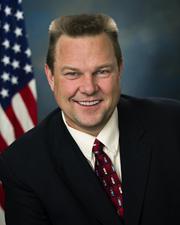 Sen. Jon Tester (D-MT)
Legislative Activity
Stay on top of the latest movement without scrolling through every action
Senate amendment submitted
February 13, 2008
View full timeline
Senate amendment submitted
February 13, 2008
Senate amendment proposed (on the floor): Amendment SA 4020 proposed by Senator Tester to Amendment SA 3899.(consideration: CR S959-960; text: CR S959)
February 13, 2008
Senate amendment agreed to: Amendment SA 4020 agreed to in Senate by Yea-Nay Vote. 95 - 0. Record Vote Number: 23.
February 13, 2008
Roll call votes on amendments in Senate: Amendment SA 4020 agreed to in Senate by Yea-Nay Vote. 95 - 0. Record Vote Number: 23.
February 13, 2008
Amendment SA 4020 proposed by Senator Tester to Amendment SA 3899. (consideration: CR S959-960; text: CR S959) To express the sense of Congress regarding law enforcement and methamphetamine issues in Indian country.
February 13, 2008
Amendment SA 4020 agreed to in Senate by Yea-Nay Vote. 95 - 0. Record Vote Number: 23.
February 13, 2008
Votes
1 roll call on this amendment
Text
Proposed
INDIAN HEALTH CARE IMPROVEMENT ACT AMENDMENTS OF 2007--Resumed

Mr. REID. Madam President, I believe the regular order now is Indian
Health. I would ask the Chair to report if that is in fact the case.
The PRESIDING OFFICER. That is correct.
The clerk will report.
The assistant legislative clerk read as follows:

A bill (S. 1200) to amend the Indian Health Care
Improvement Act to revise and extend that Act.

Pending:

Bingaman-Thune amendment No. 3894 (to amendment No. 3899),
to amend title XVIII of the Social Security Act to provide
for a limitation on the charges for contract health services
provided to Indians by Medicare providers.
Vitter amendment No. 3896 (to amendment No. 3899), to
modify a section relating to limitation on use of funds
appropriated to the Service.
Brownback amendment No. 3893 (to amendment No. 3899), to
acknowledge a long history of official depredations and ill-
conceived policies by the Federal Government regarding Indian
tribes and offer an apology to all Native Peoples on behalf
of the United States.
Dorgan amendment No. 3899, in the nature of a substitute.
Sanders amendment No. 3900 (to amendment No. 3899), to
provide for payments under subsections (a) through (e) of
section 2604 of the Low-Income Home Energy Assistance Act of
1981.

Mr. REID. Madam President, Senator Tester has indicated to me that he
has an amendment to work on. There are a number of people who want to
offer amendments, and I think it would be to our advantage--it is not
as if it is the middle of the night; it is still in the 4s--if there
could be some amendments offered. We are going to work on this all day
tomorrow and hopefully we can finish it Friday. If not, we are going to
stay here until we finish it.
Indian health deserves this. There is no group of people in America
who deserves our attention more than Indians. It is that way with the
22 different organizations in Nevada and all over the country. So I
would hope we can work together.
I think we have had some success during these first few weeks of this
year of Congress. We were at the White House with the President signing
the stimulus bill. It is time to celebrate that. Was it everything we
wanted? No. But it is good work, and we should all be proud of that.
We passed this conference report on intelligence, and the President
will have to make a decision on that in the future, as to what he wants
to do, but it is out of this body.
I hope we could move forward on Indian health. We have been waiting
years to direct the attention to them. The attention is now directed,
and with the result of what has happened here, we can spend some
quality time on this matter. I hope those who wanted to offer
amendments will do so. We can work into the night. I hope we can have
some votes tonight. Senator Dorgan and Senator Murkowski are anxious to
move forward.
Madam President, I suggest the absence of a quorum.
The PRESIDING OFFICER. The clerk will call the roll.
The assistant legislative clerk proceeded to call the roll.
Mr. SANDERS. Madam President, I ask unanimous consent that the order
for the quorum call be rescinded.
The PRESIDING OFFICER. Without objection, it is so ordered.

Amendment No. 3900

Mr. SANDERS. Madam President, I wish to call up amendment No. 3900,
and I ask for its immediate consideration.
The PRESIDING OFFICER. That is a pending amendment.
Mr. SANDERS. Madam President, this tripartisan amendment is being
cosponsored by Senators Clinton, Obama, Snowe, Collins, Leahy, Sununu,
Kennedy, Gordon Smith, Coleman, Kerry, Stabenow, Schumer, Lautenberg,
Lincoln, Klobuchar, Murray, Cantwell, Menendez, and Durbin.
This amendment is simple and straightforward. At a time when home
heating prices are going through the roof--and I think every Member who
goes back to his or her State understands that the cost of home heating
oil is soaring--people understand that in areas around this country,
including the State of Vermont, the weather has been well below zero.
What this amendment would do is provide real relief to millions of
senior citizens on fixed incomes, low-income families with children,
and people with disabilities.
Specifically, this amendment would provide $800 million in emergency
funding for the Low-Income Home Energy Assistance Program--otherwise
known as LIHEAP--a program that has won bipartisan support year after
year here in Congress because people know it works.
Its goal is simply stated: to keep Americans from going cold in the
wintertime. It has done this for years, and we have to appropriate more
money to make sure we do that again this year. Specifically, $400
million of the $800 million would be distributed under the regular
LIHEAP formula, while the other $400 million would be used under the
emergency LIHEAP program.
This amendment has strong support not only from many Members of the
Senate and Members of the House, but it has strong support from the
National Governors Association, the National Conference of State
Legislators, the AARP, the National Energy Assistance Directors
Association, and many other groups.
Let me very briefly quote from a letter I received from the National
Governors Association in support of this amendment.

Additional funding distributed equitably under this
amendment will support critically needed heating and cooling
assistance to millions of our most vulnerable, including the
elderly, disabled and families who often have to choose
between paying their heating or cooling bills and food,
medicine and other essential needs.

According to the National Governors Association, this amendment will
provide much needed energy assistance to at least 1 million American
families--1 million. Others already receiving LIHEAP will receive more
help due to the skyrocketing costs of home heating fuel.
Let me very briefly quote from a letter I recently received from the
AARP. This is what the AARP says:

[[Page S958]]

People should not have to choose between heating and
eating. Older Americans who are more susceptible to
hypothermia and heat stroke know the importance of heating
and cooling their homes. They pay their utility bills and
skimp on other necessities to get by. However, no one in
America should be forced to skip their medications or cut
back on essential nutritional needs in order to keep their
heat on.

That is from the AARP.
I ask unanimous consent to have these letters printed in the Record.
There being no objection, the material was ordered to be printed in
the Record, as follows:

AARP,

Washington, DC, January 24, 2008.
Hon. Bernard Sanders
U.S. Senate,
Washington, DC.
Dear Senator Sanders: AARP applauds you for your continued
efforts to increase funding for the Low Income Energy
Assistance (LIHEAP) program. We thank you for offering an
amendment to increase LIHEAP funding for FY 2008 by $800
million on S. 1200, the Indian Health Care Improvement Act
Amendments of 2007. We are pleased to support your amendment.
People should not have to choose between heating and
eating. Older Americans, who are more susceptible to
hypothermia and heat stroke, know the importance of heating
and cooling their homes; they pay their utility bills and
skimp on other necessities to get by. However, no one in
America should be forced to skip their medications or cut
back on essential nutritional needs in order to keep their
heat on.
LIHEAP helps the poorest of the poor. Nearly three out of
four families receiving LIHEAP assistance have incomes of
less than 100% of the federal poverty level ($16,600 for a
family of three) and almost one in two have incomes less than
75% of the federal poverty level ($12,225 for a family of
three).
LIHEAP is serving more households than ever before, but
still cannot meet the need. Since 2002, an additional 1.5
million households are receiving LIHEAP assistance. At the
same time, requests for LIHEAP assistance in 2006 soared to
the highest level in 12 years.
Additional funding is needed now. High energy prices have
not gone away and the weather has proven very unpredictable--
additional funding is needed now and in the future to protect
some of the most vulnerable populations in America. Should
you have any questions regarding this request, please contact
me or Timothy Gearan of our Federal Affairs staff.
Sincerely,

David P. Sloane,

Senior Managing Director,
Government Relations and Advocacy.
____

National Governors Association,

Washington, DC, January 24, 2008.
Hon. Bernie Sanders,
U.S. Senate,
Washington, DC.
Dear Senator Sanders: On behalf of the nation's governors,
we write to express our support for the Sanders-Snowe
amendment to add $800 million in emergency funding to the
Low-Income Home Energy Assistance Program (LIHEAP) for FY
2008. We commend you and your colleagues for working in
partnership to build bipartisan support for this proposal,
and we believe the compromise of splitting this funding
equitably between the LIHEAP base formula grant under the
``Tier II'' formula and the contingency fund is a step in the
right direction.
Additional funding distributed equitably under this
amendment will support critically needed heating and cooling
assistance to millions of our most vulnerable, including the
elderly, disabled, and families that often have to choose
between paying their heating or cooling bills and food,
medicine and other essential needs. With greater financial
support, states will be better able to increase benefit
levels in correspondence with rising energy costs, and to
reach at least a million other federally-eligible households
who currently do not receive assistance due to funding
limitations.
The National Governors Association applauds the bipartisan
efforts of you and your colleagues in reaching this
compromise, and fully supports adding $800 million to FY 2008
to help LIHEAP respond to the current emergency energy
situation.
Sincerely,
James H. Douglas,
Chair, Health and Human Services Committee.
Jon S. Corzine,
Vice Chair, Health and Human Services Committee.
____

National Conference of

State Legislatures,

Washington, DC, January 23, 2008.
Dear Senator, I am writing on behalf of the National
Conference of State Legislatures (NCSL) to strongly urge you
to support the amendment offered by Senator Sanders and
Senator Snowe that would add an additional $800 million to
the Low Income Home Energy Assistance Program (LIHEAP)
funding for FY 2008. The amendment would divide the
additional funding equally between the formula and emergency
contingency portions of the program.
LIHEAP is a highly efficient federal block grant program
that helps our most vulnerable low-income households pay
their heating bills in the winter and cooling bills in the
summer. LIHEAP prioritizes at-risk households that shelter
America's elderly, disabled, and very young and protects
public health and safety by helping low-income families cover
energy costs. By leveraging private dollars to supplement
federal dollars, LIHEAP has nurtured positive, effective
partnerships between the private sector and both federal and
our state governments.
Millions of low-income families are burdened with the
hardship of paying arrearage from both last winter's heating
bills and summer's cooling bills, in addition to grappling
with impending and actual shut-off situations. At a time of
heightened need and with energy prices expected to continue
to climb, state legislatures do not want our citizens
choosing between paying an energy bill and putting food on
the table, or purchasing necessary medications. For
individuals and households facing these difficult choices,
funding from LIHEAP makes an intrinsic difference in their
ability to address such formidable challenges.
Since LIHEAP's inception, the number of eligible households
has increased by 78 per cent, yet in FY 2006, states were
only able to serve less than a quarter of the 24.4 million
eligible households. An increase in funding for LIHEAP will
help ensure that households in all regions are prepared to
handle both the cold and warm, and in the past few years
unpredictable, weather. NCSL believes that increased LIHEAP
funding should be a top priority to help low-income families,
senior citizens, and disabled individuals maintain economic
stability while addressing ever-increasing energy prices.
We urge you to support the Sanders-Snowe LIHEAP amendment,
and to continue the fight for full funding of LIHEAP.
Sincerely,
Pete Hershberger,
Arizona Representative, Chair, NCSL Committee on Human
Services & Welfare.
____

Southern Governors' Association,

Washington, DC, December 18, 2007.

Statement on Additional FY 2008 Low Income Home Energy Assistance
Program (LIHEAP) Funding

Due to high and rising energy costs, efforts are underway
in Congress to allocate an additional $800 million to the
LIHEAP program for FY 2008. Senator Dole has worked with her
colleagues from cold weather states on a compromise agreement
that would equitably distribute these additional funds by
splitting them equally between the LIHEAP base formula grant
and the contingency fund. The additional $400 million in the
base formula grant would be distributed by the LIHEAP ``tier
II'' formula, which bases funding to states on the actual
energy needs of low-income households, and therefore provides
for equitable distribution to Southern slates.
Recognizing the increasing need for LIHEAP funds and the
interest of the Congress in providing these funds, the
Southern Governors' Association supports this compromise. SGA
supported a similar compromise in FY 2006 when Congress made
an additional $1 billion available for LIHEAP, split equally
between the base formula grant and the contingency fund.
This compromise is an important step towards the long-term
goal of a more equitable distribution of LIHEAP funding among
all states. SGA urges Congress to move immediately to address
equity as a priority as part of LIHEAP reauthorization.

Mr. SANDERS. I commend subcommittee chairman Senator Harkin,
subcommittee ranking member Senator Specter, Appropriations chairman
Senator Byrd, and ranking member Senator Cochran for providing a total
of about $2.6 billion in funding for LIHEAP in the Omnibus
appropriations bill. Their job was a difficult one. There was not
enough money available to do all that needed to be done, but they did
their best for LIHEAP and for our critical needs.
Unfortunately, this $2.6 billion in funding for LIHEAP, while an 18-
percent increase from last year, is still 23 percent below what was
provided for LIHEAP just 2 years ago. That 23 percent reduction is not
even adjusting for inflation. We are talking here about nominal
dollars.
Two years ago, the price of heating oil was less than $2.50 a gallon;
today, it is over $3.30 a gallon. In central Vermont, we have seen
prices as high as $3.73 a gallon this winter for heating oil.
According to the National Energy Assistance Directors Association,
due to insufficient funding, the average LIHEAP grant only pays for 18
percent of the total cost of heating a home with heating oil this
winter, 21 percent of residential propane costs, 41 percent of natural
gas costs, and 43 percent of electricity costs. What this means, in
plain English, is that low-income families with children, senior
citizens on

[[Page S959]]

fixed incomes, and people with disabilities will have to make up the
remaining cost out of their own pockets. The problem is that millions
of those people simply do not have the money to make up the difference.
In addition, only 16 percent of eligible LIHEAP recipients currently
receive assistance with their home heating bills, and 84 percent of
eligible low-income families with children, seniors on fixed incomes,
and people with disabilities do not receive any LIHEAP assistance
whatsoever due to a lack of funding.
In my State of Vermont, it has been reported that outrageously high
home heating costs are pushing families into homelessness. In fact, it
is not uncommon for families with two working parents to receive help
from homeless shelters in the State of Vermont because they cannot find
anyplace else to live in winter.
But this is a national energy emergency certainly well beyond Vermont
and well beyond the Northeast. On January 17, 1 day after the President
released $450 million in emergency LIHEAP funding, the National Energy
Assistance Directors Association testified in front of the Health,
Education, Labor, and Pensions Committee field hearing chaired by
Senator Kennedy. Here is what the national energy directors reported on
just a few of the States:
In Arkansas, the number of families receiving LIHEAP assistance is
expected to be reduced by up to 20 percent from last year unless we get
more funding.
The State of Arizona estimates they will have to cut the number of
families receiving LIHEAP assistance by 10,000 as compared to last
year.
In Delaware, the number of families receiving LIHEAP assistance will
be reduced by up to 20 percent.
In Iowa, regular LIHEAP grants have been cut by 7 percent from last
year.
In Maine, the average LIHEAP grant will only pay for about 2 to 3
weeks of home heating costs in most homes in that State.
The State of Kentucky could run out of LIHEAP funds in the near
future.
In Massachusetts, the spike in energy costs means that the purchasing
cost for LIHEAP has declined by 39 percent since 2006.
The State of Minnesota could run out of LIHEAP funding as well.
On and on it goes. In New York State, in Ohio, in Rhode Island, in
Texas, in Washington, in State after State the simple arithmetic works
out that if the cost of heating fuel is soaring, in order to provide
the same benefits to the same number of people, we need to
significantly increase our funding for LIHEAP, and we are not doing
that. That is what this amendment is about.
There is a lot of discussion on this floor about emergencies. This is
an emergency. There is a lot of discussion on this floor about moral
values. This is a moral issue. In the United States of America, the
wealthiest Nation in the history of the world, millions of senior
citizens and low-income parents with kids should not be forced to worry
about whether their homes will be warm this winter. People should not
have to make the choice between keeping warm or paying for other basic
necessities of life. This is an emergency situation. This is a moral
situation.
I wish to thank all of the cosponsors who have come on board this
legislation. I ask my colleagues to strongly support this amendment.
I ask for the yeas and nays.
The PRESIDING OFFICER. Is there a sufficient second?
There does not appear to be a sufficient second.
Mr. SANDERS. Mr. President, I suggest the absence of a quorum.
The PRESIDING OFFICER (Mr. Pryor) The clerk will call the roll.
The bill clerk proceeded to call the roll.
Mr. TESTER. I ask unanimous consent that the order for the quorum
call be rescinded.
The PRESIDING OFFICER. Without objection, it is so ordered.
Mr. TESTER. Mr. President, I ask unanimous consent that the pending
amendment be set aside.
The PRESIDING OFFICER. Without objection, it is so ordered.

Amendment No. 4020 to Amendment No. 3899

Mr. TESTER. I send amendment No. 4020 to the desk and ask for its
immediate consideration.
The PRESIDING OFFICER. The clerk will report.
The bill clerk read as follows:

The Senator from Montana [Mr. Tester] proposes an amendment
numbered 4020 to amendment No. 3899.

Mr. TESTER. I ask unanimous consent that reading of the amendment be
dispensed with.
The PRESIDING OFFICER. Without objection, it is so ordered.
The amendment is as follows:

(Purpose: To express the sense of Congress regarding law enforcement
and methamphetamine issues in Indian country)

On page 336, between lines 2 and 3, insert the following:

``SEC. 815. SENSE OF CONGRESS REGARDING LAW ENFORCEMENT AND
METHAMPHETAMINE ISSUES IN INDIAN COUNTRY.

``It is the sense of Congress that Congress encourages
State, local, and Indian tribal law enforcement agencies to
enter into memoranda of agreement between and among those
agencies for purposes of streamlining law enforcement
activities and maximizing the use of limited resources--
``(1) to improve law enforcement services provided to Indian
tribal communities; and
``(2) to increase the effectiveness of measures to address
problems relating to methamphetamine use in Indian Country
(as defined in section 1151 of title 18, United States Code).

Mr. TESTER. Mr. President, this amendment is designed to encourage
law enforcement in Indian country--at the local, State, and Federal
level--to work together to combat methamphetamine issues. It encourages
local, State, and Federal police to enter into memorandums of
understanding with tribal law enforcement to pool resources to fight
meth addiction. It does not require it; it just encourages it. All four
law enforcement entities should collaborate to ensure that all can be
done to beat back the meth problems that plague Indian country.
Methamphetamine abuse is an American problem. It infiltrates and
devastates communities across the country. Unfortunately, it is a
problem that disproportionately impacts tribal communities. American
Indians now experience the highest meth usage rates of any ethnic
group.
I will give one example. American Indians use methamphetamines 17
times higher than African Americans. The list goes on and on. They are
the highest meth usage ethnic group. Beyond the high rate of meth use
among American Indians, Alaska natives, and native Hawaiians
nationwide, individual Indian tries have been struggling with the
impact of meth use on their communities. For example, on the Northern
Cheyenne reservation in Montana in 2005, 16 out of 64 babies, or 25
percent, were born to meth-addicted mothers. This number has increased
in 2006. We must do everything possible to address this epidemic and
protect our children from this scourge of modern society.
In hearings before the Indian Affairs Committee, we heard testimony
about Mexican drug cartels targeting rural reservations. They are
targeting these vulnerable areas both for the sale of meth and for
distribution hubs. Drug smugglers target Indian communities for several
reasons: the complex nature of their criminal jurisdiction on Indian
reservations and because tribal police forces have been historically
underfunded and understaffed. This is a big problem. It is a huge
problem in Indian country. We need to encourage Indian tribes, Federal
police, local police to sign memorandums of understanding by each of
these four different entities--Indian government, State government,
local government, and Federal law enforcement agencies. These
memorandums will identify specific law enforcement activity and
establish exactly what each agency is responsible for.
The feedback we hear is that the memorandums that are in place are
working and that the agencies participating in these agreements report
a significant increase in communication and a decrease in traffic. This
amendment simply asks law enforcement and agencies at every level to
work together to beat the meth problem and improve quality of life in
Indian country.
By signing memorandums of understanding, our communities will be
better prepared to tackle this meth problem. At the same time we foster
Indian self-determination and strengthen government-to-government
relationships. The amendment will improve Indian

[[Page S960]]

country and, in effect, every community in this country. I encourage my
colleagues to join me in voting for this amendment.
The PRESIDING OFFICER. The Senator from North Dakota.
Mr. DORGAN. Mr. President, for the information of colleagues, with
the agreement of the minority, I ask unanimous consent that we have the
vote scheduled at 5:25 and that we have consent that there not be other
amendments in order prior to the vote on this amendment.
The PRESIDING OFFICER. Without objection, it is so ordered.
Mr. DORGAN. Mr. President, the issue of methamphetamine on Indian
reservations is a dilemma. It is devastating scourge to Indian
reservations. The Senator from Montana asks for cooperation of law
enforcement jurisdictions to form opportunities to work together. It
makes a lot of sense. It is not a mandate. He is not requiring it. But
he is shining a spotlight on one of the significant health problems on
Indian reservations. If I spent the time to talk to you about the
testimony we received in committee hearings about what methamphetamine
addiction has done, it is almost unbelievable. I won't describe that in
detail here.
I support the sense-of-the-Senate resolution. It makes a great deal
of sense.
My colleague from Alaska will no doubt want to give her thoughts. I
believe the Senator from Montana will ask for the yeas and nays.
The PRESIDING OFFICER. The Senator from Alaska.
Ms. MURKOWSKI. Mr. President, I rise in support of the amendment and
of the Senator from Montana in this effort. We are using a pretty
devastating word here--scourge--but that is what we are talking about
when we talk about methamphetamine use as it has come into this country
and, more particularly, how it has devastated the American Indian and
the Alaska native populations. What more can we be doing? What else can
we do to shine the spotlight, to activate those who need to be
activated in how do we make a difference? Some would suggest a sense of
the Senate that encourages this action entering into a memorandum of
understanding between agencies, they should be doing that anyway. They
should be. They should be doing it. They should be working to
streamline. They should be working to better coordinate. They should be
making that difference. Let's encourage them even further by a
statement such as the Senator from Montana has suggested. We need to do
far more when it comes to meth use and abuse. We need to do far more
when it comes to drug abuse in general. I appreciate the focus and
attention to this particularly deadly scourge, that of methamphetamine.
I will stand with the Senator from Montana and support the amendment.
The PRESIDING OFFICER. The Senator from Montana.
Mr. TESTER. I thank the chairman of the committee as well as the
ranking member for their support. Anything we can do to help limit the
impact of methamphetamine in Indian country and throughout society is a
step in the right direction.
I ask for the yeas and nays.
The PRESIDING OFFICER. Is there a sufficient second?
There is a sufficient second.
The question is on agreeing to amendment No. 4020. The clerk will
call the roll.
The legislative clerk called the roll.
Mr. DURBIN. I announce that the Senator from New York (Mrs. Clinton),
the Senator from Missouri (Mrs. McCaskill), and the Senator from
Illinois (Mr. Obama) are necessarily absent.
Mr. KYL. The following Senators are necessarily absent: the Senator
from South Carolina (Mr. Graham) and the Senator from Texas (Mrs.
Hutchison).
The PRESIDING OFFICER (Ms. Cantwell). Are there any other Senators in
the Chamber desiring to vote?
The result was announced --- yeas 95, nays 0, as follows:

[Rollcall Vote No. 23 Leg.]

YEAS--95

Akaka
Alexander
Allard
Barrasso
Baucus
Bayh
Bennett
Biden
Bingaman
Bond
Boxer
Brown
Brownback
Bunning
Burr
Byrd
Cantwell
Cardin
Carper
Casey
Chambliss
Coburn
Cochran
Coleman
Collins
Conrad
Corker
Cornyn
Craig
Crapo
DeMint
Dodd
Dole
Domenici
Dorgan
Durbin
Ensign
Enzi
Feingold
Feinstein
Grassley
Gregg
Hagel
Harkin
Hatch
Inhofe
Inouye
Isakson
Johnson
Kennedy
Kerry
Klobuchar
Kohl
Kyl
Landrieu
Lautenberg
Leahy
Levin
Lieberman
Lincoln
Lugar
Martinez
McCain
McConnell
Menendez
Mikulski
Murkowski
Murray
Nelson (FL)
Nelson (NE)
Pryor
Reed
Reid
Roberts
Rockefeller
Salazar
Sanders
Schumer
Sessions
Shelby
Smith
Snowe
Specter
Stabenow
Stevens
Sununu
Tester
Thune
Vitter
Voinovich
Warner
Webb
Whitehouse
Wicker
Wyden

NOT VOTING--5

Clinton
Graham
Hutchison
McCaskill
Obama
The amendment (No. 4020) was agreed to.
Mr. TESTER. Madam President, I move to reconsider the vote.
Mrs. MURRAY. Madam President, I move to lay that motion on the table.
The motion to lay on the table was agreed to.
The PRESIDING OFFICER. The Senator from New Hampshire is recognized.

Amendment No. 4022 To Amendment No. 3900

Mr. GREGG. Madam President, I send an amendment to the desk.
Madam President, is the Sanders amendment pending?
The PRESIDING OFFICER. The Senator's amendment is pending. The clerk
will report.
The legislative clerk read as follows:

The Senator from New Hampshire [Mr. Gregg] proposes an
amendment numbered 4022 to amendment No. 3900.

Mr. GREGG. I ask unanimous consent that the reading of the amendment
be dispensed with.
The PRESIDING OFFICER. Without objection, it is so ordered.
The amendment is as follows:

(Purpose: To provide funding for the Low-Income Home Energy Assistance
Program in a fiscally responsible manner)

Strike all after line 1 and insert the following:

TITLE III--MISCELLANEOUS

SEC. 301. LOW-INCOME HOME ENERGY ASSISTANCE PROGRAM.

(a) In General.--There are authorized to be appropriated,
and there are appropriated, out of any money in the Treasury
not otherwise appropriated--
(1) $400,000,000 (to remain available until expended) for
making payments under subsections (a) through (d) of section
2604 of the Low-Income Home Energy Assistance Act of 1981 (42
U.S.C. 8623); and
(2) $400,000,000 (to remain available until expended) for
making payments under section 2604(e) of the Low-Income Home
Energy Assistance Act of 1981 (42 U.S.C. 8623(e)),
notwithstanding the designation requirement of section
2602(e) of that Act (42 U.S.C. 8621(e)).
(b) Rescission.--
(1) In general.--Notwithstanding any other provision of
law, each discretionary amount provided by the Consolidated
Appropriations Act, 2008 (Public Law 110-161; 121 Stat.
1844), excluding the amounts made available for the purposes
described in paragraph (2), is reduced by the pro rata
percentage required to reduce the total amount provided by
that Act by $800,000,000.
(2) Excepted purposes.--The reduction under paragraph (1)
shall not apply to any discretionary amount made available in
the Consolidated Appropriations Act, 2008 (Public Law 110-
161; 121 Stat. 1844), for purposes of--
(A) the Department of Defense; or
(B) the low-income home energy assistance program
established under the Low-Income Home Energy Assistance Act
of 1981 (42 U.S.C. 8621 et seq.).

Mr. GREGG. Madam President, this amendment is simply an attempt to
recognize the need for expanding the LIHEAP program in the face of the
dramatic increase in oil prices, but also recognizing that in extending
the LIHEAP program for today, we shouldn't send the heating bill for
that to our children to pay tomorrow, which is exactly how the Sanders
amendment works. It is essentially borrowing money today. That is
obviously not good policy.
Clearly, if we have extra heating bills in this country today which
should be paid for--and we do--the LIHEAP program does need to be
increased because the cost of heating oil has gone up so significantly.
We should pay for those costs today. So this amendment takes the
Sanders language and pays for it. The Sanders language represents about
an $800,000 increase in the LIHEAP program. This would be about a two-
tenths-of-1-percent cut across the board in nondefense appropriations
in order to pay for that amendment.
It is very simple. It is obviously an attempt to bring some fiscal
discipline

[[Page S961]]

but, more importantly, to reflect the fact that if these heating bills
are going to be paid for--and they should be paid for--we shouldn't
borrow the money to do it. We shouldn't ask our children 10 years, 15
years from now to pay those heating bills, with interest, when the
bills are incurred today.
So that is all it does. I appreciate the courtesy of the Senate in
allowing me to proceed to offer this amendment. I especially appreciate
the courtesy of the Senator from Wyoming.
I ask for the yeas and nays on my amendment.
The PRESIDING OFFICER. Is there a sufficient second?
Mr. GREGG. Madam President, I withdraw my request.
The PRESIDING OFFICER. The Senator from Wyoming is recognized.

Amendment No. 3898 to Amendment No. 3899

Mr. BARRASSO. Madam President, I ask unanimous consent that the
pending amendment be temporarily set aside, and I call up amendment No.
3898.
The PRESIDING OFFICER. Is there objection?
Without objection, it is so ordered.
The clerk will report.
The legislative clerk read as follows:

The Senator from Wyoming [Mr. Barrasso] proposes an
amendment numbered 3898 to amendment No. 3899.

Mr. BARRASSO. I ask unanimous consent that the reading of the
amendment be dispensed with.
The PRESIDING OFFICER. Without objection, it is so ordered.
The amendment is as follows:

(Purpose: To require the Comptroller General to report on the
effectiveness of coordination of health care services provided to
Indians using Federal, State, local, and tribal funds)

The Indian Health Care Improvement Act (as amended by
section 101(a)) is amended--
(1) by redesignating sections 816 and 817 as sections 817
and 818, respectively; and
(2) by inserting after section 815 the following:

``SEC. 816. GAO REPORT ON COORDINATION OF SERVICES.

``(a) Study and Evaluation.--The Comptroller General of the
United States shall conduct a study, and evaluate the
effectiveness, of coordination of health care services
provided to Indians--
``(1) through Medicare, Medicaid, or SCHIP;
``(2) by the Service; or
``(3) using funds provided by--
``(A) State or local governments; or
``(B) Indian Tribes.
``(b) Report.--Not later than 18 months after the date of
enactment of the Indian Health Care Improvement Act
Amendments of 2007, the Comptroller General shall submit to
Congress a report--
``(1) describing the results of the evaluation under
subsection (a); and
``(2) containing recommendations of the Comptroller General
regarding measures to support and increase coordination of
the provision of health care services to Indians as described
in subsection (a).''.

Mr. BARRASSO. Madam President, as a physician I have worked for over
two decades to help people stay healthy and to help keep down the costs
of their medical care. But health issues go way beyond that of a
twisted knee or a painful shoulder.
In my practice I have seen firsthand the obstacles that families face
to obtain medical care. Rural hospitals and rural providers must
overcome significant challenges to deliver high-quality care in an
environment with limited resources.
Our unique circumstances require us to work together to share
resources and to develop networks. I think everyone can agree that
these same principles are critical to support and modernize the Indian
health care delivery system.
The Wind River Reservation, located near Riverton, WY, is the home of
10,415 members of the Eastern Shoshone and Northern Arapaho Tribes. It
is the third largest reservation in the United States, covering more
than 2.2 million acres.
I recently visited with my friends on the Wind River Reservation. The
tribal leaders told me of the hopes they have for their families, their
communities, for Wyoming, and for our great Nation. We spent much of
the time discussing health care.
Individuals living on the Wind River Reservation have worse than
average rates for infant mortality, for suicide, for substance abuse,
for unintentional injuries, for lung cancer, for heart disease, and for
diabetes. They shared with me how difficult it can be for them to
recruit and retain health professionals, to respond effectively to
cultural barriers, and to help individuals make better lifestyle
changes and choices.
We talked about reauthorization of the Indian Health Care Improvement
Act, and that is the bill that is now in front of the Senate. This
legislation is important. It is important to give Native Americans the
quality care they deserve, but it is also important to support critical
health facilities that can help drive economic development and job
creation.
When Congress debates improving the Indian health care system, the
first instinct is to allocate more financial resources or to create new
initiatives. Now, this stems from a strong desire from all of us to
help. Yet this same helping hand can produce overlapping government
programs, and these will be overlapping programs that are all trying to
achieve the same goals.
For example, today, neither the government nor Indian advocacy groups
can explain exactly how funds are used to coordinate medical services.
The Indian Health Service is not like other Federal health care
programs. Congress has only limited access to the research data that is
needed to improve Indian health care. If we do not know where the
resources are being spent, if we do not know the number of programs
dedicated to provide various health care services, and if we do not
know how health care services are coordinated, then how can we be
certain that we are maximizing our ability to help Native Americans and
Alaska Natives?
That is why I have offered amendment No. 3898 today. This amendment
requires the Government Accountability Office--the GAO--to submit a
report to Congress. The report would lay out how these various
government and local programs coordinate health care services in Indian
country.
The GAO study would focus on programs such as Medicare, Medicaid,
children's health insurance programs, and the Indian Health Service. It
also would require the GAO to research how these Federal programs
interact with efforts by State, local, and tribal groups to deliver the
essential health care services that are so vital to these citizens. By
identifying any overlaps in spending, as well as pinpointing the
service gaps, then we can develop reasonable, commonsense solutions
that streamline and improve Indian health care. This way, we can target
Federal funds to programs that are making the greatest impact. Then we
can focus on additional areas where Native Americans and Alaska Natives
need our support and need more support.
The GAO is well known as the investigative arm of Congress, and it is
also known as the congressional watchdog. GAO helps Congress improve
the Federal Government's performance and ensures programs meet strict
accountability standards.
Now, all of that they do for the benefit of the American people. We
rely on their expert recommendations, which are unbiased and are set up
to make sound policy decisions. This oversight shows us ways to make
government more efficient, more effective, ethical, and equitable. It
uncovers what is working and what is not working, and it offers
valuable advice on how to fix it. But, most importantly, this oversight
helps us plan for the future.
Over the years, the GAO has submitted a few reports dealing with
specific Indian health issues. Do any of my colleagues recall the last
time the GAO completed a comprehensive Indian health care report?
I am certainly unaware of any recent efforts in this area. How many
GAO reports have been released regarding Medicare, Medicaid, and the
different health professional programs? I think we all know the answer.
We owe it to Native Americans, to Alaska Natives, and to the American
taxpayers to adopt this amendment.
Madam President, I wish to make sure that people of the Wind River
Reservation in Wyoming, and all Native American people across America,
have equal access to quality, affordable medical care.
The Indian Affairs Committee, of which I am a member, will continue
focusing on this issue long after this Indian Health Care Improvement
Act is reauthorized.

[[Page S962]]

It is essential that our committee have the information it needs to
evaluate the current delivery system--exposing barriers that prevent
collaboration, that prevent networking, that prevent innovation, and
that prevent the sharing of resources.
It is my hope that this GAO report will help all policymakers begin
to understand where the delivery system is working, where it is not,
and offer the recommendations that are so important and so needed to
streamline and to modernize it.
I encourage my colleagues to support the amendment.
With that, I suggest the absence of a quorum.
The PRESIDING OFFICER. The clerk will call the roll.
The legislative clerk proceeded to call the roll.
Mrs. MURRAY. Madam President, I ask unanimous consent that the order
for the quorum call be rescinded.
The PRESIDING OFFICER. Without objection, it is so ordered.

____________________