To clarify that the Foreign Intelligence Surveillance Court has the authority to determine and enforce compliance with any order or rule of, or procedure approved by, such Court.
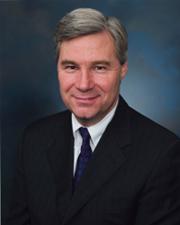 Sen. Sheldon Whitehouse (D-RI)
Legislative Activity
Stay on top of the latest movement without scrolling through every action
Senate amendment agreed to: Amendment SA 3920 as modified agreed to in Senate by Voice Vote.(text as modified: CR S881)
February 12, 2008
View full timeline
Senate amendment agreed to: Amendment SA 3920 as modified agreed to in Senate by Voice Vote.(text as modified: CR S881)
February 12, 2008
Considered by Senate. (consideration: CR S880, S880-881)
February 12, 2008
Amendment SA 3920 as modified agreed to in Senate by Voice Vote. (text as modified: CR S881)
February 12, 2008
Considered by Senate. (consideration: CR S827)
February 11, 2008
Considered by Senate. (consideration: CR S805)
February 8, 2008
Considered by Senate. (consideration: CR S775)
February 7, 2008
Considered by Senate. (consideration: CR S686-687, S688)
February 6, 2008
Considered by Senate.
February 5, 2008
Senate amendment proposed (on the floor): Amendment SA 3920 proposed by Senator Whitehouse to Amendment SA 3911.(consideration: CR S564-568; text: CR S564)
February 4, 2008
Amendment SA 3920 proposed by Senator Whitehouse to Amendment SA 3911. (consideration: CR S564-568; text: CR S564) To clarify that the Foreign Intelligence Surveillance Court has the authority to determine and enforce compliance with any order or rule of, or procedure approved by, such Court.
February 4, 2008
Senate amendment submitted
January 25, 2008
Text
Modified
FISA AMENDMENTS ACT OF 2007

The ACTING PRESIDENT pro tempore. Under the previous order, the
Senate will resume consideration of S. 2248, which the clerk will
report.
The legislative clerk read as follows:

A bill (S. 2248) to amend the Foreign Intelligence
Surveillance Act of 1978, to modernize and streamline the
provisions of that act, and for other purposes.

Pending:

Rockefeller/Bond amendment No. 3911, in the nature of a
substitute.
Whitehouse amendment No. 3920 (to amendment No. 3911), to
provide procedures for compliance reviews.
Feingold amendment No. 3979 (to amendment No. 3911), to
provide safeguards for communications involving persons
inside the United States.
Feingold/Dodd amendment No. 3912 (to amendment No. 3911),
to modify the requirements for certifications made prior to
the initiation of certain acquisitions.
Dodd amendment No. 3907 (to amendment No. 3911), to strike
the provisions providing immunity from civil liability to
electronic communication service providers for certain
assistance provided to the Government.
Bond/Rockefeller modified amendment No. 3938 (to amendment
No. 3911), to include prohibitions on the international
proliferation of weapons of mass destruction in the Foreign
Intelligence Surveillance Act of 1978.
Feinstein amendment No. 3910 (to amendment No. 3911), to
provide a statement of the exclusive means by which
electronic surveillance and interception of certain
communications may be conducted.
Feinstein amendment No. 3919 (to amendment No. 3911), to
provide for the review of certifications by the Foreign
Intelligence Surveillance Court.
Specter/Whitehouse amendment No. 3927 (to amendment No.
3911), to provide for the substitution of the United States
in certain civil actions.

Mr. ROCKEFELLER. I say to the Presiding Officer, it is my
understanding that the first amendment is minimization compliance
review by Senator Whitehouse.
The ACTING PRESIDENT pro tempore. The Senator from Missouri.
Mr. BOND. Mr. President, first of all, we thank all our colleagues
for coming to this point where we can have votes and finally get this
bill out, which we started in December. It is a very important bill. We
have worked together on a bipartisan basis and resolved almost all
issues.
The amendment offered by our colleague from Rhode Island has been
modified in a way that I believe improves it, makes it effective, makes
it work for the intelligence community, and achieves the very important
goals that the Senator from Rhode Island has sought to achieve.
I ask that I be added as a cosponsor to this modified amendment. I
believe, Mr. President, we can accept it by voice vote.
The ACTING PRESIDENT pro tempore. Without objection, it is so
ordered.
The Senator from West Virginia.
Mr. ROCKEFELLER. Mr. President, I simply would also like to be added
as a cosponsor, and I congratulate Senator Whitehouse, Senator Bond,
and others for doing an outstanding piece of work in resolving the
differences on this extremely important enforcement mechanism.

Amendment No. 3920, as Modified

The ACTING PRESIDENT pro tempore. The Senator from Rhode Island.
Mr. WHITEHOUSE. Mr. President, I have at the desk a modification to
amendment No. 3920.

[[Page S881]]

The ACTING PRESIDENT pro tempore. Without objection, it is so
ordered. The amendment is so modified.
The amendment, as modified, is as follows:

On page 69, after line 23, add the following:
(d) Authority of Foreign Intelligence Surveillance Court.--
Section 103 of the Foreign Intelligence Surveillance Act of
1978 (50 U.S.C. 1803), as amended by this Act, is amended by
adding at the end the following:
``(h)(1) Nothing in this Act shall be considered to reduce
or contravene the inherent authority of the Foreign
Intelligence Surveillance Court to determine, or enforce,
compliance with an order or a rule of such Court or with a
procedure approved by such Court.
``(2) In this subsection, the terms `Foreign Intelligence
Surveillance Court' and `Court' mean the court established by
subsection (a).''.

Mr. WHITEHOUSE. Mr. President, much of the FISA battle in which we
have been engaged over the weeks that it has taken to resolve this
issue has been over trying to do two things: one, to fit this program
within the separation of powers principles of the American system of
government and, two, to make the rights of Americans consistent with
what they enjoy stateside in law enforcement investigations.
This amendment is a valuable step in both of those directions, and it
solves the minimization issue that had been in dispute.
I appreciate very much the roles of Chairman Rockefeller, Vice
Chairman Bond, FBI Director Mueller, and DNI counsel Powell in getting
us to a voice vote on this bipartisan amendment.
Mr. President, I ask unanimous consent that amendment No. 3920, as
modified, be adopted by voice vote.
The ACTING PRESIDENT pro tempore. Without objection it is so ordered.
If there is no further debate, the question is on agreeing to amendment
No. 3920, as modified.
The amendment (No. 3920), as modified, was agreed to.
Mr. ROCKEFELLER. I move to reconsider the vote.
Mr. BOND. I move to lay that motion on the table.
The motion to lay on the table was agreed to.

Amendment No. 3910

The ACTING PRESIDENT pro tempore. The question is now on amendment
No. 3910 offered by the Senator from California.
The Senator from California.
Mrs. FEINSTEIN. Mr. President, it is my understanding that there is 2
minutes evenly divided; is that correct?
The ACTING PRESIDENT pro tempore. The Senator is correct.
Mrs. FEINSTEIN. Mr. President, the purpose of this amendment is to
strengthen the legal requirement that FISA is the exclusive authority
for the electronic surveillance of Americans. When FISA was written in
1978, it followed 30 years of warrantless surveillance of
communications and telegrams of hundreds of thousands of Americans
sending messages outside the country. This would stress that FISA is
the legal way for the collection of electronic surveillance against
Americans.
In 2001, the administration decided they would not take the Terrorist
Surveillance Program to the FISA Court, that they would perform this
program outside of FISA, and it took until January of 2007 to bring
this within the confines of FISA where it is to this day.
I think we need to make a strong statement in this bill that FISA is
the exclusive authority for the electronic surveillance of all
Americans, and this amendment aims to do that. It provides penalties
for moving outside of the law, and I believe it would strengthen the
opportunity to prevent the Chief Executive, either now or in the
future, from moving outside of this law.
The ACTING PRESIDENT pro tempore. The Senator from Missouri.
Mr. BOND. Mr. President, the bill before us, S. 2248, already has an
exclusive means provision that simply restates the congressional intent
back in 1978 when FISA was enacted to place the President at his lowest
ebb of authority under the Constitution, which gives him power over
foreign intelligence. Unfortunately, this amendment is a significant
change of the bipartisan provision in the Intelligence Committee bill,
and therefore I would urge my colleagues to oppose it.
During the next attack on our country or in the face of an imminent
threat, Congress may not be in a position to legislate an
authorization. Yet the bottom line is, we just don't know what tomorrow
will bring. This provision would raise unnecessary legal concerns that
might impede the effective action of our intelligence community to
protect this country.
Further, because this amendment does not address warrantless
surveillance in times of war and national emergency following an attack
on our country, it does not provide enough flexibility for intelligence
collectors. I am concerned this will cause operational problems.
Mr. President, I urge the defeat of this amendment.
The ACTING PRESIDENT pro tempore. The question is on agreeing to the
amendment. The yeas and nays have been ordered.
The Senator from West Virginia.
Mr. ROCKEFELLER. Mr. President, I ask unanimous consent to speak on
this amendment.
The ACTING PRESIDENT pro tempore. Without objection, it is so
ordered.
Mr. ROCKEFELLER. Mr. President, I strongly support this amendment. I
think it has very good delineation between how decisions are made. The
FISA Court needs to be a part of this. I urge my colleagues to support
the amendment.
I thank the senior Senator from California for offering this
amendment, and for all of her work on ensuring that we have an
appropriately drafted exclusivity provision. Senator Feinstein's
amendment is critical to both our work on this bill and to our
oversight of the intelligence community.
To understand the importance of the Feinstein amendment, we must look
at both existing statutes and recent events.
There is already an exclusivity provision in the United States Code.
It was enacted as part of the original Foreign Intelligence
Surveillance Act in 1978 and placed, where it exists now, in title 18,
the criminal law title of the United States Code.
That provision makes the Foreign Intelligence Surveillance Act and
certain criminal wiretapping provisions the ``exclusive means by which
electronic surveillance . . . and the interception of domestic wire,
oral and electronic communications may be conducted.'' Although the
intent of Congress is clear from this language, recent history raises
concerns about the adequacy of this provision.
In December of 2005, the American people and most of Congress learned
for the first time that, shortly after the terrorist attacks of
September 11, 2007, the President had authorized the National Security
Agency to conduct certain surveillance activities within the United
States.
In publicly justifying the legality of this program, the White House
asserted that Congress had authorized the President's program by
enacting an authorization for use of military force after September 11.
The authorization passed on September 14, 2001, did not mention
electronic surveillance. Nor did it mention any domestic intelligence
activities. Given the nature of both the authorization and the time in
which it was passed, it is very unlikely that it occurred to anyone in
Congress that the President might use this authorization to justify his
position that the existing statute making FISA the exclusive means for
conducting electronic surveillance no longer applied.
I have expressed my dismay in the past about the legal arguments that
the President used to justify the surveillance program. We are still
working through the many problems caused by the President's decision to
go forward without input from Congress or the courts.
But no matter what the President should have done at the time,
Congress now has an obligation to act to prevent this misuse of
legislation. Having finally made the right decision in early 2007 to
bring his entire program under the FISA Court, the President is no
longer using the 2001 Authorization for the Use of military force as a
justification to disregard FISA. But we must ensure that neither this
President nor a future one resurrects the discredited argument that the
2001 authorization for the use of military force is a blank check for
such lawlessness.

[[Page S882]]

Section 102 of the Intelligence Committee bill prevents that abuse.
Section 102 enacts an exclusivity provision as a new section 112 of
FISA, and lists all statutes now in effect that constitute authority
for electronic surveillance. This list is a clear statement of
congressional intent: Congress did not intend any other presently-
existing statutes to constitute an exception to FISA.
Conspicuously absent from the exclusive list is the 2001
authorization for the use of military force. The omission of the 2001
authorization from the complete list that will now be enacted in 2008
is a conclusive statement that the 2001 authorization may never again
be used to circumvent FISA.
Senator Feinstein's amendment takes exclusivity one important step
further. It is designed to ensure that no future President interprets a
statute that does not explicitly mention electronic surveillance as an
exception to the FISA exclusivity requirement. This would be an
absolutely incorrect interpretation of existing law. Senator
Feinstein's amendment ensures that no President will again make this
mistake.
Senator Feinstein's amendment addresses the possible impact of future
statutes by adding language to the exclusivity section that states that
only an express statutory authorization for electronic surveillance
will constitute an additional exclusive means for electronic
surveillance.
By requiring ``express statutory authorization,'' Congress
anticipates that a statute will only constitute an exception to FISA if
it explicitly discusses electronic surveillance. Only those statutes
listed in the FISA exclusivity section of the Intelligence Committee
bill currently meet that standard.
The amendment therefore ensures that general statutes enacted in the
future do not become the basis for exceptions to the FISA exclusivity
provision. It also applies criminal and civil penalties for any
electronic surveillance done outside of the list of authorized
statutes.
The Feinstein amendment being offered today also resolves the
operational concerns raised by the Director of National Intelligence
about the exclusivity provision in the Judiciary Committee's amendment
to the bill. Senator Feinstein's amendment does not include the
undefined term ``communications information'' and therefore does not
bar the acquisition of information that is currently authorized under
other statutes.
Existing statutes as well as the current bill provide the
intelligence community with mechanisms to obtain the intelligence the
country needs in a legal manner, with the oversight of the courts.
There is no need for this President, or any future President, to set
aside the lawful, well-overseen procedures of FISA in favor of a secret
intelligence program.
Both the Intelligence and Judiciary Committees have done a
significant amount of work, on a bipartisan basis, to draft a bill that
allows the collection of needed intelligence while still protecting the
civil liberties of U.S. persons. Senator Feinstein's amendment helps to
make sure that this work will not simply be ignored by this President
or any future President.
Mr. BOND. Mr. President, I would note that the Intelligence Committee
debated this and accepted a return to the original FISA exclusive means
provision, which I think we should maintain, and I urge opposition.
S. 2248 already has an exclusive means provision that is identical to
the first part of this amendment. That provision simply restates
Congress's intent back in 1978 when FISA was enacted to place the
President at his lowest ebb of authority in conducting warrantless
foreign intelligence surveillance.
The current exclusive mean provision in S. 2248 was acceptable to all
sides because it maintains the status quo with respect to the dispute
over the President's constitutional authority to authorize warrantless
surveillance.
Unfortunately, this amendment is a significant expansion of the
bipartisan provision in the Intelligence Committee's bill.
It goes further by stating that only an express statutory
authorization for electronic surveillance, other than FISA or the
criminal wiretap statutes, shall constitute additional exclusive means.
This attempts to prohibit the President's exercise of his judicially
recognized artic1e II authority to issue warrantless electronic
surveillance directives.
It also would require that future authorizations for the use of
military force, AUMFs, expressly state that they authorize the use of
additional electronic surveillance.
I am concerned that this amendment would tie the President's hands
following a national emergency or imminent threat of attack on our
country--and prevent actions or intelligence collection that may be
necessary for our safety and survival.
While FISA currently has provisions that allow the President to
conduct electronic surveillance, physical searches, or install pen
register/trap and trace devices for 15 days following a declaration of
war, these authorities are simply insufficient against the current
terrorist threats our country faces.
Let's think this through for a minute. During the next attack on our
country, or in the face of an imminent threat, the Congress may not be
in a position to legislate an express authorization of additional
means. We may not be in a position to formally declare war against an
unknown enemy.
What if there is intelligence information about an imminent threat of
attack, but Congress is in a lengthy recess, over a holiday? What if
there are simultaneous terrorist attacks across the country, impeding
air travel so that Members cannot return to Washington, DC?
The bottom line is, we just don't know what tomorrow will bring. Yet
this provision would raise unnecessary legal concerns that might impede
effective action by the executive branch to protect this country.
I have the utmost respect for Senator Feinstein. She has played a key
role in this FISA modernization process.
While our views on the President's constitutional authority may
differ, she did convince me that a bipartisan FISA bill should restate
the exclusive means concept in the originally enacted FISA statute.
And over the past several weeks, Senator Feinstein and I tried to
come up with a further compromise, one that would expand this simple
restatement but would also allow the President to act in the event of a
national emergency, or following an AUMF or declaration of war.
Unfortunately, we could not reach an agreement. I believe that if we
are going to declare that the President should follow the current FISA
framework, then we need to make sure that that framework is flexible
enough to address the grave threats of terrorism that threaten our
country--and that means giving the President the ability to conduct
warrantless electronic surveillance, physical searches, or installing
pen register/trap and trace devices, for a reasonable period of time.
This amendment does not provide this flexibility.
I have other concerns with this amendment. It would make members of
the intelligence community who conduct electronic surveillance at the
direction of the President subject to the FISA criminal penalty
provisions of a $10,000 fine and imprisonment for not more than 5
years. Also, it is likely these criminal penalties would apply to any
service provider who assisted the government in conducting such
electronic surveillance.
I don't care what the skeptics and critics have said about the
President's Terrorist Surveillance Program; the Constitution trumps the
FISA statute.
If a government employee--or a provider--acts under the color of the
President's lawful exercise of his constitutional authority, that
employee should not be subject to criminal penalty.
In my opinion, the current restatement of exclusive means is fair and
keeps the playing field level.
Ultimately, the Supreme Court will decide whether Congress has the
authority to limit the President's authority to intercept enemy
communications.
Until then, it is my hope that we don't try to tilt the balance in a
way that we may someday come to regret.
I urge my colleagues to vote against this exclusive means amendment.
The ACTING PRESIDENT pro tempore. The question is on agreeing to

[[Page S883]]

amendment No. 3910. The clerk will call the roll.
The bill clerk called the roll.
Mr. DURBIN. I announce that the Senator from New York (Mrs. Clinton)
is necessarily absent.
Mr. KYL. The following Senator is necessarily absent: the Senator
from South Carolina (Mr. Graham).
Further, if present and voting, the Senator from South Carolina (Mr.
Graham) would have voted ``nay.''
The ACTING PRESIDENT pro tempore. Are there any other Senators in the
Chamber desiring to vote?
The result was announced--yeas 57, nays 41, as follows:

[Rollcall Vote No. 13 Leg.]

YEAS--57

Akaka
Baucus
Bayh
Biden
Bingaman
Boxer
Brown
Byrd
Cantwell
Cardin
Carper
Casey
Collins
Conrad
Craig
Dodd
Dorgan
Durbin
Feingold
Feinstein
Hagel
Harkin
Inouye
Johnson
Kennedy
Kerry
Klobuchar
Kohl
Landrieu
Lautenberg
Leahy
Levin
Lincoln
McCaskill
Menendez
Mikulski
Murkowski
Murray
Nelson (FL)
Obama
Pryor
Reed
Reid
Rockefeller
Salazar
Sanders
Schumer
Smith
Snowe
Specter
Stabenow
Sununu
Tester
Voinovich
Webb
Whitehouse
Wyden

NAYS--41

Alexander
Allard
Barrasso
Bennett
Bond
Brownback
Bunning
Burr
Chambliss
Coburn
Cochran
Coleman
Corker
Cornyn
Crapo
DeMint
Dole
Domenici
Ensign
Enzi
Grassley
Gregg
Hatch
Hutchison
Inhofe
Isakson
Kyl
Lieberman
Lugar
Martinez
McCain
McConnell
Nelson (NE)
Roberts
Sessions
Shelby
Stevens
Thune
Vitter
Warner
Wicker

NOT VOTING--2

Clinton
Graham
The ACTING PRESIDENT pro tempore. Under the previous order requiring
60 votes for the adoption of this amendment, the amendment is
withdrawn.

Amendment No. 3979

There will now be 2 minutes of debate equally divided on amendment
No. 3979 offered by the Senator from Wisconsin, Mr. Feingold.
Mr. FEINGOLD. Mr. President, the Feingold-Webb-Tester amendment lets
the Government get the information it needs about terrorists and about
purely foreign communications, while providing additional checks and
balances for communications between people in the United States and
their overseas family members, friends, and business colleagues.
It has the support of nine cosponsors. All this amendment does is
require the Government to take extra steps to protect the privacy of
Americans on U.S. soil when it knows it has collected their
communications.
This amendment in no way hampers our fight against al-Qaida and its
affiliates. This is not about whether we will be effective in
combatting terrorism. This is about whether Americans at home deserve
more privacy protections than foreigners overseas.
This is about separation of power, whether anyone outside the
executive branch will oversee what the Government is doing with all the
communications of Americans it collects inside the United States. I
urge my colleagues to support the amendment.
The ACTING PRESIDENT pro tempore. The Senator from Missouri.
Mr. BOND. Mr. President, the purpose of this bill is to make sure we
are able to get information when we target a foreign terrorist
overseas.
This applies a different standard to someone in the United States who
may be picked up on one of those calls than we apply within our own
country. If the FBI gets a warrant to listen in on a drug dealer and
that drug dealer has lots of conversations, if the drug dealer is
talking about a criminal operation, then the FBI acts on it. If it is
innocent, the FBI, the interceptors minimize or suppress that evidence,
they do not sequester it, they do not have to go through the hoops that
are required for a recipient of a telephone call from a foreign
terrorist overseas.
There is no reason why, when we have no challenges and no question
that minimization is adequate to protect innocent Americans, that they
need a higher level of protection when they are talking to a foreign
terrorist than when they are talking to a U.S. drug dealer.
I urge the defeat of this amendment.
Mr. ROCKEFELLER. Mr. President, I ask unanimous consent for 5
minutes.
The ACTING PRESIDENT pro tempore. Without objection, it is so
ordered.
Mr. ROCKEFELLER. Mr. President, I strongly oppose this amendment.
This amendment would prohibit the Government from acquiring any
communication under title VII of the bill if the Government knows
before or at the time of acquisition that the communication is to or
from a person reasonably believed to be located in the United States,
unless the Government follows the sequestration procedures set forth in
the legislation.
I see a number of problems with this amendment and I strongly oppose
it.
I am afraid that the practical effect of this amendment would be to
restrict the scope of the collection authority under the bill to
international terrorism. Under the terms of this amendment, no other
important foreign policy or national security target could be pursued
unless the Government goes through a process that appears to be
basically unworkable.
Neither the Intelligence Committee nor the Judiciary Committee
limited the scope of the authority in this bill to international
terrorism. Both committees anticipated that the flexibility provided by
this bill could be used against the gamut of foreign targets overseas
with respect to proliferation, weapons development, the clandestine
intelligence activities of our enemies, and other priorities. The full
Senate should not limit the scope of this bill to one area of foreign
intelligence.
A second problem with this amendment is the new, cumbersome
procedures it would impose involving the sequestration of information
if the communication is to or from a person in the United States. The
amendment seems to require that the Attorney General must make an
application to the FISA Court to have access to this information for
more than 7 days, even if the communication, for instance, concerns
international terrorist activities directed against the United States.
While I share the Senator's goal of protecting the privacy interests
of Americans, I am afraid this amendment is unworkable.
It bears repeating that what we are trying to do in S. 2248 is
modernize the Foreign Intelligence Surveillance Act so that FISA Court
orders are not required when the Government is targeting non-U.S.
persons overseas to collect foreign intelligence information. And we
are trying to do this in a way that protects the privacy interests of
U.S. persons.
We thus have included in S. 2248 numerous protections for U.S.
persons--both when they are the specific targets of Government
surveillance and when their communications are intercepted as the
incidental result of the Government acquiring the communications of a
foreign target.
The Feingold sequestration amendment does not achieve the appropriate
balance of privacy and national security. It appears to me that
requirements already in S. 2248, including the requirement that
minimization procedures for this collection activity be approved by the
FISA Court, represent a much better approach for balancing the national
security and the privacy interests of U.S. persons.
I urge the amendment be defeated.
The ACTING PRESIDENT pro tempore. The question is on agreeing to the
amendment.
Mr. FEINGOLD. Mr. President, I ask for the yeas and nays.
The ACTING PRESIDENT pro tempore. Is there a sufficient second?
There appears to be a sufficient second. The clerk will call the
roll.
The legislative clerk called the roll.
Mr. DURBIN. I announce that the Senator from New York (Mrs. Clinton)
is necessarily absent.
Mr. KYL. The following Senator is necessarily absent: the Senator
from South Carolina (Mr. Graham).
Further, if present and voting, the Senator from South Carolina (Mr.
Graham) would have voted ``nay.''
The ACTING PRESIDENT pro tempore. Are there any other Senators in the
Chamber desiring to vote?
The result was announced--yeas 35, nays 63, as follows:

[[Page S884]]

[Rollcall Vote No. 14 Leg.]

YEAS--35

Akaka
Baucus
Biden
Bingaman
Boxer
Brown
Byrd
Cantwell
Cardin
Casey
Dodd
Dorgan
Durbin
Feingold
Harkin
Kennedy
Kerry
Klobuchar
Kohl
Lautenberg
Leahy
McCaskill
Menendez
Murray
Obama
Reed
Reid
Salazar
Sanders
Schumer
Stabenow
Tester
Webb
Whitehouse
Wyden

NAYS--63

Alexander
Allard
Barrasso
Bayh
Bennett
Bond
Brownback
Bunning
Burr
Carper
Chambliss
Coburn
Cochran
Coleman
Collins
Conrad
Corker
Cornyn
Craig
Crapo
DeMint
Dole
Domenici
Ensign
Enzi
Feinstein
Grassley
Gregg
Hagel
Hatch
Hutchison
Inhofe
Inouye
Isakson
Johnson
Kyl
Landrieu
Levin
Lieberman
Lincoln
Lugar
Martinez
McCain
McConnell
Mikulski
Murkowski
Nelson (FL)
Nelson (NE)
Pryor
Roberts
Rockefeller
Sessions
Shelby
Smith
Snowe
Specter
Stevens
Sununu
Thune
Vitter
Voinovich
Warner
Wicker

NOT VOTING--2

Clinton
Graham

The amendment (No. 3979) was rejected.
Mr. BOND. I move to reconsider the vote.
Mr. LEAHY. I move to lay that motion on the table.
The motion to lay on the table was agreed to.

Amendment No. 3907

The ACTING PRESIDENT pro tempore. The question is on agreeing to
amendment No. 3907 offered by the Senator from Connecticut, Mr. Dodd.
There are 2 minutes of debate time equally divided, and the time on the
remaining amendments will be strictly enforced.
The Senator from Connecticut.
Mr. DODD. Mr. President, let me, first of all, thank my colleague
from Wisconsin, Senator Feingold, for his cosponsorship of this
amendment, along with a number of other Members of this body who have
joined us in this effort.
I thank the chairman and ranking member. My colleagues should know,
initially the administration sought to grant immunity to all
participants in this telecommunications surveillance program. The
chairman and ranking member disagreed with that. However, they have
provided retroactive immunity to some 16 phone companies. One of the
phone companies refused, of course, to comply with this 5-year
surveillance program that was granted without a warrant, without a
court order.
I believe it is dangerous in setting a precedent for us today to
grant that retroactive immunity without insisting the courts--as they
are designed to do--should determine the legality or illegality of this
program.
There are four committees of the U.S. Congress that have considered
this issue. Three of the committees have rejected retroactive immunity.
Only the Intelligence Committee of this body has decided to include it.
I believe we ought to strike that provision and allow the court to do
its job. That is what this amendment does, and I urge its adoption.
The ACTING PRESIDENT pro tempore. Who yields time?
The Senator from Missouri.
Mr. BOND. Mr. President, this carrier liability provision is an
essential part of this bill. If we permit lawsuits to go ahead against
carriers alleged to have participated in the program, there will be
more disclosures in discoveries and pleadings of the means of
collecting information, disclosing our most vital methods of collecting
information.
Secondly, if we permit the carriers that may or may not have
participated to be sued in court, then the most important partners the
Government has--the private sector--will be discouraged from assisting
us in the future.
The Intelligence Committee--the one committee that has looked at
this--reviewed it and said these companies acted in good faith and,
therefore, we should give them retroactive immunity.
I yield the remainder of my time to the distinguished chairman.
The ACTING PRESIDENT pro tempore. The Senator from West Virginia.
Mr. ROCKEFELLER. Mr. President, I strongly oppose this amendment. It
is, of course, the whole shooting match. Substitution was brought up in
the Judiciary Committee, and it was defeated. This, I believe, is the
right way to go for the security of the Nation.
Mr. President, Senators Dodd and Feingold have offered an amendment
to strike title II of the Intelligence Committee bill.
Title II addresses, in the narrowest way possible, a number of
different underlying issues related to the past and future cooperation
of providers. Any suggestion that it deals only with liability
protection for providers related to the President's program fails to
consider the title of the bill as a whole.
Unlike the Government's initial immunity proposals, title II does not
try to address all of the different kinds of problems in one sweeping
immunity provision that might provide immunity in situations where it
is not deserved. Instead, it addresses each problem individually.
Let's look at the first problem. Under existing law, providers are
entitled to protection from suit if they act pursuant to a FISA court
order or if they receive a particular certification from the Attorney
General. Senators Dodd and Feingold point to this existing immunity
provision-- which may be based solely on the certification of the
Attorney General--to suggest that no further immunity is needed. But
this suggestion ignores the situation in the current lawsuits.
The Government has not allowed the providers who have been sued to
publicly disclose whether or not they assisted the Government.
Providers, therefore, cannot reveal whether they are already entitled
to immunity, or even whether they declined to cooperate with the
intelligence community.
In other words, even those providers who were not involved in the
President's program or who acted only pursuant to a valid court order
cannot extricate themselves from these lawsuits.
Section 203 of the Intelligence Committee bill, therefore, creates a
mechanism within FISA that allows courts to review whether providers
should be entitled to immunity under existing law, without revealing
whether or not the provider assisted the intelligence community. The
Dodd-Feingold amendment to strike title II strikes this provision,
which protects those providers who indisputably complied with existing
law.
There is a second problem that has not been widely discussed.
Providers are currently subject to investigations by State public
utilities commissions, which seek information about the relationship
between the providers and Federal Government.
These State investigations essentially seek to force disclosure of
classified information about the nature and extent of the information
obtained by the intelligence community from communication providers.
This inquiry into the conduct of the Federal Government is not an
appropriate area for State regulation.
Section 204 of the Intelligence Committee bill, therefore, creates a
new section of FISA that preempts State investigations that seek to
force disclosure of classified information about the conduct of the
Federal intelligence relationship between the provider and the
intelligence community.
Finally, section 202 provides retrospective immunity for the
participation of telecommunication companies in the President's
warrantless surveillance program. We need to be very clear on the
parameters of this section. It does not simply clean the slate for the
actions of communications providers in the aftermath of 9/11.
In order for a provider to obtain liability protection, the Attorney
General must certify that a company's actions were based on written
assurances of legality, and were related to a communications
intelligence activity authorized in the relevant time period.
Because these certifications require the Attorney General to have
determined that legal requirements have been met and that the program
was designed to detect or prevent a terrorist attack, an area where
assistance would clearly be required, they parallel existing statutory
requirements for immunity. Before immunity can be granted, the bill
also requires the court to conduct a case-by-case review to ensure that
the Attorney General did not abuse his discretion.

[[Page S885]]

It is important to understand why the Intelligence Committee
included this provision in our bill. After hearing from witnesses and
reviewing documents, the committee concluded that the providers who
assisted the Government acted in good faith, with a desire to help the
country prevent another terrorist attack like those committed on
September 11, 2001.
Even more importantly, however, the committee recognized that,
because of the ongoing lawsuits, providers have become increasingly
reluctant to assist the Government in the future. Given the degree to
which our law enforcement agencies and intelligence community need the
cooperation of the private sector to obtain intelligence, this was
simply an unacceptable outcome.
Senators Dodd and Feingold have suggested that including the
provision on liability protection as part of the bill is a sign of
support for the President's program. It is not. It is simply a
mechanism to ensure that accountability for the President's program
lies with those who are truly responsible for it: The Government
officials who represented to these companies that their actions were in
accordance with the law. And it is a way to ensure that the
intelligence community obtains the assistance it needs from the private
sector to keep us safe.
The question of whether the President's warrantless surveillance
program was legal, or whether it violated constitutional rights, can
and must be answered. Likewise, if administration officials improperly
violated the privacy of innocent U.S. persons by conducting this
warrantless surveillance, they should be held accountable.
But suing private companies who may have cooperated with the
Government is neither an appropriate accountability mechanism nor the
best way to obtain answers to questions about the legality of the
program, nor is it the appropriate way to encourage public disclosure
of information about the program.
The Intelligence Committee's bill does not prevent Congress from
conducting its own oversight of these issues, or even from creating
alternative mechanisms to seek those answers. It also allows suits
against the Government to go forward.
I encourage my colleagues to come up with appropriate alternatives
for review of the President's program; alternatives that will ensure
both that the story of the President's program is made available to the
public in a manner consistent with the protection of national security
information and that Government officials are held accountable for any
wrongdoing in which they may have been involved.
What we must not do, however, is to make companies that cooperated
with the Government in good faith bear the brunt of our anger towards
the President and other Government officials about the warrantless
surveillance program; our intelligence community's future relationship
with the private sector is simply too important.
Protection from liability is simply a way to ensure that the next
President has the cooperation of these companies both to obtain
intelligence to protect the country and to protect the privacy
interests of U.S. persons.
I, therefore, urge you to oppose the Dodd-Feingold amendment.
The ACTING PRESIDENT pro tempore. The question is on agreeing to the
amendment.
Mr. DODD. Mr. President, I ask for the yeas and nays.
The ACTING PRESIDENT pro tempore. Is there a sufficient second? There
is a sufficient second.
The clerk will call the roll.
The bill clerk called the roll.
Mr. DURBIN. I announce that the Senator from New York (Mrs. Clinton)
is necessarily absent.
Mr. KYL. The following Senator is necessarily absent: the Senator
from South Carolina (Mr. Graham).
Further, if present and voting, the Senator from South Carolina (Mr.
Graham) would have voted ``nay.''
The ACTING PRESIDENT pro tempore. Are there any other Senators in the
Chamber desiring to vote?
The result was announced--yeas 31, nays 67, as follows:

[Rollcall Vote No. 15 Leg.]

YEAS--31

Akaka
Baucus
Biden
Bingaman
Boxer
Brown
Byrd
Cantwell
Cardin
Casey
Dodd
Dorgan
Durbin
Feingold
Harkin
Kennedy
Kerry
Klobuchar
Lautenberg
Leahy
Levin
Menendez
Murray
Obama
Reed
Reid
Sanders
Schumer
Tester
Whitehouse
Wyden

NAYS--67

Alexander
Allard
Barrasso
Bayh
Bennett
Bond
Brownback
Bunning
Burr
Carper
Chambliss
Coburn
Cochran
Coleman
Collins
Conrad
Corker
Cornyn
Craig
Crapo
DeMint
Dole
Domenici
Ensign
Enzi
Feinstein
Grassley
Gregg
Hagel
Hatch
Hutchison
Inhofe
Inouye
Isakson
Johnson
Kohl
Kyl
Landrieu
Lieberman
Lincoln
Lugar
Martinez
McCain
McCaskill
McConnell
Mikulski
Murkowski
Nelson (FL)
Nelson (NE)
Pryor
Roberts
Rockefeller
Salazar
Sessions
Shelby
Smith
Snowe
Specter
Stabenow
Stevens
Sununu
Thune
Vitter
Voinovich
Warner
Webb
Wicker

NOT VOTING--2

Clinton
Graham

The amendment (No. 3907) was rejected.
Mr. ROCKEFELLER. Mr. President, I move to reconsider the vote, and I
move to lay that motion on the table.
The motion to table was agreed to.

Amendment No. 3912

The ACTING PRESIDENT pro tempore. The question is on agreeing to
amendment No. 3912, offered by Mr. Feingold of Wisconsin. There are 2
minutes of debate evenly divided.
The Senator from Wisconsin is recognized.
Mr. FEINGOLD. Mr. President, this amendment was approved by the
Senate Judiciary Committee. It ensures that in implementing the new
authorities provided in the bill, the Government is acquiring the
communications of targets from whom it seeks to obtain foreign
intelligence information and that it is not indiscriminately collecting
all communications between the United States and overseas.
This amendment is necessary because of the vast and overbroad
authorities provided by the PAA in this bill. In public testimony, the
DNI stated that the PAA could authorize this type of bulk collection
and could cover every communication between Americans inside the United
States, in Europe, in South America, or the entire world. He also said
that the Government is not actually engaging in this type of broad bulk
collection but that it would be ``desirable.''
This amendment would not impede in any way collection in support of
military operations, as the opponents continue to falsely assert. This
extremely modest amendment would, however, oppose a massive bulk
collection dragnet, which Chairman Rockefeller has even acknowledged
would violate the Constitution.
I urge support for the amendment.
Mr. ROCKEFELLER. Mr. President, I oppose this amendment.
The Senator from Wisconsin is offering an amendment that he argues
will prevent what he calls ``bulk collection.'' The amendment is
intended, as described by the Senator from Wisconsin, to ensure that
this bill is not used by the Government to collect the contents of all
the international communications between the United States and the rest
of the world. The Senator argues that his amendment will prevent ``bulk
collection'' by requiring the Government to have some foreign
intelligence interest in the overseas party to the communications it is
collecting.
I regret to say that I must oppose this amendment. I do not believe
it is necessary. I do believe as drafted the amendment will interfere
with legitimate intelligence operations that protect the national
security and the lives of Americans.
In considering amendments today, we need to consider whether an
amendment would provide additional protections for U.S. persons and
whether it would needlessly inhibit vital foreign intelligence
collection. I do not believe the amendment as drafted provides
additional protections. Furthermore, intelligence professionals have
expressed their concern that this amendment would interfere with vital
intelligence operations and there are important classified reasons
underlying that concern.

[[Page S886]]

Let us review the reasons why the amendment is unnecessary: first,
bulk collection resulting in a dragnet of all of the international
communications of U.S. persons would probably be unreasonable of the
fourth amendment. No bill passed by the Senate may authorize what the
fourth amendment prohibits. What is more, the committee bill, in fact,
explicitly provides that acquisitions authorized under the bill are to
be conducted in a manner consistent with the fourth amendment.
Second, the committee bill stipulates that acquisitions under this
authority cannot intentionally target any person known to be located in
the United States. And, to target a U.S. person outside the United
States, the government must get approval from the FISA Court.
Third, the committee bill increases the role of the FISA Court in
supervising the acquisition activities of the Government. The bill
requires Court approval of minimization procedures that protect U.S.
person information. It maintains the prior requirement of Court
approval of targeting procedures.
In the unlikely event that the FISA Court would give its approval to
targeting procedures and minimization procedures that allowed the
Government to engage in unconstitutional bulk collection, the committee
bill also strengthens oversight mechanisms in the executive and
legislative branches. These mechanisms are intended to ensure such
activity is detected and prevented.
The sponsor of the amendment says that his amendment only requires
the Government to certify to the FISA Court that it is collecting
communications of targets for whom there is a foreign intelligence
interest.
But the committee bill already requires the Attorney General and the
Director of National Intelligence to certify to the FISA Court that the
acquisition authorized under the bill is targeted at persons outside
the United States in order to obtain foreign intelligence information.
Because the remedy does not improve upon the protections in the bill
for Americans, and places new burdens on the surveillance of foreign
targets overseas, I thus oppose the amendment and urge it be rejected.
The ACTING PRESIDENT pro tempore. The Senator from Missouri is
recognized.
Mr. BOND. Mr. President, there is a clear delineation in this bill.
We permit targeting of foreign terrorists overseas, or Americans, with
a court order. This doesn't permit listening in on bulk collections of
communications involving innocent Americans. The only American who is
going to be listened in on is one calling to or receiving a call from a
terrorist.
I urge defeat of this amendment.
The ACTING PRESIDENT pro tempore. The question is on agreeing to
amendment No. 3912.
Mr. FEINGOLD. Mr. President, I ask for the yeas and nays.
The ACTING PRESIDENT pro tempore. Is there a sufficient second? There
is a sufficient second.
The clerk will call the roll.
The legislative clerk called the roll.
Mr. DURBIN, I announce that the Senator from New York (Mrs. Clinton)
is necessarily absent.
Mr. KYL. The following Senators are necessarily absent: the Senator
from South Carolina (Mr. Graham) and the Senator from Idaho (Mr.
Craig).
Further, if present and voting, the Senator from South Carolina (Mr.
Graham) would have voted ``nay.''
The PRESIDING OFFICER (Mr. Casey). Are there any other Senators in
the Chamber desiring to vote?
The result was announced--yeas 37, nays 60, as follows:

[Rollcall Vote No. 16 Leg.]

YEAS--37

Akaka
Baucus
Biden
Bingaman
Boxer
Brown
Byrd
Cantwell
Cardin
Casey
Conrad
Dodd
Dorgan
Durbin
Feingold
Feinstein
Harkin
Kennedy
Kerry
Klobuchar
Kohl
Lautenberg
Leahy
Levin
McCaskill
Menendez
Murray
Obama
Reed
Reid
Salazar
Sanders
Schumer
Stabenow
Tester
Whitehouse
Wyden

NAYS--60

Alexander
Allard
Barrasso
Bayh
Bennett
Bond
Brownback
Bunning
Burr
Carper
Chambliss
Coburn
Cochran
Coleman
Collins
Corker
Cornyn
Crapo
DeMint
Dole
Domenici
Ensign
Enzi
Grassley
Gregg
Hagel
Hatch
Hutchison
Inhofe
Inouye
Isakson
Johnson
Kyl
Landrieu
Lieberman
Lincoln
Lugar
Martinez
McCain
McConnell
Mikulski
Murkowski
Nelson (FL)
Nelson (NE)
Pryor
Roberts
Rockefeller
Sessions
Shelby
Smith
Snowe
Specter
Stevens
Sununu
Thune
Vitter
Voinovich
Warner
Webb
Wicker

NOT VOTING--3

Clinton
Craig
Graham
The amendment (No. 3912) was rejected.
Mr. BOND. I move to reconsider the vote.
Mr. ROCKEFELLER. I move to lay that motion on the table.
The motion to lay on the table was agreed to.

Amendment No. 3938

The PRESIDING OFFICER. The question is on agreeing to amendment No.
3938 offered by the Senator from Missouri.
Mr. BOND. Mr. President, with the distinguished chairman of the
committee, we offer this amendment responding to a request made by the
Director of National Intelligence when he sent up his recommendations
to us last April. He and the Attorney General strongly support this
amendment because it adds proliferators of weapons of mass destruction
to the definition in FISA of agent of a foreign power, foreign
intelligence information, use of information, and physical searches.
This amendment applies only to non-U.S. persons.
Making these definitional changes will allow the Government to target
for surveillance those who seek to spread this dangerous technology and
will enable the intelligence community to share information with other
agencies. It remains a central concern for our national security,
whether done by terrorists, criminals or other nations.
I believe we can accept this amendment on a voice vote. I turn to my
distinguished chairman for his comments.
The PRESIDING OFFICER. The Senator from West Virginia.
Mr. ROCKEFELLER. Mr. President, I support this amendment.
It closes a gap in the Foreign Intelligence Surveillance Act. The
amendment expands the definition of certain key terms in the law in
order to enhance the Government's ability to obtain FISA coverage of
individuals involved in the international proliferation of weapons of
mass destruction.
Although the international proliferation of WMD is one of the most
serious threats facing the nation, the Government cannot now get a FISA
Court order for individuals believed to be engaged in international
proliferation of weapons of mass destruction unless the Government can
also show a close link between the trafficker and a foreign Government
or an international terrorist organization.
Too often, this connection only becomes clear at the completion of
the target's proliferation activity. With this amendment, the
Government will be able to conduct electronic surveillance and physical
searches, with a FISA Court order, at a much earlier stage in an
individual's proliferation activities.
It should be understood that this amendment is intended to broaden
FISA coverage only in those instances in which the individual is
involved in international proliferation activities. The amendment is
intended to cover those who are engaged in activities involving
proliferation of weapons of mass destruction, which include under the
terms of the amendment biological, chemical and radiological weapons
and destructive devices that are intended to or that actually do have a
capability to cause death or serious bodily injury to a significant
number of people.
This amendment will enhance our efforts to acquire foreign
intelligence information to detect and disrupt the international
proliferation of weapons of mass destruction.
The vice chairman is to be applauded for addressing this issue and I
urge passage.
Mr. FEINGOLD. Mr. President, I must oppose Bond amendment No. 3938. I
do not object to expanding FISA to cover dangerous individuals involved
in the international proliferation of weapons of mass destruction,
which is the primary goal of this amendment.
But this amendment is drafted in such a way that its effect would be

[[Page S887]]

much broader and could result in wiretaps issued by the secret FISA
Court being directed at U.S. companies and U.S. universities that are
engaged in perfectly legal research efforts or that are legally and
legitimately working with materials that have multiple purposes and
that aren't intended to be used for weaponry at all.
In fact, the American Library Association and the Association of
Research Libraries have expressed serious concern about this amendment.
Here is what they said: ``While we can appreciate the concerns for
those wanting FISA to address the issues of international proliferation
of WMDs, the language appears to also expose to secret wiretaps those
U.S. academic researchers, universities and companies doing legal
research into conventional and chemical/biological weapons.'' Mr.
President, that is simply not acceptable.
Let me be clear: This amendment expands the core provisions of FISA
that authorize wiretaps and secret searches of the homes and offices of
people inside the United States. This is not about extending the new
authorities provided in the Protect America Act and reauthorized by the
Intelligence Committee bill.
It is one thing to permit secret court-ordered foreign intelligence
wiretaps of people in this country who are intentionally engaged in the
international proliferation of WMD. But because of the way this
amendment is drafted, it would go far beyond just authorizing wiretaps
for these types of dangerous criminals.
The biggest problem with the amendment is that it does not require
that the people being wiretapped be involved in any criminal activity.
This means that companies and individuals engaged in perfectly legal
and legitimate biological, chemical, nuclear or other research could be
wiretapped under this provision.
I don't understand this. Under FISA today, while foreign government
officials can be surveilled to gain foreign intelligence even if they
are not breaking the law, foreign terrorist suspects not associated
with a government who are in the United States can only be wiretapped
if they are involved in criminal activities. That requirement helps
ensure that innocent people engaged in, say, legal protest activities
aren't subject to FISA. And I know of no complaints about that
requirement.
This amendment, on the other hand, doesn't require any suspicion of
criminal wrongdoing. It does not even require that the target know that
they might be contributing to proliferation. Worse yet, it does not
even define international proliferation. So how can we know what
activity might trigger the use of this most intrusive of investigation
techniques against an individual in the United States? What does
international proliferation mean for purposes of this authority?
I certainly don't know the answer to that, and there is nothing in
this amendment to answer it. And without a requirement that the
proliferation must be illegal under U.S. law, I am seriously concerned
that this could cover entities doing perfectly legal, academic,
chemical, biological or nuclear research, or even research on
conventional weapons like grenades and bombs. It could also cover
legitimate companies manufacturing dual-purpose goods, component parts
or precursors that could be used for weapons if they fell into the
wrong hands.
We can easily fix this problem with the amendment. It would be quite
simple to add language virtually identical to that already included in
FISA with respect to international terrorism, simply stating that
international proliferation of WMD only covers activities that violate
U.S. criminal laws or would be criminal if committed within U.S.
jurisdiction. I even proposed language to this effect to the Senator
from Missouri, hoping that we could work out our differences on this
amendment and not require the full Senate to vote on it. But my modest
proposal was rejected, for reasons I fail to understand. What I do
understand is that if the proponents of this amendment refuse to
include language limiting it to people committing crimes, that makes me
even more concerned about what is intended and how this is going to be
used. There are other changes, as well, that could bring the scope of
the amendment into line with the justification for it, but none of my
suggestions were accepted.
Some may argue that we should not worry about this expansion of FISA
because it only applies to foreigners visiting the United States,
sometimes referred to as ``non-U.S. persons.'' But on the face of the
amendment, that is not at all clear. This is because the amendment
expands the definition of ``foreign power'' under FISA to cover any
entity involved in international proliferation of WMD, regardless of
whether it is incorporated in the United States or how many Americans
work there. And any foreign power can be wiretapped or searched under
the plain provisions of FISA, regardless of whether it is breaking the
law.
Even if the amendment were limited to non-U.S. persons, U.S.
companies, and universities hire any number of people who are here on
work or study visas and who are not considered ``U.S. persons.'' When
those people are here in the United States, they are fully protected by
the fourth amendment. So why should those individuals be subject to
secret court-ordered wiretaps and searches of their offices when they
have done nothing illegal? And won't this affect the ability of U.S.
companies and universities to recruit the best foreign talent to come
and work for them?
I realize this all may seem very technical, but let me repeat the
upshot: What all of this means is that, under this amendment, U.S.
companies and U.S. universities conducting perfectly legal and
legitimate activities--meaning they are doing nothing wrong--could be
considered ``foreign powers'' under FISA and subject to court-ordered
secret wiretaps in this country without any suspicion of wrongdoing.
This has left organizations like the American Library Association and
the Association of Research Libraries with very serious concerns about
the amendment.
Mr. President, I would have been willing to adopt this amendment if
it could have been modified to address some of these concerns. But it
would be my preference not to address this complex issue in this
legislation. The responsible thing to do would be to engage in further
study so we know we have the right solution to this problem. But if we
are going to take on this issue here, today, let's at least do it in a
responsible, targeted way.
We have heard a lot about unintended consequences throughout the
debate on this bill. I believe this amendment will have serious
unintended consequences, and I think it would benefit all of us to
study the issue further. But if that is not possible, we should at a
minimum try to limit the effect of the amendment to the dangerous
criminals who are the reason for this expansion of FISA. The Bond
amendment does not do that.
The PRESIDING OFFICER. The question is on agreeing to amendment No.
3938.
The amendment (No. 3938) was agreed to.
Mr. BOND. I move to reconsider the vote.
Mr. ROCKEFELLER. I move to lay that motion on the table.
The motion to lay on the table was agreed to.

Amendment No. 3927

The PRESIDING OFFICER. The question is on agreeing to amendment No.
3927 offered by the Senator from Pennsylvania.
Mr. SPECTER. Mr. President, this amendment substitutes the Government
for the party defendant in place of the telephone companies. It is
designed to maintain some check and balance on the executive because
Congress has been totally ineffective to do so.
It accomplishes both purposes. It keeps the program going to gain
intelligence information necessary for national defense, but it
maintains the courts being open as a check and balance.
I yield to Senator Whitehouse.
The PRESIDING OFFICER. The Senator from Rhode Island.
Mr. WHITEHOUSE. Mr. President, if we vote for retroactive immunity,
we violate the rule of law taking away legitimate claims in legitimate
litigation in a manner that is unprecedented and unconstitutional. If
on the other hand we do nothing, we leave American companies gagged by
the state secrets privilege in ongoing litigation.
This amendment is a sensible, fair, bipartisan alternative that takes
away

[[Page S888]]

no rights, that follows the Federal Rules of Civil Procedure, that
honors the separation of powers principles and leaves no litigant
gagged by the Government.
Please support the amendment.
The PRESIDING OFFICER. All time has expired. Who yields time in
opposition? The Senator from West Virginia.
Mr. ROCKEFELLER. Mr. President, the distinguished ranking member of
the Judiciary Committee, Senator Specter, has offered an amendment
proposing to substitute the government for the providers in the ongoing
civil lawsuits.
I appreciate and agree with the sentiment of Senator Specter and
Senator Whitehouse that the government--not the providers who operated
in good faith with them--should be held responsible for the legal
fallout from the President's warrantless surveillance program. But this
amendment lays out a remarkably complicated litigation procedure that
is unlikely to achieve any meaningful review of the President's
program.
Under this amendment, if the Attorney General submits a certification
to the district court that an individual carrier provided assistance in
connection with the President's program or did not provide assistance,
the district court certifies a question to the FISA Court.
The FISA Court is then required to determine whether the carrier
cooperated with existing law, or acted in good faith and pursuant to an
objectively reasonable belief that the written request was legal. If
the FISA Court makes that finding, the government is substituted for
the carrier in the district court.
At that point, litigation continues against the government under
several different possible statutes, and the provider is dismissed from
the suit. The plaintiffs may, however, seek discovery--that is,
documents, witness testimony, and other information--from the providers
who were originally named in the lawsuit.
This complicated procedure raises a number of concerns both about the
determination by the FISA Court and the resolution of the lawsuits
after the government is substituted.
As an initial matter, it is unclear why the cases would need to be
transferred to the FISA Court for a determination of good faith. The
Intelligence Committee has already made an assessment of the good faith
of the cooperating providers. The possibility of a court--rather than
the Congress--making the good faith determination is particularly
relevant to an amendment offered by Senator Feinstein, and I am sure we
will discuss it further.
But even if Congress seeks to have a court, rather than Congress,
make a determination of good faith, having that.determination made in
the FISA Court unnecessarily complicates the process. The FISA Court is
not a standard factfinding trial court; it does not hear from
witnesses, take evidence, or assess the ``good faith'' of private
parties. The FISA Court is simply not set up to make factual
determinations that impact civil lawsuits.
Nor does transferring the cases to the FISA Court help the plaintiffs
in these cases. They are not entitled to hear the classified
information concerning the good faith of the providers, and they will
not be involved in the debate.
In addition, although a finding of good faith would normally result
in dismissal of the lawsuits, under this proposal, the providers would
still potentially have the burden of producing documents and witnesses.
Thus, because providers who acted in good faith will continue to have a
role in the litigation, even if they are no longer the named
defendants, this proposal does not relieve the cost and reputational
burdens of the litigation. It therefore is unlikely to encourage the
providers to cooperate with the government in the future.
It is also unclear what substituting the government in these cases
seeks to accomplish. The proposal would involve changing the nature of
the claims filed against telecommunications companies to causes of
action against the government under a number of statutes, including the
Federal Tort Claims Act, the Administrative Procedure Act, or FISA.
Suits under these statutes, however, can be, and in some cases, have
already been brought against the government.
If it is already possible to sue the government under thee statutes
for possible violations, and indeed, if the government has already been
sued under these statutes, why do we need to create a new procedure to
convert claims against private companies into these claims against the
government?
Finally, we should look at what is actually happening in the current
litigation. Many of my colleagues have suggested that allowing the
litigation to continue--with either the government or the providers as
the defendant--will allow the court to resolve the issue of whether the
providers acted in accordance with the law. But this is not presently
the debate in the litigation.
Right now, the parties in the approximately 40 civil lawsuits are
arguing about access to classified information about the President's
program. The government has refused to publicly reveal the classified
documents and information that would allow litigation to proceed.
Because classified information is needed to address even threshold
litigation issues, having the government or a particular provider as
defendant in the suit is unlikely to change this aspect of the
litigation.
In other words, whether or not we substitute the government for the
provider, no court is likely to resolve the question of whether the
President, or any private company, violated the law in the near future.
Given that the administration is unlikely to declassify information
about the program while the lawsuits are ongoing, it is also unlikely
that litigation will ever tell the story of what happened with the
President's program. So what benefit is there to substituting the
government in the providers' stead?
Providers who acted in good faith should be removed from ongoing
litigation, without having the burden of responding to discovery and
litigation requests and without the reputational harm of having suits
in their name go forward against the government. Ongoing reminders of
the potential pitfalls of cooperating in good faith with the government
will not encourage these companies--whose assistance the intelligence
community and law enforcement agencies desperately need--to cooperate
with the government in the future.
If plaintiffs in any ongoing suit want to bring claims against
government officials, those suits can be brought directly, without the
complicated substitution procedure described in this amendment.
Although no member of the Intelligence Committee offered an amendment
on this issue, the committee considered whether it would be more
appropriate to substitute the government for particular providers in
ongoing lawsuits as part of the work done in preparing this bill. For
all of the reasons I have discussed, the committee ultimately decided
that substitution was not the right approach to address the ongoing
lawsuits.
I, therefore, cannot support this amendment, and I urge my colleagues
to oppose it.
The PRESIDING OFFICER. The Senator from Missouri.
Mr. BOND. Mr. President, for all the reasons we voted down striking
retroactive immunity, this amendment must be defeated as well because
it would continue to disclose all the methods of collection in
electronic surveillance and it would put at risk the private parties.
The PRESIDING OFFICER. All time has expired. The question is on
agreeing to amendment No. 3927.
Mr. BOND. I ask for the yeas and nays.
The PRESIDING OFFICER. Is there a sufficient second?
There is a sufficient second.
The clerk will call the roll.
The bill clerk called the roll.
Mr. DURBIN. I announce that the Senator from New York (Mrs. Clinton)
is necessarily absent.
Mr. KYL. The following Senator is necessarily absent: the Senator
from South Carolina (Mr. Graham).
Further, if present and voting, the Senator from South Carolina (Mr.
Graham) would have voted ``nay.''
The PRESIDING OFFICER. Are there any other Senators in the Chamber
desiring to vote?
The result was announced--yeas 30, nays 68, as follows:

[[Page S889]]

[Rollcall Vote No. 17 Leg.]

YEAS--30

Akaka
Bingaman
Boxer
Brown
Byrd
Cantwell
Cardin
Casey
Durbin
Feingold
Harkin
Kennedy
Kerry
Kohl
Lautenberg
Leahy
Levin
McCaskill
Menendez
Nelson (FL)
Obama
Reed
Reid
Sanders
Schumer
Specter
Stabenow
Webb
Whitehouse
Wyden

NAYS--68

Alexander
Allard
Barrasso
Baucus
Bayh
Bennett
Biden
Bond
Brownback
Bunning
Burr
Carper
Chambliss
Coburn
Cochran
Coleman
Collins
Conrad
Corker
Cornyn
Craig
Crapo
DeMint
Dodd
Dole
Domenici
Dorgan
Ensign
Enzi
Feinstein
Grassley
Gregg
Hagel
Hatch
Hutchison
Inhofe
Inouye
Isakson
Johnson
Klobuchar
Kyl
Landrieu
Lieberman
Lincoln
Lugar
Martinez
McCain
McConnell
Mikulski
Murkowski
Murray
Nelson (NE)
Pryor
Roberts
Rockefeller
Salazar
Sessions
Shelby
Smith
Snowe
Stevens
Sununu
Tester
Thune
Vitter
Voinovich
Warner
Wicker

NOT VOTING--2

Clinton
Graham

The amendment (No. 3927) was rejected.
Mr. BOND. Mr. President, I move to reconsider the vote.
Mr. LEVIN. I move to lay that motion on the table.
The PRESIDING OFFICER. Without objection, it is so ordered.

Amendment No. 3919

The PRESIDING OFFICER. Under the previous order, there will now be 2
minutes of debate equally divided on amendment No. 3919 offered by the
Senator from California, Mrs. Feinstein.
The Senator from California.
Mrs. FEINSTEIN. Mr. President, FISA has a law within it as to how you
do electronic surveillance, and that law has specific provisions of
what companies seeking to assist the Government must do. Essentially,
what this amendment does is ask the FISA Court to review that
compliance by the telecom companies to see that they complied with the
elements of that part of FISA.
I think some Members have been able to look at the certification
letter sent to telecoms, but most Members have not, and I think it is
very important that the court have an opportunity to review these
certifications and see if they are adequate under the provisions of the
FISA law, and this is exactly what this amendment does.
I thank the Chair, and I yield the floor.
The PRESIDING OFFICER. The Senator from Missouri.
Mr. BOND. Mr. President, the FISA Court was not set up to make
judgments about the operation of foreign intelligence. As a matter of
fact, they said specifically, in a case released in December, that is a
matter for the executive branch.
Now, there are some people who say there ought to be a court
challenge to the President's terrorist surveillance program. Let me
remind my colleagues that there are seven cases proceeding against the
Government and Government employees which will not be impacted by this
bill. Every day that litigation continues, whether it be in a FISA
court or in open court, there is a danger of leaking of information.
There could be disclosure of our methods, and there could be risks to
employees of the companies in areas of the world. Certainly their
bottom line could be impacted. As Senator Durbin pointed out last week,
leaks of classified information caused severe harm to a company in his
State.
I urge the defeat of this amendment.
Mr. ROCKEFELLER. Mr. President, the distinguished Senator from
California has offered an amendment to modify the procedures in the
Intelligence Committee bill on dismissal of civil actions against
telecommunications companies that assisted an element of the
intelligence community with regard to the President's warrantless
surveillance program.
Senator Feinstein's amendment preserves the basic idea of the
Intelligence Committee bill; namely, that narrowly crafted immunity for
private companies is an appropriate way of resolving dozens of lawsuits
arising from the President's program. But the amendment makes one
significant change in the procedure proposed by the Intelligence
Committee. Rather than Congress deciding that each and every company
acted in good faith, the question of whether individual carriers relied
in good faith on representations made by the Government would be made
by the FISA Court.
I understand and appreciate the Senator from California's desire to
have a court make this good faith determination. But in this particular
case, I think that Congress is better able to assess the context in
which companies cooperated with the Government in order to determine
whether they acted in good faith.
As members of the Intelligence Committee, Senator Feinstein and I
have had access to the letters sent to the telecommunications
companies. We have heard from the companies who were told after 9/11
that their assistance was ``required'' and that the request for
assistance was based on a Presidential order, the legality of which was
certified by the Attorney General.
In addition, the committee understands the threats faced by the
United States in the years after September 11, and the effect that
threat environment had on all American citizens.
The committee also understands exactly how critical the private
sector is to all of our intelligence collection efforts, and what
effect the pending lawsuits have had on the private sector's continued
cooperation with the Government.
The policy question that is at the heart of the Feinstein amendment--
whether companies that cooperated with the intelligence community after
September 11 should be protected from liability for their actions--is
not a question than can truly be addressed in an individual court case.
Unlike the fact-intensive, good faith determinations that would be made
in a court case, this question is not about how a company reacted to
each individual piece of correspondence it received, or its discussions
with the Government. The question should not be answered on a piecemeal
basis, based on whether each of the individual actions taken by any
particular company was in good faith.
Knowing how to address this policy issue instead depends on
understanding the circumstances that surrounded the requests, the full
dimension of the threat, and the historical relationship between the
Government and the companies. Because Congress has the ability to look
at the totality of the circumstances in a way that a court evaluating
an individual company's good faith cannot, I feel that it is our
responsibility to assess the reasonableness of the response of all of
the companies.
Given the circumstances involved in this sensitive matter, I believe
Congress, not the courts, should make the determination as to whether
companies acted in good faith and should be protected from liability.
Apart from disagreeing as to who should make the decision about good
faith, there are also a number of significant procedural concerns with
the Feinstein amendment. I fear that these problems would make the
amendment unworkable.
Under Senator Feinstein's amendment, the first step in the immunity
process would be the same as under the Intelligence Committee's bill.
The Attorney General would make a certification to a court in which a
case against a telecommunication company is being heard. The
certification would say one of two things.
First, if the company assisted the government, the certification
would have to indicate that any assistance provided had been for an
intelligence activity involving communications that had been authorized
by the President between September 11, 2001, and January 2007.
The certification would also have to state that the assistance had
been described to the company in a written request or directive from
the Attorney General or the head or deputy head of an intelligence
community element which indicated that the activity was authorized by
the President had determined to be lawful.
Alternatively, the certification could indicate that the
telecommunications company did not provide the alleged assistance.

[[Page S890]]

The court would then have the opportunity to review the Attorney
General's certification for abuse of discretion. To protect national
security information, only the judge would be entitled to review the
certification; the plaintiffs would not have access to it.
Under the committee's bill, such a certification would be the end of
the process, except for the issuance of the court's order dismissing
the action if the Attorney General's certification met these
requirements.
Senator Feinstein's amendment, in contrast, uses that certification
to trigger a transfer of the case to the Foreign Intelligence
Surveillance Court. This amendment also specifically provides that the
FISA Court will permit any plaintiff in an applicable covered civil
action to appear before the Court.
This transfer of the case to the FISA Court seriously complicates the
existing lawsuits, and poses a number of significant procedural
problems that are not resolved in the amendment.
As an initial matter, the type of analysis in the amendment is
outside the longstanding scope and jurisdiction of the FISA Court.
Under the Feinstein amendment, the FISA Court would be required to
determine, acting as a body of all judges, whether immunity would be
granted under current law, whether the company had an objectively
reasonable belief under the circumstances that compliance with the
written request or directive was lawful, or whether the company did not
provide the alleged assistance.
None of these determinations involve the Foreign Intelligence
Surveillance Act, the statute on which the FISA Court has expertise.
Indeed, the point of the litigation is that the President's program was
conducted outside of FISA.
In addition, the FISA Court is not generally set up for adversarial
civil litigation; it does not usually hear from witnesses or take
evidence. Although Congress has granted the Court the ability to hear
challenges to certain FISA directives, it has never before been asked
to make factual determinations that affect the outcome of civil
lawsuits.
Sending the case to the FISA court therefore raises all sorts of
questions. For example, would the FISA Court, acting en banc, hear
testimony from witnesses? If so, who would examine the witnesses? What
rules of evidence would apply? What role would the plaintiffs play in
the proceeding?
The FISA Court would have to come up with an entirely new set of
procedures just to handle this litigation. This new proceeding--
particularly as the Court would have to act en banc--would
significantly strain the resources of the Court that oversees our
electronic surveillance of terrorists and foreign powers and protects
the privacy of U.S. persons.
Nor does transferring the cases to the FISA Court necessarily help
the plaintiffs in these cases. As they do not currently have security
clearances, the Government is unlikely to provide the plaintiffs with
access to classified information about the proceeding. Thus, most
likely, they will not be involved in the debate.
I commend the Senator from California for her efforts to come up with
a mechanism by which the court can consider and determine the good
faith of the companies. But, because of all of the procedural problems
with this amendment I have described, as well as a more fundamental
belief that Congress has a unique ability in this circumstance to
assess the good faith of the companies, I cannot support this
amendment.
The PRESIDING OFFICER (Mr. Whitehouse.) All time has expired. The
question is on agreeing to amendment No. 3919.
The yeas and nays have been ordered.
The clerk will call the roll.
The legislative clerk called the roll.
Mr. DURBIN. I announce that the Senator from New York (Mrs. Clinton)
is necessarily absent.
Mr. KYL. The following Senator is necessarily absent: the Senator
from South Carolina (Mr. Graham).
Further, if present and voting, the Senator from South Carolina (Mr.
Graham) would have voted ``nay.''
The PRESIDING OFFICER. Are there any other Senators in the Chamber
desiring to vote?
The result was announced--yeas 41, nays 57, as follows:

[Rollcall Vote No. 18 Leg.]

YEAS--41

Akaka
Baucus
Bayh
Biden
Bingaman
Boxer
Brown
Byrd
Cantwell
Cardin
Casey
Conrad
Dorgan
Durbin
Feingold
Feinstein
Harkin
Kennedy
Kerry
Klobuchar
Kohl
Lautenberg
Leahy
Levin
Lincoln
McCaskill
Mikulski
Murray
Nelson (FL)
Obama
Reed
Reid
Salazar
Sanders
Schumer
Specter
Stabenow
Tester
Webb
Whitehouse
Wyden

NAYS--57

Alexander
Allard
Barrasso
Bennett
Bond
Brownback
Bunning
Burr
Carper
Chambliss
Coburn
Cochran
Coleman
Collins
Corker
Cornyn
Craig
Crapo
DeMint
Dodd
Dole
Domenici
Ensign
Enzi
Grassley
Gregg
Hagel
Hatch
Hutchison
Inhofe
Inouye
Isakson
Johnson
Kyl
Landrieu
Lieberman
Lugar
Martinez
McCain
McConnell
Menendez
Murkowski
Nelson (NE)
Pryor
Roberts
Rockefeller
Sessions
Shelby
Smith
Snowe
Stevens
Sununu
Thune
Vitter
Voinovich
Warner
Wicker

NOT VOTING--2

Clinton
Graham
The PRESIDING OFFICER. Under the previous order requiring 60 votes
for adoption of the amendment, the amendment is withdrawn.
Under the previous order, the substitute amendment, as amended, is
agreed to.
The amendment (No. 3911), in the nature of a substitute, as amended,
was agreed to.
The PRESIDING OFFICER. The question is on the engrossment and third
reading of the bill.
The bill was ordered to be engrossed for a third reading and was read
the third time.

Cloture Motion

The PRESIDING OFFICER. Under the previous order, the clerk will
report the motion to invoke cloture.
The legislative clerk read as follows:

Cloture Motion

We, the undersigned Senators, in accordance with the
provisions of rule XXII of the Standing Rules of the Senate,
hereby move to bring to a close debate on S. 2248, the FISA
bill.
Harry Reid, Charles E. Schumer, Sherrod Brown, Daniel K.
Akaka, Jeff Bingaman, Thomas R. Carper, Ken Salazar,
Sheldon Whitehouse, John D. Rockefeller IV, Richard
Durbin, Bill Nelson, Debbie Stabenow, Robert P. Casey,
Jr., E. Benjamin Nelson, Evan Bayh, Daniel K. Inouye.

Mr. FEINGOLD. Mr. President, as I have said repeatedly on the Senate
floor, I strongly oppose granting unjustified retroactive immunity to
companies that allegedly participated in the President's illegal
wiretapping program, which went on for more than 5 years. It is
unnecessary because under current law, companies already have immunity
from civil liability if they comply with a court order or with a
certification from the Attorney General that a court order is not
required and all statutory requirements have been met. Congress should
leave it to the courts to evaluate whether the companies alleged to
have cooperated with the program would deserve immunity under this
existing law rather than changing the rules of the game after the fact.
That is why I have been a staunch supporter of the Dodd amendment to
strike the immunity provision from this bill entirely.
Given my strong opposition to any retroactive immunity for
telecommunications companies, I want to explain why I voted in favor of
two amendments that proposed alternatives to but did not entirely
eliminate retroactive immunity. Amendment No. 3927, offered by Senators
Specter and Whitehouse, would have substituted the Government for the
companies in the pending litigation, and amendment No. 3919, proposed
by Senator Feinstein, would have directed the FISA Court to evaluate
whether companies complied with the existing immunity provision or
otherwise acted in good faith.
I do not believe that either of these proposals is necessary. In
fact, when Senator Specter offered his substitution proposal as a
stand-alone bill in the Senate Judiciary Committee, I opposed it. I
firmly believe that Congress should allow the courts to evaluate
whether the companies deserve immunity under the law that applied to
them at the time, and we should not be

[[Page S891]]

meddling in this area at all. However, unlike the Specter bill, these
two amendments were offered to replace the broad grant of retroactive
immunity in the FISA bill, and they were offered after the Senate had
voted not to adopt the Dodd-Feingold amendment. Each of them was an
improvement, however slight, to the underlying immunity provision, in
that they would have left open the possibility that the lawsuits could
continue, thus permitting the courts to rule on the legality of the
warrantless wiretapping program. Therefore, I voted in favor of both of
these amendments, even though I would have much preferred to see
retroactive immunity stricken entirely.
The PRESIDING OFFICER. By unanimous consent, the mandatory quorum
call has been waived.
The question is, Is it the sense of the Senate that debate on S.
2248, an original bill to amend the Foreign Intelligence Surveillance
Act of 1978, to modernize and streamline the provisions of that act,
and for other purposes, shall be brought to a close.
The yeas and nays are required under the rule.
The clerk will call the roll.
The bill clerk called the roll.
Mr. DURBIN. I announce that the Senator from New York (Mrs. Clinton)
is necessarily absent.
Mr. KYL. The following Senator is necessarily absent: the Senator
from South Carolina (Mr. Graham).
Further, if present and voting, the Senator from South Carolina (Mr.
Graham) would have voted ``yea.''
The PRESIDING OFFICER. Are there any other Senators in the Chamber
desiring to vote?
The yeas and nays resulted--yeas 69, nays 29, as follows:

[Rollcall Vote No. 19 Leg.]

YEAS--69

Alexander
Allard
Barrasso
Baucus
Bayh
Bennett
Bond
Brownback
Bunning
Burr
Carper
Casey
Chambliss
Coburn
Cochran
Coleman
Collins
Conrad
Corker
Cornyn
Craig
Crapo
DeMint
Dole
Domenici
Ensign
Enzi
Feinstein
Grassley
Gregg
Hagel
Hatch
Hutchison
Inhofe
Inouye
Isakson
Johnson
Kohl
Kyl
Landrieu
Lieberman
Lincoln
Lugar
Martinez
McCain
McCaskill
McConnell
Mikulski
Murkowski
Nelson (FL)
Nelson (NE)
Pryor
Roberts
Rockefeller
Salazar
Sessions
Shelby
Smith
Snowe
Specter
Stevens
Sununu
Thune
Vitter
Voinovich
Warner
Webb
Whitehouse
Wicker

NAYS--29

Akaka
Biden
Bingaman
Boxer
Brown
Byrd
Cantwell
Cardin
Dodd
Dorgan
Durbin
Feingold
Harkin
Kennedy
Kerry
Klobuchar
Lautenberg
Leahy
Levin
Menendez
Murray
Obama
Reed
Reid
Sanders
Schumer
Stabenow
Tester
Wyden

NOT VOTING--2

Clinton
Graham
The PRESIDING OFFICER. On this vote, the yeas are 69, the nays are
29. Three-fifths of the Senators duly chosen and sworn having voted in
the affirmative, the motion is agreed to.

____________________