Expressing the sense of the Senate regarding the need for comprehensive legislation to legalize the importation of prescription drugs from highly industrialized countries with safe pharmaceutical infrastructures.
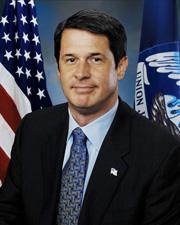 Sen. David Vitter (R-LA)
Legislative Activity
Stay on top of the latest movement without scrolling through every action
Senate amendment proposed (on the floor): Amendment SA 4299 proposed by Senator Vitter.(consideration: CR S2086-2087; text: S2086-2087)
March 14, 2008
View full timeline
Senate amendment proposed (on the floor): Amendment SA 4299 proposed by Senator Vitter.(consideration: CR S2086-2087; text: S2086-2087)
March 14, 2008
Senate amendment agreed to: Amendment SA 4299 agreed to in Senate by Yea-Nay Vote. 73 - 23. Record Vote Number: 84.
March 14, 2008
Roll call votes on amendments in Senate: Amendment SA 4299 agreed to in Senate by Yea-Nay Vote. 73 - 23. Record Vote Number: 84.
March 14, 2008
Amendment SA 4299 proposed by Senator Vitter. (consideration: CR S2086-2087; text: S2086-2087) Expressing the sense of the Senate regarding the need for comprehensive legislation to legalize the importation of prescription drugs from highly industrialized countries with safe pharmaceutical infrastructures.
March 14, 2008
Amendment SA 4299 agreed to in Senate by Yea-Nay Vote. 73 - 23. Record Vote Number: 84.
March 14, 2008
Senate amendment submitted
March 13, 2008
Votes
1 roll call on this amendment
Text
Submitted
SA 4299. Mr. VITTER submitted an amendment intended to be proposed by
him to the concurrent resolution S. Con. Res. 70, setting forth the
congressional budget for the United States Government for fiscal year
2009 and including the appropriate budgetary levels for fiscal years
2008 and 2010 through 2013; which was ordered to lie on the table; as
follows:

At the appropriate place, insert the following:

SEC. _. SENSE OF THE SENATE REGARDING THE NEED FOR
COMPREHENSIVE LEGISLATION TO LEGALIZE THE
IMPORTATION OF PRESCRIPTION DRUGS FROM HIGHLY
INDUSTRIALIZED COUNTRIES WITH SAFE
PHARMACEUTICAL INFRASTRUCTURES.

(a) Findings.--The Senate makes the following findings:
(1) The United States is the world's largest market for
pharmaceuticals, yet consumers still pay the world's highest
prices.
(2) In 2000, Congress took action to legalize the
importation of prescription drugs from other countries by
United States wholesalers and pharmacists, and before such a
program can go into effect, the Secretary of Health and Human
Services (HHS) must certify that the program would have no
adverse impact on safety and that it would reduce costs for
American consumers.
(3) Since 2000, no Secretary of HHS has made the
certification required to permit the implementation of a
program for importation of prescription drugs.
(4) In July 2006, the Senate approved by a vote of 68-32 an
amendment to the Department of Homeland Security
Appropriations Act, 2007, that prohibits Customs and Border
Protection from preventing individuals not in the business of
importing prescription drugs from carrying them across the
border with Canada.
(5) In July 2007, the Senate adopted language similar to
the 2007 amendment in the Department of Homeland Security
Appropriations Act, 2008.
(6) In October 2007, the Senate adopted language in the
Departments of Labor, Health and Human Services, and
Education, and Related Agencies Appropriations Act, 2008,
that prohibits anti-reimportation activities within HHS.
(b) Sense of the Senate.--It is the sense of the Senate
that--
(1) the leadership of the Senate should bring to the floor
for full debate in 2008 comprehensive legislation that
legalizes the importation of prescription drugs from highly
industrialized countries with safe pharmaceutical
infrastructures and creates a regulatory pathway to ensure
that such drugs are safe;
(2) such legislation should be given an up or down vote on
the floor of the Senate; and
(3) previous Senate approval of 3 amendments in support of
prescription drug importation shows the Senate's strong
support for passage of comprehensive importation legislation.
______