To protect family businesses and farmers without increasing our nation's debt by providing for an estate tax that sets the exemption at $5 million and the rate at 35 percent, with the benefits of the exemption recaptured for estates over $100 million, paid for by closing tax loopholes that allow offshore deferral of compensation and transactions entered into solely for the purpose of avoiding taxation.
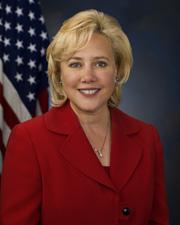 Sen. Mary L. Landrieu (D-LA)
Legislative Activity
Stay on top of the latest movement without scrolling through every action
Senate amendment submitted
March 13, 2008
View full timeline
Senate amendment submitted
March 13, 2008
Senate amendment proposed (on the floor): Amendment SA 4378 proposed by Senator Landrieu.(consideration: CR 3/14/2008 S2075-2076; text: CR 3/14/2008 S2075)
March 13, 2008
Senate amendment not agreed to: Amendment SA 4378 not agreed to in Senate by Yea-Nay Vote. 23 - 77. Record Vote Number: 76.
March 13, 2008
Roll call votes on amendments in Senate: Amendment SA 4378 not agreed to in Senate by Yea-Nay Vote. 23 - 77. Record Vote Number: 76.
March 13, 2008
Amendment SA 4378 proposed by Senator Landrieu. (consideration: CR 3/14/2008 S2075-2076; text: CR 3/14/2008 S2075) To protect family businesses and farmers without increasing our nation's debt by providing for an estate tax that sets the exemption at $5 million and the rate at 35 percent, with the benefits of the exemption recaptured for estates over $100 million, paid for by closing tax loopholes that allow offshore deferral of compensation and transactions entered into solely for the purpose of avoiding taxation.
March 13, 2008
Amendment SA 4378 not agreed to in Senate by Yea-Nay Vote. 23 - 77. Record Vote Number: 76.
March 13, 2008
Votes
1 roll call on this amendment
Text
Proposed
[[Page S2069]]

Senate

CONGRESSIONAL BUDGET FOR THE UNITED STATES GOVERNMENT FOR FISCAL YEAR
2009--Continued

amendment no. 4364

(Purpose: To provide a deficit-neutral reserve fund to provide for a
demonstration project regarding Medicaid coverage of low-income HIV-
infected individuals)

At the appropriate place, insert the following:

SEC. __. DEFICIT-NEUTRAL RESERVE FUND FOR DEMONSTRATION
PROJECT REGARDING MEDICAID COVERAGE OF LOW-
INCOME HIV-INFECTED INDIVIDUALS.

The Chairman of the Senate Committee on the Budget may
revise the allocations of a committee or committees,
aggregates, and other appropriate levels in this resolution
for one or more bills, joint resolutions, amendments, motions
or conference reports that provide for a demonstration
project under which a State may apply under section 1115 of
the Social Security Act (42 U.S.C. 1315) to provide medical
assistance under a State Medicaid program to HIV-infected
individuals who are not eligible for medical assistance under
such program under section 1902(a)(10)(A)(i) of the Social
Security Act (42 U.S.C. 1396a(a)(10)(A)(i)), by the amounts
provided in that legislation for those purposes, provided
that such legislation would not increase the deficit over
either the total of the period of fiscal years 2008 through
2013 or the total of the period of fiscal years 2008 through
2018.

AMENDMENT NO. 4195

(Purpose: To provide for a deficit-neutral reserve fund for reducing
the income threshold for the refundable child tax credit to $10,000 for
taxable years 2009 and 2010 with no inflation adjustment to ensure that
low-income working families receive the benefit of such credit)

On page 69, after line 25, add the following:

SEC. ___. DEFICIT-NEUTRAL RESERVE FUND FOR REDUCING INCOME
THRESHOLD FOR REFUNDABLE CHILD TAX CREDIT TO
$10,000 WITH NO INFLATION ADJUSTMENT.

The Chairman of the Senate Committee on the Budget may
revise the allocations, aggregates, and other levels in this
resolution by the amounts provided by a bill, joint
resolution, amendment, motion, or conference report that
would reduce the income threshold for the refundable child
tax credit under section 24 of the Internal Revenue Code of
1986 to $10,000 for taxable years 2009 and 2010 with no
inflation adjustment, provided that such legislation would
not increase the deficit over either the period of the total
of fiscal years 2008 through 2013 or the period of the total
of fiscal years 2008 through 2018.

Mr. REID. I move to reconsider the vote.
Mr. WARNER. I move to lay that motion on the table.
The motion to lay on the table was agreed to.
Mr. GREGG. Mr. President, I understand we are now proceeding to the
Boxer amendment.
Mr. CONRAD. Mr. President, if I may just review for our colleagues,
that is 30 amendments that were just cleared. We now go to an amendment
by Senator Boxer.
The PRESIDING OFFICER. The Senator from California.

Amendment No. 4368, as Modified

Mrs. BOXER. Mr. President, I have a modification at the desk seen by
both sides. We left out the second page originally. I ask unanimous
consent that the amendment be modified.
The PRESIDING OFFICER. Without objection, it is so ordered. The clerk
will report.
The legislative clerk read as follows:

The Senator from California [Mrs. Boxer] proposes an
amendment numbered 4368, as modified.

The amendment is as follows:

(Purpose: To increase funding for the Department of Justice for the
vigorous enforcement of laws protecting children)

On page 24, line 16, increase amount by $50,000,000.
On page 24, line 17, increase the amount by $50,000,000.
On page 27, line 16, decrease the amount by $50,000,000.
On page 27, line 17, decrease the amount by $50,000,000.

Mrs. BOXER. Mr. President, this is a little complicated. The only
reason I am offering this amendment is as a substitute to the Ensign
amendment which is coming next. The Ensign amendment does something I
have never seen in all my years in the Senate. It funds a program that
is not the law of the land. It funds a program that Senator Ensign
strongly supports. It did pass the last Congress--not this Senate, the
last Senate. He is setting aside $50 million in the Justice Department
for this particular priority. What if we each came down here with our
priority bill? I have one to fund preschool for all kids, but it is not
passed. If I asked you to set aside $50 million for a bill that was not
law yet, it would make no sense. When I asked Senator Ensign, he said:
Well, it could pass. The Child Custody Protection Act could pass. It
could pass here. It could pass the House. It could be signed by the
President. But my friends, what I do here is just say: Let's take that
same amount of money and use it for all child protection laws. I hope
Members will support my amendment.
The PRESIDING OFFICER. The Senator from Nevada.
Mr. ENSIGN. Mr. President, what we have done with the Child Custody
Protection Act--Senator Boxer is correct, it is a bill that passed the
U.S. Senate on a bipartisan vote of 65 to 34. What we are doing is
setting up a reserve fund that says if it passes this year, the money
will be there to enforce it.
We know around here a lot of times things are authorized, things are
passed, but then the money is not there to enforce it. So what we want
to do is set up a reserve fund so that if the law is passed, we will
have the money there to enforce it. This has to do with protecting
minor children. There are many States in this country that have passed
laws--parental notification, parental consent laws--that want to
protect the rights of parents and children from being taken across
State lines by adults. That is what this bill will allow the
enforcement of, to make sure the Child Custody Protection Act has the
money to be enforced by law enforcement across this country.

[[Page S2070]]

The PRESIDING OFFICER. The Senator's time has expired.
Mrs. BOXER. Mr. President, I ask for the yeas and nays.
The PRESIDING OFFICER. Is there a sufficient second?
There appears to be a sufficient second.
The question is on agreeing to amendment No. 4368, as modified.
The clerk will call the roll.
The legislative clerk called the roll.
Mr. DURBIN. I announce that the Senator from West Virginia (Mr.
Byrd), the Senator from Washington (Ms. Cantwell), the Senator from
Hawaii (Mr. Inouye), and the Senator from Vermont (Mr. Leahy) are
necessarily absent.
Mr. KYL. The following Senator is necessarily absent: the Senator
from Arizona (Mr. McCain).
The PRESIDING OFFICER. Are there any other Senators in the Chamber
desiring to vote?
The result was announced--yeas 90, nays 5, as follows:

[Rollcall Vote No. 70 Leg.]

YEAS--90

Akaka
Alexander
Allard
Barrasso
Baucus
Bayh
Bennett
Biden
Bingaman
Bond
Boxer
Brown
Brownback
Bunning
Burr
Cardin
Carper
Casey
Clinton
Cochran
Coleman
Collins
Conrad
Corker
Cornyn
Craig
Crapo
DeMint
Dodd
Dole
Domenici
Dorgan
Durbin
Ensign
Enzi
Feingold
Feinstein
Graham
Grassley
Hagel
Harkin
Hatch
Hutchison
Isakson
Johnson
Kennedy
Kerry
Klobuchar
Kohl
Kyl
Landrieu
Lautenberg
Levin
Lieberman
Lincoln
Lugar
Martinez
McCaskill
McConnell
Menendez
Mikulski
Murkowski
Murray
Nelson (FL)
Nelson (NE)
Obama
Pryor
Reed
Reid
Roberts
Rockefeller
Salazar
Sanders
Schumer
Sessions
Shelby
Smith
Snowe
Specter
Stabenow
Sununu
Tester
Thune
Vitter
Voinovich
Warner
Webb
Whitehouse
Wicker
Wyden

NAYS--5

Chambliss
Coburn
Gregg
Inhofe
Stevens

NOT VOTING--5

Byrd
Cantwell
Inouye
Leahy
McCain
The amendment (No. 4368), as modified, was agreed to.
Mr. REID. I move to reconsider the vote.
Mr. DURBIN. I move to lay that motion on the table.
The motion to lay on the table was agreed to.

Change of Vote

Mr. CASEY. Mr. President, on rollcall vote 70, I voted ``nay.'' It
was my intention to vote ``yea.'' Therefore, I ask unanimous consent I
be permitted to change my vote, since it will not affect the outcome--
the outcome being 89 to 6.
The PRESIDING OFFICER. Without objection, it is so ordered.
(The foregoing tally has been changed to reflect the above order.)
The PRESIDING OFFICER. The Senator from North Dakota.
Mr. CONRAD. Mr. President, did we move to reconsider and table?
The PRESIDING OFFICER. It has been done.
Mr. CONRAD. Mr. President, can we have order in the Chamber.
The PRESIDING OFFICER. The Senate will be in order.
Mr. CONRAD. We need to ask people to hold it down so we can conduct
business. It will go much faster if we do that and respect the rights
of Senators to be heard.
We now go to Senator Ensign for an amendment.
The PRESIDING OFFICER. The Senator from Nevada.

Amendment No. 4335

Mr. ENSIGN. Mr. President, the last amendment Senator Boxer offered
was extra money to have laws that protect children. That is fine. That
is why I voted for that last amendment. We could actually have taken
that amendment by a voice vote.
What my amendment now does is create money so we will be able to
enforce the Child Custody Protection Act when we enact that law. Around
here, as I said before, too many times we enact laws, we authorize
things, and we do not fund them. This is going to set up funding so the
Child Custody Protection Act--the law that says we are going to protect
young children from being taken across State lines to have a surgical
procedure, a surgical abortion--we are going to make sure those people
are protected.
Mr. President, I call up amendment No. 4335.
The PRESIDING OFFICER. The clerk will report.
The legislative clerk read as follows:

The Senator from Nevada [Mr. Ensign] proposes an amendment
numbered 4335.

Mr. ENSIGN. Mr. President, I ask unanimous consent that reading of
the amendment be dispensed with.
The PRESIDING OFFICER. Without objection, it is so ordered.
The amendment is as follows:

(Purpose: To increase funding for the Department of Justice for the
vigorous enforcement of a prohibition against taking minors across
State lines in circumvention of laws requiring the involvement of
parents in abortion decisions consistent with the Child Custody
Protection Act, which passed the Senate by a bipartisan vote of 65-34,
with an offset)

On page 24, line 16, increase the amount by $50,000,000.
On page 24, line 17, increase the amount by $50,000,000.
On page 27, line 16, decrease the amount by $50,000,000.
On page 27, line 17, decrease the amount by $50,000,000.

Mr. ENSIGN. Mr. President, I will finish very briefly.
This amendment strictly funds the Child Custody Protection Act that
passed the Senate in a bipartisan fashion by a vote of 65 to 34. We
will now vote to make sure it is funded. That is simply what my
amendment does.
The PRESIDING OFFICER. The Senator from California.
Mrs. BOXER. Mr. President, I wish to inform all colleagues on both
sides of the aisle that you voted for $50 million to enhance the
enforcement of child protective laws. If Senator Ensign's bill becomes
a law--which it is not the law; it has not passed this Senate in this
Congress and I do not believe people feel it is going to become law--if
it does become law, then that money is already there to be used for
such a program.
But now to set aside funding for a bill that is not a law is the
oddest kind of precedent. It is kind of ``Alice in Wonderland,'' to be
honest with you. Every one of us could take our favorite bill and say:
Let's set aside funding in case my bill becomes law.
This is not the way to legislate. We have put in $50 million to
enhance the enforcement of child protective laws, including this
particular bill.
The PRESIDING OFFICER. The Senator's time has expired.
Mrs. BOXER. I hope my colleagues will vote no.
The PRESIDING OFFICER. The question is on agreeing to the amendment.
Mr. ENSIGN. Mr. President, I ask for the yeas and nays.
The PRESIDING OFFICER. Is there a sufficient second?
There appears to be a sufficient second.
The clerk will call the roll.
The assistant journal clerk called the roll.
Mr. DURBIN. I announce that the Senator from West Virginia (Mr. Byrd)
is necessarily absent.
Mr. KYL. The following Senator is necessarily absent: the Senator
from Arizona (Mr. McCain).
The PRESIDING OFFICER (Mr. Webb). Are there any other Senators in the
Chamber desiring to vote?
The result was announced--yeas 49, nays 49, as follows:

[Rollcall Vote No. 71 Leg.]

YEAS--49

Alexander
Allard
Barrasso
Bennett
Bond
Brownback
Bunning
Burr
Casey
Chambliss
Coburn
Coleman
Corker
Cornyn
Craig
Crapo
DeMint
Dole
Domenici
Ensign
Enzi
Graham
Grassley
Gregg
Hagel
Hatch
Hutchison
Inhofe
Isakson
Johnson
Kyl
Landrieu
Lugar
Martinez
McConnell
Murkowski
Nelson (NE)
Reid
Roberts
Sessions
Shelby
Smith
Stevens
Sununu
Thune
Vitter
Voinovich
Warner
Wicker

NAYS--49

Akaka
Baucus
Bayh
Biden
Bingaman
Boxer
Brown
Cantwell
Cardin
Carper
Clinton
Cochran
Collins
Conrad
Dodd
Dorgan
Durbin
Feingold
Feinstein
Harkin
Inouye

[[Page S2071]]

Kennedy
Kerry
Klobuchar
Kohl
Lautenberg
Leahy
Levin
Lieberman
Lincoln
McCaskill
Menendez
Mikulski
Murray
Nelson (FL)
Obama
Pryor
Reed
Rockefeller
Salazar
Sanders
Schumer
Snowe
Specter
Stabenow
Tester
Webb
Whitehouse
Wyden

NOT VOTING--2

Byrd
McCain
Mrs. BOXER. Mr. President, I move to reconsider the vote, and I move
to lay that motion on the table.
The motion to lay on the table was agreed to.
The PRESIDING OFFICER. The Senator from North Dakota is recognized.
Mr. CONRAD. Mr. President, the next amendment ready to go is an
amendment by the Senator from South Carolina, Mr. DeMint.
The PRESIDING OFFICER. The Senator from South Carolina is recognized.

Amendment No. 4340

Mr. DeMINT. Mr. President, I call up my amendment No. 4340 and ask
for its immediate consideration.
The PRESIDING OFFICER. The clerk will report.
The legislative clerk read as follows:

The Senator from South Carolina [Mr. DeMint] proposes an
amendment numbered 4340.

Mr. DeMINT. Mr. President, I ask unanimous consent that reading of
the amendment be dispensed with.
The PRESIDING OFFICER. Without objection, it is so ordered.
The amendment is as follows:

(Purpose: To create a point of order against bills that would raise
gasoline prices)

At the end of the resolution, insert the following:

SEC. __. LIMITATIONS ON LEGISLATION THAT WOULD INCREASE
NATIONAL AVERAGE FUEL PRICES FOR AUTOMOBILES.

(a) Point of Order.--
(1) In general.--If the Senate is considering legislation,
upon a point of order being made by any Senator against
legislation, or any part of the legislation, that it has been
determined in accordance with paragraph (2) that the
legislation, if enacted, would result in an increase in the
national average fuel price for automobiles, and the point of
order is sustained by the Presiding Officer, the Senate shall
cease consideration of the legislation.
(2) Determination.--The determination described in this
paragraph means a determination by the Director of the
Congressional Budget Office, in consultation with the Energy
Information Administration and other appropriate Government
agencies, that is made upon the request of a Senator for
review of legislation, that the legislation, or part of the
legislation, would, if enacted, result in an increase in the
national average fuel price for automobiles.
(3) Legislation.--In this section the term ``legislation''
means a bill, joint resolution, amendment, motion, or
conference report.
(b) Waivers and Appeals.--
(1) Waivers.--Before the Presiding Officer rules on a point
of order described in subsection (a)(1), any Senator may move
to waive the point of order and the motion to waive shall not
be subject to amendment. A point of order described in
subsection (a)(1) is waived only by the affirmative vote of
60 Members of the Senate, duly chosen and sworn.
(2) Appeals.--After the Presiding Officer rules on a point
of order described in subsection (a)(1), any Senator may
appeal the ruling of the Presiding Officer on the point of
order as it applies to some or all of the provisions on which
the Presiding Officer ruled. A ruling of the Presiding
Officer on a point of order described in subsection (a)(1) is
sustained unless 60 Members of the Senate, duly chosen and
sworn, vote not to sustain the ruling.
(3) Debate.--Debate on the motion to waive under paragraph
(1) or on an appeal of the ruling of the Presiding Officer
under paragraph (2) shall be limited to 1 hour. The time
shall be equally divided between, and controlled by, the
Majority leader and the Minority Leader of the Senate, or
their designees.

Mr. DeMINT. Mr. President, with high gas prices becoming an
increasingly difficult burden for all American families, it is very
important that we consider all the legislation we pass here to make
sure it doesn't further increase the prices of gasoline.
This is a very simple amendment that creates a 60-vote point of order
against any legislation that would cause the price of gasoline to
increase, as determined by the CBO in consultation with the Energy
Information Agency.
I reserve the remainder of my time.
Mr. CONRAD. Mr. President, might I ask a series of questions, through
the Chair, to the Parliamentarian?
The PRESIDING OFFICER. The Senator may do so.
Mr. CONRAD. Mr. President, I ask the Chair if the amendment by the
Senator from South Carolina is germane to the budget resolution?
The PRESIDING OFFICER. The amendment is not germane.
Mr. CONRAD. The second question is, If this amendment is adopted, is
it corrosive to the privileged standing of budget resolutions?
The PRESIDING OFFICER. It is corrosive.
Mr. CONRAD. No. 3, if this amendment were adopted and went to
conference and if it came back from conference, would it be fatal to
the budget resolution's privileged status?
The PRESIDING OFFICER. It would be.
Mr. CONRAD. This amendment is simply not in the jurisdiction of the
Budget Committee. It is in the jurisdiction of the Energy Committee.
I raise a point of order that the amendment violates section
305(b)(2) of the Congressional Budget Act of 1974. It is not germane.
The PRESIDING OFFICER. The point of order is premature. The Senator
from South Carolina still has 29 seconds.
Mr. DeMINT. Parliamentary inquiry: Mr. President, if this point of
order is waived and the amendment is adopted, would it cause the budget
resolution to lose its privilege at this time?
The PRESIDING OFFICER. It would not.
Mr. DeMINT. Mr. President, in that case, I move to waive the Budget
Act and ask for the yeas and nays.
The PRESIDING OFFICER. Is there a sufficient second? There is a
sufficient second.
The question is on agreeing to the motion.
The clerk will call the roll.
The legislative clerk called the roll.
Mr. DURBIN. I announce that the Senator from West Virginia (Mr. Byrd)
is necessarily absent.
Mr. KYL. The following Senator is necessarily absent: the Senator
from Arizona (Mr. McCain).
The PRESIDING OFFICER. Are there any other Senators in the Chamber
desiring to vote?
The result was announced--yeas 39, nays 59, as follows:

[Rollcall Vote No. 72 Leg.]

YEAS--39

Allard
Barrasso
Bayh
Bond
Brownback
Burr
Chambliss
Coburn
Coleman
Collins
Cornyn
Craig
Crapo
DeMint
Dole
Ensign
Enzi
Graham
Grassley
Gregg
Hatch
Hutchison
Inhofe
Isakson
Kyl
McConnell
Nelson (NE)
Roberts
Sessions
Shelby
Smith
Snowe
Specter
Sununu
Thune
Vitter
Voinovich
Warner
Wicker

NAYS--59

Akaka
Alexander
Baucus
Bennett
Biden
Bingaman
Boxer
Brown
Bunning
Cantwell
Cardin
Carper
Casey
Clinton
Cochran
Conrad
Corker
Dodd
Domenici
Dorgan
Durbin
Feingold
Feinstein
Hagel
Harkin
Inouye
Johnson
Kennedy
Kerry
Klobuchar
Kohl
Landrieu
Lautenberg
Leahy
Levin
Lieberman
Lincoln
Lugar
Martinez
McCaskill
Menendez
Mikulski
Murkowski
Murray
Nelson (FL)
Obama
Pryor
Reed
Reid
Rockefeller
Salazar
Sanders
Schumer
Stabenow
Stevens
Tester
Webb
Whitehouse
Wyden

NOT VOTING--2

Byrd
McCain
The PRESIDING OFFICER. On this vote, the yeas are 39, the nays are
59. Three-fifths of the Senators duly chosen and sworn not having voted
in the affirmative, the motion is rejected. The point of order is
sustained, and the amendment falls.
The Senator from North Dakota.
Mr. CONRAD. The next amendment in order is the amendment of the
Senator from Texas, Mr. Cornyn.
The PRESIDING OFFICER. The Senator from Texas.

Amendment No. 4313

Mr. CORNYN. Mr. President, I call up amendment No. 4313 and ask for
its immediate consideration.
The PRESIDING OFFICER. The clerk will report.
The legislative clerk read as follows:

The Senator from Texas [Mr. Cornyn] proposes an amendment
numbered 4313.

Mr. CORNYN. Mr. President, I ask unanimous consent that the reading
of the amendment be dispensed with.
The PRESIDING OFFICER. Without objection, it is so ordered.

[[Page S2072]]

The amendment is as follows:

(Purpose: To protect the family budget from runaway Government spending
by increasing the number of Senators necessary to waive the PAYGO Point
of Order from 60 to 100)

At the end of title II, insert the following:

SEC. __. INCREASING THE NUMBER OF SENATORS NECESSARY TO WAIVE
PAYGO POINT OF ORDER FROM 60 TO 100.

Section 201(b) of S. Con. Res. 21 (110th Congress) is
amended by striking ``three-fifths'' both places it appears
and inserting ``all''.

Mr. CORNYN. Mr. President, my amendment concerns pay-go or pay-as-
you-go. Right now pay-go may be waived if 60 Senators support doing so.
My amendment would strengthen the pay-go provision by requiring that
all 100 Members of the Senate support waiving pay-go before it may be
waived.
Pay-go is so riddled with exceptions that the Wall Street Journal has
referred to it as the ``pay-go farce.'' If the Senate is serious about
fiscal discipline and believes that pay-go is a useful tool in helping
control Government spending, then the Senate should be unanimous in
passing any bill that violates pay-go, a tool the majority, including
members of the Budget Committee, has advocated as a way to keep check
on expanding or creating a new Government program. It has been
criticized because it does not apply to discretionary spending and has
failed to constrain the growth in entitlement programs.
Pay-go needs to be honest. There needs to be truth in legislating
when it comes to appropriations. I ask my colleagues to support this
amendment.
The PRESIDING OFFICER. The Senator's time has expired.
Mr. CORNYN. Mr. President, I ask for the yeas and nays.
The PRESIDING OFFICER. Is there a sufficient second?
Mr. CONRAD. Does the Senator yield back his time?
The PRESIDING OFFICER. The time of the Senator from Texas has
expired. The Senator from North Dakota has 1 minute.
Mr. CONRAD. Mr. President, I will ask a series of questions of the
Parliamentarian through the Chair.
Is the amendment by the Senator from Texas germane?
The PRESIDING OFFICER. We have not seen the amendment.
Mr. CORNYN. It is amendment No. 4313.
The PRESIDING OFFICER. The amendment is not germane.
Mr. CONRAD. Would it be corrosive to the privileged status of the
budget resolution if this amendment were adopted?
The PRESIDING OFFICER. It would not be corrosive.
Mr. CONRAD. Would it be fatal to the privileged status of the budget
resolution if it came back from conference?
The PRESIDING OFFICER. No, it would not.
Mr. CONRAD. Mr. President, so the challenge of this amendment is it
is not germane. I, therefore, raise a point of order that the amendment
violates section 305(b)(2) of the Congressional Budget Act of 1974.
The PRESIDING OFFICER. The Senator from Texas.
Mr. CORNYN. Mr. President, pursuant to section 904(c) of the
Congressional Budget Act, I move to waive section 305(b)(2) of the
Budget Act for consideration of this amendment to S. Con. Res. 70, and
I ask for the yeas and nays on the motion.
The PRESIDING OFFICER. Is there a sufficient second?
There appears to be a sufficient second.
The question is on agreeing to the motion. The clerk will call the
roll.
The assistant journal clerk called the roll.
Mr. DURBIN. I announce that the Senator from West Virginia (Mr. Byrd)
is necessarily absent.
Mr. KYL. The following Senator is necessarily absent: the Senator
from Mississippi (Mr. Cochran).
The PRESIDING OFFICER. Are there any other Senators in the Chamber
desiring to vote?
The yeas and nays resulted--yeas 27, nays 71, as follows:

[Rollcall Vote No. 73 Leg.]

YEAS--27

Alexander
Allard
Bond
Brownback
Burr
Chambliss
Coburn
Corker
Cornyn
Craig
Crapo
DeMint
Dole
Ensign
Graham
Grassley
Gregg
Hatch
Inhofe
Isakson
Kyl
McCain
McConnell
Sessions
Shelby
Smith
Sununu

NAYS--71

Akaka
Barrasso
Baucus
Bayh
Bennett
Biden
Bingaman
Boxer
Brown
Bunning
Cantwell
Cardin
Carper
Casey
Clinton
Coleman
Collins
Conrad
Dodd
Domenici
Dorgan
Durbin
Enzi
Feingold
Feinstein
Hagel
Harkin
Hutchison
Inouye
Johnson
Kennedy
Kerry
Klobuchar
Kohl
Landrieu
Lautenberg
Leahy
Levin
Lieberman
Lincoln
Lugar
Martinez
McCaskill
Menendez
Mikulski
Murkowski
Murray
Nelson (FL)
Nelson (NE)
Obama
Pryor
Reed
Reid
Roberts
Rockefeller
Salazar
Sanders
Schumer
Snowe
Specter
Stabenow
Stevens
Tester
Thune
Vitter
Voinovich
Warner
Webb
Whitehouse
Wicker
Wyden

NOT VOTING--2

Byrd
Cochran
The PRESIDING OFFICER. On this vote, the yeas are 27, the nays are
71. Three-fifths of the Senators duly chosen and sworn not having voted
in the affirmative, the motion is rejected, the point of order is
sustained, and the amendment falls.
The Senator from North Dakota.
Mr. CONRAD. Mr. President, let me just help people understand where
we are. We have what conceivably could be 9 or 10 more rollcall votes
but dozens of additional amendments that are out there pending--as many
as a total of 50. So that is the circumstance we face. The only way
that Senator Gregg and I can see to reach conclusion tonight is if we
devise another managers' package, put together amendments that can be
cleared on both sides and deal with these other votes that require
rollcalls, starting with Senator Kyl on his extenders.
Or do we want to go to Senator DeMint?
Mr. GREGG. Senator Kyl.
Mr. CONRAD. Senator Kyl.
Mr. REID. Mr. President, I suggest the absence of a quorum.
The PRESIDING OFFICER. The clerk will call the roll.
The assistant legislative clerk proceeded to call the roll.
Mr. CONRAD. Mr. President, I ask unanimous consent that the order for
the quorum call be rescinded.
The PRESIDING OFFICER. Without objection, it is so ordered.
Mr. CONRAD. Mr. President, let me thank all colleagues for their
extraordinary patience. This will be, before the end of the day, I
think, a record number of votes on a budget resolution in 1 day. I
don't think that is anything particularly to be proud of, but it is the
reality of what we are confronting.
We can go now to the Kyl amendment?
Mr. GREGG. Mr. President, as I understand it, the next two amendments
will first be Kyl, and then we will go to the DeMint amendment, which
has been anxiously awaited by large numbers of people.
Mr. REID. Prior to that time, we are going to have a finite list.
Mr. GREGG. In between we agree to have a finite list, and we will
read them and that will be it.
Mr. CONRAD. We thank the leaders of both sides, and I especially
thank our leader, Senator Reid, for pushing to get a final definitive
list.
With that, we go to Senator Kyl.
The PRESIDING OFFICER. The Senator from Arizona.

Amendment No. 4348

Mr. KYL. Mr. President, I thank the chairman for his courtesy.
One of the questions we are most frequently asked is, are we, for
sure, going to do the tax extenders--the R&D tax credit, the sales tax
deduction, the $250 teacher deduction, and the tuition deduction. These
already expired at the end of last year, and there are three more that
will expire at the end of this year. We need to provide a definitive
answer--yes, we are going to do the extenders package.
Now, the budget accommodates generally expiring tax provisions.
Mr. CONRAD. Mr. President, I am having a hard time hearing. I think
the Senator deserves to be heard. This is a serious amendment.
Mr. KYL. While we are getting order, Mr. President, this amendment, I
gather, had not been technically called up, amendment No. 4348.

[[Page S2073]]

The PRESIDING OFFICER. The clerk will report the amendment.
The assistant legislative clerk read as follows:

The Senator from Arizona [Mr. Kyl] proposes an amendment
numbered 4348.

Mr. KYL. I ask unanimous consent that the reading be dispensed with.
The PRESIDING OFFICER. Without objection, it is so ordered.
The amendment is as follows:

(Purpose: To provide certainty to taxpayers by extending expiring tax
provisions such as the R&D Tax Credit that helps U.S. companies
innovate, the combat pay exclusion for our soldiers in the field, the
education deduction to make colleges more affordable and the
alternative energy incentives to make the environment cleaner through
the end of 2009)

On page 3, line 10, decrease the amount by $3,692,000,000.
On page 3, line 11, decrease the amount by $10,346,000,000.
On page 3, line 12, decrease the amount by $8,659,000,000.
On page 3, line 13, decrease the amount by $2,396,000,000.
On page 3, line 14, decrease the amount by $1,855,000,000.
On page 3, line 15, decrease the amount by $1,696,000,000.
On page 3, line 19, decrease the amount by $3,692,000,000.
On page 3, line 20, decrease the amount by $10,346,000,000.
On page 3, line 21, decrease the amount by $8,659,000,000.
On page 3, line 22, decrease the amount by $2,396,000,000.
On page 3, line 23, decrease the amount by $1,855,000,000.
On page 3, line 24, decrease the amount by $1,696,000,000.
On page 4, line 4, increase the amount by $28,000,000.
On page 4, line 5, increase the amount by $223,000,000.
On page 4, line 6, increase the amount by $675,000,000.
On page 4, line 7, increase the amount by $1,068,000,000.
On page 4, line 8, increase the amount by $1,277,000,000.
On page 4, line 9, increase the amount by $1,446,000,000.
On page 4, line 13, increase the amount by $28,000,000.
On page 4, line 14, increase the amount by $223,000,000.
On page 4, line 15, increase the amount by $675,000,000.
On page 4, line 16, increase the amount by $1,068,000,000.
On page 4, line 17, increase the amount by $1,277,000,000.
On page 4, line 18, increase the amount by $1,446,000,000.
On page 4, line 22, increase the amount by $3,720,000,000.
On page 4, line 23, increase the amount by $10,569,000,000.
On page 4, line 24, increase the amount by $9,334,000,000.
On page 4, line 25, increase the amount by $3,464,000,000.
On page 5, line 1, increase the amount by $3,132,000,000.
On page 5, line 2, increase the amount by $3,142,000,000.
On page 5, line 7, increase the amount by $3,720,000,000.
On page 5, line 8, increase the amount by $14,289,000,000.
On page 5, line 9, increase the amount by $23,623,000,000.
On page 5, line 10, increase the amount by $27,087,000,000.
On page 5, line 11, increase the amount by $30,218,000,000.
On page 5, line 12, increase the amount by $33,360,000,000.
On page 5, line 15, increase the amount by $3,720,000,000.
On page 5, line 16, increase the amount by $14,289,000,000.
On page 5, line 17, increase the amount by $23,623,000,000.
On page 5, line 18, increase the amount by $27,087,000,000.
On page 5, line 19, increase the amount by $30,218,000,000.
On page 5, line 20, increase the amount by $33,360,000,000.
On page 26, line 12, increase the amount by $28,000,000.
On page 26, line 13, increase the amount by $28,000,000.
On page 26, line 16, increase the amount by $223,000,000.
On page 26, line 17, increase the amount by $223,000,000.
On page 26, line 20, increase the amount by $675,000,000.
On page 26, line 21, increase the amount by $675,000,000.
On page 26, line 24, increase the amount by $1,068,000,000.
On page 26, line 25, increase the amount by $1,068,000,000.
On page 27, line 3, increase the amount by $1,277,000,000.
On page 27, line 4, increase the amount by $1,277,000,000.
On page 27, line 7, increase the amount by $1,446,000,000.
On page 27, line 8, increase the amount by $1,446,000,000.

Mr. KYL. Mr. President, just to conclude, the budget says expiring
provisions are accommodated, but I don't think the Senate is going to
raise $50 billion in new taxes to pay for these, to pay permanently for
1 or 2 years of these extenders. In fact, in recent times, more often
than not, we have extended these tax provisions without offsets. In
fact, this was done when the Democratic Party was in control of this
Chamber, of this body, in the year 2002.
So what this amendment does is it simply explicitly extends all of
these expiring tax provisions, which would expire at the end of this
year and that have already expired, and it would not be required to
have a permanent increase in taxes in order to accommodate that
extension.
The PRESIDING OFFICER. Who yields time in opposition?
The Senator from North Dakota.
Mr. CONRAD. Mr. President, the budget resolution already provides for
a 1-year package of extenders that is fully paid for. The Kyl amendment
would add a second year without paying for it. Consequently, the Kyl
amendment would drive us $28.6 billion into debt, driving us further
away from the balance that we are seeking to achieve by the fourth
year.

We anticipate that tax extenders will be dealt with in the regular
order, and our resolution provides for longer term extensions, as long
as they are paid for.
I ask colleagues to resist the Kyl amendment.
Mr. KYL. Mr. President, is there any time remaining on my side?
The PRESIDING OFFICER. The time of the Senator has expired.
The question is on agreeing to the amendment.
Mr. CONRAD. Mr. President, I ask for the yeas and nays.
The PRESIDING OFFICER. Is there a sufficient second? There is a
sufficient second.
The clerk will call the roll.
The assistant legislative clerk called the roll.
Mr. DURBIN. I announce that the Senator from West Virginia, (Mr.
Byrd) is necessarily absent.
The PRESIDING OFFICER. Are there any other Senators in the Chamber
desiring to vote?
The result was announced--yeas 49, nays 50, as follows:

[Rollcall Vote No. 74 Leg.]

YEAS--49

Alexander
Allard
Barrasso
Bayh
Bennett
Bond
Brownback
Bunning
Burr
Chambliss
Coburn
Cochran
Coleman
Collins
Corker
Cornyn
Craig
Crapo
DeMint
Dole
Domenici
Ensign
Enzi
Graham
Grassley
Gregg
Hagel
Hatch
Hutchison
Inhofe
Isakson
Kyl
Lugar
Martinez
McCain
McConnell
Murkowski
Roberts
Sessions
Shelby
Smith
Snowe
Specter
Stevens
Sununu
Thune
Vitter
Warner
Wicker

NAYS--50

Akaka
Baucus
Biden
Bingaman
Boxer
Brown
Cantwell
Cardin
Carper
Casey
Clinton
Conrad
Dodd
Dorgan
Durbin
Feingold
Feinstein
Harkin
Inouye
Johnson
Kennedy
Kerry
Klobuchar
Kohl
Landrieu
Lautenberg
Leahy
Levin
Lieberman
Lincoln
McCaskill
Menendez
Mikulski
Murray
Nelson (FL)
Nelson (NE)
Obama
Pryor
Reed
Reid
Rockefeller
Salazar
Sanders
Schumer
Stabenow
Tester
Voinovich
Webb
Whitehouse
Wyden

NOT VOTING--1

Byrd

The amendment (No. 4348) was rejected.
Mr. REID. Mr. President, I move to reconsider the vote.
Mr. CONRAD. I move to lay that motion on the table.
Mr. REID. Mr. President, this has been cleared by the minority and
the majority managers.
I ask unanimous consent the following numbered amendments be the only
amendments in order, that if Senator Gregg or Senator Conrad decide
they want a so-called side-by-side with these, that is at their
discretion.
I would ask unanimous consent there be no second-degree amendments in
order. The amendments are: 4242, 4230, 4330, 4276, 4168, 4186, 4220,
4308, 4209, 4233, 4311, 4307, 4345, 4344, 4357, 4339, 4371, 4347, 4269,
4243, 4270, 4206, 4369, 4334, 4375, 4283, 4265, 4159, 4331, 4351, 4202,
4200, 4255, 4245, 4361, 4300, 4256, 4310 and an unnumbered

[[Page S2074]]

amendment by Senator Brown, an unnumbered amendment by Senator
Whitehouse, an unnumbered amendment by Senator Bingaman, an unnumbered
amendment by Senator Kyl, an unnumbered amendment by Senator DeMint, an
amendment No. 4268, an unnumbered amendment by Senator Conrad, and an
unnumbered amendment by Senator Vitter.
The PRESIDING OFFICER. Is there objection?
Mr. VITTER. Reserving the right to object because I have no idea off
the top of my head what all of those are, I suggest the absence of a
quorum.
The PRESIDING OFFICER. The majority leader has the floor.
Mr. REID. I would say to everyone, there is no one trying to take
advantage of anyone. If there is a problem we will be happy to work
with you. This is a finite list. If there is some misunderstanding, we
have two of the most generous, patient men I have ever seen, Senator
Conrad and Senator Gregg. We will work with you. Let's get this locked
down. If there is a problem, we will work with you. No one is trying to
take advantage of anyone.
I ask unanimous consent that we approve this agreement. If there is
something that my friend from Louisiana has a problem with, we will
talk with him.
The PRESIDING OFFICER. Is there objection?
Mr. VITTER. Mr. President, point of clarification. If an amendment is
not on that list, is it cut off for the evening?
Mr. REID. Yes.
Mr. VITTER. I object.
The PRESIDING OFFICER. Objection is heard.
Mr. CONRAD. Mr. President, while that matter is being resolved, could
we go to the next amendment?
And the next amendment in order is Senator DeMint's.

Amendment No. 4347

The PRESIDING OFFICER. The Senator from South Carolina.
Mr. DeMINT. My colleagues, it is time for some straight talk on
earmarks. And it is time for some real change that all Americans can
believe in. All three of our colleagues running for President are
cosponsors of this moratorium on earmarks.
All three of our colleagues running for President are cosponsors of
this amendment. I thank John McCain particularly for years of warning
us of what earmarks and our earmark system were doing to undermine
confidence in this Congress. I thank Senator McCaskill for her courage
in standing up, and my Democratic cosponsors, Senators Obama, Clinton,
and Bayh, and all of my Republican cosponsors who know what we all
know: that this earmark system is out of control.
It has undermined the faith and the confidence of the American
people. It is time for a timeout. My amendment creates a 1-year
moratorium on all earmarks by establishing--
The PRESIDING OFFICER. The Senator's time has expired.
Does the Senator offer an amendment?
Mr. GREGG. I ask unanimous consent that the Senator be given 30
seconds to discuss this very important amendment.
Mr. REID. I have no problem with that. I renew my previous unanimous
consent request.
The PRESIDING OFFICER. Is there objection?
Without objection, it is so ordered.
Mr. GREGG. I ask unanimous consent that Senator DeMint get an
additional 30 seconds so he can be heard.
The PRESIDING OFFICER. Without objection, it is so ordered.
Mr. DeMINT. My amendment creates a 1-year moratorium on all earmarks
by establishing a 67-vote point of order against bills with earmarks.
We have heard all the excuses; we will hear some more tonight.
I encourage all of my colleagues to vote against the status quo and
vote for this moratorium to give us time and a sense of urgency to
reform the system.
I reserve the remainder of my time.
The PRESIDING OFFICER. Is the Senator offering an amendment?
Mr. DeMINT. I call up amendment No. 4347 and ask for its immediate
consideration.
The PRESIDING OFFICER. The clerk will report.
The assistant legislative clerk read as follows:

The Senator from South Carolina [Mr. DeMint], for himself,
Mr. McCain, Mrs. McCaskill, Mr. Coburn, Mr. Kyl, Mr. Corker,
Mr. Burr, Mr. Graham, Mr. Obama, Mrs. Clinton, Mr. Cornyn,
Mr. Bayh, Mr. Martinez, Mr. Enzi, Mr. Barrasso, and Mr.
Inhofe, proposes an amendment numbered 4347.

Mr. DeMINT. Mr. President, I ask unanimous consent that the reading
of the amendment be dispensed with.
The PRESIDING OFFICER. Without objection, it is so ordered.
The amendment (No. 4347) is as follows:

(Purpose: To establish an earmark moratorium for fiscal year 2009)

At the appropriate place, insert the following:

SEC. __. FISCAL YEAR 2009 EARMARK MORATORIUM.

(a) Bills and Joint Resolutions.--
(1) Point of order.--It shall not be in order to--
(A) consider a bill or joint resolution reported by any
committee that includes an earmark, limited tax benefit, or
limited tariff benefit; or
(B) a Senate bill or joint resolution not reported by
committee that includes an earmark, limited tax benefit, or
limited tariff benefit.
(2) Return to the calendar.--If a point of order is
sustained under this subsection, the bill or joint resolution
shall be returned to the calendar until compliance with this
subsection has been achieved.
(b) Conference Report.--
(1) Point of order.--It shall not be in order to vote on
the adoption of a report of a committee of conference if the
report includes an earmark, limited tax benefit, or limited
tariff benefit.
(2) Return to the calendar.--If a point of order is
sustained under this subsection, the conference report shall
be returned to the calendar.
(c) Floor Amendment.--It shall not be in order to consider
an amendment to a bill or joint resolution if the amendment
contains an earmark, limited tax benefit, or limited tariff
benefit.
(d) Amendment Between the Houses.--
(1) In general.--It shall not be in order to consider an
amendment between the Houses if that amendment includes an
earmark, limited tax benefit, or limited tariff benefit.
(2) Return to the calendar.--If a point of order is
sustained under this subsection, the amendment between the
Houses shall be returned to the calendar until compliance
with this subsection has been achieved.
(e) Waiver.--Any Senator may move to waive any or all
points of order under this section by an affirmative vote of
two-thirds of the Members, duly chosen and sworn.
(f) Definitions.--For the purpose of this section--
(1) the term ``earmark'' means a provision or report
language included primarily at the request of a Senator or
Member of the House of Representatives providing,
authorizing, or recommending a specific amount of
discretionary budget authority, credit authority, or other
spending authority for a contract, loan, loan guarantee,
grant, loan authority, or other expenditure with or to an
entity, or targeted to a specific State, locality or
Congressional district, other than through a statutory or
administrative formula-driven or competitive award process;
(2) the term ``limited tax benefit'' means any revenue
provision that--
(A) provides a Federal tax deduction, credit, exclusion, or
preference to a particular beneficiary or limited group of
beneficiaries under the Internal Revenue Code of 1986; and
(B) contains eligibility criteria that are not uniform in
application with respect to potential beneficiaries of such
provision; and
(3) the term ``limited tariff benefit'' means a provision
modifying the Harmonized Tariff Schedule of the United States
in a manner that benefits 10 or fewer entities.
(g) Fiscal Year 2009.--The point of order under this
section shall only apply to legislation providing or
authorizing discretionary budget authority, credit authority
or other spending authority, providing a federal tax
deduction, credit, or exclusion, or modifying the Harmonized
Tariff Schedule in fiscal year 2009.
(h) Application.--This rule shall not apply to any
authorization of appropriations to a Federal entity if such
authorization is not specifically targeted to a State,
locality or congressional district.

Mr. CONRAD. Mr. President, I ask, through the Chair, a question to
the Parliamentarian.
Is this amendment germane to the budget resolution?
The PRESIDING OFFICER. This amendment is not germane.
Mr. CONRAD. The amendment is not germane.
Mr. President, if this amendment were adopted, is it corrosive to the
privileged status of the budget resolution?
The PRESIDING OFFICER. It is.
Mr. CONRAD. Mr. President, if this amendment were adopted and came
back from conference, would it be fatal to the privileged nature of the
budget resolution?

[[Page S2075]]

The PRESIDING OFFICER. It would.
Mr. CONRAD. Mr. President, I suggest the pending amendment is not
germane; therefore, I raise a point of order that the amendment
violates section 305(b)(2) of the Congressional Budget Act of 1974.
Mr. DeMINT. May I ask the Chair a question?
The PRESIDING OFFICER. Yes.
Mr. DeMINT. It is not the intent to bring down the budget or
compromise a privilege in any way. If the Senator is worried about
privilege, I ask unanimous consent if the motion to waive is
successful, that the amendment be withdrawn and deemed passed in a
separate Senate resolution.
Mr. CONRAD. I would be constrained to object.
The PRESIDING OFFICER. Objection is heard.
Mr. DeMINT. If that is the case, I now move to waive the Budget Act
and ask for the yeas and nays.
The PRESIDING OFFICER. Is there a sufficient second?
There appears to be a sufficient second.
The clerk will call the roll.
The bill clerk called the roll.
The yeas and nays resulted--yeas 29, nays 71, as follows:

[Rollcall Vote No. 75 Leg.]

YEAS--29

Alexander
Allard
Barrasso
Bayh
Burr
Chambliss
Clinton
Coburn
Corker
Cornyn
DeMint
Dole
Ensign
Enzi
Feingold
Graham
Grassley
Inhofe
Isakson
Kyl
Lieberman
Martinez
McCain
McCaskill
McConnell
Obama
Sessions
Sununu
Thune

NAYS--71

Akaka
Baucus
Bennett
Biden
Bingaman
Bond
Boxer
Brown
Brownback
Bunning
Byrd
Cantwell
Cardin
Carper
Casey
Cochran
Coleman
Collins
Conrad
Craig
Crapo
Dodd
Domenici
Dorgan
Durbin
Feinstein
Gregg
Hagel
Harkin
Hatch
Hutchison
Inouye
Johnson
Kennedy
Kerry
Klobuchar
Kohl
Landrieu
Lautenberg
Leahy
Levin
Lincoln
Lugar
Menendez
Mikulski
Murkowski
Murray
Nelson (FL)
Nelson (NE)
Pryor
Reed
Reid
Roberts
Rockefeller
Salazar
Sanders
Schumer
Shelby
Smith
Snowe
Specter
Stabenow
Stevens
Tester
Vitter
Voinovich
Warner
Webb
Whitehouse
Wicker
Wyden
The ACTING PRESIDENT pro tempore. On this vote, the yeas are 29, the
nays are 71. Three-fifths of the Senators duly chosen and sworn not
having voted in the affirmative, the motion is not agreed to. The point
of order is sustained, and the amendment falls.
Mr. CONRAD. I move to reconsider the vote.
Mr. REID. I move to lay that motion on the table.
The motion to lay on the table was agreed to.
Mr. CONRAD. Mr. President, the next amendment in order is an
amendment by Senator Landrieu. It is a side-by-side to Senator Kyl.
This is on the estate tax. Obviously, these are important amendments.
We would ask for the attention of our colleagues.
The ACTING PRESIDENT pro tempore. The Senator from Louisiana.

Amendment No. 4378

Ms. LANDRIEU. Mr. President, I ask unanimous consent for each of us
to have a minute and a half.
Mr. GREGG. I object.
The ACTING PRESIDENT pro tempore. Objection is heard. Each Senator
has 1 minute.
Ms. LANDRIEU. Mr. President, a group of Senators, now for several
years, has been working to reduce the estate tax. With the constraints
on the budget, particularly with spending $348 million a day in Iraq,
this has been difficult. But some of us have been working in good faith
to reduce the 55-percent rate and to raise the unified credit. The tax
in its current form is onerous, in my view unnecessary, and it clouds
the ability of many of our successful business owners from planning the
growth and expansion of their businesses that create jobs right here at
home in America. Something should be done now, something that is real
and does not increase our debt.
The amendment I offer will reduce the rate to 35 percent and increase
the unified credit to $10 million. Most importantly, this is paid for
by the President's own offsets in the budget he submitted to us. So it
is fully paid for. It reduces the tax rate to 35 percent and increases
the unified tax credit to $10 million.
The ACTING PRESIDENT pro tempore. The time of the Senator has
expired.
Ms. LANDRIEU. I call up the amendment.
The PRESIDING OFFICER. The clerk will report.
The assistant legislative clerk read as follows:

The Senator from Louisiana [Ms. Landrieu] proposes an
amendment numbered 4378.

The amendment is as follows:

(Purpose: To protect family businesses and farmers without increasing
our nation's debt by providing for an estate tax that sets the
exemption at $5 million and the rate at 35 percent, with the benefits
of the exemption recaptured for estates over $100 million, paid for by
closing tax loopholes that allow offshore deferral of compensation and
transactions entered into solely for the purpose of avoiding taxation)

On page 3, line 12, increase the amount by $4,297,000,000.
On page 3, line 13, decrease the amount by $655,000,000.
On page 3, line 14, decrease the amount by $2,645,000,000.
On page 3, line 15, decrease the amount by $1,030,000,000.
On page 3, line 21, increase the amount by $4,297,000,000.
On page 3, line 22, decrease the amount by $655,000,000.
On page 3, line 23, decrease the amount by $2,645,000,000.
On page 3, line 24, decrease the amount by $1,030,000,000.
On page 4, line 6, decrease the amount by $91,000,000.
On page 4, line 7, decrease the amount by $180,000,000.
On page 4, line 8, decrease the amount by $114,000,000.
On page 4, line 9, decrease the amount by $35,000,000.
On page 4, line 15, decrease the amount by $91,000,000.
On page 4, line 16, decrease the amount by $180,000,000.
On page 4, line 17, decrease the amount by $114,000,000.
On page 4, line 18, decrease the amount by $35,000,000.
On page 4, line 24, decrease the amount by $4,388,000,000.
On page 4, line 25, increase the amount by $475,000,000.
On page 5, line 1, increase the amount by $2,531,000,000.
On page 5, line 2, increase the amount by $995,000,000.
On page 5, line 9, decrease the amount by $4,388,000,000.
On page 5, line 10, decrease the amount by $3,913,000,000.
On page 5, line 11, decrease the amount by $1,382,000,000.
On page 5, line 12, decrease the amount by $387,000,000.
On page 5, line 17, decrease the amount by $4,388,000,000.
On page 5, line 18, decrease the amount by $3,913,000,000.
On page 5, line 19, decrease the amount by $1,382,000,000.
On page 5, line 20, decrease the amount by $387,000,000.
On page 26, line 20, decrease the amount by $91,000,000.
On page 26, line 21, decrease the amount by $91,000,000.
On page 26, line 24, decrease the amount by $180,000,000.
On page 26, line 25, decrease the amount by $180,000,000.
On page 27, line 3, decrease the amount by $114,000,000.
On page 27, line 4, decrease the amount by $114,000,000.
On page 27, line 7, decrease the amount by $35,000,000.
On page 27, line 8, decrease the amount by $35,000,000.

The ACTING PRESIDENT pro tempore. Who yields time in opposition?
The Senator from Arizona.
Mr. KYL. Mr. President, I oppose this amendment. The reason is very
simple. The provisions are essentially the same as the amendment I
offered earlier and will be offering again with the 5 and $5 million
exempted amount and not to exceed 35 percent rate. There are minor
differences. The bottom line is that the bulk of it, all but $22
billion, is not paid for with any explicit taxes. The question has to
be, what tax are you going to raise permanently in order to offset the
cost of this estate tax relief? It is not real if we are not willing to
answer that question. You can't say there is going to be an amorphous
fund out there that somehow or other we are going to raise some taxes
for. We all know it is not going to happen that way. The question is,
are we serious about tax relief for estates?
The reason the NFIB and other groups support the approach I have
taken is they know it is an exercise in futility if all we do is say we
are going

[[Page S2076]]

to pay for it with a tax increase, when, in fact, everybody knows we
are not going to raise taxes permanently for estate tax relief.
The ACTING PRESIDENT pro tempore. The question is on agreeing to
amendment No. 4378.
Mr. CONRAD. I ask for the yeas and nays.
The ACTING PRESIDENT pro tempore. Is there a sufficient second?
There is a sufficient second.
The clerk will call the roll.
The assistant legislative clerk called the roll.
The result was announced--yeas 23, nays 77, as follows:

[Rollcall Vote No. 76 Leg.]

YEAS--23

Baucus
Bayh
Collins
Conrad
Feingold
Hutchison
Klobuchar
Kohl
Landrieu
Leahy
Levin
Lieberman
Lincoln
McCaskill
Mikulski
Nelson (FL)
Nelson (NE)
Pryor
Salazar
Snowe
Stabenow
Tester
Wyden

NAYS--77

Akaka
Alexander
Allard
Barrasso
Bennett
Biden
Bingaman
Bond
Boxer
Brown
Brownback
Bunning
Burr
Byrd
Cantwell
Cardin
Carper
Casey
Chambliss
Clinton
Coburn
Cochran
Coleman
Corker
Cornyn
Craig
Crapo
DeMint
Dodd
Dole
Domenici
Dorgan
Durbin
Ensign
Enzi
Feinstein
Graham
Grassley
Gregg
Hagel
Harkin
Hatch
Inhofe
Inouye
Isakson
Johnson
Kennedy
Kerry
Kyl
Lautenberg
Lugar
Martinez
McCain
McConnell
Menendez
Murkowski
Murray
Obama
Reed
Reid
Roberts
Rockefeller
Sanders
Schumer
Sessions
Shelby
Smith
Specter
Stevens
Sununu
Thune
Vitter
Voinovich
Warner
Webb
Whitehouse
Wicker
The amendment (No. 4378) was rejected.
Mr. DURBIN. Mr. President, I move to reconsider the vote.
Mrs. FEINSTEIN. Mr. President, I move to lay that motion on the
table.
The motion to lay on the table was agreed to.
The ACTING PRESIDENT pro tempore. The Senator from North Dakota is
recognized.
Mr. CONRAD. Mr. President, next up is the Kyl amendment.

Amendment No. 4372

Mr. KYL. Mr. President, do we need to call up amendment No. 4372
first?
The ACTING PRESIDENT pro tempore. The amendment should be called up.
Mr. KYL. If so, I ask unanimous consent to call up amendment No.
4372.
The ACTING PRESIDENT pro tempore. The clerk will report.
The bill clerk read as follows:

The Senator from Arizona [Mr. Kyl] proposes an amendment
numbered 4372.

Mr. KYL. Mr. President, I ask unanimous consent that the reading of
the amendment be dispensed with.
The ACTING PRESIDENT pro tempore. Without objection, it is so
ordered.
The amendment is as follows:

(Purpose: To protect small businesses, family ranches and farms from
the Death Tax by providing a $5 million exemption, a low rate for
smaller estates and a maximum rate no higher than 35%)

On page 3, line 12, decrease the amount by $500,000,000.
On page 3, line 13, decrease the amount by $19,500,000,000.
On page 3, line 14, decrease the amount by $18,600,000,000.
On page 3, line 15, decrease the amount by $19,900,000,000.
On page 3, line 21, decrease the amount by $500,000,000.
On page 3, line 22, decrease the amount by $19,500,000,000.
On page 3, line 23, decrease the amount by $18,600,000,000.
On page 3, line 24, decrease the amount by $19,900,000,000.
On page 4, line 6, increase the amount by $11,000,000.
On page 4, line 7, increase the amount by $499,000,000.
On page 4, line 8, increase the amount by $1,453,000,000.
On page 4, line 9, increase the amount by $2,468,000,000.
On page 4, line 15, increase the amount by $11,000,000.
On page 4, line 16, increase the amount by $499,000,000.
On page 4, line 17, increase the amount by $1,453,000,000.
On page 4, line 18, increase the amount by $2,468,000,000.
On page 4, line 24, increase the amount by $511,000,000.
On page 4, line 25, increase the amount by $19,999,000,000.
On page 5, line 1, increase the amount by $20,053,000,000.
On page 5, line 2, increase the amount by $22,368,000,000.
On page 5, line 9, increase the amount by $511,000,000.
On page 5, line 10, increase the amount by $20,509,000,000.
On page 5, line 11, increase the amount by $40,563,000,000.
On page 5, line 12, increase the amount by $62,930,000,000.
On page 5, line 17, increase the amount by $511,000,000.
On page 5, line 18, increase the amount by $20,509,000,000.
On page 5, line 19, increase the amount by $40,563,000,000.
On page 5, line 20, increase the amount by $62,930,000,000.
On page 26, line 20, increase the amount by $11,000,000.
On page 26, line 21, increase the amount by $11,000,000.
On page 26, line 24, increase the amount by $499,000,000.
On page 26, line 25, increase the amount by $499,000,000.
On page 27, line 3, increase the amount by $1,453,000,000.
On page 27, line 4, increase the amount by $1,453,000,000.
On page 27, line 7, increase the amount by $2,468,000,000.
On page 27, line 8, increase the amount by $2,468,000,000.

Mr. KYL. Mr. President, this is a revote of a vote we had earlier in
the day. If you supported the estate tax reform then, obviously you
would want to do it now.
I appreciate the last vote. This is a better approach. This is an
approach which is supported by groups such as the NFIB, which asked
us--we only have 1 year to go before the estate tax is totally
repealed. In the year 2010, there is no more estate tax, and then the
year after that, it comes roaring back with a rate of 60 percent and an
exemption of $1 million.
Clearly, we have to provide some certainty. The only way to do that
is to adopt a rate not to exceed 35 percent, an exempted amount of $5
million per spouse, and to ensure that we can actually get it done this
year, not require that we find some permanent tax to increase in order
to offset it. If that is what we are asking for, we know it won't
happen, the outside groups know it won't happen, and they know this
budget exercise then is a game rather than a serious attempt to reform
the estate tax.
The ACTING PRESIDENT pro tempore. The Senator's time has expired.
The Senator from North Dakota is recognized.
Mr. CONRAD. Mr. President, I thank my colleague, Senator Kyl, for his
courtesy during all of the debates today.
I urge my colleagues to oppose the Kyl amendment because it is not
paid for. It goes onto the debt some $200 billion over 10 years. This
would knock us out of balance in 2012 and in 2013. The previous
amendment that had the same more generous exemptions was paid for. It
didn't add to the debt, didn't add to the deficits, and it kept us in
balance.
So I would urge my colleagues to vote no on the Kyl amendment.
The ACTING PRESIDENT pro tempore. The question is on agreeing to the
amendment.
Mr. KYL. Mr. President, I ask for the yeas and nays.
The ACTING PRESIDENT pro tempore. Is there a sufficient second? There
is a sufficient second.
The clerk will call the roll.
The bill clerk called the roll.
Mr. DURBIN. I announce that the Senator from West Virginia (Mr. Byrd)
is necessarily absent.
Mr. KYL. The following Senator is necessarily absent: the Senator
from Nevada (Mr. Ensign).
The ACTING PRESIDENT pro tempore. Are there any other Senators in the
Chamber desiring to vote?
The result was announced--yeas 48, nays 50, as follows:

[Rollcall Vote No. 77 Leg.]

YEAS--48

Alexander
Allard
Barrasso
Bennett
Bond
Brownback
Bunning
Burr
Chambliss
Coburn
Cochran
Coleman
Collins
Corker
Cornyn
Craig
Crapo
DeMint
Dole
Domenici
Enzi
Graham
Grassley
Gregg
Hagel
Hatch
Hutchison
Inhofe
Isakson
Kyl
Lincoln
Lugar
Martinez
McCain
McConnell
Murkowski

[[Page S2077]]

Roberts
Sessions
Shelby
Smith
Snowe
Specter
Stevens
Sununu
Thune
Vitter
Warner
Wicker

NAYS--50

Akaka
Baucus
Bayh
Biden
Bingaman
Boxer
Brown
Cantwell
Cardin
Carper
Casey
Clinton
Conrad
Dodd
Dorgan
Durbin
Feingold
Feinstein
Harkin
Inouye
Johnson
Kennedy
Kerry
Klobuchar
Kohl
Landrieu
Lautenberg
Leahy
Levin
Lieberman
McCaskill
Menendez
Mikulski
Murray
Nelson (FL)
Nelson (NE)
Obama
Pryor
Reed
Reid
Rockefeller
Salazar
Sanders
Schumer
Stabenow
Tester
Voinovich
Webb
Whitehouse
Wyden

NOT VOTING--2

Byrd
Ensign

The amendment (No. 4372) was rejected.
Mr. CONRAD. Mr. President, I move to reconsider the vote, and I move
to lay that motion on the table.
The motion to lay on the table was agreed to.
Mr. CONRAD. Mr. President, the next amendment is from the ranking
member of the Finance Committee, Senator Grassley.
The ACTING PRESIDENT pro tempore. The Senator from Iowa is
recognized.

Amendment No. 4276, as Modified

Mr. GRASSLEY. Mr. President, I send to the desk a modification of
amendment No. 4276.
The ACTING PRESIDENT pro tempore. The clerk will report.
The bill clerk read as follows:

The Senator from Iowa [Mr. Grassley] proposes an amendment
numbered 4276, as modified.

The amendment is as follows:

(Purpose: To exempt from pay-as-you-go enforcement modifications to the
individual alternative minimum tax (AMT) that prevent millions of
additional taxpayers from having to pay the AMT)

SEC. ___. PAY-AS-YOU-GO POINT OF ORDER IN THE SENATE.

(a) Point of Order.--
(1) In general.--It shall not be in order in the Senate to
consider any direct spending of revenue legislation that
would increase the on-budget deficit or cause an on-budget
deficit for either of the applicable time periods as measured
in paragraphs (5) and (6).
(2) Applicable time periods.--For purposes of this
subsection, the term `applicable time period' means either--
(A) the period of the current fiscal year, the budget year,
and the ensuing 4 fiscal years following the budget year; or
(B) the period of the current fiscal year, the budget year,
and the ensuing 9 fiscal years following the budget year.
(3) Direct spending legislation.--For purposes of this
subsection and except as provided in paragraph (4), the term
`direct spending legislation' means any bill, joint
resolution, amendment, motion, or conference report that
affects direct spending as that term is defined by, and
interpreted for purposes of, the Balanced Budget and
Emergency Deficit Control Act of 1985.
(4) Exclusion.--For purposes of this subsection, the terms
`direct spending legislation' and `revenue legislation' do
not include--
(A) any concurrent resolution on the budget;
(B) any provision of legislation that affects the full
funding of, and continuation of, the deposit insurance
guarantee commitment in effect on the date of enactment of
the Budget Enforcement Act of 1990; or
(C) any provision of legislation that affects the
individual alternative minimum tax exemption amount for
taxable years beginning after 2007; or
(D) any provision of legislation that affects the extension
of alternative minimum tax relief for non-refundable personal
credits for taxable years beginning after 2007.
(5) Baseline.--Estimates prepared pursuant to this
subsection shall--
(A) use the baseline surplus or deficit used for the most
recently adopted concurrent resolution on the budget; and
(B) be calculated under the requirements of subsections (b)
through (d) of section 257 of the Balanced Budget and
Emergency Deficit Control Act of 1985 (as in effect prior to
September 30, 2002) for fiscal years beyond those covered by
that concurrent resolution on the budget.
(6) Prior surplus.--If direct spending or revenue
legislation increases the on-budget deficit or causes an on-
budget deficit when taken individually, it must also increase
the on-budget deficit or cause an on budget deficit when
taken together with all direct spending and revenue
legislation enacted since the beginning of the calendar year
not accounted for in the baseline under paragraph (5)(A),
except that direct spending or revenue effects resulting in
net deficit reduction enacted in any bill pursuant to a
reconciliation instruction since the beginning of that same
calendar year shall never be made available on the pay-as-
you-go ledger and shall be dedicated only for deficit
reduction.
(b) Supermajority Waiver and Appeals.--
(1) Waiver.--This section may be waived or suspended in the
Senate only by the affirmative vote of three-fifths of the
Members, duly chosen and sworn.
(2) Appeals.--Appeals in the Senate from the decisions of
the Chair relating to any provision of this section shall be
limited to 1 hour, to be equally divided between, and
controlled by, the appellant and the manager of the bill or
joint resolution, as the case may be. An affirmative vote of
three-fifths of the Members of the Senate, duly chosen and
sworn, shall be required to sustain an appeal of the ruling
of the Chair on a point of order raised under this section.
(c) Determination of Budget Levels.--For purposes of this
section, the levels of new budget authority, outlays, and
revenues for a fiscal year shall be determined on the basis
of estimates made by the Senate Committee on the Budget.
(d) Sunset.--This section shall expire on September 30,
2017.
(e) Repeal.--In the Senate, section 201 of S. Con. Res. 21
(110th Congress), the fiscal year 2008 concurrent resolution
on the budget, shall no longer apply.

Mr. GRASSLEY. Mr. President, remember, before Christmas the Senate
voted to make sure that middle-class America didn't pay the alternative
minimum tax, and we did it without an offset by a vote of 95 to
something. So here we are again with an opportunity to say to middle-
class America that we are not going to tax the people who were not
supposed to be hit by the AMT, and we are going to do it without an
offset.
This amendment gives us an opportunity to get over that hurdle that
is in this budget resolution that, under pay-go, you would have to have
an offset for the AMT. So even though the resolution sets aside money
to deal with this year's patch, unless my amendment is adopted, there
is no guarantee the patch will be done. The 25 million families who
will be hit by the AMT increase will get a tax increase of over $2,000
apiece. So they deserve a guarantee of relief.
My amendment puts the budget money where its mouth is, and that is we
are going to guarantee AMT relief. The principle is applicable to this
year's patch and AMT's relief in future years.
The ACTING PRESIDENT pro tempore. The Senator from North Dakota is
recognized.
Mr. CONRAD. Mr. President, if you want to blow a hole in the budget
as big as all outdoors, here is your opportunity--a trillion dollars
not paid for, a trillion dollars that we are going to go out and borrow
from the Chinese and Japanese. That makes absolutely no sense. I urge
my colleagues to vote no.
The ACTING PRESIDENT pro tempore. The question is on agreeing to the
amendment.
Mr. CONRAD. Mr. President, I ask for the yeas and nays.
The ACTING PRESIDENT pro tempore. Is there a sufficient second. There
is a sufficient second.
The clerk will call the roll.
The assistant journal clerk called the roll.
Mr. DURBIN. I announce that the Senator from West Virginia (Mr. Byrd)
is necessarily absent.
Mr. KYL. The following Senator is necessarily absent: the Senator
from New Mexico (Mr. Domenici).
The ACTING PRESIDENT pro tempore. Are there any other Senators in the
Chamber desiring to vote?
The result was announced--yeas 47, nays 51, as follows:

[Rollcall Vote No. 78 Leg.]

YEAS--47

Alexander
Allard
Barrasso
Bayh
Bennett
Bond
Brownback
Bunning
Burr
Chambliss
Coburn
Cochran
Coleman
Collins
Corker
Cornyn
Craig
Crapo
DeMint
Dole
Ensign
Enzi
Graham
Grassley
Gregg
Hagel
Hatch
Hutchison
Inhofe
Isakson
Kyl
Lugar
Martinez
McCain
McConnell
Murkowski
Roberts
Sessions
Shelby
Smith
Specter
Stevens
Sununu
Thune
Vitter
Warner
Wicker

NAYS--51

Akaka
Baucus
Biden
Bingaman
Boxer
Brown
Cantwell
Cardin
Carper
Casey
Clinton
Conrad
Dodd
Dorgan
Durbin
Feingold
Feinstein
Harkin
Inouye
Johnson
Kennedy
Kerry
Klobuchar
Kohl
Landrieu
Lautenberg
Leahy
Levin
Lieberman
Lincoln
McCaskill
Menendez
Mikulski
Murray
Nelson (FL)
Nelson (NE)
Obama
Pryor
Reed
Reid
Rockefeller
Salazar

[[Page S2078]]

Sanders
Schumer
Snowe
Stabenow
Tester
Voinovich
Webb
Whitehouse
Wyden

NOT VOTING--2

Byrd
Domenici

The amendment (No. 4276), as modified, was rejected.
The ACTING PRESIDENT pro tempore. The Chair needs a clarification of
the bill manager, and that is, there was an earlier unanimous consent
agreement that included an amendment No. 4289. The question is, Should
amendment No. 4289 have been read as amendment No. 4249?
Mr. CONRAD. That is correct.
The ACTING PRESIDENT pro tempore. It should have been amendment No.
4249.
Mr. CONRAD. That is correct. That is a Dorgan amendment. That is
correct. It should have been read as amendment No. 4249.
The ACTING PRESIDENT pro tempore. The Chair thanks the Senator.

Amendment Nos. 4252, 4230, 4330, 4268, as Modified, 4186, 4311, 4357,
4361, 4370, 4200, 4334, 4376, as Modified, 4159, 4333, 4255, 4283,
4345, and 4220 En Bloc

Mr. CONRAD. Mr. President, we have a list now of additional
amendments in a managers' package we can approve: amendment No. 4252,
Senator Brown; amendment No. 4230, Senator Chambliss; amendment No.
4330, Senator Obama; amendment No. 4268, as modified, Senator Thune;
amendment No. 4186, Senator Bunning; amendment No. 4311, Senator
Alexander; amendment No. 4357, Senator Gregg; amendment No. 4361,
Senator Clinton; amendment No. 4370, Senator Bingaman; amendment No.
4200, Senator Dorgan; amendment No. 4334, Senator Smith; amendment No.
4376, as modified, Senator Snowe; amendment No. 4159, Senator Allard,
as well as amendment No. 4333, Senator Baucus; amendment No. 4255,
Senator Kohl; amendment No. 4283, Senator Hatch; amendment No. 4345,
Senator DeMint; and amendment No. 4220, Senator Cardin.
The ACTING PRESIDENT pro tempore. Without objection, the amendments
are agreed to en bloc.
The amendments were agreed to, as follows:

AMENDMENT NO. 4252

(Purpose: To increase Federal assistance to food banks)

On page 53, between line 16 and 17, insert the following:
(3) provides up to $40,000,000 for the emergency food
assistance program established under the Emergency Food
Assistance Act of 1983 (7 U.S.C. 7501 et seq.);

AMENDMENT NO. 4230

(Purpose: To increase FY 2009 funding for the Byrne/Justice Assistance
Grant program to $906,000,000, with an offset)

On page 24, line 16, increase the amount by $386,000,000.
On page 24, line 17, increase the amount by $85,000,000.
On page 24, line 21, increase the amount by $116,000,000.
On page 24, line 25, increase the amount by $77,000,000.
On page 25, line 4, increase the amount by $58,000,000.
On page 25, line 8, increase the amount by $50,000,000.
On page 27, line 16, decrease the amount by $386,000,000.
On page 27, line 17, decrease the amount by $85,000,000.
On page 27, line 21, decrease the amount by $116,000,000.
On page 27, line 25, decrease the amount by $77,000,000.
On page 28, line 4, decrease the amount by $58,000,000.
On page 28, line 8, decrease the amount by $50,000,000.

AMENDMENT NO. 4330

(Purpose: To provide an additional $5 million to the military
departments' respective Boards for Correction of Military Records to
expedite review of cases in which service members with combat-related
psychological injuries (such as PTSD) or closed head injuries (such as
TBIs) were administered discharges for personality disorders or other
discharges resulting in a loss of benefits or care and seek a
correction of records or upgraded discharge)

On page 9, line 13, increase the amount by $5,000,000.
On page 9, line 14, increase the amount by $4,000,000.
On page 9, line 18, increase the amount by $1,000,000.
On page 27, line 16, decrease the amount by $5,000,000.
On page 27, line 17, decrease the amount by $4,000,000.
On page 27, line 21, decrease the amount by $1,000,000.

Amendment No. 4268, as Modified

On page 13, line 13, increase the amount by $25,000,000.
On page 13, line 14, increase the amount by $18,500,000.
On page 13, line 17, increase the amount by $25,000,000.
On page 13, line 18, increase the amount by $24,000,000.
On page 13, line 21, increase the amount by $25,000,000.
On page 13, line 22, increase the amount by $24,875,000.
On page 13, line 25, increase the amount by $25,000,000.
On page 14, line 1, increase the amount by $24,875,000.
On page 14, line 4, increase the amount by $25,000,000.
On page 14, line 5, increase the amount by $24,875,000.
On page 24, line 16, increase the amount by $15,000,000.
On page 24, line 17, increase the amount by $13,800,000.
On page 24, line 20, increase the amount by $15,000,000.
On page 24, line 21, increase the amount by $15,000,000.
On page 24, line 24, increase the amount by $15,000,000.
On page 24, line 25, increase the amount by $15,000,000.
On page 25, line 3, increase the amount by $15,000,000.
On page 25, line 4, increase the amount by $15,000,000.
On page 25, line 7, increase the amount by $15,000,000.
On page 25, line 8, increase the amount by $15,000,000.
On page 27, line 16, decrease the amount by $40,000,000.
On page 27, line 17, decrease the amount by $32,300,000.
On page 27, line 20, decrease the amount by $40,000,000.
On page 27, line 21, decrease the amount by $39,000,000.
On page 27, line 24, decrease the amount by $40,000,000.
On page 27, line 25, decrease the amount by $38,875,000.
On page 28, line 3, decrease the amount by $40,000,000.
On page 28, line 4, decrease the amount by $39,875,000.
On page 28, line 7, decrease the amount by $40,000,000.
On page 28, line 8, decrease the amount by $39,875,000.

Amendment No. 4186

(Purpose: To provide a point of order against any budget resolution
that fails to achieve an on-budget balance within 5 years)

At the end of title II, add the following:

SEC. __. CIRCUIT BREAKER TO PROTECT SOCIAL SECURITY.

(a) Circuit Breaker.--If in any year the Congressional
Budget Office, in its report pursuant to section 202(e)(1) of
the Congressional Budget Act of 1974 projects an on-budget
deficit (excluding Social Security) for the budget year or
any subsequent fiscal year covered by those projections, then
the concurrent resolution on the budget for the budget year
shall reduce on-budget deficits relative to the projections
of Congressional Budget Office and put the budget on a path
to achieve on-budget balance within 5 years, and shall
include such provisions as are necessary to protect Social
Security and facilitate deficit reduction, except it shall
not contain any reduction in Social Security benefits.
(b) Point of Order.--If in any year the Congressional
Budget Office, in its report pursuant to section 202(e)(1) of
the Congressional Budget Act of 1974 projects an on-budget
deficit for the budget year or any subsequent fiscal year
covered by those projections, it shall not be in order in the
Senate to consider a concurrent resolution on the budget for
the budget year or any conference report thereon that fails
to reduce on-budget deficits relative to the projections of
Congressional Budget Office and put the budget on a path to
achieve on-budget balance within 5 years.
(c) Amendments to Budget Resolution.--If in any year the
Congressional Budget Office, in its report pursuant to
section 202(e)(1) of the Congressional Budget Act of 1974
projects an on-budget deficit for the budget year or any
subsequent fiscal year covered by those projections, it shall
not be in order in the Senate to consider an amendment to a
concurrent resolution on the budget that would increase on-
budget deficits relative to the concurrent resolution on the
budget in any fiscal year covered by that concurrent
resolution on the budget or cause the budget to fail to
achieve on-budget balance within 5 years.
(d) Suspension of Requirement During War or Low Economic
Growth.--
(1) Low growth.--If the most recent of the Department of
Commerce's advance, preliminary, or final reports of actual
real economic growth indicate that the rate of real economic
growth (as measured by the real gross domestic product) for
each of the most recently reported quarter and the
immediately preceding quarter is less than zero percent, this
section is suspended.
(2) War.--If a declaration of war is in effect, this
section is suspended.
(e) Supermajority Waiver and Appeals.--
(1) Waiver.--Subsections (b) and (c) may be waived or
suspended in the Senate only by an affirmative vote of three-
fifths of the Members, duly chosen and sworn.
(2) Appeals.--Appeals in the Senate from the decisions of
the Chair relating to any

[[Page S2079]]

provision of this subsection shall be limited to 1 hour, to
be equally divided between, and controlled by, the appellant
and the manager of the bill or joint resolution, as the case
may be. An affirmative vote of three-fifths of the Members of
the Senate, duly chosen and sworn, shall be required to
sustain an appeal of the ruling of the Chair on a point of
order raised under this subsection.
(f) Budget Year.--In this section, the term ``budget year''
shall have the same meaning as in section 250(c)(12) of the
Balanced Budget and Emergency Deficit Control Act of 1985.

AMENDMENT NO. 4311

(Purpose: To improve education in the United States by providing
300,000,000 for the Teacher Incentive Fund to support State and local
school district efforts to reward outstanding teaching and school
leadership by improving compensation programs for teachers who have a
demonstrated record of improving student academic achievement, teachers
who teach in high need subjects such as mathematics and science, and
teachers who teach in high need, low income schools)

On page 18, line 16, increase the amount by $300,000,000.
On page 18, line 17, increase the amount by $15,000,000.
On page 18, line 21, increase the amount by $135,000,000.
On page 18, line 25, increase the amount by $105,000,000.
On page 19, line 4, increase the amount by $45,000,000.
On page 27, line 16, decrease the amount by $300,000,000.
On page 27, line 17, decrease the amount by $15,000,000.
On page 27, line 21 decrease the amount by $135,000,000.
On page 27, line 25, decrease the amount by $105,000,000.
On page 28, line 4, decrease the amount by $45,000,000.

AMENDMENT NO. 4357

(Purpose: Point of order against using reconciliation to create new
mandatory programs and 20% limit on new direct spending in
reconciliation legislation)

SEC.----. POINT OF ORDER--20% LIMIT ON NEW DIRECT SPENDING IN
RECONCILIATION LEGISLATION.

(a)(1) In the Senate, it shall not be in order to consider
any reconciliation bill, joint resolution, motion, amendment,
or any conference report on, or an amendment between the
Houses in relation to, a reconciliation bill pursuant to
section 310 of the Congressional Budget Act of 1974, that
produces an increase in outlays, if--
(A) the effect of all the provisions in the jurisdiction of
any committee is to create gross new direct spending that
exceeds 20% of the total savings instruction to the
committee; or
(B) the effect of the adoption of an amendment would result
in gross new direct spending that exceeds 20% of the total
savings instruction to the committee.
(2)(A) A point of order under paragraph (1) may be raised
by a Senator as provided in section 313( e) of the
Congressional Budget Act of 1974.
(B) Paragraph (1) may be waived or suspended only by an
affirmative vote of three-fifths of the Members, duly chosen
and sworn. An affirmative vote of three-fifths of the Members
of the Senate, duly chosen and sworn, shall be required to
sustain an appeal of the ruling of the Chair on a point of
order raised under paragraph (1).
(C) If a point of order is sustained under paragraph (1)
against a conference report in the Senate, the report shall
be disposed of as provided in section 3l3( d) of the
Congressional Budget Act of 1974.

AMENDMENT NO. 4361

(Purpose: To increase funding for the Department of Agriculture by
$1,000,000 in fiscal year 2009 to provide public access to information
about the sources of foods distributed through the school lunch program
and other nutrition programs under the jurisdiction of the Secretary of
Agriculture)

On page 21, line 16, increase the amount by $1,000,000.
On page 21, line 17, increase the amount by $1,000,000.
On page 27, line 16, decrease the amount by $1,000,000.
On page 27, line 17, decrease the amount by $1,000,000.

AMENDMENT NO. 4370

(Purpose: To provide for a deficit-neutral reserve fund to make
improvements to ensure access to the Medicare program for low-income
senior citizens and other low-income Medicare beneficiaries)

On page 62, between lines 3 and 4, insert the following:
(3) Medicare low-income programs.--The Chairman of the
Senate Committee on the Budget may revise the aggregates,
allocations, and other appropriate levels in this resolution
for a bill, joint resolution, amendment, motion, or
conference report that makes improvements to the Medicare
Savings Program and the Medicare part D low-income subsidy
program, which may include the provisions that--
(A) provide for an increase in the asset allowance under
the Medicare Part D low-income subsidy program so that
individuals with very limited incomes, but modest retirement
savings, can obtain the assistance that the Medicare
Prescription Drug, Improvement, and Modernization Act of 2003
was intended to deliver with respect to the payment of
premiums and cost-sharing under the Medicare part D
prescription drug benefit;
(B) provide for an update in the income and asset
allowances under the Medicare Savings Program and provide for
an annual inflationary adjustment for those allowances; and
(C) improve outreach and enrollment under the Medicare
Savings Program and the Medicare part D low-income subsidy
program to ensure that low-income senior citizens and other
low-income Medicare beneficiaries receive the low-income
assistance for which they are eligible in accordance with the
improvements provided for in such legislation, by the amounts
provided in such legislation for those purposes, provided
that such legislation would not increase the deficit over
either the period of the total of fiscal years 2008 through
2013 or the period of the total of fiscal years 2008 through
2018.

AMENDMENT NO. 4200

(Purpose: To provide for the use of the deficit-neutral reserve fund to
invest in clean energy and preserve the environment for the 5-year
extension of energy tax incentives)

On page 57, line 12, insert ``for 5 years'' after ``to
extend''.

AMENDMENT NO. 4334

(Purpose: To increase the funding levels for programs carried out under
the Older Americans Act of 1965 by $184,000,000 to keep pace with
inflation and increasing numbers of older Americans, and comply with
minimum wage requirements for the programs)

On page 18, line 16, increase the amount by $184,000,000.
On page 18, line 17, increase the amount by $91,000,000.
On page 18, line 21, increase the amount by $86,000,000.
On page 18, line 25, increase the amount by $5,400,000.
On page 19, line 4, increase the amount by $1,000,000.
On page 27, line 16, decrease the amount by $184,000,000.
On page 27, line 17, decrease the amount by $91,000,000.
On page 27, line 21, decrease the amount by $86,000,000.
On page 27, line 25, decrease the amount by $5,400,000.
On page 28, line 4, decrease the amount by $1,000,000.

AMENDMENT NO. 4376, as Modified

On page 68, line 4, insert ``, and through reducing
barriers to cafeteria plans'' after ``consumer protections''.

AMENDMENT NO. 4159

(Purpose: To ensure that the Secretary of Health and Human Services has
continued authority to prevent fraud and protect the integrity of the
Medicaid program and SCHIP and to reduce inappropriate spending under
those programs)

Strike paragraph (1) of section 306(e) and insert the
following:
(1) Rules or administrative actions.--The Chairman of the
Senate Committee on the Budget may revise the allocations,
aggregates, and other appropriate levels in this resolution
for a bill, joint resolution, amendment, motion, or
conference report that includes provisions regarding the
final rule published on May 29, 2007, on pages 29748 through
29836 of volume 72, Federal Register (relating to parts 433,
447, and 457 of title 42, Code of Federal Regulations) or any
other rule or other administrative action that would affect
the Medicaid program or SCHIP in a similar manner, or place
restrictions on coverage of or payment for graduate medical
education, rehabilitation services, or school-based
administration, school-based transportation, or optional case
management services under title XIX of the Social Security
Act, or includes provisions regarding administrative guidance
issued in August 2007 affecting SCHIP or any other
administrative action that would affect SCHIP in a similar
manner, so long as no provision in such bill, joint
resolution, amendment, motion or conference report shall be
construed as prohibiting the Secretary of Health and Human
Services from promulgating or implementing any rule, action,
or guidance designed to prevent fraud and protect the
integrity of the Medicaid program or SCHIP or reduce
inappropriate spending under such programs, by the amounts
provided in that legislation for those purposes, provided
that such legislation would not increase the deficit over
either the total of the period of fiscal years 2008 through
2013 or the total of the period of fiscal years 2008 through
2018.

AMENDMENT NO. 4333

(Purpose: To express the sense of the Senate that Medicaid
administrative regulations should not undermine Medicaid's role in our
Nation's health care system, cap Federal Medicaid spending, or
otherwise shift Medicaid cost burdens to State or local governments and
their taxpayers and health providers, or undermine the Federal
guarantee of health insurance coverage Medicaid provides)

At the appropriate place, insert the following:

SEC. __. SENSE OF THE SENATE REGARDING MEDICAID
ADMINISTRATIVE REGULATIONS.

(a) Findings.--The Senate makes the following findings:
(1) The Medicaid program provides essential health care and
long-term care services

[[Page S2080]]

to approximately 60,000,000 low-income children, pregnant
women, parents, individuals with disabilities, and senior
citizens. It is a Federal guarantee that ensures the most
vulnerable will have access to needed medical services.
(2) Medicaid provides critical access to long-term care and
other services for the elderly and individuals living with
disabilities, and is the single largest provider of long-term
care services. Medicaid also pays for personal care and other
supportive services that are typically not provided by
private health insurance or Medicare, but are necessary to
enable individuals with spinal cord injuries, developmental
disabilities, neurological degenerative diseases, serious and
persistent mental illnesses, HIV/AIDS, and other chronic
conditions to remain in the community, to work, and to
maintain independence.
(3) Medicaid supplements the Medicare program for about
7,500,000 low-income elderly or disabled Medicare
beneficiaries, assisting them with their Medicare premiums
and co-insurance, wrap-around benefits, and the costs of
nursing home care that Medicare does not cover. The Medicaid
program spends over $100,000,000,000 on uncovered Medicare
services.
(4) Medicaid provides health insurance for more than one-
quarter of America's children and is the largest purchaser of
maternity care, paying for more than one-third of all the
births in the United States each year. Medicaid also provides
critical access to care for children with disabilities,
covering more than 70 percent of poor children with
disabilities.
(5) More than 21,000,000 women depend on Medicaid for their
health care. Women comprise the majority of seniors (64
percent) on Medicaid. Half of nonelderly women with permanent
mental or physical disabilities have health coverage through
Medicaid. Medicaid provides treatment for low-income women
diagnosed with breast or cervical cancer in every State.
(6) Medicaid is the Nation's largest source of payment for
mental health services, HIV/AIDS care, and care for children
with special needs. Much of this care is either not covered
by private insurance or limited in scope or duration.
Medicaid is also a critical source of funding for health care
for children in foster care and for health services in
schools.
(7) Medicaid funds help ensure access to care for all
Americans. Medicaid is the single largest source of revenue
for the Nation's safety net hospitals, health centers, and
nursing homes, and is critical to the ability of these
providers to adequately serve all Americans.
(8) Medicaid serves a major role in ensuring that the
number of Americans without health insurance, approximately
47,000,000 in 2006, is not substantially higher. The system
of Federal matching for State Medicaid expenditures ensures
that Federal funds will grow as State spending increases in
response to unmet needs, enabling Medicaid to help buffer the
drop in private coverage during recessions.
(9) The Bush Administration has issued several regulations
that shift Medicaid cost burdens onto States and put at risk
the continued availability of much-needed services. The
regulations relate to Federal payments to public providers,
and for graduate medical education, rehabilitation services,
school-based administration, school-based transportation,
optional case management services.
(b) Sense of the Senate.--It is the sense of the Senate
that administrative regulations should not--
(1) undermine the role the Medicaid program plays as a
critical component of the health care system of the United
States;
(2) cap Federal Medicaid spending, or otherwise shift
Medicaid cost burdens to State or local governments and their
taxpayers and health providers, forcing a reduction in access
to essential health services for low-income elderly
individuals, individuals with disabilities, and children and
families; or
(3) undermine the Federal guarantee of health insurance
coverage Medicaid provides, which would threaten not only the
health care safety net of the United States, but the entire
health care system.

AMENDMENT NO. 4255

(Purpose: To increase 2009 funding for Juvenile Justice Programs to
$560 million, with an offset)

On page 24, line 16, increase the amount by $170,000,000.
On page 24, line 17, increase the amount by $20,000,000.
On page 24, line 21, increase the amount by $48,000,000.
On page 24, line 25, increase the amount by $43,000,000.
On page 25, line 4, increase the amount by $34,000,000.
On page 25, line 8, increase the amount by $25,000,000.
On page 27, line 16, decrease the amount by $170,000,000.
On page 27, line 17, decrease the amount by $20,000,000.
On page 27, line 21, decrease the amount by $48,000,000.
On page 27, line 25, decrease the amount by $43,000,000.
On page 28, line 4, decrease the amount by $34,000,000.
On page 28, line 8, decrease the amount by $25,000,000.

Amendment No. 4283

(Purpose: To express the sense of the Senate that none of the funds
recommended by this resolution, or appropriated or otherwise made
available under any other Act, to the USPTO shall be diverted,
redirected, transferred, or used for any other purpose than for which
such funds were intended)

At the end of the bill, insert the following:

SEC. 308. SENSE OF THE SENATE REGARDING THE DIVERSION OF
FUNDS SET ASIDE FOR USPTO.

It is the sense of the Senate that none of the funds
recommended by this resolution, or appropriated or otherwise
made available under any other Act, to the United States
Patent and Trademark Office shall be diverted, redirected,
transferred, or used for any other purpose than for which
such funds were intended.

Amendment No. 4345

(Purpose: To provide for a deficit-neutral reserve fund for education
reform)

At the end of title III, add the following:

SEC. __. DEFICIT-NEUTRAL RESERVE FUND FOR EDUCATION REFORM.

The Chairman of the Senate Committee on the Budget may
revise the aggregates, allocations, and other appropriate
levels in this resolution for one or more bills, joint
resolutions, amendments, motions, or conference reports that
promote flexibility in existing Federal education programs,
restore State and local authority in education, ensure that
public schools are held accountable for results to parents
and the public, and prevent discrimination against
homeschoolers, by the amounts provided in such legislation
for those purposes, provided that such legislation would not
increase the deficit over either the period of the total of
fiscal years 2008 through 2013 or the period of the total of
fiscal years 2008 through 2018.

Amendment No. 4220

(Purpose: To increase funding for water quality research programs at
the United States Geological Survey, with an offset)

On page 13, line 13, increase the amount by $12,000,000.
On page 13, line 14, increase the amount by $11,000,000.
On page 13, line 18, increase the amount by $1,000,000.
On page 27, line 16, decrease the amount by $12,000,000.
On page 27, line 17, decrease the amount by $11,000,000.
On page 27, line 21, decrease the amount by $1,000,000.

Mr. REID. I move to reconsider the vote.
Mr. DURBIN. I move to lay that motion on the table.
The motion to lay on the table was agreed to.
Mr. CONRAD. Mr. President, if Senator Snowe's staff is in the
Chamber, we need the modification to Senator Snowe's amendment sent to
the desk.
Senator DeMint has an amendment on deductibility. If the Senator can
describe that amendment and if he would be willing to take that
amendment on a voice vote, we can accept it at this point.

Amendment No. 4339

Mr. DeMINT. Mr. President, I thank the chairman. This is amendment
No. 4339. What it does is what I believe all of us in the Chamber would
like to do and that is to make it easier for people without health
insurance to buy health insurance. It does not accomplish all our goals
or solve all the problems, but what it does is allow people who do not
have health insurance through their employer to buy health insurance
and deduct it the same way an employer would.
It is a very simple amendment. That is the only item in it, to allow
individuals to deduct the cost of a health insurance premium from their
taxes.
The ACTING PRESIDENT pro tempore. The clerk will report the
amendment.
The assistant journal clerk read as follows:

The Senator from South Carolina [Mr. DeMint] proposes an
amendment numbered 4339.

Mr. DeMINT. Mr. President, I ask unanimous consent that the reading
of the amendment be dispensed with.
The ACTING PRESIDENT pro tempore. Without objection, it is so
ordered.
The amendment is as follows:

(Purpose: To provide for a deficit-neutral reserve fund for providing
an above the line Federal income tax deduction for individuals
purchasing health insurance outside the workplace)

At the end of title III, add the following:

SEC. ___. DEFICIT-NEUTRAL RESERVE FUND FOR PROVIDING AN ABOVE
THE LINE FEDERAL INCOME TAX DEDUCTION FOR
INDIVIDUALS PURCHASING HEALTH INSURANCE OUTSIDE
THE WORKPLACE.

The Chairman of the Senate Committee on the Budget may
revise the allocations, aggregates, and other levels in this
resolution

[[Page S2081]]

by the amounts provided by a bill, joint resolution,
amendment, motion, or conference report that would provide an
above the line Federal income tax deduction under section 62
of the Internal Revenue Code of 1986 for individuals who do
not receive health insurance through an employer and who
purchase such insurance on the private market, provided that
such legislation would not increase taxes and would not
increase the deficit over either the period of the total of
fiscal years 2008 through 2013 or the period of the total of
fiscal years 2008 through 2018.

Mr. CONRAD. Mr. President, the ranking member tells me we need to
defer on this DeMint amendment because it involves another amendment,
it affects another amendment, and the other amendment is still in the
clearing process. So we need to defer on this amendment.
Senator DeMint has another amendment on Semper Fi; is that correct?
Mr. DeMINT. Correct.
Mr. CONRAD. I ask the Senator from South Carolina if he can describe
the amendment briefly, and if he will accept a voice vote, we can
proceed to that amendment. We can accept that amendment.
Mrs. FEINSTEIN. Mr. President, if it is what I think it is, we will
object. It will take all grants away from the University of California,
if I understand the amendment correctly.
Mr. CONRAD. Mr. President, we were told that amendment had been
cleared. It appears it has not.
Mrs. BOXER. Excuse me, if I may, Mr. President.
The ACTING PRESIDENT pro tempore. The Senator from California.
Mrs. BOXER. Mr. President, if I may have a moment, the amendment I
agree with is the Vitter amendment which says that the rules
surrounding FACE, which is the Freedom of Access to Clinic Entrances
Act, would apply to recruiting stations because we do not want anyone
hurt by demonstrators. Whether it is at a reproductive health care
clinic or a recruiting station, we fully agree, and we are very happy
to accept that amendment.
The amendment by the Senator from North Carolina, on the other hand,
would take funds away from the University of California, would take
funds away from the police and firemen in Berkeley, would take funds
away from the children who go to school there, would take funds away
from transit--these people who had nothing to do with anything any city
councilman in Berkeley said. And, by the way, P.S., they took it back.
They took back what they said.
Mr. CONRAD. Mr. President, we have to return to regular order if we
can. Perhaps the best way to unwind this situation, as I understand,
Senator DeMint's amendment then will require a vote; is that the case?
Then I think what we should do is ask Senator DeMint to take his 1
minute to explain the amendment. Then we will ask for 1 minute in
opposition by perhaps the two Senators from California, vote on the
DeMint amendment, and then perhaps we can go to Senator Vitter's
amendment, if that is OK.
Mr. DeMINT. Mr. President, I ask unanimous consent, since there has
already been more than a minute in opposition, that I have 2 minutes to
speak on this amendment.
Mrs. FEINSTEIN. I object.
Mr. CONRAD. No, no, that is fair. I think we need to agree to that
request. That has to be done. That is fair.
The ACTING PRESIDENT pro tempore. Will the Senator call up his
amendment?

Amendment No. 4380

Mr. DeMINT. Mr. President, I send an amendment to the desk and ask
for its immediate consideration.
The ACTING PRESIDENT pro tempore. The clerk will report the
amendment.
The legislative clerk read as follows:

The Senator from South Carolina [Mr. DeMint] proposes an
amendment numbered 4380.

Mr. DeMINT. Mr. President, I ask unanimous consent that the reading
of the amendment be dispensed with.
The ACTING PRESIDENT pro tempore. Without objection, it is so
ordered.
The amendment is as follows:

(Purpose: To provide for a deficit-neutral reserve fund for
transferring funding for Berkeley, CA earmarks to the Marine Corps)

At the end of title III, insert the following:

SEC. __. RESERVE FUND FOR BERKELEY RESCISSIONS AND FUNDING
THE MARINE CORPS.

The Chairman of the Senate Committee on the Budget may
revise the aggregates, allocations, and other appropriate
levels in this resolution for one or more bills, joint
resolutions, amendments, motions, or conference reports that
would rescind any congressionally directed spending item for
the City of Berkeley, California, and any entities located in
such city, and transfer such funds to the Marine Corps, by
the amounts provided in that legislation for those purposes,
provided that such legislation would not increase the deficit
over either the period of the total of fiscal years 2008
through 2013 or the period of the total of fiscal years 2008
through 2018.

Mr. DeMINT. Mr. President, if I may have the attention of the
Chamber, I bring this Semper Fi amendment to the floor as a promise to
a number of marines and their families. I admit this is somewhat
unusual, but this amendment is not about free speech.
In Berkeley, CA, there were some folks protesting the Marine
Recruitment Office. They have their right to protest, to speak out. My
case is against the city of Berkeley, which incited hate against our
marines and encouraged them to disrupt recruitment, which is their
Federal responsibility.
This is a terrible precedent for a local government to take a
position against our constitutional role to defend our Nation, which
requires recruitment.
The things that were said by the city council about our marines were
disgraceful. What we are proposing is to make a point. The earmarks
that are talked about that went to Berkeley, over $2 million worth of
earmarks, should not have gone there anyway, and they do involve
special gourmet-type meals for the schools and money to the University
of California at Berkeley, where they already have a $3.3 million
endowment.
We can argue about the earmarks all night, but I am trying to make a
point on behalf of marines and everyone in uniform that it is not the
role of city or State governments to try to disgrace and intimidate,
embarrass--whatever--our marines who are doing what we ask them to do.
So my amendment takes away those $2 million worth of earmarks as a
symbol to every local government that may want to take on our Federal
role and try to make an issue with our marines.
Semper Fi means ``Always Faithful.'' It is the motto of our marines.
They are always faithful to us, and I promised many of their families,
when I was in Iraq and back here, that I would stand up for them. I
encourage all my colleagues to vote for this amendment to make a point.
The ACTING PRESIDENT pro tempore. The Senator's time has expired.
Mr. CONRAD. Mr. President, I suggest the absence of a quorum. At this
moment we have, unfortunately, not yet seen the amendment of the
Senator. We do need to take a moment to review it, and I suggest the
absence of a quorum.
The ACTING PRESIDENT pro tempore. The clerk will call the roll.
The legislative clerk proceeded to call the roll.
Mr. CONRAD. Mr. President, I ask unanimous consent that the order for
the quorum call be rescinded.
The ACTING PRESIDENT pro tempore. Without objection, it is so
ordered.
Mr. CONRAD. Mr. President, for the purpose of helping us move along
effectively, in order to get this done it is very important that both
sides have copies of the amendments that are offered. We can't do
business efficiently if we don't--both sides--have copies of the
amendments.
I say this because both of us are in such a rush to conclusion that
sometimes we neglect to make sure the other side--we have done it,
which we apologize for, and it is very easy to happen in this hectic
ending.
I suggest the absence of a quorum.
The ACTING PRESIDENT pro tempore. The clerk will call the roll.
The legislative clerk proceeded to call the roll.
Mr. CONRAD. Mr. President, I ask unanimous consent that the order for
the quorum call be rescinded.
The ACTING PRESIDENT pro tempore. Without objection, it is so
ordered.
Mr. CONRAD. Mr. President, since we have had argument on both sides,
I wonder if it would be fair now to have 2 minutes for those in
opposition, 1

[[Page S2082]]

minute by each of the Senators from California.
Mr. DeMINT. Would it be OK to add an additional 30 seconds, just to
clarify the misinformation?
Mr. CONRAD. I think we have to cut this off at this point, if I can
say that to my colleague.
So Senator Feinstein.
The ACTING PRESIDENT pro tempore. Is there objection?
Without objection, it is so ordered. The Senator from California.
Mrs. FEINSTEIN. Mr. President, this amendment is an overkill. My
colleague and I are the first ones to say Berkeley made a huge mistake.
Berkeley apologized for that mistake. Following all of this, the
recruiting station wrote a letter to the University of California and
thanked them for their steadfast service and accommodation of the
recruiting center.
Essentially, what the Senator is trying to do is punish by rescinding
any congressionally directed spending item for Berkeley, any entities
located in such city, such as the Roberts Center which treats paralyzed
veterans, and to transfer such funds to the Marine Corps. They would
remove transportation funds, police and fire funds, and nutrition funds
for children.
I mean, the point has been made. The situation is solved, but it
isn't enough for the Senator. He has to come back and hit hard, and I
disagree.
The ACTING PRESIDENT pro tempore. The Senator from California.
Mrs. BOXER. Mr. President and my colleagues, this is a moment we
could be together because we had some outrageous statements coming out
of the Berkeley City Council. They rescinded. They apologized. And what
the Senator wants to do is take it out on people who, A, had nothing
whatsoever to do with this in the first place; and, B, the whole thing
ought to be moot because they have apologized.
Now, I don't see how you are faithful to the Marines--and by the way,
I hope everyone will donate, as I do, to the Semper Fi Fund. Since you
mentioned semper fi, there is a fund that takes care of our wounded
vets. I hope we will all write a personal check tonight.
You want to help the Marines? How do you help the Marines and their
families when you take money away from paralyzed people, including
paralyzed veterans? That is what the earmark was about. How do you help
the Marines when you take money away from American kids who are
learning about the importance of nutrition? How do you help the Marines
when you take money away from police and fire?
Please vote this down. It is mean spirited.
The ACTING PRESIDENT pro tempore. The Senator's time has expired.
Mrs. BOXER. And it is not in the interest of America to do this.
Mr. CONRAD. Time for the vote. I ask for the yeas and nays.
The ACTING PRESIDENT pro tempore. Is there a sufficient second?
Seeing a sufficient second, the clerk will call the roll.
The legislative clerk proceeded to call the roll.
Mr. DURBIN. I announce that the Senator from West Virginia (Mr. Byrd)
is necessarily absent.
Mr. KYL. The following Senator is necessarily absent: the Senator
from New Mexico (Mr. Domenici).
The PRESIDING OFFICER (Mr. Brown). Are there any other Senators in
the Chamber desiring to vote?
The result was announced--yeas 41, nays 57, as follows:

[Rollcall Vote No. 79 Leg.]

YEAS--41

Alexander
Allard
Barrasso
Bayh
Bond
Brownback
Bunning
Burr
Chambliss
Coburn
Coleman
Collins
Corker
Cornyn
Craig
Crapo
DeMint
Dole
Ensign
Enzi
Graham
Grassley
Gregg
Hatch
Hutchison
Inhofe
Isakson
Kyl
Landrieu
Martinez
McCain
McConnell
Roberts
Sessions
Shelby
Smith
Snowe
Sununu
Thune
Vitter
Wicker

NAYS--57

Akaka
Baucus
Bennett
Biden
Bingaman
Boxer
Brown
Cantwell
Cardin
Carper
Casey
Clinton
Cochran
Conrad
Dodd
Dorgan
Durbin
Feingold
Feinstein
Hagel
Harkin
Inouye
Johnson
Kennedy
Kerry
Klobuchar
Kohl
Lautenberg
Leahy
Levin
Lieberman
Lincoln
Lugar
McCaskill
Menendez
Mikulski
Murkowski
Murray
Nelson (FL)
Nelson (NE)
Obama
Pryor
Reed
Reid
Rockefeller
Salazar
Sanders
Schumer
Specter
Stabenow
Stevens
Tester
Voinovich
Warner
Webb
Whitehouse
Wyden

NOT VOTING--2

Byrd
Domenici

The amendment (No. 4380) was rejected.
Mr. REID. Mr. President, I move to reconsider the vote.
Mr. CONRAD. I move to lay that motion on the table.
The motion to lay on the table was agreed to.
Mr. CONRAD. Mr. President, in the previous list sent to the desk, we
need to show amendment No. 4268, by Senator Thune, as having been
modified.
The PRESIDING OFFICER. Without objection, it is so ordered.
Mr. CONRAD. Mr. President, we are about to move. We are awaiting some
additional amendments to clear. While we are doing that, we could go to
the next amendments, which are on the unborn child. Senator Boxer has a
side-by-side, followed by Senator Allard. These will require votes.
Senator Boxer.

Amendment No. 4379

Mrs. BOXER. Mr. President, I did not want to have to offer another
amendment here to tonight. The only reason I am doing that is because
the amendment that will be offered in a moment by Senator Allard says
that the SCHIP program, our kids health program, should cover
children--this is from his amendment--from the moment of conception
until 19 years old. I am assuming the idea is to make sure pregnant
women are covered. Yet it doesn't say that. So my side-by-side says
pregnant women will be covered. That means you don't get into that
whole area of when does life begin and so on.
We are saying, please vote for this. Let's cover pregnant women, and
that will, indeed, cover the pregnant woman and her fetus, all the way
from the minute she is pregnant.
This is what we hope you will vote aye for. We hope you will vote no
on the Allard amendment. I am sorry to trouble you with another vote.
The PRESIDING OFFICER. Will the Senator from California call up her
amendment?
Mrs. BOXER. I call up amendment No. 4379.
The PRESIDING OFFICER. The clerk will report.
The legislative clerk read as follows:

The Senator from California [Mrs. Boxer], proposes an
amendment numbered 4379.

Mrs. BOXER. I ask unanimous consent that the reading of the amendment
be dispensed with.
The PRESIDING OFFICER. Without objection, it is so ordered.
The amendment is as follows:

(Purpose: To facilitate coverage of pregnant women in SCHIP)

On page 60, line 8, insert ``or pregnant women'' after
``children''.

Mrs. BOXER. Mr. President, I ask for the yeas and nays.
The PRESIDING OFFICER. Is there a sufficient second? There is a
sufficient second.
The yeas and nays were ordered.
Mr. ALLARD. Mr. President, I stand in opposition and ask for a ``no''
vote and ask for an ``aye'' vote on the Allard amendment.
What the Allard amendment does is redefines the child. The way the
law right now reads, a pregnant woman is under the definition of a
child. All we do is move the child out from the definition of the
pregnant woman and say that the child is in the period from conception
to birth, and then the rest of the program. If this is a health program
for children, then we define the child as part of that population of
children. The pregnant woman, who is the adult, would be kept separate.
As far as I am concerned, it is just a truth-in-labeling provision so
we have a distinction between the child and mother. We have surgical
procedures now that are just for the unborn child and not necessarily a
surgical procedure, technically, on the woman.
Mrs. FEINSTEIN. Mr. President, is all time used?
The PRESIDING OFFICER. All time has been used.
Mr. ALLARD. Mr. President, can I make one more point? My amendment is
a pro-life vote.

[[Page S2083]]

The PRESIDING OFFICER. All time has expired. The question is on
agreeing to the Boxer amendment. The yeas and nays have been ordered.
The clerk will call the roll.
The assistant journal clerk called the roll.
Mr. DURBIN. I announce that the Senator from West Virginia (Mr. Byrd)
and the Senator from Maryland (Ms. Mikulski) are necessarily absent.
Mr. KYL. The following Senator is necessarily absent: the Senator
from New Mexico (Mr. Domenici).
The result was announced--yeas 70, nays 27, as follows:

[Rollcall Vote No. 80 Leg.]

YEAS--70

Akaka
Alexander
Baucus
Bayh
Biden
Bingaman
Bond
Boxer
Brown
Cantwell
Cardin
Carper
Casey
Chambliss
Clinton
Coleman
Collins
Conrad
Corker
Cornyn
Dodd
Dole
Dorgan
Durbin
Feingold
Feinstein
Graham
Grassley
Harkin
Hutchison
Inouye
Isakson
Johnson
Kennedy
Kerry
Klobuchar
Kohl
Landrieu
Lautenberg
Leahy
Levin
Lieberman
Lincoln
Lugar
McCain
McCaskill
McConnell
Menendez
Murkowski
Murray
Nelson (FL)
Nelson (NE)
Obama
Pryor
Reed
Reid
Rockefeller
Salazar
Sanders
Schumer
Smith
Snowe
Specter
Stabenow
Stevens
Tester
Warner
Webb
Whitehouse
Wyden

NAYS--27

Allard
Barrasso
Bennett
Brownback
Bunning
Burr
Coburn
Cochran
Craig
Crapo
DeMint
Ensign
Enzi
Gregg
Hagel
Hatch
Inhofe
Kyl
Martinez
Roberts
Sessions
Shelby
Sununu
Thune
Vitter
Voinovich
Wicker

NOT VOTING--3

Byrd
Domenici
Mikulski
The amendment (No. 4379) was agreed to.
Mr. DORGAN. Mr. President, I move to reconsider the vote and lay that
motion on the table.
The motion to lay on the table was agreed to.

Amendment No. 4233

Mr. ALLARD. Mr. President, I call up the Allard amendment.
The PRESIDING OFFICER. The clerk will report.
The assistant legislative clerk read as follows:

The Senator from Colorado [Mr. Allard] proposes an
amendment numbered 4233.

Mr. ALLARD. Mr. President, I ask unanimous consent that the reading
of the amendment be dispensed with.
The PRESIDING OFFICER. Without objection, it is so ordered.
The amendment (No. 4233) is as follows:

(Purpose: To require that legislation to reauthorize SCHIP include
provisions codifying the unborn child regulation)

On page 60, line 8, insert ``and amends the definition of
the term `targeted low-income child' under title XXI of the
Social Security Act to provide that such term means an
individual under age 19, including the period from conception
to birth, who is eligible for child health assistance under
such title XXI by virtue of the definition of the term
`child' under section 457.10 of title 42, Code of Federal
Regulations'' after ``children,''.

Mr. REID. Would my friend yield?
Mr. ALLARD. I will yield.
Mr. REID. Mr. President, we have a few amendments. We know everyone
is very tired. We are doing very well. I would hope that those who have
sense-of-the-Senate amendments would consider not moving them. I know
they are important amendments, but they are sense of the Senate.
Anyway, even with those, we do not have many left. So if everyone
would be patient, the staff is working very hard. The managers have
another group of amendments that can be accepted. So if everyone will
be very patient, final passage is going to be close. We need everybody
here. So everyone please be patient.

Amendments Nos. 4270, as Modified; 4302, 4300, 4331, 4209, as Modified;
4375, 4307, and 4371

Mr. CONRAD. Mr. President, we can now approve another group of
amendments that have been cleared on both sides: 4270, as modified,
Senator Leahy; 4302, Senator Gregg; 4300, Senator Clinton; 4331,
Senator Baucus; 4209, as modified, Senator Collins; 4375, Senators
Specter and Casey; 4307, Senator Bunning; and 4371, Senator Graham.
I ask unanimous consent that the amendments be agreed to.
The PRESIDING OFFICER. Without objection, it is so ordered.
The amendments were agreed to, as follows:

AMENDMENT NO. 4270, as modified

At the end of title III, insert the following:

SEC. __. DEFICIT-NEUTRAL RESERVE FUND FOR PROCESSING
NATURALIZATION APPLICATIONS.

The Chairman of the Senate Committee on the Budget may
revise the allocations of a committee or committees,
aggregates, and other levels in this resolution for one or
more bills, joint resolutions, amendments, motions, or
conference reports that would provide for the adjudication of
name check and security clearances by October 1, 2008 by the
Federal Bureau of Investigations for individuals who have
submitted or submit applications for naturalization before
March 1, 2008 or provide for the adjudication of
applications, including the interviewing and swearing-in of
applicants, by October 1, 2008 by the Department of Homeland
Security/U.S. Citizenship and Immigration Services for
individuals who apply or have applied for naturalization
before March 1, 2008, by the amounts provided in such
legislation for such purpose, provided that such legislation
would not increase the deficit over either the period of the
total of fiscal years 2008 through 2013 or the period of the
total of fiscal years 2008 through 2018.

amendment no. 4302

(Purpose: To provide for a reserve fund for legislation to provide
access, coverage, and choice for every American to quality and
affordable care)

At the appropriate place, insert the following:

SEC. __. DEFICIT-NEUTRAL RESERVE FUND FOR ACCESS TO QUALITY
AND AFFORDABLE HEALTH INSURANCE.

The Chairman of the Senate Committee on the Budget may
revise the allocations, aggregates, and other levels in this
resolution for one or more bills, joint resolutions,
amendments, motions, or conference reports that--
(1) promotes choice and competition to drive down costs and
improve access to health care for all Americans without
increasing taxes;
(2) strengthens health care quality by promoting wellness
and empowering consumers with accurate and comprehensive
information on quality and cost;
(3) protects Americans' economic security from catastrophic
events by expanding insurance options and improving health
insurance portability; and
(4) promotes the advanced research and development of new
treatments and cures to enhance health care quality;

if such legislation would not increase the deficit over
either the period of the total of fiscal years 2008 through
2013 or the period of the total of fiscal years 2008 through
2018.

amendment no. 4300

(Purpose: To provide for a reserve fund for legislation to establish a
program, including medical monitoring and treatment, addressing the
adverse health impacts linked to the September 11, 2001 attacks)

At the appropriate place, insert the following:

SEC. __. DEFICIT-NEUTRAL RESERVE FUND FOR A 9/11 HEALTH
PROGRAM.

If the Chairman of the Senate Committee on Health,
Education, Labor, and Pensions reports out legislation to
establish a program, including medical monitoring and
treatment, addressing the adverse health impacts linked to
the September 11, 2001 attacks, and if the Committee on
Health, Education, Labor, and Pensions makes a finding that
previously spent World Trade Center Health Program funds were
used to provide screening, monitoring and treatment services,
and directly related program support, the Chairman of the
Senate Budget Committee may revise the aggregates,
allocations, and other appropriate levels in this resolution,
if such legislation would not increase the deficit over
either the period of the total of fiscal years 2008 through
2013 or the period of the total of fiscal years 2008 through
2018.

amendment no. 4331

(Purpose: To add a deficit-neutral reserve fund to ban abusive and
inappropriate sales and marketing tactics used by private insurers
offering Medicare Advantage and prescription drug plans)

At the end of Title III, insert the following:

SEC. ----. DEFICIT-NEUTRAL RESERVE FUND TO BAN MEDICARE
ADVANTAGE AND PRESCRIPTION DRUG PLAN SALES AND
MARKETING ABUSES.

The Chairman of the Senate Committee on the Budget may
revise the allocations of a committee or committees,
aggregates, and other levels in this resolution for one or
more bills, joint resolutions, amendments, motions, or
conference reports that would limit inappropriate or abusive
marketing tactics by private insurers and their agents
offering Medicare Advantage or Medicare prescription drug
plans by enacting any or all of the recommendations agreed to
by leaders of the health insurance industry on March 3, 2008,
including prohibitions on cold calling and telephone
solicitations for in-home sales appointments with Medicare
beneficiaries, free meals and inducements at sales events,
cross-selling of non-health products, and up-selling of
Medicare insurance products without prior consent of
beneficiaries, by the amounts provided in such legislation
for such purpose, provided that

[[Page S2084]]

such legislation would not increase the deficit over either
the period of the total of fiscal years 2008 through 2013 or
the period of the total of fiscal years 2008 through 2018.

AMENDMENT NO. 4209, as Modified

On page 57, line 13, after ``resources,'' insert ``the
biodiesel production tax credit, or''
On page 57, line 14, after ``program,'' insert ``to
provide a tax credit for clean burning wood stoves, a tax
credit for production of cellulosic ethanol, a tax credit for
plug-in hybrid vehicles,''
On page 57, line 16, after ``plants'' insert ``Tax
legislation under this section may be paid for by adjustments
to Sections l67(h) of the Internal Revenue Code of 1986 as it
relates to integrated oil companies.''

amendment no. 4375

(Purpose: To express the Sense of the Senate regarding Philadelphia
Housing Authority's ``Moving to Work Agreement'' with the U.S.
Department of Housing and Urban Development)

At the appropriate place, insert the following
Expressing the Sense of the Senate regarding extending the
``Moving to Work Agreement'' between the Philadelphia Housing
Authority and the U.S. Department of Housing and Urban
Development under the same terms and conditions for a period
of one year.
Whereas, the current ``Moving to Work Agreement'' between
the Philadelphia Housing Authority and the U.S. Department of
Housing and Urban Development is set to expire on March 31,
2008;
Whereas, Philadelphia Housing Authority has used this
agreement to leverage private and public resources to develop
mixed-income communities that address the needs of the very
poor while reshaping entire communities, and estimates that
it will lose $50 million as a result of the agreement
expiring;
Whereas, the U.S. Department of Housing and Urban
Development has refused to grant Philadelphia Housing
Authority a 1-year extension of its current agreement under
the same terms and conditions;
Whereas, the U.S. Department of Housing and Urban
Development alleges that Philadelphia Housing Authority is in
violation of fair housing requirements;
Whereas, Philadelphia Housing Authority denies this
assertion and is challenging the matter in Federal District
Court;
Whereas, there is a suspicion of retaliation with regard to
the U.S. Department of Housing and Urban Development's
refusal to grant a one-year extension of Philadelphia Housing
Authorities current agreement under the same terms and
conditions;
Whereas, it was discovered that two senior level officials
at the U.S. Department of Housing and Urban Development had
the following email exchange, referring to Philadelphia
Housing Authority Executive Director Carl R. Greene:
Then-Assistant Secretary for Public and Indian Housing
Orlando J. Cabrera wrote, ``Would you like me to make his
life less happy? If so, how?''
Assistant Secretary for Fair Housing and Equal Opportunity
Kim Kendrick wrote, ``Take away all of his Federal dollars?''
Then-Assistant Secretary for Public and Indian Housing
Orlando J. Cabrera wrote, ``Let me look into that
possibility.''
Whereas, these emails were the subject of questioning by
Senator Casey to U.S. Department of Housing and Urban
Development Secretary Alphonso Jackson at a March 12, 2008
hearing before the Senate Committee on Banking, Housing and
Urban Affairs; and by Senator Specter to Secretary Jackson at
a March 13, 2008 hearing before the Senate Appropriations
Subcommittee on Transportation, Housing and Urban Development
and Related Agencies;
Whereas, Philadelphia Housing Authority's allegation of
retaliation appears to be substantiated by these newly
discovered emails;
Whereas, the expiration of the current agreement is
imminent and will negatively impact 84,000 low-income
residents of Philadelphia: Now, therefore, be it:
Resolved, that it is the Sense of the Senate that
Philadelphia Housing Authority should be granted a one-year
extension of its ``Moving to Work Agreement'' with the U.S.
Department of Housing and Urban Development under the same
terms and conditions as the current agreement.

AMENDMENT NO. 4307

(Purpose: To pennanently extend the adoption tax credit and the
exclusion for adoption assistance programs included in the Economic
Growth and Tax Relief Reconciliation Act of 2001)

On page 3, line 13, decrease the amount by $113,000,000.
On page 3, line 14, decrease the amount by $386,000,000.
On page 3, line 15, decrease the amount by $414,000,000.
On page 3, line 22, decrease the amount by $113,000,000.
On page 3, line 23, decrease the amount by $386,000,000.
On page 3, line 24, decrease the amount by $414,000,000.
On page 4, line 7, decrease the amount by $113,000,000.
On page 4, line 8, decrease the amount by $386,000,000.
On page 4, line 9, decrease the amount by $414,000,000.
On page 4, line 16, decrease the amount by $113,000,000.
On page 4, line 17, decrease the amount by $386,000,000.
On page 4, line 18, decrease the amount by $414,000,000.
On page 27, line 24, decrease the amount by $113,000,000.
On page 27, line 25, decrease the amount by $113,000,000.
On page 28, line 3, decrease the amount by $386,000,000.
On page 28, line 4, decrease the amount by $386,000,000,
On page 28, line 7, decrease the amount by $414,000,000.
On page 28, line 8, decrease the amount by $414,000,000.

AMENDMENT NO. 4371

(Purpose: To express the Senate of the Senate regarding a Balanced
Budget Amendment to the Constitution of the United States)

At the appropriate place, insert:

SEC. ----. SENSE OF THE SENATE REGARDING A BALANCED BUDGET
AMENDMENT TO THE CONSTITUTION OF THE UNITED
STATES.

(a) Findings.--The Senate finds that--
(1) On January 26, 1996, the House of Representatives
passed H.J. Res. 1, the Balanced Budget Amendment to the
Constitution of the United States, by the necessary two-
thirds majority (300-132);
(2) On June 6, 1996, the Senate fell three votes short of
the two-thirds majority vote needed to pass the Balanced
Budget Amendment; and
(3) Since the House of Representatives and Senate last
voted on the Balanced Budget Amendment, the debt held by the
public has grown from $3,700,000,000,000 to more than
$5,000,000,000,000.
(b) Sense of Senate-- It is the sense of the Senate that a
Balanced Budget Amendment to the Constitution of the United
States should be voted on at the earliest opportunity.

Mr. REID. Mr. President, I move to reconsider the vote.
Mrs. BOXER. I move to lay that motion on the table.
The motion to lay on the table was agreed to.
The PRESIDING OFFICER. The Senator from Colorado is recognized.

Amendment No. 4233

Mr. ALLARD. On the Allard amendment, it will codify the current
unborn child rule by amending the SCHIP reauthorization reserve fund.
Many States' definition of coverage for a pregnant woman leads to the
strange legal fiction that the adult pregnant woman is a child. This
amendment will clarify in statute that the term ``child'' includes the
period from conception to birth and will not include a pregnant woman
in the definition of a child.
I ask for an ``aye'' vote. This is a pro-life vote.
The PRESIDING OFFICER. The Senator from California.
Mrs. FEINSTEIN. Mr. President, in the Boxer amendment, we clarified
SCHIP law. A pregnant woman's coverage under SCHIP law is optional. We
made it obligatory so every pregnant woman has the advantage of medical
insurance. This amendment undoes that. It takes it away from the woman
and gives it to the fetus. Now, if the woman is pregnant in an
accident, loses the child, she does not get coverage, the child gets
coverage.
We solved the problem in the Boxer amendment. If you cover the
pregnant woman, you cover her fetus. What Senator Allard does is remove
the coverage from the pregnant woman and cover the fetus.
I urge a ``no'' vote.
The PRESIDING OFFICER. The question is on agreeing to the amendment.
Mr. ALLARD. I ask for the yeas and nays.
The PRESIDING OFFICER. The yeas and nays are requested.
Is there a sufficient second? There is a sufficient second.
The clerk will call the roll.
The legislative clerk called the roll.
Mr. DURBIN. I announce that the Senator from West Virginia (Mr. Byrd)
is necessarily absent.
Mr. KYL. The following Senator is necessarily absent: the Senator
from New Mexico (Mr. Domenici).
The PRESIDING OFFICER. Are there any other Senators in the Chamber
desiring to vote?
The result was announced--yeas 46, nays 52, as follows:

[Rollcall Vote No. 81 Leg.]

YEAS--46

Alexander
Allard
Barrasso
Bennett
Bond
Brownback
Bunning
Burr
Casey
Chambliss
Coburn
Cochran
Coleman
Corker
Cornyn
Craig
Crapo
DeMint

[[Page S2085]]

Dole
Ensign
Enzi
Graham
Grassley
Gregg
Hagel
Hatch
Hutchison
Inhofe
Isakson
Kyl
Lugar
Martinez
McCain
McConnell
Nelson (NE)
Roberts
Sessions
Shelby
Smith
Stevens
Sununu
Thune
Vitter
Voinovich
Warner
Wicker

NAYS--52

Akaka
Baucus
Bayh
Biden
Bingaman
Boxer
Brown
Cantwell
Cardin
Carper
Clinton
Collins
Conrad
Dodd
Dorgan
Durbin
Feingold
Feinstein
Harkin
Inouye
Johnson
Kennedy
Kerry
Klobuchar
Kohl
Landrieu
Lautenberg
Leahy
Levin
Lieberman
Lincoln
McCaskill
Menendez
Mikulski
Murkowski
Murray
Nelson (FL)
Obama
Pryor
Reed
Reid
Rockefeller
Salazar
Sanders
Schumer
Snowe
Specter
Stabenow
Tester
Webb
Whitehouse
Wyden

NOT VOTING--2

Byrd
Domenici

The amendment (No. 4233) was rejected.
Mrs. FEINSTEIN. I move to reconsider the vote and to lay that motion
on the table.
The motion to lay on the table was agreed to.
The PRESIDING OFFICER. The Senator from North Dakota.
Mr. CONRAD. Mr. President, we would like to take two additional
amendments at this point, 4206, Senator Barrasso; and 4299, Senator
Vitter. That takes us to the DeMint amendment on deductibility.
The PRESIDING OFFICER. The Senator from Louisiana.
Mr. VITTER. Parliamentary inquiry, Mr. President: Is that a unanimous
consent request to accept those amendments, because if it is, I object
and would request a vote on 4299.
The PRESIDING OFFICER. Objection is heard.

Amendment No. 4339

Mr. DeMINT. Mr. President, was the chairman accepting the
deductibility amendment?
Mr. CONRAD. No, sir. There has been objection by the chairman of the
Finance Committee.
Mr. DeMINT. So you would like to bring it up and vote.
The PRESIDING OFFICER. The amendment is pending.
Mr. DeMINT. Mr. President, we have had some partisan and
controversial amendments tonight. I hope this won't be one. This
amendment simply allows individuals who buy health insurance on their
own to deduct it from their taxes.
All of us talk about the uninsured. This is a chance to give a number
of the uninsured the opportunity to buy health insurance on the same
basis that we do in Congress, and that is to make it deductible. Some
will say this is a cost. We are already paying for this, and probably
much more, as people seek health care in the emergency room and other
places when they are not insured.
I encourage all of my colleagues to vote for the amendment to allow
Americans to deduct 100 percent of the cost of the health insurance
premium.
The PRESIDING OFFICER. The Senator from Montana.
Mr. BAUCUS. Mr. President, the effect of this amendment is not as
described. It is similar to the amendment on privatizing Social
Security. He said it was not; it was. He says this amendment gives
people health insurance. It does not. What does it do? This is a death
spiral for companies that provide health insurance for their employees
because this amendment will have the effect of causing, for companies
that have health insurance for their employees, those employees to
leave the health insurance they have and get their own, particularly if
they are young and healthy, which will mean the insurance plan the
company provides will not work, and that is why it is a death spiral.
This will have the effect of hurting small businesses that provide
health insurance for their employees because younger, healthier people
will leave to get their own, and that will cause the employer-provided
coverage to disappear.
This should not be done in middle of the night. We should have
overall health reform, not this pernicious amendment.
The PRESIDING OFFICER. The Senator from North Dakota.
Mr. CONRAD. Mr. President, we have a vote.
The PRESIDING OFFICER. The DeMint amendment is pending. Time has
expired.
The question is on agreeing to DeMint amendment No. 4339.
Mr. CONRAD. Mr. President, I ask for the yeas and nays.
The PRESIDING OFFICER. Is there a sufficient second?
There appears to be a sufficient second.
The clerk will call the roll.
The bill clerk called the roll.
Mr. DURBIN. I announce that the Senator from West Virginia (Mr. Byrd)
is necessarily absent.
Mr. KYL. The following Senators are necessarily absent: the Senator
from Missouri (Mr. Bond), the Senator from New Mexico (Mr. Domenici),
and the Senator from Arizona (Mr. McCain).
The PRESIDING OFFICER. Are there any other Senators in the Chamber
desiring to vote?
The result was announced--yeas 45, nays 51, as follows:

[Rollcall Vote No. 82 Leg.]

YEAS--45

Alexander
Allard
Barrasso
Bennett
Brownback
Bunning
Burr
Chambliss
Coburn
Cochran
Coleman
Collins
Corker
Cornyn
Craig
Crapo
DeMint
Dole
Ensign
Enzi
Graham
Grassley
Gregg
Hagel
Hatch
Hutchison
Inhofe
Isakson
Kyl
Lugar
Martinez
McConnell
Murkowski
Roberts
Sessions
Shelby
Smith
Specter
Stevens
Sununu
Thune
Vitter
Voinovich
Warner
Wicker

NAYS--51

Akaka
Baucus
Bayh
Biden
Bingaman
Boxer
Brown
Cantwell
Cardin
Carper
Casey
Clinton
Conrad
Dodd
Dorgan
Durbin
Feingold
Feinstein
Harkin
Inouye
Johnson
Kennedy
Kerry
Klobuchar
Kohl
Landrieu
Lautenberg
Leahy
Levin
Lieberman
Lincoln
McCaskill
Menendez
Mikulski
Murray
Nelson (FL)
Nelson (NE)
Obama
Pryor
Reed
Reid
Rockefeller
Salazar
Sanders
Schumer
Snowe
Stabenow
Tester
Webb
Whitehouse
Wyden

NOT VOTING--4

Bond
Byrd
Domenici
McCain
The amendment (No. 4339) was rejected.
Mr. CONRAD. Mr. President, have we reconsidered the vote?
I move to reconsider the vote.
Mr. REID. I move to lay that motion on the table.
The motion to lay on the table was agreed to.
The PRESIDING OFFICER. The majority leader is recognized.
Mr. REID. Mr. President, I have talked to the managers of the bill.
We have two amendments left. It is my understanding the Biden
amendment, which has 16 or 17 Republican cosponsors, is going to be
accepted.
Mr. GREGG. No, not necessarily.
Mr. REID. No?
Mr. CONRAD. We do not have an answer yet.
Mr. REID. We do not have an answer yet. When do you think we might
have an answer?
Mr. GREGG. Why don't we just keep going?
Mr. REID. We have two left. We have the Biden amendment and we have
the Vitter amendment. We have indicated that we would take the Vitter
amendment without a vote. It is a sense of the Senate. We have had 40
amendments already. The average is 32. It is 1 o'clock in the morning.
I think it would be appropriate if we could work something out on these
last two and have final passage. Everyone has their rights, but I would
say that we get an answer on the Biden amendment.
Mr. GREGG. We have an answer.
Mr. REID. We have an answer?
Mr. GREGG. We need a vote.
Mr. REID. OK, we need a vote. Listen, I am happy to vote. But I sure
hope we can work to change the rules, Mr. President, next go-around.
But we have not changed them yet. We keep talking about it.
So, anyway, the one thing that brought a little bit of peace and
serenity to this chaotic situation has been the two managers of the
bill. They have been patient and very good in everything they have
done. So I appreciate the good job they are doing. They have worked
together for so many years, and I think they have set an example of how
people, in very adverse conditions, should work together.

[[Page S2086]]

Mr. CONRAD. Senator Biden.
The PRESIDING OFFICER. The Senator from Delaware.

Amendment No. 4245

Mr. BIDEN. Mr. President, I call up my amendment No. 4245.
The PRESIDING OFFICER. The clerk will report.
The legislative clerk read as follows:

The Senator from Delaware [Mr. Biden], for himself, Mr.
Lugar, Mrs. Feinstein, Mr. Smith, Mr. Durbin, Mr. Sununu, Mr.
Dodd, Mr. Martinez, Mr. Menendez, Ms. Snowe, Mr. Kerry, Ms.
Collins, Mr. Levin, Mr. Voinovich, Mr. Obama, Mr. Corker, Mr.
Leahy, and Mr. Hagel, proposes an amendment numbered 4245.

Mr. BIDEN. Mr. President, I ask unanimous consent that reading of the
amendment be dispensed with.
The PRESIDING OFFICER. Without objection, it is so ordered.
The amendment is as follows:

(Purpose: To restore full funding for the international affairs budget,
in support of the reconstruction of Iraq and Afghanistan, nuclear
nonproliferation, foreign assistance, fighting global AIDS, promoting
sustainable development, and other efforts, with an offset)

On page 10, line 12, increase the amount by $4,139,000,000.
On page 10, line 13, increase the amount by $2,127,000,000.
On page 10, line 17, increase the amount by $1,142,000,000.
On page 10, line 21, increase the amount by $418,000,000.
In page 10, line 25, increase the amount by $290,000,000.
On page 11, line 4, increase the amount by $161,000,000.
On page 27, line 16, decrease the amount by $4,139,000,000.
On page 27, line 17, decrease the amount by $2,127,000,000.
On page 27, line 21, decrease the amount by $1,142,000,000.
On page 27, line 25, decrease the amount by $418,000,000.
On page 28, line 4, decrease the amount by $290,000,000.
On page 28, line 8, decrease the amount by $161,000,000.

Mr. BIDEN. Mr. President, this amendment reinstates the President's
international affairs budget to the number he called for, No. 1. No. 2,
it has 34 cosponsors, evenly divided, Republicans and Democrats.
Everyone from Senator Lugar to Senator Vitter and everyone in between
has cosponsored this amendment.
No. 3, the point I would like to make is, Defense Secretary Gates, as
well as 50 flag officers, represented by General Zinni and Admiral
Smith, as well as our commanders in the field, all recognize we are
spending $19 to $1--19 military dollars to every one civilian dollar we
spend--to deal with international affairs. I will conclude by saying,
when I was in Afghanistan last week, the commanding general made the
comment the Taliban begins where the road ends.

I say to my colleagues this is critically important to our physical
security to fund the international function because it is redevelopment
money to go to Afghanistan.
The PRESIDING OFFICER. The Senator's time has expired.
The Senator from Oklahoma is recognized for 1 minute.
Mr. COBURN. Mr. President, 40 percent of the money in the United
Nations is absolutely wasted. They will not report transparency in
anything they do. We know on their procurement it is at least 40
percent. We know 25 percent of the last peacekeeping operation was
wasted through fraud. We should not send another penny to the United
Nations until they become transparent with how they are spending the
money they have now.
I urge my colleagues to vote in opposition.
The PRESIDING OFFICER. The Senator's time has expired.
All time has expired.
The question is on agreeing to the amendment.
Mr. BIDEN. Mr. President, I ask for the yeas and nays.
The PRESIDING OFFICER. Is there a sufficient second? There appears to
be a sufficient second.
The clerk will call the roll.
The legislative clerk called the roll.
Mr. DURBIN. I announce that the Senator from West Virginia (Mr.
Byrd) is necessarily absent.
Mr. KYL. The following Senators are necessarily absent: the Senator
from Missouri (Mr. Bond), the Senator from New Mexico (Mr. Domenici),
and the Senator from Arizona (Mr. McCain).
The PRESIDING OFFICER. Are there any other Senators in the Chamber
desiring to vote?
The result was announced--yeas 73, nays 23, as follows:

[Rollcall Vote No. 83 Leg.]

YEAS--73

Akaka
Alexander
Baucus
Bayh
Bennett
Biden
Bingaman
Boxer
Brown
Brownback
Burr
Cantwell
Cardin
Carper
Casey
Chambliss
Clinton
Coleman
Collins
Corker
Cornyn
Dodd
Dole
Dorgan
Durbin
Feingold
Feinstein
Graham
Hagel
Harkin
Inouye
Isakson
Johnson
Kennedy
Kerry
Klobuchar
Kohl
Landrieu
Lautenberg
Leahy
Levin
Lieberman
Lincoln
Lugar
Martinez
McCaskill
McConnell
Menendez
Mikulski
Murkowski
Murray
Nelson (FL)
Nelson (NE)
Obama
Pryor
Reed
Reid
Roberts
Rockefeller
Salazar
Sanders
Schumer
Smith
Snowe
Specter
Stabenow
Sununu
Tester
Voinovich
Warner
Webb
Whitehouse
Wyden

NAYS--23

Allard
Barrasso
Bunning
Coburn
Cochran
Conrad
Craig
Crapo
DeMint
Ensign
Enzi
Grassley
Gregg
Hatch
Hutchison
Inhofe
Kyl
Sessions
Shelby
Stevens
Thune
Vitter
Wicker

NOT VOTING--4

Bond
Byrd
Domenici
McCain
The amendment (No. 4245) was agreed to.
The PRESIDING OFFICER. The Senator from Louisiana is recognized.

Amendment No. 4299

Mr. VITTER. Mr. President, I call up amendment No. 4299.
The PRESIDING OFFICER. The clerk will report.
The assistant legislative clerk read as follows:

The Senator from Louisiana [Mr. Vitter] proposes an
amendment numbered 4299.

Mr. VITTER. Mr. President, I ask unanimous consent that reading of
the amendment be dispensed with.
The PRESIDING OFFICER. Without objection, it is so ordered.
The amendment is as follows:

(Purpose: Expressing the sense of the Senate regarding the need for
comprehensive legislation to legalize the importation of prescription
drugs from highly industrialized countries with safe pharmaceutical
infrastructures)

At the appropriate place, insert the following:

SEC. _. SENSE OF THE SENATE REGARDING THE NEED FOR
COMPREHENSIVE LEGISLATION TO LEGALIZE THE
IMPORTATION OF PRESCRIPTION DRUGS FROM HIGHLY
INDUSTRIALIZED COUNTRIES WITH SAFE
PHARMACEUTICAL INFRASTRUCTURES.

(a) Findings.--The Senate makes the following findings:
(1) The United States is the world's largest market for
pharmaceuticals, yet consumers still pay the world's highest
prices.
(2) In 2000, Congress took action to legalize the
importation of prescription drugs from other countries by
United States wholesalers and pharmacists, and before such a
program can go into effect, the Secretary of Health and Human
Services (HHS) must certify that the program would have no
adverse impact on safety and that it would reduce costs for
American consumers.
(3) Since 2000, no Secretary of HHS has made the
certification required to permit the implementation of a
program for importation of prescription drugs.
(4) In July 2006, the Senate approved by a vote of 68-32 an
amendment to the Department of Homeland Security
Appropriations Act, 2007, that prohibits Customs and Border
Protection from preventing individuals not in the business of
importing prescription drugs from carrying them across the
border with Canada.
(5) In July 2007, the Senate adopted language similar to
the 2007 amendment in the Department of Homeland Security
Appropriations Act, 2008.
(6) In October 2007, the Senate adopted language in the
Departments of Labor, Health and Human Services, and
Education, and Related Agencies Appropriations Act, 2008,
that prohibits anti-reimportation activities within HHS.
(b) Sense of the Senate.--It is the sense of the Senate
that--
(1) the leadership of the Senate should bring to the floor
for full debate in 2008 comprehensive legislation that
legalizes the importation of prescription drugs from highly
industrialized countries with safe pharmaceutical
infrastructures and creates a regulatory pathway to ensure
that such drugs are safe;
(2) such legislation should be given an up or down vote on
the floor of the Senate; and
(3) previous Senate approval of 3 amendments in support of
prescription drug importation shows the Senate's strong
support for passage of comprehensive importation legislation.

[[Page S2087]]

Mr. VITTER. Mr. President, this is about reimportation. There is a
clear majority in the Congress to pass reimportation legislation. I
think there is a clear 60-vote majority in the Senate to do so. So why
aren't we getting on with that business? Let's do it. This simply says
we should take up a full-blown reimportation bill, with all the
necessary safety provisions, and have that debate and vote on the floor
of the Senate this year. It is as simple as that. We have the votes.
Let's do that.
I reserve the remainder of my time.
The PRESIDING OFFICER. The Senator from North Dakota is recognized.
Mr. DORGAN. Mr. President, many of the Senators worked on this even
prior to the Senator from Louisiana joining us in the Senate. I don't
object to the sense of the Senate. It will have no legislative impact
and it has no relationship to the budget. It is 1 o'clock in the
morning, 14 hours after we started voting. And on this issue, about 30
minutes ago, the managers of the bill indicated they would approve
this. Yet my colleague insists on a recorded vote. I observe this. I
have fondly and affectionately pointed out that the Senate is
occasionally 100 bad habits. Look, all of us have been willing to forgo
recorded votes from time to time, but everybody has a right to ask for
a recorded vote on anything at any point. I understand that.
Again, this is a sense of the Senate that has no legislative impact
or relationship to the budget. I have no objection to it. We will vote
for it. I observe again that the managers had agreed to this 30 minutes
ago. I would have hoped we could have voice voted this.
The PRESIDING OFFICER. The Senator from Louisiana is recognized.
Mr. VITTER. Mr. President, I appreciate the Senator's comments. I
only add my final comments that I was here Tuesday morning with this
amendment, ready to briefly talk about this amendment and get a vote on
the Senate rules on this amendment. For 48 hours, we did nothing in
terms of votes.
I ask for the yeas and nays.
The PRESIDING OFFICER. Is there a sufficient second? There is a
sufficient second.
The question is on agreeing to the amendment.
The clerk will call the roll.
The assistant legislative clerk called the roll.
Mr. DURBIN. I announce that the Senator from West Virginia (Mr. Byrd)
is necessarily absent.
Mr. KYL. The following Senators are necessarily absent: the Senator
from Missouri (Mr. Bond), the Senator from New Mexico (Mr. Domenici),
and the Senator from Arizona (Mr. McCain).
The PRESIDING OFFICER. Are there any other Senators in the Chamber
desiring to vote?
The result was announced--yeas 73, nays 23, as follows:

[Rollcall Vote No. 84 Leg.]

YEAS--73

Akaka
Alexander
Allard
Baucus
Bayh
Biden
Bingaman
Boxer
Brown
Brownback
Cantwell
Cardin
Casey
Chambliss
Clinton
Coburn
Coleman
Collins
Conrad
Corker
Craig
DeMint
Dodd
Dorgan
Durbin
Feingold
Feinstein
Graham
Grassley
Hagel
Harkin
Inhofe
Inouye
Johnson
Kennedy
Kerry
Klobuchar
Kohl
Landrieu
Leahy
Levin
Lieberman
Lincoln
Lugar
Martinez
McCaskill
Mikulski
Murray
Nelson (FL)
Nelson (NE)
Obama
Pryor
Reed
Reid
Roberts
Rockefeller
Salazar
Sanders
Schumer
Sessions
Shelby
Smith
Snowe
Specter
Stabenow
Tester
Thune
Vitter
Voinovich
Webb
Whitehouse
Wicker
Wyden

NAYS--23

Barrasso
Bennett
Bunning
Burr
Carper
Cochran
Cornyn
Crapo
Dole
Ensign
Enzi
Gregg
Hatch
Hutchison
Isakson
Kyl
Lautenberg
McConnell
Menendez
Murkowski
Stevens
Sununu
Warner

NOT VOTING--4

Bond
Byrd
Domenici
McCain
The amendment (No. 4299) was agreed to.
The PRESIDING OFFICER. The Senator from North Dakota.
Mr. CONRAD. Mr. President, quickly, I have two other items of
business.

Amendment No. 4206

Mr. CONRAD. Mr. President, amendment No. 4206 by Senator Barrasso
needs to be accepted. I ask unanimous consent that the amendment be
agreed to.
The PRESIDING OFFICER. Without objection, it is so ordered.
The amendment (No. 4206) was agreed to, as follows:

amendment no. 4206

(Purpose: To provide funding to enable certain individuals and entities
to comply with the Endangered Species Act of 1973)

On page 13, line 13, increase the amount by $50,000,000.
On page 13, line 14, increase the amount by $50,000,000.
On page 27, line 16, decrease the amount by $50,000,000.
On page 27, line 17, decrease the amount by $50,000,000.

Vote Explanation

Mr. BAUCUS. Mr. President, I missed the rollcall vote for amendment
No. 4198, to increase the Indian Health Service by $1 billion in fiscal
year 2009. Had I been present, I would have voted ``yea,'' in favor of
the amendment. I have cosponsored the Medicare, Medicaid, and SCHIP
Indian Health Care Improvement Act of 2007, S. 2532, and know the need
to increase funding for the Indian Health Service.
Mr. LEAHY. Mr. President, on rollcall vote No. 70, if present, I
would have voted ``aye.''

amendment no. 4347

Mr. BYRD. Mr. President, in his essay on ``Politics and the English
Language,'' George Orwell laments the abuse of speech by political
leaders. He notes how certain words are so vague in meaning that they
can be twisted and distorted into something they are not. What is
entirely altruistic, he argues, can be made to seem repugnant and
avaricious.
One such Orwellian word that has found its way into our political
lexicon is ``earmark.'' This poor, wretched, maligned word has had
scorn heaped upon it. It has been equated with corruption and invoked
to describe dastardly, behind-the-scenes machinations--sometimes real,
but mostly imagined.
President Bush has enthusiastically embraced this Orwellian line. In
his State of the Union Address, the President asked the Congress to
reduce Congressional earmarks by half and threatened to veto any bill
that does not comply. He instructed executive agencies to ignore
Congressional guidance on earmarks for fiscal year 2009. Let the
executive agencies make the spending decisions, his argument goes.
Certainly the White House budget office would like us to do that. I
don't expect officials from that office to understand the critical
needs of the communities we represent. They do not meet with our
constituencies. They do not know our States and their people. They do
not see what we see. An earmark may be pork to some political chatter
box on television, but it could be an economic lifeline for a
community. It may be a road that has fallen into dangerous disrepair or
a bridge that is on the verge of collapse. An earmark is an economic
need that many times falls between the cracks of the Washington
bureaucracy. When that happens, the people we represent cannot call
some unelected bureaucrat in the White House budget office. They cannot
get a Cabinet Secretary on the line. When they need help, they come to
us, their elected representatives. These are the working people in our
society. Their priorities may be considered unimportant by some, but
it's our job to make sure critical needs in our States are addressed.
Some earmarked spending has proven to be a tremendous asset to this
country. Children's Hospital, here in the District of Colombia, which
has served over 5 million critically-ill children, was built with
earmarked funds. Human genome research was initiated by an earmark
sponsored by our colleague Senator Domenici. The WIC program, which has
provided essential nutrition to 150 million women, infants, and
children, was started as an earmark. The Predator unmanned aircraft,
which has been so effective in the Global War on Terror, was built with
an earmark.
The DeMint amendment before the Senate today fails to acknowledge the
existence of these achievements. The amendment does not recognize that
Members of Congress know the needs of the people they represent better
than unelected bureaucrats at the White

[[Page S2088]]

House budget office. The idea that an all-knowing, all-powerful
executive bureaucracy is more trustworthy than the elected
representatives of the people when it comes to spending taxpayer
dollars challenges the most basic tenet of our political system.
Frankly, the effort to demonize earmarks is a ruse; it is a feint; it
is an effort to distract Americans from horrendous budget deficits
which have mushroomed under President Bush. When President Bush took
office, this Nation had just completed 4 straight years of budget
surpluses. The Congressional Budget Office estimated that the surplus
between 2002 and 2011 would be $5.6 trillion. Now, according to the
White House's own budget documents, we are facing $2.7 trillion of debt
over those same 10 years. During the Bush Presidency, our government
will have experienced the five largest annual deficits in the history
of the Republic. The author of this amendment would like Americans to
think that these deficits were caused by earmarks. What poppycock. If
anyone thinks they can eliminate the $400 billion deficit by
eliminating earmarks, they need to take a refresher course in
arithmetic.
In fiscal year 2008, the total cost of the Bush tax cuts will be $252
billion--21 times the amount of earmark spending in question. In fiscal
year 2008, the cost of the tax cuts for the wealthiest one percent of
taxpayers will be almost $70 billion--6 times the amount of spending in
question. In fiscal year 2008, special interest tax favors will cost $1
trillion--83 times the amount of spending in question. Corporate tax
hand-outs will cost $91 billion--over 76 times the amount of spending
in question. The level of Congressional earmarks is one-fiftieth of
what this country has exhausted on the war in Iraq.
I implore my colleagues to look at the facts. Last year, the
President proposed almost 2,000 earmarks, totaling more than $22
billion. Earmarks exploded under the Bush administration, including
presidential earmarks for cattle fever ticks, fruit flies, and light
brown apple moths. When President Bush signed the highway bill in 2005,
it contained over 6,000 earmarks, 50 percent more earmarks than all the
previous highway bills combined.
In the past year, it was the Congress that took the initiative to
limit earmarks. In 2007, we had a moratorium on earmarks until rules
could be enacted that would add transparency to the process of
earmarking funds. Last year, Congress enacted new rules that added
unprecedented transparency and accountability to the process of
earmarking funds. These were needed.
Adding transparency and accountability to the earmarking process is
responsible. Reducing the level of earmarks below the levels approved
by President Bush for fiscal year 2005, is responsible. We have already
taken these steps. But pretending that we can save money by eliminating
earmarks is pure folly. It is poppycock. It is also bad policy. The
Constitution gives the power over the purse to Congress. That is the
most effective way to check an irresponsible President of either party.
Congress must not cede decisions about how the taxpayers' money should
be spent.
It's simply ridiculous to criticize Federal investments in local and
State communities without having visited the neighborhoods that will
benefit, without talking with the people who live there, and without
understanding the local planning that is involved. The earmark is the
safety net under blind formulas. It brings local concerns of average
people into the funding process. A Republic cannot address its needs
based on formulas and the educated guesses of bureaucrats. The earmark
ushers judgment, compassion, need, humanity, decency, and common sense
into the budget process. Certainly our bloated, bureaucratic Federal
Government could use a whole lot more of all of those virtues.
I urge a ``no'' vote on the amendment.
Mr. LEAHY. Mr. President, I oppose the DeMint amendment to impose a
year-long moratorium on congressionally directed spending projects,
popularly known as earmarks, and I urge my colleagues to do the same.
Rather than finding real solutions to a weakening economy and American
dollar, the growing debt and job losses, and the fact that millions of
Americans are losing their homes, the Senate is being asked to bow to
political posturing by turning to the already much debated issue of
earmarks.
Discretionary spending in the Federal budget continues to be a
decreasing share of the overall budget, and appropriations provisions
initiated in the Congress amount to only a sliver of that. Meanwhile,
the President, and many in Congress who talk so much about earmarks,
seem to find no inconsistency as they push Congress every few months to
approve tens of billions of additional dollars to be sent to Iraq. An
analysis by two prominent economists, published last Sunday in The
Washington Post, forecast that the overall, budget and off-budget cost
of the Iraq war eventually will exceed an incredible one trillion
dollars. And unlike the regular appropriations bills, the periodic Iraq
spending bills are off the budget altogether--they go directly onto the
national debt, waiting there to be paid by our children and
grandchildren.
Funny thing, but the President never bothers to point out to his
audiences that these Iraq spending bills dwarf congressionally led
appropriations items. Nor does he point out that regular appropriations
bills are paid for, whereas his budget proposals for Iraq are not. Nor
does he point out that by far the majority of earmarks suggested for
appropriations bills are requested by the President, not by Congress.
In Vermont, and in many of our States, we would call that kind of
illogic about earmarks ``the old bait and switch.''
As a member of the Senate Appropriations Committee, I take seriously
my responsibility to help craft a responsible budget for the Federal
Government, and I know from long experience in working with my
colleagues that this sense of responsibility is felt throughout the
committee. Each of the annual appropriations bills forged by the
Appropriations Committee and its 13 subcommittees comes in at or under
the amount allocated under the budget process, and they often come in
below the departmental amounts recommended by the President. For
instance, the State and Foreign Operations appropriations bill that we
brought to the Senate Floor last year for this fiscal year was $2
billion below the President's request.
Long ago I became used to seeing sensational headlines about spending
priorities that are authored by Congress instead of by the executive
branch. Lists are drawn up that label every line item, every program
and every project not explicitly proposed by the President as ``pork-
barrel spending''--regardless of their merit, need or importance to
communities nationwide.
The Constitution confers the power of the purse to Congress, not to
the President. As elected representatives from diverse districts, we
each are closer to the needs of our states and communities than are the
unelected staffers in White House's budget office. We also have an
obligation to be responsive to our constituents' priorities.

As a senior member of the Appropriations Committee, I often advocate
for projects that benefit Vermont and feel strongly that the carefully
drawn initiatives that I have worked to secure have improved my State's
infrastructure, economy and quality of life. Over the years I have
secured funds to improve community wastewater systems, roads and
bridges, strengthen public safety, and build affordable housing. These
address real needs that often are unknown or overlooked by the federal
bureaucracy. Similarly, I work each year to shape and address other
priorities that are ignored in presidential budget requests, on issues
ranging from developing safer antipersonnel landmines, or helping to
save the lives of the poorest of the poor from preventable death or
disease. Attempts to ban earmarks would limit the ability to address
these and other issues.
The alternative would be to leave all spending decisions up to the
executive branch, which--when given no direction by Congress--can
descend into political favoritism, feasibility and retribution when it
comes to choosing whose states receive Federal funding. That would also
lessen accountability.
In 2007 the Democratic-led Congress added unprecedented transparency
and accountability to the earmark process. More than ever before, we
are now committed to openness and accountability. Projects receiving
funds in fiscal year 2008 are identified by member,

[[Page S2089]]

amount, purpose and location. Those who make funding requests must
certify that they have no financial interest in their earmarks and
those letters are posted online. Never before has it been as simple for
the public, for outside groups, for journalists or for Members of
Congress themselves to see the spending their elected officials are
advocating.
Earmark opponents mislead when they say that congressional earmarks
are given no scrutiny or oversight. Actually, the money is not just
handed to an award recipient, but rather carefully vetted by the
appropriate federal agency to make sure the intended award recipient
and project qualify under that specific program's regulations. There is
an assistance agreement between the federal agency administering the
grant and the award recipient on the amount of funding and a plan for
how exactly those funds will be spent.
DeMint amendment proponents will tell you that earmarks tripled in
number over the last decade, but they neglect to say that President
Bush signed those earmarks into law. They also do not mention that the
tripling in earmarks occurred under prior Republican-led Congresses. In
fact, fiscal year 2008 congressional earmarks dropped significantly,
with overall earmark costs cut by $14.9 billion, or 51 percent,
compared with the earmarks contained in the Republican appropriations
bills of 2 years ago.
A 51-percent reduction in earmark costs, total transparency and total
disclosure--I could have sworn that is what earmark opponents advocated
when we considered and passed the ethics bill last year.
Another thing earmark opponents do not widely broadcast is that
presidents, including the current one, are champions in the earmarking
process. President Bush stuffs his budgets with billions and billions
for his designated projects. In fact, the President directs 20 times as
much spending to special projects than Congress does. Look through the
fiscal year 2008 omnibus bill or the fiscal year 2009 budget proposal
and you will see page after page of special projects amounting to
billions of dollars, all requested by the President. With the reforms
that the Democratic-led Congress put in place last year, congressional
earmarks now receive far, far more public scrutiny than do the
President's.

The amendment offered by the Senator from South Carolina fails to
include a moratorium on Presidential earmarks. If we are bent on doing
away with congressional earmarks, then we should apply the same rules
to earmarks requested by the President.
Lastly, I am struck by the tunnel vision of several of this
amendment's backers who have been stalwart supporters of the biggest
earmark of all: The blank checks written for hundreds of billions, if
not trillions, of dollars for the war in Iraq.
The proponents of this amendment claim that they want to get our
Nation's checkbook in order, but what they do not say is that
congressional earmarks are already paid for--the money is there to be
spent, as prioritized by the appropriations bills. They are ready and
willing to support the President's request to Congress for billions in
emergency funding to continue the war in Iraq. Those dollars do not
score against the budget, so the White House can advance the fiction
that the President is being fiscally responsible at the same time that
he piles on the debt for future generations.
Democracy depends on openness and accountability in government. Last
year, the new Congress moved promptly to improve accountability by
dramatically reducing earmark costs, and implementing a system of total
transparency and total disclosure. We would be making a mistake to
impose a rash and unnecessary moratorium on congressional earmarks. We
will be shirking our constitutional responsibility by ceding the power
of the purse to the executive branch. I will vote no on the DeMint
amendment, and I strongly urge my colleagues to do the same.
Mr. SPECTER. Mr. President, I rise today in opposition to the
amendment offered by the Senator from South Carolina that would create
a point of order against consideration of any legislation that contains
an earmark.
I have stated in the past that I think earmark reform is a very good
idea. I supported the Honest Leadership and Open Government Act, which
was signed into the law last year and for the first time brought
transparency into the earmark process. Additionally, I have fully
supported the steps that have been taken to have greater transparency.
I think to have legislation that brings light into the process is
entirely appropriate.
I am concerned, however, that this amendment would cede Congress's
authority to participate in the appropriations process to the executive
branch. Article I, section 8 provides the Congress, not the Executive
branch, with the power of the purse. As stated by the ranking member of
the Senate Appropriations Committee, ``this debate is not about the
level of Federal spending, the size of the deficit, or the national
debt. This debate is about who decides how Federal dollars are spent
and where.'' Congressional participation in the appropriations process
is a fundamental constitutional issue and should not be readily
yielded.
Additionally, I submit that Members of the House and Senate are
intimately knowledgeable about the legitimate needs of their districts.
It is important to recognize that members of Congress represent the
constituents of their State, and there are a great many issues where
Members of the House and Senate know more about their districts and
States than the remote bureaucrats in Washington.
It is important to note the earmark allocation is a very small
percent of the budget. Recognizing this fact, I was willing to make the
tough decision to cut all of the earmarks in the appropriations bill
when I was chairman of the Labor, Health and Human Services
Subcommittee because there was insufficient funding available for
healthcare, LIHEAP, and education.
For these reasons, I will oppose the amendment offered by the Senator
from South Carolina, but I look forward to working with my colleagues
in the future on reforms that will increase transparency in the
appropriations process.
Mr. McCAIN. Mr. President, I am pleased to lend my strong support for
the amendment offered by Senator DeMint to impose a 1-year moratorium
on earmarks. I thank him for his leadership on this important, fiscally
responsible proposal, and am pleased to join with Senators McCaskill,
Coburn, Kyl, Corker, Burr, and Graham in cosponsoring the amendment.
Additionally, Mr. President, I understand that my colleagues from
Illinois and New York, Senators Obama and Clinton, have recently signed
on as cosponsors of our effort. I welcome them to our cause.
All of us in Congress should be paying very close attention to the
current economic realities facing our country. Almost daily, we are
informed of worsening news on the market front, widening subprime
mortgage delinquencies, defaults, and foreclosures, declining housing
values, and a broadening credit crunch affecting all sectors of the
economy. Less than a month ago we passed an economic stimulus package
in an effort to help avert an even worse situation than exists now.
While I have long railed against wasteful porkbarrel spending, now more
than ever, we have got to establish some commonsense budgetary
guidelines to live within our means, just like most American families
are doing, tightening their belts and not wasting their money on
``wants'' to ensure they have the funds available to cover their
``needs.'' We need to follow their lead. The American public is
counting on us to represent their interests, not the special interests,
and to stop spending their hard-earned tax dollars on needless
earmarks.
Just over a year ago, in January 2007, 96 Members of the Senate voted
to fundamentally reform ``business as usual'' in Washington when we
voted to pass S. 1, the Legislative Transparency and Accountability Act
of 2007. I was very proud to support the passage of that bill because
in addition to sound ethics and lobbying reforms, many which I had long
championed, the bill also included the most far-reaching earmark
reforms I had witnessed. Unfortunately, nearly all of the earmark
reforms were gutted in the final version of the bill, causing a number
of us to have to vote against its passage despite our support for some
of the good reforms in the bill. We didn't just miss

[[Page S2090]]

the opportunity to address a broken legislative system of earmarking.
The opportunity was purposely and deliberately scuttled by those who
didn't want real earmark reforms, and they are the ones who had the
seat at the table when the final version was drafted. And as I recall,
not one of those seats was filled by a member of the minority party.
As a result, the earmarking practice continues, as proven by the more
than 9,000 earmarks in the omnibus spending measure approved last
December 18--3 months after S. 1 was enacted. Here is just a sampling
of some of the earmarks that were included in the omnibus:

$50,000 for the construction of a National Mule and Packers
Museum in Bishop, CA;
$100,000 for Cooters Pond Park in Prattville, AL;
$625,000 for the Historic Congressional Cemetery;
$1.628 million for animal vaccines in Greenport, NY;
$477,000 for Barley Health Food Benefits in Beltsville, MD;
$244,000 for Bee Research in Weslaco, TX
$10 million for the design and construction of the Derby
Dam fish screen in Nevada to allow passage of fish;
$1.786 million to develop an exhibit for the Thunder Bay
National Marine Sanctuary in Michigan;
$846,000 to the Father's Day Rally Committee in
Philadelphia, PA;
$125,000 for International Mother's Day Shrine in Grafton,
WV;
$470,000 for an Oyster Hatchery Economic Pilot Program,
Morgan State University, MD;
$446,500 for Horseshoe Crab Research, Virginia Tech, VA;
$125,000 for the Polish American Cultural Center in
Philadelphia, PA;
$400,000 for the National Iron Worker's Training Program;
$350,000 for leafy spurge control in North Dakota;
$1.725 million for the Hudson Valley Welcome Center in Hyde
Park, NY;

Clearly, when it comes to earmarking in Congress, it is business as
usual, business as usual. And that is what drives me and other sponsors
of this amendment.
Not long ago, a prominent member of the majority party in the House,
Congressman Henry Waxman, called for exactly what this amendment calls
for: a moratorium on earmarks. Representative Waxman was quoted in the
press as saying, ``We have a problem in Congress, Congressional
spending through earmarks is out of control.'' Congressman Waxman added
``I think our best approach would be to suspend all earmarks for the
2009 appropriations cycle while we consider the right reforms for the
earmark process.'' You will not hear me say this very often, but I
could not agree more with Congressman Henry Waxman.
I encourage my colleagues to support this amendment. We need to start
making tough choices around here--and we need to start today. We have
to face the facts, and one fact is that we can't continue to spend
taxpayers' dollars on wasteful, unnecessary pork bar-rel projects or
cater to the special interests any longer. The American people will not
tolerate any more ``bridges to nowhere,'' and they shouldn't.

Amendment No. 4297

Mr. HATCH. Mr. President, I rise to speak about an amendment that
would ensure funding for an extremely important program, the Federal
traumatic brain injury--or TBI--program. This is the only Federal
program that helps the 3.5 million Americans living with TBI and their
families.
In 1996, when I helped to create the Federal TBI program along with
my colleague, Senator Kennedy, most people had probably never heard of
a traumatic brain injury. Many more people now are familiar with the
term TBI because it has been increasingly highlighted in the media, but
they may still not fully comprehend the gravity of such a condition.
TBI can strike anyone of any age without warning and with absolutely
devastating results. For this reason, it is often called the ``silent
epidemic.'' TBI is defined as brain damage from externally inflicted
trauma to the head resulting in significant impairment to an
individual's physical, psychosocial, and cognitive functional
abilities. According to the CDC, brain injuries are among the most
likely types of injury to cause death or permanent disability.
People ages 15 to 24 years and those over age 75 are the two age
groups at highest risk for TBI. Motor vehicle accidents, sports
accidents, falls, and violence are the major causes of TBI. TBI is
particularly common among young males and people of both sexes who are
75 years and older. Because of its unique nature, TBI affects the whole
family and often results in huge medical and rehabilitation expenses
over a lifetime.
TBI may also be caused by explosives, and medical experts have
described it as the signature wound of the Iraq war. Up to two-thirds
of injuries in the Iraq war may be brain injuries.
TBI affects people like no other condition simply because it affects
the brain. Just imagine what the consequences could be if the brain did
not work properly. The brain is the control center of the central
nervous system and is responsible for behavior and information
processing. It controls cognition, perception, memory, and the ability
to pay attention. The brain is also in command of posture, reflexes,
movement, and coordination, as well as motor skills and other forms of
learning. It performs a variety of body functions automatically, such
as coordinating blood pressure and body temperature and breathing.
Given this, it is clear that an injury to the brain is unpredictable
and has the potential to cause catastrophic results. TBI can be mild,
moderate, or severe, depending on the extent of the damage to the brain
and the actual location of the injury. TBI can cause a host of
physical, cognitive, emotional, and social effects. Results can be
anything from complete recovery to permanent disability or death.
As I mentioned, TBI is different from other disabilities due to the
severity of cognitive loss. Most rehabilitation programs are designed
for people with physical disabilities, not cognitive disabilities.
Cognitive disabilities require more specialized accommodations than
physical disabilities. Finding needed services is typically a
logistical, financial, and psychological challenge for family members
and other caregivers, because so few coordinated systems of care exist
for individuals with TBI.
The program comprises surveillance and research activities at the CDC
and NIH, respectively, as well as grants through HRSA to fund State
demonstration projects to improve access to health and other services
and for protection and advocacy systems.
The passage of the original Traumatic Brain Injury Act of 1996 has
improved TBI service systems at the State level and also increased the
overall visibility and awareness of TBI. However, more work needs to be
done at both the national and State level to build an effective,
durable service system for meeting the needs of individuals with TBI
and their families. There are still too many dots that need to be
connected. We must not stop now. We must sustain this program.
That is why I have been working with my colleague, Senator Kennedy,
to reauthorize the program once again. I am pleased that our TBI
reauthorization bill--S. 793--passed the Senate by unanimous consent on
December 11, 2007. Just this week, the House Energy and Commerce
Subcommittee on Health acted on its companion bill, H.R. 1418, and
amended it with language from our Senate bill. I am hopeful that we can
secure a timely passage of this reauthorization and thereby reaffirm
our commitment to helping the TBI community.
Under the President's fiscal year 2009 budget proposal, funding is
eliminated for this program. I support my President, and I support the
goals of funding programs with proven performance accountability while
reducing the deficit; however, I disagree with the proposal to cut this
important program--the only program that helps this vulnerable
population.
And I know that I am not the only one. This is not the first time
elimination of the program has been proposed--but it keeps getting
funded because others also feel it is an incredibly important program.
It is a relatively small program, budgetwise, but that should not be a
reason to ignore its significance or to let it fall by the wayside.
That is why I have crafted this budget-neutral amendment to create a
reserve fund of $9 million for the TBI program. This amendment will
ensure the sustainability of this essential program, and the
availability of services for individuals with TBI, and I urge my
colleagues to support it.

[[Page S2091]]

amendment No. 4270

Mr. LEAHY. Mr. President, the well publicized naturalization backlog
that the administration has allowed to build up over the last year
threatens not just to deprive hundreds of thousands of people the right
to participate in the upcoming Federal elections, but it has undermined
the legitimate expectations of those who have followed the law that
their government will function as it is intended.
The related issue of a backlog at the FBI in completing security name
checks in connection with naturalization applications not only
contributes to these delays, but undermines the very purpose of the
security check itself. If a security name check is pending for as long
as three years, the result is that either someone who should not be in
the United States is languishing unaccounted for, or that someone who
should be approved is caught in a bureaucratic gridlock. Neither result
is acceptable.
Our amendment gives Congress the flexibility to legislate a solution
in relation to the backlogs at both the FBI and USCIS if the
administration is unable to resolve this situation. Whether it is
necessary to give more resources or additional authority to these
agencies, it is becoming apparent that Congress may need to intervene.
The administration's efforts thus far to address this issue are too
little too late. Many in Congress have been rightly concerned about
this situation in light of the serious security questions it raises,
and we should not tolerate the vulnerabilities we are left with. What
was a foreseeable situation was not foreseen. It is disappointing that
for all of the administration's rhetoric in support of fair and
realistic immigration reform, it has allowed this to happen. Those
individuals who have come lawfully to the United States and who have
proven their commitment through hard work, perseverance, and
responsibility deserve better. I urge all Senators to join us in
support of this amendment.

Amendment No. 4245

Mr. DURBIN. Mr. President, I am pleased to support the Biden/Lugar
amendment that restores the full amount of the President's request for
the international affairs budget.
While American military engagement overseas is at an all time high,
the strength of our ideas, diplomacy, generosity, and values is at an
all time low.
For example, America's lead development agency, the U.S. Agency for
International Development, at one point in its history had more than
5000 full time foreign service officers working on health, education,
agricultural, and political development around the world.
Yet today, while engaged in a global war of ideas and values, USAID
has only 1000 foreign service officers. Its budget in real dollars has
been cut by 27 percent from a high in the 1980s.
Similarly, the Peace Corps, one of our most successful programs at
both sharing American values and assistance while also exposing our
young people to the peoples and cultures of other worlds, has seen its
budget in real dollars cut by almost 40 percent since its inception in
1967.
At a time when more and more failed states are in need of
international peacekeeping missions, the United States is more than
$700 million in arrears in U.N. peacekeeping dues.
Tragically, we have all become more aware of what dangers failed
states pose and what misery they bring to their own people.
These stark shortcomings in American nonmilitary engagement
overseas--our smart power--not only threaten our own security, but also
who we are as a nation and how we are viewed abroad.
Defense Secretary Gates and many former military officers have spoken
publicly about the need for a greater emphasis on American smart power.
They recognize that our diplomatic, development, and economic
engagement around the world not only lift the lives of others but also
make us safer at home.
These investments in bringing stability, maternal and child survival
programs, clean water and sanitation, economic development, and
sustainable democratic institutions and processes cost a fraction of
potential military engagement.
This amendment will not address all our international engagement
needs and challenges--that will only happen when we take such steps as
closing Guantanamo, unequivocally renouncing torture, and taking
responsibility for our contribution to global warming--but the
amendment is an important step in the right direction.
Finally, I want to emphasize the importance of America's continued
generosity in funding programs to fight HIV/AIDS, TB, and malaria,
diseases that kill over 6 million people each year.
Through its contribution to the global fund, the U.S. has helped save
almost 2 million lives in over 100 countries during the last 5 years.
This highly successful program, which uses contributions from around
the world and works directly with individual country's health care
providers and organizations, is a leading force for the fight against
disease, improving the lives of others, and improving America's image
around the world.
I believe America must work to meet a full one-third contribution to
the fund's efforts and I hope funds from this amendment can help meet
this important goal.
I similarly urge the Senate to support the upcoming reauthorization
of the President's Emergency Plan for AIDS Relief, commonly known as
PEPFAR. The President deserves credit for supporting this effort--an
effort that should be continued.

Amendment No. 4232

Mr. SPECTER. Mr. President, I voted against the Allard amendment
because I am not prepared to accept the blanket assessment by OMB as to
which programs are effective or not effective. In my judgment, Congress
should make the assessment as to which programs are effective or
ineffective and then Congress should act to eliminate all of the
ineffective programs.

Amendment No. 4218

Mr. KENNEDY. Mr. President, I strongly support the amendment offered
by Senator Sanders. Budgets are vital documents that reflect our
national priorities, and few things are more important than ensuring
the health and well-being of all our Nation's children. Yet for the
past 7 years, we have been moving in the wrong direction.
Thirteen million American children now live in poverty, an increase
of 12 percent since the year 2000. Democrats have worked hard to
support struggling families, especially in these difficult economic
times, but we have not done enough. This amendment helps to fill the
gap.
Federal investments in early childhood education and care are
especially important in reducing the effects of poverty. The facts are
clear. Early education unquestionably helps children achieve at higher
levels when they enter school. Children from low-income families who
participate in high-quality early childhood education have to repeat
fewer grades. They are less likely to require special education, less
likely to commit crimes, and less likely to be dependent on public
assistance.
Despite these compelling facts, the United States ranks 9th among 14
developed countries in public investments in early education. Only 14
percent of eligible American families have access to quality child care
for their children, and half of our neediest children still lack access
to Head Start.
The Sanders amendment brings greater opportunities for high-quality
early education for the children who need it most. It provides an
additional $5 billion for Head Start to carry out the reforms enacted
last year. It supports programs offering needed transportation services
to children and families, provides cost of living increases to program
staff, enables programs to offer full-day, full year services, and
provides other essential support as well--such as mental health
services for young children and their families.
The Sanders amendment also provides an additional $4 billion for the
Child Care Development Block Grant, to reduce the shortfall in child
care assistance across the nation and improve the quality of such care.
With these additional funds, overwhelmed parents will be better able to
balance their child care obligations with their jobs, and make sure
that their children have a safe place to go after school. The funds
will also mean better training and support for child care workers, and

[[Page S2092]]

strengthen coordination among federal, state and local programs.
We also need to do more to see that children have a safe and
satisfactory environment to learn. Many schools across the country
today are crumbling from disrepair, which creates a discouraging,
inadequate environment for learning. The backlog on repairs is now
estimated at $100 billion, and we can't afford to ignore it. This
amendment makes a down payment on rebuilding the schools by authorizing
$3 billion to begin the most urgently needed repairs.
Another key issue is the home heating crisis, which is also putting
countless children across the country at unacceptable risk. They can't
grow and develop normally if their homes are too cold, and their
families can't even afford the fuel to cook their food. LIHEAP--the Low
Income Home Energy Assistance Program--was intended to help families in
need pay their energy bills, but it has never been fully funded. Too
many families are left out of the program, and left in the cold. The
funds in this amendment will support millions of additional households,
and bring vital assistance to those in need.
Finally, the amendment provides funds to expand the Food Stamp
Program. In these difficult economic times, more and more Americans are
struggling to put food on their table. Thirty-five million Americans
live in hunger or on the verge of hunger, an increase of nearly 2
million under the Bush administration. One in every six children
struggle with hunger in the United States each year. How can we let
that happen in the richest country in the world?
The Food Stamp Program has long provided vital support for low-income
families. It improves their children's diet, their children's health,
and their children's performance in school. The Sanders amendment will
bring millions of additional families into the program, and give
millions more children the chance for a brighter future.
Investing in our Nation's children is the best money we can spend.
The Sanders amendment provides the funds we need to truly start
fulfilling our commitment to America's children.

Amendment No. 4209

Mr. LEVIN. I am pleased to join Senator Collins today in offering the
Collins-Levin energy independence amendment that sets forth important
steps to be taken in the area of energy tax policy. The amendment we
are offering will provide some improvements to the work already done by
the Budget Committee.
The budget resolution before us includes a reserve fund for clean
energy and the environment that establishes a framework for Congress to
enact legislation that will reduce our dependence on foreign oil,
reduce our greenhouse gas emissions, and protect the environment. Tax
incentives such as extension of the renewable energy production tax
credit and the Clean Renewable Energy Bond, CREB, program will be key
components of such legislation. Both will expire at the end of 2008,
and both are critical to the development of new renewable energy
projects. Without an extension of the renewable production tax credit,
many projects will be put on hold because they will be less financially
viable. With the tax credit, these projects can go forward, and provide
both investment in the economy and creation of new jobs. Similarly, the
CREB program provides interest free borrowing by public utilities for
qualified projects, by providing a tax credit for the taxpayer holding
the bond. Eligible renewable projects are the same as those that
qualify for the renewable production tax credit, including wind, solar,
biomass, geothermal energy, landfill gas, trash combustion, and
qualified hydropower facilities.
The amendment we are offering today adds several important tax
incentives to those that may be included in the legislation under this
reserve fund and it specifies an adjustment in the tax code that could
be used to help pay for the tax credits proposed to be extended or
established. The additions that we are proposing will help us take
strides toward increased use of renewable sources of energy and away
from our dependence on oil.
I want to mention 3 tax incentives that are included in this
amendment that offer the potential to reduce significantly both our
dependence on oil and our greenhouse gas emissions. We propose 2 tax
incentives that address the production of ethanol from cellulosic
sources and the production of biodiesel fuels, and we propose a new tax
credit for plug-in hybrid vehicles.
Specifically, we propose extension of the current production tax
credit for biodiesel fuel and the small-producer biodiesel tax credit,
both of which will expire at the end of 2008. Extension of these tax
credits were included in the 2007 energy bill but not enacted into law.
Many of our small biodiesel producers are already having a hard time
now because of the increasing prices of feedstock. Without this tax
credit, they will not be able to stay afloat and we will lose these new
sources of biodiesel fuels. We cannot afford to do that.
We also propose a new production tax credit for cellulosic ethanol.
Current law provides for an ethanol blenders tax credit for ethanol
from any source. Ethanol produced from cellulosic sources, however,
offers the potential to reduce greenhouse gas emissions by 80 percent
or more. Therefore, we propose a new per gallon production tax credit
for cellulosic ethanol, up to a limit of 60 million gallons. This
provision was also included in the 2007 energy bill but not enacted
into law. Again, this is a necessary boost needed by those pushing the
technology toward cellulosic ethanol to ensure that they are able to
bring the technology to commercialization.
Finally, we propose a new tax credit for plug-in hybrid vehicles,
including a tax credit for hybrid conversion kits that can modify
current technologies with the latest in battery technology as it is
developed. This new tax credit would provide for a base tax credit of
$3,000, with up to an additional $2,000 available based upon kilowatt
hours of battery power capacity. This tax credit was previously
included in the 2007 energy bill but not adopted in the final package.
The combination of advanced battery technology and advanced hybrid
systems offer tremendous potential for reduction of oil consumption,
but tax incentives will be necessary to offset the increased cost to
consumers and to achieve widespread acceptance by consumers. These tax
credits will accelerate significantly the availability of these new
plug-in hybrid vehicles to consumers.
Lastly, I want to say something about the offset that we propose. Our
amendment specifies that legislation under this reserve fund may
include adjustments to the amortization of geological and geophysical
expenditures for major integrated oil companies to help pay for the new
tax incentives. In 2005, the major oil companies testified that they do
not need all of these tax breaks. Adjustment to these tax breaks could
provide billions over 5 years--with that investment put into renewable
sources of energy instead, I believe we can take significant strides
toward reducing our dependence on oil and protecting the environment.
Ms. COLLINS. Mr. President, the Collins-Levin energy independence
amendment will help set us on a path toward energy independence and
provide a more sensible energy tax policy. The Collins-Levin energy
independence amendment to the budget resolution specifies that
legislation under the reserve fund for investing in clean energy,
preserving the environment, and providing for certain settlements may
also include tax credits for the following:
Our amendment expands energy tax credits to encourage replacement of
old wood stoves with clean burning, more efficient stoves.
Unfortunately, many of the wood stoves purchased decades ago are
outdated, inefficient, and are contributing to both indoor and outdoor
air pollution. The emissions from these old wood burning stoves present
a serious health concern, contributing to such respiratory ailments as
asthma and bronchitis. New, EPA-certified wood and wood pellet stoves
can cut emissions by more than 70 percent and use as much as a third
less firewood for the same amount of heat.
The production of ethanol from cellulosic sources and production of
biodiesel fuels. These technologies each offer tremendous potential for
reductions in our gasoline consumption and in greenhouse gas emissions
and will help move our petroleum-based economy toward a renewable,
sustainable forest bio-economy.

[[Page S2093]]

The purchase of plug-in hybrid electric drive vehicles. The
combination of advanced battery technology and advanced hybrid systems
offer tremendous potential for reduction of oil consumption, but tax
incentives will be necessary to offset the increased cost to consumers
and to achieve widespread acceptance by consumers. It is estimated that
a plug-in hybrid could get the equivalent of 100 MPG, having a large
impact on reducing our use of oil.
We would pay for these by scaling back a tax preference for large oil
companies which their executives have testified they do not need. The
amendment also specifies that legislation under this reserve fund may
include adjustments to the amortization of geological and geophysical
expenditures by integrated oil companies to help pay for the tax
incentives.
In 2005, the major oil companies have conceded that they do not need
this tax break. Adjustments to this tax break could provide billions
over 5 years. There is no reason to provide reduced tax rates for one
of the world's most profitable industries at a time when so many
families and small businesses are struggling and when we need to
address the long-term challenge of reducing our reliance on imported
oil.

amendment no. 4196

Mr. BAUCUS. Mr. President, I have been a strong proponent for repeal
of the estate tax. Over the years, I have voted repeatedly to get rid
of this tax. It harms American families, farms, and businesses.
Once I realized that repeal would not be enacted immediately,
however, I worked to get a compromise for the American people. I am
continuing that fight.
Last fall, during the farm tax markup, I announced my goal to develop
a workable estate tax compromise that could be passed this year. I
continue to be committed to that goal.
As chairman of the Finance Committee, I have been using the Senate
process to fully analyze what we need to do. I have been holding
hearings on effective estate tax reform.
The first estate tax hearing was held in November. The hearing
focused on the scope of the problem. We had a second hearing yesterday
to explore alternatives to our current estate tax system.
And in April, the Finance Committee will hold a final hearing to
discuss reforms to our current system that go beyond rates and
exemptions.
After those hearings, we plan to roll up our sleeves and begin
working on an estate tax bill--a bill that will pass in the Senate.
Once we develop that bill, we will have a markup in Committee.
My goal is an estate tax bill that will get enough support to pass.
That goal will take time and work on both sides.

amendment no. 4170

Mr. McCAIN. Mr. President, I am pleased to lend my strong support for
the amendment offered by Senator Graham. We should always strive keep
taxes low, but the threat of higher taxes is especially damaging during
this time of subpar economic growth. I thank him for his leadership on
this important, fiscally responsible proposal, and am pleased to join
as a cosponsor. I believe this amendment addresses the most important
issue among any that will be discussed during this budget debate, and
the one that most clearly defines the differing governing philosophies
between the majority and minority parties: The Democrat-controlled
Senate wants to raise taxes by $1.2 trillion and immediately spend
those tax dollars, while the Republicans want to prevent tax increases
and reduce wasteful spending. It really is that simple.
All of us should be paying very close attention to the current
economic realities facing our country. Almost daily, we are informed of
worsening news on the market front, widening subprime mortgage
delinquencies, defaults, and foreclosures, declining housing values,
and a broadening credit crunch affecting all sectors of the economy.
But we also need to look beyond the economic news--we need to focus on
the American families who are struggling as a consequence, some close
to giving up hope, and we need to help them. Having spent the past
weeks and months traveling across America, I have heard first hand of
the difficulties facing so many hardworking families. I can assure you,
not one of them has asked for higher taxes.
Instead, we should he focused on sound, meaningful progrowth policies
that will help create jobs. But the one thing that we should not do,
under any circumstances given our present economy, is to raise taxes on
American workers who are already struggling to put food on their tables
and gas in their cars.
I have long fought against tax increases, as have my other colleagues
supporting this amendment. This Congress has the power to keep taxes
low. Instead, the majority party is actively seeking damaging tax
increases on a broad spectrum of Americans 116 million taxpayers--
$1,833 increase; 84 million women--$2,121 increase; 48 million married
couples--$3,007 increase; 43 million families with children--$2,323
increase; 12 million single women with dependents--$1,091 increase; 18
million seniors--$2,181 increase; 27 million small business owners--
$4,066 increase.
I oppose these efforts because millions of middle-class families will
be hit with higher taxes, not just the rich. In fact, I believe the
overwhelming tax increases that will occur under this budget will hit
overwhelmingly the middle class.
Let me offer just a few examples of how families will be impacted if
we fail to provide tax relief that our amendment would allow for. A
family of four with two children who earn $50,000 annual income today--
$53,400 in 2011--would see a $2,155 increase, from $1,128 to $3,283, or
a 191-percent higher tax bill. A family of four with two children who
earn $60,000 annual income today--$64,100 in 2011--would see a $1,901
increase, from $2,733 to $4,634, or a 70-percent higher tax bill.
Instead of increasing taxes as the Democrats' budget resolution
envisions, and in turn spending that money on more Federal programs, or
worse, earmarks, we should be focusing on less government, not more.
Americans want jobs, not new Federal programs. Yet this budget provides
for the largest tax increase in history--$1.2 trillion. And, not
surprising, it calls for the largest spending increase in history--$l
trillion. And what does that get the average American family: a $2,300
tax increase. Thanks, but no thanks. Keep their taxes low and stop
spending so much of their money--that is what most Americans will say--
and I know because I hear that every single day.
What we should be doing within this budget resolution is considering
the best long-term economic approach and acting accordingly. We need to
adopt this amendment to avoid a crippling tax increase for millions of
Americans. We need to adopt the DeMint earmark moratorium amendment,
which I am pleased to also cosponsor, to rein in wasteful pork-barrel
spending. We should eliminate the AMT, not just provide another 1-year
patch as the Democrats are suggesting. These are steps we should take
now to end the uncertainty facing American families and businesses--not
raising taxes by $1.2 trillion.
As I said, this is a defining moment. American families want us to
fix our economy and help those along the way who struggling the most.
We have much ahead of us to do, and, unfortunately, the tax-and-spend
budget resolution before us does not get us to where we need to be.
Even worse, it is taking the country in the wrong direction.
I urge my colleagues to support this amendment.

Amendment No. 4195

Ms. SNOWE. Mr. President, today Congress is confronted with making
difficult choices in developing the budget for fiscal year 2009.
Undoubtedly, there will be issues that will divide us as we consider
this budget resolution, but I do believe that surely we can all come
together on other issues. One such issue that I hope we can find mutual
agreement is the need to expand the availability of the child tax
credit to more working families. This is an issue that I have long
worked with my good friend, Senator Lincoln, the senior Senator from
Arkansas.
Specifically, I have joined Senator Lincoln on an amendment that
would create a reserve fund to lower the income threshold for the
refundable child tax credit to $10,000 and de-index it from inflation.
This amendment is modeled after legislation that I introduced last year
with Senator Lincoln, the Working Family Child Assistance Act.

[[Page S2094]]

In 2001, Congress doubled the child tax credit from $500 to $1000,
and I along with the Senator from Arkansas pushed to make the child tax
credit refundable for workers making around the minimum wage as well.
As enacted, a portion of a taxpayer's child tax credit would be
refundable beginning with up to 15 percent of earnings above the
indexed $10,000 threshold.
The consequences of inaction are serious for low-income Americans
living paycheck-to-paycheck. It means that tens of thousands of low-
income families will be completely ineligible for a credit they should
receive. This year, because the income threshold is indexed, only
taxpayers earning over $12,050 are eligible to receive the refundable
portion of the child tax credit. Low-income families earning less than
$12,050 are shut out of the child tax credit completely.
Today I am introducing legislation, the Working Family Child
Assistance Act, with Senators Lincoln, Obama, and Rockefeller that will
enable more hardworking, low-income families to receive the refundable
child credit this year. My legislation returns the amount of income a
family must earn to qualify for the child tax credit to $10,000.
Moreover, my bill would ``de-index'' the $10,000 threshold for
inflation, so families failing to get a raise each year would not lose
benefits.
The staff of the Joint Committee on Taxation has estimated that this
amendment will allow an additional 600,000 families to benefit from the
refundable child tax credit. The Maine Department of Revenue estimates
that 16,700 families in Maine alone would benefit from our proposal.
Two thousand of these Maine families would otherwise be completely
locked out of the refundable child tax credit under current law.
I am committed to this issue, thank the Senator from Arkansas, and
urge my colleagues to join me in supporting this critical amendment
that will make the child tax credit available to 2 million children who
would be otherwise ineligible. Most notably, this amendment is
identical to the refundable child credit proposal the Senate passed in
May 2001 as part of its version of that year's tax bill.

Amendment No. 4181

Ms. SNOWE. Mr. President, I rise to speak on an amendment, which
passed today, that I introduced with my colleagues Senators Pryor and
Bingaman. The amendment will create a deficit-neutral reserve fund for
science parks. This deficit-neutral reserve fund will help highlight
the need for funding so this critical industry can continue to expand.
Science parks are concentrated high-tech, science, and research-related
businesses, and are an important tool in strengthening America's global
competitiveness. Through the development of new innovative
technologies, competing and complementary companies working within
close quarters are able to build on each other's ideas when entering
the national and global marketplace. Unlike well known industrial
parks, science parks primarily focus on innovation and product
advancement. These parks are a vital part of the Nation's economy,
creating 2.57 jobs for each core job in a science park.
As a strong supporter of expanding America's science parks, I am the
lead cosponsor of S. 1371, legislation which provides grants and loan
guarantees to promote the development and construction of science,
research, and technology parks. I adamantly encourage increased
investment in new and existing science, research, and technology parks
throughout the U.S. This amendment highlights that science parks need
more funding to help drive innovation and regional entrepreneurship by
enabling existing science parks to make needed renovations while also
encouraging rural and urban States to undertake studies on developing
their own successful regional science clusters.
Congress recently passed, and the President signed into law, the
``America Competes Act,'' legislation authorizing $43 billion of new
funding over the next three fiscal years which will boost Federal
investment in math and science education programs. Building on the
efforts of the America Competes Act by increasing research funding and
education for our innovative workforce is vital, and this amendment
will help ensure that this workforce is provided with a place in which
to operate.
Residency in science parks provides businesses numerous advantages
such as access to a range of management, marketing, and financial
services. At its heart, a science park provides an organized link to
local research centers or universities, providing resident companies
with constant access to the expertise, knowledge, and technology they
need to prosper. These innovation centers are specifically geared
towards the needs of new and small companies, providing a controlled
environment for the incubation of firms and the achievement of high
growth.
In my home State of Maine, we simply do not have the population
density in any given area to support traditional science parks.
However, Maine has been a national leader in providing business
``incubation'' services. Incubators, like science parks, are critical
to the success of new companies. To help start-up entrepreneurial
companies in Maine, centers around the State provide business support
tailored to companies in their region. The benefit of business
incubators in Maine has been nothing short of monumental, with 87
percent of all businesses that graduate from incubators remaining in
business. The seven technology centers located throughout Maine have
played a pivotal role in promoting technology-led economic development
by advancing their own regional competitive advantages. Under this
amendment, funding can be made available for not only science parks,
but business incubators may also be eligible for assistance.
It is also vital to point out that the jobs science parks create
reflect the needs of a high-tech, innovative, and global marketplace.
Science parks have helped lead the technological revolution and have
created more than 300,000 high-paying science and technology jobs,
along with another 450,000 indirect jobs, for a total of 750,000 jobs
in North America.
Our Nation's capacity to innovate is a key reason why our economy
continues to grow and remains the envy of the world. Through America's
investments in science and technology, we continually change our
country for the better. Ideas by innovative Americans in the private
and public sectors have paid enormous dividends, improving the lives of
millions throughout the world. We must continue to encourage the
advancement of this vital sector if America is to compete at the
forefront of innovation. I thank my colleagues for their support of
this amendment, and I look forward to working with my colleagues to
secure additional funding to ensure the growth and prosperity of
science parks.

Amendment No. 4121

Mr. GRASSLEY. Mr. Secretary, I want to talk for a moment about how
important it is to encourage physicians to adopt e-prescribing. Some
studies suggest that e-prescribing could save the Nation tens of
billions of dollars. It can prevent doctors from prescribing a drug to
a patient when he is allergic to it. It can prevent doctors from
prescribing a drug that could cause dangerous interactions with a drug
the patient is already taking. It can help doctors better use health
plan formularies, saving themselves time and their patients money.
Senator Sununu knew this years ago. Well ahead of others, he was
pushing to give incentives to physicians to buy and implement e-
prescribing systems. Senator Sununu introduced a bill 3 years ago, but
Congress wasn't ready to take his lead. We should be ready now. Studies
show that only 11 percent of physicians are using e-prescribing.
Adopting e-prescribing isn't cost-free to doctors. Not only must they
invest in the technology, but they also must reengineer their
practices. This means lost time and money. And many doctors, especially
rural doctors, cannot afford that. So providing some financial
incentives to get them started makes a lot of sense.
There is bipartisan support for e-prescribing. Many members of the
Finance Committee, Democrats and Republicans alike, have said how
important they think it is. The administration, too, supports e-
prescribing as an integral part of electronic health records. With all
this support, it is time to get the job done. I support Senator
Sununu's amendment to provide financial incentives to encourage
physicians to adopt e-prescribing. I urge my colleagues to support the
amendment.

[[Page S2095]]

Mr. HATCH. Mr. President, I rise today to discuss my amendment to the
fiscal year 2009 budget resolution, S. Con. Res. 70, which condemns the
unwise practice of diversion of funds from the U.S. Patent and
Trademark Office, USPTO.
By stopping the short-sighted practice of fee-diversion, Congress
would ensure that all funds collected are available to modernize the
USPTO and increase the number of examiners so that U.S. entrepreneurs
receive swift, precise decisions to secure their intellectual property.
The patent system is the bedrock of innovation, especially in today's
global economy. The USPTO is the sole intellectual property policy
office in the U.S. Government and a leading agency for intellectual
property protection and enforcement worldwide. The nature of the USPTO
workload is constantly evolving and increasing year by year, and
requires active, responsive management. Considering the value of our
Nation's intellectual property and its contribution to building a
strong and vibrant economy, it is incomprehensible to siphon these
funds away from their intended use, especially during these trying
economic times.
Patent applications reflect cutting-edge technology, and are
increasingly complex. More than ever, resources commensurate with the
burdens placed on examiners are needed to efficiently and accurately
prosecute patent applications. The backlog of unfinished applications
for U.S. patents might reach well over 800,000 this year alone. It
makes no sense to me why Congress would siphon off funds from the USPTO
at this crucial time. Now is the time to act to protect this important
agency, which is so vital to our Nation's economy.
Last year alone, more than 467,000 applications were filed at the
USPTO. The sheer volume of patent applications reflects the vibrant,
innovative spirit that has made America a world-wide leader in science,
engineering, and technology. No doubt, the number of applications is
hampering the agency's ability to keep pace with the innovative thought
of applicants and to be flexible with the emergence of new
technologies.
By prohibiting the practice of diverting fees to pay for other
programs, the agency will be able to ensure that fees paid by inventors
are used solely for USPTO operations. The resource-starved agency is
still trying to recover from the almost $750 million in patent and
trademark application fees that were diverted away from the USPTO
between 1992 and 2004. As a result, the agency has been unable to hire,
train, and retain the number of qualified examiners needed to handle
the ever-increasing number of patent application filings. Moreover, the
practice of fee diversion has inhibited the agency from playing more of
a key role in combating counterfeiting and piracy, both domestically
and abroad.
I note that the Congress and the administration have permitted the
USPTO to keep almost all of its fees for the last 3 fiscal years. But,
there is nothing to prevent this devastating practice of fee diversion
from happening in the future. This senseless starving of the USPTO must
end.
I believe this sense of the Senate is the first step in acknowledging
that Congress must act in short order to stop depriving the USPTO of
funds it so desperately needs and give the paying applicants the
quality and timeliness of service they are due.
For all of the above reasons, I encourage my colleagues to support
this sense of the Senate.
Mr. SALAZAR. Mr. President, I rise in strong support of the budget
resolution that is before the Senate today. I want to thank Chairman
Conrad for his leadership--he and the Budget Committee have put
together a smart, fiscally disciplined budget that will help put our
economy back on track while bringing our budget into balance by 2012.
This is the time of year when middle-class families across the
country are sitting down at their kitchen tables with stacks of bills,
tax forms, and a calculator. They are adding up expenses and incomes--
and the numbers are not good.
The cost of health insurance is up. Mortgage payments are up. Gas
prices are up. Food prices are up. Heating bills are up. Inflation is
up. Unemployment is up.
Families' expenses are on the rise, but, for the last 7 years, wages
have not kept pace. In times like these, it is hard to balance a
budget, but American families don't have a choice. They either balance
their budget or face debts and bankruptcy.
The Federal Government should take a lesson from American families:
when pennies are tight, we need to be making smart, disciplined
decisions that bring budgets into balance. That is no easy task when
you consider the fiscal mess this Congress inherited.
In 2000, we were running $236 billion in budget surpluses. In 2006,
the Federal budget deficit was $248 billion. The national debt will
have gone from $5.8 trillion in 2001 to over $10 trillion by the end of
this year. Think of that for one second: in just 8 years, this
administration will have almost doubled the entire national debt. It is
staggering. And it is the reason that Americans have lost trust in the
fiscal policies of this administration.
But the budget resolution we passed last year and the budget
resolution we are considering today rein in this recklessness.
This budget, thanks to the work of Chairman Conrad and the Budget
Committee, is the blueprint for how we fund our most important Federal
programs, provide new tax relief, and bring the budget into balance
within 4 years--without raising taxes.
And this budget puts the Federal Government back on a pay-as-you-go
basis, meaning that if someone wants to pass a new Federal program or
cut taxes--they have to find a way to pay for it. This is known as
``pay-go,'' and it is simple common sense.
It is not easy to enforce the type of fiscal restraint embodied by
pay-go while addressing the most pressing challenges our country is
facing, but this budget succeeds in doing just that.
I want to spend a few moments talking about the tax portions of the
budget resolution because they are of direct interest to those middle
class families who are feeling the squeeze of stagnant wages, rising
costs, and declining home values. The underlying budget resolution
offers AMT relief and measures to close the tax gap, and the amendment
that Senator Baucus has offered would provide further relief.
The Baucus amendment would permanently extend a series of critical
middle-class tax cuts and create new tax relief for two important
groups: (1) middle-class homeowners burdened by high property taxes and
(2) veterans and servicemembers that are giving so much. As a member of
the Senate Finance Committee, I believe that Congress should use the
budget resolution to demonstrate its strong support for the tax
policies that provide relief for middle-class families.
The Baucus amendment makes permanent the 10-percent tax bracket, the
child tax credit, the adoption credit, the dependent care credit, and
marriage penalty relief.
It helps address the housing crisis by allowing middle-income
taxpayers an ``above-the-line'' deduction for property taxes. This
would allow homeowners to deduct their property taxes whether or not
they itemize their deductions, providing relief to a segment of the
population that has been hard-hit by recent economic troubles.
In addition, the Baucus amendment includes a series of targeted
provisions designed to provide tax relief to veterans and
servicemembers, including a provision to allow servicemembers to count
combat pay as income for purposes of the earned income tax credit.
Finally, this amendment will pave the way for meaningful estate tax
reform by preventing any increase in the estate tax above the 2009 rate
and exemption levels. The Finance Committee is working toward the goal
of enacting permanent and comprehensive reform, and this amendment is
an important step in the right direction.
These are not the only tax priorities that we intend to pursue this
year, but they are at the top of the list for urgency and priority.
In addition to these tax cuts for middle class families, the budget
establishes and funds priorities and programs that have been neglected
for far too long.
For our Armed Forces, the budget provides full funding for our troops
in Iraq and Afghanistan but also helps rebuild a military that has been
under intense strain for five years. The Army

[[Page S2096]]

Chief of Staff, General Casey, has been very clear that the current
operational tempo and repeated deployments is putting the Army ``out of
balance,'' and less able to respond to contingencies.
The National Guard has also been hit hard by the administration's
policies--units have been short equipment for training, disaster
response, and other missions. This budget, though, provides over $49.1
billion to recruit, train, equip, and sustain National Guard and
Reserve units--these funds are desperately needed to reset the force.
The budget also provides a 3.4-percent pay raise for military
personnel, and rejects the administration's proposals for new TRlCARE
enrollment fees and higher deductibles for military retirees.
For our veterans, the budget provides $48.2 billion for discretionary
programs, including medical care. This is $3.2 billion more than the
President's proposed funding level and brings funding for the VA in
line with the recommendations in the independent budget, which
veterans' service organizations compile each year to guide funding for
the VA.
I am particularly proud that the committee was able to fulfill my
request to restore funding for major construction projects in the VA,
including the Fitzsimons Hospital in Denver. The administration has
been dragging its feet on the construction of major medical facilities
that have been planned for years. The foot-dragging has only caused
costs to rise and veterans to have to wait longer for modern medical
facilities. This is unacceptable. I appreciate Chairman Conrad's
willingness to work with me to include funding and report language that
will help get the VA back on track on these projects.
In addition to the good things that this budget does to rebuild our
military, honor our veterans, and cut taxes for middle class families,
it also provides adequate funding for domestic programs that are
fundamental to Americans' economic security.
As a Senator from a State where 57 of our 64 counties rely on payment
in lieu of taxes, PILT, to offset tax revenue that can not be collected
from the federally owned lands in their county, I know how damaging the
President's cuts to PILT are. For a county like Mineral County, CO,
which has over half a million acres of Federal land, cuts to PILT are
devastating to its budget. That is why I am proud that the Budget
Resolution rejects the President's cuts to PILT and creates a deficit
neutral reserve fund to accommodate legislation that will fully fund
the program for five years.
I am also cosponsoring an amendment that Senator Enzi is offering
that will help stop the Federal Government from raiding the States'
share of mineral leasing revenues. Those revenues from oil and gas
leases in Colorado, Wyoming, and across the West should be divided 50-
50 between the state and the Federal Government. The administration
succeeded in changing this formula in 2008, but the reserve fund that
Senator Enzi's amendment creates would help ensure that this does not
happen again.
But these aren't the only steps we can take in this budget to help
rural economies. The budget resolution also makes a dramatic new
investment in renewable energy development and research. It puts $2
billion into the Department of Energy EERE account, which funds
research and development at labs like the National Renewable Energy Lab
in Golden, CO. This is a $738 million increase over the President's
budget. It will help accelerate the renewable energy revolution that is
sweeping across the country, giving new life to rural economies.
On health care, the budget once again lays the groundwork for
expanding health care coverage for children. On two separate occasions
last year, the President vetoed bills that would have expanded the
Children's Health Insurance Program. If not for those vetoes, 3.8
million more children would have health insurance today.
We are not going to give up that fight, so the budget provides up to
$50 billion for CHIP so that we can expand coverage to 6 mi1lion more
children.
And on law enforcement, the budget resolution rejects the President's
proposal to eliminate the COPS program. This was the sixth straight
year that the President has proposed massive cuts to a program that has
put over 100,000 police officers on the streets. As a former attorney
general, I can tell you just how misguided these cuts would be, if we
allowed them to go through.
As American families sort through their finances, stack up their
bills, and calculate their 2007 taxes in this period, they know they
have to set priorities in their own budgets.
They expect the Federal Government to do the same: they expect
Congress to assemble and pass a budget that is fiscally disciplined,
that provides tax relief, and that funds those programs that are
fundamental to our security and our economy.
I believe that this budget meets those objectives by putting us on
track to balance the budget by 2012, despite the fiscal recklessness
that will be the legacy of this administration.
I again want to thank Chairman Conrad and the Budget Committee for
all their work on this budget. I am proud to stand behind it.
Mr. KOHL. Mr. President, I will be supporting this budget resolution
and would like to offer a few observations as we go forward.
I begin by expressing my appreciation to the chairman and ranking
member of the Senate Budget Committee, as well as their talented staff.
Plotting a fiscal roadmap is a difficult task. While everyone may not
agree on the outcome, I think we all appreciate and commend the
dedication and expertise of those who are at the center of the process.
Sandwiched as it was, between Super Bowl Sunday and Super Tuesday,
the President's budget generated only passing scrutiny beyond the
beltway when it was submitted earlier this year. I believe the budget
before us improves on that plan substantially.
The President put forward a $3 trillion budget with near-record
projected deficits and the biggest defense expenditure since World War
II. It recycled a number of ill-advised proposals that have been
roundly rejected in the past. It put the squeeze on Medicare and
Medicaid. And it shortchanged future generations. Congress can and will
do better in addressing the challenges Americans face on education,
health care, job creation, crime prevention, and high energy costs. I
look forward to working with Democrats and Republicans alike in
developing bills that put the priorities of the American people first.
This budget invests in education by increasing resources for
education and training programs. It provides for $13 billion in
education tax cuts, which will help make college more affordable. It
provides a $2 billion Education Reserve Fund to provide for school
construction and facility improvements, as well as the reauthorization
of the Higher Education Act and the extension of education tax credits
and deductions.
This budget gives a little more hope for American families raising
children with disabilities. The President's budget proposed $11.3
billion in funding for special education, which represents the lowest
level of support since fiscal year 2002. Last year, over 56,000
Wisconsin students with disabilities did not receive needed services
due to chronic underfunding of IDEA, and the President's budget sought
to continue this shameful trend.
This budget is better for Head Start, a program that prepares low-
income children to succeed in school. For every dollar invested in Head
Start, Wisconsin reaps $15 in future higher earnings, fewer crimes, and
less remedial education. Head Start's funding has not kept pace with
inflation or had any cost of living adjustments. In fact, Head Start
has been cut by 11 percent since 2002.
This budget resolution rejects the President's proposal to eliminate
48 education programs, including vital student financial aid programs
like Supplemental Educational Opportunity Grants and the Perkins
Vocational Education Program. The President's proposal would have
translated into a loss of $24 million in Federal aid for Wisconsin
career and technical education.
This budget rejects the over $200 billion in cuts to Medicare and
Medicaid that the President proposed. Such large cuts to these programs
cannot be sustained without our Nation's health care safety net
suffering. The result

[[Page S2097]]

would be fewer people with access to health care, and that is not
acceptable. In Wisconsin, this would have meant $1.3 billion in cuts to
hospitals over 5 years, decreased enrollment in BadgerCare, and drastic
cuts in Medicaid. I am pleased that my home State of Wisconsin will not
see President Bush's unrealistic health care funding cuts implemented.
This budget resolution provides for more funding for the National
Institutes of Health and other health care programs. I believe we must
continue to invest in the NIH.
This budget anticipates a $4 billion allocation for the Community
Development Block Grant Program, an increase of $68 million from last
year. The CDBG Program is the largest program that helps cities and
states create job opportunities and affordable housing. For Wisconsin,
that would translate into approximately $74 million if the increase is
enacted. Given the current housing market crisis, a program like CDBG
is vital for communities to combat rising foreclosures and create more
affordable housing units through rehabilitation of those properties.
This budget resolution would allow restoration of the Manufacturing
Extension Partnership program, MEP, at $122 million. MEP helps
manufacturers streamline operations, integrate new technologies,
shorten production times and lower costs, leading to improved
efficiency. At a time when we want to increase economic activity and
strengthen the manufacturing base of our Nation, the MEP is a fiscally
sound investment of Federal resources.
I am especially pleased that the budget resolution includes a reserve
fund to address child support enforcement. This gives Congress the
leeway to repair the damage done under the Deficit Reduction Act which
slashed funding for the child support enforcement program. Counties in
Wisconsin are feeling the crunch of those cuts--and so are families
relying on child support to make ends meet. I am hopeful that Congress
will take the opportunity laid out in the resolution to help these
families by restoring cuts to the child support program.
And finally, as chairman of the Senate Appropriations Subcommittee on
Agriculture, I would be remiss if I failed to draw some observations
about the President's budget and the situation we face on the WIC
Program. I would like to insert for the record a letter which I
recently sent to the Secretary of Agriculture. WIC provides essential
nutrition assistance to pregnant women, infants and children. It is
widely recognized for the impact this has on early childhood
development. It is a critical discretionary program that is underfunded
in the President's budget.
Our Nation faces extraordinary challenges. War and terrorism demand
resources and attention. An aging population struggles to find the
money to educate the next generation while battling increased health
care costs. Our economy is struggling to create jobs. We need a budget
that does better on all these counts. We need one that sensibly faces
these challenges. This budget may not be perfect, but it gets us closer
to that goal and therefore earns my support.
I ask unanimous consent that a letter dated March 12, 2008, be
printed in the Record.
There being no objection, the material was ordered to be printed in
the Record, as follows:

U.S. Senate,

Committee on Appropriations,

Washington, DC, March 12, 2008.
Hon. Ed Schafer,
Secretary, Department of Agriculture, Washington, DC.
Dear Secretary Schafer: The Consolidated Appropriations Act
of 2008 included the following language as part of its
Explanatory Notes:
``. . . the Department is directed, beginning on the date
of enactment of this Act, and thereafter, to provide monthly
reports on the program performance and estimated funding
requirements to fully fund the WIC program. Timeframes
addressed in these estimates should include the prior year,
current year, and budget year of the President's budget
submission, currently under consideration by the Congress and
should separately address baseline program performance from
the impact of current law and legislative budget proposals.
The Department shall consider, and include in these
estimates, current participation trends and current Economic
Research Service food cost estimates in developing updated
WIC estimates.''
Although this measure was signed into law by the President
on December 26, 2007, the first report pursuant to this
directive was not received until March 4, 2008. It appears
the Administration was either unable or unwilling to meet the
established deadlines. This is unacceptable. The intent was
clear, and similar disregard will not be tolerated in the
future.
The letter accompanying the initial report notes that
``Since 2001, the Administration has consistently sought to
ensure that all eligible women, infants and children seeking
to participate in the WIC program can be served.'' Were that
an entirely factual statement, this directive would not have
been necessary in the first place.
Congress faced incredible difficulty fully funding WIC in
FY 08 because program costs increased by more than $633
million above the President's budget request. This situation
was never acknowledged by USDA in any responsible manner, nor
were specific counter-measures recommended. Sadly, the
Administration only recognized this problem (in the vaguest
of terms and at the last possible moment) in response to a
request by this Committee. That lack of responsiveness forced
Congress to rely on updated estimates from an outside (and
historically reliable) organization. While I value the
expertise of outside organizations, I do not believe this is
the best way to make important funding decisions on such a
vital program. The circumstances we face demand much more
meaningful cooperation between the Executive and Legislative
branches of government.
As we contemplate that cooperation in the future, I am
obliged as Chairman of the subcommittee to turn my attention
to the Administration's FY09 budget request for WIC. Sadly, I
find the Administration's proposal to be detached from
reality. It is difficult to fathom, given current economic
trends, that the Administration realistically believes an
increase of $80 million is an appropriate amount for WIC.
(The inadequacy of this request is tacitly acknowledged
elsewhere in the budget which anticipates using $150 million
in ``contingency'' funding for program participation, rather
than reserving it for unforeseeable circumstances, which is
its intended purpose.)
Outside estimates already provided to the Congress show
that the WIC level requested in the budget is at least $400
million below the amount necessary to fully fund
participation, assuming that Congress will continue to reject
the Administration's attempt to cap administrative funding.
My grave fear is that the Administration's inadequate WIC
budget request will greatly diminish our ability to provide
sufficient funding levels for other important functions of
the Department.
Mr. Secretary, Congress did not create this WIC reporting
directive to be difficult or require more work on the part of
USDA. We are making an honest attempt to avoid the surprises
and the dismal alternatives we faced last year when WIC costs
increased suddenly and substantially, and we were forced to
cut other important items at USDA in order to overcome this
shortfall. Our hope was that these reports will be useful in
protecting the integrity of USDA programs. They will be
useless if the Administration refuses to provide the
information in a timely and honest manner.
We are not asking for a budget amendment--simply
information. Your initial report states that USDA believes
the President's budget request is adequate, although it says
participation estimates are already higher than anticipated.
It further says that USDA will continue to monitor program
performance. Continued monitoring means nothing unless you
are willing to provide this information to the Congress. USDA
employs many competent staff, including many at FNS and the
Economic Research Service. I believe their expertise can
provide better information than that which we have been sent
so far.
It would be difficult to overstate the seriousness with
which I view this issue. The WIC appropriation equals one
third of this Subcommittee's entire discretionary allocation
and estimate errors of only a few percentage points can mean
shortfalls of hundreds of millions of dollars. You should
know that if the Administration fails to provide this
necessary information in the manner requested, this
Subcommittee may, and likely will, take more stringent
measures in the months to come. We are eagerly anticipating
the next report, and hope that it will be a substantial
improvement. We note that it is due to us before your
testimony at the USDA budget hearing on April 8, 2008.
Sincerely,

Herb Kohl,

Chairman, Subcommittee on
Agriculture, Rural Development, and Related Agencies.

Mr. LEVIN. Mr. President, this budget resolution lays out a fiscally
responsible plan with the right priorities, which include job creation,
tax breaks for the middle class, and programs that ensure the safety,
health, and education of our Nation's children.
Our Nation is enduring hard economic times. Congress cannot neglect
its responsibility to enact priorities which help our Nation return to
a state of economic stability and prosperity. Through this budget, the
Senate will set the blueprint for its work to help reverse the current
administration's failed fiscal and economic policies.

[[Page S2098]]

Since 2001, we have lost over 3 million manufacturing jobs
nationwide. My home State of Michigan has lost over 250,000
manufacturing-related jobs. The manufacturing industry faces pressure
from international corporations that are subsidized by their respective
governments; our own government needs to act to keep American
manufacturing companies competitive in the global marketplace and
competing on a level playing field.
That is why I am glad that the Budget Committee included in this
resolution my proposal to establish a deficit-neutral reserve fund to
promote American manufacturing. Congress needs to act to revitalize our
domestic manufacturing sector.
The American Manufacturing Initiative, which I announced last year
with a number of my colleagues, would help address critical needs in
the manufacturing sector by increasing Federal support for research and
development; expanding the scope and effectiveness of manufacturing
programs across the Federal government; increasing support for the
development of alternative fuels and leap-ahead automotive and energy
technologies; and creating tax incentives to encourage continued U.S.-
based production of advanced technologies and supporting
infrastructure. Over the last year, we have been able to give more
support to some components of the AMI--primarily increasing authorized
funding levels for the Manufacturing Extension Partnership and the
Technology Innovation Program and providing significant new funding for
defense manufacturing programs--but much more needs to be done.
I look forward to continuing to work with my colleagues and the next
president to support the manufacturing sector in a meaningful way, and
make a wise investment in the long-term growth, health, and stability
of the manufacturing industry.
I am also pleased that this budget paves the way for a second, much-
needed, economic stimulus package. The economic stimulus package that
passed in January of this year was a very modest first step toward
addressing our economy's problems. Further initiatives such as an
extension of unemployment insurance and housing relief are urgently
needed and this budget provides $35 billion toward that effort.
The continuation of the pay-go rule, which would require any new
spending or tax cuts to be paid for elsewhere in the budget unless a
supermajority of at least 60 votes in the Senate agrees otherwise,
shows that the Senate is committed to reversing the administration's
digging into a deeper and deeper ditch of debt. I hope the Senate will
live up to this important standard we set for ourselves.
This budget resolution will also allow for much-needed tax relief for
middle-class families by shielding them from the alternative minimum
tax. Congress has long known that this is the only fair thing to do for
America's middle-class families, since the tax was never intended to
impact them in the first place.
I am also pleased that we passed the Baucus amendment to pave the way
for extending a number of existing tax cuts that help working families,
including a tax credit provided for each child in a family and relief
from the joint-filing penalty paid by America's married couples. It
also extends estate tax reform at the 2009 level, meaning that married
couples would be able to pass on to their beneficiaries estates worth
up to $7 million before they become subject to the estate tax. The
Baucus amendment also includes fully paid-for tax relief to members of
America's military, including a provision allowing combat pay to count
toward a refundable federal income tax credit.
I am pleased that the Senate adopted the Collins-Levin amendment that
sets forth important steps to be taken in the area of energy tax
policy.
Specifically, our amendment proposes extension of the current
production tax credit for biodiesel fuel and the small-producer
biodiesel tax credit, both of which will expire at the end of 2008.
Many of our small biodiesel producers are already having a hard time
now because of the increasing prices of feedstock. Without this tax
credit, they may not be able to stay afloat and we could lose these new
sources of biodiesel fuels. We cannot afford to do that.
We also propose a new production tax credit for cellulosic ethanol,
up to a limit of 60 million gallons. Ethanol produced from cellulosic
sources offers the potential to reduce greenhouse gas emissions by 80
percent or more. Again, this is a necessary boost needed by those
pushing the technology toward cellulosic ethanol to ensure that they
are able to bring the technology to commercialization.
Finally, we propose a new tax credit for plug-in hybrid vehicles,
including a tax credit for hybrid conversion kits that can modify
current technologies with the latest in battery technology as it is
developed. The combination of advanced battery technology and advanced
hybrid systems offer tremendous potential for reduction of oil
consumption, but tax incentives will be necessary to offset the
increased cost to consumers and to achieve widespread acceptance by
consumers. These tax credits will accelerate significantly the
availability of these new plug-in hybrid vehicles to consumers.
I am also pleased that this budget plan provides for Congress to go
after the offshore tax haven and tax shelter abuses that are
undermining the integrity of our tax system, and I commend Chairman
Conrad and the Budget Committee members for their willingness to
address these complicated areas. Cracking down on these abuses is a
critical step toward achieving fairness in our tax system.
For many years, the Permanent Subcommittee on Investigations, of
which I am chairman, has been looking at the problem of offshore
corporate, bank, and tax secrecy laws and practices that help taxpayers
dodge their U.S. tax obligations by preventing U.S. tax authorities
from gaining access to key financial and beneficial ownership
information. The subcommittee has also investigated abusive tax
shelters, which are complicated transactions that are entered into to
provide tax benefits unintended by the Tax Code. They are very
different from legitimate, congressionally-approved tax shelters, such
as deducting the interest paid on your home mortgage or taking tax
credits for historic building preservation. Abusive tax shelters, on
the other hand, are marked by one characteristic: no real economic or
business rationale other than tax avoidance. We cannot tolerate high-
priced accountants, lawyers and banks concocting ways for tax cheats to
offload the missing revenue from their unpaid taxes onto the backs of
honest taxpayers. That is why I have introduced The Stop Tax Haven
Abuse Act, on which I am proud to have as cosponsors Senators Coleman,
Obama, Salazar and Whitehouse. This bill provides a powerful set of new
tools to clamp down on offshore tax and tax shelter abuses.
If Congress addresses these inequities, it would bring in billions of
dollars needed to pay for many important national priorities. These
priorities are recognized in this budget, including education,
children's health care, veterans' medical care, community development
block grants, and law enforcement. We can go a long way toward paying
for these critical programs by stopping these tax dodges that rob the
Treasury of up to $100 billion a year, and shift the tax burden from
high income persons and companies who are principal users of offshore
tax havens onto the backs of working families who pay their taxes.
This budget can provide for ample revenues by shutting them down,
which is not only reasonable, but crucial to improving the integrity of
our tax system. I applaud Chairman Conrad and the Budget Committee, as
well as the Finance Committee and Chairman Baucus and Ranking Member
Grassley, for their efforts on this front, and I look forward to
working with them and other allies on this issue as we address these
problems over the next year.
The blueprint set forth in this resolution is worthy of support. It
sets us on a course of fiscal responsibility and paves the way for
important investments in America's future.
Mr. LAUTENBERG. Mr. President, from 1997 to 2000, I served as ranking
member of the Senate Budget Committee alongside Chairman Domenici, and
I am proud to say that by the end of my tenure, the Federal Government
had a budget surplus of $236.4 billion.
Today we face a starkly different picture. Our country is more in
debt than ever, owing an astounding $9.3 trillion.

[[Page S2099]]

Under President Bush's watch, the national debt will have almost
doubled, and he has sacrificed the stability of our economy in the
process. He has effectively taken our Nation from one of economic
stability and prosperity to a nation on the brink of recession, and our
children and grandchildren will be stuck with the bill for generations
to come.
Each year, the President has a chance to do the right thing and
propose to Congress a responsible budget which addresses the needs of
our country and is fair to all Americans. I have been extremely
disappointed these last 8 years as President Bush has continually
presented us with budget proposals that have resulted in four of the
five highest deficits in our country's history, leaving us with a
staggering budget deficit of hundreds of billions of dollars. At the
same time, his proposals have rewarded the wealthiest members of our
society at the expense of the middle class and Americans struggling to
earn a living.
I am proud to have helped ensure that Congress rejected these Bush
proposals. Once again this year, we find ourselves in the same process.
In rejecting President Bush's fiscal year 2009 budget proposal, we in
the Senate Budget Committee under the leadership of Chairman Conrad
have brought forward a budget that is not only fiscally responsible but
also morally responsible. As a member of this committee, I was pleased
to be able to help shape this budget.
This budget focuses on the real problems that Americans face. It
includes tax relief for the middle class, makes much needed investments
in our economy and our future, and keeps America safe by responsibly
funding our homeland security needs.
One of the most pressing concerns to New Jerseyans, and all
Americans, is tax relief for the middle class.
New Jerseyans in particular need relief from the unfair and
unintended consequences of the alternative minimum tax, AMT. This tax
was first imposed on the richest 155 families to ensure they did not
abuse loopholes to avoid paying any taxes at all. But it has grown to
ensnare far too many people, even members of the middle class, and has
become an unfair and unintended tax. That is why it is so important
that our budget includes AMT relief for over 1.4 million New Jerseyans
who would otherwise be forced to pay this tax. That is a significant
tax cut for the middle class.
I am pleased our budget includes this AMT relief, and I will continue
to work diligently to help create a lasting solution to provide
sufficient tax relief--from the AMT and other Federal taxes--for those
who need it in New Jersey and nationwide.
I am also proud to be a cosponsor of the Baucus amendment to the
budget, which the Senate passed today, to provide further tax relief
for America's working families.
Our amendment permanently extends a lowered tax rate that benefits
every single wage-earning American by keeping the tax rate on the first
$7,000 of income earned to only 10 percent. This provision will save
taxpayers an average of $498.
Our amendment also provides for the permanent extension of marriage
penalty relief. According to the latest estimates, this extension will
benefit 29.5 million Americans with an average savings of $686 per
year. In addition, our amendment extends the refundable child tax
credit which will provide an average of $1,025 in tax relief to some
31.3 million families.
Important especially to New Jerseyans, this amendment provides new
relief from high property taxes. We pay among the highest property
taxes in the country, and many in our State need help.
While two-thirds of all Americans are homeowners, only one-third of
homeowners itemize property tax deductions on their tax returns. That
leaves 28.3 million Americans without a property tax deduction benefit,
over 451,000 of whom live in New Jersey.
Our amendment provides tax relief to those who don't itemize by
creating a standard property tax deduction. For single filers, this
amendment will provide $500 in property tax relief and for joint filers
that number increases to $1000 in property tax relief.
Aside from providing middle-class tax relief, our budget prepares for
our economy's future by making the necessary investments in critical
priorities, such as infrastructure, energy, and education.
To keep America moving, we must invest in our transportation
infrastructure.
Last year, we saw the I-35W bridge collapse in Minneapolis, MN. Some
25 percent of our bridges are still structurally deficient or
functionally obsolete. Much of our surface infrastructure is in
disrepair, and it will cost billions to improve it.
But less than 1 year after the collapse in Minneapolis, President
Bush wants to cut funding for high and bridge repair by almost $2
billion.
He also wants to fund transit programs at $200 million below the
level that Congress authorized. These cuts hurt States like New Jersey
that need transit funding the most, and working families who depend on
this transportation.
All of these programs are vital to commuters and travelers in New
Jersey. After all, New Jersey is the most densely populated State in
the country and is even more densely populated than the countries of
India and Japan.
Traffic congestion on our roads costs our country nearly $80 billion
a year--twice the Federal budget for highways. Commuters cannot afford
to sit in traffic when gas prices are well over $3 a gallon, and our
environment cannot afford the greenhouse gas emissions from these
idling cars.
Our budget restores billions of dollars President Bush proposed in
cuts to transportation and provides even more money to rebuild the
backbone of our economy--our bridges, highways, skyways, seaports,
airports, and transit systems. Our budget is expected to create 475,000
new transportation jobs, 7,900 in New Jersey alone. I was proud to
sponsor an amendment to this budget to ensure that infrastructure
projects involving rail transportation, including high-speed rail,
airports, and seaports are eligible for this new funding.
Airline travelers fared no better under President Bush's budget
proposal. The Bush administration's failures on aviation have led to
one of the worst years ever for flight delays. More than one in four
flights was late. Our air traffic control system remains dangerously
understaffed, and air traffic controllers are overworked and fatigued.
And there is a lack of leadership in preventing runway incidents.
One billion airline passengers will be flying each year by 2015. Now
is no time to be cutting funding for our Nation's airports and runways
by $765 million, as President Bush proposes. Our budget restores these
cuts to aviation infrastructure to keep passengers moving.
President Bush is also trying once again to bankrupt Amtrak.
In a time of record high gas prices and record airport delays, we
should not be taking away this popular, energy-efficient, and
convenient travel option, which people are using in record numbers.
Last October, the Senate passed my legislation with former Senator
Trent Lott to provide $11.4 billion for Amtrak to expand passenger rail
in the United States, and I am working with my House colleagues to get
it taken up and passed into law this year. It is time that America had
a world-class passenger rail system.
I want to thank Chairman Conrad working with me to ensure Amtrak's
operations and capital needs are fully funded in this budget--a total
of $1.8 billion, plus an additional $250 million for State passenger
rail grants.
Another key feature of our budget is tackling the extremely
important energy and environmental problems we are facing. Our budget
shows real commitment to tackling these challenges.
The proposal by President Bush would cut funding for the Low-Income
Home Energy Assistance Program, which provides much needed assistance
for many contending with expensive bills to heat their homes in the
winter.
President Bush also proposed major cuts to programs that reduce our
greenhouse gas emissions and help us combat global warming--the most
serious environmental threat we face. At a time when the science of
global warming is certain, President Bush attempted to cut the budget
for renewable energy by almost 30 percent. This is not a strategy to
fight the climate

[[Page S2100]]

crisis; this is simply the same old, ineffective energy policy.
Our budget not only restores these cuts but goes even further and
calls for new programs that will reduce our dependency on foreign oil
and help us fight global climate change.
When it comes to education, our budget addresses the real problems
American families face with rising tuition costs. While New Jerseyans
and the rest of the Nation have seen average tuition costs go up 52
percent since 2000, President Bush has continued to propose massive
cuts in education programs. That is no way to ensure the future of
Nation.
Not only does our budget reject these proposed cuts but it increases
education funding by an additional $5 billion. That is a serious
commitment to education.
Our budget puts in place policies that will help our children get
the education they need to compete in a global society. It increases
money for Pell grants and student loan programs so that our students
can afford to go to college and achieve their dreams. Our budget also
provides increased funding for early education like Head Start and puts
additional resources into our public schools.
Another issue of importance to all Americans is ever-rising health
care costs. Since President Bush took office, health care premiums have
risen 40 percent in New Jersey. Our budget restores proposed cuts to
Medicare, Medicaid, and other important programs to ensure all members
of our society get the health care they need.
In addition, no responsible budget would be complete without dealing
with the continuing threat of terrorism here in the United States.
While spending over $3 billion a week on the war in Iraq, President
Bush has badly underfunded our homeland security needs, leaving our
Nation at greater risk.
This risk is very real in New Jersey. The FBI has called the 2-mile
stretch between Newark Liberty International Airport and Port
Elizabeth, NJ, ``the most dangerous two miles in the country'' for
terrorism.
Yet President Bush proposed cutting funding for State homeland
security grant programs by almost 80 percent.
We all know that homeland security begins with hometown security.
President Bush inherited a country where crime was going down thanks to
successful, proven programs like COPS and Byrne Justice Assistance
Grants, Byrne JAG.
But after declining for years, violent crime has gone up in each of
the past 2 years. And now President Bush wants to eliminate critical
funding for local law enforcement under COPS and Byrne JAG.
Thankfully, our budget restores funding for these programs and
reaffirms our commitment to keeping our communities safe.
When it comes to taking care of the men and women of our military, I
am very pleased that we have recognized the sacrifices our career
military retirees make by rejecting President Bush's proposal for
TRICARE enrollment fees and deductibles. This is something I have been
working to fix permanently.
I also strongly support the 3.4-percent pay raise for military
personnel that our Senate budget resolution proposes. I believe our
service men and women deserve the best benefits that a grateful nation
can provide.
Lastly, and perhaps most prudently, this budget provides relief to
those being hit hardest by the current downturn of our economy.
It is clear that our economy is struggling. In response to that,
this budget provides an additional $35 billion for a future stimulus
bill to help families and businesses boost the economy.
I am hopeful that this stimulus bill will include funding for our
States, including increased Medicaid funding and even more
infrastructure dollars.
I commend Chairman Conrad for his leadership on this budget
resolution, and I am proud to be a coauthor. It is a much needed step
in the right direction.
Ms. MIKULSKI. Mr. President, I congratulate Senator Conrad on this
budget. He has done a brilliant job, and this bill will give us a safer
country and a stronger economy. It will meet compelling human needs and
take care of the long-range needs of America.
This budget reflects America's priorities and my priorities: finding
cures for devastating diseases, helping families with special needs,
protecting our homeland and protecting our communities, supporting our
troops with what they need overseas--and what they need when they come
back home.
Unlike President Bush's proposal, this budget makes a difference for
families. It looks out for our returning military and rejects the
President's Draconian cuts that would hurt the most vulnerable people.
I am for this budget because it takes care of NIH. NIH is a jewel in
the Nation's crown. It is saving lives and improving our Nation's
health by bringing discoveries to patients from the lab to the bedside.
NIH needs adequate resources to meet its mission.
That is why I strongly supported doubling the NIH budget from $13.6
billion in 1998 to $27 billion in 2003, but this year the President
shortchanged NIH. His budget flat funds NIH at $29.5 billion which
doesn't even keep up with inflation.
Shortchanging NIH means we slow down research and slow down our
transition from research to treatment. We need this research to improve
the treatments for autism, Alzheimer's, diabetes, cancer, and heart
disease.
I am on the side of science, which is why I joined my colleagues
Senator Harkin and Senator Specter to cosponsor an amendment to
increase the NIH budget by $2.1 billion. This additional funding will
improve the health of the Nation by supporting research on causes,
diagnosis, prevention, and cures. So this funding will save lives today
and tomorrow.
Our budget should save lives, and it should also improve lives--
especially for the most vulnerable. In December, Bush announced a new
rule which said CMS won't pay for most Medicaid case management
services. This cuts our most vulnerable citizens off from their social
workers and nurses.
This rule is just wrong. Without case management, Medicaid falls
apart. If you don't provide the right services in homes and in schools,
you can't coordinate health care plans to keep kids and the elderly
healthy.
In Maryland, this rule would mean 200,000 poor adults and children
with disabilities or chronic health problems may not receive case
management services. And in these tough fiscal times, my State will
lose over $66 million and 1,400 jobs: mostly nursing and social work
jobs
Our budget rejects the President's reckless rule until we have a new
President and a new attitude. I am going to make sure that we keep the
commitments in this budget and keep our promises to those sick adults
and children who need our help.
Our budget also recognizes that families need a government that is on
their side. However, the Bush budget shortchanges children with special
needs and their families by not providing enough for IDEA. When
Individuals with Disabilities Education Act, or IDEA, passed in 1975
Congress promised to pay 40 percent of costs. Thirty three years later,
we don't even come close.
This year, IDEA should be funded at $21.5 billion, but it only got
$11 billion. Bush talks about leaving no child behind, but his budget
abandons a generation of children by making IDEA an unfunded mandate.
Senator Sanders' amendment, which I cosponsor, would increase IDEA
funding by $10 billion over the next 3 years and would dramatically
improve services for 7 million children. These are children who can't
make it on their own and who may need individual services like special
attention from teacher's aides, speech therapy, and smaller classes.
These aren't ``extras.'' They are essentials that may mean the
difference between self-sufficiency and a life of dependence. America
needs to get behind our kids--by getting behind those kids that need us
most.
The Bush budget also falls short, once again, when it comes to social
services block grants. These are services that give people the tools
they need to practice self-help such as child care assistance and
treatment for substance abuse.
The Bush budget cuts SSBG from $1.7 billion to $1.2 billion. That is
half a billion dollars that States won't have to help their most
vulnerable residents. And the President wants to eliminate the program
entirely in 2010. I am outraged that the President would be so

[[Page S2101]]

coldhearted but I am proud that the Senate budget rejects these cuts
and restores funding to $1.7 billion.
My home State of Maryland will receive $32 million this year. I know
our communities need it--especially during these tough times. These
services help families who are scrimping and saving to stay afloat.
I know about social services block grants. Before I was ``Senator
Barb,'' I was ``Social Worker Barb.'' The services provided are about
more than checking boxes and pushing paper; they are about helping
people with their problems and meeting them where they are.
The Democratic budget also helps families by helping them keep what
they earn for things that they need with smart tax breaks for the
middle class. We do it responsibly and realistically by using the
budget surplus to extend the tax breaks that matter to working families
like the $1000 refundable credit per child, so families can make ends
meet; like marriage tax penalty relief so that we don't put a tax on
getting married; and like the 10 percent tax bracket so lower income
working Americans keep more of their hard-earned pay check. Finally, we
also make sure that AMT doesn't hit more middle-class families.
These are the tax breaks that help Main Street, not Wall Street, and
they are tax breaks we can afford.
I am always going to fight for our first responders because we need
to protect the Americans who protect us. But President Bush wants to
eliminate Community Oriented Policing Program, COPS, funding. That is a
$587 million cut from last year.
The COPS Program pays for cops on the beat because the way that you
reduce crime is to increase cops. That is why Democrats added $599
million to our budget for COPS.
Firefighters also protect our communities. They need tools to protect
themselves--and to protect us. Yet the Bush budget slashes funding for
our first responders--eliminating one grant program for firefighters
and cutting another grant program by $260 million.
They put their lives on the line every day; they should never be
shortchanged by their government. That is why our budget rejects the
administration's reckless cuts and adds $2.2 billion more for law
enforcement and first responders.
The Democratic budget also supports our troops with what they need on
the battlefield--and what they need when they come back home.
We fully fund the President's request for the military, and we take
care of them here at home. I am so proud that Senator Baucus's
amendment includes the Defenders of Freedom Act. These are tax breaks
to reward soldiers for their service--a tax credit for businesses who
keep National Guard and Reserve on their payrolls when reservists and
guards are called to help their country and a tax break on money earned
because of service to the Nation.
I want everyone to look at what the Bush budget does for our
veterans. It is unacceptable that the President underfunded programs
for vets. Promises made must be promises kept. Vets fight our enemies
on foreign battlefields; they shouldn't have to fight their own
Government for the services and benefits they deserve.
Democrats understand, and we keep our word to America's vets by
providing an additional $3.2 billion to come up to the funding
suggested by Independent Budget.
Finally, as the chairman of the subcommittee that funds science and
our space program, I am pleased that the Democrats have an innovation
budget. This is a strong budget for NASA: $18.7 billion for NASA. That
is $1 billion more than the President's request. NASA is our premier
innovation agency. It creates new technologies that create new jobs and
excites our next generation of scientists and engineers.
These extra funds will allow us to reimburse NASA for the costs of
returning the space shuttle to flight safely after the Columbia
disaster.
I have fought for this extra funding for several years, and I hope we
can make it a reality this year in the CJS bill.
The budget also says that we must have a balanced space program of
science, aeronautics, and space exploration and that we should work to
close the 5-year gap in our human space flight program.
I support these goals and thank Chairman Conrad for his leadership.
Yet I am disappointed that the budget does not recommend full funding
for the American Competitiveness Initiative at the National Science
Foundation and the National Institutes of Standards and Technology.
That is why I am supporting the Bingaman-Alexander amendment, to
provide the fully authorized levels for these science agencies as
recommended by the America COMPETES Act. This funding will provide
critical investments in education in science, technology, engineering,
and mathematics, STEM. This is the research that creates new
technologies and new jobs.
It is an important time for America. Our economy is in trouble, and
we need to spend wisely. Democrats are making the hard choices to make
America stronger, invest in our future, and balance the Nation's
checkbook.
The budget reflects the best of our country. It keeps commitments to
vets and our first responders, invests in our kids and our future, and
meets our economic challenges head on.
Let's get the job done and pass this budget. Americans deserve it,
and the Senate needs to deliver.
Mr. INHOFE. Mr. President, I join my colleagues in expressing great
concern for families struggling during these tough economic times.
Costs are going up. Prices for everyday goods are increasing. Food
costs are skyrocketing. Heating and electricity prices are on the rise.
The price of gas is breaking all-time records. The family budget is
being strapped. We all agree this is a time of great economic
uncertainty.
But we disagree about how Congress should respond to this situation.
What is the Federal Government's role? I will tell you precisely how we
should not respond--when the costs of food and fuel for families are
going through the roof. We should not add to that burden by increasing
the cost of the Federal Government. Unfortunately, that is precisely
what my friends on the Democrat side plan to do with their budget. With
the family budget under serious threat, the other side of the aisle
plans to expand the federal budget--at the expense of the family
budget. I say to my friends: if there was ever a time not to raise
taxes, if there was ever a time not to increase the costs people pay
for the federal government, that time is now. Yet this budget contains
the largest tax increase in America's history.
We all hear about rising energy costs. However, families are also
taking another big hit in the pocketbook with food prices that are
increasing at their fastest rates since 1990. Prices for many groceries
are rising at double-digit rates. Milk prices increased 26 percent last
year. The price for eggs is up 40 percent. Cheese prices have doubled
from a year ago. Beef prices are up 50 percent. Flour is up about 20
percent since last year. Taken as a whole, food and beverage prices are
rising at 4 percent a year, which is the fastest rate of increase in 20
years. All indicators point to this trend continuing, if not worsening.
Food, which accounts for about 13 percent of the family budget, is
not the only expense that has seen dramatic increases. Energy costs now
consume about 4 percent of a family's budget. On Monday, gas prices set
a record high of $3.227 per gallon--while oil prices broke the all-
time, inflation-adjusted record and rose to $108 per barrel. The cost
of heating and powering a home is rising. The Energy Department is
forecasting sustained increases in the demand and prices of electricity
and residential energy usage. It is important to remember that even
modest increases in home energy prices have a significant impact on the
budgets of middle-income Americans.
Undoubtedly, the costs of many items in the family budget are
increasing. In this context, Democrats are rolling out their budget
plan, and what do we see? Unbelievably, we see plans to radically
increase the cost that families will pay for the Federal Government.
With the cost of so many household essentials skyrocketing, why are we
raising the cost of the Federal Government? This is the last thing the
economy needs. And it is the last thing families need.
This year, the Federal Government will tax $21,604 per household,
spend

[[Page S2102]]

$25,117 per household, and run a deficit of $3,513 per household. But
it is not enough. It never is.
The budget we are considering contains a $1.2 trillion tax hike. On
top of the thousands of dollars families are already paying for the
Federal Government, on top of food costs and energy costs reaching
stratospheric levels, the majority party is rolling out a budget plan
with record tax increases. This budget plan increases taxes by more
than $2,300 each year for 43 million families with children. $2,300 in
addition to what these families are already paying.
I watch my colleagues on the other side come down to the floor one
after another and complain that the Federal Government does not have
enough money. Might I remind my friends that this budget is a $3
trillion budget. This government spends more money than the entire
economies of most countries. In 2006, only two countries had entire
economies--every good and service produced within their borders--bigger
than $3 trillion. One was the United States. The other was Japan at $4
trillion. Germany ranked third in world GDP. Amazingly, my colleagues
have proposed a budget that is bigger than Germany's entire economy in
2006.
Under the Democrat's budget, 43 million families face tax increases
of $2,300. What could $2,300 buy for an American family? I started by
talking about food costs, which are rising at the fastest rate in two
decades. $2,300 could buy 8 month's worth of groceries for a family.
Then I talked about record-setting energy costs; $2,300 could buy a
family's electricity and home heating oil for an entire year.
Now more than ever, we need to protect the family budget from the
Federal budget. The Democrat budget does exactly the opposite,
containing massive tax increases. It deserves to be defeated.
While the family budget is under threat by Democrat's nondefense
spending, our Nation is under threat by global terrorist forces. We
must support our courageous men and women in uniform by adequately
funding defense spending.
The greatest trust placed upon Congress by the American people is to
provide for their security by maintaining a strong national defense. It
is a trust we cannot betray. However, we are rapidly reaching a
crossroads--a nexus that will determine America's security for the next
several decades.
To better understand where we are today, it is important to
understand how we arrived at this point. This Nation's historical
pattern has been one of a small professional military in peacetime,
rapidly supplemented by a mobilization of civilians during war,
followed by a rapid demobilization at the war's end. This
demobilization or downsizing occurs within a context of balancing risks
and threats. The trick is to retain and fund a force of sufficient size
and capability to deter or dissuade, and, if necessary, to fight and
win.

In the late 1970s, the military of the United States was a hollow
force--low morale, low pay, outdated equipment, and unable to maintain
the equipment it possessed. In the 1980s, Ronald Reagan expanded the
military budget, increased troops size, reenergized weapons
procurement, and revived our intelligence capabilities . . . returning
this country back to its superpower status. The Cold War officially
ended in 1990.
Much of this Nation's firepower is a legacy of the Reagan years. With
the demise of the Soviet Union, our military was downsized to counter a
``perceived'' diminished world threat. Unfortunately, the global
strategic environment has since then become increasingly complex,
dynamic, lethal, and uncertain.
During the Clinton administration, I was on the floor every 2 weeks
warning that we would live to regret the massive cuts and procurement
holiday of the 1990's. I believe one of the great tragedies of our
national security history is the military spending during this time
passed.
Between fiscal year 1994 and fiscal year 2001, the DOD budget
experienced a downward trend, $313.3 billion less than if it stayed
true to the rate of inflation. Clinton's proposed budget was $99
billion less than what Congress believed defense required. The Clinton/
Gore administration cut the defense budget by 40 percent, reducing it
to its lowest percentage of the gross national product since before
World War II.
As a result of these budgetary cuts, today's force is half the size
of the military in the 1990s. The Army was reduced from 18 divisions to
10, the Air Force from 37 tactical air wings to 20, and the Navy from
568 ships in the late 1980s to only 276 today.
As our forces decreased in size, the number and lengths of
deployments increased and international terrorism took the forefront.
Afghanistan was used as a training ground for terrorists and the
Taliban regime allowed al-Qaida unfettered mobility.
On February 26, 1993, a car bomb was planted in the underground
parking garage below the World Trade Center, foreshadowing the 9/11
attacks. On June 25, 1996, the Khobar towers were bombed by Hezbollah,
with intelligence pointing to support by al-Qaida. On August 7, 1998,
there were simultaneous bombings at the U.S. embassies in Dar Es
Salaam, Tanzania, and Nairobi, Kenya. On October 12, 2000 suicide
bombers used a boat to attack the USS Cole while it was moored in
Yemen.
America's response was comparatively restrained and, at best,
inconsistent. Operation Infinite Reach included cruise missile strikes
against Afghanistan and Sudan, but there was no real change. This
inadequate response has been cited as a factor emboldening al-Qaida to
undertake further plans. WMD proliferation throughout the world reached
an unprecedented level.
The Chinese government learned that it could rely on our
acquiescence. They transferred prohibited weapons technology to North
Korea, Pakistan, Iran, Iraq, Syria, and other countries, threatened to
absorb Taiwan, and intimidated our regional treaty allies, South Korea,
and Japan. During this period, our country concluded, as Secretary
Gates put it, ``that the nature of man and the world had changed for
the better, and turned inward, unilaterally disarming and dismantling
institutions important to our national security--in the process, giving
ourselves a so-called ``peace'' dividend . . .''
We were wrong. The reason I talk about this is because it highlights
what can happen when we don't adequately fund our military and provide
it with stability and predictability about its future. The United
States must build and sustain military capabilities required to respond
to possible future threats across the spectrum of conflict.
The next war will not be like the past one--history has taught us
this. We cannot assume freedom of the seas, freedom of air and space,
and freedom of maneuver on the ground. In order to provide stability,
America must be able to deter or defeat any threat, be it an insurgency
or a challenge from a near-peer competitor. In order to provide this
stability, Congress needs to guarantee a baseline in funding.
Guaranteeing a baseline budget, one that is indexed to our GDP, is
the best way to accomplish this. Historically, defense spending was 4.6
percent in 1991 during the gulf war; 8.9 percent in 1968 during
Vietnam; and 11.7 percent in 1953 during the Korean war. Across the
last century, it has averaged about 5.7 percent. The fiscal year 2009
defense budget is $541.1 billion--approximately 3.3 percent of GDP.
We can no longer afford to kid ourselves that we are still sending
our sons and daughters out with the best equipment available. In some
cases, we simply can't match the quality of our competitors. In other
cases, while we may have developed a superior system, we have
restricted the quantity to a point where many of our soldiers, sailors,
airmen, and marines are forced into battle with the older, inferior
equipment.
Many other countries are able to buy avionics, airframes, and
weapons--often mixed and matched together--to create aircraft that
rival our current F-15, F-16, or Navy and Marine F-18, such as Russian
Su-30s and 35s, or upgraded MiG-21s and MiG-29s. We can solve this
problem if we decide to make the investment in our F-22 and F-35
programs, and buy the number needed to ensure American air superiority
in the future. Despite the Air Force's requirement for 381 F-22
Raptors, it is now slated to only obtain 183.
Some systems in the Army are overmatched by systems sold by other
countries. Four other countries have

[[Page S2103]]

better artillery systems than the U.S. The British AS90, the Russian
2S19, the South African G6, and the German PzH 2000 are all superior in
rate of fire and range to our Paladin. Though we are currently
investing in Future Combat Systems, the Army has been forced to extend
the production time by 4 years.
Our Navy and Marine Corps are being challenged by a variety of
threats ranging from near-peer competitors, to non-state and
transnational actors, to rogue nations and pirates. While trying to
sustain and recapitalize their ships, submarines, aircraft, and ground
equipment, they are being challenged across the globe. Russian and
Chinese submarines continue to threaten our forces with China operating
over 60 submarines. China, Japan, Australia, India, Malaysia, Pakistan,
Indonesia, Singapore, Bangladesh, and South and North Korea either now
have or are planning to acquire submarines. While most do not pose much
of a threat to our more advanced fleet, that dynamic is changing. It is
simply unacceptable that we have been forced into this predicament.
One can never predict future threats accurately. Our level of defense
spending must consider the resources needed to meet current and future
threats. A Pentagon official claimed 15 years ago that in 10 years we
would no longer need a standing army. This is not the only example of
flawed strategic thinking. We weren't able to predict the fall of the
Soviet Union, or the rise in asymmetric warfare that we are currently
engaged in. We built a force for 50 years that was predicated upon the
idea that we would be fighting a conventional war against the Soviets
in the heart of Europe. It doesn't matter how great our military
leaders or intelligence is, our strategic thinking will always be
imperfect. There will always be unknowns.
Tying defense spending to GDP accomplishes three things. First, it
will allow our military to develop and build the next generation of
weapons and equipment: Weapons and equipment that will be needed to
maintain national security for the next 30 years; that will provide
increased capability across the spectrum of warfare; and that have
lower lifetime costs and increased readiness rates.
Second, it provides predictability for our military and industrial
base. It allows the Department of Defense and the Services to plan and
fund their acquisition programs based on a minimum known budget. We are
no longer able to complete purchases of large acquisition programs in 3
to 5 years. To recapitalize the entire Air Force tanker fleet will take
over 30 years. Programming from a known minimum budget for the out
years will translate to less reprogramming and more stability for
thousands of businesses throughout the United States at decreased
costs.
Finally, a commitment to a minimum defense budget sends a clear
signal to our military, allies, and enemies alike that we are committed
to the security of our nation and the preservation of freedom and
democracy around the world. Congress must provide the Department of
Defense with the certainty and stability that comes with a long-term
defense-spending plan.
Mr. LEAHY. Mr. President, I will support the Senate budget resolution
brought to the Senate by the Budget Committee and Chairman Conrad. This
budget continues the long process that the new Congress started last
year to restore fiscal responsibility and order to our Federal budget.
I commend Chairman Conrad and his colleagues on the Budget Committee
for producing a responsible budget resolution that strives to meet the
real needs of the American people and to optimize our Nation's most
pressing challenges and opportunities.
As we debate the budget, it is important to recall how we got to this
point. When he took office in January of 2001, President Bush inherited
a record Federal budget surplus. Instead of steering the country on a
prudent course that would have helped prepare for the retirement of the
baby boomers, supported the aspirations of working families, met the
pressing needs of those who are struggling, and paid down our large
national debt, the President immediately pushed through more than $1
trillion in tax cuts aimed at the wealthiest Americans and
corporations.
Since then, the Bush administration has pursued fiscal policies of
recklessness and squander that have short-circuited the priorities of
hard-working families, children and seniors. For the Bush
administration, investments in health care, education, housing, the
anticrime and antidrug work of our law enforcement community, our first
responders, and the rising home heating costs of those who can least
afford them have taken a back seat to a costly, misguided and
mismanaged war in Iraq and to the administration's disastrous fiscal
policies here at home.
Now that a worsening housing slump, high gas prices and dampened
consumer confidence have caused jitters throughout our Nation's
financial markets--leading to continued job losses and weaker-than-
expected retail sales--the President's continued fiscal mismanagement
has hamstrung the government's ability to provide needed investments in
programs that will help hard-working American families weather the
financial storm.
We cannot continue on the path of fiscal irresponsibility the current
administration has set, by holding to a course that will cost more than
$3 trillion in Iraq and ignoring the needs of our most important
domestic programs. As far as the White House is concerned, anything
goes when it comes to spending in Iraq, while the real priorities of
the American people have been forced farther and farther back in the
line.
With the budget plans of the past 2 years, the new Congress has ended
the days of rubberstamping the President's budget, and the process has
begun of shifting our country in a new direction that will be better
for hard-working Americans everywhere. By strengthening our economy,
creating jobs, investing in our infrastructure, increasing our energy
independence and supporting our military veterans and first responders,
the Senate's budget plan puts the concerns of the working Americans
front and center. Moreover, by carefully targeting and reallocating
resources, the budget resolution would return us to Federal budget
surpluses in 2012 and 2013 and accomplish this without raising new
taxes.
Mr. BYRD. Mr. President, I support this alternative to the
President's deeply flawed budget policies.
The President submitted a budget request with a shocking price tag,
$3.1 trillion. In the entire history of the Republic, the Congress has
never had to grapple with such an enormous budget request. In the
entire history of the Republic, the Congress has never had to reconcile
such enormous deficits, the highest ever proposed by any
administration. In the entire history of the Republic from George
Washington, to Abraham Lincoln, through Franklin Roosevelt--in 220
years, after a Civil War, two World Wars, and the Cold War, after
severe economic depressions, and stock market manipulations and crashes
that eclipse anything we have seen in our lifetimes--the Congress has
never, ever had to wrestle with such an alarming explosion in the
national debt. No administration has ever proposed to borrow so much
money. Once you look past the Orwellian rhetoric about earmarks, and
see through the phony arguments about domestic programs somehow paying
for everything else, you come to inexorable conclusion that this
administration's policies have been an unmitigated, indisputable fiscal
disaster.
What's most worrisome, is that the President's budget continues a
dangerous practice of squeezing domestic agencies, and gambling that
they can get by for another year, and another year, and yet another
year on a starvation diet. Hurricane Katrina exposed the consequences
of this kind of budgeting, when disasters inevitably occur and agencies
like FEMA do not have the resources they need to respond. The same
thing happened at the Mine Safety and Health Administration, where the
administration chipped away at the mine safety budget for 6 years until
it had lost inspectors, and teetered on the edge of disaster daily.
Coal miners died because of budget decisions of this administration.
Federal prisons are dangerously understaffed. Food safety inspections
are alarmingly less than they should be. Our Nation is forgoing
investments year after year to replace aging and deficient
infrastructure, and that is going to come back to

[[Page S2104]]

haunt us one day. There are consequences, sometimes deadly
consequences, when the necessary operations of government are denied
adequate funding.
Now the administration is telling local communities they must do
without Federal investments in State economies, threatening community
and neighborhood projects that have been long planned and supported by
the Federal Government. Some may deceptively dismiss these investments
as earmarks, but they are vital stimuli for communities, especially in
the midst of an economic slowdown. The President has even taken the
brazen step of instructing Federal agencies and offices to ignore
congressional committee report language related to future
appropriations bills. To direct executive agencies to ignore the
guidance of congressional committees on a spending bill, opens the door
to its doing so on other bills--maybe an appropriations bill, maybe an
authorization bill, maybe a revenue bill, maybe on matters that are
entirely unrelated to so-called earmarks. It is a dangerous, dangerous
precedent, and something that is to be resisted.
After 8 years of budgets that have burdened future generations with
enormous debt and interest payments, and left behind physical
infrastructure that is dangerously underfunded, let us do what we
should have done many years ago, and reject this President's ill-
conceived proposal. I am glad that the Budget Committee produced an
alternative budget, and I look forward to supporting it.
Mr. BIDEN. Mr. President, I rise today to speak in favor of the
higher education tax provisions included in the fiscal year 2009 budget
resolution.
I would like to begin by commending Chairman Conrad and the rest of
the Budget Committee for their foresight in providing for $13 billion
in tax relief to help make college more accessible and affordable.
Prioritizing education in this year's budget, in my opinion, is a step
in the right direction. If we do not change the status quo, over the
next decade, an estimated 2 million students will not attend college
because their families cannot afford it. We must not stand idly by
while the goal of providing a better future for our children becomes
unattainable. Qualified students should not be denied access to a
college education because they cannot afford it.
Since my first Senate campaign in 1972, I have supported tax
incentives to help families send their children to college. While we
have come a long way since then, we must do more, such as enacting the
bill I introduced last year--the College Affordability and Creating
Chances for Educational Success for Students Act, S.1399--or ``College
ACCESS Act.'' I would encourage my colleagues to consider one specific
provision in the College ACCESS Act: the creation of a single $3,000
refundable tax credit, or the ACCESS credit.
The ACCESS credit would consolidate two existing tax incentives--the
Hope credit and the tuition deduction--and replace them with a single
$3,000 refundable tax credit. Families would no longer face the complex
and varying eligibility criteria or the difficult task of determining
which tax incentive has the greatest value. The ACCESS credit improves
the existing tax incentives in several ways.
First, the ACCESS credit would allow families to claim the credit for
each child in their household. While the Hope credit can be claimed for
multiple students in a household, the tuition deduction can only be
claimed once per tax return. The ACCESS credit removes this
discrepancy.
Second, the ACCESS credit would be available for all 4 years of
college and 2 years of graduate school. Presently, the Hope credit is
available only for the first 2 years of a student's postsecondary
education while the tuition deduction can be claimed for multiple
years. The ACCESS credit remedies this discrepancy.
Another improvement is that the maximum value of the ACCESS credit is
$3,000 per student, which covers the average cost of tuition at a
public 2-year college and half the average cost of tuition at a public
4-year college. In comparison, the Hope credit's maximum value is only
$1,650 per student and the tuition deduction's maximum value is only
$1,120 per household.
One of the most important features of the ACCESS credit is that it
would be refundable. The existing tax incentives for higher education
are of limited or no benefit to low-income families who have no income
tax liability. These families cannot claim either the Hope credit or
the tuition deduction. The ACCESS credit's refundability provides
relief for those that need it the most.
The ACCESS credit also broadens the income eligibility limits to help
more middle-class families. Couples earning up to $130,000 could claim
the full credit, while a reduced credit would be available for those
earning up to $166,000.
A report issued by the Government Accountability Office found that 27
percent of eligible tax filers claimed neither the tuition deduction
nor an education tax credit because of their complexity. Tax incentives
cannot benefit students and their families if they do not know about
them or understand their eligibility criteria or their value. The
ACCESS credit would eliminate existing discrepancies and reduce the
complexity of the existing incentives for students and their families,
helping approximately 4 million more hard-working American families pay
for college.
While a college education has never been more important, a college
degree is fast becoming a luxury good for too many families. This
budget provides us with an opportunity to reverse that trend. If we
expect to maintain our status as a leader in the global economy, we
must do more for our students. The ACCESS credit I have introduced
would do just that, ensuring that the doors that lead to opportunity in
our country remain open to all our children.
Mr. GRASSLEY. Mr. President, the budget resolution proposes that
Congress delay several CMS Medicaid regulations that are unpopular with
states and advocates. I know some people have concerns with the CMS
Medicaid regulations. I am not going to argue they are perfect. I have
issues with some of them as well.
However, the regulations do address areas where there are real
problems in Medicaid. States don't have clear guidance and could be
inappropriately spending taxpayer dollars. This leads to improper
payments and wasteful spending.
We see this throughout the regulations in question. I have a CRS memo
that shows some of the issues that exist under current law that I am
going to be quoting from shortly, and ask unanimous consent at this
time to have it printed in the Record.
There being no objection, the material was ordered to be printed in
the Record, as follows:

Congressional Research Service,

March 13, 2008.

Memorandum

To: Senate Committee on Finance--Attention: Rodney L.
Whitlock, Ph.D., Health Policy Advisor.
From: Elicia Herz, Specialist in Health Insurance Financing;
Cliff Binder, Analyst in Health Care Financing; Jean
Hearne, Specialist in Health Insurance Financing; Rick
Apling, Specialist in Education Policy.
Subject: Responses to Medicaid Regulation Questions
Governing: Graduate Medical Education, Intergovernmental
Transfers, School-based Services, Rehabilitation, and
Targeted Case Management.
Per your request, we are responding to your specific
questions on Medicaid regulations recently issued by the
Centers for Medicare and Medicaid Services (CMS). Also as you
instructed, we have framed our responses to your request in
the context you described as if the proposed regulations did
not exist:
``The questions below assume that none of the regulations
are allowed to go into effect. Therefore, current statute and
any regulations or guidance in place prior to the issuance of
these regulations remain in effect.''
Your questions focus on specific aspects of selected issues
addressed in the new Medicaid regulations regarding
intergovernmental transfers (IGTs), graduate medical
education (GME), school-based services, rehabilitation
services, and targeted case management (TCM). Therefore,
the responses provided in this confidential memorandum are
neither intended to be a full discussion of CMS'
justifications for each new regulation, nor the
counterpoints raised by opponents of the regulations. The
Congressional Research Service (CRS) is preparing several
reports on these new regulations that will encompass
fuller discussions of these issues.
In the meantime if you have addition questions or need
clarification, please contact staff as follows: IGTs, Jean
Hearne or Elicia Herz, GME and school-based services,

[[Page S2105]]

Elicia Herz, the Individuals with Disabilities Education Act
(IDEA), Rick Apling, and rehabilitation services and TCM,
Cliff Binder.
1.0 Intergovernmental Transfers (IGTs)
1.1 Can a state pay a hospital and require the hospital to
return a portion of the payment to the state?
Under certain circumstances, a state can require providers
to transfer funds to the state and because a provider's
Medicaid receipts are indistinguishable from other receipts,
effectively a portion of Medicaid payments may be included in
those transfers. There are two allowable methods states can
use to require hospitals to transfer funds to states:
intergovernmental transfers and taxes. Each method has its
own set of requirements. Congress specifically protects the
ability of states to collect funds from governmental
providers through intergovernmental transfers as long as
those transfers are certified public expenditures (Section
1903(w)(6)(A)). States are limited, however, in their ability
to collect funds from non-governmental providers. States are
able to collect funds from all types of providers through
taxes as long as the taxes comport with federal Medicaid law.
2.0 Graduate Medical Education (GME)
2.1 Is there any guidance in statute for how states should
bill CMS for IME and GME?
Most states make Medicaid payments to help cover the costs
of training new doctors in teaching hospitals and other
teaching programs. Historically, both Medicare and Medicaid
have recognized two components of GME: (1) direct graduate
medical education (DGME) (e.g., resident salaries, payments
to supervising physicians), and (2) indirect graduate medical
education (IME) (e.g., higher patient costs in teaching
hospitals due to treating sicker patients, residents ordering
more diagnostic tests than experienced physicians).
There is one explicit reference to GME in the federal
Medicaid statute. Section 1932(b)(2)(D) of the Social
Security Act stipulates that non-managed care organization
providers (non-MCO providers) that deliver emergency care to
an MCO beneficiary must accept as payment in full (up to) the
maximum amount applicable in the fee-for-service (FFS)
setting, minus any GME payments.
There also is one explicit reference to GME in federal
regulations at 42 CFR 438.6(c)(5)(v). This regulation
stipulates that if a state makes payments to providers for
GME costs under an approved state plan, the state must adjust
capitation rates for managed care to account for those GME
payments made on behalf of MCO beneficiaries, not to exceed
the aggregate amount that would have been paid under the fee-
for-service (FFS) delivery system. States must first
establish actuarially sound capitation rates prior to making
adjustments for GME.
These provisions are intended to prevent duplicate GME
payments under Medicaid managed care since states may make
supplemental GME payments directly to teaching hospitals
outside of provider payments assumed in capitation rates to
MCOs.
2.2 Do states bill for IME and GME using a consistent
methodology?
There appear to be no data that directly address how states
claim federal Medicaid matching dollars for payments related
to IME and DGME. These payments may be included in claims for
inpatient and outpatient hospital services when made on a FFS
or direct payment basis, and also may be represented in
claims for capitation rates paid to managed-care
organizations.
Survey data show that 48 states provided payment for DGME
and/or IME costs under their Medicaid programs. States use a
variety of methods to calculate IME and DGME payment amounts
under both FFS and managed care. Some states use more than
one method. For example, under FFS in 2005, 20 states
reported following Medicare's methodology; 12 used a per-
resident amount based on a teaching hospital's share of total
Medicaid revenues, costs or patient volume; 5 used a lump sum
amount; 4 used a per-Medicaid discharge amount; and 19 states
used other methods. Also, under FFS, states typically use two
methods to distribute GME payments to hospitals. Thirty-one
states included GME payments as part of the hospital's per-
case or per-diem rates, 20 states made a separate direct
payment to teaching hospitals, and 2 states used other
methods.
Under managed care, ten states recognized and included GME
payments in capitation rates for MCOs, but only two of those
10 required MCOs to distribute DGME/IME payments to teaching
hospitals; the other 8 states assumed MCOs provided these
payments to their participating hospitals.
2.3 Do all states separate out IME and GME in billing CMS?
Data do not appear to be available with which to directly
answer this question. However, according to the AAMC survey,
in 2005, 11 states reported that their GME payments to
providers did not distinguish between IME and DGME under at
least one delivery system (FFS, managed care, or both).
2.4 Does CMS know how much they are being billed for IME and
GME?
States are not required to report GME payments separately
from other payments made for inpatient and outpatient
hospital services when claiming federal matching payments
under Medicaid. For the Medicaid GME proposed rule published
in the May 23, 2007 Federal Register, CMS used an earlier
version of the AAMC survey data as a base for its savings
estimate and made adjustments for inflation and expected
state behavioral changes, for example.
3.0 School-based Services

3.1 Based on the original intention of the program, are
states under-funded by the federal government for the
provision of IDEA services?
States, school districts, interest groups, and parents of
children with disabilities often argue that the federal
government is not living up to its obligation to `fully fund'
Part B of the Individuals with Disabilities Education Act
(IDEA, P.L. 108-446) (the grants-to-states program). This
argument can be made on one of two grounds.
First, when IDEA was enacted in 1975, the Congress set a
goal (or made a promise--depending on one's interpretation of
the legislative history) to fund up to 40% of the excess cost
of providing special education and related services to
children with disabilities. The metric used to measure excess
cost is the national average per pupil expenditure (APPE).
Appropriations for Part B have never reached the 40% level.
Current appropriations represent about 17%. Based on this
goal, promise, or intent, one can argue that IDEA has been
under-funded.
Another argument for under-funding can be based on
authorization levels contained in the Act. The 2004
reauthorization of IDEA added specific authorization levels
for FY2005 to FY2011. The authorization levels were intended
to provide a path to ``full funding'' by FY2011. The FY2008
authorization is $19.2 billion while the FY2008 appropriation
is $10.9 billion. So the current appropriation is below the
``full funding'' level, which would be about $25 billion for
FY2008, and it is significantly below the FY2008
authorization level, which was meant to be a target on the
path to eventual ``full funding.''
3.2 Are school-based transportation services focused largely
on children who are receiving IDEA services?
When certain conditions are met, the costs of
transportation from home to school and back home again may
receive federal matching funds as a Medicaid benefit. These
conditions are: (1) the child receiving the transportation
must be enrolled in Medicaid and receiving services pursuant
to an Individualized Education Plan (IEP) or Individualized
Family Service Plan (IFSP) under IDEA, (2) the need for
specialized transportation must be listed in the child's IEP
or IFSP, (3) the transportation is billed on a day when the
child receives a medically necessary Medicaid covered service
in school pursuant to the IEP or IFSP, and (4) the school or
school district that is billing for the transportation must
be a certified Medicaid provider. In this context,
``specialized transportation'' means the child requires
transportation in a vehicle adapted to serve the needs of
individuals with disabilities, including a specially adapted
school bus. In addition, if a child resides in an area that
does not have school bus transportation (e.g., areas in close
proximity to school), but has a medical need for
transportation that is noted in the IEP, that transportation
may also be billed to Medicaid. Transportation from school to
a provider in the community may also be billed to Medicaid
for both Medicaid/IDEA children and Medicaid/non-IDEA
children. These policies apply whether the state is claiming
FFP for transportation as medical assistance or
administration.
There does not appear to be data that show the proportion
of school-based transportation services that are provided to
Medicaid/IDEA versus Medicaid/non-IDEA children. It is
generally assumed that such transportation is predominantly
provided to Medicaid/IDEA children.
4.0 Rehabilitation Services

4.1 Do states bill CMS for rehabilitation services and how
much has it increased recently?
There are two reporting mechanisms that states may use to
report expenditures for optional rehabilitation services: the
Form HCFA-64 and MSIS. States report expenditures on the Form
HCFA-64, a quarterly financial accounting reporting form.
There is a separate category on the HCFA-64 form where states
may report optional rehabilitation services. States report
rehabilitation expenditures through Medicaid Statistical
Information System (MSIS). MSIS data are derived from
individual paid Medicaid claims. Even though there is a
category for reporting rehabilitative service expenditures,
states have discretion in deciding which paid claims will be
classified as rehabilitative services.
States report rehabilitation expenditures to CMS when
claiming FFP. States or fiscal agents receive bills or
Medicaid claims for payment from providers (e.g., hospitals,
physicians, physical therapists, psychologists, social
workers, nurses, and other providers). Claims submitted to
Medicaid are verified that they meet certain requirements and
electronically checked before being paid.
As shown in Table 1, in FY2005 total federal and state
Medicaid expenditures reported via MSIS as rehabilitation
services were approximately $6.4 billion. In FY1999, states
reported MSIS rehabilitation expenditures of approximately
$3.6 billion. Between FY1999 and FY2005, federal and state
Medicaid rehabilitation expenditures increased by 77.7%. In
FY1999, 1.2 million beneficiaries received rehabilitation
services; but by FY2005, the number of beneficiaries
receiving

[[Page S2106]]

rehabilitation had increased by 36.2% to more than 1.6
million. Further, average per beneficiary rehabilitation
expenditures increased by approximately 30% between FY1999
and FY2005. In FY2005 six states reported no rehabilitation
services expenditures and another state reported only 2
beneficiaries received rehabilitation services.

TABLE 1: MEDICAID REHABILITATION SERVICES EXPENDITURES AND BENEFICIARIES
FY 2005 AND FY 1999
------------------------------------------------------------------------
Percent
Item                 FY1999        FY2005     Change FY1999-
FY2005
------------------------------------------------------------------------
Beneficiaries................     1,207,543     1,645,095           36.2
Expenditures, Federal and              $3.6          $6.4           77.7
State (in billions).........
Average $/Beneficiary........        $3,020        $3,916         29.7%
------------------------------------------------------------------------
Source: Medicaid Statistical Information System (MSIS), FY1999 and
FY2005, downloaded March 6, 2008. FY2004 MSIS data for Maine were used
as an estimate of state expenditures for Rehabilitation in FY2005.

4.2  Is there clear guidance to states for appropriate
billing for rehabilitation services so that states bill
on a consistent basis?
Guidance for claiming rehabilitation service expenditures
and receiving FFP can be found in Section 1901 [42 U.S.C.
1396] of the Social Security Act (SSA) which gives states the
option to cover rehabilitation services. Section 1905(a)(13)
of SSA, and Medicaid regulations [42 CFR 440.130(d)] define
rehabilitation services broadly as ``any medical or remedial
services recommended by a physician or other licensed
practitioner of the healing arts, within the scope of his or
her practice under State law, for maximum reduction of
physical or mental disability and restoration of a recipient
to his best possible functional level.''
States may receive more explicit guidance on what specific
services may be included as rehabilitation when preparing and
submitting state plan amendments to CMS' Regional Central
Offices. CMS' Regional and Central Office staff must review
and approve all SPAs before a state may add or change a
service.
In addition, a state Medicaid director letter (SMDL) was
issued by CMS in June 1992 (#FME-42) that provided states
some guidance on using the rehabilitation option as a vehicle
for providing services to mentally ill beneficiaries. This
letter reiterated regulatory guidance that rehabilitation
services were intended to be ``medical and remedial in nature
for the maximum reduction of physical or mental disability
and restoration of a recipient to his best possible
functional level.'' The letter offered some examples of
services that states could cover under the rehabilitation
option including: basic living skills, social skills, and
counseling and therapy. The SMDL also described examples of
services CMS believed to fall outside of the definition of
rehabilitation including: vocational training, direct
personal care services, case management (case management is
covered under a separate benefit option).
There have been several attempts to clarify in statute and
regulation what activities states may cover as rehabilitation
services. These administrative and legislative activities
strived to define how rehabilitation service benefits should
be used as well as to control or reduce states'
rehabilitation service expenditures. For example, the
Secretary approved a few states to cover habilitative
services in the 1970s and 1980s under the rehabilitation
option for individuals with mental retardation. Habilitative,
in contrast to rehabilitative services, are intended to help
individuals acquire, retain, and improve self-help and
adaptive skills, but are not intended to remove or reduce
individuals' disabilities. The Secretary later withdrew
approval for habilitative services, because the services were
determined to not meet conditions to qualify for the
rehabilitation benefit.
In 1989, with passage of the Omnibus Budget Reconciliation
Act of 1989 [Sec. 6411(g), P.L. 101-239)], Congress
intervened and specifically allowed states that already had
received the Secretary's approval to cover habilitative
services for individuals with mental retardation to continue
to cover these services. Congress disallowed other states
from being approved to cover habilitative services for mental
retardation.
4.3  Is there clear guidance to states so that they can tell
when they should be billing Medicaid for rehabilitation
services or another program?
States need initial CMS' approval for state plan amendments
to offer services for rehabilitation. There is limited formal
guidance for states in Medicaid statutes and regulations on
how to determine when medically necessary services should be
billed as rehabilitation services. However, there is some
informal guidance that states could utilize from GAO and HHS/
OIG reports as well as audits, SPA denials, disallowances,
and deferrals (see footnotes in next section).
Guidance also is often provided on a state-by-state basis
from CMS' Regional Office staff. CMS' Central Office staff in
the Center for Medicaid and State Operations also may provide
individual state guidance on what services might be claimed
as rehabilitation services.
4.4  Is there a clear definition for states of what
constitutes `rehabilitation'?
Section 1905(a)(13) of SSA, and Medicaid regulations [42
CFR 440.130(d)] define rehabilitation services broadly as
``any medical or remedial services recommended by a physician
or other licensed practitioner of the healing arts, within
the scope of his or her practice under State law, for maximum
reduction of physical or mental disability and restoration of
a recipient to his best possible functional level.''
In 2006, 47 states and the District of Columbia covered
rehabilitation services. Rehabilitation services can be
difficult to describe because the rehabilitation benefit is
so broad that it has been described as a catchall. Services
provided under the Medicaid rehabilitation optional benefit
span a broad range of treatments from physical rehabilitation
to behavioral health and substance abuse treatment, but there
may not be consensus on one definition of Medicaid
rehabilitation. GAO in particular has attributed confusion
about the rehabilitation benefit to the lack of clear
guidance and inconsistent enforcement of existing regulations
across states and CMS Regions. Some states have been audited
and faced subsequent disallowances and claim denials, while
other states have been permitted to continue similar
rehabilitation claiming practices.
Often Medicaid rehabilitation services assist beneficiaries
who have mental-health conditions. In one study, nearly 80%
of MSIS claims that states classified as rehabilitation
expenditures, contained a diagnosis for mental health.
Programs like the New Freedom Initiative that encouraged
better integration and acceptance of mental health treatments
and settings might have led states to utilize Medicaid
rehabilitation benefits to reach mentally-ill beneficiaries.
Also, state initiatives to close psychiatric facilities may
have contributed to a surge in utilization of the Medicaid
rehabilitation benefit for providing treatment to individuals
with mental illness. Although mental health services are
important, even dominant components of states rehabilitation
service benefits, they are not the only services encompassed
by the benefit. States also utilize rehabilitation to assist
beneficiaries with services such as physical, occupational,
and speech therapy, as well as other comprehensive services
to treat and help individuals recover from substance abuse
disorders.
5.0 Targeted Case Management (TCM)

5.1 How do states bill CMS for case management services and
how much has it increased recently?
In 2006, only Delaware did not cover TCM. Most states
report TCM expenditures in their Medicaid Statistical
Information Systems (MSIS) data. MSIS data are derived from
paid Medicaid claims. In FY2005, six states and the District
of Columbia did not report any TCM expenditures in the MSIS
data. In addition, states report Medicaid expenditures to CMS
to claim FFP using a financial accounting form (Form HCFA-
64). The HCFA-64 has a reporting line for targeted case
management. In FY2006, total federal and state expenditures
for TCM reported on the HCFA-64, were $2.8 billion
(individual state-by-state expenditures were not available
from this data source). Expenditures reported on the HCFA-64
and MSIS data for the same years can vary considerably, since
these systems for capturing and reporting Medicaid activity
are independent of each other. HCFA-64 data were for FY2006,
while the most recently available MSIS data were reported for
FY2005.
Medicaid expenditures for TCM have increased rapidly. As
shown in Table 2, between FY1999 and FY2005, total federal
and state TCM expenditures reported in MSIS more than doubled
from $1.41 billion in FY1999 to $2.9 billion in FY2005. For
the same period, the total number of beneficiaries increased
62.6% from approximately 1.7 million in FY1999 to
approximately 2.7 million in FY2005. The average expenditures
per beneficiary also increased during the period FY1999-
FY2005 rising by nearly 27%, from $834 in FY1999 to $1,058 in
FY2005.

TABLE 2: MEDICAID TARGET CASE MANAGEMENT EXPENDITURES AND BENEFICIARIES
FY1999 AND FY2005
------------------------------------------------------------------------
Percent
Item                 FY1999        FY2005     change FY1999-
FY2005
------------------------------------------------------------------------
Beneficiaries................     1,687,440     2,744,027           62.6
Expenditures, Federal & State         $1.41         $2.90          105.7
(in $ billions).............
Average $/Beneficiary........          $834        $1,058          26.9
------------------------------------------------------------------------
Source: Medicaid Statistical Information System (MSIS), FY1999 and
FY2005, downloaded March 6, 2008. FY2004 MSIS data for Maine were used
as an estimate of state expenditures for TCM in FY2005.

5.2 Is there clear guidance to states for appropriate billing
for case management services so that states bill on a
consistent basis?
Guidance for states on appropriate claiming of federal
financial participation for TCM can be found in a number of
official and unofficial sources including: a 2001 letter to
state Medicaid and child welfare directors (SMDL 01-013); the
Medicaid statute, Sections 1905(a)(19) and 1915(g) of the
SSA; Section 6052 of the Deficit Reduction Act of 2005 (DRA,
P.L. 109-171); Medicaid regulations at 42 CFR Parts 431, 440,
and 441 (Sec. Sec. 440.169 for TCM definition); the state
Medicaid manual at Section 4302, Optional Targeted Case
Management Services--Basis, Scope, and Purpose; CMS' Regional
Office staff and CMS' Central Office state representatives;
unofficial sources, such as reports from Health and Human
Services (HHS) Office of Inspector General and the U.S.
Government Accountability Office (GAO); and denials and
approvals of state plan amendments.
In reviewing states use of contingency contractors, GAO
found that CMS has allowed some states to continue to claim
for TCM services even though other states were denied
approval for state plan amendments for

[[Page S2107]]

similar proposals to provide TCM services. In addition, some
states received disallowances, deferrals, and denials for
TCM services, while other states were not audited for
similar practices. States received guidance on TCM
claiming for foster care in a January 2001 letter to state
Medicaid and child welfare directors (#01-013). This
letter reiterated the statutory definition of TCM and
described services ``commonly understood to be allowable''
as case management including: (1) assessment of the
eligible individual to determine service needs, (2)
development of a specific care plan, (3) referral and
related activities to help the individual obtain needed
services, and (4) monitoring and follow-up. Moreover, CMS
added that, ``In general, allowable [case management]
activities are those that include assistance in accessing
a medical or other service, but do not include the direct
delivery of the underlying service.'' Although there has
been guidance for individual states and some indirect
guidance and discussion on TCM claiming, states have
received limited written national guidance from CMS.
HHS/OIG and GAO have documented what they describe as
states' attempts to maximize FFP by claiming additional TCM.
These tactics include the use of contingency contractors who
allegedly assisted states in exploiting ambiguity in Medicaid
statutes and regulations to claim additional FFP. Another
tactic CMS and GAO cite that states use to increase Medicaid
matching funds is the practice of paying for direct services
delivered by staff of other state social services programs,
such as schools, juvenile justice, parole, child welfare, and
foster care programs. Furthermore, CMS and GAO have cited
problems with states' use of cost allocation plans that
duplicate claiming for administrative expenses by several
programs. CMS has repeatedly cited these abuses as rationale
for explicit and comprehensive TCM regulation.
5.3 Is there clear guidance to states so that they can tell
when they should be billing Medicaid for case management
services or another program?
States may find guidance on whether services should be
billed as Medicaid case management/TCM or as components of
other programs: the state Medicaid manual at Section 4302,
Optional Targeted Case Management Services--Basis, Scope, and
Purpose; a 2001 letter to state Medicaid and child welfare
directors [(SMDL 01-013), see reference in previous section];
HHS/OIG audits, such as (A-07-06-03078) [see footnote below];
Sec. 6052 of the Deficit Reduction Act of 2005, (DRA, P.L.
109-171); denials and approvals of state plan amendments; and
CMS's Regional Office staff and CMS's Central Office state
representatives.
Although there may be a number of issues related to
claiming FFP for Medicaid addressed in these sources, at
least two issues have been sources of confusion,
misunderstanding, and dispute. One issue where there has been
misunderstanding is non-duplication of payments. Guidance for
states on non-duplication of payments can be found in the
State Medicaid Manual, ``Payment for case management services
under 1915(g) of the [SSA] Act may not duplicate payments
made to public agencies or private entities under the program
authorities for this same purpose.'' States can not receive
Medicaid FFP for services provided to beneficiaries who
received these services from other state agencies, such as
schools, foster care, child welfare, and juvenile justice.
However, there has been misinterpretation and disagreement
about claiming of a share of administrative costs
attributable to other programs where there is overlap between
Medicaid and other state programs (e.g., foster care, special
education, and juvenile justice). The aforementioned sources
advise states to allocate administrative costs between the
overlapping programs in accordance with OMB Circular A-87
under an approved cost allocation plan.
Another area where there has been some disagreement is over
the direct delivery of services by other programs where
Medicaid is then charged for the direct services provided by
the other program. A letter to state Medicaid directors
(January 19, 2001, SMDL 01-013) indicates that FFP would not
be available for the direct delivery of services by another
program:
``Unallowable services: Medicaid case management services
do not include payment for the provision of direct services
(medical, educational, or social) to which the Medicaid-
eligible individual has been referred. For example, if a
child has been referred to a state foster care program, any
activities performed by the foster care case worker that
relate directly to the provision of foster care services
cannot be covered as [Medicaid] case management.''
Subsequent HHS/OIG audits recommended that CMS establish
policies and procedures to ensure state FFP claims do not
include direct medical services.

Mr. GRASSLEY. Mr. President, I will start with the public provider
regulation.
We know that in the past, many states used to recycle Federal health
care dollars they paid to their hospitals to use for any number of
purposes beyond health care.
It was an embarrassing scam that several administrations tried to
limit.
This administration has gone a long way towards cleaning that up and
the oversight of payments to public providers is part of that effort.
I have taken issue at times with the administration's methods. I
don't believe they have their public provider definition right in the
current regulation.
That said, simply making the CMS regulation go away opens the door
for a return to the wasteful, inappropriate spending of the past.
Quoting from the CRS report, ``Under certain circumstances, a state
can require providers to transfer funds to the state and because a
provider's Medicaid receipts are indistinguishable from other receipts,
effectively a portion of Medicaid payments may be included in those
transfers.''
Intergovernmental transfers do have a legitimate role, but it is
critical that states have a clear, correct understanding of what is a
legitimate transfer and what is not.
If the regulation goes away, those lines will still not be adequately
defined.
Now I would like to turn to the new regulation on graduate medical
education. I personally think Medicaid should pay an appropriate share
of graduate medical education or GME.
But I would like to see us put that in statute rather than return to
the current customary practice because I don't think the taxpayers are
well served by the way Medicaid GME operates today.
If we simply make the regulation go away, what are the rules for
states to follow?
There are five different methods States use in billing CMS, eleven
States don't separate IME from GME, and CMS can't say how much they are
paying States for GME.
Let me quote from the CRS memo: ``States are not required to report
GME payments separately from other payments made for inpatient and
outpatient hospital services when claiming federal matching payments
under Medicaid. For the Medicaid GME proposed rule published in the May
23, 2007 Federal Register, CMS used an earlier version of the AAMC
survey data as a base for its savings estimate and made adjustments for
inflation and expected state behavioral changes, for example.''
To make their cost estimate for the regulation, CMS relied on a
report from the American Association of Medical Colleges to determine
how much they are paying for GME in Medicaid. That's because the states
don't provide CMS with data on how much they pay in GME.
That is simply unacceptable.
You can disagree with the decision to cut off GME, but simply leaving
the current disorderly and undefined structure in place is not good
public policy.
Now let me turn to the regulations governing school-based
transportation and school-based administration.
Is it legitimate for Medicaid to pay for transportation in certain
cases? I think the answer to that is ``yes.''
I do think it is legitimate for Medicaid to pay for transportation to
a school if a child is receiving Medicaid services at school.
That said, we should have rules in place that make it clear that
Medicaid doesn't pay for buses generally.
We should have rules in place that make it clear that schools can
only bill Medicaid if a child actually goes to school and receives a
service on the day they bill Medicaid for the service.
You can also argue that the school-based transportation and
administrative claiming regulation went too far by completely
prohibiting transportation, but if making this regulation go away
allows States to bill Medicaid for school buses and for transportation
on days when a child is not in school, we still have a problem.
It is also critical that Medicaid pay only for Medicaid services.
We all openly acknowledge the federal government does not pay its
fair share of IDEA.
Quoting from the CRS memo: ``States, school districts, interest
groups, and parents of children with disabilities often argue that the
federal government is not living up to its obligation to `fully fund'
Part B of the Individuals with Disabilities Education Act (IDEA, P.L.
108-446) (the grants-to-states program).''
We can also acknowledge that just because IDEA funding is inadequate,
States will try to take advantage of Medicaid to make ends meet.

[[Page S2108]]

Again quoting from the CRS memo: ``It is generally assumed that such
transportation is predominantly provided to Medicaid/IDEA children.''
We should define clear lines so that States know what is and is not
Medicaid's responsibility.
Now I would like to turn to the rehabilitation services regulation.
I certainly wouldn't argue that Medicaid paying for rehabilitation
services is a bad thing. We want Medicaid to help beneficiaries get
better.
But States must have a common understanding of what the word
`rehabilitation' means in the Medicaid program.
Again quoting from the CRS memo: ``Rehabilitation services can be
difficult to describe because the rehabilitation benefit is so broad
that it has been described as a catch-all.''
Also, States need clear guidance on when they should bill Medicaid or
another program.
Again quoting from the CRS memo: ``There is limited formal guidance
for states in Medicaid statutes and regulations on how to determine
when medically necessary services should be billed as rehabilitation
services.''
You can say the CMS regulation went too far, but that does not mean
there is not a problem out there.
As CRS notes, billing for rehabilitation services between 1999 and
2005 grew by 77.7 percent. I am far from convinced that all of that
growth in spending was absolutely legitimate.
Finally turning to the case management regulation, I first want to
point out the issues relating to case management are a little different
than issues associated with some of the other Medicaid regulations I
have discussed so far.
The provision in the Deficit Reduction Act of 2005 (DRA) relating to
case management received a full review in the Finance Committee, along
with Senate floor consideration and conference debate prior to
enactment of the DRA. This regulation relates to a recently enacted
statutory provision.
Certainly there is reason to believe that states have been using case
management to supplement state spending. An example is child welfare.
The income eligibility standard for the Federal entitlement for foster
care is linked to a pre-welfare reform standard. This means that every
year fewer and fewer children are eligible for federally supported
foster care. States must make up the difference for these children.
This has caused some to believe that states are shifting some of their
child welfare costs to the Medicaid program through creative uses of
case management.
Concern about the inappropriate billing to Medicaid for child welfare
services extends back to the Clinton administration.
There are some that would disallow most child welfare case management
claims from reimbursement from Medicaid. This goes further than I would
support. Children in the child welfare system are arguably some of our
Nation's most vulnerable citizens, presenting with complex and multiple
problems. Getting them the proper services requires thoughtful review,
planning and management and I believe that Medicaid is the appropriate
agency to support these activities.
On the other hand, driving a child in foster care to a court
appearance and billing the caseworker's time to Medicaid is not an
activity that should be billed to Medicaid.
Certainly, the regulations are not perfect. I am not convinced that
limiting individuals eligible for case management to one case manager
will contribute to the quality of their care and provide for access to
services. Requiring case manager's to document their time in 15 minute
increments seems overly burdensome and inefficient. Eliminating the
180-day period to transition from an institution into the community is
contrary to a number of provisions supporting home and community based
services, including the ``Money Follows the Person'' program, also
included in the DRA.
But again let me quote from the CRS memo: ``Although there may be a
number of issues related to claiming FFP for Medicaid addressed in
these sources, at least two issues have been sources of confusion,
misunderstanding, and dispute. One issue where there has been
misunderstanding is non-duplication of payments. Another area where
there has been some disagreement is over the direct delivery of
services by other programs where Medicaid is then charged for the
direct services provided by the other program.''
When CMS tried to come up with rules to increase accountability in
case management, they had good reason to be trying to provide clarity
and specificity for states.
Surely the answer is not to tell States they are on their own to
interpret the case management provision in the DRA.
As CRS notes, billing for case management services between 1999 and
2005 grew by 105.7 percent. With spending growing that fast, we must
make absolutely certain states understand how they should be billing
CMS.
Mr. President, the budget resolution provides for 1.7 billion dollars
to address the regulations.
This is only to delay the regulations until the end of March of next
year. I know supporters hope that the next administration will pull
back and undo the regulations.
What would it cost if we tried to completely prevent these
regulations from ever taking effect?
Not $1.7 billion that's for sure.
It would actually cost the taxpayers 19.7 billion dollars over 5
years and 48 billion dollars over 10 years.
It is an absolute farce for anyone to argue that all of those dollars
are being appropriately spent and that Congress ought to just walk away
from these issues.
What we ought to do is insist the Finance Committee to REPLACE the
regulations.
That's what this amendment does.
Instead of just making the regulations go away, the Finance Committee
should replace them with policy that fixes the problems.
Mr. President, that's what we should be doing for the taxpayers.
Mr. President, on Monday, the chairman of the Budget Committee talked
about the need for adequate funding to fight health care fraud and
abuse and how they believe the budget accomplishes that.
Let me quote:

We have program integrity initiatives to crack down on waste,
fraud, and abuse in Social Security and Medicare. In fact, I
received a letter from the Secretary of Health, Secretary
Leavitt, thanking us for the program integrity funds that we
have included so that he can continue his important
investigations to shut down these Medicare fraud operations
that he found in Florida and other parts of the country last
year and that he is continuing to crack down on.

What the chairman failed to mention is that Democrat appropriators
apparently do not think rooting out fraud and abuse in the health care
system is a priority.
In fact, here is what actually happened last year. Last year, the
Omnibus appropriations bill gave CMS nearly $39 million less than the
prior year to fight health care fraud and abuse in the Medicare and
Medicaid programs.
And they cut all the new funding for fighting fraud and abuse--that
is almost 100 million dollars they took from CMS for fighting health
care fraud and abuse. That is an actual cut in funding to fight fraud
from the prior year.
The funding we are talking about here is for the Health Care Fraud
and Abuse Control Program known as HCFAC. The HCFAC Program was created
in the Health Insurance Portability and Accountability Act of 1996 and
is jointly administered by the Department of Health and Human Services
and the Justice Department. It is intended to help combat fraud and
abuse in health care programs including Medicare and Medicaid and
establishes a national framework to coordinate Federal, State and local
law enforcement efforts to detect, prevent, and prosecute health care
fraud and abuse.
These funds are used to pay for FBI agents, OIG investigators, as
well as assistant U.S. attorneys who prosecute fraudfeasors. These
funds represent the frontline defense we have for fraud against the
Medicare and Medicaid programs and pay for themselves in savings.
I absolutely agree that CMS must be properly funded. Of course the
agency needs funding to detect and deter fraud and abuse in health
care--there are billions at stake. CMS also needs funding for general
program oversight.
Congress actually cut funding last year, yet my colleagues on the
other side of the aisle are given to criticizing the job CMS does.

[[Page S2109]]

Just to expand on this, the Finance Committee has had three hearings
in the last 6 weeks that focused on how well CMS was enforcing the
rules in Medicare Advantage. During those hearings, some of my
colleagues on the other side of the aisle were critical of the job CMS
is doing.
For example, in Medicare Advantage, some want to let the States take
over enforcement of the marketing rules. They say that CMS lacks the
resources and the experience to do the job.
But it is hard to conduct oversight when Congress cuts the money you
need to get the job done right--and that is exactly what the other side
did. It is a self-fulfilling prophesy. Without the right resources CMS
can't get the job done and CMS didn't get the resources. CMS would like
to improve its enforcement and oversight of Medicare Advantage plans.
For Fiscal Year 2009, CMS is requesting $198 million in new fraud and
abuse discretionary funding. This would be 100 percent more than last
year, when there was no funding.
The administration plans to use $147 million of the $198 million--or
about three-quarters--for the Medicare Integrity Program, which is used
for Medicare Advantage oversight. Without these new funds, CMS cannot
undertake some of the oversight activities Congress believes it should.
I agree with my good friend Senator Conrad that Congress must fund
CMS appropriately to crack down on fraud and abuse. After all billions
of dollars are at stake. But it also needs to fund CMS appropriately to
ensure that Medicare beneficiaries are well served by those selling and
providing Medicare services.
I urge my colleagues on the other side to avoid last year's mistake,
which was to talk a good game in the budget process but zero out needed
new funding in the actual funding bill. But to be blunt, the budget
resolution is no better on the Medicaid side.
Allocating $1.7 billion in the budget to stop CMS Medicaid
regulations aimed at providing States clarity, stopping inappropriate
spending and protecting the integrity of the Medicaid Program without
requiring any action to replace the regulations is irresponsible.
Money spent on fighting fraud and abuse is money saved in the long
run. We have seen time and time again that when we invest money in
fighting fraud, we get lots of dollars back. And rest assured that the
deterrent value associated with those actions is significant too--
crooks read the papers, and they will think twice when they see someone
turning in their pinstripe suit for an orange jumpsuit.
While Democrats like to talk about how inexpensive Medicare
administration is, that is no excuse to fund CMS at such a low level
that it cannot actually oversee its own programs so that it can protect
taxpayer money.
If you want to combat fraud and abuse in Medicare and Medicaid, you
really do need to put your money where your mouth is. On this subject,
the majority is toothless.
Mr. DURBIN. Mr. President, I am proud to support the Democratic
budget that Chairman Conrad and the Budget Committee have so ably put
together. This budget lowers taxes, and it creates or maintains nearly
a half million good-paying jobs here at home.
In contrast, the Bush-Republican budget that the President proposed
last month promotes the same tired old ideas that got us into this
fiscal mess in the first place--ideas that have weakened the economy
and hurt America's middle class.
A budget is an expression of values: you choose what to spend your
money on and you choose how much of it to spend now instead of later.
As families across America sit down at the kitchen table to create
their own family budgets, they decide what they have to pay for now--
the house, the tuition, the heating bills, the gas for the car--and
then how much they can spend on other things without going too far into
debt.
Creating a budget for the Federal Government is very similar. This
week the Senate will decide what we have to pay for now--housing,
education, energy, and infrastructure--and what we cannot afford
without further burdening our children with our bills.
The Democratic budget recognizes that one of the key elements of the
American economy--the housing market--is in very serious trouble, the
worst we have experienced since the Great Depression.
For most families, the largest monthly expense is the mortgage or the
rent, and as the housing market crumbles, increasing numbers of
families are struggling to pay that bill. Our budget takes steps to
support the families struggling in this housing market as well as the
communities that are coping with this crisis.
Our budget allows for the four main appropriations within the
Foreclosure Prevention Act, a bill the Senate attempted to debate a
couple of weeks ago. We allocate funding for Community Development
Block Grants, housing counselors, mortgage revenue bonds, and net
operating loss carrybacks.
The Republicans filibustered that bill. Every Republican but one
stated very clearly that they do not even think the housing crisis is
important enough for the Senate to talk about. The Democrats are
proving with this budget that we think it is time to act.
The simple fact is that our economy will not fully recover until we
address the primary cause of this economic crisis. If families can't
keep a roof over their heads, they aren't going to produce much for the
economy or buy enough to keep the economy growing.
The Democrats will try again to pass this housing bill when we return
to Washington after the recess, and I hope that our Republican friends
will join us in that effort. This bill will help over 600,000 families
avoid foreclosure nationwide--28,000 families in Illinois.
The housing crisis goes beyond just those families that are in danger
of losing their homes. As property and sales taxes flatten when the
economy slows down, local governments are stretched thin. It is more
important than ever for the Federal Government to support community
development programs that provide funding for critical local housing
programs.
The Democratic budget includes an inflation-adjusted increase of $68
million for community development. Compare that to the President's
budget. The Bush-Republican budget requested a $932 million cut in
community development funding.
Under the President's budget, my home State of Illinois would lose
over $40 million in Community Development Block Grants compared with
this year, which would have meant that funding would be slashed for
housing counseling, abandoned property maintenance, upgrading low-
income housing, and many other critical programs--just as communities
need funding for these initiatives most.
The Democratic budget says no to the President, and instead increases
this vital community funding. We must help stabilize the housing market
in order to help our economy grow, and this Democratic budget will help
us do just that.
With the economy slowing and the unemployment rate creeping higher,
we need to provide workers with the best retraining opportunities that
we can right now. In the long term, America can only compete
effectively in the global economy if we develop the best workers in the
world. The Democratic budget recognizes both of these realities. The
Bush-Republican budget recognizes neither.
Overall, the Democratic budget provides an additional $8.8 billion
above the President's request for training and education. Workers who
are trying to learn new skills and parents who are trying to pay
tuition bills will all benefit from the investments made by the
Democrats in this budget.
The budget allows for $414 million in job training, which will help
165,000 workers build the skills they need to compete in the economy of
the 21st century.
For many working Americans worried about their current jobs and for
at least some of the 1.3 million Americans who have been looking for
work for longer than 6 months, this funding will provide a little hope,
a little help towards a better job in the future. For students, the
resolution provides an additional $5.4 billion for the Department of
Education, which funds Head Start, No Child Left Behind, and Pell
Grants to make a quality education more accessible to students of all
ages.
Compare that to the Bush-Republican budget. The impact of the Bush-
Republican budget on education in my

[[Page S2110]]

home State of Illinois would be severe. Mr. President, 119,871 Illinois
elementary and high school students would be left without the full
services promised by No Child Left Behind. Nearly 90,000 Illinois
students would be hurt by the President's decision to eliminate
Supplemental Educational Opportunity Grants, Leveraging Education
Assistance Partnerships, and Federal Perkins Loans.
Mr. President, 10,000 Illinois students would no longer have a safe
place to go after school thanks to the President's proposed cuts to
afterschool programs.
The Democratic budget supports the workers of today and tomorrow. The
Bush-Republican budget cares about neither.
To create good jobs in America we must invest in industries that
promise growth in the short and the long term. Green-collar jobs--which
help America reduce its dependence on foreign oil and push us down the
path of energy independence--represent perhaps the best opportunity for
meaningful job creation for millions of Americans over time.
The Democratic budget focuses on these jobs by allocating $8.45
billion towards clean energy and another $2.7 billion specifically
towards green-collar jobs. This funding will support weatherizing homes
and office buildings, investing in battery research and development,
developing wind and biofuel power generation, and much more. And all of
those jobs can be created here at home.
The Bush-Republican budget? It has a 7-percent reduction in solar
energy research, a 27-percent cut in energy efficiency programs, a 79-
percent cut in weatherization programs, ``intergovernmental'' programs
to help local and State governments become more energy efficient, and a
reneging on the earlier commitment for the FutureGen clean coal energy
program in Mattoon, IL.
The Democrats believe that green-collar jobs should be the
centerpiece of our economy. President Bush and the Republicans
apparently do not.
Our budget also provides other forms of critical energy assistance at
a time when the price of oil has reached $110 per barrel. The
Democratic budget provides $2.5 billion for families who are struggling
to heat their homes, $500 million more than the President's request.
The Bush-Republican budget proposes to cut LIHEAP funding by $359
million. In Illinois, 15,000 low-income families and seniors would lose
heating assistance.
That is unacceptable. The Democratic budget invests properly in the
energy needs of the country, which supports the long-term strength of
the economy and the short-term needs of the people who need it most.
The Democratic budget would create nearly 500,000 good-paying jobs
here at home, including nearly 20,000 in Illinois. How? By investing in
our infrastructure.
The general rule of thumb in the transportation infrastructure
industry is that for every $1 billion invested in roads, bridges,
airports, and the like, around 47,500 jobs are created. The Democratic
budget invests over $10 billion more than the Bush-Republican budget in
rebuilding our infrastructure, which is good for short-term economic
vitality and for longer term economic strength.
The demand for this funding is readily apparent, from the bridge
disaster in Minneapolis last year to the crumbling roadways in Illinois
and throughout the country. The American Association of State Highway
and Transportation Officials reported last month that $18 billion worth
of infrastructure projects were ready to go in 46 States and the
District of Columbia, including 212 projects worth $831 million in
Illinois. These projects are already designed and approved, and
construction work could begin within 90 days from the moment that
Federal funding was provided.
The Democratic budget would give the go-ahead to put Americans to
work on many of these jobs. The Bush-Republican budget would not.
Overall, the Democratic budget lowers taxes and balances the budget
by 2012.
Including Senator Baucus's amendment, which I support, middle class
Americans would benefit from the extension of the alternative minimum
tax patch, which will spare 20 million middle-class Americans from
paying the AMT this year: the child tax credit; marriage penalty
relief; the adoption credit; and the 10 percent tax bracket.
The Bush-Republican budget, on the other hand, would extend tax
breaks that overwhelmingly benefit the wealthy. Households with annual
incomes over $1 million would save more than $150,000 a year in tax
cuts from the Bush-Republican budget, on average.
Although this group makes up just 0.3 percent of the Nation's
households, its combined tax cuts would exceed the entire amount that
the Federal Government spends on elementary and secondary education, or
the entire amount that we devote to medical care for our veterans. That
certainly doesn't reflect this Senators' priorities, and I don't think
that reflects the priorities of most Americans either.
Perhaps most importantly, the Democratic budget funds America's
economic priorities wisely, without running up more debts that our
children will be forced to pay. Our budget balances by 2012.
The Bush-Republican fiscal record is far less sensible.
Seven years ago, President Bush inherited the largest budget surplus
in our Nation's history. Since that time, when both Houses of Congress
were mostly controlled by Republican majorities, Federal spending has
increased by over 50 percent. The Federal debt has grown by over $3
trillion.
Enough is enough. It is time to manage the Federal budget like
adults.
It is time to manage the budget more like families must manage their
own finances every month around the kitchen table-- pay for what you
must, and don't spend what you can't afford. It is time to pass a
budget like the Democratic resolution we have before us.
I urge my colleagues to do so.
Mr. GREGG. Mr. President. I rise today to recognize the senior
Senator from Colorado, Mr. Allard, for his service as a valued member
of the Senate Budget Committee. Senator Allard and I have served
through eight budget cycles together on the Budget Committee. This will
be his last budget season as he has decided to retire when his term
expires at the end of this Congress.
Since he joined the Budget Committee, Senator Allard has been an
advocate for fiscal responsibility and a good steward of the taxpayers'
money. I think this was made clear through his contributions this year,
especially in the constructive amendments he has offered both in
committee and on the Senator floor. Senator Allard will be missed as an
important voice for fiscal discipline in this body and most notably as
a member of the Budget Committee.
I also wish to pay tribute to Senator Domenici, who essentially
defined what it means and how to be chairman of the Senate Committee on
the Budget. The Senator has announced that he is not seeking to be
reelected for the sixth time. That means that last week he participated
in his last markup of a Budget resolution. This week is the last vote
he will take on the Senate floor on a committee-reported budget
resolution.
At the start of the 108th Congress, Senator Pete V. Domenici stepped
down as the longest serving chairman, and the only Republican chairman,
in the history of the Senate Budget Committee. Senator Domenici has
either been the chairman or ranking member of the Budget Committee for
nearly two-thirds of the committee's 34-year existence.
A member of the committee from 1975, one year after its formation,
Senator Domenici held the chairmanship for 12\1/2\ years, and was the
ranking member for 9\1/2\ years. During his time on the committee,
Senator Domenici served with its first chairman, Edmund Muskie, and
Muskie's brief successor, Senator Hollings in 1980. Domenici first
became the Committee's Chairman in 1981, remaining in that position
through 1986. After serving as ranking member from 1987 to 1994, he
returned as chairman in 1995 and served in that role through May 2001.
Over the years, he has served as the committee's ranking member to
three Democratic chairmen: Senators Chiles, Sasser, and Conrad.
Looking back over his distinguished career on the committee, Senator

[[Page S2111]]

Domenici has been at the center of Federal budgeting. This year he is
participating in his 34th congressional budget cycle. In 1981, he led
the effort in the first major use of reconciliation as part of the
budget process. He joined Senators Gramm, Rudman, and Hollings in 1985
to offer the first major reforms to the 1974 Budget Act. He was in the
forefront guiding fiscal policy through the dark days of the stock
market crash in the fall of 1987 that led to a major budget summit
agreement in November 1987. Later he directed and guided the Senate in
the budget summit of 1990 that resulted in the Budget Enforcement Act
of 1990, which remained the basis of fiscal discipline through its
expiration at the end of 2002. The pinnacle of his budget leadership
occurred in 1997 with the historic bipartisan balanced budget
agreement. Along the way, he helped craft the Credit Reform Act of 1990
and the Unfunded Mandates Reform Act of 1995.
For his successors as chairman--first Senator Nickles, and then
myself--Senator Domenici's intimate knowledge of the budget process,
much of which he helped invent along the way, and wise counsel have
been tremendously valuable in helping us try to fill his big shoes.
Senator Domenici will remain a legend whenever people talk about the
congressional budget process, and I thank him for his service to the
Senate and to the country.
Mr. President, a little more than a year ago, offices were being
relocated, staffs were being reorganized, and Capitol Hill was readying
itself for the change in majority in the House and Senate. The new
majority's leadership and Budget Committee membership immediately set
out to put in place pay-as-you-go rules that would fulfill Democrats'
promise to return to ``tough, old-fashioned pay-go.'' What does ``old-
fashioned'' or ``traditional'' pay-go mean?
In November 2005, during debate on a reconciliation bill that became
the Deficit Reduction Act of 2005, the now Chairman of the Senate
Budget Committee offered an amendment to change the Senate's pay-go
point of order and stated, ``Our proposal is to go back to what has
worked in the past. It is traditional pay-go.'' In March 2006, during
debate on the FY 2007 budget resolution, the same Senator again offered
an amendment to change the Senate's pay-go point of order and stated,
``This amendment would reestablish the budget discipline that worked so
well in previous years, a rule that has been allowed to lapse by our
colleagues on the other side of the aisle.''
These are just two examples. In fact, Democratic Senators have
offered amendments to reinstate in the Senate ``tough, old-fashioned
pay-go'' to every Republican budget resolution debated since 2004. They
also proposed pay-go amendments to the 2005 tax reconciliation bill and
during the Senate Budget Committee markup of the Stop Over Spending Act
of 2006.
The Senate pay-go point of order amendments offered by Democrats when
they were in the minority were remarkable in their consistency.
Every time Senate Democrats offered a proposal to reinstate the
``tough, old-fashioned pay-go'' point of order, the proposal required
deficit neutrality in the first year of the budget, over the sum of
years 1 to 5 and over the sum of years 6 to 10. For example, if such a
point of order were in place for the 2008 budget resolution, it would
require direct spending and revenue legislation to be deficit-neutral
in 2008, 2008 to 2012, and 2013 to 2017.
Every instance of their proposal also included a cumulative pay-as-
you-go scorecard, so that any net savings recorded from an enacted
piece of legislation could be used to offset the cost of a future piece
of legislation.
Why did Senate Democrats keep returning to the same version of the
pay-go point of order? Because the Senate pay-go point of order was
based on the original pay-go law, enacted in 1990 in the Budget
Enforcement Act. That law put in place a 5-year pay-go scorecard that
kept track of any accumulated deficit increases from enacted
legislation. If, at the end of each year, the net effect of all enacted
laws affecting revenues and mandatory spending was to increase the
deficit, then the Office of Management and Budget was supposed to issue
a sequestration order--an across-the-board cut of certain mandatory
spending.
Statutory pay-go, in effect, was the original ``first-year'' test,
enforced by sequestration. In 1993, Senate Democrats created a 5-year
pay-go point of order, for the Senate only, that was based on and
paralleled the pay-go law but relied on the sanction of a point of
order instead of sequestration to encourage compliance.
But some Members sought to increase spending after the 5-year pay-go
window so they would not run afoul of the initial 5-year pay-go point
of order. So in a 1994 revision to this initial point of order, the
Senate added a second 5-year test, which covered years 6 through 10 of
the ``budget window,'' to have the point of order cover a 10-year
period instead of just 5 years. Given all this activity on pay-go in
the 1990s, some assert that the pay-go concept--without being specific
about whether it was the pay-go law, the pay-go point of order, or
both--was responsible for reducing the deficit in the 1990s.
No question about it--Democrats are on record in support of
traditional pay-go, and that support was carried through as a major
theme of many 2006 Democratic candidates' campaigns. We have heard
again on the floor this week the familiar refrain: ``If you want to
increase spending you have to pay for it. If you want to cut taxes you
have to pay for it.'' And when Democrats returned to power in the
Senate in 2007, their efforts appeared true to their past pay-go
efforts and campaign promises--at first.
As one of their ``top 10'' legislative priorities for the 110th
Congress, the new majority leader along with the new Budget Committee
chairman introduced S. 10, the Restoring Fiscal Discipline Act of 2007.
S. 10 included a provision to install in the Senate the exact same
``old-fashioned'' pay-go point of order offered so many times over the
previous 3 years, as summarized in Table 1. S. 10 was referred to the
Budget Committee on January 4, 2007, but the chairman has scheduled no
further action.
Following the pay-go promise set out in S. 10, the 2008 Senate-passed
budget resolution did include the same ``old-fashioned'' pay-go point
of order requiring deficit neutrality in each of the periods covering
year 1, years 1 to 5 and years 6 to 10.
In contrast, the 2008 House-passed budget resolution did not include
pay-go budget enforcement because a House pay-go rule had already been
put in place. The House had never before had any kind of pay-go point
of order--not until January 5, 2007, when the House agreed to its rules
package in H. Res. 6 for the 110th Congress. Title IV of that package
included the first-time-ever pay-go point of order that applies in the
House.
The House pay-go rule makes it out of order to consider direct
spending or revenue legislation that increases the deficit or reduces
the surplus over years 1 to 6 or over years 1 to 11. So in the case of
legislation considered during 2007, the relevant periods were 2007 to
2012 and 2007 to 2017; for 2008, the relevant periods in the House are
now 2008 to 2013 and 2008 to 2018. Each measure is considered on a
bill-by-bill basis; savings from one bill cannot be ``banked'' and used
to satisfy the pay-go requirement for future legislation.
When it came time to arrive at a conference agreement on the 2008
budget resolution, there were two good reasons to think that the
agreement would include the Senate pay-go point of order in the exact
same form as was included in the Senate-passed budget resolution, which
was the old-fashioned pay-go they advocated for years.
First, the pay-go point of order in the Senate-passed 2008 budget
resolution applied only in the Senate. The House-passed budget
resolution did not include any pay-go point of order for the Senate or
the House because the House already had adopted one. So there was no
reason for the conference agreement to compromise or deviate from the
version in the Senate-passed budget resolution.
Further, Senate supporters of ``old-fashioned'' pay-go had repeatedly
insisted over recent years and throughout the 2006 campaign on the same
version of pay-go contained in the Senate-passed 2008 budget resolution
and had pledged to return to it if they were in the majority.
Apparently, 15 years of Senate Democrats' support for ``old-
fashioned'' pay-go was expendable when their conferees

[[Page S2112]]

on the 2008 budget resolution decided that the new, less-stringent time
periods for deficit neutrality in the House rule weren't so bad after
all. Currently, in the Senate's enforcement under the conference
agreement on the 2008 budget resolution, the relevant time periods for
measuring pay-go compliance are 2008 to 2012, the first 5 years, and
2008 to 2017, the 10-year period. The year 2007 is no longer included
in the sum because 2007 is over.
But there is no test for the first year, which currently is 2008, and
there is no test for just the ``second'' 5 years, which are 2013 to
2017, aka the 5 years after the first 5 years.
The rationale or excuse of the chairman of the Senate Budget
Committee for this divergence from the pay-go rule that he had long
promised was that the Senate wanted to be the same as the House. Of
course that is nonsense.
Why does the House get to dictate the form of a point of order for
the Senate? The Senate had a pay-go point of order for 13 years when
the House never had one. If the Senate wanted to be like the House for
all those years, the Senate never would have had a pay-go point of
order in the first place.
The Senate has had, and currently has, plenty of points of order that
the House does not have or that are different from the House's version
of the point of order. If the Senate wanted to retain its old, tough
first year test that it had from 1994-2006, it simply could have kept
it, and all legislation would have had to clear that hurdle before it
could be enacted, even if it was tougher than the House rule. This
dynamic essentially describes the difference between the House and
Senate anyway, where things can pass the House by simple majority and
things almost always need 60 votes to pass the Senate.
And if the Senate really wanted to be the same as the House on the
pay-go rule, then why does the Senate point of order not include some
of the tougher features the House included in the House's new pay-go
rule as shown in table 2.
For example, the pay-go point of order that applies only in the
Senate as adopted via the 2008 budget resolution conference agreement
measures any deficit effect of each bill against a pay-go scorecard. If
the scorecard has a zero or negative balance on it, the legislation
would have a pay-go point of order against it, unless the deficit
increases are offset in the same measure. If the Senate pay-go
scorecard has a sufficient positive balance on it, which represents a
projected on-budget surplus or net decreases in the deficit accumulated
from previously enacted legislation, then no pay-go point of order
would apply against the measure.
In the House, there is no pay-go scorecard. Instead, each bill is
independently evaluated by whether it increases the deficit, on net,
over 6 and 11 years.
In addition, the House pay-go rule prohibits legislation that
increases the on-budget deficit or reduces the surplus; the Senate rule
only prohibits legislation that increases the on-budget deficit.
Despite their rhetoric about returning to good, old-fashioned pay-go
enforcement, the Democrats' 2008 budget resolution changed their
promised, long-sought Senate pay-go point of order to a much easier
test that is now in place. Legislation cannot increase the deficit over
the sum of 5 years or over 10 years. But for the first time since pay-
go began back in 1990, legislation no longer has to be deficit neutral
in the first year.
By throwing the first-year test overboard and swapping the old test
for years 6 to 10 for a new 10-year sum, the Democrats' new pay-go
point of order has encouraged timing shifts to make legislation look
like it is paid for over the near-term, even if it isn't.
Consider a simple example starting with table 3A to see how this has
worked. Under good, old-fashioned pay-go, let's say you wanted to
increase spending or cut taxes by $9 billion in 2008 with no budgetary
effect thereafter. To avoid an old-fashioned, traditional pay-go point
of order, you would have had to come up with a $9 billion offset in
2008 so that there would be no net increase in the deficit, which would
satisfy the first-5-year test and the first-5-years test.
But let's face it--under old pay-go, coming up with an immediate
reduction in spending of $9 billion this year or increasing taxes by $9
billion this year would be supremely tough. So maybe you defer your
spending to 2009 instead. Then you don't need an offset in 2008, and
you could come up with an offset that reduces the deficit by $9 billion
over the next 4 years--say by $2.25 billion in each of the years 2009
to 2012--and still not have a pay-go point of order, as shown in table
3B.
But maybe you don't even have an offset that is palatable over the
next several years. Maybe the only offset you can come up with is to
extend customs user fees past 2015, when they are currently slated to
expire. For this example, table 3C shows that doing so would yield
about $3 billion in customs fees in each year 2015 to 2017, for a total
of $9 billion. Customs user fees have been around since 1985 and will
likely continue to be extended forever since they are a favorite
offset.
So under tough old pay-go, customs user fees would not save you from
a pay-go point of order because extending them does not provide an
offset when you need it--in the first 5 years. Good thing that Senate
Democrats threw out old pay-go for a new version that would allow them
to skip a first-year test and use offsets far in the future, like
customs user fees, to pay for near-term spending as shown in table 3D.
While this example shows the increase in spending in 2009, note that,
because there is no first-year test, this approach would work just as
well if you want to do your spending in 2008 instead of 2009.
But the trick of using customs user fees--which won't be collected
until 7 years from now--to pay for spending today requires one more
tweak. While customs user fees will satisfy the 10-year test of deficit
neutrality, extending these in 2015 still would not satisfy the first
5-years test, as shown in table 3D.
So what to do? Do what many bills have already done in the 110th
Congress do a timing shift as shown in table 3E. Specifically, tell
corporations with assets of at least $1 billion to increase their
corporate estimated tax payment due in the last quarter of fiscal year
2012 by a certain percentage. Also tell corporations that their first
payment due in fiscal year 2013 should be decreased by the same
percentage.
This progression of examples demonstrates that new pay-go is
essentially only a 10-year test of deficit neutrality. The stricter
tests of deficit neutrality in the first year and over the first 5-
years have been dropped or emasculated, respectively. The corporate tax
timing shift is the linchpin for meeting new pay-go's significantly
weakened tests in the 110th Congress because it makes it possible to
satisfy the first 5-year test when the only real offsets occur near the
end of the 10-year period.
Table 4 shows that in the first session of the 110th Congress, six
bills were enacted that include the corporate estimated tax shift. The
Internal Revenue Code now says that corporations must send in $6.8
billion more to the Federal Treasury in 2012. Congress apparently
thinks that corporations are OK with that, since corporations will send
in $6.8 billion less in 2013.
In addition, there is $8 billion more in corporate tax shifts still
in the wind, depending on the conference outcomes of the farm bill and
energy tax provisions. Is there a point at which corporations say
``Whoa!''? Perhaps. If the House-passed ``paid for'' AMT patch for 2007
had become law, corporations may have had a hard time shifting nearly
$32 billion in tax payments from 2013 into 2012.
In the past, these timing gimmicks have been occasionally used to
fill in budget enforcement holes here and there by both Republicans and
Democrats. However, in the 110th Congress, it seems like the corporate
estimated tax payment shift is a required element in every direct
spending or revenue measure.
I am surprised that timing shifts have become so prevalent,
especially considering the criticism that the current chairmen of the
Budget and Finance Committees have both raised in the past.
The Senator from North Dakota has argued that timing shifts don't pay
for anything. During Senate floor debate on the 2004 highway bill he
said: ``I believe that the spending in this bill, which occurs over six
years, should be fully paid for over the same six year period. However,
I do not believe that

[[Page S2113]]

the shift in corporate estimated tax payments is the most appropriate
way to achieve the goal of fully funding this bill over six years. The
provision proposed by the Chairman shifts a hole in general revenues
from one year to another.'' He continued: ``I am counting on them [the
Finance Committee Chairman and Ranking Member] to keep that commitment
that in this Chamber, before this bill leaves the floor, that it will
be paid for--and not by any timing changes; not by moving corporate
receipts from 2010 to 2009, or any funny-money financing, but really
paid for.''

The Senator from Montana levied similar criticism. During Senate
Finance Committee debate on the 2004 highway bill, he said: ``The shift
in corporate income in one year actually has moved forward, and then it
is canceled out the next year. This is something that we can work [on].
To be honest, it is not something I am very comfortable with.''
Indeed, isn't pay-go supposed to be about ``paying'' for something?
How does moving money 3 months forward pay for anything?
Supporters of the new pay-go who have bragged on its success
throughout 2007 neglect to tell you about an important feature of their
new, though not improved, rule. As the examples above demonstrate,
because it no longer has a first-year test, new pay-go allows Congress
to spend new money immediately, or cut taxes immediately, without an
immediate offset.
Everything else being equal under our current Federal budget
deficits, where does the Treasury go to get the money to pay for the
new spending? To the credit markets, of course. Treasury has to go out
and borrow the money to pay for the new spending or tax cuts today for
as long as it takes for the offsets to kick in.
In the case of the example in table 3E, the offsets for the $9
billion in spending in 2008 do not start coming in until 2015 to 2017.
The corporate tax timing shift only moves corporate payments forward by
1 month, which does not significantly affect Treasury's borrowing needs
over the next 10 years. The Treasury won't be able to pay off all the
principal amount of $9 billion until the end of 2017. By then, however,
it will have cost Treasury $4 billion in interest to borrow that $9
billion for 8 to 10 years.
Does the new pay-go require that the $4 billion in interest costs be
offset to satisfy the point of order? No.
Pay-go pretends that the Treasury does not have to borrow money in
the near-term. But in fact, Treasury has no choice but to add to the
debt, at least for many years, to provide for the new spending. If the
``debt is the threat,'' then why is it so virtuous that new pay-go
requires the Treasury to borrow the $9 billion today and pay $4 billion
in interest financing costs? This adds to the national debt forever the
$4 billion in interest costs, which will never be offset under new pay-
go.
By throwing away the discipline of a first-year test that had
characterized all previous versions of pay-go from 1991-2006, the
Democrats' current pay-go is now Wimpy's pay-go: ``I'll gladly pay you
Tuesday for a hamburger today.'' What is a first-year test?--any
spending increase or revenue reduction in the first year of a budget
period had to be deficit neutral and therefore matched in that same
year with an offsetting spending cut or revenue increase. But instead
of a hamburger, Congress wants more spending today.
And instead of next Tuesday, Congress has decided to wait at least 5
or 6 years before starting to pay for the spending today.
Here are some specific examples from the first session of the 110th
Congress to use in evaluating the actual experience with pay-go.
The U.S.-Peru Free Trade Promotion Agreement Implementation Act was
signed into law on December 14, 2007. Over the next 5 years, the free-
trade agreement part of the legislation increased outlays by exempting
certain goods from customs merchandise processing fees by $27 million
and reduced revenues through tariff phaseouts by $173 million, for a
total 5-year deficit increase of $200 million. How was the deficit
increase paid for? It wasn't paid for in 2008 or 2009 or 2010 or even
2011 and $465 million of corporate taxes were shifted into 2012 from
2013. Is it paid for yet? Well, the test for deficit neutrality in the
first 5 years was satisfied, but the shift created a hole in the second
5 years. How was this hole filled? By our old friend, of course--
customs user fees.
Under the law that existed at the beginning of the 110th Congress,
customs user fees were set to expire on September 30, 2014. So far this
Congress, five bills have been enacted that have extended these fees
for 1 week, 2 weeks, and 2 months. The U.S.-Peru Free Trade Agreement
increased the fees for 2 months through December 13, 2014, resulting in
$485 million additional fee collections in 2015. Subsequently, the
Andean Trade Preference Extension Act extended the fees through
December 27, 2014.
Table 5 illustrates that the only real offset for the new spending
that happens in years 2008 through 2015 is the customs user fee
extension in 2015.
The Senator from North Dakota is fond of saying that prior to
enactment of the 2007 AMT patch in December 2007, there was a
``surplus'' on the pay-as-you-go scorecard.
Consider in table 6 all of the bills with pay-go effects, except the
AMT patch, that were enacted during the 1st session of the 110th
Congress. The first line summarizes the pay-go effects of the six
enacted bills that used the corporate tax timing shift. You can see
that bills with the shift increased the deficit in each and every year
until 2012. In 2012, the six bills reduced the deficit on net by $8.7
billion, then increased the deficit by $5.3 billion in 2013.
The second line of table 6 summarizes the pay-go effects of all the
other bills enacted during the first session. You can see that these
bills increased the deficit in 2008, 2009, and 2010, and only begin to
reduce the deficit in 2010.
The total line shows that in 2007 to 2010, all of these bills
increased the deficit by a total of $10.7 billion. Then how can there
be a ``surplus'' on the pay-go scorecard? Because of the big, bumpy
deficit reduction that takes place in 2012, thanks mostly to the
corporate tax payment shifts. If the interest impacts of spend now, pay
later were taken into account, there would be only a very small surplus
on the scorecard in the first 6 years and a deficit of $1.5 billion
over 11 years.
Nonetheless, the chairman of the Senate Budget Committee is fond of
saying, as he did during Senate floor debate on the Food and Energy
Security Act of 2007 on November 16, 2007, that ``pay-go is not full of
holes . . .[but] don't take my word for it. We can look to the
nonpartisan Congressional Budget Office.''
Actually, when you look at the cost estimates that the nonpartisan
Congressional Budget Office has prepared during the 110th Congress, you
will not find one word about pay-go. CBO's job is straightforward: it
prepares estimates of the budgetary effects of legislation and displays
them in each year for a 10-year period. A CBO cost estimate has never
ever evaluated whether a House or Senate point of order applies against
legislation or determined whether a piece of legislation complies with
the budget resolution. That is the job of the chairmen of the House and
Senate Budget Committees, most often using CBO estimates to inform
those determinations, but sometimes using alternate estimates.
For example, last year, the House Budget Committee chairman overrode
a scorekeeping rule and directed CBO to score savings for a particular
provision in the House farm bill--without this directed scoring, the
House farm bill would have violated pay-go. It was the House Budget
chairman who decided whether the House pay-go point of order applied
against the House farm bill. CBO did not decide. In addition, it was
CBO's estimate of the farm bill that let Congress know that some of the
cost of the Senate farm bill was deferred to after the period of pay-go
enforcement. So the Senate was dodging pay-go by hiding new spending
from the enforcement period. CBO did not say that the Senate complied
with pay-go, nor did it say that the Senate dodged pay-go. But any user
of CBO's estimates would come to the conclusion that pushing spending
outside the enforcement window is avoiding pay-go.
In addition, CBO does not evaluate the merits of ``policy'' in its
cost estimates. CBO estimates the budgetary incidence of early sunsets
and payment shifts exactly as written in legislation, gimmicks though
they are. CBO's job is

[[Page S2114]]

to simply provide the estimates of budgetary effects year by year. It
is the budget chairmen who then say ``CBO estimates  this bill reduces
the deficit'' while abdicating themselves from responsibility for the
gimmicks.

Finally, the Senate Budget Committee chairman likes to point to the
bottom line of table 6 to illustrate how well pay-go has worked because
there was a pay-go scorecard surplus for a brief period in the fall.
But was there really a surplus? Over the 2008 to 2012 and 2008 to 2017
periods, respectively, the pay-go surplus was $1.988 billion and $1.311
billion.
But what the scorecard omits is a cost of spending now and paying
later that the Treasury does not have the luxury of ignoring. Because
of enactment of all of these bills, the deficit is now increasing by
$10.7 billion over 2007 to 2010. The Treasury has no choice but to go
out right now to the credit markets and borrow $10.7 billion, and will
have to pay $2.8 billion in interest costs over the next 10 years until
all the offsets in these bills finally come in and allow the Treasury
to pay off that borrowing. Not only does that unrecognized interest
cost get added permanently to the debt, but it is also so large that it
more than wipes out the supposed and ephemeral pay-go scorecard surplus
of just over $1 billion.
But another bill wiped out the surplus on the pay-go scorecard
first. The enacted AMT patch increased the deficit by $50.6 billion in
2008 because it was not offset and it did not comply with pay-go.
Before it passed both the Senate and the House without an offset, the
House passed a ``paid for'' AMT patch with the deficit increase in 2008
and actual offsets in later years. The House bill only satisfied the
2008 to 2012 deficit-neutrality test for pay-go by using a corporate
estimated tax shift of $32 billion from 2013 into 2013.
Finally, let me address some of the protestations of the Budget
Committee chairman about my criticisms about the spotty enforcement of
his vaunted pay-go rule after this past year.
For example, I have criticized the gimmick of enacting a one-month
extension of MILC in the 2007 supplemental in order to get mandatory
MILC spending in the baseline and avoid pay-go enforcement to the tune
of $2.4 billion over 10 years. My summary of this gimmick is as
follows:
The story starts with confusion about how budget rules work.
Consider a recent example, fueled by misinformation from congressional
sources, from a daily Capitol Hill publication dealing with a provision
to extend subsidies to certain dairy farmers--known as the Milk Income
Loss Contract Program, or MILC--in the House- and Senate-passed
versions of the 2007 supplemental:

CBO has not included MILC in the baseline for the new farm
bill because [MILC] was scheduled to [expire at the end of
August 2007], but [Senator] Kohl said in a release that the
extension to the end of . . . fiscal year [2007] ``will also
build the cost of the dairy program into the baseline budget
for the next farm bill.'' The [House-passed] version [of the
2007 supplemental] . . . extends the MILC program for 13
months at a cost of $283 million, but the extension is as a
discretionary program, which means CBO would not include it
in the baseline. A Democratic House aide said the House did
not include it as a mandatory program because under budget
rules the bill had to account for the full 10-year cost of
the program, which CBO estimated at $4.2 billion. But the
Senate did not have that problem because it does not have
similar budget rules.

To understand why this is a confused statement requires
minitutorials on several facets of budget enforcement history and
rules.
The Budget Enforcement Act of 1990 established a two-sided budget
enforcement system designed to measure the budgetary effects of every
piece of legislation enacted by Congress and compare those effects
against a standard of enforcement.
One ``side'' of enforcement was defined as discretionary spending--
that is, spending provided in annual appropriation bills. The
enforcement standard was discretionary caps or limits set out in law
for a period of 5 years. If appropriations for a year exceeded the
discretionary cap for that year, then the Office of Management and
Budget would order a sequester--an across-the-board reduction of
appropriations of a sufficient magnitude so that the remaining
appropriations could fit within the cap.
The other ``side'' of enforcement was pay-as-you-go, or pay-go,
which covered all spending provided in all legislation that is not an
appropriation bill, aka mandatory spending, and all legislated changes
in Federal revenues. If, at the end of a year, all the mandatory
spending and revenue legislation enacted by Congress cumulatively
increased the deficit relative to the OMB baseline, then OMB would
order a sequester of mandatory spending. All mandatory spending that
was not exempted would be cut across-the-board to achieve savings
corresponding to the amount of deficit increase enacted by Congress
that year.

That sounds easy since there are only two kinds of enforcement
discipline to worry about. To make things even easier, the joint
explanatory statement of managers in the conference report on BEA
included a list of all accounts at that time that were to be considered
mandatory. Of course, the universe of spending accounts in the budget
never remains static. So to anticipate future changes, as well as the
likelihood that Congress may occasionally decide to make changes in
mandatory spending programs in appropriation bills, or vice-versa, the
statement of managers also included the following scorekeeping rule
number 3 in a larger set of scorekeeping guidelines:

Entitlements and other mandatory programs, including
offsetting receipts, will be scored at current law levels as
defined in section 257 of the Balanced Budget and Emergency
Deficit Control Act, unless Congressional action modifies the
authorization legislation. Substantive changes to or
restrictions on entitlement law or other mandatory spending
law in appropriations laws will be scored against the
Appropriations Committee section 302(b) allocations in the
House and the Senate.

Put another way, rule number 3 means that if an appropriation bill
makes a change in what has in the past been a mandatory program, then
the appropriation bill is the bill that gets charged with the cost or
gets credit for the savings. That change is counted against the bill's
discretionary limit, aka the 302(b) allocation.
If an authorization bill, which is any bill that is not an
appropriation bill, makes a change to mandatory spending or previously
enacted discretionary appropriations, then that authorization bill is
scored with the cost or credit and that bill is measured under pay-go.
Scorekeeping rule 3 has often been colloquially paraphrased in the
following way: ``He who does the deed gets charged with the cost or the
credit.''
So how did this work in practice? Consider in the following table
some stylized discretionary caps roughly equivalent to the levels
enacted for the last 5 years for which BEA discretionary caps and pay-
go were in effect. Those statutory enforcement mechanisms expired at
the end of fiscal year 2002; similar, but not equivalent, mechanisms
for discretionary caps and pay-go that are enforced by points of order
rather than sequesters have continued in the Senate since then. Last
year the House adopted a pay-go point of order for the first time.
Assume all the appropriation bills for 1998 provided in aggregate the
exact level of discretionary spending allowed for that year--$530
billion. Since the enacted level for all appropriation bills did not
exceed the cap, there would be no sequester.
Out of this total, what if the Agriculture appropriation bill for
1998 included a $2 billion annual increase in a mandatory program that
had been created by the agriculture authorizing committee in the 1996
farm bill? Budget experts will recognize this concept as a CHIMP, or
Change In Mandatory Program. For purposes of scoring the 1998
Agriculture appropriations bill, the $2 billion increase would be
considered discretionary spending in every year, even though it was for
an existing mandatory program, because it was enacted in an
appropriations bill, not an authorizing bill. This $2 billion increase
in a mandatory program would not count against pay-go.
So where would it count? For 1998, the answer is straightforward--the
$2 billion cost of increasing the mandatory program in 1998 would count
against the discretionary cap of $530 billion for that year.
But what about subsequent years? Since the appropriation bill for
1998 is only measured against the 1998 discretionary cap, how would the
``do-er'' get charged for the ``deed'' of increasing

[[Page S2115]]

the cost of a mandatory program by $2 billion in 1999 and each year
thereafter? By reducing the amount that the appropriations committee
would be able to spend in future years under their discretionary caps.
OMB would simply reduce the discretionary cap in each of those
subsequent years by $2 billion. In 1999, the $2 billion in higher
spending on farm bill programs would appear back on the mandatory side
of the budget, which is known as ``re-basing'' in budget-speak, but its
effects would not have escaped enforcement because the 1999
discretionary cap would be reduced from $535 billion to $533 billion
and so on for as many subsequent years as there are statutory caps.
Under this system, no one could get away with free mandatory spending
by hiding it in a different legislative vehicle to avoid pay-go.
When BEA and some supermajority budget points of order in the Senate
were about to expire late in 2002, many Senators were concerned that
there would no longer be any budget enforcement, especially since there
was no budget resolution for 2003.
After several failed attempts to extend the statutory enforcement of
BEA, the Senate settled for adopting S. Res. 304 by unanimous consent
on October 16, 2002. For a 6-month period, until the next budget
resolution could be agreed to, S. Res. 304 extended the 60-vote
requirement for waiving certain points of order, extended the Senate's
pay-go point of order, and applied the pay-go point of order to
appropriation bills.
Why suddenly apply pay-go to spending in appropriation bills? Because
there was no budget resolution or deemer for 2003, the chairman of the
Senate Appropriations Committee did not have a discretionary allocation
for 2003 and was concerned that members would want to load up new
mandatory-type, permanent, automatic spending programs or increases in
existing mandatory programs on his appropriation bills to avoid pay-go.
If those mandatory programs were enacted in authorizing bills, they
would have continued to face a pay-go point of order because S. Res.
304 also extended the expiration date for the pay-go point of order.
But since there was no discretionary allocation for appropriation bills
for 2003, there was no budget enforcement for appropriation bills.
Mandatory spending programs attached to appropriation bills would not
have to be counted against anything. There would have been no 60-vote
point of order to thwart them.
In addition to persuading the Senate to adopt S. Res. 304 to
discourage such behavior, the chairmen of the Appropriations Committee
and the Budget Committee went so far as to issue a warning to members:
If a provision to increase a mandatory program for later years was
somehow enacted on an appropriation bill, those two chairmen promised
to see to it that whatever allocation that would have occurred for
future years would be reduced by the amount of the mandatory spending
added to the appropriation bills. But remember, there were no longer
discretionary caps set out in law in advance for future years; instead,
discretionary allocations were set on a year to year basis. This saber
rattling seemed to do the trick, but only temporarily since S. Res. 304
expired on April 15, 2003.
For the next 4 years, 2003 to 2006, the only supermajority point-of-
order tool available to prevent increases in mandatory spending
programs from hitching a ride on appropriation bills was the advance
appropriation point of order. Remember that until very recently, since
enactment of BEA in 1990, when changes to a mandatory spending program
are added to an appropriation bill, even if the changes seem mandatory-
like, they have been considered as discretionary spending for purposes
of budget enforcement on that bill.
Therefore, budget authority for mandatory spending activities
provided for future years in an appropriation bill is considered a
discretionary appropriation. The advance appropriation point of order
in section 401 of the 2006 budget resolution, H. Con. Res. 95, 109th
Congress, has included a definition of the term that captures this
scoring practice: ``the term `advance appropriation' means any new
budget authority provided in a bill . . . making general appropriations
. . . for fiscal year 2007, that first becomes available for any fiscal
year after 2007.''
With the advent of the 110th Congress and a new chairman of the
Senate Budget Committee, however, the Senate Parliamentarians--contrary
to precedent in the 108th and 109th Congresses--have decided that this
definition of advance appropriation somehow no longer applies to budget
authority in appropriation bills when that budget authority results
from changes in mandatory programs. As a result, folks in the Senate
have flocked to the 2007 supplemental appropriations bill to augment
their favorite mandatory programs for free.
For example, the Senate-passed version of the supplemental included
the Wyden amendment, adopted on the Senate floor, that would extend
``county payments'' under the Secure Rural Schools and Community Self
Determination Act from 2008 to 2012 at a cost of $2.2 billion.
Proponents of this program, which was initially enacted as a temporary,
transitional program in 2000, have fretted for the past several years
about the imminent expiration of the program and how they could find
sufficient offsets to pay for its extension.
The proponents were not able to convince the authors of the 2008
budget resolution to include a sufficient allocation to the Energy
Committee to cover authorizing legislation to extend the program. But
adding the extension to the supplemental means they did not have to pay
for it under pay-go. The sponsors of the county-payments amendment
claimed that they ``offset'' the cost by increasing various revenues,
but the revenue provisions add up to only $0.2 billion over 2008 to
2012, which is $2.0 billion short of offsetting the cost of the
amendment.
The amendment did include other provisions that pretended to raise
revenues, but those provisions--amounting to $1.4 billion over 2008 to
2012--had already been incorporated by unanimous consent into the
supplemental through the minimum wage amendment, and you cannot use the
same offsets twice in one piece of legislation. Regardless of the
amount of the supposed revenue offsets, any revenue increases enacted
in the supplemental will go on the Senate's pay-go scorecard to be
available to be spent on some other authorizing legislation in the
future. Revenues cannot be used to offset spending in an appropriation
bill.
Finally, also consider the confusing tale of MILC. MILC is a farm-
bill program that makes payments to certain dairy farmers. MILC was
intentionally scheduled to expire on August 31, 2007, unlike most of
the other farm bill programs that were scheduled to expire on September
30, 2007, with some variation depending on the type of crop. When
Congress first enacted the MILC Program, it designed it that way on
purpose so MILC would not be continued in the CBO baseline;
consequently, MILC was not continued in the CBO baseline for 2008 to
2017, while the rest of the farm bill was by and large continued in the
baseline.
In an authorization bill reported from the Agriculture Committee, an
extension of MILC for 1 month--making it expire at the same time as the
rest of the farm bill--would have allowed the program to receive the
same continuing-in-the-baseline treatment as the rest of the farm bill.
But then that authorization bill and the Agriculture Committee would
have had to pay for the extension with an offset for the last month of
2007 as well as for the subsequent 10 years or else be subject to the
60-vote scrutiny of the pay-go point of order. Proponents of MILC were
not able to convince the authors of the 2008 budget resolution to
include a sufficient allocation to the Agriculture Committee to cover
authorizing legislation to extend the MILC Program. But with the option
of the 2007 supplemental, it appears they did not need to.
While a 1-month extension of MILC was added to the Senate
supplemental, it is not automatic--contrary to the suggestion in
Senator Kohl's press release cited earlier--that CBO will ``build the
cost of the dairy program into the baseline budget for the next farm
bill.''
What happens instead is that CBO consults the chairman of the Senate
Budget Committee on whether the Budget Committee wants CBO to continue
an expiring mandatory program in the baseline. Note that in the case of

[[Page S2116]]

county payments mentioned above, the current Budget chairman had
advised CBO not to extend the payments in the baseline after they would
have expired under the supplemental at the end of 2012.
But in the case of the 1-month extension of MILC in the Senate-passed
supplemental, the current chairman of the Senate Budget Committee has
instructed CBO to parlay that 1-month extension, which cost $31
million, into a $1.2 billion increase in the 5-year allocation to the
Agriculture Committee, or $2.4 billion over the 10-year
enforcement period under pay-go, all without any offset or any 60-vote
budget enforcement opportunity.

The chairman could have just as easily directed CBO not to assume
continuation of MILC in the baseline, which is what Budget Committee
chairmen have advised CBO to do about MILC in the past and what the
current chairman did in the case of county payments. That would have
prevented a $2.4 billion dodge around pay-go. Instead, the chairman
chose to exempt MILC from the pay-go discipline.
The House-passed supplemental also included an extension of MILC,
although it did so without amending the existing MILC law. In contrast
to the Senate, the House supplemental simply appropriated money to USDA
to make MILC-like payments to dairy farmers as if MILC were still in
effect for the 13 months after August 31, 2007.
Even so, the distinction made in the news article cited earlier about
the House extending MILC as a discretionary program and the Senate
extending it as a mandatory program is misleading. MILC is by
definition a mandatory program because it was created by an authorizing
committee. However, any changes made to the MILC Program in an
appropriation bill are considered discretionary for purposes of
evaluating that appropriation bill for budget enforcement, regardless
of whether MILC is extended by tweaking language in existing law or by
creating parallel new language.
Further, the Democratic House aide cited in that article is not
correct that ``under [House] budget rules that [House supplemental]
bill had to account [with an offset] for the full 10-year cost of the
[MILC] Program'' if the MILC program were going to be extended for that
long. Note that the House supplemental did not ``pay for'' the $283
million cost of extending MILC through 2008; it just designated it as
an emergency to avoid budget enforcement.
Why was the House aide incorrect? Because the House pay-go point of
order does not apply to appropriation bills in the House. After the
House adopted its pay-go rule in January 2007, there was some initial
confusion and unsettledness about which legislation its pay-go rule
would apply to. But now it is clear that the House pay-go rule applies
to authorization bills only.
The House appropriators, however, do not want their bills to become
the vehicle of choice to carry increases in mandatory spending programs
that cannot find offsets in authorization bills to fit under the House
pay-go rule. So, it is only the persuasive jawboning by interested
parties, such as the chairman of the House Appropriations Committee,
that has thus far been able to keep House appropriation bills nearly
free and clear of multiyear changes in mandatory spending.
At least the House seems committed as a matter of practice, even if
not as a result of its rules, to preventing its appropriation bills
from becoming a huge loophole for avoiding pay-go enforcement. However,
the Senate has shown no such restraint since it added $4.6 billion in
mandatory spending increases over the next 10 years for county payments
and MILC alone to its version of the 2007 supplemental.
There is a way to close this pay-go loophole. One way would be to
reinstate the enforcement of pay-go for appropriation bills that the
chairman of the Appropriations Committee succeeded in providing for six
months in 2002 to 2003 through S. Res. 304. The Appropriations
chairman, however, now opposes that approach.
Another way would be if the conference report on the 2008 budget
resolution had included an amendment offered by the chairman of the
Budget Committee and myself, which was adopted by UC during Senate
debate on that budget resolution. The amendment would have created a
60-vote point of order against net increases in spending for mandatory
spending programs on an appropriation bill.
In fact, the conference report did include a weakened version of the
Gregg-Conrad point of order that the Senate passed. But that weakened
point of order exempted the 2007 supplemental. So there was no 60-vote
point of order available to strip the MILC provision out of the
supplemental. The Budget Committee chairman's excuse is that he did not
want to change the rules in the middle of the game while the
supplemental was being considered at the same time as the 2008 budget
resolution.
But this is nonsense. If the MILC provision had instead been in an
authorizing bill at that time, the pay-go point of order that was
already in place in the Senate would have made it possible to subject
the MILC provision to 60-vote scrutiny. That was the rule already in
place at the time. By hiding the MILC provision in the supplemental and
getting the Parliamentarian to change the precedent on what constituted
an advance appropriation, that was changing the rules in the middle of
the game in order to protect the MILC provision and, even more
importantly, to stock the farm bill baseline with $2.4 billion more in
spending that would never be subject to pay-go.

Some other things that the Budget chairman has wrong about pay-go are
as follows.
He said this week that pay-go matters only when bills are enacted.
This is exactly the opposite of the truth. Pay-go is a point of order.
A Senator cannot raise a point of order after a bill has been enacted
into law. The pay-go point of order is only worth anything when the
Senate considers a bill before sending it on to conference; seldom do
conference reports get blown up by a point of order.
The chairman also said pay-go has been defended nine times since the
2008 budget resolution was put in place and that it was never waived,
so that is an indication of how successful and wonderful it has been.
But I count only eight times that a pay-go point of order was raised
since adoption of the 2008 budget resolution conference report, and in
each and every instance it was raised against amendments offered to
bills brought to the floor. The pay-go point of order has not yet been
raised in its current incarnation against any of the several bills
brought to the floor that by themselves violated pay-go.
The Budget chairman is defensive about pay-go. He should be. The pay-
go he defends is not the pay-go that he promised for years that we
would have if only his party were in charge. Now that he is in charge,
pay-go is watered down and incredibly easy to gimmick or avoid.
I ask unanimous consent that the tables to which I have referred be
printed in the Record.
There being no objection, the material was ordered to be printed in
the Record, as follows:

TABLE 1.--PROPOSED PAY-GO AT START OF THE 110TH CONGRESS
----------------------------------------------------------------------------------------------------------------
S. 10                            House (H. Res. 6)
----------------------------------------------------------------------------------------------------------------
Description........................  Would create a point of order in the   Makes it out of order to consider
Senate against measures that           legislation that increases the
increase or create an on-budget        deficit or reduces the surplus for
deficit in the current year, the       the first 6 years (2007-2012) or
budget year (1st year), the first 5    the first 11 years (2007-2017)
years, or the second 5 years (would
not apply if sufficient on-budget
surpluses were projected)..
Votes Needed to Waive Point of       60 votes.............................  Simple majority through adoption of
Order.                                                                      a rule that waives the point of
order.
Scorecard..........................  Uses a cumulative scorecard, so that   House point of order applies on a
savings in earlier enacted bills       bill-by-bill basis. No scorecard
could offset deficit increases in      maintained.
later bills..
Sequestration......................  No sequestration enforcement.........  House point of order is not a law
and therefore can not include
sequestration.
Expiration date....................  September 30, 2012...................  House point of order is effective
for the 110th Congress only.
In effect?.........................  Must be enacted to go into effect.     House point of order is in effect
(Pay-go provision in S. 10 could be    now.
put into effect if written into a
new budget resolution that Congress
agrees to)..
----------------------------------------------------------------------------------------------------------------

[[Page S2117]]

TABLE 2.--PAY-GO IN EFFECT IN THE 110TH CONGRESS
------------------------------------------------------------------------
Senate (Sec. 201 of
S. Con. Res. 21,
2008 Budget        House (H. Res. 6)
Resolution
Conference Agreement
------------------------------------------------------------------------
Description.................  Point of order        Makes it out of
against direct        order to consider
spending or revenue   direct spending or
legislation that      revenue legislation
increases or          that increases the
creates an on-        deficit or reduces
budget deficit..      the surplus.
Period covered..............  Must be deficit-      Must be deficit-
neutral for the       neutral for the
first 6 years (2007-  first 6 years (2007-
2012) and the first   2012) and the first
11 years (2007-       11 years (2007-
2017). No first-      2017). No first-
year test and no      year test and no
test for years 6-10.  test for years 6-
10.
Application.................  Would not apply if    Applies regardless
sufficient on-        of whether on-
budget surpluses      budget surpluses
were projected..      are projected.
Votes Needed to Waive Point   60 Votes............  Simple majority--via
of Order.                                           adoption of a rule
that waives the
point of order.
Scorecard...................  Uses a cumulative     House point of order
scorecard, so that    applies on a bill-
savings in earlier    by-bill basis. No
enacted bills could   scorecard
offset deficit        maintained.
increases in later
bills..
Expiration date.............  September 30, 2017    House point of order
or until changed by   is effective for
a subsequent          the 110th Congress
resolution..          only.
In effect?..................  Current pay-go point  House point of order
of order became       has been in effect
effective on          since January 5,
adoption of the       2007.
conference
agreement on S.
Con. Res 21 (May
17, 2007)..
------------------------------------------------------------------------
a. In the House these were the periods covered for the first session of
the 110th Congress. With the start of the 2nd session, the House pay-
go rule required the enforcement periods to change to 2008-2013 for
the first six years and 2008-2018 for the 11 years.

TABLE 3A.--TOUGH FIRST-YEAR OFFSET REQUIREMENT UNDER OLD-FASHIONED PAY-GO
($ billions)
----------------------------------------------------------------------------------------------------------------
1st year                   1st 5 years   2nd 5 years
2008          2009         2008-12       2013-17
----------------------------------------------------------------------------------------------------------------
Increase in Spending....................................             9             0             9             0
Needed Offset (tax increase or spending decrease).......            -9             0            -9             0
Net Deficit Effect \1\..................................             0                           0            0
----------------------------------------------------------------------------------------------------------------
1. Old Pay-go test would have been satisfied since each of these three periods is zero or less.

TABLE 3B.--UNDER OLD PAY-GO, OFFSETS EASIER TO ACHIEVE OVER 5 YEARS BY SHIFTING COST PAST FIRST YEAR
($ billions)
----------------------------------------------------------------------------------------------------------------
1st year                   1st 5 years   2nd 5 years
2008          2009         2008-12       2013-17
----------------------------------------------------------------------------------------------------------------
Increase in Spending....................................             0             9             9             0
Needed Offset (tax increase or spending decrease).......             0         -2.25            -9             0
Net Deficit Effect \1\..................................             0  ............             0            0
----------------------------------------------------------------------------------------------------------------
1. Old Pay-go test would have been satisfied since each of these three periods is zero or less.

TABLE 3C.--UNDER OLD PAY-GO, OFFSETS IN YEARS 6-10 COULD NOT PAY FOR NEAR-TERM SPENDING
($ billions)
----------------------------------------------------------------------------------------------------------------
1st year                   1st 5 years   2nd 5 years
2008          2009         2008-12       2013-17
----------------------------------------------------------------------------------------------------------------
Increase in Spending....................................             0             9             9             0
Needed Offset--Customs Fees.............................             0             0             0            -9
Net Deficit Effect (+ = deficit increase/minus=deficit               0  ............            +9           -9
decrease)..............................................
----------------------------------------------------------------------------------------------------------------
\1\. Old Pay-go test would have not been met because deficit increases in 2008-2012.

TABLE 3D.--NEW PAY-GO NEEDS MORE THAN LONG-TERM OFFSET TO PAY FOR SPENDING TODAY
($ billions)
----------------------------------------------------------------------------------------------------------------
1st 5 years     2nd 5 years    all 10 years
1st year            2009         2008-12         2013-17         2008-17
---------------------------------------2008---------------------------------------------------------------------
Increase in Spending............               0               9               9               0               9
Needed Offset--Cust. Fees.......               0               0               0              -9              -9
Net Deficit Effect \1\..........               0  ..............               9  ..............               0
----------------------------------------------------------------------------------------------------------------
\1\ New Pay-go test would not be met because deficit increases over 5 years (note that over 10 years this
example is budget neutral).

TABLE 3E.--NEW PAY-GO, ALONG WITH CORPORATE TAX TIMING SHIFT, ALLOWS SPENDING TODAY WITH OFFSETS FAR IN THE
FUTURE
($ billions)
----------------------------------------------------------------------------------------------------------------
1st 5 years     2nd 5 years    all 10 years
1st year            2009         2008-12         2013-17         2008-17
---------------------------------------2008---------------------------------------------------------------------
Increase in Spending............               0               9               9               0               9
Needed Offset-Customs Fees......               0               0               0              -9              -9
Needed Timing Shift Corporate     ..............  ..............              -9               9               0
est. tax payments..............
Net Deficit Effect \1\..........               0  ..............               0  ..............               0
----------------------------------------------------------------------------------------------------------------
\1\. New Pay-go test is met because deficit does not increase over 5 years or 10 years.

TABLE 4.--CORPORATE ESTIMATED TAX SHIFT USED IN LEGISLATION IN THE 110TH
CONGRESS
------------------------------------------------------------------------
($ billions)
Public  -------------------
Law      2012      2013
------------------------------------------------------------------------
Enacted legislation:
2007 Supplemental (incl. minimum wage     110-28      +5.0      -5,0
increase)............................
Andean Trade Preference Act extension.    110-42      +0.2      -0.2
Burmese Freedom and Democracy Act.....    110-52      +0.2      -0.2
Trade Adjustment Assistance extension.    110-89      +0.2      -0.2
US-Peru Free Trade Agreement..........   110-138      +0.5      -0.5
Mortgage Forgiveness Debt Relief Act..   110-142      +0.9      -0.9
-------------------
Total enacted tax shift...........                +6.8      -6.8
Pending legislation:
H.R. 2419, Farm Bill, as passed by the                +4.2      -4.2
Senate (in conference)...............
Possible agreement on energy tax                      +3.8      -3.8
provisions (not included in H.R. 6)..
-------------------
Total tax shift in pending          ........      +8.0      -8.0
legislation......................
Tax shift in passed, but not enacted,                    +31.7     -31.7
legislation (H.R. 4351, House-passed 2007
AMT patch)...............................
------------------------------------------------------------------------
Details do not add to totals due to rounding.
Source: CBO/JCT cost estimates.

[[Page S2118]]

TABLE 6.--DEFICIT IMPACT OF PAY-GO LEGISLATION
------------------------------------------------------------------------------------------------------------------------------------------------------------------------------------------------
2007     2008     2009      2010       2011       2012      2013      2014       2015       2016       2017    2007-2012  2007-2017
------------------------------------------------------------------------------------------------------------------------------------------------------------------------------------------------
Subtotal, bills that included the corporate estimated tax      190      573      802      3,918      2,362     -8,682    5,296     -1,267     -1,792       -897       -688       -838       -192
shift...................................................
Other enacted pay-go bills...............................        3    4,320    2,478     -1,572     -3,561     -2,817    2,524        882       -921     -1,350     -1,107     -1,150     -1,119
Total deficit impact.....................................      193    4,893    3,280      2,346     -1,199    -11,499    7,820       -385     -2,713     -2,247     -1,795     -1,988     -1,311
------------------------------------------------------------------------------------------------------------------------------------------------------------------------------------------------
NOTE: Positive numbers indicate increase in deficit and negative numbers indicate decrease in deficit.

ILLUSTRATION OF HOW CHANGES IN MANDATORY SPENDING ENACTED IN AN
APPROPRIATION BILL COUNT FOR BUDGET ENFORCEMENT
[Budget authority in $ billions]
------------------------------------------------------------------------
1998    1999    2000    2001    2002
------------------------------------------------------------------------
Illustrative Statutory               530     535     540     545     550
Discretionary Caps.............
5-year Increase in Mandatory
Spending:
Program Enacted in a 1998     ......       2       2       2       2
Appropriation Bill Counts
against 1998 Discretionary
Cap........................
-and-
Outyear Statutory             ......     533     538     543     548
Discretionary Caps Reduced
to Reflect Mandatory
Increase...................
------------------------------------------------------------------------

Mr. CONRAD. Mr. President, I ask unanimous consent that the enrolling
clerk be authorized to make technical and conforming changes to levels
in title I of S. Con. Res. 70 at the direction of the majority staff of
the Budget Committee to reflect the effects of amendments agreed to by
the Senate.
The PRESIDING OFFICER. Without objection, it is so ordered.
Mr. REID. Mr. President, for the information of all Members, we will
not be in session today. We will have final passage. I said this just a
few minutes ago, but it really speaks volumes. This bill has been
managed in a very professional way, and we appreciate the good work.
We will be out now for 2 weeks. There will be no votes on Monday,
March 31, but there will be votes--it is more apropos to what we have
done today--on April Fools' Day, April 1. We are going to have votes
before lunch on Tuesday, April 1. We will have votes before lunch. So
everyone should be advised there will be votes before noon on Tuesday.
I hope everyone will keep that in mind and have a happy and successful
2-week break period.
The PRESIDING OFFICER. The senior Senator from New Hampshire is
recognized.
Mr. GREGG. Mr. President, I know everybody wants to head off quickly,
but I have to take a minute to first thank Senator Conrad for his
professionalism in leading this bill. Although we disagree, I greatly
admire the way he managed this bill. He did an extraordinary job.
I also thank his staff, led by Mary Naylor. They are extremely
professional. Everybody's staff around here spends extraordinary time,
a lot of time away from family. We thank them for everything they have
done.
In particular, I wish to thank all my staff, first and foremost,
Denzel McGuire, who wears many hats for me. In addition, the rest of my
Budget Committee staff have worked tirelessly:
Cheri Reidy, Allison Parent, Jim Carter, David Fisher, Jay
Khosla, Melissa Pfaff, Liz Wroe, Amy Tenhouse, Matt Giroux,
Nancy Perkins, Kevin Bargo, Greg McNeil, Mike Lofgren, Betsy
Holahan, Emma Post, David Myers, Jim Hearn, Giovanni
Gutierrez, Winnie Chang, and David Pappone.

I wish to acknowledge that this is the last budget in which Pete
Domenici--regrettably, he is not here right now--will participate. He
is, obviously, the father of the budget process, along with Senator
Byrd. His commitment to this budget process is extraordinary, and his
impact on this Congress is extraordinary. I wanted to acknowledge that.
The PRESIDING OFFICER. The Senator from North Dakota.
Mr. CONRAD. Mr. President, first, thanks to all of our colleagues for
their extraordinary patience. I thank Senator Gregg, the ranking
member, for being so decent, reasonable, and fairminded. I think that
helped the process.
Special thanks to my staff director, Mary Naylor, John Righter, Joel
Friedman, and Lisa Konwinski. I also thank Steve Bailey, Jamie Morin,
Mike Jones, Joan Huffer, Jim Miller, Jim Esquea, Cliff Isenberg, Sarah
Kuehl, Robyn Hiestand, Brodi Fontenot, Matt Salamon, Kobye Noel, Steve
Posner, Stu Nagurka, David Vandivier, Anne Page, Jackie Keaveny, Josh
Ryan, Ben Soskin, and Brock Ramos. I will just say they have worked
tirelessly 7 days a week for months.
I also want to give great regard to Senator Gregg's staff, led by
Denzel McGuire--a truly professional team.
Mr. REID. Mr. President, I apologize to everyone. Everyone, please be
patient.
I suggest the absence of a quorum.
The PRESIDING OFFICER. The clerk will call the roll.
The legislative clerk proceeded to call the roll.
Mr. REID. Mr. President, I ask unanimous consent that the order for
the quorum call be rescinded.
The PRESIDING OFFICER. Without objection, it is so ordered.
The question is on agreeing to S. Con. Res. 70, as amended.
Mr. KERRY. I ask for the yeas and nays.
The PRESIDING OFFICER. Is there a sufficient second?
There appears to be a sufficient second.
The PRESIDING OFFICER. The clerk will call the roll.
The legislative clerk called the roll.
Mr. STEVENS. Mr. President, on this vote, I have a pair with the
Senator from West Virginia, Mr. Byrd. If he were present and voting, he
would vote ``yea.'' I withhold my vote, which is ``nay.''
Mr. DURBIN. I announce that the Senator from West Virginia (Mr.
Byrd) is necessarily absent.
Mr. KYL. The following Senators are necessarily absent: the Senator
from Missouri (Mr. Bond), the Senator from New Mexico (Mr. Domenici),
and the Senator from Arizona (Mr. McCain).
The PRESIDING OFFICER. Are there any other Senators in the Chamber
desiring to vote?
The result was announced--yeas 51, nays 44, as follows:

[Rollcall Vote No. 85 Leg.]

YEAS--51

Akaka
Baucus
Biden
Bingaman
Boxer
Brown
Cantwell
Cardin
Carper
Casey
Clinton
Collins
Conrad
Dodd
Dorgan
Durbin
Feingold
Feinstein
Harkin
Inouye
Johnson
Kennedy
Kerry
Klobuchar
Kohl
Landrieu
Lautenberg
Leahy
Levin
Lieberman
Lincoln
McCaskill
Menendez
Mikulski
Murray
Nelson (FL)
Nelson (NE)
Obama
Pryor
Reed
Reid
Rockefeller
Salazar
Sanders
Schumer
Snowe
Stabenow
Tester
Webb
Whitehouse
Wyden

NAYS--44

Alexander
Allard
Barrasso
Bayh
Bennett
Brownback
Bunning
Burr
Chambliss
Coburn
Cochran
Coleman
Corker
Cornyn
Craig
Crapo
DeMint
Dole
Ensign
Enzi
Graham
Grassley
Gregg
Hagel
Hatch
Hutchison
Inhofe
Isakson
Kyl
Lugar
Martinez
McConnell
Murkowski
Roberts
Sessions
Shelby
Smith
Specter
Sununu
Thune
Vitter
Voinovich
Warner
Wicker

PRESENT AND GIVING A LIVE PAIR, AS

PREVIOUSLY RECORDED--1

Stevens, against

NOT VOTING--4

Bond
Byrd
Domenici
McCain
The concurrent resolution (S. Con. Res. 70), as amended, was agreed
to.
(The concurrent resolution will be printed in a future edition of the
Record.)
Mr. REID. I move to reconsider, and I move to lay that motion on the
table.
The motion to lay on the table was agreed to.

[[Page S2119]]

Mr. REID. Mr. President, I now ask unanimous consent to proceed to
Calendar No. 340, H.R. 3221, and I suggest the absence of a quorum.
The PRESIDING OFFICER. The clerk will call the roll.
The legislative clerk proceeded to call the roll.
Mr. REID. Mr. President, I ask unanimous consent the order for the
quorum call be rescinded.
The PRESIDING OFFICER. Without objection, it is so ordered.

____________________