To sunset the ability of States to reinvest profits generated under title III, and for other purposes.
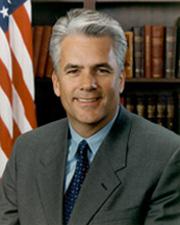 Sen. John Ensign (R-NV)
Legislative Activity
Stay on top of the latest movement without scrolling through every action
Senate amendment proposed (on the floor): Amendment SA 4449 proposed by Senator Dodd for Senator Ensign to Amendment SA 4387.(consideration: CR S2806-2807)
April 9, 2008
View full timeline
Senate amendment proposed (on the floor): Amendment SA 4449 proposed by Senator Dodd for Senator Ensign to Amendment SA 4387.(consideration: CR S2806-2807)
April 9, 2008
Senate amendment agreed to: Amendment SA 4449 as modified agreed to in Senate by Unanimous Consent.(text as modified: CR S2806-2807)
April 9, 2008
Amendment SA 4449 proposed by Senator Dodd for Senator Ensign to Amendment SA 4387. (consideration: CR S2806-2807) To sunset the ability of States to reinvest profits generated under title III, and for other purposes.
April 9, 2008
Amendment SA 4449 as modified agreed to in Senate by Unanimous Consent. (text as modified: CR S2806-2807)
April 9, 2008
Senate amendment submitted
April 7, 2008
Text
Submitted
SA 4449. Mr. ENSIGN submitted an amendment intended to be proposed by
him to the bill H.R. 3221, moving the United States toward greater
energy independence and security, developing innovative new
technologies, reducing carbon emissions, creating green jobs,
protecting consumers, increasing clean renewable energy production, and
modernizing our energy infrastructure, and to amend the Internal
Revenue Code of 1986 to provide tax incentives for the production of
renewable energy and energy conservation; which was ordered to lie on
the table; as follows:

On page 54, strike line 17 and all that follows through
page 55, line 9, and insert the following:
(3) Reinvestment of profits.--
(A) Profits from sales, rentals, and redevelopment.--
(i) 2-year reinvestment period.--During the 2-year period
following the date of enactment of this Act, any revenue
generated

[[Page S2647]]

from the sale, rental, redevelopment, rehabilitation, or any
other eligible use that is in excess of the cost to acquire
and redevelop (including reasonable development fees) or
rehabilitate an abandoned or foreclosed upon home or
residential property shall be provided to and used by the
State or unit of general local government in accordance with,
and in furtherance of, the intent and provisions of this
section.
(ii) Deposits in the treasury.--

(I) Profits.--Upon the expiration of the 2-year period set
forth under clause (i), any revenue generated from the sale,
rental, redevelopment, rehabilitation, or any other eligible
use that is in excess of the cost to acquire and redevelop
(including reasonable development fees) or rehabilitate an
abandoned or foreclosed upon home or residential property
shall be deposited in the Treasury of the United States as
miscellaneous receipts.
(II) Other amounts.--Upon the expiration of the 2-year
period set forth under clause (i), any other revenue not
described under subclause (I) generated from the sale,
rental, redevelopment, rehabilitation, or any other eligible
use of an abandoned or foreclosed upon home or residential
property shall be deposited in the Treasury of the United
States as miscellaneous receipts.

(B) Other revenues.--Any revenue generated under
subparagraphs (A), (C) or (D) of subsection (c)(3) shall be
provided to and used by the State or unit of general local
government in accordance with, and in furtherance of, the
intent and provisions of this section.
(4) Sale requirement.--If a State or unit of general local
government purchases or otherwise acquires an abandoned or
foreclosed upon home or residential property with funds
received pursuant to this section or with any amounts derived
or generated from activities authorized under this section,
that State or unit of general local government shall sell
such home or property by a date that is not later than 4
years after the date of enactment of this Act.
______