To limit the period during which appropriations may be made to carry out this Act and to create a point of order in the Senate against any appropriation to carry out this Act that exceeds the amount authorized for fiscal year 2013.
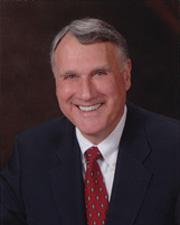 Sen. Jon Kyl (R-AZ)
Legislative Activity
Stay on top of the latest movement without scrolling through every action
Senate amendment not agreed to: Amendment SA 5082 not agreed to in Senate by Yea-Nay Vote. 28 - 67. Record Vote Number: 180.
July 16, 2008
View full timeline
Senate amendment not agreed to: Amendment SA 5082 not agreed to in Senate by Yea-Nay Vote. 28 - 67. Record Vote Number: 180.
July 16, 2008
Roll call votes on amendments in Senate: Amendment SA 5082 not agreed to in Senate by Yea-Nay Vote. 28 - 67. Record Vote Number: 180.
July 16, 2008
Considered by Senate. (consideration: CR S6809, S6832)
July 16, 2008
Amendment SA 5082 not agreed to in Senate by Yea-Nay Vote. 28 - 67. Record Vote Number: 180.
July 16, 2008
Senate amendment submitted
July 15, 2008
Senate amendment proposed (on the floor): Amendment SA 5082 proposed by Senator Kyl.(consideration: CR S6692-6693; text: CR S6692)
July 15, 2008
Amendment SA 5082 proposed by Senator Kyl. (consideration: CR S6692-6693; text: CR S6692) To limit the period during which appropriations may be made to carry out this Act and to create a point of order in the Senate against any appropriation to carry out this Act that exceeds the amount authorized for fiscal year 2013.
July 15, 2008
Votes
1 roll call on this amendment
Text
Proposed
TOM LANTOS AND HENRY J. HYDE UNITED STATES GLOBAL LEADERSHIP AGAINST
HIV/AIDS, TUBERCULOSIS, AND MALARIA REAUTHORIZATION ACT OF 2008--
Continued

The PRESIDING OFFICER. Under the previous order, the Senator from New
Jersey, Mr. Menendez, will be recognized for 15 minutes.
Following his remarks, Senator Domenici will be recognized for 15
minutes.
Following his remarks, Senator Kyl will be recognized to offer an
amendment.
The Senator from New Jersey is recognized.

Oil Price Myths

Mr. MENENDEZ. Mr. President, we are all aware of the seriousness of
the oil crisis. Gas prices are more than three times what they were
when President Bush took office. High prices are forcing some
businesses to cut back or close and forcing some families to choose
between putting a gallon of gas in the tank and putting a gallon of
milk on their kitchen table.
People are demanding honest solutions to our oil crisis. But
President Bush, John McCain, and their allies on the other side of the
aisle have only decided to perpetuate myths, which is what brings me to
the floor.
They have told us offshore drilling will lower gas prices tomorrow.
They have told us oil companies could produce more if we hand over even
more Federal land and water to them. When people spoke about the
dangers of drilling, they claimed no oil was spilled after Hurricane
Katrina and that drilling off the shore of one State would not affect
all the other States around it.
I am here to clear up these myths before it is too late and they take
a life of their own.
Myth No. 1: Drilling immediately brings down gas prices. The biggest
myth, a myth that has been repeated over and over on the floor of this
Chamber, is that opening our shores to drilling will somehow lower the
price of gasoline. Let's get one thing straight; drilling in the Outer
Continental Shelf will do nothing to bring down gas prices--not now,
not ever.
While President Bush is suggesting that drilling will bring down
prices at the pump, his own Energy Information Administration admits
drilling will have no effect. The reason is the amount of oil involved
is a drop in the bucket compared to what we use every day.
Let me put offshore production in perspective. Since April of this
year, Americans have responded to extraordinarily high gas prices by
using over 800,000 barrels of oil less than we did 1 year ago. That is
the most significant and sudden drop in oil demand since the 1970s. Yet
what have we seen since April? We have continued to see record gas
prices.
In recent weeks, in response to record oil prices, Saudi Arabia has
increased its production of oil by 500,000 barrels each and every day.
What has been the effect on gas prices? They continue to go up.
So how does the Bush/McCain drilling plan compare to these recent
events? If we open all our shores to oil production, the first drop of
oil would not be seen for over a decade. Offshore oil production would
peak in the year 2030 and only at 200,000 barrels a day. To put that
number another way, the amount of gas we could get from offshore
drilling is equivalent to a few tablespoons per car per day.
So let's look at the totality of this. If 800,000 barrels per day in
reduced demand by Americans combined with an increase of 500,000
barrels per day of Saudi production--a total shift of 1.3 million
barrels a day--doesn't lower gas prices, how does 200,000 in the year
2030 lower gas prices? If we have seen a shift of both a reduction in
demand and an increase in that supply by 1.3 million barrels a day, and
the price still goes up, how is it that 200,000 barrels in 2030 is
going to do anything? It is a myth.
The second myth we hear is that if oil companies could only lease
more Federal land and water, they would produce more oil. The fact of
the matter is the oil industry has already leased 68 million acres of
land, where they have not produced--for the most part--a single drop of
oil. The oil companies clearly think there is oil there or else why
would they be leasing the land? But they are not using it.
This chart is an example of where all that oil is located. I know our
Republican colleagues have these little sayings, and they are going
around with patches on their lapels saying ``find more, use less.''
This is what they should be telling the oil companies: Find more and
use less. In fact, they are not even pursuing that which they already
have access to.
To get an idea of the scale involved, here is a map showing how much
territory the oil companies control in the Gulf of Mexico. The red part
of the map represents unused acres. It is a huge portion of the gulf
region, going completely undeveloped, which they already have leases
and access to.
Here is an even more impressive map--a map of how much of the Western
United States oil companies control. The black portion shows where
companies are exploring and, again, the red is where they are. As you
can see, the red far exceeds the black portion of the map. These oil
companies control an enormous amount of land. When you add it all up,
it is an area more than 12 times the size of my home State of New
Jersey.
So why are oil companies asking us to hand over more land, when they
have so much land that is already unused? It seems to me there is only
one explanation: Oil companies aren't actually in a rush to drill in
those areas, but they are in a rush to control as much Federal land as
possible before their friends in the White House leave.
Let's talk about myth No. 3. In order to convince us to let this plan
go through, big oil and their supporters want us to believe a third
myth, which is that offshore drilling presents no threat to our
environment and to the economies of States, such as New Jersey, where
tourism is the second multibillion dollar part of our economy.
Many of my colleagues from the Republican side of the aisle,
including Senator McConnell and Senator McCain, have repeatedly denied
that oil spills could happen. They have denied repeatedly that
Hurricanes Katrina and Rita caused any oil to spill.
The picture I have here was taken not by me but by the U.S. Coast
Guard. It shows what happened after the hurricanes: a massive oil spill
that was set on fire to assist in the cleanup effort, as indicated in
this photo.
I don't know what my colleagues on the other side of the aisle would
consider ``significant spillage,'' but I know if I saw this scene on
the New Jersey shore, I would consider it a disaster.
In 2005, Hurricanes Katrina and Rita caused devastation on a massive
scale. The EPA, the U.S. Minerals Management Service, the National
Oceanic and Atmospheric Administration, and the Coast Guard all agree
that the storms caused 700,000 gallons of oil to spill into the Gulf of
Mexico and over 7 million gallons of oil to leak onshore from the
infrastructure that supports offshore drilling.
When oil spills in those quantities take place, it is not isolated to
a small area. Some suggest certain States may want to drill and other
States may not want to drill off their coast, but the devastation
spreads far and wide. When the Exxon Valdez ran aground in Alaska, the
spill was 600 miles wide. The IXTOC I spill in the Gulf of Mexico
traveled 600 miles. That is why the decision to drill cannot be left to
a single State, because the State's actions affect all the other States
in proximity to it.
An oil spill off the coast of Virginia could wash up as far away as
Maine. It could devastate the coastline from South Carolina to New
York.

[[Page S6690]]

In my home State of New Jersey, the shore generates tens of billions
of dollars in revenue each year and supports about half a million jobs.
New Jersey families and businesses cannot afford the risk of a
disaster on the scale of the Exxon Valdez crash or the spills after
Hurricanes Katrina and Rita, with sticky crude washing up on our
beaches, killing our wildlife, collapsing property values, and
destroying our economy in the process.
Let's be honest. If there is drilling off our shore, it is not
guaranteed that there would not be a major spill. These facts show that
to be quite to the contrary. Disasters have happened before and they
will happen again. The question is, Is the risk of a significant
disaster worth the insignificant amount of oil that might come with the
drilling? That answer is, clearly, no.

Now, to my colleagues on the other side of the aisle who say, drill
more and ultimately conserve some, I say our need is to act more and
talk less. Let's do something that really does something about gas
prices.
If we are going to bring down gas prices, we need a better plan.
First, we cannot wait until the year 2030 to get the type of relief we
need in terms of offshore drilling. We need to lower gas prices now.
The last time we opened lease 181 in the Gulf of Mexico, with huge
amounts, ultimately, what happened? That was a year and a half, 2 years
ago. Did prices go down after we opened that section of the gulf? No.
They went up. We cannot wait.
The supply-and-demand equation for oil is basically the same as it
was a year ago--that is what testimony before the Congress tells us by
even the oil executives--and prices have skyrocketed.
We need to check the unchecked speculation on the oil trading
markets, which has driven oil prices higher. We need to see to it that
our commodities markets are functioning fairly, so prices come down
from their artificial highs. Yes, we offer drilling. But let us drill
on the 68 million acres the oil companies have already leased to bring
down the price of oil, not just use it to pad their books and inflate
the price of their stock.
Together with Senators Feingold and Dodd, I have introduced
legislation that sends a simple message to oil companies about the
Federal land they lease: Use it or lose it.
The bill mandates that oil companies either produce on or seek to
develop their existing Federal leases or make way for someone who will.
Most importantly, we need to break our dependence upon oil. Here is the
bigger picture: We can only ever produce a fraction of the oil we use
as a country.
The only way for us to protect ourselves from rising gas prices is to
end our dependence on oil, and that means making immediate, substantial
investments in renewable fuels and conservation.
We should all get behind legislation, which our colleagues are
opposed to, to expand tax credits for renewable energy producers. In
order to boost vehicle efficiency, we should create stronger incentives
for plug-in hybrids, support advanced battery research and research
into cellulosic fuels.
It is time we fully funded mass transit at the level it deserves. We
can do all this in the time President Bush would have us wait for
minimal oil production along our coastlines.
Let's be clear. This coastline drilling plan is not a serious
proposal to help American families today. It is exploitation of pain at
the pump to give yet another handout to the oil companies.
It is long past time to stop repeating the myths that lie at the
bottom of it. Instead of buying into this overhyped, oversold plan, if
we work together, we have the ability and ingenuity as a country to
secure our energy future once and for all.
It is that aspiration that we should, in fact, pursue. It is time we
decide on a plan that looks out not just for the future of the oil
companies but for our future as a nation. That is why our colleagues
should join us in pushing the big oil companies to pursue drilling on
the 68 million acres they have, ensure that they use billions in
subsidies and tax breaks they have been given to invest in renewable
energy and refineries, not stock buybacks to boost their pockets,
tapping into the Strategic Petroleum Reserve to immediately increase
oil supplies, and hopefully by doing so lower prices and stop the
market manipulation that is taking place in the marketplace. Let's get
the Commodity Futures Trading Commission to pursue this vigorously.
Finally, let's aspire to be something more than just today's crisis.
Let's use the ingenuity of America to break our dependence not only on
foreign oil but on domestic oil as well.
We can do all of these things. We are the people on the face of the
Earth who are can-do. It is time for us to begin to deal with that
rather than try to pursue a course of action that will do absolutely
nothing about reducing gas prices, do absolutely nothing about breaking
our dependency on foreign oil, absolutely nothing in terms of our
domestic economy and security.
Those are the choices before the Senate, and I trust we will make the
right ones.
I yield the floor.
The PRESIDING OFFICER. The Senator from New Mexico is recognized for
15 minutes.
Mr. DOMENICI. Mr. President, I just caught some of the remarks of the
distinguished Senator from New Jersey. I don't know whether I will be
able to answer them today, but obviously, in the course of the next few
days or weeks, I will answer every single one. Most are covered in what
I will talk about today.
In the course of the United States of America and the use of crude
oil and natural gas as part of the transportation base of our country
for automobiles, trucks, and the like, and at the same time the natural
gas that has been produced that is being used by our chemical industry,
the heating and cooling of our houses, and all kinds of things, and now
some for automobiles also, in the course of that, yesterday was a
remarkable day. After 27 years of moratorium on offshore exploration
imposed on a year-to-year basis by the Congress and 18 years placed by
the President, the executive branch of Government, which is not year to
year but as long as the President wants it, we had the President of the
United States taking off that Executive order putting a moratorium on
85 percent of the offshore properties in the continental U.S. owned by
every single American. We had the President take off the moratorium and
challenge the Congress to do likewise because without lifting the
moratorium, whether it is the executive branch or the legislative
branch, we cannot explore for oil and gas that we own.
I regret to say that we have been so far off base in terms of
deciding where we would spend our money to help determine our course,
where we are going, that we have not spent the money to go out and find
the inventory, to do an inventory of this huge offshore resource,
including off the California shores, all the way around the Atlantic
and Pacific where there must be billions of barrels of oil that are
going to be developed over the years and literally trillions upon
trillions of natural gas Btu's that are going to be discovered. We
decided there was plenty of oil and gas in the world, so we could put a
moratorium on because we were frightened of what would happen if there
would be spills. We were scared of what would happen if oil might spill
out of one of the pipelines.
I say to everyone, during this 27 years, more or less, of moratoria,
there has been a part of the offshore that has been open. The part that
has been opened is singularly marked by a huge production of crude oil
and natural gas for the people of America, principally off the coast of
Texas, Louisiana, and a little bit of Alabama and Mississippi. But it
has yielded literally millions upon millions of barrels of crude oil
for America and literally scores of natural gas, that little bit that
is open.
How much is open, so we will have it straight? Mr. President, 15
percent, 1-5; 85 percent has a moratorium on it. We have not
inventoried it because we didn't want to spend the money. It cost a
little bit of money to inventory it. So we have a sloppily done
estimate that says we have an awful lot of oil and natural gas on that
85 percent. It is estimated that there are somewhere between 17 billion
and 18 billion barrels. This Senator thinks that is so low that if we
were to do an inventory, I think it would be twice as much or more that
the American people own and we are not doing anything with.
So, yes, indeed, it was a remarkable day when President Bush lifted
that

[[Page S6691]]

moratorium and said to us: You do likewise. Specifically, the President
was saying to us: Do something that will tell the world we are going to
start producing and get that done in a way that will cause those who
are in the fields of buying and selling oil and gas and producing it to
understand that there is another new, huge reserve coming onboard in
due course, some of it in a few years, some of it over the long haul,
but that it is there and America is going to use it.
In response to the President, the majority leader of the Senate, who
has been my friend for a long time, announced that he will introduce
his own bill. I heard the Senator from New Jersey alluding to parts of
it. Probably tomorrow, he said. His bill will focus principally on the
idea that speculators are driving up the price of oil, even though
speculators are only responding to the same supply-demand concerns that
everyone else is. In fact, recently Warren Buffett, the great
businessman, explained the spike in gas prices by saying:

It's not speculation, it's supply and demand. We don't have
excess capacity in the world anymore and that's what you are
seeing in oil and gas prices.

Guy Caruso, the Administrator of the Energy Information Agency, said
speculation was not driving the increase in prices.
Just today, Federal Reserve Chairman Ben Bernanke said:

If financial speculation were pushing all prices above the
level consistent with the fundamentals of supply and demand,
we would expect inventories of crude oil and petroleum
products to increase as supply rose and demand fell. But, in
fact, available data on oil inventories shows notable
declines over the past year.

These experts say that speculation is not the main reason for this
surge.
What really struck me was the majority leader announced he would not
allow amendments at all to his bill. Let me make sure we say this on
the first day after the President raises the moratorium, and so the
moratoria that are left are all dependent on Congress. Whenever
Congress is ready, Congress can change them. And if Congress doesn't do
something, those moratoria will all expire at the end of this fiscal
year. That is the first day of October. They will expire. We will have
to act to keep them on.
But here we have the majority leader announcing that he would not
allow any amendments to his bill that we haven't seen yet--not a single
one, said he. I can't believe the people of this country are going to
buy that, that one man, instead of the Senate, one man in his capacity
as majority leader can say to the Senate: Take it or leave it. Here is
my bill. It hasn't been produced by any committee. It is the bill of
the leader of the Senate, and it principally says: We are going after
speculators, so it is not going to produce any oil, from what we can
see, and he says there will be no amendments.
I really don't believe, I repeat myself, that when the American
people understand that out there for use, for development in the world
market of oil and gas supply sits all this offshore development
potential, and here stands the majority leader of the Senate and he
says: So long as you do it my way, there will be some impact, some
change, but it will only be what I say and not what anybody else
thinks--we have already said on our side--and we are not just a few
people; we are 49 out of 100. We have already said we want to produce
more oil and gas offshore and we want to share the royalties with the
States so that as we go about asking California if they would like to
lift the moratorium and put a 50-mile limit, they could assess with
experts how many hundreds of millions of dollars that State is going to
get from royalties, in exchange for which the American people are going
to have oil and gas drilling off that shore. All across the country,
down in the South where we have a moratorium, the same thing can
happen. There can be an honest, bona fide look by the States under our
proposal. But that won't happen.
The occupant of the chair is one of the most reputable and fair
Senators around. He wouldn't like to see that happen. He is listening
attentively: Is that what I am for as a Democrat? Is that what I am
going to do, say we are running this like the U.S. House, except we
don't have a committee to police the bills because it was never in our
power to do it, but our majority leader is going to be the one who
decides what we take up. You can't amend a bill he puts on the floor on
this energy crisis, this offshore oil which is in a huge new abundance
that we own that sooner or later is going to add substantially to the
supply and thus have an impact on the price of oil and gas for the
American people.
I don't really think the majority leader is going to be able to
prevail on this issue. Understand, he is going to have to have a vote
on a continuing resolution because we are not doing any appropriations
bills. Come time for that continuing resolution, they have to extend
all of these moratoria because those appropriations bills they are
having votes on are not going to get to the floor of the Senate. So we
are going to have a continuing resolution around here and have to get
the votes on it, excepting that I understand right now that the
majority leader wants to bring his own bill to the floor, lay it up,
and not let anybody amend it.
Yesterday he talked about this: You do it my way. Why? You won't get
a chance to vote. Why? Because you lose because you cannot get 51
Senators to vote with you and do nothing to liberate for use these
huge, huge billions and billions of barrels of oil and natural gas in
abundance.
As all of my colleagues know, I have been around here about 36 years.
Some people say that can't be right, but it is, and I am about to make
it the last, soon. I have had a hand in passing a lot of bills. For
many years, I passed a Budget Act every year. I don't think I missed
but once. I was there doing that for about 18, 20, 26 years. You all--
even new Senators have seen what an ordeal that is. If I look stooped
and worn out, it is because I did that for so long before I got this
wonderful job trying to do something about the energy crisis. And we
have done a lot. It is just that the energy crisis is pervasive. You
can do a lot, and nobody knows you have done anything.
I have had a hand in passing a lot of bills, and I have seen what
happens when one party decides it can dictate to the
other. Unfortunately, that is what is happening now. On the most
important economic issue of our time, the majority leader has decided
that he alone--he and he alone--is the only person here who can make
energy policy. The rest of us might as well go home. We can't offer any
amendments and we would be lucky if he even let us have a good debate.

Why? The majority leader knows that one of our ideas is to allow each
individual State to decide if it wants to explore for oil and gas.
Eighty-five percent of the land in the continental United States is
currently off limits for oil. The President lifted his 85 percent; the
same number remains under moratoria from the legislature.
Republicans want to change that. I am pleased that I think some
Democrats want to change that. This area is laden with billions of
barrels of American oil and trillions of cubic feet of natural gas, so
the majority leader knows if you were to have a vote on this subject on
the floor, he may not win. He may not win. And I believe the American
people will have a lot to say about who wins when they understand this
issue plain and simple. The offshore has always been open to
development under certain rules until you put on a moratorium and we
now have one on, put on by the legislature, and it ought to be taken
off. Republicans want to change it and I am pleased to say that,
talking to Democrats, I also believe there are some of them who want to
join us.
The majority leader knows if we were to have a vote on this subject,
he may not win. I put it the other way, he may lose. And even if he
does win, the American people will not like it, since the vast majority
of them agree with us that America ought to be producing more oil
through deep-water exploration. The American people are clamoring for
it. They do it in Norway, Brazil, Great Britain, and many other
nations. So Americans are asking, why not here?
I have heard all kinds of excuses as to why we should not open up the
new areas. The latest one, according to the majority leader, is----
The PRESIDING OFFICER. The time of the Senator has expired.
Mr. DOMENICI. I ask for 3 additional minutes.

[[Page S6692]]

The PRESIDING OFFICER. Without objection, it is so ordered. The
Senator is recognized for 3 additional minutes.
Mr. DOMENICI. I have heard all the excuses I have ever heard of. I
want to close with one. The other side says they are going to put in
some language that says to those companies that own leases: Use it or
lose it. They don't have to put that in their new law because there is
already a ``use it or lose it'' provision. I say to my friend, Senator
Kyl, all of those companies that have leases have either a 5- or 8- or
10-year lease. In each of those leases it says: When the lease expires,
if you are not producing, you lose the lease. That is: Use it or lose
it. So already all the leases say by the time the lease expires--and
they are not long leases. They are 5s and 8s and 10s.
If you talk about a lot of property not being used, it is because
they are going through different phases of evaluating the property to
get it ready for the final decision whether to drill the hole. So we
are not worried about that. We contend that there is no ``use it or
lose it'' necessary because it is already the law under which they
serve today.
There is nobody sitting on it. It is $140-a-barrel oil. If you were
to sit on that, as an oil company, you would be held responsible to
your board and your stockholders for wrongdoing because you ought to
get on with producing it so you don't lose it because it already is a
``use it or lose it,'' and we do not need any new rules.
The President's action yesterday places the ball firmly in our court.
It is a decision we have to make soon because the existing moratoria on
offshore exploration expire at the end of September. But in order to
address any of these problems, the Senate must be able to function as a
deliberative body. As long as we are blocked by the majority from
offering amendments to virtually every bill that comes before us, we
simply can't do that. It is not the right way to govern.
The American people are paying a very high price. We know it. We have
to make sure the American people find out--and first, that those who
disseminate the news find out that in fact this should be open for
debate. Republicans will be reasonable, but we want some amendments and
we want to vote on the disposition of this property which belongs to
everybody. Some of it may have great quantities of natural gas and
crude oil. We have to make some decisions other than: Do it my way. I,
the leader, have a bill. It will be that bill or no bill.
I am sorry to say to my good friend, the leader, he was not that way
before. He should go back as a leader the way he was before and not
think he can do that. He does not own the Senate. He does not run the
Senate in that manner. We didn't give anybody that authority and we
ought to get on with an understanding and agreement in the normal way
that we have always done it and see how this comes out. It will
probably come out right for the American people if we do that. It will
become an asset for them. It will help bring down the prices, and
certainly it will take millions of dollars we would otherwise be
throwing away and we will keep it for ourselves as we keep some of
these oil and gas revenues.
I yield the floor.
The PRESIDING OFFICER. The time of the Senator has expired.
Under the previous order, the assistant Republican leader is
recognized to offer an amendment.
Mr. KYL. I thank the Senator from New Mexico.
Mr. President, are we currently in morning business?
The PRESIDING OFFICER. The Senate is on the bill.
Under the previous order, the minority whip is recognized to offer an
amendment.

Amendment No. 5082

Mr. KYL. Mr. President, I send an amendment to the desk and ask for
its immediate consideration.
The PRESIDING OFFICER. The clerk will report.
The assistant legislative clerk read as follows:

The Senator from Arizona [Mr. Kyl] proposes an amendment
numbered 5082.

Mr. KYL. I ask unanimous consent the reading of the amendment be
dispensed with.
The PRESIDING OFFICER. Without objection, it is so ordered.
The amendment is as follows:

(Purpose: To limit the period during which appropriations may be made
to carry out this Act and to create a point of order in the Senate
against any appropriation to carry out this Act that exceeds the amount
authorized for fiscal year 2013)

On page 129, strike line 21 and all that follows through
``(b)'' on page 130, line 3, and insert the following:
(a) In General.--Section 401 of the United States
Leadership Against HIV/AIDS, Tuberculosis, and Malaria Act of
2003 (22 U.S.C. 7671) is amended--
(1) in subsection (a), by striking ``$3,000,000,000 for
each of the fiscal years 2004 through 2008'' and inserting
the following ``--
``(1) $40,000,000,000 for the 4-year period beginning on
October 1, 2008; and
``(2) $10,000,000,000 for fiscal year 2013.''; and
(2) by striking subsection (c).
(b) Point of Order Against Any Appropriation That Exceeds
the Amount Authorized.--
(1) Point of order.--Subject to paragraph (2), it shall not
be in order in the Senate to consider any bill, joint
resolution, amendment, motion, or conference report that
contains an appropriation to carry out this Act or any
amendment made by this Act that exceeds the amount authorized
to be appropriated for such purpose under this Act or any
amendment made by this Act.
(2) Waiver and appeal.--
(A) Waiver.--Paragraph (1) may be waived or suspended in
the Senate only by an affirmative vote of \3/5\ of the
Members, duly chosen and sworn.
(B) Appeal.--An affirmative vote of \3/5\ of the Members of
the Senate, duly chosen and sworn, shall be required to
sustain an appeal of the ruling of the Chair on a point of
order raised under paragraph (1).
(c)

Mr. CARDIN. Mr. President, I ask unanimous consent that Senator Kyl
be recognized for up to 5 minutes for debate only, and that following
his remarks, Senator Klobuchar be recognized to speak for up to 5
minutes as in morning business.
The PRESIDING OFFICER. Is there objection?
Mr. KYL. Mr. President, I ask unanimous consent the agreement be
amended by also providing that Senator Judd Gregg would follow Senator
Klobuchar.
Mr. CARDIN. That is fine.
The PRESIDING OFFICER. Without objection, it is so ordered.
Mr. KYL. Mr. President, it will only take me 5 minutes to describe
this amendment. If we need to have debate about it later, we can
certainly do that.
This is an amendment to the bill. The bill, recall, provides for an
authorization of $50 billion over 5 years. If you divide $50 billion by
5 years, you get $10 billion a year. All my amendment does is to
provide that, at least in the last year of the 5 years, the
appropriation to fill the authorization would be limited to $10
billion. If it were more than that, there would be a point of order
that would lie against that.
The reason for the amendment is twofold. First, the House of
Representatives provides for an annual authorization of $10 billion per
year for 5 years. The Senate bill doesn't break it down that way. We
are open as to that. I am not trying to limit what the appropriations
would be during years 1 through 4, but what I am saying is the fifth
year would be $10 billion, exactly one-fifth of the amount authorized.
The second reason is this. Frequently in the reauthorization of
legislation we take as the baseline the last year of appropriations. I
want to make sure if we are authorizing $50 billion that when we get to
the end of this, the baseline for the next year is at least not going
to exceed $10 billion, which would be one-fifth of the $50 billion. It
turns out under the existing program we have not limited ourselves to
that degree of discipline. The existing law authorizes $15 billion over
5 years. You would think that would be $3 billion year. If you think
that, you would be wrong. What the Appropriations Committee has done is
to appropriate more money than that authorized. In the last year, the
current year, for example, there is about $6 billion that has been
appropriated as a result of which, over the 5-year period, the total
amount appropriated is just under $20 billion. That is $20 billion
appropriated for a $15 billion authorization.
All I am trying to do is to keep us honest here. If we are saying
this is going to be a $50 billion authorization--I think that is way
too much money--let's leave it at $50 billion. All my amendment does is
to say in the last year, the appropriation to fulfill that would be
limited to $10 billion. I think that is eminently reasonable.

[[Page S6693]]

To those who say, ``We are going to oppose all amendments to the
bill, let's just do it the way it was written,'' I say think for a
moment. You are going to make people feel a lot better about this if
there is some discipline in our spending in furtherance of the
authorization. There is some degree of skepticism, at least by some on
my side, that Congress will restrain itself to the level of
authorization.
This amendment doesn't go as far as the House in setting an amount
every year, but it does at least set an amount for the last year.
Theoretically, we could appropriate more than $50 billion. In the first
4 years you could appropriate $12 billion a year. This amendment
doesn't prevent that. But I do want to say in the last year we confirm
the discipline of limiting it to $10 billion.
That is the extent of my amendment. I hope my colleagues will approve
it. We don't need a great deal of debate time, as far as I am
concerned. If somebody wants to argue against it, I wish to have the
last word and then have a vote on it as soon as is agreeable to the
Members on the other side.
The PRESIDING OFFICER (Mr. Pryor). The Senator yields back his time.
Under the previous order, the Senator from Minnesota, Ms. Klobuchar,
is recognized.

Climate Change

Ms. KLOBUCHAR. Mr. President, as you noted, I come from the State of
Minnesota and the State of Minnesota is a State that believes in
science. We brought the world everything from the Post-it note to the
pacemaker. We are the home of Mayo Clinic and the University of
Minnesota. We believe in science. As a former prosecutor, I also
believe in evidence. What we have been hearing from this
administration, time and time again, whether it is about energy
policy--where they have actually done literally nothing the last 8
years when it comes to pushing us forward to where we should be when
you look at the rest of the world with technology and hybrid cars and
electric cars and new gas mileage standards which came out of this
Congress, or whether it is about climate change, which I am about to
address today--they have been living in an evidence-free zone. It is
time to bring out the evidence.
The administration made headlines twice last week in its ongoing
effort to do nothing about climate change. We learned there was
political interference with science--political interference with the
evidence and the facts. We also learned the administration will not
issue the global warming regulations mandated by the Supreme Court.
I am a member of the Environment and Public Works Committee. Some of
my colleagues might recall last fall when Dr. Julie Gerberding, the
Director of the Center for Disease Control and Prevention, was invited
to testify before our committee. She was invited to testify on how
climate change could impact public health. Unfortunately, her testimony
that she delivered was markedly different from what she and her staff
at the CDC had prepared. The Office of Management and Budget got its
hands on the speech and removed about 7 pages that discussed the impact
of global warming--7 pages redacted. These pages included explanations
and descriptions of the links between climate change and heat stroke,
weather disasters, worsening air pollution, allergies, food and
waterborne infectious diseases, mosquito and tickborne infectious
diseases, and food and water scarcity. I would say those things seem
very relevant to the job of the head of the CDC, and something she
should be allowed to testify about when it comes to climate change.
Well, at the time there was brouhaha because someone leaked the
actual testimony, a whistleblower brought it to our attention.
At the time, the White House claimed they needed to edit it because
of its ``broad characterizations about climate change science that
didn't align with the U.N. Intergovernmental Panel on Climate Change
Report.''
Last fall, we provided a number of examples of how her testimony was,
in fact, closely aligned with that report. Her testimony, in fact,
included the statement that:

The west coast of the United States is expected to
experience significant strains on water supplies as regional
precipitation declines and mountain snowpacks are depleted.

She went on to say:

Forest fires are expected to increase in frequency,
severity, distribution, and duration.

In fact, the IPPC has found that ``warm spells and heat waves will
very likely increase the danger of wildfire.''
So they were completely consistent, and I do not have to tell anyone,
you do not have to read a report on what has been going on in
California in the past 2 weeks.
Global warming did not cause these fires, but it certainly
intensifies the three main causes of wildfires: high temperatures,
summer dryness, and long-term drought.
Minnesotans know when the wool is being pulled over their eyes. Let's
face it, the Bush administration did not change Dr. Gerberding's
testimony because of concerns regarding accuracy. They did not worry
about if it matched with that record because it, in fact, exactly did.
They did it for political reasons.
So it was no surprise to me when the news broke last week that both
the Office of the Vice President and the President's Council on
Environmental Quality had actually stepped in to interfere with her
testimony. This revelation came to us from Mr. Jason Burnett, a former
Deputy Administrator of the EPA, who informed Chairman Boxer that he
had been approached by the Council on Environmental Quality staff and
asked to work with the CDC to remove from the testimony any discussion
of the human health consequences of climate change.
Upon reviewing the original testimony, Mr. Burnett came to the same
conclusion we have reached since: The science was correct. He did not
think he should alter the statement. He was not operating in an
evidence-free zone. He wanted the facts out there. He wanted
information out there.
I am sorry to report that even though the administration has been
caught redhanded in this behavior, time and time again, it has not
stopped them from continuing their interference with scientific facts.
Last week we learned the Office of Management and Budget has been
sitting on an e-mail from that same former Deputy Administrator of the
EPA regarding the endangerment of public health or welfare from global
warming.
The OMB received this e-mail, and once they realized what it
contained----
The PRESIDING OFFICER (Mr. Lautenberg). The Senator's time has
expired.
Ms. KLOBUCHAR. I ask unanimous consent for 1 additional minute.
The PRESIDING OFFICER. Without objection, it is so ordered.
Ms. KLOBUCHAR. The OMB received this e-mail. Once they realized what
it contained, they first tried to make Mr. Burnett take it back, and
then they actually tried to bury it.
We also learned last week of the administration's decision to leave
office without taking any regulatory action to address climate change.
This is wrong. The bottom line is that this White House is leaving it
to the next President to show leadership, to show leadership on energy,
and to show leadership on climate change.
I cannot say it more plainly than this: Our climate is changing. If
we do not act to stem the tide, it will have grave and disastrous
impacts on every single facet of our lives, from our health, to our
economy, to our foreign policy.
It should begin with science, it should begin with evidence, it
should end with science, and it should end with evidence. That is how
we will come to the right policy outcome. We cannot have the wool
pulled over the eyes of the American people anymore.
I yield the floor.
The PRESIDING OFFICER. Under the previous order, the Senator from New
Hampshire is recognized.

Amendment No. 5081

Mr. GREGG. Thank you, Mr. President, I call up amendment No. 5081.
The PRESIDING OFFICER. Without objection, the pending amendment is
set aside.
The clerk will report the amendment.
The bill clerk read as follows:

The Senator from New Hampshire [Mr. Gregg] proposes an
amendment numbered 5081.

Mr. GREGG. Mr. President, I ask unanimous consent that the reading of
the amendment be dispensed with.
The PRESIDING OFFICER. Without objection, it is so ordered.

[[Page S6694]]

The amendment is as follows:

(Purpose: To strike the provision requiring the development of
coordinated oversight plans and to establish an independent Inspector
General at the Office of the Global AIDS Coordinator)

On page 38, strike line 15 and all that follows through
``(e)'' on page 40, line 20 and insert the following:''.
(e) Inspector General.--
(1) Establishment.--Section 11 of the Inspector General Act
of 1978 (5 U.S.C. App.) is amended--
(A) in paragraph (1), by inserting ``the Coordinator of
United States Government Activities to Combat HIV/AIDS
Globally;'' after ``Federal Deposit Insurance Corporation;'';
and
(B) in paragraph (2), by inserting ``Office of the U.S.
Global AIDS Coordinator,'' after ``Nuclear Regulatory
Commission,''.
(2) Authorization of appropriations.--There is authorized
to be appropriated $10,000,000 for each of the fiscal years
2009 through 2013, to carry out the duties of the Inspector
General of the Office of the Global AIDS Coordinator.
(f)

Mr. CARDIN. Mr. President, I ask unanimous consent that no second-
degree amendments be in order to the Gregg amendment.
The PRESIDING OFFICER. Without objection, it is so ordered.
Mr. GREGG. Mr. President, this amendment, I do not know why we are
taking up this amendment at all. It is an amendment which is going to
try to make funds spent under this bill be responsibly spent. It sets
up an IG to review how these funds are spent.
We are taking a program which we presently spend $15 billion on and
we are tripling it, we are doing more than tripling it, we are taking
it to more than $50 billion. I know the taxpayers of America would hope
and expect that when we take a program and radically expand it in this
manner, we would expect that those dollars be spent efficiently and
effectively.
Now, we put inspectors general into a lot of different programs
around here. There are programs which spend less than $20 million that
have inspectors general tied to them. It is only reasonable that if you
are going to take a program and radically expand it, the way this
program is being expanded, which will lead to significant pressure to
push money out the door, and, unfortunately, that quite often leads to
instances where the money is not well spent, that you should have
someone looking over the shoulders of the folks who are spending the
money and saying: Is this money being spent for what, first, it was
intended to do, which is to help people in nations who are suffering
from the plague of AIDS, specifically, and, secondly, that people who
are the recipients of those dollars are handling those dollars in a way
where the dollars are not being wasted or handled in a corrupt manner.
Now, one of the unfortunate factors involved in the PEPFAR Program is
that many of the countries which receive PEPFAR funds are countries
which have governments which are not all that committed to integrity
and are not transparent at all. In fact, a corruption index by
Transparency International took a look at the various countries around
the world to determine which countries are basically corrupt and which
are not; which have governments that function under the rule of law and
which do not, and which governments end up with a large amount of
patronage, waste, and fraud when they manage their funds.
This map shows that conclusion of that index. The darker the colors
get on this map, the more problematic is the nation relative to the
issue of transparency and integrity in their government. Well, as you
look at this map, you maybe cannot see it, but there are little yellow
stars on the countries which are going to be receiving most of the
PEPFAR funds or are presently receiving PEPFAR funds.
Almost all those countries are nations which have serious issues on
transparency and where the governments have some questions about
integrity and management and waste.
So it is very reasonable that we should put in place an inspector
general within the Office of the Global AIDS Coordinator to make sure
these dollars, which are fairly significant--in fact, they are dramatic
when you look at the increases--are being spent well. You know,
American taxpayers and most Americans are extremely generous people. We
as a nation are generous. There is no other nation in the world that
has stepped up to the AIDS fight, especially in Africa, the way we
have. I congratulate this Administration for taking the lead on that. I
congratulate Senator Lugar for being one of the leaders on this effort
and Senator Biden.
They are reflecting, the President and the leadership of the Foreign
Relations Committee are reflecting the inherent nature of the American
people, which is to try to help people out who have problems. We
recognize AIDS is a scourge, and it is a terrible situation, especially
in these African countries.
But the American people also expect that when they are generous with
their dollars, as they are being under this program, and have been
under this program, that these dollars are going to be well used; they
are not going to end up in the pocket of some cousin of somebody who is
going to be running the program; or not end up in a Swiss bank account
or not end up going for somebody's new Mercedes or, alternatively, they
are not going to go into an NGO, a nongovernmental organization, which
rather than being an efficient provider of care, turns out to be simply
a place where a lot of money is spent on administration, instead of a
lot of money being spent on trying to cure or address the problem of
AIDS.
One of the ways we accomplish that, to make sure we have accurate
accountability, is through the use of inspectors general. Now, some
will say: Well, there is already an inspector general who can be
responsible for this money. Well, those inspectors general who would
logically have jurisdiction over these dollars are spread thin in their
responsibility; they have a lot of other accounts to cover. It is not
like this is a small account. Under this bill, this account explodes.
So we have actually set up inspectors general in other accounts which
are much smaller and had no problem with that. Inspectors general do
not cost a lot of money actually, and they get a pretty good return on
the investment, usually, because these individuals set up small offices
of people who have oversight of the dollars that are being spent. They
usually end up saving enough money to easily justify their existence.
But we have an inspector general, for example, in programs such as
the Smithsonian Institution, which is not very significant compared to
PEPFAR; programs such as the Postal Regulatory Commission, which is
almost nonexistent on a spending level compared to PEPFAR; we even have
an IG for the Denali Commission, and obviously for the Library of
Congress and National Archives; two organizations which I suspect do
not need an inspector general because they are pretty well managed
organizations, to say the least. But we put inspectors general in those
positions in order to make sure the American tax dollars are
efficiently, effectively, and appropriately used and that the programs
that are supposed to be addressed are addressed.

Well, there is resistance, for some reason, to putting an inspector
general into this program. I cannot understand it. I mean, it is just
logic that you would, when you are expanding a program at this rate, do
that, put an inspector general in. So I would hope there would not be
opposition to this amendment, that it would be accepted, that we would
take this responsible action.
If we do not, I have to ask the question: What is all this new money
going to be spent on? Is there some plan we have not been informed of
that is of a nature that does not want to have oversight, that does not
want to have a legitimate review of the way the money is spent?
Are there groups out there thinking they are going to have this money
and have the influence to basically stop before it even starts the
accountability of those groups? Are there countries out there that fall
into that category? It would seem there would have to be if there is
resistance on the inspector general program for this proposal.
So that is why I hope it will be supported. On the side issue, which
is actually not a side issue, it is an overriding issue, but it does
not relate so much to the inspector general. On the spending side, this
initiative in PEPFAR is a huge expansion of a program, just massive.
This year we are going to go from a budget deficit last year that was
$177 billion to a budget

[[Page S6695]]

deficit that is already projected by CBO as being well over $400
billion.
Because of the slowdown in the economy, which has slowed revenues,
because of the slowdown in the economy, which is putting more pressure
on us to come in and support various activities in the marketplace such
as our banking industry and our housing industry, that number will
probably even go up, probably well over $400 billion, we could be
headed to a $450 or $500 billion deficit in 1 year, this year, 1 year,
a massive expansion in the deficit which fundamentally undermines our
Nation and, in the long run, it adds to our debt.
These young people down here who are pages today are going to end up
picking up that bill. It is going to be passed to them. So we do have
to be very responsible when we decide to expand programs in the face of
the deficit because all this new spending that is going to come in on
PEPFAR is either going to be borrowed or it is going to have to come
from other programs.
Now, let me try to impress upon people how big this expansion is. In
relation to our foreign aid account, which I have jurisdiction over, to
some degree, because I am the ranking member of the Foreign Aid
Committee in the Appropriations Committee. This is a pie chart that
shows today's international development aid program. PEPFAR represents
a fairly significant portion under today's funding level, which is at
$15 billion authority. It represents about a quarter of what the
foreign aid funding is.
Well, after we pass this bill or after this bill gets passed, because
I am not planning to vote for it in its present profligate state, even
though I support the basic program and would support a reasonable
increase in it, PEPFAR is going to represent about 77 percent of all
foreign aid development money.
The question becomes, what happens to all these other accounts? If I,
as ranking member, and Senator Leahy, as chairman of this committee--
and maybe that will be reversed next year; it has been reversed in the
past--are responsible for dividing up this development aid money, how
is it going to work? We are going to receive an allocation. That is
what we will get from the full Appropriations Committee after the
Budget Committee acts, of which I also happen to be ranking member. I
don't expect that allocation to be increased by 25 percent. There has
never been a whole lot of enthusiasm for dramatically ramping up
foreign assistance in this body. So I don't think we are going to see a
20- to 25-percent increase in our allocation, which is what it would
cost to fully fund PEPFAR and keep that funding from impacting the
other programs.
The last couple of years we have received an increase--3 percent, 5
percent, 4 percent. Let's presume we continue with that increase level.
Let's presume we get the increases we have received in the last couple
of years which have been bigger than most other accounts have received
in the Federal Government that are not related to defense. That is
still going to leave literally somewhere around $8 billion--
potentially, $6 to $8 billion, by my guesstimate--we are going to have
to find somewhere else, if we are going to fully fund the PEPFAR
Program.
People say this is an authorization. We pass authorizations all the
time. Everybody knows that is a number put out there for the political
purpose of making a statement about how important the program is.
In this instance, that is probably not the case. When you are talking
about funding AIDS and the fight against diseases such as malaria in
Africa, there is a consensus that we need to be aggressive and
participate. I fully expect this authorization will be very close, if
not fully funded. So where are we going to get the money? We are going
to have to take it out of other foreign aid accounts because of this
threefold increase, going from a $15 billion program to a $50 billion
program. That is a tripling of the program.
The accounts that are going to be impacted are pretty popular
accounts. They are going to be cut. We are going to have to cut funds
to Israel. We will have to cut funds to Egypt. We will have to cut
educational and communications funding we are making in the Middle East
and in the Arab world to try to communicate our message over the
message of al-Qaida and the radical Muslim fundamentalist movement. We
will have to cut the Foreign Agricultural Service, the international
narcotics and Andean initiatives, the migration and refugee assistance
disaster program. The USAID organization itself will be cut
significantly, operations and people on the ground. Child survival and
health programs will be cut. Obviously, the Millennium Challenge will
be cut, and sustainable development assistance programs will have to be
cut. They will simply have to be cut. You can't produce these types of
funds for PEPFAR at this rate of increase without making reductions. I
believe PEPFAR is a program that is a success. I believe we as a nation
have done the right thing and stepped up to what was our responsibility
as a nation. I certainly support a reasonable increase that is, as the
administration suggested at one time, around $30, $35 billion as a 5-
year number. That is a pretty big increase. That is double. But this
bill goes too far; $50 billion is simply too much for this budget and
for the Appropriations Committee, on which I have some responsibility,
to handle, unless we will start running a surplus where we can find
funds. I put out that red flag.
This is a feel-good vote. Everybody is going to vote for it. People
want to make a statement. But this statement is going to have
consequences. I suspect a year from now, when people insist on full
funding for this over the next 5 years, people will be a little upset
about the accounts that will have to be reduced into in order to
accomplish that full funding. That is a red flag I am putting out.
The issue I am talking about today is whether we will put in place a
process where the American taxpayer, no matter what the final dollar
figure is, can have some confidence that money going into these
nations, which have been identified as having fairly significant
problems, for the most part, with the way they handle money, is going
to be efficiently and effectively used so that we actually do care for
people who have AIDS, so that we do get money out to that mother and
child who suffer from these conditions.
I certainly hope Members would look favorably on this amendment, put
in place an IG on an account that is fairly significant and a lot
bigger than a lot of other accounts that have inspectors general and
which cries out for review because it is going into areas which are not
quite as stable as the National Archives. The National Archives is
pretty stable. The Library of Congress is a pretty stable place. You
pretty much can figure out what is going on there when money goes to
those folks. But when you send money into some of these nations which
are governed, in many instances, by people who are not subject to the
rule of law as we are, or to transparency rules as we are, you need to
think about having somebody look over the shoulder of the folks
spending the money to make sure the American taxpayer gets what they
pay for and that this deep commitment by Americans to compassion,
especially on the issue of AIDS, leads to actual positive action rather
than simply people going out and wasting taxpayers' dollars or using it
in a fraudulent way.
I reserve the remainder of my time and yield the floor.
The PRESIDING OFFICER. The Senator from Indiana.
Mr. LUGAR. Mr. President, I rise to oppose the amendment offered by
the distinguished Senator from New Hampshire, Mr. Gregg. I would say,
to begin with, I clearly agree with the oversight goals he seeks to
achieve. But the underlying bill we are considering today creates a
strong inspector general infrastructure for PEPFAR, and it constructs
it at less cost than the proposal made by the distinguished Senator
from New Hampshire.
To begin with, PEPFAR has set a high standard for results-based,
accountable development programs both within our own Government and in
the international community. PEPFAR has been among the most evaluated
of new programs in the U.S. It has been the subject of five GAO reports
already completed, with a sixth on the way, examining operations and
expenditures. The inspectors general of the Department of State and
USAID have so far conducted evaluations of 10 of the 15 focus countries
of PEPFAR. These inspections have occurred in South Africa, Guyana,
Nigeria, Tanzania, Haiti,

[[Page S6696]]

Uganda, Rwanda, Zambia, Ethiopia, and Kenya. The Institute of Medicine
conducted a congressionally required multiyear evaluation entitled
``PEPFAR Implementation: Progress and Promise.'' Another review is
required by this bill we consider presently. The inspector general of
Health and Human Services is currently conducting an extensive
financial audit on all PEPFAR funding received by HHS from the State
Department for the fiscal years 2004 through 2008. The Peace Corps,
beginning in September, will be conducting an internal management
assessment on PEPFAR implementation in Ethiopia.
Clearly, officials are paying close attention to how PEPFAR money is
being spent. This is particularly important given that various agencies
all apportion funds through the office of the Global AIDS coordinator.
It is their money, and they know they must account for it. That is why
our bill calls on the Global AIDS coordinator to expend some $15
million to fund these IG efforts to ensure that they have adequate
resources.
Based on a recommendation from the State Department inspector
general, the U.S. Global AIDS coordinator has formally requested that
the inspectors general of PEPFAR agencies submit a joint memorandum
describing options, feasibility, and estimated costs of conducting a
collective independent financial audit of U.S. Governmentwide PEPFAR
funds.
The State Department's inspector general has confirmed that he is
acting on this request and will be inviting all PEPFAR IGs to come
together to develop plans by the end of July.
In addition to the additional funding of inspector general
operations, the managers' bill requires the submission of an annual
coordinated audit plan by the Department of State, USAID, and the
Department of Health and Human Services in relation to PEPFAR, in
collaboration with all PEPFAR implementing agencies and the GAO.
In this context, a stand-alone inspector general for PEPFAR,
suggested by the distinguished Senator from New Hampshire in his
amendment, may not be the best way to evaluate the program. I believe
we now have a strong system of oversight already in the bill that
recognizes the participation of many agencies in our antidisease
programs. I believe we should retain that system.
I would point out that I share the distinguished Senator's views with
regard to economies, but I am suggesting that the inspector general
results that he anticipates can be achieved for less money. This is why
I have outlined, tediously and laboriously, specifically all of the
audits that have already been conducted, plus the ones now being
coordinated by the Department of State. I take seriously, as I think
all Senators do, the thought that these moneys must be carefully spent
in whatever country they may reside. I would simply say this is why I
have enumerated the 10 countries in which extensive examination has
already occurred, with the five to go to be completed shortly.
Finally, clearly the Congress does have to make choices with regard
to expenditures. We all take that responsibility seriously. I come, as
do many Senators today, as an advocate for the PEPFAR Program, for all
of the reasons we have expressed in outlining the introduction of the
bill. In very quick review, they come down to the saving of hundreds of
thousands of lives, the alleviation of extraordinary suffering on this
Earth, and from the standpoint of our foreign policy, one of the
strongest ways in which the United States has made an impact on a
number of countries in which our public diplomacy or diplomacy of any
sort has not been very successful in the past. We make an impact
because people in those countries know that we care. We do care for the
people, but we also care for the relationships and for the roles these
countries play in the formulation of world peace and in preservation of
a world in which we all do better.
Therefore, the PEPFAR Program does have merit and, I believe,
extensive popularity not only in our country but in so many other areas
of the world in which we have served. That does not obviate for a
moment the need to carefully detail precisely the results that I
believe we have tried to take account of, and I believe have done so
with economy in the underlying bill.
Mr. GREGG. Will the Senator yield for a question?
Mr. LUGAR. Of course.
Mr. GREGG. It is my understanding that presently the inspectors
general for Defense, for Labor-HHS, the State Department, and the USAID
all have line responsibility for PEPFAR; is that not true?
Mr. LUGAR. That is essentially true. Each has responsibility for
those programs that are a part of their jurisdiction and their funding.
Mr. GREGG. It is also my understanding that every one of those
agencies which I have listed has billions--and in the case of HHS and
Defense, hundreds of billions of dollars--to be sensitive to as to how
they are being spent.
The only IG who I believe has done any reports of those five who
theoretically have been charged with that responsibility of overlooking
PEPFAR spending is, as I understand, USAID, which is using a small
number of its membership to do that, and spending, I think, less than
$1.5 million a year on that program.
So doesn't it make sense that we should acknowledge the fact that
these very large entities--Defense, Labor-HHS, USAID, and State--
probably on their radar screen of relative issues are not going to
place PEPFAR very high and we should have, instead, an individual in an
office which does place it right at the center of its responsibility to
make sure the money is being spent well?
Mr. BIDEN. Mr. President, will the Senator yield for a----
Mr. GREGG. That was a question.
Mr. BIDEN. That was a question? Oh. I am sorry.
Mr. LUGAR. And my response, at least, would be that very clearly each
of the agencies does take it seriously. But I have outlined how all are
to be brought together by our Federal Government in a coordinated way.
It appears to me the inspector general function occurs in this manner
with the same results and for less money than the Senator's amendment
would suggest, and that is that an independent effort going outside of
all of this is not productive in terms of savings, either on the face
of it or in terms of fraud and abuse that might be found. But that,
obviously, is the nature of our debate, and I respect the Senator's
opinion.
Mr. GREGG. I thank the Senator.
The PRESIDING OFFICER. The Senator from Delaware.
Mr. BIDEN. Although the question was not asked of me, before the
Senator leaves the floor, I say to the Senator from New Hampshire, if I
could point out one of the problems--this may well have been mentioned,
and I apologize if it has--but essentially what the Senator is
suggesting is going to require us not only to set up a new agency, but
an agency that does not have any experience overseas and an inspector
general who will basically start from scratch.
These are two binders full of the reports, which I hold in my hands,
that have been done thus far by the present system of the three
different agencies: State, Health and Human Services, and AID. They
have considerable experience in going into the field overseas, knowing
their way around. Part of this has to do with knowing your way around.
I used to have a friend who was a great basketball player. He wasn't
the brightest candle on the table intellectually, but he had a great
expression. He said: You gotta know how to know. These guys know how to
know. They know where to look. They have been doing some versions of
this overseas for the last 30 years in the case of State and AID.
I am not going to dare suggest this material be printed in the
Record, but I have here two large binders full of reports of the IGs,
the coordinated efforts here, mostly done through State and AID, of
overseeing these programs. The last point I will make: It is
overwhelmingly in their interest to see that this money is spent well
because it affects so many other aspects of their ability to provide
the kinds of services the 150 account provides out of the whole effort
we have for development and diplomacy.
I thank the Senator from New Hampshire for being kind enough to hang
around and listen. To use President

[[Page S6697]]

Reagan's expression, ``If it ain't broke, don't fix it''--it ain't
broke. It costs more money to fix it, in my view. I believe the
agencies in place, coordinating their efforts, have vastly more
experience in knowing where to look and determining whether the money
is being spent as intended.
Mr. President, the Global AIDS program is operated in this way: a
special coordinator, Dr. Mark Dybul, sits in the Department of State,
and provides policy development and guidance to the agencies in the
field implementing the program.
The main agencies implementing the program in the field are the
Agency for International Development and the Centers for Disease
Control and Prevention, or CDC.
Ambassadors in the field, in every country where PEPFAR operates,
provide overall supervision.
So there are three main agencies involved--the Department of State,
the Department of Health and Human Services, and the U.S. Agency for
International Development.
There are others, such as Peace Corps and the Defense Department, but
these are the big three.
All three agencies--State, AID and HHS--already have an inspector
general. These were created by Congress a long time ago.
In the last several years, the volume of audit and inspection reports
prepared by these entities on the PEPFAR program and the President's
Malaria Initiative fills these two large binders, which run hundreds
and hundreds of pages in length.
The AID inspector general alone has conducted 25 audits and made
nearly 100 recommendations.
The State Department inspector general has reviewed PEPFAR activities
at 10 overseas posts during embassy inspections.
In the last 3 years, there have been five GAO reports, and another
one is underway.
The Global AIDS coordinator, Dr. Dybul, has formally requested that
the PEPFAR agency inspectors general get together on a collective
financial audit.
In other words, there is already a lot of work that is being done.
But in order to ensure that it continues and indeed increases, the bill
before the Senate has a provision on this very point--a provision that
the Senator's amendment would strike.
It requires the three inspectors general from these agencies to come
up with a coordinated annual plan to review the programs under this
act. And then it provides $15 million that is specifically allocated to
this work, out of the $50 billion in this bill.
So we have already addressed the Senator's concern in a way that
builds on an existing structure, which will save taxpayer dollars and
will ensure a coordinated effort.
The Senator's amendment, by contrast, requires us to build a whole
new outfit from scratch.
It calls for $10 million in annual funding, or $50 million over the
life of the bill--almost as much as Dr. Dybul's own office spends to
manage the entire program.
As everyone knows, these programs are implemented overseas, not only
in the 15 ``focus countries,'' but dozens of other countries.
The inspector general for the Agency for International Development
has several overseas offices--including two of them in sub-Saharan
Africa, in South Africa and Senegal--that do the bulk of the audit
work.
The State Department inspector general sends teams out to inspect
every embassy every 5 years or so. During these inspections, they
review aspects of the PEPFAR program.
How will this new office be able duplicate this existing
infrastructure? Where will these overseas offices be located? What are
the startup costs for all this?
Do we really need a special IG for every $6 billion program we create
in the Government? Why do we bother to fund the permanent IGs?
Where will staff be recruited for this new IG? The community of IGs
in the Government is already struggling to find competent auditors and
investigators. The new IG will almost certainly end up poaching staff
from existing IGs, thereby weakening those offices. Is that a result we
want?
I think it makes no sense to start over, when we have existing
outfits that can do the job. I oppose this amendment.
I yield the floor.
Several Senators addressed the Chair.
The PRESIDING OFFICER. The Senator from Louisiana.
Mr. GREGG. Mr. President, I was seeking recognition.
The PRESIDING OFFICER. Forgive me. The Senator from New Hampshire.
Ms. LANDRIEU. Mr. President, I have a question. I have a question, if
the Senator from New Hampshire would yield.
I understand I was put in order to speak after Senator Lugar. Could
someone clarify the order we are speaking, please, because I most
certainly do not mind waiting.
Mr. GREGG. Mr. President, I make a point of order that a quorum is
not present.
Ms. LANDRIEU. OK, Mr. President, then I will go ahead and take the
floor, then. Thank you for recognizing me.
Mr. GREGG. Mr. President, I make a point of order that a quorum is
not present.
The PRESIDING OFFICER. To the Senator from Louisiana, there is no
order to that effect.
Ms. LANDRIEU. Thank you, Mr. President.
Mr. CARDIN. Would the Senator yield for a moment?
Ms. LANDRIEU. I would.
Mr. CARDIN. I think it was the intention to allow the Senator from
New Hampshire to finish on his statement.
How much time does the Senator from New Hampshire need to respond?
The PRESIDING OFFICER. The Senator from New Hampshire had been
recognized.
Mr. CARDIN. Yes. I think he was seeking to finish on his amendment.
And then the Senator from Louisiana was supposed to follow the Senator
from New Hampshire. So the proper order would be to allow the--
The PRESIDING OFFICER. The Senator from New Hampshire is recognized,
and the Chair will announce the order.
Ms. LANDRIEU. Mr. President, I would be more than happy to wait. I
was given some other information, and I apologize to the Senator from
New Hampshire.
The PRESIDING OFFICER. The Senator from New Hampshire.
Mr. GREGG. Well, Mr. President, I am not sure what has happened here,
but I was seeking recognition. I do not believe I had lost the floor,
and I think it is inappropriate that I was taken off the floor. I am
not going to continue this debate at this point, and I will yield to
the Senator from Louisiana and let her proceed.
The PRESIDING OFFICER. The Senator from Louisiana is recognized.
Ms. LANDRIEU. Thank you, Mr. President.

High Gas Prices

Mr. President, I wanted to come to the floor to speak, actually, on a
different subject, and I am very sorry that the wires got crossed about
the debate that is on the floor because I know it is very important to
try to pass this bill we are speaking about before we leave this week.
But there is another issue that is very important to our constituents
as well. That is the issue of high gas prices in America.
I know there are many people who are concerned on this Senate floor
about our foreign policy and about contributions to foreign countries.
I most certainly put myself in that category. But, in my view, there is
nothing more important than energy policy right now in the United
States--the prices people are paying at the pump--and the debate that
is going on on this floor, in committees, and behind the scenes on
energy. I most certainly had a great deal of conversation with my
constituents when I was home over this past weekend.
In fact, in the time I have been back, I have spoken with Democrats
and Republicans who have expressed very similar concerns, that the
question most asked, the topic of most interest, is not about foreign
aid, it is not even about the war in Iraq, although that is a very
important point. The American people are interested and focused on
energy prices: our consumers, our small businesses, our manufacturers,
as well as our major industries, such as airlines and domestic
manufacturing.
So I think it would be important for us to spend as much time as we
can on the floor debating the issues that are

[[Page S6698]]

most important. I hope we can resolve the previous issue. Again, I
apologize if I came to the floor too prematurely. But I do want to
share a few thoughts about responding to some of the things that have
been said by the Senator from New Jersey and the Senator from
Washington State who spoke earlier this morning, and the Senator from
New Mexico who was here an hour ago talking about the Republican
proposals for energy.
I think while we fumble--and I do not think that is an inappropriate
word at all because that is what is happening--as we fumble with not
getting our energy price right in this country, the people are paying a
premium at the pump. We have to stop fumbling this ball and try to make
some strategic passes to move this ball down the field.
This is election-year politics at its worst. Our energy policy has
fallen victim to a partisan stalemate. I hope we can, in the next
couple of weeks, move forward together to a place that can immediately
start reducing the price of gasoline. I think there are steps that can
be taken to get quick results, and then most certainly steps that can
be taken to reduce that price over time.
I believe also there are people of good will on both sides of the
aisle, Republicans and Democrats, who realize we are in a place we have
not been before in quite some time. That place is an economy that is in
a very fragile circumstance right now based on extraordinarily historic
high energy prices.
This economy was not built, this model was not built, to sustain
these high prices. There is a European model--although the pain is
significant in Europe--that can sustain it because they have some
pressure point relief. They have mass transit. They have more
sophisticated nuclear power. They have some other technologies that we
have not. They can sustain something longer than we can. But we have to
act.
I have been proud to be part, in the last few weeks, of a specific
discussion that has five Democratic Members and five Republican
Members--the Gang of 10. I have been part of these gangs before. I
guess sometimes it is not good to be part of a gang, but in this case I
think these are good gangs to belong to because these are gangs of 14
and gangs of 10 who are trying to help the Senate find its way.
I do not profess to have every answer. I do not even have every
question. But I do know something about energy policy as a member of
the Energy Committee for 10 years. And I do know a lot about our
domestic production and what we are doing and what we are not doing and
what we should be doing more of because I happen to represent a State
that does a tremendous amount of production.
It is time for action, not for studies; for action, not for talk. On
the floor of the Senate, as we continue to debate energy policy, I hope
we can do more production and more conservation.
I want to put up a chart that I think is very illustrative of our
situation. I want to say unequivocally as a Democrat that I think in
many instances the Democratic Party has been wrong on the issue of
production. I also want to say that I think the Republican Party has
been in many instances wrong in their lack of aggressiveness on
conservation.
Again, I am not saying I have been right on every one of these
issues. There are votes I would like to take differently. No one is
perfect in this policy. But fundamentally Democrats have not supported
enough domestic production, and fundamentally Republicans have not
supported enough conservation and new fuels. It has gotten us into more
than a jam; it has gotten us into a lot of pain and a lot of
unnecessary suffering.
There is much that can be done to move us forward, which is why our
group has come together--five Democrats and five Republicans--to try to
move both parties to the center for some sensible center solutions.
But I want for a few minutes to start with the facts about where we
are drilling offshore and where we are not because there are so many
charts that are brought to this floor and they are little pieces of the
country or they are one little section to try to sway people one way or
another. So I thought I would bring the whole enchilada--the whole
enchilada.
As shown on this map, this is it. This is Canada--all of it--and the
United States of America--all 50 States. There is no fudging here. I
hope the camera can get a big look at this entire map of Canada and the
United States--all 50 States.
If you notice, the area in blue is all of the area of the
congressionally mandated and--up until 1 o'clock yesterday--
Presidentially mandated moratoria. The entire coast of the United
States of America: off limits to drilling, off limits to exploration,
of what might actually be there.
So if anyone comes to this floor and says they know what is
underneath these blue sections, I am going to stand here until they
have to admit they don't, because they do not. No one can know. I don't
know; the Energy Department doesn't know because there has never been
an inventory conducted on one inch of this blue space, except for the
purple right here. Even though some of us have been trying literally
for decades to get an inventory, which has been put in the energy
bills--as my colleagues know, every 10 years or so we manage to get
one; it takes a lot of pain and suffering on the Senate floor to get
any kind of energy bill, but every 10 years we are lucky enough to get
one--there is an inventory provision in the bill, but it gets taken
out, by Democrats primarily and some Republicans, who don't want to
have an inventory because they don't even want to think about domestic
drilling off their shores.
Then in the last energy bill we kept the inventory provision.
However, I wish to announce on this Senate floor right now--and I am
sorry I don't have the language, that the inventory was conducted--the
inventory was conducted, but we would not allow the use of seismic
equipment.
I will be finished in a minute. I see the leader here. I am going to
wrap up in 30 seconds because I know he has an important announcement
to make. It would be like saying to a doctor: Go find the cancer, but
you can't do a biopsy and you can't have a microscope. You cannot
search for oil and gas without using seismic methods. So the fact is--
and I am going to conclude, because I know the leader is here and I am
going to wait until he finishes what he has to say for me to finish--
but no one in America would know what is here because we have never
looked. I have other chapters to this speech, but I see the leader is
here so I am going to stop.
I thank the Chair.

Unanimous Consent Agreement--H.R. 6331

Mr. REID. Mr. President, I wish to express my appreciation to the
distinguished Senator from Louisiana for yielding while I make this
unanimous consent request.
I ask unanimous consent that when the Senate receives from the House
the veto message on H.R. 6331, it be considered as read, it be printed
in the Record and spread in full upon the Journal, held at the desk,
and that the Senate consider the veto message at 5:30 p.m. today,
Tuesday, July 15; that the time from 5:30 p.m. to 6 p.m. be equally
divided and controlled between the leaders and their designees, with
the majority leader controlling the final 10 minutes; that at 6 p.m.
the Senate proceed to vote on passage of the bill, the objections of
the President to the contrary notwithstanding.
The PRESIDING OFFICER. Is there objection?
Without objection, it is so ordered.
The Senator from Louisiana is recognized.
Ms. LANDRIEU. Mr. President, I ask unanimous consent to speak for 10
minutes, and then I will be happy to yield the floor.
The PRESIDING OFFICER. Without objection, it is so ordered.

High Gas Prices

Ms. LANDRIEU. So, Mr. President, to continue, the case is and the
facts are--and anybody here who wants to actually know the facts, let
me repeat again: There is no one who can tell us--not an oil executive,
not a bureaucrat--excuse me, not even a government official under a
Republican or Democratic administration--who could say with certainty
what might be here because there has simply not been enough
exploration. There have been scattered seismics taken back in the 1960s
and 1970s, but as a general rule.
Now, this is going to be hard for the American people to understand
or believe is true, but I am saying it is true and I can give them the
information.

[[Page S6699]]

You see these yellow and red sections right here off of our coast? This
is Canada here, this is Cuba right here, and this is Canadian. This is
where Canada is drilling offshore, which is actually closer to the
Maine coast than we will allow drilling off of the Maine coast. This is
offshore Canadian production and exploration. That is underway now off
the shore, because Canada knows what the United States doesn't know,
which is that offshore oil and gas drilling can be done in a
responsible way that protects the pristine coastlines, that protects
the environment, because our technology has so greatly improved since
the 1940s. It is sort of like being stuck in the space program and
saying we couldn't possibly go to space because we don't have the
technology. We have developed the technology. We can go into deep areas
and do it safely.
I know the Presiding Officer has not generally been a supporter of
drilling off of his coast, and I am very respectful of that position,
as well as many other Senators. The good news is we don't have to drill
off of every coast. We have a big coastline here. We don't have to
drill off of every part, but the secret or the smart approach is to try
to identify maybe 10--not 100; maybe 10, maybe 5, but something more
than zero--to begin looking for places to drill for oil and gas. Cuba
is going to be leasing land closer to Florida for China to drill on
very shortly; closer than America is going to be allowing us to drill
off the coast of Florida. When Americans are paying $5 at the pump,
that is going to be very hard to explain to them, how China is coming
to waters closer to Florida to get oil for its people and our Congress
will not allow us to get some of this oil to replenish the supply.
If anyone wants to come to the floor and debate with me that
production doesn't matter, that supply and demand have no place here,
then I am looking forward to that debate. I don't hold myself out to be
an expert on markets, but trying to convince people that supply and
demand is not operative here is like trying to explain to our voters
that gravity doesn't exist. They don't buy it. They are not going to
buy it. You could tell it to them 100 years long and they are not going
to buy it because it is not true and they gut-check know it. It
absolutely has an impact, supply and demand, and we don't have enough
supply.
Now, can we absolutely drill our way out of this? The answer is no.
We cannot drill our way out, but we can drill more, we can drill more
safely, and we can in some places drill rather quickly--not in all
places. I am going to show my colleagues where we can drill more
quickly to have an impact. We must also, as we gear up to do that, put
our foot on the accelerator on conservation, because we have been slow
in that area. We have done a lot of studies. It is like going to the
tip of the water and before you dive in, we have been dabbling our toe
in the water. We have to jump in on conservation, and I think we can do
it.
I see the Senator from Indiana. Let me wrap up in 1 minute.
I wish to show in Louisiana where a lot of our gas and oil is coming
from. We know a lot about this because we have been drilling there for
40, 50 years. When my colleagues come to the floor--this is what I am
showing, which is pretty dramatic. This is the infrastructure necessary
to produce oil and gas. Each of these pink dots is an oil well; the
blue represents pipelines. Quickly, in Louisiana and Texas we permit
for the drilling of oil and gas. We permit for these pipelines and we
do it very quickly. All day long we lay these pipelines and we drill
for oil. In other States when you try to go do this, States that aren't
used to this, it takes them so long because the infrastructure is not
there. I understand that.
So as a result, this is the only place we are basically getting our
gas--from Louisiana. Lucky for us, because a lot of it goes to the
Northeast. We send a lot of our oil and gas to the Northeast. We know
the prices are high there, but we are sending about as much as we can.
We can send more, but it takes infrastructure. So when people say to
me--and I will wrap up with this--it doesn't matter if you open
drilling, you can't get the oil in 30 days or 60 days, that is true,
because it takes wells, it takes pipelines, it takes trucks, it takes
concrete. The oil does not jump out and into people's automobiles, but
you can lay this infrastructure, you can lay these pipelines, and you
can do it safely. We made a lot of mistakes doing this, and so did
Texas, but the good news is we are learning from our mistakes and we
know how to do it better and we know how to do it more safely, and we
can.
I am not going to take up any more of my colleagues' time because
everybody has other issues to discuss as well, but I am going to come
back every day as this debate goes forward and talk about the truth
about production and what is actually being produced in this country
and how much more can be produced, as well as pushing the conservation
side, which most certainly has to be done to get our supply up and our
demand down. I think this is a crucial issue, not only in this
reelection, but for the future of the country.
Mr. President, I thank you for your courtesy.
The PRESIDING OFFICER. The Senator from Kentucky is recognized.
Mr. BUNNING. Mr. President, I have an amendment I wish to talk about,
and I will be glad to offer it now. I see the chairman on the floor. If
he wishes to make a statement, that is fine.
Mr. BIDEN. Mr. President, I understand the Senator's amendment is in
order. We have signed onto it. I ask unanimous consent that no second-
degree amendments be in order to the Senator's amendment.
The PRESIDING OFFICER. Is there objection?
Without objection, it is so ordered.

Amendment No. 5073

Mr. BUNNING. Mr. President, I have an amendment at the desk, No.
5073, and I ask for its immediate consideration.
The PRESIDING OFFICER. Without objection, the pending amendments are
set aside.
The clerk will report.
The bill clerk read as follows:

The Senator from Kentucky [Mr. Bunning] offers an amendment
numbered 5073.

Mr. BUNNING. Mr. President, I ask unanimous consent that the reading
of the amendment be dispensed with.
The PRESIDING OFFICER. Without objection, it is so ordered.
The amendment is as follows:

(Purpose: In the nature of a substitute)

Strike all after the enacting clause and insert the
following:

SECTION 1. AUTHORIZATION OF APPROPRIATIONS.

(a) In General.--Section 401(a) of the United States
Leadership Against HIV/AIDS, Tuberculosis, and Malaria Act of
2003 is amended by striking ``2004 through 2008'' and
inserting ``2009 through 2013''.
(b) Malaria Vaccine Development Programs.--Section 302(m)
of the Foreign Assistance Act of 1961 (22 U.S.C. 2222(m)) is
amended by striking ``2004 through 2008'' and inserting
``2009 through 2013''.

Mr. BUNNING. Mr. President, I rise today in strong support of the
President's emergency plan for AIDS relief. However, the bill that is
before us today--the so-called PEPFAR reauthorization bill--is a far
cry from our original proposal to combat AIDS in Africa.
PEPFAR is one of our most successful foreign assistance programs.
Since enactment in 2003, it has provided lifesaving treatment to 10
million people afflicted by HIV/AIDS, including children orphaned by
AIDS. It has prevented 7 million new HIV infections and is on track to
support treatment for an additional 2 million people. This is a
successful program, and I am proud to have supported it. Through
PEPFAR, the United States continues to be a leader in international
assistance. With our generosity, we have created strong partnerships in
countries where 5 years ago AIDS threatened to destroy entire
generations. I wish to see us remain a leader in this effort, and it is
because of this that I am concerned about the substantial changes made
in the program in both the House and Senate reauthorization bills.
These are not small changes made to a program to increase authorization
levels or the number of patients treated in a bill; these are
substantial changes that would jeopardize the success of the program as
well as compromise the integrity of America's foreign assistance.
Aside from tripling the current funding levels, which I will address
in a minute, the focus of the bill seems to be less on prevention and
treatment of AIDS and more on development assistance. I am not opposed
to development

[[Page S6700]]

assistance, but I do not believe an emergency global AIDS bill is the
place to address issues such as water sanitation and/or the inheritance
rights of women.
It detracts from the focus of the bill and shifts away funding from
the core components of the program: treatment and prevention. They are
what have made PEPFAR successful.
I oppose any efforts to weaken them or to needlessly shift money away
from them to other lower priority programs.
This is why I was shocked and disappointed that both the House and
the Senate committee-passed bills removed the AIDS treatment and
prevention mandates.
Why would you remove language in a Global AIDS bill that would
require the money to be spent on the treatment and prevention of AIDS?
Is it not the purpose of the bill to prevent and treat AIDS?
Two months ago, I had the opportunity to meet with several doctors
and patients from Uganda. Through their firsthand account, I could see
how PEPFAR dollars, when used wisely, can combat the spread of AIDS and
be used to provide lifesaving treatment.
One of the women I met with told me how PEPFAR saved her life.
Through the program, she was able to treat this deadly disease in a way
that enabled her to live a normal life. She now has a job and provides
for her four children. In speaking with her, I was not only struck by
her conviction for life but her insistence that I continue to work to
strengthen the reauthorization of PEPFAR. Like me, she knew the changes
made to the program could severely weaken its effectiveness and
jeopardize its future success.
This woman is a living example of how PEPFAR can be successful if
implemented as the program originally intended. Through her conviction,
I, along with several of my colleagues on this side of the aisle,
worked to fix this bill. We were able to make some improvements, such
as restoring a treatment mandate that is still lower than the current
program levels--but many problems still exist.
When so many Americans are facing economic problems at home, I have a
hard time needlessly tripling the funding for this program. This is not
the level requested by the administration. This is not even the level
that the Congressional Budget Office says can be spent down by PEPFAR
organizations within 5 years. This is $15 billion more than that.
To put that in context, this is triple the amount of money needed to
fund the reauthorization of our domestic health care program for
children, which is called SCHIP.
I know many Kentuckians would like to see this program reauthorized.
This is reckless spending, plain and simple. We owe it to the
American taxpayer to be better stewards of their tax dollars. We should
know where our taxpayer dollars are going--or not going--as in the case
of Senator DeMint's amendment on abortion.
We should also prioritize our funding for global AIDS. We need to
ensure that these funds reach the neediest countries and not those that
can afford their own space and nuclear programs, such as China and
Russia.
At a time when China is tripling--I say tripling--their defense
budget and manipulating their currency, I have a hard time spending
billions of dollars in China to provide funding for treatment that we
could use at home for our own AIDS programs.
Unfortunately, this is another example of how the so-called PEPFAR
reauthorization bills have gone so far outside the original intent of
the program. This is why I am offering my amendment.
The Bunning amendment simply reauthorizes the current program for
another 5 years, while also continuing to fund the development of a
malaria vaccine.
It maintains our original commitment to support the global fight
against HIV/AIDS.
I urge my colleagues today to join me in my support for the current
PEPFAR Program. I ask them to support my amendment so we can ensure
that this program continues to be successful within the original scope
of the program as intended by Congress and by the President.
Madam President, before I yield the floor, I ask for the yeas and
nays on the amendment.
The PRESIDING OFFICER (Mrs. McCaskill). Is there a sufficient second?
There is a sufficient second.
The yeas and nays were ordered.
The PRESIDING OFFICER. The Senator from Delaware is recognized.
Mr. BIDEN. Madam President, I respect the Senator from Kentucky and
understand his position. I am pleased to see his strong support for the
intention of the PEPFAR legislation. But as appealing as the Senator's
amendment is, it belies a very important underlying point. Originally,
this was authorized for $15 billion. At the time of the authorization,
it was clear to everyone that was not nearly sufficient to deal with
what is a worldwide dilemma, a worldwide problem. There is also
recognition that it is not like you can isolate AIDS to a single
country. The notion that we became clearly aware of, as knowledge of
this disease became more apparent to the world at large, is that this
has no borders. It has no geographic bounds. It has no ideological
component. We hear statements that sound very appealing, such as: Why
should we help a country like China deal with AIDS? We have the
technology and the medical capability and PEPFAR and the world
organizations know how to deal with it in ways that individual
countries, including developed and developing countries such as China,
don't.
What happens in China affects what happens in the rest of the world.
The idea of us not being part of the world effort to stem the spread of
AIDS in China--or Russia, for that matter--impacts on the well-being of
all humanity and, specifically, American citizens along the line. That
is a generic point I wished to make.
Let me be more specific. This would slash funding from the $50
billion mark we have proposed to a $15 billion mark, which would be
cutting current assistance substantially. It also assumes that the
United States or the U.S. Global AIDS coordinator or our other partners
have not learned anything in the past 5 years. In fact, we have learned
a great deal. The Lantos-Hyde Reauthorization Act, which we are voting
on now, and amendments to it, seeks to build on the current progress we
have made.
The Senator outlined the real progress, but we ought not to freeze in
place or, worse yet, set backward the progress we have made.
This bill draws heavily on several reports that have been
commissioned by the Congress. The GAO, which is Congress's watchdog,
and the Institute of Medicine, which is part of the U.S. National
Academy of Sciences, both recommended substantial changes in current
law in order to improve our programs. This bill acts on a number of
those recommendations. First and foremost, it needs to be pointed out
that the earmarks established in 2003--it would come back, as I
understand it, in the proposal by my colleague from Kentucky--were
actually impeding our progress in fighting AIDS, in some ways.
These earmarks set specific percentages for spending on HIV/AIDS
prevention, treatment and care and, further, they set percentages on
certain kinds of prevention activities.
In 2003, these earmarks may have served their stated purpose. For
example, they emphasized the importance of treatment at a time when
treatment was almost unheard of in parts of the world. They also
underscored the ideas that abstinence and being faithful were key
components of HIV prevention programs. Those principles were important
and they are now well established.
But the Institute of Medicine also found that such rigid earmarks
have ``adversely affected implementation of the U.S. Global AIDS
Initiative'' and ``have been counterproductive.''
The GAO also found the 2003 earmarks effectively pitted some of these
earmarks against other very highly valued prevention efforts that
should be under way to prevent the transmission of HIV from mother to
child. As a result, fewer funds were available to expand programs to
prevent transmission of the disease from HIV-infected mothers to their
children. Every day, for example, over 1,000 children are infected by
HIV.
The reauthorization bill removes or modifies most of those earmarks
in order to promote the approach that better allows each country to
fight its

[[Page S6701]]

own epidemic. Balanced prevention strategies are still important, but
they also allow for new science to be brought to bear on the problem.
Let me say this. One of the things we found--remember, when we first
started discussing this program on the floor, there was overwhelming
resistance to many countries in Africa to even acknowledge that they
had a problem. There was resistance in other parts of the world to
acknowledge that they had a problem. It was viewed as somehow
negatively reflecting on the people of a country or on the society and
the governance of that society if there was an acknowledgement of the
degree to which this disease was prevalent in their country. In order
to get it going to begin with, we did a lot of things to sort of break
through that membrane of resistance that existed out there. To that
extent, the original notions were very productive and positive.
We have gone way beyond that now. The problem is larger than we
thought when we first initiated this program. Let me conclude by
quoting the administration's position on the bill that Senator Lugar
and I are proposing for our colleagues today:

The administration strongly supports S. 2731, the Tom
Lantos-Henry J. Hyde U.S. Global Leadership Against HIV/AIDS,
Tuberculosis and Malaria Reauthorization Act of 2008, and the
managers' substitute amendment for this bill, both of which
would reauthorize PEPFAR and ensure the continued success of
this program. . . . S. 2731 would reauthorize the emergency
plan in a manner consistent with the program's successful
founding principles and would maintain a continued focus on
quantifiable HIV/AIDS prevention, treatment, and care goals.

So I say to my colleagues, the starting block from which our friend
from Kentucky wishes us to return was just that. It was operating with
what we knew and what we needed at the time to get started. We have
learned a great deal more since then. We should not, in fact, turn back
the clock. This reauthorization represents a true bipartisan
compromise.
It includes 15 Republican amendments in the bill and suggestions we
incorporated even before we reached the unanimous consent agreement
last Friday. From the outset, it was a bipartisan effort. It passed out
of our Foreign Relations Committee in a bipartisan way overwhelmingly.
When the appropriate time comes, I will move to ask our colleagues to
join me and my colleague in opposing this amendment.
I yield the floor.
The PRESIDING OFFICER. The Senator from New Jersey.
Mr. MENENDEZ. Madam President, I rise to strongly support the
chairman and ranking member's initiative on the Lantos-Hyde U.S. Global
Leadership Against HIV/AIDS, Tuberculosis and Malaria Reauthorization
Act.
As we discuss how to support the President's Emergency Plan for AIDS
Relief, we have the chance to take on the most devastating diseases the
world has ever known.
The death toll from the AIDS epidemic stands at 22 million. Malaria
will claim more than 1 million lives this year alone, most of which
will be children under the age of 5.
This country has seen time and time again how the fate of the
American people is intertwined with the fate of people all over the
world. The AIDS epidemic is just one more case of that. More than half
a million American lives have been lost.
Not just from a moral standpoint, but from an economic standpoint, a
national security standpoint, and the standpoint of our own health as a
nation, the fight against deadly diseases is a fight we are all in
together.
Addressing these diseases is not just a humanitarian endeavor, it is
also in the national security interests of the United States. These
devastating diseases are a destabilizing force for many countries in
Africa, and it is in our interest to ensure that sufficient funds are
available to make meaningful progress in this area. This bill moves us
closer to that goal.
The bipartisan bill we are considering offers ambitious but
achievable targets, including supporting prevention of 12 million HIV
infections, care for 12 million people with or affected by HIV/AIDS,
including among those 5 million children, and an antiretroviral
treatment for an increasing number of persons whose rising target is
expected to represent at least 3 million lives saved.
Cutting funding would require a dramatic downsizing of these targets.
Tuberculosis and malaria combined claim more than 3.6 million lives a
year. The President's initial proposal of $30 billion did not address
funding for these diseases, except through the Global Fund. This bill,
like its House counterpart, does include these diseases and increases
the treatment goals for persons with HIV/AIDS, as well as for the
treatment of children, thus justifying the additional authorization of
funds. Authorization of funds--this is only to say we have the ability
to go up to that amount. It does not guarantee we will spend that
amount.
The amendment that is being offered by the Senator from South
Carolina would slash the funding of this bill by almost a third.
While international organizations estimate that achieving universal
access to antiretroviral medications would demand $40 billion in
resources--a number the world needs to do all it can to achieve--this
amendment shaves down America's contribution, putting medication
further out of the reach of thousands of people.
I chaired hearings on behalf of the committee. I know Senator Lugar
was with me during those hearings. This country hasn't gone into our
greatest challenges halfheartedly. When we entered the Second World
War, our allies knew we were in it with our hearts and our souls. When
President Kennedy announced we would go to the Moon, friend and foe
alike knew that we would not rest until we had allowed mankind to take
that giant leap.
This is our chance to show that America is ready to lead. We should
come together as Republicans and Democrats, as Americans, as human
beings, to stop this vast catastrophe, to attack it with all that we
have. This is about our vision for the world, a world where disease can
be controlled, a world ultimately free from fear.
If we act today to give PEPFAR full funding, it is more than just a
powerful statement. We will have saved hundreds of thousands of lives,
and that--that--is the essence of this debate. That is what is at stake
right now, pure and simple. It is an expression of our humanity. It is
an expression of the fulfillment of being able to do the one single
thing that I think is the highest calling in public service, which is
to save the life of another. It is an understanding that is in our
national interests and our national security interests because disease
knows no boundaries. We have faced that time and time again during the
course of our history. If we believe this is someone else's problem, we
are sadly mistaken. This is a chance for us to lead. It is an
opportunity to do it in a bipartisan way.
I hope my colleagues will ultimately support the underlying bill and
certainly oppose the amendment offered by my colleague from South
Carolina so we can fulfill that obligation.
Madam President, I yield the floor.
The PRESIDING OFFICER. The Senator from Kansas.
Mr. BROWNBACK. Madam President, I wish to speak in favor of the bill.
I inquire of the manager if I need to receive any time allocation. I
would like to speak for up to 10 minutes.
I rise to speak in favor of the U.S. Global Leadership Against HIV/
AIDS, Tuberculosis, and Malaria Reauthorization Act of 2008 as it will
be modified by the managers' amendment.
I have had the pleasure over the years to work with Senator Lugar and
Senator Biden. These are men of integrity, knowledge, and, I add,
wisdom. They have seen a lot, done a lot. I think they have seen a few
things that work, and I think they have seen a few things that don't
work. This is one of those rare foreign policy programs that really
works. Unfortunately, too often they do not.
While I am here, I wish to recognize the work of my colleague from
Indiana for getting nuclear material out of the Soviet Union as one of
those programs that works, and the world is a safer place because it
works.
I have seen a lot of foreign policy issues that have not worked.
Those sorts of things discredit foreign policy, particularly spending
in the foreign affairs field. This is one of those programs that has
worked. Because of it, hundreds of thousands of people are alive today
who would not be alive. If we are able to get this reauthorization

[[Page S6702]]

and some additional support, there will be more who will be alive.
It is amazing how grateful people are if you help save their lives.
The approval rating of the United States in Africa is the highest in
the world, even including North America. I think it is primarily
because of the health care support the United States does, and this is
the leading bill to do it.
I am pleased as well that it is HIV/AIDS, tuberculosis, and malaria.
Those three are not the only scourges that exist, but they are
certainly the main ones, and they are ones that if we can go at each of
them together, we are going to save people's lives. We are going to
take away a lot of the difficulty--not all of it, by any means--but we
are really going to help people where they need help, and this bill
does it.
We all know that from whom much is given, much is expected. We have
been given much in the United States. It is not that we don't have
people struggling here as well because we certainly do. But a number of
us have traveled to many of these countries where the HIV/AIDS scourge
has been, and we have had a great deal of difficulty with it as well.
I have been to places where they have not had any resources to combat
this disease at all. People wasting and dying in these terrible
situations just have no hope at all. This gives them hope. This gives
them help.
Since its creation in 2003, the Global AIDS initiative, commonly
known as PEPFAR, has been a bright point of U.S. foreign aid policy.
The United States has become the world's leader in prevention,
treatment, and care for individuals suffering from this terrible
disease. That 2003 law, which I was pleased to support and have
somewhat a hand in helping it move on through, now needs to be
reauthorized to continue this success.
From the beginning of this program, it has been my intention to do
all that I could to make sure any reauthorization of the Global AIDS
Program stayed true to its mission. This is a mission that has worked.
We should not be taking it into other fields. We should stay with what
this one program has accomplished. Often Government programs, when they
lose sight of their mission, also lose their effectiveness. This one
needs to stay true to its mission. I want to be certain it stays with
this lifesaving program and not slip into other areas, some perilous
waters that some may want it to do as it will get divisive for this
body and for the United States.
Some people may want to push some of these funds over time into
family planning or population control, possibly into abortion. That
then divides us. Regardless of how one feels about these programs, it
divides this body. If we can stay with the primary mission of what this
has been about, it can keep us united. And the people on the ground
receiving this treatment and assistance need us to stay together and
stay closely focused on what the mission of this program has been.
I further want to see to it that fidelity programs, which have proven
their effectiveness internationally over the last 5 years, will remain
an integral part of this program, and that recently with the President
of Uganda and the First Lady--they were the ones who first started this
program, ABC: A, abstinence; B, be faithful; and C, condoms. They
started reducing their AIDS rates in Uganda. It worked so well. We want
to make sure all three of those aspects stay in this program too.
Again, I am grateful, in working with Chairman Biden and Senator
Lugar, to keep this bill on its lifesaving course and keep us pulling
together with the administration on this issue.
While I, and I am sure many of my colleagues, have additional
provisions we would like to see included, the carefully tailored
compromise is a credit to the bill managers.
On my part, I am pleased to see that abstinence and fidelity programs
continue to be important components of prevention. The pledge to oppose
sex trafficking is maintained. That is important. Conscious clause
protection language is included to prevent discrimination against
faith-based organizations such as World Vision, Catholic Relief
Services, and many others that are so key to putting boots on the
ground in this battle against AIDS.
I am concerned about the price tag on this overall bill. I do have
concern about ratcheting it up that much that fast, given our own
deteriorating economy and the difficulty we have. We have had a slow
growth rate recently. I am hopeful that can improve, but I think for us
to look at that big of an increase when we are looking at a
deteriorating Federal budget situation is not responsible on our part.
I hope we can get that budgetary number up, but not as high as it is
put forward in this bill. That would be responsible of us.
The Global AIDS Program called for by President Bush and brought to
fruition by a strong bipartisan effort in Congress in 2003 has touched,
and I might indeed say saved, the lives of many people worldwide. I am
proud to have supported that 2003 law. I am pleased to be able to
support this reauthorization effort.
Let's stay true to the mission, let's get a number that we can hit,
and let's continue to save lives with the abilities that we have been
granted as a country to be able to do that.
Madam President, I yield the floor and suggest the absence of a
quorum.
The PRESIDING OFFICER. The clerk will call the roll.
The assistant legislative clerk proceeded to call the roll.
Mrs. CLINTON. Madam President, I ask unanimous consent that the order
for the quorum call be rescinded.
The PRESIDING OFFICER. Without objection, it is so ordered.
Mrs. CLINTON. Madam President, there are two very important matters
that will be coming before the Senate this afternoon. The first is the
legislation we are now considering to strengthen our efforts to fight
HIV/AIDS, tuberculosis, and malaria. The second is the President's veto
of the Medicare legislation.
First, with respect to the important work that has been done that we
are discussing on this floor, the United States should take a
leadership role on behalf of those suffering from HIV/AIDS,
tuberculosis, and malaria around the world. I am very proud that this
legislation includes portions of a bill that I introduced, the PEPFAR
Accountability and Transparency Act, to monitor and improve the
programs we fund so that we know what we are getting for the money we
spend; that, in effect, we are looking for ``best practices'' so that
we can learn from what works and discontinue what does not work. It is
not based on ideology or some kind of personal preference but on
evidence, on looking for the best evidence to determine how our dollars
can be used more smartly and making each dollar go as far as possible.
I am also pleased that this legislation focuses on the needs of women
and girls. This has been neglected in the past, and I call on my
colleagues to stand against any efforts to undermine the bipartisan
consensus to invest more in saving lives and demonstrating the best of
American values in the eyes of people around the world.
This is one of the ways we can lead with our values and demonstrate
clearly that the United States cares about people who are suffering,
that we are seeking to find common ground to alleviate that suffering,
and that we are willing to stretch out our hands in partnership and
friendship. This is an important piece of legislation. I look forward
to it passing and being signed into law.
Secondly, later today we will consider the legislation which the
President vetoed this morning. I find it hard to understand why the
President did so. He clearly stood against both the doctors of America
and the patients of America on behalf of the insurance companies of
America. Personally, I don't understand that kind of calculation.
Today, we will be joining colleagues on both sides of the aisle to
stand against the cutting of reimbursements for doctors who care for
Medicare recipients and standing up for making sure there is access to
care for seniors, Americans with disabilities, and the men and women
who serve in our military.
Couched by lofty goals and cloaked in misleading rhetoric, the
President essentially vetoed health care for seniors, for veterans, and
for Americans with disabilities. It is a disgrace, but unfortunately it
is not a surprise. This is a battle which has been waged ever since
President Johnson signed the Medicare legislation into law 33 years ago
this month, and long before. I hope

[[Page S6703]]

today's veto and the narrow margin by which we will override it serves
as a wake-up call. By seeking to undermine Medicare, President Bush and
his allies continue an unyielding, uncompromising, unrelenting
ideological crusade, a long twilight struggle to eviscerate Medicare,
Social Security, and the means by which our Government actually solves
problems for the people of our country.
It really comes down to basic values, and it comes down to our
priorities as a nation. Will you stand with our seniors, with our
veterans, with our Americans with disabilities? Will you stand with
hospitals that are already forced to stretch their budgets to the
limit? Will you stand with the doctors who care for Medicare recipients
and are already struggling to see more patients in less time every
single day? Will you stand with the people of this country who need a
champion in the White House?
I believe strongly that we have to override this veto. We have to
make it clear to the hard-working physicians in America that we are
with you, that we will help by investing in preventive medicine such as
screening, in health information technology which will limit costs
while improving care, in new measures that will lead to improved
quality, and by actually seeing what works and what doesn't work.
We know that the cuts in reimbursements that the President and his
allies are seeking will also affect cuts in reimbursement and care that
is accessible to military families. You see, Medicare sets the
standards for payments that are used by TRICARE. TRICARE is the program
that cares for our veterans, cares for Active Duty, cares for family
members. TRICARE uses the Medicare formula for physician payments.
I have just finished an incredible experience, crisscrossing our
country for the past 17 months, and I was inspired each and every day
by the resolve and the resilience of the American people. I learned a
lot, and one of the lessons I learned is that Americans are ready, even
eager to have a government that actually works again, that solves
problems, that produces results. Thirty-three years ago, our Government
did that. It wasn't easy and it literally took years, even decades, to
achieve, but when Lyndon Johnson signed the Medicare law, he sent a
very clear signal to those who worried about whether they would be able
to afford to take care of themselves or take care of their parents and
their grandparents that health care would be available to them.
We have a lot of work to do in the next years to make sure Medicare
fulfills its promise. I look forward to working with like-minded allies
on both sides of the aisle to make it clear that we will stand behind
Medicare. We will need to be modernized. We will have to make some
changes so that it works better, so that it emphasizes prevention. But
you don't start by penalizing the people who take care of those who are
on Medicare today.
The doctors and nurses of America do heroic work every single day.
Our hospitals stand ready to care for those in need. Let's not make it
more difficult to actually deliver the services that will save lives,
ameliorate suffering, and extend the quality of life.
I am hoping that when this vote is held in a few hours, we will have
a resounding repudiation of President Bush's veto and send a message,
not only to doctors and nurses and other health care professionals but
to the people of our country, that we are better than this and we are
going to stand with you to make sure you have the health care you
deserve under the program that has meant so much to so many for so
long--Medicare.
Madam President, I suggest the absence of a quorum.
The PRESIDING OFFICER. The clerk will call the roll.
The assistant legislative clerk proceeded to call the roll.
Mr. BIDEN. Madam President, I ask unanimous consent that the order
for the quorum call be rescinded.
The PRESIDING OFFICER. Without objection, it is so ordered.
Mr. BIDEN. Madam President, I have a unanimous consent I am about to
propound that has been cleared on the Republican side. I ask unanimous
consent that at 5 p.m. the Senate proceed to a vote in relation to the
Bunning amendment, No. 5073; further, that the time until 5 p.m. be
equally divided and controlled in the usual form.
The PRESIDING OFFICER. Without objection, it is so ordered.

Amendment No. 5073

Mr. BIDEN. Madam President, I will use a minute or so of this time. I
believe the Bunning amendment is well intended, but I think the irony
is the Bunning amendment fails to understand what it was that was
intended at the first effort to bring forward PEPFAR and get this
underway.
As I said, we had a number of nations that needed help badly denying
the need for help because they viewed it reflected so negatively on
them as a people and as a nation. So we did a lot of things the first
time around that now, in the clear light of day, and much broader need,
and the fact that PEPFAR and the world Global Fund is being embraced by
the rest of the world, that actually acts as an impediment if we went
back to Senator Bunning's proposal.
So at the appropriate time, 5 o'clock, I am going to suggest again
that my colleagues support a ``no'' vote. We will have an up-or-down
vote on this amendment and vote no on the Bunning amendment, which
would quite frankly eviscerate, literally eviscerate the President's
initiative.
I will conclude by saying, I am often critical of the President and
his foreign policy and his aid programs, et cetera. But the President
of the United States, George W. Bush, deserves great credit. If the
President did nothing else in his administration, this is justification
enough for his legacy to be looked back on favorably because of the
phenomenal and dramatic impact this initiative has had and will have in
the rest of the world.
I yield the floor.
The PRESIDING OFFICER. The Senator from Indiana is recognized.
Mr. LUGAR. Madam President, in the concluding time before the
scheduled vote, I want to give a statement in opposition to the Bunning
amendment and also to the DeMint amendment, No. 5077, that was
introduced earlier today. Both seek to reduce the authorization in the
pending bill.
The amendment posed by the distinguished Senator DeMint poses a
fundamental question with regard to this legislation, which likewise is
reiterated by Senator Bunning: How much should we authorize for the
continuing fight against HIV/AIDS, malaria, and tuberculosis? It is a
question for honest debate and on which Members may have different
views.
The figure of $50 billion in the bill we are debating today rose out
of bipartisan negotiations between Congress and the White House. It is
based on what the President and we believe can be spent efficiently and
effectively in the years ahead.
It presumes that funding will gradually increase each year over the
coming 5-year period. Of the $50 billion authorized, $5 billion has
been reserved for malaria, and $4 billion has been reserved for
tuberculosis.
The global impact of malaria and tuberculosis has been underestimated
for years. And the bill before us takes an important step to invigorate
these worldwide efforts. As other Senators have observed, this is an
authorization bill that will be subject to the annual appropriations
process. It is meant to establish policy and overall parameters of
spending on the PEPFAR Program.
Congress may not deem it necessary or possible to spend the entire
$50 billion over the course of 5 years, but if the funds authorized by
this bill are being spent efficiently and effectively and productively
for the lifesaving and life-altering purposes in the bill, I believe we
should have the authorization in place to spend that much.
There is no question that the crisis created by these diseases is
real, that our programs are preserving or improving millions of lives,
and it is difficult to put the dislocation and human devastation caused
by AIDS, malaria, and tuberculosis in context because the impact
extends well beyond the lives lost.
The HIV/AIDS pandemic, coupled with the effects of tuberculosis and
malaria, are rending the socioeconomic fabric of communities, nations,
and entire continents. The U.S. National Intelligence Council and
innumerable top officials, including President Bush, have stated that
the HIV/AIDS pandemic is a threat to our national security and to
international security.

[[Page S6704]]

Communities are being hobbled by the disability and loss of consumers
and workers at the peak of their productive, reproductive and
caregiving years. In the most heavily affected areas, communities are
losing a whole generation of parents, teachers, laborers, peacekeepers,
and police.
The projections of the United Nations indicate that by 2020, HIV/AIDS
will have depressed the GDP by more than 20 percent in the hardest hit
countries, and many children will have lost parents to HIV/AIDS or left
entirely on their own, leading to an epidemic of orphan-headed
households.
When they drop out of school to fend for themselves, they lose the
potential for economic empowerment that education can provide. Such
dislocation has obvious implications for our efforts to suppress and
prevent terrorism. It has implications for our ability to expand
economic opportunity and trade with emerging nations.
It has implications for our efforts to solidify partners to combat
climate change and environmental degradation. Countries and regions
that are prostrate due to the massive incidence of deadly diseases
cannot effectively address the problems we need them to address. When
circumstances reach such dire proportions, the countries in question
can become the source of extreme instability. Therefore, we should
understand our investments in disease prevention programs have yielded
enormous foreign policy benefits during the past 5 years, and we look
forward to extraordinary progress during the coming 5 years. This is
why I support the $50 billion authorization, appreciating that there
will need to be constant auditing, constant debate with the White House
and the Congress on priorities, a tailoring during the appropriations
process in each year.
I yield the floor.
The PRESIDING OFFICER. The Senator from Kentucky.
Mr. BUNNING. Madam President, I would like to try to respond to all
these statements made since I offered my amendment. It seems that when
we get a good program going in the Congress, one that is funded
properly for the first 5 years, we try to expand the program and expand
the program, and actually, in this expansion, we have differentiated
the mission of the program.
The mission of the program originally was to fight infectious AIDS
and AIDS-related things in every area of the world we could find them.
It was something the United States wanted to do. This bill before us
doesn't do that. It takes away a lot of the mandates that we had to
fight infectious HIV and AIDS in areas of necessity. Instead, it puts
it into the Global AIDS Fund at the United Nations. The Global AIDS
Fund at the United Nations, unfortunately, is just in the first year,
and then you have unlimited sums in years 2, 3, 4, and 5. There is no
transparency at all in that Global AIDS Fund at the United Nations, and
we all ought to reexamine and reauthorize this bill as it was
originally proposed. Then we could go on and fight AIDS around the
world in countries that need our assistance.
I beg my colleagues, think it over very seriously and vote for my
amendment.
I yield the floor.
The PRESIDING OFFICER (Mr. Pryor). All time has expired.
The question is on agreeing to amendment No. 5073.
The yeas and nays have been ordered. The clerk will call the roll.
The legislative clerk called the roll.
Mr. DURBIN. I announce that the Senator from Massachusetts (Mr.
Kennedy) and the Senator from Illinois (Mr. Obama) are necessarily
absent.
Mr. KYL. The following Senators are necessarily absent: the Senator
from Arizona (Mr. McCain) and the Senator from Virginia (Mr. Warner).
The PRESIDING OFFICER. Are there any other Senators in the Chamber
desiring to vote?
The result was announced--yeas 16, nays 80, as follows:

[Rollcall Vote No. 176 Leg.]

YEAS--16

Allard
Barrasso
Bond
Bunning
Chambliss
Cornyn
Craig
Crapo
DeMint
Ensign
Gregg
Hutchison
Isakson
Kyl
Vitter
Wicker

NAYS--80

Akaka
Alexander
Baucus
Bayh
Bennett
Biden
Bingaman
Boxer
Brown
Brownback
Burr
Byrd
Cantwell
Cardin
Carper
Casey
Clinton
Coburn
Cochran
Coleman
Collins
Conrad
Corker
Dodd
Dole
Domenici
Dorgan
Durbin
Enzi
Feingold
Feinstein
Graham
Grassley
Hagel
Harkin
Hatch
Inhofe
Inouye
Johnson
Kerry
Klobuchar
Kohl
Landrieu
Lautenberg
Leahy
Levin
Lieberman
Lincoln
Lugar
Martinez
McCaskill
McConnell
Menendez
Mikulski
Murkowski
Murray
Nelson (FL)
Nelson (NE)
Pryor
Reed
Reid
Roberts
Rockefeller
Salazar
Sanders
Schumer
Sessions
Shelby
Smith
Snowe
Specter
Stabenow
Stevens
Sununu
Tester
Thune
Voinovich
Webb
Whitehouse
Wyden

NOT VOTING--4

Kennedy
McCain
Obama
Warner
The amendment (No. 5073) was rejected.
Mr. LUGAR. Mr. President, I move to reconsider the vote and I move to
lay that motion on the table.
The motion to lay on the table was agreed to.
Mr. CARDIN. Mr. President, today we consider one of the most
important international assistance bills of the 110th Congress.
I refer to S. 2731, the Tom Lantos and Henry J. Hyde United States
Global Leadership Against HIV/AIDS, Tuberculosis and Malaria
Reauthorization Act of 2008, or better known as the PEPFAR
Reauthorization Act.
Originally created in 2003, PEPFAR was funded at $15 billion dollars.
At the time, this was the single largest bilateral program ever created
to address a disease.
President George Bush should rightfully be commended for creating an
innovative program designed to support HIV/AIDS prevention, treatment,
and care programs.
I also wish to commend the chairman and ranking member of the Senate
Foreign Relations Committee, Senator Biden and Senator Lugar, for their
persistence and hard work on bringing this bill to the floor of the
Senate for today's vote.
The nature and extent of the HIV/AIDS epidemic varies from country
and region. In some countries in East Asia, the AIDS rate is less than
1 percent, while in some Sub-Saharan African countries the rate is more
than 20 percent. In fact, two-thirds of all people infected with HIV,
some 22.5 million, live in Sub-Saharan Africa.
When we look at the health care infrastructure of most Sub-Saharan
African countries, we find little technology, personnel, or physical
structures. Most, if not all, of these nations are ill prepared to
address the epidemic.
AIDS has destroyed many African families, leaving an estimated 11.4
million children without one or both parents. Many elderly grandparents
are left to care for the children, draining their meager resources and
energy. There are many cases where orphans are denied inherited land
and cattle and ultimately left to fend for themselves.
With anecdotes such as these, it is vital that we pass S. 2731 to
continue our efforts to combat AIDS. S. 2731 would require the
President to establish a 5-year strategy to fight HIV/AIDS, TB, and
malaria. S. 2731 will also intensify prevention, treatment, and care
programs and include groups particularly vulnerable to the disease such
as women and young girls.
S. 2731 will also boost funding for research, public-private
partnerships, and reinforce vaccine development.
I have consulted with an organization in my home State of Maryland
called Jhpiego. Jhpiego is affiliated with Johns Hopkins University
Hospital and has performed tremendous work in Africa to build the
health care infrastructure in Sub-Saharan Africa. Jhpiego has found
through its programs that African health care workers need greater
preservice training in order to bolster national, in-country efforts to
fight AIDS. For this reason, I worked with the chairman and ranking
member of the committee to include language to include preservice
training and capacity building within the overall funding strategy of
this legislation.
As the PEPFAR Program matures, it is my hope that so too will the
skills and numbers of the cadre of African health workers engaged in
the effort to reduce the prevalence of HIV/AIDS.

[[Page S6705]]

My other amendment allows for the inclusion of American land grant
colleges and universities and historically Black colleges and
universities to participate in programs to increase the technological
and teaching capacity of African professional institutions to prepare
their students for careers in public health. As the United States
further engages the global fight against HIV/AIDS, I believe
sustainability and African leadership are imperative to insure a full
and respectful partnership and one that will be mutually beneficial to
America and the states of Sub-Saharan Africa.
The PRESIDING OFFICER. The Senator from Washington.
I must note that there is a previous order to go to the veto message
in 3 minutes.
The Senator from Washington.
Mrs. MURRAY. Mr. President, I yield myself 7 minutes to speak on the
vote that will occur at 6 o'clock this evening.
The PRESIDING OFFICER. The Senator will withhold.

____________________