To authorize, with an offset, an additional $100,000,000 for Procurement, Defense-wide, and an additional $171,000,000 for Research, Development, Test, and Evaluation, Defense-wide, for near-term missile defense programs and activities.
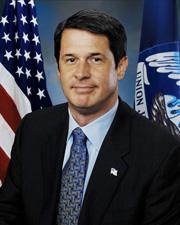 Sen. David Vitter (R-LA)
Legislative Activity
Stay on top of the latest movement without scrolling through every action
Senate amendment proposed (on the floor): Amendment SA 5280 proposed by Senator Vitter.(consideration: CR S8231-8240, S8242-8244, S8251-8256, S8264; text: CR S8231-8232)
September 10, 2008
View full timeline
Senate amendment proposed (on the floor): Amendment SA 5280 proposed by Senator Vitter.(consideration: CR S8231-8240, S8242-8244, S8251-8256, S8264; text: CR S8231-8232)
September 10, 2008
Senate amendment not agreed to: Amendment SA 5280 not agreed to in Senate by Yea-Nay Vote. 39 - 57. Record Vote Number: 198.
September 10, 2008
Roll call votes on amendments in Senate: Amendment SA 5280 not agreed to in Senate by Yea-Nay Vote. 39 - 57. Record Vote Number: 198.
September 10, 2008
Amendment SA 5280 proposed by Senator Vitter. (consideration: CR S8231-8240, S8242-8244, S8251-8256, S8264; text: CR S8231-8232) To authorize, with an offset, an additional $100,000,000 for Procurement, Defense-wide, and an additional $171,000,000 for Research, Development, Test, and Evaluation, Defense-wide, for near-term missile defense programs and activities.
September 10, 2008
Amendment SA 5280 not agreed to in Senate by Yea-Nay Vote. 39 - 57. Record Vote Number: 198.
September 10, 2008
Senate amendment submitted
September 9, 2008
Votes
1 roll call on this amendment
Text
Proposed
NATIONAL DEFENSE AUTHORIZATION ACT FOR FISCAL YEAR 2009

The PRESIDING OFFICER. Under the previous order, the Senate will
resume consideration of S. 3001, which the clerk will report.
The assistant legislative clerk read as follows:

A bill (S. 3001) to authorize appropriations for fiscal
year 2009 for military activities of the Department of
Defense, for military construction, and for defense
activities for the Department of Energy, to prescribe
military personnel strengths for such fiscal year, and for
other purposes.

Pending:

Reid amendment No. 5290, to change the enactment date.
Reid amendment No. 5291 (to amendment No. 5290), of a
perfecting nature.
Motion to recommit the bill to the Committee on Armed
Services with instructions to report back forthwith, with
Reid amendment No. 5292 (to the instructions of the motion to
recommit), to change the enactment date.

[[Page S8229]]

Reid amendment No. 5293 (to the instructions of the motion
to recommit to the bill), of a perfecting nature.
Reid amendment No. 5294 (to amendment No. 5293), of a
perfecting nature.
Levin (for Leahy/Byrd) amendment No. 5323, to provide for a
suspension of certain statutes of limitations when Congress
has authorized the use of military force.

Amendment No. 5323

Mr. LEAHY. Mr. President, I see the distinguished senior Senator from
Michigan on the Senate floor, the chairman of the committee, and the
distinguished Senator from Alabama, a key member of the committee. I
will speak on the Wartime Enforcement of Fraud Act. This was introduced
last night. It is one I hope the Senate will wholeheartedly accept.
For more than 5 years, America has been fighting wars in Iraq and
Afghanistan. In fact, we have been there longer than we were in World
War II. But efforts to investigate contracting fraud during these wars
continue to lag. Part of the reason is not because the authorities
don't want to find out whether there has been fraud, but it is
difficult to uncover fraud when you are in a shooting war and conflicts
continue.
The problem is not new--this has happened before--and the solution is
not new. Current law extends the statute of limitations for contracting
fraud offenses during wartime to address this problem. In other words,
if fraud has occurred, you have a certain statute of limitations. We
would simply extend it. This commonsense law was passed by Congress
during World War II with the support of President Roosevelt. A similar
provision was passed in World War I. Those were wars in which we were
involved for less time than we have been involved in Iraq and
Afghanistan. Current law only applies to declared wars and not to
circumstances where Congress only authorizes the use of military force
rather than officially declaring war. So the extension of the statute
of limitations doesn't apply to the ongoing wars in Iraq and
Afghanistan.
The bipartisan Wartime Enforcement of Fraud Act will close that
technical loophole. It will apply the law that we already have on the
books, but it will apply it not only to declared wars but also to the
wars in Iraq and Afghanistan. I was pleased to join with Senator
Grassley of Iowa earlier this year to introduce this legislative fix,
and the Judiciary Committee reported this measure before the August
recess. With each passing day, we are losing the legal authority to
prosecute fraud in Iraq and Afghanistan because the existing law that
extends the statute of limitations does not apply to these wars.
We have an obligation, no matter whether one is for or against the
war in Iraq, to protect the public interest and certainly to protect
taxpayer dollars during times of war. This simple amendment will allow
us to do so. We have done that in past wars. Iraq and Afghanistan
should be no different.
We have well-documented reports of fraud and abuse, as we have seen
in other wars. When we are spending billions of dollars, often in a
hurry, it is an open invitation for people to put their own interests
ahead of the interests of the country, and those people who then
defraud our great Nation at a time of war should be punished for it.
They should not be let off the hook. Too many brave men and women are
putting their lives on the line in Iraq and Afghanistan. Too many
brave, patriotic Americans are doing everything they possibly can over
there, risking and often losing their lives every day. We should not
allow those who want to make money out of their sacrifice and defraud
the Government to get away with it. The bill being paid by the American
taxpayers for the wars in Iraq and Afghanistan is high enough. As in
past wars, Congress should do all it can to ensure their money is not
lost to waste and fraud.
I hope Senators will join in this effort. This is not creating a new
crime. It is simply saying those who do commit crimes, who do defraud
America, who do defraud people who are over there serving our country,
ought to be punished. I find it hard to think Members would disagree
with that.
I yield the floor.
The PRESIDING OFFICER. The Senator from Alabama.
Mr. SESSIONS. Mr. President, I thank Senator Leahy for his amendment
and his interest in dealing with a difficulty that has impacted real
life. Contractors should be held to account, and there is difficulty in
gathering the evidence necessary in a prompt way in a time of conflict
to effectively carry out prosecutions--I can see as a former Federal
prosecutor--within the time of the statute of limitations. There is
only one concern I have about it, and I will address that in a moment.
But, fundamentally, the Senator is correct. We have discussed this a
good bit in the Judiciary Committee, where Senator Leahy is chairman.
We did the Military Extraterritorial Jurisdiction Act that I sponsored
and led the first one of those. We do have to be careful because it can
have unintended consequences.
The trial of a marine in California for an act in Iraq that he was
acquitted for just a few days ago resulted from the bill that we
passed. I don't think any of us at the time thought that we were
subjecting military persons to a civilian trial when we were dealing,
we thought at the time, with defense contractors. We need to be careful
as we deal with the issue. I know Senator Leahy agrees with that. For
the most part, I understand and support what he is attempting to do.
The statute of limitations is an important principle of law. It is
something as a Federal prosecutor, as attorney general of Alabama, I
had to deal with on many occasions. My colleagues probably know that an
individual who commits armed bank robbery, if he is not prosecuted
within 5 years, cannot be prosecuted. If a person commits arson, they
can't be prosecuted. It is not from the time of discovery of the
offense, it is from the commission of the offense because we are
talking about criminal law. We have a great heritage of understanding
the difficulties faced when we put somebody in jail based on old
evidence that is somewhat difficult to deal with.

With regard to civil actions, we have a number of statutes of
limitations that commence on discovery of the wrong, but for the most
part, except for murder, certain crimes, I think for almost all crimes
dealing with death and maybe one with child sexual abuse, there is a
limited statute of limitations.
The statute of limitations on most crimes in the Federal court, even
serious ones, is 5 years. I do believe during the debate that we
extended the statute on S&L fraud to 8 years. The truth is, these
savings and loans would go bankrupt 4 or 5 years after the crime was
committed. Then it takes 2 or 3 years to investigate it. By then the
statute had run, and you have, red-handed, defrauding the people, and
you couldn't prosecute the case. I understand the difficulties we are
dealing with here.
Mr. LEAHY. Will the Senator yield for a moment?
Mr. SESSIONS. Yes.
Mr. LEAHY. We also have the case that most jurisdictions are under a
statute of limitations. If you have a crime within a jurisdiction, but
then the person flees to escape prosecution, the statute does not run
in that circumstance. While this is not on all fours, when you have a
war situation where people are shooting each other, it is very
difficult to go over and just gather the evidence.
The Senator is absolutely correct. The bank robbery that occurs, you
know it occurred at that moment. Somebody came in, put a gun to the
teller's face, and stole the money and left. The investigators
immediately start investigating the crime. Because of the person's
jurisdiction, you have to investigate the crime and arrest them within
the 5 years. Here the difficulty is investigating the crime when many
times it is hidden. The crime is hidden, using the savings and loan
example. I am simply trying to do what we did in World War II and World
War I--I don't recall whether we did it in Korea or not--in past wars.
I have a reluctance to give any cover to those who defraud us. We have
so many contractors over there who are putting their own lives on the
line, playing by the rules, doing everything right. They should be
commended for that. We have others who try to take advantage of this
situation when others are putting their lives on the line and sometimes
losing their lives. We ought to nail them. I think we ought to nail
them very hard.
Mr. SESSIONS. I agree. That is why we have passed the Military
Extraterritorial Jurisdiction Act, why

[[Page S8230]]

we have expanded it, under the leadership of the chairman. I supported
making sure that contractors were fully covered from the original act
based on a crime that came to my attention where a young person was
sexually molested and the host country didn't want to prosecute it and
they couldn't be tried and court-martialed because the person was a
contractor, not a military person. We made that possible.
Since we are in a world in which some of these authorizations to use
military force may be very long indeed, it is determined not by what we
do so much as by the actions of the enemy; that is, if they continue to
attack us, I think our authorization of military force will continue
many years perhaps. If the conflict ends, it could be ended sooner. So
we could be in a position, just as a matter of law, of limiting the
amount we are exposing a contractor to of criminal prosecutions for
something that happened many years before, when actually in the fog of
war, sometimes it is more difficult to handle things correctly. It
would be certainly more difficult to gather evidence, and it is more
difficult to get witnesses here and that kind of thing.
My suggestion would be that we do as we did with the statute of
limitations on S&L fraud but have some sort of definite end to it
because some of these extended wartime efforts could go on for a number
of years. I don't see as a matter of principle, not specific facts, why
a contractor who commits fraud in the United States gets the protection
of a 5-year statute, even if it is against the Department of Defense,
but one in Iraq, in the chaos of war that even affects them--their
ability to maintain discipline over their workers is sometimes more
difficult, frankly--that they would be prosecuted with an unlimited
statute of limitations. That is something we could discuss, and I ask
the Senator to think about it. I don't take any fundamental objection
to the work he is doing. It is fundamentally sound and good, and I
support it.
I will say this, if I could: In Toussie v. United States, the Supreme
Court held:

The purpose of a statute of limitations--

Which I want to say is available in all cases, for all kinds of
crimes, except very few, such as murder--

The purpose of a statute of limitations is to limit
exposure to criminal prosecution to a certain fixed period of
time following the occurrence of those acts the legislature
has decided to punish by criminal sanctions. Such a
limitation is designed to protect individuals from having to
defend themselves against charges when the basic facts may
have become obscured by the passage of time and to minimize
the danger of official punishment because of acts in the far-
distant past. Such a time limit may also have the salutary
effect of encouraging law enforcement officials promptly to
investigate suspected criminal activity.

The Court has further held:

Passage of time, whether before or after arrest, may impair
memories, cause evidence to be lost, deprive the defendant of
witnesses, and otherwise interfere with his ability to defend
himself. . . .Possible prejudice is inherent in any delay,
however short; it may also weaken the Government's case. . .
.Such a [statute of] limitation is designed to protect
individuals from having to defend themselves against charges
when the basic facts may have become obscured by the passage
of time and to minimize the danger of official punishment
because of acts in the far-distant past. Such a time limit
may also have the salutary effect of encouraging [cases to be
prosecuted promptly].

But I will say that is the only concern I have. I thank the Senator
for raising this issue. It will definitely close a loophole.
I would note I had the honor last night to be on an airplane coming
back from Alabama sitting by a young individual who served 2 years as a
contractor in Iraq. He is going back for a third year. We talked about
some of these things. I did not know this amendment was coming up. But
he talked about that some of the people do not perform very well. Many
of them are very hard working. Many of them are former military people
who served with great distinction.
But in this time of war, some people do lose their discipline, and
fraud is a matter of real risk. We do need to watch every penny, and we
certainly do not need to have unscrupulous contractors billing the
American people for work they do not perform, for making false claims
to the Government. I think a statute of limitations probably needs to
be extended in this case.
I thank the Chair and yield the floor.
The PRESIDING OFFICER. The Senator from Michigan.
Mr. LEVIN. Mr. President, this is an important amendment that
appropriately recognizes the United States is now engaged in combat
operations in Iraq and Afghanistan without a formal declaration of war.
The amendment takes the appropriate step of modifying the statute of
limitations to cases in which the use of force has been authorized
without a formal declaration of war.
I very much welcome--and I am sure Senator Leahy does as well--the
support of the Senator from Alabama. I do not know of anybody else who
wants to speak on this amendment. Unless the Senator from Alabama does,
I will suggest then that we move on to the next amendment.
I understand there is going to be a unanimous consent request that
may interrupt that flow, but before we get to that, if the Senator from
Alabama knows of no other--first of all, let me ask the Senator whether
he does know of any other speaker on the amendment.
Mr. SESSIONS. Mr. President, I am not aware of any.
Mr. LEVIN. Is the Senator willing to have this amendment voice voted
at this time?
Mr. SESSIONS. I would like to discuss that a little more with Senator
Leahy, and perhaps he will convince me that my suggestion is not wise,
so I would object at this time.
Mr. LEVIN. All right. If we could get the yeas and nays on this
amendment so we could move on.
Mr. President, I ask for the yeas and nays.
The PRESIDING OFFICER. Is there a sufficient second?
There appears to be a sufficient second.
The yeas and nays were ordered.
Mr. LEVIN. Mr. President, I understand, under the current order, we
would now be moving to consideration of the Vitter amendment regarding
missile defense for 2 hours of debate. Those who are interested in that
amendment are urged to come to the floor so we could begin that debate.
But at this time I will yield the floor.
The PRESIDING OFFICER. The Senator from Oklahoma.
Mr. COBURN. Mr. President, I ask unanimous consent that I be
recognized for 10 minutes as in morning business.
The PRESIDING OFFICER. Without objection, it is so ordered.

Government Spending

Mr. COBURN. Mr. President, I heard, this morning, the majority leader
talk about the objection to the request by Senator Gregg. I do not
believe there is anybody in this body who does not want us to fix the
highway trust problem, and it will probably be the fact that there will
be no amendments offered at the direction of the majority leader, which
I think is probably somewhat tragic because we would not be able to
have the debate we need to have on this issue.
But it should not be lost on the American public that some $16
billion in the last highway bill was not for roads, bridges or
highways. One of the amendments that was going to be discussed, had we
had the opportunity to amend it--which we are not because the majority
leader is not going to grant that opportunity--was the idea that of the
$8.5 billion we are going to put in there, no new projects ought to be
started unless they are for roads, bridges or highways. In other words,
we should not be building museums. We should not be building parking
garages. We should not be doing ancillary work that does not have
anything to do with true transportation needs associated with the trust
fund. That was the only amendment we were going to offer.
All the States are going to be at a significant disadvantage if we do
not do this. But I found it somewhat curious that before we left we had
an omnibus bill that had to spend $10 billion. We had to do it. We were
contrasted as terrible because we did not agree with it. Now we have $8
billion, and we want to do it, we want to debate it, and we are not
going to be allowed to debate or amend it. I would think that is to the
detriment of the body, that, again, we are losing the history of this
body, we are losing the deliberative nature of the body, and at the
whim of the majority leader, because we have an emergency, we have to
have a unanimous

[[Page S8231]]

consent, we do not even have to have a vote, and that is the only way
we can do it. I think it hurts the institution in the long run.
As far as what Senator Reid said about the omnibus package he put
forward, let me correct the Record. First of all, the childhood cancer
bill was agreed to by unanimous consent. It was not even a part of that
package he claimed it was. The irony is, as we heard from the majority
leader's statement today his disdain for the largest deficit in
history, do you realize the President of the United States cannot spend
one penny unless we let him? If there is a deficit in this country, it
says a whole lot more about this body and the House than it says about
the President. We are the ones who approve the spending.
So far, this year, we are going to spend off-budget about $270
billion. Where is that money going to come from? It is going to come
from the next two generations paying it back. So I find it curious we
have to have a bill that spends $10 billion and then we are critical of
the deficit and now we have to have a bill that is going to spend $8
billion, but we cannot have any amendments and we cannot debate it in a
thoughtful way and still get it done this week. We could get it done in
less than 2 or 3 hours.
It shows you the lack of consistency. To be fair, Senator Reid has a
very difficult job. This is a hard place to manage, there is no
question about it. But we are getting on the edge of a lack of
fairness. We are getting very close to an edge where the traditions of
the Senate are going to be thrown out the window.
As we look at it, as Senator Reid complains about the deficit, I
would remind that he sponsored $531.2 billion worth of new spending in
the 109th Congress. So far, he has sponsored $56.7 billion in the first
8 months of 2007. So it is another $150 or $200 billion in this
Congress. We cannot continue to have more and more new spending without
getting rid of some of the spending that is not effective.
So when we have the claims that we are disgusted with the deficit,
and then we can have $500-plus billion sponsorship of new spending and
routine votes against an earmark moratorium, against the idea of
stealing money from Social Security to spend new money, against
amendments that say we have a moral obligation to offset the cost of
new spending so we do not charge it to our children, against
prioritizing the reconstruction of Louisiana bridges instead of
earmarks in Alaska, these are the votes of Senator Reid.
So the disdain for the--and I have three pages of them by the way,
all similar. So the fact is, our country is in trouble right now. We
are going to have a trillion-dollar--a trillion; that is with a ``T''--
deficit next year. We have $382 billion worth of documented waste and
fraud every year in this Government. We have not had one amendment to
get rid of any of it in this body this year that has passed, save the
hippie museum in New York. That is it. We saved $1 million out of $380
billion of waste, fraud, and duplication.
So it rings hollow to come down and complain about the administration
when they cannot spend one penny we do not send to them. We are at
least as culpable and liable as the administration in terms of this
deficit. To say we cannot debate and clean up the priorities of the
transportation fund by saying it is going to be spent on some of the
240,000 bridges that are in desperate shape in this country and spend
the money on highways and roads and bridges and not other things that
benefit Members of this body but do not benefit the majority public and
are outside the transportation goals of every State transportation
department in this country rings hollow.
There are a lot of great things we can do. We can help people with
disease. We can solve problems. He mentioned the Emmett Till bill. He
objected twice to a compromise that the Emmett Till board had agreed
to--twice--that Senator Dodd had agreed to, that Senator Biden had
agreed to. As far as the child pornography, Senator Dodd and Senator
Biden had agreed to that too. It was offered as a unanimous consent
request twice. Both had agreed to it.
Is this about politics or is this about doing things for the country?
I would tell you the evidence shows it is about politics. We need to
wake up. Our country is at a crossroads. We had Fannie Mae, Freddie Mac
taken over. The first number, of course, is low: $200 billion. It is
going to be $600 or $700 billion that we are going to charge to our
kids for the mismanagement of those two agencies. That is going to get
added next year. We are getting ready to do another emergency
supplemental that everybody is piling things on. It is going to be $50
or $60 billion. It is going to be another free-for-all. It is going to
fly through here in spite of my votes against it. We are going to do
another stimulus package--none of it we have the money for. We are
going to borrow every bit of it. We are compounding to make the
problems worse. Because we will not work on the $350 to $380 billion
worth of waste, and we would not even put an effort out toward that, we
are going to continue to see a downward spiral in our economic position
in this world.
So I would think most Americans, as we add $8.5 billion back to the
highway trust fund, would want us to see that it goes for highways,
bridges, and roads, not for earmarks, special pork projects that make
us look good at home that are outside the boundaries and the priority
lists of the State departments of transportation. That was the
amendment I was going to offer. I knew I was going to lose, but we
ought to have the debate.

The fact is the majority leader does not want us to have the debate.
We could dispense with the bill in less than 3 hours, be done with it,
and it could be going to the President, but we have decided we want to
make it political. It is not about what is best for the long-term
interests of this country, but about what is best for the upcoming
election in November. To me that is a disservice to this body and it is
a disservice to the American people.
I yield the floor.
Mr. SESSIONS. Mr. President, I note the absence of a quorum.
The PRESIDING OFFICER. The clerk will call the roll.
The legislative clerk proceeded to call the roll.
Mr. VITTER. Mr. President, I ask unanimous consent that the order for
the quorum call be rescinded.
The PRESIDING OFFICER. Without objection, it is so ordered.

Vitter Amendment No. 5280

Mr. VITTER. Mr. President, I ask unanimous consent to call up Vitter
amendment No. 5280.
The PRESIDING OFFICER (Mr. Casey). The clerk will report.
The legislative clerk read as follows:

The Senator from Louisiana [Mr. Vitter], for himself, Mr.
Inhofe, and Mr. Kyl, proposes an amendment numbered 5280.

Mr. VITTER. Mr. President, I ask unanimous consent that the reading
of the amendment be dispensed with.
The PRESIDING OFFICER. Without objection, it is so ordered.
The amendment is as follows:

(Purpose: To authorize, with an offset, an additional $100,000,000 for
Procurement, Defense-wide, and an additional $171,000,000 for Research,
Development, Test, and Evaluation, Defense-wide, for near-term missile
defense programs and activities)

At the end of subtitle C of title II, add the following:

SEC. 237. ADDITIONAL FUNDING FOR THE MISSILE DEFENSE AGENCY
FOR NEAR-TERM MISSILE DEFENSE PROGRAMS AND
ACTIVITIES.

(a) Additional Amount for Procurement Activities.--
(1) Additional amount for procurement, defense-wide.--The
amount authorized to be appropriated by section 104(1) for
Defense-wide procurement is hereby increased by $100,000,000.
(2) Availability.--Notwithstanding section 1002, of the
amount authorized to be appropriated by section 104(1) for
Defense-wide procurement, as increased by paragraph (1), up
to $100,000,000 may be available for the Missile Defense
Agency for the Terminal High Altitude Area Defense (THAAD)
system for the purpose of advanced procurement of interceptor
and ground components for Fire Unit #3 and Fire Unit #4,
including component AN/TPY-2.
(3) Supplement not supplant.--The amount available under
paragraph (2) for the purpose set forth in that paragraph is
in addition to any other amounts available in this Act for
such purpose.
(b) Additional Amount for Research, Development, Test, and
Evaluation Activities.--
(1) Additional amount for research, development, test, and
evaluation, defense-wide.--The amount authorized to be
appropriated by section 201(4) for research, development,
test, and evaluation, Defense-wide, is hereby increased by
$171,000,000.

[[Page S8232]]

(2) Availability.--Notwithstanding section 1002, of the
amount authorized to be appropriated by section 201(4) for
research, development, test, and evaluation, Defense-wide, as
increased by paragraph (1), amounts are available to the
Missile Defense Agency as follows:
(A) Up to $87,000,000 for Ground Based Midcourse Defense
for purposes as follows:
(i) To implement a rolling target spare.
(ii) To maintain inventory for additional short-notice test
events.
(B) Up to $54,000,000 for the purpose of equipping two
Aegis Class cruisers of the Navy with Ballistic Missile
Defense Systems (BMDSs).
(C) Up to $30,000,000 for the purpose of reducing the
technical risk of the Throttleable Direct and Attitude
Control System (TDACS) for the SM-3 Block 1B missile in order
to meet the needs of the commanders of the combatant commands
as specified in the Joint Capabilities Mix Study.
(3) Supplement not supplant.--Amount available under each
of subparagraphs (A) through (C) of paragraph (2) for the
purposes set forth in such paragraph are in addition to any
other amounts available in this Act for such purposes.
(c) Offset.--The amount authorized to be appropriated by
this division (other than the amount authorized to be
appropriated for Defense-wide procurement, and for research,
development, test, and evaluation, Defense-wide, for the
Missile Defense Agency) is hereby reduced by $271,000,000,
with the amount the reduction to be allocated among the
accounts for which funds are authorized to be appropriated by
this division in the manner specified by the Secretary of
Defense.

Mr. VITTER. Mr. President, I urge all of my colleagues, Democrats as
well as Republicans, to come together on this important amendment to
ensure that we have robust, full missile defense capabilities in this
era of real threat, real uncertainty from terrorists, rogue nations,
and others.
Tomorrow is September 11. It will mark the 7-year anniversary of one
of the most tragic days in our Nation's history--a day in which 19
radical Islamic extremists believed their actions could cripple this
great Nation. The good news is that those 19 extremists were wrong.
Rather than cripple our Nation, they focused our Nation on the threat
we face. They brought our Nation together with new resolve and with new
strength. They gave our generation a new central and defining challenge
to work to prevent any future attacks, particularly on our soil, and to
make sure that terrorists and rogue nations never acquire weapons of
mass destruction.
As part of facing this clear and present danger, the American public
understands that we need a robust missile defense system. According to
a national poll released today by MDAA, 87 percent of Americans believe
the United States should have a robust missile defense system--the
highest percentage of support ever recorded. The poll also showed that
58 percent of Americans believe there is a real threat from missiles
carrying weapons of mass destruction, and that missile defense is a
preferred option over preemptive military action.
Rogue nations, regardless of sanctions or disarmament deals, continue
to pursue ballistic missile technology capable of one day carrying
nuclear weapons, and this poses an enormous threat. On July 9 of this
year, Iran tested nine ballistic missiles as part of their escalation
in terms of military exercises and political rhetoric, and they are a
clear example of this threat I am talking about. Currently, the United
States has fully operational, deployed missile defense systems that can
stabilize the region that Iran sits in--the Middle East--but we need to
make sure we have the full capability to bring to bear to do this. In
this situation, missile defense can stabilize a situation, can provide
enormously important defense for our country and for our allies, and
can avoid much more widespread war. That is the reason 26 countries of
NATO have fully endorsed this missile defense plan, with a third site
in Europe. It is the reason the Czech Republic agreement on missile
defense is valid and is moving forward. It is the reason why 11
Congresses and 4 U.S. Presidents have moved forward on this important
part of our national defense. The Vitter amendment No. 5280 will move
that part of our national defense forward in a significant way.
What does it do specifically? Specifically, this amendment provides
$271 million to the Missile Defense Agency so that it responds to near-
term--very near-term--ballistic missile threats to the United States,
our deployed forces around the world, and our allies. This amendment is
fully offset within the bill.
The Senate Armed Services Committee itself noted in its committee
report that the Joint Capabilities Mix Study conducted by the Joint
Staff concluded that the United States needs about twice as many THAAD
and Standard Missile 3 interceptors as the number currently planned. So
we need twice as many as what is currently planned. Yet, at the same
time, the committee unfortunately cut $411 million from the budget of
the Missile Defense Agency. This Vitter amendment would reinstate $271
million of that cut. It would do that in four areas in particular:
Aegis cruisers. It would authorize $54 million to accelerate upgrade
with an additional two Aegis cruisers to equip it with ballistic
missile defense systems.
It would authorize an additional $100 million for THAAD fire units 3
and 4 interceptor and ground component advanced procurement.
SM-3 Block 1B risk reduction. It would authorize another $30 million
to reduce SM-3 Block 1B schedule and technical risks.
Targets. It would authorize $87 million to implement a rolling target
spare and maintain minimal inventory to have full targets for our
testing and production capability.
This is sorely needed so that we ensure our citizens that we have the
missile defense deployed that we need in this very dangerous world.
Again, this concept was first developed by President Reagan when the
Cold War was still raging, when the Soviet Union was still our primary
threat in the world. Obviously, the world has changed in fundamental
ways since then, but it has only changed in ways that make missile
defense even more important than ever before, because the threat from
rogue nations, from terrorist States, and from terrorist groups has
grown enormously and missile defense is even more important in light of
that growth.
I urge all of my colleagues to come together in light of that on the
eve of September 11, on the eve of the seventh anniversary of that
tragic attack on our Nation. We must restore this $271 million, at a
minimum, in this bill to the Missile Defense Agency. As I said, the
committee itself noted that the Joint Chiefs report says the United
States needs about twice as many THAAD and Standard Missile 3
interceptors as the number currently planned. Yet the committee cut
$411 million from that missile defense budget. We must restore at a
minimum this $271 million to continue to meet this vital need for our
citizens' safety.
With that, I yield to the distinguished Senator from Colorado.
The PRESIDING OFFICER. The Senator from Colorado is recognized.
Mr. ALLARD. Mr. President, I come to the floor today to support
Senator Vitter's amendment to authorize the additional $271 million
which is fully offset--it is fully offset--to the Missile Defense
Agency.
The importance of missile defense is increasingly crucial to the
safety of the United States and our allies. The United States must
maintain the capability to respond to near-term ballistic missile
threats that present grave danger to the United States, our deployed
forces, and our allies.
We know that rogue nations such as Iran and North Korea will have the
capability to use nuclear weapons. We cannot escape the fact that this
widespread proliferation of ballistic missile technologies makes it
increasingly possible for dangerous States and terrorist organizations
to obtain and use them for harm.
We are in a crucial time in our Nation's history and we should
understand the importance of defense of the homeland. I am frustrated
that as other nations continue to develop nuclear programs, that as
Russia has demonstrated a renewed capacity for aggression, that as
China and North Korea press forward on missile technology, the Armed
Services Committee cut more than $411 million from the administration's
request for the Missile Defense Agency's program.
The United States has worked hard to reach agreements with the Czech
Republic and Poland to establish ballistic missile defense radar sites.
This was a monumental and important step

[[Page S8233]]

in our efforts to protect the United States as well as our NATO allies
from the growing threat by the proliferation of ballistic missiles.
Radar will provide precision tracking of ballistic missiles launched
out of the Middle East and will be linked to other U.S. missile defense
facilities in Europe and the United States. Cuts to our missile defense
program simply undermine this progress and signals to NATO that the
United States is backing away from our commitments to a European
missile defense.
This amendment will authorized $54 million to accelerate and upgrade
an additional two Aegis cruisers to equip with ballistic missile
defense systems.
Admiral Hicks, program director for Aegis BMD, recently stated the
need for additional Atlantic fleet ships for defense of the United
States, our allies, and our deployed forces.
The amendment will authorize an additional $100 million for THAAD
fire units interceptor and ground component advanced procurement. It
will authorize an additional $30 million to reduce SM-3 schedule and
technical risk. This is the premier missile defense cooperation program
with our Japanese allies. And it will authorize $87 million for a
target spare and to maintain minimal inventory as contingency for
additional short notice test events for the Ground Based Midcourse
Defense. This is Missile Defense Agency's top unfunded priority. The
SASC Committee report notes that for some MDA systems the Director of
Operational Test and Evaluation requires additional tests to prove out
capabilities, which necessitates additional target sets.
There is no doubt that the United States will continue to face
missile threats. Missile defense is needed and should have been made a
priority of this committee and by this Senate. I thank Senator Vitter
for bringing this amendment to the floor, and I urge this Senate to
vote yes.
The PRESIDING OFFICER. The Senator from Arizona is recognized.
Mr. KYL. Mr. President, I, too, very strongly support the amendment
offered by Senator Vitter. This is an amendment that restores only part
of the funding that was cut from the missile defense programs--only
$270 million of the $411 million that was cut--and it is targeted to
very specific things that have near-term applicability, and that
enables us to do more testing, which has been the only criticism of
which I am aware of the Missile Defense Program--that we need to do
additional testing. Part of this money, as I will discuss in a moment,
gives us the ability to conduct some of those tests.
So the key point is, we are talking about near-term ballistic missile
threats to the United States. This isn't some long-term, pie-in-the-sky
proposition. It would assist both our allies and also U.S. forces
deployed abroad as well. It is common sense. I hope it receives wide
bipartisan support. I believe there is bipartisan support for this
issue.
Let me discuss, first, a little about what some of the near-term
threats are. They are both from belligerent nations and, as we will see
in a moment, one from a country in particular that is not yet capable
of communicating appropriately with its forces, with the result that
there is a threat of accidental or unauthorized launch. We sometimes
forget that. We are consumed with North Korea and Iran, and therefore
we appreciate the fact that we have to have some capability of
protecting ourselves and our allies from potential threat from those
countries. But one of the reasons President Reagan first thought it
would be a good idea to have a missile defense system is, he said it is
moral. Not only does it give an alternative to massive retaliation
against an enemy, but it also provides protection in the event there is
an unauthorized or accidental launch.
In the early days of missile development, that was not at all outside
the realm of possibility. With what happened to the Soviet Union when
it broke up, that possibility was raised again. Now, as we note in the
case of China, developing sophisticated weapons, but without the
infrastructure to control those weapons, there is again the potential
for an unauthorized or accidental launch, not to mention the situation
with countries such as North Korea or Iran. We are not just talking
about a threat of belligerency but also the potential for an accident,
and missile defense, of course, is the primary way of defense against
an accidental launch.
Just to summarize briefly, there are now 27 nations that have
ballistic missile capability. We tend to think of Russia, China, North
Korea, Iran, and maybe a few other countries, but 27 nations have
ballistic missile capability, and the knowledge to build and use them
is proliferating rapidly. Much of this is because countries such as
North Korea are willing to sell missiles, such as the Scud which Iraq
used, and they then develop their own types of missiles with that
technology. But there are 27 countries. We will not be able to put that
genie back in the bottle. Talk about Iran.
Some people say, well, the launch of all of these missiles earlier
this year they took pictures of and then doctored the pictures might
have been clumsy and didn't demonstrate new technology. It did
demonstrate that Iran wants to be part of the club of nations with
ballistic missiles and weapons of mass destruction capability. They
have that capability. There is no question they have it. The only
question is, how far beyond Israel does its capability currently go?
As the latest IAEA report informed us, the Iranian missile threat is
real and growing. I mentioned North Korea. With the difficulty of
knowing who is in charge of North Korea today, we need to be concerned.
We don't even know if the ``dear leader,'' or however he is referred
to, is still alive or is functioning as the leader of the country. As a
result, that country that has nuclear weapons, other weapons of mass
destruction, and the means to deliver them by ballistic missiles that
can even reach the United States ought to be a matter of concern for
us.
Fortunately, the United States had made operational our first land-
based system just before the big July 4 launch a couple years ago by
the North Koreans. We could have defended against that test launch had
we had to do so, but with very rudimentary capability. The intelligence
community ``deems that North Korea is nearly self-sufficient in
developing and producing ballistic missiles and is willing to provide
them to existing and new customers.'' Some of these are capable of
reaching the United States. So you have a real and growing threat from
a country that is clearly not stable.
I mentioned China. It has for a long time had the capability of
delivering weapons of mass destruction to the United States with its
ballistic missiles. There is an interesting new twist. The 2008 annual
report on the People's Republic of China raises serious questions about
the potential for an accidental or unauthorized launch. This is a
nation which, by the way, is increasing its arsenal of ballistic
missiles. In addition to that, it has a very robust program to
modernize its nuclear weapon warheads. So it has the combination of the
warhead and improved capability. This report says China has problems
communicating with its submarines at sea. This is very dangerous, with
a navy that has no experience in performing strategic protocols of the
kind Russia and the United States have performed for years. What's
more, the land-based strategic missile forces ``face scenarios in which
missile batteries use communication links with higher echelons and
other situations that would require commanders to choose alternative
launch locations.''
The bottom line is, whatever you think about a potential threat from
an enemy, you have to be concerned about protecting against an
accidental or unauthorized launch. Missile defense is the way to do
that. As a result, I hope those folks who say, well, China isn't an
enemy of the United States today, would at least acknowledge while that
may be true, it is also true it has the capability of harming the
United States accidentally or in an unauthorized fashion, and missile
defense is our only way to protect against that. I think it would be an
awful situation if something like that were to occur and the United
States Congress would be asked by our constituents: Did you all know
about this?
Well, yes.
Did we have the ability to do something about it?
Yes.

[[Page S8234]]

How much did it cost?
Not all that much, as these numbers reflect.
And you didn't put into place a program to protect us against that?
I think we ought to put this program into effect. I support the
amendment of the Senator from Louisiana.
Let me describe again what specifically is in the amendment to assure
our colleagues that this is not some massive expansion or pie-in-the-
sky proposition. It authorizes funding, first, for the advanced
procurement of two THAAD fire units. That is the terminal high altitude
area defense, the near-term threat--our capability of meeting that
threat.
Second, risk reduction for the development of an advanced version of
the SM-3 missile--that is kind of a standard critical missile in the
U.S. inventory--additional target sets to respond to additional testing
requirements set by the Defense Department's Director of Operational
Test and Evaluation.
Frequently, the concern is expressed: Well, we should not be moving
forward with missile defense programs because we have not adequately
tested yet. These are, of course, programs that have been tested a lot.
They are the near-term threats. But to the extent that the Department's
Director indicated there are additional tests that could be done, this
provides the target sets for those tests. You cannot conduct the tests
without it. For those who criticize the program for not having enough
tests, this is the sine qua non for getting tests done. You have to
support this.
The amendment also authorizes funding to accelerate upgrades of two
additional Aegis cruisers to equip with the ballistic missile defense
systems. This is something that I think virtually everybody in
Congress, and certainly at the Pentagon, is supportive of--the ability
of the Aegis cruisers to carry this defense to other parts of the globe
so that it can more readily respond to a launch. This would be the
perfect way of responding to that accidental launch I mentioned.

Admiral Hicks, the program director for the Aegis BMD program, stated
the need for additional Atlantic fleet ships to keep a presence there
as well. That would defend against a threat from a country such as
Iran. The Armed Services Committee, in its report accompanying the
bill, stated the joint capabilities mixed study, conducted by the joint
staff and combatant commanders, concluded that the United States needs
about ``twice as many THAAD and standard missile interceptors as the
number currently planned.'' This doesn't by any means fulfill that
entire requirement, but it lays the foundation for doing so. I think
that is another critical reason for this amendment.
As I said, the committee cut $411 million from the budget of the
Missile Defense Agency to procure these systems. I don't understand why
the committee would both acknowledge the need for additional missiles
and then cut the items out. I understand the committee has a lot of
different constraints, different needs, and it is difficult to satisfy
everybody. You have to cut somewhere. But I think my colleagues would
agree that the relatively modest increase that the Vitter amendment
provides is for very specific things, recognized by the committee
itself, recognized by the combatant commanders, as needed. There is
nothing new here or nothing that is pie in the sky. These are things
that are required. We need them now.
With regard to the testing, if the criticism is that we need more
tests, this provides funding for those tests.
Mr. President, it is a commonsense amendment. It is limited. It is
all backed up; all of the requirements are fully supported. I urge my
colleagues to support this amendment. There is a lot going on in this
world. Unfortunately, when you are doing something as complex as
developing missile defense systems, there is a long lead time. It takes
a lot of technology and testing and so on. So you cannot wait until the
last minute to put this into effect. That is why this should be carried
forward in the authorization for this year's defense programs.
I commend the committee for its work. It basically acknowledged the
need for these things. I appreciate that it sometimes has to make cuts.
I ask my colleagues to recognize this is an area in which we cannot
afford to try to do it on the cheap. Therefore, I urge my colleagues to
support the Vitter amendment.
The PRESIDING OFFICER. The Senator from Florida is recognized.
Mr. NELSON of Florida. Mr. President, I want to respond to the
Senator from Arizona, who is my friend. But I want the Senator to
understand that the committee did not cut THAAD nor the Aegis. To the
contrary, the committee raised, for the very reasons the Senator from
Arizona said--that we need more THAAD for our area commanders--we
raised that $115 million, as well as the Aegis ballistic missile
defense. We raised that $100 million from what was requested. So let's
make sure we know what we are talking about.
Mr. President, what this all boils down to is the National Missile
Defense Program is requested by the administration for $9.3 billion of
authorization in this bill. In essence, this whole argument is that the
committee has pared back that $9.3 billion request by $400 million.
That is what all this argument is about. It is an attempt to increase
back that funding of a de minimis cut in a $9.3 billion program. Given
all the other requirements we have in the U.S. Government and given all
of the other requirements we have in the Department of Defense, should
we have a modest decrease from the President's request of $9.3 billion
in 1 year?
I suggest that there are so many other demands. Think about body
armor. Think about getting the V-shaped hulls of MRAPs that are so
resistant to the improvised explosive devices they run over on the road
and that are saving marines' and soldiers' lives. Ask any commander in
Iraq or Afghanistan what are their high priorities. Ask the commanders
if THAAD, which is an intercept that can be launched from a mobile
launcher, is an important program to them to intercept an incoming
intermediate-range missile and you will get a quick answer from those
military-area commanders that is what they want.
That is the philosophy we have tried to adapt in this bill and at the
same time allow national missile defense research to continue but
recognizing there are other priorities besides national missile
defense. So we just took a de minimis cut out of a $9.3 billion request
by the President. That is what all of this flap is about here: Is
national missile defense going to have a minor cut so that we can do
some of these other priorities for protecting our troops and satisfying
their commanders' requests? That is what all this is about.
The Vitter amendment proposes to cut $271 million from the rest of
the Defense Department and add it to the Missile Defense Agency. This
is not funding that the Defense Department has requested. These are
programs that are fully funded in our Armed Services Committee bill.
But this amendment would give the Secretary of Defense an extraordinary
and unwarranted power; that is, the power to cut any items in the
defense budget that the Congress is putting in here in order to pay for
this increase in an already flush national missile defense budget we
have provided.
As the chairman of the Strategic Subcommittee, I can tell you that we
have some of the Nation's most sophisticated weapons systems, many of
which we cannot even speak about here because of their classification.
This is not a good allocation of priorities.
I don't think we would want to give the Secretary of Defense the
authority to ignore the will of Congress.
For example, would we want the Secretary of Defense to be able to go
in and, in order to fund this amendment, cut body armor or would we
want him to be able to go in and cut what the commanders in Afghanistan
now are begging for--more of these V-hulled vehicles, which replace the
humvees, that are saving our boys' and girls' lives called the MRAPs?
Of course, we don't want that.
Would we want the Secretary of Defense to have the authority to go in
and cut $271 million from the $430 million in the bill for sustaining
the Joint Strike Fighter, its alternate engine which the Department
supports? Of course, we wouldn't want to give the Secretary power to do
that.
Would we want to give the Secretary the power to go in and totally
wipe out the additional $118 million we provided

[[Page S8235]]

in this bill for operating a full B-52? The Department opposed that.
Would we want to give the Secretary the ability to override the will of
Congress to do that?
How about the F-22, the most sophisticated fighter aircraft? Would we
want to give the Secretary of Defense the power to go in and cut half
of the $500 million we have provided in this bill for advance
procurement of the F-22? I don't think we would want to do that, but
that is what we would do, is give the Secretary the power to do that if
this amendment is adopted.
Would we want to give the Secretary the power of reducing the Army
budget request of $512 million for the Patriot missile? Talk about
countries and allies and force protection for our own troops of
incoming warheads--the Patriot missile is a quick-reaction missile that
intercepts those incoming missiles on our troops in a theater. Would we
want to cut the increase we provided in this bill? This amendment would
give the Secretary the power to do that.
Would we want to eliminate the proposed addition of $170 million for
advance procurement of another amphibious ship called the LPD-17? I
don't think that is what we want to do, but that is what this amendment
is going to do, all under the ideology that we haven't provided enough
for national missile defense. But we have provided almost $9 billion in
this bill for it.
We have to set priorities and we have to allocate for programs that
we want to make sure are there for the protection of our troops and our
allies, and that is what we tried to do. Didn't we have a unanimous
vote coming out of the committee for all of these priorities? We did.
So why do we want to suddenly change the unanimous, bipartisan support
of the Senate Armed Services Committee to adjust all of these
priorities? Why would we want to change that? Because there are some
people who say ideologically we want to pour more and more money into
national missile defense. Isn't $9 billion enough for 1 year?
This Senator respectfully requests that the Senate listen to reason
and common sense in the allocation of priorities. The committee
recommends already--as I stated to Senator Kyl, we have added $215
million for THAAD, which is the terminal high-altitude aerial defense
which commanders are requesting, and we have also added that total
amount of money, including the Aegis Ballistic Missile Defense Program,
which is launched from a ship and is very effective for incoming
warheads.
We certainly agree there are potential threats from North Korea and
places such as Iran, but those threats are generally in the
neighborhood of where they are. That is why Aegis from a ship is so
effective, and that is why THAAD from a mobile platform is so
effective. We have plussed up those programs. They shouldn't be cut.
But the Secretary of Defense, under this amendment, would have that
authority.
The Vitter amendment would not make any choices about where the
additional money to provide for this plus-up to an already rich and
robust national missile defense budget would come from. This amendment
would not make any choices about where that additional money would come
from. So what it says is that this $271 million in additional funding
for missile defense, programs that we have either fully funded at the
level requested by the Pentagon or increased in our committee bill by
$215 million--that program is so important that the Secretary of
Defense could cut any other funding program in the Pentagon to pay for
it. I don't think that is a responsible way to go.
This Senator, as the chairman of the Strategic Subcommittee, will
oppose the amendment. It is my hope that Members on both sides of the
aisle, members of the Armed Services Committee, will support the
committee product.
Mr. President, I yield the floor.
The PRESIDING OFFICER. The Senator from Arizona.
Mr. KYL. Mr. President, let me respond to a couple of points that
were made, and then Senator Vitter wishes to make some additional
comments.
The Senator from Florida suggested that I have said that THAAD was
cut. I don't believe I said that. What I did was quote from the Armed
Services Committee in its report on this bill in which it is stated
that the Joint Capabilities Mix Study, conducted by the Joint Staff and
combatant commanders, concluded that the United States needs ``about
twice as many THAAD and Standard Missile-3 interceptors as the number
currently planned.''
My point was that by what the Senator from Florida calls a de minimis
and minor cut of $411 million--I guess only in the Senate could someone
consider $411 million de minimis money. That is a lot of money, and it
is taken out of the Ballistic Missile Defense Program. I guess what the
Senator was saying is that cut doesn't hurt the THAAD Program or the
Aegis Program. The committee referred to the study which said we need
twice as many THAAD and Standard Missile-3 interceptors, and part of
what this add-back does is enable the military to acquire some more of
those missiles.
I didn't suggest they had cut it. What I said was they didn't meet
the requirement they themselves identified in the committee report, and
one of the things the amendment does is add money for those two items.
The other two points I would like to make are these:
No. 1, we provide that the Secretary of Defense does have the ability
to fund this out of some programs. The Senator from Florida says this
is extraordinary power. No, it isn't. This is the way it is frequently
done. And I am not going to assume the Secretary is going to make
irresponsible decisions about where he would get the money. Some of the
items the Senator from Florida mentioned--MRAPs and body armor--are not
in the program from which the Secretary could get the money to offset
this $271 million. So that is not a response.
Finally, those people who support these requirements, those of us who
have supported the Vitter amendment, take some exception to the
reference to this amendment as an ideological amendment. If it is
ideological, then the committee's report is ideological because we are
quoting from the committee report and saying we would like to fulfill
the requirements which the committee report said existed and which the
committee did not fully fund. If that is ideological, so be it. If that
is intended to be a pejorative term, I take exception to it. If it is
ideological to protect the American people from an accidental or
unauthorized launch of a ballistic missile, then I guess maybe my
position would be ideological.
I call it common sense to try to restore some of the $411 million
that was cut for programs that the military says it needs, the
commander who says he needs the additional Aegis cruisers, for example,
the additional SM-3, the additional THAAD missiles that are needed. It
seems to me that you can argue over whether, in view of all of the
priorities, this is a priority that should be funded, but you cannot
say it is not a priority or that the committee and the military don't
believe it is important or that it somehow is ideological when the
committee and the Pentagon and the Navy, in the one case, for example,
have all said these are items that need to be done.
Finally, with regard to those people who say: Well, we never have
enough testing, we are trying to respond to that criticism by saying:
All right, in order to have tests, you need the equipment for the test.
Part of what this amendment does is to restore funding for those items.
The PRESIDING OFFICER. The Senator from Florida.
Mr. NELSON of Florida. Mr. President, I would say to my good friend
from Arizona, first of all, recognize how much we have spent on
national missile defense. We have spent over $150 billion on national
missile defense. In this 1 year, the request is $9.3 billion, of which
the committee felt like there were other priorities for $400 million of
that. That is a reduction of only 4.2 percent in a program that has
spent $150 billion--$150 billion--to date. Now, that is a de minimis
cut when you have so many other priorities in the budget of the
Pentagon.
I yield the floor.
The PRESIDING OFFICER. The Senator from Louisiana.
Mr. VITTER. Mr. President, if I could also respond briefly, again, I
simply disagree with my distinguished colleague from Florida that $411
million is

[[Page S8236]]

pocket change, de minimis, doesn't make a difference. It will make a
difference in terms of missile defense, our capability, and the defense
of the American people.
It is important to restore a good part of that, and specifically this
amendment proposes restoring $271 million. That is real money. It makes
a real difference. And in today's world of threats such as North Korea
and China and Iran, this is a top defense priority.
Secondly, I appreciate the Senator's support of very crucial systems.
He is exactly right, they are bottom-line crucial systems such as THAAD
and Aegis. But again, the committee didn't cut those programs. It put
some more money into those programs but not enough to meet the need
that the committee itself recognized. In fact, even this Vitter
amendment doesn't get us the whole way there. The committee itself
recognized, citing reports of the Joint Chiefs, we need about twice as
many THAAD and Standard Missile-3 interceptors as the number currently
planned. The committee's bill doesn't get us there. In fact, even this
Vitter amendment doesn't get us fully there, but it goes much further
down the line in terms of getting us there, in terms of immediate near-
term needs, such as THAAD, such as Aegis. I agree with the
distinguished Senator from Florida, those are crucial programs with
real near-term impact.
Third, all the possible offset cuts that the distinguished Senator
from Florida mentioned are not allowed under this amendment. Every
example he gave cannot be used as an offset cut under this amendment.
Under this amendment, this $271 million can only be offset with cuts to
defense-wide accounts, not program-specific accounts, not service-
specific accounts. Therefore, every one of those examples was a
program-specific account, was a service-specific account and can't be
cut, will not be cut. We are talking about broad defense-wide accounts,
such as administrative accounts, O&M accounts. I appreciate the
Senator's concern, but those specific examples cannot come to pass.
Those programs cannot be cut.
Fourth and finally, I agree with the distinguished Senator from
Arizona. This isn't an ideological amendment. This is a practical
amendment in defense of the American people. When we look around the
world today, in a very dangerous time, with all sorts of new looming
threats, this is bottom-line practical. The three examples the
distinguished Senator from Arizona gave are perfect examples. North
Korea, with nuclear capability, with ballistic missile capability. It
is very practical to make sure we have a robust defense against that
very unpredictable country in a time of dangerous leadership
transition.
China, as my colleague from Arizona said, is a power that is coming
into its own, but there are real dangers there because, as the Senator
from Arizona said, it doesn't have the communication capabilities it
needs to match the enormous force and strength of its military. So
there are real threats and real possibilities of accidental or
unauthorized launch.
The best example, the most worrisome example of all, is Iran. We
debate, with increasing frequency, the choices we may have to make,
sooner rather than later, in terms of Iran's march to be a nuclear
power. Whatever we think about what measures we should consider,
nonmilitary as well as military, however we come down on that very
difficult issue, certainly we should all agree that having a robust
missile defense system is something that is useful and important to
have in that scenario on the military side. Certainly, that is better
than simply being more limited to offensive-only capabilities, only the
capability to take preemptive action. Certainly, we can all agree it is
better to have that robust missile defense capability rather than
purely offensive or preemptive capabilities.
So with North Korea and China and Iran, this is very practical. This
is setting the right priorities in terms of looking around the world
and understanding a wide array of very worrisome threats. And $411
million is real money. We don't restore all of that. We restore $271
million. It goes to specific uses that, again, will help advance
important systems such as THAAD and Aegis toward the full capability
the committee itself recognized and that is fully offset and paid for
within the bill.
Mr. NELSON of Florida. Mr. President, I wish to respond to the
Senator from Louisiana, but I would first like to ask unanimous consent
that after my response, the majority leader have time as in morning
business.
The PRESIDING OFFICER. Without objection, it is so ordered.
The Senator from Michigan.
Mr. LEVIN. Mr. President, is my understanding correct that we will
then return to the Vitter amendment? I ask unanimous consent that we
then return to the Vitter amendment.
The PRESIDING OFFICER. Without objection, it is so ordered.
Mr. NELSON of Florida. Well, Mr. President, I wish to respond, but
all I can do is read the amendment of the Senator from Louisiana.
On page 4, starting at line 6:

The amount authorized to be appropriated by this division .
. . is hereby reduced by $271 million, with the amount the
reduction--

And it goes on to say--

to be allocated . . . in the manner specified by the
Secretary of Defense.

What do the words ``this division'' in his own amendment mean? It
means everything in the Pentagon, the Department of Defense spending,
minus military construction. So when he says the amendment would not
allow the Secretary of Defense, at his discretion, to cut all these
things I have listed, that is incorrect. That is what the amendment
says, as it is drafted.
I would add this gets down into the weeds, but since a lot of this is
very arcane, there are some additional concerns regarding the Vitter
amendment that I will mention for the record. The amendment proposes an
additional $87 million for targets, for flight tests. But those funds
would, instead, go to the Ground-Based Midcourse Defense Program. That
is in the wrong place because the targets program is managed in a
totally separate office. So any additional funds for targets should go
to the test and targets funding line, not to the Ground-Based Midcourse
Defense Program.

I said this is in the weeds, but we have to get in the weeds to talk
about how this amendment is flawed.
Another example is the proposed $54 million to convert two Aegis
cruisers to the missile defense configuration. Well, the Navy doesn't
plan on doing two such cruiser conversions, and this amendment might be
a problem for the Navy. It is better to simply refer to ``ships''
rather than cruisers. In any event, we should get more information
before we authorize something where we don't know what we are doing.
Additionally, the amendment would propose $30 million for technology
risk reduction to one component of the Standard Missile-3, called the
Throttling Divert and Attitude Control System, pronounced TDACS. Well,
rather than put all those funds into this one piece of the Standard
Missile-3, it would seem like it would be better--and this is according
to the Missile Defense Agency--it would be better to provide funds for
the overall Standard Missile-3 Development Program. That would be doing
a lot more good than the proposal in this amendment.
So I think even down in the weeds there are a lot more objections to
this amendment.
I yield the floor.
The PRESIDING OFFICER. The majority leader.

Afghanistan

Mr. REID. Mr. President, I deeply appreciate the Senators engaged in
the debate on the amendment offered by Senator Vitter allowing me to
step forward and give a speech. I have been looking for an opportunity
to do this. I traveled in August to Afghanistan with a bipartisan
Senate delegation. I remember a lot of things about that trip, but
probably the most stunning was a statement made by Ambassador Wood, the
American Ambassador to Afghanistan. He said you could take Afghanistan,
pick it up and move it to the poorest country in all of Africa, and the
African country would say: Now, that is really poor.
Afghanistan is very poor. I have had the good fortune, in my many
years in Congress, to travel to many places in the world. I have seen
some very economically depressed areas, but Afghanistan is the topper.
During my trip to Afghanistan, I met with general officers, I met
with troops. We traveled to Kyrgyzstan, to

[[Page S8237]]

Kazakhstan, allies in our fight against terror, and every place I went,
I had the opportunity to meet with officers and, of course, the troops.
They are fighting on the frontlines every day. During my meetings with
the generals and the troops, they reinforced to me their courage and
determination to win the fight against the Taliban and the terrorists.
I learned a lot about Afghanistan, but one thing in particular I
learned about is the terrain. Oh, is it mountainous. High mountains.
I attended a funeral not too long ago in Boulder City, NV, because a
young Navy SEAL by the name of Eric ``Shane'' Patton was killed in
Afghanistan. When I attended the funeral, I didn't understand the full
implications of what this young man and the SEALs who were there with
him--who served with him and trained with him--had gone through. But
there is a book out, and I would recommend it to everyone. Every
Senator who is interested at all in what is going on around the world
and loves history should read this book. It is called ``The Lone
Survivor.''
Shane Patton is one of those who didn't survive. As I indicated, I
better appreciate now what the SEALs were doing there and why and how
Eric ``Shane'' Patton was killed.
I knew his family. I was from a neighboring town. I went to a high
school in a town called Henderson, NV, where his great-uncle Charlie
and I were competitors athletically, football and baseball. I remember
very clearly the funeral, after having been to Afghanistan.
We didn't spend all of our time with the troops. We traveled to other
parts of the country. One part of the trip took us to a vocational
school where young Afghani women and men were receiving training in
computers, English, car repair, and other skills so they could pull
their families and their country out of poverty toward a brighter day.
I can remember, I went to the back of the room and there were some
young women there. I don't know how old they were, but they were young.
They were teenagers or maybe in their early twenties. I talked to them.
Some of them spoke fairly good English.
One girl wouldn't talk to me. When I asked a question, she would
write things on the palm of her hand. It was not because she couldn't
talk. It was just she was not used to being out, I guess, with men, in
public places. They are so happy to be able to be out of the clutches
of the Taliban and learning something.
Despite the years of chaos and bloodshed, despite many families being
torn apart by this war, the young people I met there were brimming with
hope, for lack of a better description. Seeing these young men and
women study together I was reminded of the difference the United States
had made by aiding their fight against the Taliban.
One of my long-time Nevada friends, Harriett Trudell, who worked for
me when I was in the House of Representatives, asked me if I would meet
with Eleanor Smeal, who runs an organization in town called the
Feminist Majority. She was concerned about how women were being treated
by the Taliban, as well she should be. It was awful what this group of
people did to women. These people, hopefully, see the light and will
not have to go back to that day.
The courage of our troops and the Afghan people was inspiring to me,
but I was reminded of the difference the United States has made by
aiding in the fight against this Taliban. But there is another
conclusion you cannot avoid if you go to Afghanistan. The progress I
saw is being undermined by the security situation that is deteriorating
day by day.
I returned home more convinced than ever that the greatest threat to
our national security lies in Pakistan and Afghanistan. These places
must be our central focus on the war on terror. Today, 1 day from the
seventh anniversary of the most violent terrorist attack ever to take
place on American soil, the mastermind of the attack, Osama bin Laden,
is still free. For all the tough rhetoric of the Bush administration of
chasing bin Laden to the gates of hell--he has been joined in that by
Senator McCain--the Bush administration has failed to put the necessary
resources and manpower in the hunt for America's No. 1 enemy. We had
him trapped in a place called Tora Bora, but our eyes were taken off
that. Troops were taken out of Afghanistan and sent to the unnecessary
war in Iraq.
President Bush has rightly said the war on terror is about more than
just one man. Yet 7 years after 9/11, the President has allowed that
group called al-Qaida to regroup in its safe haven in Pakistan. And in
Afghanistan, the sad fact is that the Taliban, the brutally oppressive
regime that housed bin Laden and al-Qaida, is on the rise, attacking
our troops and innocent Afghan civilians. So we must be clear-eyed in
the realization that the same people who attacked us then continue to
regain strength and threaten us now.
This dire situation could have been avoided. When President Bush took
us to Afghanistan following 9/11, Democrats, our country, and the world
stood with him. We knew it was a fight that we must wage and we must
win. But after a series of military victories the President lost focus
and turned, instead, to an ill-conceived war in Iraq. With the job
unfinished in Afghanistan, the President devoted our troops and
treasure to another battlefield.
Predictably, with the focus shifted, the Afghan people joining with
us found no one at their side. The progress in Afghanistan began to go
backward, with neighborhoods once reclaimed from the enemy becoming
battlegrounds once again. The reason for this failure is no mystery. No
matter how hard the Republican spin machine tries to rewrite history
and obscure the truth, the fact is, the terrorists who attacked us on
9/11 were in Afghanistan, not in Iraq. As much as we are glad about
Saddam Hussein, and we all are, during his reign--and that is what it
was in Iraq--there were no terrorists there. Afghanistan is a far
larger country than Iraq, with a larger population and far, far more
difficult terrain. Yet today we have about 34,000 American troops in
Afghanistan and about 150,000 in Iraq.
Afghanistan is much poorer than Iraq. I have explained to the
Presiding Officer and those listening how important that is, according
to Ambassador Wood. It may not be the poorest country in the world, but
it is right up there. Yet the money we have spent in Afghanistan is a
small fraction of what we have spent in Iraq--approaching $1 trillion
in Iraq. Afghanistan is the home of al-Qaida, home of the Taliban, the
central front of the war on terror. Yet there are 4\1/2\ times as many
troops in Iraq, and we have spent huge amounts more money in Iraq than
Afghanistan.
The result of this, the Republican failure led by President Bush, is
clear. After a drop in violence early in the war, the Taliban came back
with a vengeance in mid-2006. By that time we didn't have enough troops
on the ground to respond. The troops needed were 1,500 miles away.
This is not just Harry Reid giving an anti-Bush speech. The commander
of American forces in the region, the No. 1 man, ADM William Fallon,
put it this way in January of this year:

Back in 2001, early 2002, the Taliban were pretty much
vanquished.

Just what I said. He continued:

But my sense looking back is we moved focus to Iraq, which
was the priority from 2003 on, and the attention and
resources focused on a different place.

That is what Admiral Fallon said, and that is what I have said in my
remarks prior to this quote. With resources focused on a different
place, Admiral Fallon said, here is what we are now seeing. In July,
nearly twice as many U.S. troops were killed in Afghanistan as in Iraq.
June was the second deadliest month in Afghanistan for coalition and
U.S. troops since the start of the war. In eastern Afghanistan, attacks
on coalition troops increased by more than 40 percent over the first 5
months of the year. Roadside bombings have increased. Opium production
is up.
Mr. President, 93 percent of all the world's opium is produced in
Afghanistan--heroin. Coincidentally, right before we had our break,
before I went to Afghanistan, I received a call from a woman. I, of
course, recognized her name. Her former husband was the first criminal
client I ever represented. I was appointed by the court to represent
this indigent. I walked into that jail and looked through the bars and
here was this man. He should have been

[[Page S8238]]

in the movies, not in jail--handsome. His name was Gregory Torres,
Humbert Gregory Torres. He put his wife through hell. They had a little
baby. She was a showgirl in Las Vegas, also as beautiful as he was
handsome. She called me to tell me he had died. I represented him in
the 1960s. He survived, in and out of prison; off of heroin for short
periods of time, but it is an addiction that is very hard to fight.
Mr. President, 93 percent of the stuff used to create hell in
people's lives comes from Afghanistan--heroin. We have to do better
than that; 93 percent of the world's opium is produced in one country.

President Bush's failures in Iraq and Afghanistan have had
consequences beyond the borders of those two countries. This morning,
the bipartisan American Security Project issued a report noting that
attacks by violent terrorist groups around the world are at an all-time
high. This is without the terrorist attacks in Afghanistan and Iraq.
Their report also notes that ungoverned spaces continue to provide
sanctuary for terrorist organizations, including Afghanistan, east and
north Africa, and Somalia. Yesterday President Bush had one last chance
to meaningfully change the strategy and begin to reverse all these
backsliding trends, but he chose not to do so. He chose to stick with
the status quo and not make the significant changes that were
necessary. Unfortunately, we have seen no reason to believe a John
McCain Presidency would offer any break from the failed Bush foreign
policy.
For all his talk about listening to commanders on the ground, George
Bush--and John McCain--are dangerously deaf to the calls of our
commanders in Afghanistan. Listen to what Admiral Mullen said--Admiral
Mullen, not Fallon. Here is what he said in addition to what Fallon
said. Fallon said, back in 2001 early 2002:

The Taliban were pretty much vanquished. But my sense
looking back is that we moved focus to Iraq, which was the
priority from 2003 on, and the attention was on a different
place.

Here is what Admiral Mullen said, also one of the leading commanders
of the American military:

I have made no secret of my desire to flow more forces,
U.S. forces, to Afghanistan just as soon as I can, nor have I
been shy about saying that those forces will not be available
unless or until the situation in Iraq permits us to do so. .
. .

We know today that no more than a token shift of troop levels will
take place until we have a new President, a new President committed to
winning the war on terrorism by fighting the actual terrorists, not
creating war but winning war. That will require a new approach to Iraq,
Afghanistan, and Pakistan. We have seen in Pakistan a dangerous
approach by this administration, placing all of our bets on one man,
General Musharraf.
Senator Daschle and I were the first two American elected officials
to meet him after the coup. We went there and we met with him.
Obviously, all the talking to him by us and others did not do a lot of
good because what President Bush did was place everything on this one
man. It was a fatal and avoidable--certainly an avoidable--blunder.
Musharraf did not implement democracy, did not uphold human rights, and
did not stop the terrorists operating inside Pakistan's borders. He
fired all the judges. American dollars meant to fight terrorism were
wasted, the Pakistani people suffered, and the United States lost
credibility with them for supporting a dictator who did not want to
uphold their basic human rights.
Because of President Bush's failed approach to Pakistan, we now have
seen al-Qaida regroup within its borders. According to the declassified
key judgments of the National Intelligence Estimate of July 2007
entitled ``The Terrorist Threat to the U.S. Homeland,'' al-Qaida has
``protected or regenerated key elements of its Homeland attack
capability, including a safe haven in the Pakistani Federal
Administered Tribal Areas.''
The intelligence agencies reiterated this a few weeks ago, saying
that al-Qaida ``has maintained or strengthened key elements of its
capability to attack the United States in the past year.''
During our time in Afghanistan, from our meetings with President
Karzai to our meetings with American generals, one message was clear:
We cannot solve the problem in Afghanistan without solving the problem
in Pakistan.
Those concerned with the writing of our history books will have ample
opportunity to delve into the Bush failures in Iraq, Afghanistan, and
Pakistan in far greater detail than I have done in these brief remarks.
The historians will note that on George Bush's watch the Taliban grew
stronger, running their operations from terrorist bases inside
Pakistan.
They will note, the historians, that under George Bush's watch, al-
Qaida regrouped, ready to carry out other attacks against our great
country. They will note on George Bush's watch, our national security
was jeopardized, and the threats that led to the attacks in 2001 are as
grave if not graver in 2008.
So our job in Congress is not to do the job of the historians, but to
answer one question: Where do we go from here? President Bush gave his
answer to that question yesterday. His answer was: We do not go
anywhere. We stay exactly where we are.
John McCain has made it clear that he stands in place with George
Bush. So with due respect to President Bush and Senator McCain, the
status quo has failed. They are out of touch with the realities and
ramifications of our efforts in Iraq, Afghanistan, and Pakistan.
I saw in Afghanistan a people eager, desperate, and ready to lift
their country to democracy, equality, and economic opportunity, but
held down by the weight of an enemy we failed to destroy.
The military, our military, has expressed to me how impressed they
are with the Afghan fighters. They do not leave battle. They are ready
to fight. So I hope in the coming months, our courageous, overworked,
overstretched, overstressed troops can continue to hold off the enemy.
I am confident they will. They will do it without the full resources
and manpower necessary to complete the mission, which is too bad.
I hope the American people have the wisdom to choose a leader who
will take the war on terror back to the terrorists and look the Afghan
people in the eye and say that help is on the way.
I suggest the absence of a quorum.
The PRESIDING OFFICER (Mr. Salazar.) The clerk will call the roll.
The assistant legislative clerk proceeded to call the roll.
Mr. INHOFE. I ask unanimous consent that the order for the quorum
call be rescinded.
The PRESIDING OFFICER. Without objection, it is so ordered.
Mr. INHOFE. Mr. President, I regret that we had hearings all morning
in the Environment and Public Works Committee on another crisis; that
is, we are going to have to do something about the trust fund to get it
jarred loose before we can get out of here. There is going to be a
serious problem in the Nation's infrastructure, and it was necessary
that I be there. However, I regret that I missed the discussion of the
Vitter amendment.
Many members of the Armed Services Committee are very concerned about
the ability of the missile defense system. Some of us have been around
long enough to remember back in the Reagan administration when this
whole thing started. At that time, there was an attempt to denigrate
the threat that was out there, calling it Star Wars and other things.
But, in fact, the problem was very real. It took a lot of vision. That
administration set about to give us the capability that we would need,
when the need was there. We were pretty much on course.
Missiles have become a key component to the militaries of many
countries now that were not a problem back at that time. Our enemies
are advancing their ability to reach out and hit us, our allies, and
our forward-deployed forces in a devastating way. We have a different
threat now than we had at one time. People are now aware of it.
I can recall that I disagreed with President Clinton when he took a
lot of the money out of the national missile defense system. I think it
was the 1996 Defense authorization bill he vetoed. The veto message
said that we are spending too much money on a threat that is not out
there for the foreseeable period. Now I think we realize this problem
is there.
This is a complicated subject. One of the problems we have--and I
have this with a lot of my conservative friends--

[[Page S8239]]

is that people will look at it and say: We don't need to have all this
redundancy in a missile defense system. Right now, we are talking about
the boost phase, the midcourse phase, and the terminal defense segment.
In these areas, we need to have at least two capabilities such as the
airborne laser and the kinetic energy booster in the boost defense
segment. So people who say that perhaps we don't have that need and
that it is redundant don't think of the consequences.
As tragic as 9/11 was, I am sure all of us have thought about what
could have happened or what could have been or might have been
prevented as a result of the increase in some of our collection systems
to prevent a missile from coming in. We know countries have missiles.
They have weapons of mass destruction, and they have delivery systems.
The combination is varied. We are talking about potentially hundreds of
thousands of people or millions of people who could be killed. There
are a lot of areas where the midcourse defense segment was the only one
that would be effective in knocking down an incoming missile. We are
working hard now on the terminal defense segment.
I applaud the Missile Defense Agency and the work they have been
doing because they have been able to analyze this and see where the
threat is, why it should be dealt with. When they developed a budget,
they put the amount of money in there they thought was necessary to
keep on course to get us to the point where we would be able to
adequately defend America against an incoming missile. I think they
have done that.
We took some 400, I believe, out of that amount, and the Vitter
amendment is trying to reinstate that. In 1993, the Clinton
administration cut $2.5 billion from the Bush missile defense budget
request for fiscal year 1994; terminated the Reagan-Bush Strategic
Defense Initiative program; downgraded national missile defense to a
research and development program only; cut 5-year missile defense
funding by 54 percent from $39 billion to $18 billion; and reaffirmed a
commitment to the ABM Treaty, saying any defense must be ``treaty-
compliant.''
A lot of people honestly in their hearts--and I respect them for
having a different opinion than mine--think that the answer is not in
missile defense system but in arms control. This is what we went
through during the middle 1990s. But we have reached a level of
sophistication now where we have watched our tests become successful.
People used to ridicule those of us who were for this program a long
time ago: You will never be able to hit a bullet with a bullet. But we
have done it now. So the technology has come along. To not stay on
track is something that would be devastating.
Right now, we are looking at countries such as North Korea and Iran
developing ballistic missile capabilities and delivery systems. There
should not be any doubt that these countries would actually use them.
The only way to deter that is to have a defense system.
I think it is wise for us--and I think all of America agrees that the
threats are out there; we need to have the capability of deterring when
it comes in--that we do what is necessary to meet that test. We have
relied upon the experts in the Missile Defense Agency and those of us
who have studied this to determine what it should cost. Making a
mistake here is not like making a mistake in some other area. If we
make a mistake here and are incapable of knocking down something that
is coming into a populated area, that is a disaster that is beyond
description. As tragic as 9/11 was, multiply that by 100 or whatever it
might be in the case that we don't stay on course.
So what I would encourage us to do is to go ahead and adopt the
Vitter amendment. What he has done is said: Take it from other areas.
It will be covered. But this shows that there should be that priority.
I believe that priority is certainly justified.
As we follow through what has happened over the past few years, what
happened in 1998 when they opposed and helped kill the legislation that
called for the deployment as soon as technologically possible--we
remember that well. Those of us on the Armed Services Committee have
watched that moving target as time has gone by. But that is really the
key, to be sure we have a national missile defense system deployed as
soon as technologically possible because we know what other countries
are doing. We know people are trading technology. We know that China is
trading technology, that North Korea is trading technology, and
countries such as Iran are rapidly gaining this capability. Our enemies
out there don't like America. This is the most defensive program we
should have in defending my 20 kids and grandkids and all of America.
I strongly encourage in this process that we reinstate the amount of
money that the experts say is necessary to stay on course to defend
America.
I yield the floor.
The PRESIDING OFFICER. The Senator from Michigan.
Mr. LEVIN. Mr. President, I oppose the Vitter amendment for a number
of reasons. Let me begin by saying we have already placed into our bill
more money for the areas that the Vitter amendment would add additional
money for than was requested by the administration. In other words, in
these areas--terminal high-altitude area defense, the THAAD Program;
the Aegis ballistic missile defense, DMD, and its Standard Missile-3
interceptor--we have added money in our committee to the budget
request. So this is not restoring cuts in these programs. If the Vitter
amendment were passed, it would add additional funds to programs that
we on the committee unanimously already have added additional funds to
above the administration's request.
I would like to go through these one by one.
For the THAAD system, the administration's budget requested $865
million. The committee bill, approved by all committee members, added
$115 million.
The Targets Program, which provides targets for flight tests, the
budget request was $665 million. The Armed Services Committee fully
funded the administration request. The Vitter amendment adds money the
administration is not requesting. The administration is not requesting
the money that the Vitter amendment adds to the committee bill.
Next, the Aegis BMD Program, the budget request was nearly $1.2
billion. The committee bill would authorize an additional $100 million
for systems improvement and additional procurement. The Vitter
amendment adds to what the committee already added to the
administration request--$74 million on top of the committee increase,
$54 million to convert two additional ships and $30 million for
technology improvements.
So point No. 1, in the areas to which Vitter amendment would add
funds, the committee has either fully funded the administration request
or we have added to the administration request. The administration is
not requesting additional funds in the areas to which the Vitter
amendment adds funds. That is point No. 1.
Point No. 2, how does the Vitter amendment pay for these add-ons?
What it does is it allows the Secretary of Defense to cut $271 million
from any part of the Defense Department budget except for the specified
accounts which we are not authorizing the Secretary of Defense to cut.
But except for those very precise, specific, enumerated exceptions, the
Secretary of Defense is given carte blanche to cut any program which
the Secretary of Defense wants to cut. That is an abdication of
congressional authority. It is a serious abdication. We have not done
this. Where we have put weapons systems money in, frequently at the
request of Members of this body, going over this at great length in
committee, we have not given the Secretary of Defense a blank check to
cut whatever procurement programs he might want to cut in order to pay
for other add-ons that are offered on the floor of the Senate.
Now, when the Senator from Florida gave examples where these cuts
could come from, the Senator from Louisiana denied those cuts could
come from these examples. But the Senator from Florida is right. So I
am going to repeat the examples, and then we can debate later on
whether the Senator from Louisiana is correct or the Senator from
Florida is correct in terms of the amendment which has been offered.
These are some of the examples the Senator from Florida used where if
the Secretary of Defense wanted to make

[[Page S8240]]

cuts in programs, in his discretion, he would be given the authority to
do it. He could cut funds for the Joint Strike Fighter alternate
engine. He could wipe out money for operations of the B-52. He could
cut money for advance procurement funds for the F-22. He could reduce
the Patriot missile request. These are areas where the committee has
added funds and where if the Vitter amendment is adopted, the Defense
Secretary could, at his discretion, make cuts in these program or any
other program in his discretion.
It is a serious abdication of congressional budget authority to say
the Secretary of Defense may make cuts in programs wherever he wants,
with the specific two exceptions that are enumerated in the Vitter
amendment.
So we ought to defeat the Vitter amendment, No. 1, because it adds
funds not requested, No. 2, it adds funds to accounts we have already
added funds to, and, No. 3, because of the broad authority that would
give the Secretary of Defense to pay for these add-ons by cutting other
programs in the discretion of the Secretary of Defense--a very serious
abdication of our budget power and something we should not do.
So I will oppose the Vitter amendment and support the position, the
argument of the Senator from Florida, Mr. Nelson, who is the chairman
of our subcommittee, who earlier today made the presentation in chief,
as we would say in a court, against the Vitter amendment.
I yield the floor now. I would ask unanimous consent--if my friend
from Alabama might hear this--that if we go into a quorum call now the
time be charged equally against both sides on the Vitter amendment.
I suggest the absence of a quorum with the unanimous consent request
that any time during this quorum call be charged equally to both sides.
The PRESIDING OFFICER (Mr. Menendez). Without objection, it is so
ordered.
The clerk will call the roll.
The bill clerk proceeded to call the roll.
Mr. LEVIN. Mr. President, I ask unanimous consent that the order for
the quorum call be rescinded.
The PRESIDING OFFICER. Without objection, it is so ordered.
Mr. LEVIN. Mr. President, how much time remains on the Vitter
amendment?
The PRESIDING OFFICER. The proponent has 2 minutes. The opponents
have 19 minutes.
Mr. LEVIN. Mr. President, I ask unanimous consent that the Vitter
amendment be set aside, and that when we return to the Vitter
amendment, the Senator from Louisiana have 10 minutes on his side, and
that the full 19 minutes remain on our side, the opponents, and with
that understanding we move to the regular order, which I believe would
be the Senator from Florida offering his amendment.
The PRESIDING OFFICER. Is there objection?
Without objection, it is so ordered.

Amendment No. 4979

Mr. NELSON of Florida. Mr. President, I call up amendment No. 4979.
The PRESIDING OFFICER. The clerk will report.
The legislative clerk read as follows:

The Senator from Florida [Mr. Nelson], for himself, Mr.
Hagel, Mr. Sessions, and Mrs. Murray, proposes an amendment
numbered 4979.

Mr. NELSON of Florida. Mr. President, I ask unanimous consent that
reading of the amendment be dispensed with.
The PRESIDING OFFICER. Without objection, it is so ordered.
The amendment is as follows:

(Purpose: To repeal the requirement for reduction of survivor annuities
under the Survivor Benefit Plan by veterans' dependency and indemnity
compensation)

At the end of subtitle D of title VI, add the following:

SEC. 642. REPEAL OF REQUIREMENT OF REDUCTION OF SBP SURVIVOR
ANNUITIES BY DEPENDENCY AND INDEMNITY
COMPENSATION.

(a) Repeal.--
(1) In general.--Subchapter II of chapter 73 of title 10,
United States Code, is amended as follows:
(A) In section 1450, by striking subsection (c).
(B) In section 1451(c)--
(i) by striking paragraph (2); and
(ii) by redesignating paragraphs (3) and (4) as paragraphs
(2) and (3), respectively.
(2) Conforming amendments.--Such subchapter is further
amended as follows:
(A) In section 1450--
(i) by striking subsection (e);
(ii) by striking subsection (k); and
(iii) by striking subsection (m).
(B) In section 1451(g)(1), by striking subparagraph (C).
(C) In section 1452--
(i) in subsection (f)(2), by striking ``does not apply--''
and all that follows and inserting ``does not apply in the
case of a deduction made through administrative error.''; and
(ii) by striking subsection (g).
(D) In section 1455(c), by striking ``, 1450(k)(2),''.
(b) Prohibition on Retroactive Benefits.--No benefits may
be paid to any person for any period before the effective
date provided under subsection (f) by reason of the
amendments made by subsection (a).
(c) Prohibition on Recoupment of Certain Amounts Previously
Refunded to SBP Recipients.--A surviving spouse who is or has
been in receipt of an annuity under the Survivor Benefit Plan
under subchapter II of chapter 73 of title 10, United States
Code, that is in effect before the effective date provided
under subsection (f) and that is adjusted by reason of the
amendments made by subsection (a) and who has received a
refund of retired pay under section 1450(e) of title 10,
United States Code, shall not be required to repay such
refund to the United States.
(d) Repeal of Authority for Optional Annuity for Dependent
Children.--Section 1448(d) of such title is amended--
(1) in paragraph (1), by striking ``Except as provided in
paragraph (2)(B), the Secretary concerned'' and inserting
``The Secretary concerned''; and
(2) in paragraph (2)--
(A) by striking ``Dependent children.--'' and all that
follows through ``In the case of a member described in
paragraph (1),'' and inserting ``Dependent children annuity
when no eligible surviving spouse.--In the case of a member
described in paragraph (1),''; and
(B) by striking subparagraph (B).
(e) Restoration of Eligibility for Previously Eligible
Spouses.--The Secretary of the military department concerned
shall restore annuity eligibility to any eligible surviving
spouse who, in consultation with the Secretary, previously
elected to transfer payment of such annuity to a surviving
child or children under the provisions of section
1448(d)(2)(B) of title 10, United States Code, as in effect
on the day before the effective date provided under
subsection (f). Such eligibility shall be restored whether or
not payment to such child or children subsequently was
terminated due to loss of dependent status or death. For the
purposes of this subsection, an eligible spouse includes a
spouse who was previously eligible for payment of such
annuity and is not remarried, or remarried after having
attained age 55, or whose second or subsequent marriage has
been terminated by death, divorce or annulment.
(f) Effective Date.--The sections and the amendments made
by this section shall take effect on the later of--
(1) the first day of the first month that begins after the
date of the enactment of this Act; or
(2) the first day of the fiscal year that begins in the
calendar year in which this Act is enacted.

Mr. NELSON of Florida. Mr. President, I ask unanimous consent that I
may have printed in the Record a letter from The Military Coalition.
There being no objection, the material was ordered to be printed in
the Record, as follows:

The Military Coalition,

Alexandria, VA, June 19, 2008.
Hon. Jeff Bingaman,
U.S. Senate,
Washington, DC.
Dear Senator Bingaman: The Military Coalition (TMC), a
consortium of nationally prominent military and veterans
organizations, representing more than 5.5 million members
plus their families and survivors, is writing to ask for your
support of Senator Bill Nelson's Defense Authorization Bill
amendment (S. amendment 4979) that repeals the law requiring
a doIlar-for-dollar deduction of VA benefits for service
connected deaths from the survivors' SBP annuities. The
elimination of this survivor benefit inequity is a top
legislative goal for TMC in 2008.
We strongly believe that if military service caused a
member's death, the Dependency and Indemnity Compensation
(DIC) the VA pays the survivor should be added to the SBP
benefits the disabled retiree paid for, not substituted for
them. In the case of members who died on active duty, a
surviving spouse with children can avoid the dollar-for-
dollar offset only by assigning SBP to the children. But that
forces the spouse to give up any SBP claim after the children
attain their majority--leaving the spouse with only a $1,091
monthly indemnity from the VA. Surely, those who give their
lives for their country deserve fairer compensation for their
surviving spouses.
The Military Coalition urges you to restore equity to this
very important survivor program and vote in favor of Senator
Nelson's SBP amendment when it comes to the floor for
consideration.
Sincerely,
The Military Coalition,
(signatures enclosed).

[[Page S8241]]

Air Force Association; Air Force Women Officers Associated;
American Logistics Association; AMVETS (American Veterans);
Army Aviation Assn. of America; Assn. of Military Surgeons of
the United States; Assn. of the US Army; Commissioned
Officers Assn. of the US Public Health Service, Inc.; CWO &
WO Assn. US Coast Guard; Enlisted Association of the National
Guard of the US; Fleet Reserve Assn.; Gold Star Wives of
America, Inc.; Iraq & Afghanistan Veterans of America; Jewish
War Veterans of the USA; Marine Corps League; Marine Corps
Reserve Association.
Military Officers Assn. of America; Military Order of the
Purple Heart; National Association for Uniformed Services;
National Military Family Assn.; National Order of Battlefield
Commissions; Naval Enlisted Reserve Assn.; Naval Reserve
Association; Non Commissioned Officers Assn. of the United
States of America; Reserve Enlisted Assn. of the US; Reserve
Officers Assn.; Society of Medical Consultants to the Armed
Forces; The Retired Enlisted Assn.; USCG Chief Petty Officers
Assn.; US Army Warrant Officers Assn.; Veterans of Foreign
Wars of the US.

Mr. NELSON of Florida. Mr. President, following one of the bloodiest
wars in America, the time that this Nation was put asunder and split
right down the middle, in those dark days, President Abraham Lincoln,
in his second inaugural address, said that one of the greatest
obligations of war is to take care of those who had borne the fight and
to take care of his widow and orphan.
What he said was:

As God gives us to see the right, let us strive on to
finish the work we are in, to bind up the nation's wounds, to
care for him who shall have borne the battle and for his
widow and orphan.

That is the quote of Lincoln in that very memorable second inaugural
address.
This amendment has to do with widows and orphans. This Senator, for 8
years now, has brought this amendment up, and on most every occasion we
have passed it in the Senate. But because it has a fiscal consequence,
because what we are going to do is help widows and orphans, when it
gets through here on almost a unanimous vote and gets into a conference
committee with the House, it gets whacked. We had a minor victory last
year in that some of this offset that I am about to tell you was
reduced, but it was a very minor achievement.
I have offered this amendment, which is cosponsored by Senators
Hagel, Murray, and Sessions. So you can see that this is bipartisan. It
is going to eliminate the unjust offset on the survivor benefits for
widows, widowers, and orphans. The U.S. Government, when it plans for
cost of war, has to go through--and understand that the cost of war is
not just guns, ammunition, tanks, and airplanes.
A cost of war is also taking care of the veterans and also taking
care of the deceased servicemembers' widows, widowers, and orphans. It
is both a cost of war and of peace.
Now, before August, back in July, the Senate supported sweeping
changes to the GI bill, which certainly is providing greater
opportunities for today's members of the military and their families to
have the ability to earn a college education. Well, now, in this
amendment, we have the privilege of honoring the families whose loved
ones have given their lives in service to the country.
Today, we can remove one of the last unjust benefit offsets that face
our veterans and our families. On both sides of the aisle, over the
last several years, the Senate has tried to correct these benefit
offsets that penalize our Nation's heroes. Back in 2004, in the Defense
authorization bill, we passed combat-related special compensation that
allowed veterans who were injured during war, and awarded a Purple
Heart, to receive both their disability pay and their earned retirement
income. Back then, in 2004, we reviewed the veterans concurrent receipt
disability pay, otherwise known as concurrent receipt. We agreed that
military retirees with 20 or more years of service and a 50-percent or
higher disability would no longer have their retirement pay reduced by
the amount of their VA disability compensation. That was the offset
that was known as concurrent receipt. So we eliminated that offset if
the veteran had a 50-percent or higher disability.
Well, through the National Defense Authorization Act, back then, in
2004, we authorized concurrent receipt of the retired pay and the
disability pay for military retirees but not so with the widows and the
orphans.
Last year, in the Defense authorization bill, we reasoned that those
veterans rated as 100 percent unemployable should receive both their
retirement pay, which they have earned through years of service, plus
their disability pay, which they earned through injury. Before the law
was changed, a veteran suffering from PTSD, post-traumatic stress
disorder, or TBI, traumatic brain injury, and was unable to work due to
the service-connected disability--back before that, that veteran was
penalized because he or she was not 100 percent physically disabled.
Prior to our efforts, our veterans could not concurrently receive their
hard-earned retirement pay and their well-deserved disability pay.
That is what brings me now to the widows and orphans. We treated our
veterans that way in the past. We have acted to get rid of these unjust
offsets. But there is one offset that remains, and that is the one that
affects the survivors--the offset between the survivor's benefits under
the Department of Defense Survivor's Benefit Plan, or SBP--that is on
one hand--and the Veterans Department Dependency and Indemnity
Compensation, or DIC, there is an offset there. Here is what happens.
The Survivor's Benefit Plan is purchased by the retiree, like an
insurance annuity. It is issued automatically in the case of
servicemembers who die while on active duty, and retired members of the
military pay for this benefit from their retired pay. Again, it is as
if they pay premiums for an insurance policy. Upon the death of the
servicemember, their spouse or dependent children can receive up to 55
percent of their retired pay as an annuity--a straight kind of
insurance annuity. Understood.
But there is another law. The other law is that the Department of
Veterans Affairs Dependency and Indemnity compensation, or DIC, is
given to a surviving spouse of an active-duty or retired military
member who died from a service-connected cause. Here is the catch:
Under current law, even if the surviving spouse of such a servicemember
is eligible for SBP, that purchased insurance annuity is reduced, or
offset, by the amount they get under the Dependency and Indemnity
Compensation from the Veterans' Administration. Well, why should that
be, because they are entitled to both. In one case, they purchase it;
in the others, they are a veteran and they are entitled to it. The
Survivor Benefit Plan is that purchased insurance annuity plan.

In my previous life as the elected insurance commissioner of the
State of Florida, I want you to know I have never heard of any other
purchased insurance annuity program that can justify refusing to pay
the insured the benefits that the insured purchased by saying: Oh, by
the way, because you are getting a different benefit somewhere else. So
for the past 8 years, this Senator has been trying to fix that
situation. This amendment is going to end that injustice and completely
remove this offset to take care of the widows, the widowers, and the
orphans who have lost a loved one to combat or service-connected
injuries.
In 2006, the Senate passed a similar amendment 92 to 6. What happens,
it gets down into the conference committee between the Senate and the
House and they say: Oh, we can't afford it. It got watered down into a
special payment that provides a $50 monthly payment to a deceased
servicemember's beneficiaries. So at least it is offset $50. But the
real offset is about $1,100. Fifty dollars is better than zero, but we
have a long way to go to make this right by our veterans and their
families.
I hope the Congress now is going to face the music and come up with
the responsible thing and recognize that the cost of war is taking care
of the families, the widows, and the orphans. Under current law,
because of that offset, all of our military are going to find it
difficult for their families to make financial ends meet. These are the
families of the men and women who do not return home. They have already
lost so much, they should not have to endure the financial hardships
because of a benefits offset.
The Senate has an opportunity to change this injustice as we get into
this Defense authorization bill. If we respond to it as we did a couple
of

[[Page S8242]]

years ago by passing legislation with overwhelming support and then
again with the special offset of only $50, if we can take it to the
full offset and remove it, then we will have achieved what we ought to
be doing, which is to do right by our families, recognizing that it is
our obligation as a government to take care of the one who shall have
borne the burden of war and of his widow and orphan.
That ends my remarks. I do not see any other Senator in the Chamber
wanting to offer any comments. So if other Senators are not ready to
speak, I wish to speak on another subject. I ask unanimous consent to
speak as in morning business for 10 minutes.
The PRESIDING OFFICER. Without objection, it is so ordered.

Oil Drilling

Mr. NELSON of Florida. Mr. President, next week we are going to be on
the Energy bill, and we are going to be acting on one of the most
important challenges facing our Nation. In fact, the single greatest
threat to our national and economic security may well be our dependence
on oil, not just foreign oil but oil.
No one among us would argue that we need to drill in places where it
makes sense. But we all know that more drilling will not do anything to
bring down the price of gasoline. A report from the White House has
said that, and we have stated that on the floor of the Senate. Nor will
more drilling take us down the path to making America energy
independent in 10 years. But let's acknowledge that we need to drill
for oil in places where it makes sense.
This Senator has come to the floor and said over and over that 68
million acres of Federal lands, both on land and submerged lands,
leased by the oil companies, is a good place to start. We need to drill
for oil in places where it makes sense. If there are expanded places
offshore that do not have a counterbalancing reason not to drill there,
then let's use that standard. Let's drill in places where it makes
sense but understanding all along that is not going to affect the price
of gasoline now.
The White House report said it would not affect the price of gasoline
until the year 2030. But people are hurting now. They want something
done about gas prices now.
Recognize also there is a fundamental truth that the United States
has only 3 percent of the world's oil reserves, but the United States
consumes 25 percent of the world's oil production. Common sense tells
us, if we only have 3 percent but consume 25 percent, drilling is not
going to get us out of the problem. We have people such as Texas oilman
T. Boone Pickens who are on the TV saying exactly the same thing.
If we cannot drill our way out of the problem, what should we do? It
is clear that we could bring the price of gas down a lot more and right
away if we would cut some of the waste, if we would conserve. What is
one way to conserve? Higher-miles-per-gallon cars because 50 percent of
the oil we use goes into cars and trucks. It does not take a rocket
scientist to realize this is where we ought to focus. So let's focus on
raising the mileage standards for our personal vehicles. It took us 30
years to just a few months ago raise the mileage standards to a paltry
35 miles per gallon, but that is phased in over the next decade and a
half.
In the meantime, Europe is driving around on an average of 43 miles a
gallon. By the way, it is American manufacturers in Detroit that are
selling their products, American automobiles, that add to that 43-mile-
per-gallon average in Europe. And in Japan, they are driving around in
vehicles that get 50 miles per gallon.
In other words, we are wasting a lot of oil right here in America
that we could be saving, and we could do it with serious conservation
measures. One of those ways is to increase our miles per gallon in our
vehicles in the fleet average, which we could start doing tomorrow.
There is another way, and the other way is to start giving tax
incentives to Americans to go out and buy fuel-efficient cars. We ought
to require at least 40 miles per gallon on our vehicles, and we should
provide to the American consumer tax incentives to encourage them to
buy those higher-miles-per-gallon, fuel-efficient cars.
In the long run, we have to rapidly build cars that run on batteries
and hydrogen, not petroleum, and we need to develop alternative fuels,
such as ethanol, from products that we do not eat. While we are at it,
we are going to have to pay attention to how we power our homes and
industry. We are going to need to develop solar, wind, thermal energy,
and safer nuclear power, and we are going to need to increase our oil-
refining capacity.
Our Government must enact this national energy program to transition
us from petroleum to alternative and synthetic fuels. President Kennedy
said we were going to release ourselves from the bonds of gravity and
go to the Moon and back within 9 years, and we did it. We need to act
on this energy crisis with the same urgency. If we put our minds
together, then we can realize a number of these items that I have
mentioned--drill in places where it makes sense; raise the miles per
gallon on our automobiles; give our people tax incentives so that they
will be encouraged to buy fuel-efficient cars; develop solar, wind,
thermal, safer nuclear power; and increase our oil-refining capacity.
These are the ways we are going to solve our energy crisis.
This is what I hope as the Senate goes into session next week working
on the Energy bill. These are the commonsense ways that we can, with
divergent views, come together and build consensus.
Mr. President, I yield the floor.
The PRESIDING OFFICER. The Senator from Louisiana.

Amendment No. 5280

Mr. VITTER. Mr. President, I will return to my pending Vitter
amendment. I ask the majority side, and perhaps the distinguished
Senator from Florida is the appropriate person on the floor to give
consent to a modification of the Vitter amendment, which is in the last
paragraph, only to clear up any uncertainty and confusion about this
offset issue which we have discussed.
This modification, which I provided to the majority side, would make
crystal clear and ensure that the full offset of this amendment would
have to come out of research, development, test, and evaluation
accounts only, and therefore it could not come out of O&M. It could not
come out of procurement. It could not come out of any of those broad
categories about which the Senator and others were most concerned.
I ask unanimous consent for that modification so that there is
certainty on that issue.
The PRESIDING OFFICER. Is there objection? The Senator from Florida.
Mr. NELSON of Florida. Mr. President, reserving the right to object,
out of consideration for Senator Levin, the chairman of the committee,
who is off the floor right now and is considering the request of the
Senator from Louisiana, I suggest the Senator withdraw the request
until Senator Levin returns. I have been instructed to say that he is
considering that request right now. So will the Senator withdraw the
request?
Mr. VITTER. Pending that answer, Mr. President, I will withdraw the
request and look forward to that response so that we can modify the
amendment. It is a good-faith attempt to address and clear up any
possible ambiguity about some of the issues we discussed on the Senate
floor. I think this modification would do that by, beyond argument,
limiting any offset to research, development, test, and evaluation
accounts.
I yield the floor.
The PRESIDING OFFICER. The Senator from Oregon.
Mr. SMITH. Mr. President, I ask unanimous consent to speak as in
morning business.
The PRESIDING OFFICER. Without objection, it is so ordered.

Mental Health Parity

Mr. SMITH. Mr. President, I often try to come to this Chamber and
offer remarks without reading a text, but this text that I have
prepared is of such a personal nature and so difficult to give that I
think I am going to try to read it.
I also want to note for the record that in this hyperpolitical
season, sometimes we forget that we are just Americans. Senator Kennedy
somehow knew I was going to give this speech, and I was just called to
the Republican cloakroom to take a call from our colleague who
struggles with a terrible illness. He wished me well in this speech
because we share a common bond when it comes to human loss and the
passion

[[Page S8243]]

for the issue of mental health. I also want to report, Mr. President,
that he sounded great, and I am confident he will be back.

Mr. President, 5 years ago this week--it was actually 5 years ago on
Monday--my wife Sharon and I received the worst news that any parent
can receive when a police officer showed up at our door to inform us
that our 21-year-old son Garrett had taken his life. That day and the
days and weeks that followed were the most painful imaginable. But
instrumental to Sharon and me being able to persevere through those
weeks was the love and support we received from my colleagues here in
the Senate.
To note just a few, Senators Wyden, Reid, Stevens, Bennett, DeWine,
and Chambliss traveled all the way to Pendleton, OR, a little town in
northeastern Oregon, for Garrett's service. When I returned to this
Chamber weeks later, Senators Kennedy and Biden, who had experienced
the loss of family members in their lives, were just two of many who
reached out to me with compassion and wise counsel. Senators Leahy and
Santorum lit candles for us in their Catholic parishes, Senator
Lieberman remembered us in his synagogue, and many protestant
colleagues included us in their prayer circles. Sharon and I were
reminded again and again that human heartache has no political
affiliation.
Sharon and I were also blessed to receive the support and
understanding of the people of Oregon. We were overwhelmed with cards,
letters, and kind words, many from individuals who had lost a loved one
battling depression or who had lost a loved one to suicide. Indeed, as
a result of the publicity surrounding Garrett's death, Sharon and I had
become the focus of an immense fraternity of sorrow. I had never been
aware of or imagined the size of this silent and shapeless society, but
the avalanche of letters confirmed what my studies later taught me:
There are 30,000 suicides and as many as 600,000 attempts at suicide in
America every year. Suicide is the third leading cause of death in the
United States for those ages 15 to 24. It is the second leading cause
of death among college students, with more than 1,000 taking their
lives each year.
I began to wonder what I, as a Senator, could do about this epidemic
which had claimed the life of my son. Six months after Garrett's death,
our then-colleague Mike DeWine provided me with an answer. He told me
that the epidemic of youth suicides had been weighing on his mind as
well and that he had coauthored two pieces of legislation he hoped
might make a positive difference. The first bill, authored with Senator
Dodd, increased screening for children to detect those predisposed to
depression and suicide. The second, written with Senator Reed of Rhode
Island, provided funding necessary to improve suicide prevention
programs on college campuses.
I reviewed the two bills and felt more and more that I had found my
cause: to bring suicide's brutal toll and mental health subordinate
status out of our society's shadows. I believed that the shame and the
stigma our society feels about mental health must stop and a national
conversation needed to begin. I believed that if Government policy and
insurance priorities did not change, then more lives would be
tragically lost, more families would be shattered, more of our citizens
would wander our streets and needlessly fill our jails, and higher
costs would be borne by taxpayers or be shifted to overburdened private
policyholders. In short, our society would be diminished and too many
of our fellow citizens would continue to suffer needlessly.
Senators DeWine, Dodd, and Reed graciously offered to let me take the
lead in advancing the legislation through Congress. Because of their
support, the support of countless others in the House and Senate, and
the support of the President of the United States, George W. Bush, we
were able to make a difference and for the first time put the Federal
Government on the front lines in the battle against youth suicide.
This week marks another anniversary, Mr. President. It was on
September 9, 2004, on what would have been Garrett's 23rd birthday,
that final passage was achieved on what my colleagues' named the
Garrett Lee Smith Memorial Act. So I rise today during what is also
National Suicide Prevention Week to reflect on what has been
accomplished these past 4 years thanks to the provisions of the Garrett
Lee Smith Act and to remind my colleagues of the work that still must
be done.
Since its enactment into law, the Garrett Lee Smith Act has provided
funding for youth suicide prevention programs in 31 States, 7 Native
American tribes or tribal organizations, and 55 colleges and
universities. Incredibly, more than 150,000 people across our Nation
have been trained in youth suicide prevention activities under the
Garrett Lee Smith Memorial Act. This includes more than 40,000 college
students who can now look for the warning signs of depression in peers,
more than 11,000 parents and foster parents who can spot the warning
signs in their children, 9,000 teachers who can better identify the
needs of their students, and 1,300 primary care providers who can
better serve the mental health needs along with the physical needs of
our children and youth they seek to heal. We also know that 13,000
youth have been screened for mental illness through the Garrett Lee
Smith Memorial Act grants. Of these youth, more than 2,800 were found
to be at risk of suicide and 95 percent were referred for mental health
services. Amazingly, of these children, 90 percent received care.
In my home State of Oregon alone, more than 900 people have been
trained in suicide prevention activities. They have been taught these
new skills in a way that will allow them to share what they have
learned to train others. This ``train the trainer'' type of program has
created a sustainable program which will continue to grow the number of
caring people in our communities who have the know-how to spot mental
illness and suicide risks in our children and youth.
Mr. President, much has been accomplished in the battle against youth
suicide, but there is still much more that needs to be done, and I
would like to provide a roadmap of five actions this Congress can and
should take before adjournment.
First, Congress needs to reauthorize the Garrett Lee Smith Memorial
Act. Last May, I joined with Senators Dodd and Reed in introducing just
such a reauthorization proposal. Our bill would provide some important
updates to the program, including allowing States and tribes to get
more than one grant so that many States can expand on the work they
started with the initial youth suicide prevention grants they received.
Our bill would also allow for increasing funding levels and allow for
the current youth suicide resource centers to serve those of other
ages.
Second, mental health parity has passed both the House and the Senate
and is awaiting final passage. I urge the conference committee to get
this to final passage. This final version has been included in the tax
extenders package drafted by Senator Baucus that is awaiting
consideration. I am very hopeful that through this package, mental
health parity will soon be completed. Placing mental health on parity
with physical health will send a very important message to our family
members and friends with mental illness. It says to them: We support
you, we love you, and we are working to ensure that you get the help
you need.
Third, mental health parity must also be provided to children under
SCHIP. Low-income children suffer at higher rates of mental illness. We
must ensure that the State Children's Health Insurance Program better
supports their needs. We know that the earlier we can identify and help
children with any mental health issues, the better chance they will
have in obtaining a long-term recovery and learning the ability to
manage their illness.
Fourth, along with many colleagues, I have long been concerned with
the mental health needs of our older veterans as well as those who are
returning from our current conflicts. I held a field hearing in Oregon
last year on the issues that our aging veterans face and convened two
roundtables on the issue with veterans, mental health professionals,
and local officials. Senator Kohl and I also held an Aging Committee
hearing in the fall of last year that looked at veterans' mental health
issues. I was honored that Senator Bob Dole was able to testify at this
important hearing.

[[Page S8244]]

In response to the findings I gathered from these hearings and
discussions, I introduced in July of this year, along with my colleague
and friend Senator Wyden, the Healing Our Nation's Heroes Act of 2008.
This bill would improve the oversight of the Department of Veterans
Affairs and the Department of Defense as it relates to the mental
health services they provide to our service men and women and veterans.
It would also work to increase the number of their mental health
professionals and train them to better understand the unique issues of
our men and women who have seen combat.
Finally, I have worked to introduce a package of bills with Senator
Reed of Rhode Island that would support and enhance our community
mental health centers. These centers are the safety net of our local
mental health systems and work to ensure care to so many low-income
individuals. These bills would help to better integrate the physical
and mental health at these centers. This package would also help to
provide funding for infrastructure expansion and improvements that are
so desperately needed as local centers struggle under low funding and
increased community needs. Currently, the reauthorization is pending in
the HELP Committee.
Mr. President, I know we are in the midst of a partisan season. Two
of our colleagues are campaigning for the Presidency of the United
States, and one is campaigning for the Vice Presidency. In my State of
Oregon, my colleague, Mr. Schumer of New York, is spending millions
upon millions of dollars running very partisan and negative ads in the
hopes of defeating me, and that is certainly his right. I know Mr.
Schumer has put pressure on many of my colleagues on the other side of
the aisle these past few months not to continue any bipartisan work
with me. But just as passage of the Garrett Lee Smith Memorial Act was
not a partisan issue, taking action on the five items I have just
listed is also not partisan. Mental illness does not differentiate
between Republican and Democrat. It is an American issue. It is a human
issue. And as Americans, we have a duty to act.
Perhaps the best counsel I received in the days and weeks following
Garrett's death came from Dr. Lloyd Ogilvie, who served with such
distinction as the Chaplain of the Senate. Lloyd had recently lost his
beloved wife Mary Jane and called me from Los Angeles to commiserate.
His message to me was that ``gratitude'' is a miraculous antidote for
grief, and that, whenever I was feeling overwhelmed by bewilderment and
remorse, I should remember to be grateful that the Lord gave us Garret
for 22 years less a day. It sounded simple enough--gratitude as an
antidote for grief--so I tried it, I tried it again, and I discovered
that it works.

I stand here today, 5 years after losing my son, with profound
gratitude in my heart: gratitude for the countless Oregonians who
continue to let Sharon and me know that we are in their thoughts and
prayers; gratitude for my colleagues here in this Chamber, without
respect of party, who helped me persevere and recover; gratitude for
public servants such as Mike DeWine and Chris Dodd and Jack Reed and
many others--and I must mention Orrin Hatch, who has been an incredible
brother to me. They allowed me to turn my grief into action through the
Garrett Lee Smith Memorial Act. I express gratitude for President Bush
signing this act. He did it on a misty day, on an October morning in
2004, just before election day. I express gratitude for those who are
on the front lines of the battle against suicide, and countless mental
health professionals who are implementing the programs authorized by
the Garrett Lee Smith Memorial Act, who are often overwhelmed by the
demand and underfunded by resources.
And above all, I express gratitude that a remarkable boy graced
Sharon's and my life for so many years, and that his memory lives on
through the good works implemented by legislation that bears his name
on the statutes of the United States of America.
Mr. LEVIN. Mr. President, I suggest the absence of a quorum.
The PRESIDING OFFICER. The clerk will call the roll.
The assistant legislative clerk proceeded to call the roll.
Mr. INHOFE. Mr. President, I ask unanimous consent the order for the
quorum call be rescinded.
The PRESIDING OFFICER. Without objection, it is so ordered.

Amendment No. 4979

Mr. INHOFE. Mr. President, right now the pending business, as I
understand it, is the Bill Nelson amendment, is that correct?
The PRESIDING OFFICER. The Senator is correct.
Mr. INHOFE. Let me first compliment Senator Nelson for bringing this
up. This has been something we have been wrestling with now for more
than 8 years and we are finally going to have an opportunity to make it
happen. It is a long overdue fix in the Survivor Benefit Plan and I am
honored to be a cosponsor of this amendment. It clearly states that a
surviving spouse and dependents of our veterans should receive the full
value of the SBP and the Dependency and Indemnity Compensation--DIC--
without an offset.
Here is what the problem has been in the past. They would receive one
or the other, but the other would be offset against it so our surviving
spouses would not have the full benefit. Let's look at what it is. They
have distinct purposes. The DIC, the Dependency and Indemnity
Compensation, is tax free and it compensates for a service-connected
death and the resulting economic loss. That is what that stands for.
The SBP, the Survivor Benefit Plan, is more like a life insurance
policy. Survivors are qualified for SBP only because their spouses
bought it with monthly premiums.
It is time we gave back these benefits to families of those who have
served bravely in the defense of our Nation. I think it is an insult to
their honor and their memory to do anything else.
Many of us have fought for years to ensure the SBP pays survivors as
it was intended. I, along with 38 colleagues, sponsored the SBP
Benefits Improvement Act of 2001. We are talking about quite a number
of years ago. It amended the Federal provisions concerning the Military
Survivor Benefit Plan to adjust the basic annuity amount for surviving
spouses of former military personnel and adjust similarly the
authorized percentage amounts of SBP supplemental annuity authorized
for such spouses.
Again, I cosponsored, with 45 colleagues, the Military Survivor
Benefits Improvement Act of 2003 to accomplish the same thing.
We have worked diligently to change the laws covering the concurrent
receipt and have been successful. This legislation is the logical
expansion of the same principle, acknowledging that the surviving
spouses and dependents should not be left behind. Every year for the
last 3 years we voted to include this legislation in our version of the
National Defense Authorization Act. We have the authorization bill--I
should say the reauthorization bill--every year. We put it in. Then,
somehow, in conference it comes out.
As the Chair knows, we cannot discuss what happens in conference
other than we know the results. The results were this was something we
wanted to do, we had it in, it came out. In 2006, 2007, and 2008, we
agreed to repeal this SBP/DIC offset and every year it has been dropped
by the conference committee.
Again, that is something nobody knows why. I, frankly, do not know
why and I am on the conference. With this amendment we rectify a
longstanding injustice to widows and dependents whose spouses or parent
died, of a military service-related cause, who are sacrificing a dollar
of the DOD Survivor Benefit Plan for every dollar of the VA Dependency
and Indemnity Compensation they receive.
Finally, after all these years it is going to become a reality. I
applaud the Senator from Florida, Mr. Nelson, for bringing it up. I
encourage everyone to agree to this amendment. I think it will be
agreed to because it has had favorable treatment from our defense
committee, our Armed Services Committee, for a number of years now.
With that, I yield the floor.
The PRESIDING OFFICER. The Senator from Michigan is recognized.
Mr. LEVIN. Mr. President, before I ask for a quorum call, if the
quorum call is put in motion here, is the time charged against both
sides on the Vitter amendment?
The PRESIDING OFFICER. We are on the Nelson amendment so no time
would be charged.

[[Page S8245]]

The Senator from Virginia is recognized.
Mr. WARNER. Mr. President, first I wish to say to our colleague and
fellow member of the Senate Armed Services Committee from Oklahoma, I
was very moved by your remarks on this particular program, as requested
by our colleague from Florida. This will have my support. But your
voice has added a great deal of significance to the fundamental
necessity for this body to go ahead with this amendment. I judge you,
too, are a cosponsor on this amendment?
Mr. INHOFE. That is correct. I say to the Senator from Virginia, we
have been working on this, you and I together, along with several other
Senators on both sides of the aisle, for 8 years now that I know of.
This should be the day that we come to the happy conclusion and make
sure it does happen.
I wonder why things that are so right are so long in coming. He and I
both know, after the years we have served, it is not all that easy
sometimes. I thank the Senator for all of his support for the survivor
benefits and all the things we have done since--actually prior to 2001.
Mr. WARNER. Mr. President, I thank the Senator. If it is one hallmark
he has in the Senate, it is his tenacity, year after year after year.
So stick with it--whether it is this program or your beloved highway
programs, which you fight for, or your beloved WRDA bill, which you
fight for. It is a long list.
I thank the Senator from Oklahoma.
Mr. INHOFE. I thank the Senator from Virginia.
Mr. LEVIN. Mr. President, I suggest the absence of a quorum.
The PRESIDING OFFICER. The clerk will call the roll.
The assistant legislative clerk proceeded to call the roll.
Mr. WYDEN. Mr. President, I ask unanimous consent that the order for
the quorum call be rescinded.
The ACTING PRESIDENT pro tempore. Without objection, it is so
ordered.
Mr. DORGAN. Would the Senator from Oregon yield?
Mr. WYDEN. I will yield.
Mr. DORGAN. Mr. President, I ask unanimous consent that I be
recognized following the presentation from the Senator from Oregon.
The ACTING PRESIDENT pro tempore. Without objection, it is so
ordered.
Mr. WYDEN. First, I wish to note that my friend and colleague,
Senator Smith, was just on the floor. I wish to commend him for all the
work he has done for the vulnerable families in our country. He and
Sharon, of course, have suffered the loss, a loss almost unbearable to
all of us who are parents. They have done everything they possibly
could to stand up for other families across the country.
Since our colleague spoke, and very movingly, on the floor, I wish to
take a special note, before I begin my comments on another subject, of
his advocacy because I think it has been extremely important for
millions of families in our country.

Minerals Management Service

Mr. President, I have come to the floor to talk about a new report
that the Interior inspector general has released on the offshore oil
and gas leasing program.
Several years ago, I stood on the floor and spoke for several hours
in an effort to draw the Senate's attention to the mismanagement of
this offshore oil and gas leasing program. Today we have learned, with
the inspector general's report, that nothing has changed. What they
have shown, the inspector general in this report, is that the Royalty-
in-Kind program, one of the key royalty programs that they looked at,
is a horror story of mismanagement and misconduct.
The inspector general looked at the Minerals Management Service, and
said, with respect to this royalty program, there is a ``culture of
ethical failure.'' Nearly one-third of the entire staff of the Royalty-
in-Kind program accepted gifts and gratuities from the oil and gas
companies with which they were conducting official business.
There are stories of drug use. There are stories of inappropriate
sexual relationships. The inspector general confirmed that two Royalty-
in-Kind employees were running a side consulting business for oil and
gas companies with which the Royalty-in-Kind program was doing
business.
The inspector general's report detailed how Royalty-in-Kind managers,
instead of working for the taxpayers' interests, were working for their
own self-interest, ingratiating themselves with the very oil companies
they were charged to negotiate fair deals with on behalf of American
taxpayers.
Now, some are probably wondering exactly how much money has been lost
as a result of this mismanagement and misconduct. The bottom line from
the inspector general's investigation is there is no way to determine
how extensive the abuses in this program have been. There is no way to
determine exactly how much money the American taxpayer has lost.
Because the record keeping has been so shoddy, it is not possible to
figure out exactly what these losses are.
I am very hopeful, as a result of this extraordinarily important
report by the inspector general, that it will be possible to clean
house finally at the Minerals Management Service. I hope it will be
possible.
You say to yourself: How can it be that these things are done at this
agency today? What would it take to get a serious audit program at the
Mineral Management Service? I hope it will be possible now to make
changes in this program, to make it crystal clear that the Federal
Government will no longer employ someone serving an interest other than
the public's.
Whether you are a secretary or manager or the guy or the gal who is
cleaning up, if you want to work for the public, then you need to take
the public's trust seriously.
Now, you say to yourself, this should pretty much go without saying.
But particularly this afternoon, as the Congress is on the eve of a
historic debate about the future of energy policy, you ought to say:
Let's clean up the abuses that are taking place in existing leasing
programs that are going to continue and possibly be expanded under the
legislation that the Congress will consider shortly.
Some of the Minerals Management Services problems also involve a law
that was written originally in the mid-1990s, when the price of oil was
low. When the price of oil was around $15 a barrel, the Congress said:
Let's give oil companies a financial incentive to drill on new leases
in the Gulf of Mexico. The law said that while the oil companies were
drilling on public land, they didn't have to pay the Federal Government
the required royalties until the price of oil rose high enough for the
companies to make a profit, obviously a little bit different time than
today. Oil prices, of course, have not stayed low. It turns out that
royalty relief didn't phase out the way it should have.
We learned the Minerals Management Service, the part of the Interior
Department charged with issuing and administering offshore leases,
bungled things so badly they forgot to include provisions in the leases
requiring royalties on those particular leases. The Government
Accountability Office has estimated that just this dereliction of duty
would cost American taxpayers as much as $11.5 billion. The Government
Accountability Office recently has updated that amount and the impact
is several billions of dollars higher.
The Congress has held hearings on this management failure, but the
fact is, nothing has been done to fix the problem.
To add further insult to the injuries suffered by taxpayers, the oil
companies operating in the gulf, led by Kerr McGee, sued the Federal
Government, claiming they shouldn't pay royalties on any of the oil
from any of the 1995 to 2000 leases, no matter how high the price of
oil went. They got a judge in Louisiana to agree with them. The Federal
Government is appealing the case.
Senator Kyl and I have been working on a bipartisan basis to try to
get this corrected, but in the 2005 Energy bill, the Congress extended
the exemptions for new leases in the Gulf of Mexico from royalty
payments for both oil and natural gas wells, despite the fact that oil
was already $50 a barrel. This is a loophole that remains in effect
until June of 2010 and is going to allow current and future leases in
the Gulf to continue to avoid even more royalties while additional
profit is generated at record prices.

[[Page S8246]]

The Bush administration has proposed repealing these 2005 royalty
relief provisions, but they are still in place.
This is the time to get control of this runaway stallion. We are
talking about millions, certainly billions, in terms of the cumulative
cost of the program, and these practices take your breath away.
Let me read from one paragraph from the summary the inspector general
has issued. One paragraph talking about three employees says: The
results of this investigation paint a disturbing picture of three
senior executives who were good friends and remained calculatedly
ignorant of the rules governing postemployment restrictions, conflict
of interest, and Federal acquisition regulations to ensure that two
lucrative contracts would be awarded to a company created by one of
them and then later joined by another.
These are such clear examples of abuse that no matter what one says,
you have to say this is unacceptable. The inspector general found that
between 2002 and 2006, nearly one-third of the entire Royalty-in-Kind
staff socialized with and received a wide array of gifts and gratuities
from oil and gas companies with which the Royalty-in-Kind Program was
conducting official business. We are talking about 135 occasions
involving gifts and gratuities. They went on to say that the inspector
general discovered a culture of substance abuse and promiscuity in the
Royalty-in-Kind Program, alcohol abuse associated with the program,
where there was socializing by staff with the industry.
I have suggested two steps today that strike me as obvious changes
that should be put in place. First, there needs to be an effort to
clean house at the Minerals Management Service so that we get these
practices behind us. We also have to get back in the serious business
of auditing these programs where millions and billions of dollars are
involved.
I want to commend particularly the inspector general of the
Department of the Interior for his outstanding work in putting together
this report. This is one of a series of reports that the inspector
general has issued in this area. I and the chairman of the Energy
Committee, Senator Bingaman, have worked closely with colleagues to try
to get these changes put in place. Senator Bingaman in particular has
offered a number of promising legislative changes to deal with the
royalty issue.
I wanted colleagues to know in particular about this Office of
Inspector General inquiry into the Minerals Management Service, given
the debate that is about to begin in the Senate.
We will be, as far as I can tell, spending much of the remainder of
this session talking about these and similar programs. I happen to
think it is possible for us to do our work in a bipartisan fashion, get
in place energy changes that will allow us, in the area of alternative
energy supplies and renewables, to make significant progress. I have
made it clear that particularly with respect to additional
opportunities for drilling, be it in the Gulf of Mexico, and maybe
other areas, I am open. What I am not open to is the continued abuse of
taxpayers in these essential programs involving public resources. We
are talking about public lands. We are talking about public resources.
It is one thing when private companies drill on private lands. It is
quite another when they are developing energy on public lands and, in
my view, taking advantage of programs that were set up years ago when
the price of oil was $15 a barrel.
It is time to clean house at the Minerals Management Service. It is
time to get back in the business of accountability and rigorous
oversight of these leasing programs that involve such extensive amounts
of taxpayer funds.
I hope all colleagues will look at the report issued by the inspector
general of the Department of the Interior. It provides a clear roadmap
for how the Congress ought to proceed in terms of correcting these
programs, ending the pattern of abuse and mismanagement, and changing
the channel from the current horror show of mismanagement and
misconduct at the Minerals Management Service.
I yield the floor and suggest the absence of a quorum.
The ACTING PRESIDENT pro tempore. The clerk will call the roll.
The bill clerk proceeded to call the roll.
Mr. DORGAN. I ask unanimous consent that the order for the quorum
call be rescinded.
The ACTING PRESIDENT pro tempore. Without objection, it is so
ordered.
Mr. LEVIN. Will the Senator yield for a question?
Mr. DORGAN. Yes.
Mr. LEVIN. Could we have a time set for the Senator's presentation?
Can he give us an idea about how long he would be?
Mr. DORGAN. I would expect to be about 15 minutes. Is there some
intervening business the Senator wishes to conduct?
Mr. LEVIN. That is helpful. I wonder if Senator Dorgan could be
recognized for 15 minutes. I will ask unanimous consent to extend it,
if necessary, but it will give us an idea how we can proceed, and then
I ask unanimous consent that following Senator Dorgan, the Chair
recognize the managers.
The ACTING PRESIDENT pro tempore. Without objection, it is so
ordered.
Senator Dorgan is recognized for 15 minutes, and then the managers
will be recognized.
Mr. DORGAN. I thank Senators Levin and Warner for their leadership on
the Defense authorization bill and the Armed Services Committee which
brings to us the Defense authorization bill. They held a hearing on the
subject of Iraq contracting at one point in their committee, and I went
to testify before that hearing. It is interesting that at that hearing
my testimony about a range of issues with respect to subcontractors
doing contracting in Iraq was contradicted by an Army general. That
Army general is now under investigation because it is anticipated that
Army general did not provide truthful testimony to the committee. One
of the things I wanted to talk about today was about the issue of
profound waste of money with respect to Iraq contracting. But then I
want to talk about how much money we have committed and how much we
have appropriated and, for that matter, authorized to Iraq at a time
when the special inspector general for Iraq tells us that that country
is pumping out about 2 million barrels of oil a day, selling it on the
open market, amassing substantial cash for their own country, and the
Iraqi treasury is now expected to have a surplus of around $50 billion.
The Government of Iraq is accumulating a surplus of about $50 billion
currently, and it is estimated to be $79, perhaps $79 billion by the
end of the year.
Contrast that with this country. Iraq is pumping oil, 2 million
barrels a day, selling oil. We go up to the gas pump and put gas in our
cars and pay money that ends up in Iraqi banks. In fact, that Iraqi
money is in the Federal Reserve Bank in the United States. Meanwhile,
Americans are paying high prices for oil, part of which ends up in
Iraqi coffers, and Iraq has about $50 billion, while we are up to our
neck in debt. It is unbelievable. We have a fiscal policy that is
wildly out of control. We are going to borrow $600 to $700 billion this
year. We are spending money for reconstruction in Iraq.
Let me show a picture of something called the Whale. The Whale is a
facility that has been built in Iraq, and it is a facility called the
Kahn Bani Sa'ad prison. If we take a look at this picture, we see
bricks falling all over, an unbelievable mess. This doesn't look like a
building. It looks like a construction site that is under substantial
disrepair.
Let me tell the story about the Kahn Bani Sa'ad prison. Our
Government told them that they had to build this prison. We are going
to build this with American money. The Iraqi said: We don't need this
prison. We won't use this prison. If you are going to build it, it is
built in the wrong location, but we don't want this built.
The American Government said: We are going to build this prison. They
contracted with Parsons Corporation for $30 million. My understanding
is that after spending $30 million, they actually got rid of that
contractor and brought another contractor in and spent another $10
million. Here it sits. They call it the Whale. It sits on the sands of
Iraq, paid for with American taxpayer money, never used, will never be
used. It is shoddy construction,

[[Page S8247]]

bricks are falling apart. It is unbelievable. It is a hood ornament on
incompetence in my judgment, the Whale.
How much more of this should we do? I have spent a career on the
Senate floor talking about how miserable the oversight has been with
respect to these contractors. Here is one small but illustrative
example. A contractor was supposed to be buying towels for the troops,
little hand towels, Kellogg, Brown & Root, a subsidiary of Halliburton,
buying hand towels for the troops. Henry Bunting, a purchasing
employee, is told: Buy hand towels for the Army. So he orders some
white hand towels.
His supervisor said: You cannot do that. You have to buy hand towels
with ``KBR'' embroidered on them, the name of the company.
He said: That will triple or quadruple the price of these towels.
His supervisor said: That doesn't matter. This is a cost-plus
contract. The taxpayers will pay for that.
So the towels ordered for American troops were towels with ``KBR''
embroidered on them--Kellogg Brown & Root--at triple or quadruple the
cost to the American taxpayer.
There were $85,000 trucks left behind to be torched--brandnew $85,000
trucks left beside the road in Iraq to be torched--because they had a
flat tire, they did not have a wrench to fix it, or had a plugged fuel
pump and they did not have the tools to fix it. These weren't dangerous
areas where there was a concern about being attacked. These were
pacified areas where a repair could have been made. But the decision
was to just have the truck torched, because taxpayers could just buy
new ones.
You think these are stories that are wild? No. That is just the
beginning. I have held 17 hearings on it.
I say to Senator Warner, he will recall the day I came to the
committee and testified about this issue. He will recall a General
Johnson who testified just after me and said: Senator Dorgan is wrong
about this. Then he told you what he thought the truth was. It turns
out he deceived the committee.
That General Johnson is now under investigation by the Secretary of
Defense. I asked the Inspector General to look into the testimony--my
testimony and his. Several weeks before General Johnson came before the
Armed Services Committee, the Inspector General had furnished a report,
an interim report, to the military saying exactly the opposite of what
General Johnson told the Armed Services Committee.
I appreciate the fact that Senator Warner held that hearing, and I
also appreciate the fact that Secretary Gates is now investigating
because, if anything, we desperately need people who come to this
Congress to testify to tell the truth and not deceive the Congress.
That particular issue was a water issue that was providing water--this
was Halliburton and Kellogg Brown & Root providing water--to the
military bases in Iraq. The allegation has been since sustained, by the
way, by the inspector general's report.
Mr. WARNER. Mr. President, I do recall very vividly the Senator
coming before the Senate Armed Services Committee--I believe I was
chairman at that time----
Mr. DORGAN. I say to the Senator, you were the chair of the hearing
Mr. WARNER. For the purpose of bringing to the attention of the
committee this very important issue.
Mr. DORGAN. Mr. President, that particular issue was the provision of
water to the military bases in Iraq. We discovered the nonpotable water
that was sent to the bases for showering, shaving, brushing their teeth
was twice as contaminated as raw water from the Euphrates River because
the contractor was not doing its job and not testing the water.
Well, I will not go on. I could go on at great length talking about
the unbelievable waste. But what I do want to say is this: In recent
months, what we have discovered is that in the county of Iraq they are
amassing a very substantial amount of money. At the moment, we believe
it is $50 billion and expected to grow to $79 billion in budget surplus
in their bank accounts by the end of this year.
It seems to me from an infrastructure standpoint it is time--long
past the time, in fact--for Iraqis, who have money in the bank--and a
lot of it--to begin providing their own needs and infrastructure and
investment. It is interesting to me and somewhat depressing, I would
say, that in this year we are building somewhere close to 950 water
projects in the country of Iraq. Let me say that again: about 950 water
projects in the country of Iraq--with American taxpayers' money at the
same time the President has recommended that we cut $1 billion out of
water project investment in this country. It does not make much sense
to me.
Now, here is what I propose. There are three accounts for which we
have appropriated American taxpayers' dollars in which a substantial
amount of that is as yet unspent and, in fact, a substantial amount
unobligated. I believe when we have some billions of dollars that have
previously been appropriated but are unobligated, that at this point--
given the fact that Iraq has substantial surpluses and we have
substantial deficits, given the fact that we have spent somewhere now
over two-thirds of a trillion dollars in the pursuit of the war in Iraq
and Afghanistan, and so much of it has been infrastructure investment
in addition to replenishment of the military accounts--I believe it is
time for us to take at least a baby step and say: Do you know what.
With respect to that which has been appropriated but is yet
unobligated, it is time to ask the Iraqis to pay for the cost of this
with their surplus that sits in a Federal Reserve bank.
Now, let me provide some evidence of all of this.
The New York Times of August 6, that is last month:

Soaring oil prices will leave the Iraqi government with a
cumulative budget surplus of as much as $79 billion by year's
end, according to an American federal oversight agency. But
Iraq has spent only a minute fraction of that on
reconstruction costs, which are now largely borne by the
United States.

Does this make sense? Does anybody think this makes sense? We are
deep in debt. They have massive cash reserves they are building every
single day by pulling up 2 million barrels of oil and selling it on the
market, and we are told we should keep paying for these costs? It does
not make much sense to me.
A Government Accountability Office report to Congress from last
month:

[From 2005 to 2007], the Iraqi government was unable to
spend all the funds it budgeted, especially for investment
activities.

I am not talking about the surplus now. The surplus is that which is
over the amount of money the Iraqi Government was going to spend. They
could not spend the amount of money they decided to spend, and yet they
have accumulated large surpluses beyond that.

Significant amounts of unspent money from the 2006 and 2007
Iraqi budgets remain available for further infrastructure
investment by the Government of Iraq.

That is from the Special Inspector General for Iraq Reconstruction
Report to us dated July 30.
Iraq Deputy Prime Minister Salih said, as noted in the special
inspector general's report to Congress on July 30:

Iraq does not need financial assistance.

``Iraq does not need financial assistance.''
This is just another example of that which I have held 17 hearings
on. This is an April 30, 2006, article:

A $243 million program led by the United States Army Corps
of Engineers to build 150 health care clinics in Iraq has in
some cases produced little more than empty shells of
crumbling concrete and shattered bricks cemented together
into uneven walls. . . .

This is a picture of a man named Judge Al Radhi. Judge Al Radhi was
selected by us, by the Coalition Provisional Authority, by Mr. Bremer,
to be the Commissioner of Public Integrity in Iraq. He found $18
billion of graft and corruption. He found examples where we
appropriated money for Iraq to buy airplanes, warships, and tanks, and
there are no airplanes, warships, and tanks purchased with that money.
The money is gone, but the equipment does not exist. By the way, one of
the Ministers from the Government is now living in a plush place
overseas, and the money apparently is in a Swiss bank. This man, by the
way, was not even supported by our own State Department. Eventually,
the Iraqi Government wanted to get rid of him, and they did. A
substantial number of the people who worked for him were assassinated.
They tried to kill him a couple of times. He came. He had the courage
to come and testify before a committee

[[Page S8248]]

hearing that I requested before the Senate Appropriations Committee.

He said $18 billion was taken--most of it American money. He talked
about the Ministers who took it and where they are now and the tanks
and ships and planes that were supposed to have been purchased with our
money that did not exist. The money is gone. The equipment does not
exist.
Well, Mr. President, that is a long way of saying that, obviously, I
am impatient about all of these issues, having held a lot of hearings
on all this. My colleague, Senator Levin, has spoken of this issue
often, recently, and going back some long while on the subject of who
should bear these costs.
If the Iraqi Government has substantial amounts of money in bank
accounts in surplus--$50 billion now and $75, $79 billion by the end of
the year--should they not bear the cost of some of their own
reconstruction rather than continue to ask--after 5 long years--the
United States, which is deep in debt, to have to bear this cost and
bear the burden? The answer clearly is yes. We ought to ask Iraq to do
more.
Now, I am going to offer an amendment. I am not asking us to take a
giant step. But let's at least take a baby step in the right direction,
a reasonable step toward common sense, to say: Do you know what. We are
off-track in fiscal policy. We have an unbelievable mess, and it is
time to start taking a look at some of this spending and using a deep
reservoir of common sense on this issue. At this point in time it is
reasonable for us to say if the county of Iraq is selling 2 million
barrels of oil a day, amassing very large amounts of surplus in their
treasury, we ought to be relieved of the burden of using American money
to build infrastructure in Iraq that could easily, and should be, built
with Iraqi money.
It is not the case of us abandoning the Iraqi Government. But it is
the case of saying we ought to expect them to do for their own, which
they can. Again, I just refer to the comment that was made by the
Deputy Prime Minister of Iraq, who said:

Iraq does not need financial assistance.

That ought to be an invitation, finally, at long last, for us to use
some common sense in the way we begin to address these issues.
There are appropriated funds that are as yet unspent and unobligated.
It seems to me appropriate for us at this point to begin to look at
finding ways to decide that those funds, rather than being spent and
burdening the American taxpayer, should be covered by the surpluses
that exist in bank accounts with the name of the county of Iraq on the
account.
Mr. President, I intend to work with my colleagues on the amendment I
will offer. But I did want to describe the reason for it today. I
appreciate very much the time offered to me by the chairman and ranking
member.
The ACTING PRESIDENT pro tempore. The Senator from Michigan is
recognized.
Mr. LEVIN. Mr. President, I commend the Senator from North Dakota.
This subject, which he has described, is a subject which every
American--at least those I have spoken to--understands. Regardless of
their position on the Iraq war, regardless of whether they believe we
did the right thing going in, regardless of whether they are critics of
the Bush administration's policies, this cuts across every single
line. I have not talked to anybody, at least in my State of Michigan,
who believes that when Iraq has $80 billion in surplus funds sitting in
banks, some of which are our banks drawing interest from our
taxpayers--we have paid billions of dollars in interest on Iraqi
surplus accounts coming from sales of oil, much of which comes to
America, much of which ends up in our tanks at $4 a gallon, enriching
themselves at the expense of the American taxpayers. Why in heaven's
name they are not paying for the kinds of items which Senator Dorgan
has described beats me and I think it absolutely stuns at least every
American I have spoken to when they hear about it. This cuts across all
the positions on the war and the success of the surge or the lack of
success because it hasn't accomplished its purposes.

This issue is a critically important issue. It is shocking. It is
unsustainable, it is untenable, it is unconscionable that Iraq is not
paying for the kinds of reconstruction efforts the Senator has
described.
Senator Warner and I wrote a letter some months ago, and we received
a response on this subject which provides a lot of the information to
which Senator Dorgan has referred. I commend Senator Warner because he
has been active in trying to probe this area: How many surplus funds
are there and how much is being added every day and what are they being
spent for? So we have been able to accumulate a lot of information
which I believe will be very supportive of an amendment which Senator
Dorgan may offer and hopefully will put in a form which can command
bipartisan support of the Senate.
Mr. DORGAN. Mr. President, if I might just make an observation, let
me also thank Senator Warner from Virginia for his work on this, and
the Senator from Michigan, and say that this publication--and I know
the two of you have been very supportive of it--by the special
inspector general for Iraq--this is dated July 30, so it is 2 months
ago, a month and a half old. This publication has some unbelievable
information in it about what is necessary, what kinds of expenditures
exist in the major reconstruction accounts. There is at the moment $7
billion in the three reconstruction accounts that is unspent and
unobligated.
As I move this amendment, I wish to work with both of you to see if
we can construct the amendment in a manner that meets your needs and my
needs because I believe this will make real progress.
Again, I thank both the chairman and the ranking member for their
work on these issues. I am well aware of the letter they wrote some
months ago.
Mr. WARNER. Mr. President, if I might add, I appreciate the
sentiments of both of my colleagues. It has been a joint effort by
Senator Levin and me.
Mr. President, I ask unanimous consent to have the letter we prepared
printed in the Record after this colloquy.
The ACTING PRESIDENT pro tempore. Without objection, it is so
ordered.
(See exhibit 1.)
Mr. WARNER. I wish to also bring to the Senator's attention--he
already knows, but those following the debate should have been advised
that this letter prompted a GAO study, and that study, which was
released recently, received widespread attention, not only here in the
Senate and in the House of Representatives but throughout the
Government and other circles. So I would say we are well along in
achieving some--what I would call better accounting for these dollars,
better control over the expenditures.
We have heard that the report is prepared by Stuart Bowen, whom I see
regularly, three or four times a year, and I know my colleague and
others feel likewise. I have a high regard for the work he and his
staff have done through the years with that report. There was a time
when there were elements of the Government--I won't get into
specifics--which wanted to abolish that department. I think the Senator
from Michigan remembers that. We stepped in and said in very simple
language: No way; they are going to continue.
Mr. DORGAN. Mr. President, if the Senator will yield for a question
or comment, I think the special inspector general, Stuart Bowen, has
done a terrific job. I would commend all of my colleagues to take a
look at the reports the special inspector general has issued. They are
unbelievably valuable to us.
The Senator is correct. There were some who were pushing very hard to
eliminate the special inspector general, and it was the fight waged by
Senator Levin and Senator Warner to say that would not make sense at
all. So I appreciate the work of Inspector General Bowen, and I
appreciate the work of my colleagues.

Exhibit 1

U.S. Senate,

Committee on Armed Services,

Washington, DC, March 6, 2008.
Hon. David M. Walker,
Comptroller General of the United States,
Washington, DC.
Dear Mr. Walker: Nearly five years ago, on March 27, 2003,
then Deputy Secretary of Defense Paul Wolfowitz, in testimony
before the Defense Subcommittee of the House Appropriations
Committee, was asked whom he expected would pay for the
rebuilding of Iraq. He answered that ``there's a lot of money
to pay for this. It doesn't have to be U.S. taxpayer money.
And it starts with the

[[Page S8249]]

assets of the Iraqi people . . . the oil revenues of that
country could bring between 50 and 100 billion dollars over
the course of the next two or three years. . . . We are
dealing with a country that can really finance its own
reconstruction and relatively soon.''
In fact, we believe that it has been overwhelmingly U.S.
taxpayer money that has funded Iraq reconstruction over the
last five years, despite Iraq earning billions of dollars in
oil revenue over that time period that have ended up in non-
Iraqi banks. At the same time, our conversations with both
Iraqis and Americans during our frequent visits to Iraq, as
well as official government and unofficial media reports,
have convinced us that the Iraqi Government is not doing
nearly enough to provide essential services and improve the
quality of life of its citizens.
According to the U.S. Department of State's Iraq Weekly
Status Report for February 27, 2008, the Iraq Oil Ministry
goal for 2008 is to produce 2.2 million barrels per day
(MBPD). To date through the 24th of February, the 2008 weekly
averages have ranged from a low of 2.1 MBPD to a high of 2.51
MBPD, missing that goal for one week only. Exports are over
1.9 MBPD, with revenues estimated at $41.0 billion in 2007
and $9.4 billion in 2008 year to date.
Extrapolating the $9.4 billion of oil revenues for the
first two months of 2008 yields an estimate of $56.4 billion
for all of 2008. And that figure will probably be low given
the predictions for oil prices to continue to rise over the
coming year. In essence, we believe that Iraq will accrue at
least $100.0 billion in oil revenues in 2007 and 2008.
We request you look into this matter and provide answers to
the following questions:
What are the estimated Iraqi oil revenues each year from
2003-2007?
How much has Iraq and the United States, respectively,
spent annually during that time period on training, equipping
and supporting Iraqi security forces, and on Iraq
reconstruction, governance, and economic development?
What are the projections for oil revenue and spending for
2008?
What is the estimate of the total Iraqi oil revenue that
has accumulated unspent from 2003-2007, and the expected
estimate at the end of 2008?
How much money does the Iraqi Government have deposited, in
which banks, and in what countries?
Why has the Iraqi Government not spent more of its oil
revenue on reconstruction, economic development and providing
essential services for the Iraqi people?
Your assistance in this matter would be appreciated.
Sincerely,
John Warner,
Member.
Carl Levin,
Chairman.

The ACTING PRESIDENT pro tempore. The Senator from Michigan has the
floor.
Mr. LEVIN. Mr. President, I note the absence of a quorum.
The ACTING PRESIDENT pro tempore. The clerk will call the roll.
The bill clerk proceeded to call the roll.
Mr. SESSIONS. Mr. President, I ask unanimous consent that the order
for the quorum call be rescinded.
The ACTING PRESIDENT pro tempore. Without objection, it is so
ordered.
Mr. SESSIONS. Mr. President, I wish to express my appreciation to
Senator Levin and Senator Warner and the staff and other members of the
Armed Services Committee who have worked hard to produce a bill that I
think does the job pretty well to meet the challenges we have and at
the same time has bipartisan support, which is important for passage as
it is one of the realities of this Senate. So I think we have done
fairly well.
I wish to share some thoughts about some issues in general.
I think it was Fareed Zakaria who wrote a book not too long ago
noting that perhaps we had reached the end of history or beyond
history. I understand he has since indicated that is not a viable
philosophy anymore. I saw the cover, I believe, in the Weekly Standard
recently which said: ``The Return of History.'' History teaches us that
this is a dangerous world. We wish it were not so. We wish we did not
have to have a Defense Department. We wish there were no such thing as
war. I respect people who are prepared to be total pacifists in their
lives, but for most of us who lack that kind of faith, we believe we
have to be prepared to defend our legitimate national interests around
the globe and do those things with courage and fidelity and to think
ahead, to be prepared, and that peace is most often accomplished
through strength. I believe we have a pretty good recognition of that
in this bill, and that is why I support it out of committee.
I wish to note the unease we have seen in some of the nations of the
world. We know about the rogue nations. But it has been very troubling,
I have to say, what Russia is doing today. It seems in their
statements, in their comments, in their actions, and in their military
aggression that they are not seeking to align themselves with nations
of good will that seek to work in ways that avoid military conflict,
that act in ways that are just and fair to their neighbors. So that is
a big problem, some of the things they have been saying to the Czech
Republic and Poland about missile defense; some of the threats they
have raised toward the Baltics; the military attack they launched in
Georgia, their rhetoric in Georgia; their rhetoric toward the United
States represents almost bizarre activity. That is something I had
hoped wouldn't happen. I think President Bush has done everything he
could, saying that he divined in examining Mr. Putin that he had a good
heart, but it looks as if that heart is--if it was good then, it is
getting darker and darker today. I just wish it weren't so, but I am
afraid it is so.
We are looking at what is happening in China, whose economy continues
to grow. There is a very nationalistic impulse in China. Their military
is growing at a rapid pace. It is technologically advanced. We spend
billions and billions of dollars on developing weapons systems and
research and development. Too often, China steals that information and
then produces a system that may well be comparable in some aspects for
a far less investment than we put into it.
So those are things we face in the world today. I think a wise
nation, a mature nation understands that you have to be prepared, that
you have to be ready to defend your values, and that allowing nations
that do not share our values to achieve military parity or advantage is
not a good thing.
I wish to share, along those lines, a resolution I will be offering.
It will be to call on this Senate to exercise its prerogative to make a
statement through a sense-of-the-Senate resolution that we affirm the
action taken by the Czech Republic and Poland to accept and participate
in our goal of establishing a third site for missile defense in Europe.
Missiles launched by Iran would pass over Europe before they reached
the United States. Truly, Iran does not have that capability today, but
our intelligence experts tell us they are moving forward with progress
toward that goal. They also seem totally unrepentant with regard to
their determination to build nuclear weapons, which is even more
problematic as we think about the possibility that they could launch a
nuclear weapon attack against our allies or even against the United
States. Central Europe represents a good location to place another
missile defense system.
I heard someone suggest: Well, the Russians have a right to be
concerned. We were concerned when the Russians put missiles in Cuba.
But, of course, those were offensive nuclear weapons designed to kill
people. What we are talking about is operating with independent,
sovereign nations to put a system up that would have limited capability
to protect us from missile attack. It has no offensive capability. It
is a defensive, peacekeeping weapons system.
For reasons that go beyond my comprehension, the Russians have
apparently felt that they have a right to decide what the people of
Poland do or what the people of the Czech Republic do. They are going
to tell them that they can't have such a system. They at one time were
under the Soviet boot, so now the Russians have a right to tell them
that they can't--as an independent, sovereign, democratic Nation--make
a decision that is in their interests and in the world's interests and
in Europe's interests and in NATO's interests to place a limited
missile defense system there. What kind of mentality is that? I say
that because that ought to give us concern in this body. We ought to be
concerned about that kind of mentality. It spilled out in a military
attack in Georgia. It was not coincidental that while the Russian
troops were still attacking in Georgia, high Government officials from
Poland and the Ukraine and, I believe, Estonia came to Georgia and
stood with them because they have a real sense that they might be next.
They have not forgotten what Mr.

[[Page S8250]]

Putin said last year or the year before--less than 2 years ago. He said
the greatest disaster of the 20th century was the collapse of the
Soviet Union.

What does that have to say about Russia's mentality and approach to
life today? We were at a NATO conference not too long ago, and one
nation that had been under the Soviet Communist boot, in response to
that, and after our discussion, said they thought that may have not
been the worst thing in the 20th century. They said they thought it was
the best thing that happened in the 20th century. That is the kind of
reality we are dealing with in the world. It tells us we are not beyond
history. History is here. It has not gone away.
We need to be very smart about how we utilize our limited financial
resources to prepare ourselves for the future. These are problems we
have to think about. Of course, we have the immediate threat of
terrorism. We know the history of the attacks on the United States, on
our warship, the USS Cole, in a neutral harbor; marines have been
attacked; the Khobar Towers--by a group of people whose stated
objective was to destroy us. Bin Laden declared war on the United
States. That is what he said on his Web site--that he was at war with
us. He killed so many of our people on 9/11, and destroyed the trade
towers and attacked our own Pentagon, our own military headquarters
right here in the United States. Is that not an act of war? Is that not
consistent with a desire to destroy the United States? They had the
Capitol or the White House in their sights, had it not been for the
American heroes who took that plane down in Pennsylvania. So I guess we
have to prepare for that. I wish it weren't so. I wish we could sit
down with these terrorists and have a few hours of discussion and reach
some accord that would result in us not having to prepare to spend
billions of dollars to defend our interests around the world, and they
would stop attacking us. But that is not likely to happen. That is not
going to happen in the short term.
President Bush was right, fundamentally, in his decision that we
would not sit on defense and wait to be attacked again. He made a
fundamental decision that the best way to preserve, protect, and defend
the United States of America is for our military to quit being on the
defensive and allowing terrorists to be treated as a law enforcement
problem and, after they attack you, you see if you cannot investigate
and figure out who it is and perhaps prosecute somebody. We needed to
defend America and stop the attacks before they came. That is what I
believe history will give him high marks for. It has been going on 6 or
7 years and we have not had another attack on this country. It has been
a challenge for us. We have called on our military to perform to the
highest level. We have sent them time and again into dangerous places.
We have extended their deployment. We hated to do that, but we have
done it. They have met the challenge and they have answered the call.
They have been successful in protecting us. We don't know how things
will come out, but I believe we will be able to see the government
reach maturity in Iraq--a decent and good government that is a positive
force in the world, and likewise in Afghanistan.
I think we should be prepared as a Senate to affirm the action of
Poland in recent weeks to approve the deployment of 10 missile
interceptors in Poland. That could be effective against an Iranian
attack or maybe a mistake. It would not be enough to stop the hundreds
of missiles the Russians have, for Heaven's sake. It would not be able
to do that, but it would be able to protect Europe, and even the United
States, from the long-range missiles that Iran is striving to build
right now. It is also a good way to bind our countries in mutual
security and mutual interests, and it affirms the Czechs' and the
Poles' commitment to democracy and freedom, to the Western way of life,
to the values we share, and a rejection on their part of terrorism and
bullying. We will be offering that resolution, and I will talk more
about it.
We also need to be sure that we follow through on the authorization
to send this bill and actually see that the money gets appropriated in
the next aspect of Defense spending. For example, I will note that our
committee, I am most proud to say, has fully funded and given the
authorization to fund the site for the Czechs and the Poles, who have
supported the President's request in that regard. I think it was a very
important decision on our committee. Other committees of the Congress
that have relevant jurisdiction to put out the money have not been as
supportive. I am proud that our committee has been. It is important for
these other committees--it is important in the geopolitical world we
are in that our friends, our allies, free sovereign nations, Poland and
the Czech Republic, have stood up to pressure from Russia and they have
stood up to leftist complaints, and they have agreed to deploy this
system.
We ought to affirm it with a strong vote on this resolution and,
ultimately, in passing an appropriation that is adequately funded. It
is not going to be difficult to put this system in place. It would
require some little differences in the missile system. We need a two-
stage instead of a three-stage rocket. That is not hard to adjust to.
But the main guidance systems, the high technology, would be the same.
We are on track to do this.
Our bill that Senators Levin and Warner have moved forward to the
floor does the right thing. I hope this Congress will explicitly
express our appreciation to the Poles and Czechs and reaffirm our
commitment to financially complete that project.
I see other colleagues here. I yield the floor.
The PRESIDING OFFICER (Mrs. McCaskill). The Senator from Virginia is
recognized.
Mr. WARNER. Madam President, I yield the floor to the assistant
leader.
The PRESIDING OFFICER. Without objection, it is so ordered.

Amendment No. 5414

Mr. KYL. Madam President, I send an amendment to the desk for myself
and Senators Vitter, Inhofe, Martinez, Warner, and Levin.
The PRESIDING OFFICER. Without objection, the pending amendment is
set aside.
The clerk will report.
The legislative clerk read as follows:

The Senator from Arizona [Mr. Kyl], for himself, Mr.
Vitter, Mr. Inhofe, Mr. Martinez, Mr. Warner, and Mr. Levin,
proposes an amendment numbered 5414.

Mr. KYL. Madam President, I ask unanimous consent that reading of the
amendment be dispensed with.
The PRESIDING OFFICER. Without objection, it is so ordered.
The amendment is as follows:

(Purpose: To make available from Research, Development, Test, and
Evaluation, Defense-wide activities, $89,000,000 for the activation and
deployment of the AN/TPY-2 forward-based X-band radar)

At the end of subtitle C of title II, add the following:

SEC. 237. ACTIVATION AND DEPLOYMENT OF AN/TPY-2 FORWARD-BASED
X-BAND RADAR.

(a) Availability of Funds.--Subject to subsection (b), of
the amount authorized to be appropriated by section 201(4)
for research, development, test, and evaluation, Defense-wide
activities, up to $89,000,000 may be available for Ballistic
Missile Defense Sensors for the activation and deployment of
the AN/TPY-2 forward-based X-band radar to a classified
location.
(b) Limitation.--
(1) In general.--Funds may not be available under
subsection (a) for the purpose specified in that subsection
until the Secretary of Defense submits to the Committees on
Armed Services of the Senate and the House of Representatives
a report on the deployment of the AN/TPY-2 forward-based X-
band radar as described in that subsection, including:
(A) The location of deployment of the radar.
(B) A description of the operational parameters of the
deployment of the radar, including planning for force
protection.
(C) A description of any recurring and non-recurring
expenses associated with the deployment of the radar.
(D) A description of the cost-sharing arrangements between
the United States and the country in which the radar will be
deployed regarding the expenses described in subparagraph
(C).
(E) A description of the other terms and conditions of the
agreement between the United States and such country
regarding the deployment of the radar.
(2) Form.--The report under paragraph (1) shall be
submitted in unclassified form, but may include a classified
annex.

Mr. KYL. Madam President, I express my strong support for the
amendment I offered on deploying an advanced early warning radar to an
allied country from near term ballistic missile threats.

[[Page S8251]]

This is a commonsense amendment and I hope it receives wide,
bipartisan support from my colleagues.
We all know what other countries are developing: We are now living in
a world in which at least 27 nations have ballistic missile capability,
and the knowledge to build and use them is rapidly proliferating.
Most recently, Iran's clumsy missile test earlier this summer may not
have demonstrated new technology, but it certainly demonstrated the
desire to be in the club of the nations with ballistic missile and
weapons of mass destruction capability. As the latest IAEA report
informed us, the Iranian missile threat is real and growing.
General Obering, director of the Missile Defense Agency, offered
compelling illustrations of this growing threat in his testimony
earlier this year to the Senate Armed Services Committee: ``Iran
continues to pursue newer and longer-range missile systems and advanced
warhead designs.''
``Iran is developing an extended-range version of the Shahab-3 that
could strike our allies and friends in the Middle East and Europe as
well as our deployed forces. It is developing a new Ashura medium-range
ballistic missile capable of reaching Israel and U.S. bases in Eastern
Europe.''
``Iranian public statements also indicate that its solid-propellant
technology is maturing; with its significantly faster launch sequence,
this new missile is an improvement over the liquid-fuel Shahab-3.''
The amendment offered provides funding for the Missile Defense Agency
to deploy an early-warning X-band missile defense radar to an allied
nation, which press reports have noted was agreed to in meetings with
senior DOD leaders and the allied nation's defense leaders. Due to the
sensitive nature of preparations for this deployment, details
concerning the specific location and operational concept have not been
publicly revealed.
However, spokesman for the Missile Defense Agency said the new system
could double or even triple a threat missiles' range of identification,
which would be particularly useful should countries such as Syria or
Iran launch an attack against a critical allied nation.
The new capability will improve the allied nation's missile defense.
capability, allowing it to engage threats such as the Iranian Shahab-3
ballistic missile. A defense security expert said the significance of
the deal is that it will add ``precious minutes'' to its early warning
ability.
The newly deployed early warning radar will also provide an important
element of the U.S. missile defense network, providing ascent and mid-
course coverage of missiles, launched from Iran, as well as the eastern
Mediterranean.
Mr. President, this amendment is common sense and I urge my
colleagues to support it. Rogue nations such as Iran are dangerous and
represent a vital threat to our own security and the security of our
allies.
Iran possesses ballistic missiles and is rapidly developing more
advanced, long-range missiles.
The U.S. must act responsibly, take this threat seriously, and take
the necessary steps to protect our deployed forces and our allies.
Madam President, I thank Senator Levin and Senator Warner for their
cooperation in considering this amendment. This is a rather last-minute
request. The committee would not have been able to put it in the bill
because the request came up very recently from the Department of
Defense. There is still an aspect of it that is classified. It has to
do with the deployment of an X-band missile defense radar to an allied
country. This amendment will allow the administration to go forward
with that plan. I understand there is no opposition. I don't need to
discuss it further.
Mr. WARNER. Madam President, I commend our distinguished colleague
for this amendment. It is one that was specifically requested by the
administration. I think in a most cooperative way, our distinguished
chairman has joined in. It relates to the missile defense system which
is so essential to our Nation and indeed much of the free world.
The PRESIDING OFFICER. The Senator from Michigan is recognized.
Mr. LEVIN. Madam President, I thank Senator Kyl for not just the
amendment but his willingness to work to craft the language in a way
that I think has improved it, narrowed it in a number of ways, but also
meets the needs of the Defense Department and our allies.
Mr. WARNER. Madam President, I urge consideration of the amendment.
The PRESIDING OFFICER. Is there further debate?
If not, the question is on agreeing to the amendment.
The amendment (No. 5414) was agreed to.
Mr. WARNER. I move to reconsider the vote.
Mr. LEVIN. I move to lay that motion on the table.
The motion to lay on the table was agreed to.
The PRESIDING OFFICER. The Senator from Michigan is recognized.
Mr. LEVIN. Madam President, I ask that Senator Leahy's amendment No.
5323 be considered.
The PRESIDING OFFICER. Without objection, the amendment is once again
pending.
The Senator from Virginia is recognized.
Mr. WARNER. Madam President, on this side, I saw that the amendment
was sent to the Judiciary Committee. The distinguished Senator from
Alabama, Mr. Sessions, reviewed it. I know of no request for a recorded
vote.
The PRESIDING OFFICER. The yeas and nays have been ordered on the
amendment.
Mr. LEVIN. Madam President, I ask unanimous consent that the yeas and
nays be vitiated on the amendment.
The PRESIDING OFFICER. Is there objection?
Without objection, it is so ordered.
Mr. LEVIN. Madam President, I suggest the absence of a quorum.
The PRESIDING OFFICER. The clerk will call the roll.
The legislative clerk called the roll.
Mr. LEVIN. Madam President, I ask unanimous consent that the order
for the quorum call be rescinded.
The PRESIDING OFFICER. Without objection, it is so ordered.

Amendment No. 5323

Mr. LEVIN. Madam President, is the pending amendment now the Leahy
amendment No. 5323?
The PRESIDING OFFICER. Yes, it is.
Mr. LEVIN. I don't know of any further debate.
The PRESIDING OFFICER. If there is no further debate, the question is
on agreeing to amendment No. 5323.
The amendment (No. 5323) was agreed to.
Mr. LEVIN. I move to reconsider the vote.
Mr. KYL. I move to lay that motion on the table.
The motion to lay on the table was agreed to.

Amendment No. 5280

Mr. LEVIN. Madam President, I ask unanimous consent that the Senate
resume consideration of the Vitter amendment No. 5280 and that all
debate time be yielded back, except for 2 minutes equally divided; and
that at 6 p.m., the Senate proceed to vote in relation to the Vitter
amendment; that upon disposition of the Vitter amendment, the Senate
resume consideration of the Nelson amendment and proceed to vote with
respect to that amendment, provided that the 2 minutes of debate be
made available prior to the vote; and that the other provisions of the
previous order governing prohibition on intervening amendments prior to
a vote and any other appropriate restrictions remain in effect.
The PRESIDING OFFICER. Is there objection?
Mr. WARNER. Madam President, reserving the right to object, and I
will not object, I think we should either order the rollcall votes now
or inform colleagues there will be rollcall votes.
Mr. LEVIN. I believe when we say the Senate proceed to vote at 6
o'clock--the unanimous consent request does intend to provide for
rollcall votes on both amendments described. I thank my friend from
Virginia for that clarification.
Mr. WARNER. I want my colleagues fully informed.
Mr. LEVIN. I also ask unanimous consent that it be in order to
request the yeas and nays at this time.
The PRESIDING OFFICER. With respect to both amendments?
Mr. LEVIN. With respect to both amendments.
The PRESIDING OFFICER. Is there objection?

[[Page S8252]]

Mr. WARNER. No objection.
The PRESIDING OFFICER. Without objection, it is so ordered.
Mr. LEVIN. I ask for the yeas and nays on both amendments.
The PRESIDING OFFICER. Is there a sufficient second? There appears to
be a sufficient second.
The yeas and nays were ordered.
Mr. LEVIN. Madam President, we had a very brief discussion whether
the second vote will be a 10-minute vote. It is part of the order.
The PRESIDING OFFICER. Is there objection to the unanimous consent
request?
Without objection, it is so ordered.
Mr. LEVIN. I thank all our colleagues. I thank the Senator from North
Dakota for his patience.
The PRESIDING OFFICER. The Senator from North Dakota.
Mr. DORGAN. Madam President, the bill on the floor of the Senate is
the Defense authorization bill. It has much to do about the security of
this country, talking about ``defense.'' Tomorrow will be the seventh
anniversary of the attacks on September 11, 2001.
I was sitting here thinking that on that morning at 9 o'clock, I was
part a regular Tuesday morning meeting of the Democratic leadership
here in the Capitol Building. We saw on television what happened to the
trade towers in New York. We heard the television reports, and then we
saw the plume of smoke come from the Pentagon. Then someone from
security rushed into the room and indicated they felt there was an
incoming plane to strike the Capitol Building, and we were very quickly
evacuated. That was 7 years ago tomorrow.
Standing in the beautiful morning sun that day looking up into the
sky and seeing F-16 fighter planes flying air cover over the Capitol of
the United States was a pretty remarkable sight, knowing our country
had been attacked. Then in very short order we discovered who attacked
our country that day, who attacked the World Trade Towers, who attacked
the Pentagon, who brought down the plane in Pennsylvania. We discovered
it was a group called al-Qaida and a leader named Osama bin Laden who
not only plotted the attack but boasted and took credit for the attack.
That was 7 years ago tomorrow.
Because we are talking about national security in the Defense
authorization bill, I wanted to call my colleagues' attention to the
fact that on August 12, 2008, a speech was given here in Washington,
DC, by the National Intelligence Officer for Transnational Threats. He
addressed the Washington Institute Special Policy Forum. What he said
in many ways tracks with what we heard last summer from the National
Intelligence Estimate.
Let me put up a chart with some words from the National Intelligence
Estimate because it is relevant to what we are talking about here on
the Defense authorization bill, that is, defending our country, keeping
America free. Here is what last year's July 2007 National Intelligence
Estimate says. This is the declassified version of what had previously
been and what was a classified intelligence estimate:

Al-Qaida is and will remain the most serious terrorist
threat to the homeland . . . we assess the group has
protected or regenerated key elements of its homeland attack
capability, including: A safe haven in the Pakistan Federally
Administered Tribal Areas, operational lieutenants, and its
top leadership.

Think of that. In July 2007, 6 years after America was attacked by
Osama bin Laden, and our National Intelligence Estimate was telling us
that organization has regenerated its leadership, has developed new
training camps, has, in fact, a secure hideaway. This says ``safe
haven.'' Can you imagine? Now it is 7 years after the attack, and our
intelligence community still says those who boasted of murdering
thousands of innocent Americans have a ``safe haven.'' There ought not
be an acre of ground on this planet that is safe for those who murdered
those innocent Americans 7 years ago tomorrow.

Let me read what was said by Mr. Ted Gistaro, who is the National
Intelligence Officer for Transnational Threats. Here is what he said in
August:

Al-Qaida remains the most serious terrorist threat to the
United States. We assess that al-Qaida's intent to attack the
U.S. homeland remains undiminished. Attack planning
continues. In spite of successful U.S.-allied operations
against al-Qaida, the group has maintained or strengthened
key elements of its capability to attack the United States in
the past year.

This from our intelligence community.
Finally:

Al-Qaida has replenished its bench of skilled midlevel
lieutenants capable of directing global operations. It now
has many of the operational and organizational advantages it
once enjoyed across the border in Afghanistan. Al-Qaida is
identifying, training, and positioning operatives for attacks
in the west, likely including in the United States.

All of this from top intelligence officials in our country. Seven
years after we were attacked by those who boasted about engineering and
planning the attack to murder innocent Americans, those who have
promised to do it again, we are told by our national intelligence folks
that they have regenerated their capability, they have resurrected
their training camps, they are recruiting new recruits to al-Qaida, and
that the most significant threat to the United States is al-Qaida, the
most serious terrorist threat to our homeland.
Now, I don't understand. We are, of course, bogged down in a lengthy
war in the country of Iraq. Iraq did not attack our country on 9/11/
2001; al-Qaida did. We are bogged down in a war in Iraq. We see
Afghanistan slipping through our fingers with the resurrection of the
Taliban. And even more important, we are told that the most serious
threat to our country--we are told by intelligence estimates--is al-
Qaida, which is growing in strength. So here we go again.
In August of 2001, the Presidential daily brief said that Osama bin
Laden wanted to:

Bring the fight to America; wanted to conduct terrorist
attacks in the U.S.; wanted to retaliate in Washington;
wanted to hijack a U.S. aircraft.

The August 2001 intelligence briefing to President Bush talked of
``Patterns of suspicious activity in this country consistent with
preparations for hijackings or other types of attack.'' It said that
``The FBI is conducting approximately 70 full field investigations
throughout the United States that it considers bin Laden related.''
That was August of 2001. Seven years later, the greatest threat to
our country is al-Qaida and its leadership. That is unbelievable to me.
And we see, beginning last year--and I have shown my colleagues this
before--beginning last year, September 11:

Al-Qaida's Return. The Terrorists Have a Sanctuary Once
Again.

October 3 last year:

Pakistan seen losing the fight against the Taliban and al-
Qaida. Military officials say the insurgents have enhanced
their ability to threaten not only Pakistan, but the United
States and Europe as well.

The same article says:

Pakistan's government is losing its war against emboldened
and insurgent forces, giving al-Qaida and the Taliban more
territory in which to operate and allowing the groups to plot
increasingly ambitious attacks.

CIA Director Hayden, on ``Meet the Press'' this year, just months
ago, said this:

It is very clear to us that al-Qaida has been able, over
the past 18 months or so, to establish a safe haven along the
Afghanistan-Pakistan border area that they have not enjoyed
before; that they are bringing operatives into that region
for training.

I have flown over that area in an airplane. You can't see a border. I
understand you can't distinguish between Afghanistan and Pakistan. You
look down and see mountains and you see rugged terrain. You don't see
any kind of border. I understand how difficult it might be to deal with
al-Qaida in that region. What I don't understand is why it has not been
the singular priority of our country to bring to justice those who
planned the attacks against our country on 9/11/2001. And if someone
says it has been a priority, show me the evidence. Seven years later
and we have ``safe havens'' or ``secure areas,'' both terms used by our
intelligence to describe areas of the ground on this planet where it is
safe and secure for al-Qaida to recruit new soldiers, to train new
soldiers, to plan new attacks against our country. That is
unbelievable.
In my judgment, it must be a priority for us to deal with the most
serious threat to our homeland. That is

[[Page S8253]]

not my assessment, that is the assessment of the CIA Director and it is
the assessment of the National Intelligence Estimate. That simply must
be a priority.
In August 2001 the intelligence community said ``Bin Laden is
determined to strike U.S.'' That is what we knew. That is what U.S.
leaders we were told in the intelligence briefings. In July 2007 the
intelligence community told us: ``Al-Qaida better positioned to strike
the west.'' One would have hoped, with the hundreds and hundreds of
billions of dollars we have spent in defense of this country and in
this country's national security interests, that one of the major
priorities would have been to bring to justice those who plotted the
attack of 9/11/2001. Regrettably, that has not been the case.
I hope very much, as we pass this legislation, that things will
change. We have very big challenges. A terrorist threat exists. It is
serious. It is relentless. It seems to me we will best be served not by
moving--as we have now for 5 years--our money, our effort, our
treasury, and the lives of our soldiers to continue the war in Iraq
but, rather, by addressing the worsening condition in Afghanistan and
addressing the question of why we have not brought to justice Osama bin
Laden and the al-Qaida leadership that is in a safe or secure sanctuary
in the Pakistan border area.
Now, Madam President, this country has a lot at stake, and the fight
against terrorism is a real fight. We have made a lot of very serious
mistakes in the last years. Mistakes aren't Republican or Democratic,
they are just mistakes our country has made. We are bogged down in a
long, difficult war in Iraq. We have spent $20 billion training Iraqi
soldiers and police forces. We have trained half a million people in
the country of Iraq. We have spent $20 billion doing it. We have spent
two-thirds of a trillion dollars in that war, and yet we are told we
must remain in Iraq because the Iraqi people aren't capable of
providing for their own security. We have trained half a million of
them. If able-bodied Iraqis don't have the will to provide for security
in Iraq, this country can't do that forever. It is their country, not
ours. It is their responsibility, not ours.
This country was diverted to Iraq when, in fact, this country should
have been in a position where, 7 years after the 9/11 attack of 2001,
we wouldn't be describing Osama bin Laden and al-Qaida as the greatest
threat to the homeland. But that is what has happened. We can't change
what has happened, but it seems to me what we can change is what we are
determined to do about it in the future.
It is my hope, as we discuss in some detail our national security and
defense, the authorization of Defense expenditures, that we will decide
this is not Osama bin Forgotten; this is Osama bin Laden, who threatens
this country, who is the most significant threat to our homeland, and
who is resurrecting training camps and recruiting new soldiers for al-
Qaida. It is our responsibility as a country to address that and to
address it now.
Madam President, I yield the floor.
The Senator from Florida.

Department of Interior IG Report

Mr. NELSON of Florida. Madam President, yesterday, I warned publicly
that we could not trust the oil companies that want to drill in the
waters off our most protected coastlines nor the Federal watchdogs
charged with keeping a watchful eye over them. Now we have proof
because just this afternoon the inspector general at the Department of
the Interior has released this scathing report about the Mineral
Management Service in the U.S. Department of the Interior and
specifically an office that manages revenue from offshore oil drilling,
and it concludes:

We also discovered a culture of substance abuse and
promiscuity in the Royalty-in-Kind Program, both within the
program--including the supervisor, Greg Smith, who engaged in
illegal drug use and had sexual relations with subordinates--
and in concert with the industry. Internally, several staff
admitted to illegal drug use as well as illicit sexual
encounters. Alcohol abuse appears to have been a problem when
program staff socialized with the industry. For example, two
program staff accepted lodging from industry after industry
events because they were too intoxicated to drive home or to
their hotel. These same program staff also engaged in brief
sexual relationships with industry contacts. Sexual
relationships with prohibited sources cannot, by definition,
be arm's-length.

The inspector general's report goes on to say:

More specifically, we discovered that between 2002 and
2006, nearly one-third of the entire program staff socialized
with and received a wide array of gifts and gratuities from
oil and gas companies with whom the Royalty-in-Kind Program
was conducting official business. While the dollar amounts of
the gifts and gratuities was not enormous, these employees
accepted gifts with prodigious frequency. In particular, two
Royalty-in-Kind Program marketeers received combined gifts
and gratuities on at least 135 occasions from four major oil
and gas companies with whom they were doing business.

This is in the offshore leasing program, Madam President.
I continue the quote:

. . . A textbook example of improperly receiving gifts from
prohibited sources. When confronted by our investigators,
none of the employees involved displayed remorse.

It is bad enough that the Government employees who oversee offshore
oil drilling are literally, as well as figuratively, in bed with big
oil. The rest of the U.S. Government doesn't need to jump in bed with
them.
Offshore drilling will not solve our energy crisis nor will it bring
down prices at the pump. Instead, it will enrich the oil companies and
reward the culture of corruption that has been fostered, funded, and
now exposed by the inspector general of the Department of the Interior.
This comes out at a time that we are being told: Drill here, drill
now, drill, baby, drill--as if that were the solution. We should simply
not allow ourselves to become a part of the agenda of the oil
companies. Here we have an example from the inspector general of what
is supposed to be the Government watchdogs overseeing a part of this
offshore leasing program that uses sex and drugs and illegal gifts to
foster their program.
I commend to my colleagues the three parts of the inspector general's
detailed report along with the memorandum which is the cover memorandum
from the inspector general, Earl Devaney, on the subject of the office
of the inspector general investigation of the MMS, the Minerals
Management Service, employees.
Madam President, I ask unanimous consent to have printed in the
Record what is moving across the wire right now, the Associated Press
story by Dina Cappiello, about this expose.
There being no objection, the material was ordered to be printed in
the Record, as follows:

Gov't Officials Probed About Illicit Sex, Gifts

(By Dina Cappiello)

Washington (AP).--Government officials handling billions of
dollars in oil royalties engaged in illicit sex with
employees of energy companies they were dealing with and
received numerous gifts from them, federal investigators said
Wednesday.
The alleged transgressions involve 13 Interior Department
employees in Denver and Washington. Their alleged
improprieties include rigging contracts, working part-time as
private oil consultants, and having sexual relationships
with--and accepting golf and ski trips and dinners from--oil
company employees, according to three reports released
Wednesday by the Interior Department's inspector general.
The investigations reveal a ``culture of substance abuse
and promiscuity'' by a small group of individuals ``wholly
lacking in acceptance of or adherence to government ethical
standards,'' wrote Inspector General Earl E. Devaney.
The reports describe a fraternity house atmosphere inside
the Denver Minerals Management Service office responsible for
marketing the oil and gas that energy companies barter to the
government instead of making cash royalty payments for
drilling on federal lands. The government received $4.3
billion in such Royalty-in-Kind payments last year. The oil
is then resold to energy companies or put in the nation's
emergency stockpile.
Between 2002 and 2006, nearly a third of the 55-person
staff in the Denver office received gifts and gratuities from
oil and gas companies, the investigators found.
Devaney said the former head of the Denver Royalty-in-Kind
office, Gregory W. Smith, used illegal drugs and had sex with
subordinates. The report said Smith also steered government
contracts to a consulting business that was employing him
part-time.
Smith, contacted by e-mail by The Associated Press, said he
had not seen the report and could not respond. He and nine
other employees in the Denver office are mentioned in the
reports.
The findings are the latest sign of trouble at the Minerals
Management Service, which has already been accused of
mismanaging the collection of fees from oil companies and
writing faulty contracts for drilling on government land and
offshore. The charges also

[[Page S8254]]

come as lawmakers and both presidential candidates weigh
giving oil companies more access to federal lands, which
would bring in more money to the federal government.

Mr. NELSON of Florida. Madam President, all of this is happening
while we are considering what to do about energy. I hope we will
remember that what we ought to do, what we need to do, is drill where
it makes sense. But if you want to lower gas prices, we need higher
miles per gallon on our cars. We need to increase our tax incentives to
our consumers so they can buy more efficient automobiles and tax
incentives to the industry so they can retool, as well as we need to
increase our oil refining capacity. That is the way we solve the
problem of being dependent on oil in this energy crisis we are facing.
Madam President, I see my colleague from New Jersey, who has been a
kindred spirit on this question of drilling offshore, off of our two
respective States. I do not know if the Senator heard what I just
talked about, about the inspector general's report, about what has been
going on, the hanky-panky that has been going on over at the Minerals
Management Service at the Department of the Interior.
I yield the floor.
The PRESIDING OFFICER. The Senator from New Jersey is recognized.
Mr. MENENDEZ. Madam President, while I did not come to the floor for
purposes of talking about something both Senator Nelson and I are
passionate about, which is making sure the Nation's energy challenge is
met but making sure it is met in a responsible way, I must say I
appreciate him coming to the floor with a revelation that just came out
and is being reported. It calls into question the nature of the
decisions, the information and the substance of looking at drilling
policy, as has been suggested, when there are clearly influences here
that are geared toward supporting big oil versus what is the ultimate
interest of the American people in achieving energy security and
independence. I will be speaking about that and joining Senator Nelson
in the near future.
I am concerned at what the inspector general's report says. It should
be alarming to every Member of the Senate. I appreciate the Senator
from Florida bringing it to the attention of the Senate.
Madam President, I ask unanimous consent to speak as in morning
business.
Mr. WARNER. If I might ask the Senator, about how long would the
Senator wish to speak?
Mr. MENENDEZ. About 10 minutes.
Mr. WARNER. I thank the Senator.
Mr. MENENDEZ. Madam President, what I came to the floor to talk about
is Osama bin Laden. None of us will ever forget--no one in this country
will ever forget--the shock and the horror we felt, 7 years ago
tomorrow, when we realized that a group of terrorist murderers had
taken 3,000 American lives, taken down two of our monumental
skyscrapers, and taken a chunk of our military headquarters at the same
time, as well as downed a plane in the fields of Pennsylvania.
I know this is true for every American. It is seared into our hearts
as well as in our mind. I know it specifically by virtue of the
hundreds of New Jersyans who were lost on that fateful day.
Before long we learned the name of the organization that plotted and
executed this plot. They are called al-Qaida. Although he had already
been a deadly force before that fateful day, each and every American
would soon learn the name of the evil mastermind behind this carnage,
Osama bin Laden.
As a country, we were unified in our grief and unified in our resolve
to find bin Laden dead or alive, as our President said. There was no
reason to think we would not succeed. We live in the greatest country
on the Earth, with the greatest military in the world and the greatest
resolve of any people. We are the country that taught man to fly, that
has helped save the world from marauding dictators, and put a human
being on the Moon. If we set our mind to capturing or killing the
people responsible for this mass murder, then we were going to get the
job done.
Here is the thing. As we speak here today, 7 years have passed since
those terrorist attacks, and where is Osama bin Laden? Where is the man
who killed 3,000 of our fellow Americans? Where is our Nation's No. 1
enemy? He was allowed to get off the hook. He was allowed to rebuild
his terrorist organization to pre-9/11 strength, as has been noted by
testimony before the Senate Foreign Relations Committee, of which I am
a member. It has been noted in various official reports. He was allowed
to establish his own safe zone along the Afghanistan-Pakistan border.
I do not think any American would disagree that the words ``Osama bin
Laden'' and ``safe'' should never be uttered in the same sentence. Why
is he living in a safe zone? Why was he allowed to rebuild his
terrorist organization? Why has he not suffered for the consequences of
his mass murder?
I would say the answer to that question is because President Bush--
who was so steadfast in his call to go after bin Laden and smoke him
out of his hole, with the backing of a unified country in the days
after September 11, when I was squarely with the President in that
regard--decided not to commit the military force necessary to finish
the job when bin Laden and al-Qaida were cornered in the mountains of
Afghanistan. He decided to outsource the fighting to warlords in
Afghanistan who took our money, put it in their pockets, and let bin
Laden get away. He decided that the war against those who actually
attacked us was not worth the absolute commitment of the most powerful,
sophisticated, technologically advanced military in the world.
Instead, he committed the full force of the United States military to
invade and police another country, Iraq, which had no part in the
murder of 3,000 Americans.
As bad as that sounds, the reality is even worse than that. It was
not just about the White House losing its focus. They misled the
American people so they could start a new war. They assumed Afghanistan
would stabilize itself and maybe bin Laden would turn up one day. So
let's add up the running tally of these ill-fated decisions of
President Bush: a forgotten war against the real terrorist threat in
Afghanistan along the Afghan-Pakistan border, plus misleading the
American people into a war of choice--not a war of necessity, where no
one from al-Qaida or bin Laden was engaged; a stunning disaster of a
war that had no connection to September 11--increased anger in the
Middle East; squandered international goodwill; becoming entrenched as
Iraq's military police force; a military stretched thin, less able to
respond to the real challenges of this country where Afghanistan and
Pakistan's border are.
I was there earlier in August with the distinguished majority leader.
I heard what our generals said. They said they needed 10,000 troops
minimally--now; not next year, now--to face the challenges they are
having in the resurgence of the Taliban and the new tactics they have
acquired from al-Qaida, an al-Qaida that is rushing over that border,
plus $600 billion in U.S. taxpayers' money, easily going well over $1
trillion, to secure and rebuild another country that we were told--I
sat at those hearings--we were told, when we asked how much is this
engagement going to cost: Oh, we were told, not more than $50 billion
max.
Madam President, $600 billion later, $12 billion a month and rising--
by the way, not only were we told it is not $50 billion, we were told
Iraq's oil would pay for all of it. What we have seen is $600 billion
of the taxpayers' money, later, rising clearly in excess of $1 trillion
and Iraq having a surplus in its budget. We are running deficits, Iraq
has a surplus in its budget of anywhere between $50 and $70 billion,
and yet we still continue to pay for their reconstruction. I was there
this past January.
Of course, beyond all of this, beyond all of this, the most
important, incalculable loss--over 4,100 American service men and women
who have been lost in Iraq.
What does this all add up to? It adds up, in my view, to less
security here at home, one terrorist mastermind responsible for the
deaths of 3,000 dead Americans, plotting and planning yet again in his
very own safe zone to pre-September 11 strength.
That is a huge challenge. I recently returned from a trip to
Afghanistan with the distinguished majority leader and several of our
colleagues. Our troops and their commanders are doing

[[Page S8255]]

a terrific job with what they have been given, as they always do.
But the message from everything I saw when I was there and heard from
the people we always say let's listen to--the commanders in the field--
well, I listened to General McKiernan, who is the commanding general
not only of our troops but also the NATO forces there. I listened to
General Schlosser, who is in the midst of that part of Afghanistan that
is in the fight. They said clearly they needed extra troops.
I heard the President's decision: They will not get those troops,
even though they need them until sometime next year. In the interim,
the fight intensifies, the risks grow greater, and our challenges grow
more difficult.
Afghanistan and Pakistan are the epicenter, the epicenter of the
threat to our Nation. Things are not going to get better in that region
or with our security here at home until we commit our focus to doing
away with a resurgent Taliban and a resurgent al-Qaida once and for
all.
Our focus must be on what are called the Federally Administered
Tribal Areas, or FATA, those lawless areas along the Afghanistan-
Pakistan border, our major challenges.
The Chairman of the Joint Chiefs of Staff said it himself in June, so
let me quote him because this is the ultimate authority advising the
President. He said:

I believe fundamentally if the United States is going to
get hit, it's going to come out of the planning that
leadership in the FATA is generating, their planning and
direction.

It could not be said more powerfully by the Chairman of the Joint
Chiefs of Staff and more clearly: That is where the threat is coming
from. That is where we need to focus if we are to secure our Nation.
Our colleague, Senator McCain, who is now the standard bearer for his
party, has expressed his desire to keep our troops entrenched in Iraq
even beyond what the Iraqis want and even beyond what President Bush
has been calling for.
This does not help us with Afghanistan, this does not help us with
Osama bin Laden, this does not help us target the threat of the Nation
that is most vital. So I hope that after the solemn memorials and
heartfelt remembrances we have tomorrow, on the seventh anniversary of
September 11, after we continue to mourn and after we pray for those we
have lost, when our thoughts turn again to preventing a repeat of
September 11, making sure that ``never again'' means never again, I
hope we can rededicate ourselves, as we did in the weeks following the
attacks, to going after those responsible for this mass murder and
ridding ourselves of that threat once and for all.
Let us not only follow bin Laden to the gates of hell, let us follow
bin Laden to the cave in which he is in, in that region along the
Afghan-Pakistan border.
It is never too late. It is never too late to bring the masterminds
of September 11 to justice, to diminish the real challenge to our
security, and to ultimately achieve what I truly believe is in the
national security interest of the United States.
I yield the floor.
The PRESIDING OFFICER. The Senator from Virginia.
Mr. WARNER. Madam President, with the concurrence of the
distinguished chairman, I wonder if our colleague from Texas could be
recognized. He is a very valued member of our committee. He wants to
discuss, for 8 minutes, our bill.
The PRESIDING OFFICER. The Senator from Texas.
Mr. CORNYN. Madam President, if I might inquire, I talked to the
distinguished chairman. I know the Rules Committee is reviewing the
amendment. I am a little confused, and maybe he can help. I understand
there could be an objection to my calling up the amendment. But I know
the chairman is trying to work with me in trying to work this out.
But if I only have 8 minutes to speak, and I do not know yet whether
there is going to be an objection to calling it up, I guess all I can
do is go ahead and call it up and see what happens. But I do not wish
to dishonor the commitment I made to him to try to work with him. But I
am in a little bit of a box.
Mr. LEVIN. If the Senator would yield, the Rules Committee has
jurisdiction over the amendment, over the subject matter of the
amendment. That is why we are asking the Rules Committee to give us
their reaction. Before I can give unanimous consent to make it a
pending amendment, I want to hear from the Rules Committee, which is
part of the regular process of the Senate, since it is within their
jurisdiction.
So if the Senator will bear with me, I do not know what I will do if
the Senator asks unanimous consent until the Rules Committee replies.
If I do not hear from them by the moment the Senator asks unanimous
consent, if the Senator decides to do so, I will have to make up my
mind without the benefit of their advice.
Mr. CORNYN. Madam President, I hope that after hearing the subject
matter of this amendment, the distinguished chairman of the Armed
Services Committee will agree with me that the subject matter is of
overwhelming importance.
This has to do with the fact that in 2006--2006--it is estimated that
only 5.5 percent of qualified military voters deployed overseas, as
well as civilians eligible to vote in the 2006 election, only 5.5
percent actually had their votes counted.
Of the troops that attempted to vote by asking for their ballots in
2006, less than half, only 47.6 percent of their completed ballots
actually arrived back at the local election office and were counted.
That is according to the U.S. Election Assistance Commission.
I know all our colleagues would agree that if there is anyone who
deserves to have their vote counted, and certainly this is a
fundamental civil right for all American citizens, but if anyone is
entitled to the best efforts that this body could possibly supply to
make sure their vote is actually counted, that it would be our men and
women in harm's way, fighting to protect our very freedoms.
To me, this is an outrage of such proportion that I cannot believe
the Department of Defense, knowing these statistics, is simply
complacent about preserving and protecting the right of our deployed
military and civilians overseas to vote in elections.
To me, this is an appalling feature of our absentee voting system,
and we need to take action right now. Of course, the appropriate
vehicle as we are talking about protecting the right of military voters
is on the Defense authorization bill. We know time is running out, only
54 days, I believe, until the next general election. We need to do
everything in our power to make sure their right to vote is protected.
That is why I decided to introduce a bill last May called the
Military Voting Protection Act of 2008. Currently, I believe I have, to
the stand-alone bill, 30 cosponsors.

I believe the Department of Defense, if it is unwilling to take the
necessary steps to protect the rights to vote for our deployed troops,
then it is up to us to direct them to do so, to mandate that
requirement in law and to make it a priority, not something they get
around to perhaps after they have done everything else.
Certainly, the Department of Defense can better use modern technology
to protect the ability of our troops to participate in elections. We
know it is also important to recognize the right of privacy and the
integrity of the voting system by calling upon the Department of
Defense to focus its efforts on secure, efficient systems that would
achieve these important goals.
I have more extended remarks, but I do not feel they are necessary at
this time. I have seen a letter from the Department of Defense about
some of their responses to the bill I have introduced. I would say in
each case it is classified more as bureaucratic gobbledygook and not a
serious effort to try to solve this problem.
I am actually very disappointed that the Department of Defense would
take the position that preserving the votes of our deployed military is
so unimportant that they would not welcome the participation of the
Senate in finding ways to make sure every fighting man and woman's vote
is counted.
I ask unanimous consent to call up amendment 5329 and ask for its
immediate consideration.
The PRESIDING OFFICER. Is there objection?
Mr. LEVIN. Reserving the right to object, I am constrained and will
object at this time because of the reasons

[[Page S8256]]

I gave before. So I do object. I hope this objection can be dealt with
overnight. I hope I can hear from the Rules Committee and understand
what their position is. But at least at this time I will object.
The PRESIDING OFFICER. Objection is heard.
Mr. CORNYN. Madam President, I am sorry to hear the chairman has
objected. Of course, there is no requirement that the committee pass on
these matters. I understand his interest in getting their input, but I
cannot imagine what sort of input the Rules Committee might give now or
later that we could not work on this either as this bill proceeds to
completion, I hope to completion this week or next or during the
conference committee process.
But to object to my ability to actually get it pending before the
Senate is regrettable. At this point, I have no other recourse.
I yield the floor.
The PRESIDING OFFICER. The Senator from Virginia.
Mr. WARNER. I think the distinguished chairman and I are aware the
Senate would now turn to the highway bill. I believe the distinguished
chairman of the Environment and Public Works Committee will be
arriving, and the distinguished ranking member is present on the floor
at this time. Perhaps they could advise us with regard to the amount of
time that would be required to have to act on this.
Mr. INHOFE. Madam President, first of all, let me thank the
distinguished ranking member for the fine work he is doing on the
Defense authorization bill. We have to get this done at a later time
because there will not be time.
Right now I would like to address some of the comments that were made
in the last few minutes about what some people misinterpret as not a
successful operation in Iraq. I think it is amazing that you can be
successful, all of our troops over there bathe in the success we have
had in Iraq and still refer to it as an invasion instead of a
liberation. Later on I will address those remarks.
Right now it is my understanding--I would ask if it is accurate--that
the chairman and myself, the ranking member of the Environment and
Public Works Committee, will be involved in about either 1 hour or 90
minutes equally divided, I would ask the Chair. This is on the highway
trust fund fix.

____________________