S.Amdt. 5594
What it does: Adds Subtitle E--Afghan Freedom Support and Security SEC. 1241. SHORT TITLE on page 360, line 20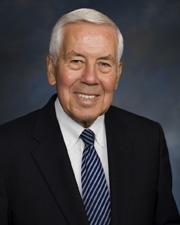 Sen. Richard G. Lugar (R-IN)
What it changes
1 change to S. 3001
Adds Subtitle E--Afghan Freedom Support and Security SEC. 1241. SHORT TITLE on page 360, line 20
Adds a sectionPrinted pageInserted: Subtitle E--Afghan Freedom Support and Security SEC. 1241. SHORT TITLE.
Inserted: This subtitle may be cited as the "Afghan Freedom Support and Security Act of 2008".
Inserted: SEC. 1242. FINDINGS.
Inserted: Congress makes the following findings:
Inserted: (1) More than 6 years after the liberation of Afghanistan from the Taliban, who provided Osama Bin Laden and Al-Qaeda with a safe haven for planning the attacks of September 11, 2001, Afghanistan remains highly unstable and the government of President Hamid Karzai remains subject to attacks from remnants of the Taliban who have regrouped in the region with other insurgent groups, including foreign fighters associated with Al-Qaeda.
Inserted: (2) The Government of Afghanistan supports the continued deployment of international forces to supplement its own nascent national security forces and North Atlantic Treaty Organization (NATO) forces, which took over international stability operations for the entire country through the International Security Assistance Force (ISAF) on October 5, 2006.
Inserted: (3) An insurgency that began in a relatively weak position at the end of 2005 has expanded to pose a serious threat to the Government of Afghanistan and the international NATO/ISAF and Operation Enduring Freedom forces, whose casualties have mounted significantly during 2008, while civilian casualties have also increased substantially in Afghanistan, resulting in significant popular disenchantment and concern about the prospects of peace and stability in the near future.
Inserted: (4) Despite the establishment of a constitution and a constitutionally-elected government in Afghanistan, the failure to build the core institutions of the state and the market has resulted in opportunities for massive corruption and the mounting loss of trust of the Afghan people in their government.
Inserted: (5) A Government Accountability Office report released on June 18, 2008 (GAO-08-883T) indicates that "although the [Afghan National Police] has reportedly grown in number since 2005, after an investment of nearly $6 billion, no Afghan police unit (0 of 433) is assessed by Defense as fully capable of performing its mission".
Inserted: (6) The failure of the current counter-narcotics strategy for Afghanistan has diminished Afghan political will to take on the increasingly powerful drug interests in the country. The lack of significant results is due to--
Inserted: (A) the failure to have in place in Afghanistan the essential institutional elements necessary to arrest and prosecute mid- and high-level drug traffickers and enablers; and
Inserted: (B) the lack of economic mechanisms, such as finance facilities and services and adequate land rights, to enable Afghan farmers to develop alternatives to opium production.
Show 157 more inserted paragraphsShow less
Inserted: (7) The violence and instability in Afghanistan is further exacerbated by corruption and the flourishing trade in opium and opium-related products, which--
Inserted: (A) has reached record levels;
Inserted: (B) fuels local militias;
Inserted: (C) corrupts the national and local governments; and
Inserted: (D) provides funding for insurgent and terrorist groups.
Inserted: (8) The failure of the Government of Afghanistan to reform the judicial sector has allowed the Taliban to offer its version of dispute settlement and to operate among ordinary citizens.
Inserted: (9) The Bonn Agreement--
Inserted: (A) provided legitimacy and initial stability in Afghanistan between late 2001 and 2006;
Inserted: (B) enabled the drafting of a new constitution, the first directly elected President in the history of Afghanistan, and a sitting National Parliament.
Inserted: (10) The Bonn Agreement also provided the political platform through which a series of benchmarks were set. These benchmarks were met against a carefully sequenced timeline for a narrow list of institutional priorities upon which the Afghan Government, Afghan citizens, and their international supporters could collaborate. The National Health System, the Afghan National Army, the National Solidarity Program, the National Telecommunications program, and the National Transportation System provided a clear framework for the establishment and coordination of goals, tasks, benchmarks, and allocation of responsibilities.
Inserted: (11) On February 1, 2006, the Government of Afghanistan and the international community issued the Afghanistan Compact, which sets forth both the international community"s commitment to Afghanistan and Afghanistan"s commitment to state-building and reform.
Inserted: (12) The Afghanistan Compact, which is supported by the Afghan National Development Strategy--
Inserted: (A) provides the core framework for building an effective, accountable state in Afghanistan;
Inserted: (B) sets goals and standards for improvements in security, governance, and development;
Inserted: (C) includes measures for reducing the narcotics economy, promoting regional cooperation, and making aid more effective, particularly at the local and provincial levels; and
Inserted: (D) established a mechanism to monitor Afghanistan and the international community's adherence to the time lines, goals, and objectives set forth in the document.
Inserted: SEC. 1243. SENSE OF CONGRESS.
Inserted: It is the Sense of the Congress that--
Inserted: (1) following the liberation of Afghanistan from the Taliban in 2001, the Federal Government underestimated--
Inserted: (A) the nature of the challenge in Afghanistan;
Inserted: (B) the time horizon for restoring political and economic stability in Afghanistan; and
Inserted: (C) the type of resources required to help ensure a stable Afghanistan with effective and accountable state institutions and developing economic opportunities;
Inserted: (2) the international community must--
Inserted: (A) provide appropriate and forthright expectations of the long and challenging commitment necessary for success in Afghanistan; and
Inserted: (B) accurately estimate the nature of the resources required;
Inserted: (3) Afghanistan remains a country of paramount importance to our national security and building Afghanistan into an effective state with political and economic stability is a goal that the United States shares with the Government of Afghanistan and its citizens;
Inserted: (4) the region in which Afghanistan is situated is of paramount importance to the national security of the United States and our diplomatic initiatives and foreign policy in this region must be harmonized and coherent across the region;
Inserted: (5) the most important partners in the security, stability, and development of Afghanistan are the people of that country, who should remain a prime focus of our efforts to build their sustained capacity to govern;
Inserted: (6) long-term, consistent, and coordinated international support and assistance is required in Afghanistan to secure, stabilize, and develop the country so that it is capable of sustaining good governance and becoming a responsible and valued partner in the international community;
Inserted: (7) setting appropriate expectations in Afghanistan and in donor and partner capitals is essential to effective and responsible foreign assistance policy; and understanding the necessity for long-term engagement in such situations will prevent short term, unsustainable outcomes;
Inserted: (8) Afghanistan and its neighbors have a mutual responsibility to ensure that their territories are not the source, and their policies are not complicit in, the destabilization or deprivation of other countries in the region;
Inserted: (9) the challenges Afghanistan faces stem more from weak governance than from a strong enemy and can be overcome by the unity and resolve of the Afghan people and the international community;
Inserted: (10) American academic and policy institutions and several respected outside organizations have conducted significant close and prolonged studies of the Afghanistan situation, generating reports and comprehensive reviews of post-conflict reconstruction, counter-narcotics, economic development, security force training, and counter-insurgency efforts that warrant review and consideration by United States policy makers to develop a more responsive United States strategy to address the crisis in Afghanistan;
Inserted: (11) despite some delays in its deployment, the Afghan National Army (ANA), which is an essential element in the stability of Afghanistan in a volatile region, must continue to be properly trained and equipped to achieve effective and independent operational capability;
Inserted: (12) the security of Afghanistan is closely intertwined with those of its regional neighbors;
Inserted: (13) success in Afghanistan, both economic and political, will be dependent on security and stability in the region; and
Inserted: (14) it is essential that United States policy be harmonized and complementary across the region.
Inserted: SEC. 1244. DECLARATION OF POLICY.
Inserted: It shall be the policy of the United States--
Inserted: (1) to render appropriate, long-term assistance to Afghanistan in a consistent and coordinated fashion with willing and responsible partners in the international community;
Inserted: (2) to ensure that our foreign policy in this region is responsive to and in partnership with the people of Afghanistan;
Inserted: (3) to harmonize its assistance efforts in Afghanistan and neighboring countries across--
Inserted: (A) all associated Federal agencies; and
Inserted: (B) to the maximum extent possible, with congruent international partner assistance efforts; and
Inserted: (4) to regularly, comprehensively, and openly review stabilization, reconstruction and development efforts in Afghanistan to ensure flexibility and the most effective utilization of resources toward specific, tangible outcomes.
Inserted: SEC. 1245. DEFINITIONS.
Inserted: In this subtitle:
Inserted: (1) Appropriate congressional committees.--Except as otherwise provided, the term "appropriate congressional committees" means--
Inserted: (A) the Committee on Foreign Relations of the Senate;
Inserted: (B) the Committee on Appropriations of the Senate;
Inserted: (C) the Committee on Foreign Affairs of the House of Representatives; and
Inserted: (D) the Committee on Appropriations of the House of Representatives.
Inserted: (2) Government of afghanistan.--The term "Government of Afghanistan" includes--
Inserted: (A) the government of any political subdivision of Afghanistan; and
Inserted: (B) any agency or instrumentality of the Government of Afghanistan.
Inserted: (3) International security assistance force; isaf.--The terms "International Security Assistance Force" and "ISAF" means the international security assistance force established to assist in the maintenance of security in Afghanistan pursuant to United Nations Security Council Resolution 1386 (2001), as amended by United Nations Security Council Resolutions 1413 (2002), 1444 (2002), 1510 (2003), 1563 (2004), 1623 (2005), and 1707 (2006).
Inserted: SEC. 1246. PURPOSES OF ASSISTANCE.
Inserted: The purposes of United States assistance authorized by this subtitle are--
Inserted: (1) to help assure the security of the United States and the world by--
Inserted: (A) reducing or eliminating the likelihood of violence against the United States and partners in Afghanistan; and
Inserted: (B) reducing the chance that Afghanistan will become a source of international terrorism;
Inserted: (2) to signal our Nation's long-term commitment to Afghanistan and its people, the region, and partners in the international community;
Inserted: (3) to provide United States civilian agencies with the appropriate resources to effectively plan, implement, and monitor assistance programs in an exceptionally challenging environment, including--
Inserted: (A) expanding the presence of United States diplomatic personnel in key provincial capitals and at locations at which Provincial Reconstruction Teams are to be sustained; and
Inserted: (B) integrating a more substantial, long-term presence of experienced development experts;
Inserted: (4) to help Afghans realize a stable and secure country with effective, accountable state institutions that effectively administer the basic needs of the Afghan people for services, safety, the rule of law, and increased economic opportunity, by focusing United States efforts on--
Inserted: (A) establishing viable Afghan security institutions;
Inserted: (B) building Afghan governance and rule of law capacity, especially at the sub-national level;
Inserted: (C) enabling a vibrant economic and social environment through reconstruction of critical infrastructure and focused development;
Inserted: (D) combating insurgency as an ongoing, regionally-fueled, threat; and
Inserted: (E) incorporating counter-narcotics as integral to this mission;
Inserted: (5) to realize, as milestones to Afghanistan's progress, combined with sustained political will on the part of our Afghan and international partners--
Inserted: (A) Afghan National Security Forces that plan and execute operations against Taliban and other insurgents, with United States, NATO, and other partner nations' forces in support and ensure that Afghan citizens are protected from criminal elements;
Inserted: (B) state-sponsored justice institutions in every province and in key districts that provide the majority of Afghans with access to formal justice;
Inserted: (C) governors in every province dedicated to and held accountable for delivery of services to the district level;
Inserted: (D) a strengthened, private sector friendly, legal and commercial framework and basic infrastructure for private sector development in every province, including roads that link to the main ring road;
Inserted: (E) reduced rates of poppy cultivation and trafficking based on strides made in improving security, enhancing local-governing capacity and justice institutions, and promoting economic development nationwide as the security environment dictates; and
Inserted: (F) the completion of the 2009 and 2010 scheduled presidential and parliamentary elections with an improved level of competence, legitimacy, and effectiveness in the administration of government for the Afghan people.
Inserted: SEC. 1247. AUTHORIZATION OF APPROPRIATIONS.
Inserted: It is the sense of Congress that up to $3,000,000,000 should be authorized to be appropriated to the President for each of the fiscal years 2009 through 2018 to provide assistance to Afghanistan under the Foreign Assistance Act of 1961(22 U.S.C. 2151 et seq.).
Inserted: SEC. 1248. MONITORING AND EVALUATION OF ASSISTANCE.
Inserted: (a) In General.--The President shall establish and implement a system to monitor and evaluate the effectiveness and efficiency of assistance provided under this subtitle on a program-by-program basis in order to maximize the long-term sustainable development impact of such assistance.
Inserted: (b) Requirements.--In carrying out subsection (a), the President shall--
Inserted: (1) establish performance goals for assistance authorized under this subtitle and expresses such goals in an objective and quantifiable form, to the extent practicable;
Inserted: (2) establish indicators to be used in measuring or assessing the achievement of the goals described in paragraph (1); and
Inserted: (3) provide a basis for recommendations for adjustments to assistance authorized under this subtitle to enhance the impact of such assistance.
Inserted: (c) Assistance To Enhance the Capacity of Afghanistan.--In carrying out subsection (a), the President shall provide assistance to enhance the capacity of the Government of Afghanistan to monitor and evaluate programs carried out by the national, provincial, and local governments in Afghanistan in order to maximize the long-term sustainable development impact of such programs.
Inserted: (d) Authorization of Appropriations.--Not less than 5 percent of the amounts authorized to be appropriated under section 1247(a) for any fiscal year shall be made available to carry out this section for such fiscal year.
Inserted: SEC. 1249. ASSISTANCE TO SUPPORT THE OFFICE OF THE INSPECTOR GENERAL OF DEPARTMENT OF STATE AND THE OFFICE OF THE INSPECTOR GENERAL OF THE UNITED STATES AGENCY FOR INTERNATIONAL DEVELOPMENT IN AFGHANISTAN.
Inserted: (a) Assistance Authorized.--The President shall provide assistance to support the auditing, investigation, and oversight capacity and capability in Afghanistan of the Office of the Inspector General of the Department of State and the Office of the Inspector General of the United States Agency for International Development in Afghanistan, which are authorized to audit, investigate, and oversee the programs authorized under this subtitle.
Inserted: (b) Requirement for In-Country Presence.--The Office of the Inspector General of the Department of State and the Office of the Inspector General of the United States Agency for International Development, after consultation with the Secretary of State and the Administrator for the United States Agency for International Development, shall permanently deploy not less than 2 staff from each such Office in Afghanistan to carry out this section.
Inserted: (c) Authorization of Appropriations.--
Inserted: (1) Availability of funds.--Of the amounts authorized to be appropriated under section 1247 for each of the fiscal years 2009 through 2013--
Inserted: (A) $1,500,000 may be made available to the Office of the Inspector General of the Department of State to carry out this section; and
Inserted: (B) $3,000,000 may be made available to the Office of the Inspector General of the United States Agency for International Development to carry out this section.
Inserted: (2) Relation to other available funds.--Amounts made available under paragraph (1) are in addition to amounts otherwise available for such purposes.
Inserted: SEC. 1250. COORDINATION OF ASSISTANCE.
Inserted: (a) Congressional Finding.--Congress finds that the coordinator of assistance provided for in section 9 has not achieved the objectives of an integrated approach to United States assistance programs for Afghanistan.
Inserted: (b) Appointment of Coordinator.--Not later than 90 days after the date of the enactment of this Act, the President, by and with the advice and consent of the Senate, shall appoint a coordinator. who--
Inserted: (1) shall report directly to the President;
Inserted: (2) shall have the rank and status of Ambassador; and
Inserted: (3) may not hold any other position within the United States Government.
Inserted: (c) Duties of Coordinator.--The coordinator appointed pursuant to subsection (b) shall--
Inserted: (1) design an overall non-military strategy, in coordination with the heads of relevant Federal departments and agencies, to advance United States interests in Afghanistan, including policy coordination relating to--
Inserted: (A) stability;
Inserted: (B) political and economic reconstruction and development;
Inserted: (C) counter-narcotics; and
Inserted: (D) activities to equip and train the Afghan National Security Forces;
Inserted: (2) ensure policy coordination among relevant Federal departments and agencies, including the Department of Defense, in carrying out the strategy described in paragraph (1);
Inserted: (3) coordinate with other countries and international organizations with respect to assistance for Afghanistan, especially in areas in which ground coordination and collaboration is essential, such as activities to--
Inserted: (A) equip and train the Afghan National Security Forces;
Inserted: (B) build the capacity of the Government of Afghanistan at the local, district, province, and national levels;
Inserted: (C) undertake phased reconstruction and development activities, especially activities associated with sustainable counter-narcotics operations and programs;
Inserted: (4) coordinate the implementation of assistance for Afghanistan described in paragraph (1) and oversight with relevant Federal departments and agencies;
Inserted: (5) resolve policy disputes with respect to United States assistance for Afghanistan described in paragraph (1) among relevant Federal departments and agencies; and
Inserted: (6) ensure coordination among the United States, the Government of Afghanistan, ISAF, and other international partners that are supporting counter-terrorism, counter-insurgency, and counter-narcotics efforts.
Inserted: (d) Deputy Coordinators.--The coordinator may appoint up to 2 deputy coordinators to assist the coordinator with the duties of the coordinator described in subsection (c), including duties relating to counter-narcotics, reconstruction and development, and equipping and training Afghan National Security Forces. A deputy coordinator may not hold any other position within the United States Government.
Inserted: SEC. 1251. HUMANITARIAN ASSISTANCE FOR WAR VICTIMS.
Inserted: (a) Sense of Congress.--It is the sense of Congress that--
Inserted: (1) the President should continue and expand programs of assistance to innocent Afghan individuals, families, and communities that suffered losses as a result of military operations conducted by United States and NATO/ISAF forces; and
Inserted: (2) the programs described in paragraph (1) help innocent civilians rebuild their lives and build goodwill for the United States and our allies.
Inserted: (b) Report.--Not later than 180 days after the date of the enactment of this Act, the President shall submit a report to the appropriate congressional committees on the feasibility of expanding assistance programs described in subsection (a) to include--
Inserted: (1) the provision of additional assistance to families of Afghan civilians who--
Inserted: (A) were injured or killed during such operations; and
Inserted: (B) were the primary source of income for their families;
Inserted: (2) the provision of assistance in excess of $2,500 to families of Afghan civilians described in subsection (a); and
Inserted: (3) the provision of other assistance that might be required as a result of ongoing military operations in Afghanistan.
Inserted: SEC. 1252. SENSE OF CONGRESS CONCERNING UNITED NATIONS MANDATE IN AFGHANISTAN.
Inserted: It is the sense of Congress that--
Inserted: (1) the United Nations Assistance Mission in Afghanistan plays a vital role in coordinating international assistance efforts and should strengthen that role;
Inserted: (2) the United Nations Security Council should expand the United Nations mandate in Afghanistan by--
Inserted: (A) authorizing international civilian law enforcement missions in Afghanistan as a part of peace operations of the United Nations in Afghanistan;
Inserted: (B) authorizing the International Security Assistance Force to participate in counter-drug interdiction operations, to the extent appropriate, practicable, and consistent with ongoing operational activities and international law, against major narcotic traffickers, their operations, and their infrastructure in Afghanistan, with the concurrence of the Government of Afghanistan;
Inserted: (C) installing effective centralized authority within the United Nations Special Representative for Afghanistan to enable the international community's political objectives to be prioritized and communicated directly with the Government of Afghanistan; and
Inserted: (D) amending and extending the authorization of the International Security Assistance Force beyond October 2008.
Inserted: SEC. 1253. SPECIAL REPRESENTATIVE FOR REGIONAL COOPERATION.
Inserted: (a) Statement of Policy.--Congress declares that it is in the national interest of the United States that the countries of South and Central Asia work together to address common challenges hampering the stability, security, and development of their region and to enhance their cooperation.
Inserted: (b) Appointment.--The President shall appoint, with the advice and consent of the Senate, a special representative, who shall--
Inserted: (1) have the rank of Ambassador; and
Inserted: (2) shall promote closer cooperation between the countries of South and Central Asia.
Inserted: (c) Duties.--
Inserted: (1) In general.--The primary responsibility of the special representative shall be to coordinate United States policy on issues relating to strengthening and facilitating relations between the nations of South and
Inserted: Central Asia for the benefit of stability and economic growth in the region.
Inserted: (2) Advisory role.--The special representative shall--
Inserted: (A) advise the President and the Secretary of State, as appropriate; and
Inserted: (B) in coordination with the Assistant Secretary of State for South and Central Asian Affairs, make recommendations regarding effective strategies and tactics to achieve United States policy objectives to--
Inserted: (i) stem cross-border terror activities;
Inserted: (ii) provide assistance to refugees to ensure orderly and voluntary repatriation from neighboring states;
Inserted: (iii) bolster people-to-people ties and economic cooperation between the nations of South and Central Asia, including bilateral trade relations;
Inserted: (iv) explore opportunities to anticipate and seek solutions to critical cross-border issues such as transport, energy, water and the like; and
Inserted: (v) offer comprehensive efforts to support effective counter-narcotics strategies in South and Central Asia.
Inserted: SEC. 1254. REAUTHORIZATION OF RADIO FREE AFGHANISTAN.
Inserted: (a) Findings.--Congress makes the following findings:
Inserted: (1) Since January 30, 2002, RFE/RL, Incorporated (formerly known as Radio Free Europe/Radio Liberty) has provided 12 hours of daily surrogate broadcasting services through Radio Free Afghanistan in Dari and Pashto languages to the people of Afghanistan.
Inserted: (2) Radio Free Afghanistan is the leading broadcaster in Afghanistan with an audience of nearly 60 percent of the adult population.
Inserted: (3) It is in the national interest to continue Radio Free Afghanistan's surrogate broadcasts to Afghanistan in order to provide accurate news and information, help give voice to ordinary Afghans, and provide programs on the fundamentals of democracy.
Inserted: (b) Authorization of Appropriations.--It is the sense of Congress that there should be authorized to be appropriated to the Broadcasting Board of Governors such sums as may be necessary for each of the fiscal years 2009 through 2013 for grants to support 12 hours of daily surrogate broadcasting services through Radio Free Afghanistan in Dari and Pashto languages to the people of Afghanistan.
Original wording
On page 360, after line 20, add the following:
Read automatically from the Congressional Record. Check the original before relying on it.
As printed
SA 5594. Mr. LUGAR (for himself and Mr. Biden) submitted an amendment intended to be proposed by him to the bill S. 3001, to authorize appropriations for fiscal year 2009 for military activities of the Department of Defense, for military construction, and for defense activities of the Department of Energy, to prescribe military personnel strengths for such fiscal year, and for other purposes; which was ordered to lie on the table; as follows:
On page 360, after line 20, add the following:
Subtitle E--Afghan Freedom Support and Security SEC. 1241. SHORT TITLE.
This subtitle may be cited as the “Afghan Freedom Support and Security Act of 2008”.
SEC. 1242. FINDINGS.
Congress makes the following findings:
(1) More than 6 years after the liberation of Afghanistan from the Taliban, who provided Osama Bin Laden and Al-Qaeda with a safe haven for planning the attacks of September 11, 2001, Afghanistan remains highly unstable and the government of President Hamid Karzai remains subject to attacks from remnants of the Taliban who have regrouped in the region with other insurgent groups, including foreign fighters associated with Al-Qaeda.
(2) The Government of Afghanistan supports the continued deployment of international forces to supplement its own nascent national security forces and North Atlantic Treaty Organization (NATO) forces, which took over international stability operations for the entire country through the International Security Assistance Force (ISAF) on October 5, 2006.
(3) An insurgency that began in a relatively weak position at the end of 2005 has expanded to pose a serious threat to the Government of Afghanistan and the international NATO/ISAF and Operation Enduring Freedom forces, whose casualties have mounted significantly during 2008, while civilian casualties have also increased substantially in Afghanistan, resulting in significant popular disenchantment and concern about the prospects of peace and stability in the near future.
(4) Despite the establishment of a constitution and a constitutionally-elected government in Afghanistan, the failure to build the core institutions of the state and the market has resulted in opportunities for massive corruption and the mounting loss of trust of the Afghan people in their government.
(5) A Government Accountability Office report released on June 18, 2008 (GAO-08-883T) indicates that “although the [Afghan National Police] has reportedly grown in number since 2005, after an investment of nearly $6 billion, no Afghan police unit (0 of 433) is assessed by Defense as fully capable of performing its mission”.
(6) The failure of the current counter-narcotics strategy for Afghanistan has diminished Afghan political will to take on the increasingly powerful drug interests in the country. The lack of significant results is due to--
(A) the failure to have in place in Afghanistan the essential institutional elements necessary to arrest and prosecute mid- and high-level drug traffickers and enablers; and
(B) the lack of economic mechanisms, such as finance facilities and services and adequate land rights, to enable Afghan farmers to develop alternatives to opium production.
(7) The violence and instability in Afghanistan is further exacerbated by corruption and the flourishing trade in opium and opium-related products, which--
(A) has reached record levels;
(B) fuels local militias;
(C) corrupts the national and local governments; and
(D) provides funding for insurgent and terrorist groups.
(8) The failure of the Government of Afghanistan to reform the judicial sector has allowed the Taliban to offer its version of dispute settlement and to operate among ordinary citizens.
(9) The Bonn Agreement--
(A) provided legitimacy and initial stability in Afghanistan between late 2001 and 2006;
(B) enabled the drafting of a new constitution, the first directly elected President in the history of Afghanistan, and a sitting National Parliament.
(10) The Bonn Agreement also provided the political platform through which a series of benchmarks were set. These benchmarks were met against a carefully sequenced timeline for a narrow list of institutional priorities upon which the Afghan Government, Afghan citizens, and their international supporters could collaborate. The National Health System, the Afghan National Army, the National Solidarity Program, the National Telecommunications program, and the National Transportation System provided a clear framework for the establishment and coordination of goals, tasks, benchmarks, and allocation of responsibilities.
(11) On February 1, 2006, the Government of Afghanistan and the international community issued the Afghanistan Compact, which sets forth both the international community“s commitment to Afghanistan and Afghanistan”s commitment to state-building and reform.
(12) The Afghanistan Compact, which is supported by the Afghan National Development Strategy--
(A) provides the core framework for building an effective, accountable state in Afghanistan;
(B) sets goals and standards for improvements in security, governance, and development;
(C) includes measures for reducing the narcotics economy, promoting regional cooperation, and making aid more effective, particularly at the local and provincial levels; and
(D) established a mechanism to monitor Afghanistan and the international community's adherence to the time lines, goals, and objectives set forth in the document.
SEC. 1243. SENSE OF CONGRESS.
It is the Sense of the Congress that--
(1) following the liberation of Afghanistan from the Taliban in 2001, the Federal Government underestimated--
(A) the nature of the challenge in Afghanistan;
(B) the time horizon for restoring political and economic stability in Afghanistan; and
(C) the type of resources required to help ensure a stable Afghanistan with effective and accountable state institutions and developing economic opportunities;
(2) the international community must--
(A) provide appropriate and forthright expectations of the long and challenging commitment necessary for success in Afghanistan; and
(B) accurately estimate the nature of the resources required;
(3) Afghanistan remains a country of paramount importance to our national security and building Afghanistan into an effective state with political and economic stability is a goal that the United States shares with the Government of Afghanistan and its citizens;
(4) the region in which Afghanistan is situated is of paramount importance to the national security of the United States and our diplomatic initiatives and foreign policy in this region must be harmonized and coherent across the region;
(5) the most important partners in the security, stability, and development of Afghanistan are the people of that country, who should remain a prime focus of our efforts to build their sustained capacity to govern;
(6) long-term, consistent, and coordinated international support and assistance is required in Afghanistan to secure, stabilize, and develop the country so that it is capable of sustaining good governance and becoming a responsible and valued partner in the international community;
(7) setting appropriate expectations in Afghanistan and in donor and partner capitals is essential to effective and responsible foreign assistance policy; and understanding the necessity for long-term engagement in such situations will prevent short term, unsustainable outcomes;
(8) Afghanistan and its neighbors have a mutual responsibility to ensure that their territories are not the source, and their policies are not complicit in, the destabilization or deprivation of other countries in the region;
(9) the challenges Afghanistan faces stem more from weak governance than from a strong enemy and can be overcome by the unity and resolve of the Afghan people and the international community;
(10) American academic and policy institutions and several respected outside organizations have conducted significant close and prolonged studies of the Afghanistan situation, generating reports and comprehensive reviews of post-conflict reconstruction, counter-narcotics, economic development, security force training, and counter-insurgency efforts that warrant review and consideration by United States policy makers to develop a more responsive United States strategy to address the crisis in Afghanistan;
(11) despite some delays in its deployment, the Afghan National Army (ANA), which is an essential element in the stability of Afghanistan in a volatile region, must continue to be properly trained and equipped to achieve effective and independent operational capability;
(12) the security of Afghanistan is closely intertwined with those of its regional neighbors;
(13) success in Afghanistan, both economic and political, will be dependent on security and stability in the region; and
(14) it is essential that United States policy be harmonized and complementary across the region.
SEC. 1244. DECLARATION OF POLICY.
It shall be the policy of the United States--
(1) to render appropriate, long-term assistance to Afghanistan in a consistent and coordinated fashion with willing and responsible partners in the international community;
(2) to ensure that our foreign policy in this region is responsive to and in partnership with the people of Afghanistan;
(3) to harmonize its assistance efforts in Afghanistan and neighboring countries across--
(A) all associated Federal agencies; and
(B) to the maximum extent possible, with congruent international partner assistance efforts; and
(4) to regularly, comprehensively, and openly review stabilization, reconstruction and development efforts in Afghanistan to ensure flexibility and the most effective utilization of resources toward specific, tangible outcomes.
SEC. 1245. DEFINITIONS.
In this subtitle:
(1) Appropriate congressional committees.--Except as otherwise provided, the term “appropriate congressional committees” means--
(A) the Committee on Foreign Relations of the Senate;
(B) the Committee on Appropriations of the Senate;
(C) the Committee on Foreign Affairs of the House of Representatives; and
(D) the Committee on Appropriations of the House of Representatives.
(2) Government of afghanistan.--The term “Government of Afghanistan” includes--
(A) the government of any political subdivision of Afghanistan; and
(B) any agency or instrumentality of the Government of Afghanistan.
(3) International security assistance force; isaf.--The terms “International Security Assistance Force” and “ISAF” means the international security assistance force established to assist in the maintenance of security in Afghanistan pursuant to United Nations Security Council Resolution 1386 (2001), as amended by United Nations Security Council Resolutions 1413 (2002), 1444 (2002), 1510 (2003), 1563 (2004), 1623 (2005), and 1707 (2006).
SEC. 1246. PURPOSES OF ASSISTANCE.
The purposes of United States assistance authorized by this subtitle are--
(1) to help assure the security of the United States and the world by--
(A) reducing or eliminating the likelihood of violence against the United States and partners in Afghanistan; and
(B) reducing the chance that Afghanistan will become a source of international terrorism;
(2) to signal our Nation's long-term commitment to Afghanistan and its people, the region, and partners in the international community;
(3) to provide United States civilian agencies with the appropriate resources to effectively plan, implement, and monitor assistance programs in an exceptionally challenging environment, including--
(A) expanding the presence of United States diplomatic personnel in key provincial capitals and at locations at which Provincial Reconstruction Teams are to be sustained; and
(B) integrating a more substantial, long-term presence of experienced development experts;
(4) to help Afghans realize a stable and secure country with effective, accountable state institutions that effectively administer the basic needs of the Afghan people for services, safety, the rule of law, and increased economic opportunity, by focusing United States efforts on--
(A) establishing viable Afghan security institutions;
(B) building Afghan governance and rule of law capacity, especially at the sub-national level;
(C) enabling a vibrant economic and social environment through reconstruction of critical infrastructure and focused development;
(D) combating insurgency as an ongoing, regionally-fueled, threat; and
(E) incorporating counter-narcotics as integral to this mission;
(5) to realize, as milestones to Afghanistan's progress, combined with sustained political will on the part of our Afghan and international partners--
(A) Afghan National Security Forces that plan and execute operations against Taliban and other insurgents, with United States, NATO, and other partner nations' forces in support and ensure that Afghan citizens are protected from criminal elements;
(B) state-sponsored justice institutions in every province and in key districts that provide the majority of Afghans with access to formal justice;
(C) governors in every province dedicated to and held accountable for delivery of services to the district level;
(D) a strengthened, private sector friendly, legal and commercial framework and basic infrastructure for private sector development in every province, including roads that link to the main ring road;
(E) reduced rates of poppy cultivation and trafficking based on strides made in improving security, enhancing local-governing capacity and justice institutions, and promoting economic development nationwide as the security environment dictates; and
(F) the completion of the 2009 and 2010 scheduled presidential and parliamentary elections with an improved level of competence, legitimacy, and effectiveness in the administration of government for the Afghan people.
SEC. 1247. AUTHORIZATION OF APPROPRIATIONS.
It is the sense of Congress that up to $3,000,000,000 should be authorized to be appropriated to the President for each of the fiscal years 2009 through 2018 to provide assistance to Afghanistan under the Foreign Assistance Act of 1961(22 U.S.C. 2151 et seq.).
SEC. 1248. MONITORING AND EVALUATION OF ASSISTANCE.
(a) In General.--The President shall establish and implement a system to monitor and evaluate the effectiveness and efficiency of assistance provided under this subtitle on a program-by-program basis in order to maximize the long-term sustainable development impact of such assistance.
(b) Requirements.--In carrying out subsection (a), the President shall--
(1) establish performance goals for assistance authorized under this subtitle and expresses such goals in an objective and quantifiable form, to the extent practicable;
(2) establish indicators to be used in measuring or assessing the achievement of the goals described in paragraph (1); and
(3) provide a basis for recommendations for adjustments to assistance authorized under this subtitle to enhance the impact of such assistance.
(c) Assistance To Enhance the Capacity of Afghanistan.--In carrying out subsection (a), the President shall provide assistance to enhance the capacity of the Government of Afghanistan to monitor and evaluate programs carried out by the national, provincial, and local governments in Afghanistan in order to maximize the long-term sustainable development impact of such programs.
(d) Authorization of Appropriations.--Not less than 5 percent of the amounts authorized to be appropriated under section 1247(a) for any fiscal year shall be made available to carry out this section for such fiscal year.
SEC. 1249. ASSISTANCE TO SUPPORT THE OFFICE OF THE INSPECTOR GENERAL OF DEPARTMENT OF STATE AND THE OFFICE OF THE INSPECTOR GENERAL OF THE UNITED STATES AGENCY FOR INTERNATIONAL DEVELOPMENT IN AFGHANISTAN.
(a) Assistance Authorized.--The President shall provide assistance to support the auditing, investigation, and oversight capacity and capability in Afghanistan of the Office of the Inspector General of the Department of State and the Office of the Inspector General of the United States Agency for International Development in Afghanistan, which are authorized to audit, investigate, and oversee the programs authorized under this subtitle.
(b) Requirement for In-Country Presence.--The Office of the Inspector General of the Department of State and the Office of the Inspector General of the United States Agency for International Development, after consultation with the Secretary of State and the Administrator for the United States Agency for International Development, shall permanently deploy not less than 2 staff from each such Office in Afghanistan to carry out this section.
(c) Authorization of Appropriations.--
(1) Availability of funds.--Of the amounts authorized to be appropriated under section 1247 for each of the fiscal years 2009 through 2013--
(A) $1,500,000 may be made available to the Office of the Inspector General of the Department of State to carry out this section; and
(B) $3,000,000 may be made available to the Office of the Inspector General of the United States Agency for International Development to carry out this section.
(2) Relation to other available funds.--Amounts made available under paragraph (1) are in addition to amounts otherwise available for such purposes.
SEC. 1250. COORDINATION OF ASSISTANCE.
(a) Congressional Finding.--Congress finds that the coordinator of assistance provided for in section 9 has not achieved the objectives of an integrated approach to United States assistance programs for Afghanistan.
(b) Appointment of Coordinator.--Not later than 90 days after the date of the enactment of this Act, the President, by and with the advice and consent of the Senate, shall appoint a coordinator. who--
(1) shall report directly to the President;
(2) shall have the rank and status of Ambassador; and
(3) may not hold any other position within the United States Government.
(c) Duties of Coordinator.--The coordinator appointed pursuant to subsection (b) shall--
(1) design an overall non-military strategy, in coordination with the heads of relevant Federal departments and agencies, to advance United States interests in Afghanistan, including policy coordination relating to--
(A) stability;
(B) political and economic reconstruction and development;
(C) counter-narcotics; and
(D) activities to equip and train the Afghan National Security Forces;
(2) ensure policy coordination among relevant Federal departments and agencies, including the Department of Defense, in carrying out the strategy described in paragraph (1);
(3) coordinate with other countries and international organizations with respect to assistance for Afghanistan, especially in areas in which ground coordination and collaboration is essential, such as activities to--
(A) equip and train the Afghan National Security Forces;
(B) build the capacity of the Government of Afghanistan at the local, district, province, and national levels;
(C) undertake phased reconstruction and development activities, especially activities associated with sustainable counter-narcotics operations and programs;
(4) coordinate the implementation of assistance for Afghanistan described in paragraph (1) and oversight with relevant Federal departments and agencies;
(5) resolve policy disputes with respect to United States assistance for Afghanistan described in paragraph (1) among relevant Federal departments and agencies; and
(6) ensure coordination among the United States, the Government of Afghanistan, ISAF, and other international partners that are supporting counter-terrorism, counter-insurgency, and counter-narcotics efforts.
(d) Deputy Coordinators.--The coordinator may appoint up to 2 deputy coordinators to assist the coordinator with the duties of the coordinator described in subsection (c), including duties relating to counter-narcotics, reconstruction and development, and equipping and training Afghan National Security Forces. A deputy coordinator may not hold any other position within the United States Government.
SEC. 1251. HUMANITARIAN ASSISTANCE FOR WAR VICTIMS.
(a) Sense of Congress.--It is the sense of Congress that--
(1) the President should continue and expand programs of assistance to innocent Afghan individuals, families, and communities that suffered losses as a result of military operations conducted by United States and NATO/ISAF forces; and
(2) the programs described in paragraph (1) help innocent civilians rebuild their lives and build goodwill for the United States and our allies.
(b) Report.--Not later than 180 days after the date of the enactment of this Act, the President shall submit a report to the appropriate congressional committees on the feasibility of expanding assistance programs described in subsection (a) to include--
(1) the provision of additional assistance to families of Afghan civilians who--
(A) were injured or killed during such operations; and
(B) were the primary source of income for their families;
(2) the provision of assistance in excess of $2,500 to families of Afghan civilians described in subsection (a); and
(3) the provision of other assistance that might be required as a result of ongoing military operations in Afghanistan.
SEC. 1252. SENSE OF CONGRESS CONCERNING UNITED NATIONS MANDATE IN AFGHANISTAN.
It is the sense of Congress that--
(1) the United Nations Assistance Mission in Afghanistan plays a vital role in coordinating international assistance efforts and should strengthen that role;
(2) the United Nations Security Council should expand the United Nations mandate in Afghanistan by--
(A) authorizing international civilian law enforcement missions in Afghanistan as a part of peace operations of the United Nations in Afghanistan;
(B) authorizing the International Security Assistance Force to participate in counter-drug interdiction operations, to the extent appropriate, practicable, and consistent with ongoing operational activities and international law, against major narcotic traffickers, their operations, and their infrastructure in Afghanistan, with the concurrence of the Government of Afghanistan;
(C) installing effective centralized authority within the United Nations Special Representative for Afghanistan to enable the international community's political objectives to be prioritized and communicated directly with the Government of Afghanistan; and
(D) amending and extending the authorization of the International Security Assistance Force beyond October 2008.
SEC. 1253. SPECIAL REPRESENTATIVE FOR REGIONAL COOPERATION.
(a) Statement of Policy.--Congress declares that it is in the national interest of the United States that the countries of South and Central Asia work together to address common challenges hampering the stability, security, and development of their region and to enhance their cooperation.
(b) Appointment.--The President shall appoint, with the advice and consent of the Senate, a special representative, who shall--
(1) have the rank of Ambassador; and
(2) shall promote closer cooperation between the countries of South and Central Asia.
(c) Duties.--
(1) In general.--The primary responsibility of the special representative shall be to coordinate United States policy on issues relating to strengthening and facilitating relations between the nations of South and
Central Asia for the benefit of stability and economic growth in the region.
(2) Advisory role.--The special representative shall--
(A) advise the President and the Secretary of State, as appropriate; and
(B) in coordination with the Assistant Secretary of State for South and Central Asian Affairs, make recommendations regarding effective strategies and tactics to achieve United States policy objectives to--
(i) stem cross-border terror activities;
(ii) provide assistance to refugees to ensure orderly and voluntary repatriation from neighboring states;
(iii) bolster people-to-people ties and economic cooperation between the nations of South and Central Asia, including bilateral trade relations;
(iv) explore opportunities to anticipate and seek solutions to critical cross-border issues such as transport, energy, water and the like; and
(v) offer comprehensive efforts to support effective counter-narcotics strategies in South and Central Asia.
SEC. 1254. REAUTHORIZATION OF RADIO FREE AFGHANISTAN.
(a) Findings.--Congress makes the following findings:
(1) Since January 30, 2002, RFE/RL, Incorporated (formerly known as Radio Free Europe/Radio Liberty) has provided 12 hours of daily surrogate broadcasting services through Radio Free Afghanistan in Dari and Pashto languages to the people of Afghanistan.
(2) Radio Free Afghanistan is the leading broadcaster in Afghanistan with an audience of nearly 60 percent of the adult population.
(3) It is in the national interest to continue Radio Free Afghanistan's surrogate broadcasts to Afghanistan in order to provide accurate news and information, help give voice to ordinary Afghans, and provide programs on the fundamentals of democracy.
(b) Authorization of Appropriations.--It is the sense of Congress that there should be authorized to be appropriated to the Broadcasting Board of Governors such sums as may be necessary for each of the fiscal years 2009 through 2013 for grants to support 12 hours of daily surrogate broadcasting services through Radio Free Afghanistan in Dari and Pashto languages to the people of Afghanistan.
Legislative Activity
Stay on top of the latest movement without scrolling through every action
Senate amendment submitted
September 15, 2008