To improve the bill.
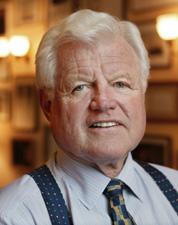 Sen. Edward M. Kennedy (D-MA)
Text
Proposed
This amendment's own text couldn't be picked out of its Congressional Record passage, so the passage is shown in full.
MENTALLY ILL OFFENDER TREATMENT AND CRIME REDUCTION REAUTHORIZATION AND
                        IMPROVEMENT ACT OF 2008

  Mr. LEAHY. Mr. President, I ask unanimous consent that the Senate
proceed to the immediate consideration of Calendar No. 622, S. 2304.
  The PRESIDING OFFICER. The clerk will report the bill by title.
  The bill clerk read as follows:

       A bill (S. 2304) to amend title I of the Omnibus Crime
     Control and Safe Streets Act of 1968 to provide grants for
     the improved mental health treatment and services provided to
     offenders with mental illness, and for other purposes.

  There being no objection, the Senate proceeded to consider the bill,
which had been reported from the Committee on the Judiciary, with an
amendment to strike all after the enacting clause and insert in lieu
thereof the following:

     SECTION 1. SHORT TITLE; TABLE OF CONTENTS.

       (a) Short Title.--This Act may be cited as the ``Mentally
     Ill Offender Treatment and Crime Reduction Reauthorization
     and Improvement Act of 2008''.
       (b) Table of Contents.--The table of contents for this Act
     is as follows:

Sec. 1. Short title; table of contents.
Sec. 2. Findings.
Sec. 3. Reauthorization of the Adult and Juvenile Collaboration Program
              Grants.
Sec. 4. Law enforcement response to mentally ill offenders improvement
              grants.
Sec. 5. Improving the mental health courts grant program.
Sec. 6. Examination and report on prevalence of mentally ill offenders.

     SEC. 2. FINDINGS.

       Congress finds the following:
       (1) Communities nationwide are struggling to respond to the
     high numbers of people with mental illnesses involved at all
     points in the criminal justice system.
       (2) A 1999 study by the Department of Justice estimated
     that 16 percent of people incarcerated in prisons and jails
     in the United States, which is more than 300,000 people,
     suffer from mental illnesses.
       (3) Los Angeles County Jail and New York's Rikers Island
     jail complex hold more people with mental illnesses than the
     largest psychiatric inpatient facilities in the United
     States.
       (4) State prisoners with a mental health problem are twice
     as likely as those without a mental health problem to have
     been homeless in the year before their arrest.

     SEC. 3. REAUTHORIZATION OF THE ADULT AND JUVENILE
                   COLLABORATION PROGRAM GRANTS.

       (a) Authorization of Appropriations Through 2014.--Section
     2991(h) of title I of the Omnibus Crime Control and Safe
     Streets Act of 1968 (42 U.S.C. 3793aa(h)) is amended--
       (1) in paragraph (1), by striking at the end ``and'';
       (2) in paragraph (2), by striking ``for fiscal years 2006
     through 2009.'' and inserting ``for each of the fiscal years
     2006 and 2007; and''; and
       (3) by adding at the end the following new paragraph:
       ``(3) $75,000,000 for each of the fiscal years 2009 through
     2014.''.
       (b) Allocation of Funding for Administrative Purposes.--
     Section 2991(h) of such title is further amended--
       (1) by redesignating paragraphs (1), (2), and (3) (as added
     by subsection (a)(3)) as subparagraphs (A), (B), and (C),
     respectively, and adjusting the margins accordingly;
       (2) by striking ``There are authorized'' and inserting
     ``(1) In general.--There are authorized''; and
       (3) by adding at the end the following new paragraph:
       ``(2) Allocation of Funding for Administrative Purposes.--
     For fiscal year 2009 and each subsequent fiscal year, of the
     amounts authorized under paragraph (1) for such fiscal year,
     the Attorney General may obligate not more than 3 percent for
     the administrative expenses of the Attorney General in
     carrying out this section for such fiscal year.''.
       (c) Additional Applications Receiving Priority.--Subsection
     (c) of such section is amended to read as follows:
       ``(c) Priority.--The Attorney General, in awarding funds
     under this section, shall give priority to applications
     that--
       ``(1) promote effective strategies by law enforcement to
     identify and to reduce risk of harm to mentally ill offenders
     and public safety;
       ``(2) promote effective strategies for identification and
     treatment of female mentally ill offenders; or
       ``(3)(A) demonstrate the strongest commitment to ensuring
     that such funds are used to promote both public health and
     public safety;
       ``(B) demonstrate the active participation of each co-
     applicant in the administration of the collaboration program;
       ``(C) document, in the case of an application for a grant
     to be used in whole or in part to

[[Page S9596]]

     fund treatment services for adults or juveniles during
     periods of incarceration or detention, that treatment
     programs will be available to provide transition and reentry
     services for such individuals; and
       ``(D) have the support of both the Attorney General and the
     Secretary.''.

     SEC. 4. LAW ENFORCEMENT RESPONSE TO MENTALLY ILL OFFENDERS
                   IMPROVEMENT GRANTS.

       (a) In General.--Part HH of title I of the Omnibus Crime
     Control and Safe Streets Act of 1968 (42 U.S.C. 3797aa) is
     amended by adding at the end the following new section:

     ``SEC. 2992. LAW ENFORCEMENT RESPONSE TO MENTALLY ILL
                   OFFENDERS IMPROVEMENT GRANTS.

       ``(a) Authorization.--The Attorney General is authorized to
     make grants to States, units of local government, Indian
     tribes, and tribal organizations for the following purposes:
       ``(1) Training programs.--To provide for programs that
     offer law enforcement personnel specialized and comprehensive
     training in procedures to identify and respond appropriately
     to incidents in which the unique needs of individuals with
     mental illnesses are involved.
       ``(2) Receiving centers.--To provide for the development of
     specialized receiving centers to assess individuals in the
     custody of law enforcement personnel for suicide risk and
     mental health and substance abuse treatment needs.
       ``(3) Improved technology.--To provide for computerized
     information systems (or to improve existing systems) to
     provide timely information to law enforcement personnel and
     criminal justice system personnel to improve the response of
     such respective personnel to mentally ill offenders.
       ``(4) Cooperative programs.--To provide for the
     establishment and expansion of cooperative efforts by
     criminal and juvenile justice agencies and mental health
     agencies to promote public safety through the use of
     effective intervention with respect to mentally ill
     offenders.
       ``(5) Campus security personnel training.--To provide for
     programs that offer campus security personnel training in
     procedures to identify and respond appropriately to incidents
     in which the unique needs of individuals with mental
     illnesses are involved.
       ``(b) BJA Training Models.--For purposes of subsection
     (a)(1), the Director of the Bureau of Justice Assistance
     shall develop training models for training law enforcement
     personnel in procedures to identify and respond appropriately
     to incidents in which the unique needs of individuals with
     mental illnesses are involved, including suicide prevention.
       ``(c) Matching Funds.--The Federal share of funds for a
     program funded by a grant received under this section may not
     exceed 75 percent of the costs of the program unless the
     Attorney General waives, wholly or in part, such funding
     limitation. The non-Federal share of payments made for such a
     program may be made in cash or in-kind fairly evaluated,
     including planned equipment or services.
       ``(d) Authorization of Appropriations.--There are
     authorized to be appropriated to the Department of Justice to
     carry out this section $10,000,000 for each of the fiscal
     years 2009 through 2014.''.
       (b) Conforming Amendment.--Such part is further amended by
     amending the part heading to read as follows: ``GRANTS TO
     IMPROVE TREATMENT OF OFFENDERS WITH MENTAL ILLNESSES''.

     SEC. 5. IMPROVING THE MENTAL HEALTH COURTS GRANT PROGRAM.

       (a) Reauthorization of the Mental Health Courts Grant
     Program.--Section 1001(a)(20) of title I of the Omnibus Crime
     Control and Safe Streets Act of 1968 (42 U.S.C. 3793(a)(20))
     is amended by striking ``fiscal years 2001 through 2004'' and
     inserting ``fiscal years 2009 through 2014''.
       (b) Additional Grant Uses Authorized.--Section 2201 of such
     title (42 U.S.C. 3796ii) is amended--
       (1) in paragraph (1), by striking ``and'' at the end;
       (2) in paragraph (2) by striking the period at the end and
     inserting a semicolon; and
       (3) by adding at the end the following new paragraphs:
       ``(3) pretrial services and related treatment programs for
     offenders with mental illnesses; and
       ``(4) developing, implementing, or expanding programs that
     are alternatives to incarceration for offenders with mental
     illnesses.''.

     SEC. 6. EXAMINATION AND REPORT ON PREVALENCE OF MENTALLY ILL
                   OFFENDERS.

       (a) In General.--
       (1) In general.--The Attorney General shall examine and
     report on mental illness and the criminal justice system.
       (2) Scope.--Congress encourages the Attorney General to
     specifically examine the following:
       (A) Populations.--The rate of occurrence of serious mental
     illnesses in each of the following populations:
       (i) Individuals, including juveniles, on probation.
       (ii) Individuals, including juveniles, incarcerated in a
     jail.
       (iii) Individuals, including juveniles, incarcerated in a
     prison.
       (iv) Individuals, including juveniles, on parole.
       (B) Benefits.--The percentage of individuals in each
     population described in subparagraph (A) who have--
       (i) a serious mental illness; and
       (ii) received disability benefits under title II or title
     XVI of the Social Security Act (42 U.S.C. 401 et seq. and
     1381 et seq.).
       (b) Report.--Not later than 36 months after the date of the
     enactment of this Act, the Attorney General shall submit to
     Congress the report described in subsection (a).
       (c) Definitions.--In this section--
       (1) the term ``serious mental illness'' means that an
     individual has, or at any time during the 1-year period
     ending on the date of enactment of this Act had, a covered
     mental, behavioral, or emotional disorder; and
       (2) the term ``covered mental, behavioral, or emotional
     disorder''--
       (A) means a diagnosable mental, behavioral, or emotional
     disorder of sufficient duration to meet diagnostic criteria
     specified within the Diagnostic and Statistical Manual of
     Mental Disorders, Fourth Edition, or the International
     Classification of Diseases, Ninth Revision, Clinical
     Modification equivalent of the Diagnostic and Statistical
     Manual of Mental Disorders, Fourth Edition; and
       (B) does not include a disorder that has a V code within
     the Diagnostic and Statistical Manual of Mental Disorders,
     Fourth Edition, a substance use disorder, or a developmental
     disorder, unless that disorder cooccurs with another disorder
     described in subparagraph (A) and causes functional
     impairment which substantially interferes with or limits 1 or
     more major life activities.
       (d) Authorization of Appropriations.--There are authorized
     to be appropriated to carry out this section $2,000,000 for
     2009.

  Mr. LEAHY. Mr. President, I ask unanimous consent that a Kennedy
amendment, which is at the desk, be agreed to; the committee substitute
amendment, as amended, be agreed to; the bill, as amended, be read a
third time and passed; the motions to reconsider be laid upon the
table, with no intervening action or debate; and any statements related
to the bill be printed in the Record.
  The PRESIDING OFFICER. Without objection, it is so ordered.
  The amendment (No. 5656) was agreed to, as follows:

       In lieu of the matter proposed to be inserted, insert the
     following:

     SECTION 1. SHORT TITLE; TABLE OF CONTENTS.

       (a) Short Title.--This Act may be cited as the ``Mentally
     Ill Offender Treatment and Crime Reduction Reauthorization
     and Improvement Act of 2008''.
       (b) Table of Contents.--The table of contents for this Act
     is as follows:
       Sec. 1. Short title; table of contents.
       Sec. 2. Findings.
       Sec. 3. Reauthorization of the Adult and Juvenile
           Collaboration Program Grants.
       Sec. 4. Law enforcement response to mentally ill offenders
           improvement grants.
       Sec. 5. Examination and report on prevalence of mentally
           ill offenders.

     SEC. 2. FINDINGS.

       Congress finds the following:
       (1) Communities nationwide are struggling to respond to the
     high numbers of people with mental illnesses involved at all
     points in the criminal justice system.
       (2) A 1999 study by the Department of Justice estimated
     that 16 percent of people incarcerated in prisons and jails
     in the United States, which is more than 300,000 people,
     suffer from mental illnesses.
       (3) Los Angeles County Jail and New York's Rikers Island
     jail complex hold more people with mental illnesses than the
     largest psychiatric inpatient facilities in the United
     States.
       (4) State prisoners with a mental health problem are twice
     as likely as those without a mental health problem to have
     been homeless in the year before their arrest.

     SEC. 3. REAUTHORIZATION OF THE ADULT AND JUVENILE
                   COLLABORATION PROGRAM GRANTS.

       (a) Authorization of Appropriations Through 2014.--Section
     2991(h) of title I of the Omnibus Crime Control and Safe
     Streets Act of 1968 (42 U.S.C. 3797aa(h)) is amended--
       (1) in paragraph (1), by striking at the end ``and'';
       (2) in paragraph (2), by striking ``for fiscal years 2006
     through 2009.'' and inserting ``for each of the fiscal years
     2006 and 2007; and''; and
       (3) by adding at the end the following new paragraph:
       ``(3) $50,000,000 for each of the fiscal years 2009 through
     2014.''.
       (b) Allocation of Funding for Administrative Purposes.--
     Section 2991(h) of such title is further amended--
       (1) by redesignating paragraphs (1), (2), and (3) (as added
     by subsection (a)(3)) as subparagraphs (A), (B), and (C),
     respectively, and adjusting the margins accordingly;
       (2) by striking ``There are authorized'' and inserting
     ``(1) In general.--There are authorized''; and
       (3) by adding at the end the following new paragraph:
       ``(2) Allocation of Funding for Administrative Purposes.--
     For fiscal year 2009 and each subsequent fiscal year, of the
     amounts authorized under paragraph (1) for such fiscal year,
     the Attorney General may obligate not more than 3 percent for
     the administrative expenses of the Attorney General in
     carrying out this section for such fiscal year.''.
       (c) Additional Applications Receiving Priority.--Subsection
     (c) of such section is amended to read as follows:
       ``(c) Priority.--The Attorney General, in awarding funds
     under this section, shall give priority to applications
     that--
       ``(1) promote effective strategies by law enforcement to
     identify and to reduce risk of harm to mentally ill offenders
     and public safety;
       ``(2) promote effective strategies for identification and
     treatment of female mentally ill offenders;

[[Page S9597]]

       ``(3) promote effective strategies to expand the use of
     mental health courts, including the use of pretrial services
     and related treatment programs for offenders; or
       ``(4)(A) demonstrate the strongest commitment to ensuring
     that such funds are used to promote both public health and
     public safety;
       ``(B) demonstrate the active participation of each co-
     applicant in the administration of the collaboration program;
       ``(C) document, in the case of an application for a grant
     to be used in whole or in part to fund treatment services for
     adults or juveniles during periods of incarceration or
     detention, that treatment programs will be available to
     provide transition and reentry services for such individuals;
     and
       ``(D) have the support of both the Attorney General and the
     Secretary.''.

     SEC. 4. LAW ENFORCEMENT RESPONSE TO MENTALLY ILL OFFENDERS
                   IMPROVEMENT GRANTS.

       Section 2991 of title I of the Omnibus Crime Control and
     Safe Streets Act of 1968 (42 U.S.C. 3797aa) is amended by--
       (1) redesignating subsection (h) as subsection (i); and
       (2) inserting after subsection (g) the following:
       ``(h) Law Enforcement Response to Mentally Ill Offenders
     Improvement Grants.--
       ``(1) Authorization.--The Attorney General is authorized to
     make grants under this section to States, units of local
     government, Indian tribes, and tribal organizations for the
     following purposes:
       ``(A) Training programs.--To provide for programs that
     offer law enforcement personnel specialized and comprehensive
     training in procedures to identify and respond appropriately
     to incidents in which the unique needs of individuals with
     mental illnesses are involved.
       ``(B) Receiving centers.--To provide for the development of
     specialized receiving centers to assess individuals in the
     custody of law enforcement personnel for suicide risk and
     mental health and substance abuse treatment needs.
       ``(C) Improved technology.--To provide for computerized
     information systems (or to improve existing systems) to
     provide timely information to law enforcement personnel and
     criminal justice system personnel to improve the response of
     such respective personnel to mentally ill offenders.
       ``(D) Cooperative programs.--To provide for the
     establishment and expansion of cooperative efforts by
     criminal and juvenile justice agencies and mental health
     agencies to promote public safety through the use of
     effective intervention with respect to mentally ill
     offenders.
       ``(E) Campus security personnel training.--To provide for
     programs that offer campus security personnel training in
     procedures to identify and respond appropriately to incidents
     in which the unique needs of individuals with mental
     illnesses are involved.
       ``(2) BJA training models.--For purposes of paragraph
     (1)(A), the Director of the Bureau of Justice Assistance
     shall develop training models for training law enforcement
     personnel in procedures to identify and respond appropriately
     to incidents in which the unique needs of individuals with
     mental illnesses are involved, including suicide prevention.
       ``(3) Matching funds.--The Federal share of funds for a
     program funded by a grant received under this subsection may
     not exceed 50 percent of the costs of the program. The non-
     Federal share of payments made for such a program may be made
     in cash or in-kind fairly evaluated, including planned
     equipment or services.''.

     SEC. 5. EXAMINATION AND REPORT ON PREVALENCE OF MENTALLY ILL
                   OFFENDERS.

       (a) In General.--
       (1) In general.--The Attorney General shall examine and
     report on mental illness and the criminal justice system.
       (2) Scope.--Congress encourages the Attorney General to
     specifically examine the following:
       (A) Populations.--The rate of occurrence of serious mental
     illnesses in each of the following populations:
       (i) Individuals, including juveniles, on probation.
       (ii) Individuals, including juveniles, incarcerated in a
     jail.
       (iii) Individuals, including juveniles, incarcerated in a
     prison.
       (iv) Individuals, including juveniles, on parole.
       (B) Benefits.--The percentage of individuals in each
     population described in subparagraph (A) who have--
       (i) a serious mental illness; and
       (ii) received disability benefits under title II or title
     XVI of the Social Security Act (42 U.S.C. 401 et seq. and
     1381 et seq.).
       (b) Report.--Not later than 36 months after the date of the
     enactment of this Act, the Attorney General shall submit to
     Congress the report described in subsection (a).
       (c) Definitions.--In this section--
       (1) the term ``serious mental illness'' means that an
     individual has, or at any time during the 1-year period
     ending on the date of enactment of this Act had, a covered
     mental, behavioral, or emotional disorder; and
       (2) the term ``covered mental, behavioral, or emotional
     disorder''--
       (A) means a diagnosable mental, behavioral, or emotional
     disorder of sufficient duration to meet diagnostic criteria
     specified within the Diagnostic and Statistical Manual of
     Mental Disorders, Fourth Edition, or the International
     Classification of Diseases, Ninth Revision, Clinical
     Modification equivalent of the Diagnostic and Statistical
     Manual of Mental Disorders, Fourth Edition; and
       (B) does not include a disorder that has a V code within
     the Diagnostic and Statistical Manual of Mental Disorders,
     Fourth Edition, a substance use disorder, or a developmental
     disorder, unless that disorder cooccurs with another disorder
     described in subparagraph (A) and causes functional
     impairment which substantially interferes with or limits 1 or
     more major life activities.
       (d) Authorization of Appropriations.--There are authorized
     to be appropriated to carry out this section $2,000,000 for
     2009.

  The committee amendment in the nature of a substitute, as amended,
was agreed to.
  The bill (S. 2304), as amended, was ordered to be engrossed for a
third reading, was read the third time, and passed.
  Mr. LEAHY. Mr. President, I was proud to be a cosponsor, but I am
especially proud of the lead sponsor, Senator Edward Kennedy of
Massachusetts. This is a matter he has cared passionately about, and he
has worked tirelessly. He relied not only on his own family experience
but also the experiences of so many other thousands of families who
have seen Senator Kennedy as a champion. I applaud him.
  We have been in constant contact with Senator Kennedy during the time
we have been talking about this issue. Incidentally, we are, of course,
talking about The Mentally Ill Offender Treatment and Crime Reduction
Reauthorization and Improvement Act. I have talked with him about his
personal experience and with those who are mentally ill, and his
concern about this whole subject has been shown time and time again. So
I applaud Senator Kennedy and all the other cosponsors for what they
have done.
  Today, the Senate will finally turn to legislation to reauthorize the
Mentally Ill Offender Treatment and Crime Reduction Act. Though this
bill was reported by the Judiciary Committee in April, it has stalled
on the Senate floor for 5 months due to Republican objection. I am glad
that we are moving forward on this bill today.
  I was a sponsor of the original authorization of this Act in 2004,
and I am proud that these programs have helped State and local
governments to reduce crime by providing more effective treatment for
the mentally ill. I am pleased to be a cosponsor of the reauthorization
of this important legislation in this Congress, and I thank Senators
Kennedy, Domenici, and Specter for their leadership on this issue.
  All too often, people with mental illness find themselves in a
revolving door between the criminal justice system and the streets of
our communities, committing a series of minor offenses. These offenders
end up in prisons or jails, where little or no appropriate medical care
is available for them. This bill gives State and local governments the
tools to break this cycle, for the good of law enforcement, corrections
officers, the public's safety, and the mentally ill offenders
themselves. More than 16 percent of adults incarcerated in U.S. jails
and prisons have a mental illness, and about 20 percent of youth in the
juvenile justice system have serious mental health problems. Almost
half the inmates in prison with a mental illness were incarcerated for
committing a nonviolent crime. This is a serious problem that I hear
about often when I talk with law enforcement officials and others in
Vermont.
  Under this bill, State and local governments can apply for funding to
create or expand mental health courts or other court-based programs,
which can divert qualified offenders from prison to receive treatment;
create or expand programs to provide specialized training for criminal
justice and mental health system personnel; create or expand local
treatment programs that serve individuals with mental illness or co-
occurring mental illness and substance abuse disorders; and promote and
provide mental health treatment for those incarcerated in or released
from jails and prisons.
  The grants created under this program have been in high demand, but
only about 11 percent of the applications submitted have been able to
receive funding due to the scarce Federal funds available. The bill's
sponsors and I worked hard to determine an appropriate authorization
level of funding, which has unfortunately been slashed

[[Page S9598]]

in this bill in order to accommodate the objection of the junior
Senator from Oklahoma. I look forward to working with Senators Kennedy,
Domenici, and Specter as the appropriations process moves forward so
that these vital programs can be adequately funded.
  This legislation brings together law enforcement, corrections, and
mental health professionals to help respond to the needs of our
communities. They are familiar with the unique problems states face
with mentally ill offenders, and they understand the importance of
federal support. I am glad the Republican objection to moving this bill
forward has been lifted, and I hope the House passes this important
bill swiftly.
  Mr. DOMENICI. Mr. President, I rise today with my colleagues, Senator
Kennedy, Senator Leahy, and Senator Specter, to laud the passage of S.
2304, the Mentally Ill Offender Treatment and Crime Reduction
Reauthorization and Improvement Act of 2008. This bill reauthorizes and
improves several programs intended to provide federal support for
collaborations between criminal justice and mental health systems.
  I must first show my great admiration and appreciation for Senator
Ted Kennedy, with whom I have worked diligently on legislation related
to mental illness. His support, knowledge, and friendship have been
invaluable in our joint fight for better access and opportunities for
the millions of Americans who suffer from some form of mental illness.
To him I owe a debt of gratitude and am thankful for the opportunity to
have worked so closely with him for so many years.
  It is estimated that approximately 16 percent of adult U.S. jail and
prison inmates suffer from mental illness and the numbers are even
higher in the juvenile justice system. Many of these individuals are
not violent or habitual criminals. Most have been charged or convicted
of non-violent crimes that are a direct consequence of not having
received needed treatment and supportive services for their mental
illness.
  The presence of defendants with mental illnesses in the criminal
justice system imposes substantial costs on that system and can cause
significant harm to defendants. In response to this problem, a number
of communities around the country are implementing mental health
courts, a specialty court model that utilizes a separate docket,
coupled with regular judicial supervision, to respond to individuals
with mental illnesses who come in contact with the justice system.
  Many communities are not prepared to meet the comprehensive treatment
and needs of individuals with mental illness when they enter the
criminal justice system. The bill passing today is intended to help
provide resources to help states and counties design and implement
collaborative efforts between criminal justice and mental health
structures. The bill reauthorizes the Mentally Ill Offender Treatment
and Crime Reduction Grant Program and reauthorizes the Mental Health
Courts Program. It creates a new grant program to help law enforcement
identify and respond to incidents involving persons with mental illness
and it funds a study and report on the prevalence of mentally ill
offenders in the criminal justice system. All of these reforms will
help to address this problem from both a public safety and a public
health point of view. This will help save taxpayers money, improve
public safety, and link individuals with the treatment they need to
become productive members of their community.
  Certainly, not every crime committed by an individual diagnosed with
a mental illness is attributable to their illness or to the failure of
public mental health. Mental health courts are not a panacea for
addressing the needs of the growing number of people with mental
illnesses who come in contact with the criminal justice system. But
they should be one part of the solution. Evidence has shown that in
communities where mental health and criminal justice interests work
collaboratively on solutions it can make a significant impact in
fostering recovery, improving treatment outcomes and decreasing
recidivism.
  I thank my good friends for working with me on this very important
issue. I appreciate their commitment to advancing these important
programs and I am thankful to be here to see the passage of this
legislation that we worked so hard on.
  (At the request of Mr. Reid, the following statement was ordered to
be printed in the Record.)
<bullet> Mr. KENNEDY. Mr. President, it is a privilege to join my
colleague from New Mexico, Senator Domenici, in strongly supporting
Senate passage of S. 2304, the Mentally Ill Offender Treatment and
Crime Reduction Reauthorization and Improvement Act of 2008. This
bicameral, bipartisan legislation demonstrates strong Federal support
for helping local communities address the current crisis in which far
too many persons with mental illness are subjected to incarceration,
not treatment. With full funding, this proposal has the potential to
achieve significant reforms in the criminal justice system's treatment
of people diagnosed with mental illness.
  I commend Senator Domenici for his leadership on this bill and on
many other initiatives to improve our Nation's mental health system. I
also commend the leadership of Representatives Bobby Scott and Forbes
in the House of Representatives on this issue. This important
legislation will promote cooperative initiatives that will
significantly reduce recidivism and improve treatment outcomes for
mentally ill offenders.
  Based on the most recent studies by the Bureau of Justice, more than
half of all prison and jail inmates in 2005 had a mental health
problem, including 56 percent of inmates in State prisons, 45 percent
of Federal prisoners, and 64 percent of jail inmates. According to a
report by the Council of State Governments' Criminal Justice-Mental
Health Consensus Project, the rate of mental illness in State prisons
and jails is at least three times the rate in the general population,
and at least three-quarters of those incarcerated have a substance
abuse disorder.
  Far too often, individuals are subjected to the criminal justice
system, when what is really needed is treatment and support for mental
illness or substance abuse disorders. Families often resort in
desperation to the police in order to obtain treatment and assistance
for a loved one suffering from an extreme episode of a mental illness.
During times of such distress, families feel they have no other
alternative because persons with symptoms such as paranoia, exaggerated
actions, or impaired judgment are unable to recognize the need for
treatment.
  It is unconscionable, and may well be unconstitutional, for these
vulnerable individuals to be further marginalized after they are
incarcerated. Too often they are denied even minimal treatment because
of inadequate resources. Most mentally ill offenders who come into
contact with the criminal justice system are charged with low-level,
nonviolent crimes. Once behind bars, they may well face an environment
that further exacerbates symptoms of mental illness that might
otherwise be manageable with proper treatment, and they may soon be
back in prison as a result of insufficient and inadequate services when
they are released.
  This bill reauthorizes critical programs to move away from troubled
systems that often result in the escalating incarceration of
individuals with mental illness. Through this legislation, State and
local correctional facilities will be able to create appropriate, cost-
effective solutions. In particular, I am very supportive of the crisis
intervention teams that many communities have developed to expand
cooperation between the mental health system and law enforcement. These
teams have been very effective in enabling officers to spend less time
arresting mentally ill individuals and more time directing them toward
treatment. I also support the continued expansion of mental health
courts, so that defendants can be placed into judicially supervised
community-based treatment programs, which often result in better
outcomes and reduced recidivism.
  To date, we have seen only a fraction of the possible potential of
this legislation, because only a small number of communities have been
able to benefit from this legislation. Because of limited Federal
funding, only 11 percent of applicants have been able to receive one of
these grants, even though demand for them is high. No magic solution
will solve the problems faced by communities across America. But this

[[Page S9599]]

bill will effectively address local needs by fostering greater
cooperation between law enforcement and mental health providers.
  In addition, members of State and local law enforcement need access
to training and other alternatives to improve safety and
responsiveness. It reauthorizes the Mentally Ill Offender Treatment
Program and maintains its authorized funding at $50 million a year. The
legislation also authorizes grants to States and local governments to
train law enforcement personnel on procedures to identify and respond
more appropriately to persons with mental illness, and develop
specialized receiving centers to assess individuals in custody.
  The broad support for this legislation includes the Council of State
Governments, the National Alliance on Mental Illness, the National
Sheriffs Association, the Bazelon Center for Mental Health Law, the
National Council for Community Behavioral Healthcare, the National
Alliance for the Mentally Ill, the Campaign for Mental Health Reform
and Mental Health America. These organizations understand it will
provide much needed assistance to help solve this complex problem.
Courts, law enforcement, corrections and mental health communities have
all come together in support of this legislation, and Congress is right
to respond.
  Individuals and their loved ones struggle with countless challenges
and barriers during a mental health crisis. With this bill, Congress
will be providing significant new support for needed cooperative
efforts between law enforcement and mental health experts. I am pleased
that the Senate supports this legislation, and I am optimistic it will
be enacted before the end of this current session of Congress.<bullet>
  The PRESIDING OFFICER. The Senator from Pennsylvania.

____________________Legislative Activity
Stay on top of the latest movement without scrolling through every action
Senate amendment submitted
September 26, 2008
View full timeline
Senate amendment submitted
September 26, 2008
Senate amendment agreed to: Amendment SA 5656 agreed to in Senate by Unanimous Consent.
September 26, 2008
Senate amendment proposed (on the floor): Amendment SA 5656 proposed by Senator Leahy for Senator Kennedy.(consideration: CR S9596-9597; text: CR S9596-9597)
September 26, 2008
Amendment SA 5656 proposed by Senator Leahy for Senator Kennedy. (consideration: CR S9596-9597; text: CR S9596-9597) To improve the bill.
September 26, 2008
Amendment SA 5656 agreed to in Senate by Unanimous Consent.
September 26, 2008