S.Amdt. 621Senate110th Congress (2007-2009)
To provide for a deficit-neutral reserve fund for a repeal of the 1993 increase in the income tax on Social Security Benefits.
Sponsored by 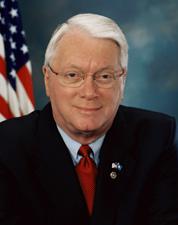 Sen. Jim Bunning (R-KY)
Sen. Jim Bunning (R-KY)Submitted March 23, 2007
Legislative Activity
Stay on top of the latest movement without scrolling through every action
Floor
Latest Action
Senate amendment submitted
March 23, 2007
View full timeline
Floor
Senate amendment submitted
March 23, 2007
Floor
Senate amendment proposed (on the floor): Amendment SA 621 proposed by Senator Bunning.(consideration: CR S3665; text: CR S3665)
March 23, 2007
Floor
Senate amendment agreed to: Amendment SA 621 agreed to in Senate by Unanimous Consent.
March 23, 2007
Floor
Amendment SA 621 proposed by Senator Bunning. (consideration: CR S3665; text: CR S3665) To provide for a deficit-neutral reserve fund for a repeal of the 1993 increase in the income tax on Social Security Benefits.
March 23, 2007
Floor
Amendment SA 621 agreed to in Senate by Unanimous Consent.
March 23, 2007
Text
Proposed
CONGRESSIONAL BUDGET FOR THE UNITED STATES GOVERNMENT FOR FISCAL YEAR
2008

The ACTING PRESIDENT pro tempore. Under the previous order, the
Senate will resume consideration of S. Con. Res. 21, which the clerk
will report.
The legislative clerk read as follows:

A concurrent resolution (S. Con. Res. 21) setting forth the
congressional budget for the United States Government for the
fiscal year 2008 and including the appropriate budgetary
levels for fiscal years 2007 and 2009 through 2012.

Pending:

Kyl/Thune amendment No. 583, to reform the death tax by
setting the exemption at $5 million per estate, indexed for
inflation, and the top death tax rate at no more than 35
percent beginning in 2010, to avoid subjecting an estimated
119,200 families, family businesses, and family farms to the
death tax each and every year, to promote continued economic
growth and job creation, and to make the enhanced teacher
deduction permanent.

The ACTING PRESIDENT pro tempore. Under the previous order, there
will now be 30 minutes of debate equally divided and controlled between
the chairman and ranking member of the Budget Committee.
The Senator from North Dakota is recognized.
Mr. CONRAD. Mr. President, first, I thank the Chaplain for the most
excellent prayer that he offered today. I think it set the right tone
for today's discussions. I hope very much that while we may disagree
strenuously, we can do so in a civil way. I thank especially the
ranking member, Senator Gregg, for the way he has conducted this debate
on the other side throughout. As is always the case with him, it has
been thoroughly professional. It has set an excellent tone. We have
vigorous disagreements on policy from time to time, but there are many
areas where we actually agree. With him in leadership, it has always
been done in a professional way. We especially appreciate the
cooperation from all of our colleagues and especially from the ranking
member and his outstanding staff.
The budget, as it stands at this moment, takes us in a new direction.
It takes us back to fiscal responsibility. It takes us toward a
balanced budget by 2012. Here is where the budget stands as of the
latest numbers that we have after action last night. Every year of the
5-year budget the deficits will be reduced until we are in balance in
2012, albeit just barely.
The next chart. The debt under the budget resolution, the gross debt
of the United States as a percentage of GDP, will finally start to head
down instead of increasing year after year after year.

[[Page S3660]]

Under this budget resolution, the gross debt of the United States as a
share of GDP will start going down in 2009. We will see a slight
reduction in 2010. It is somewhat improved, in terms of reduction, in
2011 and 2012.
Spending under this budget resolution is going down as a share of
gross domestic product--from 20.5 percent in 2008 down to 18.8 percent
in 2012. So we have spending going in the right direction.
The budget resolution is only slightly above baseline for nondefense
discretionary funding. The baseline is $438.8 billion. The spending in
the 2008 budget resolution is $445 billion, a 1.4-percent difference.
That is spending in dollar terms. I was talking about spending
previously as a share of GDP. The previous chart showed spending as a
share of GDP actually going down.

We do have a number of very significant priorities addressed in this
budget. First and foremost is children's health care. We have up to $50
billion allocated over 5 years for children's health care to make
possible the coverage for every child who would be eligible in the
country. That is 25 times as much as in the President's budget for that
same period.
We have also improved on the President's education numbers by 2008.
In 2008, the budget resolution provides $62.3 billion compared to the
President's budget for education of $56.2 billion for that year.
Another key priority is veterans health care. I am especially proud
of what we have done. We have matched, or exceeded, the independent
budget prepared by the Nation's veterans organizations. We have matched
or exceeded it in every single category except construction, where the
Veterans' Affairs Committee tells us they could not spend the amount of
money in the independent budget because they simply could not let the
contracts in time. In comparison to the President, we are at $43.1
billion for veterans funded, compared to the President's number of
$39.6 billion.
On the alternative minimum tax, the old millionaires' tax that is
rapidly becoming a middle-class tax trap, we prevent the number of
people being swept up into the AMT from increasing from 3.8 million
last year. If we didn't take action, that would increase to over 23
million in 2007. We prevent that increase from 3.8 million to over 23
million.
Similarly, in 2008, we prevent an increase to over 25 million
people--largely the middle class--and to the upper side of the middle
class from being caught up in the alternative minimum tax. That, by the
way, is completely offset. Key priorities are the child health and
family tax relief amendment. There is $15 billion in the budget
resolution itself for children's health care. There is up to $35
billion in a deficit-neutral reserve fund. We also now in the
resolution, after the Baucus amendment, extend middle-class tax relief.
We fully provide for marriage penalty tax relief, child tax credit,
and the 10-percent bracket. We also provide for estate tax reform.
Members will recall that we have this anomalous situation where we are
going to go from $3.5 million of exemption per person under the estate
tax in 2009--in 2011 it goes back to a million. We prevent that from
occurring. So under the budget resolution, a couple could shield $7
million in assets without paying a penny of tax, and it is indexed for
inflation.
The revenues in this resolution now, compared to the President's, are
depicted on this chart. The green line is our revenues; the red line is
the President's revenues. There is a difference of 1.8 percent now.
Seen in a different way, if you look back at what the President
initially proposed for revenue, the President proposed $14.826 trillion
of revenue. We have in this resolution almost the identical amount; we
have $14.827 trillion.
So let me make clear that there is almost no difference in the
revenue in this proposal compared to what the President initially
proposed. Where would we get that slight difference in revenue? In the
first place, there is no tax increase. We don't propose any tax
increase in this budget resolution at all. I read some of the stories
saying we have all these tax increases. We do not.
We do believe more revenue can be gained. The first place to go is
the tax gap. That is the difference between what is owed and what is
paid. In 2001 alone, the Internal Revenue Service tells us the tax gap
was $345 billion.
Also, offshore tax havens. I have shown this picture many times.
There is a five-story building in the Cayman Islands that is the home
to 12,748 companies. Mr. President, this is a tax dodge. There are not
over 12,000 companies doing business out of this building. They are
doing monkey business out of this building. They are engaged in a
massive tax evasion. This is the kind of thing we ought to shut down.
Another committee of Congress has told us that there is $100 billion
a year--over $500 billion over 5 years--being lost to the U.S. Treasury
to these offshore tax haven scams. We suggest cutting that off,
stopping it, recovering that revenue. In fact, that would more than
cover, by a substantial amount, the revenue difference between us and
what is in the President's proposal.
Here is another example. This is a picture of a sewer system in
Europe. What does a sewer system in Europe have to do with the budget
of the United States? Unfortunately, a lot because wealthy investors
and companies bought this sewer system in Europe, depreciated it on the
books in the United States to reduce their tax in America, and then
they leased the sewer system back to the European city that built it in
the first place.
There are hundreds of billions of dollars involved in these tax
scams. It is growing, and it is a cancer that has to be stopped.
This budget resolution also makes a beginning at addressing our long-
term fiscal challenges. We have $15 billion in Medicare savings. We
have major program initiatives to crack down on waste, fraud, and
abuse. We have a requirement that tax cuts and new mandatory spending
be paid for with a tough pay-go provision. We have a long-term deficit
increase point of order. We have a ``save Social Security first'' point
of order. We have a health information technology reserve fund. The
Rand Corporation told us that alone could save $81 billion a year.
Finally, we have a comparative effectiveness reserve fund so that we
go out and look at what are the most effective technologies and
treatments in the medical area that work in one part of the country but
have not yet been applied elsewhere. Health experts tell us massive
savings could come from that initiative.
Let me end as I began. This budget resolution takes us in a new
direction, a better direction. This is a budget resolution which
restores fiscal discipline. It will balance the books by 2012; it will
meet the high-priority needs of the United States; it fully funds the
President's defense request and his request for war costs; it has major
tax reductions for those in the middle class so that we assure that
middle-class tax breaks continue. It also provides for estate tax
reform and, at the same time, begins to address the long-term fiscal
challenges facing our Nation.
I don't assert that this is a perfect budget. If I had a totally free
hand, I am certain it would be different. But at the end of the day,
the test for us is, can we write a budget for our country? In 3 of the
last 5 years, there has not been a budget for the United States of
America. Let me repeat that. In 3 of the last 5 years, there has not
been a budget for the United States. It is our obligation and our
responsibility to put a budget in place to begin the difficult task of
balancing the books while meeting the priority needs of our Nation.
I thank the Chair and yield the floor.
The ACTING PRESIDENT pro tempore. The Senator from New Hampshire is
recognized.
Mr. GREGG. Mr. President, I begin by returning the courtesies of the
chairman and doing it with sincerity. The chairman and his staff have
been gracious and fair with us and, obviously, they are always
professional. It is a pleasure to work with him and his staff.
We do, obviously, have philosophical differences, but hopefully it is
a reflection of how this place should work, which is we do it
professionally, we don't game each other, we don't yell at each other--
sometimes we yell at each other--we basically air our views, make our
points, go to our votes, and allow everybody to get their 2 cents in.
That is the way this place should work, and it works because the
chairman is courteous enough to allow us to accomplish that. I thank
him for that and his

[[Page S3661]]

staff. They have done a great job here, as well as mine.
I do agree the country needs a budget. That is critical. But
regrettably, the budget he has brought forward is not a good budget for
this country. It is a budget that is inconsistent in many areas, but at
its essence is the fact that it spends a lot more money, grows the size
of the Government, increases taxes a great deal, increases the debt a
great deal and, regrettably, does not address the most essential issue
we face today, which is the fiscal meltdown this country is going to
face when we put on our children the cost of the Government as we head
into the retirement of the baby boom generation.
This chart reflects that situation. It is a little outdated because
it was done earlier, and we don't have a chart machine like the
chairman, but it essentially captures the concept that this budget has
$700 billion in tax increases. That is the one number which is wrong on
this chart because of the Baucus amendment being adopted--$700 billion
of tax increases. That is the largest tax increase in the history of
the country. There is $144 billion minimum in nondefense discretionary
spending, $2 trillion of new debt, and it does nothing in the
entitlement area.
The inconsistencies in this budget are palpable. In the tax area, for
example, this budget, as I mentioned, will be the largest tax increase
in the history of the country and will take us down the road toward
what is essentially a European tax system where essentially we are
going to be looking at a total tax burden on the American people that
will head toward the tax burden of the nation of France. When this
budget reaches its end, it will be about a 19-percent to 19.5-percent
tax burden on the American people. Historically, the Federal Government
tax burden has been about 18.2 percent. That is a huge increase.
The chairman holds up these charts which show the lines are very
close between the President's tax increases and his tax increases. But
his tax increases, as he says, recalculated now are about 2 percent
higher than the President. Two percent is real money when you are
talking a base of $3 trillion. In fact, 2 percent represents
approximately a little more than a quarter of a trillion dollars in new
taxes above what the President would have suggested.
Those are huge tax increases which the American people are going to
have to bear. The concept that keeps being put out here, that these are
not going to be tax increases, that they are going to be found behind a
curtain somewhere, is simply not defensible. It doesn't pass what I
call the duck test. It is ducking the issue, basically. But it doesn't
pass the duck test; that is, if it looks like a duck, walks like a
duck, and talks like a duck, it must be a duck. When you put $700
billion of new taxes into a budget, you are talking about raising taxes
dramatically, you are talking about increasing taxes on working
Americans dramatically, and that is what this budget does.
In the pay-go area, this budget is also totally inconsistent. It says
we are for pay-go. In fact, pay-go has become a solemn oath of the
other side of the aisle. I read a New York Times editorial the other
day that says pay-go is wonderful. Somebody tell the New York Times
that the Democratic leadership, under this budget, has exempted most of
their favorite programs from pay-go. They have pay-go for programs that
maybe the Republican side of the aisle would support, such as not
allowing taxes to increase--yes, they apply pay-go to that issue. But
when they have their programs they think are important, they don't
apply pay-go to it. In fact, they specifically exempt it. For example,
the agriculture language is exempted from pay-go. It looks as if SCHIP
may be exempted from pay-go. The Baucus tax proposal which came to the
floor was exempted from pay-go. The AMT amount in this bill is exempted
from pay-go. The simple fact is, pay-go has become Swiss cheese-go
under this bill. There is no relevance at all because it is an
arbitrary effort to keep one side from doing what they philosophically
agree with while the other side ignores it or basically overrules it
for what they like to do.
The argument is that they haven't increased spending that much. Well,
$144 billion in nondefense discretionary spending is a lot of money
when you put it on top of the base. That is a big number. At least in
New Hampshire it is a big number. I mean, $144 billion would run the
State of New Hampshire for probably 20 years. Yet they claim it is not
a big number.
Then there is no talk again of the inconsistency in this, there is no
talk about the fact that there are over 27 reserve funds representing a
$200 billion cost in new programs should they be instituted. That is a
growth of the Government--which, I am sure, not all of those will be
instituted, but the game plan is there to institute them--$200 billion
of potential expansion in the size of the Government.
They take the position that they have added other programs by using
the 920 account. There was an interesting debate yesterday where the
chairman of the committee said to the Senator from Minnesota: We can't
use 920 to address the extension of renewable tax credits relative to
wind energy and issues such as that because that would cut veterans and
it would cut health care and education. But he failed to mention to the
Senator from Minnesota that there was already about $38 billion of the
920 account in here. Mr. President, 920 is a euphemism for, well, we
really don't know how we are going to pay for this, so we are going to
use the 920 account, and that is allegedly a cut across the board. So
there is another $40 billion of spending in this bill that probably, in
the end, is going to occur and not get paid for.
There are huge expenditures, huge expansion in the size of the
Government, tremendous growth in the size of the Government in this
bill.
Then we have entitlement accounts. The chairman of the committee
continues to allege he has $15 billion in entitlement savings in this
bill. That is an impossible statement to make unless you are only
willing to look at one part of the bill because in the other section of
the bill, they spend $50 billion in new entitlement programs. So you
can't claim you are saving money when you are expanding entitlement
programs and not net the two out. It is totally inconsistent.
This bill expands entitlement spending. It does not restrict
entitlement growth. Ironically, it does it in a way that makes those
programs probably not subject to pay-go when they are expanded.
This is the biggest failure of this bill. The spending is pretty bad
and the taxes have improved a little, but basically this is the biggest
failure of this bill, the failure to address what the chairman has
talked about--I agree with his discussions, I agree with his hearings--
has talked about the most severe problem we face as a nation; that is,
the fact that when this baby boom generation retires, this Government
becomes unaffordable for our children. The cost of three major
entitlement programs--Social Security, Medicare, and Medicaid--will
actually exceed the total Federal Government cost as a percentage of
gross national product by 2025, and we will have nothing available to
do anything else or, alternatively, will have to tax our children into
oblivion so they cannot enjoy a quality lifestyle. Yet this bill does
nothing on that.
We offered a reasonable amendment on this subject. We suggested that
people earning more than $80,000 as individuals and $160,000 jointly
should not be subsidized in their drug benefit by people working in
restaurants across this country or working at gas stations or working
on assembly lines, and it was rejected by the other side of the aisle.
We suggested that hospitals and provider groups that are getting an
inflated payment under the COLA by about 1.2 percent should have that
inflated COLA payment reduced by about half. They will still be getting
an extra half a percent, six-tenths of a percent in benefits, and that
was rejected.
If either of those had been accepted, we would have moved toward some
semblance of getting under control this outyear instability in our
Medicare fund. Those two amendments would have done more to make
Medicare solvent than anything else we could do around here and thus
make it available to seniors when they retire and have our children
able to afford it. But that was rejected. There was no action at all in
that area.
The tax issue--have to come back to this issue. The idea that there
is not a

[[Page S3662]]

tax increase in this bill is so patently absurd on its face that the
first amendment out of the box offered by the Democratic leadership was
to extend the tax cuts for certain tax cuts they felt they didn't want
to have go up, and the reverse of that, of course, is they are willing
to let the other tax cuts go up. That is obvious. That is just A
follows B or 1 and 1 makes 2. So there is no question they are taxing.
This idea that there is a comparison between the President's numbers
and their numbers in tax increases, again is a total inconsistency.
They use OMB to score the President's numbers and they use CBO to score
their numbers. But if we score it apples to apples and oranges to
oranges, we see the difference is significant. This was calculated
before the Baucus amendment was adjusted, so these would be adjusted
down somewhat, but the differences are still significant, somewhere in
the range of $250 billion of difference if we compare apples to apples
and oranges to oranges.
When we peel everything away from this bill--I understand we are
going to start voting at 9:30--all these inconsistencies, the fact that
they don't use pay-go for programs they like but they do apply to
positions which the Republicans might take, the fact that the tax
increase in this budget is the largest in history and yet they claim
there is no tax increase, the fact that the spending goes up
dramatically and they claim spending doesn't go up, the fact that there
is virtually--there are no savings in entitlements on a net basis and
there is actually significant aggravation of the cost of entitlements
for our children in this bill as a result of new programs which they
anticipate, this bill is going to do significant damage to our economy,
and it is going to grow the Government and make us larger.
It comes down to a very simple fact, really, when we take everything
away: This bill essentially is a classic Democratic tax-and-spend bill.
That is all it is. Bigger taxes, bigger spending, bigger debt, larger
Government, and as a practical matter, it is not going to be a
constructive event for us as a nation. So I hope my colleagues, when we
get to final passage, will vote against it. We are going to have a lot
of votes here, but in the end, what is going to pass, if this bill
passes, is your classic tax-and-spend bill.

Mr. President, I believe we are supposed to start voting at this
time.
Mr. CONRAD. Mr. President, might I say the Senator now has hurt my
feelings. Would the Senator's staff put up the caveman chart? That now
has hurt my feelings. I don't know how I am going to be able to get
through the day after the caveman chart. I don't think that is even a
good likeness of the Senator from North Dakota.
Mr. GREGG. I think this is actually the likeness of somebody from
Nevada.
Mr. CONRAD. OK.
Mr. President, I think we now need to establish the order of the
votes, or at least the first several votes, and for that purpose, I
suggest the absence of a quorum.
The ACTING PRESIDENT pro tempore. The clerk will call the roll.
The bill clerk proceeded to call the roll.
Mr. GREGG. Mr. President, I ask unanimous consent that the order for
the quorum call be rescinded.
The ACTING PRESIDENT pro tempore. Without objection, it is so
ordered.

Amendment No. 622

Mr. GREGG. Mr. President, I send an amendment to the desk, and I ask
that it be reported.
The ACTING PRESIDENT pro tempore. The clerk will report the
amendment.
The legislative clerk read as follows:

The Senator from New Hampshire [Mr. Gregg] proposes an
amendment numbered 622.

Mr. GREGG. Mr. President, I ask unanimous consent that further
reading of the amendment be dispensed with.
The ACTING PRESIDENT pro tempore. Without objection, it is so
ordered.
The amendment is as follows:

(Purpose: Point of order against using reconciliation to create new
mandatory programs and 20% limitation on spending reconciliation)

SEC.  . POINT OF ORDER--20% LIMIT ON NEW DIRECT SPENDING IN
RECONCILIATION LEGISLATION.

(a)(1) In the Senate, it shall not be in order to consider
any reconciliation bill, joint resolution, motion, amendment,
or any conference report on, or an amendment between the
Houses in relation to, a reconciliation bill pursuant to
section 310 of the Congressional Budget Act of 1974, that
produces an increase in outlays, if--
(A) the effect of all the provisions in the jurisdiction of
any committee is to create gross new direct spending that
exceeds 20% of the total savings instruction to the
committee; or
(B) the effect of the adoption of an amendment would result
in gross new direct spending that exceeds 20% of the total
savings instruction to the committee.
(2)(A) A point of order under paragraph (1) may be raised
by a Senator as provided in section 313( e) of the
Congressional Budget Act of 1974.
(B) Paragraph (1) may be waived or suspended only by an
affirmative vote of three-fifths of the Members, duly chosen
and sworn. An affirmative vote of three-fifths of the Members
of the Senate, duly chosen and sworn, shall be required to
sustain an appeal of the ruling of the Chair on a point of
order raised under paragraph (1).
(C) If a point of order is sustained under paragraph (1)
against a conference report in the Senate, the report shall
be disposed of as provided in section 313(d) of the
Congressional Budget Act of 1974.

Mr. GREGG. Mr. President, I ask unanimous consent that the amendment
be accepted.
The ACTING PRESIDENT pro tempore. Is there objection?
Mr. CONRAD. Mr. President, I will not object. This, frankly, is a
complicated amendment. I am not sure I fully understand all the
implications or ramifications of it, but the basic notion that we try
to make certain that reconciliation is used for deficit reduction is
one I embrace and, in fact, one that is in the budget resolution before
us.
We have a requirement in this budget resolution that reconciliation
only be used for deficit reduction. The amendment of the Senator from
New Hampshire is an attempt to send that signal even more clearly, if I
understand it correctly, and the Senator can correct me if I
misinterpret it. That is my interpretation, and on that basis I would
accept the amendment.
Mr. GREGG. Mr. President, I say to the Senator from North Dakota the
purpose of this amendment is to make it absolutely clear we do not make
reconciliation a stalking-horse to spend money. You have to use it to
reduce the deficit.
Mr. CONRAD. Maybe we should explain what the term means.
Reconciliation is a special process here in the Senate that gets around
the regular order. It creates a superhighway to pass something.
Reconciliation was designed and implemented to permit a fast-track
basis for reducing deficits. Unfortunately, it can be abused and it has
been abused in the past and used to actually increase deficits. That
was never the intention.
We have prevented that from occurring in the budget resolution. So
this is an attempt to prevent something that would have minimal deficit
reduction from being used as a stalking-horse for a significant
expansion of spending.
On that basis, I accept the amendment.
The ACTING PRESIDENT pro tempore. Without objection, the amendment is
adopted.
The amendment (No. 622) was agreed to.
Mr. CONRAD. Mr. President, the Senator from Arkansas has an
amendment, but do we have an order that indicates on every amendment
that there be 2 minutes evenly divided and that there be no second
degrees?
The ACTING PRESIDENT pro tempore. The order provides that once voting
begins, there is 2 minutes between each amendment.
Mr. CONRAD. And do we have an agreement that there be no second
degrees, but that we would reserve the right, based on the managers'
decision, to have side-by-sides in any case where that is required? Do
we have that as an order?
The ACTING PRESIDENT pro tempore. The order is not for second
degrees.
Mr. CONRAD. Mr. President, I ask unanimous consent that both those
provisions be in order, that we have 2 minutes of debate equally
divided on a vote, that there be no second degrees, that at the
discretion of the managers there be the opportunity for side-by-sides,
and that we order rollcall votes at this juncture on all those votes
that are presented.

[[Page S3663]]

The ACTING PRESIDENT pro tempore. Is there objection?
The Chair hears none, and, it is so ordered.
The Senator from Arkansas is recognized.

Amendment No. 601

Mr. PRYOR. Mr. President, I believe I am limited to 1 minute; is that
correct?
The ACTING PRESIDENT pro tempore. Is the Senator offering an
amendment?
Mr. PRYOR. Yes, I offer amendment No. 601.
The ACTING PRESIDENT pro tempore. The clerk will report the
amendment.
The legislative clerk read as follows:

The Senator from Arkansas [Mr. Pryor], for himself, and Mr.
Nelson of Florida, proposes an amendment numbered 601.

The amendment is as follows:

(Purpose: To establish a reserve fund to provide additional training
for physicians and attract more physicians in States that face a
shortage of physicians in training)

At the end of title III, insert the following:

SEC. __. RESERVE FUND TO PROVIDE ADDITIONAL TRAINING FOR
PHYSICIANS AND ATTRACT MORE PHYSICIANS IN
STATES THAT FACE A SHORTAGE OF PHYSICIANS IN
TRAINING.

The Chairman of the Senate Budget Committee may revise the
aggregates, allocations, and other appropriate levels in this
resolution for a bill, joint resolution, amendment, motion,
or conference report that provides additional training for
physicians and attracts more physicians in States that face a
shortage of physicians in training, provided that the
legislation would not increase the deficit over the total of
fiscal years 2007 through 2012.

The ACTING PRESIDENT pro tempore. The Senator is recognized for 1
minute.
Mr. PRYOR. Mr. President, I rise today to offer amendment No. 601,
and I encourage my colleagues to look at it and vote for it.
The statistics are that by the year 2020 this country will be tens of
thousands--tens of thousands--short on doctors providing the medical
care we need around this country. What this amendment does is it
creates a reserve fund that would provide additional training for
physicians and help to attract more physicians in States that face a
shortage of physicians for training. It does not impose a prescriptive
solution but creates a deficit-neutral reserve fund the Finance
Committee can use to find the best way to help ensure citizens and
States will have the number of physicians they need over the long term.
I thank Senator Bill Nelson for cosponsoring the amendment, and also
the majority leader and the chairman of the Finance Committee for
supporting this amendment. This goes back to the mid 1990s, where there
were some caps imposed. This doesn't change that, but it allows the
Finance Committee the room during this budget cycle to try to help
resolve that.
The ACTING PRESIDENT pro tempore. The Senator's time has expired.
Who requests time?
The Senator from New Hampshire.
Mr. GREGG. Mr. President, I suggest we do this amendment on a voice
vote, and I ask unanimous consent that be the case.
The ACTING PRESIDENT pro tempore. Without objection, it is so
ordered. The question is on agreeing to amendment No. 601.
The amendment (No. 601) was agreed to.
The ACTING PRESIDENT pro tempore. The Senator from Kansas is
recognized.

Amendment No. 581

Mr. BROWNBACK. Mr. President, I have an amendment to the bill that
creates a BRAC-type process for the rest of Government. I think this is
one where we have a lot of priorities that people are interested in,
yet nobody is for wasteful spending. So here is a process where we can
actually reduce Federal spending in low-performing areas and be able to
get the resources to spend in places we want to. It would be a BRAC-
type system, which we are familiar with, and it would apply it to the
rest of Government.
The commission of reports gives us one vote, up or down, without
amendment, limited timeframe. This is a way we can responsibly, both
parties, look at ways we can fund priorities in the future without
raising taxes, and I hope that is what we are all about.
We are familiar with how that BRAC process works. A lot of people
aren't particularly happy when the report comes out, but it has worked
and eliminated some $50 billion worth of lower priority military base
spending. I don't know anybody who runs for Federal office or public
office anywhere who is for wasteful Government spending. Here is a way
of getting at it. Because the system is built to spend, this would
actually change that system to give us a process that can be fair to
both sides of the aisle, and ongoing in its effort to be able to get
this allocation on a more appropriate basis.
Mr. President, I urge my colleagues on both sides to vote for the
amendment, and I call up amendment No. 581 and ask for the yeas and
nays.
The ACTING PRESIDENT pro tempore. The clerk will report the
amendment.
The legislative clerk read as follows:

The Senator from Kansas [Mr. Brownback] proposes an
amendment numbered 581.

The amendment is as follows:

(Purpose: To provide funds for a Commission on Budgetary Accountability
and Review of Federal Agencies)

On page 24, line 12, increase the amount by $3,000,000.
On page 24, line 13, increase the amount by $3,000,000.
On page 24, line 16, increase the amount by $6,000,000.
On page 24, line 17, increase the amount by $6,000,000.
On page 24, line 20, increase the amount by $8,000,000.
On page 24, line 21, increase the amount by $8,000,000.
On page 24, line 24, increase the amount by $8,000,000.
On page 24, line 25, increase the amount by $8,000,000.
On page 25, line 3, increase the amount by $4,000,000.
On page 25, line 4, increase the amount by $4,000,000.
On page 26, line 12, decrease the amount by $3,000,000.
On page 26, line 13, decrease the amount by $2,000,000.
On page 26, line 16, decrease the amount by $6,000,000.
On page 26, line 17, decrease the amount by $6,000,000.
On page 26, line 20, decrease the amount by $8,000,000.
On page 26, line 21, decrease the amount by $8,000,000.
On page 26, line 24, decrease the amount by $8,000,000.
On page 26, line 25, decrease the amount by $8,000,000.
On page 27, line 3, decrease the amount by $4,000,000.
On page 27, line 4, decrease the amount by $4,000,000.

Mr. CONRAD. Mr. President, might I inquire of the Senator whether he
will accept a voice vote?
Mr. BROWNBACK. Yes.
Mr. CONRAD. Mr. President, I urge my colleagues to vote aye on the
Brownback amendment.
The ACTING PRESIDENT pro tempore. The question is on amendment No.
581.
The amendment (No. 581) was agreed to.
Mr. CONRAD. Mr. President, I move to reconsider the vote, and I move
to lay that motion on the table.
The motion to lay on the table was agreed to.

Amendment No. 623

Mr. CONRAD. Mr. President, I send an amendment to the desk for
immediate consideration. This is a technical amendment, agreed to by
both sides.
The ACTING PRESIDENT pro tempore. The clerk will report.
The legislative clerk read as follows:

The Senator from North Dakota [Mr. Conrad] proposes an
amendment numbered 623.

The amendment is as follows:

(Purpose: To clarify the treatment of certain provisions in conference
reports)

On page 36, line 15, strike beginning with ``If'' through
line 19 and insert ``When the Senate is considering a
conference report on, or an amendment between the Houses in
relation to, a bill, upon a point of order being made by any
Senator pursuant to this section, and such point of order
being sustained, such material contained in such conference
report shall be deemed stricken, and the Senate shall proceed
to consider the question of whether the Senate shall recede
from its amendment and concur with a further amendment, or
concur in the House amendment with a further amendment, as
the case may be, which further amendment shall consist of
only that portion of the conference report or House
amendment, as the case may be, not so stricken. Any such
motion in the Senate shall be debatable. In any case in which
such point of order is sustained against a conference report
(or Senate amendment derived from such conference report by
operation of this subsection), no further amendment shall be
in order.''.

[[Page S3664]]

On page 39, line 19, strike beginning with ``If'' through
line 23 and insert ``When the Senate is considering a
conference report on, or an amendment between the Houses in
relation to, a bill, upon a point of order being made by any
Senator pursuant to this section, and such point of order
being sustained, such material contained in such conference
report shall be deemed stricken, and the Senate shall proceed
to consider the question of whether the Senate shall recede
from its amendment and concur with a further amendment, or
concur in the House amendment with a further amendment, as
the case may be, which further amendment shall consist of
only that portion of the conference report or House
amendment, as the case may be, not so stricken. Any such
motion in the Senate shall be debatable. In any case in which
such point of order is sustained against a conference report
(or Senate amendment derived from such conference report by
operation of this subsection), no further amendment shall be
in order.''

The ACTING PRESIDENT pro tempore. The Senator from North Dakota.
Mr. CONRAD. Mr. President, this is to safeguard minority rights on a
conference report. It was suggested by Senator Gregg and his staff. It
is very well taken. It should be adopted.
Mr. GREGG. I ask unanimous consent the amendment be adopted.
The ACTING PRESIDENT pro tempore. Without objection, the amendment is
agreed to.
The amendment (No. 623) was agreed to.
Mr. CONRAD. Mr. President, I move to reconsider the vote and I move
to lay that motion on the table.
The motion to lay on the table was agreed to.

Amendment No. 513

The ACTING PRESIDENT pro tempore. The Senator from South Carolina is
recognized.
Mr. DeMINT. Mr. President, may I inquire, is amendment No. 513 next?
The ACTING PRESIDENT pro tempore. The Senator is correct.
Mr. DeMINT. I have a minute to speak?
The ACTING PRESIDENT pro tempore. Is the Senator offering the
amendment?
Mr. DeMINT. Yes.
The ACTING PRESIDENT pro tempore. The clerk will report.
The legislative clerk read as follows:

The Senator from South Carolina [Mr. DeMint] proposes an
amendment numbered 513.

The amendment is as follows:

(Purpose: To provide for true deficit reduction in appropriations
bills)

At the end of title III, insert the following:

SEC. __. DEFICIT REDUCTION PROTECTION POINT OF ORDER.

(a) In General.--It shall not be in order in the Senate to
consider any appropriations bill that does not include the
following provision:
``Sec. __.  For deposit of an additional amount into the
account established under section 3113(d) of title 31, United
States Code, to reduce the public debt $____.''.
(b) Enforcement.--For purposes of enforcing allocations
pursuant to section 302(b) of the Congressional Budget Act of
1974, any amendment that transfers budget authority (and the
outlays flowing therefrom) into the debt reduction account
provided by subsection (a) shall be scored so that the budget
authority continues to count towards the section 302(b)
allocation (with the outlays scored at the same level as
scored in the original account).
(c) Waiver and Appeal.--In the Senate, subsection (a) may
be waived or suspended only by an affirmative vote of three-
fifths of the Members, duly chosen and sworn. An affirmative
vote of three-fifths of the Members of the Senate, duly
chosen and sworn, shall be required to sustain an appeal of
the ruling of the Chair on a point of order raised under
subsection (a).

The ACTING PRESIDENT pro tempore. The Senator from South Carolina is
recognized.
Mr. DeMINT. Mr. President, this amendment is called the Debt
Reduction Appropriation Account. Currently, while all of us, on both
sides, are talking about the need to cut wasteful spending and try to
trim the size of Government, our appropriations process does not allow
for cutting spending and using it for debt reduction. This amendment
establishes a debt reduction account for every appropriations bill so
if during the debate of that appropriations bill we cut something in
it, it will not be put back in the pot to be spent on something else.
This account will be used for debt reduction, so if all of us have a
debate about an item that should not be in a bill, it will go to debt
reduction. It is a very simple debt reduction account for every
appropriations bill.
The ACTING PRESIDENT pro tempore. The Senator from North Dakota.
Mr. CONRAD. Might I inquire from the Senator how this works? Perhaps
this is something we could accept, but I need to understand how it
works. Could the Senator tell me, as I looked at the amendment, on the
bottom of the first page there is a blank, at least in the copy I have.
It says, ``For deposit of an additional amount into the account
established under section 3113(d) of title 31, United States Code, to
reduce the public debt''--and then there is a blank. Is that filled in
on the amendment of the Senator?
Mr. DeMINT. No, it is not. There is no dollar amount although there
is a dollar sign here. I will have to inquire how that ended up there,
but this is not a requirement to put anything in the account. This is
an account, a designated account. If an amount of money is actually cut
from an appropriations bill, then it will reduce the 302(b) amount.
That amount will effectively be in that account which goes to debt
reduction.
Mr. CONRAD. I see.
The ACTING PRESIDENT pro tempore. The Senator from North Dakota is
recognized.
Mr. CONRAD. Mr. President, I am constrained to resist this amendment
because, as I understand it, what it does is, if the Appropriations
Committee would cut in a certain area they would then be prevented from
using that money in some other perhaps higher priority area. If there
were savings in one area of the budget and Homeland Security needed
additional funding, they would not be able to transfer the money.
On that basis I urge my colleagues to vote no.
Mr. DeMINT. Will the Senator yield for a clarification? His
explanation, I am afraid, is not the amendment. We can still do what we
normally do here, which is take money from one account and put it in
another. But if a Senator wishes to reduce the amount of spending in a
given area and does not designate it, there is an opportunity for it to
go into a debt reduction account. So if we want to take money from any
account and shift it to military or Defense, there is no prohibition in
this amendment, so we do not change what we are able to do now. What we
are not able to do now is, if we cut something and want that money to
go to debt reduction--this amendment would simply allow, in the future,
for us to designate it to an account rather than to additional
spending.
Mr. CONRAD. Mr. President, that is not my reading of how this
amendment would function. I wish I had more time to analyze it. This is
the first time I have seen it so I am in a very awkward position here.
That is my reading of the amendment, so I have no alternative but to
ask my colleagues to oppose it.
The ACTING PRESIDENT pro tempore. The question is on agreeing to the
amendment.
Mr. DeMINT. Mr. President, I ask for the yeas and nays.
Mr. CONRAD. The yeas and nays have already been ordered. I ask the
yeas and nays be ordered on all these amendments so we don't have to go
through that every time.
The ACTING PRESIDENT pro tempore. It is not appropriate to order the
yeas and nays by unanimous consent.
Is there a sufficient second on the yeas and nays on the DeMint
amendment?
There appears to be a sufficient second.
The question is on agreeing to the amendment. The clerk will call the
roll.
The bill clerk called the roll.
Mr. DURBIN. I announce that the Senator from South Dakota (Mr.
Johnson) is necessarily absent.
The PRESIDING OFFICER. Are there any other Senators in the Chamber
desiring to vote?
The result was announced--yeas 38, nays 61, as follows:

[Rollcall Vote No. 99 Leg.]

YEAS--38

Allard
Bayh
Brownback
Bunning
Burr
Chambliss
Coburn
Corker
Cornyn
Craig
Crapo
DeMint
Dole
Ensign
Enzi
Feingold
Graham
Grassley
Gregg
Hagel
Hatch
Hutchison
Inhofe
Isakson
Kyl
Landrieu
Lott
Lugar
Martinez
McCain
McCaskill
McConnell

[[Page S3665]]

Sessions
Sununu
Thomas
Thune
Vitter
Voinovich

NAYS--61

Akaka
Alexander
Baucus
Bennett
Biden
Bingaman
Bond
Boxer
Brown
Byrd
Cantwell
Cardin
Carper
Casey
Clinton
Cochran
Coleman
Collins
Conrad
Dodd
Domenici
Dorgan
Durbin
Feinstein
Harkin
Inouye
Kennedy
Kerry
Klobuchar
Kohl
Lautenberg
Leahy
Levin
Lieberman
Lincoln
Menendez
Mikulski
Murkowski
Murray
Nelson (FL)
Nelson (NE)
Obama
Pryor
Reed
Reid
Roberts
Rockefeller
Salazar
Sanders
Schumer
Shelby
Smith
Snowe
Specter
Stabenow
Stevens
Tester
Warner
Webb
Whitehouse
Wyden

NOT VOTING--1

Johnson

The amendment (No. 513) was rejected.
The ACTING PRESIDENT pro tempore. The Senator from North Dakota.
Mr. CONRAD. Mr. President, I ask unanimous consent that succeeding
votes be 10-minute votes.
The ACTING PRESIDENT pro tempore. Without objection, it is so
ordered.
The Senator from North Dakota.
Mr. CONRAD. Mr. President, Senator Gregg and I have now visited about
the number of outstanding amendments. There are over 60 outstanding
amendments. We can do three an hour. That means, unless some of our
colleagues relent, we are going to be voting for 20 hours. That is the
simple math.
I ask my colleagues on both sides, please, if you can withhold on
your amendment and wait for another vehicle, we urge you to do that. We
simply cannot spend the next 20 hours voting.
The ACTING PRESIDENT pro tempore. The Senator from New Hampshire.
Mr. GREGG. Mr. President, I agree with the Senator from North Dakota.
I would note, in our batting order, we have Senator Bunning on Social
Security, Senator Dole on IRAs for soldiers, Senator Allard on
mandatory spending, Senator Smith on SCHIP, Senator Thomas has one on
extraneous items in the supplemental.
Then we will have, potentially, Senator Grassley and--Senator
Sessions on AMT first. Then Senator Hatch is going to get in here. We
are going to get Senator Hatch taken care of. That is the lineup on our
side so people have some type of idea.
The ACTING PRESIDENT pro tempore. The Senator from Kentucky is
recognized.

amendment no. 621

Mr. BUNNING. Mr. President, I ask unanimous consent that the pending
amendment be set aside and that amendment No. 621 at the desk be called
up for immediate consideration. I have sent a copy of the amendment to
the desk.
The ACTING PRESIDENT pro tempore. The clerk will report.
The bill clerk read as follows:

The Senator from Kentucky [Mr. Bunning] proposes an
amendment numbered 621.

The amendment is as follows:

(Purpose: To provide for a deficit-neutral reserve fund for a repeal of
the 1993 increase in the income tax on Social Security Benefits)

At the end of title III, add the following:

SEC.   . DEFICIT-NEUTRAL RESERVE FUND FOR REPEAL OF THE 1993
INCREASE IN THE INCOME TAX ON SOCIAL SECURITY
BENEFITS.

The Chairman of the Senate Committee on the Budget may
revise the allocations, aggregates, and other levels in this
resolution by the amounts provided by a bill, joint
resolution, amendment, motion, or conference report that
would repeal the 1993 increase in the income tax on Social
Security benefits, provided that such legislation would not
increase the deficit over the total of the period of fiscal
years 2007 through 2012.

Mr. BUNNING. Mr. President, my amendment would repeal an unfair tax
that affects 15 million seniors. I have brought this issue before the
Chamber before, so it should be familiar to many of my colleagues.
When the Social Security Program was created, benefits were not
taxed. In 1983, Congress decided that 50 percent of the benefits to
seniors should be subject to tax. In 1993, we raised the amount to 85
percent of Social Security benefits. This tax affects supposedly
wealthy seniors with incomes of $34,000 for single seniors and $44,000
for a couple.
My amendment is fairly simple. It creates a deficit-neutral reserve
fund to allow Congress to drop the tax back to its pre-1993 levels.
This means that 85 percent of the tax would be eliminated.
The ACTING PRESIDENT pro tempore. The Senator from North Dakota is
recognized.
Mr. CONRAD. Mr. President, the Senator from Kentucky has done us all
a favor by the way he has modified his amendment. It is an amendment we
can accept. I ask if the Senator could accept a voice vote.
Mr. BUNNING. Absolutely.
Mr. GREGG. Mr. President, in my statement earlier, I failed to
mention we have an agreement that Senator Kyl's vote will come before
11 o'clock.
Mr. CONRAD. Correct. We will need to insert that.
I ask unanimous consent that we accept the Bunning amendment.
The ACTING PRESIDENT pro tempore. Without objection, it is so
ordered.
The amendment (No. 621) was agreed to.
Mr. CONRAD. We would like to proceed to Senator Dole for the purpose
of offering her amendment.
The ACTING PRESIDENT pro tempore. The Senator from North Carolina is
recognized for 1 minute.

Amendment No. 553

Mrs. DOLE. Mr. President, I have an amendment at the desk and ask for
its immediate consideration.
The ACTING PRESIDENT pro tempore. The clerk will report.
The bill clerk read as follows:

The Senator from North Carolina [Mrs. Dole] proposes an
amendment numbered 553.

Mrs. DOLE. I ask unanimous consent that reading of the amendment be
dispensed with.
The ACTING PRESIDENT pro tempore. Without objection, it is so
ordered.
The amendment is as follows:

(Purpose: To extend financial relief for our reservists and national
guard deployed in Afghanistan and Iraq by allowing them to make penalty
free withdrawals of their retirement funds through the year 2012)

On page 3, line 14, decrease the amount by $1,000,000.
On page 3, line 15, decrease the amount by $1,000,000.
On page 3, line 23, decrease the amount by $1,000,000.
On page 4, line 1, decrease the amount by $1,000,000.
On page 5, line 2, increase the amount by $1,000,000.
On page 5, line 3, increase the amount by $1,000,000.
On page 5, line 10, increase the amount by $1,000,000.
On page 5, line 11, increase the amount by $2,000,000.
On page 5, line 18, increase the amount by $1,000,000.
On page 5, line 19, increase the amount by $2,000,000.

Mrs. DOLE. The amendment I offer today is critical to our National
Guard and reservists serving in Iraq, Afghanistan, and elsewhere. It
fixes a problem in the Pension Protection Act of 2006. Section 827 of
that act allows National Guardsmen and reservists called into active
duty for at least 6 months to make penalty-free early withdrawals from
their IRA, 401(k), or 403(b) retirement accounts. This provision
expires at the end of 2007. My amendment, which is fully offset,
corrects this by extending this important provision through 2012.
Our National Guardsmen and reservists always stand ready to put their
lives on hold and answer the call of duty. They are putting themselves
into harm's way to protect our freedoms and security. They can face
lengthy deployments that cause major financial strains for their
families. These outstanding men and women should continue to have
penalty-free access to their retirement savings if they find themselves
in a deployment-related financial crunch.
I urge passage of the amendment.
The ACTING PRESIDENT pro tempore. The Senator from North Dakota.
Mr. CONRAD. Mr. President, we are prepared to accept the amendment of
the Senator from North Carolina. We urge our colleagues to accept it.
I ask unanimous consent to agree to the amendment offered by Senator
Dole.
The ACTING PRESIDENT pro tempore. Without objection, it is so
ordered.
The amendment (No. 553) was agreed to.

[[Page S3666]]

Mr. CONRAD. Mr. President, next up is Senator Feinstein. She has an
amendment.
The ACTING PRESIDENT pro tempore. The Senator from California.

Amendment No. 574

Mrs. FEINSTEIN. Mr. President, I thank the manager of the bill. I
call up amendment No. 574.
The ACTING PRESIDENT pro tempore. The clerk will report.
The bill clerk read as follows:

The Senator from California [Mrs. Feinstein], for herself,
Mr. Kyl, and Mrs. Boxer, proposes an amendment numbered 574.

Mrs. FEINSTEIN. I ask unanimous consent that reading of the amendment
be dispensed with.
The ACTING PRESIDENT pro tempore. Without objection, it is so
ordered.
The amendment is as follows:

(Purpose: To provide an additional $543,000,000 for the State Criminal
Alien Assistance Program)

On page 23, line 12, increase the amount by $543,000,000.
On page 23, line 13, increase the amount by $119,000,000.
On page 23, line 17, increase the amount by $163,000,000.
On page 23, line 21, increase the amount by $109,000,000.
On page 23, line 25, increase the amount by $81,000,000.
On page 24, line 4, increase the amount by $71,000,000.
On page 26, line 12, decrease the amount by $543,000,000.
On page 26, line 13, decrease the amount by $119,000,000.
On page 26, line 17, decrease the amount by $163,000,000.
On page 26, line 21, decrease the amount by $109,000,000.
On page 26, line 25, decrease the amount by $81,000,000.
On page 27, line 4, decrease the amount by $71,000,000.
At the end, insert the following:

SEC. __. SENSE OF CONGRESS ON THE STATE CRIMINAL ALIEN
ASSISTANCE PROGRAM.

(a) Findings.--Congress makes the following findings:
(1) Control of illegal immigration is a Federal
responsibility.
(2) The State Criminal Alien Assistance Program (referred
to in this section as ``SCAAP'') carried out pursuant to
section 241(i) of the Immigration and Nationality Act (8
U.S.C. 1231(i)) provides critical funding to States and
localities for reimbursement of costs incurred as a result of
housing undocumented criminal aliens.
(3) Congress appropriated $300,000,000 for SCAAP to
reimburse State and local governments for those costs in
fiscal year 2004.
(4) Congress appropriated $305,000,000 for SCAAP to
reimburse State and local governments for those costs in
fiscal year 2005.
(5) Congress appropriated $405,000,000 for SCAAP to
reimburse State and local governments for those costs in
fiscal year 2006.
(6) Congress appropriated $399,000,000 for SCAAP to
reimburse State and local governments for those costs in
fiscal year 2007.
(7) Congress has authorized to be appropriated $950,000,000
to carry out SCAAP for each of the fiscal years 2008 through
2011.
(b) Sense of Congress.--It is the sense of Congress that
the budgetary totals in this resolution assume that
$950,000,000 should be made available for SCAAP for fiscal
year 2008.

Mrs. FEINSTEIN. I ask unanimous consent to add Senator Boxer as a
cosponsor.
The ACTING PRESIDENT pro tempore. Without objection, it is so
ordered.
Mrs. FEINSTEIN. Mr. President, this amendment is cosponsored by
Senator Kyl.
SCAAP is a vital program to the States and localities to reimburse
them for the costs associated with housing undocumented criminal
aliens. Funding for SCAAP is authorized in the amount of $950 million
for each of the fiscal years 2008 through 2011, but we have never fully
funded SCAAP.
Instead we have paid only pennies on the dollar for these costs. In
my home State of California, there are currently over 20,000 criminal
alien inmates. It costs California approximately $715 million per year
to house these aliens.
In 2007, Congress appropriated $399 million for SCAAP. In this budget
resolution, SCAAP is funded at $407 million.
In 2005, a total of 758 applications from 50 different States and the
U.S. territories were submitted for fiscal year 2005 SCAAP funds.
The real problem here is that the problem of illegal immigration is a
Federal responsibility. Yet the Federal Government consistently shifts
the costs for enforcing immigration laws onto our States. This cost-
shifting is not fair to State governments.
My amendment makes SCAAP funding whole by providing an additional
$543 million to this program.
The ACTING PRESIDENT pro tempore. The Senator from North Dakota.
Mr. CONRAD. I ask unanimous consent to adopt the Feinstein amendment.
The ACTING PRESIDENT pro tempore. Without objection, it is so
ordered.
The amendment (No. 574) was agreed to.

Amendment No. 473

Mr. CONRAD. Mr. President, next we have Senator Sessions to offer an
amendment.
The ACTING PRESIDENT pro tempore. The Senator from Alabama.
Mr. SESSIONS. Mr. President, I call up amendment No. 473 and ask for
its immediate consideration.
The ACTING PRESIDENT pro tempore. Is the amendment at the desk?
Mr. SESSIONS. Yes.
The ACTING PRESIDENT pro tempore. The clerk will report.
The bill clerk read as follows:

The Senator from Alabama [Mr. Sessions], for himself and
Mr. DeMint, proposes an amendment numbered 473.

The amendment is as follows:

(Purpose: To save families from the Alternative Minimum Tax (AMT) first
by permitting a deduction for personal exemptions for purposes of
computing the AMT)

On page 3, line 10, decrease the amount by $6,494,000,000.
On page 3, line 11, increase the amount by $2,594,000,000.
On page 3, line 12, increase the amount by $9,100,000,000.
On page 3, line 13, decrease the amount by $59,600,000,000.
On page 3, line 14, decrease the amount by $51,000,000,000.
On page 3, line 15, decrease the amount by $31,100,000,000.
On page 3, line 19, decrease the amount by $6,494,000,000.
On page 3, line 20, increase the amount by $2,594,000,000.
On page 3, line 21, increase the amount by $9,100,000,000.
On page 3, line 22, decrease the amount by $59,600,000,000.
On page 3, line 23, decrease the amount by $51,000,000,000.
On page 4, line 1, decrease the amount by $31,000,000,000.
On page 4, line 5, increase the amount by $106,000,000.
On page 4, line 6, increase the amount by $255,000,000.
On page 4, line 7, decrease the amount by $12,000,000.
On page 4, line 8, increase the amount by $1,174,000,000.
On page 4, line 9, increase the amount by $3,822,000,000.
On page 4, line 10, increase the amount by $5,934,000,000.
On page 4, line 14, increase the amount by $106,000,000.
On page 4, line 15, increase the amount by $255,000,000.
On page 4, line 16, decrease the amount by $12,000,000.
On page 4, line 17, increase the amount by $1,174,000,000.
On page 4, line 18, increase the amount by $3,822,000,000.
On page 4, line 19, increase the amount by $5.934,000,000.
On page 4, line 23, increase the amount by $6,600,000,000.
On page 4, line 24, decrease the amount by $2,339,000,000.
On page 4, line 25, decrease the amount by $9,112,000,000.
On page 5, line 1, increase the amount by $60,774,000,000.
On page 5, line 2, increase the amount by $54,822,000,000.
On page 5, line 3, increase the amount by $37,034,000,000.
On page 5, line 6, increase the amount by $6,600,000,000.
On page 5, line 7, increase the amount by $4,261,000,000.
On page 5, line 8, decrease the amount by $4,852,000,000.
On page 5, line 9, increase the amount by $55.923,000,000.
On page 5, line 10, increase the amount by
$110,745,000,000.
On page 5, line 11, increase the amount by
$147,779,000,000.
On page 5, line 14, increase the amount by $6,600,000,000.
On page 5, line 15, increase the amount by $4,261,000,000.
On page 5, line 16, decrease the amount by $4,852,000,000.
On page 5, line 17, increase the amount by $55,923,000,000.
On page 5, line 18, increase the amount by
$110,754,000,000.
On page 5, line 19, increase the amount by
$147,779,000,000.
On page 25, line 8, increase the amount by $106,000,000.
On page 25, line 9, increase the amount by $106,000,000.
On page 25, line 12, increase the amount by $255,000,000.
On page 25, line 13, increase the amount by $255,000,000.

[[Page S3667]]

On page 25, line 16, decrease the amount by $12,000,000.
On page 25, line 17, decrease the amount by $12,000,000.
On page 25, line 20, increase the amount by $1,174,000,000.
On page 25, line 21, increase the amount by $1,174,000,000.
On page 25, line 24, increase the amount by $3,822,000,000.
On page 25, line 25, increase the amount by $3,822,000,000.
On page 26, line 3, increase the amount by $5,934,000,000.
On page 26, line 4, increase the amount by $5,934,000,000.

Mr. SESSIONS. Mr. President, this is an important amendment. It is
not related to partisan votes that we have been casting, but it is a
technical amendment that amends the nature of the AMT patch.
The AMT patch is a huge tax reduction. It does eliminate about three-
fourths of the people who would pay taxes under the AMT. My amendment
is fairer. It would include 87 percent as many, but the way it would
fix the AMT and give relief would be to allow families to utilize their
personal exemptions and their children's exemptions under the AMT
accounting. That is not done today. As a result, seven times as many
families with children are caught by AMT as are single persons. It is
definitely striking at children and families. I urge that this be
adopted because it is fairer, and it would reduce costs and save $82
billion.
The ACTING PRESIDENT pro tempore. The Senator from North Dakota is
recognized for 1 minute.
Mr. CONRAD. Mr. President, the Sessions amendment would increase
taxes in fiscal year 2008 by $2.6 billion. It would increase taxes in
fiscal year 2009, for a total in those 2 years of $11.7 billion of tax
increases. In later years, the Sessions amendment would provide
additional revenue loss of $148 billion over 5 years. That busts the
budget and takes us back into deficit. It is sort of the worst of all
worlds. It increases taxes in the front end and then blows a hole in
the budget.
I urge colleagues to vote against the Sessions amendment.
The ACTING PRESIDENT pro tempore. The question is on agreeing to
amendment No. 473.
Mr. CONRAD. I ask for the yeas and nays on the Sessions amendment.
The ACTING PRESIDENT pro tempore. Is there a sufficient second?
There appears to be a sufficient second. The clerk will call the
roll.
The legislative clerk called the roll.
Mr. DURBIN. I announce that the Senator from South Dakota (Mr.
Johnson) is necessarily absent.
The ACTING PRESIDENT pro tempore. Are there any other Senators in the
Chamber desiring to vote?
The result was announced--yeas 46, nays 53, as follows:

[Rollcall Vote No. 100 Leg.]

YEAS--46

Alexander
Allard
Bennett
Bond
Brownback
Bunning
Burr
Chambliss
Coburn
Cochran
Corker
Cornyn
Craig
Crapo
DeMint
Dole
Domenici
Ensign
Enzi
Graham
Grassley
Gregg
Hagel
Hatch
Hutchison
Inhofe
Isakson
Kyl
Lott
Lugar
Martinez
McCain
McConnell
Murkowski
Roberts
Sessions
Shelby
Smith
Specter
Stevens
Sununu
Thomas
Thune
Vitter
Voinovich
Warner

NAYS--53

Akaka
Baucus
Bayh
Biden
Bingaman
Boxer
Brown
Byrd
Cantwell
Cardin
Carper
Casey
Clinton
Coleman
Collins
Conrad
Dodd
Dorgan
Durbin
Feingold
Feinstein
Harkin
Inouye
Kennedy
Kerry
Klobuchar
Kohl
Landrieu
Lautenberg
Leahy
Levin
Lieberman
Lincoln
McCaskill
Menendez
Mikulski
Murray
Nelson (FL)
Nelson (NE)
Obama
Pryor
Reed
Reid
Rockefeller
Salazar
Sanders
Schumer
Snowe
Stabenow
Tester
Webb
Whitehouse
Wyden

NOT VOTING--1

Johnson

The amendment (No. 473) was rejected.
The ACTING PRESIDENT pro tempore. Who requests time?
The Senator from North Dakota is recognized.
Mr. CONRAD. Mr. President, next is the Nelson amendment. I say to
colleagues, on the Nelson amendment and the succeeding Kyl amendment,
there will be 6 minutes evenly divided.
Mr. President, I ask Senator Gregg to remind Senators of whom we have
left in terms of what is the rest of the order.
Mr. GREGG. Unfortunately, it is not whom we have left, but it is what
the order is. I wish it was what we had left. Anyway, we go to Senator
Nelson and Senator Kyl, which are under a prior agreement to have both
those votes before 11 o'clock; then Senator Hatch, Senator Allard,
Senator Smith, Senator Thomas, Senator Specter, and Senator Graham on
our side. We are picking up other people as they come along and ask for
time. That is the order now. All those will require votes potentially.
The ACTING PRESIDENT pro tempore. The Senator from Nebraska is
recognized.

Amendment No. 626

Mr. NELSON of Nebraska. Mr. President, I send an amendment to the
desk and ask for its immediate consideration.
The ACTING PRESIDENT pro tempore. The clerk will report the
amendment.
The legislative clerk read as follows:

The Senator from Nebraska [Mr. Nelson of Nebraska], for
himself, Mrs. Lincoln, Mr. Baucus, Ms. Landrieu, Ms.
Stabenow, Mr. Salazar, Mr. Nelson of Florida, and Mr. Pryor,
proposes an amendment numbered 626.

The amendment is as follows:

(Purpose: To reform the estate tax to avoid subjecting thousands of
families, family businesses, and family farms and ranches to the estate
tax, and to promote continued economic growth and job creation)

At the end of title III, insert the following:

SEC. __. ESTATE TAX REFORM INITIATIVE.

The Chairman of the Senate Committee on the Budget may
revise the aggregates, allocations, and other appropriate
levels in this resolution for a bill, joint resolution,
amendment, motion, or conference report that would provide
for estate tax reform legislation that addresses the current
flaws in the estate tax law by establishing an estate tax
exemption level of $5,000,000, an estate tax rate of 35
percent, and a 5 percent surcharge on the largest estates,
provided that such legislation does not increase the deficit
over the total of fiscal years 2007 through 2012.

Mr. NELSON of Nebraska. President, this amendment provides a fiscally
sound alternative for estate tax reform. It represents a fiscally sound
approach to protecting family farms, ranches, and small businesses from
the onerous estate tax. It is cosponsored by Senators Lincoln, Baucus,
Landrieu, Stabenow, Salazar, Bill Nelson, and Mark Pryor.
The amendment provides for an estate tax reform initiative; the
necessary next step to improving the estate tax component of the Baucus
amendment adopted by an overwhelming margin of 97 to 1. This amendment
gets us to a $5 million exemption and a 35 percent rate.
I hope the day will come when we can fully repeal the estate tax
forever, but unfortunately today is not that day. Unfortunately, the
fiscal realities we face do not at this time allow for a permanent
solution. That is why we must adopt this amendment to provide peace of
mind for thousands of families who are planning to pass their business,
farm, or ranch on to the next generation.
Like the Kyl amendment, our amendment will allow us to accommodate
the Landrieu proposal of a $5 million and 35 percent with a surcharge
for the largest estates. Unlike the, Kyl amendment, this amendment is
fiscally responsible and deficit neutral.
I look forward to working with the cosponsors of this amendment and
my colleagues on both sides of the aisle to enact meaningful estate tax
reform this session, and eventually finding a permanent solution.
I urge my colleagues to support this amendment, and join me in
following through on the promise made in this amendment to extend
estate tax relief with an exemption of $5 million and a top rate of 35
percent.
Mr. President, I yield the floor to Senator Lincoln from Arkansas.
The ACTING PRESIDENT pro tempore. The Senator from Arkansas is
recognized.
Mrs. LINCOLN. Mr. President, I thank my colleague, Senator Nelson, as
well as Chairman Baucus and Ranking Member Grassley, who have helped us
in the direction of moving forward to something that is realistic in
terms of estate tax reform. We will

[[Page S3668]]

have the opportunity in the Finance Committee to be able to craft
something that makes sense. But without what Senator Nelson and I and
others are doing here, we will not have the direction to do that.
Many of us know we have outlived the boundaries of the current estate
tax law. We know in 2010 it may go away, but the fact is in 2011 it
comes back at an old and arcane number.
What we do is take what Senator Baucus has already done in the first
amendment we voted on and adopted, and we increase it to a realistic
and balanced level of a $5 million exemption and a 35-percent rate, and
we do it with a reserve fund that will allow us to make sure we pay for
it in a fiscally sound way when it comes through the Finance Committee.
I have worked diligently on this issue since I have come to the
Senate, recognizing that for our small businesses, our family
businesses, and our family farms this is an essential component for
them to be able to be aware of how they can plan for their finances to
keep those family businesses in working order.
So we appreciate it. I urge our colleagues, this is a great
opportunity to have the Senate on record as moving forward on this
issue. I encourage all of my colleagues to take a look at it and
support us because it gives us an opportunity to get moving on this
issue.
Mr. President, I yield to my colleague, the Senator from Louisiana,
Ms. Landrieu.
Ms. LANDRIEU. Mr. President, how much time is remaining?
The ACTING PRESIDENT pro tempore. The Senator from Louisiana has 10
seconds.
Ms. LANDRIEU. Mr. President, I ask unanimous consent for 30 seconds,
please, and to have the same amount of time added to the other side.
The ACTING PRESIDENT pro tempore. Is there objection?
The Chair hears none, and it is so ordered.
The Senator from Louisiana.
Ms. LANDRIEU. Mr. President, this is the right compromise on the
estate tax at the right time. It is going to bring order to this tax
that should be paid. It is about what Kent Conrad has done, by
generating a budget that generates surpluses, enabling us to give tax
relief, so we can give tax relief to small businesses and farms and
people who have built their businesses. That is what this amendment
does: a $5 million exemption, a 35-percent rate, and we will continue
to take it down as the money comes forward to do so.
The ACTING PRESIDENT pro tempore. Who yields time in opposition?
The Senator from Arizona.
Mr. KYL. Mr. President, I am glad we are having the debate about the
death tax. I regret the amendment I proposed a couple days ago was
voted down. There were some suggestions it was because of the capital
gains and dividends provisions that were tied to it. So I brought an
amendment back with Senator Thune that would eliminate the capital
gains and dividends part of it and simply have us vote, along with one
education tax credit, for real reform to the death tax.
Now, I want my colleagues on the Democratic side to appreciate--and I
have certainly appreciated working with all three of them.
Mr. BUNNING. Can we have order, please.
The ACTING PRESIDENT pro tempore. The Senator from Kentucky is
correct. Please take conversations out of the Chamber.
Mr. KYL. Thank you, Mr. President. I prefer not to be raising my
voice, but I cannot hear myself.
Let's understand what voting for the Democrat ``cover'' amendment
would do. First of all, when we had a $5 million exemption we were
talking about last year, all of the groups came to us and said: You
have to index it for inflation or pretty soon it will not mean
anything. The Kyl-Thune amendment is indexed for inflation, the $5
million exempted amount. The amendment that is being proposed on the
Democratic side is not indexed for inflation, and you will hear from
groups such as the Farm Bureau and the NFIB and other groups that
understand it has to be indexed for inflation.
Secondly, you say the rate is 35 percent, but there is a surcharge
for ``large'' estates. How are they defined? They are not defined. A
majority of Americans, according to surveys, say rates above 35 percent
are confiscatory. So the 40-percent top rate in this Democratic
proposal is going to be a big problem for a lot of Americans, both
those who have to pay and those who do not have to pay.
Finally, with respect to the idea this is paid for, appreciate the
big expenses for estate tax are after the year 2011. So it is folly to
say this is paid for. Yes, you will have raised taxes by about $60
billion to ``pay'' for this for the 5 years covered by the budget, but
the reality is, it is not going to be paid for in the future.
Do you know what. All of us--the Senator from Arkansas, the Senator
from Nebraska, the Senator from Louisiana, and other Senators on the
Democratic side--have in the past appreciated the fact that when it
comes to death tax reform, we should not raise taxes on some taxpayers
to provide this relief for the people who have to pay the death tax.
The reality is, we should not have to raise money from one group of
taxpayers to pay for the relief granted to this group. The reality is
probably it is going to be the same group of folks.

So I say to my friends who would want to suggest this is a ``cover''
amendment, that they can be just fine on this issue of death tax if
they will vote for the proposal that is before us right now. That is
not the case. If you want the real cover, that is to say the
appreciation of the American people, reserve your aye vote for the Kyl-
Thune amendment which will come next.
Mr. GREGG. Mr. President, I ask for the yeas and nays.
The ACTING PRESIDENT pro tempore. Is there a sufficient second? There
appears to be a sufficient second.
The question is on agreeing to amendment No. 626.
The clerk will call the roll.
The bill clerk called the roll.
Mr. DURBIN. I announce that the Senator from South Dakota (Mr.
Johnson) is necessarily absent.
The ACTING PRESIDENT pro tempore. Are there any other Senators in the
Chamber desiring to vote?
The result was announced--yeas 25, nays 74, as follows:

[Rollcall Vote No. 101 Leg.]

YEAS--25

Akaka
Baucus
Bayh
Byrd
Cardin
Casey
Collins
Feingold
Inouye
Klobuchar
Kohl
Landrieu
Leahy
Lincoln
Lugar
Mikulski
Nelson (FL)
Nelson (NE)
Pryor
Salazar
Snowe
Stabenow
Tester
Voinovich
Wyden

NAYS--74

Alexander
Allard
Bennett
Biden
Bingaman
Bond
Boxer
Brown
Brownback
Bunning
Burr
Cantwell
Carper
Chambliss
Clinton
Coburn
Cochran
Coleman
Conrad
Corker
Cornyn
Craig
Crapo
DeMint
Dodd
Dole
Domenici
Dorgan
Durbin
Ensign
Enzi
Feinstein
Graham
Grassley
Gregg
Hagel
Harkin
Hatch
Hutchison
Inhofe
Isakson
Kennedy
Kerry
Kyl
Lautenberg
Levin
Lieberman
Lott
Martinez
McCain
McCaskill
McConnell
Menendez
Murkowski
Murray
Obama
Reed
Reid
Roberts
Rockefeller
Sanders
Schumer
Sessions
Shelby
Smith
Specter
Stevens
Sununu
Thomas
Thune
Vitter
Warner
Webb
Whitehouse

NOT VOTING--1

Johnson

The amendment (No. 626) was rejected.

Amendment No. 583

The ACTING PRESIDENT pro tempore. The Senator from Arizona is
recognized for 3 minutes.
Mr. KYL. Thank you, Mr. President. I appreciate my colleagues not
supporting this proposition. There are two main--
The ACTING PRESIDENT pro tempore. Does the Senator have an amendment
at the desk?
Mr. KYL. I am sorry, Mr. President. I thought my amendment was at the
desk. It is pending.
The ACTING PRESIDENT pro tempore. The Senator from Arizona is
recognized.
Mr. KYL. There are two main differences between the amendment that
was just rejected and the one which I hope we will all support. The
first difference was that the $5 million exempted amount for estates
was not indexed

[[Page S3669]]

for inflation. In the Kyl-Thune amendment, it is indexed for inflation.
I think if you will all check with your folks, you will find they want
this indexed for inflation.
This is a little like AMT. At first it didn't hit very many people,
but after awhile, it begins to hit a lot of people, primarily because
of inflation. The same thing will occur here. The whole point of an
exemption is so people would not have to worry about spending all the
money on insurance and lawyers and accountants, and so on, to plan
against the estate tax. That is why you want an exempted amount such as
the $5 million, but it is important it doesn't get eroded over time.
Again, one of the key differences between the amendment that was just
rejected and this amendment, which I hope you will support, is this
amendment is indexed for inflation.
Secondly, most Americans believe that a 40- or 45- or 50-percent rate
is confiscatory.
The other difference between the amendment that just failed and the
one I hope you will now support is that the maximum rate under this is
35 percent. I still think that is too high.
The amendment just agreed to had a maximum rate of 40 percent. I
think 35 percent is too high, if you look at the various polls that
have been taken. In any event, that is the maximum rate under this
amendment. It has been supported by a bipartisan group on both sides of
the aisle, which is why we sit at 35 percent, because the reality is
that in order to have the estate tax reform, we are going to need a
bipartisan coalition.
My concluding remarks are to reach out to my friends on the other
side of the aisle. My final plea is that we can demonstrate in a
bipartisan way by supporting this amendment, which has enough
flexibility in it because it is a budget amendment rather than a
specific proposal, to accommodate nuances that Members on both sides of
the aisle would like to see in estate tax reform.
The time for reform has come. Adopting this amendment will make that
point in a general way. Then we can sit down and work together to try
to work something out that we can get passed. I would appreciate our
colleagues expressing support for death tax reform by voting aye on the
Kyl amendment.
The PRESIDING OFFICER (Mr. Whitehouse). The Senator from North Dakota
is recognized.
Mr. CONRAD. Mr. President, there have been a number of statements
about the previous amendments that are factually wrong. The previous
amendment had a $5 million exemption per person, plus a top effective
rate of 35 percent. My colleagues on the other side have misread the
previous amendment. It had a top effective rate of 35 percent. I wanted
to state that for the Record.
The fundamental difference between the two is that the previous
amendment was paid for. This amendment, by Senator Kyl, whom I respect,
is not paid for. I would say to my colleagues, if this is a priority,
why not pay for it? The hard reality is that if this amendment before
us now is adopted--the Kyl amendment--it blows a hole in the budget,
puts us back into deficit, after we have worked so hard all these hours
to get a balanced budget by 2012. This proposal would put us back into
deficit by over $15 billion in 2012. It would add $35 billion to the
deficit.
I urge my colleagues to reject this amendment. In the previous Baucus
amendment, we provided for all of the middle-class tax cuts and
fundamental and significant estate tax reform. It was paid for. This
amendment is not. It ought to be rejected.
Mr. KYL. Mr. President, how much time remains?
The PRESIDING OFFICER. The Senator has 15 seconds.
Mr. KYL. I would like to make sure my colleagues don't think I was
misstating a fact. The top effective rate is 35 percent, but there is a
5-percent surcharge on the largest estates. Am I wrong in that?
Mr. CONRAD. The Senator is wrong. I know why the Senator is reading
it to conclude that. My tax experts tell me that the way the
interactive effect occurs, the top effective rate is never more than 35
percent. I know why the Senator is reaching that conclusion. I would be
glad to have my tax counsel visit with him because they assure me that
in the previous amendment, the top effective rate was 35 percent. I
know the Senator agreed about the 5-percent surcharge. I think time has
expired.
The PRESIDING OFFICER. Is all time yielded back?
Mr. GREGG. Mr. President, I wish to make a point. I have talked to
the chairman and this will be a 10-minute vote, not a 15-minute vote.
From here on out, they will all be. Anybody who is not here, you are
going to miss it.
The PRESIDING OFFICER. The question is on agreeing to amendment No.
583.
Mr. KYL. Mr. President, I ask unanimous consent for the yeas and
nays.
The PRESIDING OFFICER. Is there a sufficient second. There is a
sufficient second.
The clerk will call the roll.
Mr. DURBIN. I announce that the Senator from South Dakota (Mr.
Johnson) is necessarily absent.
The PRESIDING OFFICER. Are there any other Senators in the Chamber
desiring to vote?
The result was announced--yeas 48, nays 51, as follows:

[Rollcall Vote No. 102 Leg.]

YEAS--48

Alexander
Allard
Bennett
Bond
Brownback
Bunning
Burr
Chambliss
Coburn
Cochran
Coleman
Collins
Corker
Cornyn
Craig
Crapo
DeMint
Dole
Domenici
Ensign
Enzi
Graham
Grassley
Gregg
Hagel
Hatch
Hutchison
Inhofe
Isakson
Kyl
Lott
Lugar
Martinez
McCain
McConnell
Murkowski
Roberts
Sessions
Shelby
Smith
Snowe
Specter
Stevens
Sununu
Thomas
Thune
Vitter
Warner

NAYS--51

Akaka
Baucus
Bayh
Biden
Bingaman
Boxer
Brown
Byrd
Cantwell
Cardin
Carper
Casey
Clinton
Conrad
Dodd
Dorgan
Durbin
Feingold
Feinstein
Harkin
Inouye
Kennedy
Kerry
Klobuchar
Kohl
Landrieu
Lautenberg
Leahy
Levin
Lieberman
Lincoln
McCaskill
Menendez
Mikulski
Murray
Nelson (FL)
Nelson (NE)
Obama
Pryor
Reed
Reid
Rockefeller
Salazar
Sanders
Schumer
Stabenow
Tester
Voinovich
Webb
Whitehouse
Wyden

NOT VOTING--1

Johnson

The amendment (No. 583) was rejected.
The PRESIDING OFFICER. Who seeks time? The Senator from North Dakota.
Mr. CONRAD. Mr. President, Senator Gregg has indicated repeatedly
that the 10-minute votes are just not being abided by. The only way
they can be abided by is, No. 1, if people stay in the Chamber or very
close to the Chamber. We are not going to finish this resolution unless
we change the way we are doing business. We still have dozens and
dozens of amendments remaining. We are going to be here until 1 o'clock
this morning unless we change the way we do business.
I have to ask the leadership if they will support going to 10-minute
votes.
Mr. REID. With no 5 minutes. That is fine with me.
Mr. CONRAD. Does the leadership support that request?
Mr. McCONNELL. We have been doing it.
Mr. CONRAD. No, we have gone over.
Mr. REID. We have gone 15 minutes.
Mr. CONRAD. Will the leadership support us going to 10-minutes votes?
Mr. McCONNELL. I certainly think that is a good idea.
Mr. CONRAD. Then the word has to go out that we are going to 10-
minute votes.
I have to try to make amends on a previous debate. Senator Kyl
indicated on the Nelson amendment that it appeared to be higher than a
35-percent rate. There was reason for him to believe that, looking at
the amendment. I want to make clear that while we believe the Nelson
amendment had a top effective rate of 35 percent, just looking at the
amendment, one could easily conclude that is not the case. So I want to
make that clear. In no way were we denigrating Senator Kyl's honor with
respect to accurately and honestly depicting that amendment.
The PRESIDING OFFICER. The Senator from Arizona.
Mr. KYL. Mr. President, I thank the chairman for his remarks. I
appreciate

[[Page S3670]]

it. Certainly, I knew there was no attempt to suggest that I was
misrepresenting. I try to read things very closely. This is one of the
situations where apparently it could have been read both ways.
I appreciate the comments of the chairman.
The PRESIDING OFFICER. The majority leader.
Mr. REID. Mr. President, the clerks have a difficult time going
through these votes in 10 minutes. They can do it, but it would be a
lot easier if people will stay here and when their name is called
answer ``yea'' or ``nay.'' The way it is, they have to go back and
forth so many times that it is like a jigsaw puzzle they have to work
out every time.
The votes will be 10 minutes. There will be a 1-minute grace period.
That is the way it is going to be. That is what everybody should
acknowledge will happen. It is approaching noontime. We have a lot to
do. We can condense this quickly, but people have to cooperate.
Mr. GREGG. Mr. President, for the information of Members on our side,
the amendments, as they are presently lined up, are Senator Hatch,
Senator Allard, Senator Smith, Senator Thomas, Senator Specter, Senator
Graham, Senator Grassley, Senator Lott, myself, Senator DeMint, and
Senator Thune.

Amendment No. 508

The PRESIDING OFFICER. The Senator from Utah.
Mr. HATCH. Mr. President, I call up amendment No. 508.
The PRESIDING OFFICER. The clerk will report.
The legislative clerk read as follows:

The Senator from Utah [Mr. Hatch] proposes an amendment
numbered 508.

The amendment is as follows:

(Purpose: To establish a reserve fund for protecting coverage choices,
additional benefits, and lower cost-sharing for Medicare beneficiaries)

At the appropriate place, insert the following:

SEC. __. RESERVE FUND FOR PROTECTING COVERAGE CHOICES,
ADDITIONAL BENEFITS, AND LOWER COST-SHARING FOR
MEDICARE BENEFICIARIES.

If the Senate Committee on Finance--
(1) reports a bill, or if an amendment is offered thereto,
or if a conference report is submitted thereon, that--
(A) implements improvements to the Medicare or Medicaid
programs under titles XVIII and XIX of the Social Security
Act, respectively, or the State Children's Health Insurance
program under title XXI of such Act; and
(B) does not--
(i) lead to fewer coverage choices for Medicare
beneficiaries, especially for those beneficiaries in rural
areas; or
(ii) result in reduced benefits or increased cost-sharing
for Medicare beneficiaries who choose a Medicare Advantage
plan under part C of such title XVIII, especially for low-
income beneficiaries who depend on their Medicare Advantage
plan for protection from high out-of-pocket cost-sharing; and
(2) is within its allocation as provided under section
302(a) of the Congressional Budget Act of 1974,

the Chairman of the Senate Committee on the Budget may revise
allocations of new budget authority and outlays, the revenue
aggregates, and other appropriate measures to reflect such
legislation provided that such legislation would not increase
the deficit for fiscal year 2008, and for the period of
fiscal years 2008 through 2012.

Mr. HATCH. Mr. President, I have offered amendment No. 508 to ensure
that Congress continues to protect Medicare beneficiaries' coverage
choices, especially for those living in rural areas and low-income
Medicare beneficiaries.
My amendment establishes a budget-neutral reserve fund so that if
Congress implements improvements to Medicare, Medicaid, or CHIP, it may
not do so in a way that leads to fewer coverage choices for Medicare
beneficiaries. It also may not reduce the benefits of those
beneficiaries who are enrolled in Medicare Advantage plans.
Medicare Advantage plans provide a range of benefits not available in
traditional Medicare such as vision and dental care, physical exams,
and hearing aids.
Medicare Advantage plans also have chronic care management programs
to help beneficiaries with chronic illnesses such as diabetes or
congestive heart failure better manage their conditions and stay
healthy.
I conclude by urging my colleagues to keep in mind the following:
Beneficiaries across the Nation--whether they live in a rural State
such as Utah or urban area such as New York City--now have more
coverage choices.
These choices offer beneficiaries more benefits and lower out of
pocket costs.
Beneficiaries are satisfied.
Let's not forget that it was through policy decisions supported by
Members on both sides of the aisle that helped achieve those results.
And those results, in my opinion, are worth protecting for
beneficiaries' sake. I urge my colleagues to support my amendment.
I ask unanimous consent that letters from the NAACP and LULAC
opposing cuts to the Medicare Advantage Program be printed in the
Record.
There being no objection, the material was ordered to be printed in
the Record, as follows:

Washington Bureau, National Association for the
Advancement of Colored People,
Washington, DC, March 23, 2007.
Re NAACP support for the Medicare Advantage Program.
Members,
House of Representatives,
Washington, DC.
Dear Representative: On behalf of the National Association
for the Advancement of Colored People (NAACP), our nation's
oldest, largest, and most widely recognized grassroots civil
rights organization, I would like to express our deep concern
about efforts to reduce funding for the Medicare Advantage
(MA) program.
The NAACP has a long history of working to ensure that
African Americans and other racial and ethnic minorities have
access to high-quality, affordable health care. That is why
we strongly support maintaining adequate funding for the
Medicare Advantage program that serves as a ``critical link''
for accessing health care services, particularly for low-
income and minority Medicare beneficiaries.
MA plans--private health plan options that provide coverage
to 8.3 million Medicare beneficiaries--disproportionately
provide coverage to low-income and racial and ethnic minority
beneficiaries. Specifically, 40 percent of African Americans
without Medicaid or employer coverage rely on comprehensive
health insurance coverage provided by MA plans. By providing
more comprehensive benefits and lower cost-sharing than
traditional Medicare, MA plans help racial and ethnic
minority populations gain access to health care services that
are critical to their long-term health and well-being.
Moreover, minorities also benefit from the care and disease
management offered by MA plans. These programs help assure
that members with chronic conditions such as heart disease,
diabetes, and asthma receive high-quality care by encouraging
timely and regular check-ups, access to preventive services,
and chronic care management programs. Access to coordinated
care and disease management services are especially critical
to minorities who are more likely to suffer from common
chronic health conditions, such as diabetes, asthma,
respiratory disease, and certain forms of cancer.
Reduced funding for the MA program would have a negative
impact on the health and health care of millions of Medicare
beneficiaries--particularly for low-income and minority
beneficiaries. A study by Emory University's Kenneth Thorpe,
Ph.D., found that without MA, 2 million Medicare
beneficiaries would lose all supplemental coverage. Racial
and ethnic minorities would be especially hard hit, with the
number of African-Americans without supplemental coverage
rising to 59 percent.
As Congress continues to debate efforts to expand access to
high-quality, affordable care, we urge you not to backtrack
on these priorities by cutting funding for the MA program.
This program is vitally important to the health and well-
being of racial and ethnic minorities who rely on MA to
provide them with the comprehensive, affordable, and
coordinated care they need.
Thank you in advance for your attention to the NAACP
position on this matter. Should you have any questions or
comments, I hope that you will not hesitate to contact me.
Sincerely,
Hilary O. Shelton,
Director.
____

League of United

Latin American Citizens,

Washington, DC, March 14, 2007.
Member of Congress,
U.S. Senate and House of Representatives,
Washington, DC.
Dear Member of Congress: I am writing on behalf of the
League of United Latin American Citizens (LULAC)--the oldest
and largest Hispanic membership organization in the United
States--to urge your opposition to efforts by some Members of
Congress to reduce funding for the Medicare Advantage (MA)
program.
LULAC's mission is to advance the economic condition,
educational attainment, health and civil rights of Hispanic
Americans. Ensuring access to high quality, affordable health
care is one of our top priorities, and one that is especially
critical in the Hispanic community. We firmly believe
Medicare Advantage is helping meet this challenge for
Hispanic seniors.
Medicare Advantage is vital to the well-being of Hispanic
Medicare beneficiaries. According to a 2005 study by Ken
Thorpe, Ph.D.,

[[Page S3671]]

of Emory University, Hispanics rely disproportionately on the
Medicare Advantage program. According to this study, more
than half (53 percent) of Hispanic beneficiaries without
Medicaid or employer-based coverage are enrolled in an MA
plans where they are available.
MA plans are important because they provide enhanced
benefits and lower cost-sharing than traditional Medicare.
According to CMS, MA enrollees save $86 per month when
compared to beneficiaries in traditional Medicare. We are
concerned that additional cuts in funding for Medicare
Advantage will threaten access to comprehensive benefits,
result in higher out-of-pocket health care costs, and create
financial barriers to care that will be particularly harmful
for Hispanic seniors.
The coordinated care and disease management offered under
Medicare Advantage plans is especially critical for Hispanic
Medicare beneficiaries, who are more likely to suffer from
chronic conditions such as diabetes, asthma, and certain
forms of cancer. These programs help assure that members with
chronic conditions benefit from care management and
coordination initiatives, which promote appropriate treatment
and medication use, reduce the risk of adverse events, and
optimize therapeutic outcomes.
LULAC calls upon your leadership to oppose these cuts and
fund MA programs to sustainable levels.
Sincerely,
Rosa Rosales,
LULAC National President.

The PRESIDING OFFICER. The Senator from Montana.
Mr. BAUCUS. Mr. President, on April 11, the Finance Committee is
going to be holding a hearing on Medicare Advantage plans and other
providers' plans that affect Medicare. We want to do this right. We
want to do this in a very thoughtful, considerate way.
There are Medicare Advantage plans that are doing a lot of good work.
That is clear. Certainly, the Finance Committee, of which Senator Hatch
is a member--and we have the April 11 hearing--is going to deal with
this issue. I urge Members to do this the right way, and the right way
is to figure out what to do generally with all Medicare providers,
including managed care. Again, there are managed care companies that
are very good and provide benefits for seniors. Dental has already been
mentioned by the good Senator from Utah. The more thoughtful way is to
not hamstring the committee by preventing the committee from making any
changes to these programs. Rather, let's be thoughtful, flexible.
I urge Members not to approve this amendment.
Mr. HATCH. Mr. President, I ask for the yeas and nays.
The PRESIDING OFFICER. Is there a sufficient second? There appears to
be a sufficient second.
The question is on agreeing to amendment No. 508. The clerk will call
the roll.
The assistant legislative clerk called the roll.
Mr. DURBIN. I announce that the Senator from South Dakota (Mr.
Johnson) is necessarily absent.
The PRESIDING OFFICER. Are there any other Senators in the Chamber
desiring to vote?
The result was announced--yeas 49, nays 50, as follows:

[Rollcall Vote No. 103 Leg.]

YEAS--49

Alexander
Allard
Bennett
Bond
Brownback
Bunning
Burr
Chambliss
Coburn
Cochran
Coleman
Collins
Corker
Cornyn
Craig
Crapo
DeMint
Dole
Domenici
Ensign
Enzi
Graham
Grassley
Gregg
Hagel
Hatch
Hutchison
Inhofe
Isakson
Kyl
Lott
Lugar
Martinez
McCain
McConnell
Murkowski
Roberts
Sessions
Shelby
Smith
Snowe
Specter
Stevens
Sununu
Thomas
Thune
Vitter
Voinovich
Warner

NAYS--50

Akaka
Baucus
Bayh
Biden
Bingaman
Boxer
Brown
Byrd
Cantwell
Cardin
Carper
Casey
Clinton
Conrad
Dodd
Dorgan
Durbin
Feingold
Feinstein
Harkin
Inouye
Kennedy
Kerry
Klobuchar
Kohl
Landrieu
Lautenberg
Leahy
Levin
Lieberman
Lincoln
McCaskill
Menendez
Mikulski
Murray
Nelson (FL)
Nelson (NE)
Obama
Pryor
Reed
Reid
Rockefeller
Salazar
Sanders
Schumer
Stabenow
Tester
Webb
Whitehouse
Wyden

NOT VOTING--1

Johnson

The amendment (No. 508) was rejected.
The PRESIDING OFFICER. The Senator from North Dakota.
Mr. CONRAD. Mr. President, we are making progress, but we are not
making progress fast enough. If we stick to this current pace, and
people insist on the number of amendments that are still outstanding,
we are going to be here all night. Staff just informed me that is the
reality.
Please, if you can withhold and offer them on a separate vehicle, do
that.
Senator Allard is next.
The PRESIDING OFFICER. The Senator from Colorado.

Amendment No. 521

Mr. ALLARD. Mr. President, I call up amendment No. 521 and ask for
its immediate consideration.
The PRESIDING OFFICER. The clerk will report the amendment.
The assistant legislative clerk read as follows:

The Senator from Colorado [Mr. Allard] proposes an
amendment numbered 521.

Mr. ALLARD. Mr. President, I ask unanimous consent that the reading
of the amendment be dispensed with.
The PRESIDING OFFICER. Without objection, it is so ordered.
The amendment is as follows:

(Purpose: To improve the economy, efficiency, and effectiveness of
Federal programs and reduce the Federal debt by eliminating waste,
fraud, and abuse)

At the end of the resolution, insert the following:

TITLE IV--RECONCILIATION

SEC. 401. SPENDING RECONCILIATION INSTRUCTIONS FOR THE
ELIMINATION OF WASTE, FRAUD, AND ABUSE IN
MANDATORY PROGRAMS.

(a) Spending Reconciliation Instructions.--In the Senate,
not later than June 29, 2007, the Senate committees named in
this section shall submit their recommendations to the Senate
Committee on the Budget. After receiving those
recommendations, the Senate Committee on the Budget shall
report to the Senate a reconciliation bill carrying out all
such recommendations without any substantive revision.
(b) Special Scorekeeping Rule in the Senate.--
(1) Report to senate budget committee.--If a reconciliation
bill is enacted under this section, the Congressional Budget
Office, pursuant to section 202 of the Congressional Budget
Act of 1974, shall send a report to the Chairman of the
Committee on the Budget--
(A) whether that measure contains provisions that decrease
budget authority or outlays from the elimination of waste,
fraud, and abuse; and
(B) the amount of budget authority or outlays reduced each
year attributable to the elimination of waste, fraud, and
abuse in the bill, including the current year, the budget
year, and for each of the 10 years following the current
year.
(2) Exclusion from pay-as-you-go scorecard.--Any budget
authority or outlays reduced from provisions eliminating
waste, fraud, and abuse (as detailed in the report required
by paragraph (1)) shall not count as offsets for purposes of
section 201 of this resolution.
(c) Committees.--
(1) Committee on agriculture, nutrition, and forestry.--The
Senate Committee on Agriculture, Nutrition, and Forestry
shall report changes in laws within its jurisdiction
sufficient to reduce the level of direct spending for that
committee by $686,000,000 in outlays for fiscal year 2008 and
$3,577,000,000 in outlays for the period of fiscal years 2008
through 2012.
(2) Committee on banking, housing and urban affairs.--The
Senate Committee on Banking, Housing, and Urban Affairs shall
report changes in laws within its jurisdiction sufficient to
reduce the level of direct spending for that committee by
$113,000,000 in new budget authority for fiscal year 2008 and
$529,000,000 in new budget authority for the period of fiscal
years 2008 through 2012.
(3) Committee on commerce, science and transportation.--The
Senate Committee on Commerce, Science, and Transportation
shall report changes in laws within its jurisdiction
sufficient to reduce the level of direct spending for that
committee by $110,000,000 in outlays for fiscal year 2008 and
$545,000,000 in outlays for the period of fiscal years 2008
through 2012.
(4) Committee on energy and natural resources.--The Senate
Committee on Energy and Natural Resources shall report
changes in laws within its jurisdiction sufficient to reduce
the level of direct spending for that committee by
$48,000,000 in outlays for fiscal year 2008 and $250,000,000
in outlays for the period of fiscal years 2008 through 2012.
(5)  Committee on environment and public works.--The Senate
Committee on Environment and Public Works shall report
changes in laws within its jurisdiction sufficient to reduce
the level of direct spending for that committee by
$18,000,000 in outlays for fiscal year 2008 and $97,000,000
in outlays for the period of fiscal years 2008 through 2012.
(6) Committee on finance.--The Senate Committee on Finance
shall report changes in laws within its jurisdiction
sufficient to reduce the level of direct spending for that

[[Page S3672]]

committee by $10,406,000,000 in budget authority for fiscal
year 2008 and $58,820,000,000 in outlays for the period of
fiscal years 2008 through 2012.
(7) Committee on foreign relations.--The Senate Committee
on Foreign Relations shall report changes in laws within its
jurisdiction sufficient to reduce the level of direct
spending for that committee by $148,000,000 in outlays for
fiscal year 2008 and $665,000,000 in outlays for the period
of fiscal years 2008 through 2012.
(8) Committee on homeland security and governmental
affairs.--The Senate Committee on Homeland Security and
Governmental Affairs shall report changes in laws within its
jurisdiction sufficient to reduce the level of direct
spending for that committee by $1,063,000,000 in outlays for
fiscal year 2008 and $5,784,000,000 in outlays for the period
of fiscal years 2008 through 2012.
(9) Committee on the judiciary.--The Senate Committee on
the Judiciary shall report changes in laws within its
jurisdiction sufficient to reduce the level of direct
spending for that committee by $81,000,000 in outlays for
fiscal year 2008 and $406,000,000 in outlays for the period
of fiscal years 2008 through 2012.
(10) Committee on health, education, labor and pensions.--
The Senate Committee on Health, Education, Labor, and
Pensions shall report changes in laws within its jurisdiction
sufficient to reduce the level of direct spending for that
committee by $145,000,000 in outlays for fiscal year 2008 and
$778,000,000 in outlays for the period of fiscal years 2008
through 2012.

Mr. ALLARD. Mr. President, this is an amendment that puts in
reconciliation language a 1-percent reduction in spending in the
mandatory programs that have been identified as having fraud, waste,
and abuse. It excludes Armed Services, Veterans, and Social Security.
The amendment comes about because of the 2004 budget resolution,
where Congress directed the Comptroller General to submit a
comprehensive report identifying instances in which the committees of
jurisdiction may make legislative changes to improve the economy,
efficiency, and effectiveness of Federal programs in their
jurisdiction.
In compliance with our request, the GAO submitted a 300-plus-page
report full of specific examples of legislative changes with potential
to yield budgetary savings. This will reduce the debt by $13 billion
the first budget year and $71 billion over 5 years.
The PRESIDING OFFICER. The Senator from North Dakota.
Mr. CONRAD. Mr. President, this amendment, if it were adopted, would
cut Medicare and Medicaid by $58.8 billion. It would cut the Homeland
Security Committee by $5.8 billion. It would cut the Agriculture
Committee by $3.6 billion.
Beyond that, Mr. President, the pending amendment is not germane.
Therefore, I raise a point of order that the amendment violates section
305(b)2 of the Congressional Budget Act of 1974, and I urge a ``no''
vote.
Mr. ALLARD. Mr. President, I ask that we waive the point of order,
and I call for the yeas and nays.
The PRESIDING OFFICER. Is there a sufficient second?
There appears to be a sufficient second.
The question is on agreeing to the motion.
The clerk will call the roll.
The assistant journal clerk called the roll.
Mr. DURBIN. I announce that the Senator from South Dakota (Mr.
Johnson) is necessarily absent.
The PRESIDING OFFICER. Are there any other Senators in the Chamber
desiring to vote?
The yeas and nays resulted--yeas 39, nays 60, as follows:

[Rollcall Vote No. 104 Leg.]

YEAS--39

Alexander
Allard
Bennett
Brownback
Bunning
Burr
Chambliss
Coburn
Cochran
Corker
Cornyn
Craig
Crapo
DeMint
Dole
Ensign
Enzi
Graham
Grassley
Gregg
Hagel
Hatch
Hutchison
Inhofe
Isakson
Kyl
Lott
Martinez
McCain
McConnell
Roberts
Sessions
Shelby
Sununu
Thomas
Thune
Vitter
Voinovich
Warner

NAYS--60

Akaka
Baucus
Bayh
Biden
Bingaman
Bond
Boxer
Brown
Byrd
Cantwell
Cardin
Carper
Casey
Clinton
Coleman
Collins
Conrad
Dodd
Domenici
Dorgan
Durbin
Feingold
Feinstein
Harkin
Inouye
Kennedy
Kerry
Klobuchar
Kohl
Landrieu
Lautenberg
Leahy
Levin
Lieberman
Lincoln
Lugar
McCaskill
Menendez
Mikulski
Murkowski
Murray
Nelson (FL)
Nelson (NE)
Obama
Pryor
Reed
Reid
Rockefeller
Salazar
Sanders
Schumer
Smith
Snowe
Specter
Stabenow
Stevens
Tester
Webb
Whitehouse
Wyden

NOT VOTING--1

Johnson

The PRESIDING OFFICER. On this vote, the yeas are 39, the nays are
60. Three-fifths of the Senators duly chosen and sworn not having voted
in the affirmative, the motion is rejected.
The point of order is sustained, and the amendment fails.
The Senator from North Dakota is recognized.

Amendment No. 510, as Modified

Mr. CONRAD. Mr. President, the next amendment is the Smith amendment.
Let me just say we have to get colleagues to cooperate a little more
on reducing the number of amendments they are insisting on or we are
going to be here late into the night. That is just what the reality is.
Please, colleagues, withhold.
Senator Smith is next.
Mr. SMITH. Mr. President, I call up amendment No. 510 and ask that it
be modified with the changes at the desk.
The PRESIDING OFFICER. The clerk will report.
The assistant legislative clerk read as follows:

The Senator from Oregon [Mr. Smith] proposes an amendment
numbered 510, as modified.

Mr. SMITH. I ask unanimous consent that the reading of the amendment
be dispensed with.
The PRESIDING OFFICER. Without objection, it is so ordered.
The amendment is as follows:

At the end of section 301, add the following: ``Among the
policy changes that could be considered to achieve offsets to
the cost of reauthorizing the State Children's Health
Insurance Program and expanding coverage for children is an
increase in the tobacco products user fee rate with all
revenue generated by such increase dedicated to such
reauthorization and expansion.''.

Mr. SMITH. Mr. President, I also ask that Senator Kennedy, at his
request, be added as an original cosponsor to the amendment.
The PRESIDING OFFICER. Without objection, it is so ordered.
Mr. SMITH. Mr. President, since the beginning of this Congress, I
have heard colleagues on both sides of the aisle, Republicans and
Democrats, talk about their determination to reauthorize and fund SCHIP
to keep its promise to America's children, especially those with low
income. This amendment is the one amendment that proposes a real policy
that will raise real dollars so we can take a meaningful step in
keeping the promise of SCHIP. It proposes a reasonable increase in the
tobacco tax that would provide up to $35 billion to help in this
reauthorization, keeping this very important promise to millions of
America's children.
I believe this is a defining moment. Put politics aside and do
something the American people can be proud of.
The PRESIDING OFFICER. Who yields time in opposition? The Senator
from North Dakota is recognized.
Mr. CONRAD. Mr. President, we would be pleased to accept this
amendment on a voice vote.
Mr. BUNNING. I object.
Mr. CONRAD. If objection is heard--Senators can vote however they
think is the right way. We certainly always have that right; Senators
always have that right.
On this side, I urge Senators to vote aye.
Mrs. BOXER. Mr. President, I ask for the yeas and nays.
The PRESIDING OFFICER. Is there a sufficient second? There is a
sufficient second.
The question is on agreeing to amendment No. 510, as modified. The
clerk will call the roll.
The assistant legislative clerk called the roll.
Mr. DURBIN. I announce that the Senator from South Dakota (Mr.
Johnson) is necessarily absent.
The PRESIDING OFFICER. Are there any other Senators in the Chamber
desiring to vote?
The result was announced--yeas 59, nays 40, as follows:

[Rollcall Vote No. 105 Leg.]

YEAS--59

Akaka
Baucus
Bayh
Bennett
Biden
Bingaman
Boxer
Brown
Byrd

[[Page S3673]]

Cantwell
Cardin
Carper
Casey
Clinton
Cochran
Coleman
Collins
Conrad
Dodd
Dorgan
Durbin
Feingold
Feinstein
Gregg
Harkin
Hatch
Inouye
Kennedy
Kerry
Klobuchar
Kohl
Landrieu
Lautenberg
Leahy
Levin
Lieberman
Lincoln
Lugar
Martinez
Menendez
Mikulski
Murkowski
Murray
Nelson (FL)
Obama
Pryor
Reed
Rockefeller
Salazar
Sanders
Schumer
Smith
Snowe
Specter
Stabenow
Stevens
Tester
Whitehouse
Wyden

NAYS--40

Alexander
Allard
Bond
Brownback
Bunning
Burr
Chambliss
Coburn
Corker
Cornyn
Craig
Crapo
DeMint
Dole
Domenici
Ensign
Enzi
Graham
Grassley
Hagel
Hutchison
Inhofe
Isakson
Kyl
Lott
McCain
McCaskill
McConnell
Nelson (NE)
Reid
Roberts
Sessions
Shelby
Sununu
Thomas
Thune
Vitter
Voinovich
Warner
Webb

NOT VOTING--1

Johnson

The amendment (No. 510), as modified, was agreed to.
The PRESIDING OFFICER. The Senator from North Dakota is recognized.

Amendments Nos. 519, 499, 528, 546, 602, 619, 490, 616, 620, 615, and
614, en bloc

=========================== NOTE ===========================

On Page S3673, March 23, 2007, there are several references to
amendment No. 626.

The online version has been corrected to read: all references to
amendment No. 626 have been changed to read amendment No. 620.

========================= END NOTE =========================

Mr. CONRAD. Mr. President, Senator Gregg and I have worked through a
number of amendments, and I will now send that package to the desk and
ask that the amendments be agreed to, and the motions to reconsider be
laid on the table.
The list of amendments includes: Lieberman-Collins No. 519; Burr No.
499; Biden No. 528; Thune No. 546; Kennedy No. 602; Chambliss-Feinstein
No. 619; Reid-Sanders No. 490; Kerry-Sanders No. 616; Webb-Warner No.
620; Kerry No. 615; and Graham No. 614.
The PRESIDING OFFICER. Without objection, it is so ordered.
The amendments were agreed to, as follows:

amendment no. 519

(Purpose: To increase funding for vital first responder homeland
security programs, including $400,000,000 to establish a dedicated
interoperability grant program and $331,000,000 for Emergency
Management Performance Grants)

On page 16, line 10, increase the amount by $731,000,000.
On page 16, line 11, increase the amount by $156,000,000.
On page 16, line 15, increase the amount by $232,000,000.
On page 16, line 19, increase the amount by $181,000,000.
On page 16, line 23, increase the amount by $133,000,000.
On page 17, line 3, increase the amount by $28,000,000.
On page 26, line 12, decrease the amount by $731,000,000.
On page 26, line 13, decrease the amount by $156,000,000.
On page 26, line 17, decrease the amount by $232,000,000.
On page 26, line 21, decrease the amount by $181,000,000.
On page 26, line 25, decrease the amount by $133,000,000.
On page 27, line 4, decrease the amount by $28,000,000.

amendment no. 499

(Purpose: To develop biodefense medical countermeasures by fully
funding the Biomedical Advanced Research and Development Authority
(BARDA) in a fiscally responsible manner)

On page 18, line 12, increase the amount by $140,000,000.
On page 18, line 13, increase the amount by $84,000,000.
On page 18, line 17, increase the amount by $42,000,000.
On page 18, line 21, increase the amount by $14,000,000.
On page 26, line 12, decrease the amount by $140,000,000.
On page 26, line 13, decrease the amount by $84,000,000.
On page 26, line 17, decrease the amount by $42,000,000.
On page 26, line 21, decrease the amount by $14,000,000.

amendment no. 528

(Purpose: To increase funding by $100 million for the Violence Against
Women Act (VAWA) programs administered by the Department of Justice and
the Department of Health and Human Services, with an offset of an
unallocated reduction to non-defense discretionary spending and/or
reduction to administrative expenses)

On page 18, line 12, increase the amount by $40,000,000.
On page 18, line 13, increase the amount by $11,000,000.
On page 18, line 17, increase the amount by $18,000,000.
On page 18, line 21, increase the amount by $9,000,000.
On page 23, line 12, increase the amount by $60,000,000.
On page 23, line 13, increase the amount by $13,000,000.
On page 23, line 17, increase the amount by $18,000,000.
On page 23, line 21, increase the amount by $12,000,000.
On page 23, line 25, increase the amount by $9,000,000.
On page 24, line 4, increase the amount by $8,000,000.
On page 26, line 12, decrease the amount by $100,000,000.
On page 26, line 13, decrease the amount by $24,000,000.
On page 26, line 17, decrease the amount by $36,000,000.
On page 26, line 21, decrease the amount by $21,000,000.
On page 26, line 25, decrease the amount by $9,000,000.
On page 27, line 4, decrease the amount by $8,000,000.

amendment no. 546

(Purpose: To provide for a total of $99,000,000 in COPS Hot Spots
funding, as authorized in the Combat Meth Act)

On page 23, line 12, increase the amount by $29,000,000.
On page 23, line 13, increase the amount by $26,100,000.
On page 23, line 17, increase the amount by $2,900,000.
On page 26, line 12, decrease the amount by $29,000,000.
On page 26, line 13, decrease the amount by $26,100,000.
On page 26, line 17, decrease the amount by $2,900,000.

Amendment No. 602

(Purpose: To increase funding for drug safety oversight at the Food and
Drug Administration by $40,000,000 in fiscal year 2008)

On page 18, line 12, increase the amount by $40,000,000.
On page 18, line 13, increase the amount by $36,000,000.
On page 18, line 17, increase the amount by $4,000,000.
On page 26, line 12, decrease the amount by $40,000,000.
On page 26, line 13, decrease the amount $36,000,000.
On page 26, line 17, decrease the amount by $4,000,000.

amendment no. 619

(Purpose: To provide Edward Byrne Memorial Justice Assistance Grant
Program finding as authorized in the Violence Against Women and
Department of Justice Reauthorization Act of 2005)

On page 23, line 12, increase the amount by $376,000,000.
On page 23, line 13, increase the amount by $338,400,000.
On page 23, line 17, increase the amount by $37,000,000.
On page 26, line 12, decrease the amount by $376,000,000.
On page 26, line 13, decrease the amount by $338,400,000.
On page 26, line 17, decrease the amount by $37,000,000.

amendment no. 490

(Purpose: To provide funding to eliminate the offset between military
retirement pay and disability compensation for America's veterans)

At the end of title III, add the following:

SEC. __. DEFICIT-NEUTRAL RESERVE FUND FOR ELIMINATING
MILITARY RETIREMENT AND DISABILITY OFFSET.

The Chairman of the Senate Committee on the Budget may
revise the allocations, aggregates, and other levels in this
resolution for a bill, joint resolution, amendment, motion,
or conference report that would extend eligibility for
concurrent receipt of military retirement pay and veterans'
disability compensation or would expand eligibility for
Combat-Related Special Compensation to permit additional
disabled retirees to receive both disability compensation and
retired pay, by the amounts provided by such legislation for
that purpose, provided that the legislation would not
increase the deficit over the total of fiscal years 2007
through 2012.

amendment no. 616

(Purpose: To increase funding for small business programs at the Small
Business Administration such as microloans, Women's Business Centers,
and Small Business Development Centers)

On page 14, line 9, increase the amount by $97,000,000.
On page 14, line 10, increase the amount by $75,000,000.
On page 14, line 14, increase the amount by $16,000,000.
On page 14, line 18, increase the amount by $4,000,000.
On page 14, line 22, increase the amount by $1,000,000.
On page 26, line 12, decrease the amount by $97,000,000.
On page 26, line 13, decrease the amount by $75,000,000.
On page 26, line 17, decrease the amount by $16,000,000.
On page 26, line 21, decrease the amount by $4,000,000.
On page 26, line 25, decrease the amount by $1,000,000.

amendment no. 620

(Purpose: To provide funding for NASA aeronautics at the fiscal year
2007 levels)

On page 15, line 9, increase the amount by $163,000,000.
On page 15, line 10, increase the amount by $163,000,000.
On page 26, line 12, decrease the amount by $163,000,000.
On page 26, line 13, decrease the amount by $163,000,000.

=========================== NOTE ===========================

On Page S3673, March 23, 2007, the following appears: Amendment
No. 626 (Purpose: To reform the estate tax to avoid subjecting
thousands of families, family businesses, and family farms and
ranches to the estate tax, and to promote continued economic
growth and job creation) At the end of title III, insert the
following:

The online version has also been corrected to read: (Purpose: To
provide funding for NASA aeronautics at the fiscal year 2007
levels)

On Page 15, line 9, increase the amount by $163,000,000.

On Page 15, line 10, increase the amount by $163,000,000.

On Page 26, line 12, decrease the amount by $163,000,000.

On Page 26, line 13, decrease the amount by $163,000,000.

========================= END NOTE =========================

[[Page S3674]]

amendment no. 615

(Purpose: To include in the veterans' reserve fund services for low-
vision and blinded veterans)

On page 59, line 7, after ``erans,'' insert ``including
services for low-vision and blinded veterans,''.

amendment no. 614

(Purpose: To increase the budgetary totals for the Department of
Commerce to provide additional trade enforcement capability and to
provide an offset)

On page 9, line 8, increase the amount by $10,000,000.
On page 9, line 9, increase the amount by $8,000,000.
On page 9, line 12, increase the amount by $______.
On page 9, line 13, increase the amount by $1,000,000.
On page 9, line 16, increase the amount by $______.
On page 9, line 17, increase the amount by $1,000,000.
On page 14, line 9, increase the amount by $10,000,000.
On page 14, line 10, increase the amount by $8,000,000.
On page 14, line 13, increase the amount by $______.
On page 14, line 14, increase the amount by $1,000,000.
On page 14, line 17, increase the amount by $______.
On page 14, line 18, increase the amount by $1,000,000.
On page 23, line 12, increase the amount by $10,000,000.
On page 23, line 13, increase the amount by $8,000,000.
On page 23, line 16, increase the amount by $______.
On page 23, line 17, increase the amount by $1,000,000.
On page 24, line 20, increase the amount by $______.
On page 23, line 21, increase the amount by $1,000,000.
On page 14, line 17, increase the amount by $______.
On page 14, line 18, increase the amount by $______.
On page 24, line 12, increase the amount by $10,000,000.
On page 24, line 13, increase the amount by $8,000,000.
On page 24, line 16, increase the amount by $______.
On page 24, line 17, increase the amount by $1,000,000.
On page 24, line 20, increase the amount by $______.
On page 24, line 21, increase the amount by $1,000,000.
On page 26, line 12, decrease the amount by $40,000,000.
On page 26, line 13, decrease the amount by $32,000,000.
On page 26, line 16, decrease the amount by $______.
On page 26, line 17, decrease the amount by $4,000,000.
On page 26, line 20, decrease the amount by $______.
On page 26, line 21, decrease the amount by $4,000,000.

Mrs. FEINSTEIN. Mr. President, I rise to speak in support of an
amendment to the budget resolution that Senator Chambliss and I have
offered to increase FY2008 funding for the Edward Byrne Memorial
Justice Assistance Grant program to $900 million.
The need for this amendment is clear. This country is currently
experiencing a violent crime surge unlike anything we have seen in more
than a decade. Just a few weeks ago, the Police Executive Research
Forum reported that their survey of 56 cities and sheriffs' departments
showed that, from 2004 to 2006, homicides increased overall by 10
percent, aggravated assaults with guns rose 10 percent, and robberies
rose 12 percent. In just 2 years.
Of course, these updated survey results mirror the FBI's own
statistics, which showed that in 2005 violent crime rose in every
region of the country, and by 2.5 percent overall--the largest reported
increase in 15 years. For the first 6 months of 2006, the surge in
violent crime was even worse--3.7 percent overall, according to the
FBI.
Let me put these numbers in human terms. The International
Association of Chiefs of Police equates this 2.5 percent rise to 31,479
more victims of violent crime in 2005. And a 3.7 percent increase for
all of 2006, it says, equates to about 47,000 more Americans murdered,
robbed, assaulted, raped, or subjected to violent crimes last year.
Unfortunately, despite these disturbing numbers, the President's
budget proposal for FY2008 continued to propose drastic cuts in the
Federal assistance traditionally available to State and local law
enforcement.
Listen to the warning cry that the International Association of
Chiefs of Police recently issued:

[T]he cuts contained in the proposed FY 2008 budget have
the potential to cripple the capabilities of law enforcement
agencies nationwide and force many departments to take
officers off the streets, leading to more crime and violence
in our hometowns and, ultimately, less security for our
homeland.

These are strong words, but they make sense in the wake of the
drastic Federal cuts we have seen to State and local law enforcement,
especially in the last few years.
In FY2007, the total funding level for State, tribal and local law
enforcement assistance was $2.316 billion. That was already more than
$1.5 billion below the level given only 5 years earlier, when DOJ
funded programs for state and local law enforcement totaled $3.831
billion.
Last year's $2.316 billion amount included not only Byrne/JAG, but
also the COPS program and 17 other State and Local Law Enforcement
Assistance grant programs, including the State Criminal Alien
Assistance Program, SCAAP; Tribal Courts Initiative, and other programs
to promote Drug Courts, Prescription Drug Monitoring, Cannabis
Eradication, and State and Local Intelligence Capabilities.
For FY2008, however, the President remarkably proposed to eliminate
all 17 of these programs. In their place, it proposed only two
consolidated programs, one of which would be called the Byrne Public
Safety Program, or BPSP. Unfortunately, even when BPSP was combined
with the President's other proposed programs, its total budgeted amount
for FY2008 was only $582 million--a $1.7 billion cut from the already-
depleted FY2007 number.
In other words, the President's budgeted $582 million represented an
85 percent cut in these funds in just 6 years. And to make matters
worse, the President's FY2008 budget also proposed more than $500
million in cuts to the DHS grant programs traditionally available to
State and local law enforcement.
During the 1990s and earlier years in this decade, our Federal
Government vigorously funded grants programs for State and local law
enforcement. And we saw results--violent crime went down year after
year. But with the recent cuts, violent crime rates have now turned
back up. Literally tens of thousands of additional Americans each year
have become victims of violent crime.
It is time for the Senate to add substantial Byrne/JAG funding to
this year's budget resolution--just as we have done in the past 2
years. In FY2006 and again in FY2007, this Senate voted to increase
Byrne/JAG to $900 million--even after President Bush and previous
Budget Committees tried to ``zero out'' this program.
I recognize and appreciate that Senator Conrad and his Budget
Committee in the new Congress have taken a very different view of
Byrne/JAG. I applaud their decision to reject the much smaller budget
figure for Byrne/JAG that was contained in the President's Budget, as
well as the decision to reject the President's proposal to consolidate
Byrne/JAG with other grant programs and eliminate its formula funding.
This is a major step forward.
Unfortunately, however, it just is not enough. At a time when this
country is seeing the biggest surge in violent crime it has experienced
in more than a decade, using FY2007 levels that are $1.5 billion below
FY2002 levels will not do the trick. The Senate must do more--just as
we rose to the occasion and voted to do more in the past.
After a Byrne/JAG amendment was offered on the budget resolution last
year, we were confronted in June with the sharply higher 2005 violent
crime numbers reported by the FBI. And in December, the FBI gave us
even worse violent crime numbers for the first half of 2006. Given
these disturbing trends, the Senate needs to restore these needed funds
to the Byrne/JAG program.
I understand that this budget is tight, and I appreciate the
difficult tradeoffs involved. But at a time when

[[Page S3675]]

we are about to consider a Supplemental Appropriations bill that may
add more than $100 billion so that we can try to secure the streets of
Baghdad against violence, I do not think that it's asking too much for
us to spend the funds we need to secure our own streets from the
violence that the FBI says we are increasingly seeing.
Homeland security is undoubtedly important, but so is home town
security.
The Byrne/JAG program, named after slain New York Police Officer
Edward Byrne, is a time-tested program run by DOJ that has proven its
effectiveness over the course of more than 20 years. It is a key source
of funding for multi-jurisdictional task forces. And because 40 percent
of a State's Byrne/JAG funds must be set aside for local governments,
smaller and rural law enforcement agencies are often especially
dependent on Byrne/JAG to meet their needs.
Increased funding for Byrne/JAG has been endorsed by a wide array of
law enforcement groups, and I urge my colleagues to support this
important amendment.

Amendment No. 616

Mr. KERRY. Mr. President, I want to thank my colleagues for
supporting the amendment Senator Snowe and I offered to provide an
additional $97 million to the Small Business Administration. This
amendment was necessary because the President's budget request of $464
million was inadequate to fund the agency's core programs.
This, unfortunately, is nothing new. Since the President took office
in 2001, he has cut the SBA, the only Federal agency dedicated to the
startup and growth of small businesses, more than any other agency. If
we exclude disaster loan funding, the President has cut the SBA by more
than 30 percent.
As a result of the President's cuts, SBA's loans and venture capital
are more expensive, shifting more than $100 million in fees to the
small business community, businesses are getting less counseling, and
they are losing out on opportunities to do business with the Federal
Government, a very serious problem since the Federal Government spends
about $370 billion on contracting for services and goods each year.
Consequently, the baseline funding for the SBA is so low that it has
made it very hard for Congress to reverse the President's cuts.
Nevertheless, Senator Conrad and his Committee were able to increase by
$635 million the account--referred to as function 370--that provides
funding for the SBA and other agencies. I congratulate them, and thank
them. They have demonstrated that it is possible to provide reasonable
funding for effective initiatives and still put the country back on
track to a balanced budget.
Among the most disturbing proposed cuts to the SBA in fiscal year
2008, the President has for the fourth year in a row eliminated all
funding for the Microloan program and for Microloan Technical
Assistance. This is very hard to justify given that the administration
is willing to spend so much on micro-credit in other countries. In
2005, the administration provided approximately $211 million for the
development of foreign microenterprise programs through the Agency for
International Development. In fiscal year 2006, we are told by
Ambassador Zalmay Khalilzad, the U.S. Ambassador to Iraq, that the
administration provided more than $54 million for microloans in Iraq.
And for fiscal year 2007, the administration has requested supplemental
funding for Iraq that includes at least $160 million for micro-credit
programs.
Our amendment restores the Microloan and Microloan technical
assistance programs to the levels they were at in 2001--$3.2 million to
leverage $30 million in loans and $20 million in technical assistance.
Our amendment also restores the proposed cuts to the Women's Business
Centers, the Small Business Development Centers, the Office of Veterans
Business Development, and programs for the development of minority
businesses and Native Americans. It restores $10 million in funding for
the New Markets programs, which have never received support from this
administration, in spite of claims about targeting areas of high
unemployment.
My one big regret is that this amendment does not provide funding for
the 7(a) Loan Guaranty Program. My original budget amendment, No. 515,
did include $79 million in order to reduce fees on borrowers and
lenders, which could have gone a long way to making these loans more
affordable. Right now, on the largest loans, borrowers are paying
around $50,000 in fees when a conventional loan would only cost around
$20,000 in fees. We need to get that cost down. I am very disappointed
that the Republican leadership would not allow any funding for the 7(a)
loans to be included in our amendment. I am hopeful that Senator Snowe
and I, with our colleagues in the House, can continue to work on this
and get funding for fee relief during the appropriations process.
Aside from that one disappointment, I am very pleased with our
amendment. It is reasonable and realistic. By restoring $97 million to
the SBA, we bring its funding for fiscal year 2008 to $561 million.
This is still $125 million--or 18 percent--less than SBA's funding in
fiscal year 2001, and it is a fraction of the $2.9 trillion budget
President Bush proposed for fiscal year 2008, but it will go a long way
to fostering small business growth and sparking innovation.
I thank Senator Snowe and our colleagues Senators Lieberman, Enzi,
Cantwell, and Pryor for joining in this bipartisan effort.
Ms. SNOWE. Mr. President, as ranking member of the Senate Committee
on Small Business and Entrepreneurship, I rise to draw attention to
funding for our Nation's small businesses, which has systematically
declined over the last 6 years and is inadequate in both the
President's budget and this budget resolution before us. I first
commend my colleage, Senator Kerry, for working with me on this
bipartisan amendment to restore this critical funding for small
businesses.
This amendment would restore $97 million in funding to the Small
Business Administration, an agency that contributes substantially to
our economic growth. Since 2001 the SBA's overall budget has declined
by an unacceptable 31 percent. Especially when one considers that small
businesses are the backbone of our economy, breathing life into areas
once devastated by manufacturing closures, disasters, and economic
recessions, it is frankly beyond me why we continue to shrink the
resources that actually help our Nation's job creators grow.
Just last month, I heard firsthand from over 90 Maine small business
manufacturers about the barriers that hinder their success and the
programs that have helped manufacturers grow and expand their business
like the SBA's 504, 7(a), SBDC and HUBZone programs. However, this
budget falls short of providing the very programs that have helped
revitalize Maine's and our Nation's communities devastated by over
20,700 manufacturing job losses since 2000.
This amendment is about the 25.8 million small businesses and small
manufacturers across the country, which are vital to the economic
growth and job creation in each of our States. In every State, small
businesses are the engine that drives our economy. Small businesses use
SBA loans to expand and hire new workers; they receive vital advice
from Women's Business Centers, Small Business Development Centers, and
Veterans Business Development Centers; and they survive and thrive by
obtaining contracts with the Federal Government. These are the people
and the businesses my amendment assists. So why does this budget
handcuff the very programs that have allowed our businesses and economy
to expand?

The SBA has helped create and retain over 5.3 million jobs since
1999. It is clear that our economic future depends on the success of
small firms, which constitute over 98 percent of our Nation's
manufacturing enterprises, create nearly three-quarters of new jobs,
and produce 50 percent of the gross domestic product. However, we
cannot, on the one hand, state how much we value small businesses, and
on the other hand, neglect to provide the assistance that small
businesses so desperately need to compete.
This bipartisan amendment provides funds for the SBA's Microloan
Program, which provides loans of up to $35,000 and technical assistance
to new and growing small businesses. The administration proposes to
eliminate the

[[Page S3676]]

subsidy for microloans and transfer the technical assistance duties to
the entrepreneurial development programs. However, this relatively
inexpensive program is critical to our next generation of
entrepreneurs. In fact, in my own State of Maine, the Microloan Program
has made 94 loans over the last 2 years, for a total of $1.7 million.
The elimination of this subsidy will increase interest rates for our
Nation's microlenders and micro-entrepreneurs located in rural and
underserved communities that have no other resource for financing.
Additionally, this amendment provides the critical funding for Small
Business Development Centers, SCORE and Women's Business Centers, which
served over 1.2 million clients in 2006. Not only has funding for these
programs decreased over the last 5 years but the SBA proposes to
increase their responsibility to take on microloan technical
assistance. These critical programs need and, quite frankly, deserve
the resources to reach and assist more small businesses.

Moreover, this amendment provides the resources necessary for our
small businesses to access prime contracting and subcontracting
opportunities. The SBA has failed to fix regulatory loopholes
identified by the GAO that allows large contractors to keep small
business set-asides. To address a contracting market that has increased
to nearly $400 billion a year, the SBA budget needs to increase its
resources and provide proper oversight.
I would like to point out the irony that the administration's budget
supports and funds microloans and assistance for foreign
microenterprises, but eliminates, yes, eliminates, all funding for
domestic microloans and assistance for American microenterprises. While
I fully support aid and assistance to foreign microenterprises, what
are we saying with this imbalance? Is this fair? Is this the message we
want to send to our Nation's small businesses?
How can we justify repeated cuts in funding for loans and assistance
here at home? Is this our priority? I think it is not, and this
amendment reflects our priorities and our commitment to American small
businesses. The $97 million provided for here would make a significant
difference to our job-creating small firms and helps them grow,
flourish and thrive.
My amendment is absolutely necessary for America's small businesses
and is an investment in the entrepreneurship and future of this
country. I urge my colleagues to support it for the SBA and our small
business job creators. If we fail to provide sufficient support to
SBA's core lending and business development programs, we threaten to
reduce small businesses' ability to compete. The American economy needs
a strong and vibrant Small Business Administration.
Mr. SANDERS. Mr. President, the amendment the majority leader and I
are offering today is the first step in our effort this Congress to
undo a fundamental unfairness that affects over 300,000 disabled
veterans in this country who also happen to be military retirees. In
short, this amendment creates a reserve fund that will allow this
Congress to once and for all eliminate the offset that exists between
military retiree pay and VA disability benefits.
At a time when we have men and women in harm's way in Iraq,
Afghanistan and in other locations around the globe, it is appropriate
that the budget resolution we pass out of the United States Senate
acknowledge and seriously address the unmet needs of our Nation's
veterans.
It is wrong that our veterans are enduring long waiting lines to
receive health care from the VA due to inadequate funding. It is wrong
that the Bush administration slammed the doors of the VA health care
system on hundreds of thousands of so-called ``higher income''
veterans--veterans who in reality make as little as $28,000 a year. And
it is wrong for this administration to try to impose higher copayments
and enrollment fees on our veterans. As someone who sits on both the
Budget Committee and the Veterans Affairs Committee, I am incredibly
proud that on all these issues, this budget resolution is on the side
of veterans and rejects administration proposals that short-change and
nickel and dime those who have served.
The scandal at Walter Reed has highlighted that even here in
Washington, only a short distance from this chamber, some of our
servicemembers were living in sub-standard conditions with moldy walls,
rodents, and holes in the ceilings. Thankfully, this budget resolution
also addresses this outrage.
In addition, this budget resolution also provides for substantial,
new investments in mental health services for our veterans to help us
treat the thousands of veterans returning from the Iraq War with Post
Traumatic Stress Disorder, PTSD. Also this budget resolution recognizes
that we need to significantly increase funding to treat the large
number of servicemembers returning with traumatic brain injury.
Finally, this budget resolution includes an amendment I added in
committee that will allow us to make other important improvements to
veterans' programs later this year. In short, the budget resolution we
are considering is a huge step in the right direction when it comes to
veterans' health care and benefits. Chairman Conrad and his staff
deserve tremendous credit for recognizing the very serious needs of our
veterans and moving boldly to address them. I also want to commend
Chairman Akaka of the Veterans' Affairs Committee and his staff for
their work and support throughout this budget process.
Even with the tremendous strides forward we have made for veterans in
this budget resolution there is one additional issue that needs to be
addressed. Today, Senator Reid and I are offering this amendment to
take care of that very important issue. Before getting into the details
first let me start off by saying that I am honored to be working with
the majority leader on this issue. I know that, year after year, he has
been the leading voice in the Senate to eliminate the Disabled Veterans
Tax. And today, he continues that leadership with this amendment.
This amendment would create a reserve fund to allow for the
elimination of the remaining offset between military retiree pay and VA
disability payments. In my view, this is an issue of basic fairness.
Military retirees earned their retiree pay based on their long-term
service to the Nation. They earn their VA disability benefits based on
the disability they acquire or aggravate in the service of their
country.
The current offset between these separately-earned benefits
originates from a 19th century law that required a dollar-for-dollar
offset of military retired pay for VA disability compensation. In my
view and the view of millions of veterans across the country, it is
clear that veterans deserve to receive both their military retirement
which they receive for their service and their VA disability payments
as additional compensation for the injuries and lost earning power due
to their service-connected disabilities.
Let me provide just a bit of background on some of the progress
Congress has made on this issue in recent years, thanks in large part
to the work of Senator Reid. In the fiscal year 2003 Department of
Defense Authorization, Congress created a special benefit called
``combat-related special compensation'' or CRSC. It expanded it in the
fiscal year 2004 DoD Authorization. CRSC gives certain combat disabled
veterans a cash benefit equivalent to what they would receive if full
concurrent receipt were allowed.
In the fiscal year 2004 DoD Authorization bill, Congress approved
phasing-in concurrent receipt for military retirees rated as at least
50 percent disabled. The fiscal year 2005 DoD Authorization ended the
phase in for 100 percent disabled veterans.
So, today we find ourselves in a situation where retirees who are
less than 50 percent disabled are getting no relief from the Disabled
Veterans Tax and veterans at least 50 percent disabled but less than
100 percent disabled are in the middle of the phase period that will
not be complete until 2014. Frankly, if Congress has made the
determination that the ban on concurrent receipt of military retiree
pay and VA disability compensation is wrong--and I think the
legislation passed so far demonstrates that Congress has made that
determination--there is no excuse for making veterans wait for the
benefits that we have acknowledged they are due. Now is the time--once
and for all--we need to eliminate the disabled veterans tax.
The Reid-Sanders amendment is just one important step we need to take
to

[[Page S3677]]

keep faith to the promises we made to our veterans. I look forward to
working with the majority leader on this issue as it moves through the
legislative process and I would ask that my colleagues to support this
amendment.
Mr. CONRAD. Mr. President, next we go to the Thomas amendment.
The PRESIDING OFFICER. The Senator from New Hampshire.
Mr. GREGG. Mr. President, I note on this amendment, when we get into
the rollcall, Senator Stevens and Senator Inouye wish to be deemed as
paired.
The PRESIDING OFFICER. Without objection, it is so ordered.
Mr. CONRAD. Mr. President, did the desk get that?
On this next amendment, Senator Stevens and Senator Inouye are
paired?
The PRESIDING OFFICER. The desk got that.
The Senator from Wyoming.

Amendment No. 515

Mr. THOMAS. Mr. President, I send an amendment to the desk, and I ask
for its immediate consideration.
The PRESIDING OFFICER. The clerk will report.
The assistant legislative clerk read as follows:

The Senator from Wyoming [Mr. Thomas] proposes amendment
No. 515.

Mr. THOMAS. Mr. President, I ask that the reading of the amendment be
dispensed with.
The PRESIDING OFFICER. Without objection, it is so ordered.
The amendment is as follows:

(Purpose: To prevent the adding of extraneous earmarks to an emergency
war supplemental)

On page 34, line 9, after the period insert ``In a
nonregular appropriations bill designated to supplement
funding for ongoing combat operations, the authority to
designate under this subsection shall only apply to war-
related items that meet the criteria provided in subsection
(f).''

Mr. THOMAS. Mr. President, very quickly, this is a very simple vote,
actually. What it has to do with is limiting the amount of additions
that can be put on supplementals that are designed for Defense
spending. The amendment I am offering would attempt to bring some
discipline back into the emergency spending process.
It simply holds to a supplemental those things that a supplemental
was designed for. The very nature of emergency spending is above and
beyond the approved budget. If we want to control spending and control
the deficit, then we need to control what we put on these kinds of
supplemental bills we are seeing worked out right as we speak.
However, too often the emergency supplementals are larded with all
kinds of pet projects and spending that Members cannot pass in the
regular process or others put it in there to get theirs passed.
It is an abuse of the process. We are going to end up holding our
troops hostage because of extraneous spending. I ask that Members
support the amendment, that we hold spending in the supplemental to the
military for which it is designed.
The PRESIDING OFFICER (Mr. Tester). The Senator from North Dakota.
Mr. CONRAD. Mr. President, this amendment, while well intended, would
create a serious problem for the body. This amendment prevents the
Appropriations Committee from reporting a bill with more than one type
of emergency designation. Let me give my colleagues a concrete example.
Last year Congress enacted an appropriations bill that included funding
for the war effort in Afghanistan and Iraq, as well as disaster relief
for the gulf coast. This amendment would prevent that kind of
legislation. That would reduce the effectiveness and efficiency of this
Chamber already noted for lacking efficiency. I urge my colleagues to
vote no.
The PRESIDING OFFICER. The question is agreeing to amendment No. 515.
Mr. THOMAS. I ask for the yeas and nays.
The PRESIDING OFFICER. Is there a sufficient second?
There appears to be a sufficient second.
The clerk will call the roll.
The assistant journal clerk called the roll.
Mr. DURBIN. I announce that the Senator from South Dakota (Mr.
Johnson) is necessarily absent.
Mr. McCONNELL. The following Senator is necessarily absent: the
Senator from Mississippi (Mr. Lott).
The PRESIDING OFFICER. Are there any other Senators in the Chamber
desiring to vote?
The result was announced--yeas 39, nays 59, as follows:

[Rollcall Vote No. 106 Leg.]

YEAS--39

Alexander
Allard
Bayh
Bennett
Brownback
Bunning
Burr
Chambliss
Coburn
Cochran
Corker
Cornyn
Craig
Crapo
DeMint
Dole
Domenici
Ensign
Enzi
Graham
Grassley
Gregg
Hagel
Hatch
Hutchison
Inhofe
Isakson
Kyl
Martinez
McCain
McConnell
Murkowski
Roberts
Sessions
Stevens
Sununu
Thomas
Voinovich
Warner

NAYS--59

Akaka
Baucus
Biden
Bingaman
Bond
Boxer
Brown
Byrd
Cantwell
Cardin
Carper
Casey
Clinton
Coleman
Collins
Conrad
Dodd
Dorgan
Durbin
Feingold
Feinstein
Harkin
Inouye
Kennedy
Kerry
Klobuchar
Kohl
Landrieu
Lautenberg
Leahy
Levin
Lieberman
Lincoln
Lugar
McCaskill
Menendez
Mikulski
Murray
Nelson (FL)
Nelson (NE)
Obama
Pryor
Reed
Reid
Rockefeller
Salazar
Sanders
Schumer
Shelby
Smith
Snowe
Specter
Stabenow
Tester
Thune
Vitter
Webb
Whitehouse
Wyden

NOT VOTING--2

Johnson
Lott

The amendment (No. 515) was rejected.
The PRESIDING OFFICER. The Senator from New Hampshire.
Mr. GREGG. Mr. President, was the last vote announced?
The PRESIDING OFFICER. Yes.
Mr. GREGG. Then I believe we are going to Senator Specter.
The PRESIDING OFFICER. The Senator from Pennsylvania.

Amendment No. 613, as Modified

Mr. SPECTER. Mr. President, I call up amendment No. 613, as modified.
The PRESIDING OFFICER. The clerk will report.
The bill clerk read as follows:

The Senator from Pennsylvania [Mr. Specter] proposes an
amendment numbered 613, as modified.

The amendment is as follows:

On page 63, after line 24, insert the following:

SEC. 326. DEFICIT-NEUTRAL RESERVE FOR ASBESTOS REFORM
LEGISLATION.

The Chairman of the Senate Committee on the Budget may
revise the aggregates, allocations, and other appropriate
levels in this resolution for a bill, joint resolution,
amendment, motion, or conference report regarding asbestos
reform, that (i) either provides monetary compensation to
impaired victims of mesothelioma or provides monetary
compensaton to impaired victims of asbestos-related disease
who can establish that asbestos exposure is a substanial
contributing factor in causing their condition, (ii) does not
provide monetary compensation to unimpaired claimants or
those suffering from a disease who cannot establish that
asbestos exposure was a substantial contributing factor in
causing their condition, and (iii) is estimated to remain
funded from nontaxpayer sources for the life of the fund, by
the amounts provided in such legislation for that purpose,
provided that such legislation would not increase the deficit
over the total of the period of fiscal years 2007 through
2057.

Mr. SPECTER. Mr. President, after very considerable negotiation, it
is my understanding this amendment is acceptable. I thank Senator
Conrad, Senator Gregg, Senator Reid, and Senator Ensign for their
cooperation.
What this amendment does is eliminate a highly technical point of
order that might have been available on asbestos reform legislation, to
give the discretion to the chairman of the Budget Committee to approve
a reserve fund. The bill will have to be revenue neutral. There are
other points of order which could lie, but I think we will be able to
establish revenue neutrality when we produce the bill.
It has been necessary because some $30 billion to $40 billion have
been lost on bankruptcy proceedings to retool the reform bill to cover
mesothelioma and other deadly illnesses. We are in the process of
working it out.
I also thank my colleagues Senators Leahy, Feinstein, and Carper for
their work on this issue.
The PRESIDING OFFICER. The Senator from North Dakota.

[[Page S3678]]

Mr. CONRAD. Mr. President, we thank the Senator from Pennsylvania for
the alterations he has made to this amendment. It is acceptable on this
side.
I ask unanimous consent we agree to the amendment.
The PRESIDING OFFICER. Is there objection?
Mr. COBURN. I object.
The PRESIDING OFFICER. Objection is heard.
The question is on agreeing to the amendment.
Mr. CONRAD. Mr. President, the Senator has reserved the right to
object.
Mr. GREGG. Maybe we should move on.
The PRESIDING OFFICER. The Senator has objected.
Mr. SPECTER. Mr. President, it is agreeable with me to move on
briefly.
Mr. GREGG. Mr. President, I ask unanimous consent that this amendment
be set aside and that we move to the amendment from Senator Graham, who
would be next.
The PRESIDING OFFICER. Is there objection?
Without objection, it is so ordered.
The Senator from South Carolina.

Amendment No. 478

Mr. GRAHAM. Mr. President, I call up amendment No. 478 and ask for
its immediate consideration.
The PRESIDING OFFICER. The clerk will report.
The assistant journal clerk read as follows:

The Senator from South Carolina [Mr. Graham] proposes an
amendment numbered 478.

Mr. GRAHAM. Mr. President, I ask unanimous consent that reading of
the amendment be dispensed with.
The PRESIDING OFFICER. Without objection, it is so ordered.
The amendment is as follows:

(Purpose: To extend the 35, 33, 28, and 25 percent income tax rate
structure and protect nearly 28,000,000 families and individuals,
including small business owners, from having their tax rates increase
to 39.6, 36, 31, or 28 percent)

On page 3, line 14, decrease the amount by $46,000,000,000.
On page 3, line 15, decrease the amount by $66,900,000,000.
On page 3, line 23, decrease the amount by $46,000,000,000.
On page 4, line 1, decrease the amount by $66,900,000,000.
On page 4, line 9, increase the amount by $1,081,000,000.
On page 4, line 10, increase the amount by $3,785,000,000.
On page 4, line 18, increase the amount by $1,081,000,000.
On page 4, line 19, increase the amount by $3,785,000,000.
On page 5, line 2, increase the amount by $47,081,000,000.
On page 5, line 3, increase the amount by $70,685,000,000.
On page 5, line 10, increase the amount by $47,081,000,000.
On page 5, line 11, increase the amount by
$117,766,000,000.
On page 5, line 18, increase the amount by $47,081,000,000.
On page 5, line 19, increase the amount by
$117,766,000,000.
On page 25, line 24, increase the amount by $1,081,000,000.
On page 25, line 25, increase the amount by $1,081,000,000.
On page 26, line 3, increase the amount by $3,785,000,000.
On page 26, line 4, increase the amount by $3,785,000,000.

Mr. GRAHAM. Mr. President, this amendment extends the marginal tax
rate relief first passed in 2001. We lowered taxes in 2001. Simply put,
if you vote against this amendment, the tax rates will revert back to
the 2001 levels. You would be voting to increase taxes on 28 million
families and small businesses. You would be voting to increase taxes on
small businesses, on an average, by more than $3,600 per year. Mr.
President, 78 percent of the benefit of this amendment goes to small
business owners. I urge my colleagues to vote for this amendment. Tax
policy in this country is about being globally competitive. We need to
keep our tax rates down to keep our jobs in America. I urge everybody
to vote for this amendment to make us competitive globally.
The PRESIDING OFFICER. The Senator from North Dakota.
Mr. CONRAD. Mr. President, the fact is, none of those rates change
until 2010, No. 1. No. 2, the Senator's amendment also would not have
the effect described by the Senator. The effect the amendment would
have is to reduce revenue by $117 billion. It would put us back into
deficit in 2012 by $71 billion. This amendment is a budget buster.
I urge my colleagues to vote no.
Mr. GREGG. Mr. President, I ask for the yeas and nays.
The PRESIDING OFFICER. Is there a sufficient second?
There is a sufficient second.
The question is on agreeing to the Graham amendment No. 478.
The clerk will call the roll.
The bill clerk called the roll.
Mr. DURBIN. I announce that the Senator from South Dakota (Mr.
Johnson) is necessarily absent.
Mr. McCONNELL. The following Senator is necessarily absent: the
Senator from Mississippi (Mr. Lott).
The PRESIDING OFFICER. Are there any other Senators in the Chamber
desiring to vote?
The result was announced--yeas 46, nays 52, as follows:

[Rollcall Vote No. 107 Leg.]

YEAS--46

Alexander
Allard
Bennett
Bond
Brownback
Bunning
Burr
Chambliss
Coburn
Cochran
Coleman
Collins
Corker
Cornyn
Craig
Crapo
DeMint
Dole
Domenici
Ensign
Enzi
Graham
Grassley
Gregg
Hagel
Hatch
Hutchison
Inhofe
Isakson
Kyl
Lugar
Martinez
McCain
McConnell
Murkowski
Roberts
Sessions
Shelby
Smith
Specter
Stevens
Sununu
Thomas
Thune
Vitter
Warner

NAYS--52

Akaka
Baucus
Bayh
Biden
Bingaman
Boxer
Brown
Byrd
Cantwell
Cardin
Carper
Casey
Clinton
Conrad
Dodd
Dorgan
Durbin
Feingold
Feinstein
Harkin
Inouye
Kennedy
Kerry
Klobuchar
Kohl
Landrieu
Lautenberg
Leahy
Levin
Lieberman
Lincoln
McCaskill
Menendez
Mikulski
Murray
Nelson (FL)
Nelson (NE)
Obama
Pryor
Reed
Reid
Rockefeller
Salazar
Sanders
Schumer
Snowe
Stabenow
Tester
Voinovich
Webb
Whitehouse
Wyden

NOT VOTING--2

Johnson
Lott

The amendment (No. 478) was rejected.
Mr. REID. Mr. President, I move to reconsider the vote, and I move to
lay that motion on the table.
The motion to lay on the table was agreed to.

Amendment No. 490, as Modified

Mr. REID. Mr. President, I ask unanimous consent that amendment No.
490 previously agreed to be modified with the changes that are at the
desk.
The PRESIDING OFFICER. Is there objection?
Without objection, it is so ordered.
The amendment (No. 490), as modified, is as follows:

At the end of title III, add the following:

SEC. __. DEFICIT-NEUTRAL RESERVE FUND FOR ELIMINATING
MILITARY RETIREMENT AND DISABILITY OFFSET.

The Chairman of the Senate Committee on the Budget may
revise the allocations, aggregates, and other levels in this
resolution for a bill, joint resolution, amendment, motion,
or conference report that would expand eligibility for
Combat-Related Special Compensation to permit additional
disabled retirees to receive both disability compensation and
retired pay, by the amounts provided by such legislation for
that purpose, provided that the legislation would not
increase the deficit over the total of fiscal years 2007
through 2012.

Amendment No. 613

Mr. GREGG. Mr. President, I ask unanimous consent that we agree to
the Specter amendment No. 613 and the Thune amendment No. 465.
The PRESIDING OFFICER. Is there objection?
Mr. SPECTER. Parliamentary inquiry, Mr. President.
The PRESIDING OFFICER. The Senator from Pennsylvania is recognized.
Mr. SPECTER. I want to be sure, regarding amendment No. 613, as
modified, that the Senator from Oklahoma has withdrawn his objection
that it be included in the amendment package.
Mr. CONRAD. Mr. President, let's make certain we have the modified
version of the Specter amendment. So before we approve that, let me
have a chance--it has gone through a number of modifications. Let's
make sure the version at the desk is the version we have been advised
is at the desk.
Mr. GREGG. That is correct.
Mr. CONRAD. OK. That is fine.
Mr. GREGG. I renew the request, Mr. President.

[[Page S3679]]

The PRESIDING OFFICER. Without objection, the Specter amendment, as
modified, is agreed to.
The amendment (No. 613), as modified, was agreed to.

Amendment No. 465

The PRESIDING OFFICER. The Chair notes that amendment No. 465 has not
yet been proposed.
Mr. GREGG. I ask that amendment No. 465 be reported.
The PRESIDING OFFICER. The clerk will report.
The legislative clerk read as follows:

The Senator from South Dakota [Mr. Thune] proposes an
amendment numbered 465.

Mr. GREGG. Mr. President, I ask unanimous consent that the reading of
the amendment be dispensed with.
The PRESIDING OFFICER. Without objection, it is so ordered.
The amendment is as follows:

(Purpose: To provide for a budget point of order against legislation
that increases income tax rates on small businesses, family farms, or
family ranches)

At the end of title II, insert the following:

SEC. ___. POINT OF ORDER AGAINST LEGISLATION THAT RAISES
INCOME TAX RATES FOR SMALL BUSINESSES, FAMILY
FARMS, OR FAMILY RANCHES.

(a) In General.--It shall not be in order in the Senate to
consider any bill, resolution, amendment, amendment between
Houses, motion, or conference report that includes a Federal
income tax rate increase on incomes generated by small
businesses (within the meaning of section 474(c) of the
Internal Revenue Code of 1986) or family farms or family
ranches (within the meaning of section 2032A of such Code)
(regardless of the manner by which such businesses, farms and
ranches are organized). In this subsection, the term
``Federal income tax rate increase'' means any amendment to
subsection (a), (b), (c), (d), or (e) of section 1, or to
section 11(b) or 55(b), of the Internal Revenue Code of 1986,
that imposes a new percentage as a rate of tax and thereby
increases the amount of tax imposed by any such section.
(b) Supermajority Waiver and Appeal.--
(1) Waiver.--This section may be waived or suspended in the
Senate only by an affirmative vote of three-fifths of the
Members, duly chosen and sworn.
(2) Appeal.--An affirmative vote of three-fifths of the
Members of the Senate, duly chosen and sworn, shall be
required in the Senate to sustain an appeal of the ruling of
the Chair on a point of order raised under this section.

Mr. GREGG. Mr. President, I ask unanimous consent that the amendment
be agreed to.
The PRESIDING OFFICER. Without objection, it is so ordered.
The amendment (No. 465) was agreed to.
Mr. GREGG. I believe Senator Grassley has the next amendment.
The PRESIDING OFFICER. The Senator from Iowa is recognized.
Mr. GRASSLEY. Do I have to wait for my amendment to be reported?
The PRESIDING OFFICER. The Senator may use his time and then call up
the amendment.

Amendment No. 471

Mr. GRASSLEY. Mr. President, my amendment repeals the AMT. Except for
the telephone tax, the alternative minimum tax is the phoniest tax we
have ever passed. The AMT, in 1969, was meant to hit 155 taxpayers who
used legal means to avoid taxation, under the theory that everybody
ought to pay some income tax.
This very year, more than 2,000 people who are very wealthy are not
paying any income tax or alternative minimum income tax. So it is not
even working and hitting the people it is supposed to hit. Right now,
this year, 2007, the year we are in, there are 23 million families that
are going to be hit by this tax. It is a phony revenue machine, over 5
years, $467 billion dollars. We are going to have to have a point of
order this year to keep these 23 million taxpayers from paying this
tax. We might as well do away with it right now, once and for all, and
be honest about it.
The PRESIDING OFFICER. The clerk will report.
The bill clerk read as follows:

The Senator from Iowa [Mr. Grassley] proposes an amendment
numbered 471.

The amendment is as follows:

(Purpose: To amend the budget resolution for fiscal year 2008 in order
to accommodate the full repeal of the Alternative Minimum Tax
preventing 23 million families and individuals from being subject to
the AMT in 2007, and millions of families and individuals in subsequent
years)

On page 3 line 10, decrease the amount by $30,700,000,000.
On page 3, line 11, decrease the amount by $82,500,000,000.
On page 3, line 12, decrease the amount by $96,300,000,000.
On page 3, line 13, decrease the amount by
$112,200,000,000.
On page 3, line 14, decrease the amount by $93,900,000,000.
On page 3, line 15, decrease the amount by $51,400,000,000.
On page 3, line 19, decrease the amount by $30,700,000,000.
On page 3, line 20, decrease the amount by $82,500,000,000.
On page 3, line 21, decrease the amount by $96,300,000,000.
On page 3, line 22, decrease the amount by
$112,200,000,000.
On page 3, line 23, decrease the amount by $93,900,000,000.
On page 4, line 1, decrease the amount by $51,400,000,000.
On page 4, line 5, increase the amount by $500,000,000.
On page 4, line 6, increase the amount by $3,450,000,000.
On page 4, line 7, increase the amount by $7,727,000,000.
On page 4, line 8, increase the amount by $12,984,000,000.
On page 4, line 9, increase the amount by $18,436,000,000.
On page 4, line 10, increase the amount by $22,732,000,000.
On page 4, line 14, increase the amount by $500,000,000.
On page 4, line 15, increase the amount by $3,450,000,000.
On page 4, line 16, increase the amount by $7,727,000,000.
On page 4, line 17, increase the amount by $12,984,000,000.
On page 4, line 18, increase the amount by $18,436,000,000.
On page 4, line 19, increase the amount by $22,732,000,000.
On page 4, line 23, increase the amount by $31,200,000,000.
On page 4, line 24, increase the amount by $85,950,000,000.
On page 4, line 25, increase the amount by
$104,027,000,000.
On page 5, line 1, increase the amount by $125,184,000,000.
On page 5, line 2, increase the amount by $112,336,000,000.
On page 5, line 3, increase the amount by $74,132,000,000.
On page 5, line 6, increase the amount by $31,200,000,000.
On page 5, line 7, increase the amount by $117,151,000,000.
On page 5, line 8, increase the amount by $221,178,000,000.
On page 5, line 9, increase the amount by $346,362,000,000.
On page 5, line 10, increase the amount by
$458,698,000,000.
On page 5, line 11, increase the amount by
$532,830,000,000.
On page 5, line 14, increase the amount by $31,200,000,000.
On page 5, line 15, increase the amount by
$117,151,000,000.
On page 5, line 16, decrease the amount by
$221,178,000,000.
On page 5, line 17, increase the amount by
$346,362,000,000.
On page 5, line 18, increase the amount by
$458,698,000,000.
On page 5, line 19, increase the amount by
$532,830,000,000.
On page 25, line 8, increase the amount by $500,000,000.
On page 25, line 9, increase the amount by $500,000,000.
On page 25, line 12, increase the amount by $3,450,000,000.
On page 25, line 13, increase the amount by $3,450,000,000.
On page 25, line 16, increase the amount by $7,727,000,000.
On page 25, line 17, increase the amount by $7,727,000,000.
On page 25, line 20, increase the amount by
$12,984,000,000.
On page 25, line 21, increase the amount by
$12,984,000,000.
On page 25, line 24, increase the amount by
$18,436,000,000.
On page 25, line 25, increase the amount by
$18,436,000,000.
On page 26, line 3, increase the amount by $22,732,000,000.
On page 26, line 4, increase the amount by $22,732,000,000.
Mr. CONRAD. Mr. President, the reality of the budget resolution is
this may not have anything to do with eliminating the alternative
minimum tax. The one thing it will do is reduce the revenue of the
Government over the next 5 years by $533 billion, plunging us right
back into deficit. Look, we can deal with the AMT. We have dealt with
it in the underlying budget resolution for the next 2 years. There will
be no increase in the number of people affected by the AMT for the next
2 years under the budget resolution, and that is paid for.
Unfortunately, this amendment is not paid for. It would plunge us back
into deficit. I urge my colleagues to vote no.
Mr. GRASSLEY. I ask for the yeas and nays.
The PRESIDING OFFICER. Is there a sufficient second?
There appears to be a sufficient second.
The question is on agreeing to the amendment.

[[Page S3680]]

The clerk will call the roll.
The legislative clerk called the roll.
Mr. DURBIN. I announce that the Senator from South Dakota (Mr.
Johnson) is necessarily absent.
Mr. McCONNELL. The following Senators were necessarily absent: the
Senator from Mississippi (Mr. Lott) and the Senator from Alabama (Mr.
Sessions).
The PRESIDING OFFICER (Ms. McCaskill). Are there any other Senators
in the Chamber desiring to vote?
The result was announced--yeas 44, nays 53, as follows:

[Rollcall Vote No. 108 Leg.]

YEAS--44

Alexander
Allard
Bennett
Bond
Brownback
Bunning
Burr
Chambliss
Coburn
Cochran
Coleman
Collins
Corker
Cornyn
Craig
Crapo
DeMint
Dole
Domenici
Ensign
Enzi
Graham
Grassley
Hagel
Hatch
Hutchison
Inhofe
Isakson
Kyl
Lugar
Martinez
McCain
McConnell
Murkowski
Roberts
Shelby
Smith
Specter
Stevens
Sununu
Thomas
Thune
Vitter
Warner

NAYS--53

Akaka
Baucus
Bayh
Biden
Bingaman
Boxer
Brown
Byrd
Cantwell
Cardin
Carper
Casey
Clinton
Conrad
Dodd
Dorgan
Durbin
Feingold
Feinstein
Gregg
Harkin
Inouye
Kennedy
Kerry
Klobuchar
Kohl
Landrieu
Lautenberg
Leahy
Levin
Lieberman
Lincoln
McCaskill
Menendez
Mikulski
Murray
Nelson (FL)
Nelson (NE)
Obama
Pryor
Reed
Reid
Rockefeller
Salazar
Sanders
Schumer
Snowe
Stabenow
Tester
Voinovich
Webb
Whitehouse
Wyden

NOT VOTING--3

Johnson
Lott
Sessions
The amendment (No. 471) was rejected.
Mr. CONRAD. Madam President, next, we are going to go to a Bingaman
amendment. He will discuss it briefly, and we will have a colloquy.
I yield to Senator Bingaman.
The PRESIDING OFFICER. The Senator from New Mexico is recognized.

Amendment No. 587, withdrawn

Mr. BINGAMAN. Madam President, I call up amendment No. 587.
The PRESIDING OFFICER. The clerk will report.
The legislative clerk read as follows:

The Senator from New Mexico [Mr. Bingaman], for himself,
Ms. Cantwell, Mr. Salazar, Mr. Feingold, Mr. Menendez, Mr.
Sanders, Mr. Tester, Mr. Baucus, Mr. Kerry, Mrs. Boxer, Mr.
Durbin, and Ms. Klobuchar, proposes an amendment numbered
587.

Mr. BINGAMAN. I ask unanimous consent that reading of the amendment
be dispensed with.
The PRESIDING OFFICER. Without objection, it is so ordered.
The amendment is as follows:

(Purpose: To prohibit the scoring of any amount realized from the sale
or lease of land or interests in land that are part of the National
Park System, the National Forest System, or the National Wildlife
Refuge System)

On page 48, between lines 14 and 15, insert the following:

SEC. 210. PROHIBITION ON SCORING OF AMOUNTS FROM SALES OR
LEASES OF CERTAIN FEDERAL LAND.

Any amount realized from the sale or lease of land or
interests in land (other than a sale or lease authorized by
statute, as of the date of adoption of this concurrent
resolution by both Houses) that are part of the National Park
System, the National Forest System, or the National Wildlife
Refuge System shall not be scored with respect to the level
of budget authority, outlays, or revenues.

Mr. BINGAMAN. Madam President, the purpose of this amendment is to
take away any incentive to sell off our National Park System, or
forests or wildlife system, by ensuring that we not count revenues from
those sales in order to get a balanced budget. That is the idea behind
it.
I am informed by the chairman of the Budget Committee that he would
have to oppose the amendment in this form but he is not necessarily in
disagreement about the purpose I am trying to accomplish. So I ask him
his views on it before taking any further action.
Mr. CONRAD. Madam President, I would have to resist this amendment in
its current form because it requires directed scoring. It requires the
Congressional Budget Office to score something in a way mandated by
Congress. I think that is a slippery slope. I don't think that is the
way we want to go. We don't want to start requiring CBO to score things
in a certain way. That would impede the impartiality of the CBO.
We are happy to work with the Senator to try to find other ways to
address the concerns he has expressed in this amendment.
The PRESIDING OFFICER. The Senator from Idaho is recognized.
Mr. CRAIG. Madam President, I am pleased that the amendment is going
to be withdrawn. I will be happy to work with the chairman on this
issue. I understand their concern. We should not be selling off our
public land treasures for the purpose of balancing the budget. At the
same time, if you sell a surplus vacant piece of property, should it
not go in and be counted as revenue of our Government if it was once an
asset? I think the answer is yes.
Mr. BINGAMAN. Madam President, this amendment would preclude the sale
of National Park, National Wildlife Refuge and National Forest lands as
a means of paying ongoing operating expenses of the Federal Government.
The amendment would have reinstated the budget treatment of these land
sales as it existed prior to 1995 and would preclude the sell-off of
our national heritage to balance the budget.
On too many occasions over the past several Congresses, controversial
land sales and leasing proposals have been advanced within the context
of the Federal budget process. These provisions have complicated the
consideration of the budget and have frustrated the efforts of the
Energy and Natural Resources Committee to ensure responsible
stewardship of our Federal lands.
I understand that the chairman of the Budget Committee has concerns
about changing the scoring rules in the context of this budget
resolution. I have agreed to withdraw my amendment, with the
understanding that the chairman of the Budget Committee will work with
me and with the leadership of the Congressional Budget Office to
address this important issue during the course of this year. It is my
hope and expectation that this serious problem can be addressed prior
to consideration of the next budget resolution. I ask unanimous consent
that several letters in support of the amendment be printed in the
Record.
There being no objection, the material was ordered to be printed in
the Record, as follows:

Backcountry Hunters and Anglers, Berkley Conservation
Institute, Izaak Walton League of America, National
Wildlife Federation, Orion--The Hunters Institute,
Trout Unlimited,
March 21, 2007.
Dear Senator: On behalf of the undersigned organizations
and the millions of hunters, anglers and outdoor enthusiasts
we represent, we urge you to support an amendment that
Senator Jeff Bingaman (D-N.M.) will offer to the Senate
Budget Resolution this week to prohibit the scoring for
budget purposes of revenues associated with the sale of
public lands.
In recent years the budget and reconciliation process has
been abused to promote the sale of public lands and interests
in public lands under the guise of deficit reduction. Last
Congress, the House passed a reconciliation bill that
included a mining law measure which would have resulted in a
fire sale of millions of acres of our public lands. A draft
of the same bill included a provision to sell off units of
the National Park System such as Theodore Roosevelt Island.
The President's budget proposals in Fiscal Years 2007 and
2008 included the sale of nearly $1 billion of lands managed
by the U.S. Forest Service and the Bureau of Land Management.
These controversial measures require a fair and open debate
and are not appropriate to be considered in the budget
process.
Millions of Americans enjoy hunting, fishing and the many
other recreational opportunities that our magnificent public
lands provide. It is irresponsible to sell our cherished
public lands and interests in lands to balance the federal
budget. Our public lands are a legacy for future generations
that must be conserved. Unfortunately current budget rules
provide an incentive to sell public lands for short-term
revenues.
Budget reconciliation procedures are inappropriate for
legislation regarding public lands sales and leasing. Senator
Bingaman's amendment would reinstate the rule on the sale of
assets as it applied to federal lands from 1987 through 1995.
We respectfully urge you to stand for our public lands by
supporting Senator Bingaman's amendment to the Budget
Resolution.
Sincerely,
Jim Lyon,
Senior Vice President for Conservation, National Wildlife
Federation.

[[Page S3681]]

Chris Wood,
Vice President for Conservation, Trout Unlimited.
Jim Posewitz,
Executive Director, Orion--The Hunters Institute.
Steven K. Klein,
Associate Conservation Director, Izaak Walton League of
America.
Jim Martin,
Conservation Director, Berkley Conservation Institute.
Mike Beagle,
Chairman, Backcountry Hunters and Anglers.
____

Alaska Wilderness League, American Lands Alliance,
Defenders of Wildlife, Earth
justice, Earthworks, League of conservation Voters,
National Environmental Trust, Natural Resources Defense
Council, Sierra Club, The Wilderness Society,
March 21, 2007.
Dear Senator: We write today to urge your support for
Senator Bingaman's amendment to the FY2008 Budget Resolution
to protect important land resources administered by the
National Park Service, the Fish and Wildlife Service and the
Forest Service.
Senator Bingaman's amendment would reinstate the rule on
the sale of assets as it applied to these lands from 1987
through 1995, and in so doing, would prohibit the scoring of
revenues from the sale or lease of certain Federal lands or
interests in lands. It is our hope that this change will
bring an end to what has become an all-too-frequent push to
parcel off and dispose of the nation's priceless natural
resources and use the projected revenues as an offset during
the budget debate.
The budget and reconciliation process has been used to
promote the sale of public lands and interests in public
lands under the guise of deficit reduction. For example, oil
and gas leasing on the Arctic National Wildlife Refuge has
been proposed as part of the budget reconciliation process,
as have the sales of National Park System units and so-called
mining law ``reforms'' to sell off vast tracts of public
lands. In addition, the Administration has--for two years
running--pressed proposals to sell huge acreages of public
lands as part of its yearly budget package.
The outcry generated by these proposals could not have been
clearer: The American public values its land heritage and
expects members of Congress to act as stewards of these
irreplaceable resources. We believe that most Americans would
consider it irresponsible to sell off their homes and
investments to cover household operating expenses, but the
current budget scoring rules encourage Congress to do just
that. Senator Bingaman's amendment would remove that
incentive and move the consideration of important public land
management policies out of the budget venue and back to the
committees of jurisdiction.
Thanks to the foresight of preservation pioneers such as
Teddy Roosevelt and a continuing tradition of conservation,
this generation has inherited a rich natural heritage. We
urge you to stand up for that heritage and to join Senator
Bingaman with a vote to protect public lands.
____

March 21, 2007.
Dear Senator: During consideration of the Budget Resolution
on the Senate floor this week, Senator Bingaman plans to
offer an amendment to prohibit scoring of revenue from the
sale or lease of federal lands which are part of the National
Park System, National Forest system or the U.S. Fish and
Wildlife Service refuge system. We urge you to support
Senator Bingaman's amendment.
Over the past several years, various ideas about gaining
revenue by selling federal land have surfaced in the budget
and reconciliation process. Thankfully, these proposals have
generally met with stiff opposition from Members of Congress
on both sides of the aisle. Clearly, selling off public
assets to obtain a one-time credit toward reducing the
deficit is bad public policy; but the possibility of
addressing the deficit by selling pieces of the National Park
System--places set aside by Congress as the most important
examples of our natural and cultural heritage, and the part
of the federal government most highly valued by the American
people--is simply indefensible.
As unlikely as it might appear, there have been such poorly
conceived proposals to sell off some of our most precious
national treasures for budget purposes as recently as in the
109th Congress. In light of these attempts to pursue such
ill-advised and untenable approaches to deficit reduction, it
is imperative that Congress makes clear such options are
foreclosed. By returning to the rule followed under previous
budget resolutions, that is what Senator Bingaman's amendment
will do.
Again, we urge you to support Senator Bingaman's amendment.
NPCA considers this a significant vote to protect America's
priceless heritage found in our national parks, and may use
it in our biennial ``Friend of the National Parks'' scorecard
for the 110th Congress.
Sincerely,
Thomas C. Kiernan,
President, National Parks Conservation.

Mr. BINGAMAN. Madam President, in light of the position of the
chairman of the Budget Committee, I will withdraw the amendment and
work with him in the coming months to see if we can get this issue
addressed in another way so we don't have this incentive--not for the
sale of all lands, of course, but for the sale of these particular
lands to which we give a special designation.
With that, I withdraw amendment No. 587.
The PRESIDING OFFICER. The amendment is withdrawn.
Mr. CONRAD. Madam President, Senator DeMint is next.
The PRESIDING OFFICER. The Senator from South Carolina is recognized.

Amendment No. 578

Mr. DeMINT. Madam President, I call up amendment No. 578.
The PRESIDING OFFICER. The clerk will report.
The legislative clerk read as follows:

The Senator from South Carolina [Mr. DeMint], for himself,
and Mr. Kyl, proposes an amendment numbered 578.

The amendment is as follows:

(Purpose: To repeal the death tax)

On page 3, line 11, decrease the amount by $2,100,000,000.
On page 3 line 12, decrease the amount by $1,400,000,000.
On page 3, line 13, decrease the amount by $2,900,000,000.
On page 3, line 14, decrease the amount by $35,000,000,000.
On page 3, line 15, decrease the amount by $31,000,000,000.
On page 3, line 20, decrease the amount by $2,100,000,000.
On page 3 line 21, decrease the amount by $1,400,000,000.
On page 3, line 22, decrease the amount by $2,900,000,000.
On page 3, line 23, decrease the amount by $35,000,000,000.
On page 4, line 1, decrease the amount by $31,000,000,000.
On page 4, line 6, increase the amount by $50,000,000.
On page 4, line 7, increase the amount by $133,000,000.
On page 4, line 8, increase the amount by $240,000,000.
On page 4, line 9, increase the amount by $1,142,000,000.
On page 4, line 10, increase the amount by $2,747,000,000.
On page 4, line 15, increase the amount by $50,000,000.
On page 4, line 16, increase the amount by $113,000,000.
On page 4, line 17, increase the amount by $240,000,000.
On page 4, line 18, increase the amount by $1,142,000,000.
On page 4, line 19, increase the amount by $2,747,000,000.
On page 4, line 24, increase the amount by $2,150,000,000.
On page 4, line 25, increase the amount by $1,533,000,000.
On page 5, line 1, increase the amount by $3,140,000,000.
On page 5, line 2, increase the amount by $36,142,000,000.
On page 5, line 3, increase the amount by $33,747,000,000.
On page 5, line 7, increase the amount by $2,150,000,000.
On page 5, line 8, increase the amount by $3,683,000,000.
On page 5, line 9, increase the amount by $6,823,000,000.
On page 5, line 10, increase the amount by $42,966,000,000.
On page 5, line 11, increase the amount by $76,713,000,000.
On page 5, line 15, increase the amount by $2,150,000,000.
On page 5, line 16, increase the amount by $3,683,000,000.
On page 5, line 17, increase the amount by $6,823,000,000.
On page 5, line 18, increase the amount by $42,966,000,000.
On page 5, line 19, increase the amount by $76,713,000,000.
On page 25, line 12, increase the amount by $50,000,000.
On page 25, line 13, increase the amount by $50,000,000.
On page 25, line 16, increase the amount by $133,000,000.
On page 25, line 17, increase the amount by $133,000,000.
On page 25, line 20, increase the amount by $240,000,000.
On page 25, line 21, increase the amount by $240,000,000.
On page 25, line 24, increase the amount by $1,142,000,000.
On page 25, line 25, increase the amount by $1,142,000,000.
On page 26, line 3, increase the amount by $2,747,000,000.
On page 26, line 4, increase the amount by $2,747,000,000.

Mr. DeMINT. Madam President, we have had several votes regarding the
death tax today. Some have reduced it a little bit. We have gotten into
a lot of details about who would win and who would lose.

[[Page S3682]]

My amendment would eliminate the death tax, would continue what we
will achieve in 2010. This Congress voted to phase out the death tax.
In 2010, it will be gone. My amendment will keep it that way throughout
the budget process.
I believe, as many do, this is the most immoral and un-American tax
we can possibly have in this country. Yesterday, I was distressed to
hear colleagues on the other side were concerned that some children
might inherit wealth from a family farm or business they didn't earn.
Yet we say the Government earned it even though these businesses have
already paid taxes on their profit, payroll, sales taxes, and property
taxes throughout the person's life.
We need to eliminate this death tax. It is un-American. This is our
opportunity to vote for it today.
The PRESIDING OFFICER. The Senator's time has expired.
Mr. CONRAD. Madam President, I urge colleagues to resist this
amendment. If we want to blow a hole in the budget, this is the way to
do it. We have already addressed dramatic, important estate tax reform.
This completely eliminates the estate tax and blows a total hole in the
budget.
I urge my colleagues to vote no.
The PRESIDING OFFICER. The question is on agreeing to the amendment.
Mr. CONRAD. Madam President, I ask for the yeas and nays.
The PRESIDING OFFICER. Is there a sufficient second? There is a
sufficient second.
The clerk will call the roll.
The bill clerk called the roll.
Mr. DURBIN. I announce that the Senator from South Dakota (Mr.
Johnson) is necessarily absent.
The PRESIDING OFFICER (Mr. Tester). Are there any other Senators in
the Chamber desiring to vote?
The result was announced--yeas 44, nays 55, as follows:

[Rollcall Vote No. 109 Leg.]

YEAS--44

Alexander
Allard
Bennett
Bond
Brownback
Bunning
Burr
Chambliss
Coburn
Cochran
Coleman
Corker
Cornyn
Craig
Crapo
DeMint
Dole
Domenici
Ensign
Enzi
Graham
Grassley
Gregg
Hagel
Hatch
Hutchison
Inhofe
Isakson
Kyl
Lott
Lugar
Martinez
McCain
McConnell
Murkowski
Roberts
Sessions
Shelby
Smith
Specter
Sununu
Thomas
Thune
Vitter

NAYS--55

Akaka
Baucus
Bayh
Biden
Bingaman
Boxer
Brown
Byrd
Cantwell
Cardin
Carper
Casey
Clinton
Collins
Conrad
Dodd
Dorgan
Durbin
Feingold
Feinstein
Harkin
Inouye
Kennedy
Kerry
Klobuchar
Kohl
Landrieu
Lautenberg
Leahy
Levin
Lieberman
Lincoln
McCaskill
Menendez
Mikulski
Murray
Nelson (FL)
Nelson (NE)
Obama
Pryor
Reed
Reid
Rockefeller
Salazar
Sanders
Schumer
Snowe
Stabenow
Stevens
Tester
Voinovich
Warner
Webb
Whitehouse
Wyden

NOT VOTING--1

Johnson

The amendment (No. 578) was rejected.
The PRESIDING OFFICER. The Senator from Delaware.

Amendment No. 529

Mr. BIDEN. Mr. President, I send amendment No. 529 to the desk and
ask for its immediate consideration.
The PRESIDING OFFICER. The clerk will report.
The legislative clerk read as follows:

The Senator from Delaware [Mr. Biden] proposes an amendment
numbered 529.

Mr. BIDEN. Mr. President, I ask unanimous consent that the reading of
the amendment be dispensed with.
The PRESIDING OFFICER. Without objection, it is so ordered.
The amendment is as follows:

(Purpose: To increase funding for the COPS Program to $1.15 billion for
FY 2008 to provide state and local law enforcement with critical
resources necessary to prevent and respond to violent crime and acts of
terrorism and is offset by an unallocated reduction to non-defense
discretionary spending and/or reduction to administrative expenses)

On page 23, line 12, increase the amount by $598,000,000.
On page 23, line 13, increase the amount by $72,000,000.
On page 23, line 17, increase the amount by $167,000,000.
On page 23, line 21, increase the amount by $150,000,000.
On page 23, line 25, increase the amount by $120,000,000.
On page 24, line 4, increase the amount by $90,000,000.
On page 26, line 12, decrease the amount by $598,000,000.
On page 26, line 13, decrease the amount by $72,000,000.
On page 26, line 17, decrease the amount by $167,000,000.
On page 26, line 21, decrease the amount by $150,000,000.
On page 26, line 25, decrease the amount by $120,000,000.
On page 27, line 4, decrease the amount by $90,000,000.

Mr. BIDEN. Mr. President, this amendment reinstates the COPS Program.
I remind everyone, when the COPS Program was functioning, violent crime
in America reduced 8.5 percent a year for 7 years in a row.
Mr. President, throughout the 1990s, we funded the COPS Program at
roughly $1.2 billion, and it drove down crime. Now crime is rising
again. In every one of our States it is up. Violent crime is up across
the board. The Police Investigative Research Forum released a report
which found that murders were up 10.6 percent in 2004.
The COPS Program in the crime bill worked, and the Government
Accounting Office found a statistical link between the COPS grants and
a reduction in crime. The Brookings Institution reported the COPS
Program is one of the most cost-effective programs we have ever had in
this country. Local officials urgently need this support.
Mr. President, I ask unanimous consent that the following Senators be
added as cosponsors: Lieberman, Clinton, Salazar, Obama, Kohl, Harkin,
Boxer, Kerry, Whitehouse, Dorgan, Dodd, Schumer, and all Democrats on
this side.
The PRESIDING OFFICER. Without objection, it is so ordered.
Mr. GREGG. Mr. President, the COPS Program has some history here. It
was started by President Clinton. His position was, and he asked for,
100,000 police officers. He said that when we got to 100,000, the
program would stop. We got to 110,000 police officers and the program
continues on and on and on.
This program should have ended 5 years ago or 6 years ago, but it
continues. It is similar to so many Federal programs that get
constituencies that go on well past what their original purpose was. It
may be well intentioned, but we cannot afford it and we shouldn't
continue it. It was never thought it would be continued this long.
Mr. President, I ask for the yeas and nays.
The PRESIDING OFFICER. Is there a sufficient second?
There appears to be a sufficient second.
The question is on agreeing to the amendment. The clerk will call the
roll.
The legislative clerk called the roll.
Mr. DURBIN. I announce that the Senator from South Dakota (Mr.
Johnson) is necessarily absent.
Mr. LOTT. The following Senator is necessarily absent: the Senator
from Arizona (Mr. McCain).
The PRESIDING OFFICER. Are there any other Senators in the Chamber
desiring to vote?
The result was announced--yeas 65, nays 33, as follows:

[Rollcall Vote No. 110 Leg.]

YEAS--65

Akaka
Baucus
Bayh
Biden
Bingaman
Boxer
Brown
Burr
Byrd
Cantwell
Cardin
Carper
Casey
Clinton
Coleman
Collins
Conrad
Corker
Dodd
Dorgan
Durbin
Feingold
Feinstein
Grassley
Harkin
Hatch
Hutchison
Inouye
Kennedy
Kerry
Klobuchar
Kohl
Landrieu
Lautenberg
Leahy
Levin
Lieberman
Lincoln
McCaskill
McConnell
Menendez
Mikulski
Murkowski
Murray
Nelson (FL)
Nelson (NE)
Obama
Pryor
Reed
Reid
Roberts
Rockefeller
Salazar
Sanders
Schumer
Smith
Snowe
Specter
Stabenow
Tester
Thune
Vitter
Voinovich
Whitehouse
Wyden

NAYS--33

Alexander
Allard
Bennett
Bond
Brownback
Bunning
Chambliss
Coburn
Cochran
Cornyn
Craig
Crapo
DeMint
Dole
Domenici

[[Page S3683]]

Ensign
Enzi
Graham
Gregg
Hagel
Inhofe
Isakson
Kyl
Lott
Lugar
Martinez
Sessions
Shelby
Stevens
Sununu
Thomas
Warner
Webb

NOT VOTING--2

Johnson
McCain

The amendment (No. 529) was agreed to.
The PRESIDING OFFICER. The Senator from New Hampshire is recognized.

Amendment No. 530

Mr. GREGG. Mr. President, at this time, I believe we can agree by
unanimous consent to the DeMint amendment, as modified, amendment No.
530, which deals with Social Security.
Mr. CONRAD. Mr. President, that amendment is acceptable on this side.
Mr. GREGG. Do you have the modification at the desk?
The PRESIDING OFFICER. The Senator from North Dakota.
Mr. CONRAD. Mr. President, they are now telling us we may not have
seen the modification.
Mr. DeMINT. The amendment has not been modified.
Mr. CONRAD. It has not been modified.
Mr. DeMINT. It is the same amendment.
Mr. CONRAD. So let's just be clear. It is not modified. It is the
amendment that was previously at the desk.
I thank the Chair, and I thank the Senator.
The PRESIDING OFFICER. The clerk will report the amendment.
The legislative clerk read as follows:

The Senator from South Carolina [Mr. DeMint] proposes an
amendment numbered 530.

Mr. CONRAD. I ask unanimous consent that the reading of the amendment
be dispensed with.
The PRESIDING OFFICER. Without objection, it is so ordered.
The amendment is as follows:

(Purpose: To clarify the point of order to save Social Security first,
not discretionary spending)

On page 47, line 25, strike ``direct spending'' and all
that follows through ``or revenue'' on page 48, line 1.

Mr. CONRAD. I ask unanimous consent that we agree to the amendment.
The PRESIDING OFFICER. Without objection, it is so ordered.
The amendment (No. 530) was agreed to.

Amendment No. 534

Mr. GREGG. Senator DeMint has another amendment.
The PRESIDING OFFICER. The Senator from South Carolina,
Mr. DeMINT. I call up amendment No. 534, hoping I have the number
right this time.
The PRESIDING OFFICER. The clerk will report.
The legislative clerk read as follows:

The Senator from South Carolina [Mr. DeMint] proposes an
amendment No. 534.

Mr. DeMINT. I ask unanimous consent that the reading of the amendment
be dispensed with.
The PRESIDING OFFICER. Without objection, it is so ordered.
The amendment is as follows:

(Purpose: To prevent the adding of earmarks for spinach producers to an
emergency war supplemental appropriations bill)

On page 34, line 9, before the period at the end, insert
the following: ``, except that the authority to designate
shall not apply to funding for spinach producers on a
supplemental appropriations bill pursuant to subsection
(f)(1) that is designated to supplement funding for ongoing
combat operations''.

Mr. DeMINT. Mr. President, this amendment really is symbolic of a lot
of the things we are trying to work on. What it does is it focuses on
extraneous funding that is directed toward supplemental spending bills,
supplemental funding for combat operation spending, which we expect to
be coming over from the House.
There are dozens and dozens of nondefense-related earmarks on this
bill. We had a number of amendments which we have agreed not to vote
on, but just to vote on this one to make the point. We should not be
adding $20 billion of extra spending on an emergency bill for our
combat operations. We certainly should not be adding $25 million for
spinach growers. This amendment would eliminate, as part of our budget
process, the accepting of spending for spinach in relation to emergency
supplemental spending for combat operations.
Mr. GREGG. Mr. President, I urge adoption of the amendment.
The PRESIDING OFFICER. The Senator from North Dakota is recognized.
Mr. CONRAD. I ask that we just accept this amendment.
The PRESIDING OFFICER. All time is yielded back.
Without objection, the amendment is agreed to.
The amendment (No. 534) was agreed to.

Amendment No. 594, as Modified

Mr. GREGG. We are now to Senator Bunning.
Mr. BUNNING. Mr. President, I send a modification of amendment No.
594 to the desk. I add as cosponsors Senator Grassley and Senator
McConnell.
The PRESIDING OFFICER. The clerk will report.
The legislative clerk read as follows:

The Senator from Kentucky [Mr. Bunning], for himself, Mr.
Grassley and Mr. McConnell, proposes an amendment numbered
594, as modified.

Mr. BUNNING. I ask unanimous consent that the reading of the
amendment be dispensed with.
The PRESIDING OFFICER. Without objection, it is so ordered.
The amendment is as follows:

(Purpose: To provide a deficit-neutral reserve fund for protecting
State flexibility in Medicaid)

At the appropriate place, insert the following:

SEC. __. DEFICIT-NEUTRAL RESERVE FUND FOR PROTECTING STATE
FLEXIBILITY IN MEDICAID.

If the Committee on Finance reports a bill or joint
resolution, if an amendment is offered thereto, or if a
conference report is submitted thereon, that implements
improvements to Medicare, Medicaid, or the State Children's
Health Insurance Program, but that does not reduce the
ability of States to provide coverage to Medicaid recipients
through flexible benefit options that provide greater
opportunities to provide health benefits coverage for
Medicaid recipients, or alter the guarantee in section 1937
of the Social Security Act of coverage of early and periodic
screening, diagnostic, and treatment services for children,
then, provided that the Committee is within its allocation as
provided under section 302(a) of the Congressional Budget Act
of 1974, the Chairman of the Committee on the Budget may
revise allocations of new budget authority and outlays, the
revenue aggregates, and other appropriate measures to reflect
such legislation, provided that such legislation would not
increase the deficit for fiscal year 2008 and the period of
fiscal years 2008 through 2012.

Mr. BUNNING. My amendment is very simple. It gives Members a chance
to go on record about supporting States' flexibility in Medicaid which
Congress provided under the Deficit Reduction Act. My State and several
others have already used this flexibility to improve their Medicaid
programs. A vote for my amendment supports allowing States to designate
benefits that fit the specific needs of their State and population. A
vote against it is support of a one-size-fits-all model for Medicaid.
Some people have tried to say this amendment tries to undercut the
mandatory child care benefits under Medicaid. That is not true and
could not be further from the truth. In fact, the amendment we are
voting on clarifies that legislation could not alter Medicaid's
mandatory coverage benefits for children.
Mr. GRASSLEY. Mr. President, I want to lend my support to the Bunning
amendment No. 594.
In the Deficit Reduction Act of 2005, we gave the States the ability
to create flexible benefit plans. Section 6044 of the Deficit Reduction
Act established a new section 1937 in title XIX, which allows States
the option to provide a benefit package that meets a benchmark standard
or benchmark equivalent standard of coverage for certain Medicaid
beneficiaries. Under this section, States are required to provide Early
and Periodic Screening Diagnostic and Treatment, EPSDT, services to
children enrolled in benchmark coverage or benchmark equivalent
coverage.
Specifically, section 1937(a)(1)(A) contained two related provisions.
First, section 1937(a)(1)(A)(i), provides that States choosing to
provide coverage under this section must provide benchmark coverage or
benchmark equivalent coverage in the case of beneficiaries for whom a
benchmark is an option. Second, section 1937(a)(1)(A)(ii), provides
that in the case of children under age 19 receiving benchmark coverage
or benchmark equivalent coverage, States must cover ``wraparound''
benefits to the benchmark

[[Page S3684]]

coverage or benchmark equivalent coverage consisting of EPSDT services
and benefits specified in section 1905(r). In other words, an EPSDT
``wraparound'' consisting of all benefits and services enumerated in
section 1905(r) is a requirement for States electing the benchmark
option or benchmark equivalent coverage. The use of the term
``wraparound'' in this section should not be confused with the optional
``wraparound'' flexibility afforded states under section 1937(a)(1)(C).
This section allows States to offer one or more ``wraparound'' benefits
to enrollees, who otherwise would be limited to benchmark or benchmark
equivalent coverage. EPSDT is not made optional but remains a required
benefit.
On March 31, 2006, the Center for Medicare and Medicaid Services,
CMS, issued guidance to states in a Dear State Medicaid Director letter
on the implementation of the benchmark coverage. The CMS letter stated
the following:

Individuals under age 19 who are covered under the State
plan under section 1902(a)(10)(A) of the Act must receive
wrap-around benefits to the benchmark, or benchmark-
equivalent plan, consisting of early and periodic screening,
diagnostic, and treatment (EPSDT) services defined in section
1905(r). Wrap-around benefits must be sufficient so that, in
combination with the benchmark or benchmark-equivalent
benefits package, these individuals receive the full EPSDT
benefit. The State plan must include a description of how
wrap-around benefits or additional services will be provided
to ensure that these beneficiaries receive full EPSDT
services.

It is my belief that the requirement of the provision of ESPDT to all
children receiving benefits through a benchmark benefit package is a
settled issue, both as a matter of law and of implementation of the
law.
Giving States the ability to design benefit packages that are
appropriate to the people receiving the benefits is key to Medicaid's
future. The purpose of this important provision is to free States from
a one-size-fits-all approach to Medicaid. Several States, including
Kentucky, West Virginia, Idaho and Kansas, are taking the lead with
these innovative plans to cover Medicaid recipients. We should resist
any effort to limit the ability of the States to develop and implement
these flexible, benchmark benefit plans. This flexibility will
strengthen the long-term viability of the Medicaid Program and thereby
protects coverage for low income children, pregnant women and families.
A vote against the Bunning amendment is a vote against the tools that
States desperately need to manage their Medicaid Program. To me, the
vote here is obvious. Vote to protect the Medicaid Program and state
flexibility in Medicaid. Vote to protect the EPSDT benefit for
children. Vote for the Bunning amendment.
The PRESIDING OFFICER. The Senator from Montana.
Mr. BAUCUS. Mr. President, this amendment does undermine the basis of
Medicaid today, which is ``medically necessary services.'' The effect
of this amendment is to allow States to lower health care coverage for
low-income kids. That is the effect of this amendment. Why do States
want more flexibility, especially with respect to this program? So
basically they can lower benefits. They can save money. There has been
a longstanding principle under Medicaid that Medicaid should provide
medically necessary services, such as immunizations or checkups, to
low-income kids, and that is the basis. We have to keep it. The effect
of this amendment is to undermine that. If we stand for anything here,
it is making sure low-income kids do not have less health care
benefits, at least. They should have more. This amendment would
undermine that and allow States to have lower benefits for kids, and
for that reason it should be rejected.
Mr. GRASSLEY. Mr. President, do we have any time on this side?
The PRESIDING OFFICER. No.
Mr. GREGG. I ask for the yeas and nays.
The PRESIDING OFFICER. Is there a sufficient second? There is a
sufficient second.
The question is on agreeing to the amendment.
The clerk will call the roll.
The assistant legislative clerk called the roll.
Mr. DURBIN. I announce that the Senator from South Dakota (Mr.
Johnson) is necessarily absent.
The PRESIDING OFFICER. Are there any other Senators in the Chamber
desiring to vote?
The result was announced--yeas 44, nays 55, as follows:

[Rollcall Vote No. 111 Leg.]

YEAS--44

Alexander
Allard
Bennett
Bond
Brownback
Bunning
Burr
Chambliss
Coburn
Cochran
Corker
Cornyn
Craig
Crapo
DeMint
Dole
Domenici
Ensign
Enzi
Graham
Grassley
Gregg
Hagel
Hatch
Hutchison
Inhofe
Isakson
Kyl
Lott
Lugar
Martinez
McCain
McConnell
Murkowski
Roberts
Sessions
Shelby
Stevens
Sununu
Thomas
Thune
Vitter
Voinovich
Warner

NAYS--55

Akaka
Baucus
Bayh
Biden
Bingaman
Boxer
Brown
Byrd
Cantwell
Cardin
Carper
Casey
Clinton
Coleman
Collins
Conrad
Dodd
Dorgan
Durbin
Feingold
Feinstein
Harkin
Inouye
Kennedy
Kerry
Klobuchar
Kohl
Landrieu
Lautenberg
Leahy
Levin
Lieberman
Lincoln
McCaskill
Menendez
Mikulski
Murray
Nelson (FL)
Nelson (NE)
Obama
Pryor
Reed
Reid
Rockefeller
Salazar
Sanders
Schumer
Smith
Snowe
Specter
Stabenow
Tester
Webb
Whitehouse
Wyden

NOT VOTING--1

Johnson

The amendment (No. 594) as modified, was rejected.

Amendment No. 536

The PRESIDING OFFICER. The Senator from Georgia is recognized.
Mr. CHAMBLISS. Mr. President, I send an amendment to the desk, and I
ask for its immediate consideration.
The PRESIDING OFFICER. The clerk will report.
The assistant legislative clerk read as follows:

The Senator from Georgia [Mr. Chambliss] proposes an
amendment numbered 536.

Mr. CHAMBLISS. Mr. President, I ask that the reading of the amendment
be dispensed with.
The PRESIDING OFFICER. Without objection, it is so ordered.
The amendment is as follows:

(Purpose: To provide a deficit-neutral reserve fund for the
reauthorization of the State Children's Health Insurance Program
(SCHIP) that eliminates enhanced Federal matching payments for coverage
of nonpregnant adults and permits States to offer supplemental dental
and mental health benefits for children enrolled in SCHIP)

At the appropriate place, insert the following:

SEC. __. DEFICIT-NEUTRAL RESERVE FUND FOR REAUTHORIZATION OF
THE STATE CHILDREN'S HEALTH INSURANCE PROGRAM
(SCHIP).

If the Committee on Finance reports a bill or joint
resolution, if an amendment is offered thereto, or if a
conference report is submitted thereon, that provides for
reauthorization of the State Children's Health Insurance
Program (SCHIP), eliminates enhanced Federal matching
payments for health benefits coverage under SCHIP of
nonpregnant adults, and permits States to offer supplemental
dental and mental health benefits for children enrolled in
SCHIP, then, provided that the Committee is within its
allocation as provided under section 302(a) of the
Congressional Budget Act of 1974, the Chairman of the
Committee on the Budget may revise allocations of new budget
authority and outlays, the revenue aggregates, and other
appropriate measures to reflect such legislation, provided
that such legislation would not increase the deficit for
fiscal year 2008 and the period of fiscal years 2008 through
2012.

Mr. CHAMBLISS. Mr. President, this is an amendment that relates to
the SCHIP program we enacted 10 years ago that is designed to cover
uninsured children.
Today there are 12 States that cover nonpregnant adults with SCHIP
funding. CBO has estimated that eliminating the differential match on
nonpregnant adults saves $400 million over 5 years, and $900 million
over 10 years. This is a program for children, not adults.
I yield the rest of my time to the Senator from Georgia.
The PRESIDING OFFICER. The Senator from Georgia.
Mr. ISAKSON. Mr. President, this is budget neutral and kid friendly.
It allows children to have access to health care and dentistry, and
health care and mental health. It is a positive move at

[[Page S3685]]

the expense of no one and for the benefit of children.
The PRESIDING OFFICER. The Senator from Montana.
Mr. BAUCUS. Mr. President, the underlying budget resolution expands
SCHIP coverage. This amendment goes the other direction; it restricts
coverage. It creates a false choice saying we will take away here, we
will give there. The net effect of it is it restricts coverage for
kids.
It is similar to--it is not exactly the same as, but it is similar to
the Cornyn amendment on SCHIP, which we defeated with a vote of 38 to
59.
The long and short of it is, this does restrict SCHIP benefits. I
urge us not to go in the direction of restricting SCHIP coverage. I
want to actually go in the other direction and expand. I urge that we
not adopt this amendment.
The PRESIDING OFFICER. The Senator from North Dakota.
Mr. CONRAD. Mr. President, I ask for the yeas and nays.
The PRESIDING OFFICER. Is there a sufficent second?
There appears to be a sufficient second.
The question is on agreeing to amendment No. 536.
The clerk will call the roll.
The assistant legislative clerk called the roll.
Mr. DURBIN. I announce that the Senator from South Dakota (Mr.
Johnson) is necessarily absent.
The PRESIDING OFFICER (Mr. Webb). Are there any other Senators in the
Chamber desiring to vote?
The result was announced--yeas 44, nays 55, as follows:

[Rollcall Vote No. 112 Leg.]

YEAS--44

Alexander
Allard
Bennett
Bond
Brownback
Bunning
Burr
Chambliss
Coburn
Cochran
Corker
Cornyn
Craig
Crapo
DeMint
Dole
Domenici
Ensign
Enzi
Graham
Grassley
Gregg
Hagel
Hatch
Hutchison
Inhofe
Isakson
Kyl
Lott
Lugar
Martinez
McCain
McConnell
Murkowski
Roberts
Sessions
Shelby
Stevens
Sununu
Thomas
Thune
Vitter
Voinovich
Warner

NAYS--55

Akaka
Baucus
Bayh
Biden
Bingaman
Boxer
Brown
Byrd
Cantwell
Cardin
Carper
Casey
Clinton
Coleman
Collins
Conrad
Dodd
Dorgan
Durbin
Feingold
Feinstein
Harkin
Inouye
Kennedy
Kerry
Klobuchar
Kohl
Landrieu
Lautenberg
Leahy
Levin
Lieberman
Lincoln
McCaskill
Menendez
Mikulski
Murray
Nelson (FL)
Nelson (NE)
Obama
Pryor
Reed
Reid
Rockefeller
Salazar
Sanders
Schumer
Smith
Snowe
Specter
Stabenow
Tester
Webb
Whitehouse
Wyden

NOT VOTING--1

Johnson

The amendment (No. 536) was rejected.
The PRESIDING OFFICER. The Senator from North Dakota.

Amendment No. 522

Mr. CONRAD. Mr. President, the next amendment is the Coleman
amendment.
The PRESIDING OFFICER. The Senator from Minnesota.
Mr. COLEMAN. Mr. President, I call up amendment No. 522.
The PRESIDING OFFICER. The clerk will report.
The assistant legislative clerk read as follows:

The Senator from Minnesota [Mr. Coleman] offers an
amendment numbered 522.

The amendment is as follows:

(Purpose: To extend a provision allowing veterans to qualify for low
interest mortgage programs)

On page 3, line 11, decrease the amount by $1,000,000.
On page 3, line 12, decrease the amount by $6,000,000.
On page 3, line 13, decrease the amount by $14,000,000.
On page 3, line 14, decrease the amount by $22,000,000.
On page 3, line 15, decrease the amount by $30,000,000.
On page 3, line 20, decrease the amount by $1,000,000.
On page 3, line 21, decrease the amount by $6,000,000.
On page 3, line 22, decrease the amount by $14,000,000.
On page 3, line 23, decrease the amount by $22,000,000.
On page 4, line 1, decrease the amount by $30,000,000.
On page 4, line 8, increase the amount by $1,000,000.
On page 4, line 9, increase the amount by $2,000,000.
On page 4, line 10, increase the amount by $3,000,000.
On page 4, line 17, increase the amount by $1,000,000.
On page 4, line 18, increase the amount by $2,000,000.
On page 4, line 19, increase the amount by $3,000,000.
On page 4, line 24, increase the amount by $1,000,000.
On page 4, line 25, increase the amount by $6,000,000.
On page 5, line 1, increase the amount by $15,000,000.
On page 5, line 2, increase the amount by $24,000,000.
On page 5, line 3, increase the amount by $33,000,000.
On page 5, line 7, increase the amount by $1,000,000.
On page 5, line 8, increase the amount by $7,000,000.
On page 5, line 9, increase the amount by $22,000,000.
On page 5, line 10, increase the amount by $45,000,000.
On page 5, line 11, increase the amount by $78,000,000.
On page 5, line 15, increase the amount by $1,000,000.
On page 5, line 16, increase the amount by $7,000,000.
On page 5, line 17, increase the amount by $22,000,000.
On page 5, line 18, increase the amount by $45,000,000.
On page 5, line 19, increase the amount by $78,000,000.
On page 25, line 20, increase the amount by $1,000,000.
On page 25, line 21, increase the amount by $1,000,000.
On page 25, line 24, increase the amount by $2,000,000.
On page 25, line 25, increase the amount by $2,000,000.
On page 26, line 3, increase the amount by $3,000,000.
On page 26, line 4, increase the amount by $3,000,000.

Mr. COLEMAN. Mr. President, this amendment deals with veterans. Many
States have first-time home-buy programs. They have tax-exempt programs
that allow people of low income to get access to mortgages at low
interest rates. By the wisdom of the Congress in 2006, the Tax Relief
and Health Care Act of 2006 allowed veterans to participate, even if
they are not first-time home buyers. It is a benefit that expires
January 1, 2008. It allows veterans to participate in first-time home
buyer mortgage programs, even if they are not a first-time home buyer.
This is not the time to cut benefits for our returning heroes. I hope
my colleagues agree.
The PRESIDING OFFICER. The Senator from North Dakota.
Mr. CONRAD. Mr. President, I ask unanimous consent to accept the
Coleman amendment.
The PRESIDING OFFICER. Without objection, it is so ordered.
The amendment (No. 522) was agreed to.

Amendment No. 606

The PRESIDING OFFICER. The Senator from North Dakota.
Mr. CONRAD. The next amendment is the Lott amendment.
Mr. LOTT. Mr. President, I call up amendment No. 606.
The PRESIDING OFFICER. The clerk will report.
The assistant legislative clerk read as follows:

The Senator from Mississippi [Mr. Lott] proposes an
amendment number 606.

The amendment is as follows:

(Purpose: To repeal section 13203 of the Onmibus Budget Reconciliation
Act of 1993 by restoring the Alternative Minimum Tax rates that had
been in effect prior thereto)

On page 3, line 10, delcrease the amount by
$13,800,000,000.
On page 3, line 11, decrease the amount by $36,600,000,000.
On page 3, line 12, decrease the amount by $41,700,000,000.
On page 3, line 13, decrease the amount by $46,900,000,000.
On page 3, line 14, decrease the amount by $39,300,000,000.
On page 3, line 15, decrease the amount by $23,900,000,000.
On page 3, line 19, decrease the amount by $13,800,000,000.
On page 3, line 20, decrease the amount by $36,600,000,000.
On page 3, line 21, decrease the amount by $41,700,000,000.
On page 3, line 22, decrease the amount by $46,900,000,000.
On page 3, line 23, decrease the amount by $39,300,000,000.
On page 3, line 24, decrease the amount by $23,900,000,000.
On page 4, line 5, increase the amount by $225,000,000.
On page 4, line 6, increase the amount by $1,539,000,000.

[[Page S3686]]

On page 4, line 7, increase the amount by $3,413,000,000.
On page 4, line 8, increase the amount by $5,653,000,000.
On page 4, line 9, increase the amount by $7,944,000,000.
On page 4, line 10, increase the amount by $9,809,000,000.
On page 4, line 14, increase the amount by $225,000,000.
On page 4, line 15, increase the amount by $1,539,000,000.
On page 4, line 16, increase the amount by $3,413,000,000.
On page 4, line 17, increase the amount by $5,653,000,000.
On page 4, line 18, increase the amount by $7,944,000,000.
On page 4, line 19, increase the amount by $9,809,000,000.
On page 4, line 23, increase the amount by $14,025,000,000.
On page 4, line 24, increase the amount by $38,139,000,000.
On page 4, line 25, increase the amount by $45,113,000,000.
On page 5, line 1, increase the amount by $52,553,000,000.
On page 5, line 2, increase the amount by $47,244,000,000.
On page 5, line 3, increase the amount by $33,709,000,000.
On page 5, line 6, increase the amount by $14,025,000,000.
On page 5, line 7, increase the amount by $52,164,000,000.
On page 5, line 8, increase the amount by $97,278,000,000.
On page 5, line 9, increase the amount by $149,831,000,000.
On page 5, line 10, increase the amount by
$197,075,000,000.
On page 5, line 11, increase the amount by
$230,784,000,000.
On page 5, line 14, increase the amount by $14,025,000,000.
On page 5, line 15, increase the amount by $52,164,000,000.
On page 5, line 16, increase the amount by $97,278,000,000.
On page 5, line 17, increase the amount by
$149,831,000,000.
On page 5, line 18, increase the amount by
$197,075,000,000.
On page 5, line 19, increase the amount by
$230,784,000,000.
On page 25, line 8, increase the amount by $225,000,000.
On page 25, line 9, increase the amount by $225,000,000.
On page 25, line 12, increase the amount by $1,539,000,000.
On page 25, line 13, increase the amount by $1,539,000,000.
On page 25, line 16, increase the amount by $3,413,000,000.
On page 25, line 17, increase the amount by $3,413,000,000.
On page 25, line 20, increase the amount by $5,653,000,000.
On page 25, line 21, increase the amount by $5,653,000,000.
On page 25, line 24, increase the amount by $7,944,000,000.
On page 25, line 25, increase the amount by $7,944,000,000.
On page 26, line 3, increase the amount by $9,809,000,000.
On page 26, line 4, increase the amount by $9,809,000,000.

Mr. LOTT. Mr. President, this amendment would repeal the 1993 AMT tax
increase that generally increased the AMT rates from 24 percent to a
two-tiered 26 and 28 percent. This is one last opportunity on this
resolution to correct the mistake we made in 1993, which began in 1969
with the so-called alternative minimum tax. This was the guarantee that
the wealthy paid their fair share, ostensibly, but it has morphed into
a terrible tax on the middle class. This is not a full repeal like the
earlier amendment. This is the one that actually addresses the problem
we created in 1993, the creeping rate increase that went from 24 to 26
percent. I urge colleagues to take this action to effectively deal with
the AMT problem.
The PRESIDING OFFICER. The Senator from North Dakota.
Mr. CONRAD. Mr. President, let me alert colleagues, if this amendment
is adopted, we will be here until 2 o'clock this morning. I hope that
sobers everybody's consideration on this matter.
On a serious note, the Lott amendment blows a hole in the budget
because it is not paid for. It is not offset, $231 billion not paid
for. I urge colleagues to vote no. Let's not give up the gains we have
made in these hours of work to balance the budget by 2012. Please,
reject the Lott amendment.
Mr. GREGG. I ask for the yeas and nays on the amendment.
The PRESIDING OFFICER. Is there a sufficient second?
There appears to be a sufficient second.
The question is on agreeing to amendment No. 606.
The clerk will call the roll.
The assistant legislative clerk called the roll.
Mr. DURBIN. I announce that the Senator from South Dakota (Mr.
Johnson) is necessarily absent.
The PRESIDING OFFICER. Are there any other Senators in the Chamber
desiring to vote?
The result was announced--yeas 49, nays 50, as follows:

[Rollcall Vote No. 113 Leg.]

YEAS--49

Alexander
Allard
Bennett
Bond
Brownback
Bunning
Burr
Chambliss
Coburn
Cochran
Coleman
Collins
Corker
Cornyn
Craig
Crapo
DeMint
Dole
Domenici
Ensign
Enzi
Graham
Grassley
Gregg
Hagel
Hatch
Hutchison
Inhofe
Isakson
Kyl
Lott
Lugar
Martinez
McCain
McConnell
Murkowski
Nelson (NE)
Roberts
Sessions
Shelby
Smith
Snowe
Specter
Stevens
Sununu
Thomas
Thune
Vitter
Warner

NAYS--50

Akaka
Baucus
Bayh
Biden
Bingaman
Boxer
Brown
Byrd
Cantwell
Cardin
Carper
Casey
Clinton
Conrad
Dodd
Dorgan
Durbin
Feingold
Feinstein
Harkin
Inouye
Kennedy
Kerry
Klobuchar
Kohl
Landrieu
Lautenberg
Leahy
Levin
Lieberman
Lincoln
McCaskill
Menendez
Mikulski
Murray
Nelson (FL)
Obama
Pryor
Reed
Reid
Rockefeller
Salazar
Sanders
Schumer
Stabenow
Tester
Voinovich
Webb
Whitehouse
Wyden

NOT VOTING--1

Johnson

The amendment (No. 606) was rejected.
Mr. DURBIN. I move to reconsider the vote.
Mrs. BOXER. I move to lay that motion on the table.
The motion to lay on the table was agreed to.
Mr. GREGG. Mr. President, I suggest the absence of a quorum.
The PRESIDING OFFICER. The clerk will call the roll.
The assistant journal clerk proceeded to call the roll.
Mr. CONRAD. Mr. President, I ask unanimous consent that the order for
the quorum call be rescinded.
The PRESIDING OFFICER. Without objection, it is so ordered.
Mr. CONRAD. Mr. President, I have another package of cleared
amendments that Senator Gregg and I have agreed to.

Amendment No. 638

Mr. CONRAD. Mr. President, I ask unanimous consent that the Gregg-
Conrad amendment No. 638 be agreed to.
The PRESIDING OFFICER. Is there objection?
Without objection, it is so ordered.
The amendment (No. 638) was agreed to, as follows:

(Purpose: To create a point of order against increasing mandatory
spending in appropriation bills)

At the end of Title II insert the following:

SEC.__POINT OF ORDER AGAINST PROVISIONS OF APPROPRIATIONS
LEGISLATION THAT CONSTITUTES CHANGES IN
MANDATORY PROGRAMS WITH NET COSTS.

(a) In General.--It shall not be in order in the Senate to
consider any appropriations legislation, including any
amendment thereto, motion in relation thereto, or conference
report thereon, which includes one or more provisions that
would have been estimated as affecting direct spending or
receipts under section 252 of the Balanced Budget and
Emergency Deficit Control Act of 1985 (as in effect prior to
September 30, 2002) were they included in legislation other
than appropriations legislation, if such provision has a net
cost over the total of the period of the current year, the
budget year, and all fiscal years covered under the most
recently adopted concurrent resolution on the budget.
(b) Determination.--For purposes of this section, the
determination of whether a provision violates paragraph (a)
shall be made by the Committee on the Budget of the Senate.
(c) Supermajority Waiver and Appeal.--This section may be
waived or suspended only by an affirmative vote of three-
fifths of the Members, duly chosen and sworn. An affirmative
vote of three-fifths of the Members of the Senate, duly
chosen and sworn, shall be required to sustain an appeal of
the ruling of the chair on a point of order raised under this
section.
(d) General Point of Order.--It shall be in order for a
Senator to raise a single point of order that several
provisions of a bill, resolution, amendment, motion, or
conference report violate this section. The Presiding Officer
may sustain the point of order as to

[[Page S3687]]

some or all of the provisions against which the Senator
raised the point of order. If the Presiding Officer so
sustains the point of order as to some of the provisions
(including provisions of an amendment, motion, or conference
report) against which the Senator raised the point of order,
then only those provisions (including provision of an
amendment, motion, or conference report) against which the
Presiding Officer sustains the point of order shall be deemed
stricken pursuant to this section. Before the Presiding
Officer rules on such a point of order, any Senator may move
to waive such a point of order as it applies to some or all
of the provisions against which the point of order was
raised. Such a motion to waive is amendable in accordance
with rules and precedents of the Senate. After the Presiding
Officer rules on such a point of order, any Senator may
appeal the ruling of the Presiding Officer on such a point of
order as it applies to some or all of the provisions on which
the Presiding Officer ruled.
(e) Form of the Point of Order.--When the Senate is
considering a conference report on, or an amendment between
the Houses in relation to, a bill, upon a point of order
being made by any Senator pursuant to this section, and such
point of order being sustained, such material contained in
such conference report or amendment shall be deemed stricken,
and the Senate shall proceed to consider the question of
whether the Senate shall recede from its amendment and concur
with a further amendment, or concur in the House amendment
with a further amendment, as the case may be, which further
amendment shall consist of only that portion of the
conference report or House amendment, as the case may be, not
so stricken. Any such motion shall be debatable. In any case
in which such point of order is sustained against a
conference report (or Senate amendment derived from such
conference report by operation of this subsection), no
further amendment shall be in order.

Amendment No. 518

Mr. CONRAD. Mr. President, I ask unanimous consent that the Smith
amendment No. 518 be agreed to.
The PRESIDING OFFICER. Is there objection?
Without objection, it is so ordered.
The amendment (No. 518) was agreed to, as follows:

(Purpose: To fund the State Department, USAID, and other foreign
affairs agencies and their programs at the level requested by the
President)

On page 9, line 8, increase the amount by $2,200,000,000.
On page 9, line 9, increase the amount by $1,049,400,000.
On page 9, line 13, increase the amount by $567,600,000.
On page 9, line 17, increase the amount by $224,400,000.
On page 9, line 21, increase the amount by $149,600,000.
On page 9, line 25, increase the amount by $121,000,000.
On page 26, line 12, decrease the amount by $2,200,000,000.
On page 26, line 13, decrease the amount by $1,049,400,000.
On page 26, line 17, decrease the amount by $567,600,000.
On page 26, line 21, decrease the amount by $224,400,000.
On page 26, line 25, decrease the amount by $149,600,000.
On page 27, line 4, decrease the amount by $121,000,000.

Mr. DODD. Mr. President, I want to take a moment to explain why I
offered an amendment with Senator Smith to increase the international
affairs budget. Prior to the Budget Committee's consideration of the
2008 international affairs budget, Senator Smith and I, along with many
of our colleagues on both side of the aisle, circulated a letter to the
Budget Committee asking for a significant increase in the international
affairs budget.
I feel very strongly that given the myriad challenges facing the
United States around the world, the international affairs budget needs
be more robustly funded.
As my colleagues know, this budget supports the people and programs
devoted to strengthening alliances, promoting peaceful relationships
among nations, boosting economic development, eliminating poverty, and
explaining and representing U.S. policy abroad.
As my colleagues also know, the international affairs budget
constitutes just over 1 percent of Federal spending, yet it funds some
of the most essential components of America's foreign policy, including
our diplomatic service, foreign aid, international health programs, and
emergency relief operations among others.
The international affairs budget provides the funding for the most
important tools we have to implement our foreign policy. Robust funding
is necessary to implement these critical programs and policies to fund
American diplomacy and global development, so that we can continue to
expand our leadership in the fight for freedom, prosperity and peace
throughout the world.
Mr. LEVIN. Mr. President, I am pleased to vote for this budget
resolution today. I believe this blueprint for the government's
spending and revenues will help put us back on a fiscally responsible
path.
Before I turn to the merits of this resolution, I want to address the
fact that my amendment to establish a deficit neutral reserve fund to
promote American manufacturing has been included in this resolution. I
thank Senators Conrad and Gregg for accepting this amendment, and I
look forward to working with them and other Members to carry out its
intent.
I believe that we must take strong and dramatic actions in this
Congress to revitalize and support our domestic manufacturing sector.
We need to enhance our research and development programs, provide tax
incentives to encourage and sustain domestic manufacturing, and level
the playing field for our domestic manufacturers in the global
marketplace. My amendment will be helpful as we fight in this Congress
to take these important steps.
We need to stop the hemorrhaging of manufacturing jobs from the
United States. Our economy and well-being are directly linked to the
health of our manufacturing sector, yet we continue to lose
manufacturing jobs in this country. Since 2001, we have lost 3 million
manufacturing jobs nationwide--including more than 200,000 in my home
State of Michigan.
Millions more manufacturing jobs hang in the balance. Our companies
face enormous pressure in competing in the global marketplace without
sufficient support from the U.S. government. Our companies are not
competing against other companies overseas--they are competing against
other governments that strongly support their manufacturing sectors.
We need to provide significant federal support for technology
initiatives and advances that will help keep our companies on the
cutting edge of technology development and competitive in the global
marketplace. All of this requires a bold and comprehensive effort
across many segments of our federal government. It will involve many
committees and many federal agencies, but I believe it is critical to
stem the tide of the domestic manufacturing crisis occurring in this
country.
My amendment points us in the direction we need to take. It will
support legislation that would revitalize our domestic manufacturing
sector in four critical ways--by increasing Federal research and
development; by expanding the scope and effectiveness of manufacturing
programs across the Federal Government; basing support for development
of alternative fuels and leap-ahead automotive and energy technologies;
and by establishing tax incentives to encourage the continued
production in the U.S. of advanced technologies and the infrastructure
to support them.
There are many other parts of this resolution to be pleased with as
well. For too long now we have been digging deeper and deeper into a
ditch of debt. President Bush's budget submitted to Congress in
February would continue that trend by increasing the gross Federal debt
by nearly $3 trillion to $11.5 trillion by 2012. That's $38,000 per
person. The budget resolution we are considering today should start to
reverse that trend.
First, this resolution reestablishes a strong pay-go rule, which
would require any new spending or tax cuts to be paid for elsewhere in
the budget or receive a supermajority of at least 60 votes in the
Senate. This concept is common sense for most families, who work to
live within their means by balancing what goes out with what comes in.
I heartily welcome its return.
This budget also takes the positive steps of establishing a new
budget point of order against long-term deficit increases and allowing
the Senate's unique budget reconciliation process, which was abused in
recent years by the Republican majority, to be used for deficit
reduction only, not to increase the deficit with measures which
otherwise could not pass the Senate.
This budget also sets a blueprint for going after our country's
massive $350 billion tax gap, which is the difference between the
amount of taxes owed by

[[Page S3688]]

taxpayers and the amount collected. One of the primary tax gap areas I
hope Congress will focus on this year is the offshore tax haven and tax
shelter abuses that are undermining the integrity of our tax system.
There are many ways Congress can go about tackling these problems, and
I commend Chairman Conrad and the Budget Committee for their
willingness to take on and push Congress to address these complicated
areas. Cracking down on these abuses which shift the tax burden onto
ordinary taxpayers is a critical step toward achieving fairness in our
tax system.
Additionally, I am pleased that this budget assumes an extension of
alternative minimum tax, AMT, relief for 2 years. This is relief we
know is needed to avoid imposing this unintended tax increase on
millions of middle income families. This time frame gives the Finance
Committee time to work out a fix that is appropriate and, I hope, paid
for.
The two AMT amendments offered to this resolution which we considered
today were not paid for. The amendment offered by Senator Lott would
add $231 billion to the debt over the next 5 years, and Senator
Grassley's amendment would have cost $533 billion over that same time.
We must not only fix AMT, we must fix it responsibly.
Furthermore, I am pleased that this budget resolution supports our
men and women in uniform by providing all the funding requested by the
President for national defense, for both the underlying national
defense program and the additional costs of operations in Iraq and
Afghanistan. I believe our policy in Iraq must change, but I do not
support attempts to cut off funds for our troops in the field. This
resolution fully funds our forces at home and overseas, at the levels I
and Senator McCain, the ranking member of the Armed Services Committee,
requested in our letter to the Budget Committee.
I also believe funding for these ongoing operations in Iraq and
Afghanistan should be accounted for in our budget, and that it was past
time the President and Congress stop treating these costs as if they
were unanticipated ``emergency'' expenditures. I am pleased that this
resolution supports the request Senator McCain and I made to build
these costs into the budget.
This has two beneficial effects. First, it makes this budget more
honest about the cost of this war and the impact it has on our federal
deficit. Second, putting this spending into the regular budget process
helps ensure that funding requested for operations in Iraq and
Afghanistan will receive greater congressional oversight. I commend
Senator Conrad for his continuing leadership on fiscal responsibility
and accountability.
On the issue of funding for our Nation's veterans, I am pleased that
this resolution includes the resources needed to ensure that our
veterans get the health care they deserve. In total, the resolution
provides more than $43 billion for the Veterans Affairs healthcare
system--$3.5 billion more than President Bush's budget. Again, this
year, the Senate has rejected President Bush's proposal to raise
copayments and to impose new fees and higher copayments on certain
veterans.
I am also pleased that this budget affirms the Senate's commitment to
authorize at an appropriate level the Children's Health Insurance
Program, SCHIP, before it expires in September 2007. Making sure
children have adequate health care should be one of our nation's top
priorities. However, President Bush's budget would lead to the loss of
critical coverage in many states. It is imperative that we reject that
inadequate proposal, and this budget resolution does that.
This budget also represents a significant improvement over the
President's budget for education. There are more funds for Pell grants,
IDEA, and No Child Left Behind Act than the President requested. It
would be shameful to fail in our responsibility to our children to
adopt a spending blueprint that does not provide our schools the
resources they need.
I am also pleased that this budget rejects the broad array of cuts to
environmental protection programs that were included in the President's
budget. This budget resolution fully funds the Environmental Protection
Agency's programs to support clean and safe drinking water, and
increases funding for the Superfund program by $211 million over the
level in the President's budget. The budget also provides about $900
million more for the EPA than the President's budget. This bill also
protects Federal lands by rejecting President Bush's proposal to assume
revenues from proposals to sell Federal lands.
I am also heartened that the budget rejects the President's proposal
to drill in the Arctic National Wildlife Refuge, ANWR.
Further, I also support the Senate's adoption of an amendment to fund
the Low-Income Home Energy Assistance Program, LIHEAP, at $3.2 billion,
which will ensure that more households can be served by this very
important program. Unfortunately, this program has been woefully
underfunded by President Bush's budget, as well as in past years.
I also want to talk a bit about a couple more of the amendments we
voted on today. I support extending tax cuts for low- and middle-income
taxpayers. However, I opposed Senator Graham's amendment because it
would have extended the excessive tax cuts for those in the highest
income bracket which I have opposed from the first time we voted on it
in 2001, and which we simply can't afford.
I also opposed an estate tax amendment offered by Senator Ben Nelson.
I would support legislation to prevent a return to the 2001 exemption
level, which is too low and no longer appropriate. The current law
estate tax exemption level for 2009 of $3.5 million, $7 million for
couples, is appropriate and results in only one-third of one percent of
estates owing any estate tax. I also had concerns about the Nelson
amendment because it proposed a reduction of the rate to 35 percent,
which would be a huge loss to the treasury and the amendment does not
specify how the revenue needed to keep these changes from increasing
the deficit would be raised.
It is a welcome change to be voting for a budget resolution that I
believe can change the failed fiscal policies and irresponsible tax
cuts pushed by this administration. This resolution paves the way for
important investments in America's future to put our country back on
track and to begin the long process of climbing out of the ditch of
debt.
Mr. President, during this budget debate there have been different
views expressed regarding the amount of revenue that would result if
Congress will go after the offshore tax haven and tax shelter abuses
that are undermining the integrity of our tax system. There are many
ways Congress can go about tackling these problems, and I commend
Chairman Conrad and the Budget Committee for their willingness to take
on and push Congress to address these complicated areas. Cracking down
on these abuses is a critical step toward achieving fairness in our tax
system.
If Congress addresses these inequities, it would also bring in
billions of dollars needed to pay for many important national
priorities. These priorities are recognized in this budget resolution
itself, such as education, children's health care, veterans medical
care, community development block grants, and law enforcement. We can
go a long way toward paying for these critical programs by stopping
these tax dodges that rob the Treasury of up to $100 billion a year,
and shift the tax burden from high-income persons and companies who are
principal users of offshore tax havens onto the backs of middle-income
families who pay their taxes.
For many years, the Permanent Subcommittee on Investigations, of
which I am chairman, has been looking at the problem of offshore
corporate, bank, and tax secrecy laws and practices that help taxpayers
dodge their U.S. tax obligations by preventing U.S. tax authorities
from gaining access to key financial and beneficial ownership
information.
The subcommittee has also spent years looking at abusive tax
shelters, which are complicated transactions promoted to provide tax
benefits unintended by the Tax Code. They are very different from
legitimate tax shelters, such as deducting the interest paid on home
mortgages or congressionally approved tax deductions for building
affordable housing. Some abusive tax

[[Page S3689]]

shelters involve complicated domestic transactions; others make use of
offshore shenanigans. All abusive tax shelters are marked by one
characteristic: no real economic or business rationale other than tax
avoidance.
I would like to talk briefly about what we found during those
investigations. I think the specifics help make clear that if we have
the political will, these are areas ripe with abuses that we can put an
end to.
Offshore Investigation. During its year long investigation into
offshore tax haven abuses, the subcommittee issued more than 70
subpoenas, conducted more than 80 interviews, and reviewed more than 2
million pages of documents. In the resulting hearing held in August
2006, the subcommittee showed through case studies that offshore tax
haven countries have, in effect, declared economic war on honest U.S.
taxpayers by giving tax dodgers a way to avoid their U.S. tax bills and
leave them for others to pay. Offshore tax havens attract these tax
dodgers by shrouding their financial transactions in a ``black box'' of
secrecy that is extremely difficult to penetrate. They sell secrecy to
attract customers and reward them with low or no taxes.
This legal black box allows tax dodgers to hide assets, mask who
controls them, and obscure how their assets are used. An army of
``offshore service providers'' lawyers, bankers, brokers, and others
then joins forces to exploit the impenetrable curtain of secrecy and
help clients skirt U.S. tax, securities, and antimoney laundering laws.
Many of the firms concocting or facilitating these schemes are
respected names here in the United States.
These schemes require the secrecy of tax havens because they can't
stand the light of day. Our investigation laid out six case studies
that illustrated the scope and seriousness of the problem. In one case,
two U.S. citizens moved about $190 million in untaxed stock option
compensation offshore to a complex array of 58 offshore trusts and
corporations and utilized a wide range of offshore mechanisms to
exercise direction over these assets and hundreds of millions of
dollars in investment gains. These untaxed earnings were then used to
finance business ventures, acquire real estate, provide loans, and buy
art, furnishings and jewelry for the personal use of the family
members.
Much of this elaborate scheme involved an offshore bank and an
administrative services firm for offshore entities, both housed in a
building in the Cayman Islands that we have shown a few times on the
Senate floor during this budget debate, the Ugland House. Believe it or
not, the building is the official address of 12,748 companies. Just
having a post office box in the building enables these shell companies
to shift profits that otherwise should be reported as taxable income in
the country where it is actually earned.
In another case study, two offshore shell corporations engaged in
fake stock transactions, seeming to trade stock back and forth as if it
were fantasy baseball to create the illusion of economic activity. The
shell corporations pretended to run up hundreds of millions of dollars
in fake stock losses and then used these phantom losses to offset about
$2 billion in real capital gains of the promoters' U.S. clients. The
result was $300 million in lost tax revenues to the Treasury. This
offshore scheme would be comical because of its complexity but for the
sobering fact that these tax haven abuses are eating away at the fabric
of the U.S. tax system and undermining U.S. laws intended to safeguard
our capital markets and financial systems from financial crime.
Our investigation shone a needed spotlight into the black box of
offshore tax havens. It revealed a system that is corrupt and
corrupting. Honest Americans are footing the bill for tax haven abuses,
and it is long past time for Congress to shut those abuses down.
Abusive Tax Shelters. In addition to offshore shenanigans, there are
plenty of homegrown tax shelters being used to dodge taxes. For 5
years, our subcommittee has also been conducting investigations into
the design, sale, and implementation of these complex transactions that
have no economic or business rationale other than to avoid tax. Our
first hearing on this topic in recent years was held in January 2002,
when the subcommittee examined an abusive tax shelter purchased by
Enron. In November 2003, the subcommittee held 2 days of hearings and
released a staff report that pulled back the curtain on how even some
respected accounting firms, banks, investment advisors, and law firms
had become engines pushing the design and sale of abusive tax shelters
to corporations and individuals across this country. In February 2005,
the subcommittee issued a bipartisan report that provided further
details on the role these professional firms played in the
proliferation of these abusive shelters. Our subcommittee report was
endorsed by the full Committee on Homeland Security and Governmental
Affairs in April 2005. Most recently, a 2006 subcommittee staff report
entitled, ``Tax Haven Abuses: The Enablers, the Tools, and Secrecy,''
disclosed how financial and legal professionals designed and sold yet
another abusive tax shelter known as the POINT Strategy, which depended
on secrecy laws and practices in the Isle of Man to conceal the phantom
nature of securities trades that lay at the center of that tax shelter
transaction.

The subcommittee investigations have found that many abusive tax
shelters are not dreamed up by the taxpayers who use them. Instead,
most are devised by tax professionals, such as accountants, bankers,
investment advisors, and lawyers, who then sell the tax shelter to
clients for a fee. In fact, as our 2003 investigation widened, we found
a large number of tax advisors cooking up one complex scheme after
another, packaging them up as generic ``tax products'' with boiler-
plate legal and tax opinion letters, and then undertaking elaborate
marketing schemes to peddle these products to literally thousands of
persons across the country. In return, these tax shelter promoters were
getting hundreds of millions of dollars in fees, while diverting
billions of dollars in tax revenues from the U.S. Treasury each year.
For example, one shelter investigated by the subcommittee and
featured in the 2003 hearings has since become part of an IRS effort to
settle cases involving a set of abusive tax shelters known as ``Son of
Boss.'' Following our hearing, more than 1,200 taxpayers have admitted
wrongdoing and agreed to pay back taxes, interest, and penalties
totaling more than $3.7 billion. That is billions of dollars the IRS
has collected on just one type of tax shelter, demonstrating both the
depth of the problem and the potential for progress. The POINT shelter
featured in our 2006 hearing involved another $300 million in taxes
lost to the Treasury on transactions conducted by just six taxpayers.
Tax Levies on Federal Contractors Who Don't Pay Their Taxes. That is
not all. For the last 4 years, our subcommittee has been focusing
attention on another sector of the tax gap involving Federal
contractors who don't pay their taxes. These contractors are stuffing
their pockets with taxpayer dollars, while stiffing Uncle Sam by not
paying their taxes.
Past subcommittee hearings have exposed the fact that there are about
27,000 defense contractors with $3 billion in unpaid taxes; 33,000
contractors with other Federal agencies who owe $3.3 billion in unpaid
tax debt; and 3,800 GSA contractors with $1.4 billion in unpaid tax
debt. Earlier this week, another subcommittee hearing put the spotlight
on 21,000 Medicare physicians and related medical suppliers with $1.3
billion in unpaid tax debt. These mind-boggling numbers represent tens
of thousands of companies putting their hand in the taxpayers' wallet,
while dodging billions of dollars in tax obligations.
A key program designed to stop this type of abuse is the Federal
Payment Levy Program. This program was enacted about 10 years ago to
enable the Federal Government to identify Federal payments being made
to tax deadbeats, and to withhold a portion of those taxpayer dollars
to pay off a portion of the person's tax debt. For the last 4 years,
our subcommittee has conducted an intensive effort to strengthen the
tax levy program for Federal contractors who don't pay their taxes. As
a result, over the past 3 years, tax levy collections as a whole have
more than doubled, increasing from about $136 million in 2004 to nearly
$340 million in 2006. Of these totals, tax levy collections from
Federal contractors in particular have also more than doubled,
increasing from about $28 million

[[Page S3690]]

to $62 million. But $62 million is only a fraction of the billions of
uncollected taxes owed by Federal contractors getting paid hundreds of
billions in taxpayer dollars. Much more can and should be done to
reduce the Federal tax gap by increasing tax levy collections.
The first step would be to require the Center for Medicare and
Medicaid Services to move as quickly as possible to make all $450
billion Medicare and Medicaid payments each year subject to the tax
levy program, so that all of these taxpayer dollars are screened for
repayment of tax debt. The next step would be to strengthen the tax
levy program as a whole. In 2006, for example, the Federal Government
identified a total of about $122 billion in assessed tax debt that
could be collected, in part, through the tax levy program. At the same
time, it determined that only about 45 percent of that uncollected tax
debt was actually matched against the Federal payments being made that
year. In other words, in 2006, some $67 billion in tax debt was never
``turned on'' for actual collection under the tax levy program.
Simple reforms could ensure that a lot more of that $67 billion is
set up for collection under the tax levy program. One key barrier right
now, for example, is an elaborate series of tax levy notices, mandated
by law, that currently have to be issued by the IRS before tax debt can
be collected through the tax levy program. While the tax levy notices
make sense if the Federal Government is targeting payments being
provided by a third party, such as an employer, they make a lot less
sense when the levy is targeting taxpayer dollars going to the very
people who owe the tax debt. For that reason, Senator Coleman and I
plan to introduce legislation to reform the tax levy notice process for
Federal payments. We also plan to strengthen other aspects of the tax
levy program to start narrowing that multibillion-dollar tax gap.
IRS Enforcement Efforts to Reduce the Tax Gap. In our efforts to
reducing the tax gap, it will be critical that we give the IRS the
funds it needs to go after tax dodgers. For every dollar invested in
the IRS's budget, the service yields more than $4 in enforcement
revenue. Beyond the additional revenues collected, increased IRS
enforcement deters those who might otherwise have dodged their tax
obligations and reassures honest taxpayers that compliance with the law
is broadly achieved.
I am pleased that this budget resolution fully funds the President's
budget request for the IRS, and includes an additional $399 million
available for IRS enforcement activities. I can't think of many better
investments to recover revenues wrongfully lost to the U.S. Treasury
and to build respect for the law and respect for the honest Americans
who play by the rules and meet their tax obligations.
Scope of Problem. The abusive tax shelters and offshore case studies
that the subcommittee has delved into are merely a handful of examples
that can be used to better understand the details behind these
widespread problems.

Because secrecy is such a key component of offshore abuses, it is
incredibly difficult to estimate just how much income is sheltered
offshore. Recent estimates from tax experts, Joe Guttentag and Reuven
Avi-Yonah, estimate that offshore tax haven abuses by individuals cost
the U.S. Treasury between $40 billion and $70 billion a year in taxes
that are owed but not collected.
Corporations are also using tax havens to avoid payment of U.S.
taxes. Preliminary results from a study to be released soon by Kimberly
Clausing of Wellesley College show that $50 billion in U.S. revenue was
lost in 2002 from profit-shifting by corporations to low-tax countries.
A GAO report Senator Dorgan and I released in 2004 found that nearly
two-thirds of the top 100 companies doing business with the U.S.
Government had one or more subsidiaries in a tax haven. One company,
Tyco International, had 115. Enron, in its heyday, had over 400 Cayman
subsidiaries.
Data released by the Commerce Department further demonstrates the
extent of U.S. corporate use of tax havens, indicating that, as of
2001, almost half of all foreign profits of U.S. corporations were in
tax havens. A study released by the journal, ``Tax Notes'' in September
2004 found that American companies were able to shift $149 billion of
profits to 18 tax haven countries in 2002, up 68 percent from $88
billion in 1999.
A 2004 study by Professor John Zdanowicz found that transfer pricing
abuses by corporations cost the U.S. Treasury $53 billion a year. Last
year the IRS settled a transfer pricing dispute with one company alone,
drug giant Glaxo SmithKline, for $3.4 billion. The size of this
settlement with just one company indicates that it is worth looking to
see if there are ways to improve the relevant portions of the Tax Code.
Treasury has proposed regulations in this area, and I urge the
administration to finalize those rules in as strong a form as possible.
I also urge the Finance Committee and others to make it a priority to
stop these transfer pricing abuses that are hurting average taxpayers
as well as disadvantaging U.S. companies that play by the rules.
How to Address the Problem. One of the big questions that surrounds
all of this is how to start addressing these problems. I have a bill
that would be a huge step in the right direction. We can't let the
offshore tax havens hide $100 billion in U.S. tax revenues which are
needed to protect our troops, fund health care and education, and meet
the other needs of American families. We cannot tolerate high-priced
accountants, lawyers, and banks concocting ways for tax cheats to
offload their unpaid taxes onto the backs of honest taxpayers. That is
why earlier this year I introduced the Stop Tax Haven Abuse Act, along
with Senators Coleman and Obama. This bill provides a powerful set of
new tools to clamp down on offshore tax and tax shelter abuses.
Among other measures, our bill would:
Establish Presumptions to Combat Offshore Secrecy by allowing U.S.
tax and securities law enforcement to presume that nonpublicly traded,
offshore corporations and trusts are controlled by the U.S. taxpayers
who formed them or sent them assets, and to presume that money moving
between U.S. taxpayers and offshore entities is taxable income, unless
the taxpayer proves otherwise;
Impose Tougher Requirements on U.S. Taxpayers Using Offshore Secrecy
Jurisdictions by listing 34 jurisdictions which have already been named
in IRS court filings as probable locations for U.S. tax evasion;
Authorize Special Measures to Stop Offshore Tax Abuses by giving
Treasury authority to take special measures against foreign
jurisdictions and financial institutions that impede U.S. tax
enforcement;
Strengthen Detection of Offshore Activities by requiring U.S.
financial institutions that open accounts for foreign entities
controlled by U.S. clients, open accounts in offshore secrecy
jurisdictions for U.S. clients, or establish entities in offshore
secrecy jurisdictions for U.S. clients, to report such actions to the
IRS;
Close Offshore Trust Loopholes by taxing offshore trust income used
to buy real estate, artwork and jewelry for U.S. persons, and treating
as trust beneficiaries those persons who actually receive offshore
trust assets;
Strengthen Penalties on tax shelter promoters by increasing the
maximum fine to 150 percent of their ill-gotten gains, and on corporate
insiders who hide offshore stock holdings by increasing the maximum
fine on them to $1 million per violation of U.S. securities laws;
Stop Tax Shelter Patents by prohibiting the U.S. Patent and Trademark
Office from issuing patents for ``inventions designed to minimize,
avoid, defer, or otherwise affect liability for Federal, State, local,
or foreign tax''.
This is only a partial list of a host of innovative measures we have
included in our bill to strengthen the ability of Federal regulators to
combat offshore tax haven and tax shelter abuses. We believe these new
tools merit congressional attention and enactment this year if we are
going to begin to make a serious dent in the $100 billion in annual
lost tax revenue from offshore tax abuses that forces honest taxpayers
to shoulder a greater tax burden than they would otherwise have to
bear.
Tax cheats make it harder to maintain our highways, protect our
borders, advance medical research, and inspect our food. They make it
difficult to give needed tax relief to small businesses

[[Page S3691]]

and middle-income victims of the alternative minimum tax. They also
deepen the deficit ditch that threatens the economic well-being of our
children and grandchildren. The assumptions made in this budget
resolution that we can raise ample revenues by shutting them down are
not only reasonable, they are crucial to maintaining the integrity of
our tax system. I applaud Chairman Conrad and the Budget Committee, as
well as the Finance Committee and Chairman Baucus, for their hard
fought efforts on this front, and I look forward to working with them
and other allies on this issue as we address these problems later this
year.
Mr. KERRY. Mr. President, I support this budget resolution. For the
last few years, I have not been able to support the budget resolution
because it focused on the wrong priorities. I would like to commend
Senate Budget Committee Chairman Conrad for crafting a budget
resolution that focuses on the right priorities.
Today, we have before us a resolution that restores fiscal sanity to
the budget process. It recognizes the realities of our current and
future financial situation. This resolution eliminates the deficit by
2012 and unlike the Bush administration's budget it does not leave out
important costs like the funding of the wars in Iraq and Afghanistan
and addressing the individual alternative minimum tax, AMT.
This budget resolution returns discipline to the budget process. It
restores the pay-as-you-go-rule which was essential to reducing the
deficit in the 1990s. It includes a provision which requires the
reconciliation process to be used for deficit reduction. The
reconciliation process was designed to set-up a procedure to expedite
the passage of legislation. It was used successfully to reduce the
deficit, but in recent years it was used to pass debt-financed tax
cuts. Today, we are restoring the reconciliation process to its
original purpose--deficit reduction.
The priority of the Administration's budget is to make permanent the
2001 and 2003 tax cuts--at the expense of hard working families. This
budget puts families first; it puts education first; it puts health
care first. It is a resolution we can and should be proud of,
particularly because we will be reauthorizing the Higher Education Act
and No Child Left Behind this year. Now we know we will have enough
money to make a difference with our legislation.
This resolution specifically and substantially addresses one of my
legislative priorities--providing health insurance to children. In
2005, 361,000 children under the age of 18 were added to the rolls of
the uninsured, the first time in almost a decade that the number of
children without insurance in this country increased. This brings the
total number of uninsured children under the age of 21 to a staggering
11 million. Thankfully, this budget begins to put kids first.
Under the resolution, the State Children's Health Insurance Program,
S-CHIP, will be funded with an additional $50 billion over the next
five years. This will maintain coverage for all currently enrolled
children and enable coverage to be expanded to the estimated six
million children that are eligible for, but not enrolled in, public
health insurance programs. I will continue to work on this issue to
ensure that every child in America gets the health care coverage they
deserve: Their health and our future depend upon it.
This budget resolution includes many deficit-neutral reserve funds
which will allow us to address our priorities in a fiscally responsible
manner, including a fund for small business health care. Recently,
Senator Snowe and I held a hearing on this issue in the Committee on
Small Business and Entrepreneurship. This hearing provided a blueprint
for how we can move forward to provide small business owners the relief
they need from rising premium costs while also ensuring that more
employees of small firms have access to affordable, meaningful health
care coverage.
I have introduced legislation that would provide small businesses
with refundable tax credits to help with the cost of providing their
employees with coverage. I am also working on reinsurance legislation
that would help small businesses with catastrophic costs. Small
business health care needs to be addressed this year. I look forward to
working with my colleagues on this issue.
This budget makes veterans a priority. Our veterans have admirably
served their country and should receive the best health care that we
can provide them. To follow through on this promise this budget
resolution includes a deficit-neutral reserve fund to make sure that
veterans receive necessary treatments and services.
I offered an amendment which ensures that this reserve fund addresses
the needs of low-vision and blinded veterans. More and more of our
brave soldiers returning from Iraq are coming home with serious eye
injuries, mainly caused by traumatic brain injury. We must do our best
to provide vision rehabilitation and screening services to try and save
the sight of these veterans. The statistics are staggering: from March
2003 to April 2005, 16 percent of all causalities from Iraq had direct
eye injuries. Between Walter Reed and Bethesda Naval Hospital they have
performed over 1,200 emergency eye surgeries. I am pleased that my
amendment passed so that low-vision and blinded veterans will get the
services they deserve.
I am pleased that this budget resolution puts an end to the myth that
tax cuts pay for themselves. During the debate on this budget
resolution, many of my colleagues argued that this resolution
represents a tax increase. That is wrong. This budget provides a
deficit-neutral reserve fund for tax relief. This will give the Finance
Committee the opportunity to evaluate the tax cuts and extend them in a
revenue neutral manner.
This budget addresses the individual AMT for 2007 and 2008. The
Administration's budget only addresses this AMT for 2007. The
resolution will prevent new taxpayers from being impacted by the AMT
for the next 2 years and gives us time to work on a fiscally
responsible solution. We need to address the AMT so it no longer
punishes families with children that live in high tax States. Without
addressing the AMT, there will be a hidden tax increase on the middle
class.
I urge my colleagues to vote for this fiscally responsible budget
resolution that puts families first.
Mr. ENZI. Mr. President, as the Senate concludes debate on the fiscal
year 2008 budget resolution, I would like to thank Chairman Conrad and
Senator Gregg for all of their hard work at the mark-up last week. We
had a constructive debate, and while I did not vote for the product, I
respect the process and way he ran the committee mark-up. I know that
crafting an annual budget is a difficult task. I also want to
acknowledge the importance of writing and passing a budget resolution.
This document is a vital part of the operation of Congress. It sets a
fiscal blueprint that Congress will follow for the year, and
establishes procedural hurdles when these guidelines are not adhered
to.
As an accountant, I think it is a valuable exercise to review our
Nation's overall priorities. I was disappointed to learn that the
committee-reported resolution, adopted on a party-line vote, doesn't do
more to promote economic growth and limit overall government spending.
This is a tax-and-spend, big-government budget. It assumes that the tax
cuts will expire as scheduled under current law, resulting in $900
billion in tax increases for Americans. The Democratic budget also far
outspends the President's discretionary budget request. The committee-
reported resolution allows for $949 billion in regular, nonemergency
budget authority to the appropriations committee, $18 billion more than
the President's requested level of $933 billion.
It also does nothing, on net, to reduce mandatory spending. Our
Nation's mandatory health programs are growing each year by more than 6
percent--an unsustainable level--and last week the Budget Committee
rejected, on party-line votes, two amendments that would have included
reconciliation instructions to the Finance Committee to contain this
spending.
I have a legislative track record of fiscal responsibility and
meaningful deficit reduction. In 2005, under the Deficit Reduction Act,
the Republican Congress was able to produce nearly $40 billion in
spending cuts. I am proud that under my chairmanship, the HELP
Committee led the entire Congress in deficit reduction, and produced

[[Page S3692]]

$15.5 billion in savings--that is 40 percent of the entire law.
But that was then. Let me restate that now, the budget resolution we
are debating on the floor of the Senate does nothing to reduce net
mandatory spending. It's not right to overspend now--and pass the bill
on to our children and grandchildren to pay later. I challenge the
Senate to work across party lines and do more to shore up our
economic future. If one-half of the Senate authorizing committees equal
the level of deficit reduction this year that the HELP Committee
achieved in 2005, the deficit would be reduced by an additional $100
billion. But this week, similar to the mark-up last week, the Senate
rejected multiple amendments to reform our Nation's largest entitlement
programs and slow the growth in mandatory spending.

In my role as lead Republican on the HELP Committee, I will continue
to use the reauthorization process to stretch Federal dollars the
farthest--ensuring that programs are cost effective and not
duplicative, so that precious Federal funds touch as many people as
possible.
I will also look for an avenue this year to address health care
access and affordability. As my colleagues know, last year Senator Ben
Nelson and I introduced legislation that would allow business and trade
associations to band their members together in small business health
plans, and offer group health coverage on a national or statewide
basis. This legislation, The Health Insurance Marketplace and
Modernization and Affordability Act, was a direct response to the
runaway costs that are driving Americans and small businesses away from
the health insurance marketplace.
The HELP Committee has a role to play in making employer-sponsored
health care more accessible and affordable. Employer-provided health
insurance is voluntary--and it is in critical condition. Sixty percent
of the country's employers offer insurance today, down 9 percent from
just 5 years ago. And the cost of health insurance for companies has
nearly doubled in that same period--with employers expected to pay an
average of $8,167 per employee family, versus $4,248 5 years ago.
Progress on this critical issue is moving forward, and bipartisan
discussions are promising. Last year we built a very solid foundation,
which continues to grow.
We are continuing to move forward on this issue and to deal with
outstanding concerns. I am actively engaged in negotiations with other
members of this body on how best to craft that proposal.
Rather, the best way to achieve real small business health care
reform is to proceed forcefully to build on the significant progress we
made last year. Development of small business health legislation is a
process that is well along, and I believe success is in sight. We are
on a promising track, and we should stick with it. America's small
businesses deserve no less than our sincere commitment to make this
effort a success.
I also want to mention progress on another HELP-related bill, mental
health parity legislation. In February, the HELP Committee favorably
reported the Domenici-Kennedy-Enzi compromise parity bill on a
bipartisan vote of 18-3. It is the product of more than 2 years of
bipartisan negotiations and supported by more than 60 organizations. I
am pleased that Senator Domenici authored a deficit-neutral reserve
fund for mental health parity legislation at the mark-up last week.
This reserve fund will serve as a placeholder in the budget for our
compromise legislation, which focuses on a benefit, not a mandate.
Lastly, I would like to call attention to an amendment that I offered
at the Budget mark-up last week, and reoffered on the floor. The
amendment is very simple: it establishes a 60-vote threshold for
legislation that imposes unfunded mandates on the private sector, in
excess of the $131 million threshold for fiscal year 2007 established
in the Unfunded Mandates Reform Act of 1995, UMRA.
A 60-vote point of order currently applies to legislation that
imposes unfunded mandates on State and local governments. I think the
Senate should have a new 60-vote point of order that applies to
legislation that creates unfunded private sector mandates. We here in
Washington must stop thinking that we have a monopoly on good ideas.
This is a commonsense proposal, and should have been approved.
I also want to take this opportunity to mention a few programs that
are important to Wyoming.
As our Nation's most abundant energy source, coal must play a central
role in electrical generation for years to come. In order for that to
happen, we need to continue finding ways to make coal generation
cleaner. Programs like the Clean Coal Power Initiative will play a
major role in making that happen and so I support increased funding of
this program.
We also need to see proper funding of the Federal loan guarantee
program. Federal loan guarantees can play an important role in
developing new energy projects. It is my hope that we can provide
enough funding to get some of these projects off the drawing board, and
most specifically, I hope that we provide funding to the Department of
Energy to move forward with loan guarantees for coal-to-liquids
projects. Coal-to-liquids technology has the potential to help reduce
our Nation's dependence on foreign energy barons and should be
explored.
In addition, funding for rural air service and maintenance is
essential for states like Wyoming. Without Federal support through
essential air service and airport improvement programs, many rural
communities would have no commercial air service and extremely limited
general aviation. I hope this issue will be part of the debate on the
reauthorization of the Federal Aviation Administration this year. I
encourage my colleagues to recognize the importance of this funding,
not only as a matter of dependability, but also as a public safety
issue.

I want to mention two additional issues of great importance to
Wyoming and other rural States; housing and homelessness. The McKinney
Vento Homelessness Assistance Act is the primary law through which
Congress funds homelessness programs in the United States.
Unfortunately, rural States have historically received very little of
this money. Yet rural States must confront homelessness too, and the
geographic size of our States further complicates our efforts. In
response to this, Congress authorized the Rural Homelessness Grant
Program in 1992 under the McKinney-Vento Act. This program provides
funding for transitional housing and education services in rural
States, as well as rental or down-payment assistance. The intent of
this program is to level the playing field between rural and urban
States. Unfortunately, this program has never been appropriated funds
since its creation, so the purpose of this program has never been
fulfilled, and rural states continue to suffer. This can be a valuable
program for rural States like Wyoming.
I would like to briefly call attention to the Small Business
Administration. I serve on the Small Business Committee and enjoy using
my small business experience to help make a difference in the lives of
many people in Wyoming and throughout the country. We are working in
Wyoming to stabilize and steadily grow our small businesses through the
utilization of the Small Business Innovation Research, SBIR, program.
The risk and expense of conducting serious research and development
efforts are often beyond the means of many small businesses, especially
rural small businesses. By reserving a specific percentage of Federal
R&D funds for small business, SBIR enables small businesses to compete
on the same level as larger businesses and stimulate high-tech
innovation in their rural States.
The FAST and Rural Outreach programs are congressionally authorized
programs that provide technical assistance that helps Wyoming's small
businesses utilize the SBIR program.
Finally, the Agriculture Committee has a big task in reauthorizing
the farm bill this year. Writing a tight budget that will help us reach
our long-term fiscal goals is a priority for me. However, we also need
to provide adequate funding in the budget for the farm bill. Though you
cannot tell by the name, the farm bill affects the lives of many
unsuspecting Americans. Policies and projects for distance learning,
conservation, food assistance, renewable fuels, and our forests are

[[Page S3693]]

provided for in the farm bill, in addition to the well-known commodity
programs.
The Senate should reject this tax and spend budget. It increases
taxes on working families by $900 billion, creates a spending spree on
the Government's credit card and does nothing to contain runaway
entitlement spending.
Mr. ROCKEFELLER. Mr. President, I rise today to support the fiscal
year 2008 budget resolution and our Budget chairman, Senator Conrad,
who has done an extraordinary job in developing such a thoughtful
resolution.
This budget resolution helps to get our country back on the right
fiscal track, and it highlights many priorities for American families
that were neglected or ignored over the last few years. For example,
this resolution increases discretionary education funding by about $9
billion so that we can invest in title 1, IDEA and improving Pell
grants and student aid.
Another important change is the investment in our veterans by
providing $3.5 billion more for the VA. This resolution approximately
matches the funding request of the veteran's organizations, known as
the independent budget. It is a travesty that VA has been underfunded
in the past as veterans are returning from Iraq and Afghanistan. In
West Virginia, I host confidential roundtables to listen in private to
our returning veterans. I want to hear from them personally about their
experience in combat, and their care and treatment after they come
home. I am deeply disturbed by stories of hassles to get medical
appointment and lengthy delays in processing claims for benefits. Every
veteran who has bravely served our Nation deserves timely and quality
care and benefits. Because of the violence and intense combat, many of
our returning veterans want and need mental health care. We have a
moral obligation to care for our veterans, both those coming home today
and the aging veterans of WWII, Korea and Vietnam. This budget
resolution is a meaningful downpayment to fulfill our obligations. It
will let us investment in mental health care, and begin to improve our
VA benefits system so that wounded soldiers do not have to wait
ridiculous amounts of time to get their benefit claims resolved.
One part of this resolution that is deeply important to me is the
investment of $50 billion for reauthorization of the Children's Health
Insurance Program, CHIP. In 1997, I fought hard to create this program,
and I am enormously proud of the success of CHIP in providing insurance
coverage to children. In my own State of West Virginia, there are
nearly 40,000 children covered through CHIP each year. This budget
resolution will allow us to move CHIP forward in two important ways:
first, to maintain coverage for children currently enrolled in the
program today and, second, to expand coverage to children who are
eligible but not yet enrolled in the program. This provision is a
strong signal of the new priorities of the leadership in the 110th
Congress. I would like to particularly thank Senator Conrad and his
staff for the commitment this resolution makes to CHIP. I know this
budget wasn't easy. I know that there are many competing priorities for
limited Federal resources and an ever escalating demand. But, I am so
proud that Democrats are taking a stand for children and making CHIP
reauthorization the top health care priority this year.
This budget resolution is responsible. It restores pay-as-you-go
rules. But it also includes deficit-neutral reserve funds so that
Congress can move forward on important areas like reauthorization of
the Higher Education Act, competitiveness and other domestic priorities
that have been ignored for too long. I have been proud to support this
budget resolution throughout a long day of votes, and I want to thank
and commend our chairman, Senator Conrad, for a job well done.
Mrs. FEINSTEIN. Mr. President, I rise today to offer my support for
the fiscal year 2008 budget resolution.
This budget resolution provides Congress with a $2.9 trillion
spending blueprint for the upcoming year. It establishes a process and
guidelines by which Congress will determine the revenues and spending
for the Federal Government.
I support this resolution. It puts our Nation on the road back to
fiscal responsibility. Nevertheless, I am deeply concerned about our
Nation's fiscal health.
We have moved a long way from where we were 6 years ago. When
President Clinton left office, he left with a projected 10-year surplus
of $5.6 trillion. That surplus could have allowed Congress to eliminate
the Nation's debt by 2010.
But today, the Nation faces a $248 billion deficit and the debt has
grown to $8.9 trillion. This translates to roughly $30,000 owed by each
and every United States citizen.
It took almost 200 years for every President from George Washington
to George H.W. Bush to amass $2.6 trillion in debt. President Bush
matched their $2.6 trillion in debt in just 5 years.
And, over the next 10 years, the Congressional Budget Office projects
the interest payments on the debt will be more than $3 trillion. That
is $3 trillion that cannot be spent on priorities like healthcare,
education or homeland security.
This should be a major concern to the American people.
Our Nation is in this situation because of the misplaced policies of
the Bush administration and the Republican Congress.
The President's tax cuts have cost this Nation over $1 trillion. Over
the next 10 years, these tax cuts will cost over $3 trillion more.
The vast majority of these tax cuts have gone to benefit the very
wealthy.
Additionally, the War in Iraq and Afghanistan has cost $510 billion
to date. And there is no end in sight.
This has squeezed the budget and made it difficult to fund all those
programs that deserve funding.
Let me tell you what this means.
When the President submitted his budget proposal to Congress on
February 5, it was deeply flawed.
It cut or eliminated 141 programs, programs that are of great
importance to the American people.
My home State of California was especially hard hit.
The President's budget proposed cutting Community Development Block
Grants by 21 percent. This would have meant that California's CDBG
funding would be cut by almost $140 million from its 2006 funding
level.
This would be devastating.
In the City of Victorville, CDBG funds have helped revitalize areas
of the city 3000 residents call home.
In Los Angeles, these funds have allowed 8,500 housing units to be
rehabilitated. CDBG funds have preserved over 2,000 jobs and removed
over 41 million square feet of graffiti.
Yet the President's budget did not support this important program.
The President's budget also short-changed the law enforcement
programs that Americans rely on for their continued safety.
The Community Oriented Policing Services, COPS, program was
eliminated under the President's budget, as was the State Criminal
Alien Assistance Program, SCAAP. As a border State, these programs are
essential to California.
Additionally, under the President's budget, the State Children's
Health Insurance Program, SCHIP, was given only half of the funding
that is necessary to continue to serve the children already enrolled in
this program.
The good news is the budget before us today restores many of the
President's cuts. For instance:
It funds CDBG at 2007 levels, plus an adjustment for inflation.
California State and local governments can continue to work for housing
and community development in low-income areas.
The budget also restores funding to the COPS program. It allocates
$522 million for COPS, a program that has put over 100,000 police
officers on the streets in communities across the country. And we have
adopted an amendment by my colleague Senator Biden to increase COPS
funding to its authorized level of $1.5 billion. I was proud to support
this increase.
This budget also restores $407 million for SCAAP. And through an
amendment I offered and the Senate has adopted, will increase the
funding for SCAAP to its authorized level of $950 million. California
has the highest number of undocumented aliens in the country. And
California prisons house over 20,000 criminal aliens, incurring
tremendous costs. Last year alone, California spent over $715 million
keeping criminal aliens off the streets.

[[Page S3694]]

This budget increases spending on SCHIP from $2 billion in the
President's budget to $50 billion. The $48 billion increase will allow
for continued coverage of all currently enrolled children in SCHIP.
This budget then goes one step further. It expands SCHIP, insuring an
additional six million children who are currently eligible for this
program but are not enrolled. Young Americans should not suffer as a
result of the President's misplaced priorities.
Additionally, this budget provides critically needed funding for
vital Veterans' care programs. Specifically, it provides over $43
billion for Veterans, $3.5 billion more than the proposal offered by
President Bush. This money will allow our brave troops to obtain the
medical care they deserve.
After the alarming revelations at Walter Reed Army Medical Center and
other Veterans' facilities around the country, it is clear that we need
to ensure that VA facilities provide the highest level of care. This
proposal funds medical and prosthetic research and information
technology; and it ensures that baseline operating expenses are met.
In addition, the proposal provides middle-income taxpayers relief
from the alternative minimum tax.
Absent congressional action, nearly 20 million more Americans will be
forced to pay the AMT next year. This proposal adds 2 years of relief
from the AMT, where the President could only find room for 1.
Congress faced many restrictions and tough choices in crafting this
budget. And lawmakers' hands were tied due to years of fiscal
mismanagement.
The budget resolution is far from perfect. It fails to provide
permanent relief from the AMT for middle-class families and, while it
restores much needed funds in critical areas, it does not fully fund
critical programs. But it refocuses our priorities. And it takes
important steps to restore fiscal responsibility.
Unlike the President's budget proposal, this budget will create a
surplus in 2012 and is nearly balanced a year before that.
Change will take time. And there is no cure-all for the years of
fiscal irresponsibility and misguided policies that we have seen.
As I said before, this budget is far from perfect. However, it
initiates much needed change and I believe will put us back on the path
from which the President and Republican Congress strayed.
Mr. President, I encourage my colleagues on both sides of the aisle
to act in the best interest of Americans who have entrusted us with a
great responsibility. I hope that they will join me today in meeting
this responsibility by voting for the fiscal year 2008 budget
resolution.
Mr. BUNNING. Mr. President, I wish to speak today as a member of the
Senate Budget Committee.
I had hoped that the budget that was presented before the Committee
last week was going to be fiscally responsible. Chairman Conrad had
said earlier this year that he was prepared to get savings out of long-
term entitlement programs. He had made similar statements in the past.
So I had some hope that this budget would take a serious look at what
we could do to address the issue of out-of-control entitlement growth.
Unfortunately, I was not able to support this budget in Committee and
I will not be able to support it here on the Senate floor.
This budget does not take seriously the out-of-control entitlement
spending looming on the horizon. This budget resolution fails to show
that Congress is willing to make the difficult choices necessary to
ensure that the Social Security, Medicare and Medicaid programs will
continue into the future.
This country faces $67 trillion in unfunded liabilities over the next
75 years. Thirty two trillion dollars of that is in the Medicare
program, $20 trillion is in the Medicaid program and the remaining $15
trillion is in the Social Security program and other liabilities.
As Senator Gregg pointed out yesterday, $67 trillion represents more
than the entire amount of revenues received by the Federal Government
since the beginning of the republic.
How are our children supposed to pay for that?
We don't have to wait 75 years for the problem to blow up in our
faces. In about 2032--almost 25 years from now--the cost of just
Medicare, Medicaid and Social Security, if left unchecked, will exceed
the 18.2 percent of GDP that is the historic level of our Federal
revenues. So every single penny of what should be received by the
Federal Government in revenue will be spent on just three programs.
Where is the money for defense to come from? Where is money for
education to come from? LIHEAP? NASA? Worker training? Border
enforcement? Name any program that you support and tell me just where
the money is to come from? This is the future we face.
And yet this budget resolution doesn't move a toe toward fixing it.
It includes not one penny in net entitlement reform.
President Bush presented Congress with a budget that makes strides in
this direction by attempting to slow the rate of growth in these
programs. I'm not talking about wholesale reform here--although I feel
that such reform is needed. Just implementing incremental changes can
make a huge difference simply because of the enormous amounts of money
that we are dealing with here.
For example, in Medicare the President proposed reducing the growth
in the program from 6.5 percent to 5.6 percent over 5 years. This
change, just a 1 percent reduction from how Medicare would otherwise
grow over the same time period, is estimated to reduce Medicare's 75-
year unfunded liability by 25 percent--or $8 trillion. For Medicaid,
the President proposed reducing the growth rate from 7.3 percent to 7.1
percent.
Keep in mind that this means we will still have spending increases in
these programs--pretty substantial increases in fact. However, these
increases just won't be as big as originally projected.
The President's budget calls for some commonsense reforms to both
Medicare and Medicaid to reduce spending. In Medicare, for example, the
President's budget makes several suggestions to ensure that the program
is adequately paying providers for the cost of care without overpaying.
In Medicaid, the President has proposed ensuring Medicaid
prescription drugs are reimbursed fairly and by improving the financial
integrity of the program.
As a member of the Finance Committee, I would obviously need to take
a close look at these reforms before any are implemented. However, it
is vitally important that the American taxpayer does Not overpay for
health care services or products.
The President's budget also requires wealthy seniors to pay more for
Medicare by reducing the Federal subsidy for Medicare Part D premiums
for these seniors. This means that seniors who have incomes over
$80,000 for an individual or $160,000 for a couple would be required to
pay more for their Medicare drug benefit.
To me, this just makes sense. Today's working middle-class American
taxpayers should not be subsidizing the health care of Bill Gates'
father. Also, we already do this for Medicare Part B. Such a change
would only affect about 5 percent of seniors.

These are the types of changes that we need to be making. Yet this
budget resolution before us today makes no net changes to entitlement
programs. This, despite the fact that the Big 3 entitlement programs
currently account for over 41 percent of the Federal budget, and that
number will grow to almost 57 percent in 10 years.
A budget that does not seriously address entitlement spending is not
responsible. This budget is not responsible.
Again, I am not asking for wholesale reforms here. I am very
supportive of looking at comprehensive reforms and I support the
efforts of Chairman Conrad and Senator Gregg to set up a bipartisan
group to take a look at recommending them.
But that is not what I am asking for in this budget before us today.
We should not let the perfect be the enemy of the good. Maybe we don't
have a perfect way to fix our entitlement challenge right now. But we
could have made a good start this year and started on some incremental
changes. However, the authors of this budget chose not to do that.
We face a demographic tidal wave in this country. As the baby-boom
generation grows older, the number of people

[[Page S3695]]

in the United States ages 65 and over is expected to roughly double by
2030. But instead of saving for a rainy day, we continue to spend,
spend, spend.
Hard choices have to be made. Spending has to be controlled.
Entitlements have to be reigned in.
We are saddling our children and grandchildren with an unfair burden.
The President's budget started us in the right direction.
Unfortunately, the Democratic budget has dropped the ball, and pushed
off the inevitable hard decisions until another day.
I am profoundly disappointed with the budget I see before us today,
and I urge my colleagues to oppose it.
Mr. DODD. Mr. President, I rise in support of S. Con. Res. 21, the
budget resolution currently before this body. This budget restores
fiscal discipline on both the spending and revenue sides of the ledger,
reinstates the pay-as-you-go rules that were so successful during the
late 1990s in helping us achieve budget surpluses, and provides a
responsible framework for meeting our Nation's most important
priorities. With these accomplishments, it represents a major
improvement over the budgets of recent years and the budget submitted
by the President last month. It puts our country in a much better
position to address the major long-term fiscal challenges looming just
around the corner.
We as Americans are fortunate to be a part of the world's largest and
most prosperous economy. America is, by many measures, doing well but I
defy anyone to say we that we cannot do better. We must ensure our
national security and restore our moral authority in the world. We must
address growing middle class insecurity, reflected in falling incomes
coupled with rising costs and record low personal savings coupled with
record high household debt. We must stem the backward slide of rising
poverty of recent years.
As a Nation, we must take this opportunity to lay a strong foundation
for the future: to constructively respond to the accelerating pace of
globalization, to secure clean and renewable sources of energy, and to
rein in the skyrocketing health care costs that threaten to overwhelm
the budgets of households, businesses, and the Government.
Our ability to effectively address any of these challenges, Mr.
President, depends on properly managing our fiscal resources. This
budget takes an important step towards restoring fiscal responsibility,
reversing the profligate trend of the last several years. Since the
current President took office, fiscal discipline has been thrown to the
wind. Since 2000, we have seen our nation go from a $236 billion budget
surplus to a projected $244 billion deficit, from a National debt of
$5.6 trillion to $8.8 trillion today, with the share of that debt held
by foreign lenders doubling. Critical investments in education and
infrastructure have been shortchanged, and middle-class tax cuts have
been passed over in favor of more lavish, budget-busting tax breaks for
the wealthiest Americans who needed them least.
Instead of continuing these irresponsible policies and passing the
costs on to our children and grandchildren, the budget now before us
would restore fiscal discipline and renew investments in our nation's
critical priorities. First and foremost, it reinstates common-sense
pay-as-you-go rules that require any new spending or tax cuts to be
paid for up front, rather than added to the debt. And because of this
commitment to pay-as-you-go, it balances the federal budget within 5
years and reduces the debt as a share of the economy. It requires
honest budgeting for the cost of ongoing military operations. The
resolution also imposes discipline on both spending and revenue,
lowering spending every year as a share of the economy and cracking
down on abusive tax shelters that cost American taxpayers an average of
$2,000 apiece every year, according to the Internal Revenue Service's
National Taxpayer Advocate.
Within the context of fiscal responsibility, this budget also
allocates our resources to our Nation's most important priorities.
Mr. President, few priorities are more important than investing in
our Nation's children. The budget before us recognizes this commitment
by rejecting the President's proposed cuts to education. Instead, it
provides a funding increase of $9.2 billion above the president's
request for education and training, from birth through post-secondary
education, including Head Start, the Individuals with Disabilities
Education Act (IDEA), programs authorized under the No Child Left
Behind Act, and Pell Grants. The increased investment will ensure that
more preschool children from disadvantaged backgrounds will be ready
for school. It will help elementary schools, middle schools, and high
schools close achievement gaps; increase graduation rates; and reduce
the need for remedial education at a later time. It will ensure that
schools can attract, train, and retain high-quality teachers. It will
keep our commitment to educate students with disabilities. And it will
make college more affordable so that eligible students can gain the
skills and experience they need to compete in the global marketplace.
Simply put, this budget gives more Americans the tools they need to
fulfill their potential, including their college dreams. Mr. President,
we can be confident of one thing: the investment we make here will be
returned to us, many times over.
In addition to investing in our human capital, this budget also makes
important investments in our physical capital. Specifically, it honors
the funding levels for highways and transit that were authorized for
fiscal year 2008 in the Safe, Accountable, Flexible, Efficient
Transportation Equity Act (SAFETEA), funding that will help States and
communities conduct critical maintenance and make needed improvements
in their transportation infrastructure. It more than doubles funding
for transit security an important start, although more still needs to
be done and rejects the Bush administration's continued attempts to
zero out funding for Amtrak, which serves so many people in Connecticut
and across the country.
With the number of Americans without health insurance on the rise,
this budget provides up to $50 billion to help cover uninsured children
through the State Children's Health Insurance Program, or SCHIP, which
is up for reauthorization this year. We also know that this
administration has failed to meet its commitments to the health of our
veterans, as revealed by the recent reports on the disgraceful
conditions at Walter Reed Army Medical Center. As an answer to this
major shortfall, the budget before us provides more than $3.5 billion
for veterans above the level proposed by the administration. And where
previous budgets have cut funding for first responders, this budget
restores the administration's proposed cuts to Firefighter Grants, the
COPS program, and Local Law Enforcement and Terrorism Prevention
Grants. Finally, this budget also rejects the administration's proposed
cuts to low-income heating assistance and to the Community Development
Block Grants an absolutely vital source of federal grant assistance for
economic development in our local communities.
Mr. President, I would also add and I have already spoken on this
matter--that I am pleased that the Senate voted to adopt the Smith-Dodd
amendment to add $2.2 billion to Function 150 for the International
Affairs budget, which will provide important funds for international
aid, poverty reduction, and other critical foreign policy priorities.
Mr. President, the priorities in this budget set a positive course
for our Nation. In its lists of numbers we read a statement of our
values. We can all speak in unlimited praise of responsibility and
education and opportunity in the abstract but for the first time in
several years, I'm proud to say we have a budget in front of us that
puts flesh on our words. It restores discipline. It confronts the
challenges of a struggling middle class and an aging population,
promoting opportunity, prosperity, and security across the board. And
it puts the American people's money towards the wisest priority of all:
investing in the years to come. In sum, I think we have a budget that
reflects the best values of the American people, and I am proud to give
it my support.
Mr. SMITH. Mr. President, I rise today to express my disappointment
with this year's budget resolution. This budget is putting us on a very
dangerous path in terms of our economy. A huge tax hike is not the
right direction for our country.

[[Page S3696]]

The Republican progrowth tax policies that have been implemented over
the past few years have had a tremendous impact on our economy. Since
August 2003, more than 7.5 million jobs have been created. Our
unemployment rate remains low at 4.5 percent--which is well below the
5.1 percent average rate for 2005 and below the average of each of the
past four decades. Thanks to our strong economic growth, tax revenues
continue to pour in. Tax receipts were up about 12 percent in 2006, on
top of 2005's 14.6 percent increase. Receipts have grown another 8
percent so far in fiscal year 2007.
But instead of building on this success, this budget takes us in a
completely different direction. The resolution would raise taxes by
$900 billion--the largest tax hike in history. This tax increase will
have real consequences on American families. An Oregon family of four
with $50,000 in earnings will see their taxes go up 132 percent to
$3,675 in 2011 if the Republican tax relief is not made permanent, and
15 million seniors would see their taxes increase if current tax policy
is not extended.
We are heading in the wrong direction with this budget. Therefore, I
will be voting against the budget resolution.
Mr. BYRD. Mr. President, after many long years of flawed budget
policies that have eroded our Nation's infrastructure and recklessly
taken from the health and safety of American working families, the
Senate finally has an opportunity to change course.
The President has submitted a grossly inadequate budget request for
the fiscal year 2008, built around the erroneous premise that tax cuts
are sacrosanct. I reject that argument. I hope that my colleagues will
reject that argument.
The President's budget includes $2 trillion of new tax cuts, many of
which will benefit those who least need them. In order to fund those
tax breaks, the President cuts the programs that working Americans rely
on the most. The President proposes to cut the Medicare and Medicaid
Programs, which provide health care to seniors and children. He
proposes to cut funding for housing for the elderly in rural America.
He proposes to cut funding for first responder programs, jeopardizing
the safety of our firefighters and law enforcement officers, and those
of us whom they protect. He proposes to cut funding for our children
and schools, for health care research and rural hospitals, and for our
communities and economic development.
The President is proposing to take an awful lot from working American
families in order to pay for his tax breaks. His budget cuts are not
funding the troops overseas, or being used to pay down the national
debt. The president's own budget tables show that the gross federal
debt will continue to increase to record levels, $12 trillion in the
next five years, even if his spending cuts are enacted into law.
I reject the argument that seniors must give up their health care,
and that children must give up funding for their schools, in order to
fund tax breaks for the wealthiest of the wealthy in America.
The President's budget continues the dangerous practice of chipping
away at domestic priorities, and trying to get away with spending as
little as possible on critical infrastructure. There are consequences--
sometimes significant consequences, and sometimes deadly consequences--
when the administration tries to hide the impact of its budget cuts in
order to fund more tax cuts.
H.G. Wells wrote that human history is a race between education and
catastrophe.
The Congress must get into the race to avert the next catastrophe.
The squeeze on domestic discretionary spending these past years has
done a lot of damage to the infrastructure of our Nation. It has
resulted in budgetary shortfalls that are wholly irresponsible, and
they must be addressed.
Look at FEMA's inability to respond to natural disasters. Look at the
shortfalls in the Low-Income Home Energy Assistant Program, LIHEAP,
affecting so many of our States. Look at the shortfalls in our homeland
security, where glaring vulnerabilities along the border are left to
linger year after year after year. Look at the shortfalls in the
funding for our veterans. The problems at Walter Reed did not happen
because our military is not committed to caring for its wounded. It
happened because we have an administration that is trying to cut
corners in order to pay for its tax breaks for wealthy Americans.
Look at the Department of Labor, where the administration chipped
away at the mine safety budget for 6 years until it had lost 217
inspectors, undermined the enforcement of the Mine Act, and left coal
miners underground with inadequate safety equipment. It is no
coincidence that mining deaths increased to record numbers last year,
while the administration cut the coal enforcement budget, reduced the
number of safety inspectors, and reduced the severity of enforcement
actions against habitual violators.
Gas and energy prices are on the rise again, and, still, the
President's budget does not adequately address our Nation's congested
roads, our overcrowded transit and rail systems, or the energy
bottlenecks causing higher prices and electricity failures and power
outages. These are the festering signs of our Nation's infrastructure
slowly being starved.
When the catastrophes come, they are Hurricanes that brutalize our
cities and people, or scandals that surface at our Nation's veterans
facilities, or tragedies that take the lives of our coal miners
underground due to lack of sufficient Federal inspections.
I reject the administration's tactics of cutting funds and hiding the
consequences until a catastrophe hits. I reject that kind of Russian
roulette. I reject the notion that the health and safety of the
American people is less important than extending a tax cut. Today, the
Congress has an opportunity to reject that approach, and I hope that it
does reject it.
We must have a budget that sets realistic spending levels. That is
the only way to real budget enforcement and discipline. The last
Congresses pinned their expectations to pie-in-the-sky, fantasy
spending levels that were totally disconnected from reality. When those
budgets proved inadequate and the appropriations process stalled, the
Congress was forced to consider massive off-budget supplementals and
end-of-the-year continuing resolutions and omnibus spending bills that
exempted hundreds of billions of dollars of spending from the oversight
of the regular appropriations process. The result was always higher
deficits, and less accountability to the American people.
The budget before the Senate today rejects that approach. It sets
realistic spending levels that would allow the Congress to consider the
annual appropriations bills in a timely manner, and subject those bills
to debate and amendments in the Senate. That is the best kind of
enforcement mechanism--full and open debate and amendments. This budget
sets a discretionary spending level of $949 billion in the fiscal year
2008, $16 billion above the President's request, and above the
President's requested freeze at fiscal year 2007 levels for domestic
programs. The Congress must address the unacceptable cuts in health
care, veterans programs, and other critical priorities that have been
proposed by the President.
This budget is practical, and it is tough. This is not a budget
lacking in enforcement mechanisms, and they would apply equally and
fairly to all pieces of the budget revenues, mandatory entitlements,
and discretionary spending. This budget caps discretionary spending in
the fiscal year 2008, subject to a 60-vote point of order. It caps
advance appropriations in the fiscal years 2009 and 2010, and it
creates a 60-vote point of order against both emergency defense and
nondefense spending, to limit the kind of budget gimmickry that has
been used in the past to circumvent the discretionary spending caps. On
the revenue and mandatory entitlement side of the ledger, this budget
restores pay-go budget enforcement, subjecting new mandatory spending
and tax cuts that are not offset to a 60-vote point of order. It also
creates a 60-vote point of order against reconciliation legislation
that worsens the deficit, causes a deficit, or reduces a surplus by
decreasing revenues or increasing spending. Here, more than anywhere
else, is where the budget process has been abused the most. Budget
reconciliation has been used to shield controversial tax cuts from
debate and amendments in the

[[Page S3697]]

Senate, which have added trillions of dollars to the national debt.
This budget will stop such egregious practices from continuing.
This budget gives the Congress the flexibility it needs to address
the gross deficiencies in the president's request, and it demands
savings from every piece of the budget--revenues, discretionary, and
mandatory--in order to do it. This budget is evenhanded and fair, and
its spending levels can be enforced.
I commend the chairman of the Budget Committee for writing a budget
that sets a new course. I hope that the Senate follows the lead of our
chairman. He is trying to address the next catastrophe before it
happens. He is trying to set enforceable spending limits to rein in
this administration's budget deficits. He is doing the right thing with
this budget. It deserves the support of the Senate.
Mr. McCONNELL. Mr. President, the great untold story of the post-9/11
period is the recovery of America's will to move on, despite new
threats, and build an even stronger economy, an even stronger America
than before. We gave the American people the tools they needed to help
themselves and then we got out of the way.
We eliminated the marriage penalty and doubled the child tax credit.
We created a tuition tax deduction. We increased the deduction on
charitable gifts and put the death tax on the road to extinction. We
slashed the tax on capital gains and dividends.
The American people took care of the rest. They took all these things
and unleashed a flood of economic activity that is still lifting the
tide for tens of millions of working families and retirees. We look out
at the American economy today with amazement. Despite
9/11, despite a recession, despite Katrina, despite a war, we see: 4.5
percent unemployment--lower than the average of the last four decades.
An economy that is grown at 3.4 percent over the last four quarters.
More than 7.2 million new jobs since August '03
That is more jobs over the last 4 years than the European Union and
Japan--combined.
China may have the world's fastest growing economy. But its entire
GDP is less than the amount that ours has grown in the last 5\1/2\
years.
New jobs create new revenue, and it's been pouring into the U.S.
Treasury at a staggering clip. Since we cut taxes on capital gains, tax
revenues exceeded government estimates by more than two-thirds.
President Bush looked out over this economic landscape too, and he
gave us a budget that builds on it, that advocates discipline and
anticipates continued strong revenues by keeping tax cuts in place.
That is the formula for continuing to shrink the deficit and leading
us to a surplus. And we had reason to think the Democrats would embrace
it, even on taxes, when my good friend the senior Senator from Nevada
said back in November that raising taxes would be, ``Unacceptable.''
Well, we should have known better. Budget week is like an annual
debutante ball for the Democrats. They step out so everybody can take a
good look at them, but their budgets never look good in the lights.
The budget they proposed this week was a disaster. It restored the
marriage tax, cut the child credit in half, lowered deductions on
everything from charitable gifts to college tuition, and raised taxes
on capital gains and dividends. It wasn't just a tax increase. It was
the mother of all tax increases. Nearly four times bigger than the
previous record.
It reversed every tax cut we passed, and its passage would have
resulted in a tax increase on every single taxpayer in America.
A family of four with two kids and an annual income of $56,300 would
pay an extra $2,000
Nearly 50 million married couples would pay an extra $2,700 each year
in taxes.
More than 10 million single mothers would see their tax bill go up by
more than $1,000.
Seventeen million seniors would see their taxes go up by more than
$2,000.
Spending wasn't any better.

Here too, we thought the Democrats might be coming around. The day
before the President's budget was released, my good friend, the Senior
Senator from North Dakota, said:

We need to be tough on spending. The week after that, he
went even farther, saying we should sharply inhibit the
growth of spending.

But then the curtain fell, and we saw the reality. The Democrats
proposed to increase nonessential spending over the President's budget
by nearly $150 billion.
And as if that wasn't enough, in addition to the tax hikes we could
see, they set up 20 new accounts that they planned to fill up with
money they had raised from a raft of new taxes they didn't even
specify. Most of these funds are for worthy purposes. But let's be
honest with the American people and pay for these programs by trimming
waste, fraud, and abuse instead of open-ended tax hikes down the road.
Republicans opened this Congress with a pledge to work with
Democrats. We gave them a soaring economy and an offer to take
advantage of divided government to do big things, as divided
governments have in the past. One of the big things we proposed was
entitlement reform. Every Member of this Chamber knows Social Security
is unsustainable in its current form. Yet the budget writers ignored
the problem altogether. They proposed to raise $916 billion in new
taxes--and to spend it. Budget week is when the rhetoric meets reality:
and one of the sad realities this budget revealed was that Democrats
weren't serious about reform this week.

Oh they will deny it. Just like they have tried to deny that the tax
hikes in this budget are tax hikes.
After I and my colleagues pointed out the new taxes in this budget,
the senior Senator from North Dakota rose to say that we were letting
our imaginations get the better of us. He said the Democratic budget
contained ``no proposed tax increase.''
But then, one day after rising on the floor to insist that there were
no new taxes in this budget, he and his Democratic colleagues admitted
as much. They voted for an amendment that would reduce some of the more
unsavory tax increases in their budget.
Well, you don't need to be Einstein to know that you can't lower a
tax increase that doesn't exist.
The upshot of that amendment is that the budget we are now being
asked to vote on no longer represents a tax hike four times larger than
the previous record.
We are being asked to vote on a tax hike nearly three times bigger
than the previous record--and, in the process, to get in the way of an
economic expansion, increase nonessential spending by tens of billions
of dollars, and do absolutely nothing about a pending entitlement
crisis.
Republicans wouldn't do any one of those things, let alone all four.
And we urge our colleagues on other side to reconsider the damage they
plan to inflict on Americans who have worked hard to rebuild and
reenergize this country over the last 5 years.
Their current budget would squeeze three-quarters of a trillion
dollars out of the American taxpayer without shaving so much as a dime
from a single government program. This is the very definition of tax
and spend. It represents a tremendous missed opportunity. And it is a
terrible disappointment.
When Republicans proposed to accomplish big things, this isn't what
we had in mind.
This budget is a big mistake. Republicans can't support it.
Mr. CONRAD. Mr. President, let me say for the colleagues who are
waiting, we are working on a final package of amendments to be adopted
by unanimous consent. That package has many amendments by many
colleagues. It has to go through a vetting process. It is not quite
complete. As soon as it is, we will move to that and then to final
passage.
I thank my colleagues for their extraordinary cooperation. So many
colleagues have agreed to withhold amendments. It has been very
helpful. We have to have this final process complete before we can go
to final passage.
While we are awaiting that package, I would like to take this
opportunity to thank the staffs who have made truly an extraordinary
effort. Mary Naylor, my staff director; John Righter, my deputy staff
director; the counsel, Lisa Konwinski; Kobye Noel, who is the one who
does all of our charts. I know my colleagues enjoy them; Joel Friedman,
my other deputy staff director; Steve Bailey, who does the tax

[[Page S3698]]

work; and Jamie Morin, who does defense. I thank all of the others on
my staff who have done such an extraordinary job working nights and
weekends for weeks--Steve Posner, Stu Nagurka, David Vandivier, Mike
Jones, Jim Esquea, Sarah Kuehl, Jim Miller, Joan Huffer, Cliff
Isenberg, Brodi Fontenot, Robyn Hiestand, Susan Reeves, Jim Klumpner,
Anne Page, Ben Soskin, and Josh Ryan. I thank each and every one of my
staff.
I also wish to recognize the extraordinary professionalism of Senator
Gregg's staff. They are absolutely first rate and absolutely
dependable--people whose word you can count on. Of course, no one is
better than the ranking member, Senator Gregg. He has demonstrated over
and over his willingness to cooperate; more than that, his
professionalism and also his extraordinary knowledge of the budget. I
wish to thank all of those who have participated.
The PRESIDING OFFICER. The Senator from New Hampshire is recognized.
Mr. GREGG. Mr. President, I wish to join Senator Conrad in thanking
both our staffs. They are exceptional. They are incredibly talented
people. They work extraordinary hours: Mary Naylor and her team on that
side. Scott Gudes, Denzel McGuire on our side, including Allison
Parent, Jim Hearn, Cheri Reidy, Dan Brandt, Dave Fisher, Conwell Smith,
Jay Kholsa, Richie Weiblinger, Seems Mittal, Vanessa Green, Winnie
Cheung, Betsy Holahan, Jeff Turcotte, David Myers, Jason Delisk, Dave
Pappone, Jennifer Pollum, Mike Lofgren, Kevin Bargo, Matt Giroux, Liz
Wroe, and Lynne Seymour, our team that works so well over here. They
are special people who put in an extraordinary amount of effort on
behalf of the American people. We thank them for it. This is a complex
bill. It involves many nights of work and takes a lot of time to work
it up into a final package. As you can see from the amount of paper
that is being run around right now, it is extraordinary that we are
able to keep it straight, and it is because of their extraordinary
ability.
I also wish to thank the staff on the dais, the Senate staff. This is
probably the most difficult bill the Senate deals with because there
are so many votes that come so quickly in such rapid succession and
they always do an exceptional job and I very much appreciate it.
Finally, I wish to thank the chairman, Senator Conrad, who treats us
with dignity, respect and fairness and runs an extremely professional
shop as chairman of the Budget Committee and who is committed to making
sure the integrity of the Senate and the process of the Senate remains
professional. We thank him for that, and we thank him for his
assistance.
Mr. REID. Mr. President, I so appreciate the two managers of this
bill. A year ago the roles were reversed. Senator Judd was the
chairman. Senator Conrad was the ranking member. Mr. President, the way
they operate it doesn't matter. They truly set an example of how the
Senate should operate. I say--and I say this without any reservation or
qualification--these two fine Senators deserve a hand.
Mr. GREGG. Actually, last year Senator Gregg was in charge. This
year, Senator Judd is in charge.
Mr. REID. Mr. President, I ask unanimous consent that on Monday,
following morning business, the Senate proceed to the consideration of
H.R. 1591.
The PRESIDING OFFICER. Is there objection?
Without objection, it is so ordered.
Mr. REID. Mr. President, this being the case, there will be no votes
on Monday. We have done such a great job here, and we are moving to the
supplemental on Monday. There will be no votes Monday. We will have a
tough week on Tuesday, Wednesday, Thursday, and Friday perhaps, but we
made great progress, and I think the Senate should feel good about the
work we have accomplished.
The PRESIDING OFFICER. The minority leader is recognized.
Mr. McCONNELL. Let me add my word of thanks to Chairman Conrad and
Senator Gregg. They have done a spectacular job on this budget, and I
wish to thank my Senators on this side of the aisle for cooperating in
such a way that we are going to finish this bill at midafternoon on
Friday, one of the earliest completion times we have had.
Finally, with regard to next week, it is the view of the Republican
side of the aisle that we need to finish that bill next week. The
troops need the money. There is a veto threat out against the bill
potentially if it is not fixed on the floor of the Senate. So we need
to wrap up that bill up next week, and we will be working cooperatively
on this side of the aisle to achieve that goal.
I yield the floor.

Amendments Nos. 580; 599; 632; 617; 540; 611, as Modified; 544; 524;
596; 600; 537; 627; 639; 589; 470, as Modified; 572; 551, as Modified;
629, as Modified; 636; 633; 635; 506; 548; and 640.

Mr. CONRAD. Mr. President, I ask unanimous consent that the following
managers' amendments be considered en bloc, that they be agreed to en
bloc, and the motions to reconsider be laid upon the table: Senator
Nelson, No. 580; Senator Obama, No. 599; Senator Levin, No. 632;
Senator Casey, No. 617; Senator Carper, No. 540; Senator Pryor, No.
611, with a modification; Senator Dorgan, No. 544; Senator Obama, No.
524; Reed-Collins, No. 596; Bingaman-Domenici, No. 600; Webb, No. 537;
Pryor, No. 627; 639; Baucus-Grassley amendment, which is at the desk;
Dorgan-Snowe, No. 589, with Senator Stabenow; Senator Voinovich, No.
470, with a modification; Senator Coleman, No. 572; Senator Murkowski,
No. 551, with a modification; Snowe, No. 629, with a modification;
Senator Grassley, No. 636; Senator Dole, No. 633; Senator Enzi, No.
635; Senator Specter, No. 506; Senator Grassley, No. 548; and the Dole
amendment 640, which is at the desk.
The PRESIDING OFFICER. Is there objection?
Without objection, it is so ordered.
The amendments were agreed to as follows:

amendment no. 580

(Purpose: To make funds available to ensure that Survivor Benefit Plan
annuities are not reduced by the amount of veterans' dependency and
indemnity compensation received by military families)

On page 49, line 17, insert after ``disabled military
personnel'' the following: ``or veterans (including the
elimination of the offset between Survivor Benefit Plan
annuities and veterans' dependency and indemnity
compensation)''.

amendment no. 599

(Purpose: To add $200 million for Function 270 (Energy) for the
demonstration and monitoring of carbon capture and sequestration
technology by the Department of Energy)

On page 11, line 9, increase the amount by $200,000,000.
On page 11, line 10, increase the amount by $50,000,000.
On page 11, line 14, increase the amount by $70,000,000.
On page 11, line 18, increase the amount by $50,000.000.
On page 11, line 22, increase the amount by $10,000,000.
On page 12, line 1, increase the amount by $10,000,000.
On page 26, line 12, decrease the amount by $200,000,000.
On page 26, line 13, decrease the amount by $50,000,000.
On page 26, line 17, decrease the amount by $70,000,000.
On page 26, line 21, decrease the amount by $50,000,000.
On page 26, line 25, decrease the amount by $10,000,000.
On page 27, line 4, decrease the amount by $10,000,000.

amendment no. 632

(Purpose: To provide for a deficit-neutral reserve fund for
manufacturing initiatives)

At the end of title III, add the following:

SEC. ___. DEFICIT-NEUTRAL RESERVE FUND FOR MANUFACTURING
INITIATIVES.

The Chairman of the Senate Committee on the Budget may
revise the allocations, aggregates, and other appropriate
levels in this resolution for one or more bills, joint
resolutions, amendments, motions, or conference reports,
including tax legislation, that would revitalize the United
States domestic manufacturing sector by increasing Federal
research and development, by expanding the scope and
effectiveness of manufacturing programs across the Federal
government, by increasing support for development of
alternative fuels and leap-ahead automotive and energy
technologies, and by establishing tax incentives to encourage
the continued production in the United States of advanced
technologies and the infrastructure to support such
technologies, by the amounts provided in that legislation for
those purposes, provided that such legislation would not
increase the deficit over the total of the period of fiscal
years 2007 through 2012.

amendment no. 617

(Purpose: To establish a deficit neutral reserve fund for extending
preschool opportunities to children)

After section 322, insert the following:

[[Page S3699]]

SEC. 322A. DEFICIT-NEUTRAL RESERVE FUND FOR PRESCHOOL
OPPORTUNITIES.

If the Committee on Health, Education, Labor, and Pensions
of the Senate, reports a bill or a joint resolution, or an
amendment is offered in the Senate to such a bill or joint
resolution, or a conference report is submitted to the Senate
on a such a bill or joint resolution, that augments or
establishes a Federal program that provides assistance to
States that offer or expand preschool to children of low-
income families, the Chairman of the Committee on the Budget
of the Senate may revisit the aggregates, allocations, and
other appropriate levels in this resolution by amounts
provided in such measure for that purpose, provided that such
legislation would not increase the deficit for the total of
the period of fiscal years 2007 through 2012.

amendment no. 540

(Purpose: To reduce the deficit through he use of recovery audits)

At the appropriate place, insert the following:

SEC. __. DEFICIT-REDUCTION RESERVE FUND FOR INCREASED USE OF
RECOVERY AUDITS.

The Chairman of the Senate Committee on the Budget may
revise the aggregates, allocations, functional totals, and
other appropriate levels and limits in this resolution upon
enactment of legislation that achieves savings by requiring
that agencies increase their use of the recovery audits
authorized by the Erroneous Payments Recovery Act of 2001
(section 831 of the National Defense Authorization Act for
FY2002) and uses such savings to reduce the deficit, provided
that the legislation would not increase the deficit over the
total of fiscal years 2007 through 2012.

Amendment No. 611, as Modified

(Purpose: To increase the budgeting totals for the National
Nanotechnology Initiative for environmental, health and safety research
and development for fiscal years 2008 through 2012)

On page 10, line 9, increase the amount by $40,000,000.
On page 10, line 10, increase the amount by $40,000,000.
On page 10, line 13, increase the amount by $40,000,000.
On page 10, line 14, increase the amount by $40,000,000.
On page 10, line 17, increase the amount by $40,000,000.
On page 10, line 18, increase the amount by $40,000,000.
On page 10, line 21, increase the amount by $40,000,000.
On page 10, line 22, increase the amount by $40,000,000.
On page 10, line 25, increase the amount by $40,000,000.
On page 11, line 1, increase the amount by $40,000,000.
On page 26, line 12, decrease the amount by $40,000,000.
On page 26, line 13, decrease the amount by $40,000,000.
On page 26, line 16, decrease the amount by $40,000,000.
On page 26, line 17, decrease the amount by $40,000,000.
On page 26, line 20, decrease the amount by $40,000,000.
On page 26, line 21, decrease the amount by $40,000,000.
On page 26, line 24, decrease the amount by $40,000,000.
On page 26, line 25, decrease the amount by $40,000,000.
On page 27, line 3, decrease the amount by $40,000,000.
On page 27, line 4, decrease the amount by $40,000,000.

amendment no. 544

(Purpose: To provide for the use of the deficit-neutral reserve fund
for tax relief for enhancing charitable giving from individual
retirement accounts)

On page 50, line 8, insert ``, such as enhanced charitable
giving from individual retirement accounts,'' before ``and''.

amendment no. 524

(Purpose: To provide $100 million for the Summer Term Education Program
supporting summer learning opportunities for low-income students in the
early grades. Program will lessen summer learning losses that
contribute to the achievement gaps separating low-income students from
their middle-class peers)

On page 17, line 12, increase the amount by $100,000,000.
On page 17, line 13, increase the amount by $2,000,000.
On page 17, line 17, increase the amount by $58,000,000.
On page 17, line 21, increase the amount by $30,000,000.
On page 17, line 25, increase the amount by $10,000,000.
On page 26, line 12, decrease the amount by $100,000,000.
On page 26, line 13, decrease the amount by $2,000,000.
On page 26, line 17, decrease the amount by $58,000,000.
On page 26, line 21, decrease the amount by $30,000,000.
On page 26, line 25, decrease the amount by $10,000,000.

amendment no. 596

(Purpose: To increase LIHEAP spending by $703 million in FY 2008 for a
total LIHEAP level of $3.2 billion, divided between the regular and
contingency grant funds at FY2006 levels)

On page 20, line 12, increase the amount by $703,000,000.
On page 20, line 13, increase the amount by $527,000,000.
On page 20, line 17, increase the amount by $162,000,000.
On page 20, line 21, increase the amount by $14,000,000.
On page 26, line 12, decrease the amount by $703,000,000.
On page 26, line 13, decrease the amount by $527,000,000.
On page 26, line 17, decrease the amount by $162,000,000.
On page 26, line 21, decrease the amount by $14,000,000.

amendment no. 600

(Purpose: To establish a deficit-neutral reserve fund to provide for a
delay in the implementation of a proposed rule relating to the Federal-
State financial partnerships under Medicaid and SCHIP)

At the appropriate place, insert the following:

SEC. __. DEFICIT-NEUTRAL RESERVE FUND FOR A DELAY IN THE
IMPLEMENTATION OF A PROPOSED RULE RELATING TO
THE FEDERAL-STATE FINANCIAL PARTNERSHIPS UNDER
MEDICAID AND SCHIP.

The Chairman of the Senate Committee on the Budget may
revise the allocations, aggregates, and other appropriate
levels in this resolution for a bill, joint resolution,
amendment, motion, or conference report that provides for a
delay in the implementation of the proposed rule published on
January 18, 2007, on pages 2236 through 2248 of volume 72,
Federal Register (relating to parts 433, 447, and 457 of
title 42, Code of Federal Regulations) or any other rule that
would affect the Medicaid program and SCHIP in a similar
manner, by the amounts provided in that legislation for that
purpose, provided that such legislation would not increase
the deficit over the total of the period of fiscal years 2007
through 2012.

amendment no. 537

(Purpose: To include in the veterans' reserve fund a provision for GI
educational benefits)

On page 59, line 7, after ``erans'' insert ``, including GI
educational benefits''.

amendment no. 627

(Purpose: To provide additional funding for the Consumer Product Safety
Commission to enhance its mission of protecting the public from
unreasonable risks of serious injury or death from consumer products)

On page 18, line 12, increase the amount by $10,000,000.
On page 18, line 13, increase the amount by $10,000,000.
On page 18, line 16, increase the amount by $10,000,000.
On page 18, line 17, increase the amount by $10,000,000.
On page 18, line 20, increase the amount by $10,000,000.
On page 18, line 21, increase the amount by $10,000,000.
On page 18, line 24, increase the amount by $10,000,000.
On page 18, line 25, increase the amount by $10,000,000.
On page 19, line 3, increase the amount by $10,000,000.
On page 19, line 4, increase the amount by $10,000,000.
On page 26, line 12, decrease the amount by $10,000,000.
On page 26, line 13, decrease the amount by $10,000,000.
On page 26, line 16, decrease the amount by $10,000,000.
On page 26, line 17, decrease the amount by $10,000,000.
On page 26, line 20, decrease the amount by $10,000,000.
On page 26, line 21, decrease the amount by $10,000,000.
On page 26, line 24, decrease the amount by $10,000,000.
On page 26, line 25, decrease the amount by $10,000,000.
On page 27, line 3, decrease the amount by $10,000,000.
On page 27, line 4, decrease the amount by $10,000,000.

AMENDMENT NO. 639

(Purpose: To establish a reserve fund to improve the health care
system)

At the end of title III, add the following:

SEC. __. RESERVE FUND TO IMPROVE THE HEALTH CARE SYSTEM.

If the Senate Committee on Finance--
(1) reports a bill, or if an amendment is offered thereto,
or if a conference report is submitted thereon, that--
(A) creates a framework and parameters for the use of
Medicare data for the purpose of conducting research, public
reporting, and other activities to evaluate health care
safety, effectiveness, efficiency, quality, and resource
utilization in Federal programs and the private health care
system; and
(B) includes provisions to protect beneficiary privacy and
to prevent disclosure of proprietary or trade secret
information with respect to the transfer and use of such
data; and
(2) is within its allocation as provided under section
302(a) of the Congressional Budget Act of 1974,
the Chairman of the Senate Committee on the Budget may revise
allocations of new budget authority and outlays, the revenue
aggregates, and other appropriate measures

[[Page S3700]]

to reflect such legislation provided that such legislation
would not increase the deficit for fiscal year 2008, and for
the period of fiscal years 2008 through 2012.

AMENDMENT NO. 589

(Purpose: To establish a reserve fund for the safe importation of FDA-
approved prescription drugs)

On page 62, between lines 7 and 8, insert the following:

SEC. 322A. DEFICIT-NEUTRAL RESERVE FUND FOR THE SAFE
IMPORTATION OF FDA-APPROVED PRESCRIPTION DRUGS.

The Chairman of the Senate Committee on the Budget may
revise the aggregates, allocations, and other levels in this
resolution for a bill, joint resolution, motion, amendment,
or conference report that permits the safe importation of
prescription drugs approved by the Food and Drug
Administration from a specified list of countries, by the
amounts provided in such legislation for that purpose,
provided that such legislation would not increase the deficit
over the total of the period of fiscal years 2007 through
2012.

AMENDMENT NO. 470, AS MODIFIED

At the end of title II, insert the following:

SEC. __. DISCLOSURE OF INTEREST COSTS.

(a) Point of Order.--It shall not be in order in the Senate
to consider any direct spending or revenue legislation that
is required to contain the statement described in section
308(a) of the Congressional Budget Act of 1974, unless such
statement contains a projection by the Congressional Budget
Office of the cost of the debt servicing that would be caused
by such legislation for such fiscal year (or fiscal years)
and each of the 4 ensuing fiscal years.
(b) Supermajority Waiver and Appeal.--
(1) Waiver.--In the Senate, subsection (a) may be waived or
suspended only by an affirmative vote of three-fifths of the
Members, duly chosen and sworn.
(2) Appeal.--An affirmative vote of three-fifths of the
Members of the Senate, duly chosen and sworn, shall be
required to sustain an appeal of the ruling of the Chair on a
point of order raised under subsection (a).

AMENDMENT NO. 572

(Purpose: To increase funds for the implementation of the forest
management plans developed for the States of Minnesota, Michigan, and
Wisconsin, with an offset)

On page 12, line 9, increase the amount by $50,000,000.
On page 12, line 10, increase the amount by $40,000,000.
On page 12, line 14, increase the amount by $10,000,000.
On page 26, line 12, decrease the amount by $50,000,000.
On page 26, line 13, decrease the amount by $40,000,000.
On page 26, line 17, decrease the amount by $10,000,000.

amendment no. 551, as modified

On page 11, line 9, increase the amount by $125,000,000.
On page 11, line 10, increase the amount by $56,000,000.
On page 11, line 14, increase the amount by $50,000,000.
On page 11, line 18, increase the amount by $13,000,000.
On page 11, line 22, increase the amount by $6,000,000.
On page 26, line 12, decrease the amount by $125,000,000.
On page 26, line 13, decrease the amount by $56,000,000.
On page 26, line 17, decrease the amount by $50,000,000.
On page 26, line 21, decrease the amount by $13,000,000.
On page 26, line 25, decrease the amount by $6,000,000.

AMENDMENT NO. 629, AS MODIFIED

On page 50, line 8, insert ``and including the
reauthorization of the new markets tax credit under section
45D of the Internal Revenue Code of 1986 for an additional 5
years'' after ``refundable tax relief''.

AMENDMENT NO. 636

(Purpose: To establish a reserve fund to improve payment accuracy for
hospitals under the Medicare program)

At the end of title III, insert the following:

SEC. __. RESERVE FUND TO IMPROVE MEDICARE HOSPITAL PAYMENT
ACCURACY.

If the Senate Committee on Finance--
(1) reports a bill, or if an amendment is offered thereto,
or if a conference report is submitted thereon, that--
(A) addresses the wide and inequitable disparity in the
reimbursement of hospitals under the Medicare program;
(B) includes provisions to reform the area wage index used
to adjust payments to hospitals under the Medicare hospital
inpatient prospective payment system under section 1886(d) of
the Social Security Act (42 U.S.C. 1395ww(d)); and
(C) includes a transition to the reform described in
subparagraph (B); and
(2) is within its allocation as provided under section
302(a) of the Congressional Budget Act of 1974,
the Chairman of the Senate Committee on the Budget may revise
allocations of new budget authority and outlays, the revenue
aggregates, and other appropriate measures to reflect such
legislation provided that such legislation would not increase
the deficit for the period of fiscal years 2008 through 2012.

AMENDMENT NO. 633

(Purpose: To provide the Secretary of Agriculture with the necessary
funding to effectively address the critical water and waste water needs
of rural communities in the United States)

On page 16, line 10, increase the amount by $50,000,000.
On page 16, line 11, increase the amount by $7,500,000.
On page 16, line 14, increase the amount by $50,000,000.
On page 16, line 15, increase the amount by $15,000,000.
On page 16, line 18, increase the amount by $50,000,000.
On page 16, line 19, increase the amount by $30,000,000.
On page 16, line 22, increase the amount by $50,000,000.
On page 16, line 23, increase the amount by $40,000,000.
On page 17, line 2, increase the amount by $50,000,000.
On page 17, line 3, increase the amount by $50,000,000.
On page 26, line 12, decrease the amount by $50,000,000.
On page 26, line 13, decrease the amount by $7,500,000.
On page 26, line 16, decrease the amount by $50,000,000.
On page 26, line 17, decrease the amount by $15,000,000.
On page 26, line 20, decrease the amount by $50,000,000.
On page 26, line 21, decrease the amount by $30,000,000.
On page 26, line 24, decrease the amount by $50,000,000.
On page 26, line 25, decrease the amount by $40,000,000.
On page 27, line 3, decrease the amount by $50,000,000.
On page 27, line 4, decrease the amount by $50,000,000.

amendment no. 635

(Purpose: To provide for a deficit-neutral reserve fund to improve
health insurance)

At the appropriate place, insert the following:

SEC. __. DEFICIT-NEUTRAL RESERVE FUND TO IMPROVE HEALTH
INSURANCE.

If a Senate committee reports a bill or joint resolution,
or if an amendment is offered thereto, or if a conference
report is submitted thereon, that, with appropriate
protections for consumers, reduces growth in the number of
uninsured Americans, improves access to affordable and
meaningful health insurance coverage, improves health care
quality, or reduces growth in the cost of private health
insurance by facilitating market-based pooling, including
across State lines, and a bill or joint resolution, or if an
amendment is offered thereto, or if a conference report is
submitted thereon, that, with appropriate protections for
consumers, provides funding for State high risk pools or
financial assistance, whether directly, or through grants to
States to enhance the effectiveness of such pooling or to
provide other assistance to small businesses or individuals,
including financial assistance, for the purchase of private
insurance coverage, the Chairman of the Committee on the
Budget may make appropriate adjustments in allocations and
aggregates for fiscal year 2007 and for the period of fiscal
years 2008 through 2012, provided that such legislation would
not increase the deficit over the total of the period of
fiscal years 2007 through 2012.

amendment no. 506

(Purpose: To increase funding for the National Institutes of Health,
the Centers for Disease Control and Prevention, and the health
professions)

On page 18, line 12, increase the amount by $2,200,000,000.
On page 18, line 13, increase the amount by $2,200,000,000.
On page 26, line 12, decrease the amount by $2,200,000,000.
On page 26, line 13, decrease the amount by $2,200,000,000.

amendment no. 548

(Purpose: To ensure that Medicare payments to physicians include
incentives to improve the quality and efficiency of care furnished to
Medicare beneficiaries)

On page 53, line 22, insert ``and that includes financial
incentives for physicians to improve the quality and
efficiency of items and services furnished to Medicare
beneficiaries through the use of consensus-based quality
measures'' after ``Act''.

amendment no. 640

(Purpose: To provide the Secretary of Agriculture with the necessary
funding to implement a pilot program authorized by the Richard B.
Russell National School Lunch Act to study the elimination of the
reduced-price category for school lunches)

On page 20, line 12, increase the amount by $10,000,000.
On page 20, line 13, increase the amount by $10,000,000.
On page 20, line 16, increase the amount by $10,000,000.
On page 20, line 17, increase the amount by $10,000,000.
On page 20, line 20, increase the amount by $3,000,000.
On page 20, line 21, increase the amount by $3,000,000.
On page 26, line 12, decrease the amount by $10,000,000.
On page 26, line 13, decrease the amount by $10,000,000.
On page 26, line 16, decrease the amount by $10,000,000.

[[Page S3701]]

On page 26, line 17, decrease the amount by $10,000,000.
On page 26, line 20, decrease the amount by $3,000,000.
On page 26, line 21, decrease the amount by $3,000,000.

Amendment No. 596

Mr. REED. Mr. President, I would like to thank the Chairman of the
Budget Committee for his efforts to include my bipartisan amendment to
increase the allocation for LIHEAP, the Low-Income Home Energy
Assistance Program, to $3.2 billion in the budget resolution. As the
chairman knows, this is the level that was recommended in a bipartisan
letter signed by 35 governors and is the minimum level of funding
needed to allow States to provide the same level of assistance as in
fiscal year 2006.
The rise in energy prices has led to an increase in the number of
families seeking and receiving assistance. In fiscal year 2006, with an
additional $1 billion, over 500,000 additional households were served
by LIHEAP, increasing the total to 5.6 million. However, that
represents less than 15 percent of the eligible households.
LIHEAP is not only a heating program, it is also a cooling program.
The number of households receiving cooling assistance increased to
540,000 in fiscal year 2006, up from 315,000 in 2005.
LIHEAP provides a vital safety net for our Nation's low-income
households by helping them remain healthy and secure during bitterly
cold winters in the North and hot summers in the South. For many low-
income families, disabled individuals, and senior citizens living on
fixed incomes, home energy costs are unaffordable. Low-income families
pay close to 18 percent of their income on energy. The average family
only pays 4 percent.
According to a recent survey conducted by the National Energy
Assistance Directors Association, NEADA, families who receive LIHEAP
are very poor and have few choices but to cut back on food, medicine,
and other essentials in order to pay their home energy costs when
funding is inadequate to meet the need. Sixty-four percent of those
surveyed said that without LIHEAP, they would have had to keep their
home at an unsafe or unhealthy temperature. Fifty-four percent said
that they would have had their electric or gas service disconnected if
LIHEAP benefits had not been available.
Increasing funding for this vital and valuable program remains a top
priority for me. I am grateful that the Senate has accepted this
bipartisan amendment.
I also want to reiterate my comments from yesterday about this budget
resolution. Chairman Conrad has worked tirelessly to ensure that this
resolution meets the pressing needs of the American people and restores
the fiscal discipline that has been lacking for several years.
We have been charting an unsustainable fiscal policy course over the
last 6 years. Instead of a $505 billion surplus in 2006, Republican
fiscal policies left us with a deficit of $248 billion. Reversing this
course and restoring balance is essential to our economic well-being.
This budget takes the necessary steps toward equilibrium by achieving a
balanced budget by 2012 and providing funding for essential programs
that improve the lives of hardworking Americans who have been
struggling during this sluggish economic recovery.
It includes necessary funding for the State Children's Health
Insurance Program, SCHIP; a program that provides a vital safety net to
millions of families who do not earn enough to buy health insurance for
their children.
The budget also includes language that allows for the establishment
of an affordable housing fund financed by government-sponsored
enterprises. This affordable housing fund will provide grants for the
production, preservation, and rehabilitation of affordable housing for
very low-income families.
The budget resolution reinforces our commitment to America's veterans
by including $43.1 billion for discretionary veterans' programs and
rejecting the President's proposed increases in fees on veterans
enrolled in the VA health care system.
I was also pleased to see that this budget rejects the President's
proposed cuts in funding for education and training programs and
instead appropriately invests in these necessary endeavors, in part by
including significant increases in funding for the Department of
Education--$6.1 billion above the President's request and $4 billion
above the FY07 inflation-adjusted level.
I thank Chairman Conrad and his staff for their hard work in
producing this budget, which is both supportive of the needs of the
American people and fiscally sound. I will support this resolution and
urge my colleagues to do the same.
Ms. SNOWE. Mr. President, last year on March 20, the President signed
S. 2320, which augmented funding for the Low Income Home Energy
Assistance program. In light of the historically high energy costs, it
was prudent to shift funding to accommodate for the reduced purchasing
power of the vital program. As many of us know, disaster was narrowly
averted last winter and the summer of 2006.
With heating oil at $2.45 a gallon in Maine, we must recognize that
energy prices will continue to burden the citizens who are most
susceptible to heat and cold in the coming fiscal year. As we know in
each of our states, energy is a necessity of life during extreme
weather. In fact, it has been found that 73 percent of households have
been forced to cut back on, and even go without other necessities such
as food, prescription drugs and mortgage and rent payments. The LIHEAP
program is, for many low-income families and our Nation's elderly, is
the only barrier from nature's elements.
This program is a national program. In fiscal year 2006 LIHEAP
assisted 5,710,000 households in the United States, including 48,000
households in Maine. In Fiscal Year 2006, the nearly 6 million
households that received funding only represented 25 percent of the
households eligible for assistance. Unfortunately, that figure
illustrates that with the exponential rise in energy prices, this
program has become an even more vital program.
This is also reflected in level of support from our Nation's
governors. On February 15th, a bipartisan group of 35 governors wrote
the leadership of the House and Senate stating that ``In 2006, we were
grateful that Congress made a significant investment in LIHEAP,
recognizing that soaring energy prices required additional funding for
the program.'' The letter further reads that, ``We urge you to use the
2006 funding level of $3.2 billion as a base to build from in the
future--not a one time emergency investment in energy assistance.'' The
letter was signed by governors with diverse political views and from a
distinct regions including Georgia, Louisiana, Maine, North Carolina,
Oklahoma, and South Dakota. This is a national program and,
accordingly, it has national support.
It is incumbent on us to prepare the Nation's budget in light of the
year's perceivable threats facing the United States and with our
citizens in mind. Current energy prices present an impending crisis for
the United State's most vulnerable. The LIHEAP program does not stem
the effects of winter, but it quells the effects of energy prices and
allays the fears of our Nation's most vulnerable citizens.
I believe that our Nation's budget should prioritize the Low Income
Home Energy Assistance Program, and believe that an increase of an
additional $703 million represents a responsible and vital investment.
I urge my colleagues to support this program.

amendment no. 635

Mr. ENZI. Mr. President, I rise today, joined by Senators Ben Nelson,
Baucus, Grassley, Kennedy, and Salazar, to offer a bipartisan amendment
which creates a deficit neutral reserve fund that recognizes the
significance of market-based pooling as a tool in addressing rising
health insurance costs, and health care quality.
Market-based pooling is especially important for small businesses,
which now have virtually no ability to use strength in numbers across
State lines to negotiate better and more affordable coverage for their
workers.
America faces an ever-widening gap between health care ``haves'' and
``have nots.'' Without effective market pooling power, ever-growing
numbers of small businesses and uninsured and underinsured Americans
are slipping into the ``have not'' column. This is a tragic gap we can
and must close.
Senator Nelson and I are actively discussing with our colleagues
possible

[[Page S3702]]

bipartisan approaches. As the wide bipartisan support for today's
amendment shows, we are on a promising track, and we intend to stick
with it. Market-based pooling must be a part of any comprehensive
health reform solution.
I urge my colleagues to support my amendment.
Mrs. BOXER. Mr. President, I ask for the yeas and nays.
The PRESIDING OFFICER. Is there a sufficient second?
There appears to be a sufficient second.
The question is on the adoption of the concurrent resolution, as
amended.
The clerk will call the roll.
The legislative clerk called the roll.
Mr. DURBIN. I announce that the Senator from South Dakota (Mr.
Johnson) is necessarily absent.
The PRESIDING OFFICER (Mr. Casey). Are there any other Senators in
the Chamber desiring to vote?
The result was announced--yeas 52, nays 47, as follows:

[Rollcall Vote No. 114 Leg.]

YEAS--52

Akaka
Baucus
Bayh
Biden
Bingaman
Boxer
Brown
Byrd
Cantwell
Cardin
Carper
Casey
Clinton
Collins
Conrad
Dodd
Dorgan
Durbin
Feingold
Feinstein
Harkin
Inouye
Kennedy
Kerry
Klobuchar
Kohl
Landrieu
Lautenberg
Leahy
Levin
Lieberman
Lincoln
McCaskill
Menendez
Mikulski
Murray
Nelson (FL)
Nelson (NE)
Obama
Pryor
Reed
Reid
Rockefeller
Salazar
Sanders
Schumer
Snowe
Stabenow
Tester
Webb
Whitehouse
Wyden

NAYS--47

Alexander
Allard
Bennett
Bond
Brownback
Bunning
Burr
Chambliss
Coburn
Cochran
Coleman
Corker
Cornyn
Craig
Crapo
DeMint
Dole
Domenici
Ensign
Enzi
Graham
Grassley
Gregg
Hagel
Hatch
Hutchison
Inhofe
Isakson
Kyl
Lott
Lugar
Martinez
McCain
McConnell
Murkowski
Roberts
Sessions
Shelby
Smith
Specter
Stevens
Sununu
Thomas
Thune
Vitter
Voinovich
Warner

NOT VOTING--1

Johnson

The concurrent resolution (H. Con. Res. 21), as amended, was agreed
to.
(The resolution will be printed in a future edition of the Record.)
Mr. CONRAD. I move to reconsider the vote, and I move to lay that
motion on the table.
The motion to lay on the table was agreed to.
Mr. CONRAD. Mr. President, we have now taken the next step on the
journey to having a budget resolution in place for the Nation. It
passed the committee and has now passed the Senate. This is an
important turning point for the Congress, certainly for the Senate.
Three of the last five years, our country has not had a budget. It is
important--critically important--for the Congress of the United States
to agree on a budget. I would be the first one to say this is an
imperfect budget, but it does advance the cause of having the
discipline of a budget for our country.
I thank all of our colleagues who have worked to this end, even those
who voted against it but who cooperated in the process. I especially
thank Senator Gregg again and his outstanding professional staff. I see
his staff director, Scott Gudes, who has been a true professional.
I very much appreciate having the chance to work with people of that
caliber. And again, to my own staff director, Mary Naylor, who has
worked such extraordinary hours, weekend after weekend, night after
night until 10, 11, sometimes 2 in the morning, this has truly been an
extraordinary effort, and I thank her, and I thank all of my staff. To
many of them who are here, I say thank you. You have done this
institution proud, and I appreciate it deeply.
Mr. President, I suggest the absence of a quorum.
The PRESIDING OFFICER. The clerk will call the roll.
The assistant legislative clerk proceeded to call the roll.
Mr. REID. Mr. President, I ask unanimous consent that the order for
the quorum call be rescinded.
The PRESIDING OFFICER. Without objection, it is so ordered.

____________________